Fine Dining · Japan
Ao Nishiazabu
"Japan's number-one French on Tabelog, and the cleanest test case for the Michelin gap"
24—24 / 52
Japan is routinely cited among global gourmands as the world's finest dining nation. The global fine-dining market is, without question, shaped by the Michelin Guide; and while Michelin's influence in Japan is itself considerable, Japan's local rating system, Tabelog, surpasses Michelin in both reach and authority within the country. In that light, Ao sits at the intersection of the two major evaluation systems that govern Japan's dining landscape. It is one of the most interesting restaurants to consider when trying to read the gap between Tabelog and Michelin perspectives, a gap that can also be read as the difference between the Japanese and the French viewpoints. Japan is home to world-class French restaurants such as Quintessence, L'Osier, and Joël Robuchon Tokyo, and is widely regarded as the second most sophisticated French-cuisine nation after France itself. And yet, on the Tabelog national list, the undisputed number-one French restaurant for years now has been Ao. Despite that ranking, Ao remains absent from the Michelin Guide entirely. The standard explanation that great Japanese sushi-ya and Japanese fine-dining counters are passed over because they are too difficult to book does not apply here either: Ao's reservations, while not easy, are noticeably less impossible than those of the most legendary Japanese-only counters.
At the time of writing in 2026, I have been to Ao twice. The first visit was in April 2023, on a trip to Tokyo. At the time, I compared the restaurants from that trip to a baseball lineup and called Ao the cleanup hitter. The damage to the wallet was as severe as the impact on the palate. Ao left a serious mark on me on that first visit. I have not eaten my way through the entire world, but as far as I can tell, the Japanese dining scene has a few peculiar characteristics that set it apart from other countries. One of them is the prevalence of small counter-format restaurants. Korea has its share of sushi-ya, yakitori counters, and Japanese fine-dining rooms with six to ten seats, but in Japan that format runs through nearly every genre of cuisine. Few seats mean difficult reservations and high prices, but for solo travellers there is a payoff: tables are often available, and dining alone never feels out of place.
1—1 / 52
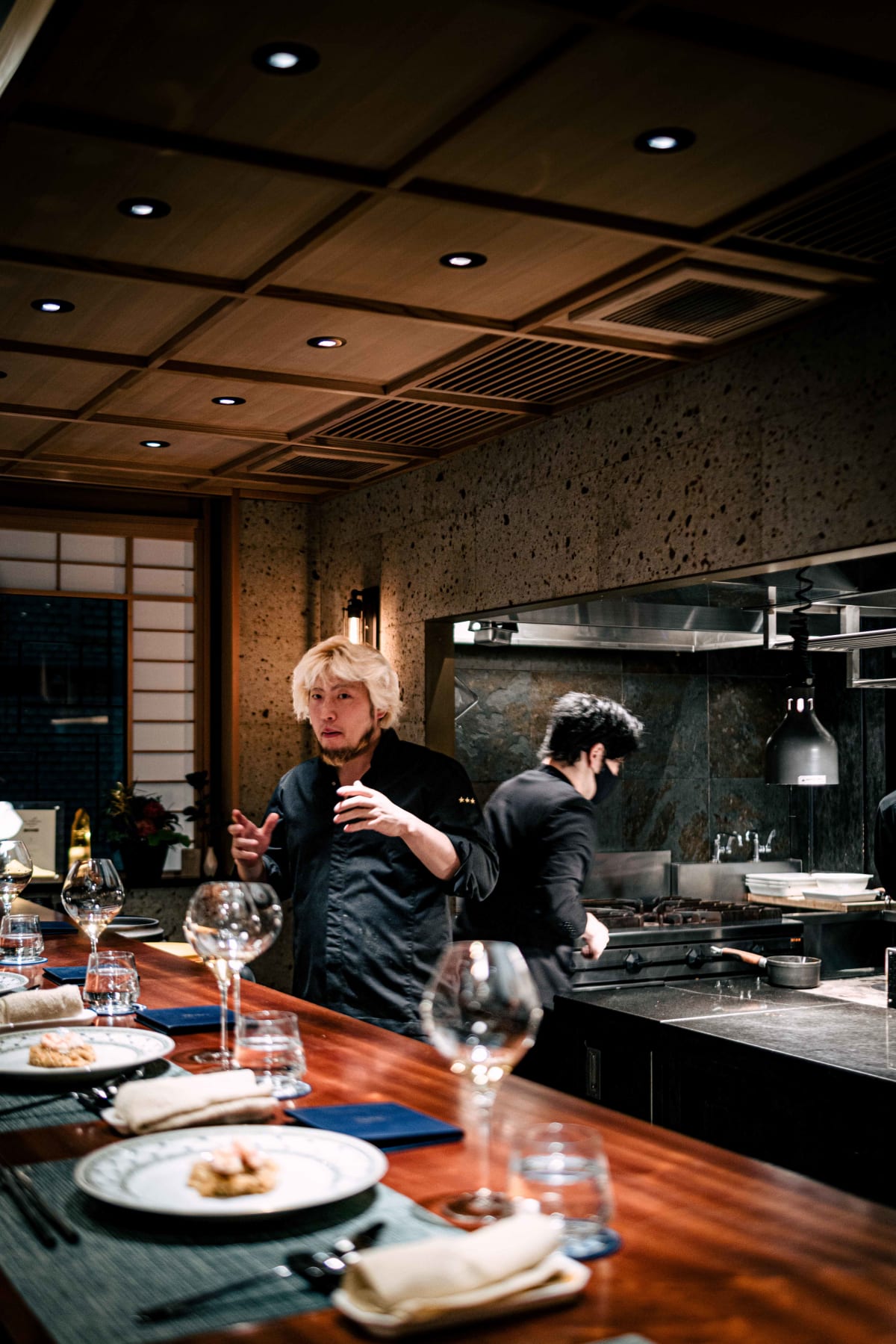
The Ao of Chef Koji Minemura (峯村康資) is one such room.
2—2 / 52
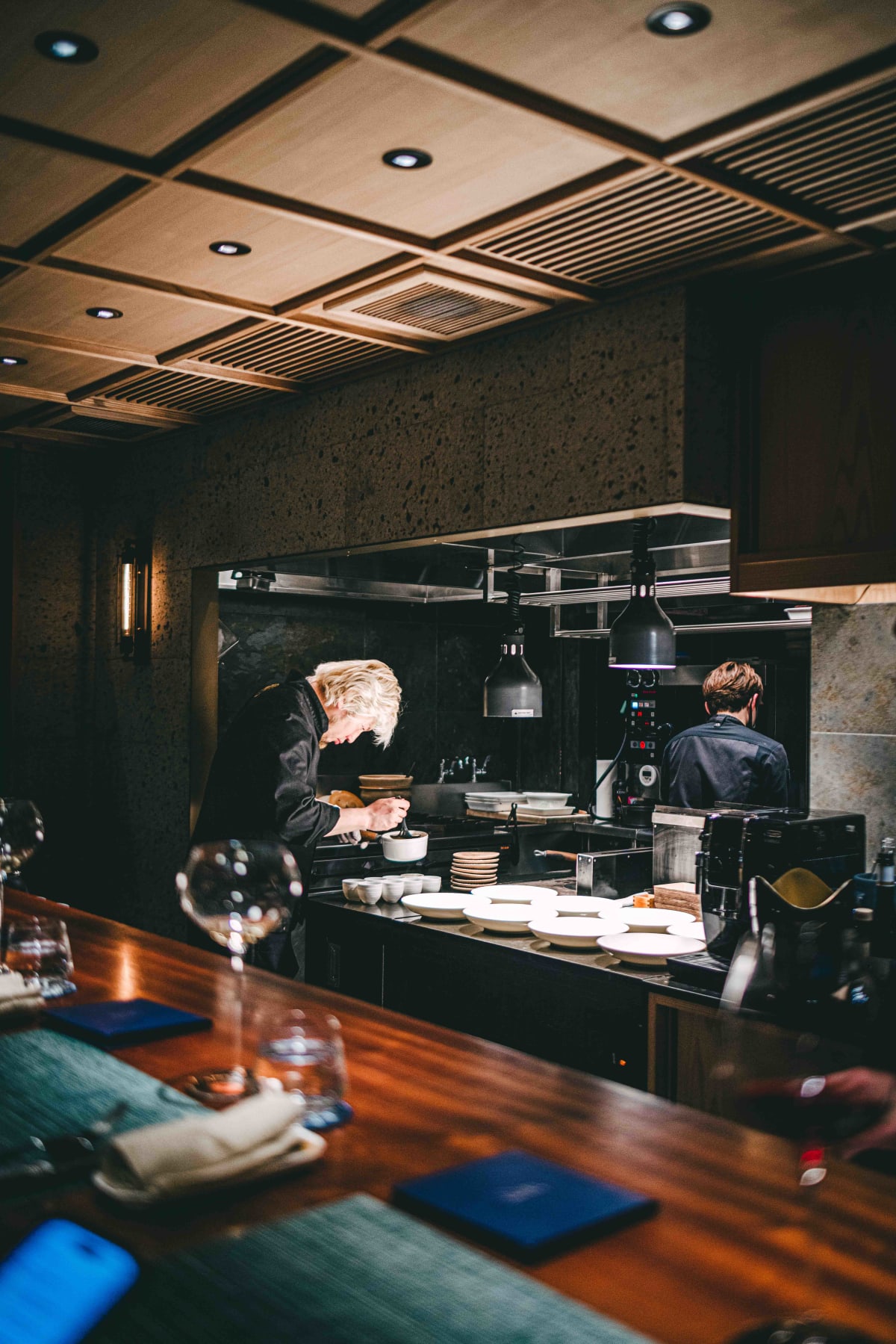
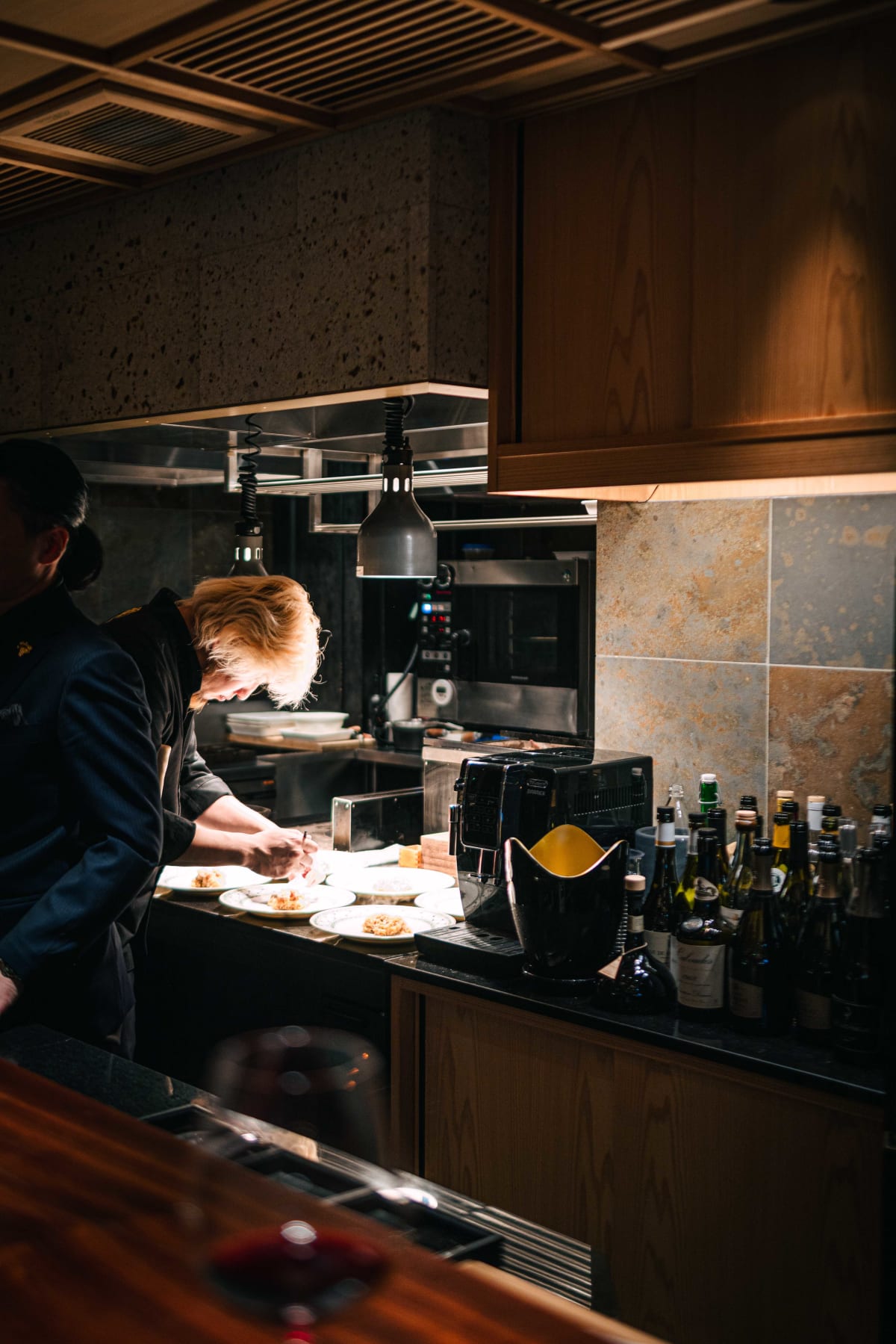
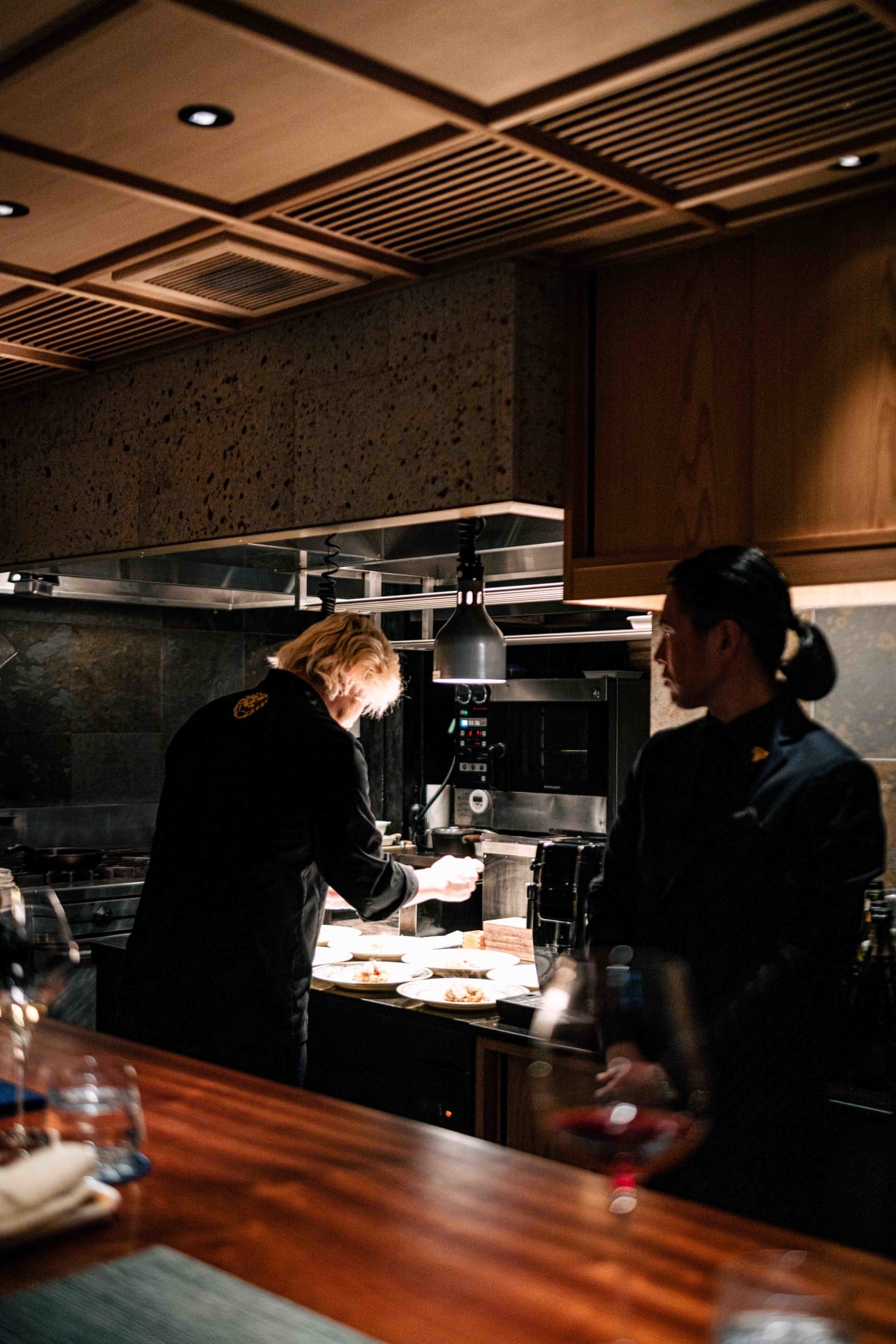
It seats eight at a single straight counter, and it works in the genre that sits between French and Japanese cooking. Tabelog classifies it as Innovative. The mood is less modern than classically luxurious, with a few drops of something slightly old-fashioned mixed in, all packed into a small room. The kitchen is fully open to the counter, and the entire cooking process is visible in real time. Tabelog, the dominant evaluation platform in Japan's dining scene, had earlier that year given Ao its first Gold Award, an honour reserved for around thirty restaurants nationwide at the time (currently thirty-five). Expectations were naturally high, but there was some apprehension as well: I had heard from several people that French and Italian cooking encountered in Japan often fell short of expectations.
Ao sits at the intersection of the two major evaluation systems that govern Japan's dining landscape.
The course began at 8:30 in the evening.
3—3 / 52
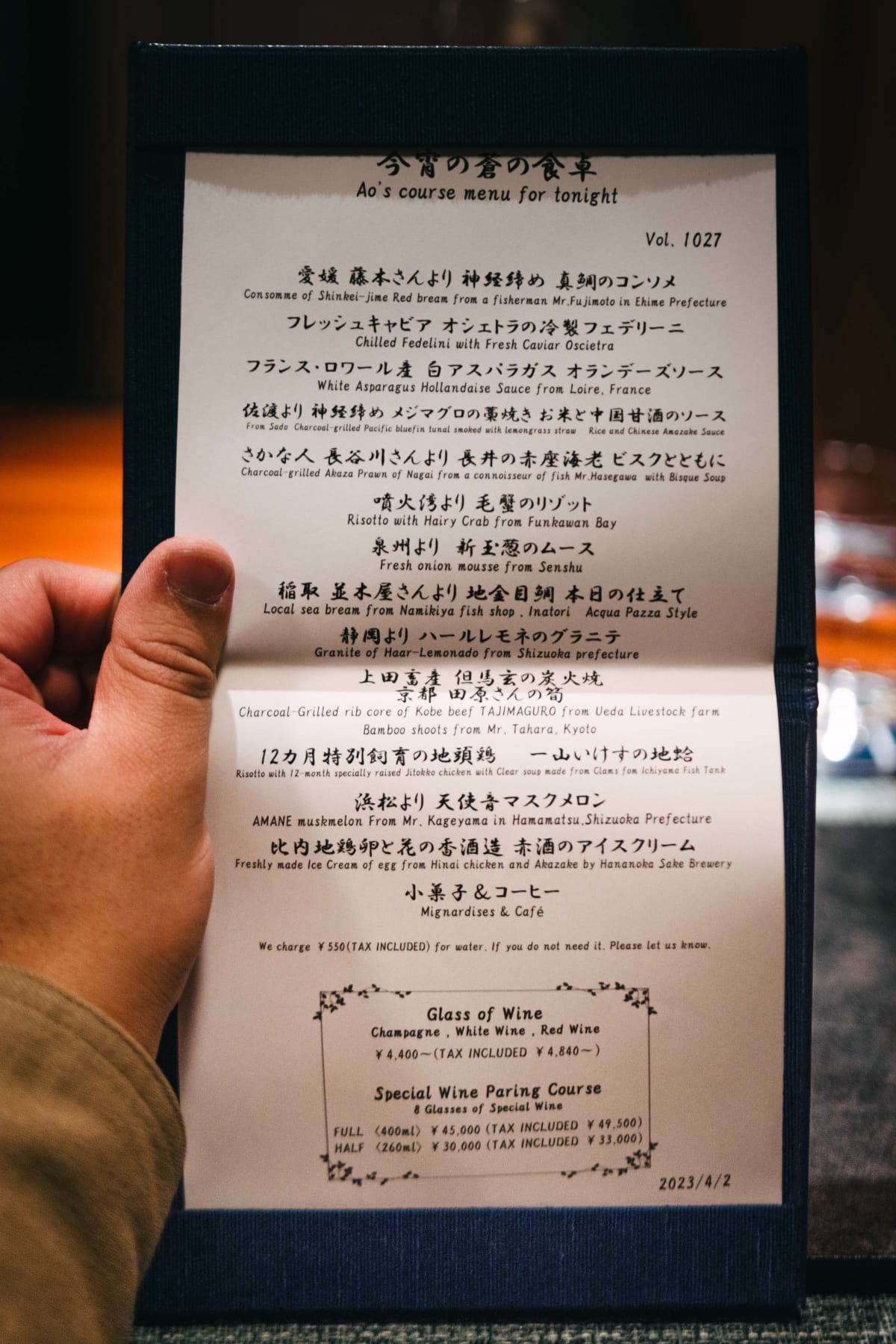
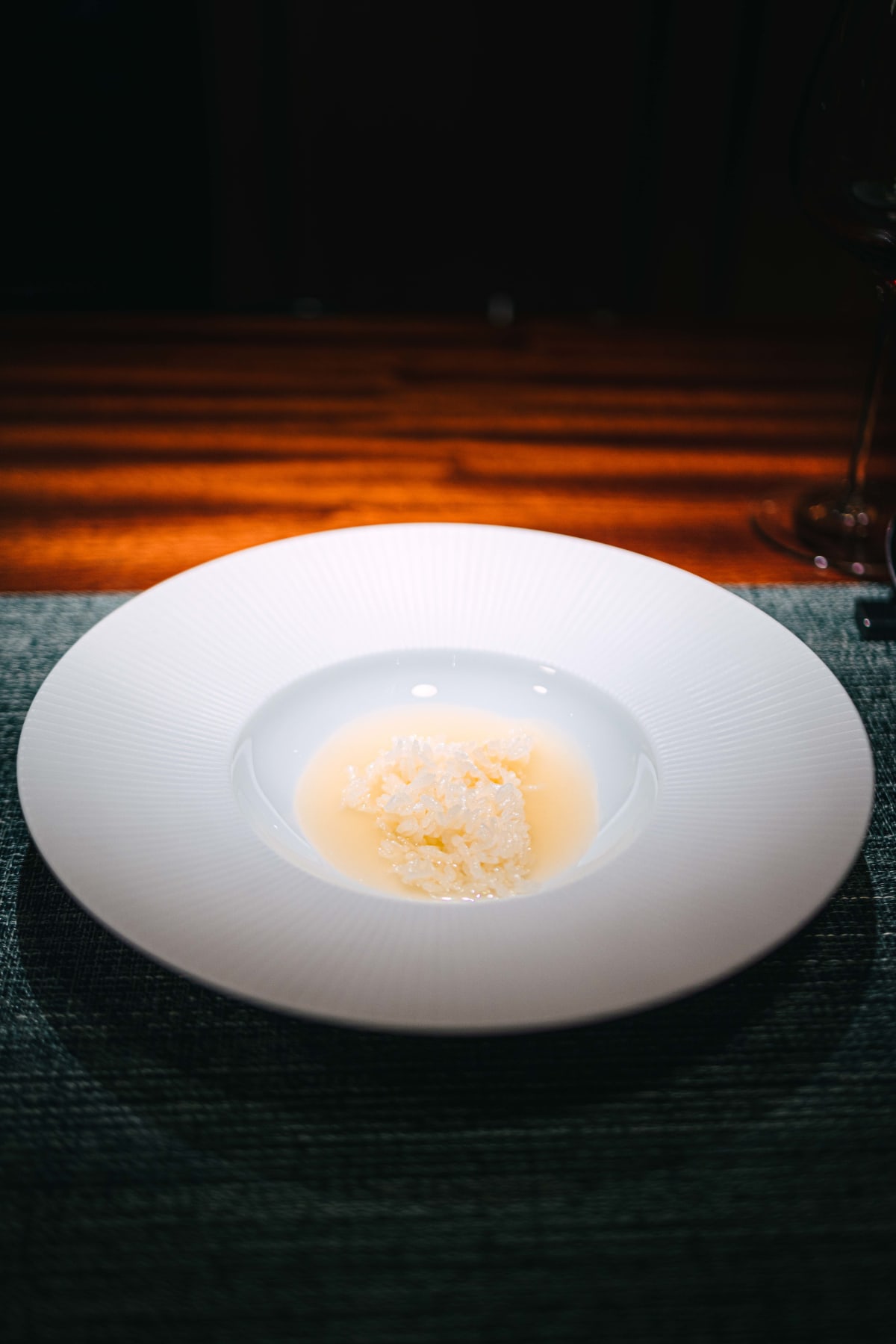
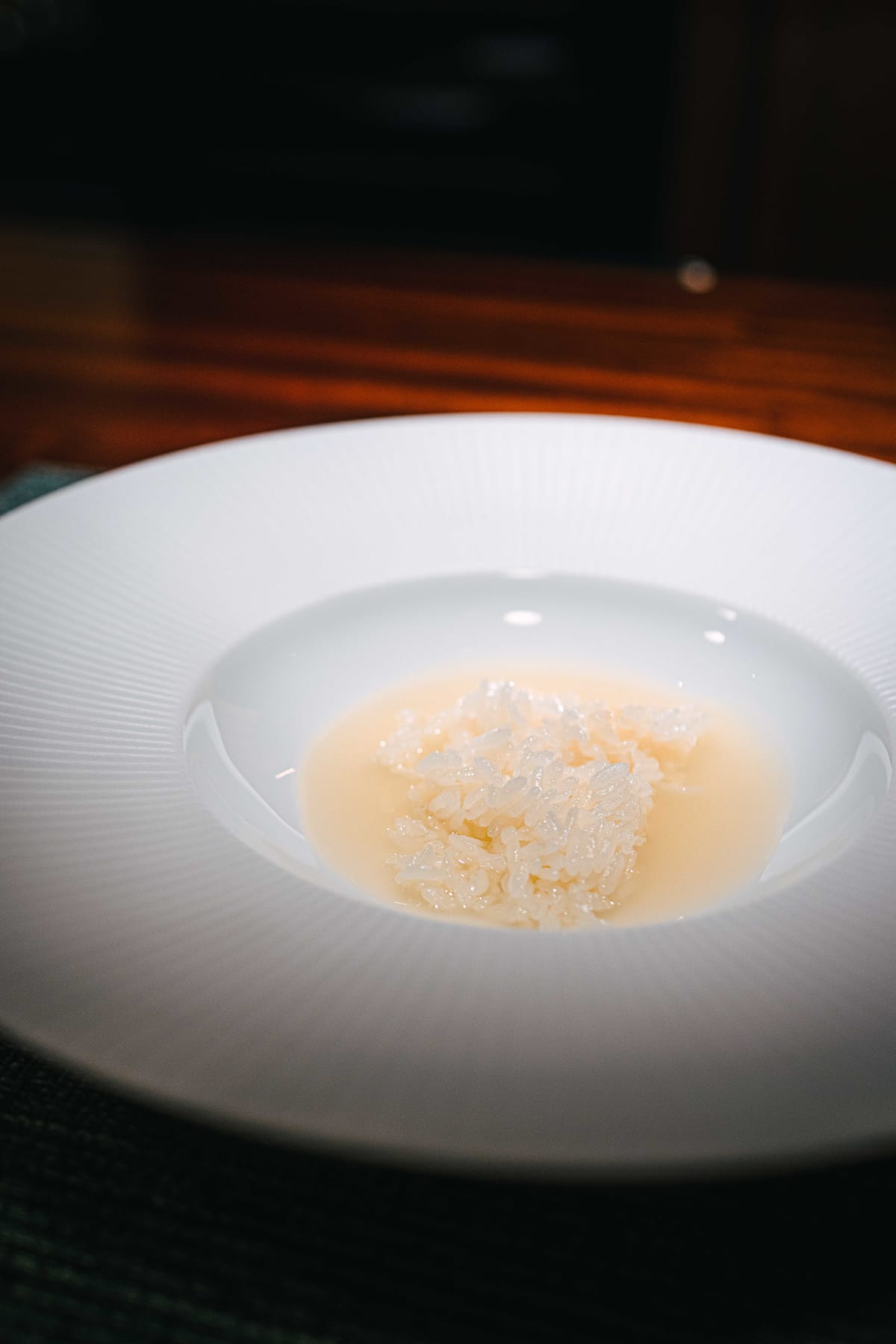
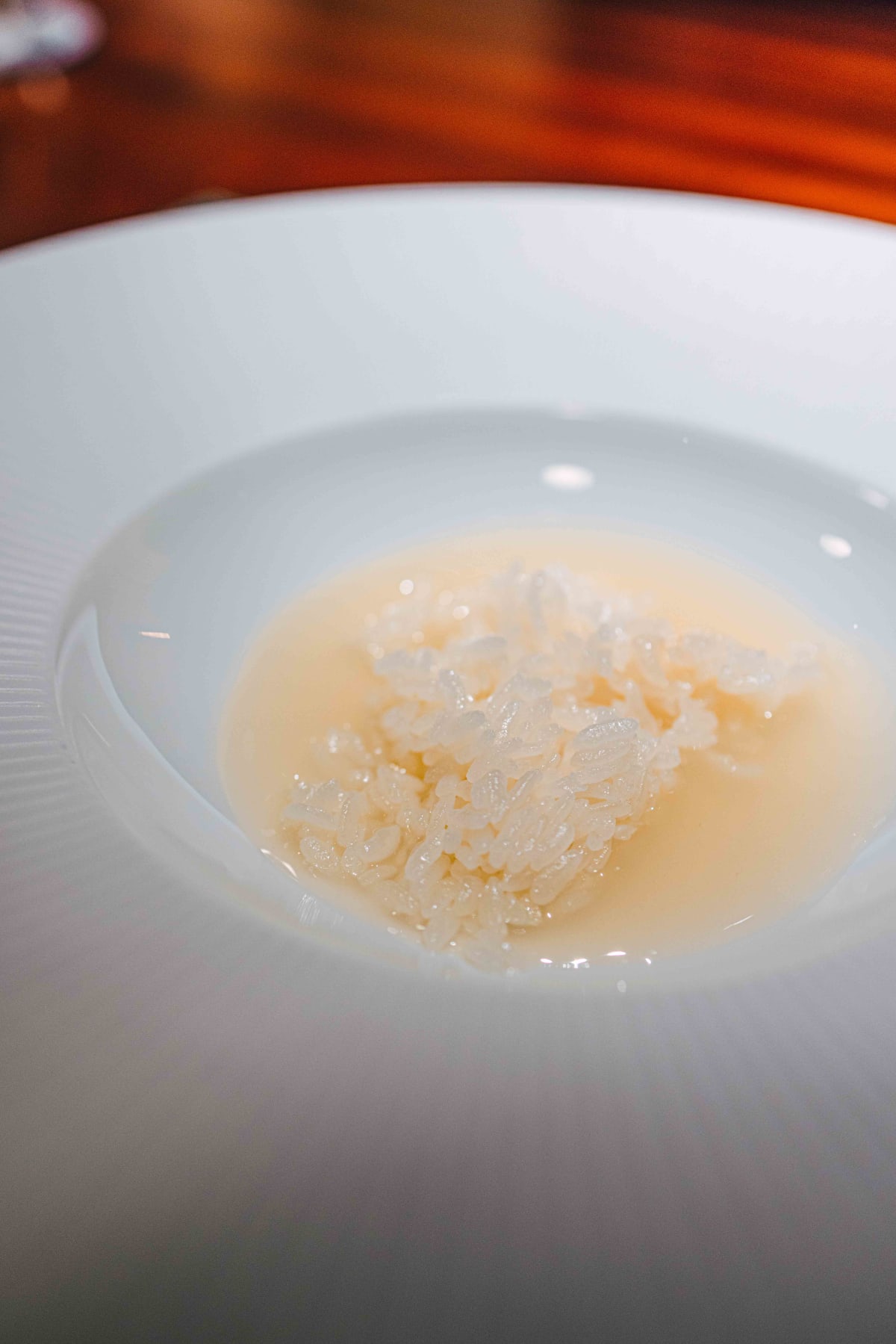
Once all eight diners arrived on schedule, the meal opened with an amadai consommé.
4—5 / 52
Fourteen dishes followed through dessert, and the cooking through the middle of the course was, at the time, good enough to count as a personal landmark meal. What Ao's cooking demonstrates is what happens when the quality of ingredients is pushed to the very top of the scale: the flavour of the produce is not overwhelmed by the sauce, which is the central pillar of French cooking, but stands beside it and holds its own.
15—15 / 52
This level of ingredient performance is genuinely difficult to find even in France, and to be fair, its full measure became clearer on the second visit. According to the restaurant's description on the Tableall site, Chef Minemura works in deep partnership with fishermen across Japan and is supplied with the highest-quality seafood from each region. On this night, with the exception of an early asparagus dish and the wagyu main toward the end, the course was almost entirely seafood-driven, and the cooking was excellent. Part of that comes from the ingredients themselves, but it was just as clearly Minemura's command of pulling sauces that match each ingredient.
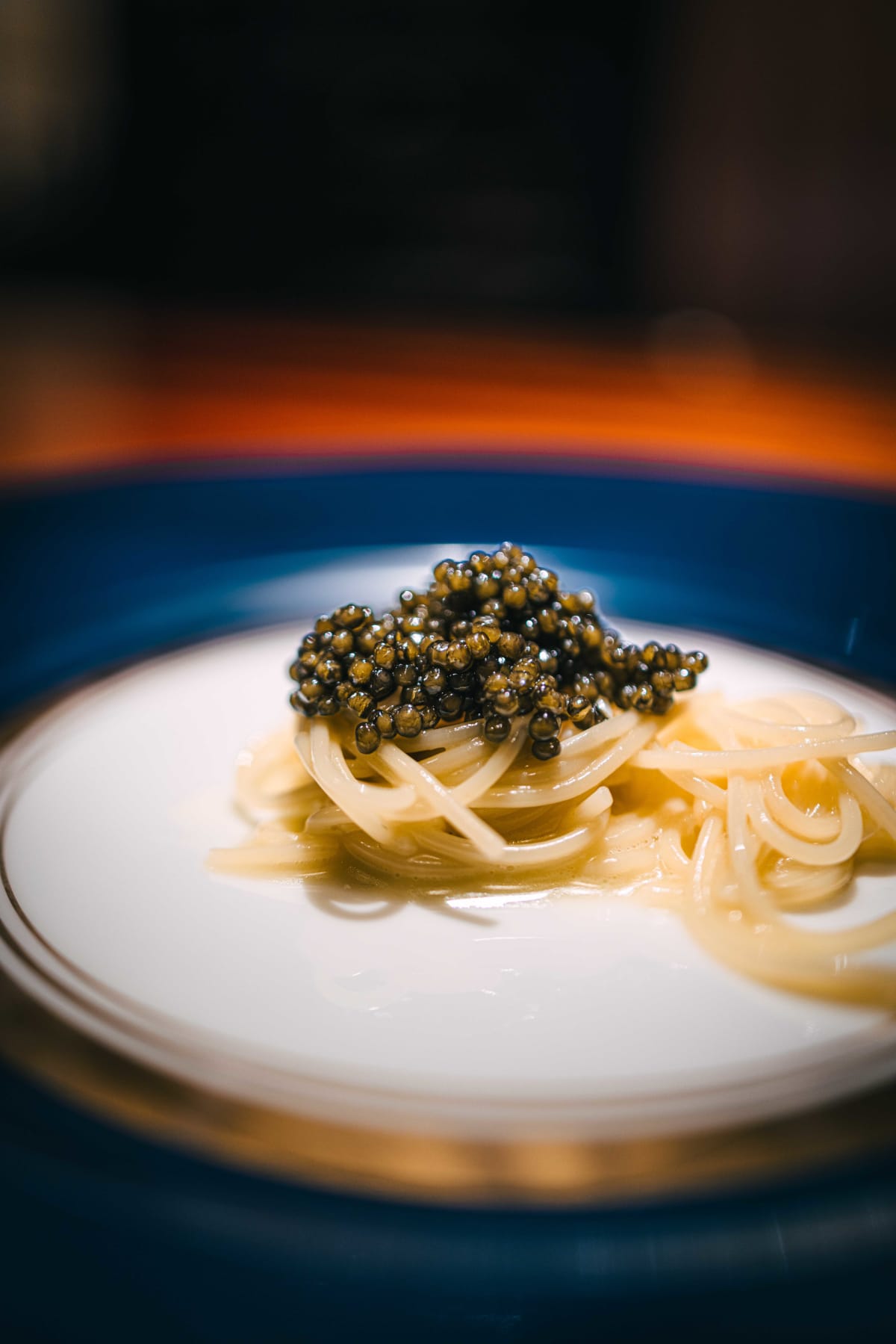
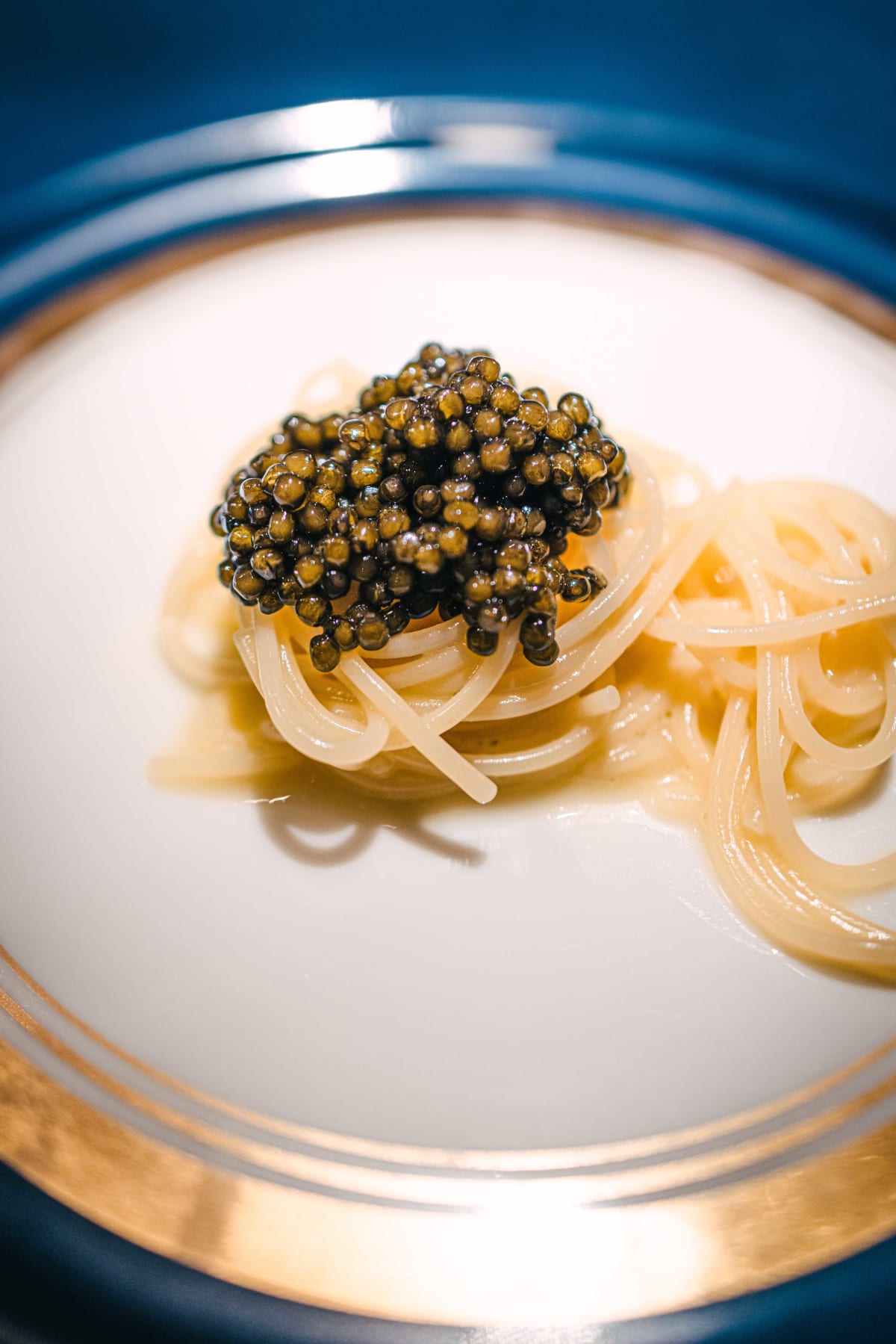
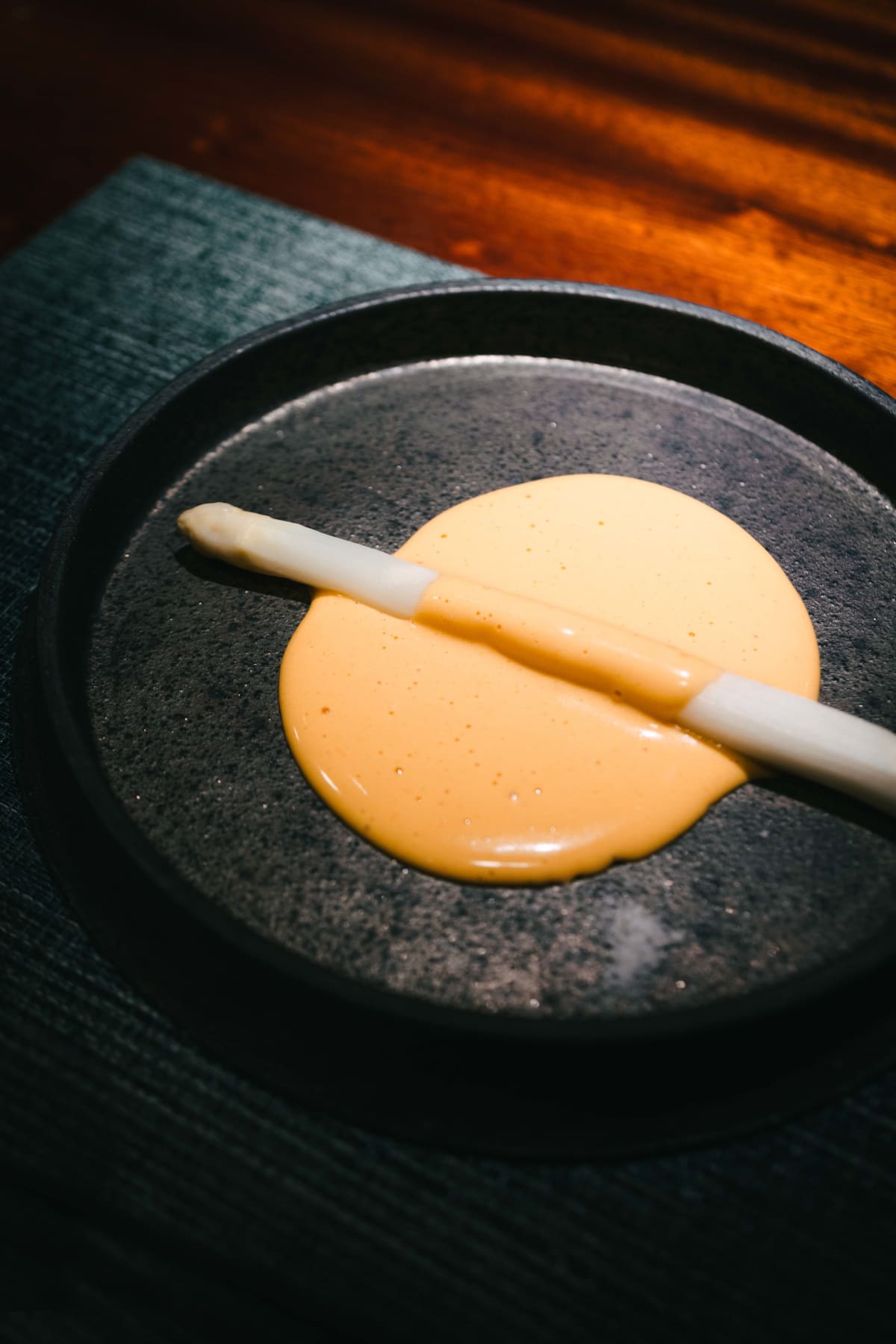
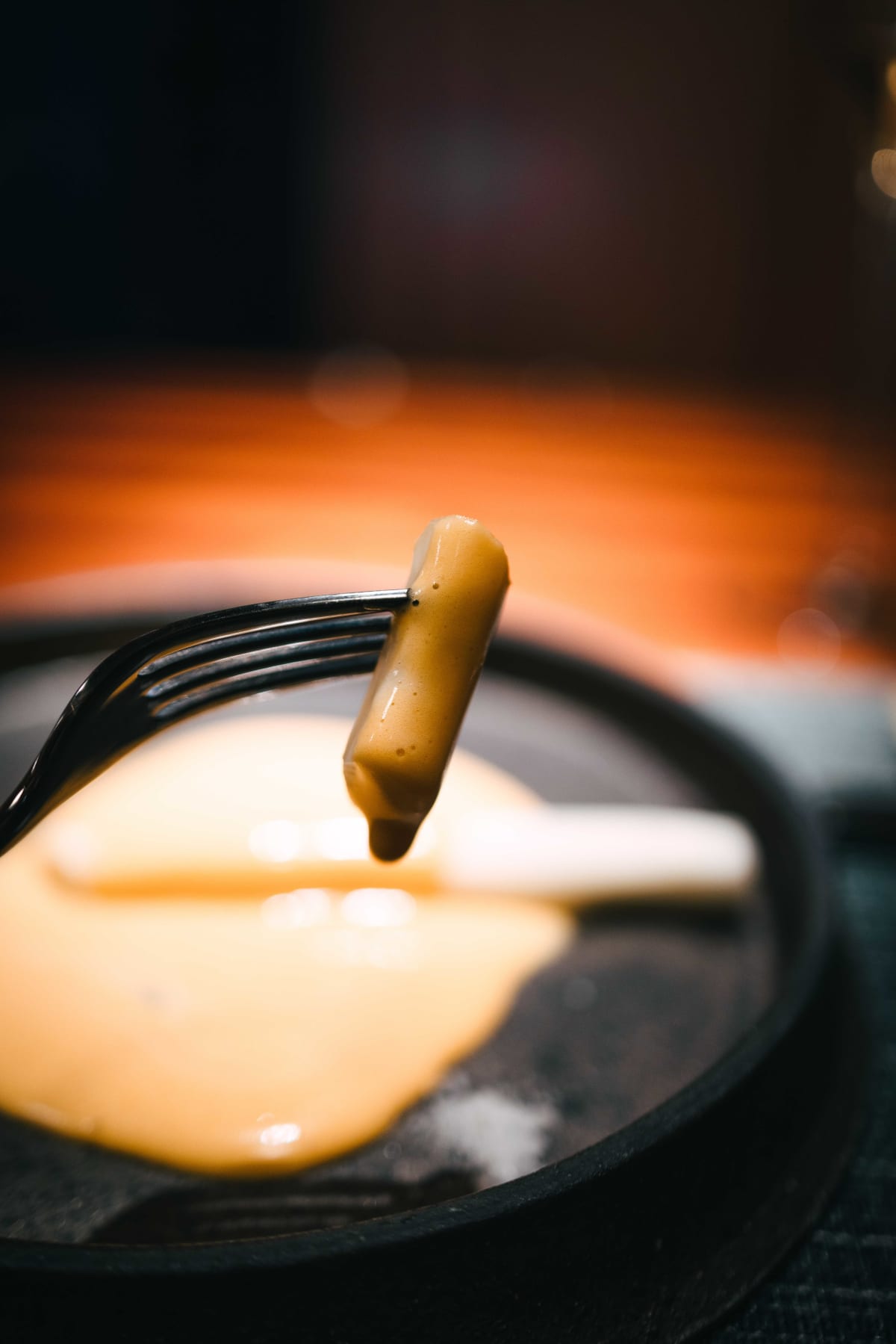
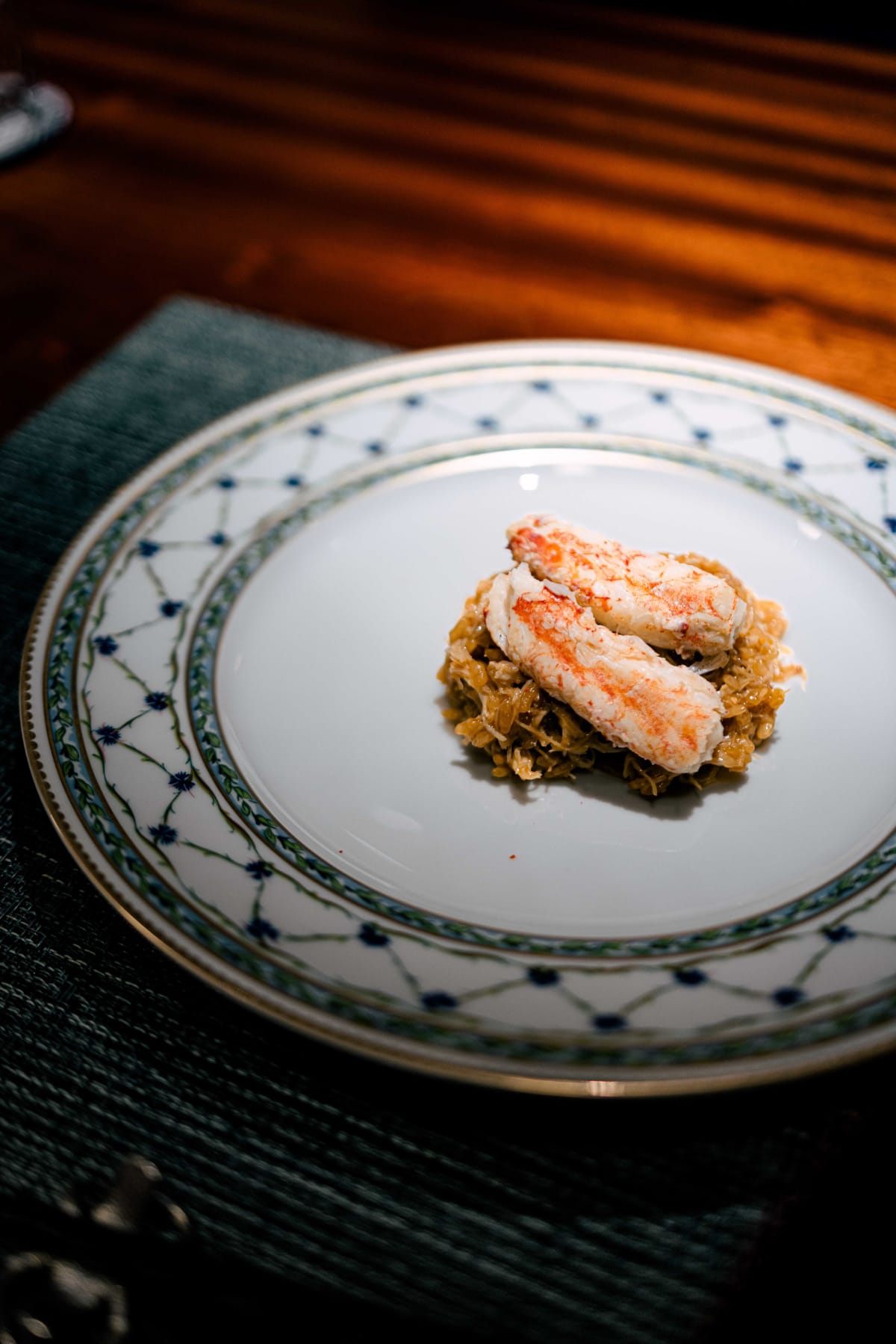
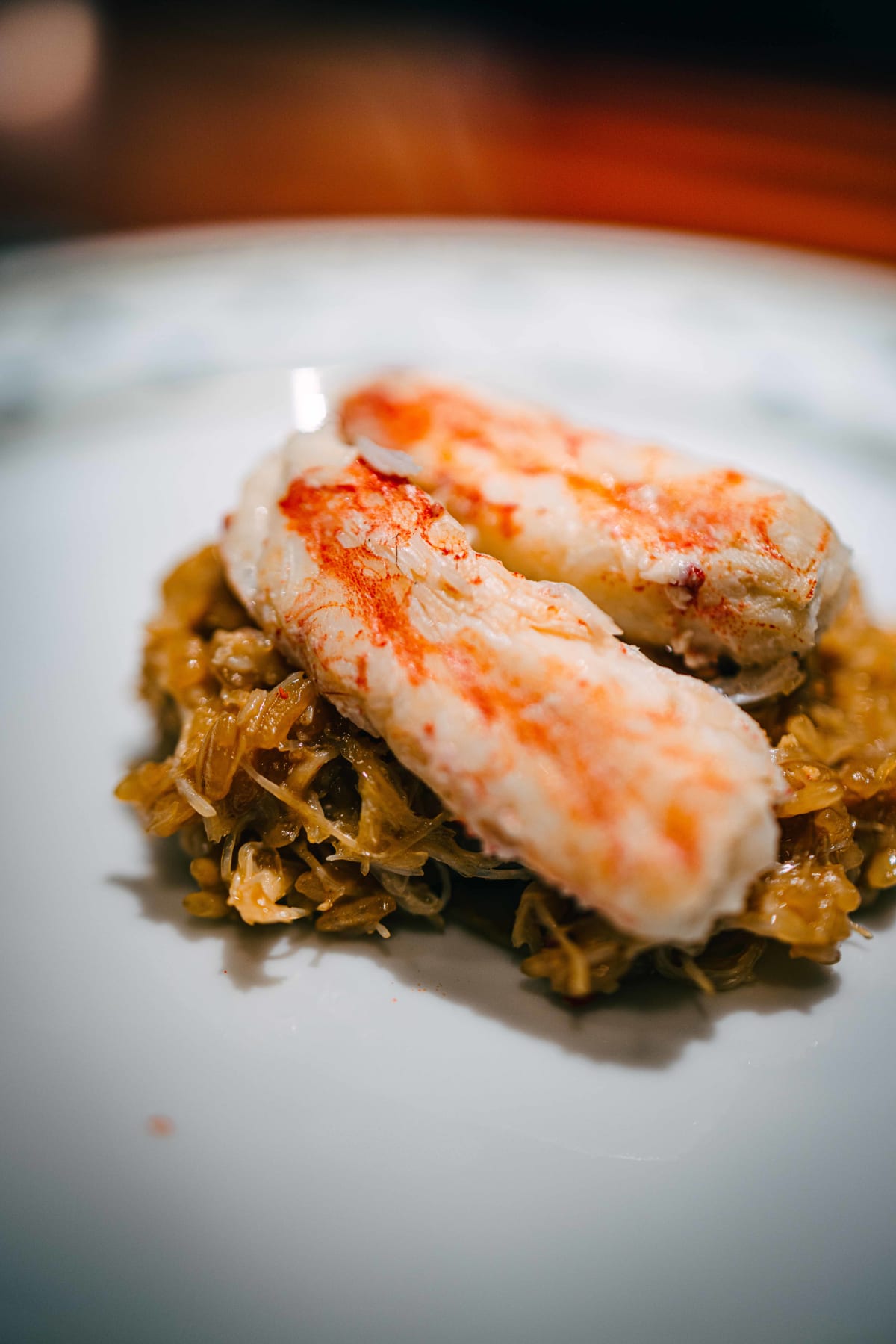
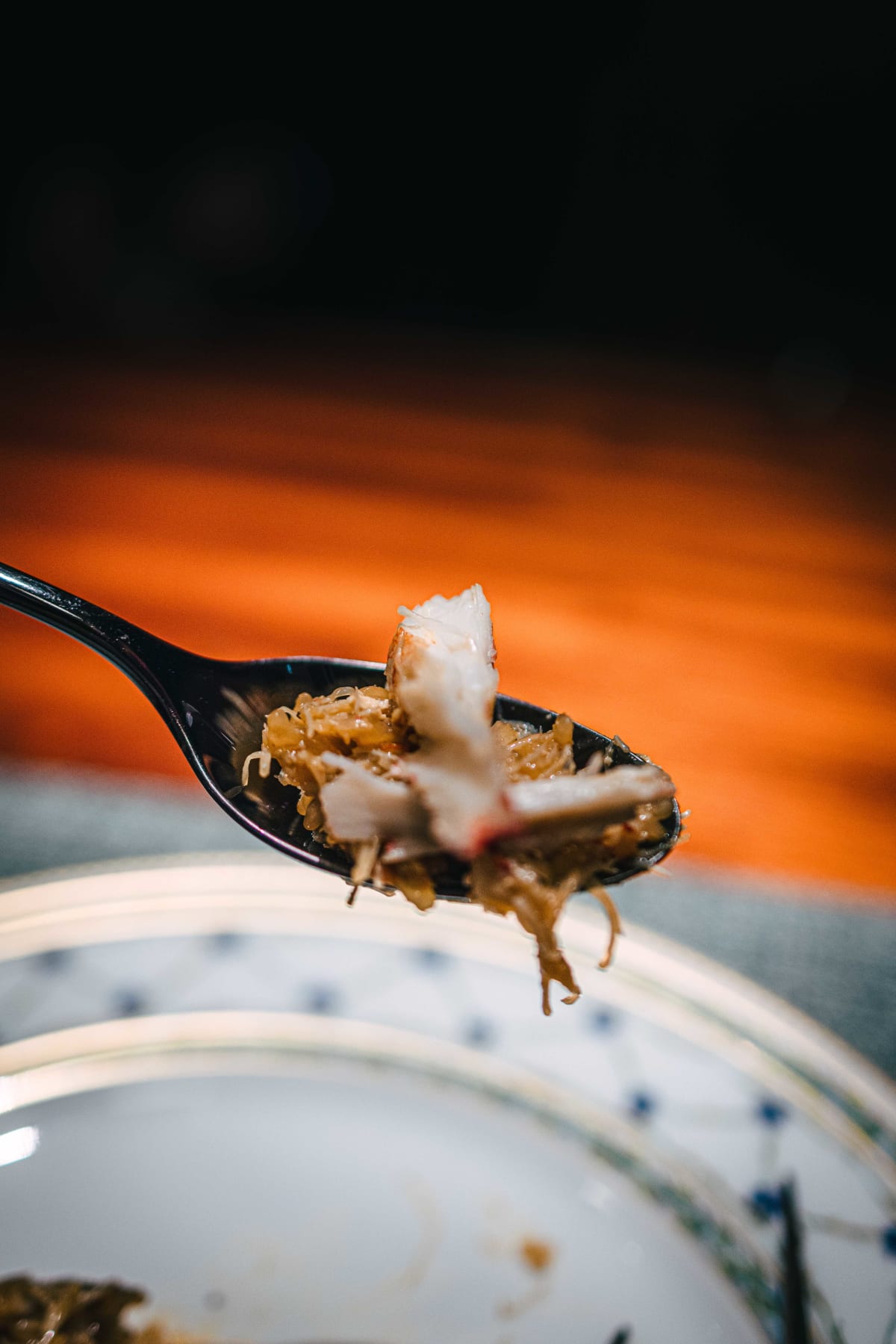
From the third dish, asparagus, through to the sixth, a hairy crab risotto, each plate landed with a kind of internal exclamation.
6—7 / 52
The word the chef returned to in every dish description was "no salt."
8—9 / 52
He emphasised again and again that seasoning came from the ingredients themselves rather than salt, and the pride in the quality of the produce and in his handling of it came across naturally.
10—10 / 52
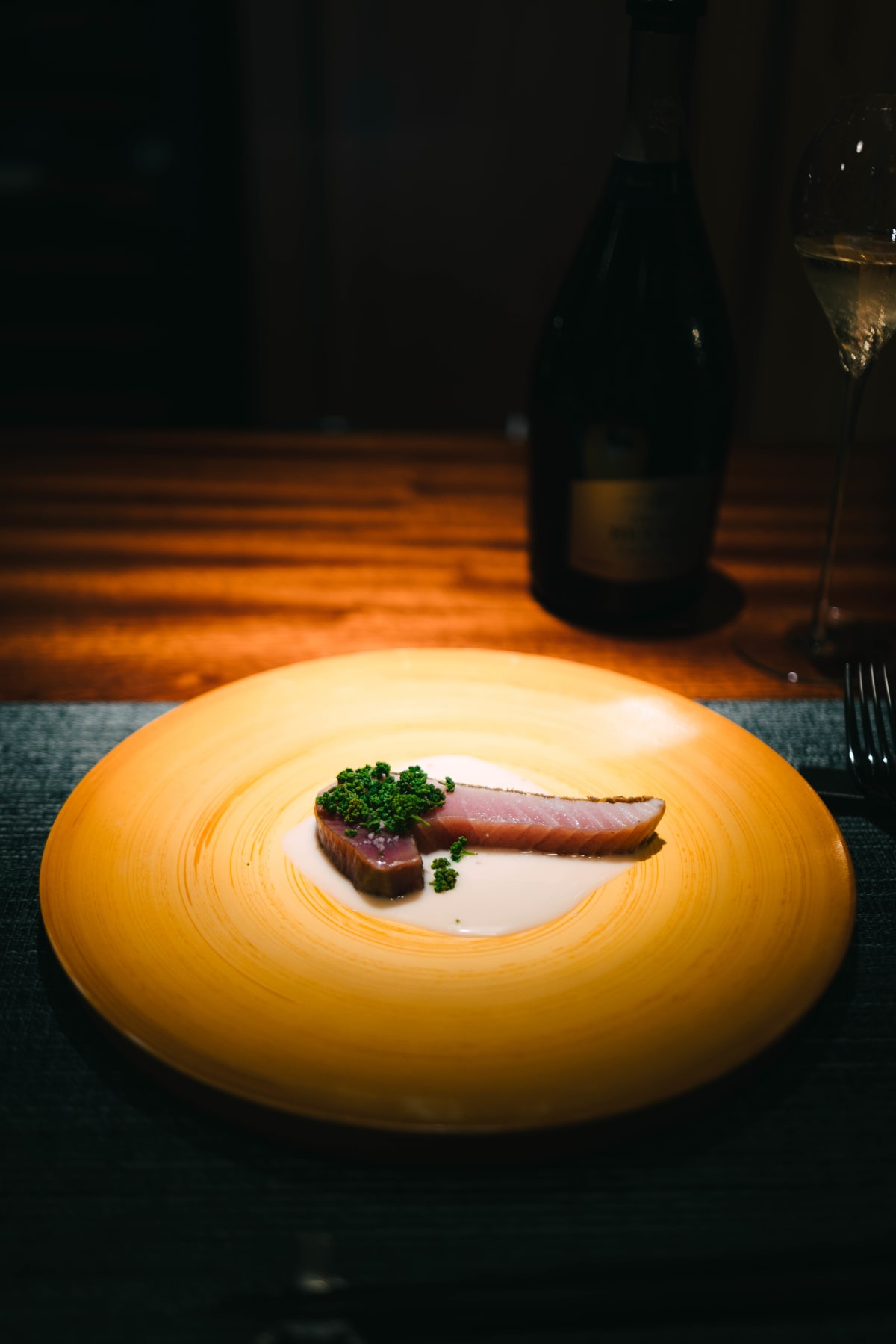
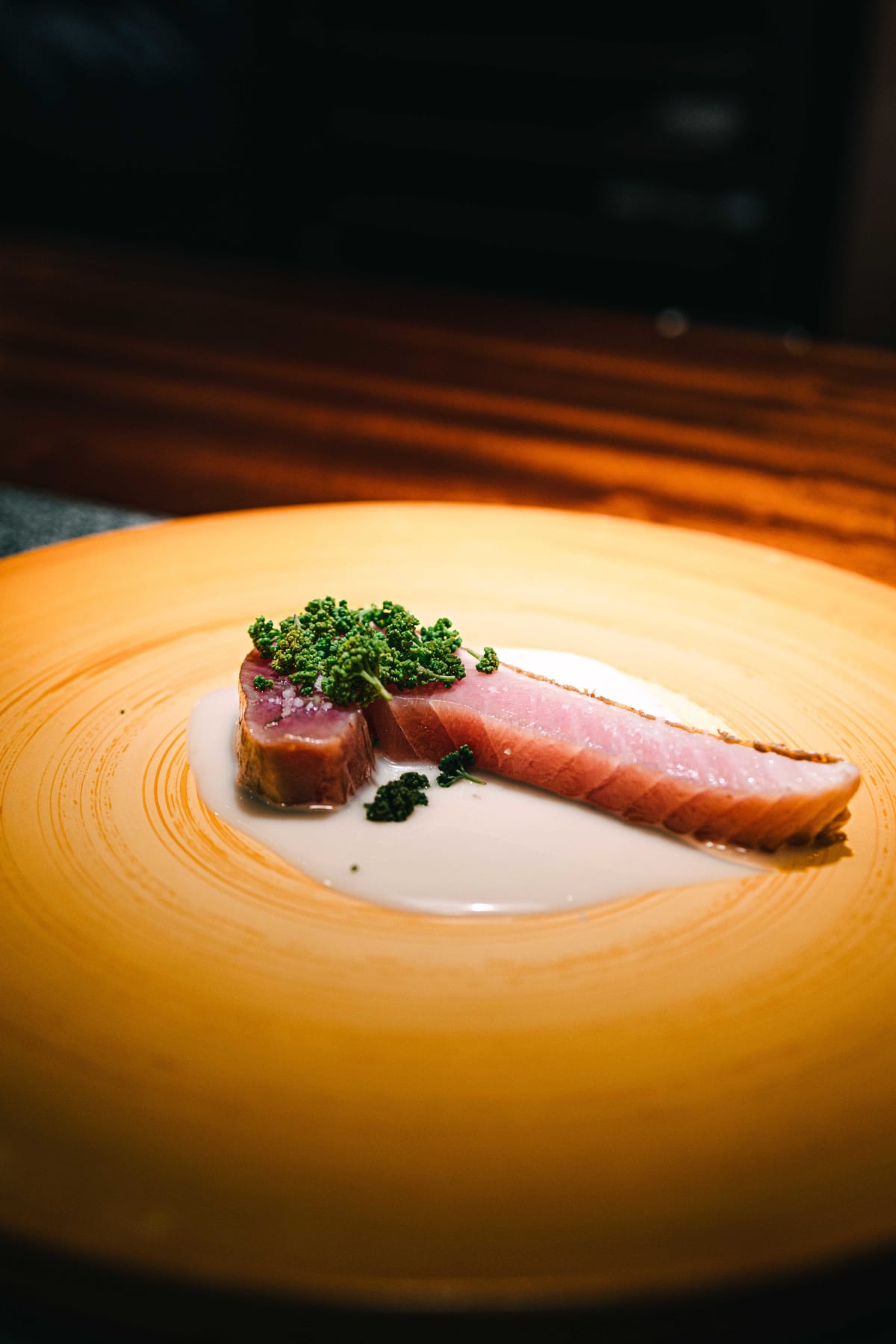
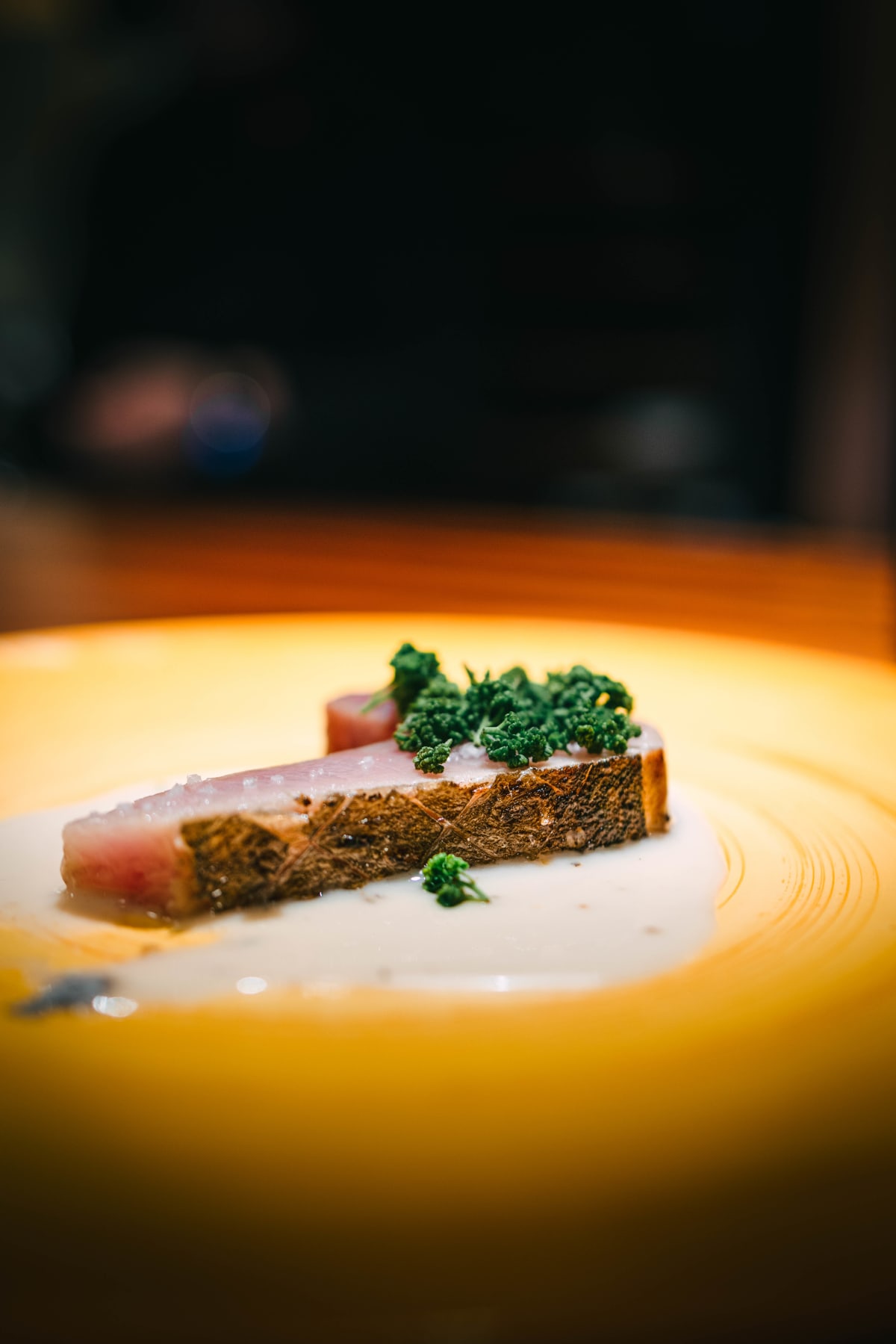
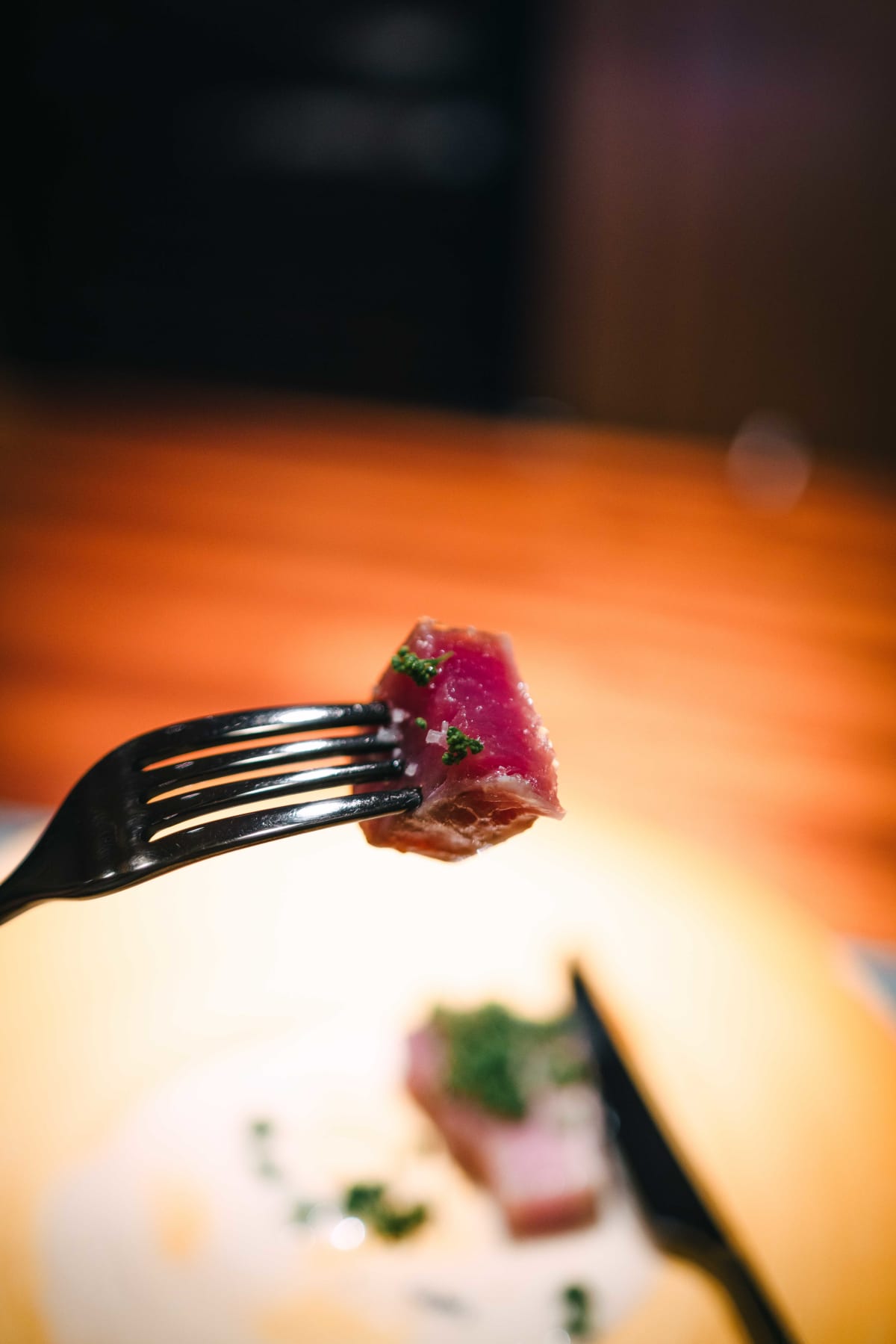
The best dish of the night was the fourth, a grilled tuna.
11—14 / 52
The interior was cooked to just the right doneness, the surface had been seared into a crisp crust, and the sauce, slightly heavy but precisely matched, was a single integrated piece of cooking.
The flavour of the produce is not overwhelmed by the sauce, which is the central pillar of French cooking, but stands beside it and holds its own.
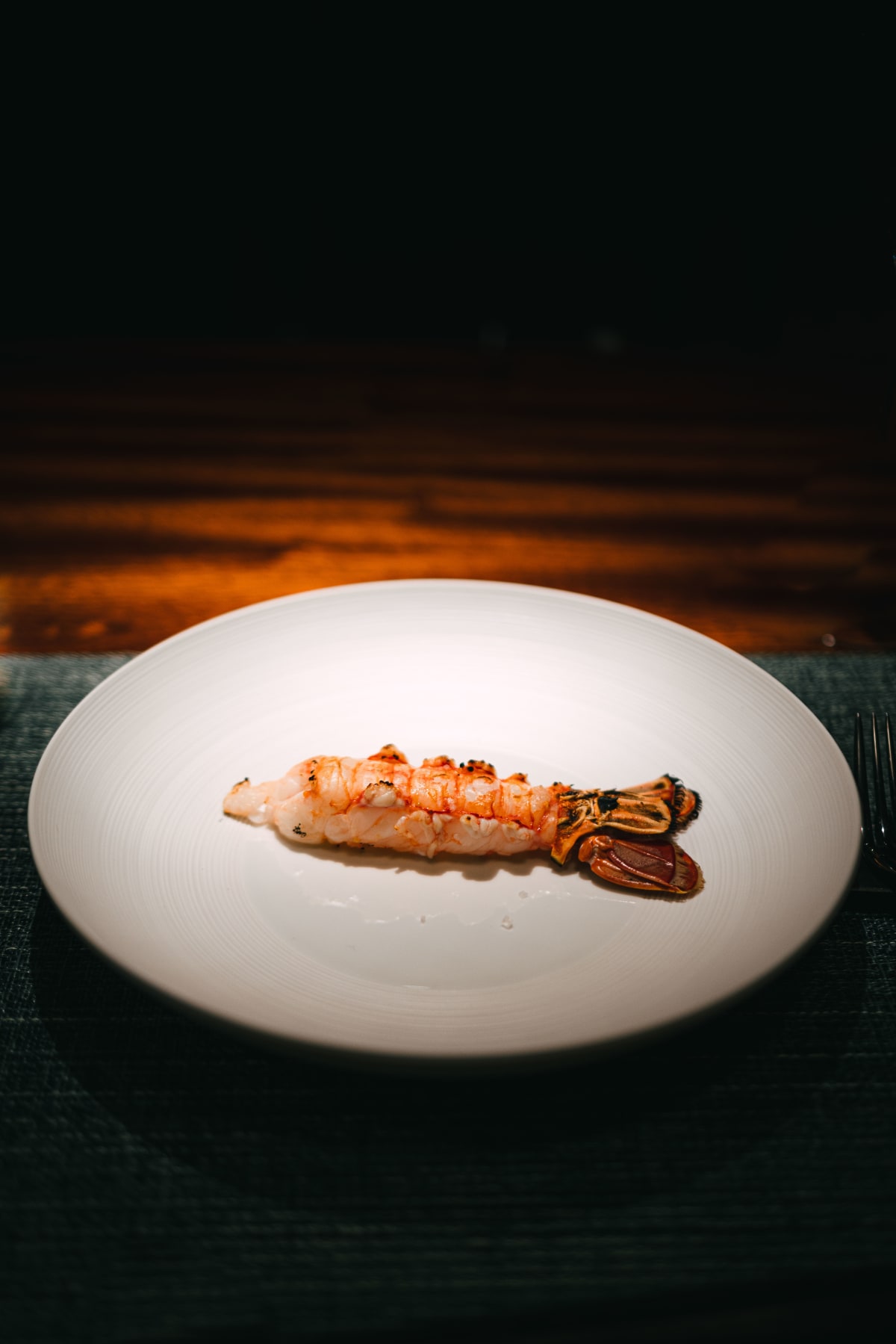
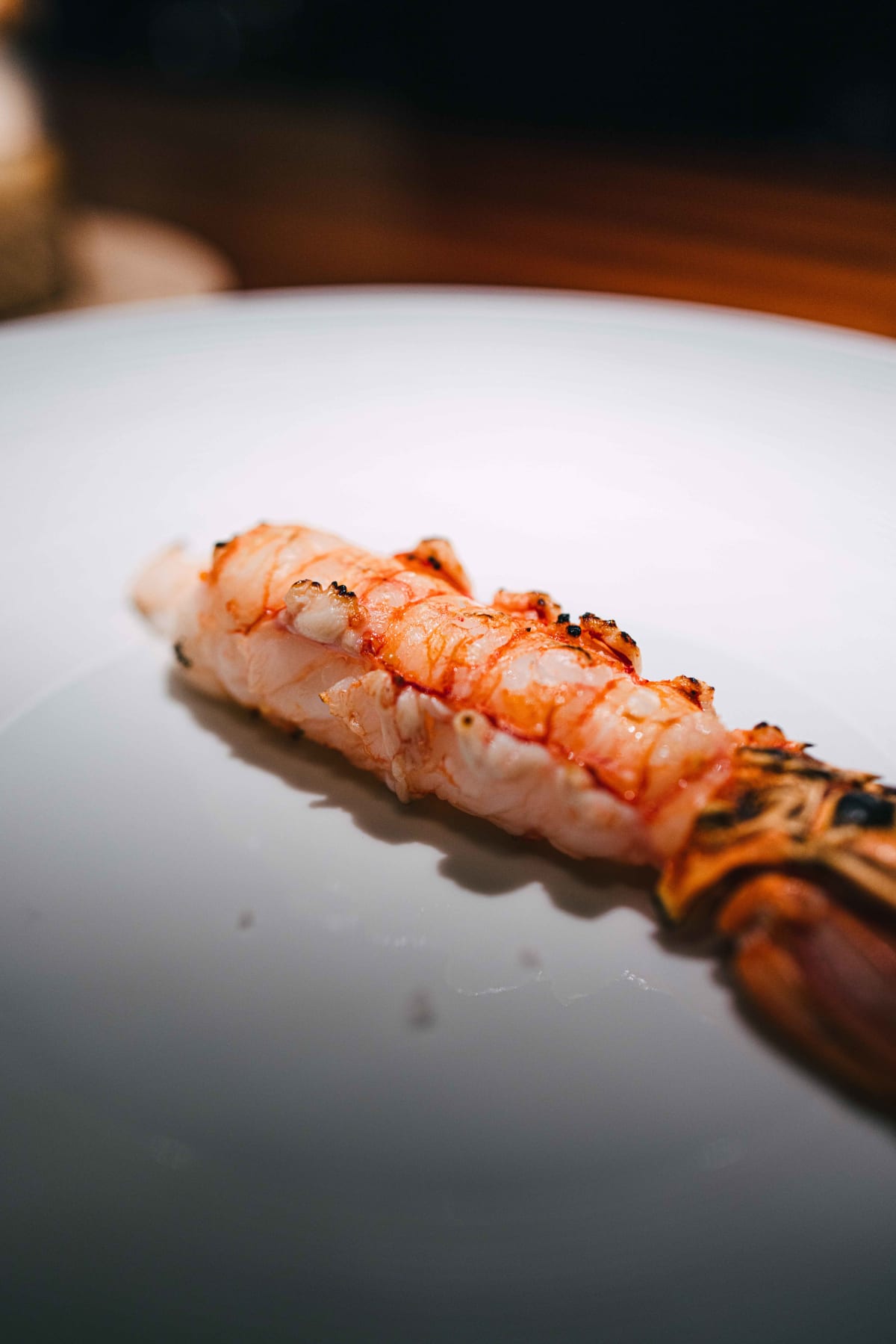
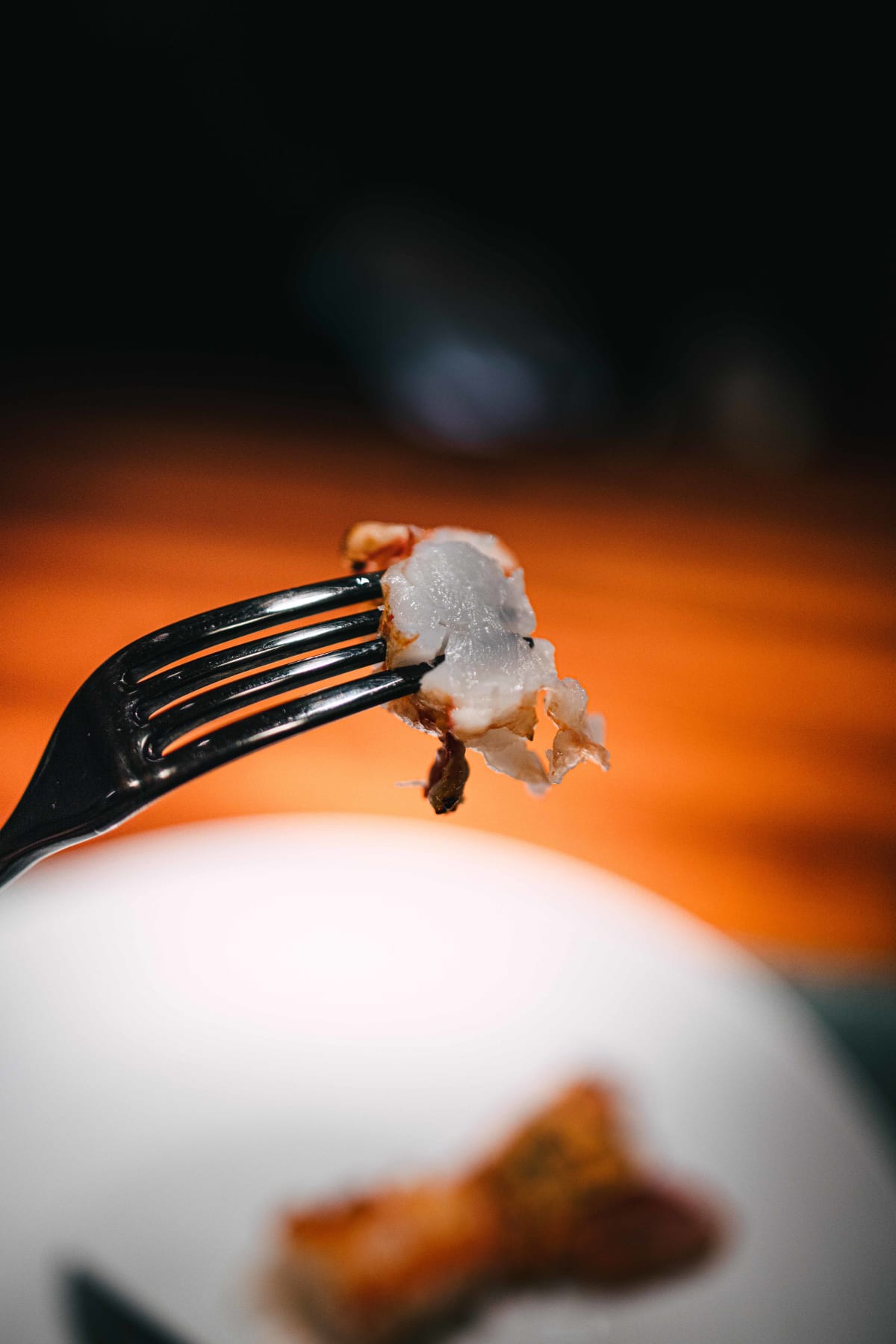
After the tuna came the fifth course, a charcoal-grilled Akaza prawn from Nagai.
16—16 / 52
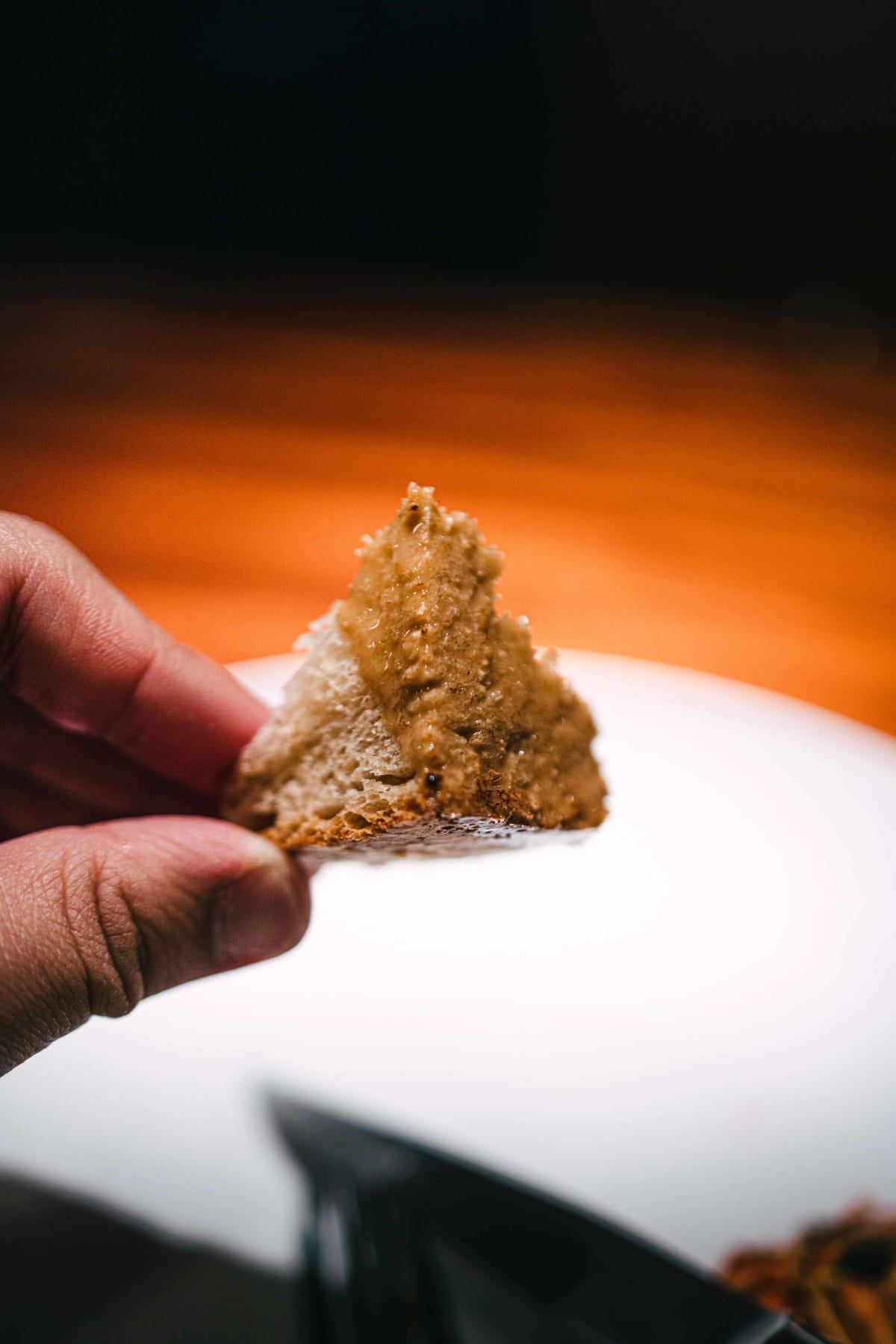
It arrived with a bisque pulled from its own shells.
17—20 / 52
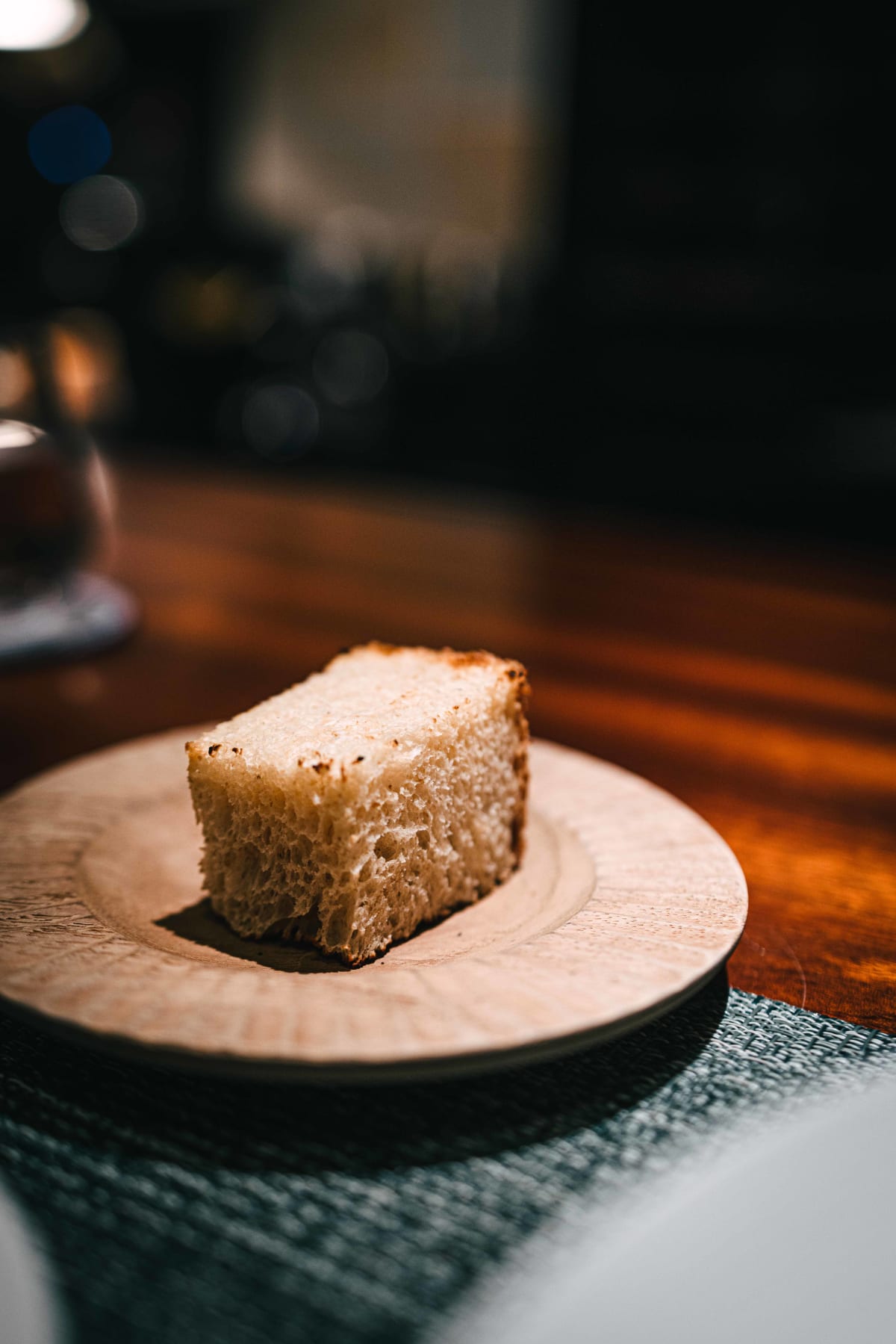
Bread came alongside for what the spoon would not catch.
18—21 / 52
Through the open kitchen, the chef's focus on each plate was visible.
22—23 / 52
The sixth, a hairy crab risotto, closed the upward run.
25—27 / 52
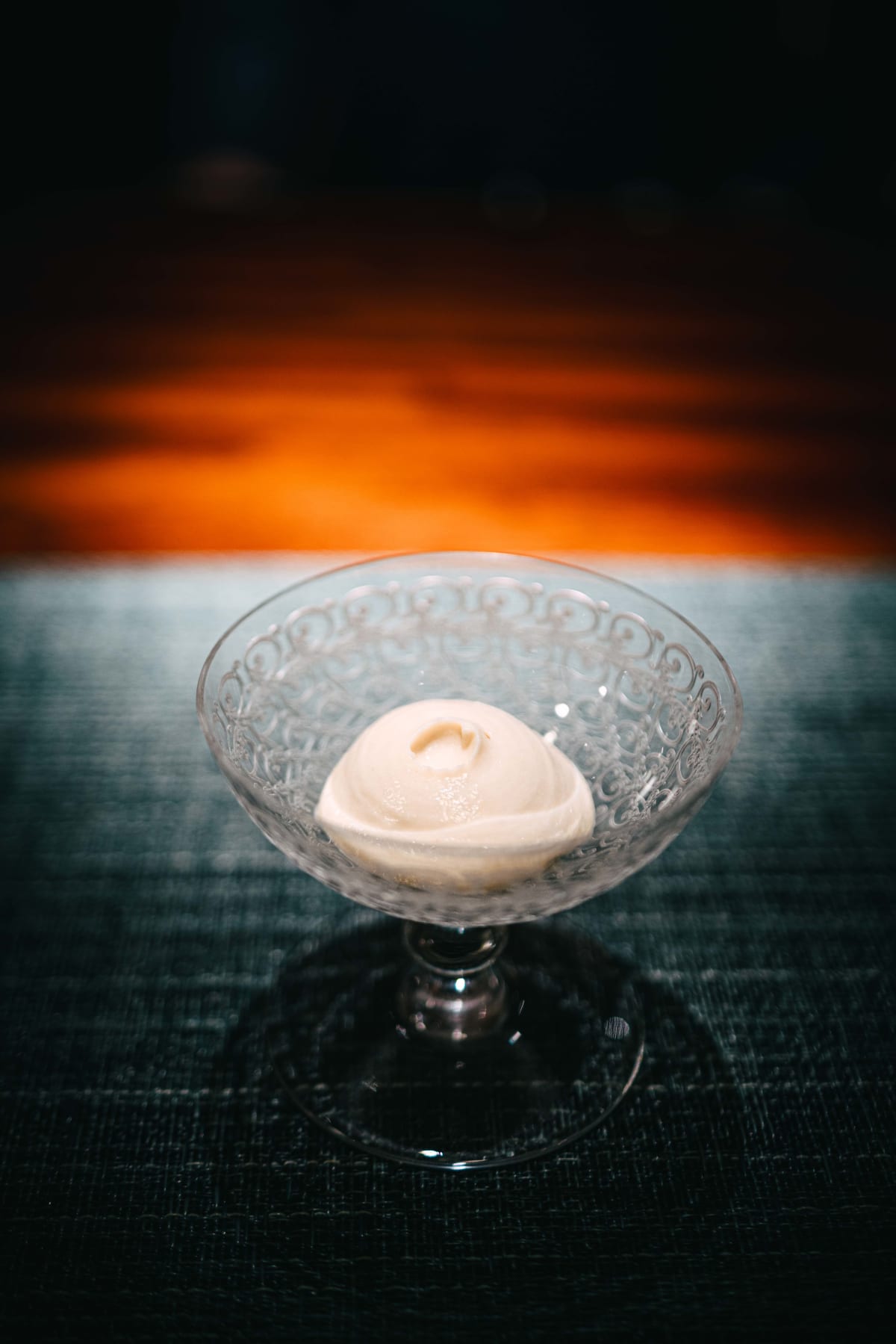
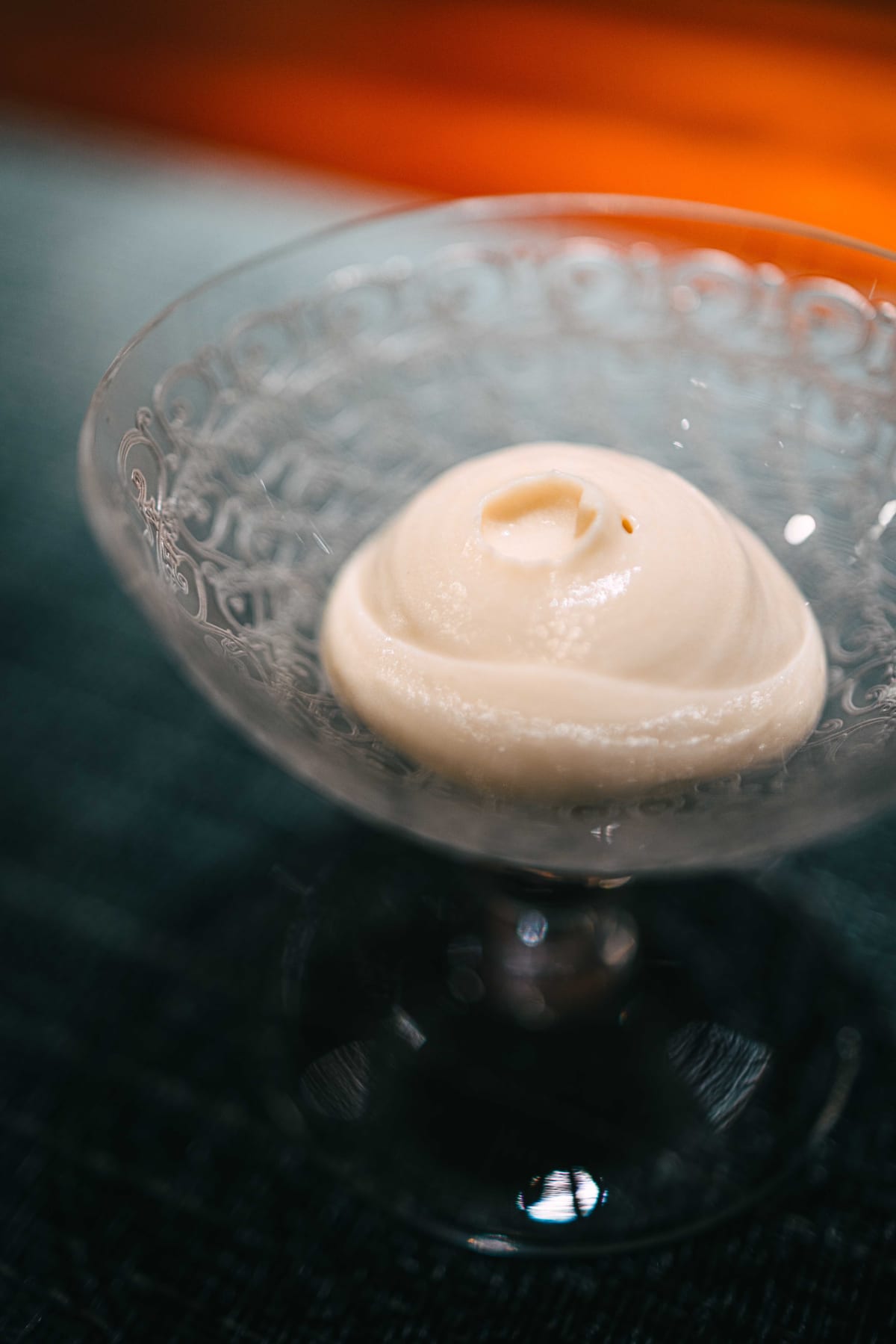
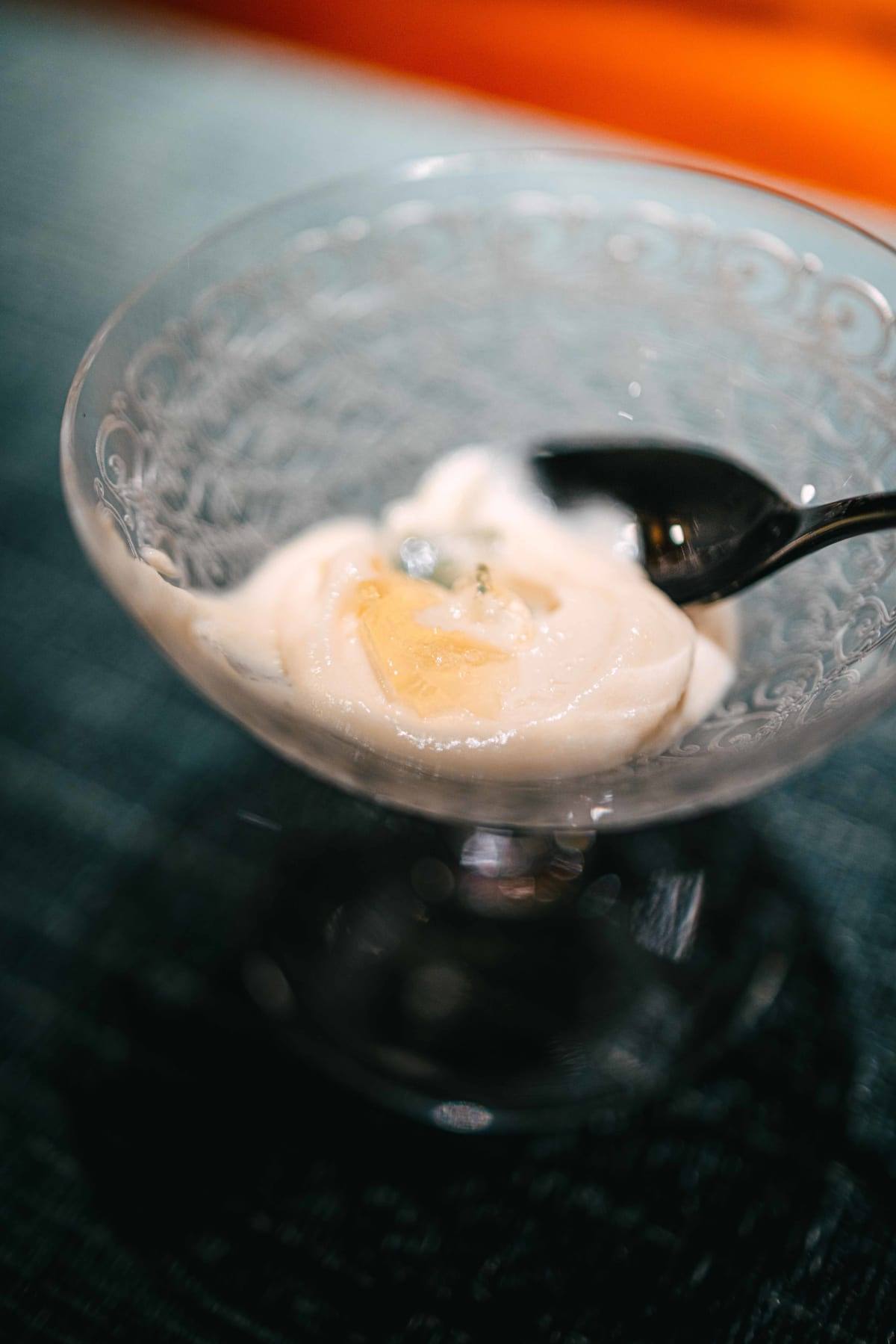
Between them, a fresh onion mousse fell quietly into place.
28—30 / 52
Had the course continued in that register through to the end, this would have been a very different review.
31—33 / 52
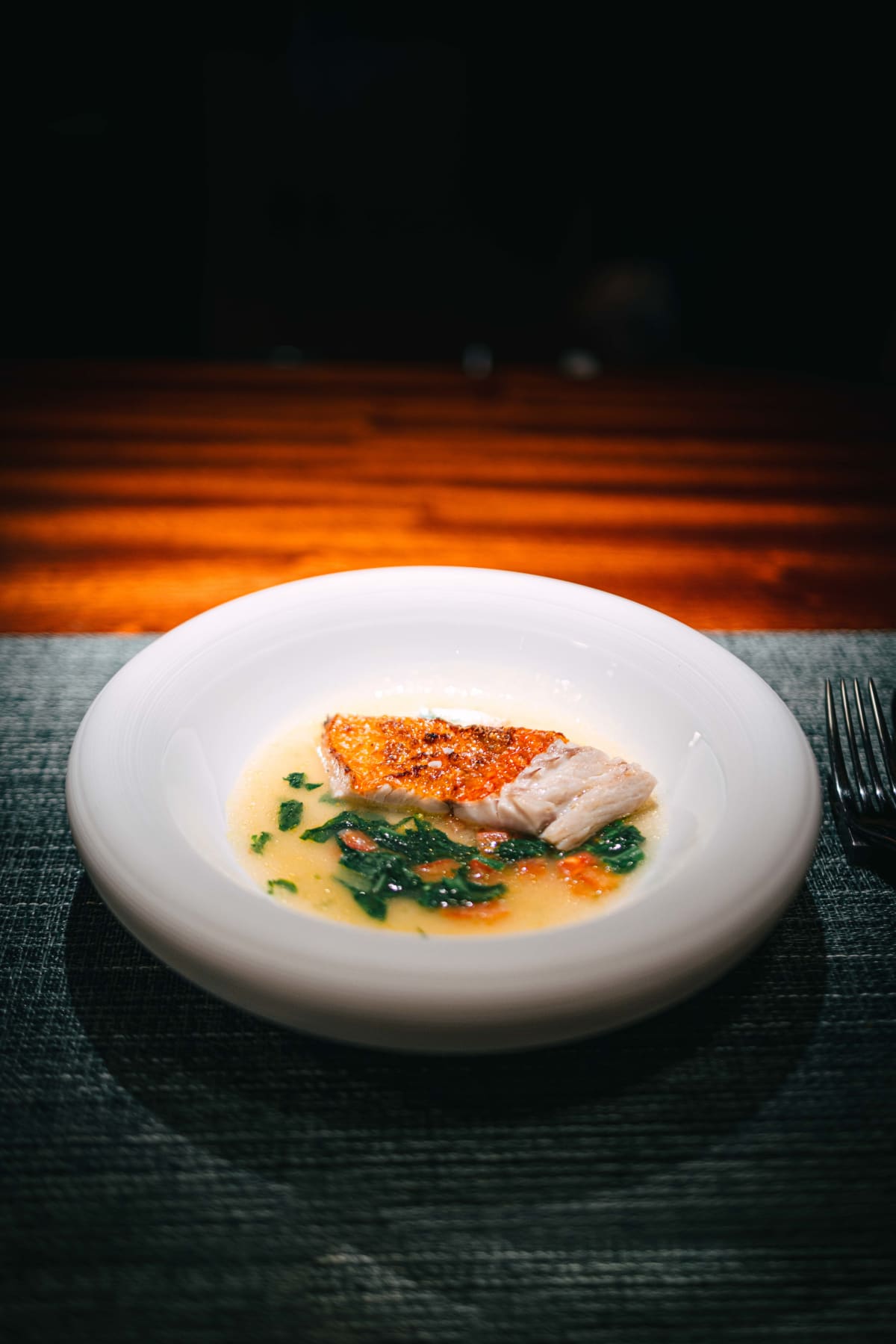
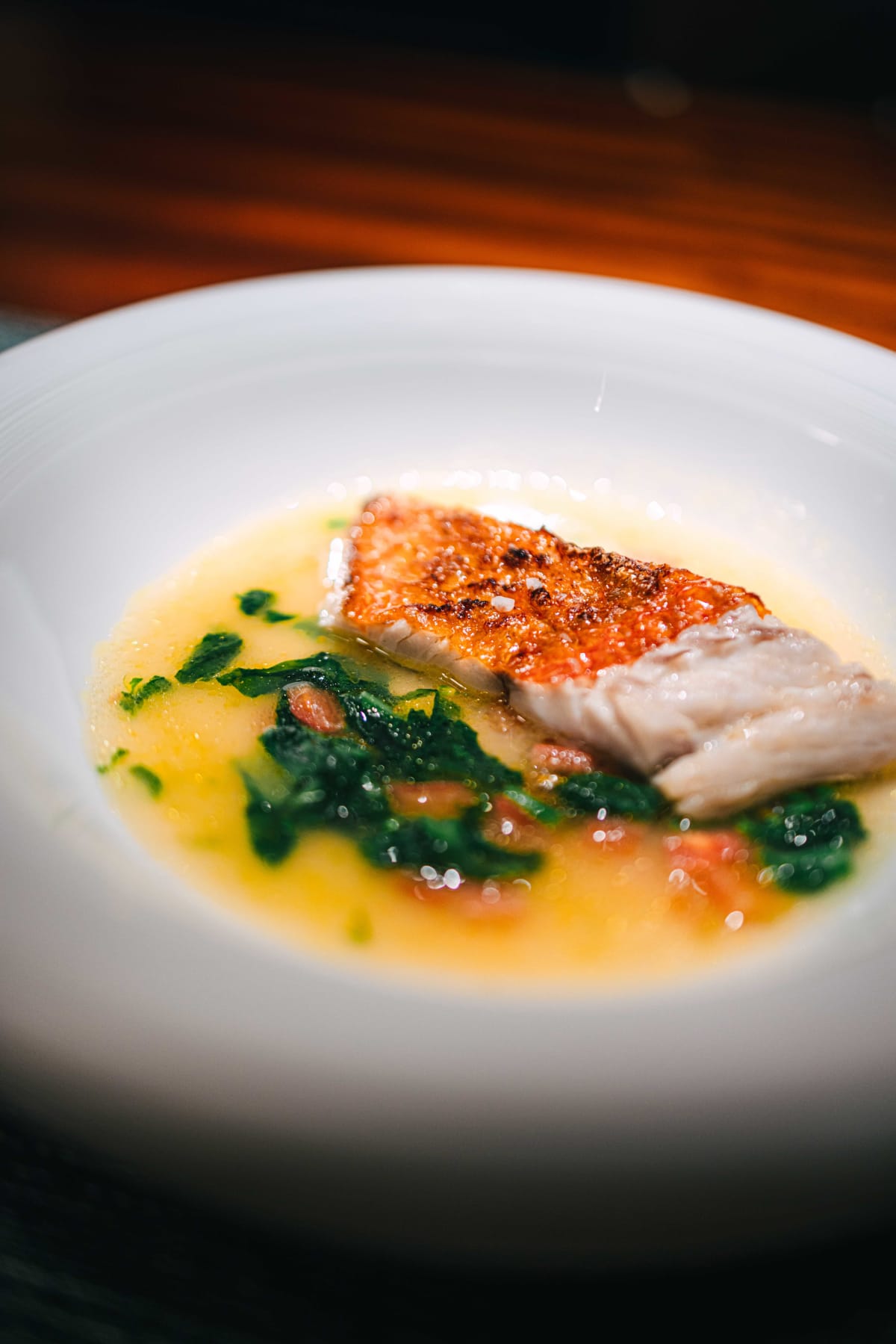
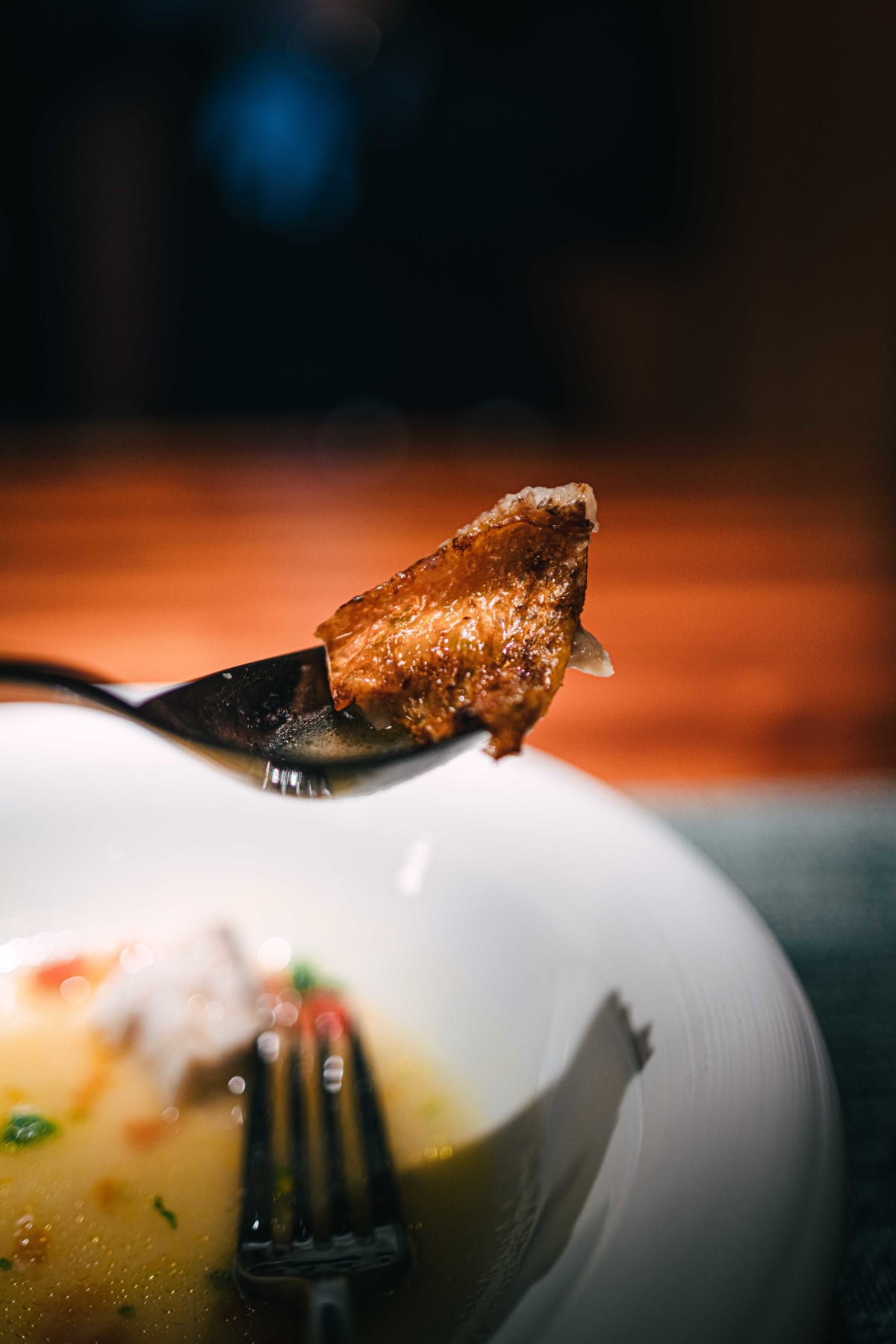
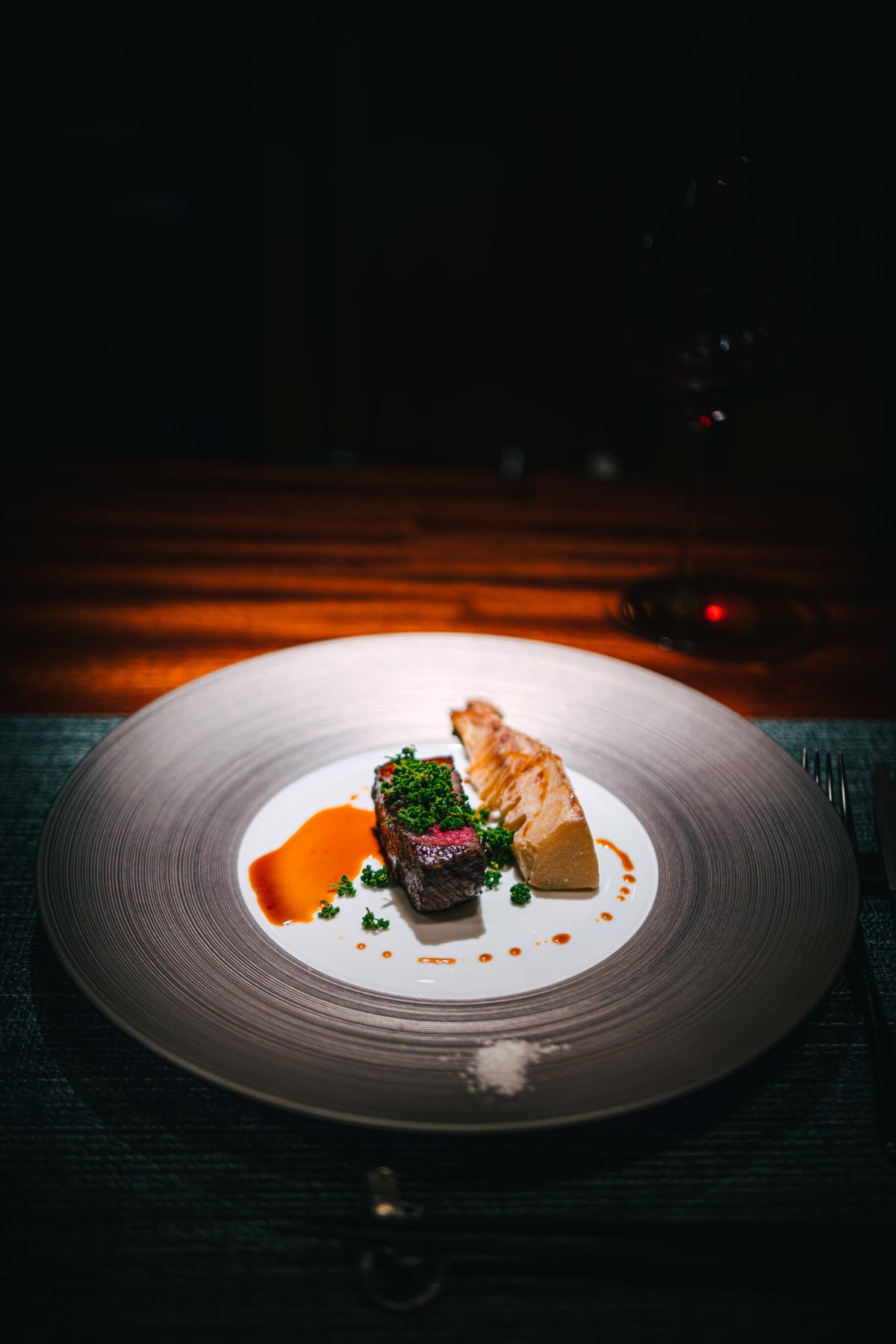
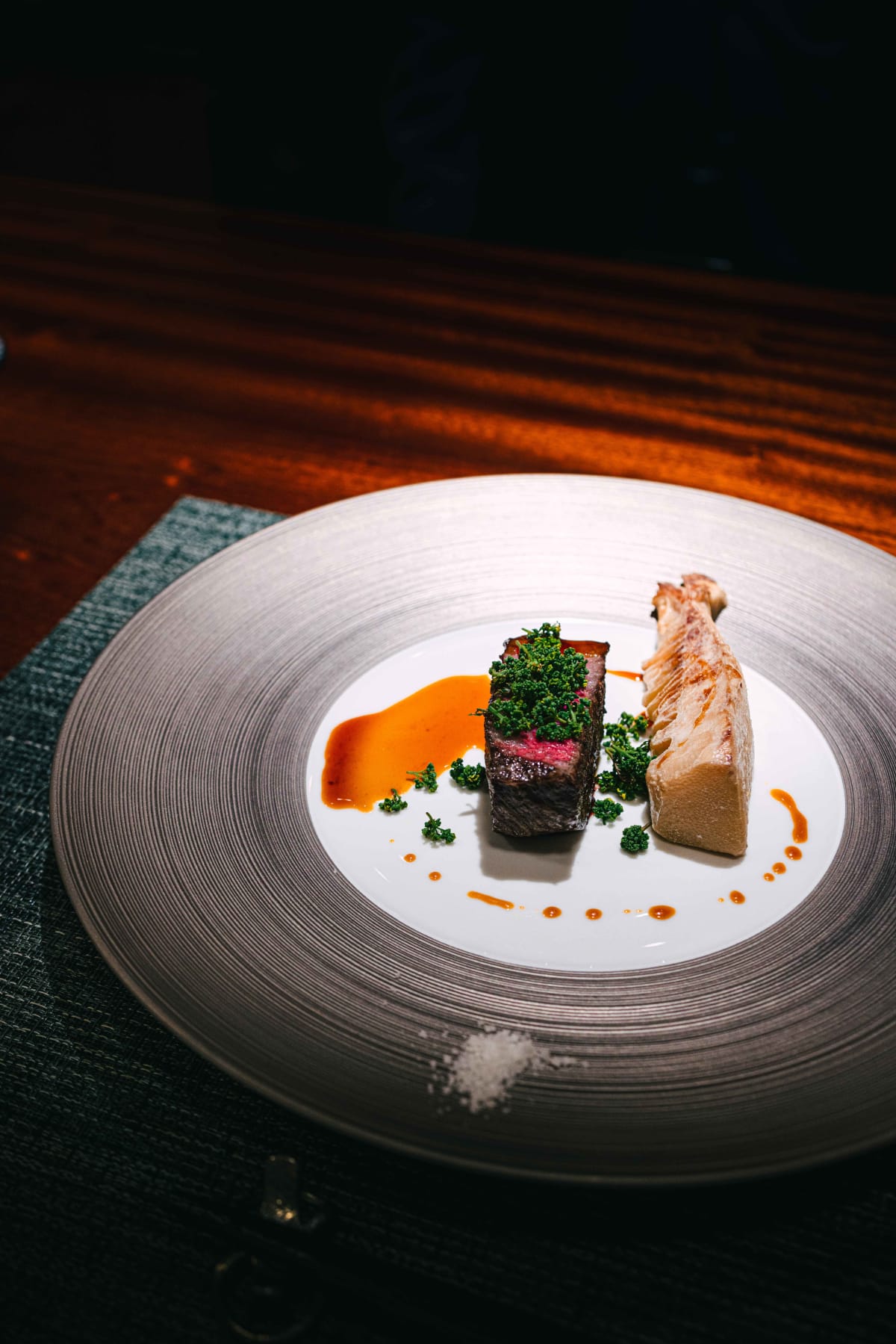
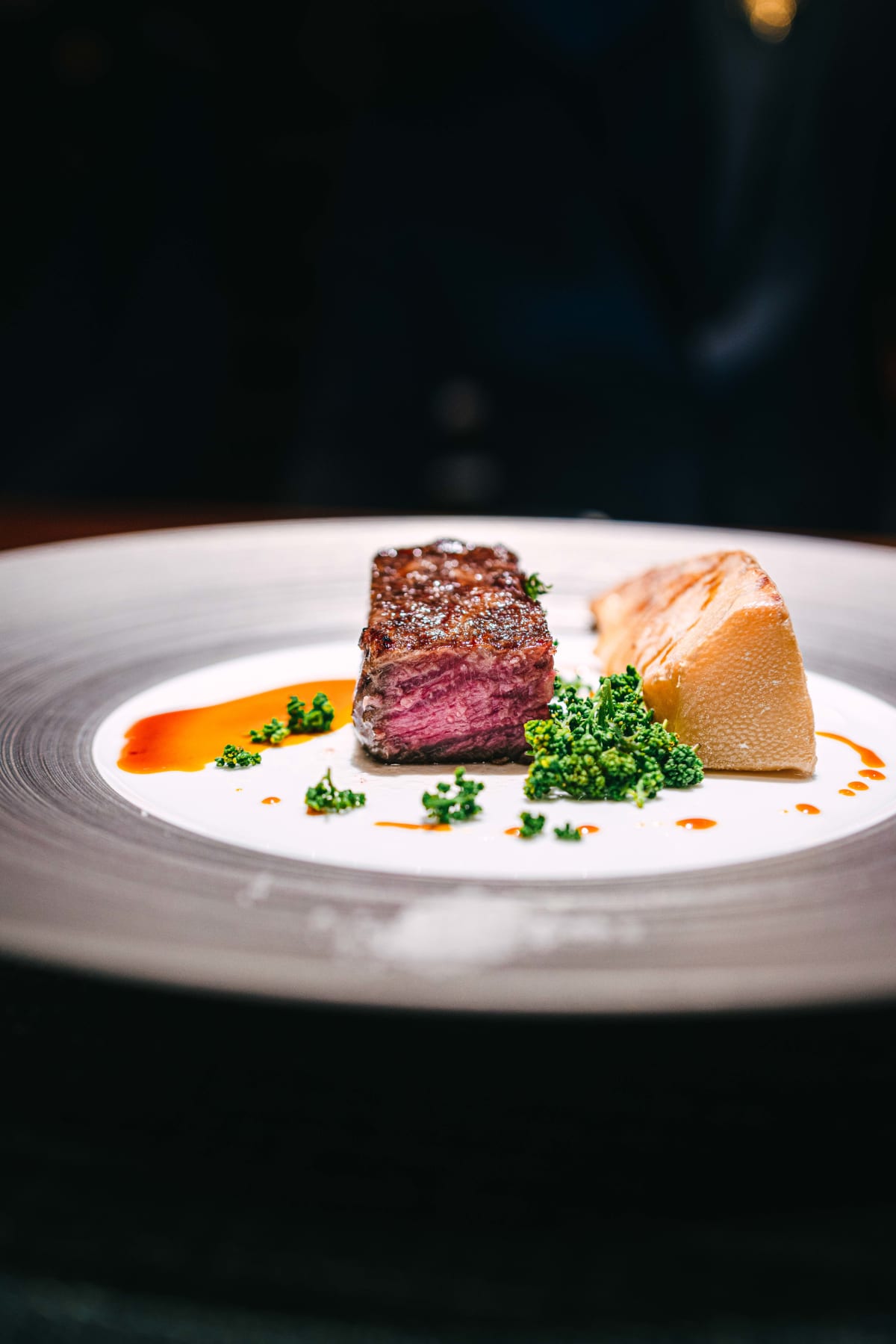
But from the Acqua Pazza style kinmedai onward, the satisfaction began to drop. The most important dish of the night, the main, was wagyu. Wagyu turns up regularly as the main course in Korea and across a wide range of dining rooms, and the flavour was largely predictable from the moment the plate landed; it tasted close to what one expects. The dish was good. The issue is that in a famous, expensive fine-dining context, what one looks for is not only "good" but also "different" and "new."

34—39 / 52
The main course at Le Taillevent in Paris was pigeon, and it landed; at Naoto.K in Tokyo, which I cannot say outranks Ao overall, the main was duck, and the meal kept its interest through to the end. After the wagyu came a risotto built around a chicken aged for twelve months, and honestly, the chicken porridge that follows a samgyetang at home was more satisfying.
40—42 / 52
At this stage of the menu, there were visible gaps in the construction of the course.
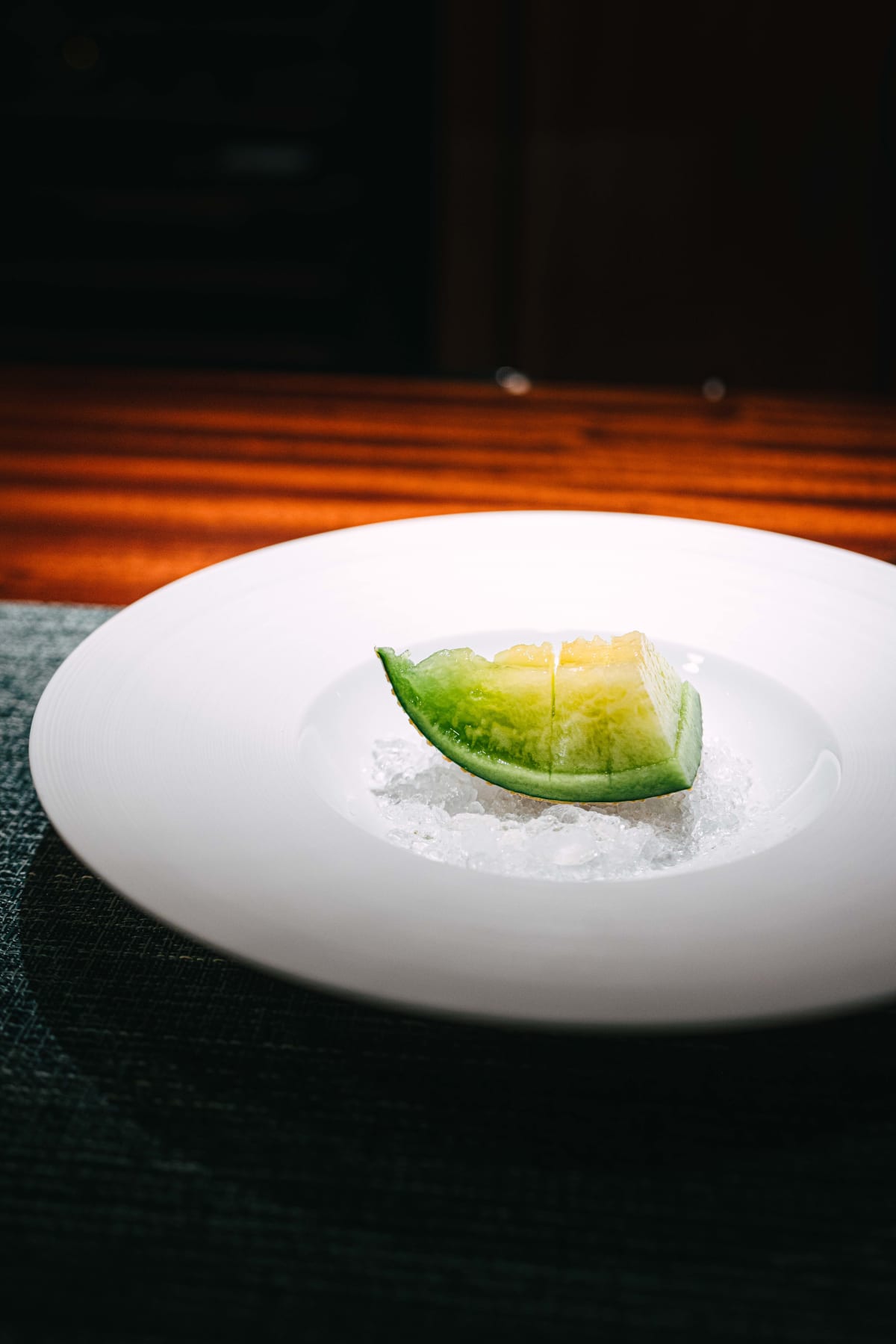
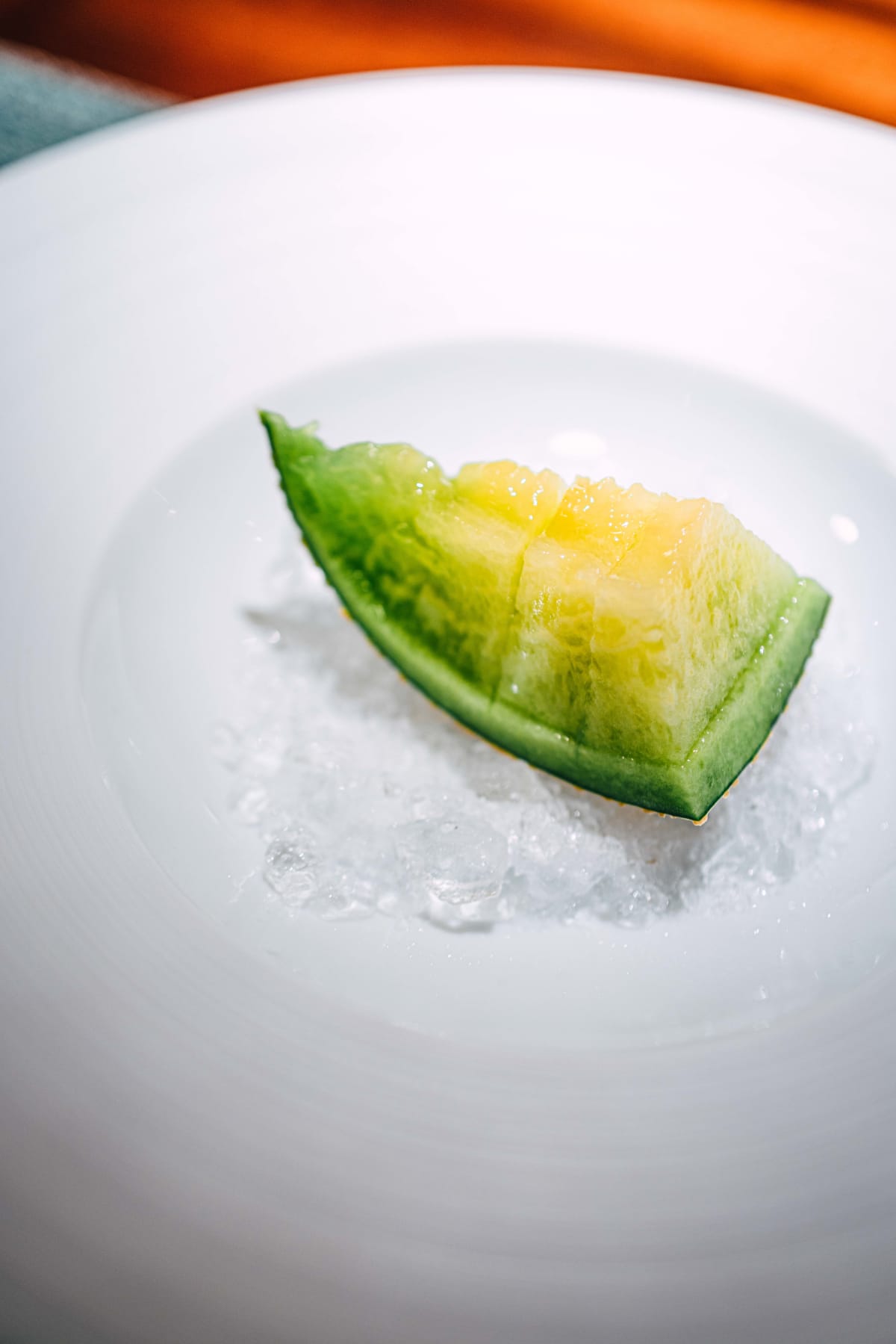
The first dessert was an AMANE musk melon from Shizuoka.
43—44 / 52
I had checked the menu before the meal and knew that melon was coming, but I had not expected a single slice of the fruit to arrive on the plate, unworked. The melon itself was genuinely delicious, almost certainly the sweetest melon I have ever had. There was, however, a small note of disorientation. In a French restaurant, or anywhere described as Innovative, one expects either a dessert with some creative transformation or a form rarely seen elsewhere. I had been imagining what the kitchen might do with the melon, or what would be served alongside it. When the fruit arrived, alone on the plate, the disappointment from the broken expectation was real, regardless of how good the melon tasted on its own. For someone whose interest lies in the flavour of the produce itself, this would be a high-satisfaction dessert. And in this single simple plate, more than anywhere else in the meal, the gap between Japan's Tabelog perspective and France's Michelin perspective came into focus. A dessert that emphasises the ingredient in its purest state reads, from the French dining perspective, as a course without any pastry technique or invention, just the fruit on its own. One of the characteristics of Japan's counter-format restaurants is the relative thinness of dessert work, which I read as a structural limit of the small room and the small team rather than a stylistic choice.
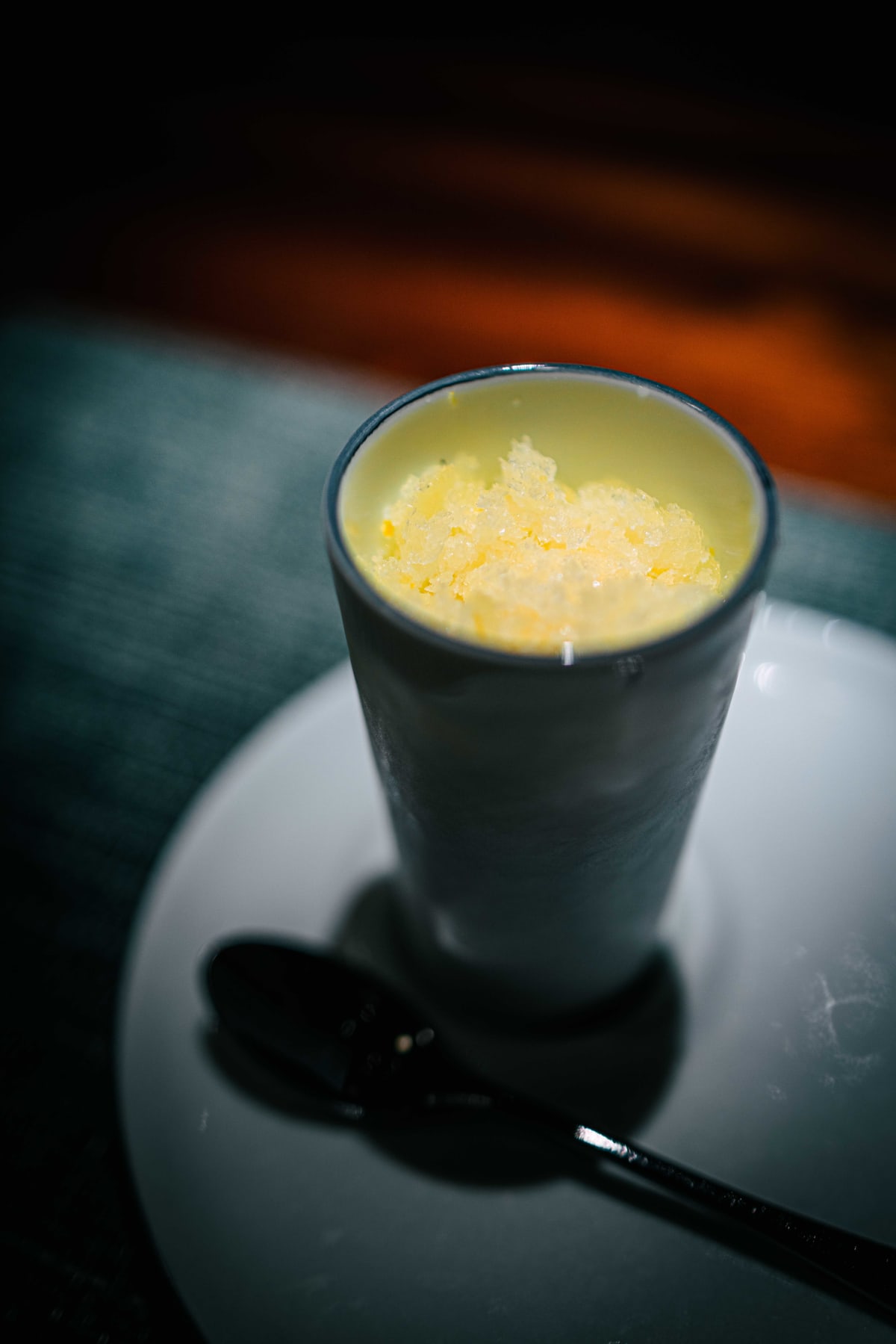
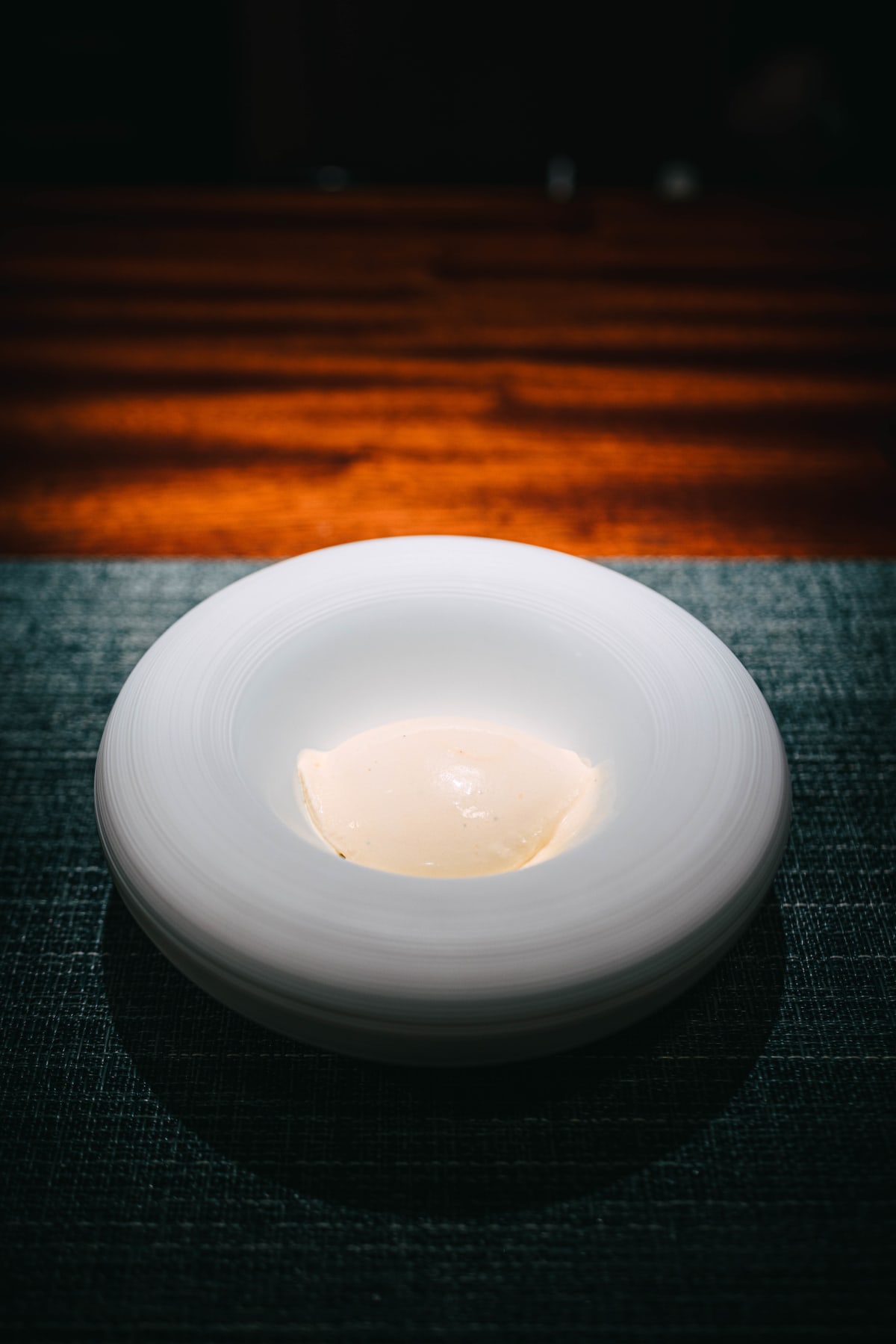
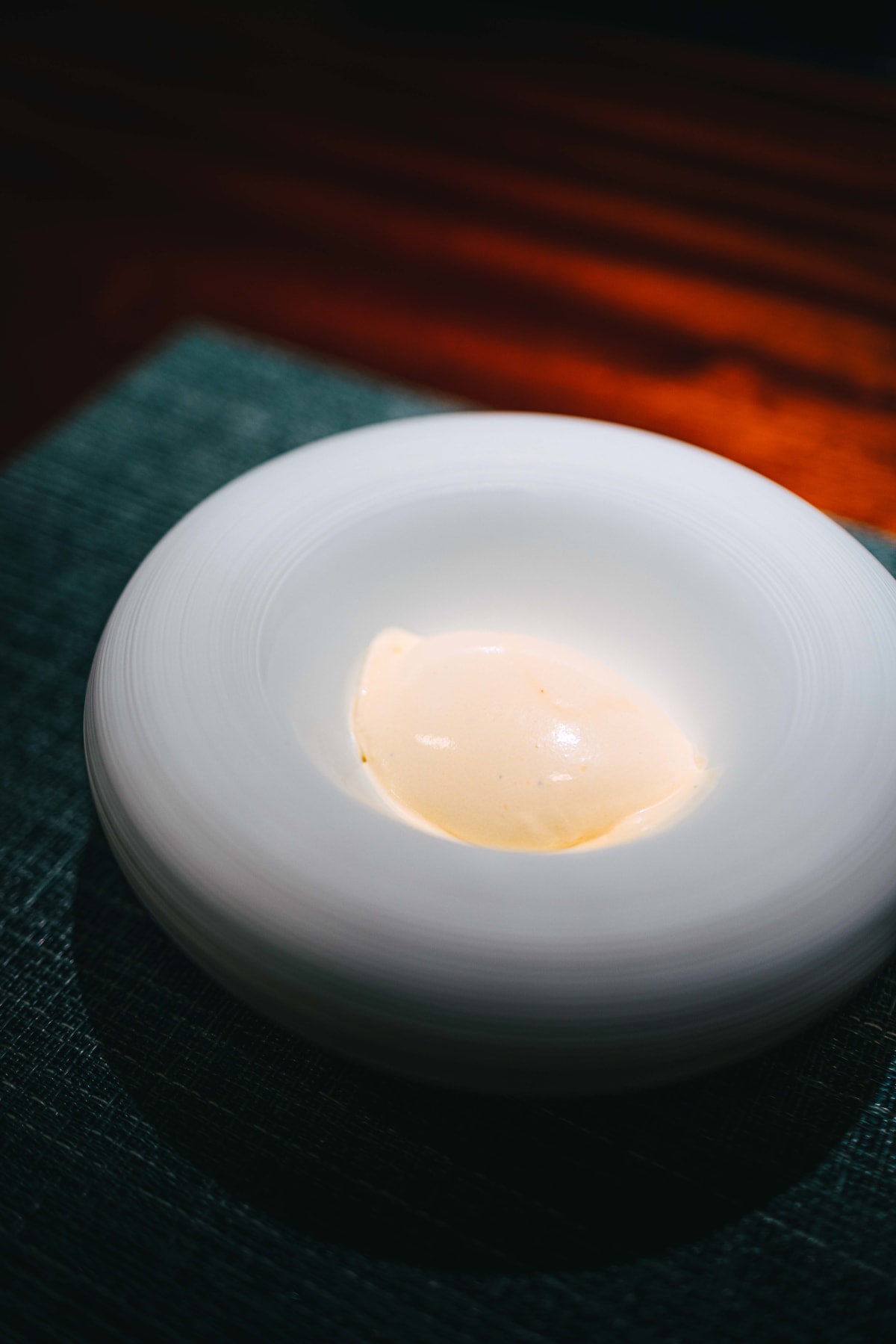
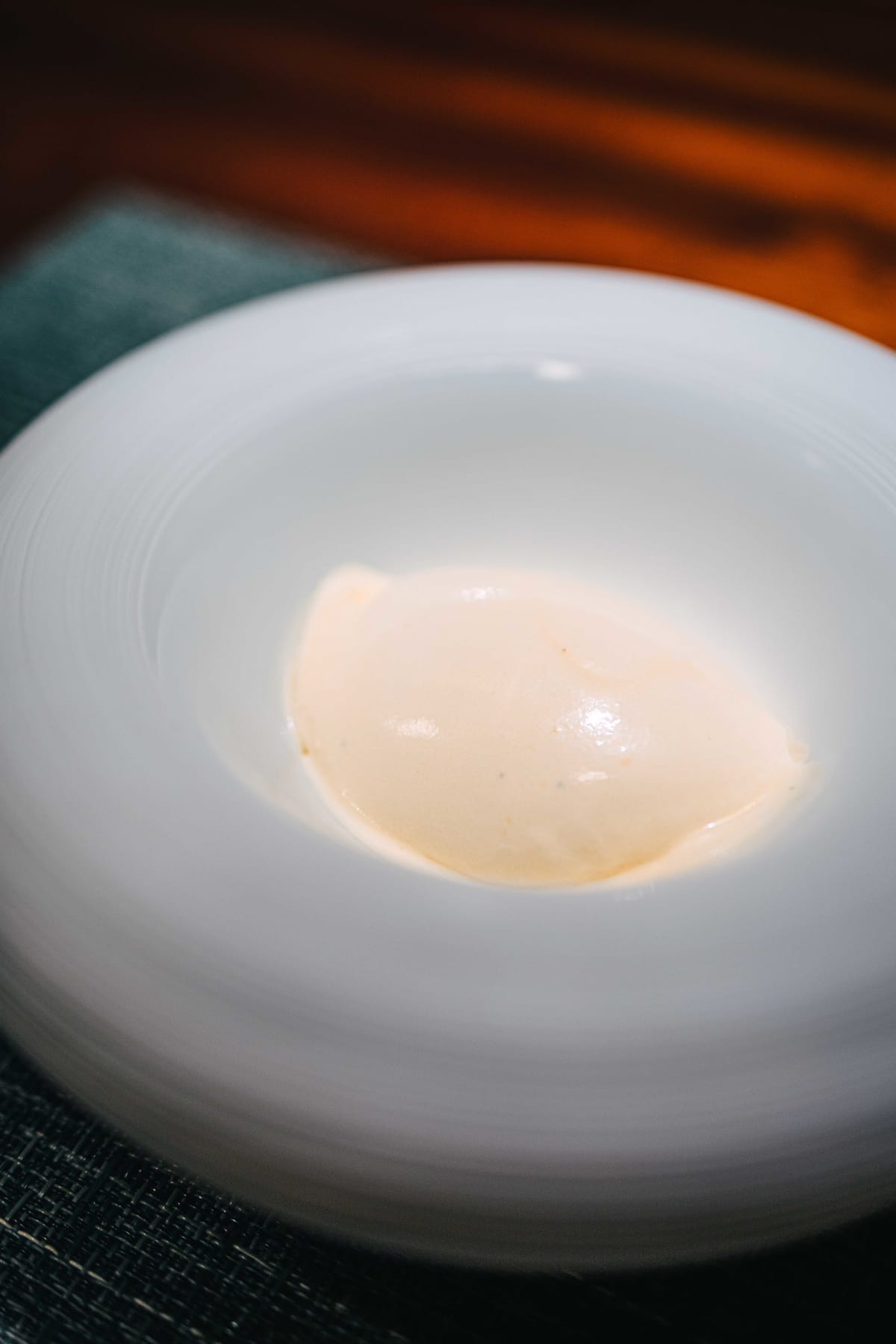
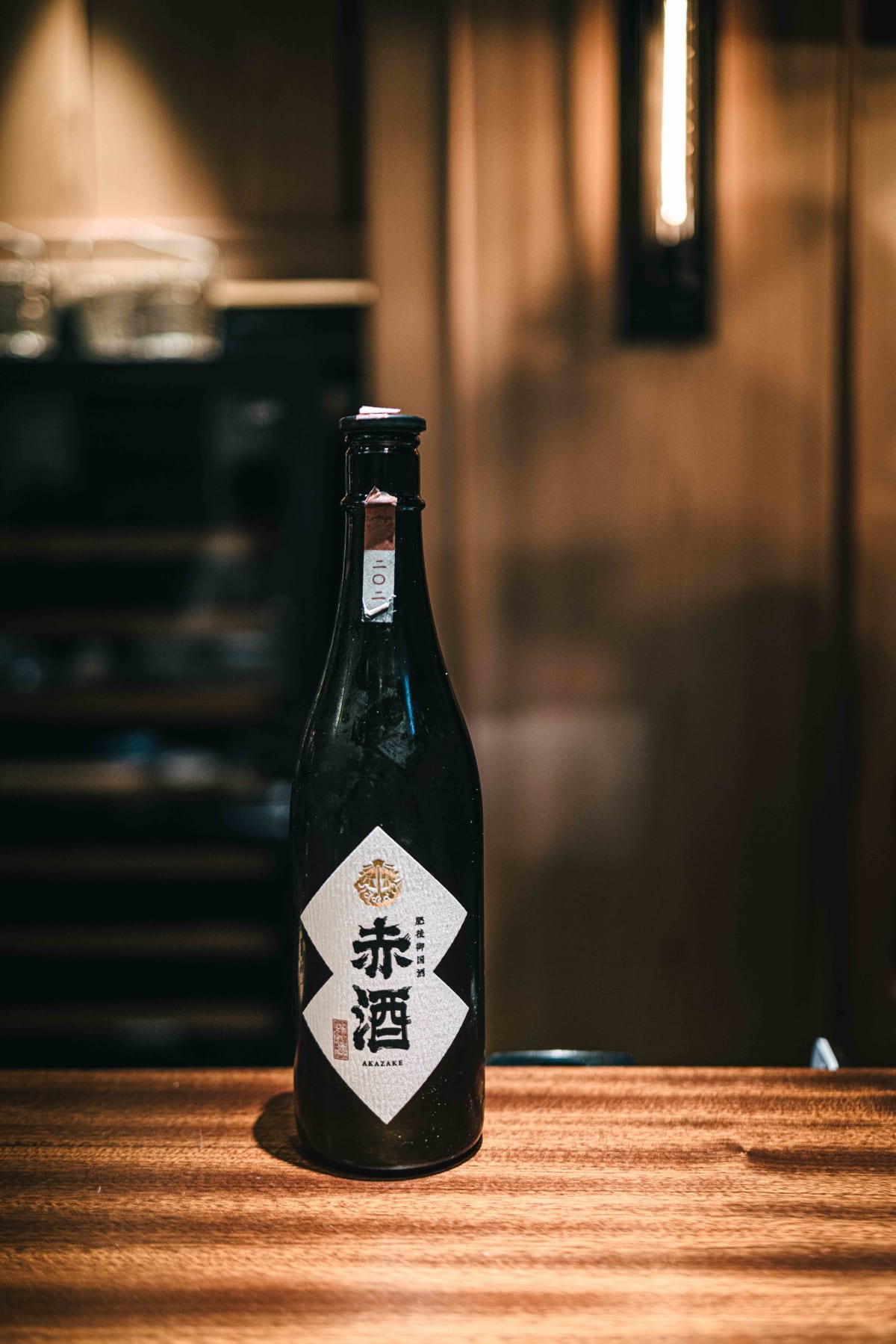
The sake ice cream that followed was solid, and the story behind it was the more interesting part.
45—47 / 52
Akazake is a regional sake from Kumamoto, made sweeter by the addition of wood ash.
48—48 / 52
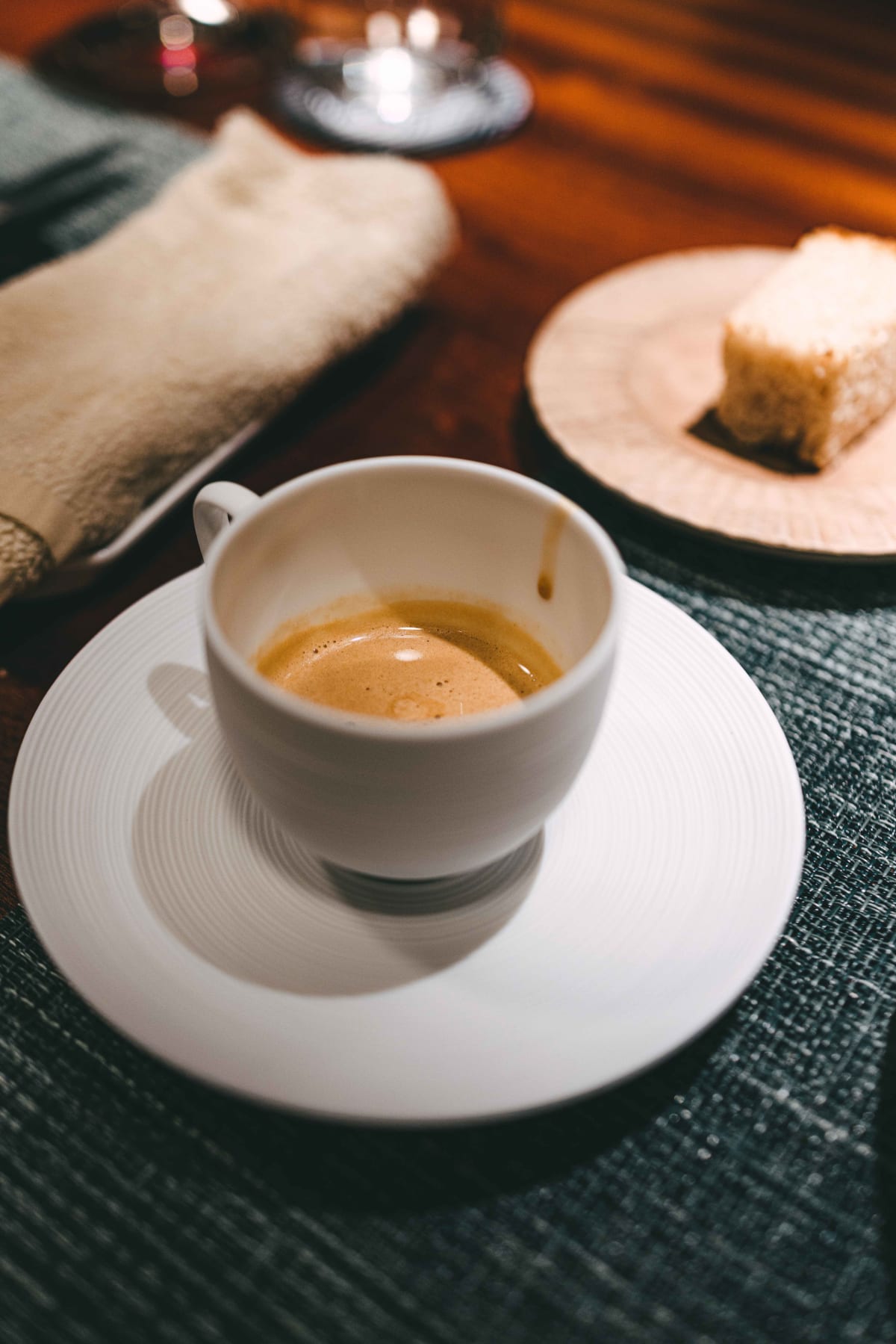
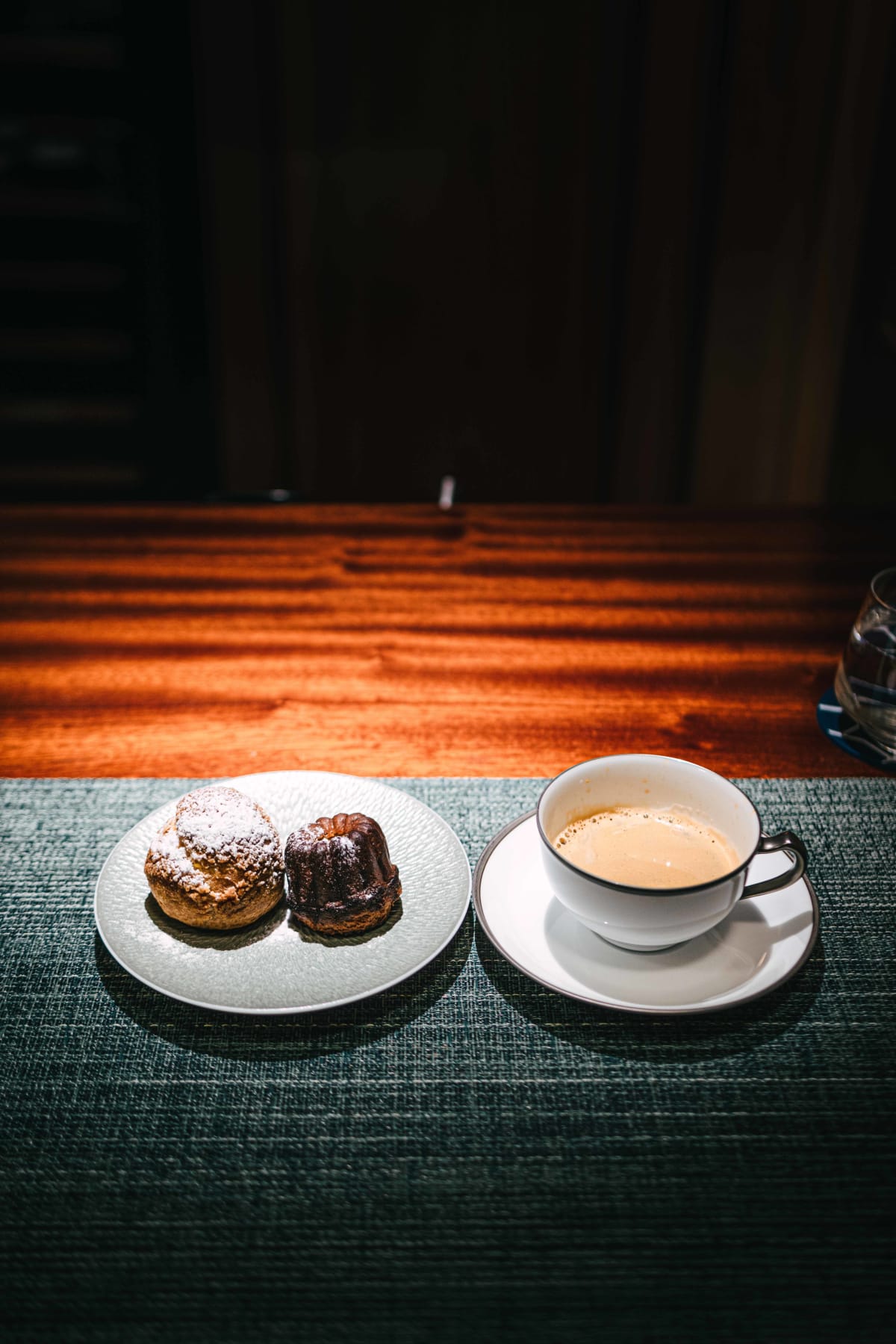
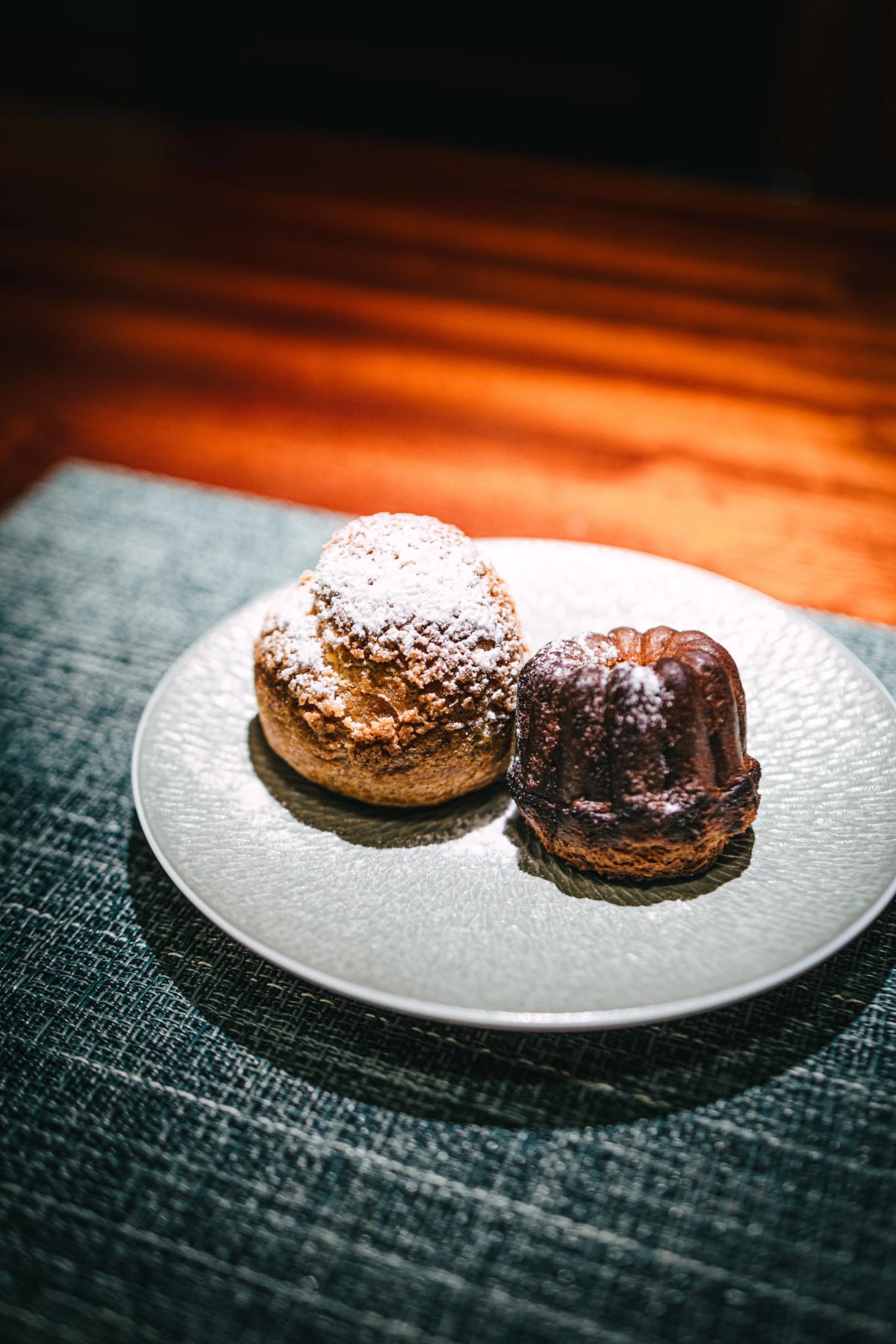
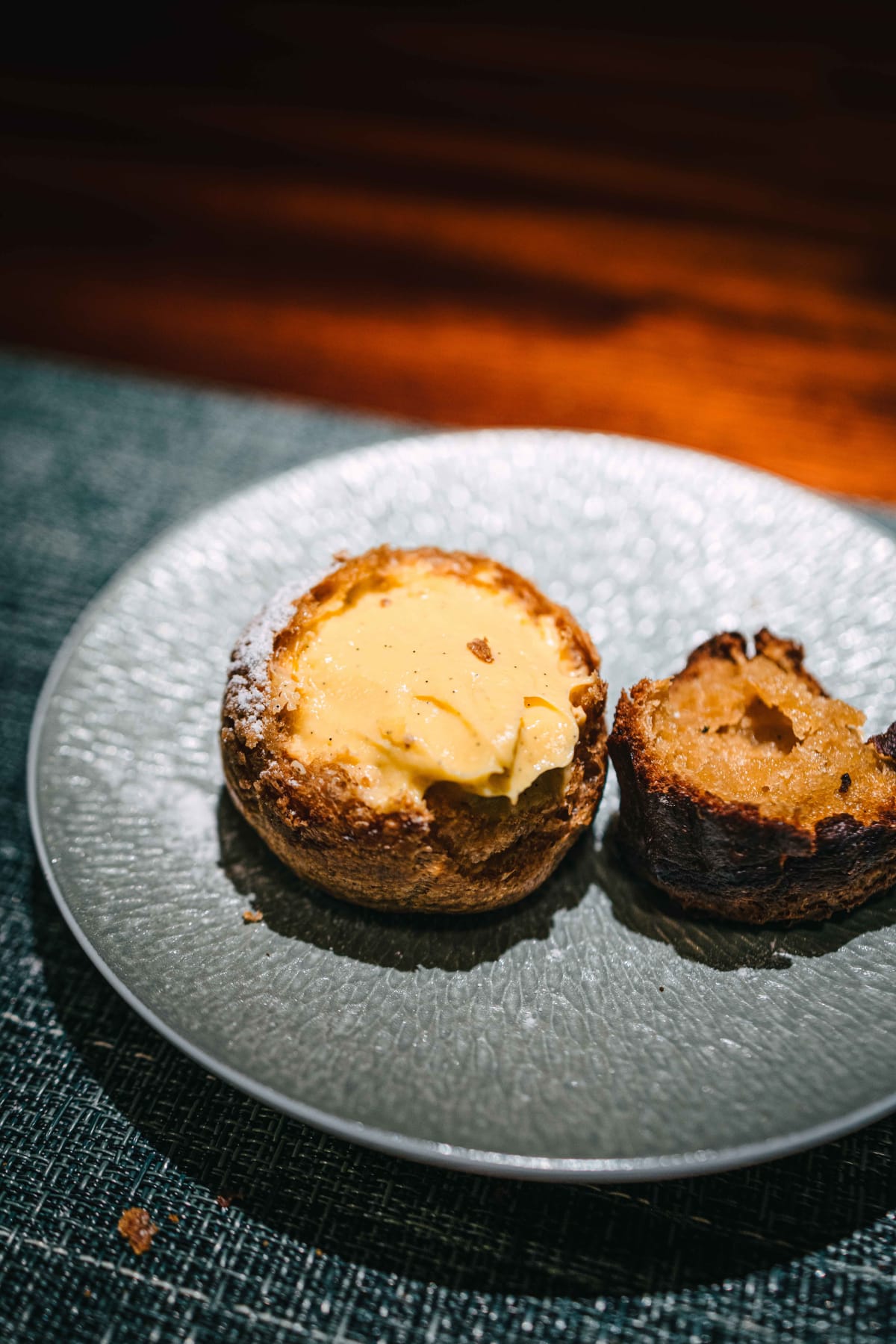
The ice cream built on egg and that sake was both unusual and good. The meal closed with coffee, a canelé, and a small cream puff.
49—51 / 52
It was an unremarkable close.
The close matters. Dessert affects the satisfaction of an entire course significantly. Ao's dessert, frankly, did not match the price point. The full fourteen-course menu runs about two hours, and going through a meal of that length without a single glass is, for anyone who enjoys wine, close to impossible. Ao's wine pairing comes to ¥49,500 for the full and ¥33,000 for the half, including tax. That is expensive compared to a standard restaurant pairing. Tableall even offers reservation slots with the pairing built in, which I take as a sign that the pairing is not the default choice for most guests. On the night I was there, only two diners took the pairing. I read this as a downside of running a dining room with so few seats. With seat counts that low and ingredient costs that high, margins on the course itself are tight, and the pairing appears to have been priced high to compensate.
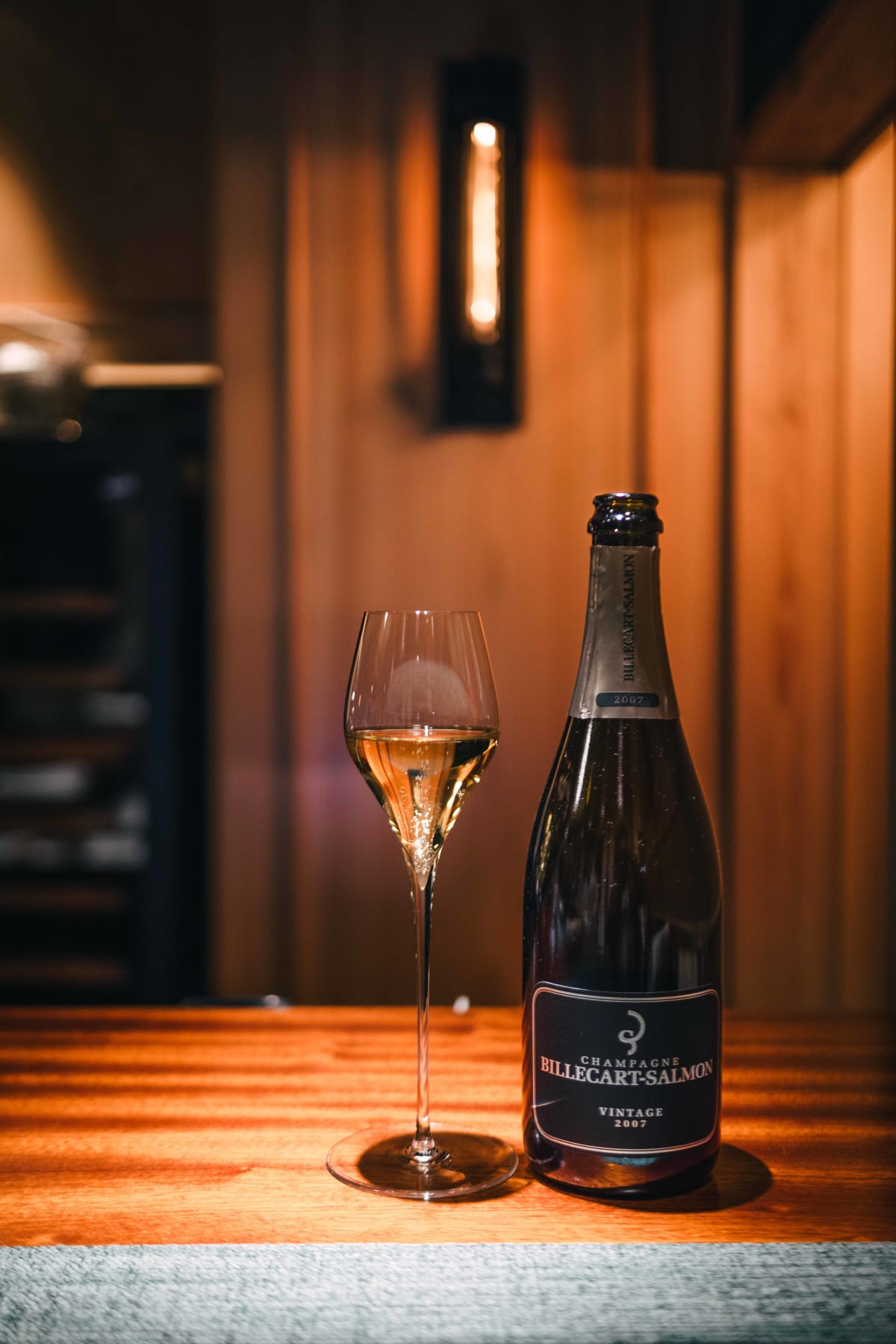
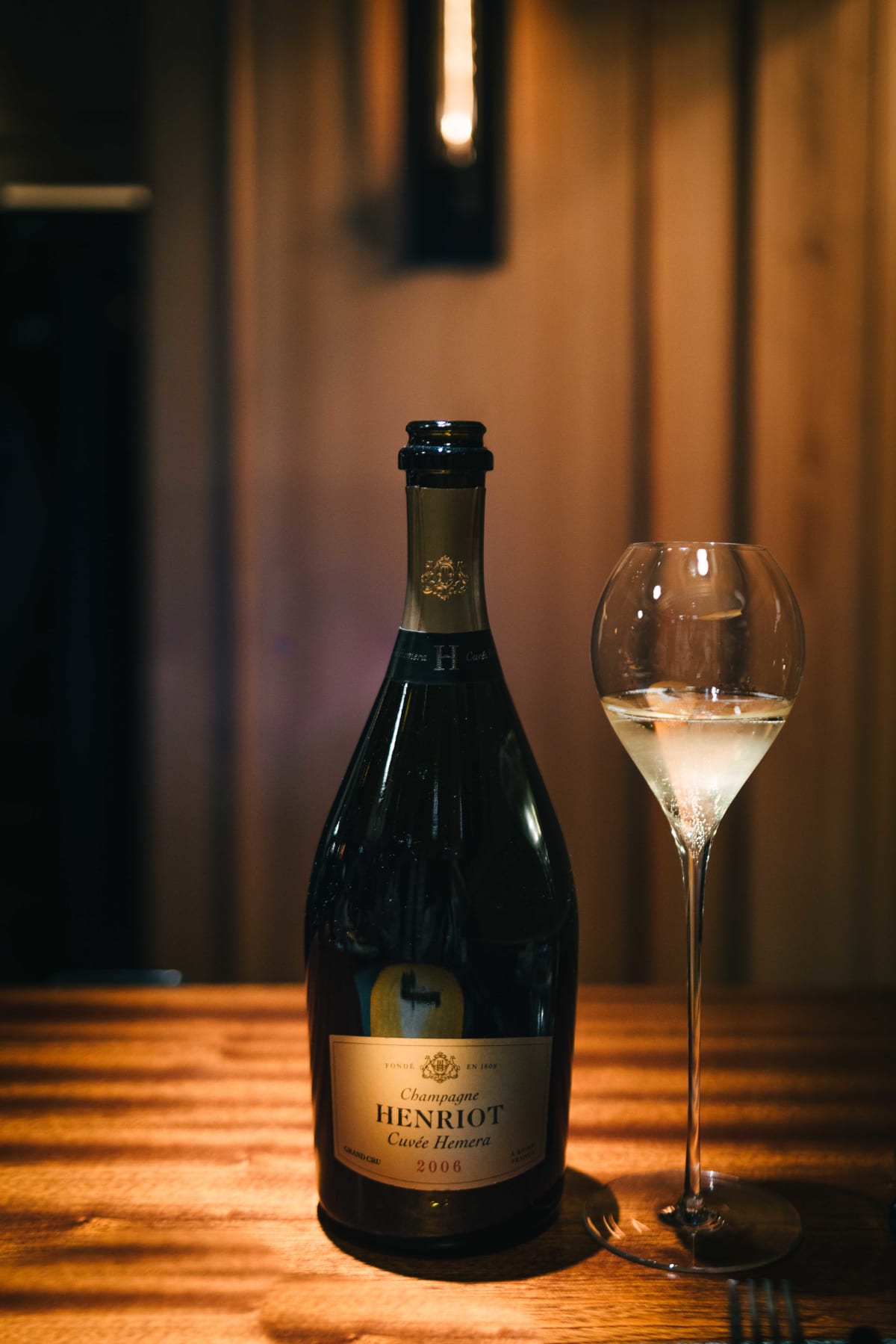
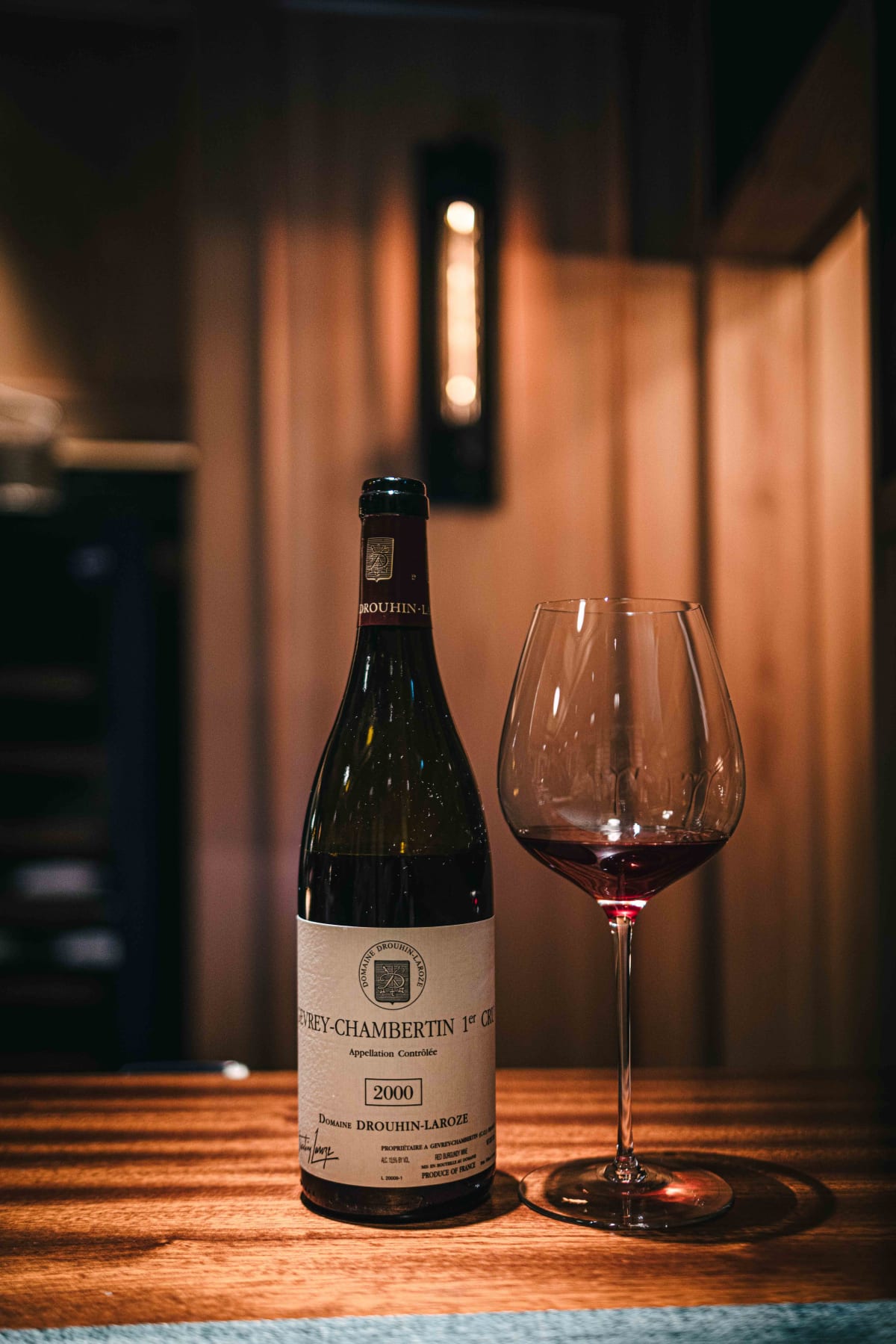
The pairing felt too expensive to take, so I ordered by the glass instead, two glasses of Champagne and one of red, at ¥4,400 a glass.
12—35 / 52
At that price the wines were excellent. Each was from a vintage before 2010, and the standout of the night, by some distance, was a Burgundy from the 2000 vintage. The nose and the palate were both extraordinary, and it became clear why wealthy collectors pay what they pay for Burgundy. A Bordeaux Grand Cru from the 2000 or 2001 vintage I had tried on a winery tour a year before this visit did not sit as cleanly in my register as this Burgundy did, and the impression it left was deeper.
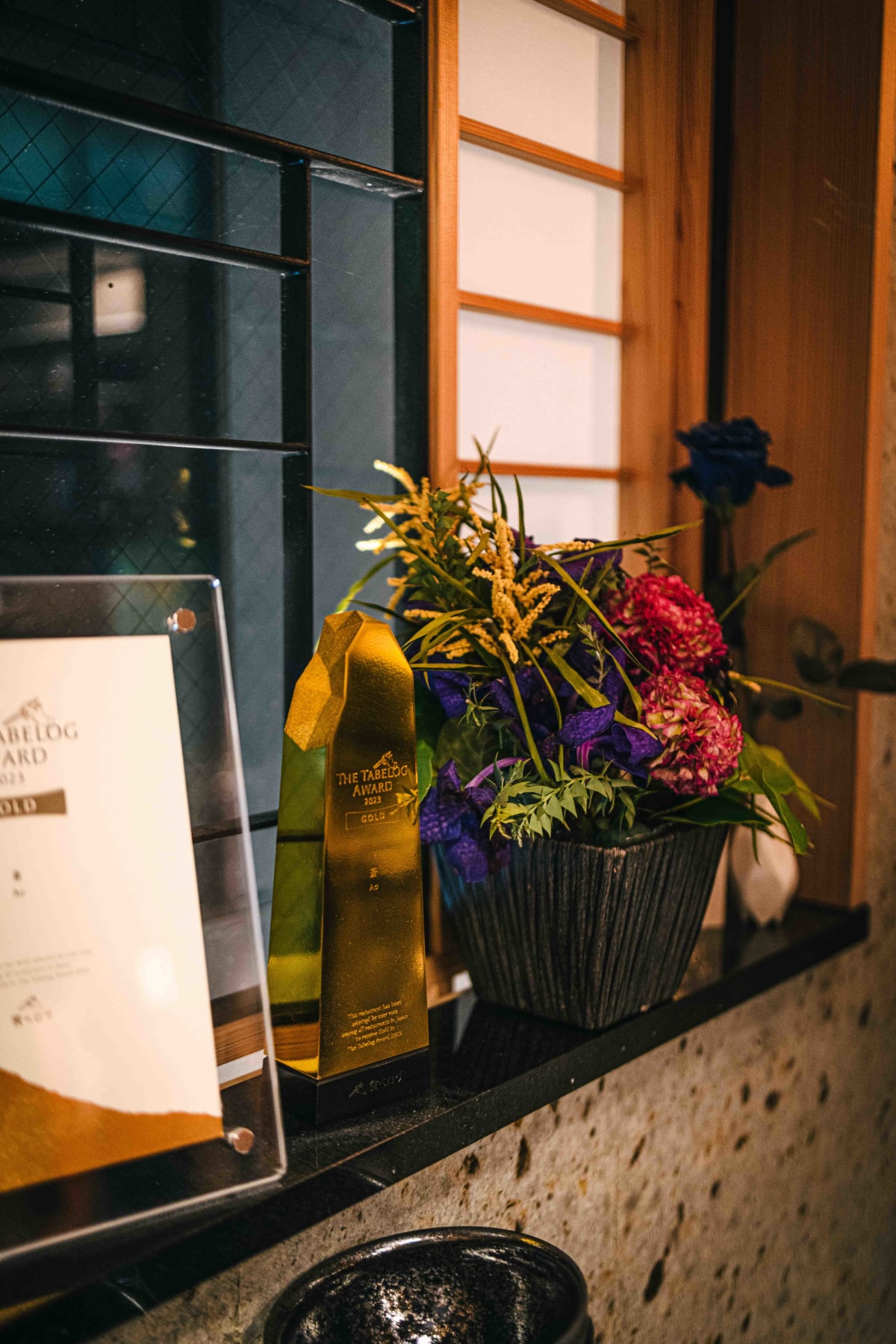
Ao is one of the thirty restaurants in Japan holding a Tabelog Gold at this point, and reservations across that list are uniformly difficult.
52—52 / 52
I do not yet know when or where I will sit at a counter of this calibre next, but the visit confirmed at least one thing: the level of the individual dishes is genuinely high. Beyond the food, what was also clearly on display was Chef Minemura's strong attachment to the Tabelog Gold itself. He returned to the subject again and again through the meal, his pride and his appetite for the recognition both visible. The frequency with which other counters around Tokyo also bring up Tabelog made it newly tangible that this rating system, far more than any guide imported from abroad, is the dominant currency of Japanese fine dining.
Ao's first Tabelog Gold landed only months before this visit, and the chef's pride in it was visibly louder than the menu's evolution beyond it. What this visit measures is not Ao's ceiling but its baseline: a first half that approaches the level of its global peers (Le Taillevent, Naoto.K), and a second half that does not. The break is consistent and reads as structural rather than incidental, with dessert and the wagyu main as its clearest evidence. Whether the kitchen has since closed that gap is a question this first review cannot answer; what it can answer is that the ceiling, when reached in the first half, is genuinely high enough to justify the trip on its own.
Have a question about this restaurant, or want to share your own experience?
Send a message