Fine Dining · Portugal
Belcanto
"Two stars in Portugal and 25th in the world. One of those numbers is the more accurate account."























Portugal has long existed in the shadow of Spain within the Michelin universe. Spain counts more than ten three-star restaurants nationwide; Portugal has none at that level, and two stars is effectively the ceiling. Against that backdrop, Belcanto stands as something of an anomaly. Tucked into a narrow lane off São Carlos square in Lisbon's Chiado district, beside the national opera house, the restaurant occupies a building that opened as a gentlemen's club in 1958. José Avillez took it over and renovated it in 2011, reopening in early 2012. A Michelin star followed that same year; a second came in 2014, making Belcanto the first restaurant in Lisbon, and Avillez the first Portuguese chef, to reach that level.
Avillez did not come up through culinary school. He studied business communication, trained under Maria de Lourdes Modesto, one of Portugal's foremost authorities on traditional cooking, and subsequently passed through the kitchens of Alain Ducasse and Eric Fréchon in France. The defining turn came in 2006, when he joined elBulli's creativity department under Ferran Adrià. He has described that period as the moment he learned not to fear doing something new. The culinary language at Belcanto, built on Portuguese ingredients and sensibility but reaching toward modern technique and occasional Asian inflection, follows logically from that formation.
The decision to visit came from the 2023 World's 50 Best Restaurants ranking, announced during preparation for this trip. Belcanto had climbed to 25th place, the highest position ever recorded by a Portuguese chef. Just ahead of it at 24th sat Septime in Paris, a restaurant visited earlier on the same journey and remembered well. Originally, the Spanish restaurant Deessa was to close the dining portion of the trip. Adding Belcanto as a final stop in Lisbon felt like a risk worth taking. The reservation was for the Chef's Table, a separate arrangement inside the kitchen rather than the main dining room. The decision proved to be among the best of the entire journey. Condition was not ideal on the day; several dishes were genuinely impressive regardless. Three months later, the flavors remain clear. A degree of skepticism toward World's 50 Best rankings has been partially revised, with Belcanto as the turning point.
That evening began with a walk from São Jorge Castle. The approach through a darkened single-lane alley, past a plain facade bearing the Belcanto nameplate and its accumulated awards, set a particular register before the door opened. A glass of Champagne Billecart-Salmon Brut Rosé was ordered immediately upon sitting down, partly to cool off from the walk. The only real decision remaining was whether to take the wine pairing. A personal rule for this trip held that pairings would be ordered wherever possible, and as the sole fine dining stop in Portugal, there was no reason to deviate.
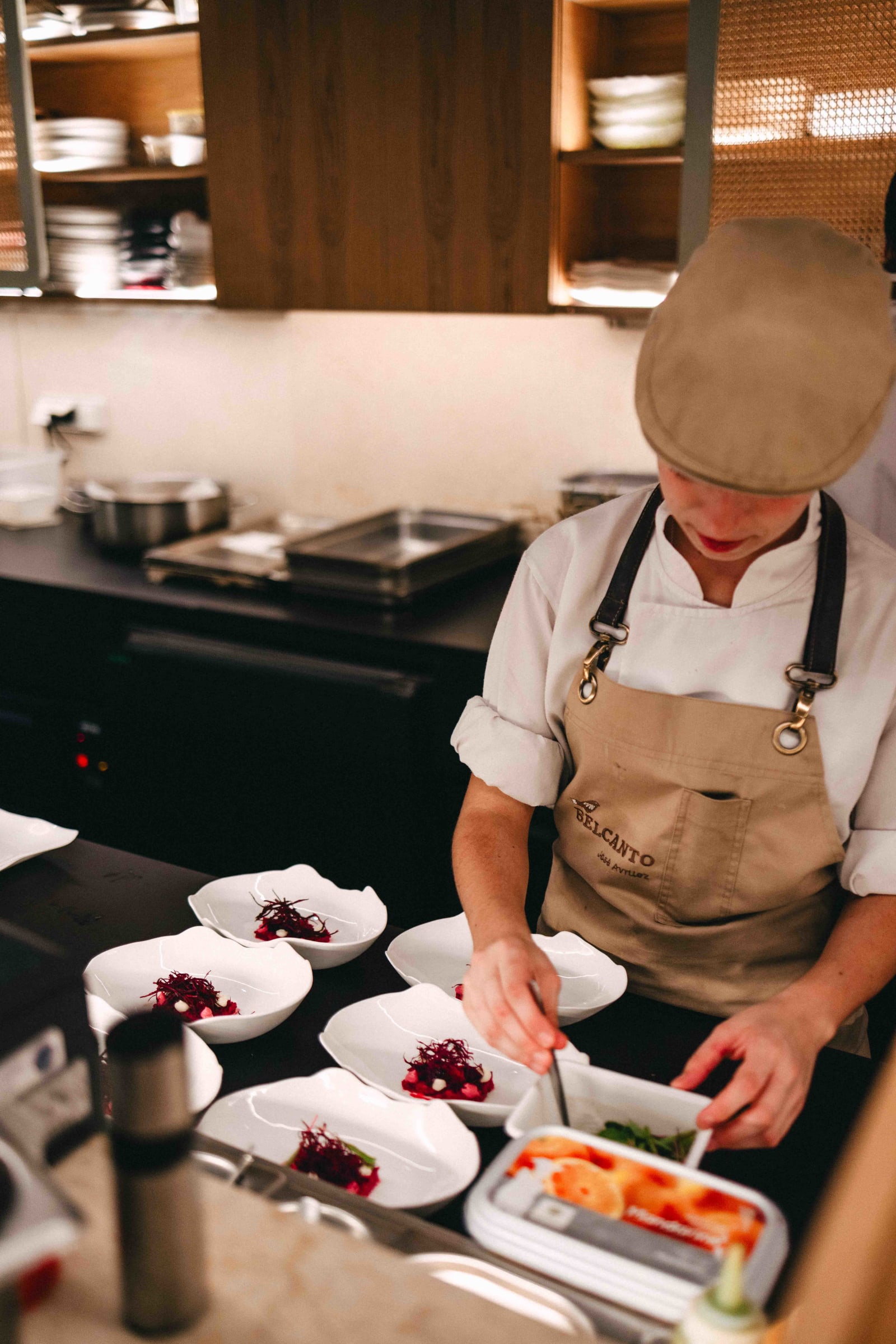
Focusing on the food proved difficult for the first stretch of the evening, and the seat was the reason. Alongside the main dining room, Belcanto offers a Chef's Table available by separate reservation at a higher price, situated inside the kitchen itself. Guests pass through the dining room and enter directly, where a table for five or six has been set up. For those without professional kitchen experience, the internal operations of a Michelin-level restaurant are rarely visible from a guest's position. On this occasion, the seat was at the center of it all.
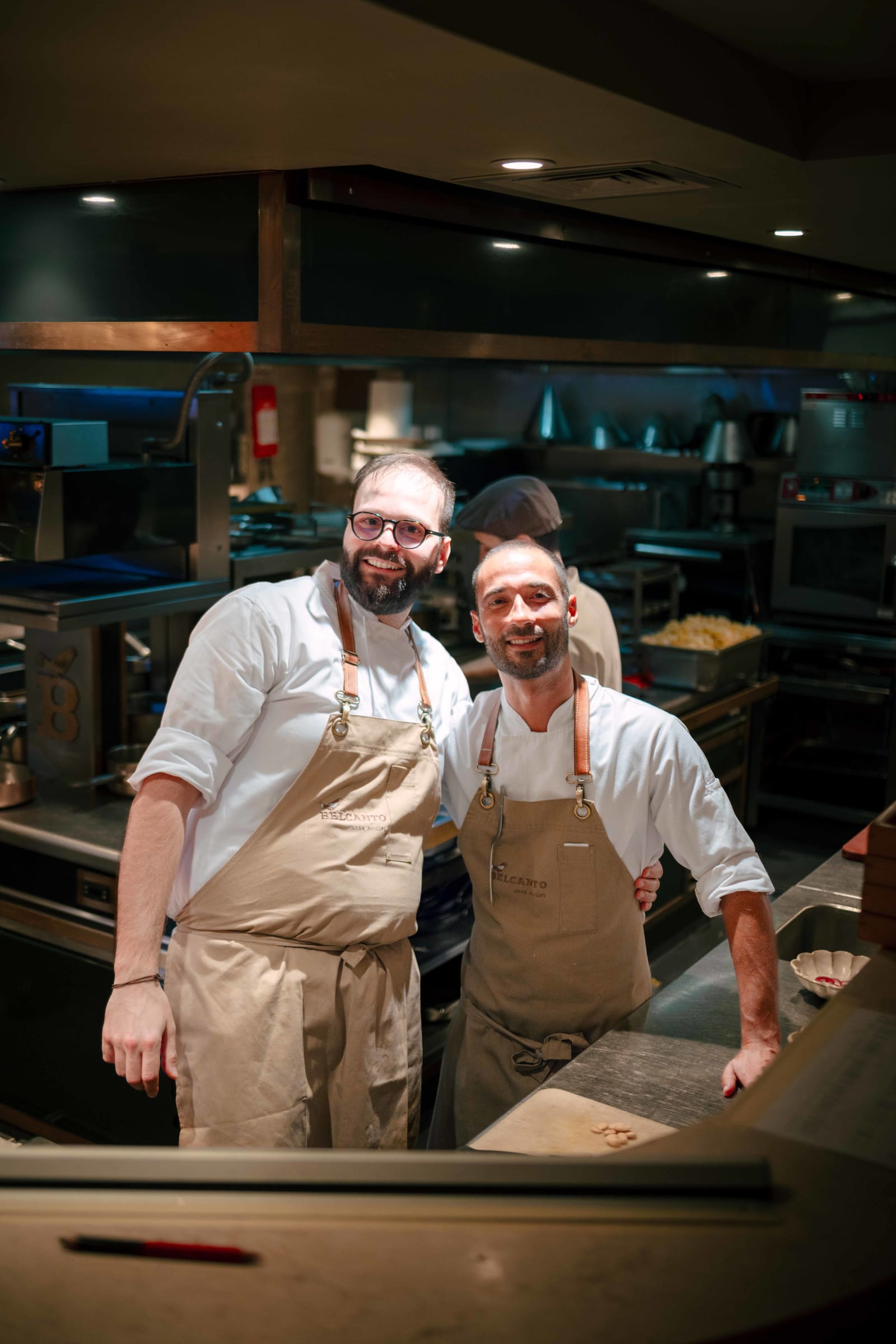
Belcanto's kitchen is divided into two sections: one side handling amuse-bouches and appetizers, the other managing fish and meat mains. Avillez works the main station, checking every dish as it goes out. For the first part of the meal, attention kept drifting toward both sides of the kitchen rather than settling on the food in front of us. When a camera appeared as we entered, Avillez stopped mid-service, asked to be included, and posed with another chef. Over the following three hours, he checked every outgoing main course, and on several occasions disappeared into the kitchen to adjust a sauce himself before returning to the pass. The scene was one worth preserving in some more permanent form. A Korean chef working at Belcanto mentioned, in passing, that in over a year at the restaurant this had been only the second visit to the Chef's Table by a Korean guest.
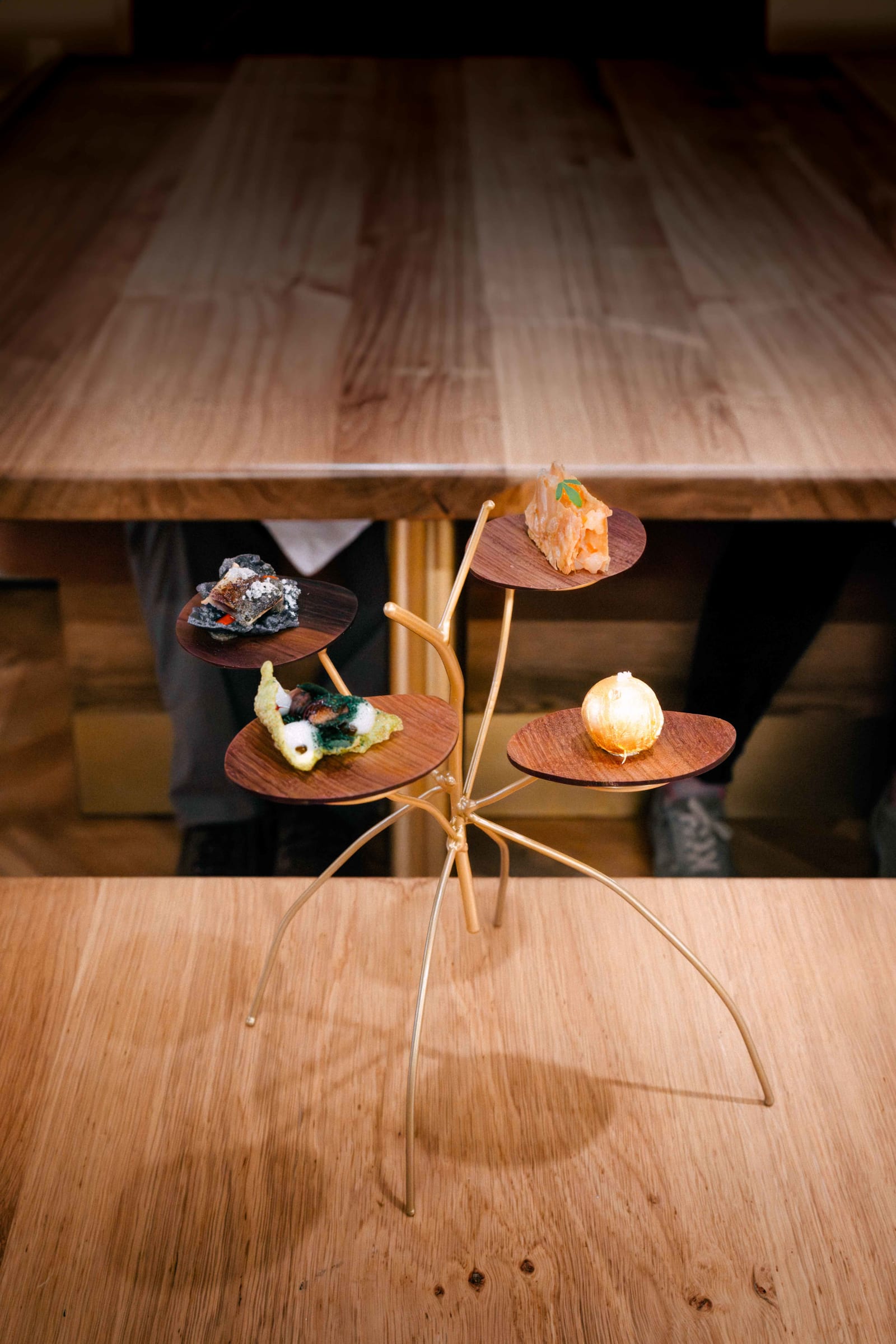
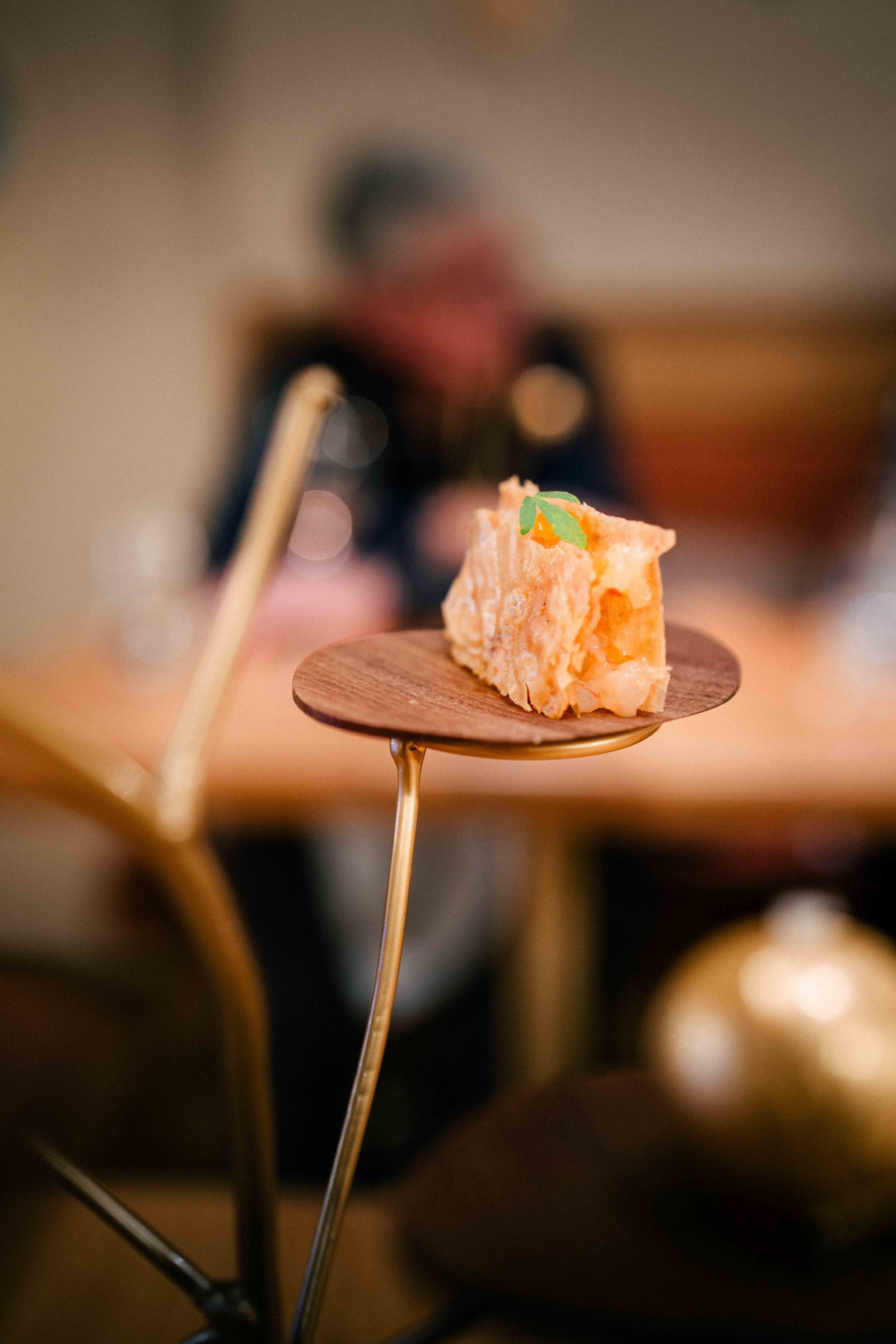
The amuse-bouche arrived on a branch-shaped rack, four pieces to be taken in clockwise order from the green: Crunchy Seaweed, barnacles, codium / Charcoal crisp with roasted sardines and rosemary ash / Minced sea prawn from Algarve with roasted chicken skin / Foie gras full moon and Port. The pairing opened with NV Nicolau de Almeida Porto Leve Seco, Douro, a white Port. Spanish restaurants tend to introduce fortified wine around the second course; here it arrived from the first glass. It suited all four pieces reasonably well. The Algarve prawn with chicken skin made the strongest impression, followed by the charcoal crisp with sardine. By the end of the amuse-bouche, any concern about the evening had lifted.
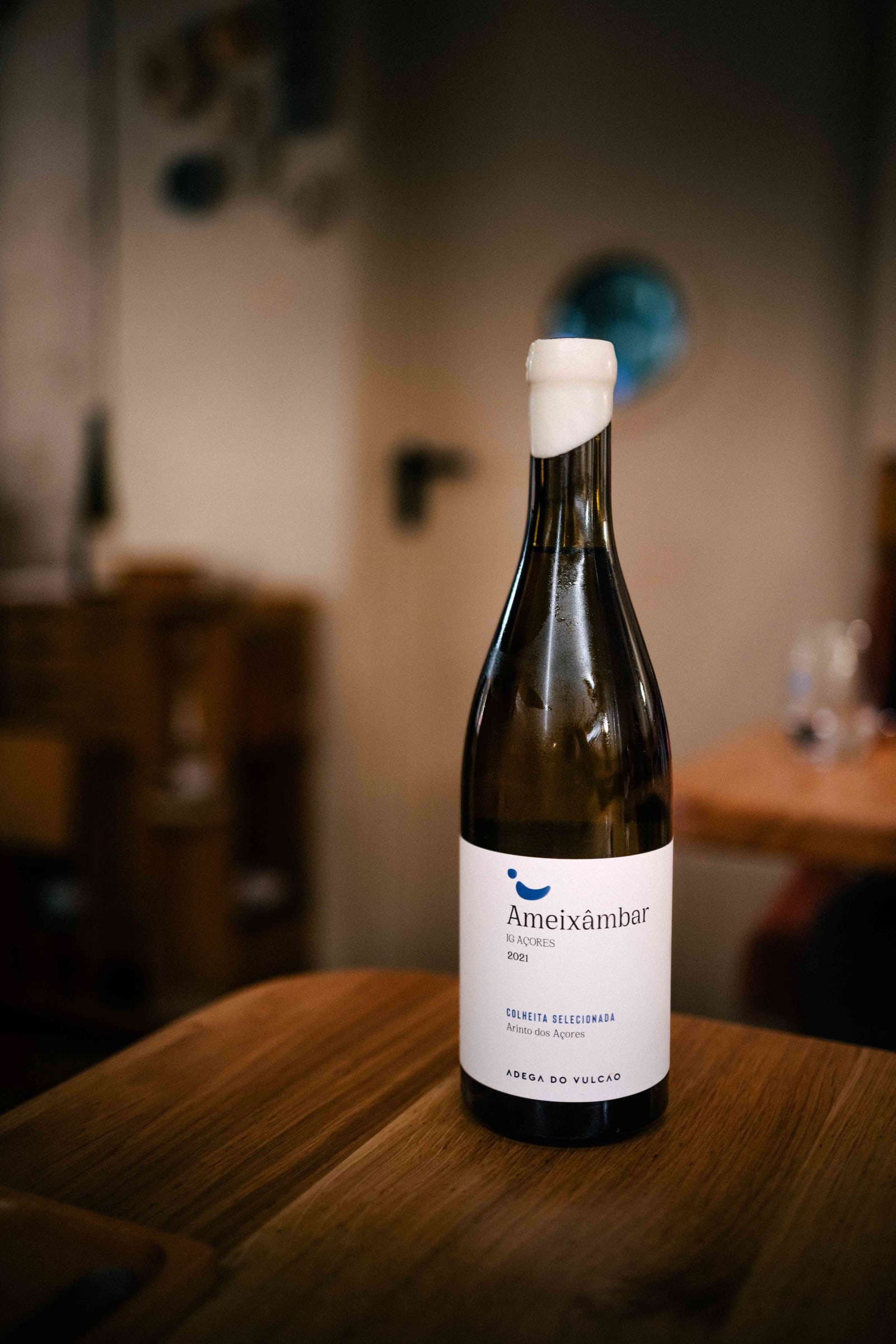
Attention finally settled on the food after the amuse-bouche. The second course was Smoked and cured horse mackerel, Algarve carrot and emulsion: horse mackerel lightly smoked, accompanied by carrot and emulsion, tasting exactly as it looked, with a notably resilient texture. A persistent complaint about European fine dining holds that raw fish portions are invariably too small, no larger than a thumb joint; this was no exception. The pairing was 2021 Ameixambar, Açores, from vineyards on a volcanic archipelago 1,600 kilometres west of Lisbon. From this point, a preference for Portuguese whites over Spanish ones began to consolidate.
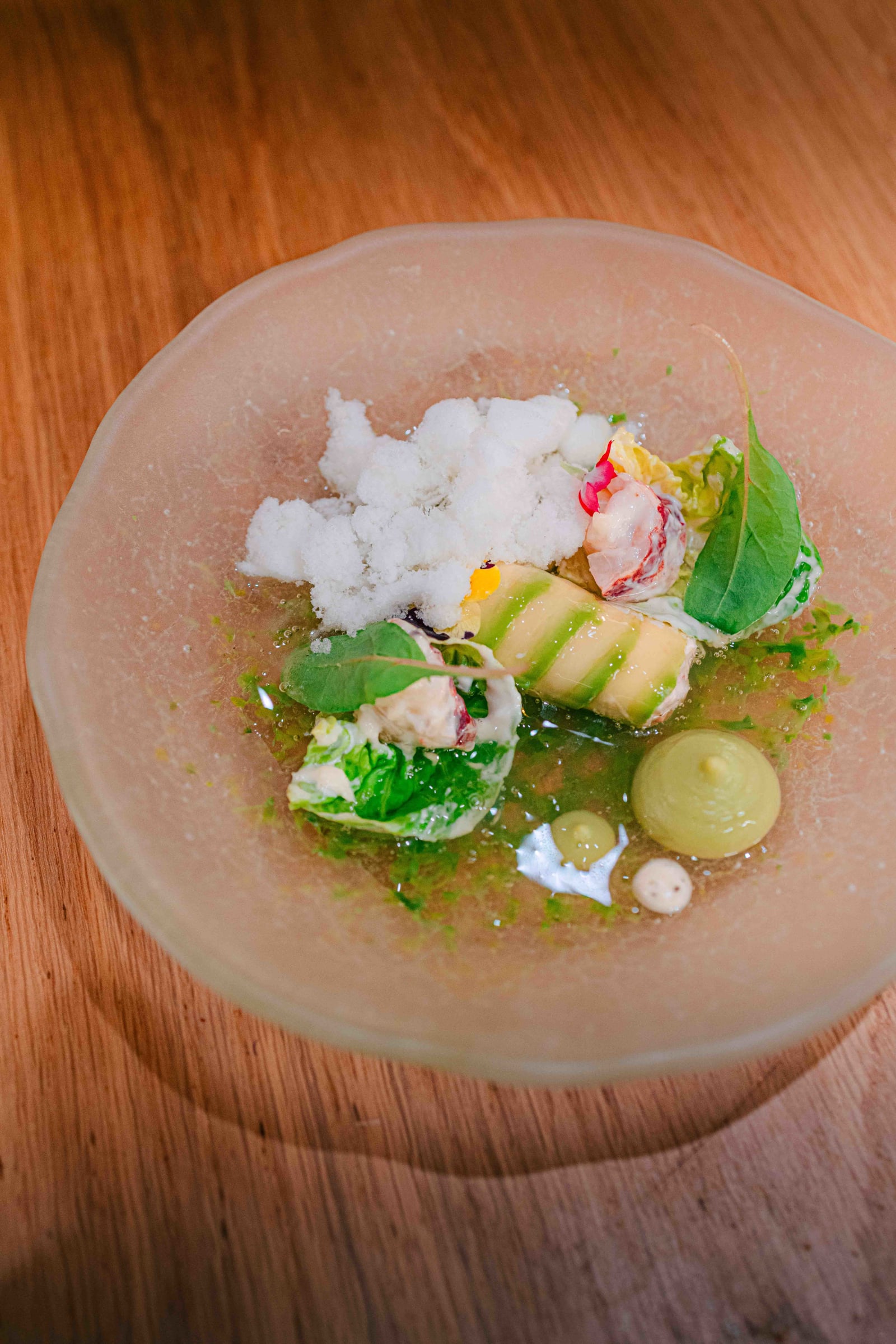
The mid-section brought a shift in cumulative impact that recalled, dish by dish, a visit to Ao in Tokyo earlier that April. The European Lobster Caesar Salad was where the evening's first real surprise arrived. Lemon acidity had been rendered as finely shaved ice, and when that dissolved alongside the lobster, leaves, and sauce, the result was unexpected. A personal view holds that salad courses in tasting menus are an obligation to be observed rather than anticipated. This one challenged that. It was the best salad encountered in this context. The pairing, 2022 Filipa Pato "Nossa Calcário", Bairrada, was unfortunately absorbed by the course entirely.
The Garden of the Goose that Laid the Golden Eggs followed: a soft-boiled egg finished with edible gold leaf, with mushroom, carrying Japanese inflection in what seemed to be soy and katsuobushi. Where the Caesar Salad had overpowered its pairing wine in memory, this dish was overtaken by its own. The wine was 1984 Caves São João, Porta dos Cavaleiros, Dão. The bottle was not a standard 750ml; the vintage, announced from across the room, raised expectations considerably. The color was amber, the nose carrying fruit nuance with a toasted quality. The taste did not follow. A pronounced metallic quality dominated the palate. Whether this reflected the wine's age, a storage issue, or something else remains uncertain, but the gap between expectation and outcome was significant.
Scarlet shrimp curry, cauliflower and green apple addressed that gap immediately. Grilled scarlet prawns over a sauce, with green apple as a garnish; the sauce was exceptional. The dish carried Thai inflection, a category of Asian reference that in European restaurants often produces skepticism and sometimes confirms it. This was the opposite. The spice calibration was precise, and the prawn was cooked without fault. The Lobster Caesar Salad and this dish competed for the evening's highest position. If this dish appears on the menu during any future visit to Portugal, it alone would justify returning to Belcanto. The pairing was 2008 Soalheiro Primeiras Vinhas, Vinhos Verdes. Portuguese whites suited the seafood courses well throughout the evening. At a market in Porto earlier in the trip, seafood chosen from a display and eaten off a disposable plate with a one-euro glass of local white had been genuinely enjoyable. That Portugal's wines are difficult to find in Korean wine shops remains a source of mild frustration.
Hake was the fish main: a common species in European fine dining, presented here with caviar and, as best as can be recalled, grape. The printed menu enclosed at the end of the meal listed only the single word. The taste was unexceptional, nothing beyond the serviceable. The pairing, 2020 José Avillez & Niepoort, Douro, was a collaboration wine bearing the chef's own name.
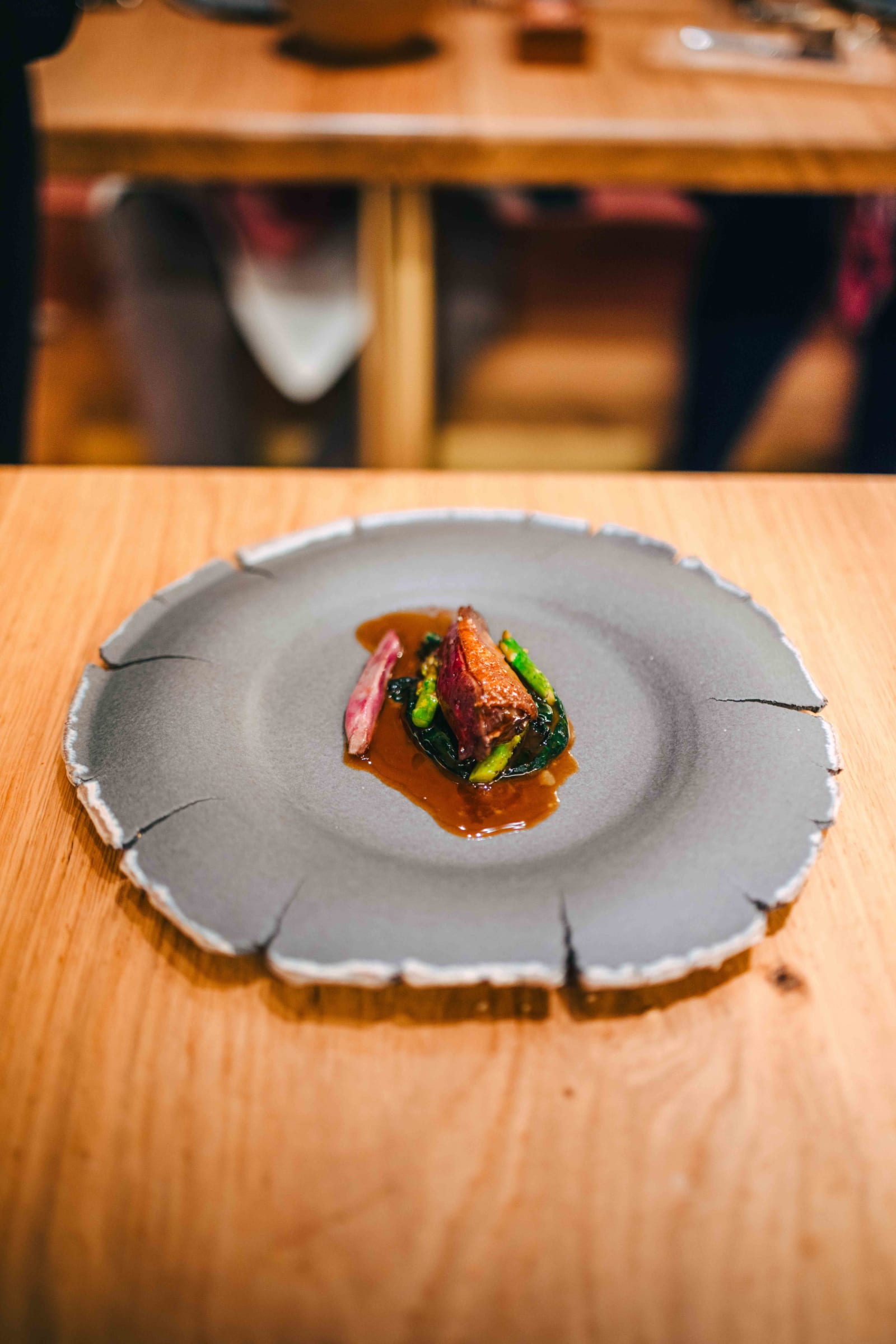
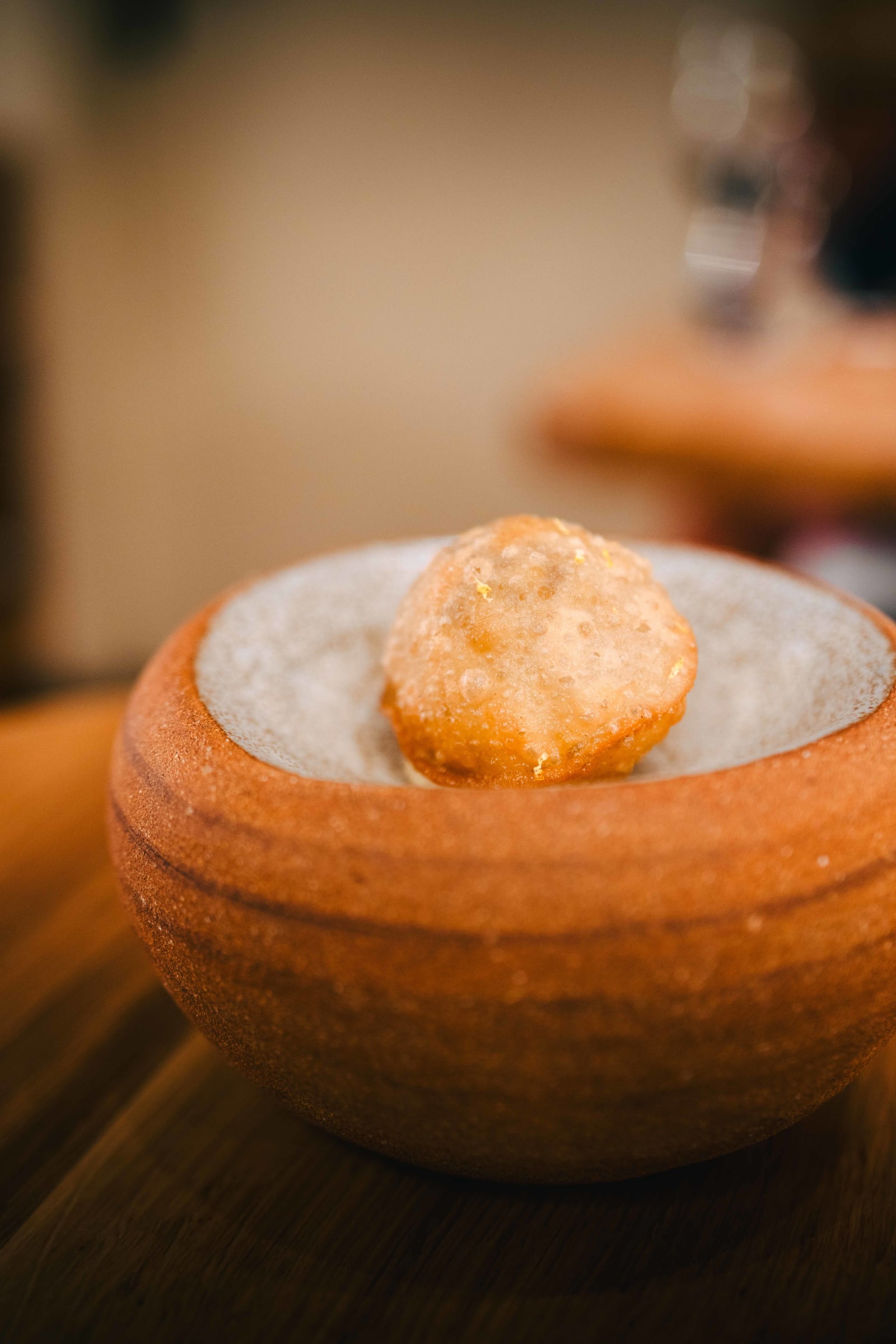
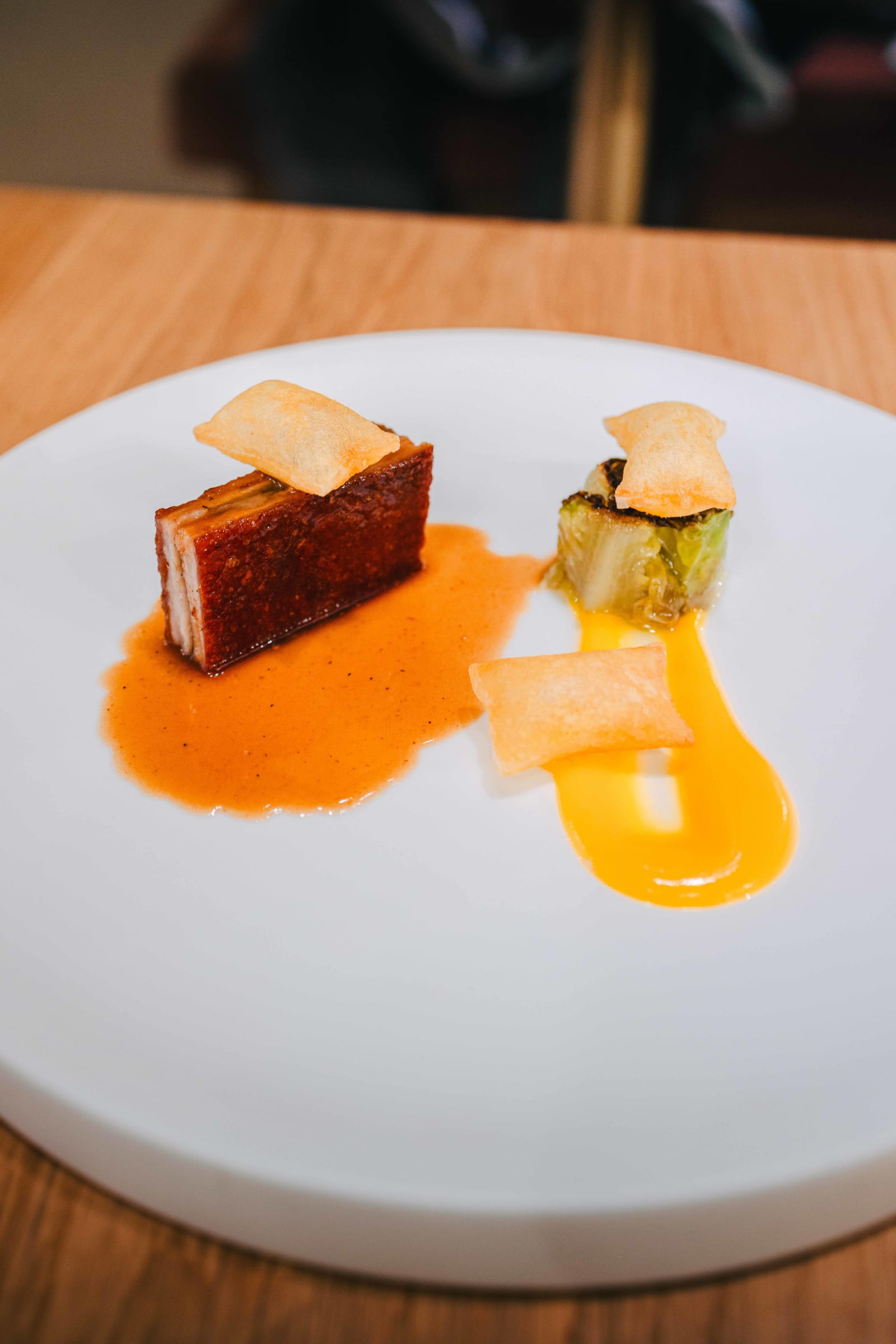
Two meat courses followed. The first was Squab and pastel de massa tenra: pigeon with minced pigeon meat inside a small fried pastry, a Portuguese preparation served within a hollow bread casing. The sauce and garnish were both well executed, and the bird had neither the gaminess nor the dryness that tends to cause hesitation on a first encounter. Pigeon was once approached with real wariness; it has since become a course to look forward to. For anyone who eats broadly at home, ordering pigeon at least once in a European fine dining context is worth the attempt. The second meat course was Suckling pig with orange peel purée and lettuce, and it was the best dish of the evening. Skin and flesh cooked together in a square portion, the exterior crisp, the interior moist. Two sauces accompanied it: one acidic, which cut through the fat when taken with lettuce, and one concentrated, which read as a form of elevated suckling pig barbecue alongside the meat itself. Given the choice between the Squab and this dish, the pig. The pairing, 2008 Quinta da Vacariça Garrafeira, Bairrada, completed the picture. Spain's whites trail its reds; Portugal's reds trail its whites. That much now seems settled. The consistent conclusion, pursued to its logical end, is that the best of both would have to be French.
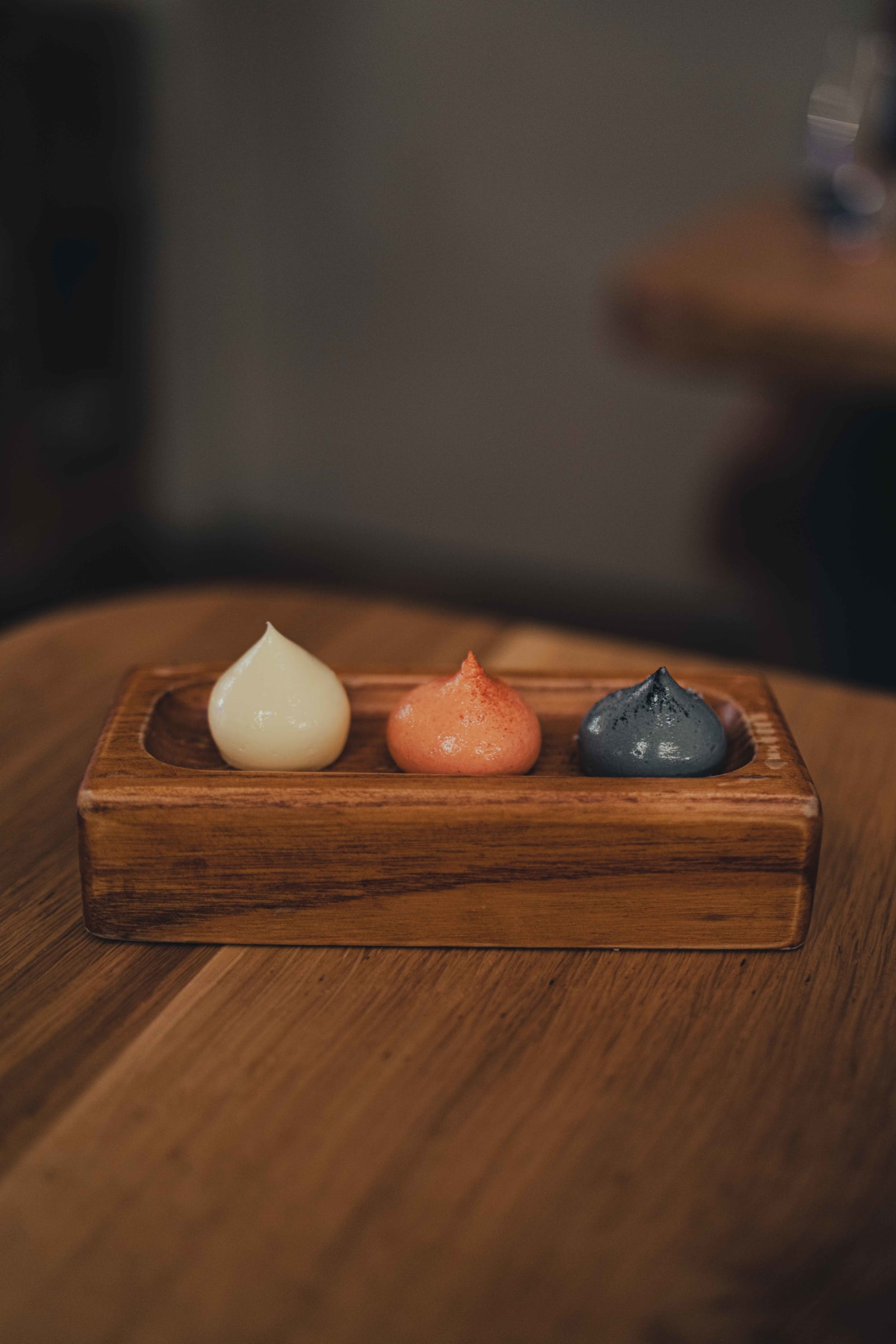
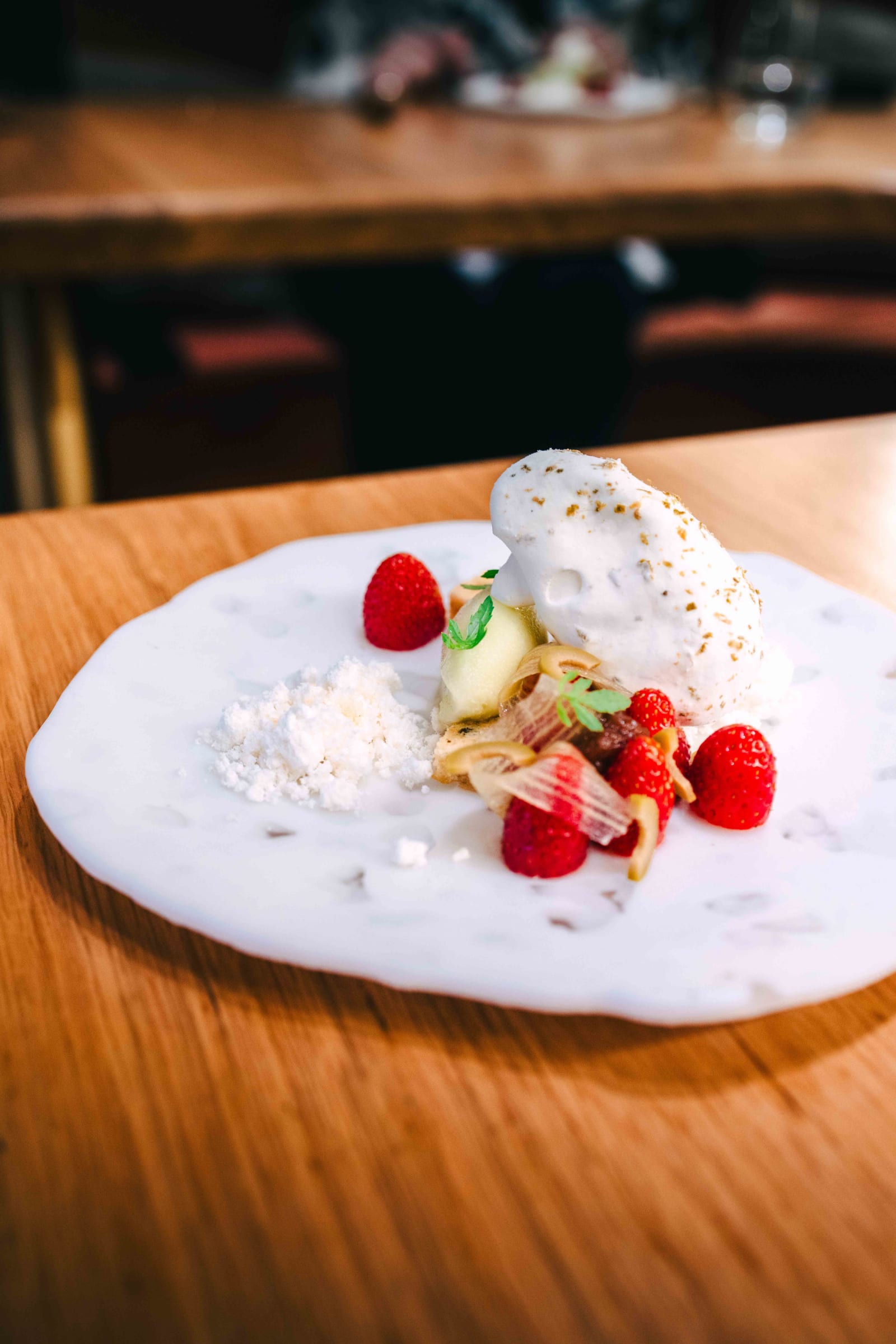
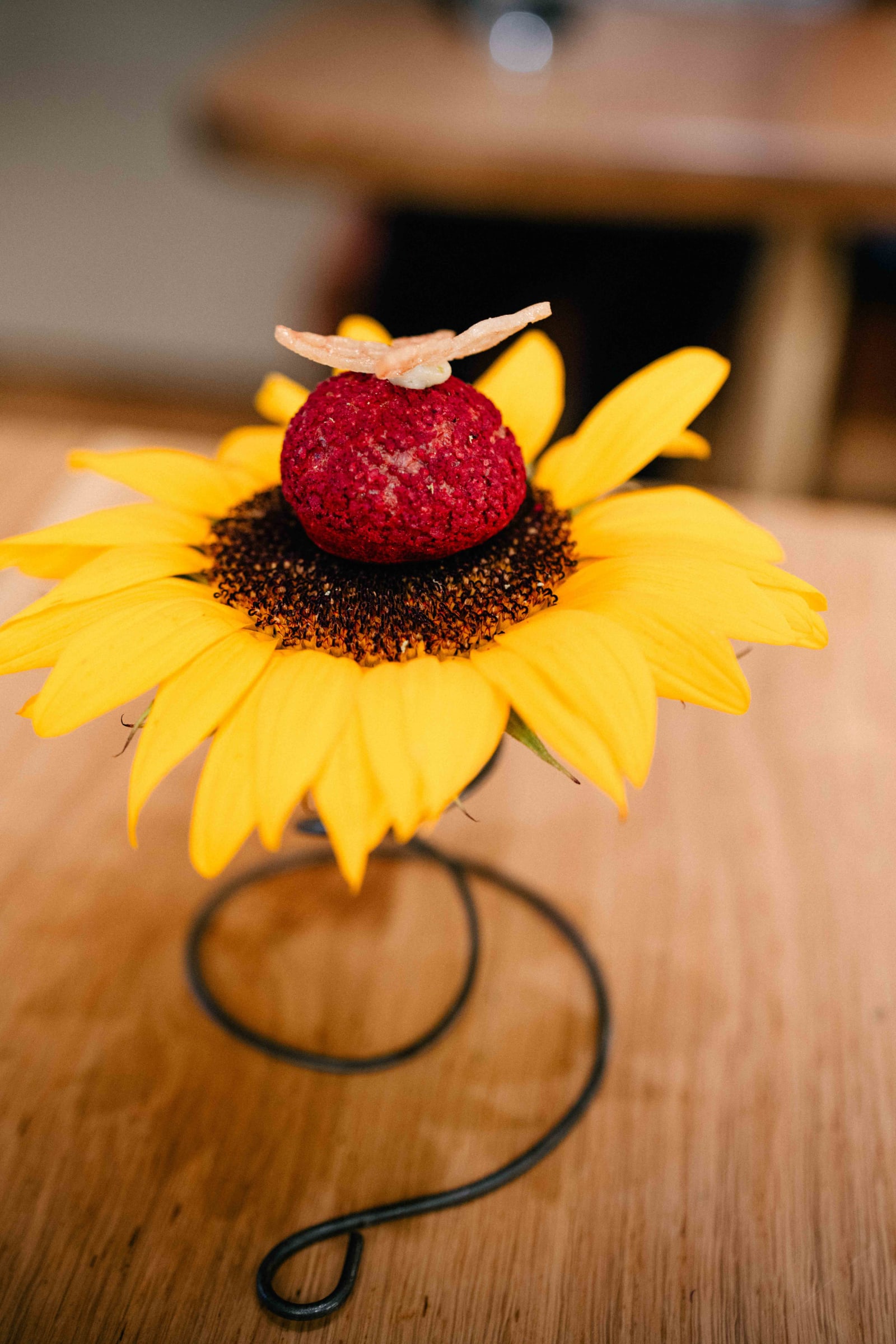
Dessert opened with the Smoked Ham Ice Cream Sandwich: cream ice cream between two cookies, topped with caramel and jamón. The combination worked completely, each element contributing something the others could not. Jamón has already proven itself on pizza; this extended the thesis. In Europe, wine pairings routinely include dessert wines as part of the sequence. Returning to Japan and Korea after this trip, the absence of dessert wine in tasting-menu pairings became a noticeable gap in a way it had not been before. The dessert wine was NV Villa Oeiras Superior, Carcavelos, from the Lisbon coast, in a bottle not shaped like a standard wine bottle. The second dessert, Strawberry with whipped cream and olives, was more conventional than the first in construction, but the pairing of olive with strawberry and cream carried novelty, and as a palate-closing course it succeeded. The pairing was 2019 Aneto Colheita Tardia, Douro Colheita, a vintage Port that arrived as a white, which was not expected. The final dessert, Sunflower, shaped around the central portion of a sunflower head, was ordinary in flavor. That observation sits alongside this one: Belcanto maintained invention and visual interest through the last possible moment of the meal. The petit fours are a further instance of the same. Real stones and stone-shaped chocolates are presented together; the staff confirms which is which.
Near the end of the evening, a photograph was requested with Avillez. It was past eleven. He called Pastry Chef Américo dos Santos over from across the kitchen and stood for the picture. He was smiling.
The reservation had been made after some hesitation. Looking back from the end of the meal, the decision merited self-congratulation. The cumulative impact of the courses, dish by dish, brought to mind Ao in Tokyo, visited in April of that year. That Portugal has no Michelin three-star restaurant is a fact that becomes difficult to understand after a meal here. Measured by the food alone, this was the highest point of the trip.
Belcanto holds two Michelin stars in a country without a three-star property and ranked 25th in the world in 2023. The gap between those two numbers is structural: two evaluation frameworks calibrated to different culinary traditions, measuring the same kitchen. Two stars in Portugal and 25th in the world describe the same meal on the same night. One of those numbers is the more accurate account of the dinner.
Have a question about this restaurant, or want to share your own experience?
Send a message