Fine Dining · Spain
El Celler de Can Roca
"Thirty courses and sixty thousand bottles. The reservation I had waited for."

1—1 / 121
The trip was not built around an airline ticket. I had listed every available date on the waiting list and waited for a cancellation. When the message arrived, the itinerary was already settled. The flights to Spain came afterward. This journey was designed from the beginning around a single reservation.
Understanding how the booking system works makes this approach logical. The restaurant opens reservations eleven months in advance each day, and those slots fill quickly. But with nearly twenty tables in the dining room, cancellations are frequent. The method is to list as many available dates as possible and remain flexible.
I would recommend walking from the Girona old town to the restaurant rather than taking a car. The September light in Catalonia still carried the heat of summer, and the route through the narrow cobbled streets of the old city, past the river, and out into the quieter residential outskirts became part of the experience before anything had been served.
El Celler de Can Roca's position in Girona exceeds what the term "restaurant" conventionally describes. It is a civic landmark. The local walking tour includes it on the route. Joan and Josep Roca opened their first restaurant in 1986 adjacent to the bar run by their parents, and relocated to the current building in 2007. Michelin awarded the third star in 2009. The World's 50 Best placed the restaurant at number one in both 2013 and 2015. In 2019 it was inducted into the Best of the Best, removing it from the annual ranking permanently. A category unto itself.
2—3 / 121
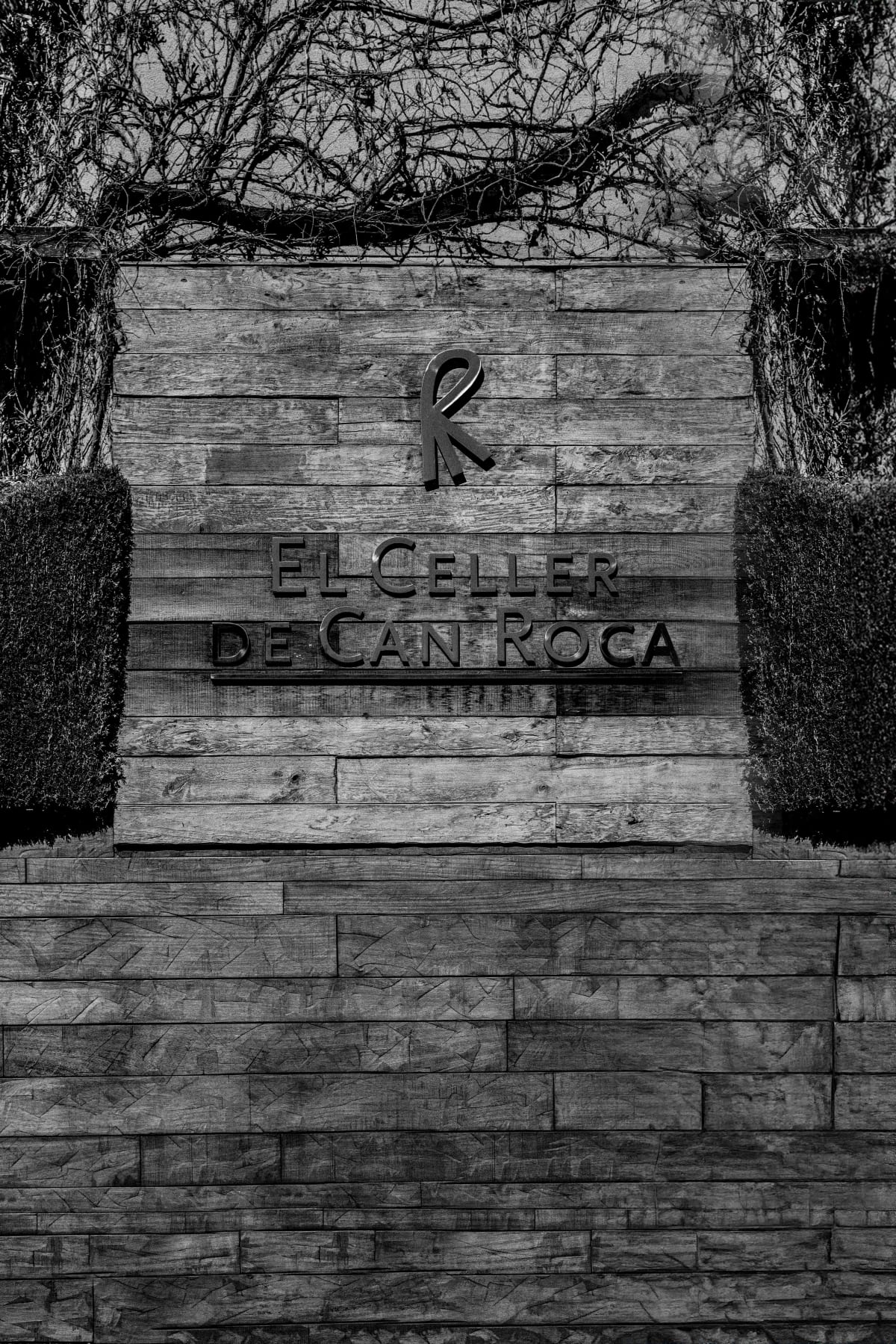
The building's exterior carries a large nameplate. There is a gift shop. I did not resist. A selection of chocolates bearing the El Celler de Can Roca insignia came home with me, including one made with goat's milk that I approached with some uncertainty.
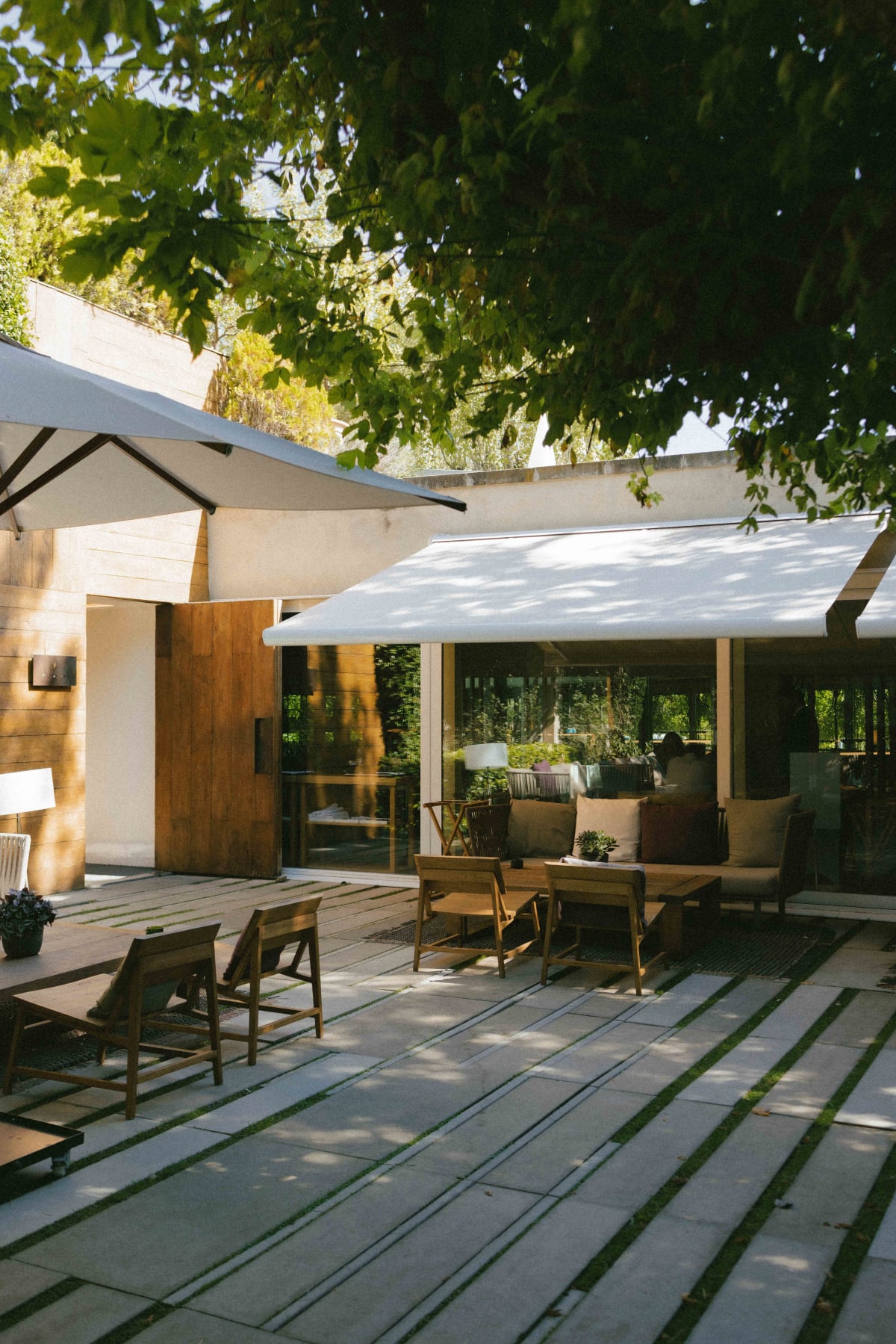
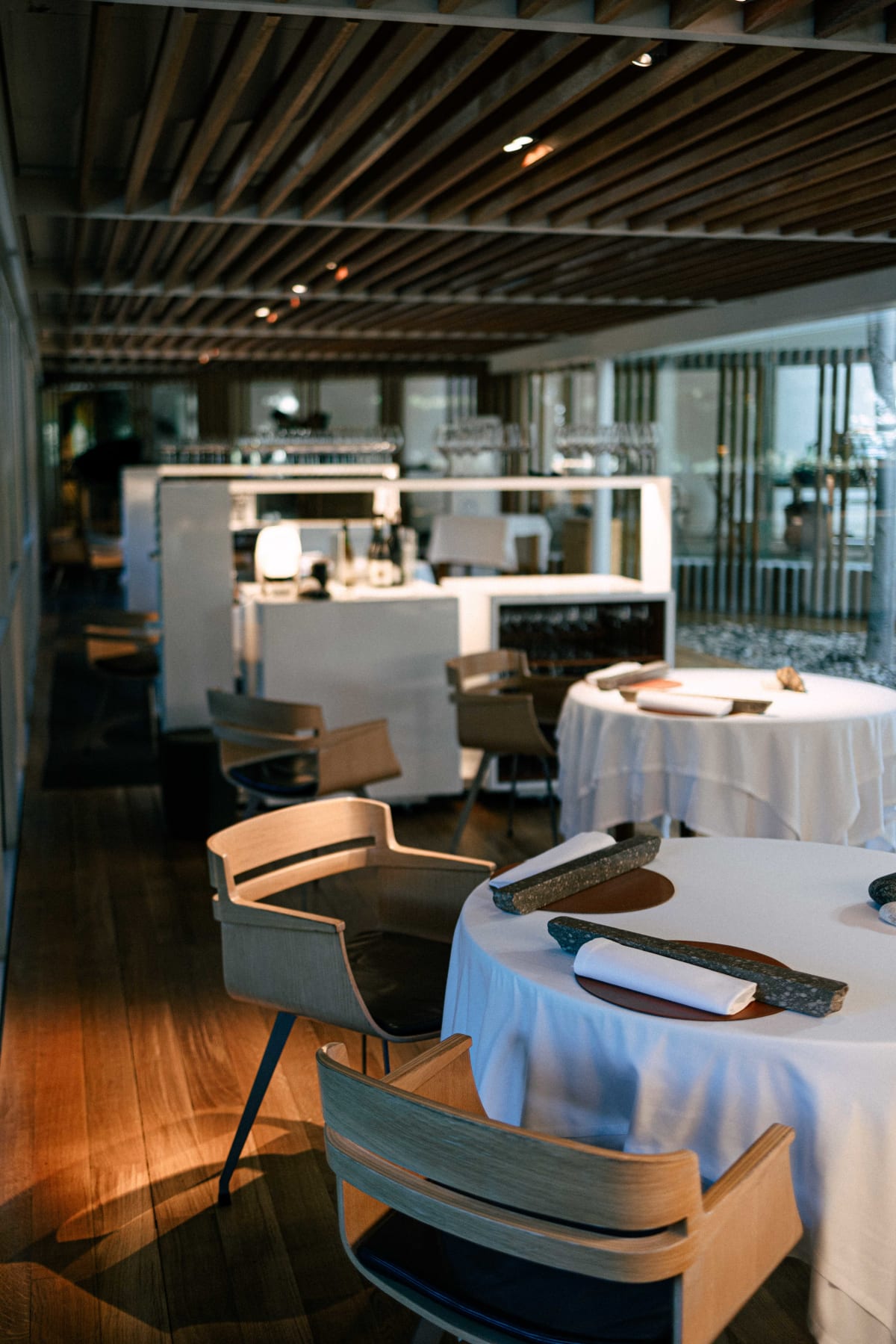
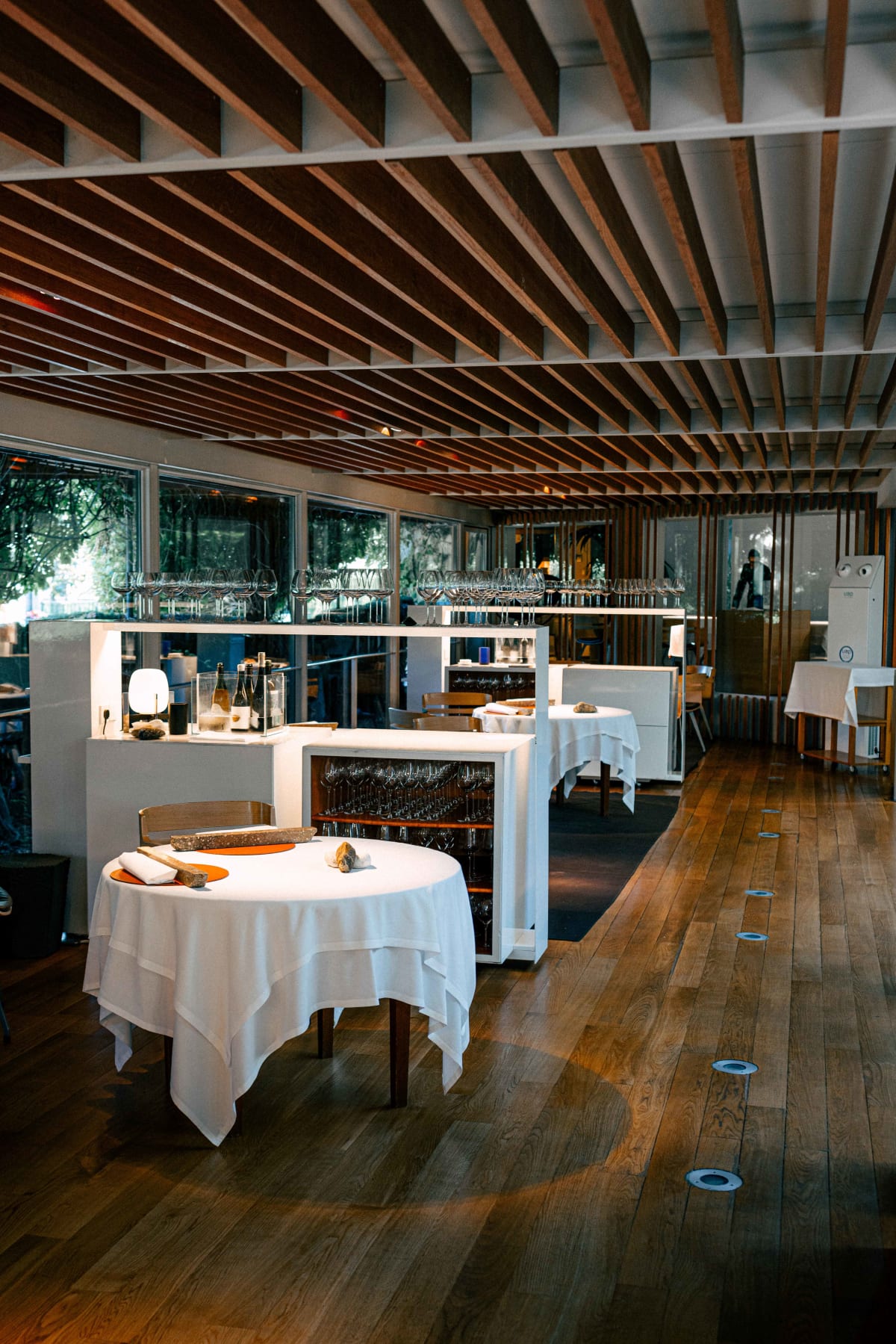
The entrance is framed by trees and climbing plants. Passing through it opens onto a wide courtyard, quiet and composed, which I later learned serves as an extension of the dessert sequence. The dining room itself is larger than expected: nearly twenty tables, high ceilings, and a service team that moves through the space with the quality of a room where everything has been considered. The notion that the entire world travels to Girona for this restaurant is not an exaggeration.



4—6 / 121
On the table, three stones. Joan Roca, responsible for the kitchen. Josep Roca, responsible for the wine program and front of house. Jordi Roca, responsible for pastry. The brothers in stone.


7—8 / 121
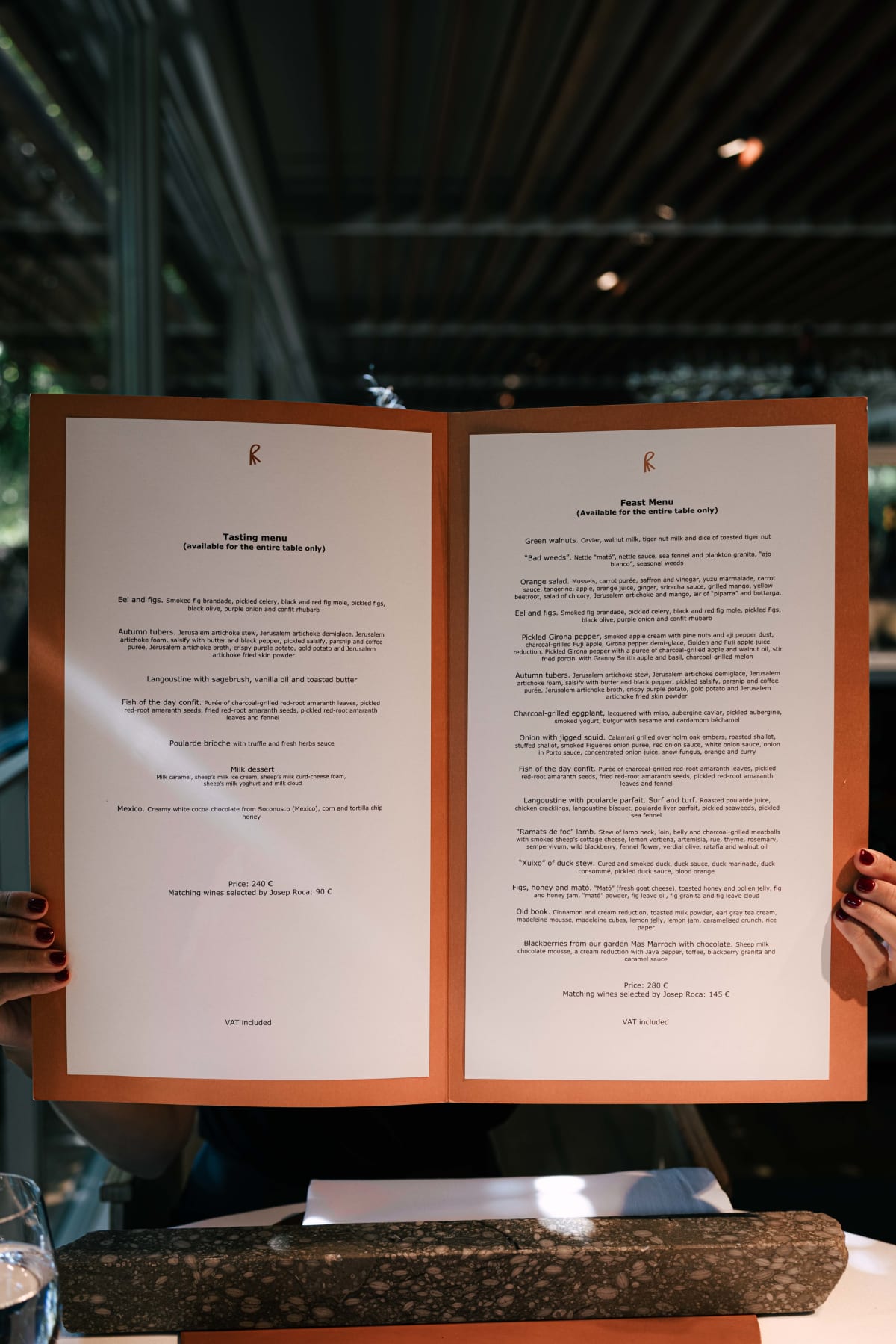
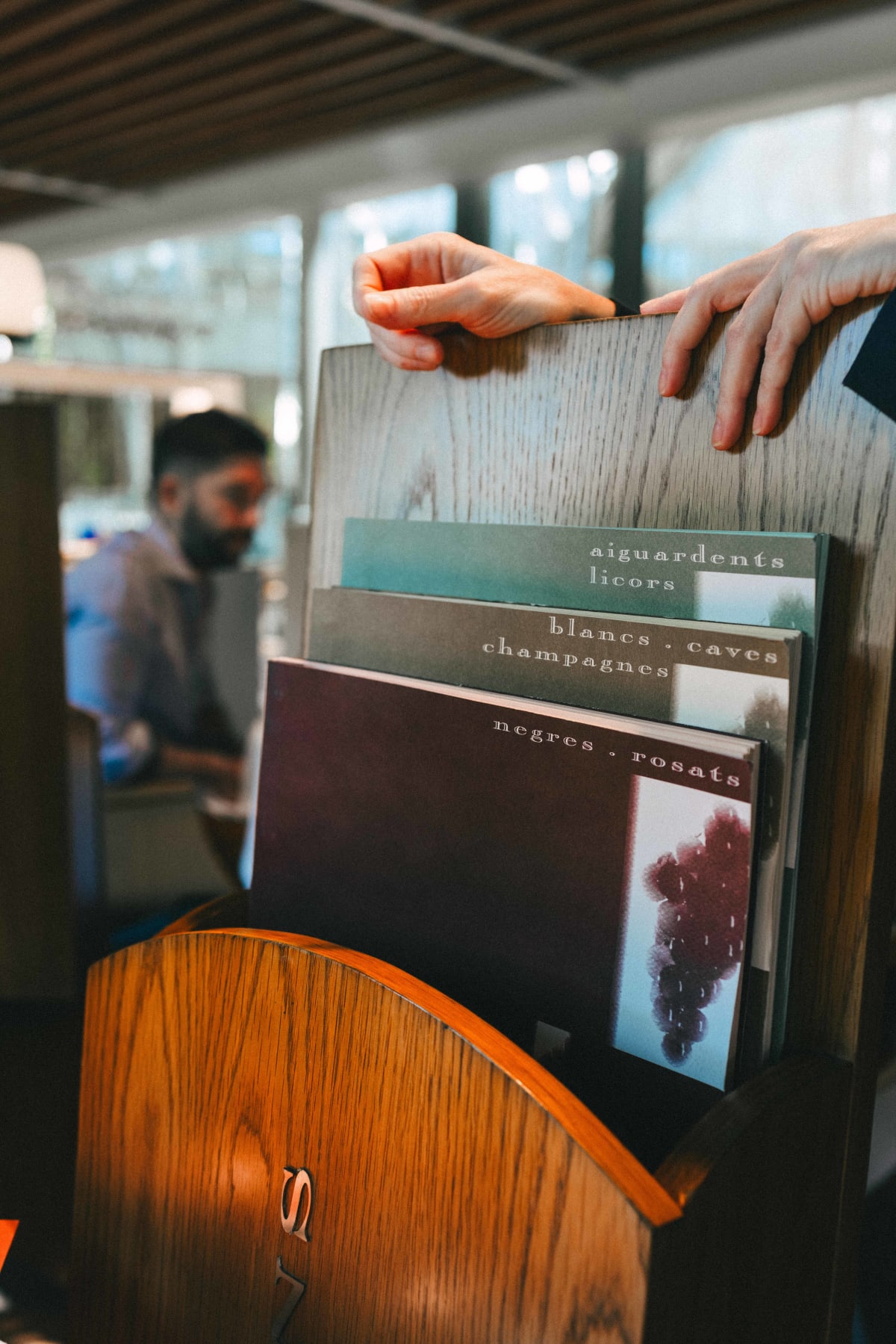
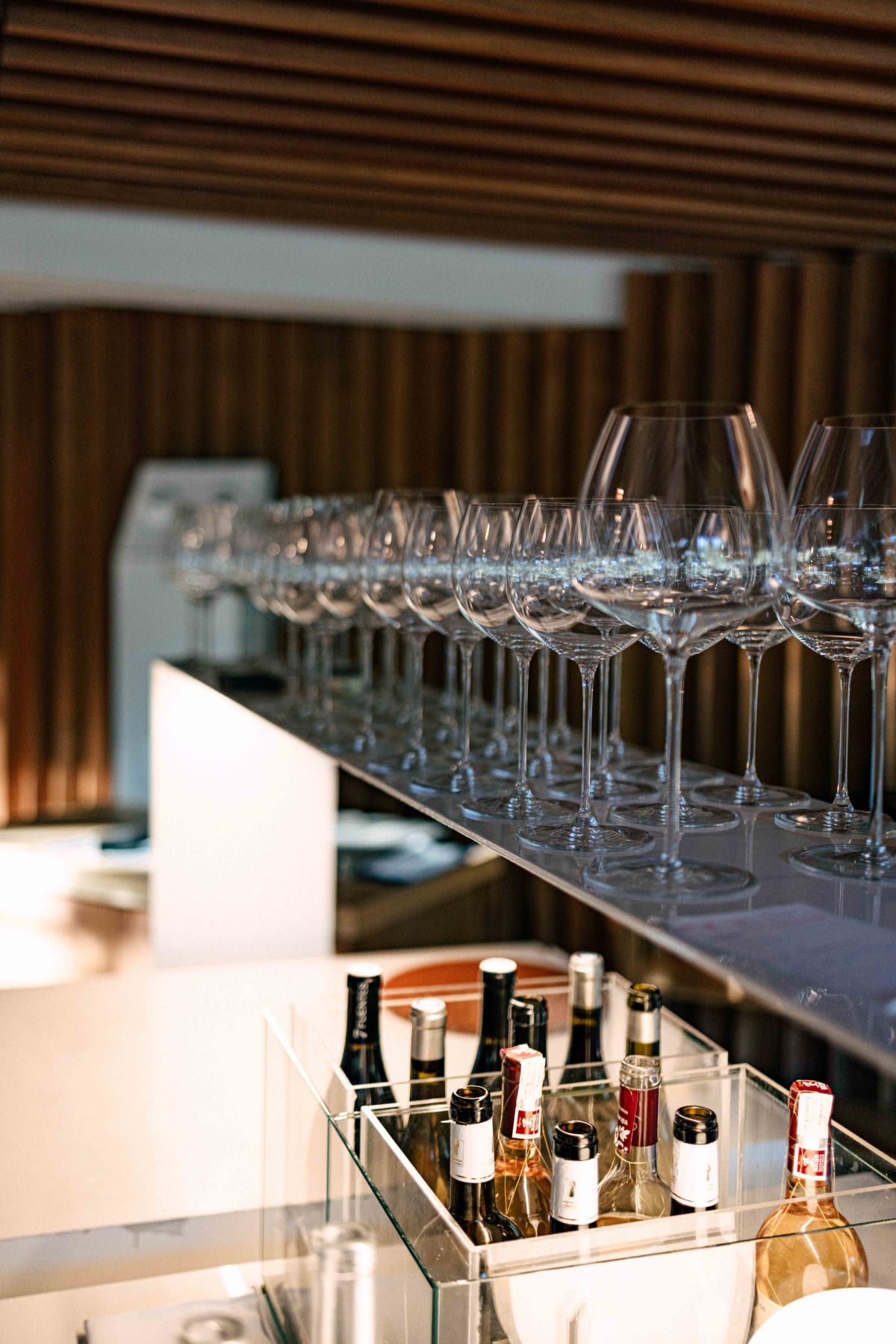
Two menus were available. A Tasting Menu at 240 euros covering seven courses, and a Feast Menu at 280 euros covering fifteen. There was no meaningful deliberation. Both of us ordered the Feast Menu with wine pairing. The wine list arrived as three volumes: one for reds, one for whites and sparkling, one for spirits and tea. Josep Roca has built a cellar of sixty thousand bottles over more than thirty years. He organizes the selection by emotion and geographical journey rather than by variety or appellation, a philosophy that made itself felt throughout the afternoon. The Feast Menu's fifteen courses do not include the appetizers. The appetizers number fifteen as well.


9—12 / 121
The appetizers were an hour.
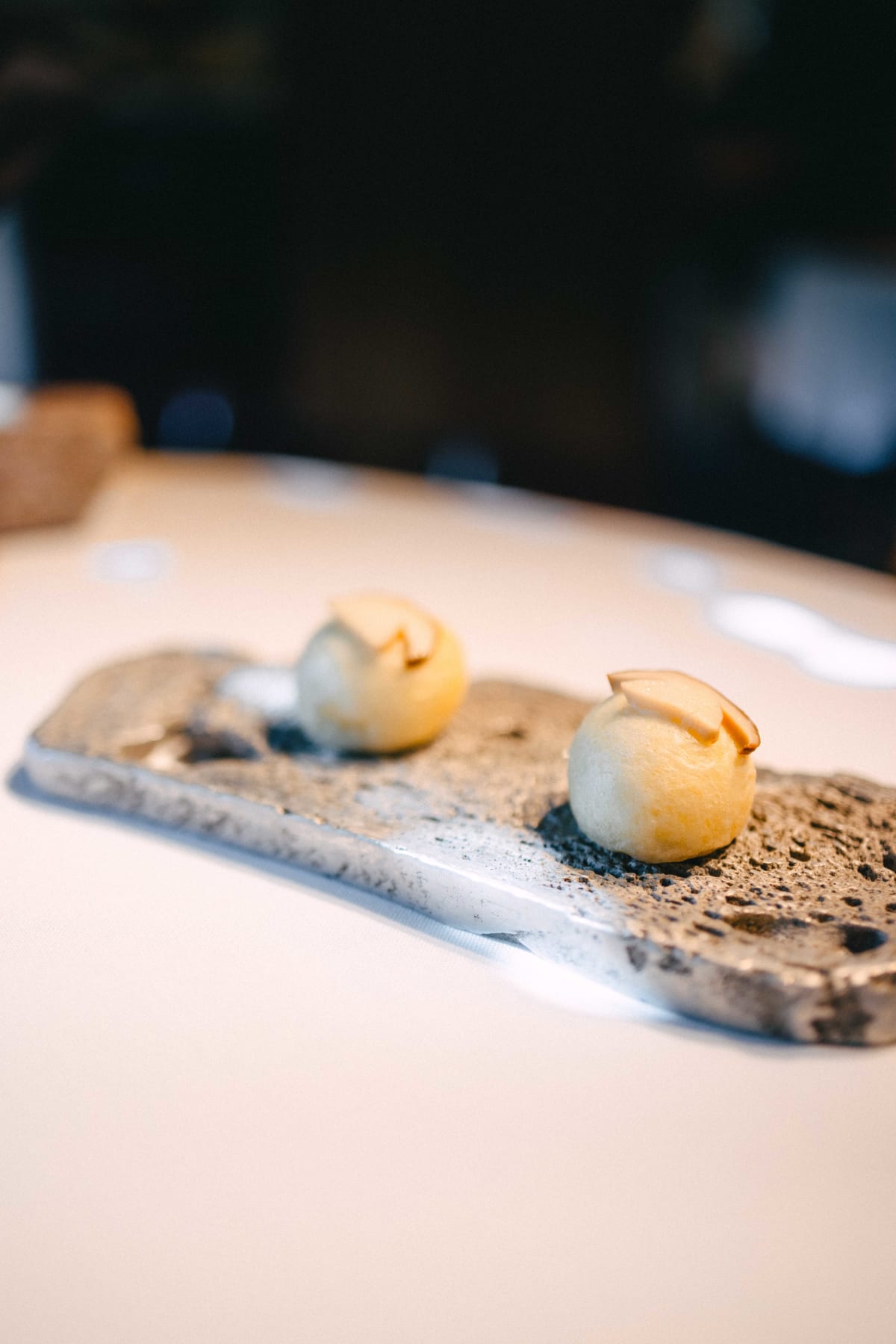
The first arrival was Porcini Brioche (2009). One bite, and the scent of porcini filled the mouth entirely. It was September, still warm despite the season's shift, and this single piece placed autumn in the room before the calendar had reached it. It was followed by Porcini Sandwich and Bruna cow's fresh milk cream from Formatgeria la Xiquella with veal and porcini (2021): the second piece presented on a spoon, with beef consommé set into gel and a whole piece of porcini placed on top to emphasize the mushroom directly. Three preparations of a single ingredient across three forms, all in the first minutes of the meal. The season in September had not yet turned in any visible way, but the kitchen had already decided what was coming. These three pieces raised expectations for what followed in a way that nothing could entirely satisfy.


13—16 / 121
The season in September had not yet turned in any visible way, but the kitchen had already decided what was coming.
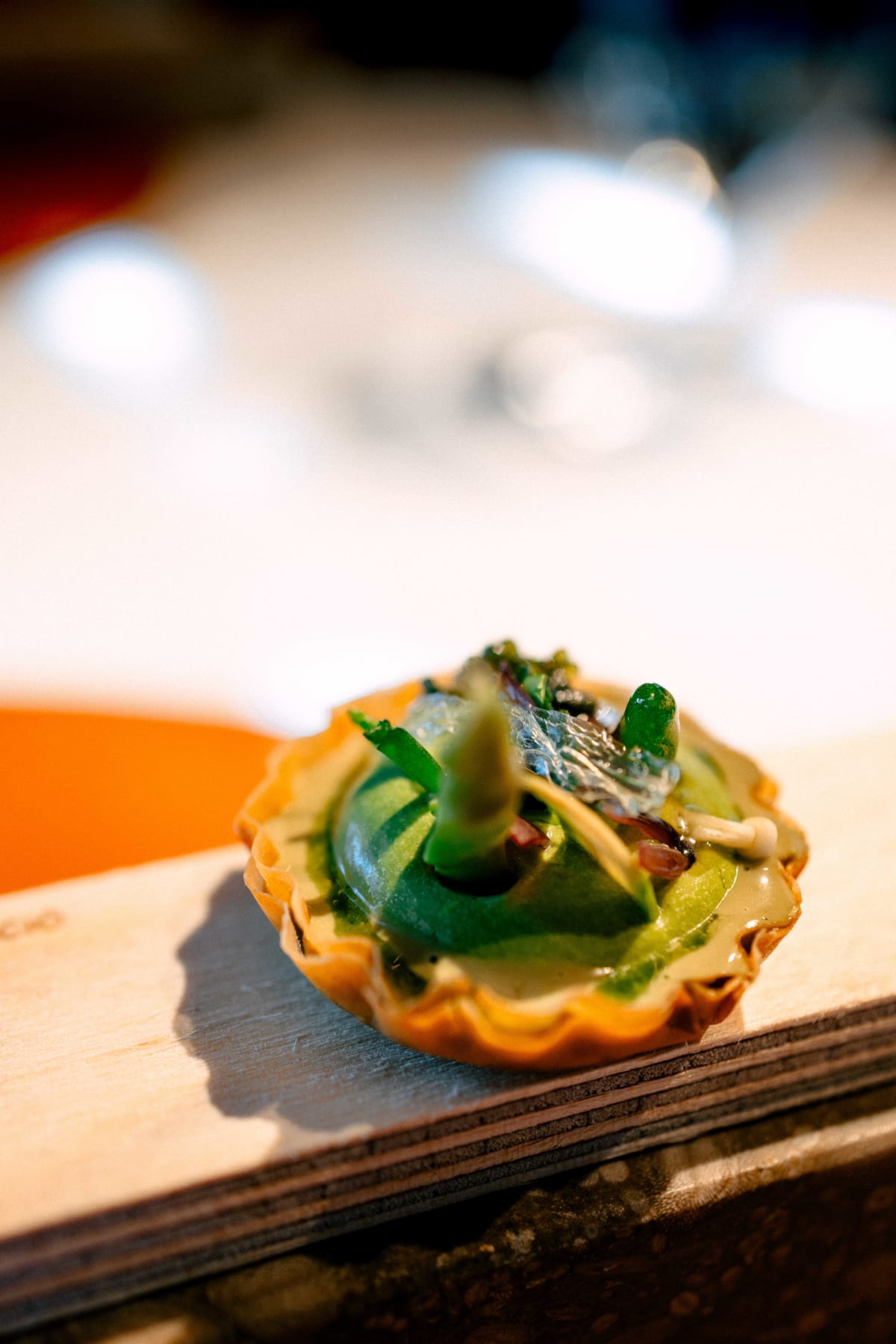
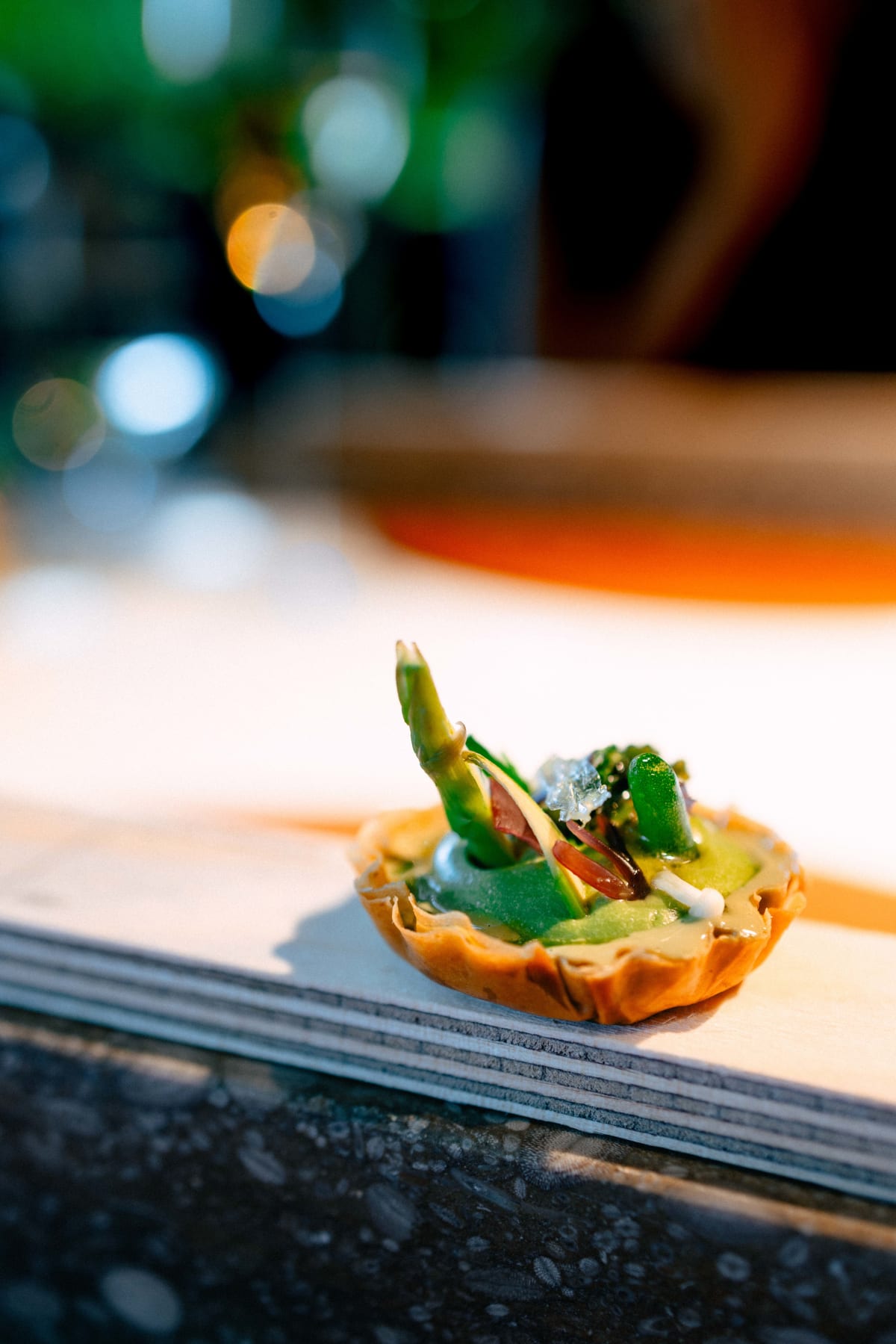
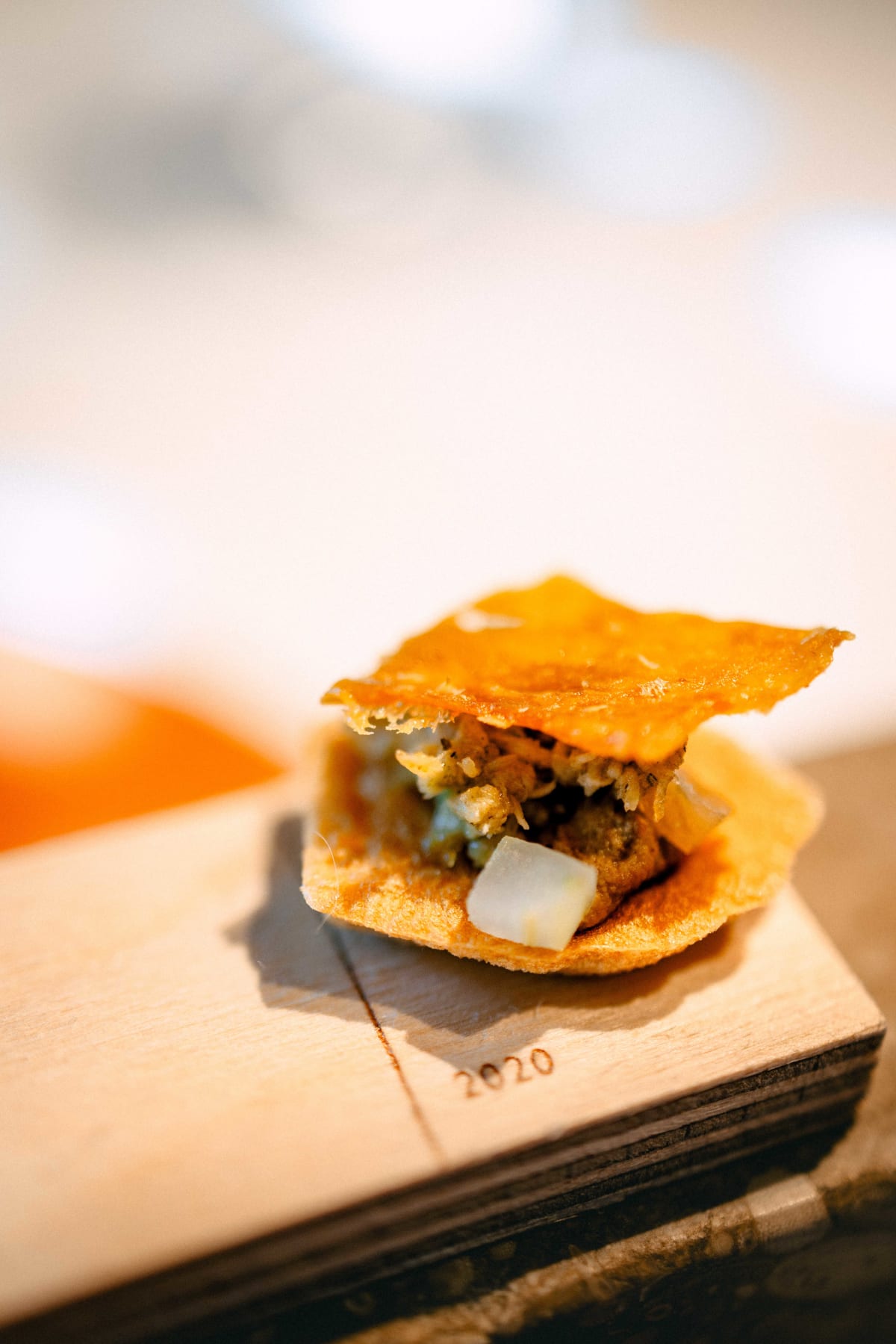
The five pieces that came next were built around the restaurant's own chronology. Poularde Cannellone (2001), Squid Romana (1997), Sonso with an emulsion of bergamote (2012), Vegetable surf and turf with seaweeds, herbs and flowers, and Roast chicken muffin (2022). Each piece carried a year beneath it: 1986 for the founding, 1997 for the first Michelin star, 1998 for Jordi joining the kitchen, 2007 for the relocation, 2020 for the pandemic. There was no reference to the third Michelin star or to the World's 50 Best rankings. That the kitchen chose its own narrative rather than its accolades was genuinely impressive as a concept. The food, however, did not match the concept. Across the five pieces, the Squid Romana was the best, and it was not particularly exceptional. The tempura-style preparation was a disappointment to anyone familiar with serious tempura. The roast chicken muffin was the most original. The others were competent and unmemorable. The idea was brilliant. The execution fell short of it.


19—25 / 121
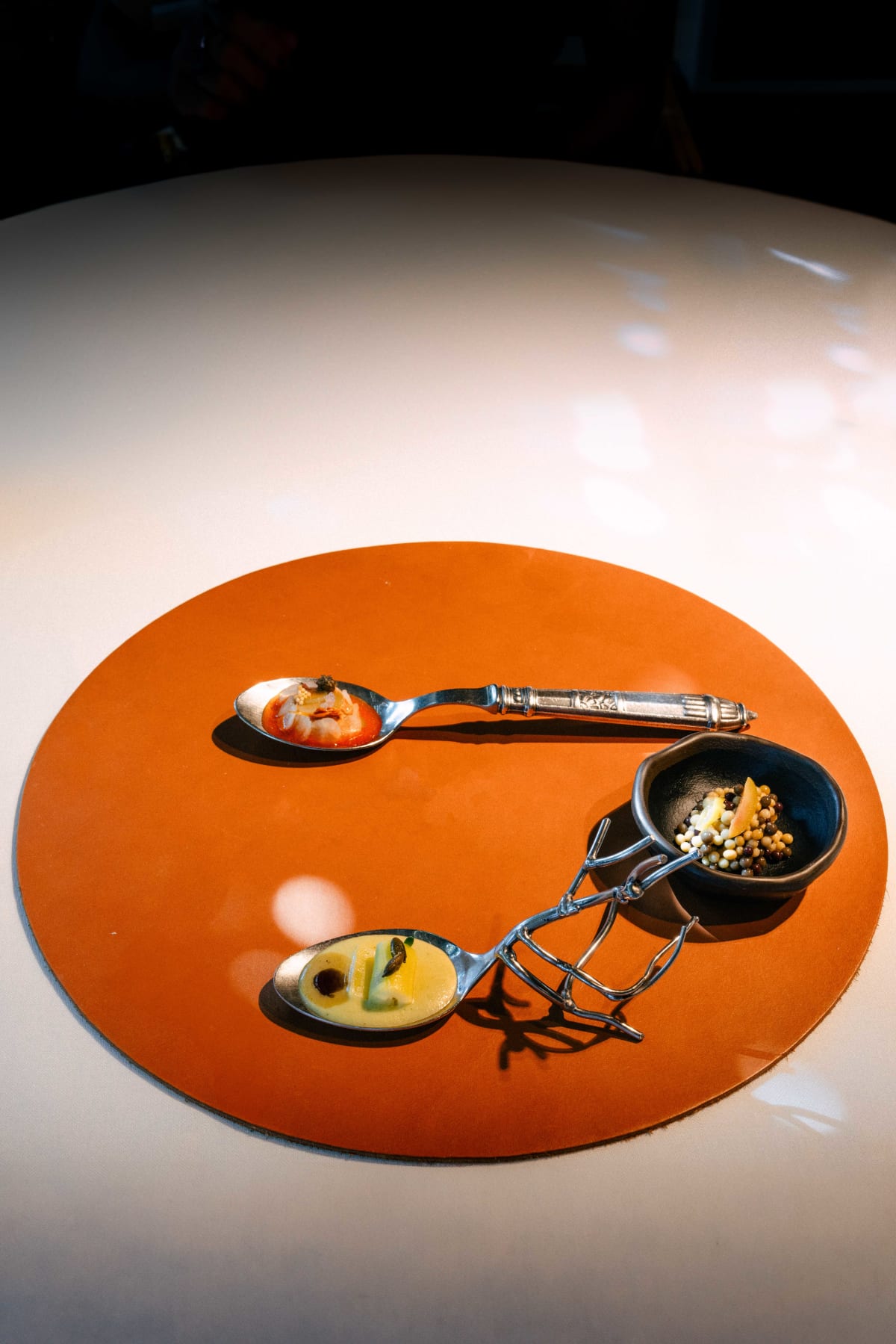
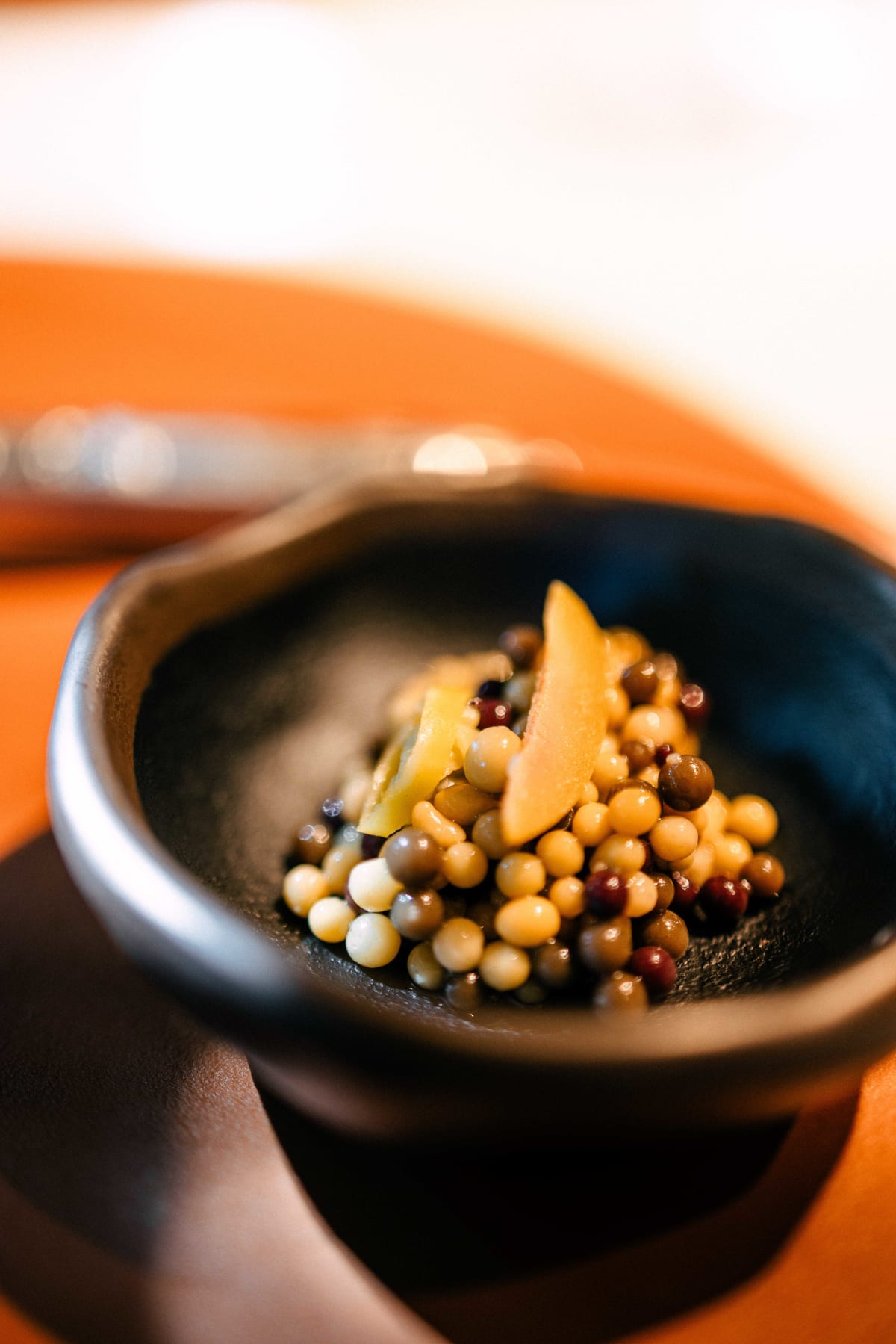
The third group arrived on two spoons and in one small bowl. Charcoal-grilled courgette with demi-glace of courgette and pumpkin seed milk (2012) has left no trace in my memory, which is its own assessment. Spring pickles with walnut "romesco" sauce (2018) was entirely different: romesco is native to Catalonia, and this version with walnut carried a layered acidity and complexity that tasted like the concentrated character of this particular place. A great deal of thought was compressed into a small spoon. Olivada presented multiple olive varieties, aloreña, cordobesa, cornicabra, Kalamata, and verdial, formed into small spheres in the manner of ice cream, with a piece of piparra pepper on top. The flavor was complex. Without a developed familiarity with olive variety specifically, the depth of that complexity was difficult to fully access. This is an honest limitation of the tasting rather than a criticism of the dish, but it is a dish that requires a particular literacy.


26—30 / 121
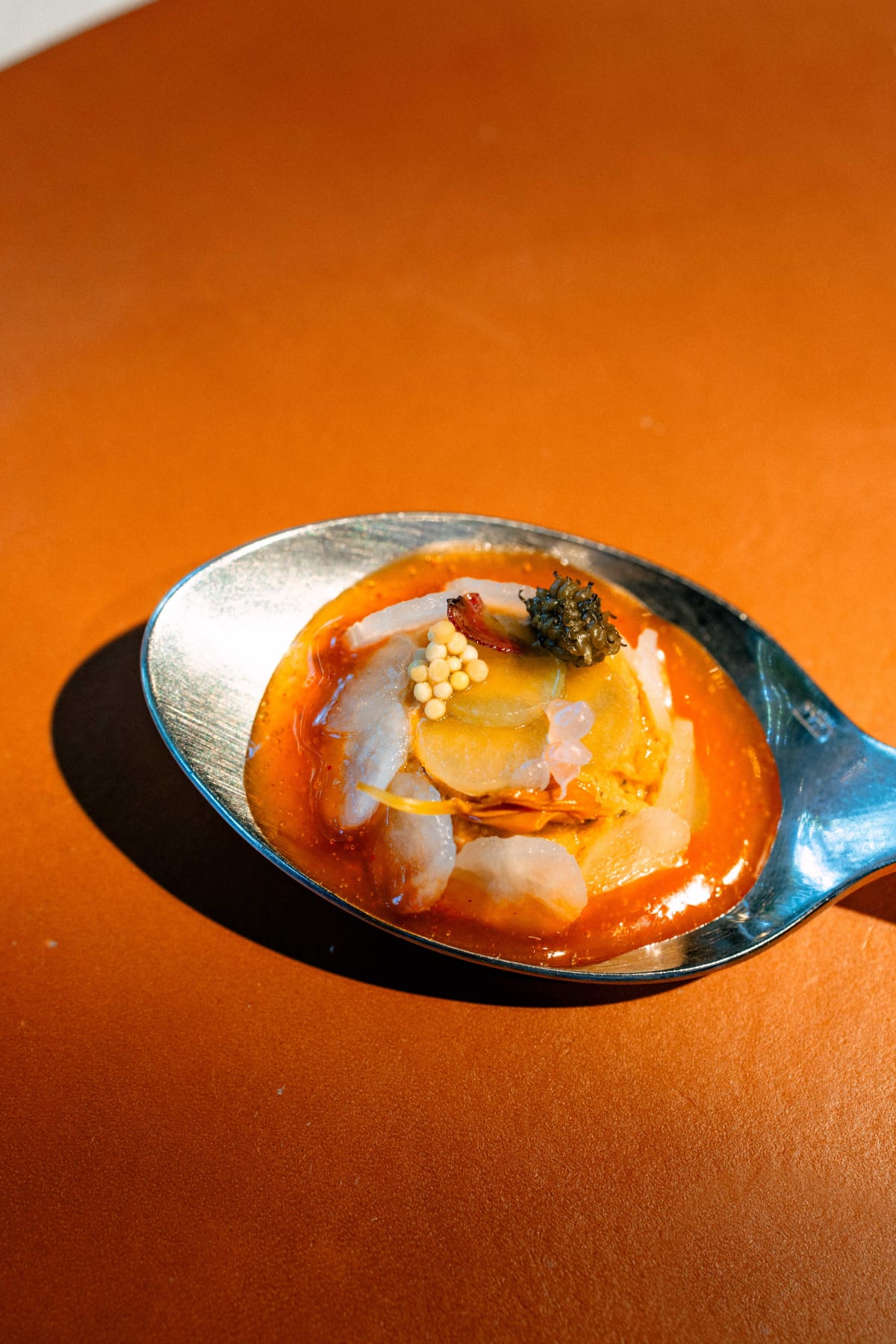
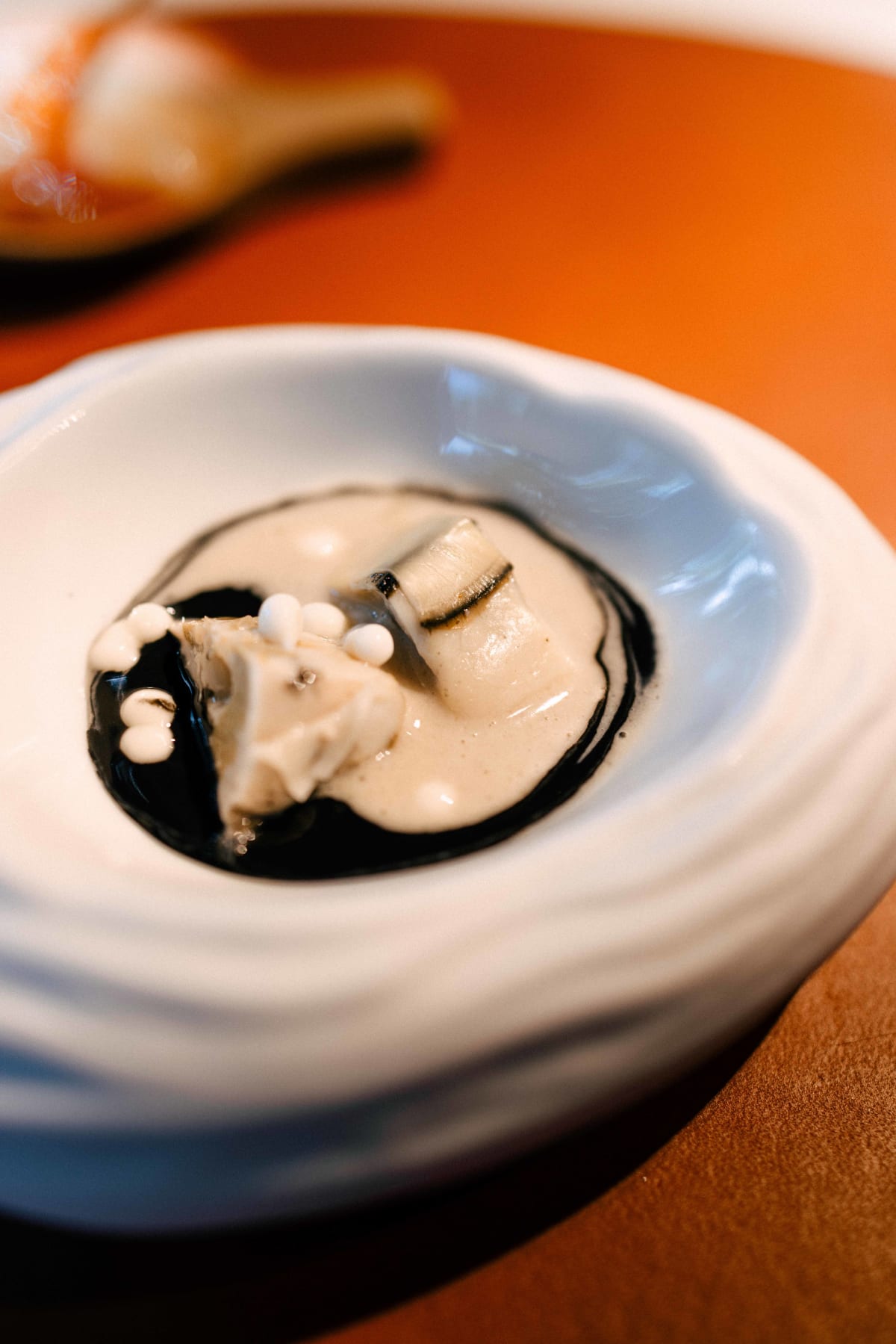
For seafood, A whole prawn (2012) arrived on a spoon: the whole animal, head intact, with rice vinegar, a seaweed velouté, and crispy prawn legs. The prawn and the accumulated effect of the sauces registered simultaneously. Oyster ying-yang (2011) was a large specimen presented in two preparations. Given the size, I had expected more. The impact on the palate was modest and the flavors did not distinguish themselves.


31—33 / 121
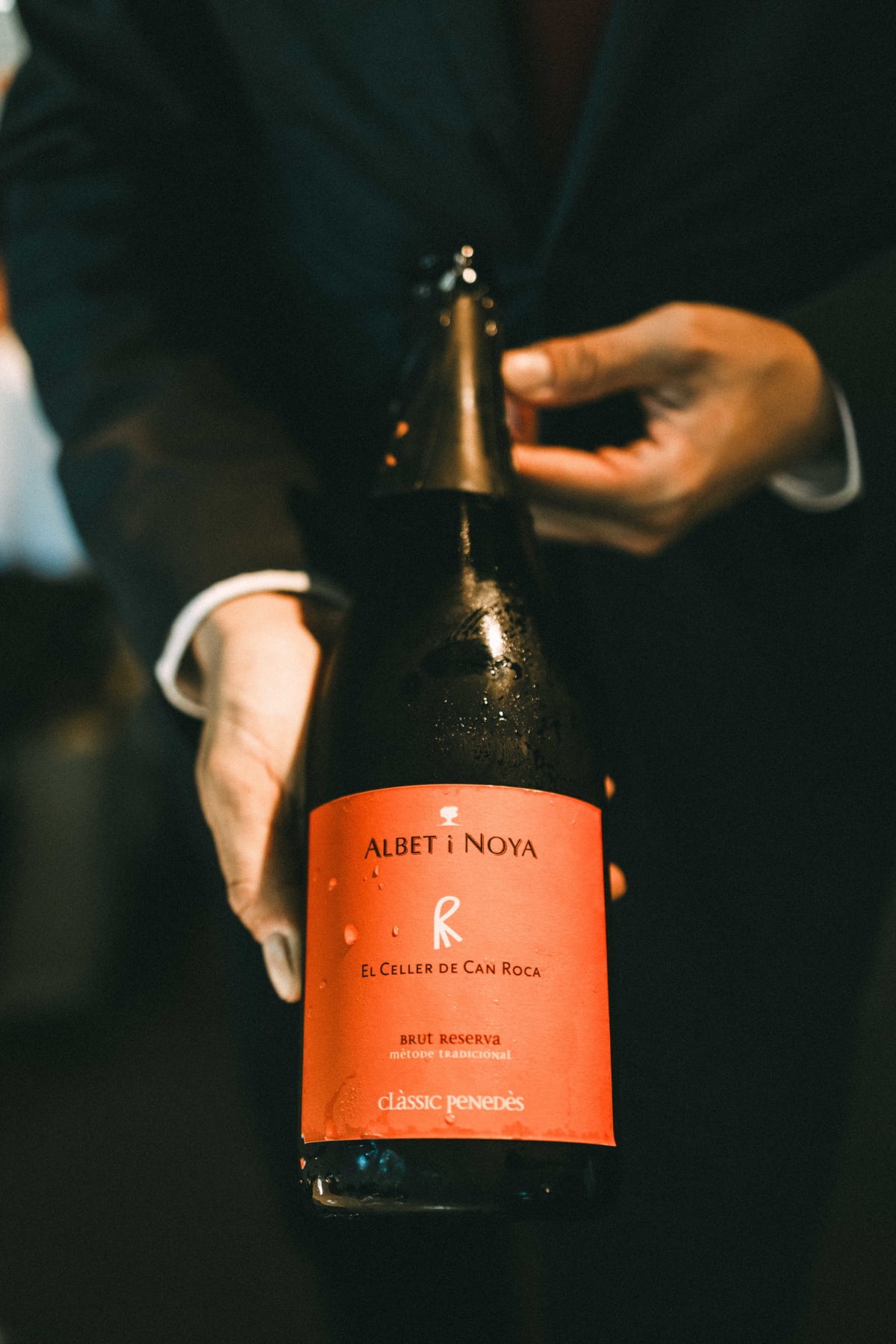
The welcome sparkling was Albert i Noya El Celler Brut Reserva D.O. Classic Penedès, a Catalan cava produced under a label made specifically for this restaurant. Against the range of seafood appetizers it was an acceptable pairing. It was not a memorable wine.

17—18 / 121
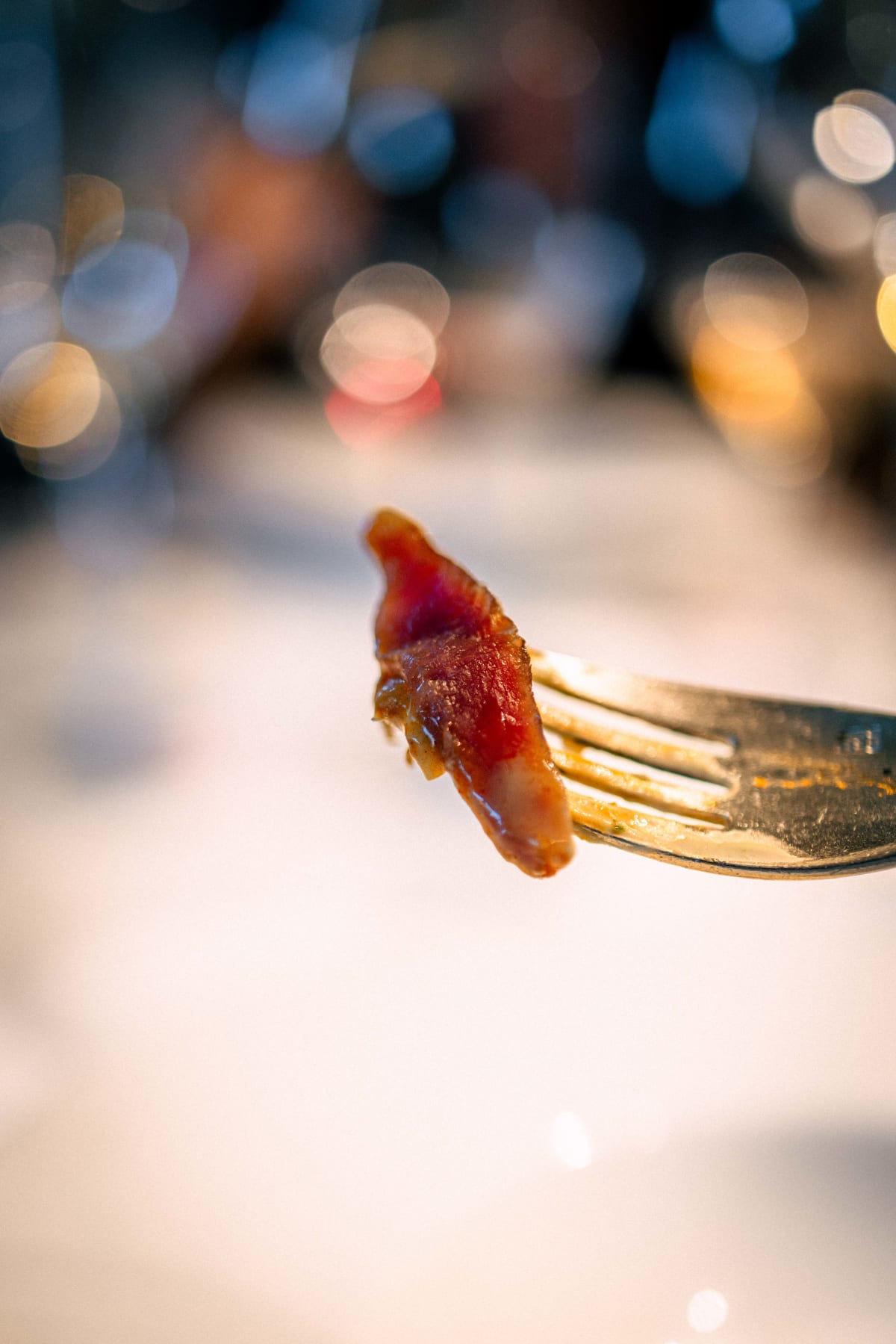
Pork cracklings with marinated tuna collar (2019) was an unexpected construction: the collar section of tuna, which carries the fat distribution and grain of a good braised meat, placed over pork crackling and seasoned in the manner of grilled beef. The result tasted like a very good piece of marinated beef despite its origin. The surprise was genuine and pleasurable.
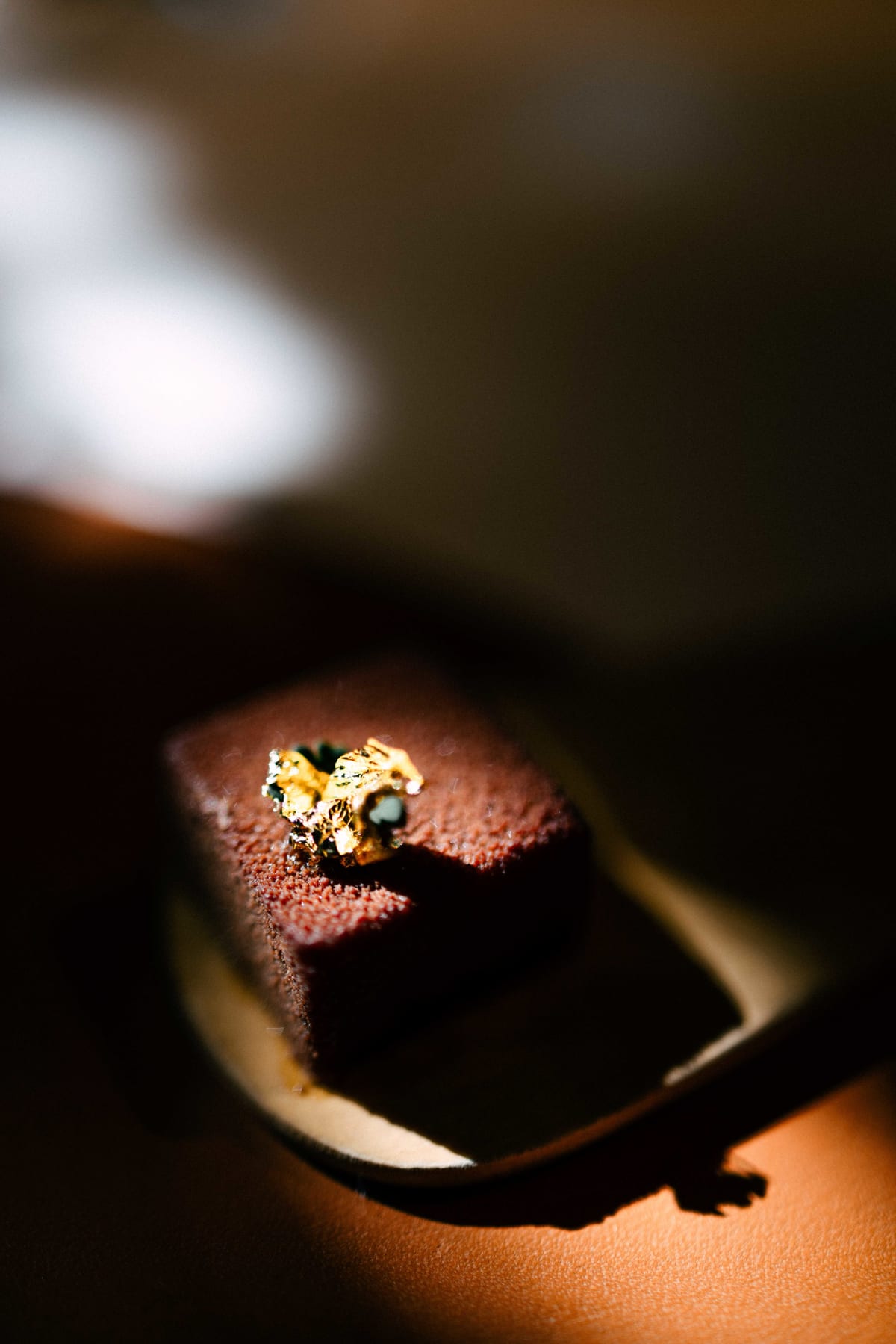
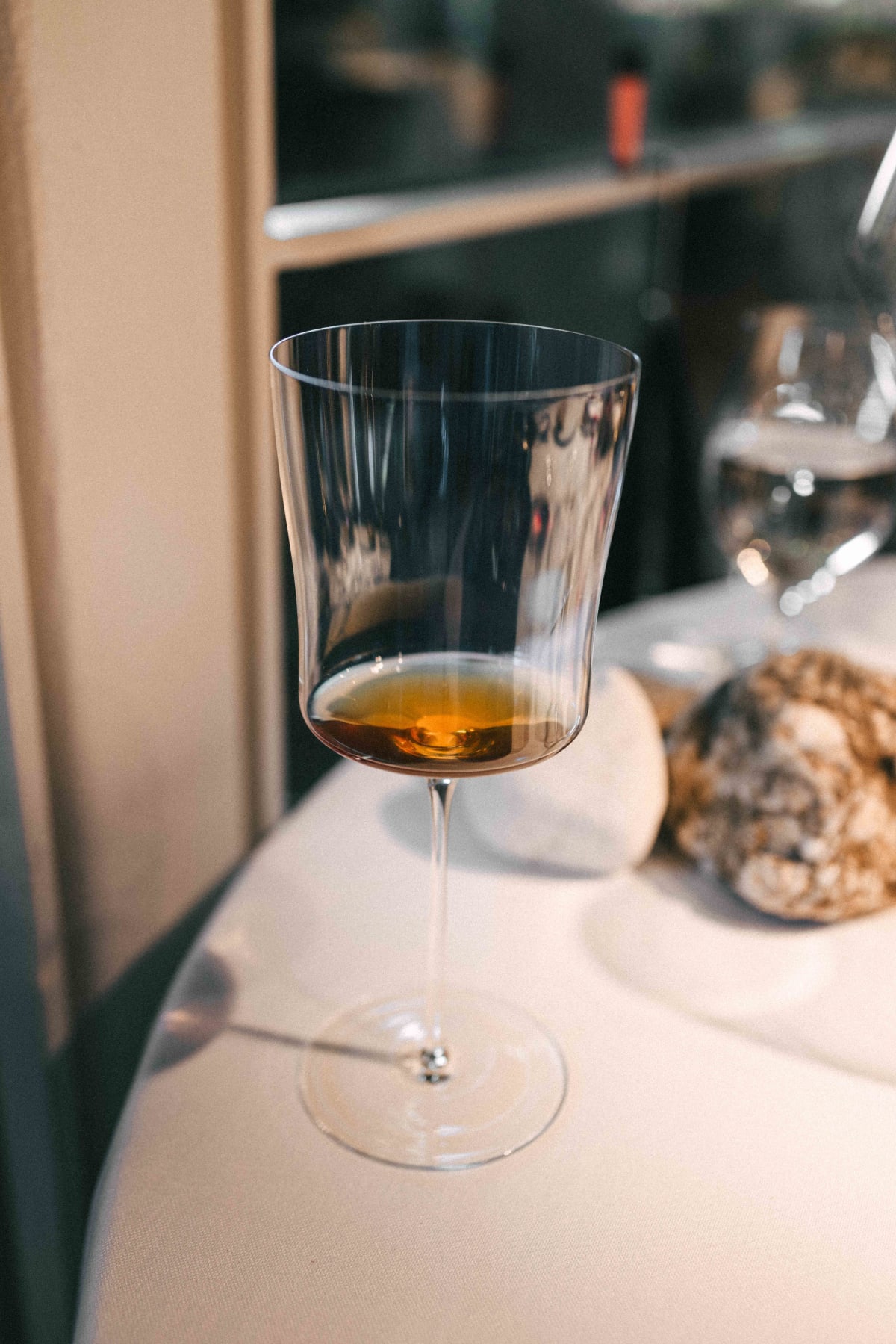
The final appetizer was Foie nougat, hazelnuts and cocoa (2005): a perfect cube coated in cocoa powder with a foie gras nougat center. The sweetness of cocoa and hazelnuts alongside the dense richness of the foie gras belonged together in a way that made this feel more like a closing dessert than an opening course. Coffee would have suited it as well as anything that followed. The paired wine was Gonzalez Byass Palo Cortado 1986 para El Celler de Can Roca D.O. Jerez, a vintage sherry bottled specifically for this restaurant. Nearly forty years old. The market value runs close to two hundred dollars per bottle. The pairing fee for the entire evening was under one hundred and fifty euros, for seventeen pours. The fortified depth of the sherry and the richness of the foie gras occupied the same register without either displacing the other. Whatever uncertainty remained about the wine pairing program dissolved at this point.




34—38 / 121
Whatever uncertainty remained about the wine pairing program dissolved at this point.
Bread arrived before the first course: several varieties, among them a pastry layered with tomato sauce that I continued to reach for despite having no intention of filling up before the courses began.

39—39 / 121
Green Walnuts opened the main sequence. Caviar, walnut milk, tiger nut milk, and roasted tiger nut pieces. The concept of pairing caviar with nut preparations was interesting. In execution, the caviar did not register as clearly as the idea required. The richness and persistence of the nut milks suppressed rather than elevated it, and the course was a disappointment given the ingredients involved. The accompanying Domaine de la Tournelle Fleur de Savagnin 2018 (A.O.C. Arbois), a Jura white made from savagnin, offered a fruit character distinct from the Spanish whites that had preceded it, and a lively acidity that was well suited to the palate at this point. This was also where the breadth of the pairing program became fully apparent. Two restaurants I had visited in the days before this one had confined their pairings almost entirely to Spanish wines. El Celler de Can Roca ranged through Jura, the Loire, Burgundy, Germany, and the Canary Islands. The difference in ambition was significant.


40—42 / 121
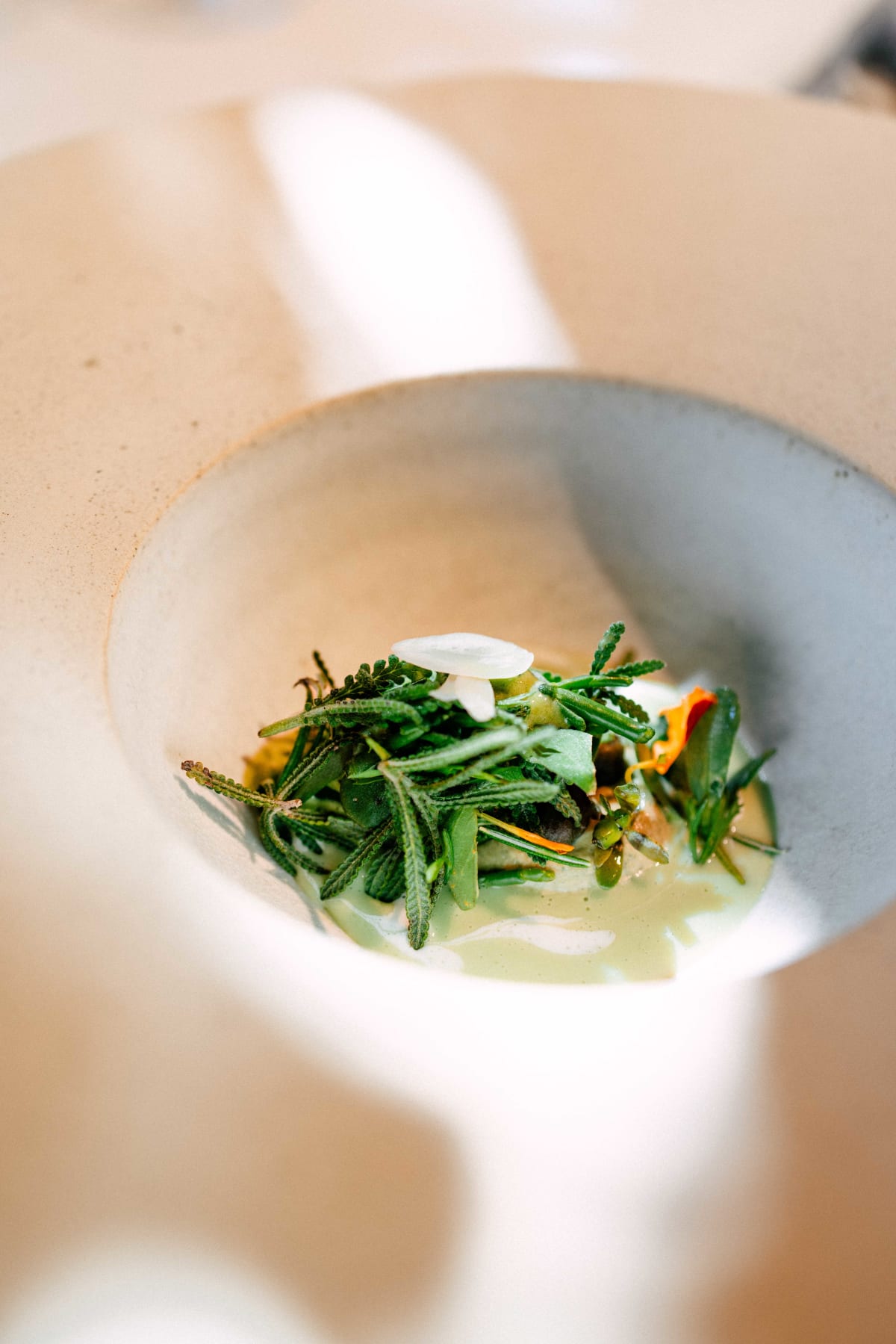
Bad weeds arrived next: a small arrangement of sea fennel and other coastal herbs over a nettle sauce. The flavors were precisely what the visual suggested. Nothing was unexpected, nothing was disappointing, and nothing remained. The Esmeralda Garcia Vallejo 2021 Segovia shared the same quality of leaving no particular trace.


43—46 / 121
Orange Salad was among the two or three best plates of the afternoon. Mussels and salmon roe were the central proteins, joined by sixteen distinct elements according to the menu card: sauces, fruits, and finishing preparations including orange, apple, mango, and others. The instinct was to question whether citrus and stone fruit belonged alongside shellfish. The answer the dish gave was unambiguous. The sweet acidity of the fruit lifted the freshness of the seafood rather than competing with it, and the composition held together with a coherence that must have taken a great many attempts to arrive at. The accompanying La Perdida O'Pando Orange 2021 (Ourense, Godello), a natural orange wine from Galicia, was made with genuine quality: fruit-forward and without the instability that can undermine the category. The match between dish and wine extended well beyond the shared color.


47—50 / 121
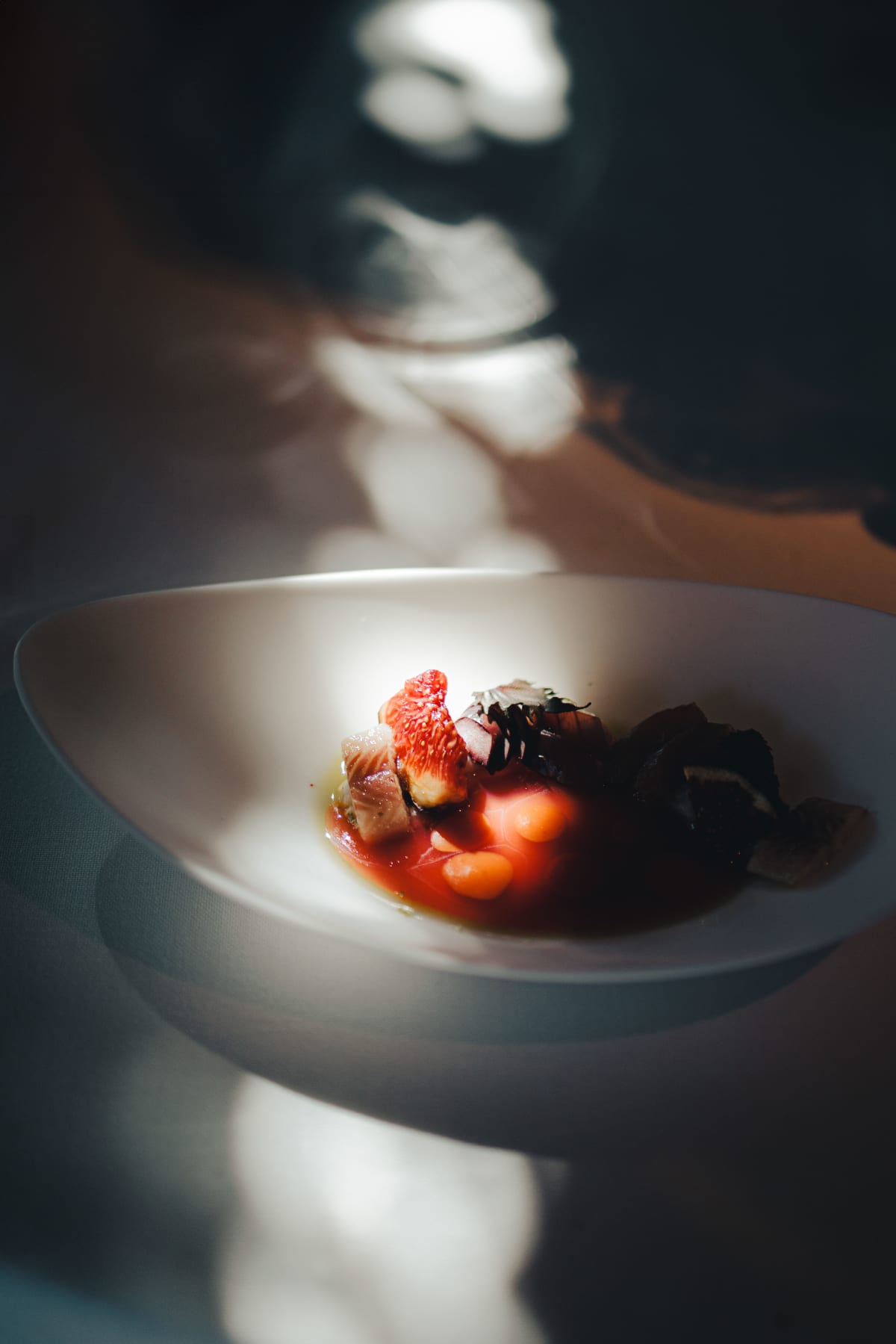
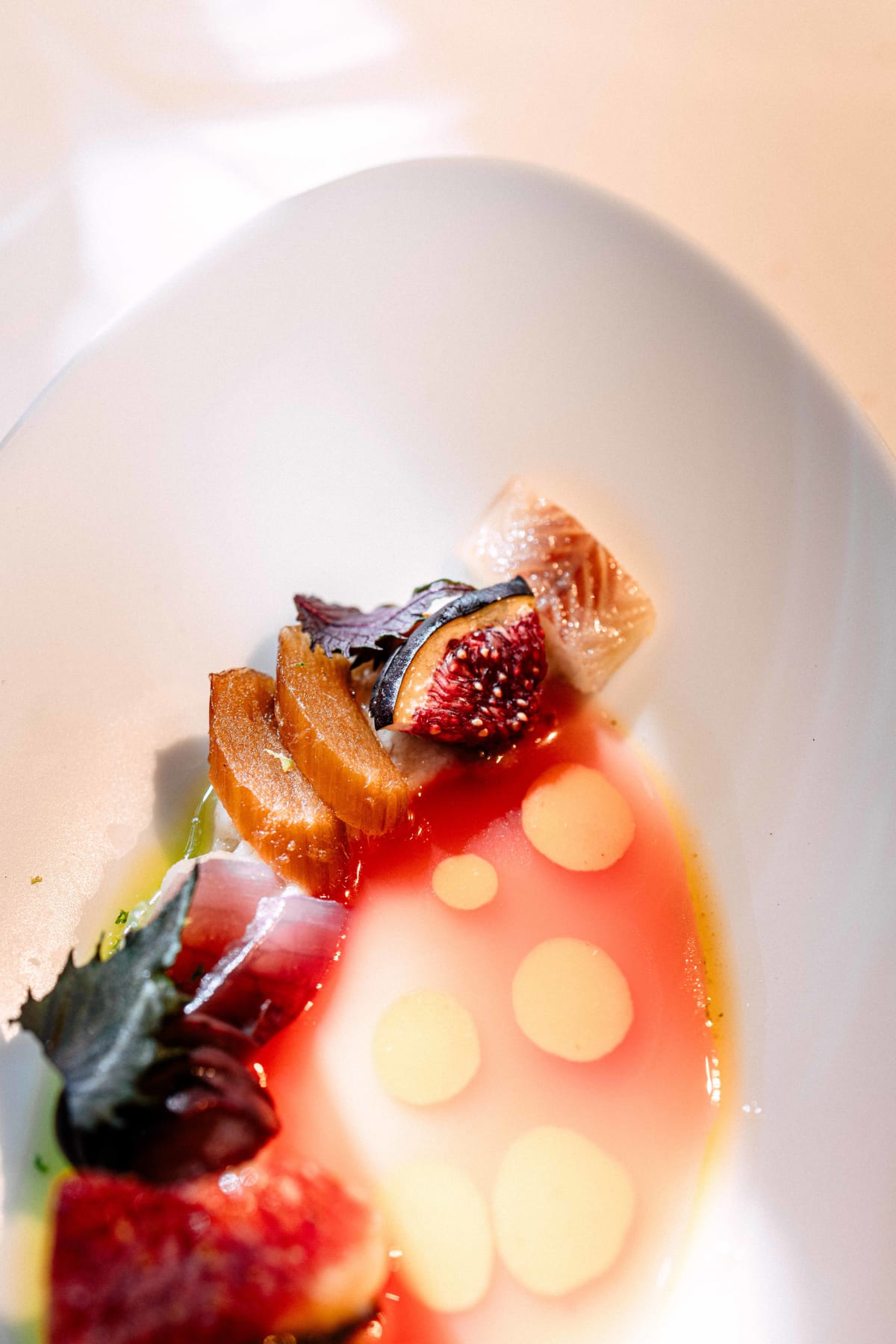
Eel and figs was the best plate of the meal. Multiple fruits, pickled vegetables, and accompaniments arrived in saturated colors that looked more like dessert than anything one would associate with eel. The instinct to doubt the combination was immediate. What happened in the mouth was that the eel maintained its character entirely within the composition, and the sweetness of the fruit and the acidity of the pickles organized around it rather than overwhelming it. A difficult balance, arrived at without apparent effort. The Domaine Clos de Rouge Gorge 2014 (IGP Languedoc-Roussillon, grenache and carignan) paired unexpectedly well with a dish that combined oily fish and stone fruit.




51—56 / 121
Pickled Girona Pepper was a smoked apple cream and pine nut base with roasted apple, and alongside it four small preparations including porcini, roasted melon, and various purées. Of all the courses served that afternoon, this one left the least impression. The Riffault Akmenimé 2019 (A.O.C. Sancerre, sauvignon blanc) traveled to the same destination.


57—60 / 121
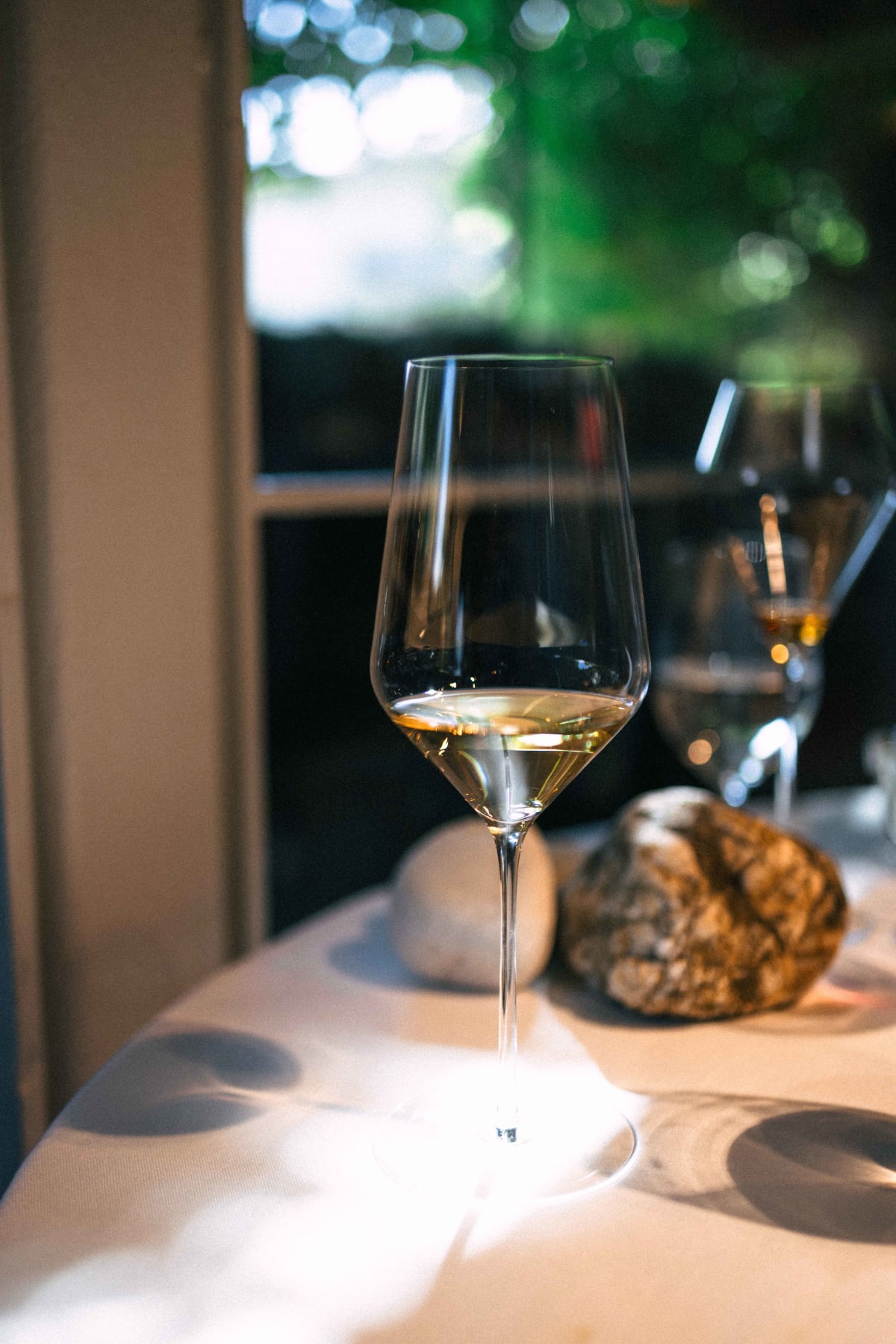
Autumn tubers was the finest vegetable course. Jerusalem artichoke was prepared simultaneously as stew, bouillon, foam, and demi-glace, each treatment extracting a different quality from the same root. Salsify contributed in several forms as well. Butter enriched the overall composition. A thin crisp chip, made from potato and rendered in a deep purple, added textural contrast at the top of the plate. The practice of taking a single ingredient and examining it through multiple preparations is one of the kitchen's central habits, and this was its clearest expression in the vegetable sequence. The Viña Tondonia Blanco Reserva 2012, a Rioja white aged in barrel for more than six years before release, brought an oak-inflected weight and restrained acidity that matched the buttery earthiness of the artichoke with uncommon precision. From this course onward, the pairing program had my full attention.




61—65 / 121
The eggplant course that followed was Charcoal-grilled eggplant prepared with miso, with aubergine caviar, pickled aubergine, smoked yogurt, bulgur with sesame, and cardamom alongside it. The construction had an Asian reference without reducing itself to imitation. The range of accompanying sauces required a considered approach: each element taken separately, in small amounts, to understand the range on offer. I ate too quickly and too generously and did not give the dish what it required. The accompanying Suertes del Marques the 7 Fuentes, a red from the Canary Islands, was a wine I would want to encounter again.


67—70 / 121
Onion with jigged squid opened the seafood sequence. The cuttlefish was tender and well handled. The accompanying preparation of onion purée, shallot, orange, and curry was thoughtfully assembled. Squid, as an ingredient, does not move me, and this course did not change that. The Domaine du Traginer 2014 (A.O.C. Collioure, Languedoc-Roussillon white) was another instance of the program's geographic range.


71—74 / 121
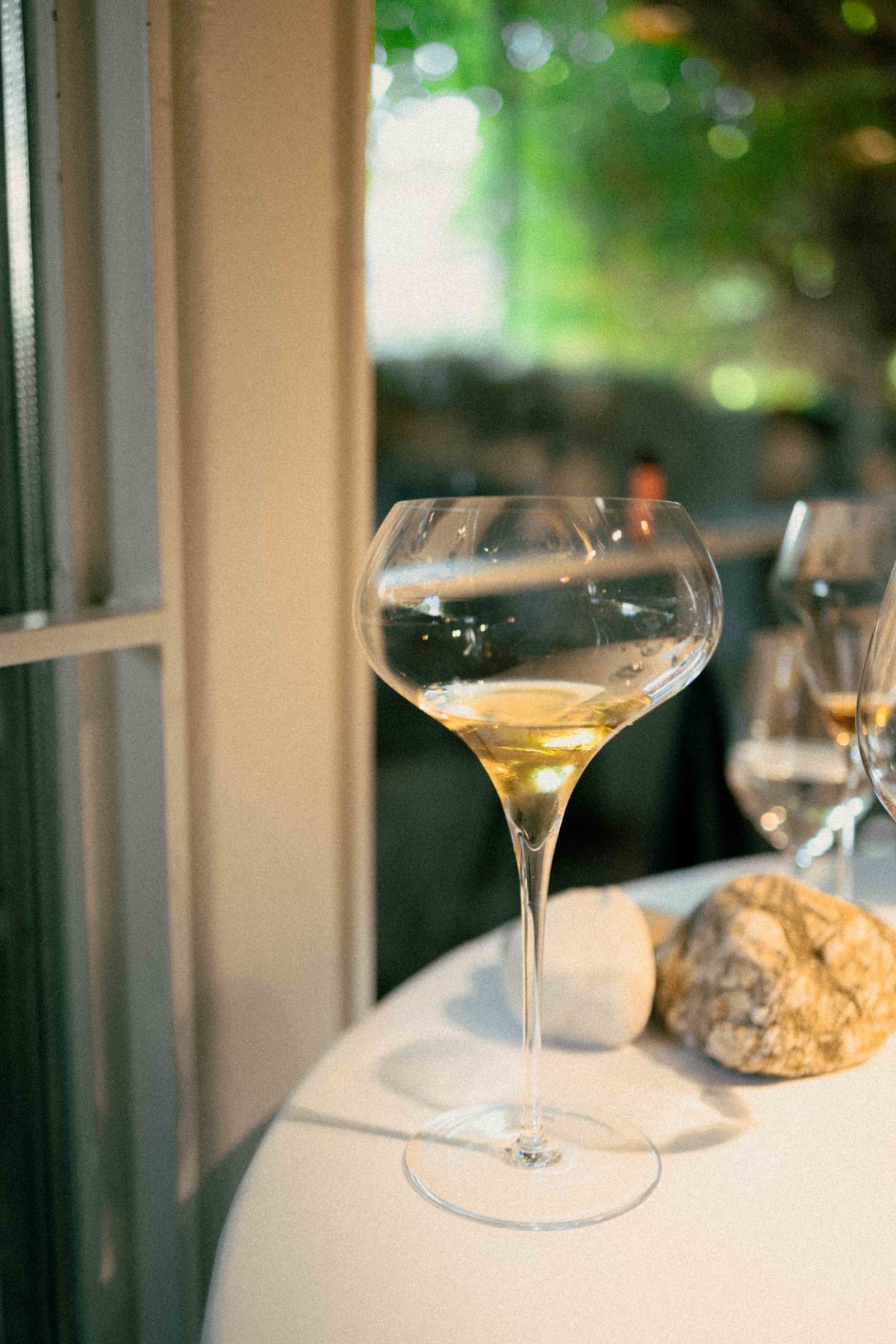
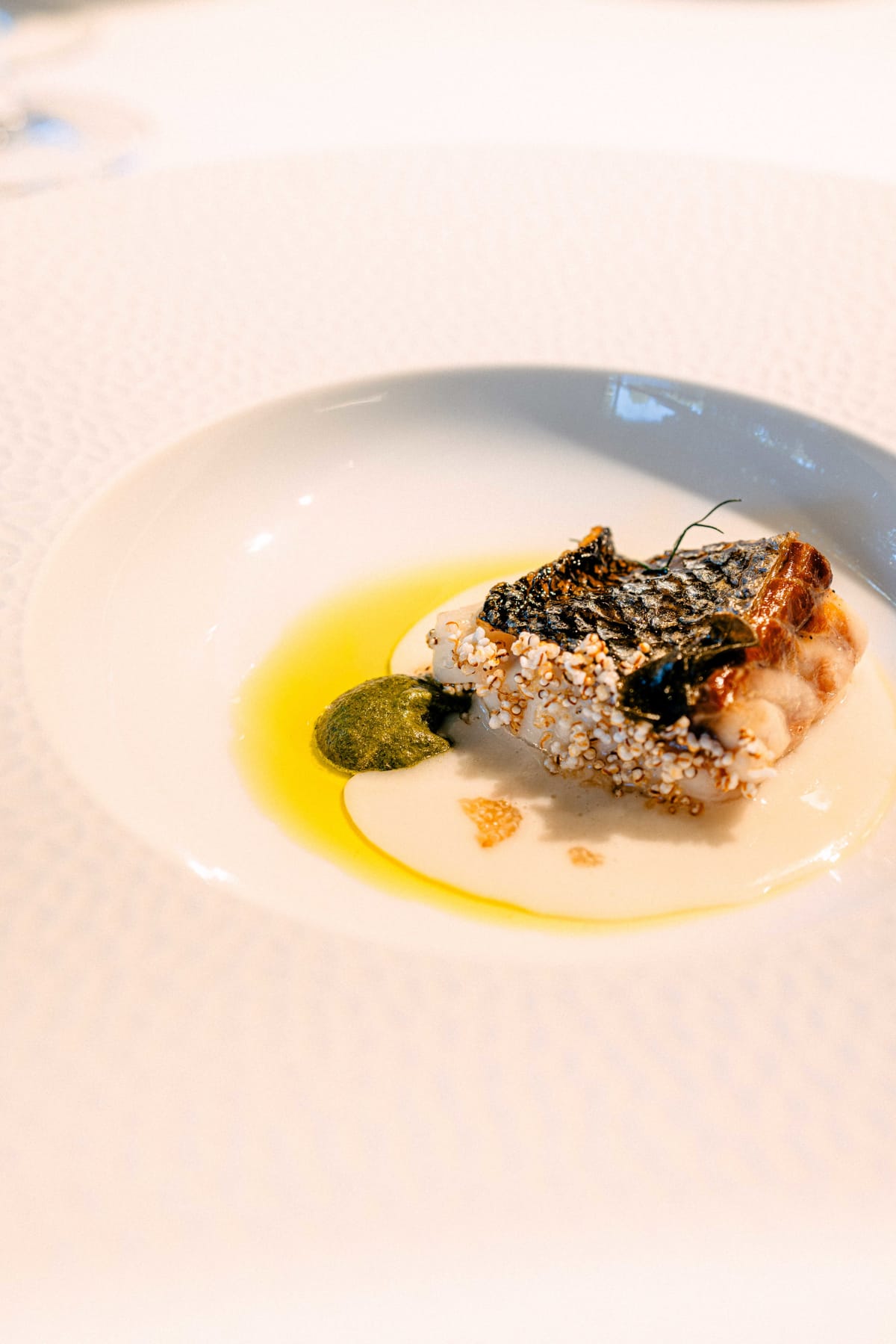
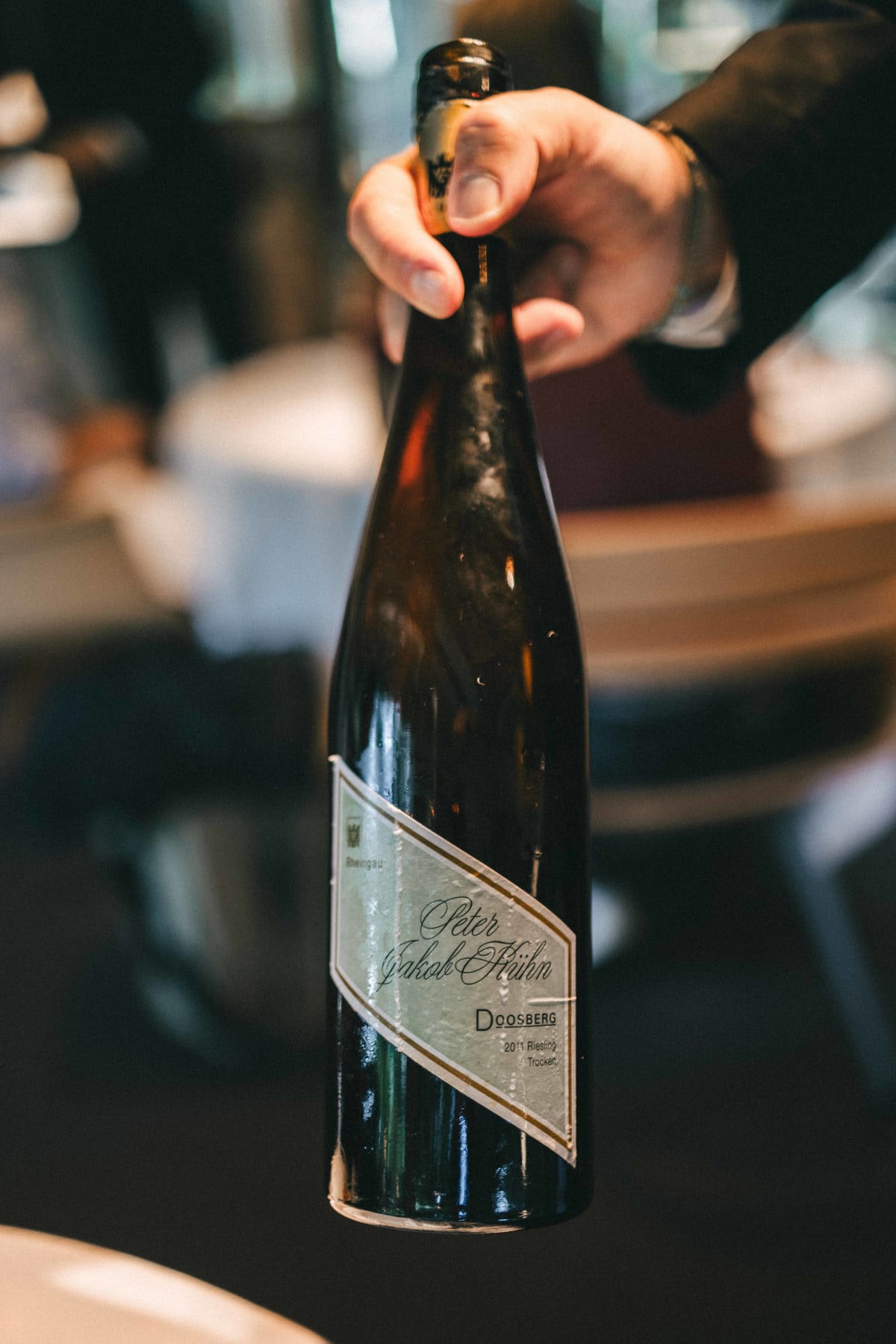
The fish of the day was a confited fillet that appeared from its color and texture to be a variety of mullet. Charcoal-grilled red-root amaranth purée, pickled seeds, fried seeds, pickled leaves, and fennel accompanied it. The fish was good. The Peter Jacob Kühn Doosberg 2018 (VDP Rheingau, riesling) paired well.

75—79 / 121
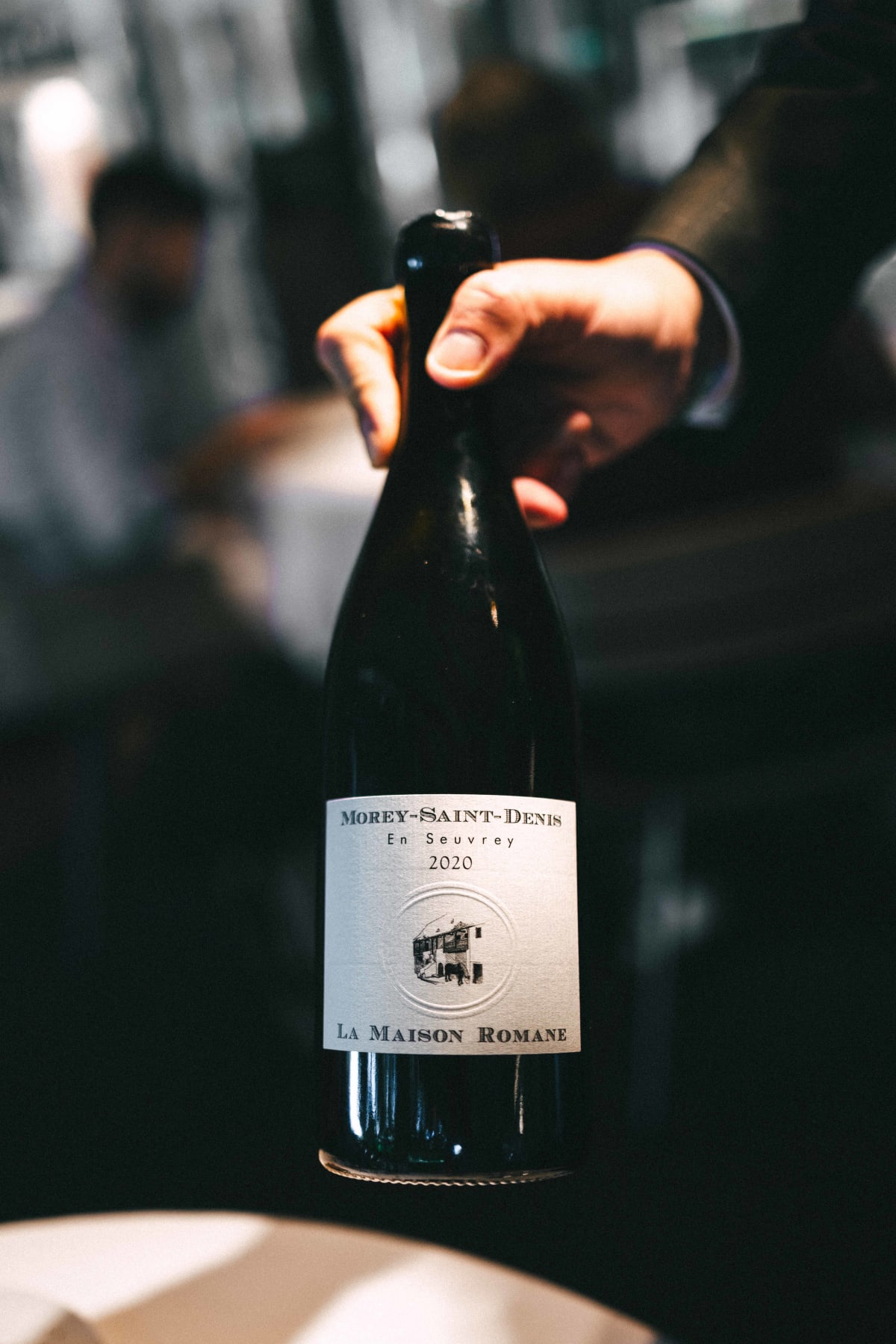
Langoustine with poularde parfait was the peak of the seafood sequence. The langoustine was simply excellent, correctly handled, with no intervention beyond what was necessary. The chicken skin and liver parfait alongside it, together with the pickled seaweed, composed a dish that required more explanation than it initially suggested, and rewarded the attention. The La Maison Romane En Seuvrey 2020 (A.O.C. Morey-Saint-Denis, Burgundy pinot noir) was a precise choice. The primary ingredient was shellfish, but the sauce carried enough meat character to require red wine. Within that constraint, the delicacy of the pinot held alongside the langoustine without displacing it. Moving into Burgundy at this moment, after a long sequence of whites and fuller reds, felt like a different room opening.


80—82 / 121
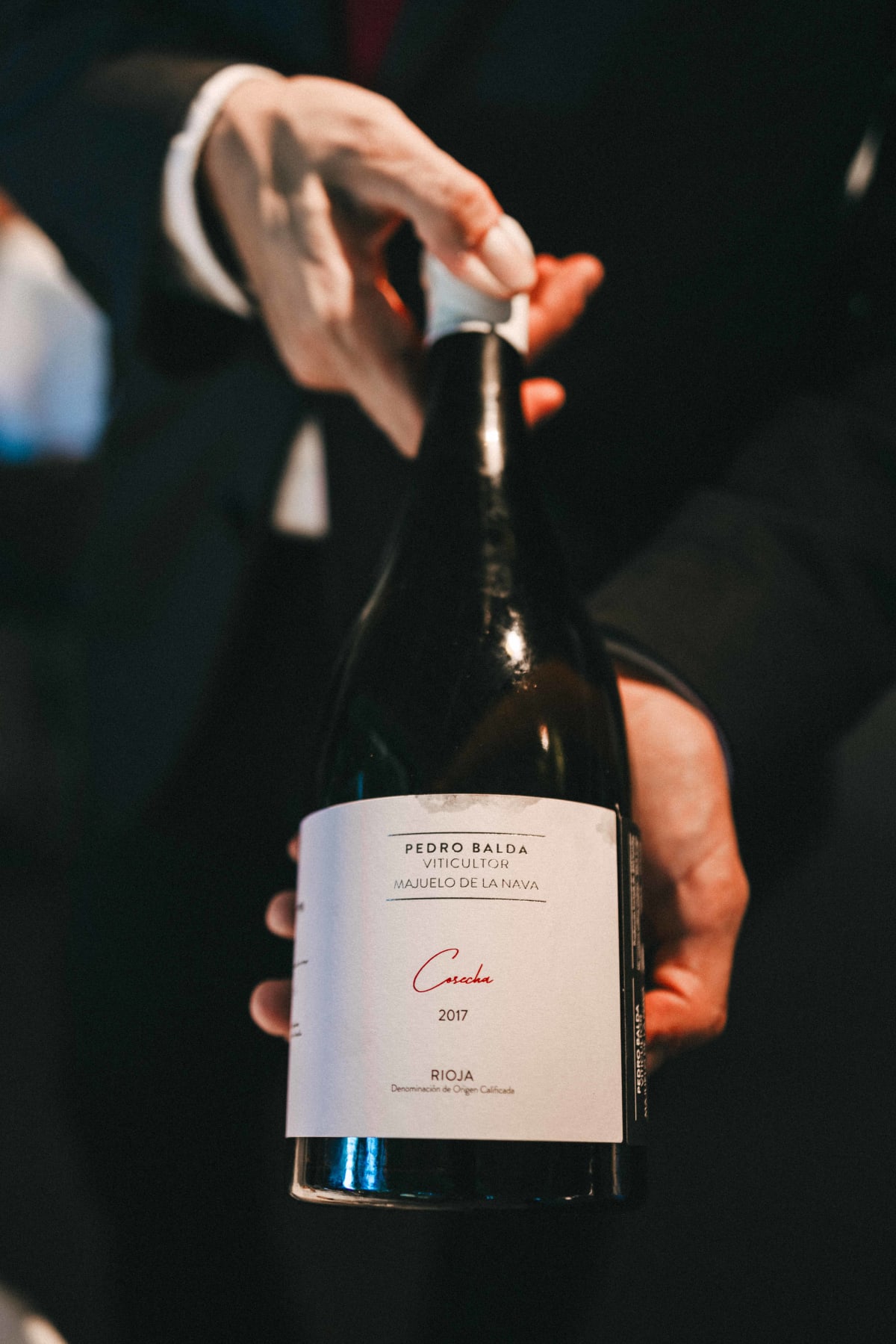
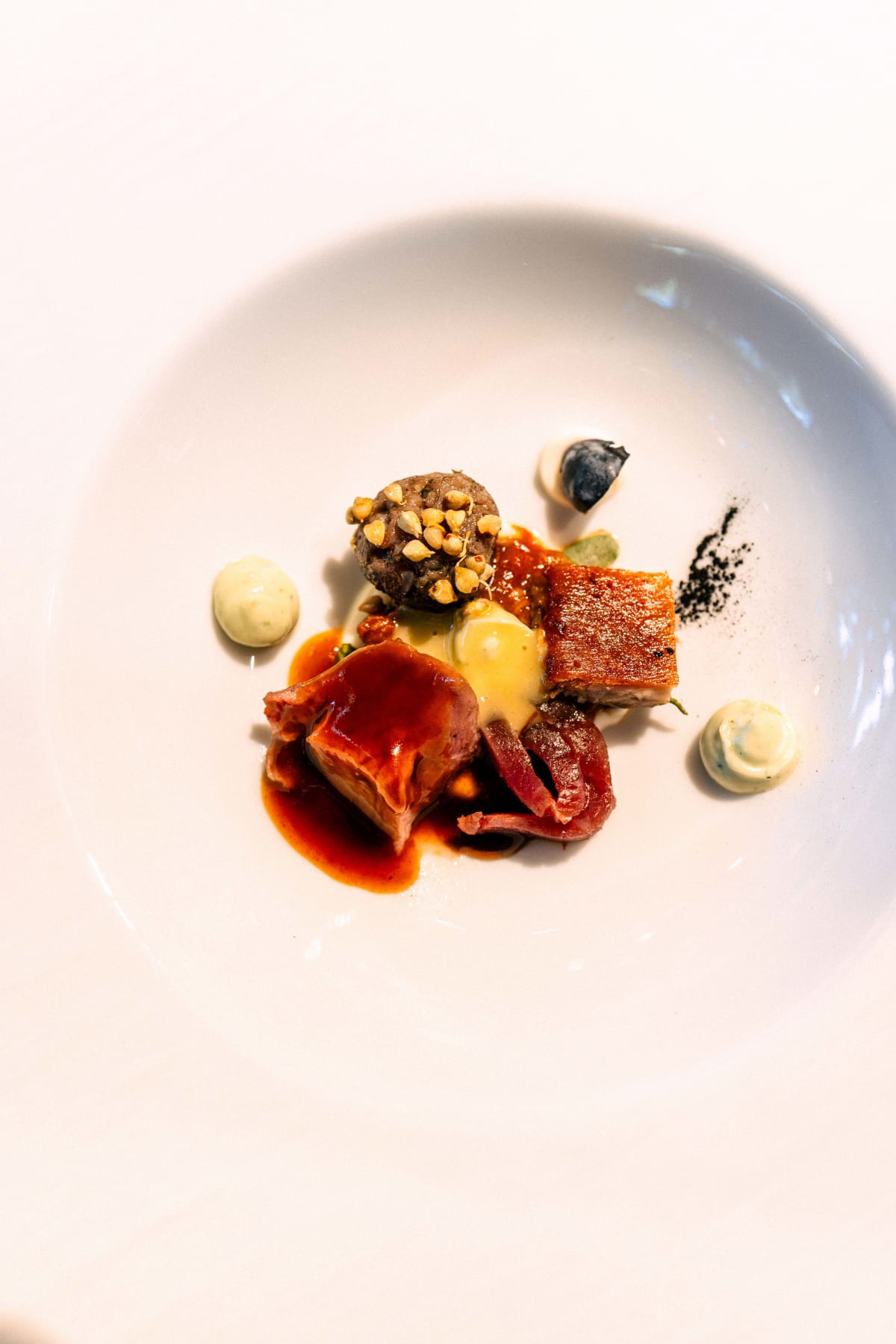
"Ramats de foc" lamb was the standout of the meat sequence. The neck, loin, belly, and meatball preparations of a single animal appeared on one plate, together with a piece worked in the manner of a cured ham and served without heat. Twelve aromatics and secondary ingredients supported them. The variety of cuts and the range of preparations communicated something specific about the kitchen's relationship to its ingredients: an insistence on complete understanding rather than the selection of a single optimal approach. The Pedro Balda Cosecha 2017 D.O. Ca. Rioja matched the intensity of the sauces and the multiplicity of the cuts without simplifying either.

83—86 / 121
"Xuixo" of duck stew arrived as three preparations: sliced and pan-roasted meat, minced meat wrapped in pastry and fried, and a consommé. I mistook the consommé for a white wine on first approach and was briefly startled. The duck was good. Against the lamb that had preceded it, however, the composition was familiar, the kind of duck presentation available at any number of serious French restaurants, and the concept contributed nothing that the ingredient could not have expressed more simply. The wine, on the other hand, was excellent. Partida Bellvisos 2004 Magnum D.O. Ca. Priorat, grenache from Catalonia in a large-format bottle, had developed an old-vintage quality through twenty years without losing its fruit. The wine was the better half of the course.




87—93 / 121
The room had thinned by the time the dessert sequence began. Jordi Roca is described in the culinary world as the most gifted of the three brothers and was named World's Best Pastry Chef in 2014. The reputation prepared me for spectacle. What followed was more restrained, and more interesting for it.
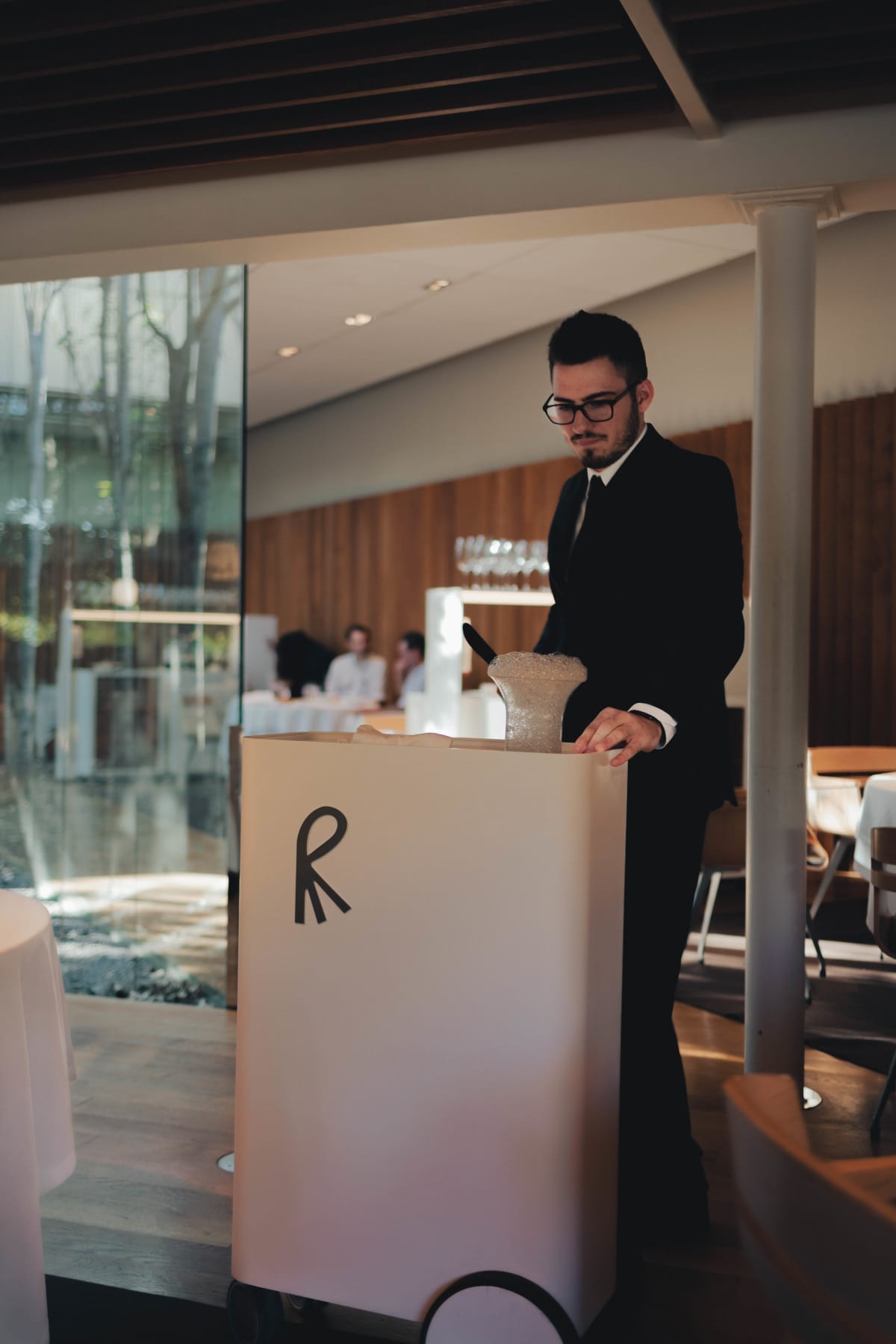
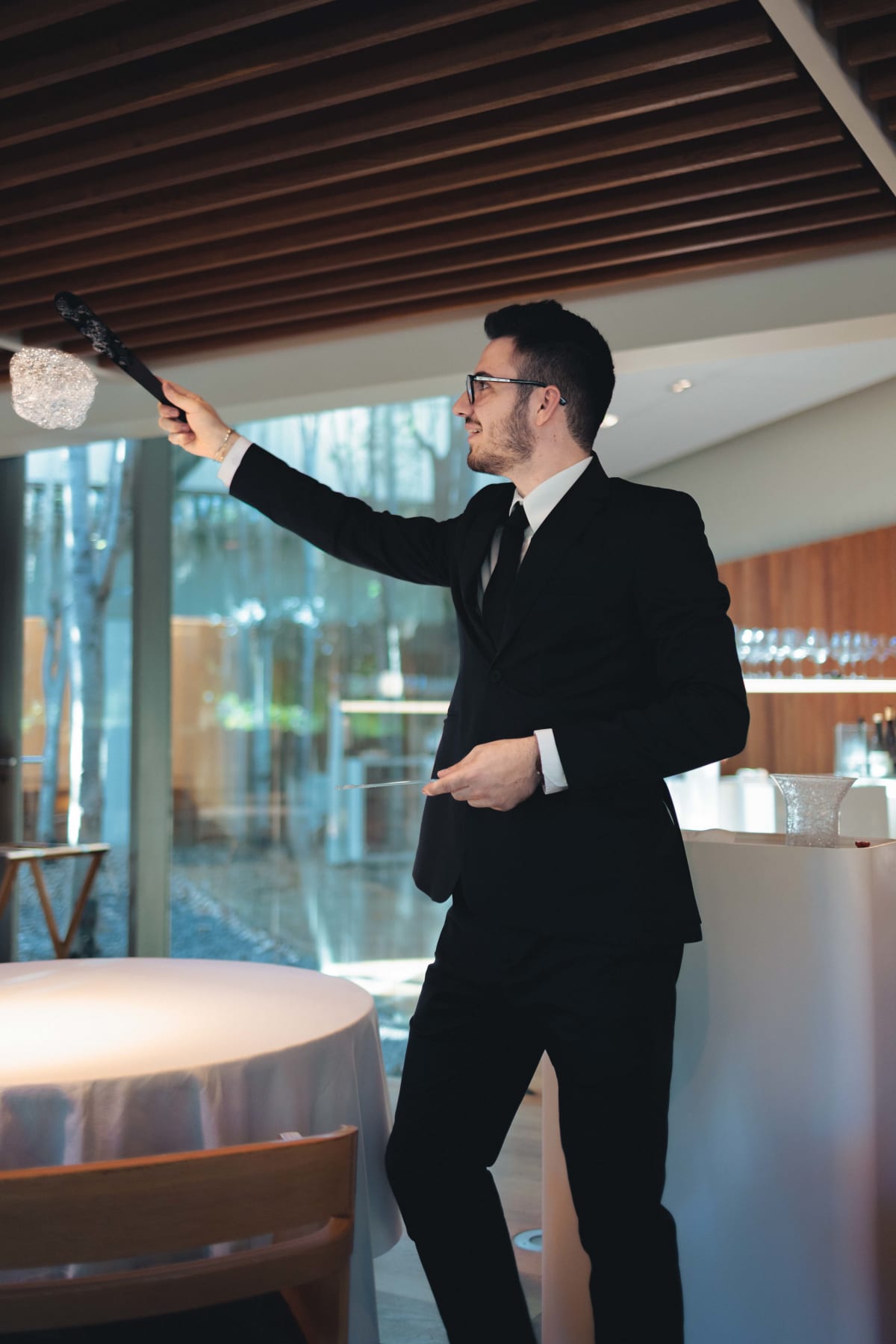
Figs, honey and mató was the single performance piece of the afternoon. A waiter carried a column of mist to the table, constructed from fig leaf essence using a specialized device, and distributed it above the plate by moving a rod back and forth through the air. Beneath it: a granita, goat's milk cheese, burned honey, fig jam and jelly. The cheese note in a dessert was unexpected and welcome. I scraped the last of the mist from the glass. The Grans Fassian Piesporter Goldtröpfchen Spätlese 2015 (VDP Mosel, riesling) was a low-alcohol dessert wine of the kind that draws the glass back to it repeatedly: balanced, persistent, and not obviously sweet despite its sweetness.





94—100 / 121
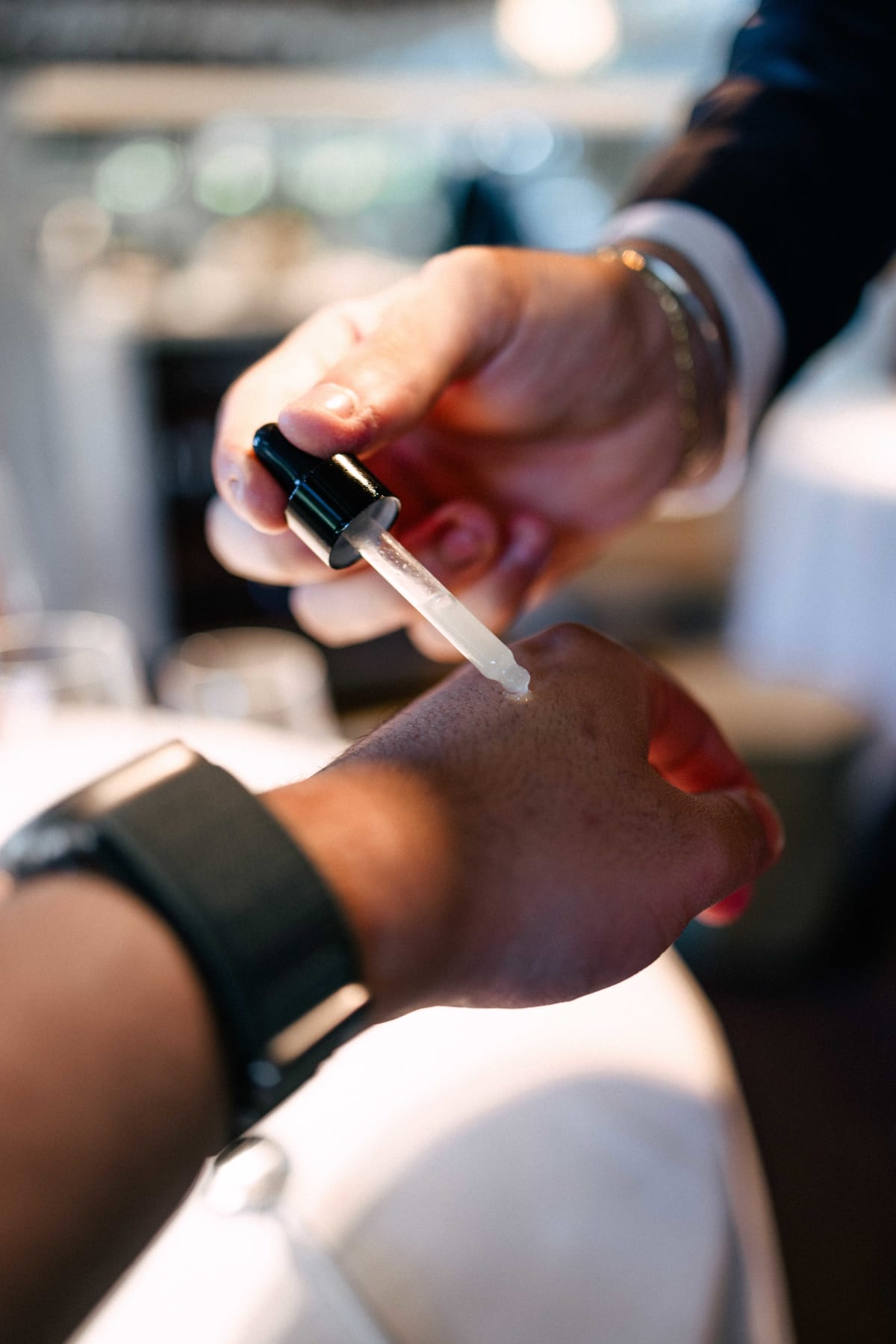
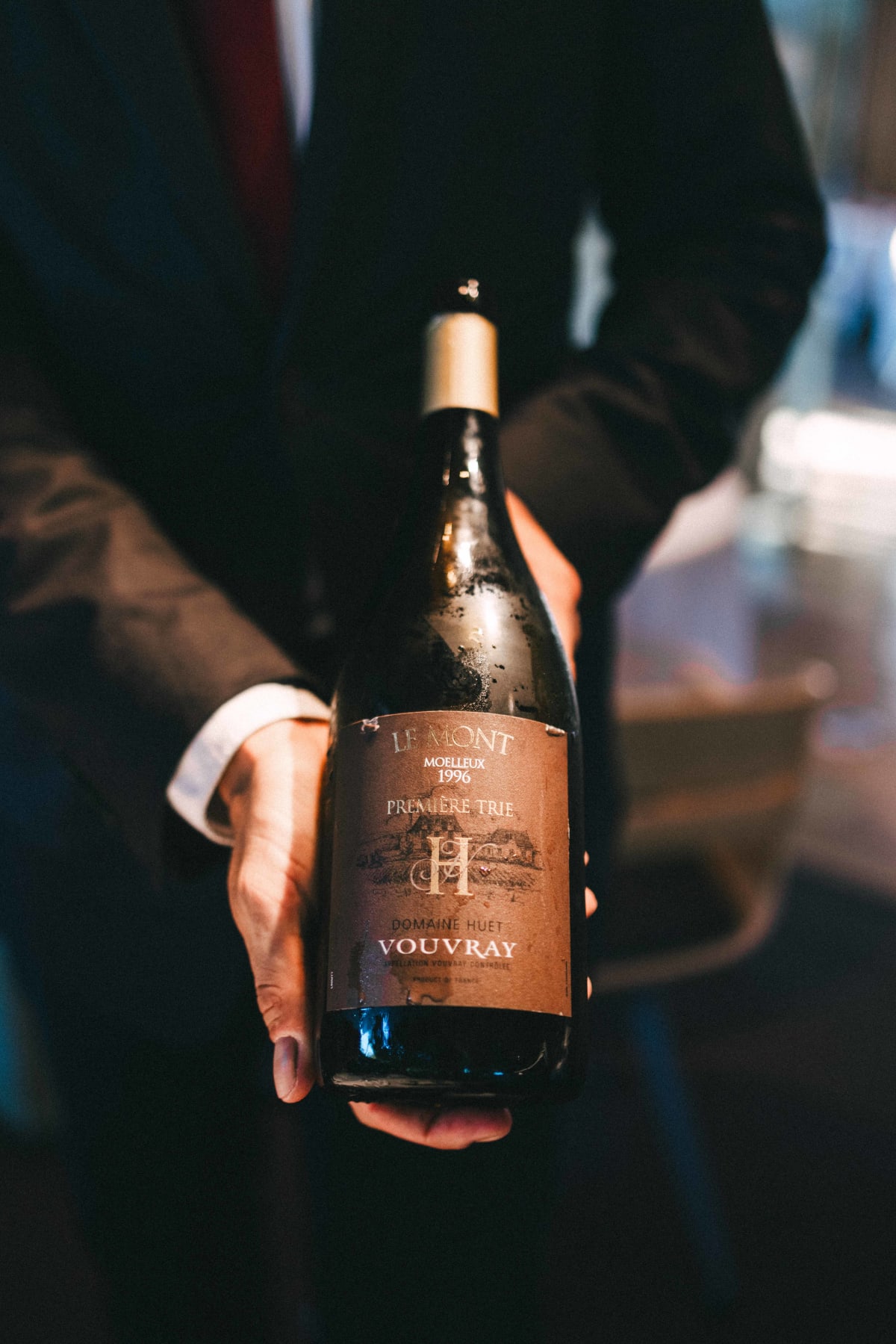
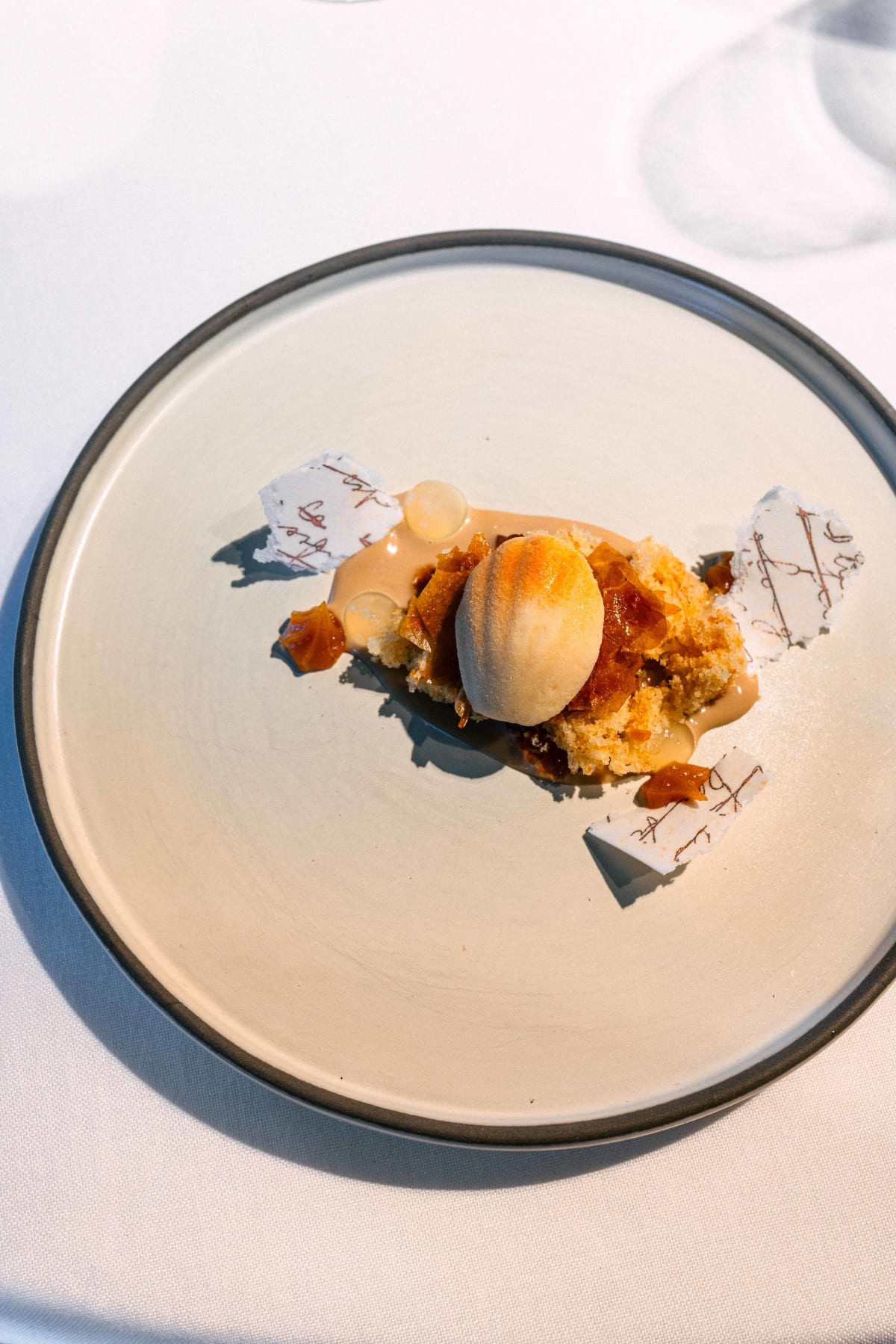
Old book was centered on a madeleine, accompanied by a cinnamon cream reduction, powdered milk, Earl Grey tea cream, lemon jelly, and jam. The waiter applied the cinnamon reduction directly to the back of my hand and indicated I should taste it before it appeared on the plate. The gesture was natural and made the course feel less formal than the sequence around it. The Domaine Huet Clos du Bourg Premier Trie Moelleux 1996 (A.O.C. Vouvray, chenin blanc), a late-harvest Loire wine from nearly thirty years prior, likely produced from botrytis-affected fruit, elevated the course beyond what the description suggests. The wine provided the room in which the whole dessert sequence was able to operate.

101—104 / 121
Blackberries (from our garden) closed the savory and dessert courses: a sheep's milk chocolate mousse with a Java pepper cream, from the last fruit of the restaurant's own garden. Uncomplicated and directly good. The Olivares 2017 D.O. Jumilla, a monastrell dessert wine from Murcia, accompanied it.


105—106 / 121
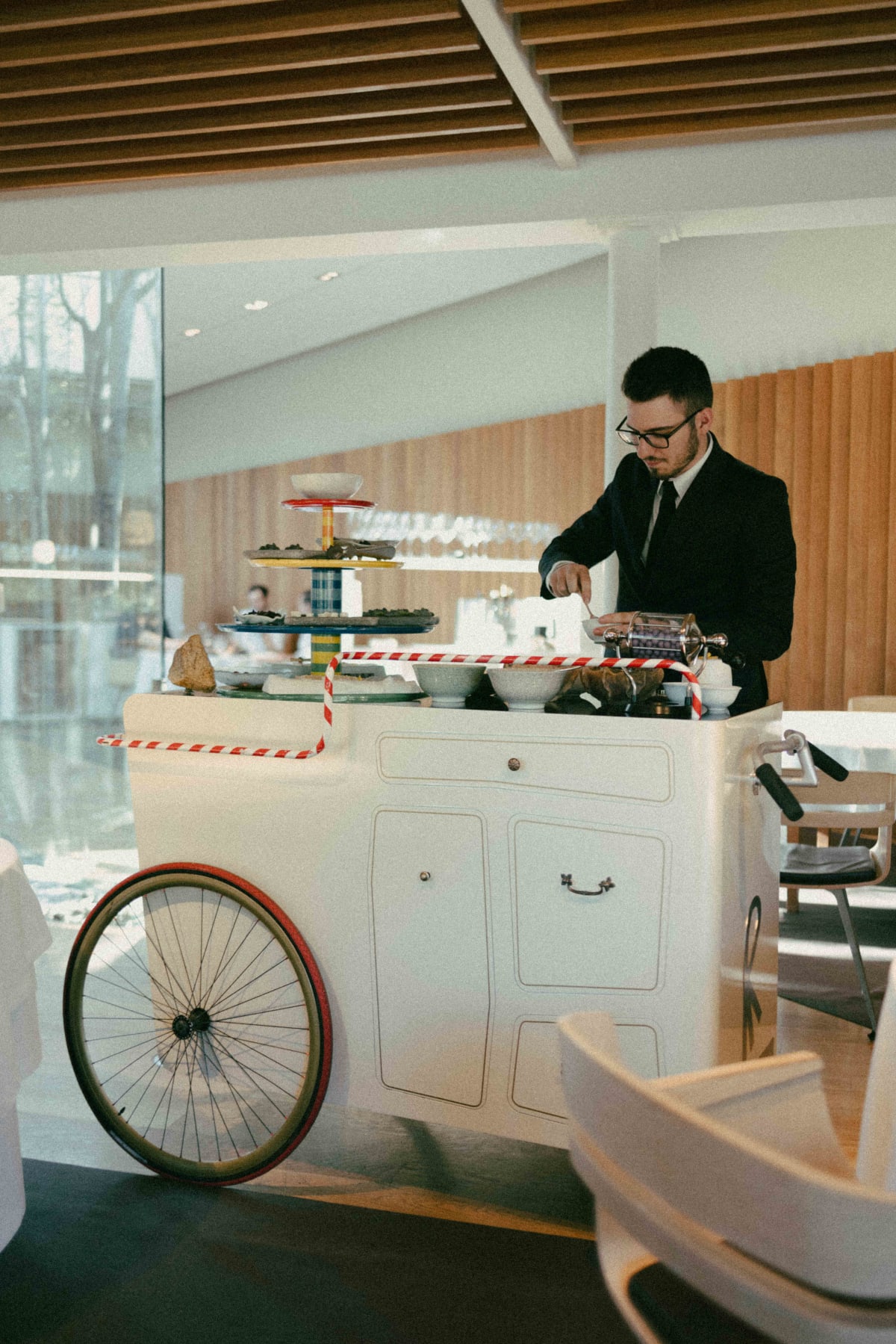
The petit four cart arrived, and with it a range of small pieces that continued where the courses had ended. I ordered a coffee. My companion had noted the presence of Korean Tea on the spirits and tea list when we first arrived and returned to it now. The waiter brought a preparation device to the table and made it directly. What was served was not a Korean tea in any sense I recognized. The appearance of the word on the list was a gesture of inclusion. The tea itself was not the thing it named.


107—114 / 121
Service began at one-thirty in the afternoon. We left at six. Four and a half hours, and no part of it felt long. More notably, the volume of food did not produce the accumulated weight that a meal of this length and breadth could easily generate. The saturation held at a level that made each course approachable on its own terms. That quality, the ability to sustain appetite across an extended sequence without either taxing or underwhelming the guest, is a technical achievement that is easy to overlook when the individual dishes are the subject of attention.

119—119 / 121
Joan Roca came out of the kitchen briefly as we were leaving. We spoke for a short time and took photographs. He was wearing a Royal Oak on his wrist. Josep was in the dining room and we met him there as well. That all three brothers were present and working in their respective parts of the same space, simultaneously, was something to see.

115—118 / 121
We walked back through the outskirts of Girona. The light was low and the streets were quiet and the city, at that hour, looked like something to be held onto. I would like to return one day with more people, and take more time in the city itself.


120—121 / 121
Two restaurants I visited in the two days before this one were three-star addresses in Spain. Both meals were good. Both had front-of-house moments that felt unresolved, a gap between the stated ambition and the actual execution of service. El Celler de Can Roca did not have those gaps. And where those two restaurants had confined their pairings almost entirely to wines from the region in which they sat, as if hospitality required a demonstration of local loyalty above everything else, El Celler de Can Roca moved freely through Jura, the Loire, Burgundy, Germany, and the Canary Islands, selecting by logic rather than geography and trusting the guest to follow. It was the finest wine pairing I have experienced. For anyone who works in food and cooking: where those two other restaurants offered the kind of inspiration that one might plausibly imitate, El Celler de Can Roca presented something for which no obvious starting point exists. The visit did not reduce to any single element. The food, the wines, the room, the people, the city in September, and the light on the walk back. All of it composed a single afternoon that I have returned to many times since.
Have a question about this restaurant, or want to share your own experience?
Send a message