Local & Essential · Japan
Fukahireya
"The most satisfying meal at Azabudai Hills, and a preview of what 4000 Chinese Restaurant might be"

1—1 / 63
There is a Chinese restaurant I have long wanted to visit in Tokyo, and it is not Fukahireya. 4000 Chinese Restaurant in Minami-Aoyama has been making the rounds among the food-obsessed people around me for some time, and every attempt to go has stalled at the same point: no solo reservations. During Oshogatsu, the Japanese New Year holiday, I found myself at Azabudai Hills and finally made it into Fukahireya instead, the second concept from the same owner.

2—2 / 63
Fukahireya opened on November 24, 2023, on the third floor of Azabudai Hills Mori JP Tower, on the same day the complex itself launched. The restaurant is the creation of Kinya Komoda, owner of 4000 Chinese Restaurant. Komoda spent 31 years at Shisen Hanten, the Akasaka institution built by Chen Kenichi of Iron Chef fame, joining as an apprentice in 1988 and rising to executive chef of the entire group by 2008. In 2004, he became the first Japanese chef to win the gold medal in the individual hot dish category at the International Chinese Culinary Competition in Guangzhou. In 2018, he finally opened his own flagship. The name 4000 reads in Japanese as both Yonsen and Shisen, folding the word for Sichuan cuisine into four thousand years of Chinese culinary history in a single stroke. Fukahireya is the more focused offshoot, built around a single ingredient.
The head chef is Yuto Kanazawa, born in 1992 in Saitama. He trained for eight years at Taikan-en, the Chinese restaurant inside Hotel New Otani Tokyo, before co-running a Chinese bar in Nishi-Kawaguchi for another four years. He joined the team in June 2023 to lead the opening. The menu rotates every two months.

7—7 / 63
Shark fin, or fukahire in Japanese, is the dried and processed fin of a shark, prized in Chinese cuisine since the Ming dynasty for its gelatinous, chewy texture rather than any pronounced flavor of its own. Japan's largest production hub is Kesennuma in Miyagi Prefecture, where 80 to 90 percent of the country's shark landings come ashore. Processing traditions there stretch back to the Edo period, and the fins are considered among the finest in the world. Fukahireya sources spined dogfish (毛鹿鮫, gesa) from Kesennuma, and the kitchen seasons nothing in advance, letting the ingredient speak for itself. A large dried fin is on display at the restaurant entrance, and every time I pass it I find myself wondering just how big that shark must have been.
Inside, the counter seats eight in front of an open kitchen, with table seating beyond. The space sits within the restaurant zone of Azabudai Hills and is not fully enclosed from the surrounding area, but there was nothing noisy or distracting during the meal.
The kitchen seasons nothing in advance, letting the ingredient speak for itself.
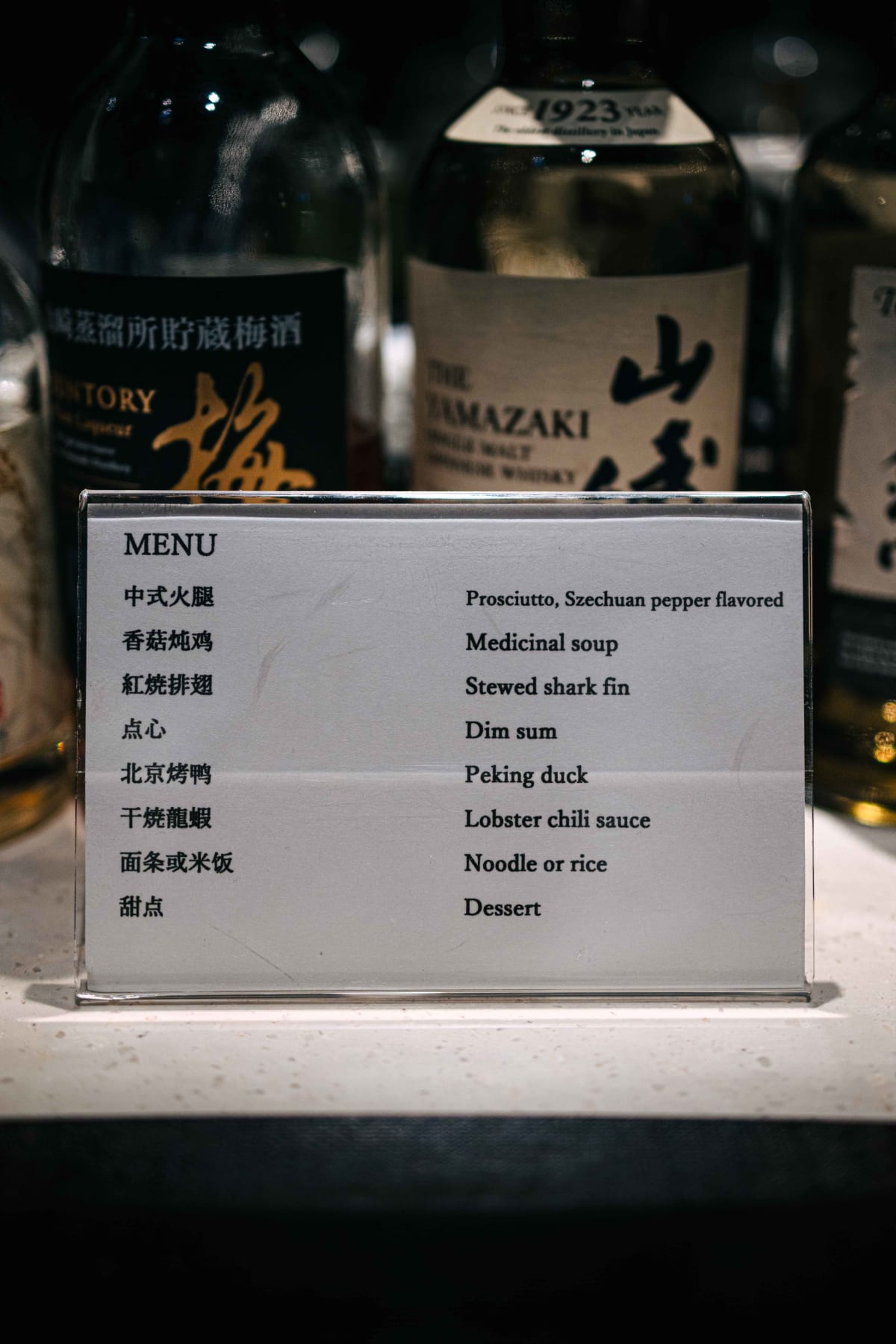
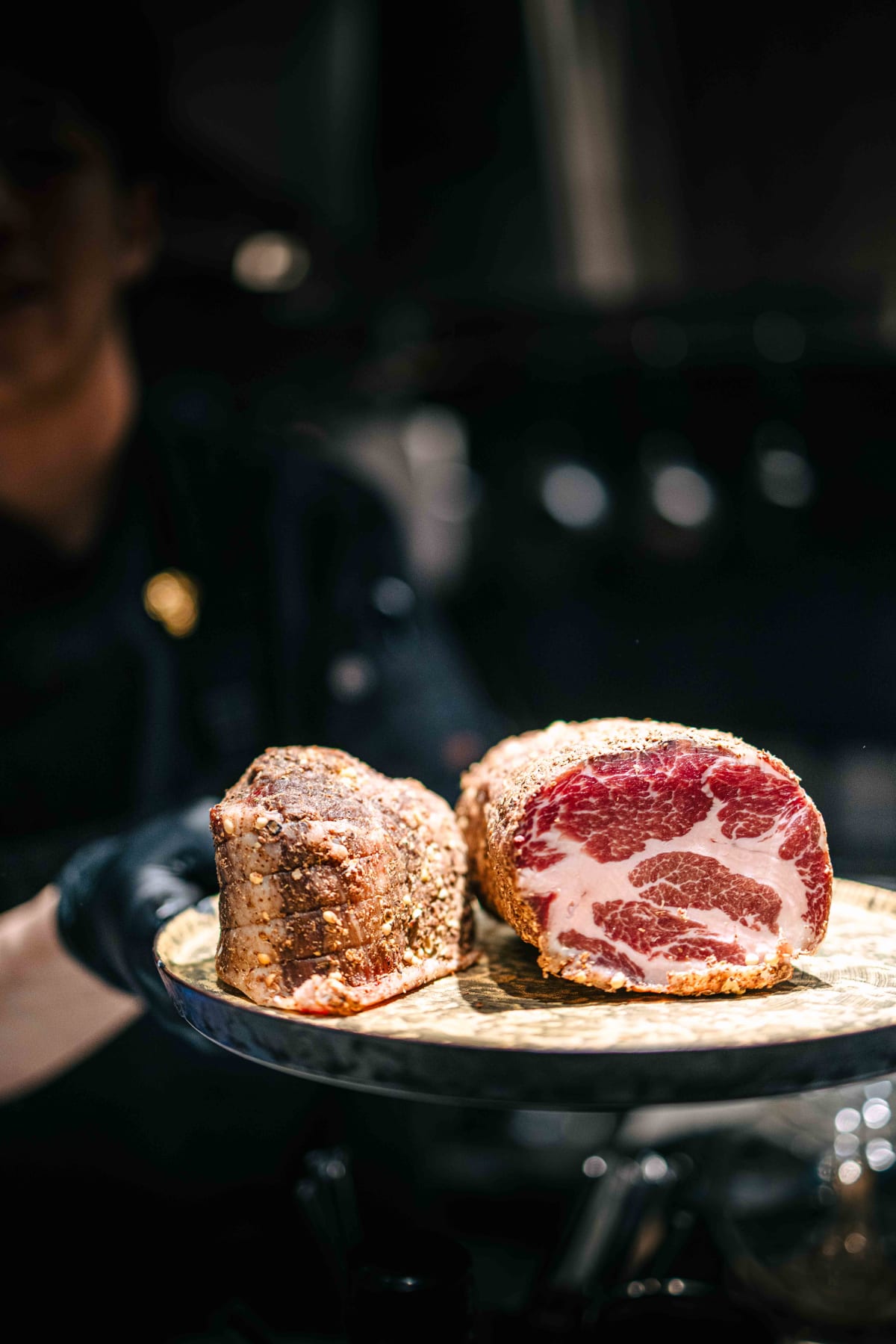
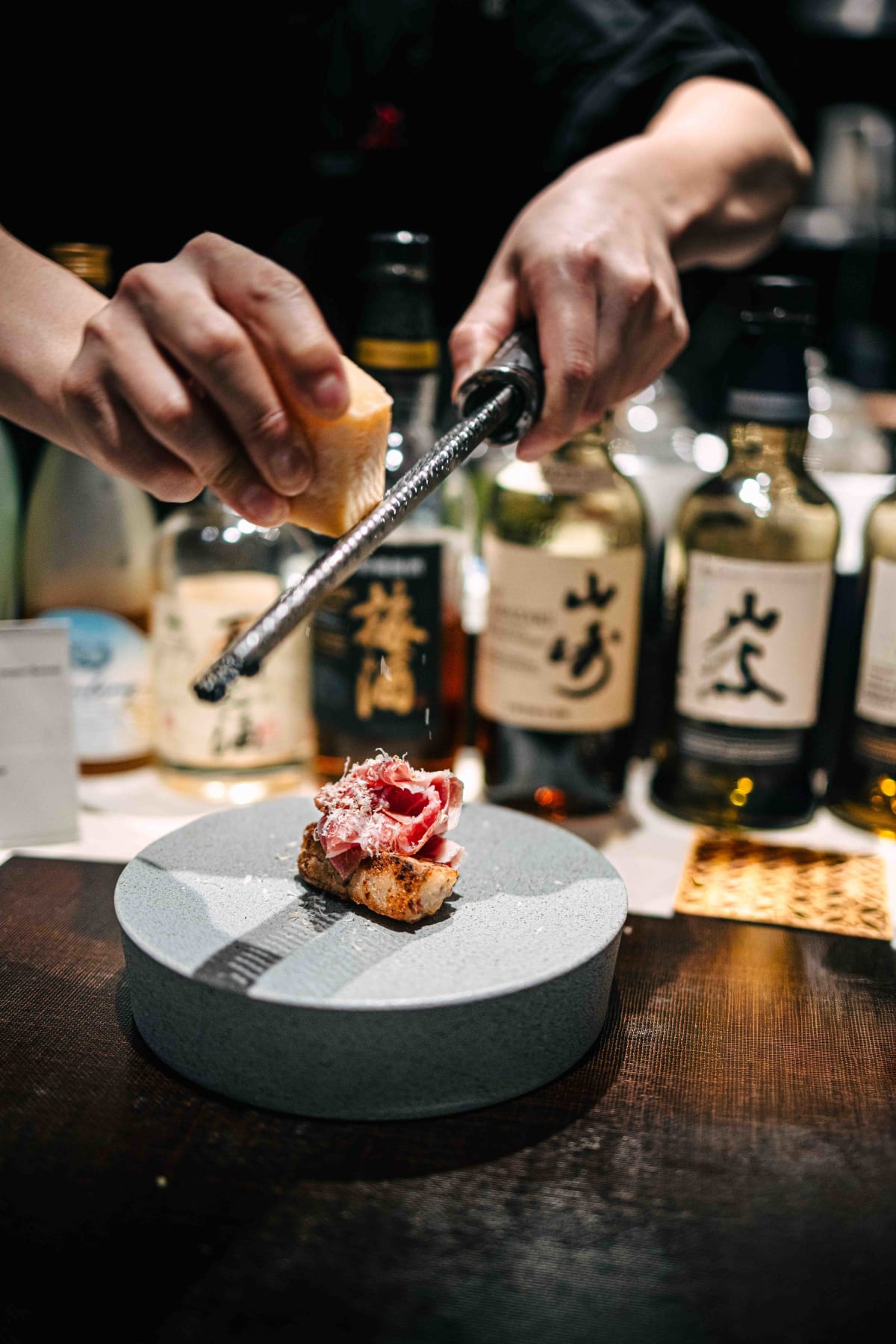
I opened with a cold bottle of Kirin. The first course was 中式火腿, prosciutto cured with Sichuan pepper, served alongside daikon. The texture of the daikon brought to mind the mochi-like radish I had at Sazenka, and the briny prosciutto alongside it was a clean, confident way to start.






3—13 / 63
The second was 香菇炖鸡, a slow-cooked medicinal broth in the spirit of Buddha Jumps Over the Wall, built around scallop, shiitake, shark fin, and other things that took time to become what they were in the bowl. It was not overly sweet, which worked well for me.


14—18 / 63
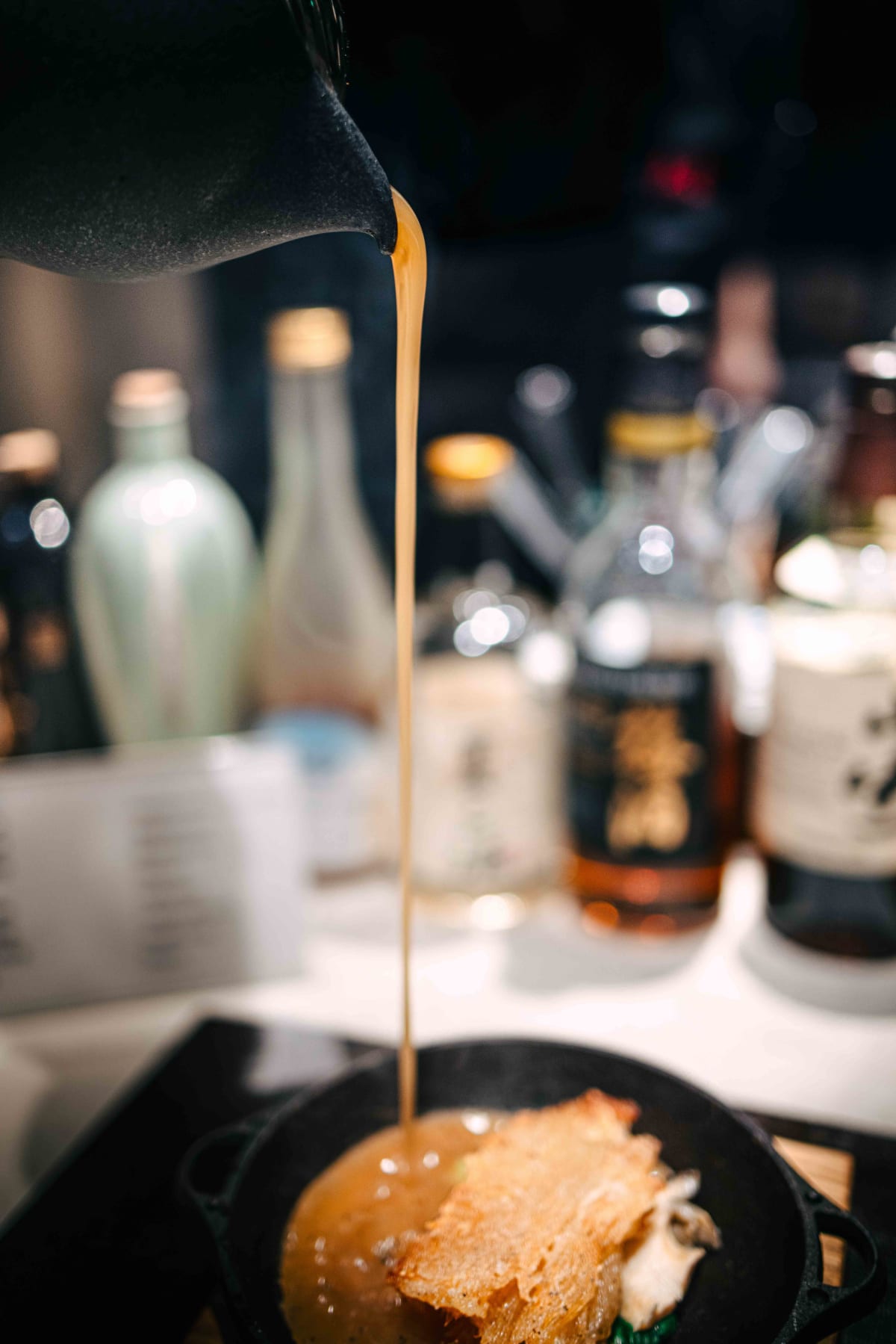
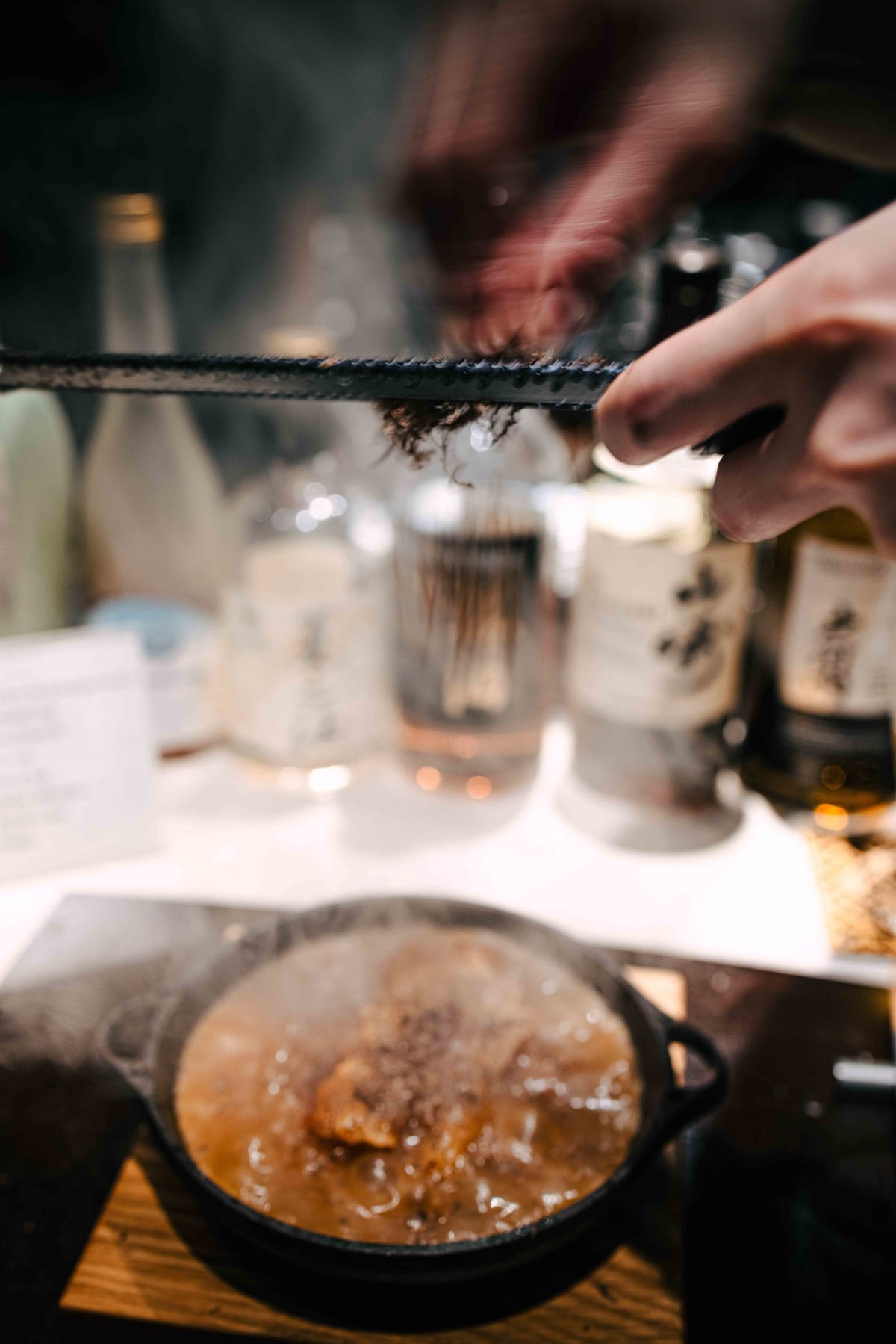
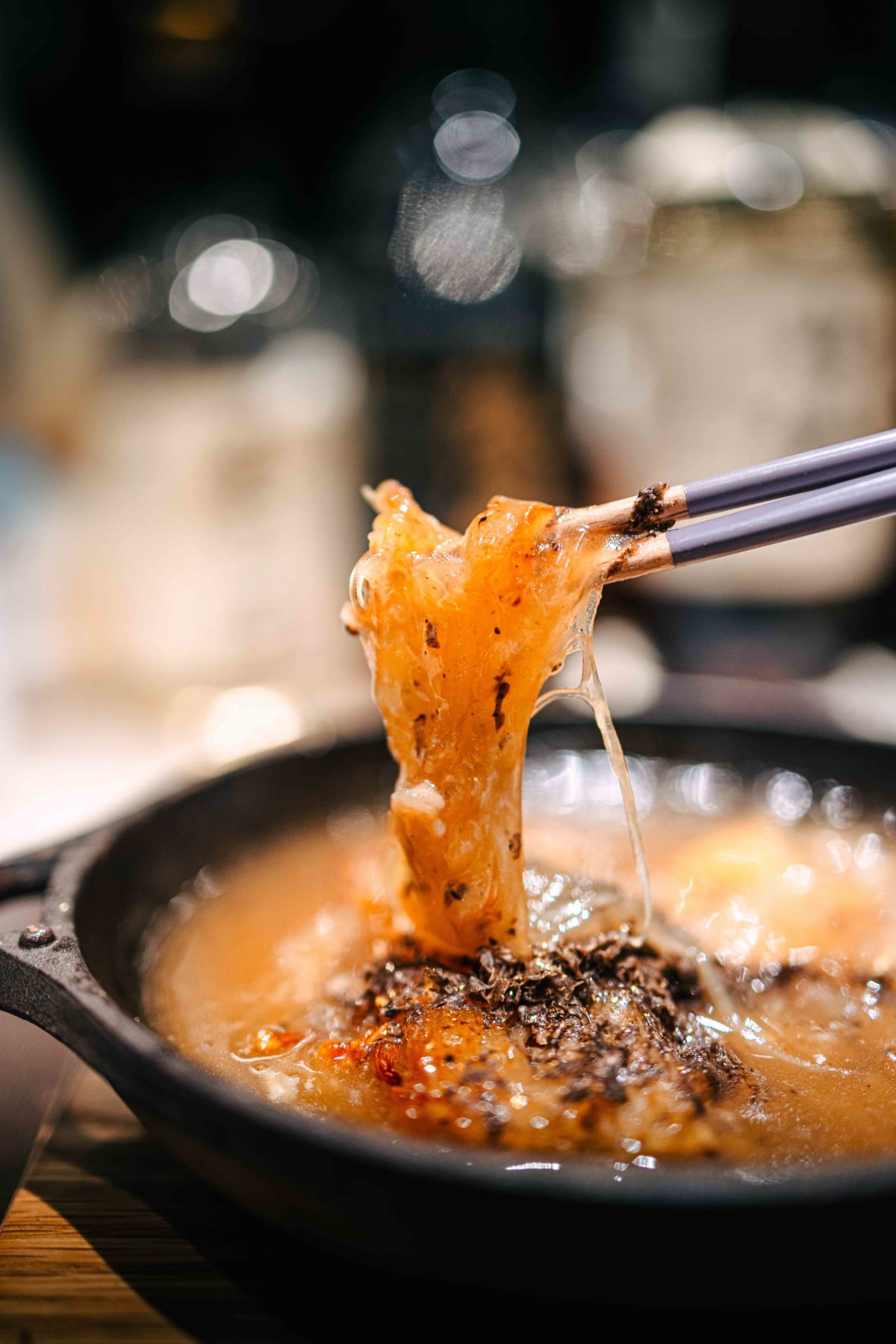
The centerpiece arrived third: 紅焼排翅, the shark fin course. The chef asked at the counter whether I wanted it grilled or steamed. I chose grilled, and it was the right call. The texture turned springy and chewy in a way that steaming would not have produced, and it was the best thing I ate that evening. The soy-based sauce served alongside was very good, and the truffle shaved on top added a quiet, pleasant note.






19—32 / 63
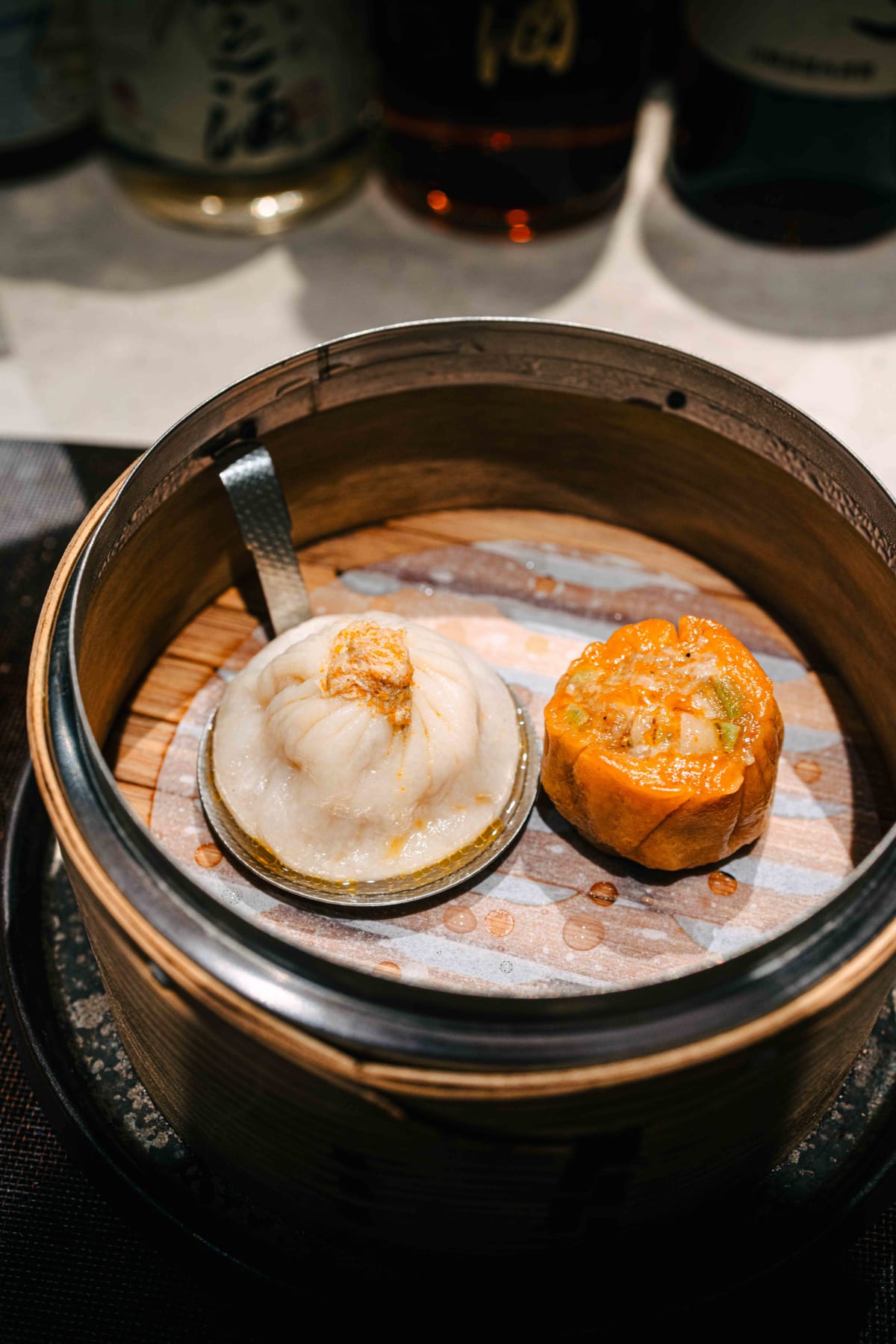
Next came 点心, two dim sum together. One was xiaolongbao topped with crab meat, the other a spicy variety I couldn't quite name. The xiaolongbao was better, its broth full and clean.


33—37 / 63
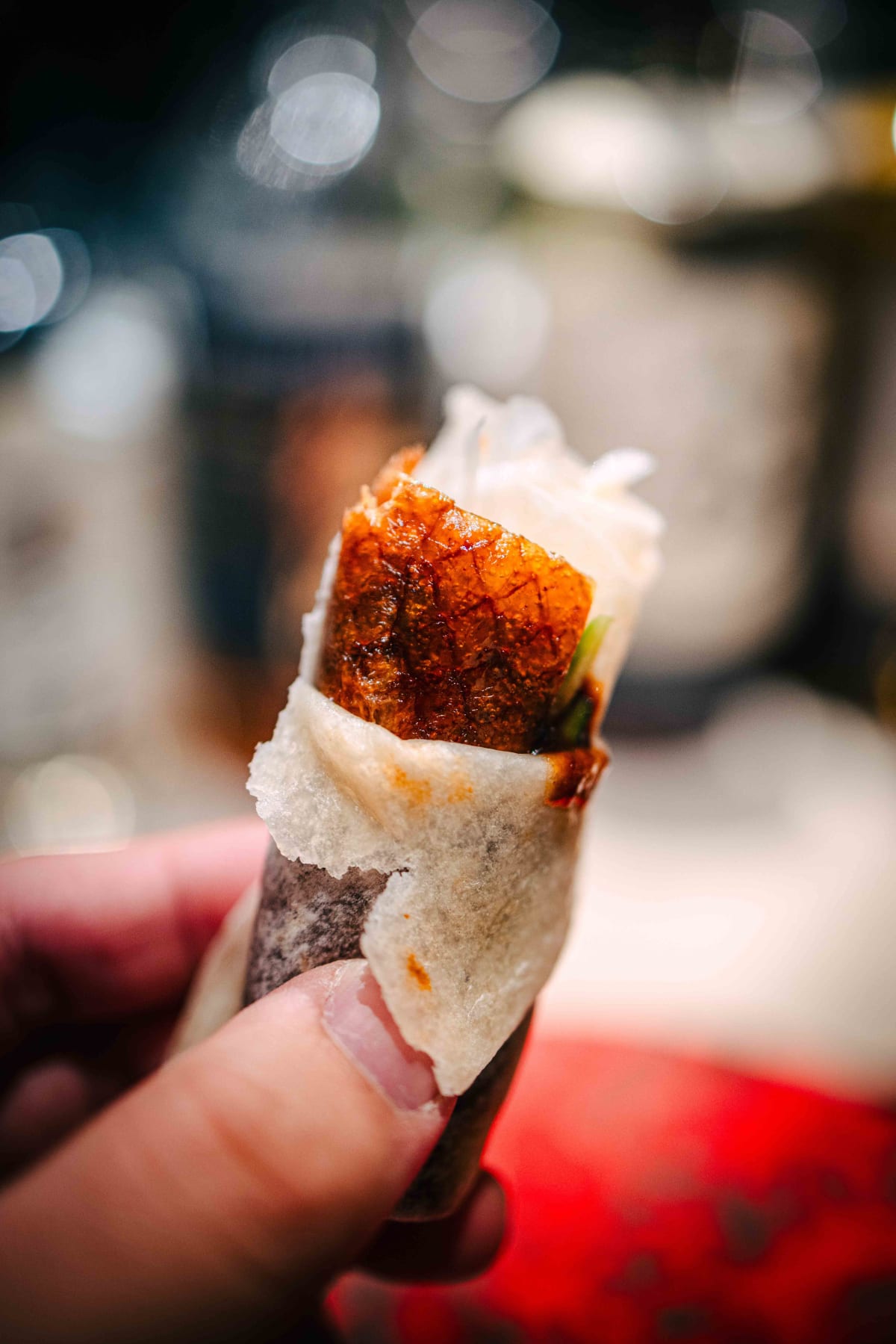
Then 北京烤鸭, Peking duck in the standard format: pancakes, duck skin, cucumber, and hoisin. It was fine. It also left essentially no impression, which I put down less to any fault in the execution and more to how dominant the shark fin course had been.



38—44 / 63
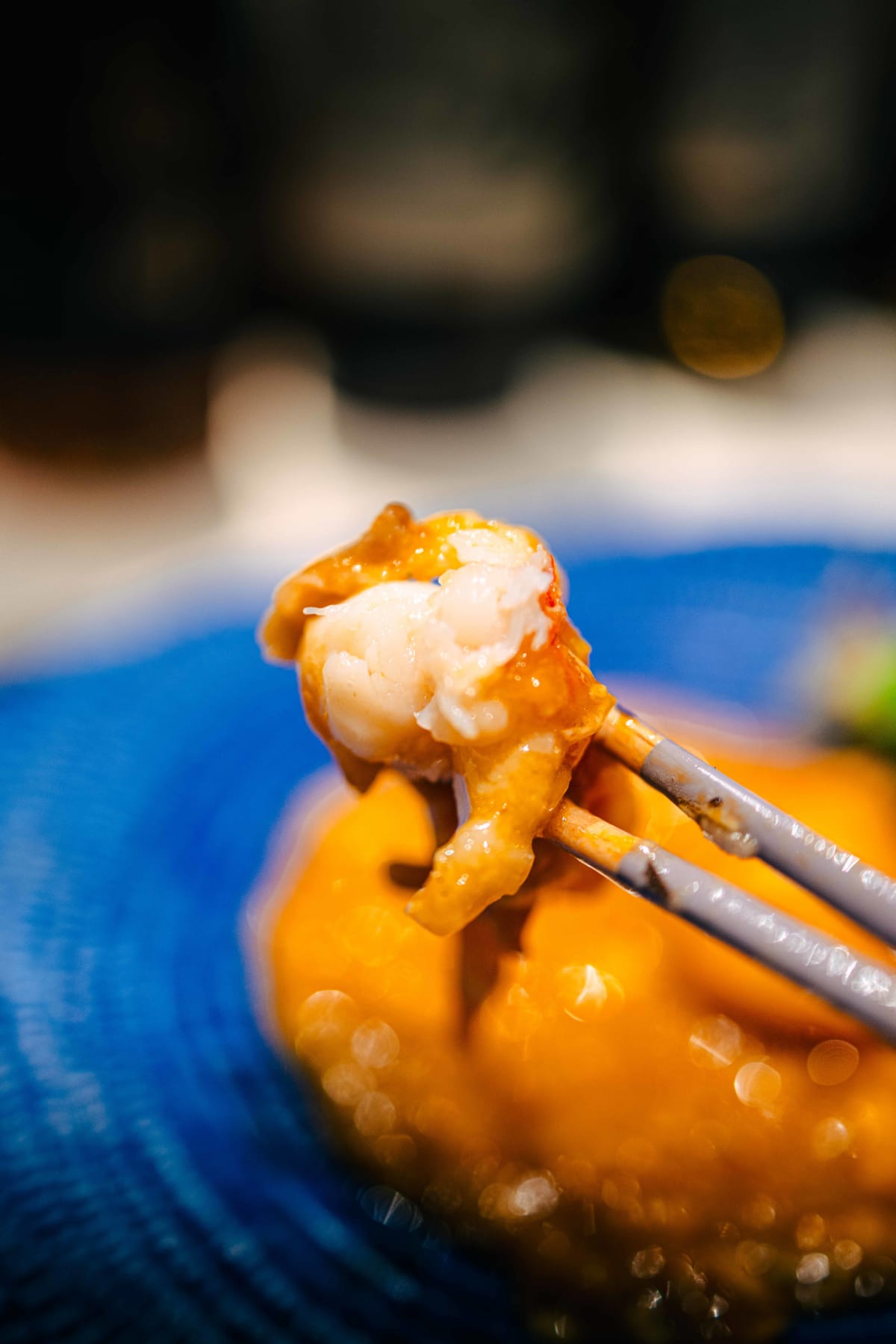
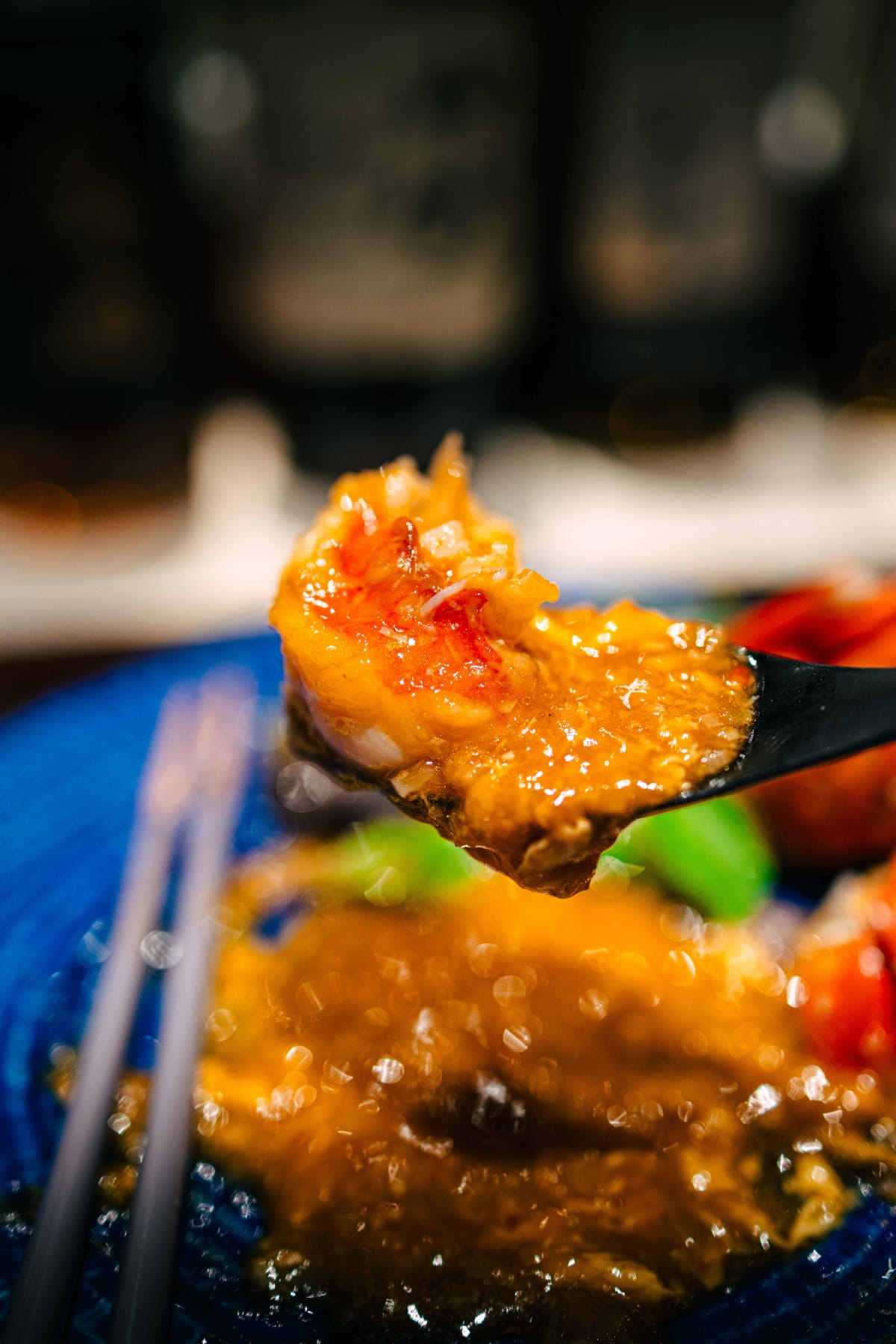
For the main, 干焼龍蝦, lobster in chili sauce, was good but felt like a turn toward convention. The earlier courses had shown real interest in unusual pairings and careful ingredient choices; the lobster played things straight. That said, receiving shark fin of that quality plus lobster in a course priced at around ¥15,000 is a reasonable trade.



45—50 / 63
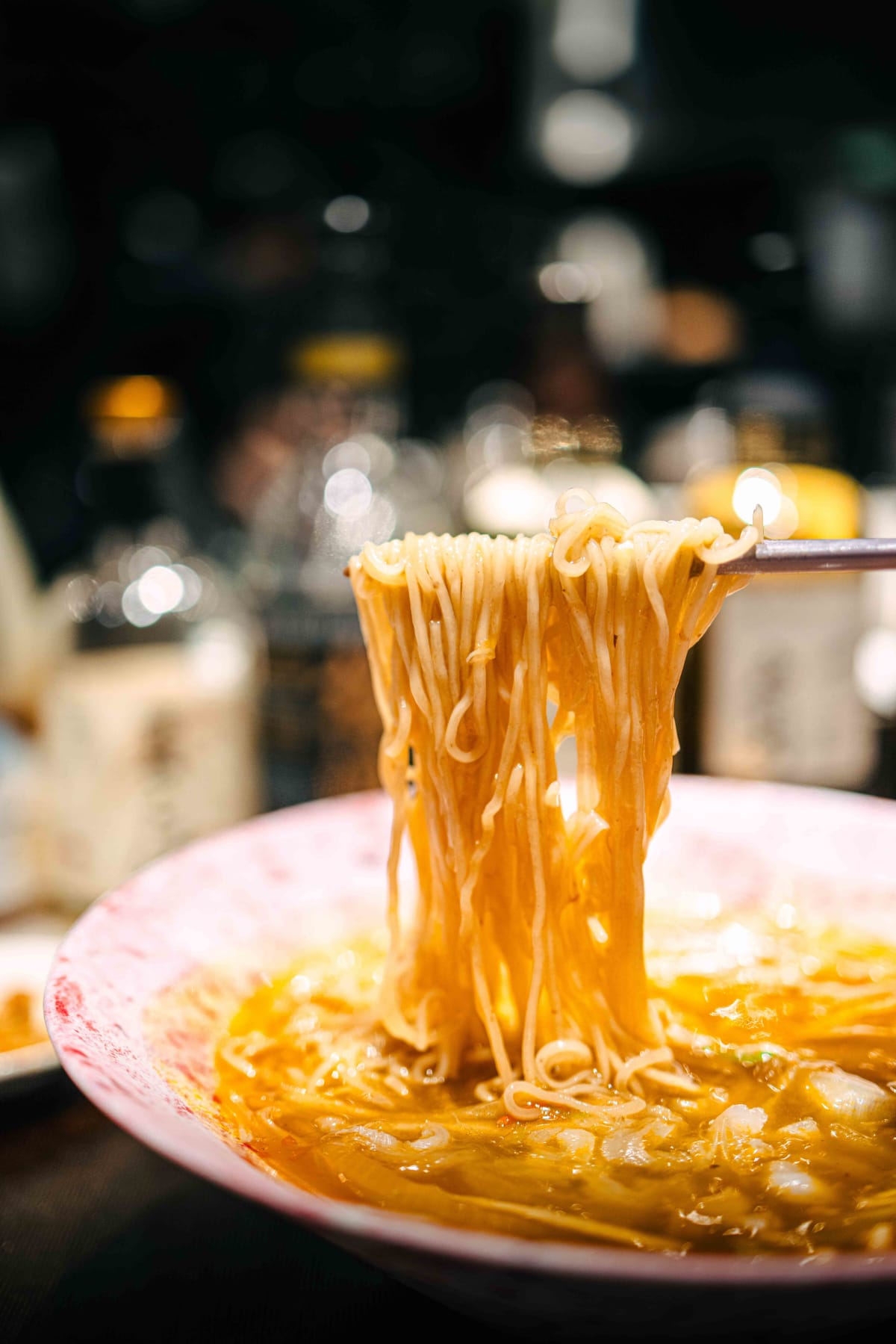
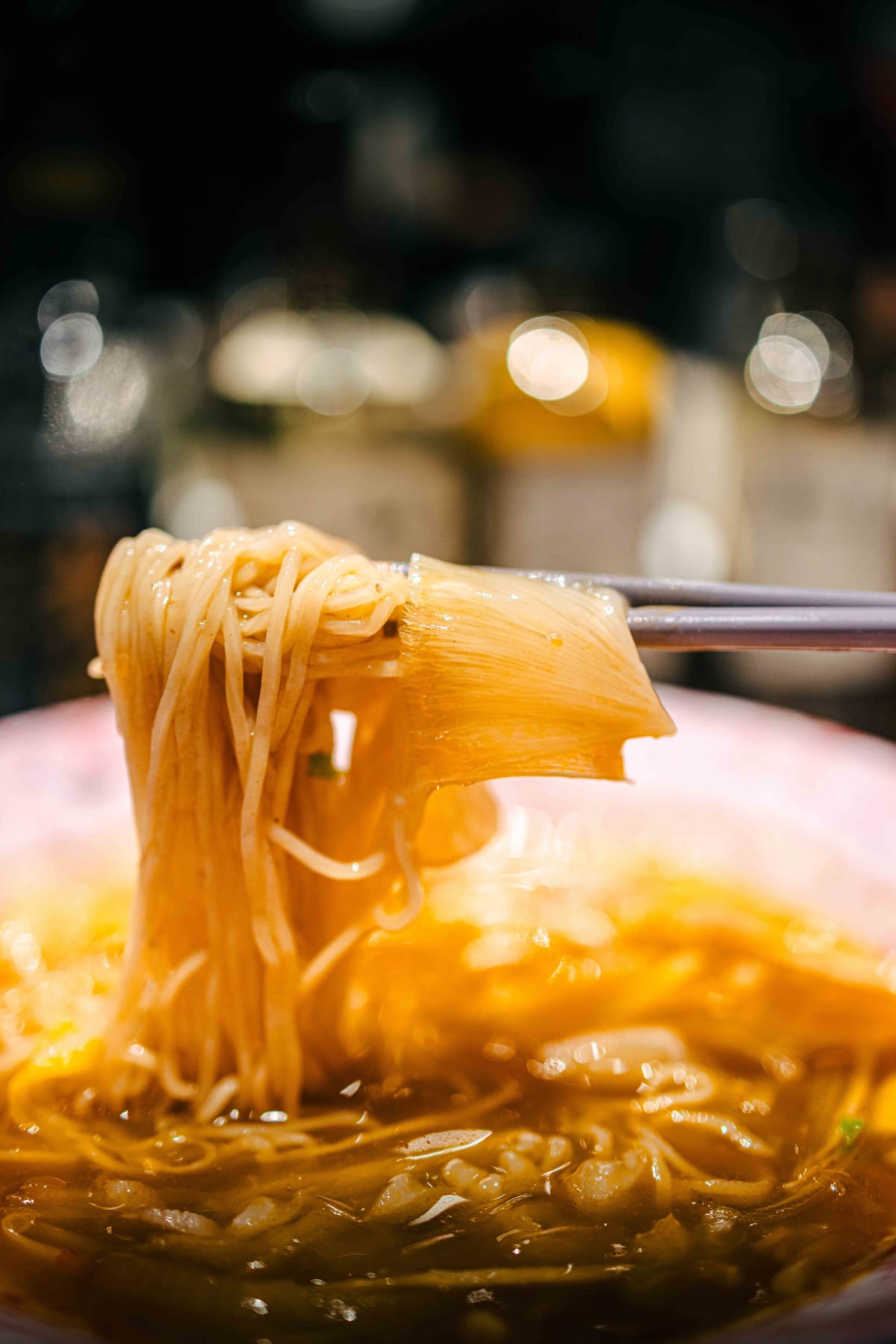
For the noodle course, I ordered the shark fin ramen. The broth, thickened with ankake, was rich and clean at the same time, and it reads to me as the ceiling version of the soup you get at the end of a Chinese restaurant meal. The noodles held up.



51—56 / 63
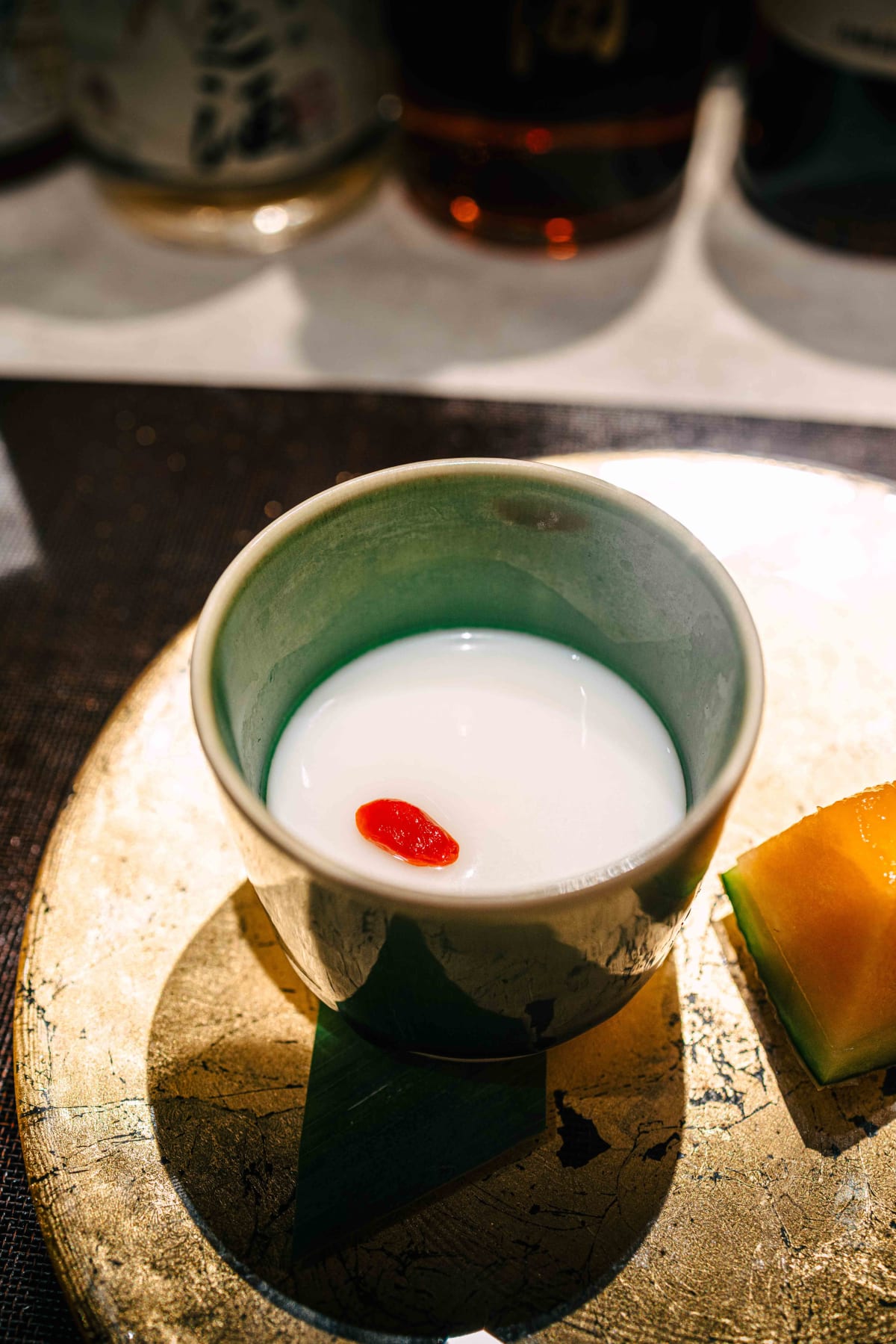
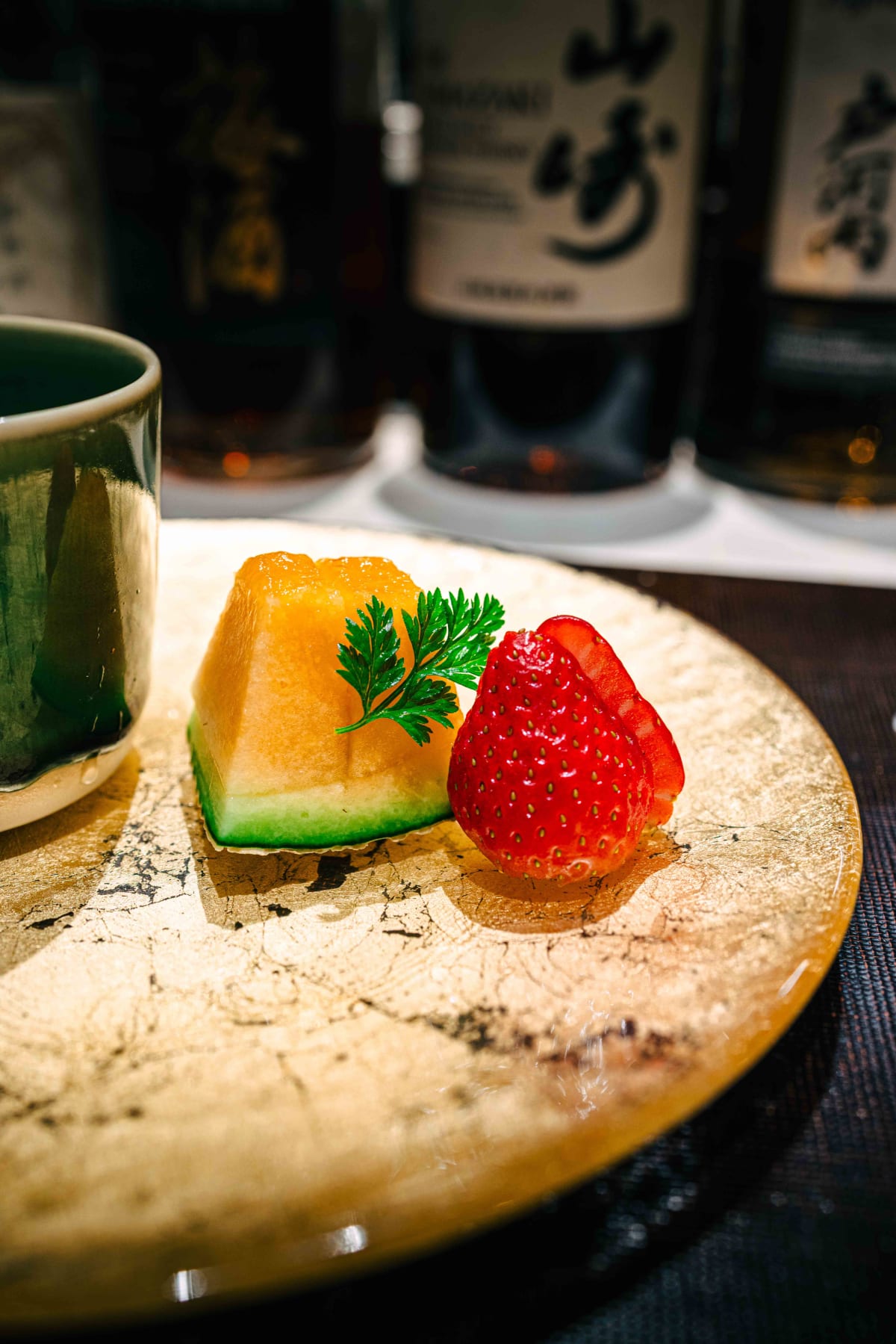
甜点, dessert, was annin tofu (almond jelly) with melon and strawberry, and the Chinese tea served alongside was good enough to linger over. This meal added to a growing sense that tea is something worth paying closer attention to.



57—63 / 63
The bill was not small. Fukahireya is still the most satisfying meal I have had at Azabudai Hills. Anticipation for 4000 Chinese Restaurant has gone up considerably as a result.
Fukahireya is still the most satisfying meal I have had at Azabudai Hills.
Thirty-one years inside one kitchen is its own kind of argument. Kinya Komoda left Shisen Hanten in 2018 carrying a specific set of skills: the heat management of Sichuan cooking, the sourcing sensibility of Tokyo's high-end dining economy, and a calibrated sense of when Japanese precision should enter the frame and when it should stay back. Fukahireya is a narrower expression of that vocabulary than 4000 Chinese Restaurant, organized around a single ingredient rather than a full culinary worldview. But the focus works in its favor. A meal here does not wander. The shark fin course alone carries enough to justify the visit, and the rest of the menu supports it without pretending to compete. What makes Fukahireya genuinely interesting is not that it serves shark fin inside a luxury complex, but that it uses that setting as a stage for cooking with real conviction behind it.
Have a question about this restaurant, or want to share your own experience?
Send a message