Fine Dining · United Kingdom
iKOYi
"A restaurant better measured by the 50 Best than the red guide"
























My introduction to iKOYi came in May 2023, through a six-week pop-up Louis Vuitton hosted at their Cheongdam Maison in Seoul. The news that a Michelin two-star restaurant from London was setting up in the city made the rounds, and the name stayed with me. By the following summer, it had become the most important reservation of my London trip.
The name iKOYi comes from a residential district in Lagos, Nigeria, where co-founder Iré Hassan-Odukale grew up. He studied political economy at LSE and worked in insurance before joining forces with Princeton philosophy graduate turned chef Jeremy Chan to open the restaurant in 2017. Chan had left a career in finance in Madrid to pursue cooking, passing through Hibiscus under Claude Bosi and Dinner by Heston before spending time at Noma, where René Redzepi's analytical approach to cuisine left a lasting imprint. Their combined backgrounds say much about what iKOYi is. The restaurant refuses easy categorisation, stating plainly that it is not a fusion restaurant. If a definition must be offered: British ingredients at the centre, with West African spices and Asian sensibility drawn in at the edges. One Michelin star arrived in 2018, a second in 2022. The restaurant entered the World's 50 Best at No. 49 in 2022, sat at No. 42 at the time of my visit in May 2024, and has since risen to No. 15 in 2025.
Securing a reservation is not especially difficult if you move on the day bookings open. The seatings, however, are fixed at 6 and 7 pm. In London in May, the sun does not set until well past nine, which means a 7 pm dinner requires surrendering some of the day. Worth accounting for before you commit.
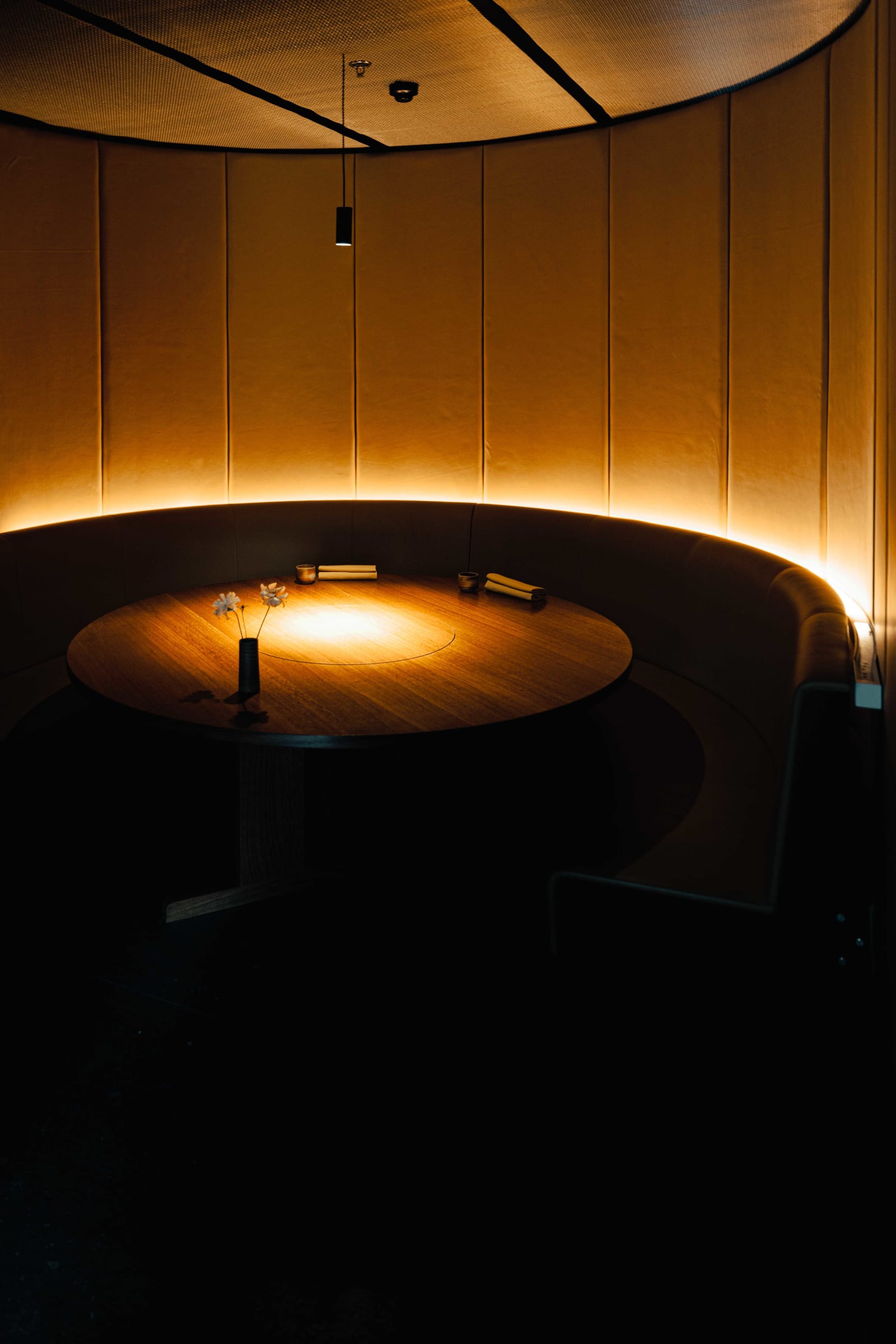
At half past five that afternoon, the restaurant called. A private dining room had become available due to a cancellation, and they were offering it at no extra charge and with no minimum spend. I confirmed by message and accepted. The room turned out to be less a room than a curtained alcove, but the gesture set the tone for what followed. The attention that small offer implied never let up through the evening.
The first thing you notice on entering is the ageing cabinet near the entrance, its glass front revealing ingredients in various stages of transformation. It reads like a first sentence. At iKOYi, ageing is not a technique applied selectively. It is a philosophy, and it shows in the way each dish is built around a concentrated core of flavour.
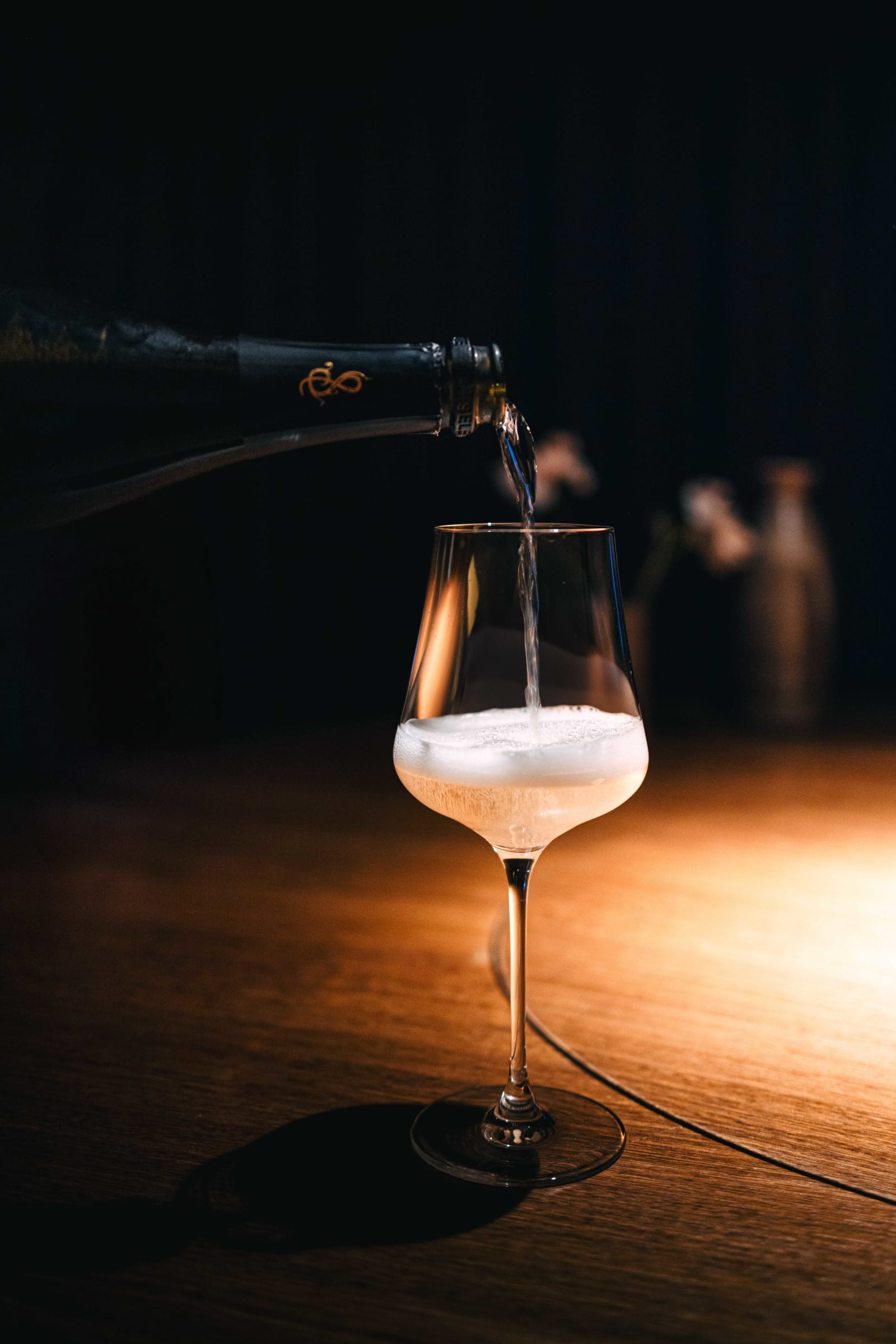
We began with a glass of Champagne. My mother chose beer. The drinks menu runs from cocktails to liqueurs from across several continents, and its range was itself a kind of opening statement.
The meal started with a consomme made from chicken wings. It was precise and deep, with something in it that recalled the quality of a great ramen broth. That a restaurant framing itself through West Africa should open on a note with Japanese overtones felt, oddly, entirely right. The rejection of genre was already at work before the amuse-bouche arrived.
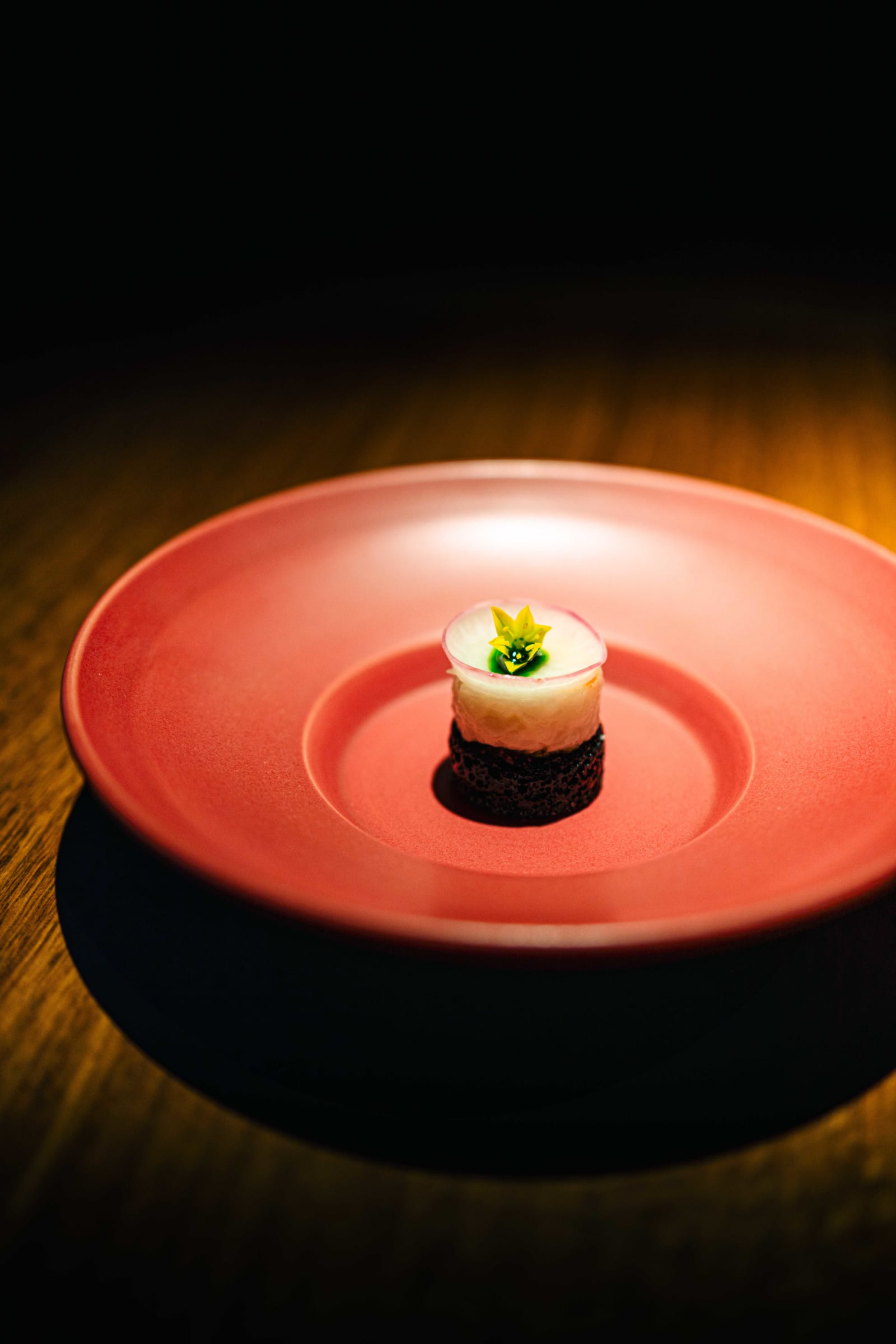
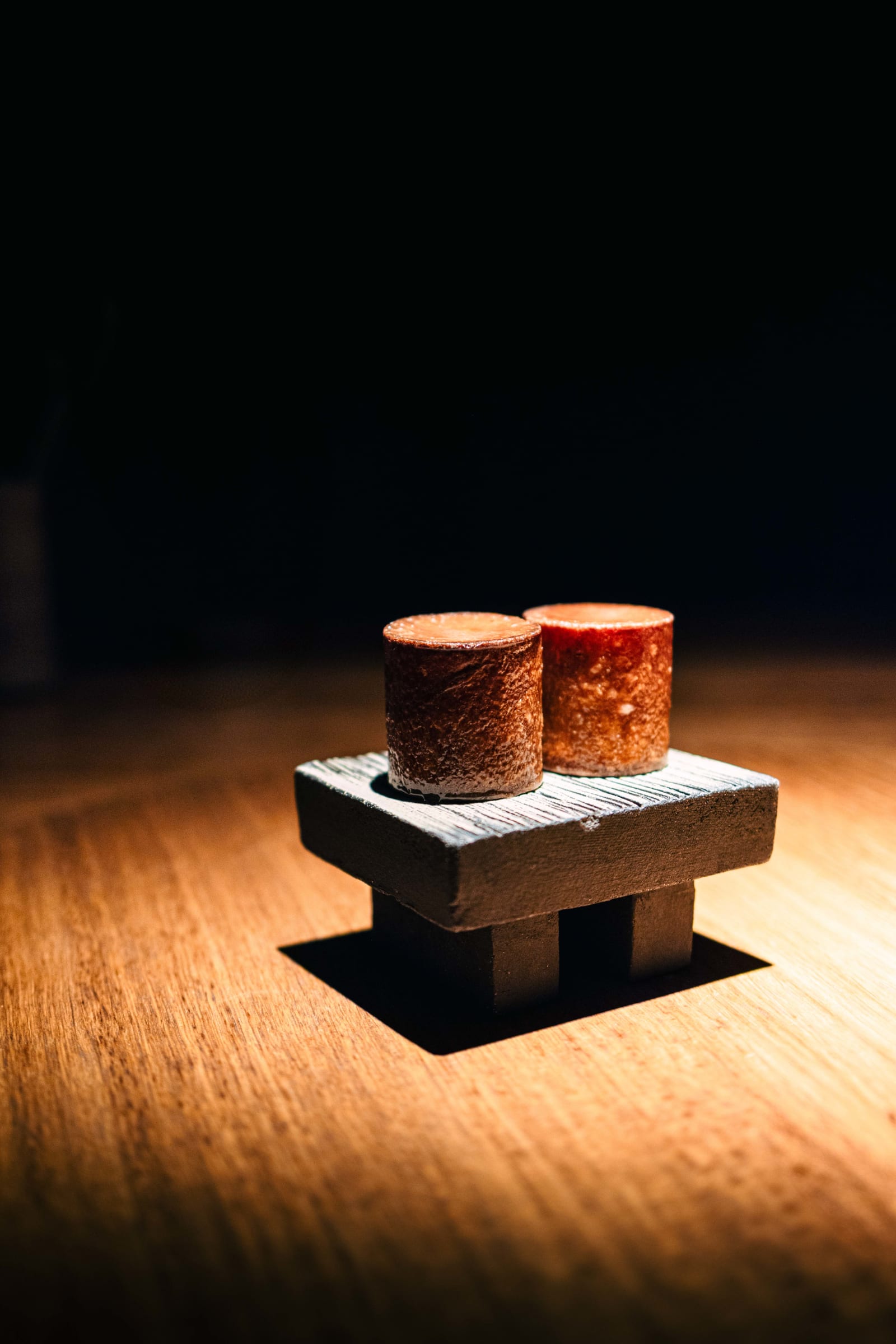
Three amuse-bouches followed. The first paired trout with a slice of beef aged for three months, compressed into a single bite. It was the first time since Mosu that a dish at this stage of a meal moved me in that way. The second arrived beneath a dew-covered leaf, its visual effect almost secondary to the texture underneath. The third is the one that stays. A small cake of fermented rice, topped with minced cuttlefish and dressed with petals arranged like a lotus on water. Both the flavour and texture were impeccable, but the word that arrived first was beautiful.
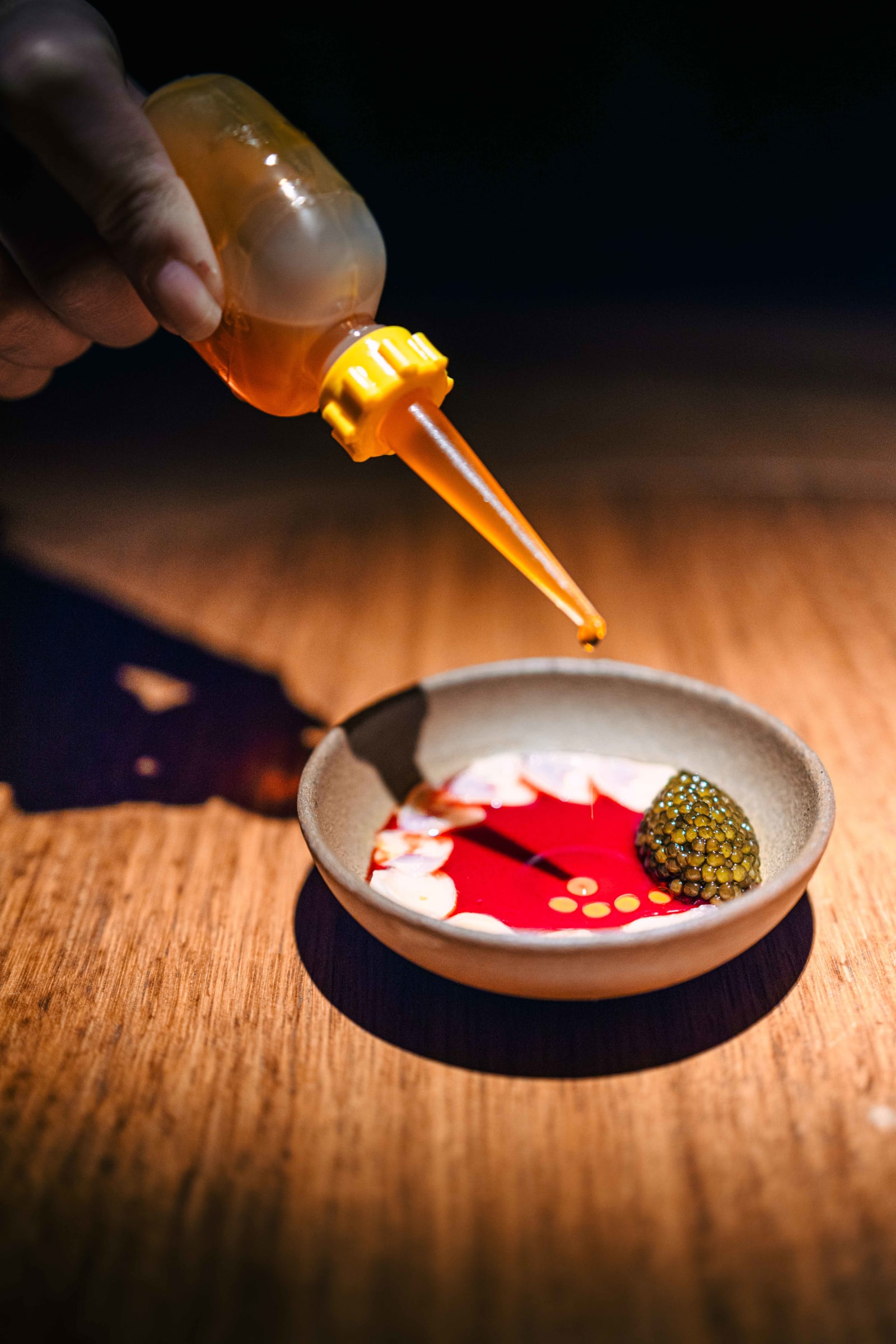
The main courses opened with caviar and razor clam. Beneath them, a saffron cream caramel; beside them, a sauce made from beetroot, poured tableside. The combination brought to mind sea snail, and when eaten with the caviar, the freshness of the ocean came through in full. The pairing worked.
Scallop, sweetbread, monkfish, and beef followed in sequence.
The scallop was Scottish and substantial, the kind of thickness you encounter at the finest sushi counters, cooked to exactly the right point. The combination of sauces surrounding it was memorable, and I found myself thinking it surpassed a scallop dish I had eaten in Paris earlier on the same trip.
The cocktail came around this point in the meal. Classic in structure, with Asian and African inflections layered in. Worth ordering at least one.
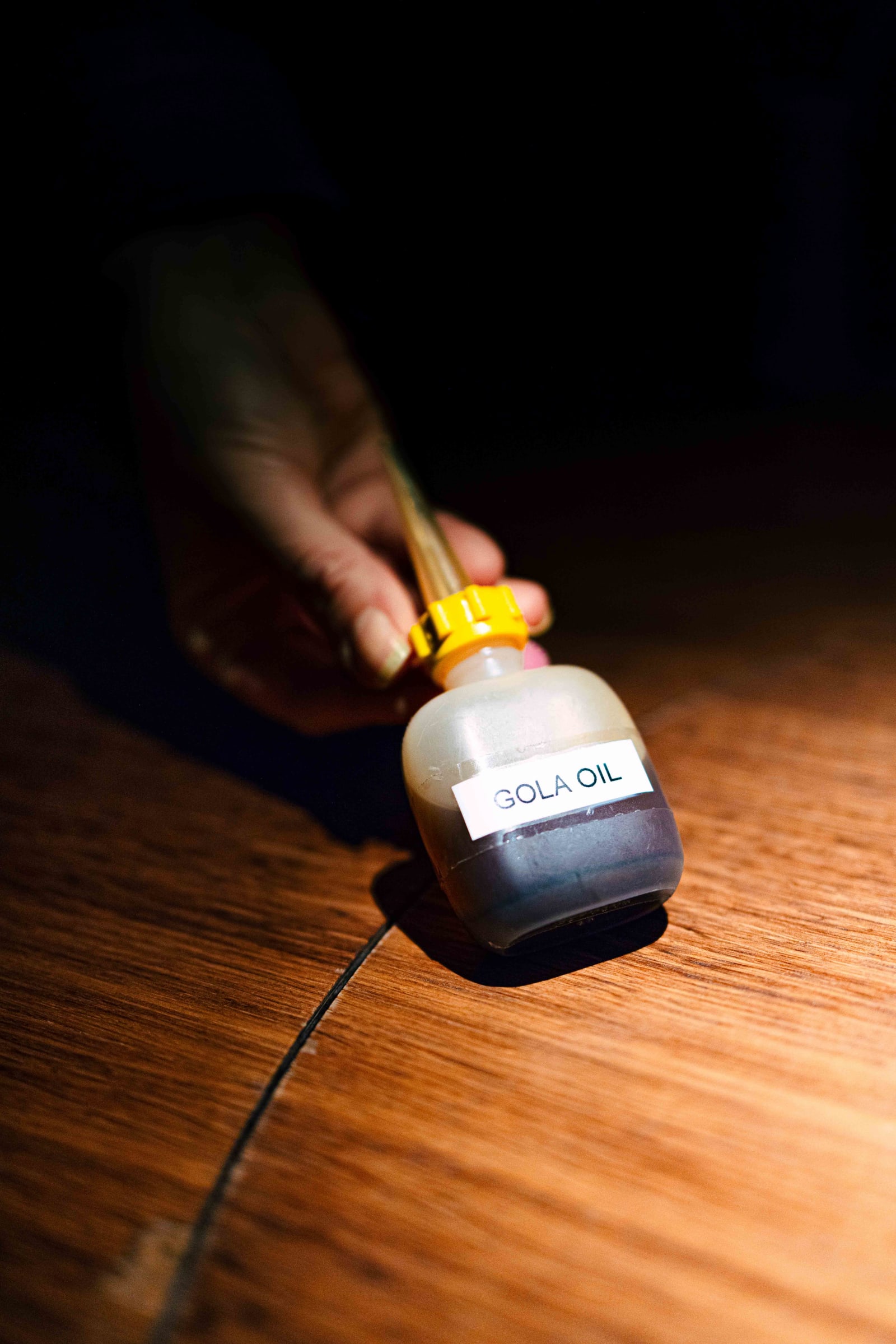
The sweetbread arrived cooked in a mildly sweet sauce with a crisped exterior. The dish is called Suya and Creamed Peas. Suya is a method of preparing meat skewers from West Africa, here applied to thymus. The result reminded me of Korean yangnyeom chicken. Alongside it, morel mushrooms of considerable size, filled throughout with a meat stuffing. I noticed that the African spicing throughout the meal was deliberately restrained. You sense its presence more than you taste it directly, which means the cooking never feels challenging, though it also means the flavour identity is subtler than the menu language suggests.
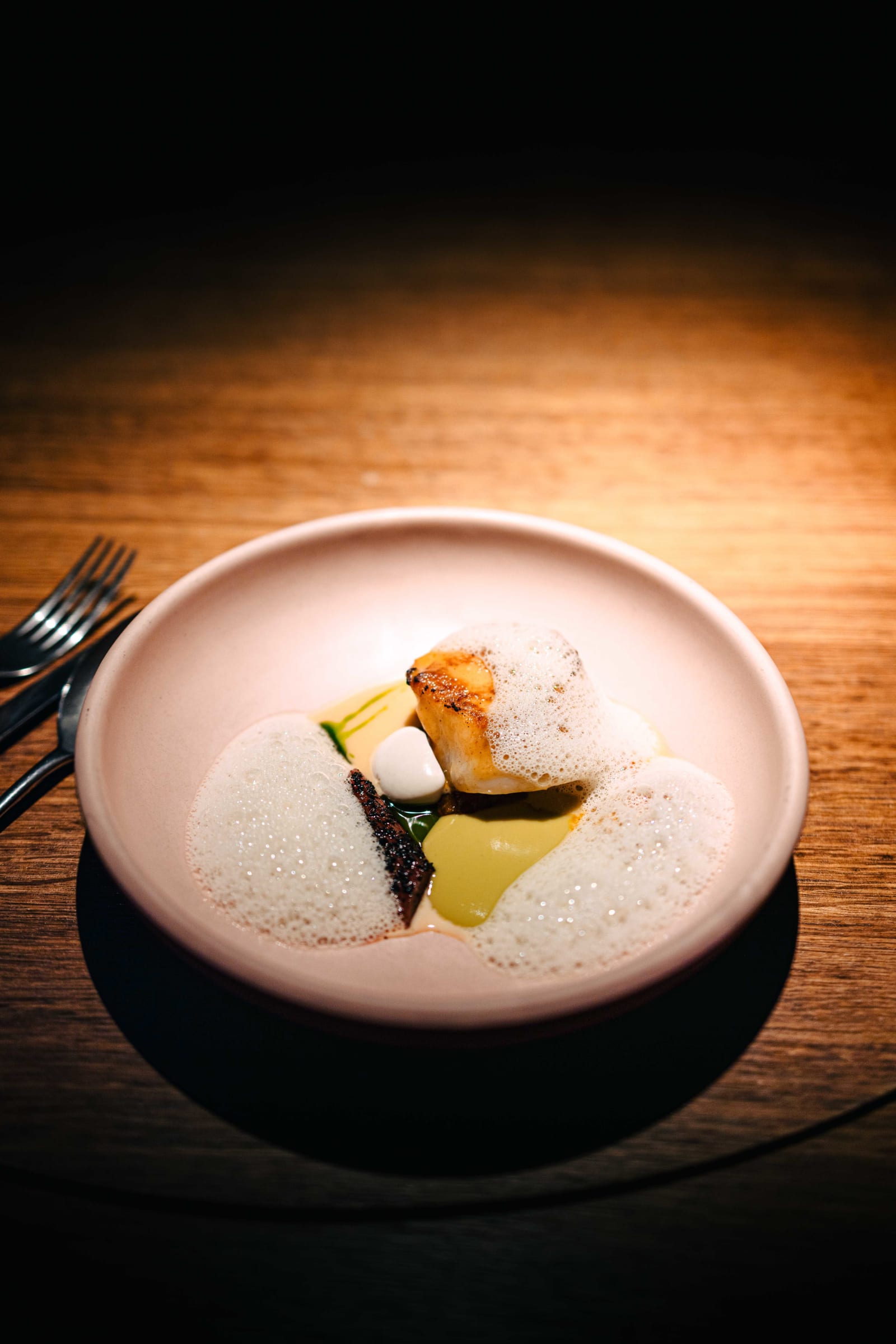
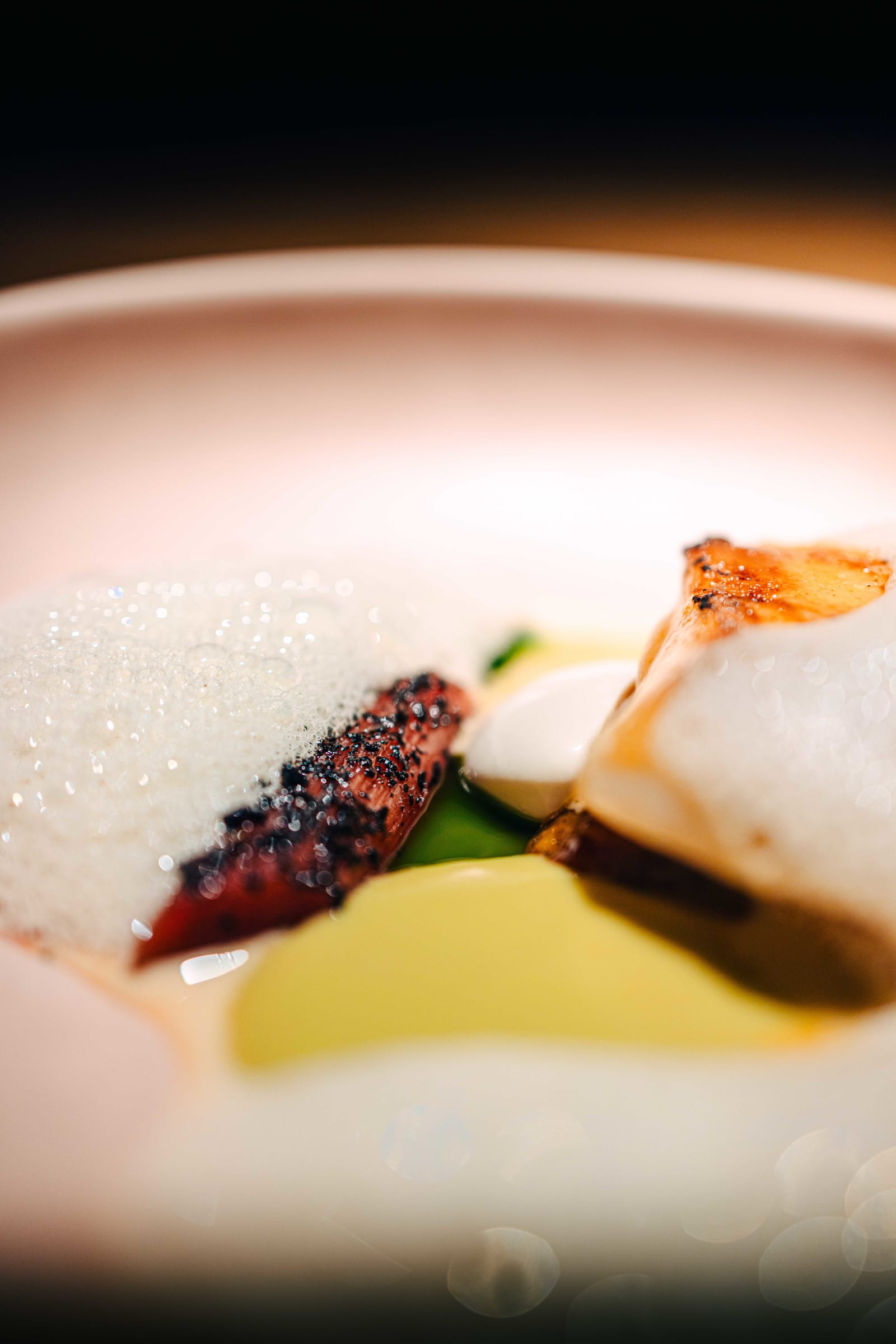
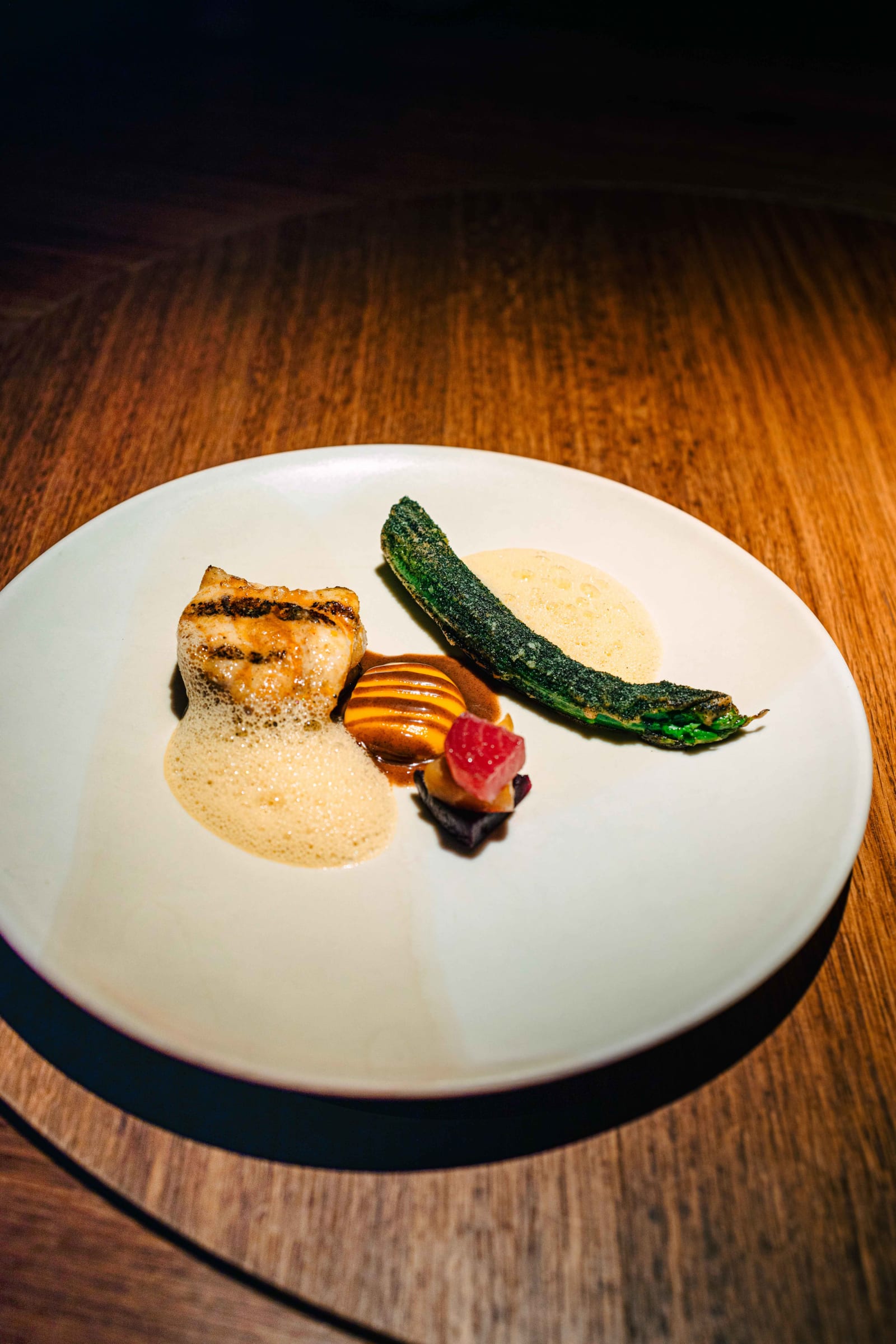
The brioche that arrived with the monkfish course was the quiet highlight of the evening. The crust was sweet and firm and shattered slightly. The inside was impossibly soft. The best brioche I have had. The monkfish itself is listed as Monkfish and Egusi Miso. Egusi is a seed used in traditional Nigerian sauces; miso needs no introduction. Two culinary languages pressed into a single dish name, and that collision is exactly what iKOYi is.
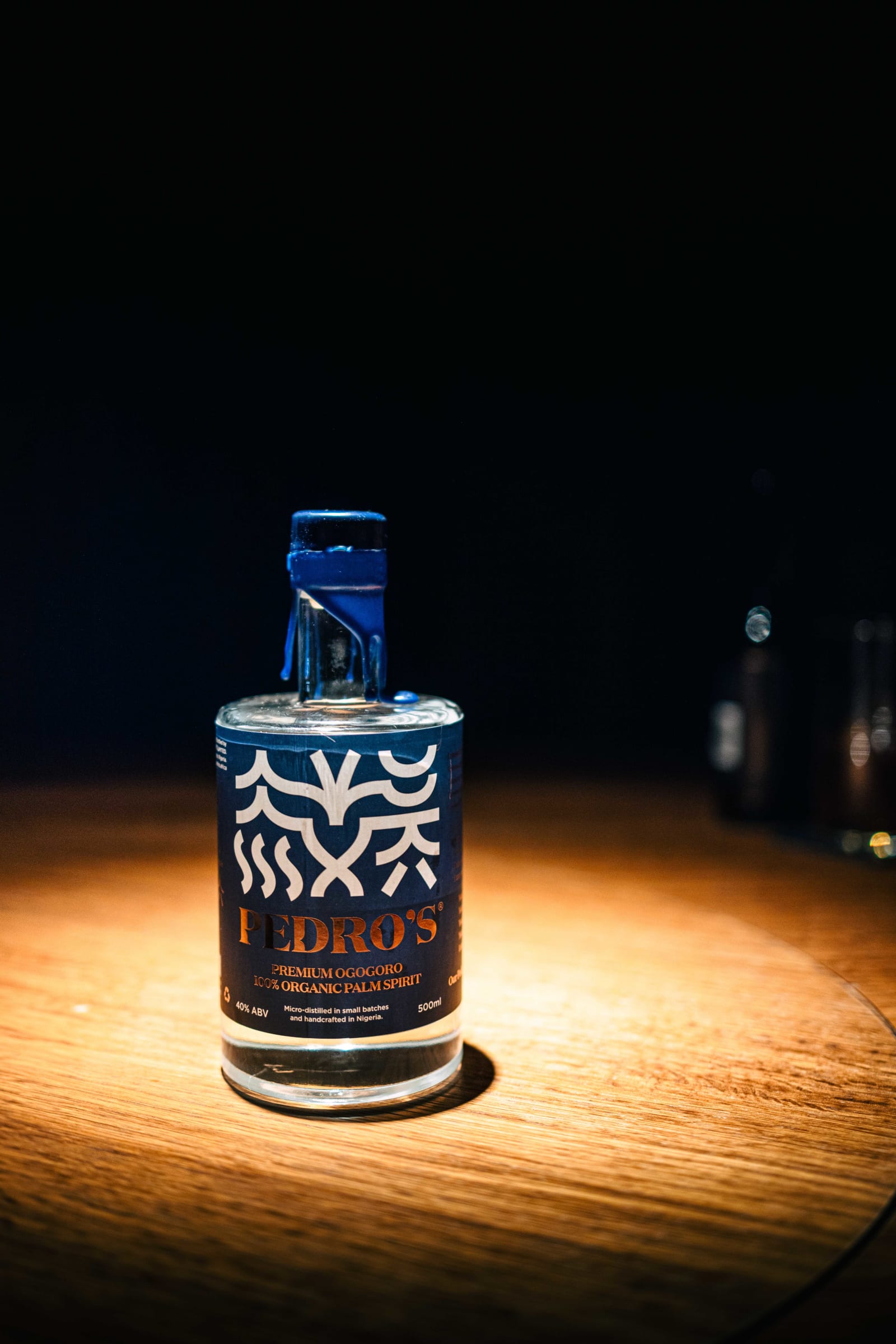
Before the beef arrived, I noticed Pedro's Ogogoro on the liqueur list. A Nigerian spirit made from palm wine. I ordered a measure. The proof was high, and the flavour, to my palate, was not far from a clean vodka or gin. A category I would like to revisit with a proper comparison in mind.
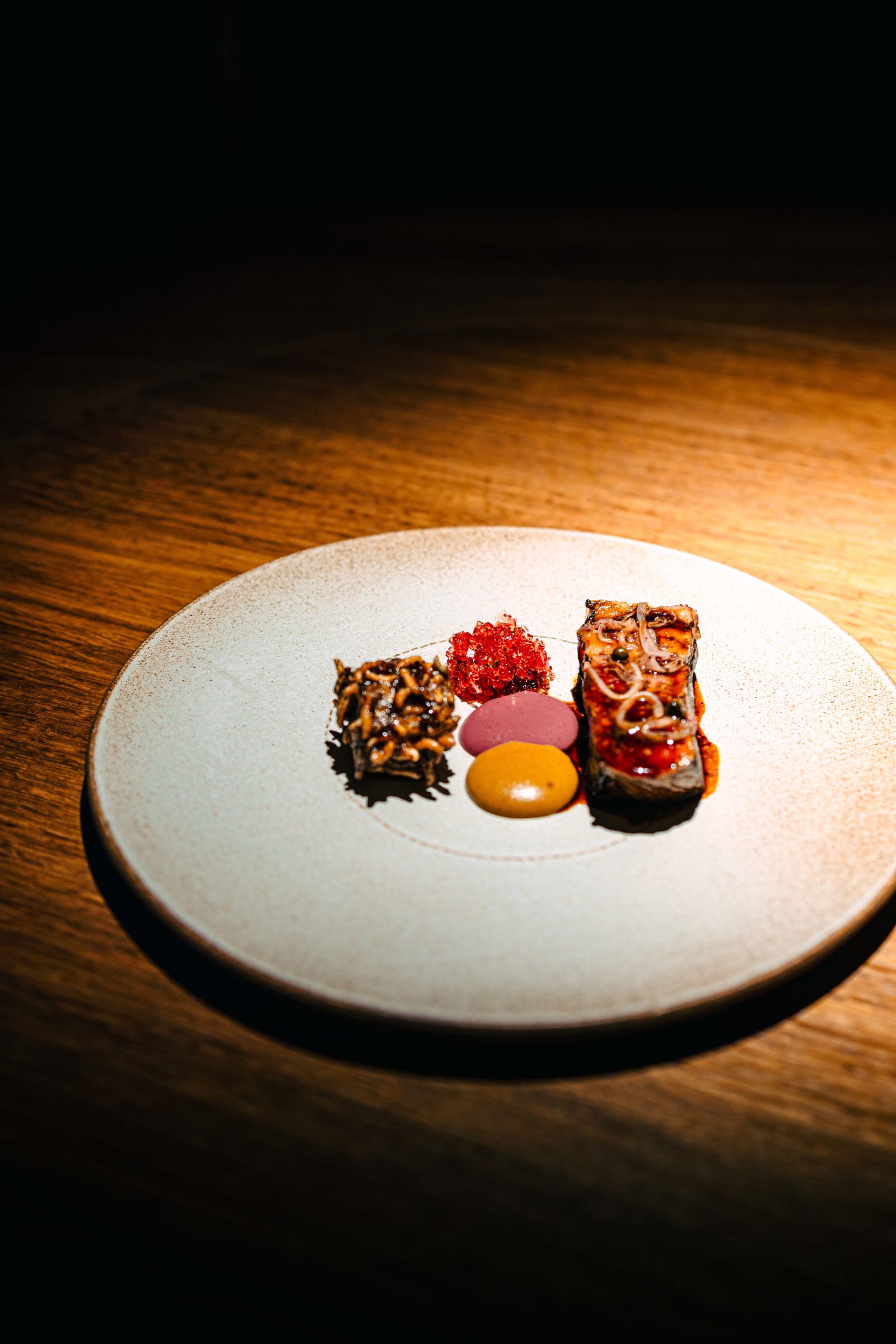
The main course was a short rib, aged. The depth of the beef flavour came through clearly, cooked to a medium-rare with precision. Shiitake and sauerkraut accompanied it. A thin, translucent red condiment cut into small pieces was served alongside, and its texture and flavour both stayed with me. I never did find out what it was.
And then the Smoked Jollof Rice arrived, and it was extraordinary. Jollof is a traditional rice dish from Ghana and Nigeria. Here it came smoked, with the char of grilled vegetables running through it. The flavour had no borders. My mother said, only half joking, that if she could get the recipe and make it for me, I could give up cooking for myself. That dish is still vivid to me now.
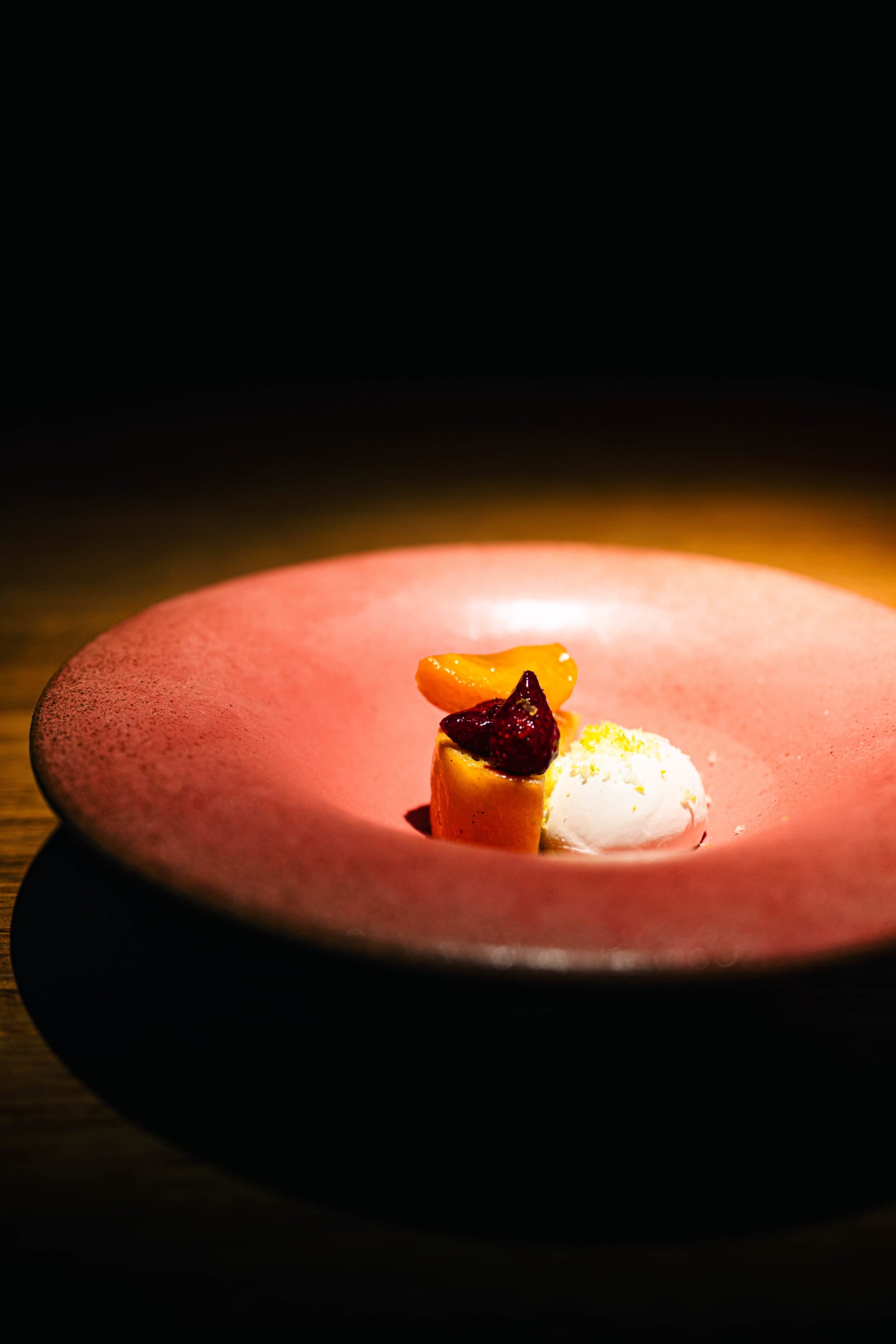
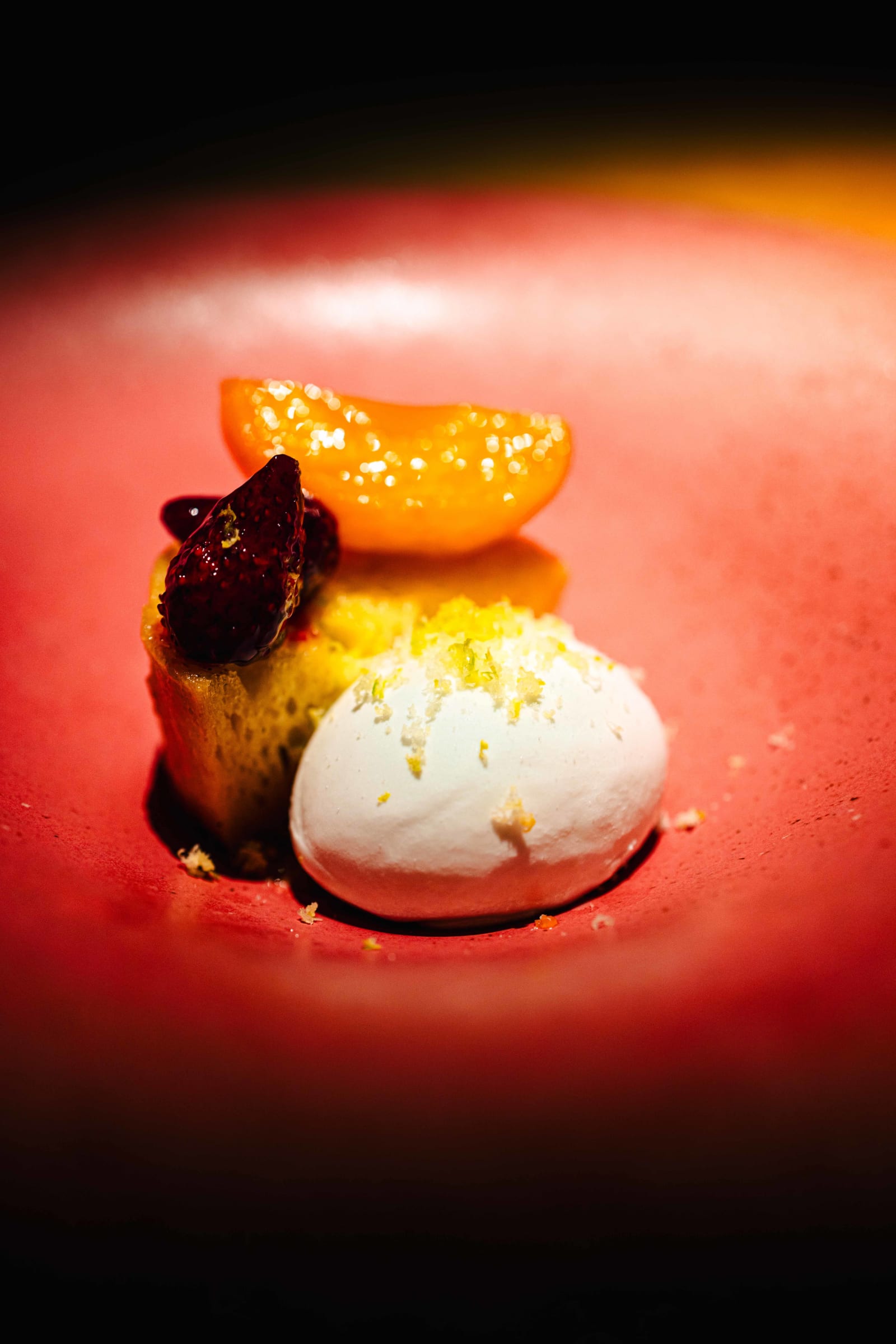
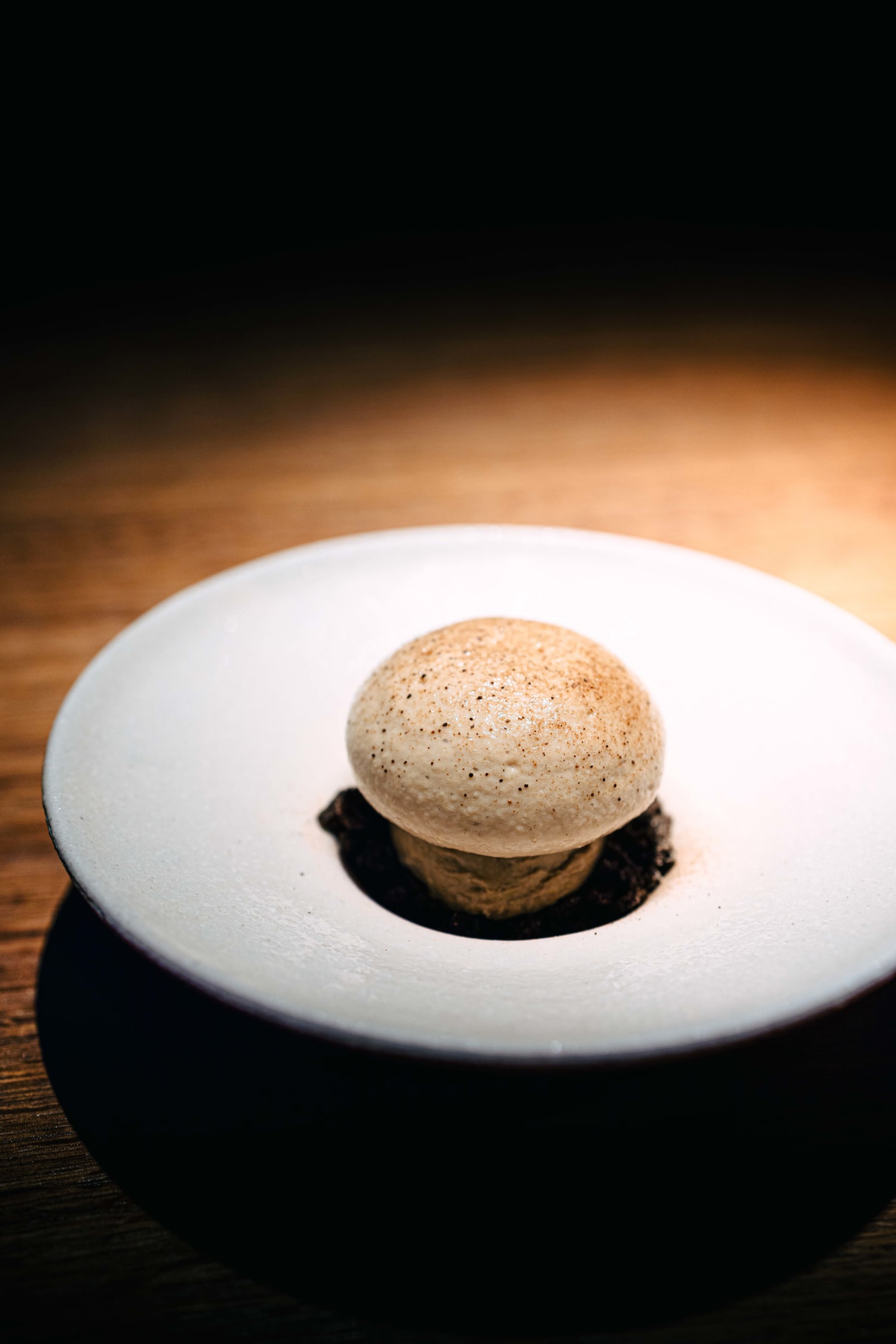
Before dessert, I ordered a glass of Black Label Nik Weis Goldtröpfchen Spätlese from the Mosel. Three desserts followed. The standout was a plate built around a mushroom-shaped meringue and ice cream, set over a base of earthy cookie crumble that recalled soil. A considered ending.
The service stayed in my memory throughout. Our table's waitress noticed the camera and arranged two opportunities to photograph the kitchen from different angles. The floor and kitchen both ran on international staff, and when we mentioned we had come from Korea, the 2023 Seoul pop-up came up immediately with everyone who stopped by. The interest in Asian dining and food culture was genuine and specific. We learned that evening that a collaboration with Copenhagen's Koan was in the works, with Korean cuisine cited as a significant influence. Chef Jeremy Chan came out personally to bring the main course and to say hello. That kind of common ground is not something you find often in Europe, and it elevated the evening in ways that are difficult to separate from the food itself.
Looking back, iKOYi's cooking was most powerful in its treatment of raw ingredient quality. Ageing brought concentration, and the African and Asian elements were laid over that foundation rather than competing with it. The sauces, in places, were simpler than what the finest French kitchens produce, and a few dishes read more clearly without them. But that is a choice, not a gap. Each course held to the same direction: the ingredient itself at the front, everything else in support. That consistency held across the full arc of the evening. In terms of food, service, and atmosphere combined, it was the meal of that trip.
iKOYi opened in 2017 in a London dining scene that was, at the time, still largely oriented around French technique and European produce. What Jeremy Chan and Iré Hassan-Odukale built instead was a kitchen that sourced from Britain and seasoned from West Africa, a combination that had no established template and no obvious point of comparison. What emerged, over the years that followed, was not a fusion restaurant but a genuinely new grammar of cooking, one that treated West African seed profiles and British root vegetables as equally legitimate inputs into the same kitchen language. The question iKOYi keeps posing is not where its ingredients come from but what they are capable of when the right hands are on them. London has produced many restaurants with strong identities. Few have arrived with one this fully formed.
Have a question about this restaurant, or want to share your own experience?
Send a message