Fine Dining · France
Le Gabriel
"Two months after the promotion to three stars, the lineage behind it"
1—1 / 90
Paris is the home of fine dining as a discipline, and at the time of this writing, the city holds nine Michelin three-star restaurants. Le Gabriel is the most recent of them, elevated from two stars to three on 18 March 2024.
The news reached me on a weekday afternoon in mid-March 2024. I was at my desk in Seoul, scrolling Instagram, when the Michelin Guide France 2024 announcement appeared on my feed. One restaurant in Paris had moved from two stars to three: Le Gabriel. My European trip the following May had its final night in Paris, and that night happened to fall on a Monday. Finding a serious Paris restaurant that operates on a Monday is not always straightforward; Le Gabriel does. I booked immediately, securing a table that evening. By the following morning the calendar was full for months. The pull of a newly minted three-star is constant across markets.
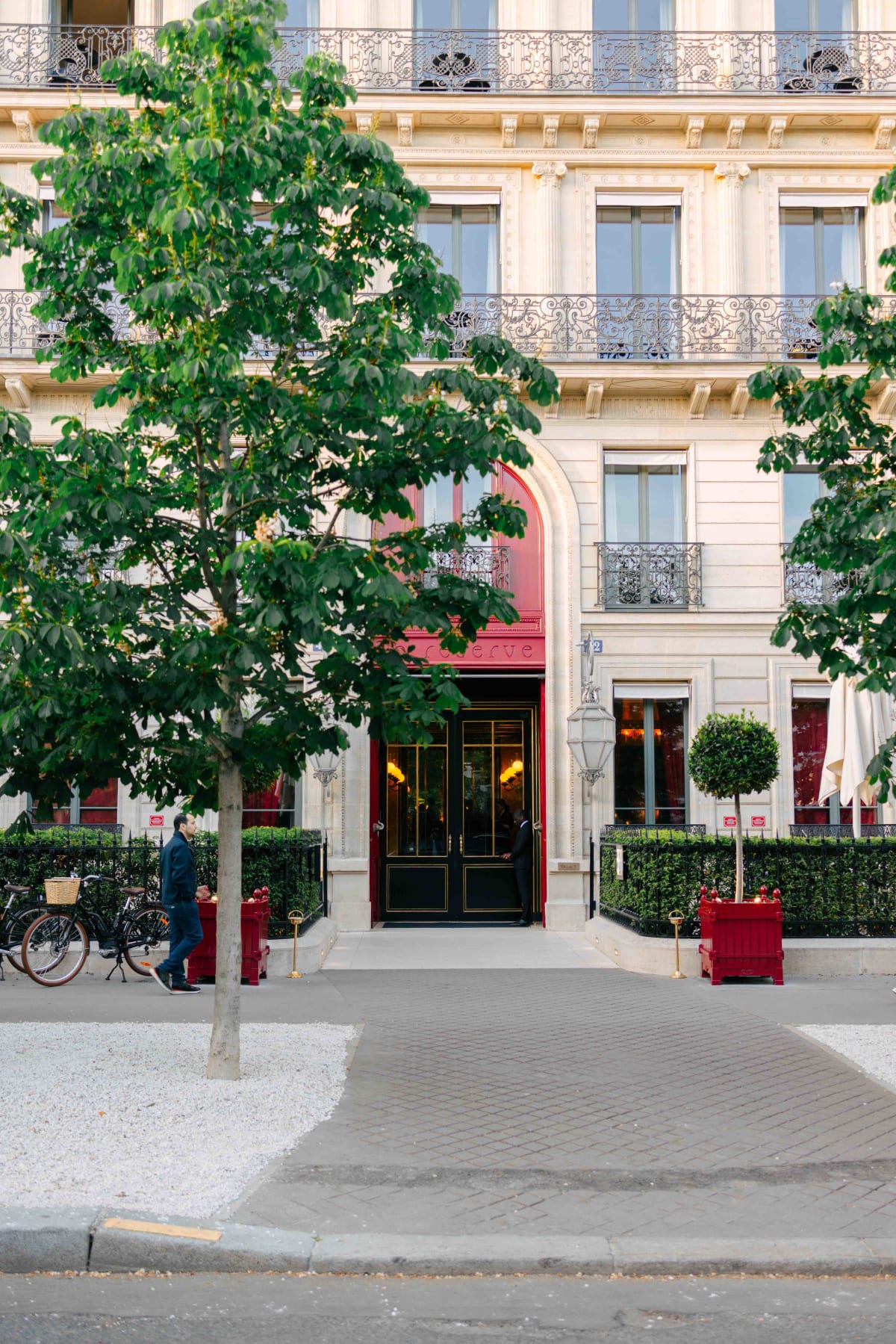
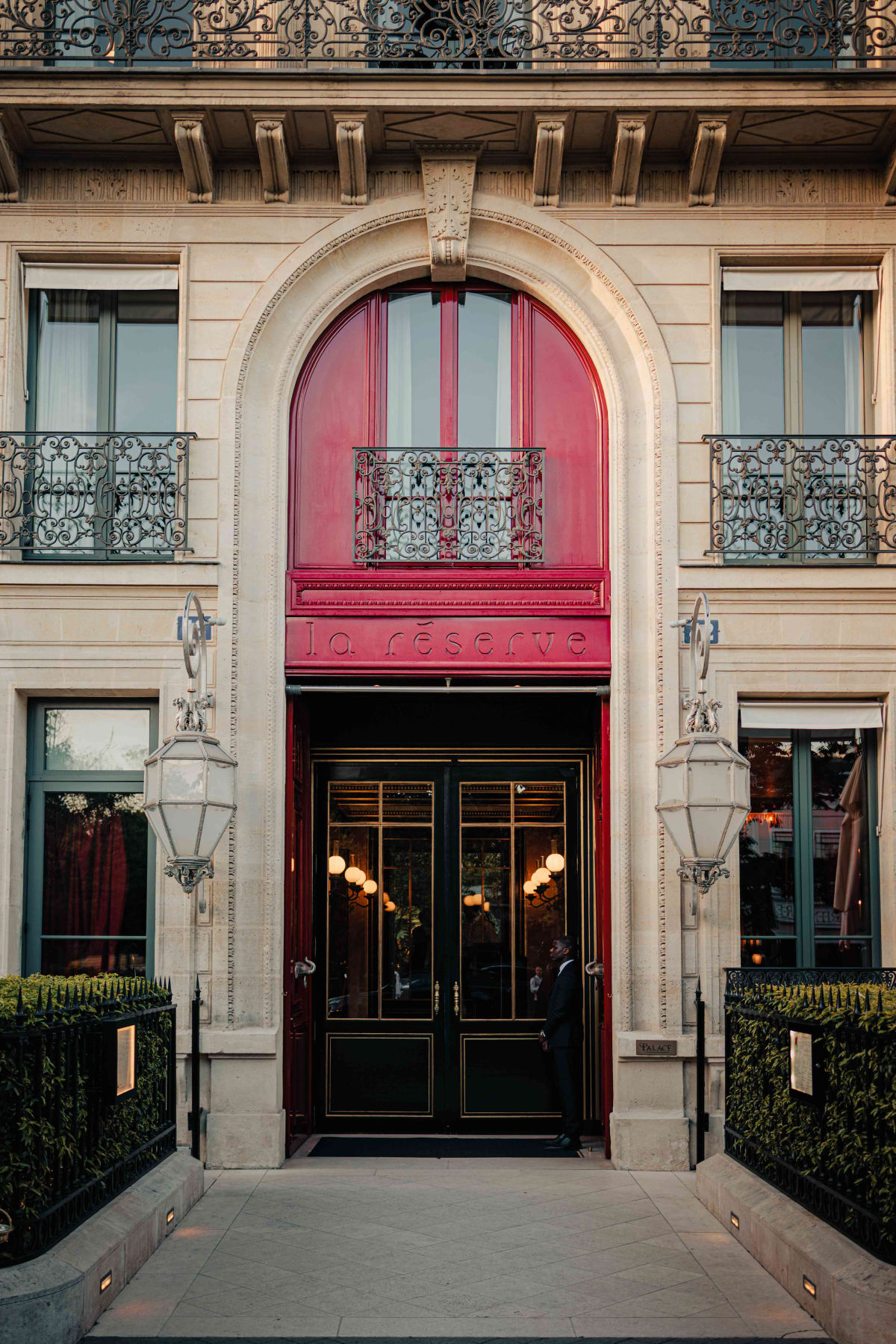
Le Gabriel sits on the ground floor of La Réserve Paris, a Napoleon III mansion at the head of the Champs-Élysées near the Grand Palais.
3—4 / 90
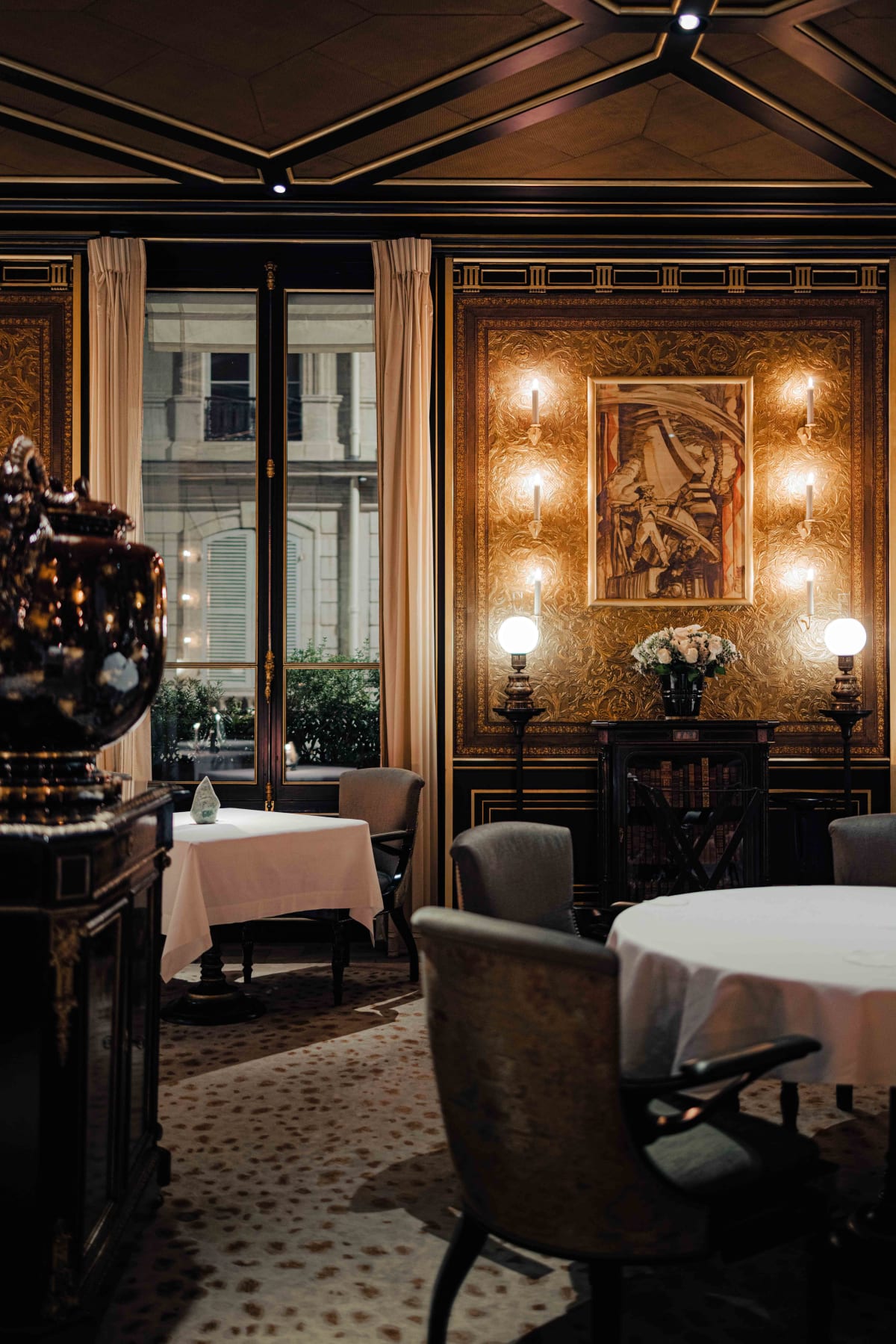
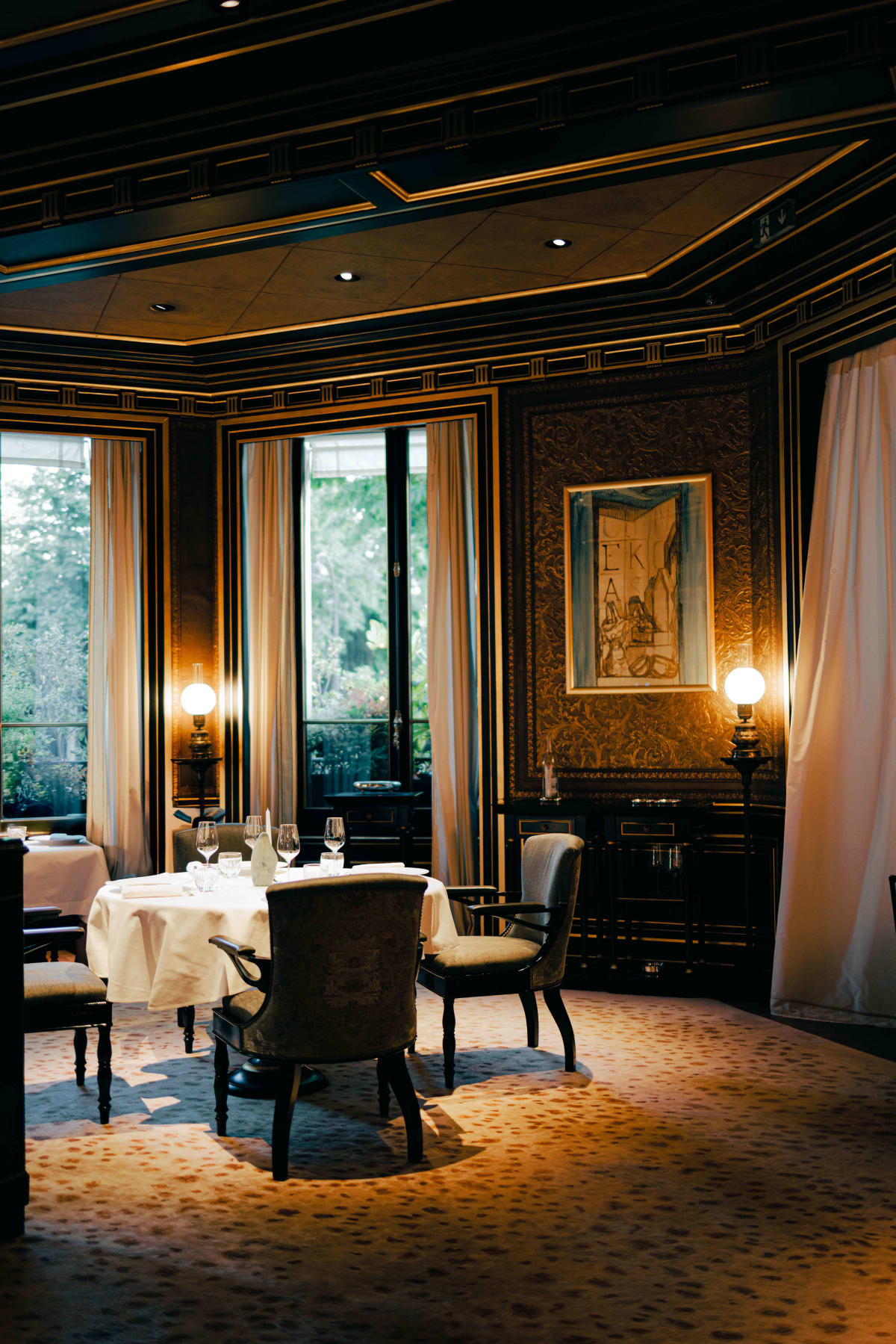
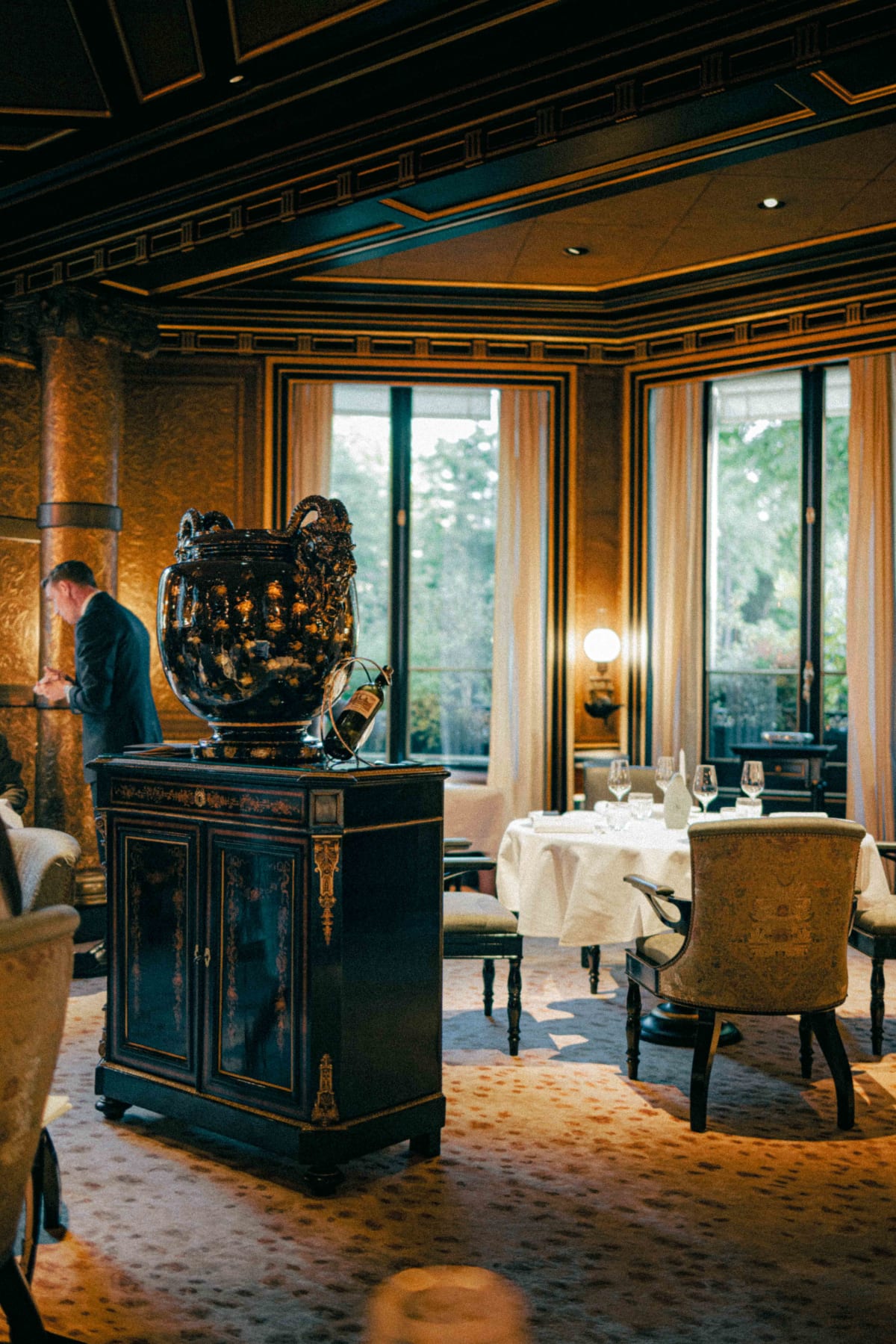
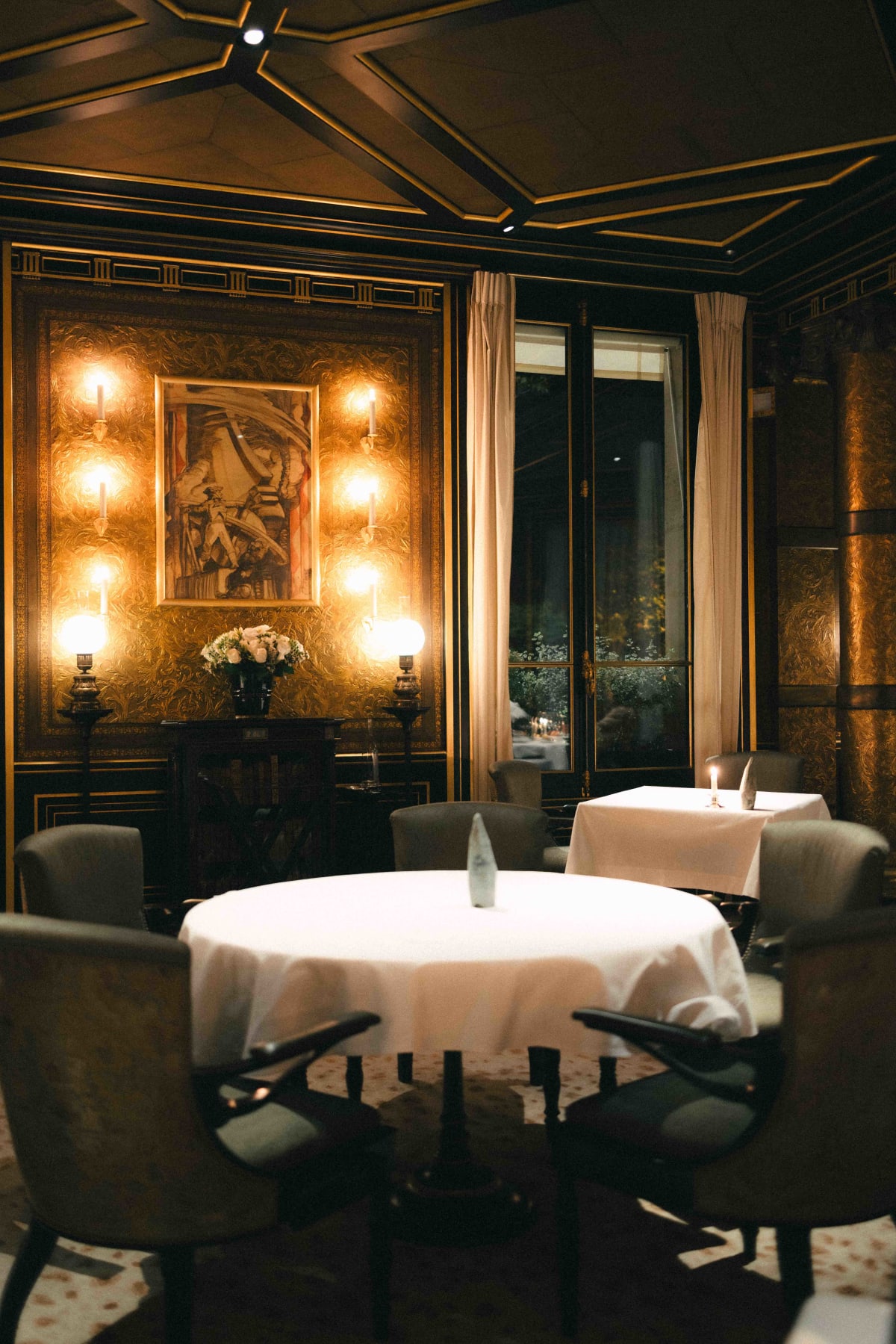
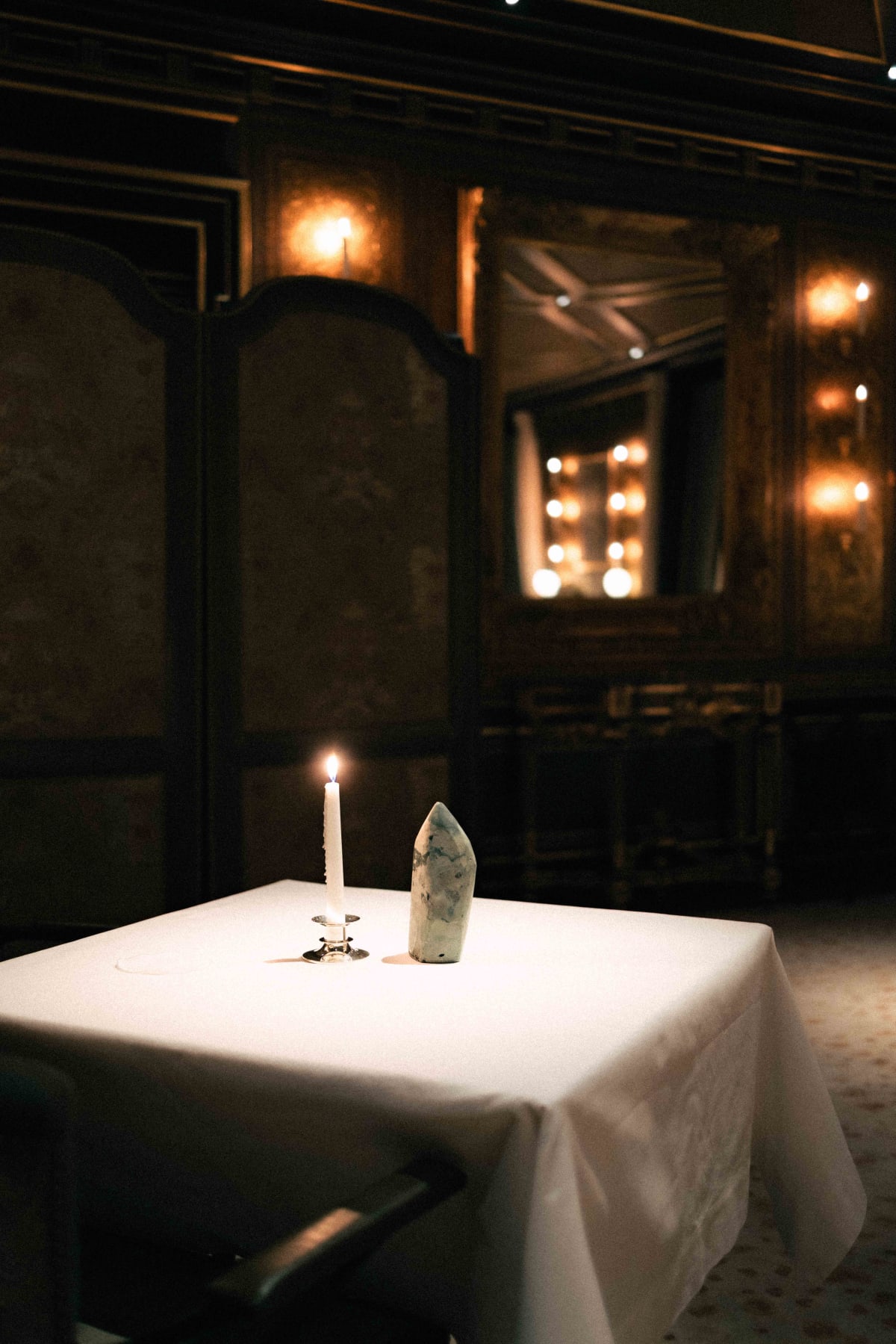
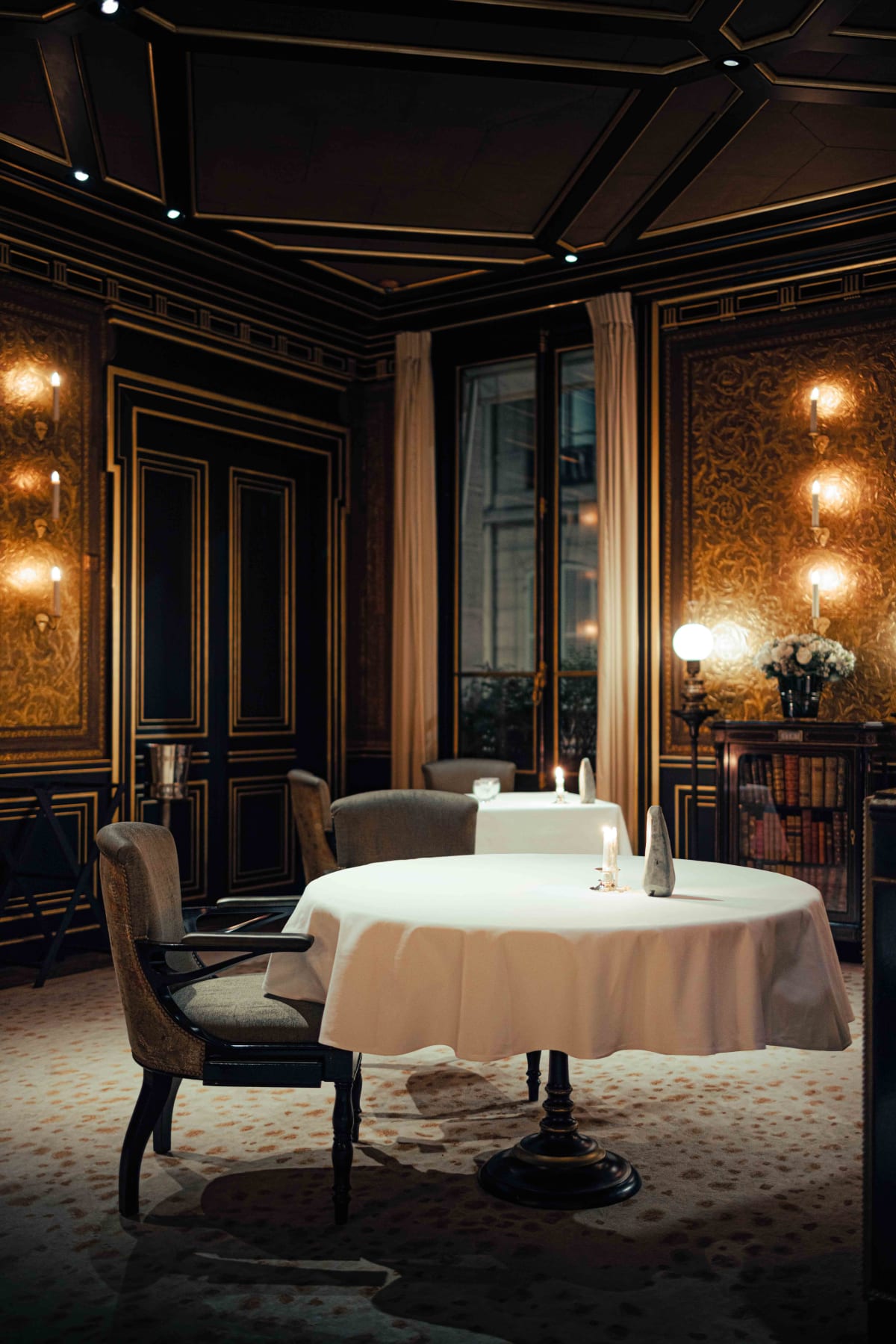
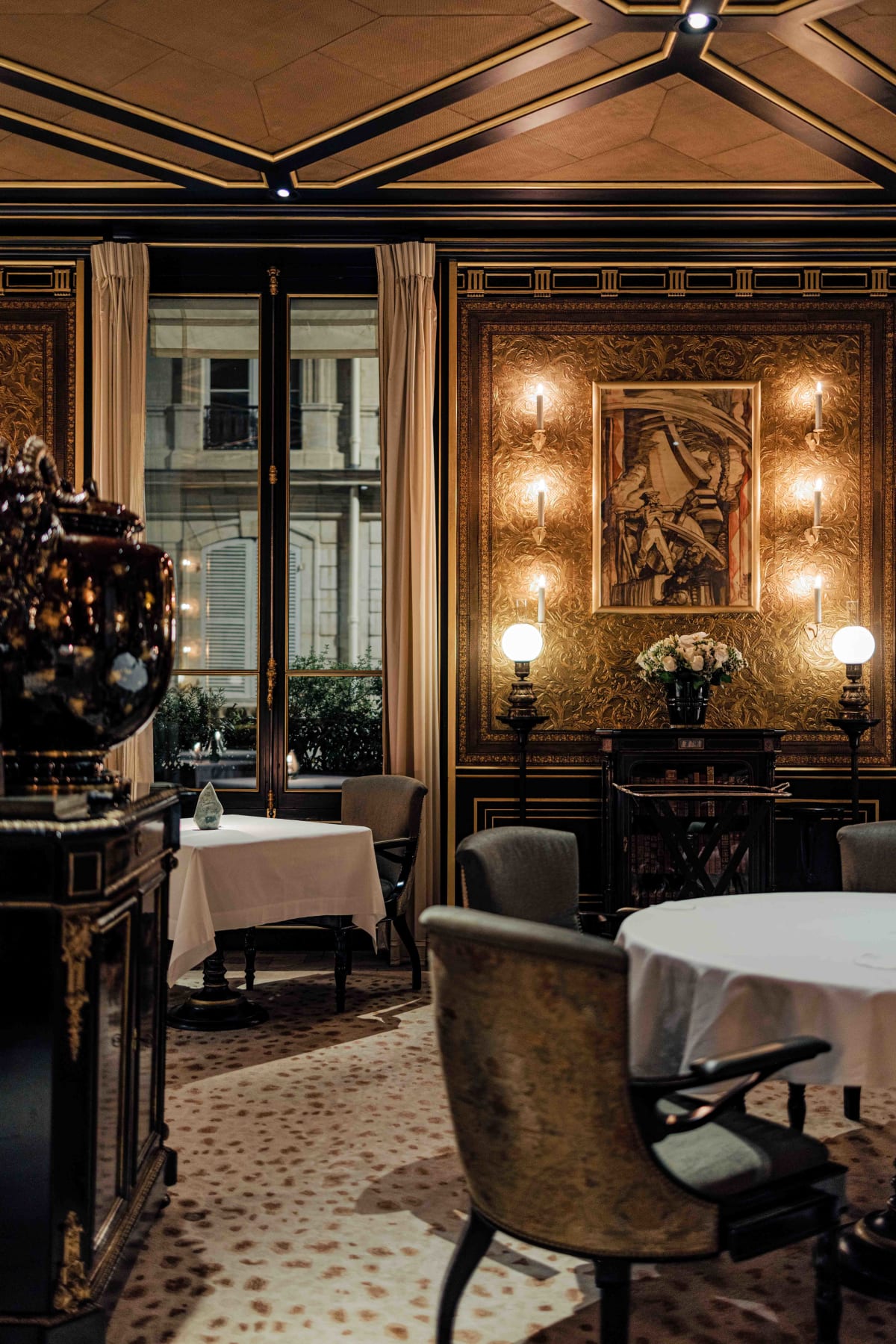
The building was reworked by interior designer Jacques Garcia. Its owner is Michel Reybier, a name that will be familiar to anyone interested in wine: in addition to the hotel, he holds Cos d'Estournel and several other estates. That detail does not stay decorative; the wine list later in the evening makes clear how seriously it is meant. The room held roughly nine tables, dressed in heavy gilded leather and deep upholstery, the register of a small palace chamber rather than a conventional dining room.
5—7 / 90
Walking in, the sense of having arrived inside a Paris three-star room was immediate.
The chef is Jérôme Banctel, and his trajectory is not short. Born in 1971 in Rennes, in Brittany, he entered hotel school at sixteen and began in 1991 in the kitchen of Michel Kéréver at the Duc d'Enghien, following him as far as the Netherlands. After military service, he passed through Le Jules Verne at the Eiffel Tower and then joined Les Ambassadeurs at the Hôtel de Crillon under Christian Constant. The defining stretch came next. He spent ten years as sous-chef at L'Ambroisie on the Place des Vosges, working under Bernard Pacaud, a period he has himself described as a rigorous school of classicism. In 2006, Alain Senderens brought him to Lucas Carton as executive chef. There he reworked Senderens's signature dishes, including the Apicius duck, and in 2012 the two co-authored a cookbook. He joined La Réserve Paris when the hotel opened in 2015, secured two stars within a year, and reached the third in 2024.
20—20 / 90
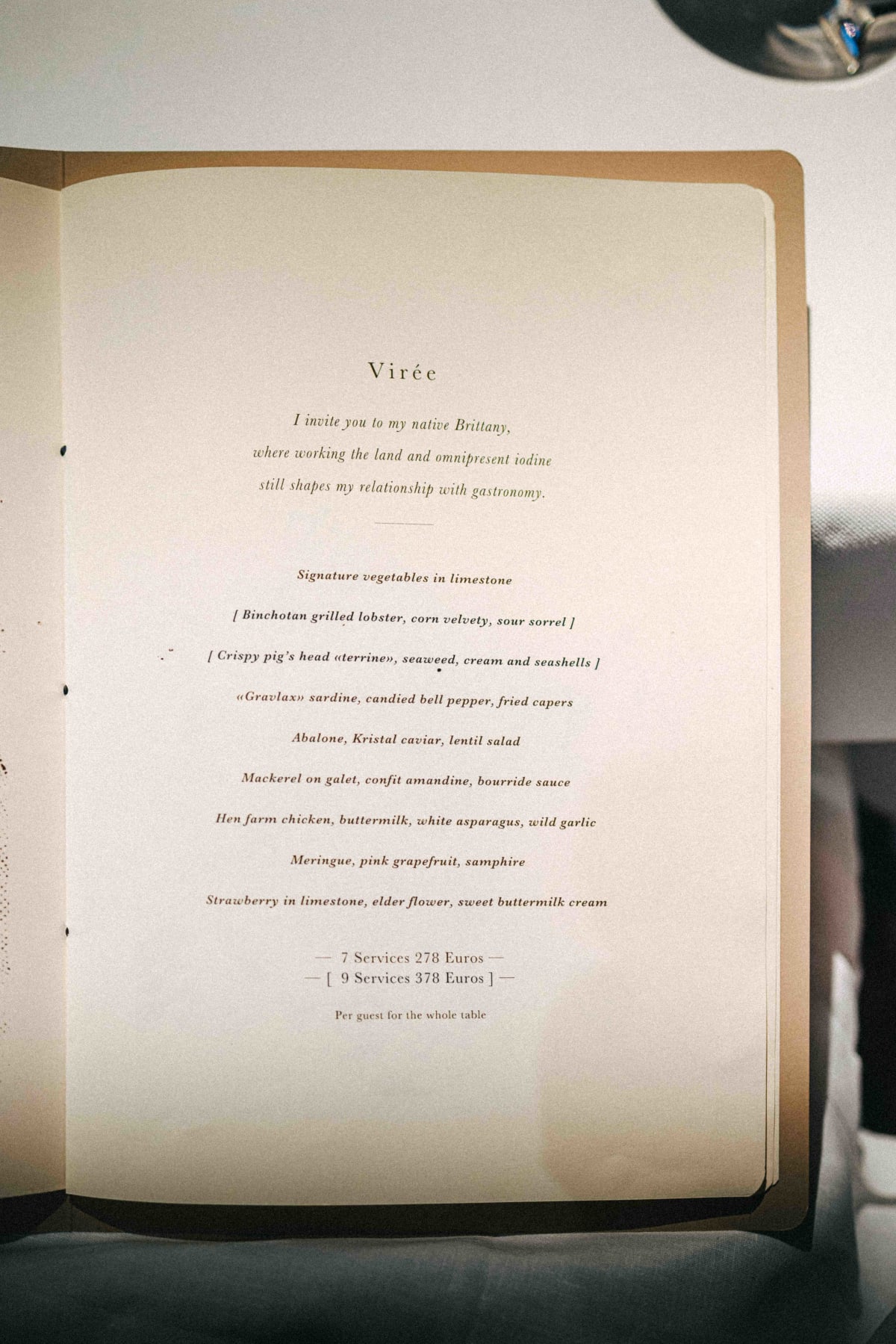
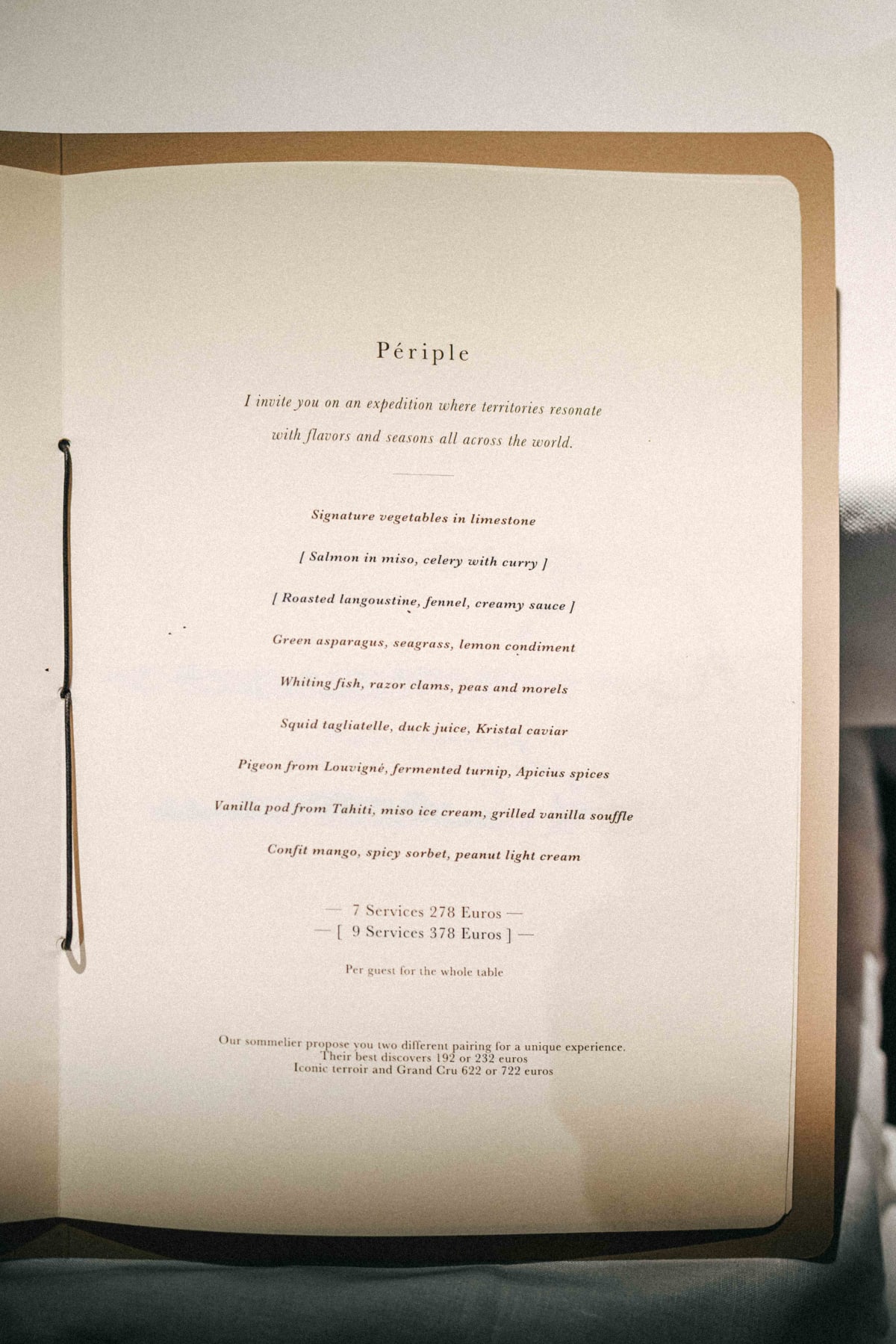
This lineage matters at the point of ordering. The tasting menu at Le Gabriel offers a choice between two parallel courses.
17—19 / 90
The first, Virée, traces Banctel's home region of Brittany and its produce. The second, Périple, compresses his career across the world, with explicit emphasis on Japan. The pricing is identical: 278 euros for seven courses, 378 euros for nine. What was unusual was the lack of overlap. Beyond the opening dish, the two menus do not share courses. The house effectively offers two separate dinners. My instinct in this kind of situation, at a destination restaurant, is to default to the menu that compresses the chef's signature register, which here would have been Périple. The framing of Japanese sensibility in the description, however, gave me pause. Japan, in my experience of European fine dining, has rarely registered with conviction; and as a diner based in Korea, the country is two hours by plane and better encountered in its own context. In Paris I wanted Paris. I chose Virée, and I chose the nine-course version.
21—24 / 90
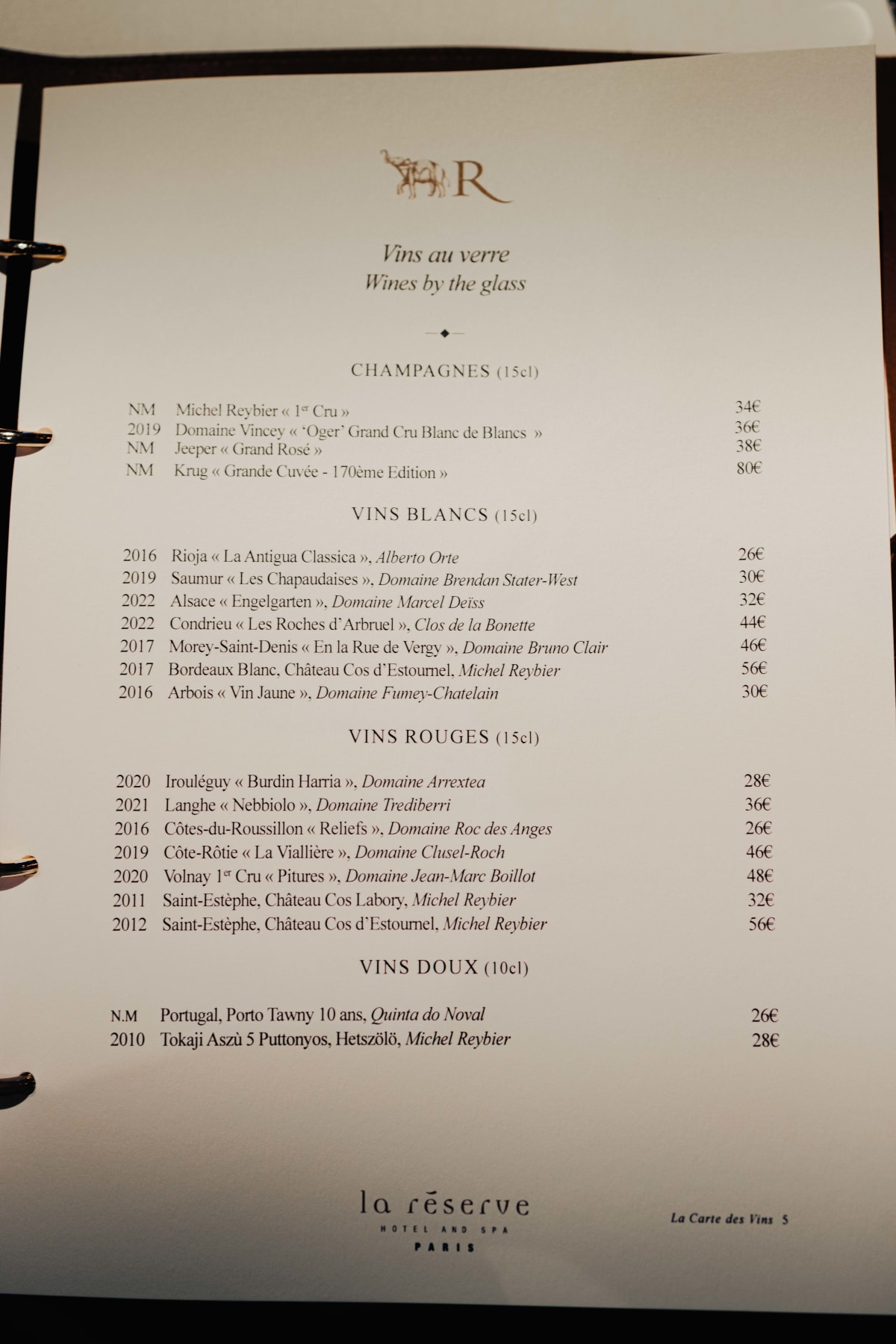
The restaurant offered two pairing tracks. The standard, Their Best Discoveries, came at 192 or 232 euros depending on whether one ordered seven or nine courses. The elevated tier, Iconic Terroir and Grand Cru, was priced at 622 or 722 euros. I was on the final night of a longer trip and carrying the accumulated fatigue, and I had read in advance that the by-the-glass program at Le Gabriel was deep enough to navigate independently. I declined both pairings and intended to work through the meal by the glass.
In Paris I wanted Paris.
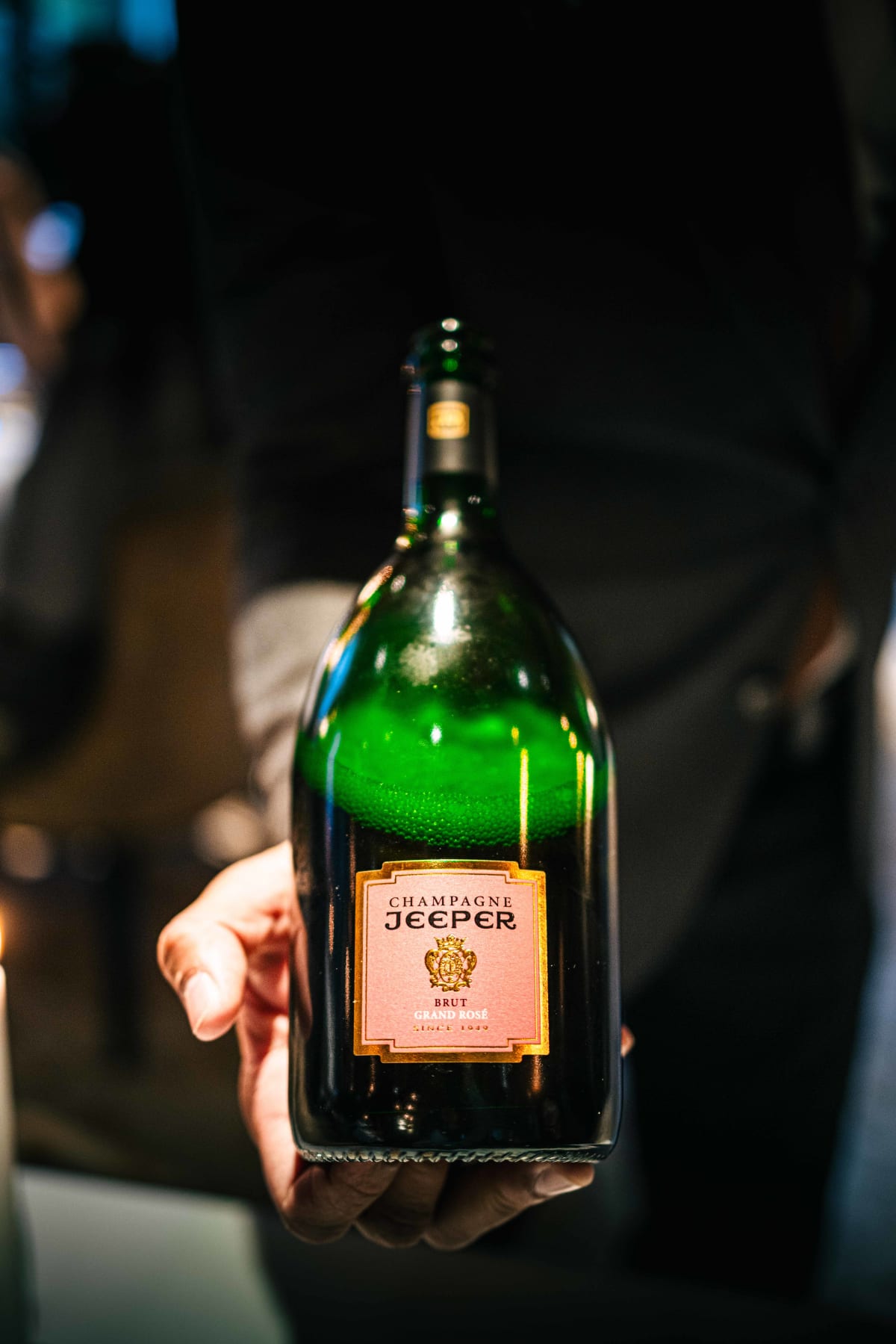
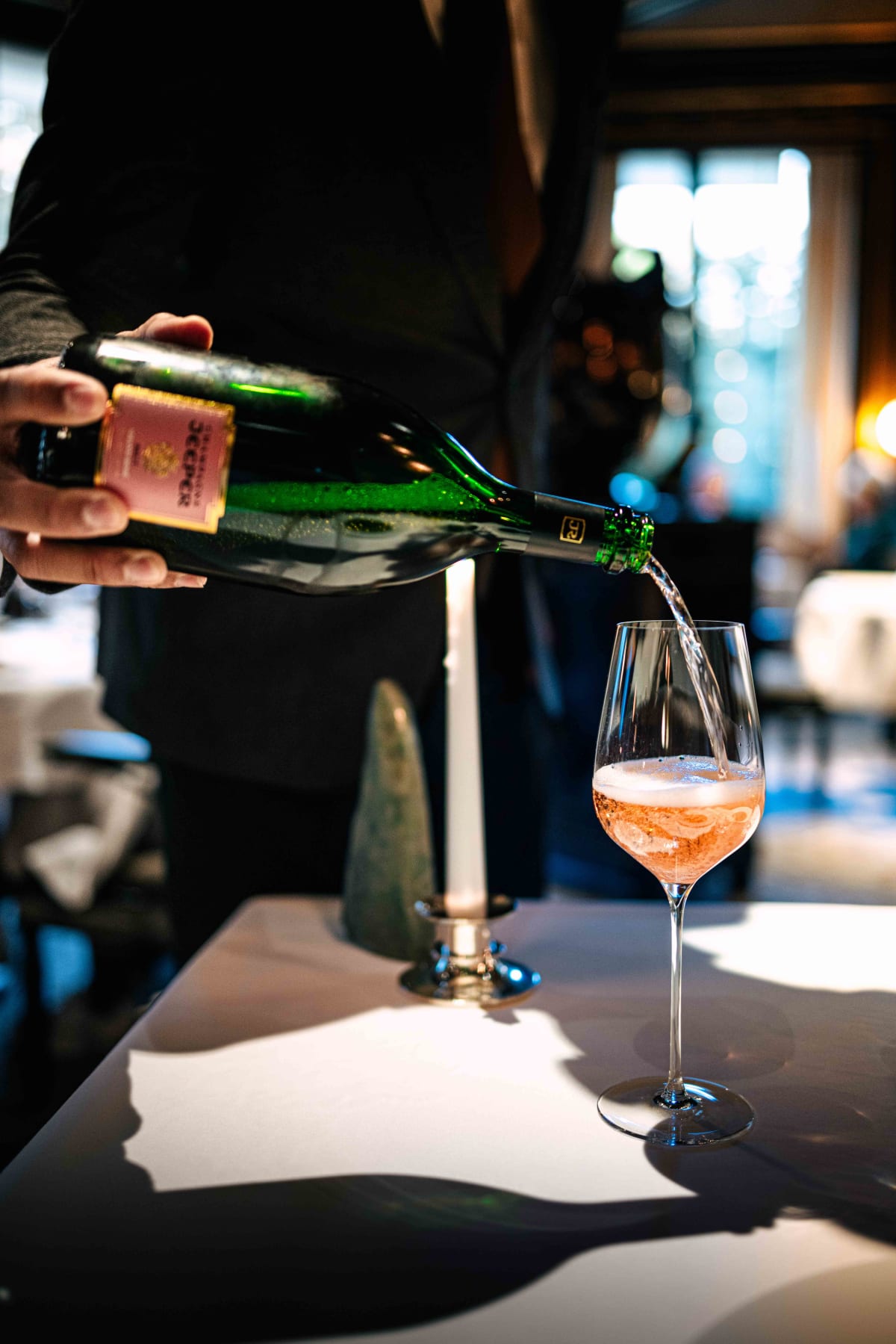
The welcome champagne was a Jeeper rosé, a house I had not encountered before. It was unremarkable in a competent way.
8—9 / 90
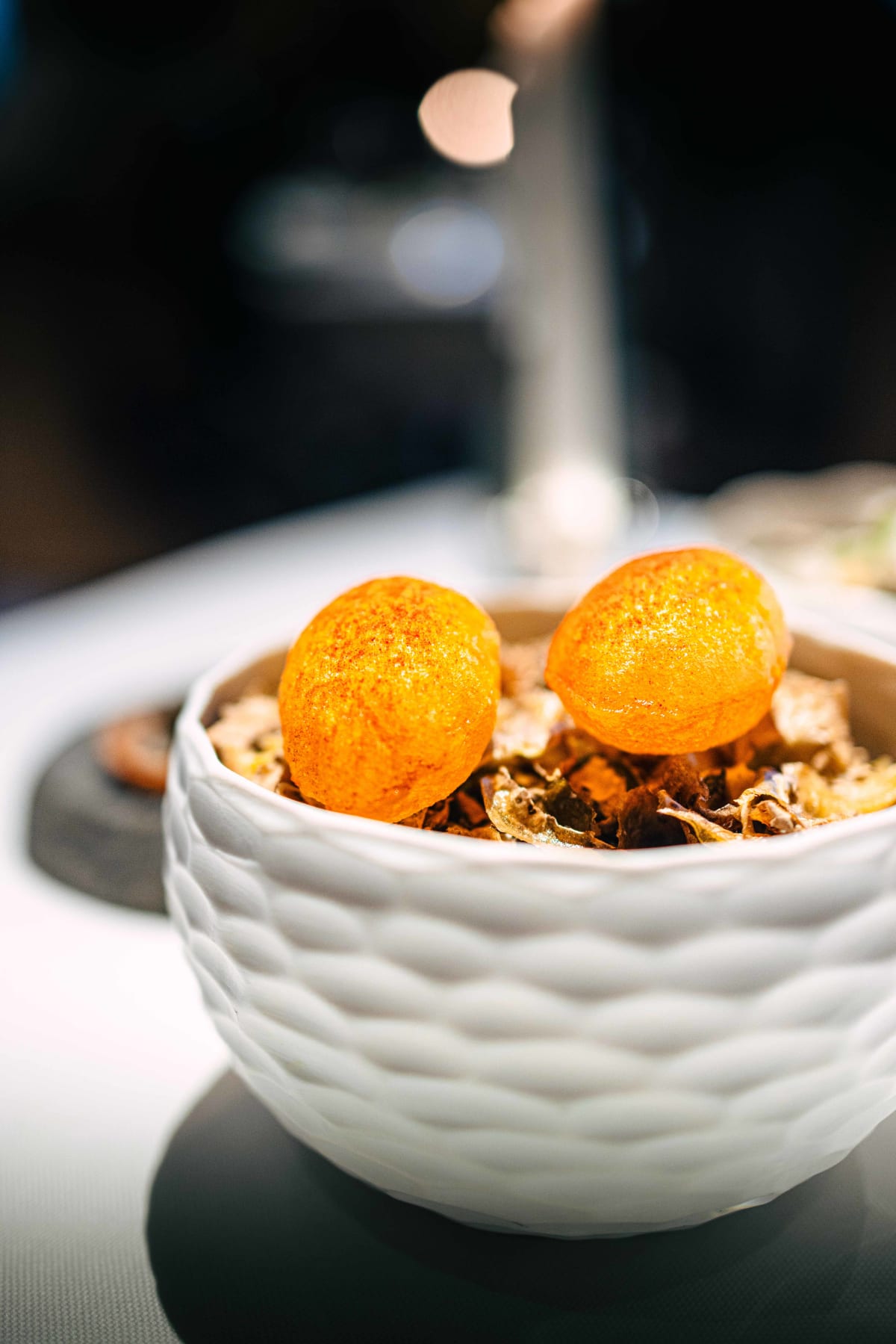
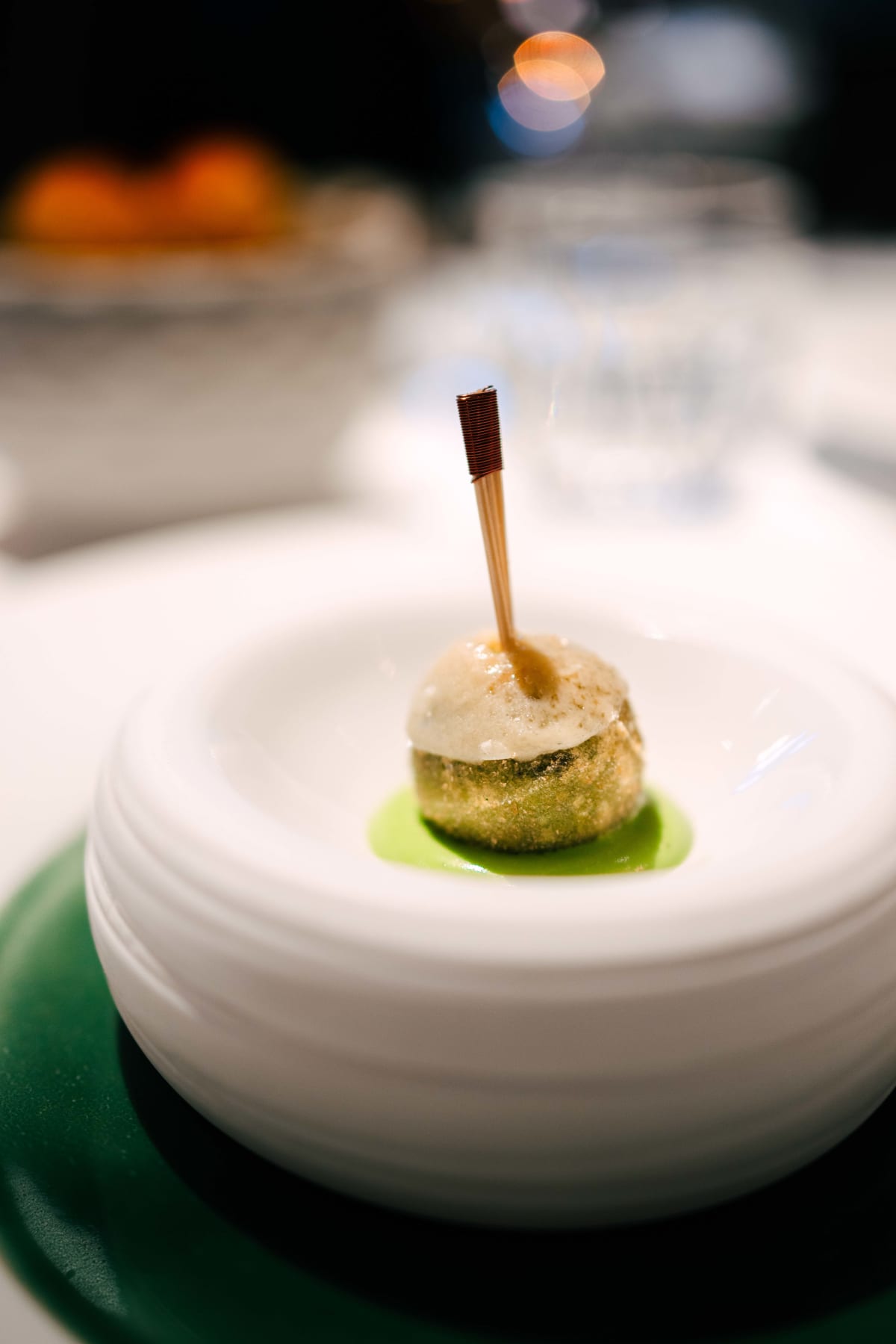
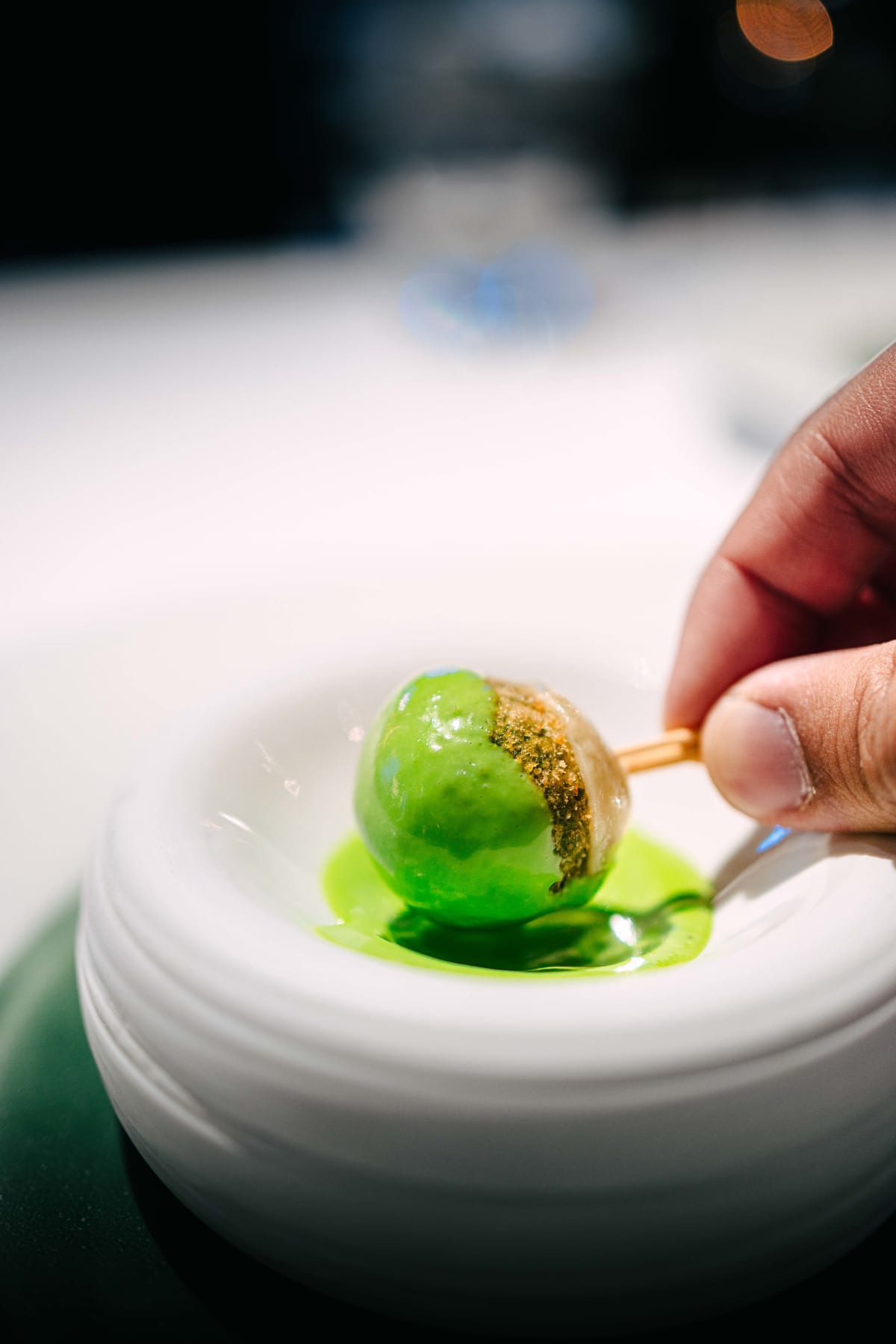
The amuse-bouche arrived in four pieces. Two of them stood out.
11—11 / 90
The first was an olive in a bright green sauce.
10—16 / 90
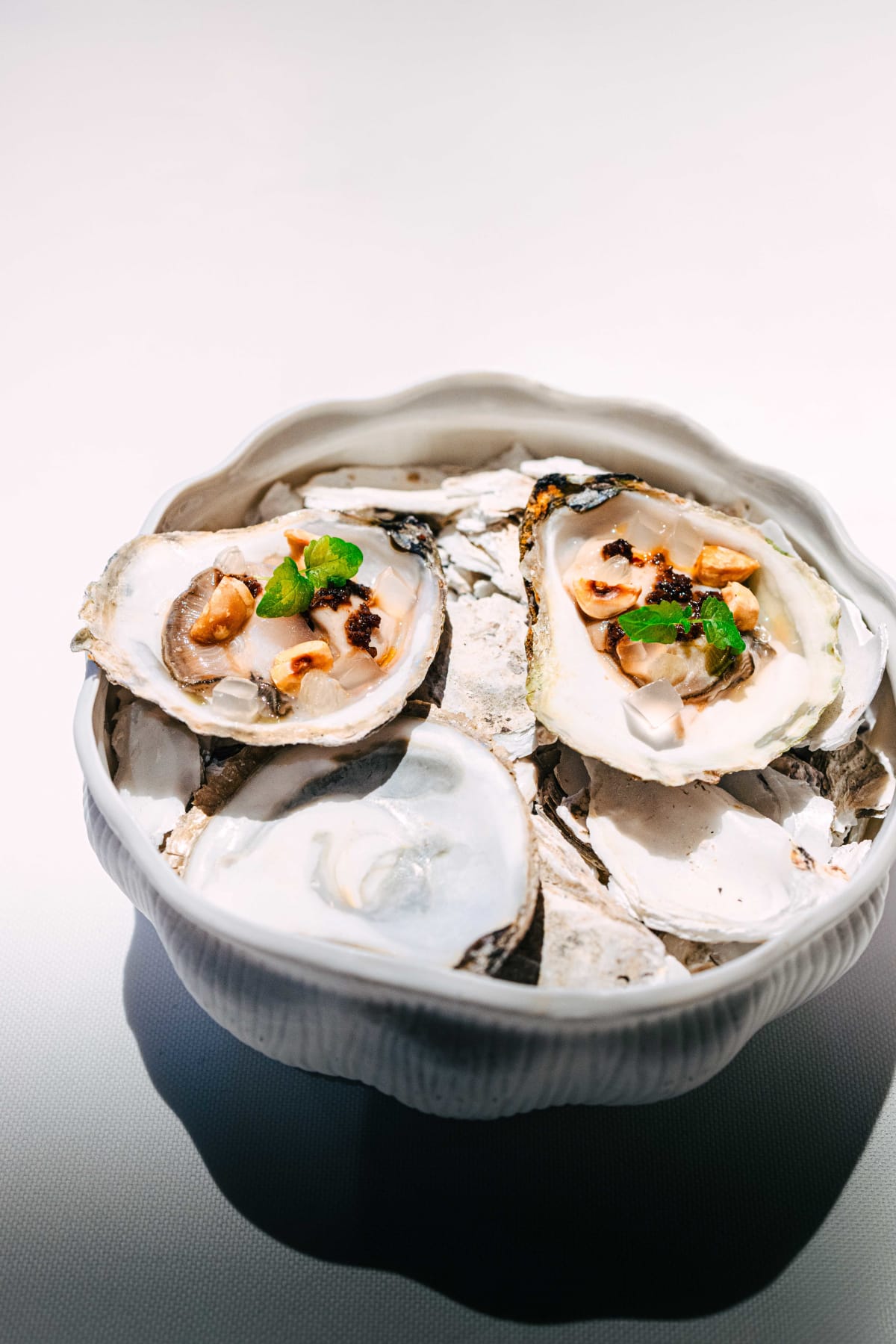
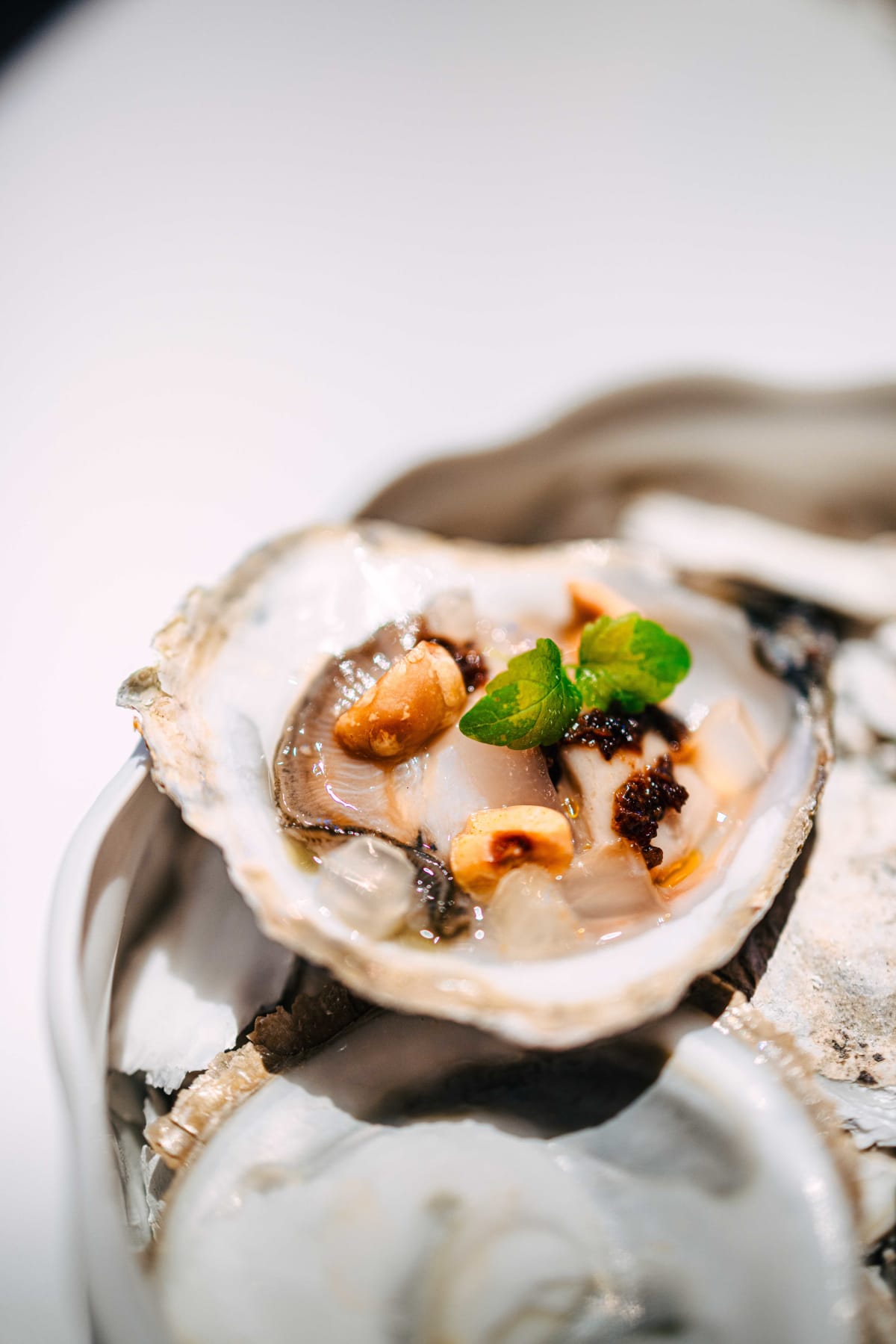
The second was an oyster, and the oyster surprised me. The standard European oyster in casual settings tends to be the long-shelled form, and it has rarely registered with me. The exception came once in Barcelona, in a serious seafood restaurant, where a round Galician oyster had arrived with a depth of brine and a particular structure of bite that stayed in memory. The oyster in Paris that evening was of that same form, in an amuse course at a three-star, which I had not anticipated.
14—15 / 90
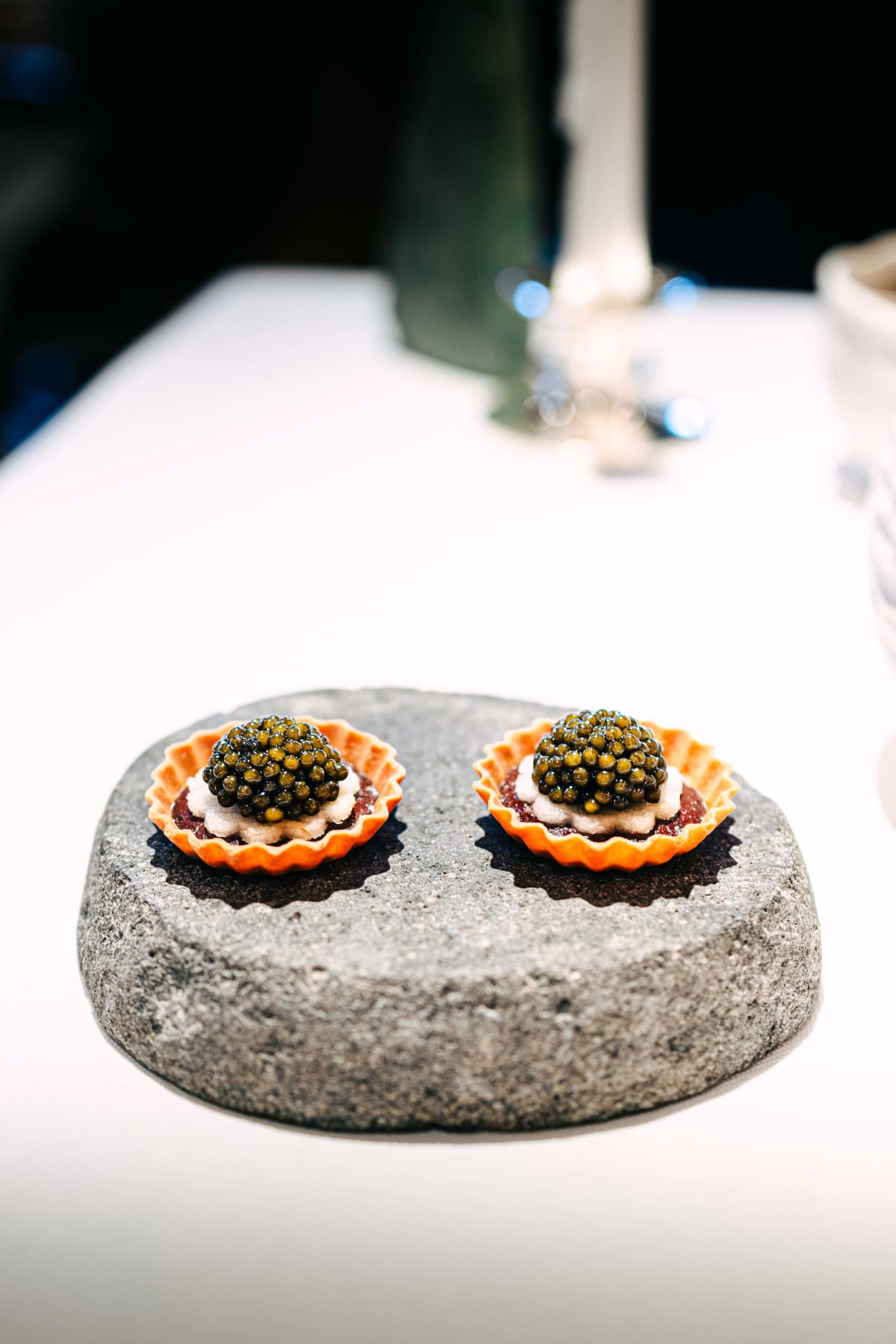
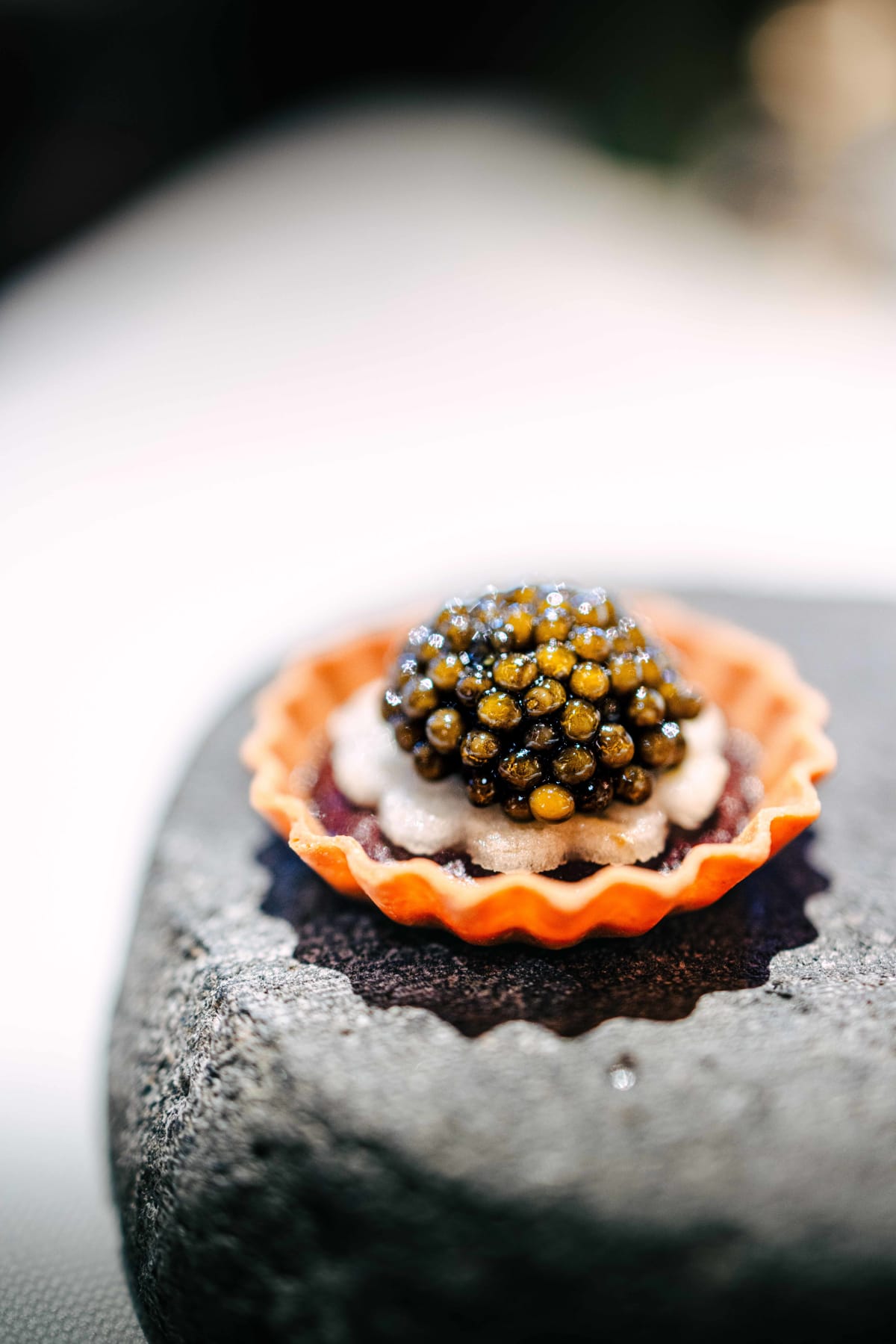
The accompanying jelly and sauce did proper work alongside it. A fourth piece with caviar was the most ordinary of the four.
12—13 / 90
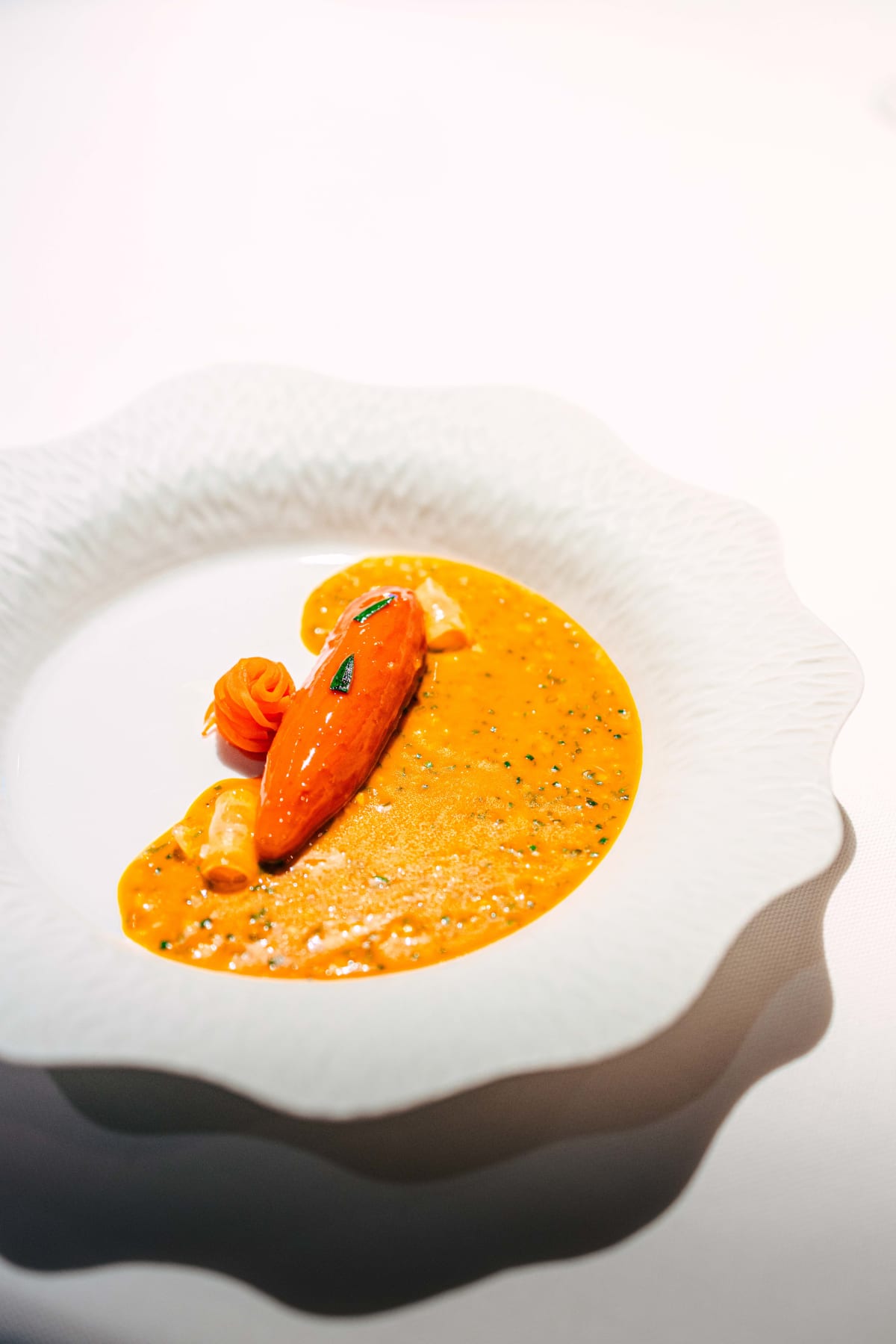
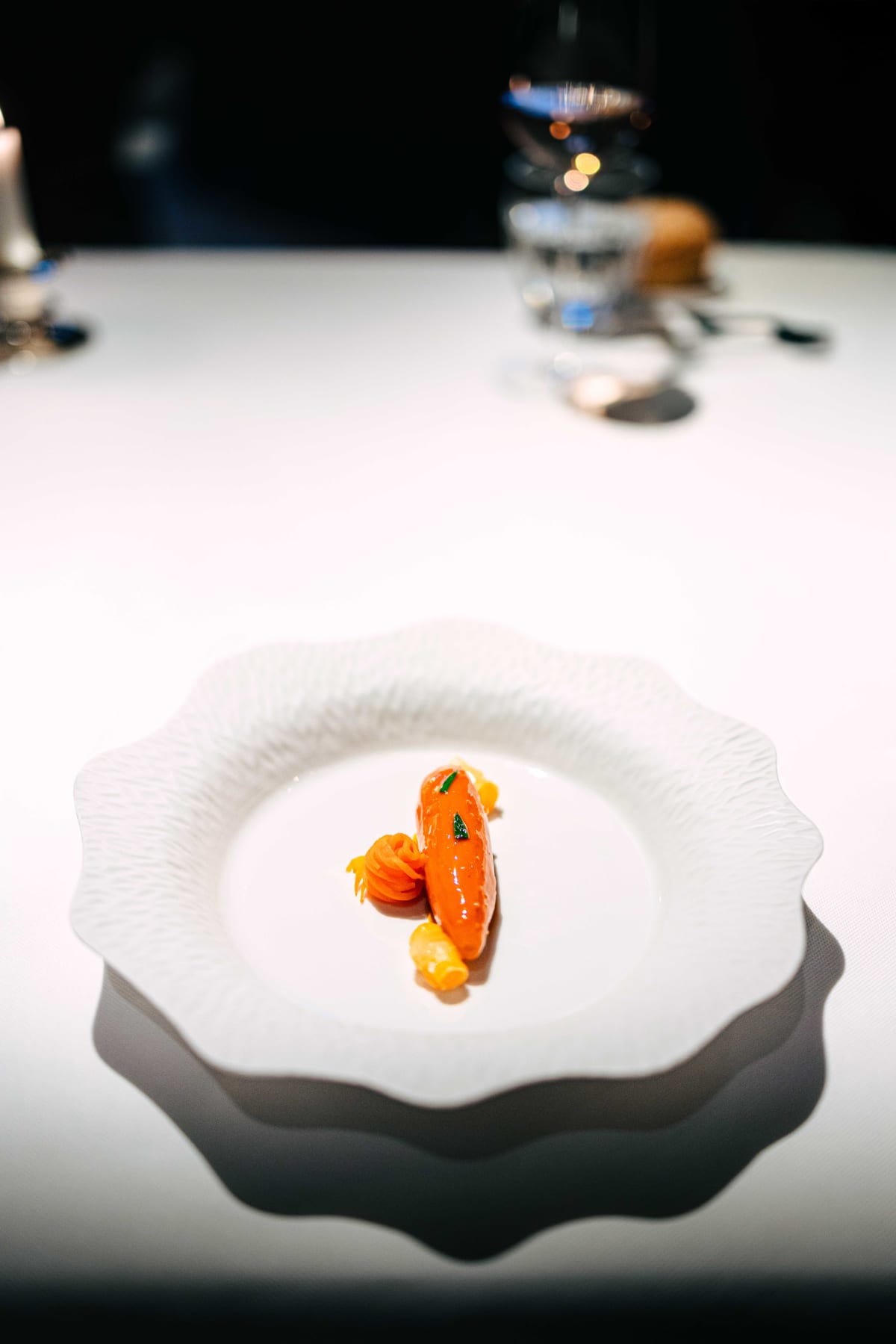
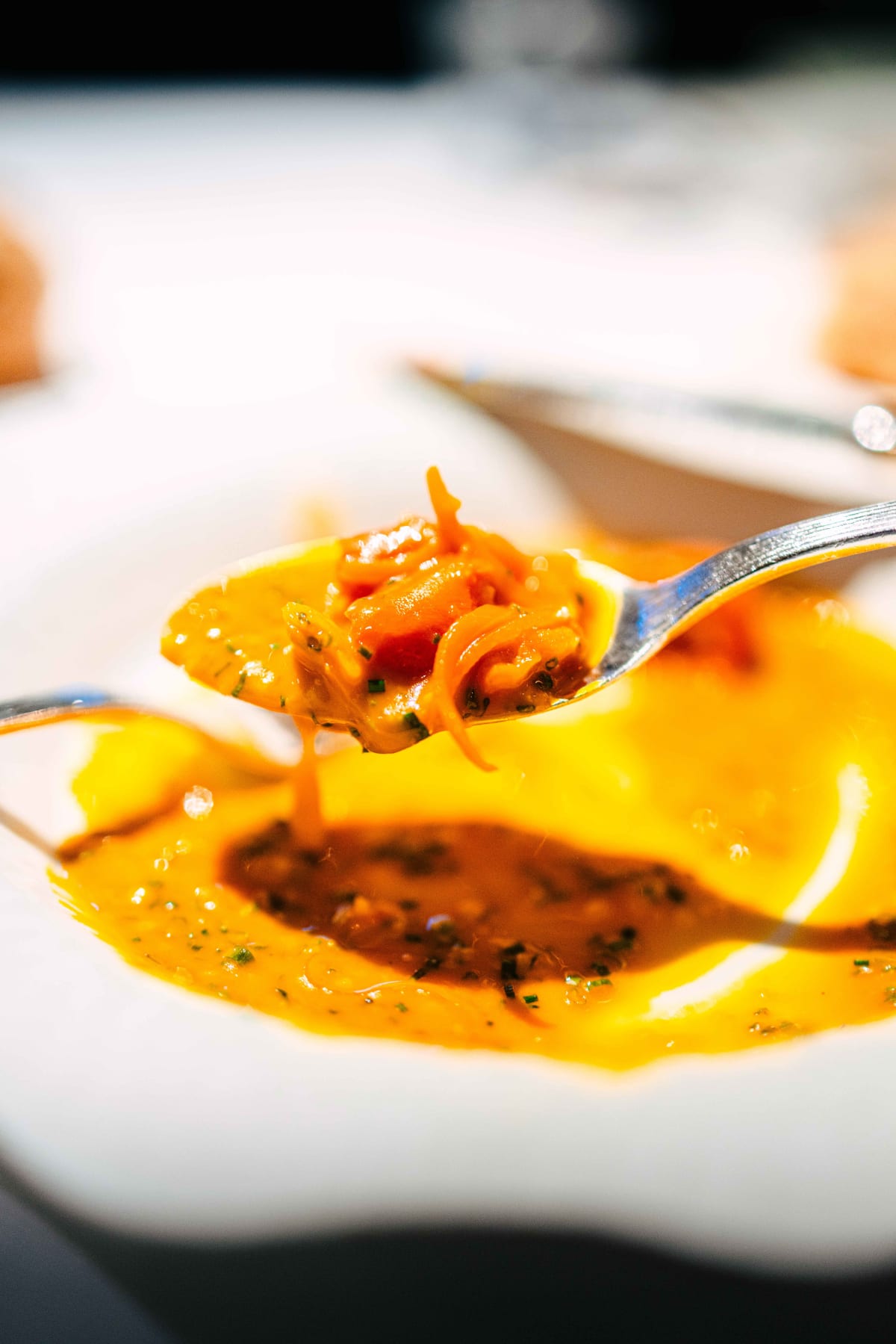
The menu was confirmed at the table, and the first course followed. Signature Vegetable in Limestone, a method the chef has traced to a technique he encountered in Turkey, arrived in two plates: a carrot preparation and a beet preparation. The carrot was the stronger of the two.
28—28 / 90
Its texture had been brought into a register adjacent to steamed garlic, an unusual resolution for the ingredient, and despite a long-standing indifference to carrot, the plate produced a clean involuntary reaction at the first bite.
27—29 / 90
The course set a confident opening for what would follow.
33—36 / 90
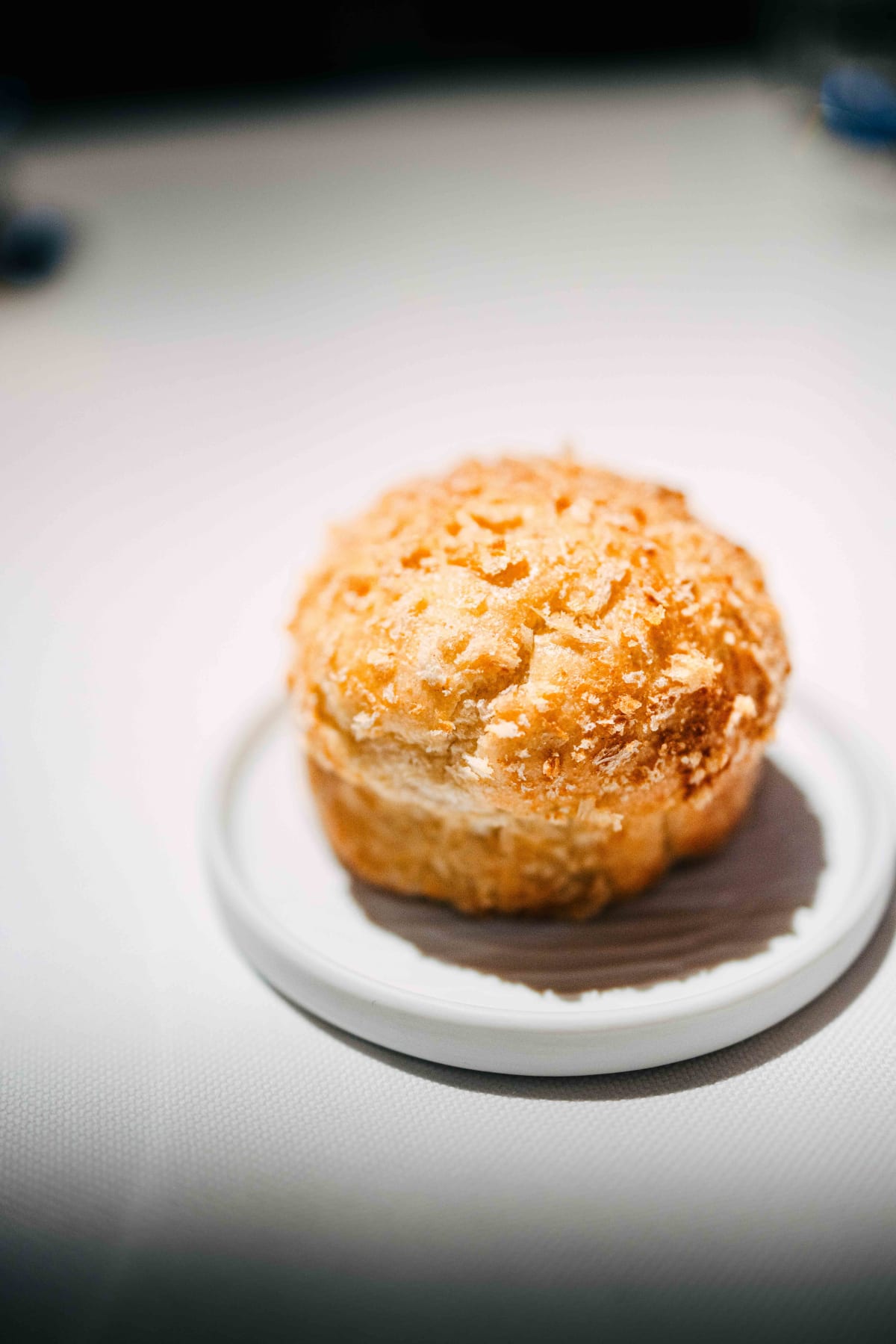
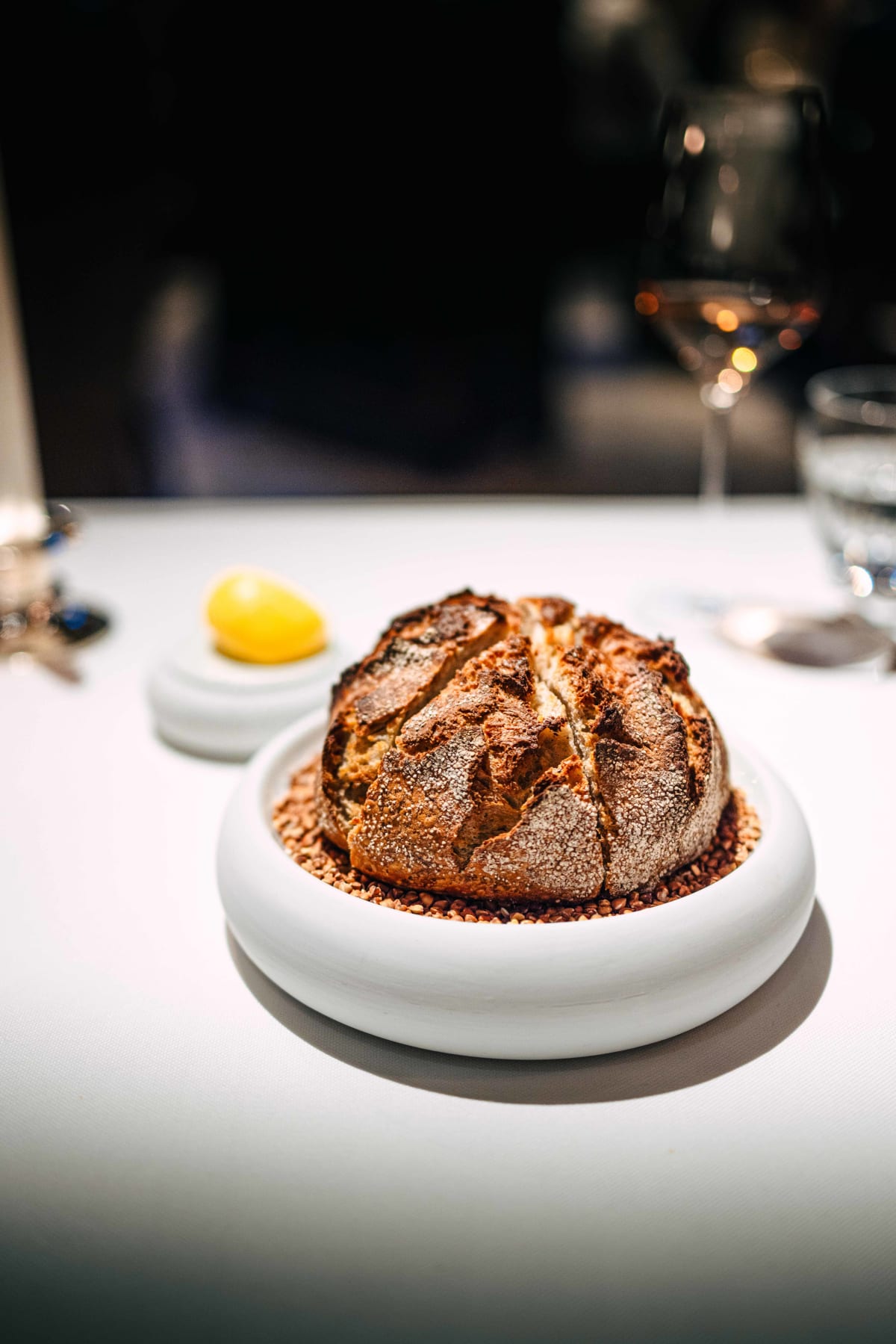
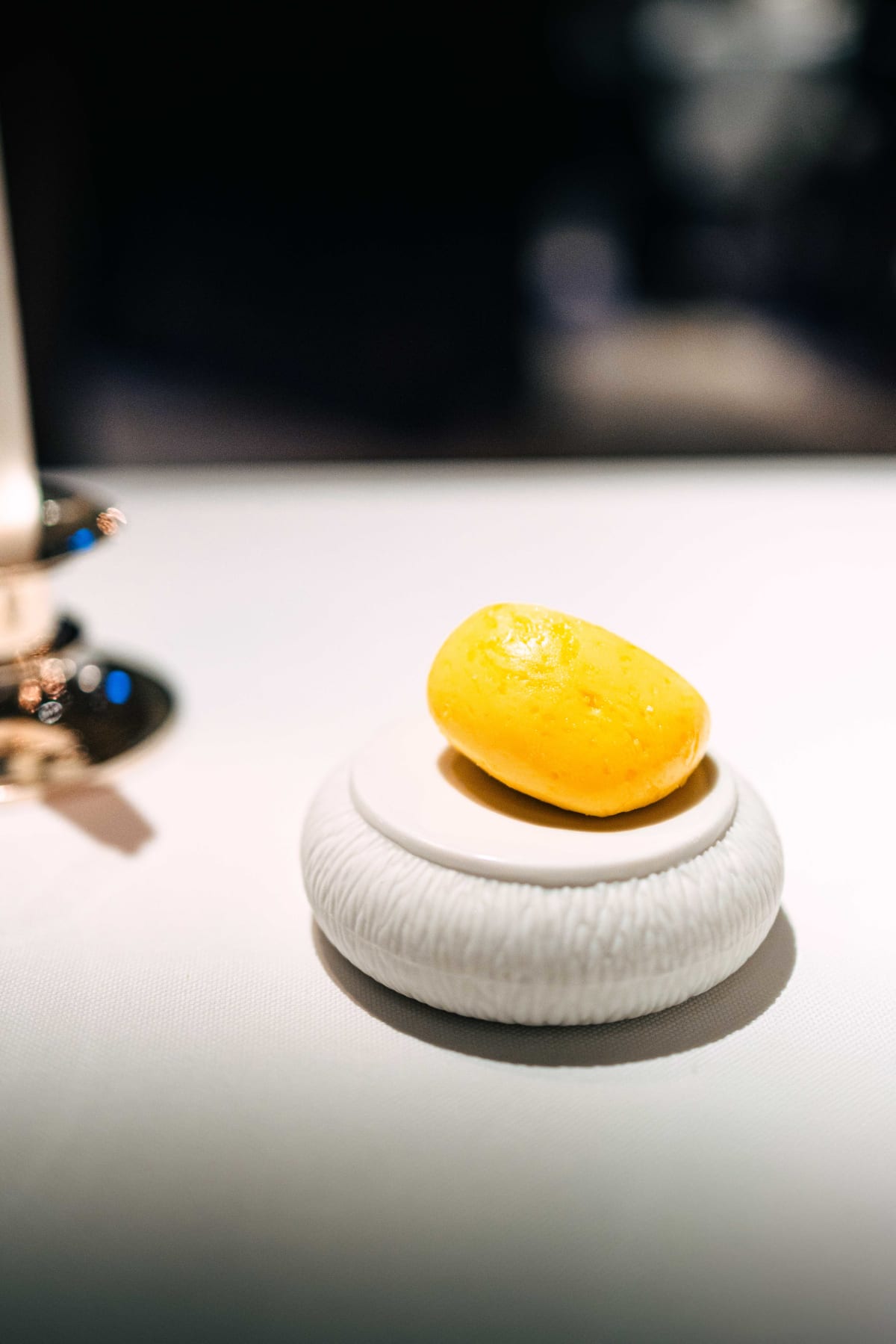
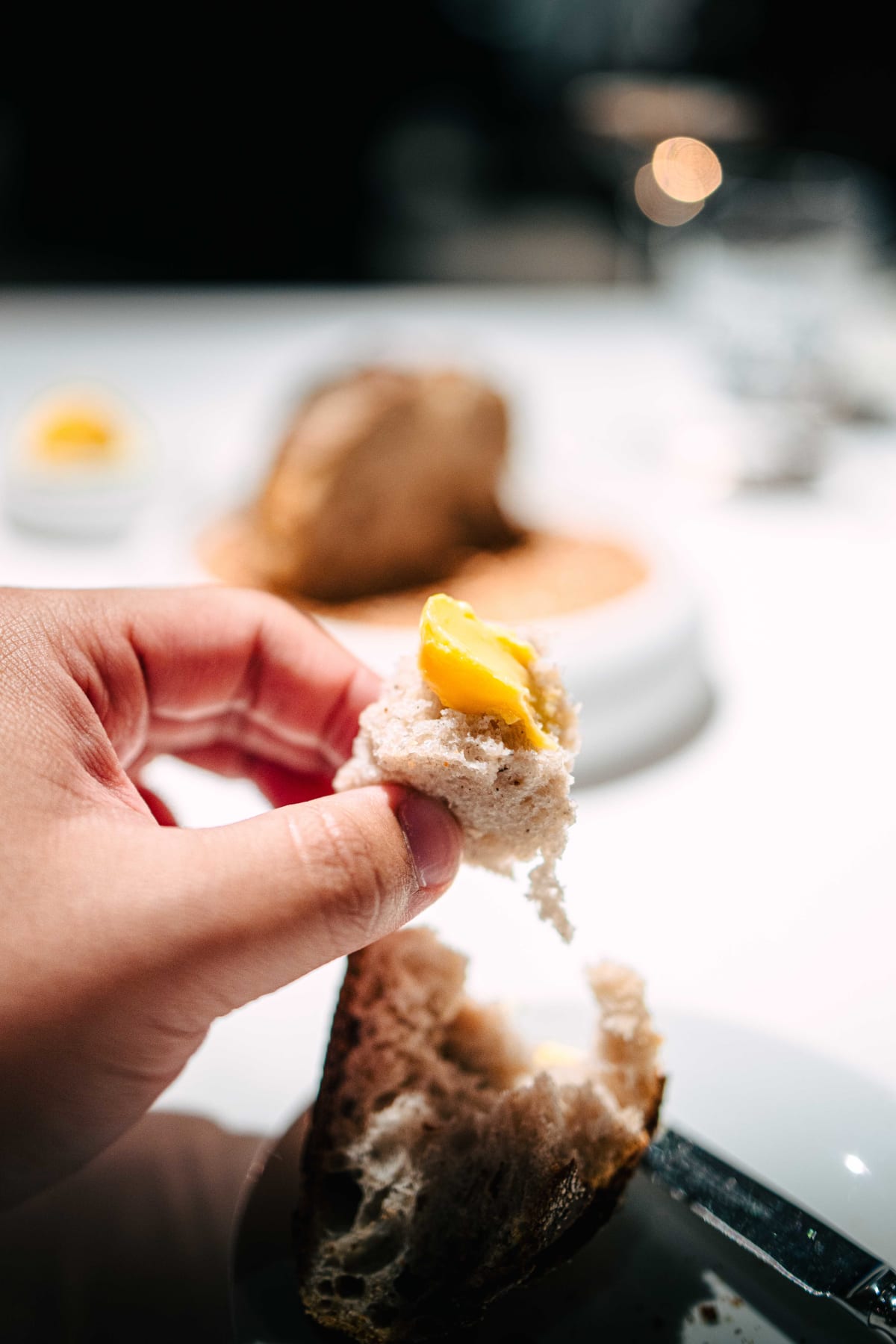
Bread arrived before the second course in two forms, a soft loaf and a hard-crusted version.
30—30 / 90
Distinguishing among French Michelin breads is largely an unproductive exercise; the floor is high enough that the question rarely matters. What was noticeable here was the relatively modest amount of butter served. The sauces of the menu were dense enough that bread was easily absorbed into the cleaning of plates between courses.
31—37 / 90
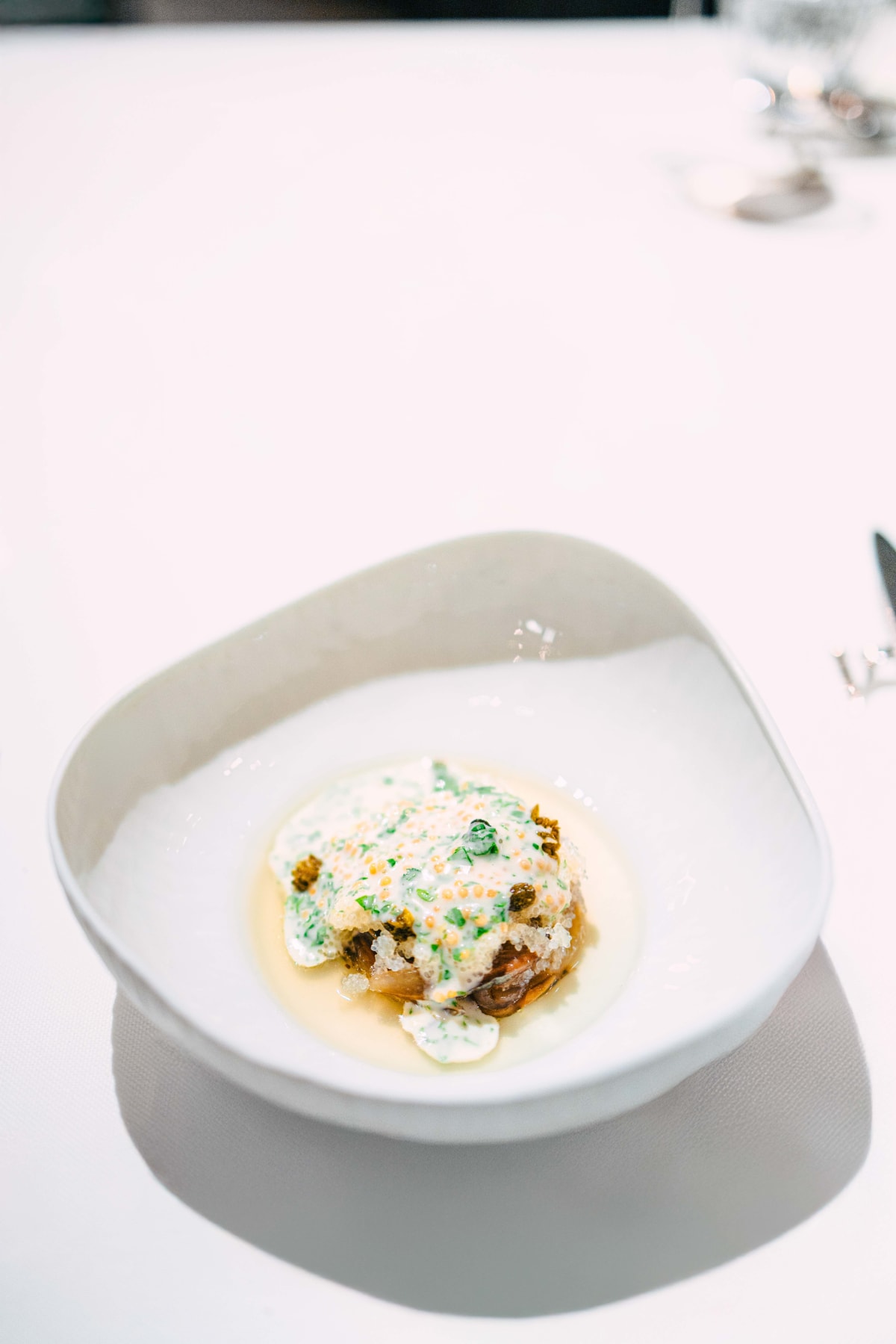
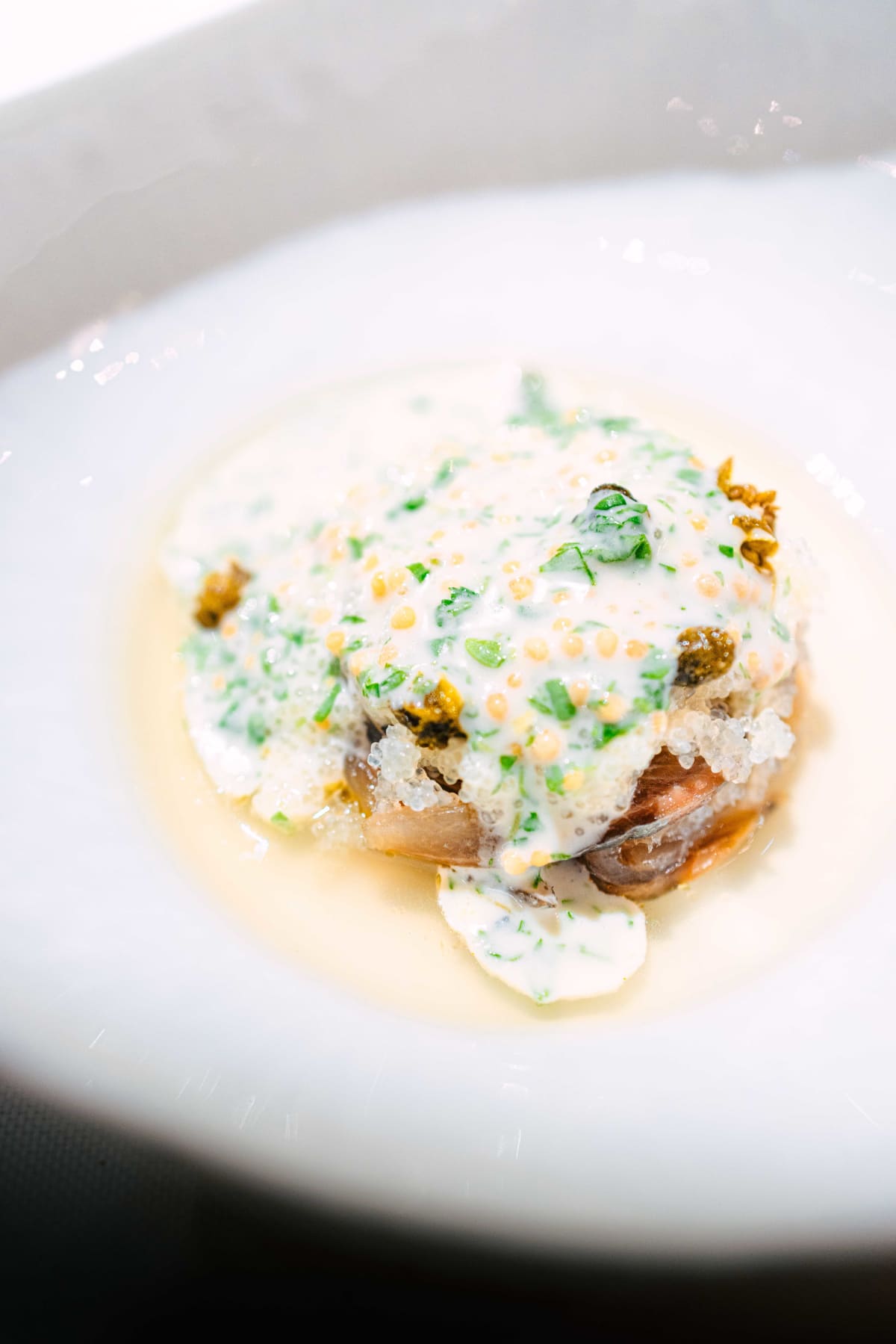
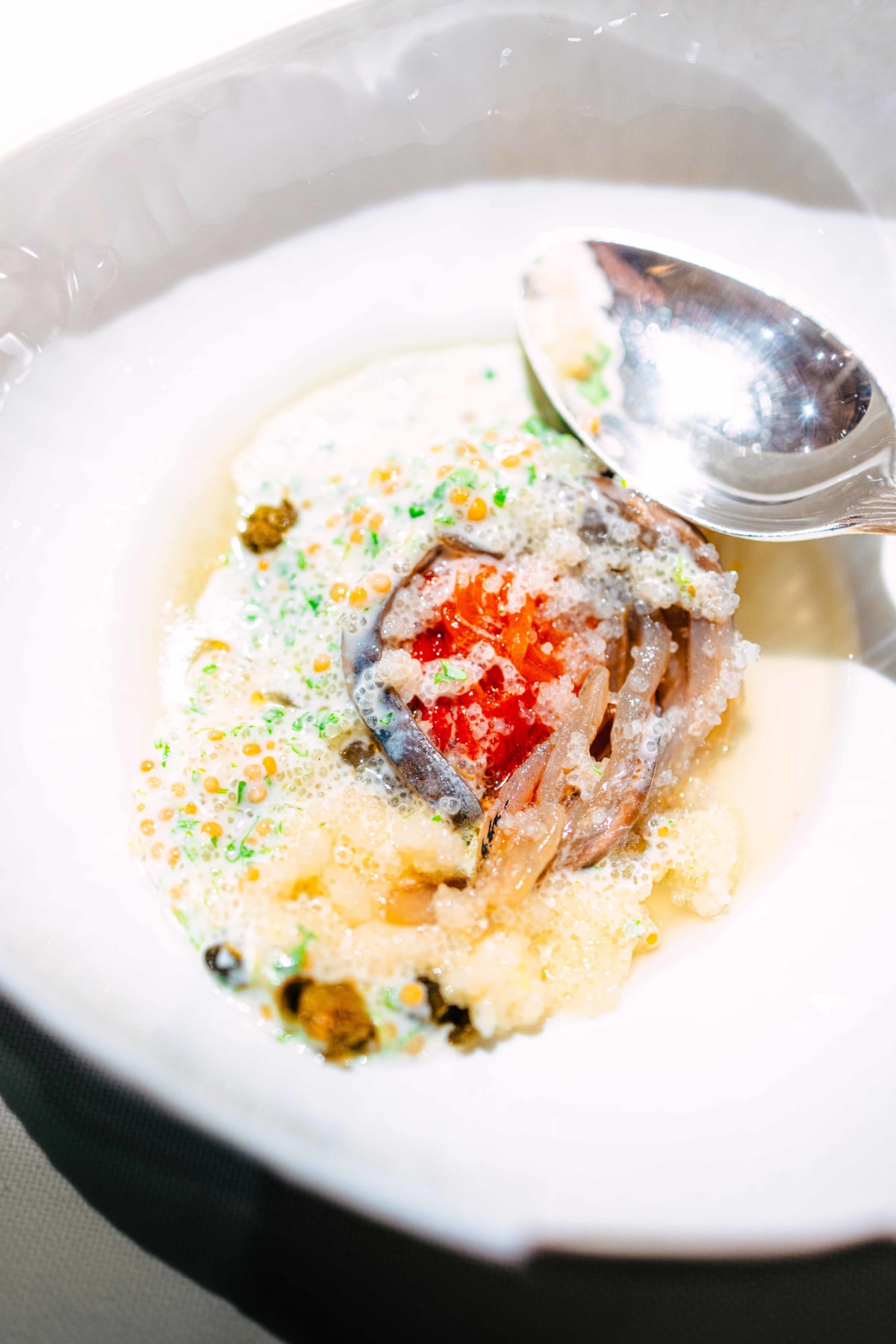
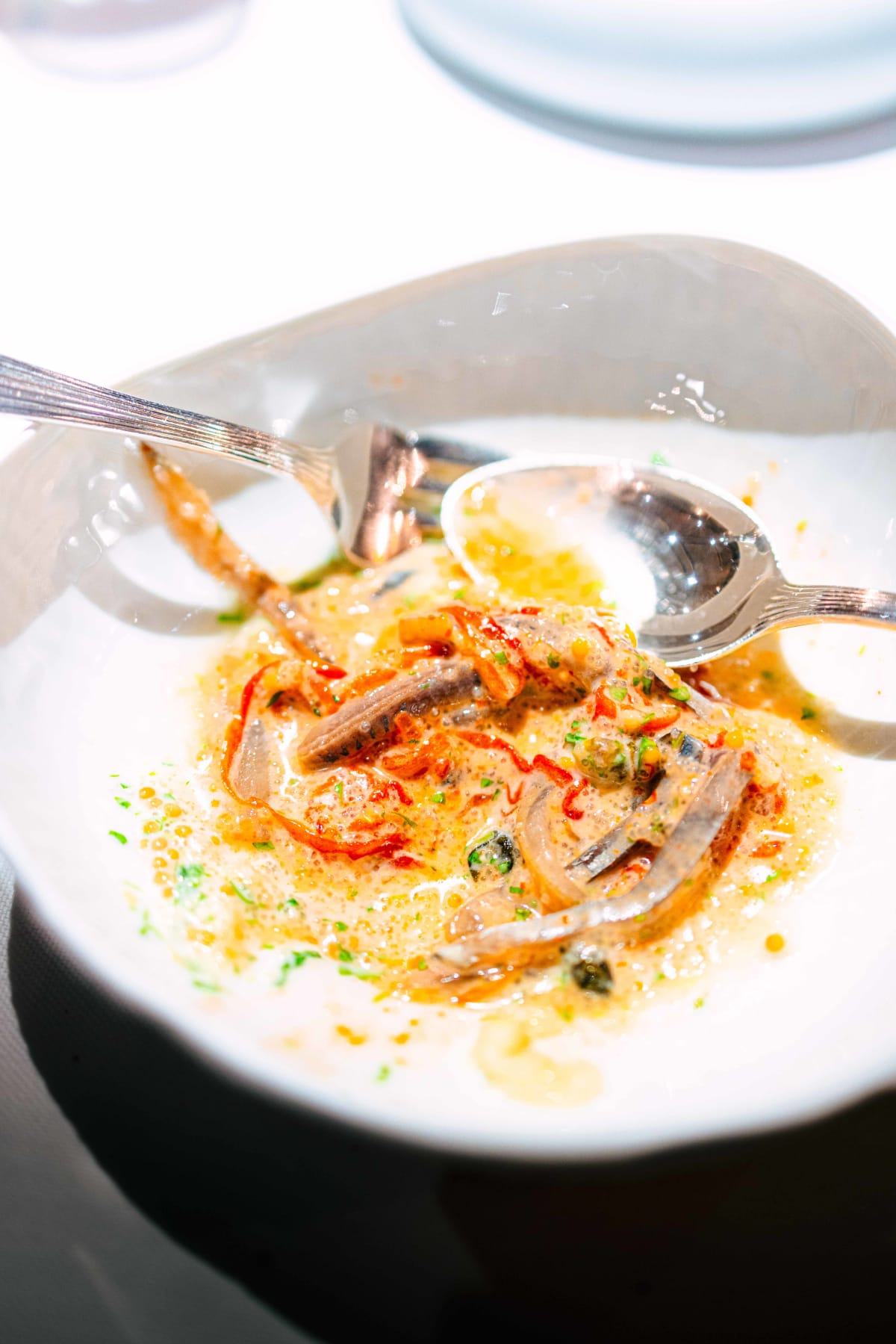
The second course was «Gravlax» sardine, candied bell pepper, fried capers. Thinly cut sardine, treated as if it were sashimi, paired with fish roe, a fried-caper sauce, and slim ribbons of bell pepper. It was the best raw fish dish I had eaten in European fine dining. The freshness of the sardine approached what I would expect in Japan, the flavour direct and precise, the fish present in itself rather than treated as a vehicle for sauce. The portion was also substantial.
38—41 / 90
Raw fish courses in European fine dining are frequently small enough that the diner cannot fully engage with them; this one was not. By every measure, the second course delivered.
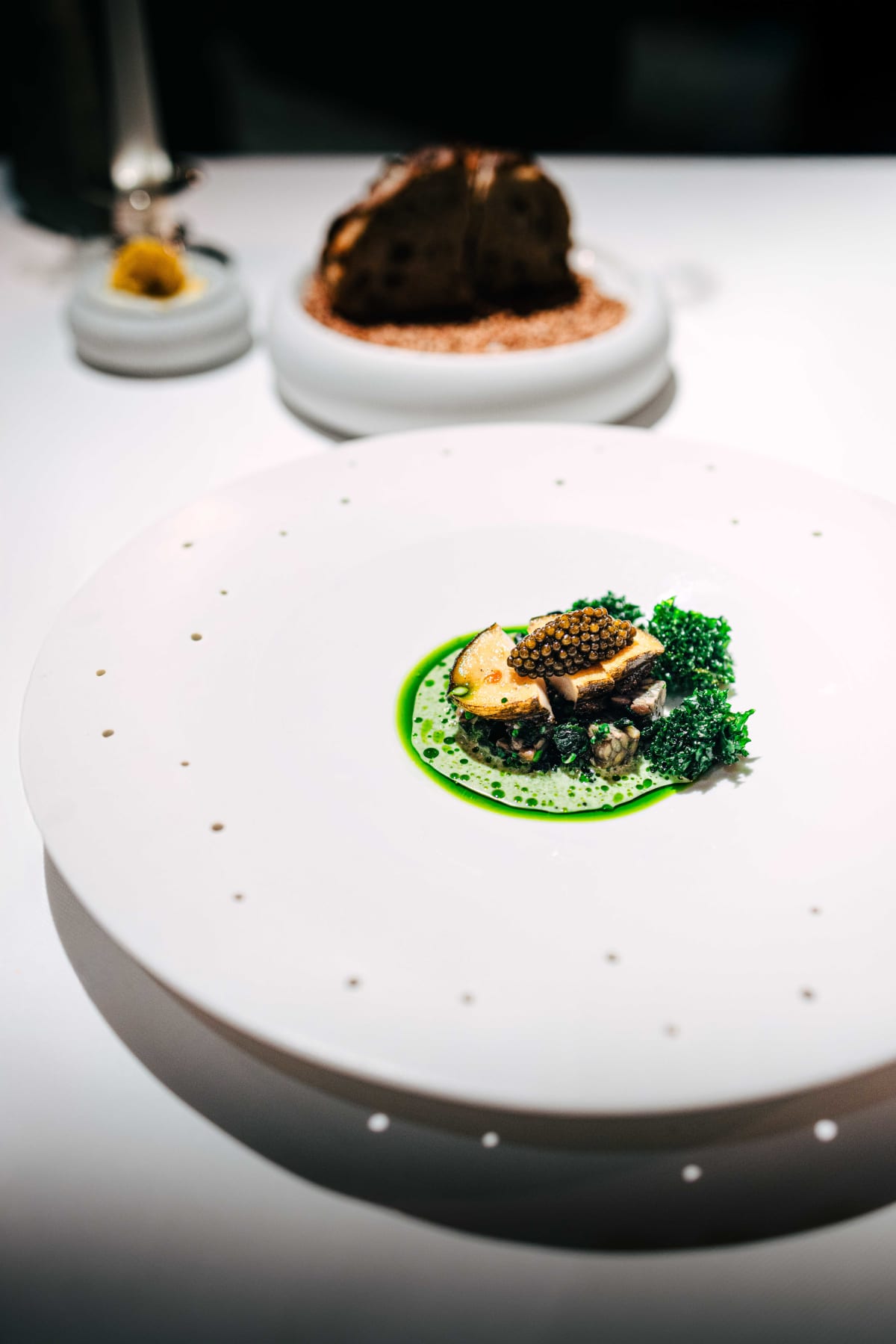
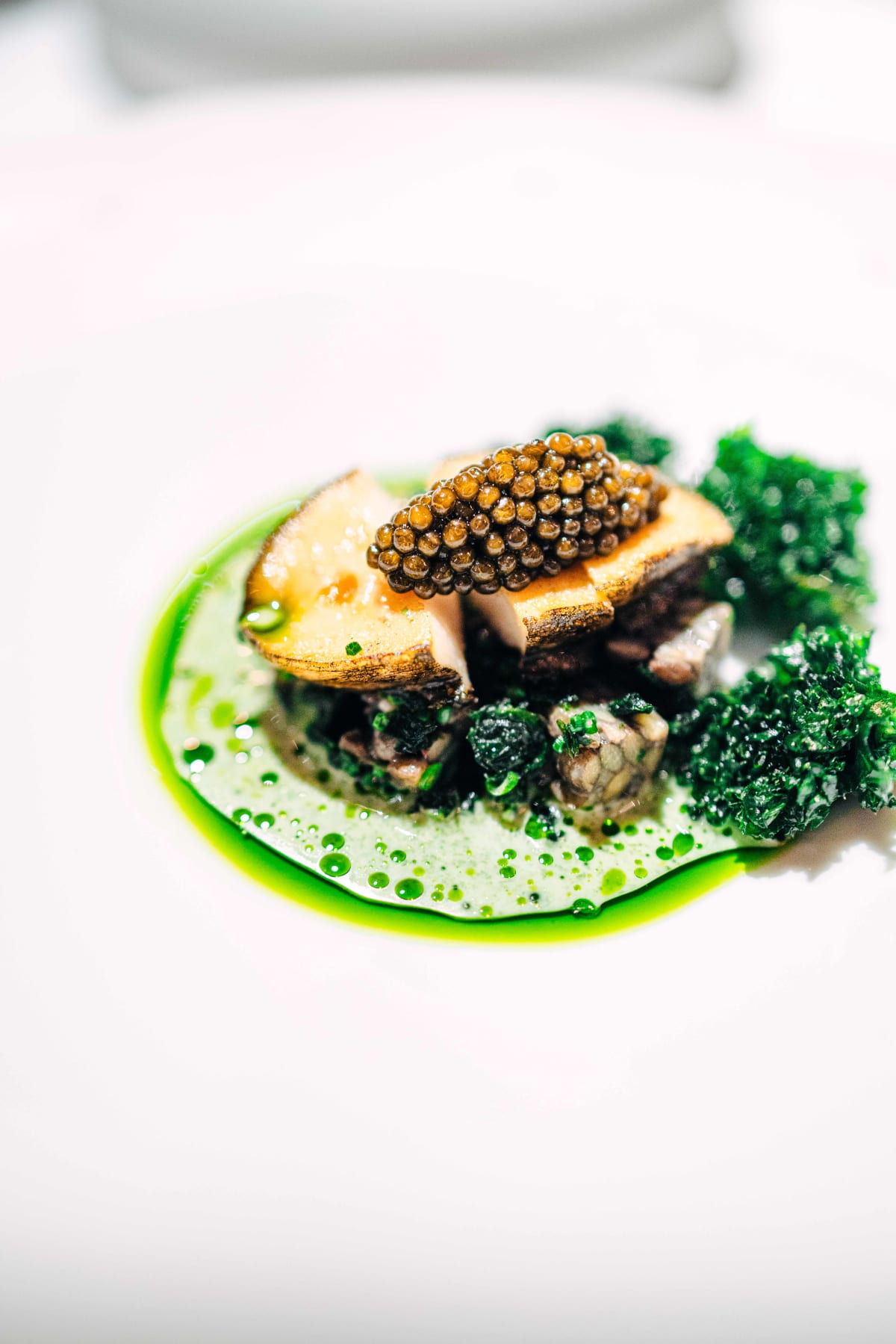
The third was the abalone, with lentil salad beneath, caviar on top, and a thinly grilled seaweed crisp set alongside. The intent was visible, but this was the most disappointing course of the evening. Abalone's strength is the particular yielding texture of its flesh along the grain, and that texture lost the contest with the other elements crowding the plate. The principle that the central ingredient must become more legible as supporting elements multiply did not hold here.
42—43 / 90
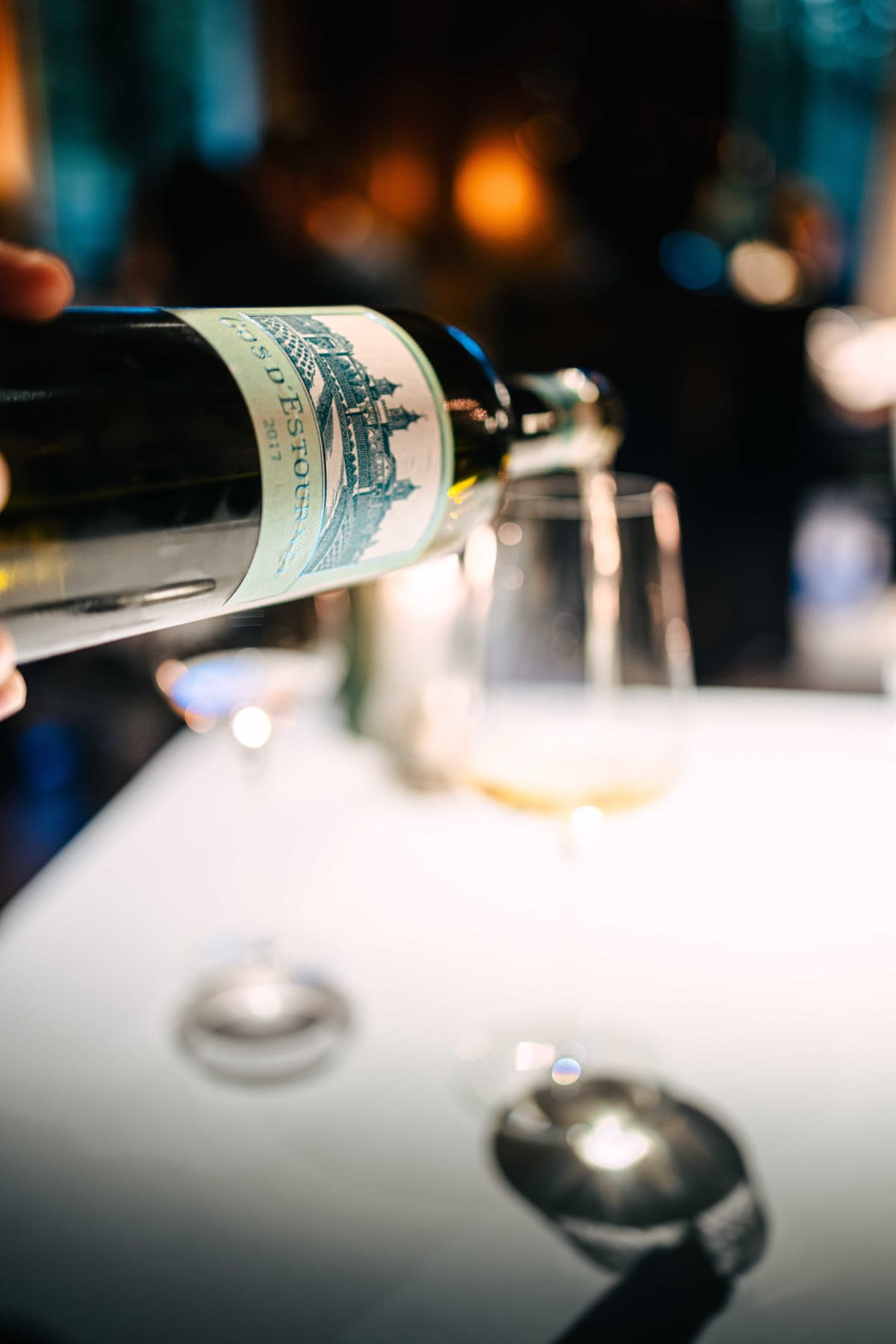
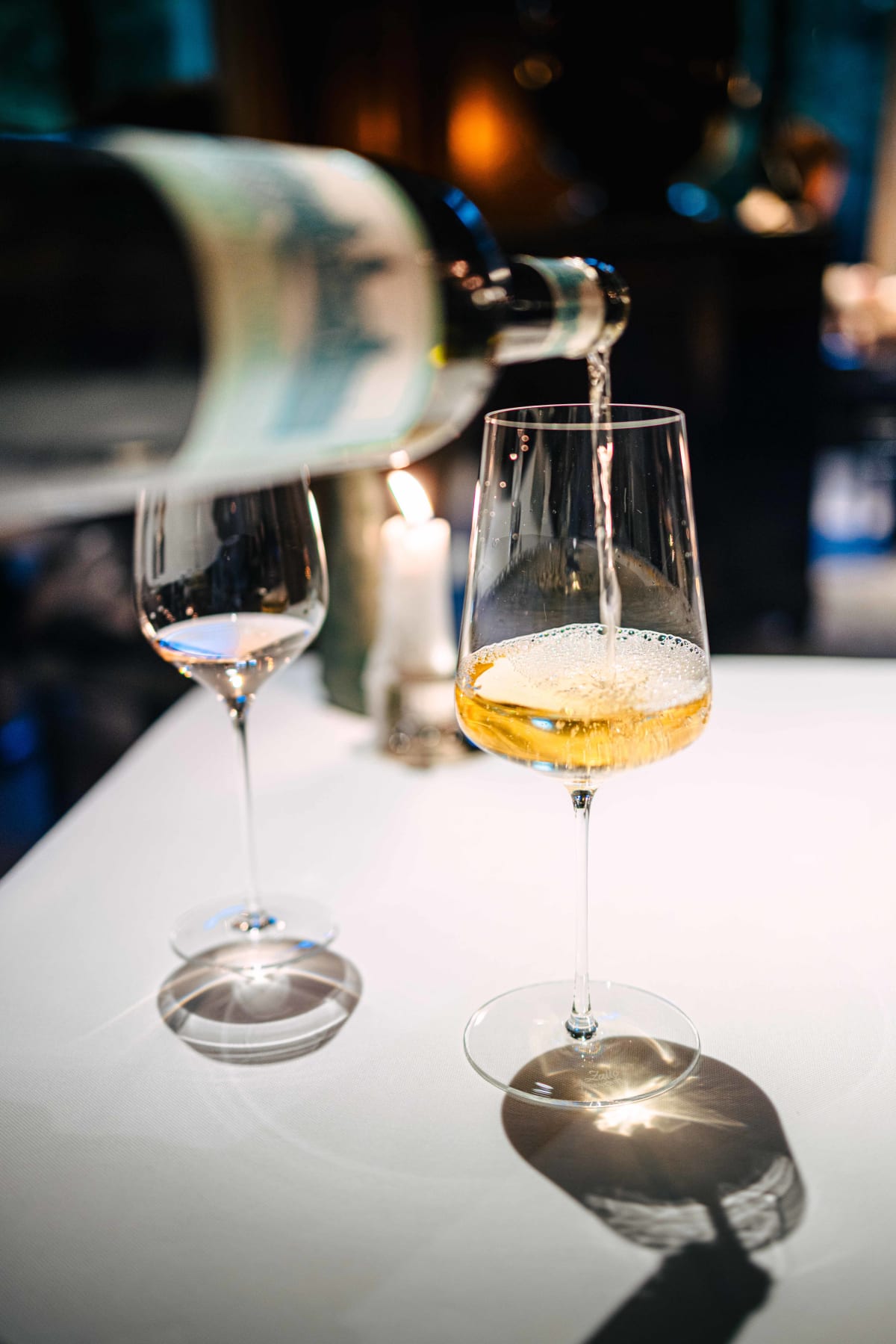
I changed glass once across these courses. The first was a Cos d'Estournel Blanc 2017, a Bordeaux white in a vintage I had not previously tasted, arriving at a reasonable by-the-glass price.
25—26 / 90
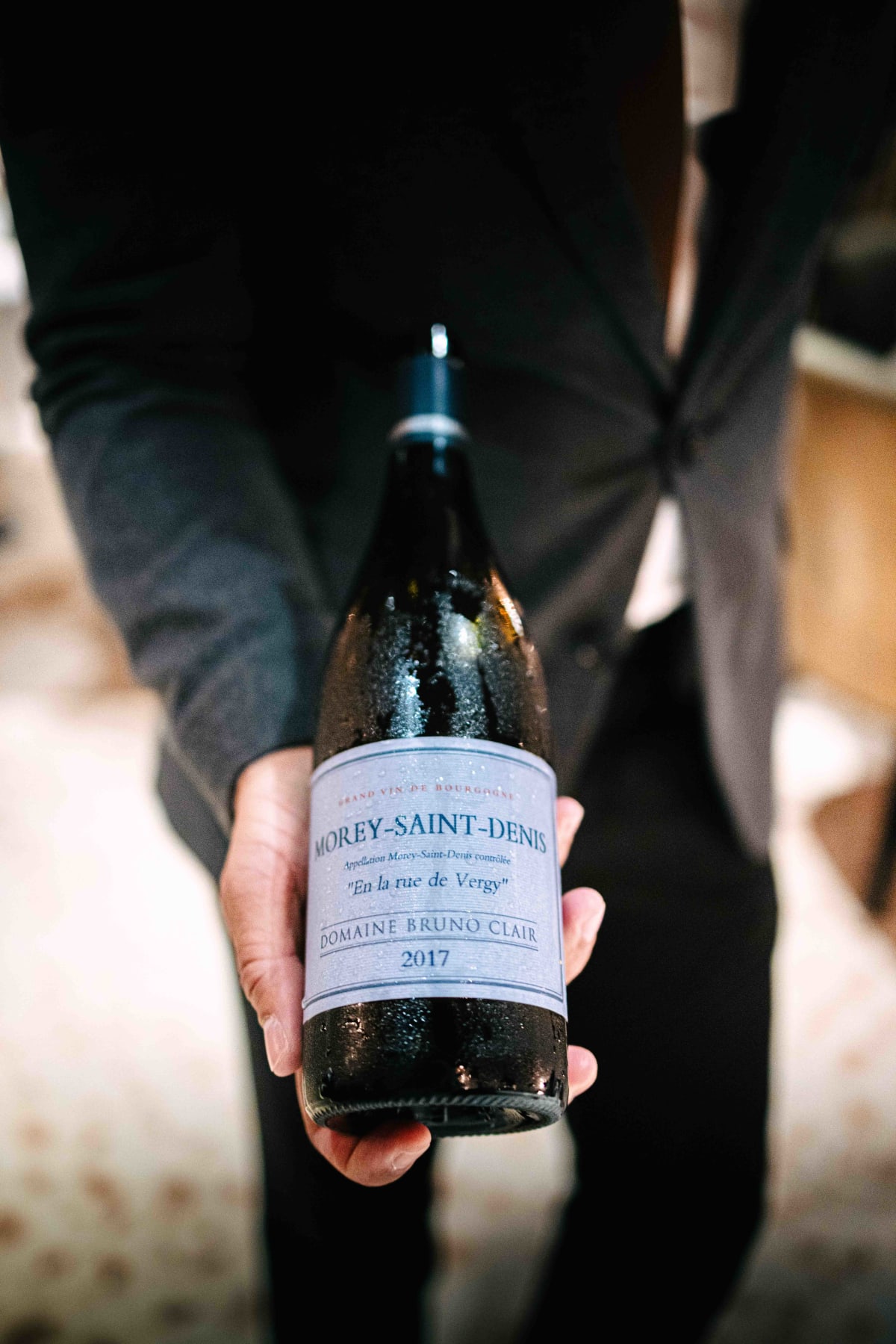
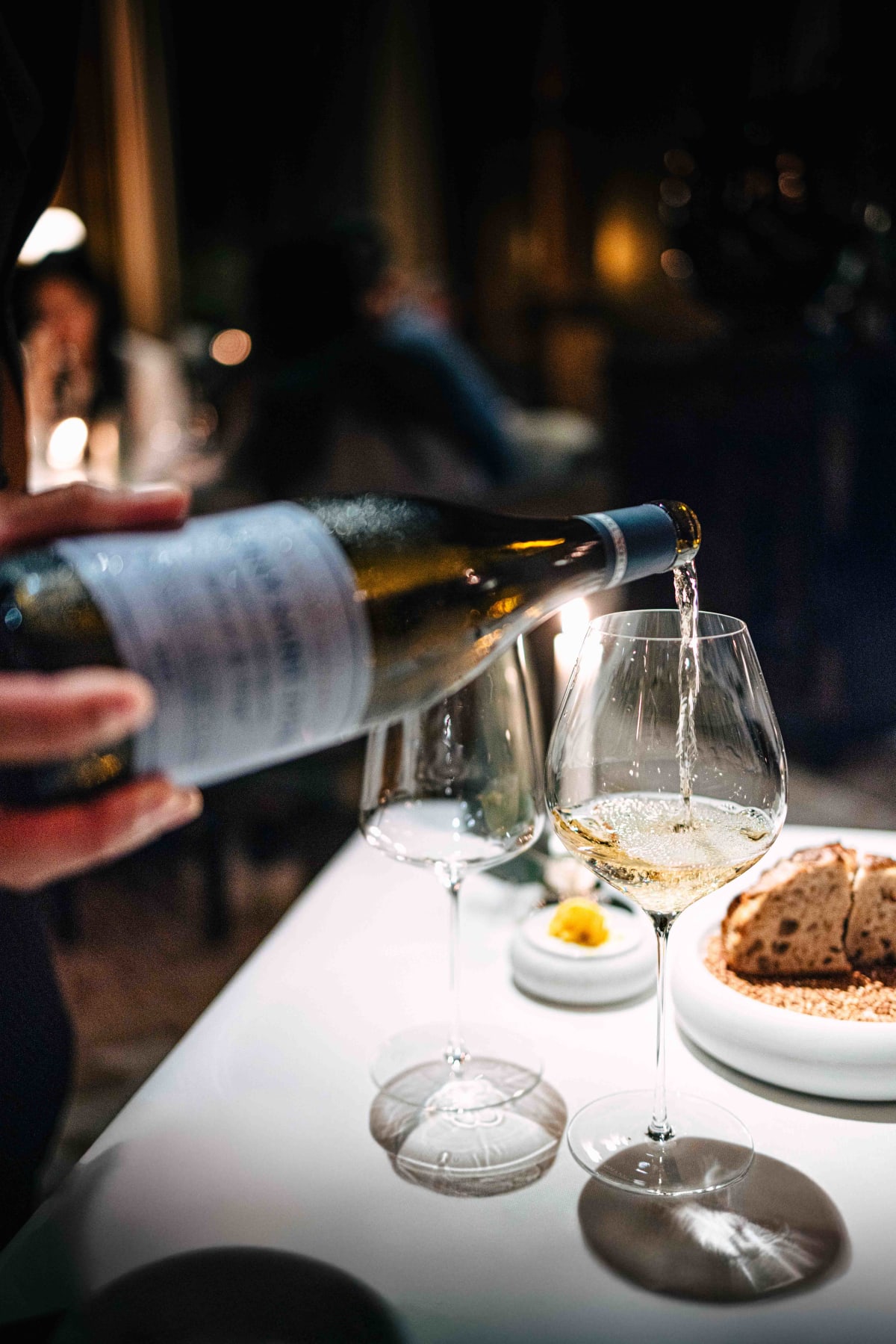
The second white moved into Burgundy: Domaine Bruno Clair's Morey-Saint-Denis "En La Rue de Vergy" 2017, chosen with an eye on the lobster course to come.
44—45 / 90
The sommelier suggested the Bordeaux first on the basis that it would read fruitier and the Burgundy more butter-forward; in retrospect, the reverse order would likely have served the evening better.
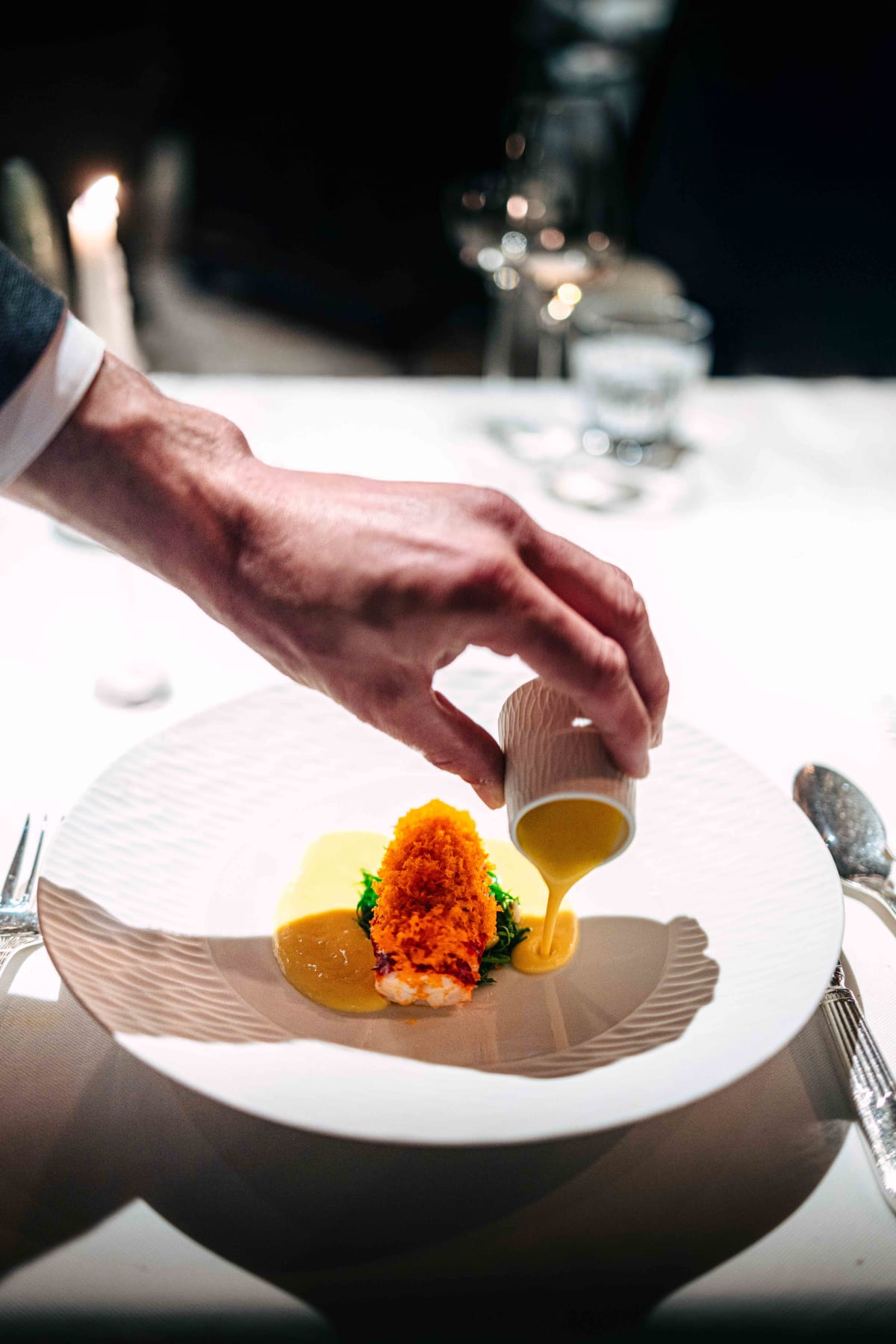
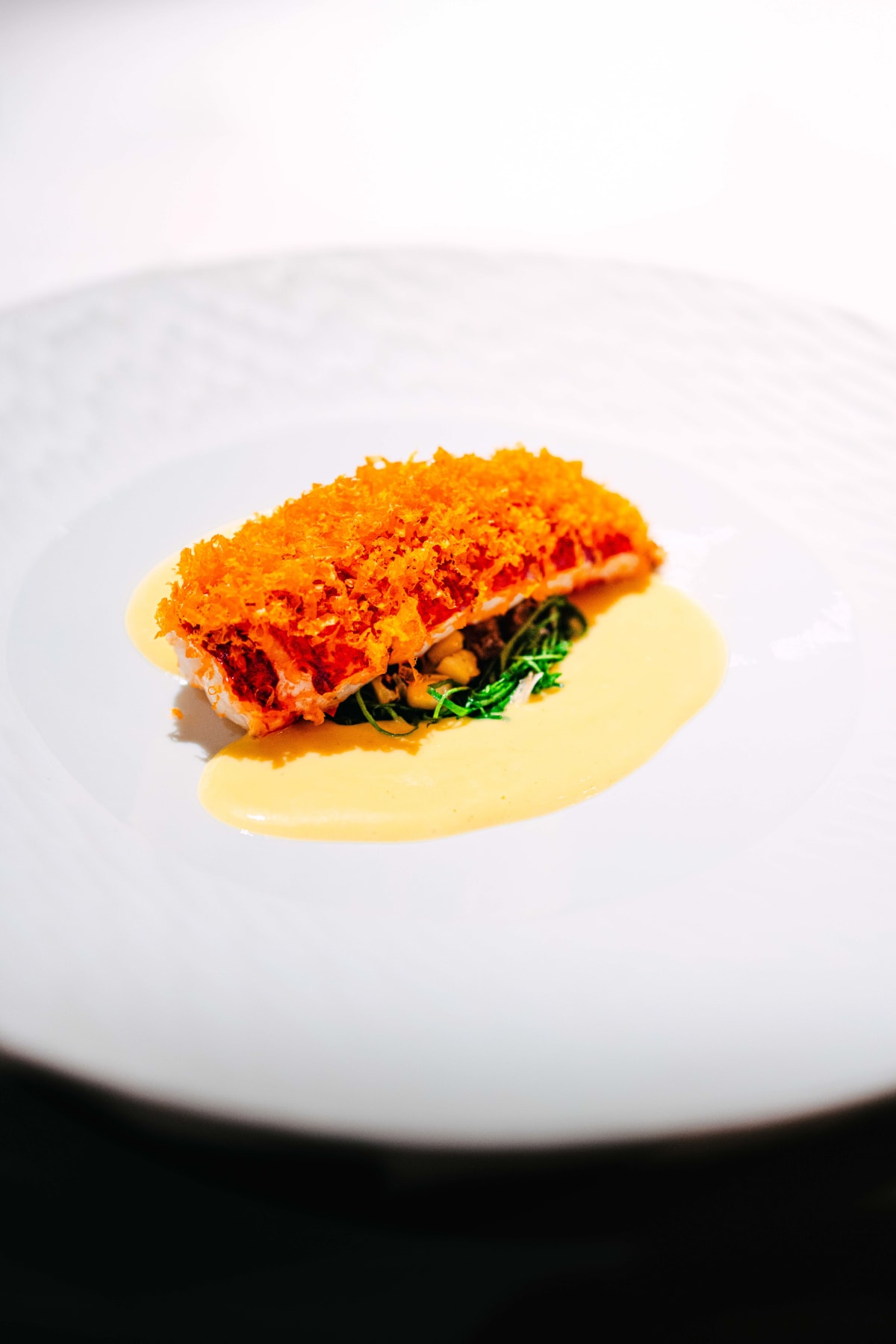
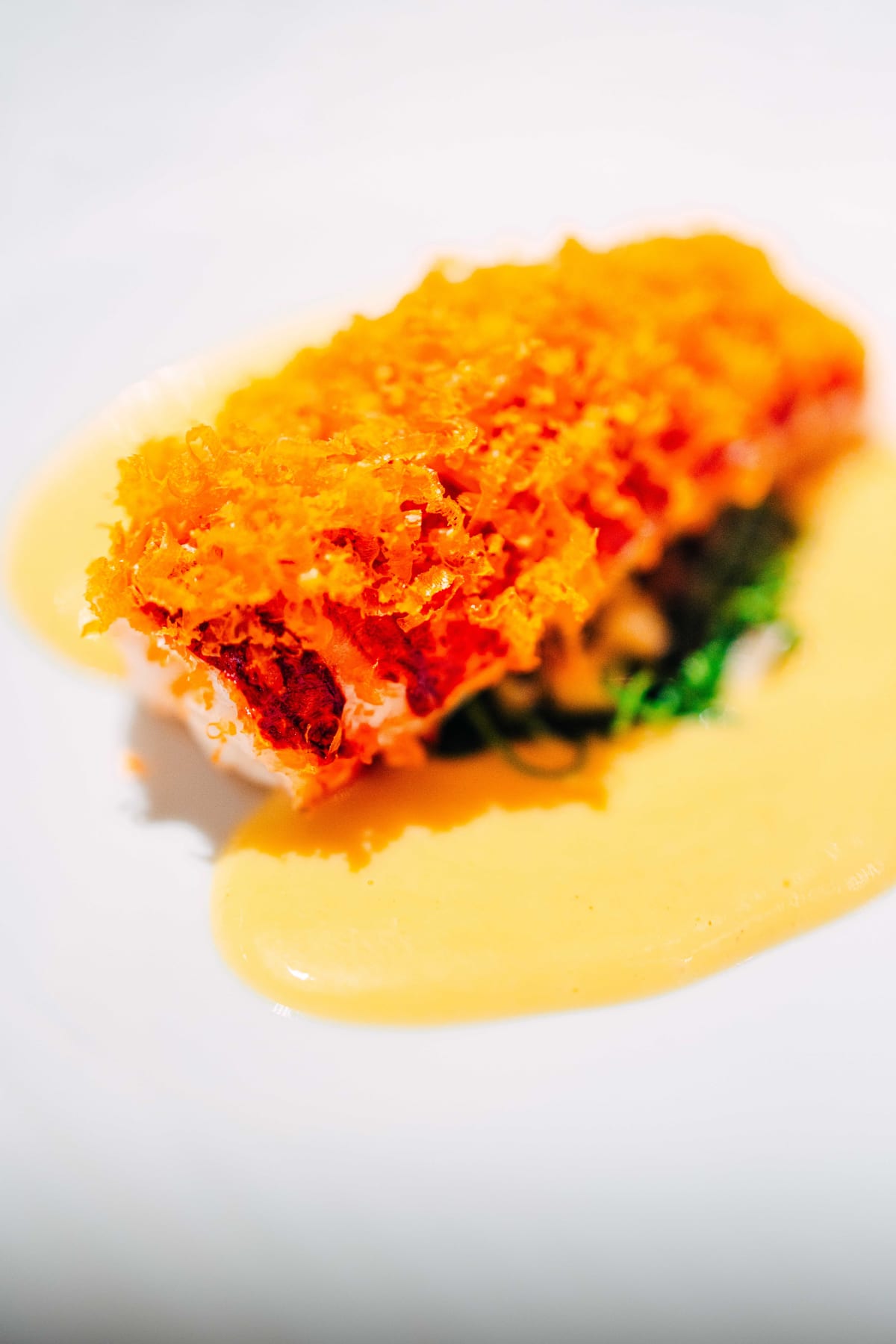
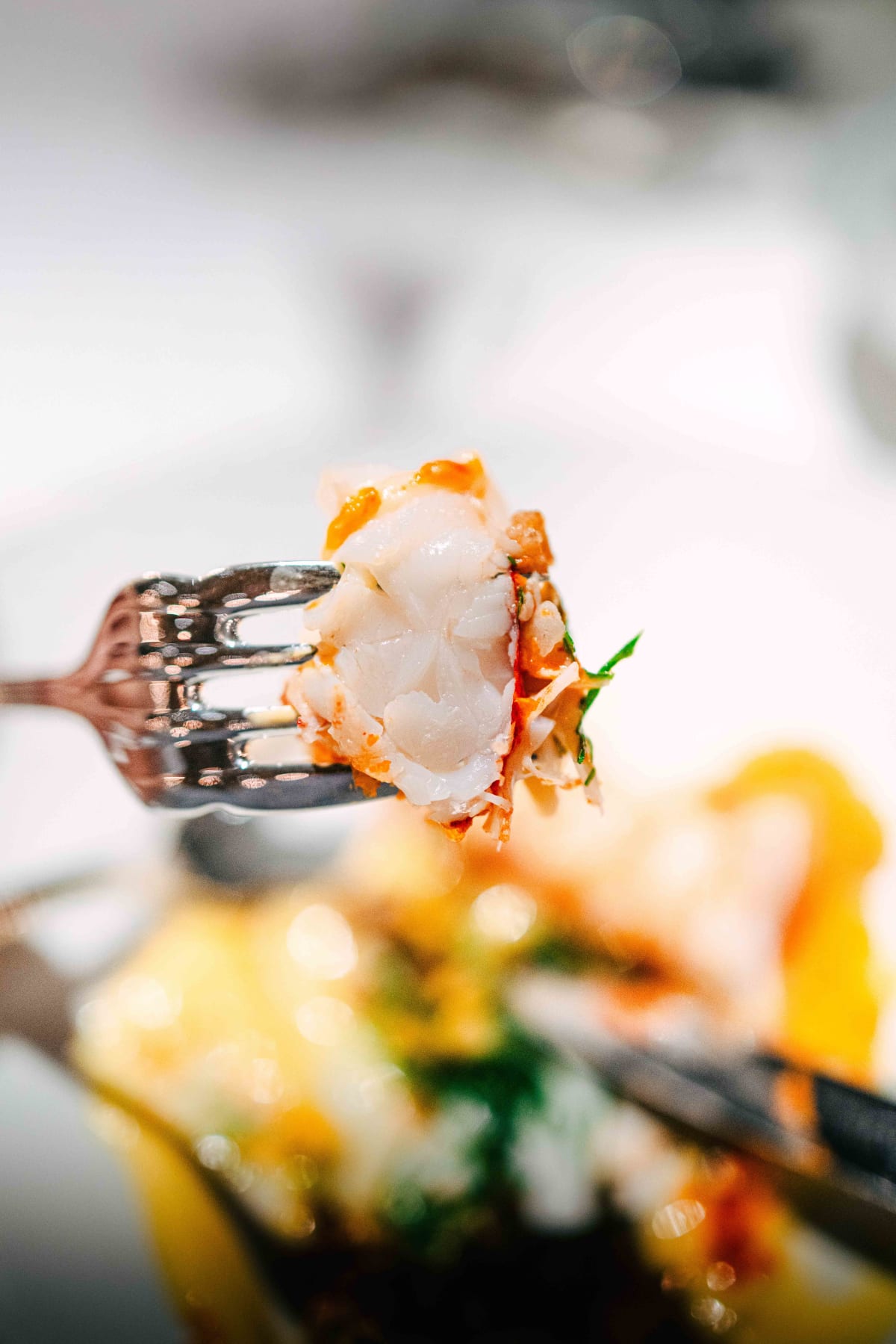
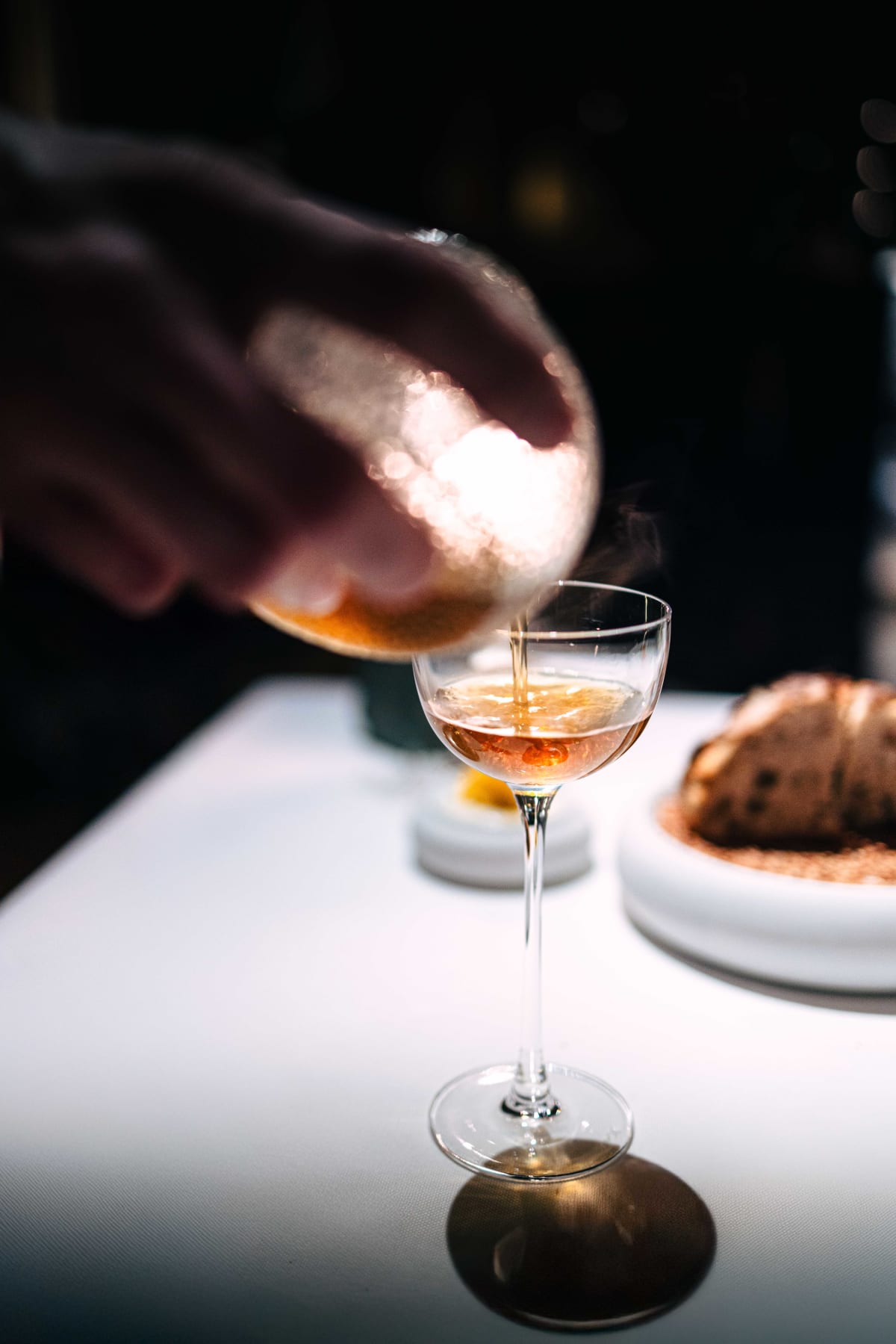
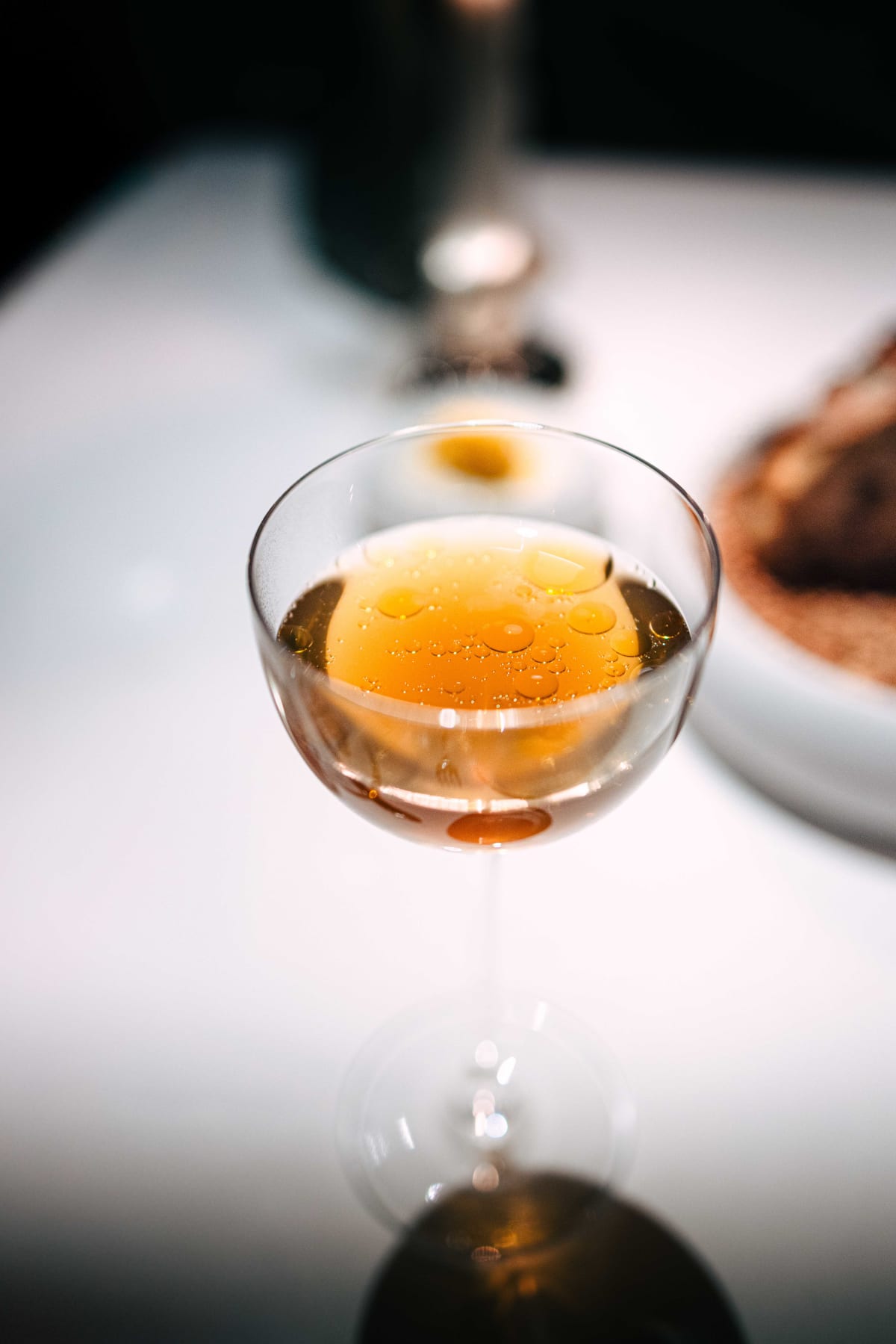
The fourth course was the first of the two dishes unique to the nine-course menu: Binchotan grilled lobster, Corn Velvety, Sour Sorrel. Binchotan, the Japanese white charcoal, holds an edge in setting surface texture quickly while allowing even penetration of heat. The lobster on this plate was sizeable and the cooking precise enough that no obvious improvement suggested itself.
46—51 / 90
Spinach and corn sat below; a consommé arrived in a separate vessel alongside.
47—50 / 90
From this point in the meal the orientation of the menu became more legible. Virée was, in name, an essay on Brittany. In practice, the use of binchotan, the deployment of consommé, and the Japanese inflection that would soon follow elsewhere meant that the register Banctel had carved into Périple was nevertheless quietly active throughout Virée. The separation between the two menus, in other words, was not as clean as their framing implied. This dish was the second-best course of the evening.
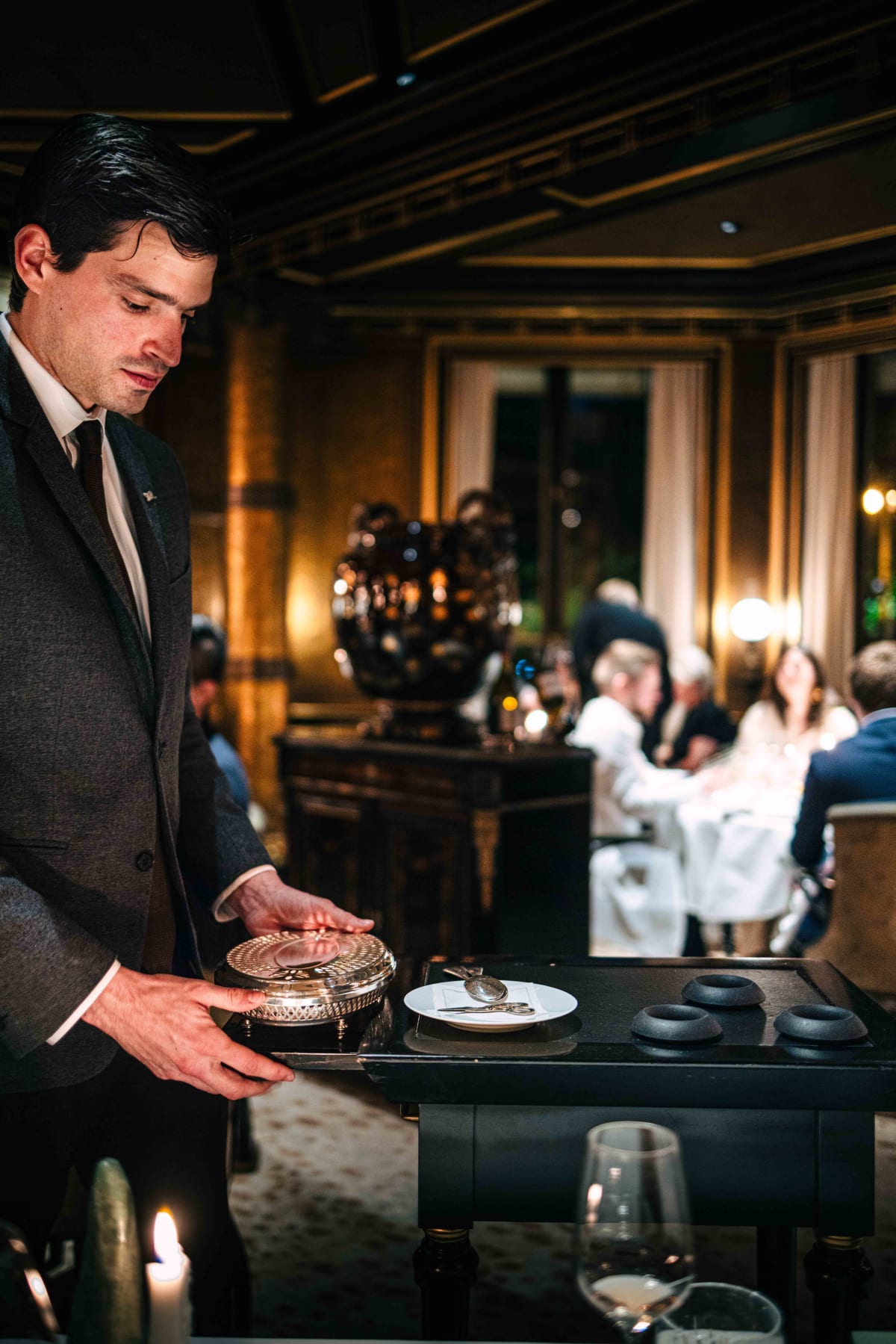
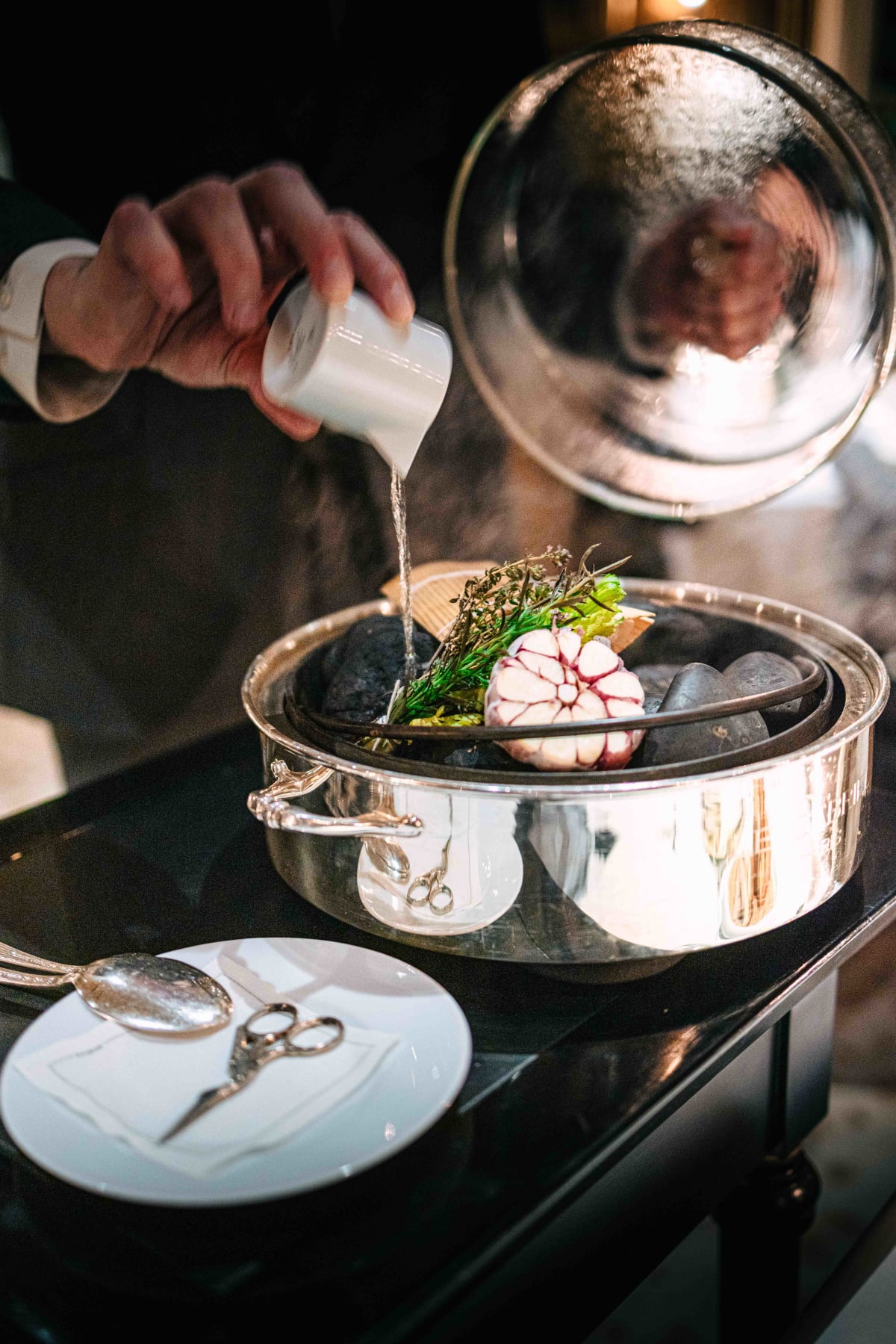
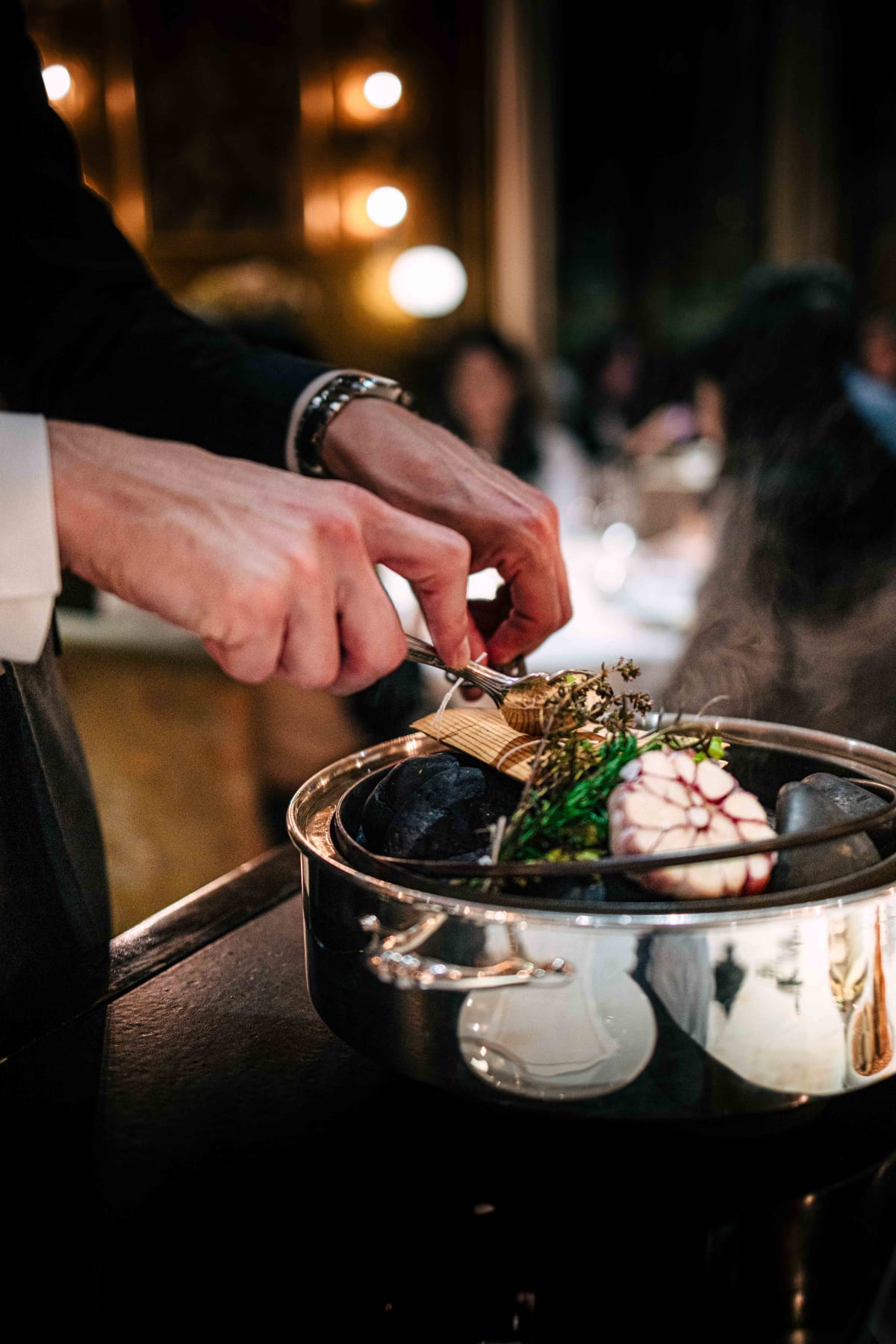
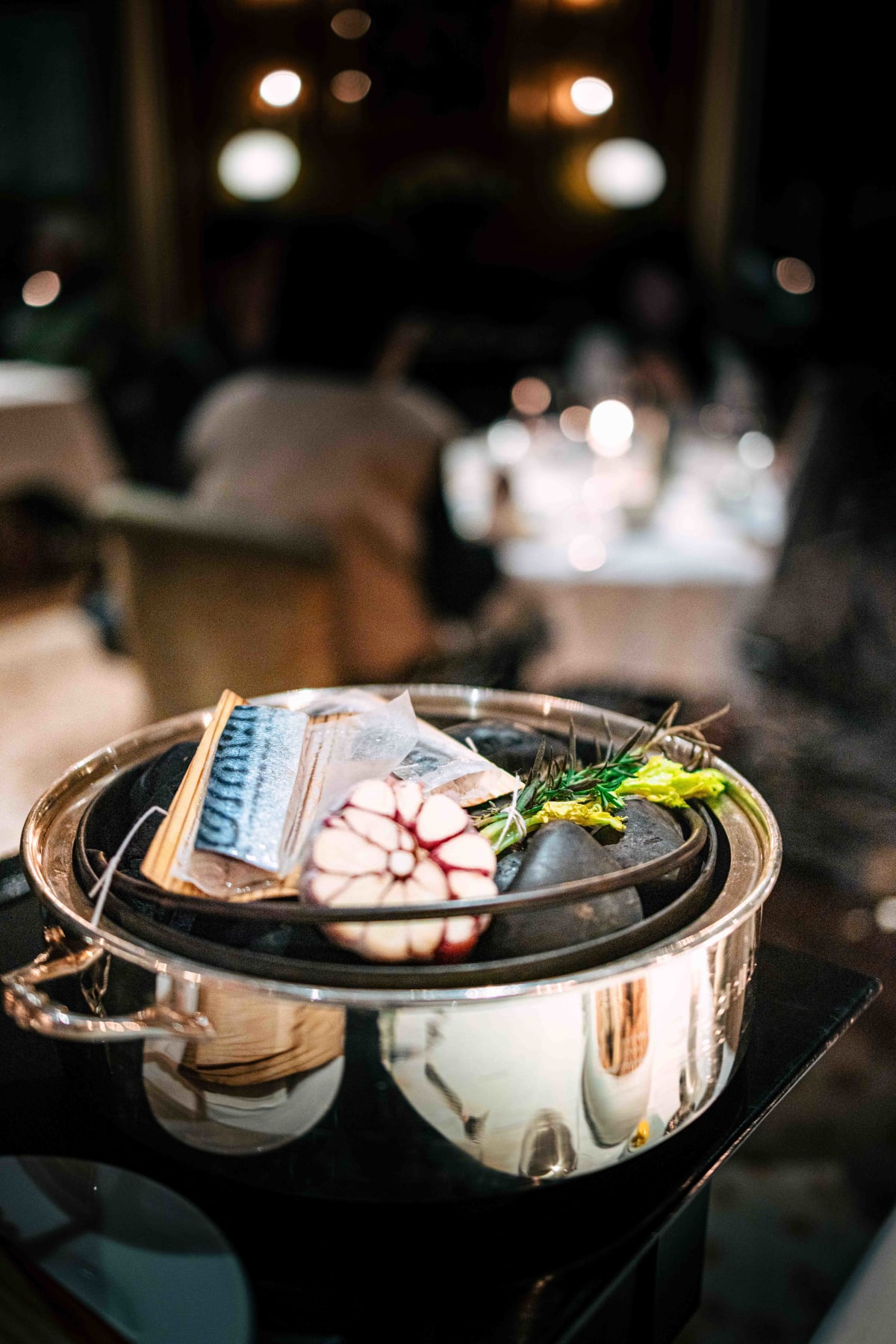
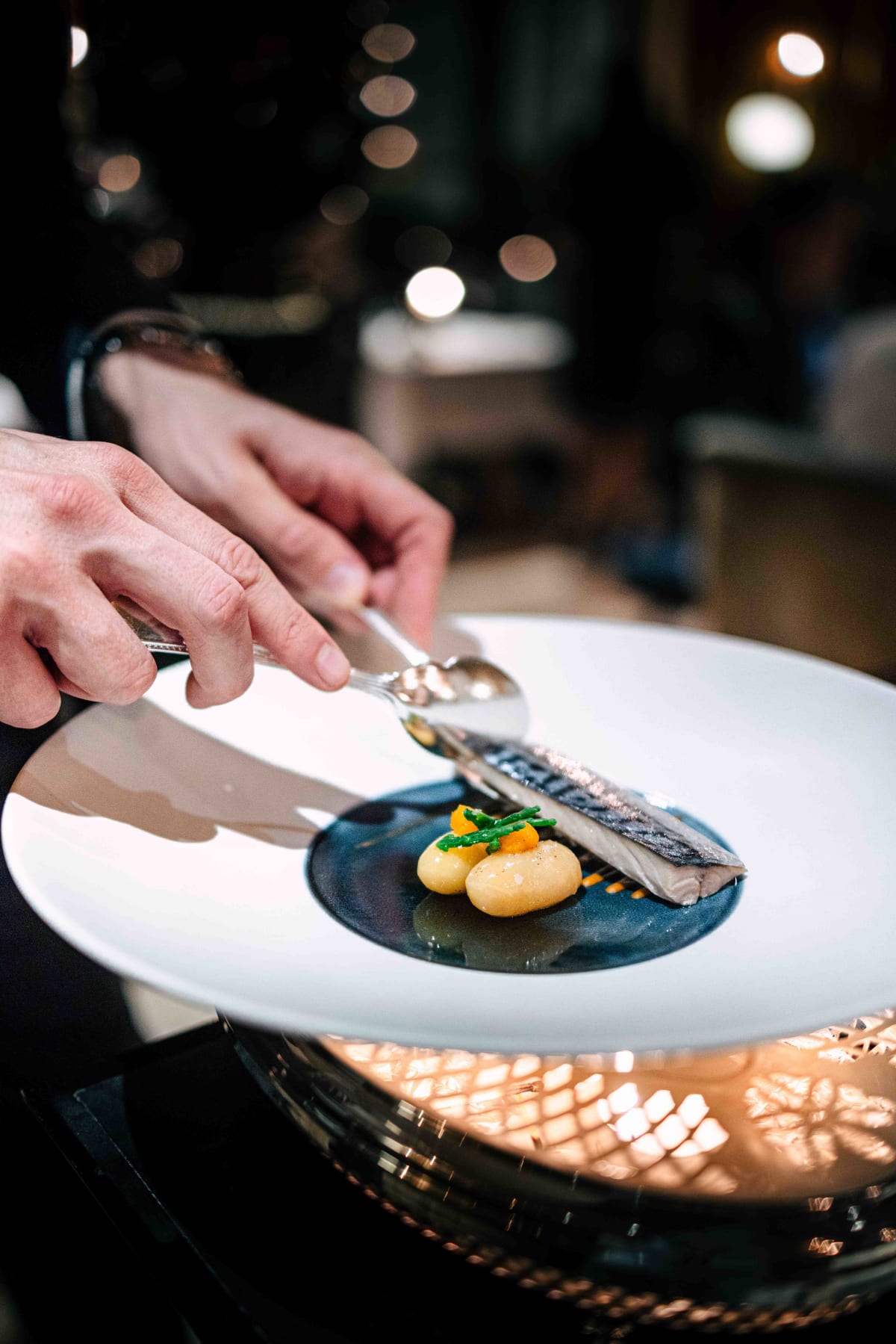
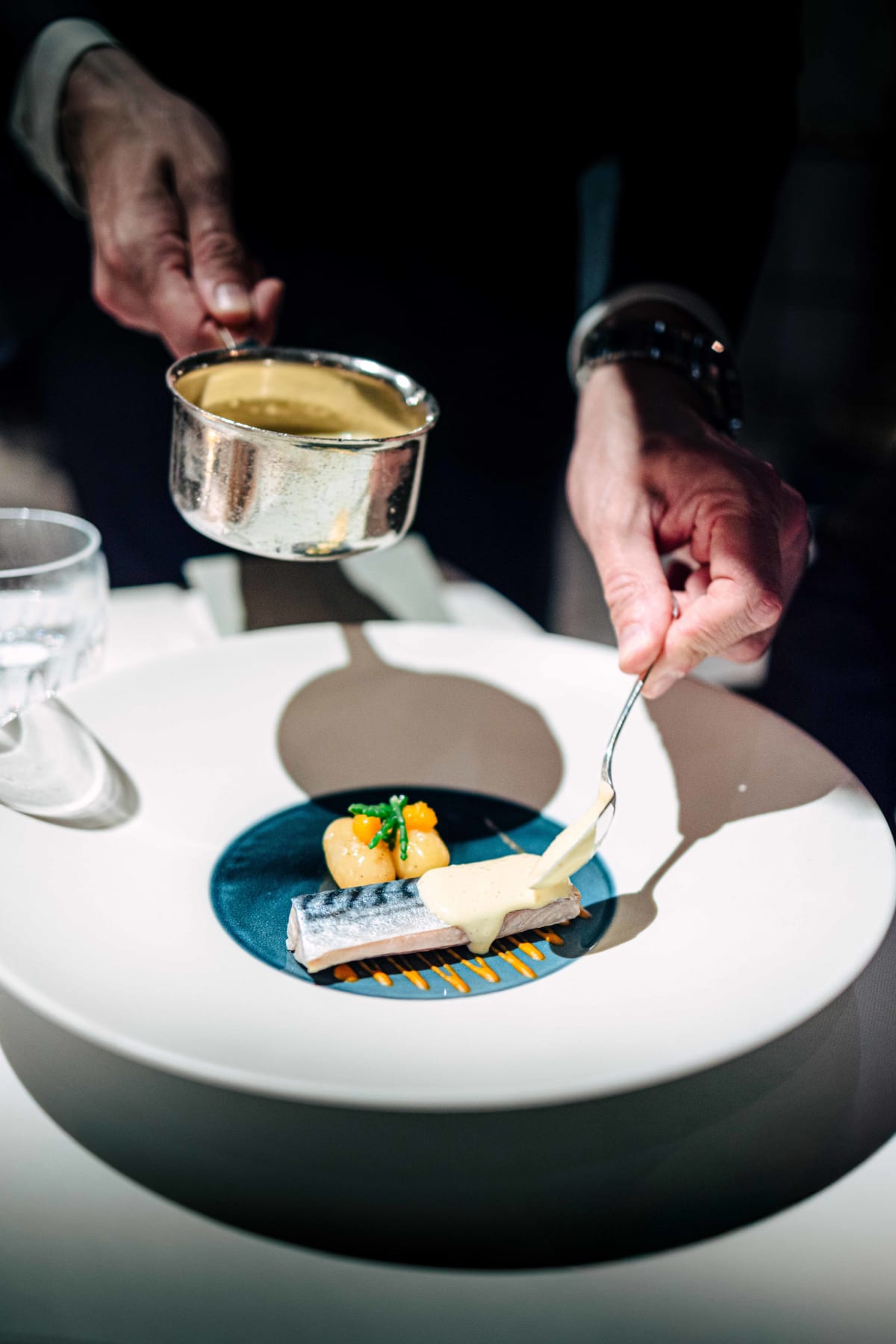
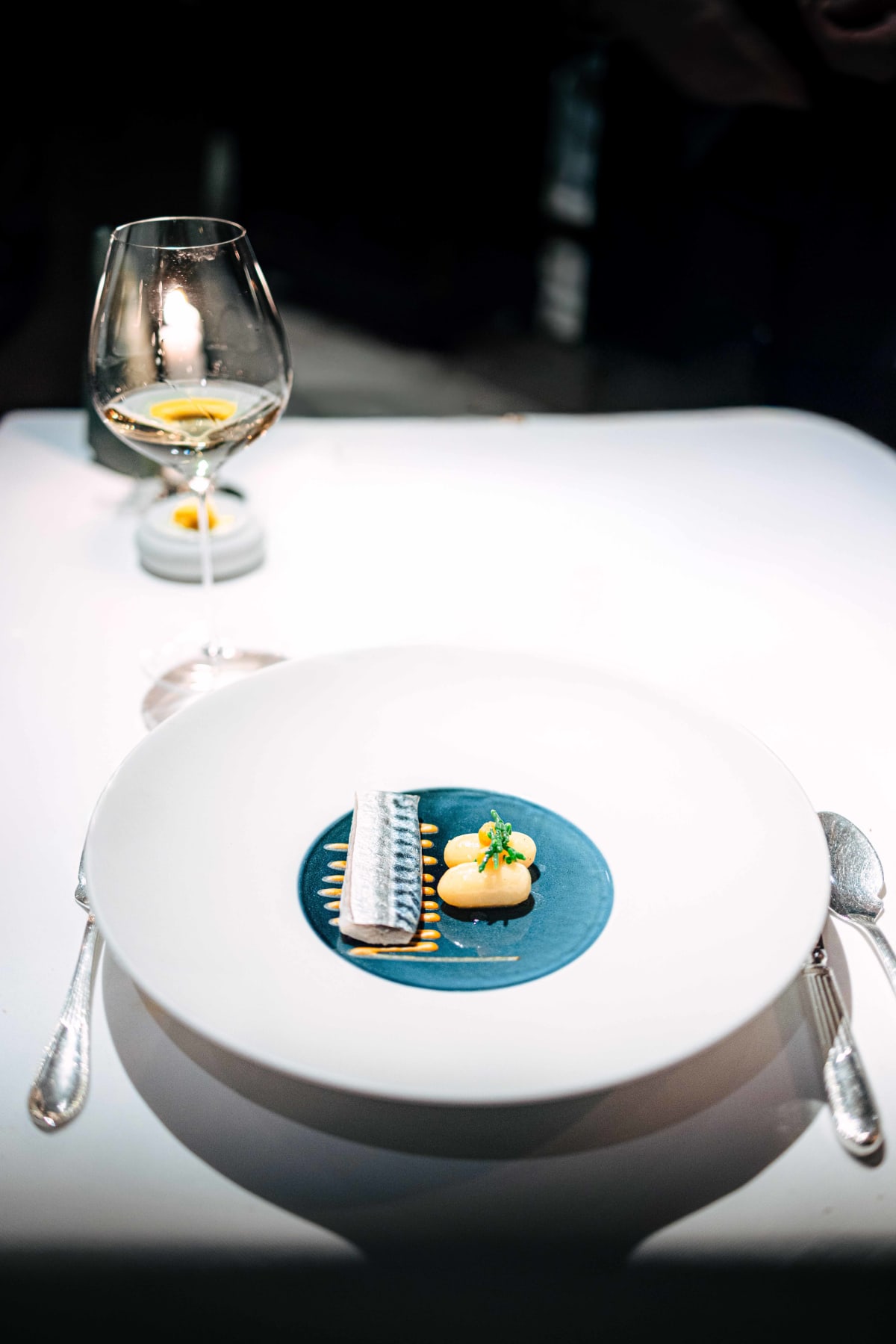
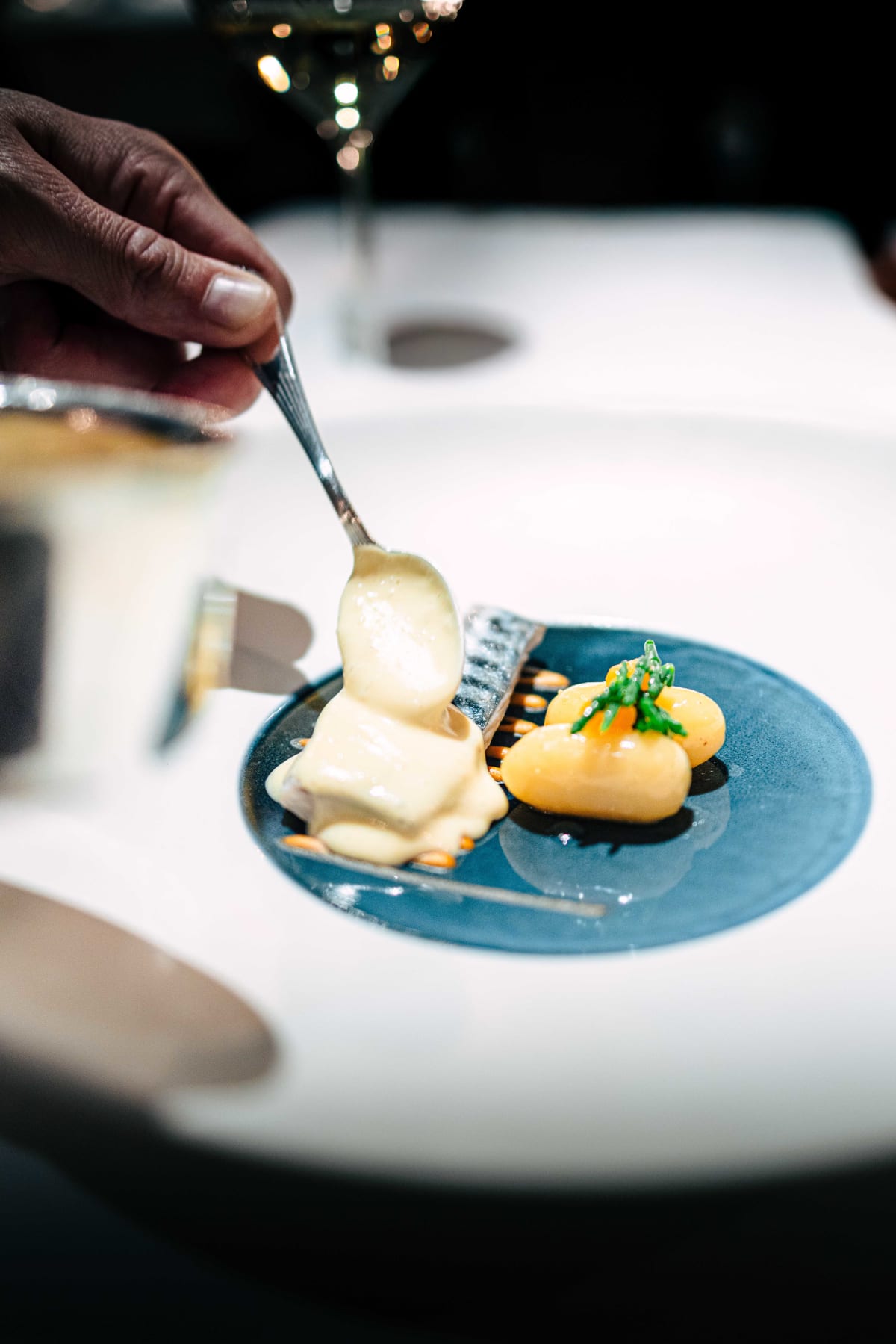
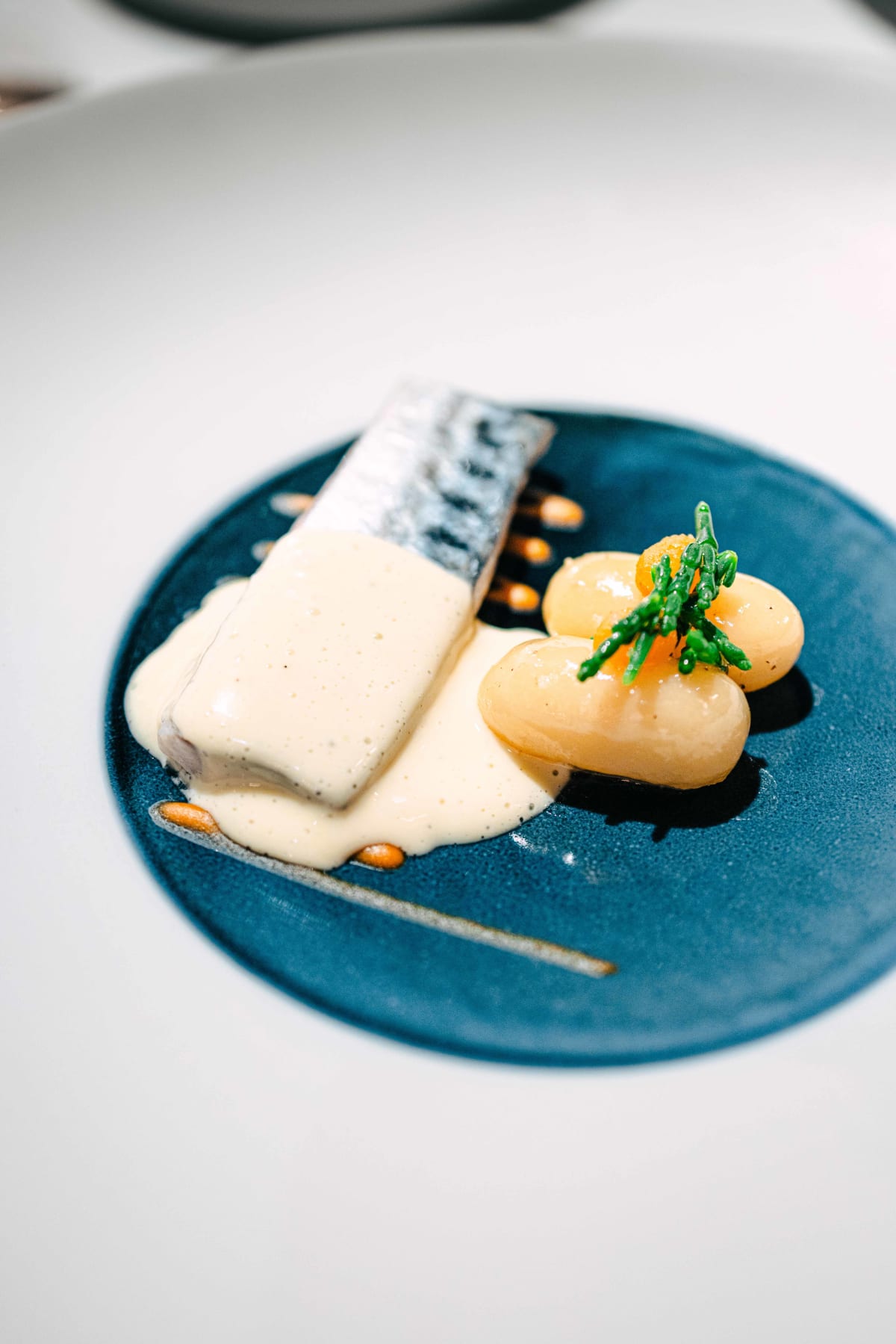
The fifth course was Mackerel on galet, confit amandine, bourride sauce. A trolley arrived bearing a tall silver steamer, and the server opened it at the table to reveal a presentation of distinctly Asian sensibility. A small performance of water mist accompanied the opening of the lid.
52—58 / 90
The cooking itself had been completed in the kitchen; the tableside step was display rather than completion, but the choreography was tightly composed. The mackerel was cooked through to a yielding texture, and the bourride sauce was poured with appropriate balance.
2—2 / 90
The personal distance to mackerel as an ingredient, however, was harder to close. It is a fish I have eaten regularly in Korea, where the raw preparation in particular sets a high reference point; in that frame, what this course offered in novelty was constrained. The execution was not the issue. The depth of impression was modest.
59—61 / 90
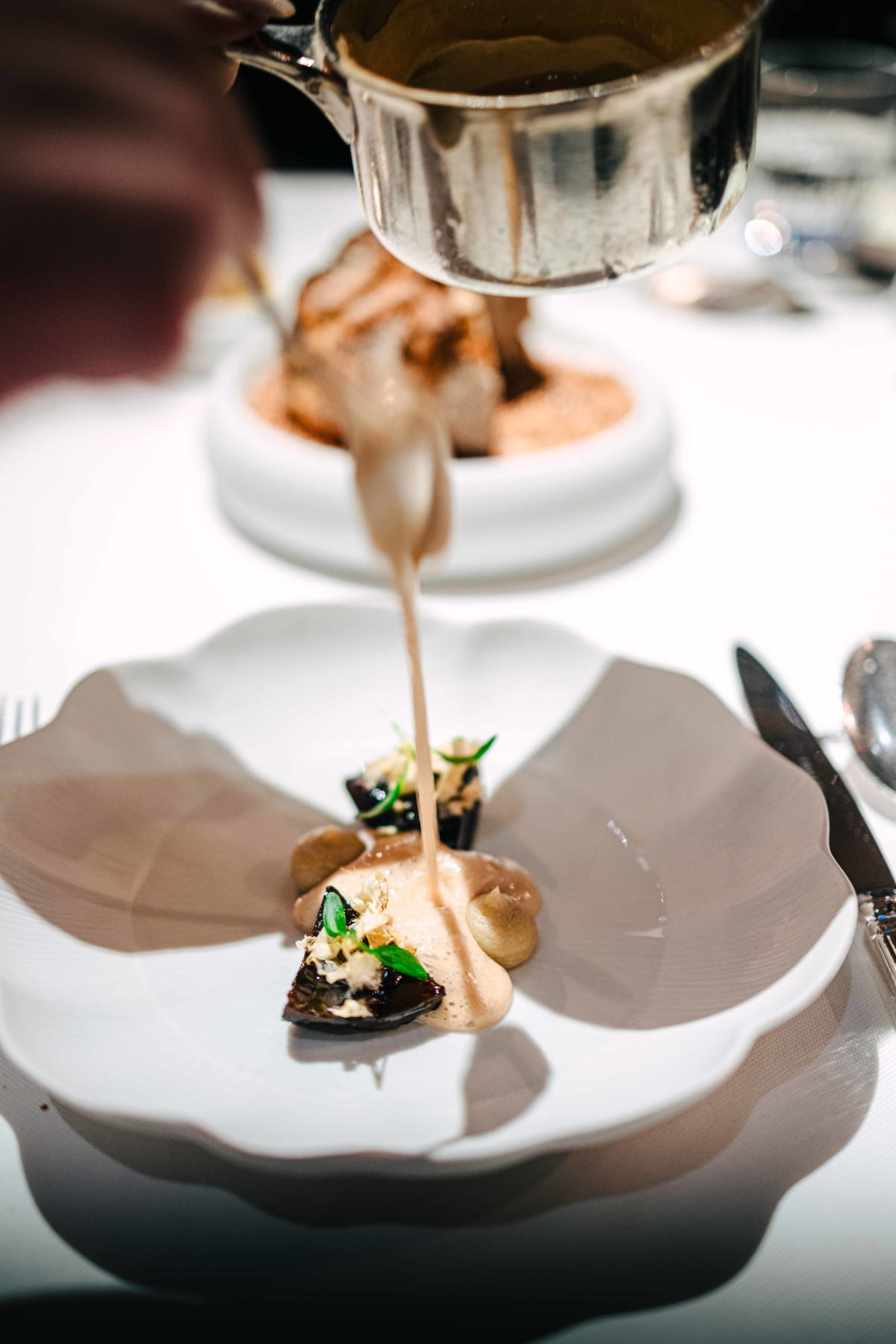
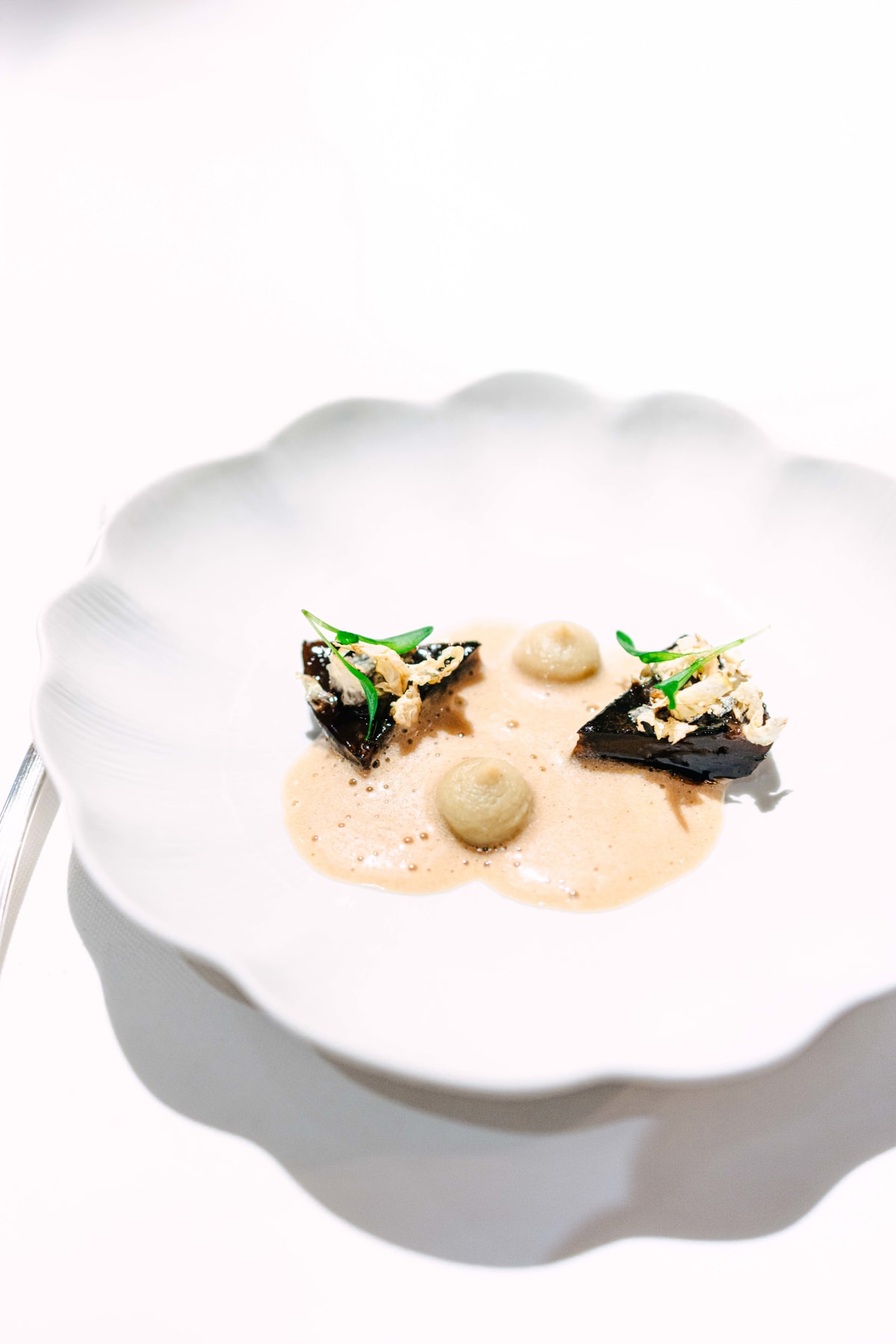
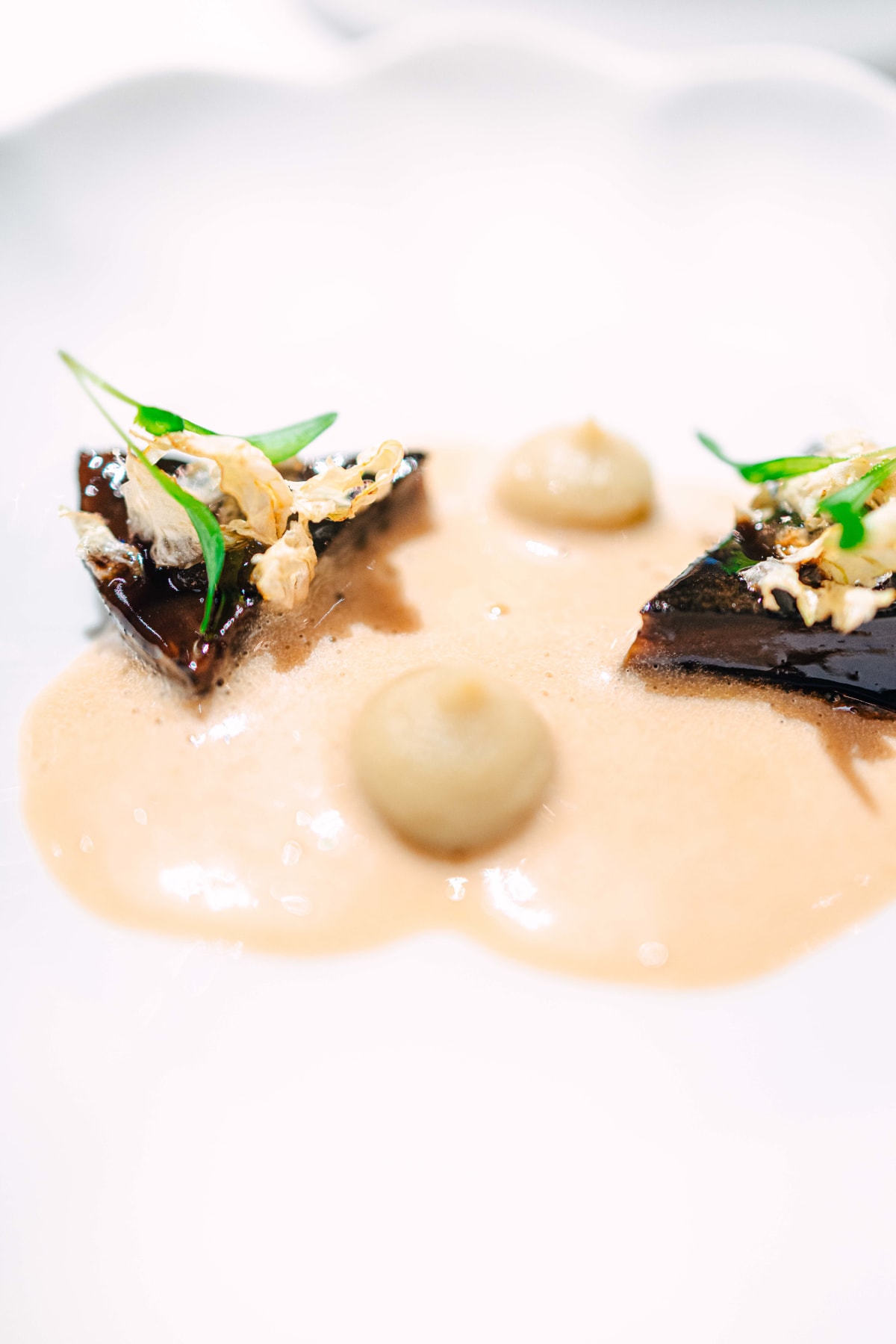
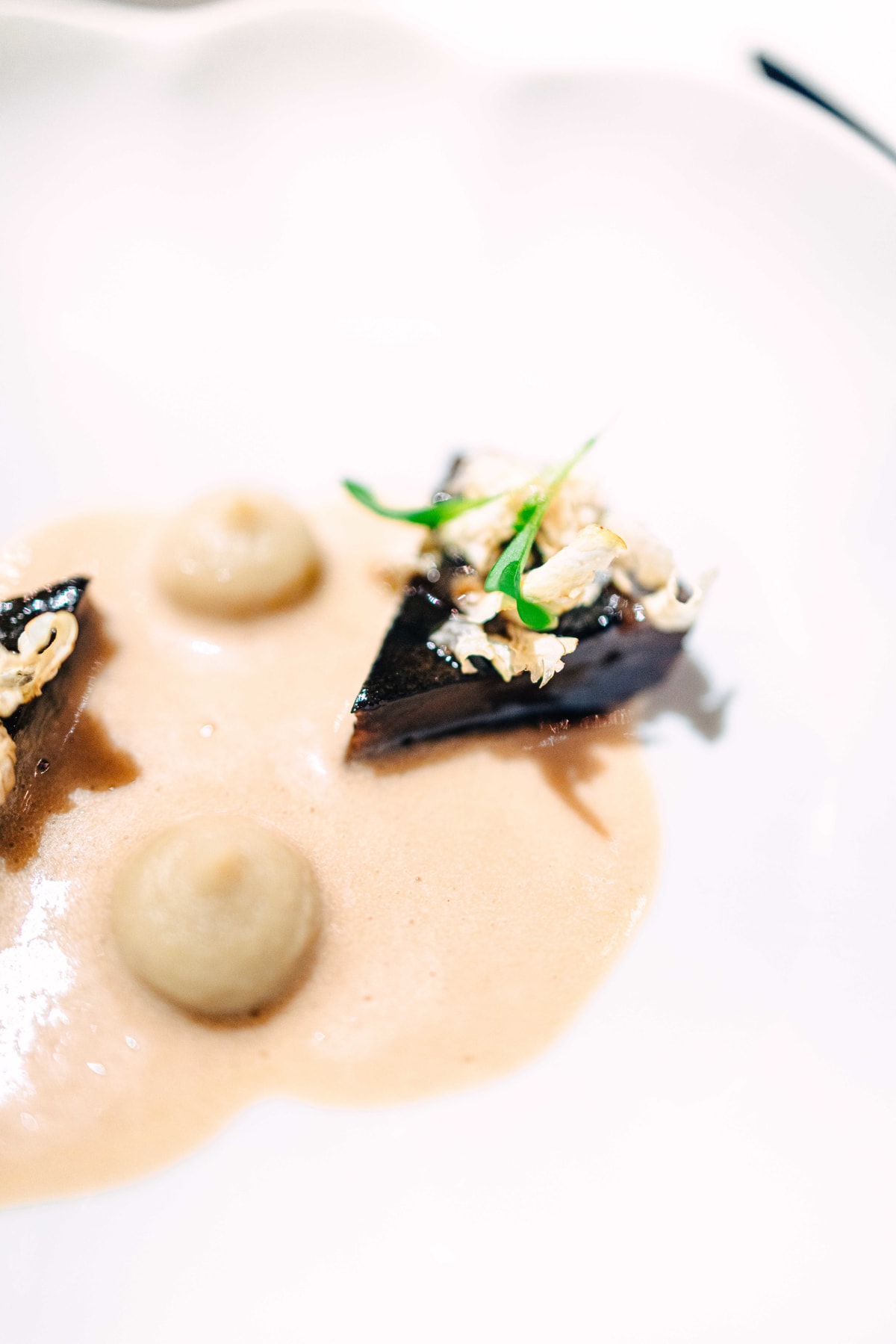
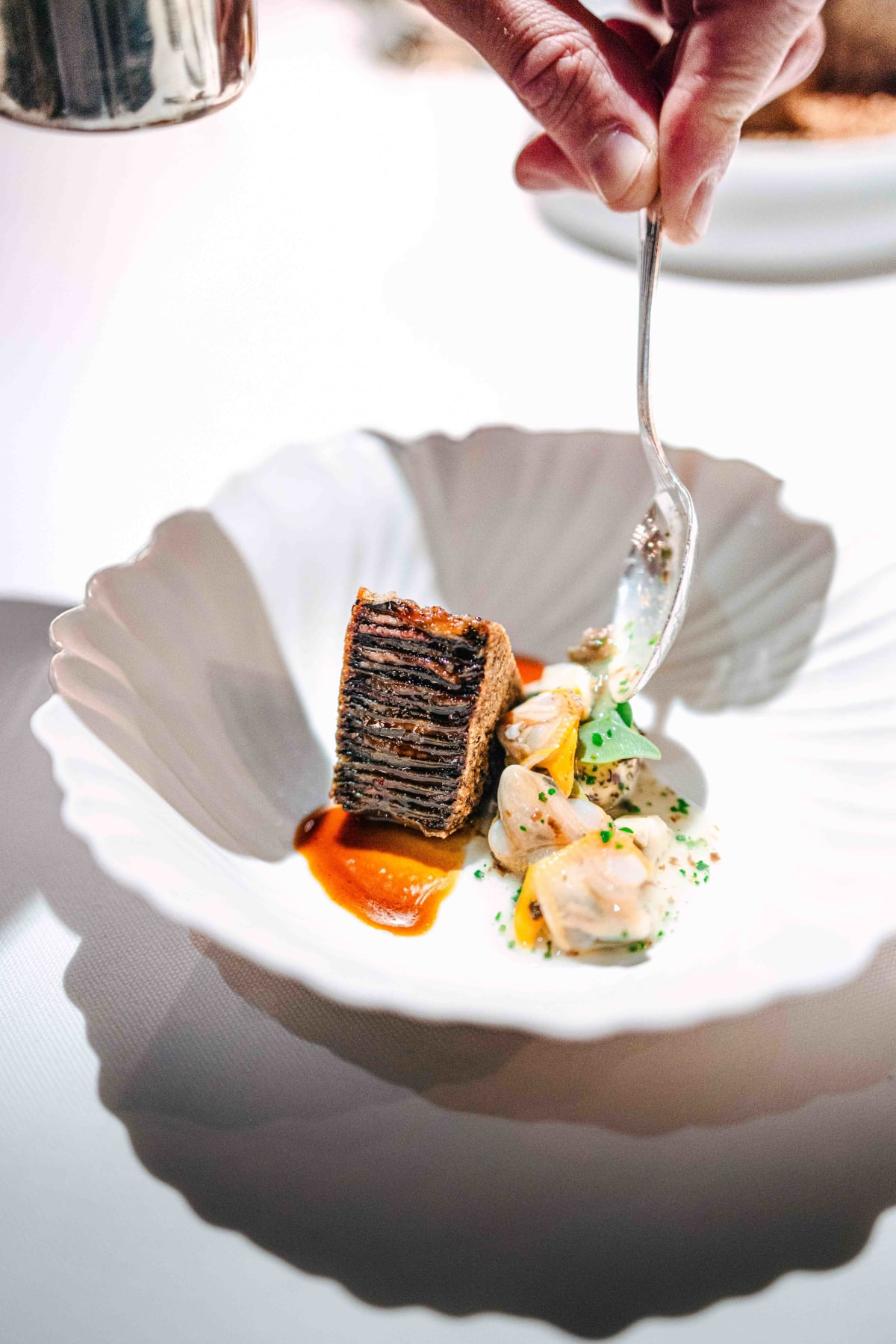
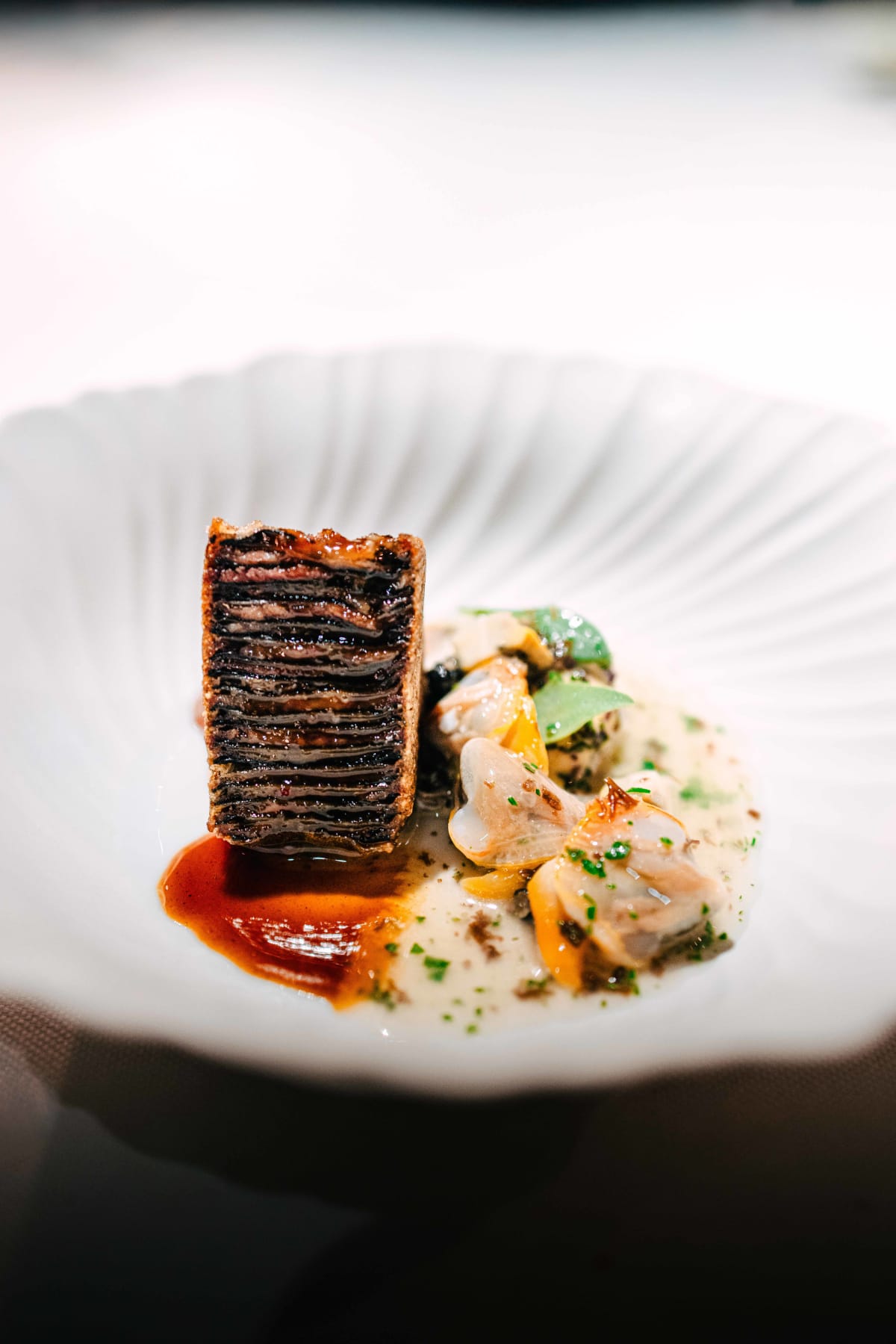
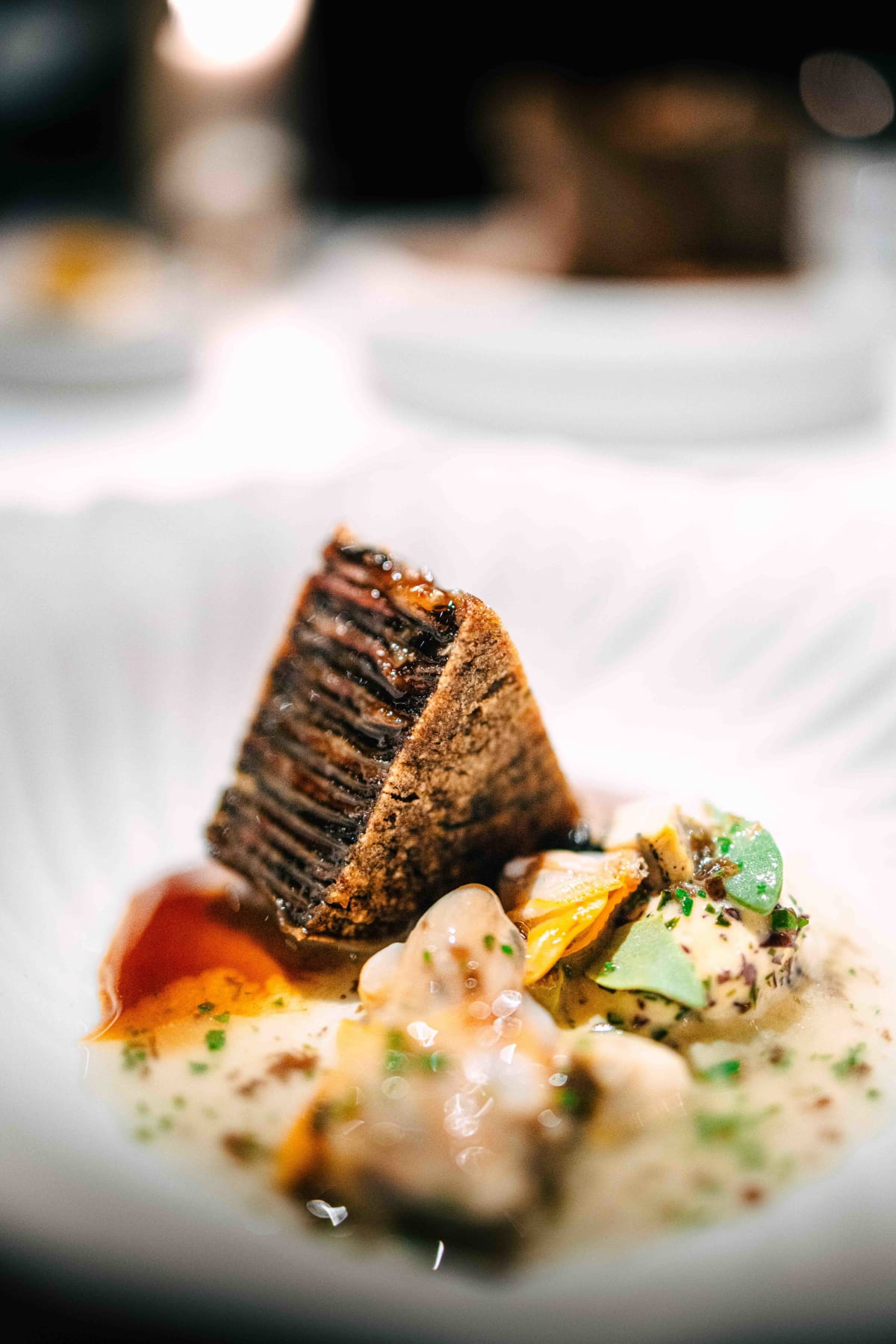
The sixth course, again exclusive to the nine-course menu, was Crispy pig's head «terrine», seaweed, cream and seashells. This was the best course of the evening. A garnish recalling the salinity of Korean fermented shellfish sat alongside, and at the centre of the plate the pig's head terrine itself delivered the most arresting texture of the meal.
62—66 / 90
The terrine held its line while simultaneously carrying a near-fragile lightness; the salinity of the side and the soft cream that followed gave the bite further structure. That the two courses unique to the nine-course menu, the binchotan lobster and this terrine, both occupied the high point of the evening was not coincidental. The menu had been designed to place its strongest material in the slots that the seven-course version skips. If there is a reason to return to this restaurant, the menu choice is no longer in question. Nine courses.
The menu had been designed to place its strongest material in the slots that the seven-course version skips.
68—68 / 90
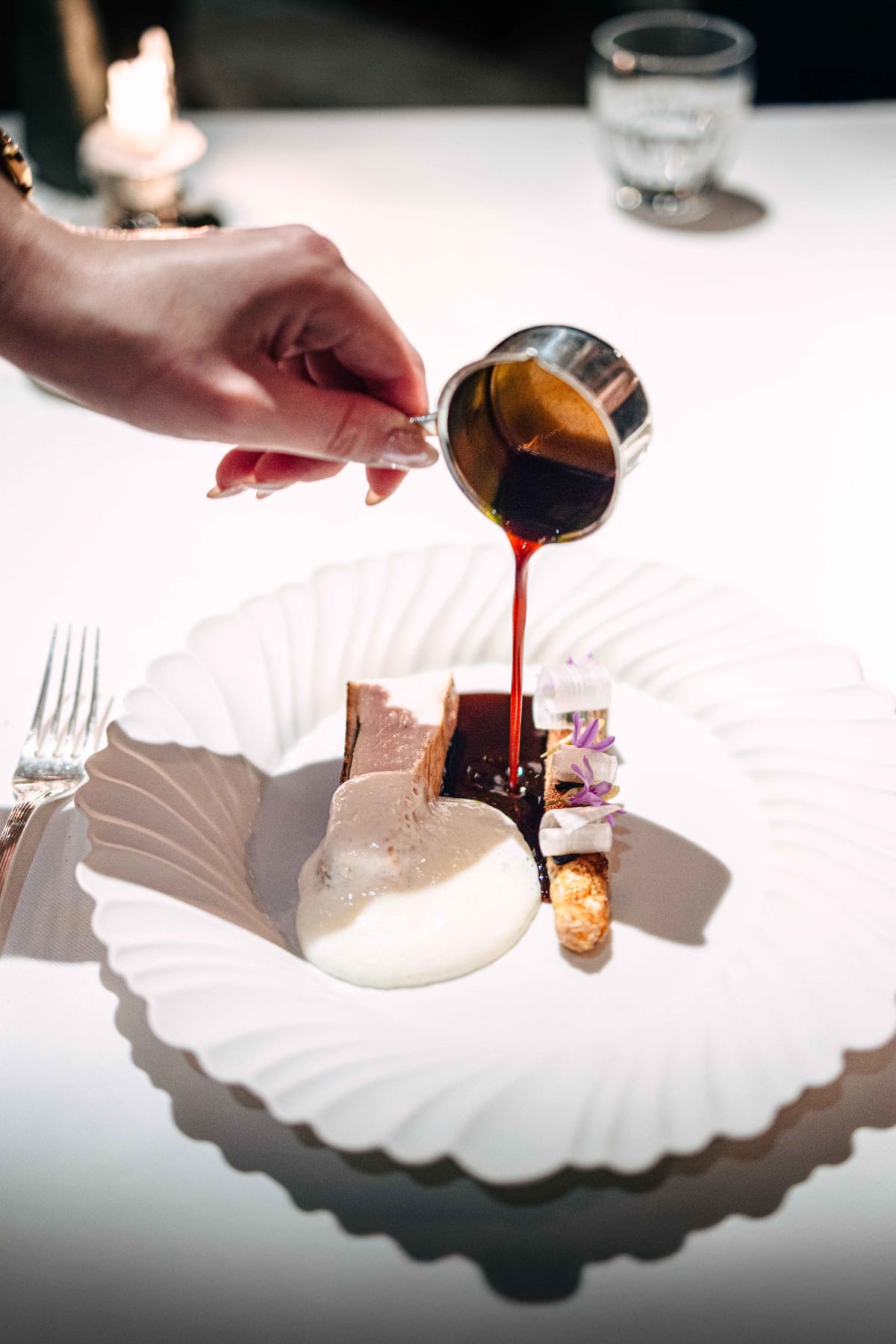
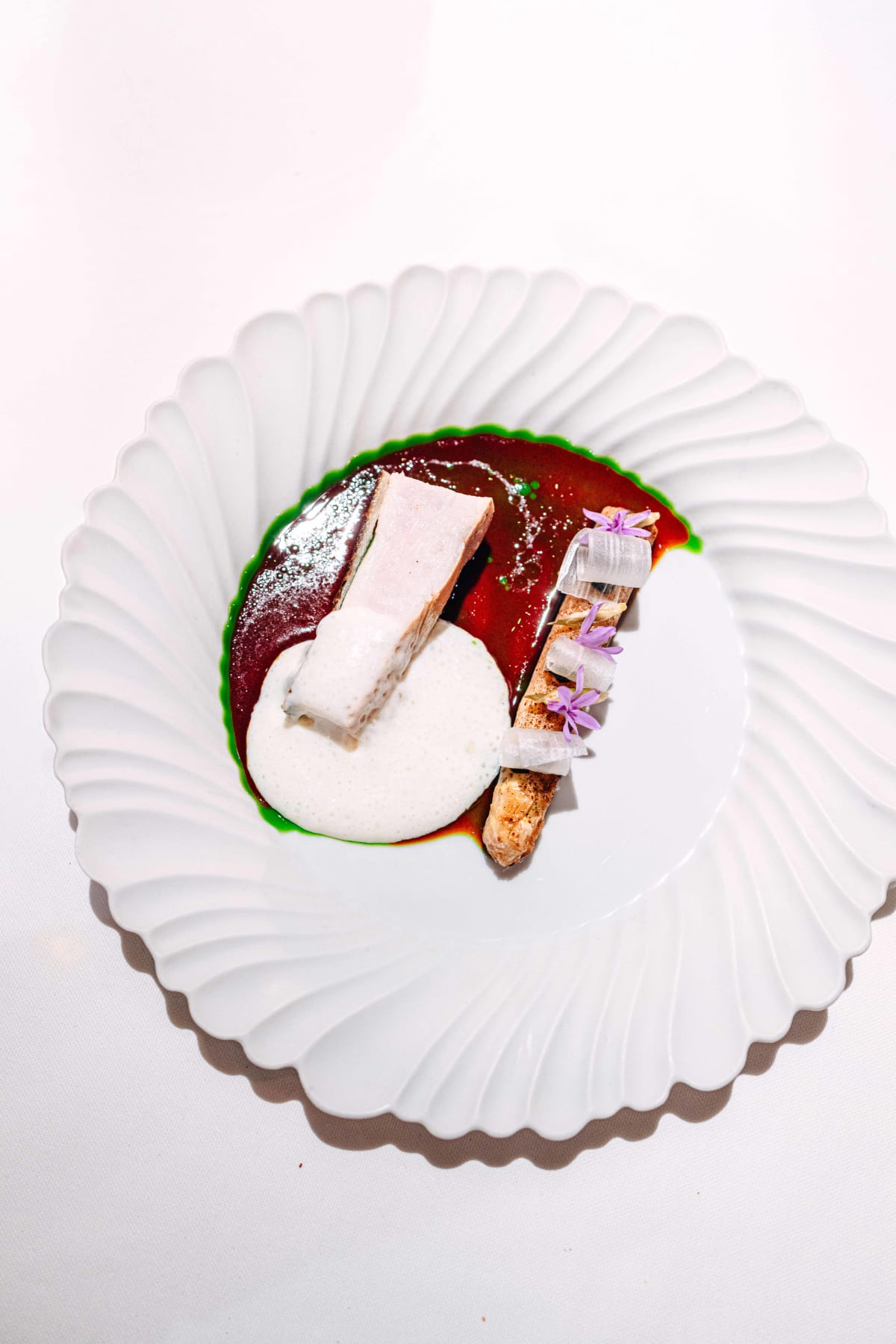
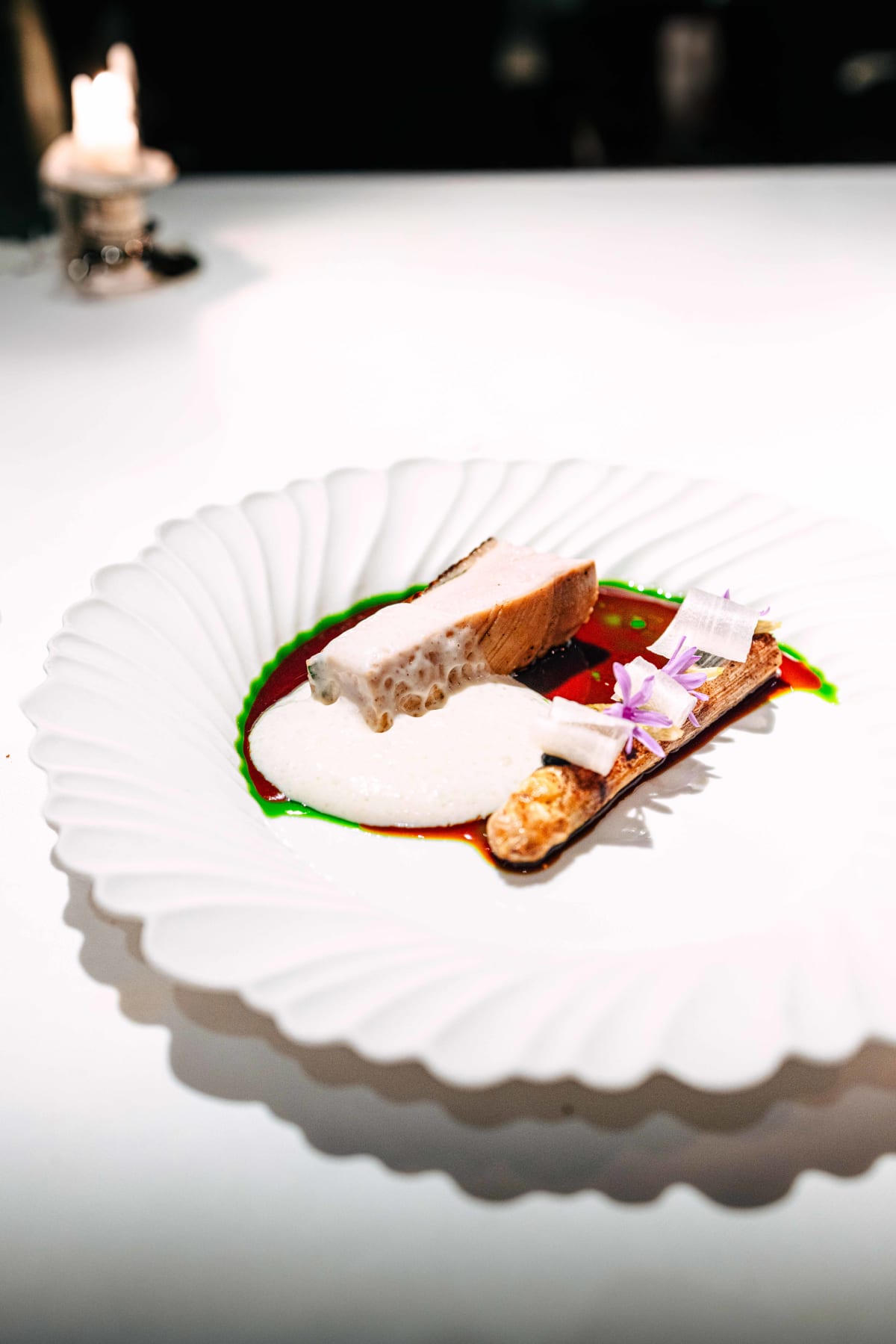
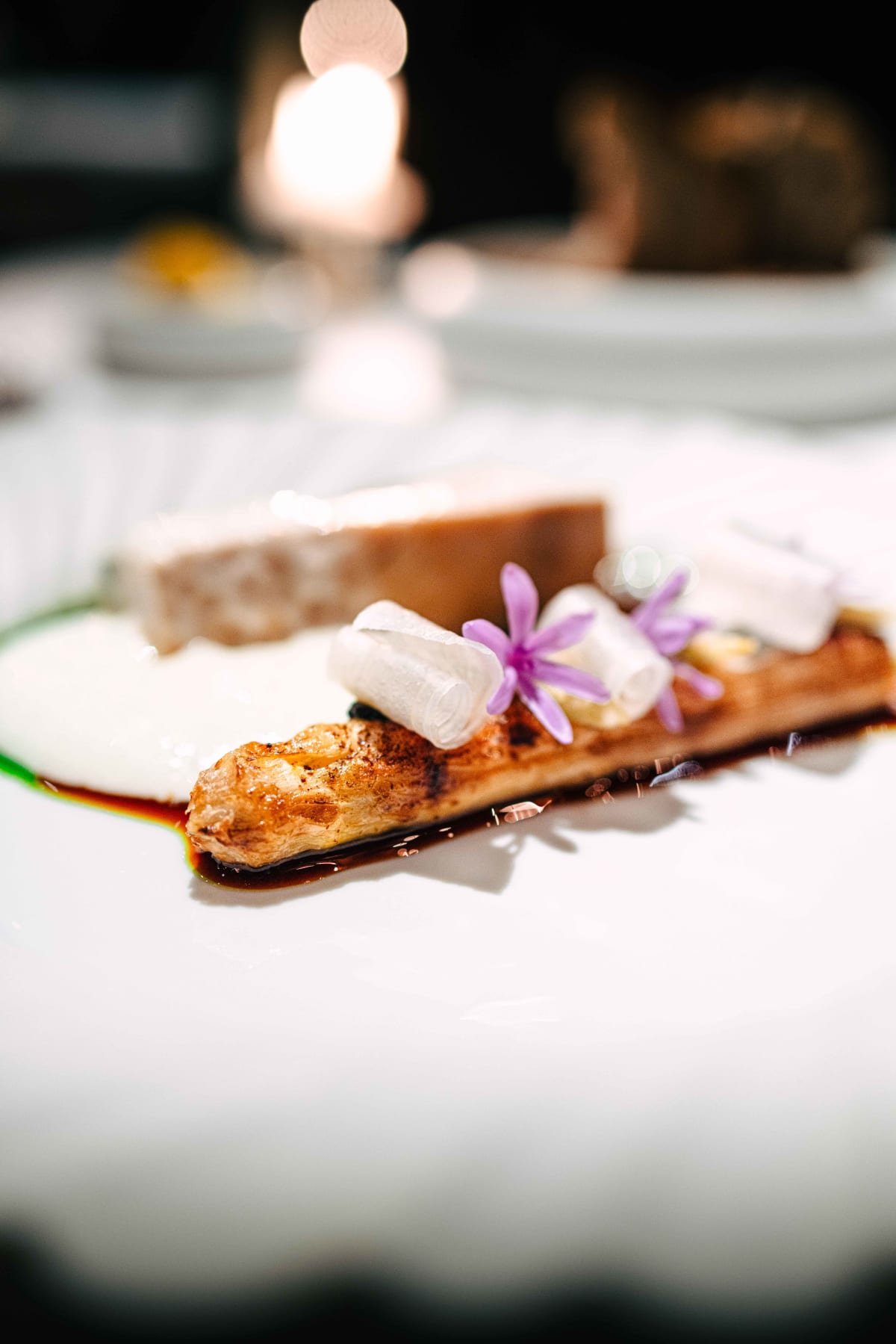
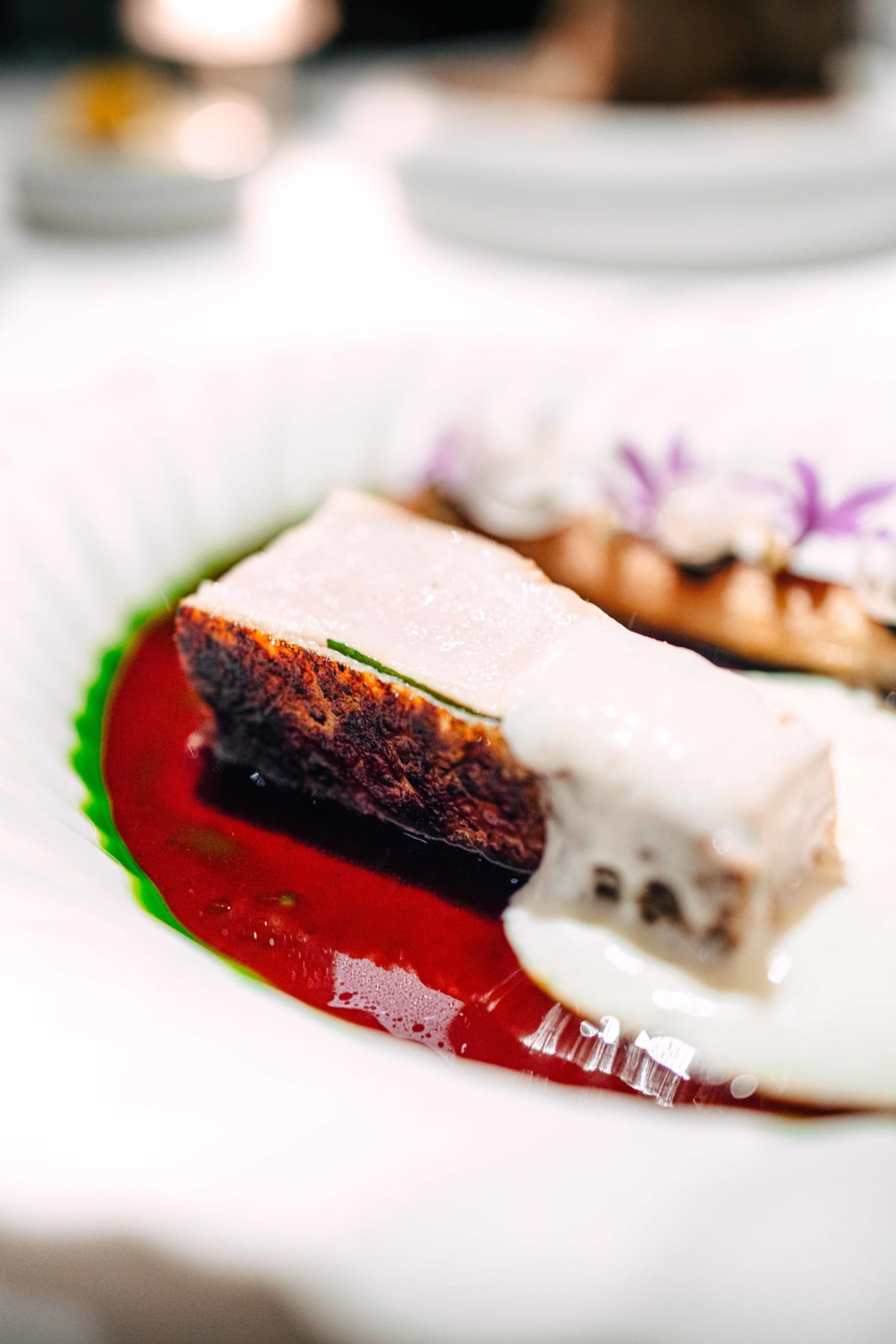
The seventh and final main course was Hen farm chicken, buttermilk, white asparagus, wild garlic. Brittany is a region with a serious poultry tradition, and chicken in the main slot followed naturally from the Virée framing. Even so, there is a structural limit to what a chicken can deliver at the Michelin main.
69—72 / 90
The issue is not that the cooking falls short; it is that an ingredient encountered daily has a narrower range over which it can produce difference at this stage of a course. Pigeon, partridge, poularde, or the wider gamebird register that the position invites would each have offered a sharper close. With farm chicken in the slot, the final phrase of the menu did not land with full punctuation.
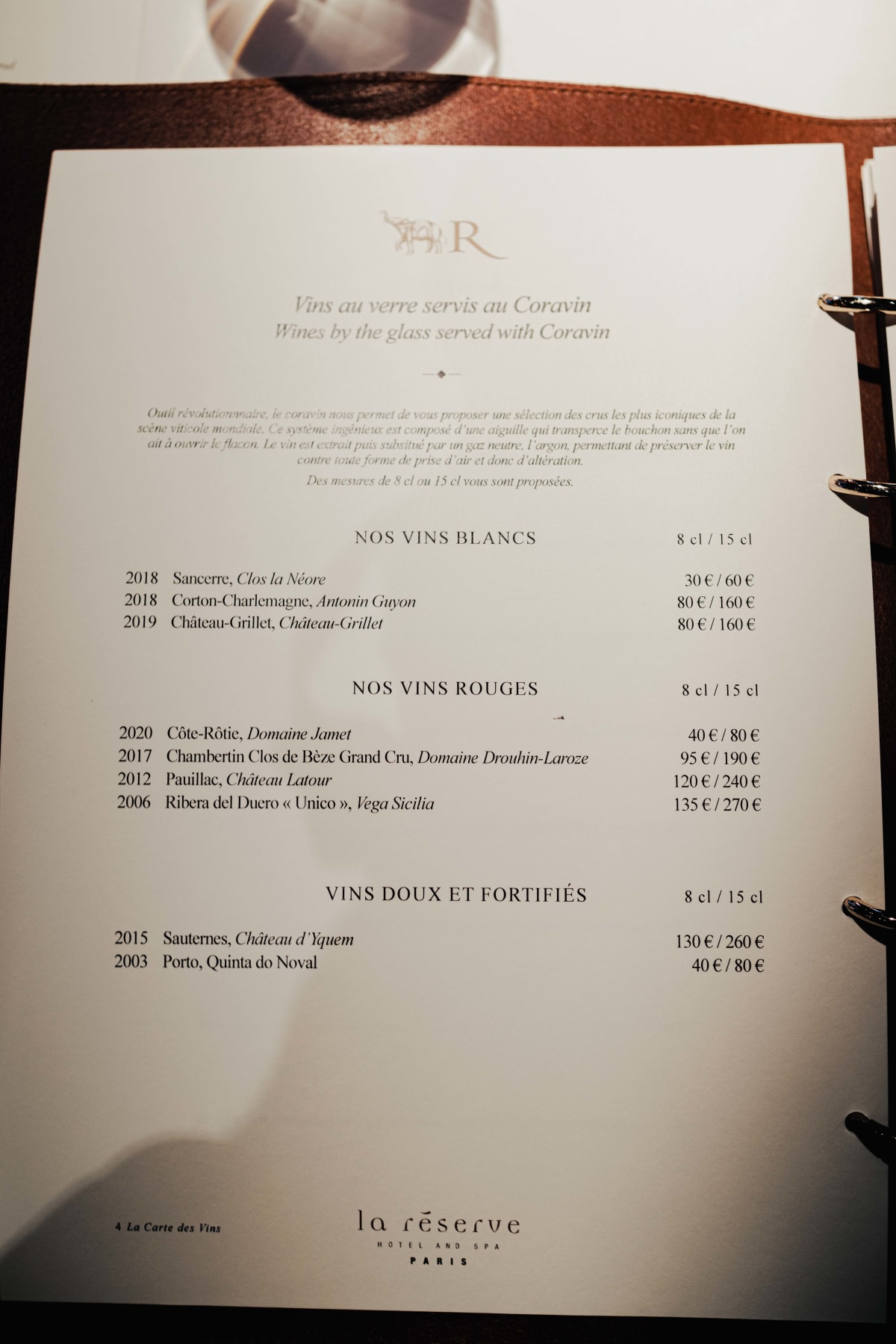
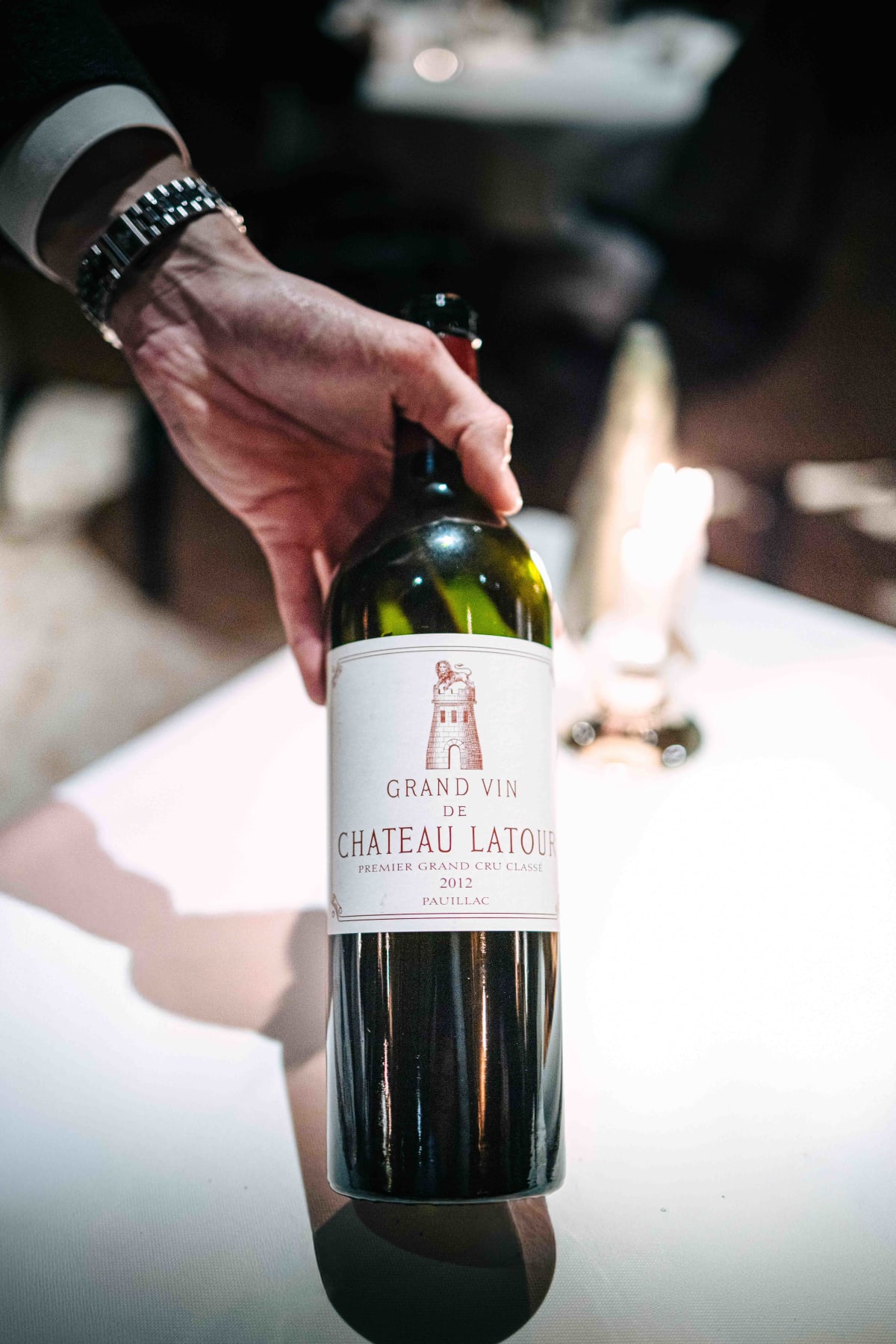
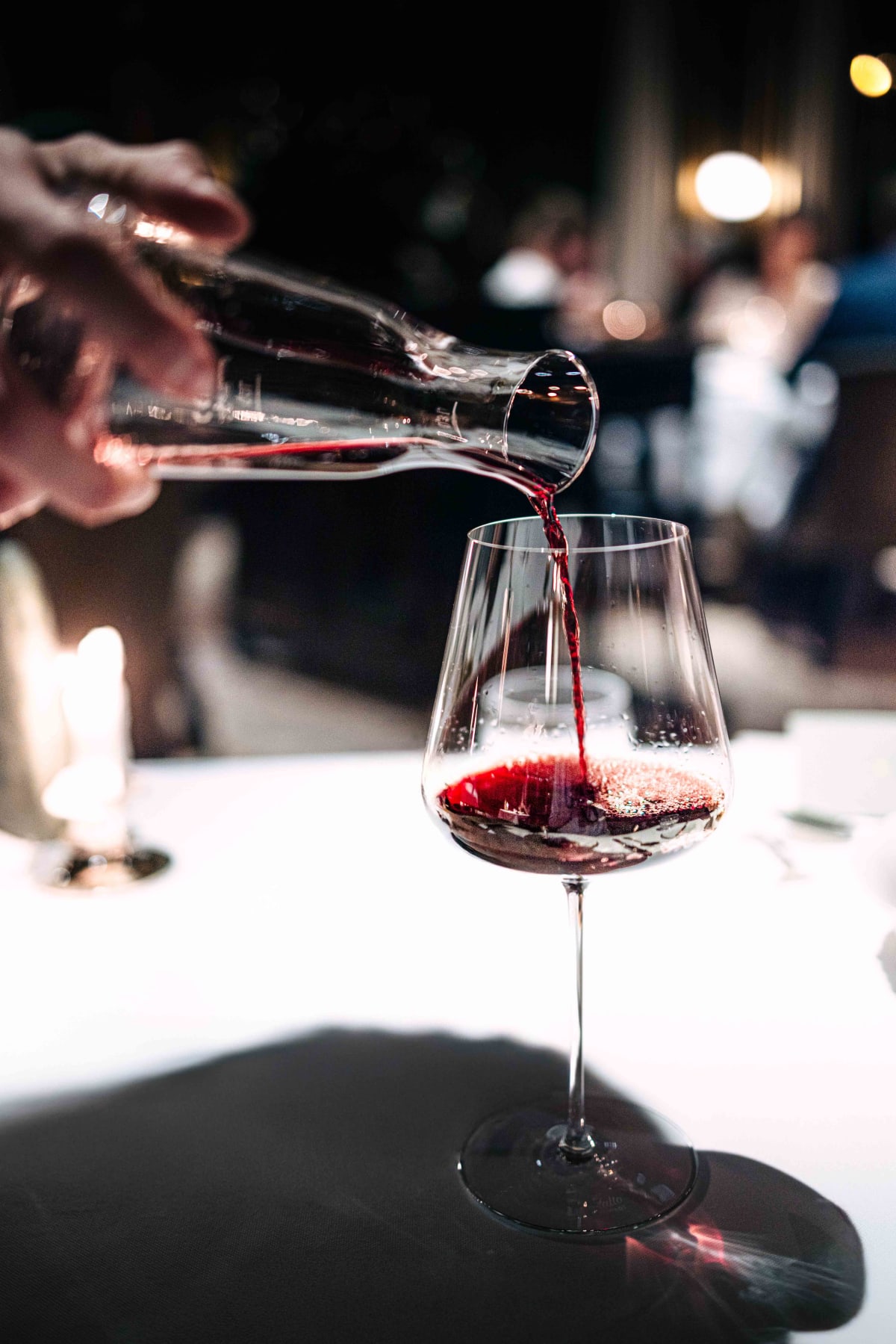
As the main wound down, I returned to the wine list and pulled the Coravin section back open. Château Latour 2012 was on it, at 8cl for 120 euros. The price per glass was not light, but I had not previously tasted Latour. The sommelier measured exactly 8cl, poured it without ceremony, and noted in passing that I should take the glass slowly, working through the aromatics to the close. The wine held its aromatic length in the mouth at a different register from anything else encountered that trip; my companion, who had no prior knowledge of the name, arrived at the same observation without prompting. The remainder of the meal carried that one glass alongside it.
64—67 / 90
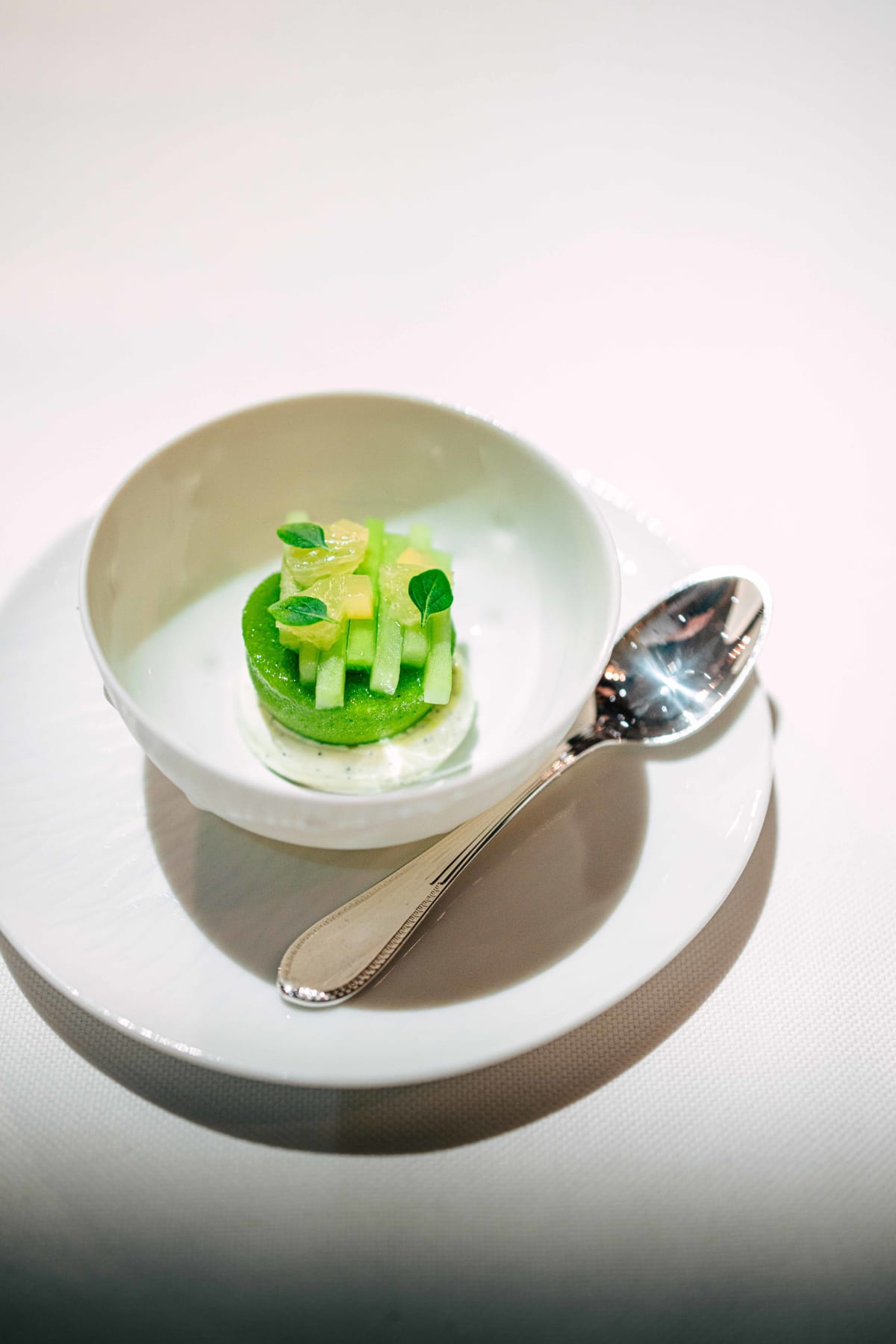
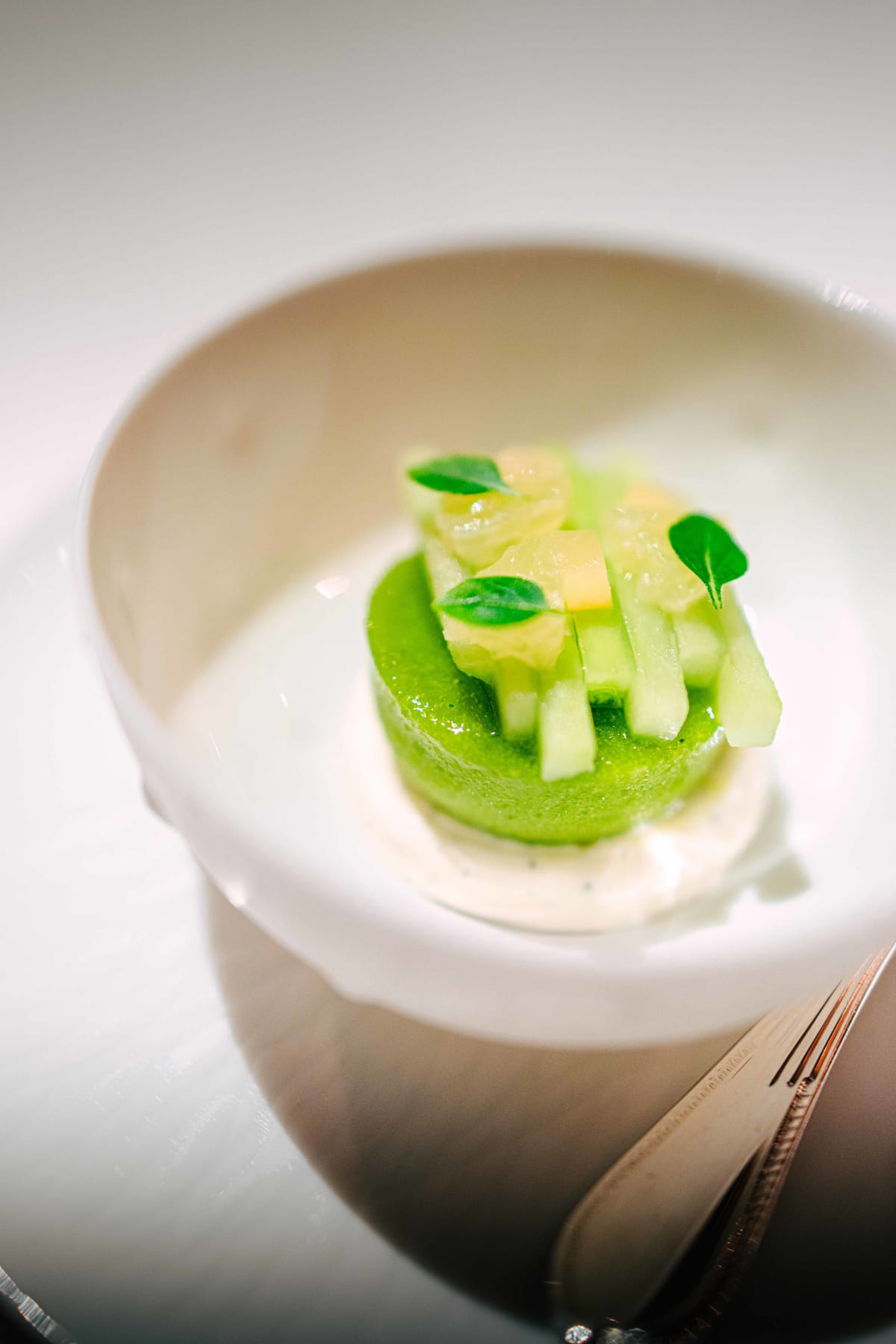
A small pre-dessert with a clean lime register cleared the palate ahead of the dessert course.
78—79 / 90
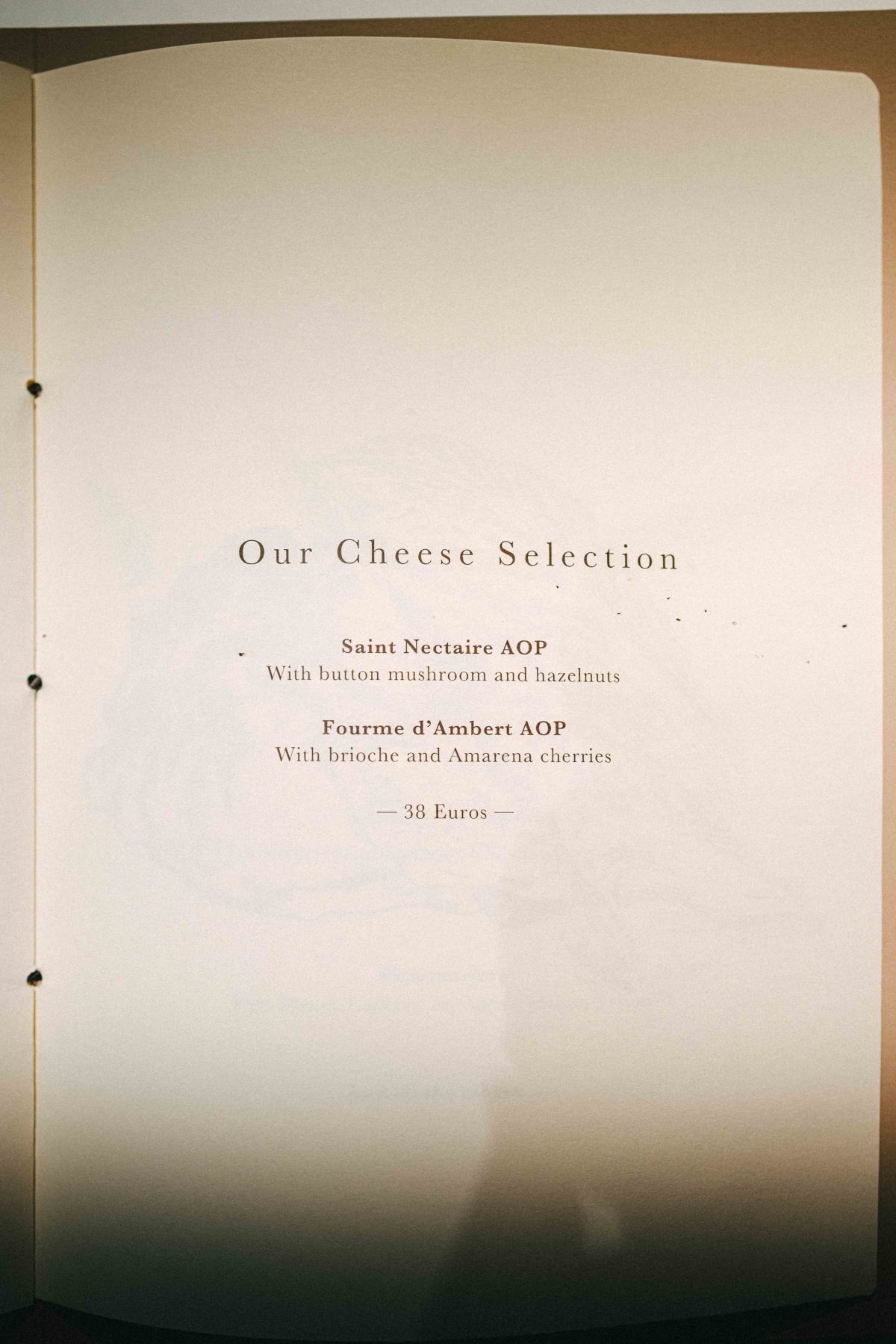
The cheese course was where Le Gabriel diverged most clearly from the Michelin convention.
73—73 / 90
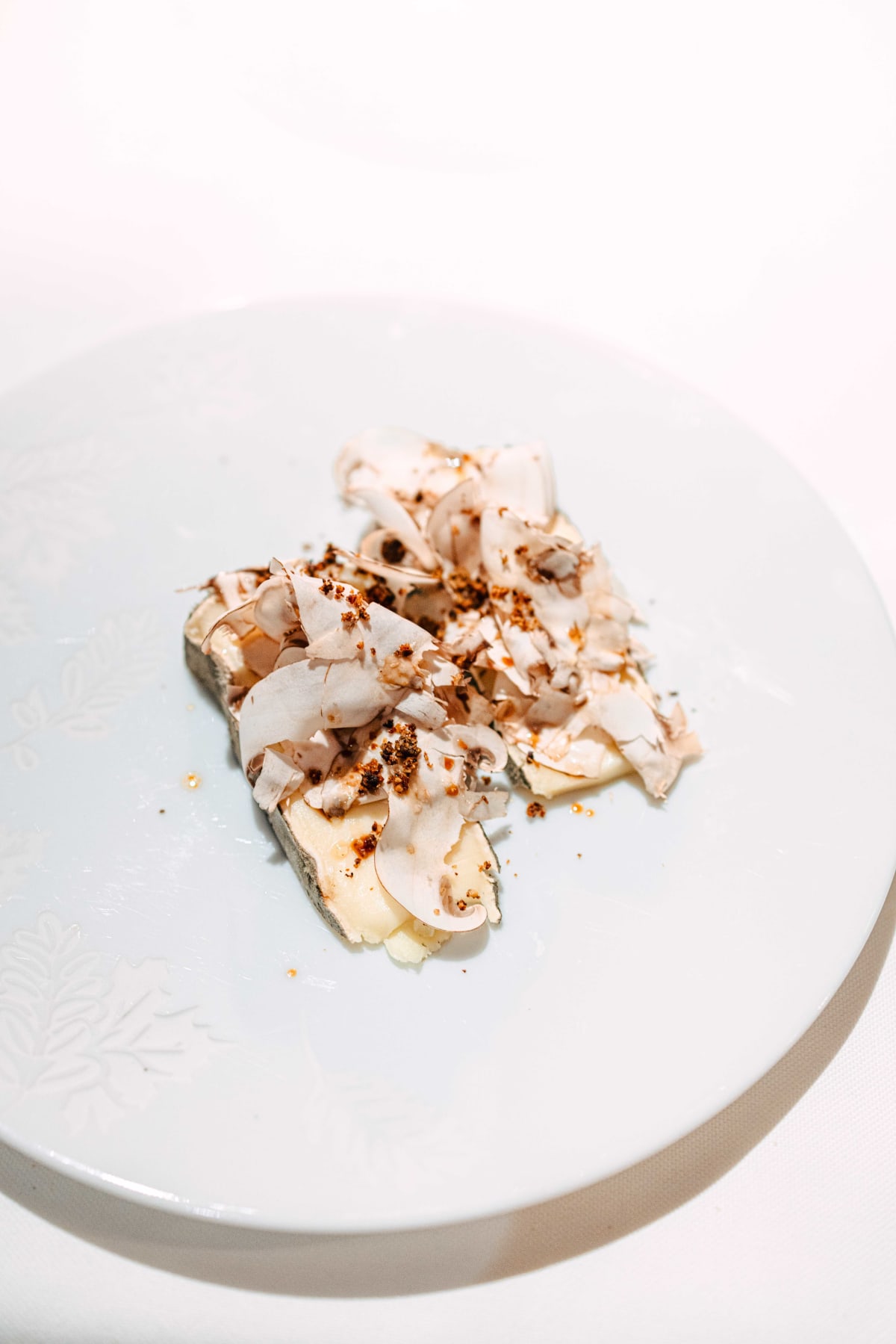
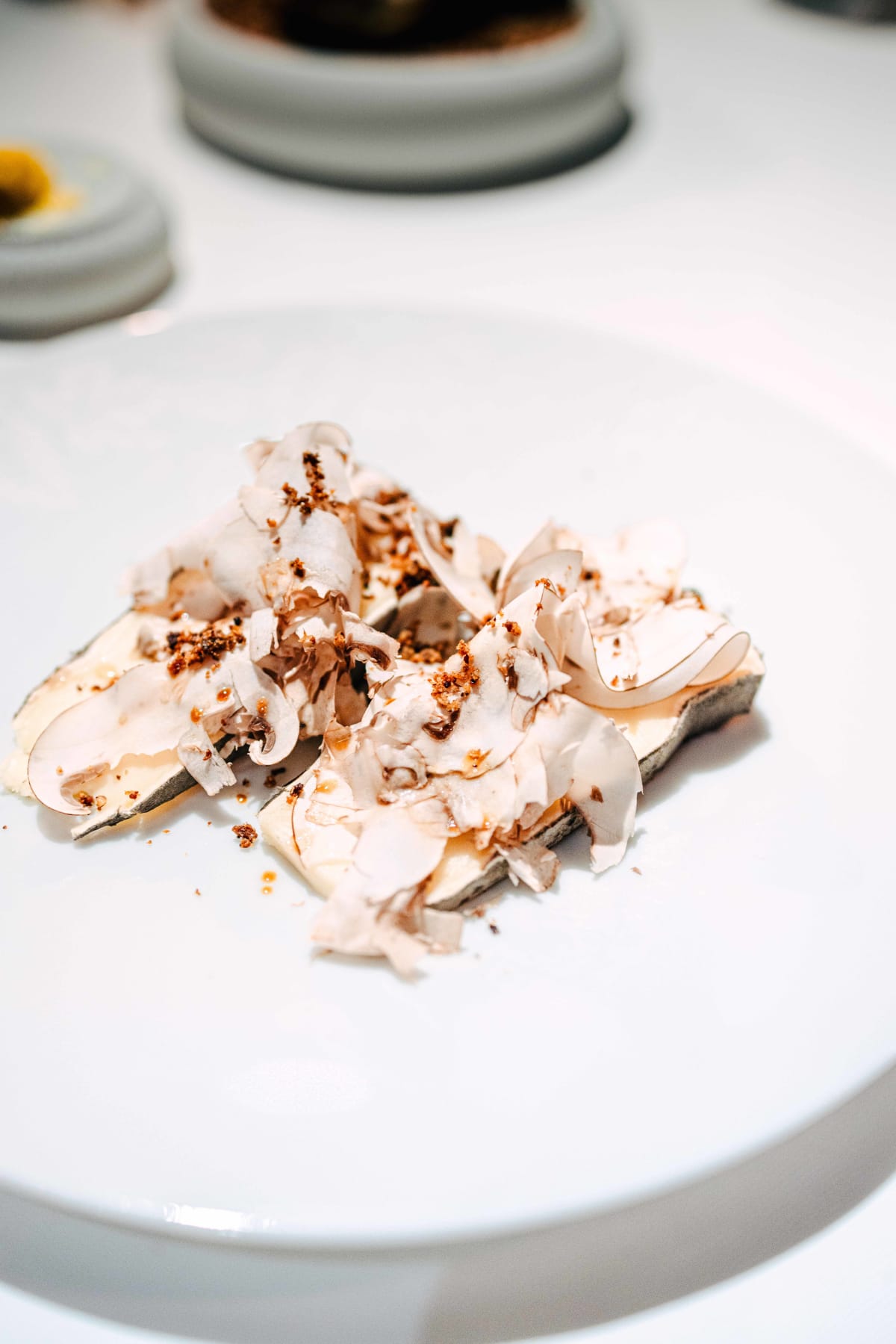
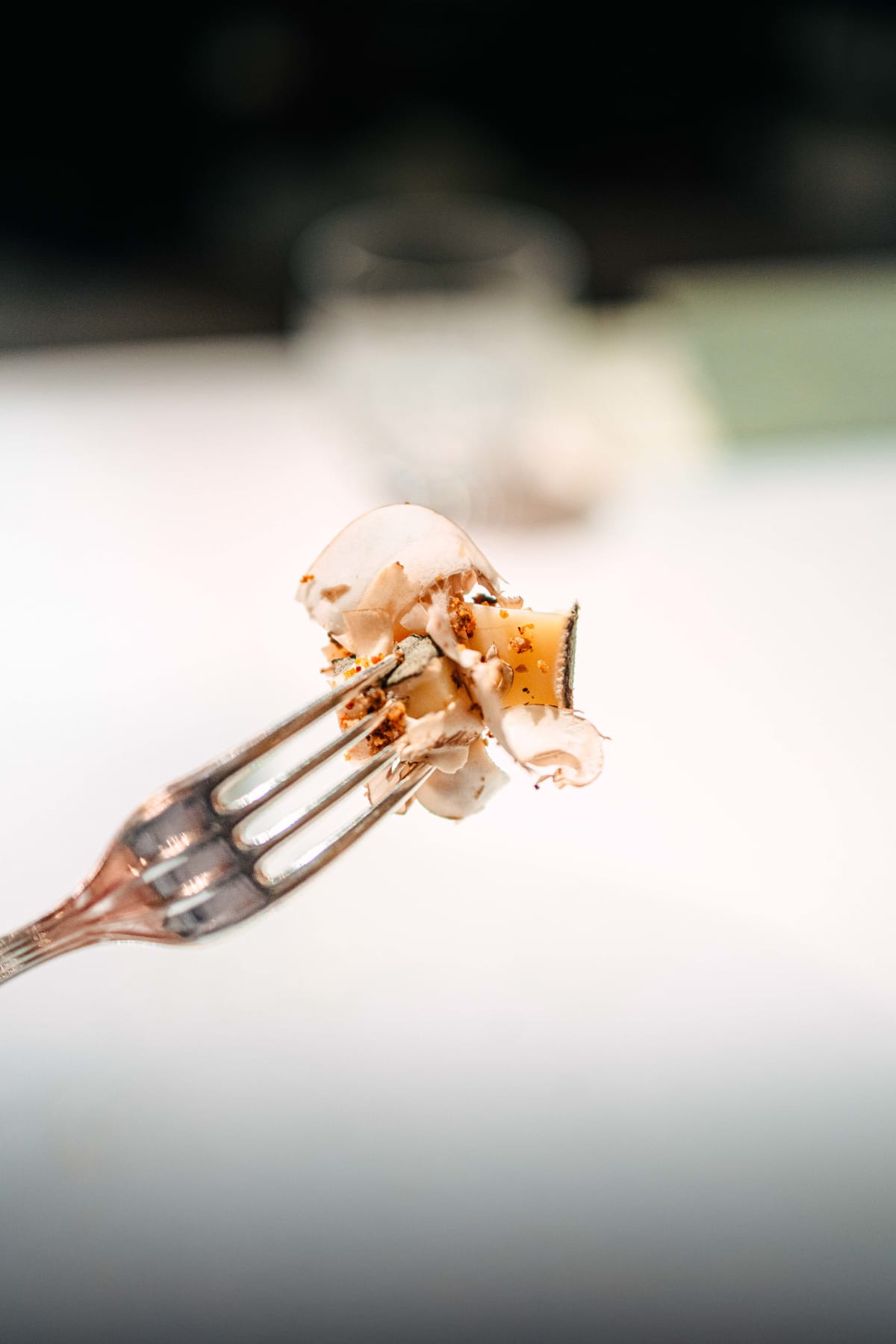
Most French restaurants at this level arrive with a cheese trolley and a plated selection. Le Gabriel does not. The diner is offered a choice between two cheeses, Saint Nectaire AOP or Fourme d'Ambert AOP, and the selected cheese is then composed as a complete plate in the manner of a dessert course.
74—75 / 90
Saint Nectaire is the creamier side of the pair, less assertive on the nose; Fourme d'Ambert is denser, stronger, blue. The constraint was real: the usual preference for creamy and strong simultaneously was not available here. I took the Saint Nectaire. It arrived under a heaped layer of thinly cut mushroom dusted with ground hazelnut. At first bite the mushroom registered ahead of the cheese.
76—77 / 90
The interpretation of a cheese course as a single composed dish was, in this context, a deliberately editorial move; the cellar-and-trolley language of the traditional cheese service carries its own weight, but in the flow of a long meal this approach was easier to integrate.
83—83 / 90
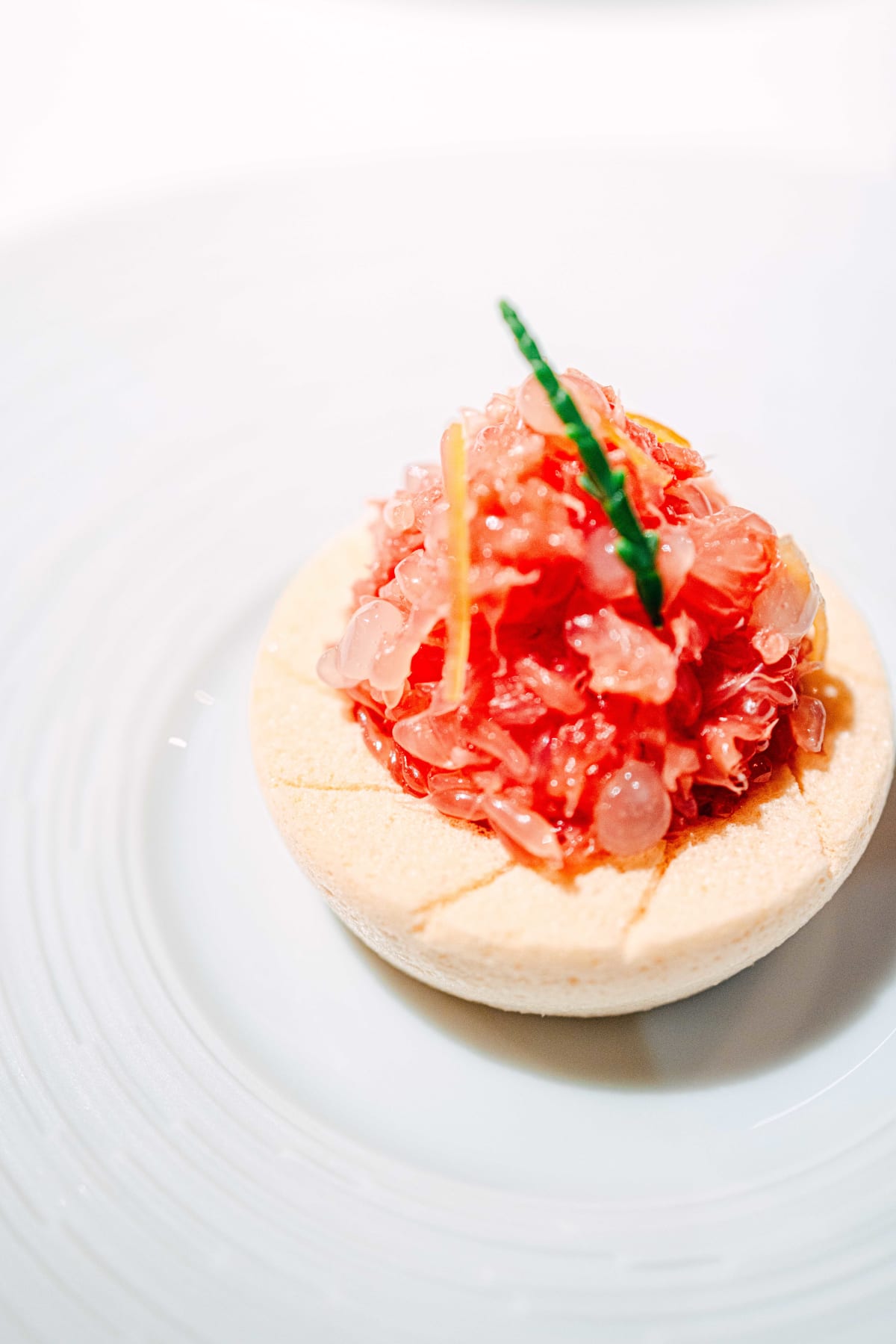
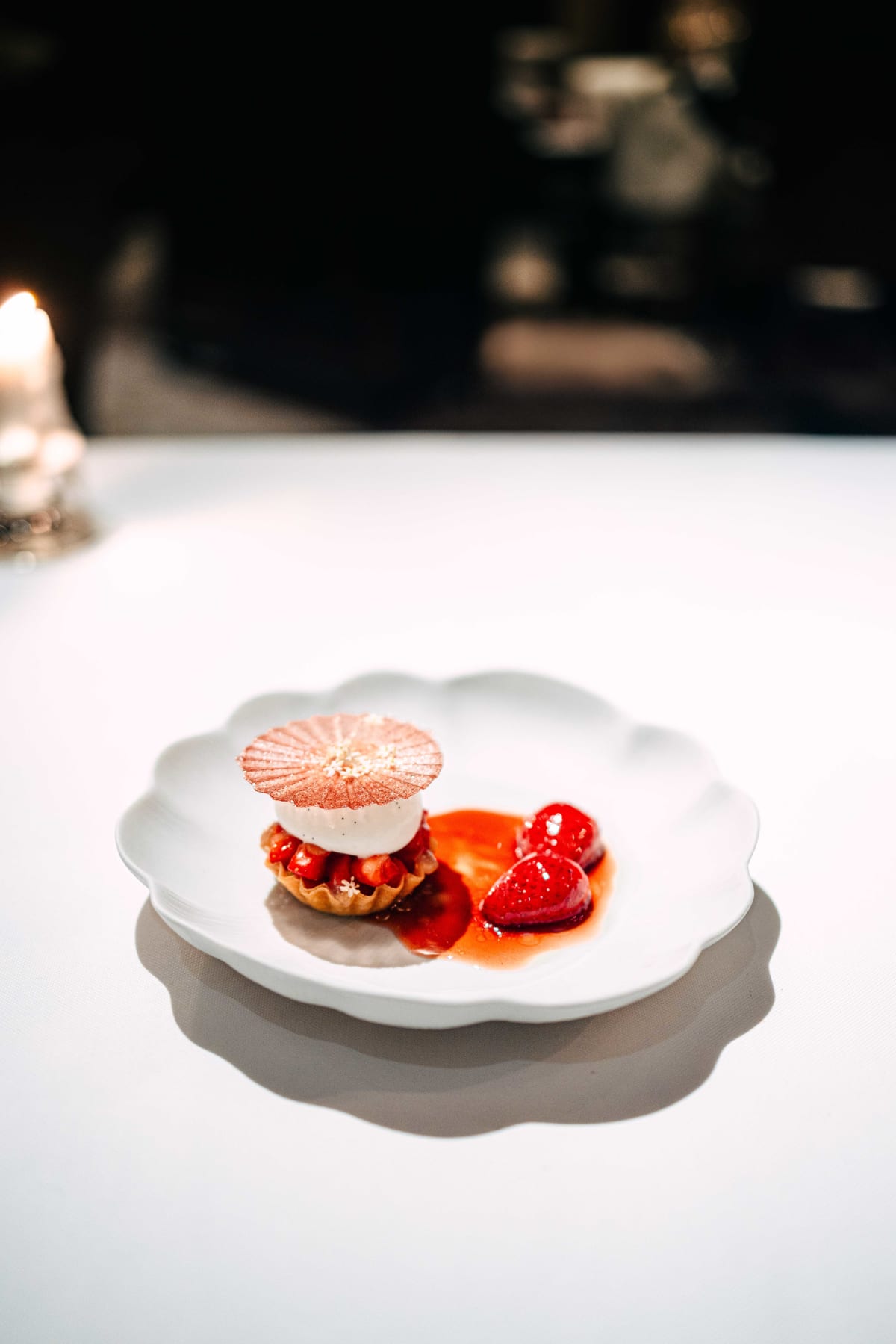
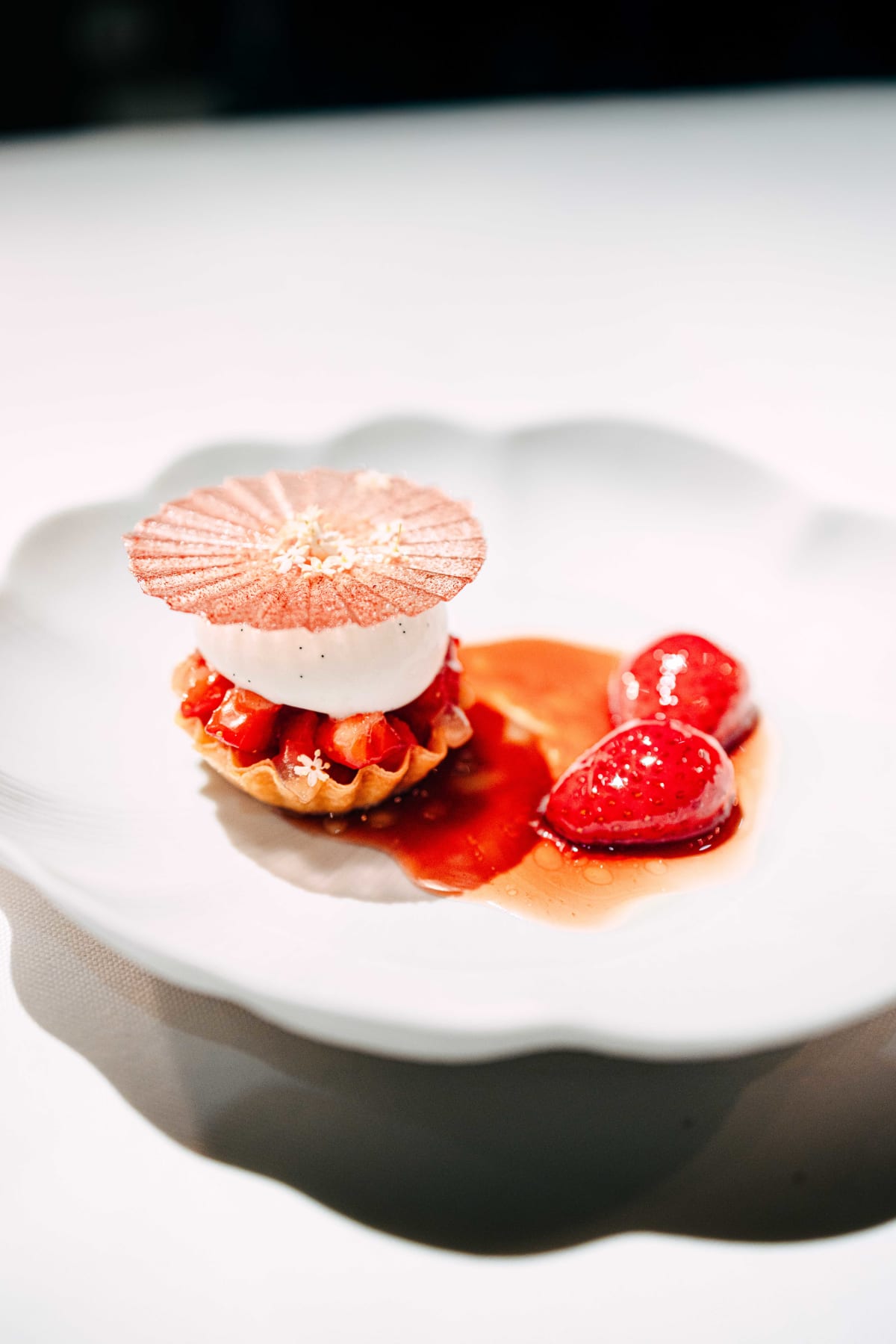
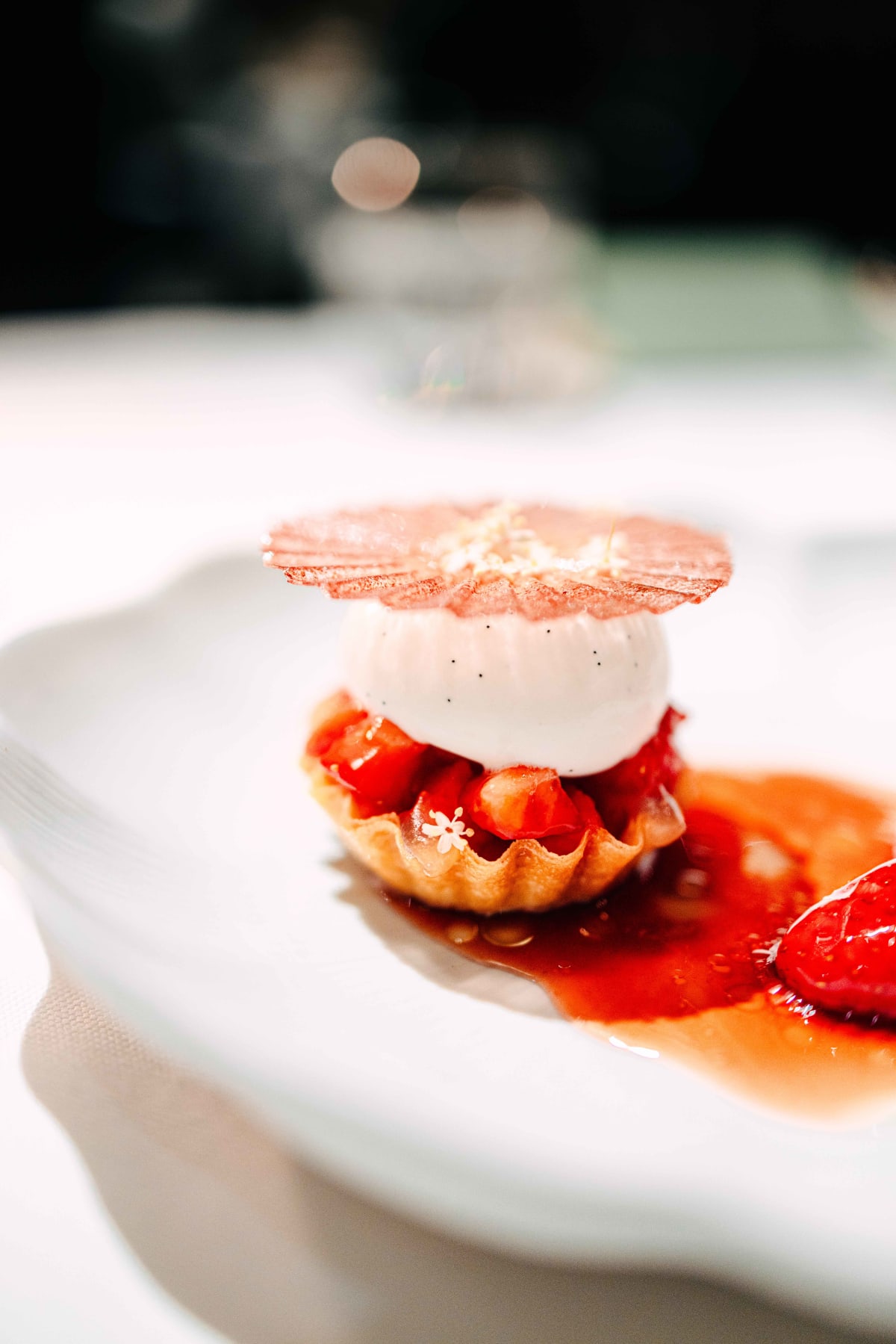
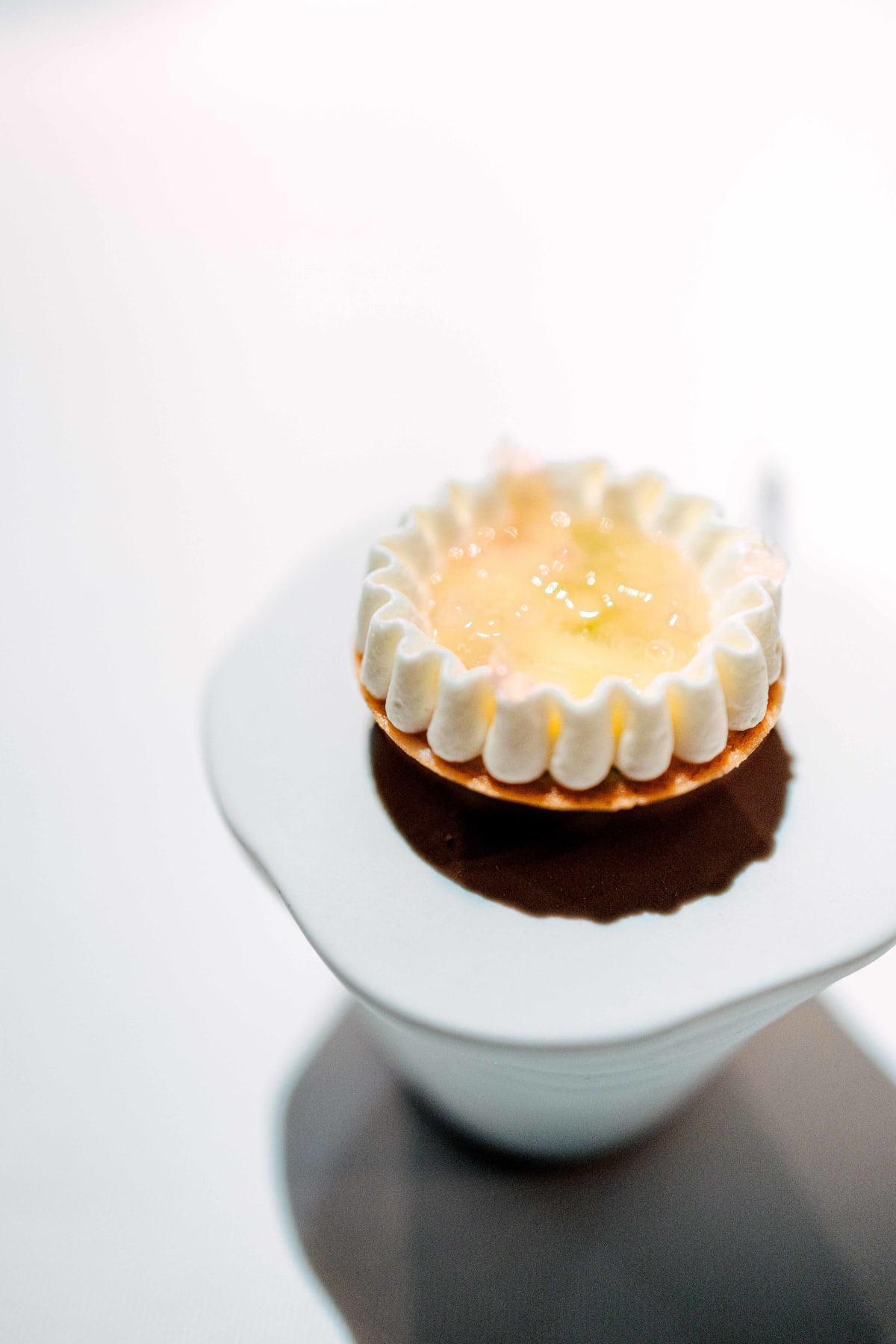
Dessert proper arrived in two plates. The first was a meringue piled with finely cut grapefruit; the second was built around strawberry.
80—80 / 90
The grapefruit course carried enough acidity and brightness to settle the end of the meal cleanly. The strawberry dessert leaned the other way: the sweetness pushed too far forward, and against the grapefruit plate the contrast was sharp.
84—86 / 90
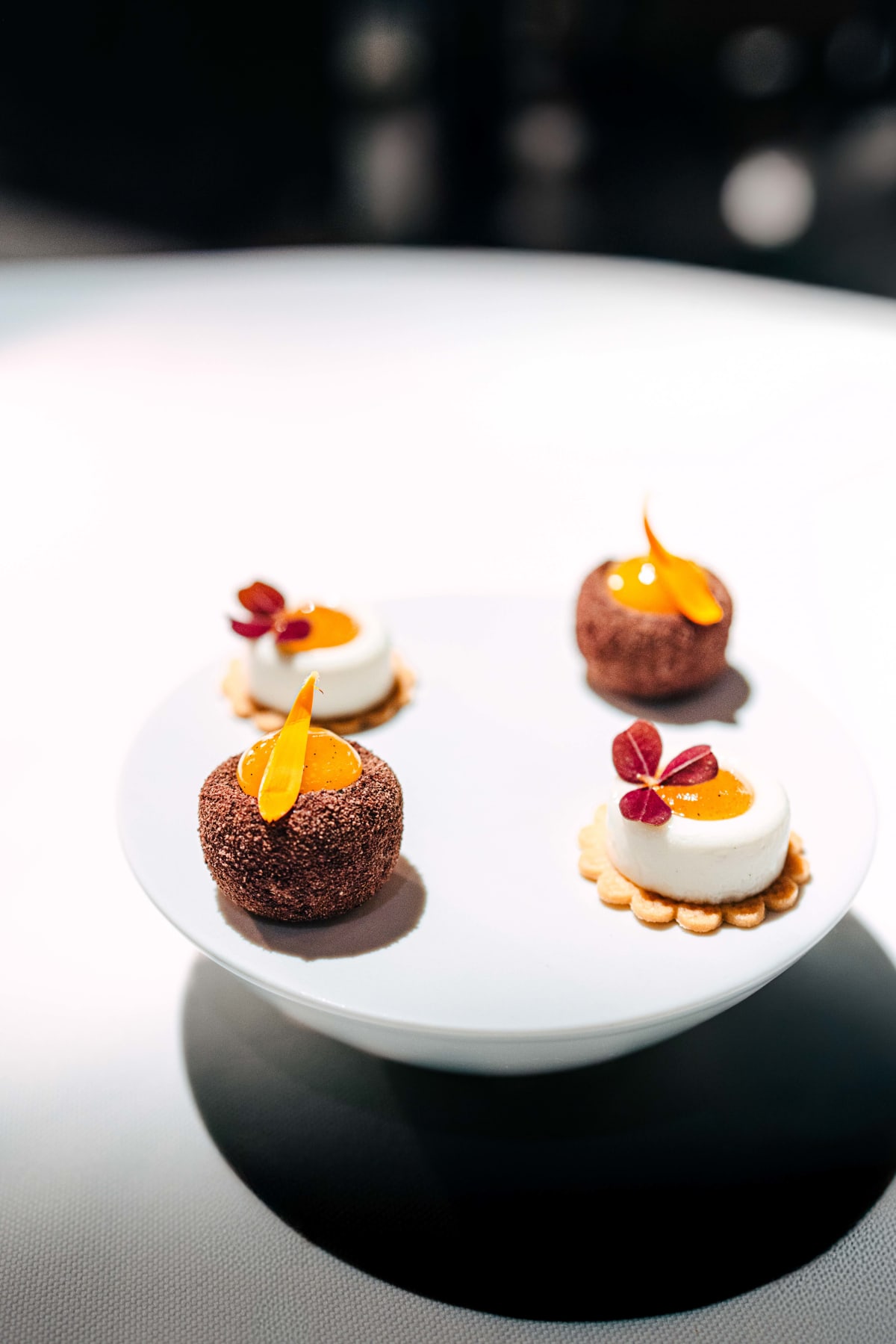
France in May and July of 2024, the two trips I made that year, consistently leaned its dessert programmes onto fruit, with the seasonal register more visibly active here than at any other stage of a French menu. In the same window, Spanish desserts I encountered more often took a creative direction, while the French side stayed closer to the classical line. The petit fours arrived well past midnight, and my companion's fatigue was visible.
87—88 / 90
The plate was cleared in short order and we left. Alexandre Auge, who had managed our service through the evening, walked us out to the entrance of the hotel and saw us off. The day had clearly carried into him as well, but the posture held to the last.
89—89 / 90
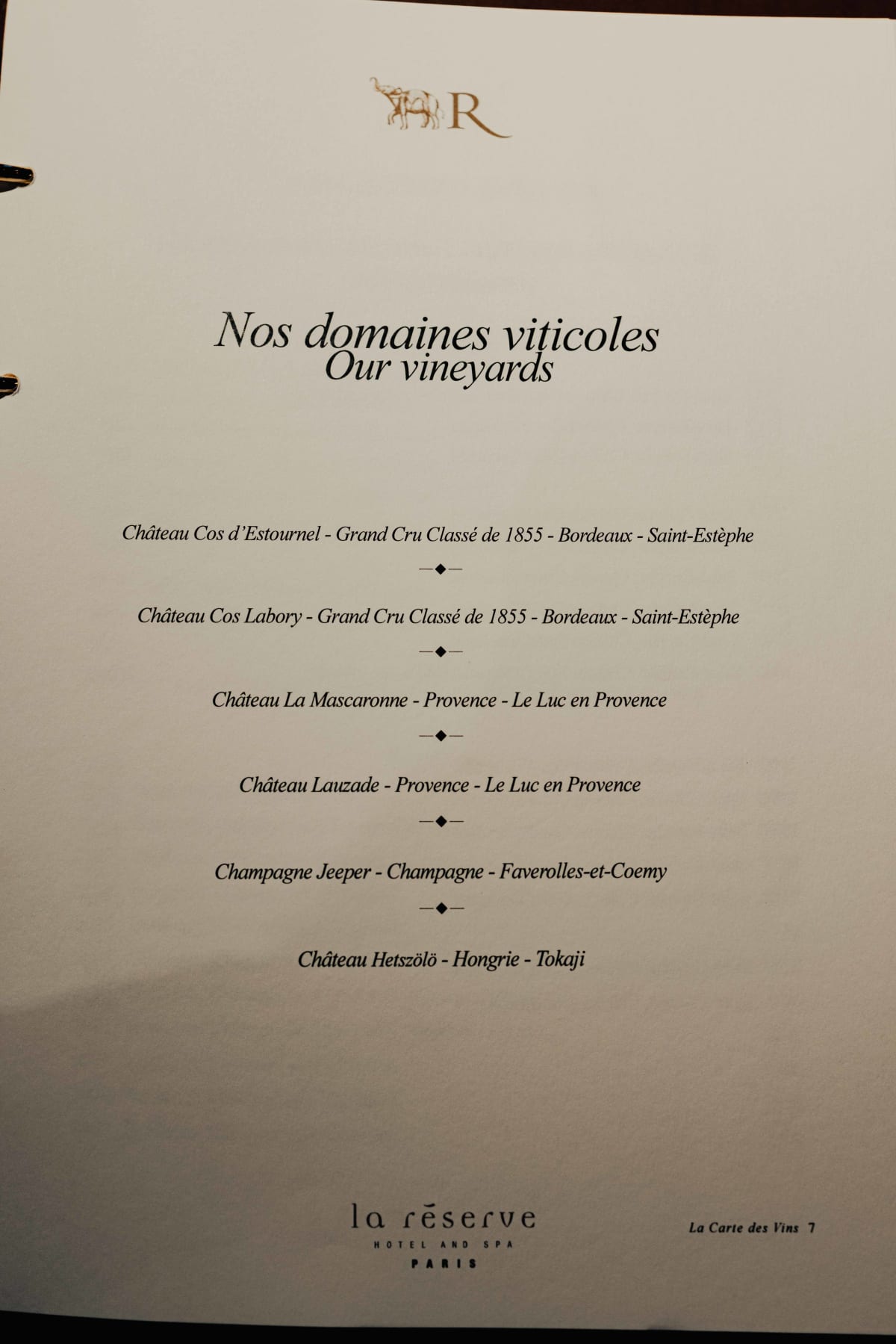
The wine programme at Le Gabriel deserves its own pass. Michel Reybier owns Cos d'Estournel among other estates, and the practical consequence is that the restaurant keeps a separate, dedicated list of bottles from properties under common ownership, drawn from a depth of vintages. A neighbouring table was working through a Cos d'Estournel red on the evening of this visit. For a guest who cares seriously about wine, the result is that excellent Bordeaux vintages are available at this address in a position more favourable than the same wines would generally occupy at a comparable restaurant. Beyond the bottle list, the by-the-glass programme is split into two halves, standard pours and Coravin pours, with substantial depth on both sides. The decision to skip the pairings in favour of working from the glass list felt entirely justified by the time the second wine arrived.
Considered as a whole, the Virée nine-course is at its strongest in seafood, with a Japanese register operating in the seams at appropriate intensity throughout. The weakest segment is the main course, where the farm chicken does not bring the menu to a fully resolved close. My companion found the food overall to be heavy on salt; coming from a palate that runs in the other direction, it was a comment I could agree with after attention. Across the menu the salt presence was clearly designed and consistently applied. A diner who prefers a lower-sodium register should know this in advance. Service and atmosphere both perform at the level the three-star designation implies, and the small-palace register of the room layers an additional dimension onto the meal that is hard to substitute for elsewhere.
That this is a kitchen newly arrived at three stars accounts for both the high points and the unresolved edges of the menu. The clarity of the two nine-course-exclusive dishes argues for the restaurant's place at this level. The unresolved closure at the main suggests where the kitchen is still settling. For any return, the menu question no longer requires deliberation. Whichever direction the choice goes, Virée or Périple, the format is nine courses.
90—90 / 90
Jérôme Banctel's career runs through two of the most consequential kitchens in modern Paris cooking: a decade as sous-chef at L'Ambroisie under Bernard Pacaud on the Place des Vosges, followed by the executive chef post at Lucas Carton under Alain Senderens. Those two addresses remain among the clearest coordinates available for what Paris French classicism continues to mean as a living practice rather than a museum reference. Le Gabriel's elevation to three stars in 2024 reads more as confirmation than as surprise: it records the moment at which that lineage has been recognised in the hands of the generation now carrying it. The hotel exterior and the freshness of the new star are the surfaces by which this restaurant is most often introduced. The question the meal itself is answering is older and longer than either.
Have a question about this restaurant, or want to share your own experience?
Send a message