Fine Dining · France
Maison Lameloise
"Where tradition is the future, and the Côte d'Or ends at the table"






















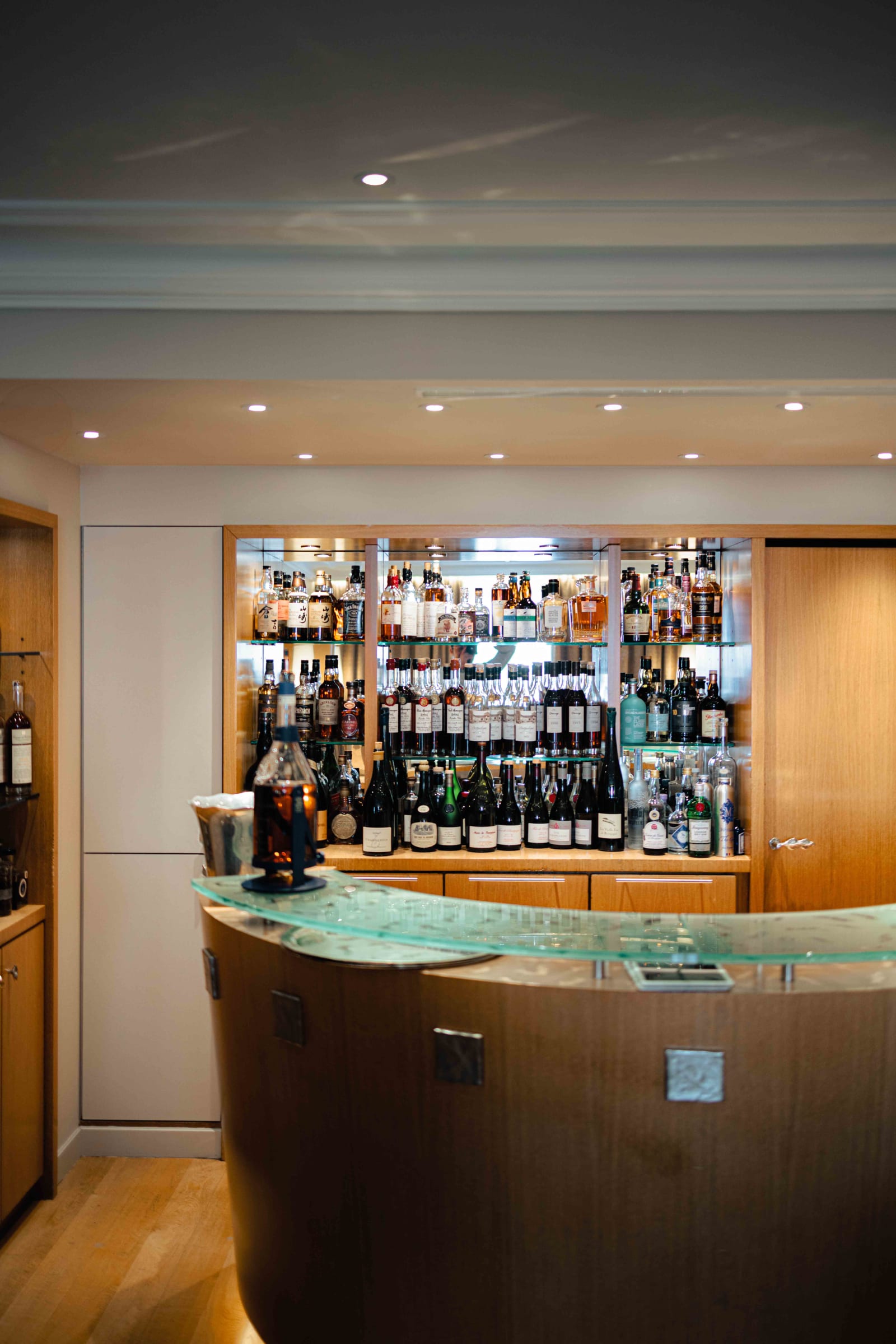




This was always going to be the last meal of the Burgundy trip. Maison Lameloise sits in Chagny, a quiet town at the southern end of the Côte de Beaune. The restaurant received its first Michelin star in 1926, the very year the Guide began awarding them. Its history and the history of the Guide are almost the same age.
Three generations of the Lameloise family built the place. Pierre opened it in 1921, converting a fifteenth-century coaching inn. His son Jean took over in time, and Pierre's grandson Jacques earned the third star in 1979. The kitchen now belongs to Éric Pras. A Meilleur Ouvrier de France in 2004, he came up through the kitchens of Michel Troisgros, Bernard Loiseau, Pierre Gagnaire, and Régis Marcon. Jacques called him to Chagny in 2008, and when the mentor retired the following year, Pras inherited the room entirely. His guiding principle is straightforward: tradition is the future.
My friend Jean, who lives in Burgundy, drove us down through the Côte d'Or. Marsannay, then south through Côte de Nuits, past Beaune and on through Meursault and Montrachet, all the way to Chagny. Ending the trip at this table was never in question.
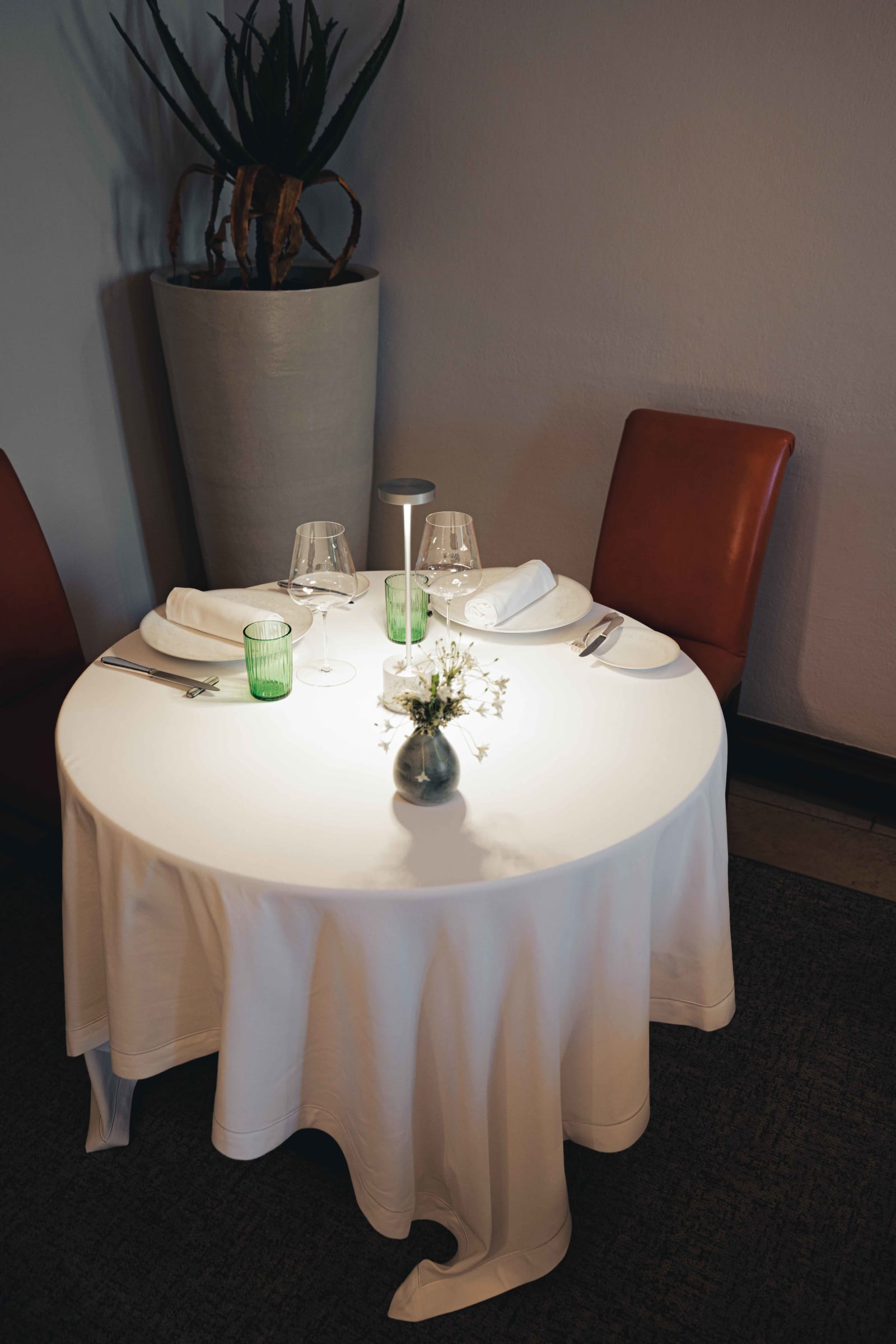
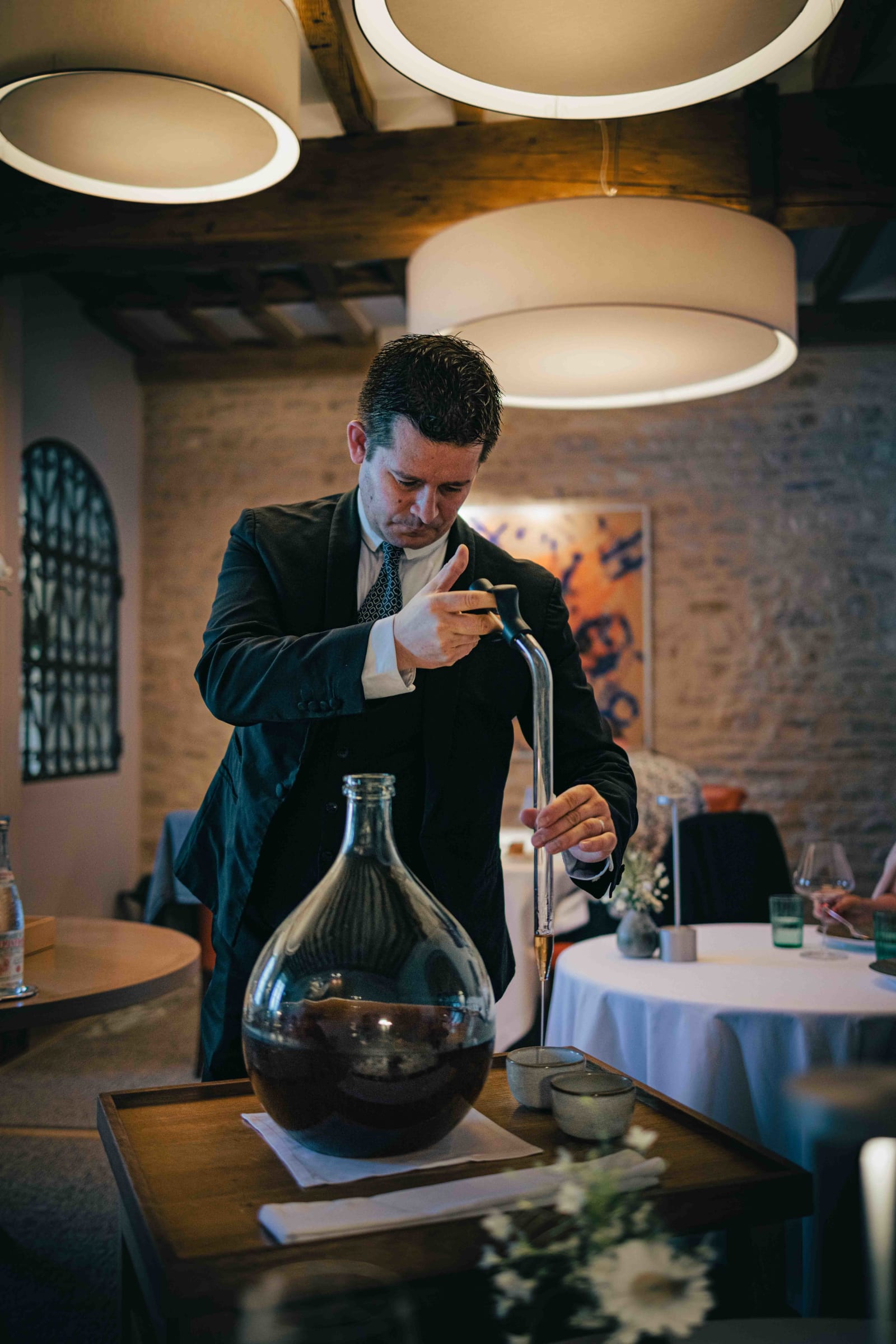
The restaurant occupies the ground floor of the hotel. Old timber columns and exposed stonework remain intact, and the tables are distributed across several rooms rather than gathered in a single dining hall. Compared to three-star restaurants in Paris, the scale is considerably larger. Close to twenty tables, with a good number of solo seats. Reservations are more accessible than you might expect for a restaurant of this standing, which in itself says something about the register. This is not a Paris stage set. It is a three-star restaurant that belongs entirely to its region.
The menu offered a choice between the five-course Menu de l'Instant and the six-course Menu Dégustation. There was no reason to hold back. The full tasting menu at 335 euros, with the wine pairing at 225. I had heard that the pairing here was serious. That turned out to be an understatement.
Five amuse-bouches arrived. Nothing was careless. A small piece that read like a chocolate turned out to hold foie gras inside. A bite with octopus on top and a rich cream within was very good. The appetiser drew on the Burgundian tradition of meurette: a custard with a soft-cooked egg, the exterior set to a light jelly. Interesting to look at, pleasant to eat, though it carried less impact than what followed.
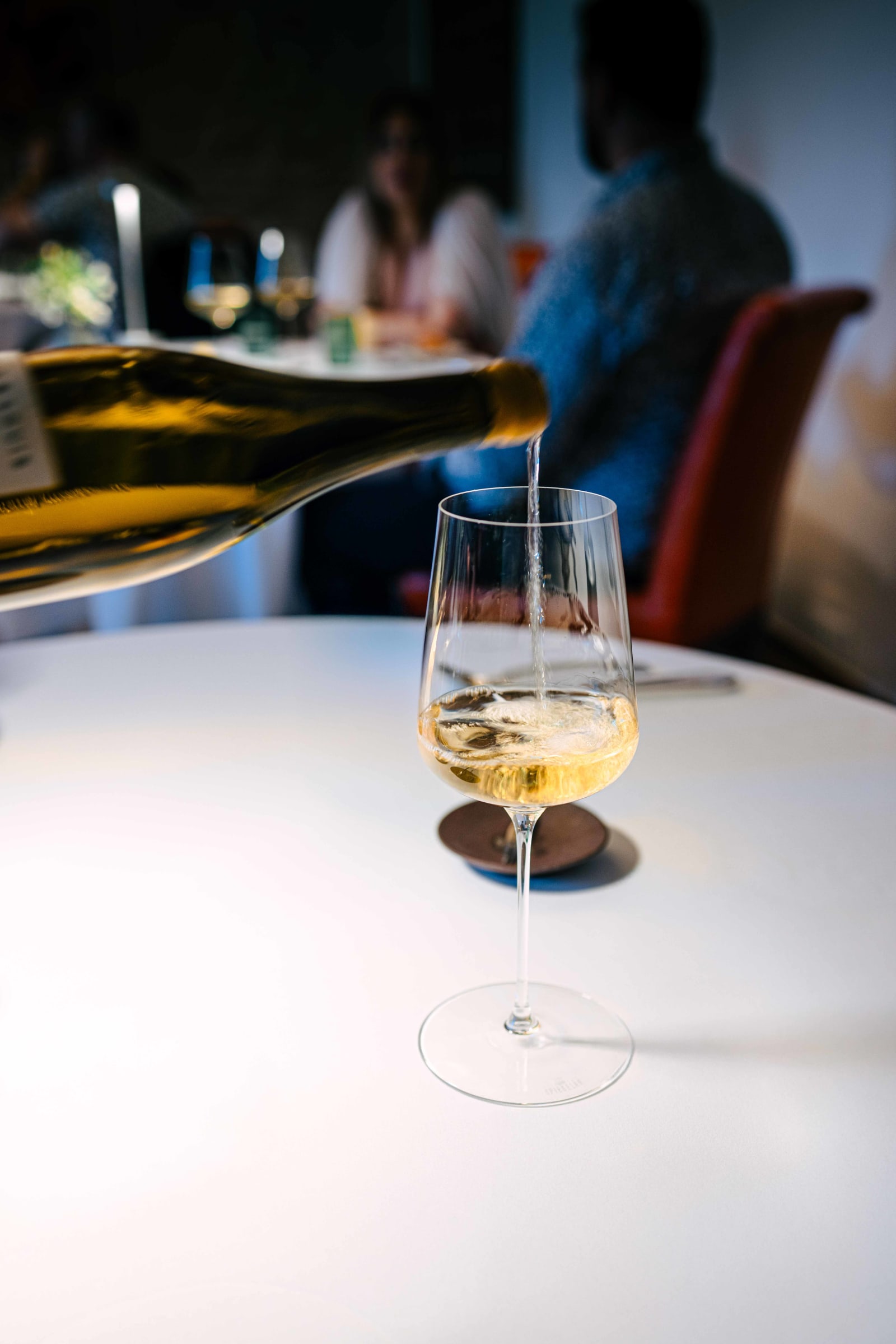
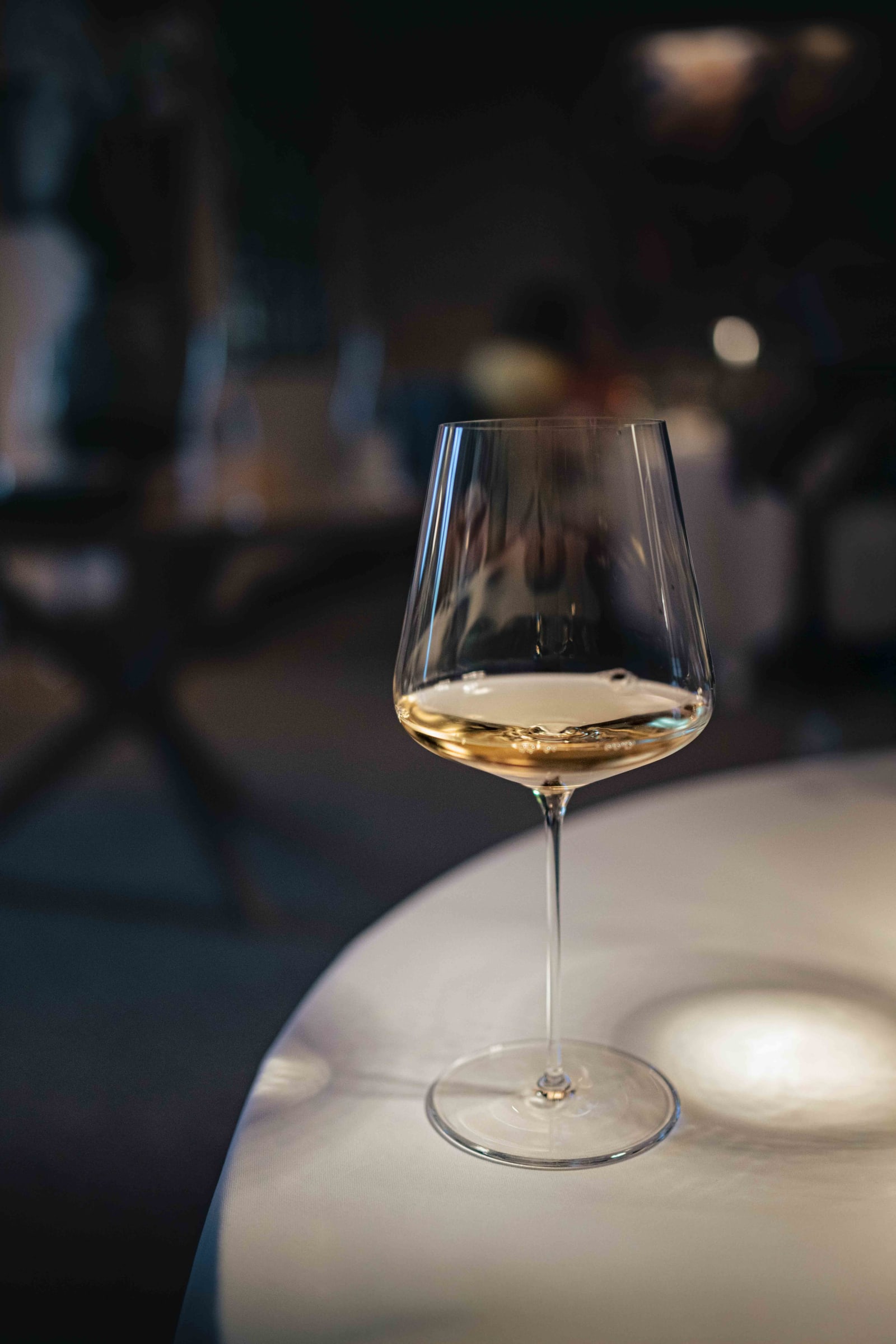
The first pairing wine came alongside: Pierre & Louis Trapet Auxey Duresses 2020. The fruit and acidity were forward, clean Burgundy white. Tasting it, I understood that the pairing had properly begun.
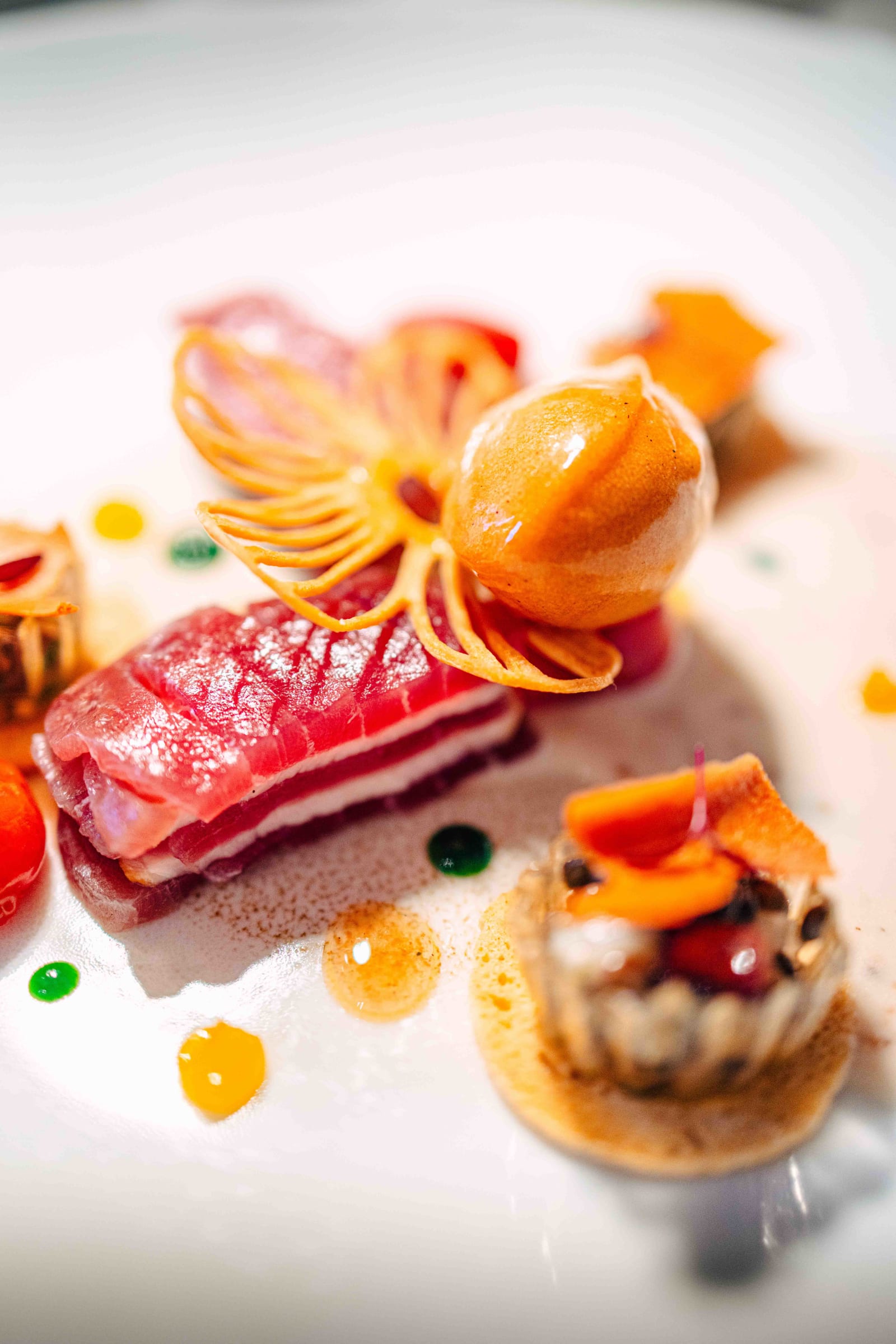
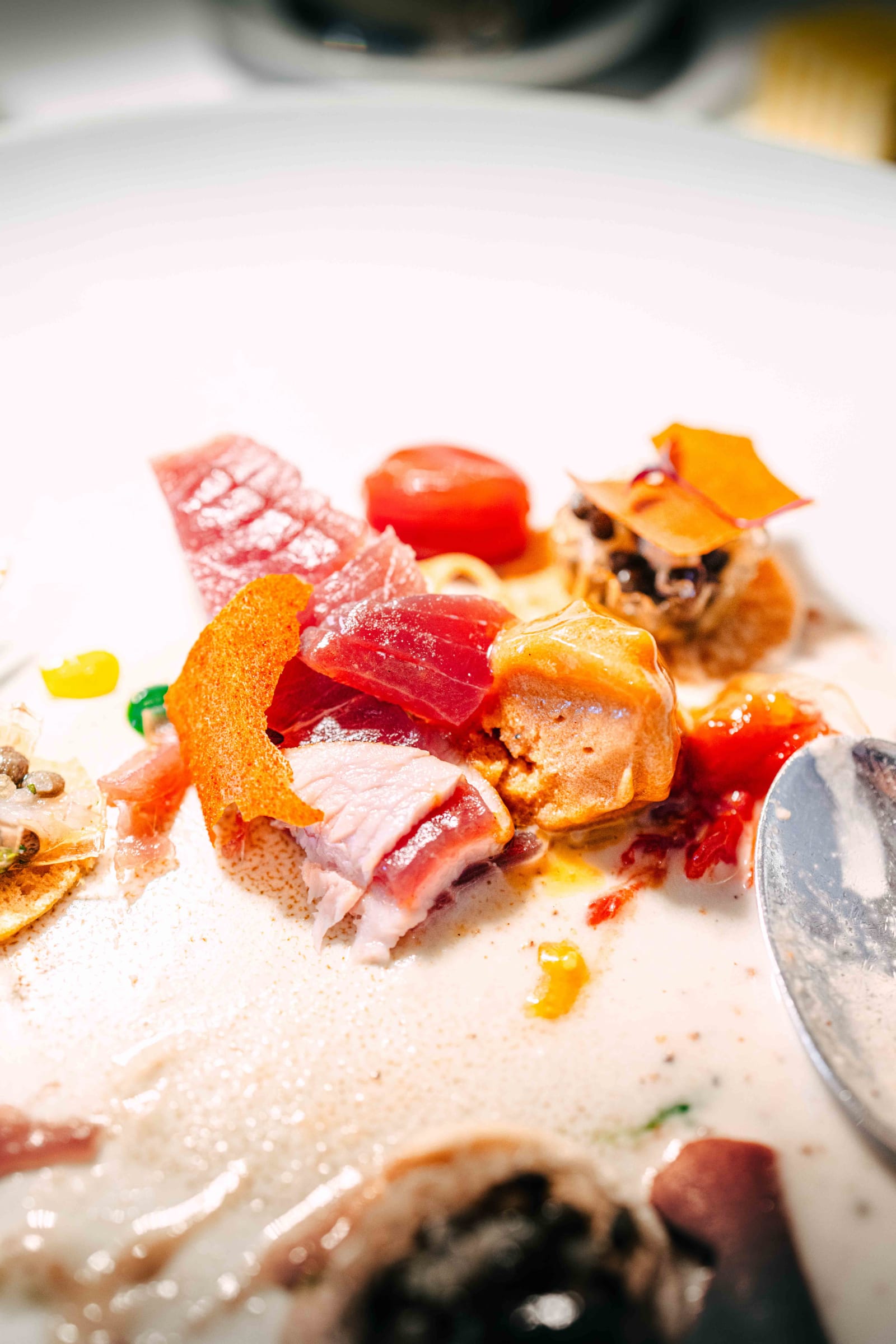
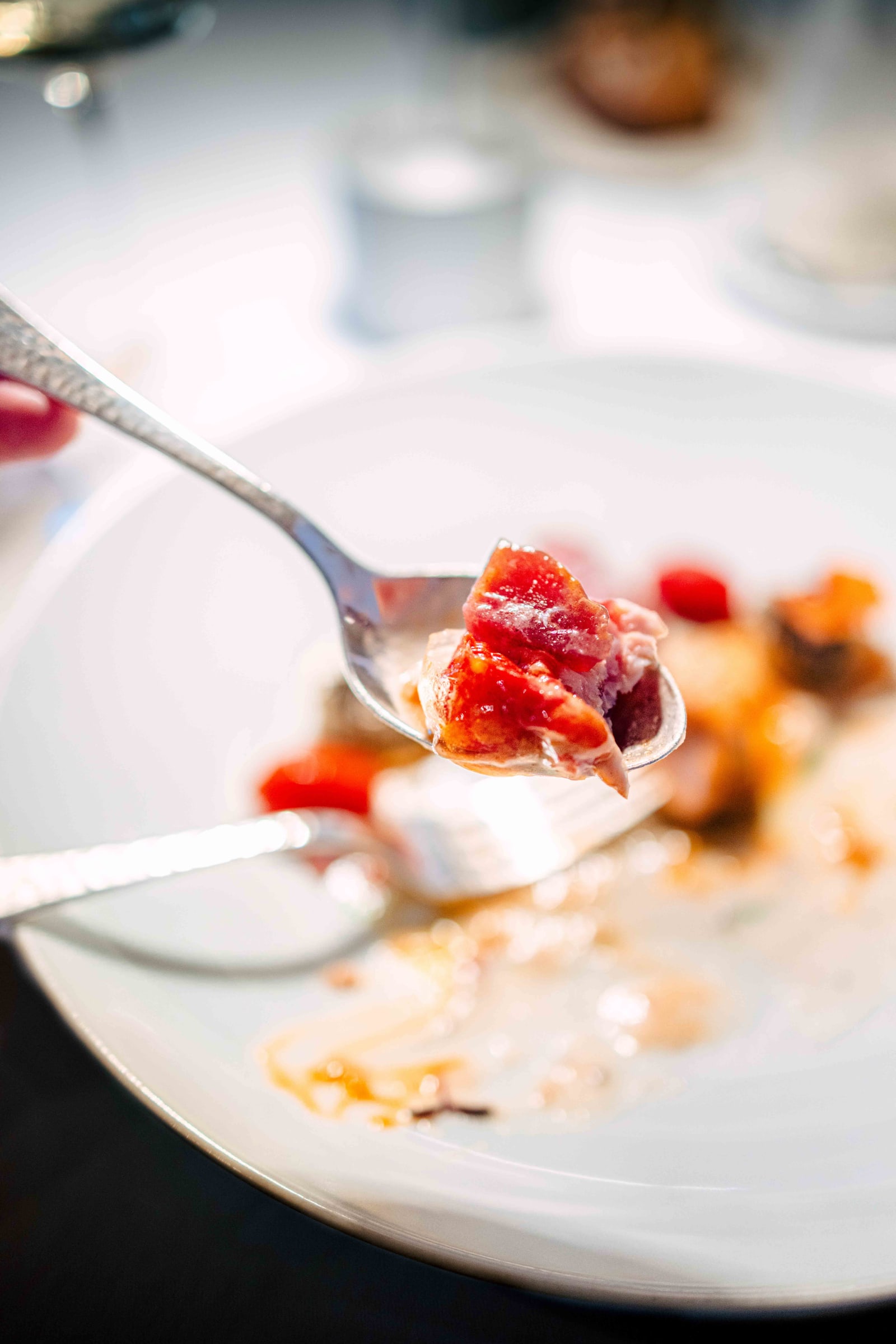
The first main course was Red tuna and veal. The only dish of the evening that fell short. The sauce and tomato ice cream were well-made, but the two principal ingredients never justified their combination. The tuna did not approach the quality achievable in high-end Japanese or Korean sushi, and the veal alongside it produced no moment where the pairing became necessary. Every other course on the menu earned its place. This one did not.
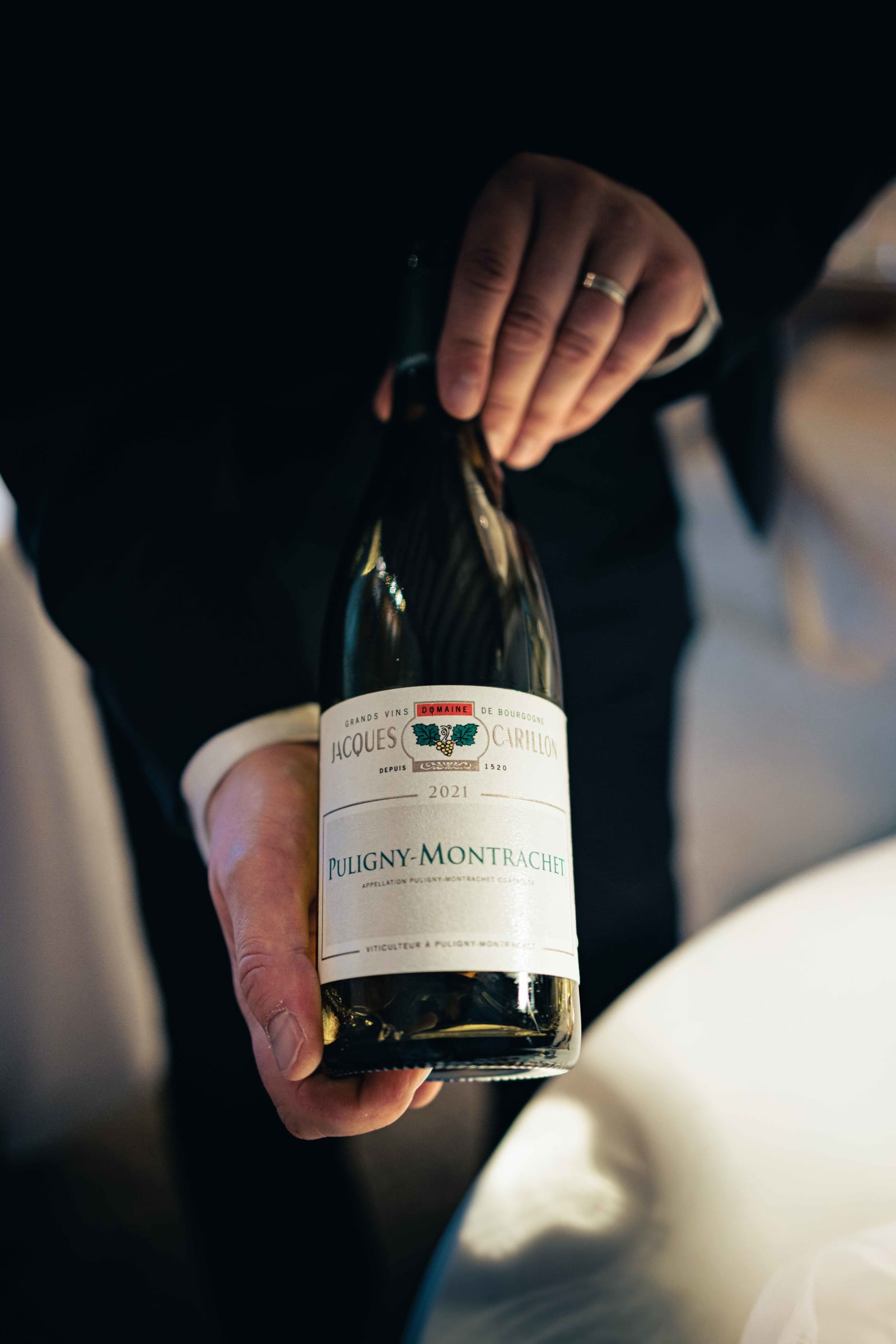
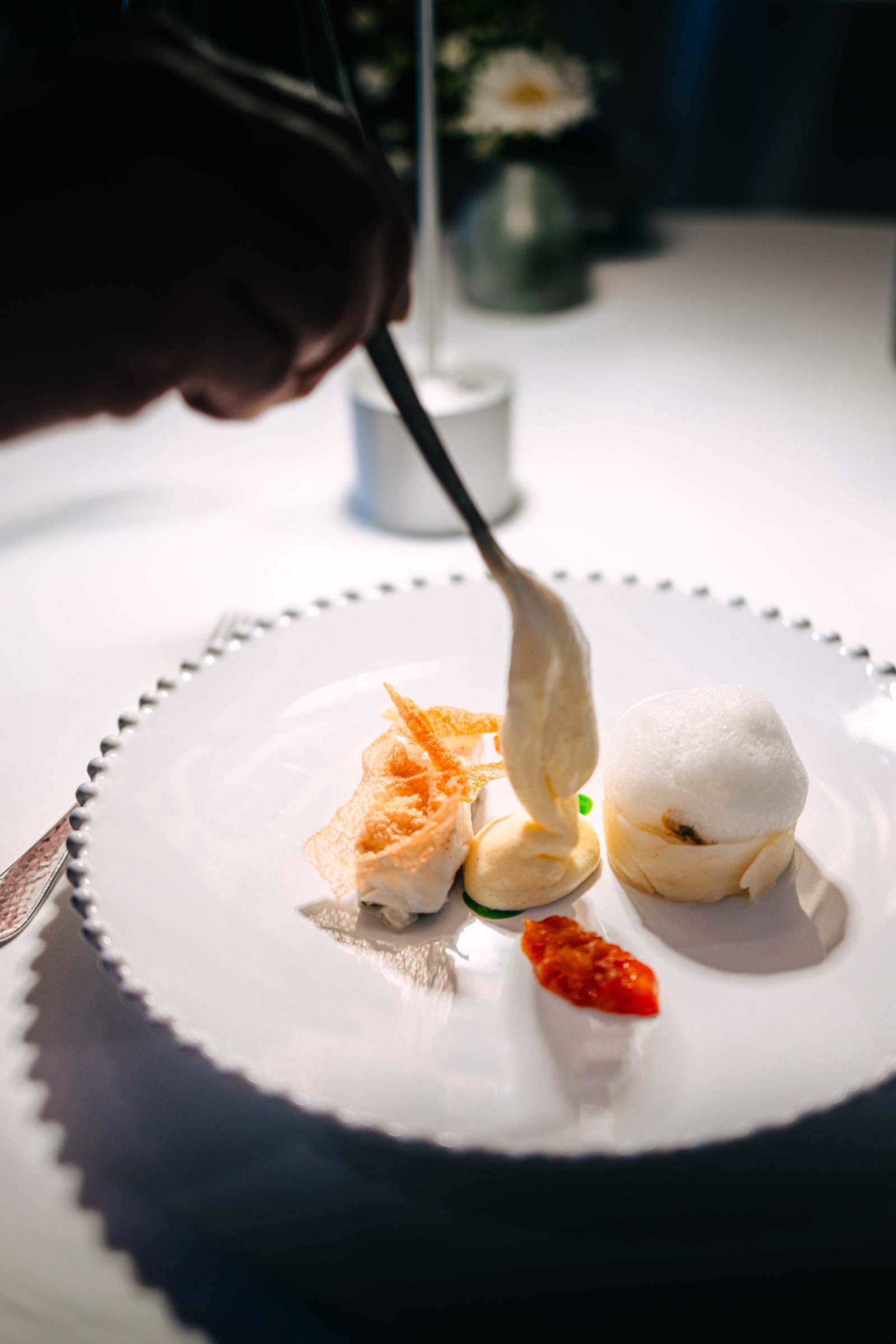
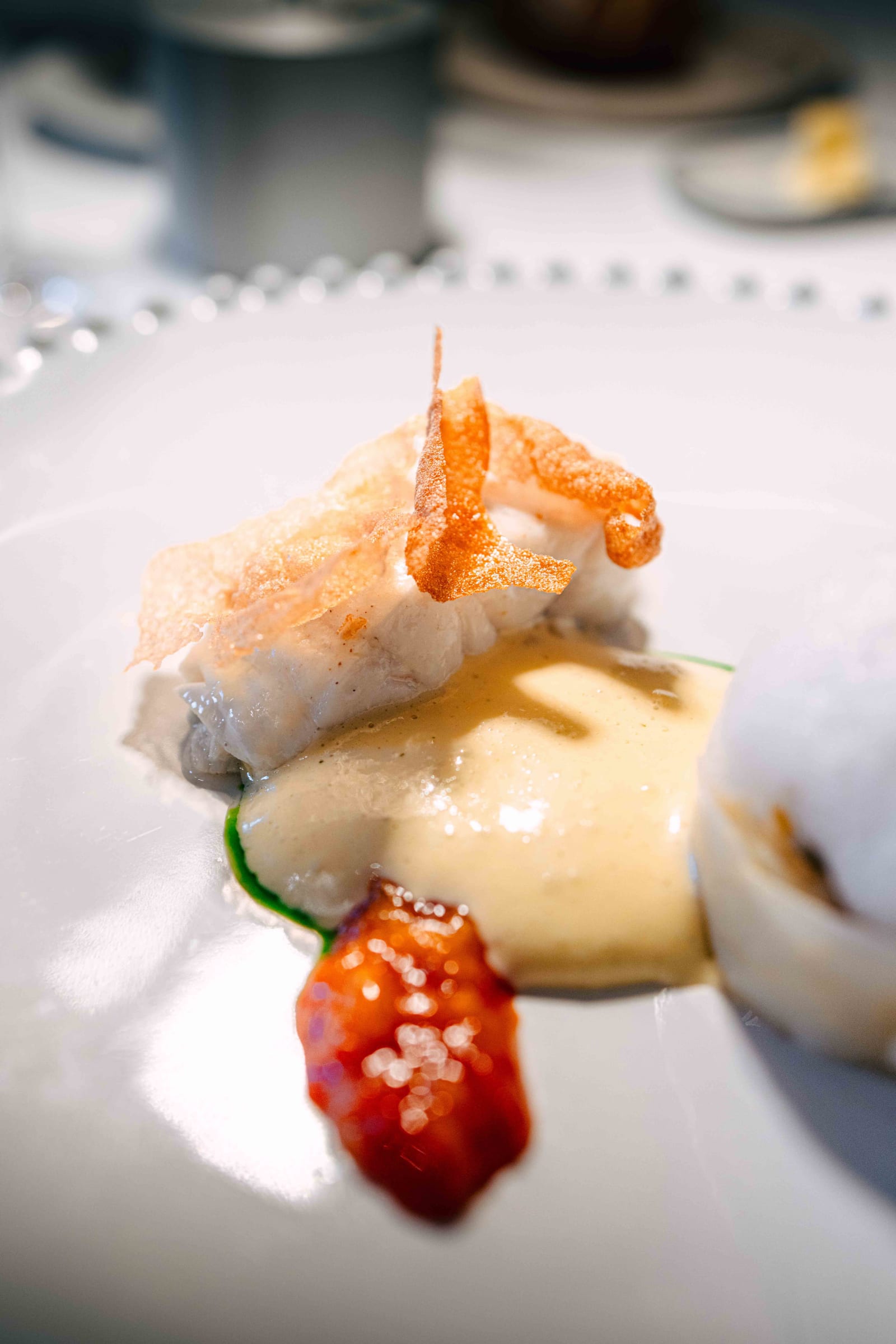
What followed was a different matter entirely. The Sea bass arrived slow-cooked, with crab, artichoke, and a zabaglione made from egg yolk and sugar. The crisped skin placed on top of the fish completed every element of texture on the plate, holding the whole thing together. Jacques Carillon Puligny-Montrachet 2021 came with it and suited the dish well.
The Spiny lobster was an optional supplement. If pressed to name the best single dish of the evening, this would be it. The lobster itself was large and had been cooked to a proper resilient texture, not tough but with real substance. The sauce was the point: Chardonnay and lime, with lobster meat already worked through it. The depth and fragrance of that sauce pulled the whole dish several levels upward. Sauce alone had moved me this way only once before, at Plénitude. The sauce left on the plate was poured in and consumed to the last. Domaine Michel Niellon Chassagne-Montrachet accompanied it, the most successful food-and-wine match of the evening.
A lemon sorbet with spices and spirits arrived as a palate cleanser.
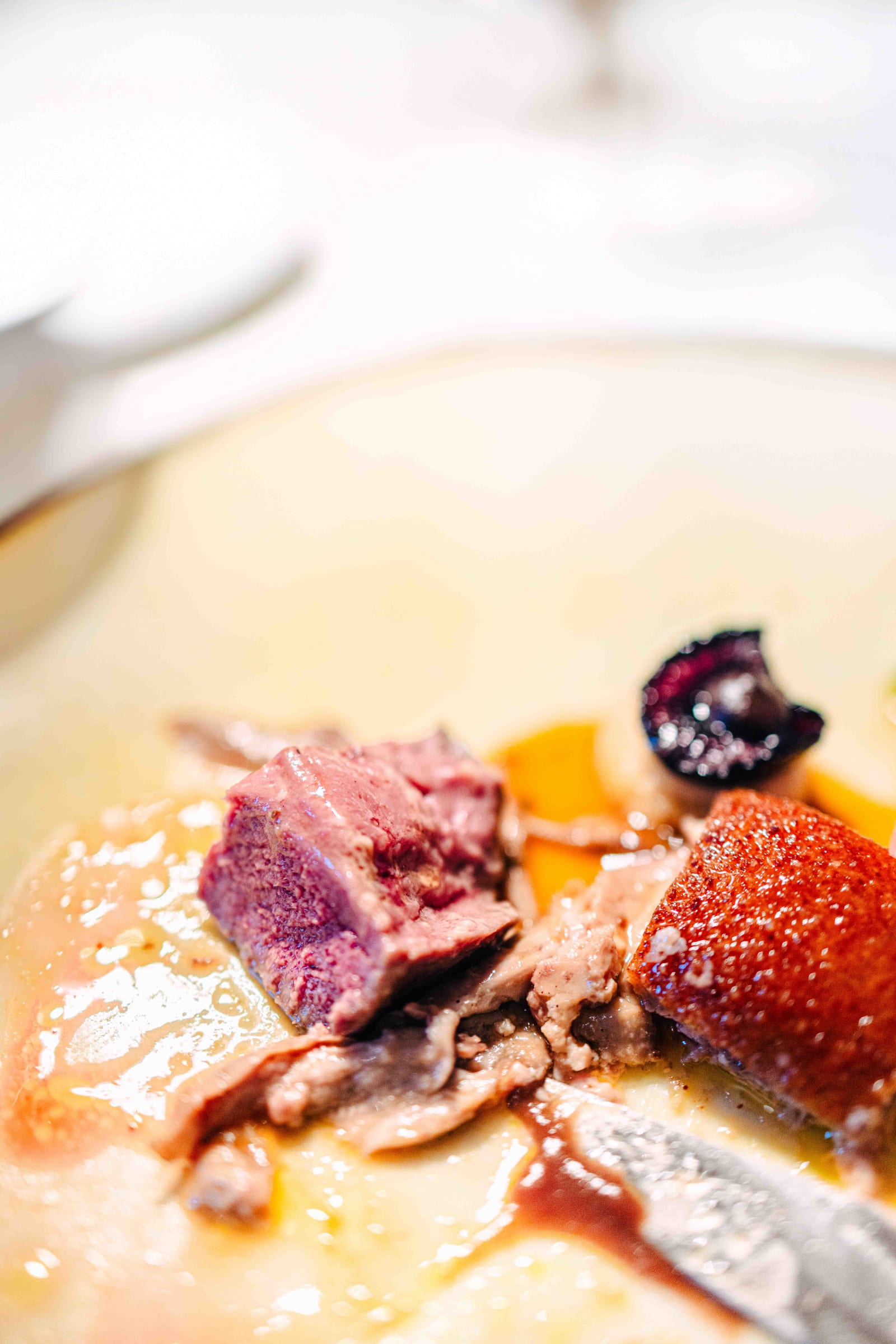
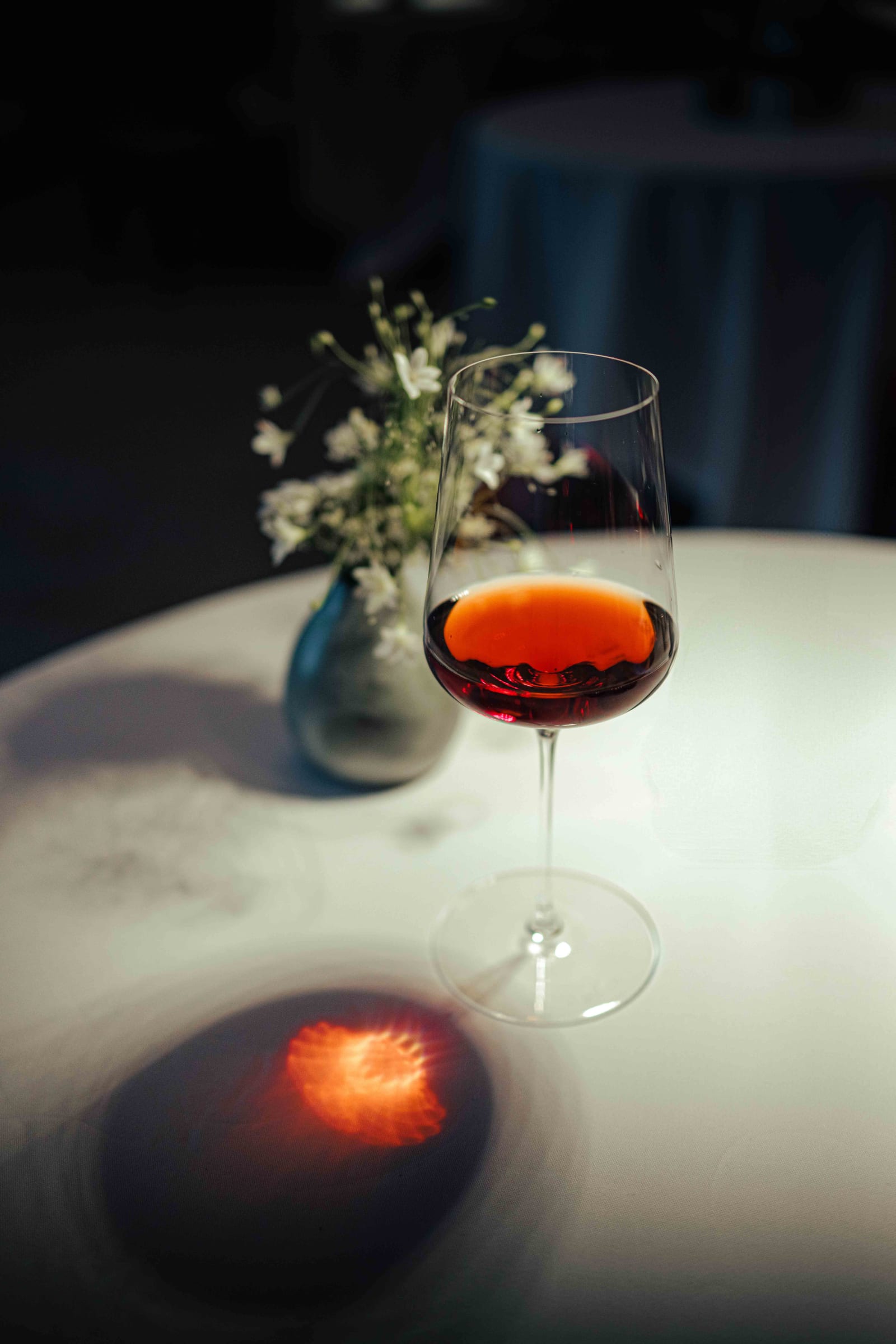
The final main course was Pigeon "Excellence Miéral" with foie gras. The bird and the foie gras were enclosed together inside a crisped skin. Looking at it before the first bite, there was no possibility it would disappoint. The crunch of the skin, the delicate flavour of the pigeon, the richness of the foie gras: the combination felt like something only possible in France. The aromatic herbs juice and the garnishes were a small step below the other mains, but the pairing of pigeon and foie gras carried the course entirely. The red wine was Domaine Mortet Gevrey-Chambertin 1er Cru Les Champeaux 2020, powerful and well-matched.
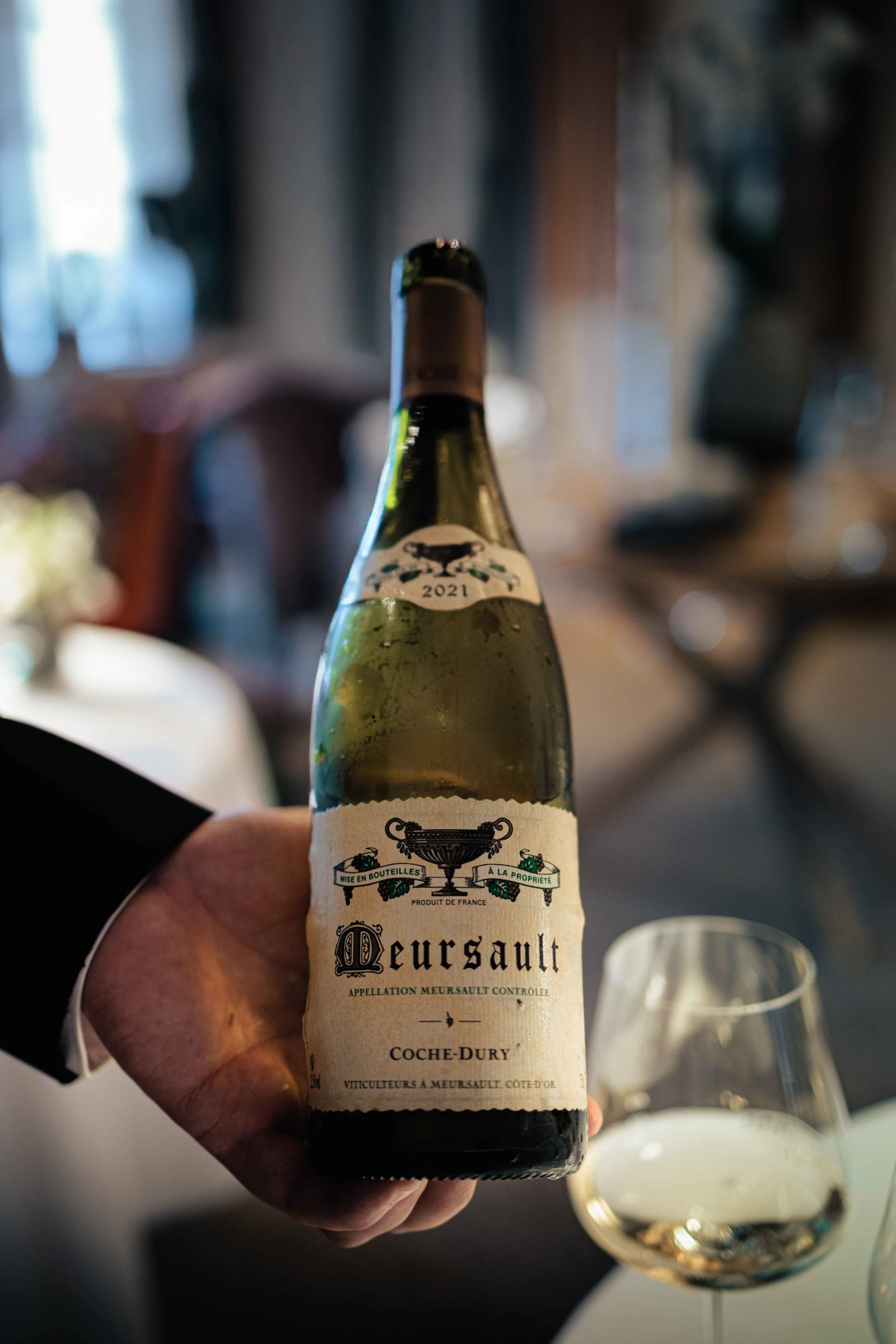
The pairing deserves separate attention. Three white Burgundies arrived in sequence, each distinct from the last in ways that were subtle but unmistakable. When the second glass was poured, I looked at it twice. Coche-Dury Meursault 2021. The producer is among the most storied in Burgundy, and the wine trades at an average of roughly 1,400,000 Korean won a bottle on the secondary market. It appeared as a single glass within a 225-euro pairing. For someone who had accumulated genuine scepticism about wine pairings, this was a decisive answer. The oily oak quality was different from the whites before it, the acidity forceful and alive. From the first glass to the final red, the pairing held the food throughout. If Burgundy wine matters to you, do not skip it here.
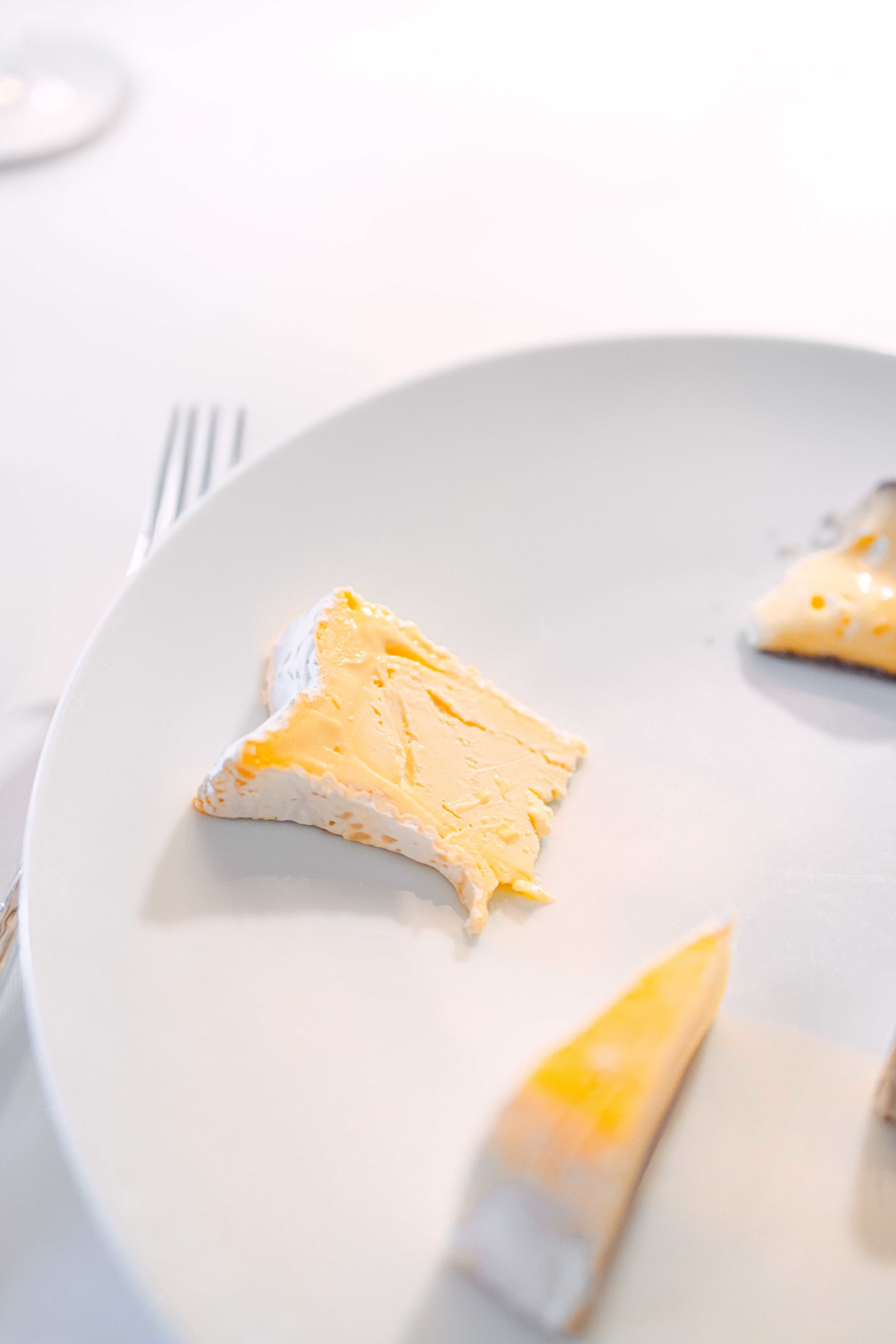
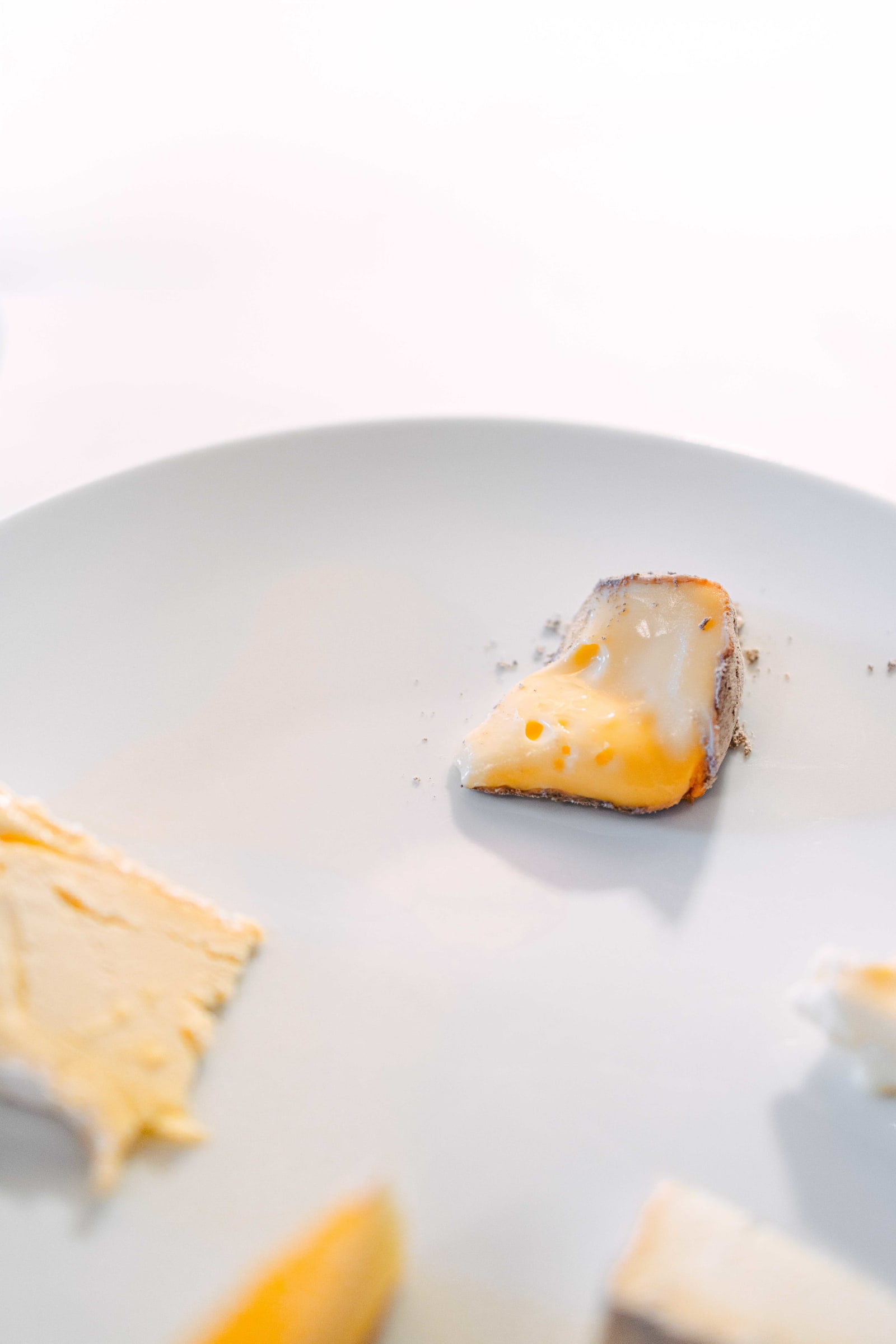
The cheese course arrived on a trolley, the wheels covered with glass domes, a presentation I had not encountered before. Jean recommended the selection, and five cheeses were chosen: fromage de chèvre, Époisses, Tome de Savoie, Citeaux, and Brillat-Savarin, working clockwise. Époisses, tasted properly for the first time on this Burgundy trip, became something I actively wanted after the second encounter. Jean produced a fig jam and demonstrated the approach: cheese on bread, then a small amount of jam on top. The sweetness and fragrance transformed what was already good into something else. Worth remembering.
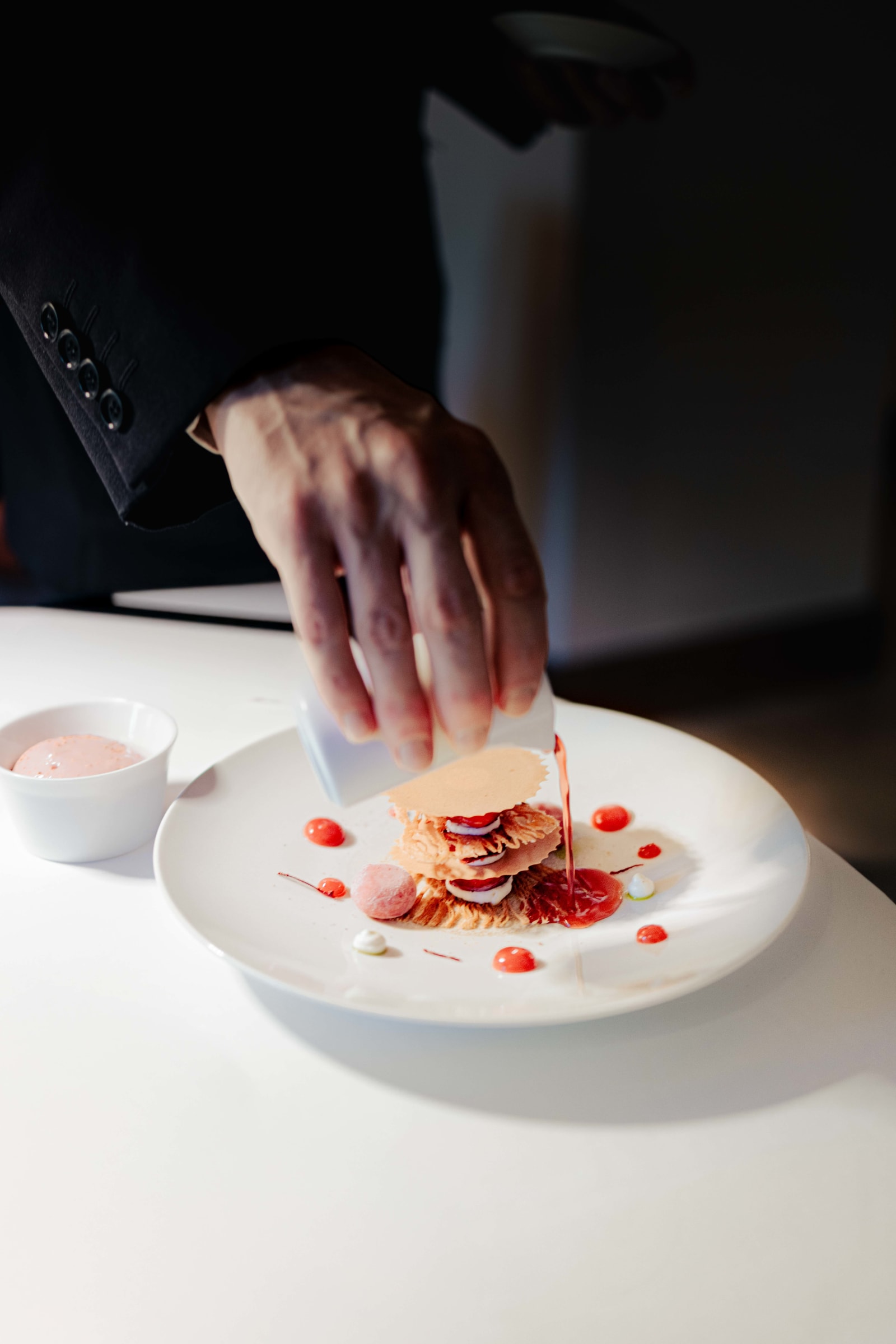
Dessert was two preparations of strawberry. First, thin Gavottes leaves and puff pastry with a poured strawberry sauce. Then a cream with concentrated strawberry pulp underneath. Neither was inventive in conception. Both delivered the flavour of the fruit with clarity and commitment, which was sufficient.
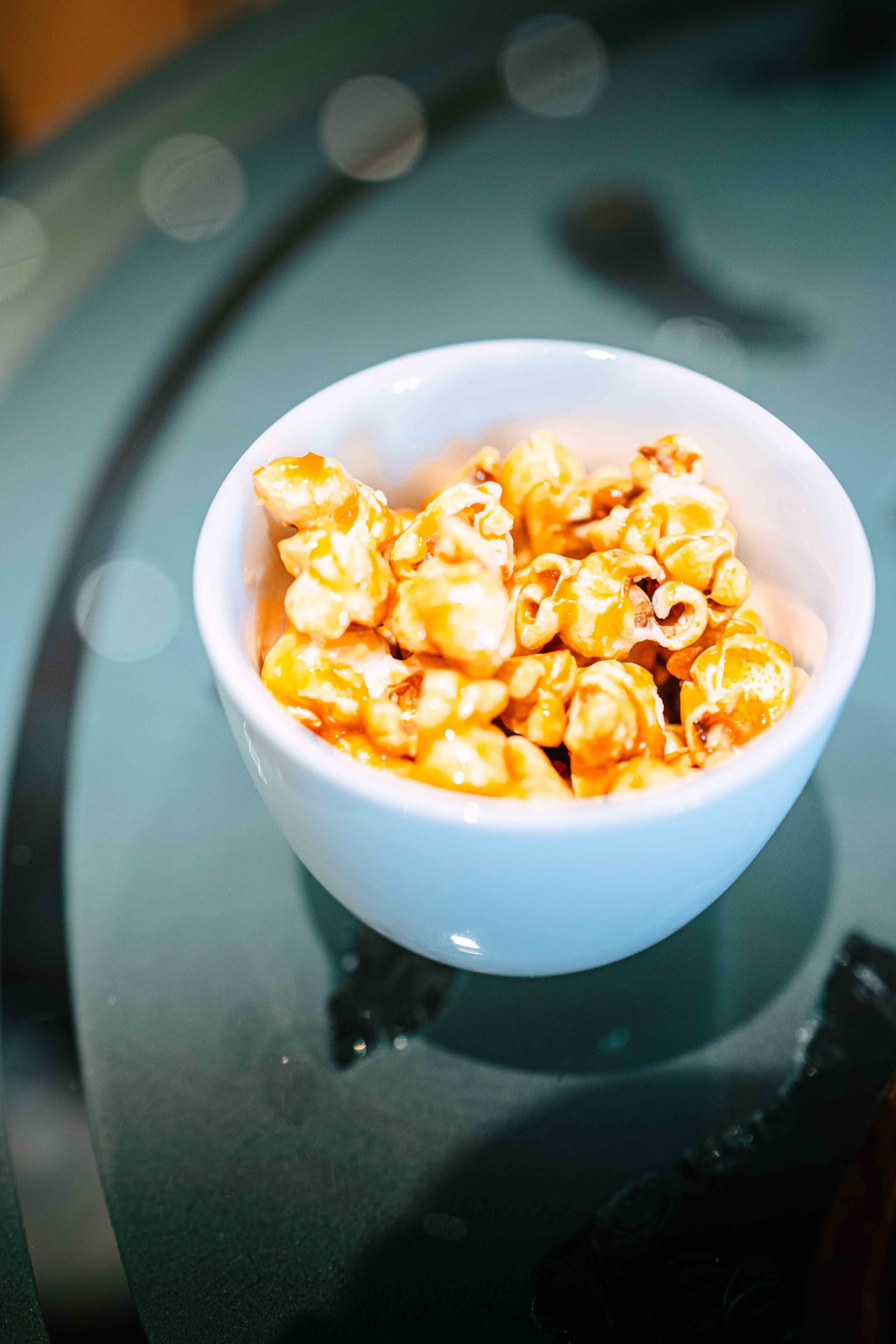
When the courses finished, there was a quiet offer to move to a private room. The evening had gone long. The side room held old photographs, books, and several bottles of spirits. The petit fours arrived there. The plate included caramel popcorn. It was not sweet in a simple way; it was calibrated. The chocolates were similarly considered, more layered than a passing gesture. Of all the petit four experiences I have had at restaurants at this level, this was the best. The precision extended to the last thing served.
One further note. The bathrooms are on the second floor. The staircase wall and the corridor above are lined with photographs and records from the restaurant's history, from the 1920s to the present. The instinct is to move quickly. Resist it.
What stayed with me longer than any single course was the drive that brought us there.
When Jean and I drove through the Côte d'Or that day, he mentioned that you have to wait for autumn to understand why this place is called the golden hill. In July, the vines were still deep green, and that green running unbroken from north to south was something that photographs cannot hold. Maison Lameloise was the last stop of the day. The journey from the vineyards to the table felt like a single sentence reaching its period. The food, the wine, the room, all of it grew from this ground and was built upon it. A meal taken on the hill before the gold arrives.
There are three-star restaurants in Paris, and there are three-star restaurants in the regions, and the difference is not only geographical. Paris kitchens perform for an international audience that arrives with expectations formed elsewhere. Lameloise, in Chagny, performs for no such audience. It sits in a village at the southern end of the Côte d'Or, surrounded by the vineyards whose wines have filled its cellar for a hundred years, and its obligations run to the region rather than to a global conversation about what fine dining should look like. That self-sufficiency is not insularity. It is the condition under which a kitchen can spend a century becoming exactly what it intended to be.
Have a question about this restaurant, or want to share your own experience?
Send a message