Fine Dining · Spain
Martin Berasategui
"A three-star team without a superstar, and a baseline for the Spanish path to fine dining"
The 2023 Spain-Portugal trip was a meaningful one. It was the first time I had planned a trip specifically around multiple Michelin restaurants, and it taught me, more than anything, what San Sebastián really is as a culinary destination. Up to that point Madrid and Barcelona were what I knew of Spain. The last meal of the San Sebastián leg was the three-star Martin Berasategui. After Akelarre the night before, I had worried that two three-star dinners back-to-back would be too much. The visit turned out to teach me that twenty-four hours is enough of a cooldown between this kind of meal.
1—1 / 120
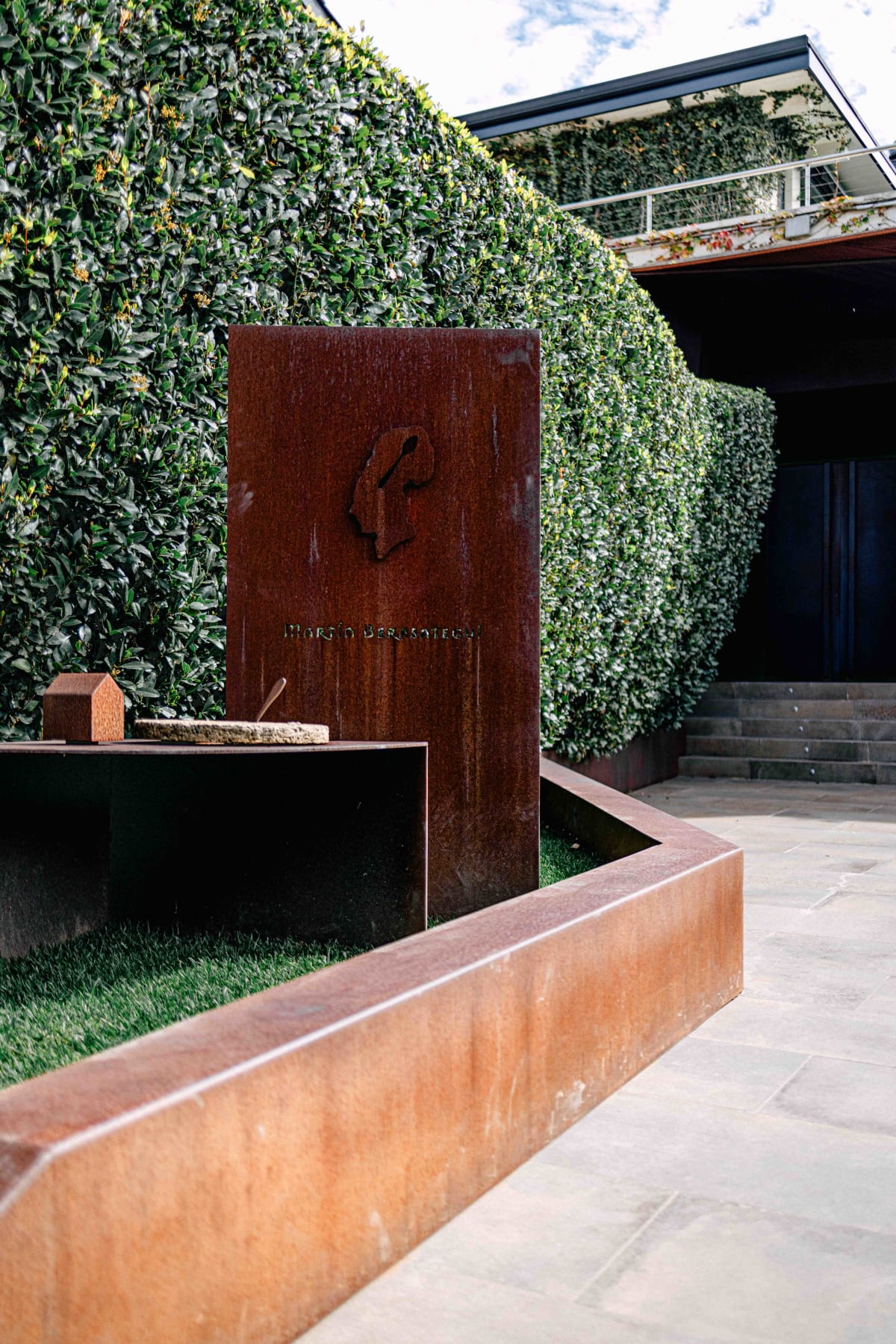
Of the Michelin three-star restaurants in San Sebastián, Martin Berasategui is probably the one with the strongest reputation both among serious diners and the broader public. The restaurant takes its name directly from the chef. Martín Berasategui was born in San Sebastián in 1960 and started cooking at fourteen in his parents' restaurant, Bodegón Alejandro. I only learned later, while writing this up, that the Bodegón Alejandro I happened to visit during the same trip is the chef's parents' place; that visit will get its own write-up.
At the time, the Basque region had no Michelin-starred restaurants, so at seventeen he moved to France to train, learning pastry, charcuterie, and ice cream in sequence. He worked through Jean Paul Heinard in Bayonne and André Mandion in Anglet, and then trained under Didier Oudill, head chef at Les Prés d'Eugénie and a central figure in Michel Guerard's group, where he picked up haute cuisine in earnest. He also spent time under Alain Ducasse at Louis XV in Monaco. He earned his first Michelin star at twenty-five at his parents' restaurant. On 1 May 1993, together with his wife Oneka Arregui, he opened his own restaurant in Lasarte-Oria, just outside San Sebastián, under his own name. He earned a first star six months later, a second three years on, and a third in 2001, becoming Spain's fourth three-star restaurant after Arzak, El Racó de Can Fabes, and elBulli. He now holds a total of twelve Michelin stars across his group, the most of any Spanish chef, including Lasarte Barcelona (three stars), M.B. Tenerife (two), Oria Barcelona (one), and Ola Bilbao (one). Many of the major Spanish chefs of the current generation, including Andoni Luis Aduriz at Mugaritz and Paolo Casagrande at Lasarte Barcelona, trained under him.
2—3 / 120
The restaurant is not in central San Sebastián but in the outlying town of Lasarte-Oria. I had to take a taxi that day, and the meter kept climbing without any sign of arriving. I asked the driver if he was sure he had the address right, and that was the first time I heard the name of the neighbourhood the restaurant actually sits in.
At that moment, a piece of the puzzle slid into place in my head. Anyone who has planned a serious dining trip to Barcelona will know two restaurants there: the three-star Lasarte and the one-star Oria. Both are Berasategui's, and both take their names from this very neighbourhood, Lasarte-Oria. That is also why the two restaurants sit right next to each other in Barcelona, on Passeig de Gràcia near Casa Milà. Hearing the driver name the neighbourhood was what made all of that information lock together in my head.
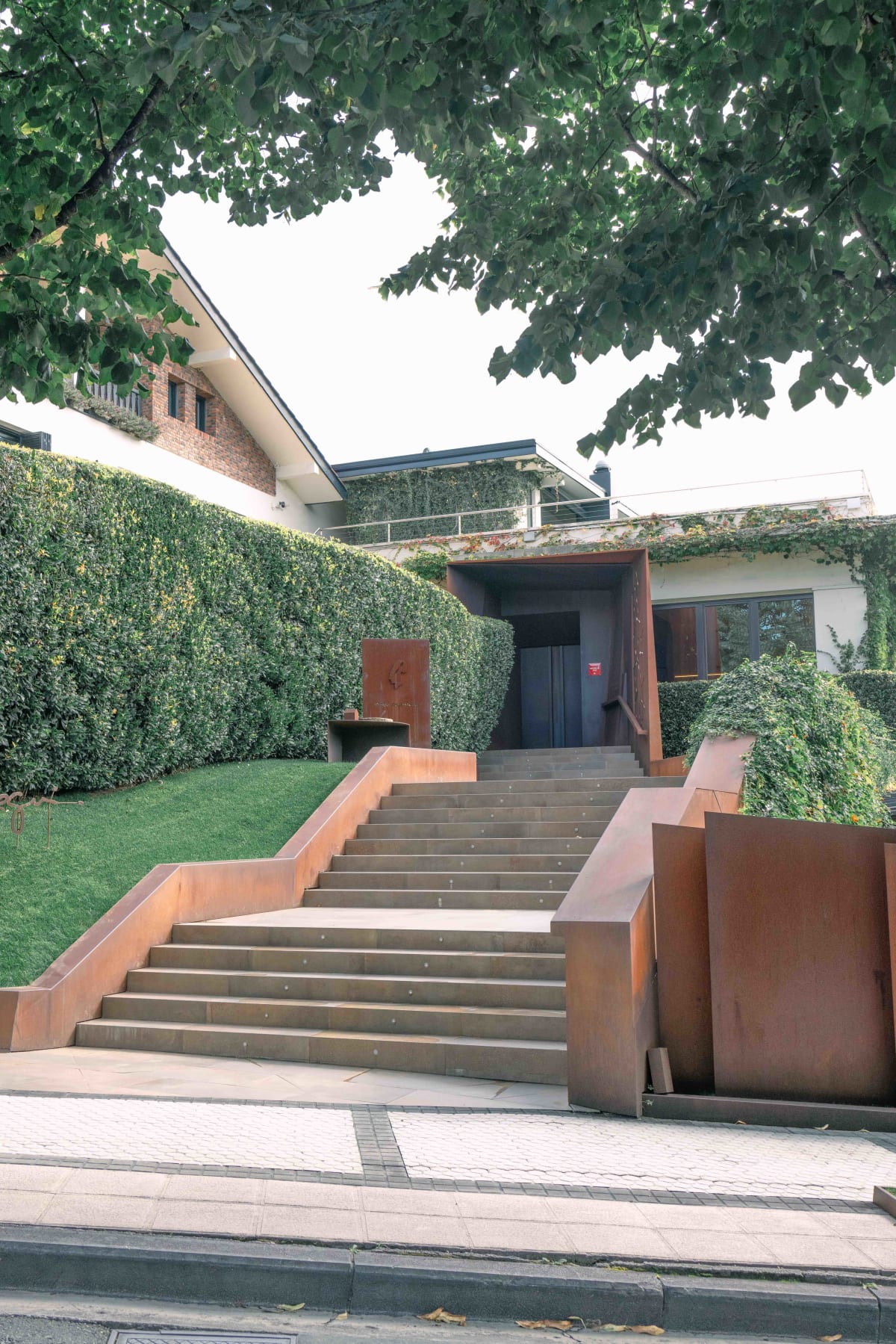
After a long ride, the taxi dropped me in a quiet residential block that does not feel like a city at all, and there in front of me stood a large house. That was Martin Berasategui. I had arrived early enough that the doors were still shut tight, which made the building look even more like a private residence. About fifteen minutes before opening, someone inside noticed I had been hovering outside, and a staff member came out smiling and asked me to come in and take my seat.
The visit turned out to teach me that twenty-four hours is enough of a cooldown between this kind of meal.
8—8 / 120
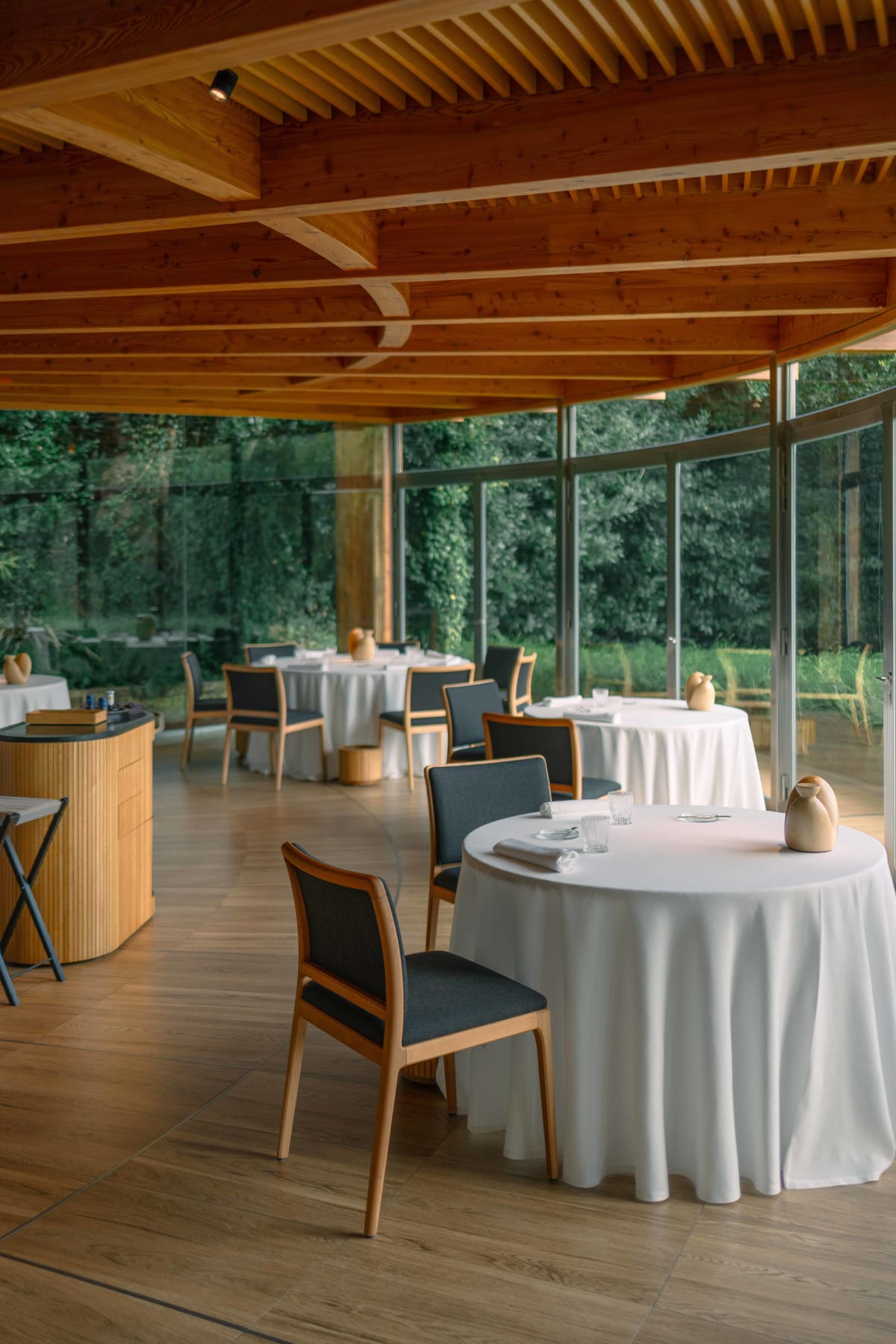
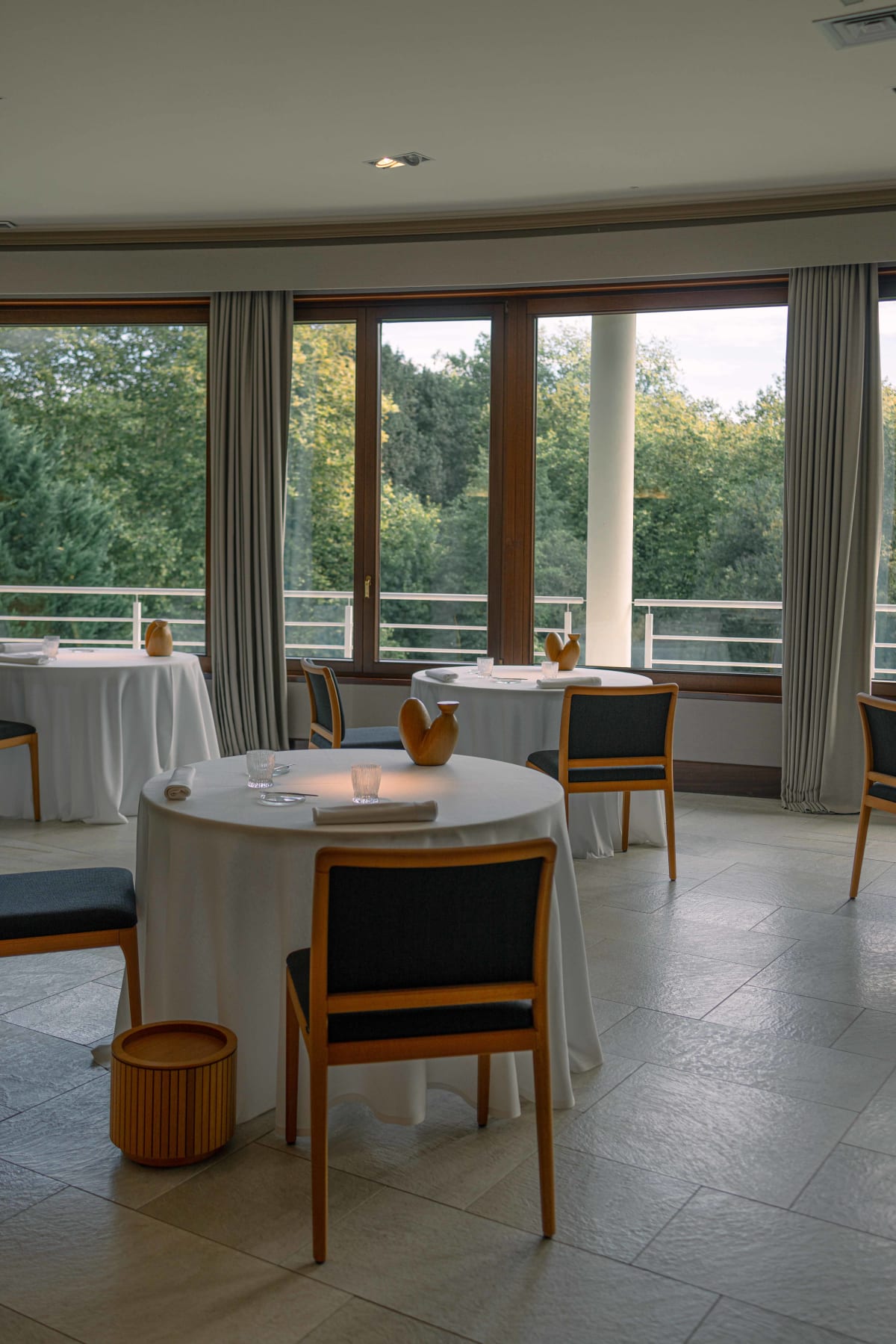
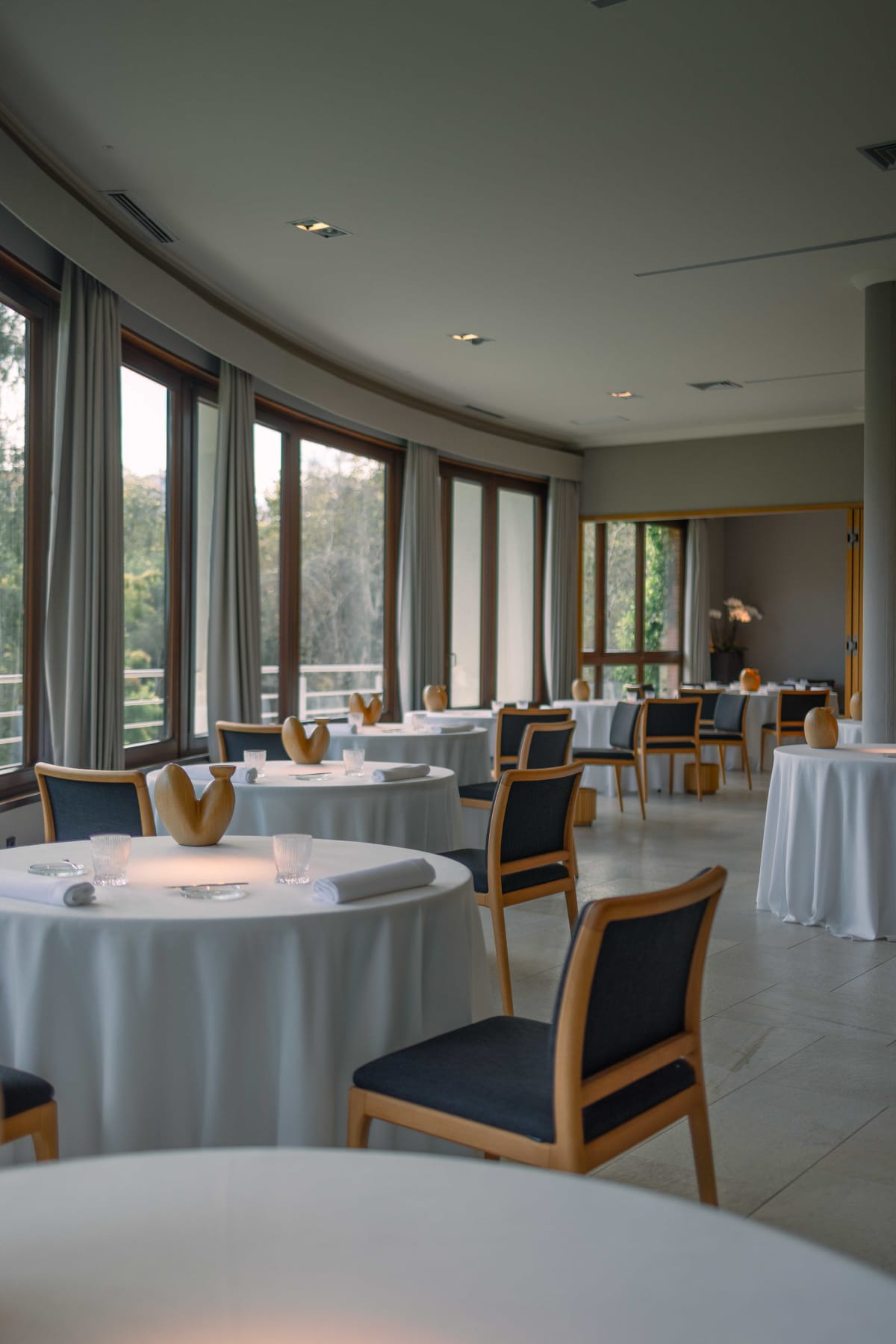
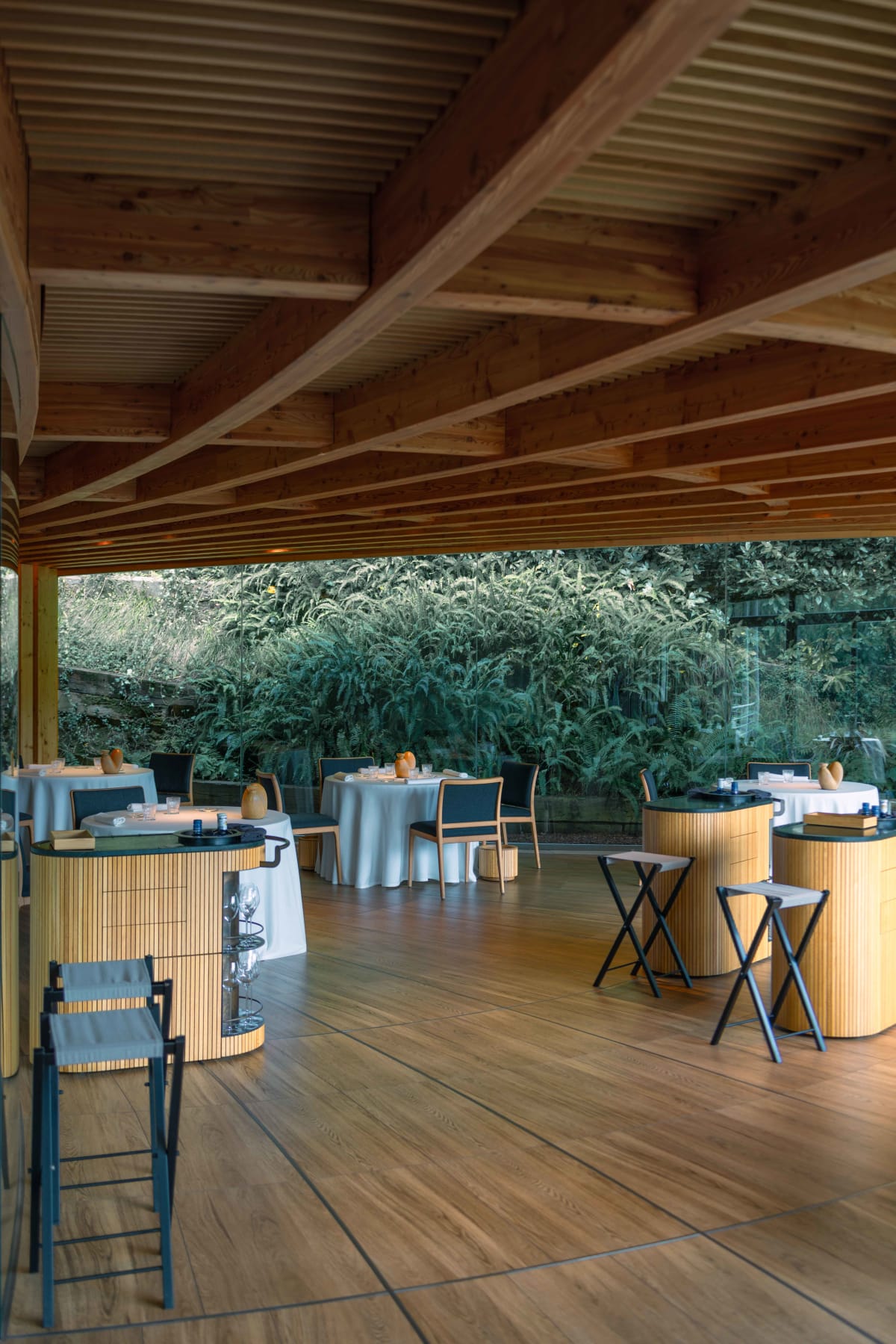
Because I had arrived early, I had the dining room to myself for a stretch, which gave me the unexpected luxury of being able to photograph the interior freely. The room is far more imposing on the inside than the outside suggests; the table count must be at least twenty-five, and probably closer to thirty. That scale is also why reservations here are relatively easy compared to the other three-star rooms in San Sebastián.
4—7 / 120
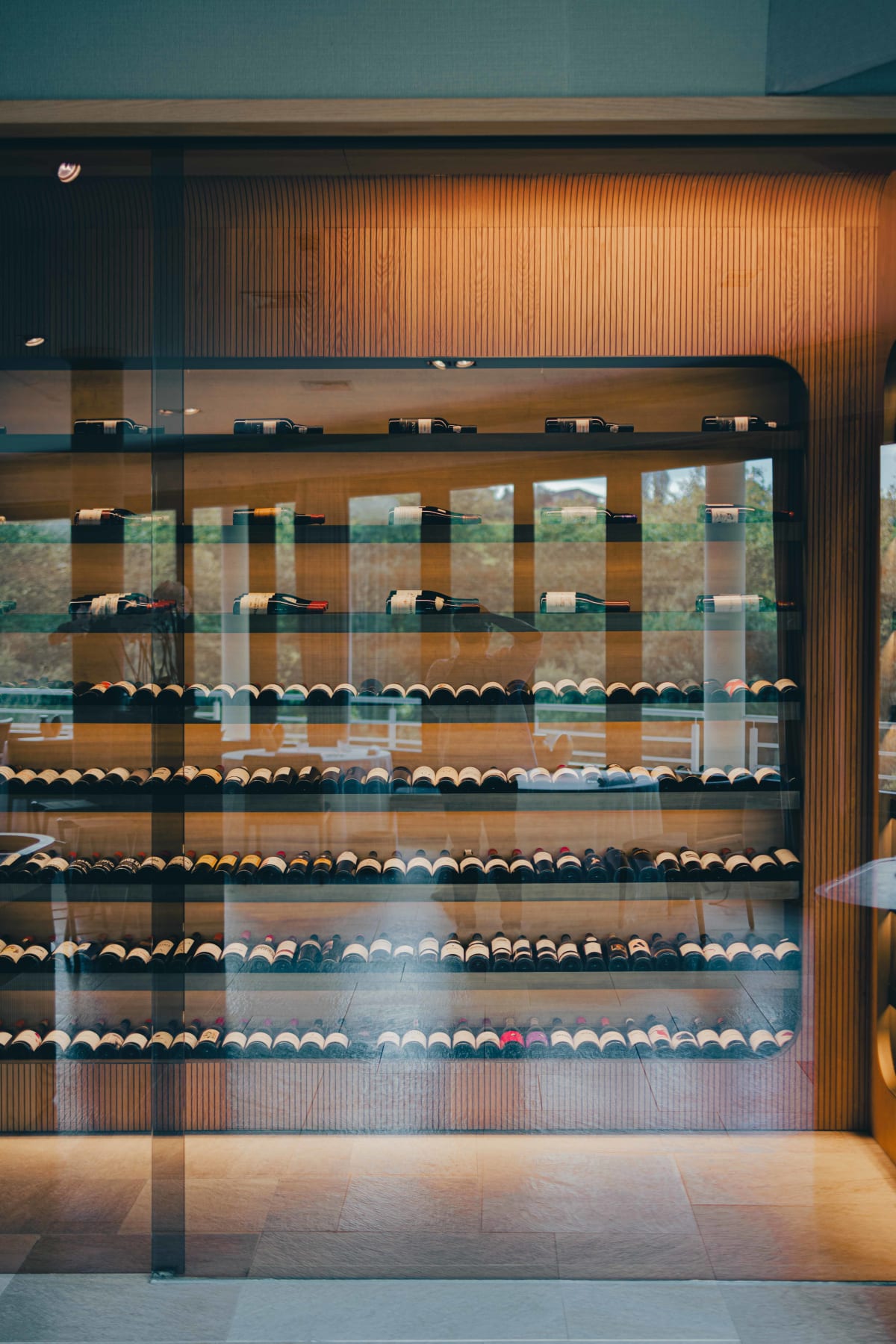
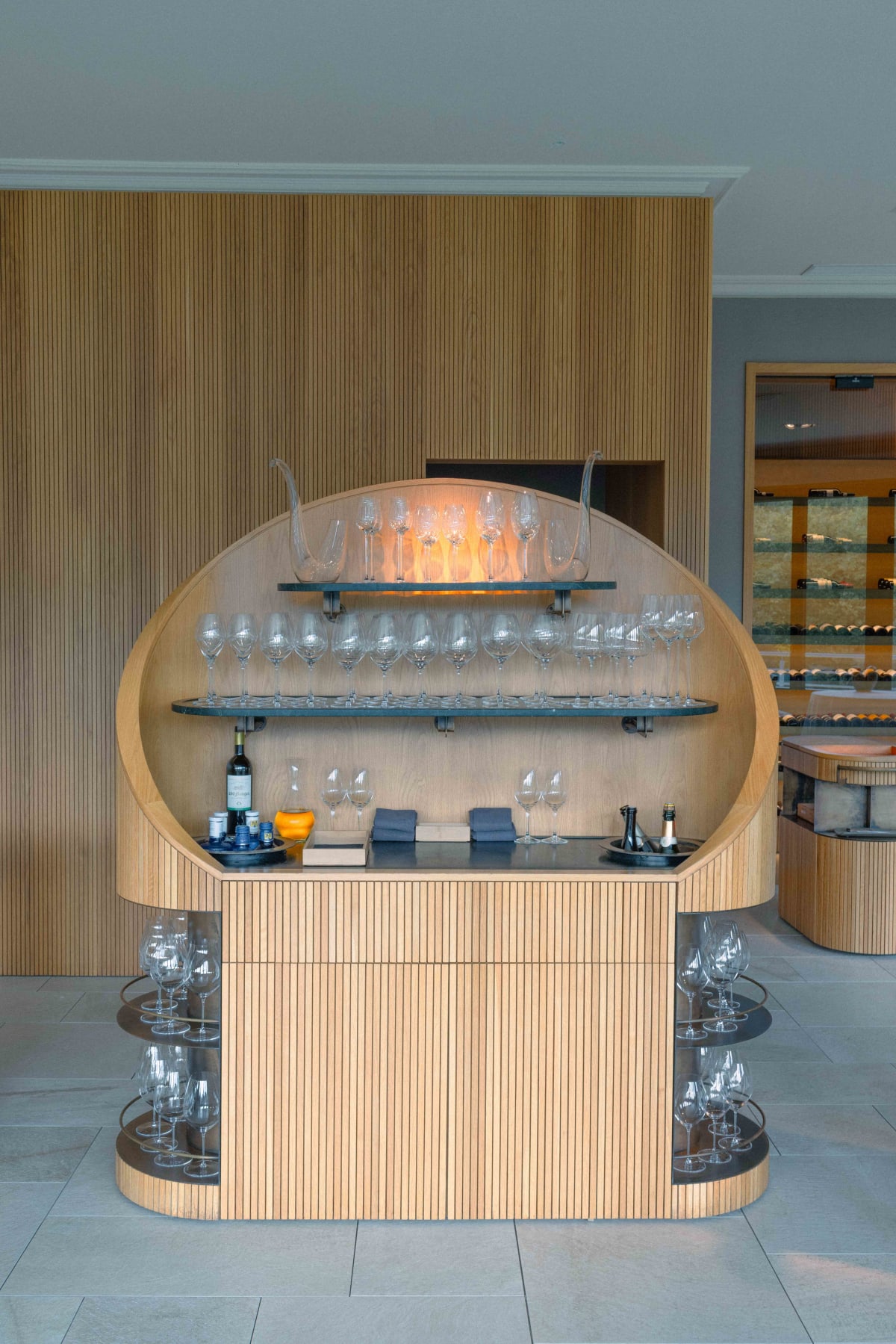
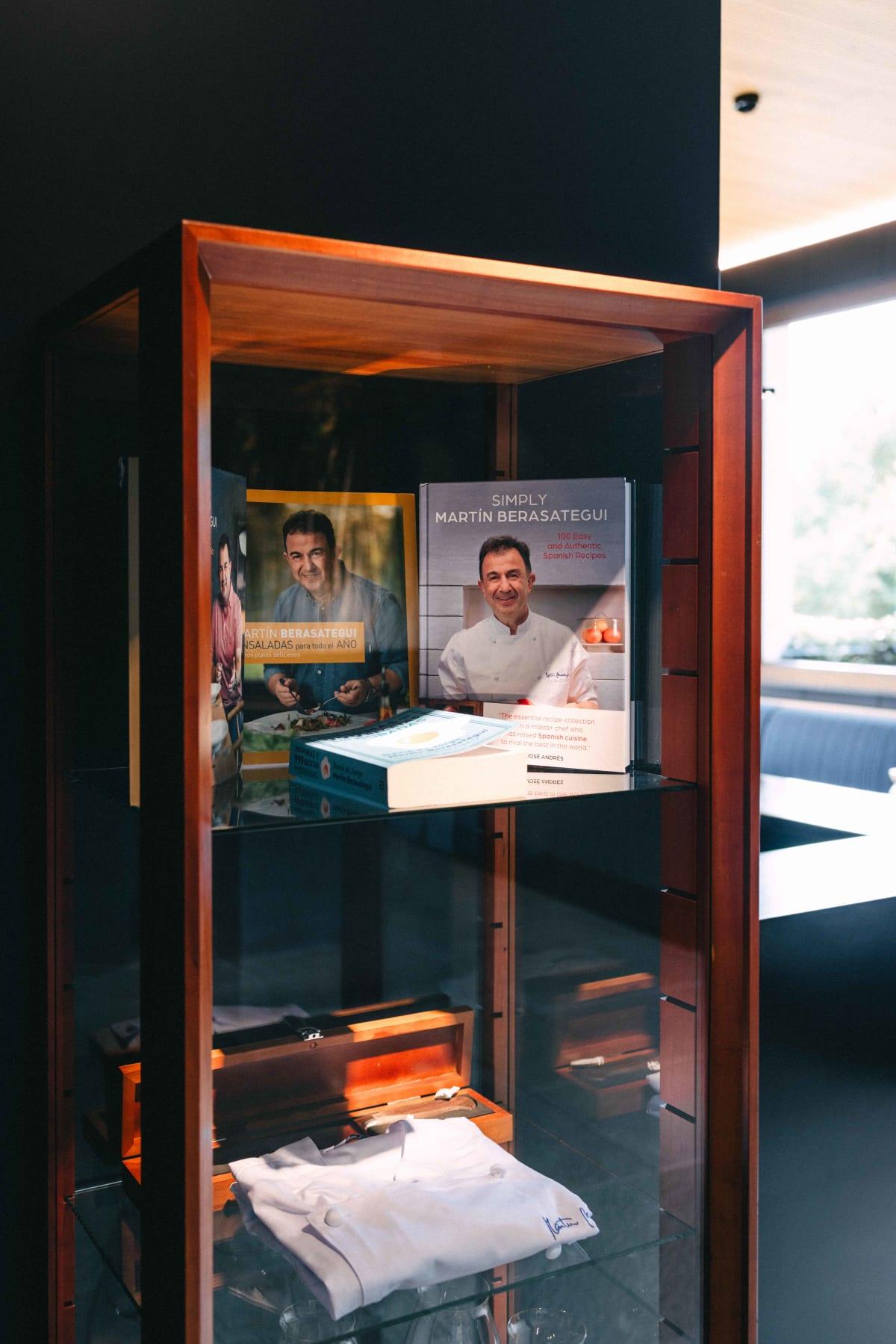
The outside view looks onto a forest, and natural light pours through large windows. Throughout the dining room are dedicated wine service stations and carts, with enough fine glassware that I briefly thought, only half-joking, that one piece could disappear and no one would notice.
6—9 / 120
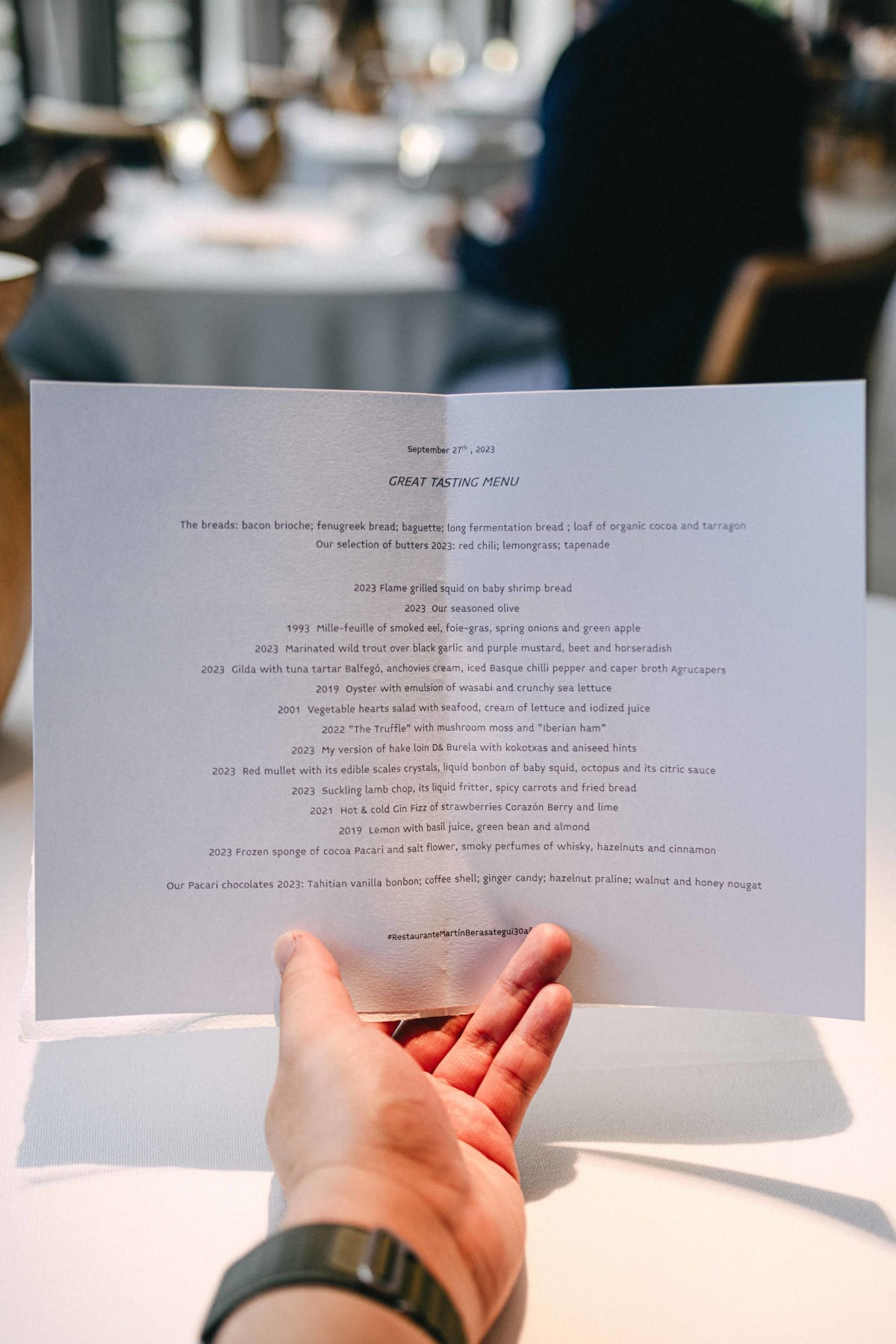
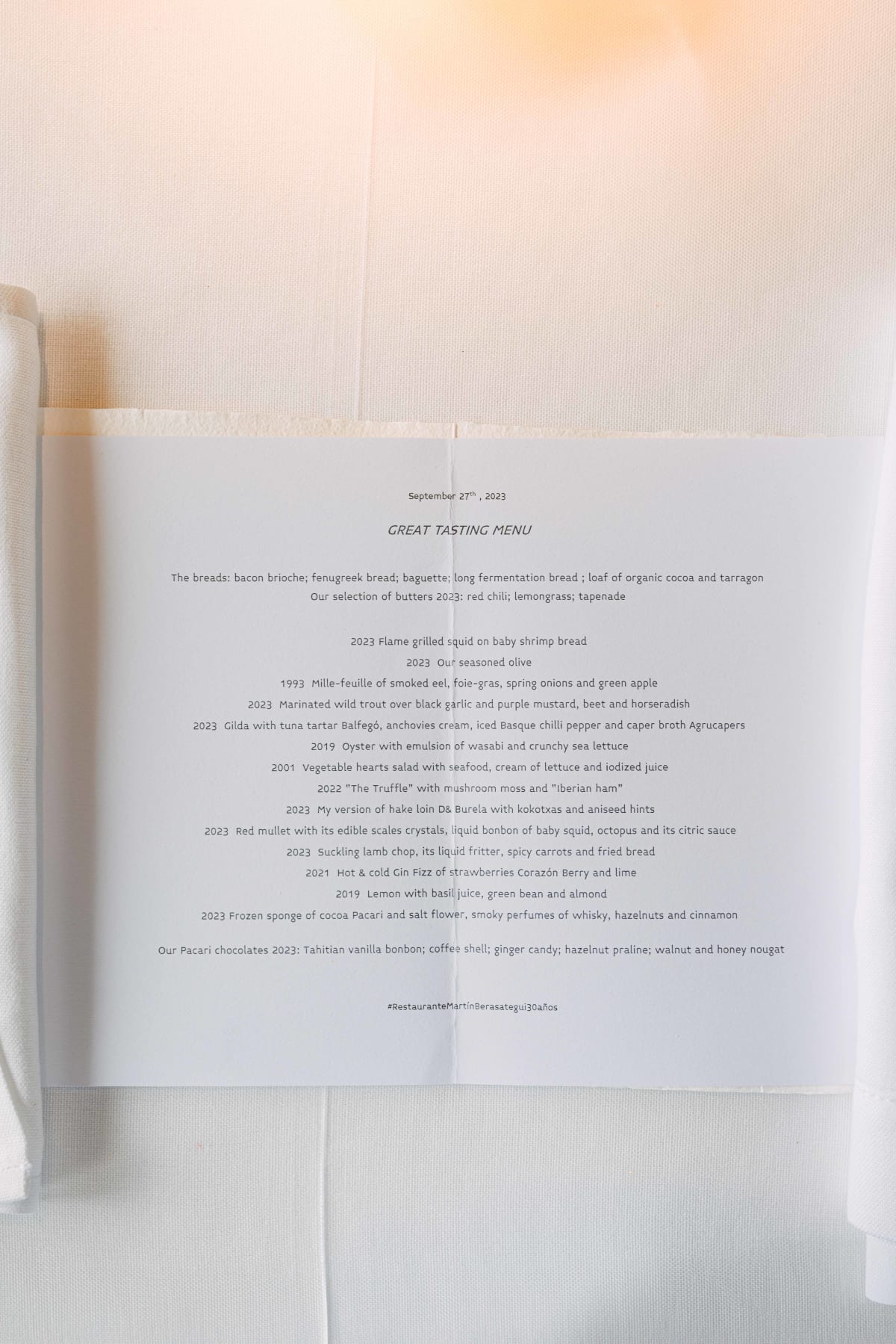
At one o'clock, as the room filled, the menu arrived. There are two options. The à la carte course at €300, which is five amuses plus a starter, a main, and a dessert. And the Great Tasting Menu at €355, which runs to fourteen dishes. I had walked in thinking the à la carte price was actually the tasting price, so when the actual number came up I was genuinely thrown. The pairing was another €195, which briefly made my head go blank, but I committed to the tasting on the logic that I might never return, and the larger total was simply the price of being here.
21—21 / 120
As soon as I had chosen, the first amuse and the welcome champagne arrived, and the course began. Whether the €550 is worth it is something I will work through slowly over the rest of the meal.
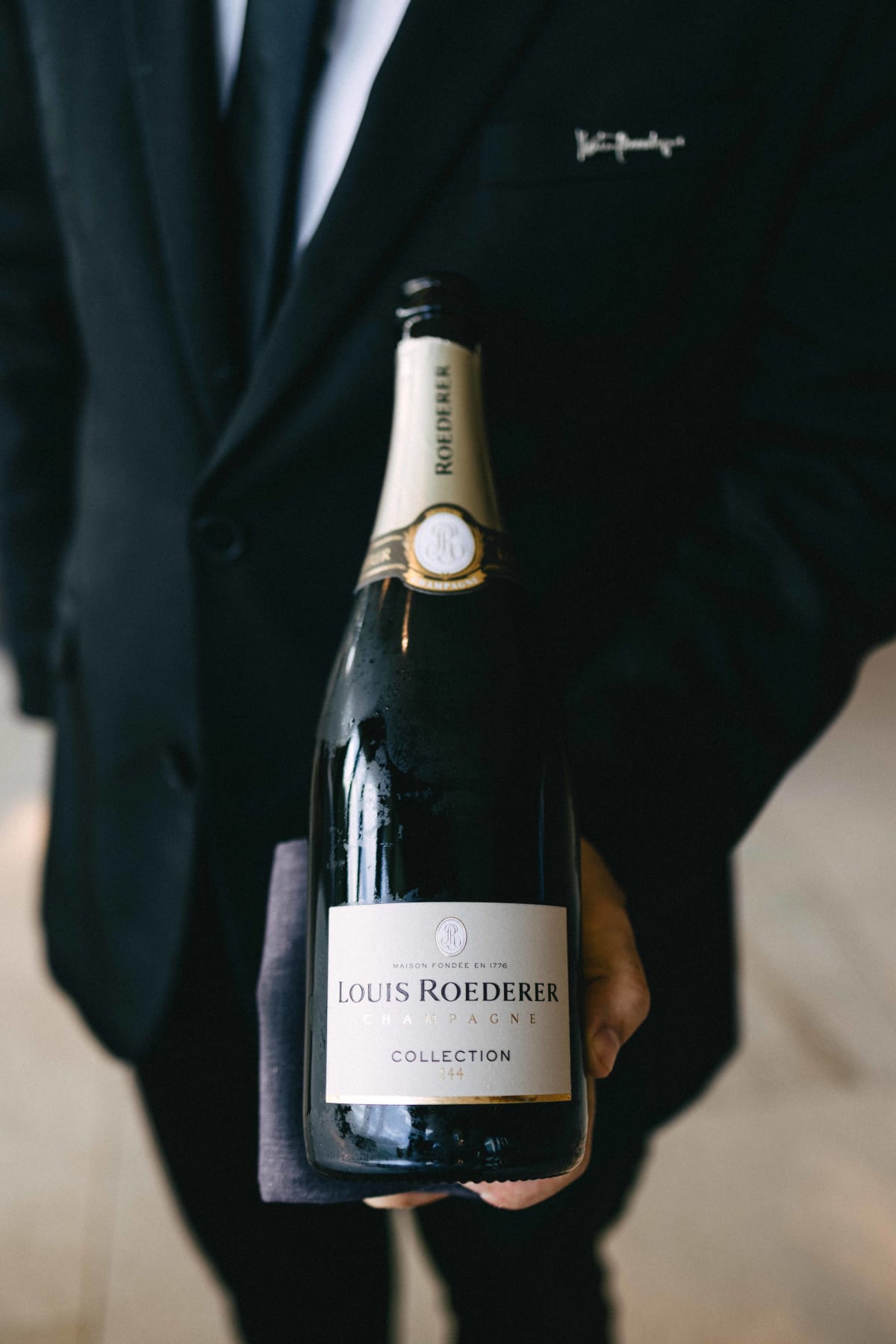
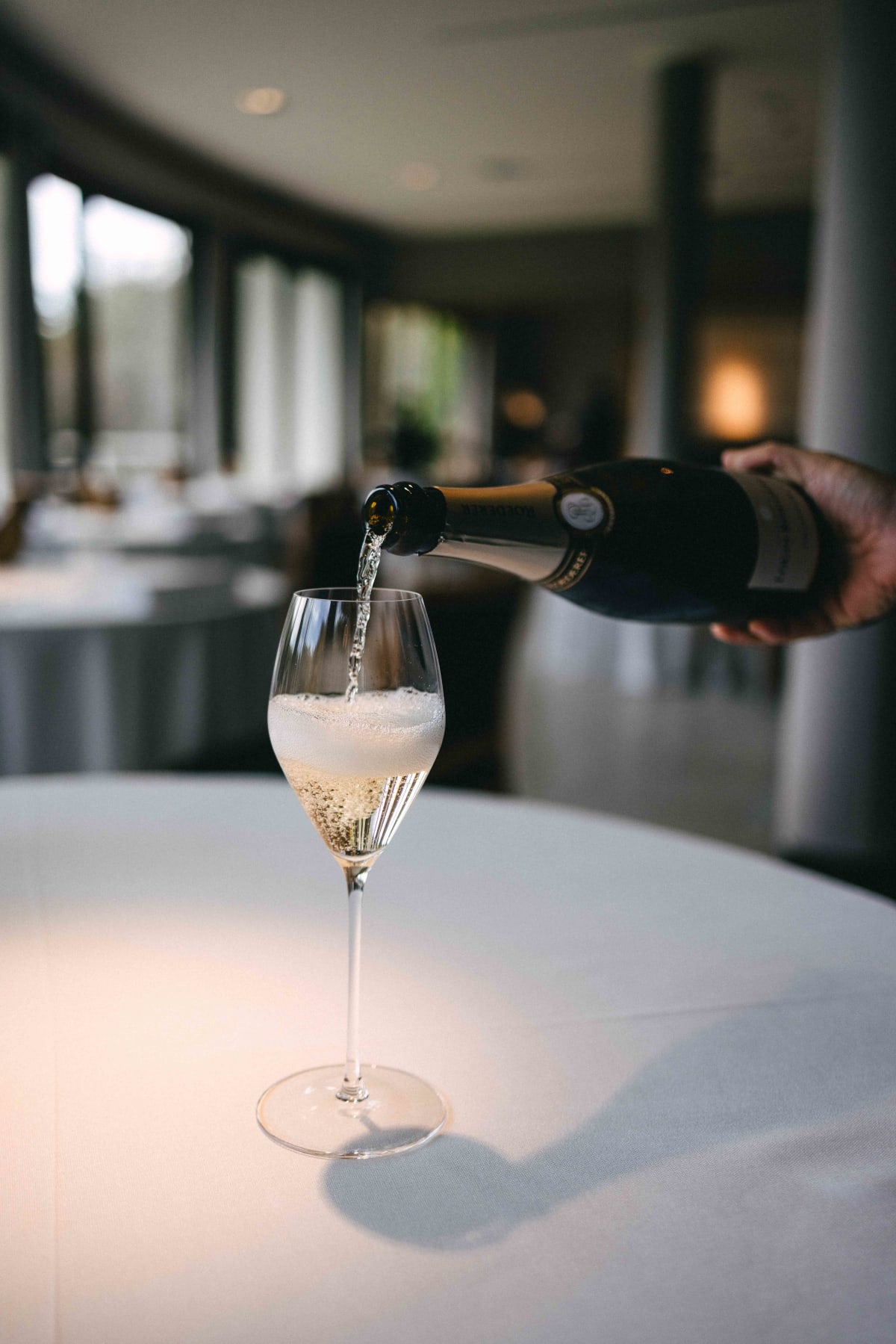
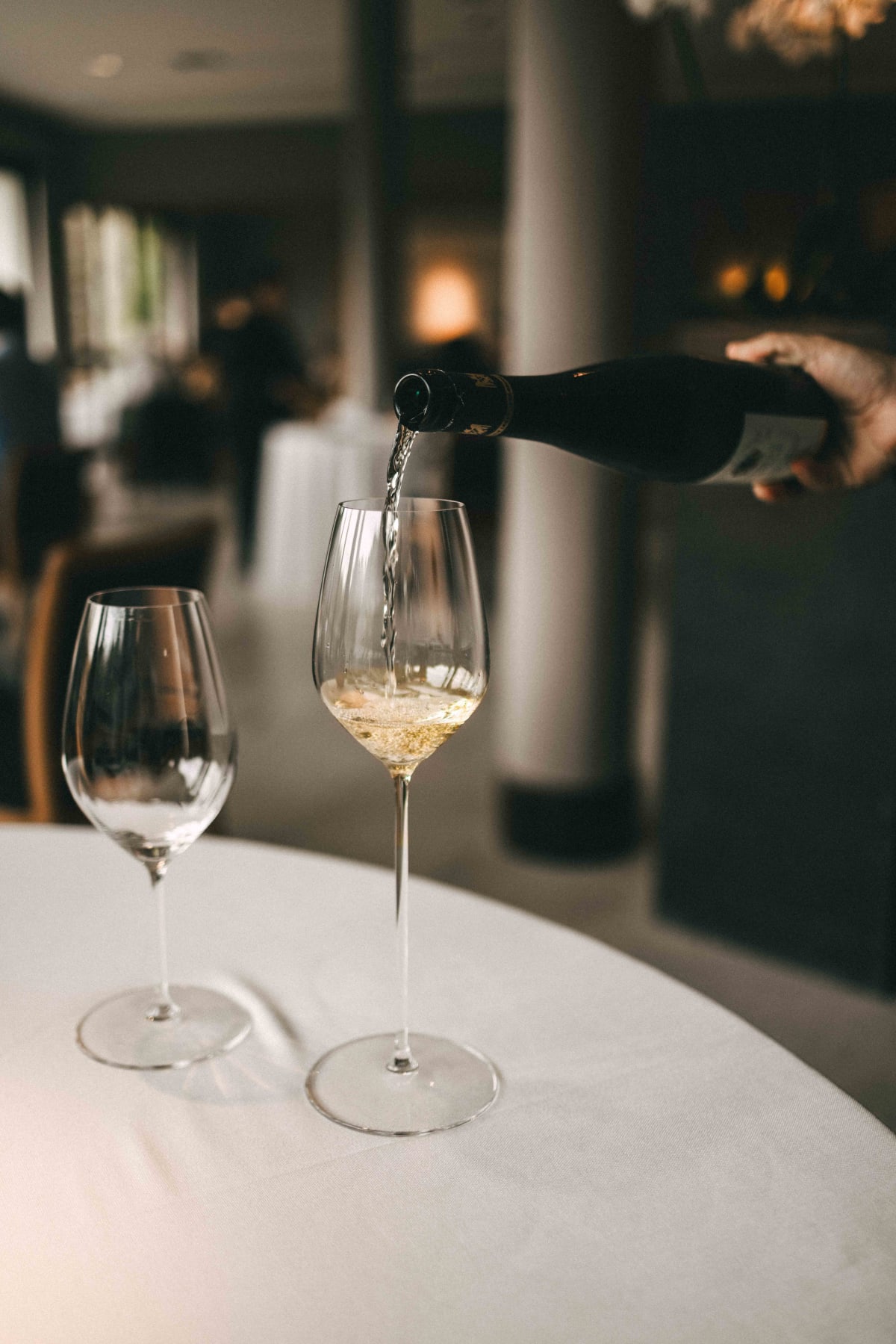
The first sparkling the sommelier brought out for a second I thought might be cava, but it was a champagne, Louis Roederer Collection 244. The 244 refers to the 244th blending, which makes it effectively a brand-new, young, entry-tier champagne. Louis Roederer is one of the historical Champagne houses, founded in 1776, and is known for an unusually high proportion of estate-owned vineyards. The Collection line, which replaced the Brut Premier in 2021, is a multi-vintage cuvée built by blending the base vintage with reserve wines from the cellar library and magnum-aged reserves, intended to balance consistency and depth at the same time. The wine itself read close to the kind of casual champagne I drink regularly, but one thing was unambiguous after the glass. Champagne, at the average level, still beats cava. There are excellent cavas, but the centre of gravity is clearly on the Champagne side.
10—11 / 120
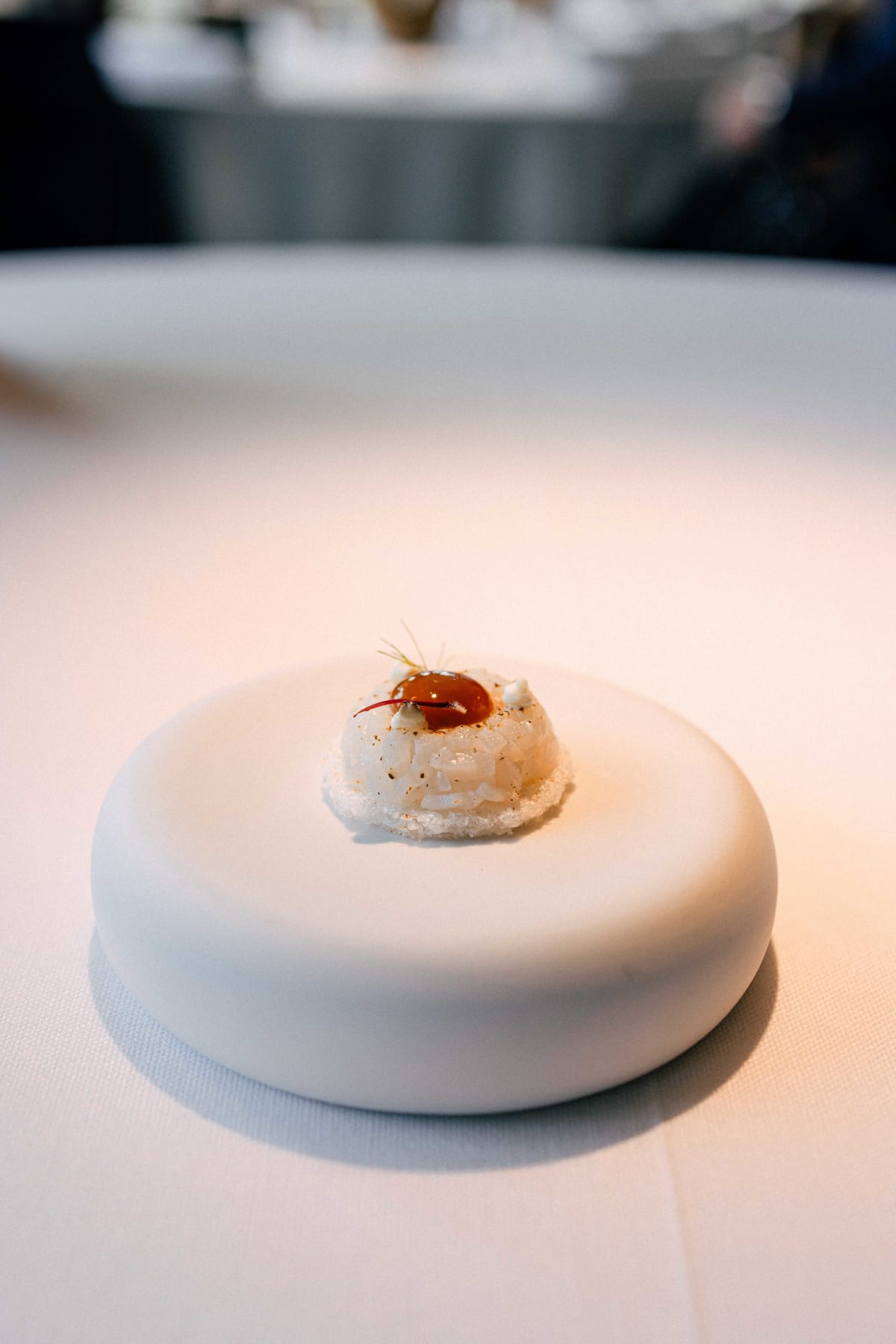
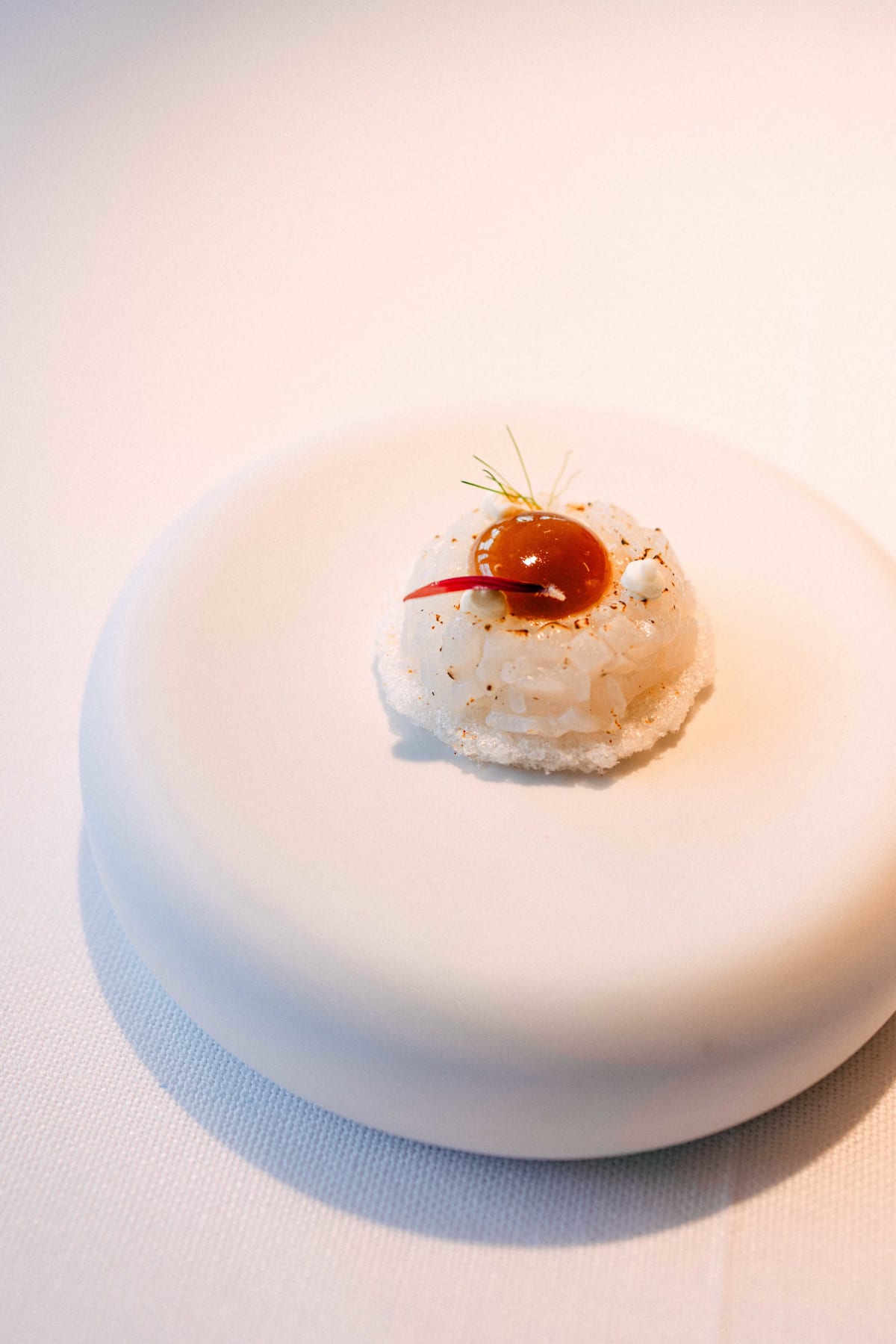
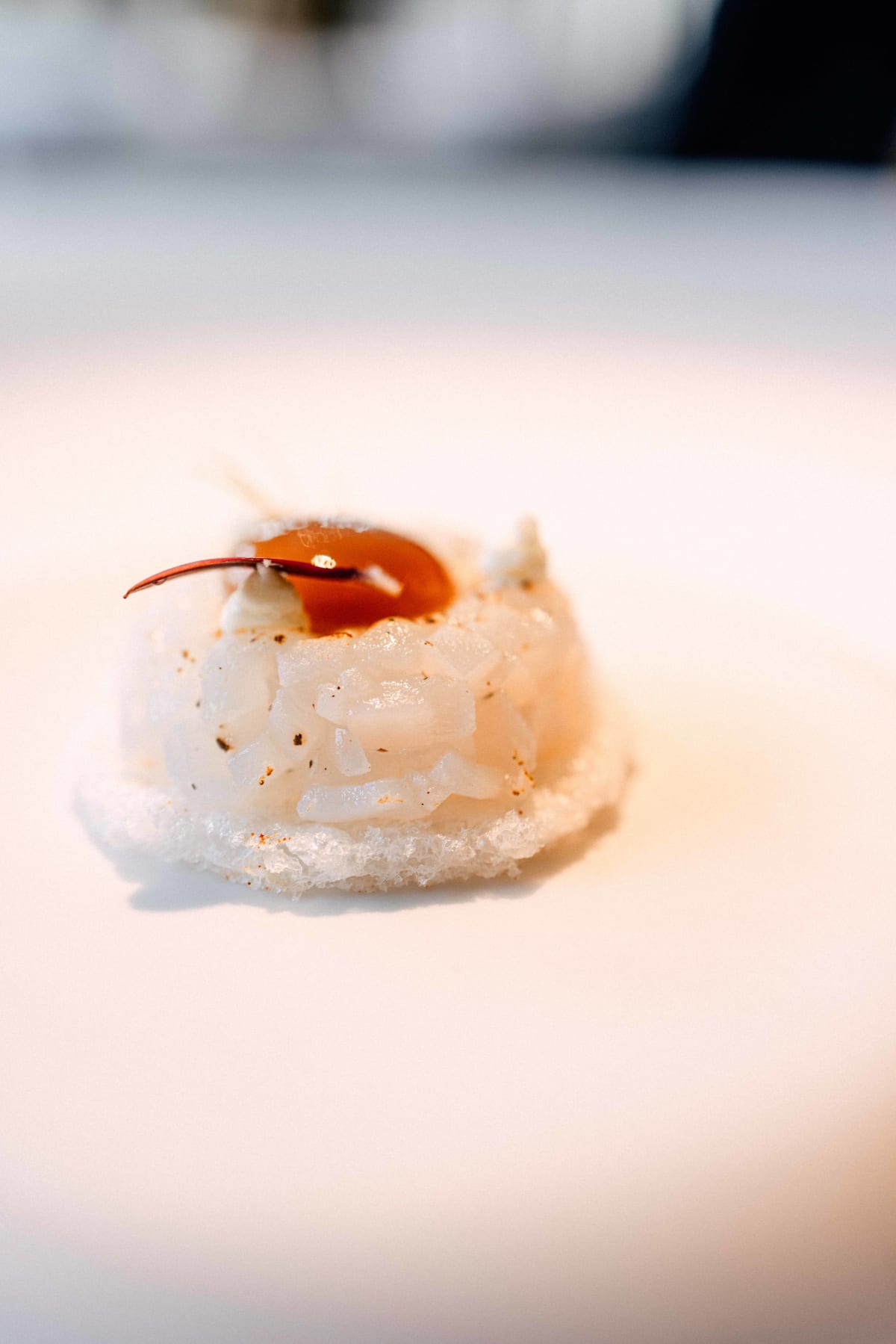
With it came the first amuse, 2023 Flame grilled squid on baby shrimp bread. The number in front of each menu name marks the year the dish was created, so this one is brand new. Underneath was a shrimp-flavoured cracker that looked like a Korean shrimp chip, and on top, finely sliced grilled squid. Honestly the dish left no particular impression. Even grilled, squid is squid, and the amuse had clearly been built up in advance, so I was not setting high expectations to begin with.
12—14 / 120
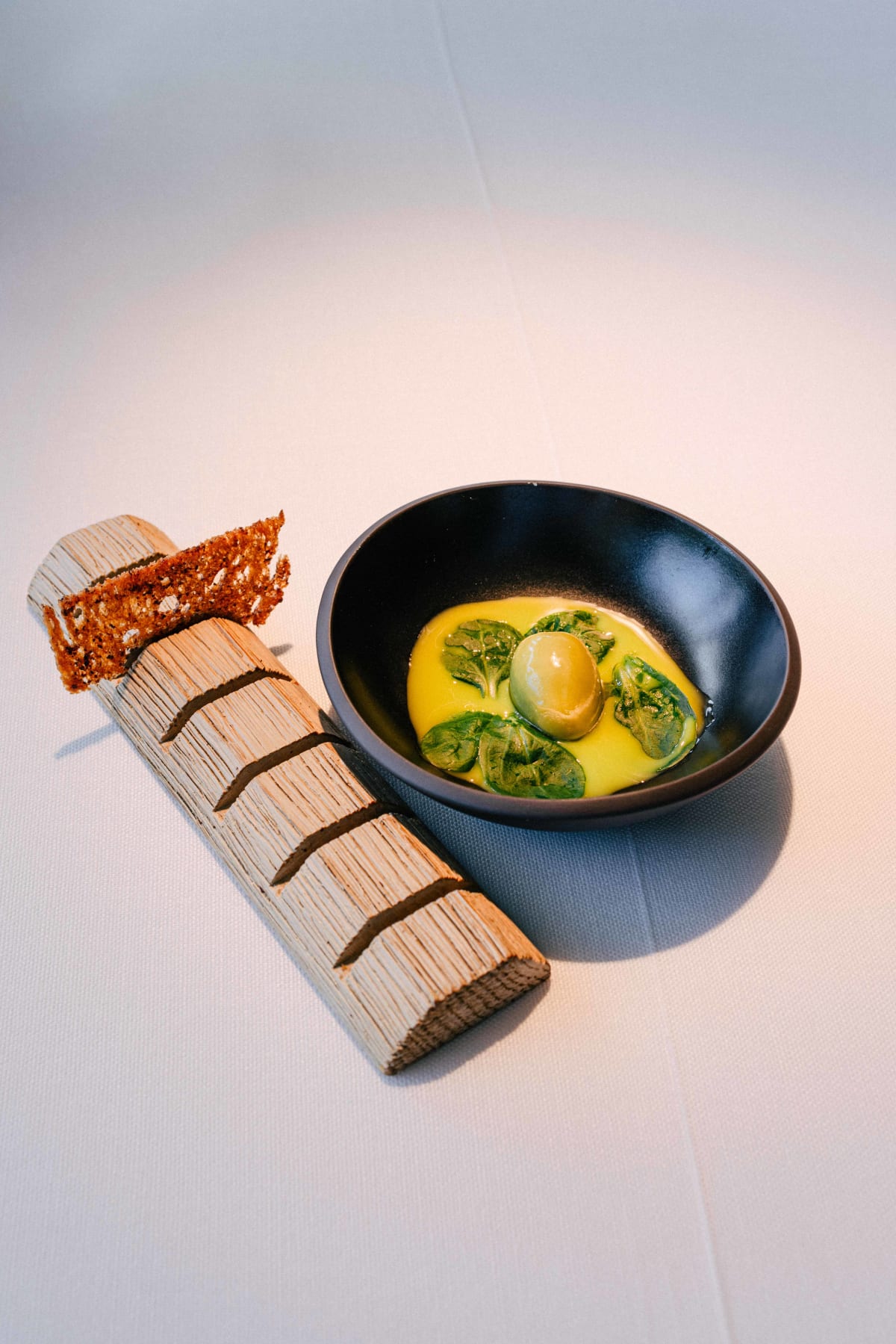
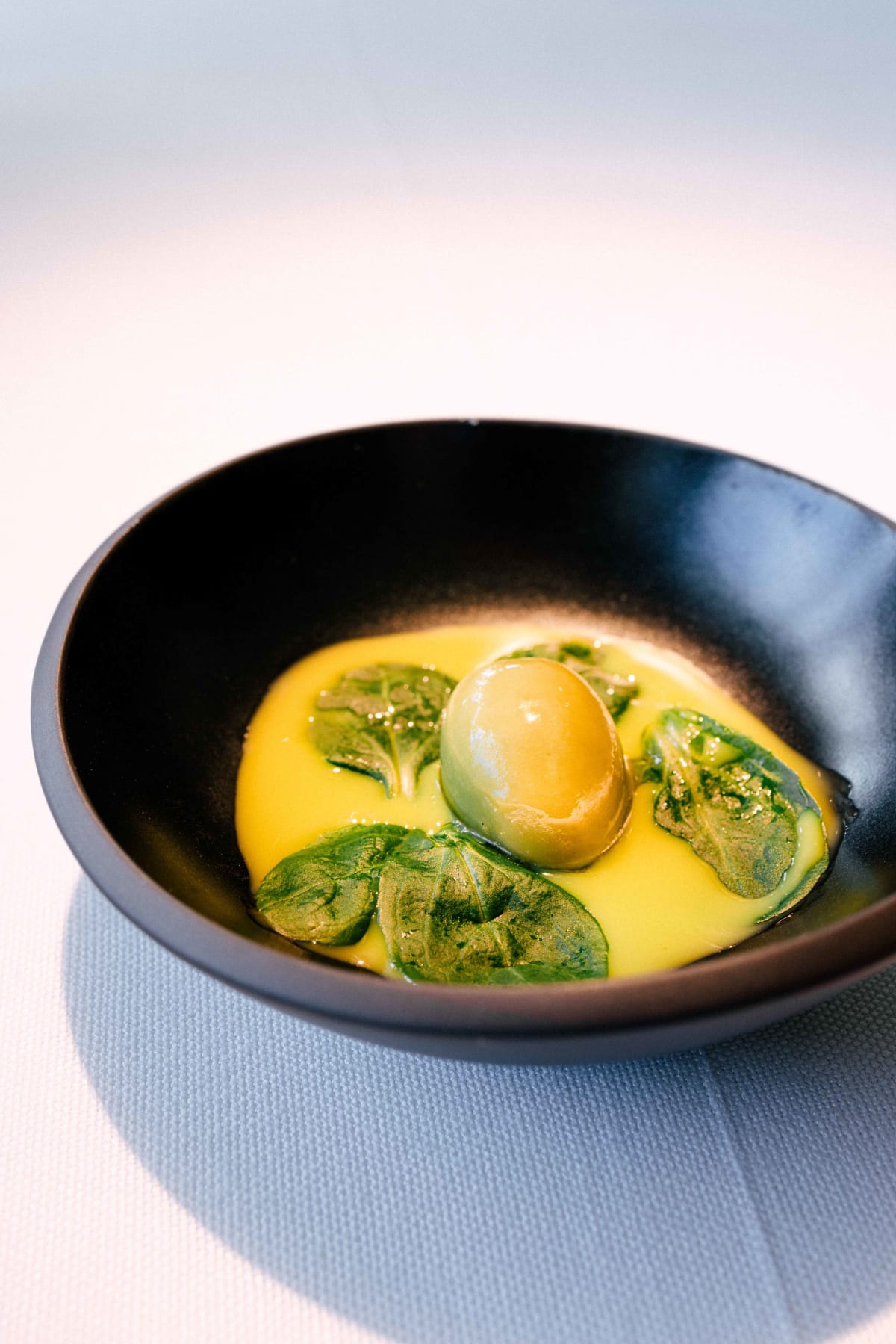
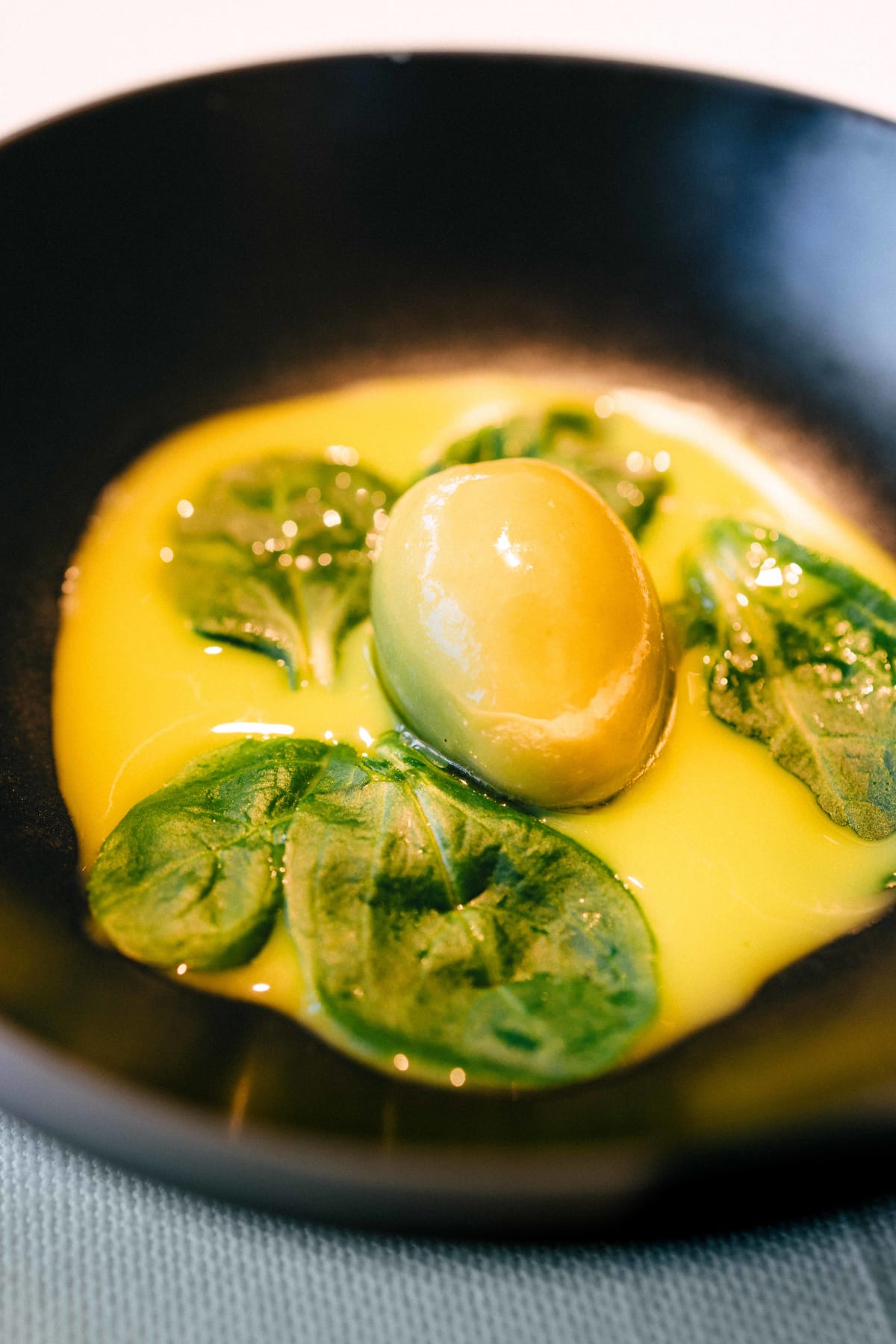
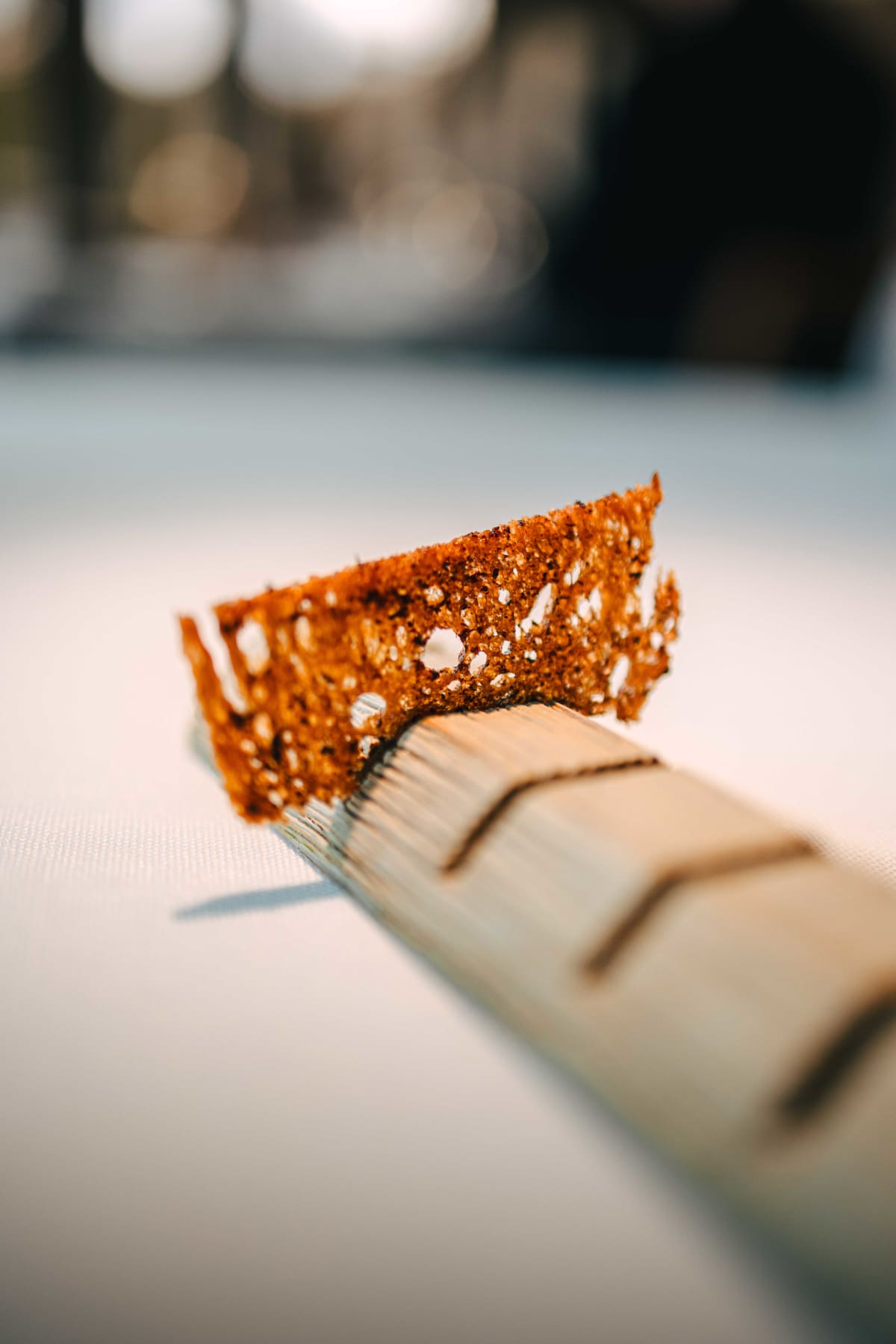
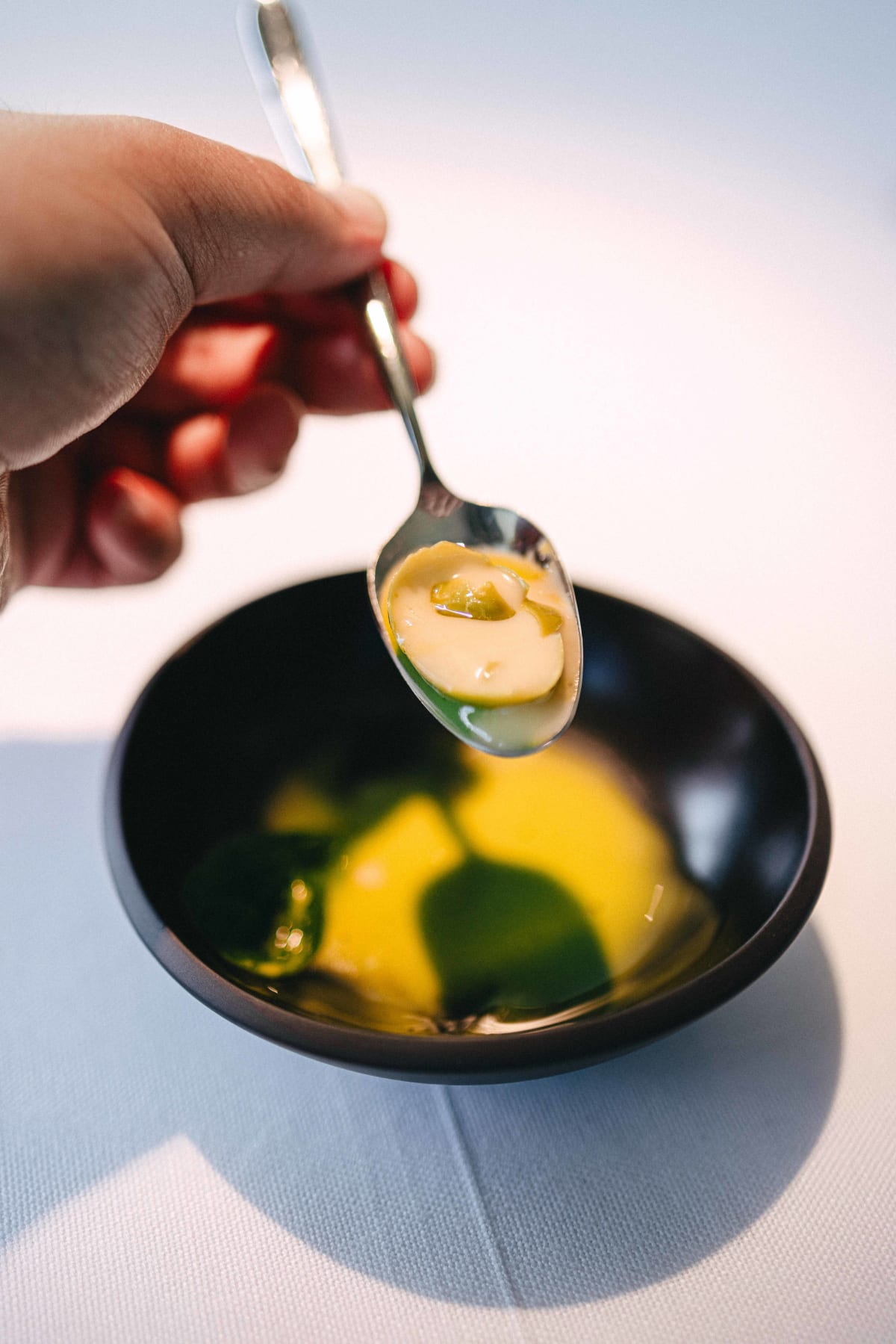
The second amuse came on the heels of the first. 2023 Our seasoned olive. A thin wafer base, a green sauce, a leaf, and a single olive on top.
15—15 / 120
The form was unmistakably olive but the olive itself was not real. A cream sat inside the olive-shaped shell, with the olive's flavour folded into the surrounding sauce instead. This was the first moment of visible creativity in the course, and the dish actually delivered. The olive character was strong enough that I scraped the sauce clean.
16—20 / 120
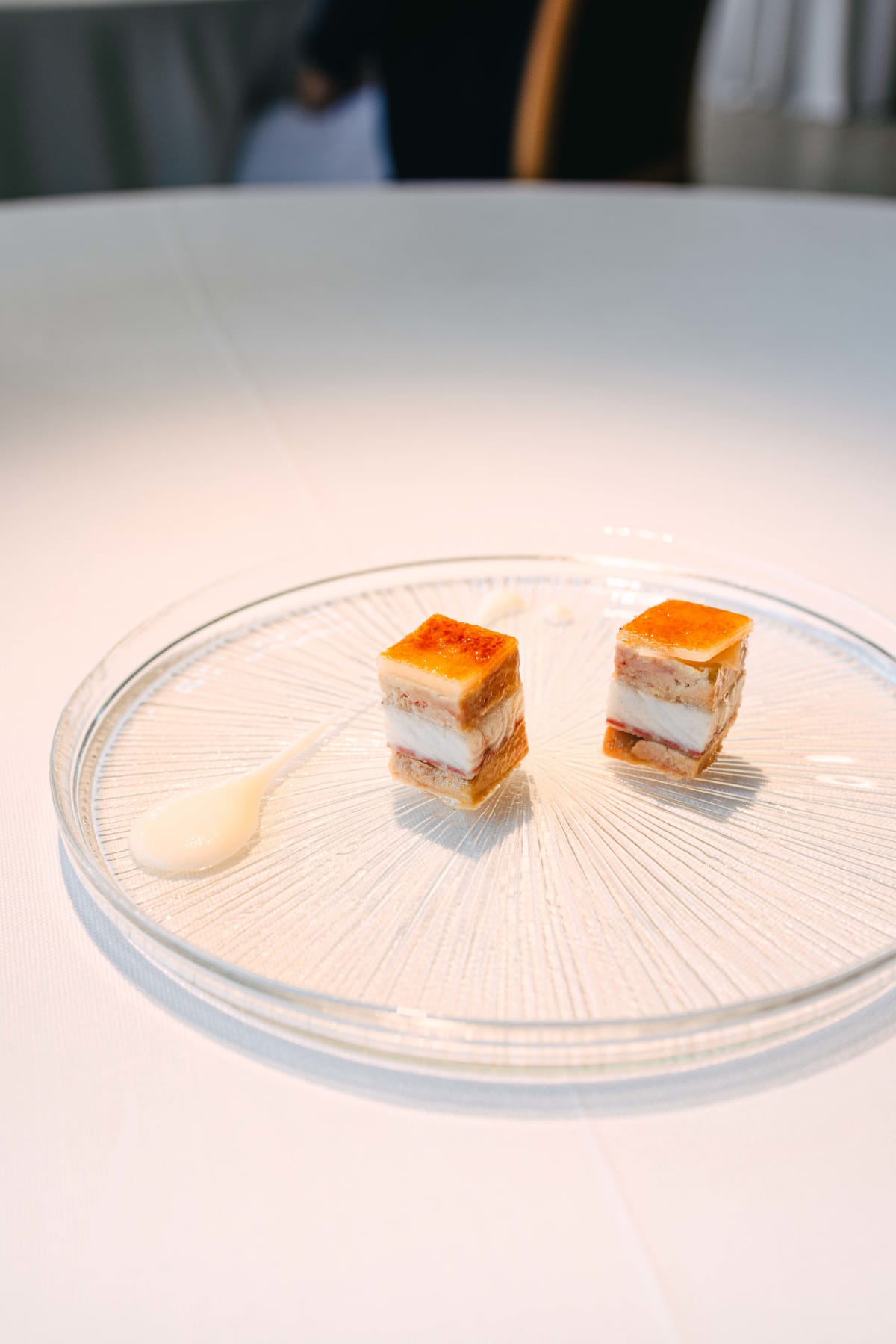
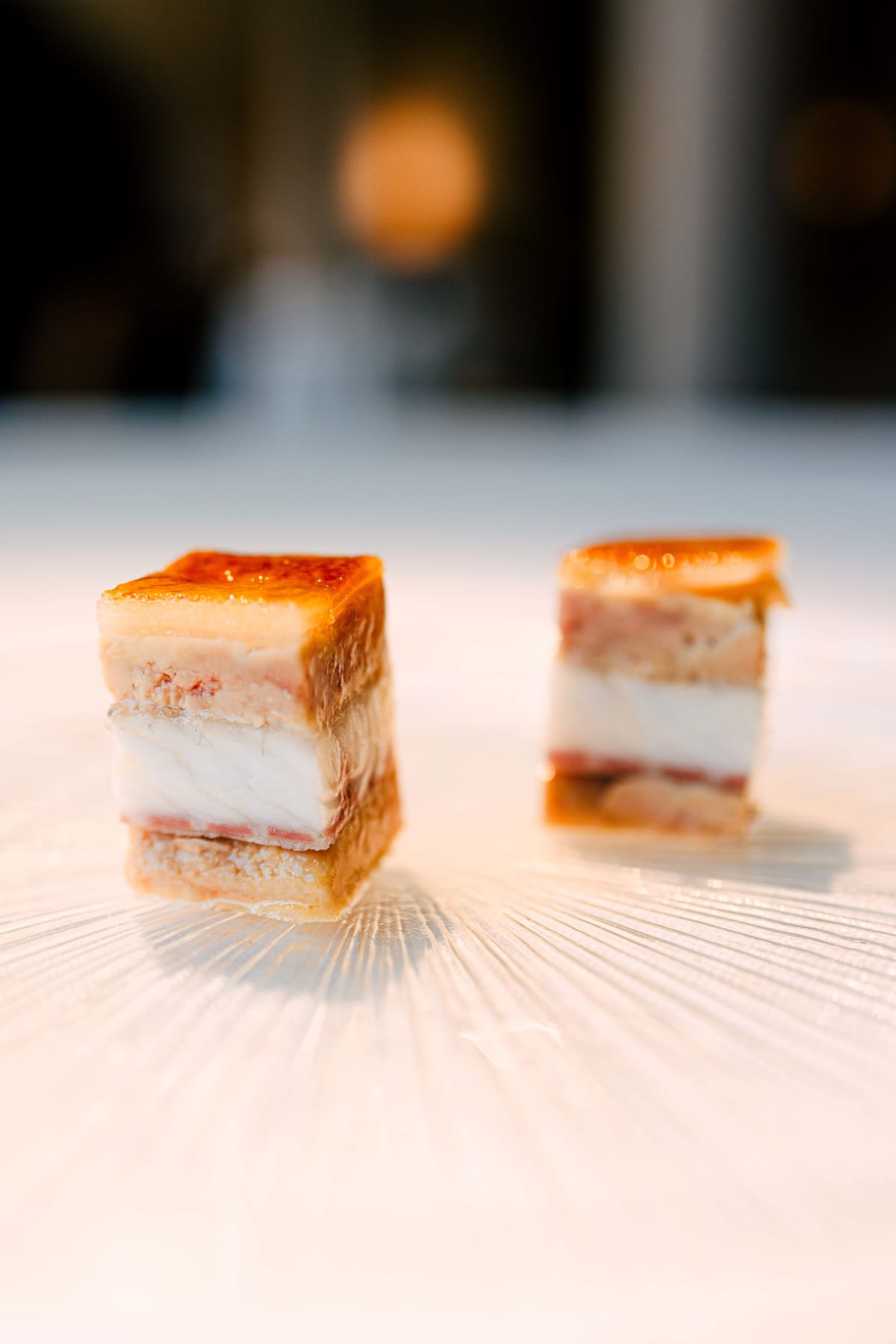
After those two amuses came the third one along with the first pairing wine. 1993 Mille-feuille of smoked eel, foie-gras, spring onions and green apple. A 1993 creation, which makes it close to an opening-day veteran on this menu. The fact that a dish survives this long usually means it works, and the night before at Akelarre I had eaten an unusually good foie gras, so the expectation was already loaded. The first bite confirmed it. The smoked eel brought a depth of flavour that matched the foie at the same intensity, and the spring onion and green apple, both dissolved into the sauce, held the entire construction together. There is a reason this dish has stayed on the menu.
25—27 / 120
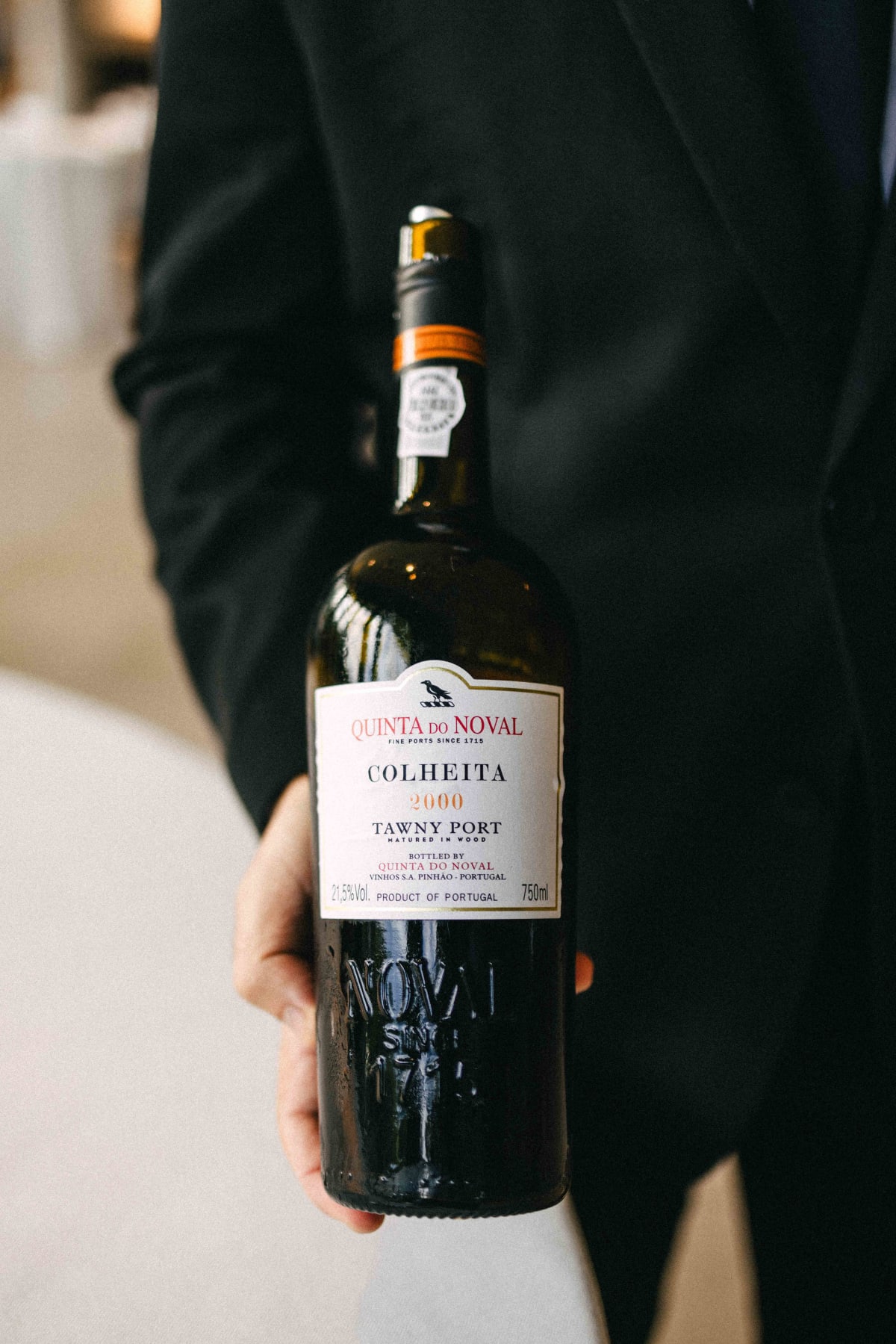
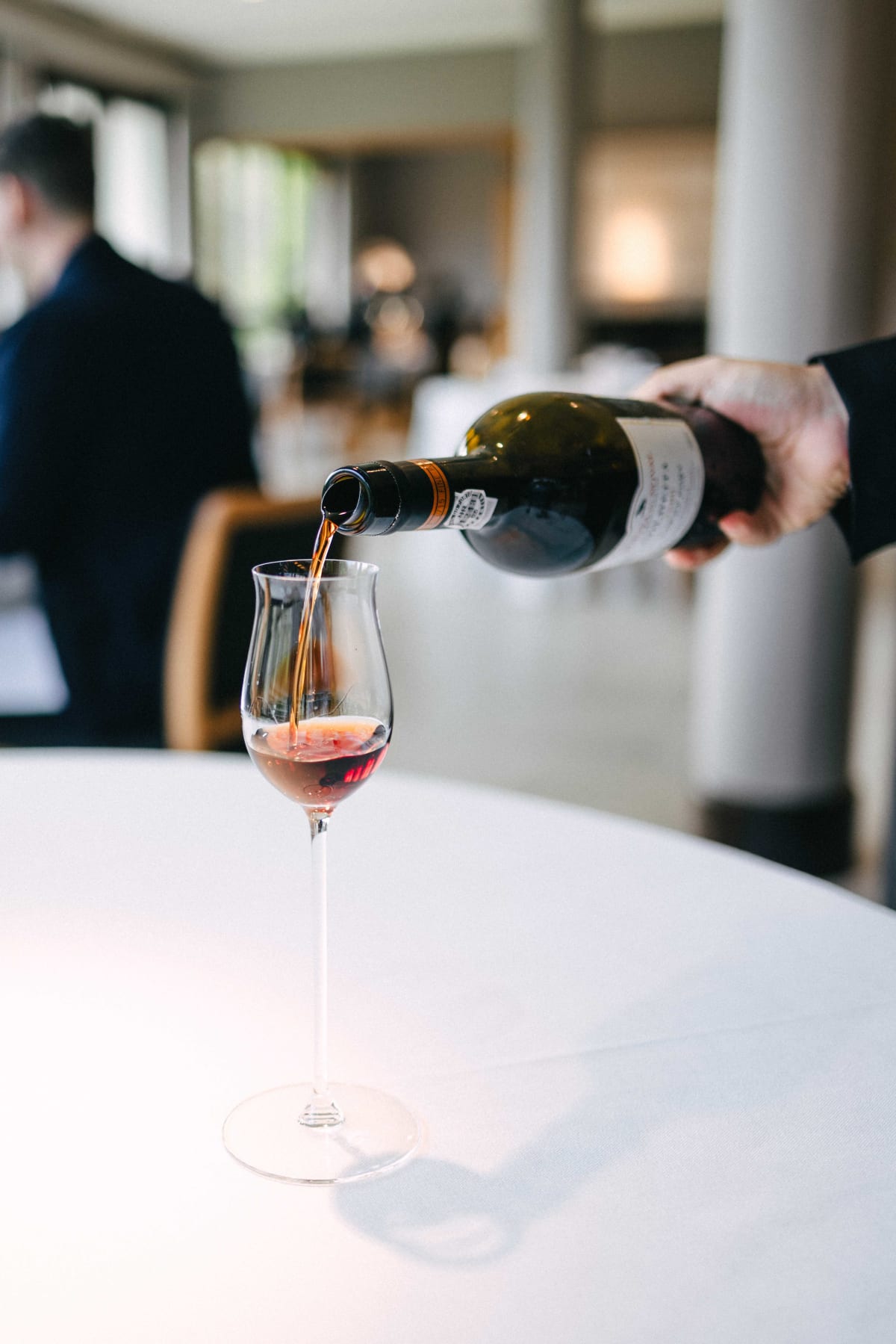
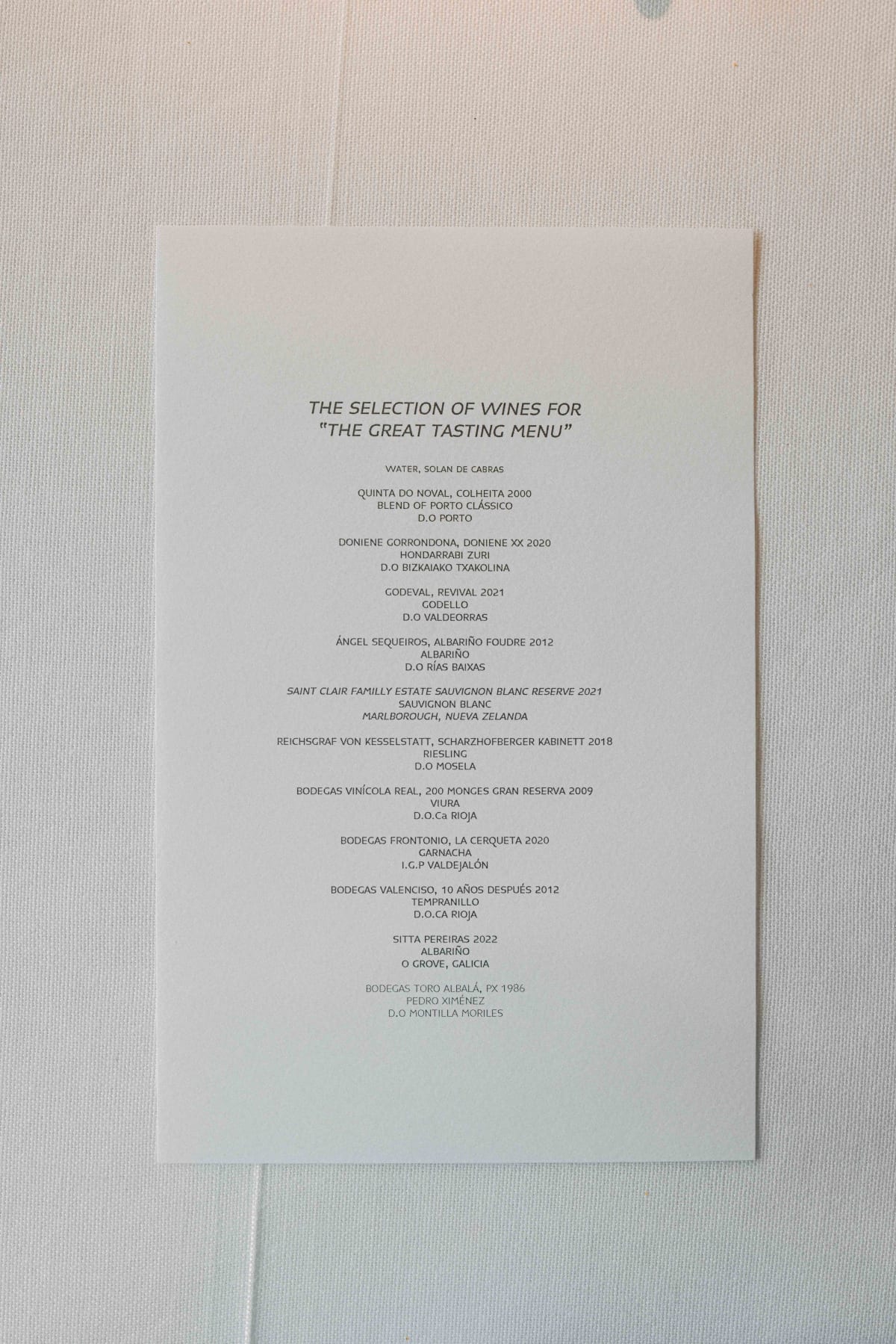
The pairing was Quinta do Noval, Colheita 2000. A 2000 vintage port, surprisingly modest at 21.5% ABV. Colheita is a category of port that is distinct from a regular vintage port: it has to come from a single vintage and must spend at least seven years in wooden casks, which is why the label explicitly reads Tawny Port. A standard vintage port, by contrast, sees less than two or three years of oak before being bottled, and the label information is clearly different. The two production methods diverge fundamentally, and so does the flavour. Quinta do Noval is one of the historic Douro Valley port houses, with a continuous history that dates back to 1715, and the Colheita line is one of its acknowledged strengths.
22—24 / 120
The previous night at Akelarre and again this night, the kitchen had served a fortified wine alongside a non-dessert dish. Foie gras and fortified wine is a classic European pairing. At the time of this meal I had not yet been to Portugal and had not drunk many ports, which in retrospect is part of why this pairing did not land as deeply as it could have. I would like to find a bottle of this one and drink it again at some point.
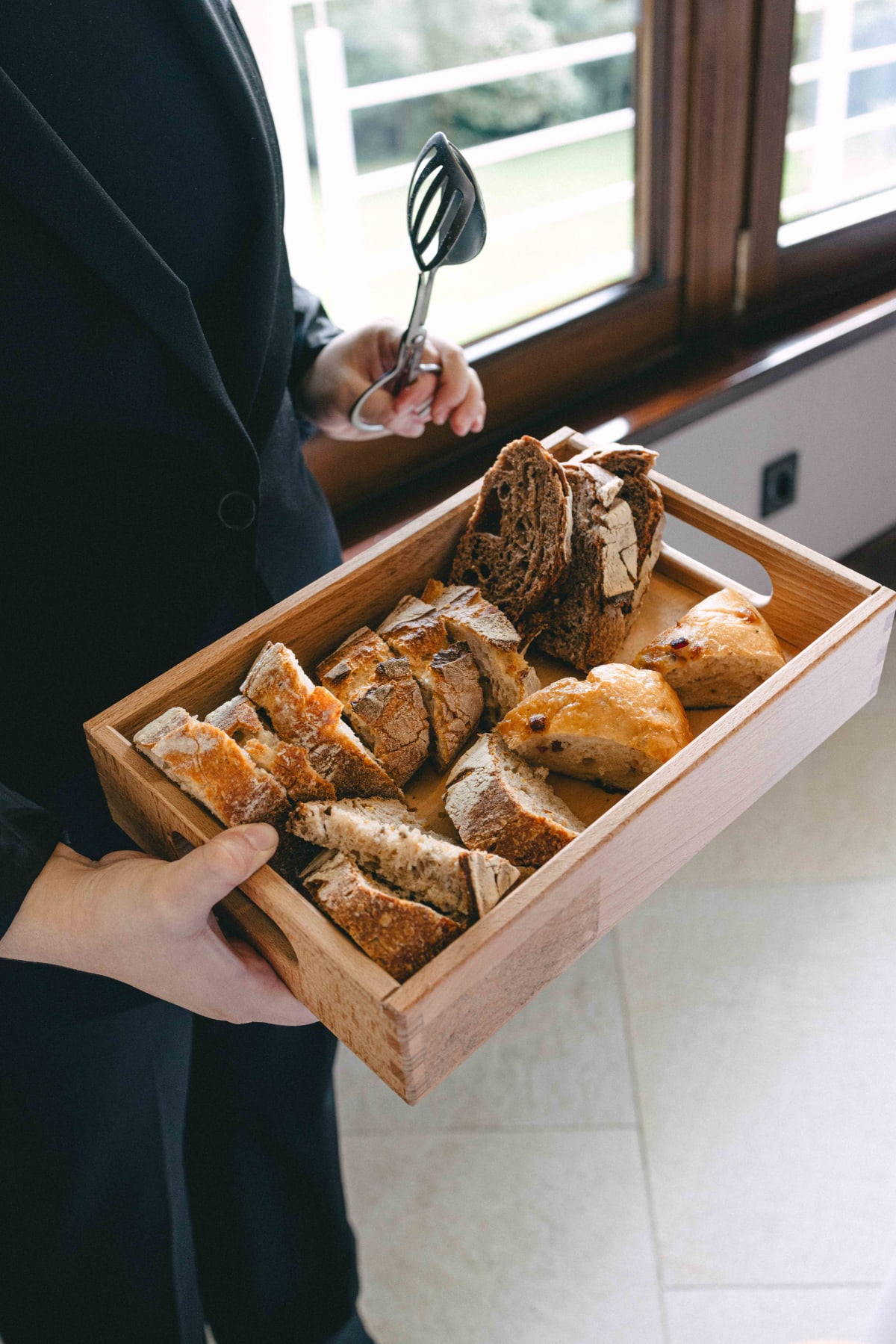
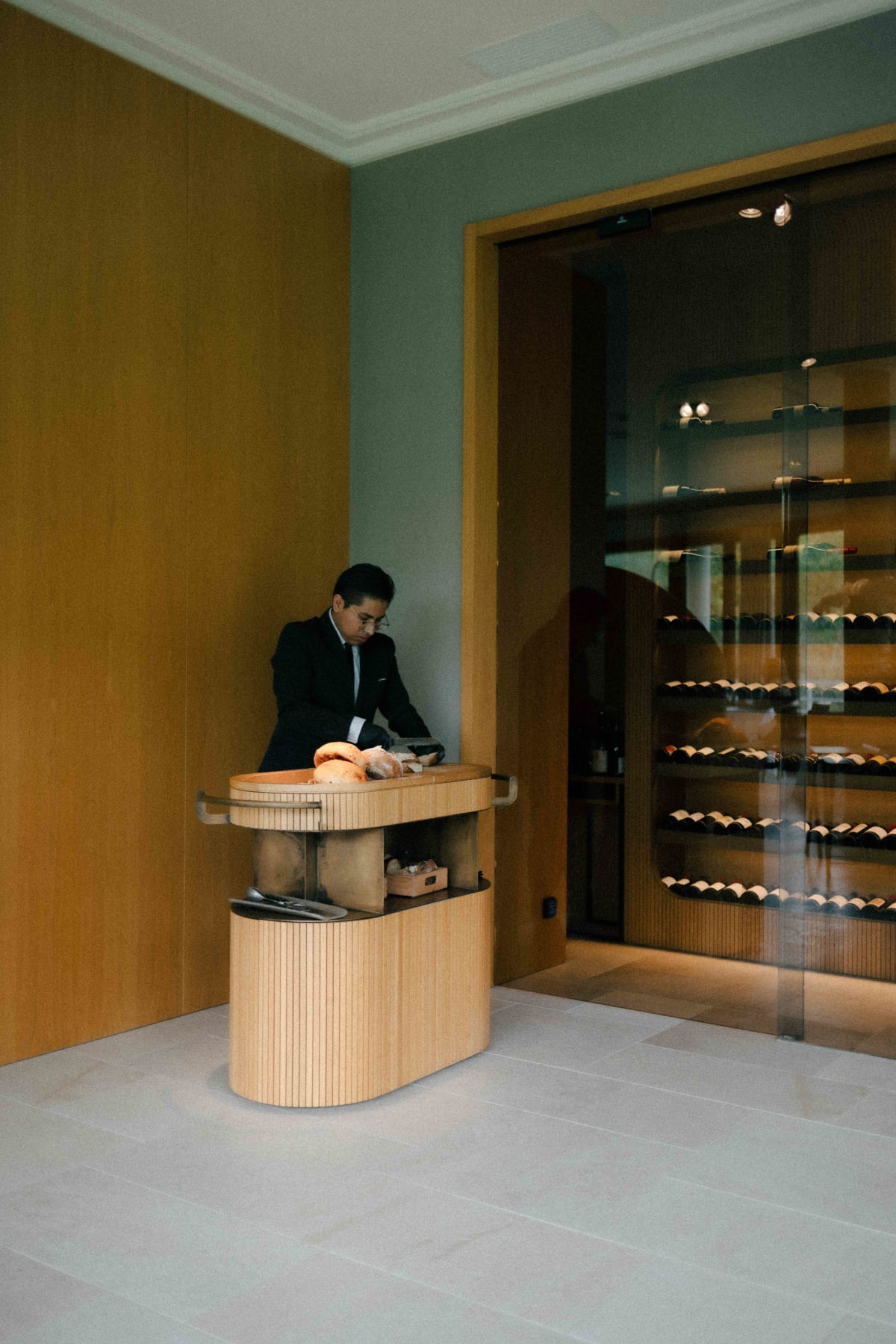
After the three amuses, the proper course began, and the bread was brought out at that point. Four kinds were available. I am not particularly knowledgeable about bread and tend to find that the bread at European Michelin-starred restaurants is uniformly good, so I went with the most straightforward option, a baguette. As is standard, you can ask for more whenever you run out. This restaurant runs at a high enough volume that there is a dedicated staff member on one side whose entire job is to mechanically slice the bread.
26—55 / 120
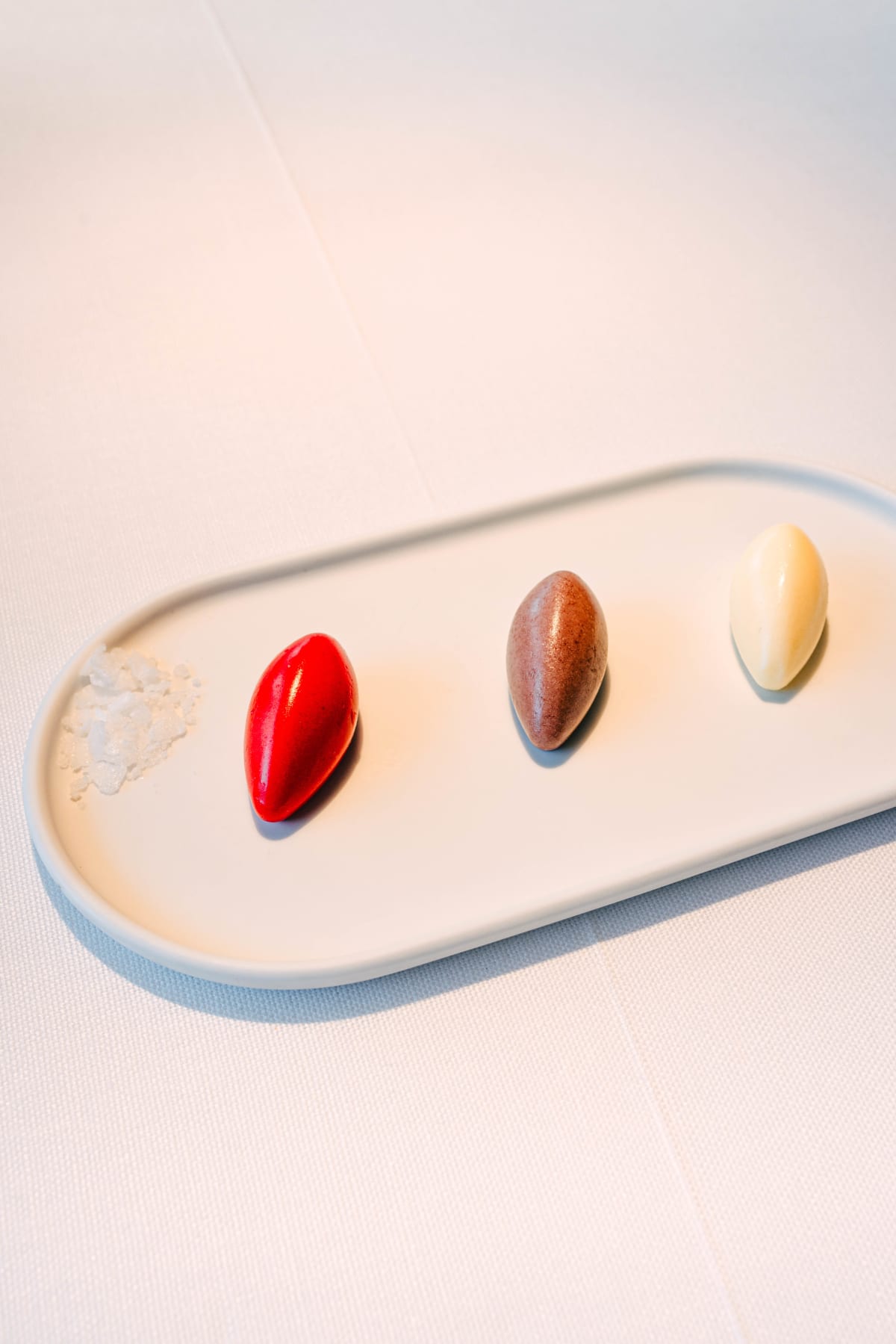
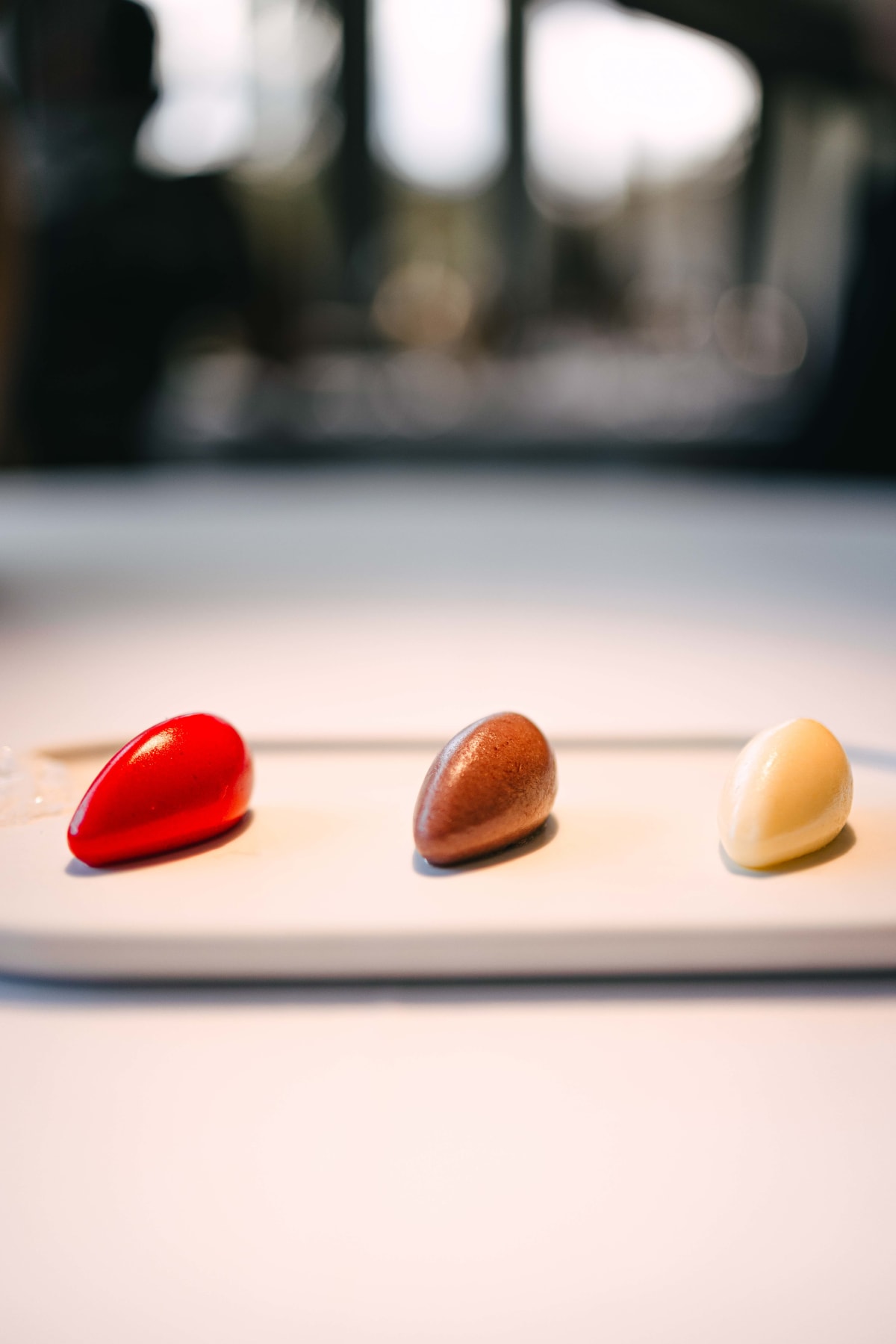
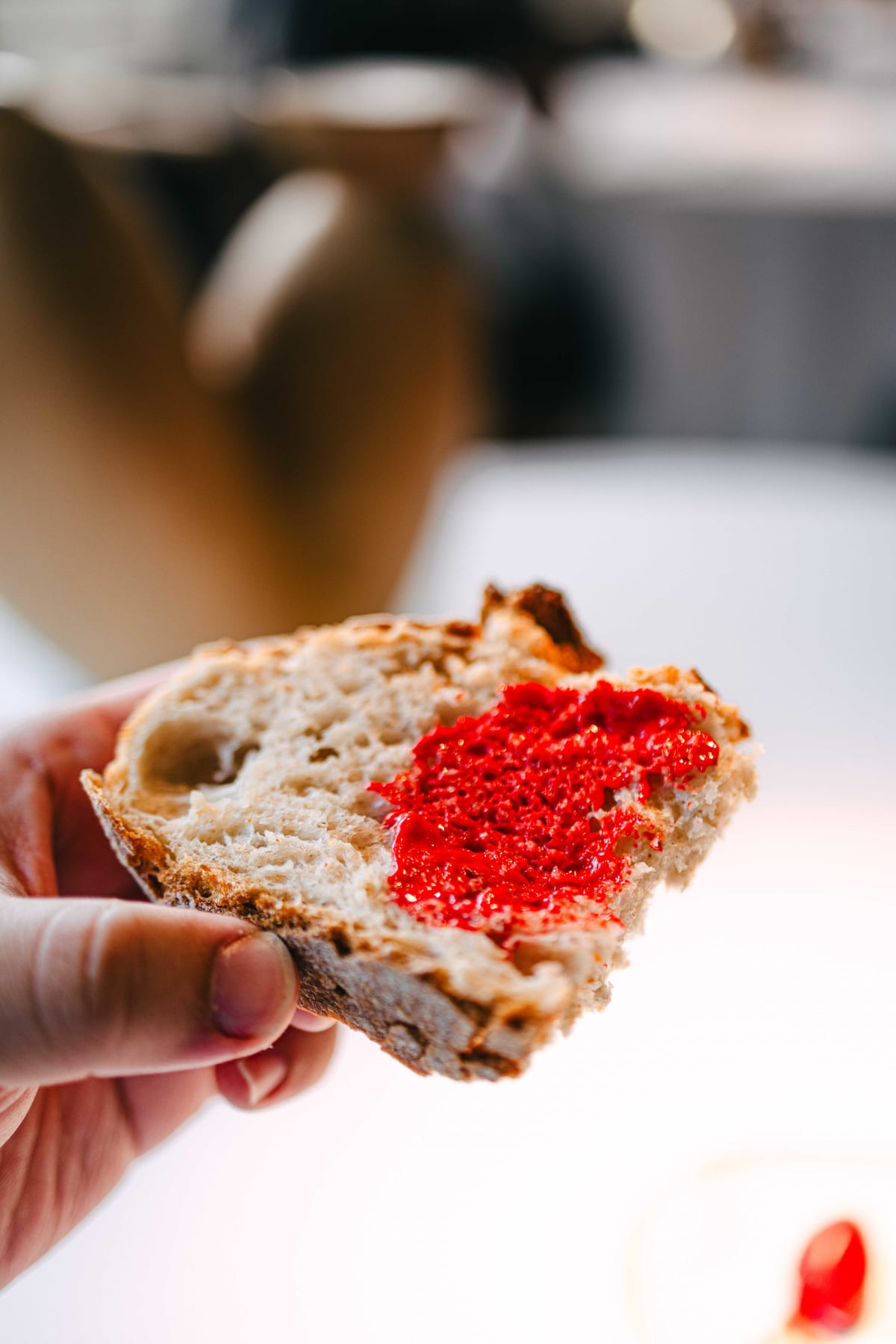
Three butters came alongside, in three different colours. Red was red chilli, yellow was lemongrass, and black was tapenade, which the menu spelled Tapenade but the waiter described verbally as black olive. In practice they are interchangeable terms here. Of the three, the black tapenade was the cleanest match for the bread. The yellow did not sit well with the bread and I did not return to it. The red was interesting on first taste but not something I kept reaching for.
28—31 / 120
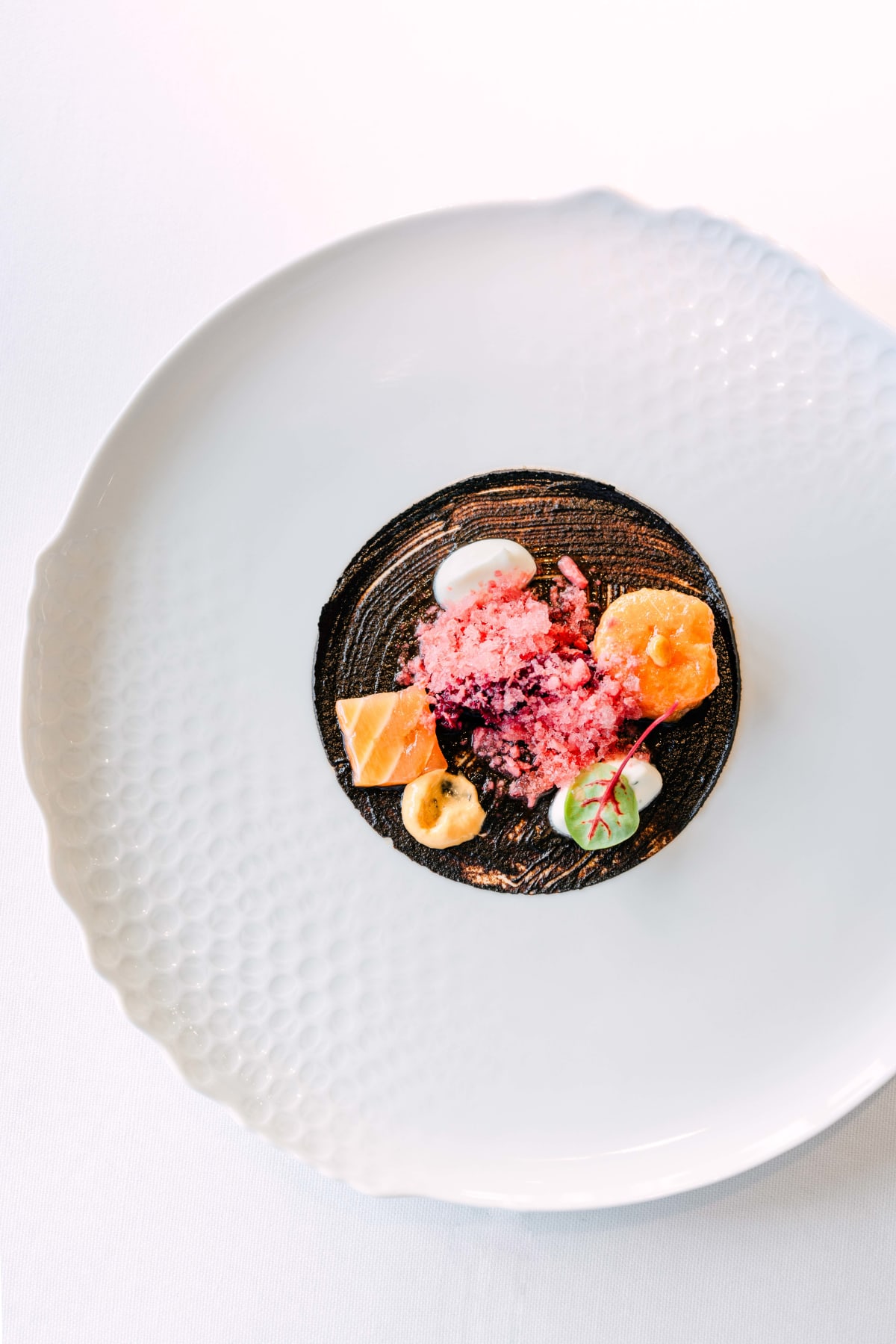
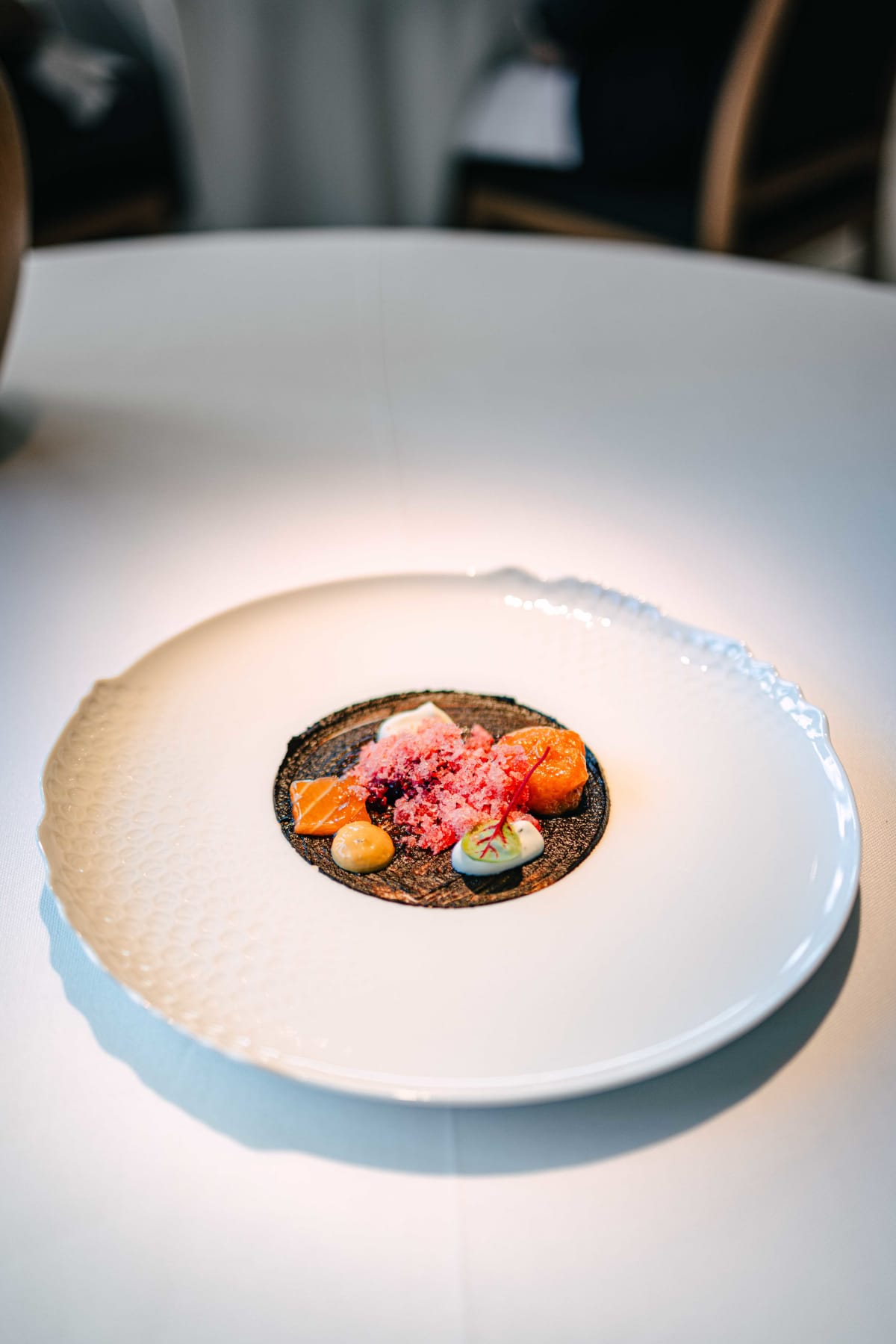
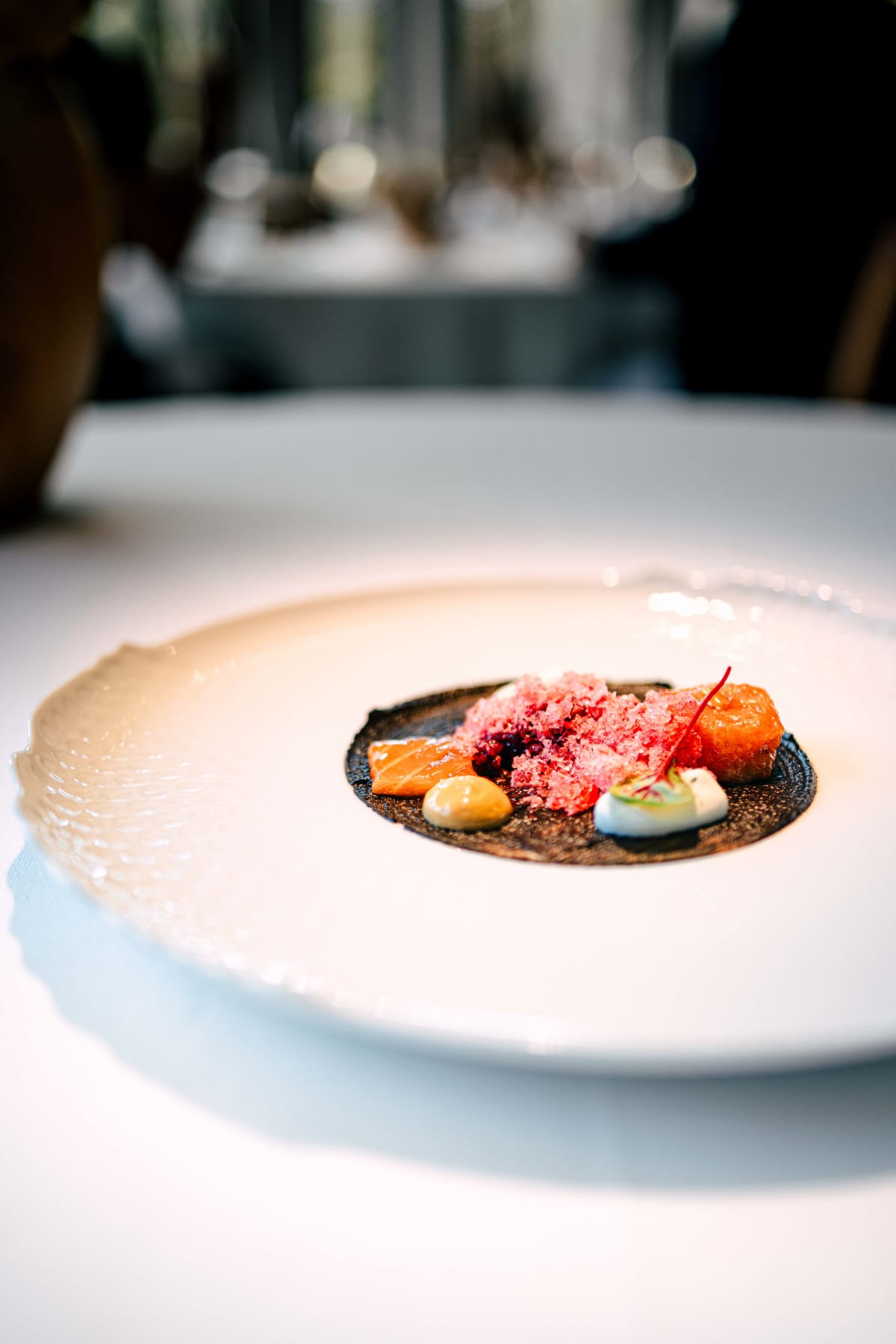
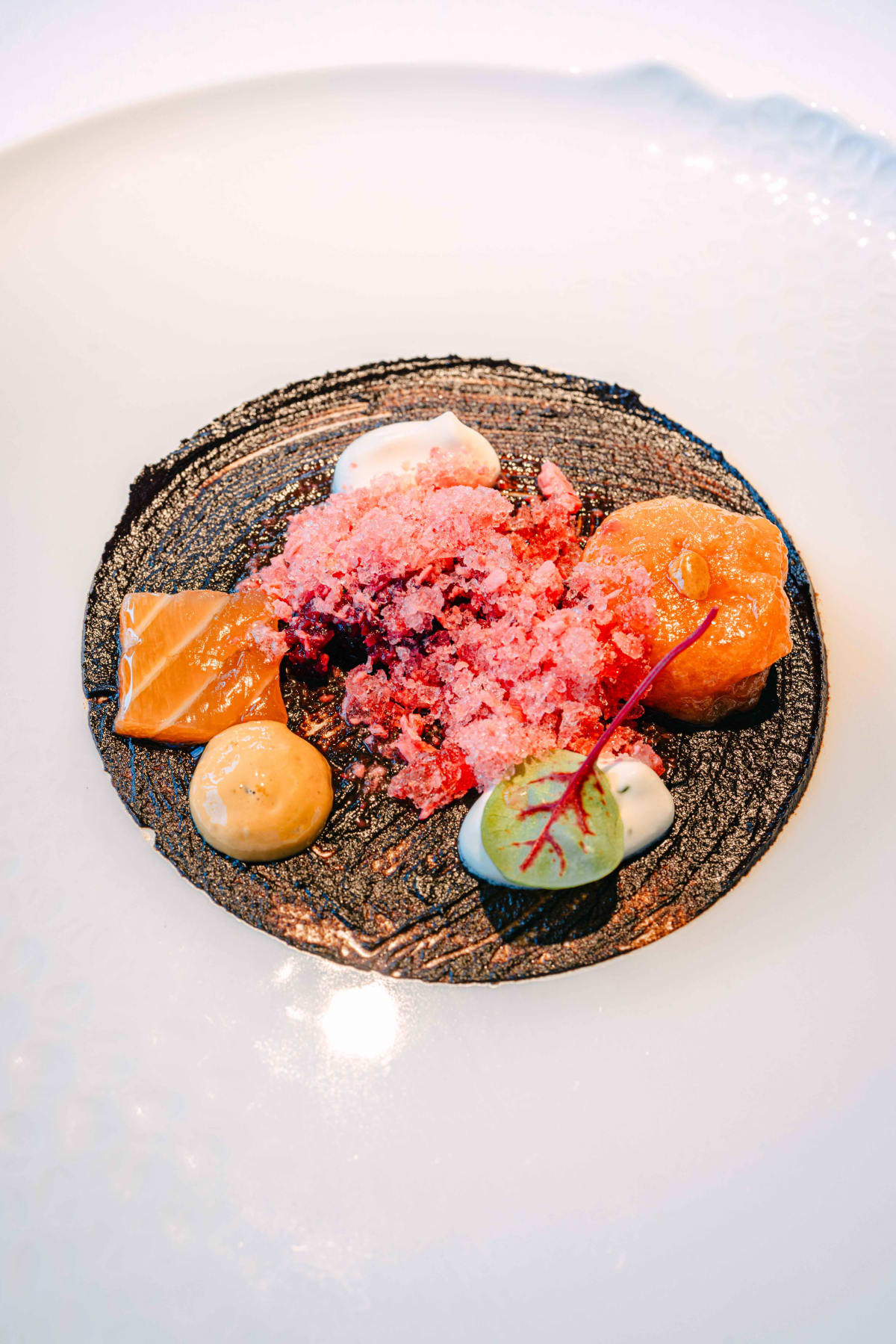
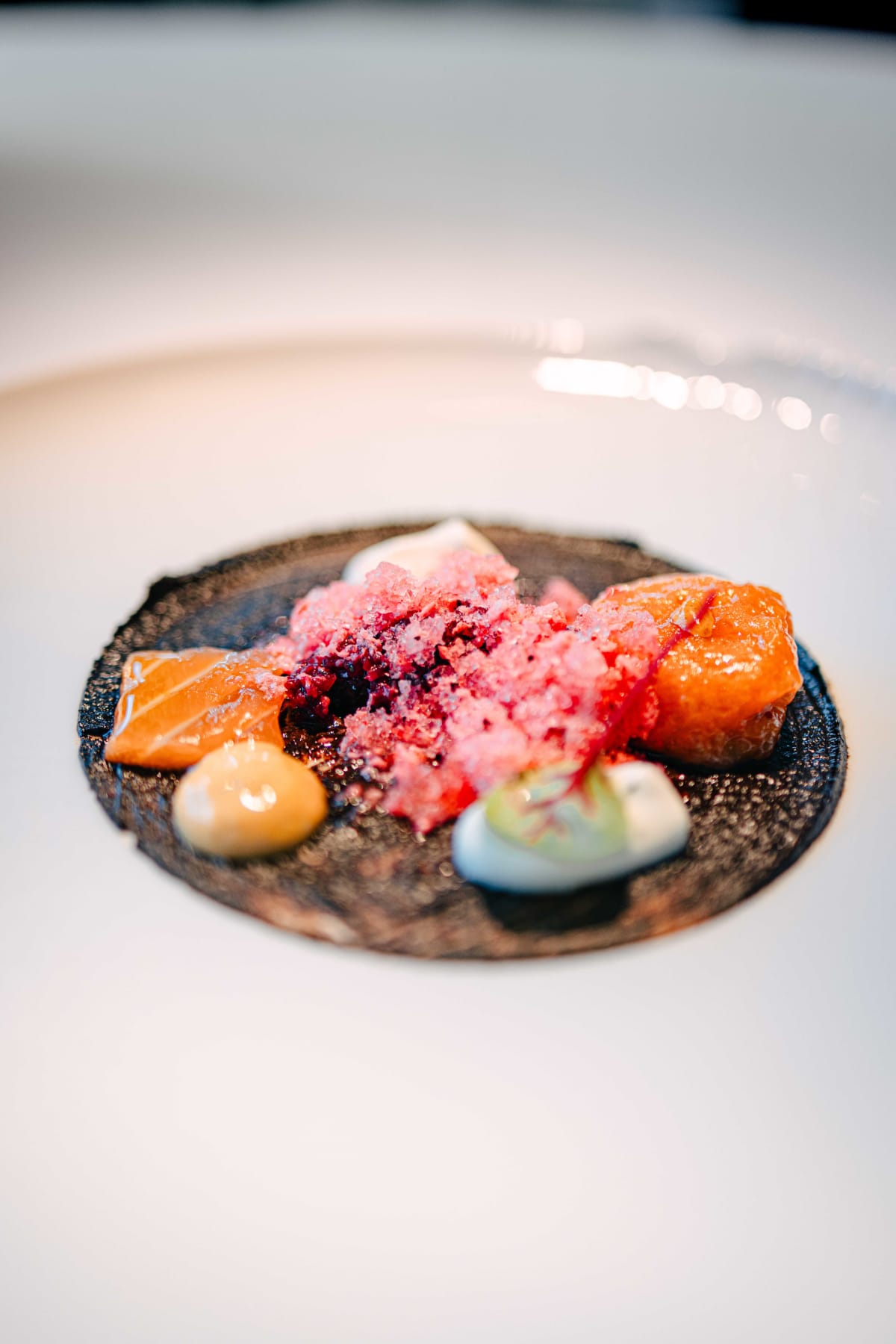
The next dish was 2023 Marinated wild trout over black garlic and purple mustard, beef and horseradish. The trout was served partly in small slices and, on the other side, what I remember as a tartare-style mound. The centre held a crystallised purple mustard, with black garlic underneath, and the yellow sauce was horseradish.
39—39 / 120
One of the recurring complaints I have with raw-fish dishes at European Michelin-starred restaurants is that the portion of the fish itself runs too small. The sauces and accompaniments are generous, but the main ingredient is so limited that the natural urge to try every combination, fish with sauce A, fish with sauce B, fish on its own, cannot quite be satisfied.
The dish itself was, to me, ordinary. The impression faded quickly after the meal.
34—38 / 120
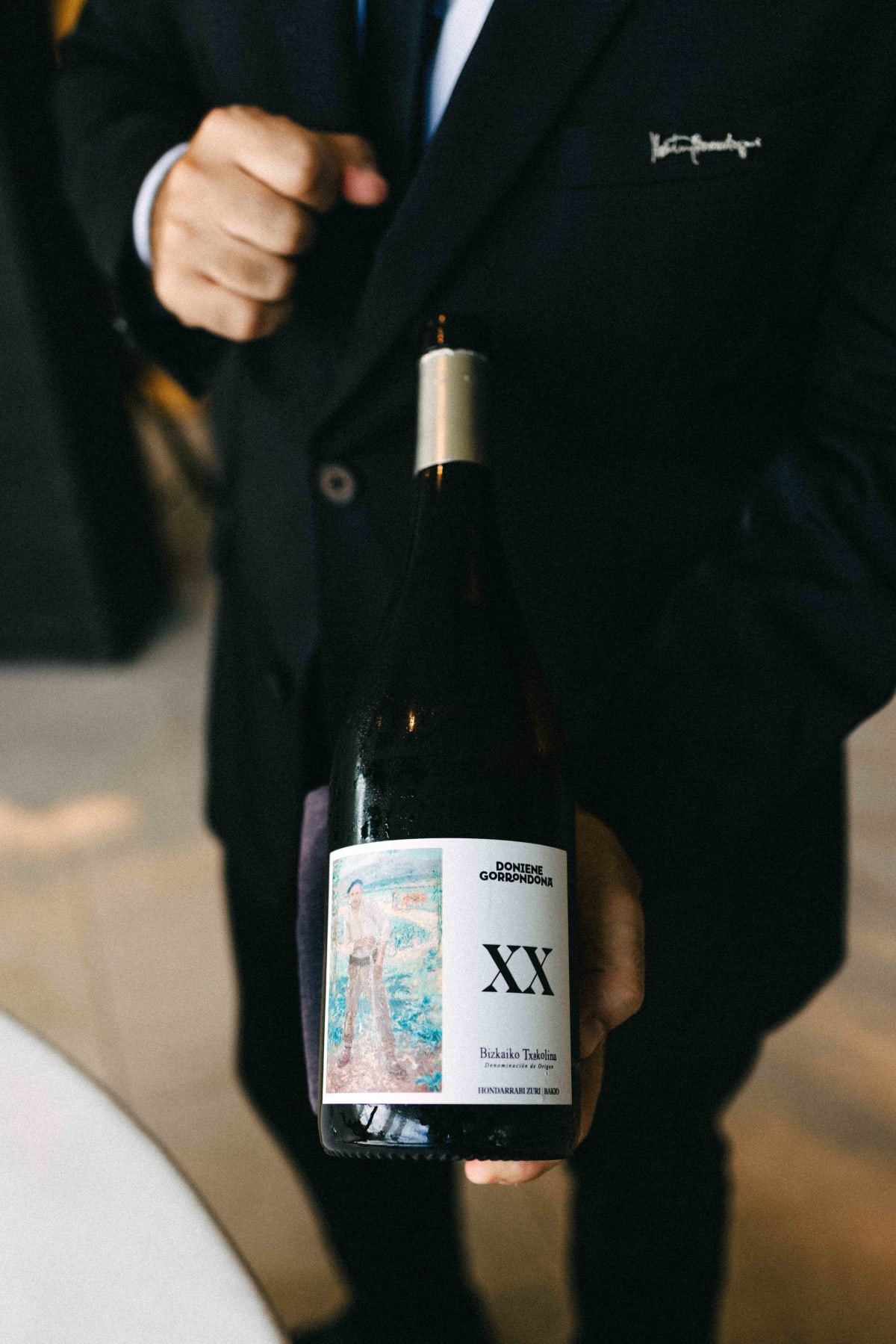
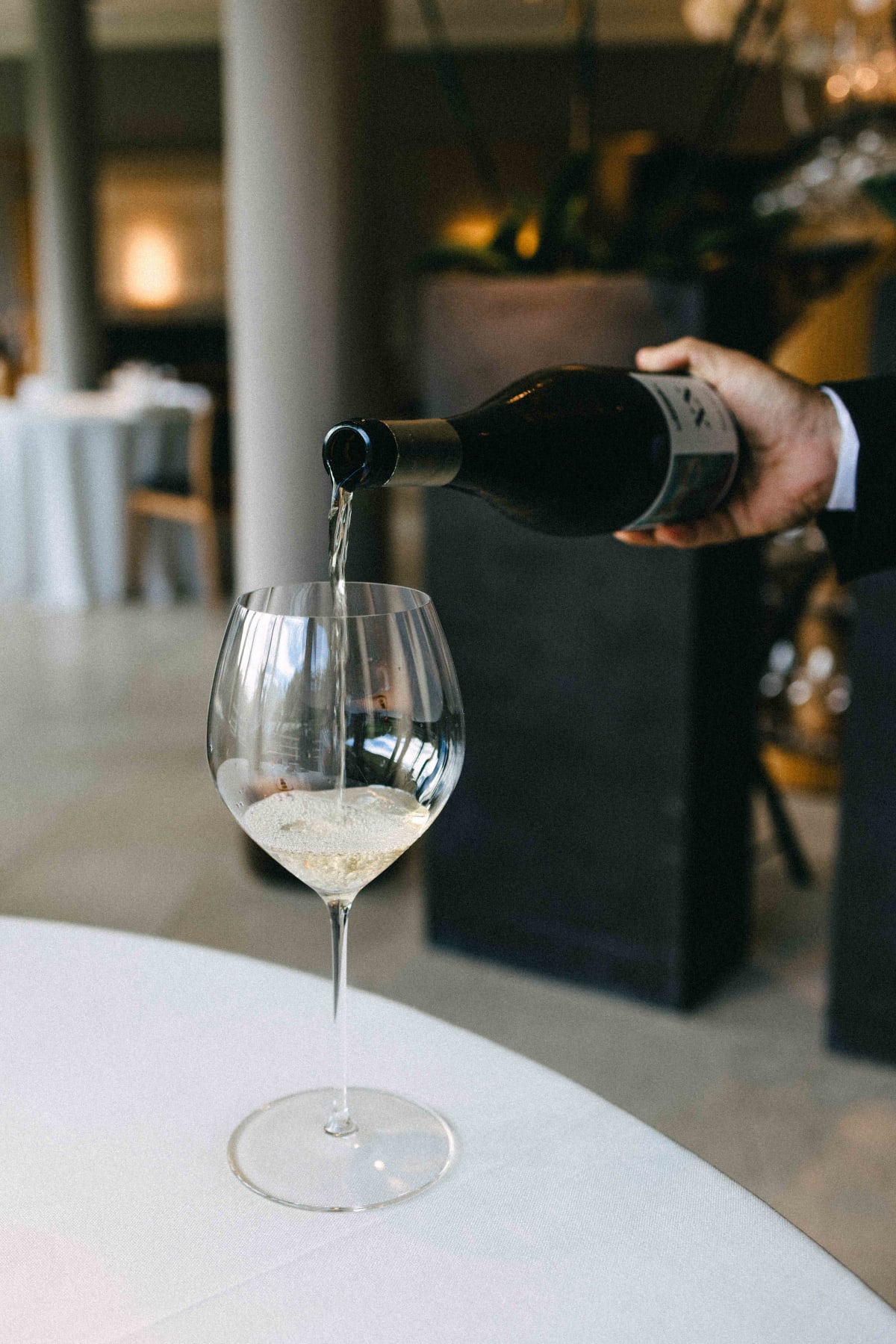
The pairing was Doniene Gorrondona, Doniene XX 2020 (Hondarrabi Zuri, D.O. Bizkaiko Txakolina). The name is long, and notably, it is not in Spanish. The label is in Basque. The wine comes from the Bizkaiko Txakolina region near Bilbao, more specifically from the coastal town of Bakio. Doniene Gorrondona is one of the three pioneer wineries behind the creation of the DO Bizkaiko Txakolina in 1994, and is family-run, with winemaker Itziar Insausti at the helm. The 'XX' marks the cuvée first made in 2014 for the winery's twentieth anniversary, made from 100% Hondarrabi Zuri, fermented in stainless steel, then aged three months sur lie before another eight months in 500L French oak. Production runs at about 1,200 bottles per vintage. The grape variety was new to me, and the wine offered the kind of clean acidity I had been missing in Spanish whites, but the aroma and flavour themselves were not particularly compelling. The wine read less as a winemaker-driven statement and more as a transparent expression of the place.
32—33 / 120
Spanish restaurants tend to serve long courses, which means the pairing inevitably runs to a high number of glasses. There were twelve glasses this evening. Pouring full-sized glasses for twelve courses would be impossible to drink, so each pour is small, which is part of how the format works. The downside is that two or three sips and the glass is gone.
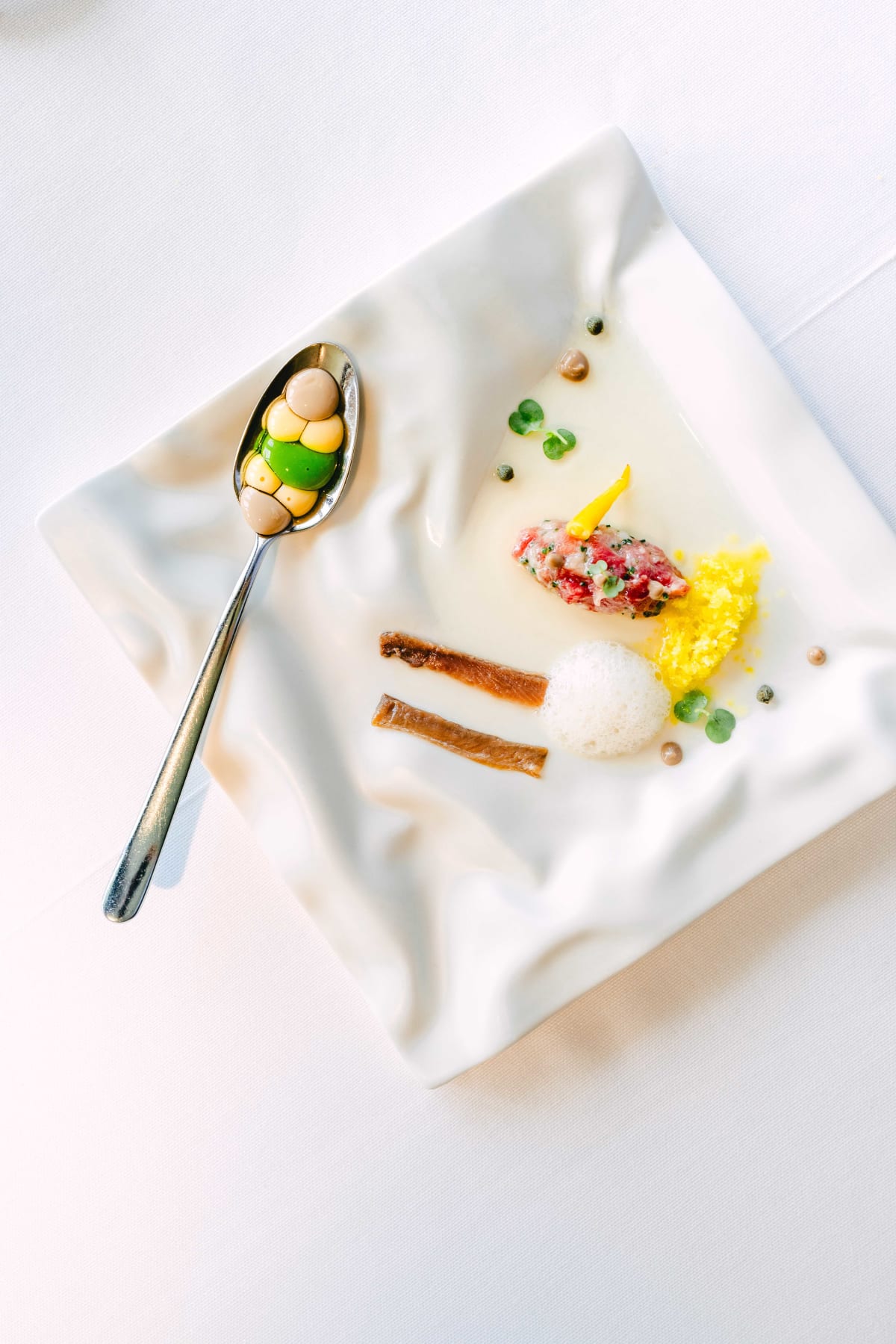
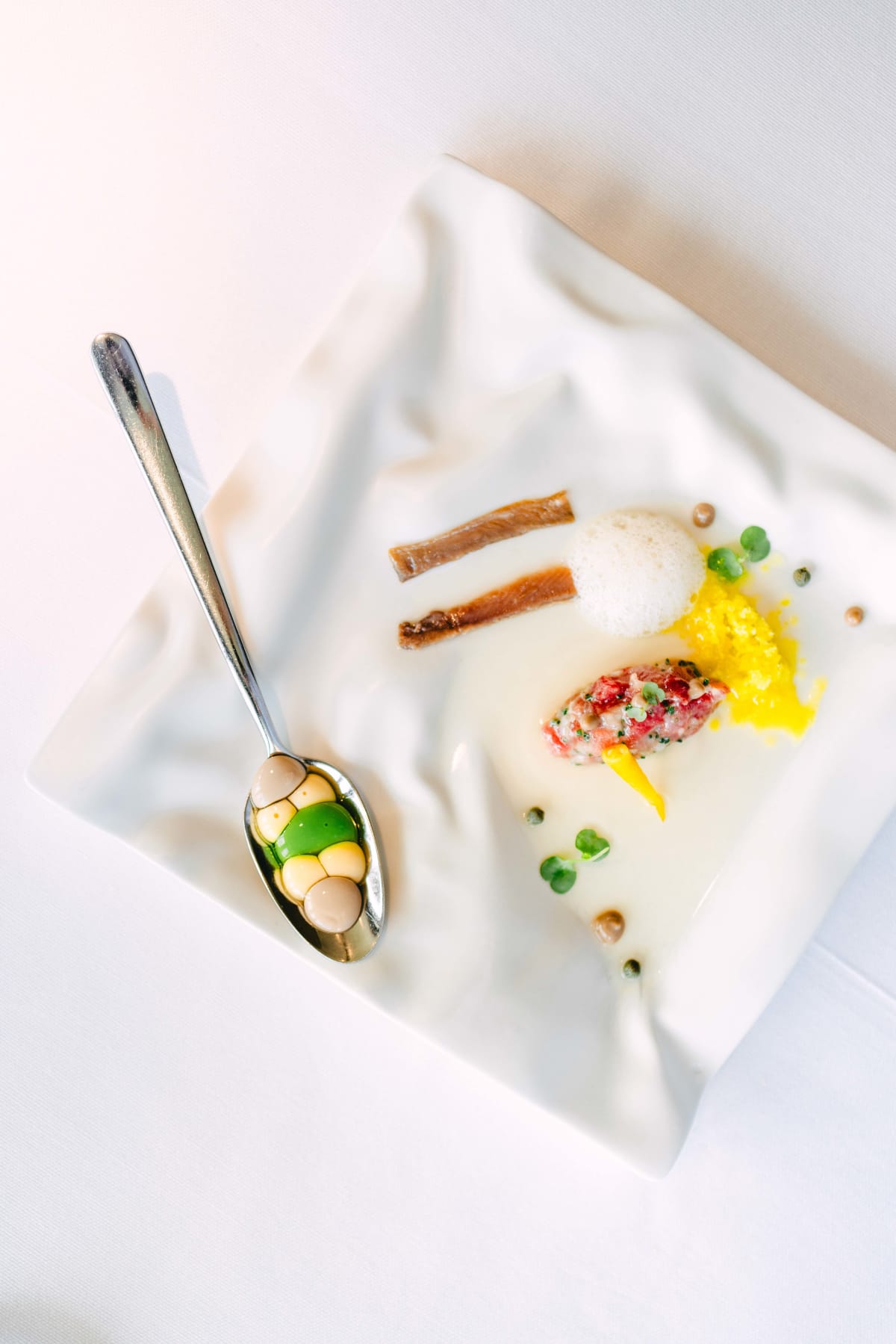
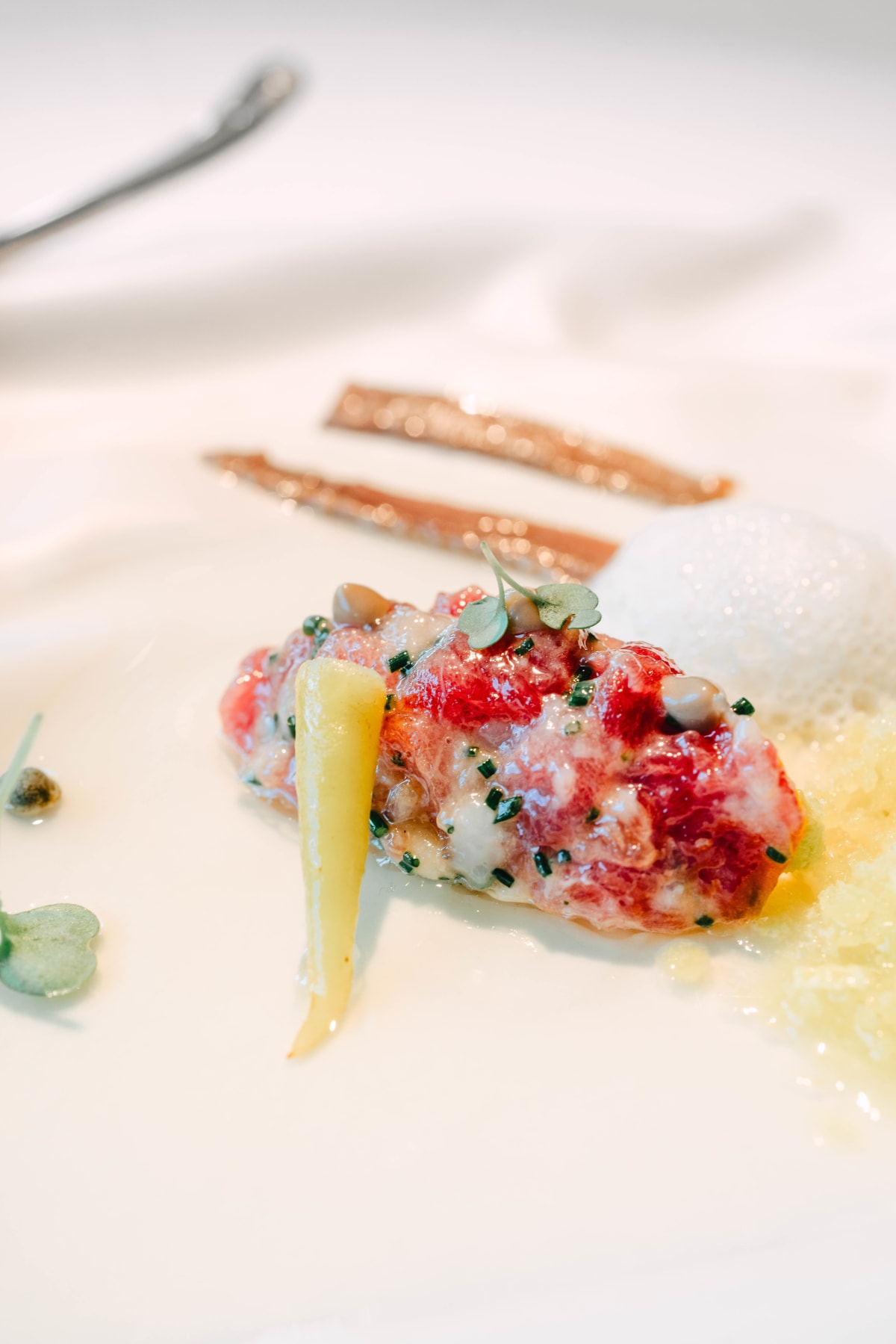
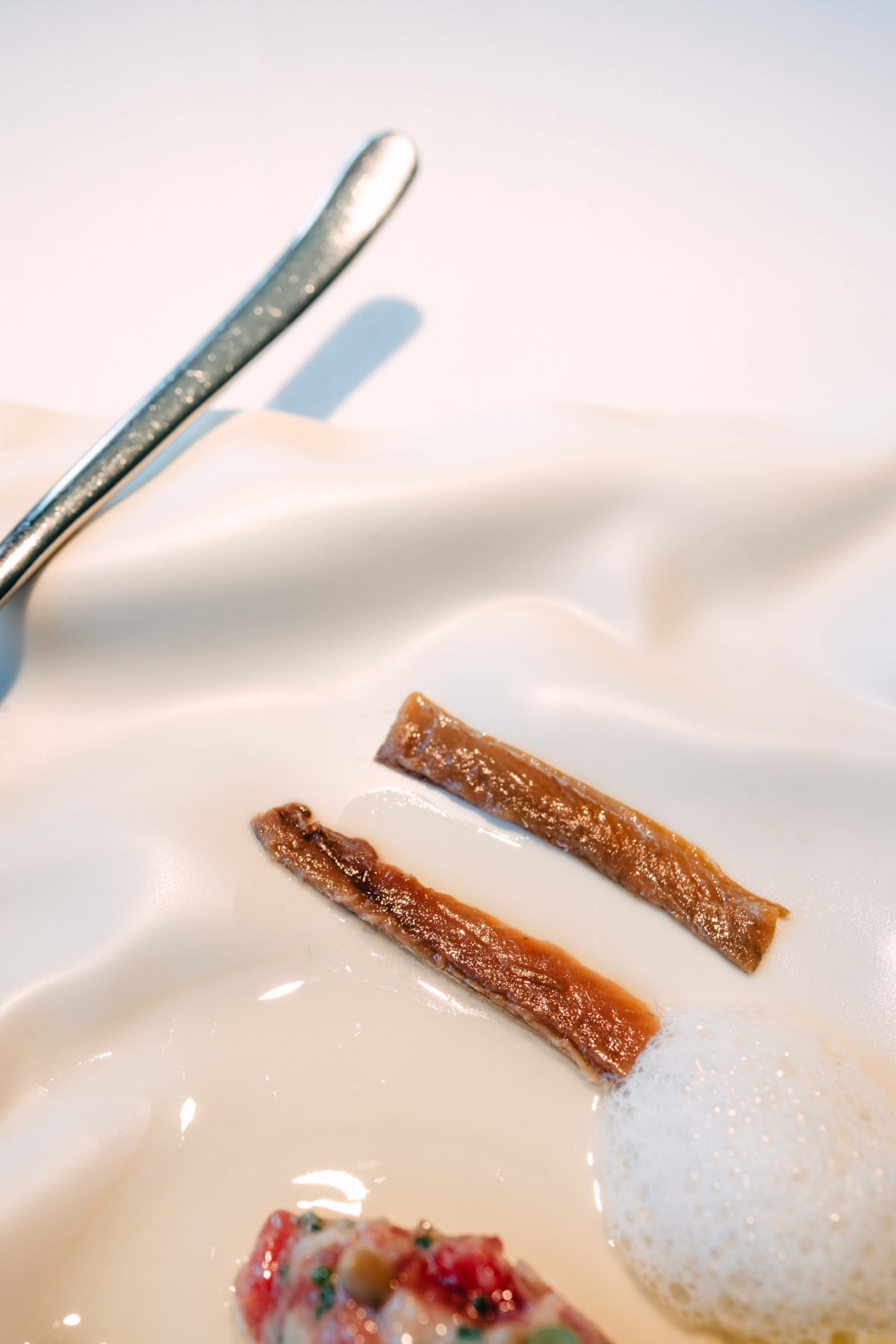
After the raw-fish course, Berasategui's tasting menu moved fast. The next dish was 2023 Gilda with tuna tartar Balfego, anchovies cream, iced Basque chilli pepper and caper broth Agrucapers.
What this dish does, in one line, is take the entire pintxo bar of San Sebastián and compress it into a single plate.
What this dish does, in one line, is take the entire pintxo bar of San Sebastián and compress it into a single plate.
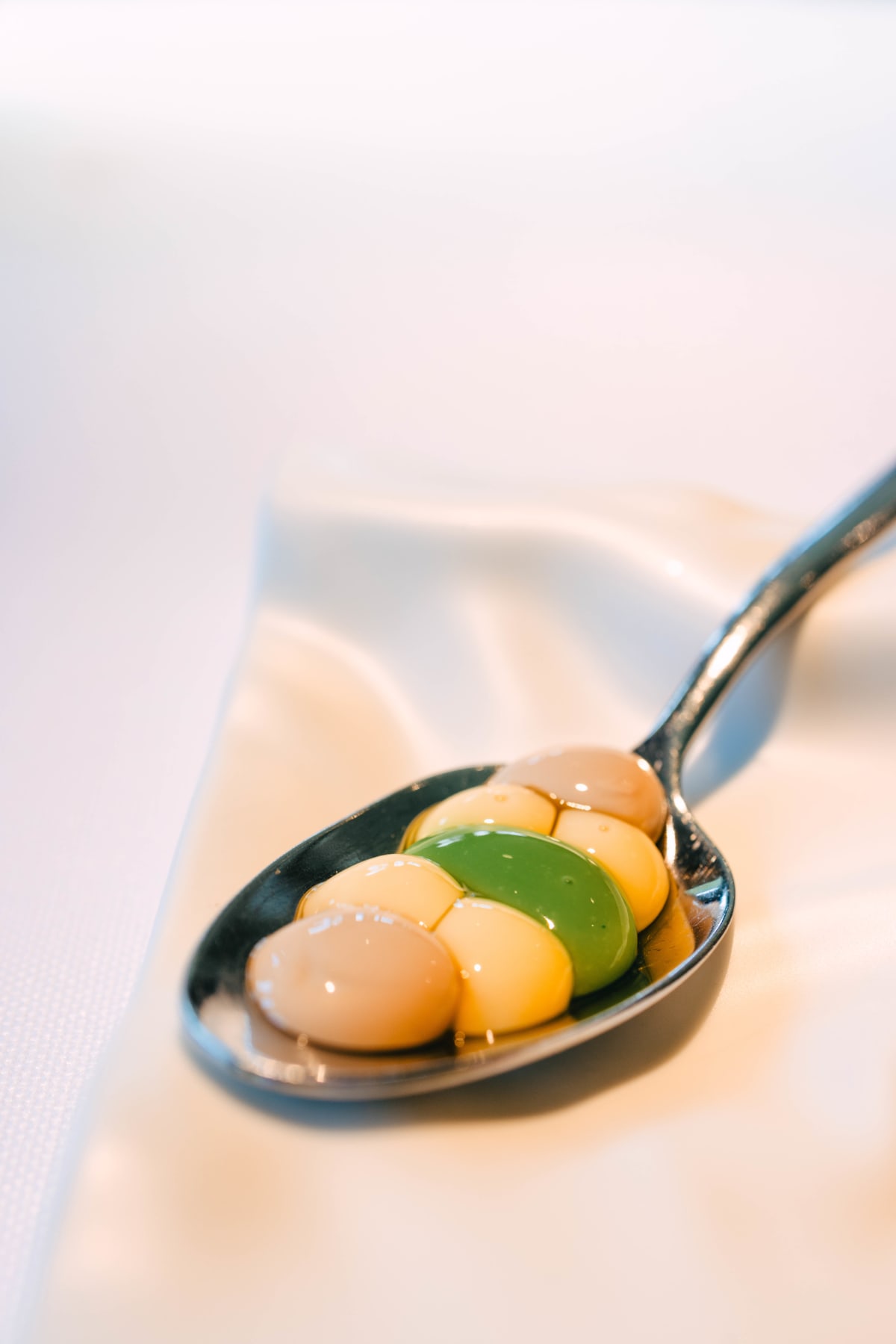
Walk into any pintxo bar in the city and you will find Gilda and anchovies. Here the Gilda becomes a cream balanced on a spoon, ready to break the moment it reaches the mouth, and the anchovy becomes another cream.
45—46 / 120
The Basque spice palette is woven through the dish in several different forms, and the level of invention shows. The presentation was striking, and the flavour held up just as well across every element. The moment of putting the entire Gilda spoon into the mouth at once was one of the standout sensory moments of the meal.
42—44 / 120
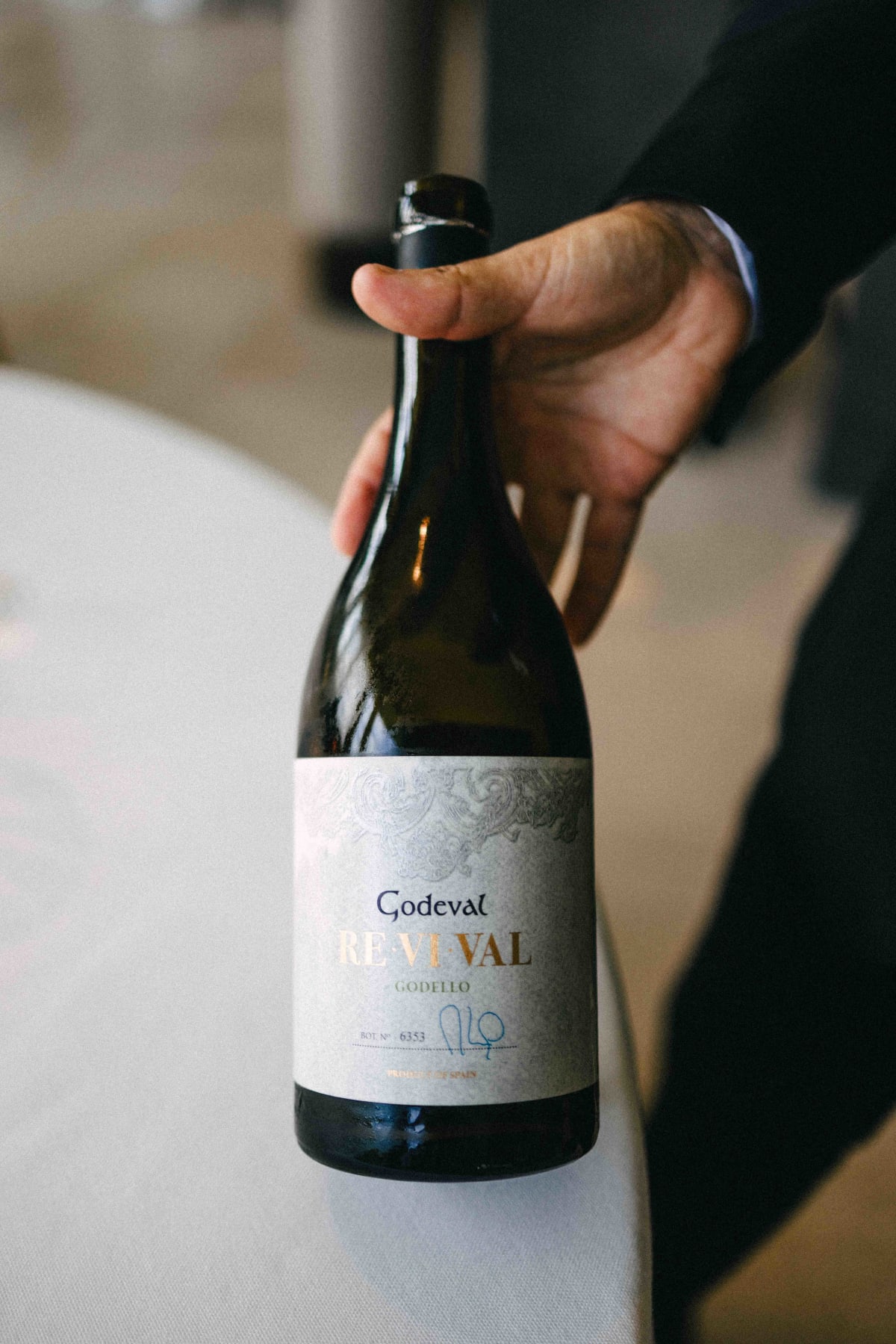
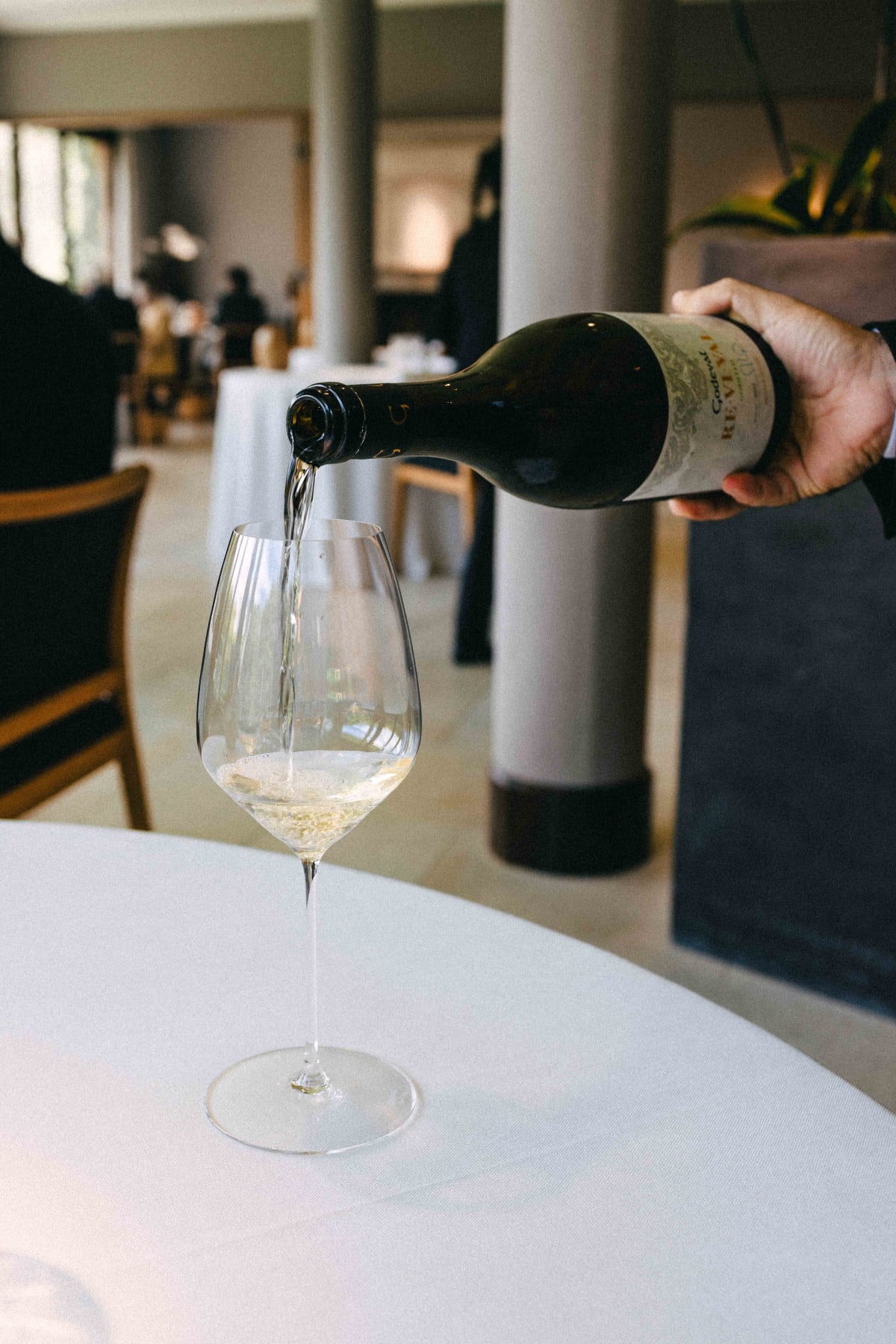
The pairing was Godeval, Revival 2021 (Godello, D.O. Valdeorras). A white from Galicia. Galicia, on the western edge of Spain, runs cooler than the rest of the country, and the whites keep their freshness as a result. The name 'Revival' is not just a marketing flourish. It comes from the ReViVal program (Restructuring the Vineyards of Valdeorras), led by the agronomist Horacio Fernández Presa in the 1970s, which restored the native Godello grape that had nearly disappeared after the phylloxera era. The project name became the wine name. Bodegas Godeval, founded in 1986, was the first to make a single-varietal Godello and the first to export it to the United States, and is housed in the restored twelfth-century San Miguel de Xagoaza monastery, taken over in 1988. The dish was on the heavier side, and the clean acidity of the Godello brought it back into balance.
40—41 / 120
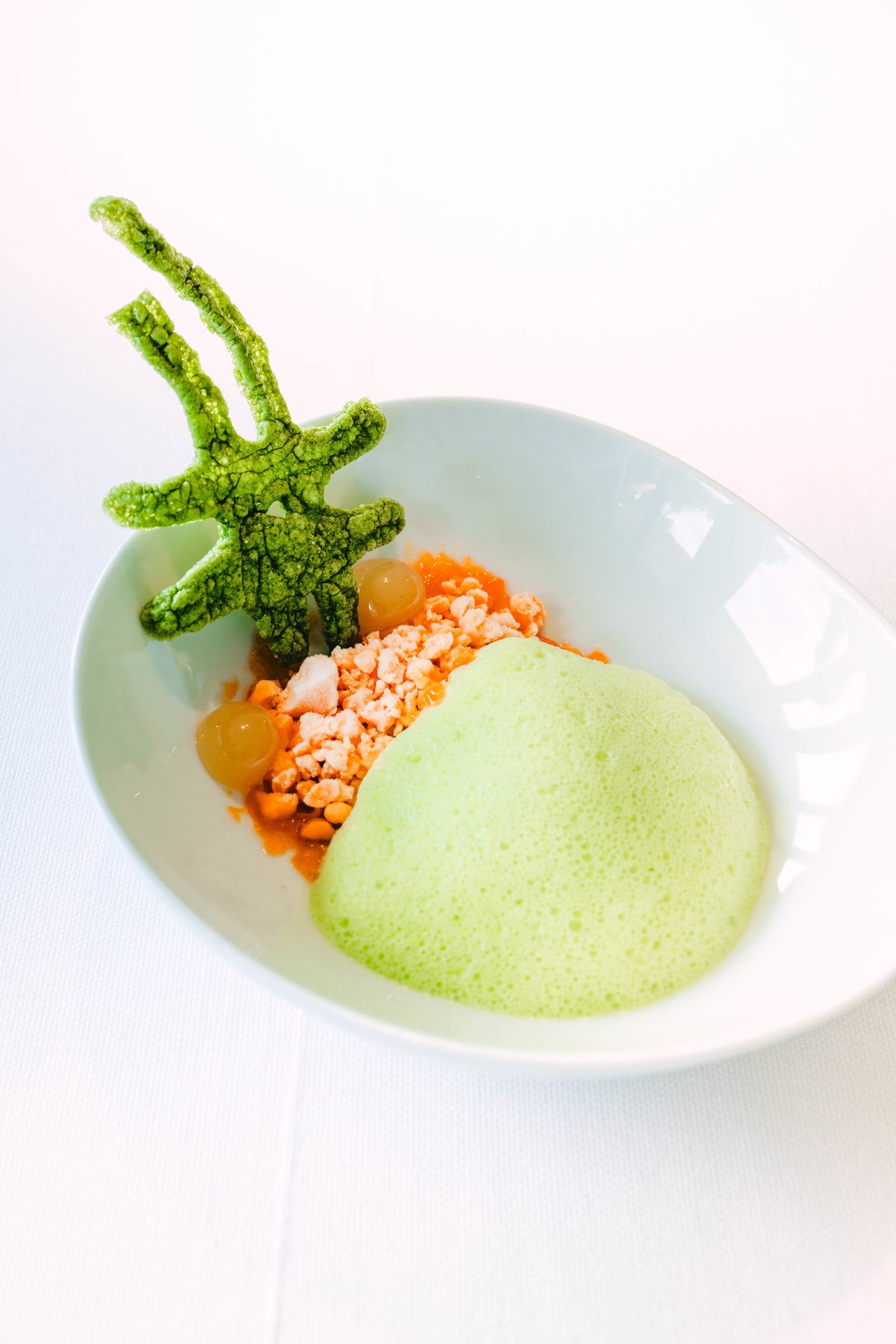
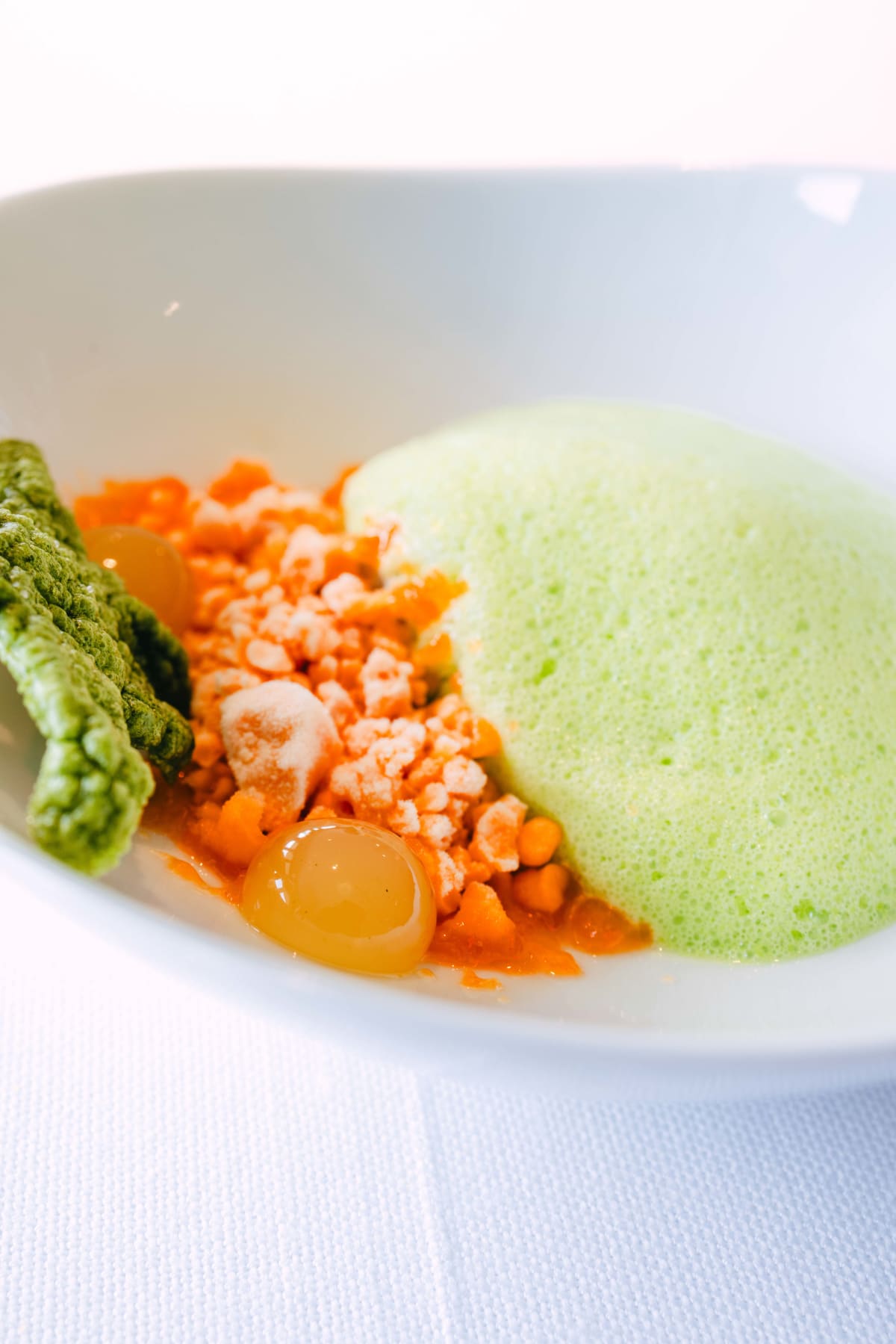
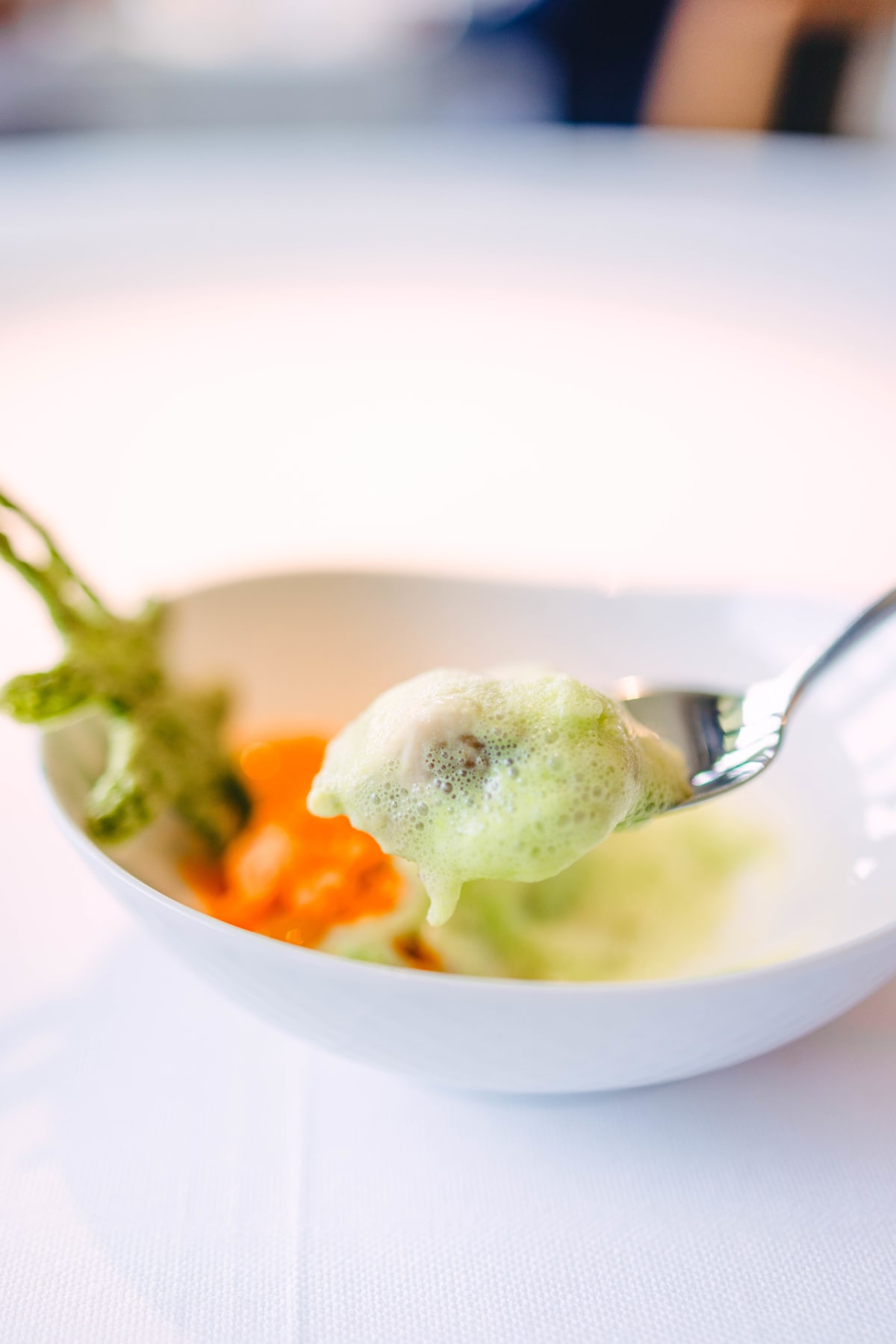
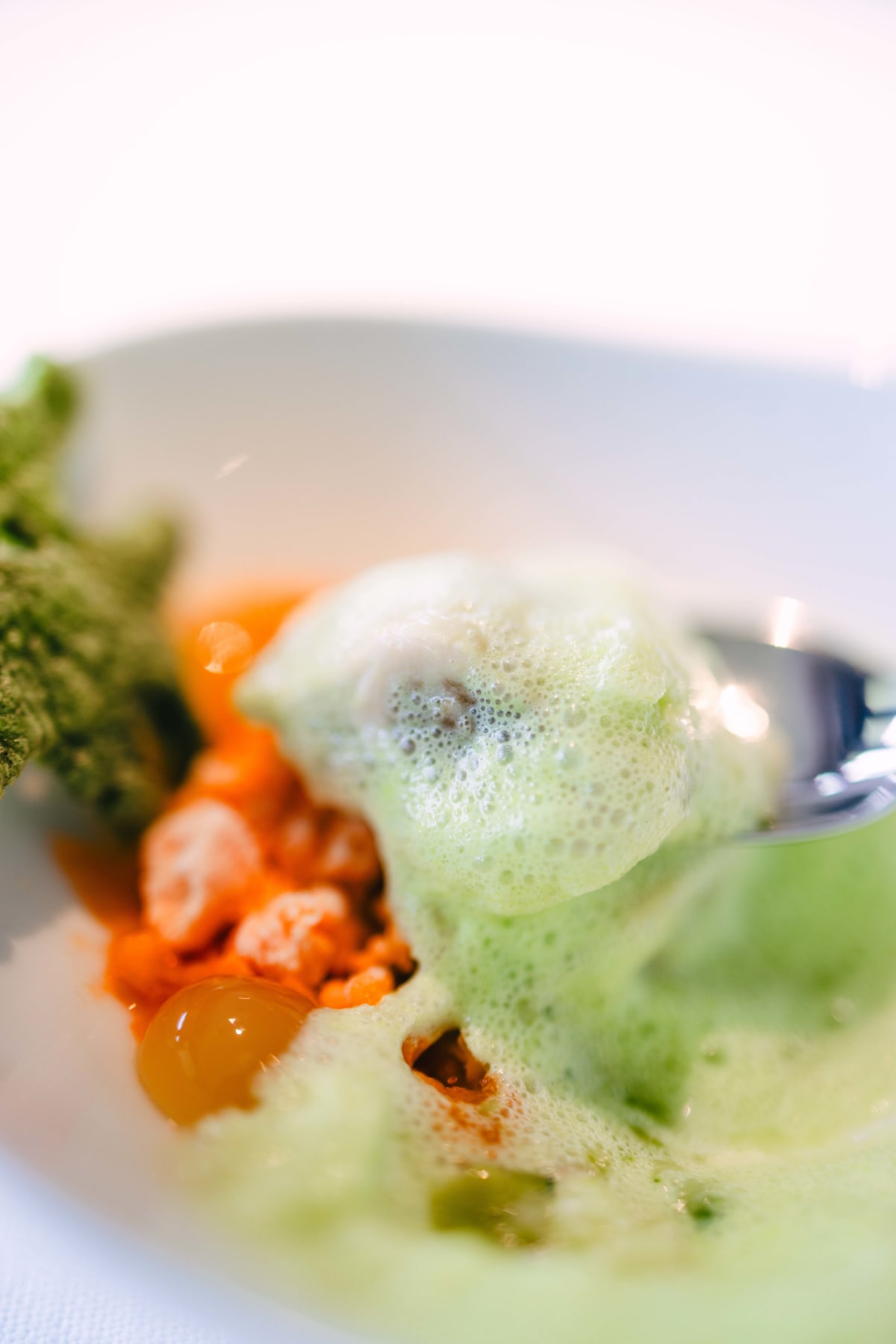
The next dish was 2019 Oyster with emulsion of wasabi and crunchy sea lettuce. A Japanese-touched oyster preparation. Wasabi in cream form, with the oyster inside. The oyster, if memory serves, was lightly cooked.
49—49 / 120
This one made a strong impression. Mixing every element together produced a taste startlingly close to oyster dipped in chojang with wasabi stirred in, the way you would eat it in Korea. The orange sauce, exactly which ingredients went into it I do not know, but it must be structurally close to a far-eastern chojang.

50—53 / 120
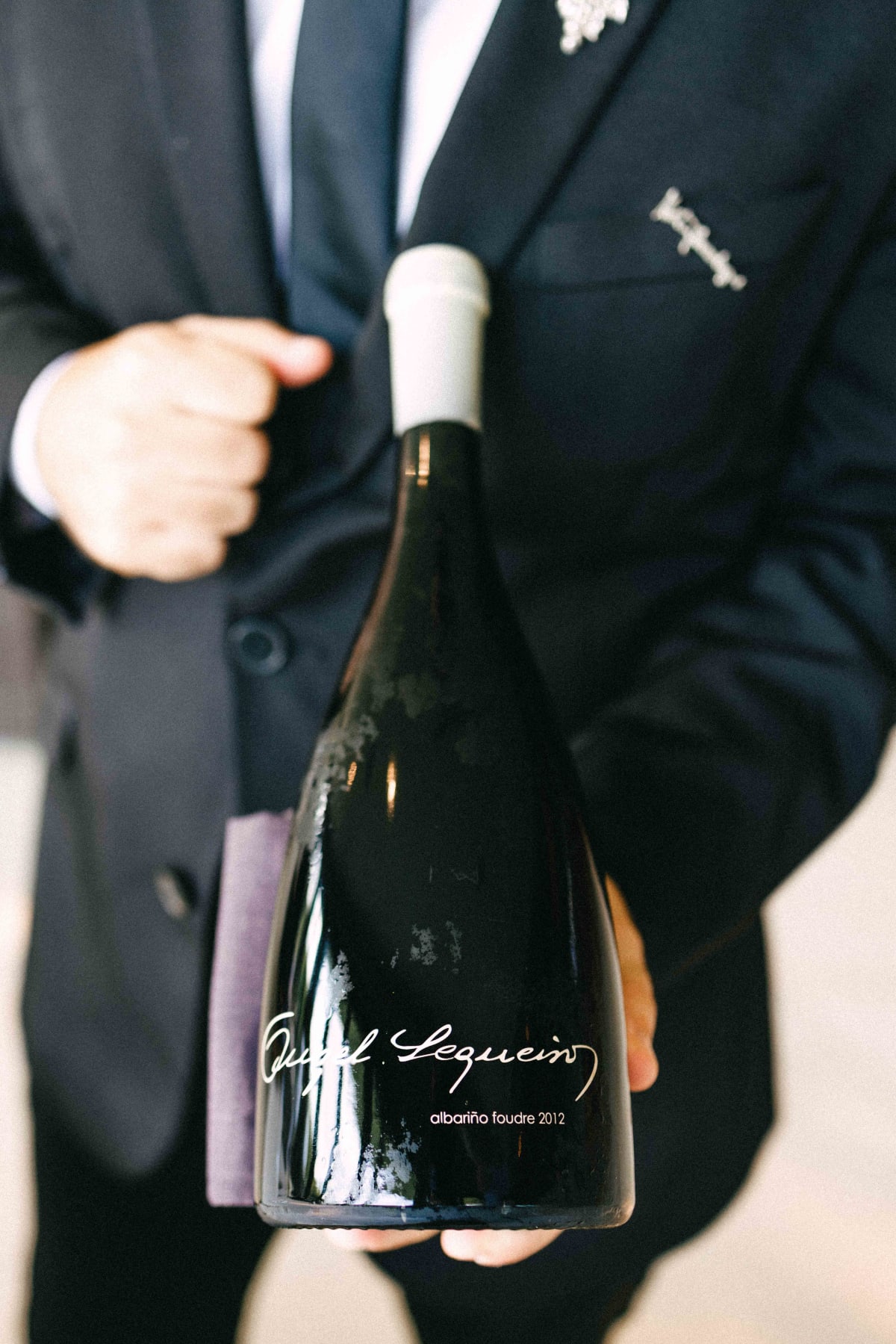
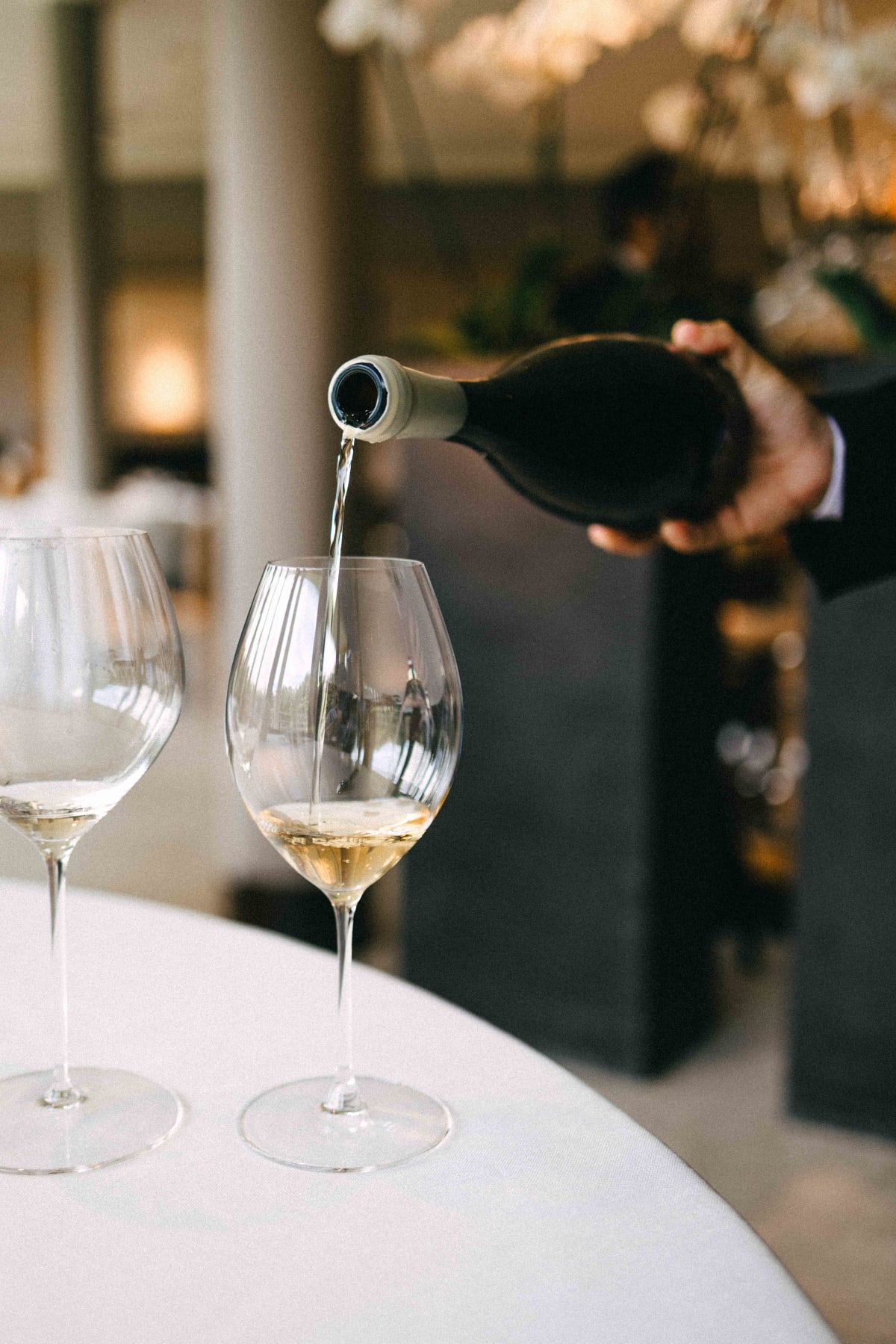
The pairing was Angel Sequeiros, Albariño Foudre 2012. Galicia again, this time Rías Baixas Albariño. The 2012 had been in the bottle long enough that the bright acidity of younger Albariño had softened, replaced by a slightly buttery, oxidatively aged register, with a finish that read closer to a Californian white. Quinta A Gaviñiera is a 7.4-hectare estate with Albariño vines planted in the 1920s, and Clement Sequeiros, son of founder Angel Sequeiros, took over winemaking in 2009. The Foudre cuvée is fermented in stainless steel, then aged in a 5,000-litre French oak foudre for eleven months sur lie, with weekly bâtonnage over the first six months. It won a Gold Medal at the 2013 Decanter World Wine Awards and quickly established itself as one of the reference Albariños of Rías Baixas.
47—48 / 120
That said, the wasabi-chojang flavour was strong enough that the wine ended up underneath, and the pairing did not leave a deep impression. If the dish was going to lean Japanese, an aged sake pairing somewhere along the same line might have worked better.
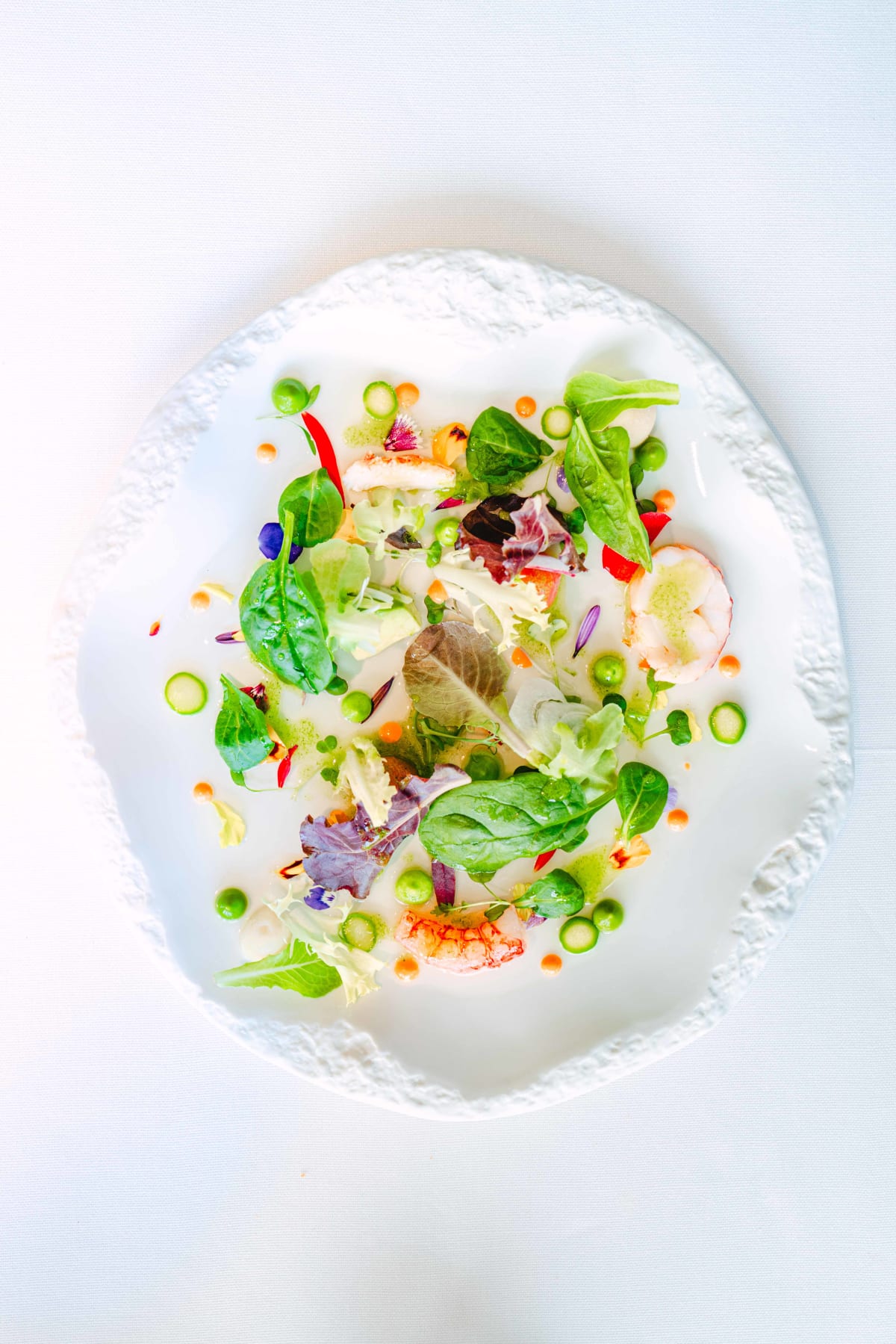
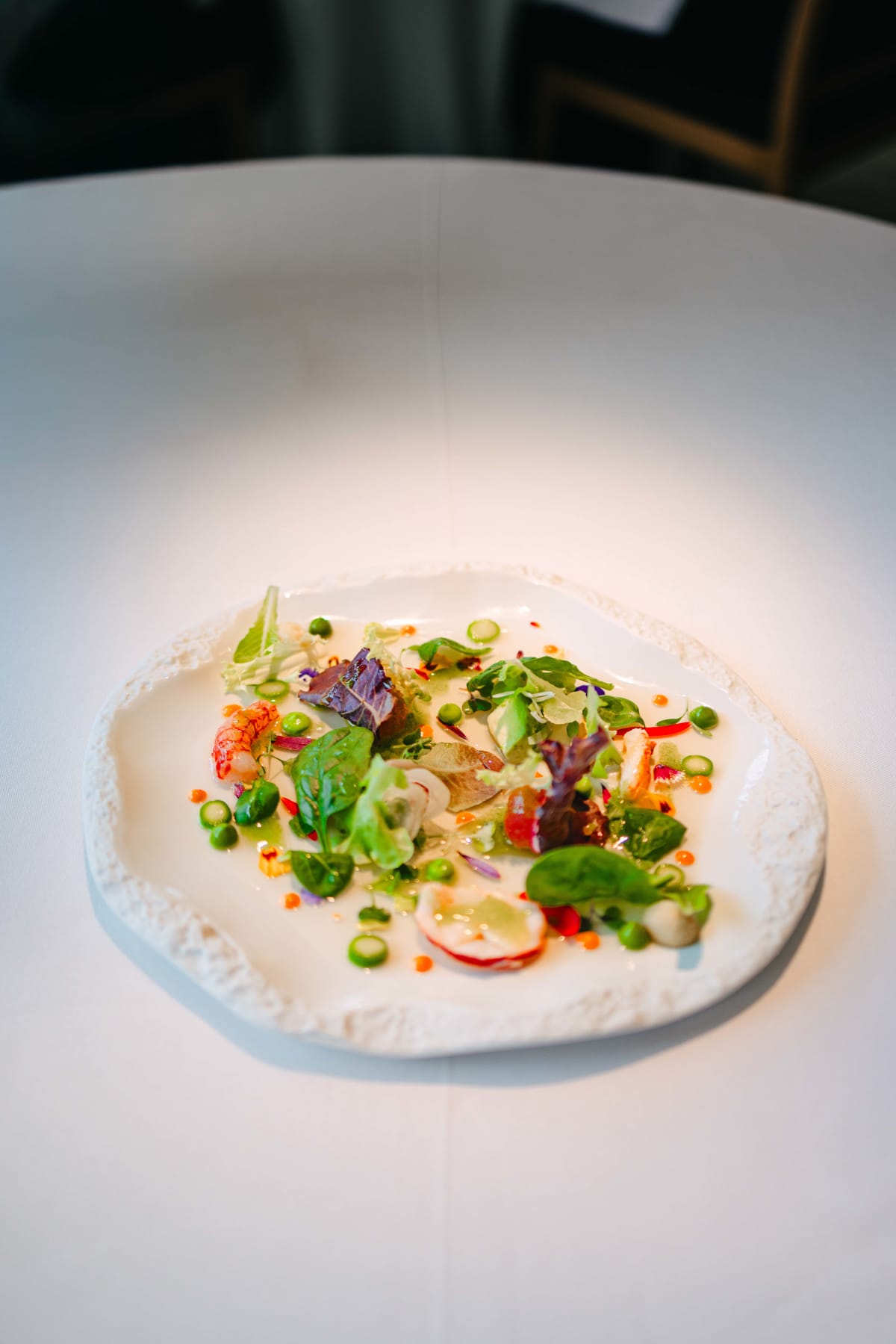
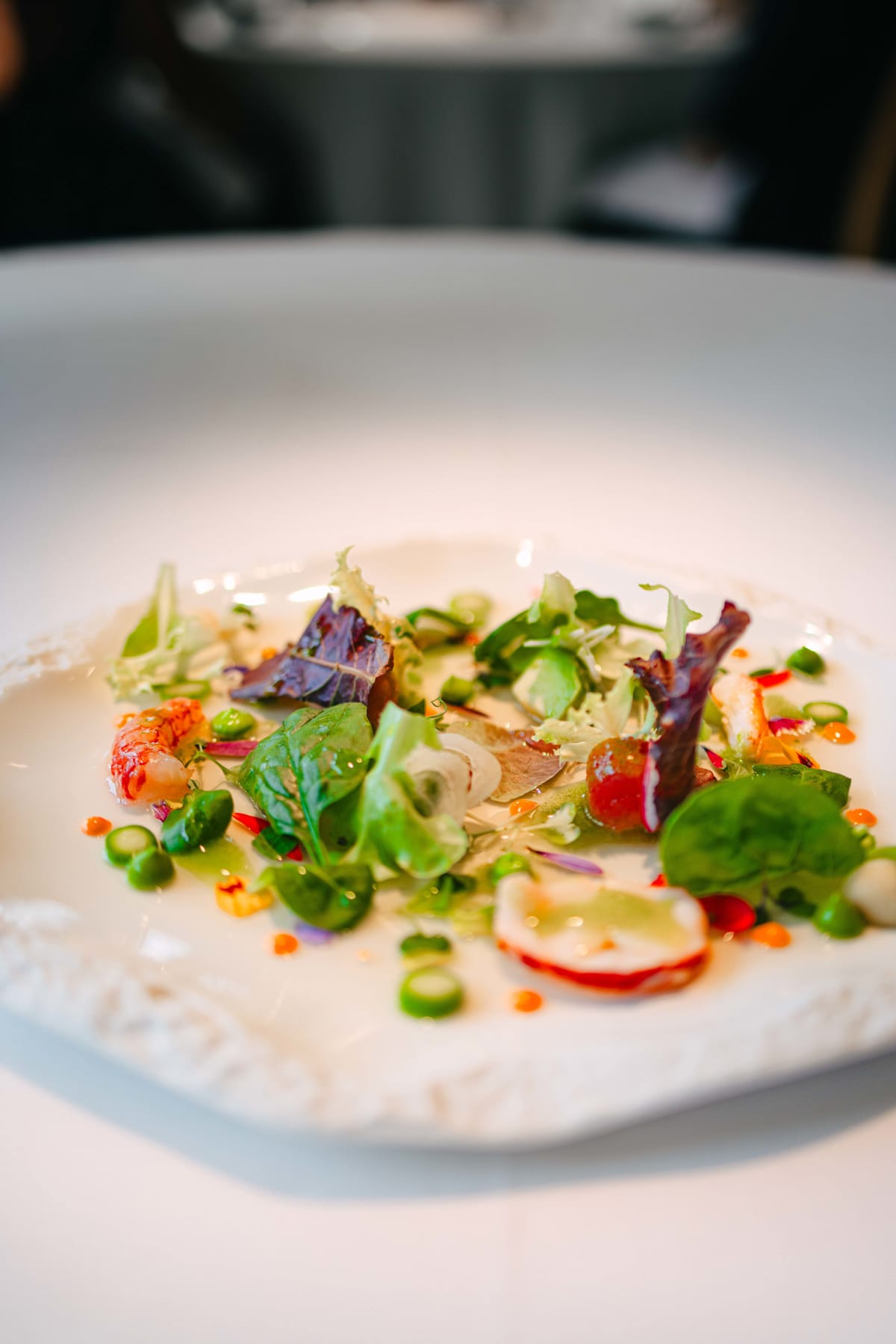
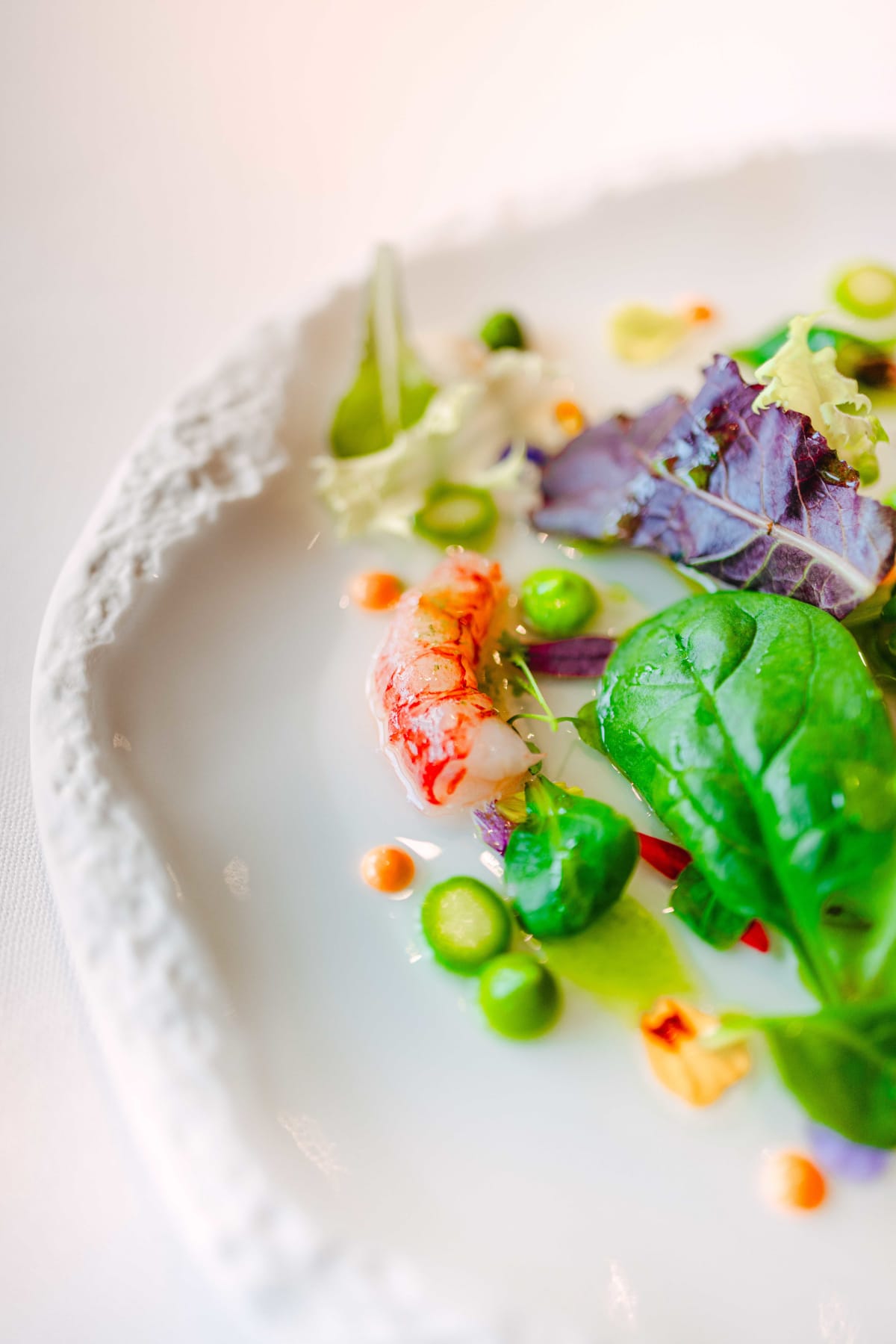
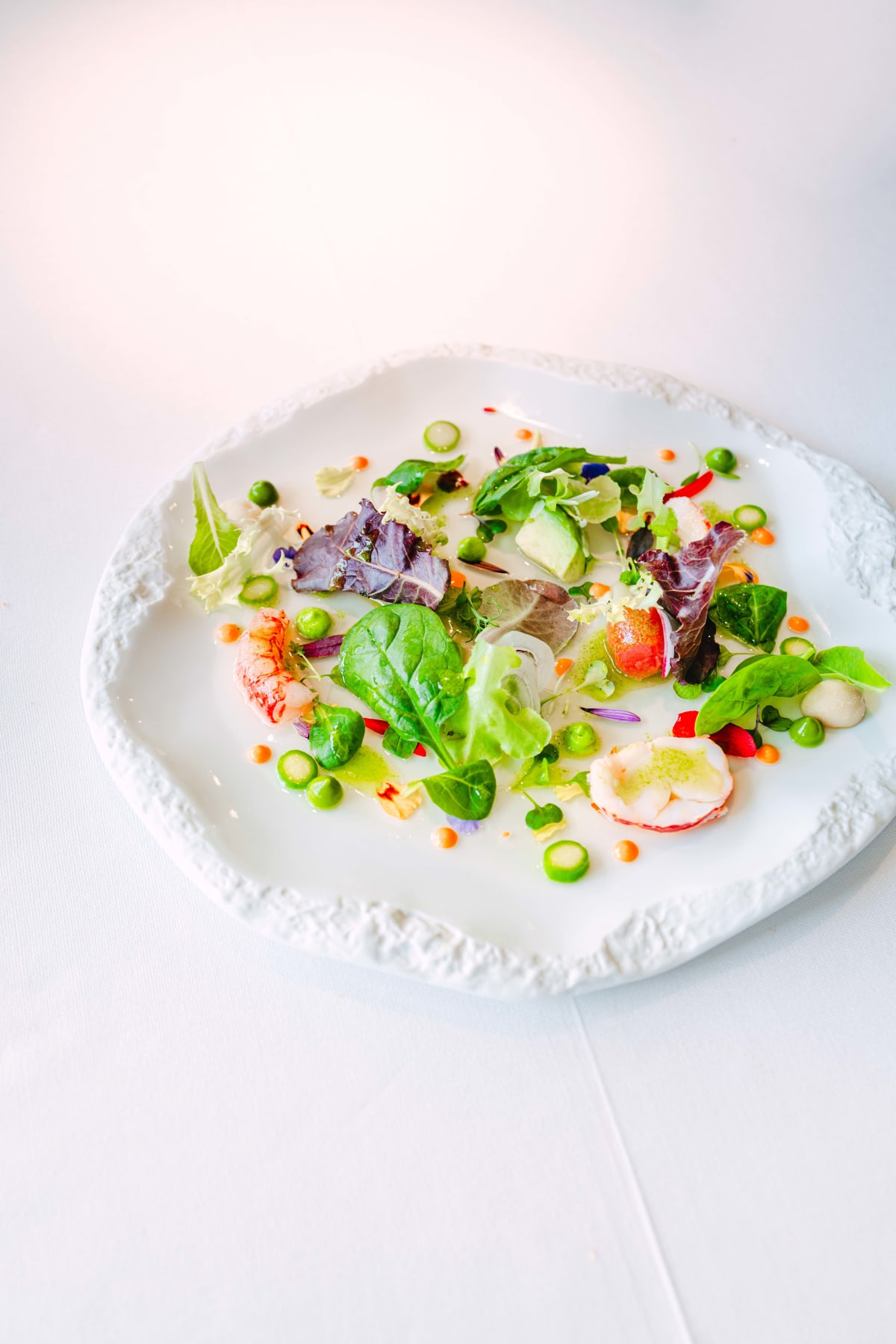
Roughly halfway into the course came the salad: 2001 Vegetable hearts salad with seafood, cream of lettuce and iodized juice.
61—61 / 120
There is a well-known Korean dining influencer who goes by the handle 비밀이야, and in one of his YouTube videos he picked three of the world's great salads, this one among them. The plate did look the part: layered seafood, multiple vegetables, the kind of presentation that warrants the title. Eating it, I enjoyed it for what it was, with the seafood and the vegetables working together cleanly, but I would not say the flavour itself was particularly extraordinary. It worked well in its position in the course, refreshing the palate and giving the body a brief sense of getting something light, which is the role it needed to play.
56—60 / 120
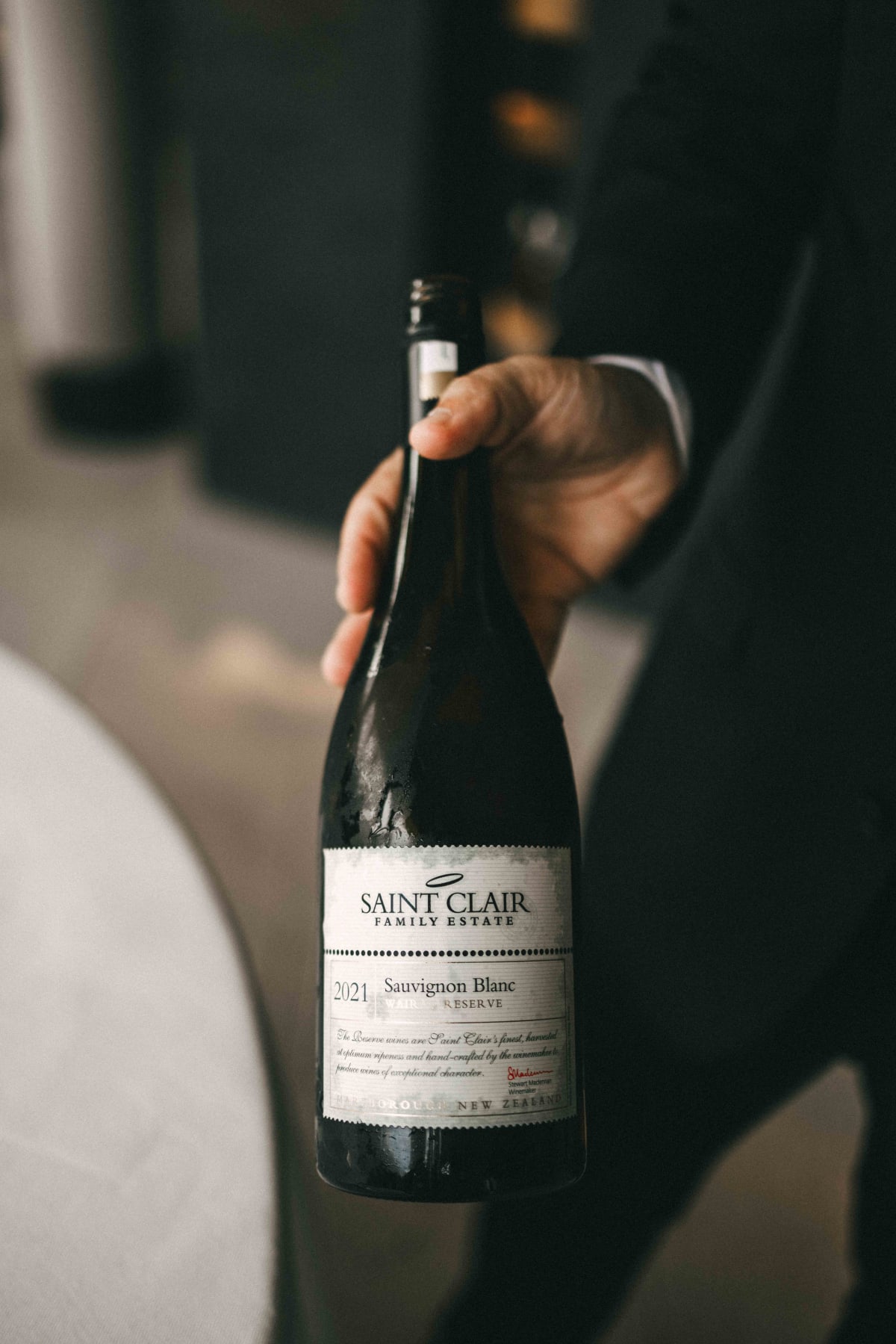
The pairing was Saint Clair Family Estate Sauvignon Blanc Reserve 2021, a New Zealand Marlborough Sauvignon Blanc. Of all the pairing whites of the evening, this was the one I enjoyed most. Saint Clair was founded in 1994 by the Sinclair family, and is one of the early producers who helped define the standard style of New Zealand Sauvignon Blanc in the Wairau Valley of Marlborough. The signature passion fruit and gooseberry profile, the fresh-cut-grass aromatics, and the assertive acidity all came through cleanly, distinct enough that the wine could not be mistaken for anything else in the category.
54—54 / 120
This Sauvignon Blanc was the moment I understood something about my own taste in whites. I need bright, clearly defined acidity, which is exactly what I had been finding too restrained in Spanish whites. The aromas and flavours were clean and crisp, and the match with the salad was excellent. The realisation I had at this dish, three years on, has not changed.
Every visit to a Spanish dining room reinforces the same set of strengths and weaknesses. The courses are long and the dish counts run high. While eating, the variety holds attention. But after the meal, only a handful of the truly arresting dishes stay with you; the rest fade unusually fast. The small portions also play a part in how quickly the impression dissipates.
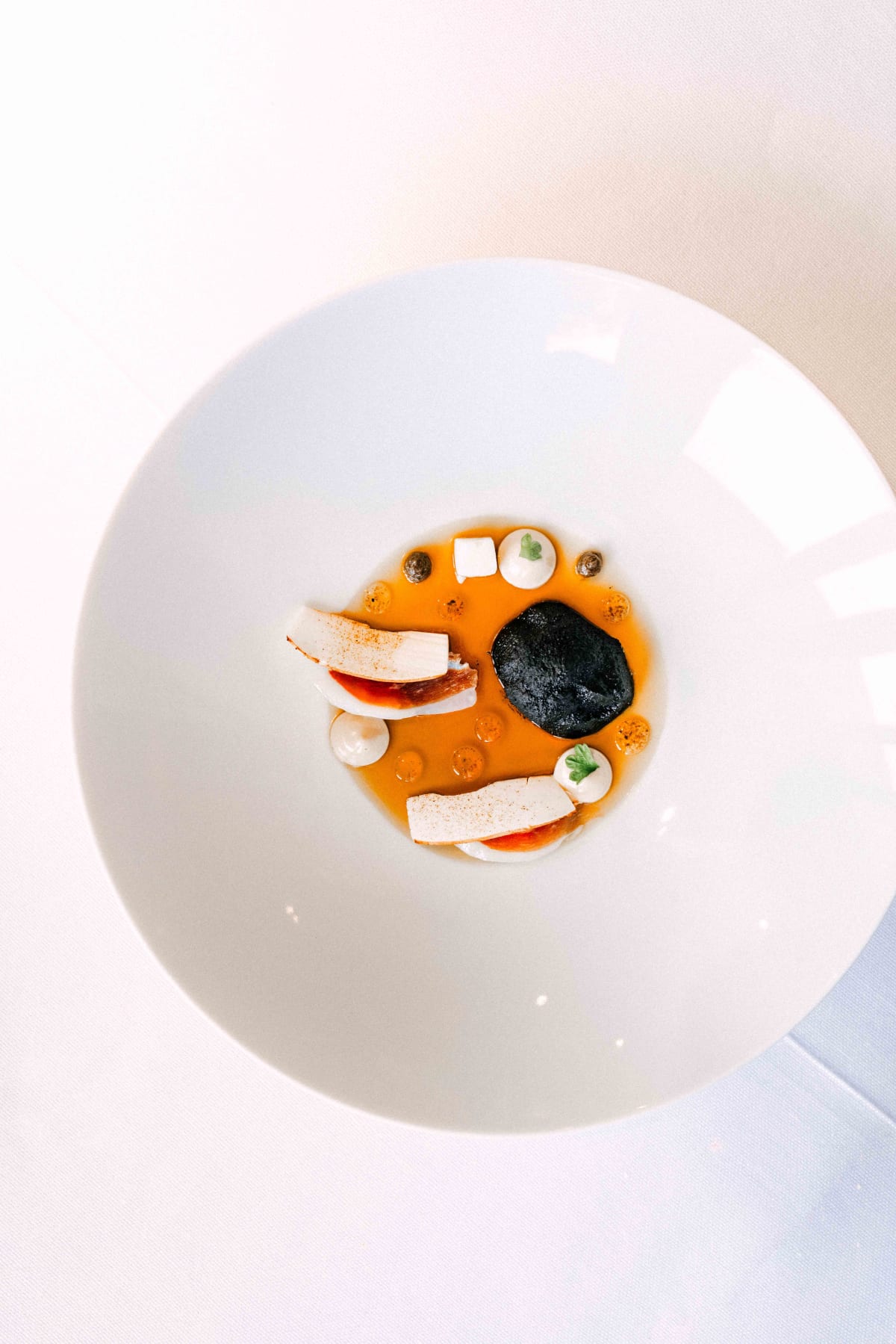
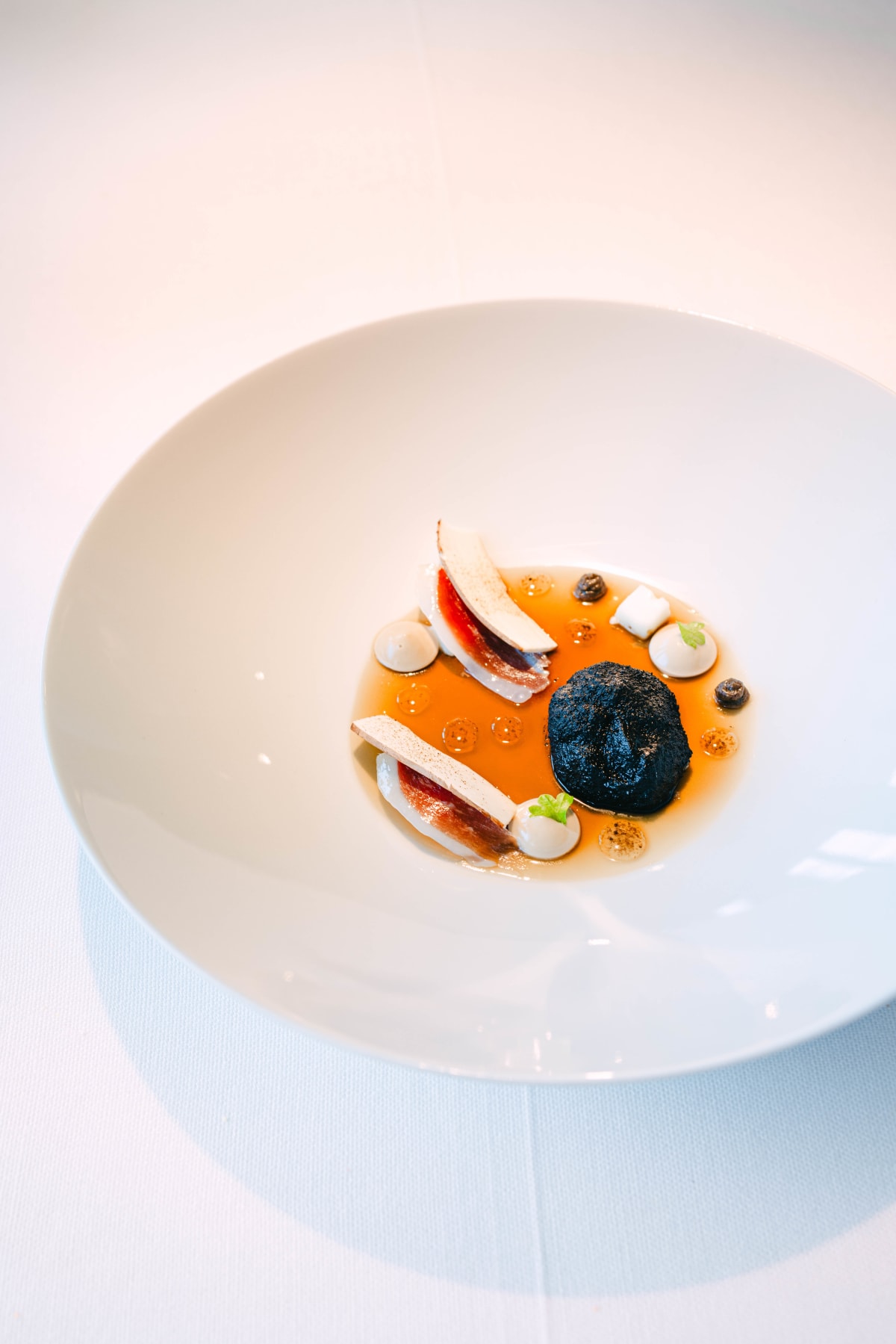
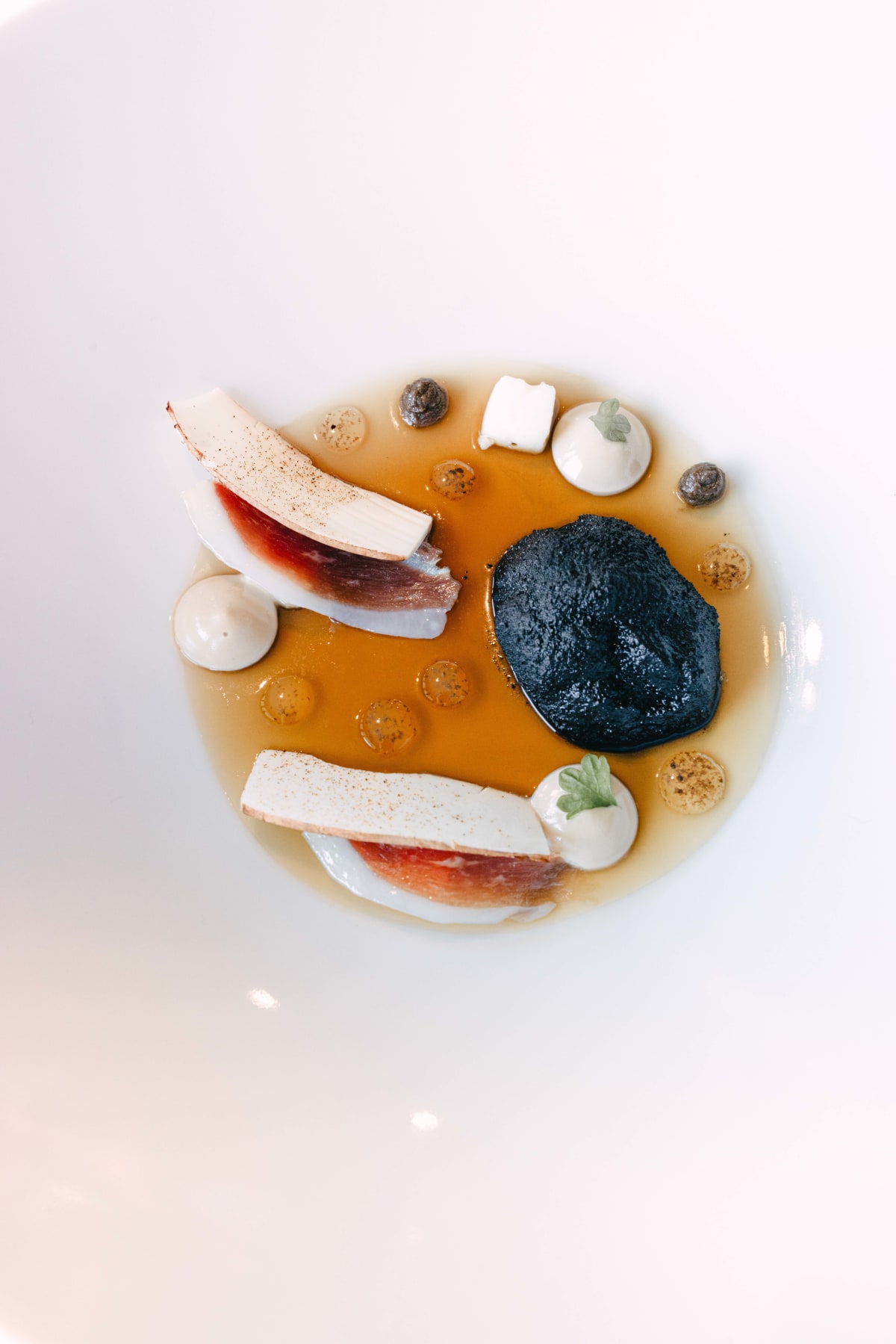
2022 "The Truffle" with mushroom moss and "Iberian ham."
67—67 / 120
The truffle-flavoured black stone-like form was actually a mousse that broke easily with a spoon, served with jamón and mushrooms alongside. The mushroom variety was unfamiliar to me, and I could not tell whether it was raw or how it had been prepared, but it was easy to eat with no resistance.
The sauce had an Asian touch to it, and spooning the various components together made for a genuinely delicious mouthful. I wanted to mop up the last drops with bread but held back to save room in the stomach. At the surrounding tables, the Spanish guests were unhesitatingly doing exactly that.
64—66 / 120
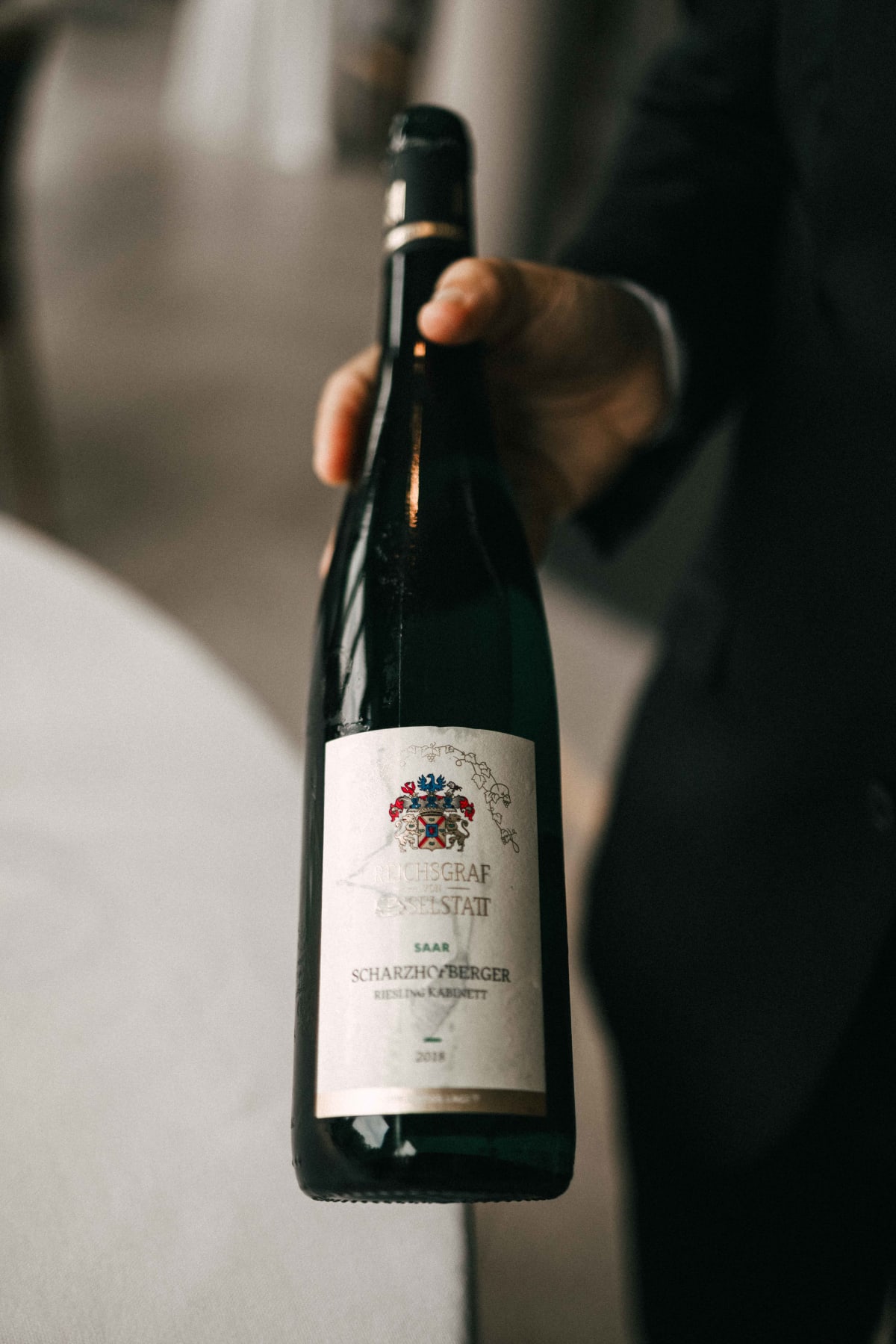
The pairing was Reichsgraf von Kesselstatt, Scharzhofberger Kabinett 2018, a Mosel Riesling. Sitting down later to organise the notes and photos, I noticed that the pairing structure at this meal and at Akelarre the night before followed a strangely similar pattern. The previous night a Mosel Riesling appeared mid-course; the same position on this menu had a Mosel Riesling too. Reichsgraf von Kesselstatt was founded in 1349 and is one of Germany's oldest wineries, with 675 years of continuous operation. It is one of the few wineries with vineyards across all three of the Mosel, Saar, and Ruwer valleys, and within them owns 6.6 hectares of Scharzhofberg, the famous Saar site associated with Egon Müller, behind only the Müller family's own 8.3 hectares. Devon slate soils and a cold microclimate give Saar Riesling its characteristic minerality. As long as a Riesling is not too aggressively petrol-driven, I tend to enjoy them, and this one I drank with pleasure.
62—63 / 120
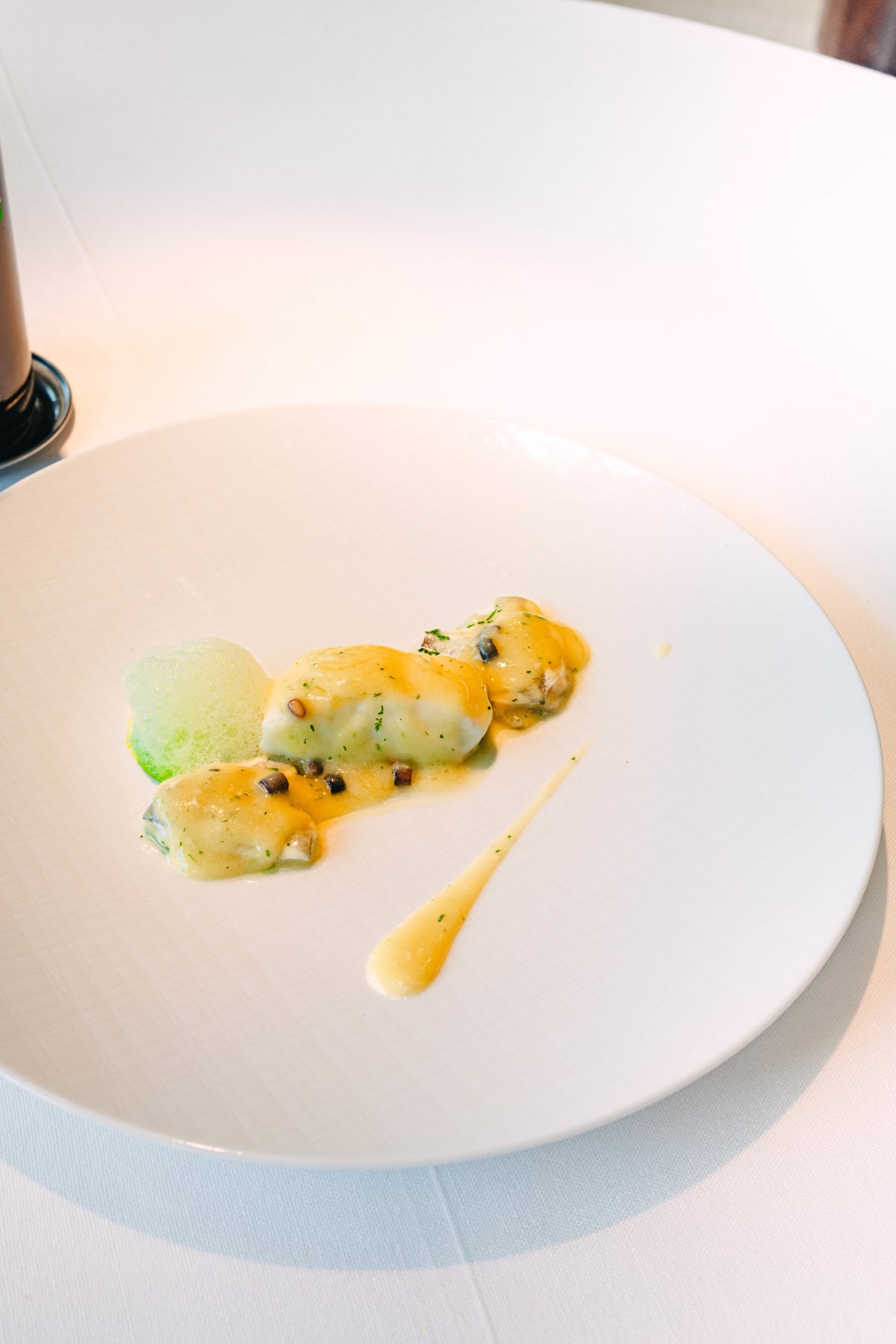
A fish course appeared before the meat main.
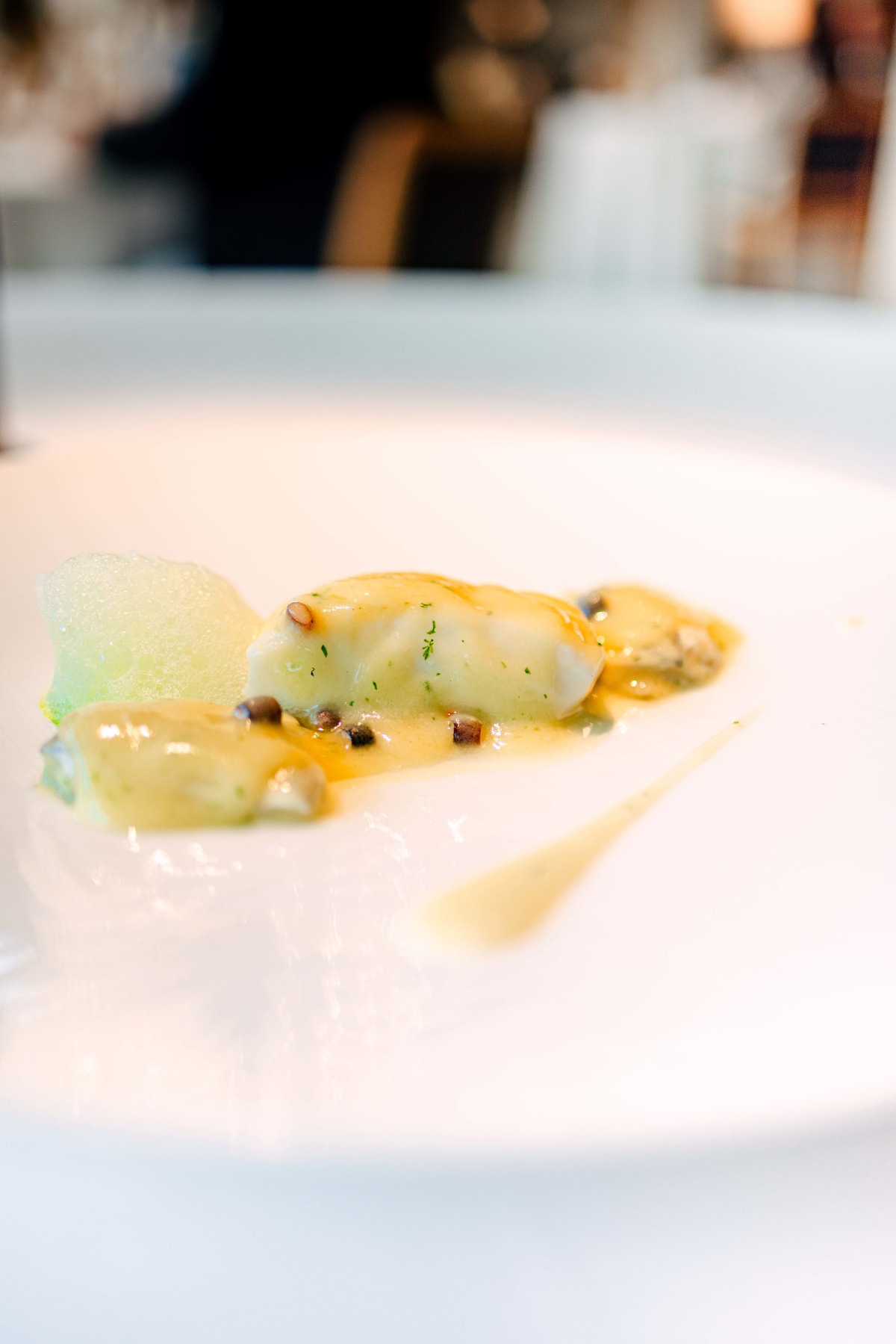
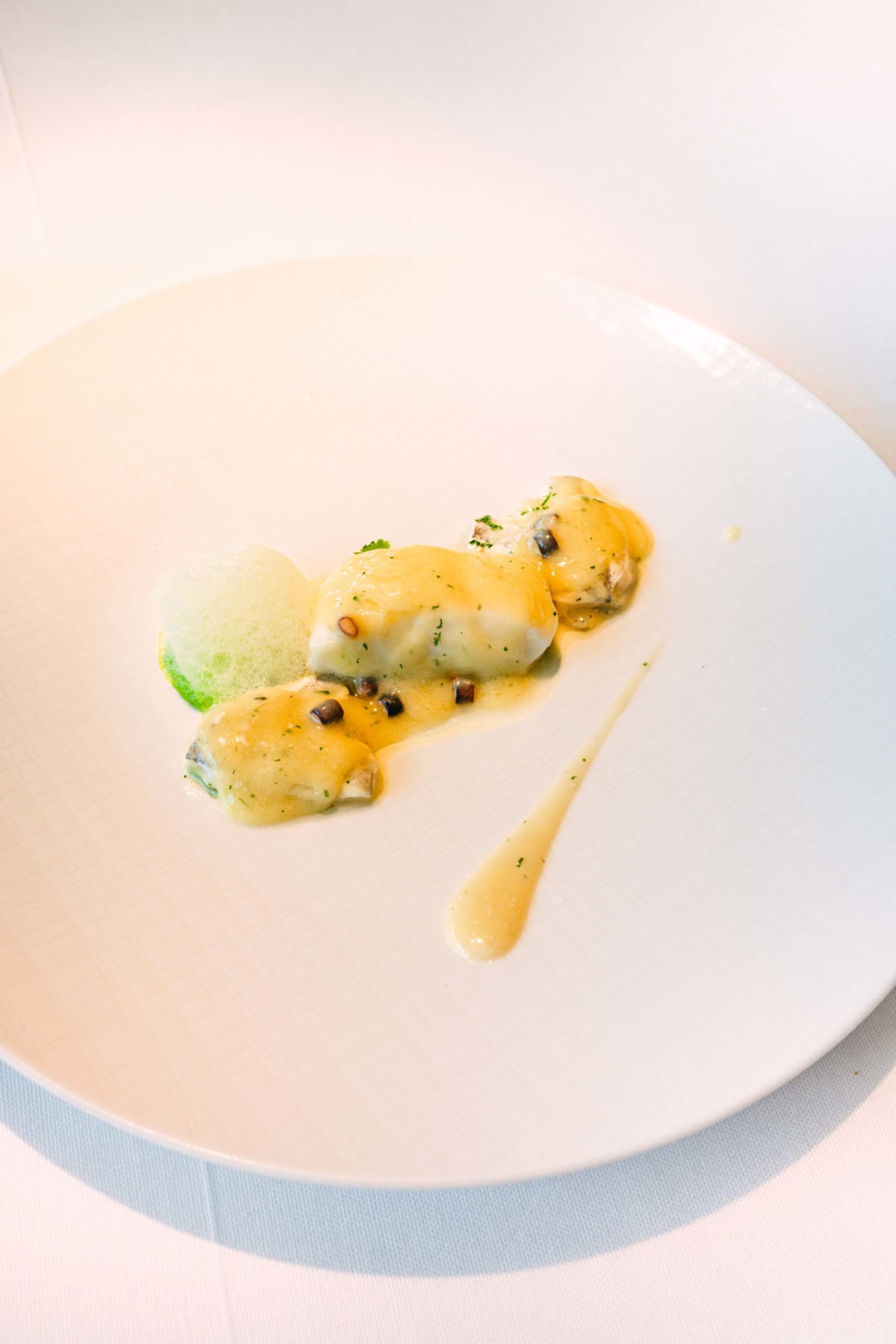
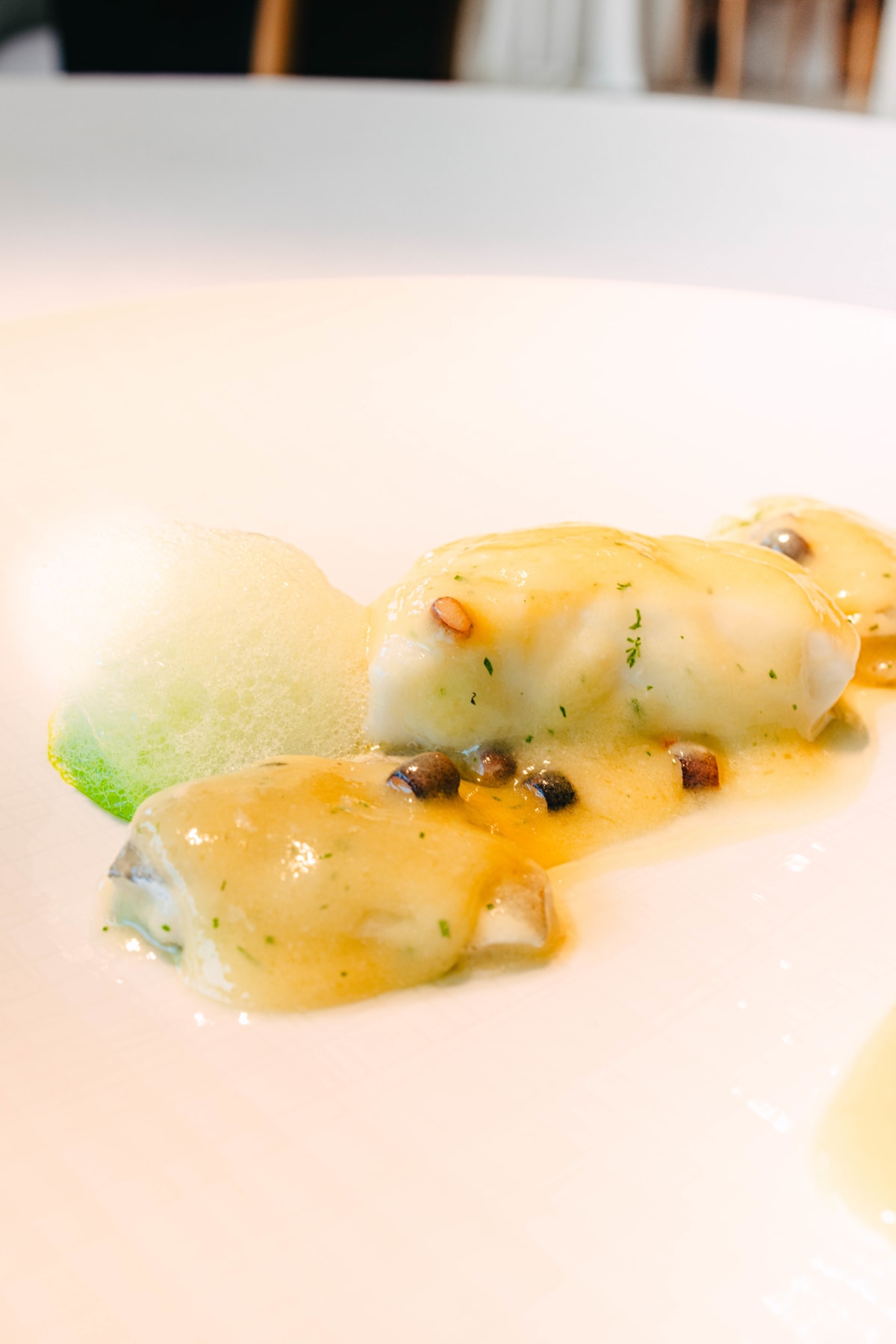
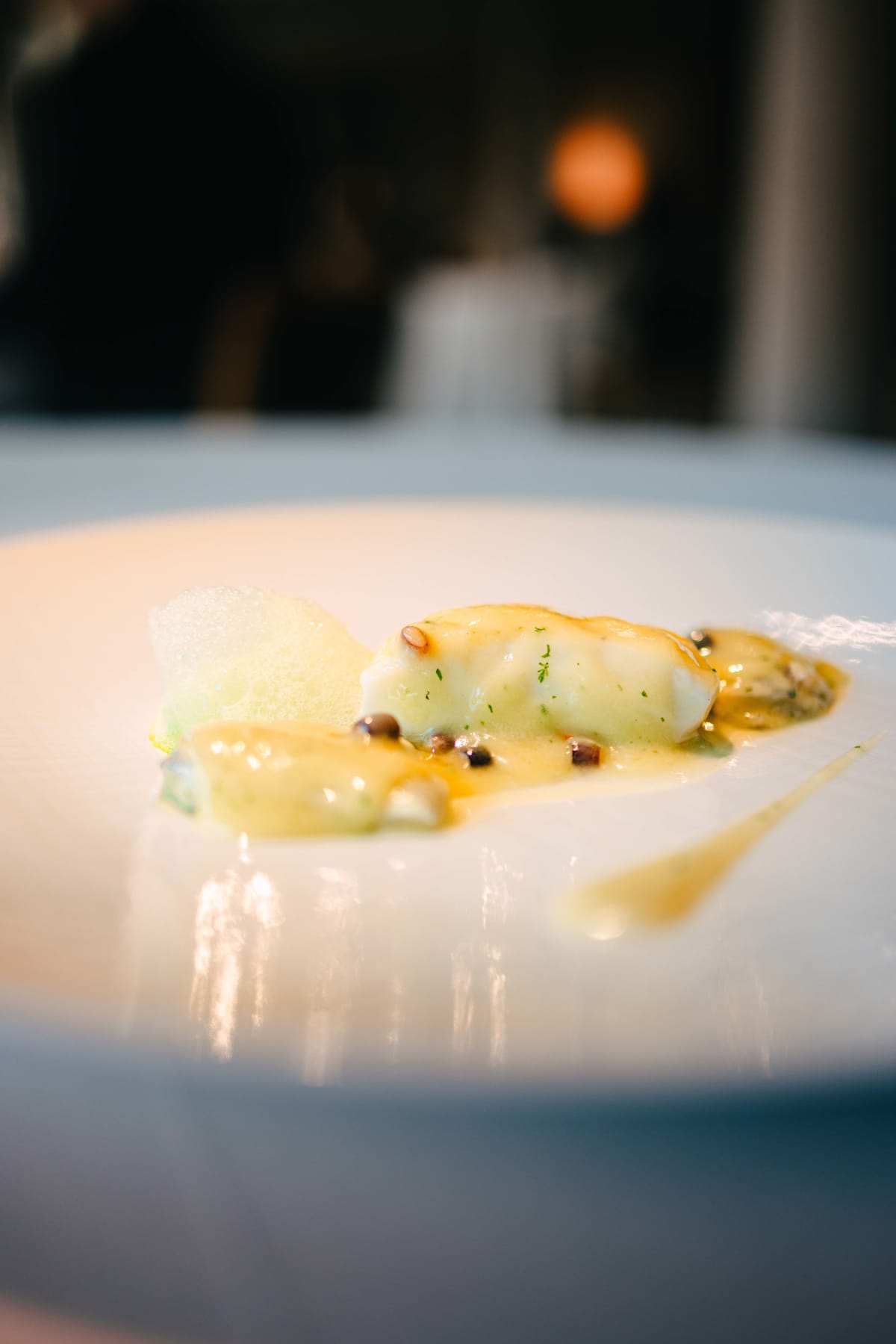
2023 My version of hake loin D&Burela with kokotxas and aniseed hints.
71—71 / 120
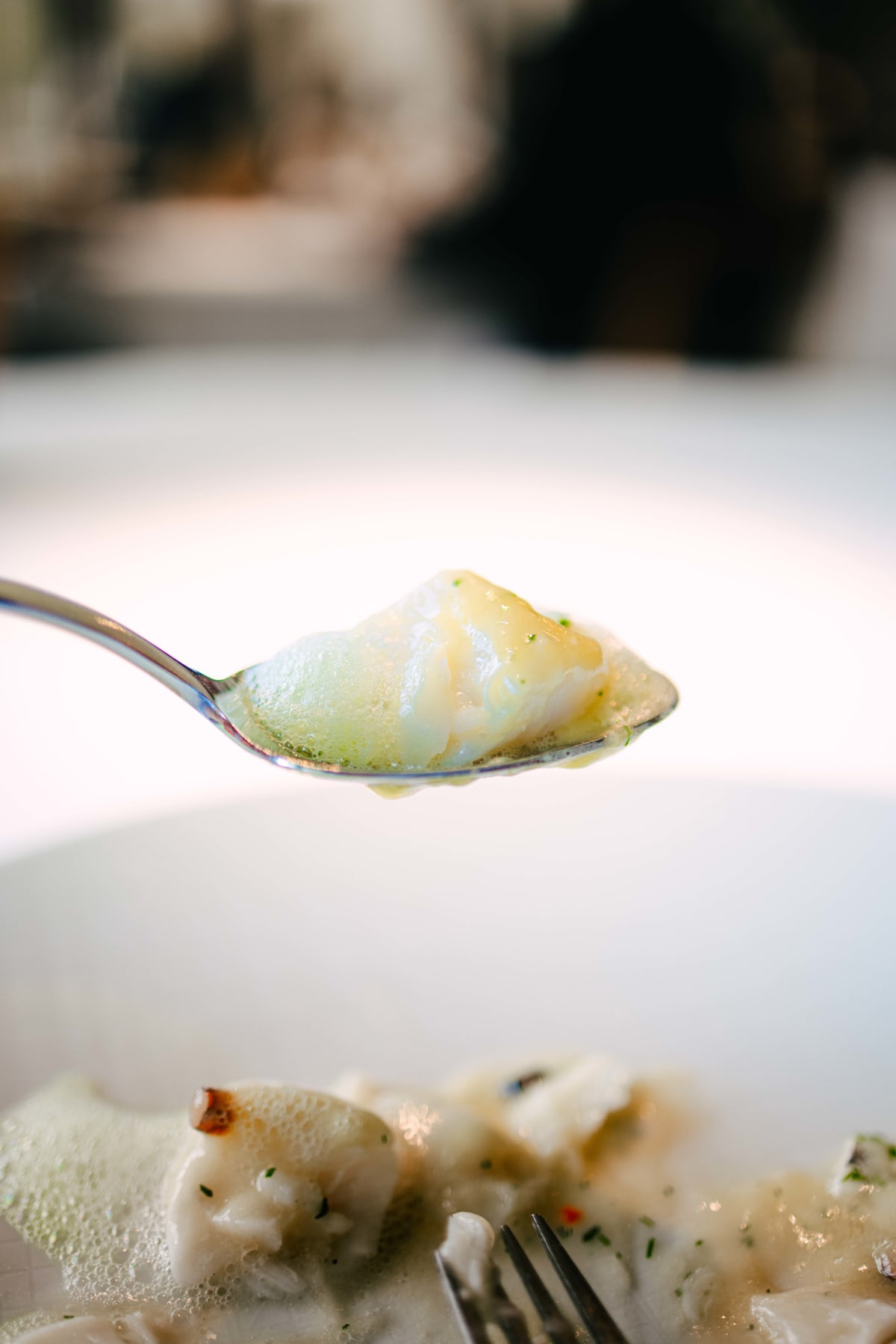
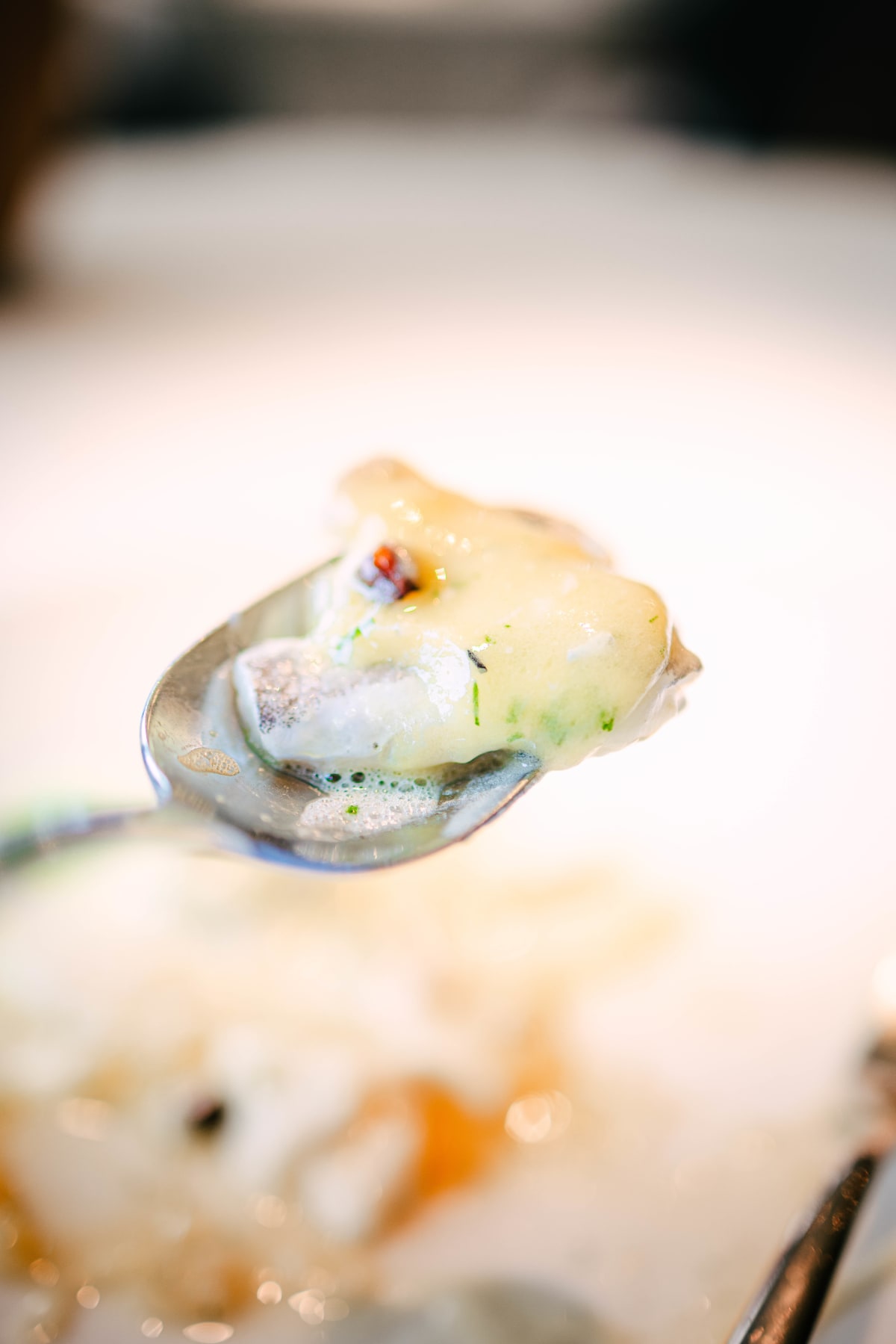
Hake, the fish that no European restaurant goes without. Unlike in Korea, Spain treats it as a serious steaking fish, and a well-cooked hake is genuinely excellent. Kokotxas, the cheeks of the fish, are a Basque staple I have mentioned several times before.
The flesh held a firm, springy quality alongside the soft, gelatinous texture of the skin and cheeks. The colour and aroma of the sauce read as lemon, but the aromatic was actually aniseed. The flesh was cooked to a clean, moist finish, but the truth is that even casual restaurants on this trip had cooked hake well, so the bar here was already high and the dish did not arrive as a revelation.
73—80 / 120
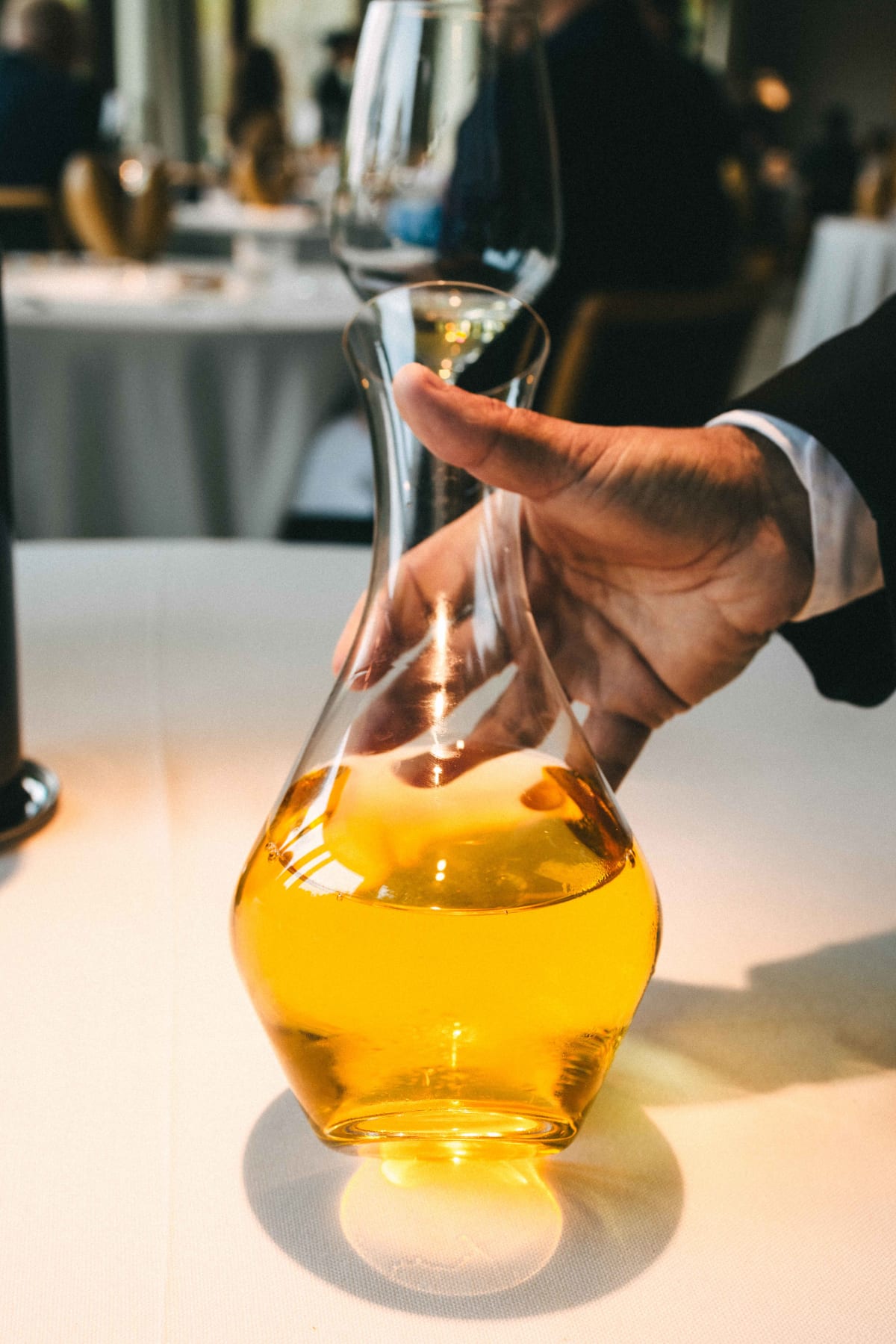
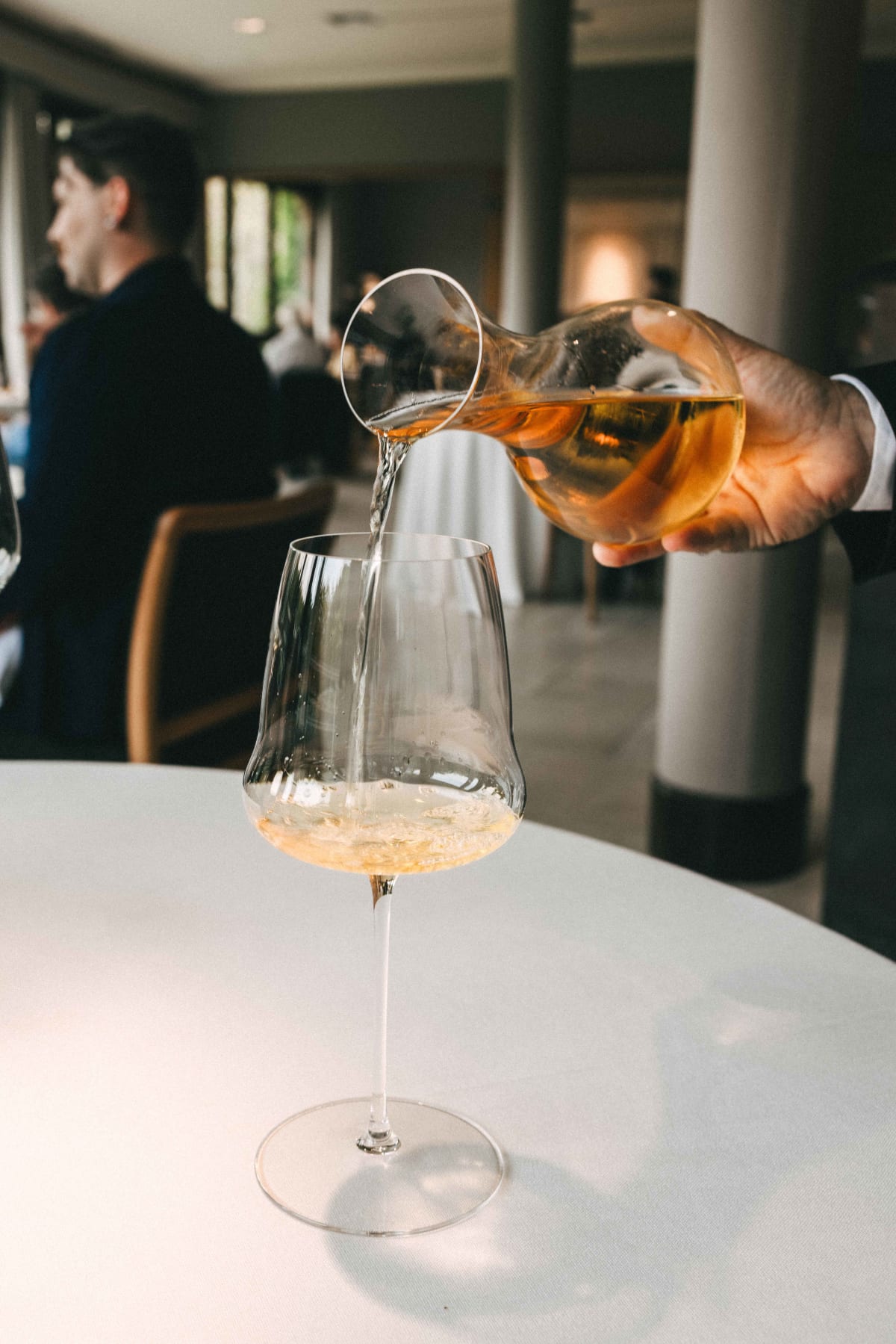
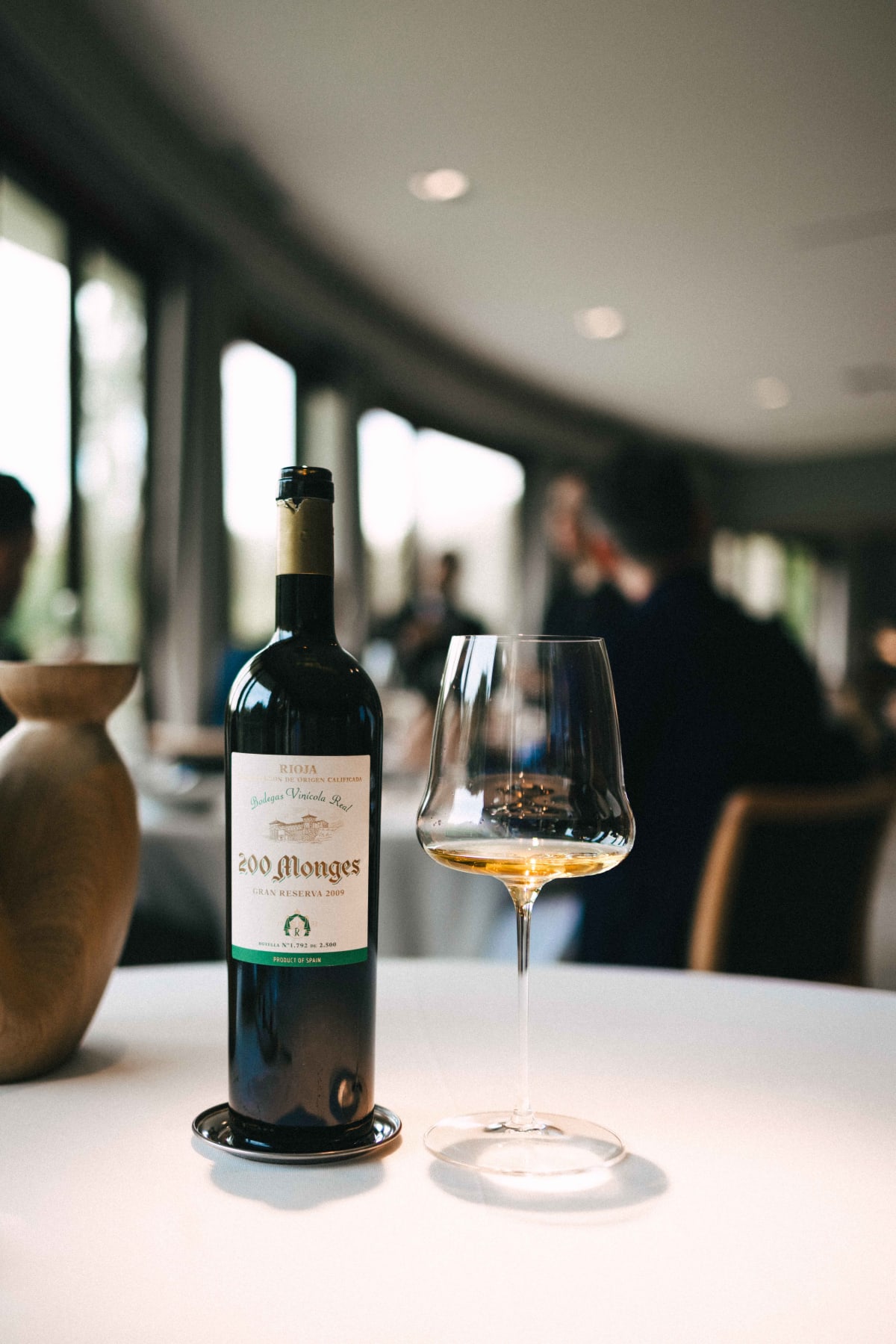
The pairing for this fish was Bodegas Vinícola Real, 200 Monges Gran Reserva 2009 (Rioja Blanco). At Akelarre the previous night, a Rioja blanco had followed the Mosel Riesling, and the same sequence repeated here.
The 2009 was unusually aged for a white, and being a Gran Reserva, it was served decanted. The aromas and flavours moved in a different direction from the Saint Clair earlier in the evening, with a creamy nuance and, somewhat unexpectedly, dense fruit. Bodegas Vinícola Real, founded in 1992 in Albelda de Iregua in La Rioja Oriental, takes its '200 Monges' name from the two hundred monks who once lived at the nearby San Martín de Albelda monastery. The wine is 100% Viura from a twenty-plus-year-old vineyard at 600 metres elevation, aged for over eight years before release. The winery's tagline is "WHITE WITH RED SOUL," meaning a white aimed at the structure and ageing capacity of a red. The 2009 Gran Reserva was released in a limited run of about 1,500 bottles. Setting aside the wine on its own, the pairing with the creamy kokotxas was strong, and the glass went down well.
68—70 / 120
Another fish course followed.
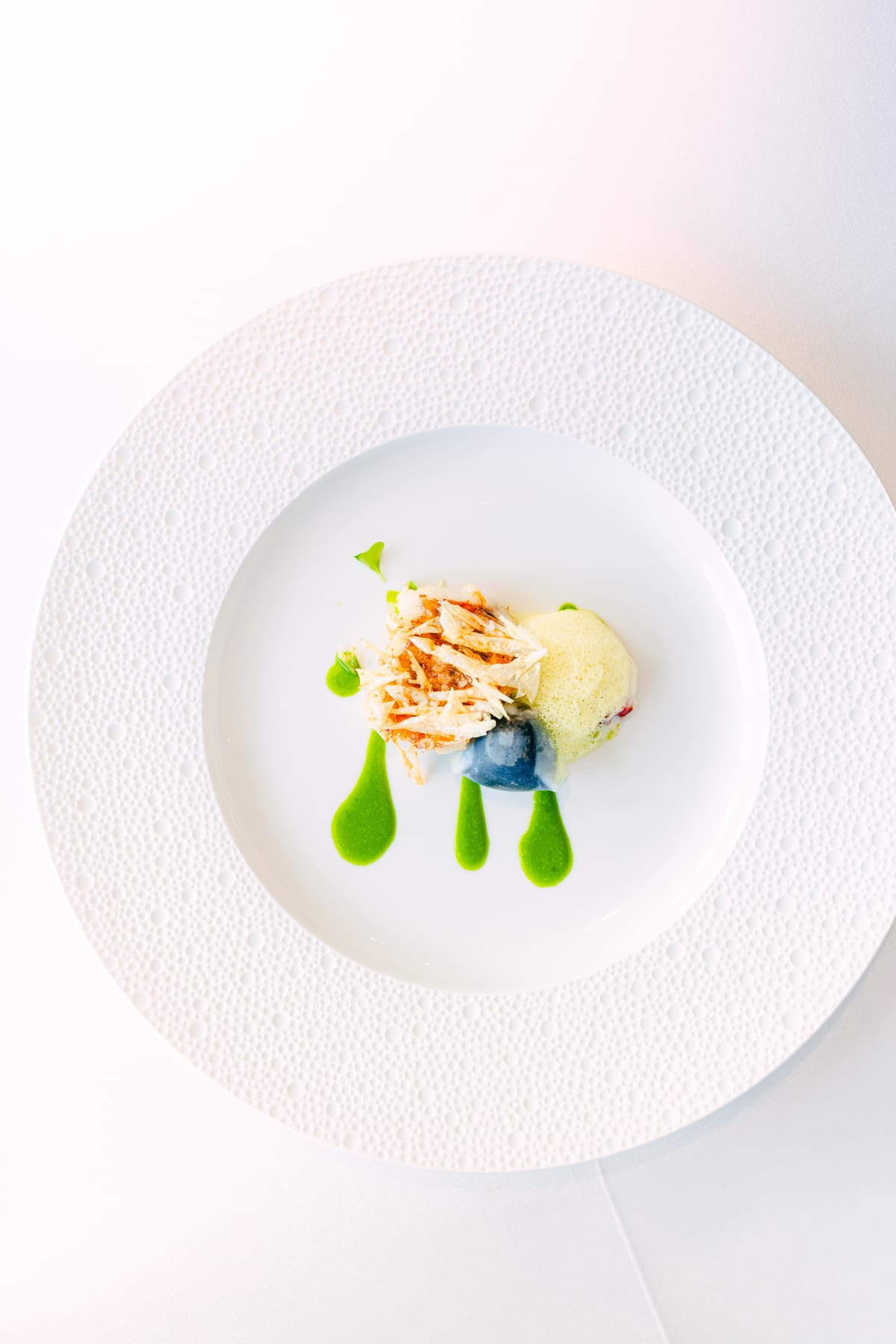
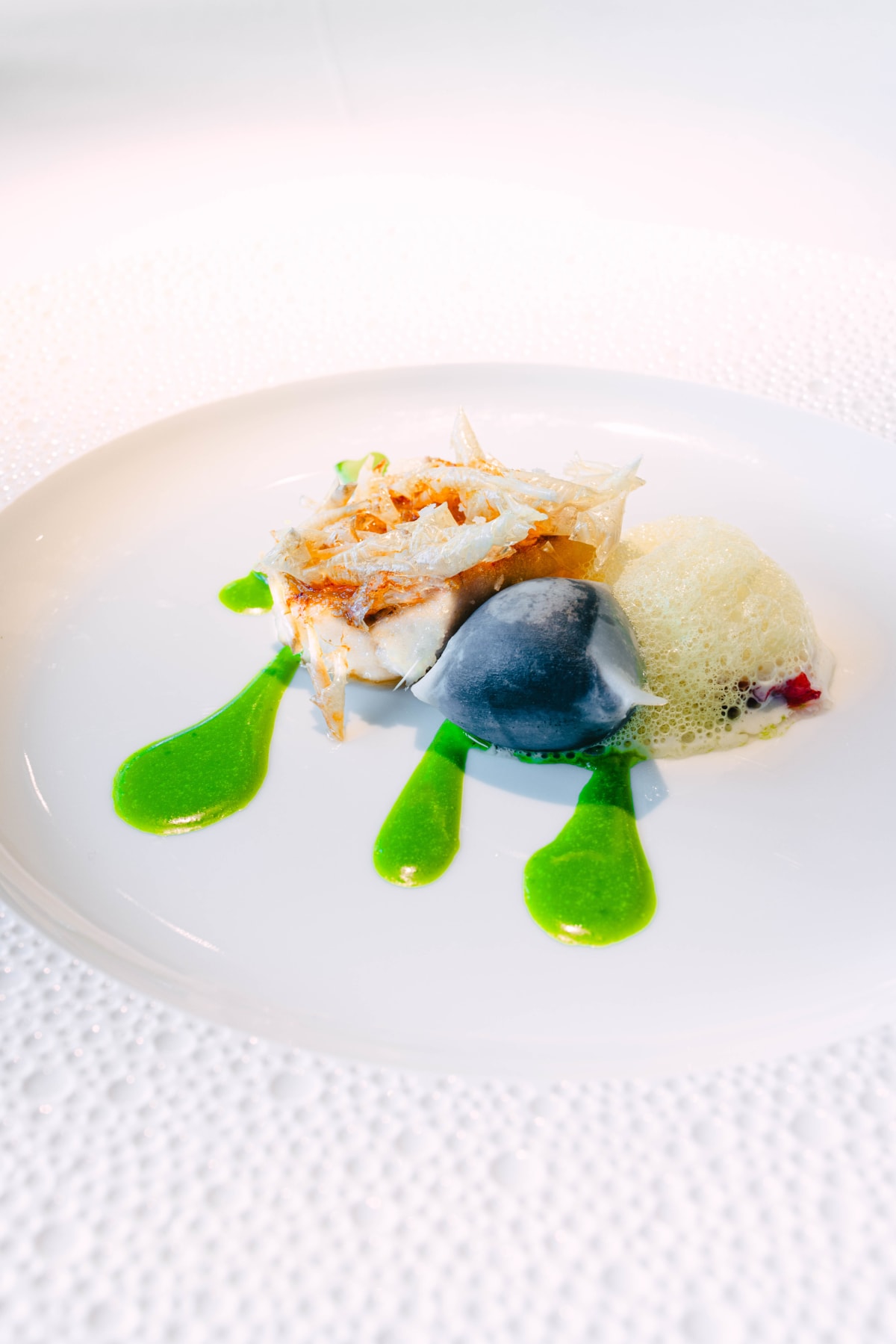
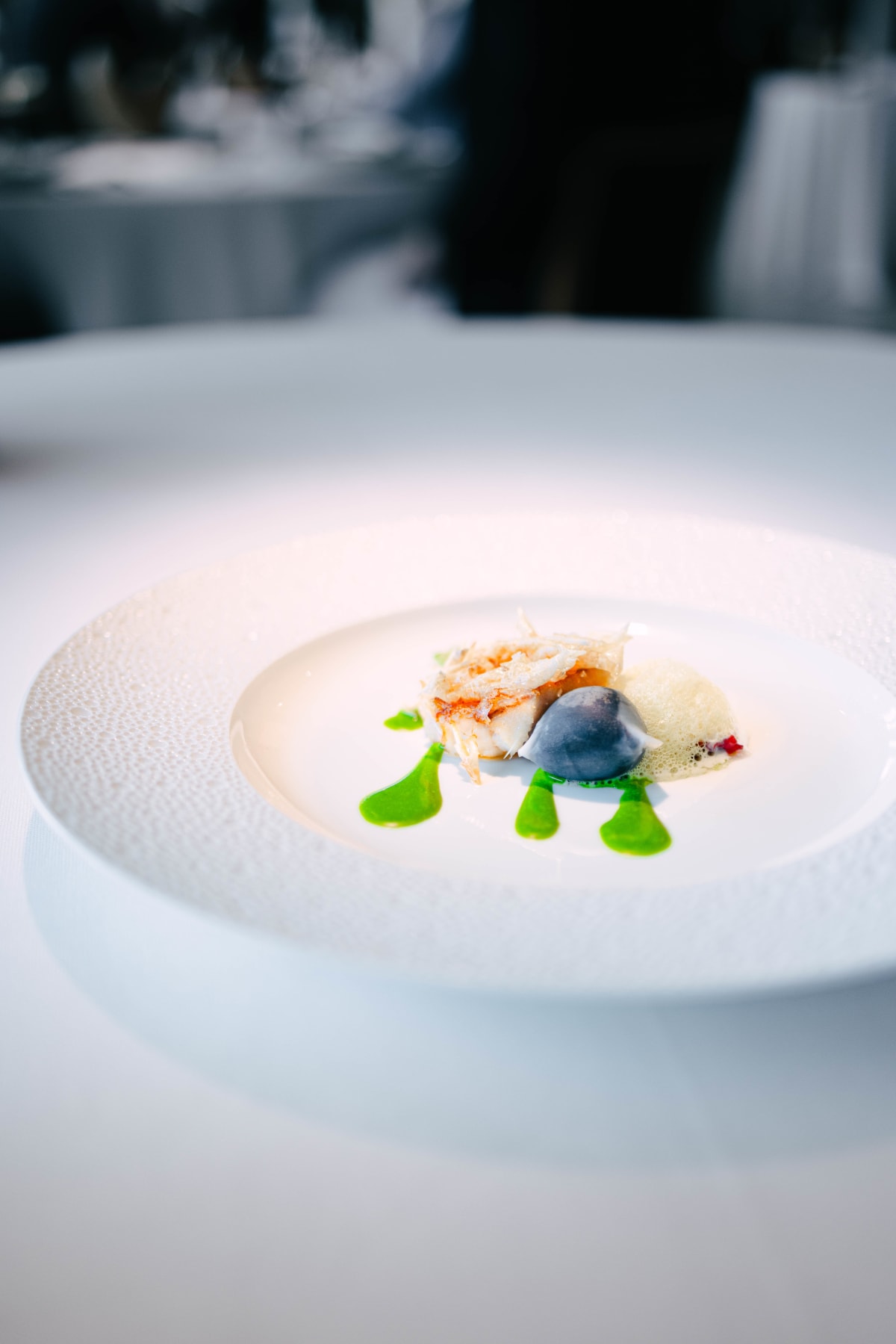
2023 Red Mullet with its edible scales crystals, liquid bonbon of baby squid, octopus and its citric sauce, with red mullet returning to the table. As the dish name and the photo suggest, the plate is not just fish but also includes a baby-squid bonbon shaped like a chocolate truffle, plus octopus.
86—86 / 120
The clearest source of pleasure here was the round squid bonbon. One bite released a creamy interior the way a rum chocolate releases its liquor, and the textural payoff was the highlight. The red mullet itself was crisp outside, moist inside, and good.
84—85 / 120
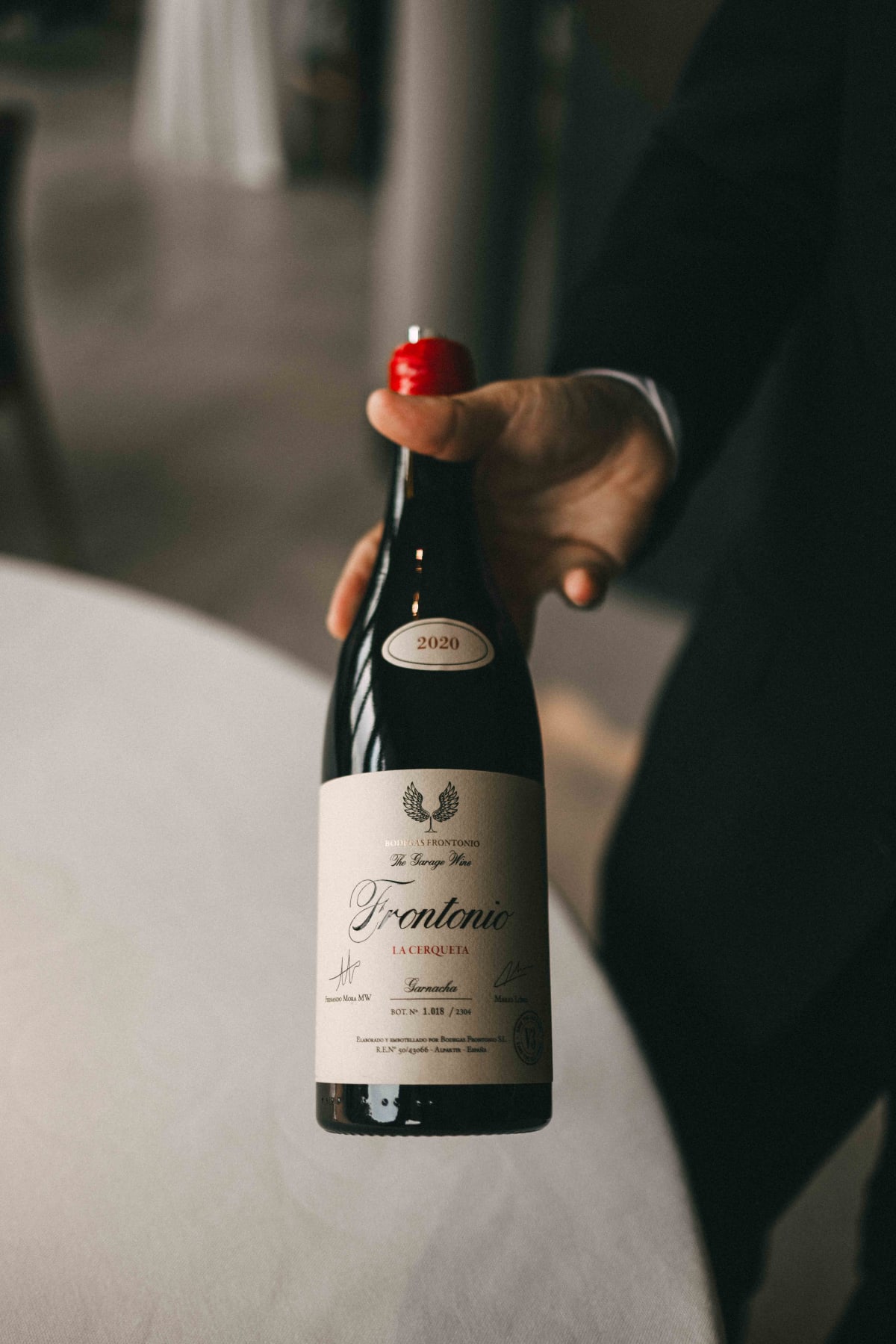
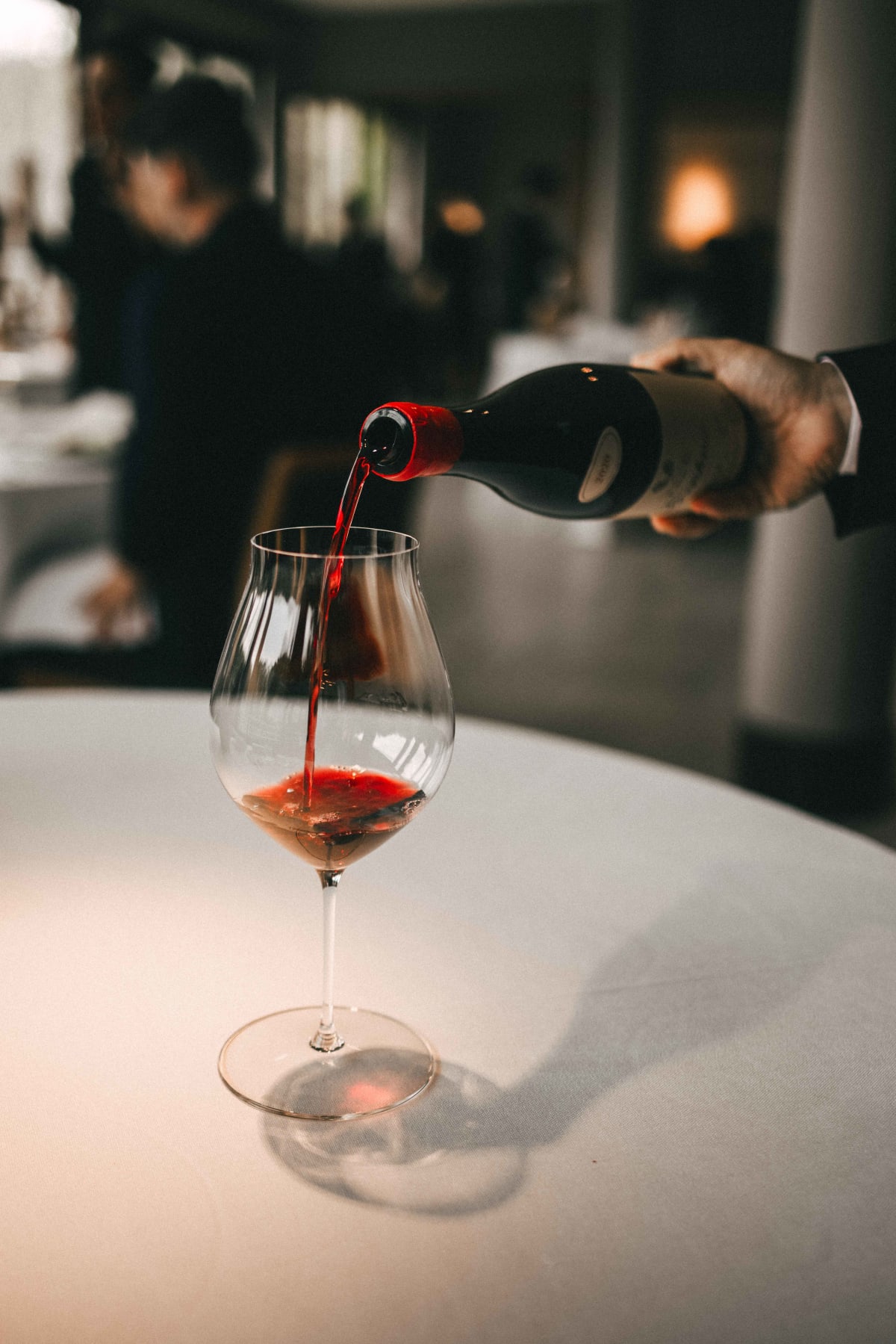
The pairing, somewhat surprisingly, was a red wine. Bodegas Frontonio, La Cerqueta 2020, a Garnacha from Valdejalón near Zaragoza. I liked the aroma and the flavour more than any Spanish white I had drunk that evening, which confirmed for me that Spanish wine, on my palate, sits more comfortably on the red side. Bodegas Frontonio is run by Master of Wine Fernando Mora and oenologist Mario López, and is one of the most-watched names in the current Spanish wine scene. La Cerqueta is a 1.18-hectare single vineyard with Garnacha vines from the 1940s, now over seventy-five years old, planted at 630 metres on a grey-blue slate soil. The grapes are whole-cluster fermented in concrete tanks with native yeasts for sixty days, then aged for fourteen months in oak foudres. Production is limited to about 4,000 bottles per vintage. Wine Advocate scored it 95 points, and Jancis Robinson MW has spoken highly of the winery as well.
81—82 / 120
Finally, the last main of the long course arrived.
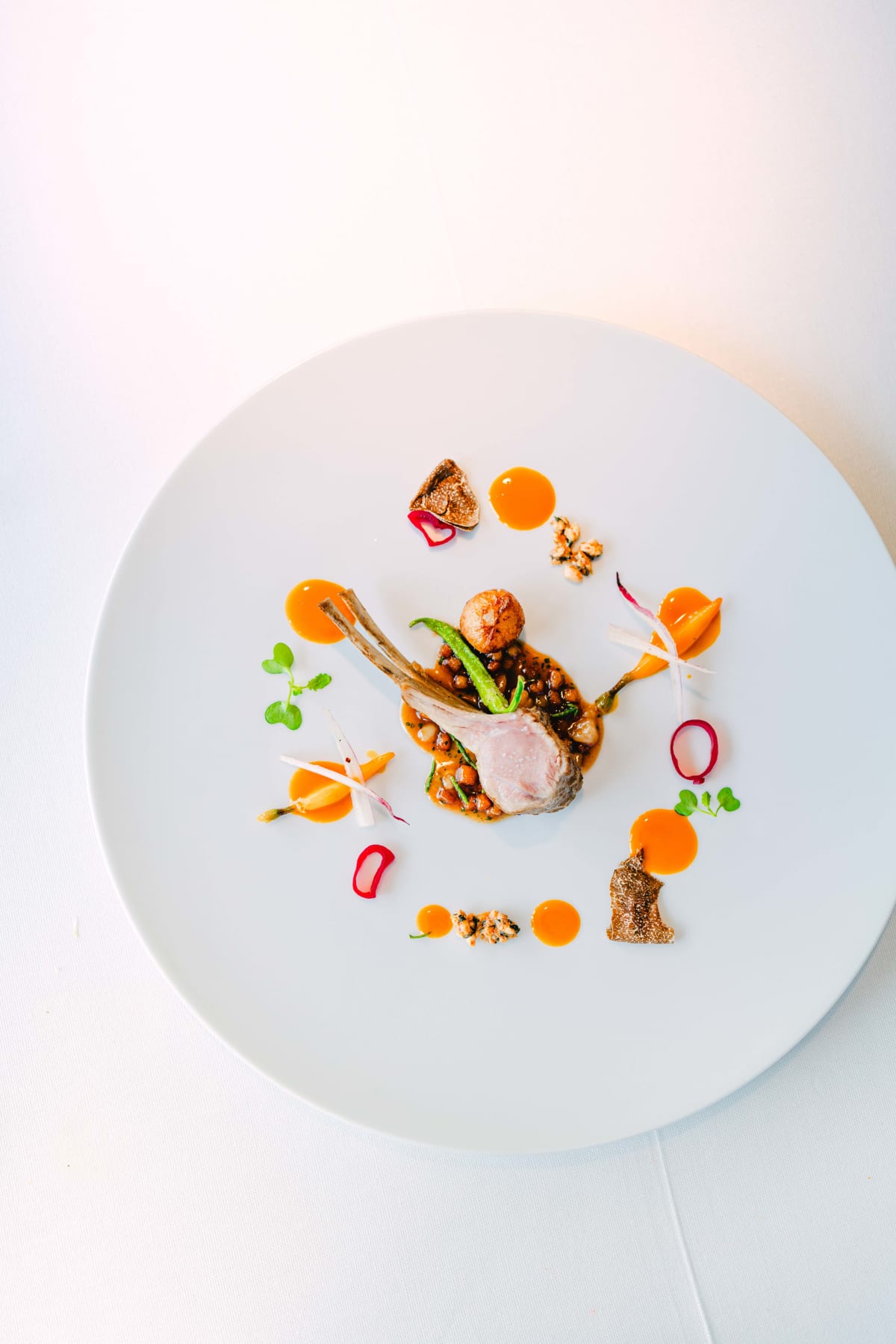
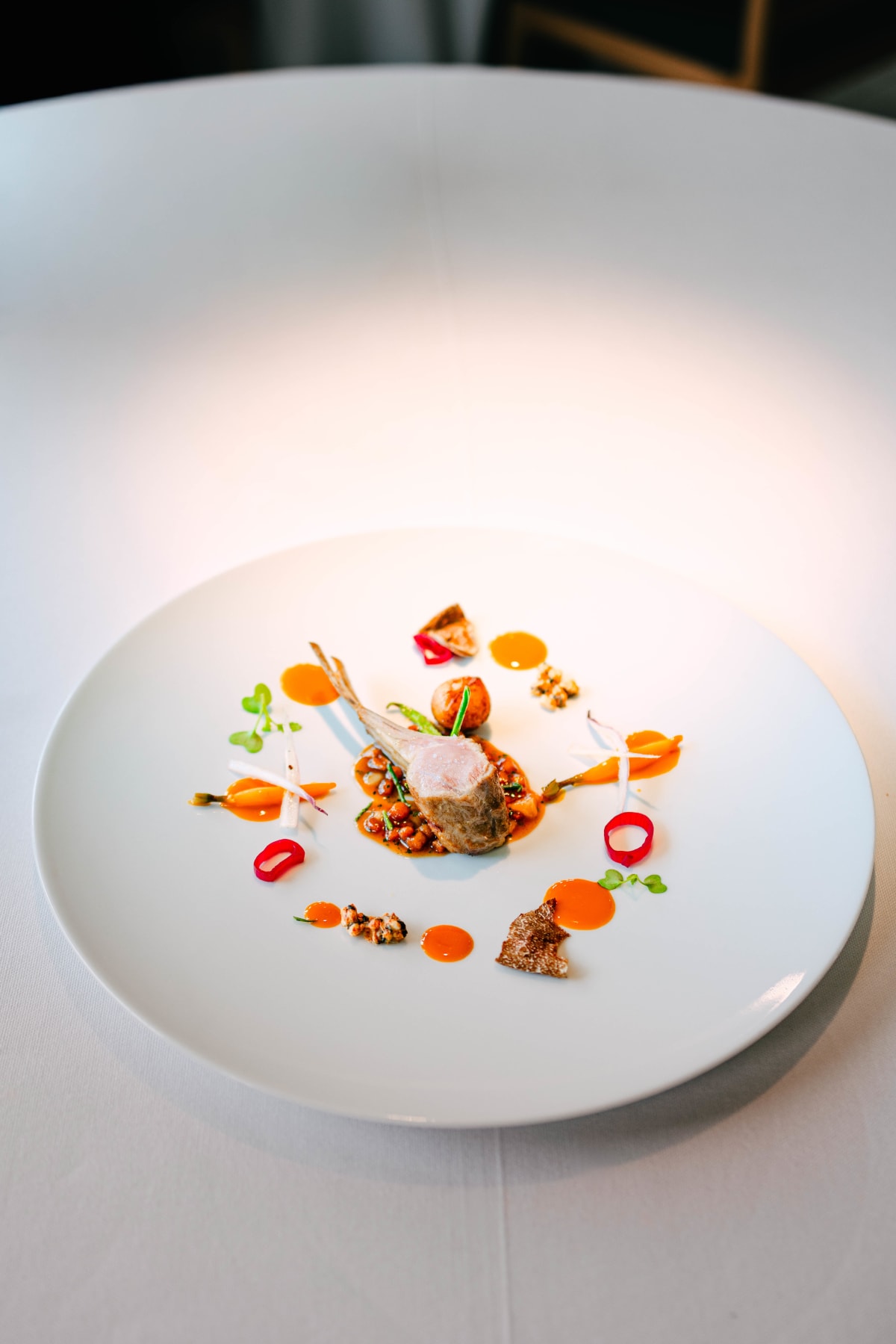
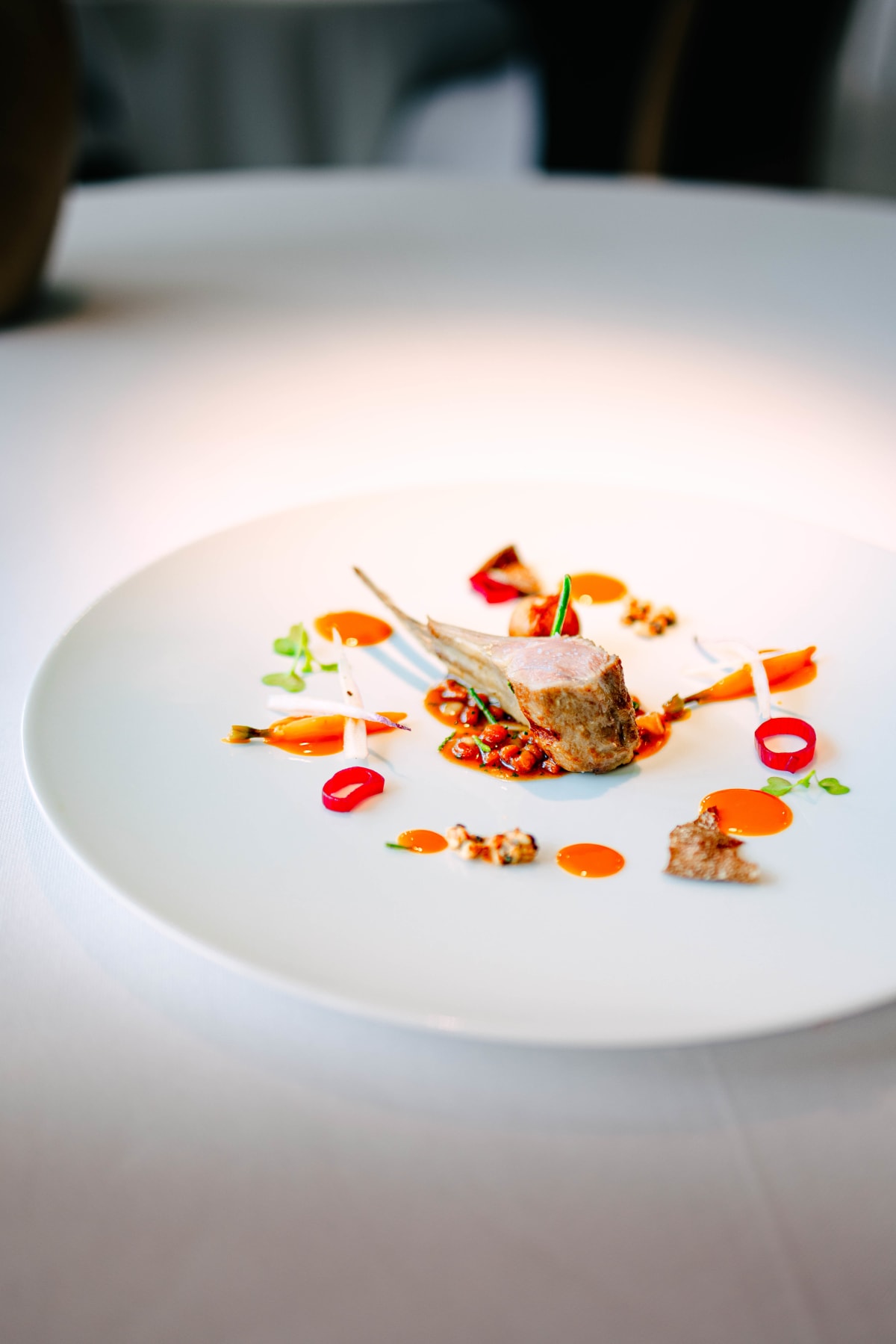
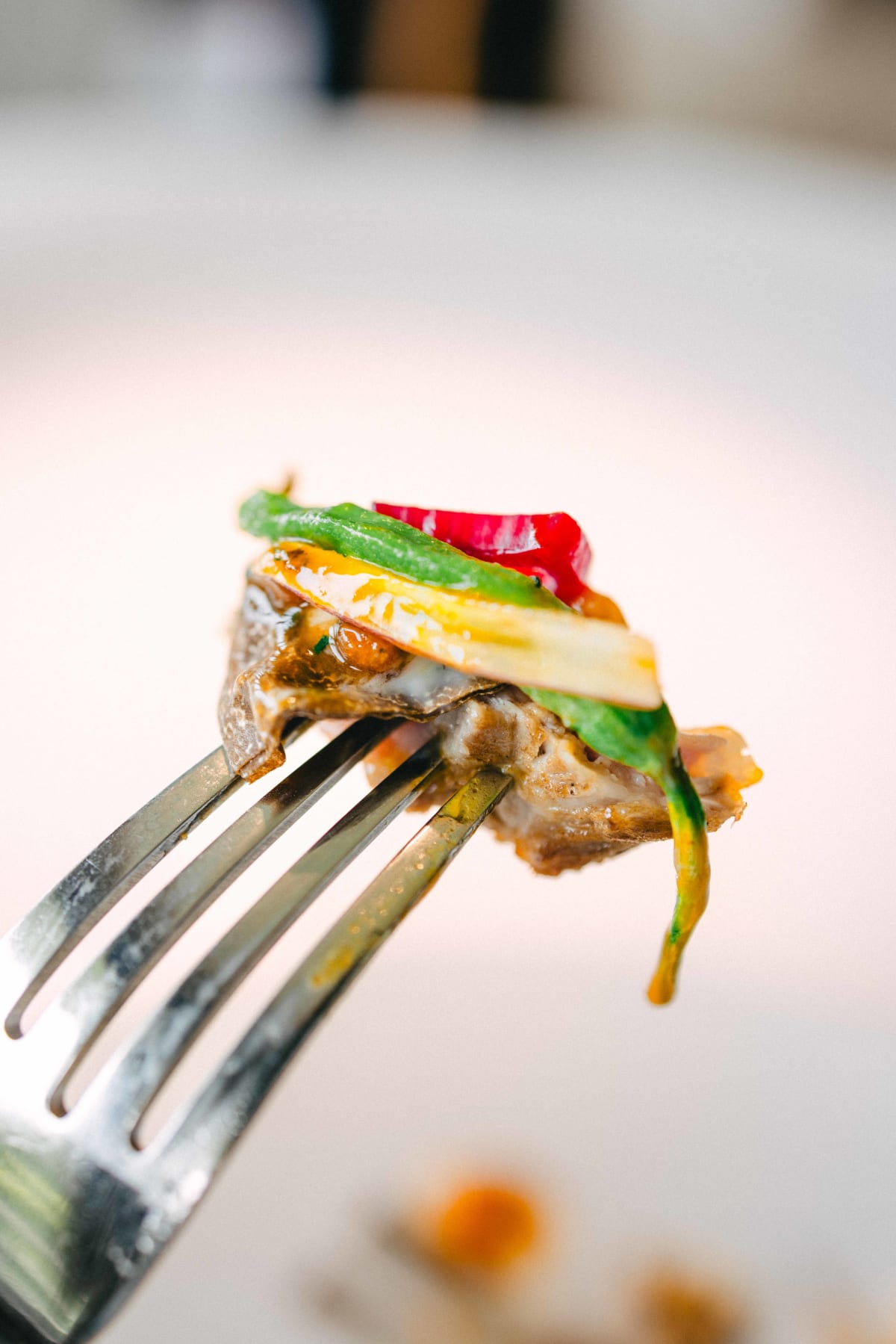
2023 Suckling lamb chop, its liquid fritter, spicy carrots and fried bread.
92—92 / 120
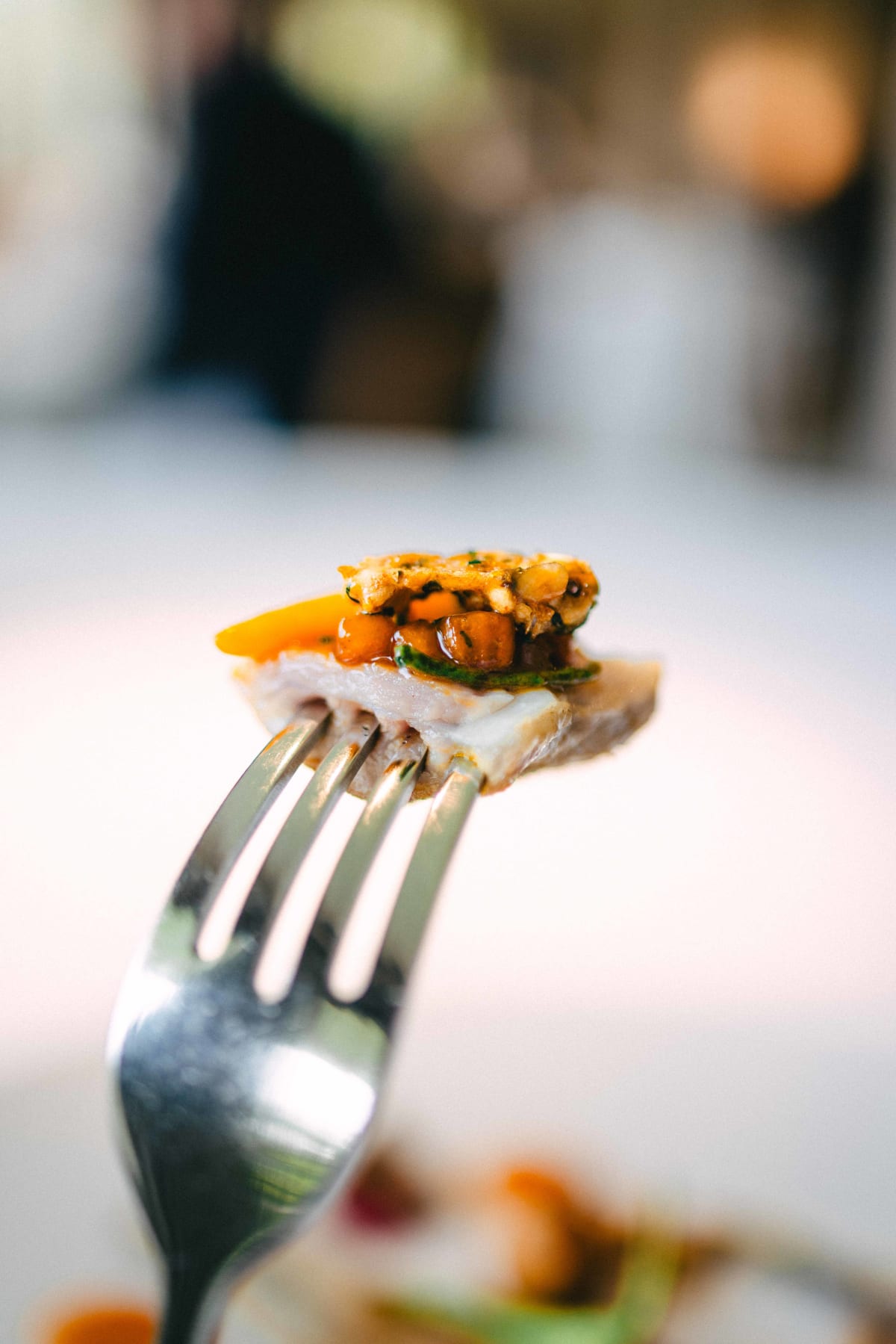
The lamb appeared to have been sous-vided and then briefly seared to finish, which I suspect is also why the menu name uses the term "liquid fritter." Several garnishes were plated around the lamb, including a truffle. Underneath sat a slightly sweet, savoury sauce, and the sauce, the garnishes, and the lamb itself were all well-made, with the lamb tender and the cooking precise.
90—96 / 120
That said, the suckling lamb at Akelarre the previous night had been overwhelmingly good, and the impact of this one was relatively muted by comparison. This was the kind of plate one would expect at a three-star room at this price point, well-executed but firmly within the register of "reliably good."
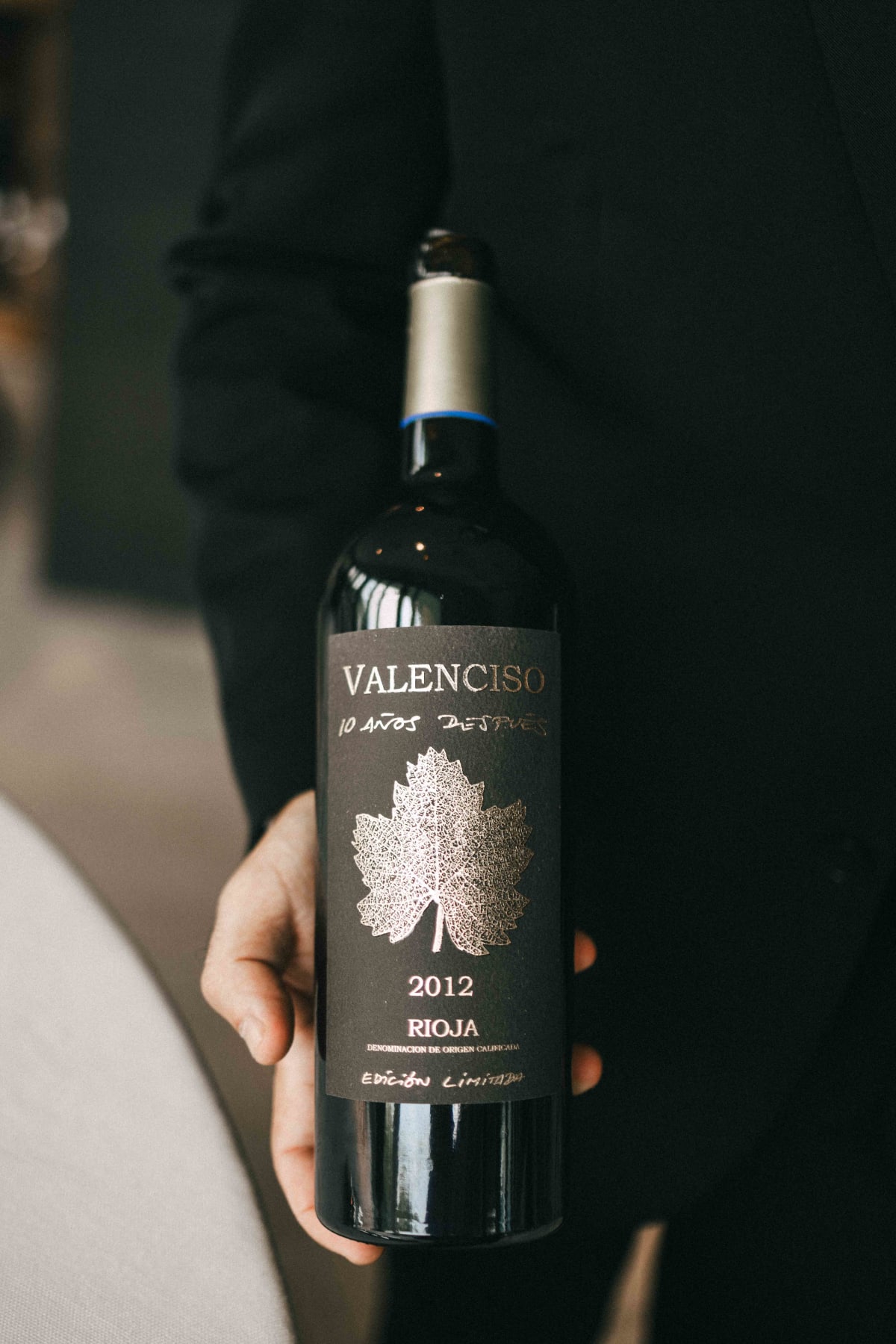
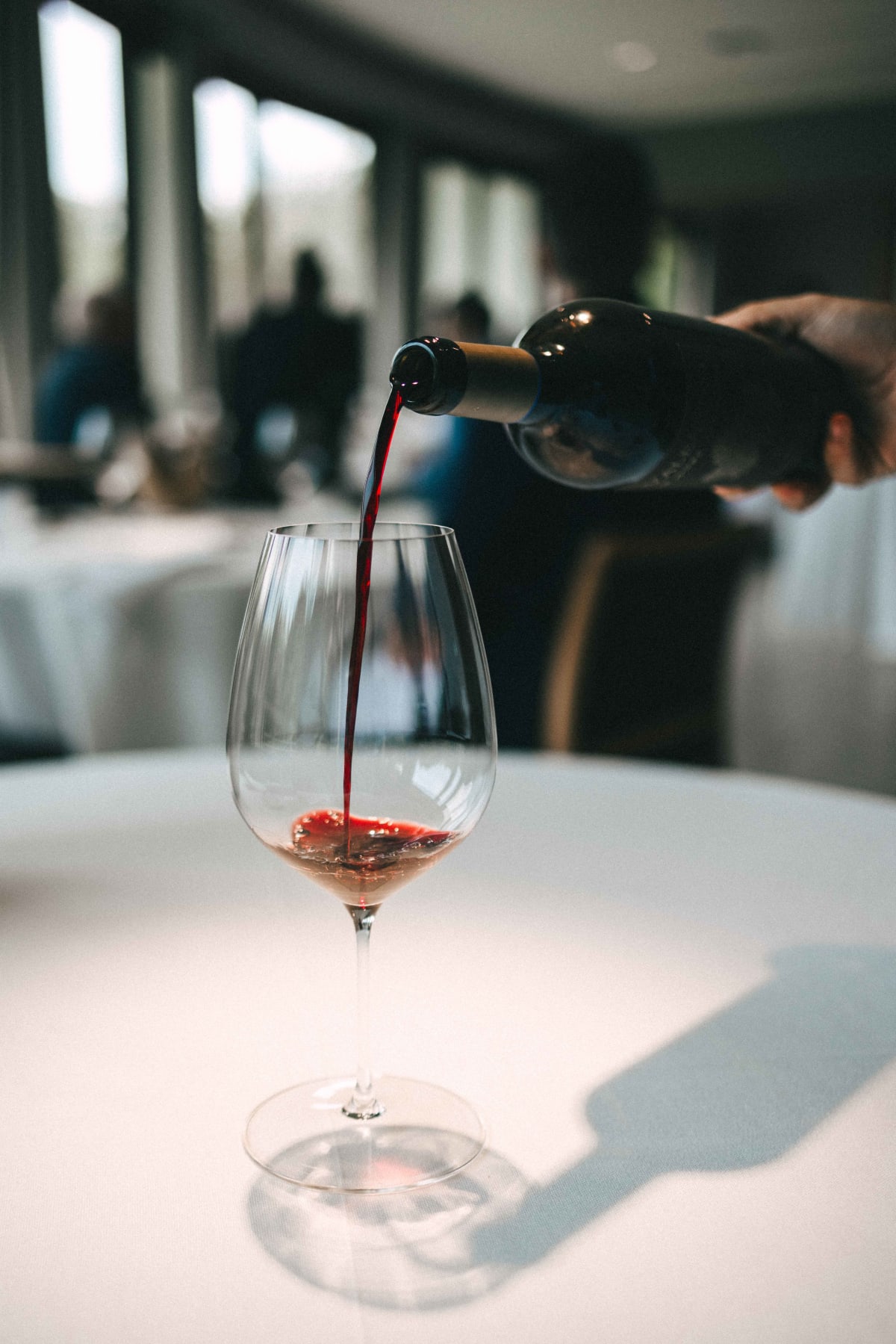
The pairing for the lamb, the last wine of the main courses, was Bodegas Valenciso, 10 Años Después 2012 (Rioja), a Rioja red made from 100% Tempranillo. The "10 Años" in the name refers to the wine having been bottled ten years after the vintage; that does not mean ten years strictly in oak, but rather an extended ageing rotation between concrete and oak before release. Bodegas Valenciso is a relatively recent project, founded in 1998 by Carmen Enciso and Luis Valentín in Ollauri in La Rioja Alta, working in a cleaner, more modern reductive style rather than the traditional oxidative Rioja register. The 2012 vintage was a warm one, and the alcohol ran up to 15%. The aromas were dense and serious, but the tannins were not aggressive, and the wine sat comfortably alongside the lamb.
87—88 / 120
The dessert course began directly after.
97—97 / 120
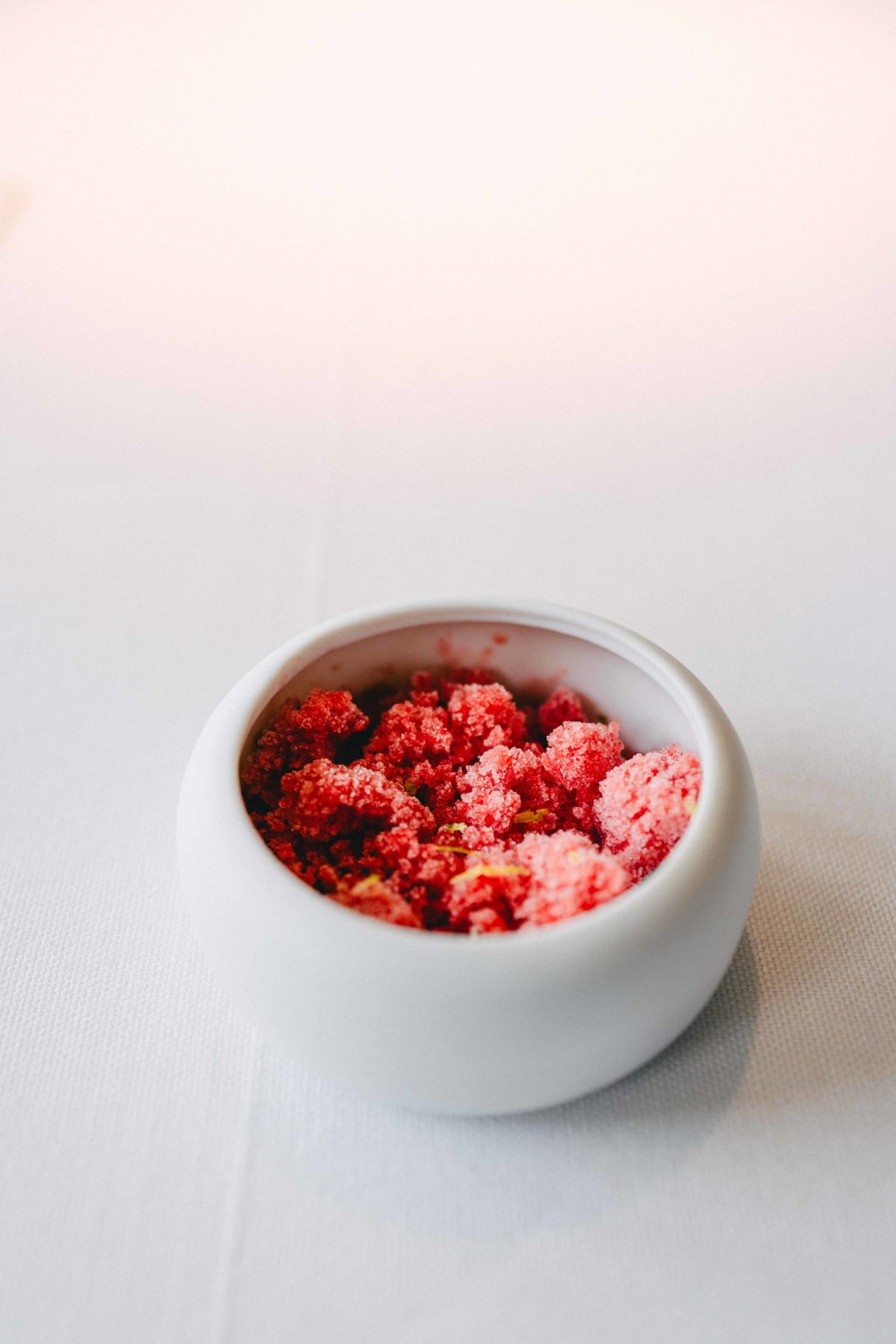
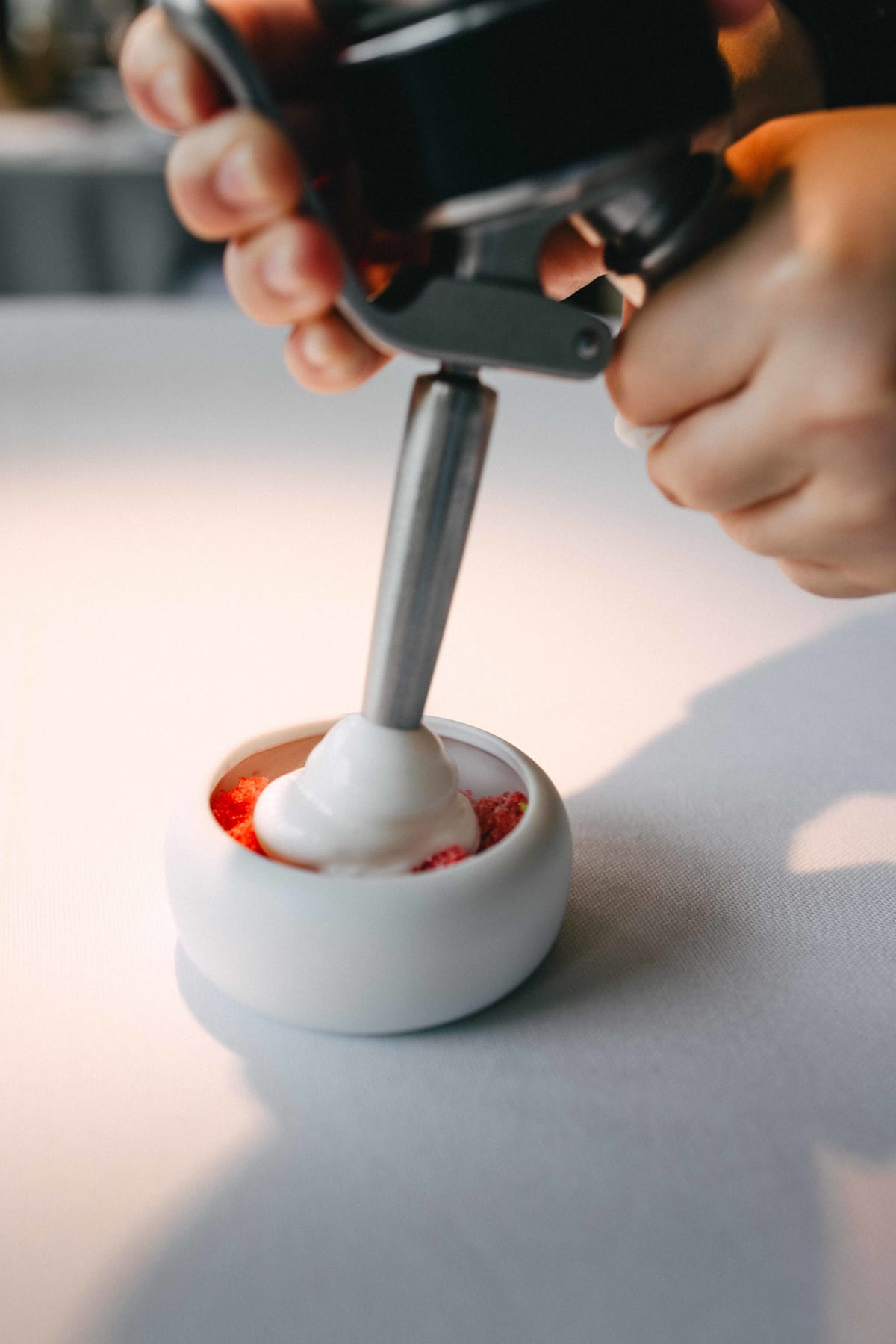
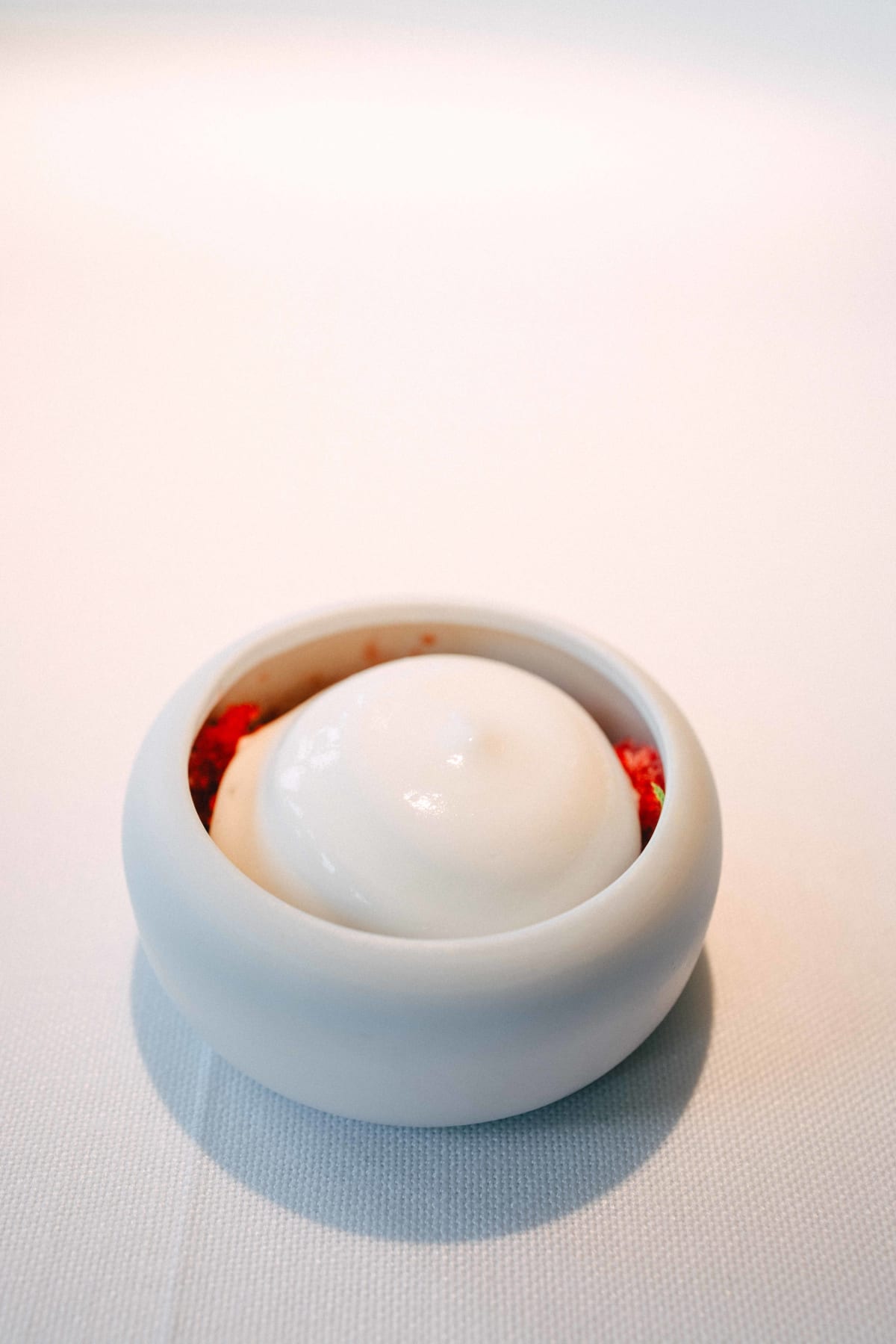
2021 Hot & Cold Gin Fizz of strawberries Corazón Berry and lime.
Cold strawberry and lime inside, with Corazón Berry, which appears to be a brand of fruit, named as the source. A warm gin cream sat on top in the manner of a Gin Fizz cocktail. Taken together, the bright berry register cut the palate clean while the gin aromatics layered into a more complex impression. It was a strong opener for the dessert sequence.
98—100 / 120
My first European Michelin experience had been in France, where Michelin-starred restaurants tend to bring a cheese cart around between the main course and dessert. At every Spanish Michelin restaurant I have been to, however, this has not appeared. That made it clear, for me, that the proper cheese course is not a general European Michelin convention but a specifically French dining tradition. I had been quietly looking forward to a cheese selection, so there was some disappointment at its absence.
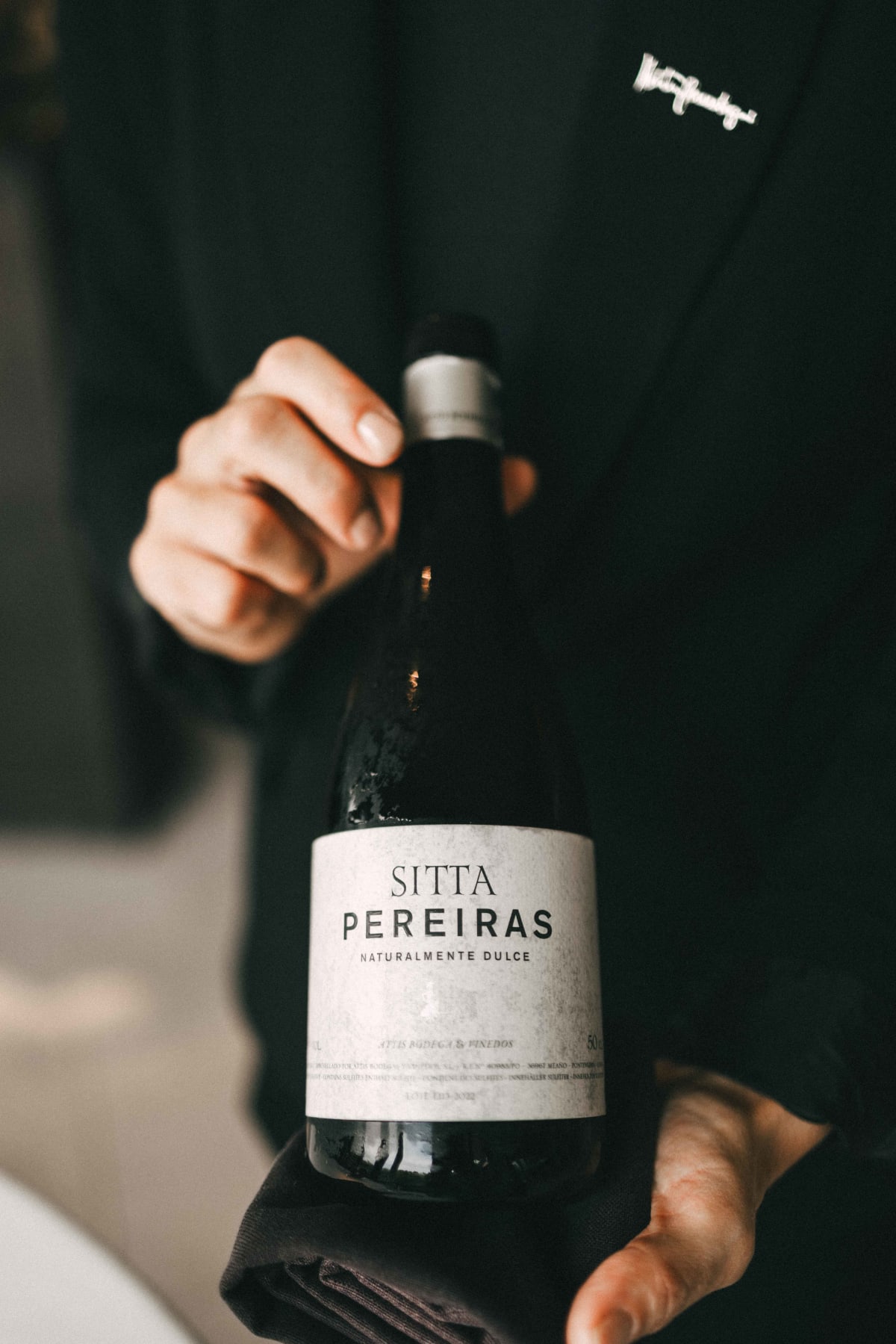
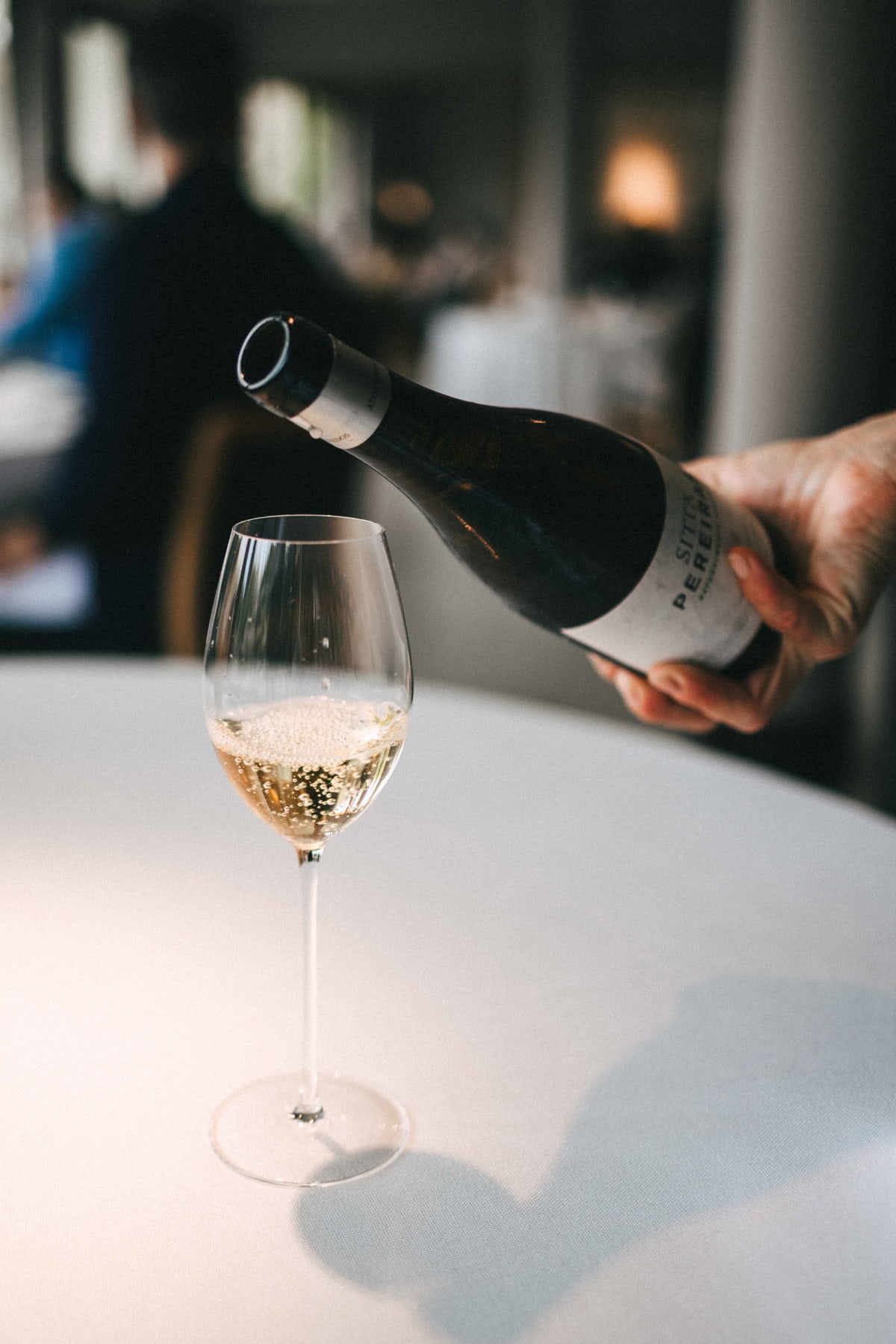
The pairing was Sitta Pereiras 2022, a natural sweet Albariño from Val do Salnés in Rías Baixas. Attis Bodegas y Viñedos makes this from a single 0.4-hectare vineyard, Pereiras, where the Albariño vines are thirty-plus years old. The vineyard's particular trait is that even at full ripeness the wine retains an unusually high acidity. To balance that acidity with residual sugar, fermentation is stopped partway through, using cold or cross-flow filtration to halt the yeast and leave residual sweetness behind. The alcohol stays low, between 8% and 9%. About 2,000 bottles are made per vintage. It was the first wine of this kind I had tried, and I remember pulling up the winery website mid-course to read about the technique. The sweet wine of this region was a first for me, and the combination of clear sweetness, low alcohol, and bright acidity made it a clean fit for an acidic, fruit-forward dessert.
101—102 / 120
The second dessert continued in the same direction, acidic and fruit-driven.
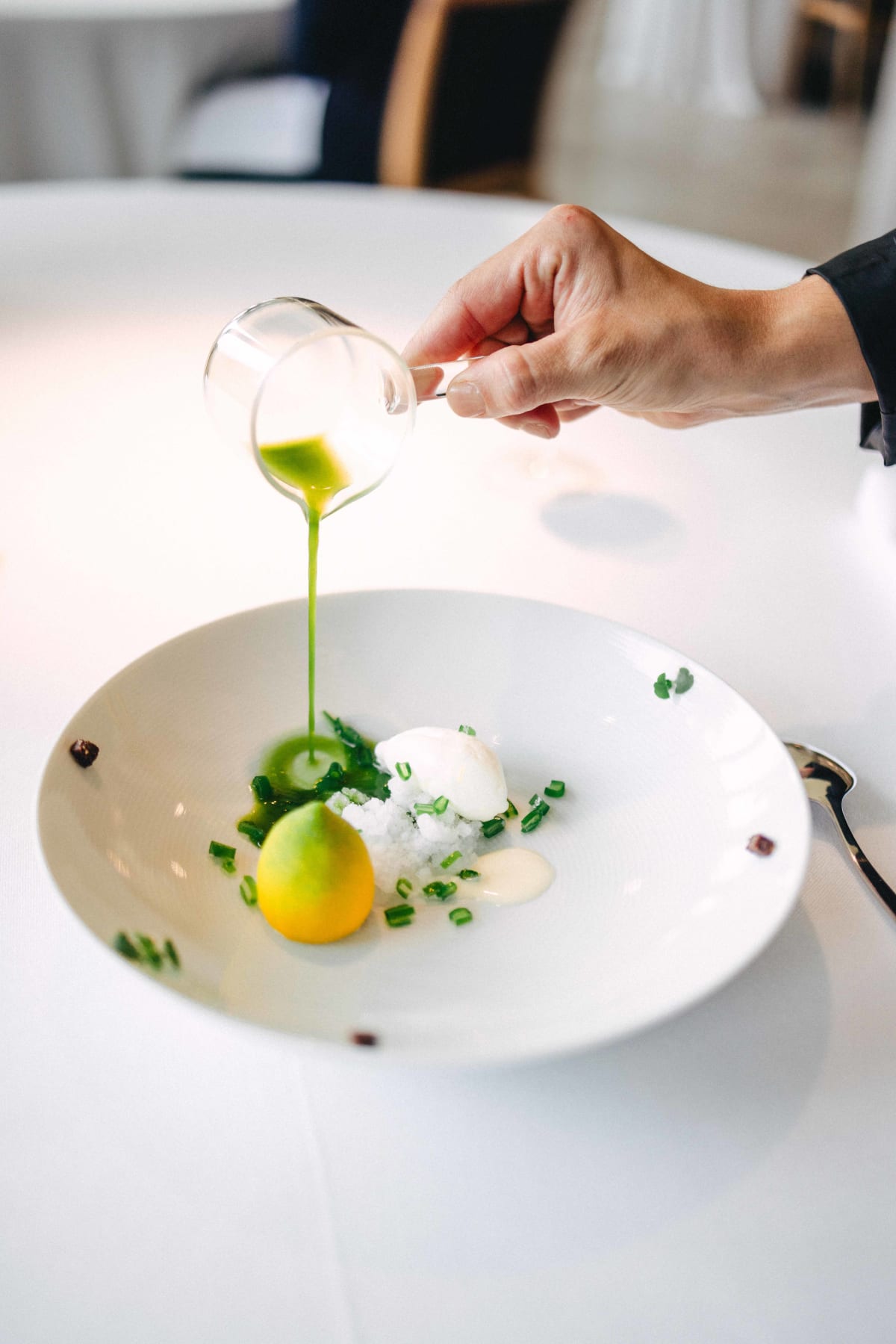
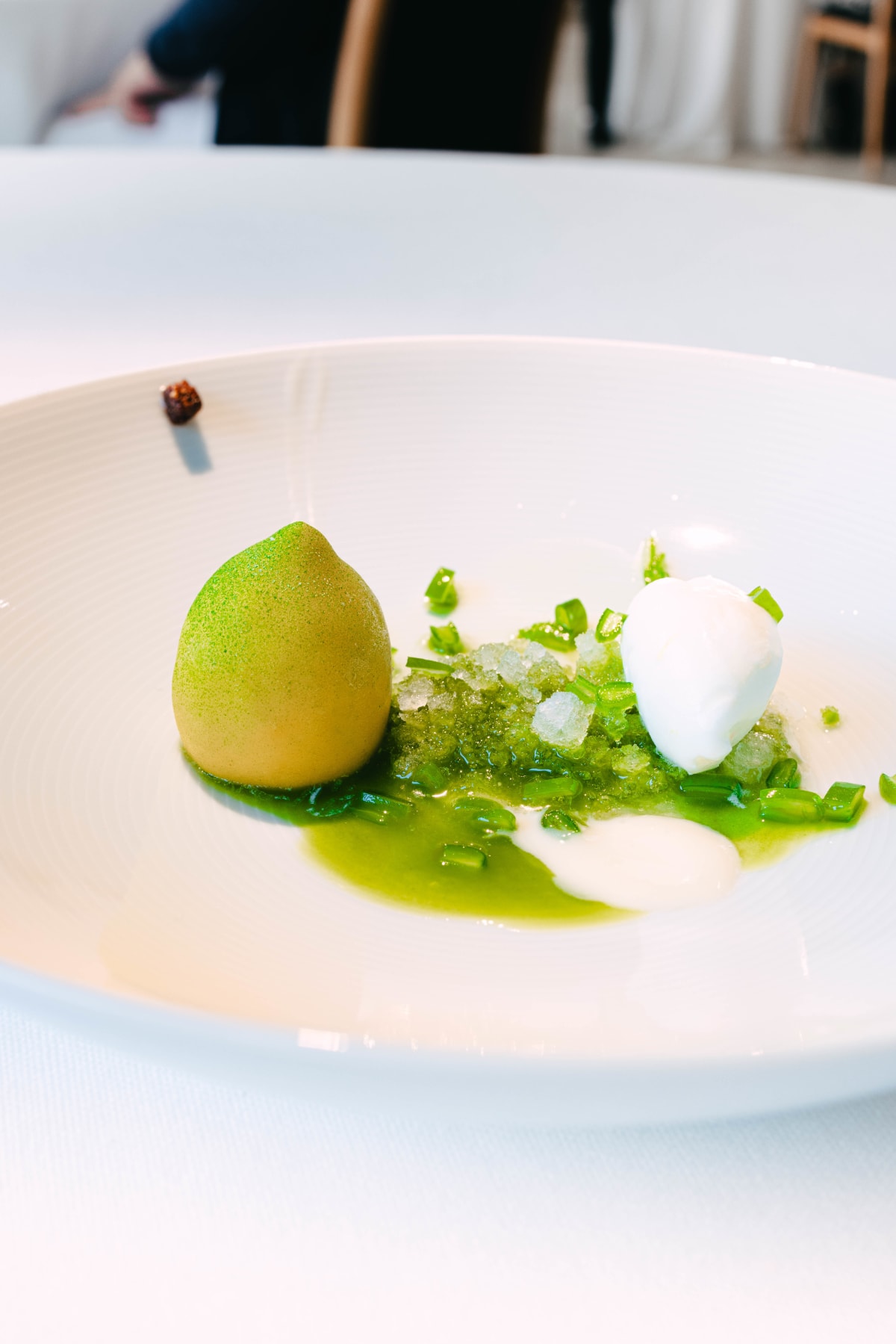
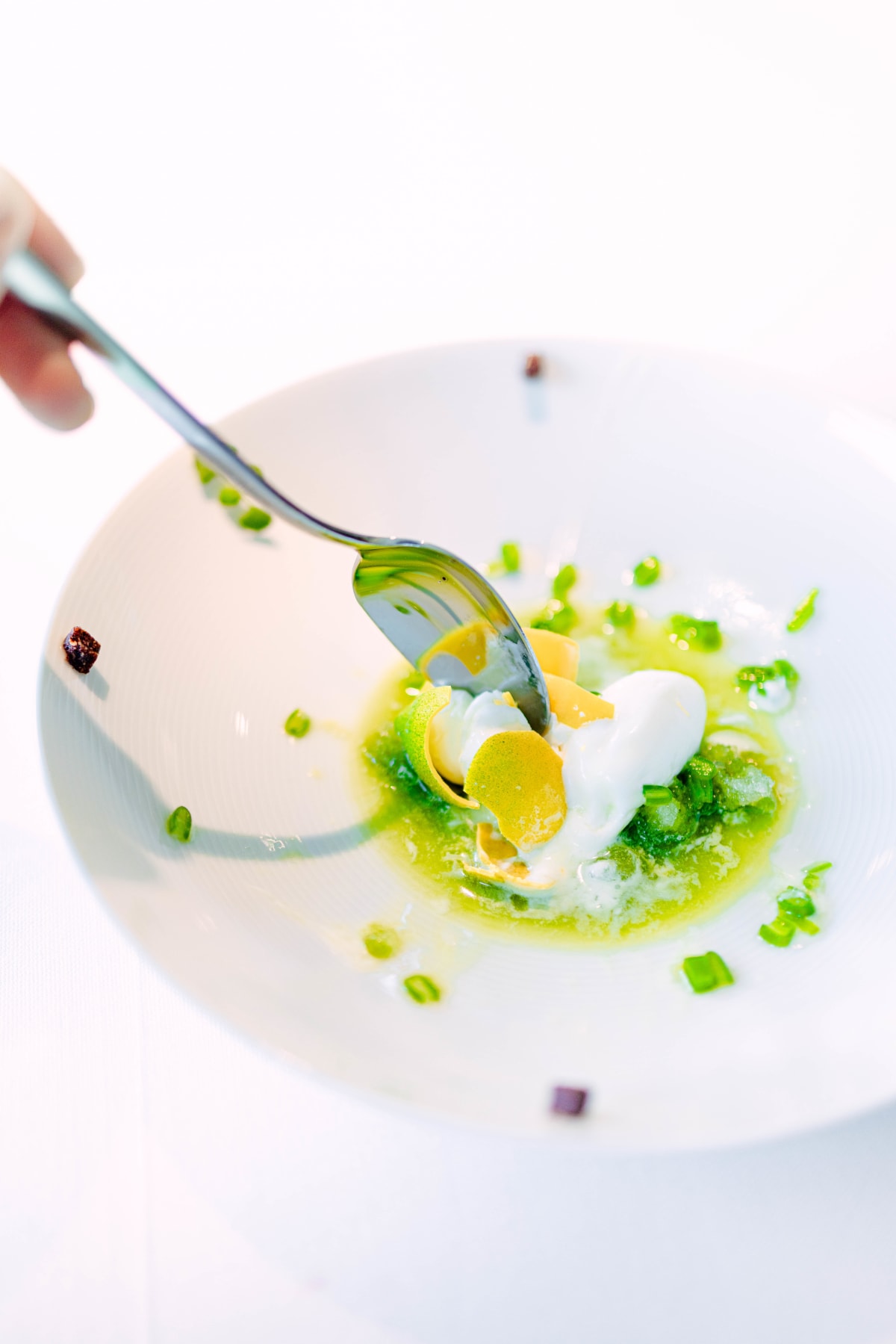
2019 Lemon with basil juice, green bean and almond.
This was my personal best of the three desserts of the evening. What looks like a lemon is in fact a chocolate shell shaped like one, with a bright sorbet-like ice cream inside. A green juice is poured on top, with a clear basil aroma. Breaking the lemon open and drinking the basil juice through it produced a clean, sharp, refreshing finish that I enjoyed a great deal.
103—106 / 120
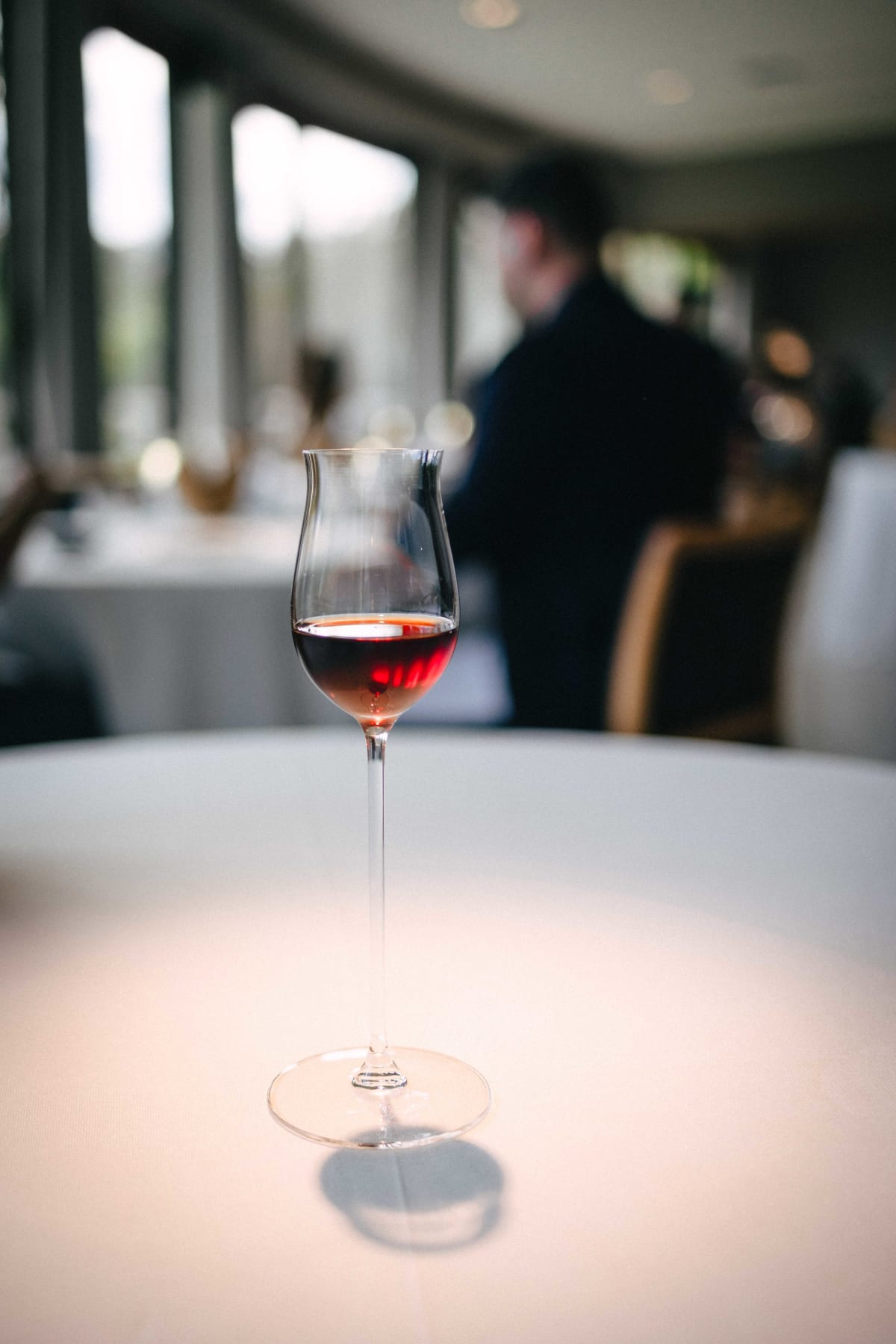
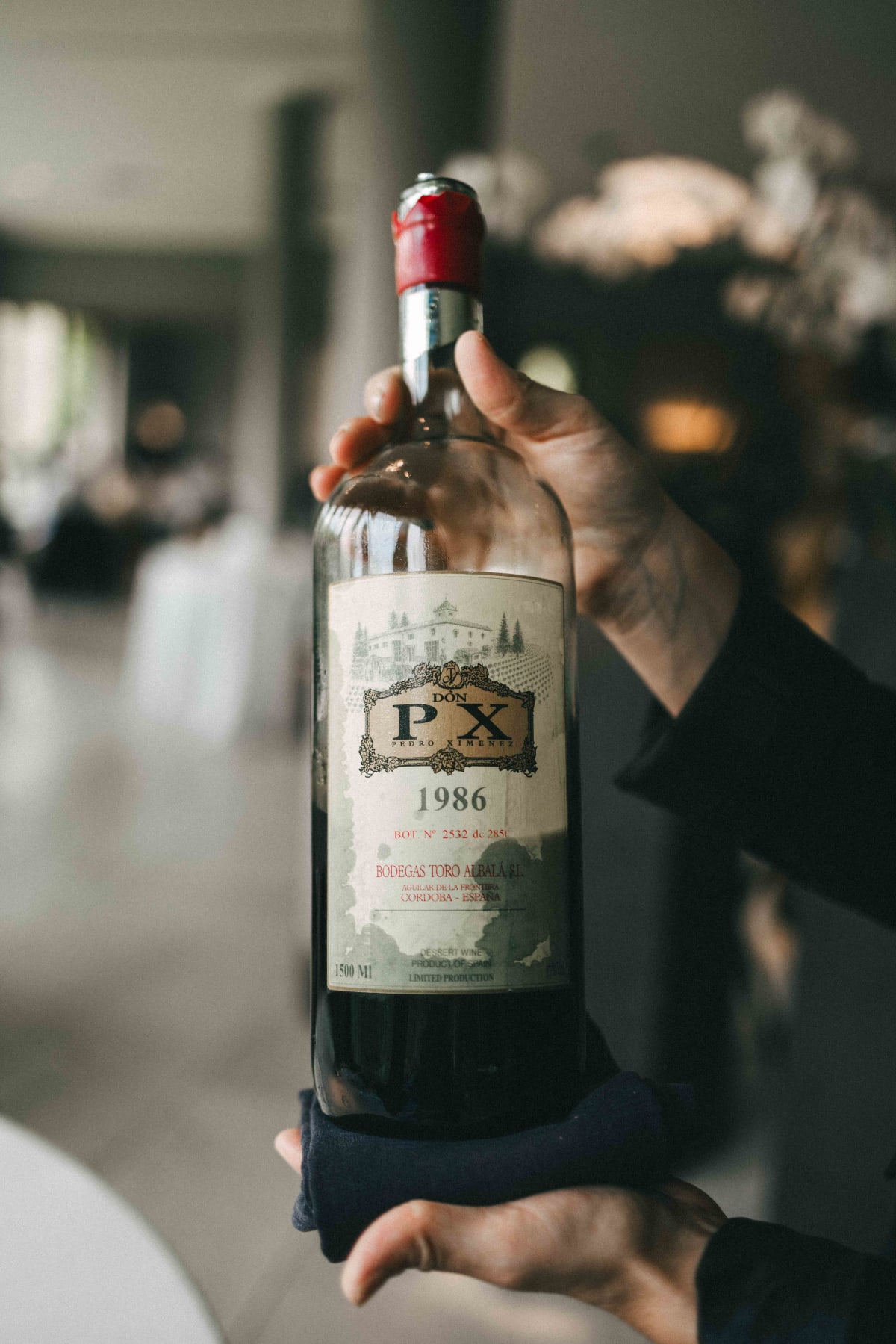
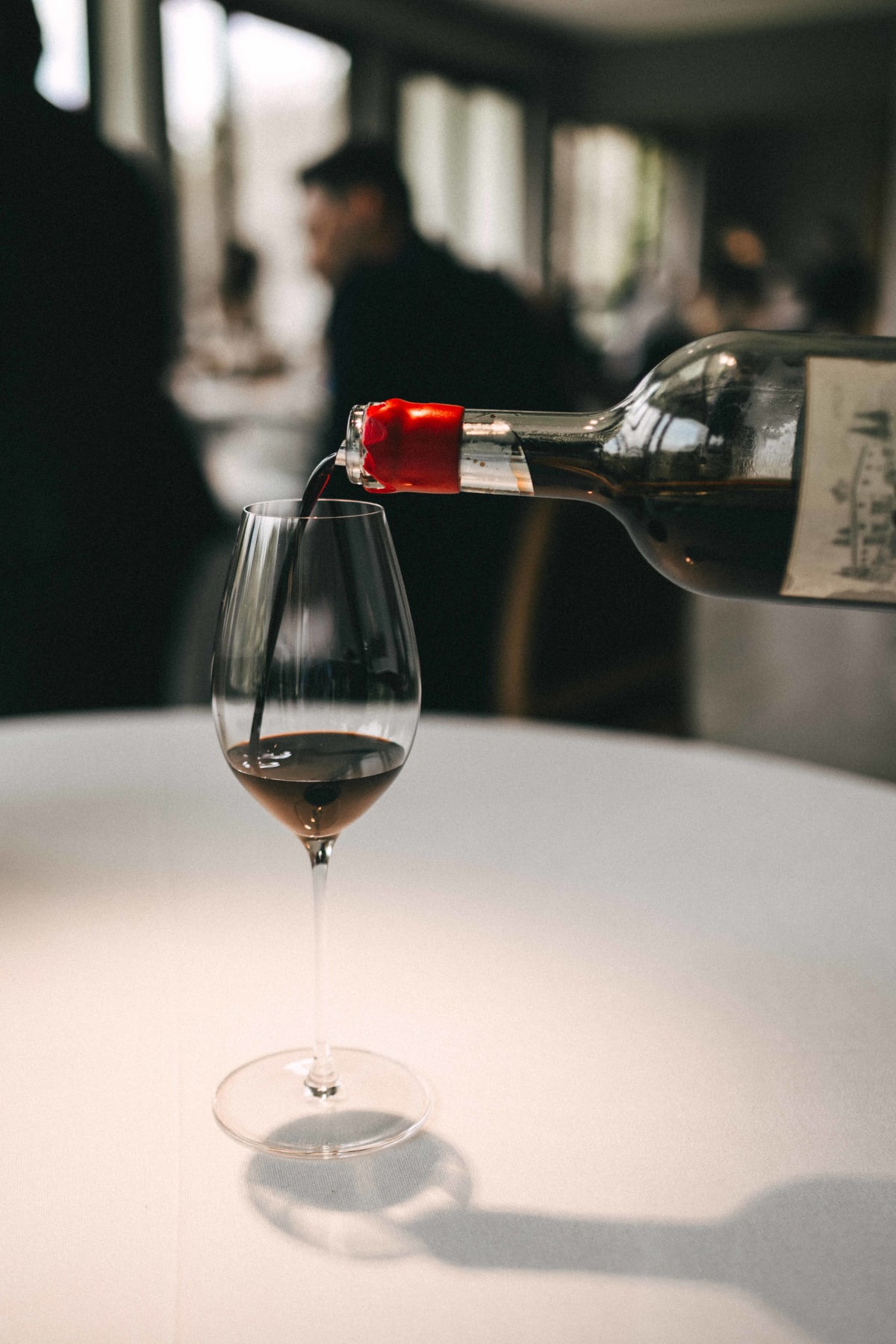
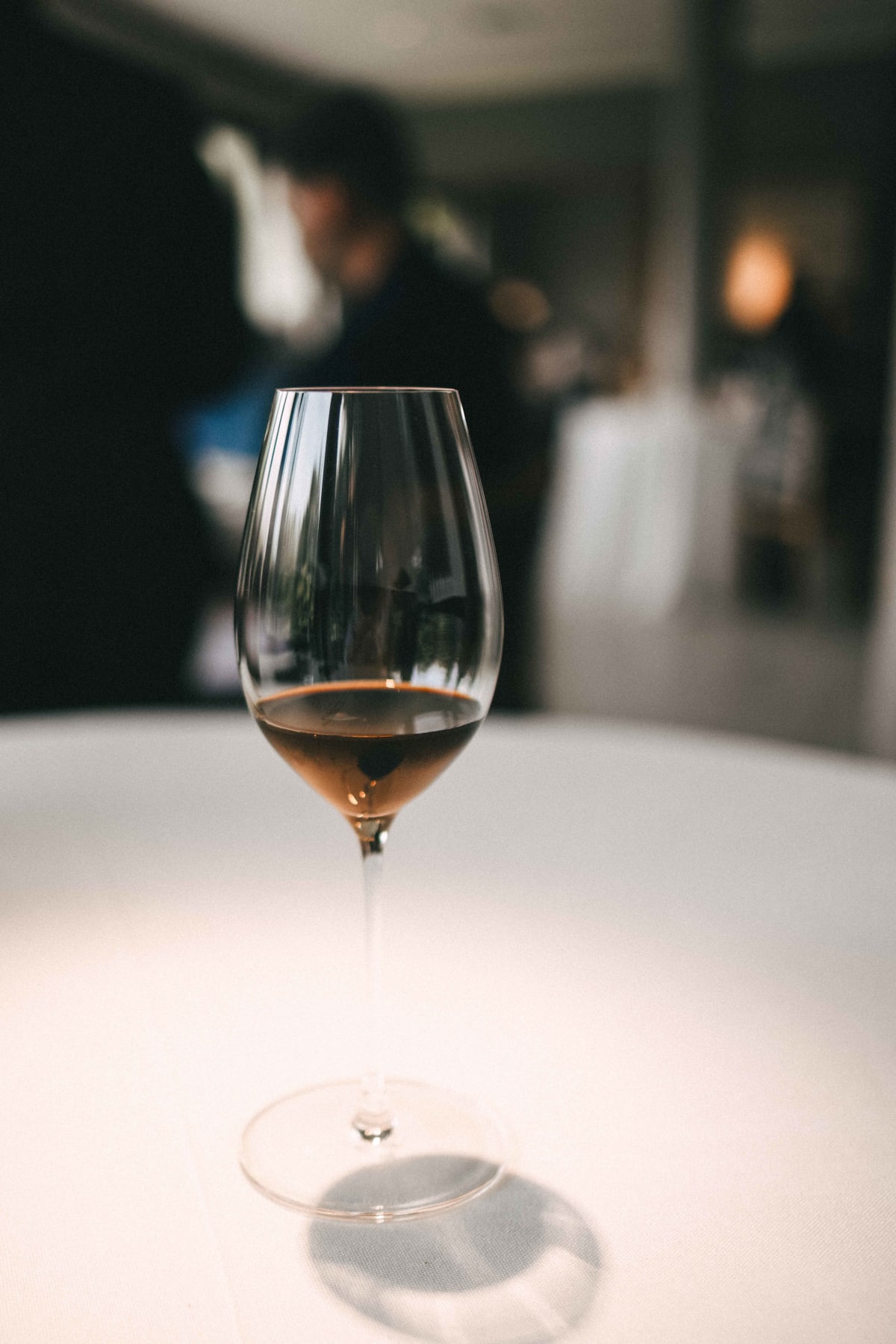
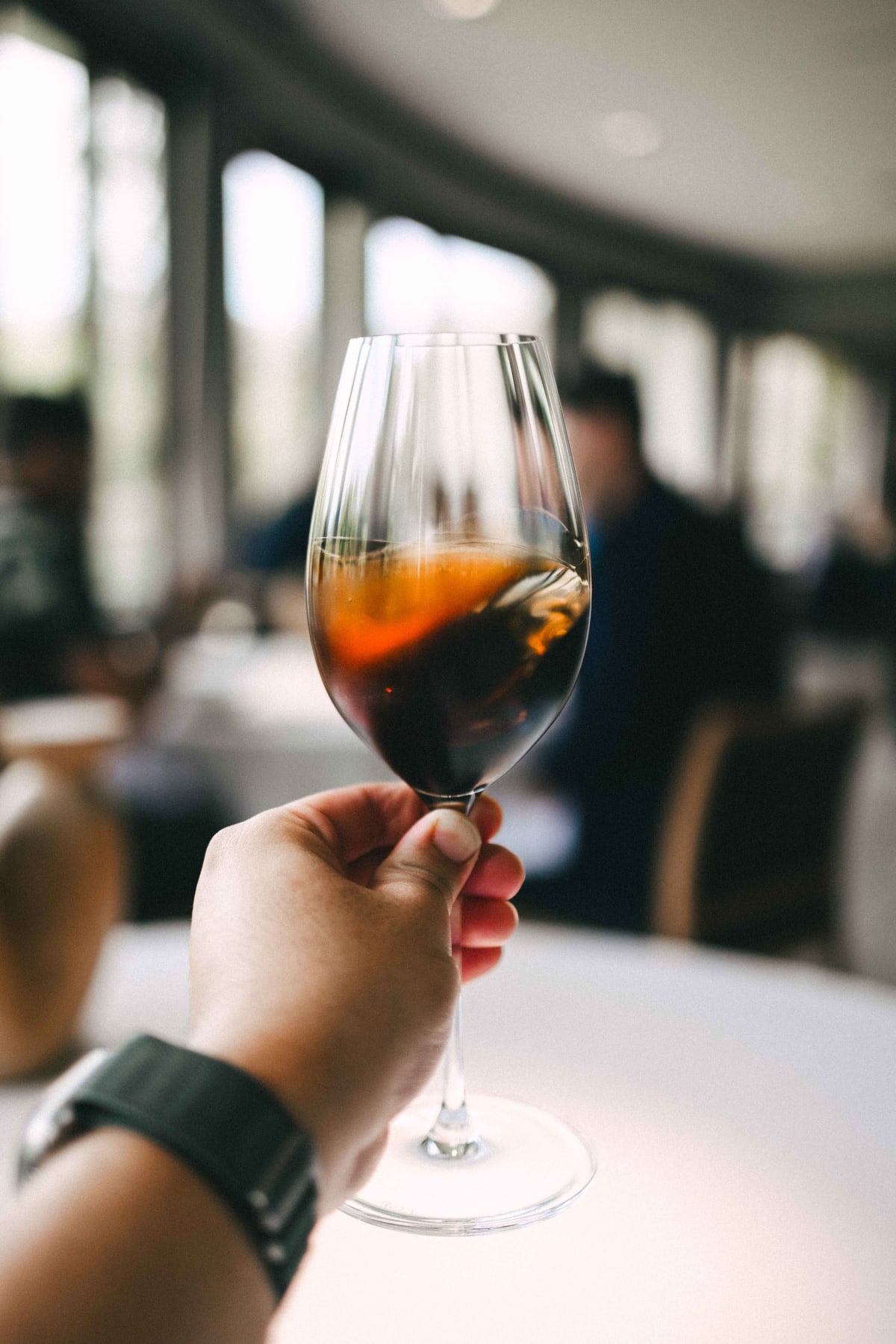
The pairing was a Pedro Ximénez from the south of Spain, Bodegas Toro Albalá, PX 1986 from Montilla-Moriles. A thirty-seven-year-old dessert wine, almost at the threshold of forty. The wine was dense and thick, viscous enough that swirling left a clear coating on the glass, which was striking enough that I took photographs of it. Bodegas Toro Albalá is one of the major vintage-dated Pedro Ximénez producers in the Montilla-Moriles DO. Made from 100% Pedro Ximénez, the grapes are sun-dried (asoleo) to concentrate the sugars to an extreme level before fermentation. The 1986 vintage was bottled in June 2014, which means roughly twenty-eight years of ageing in American oak. The residual sugar reaches around 350 g/L, producing the motor-oil viscosity, and the aromatics carry a clear chocolate sweetness. This is the kind of older wine that is hard to find in Korea outside of a serious collector's cellar, and on this point alone, choosing the pairing was the right call.
107—110 / 120
As to whether the €195 pairing at Martin Berasategui is worth the money, my honest answer is that, given my lukewarm impression of Spanish whites overall, I cannot recommend it easily. But I can say with some confidence that anyone newer to wine will benefit from the breadth of styles served alongside this kind of food, and from the access to bottles that are difficult to find in Korea. On that basis alone, the pairing is worth doing once.
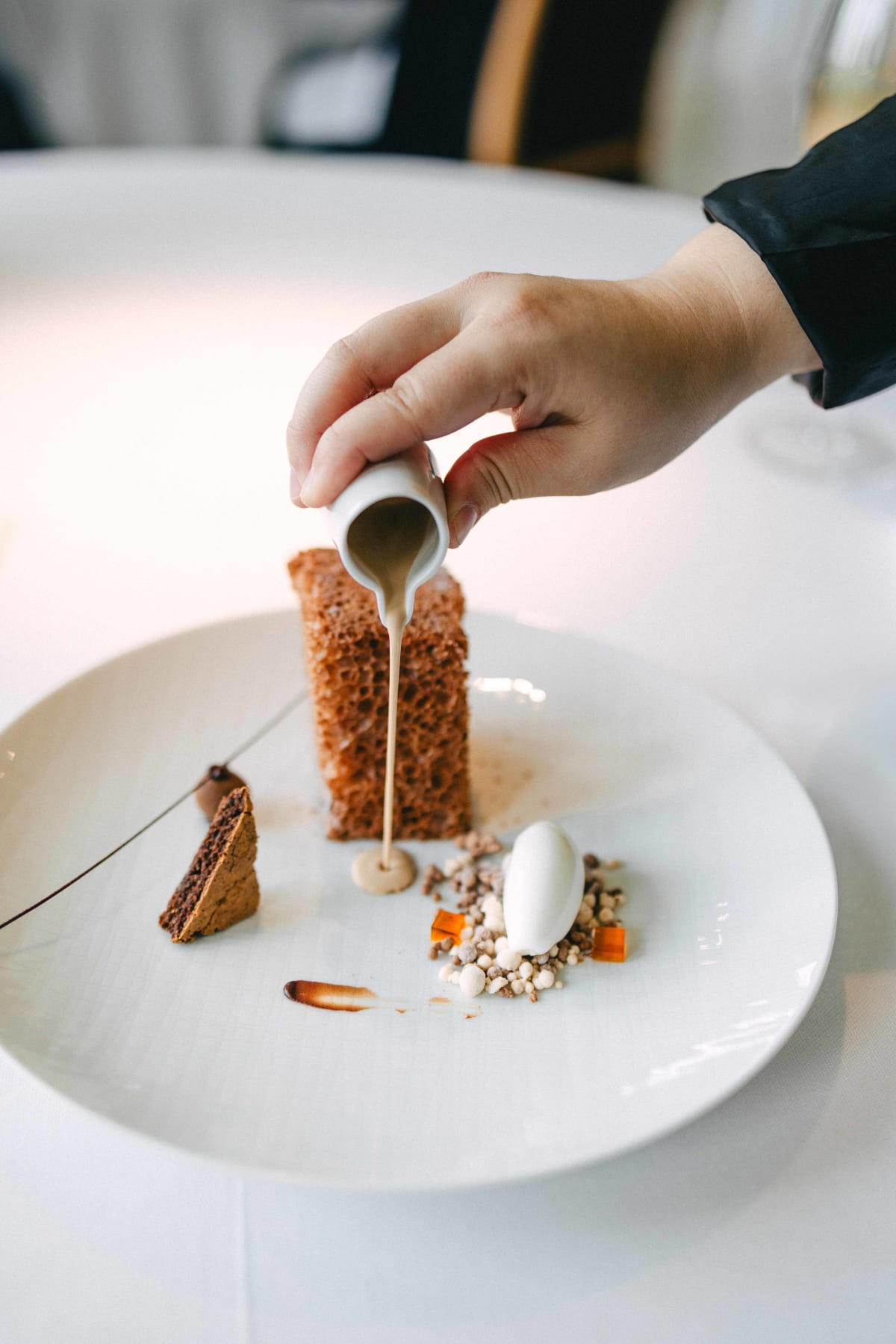
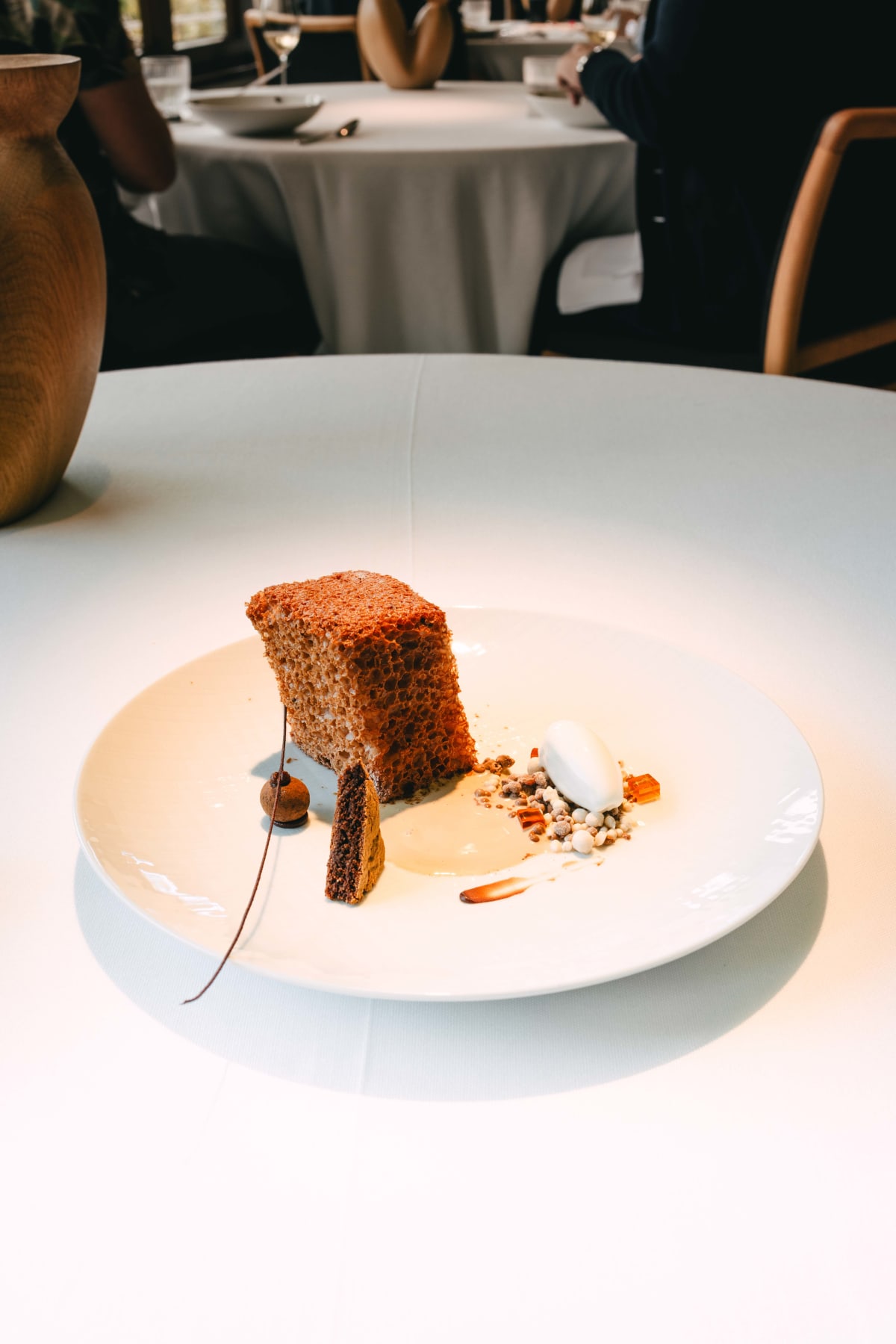
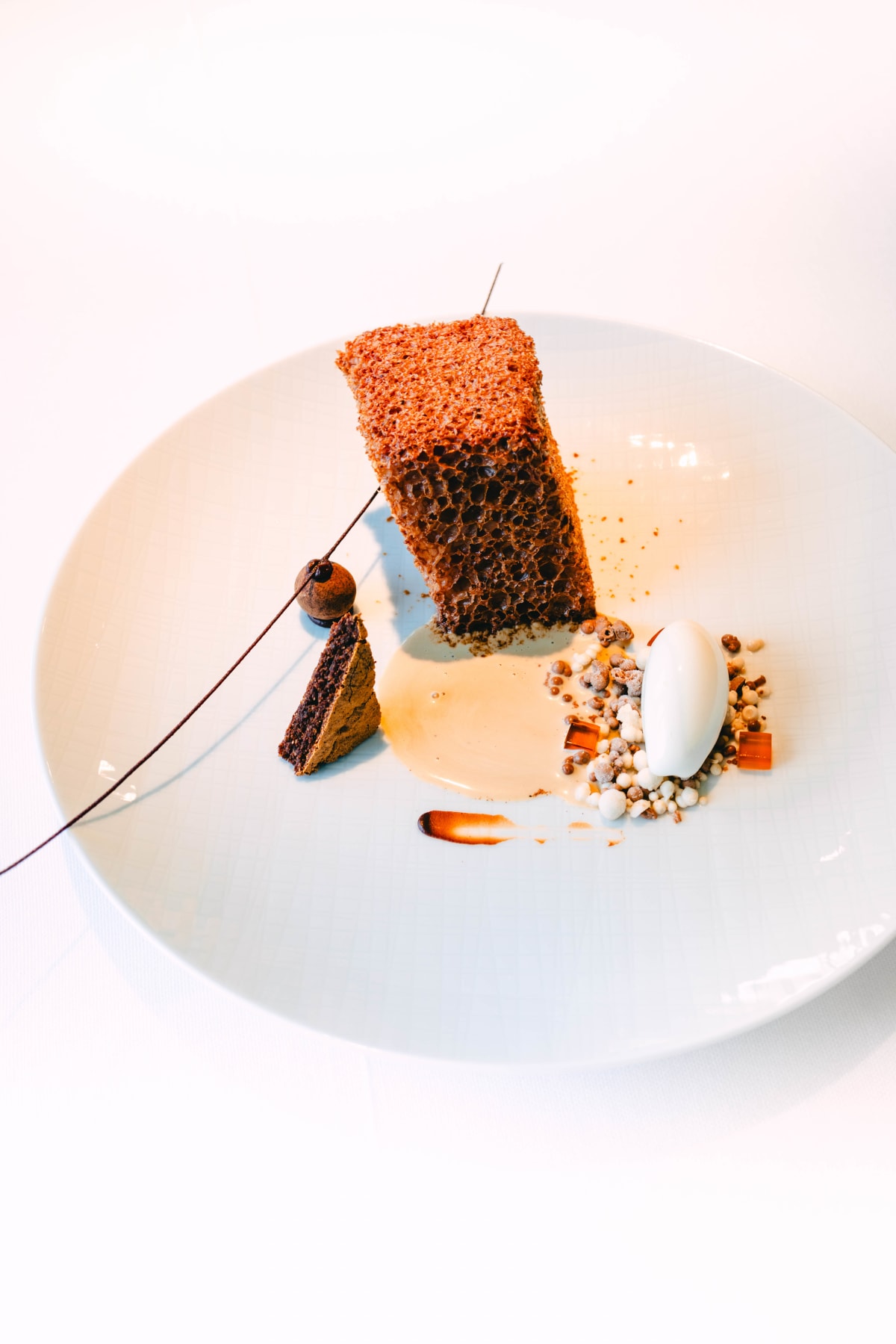
The final dessert was 2023 Frozen sponge of cocoa Pacari and salt flower, smoky perfumes of whisky, hazelnuts and cinnamon, a sweet chocolate-direction dish. By this point I had drunk a substantial amount through the pairing, and this dessert had whisky in it as well, so the alcohol caught up with me by the end. The dessert tasted clearly good but did not leave a particularly strong impression.
111—113 / 120
By the time the meal closed, it was just past three-thirty. For a course this long, with this reputation for length, it had taken about two and a half hours, which by European standards is unusually quick and is not slower than typical Korean fine dining.
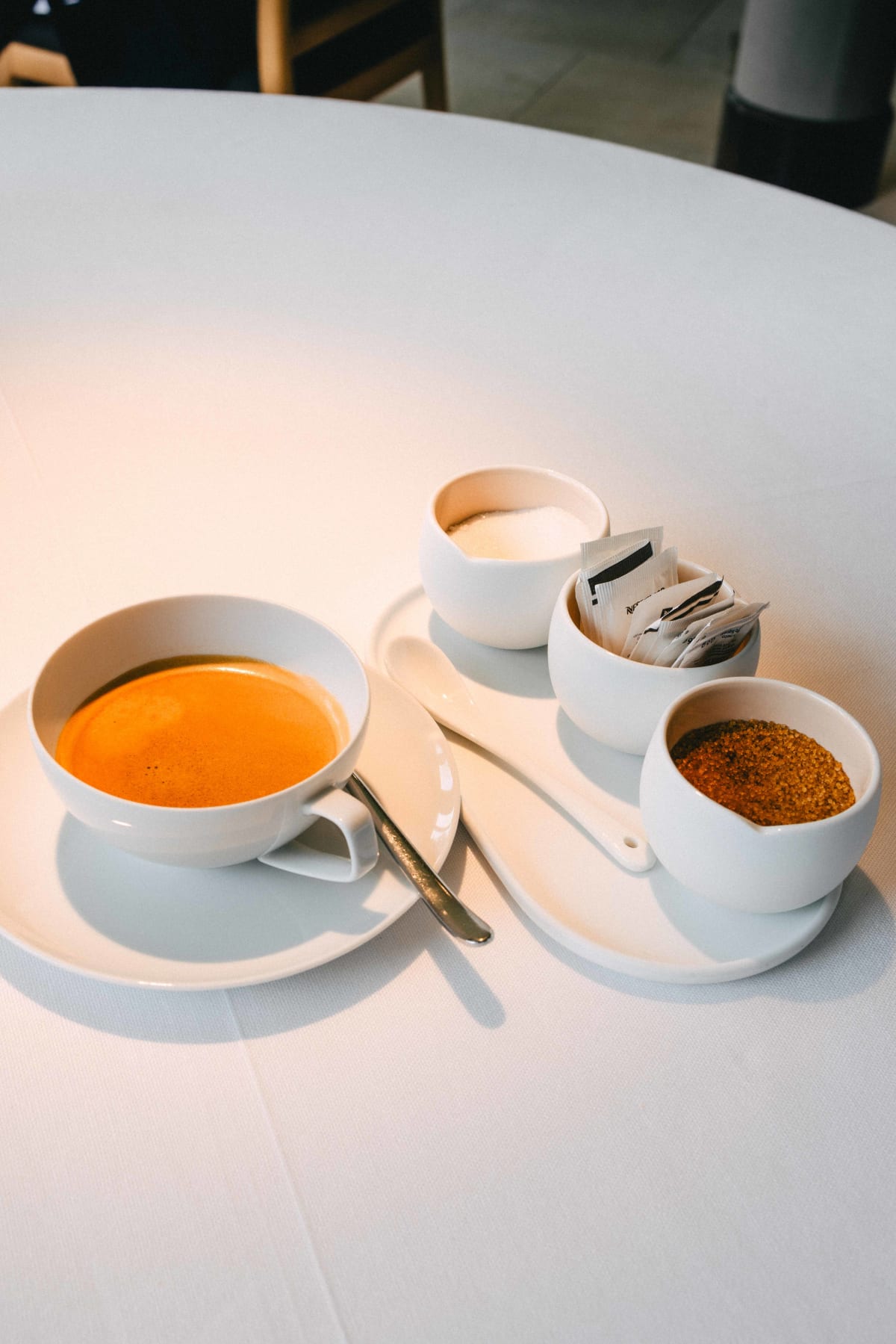
Because we ended earlier than I had planned for the airport, I ordered an extra coffee.
118—118 / 120
It came with a small selection of chocolates in a heavy bronze display, and I ate those alongside the coffee.
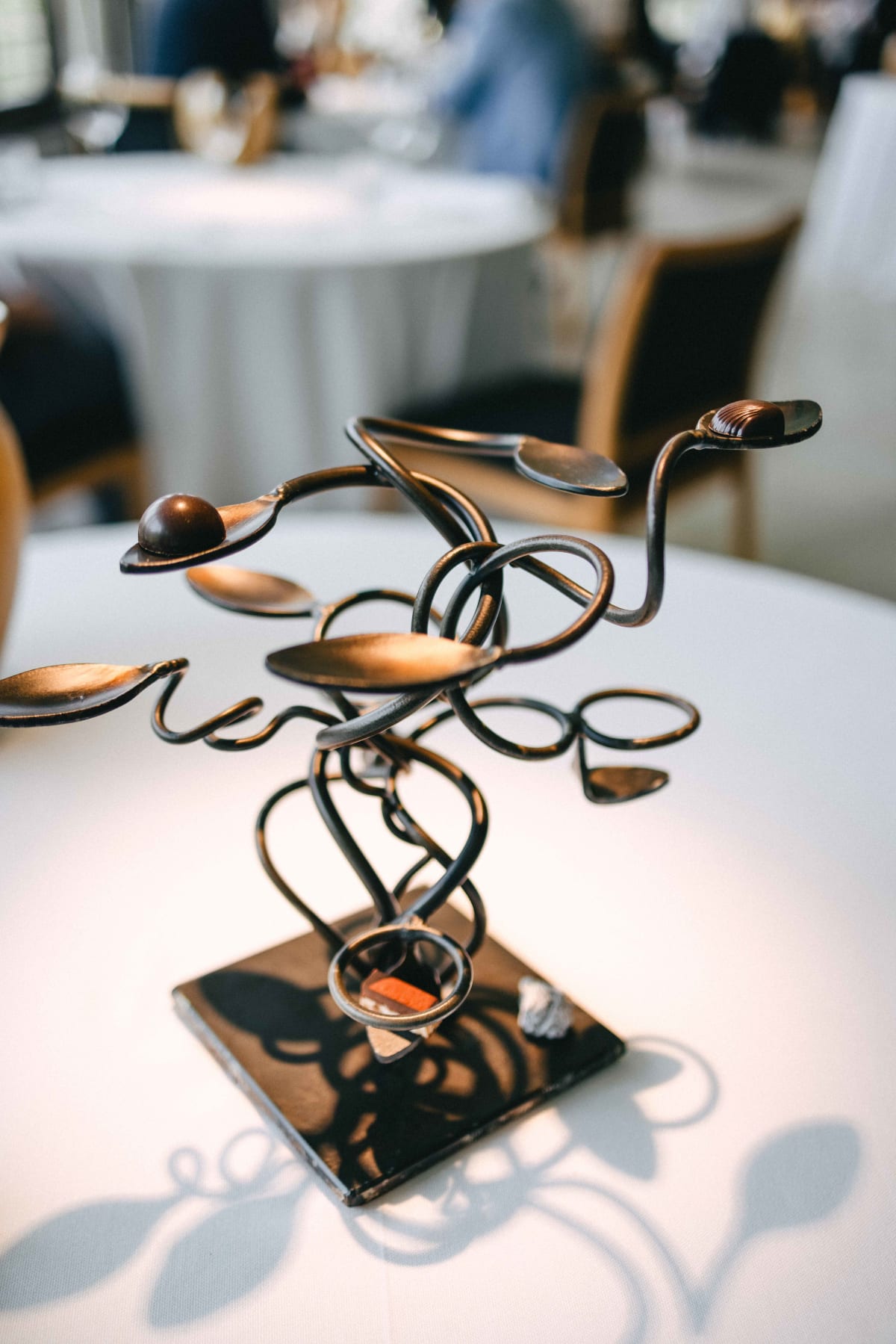
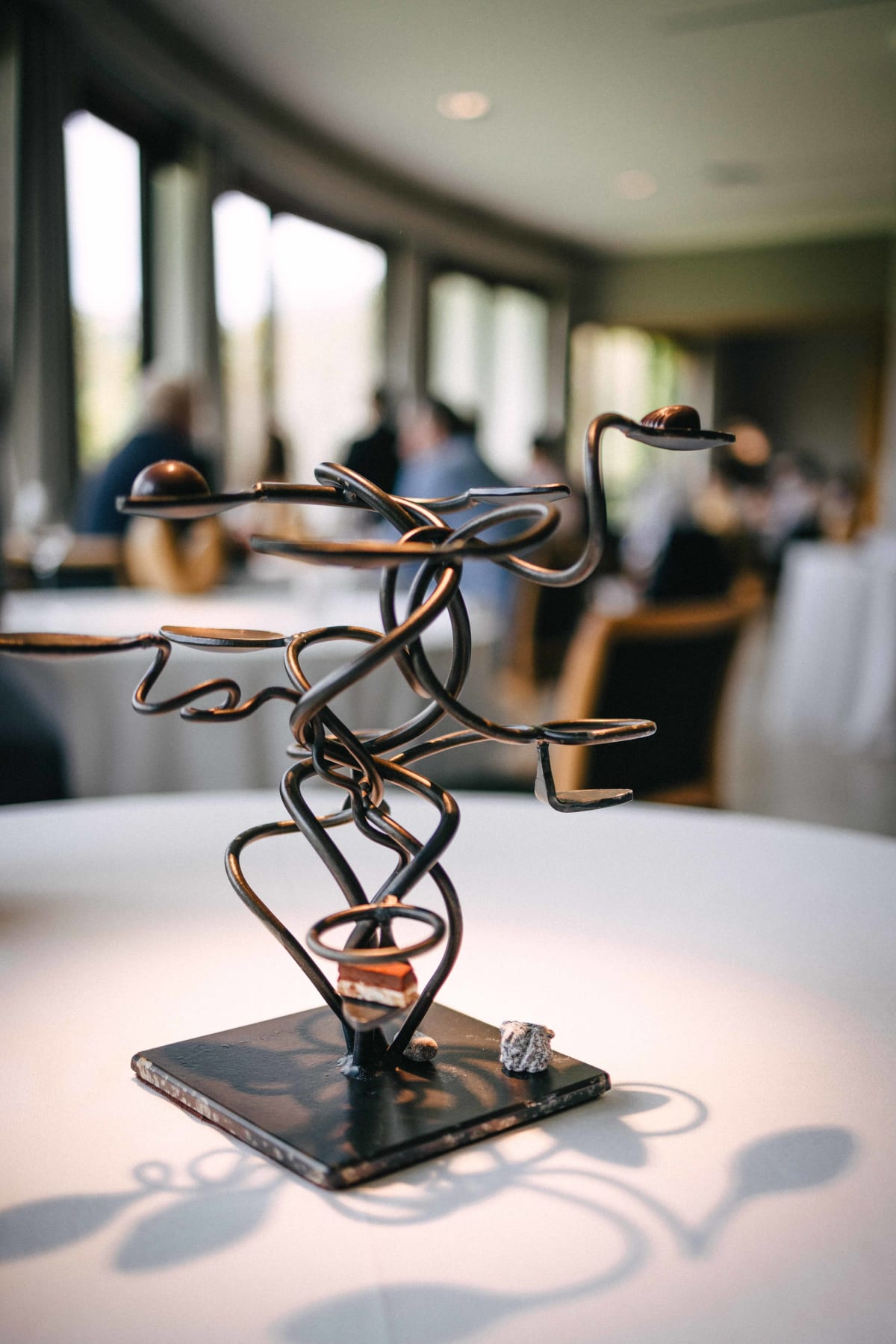
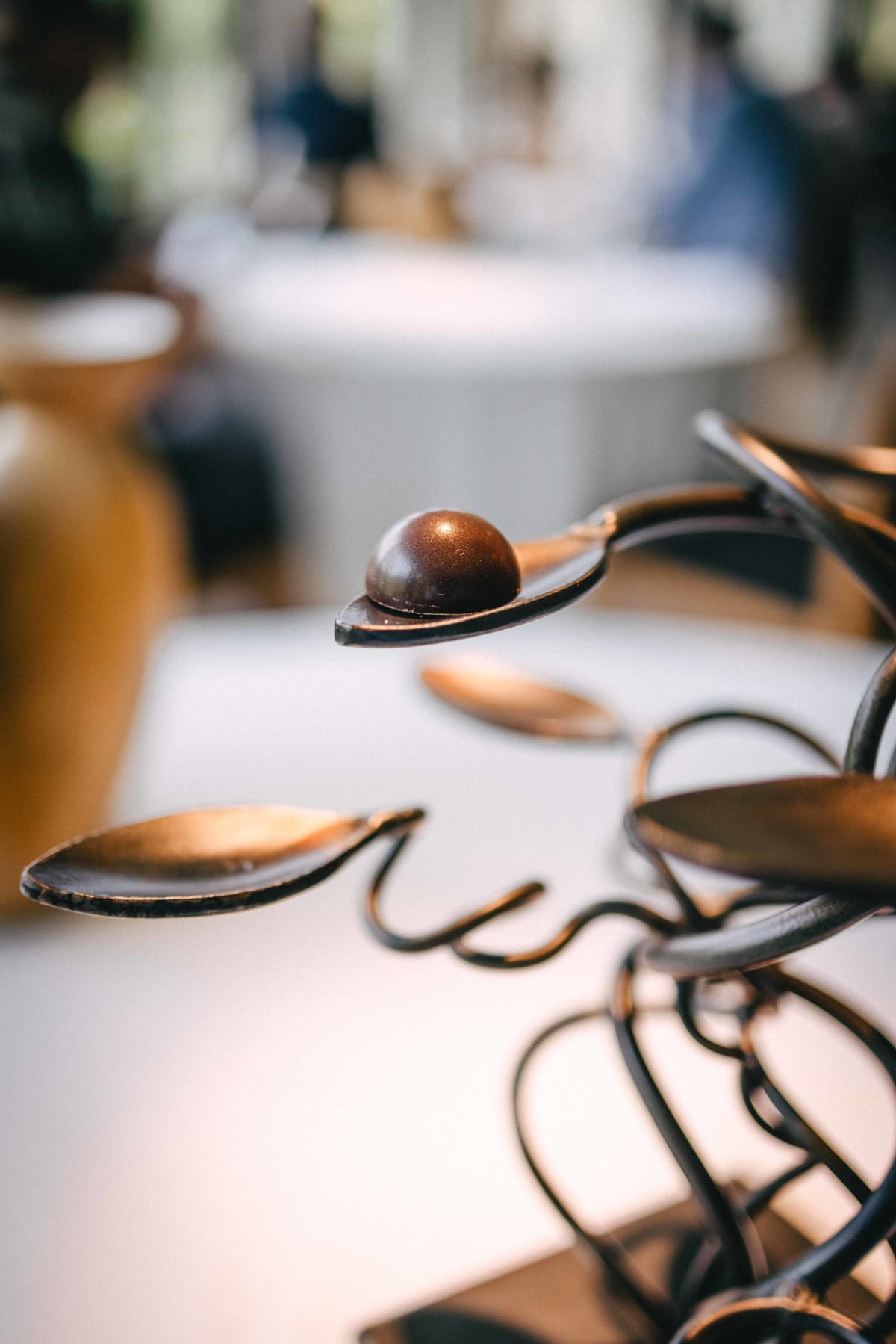
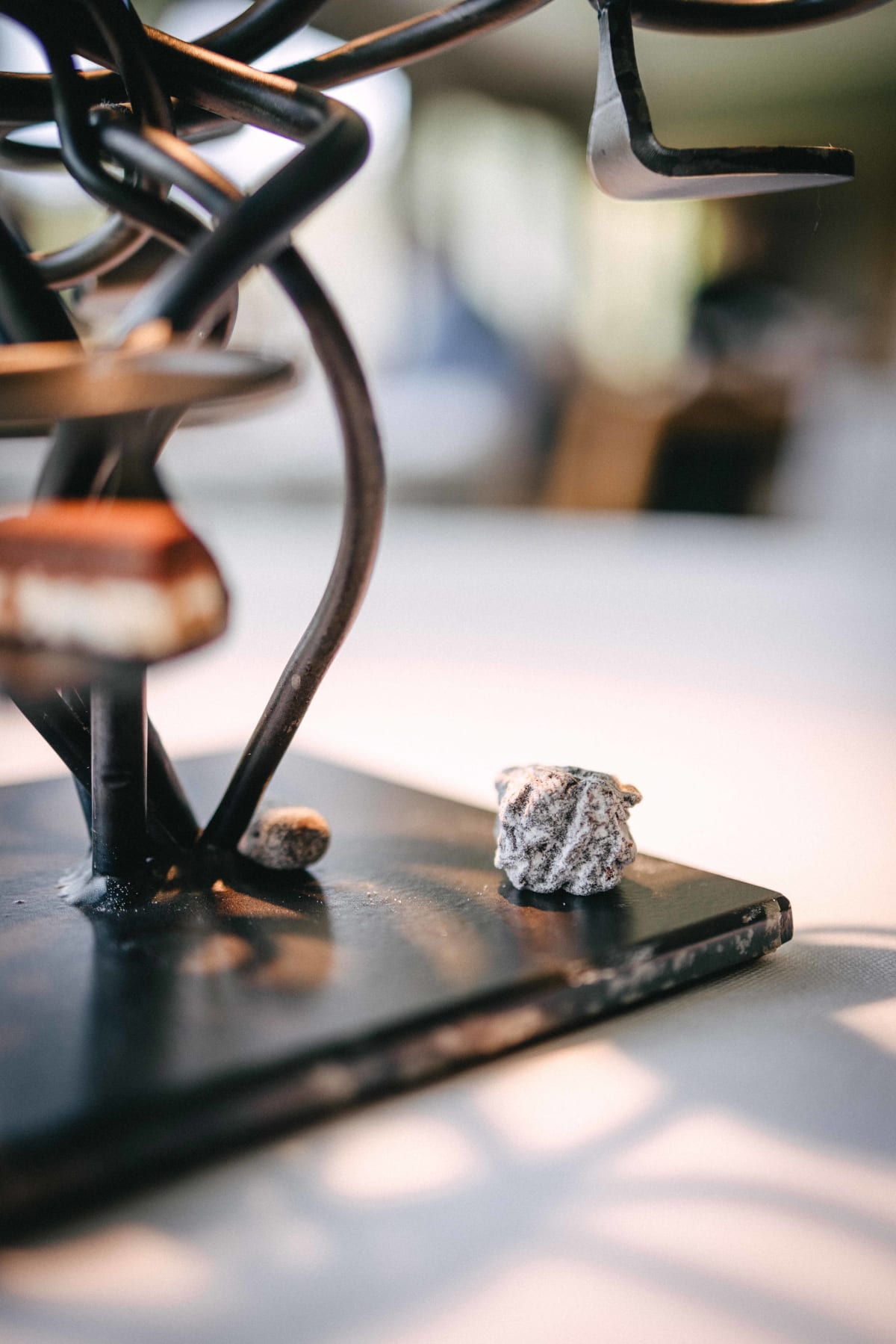
114—117 / 120
The coffee carried a €6 supplement, and the taste was, in honesty, ordinary.
To put Martin Berasategui in a metaphor, this is a baseball team chasing the title without an MVP, a home-run leader, or a batting champion in the lineup. From the leadoff through to the ninth slot, there are no holes; every position is filled with a dependable, well-tested hitter. The cooking has the same character. For diners who value a course without weak points and built on dishes that have stood the test of time, the satisfaction is high. But the way fans gravitate to superstars, the absence of a single overwhelming highlight is something I felt as a real gap by the end of the meal.
There is one more point. The service, against the price and the reputation, sat one register below where it should have been. At the time I tried not to draw too hard a conclusion from just two dining experiences in the country. But over subsequent visits I came to understand why serious diners, when they talk about fine dining as a whole, tend to land on France. The professionalism I have encountered in French dining rooms is consistently high, and the service I encountered in Spain sat one clear rung below that.
119—120 / 120
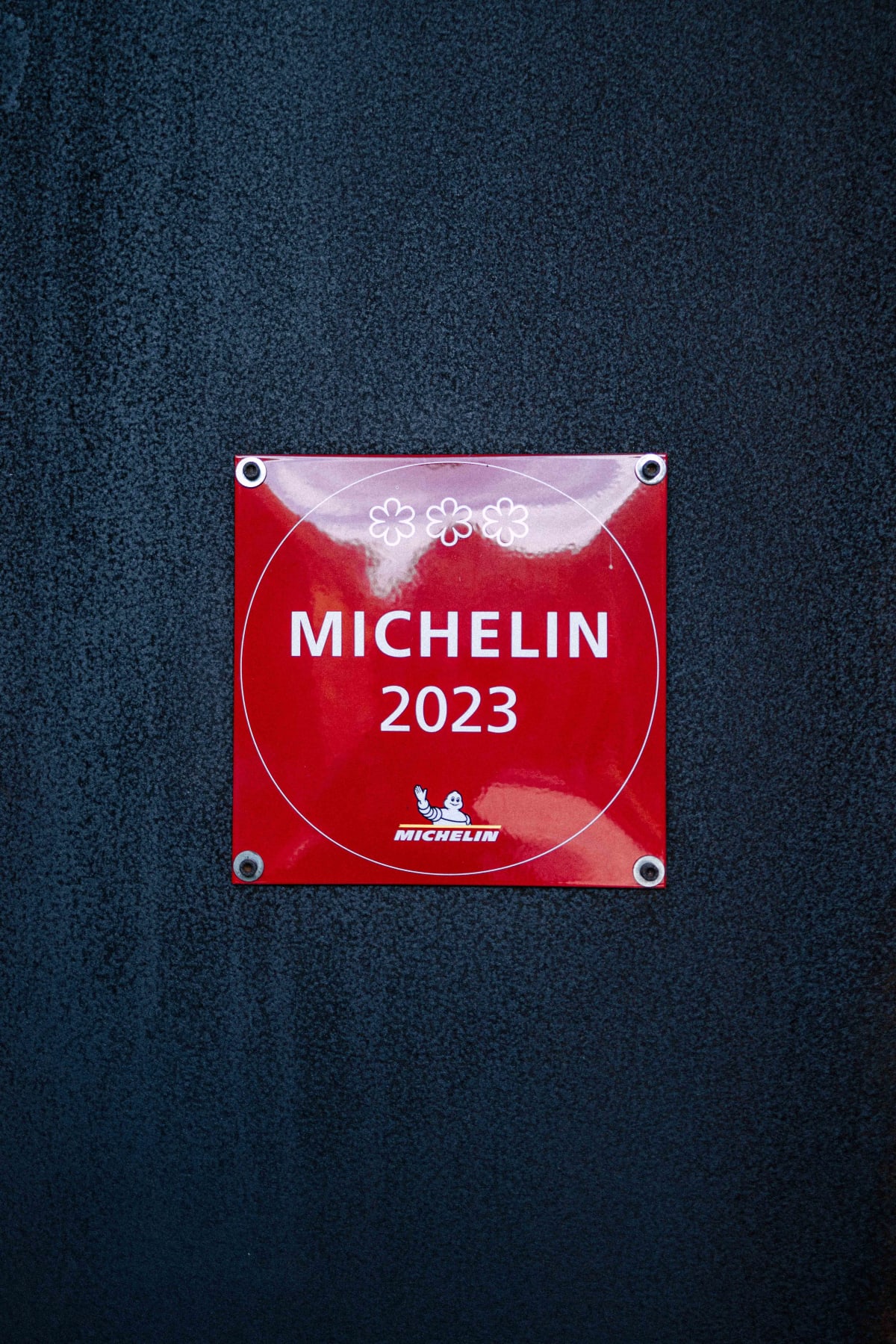
Martin Berasategui's restaurant has held its three Michelin stars since 2001, and many of the dishes on the tasting menu carry creation dates from the 1990s and early 2000s. What this means is that the menu, as encountered today, is essentially a portfolio of plates that have already survived twenty to thirty years of guests, kitchens, and revisions. The result is a tasting menu with a remarkably high floor and very few visible weak links, which is itself a real achievement and the source of the restaurant's broad popularity. But the same long-tested discipline that eliminates the misses also seems to have closed off most of the room for the kind of single dish that ambushes a diner, the plate that demands to be remembered ten years later. Berasategui is therefore best understood not as a restaurant pursuing the next peak of Basque cuisine but as one defending a thirty-year-old summit, with all the safety and limits that posture implies.
Have a question about this restaurant, or want to share your own experience?
Send a message