Fine Dining · USA
Oyatte
"Two days in, already at world-class technique"
5—5 / 121
I had just returned from a trip through Miami and New York. A backlog of reviews from international visits earlier in the year remained unwritten, but this one I am moving forward in the order. Oyatte, in Murray Hill, Manhattan, on the second night of service. The dinner fell on Wednesday, 6 May 2026, and the restaurant had opened only the day before, on 5 May, which placed me among the very first guests to walk through the door.
1—1 / 121
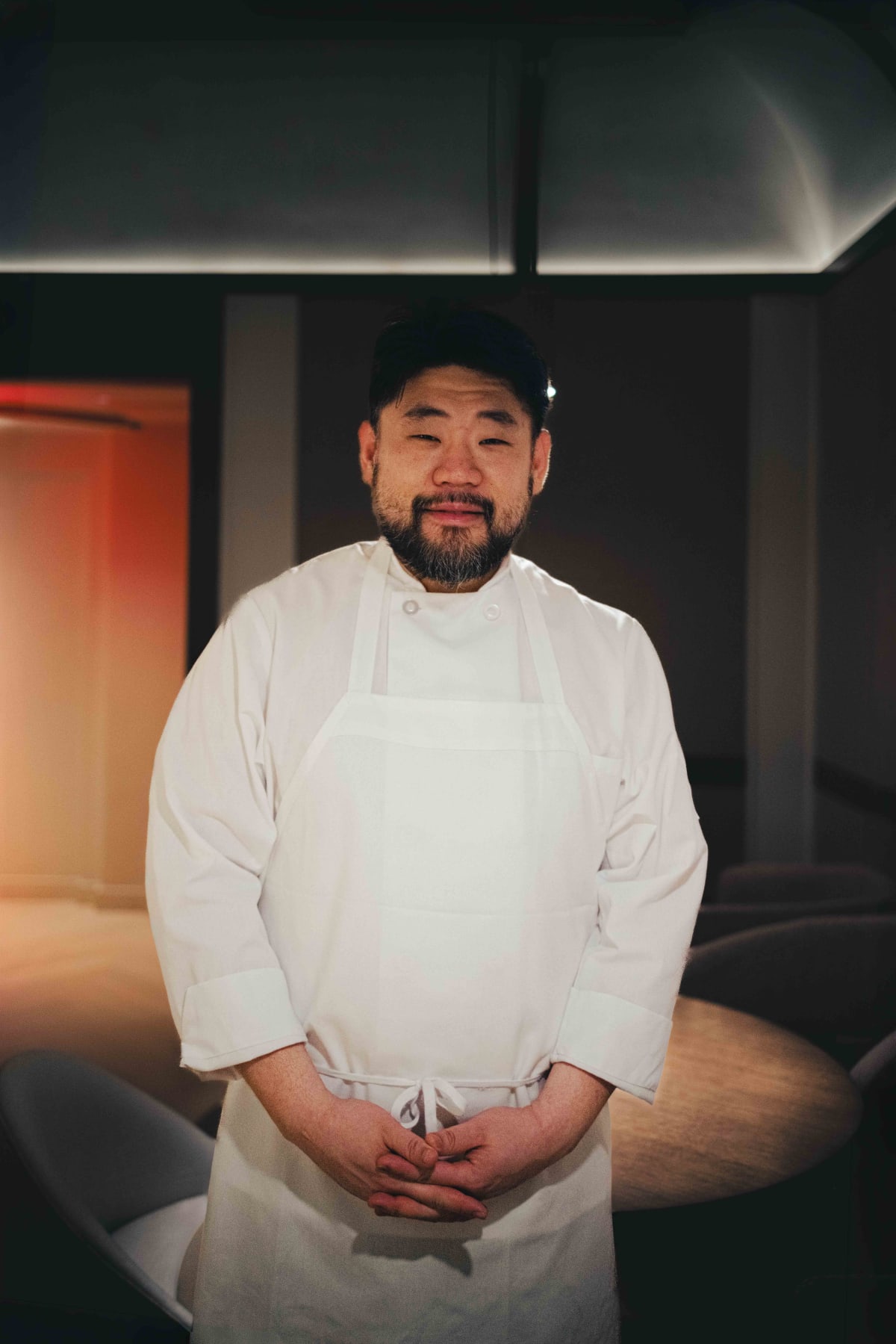
The chef behind Oyatte is Ha-Sung Lee, known in Korea last year as Yori Goemul, the Cooking Monster, runner-up on the second season of Culinary Class Wars. It would be wrong, however, to approach the restaurant as a celebrity-chef vehicle riding the broadcast's wake. Chef Lee was already a name within serious dining circles well before the show. He trained at Gramercy Tavern in New York, served as chef de partie at Geranium in Copenhagen during its three-star tenure, and then opened New York's Atomix as chef de cuisine, where the restaurant earned two Michelin stars and a position on the World's 50 Best Restaurants list under his watch. He also passed through Thomas Keller's The French Laundry in California. Oyatte is the first restaurant he has opened in his own name, and its arrival was named among Bloomberg's twenty most anticipated American restaurant openings of 2026.
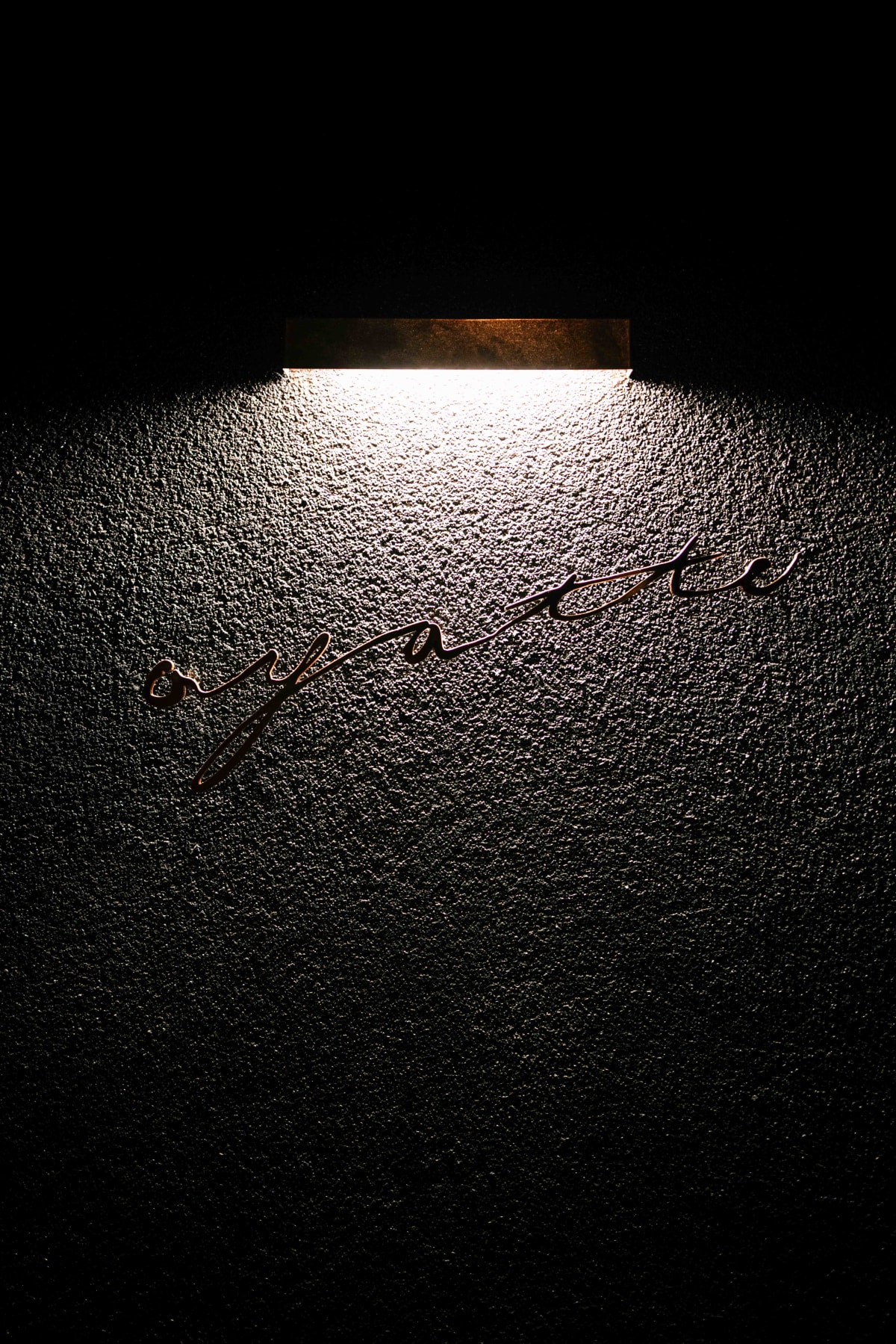
The name Oyatte is drawn from oyat, the old Korean word for plum, taken from the chef's family name 李, which itself means plum. The restaurant does not, however, sit inside the category of Korean cuisine. There is no course in the meal that could be called a Korean course in any conventional sense. Korean elements such as rice, jangajji, mugwort, perilla leaves, and makgeolli lees appear instead as a layer of memory within a global fine dining grammar.
Korean elements such as rice, jangajji, mugwort, perilla leaves, and makgeolli lees appear instead as a layer of memory within a global fine dining grammar.
The orientation of the cooking is closest to the farm-based contemporary fine dining of The French Laundry. The kitchen is tightly connected to a single farm, Crown Daisy Farm in upstate New York, from which the vegetables and herbs arrive at considerable quality, and a touch of fermentation or preservation is present in nearly every course of the menu.
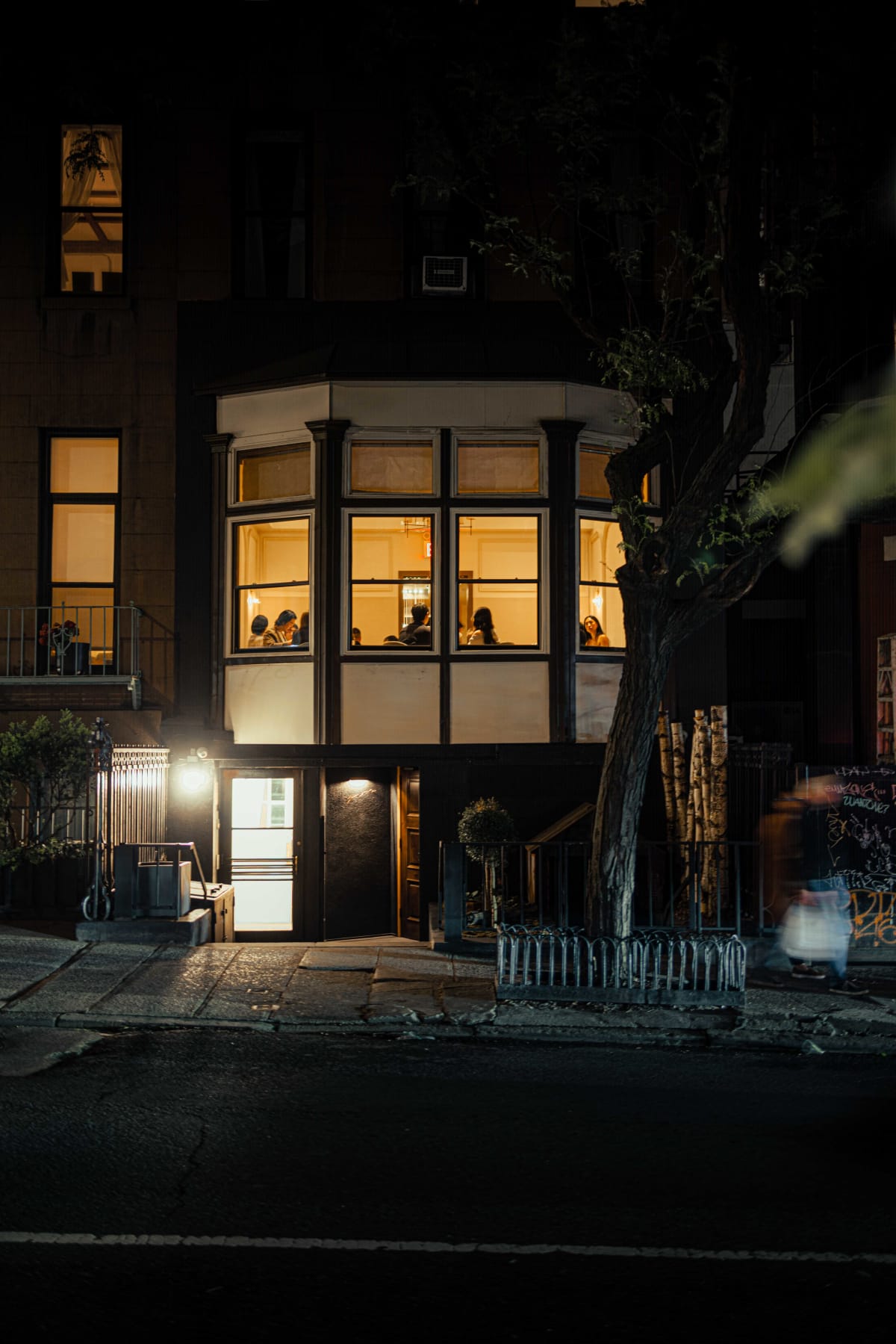
The address is 125 East 39th Street in Murray Hill, the former space of Kajitsu, the Michelin-starred shojin cuisine restaurant. The exterior is a classic New York brownstone, a tall narrow townhouse with latticed windows through which the silhouettes of diners are visible from the street. The choreography of the meal is unusual. Guests begin on the ground floor in a lounge called L'Atelier, with canapés and small delicacies, then move upstairs to the Dining Room midway through the course for the mains and the desserts. Both rooms are designed in a restrained, soft modern register, and the transition from the first floor up to the second functions as a narrative gesture in itself.
2—2 / 121
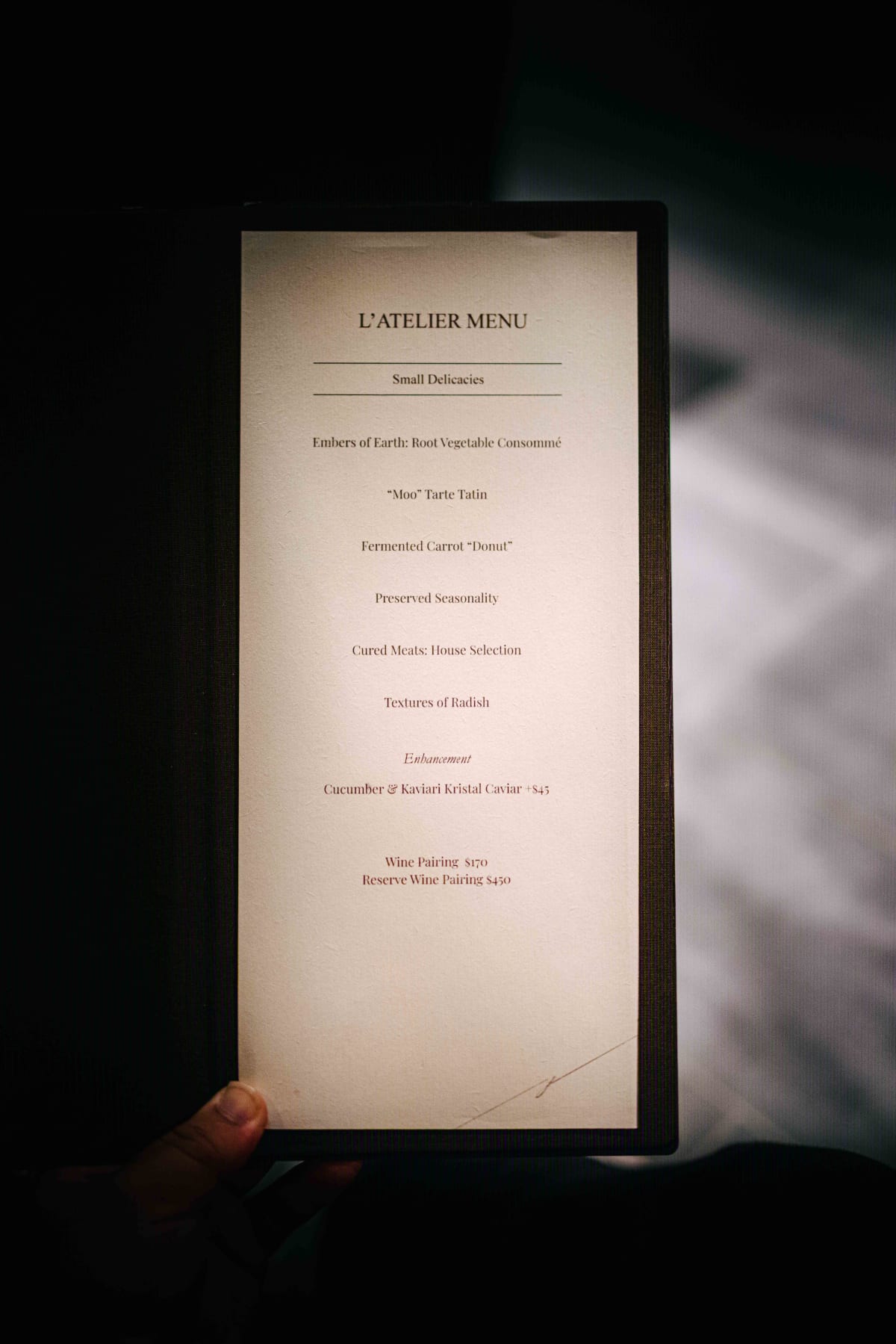
The pricing is $210 for the tasting menu, $170 for the wine pairing, and $450 for the reserve pairing. I added the Cucumber and Kaviari Kristal Caviar enhancement, the Spring Green Porridge enhancement, and the Wolfe Ranch Quail option for the main, which together delivered effectively the full extended version of the menu. I took the standard wine pairing. By choosing the porridge alongside the halibut and the quail alongside the lamb, I was able to taste through both forks of each main split. The menu is presented as eight courses, but the experience landed at fifteen dishes plus mignardises, sixteen in total, with ten wine pours through the pairing. The $210 price point felt extremely generous, all but margin-free, which is likely a function of opening pricing.
4—4 / 121
The operation is led, alongside the chef, by Cécile Chastanet, the General Manager and the architect of the wine programme. Her résumé runs through Hôtel du Palais, Alain Ducasse's Benoit, and, most importantly, Thomas Keller's Per Se, which I happened to revisit later in the same trip. The Per Se line in her background is not incidental. The foundation of Oyatte sits on a French Laundry and Per Se worldview, and that lineage is legible in the staffing as well as in the cooking.
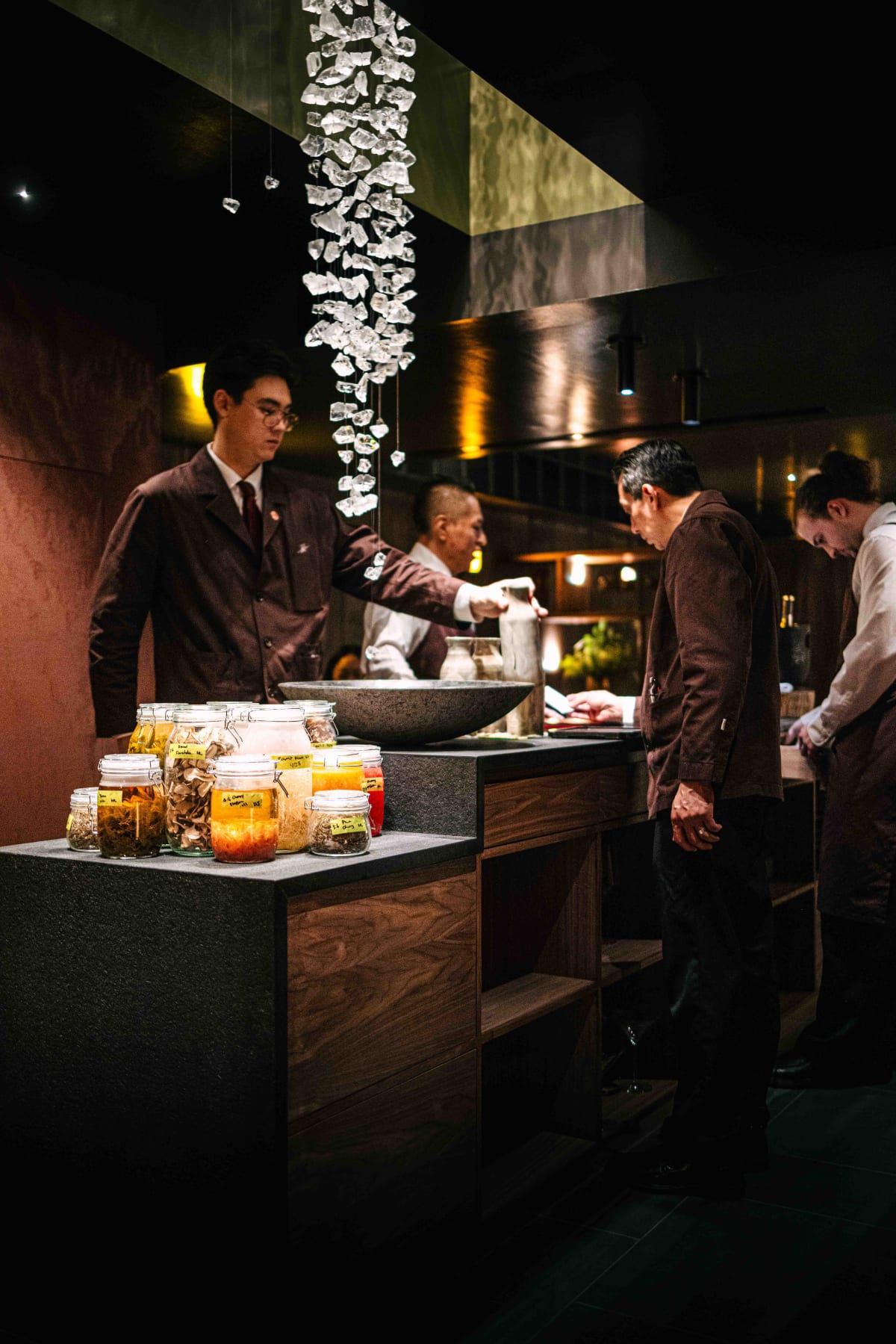
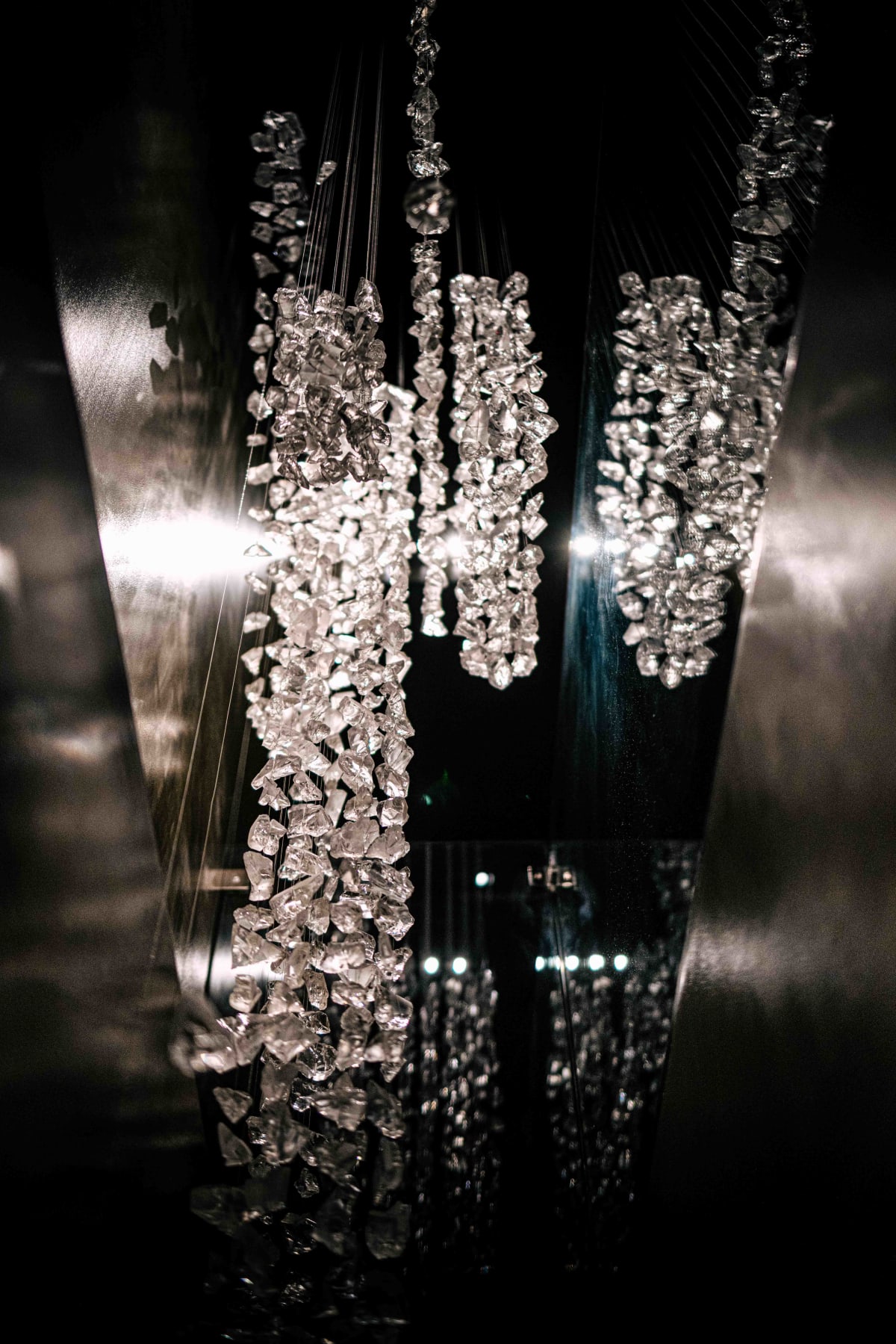
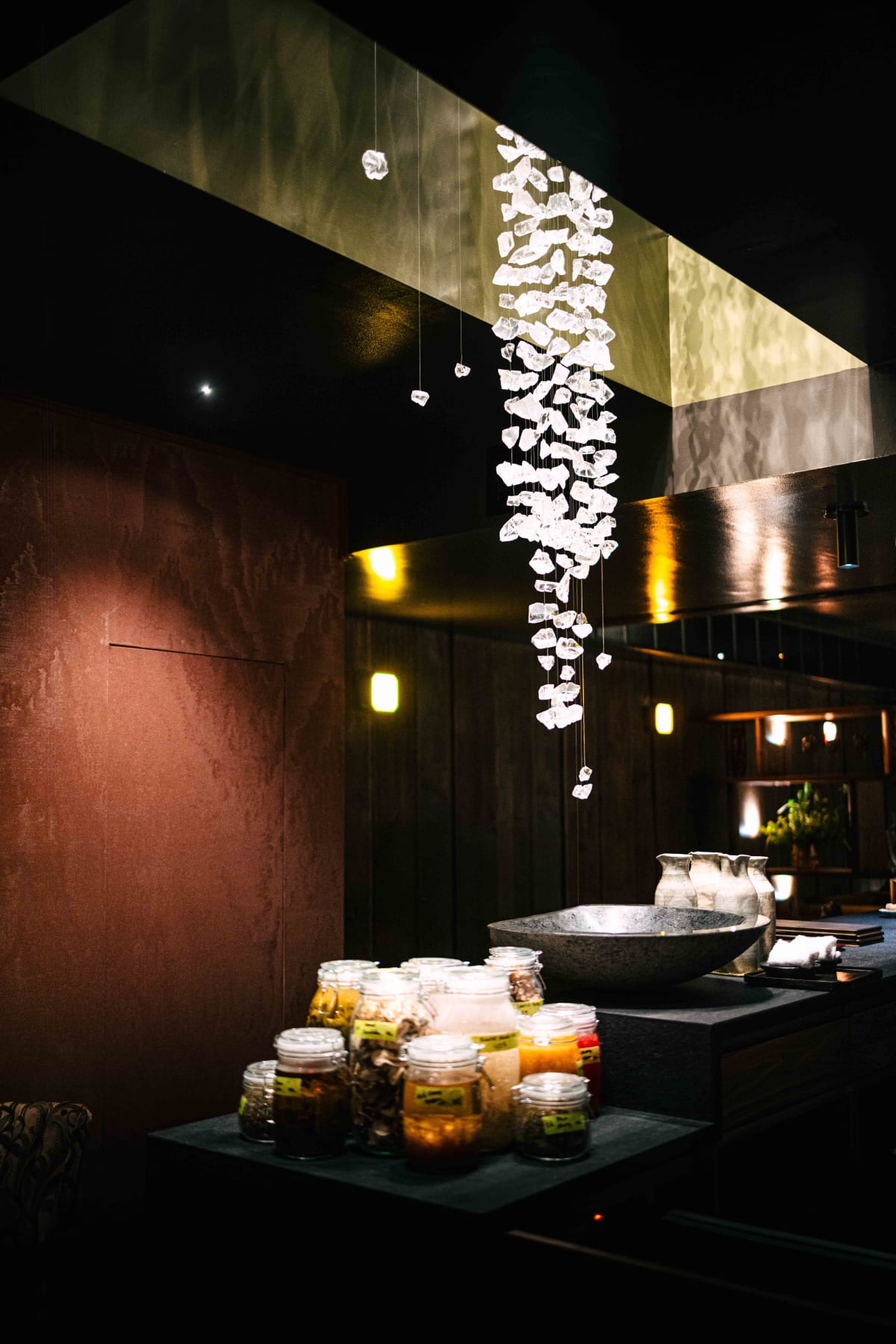
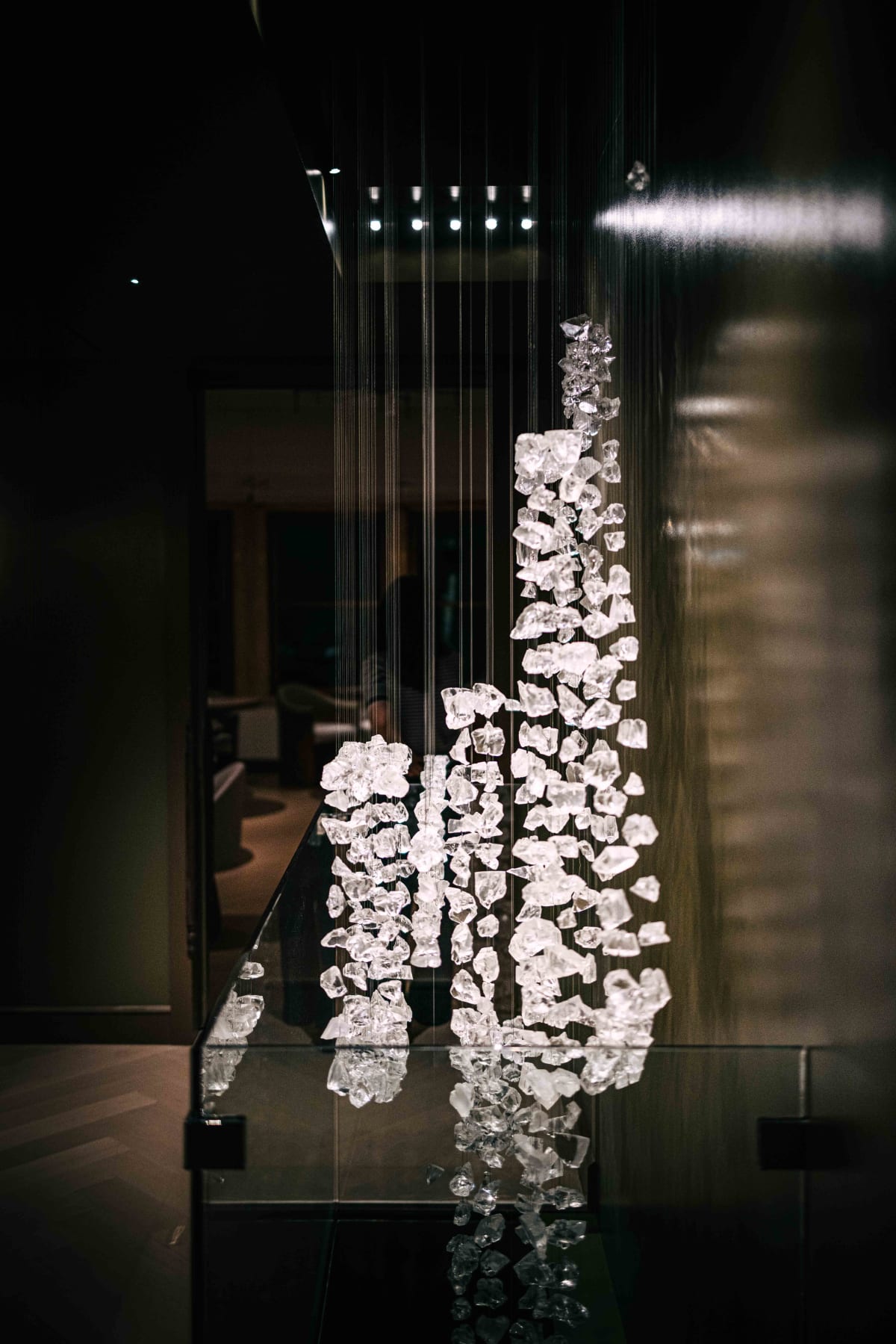
The first thing one notices in L'Atelier is a thirteen-foot quartz suspension by the Korean artist Park Seon-Ghi, an installation of innumerable small crystal fragments descending from the ceiling like falling rain. It sits at the centre of the room, drawing the eye through the meal.
49—49 / 121
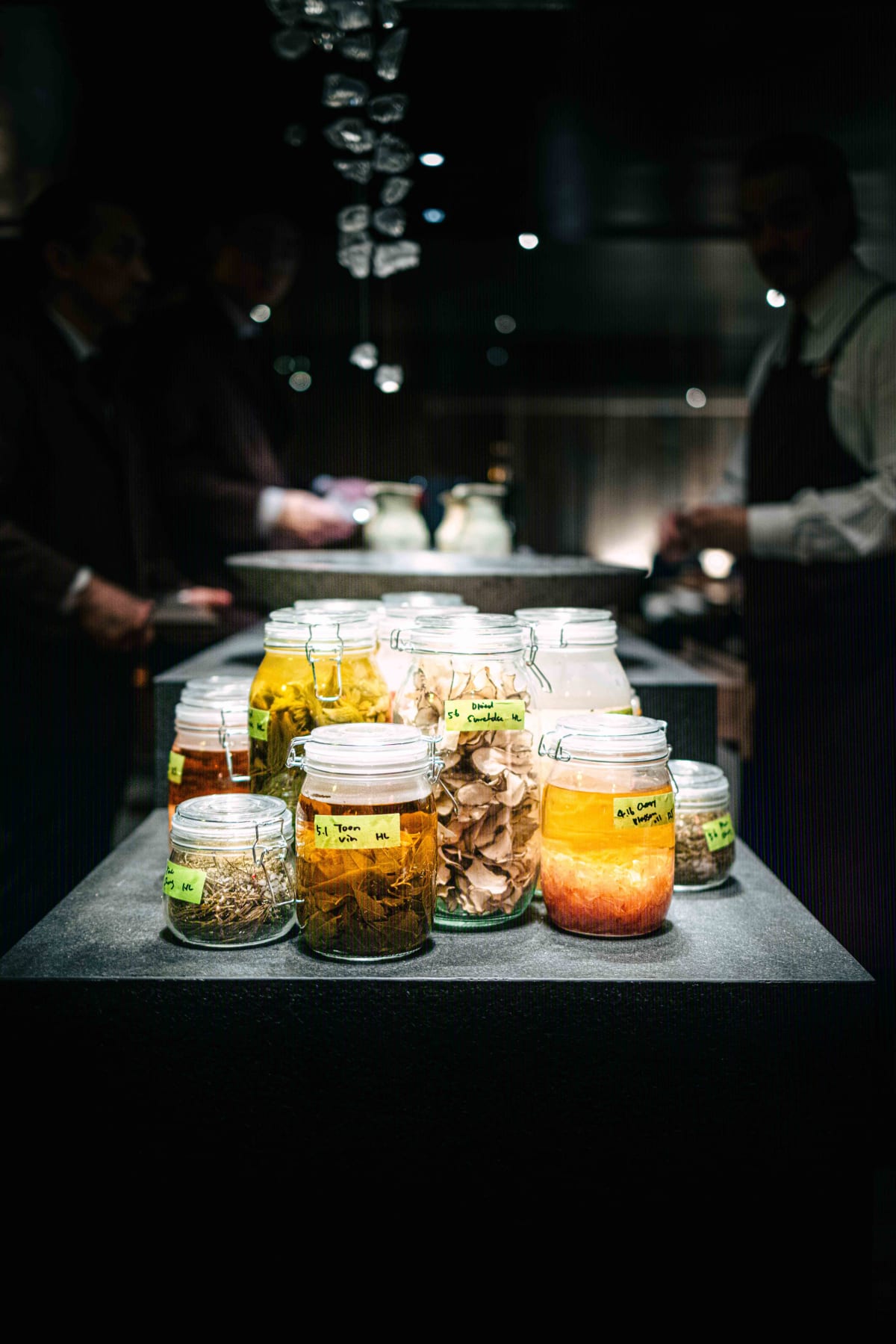
Beneath it, a small display of glass jars is set out, labelled by hand: "4.16 Cherry Blossom," "Toon Vinegar HL," "Dried Sunchoke HL," and so on, each filled with a fermented or preserved preparation.
3—3 / 121
The point is that these are not decoration. The contents are working ingredients that move into the kitchen. The space itself declares fermentation and preservation as central axes of the restaurant's identity.
6—6 / 121
The L'Atelier experience also carries a set of unresolved problems that need stating. The first arrived with the hand towel offered at the table. It was soaked through to the point of being wet rather than damp, so that handling it left the hands wetter than before. The convention of the Eastern hand towel, the oshibori with its tight wring and its slight heat or chill, is a basic register I would have expected a Korean chef to have absorbed by default. That the detail was missing in this form was an unwelcome surprise.
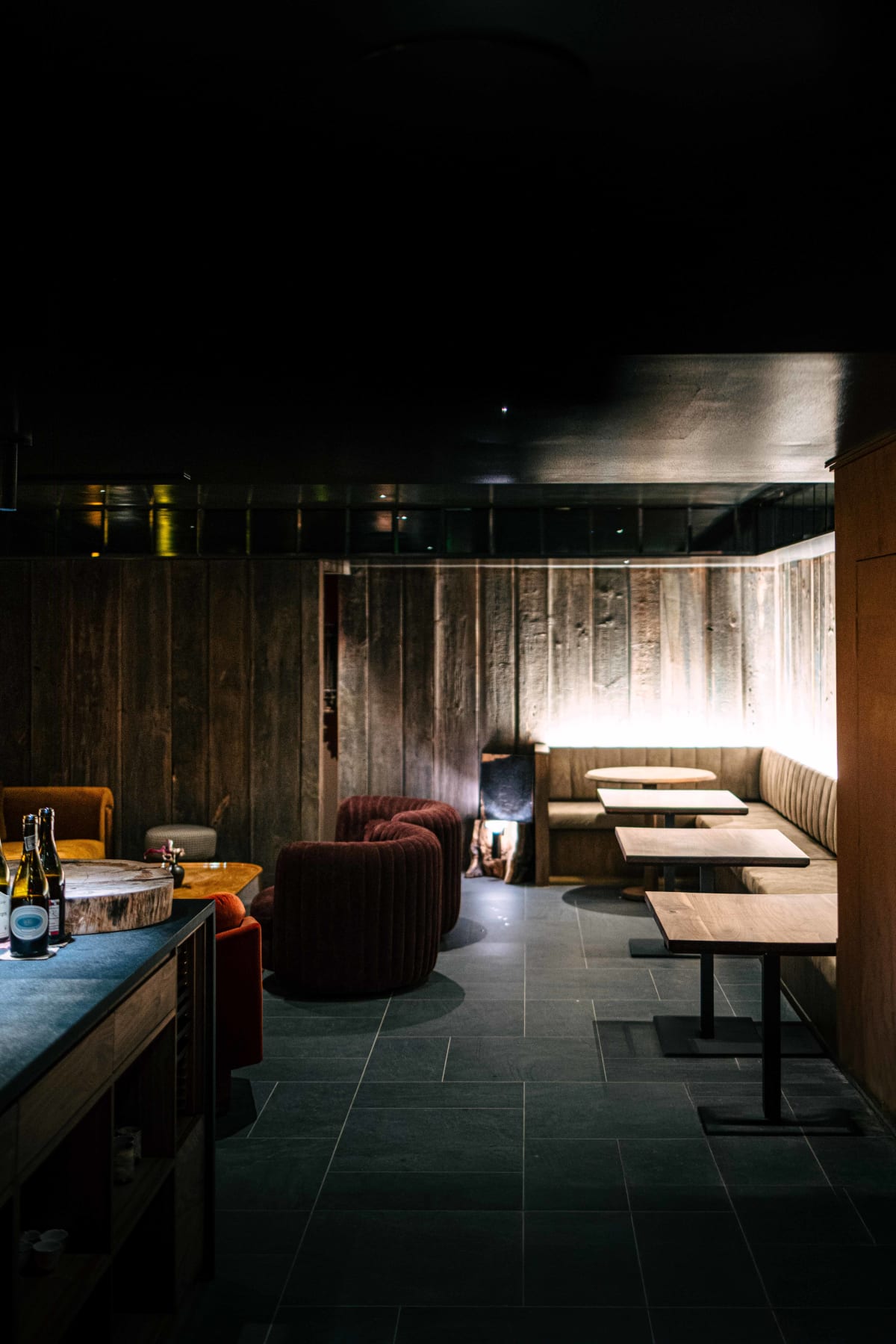
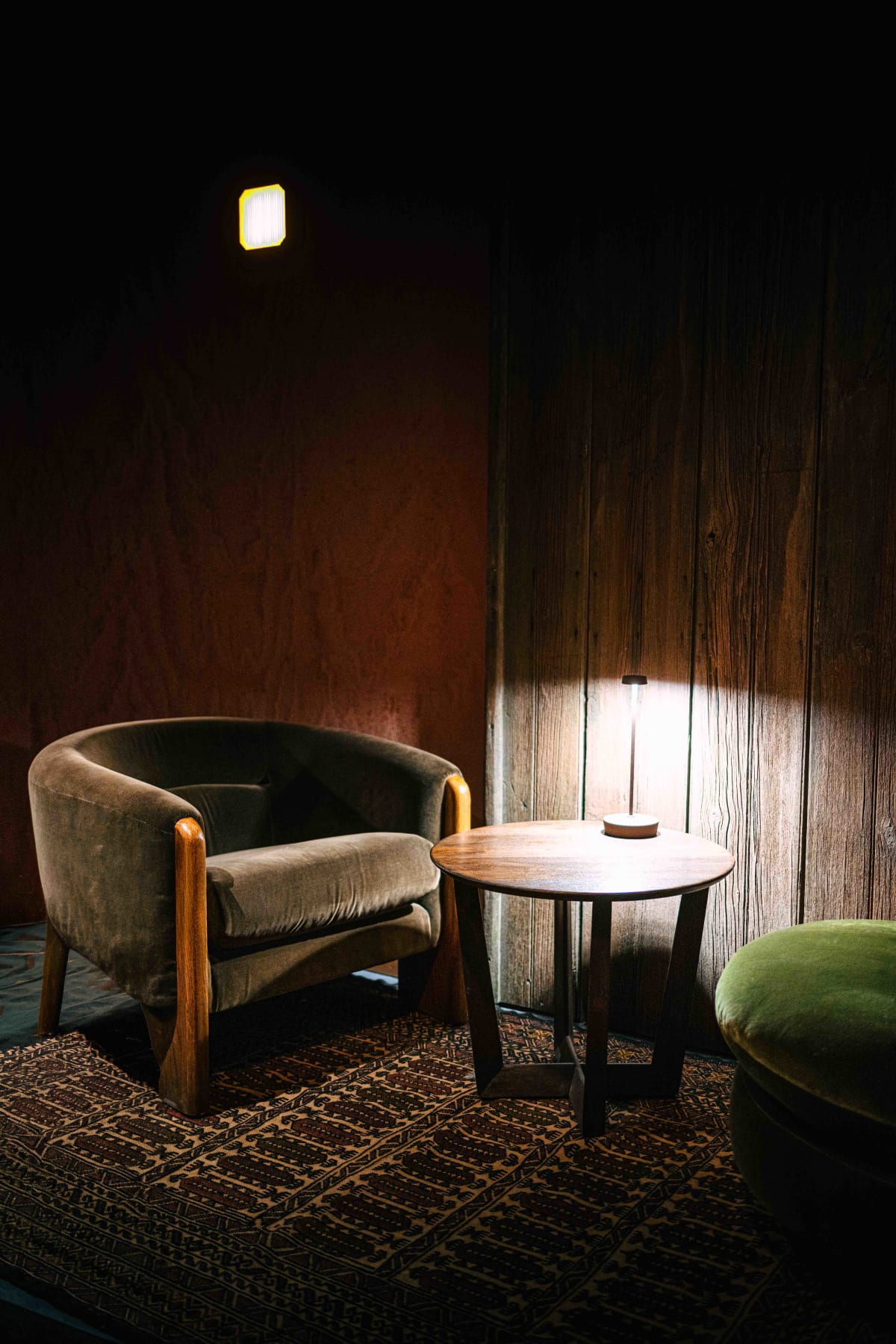
The second was a seating issue. The deeper part of the ground floor is set with proper dining tables at workable height, with backed seating that accommodates the full glassware and the plates of a tasting course.
52—52 / 121
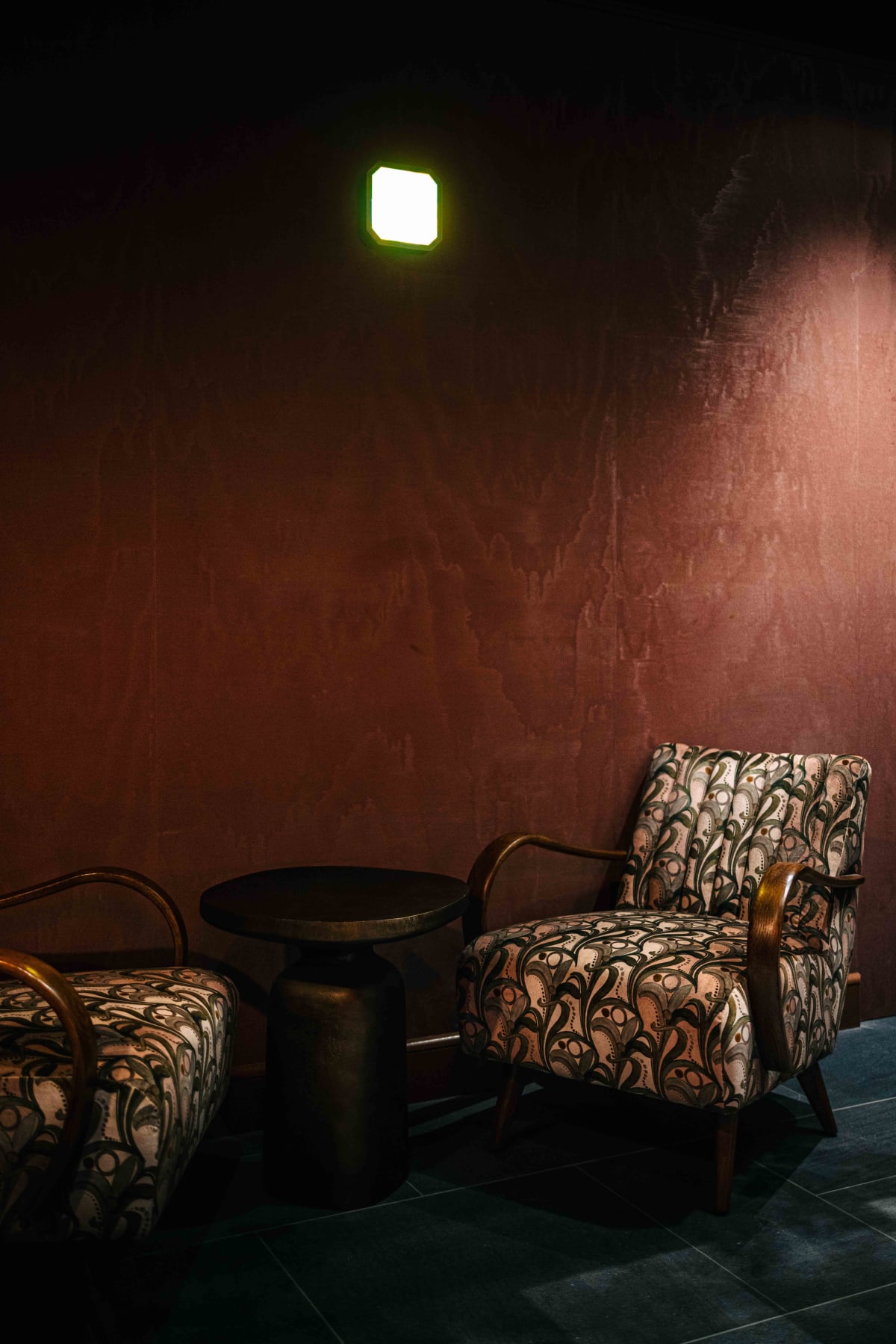
Our table, however, was placed nearer the entrance in the lounge area, on a low and small cocktail table of the kind one finds in a café set up to hold a single drink and a dessert plate. For a space that runs half of a tasting menu, a table of that scale read as a mismatch.
51—51 / 121
The initial placement was also under unworkable light, and only after I asked for a change were we moved to a seat with at least serviceable illumination.
11—11 / 121
Even then the table remained too low and too small, the posture across the meal was uncomfortable, and the lack of room to hold several wine glasses at once meant that the pacing of the pairings tended to drift toward draining the glass too quickly. This is the kind of issue that should have been caught and resolved during the soft-opening period.
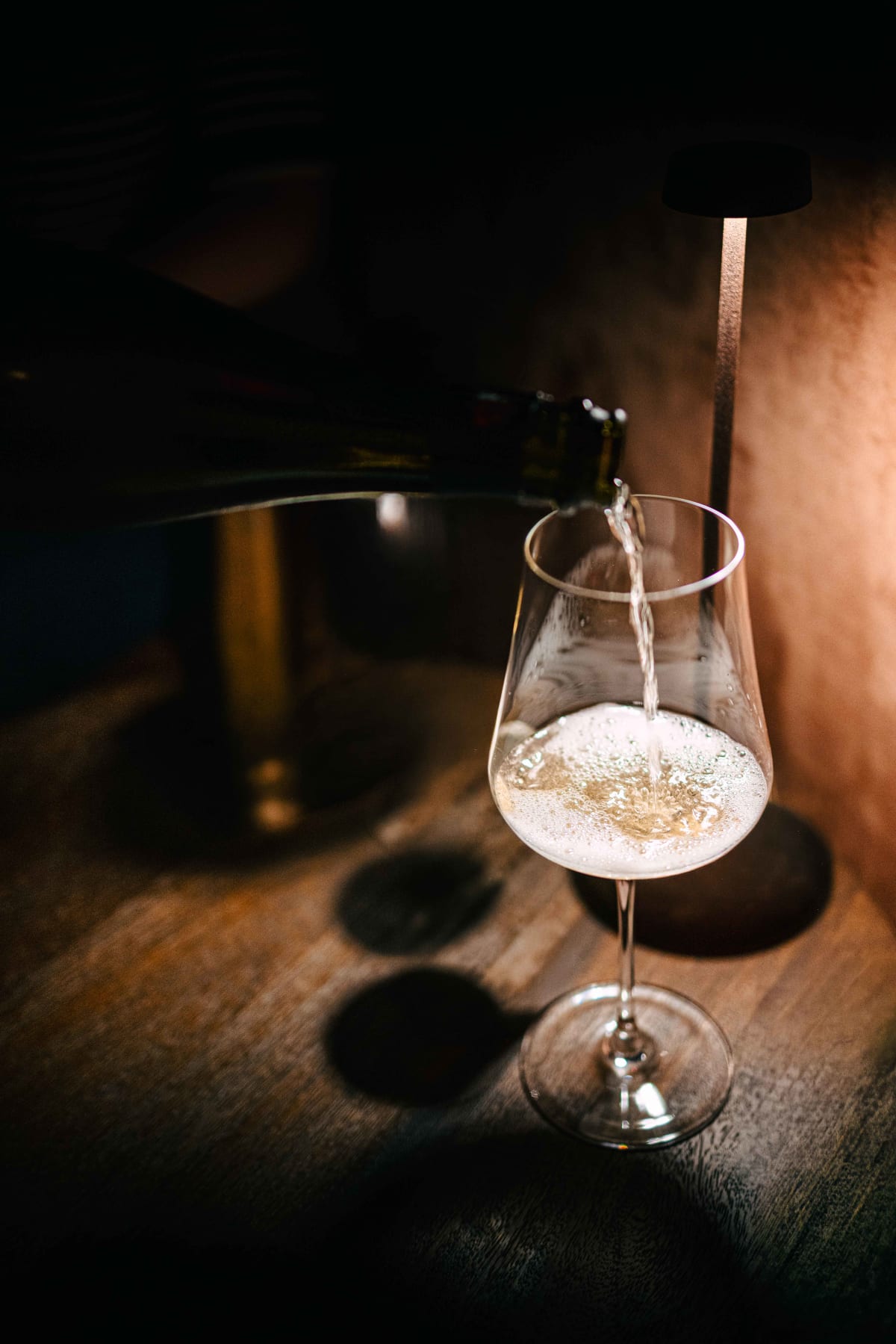
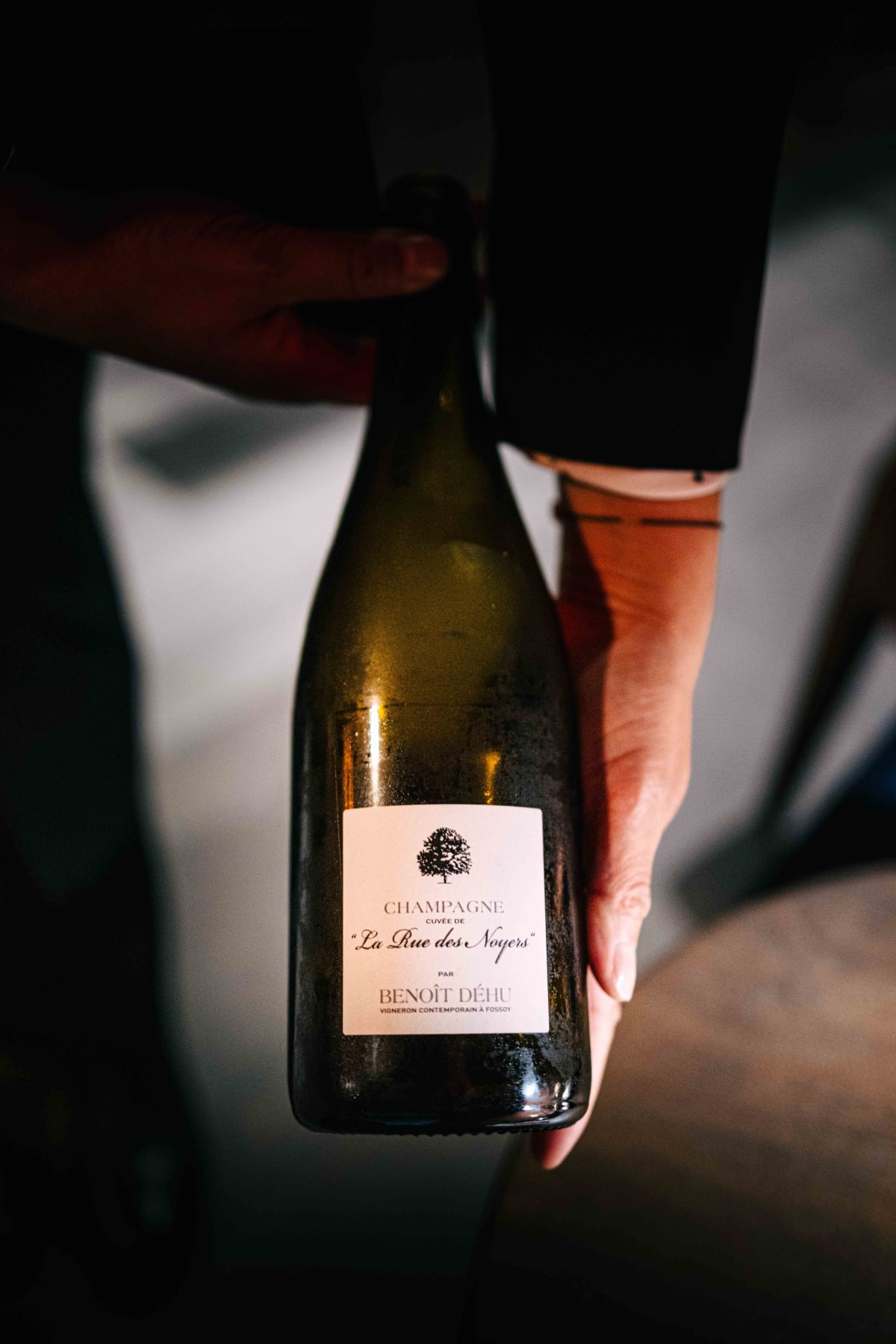
The first wine arrived in the form of Benoît Dehu's Brut Nature "La Rue des Noyers" 2020, a single-varietal Champagne of one hundred percent Pinot Meunier from the Vallée de la Marne. The family has held land in the region since before the French Revolution, and the bottling comes from a separated plot of under 1.5 hectares, vinified to express what the producer considers the most direct portrait of the appellation. The first impression of the wine itself, however, was muted. There was a faint green-apple note on the nose but the aromatics ran light overall, and while the minerality came through on the palate, the wine lacked enough weight to land the opening note of the meal with any real authority.
7—8 / 121
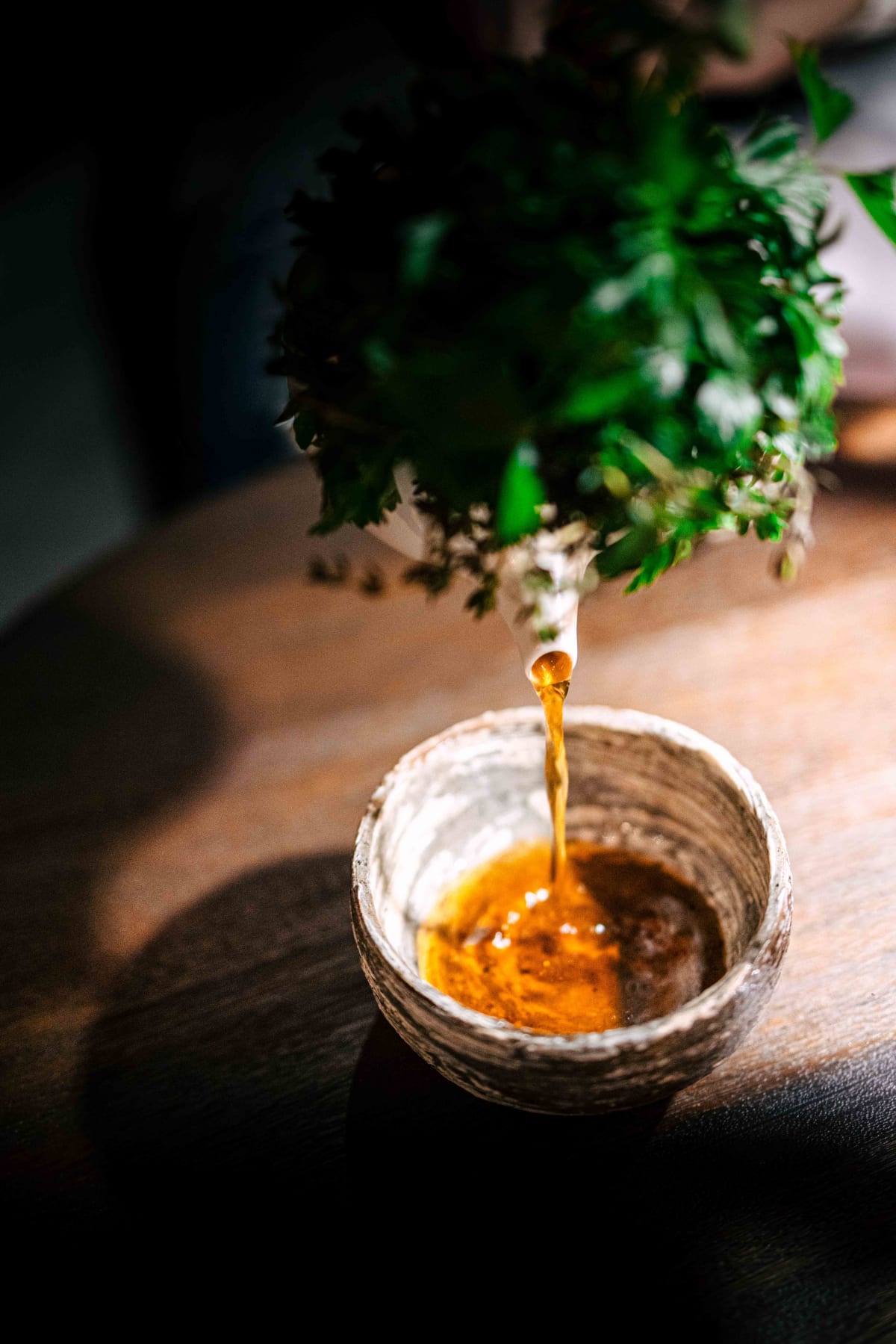
The first course was Embers of Earth, Root Vegetable Consommé. A consommé built from root vegetables, parsnip, celery, carrot, onion, Spanish onion, with parsley, thyme, and other herbs from the farm. The plate cleanly avoided the obvious trap of a vegetable consommé, which is the bitter and overly direct vegetal register that the format usually produces. The taste was rounder than expected, less direct vegetable than complex sweetness and savoury depth, with a faint curry inflection running through the back. The extraction work required to reach this kind of complexity from vegetables alone was the impressive part.

9—10 / 121
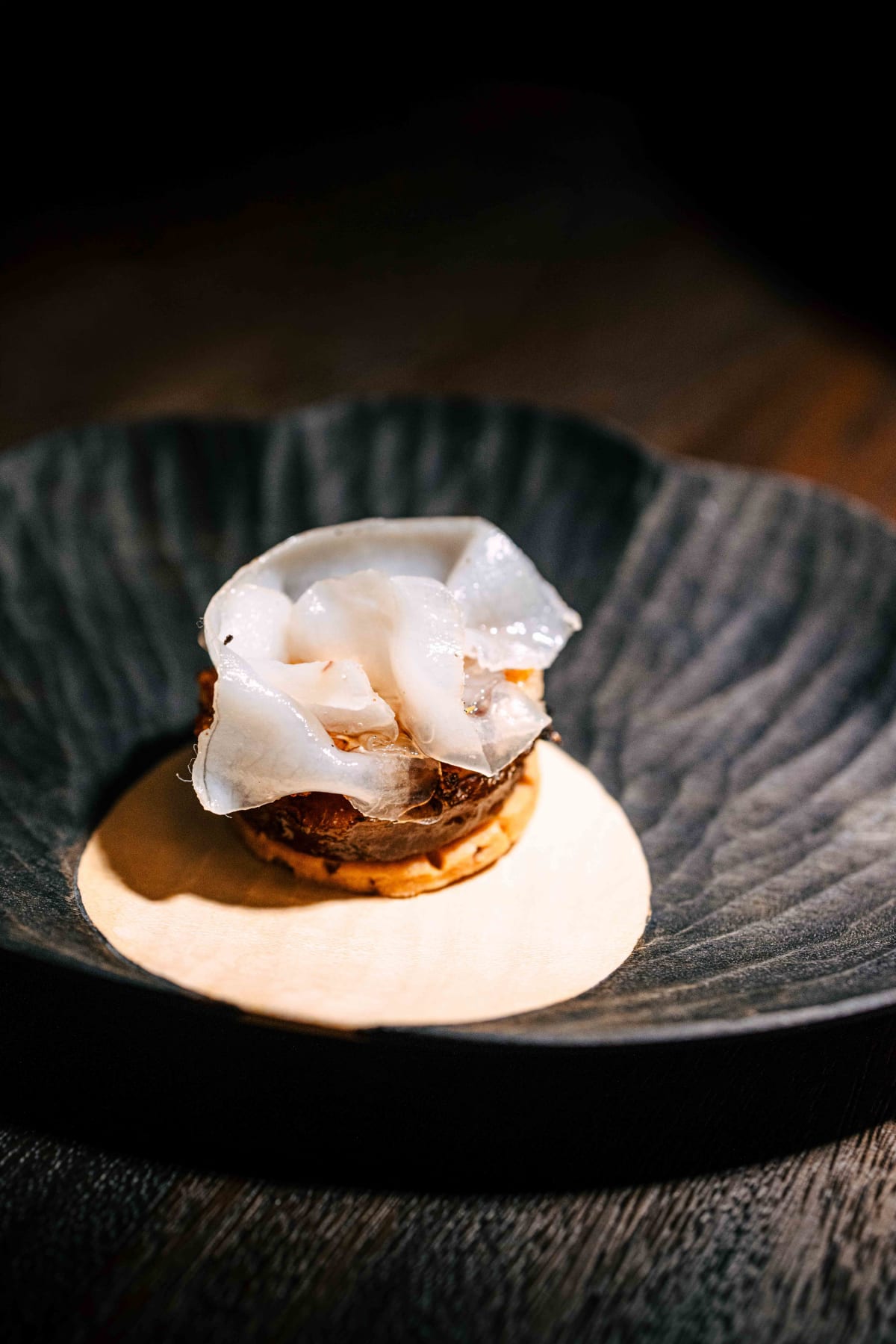
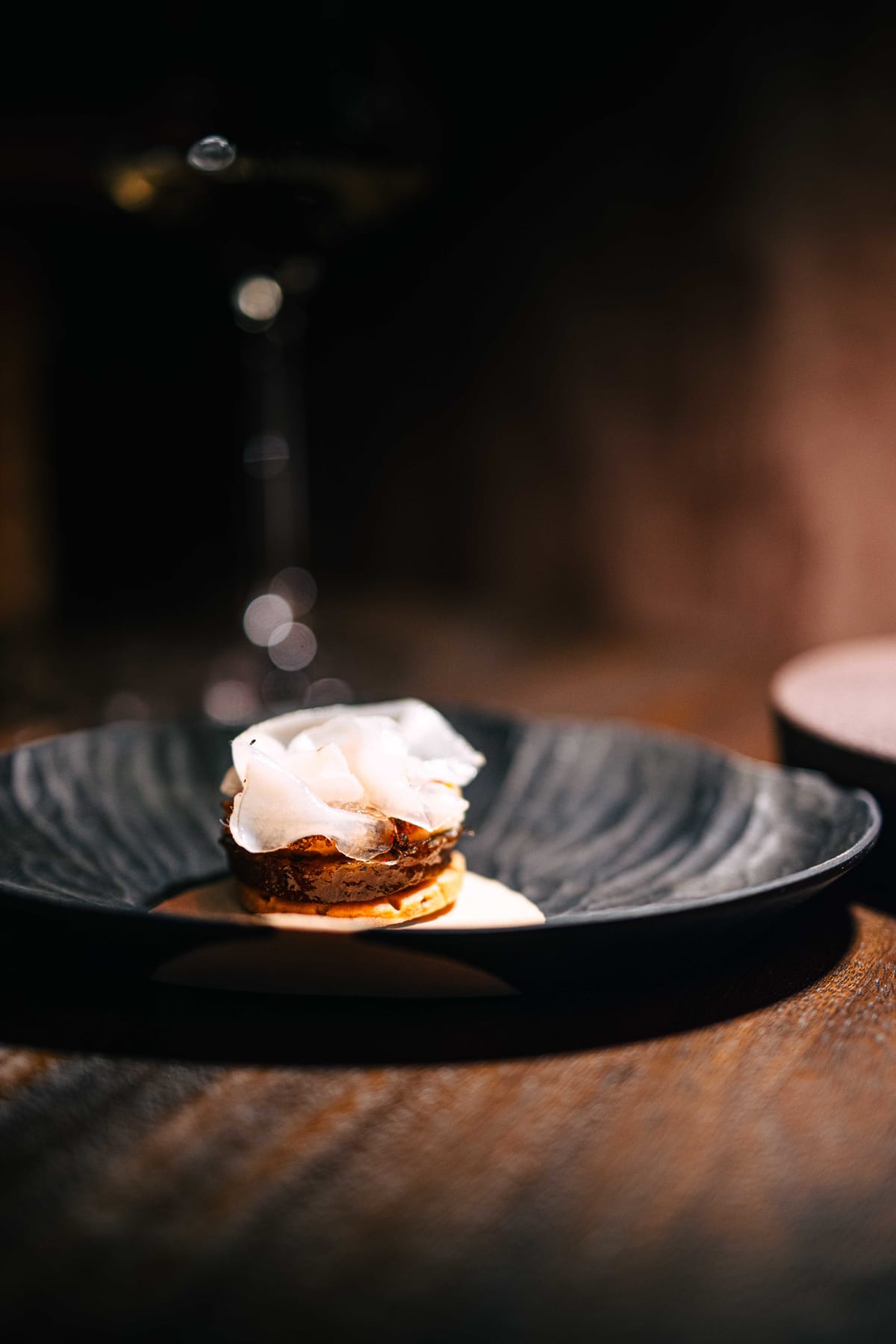
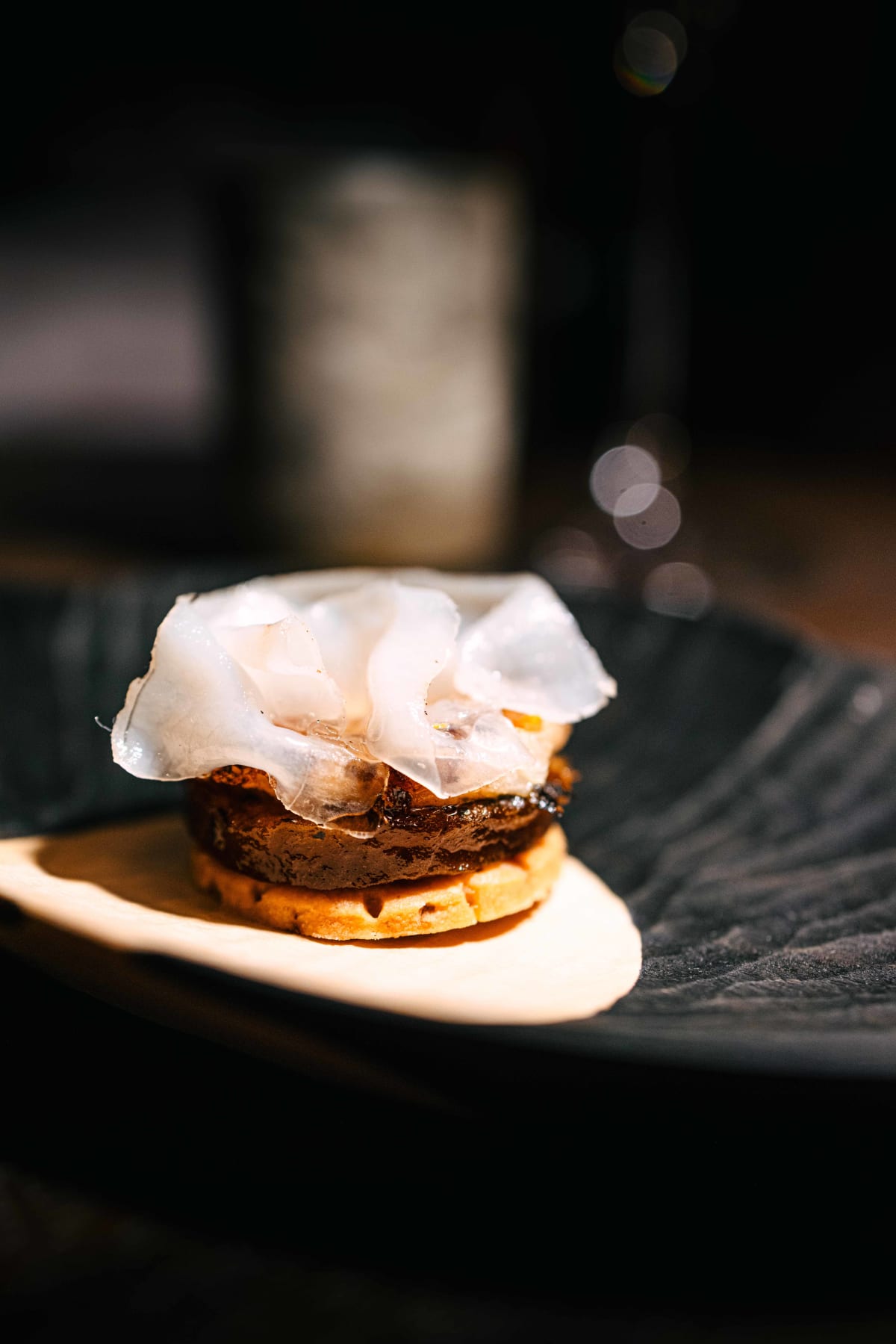
The second course was the "Moo" Tarte Tatin. Moo is the romanised Korean word for daikon. The radish was braised and arranged in tarte tatin form on a pastry base, with lightly caramelised onion and house-cured lettuce alongside. The instruction was to take it in a single bite. The buttery base of the pastry and the savoury notes of the cooked onion came together with proper balance, though the salt level was on the high side. The braised radish itself was cooked with restraint, retaining a clean chew without going past the point of tenderness.
12—14 / 121
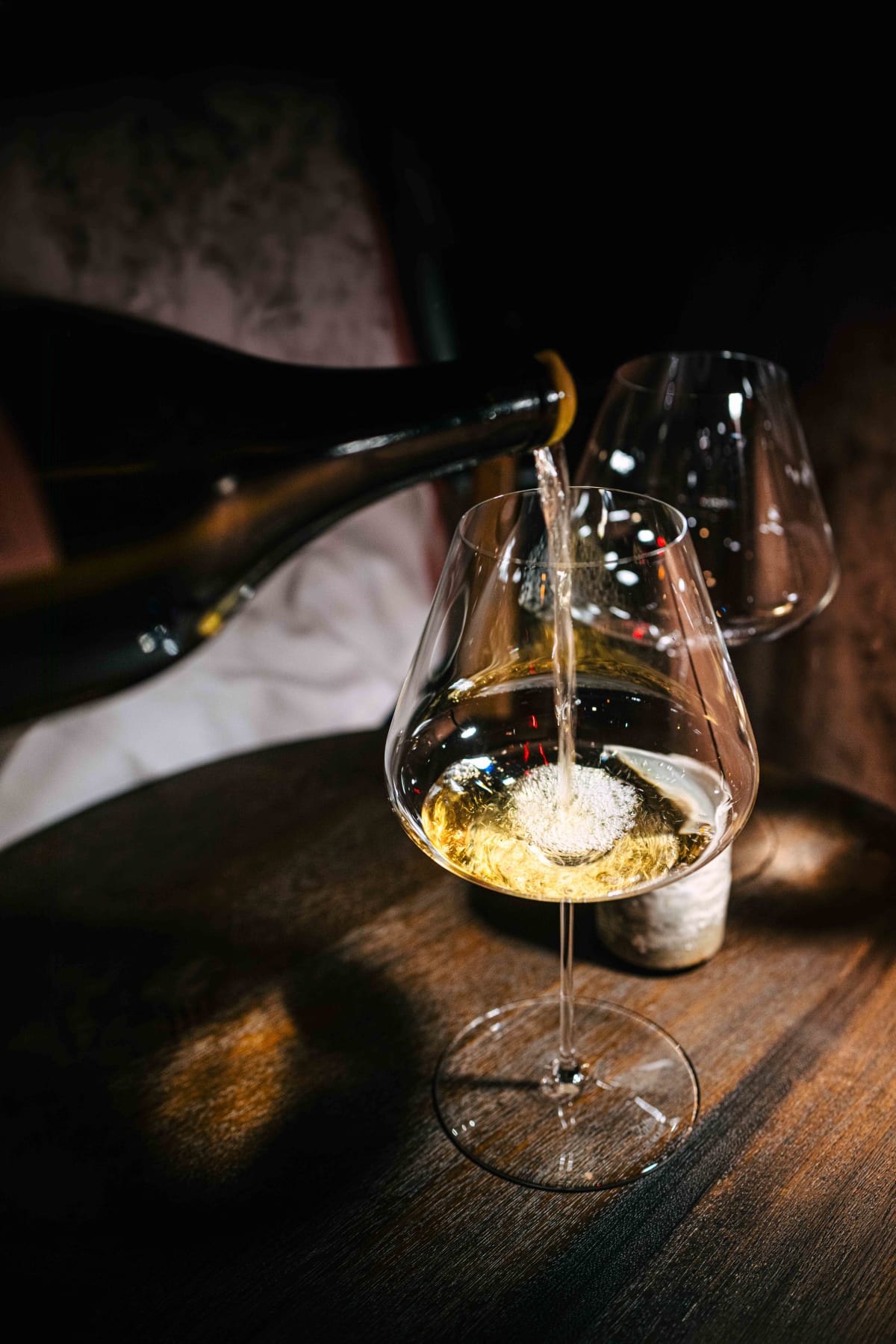
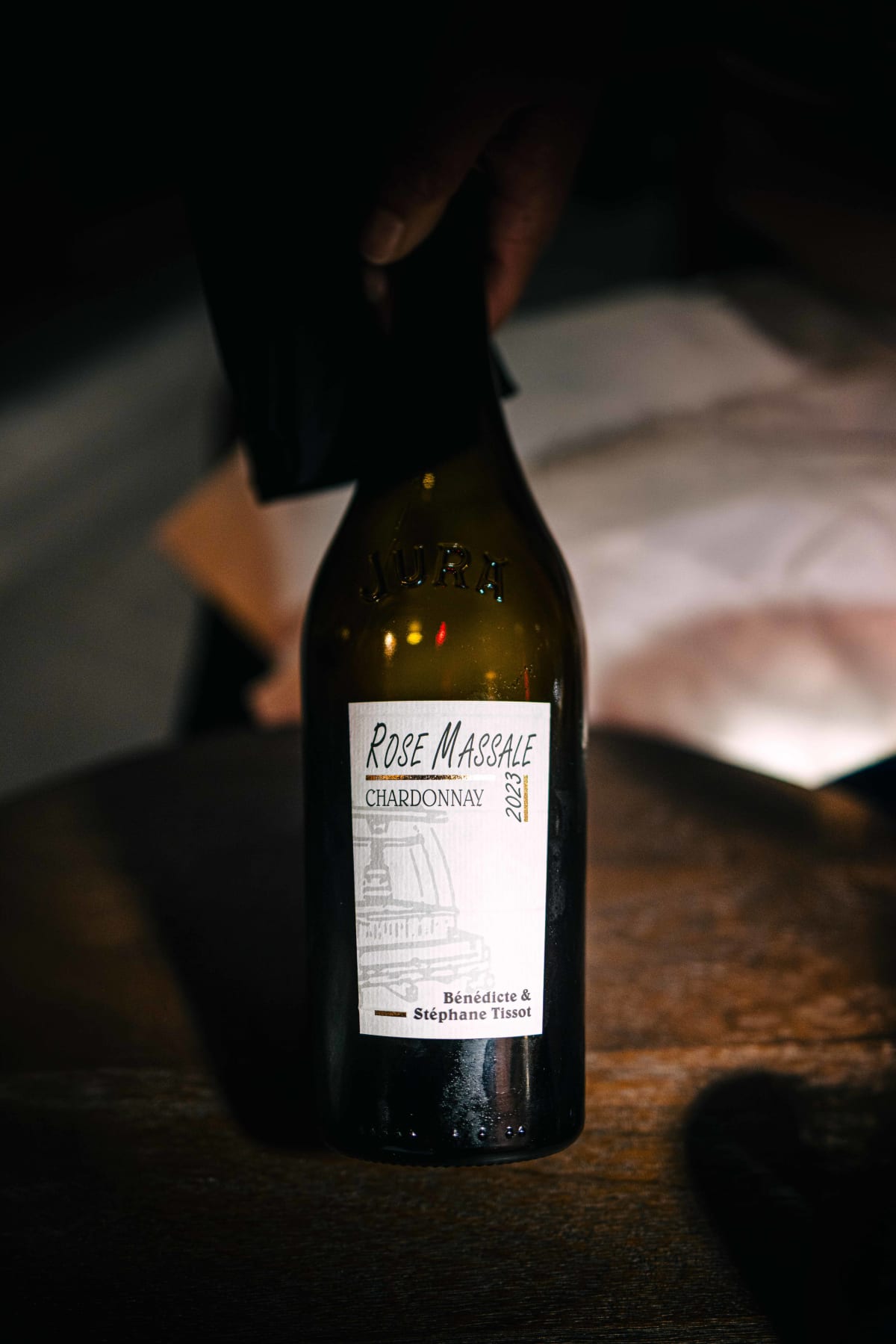
The wine moved to its second pour at this point, Bénédicte & Stéphane Tissot's "Rose Massale" Chardonnay Arbois 2023. Tissot is a relatively recent biodynamic producer in the Jura who identified an unusual clone among his Chardonnay vines, a clone whose leaves carry a faint pink wash and a lighter green than the standard, then propagated it onto three further plots to produce this single-varietal bottling. Hence the name, Rose Massale. The wine is one hundred percent Chardonnay. The character ran on a base of Jura natural-white sensibility but with a finer, more elevated tone than typical Jura naturals, and on quality alone it was clearly better than the opening Champagne. It was among the most satisfying wines of the pairing.
15—16 / 121
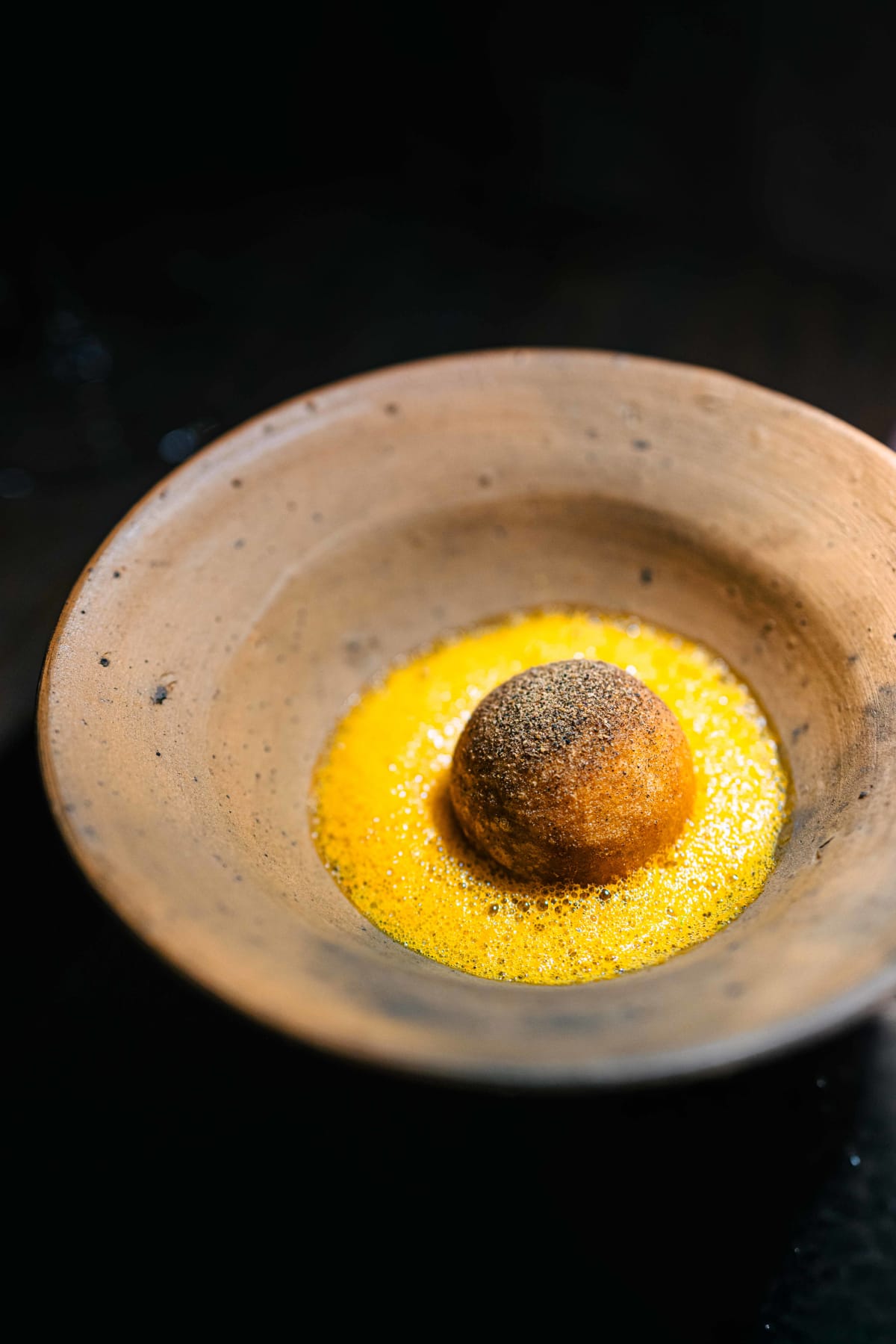
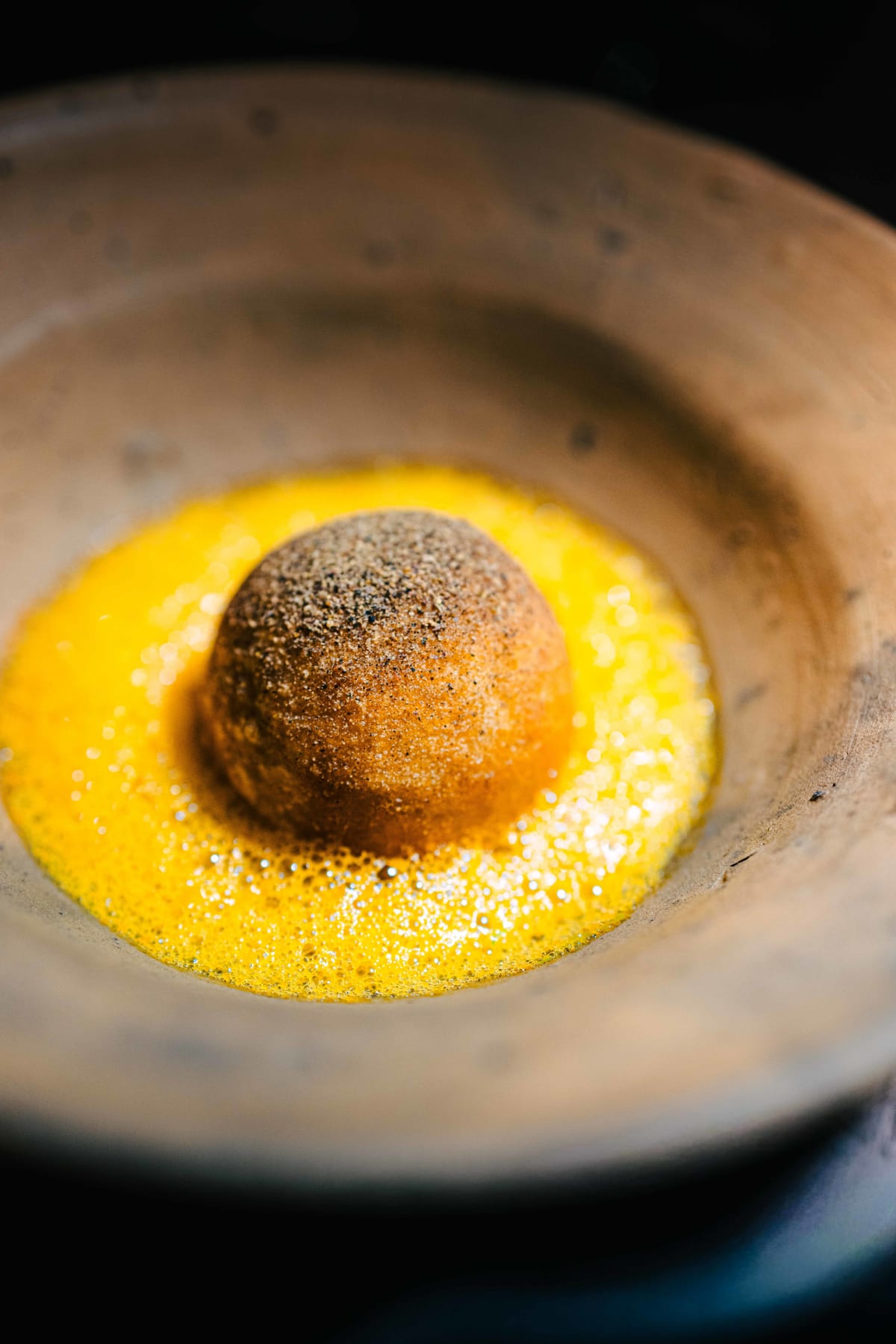
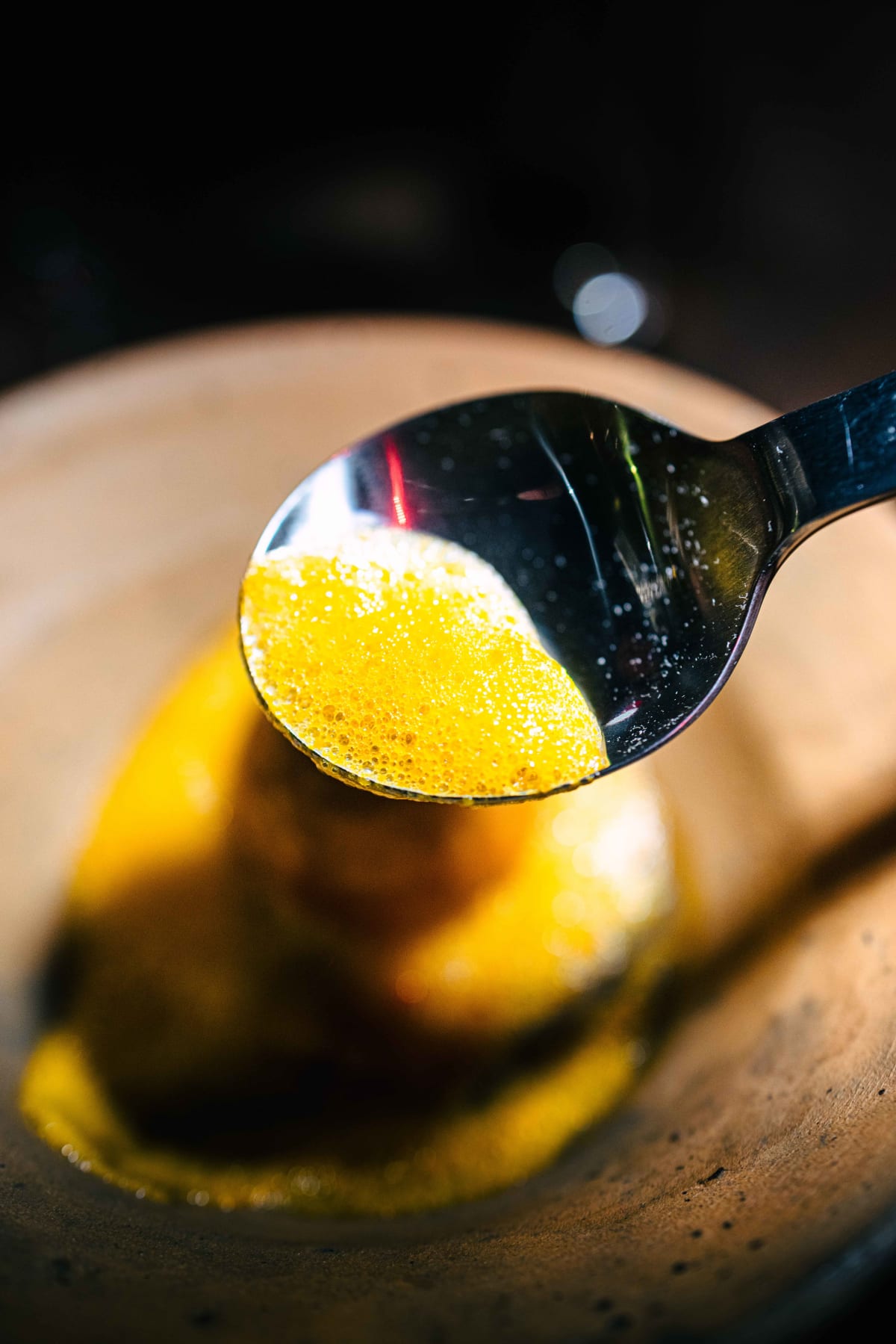
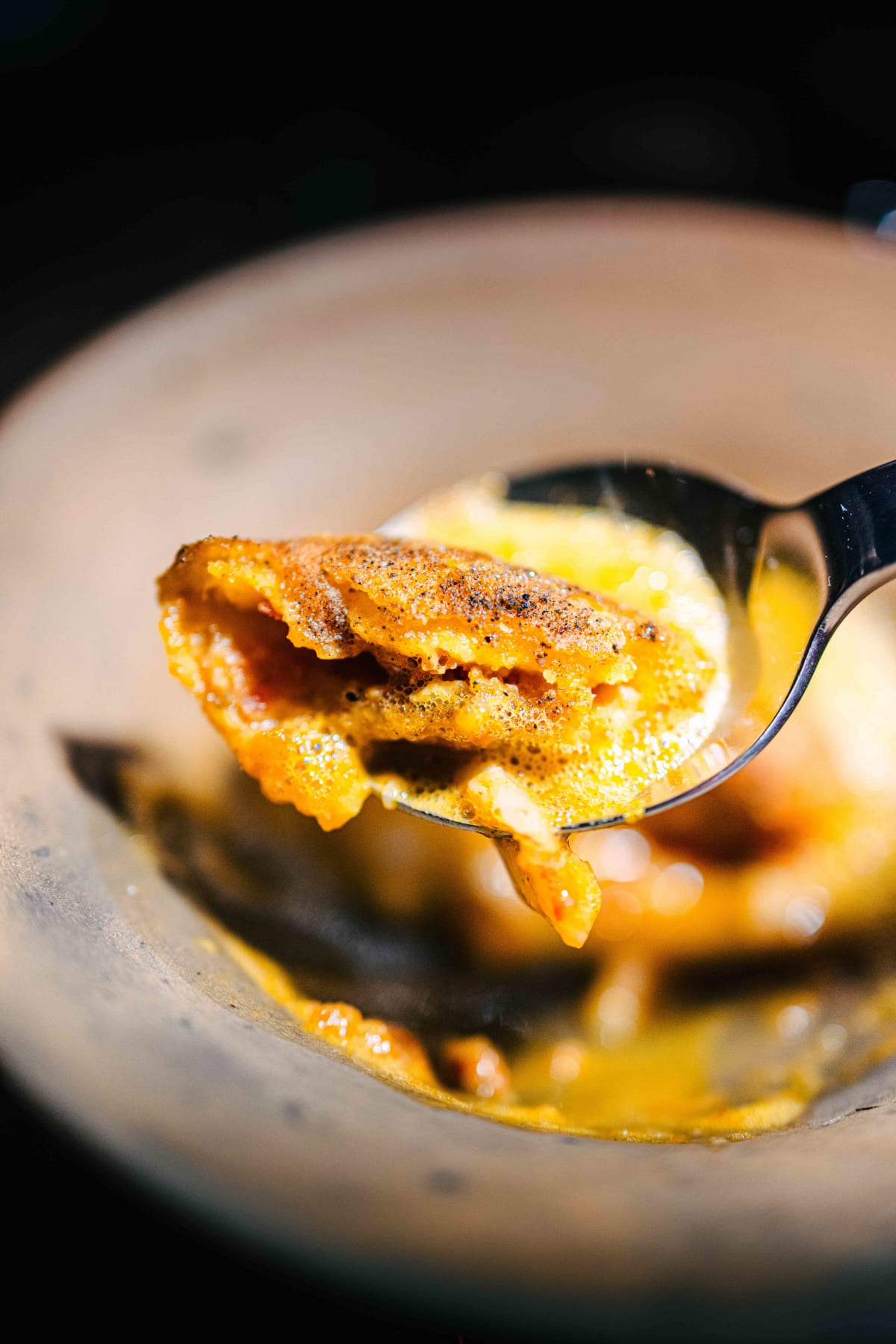
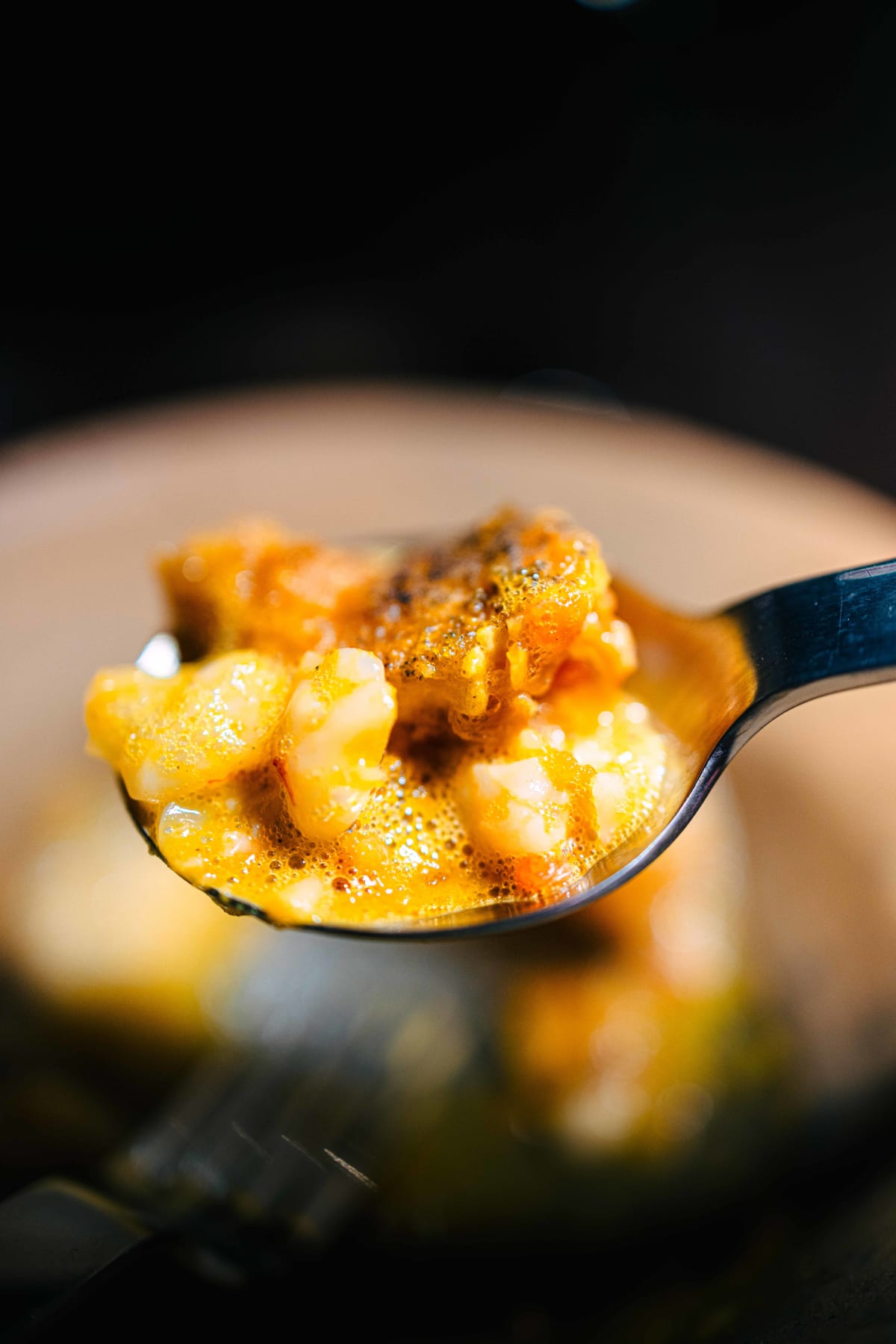
The third course was Fermented Carrot "Donut." A glutinous-rice-flour donut filled with fermented carrot, set above a royal red shrimp, with a foam built from caramelised carrot on top.
17—17 / 121
In a single bite the construction registered as delicate and high-end. The sweetness of the carrot and the depth of the shrimp held in balance, with the acidity of the fermented carrot running across the whole. What struck most, however, was the texture of the donut itself, a particular register reminiscent of nurungji, Korean scorched rice, with only the chewy interior portion retained and the crisp edge omitted. Across the sauce there was also a faint citrus-peel inflection, jinpi-like, which added another layer of depth. The amount of layering compressed into a single bite was the takeaway.
18—21 / 121
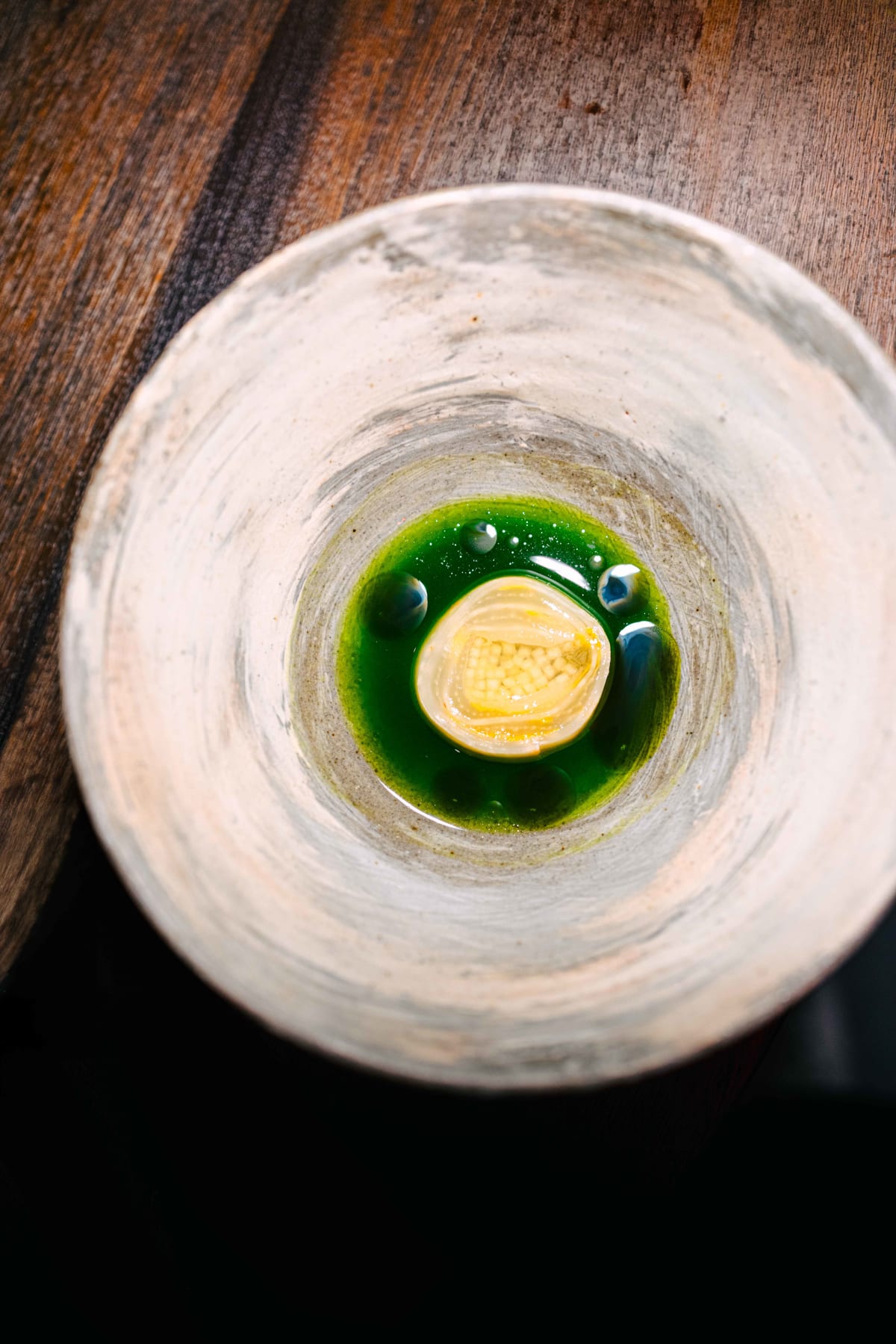
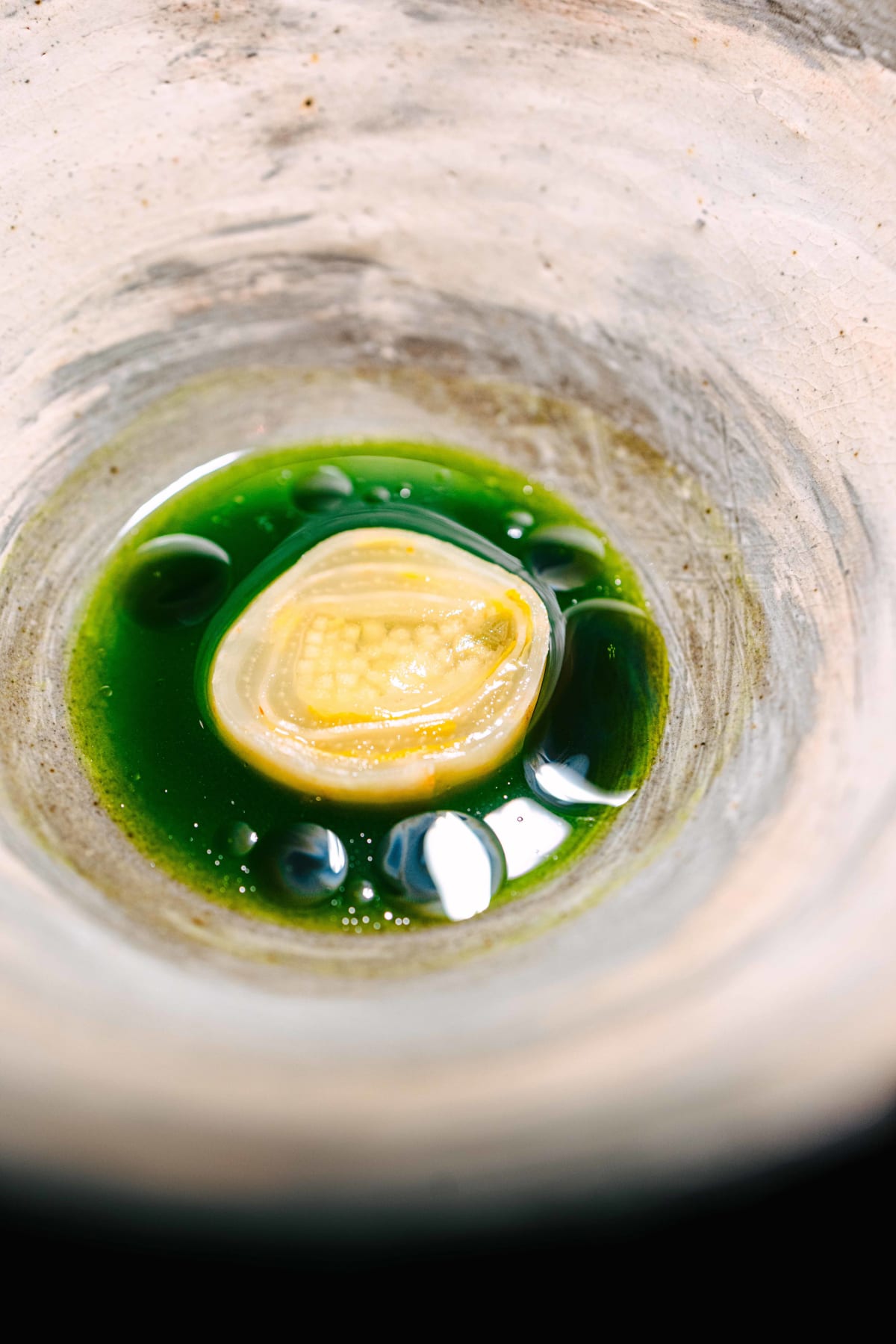
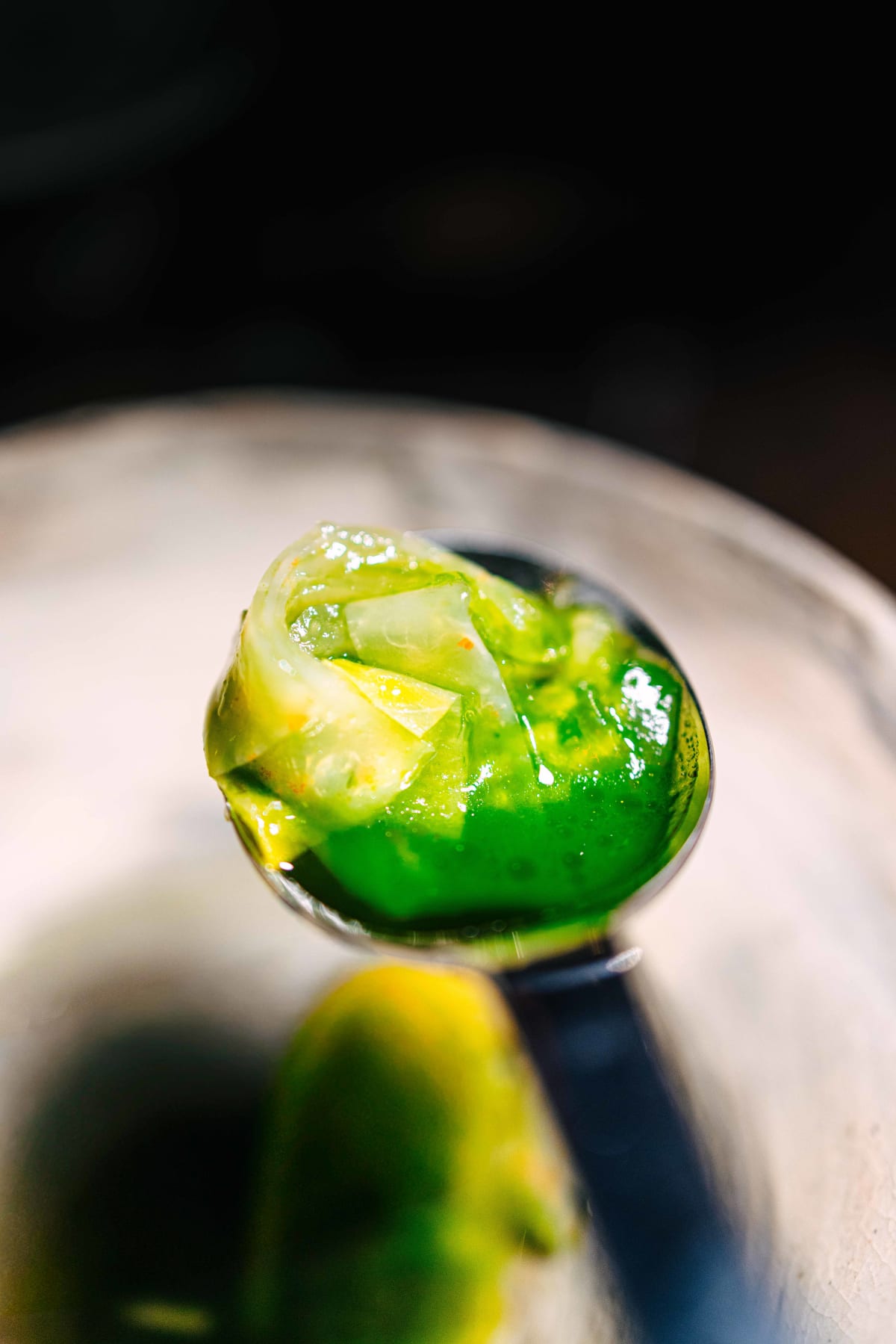
The fourth course was Preserved Seasonality. Endive and garlic pickled in sweet chili, with EverCrisp apple wrapped in celery on top, all set above a green juice built from pine needle vinegar, watercress, cilantro, and parsley. The vegetable textures held well. The sauce ran with a clean acidity carrying a fine effervescent quality, and a faint spice quality came through at the back, which was the noteworthy detail.
23—26 / 121
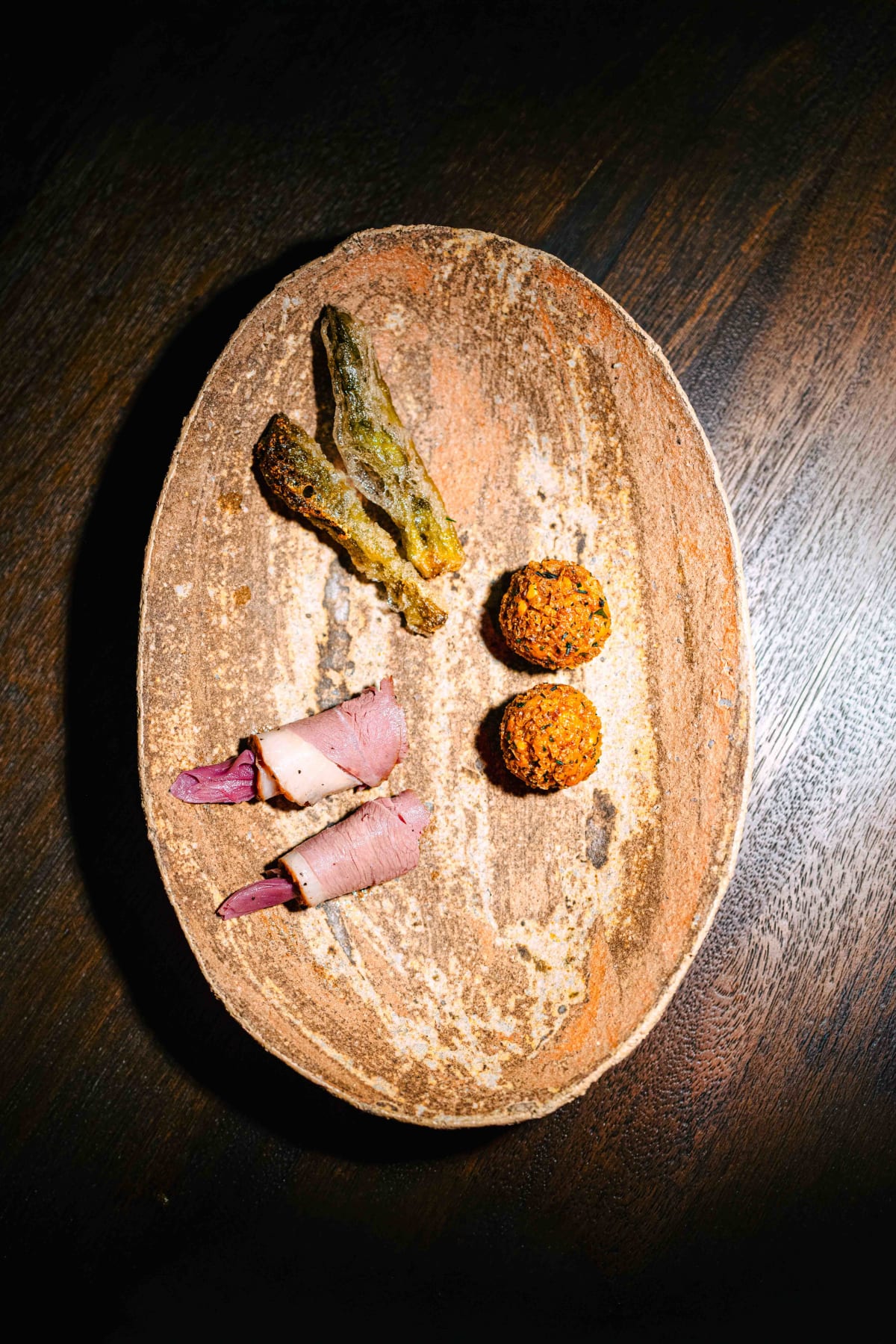
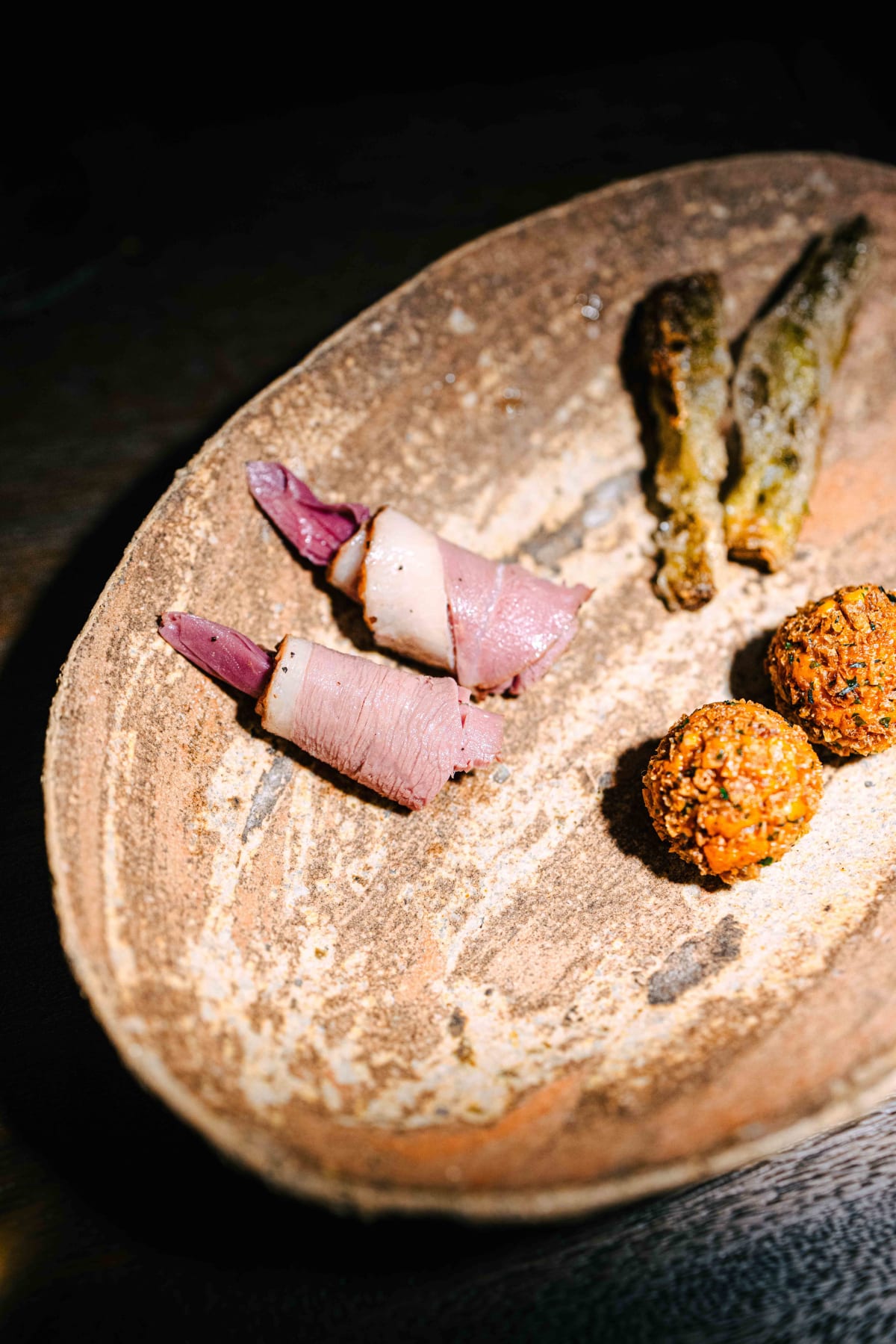
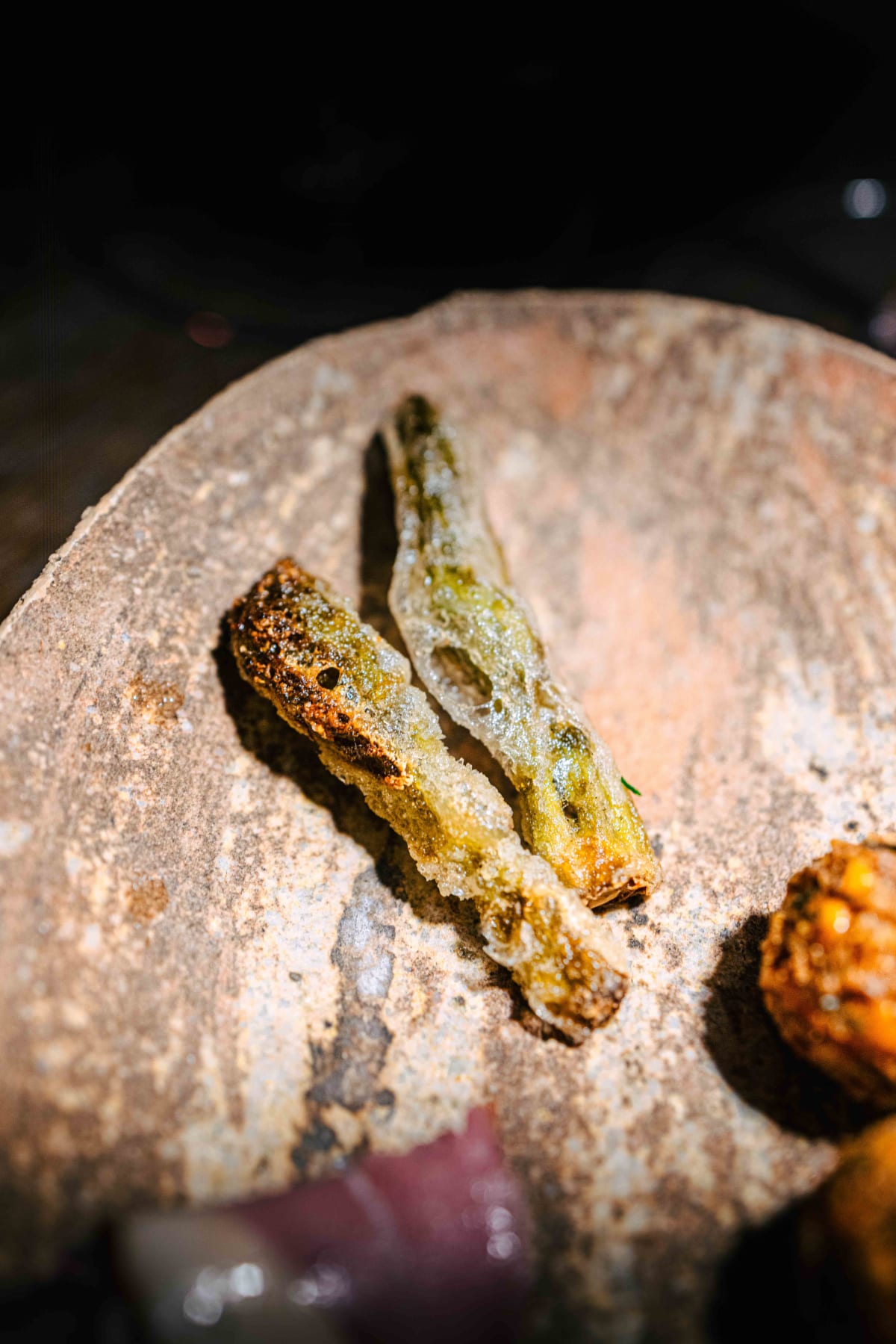
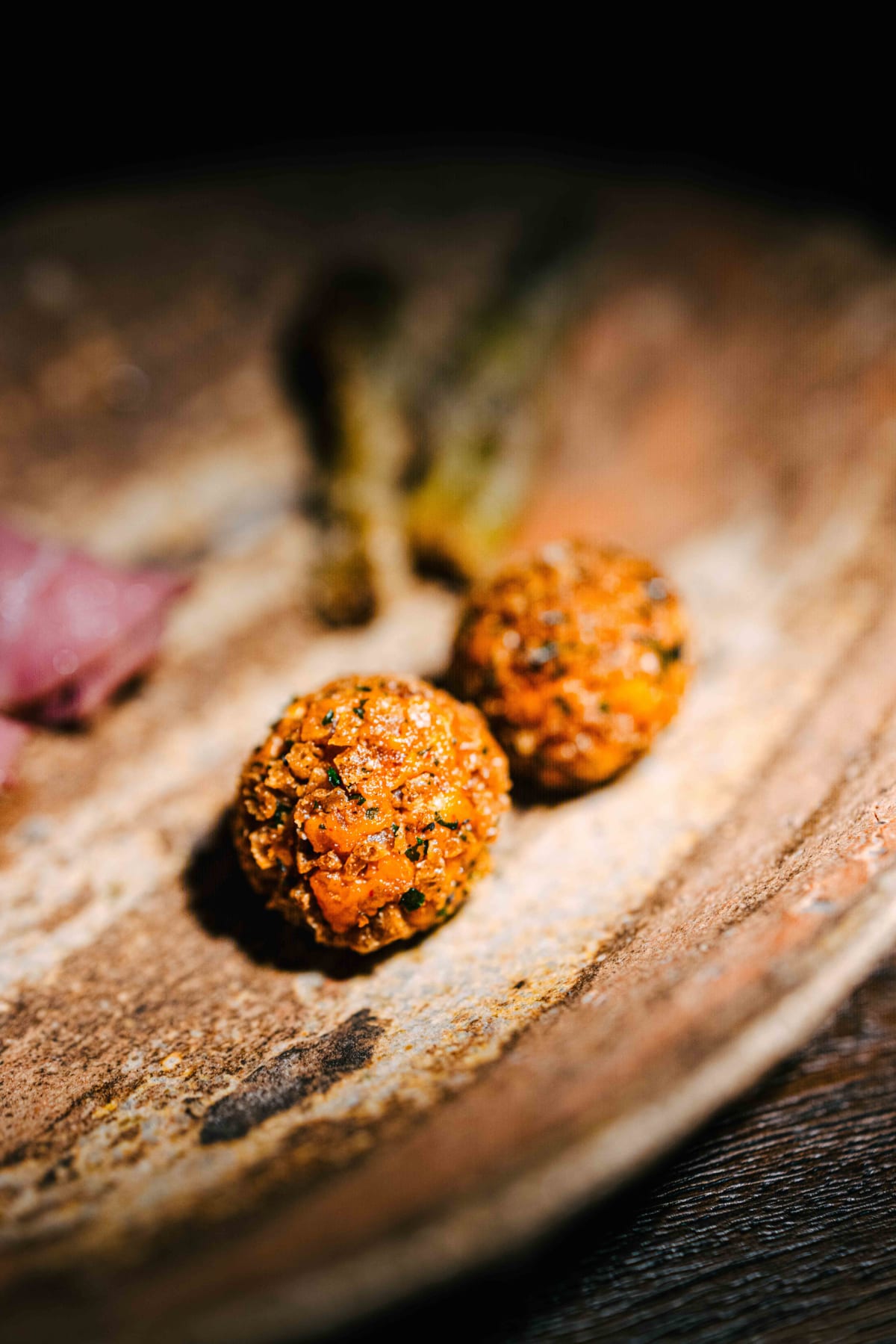
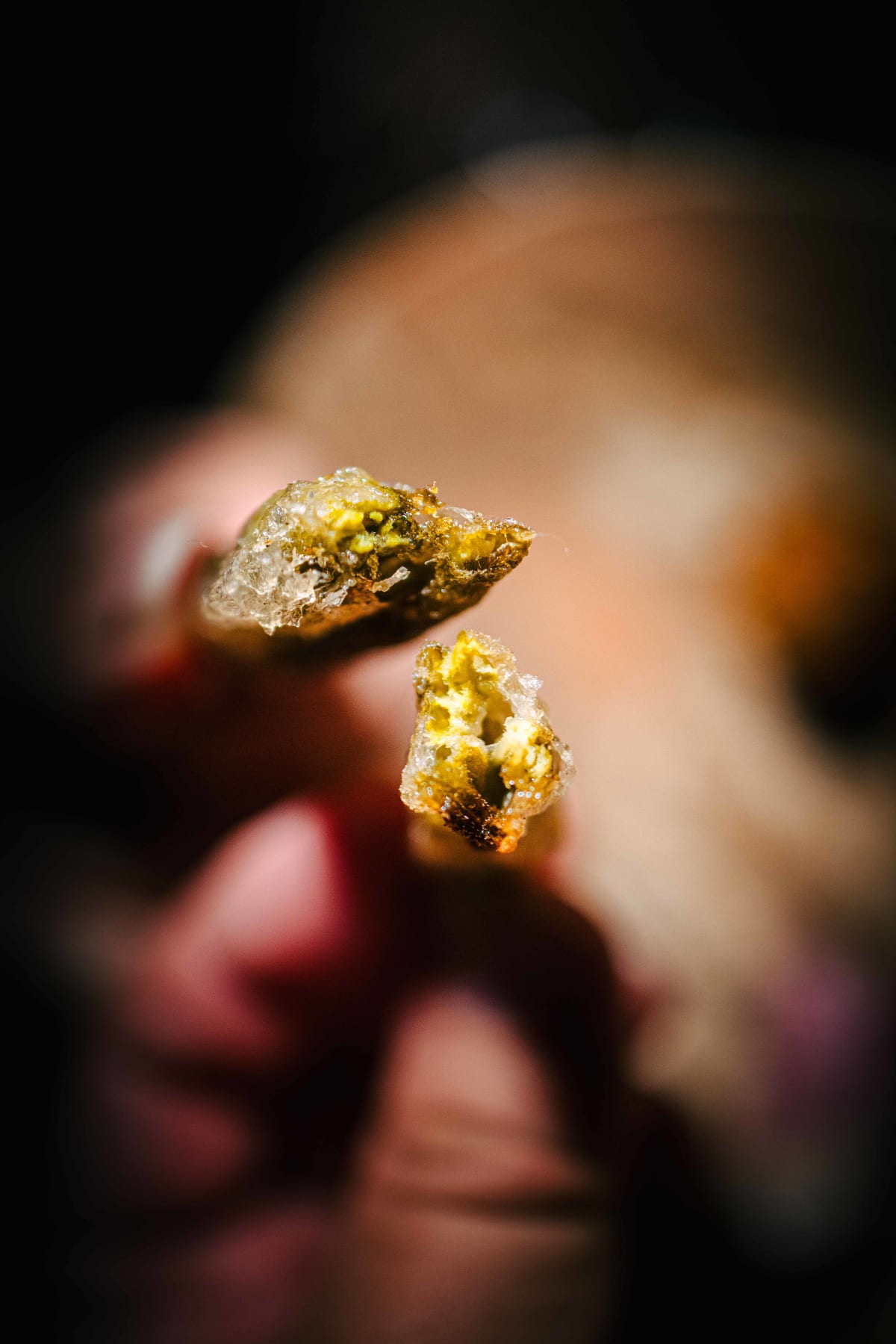
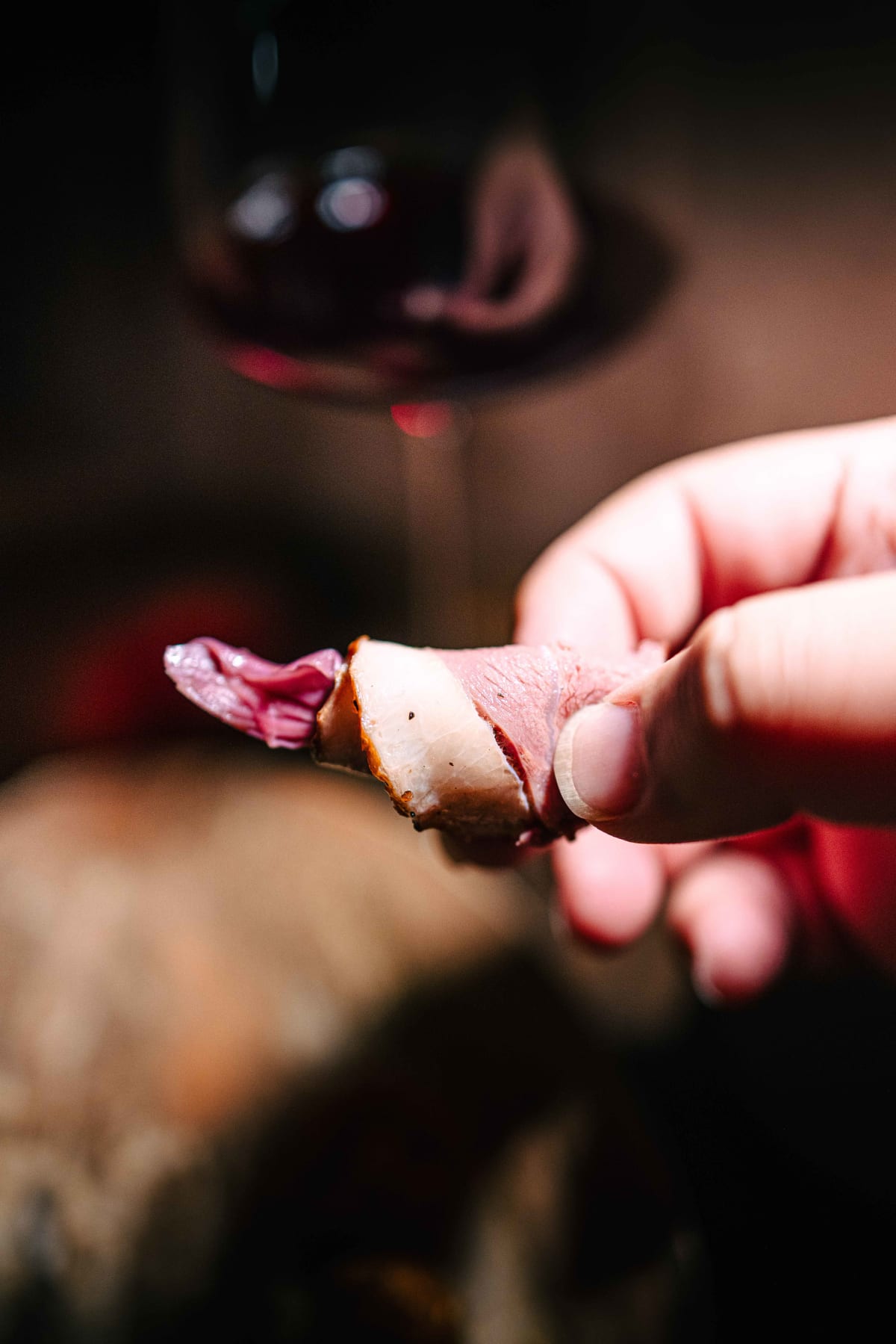
The fifth course was Cured Meats, House Selection, a mini amuse trio of three small bites.
29—29 / 121
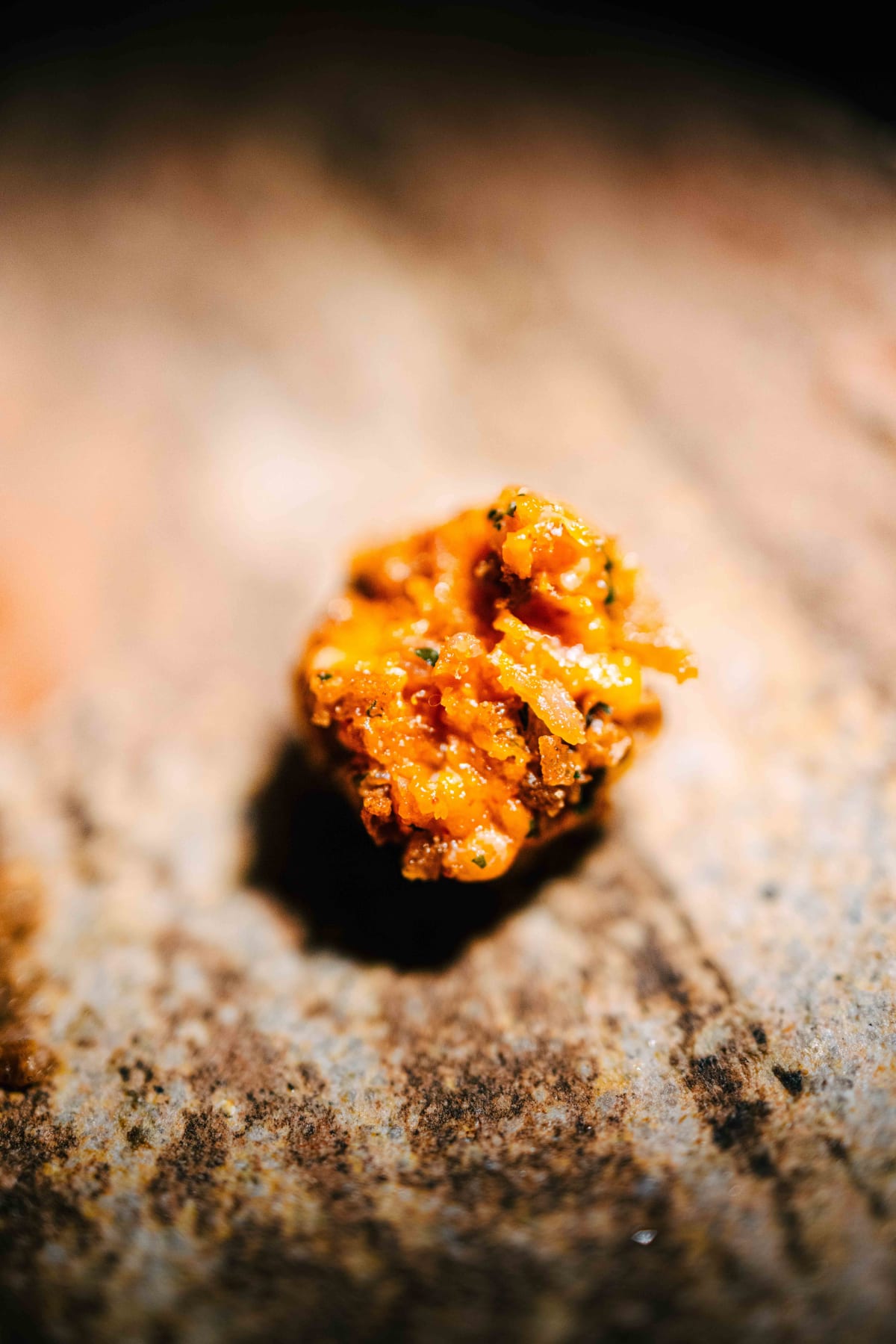
The first was a fried chili, a soft and yielding version rather than a crisp one, which read as an intentional texture choice rather than a fault, though the bite landed at ordinary level overall with almost no heat. The second was the strongest of the three, a piece of well-flavoured hard cured ham wrapped around a bright pickle that came through clean against the salt of the cure. The third was an 'Nduja shaped like a small round arancini, the cured paste rolled in sourdough crumbs and fried after five days of cure: crisp on the outside, moist within, and good in flavour, though on the salty side with the chili heat following close behind.
30—35 / 121
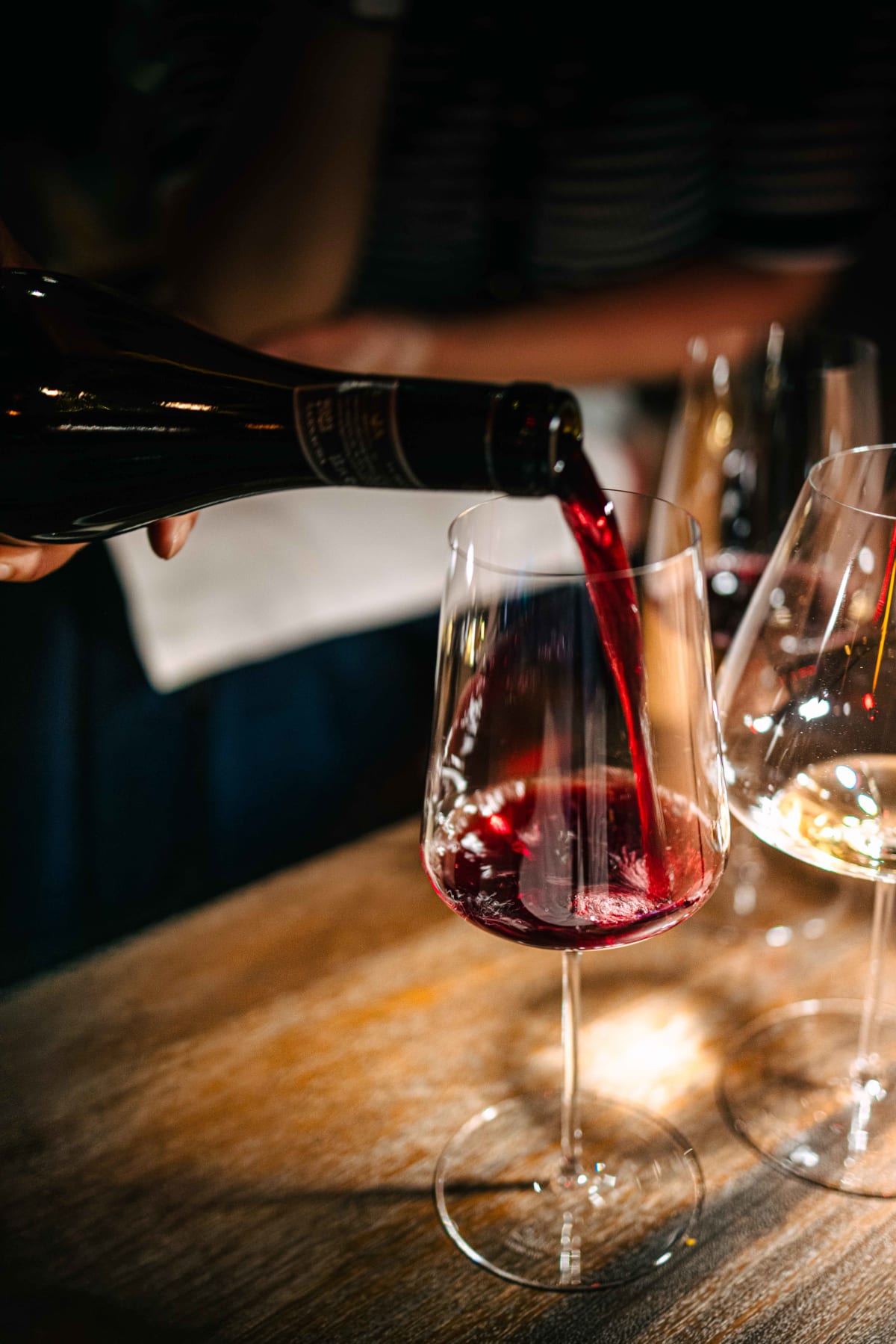
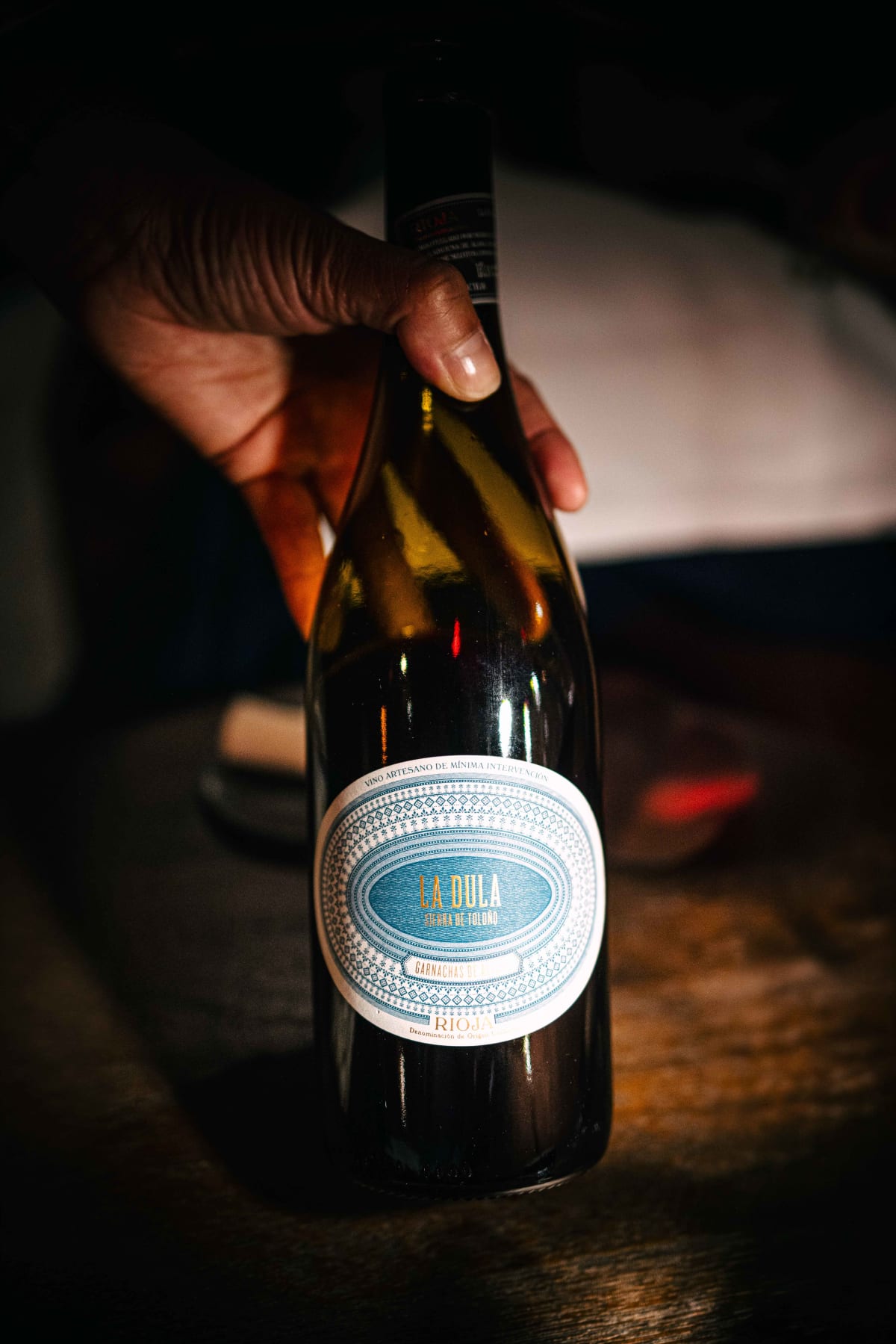
The third pairing arrived at this point, Sandra Bravo's Sierra de Toloño "La Dula" Rioja 2023, one hundred percent Garnacha from Rioja Alavesa. The first sip carried a heavy lactic register from malolactic fermentation, but by the second sip the wine had pivoted into an explosive fruit-forward profile, particularly strawberry, that reshaped the whole impression. The way the wine shifted character on the time axis was genuinely interesting and made for an enjoyable pour.
27—28 / 121
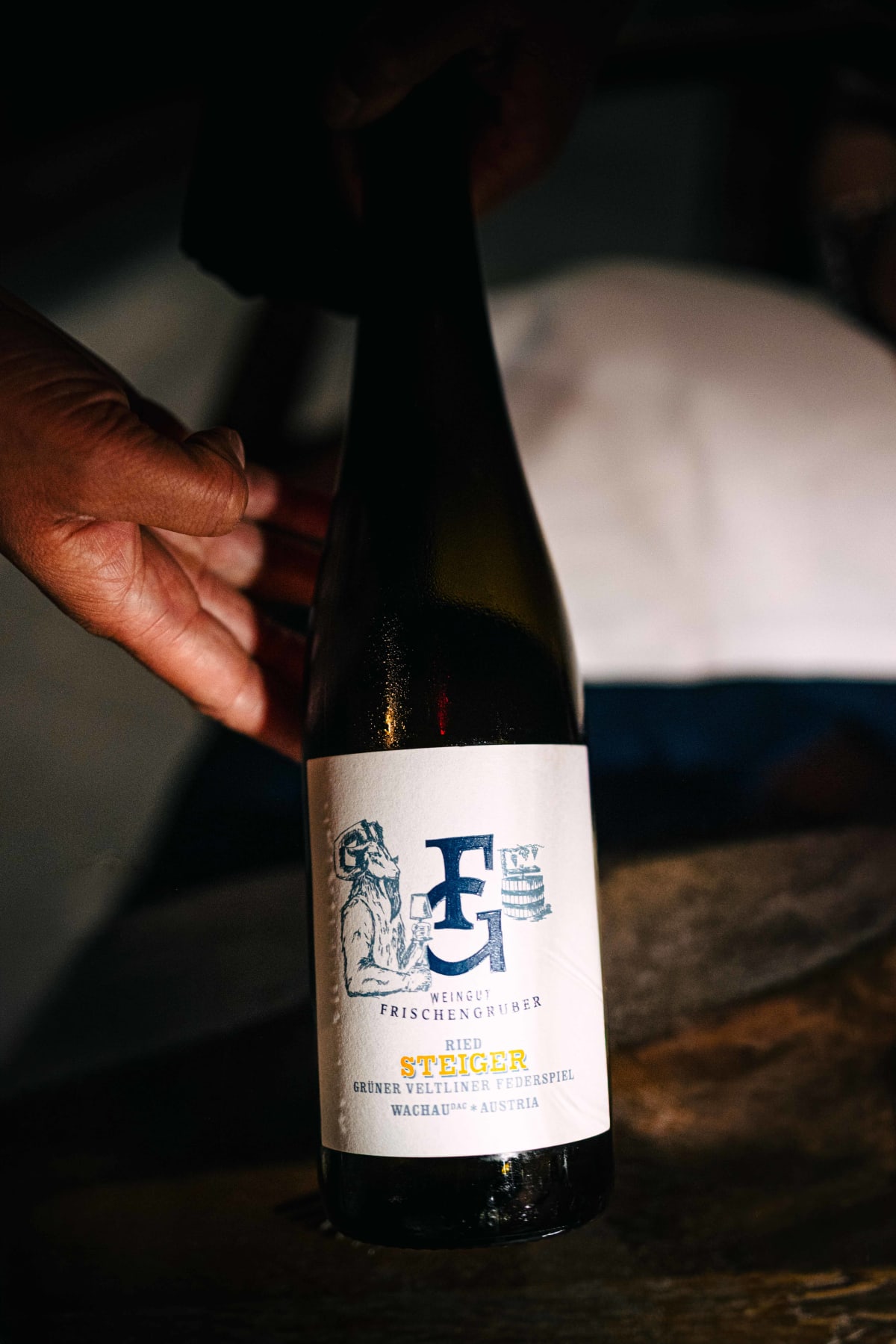
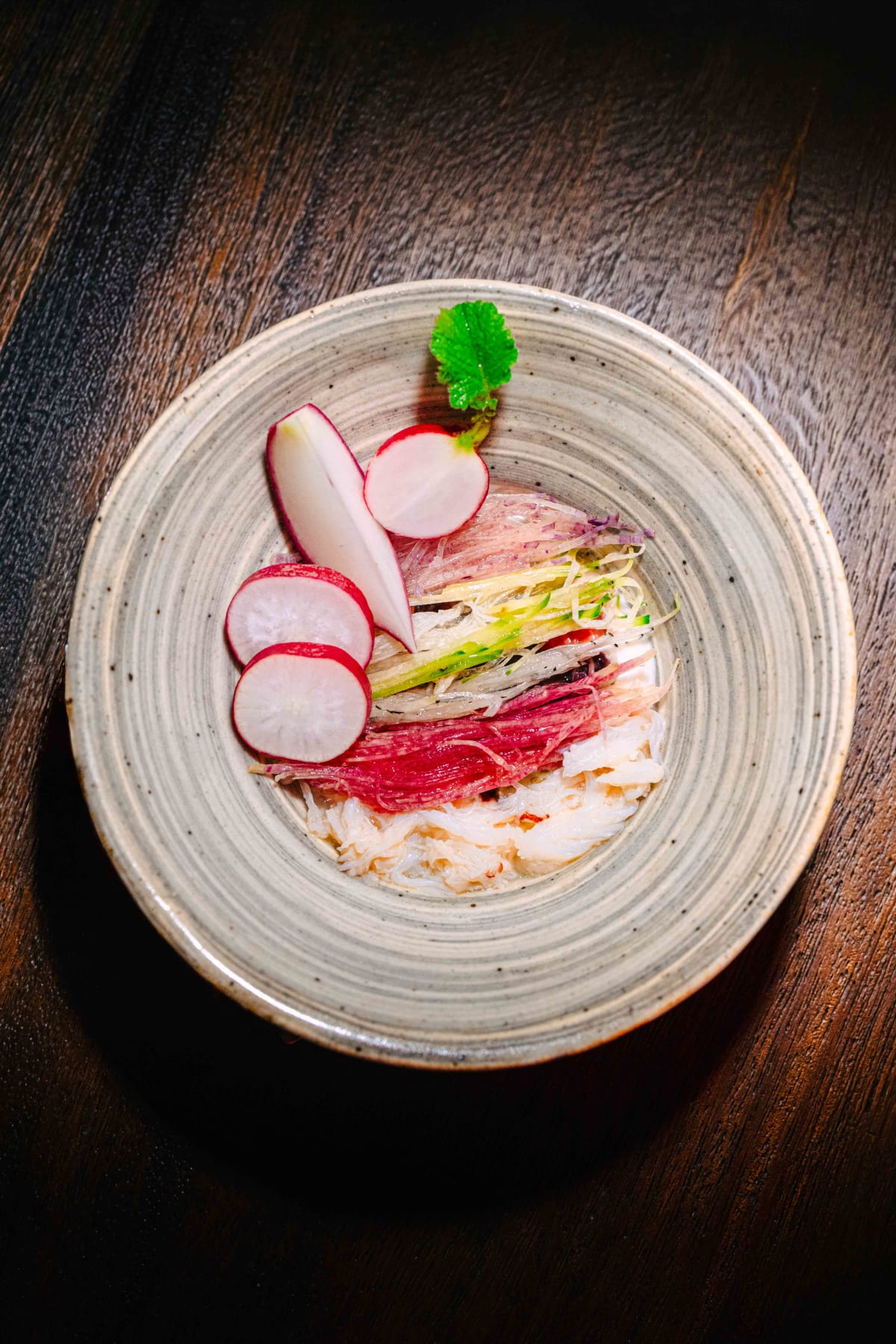
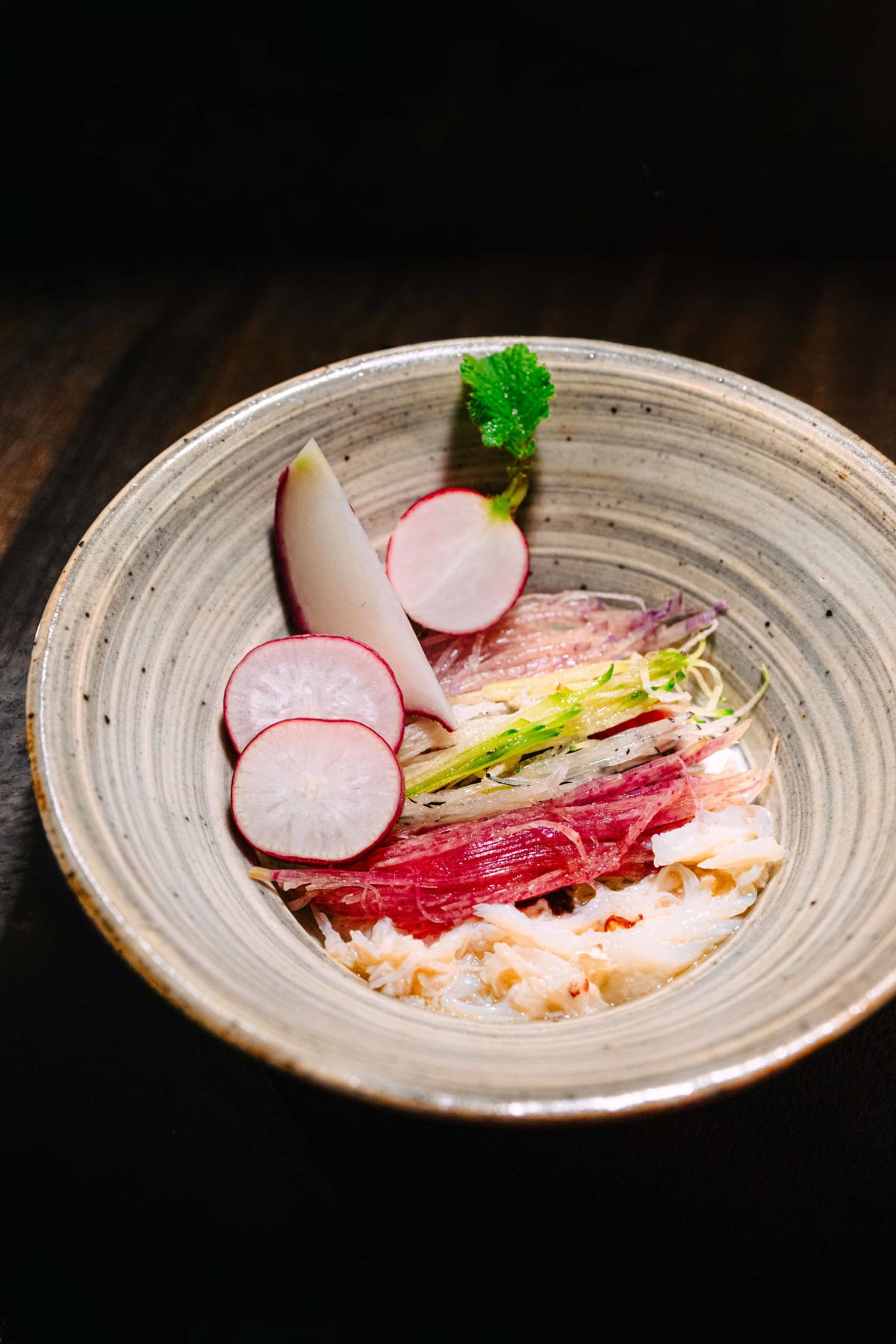
The sixth course was Textures of Radish. The wine moved back to white for this one, with Georg Frischengruber's Grüner Veltliner Federspiel "Steiger" Wachau 2023. A wine built on minerality, freshness, and terroir expression. The varietal's characteristic oily aromatics carried in balance with a light oak touch, and the acidity held in working position, with a fresh impression overall.
36—36 / 121
The dish itself was structured around thinly sliced radish, Hokkaido snow crab, rhubarb, and a crème fraîche built from sake lees, the rice wine sediment left after sake fermentation, with royal red shrimp set beneath the lees crème. Perilla leaf and a radicchio marmalade sat above.
38—38 / 121
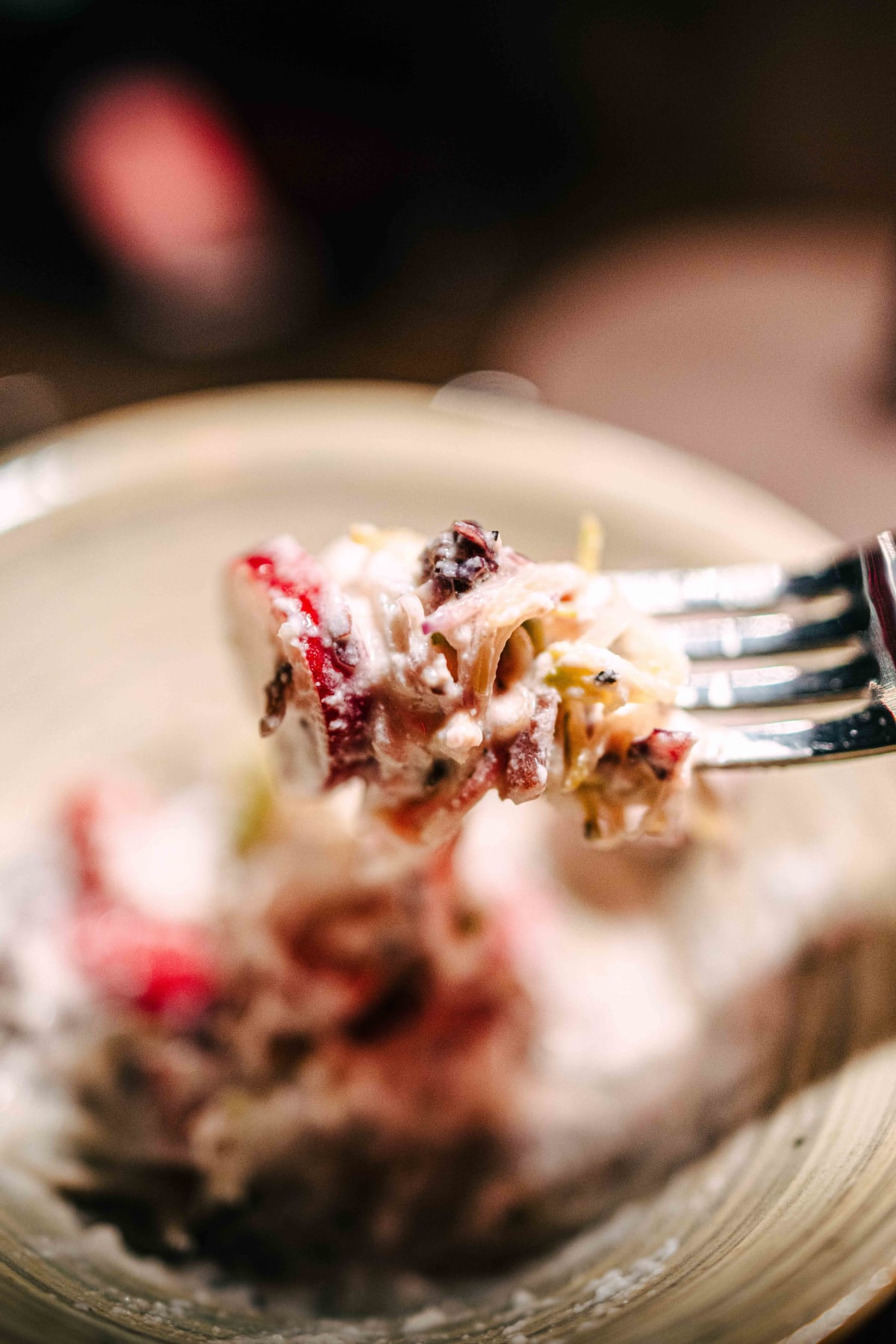
The server suggested taking the layers separately to read the textures and flavours one at a time. The crab quality was high, the vegetables crisp, the slight spice of the radish working cleanly against the crab. Taken together as a whole, the plate read more as a Russian-salad or crab-salad register dominated by the creamy underlay, and at that point the individual character of the crab and the vegetables began to blur into one another.
37—39 / 121
What was interesting was the fruit register I picked up somewhere on the plate, a faint cherry note, despite no actual cherry being involved. The radicchio marmalade was the source, contributing a berry-cherry tonality through the marmalade alone. If intentional, the precision of the aromatic construction was high-level.
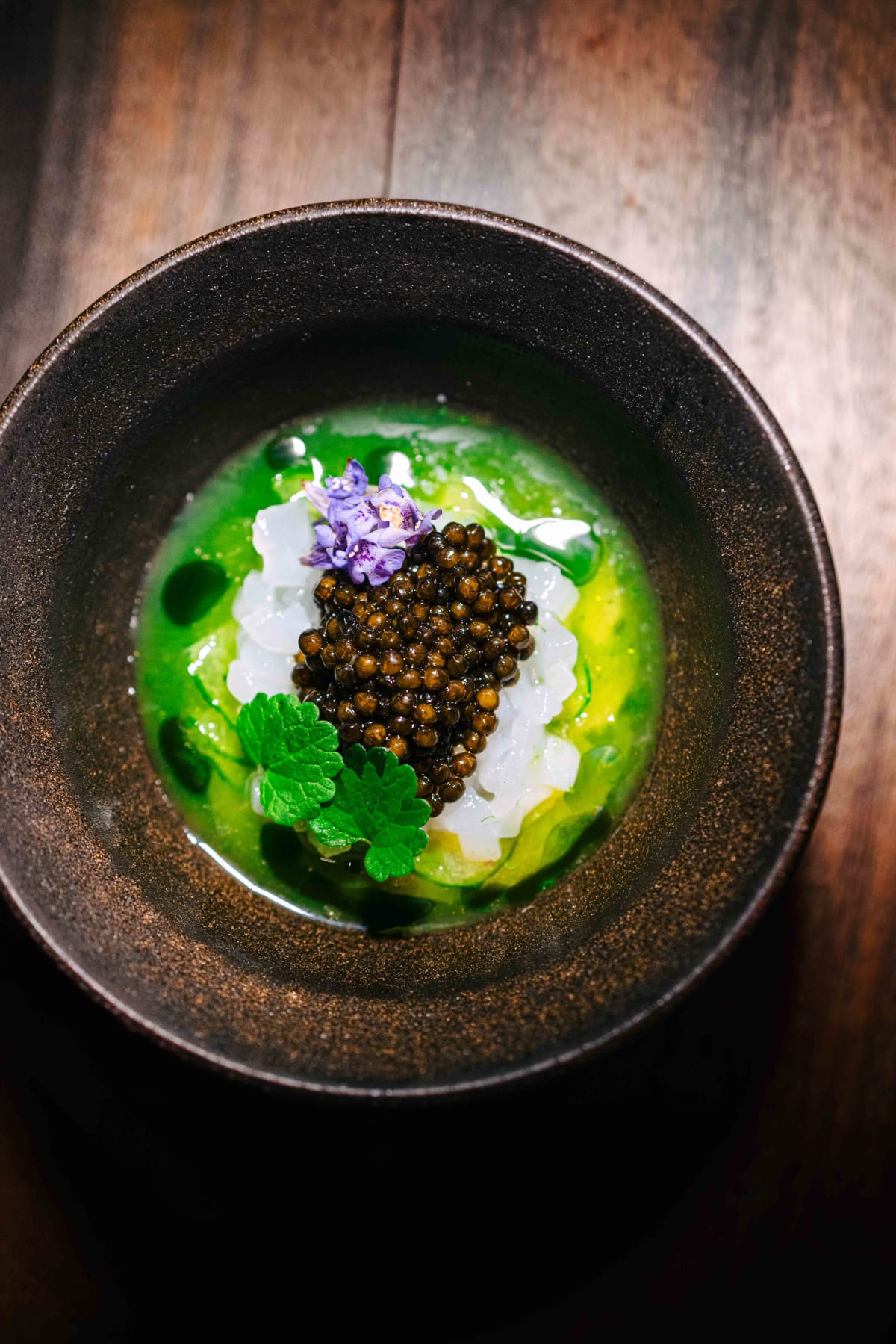
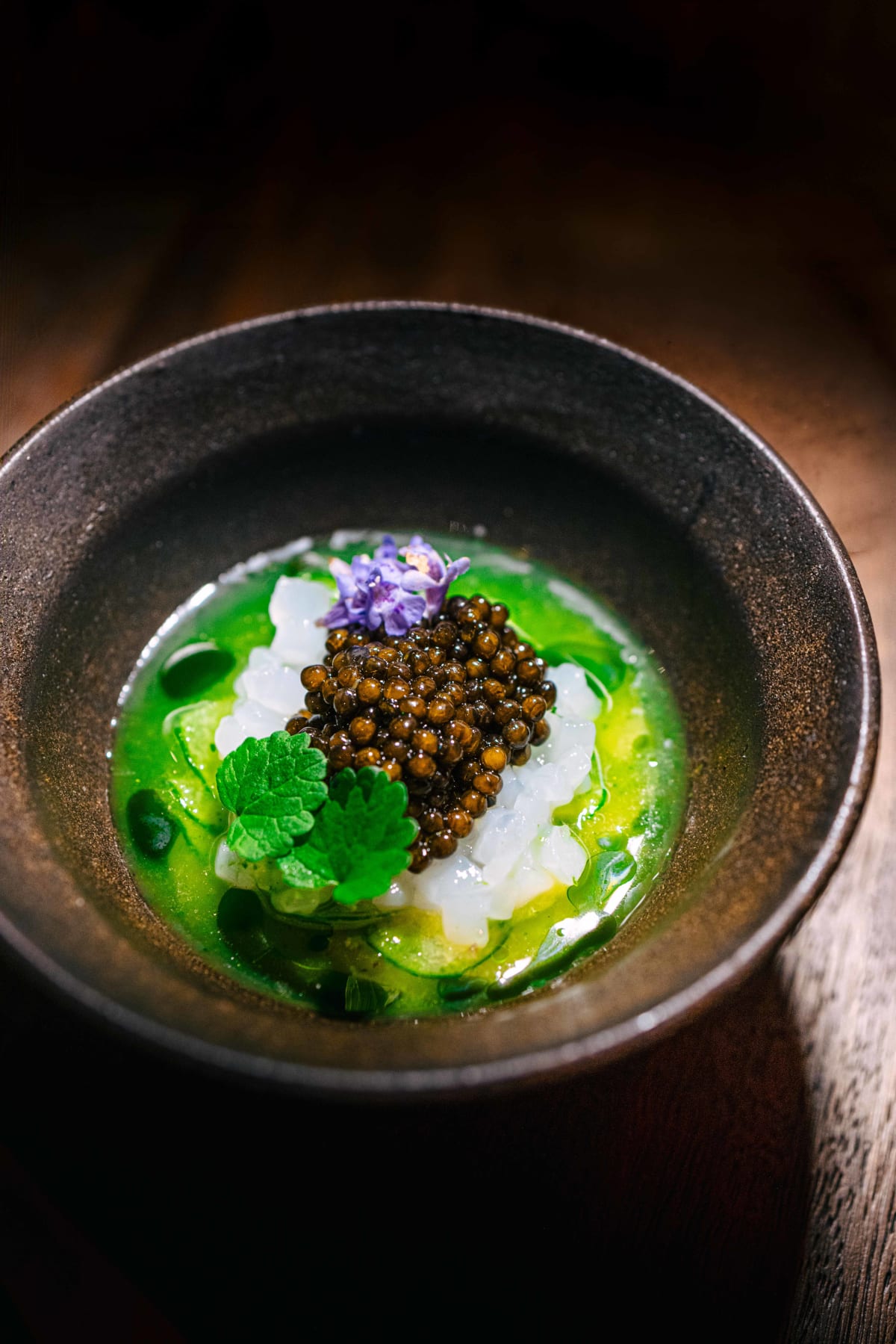
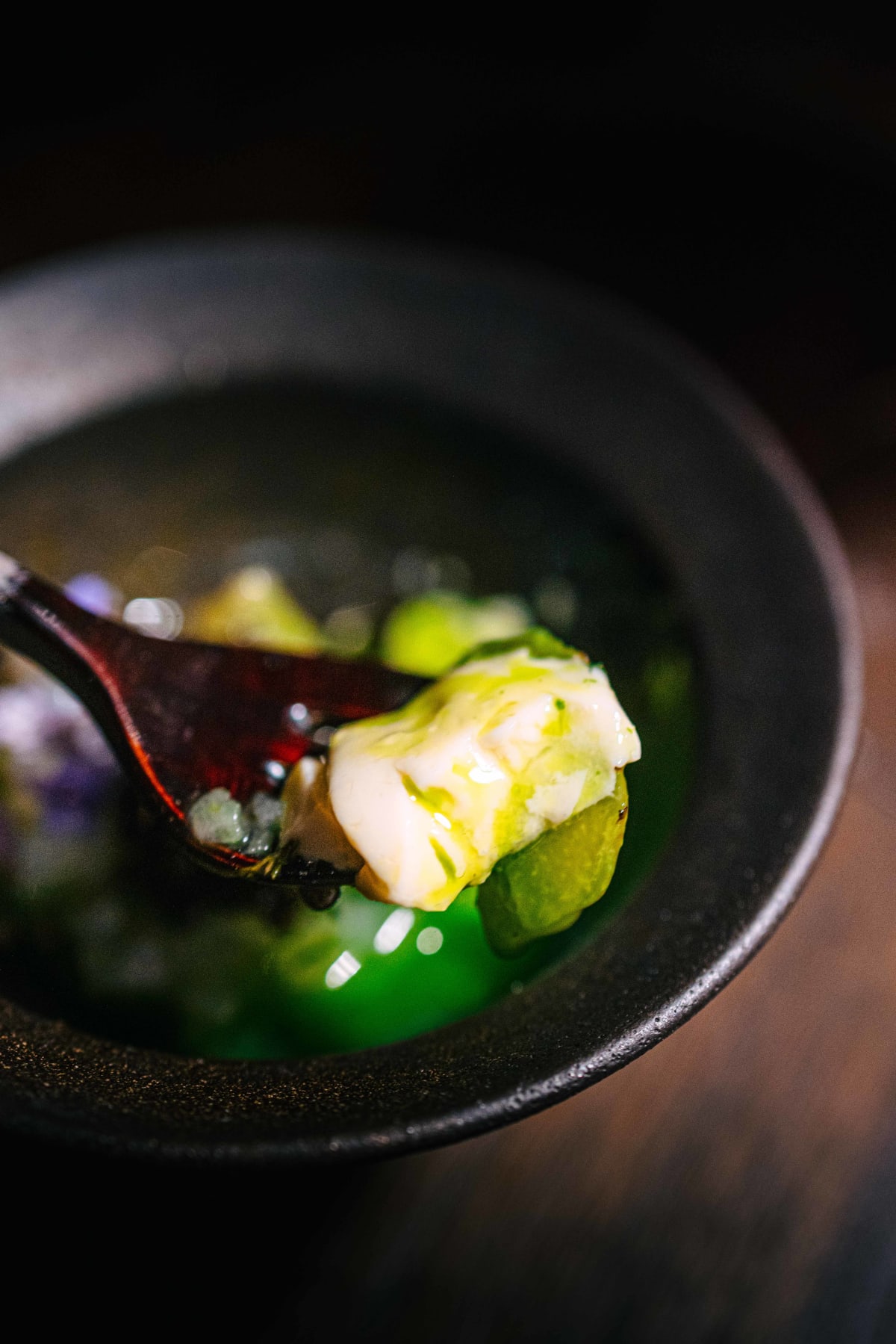
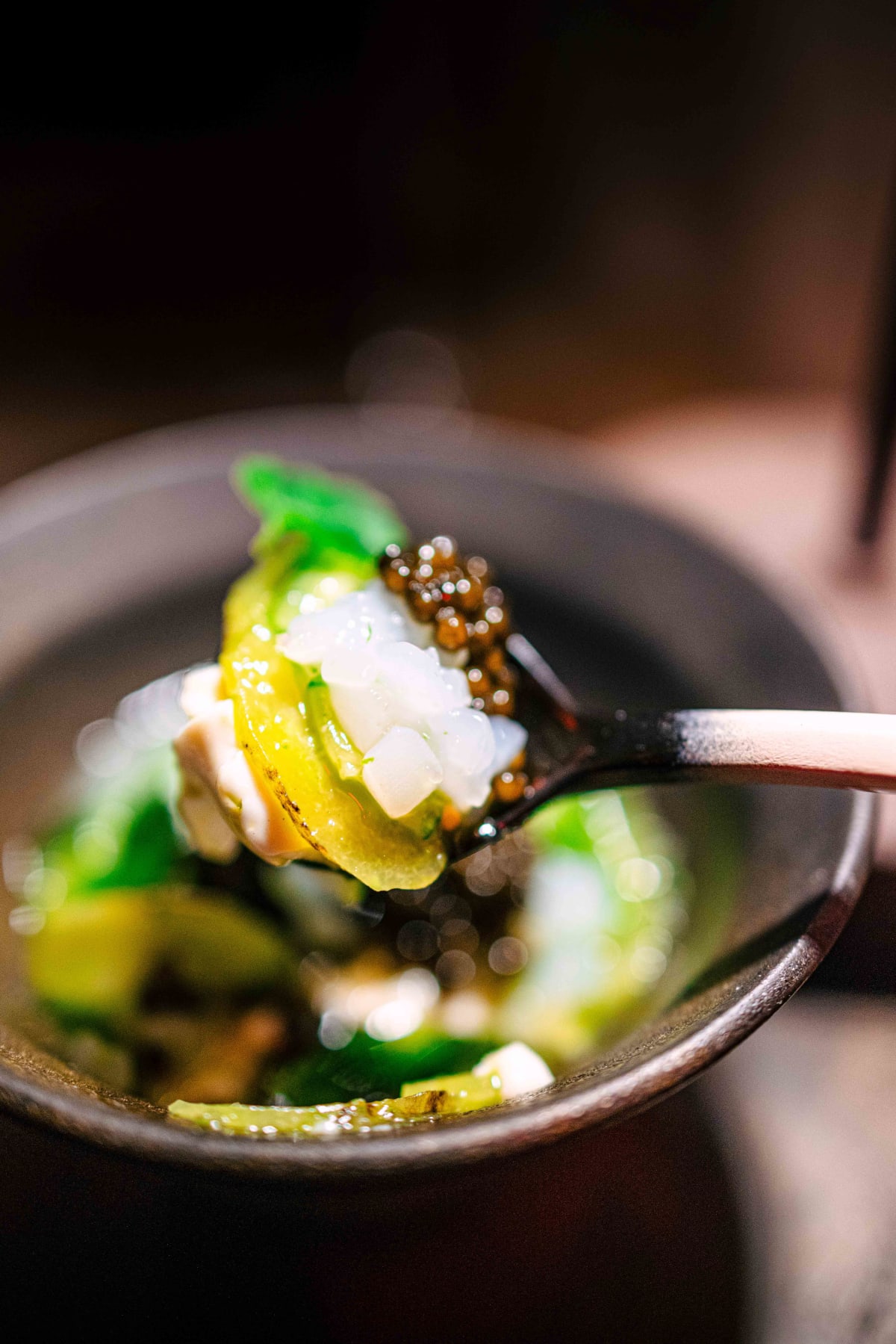
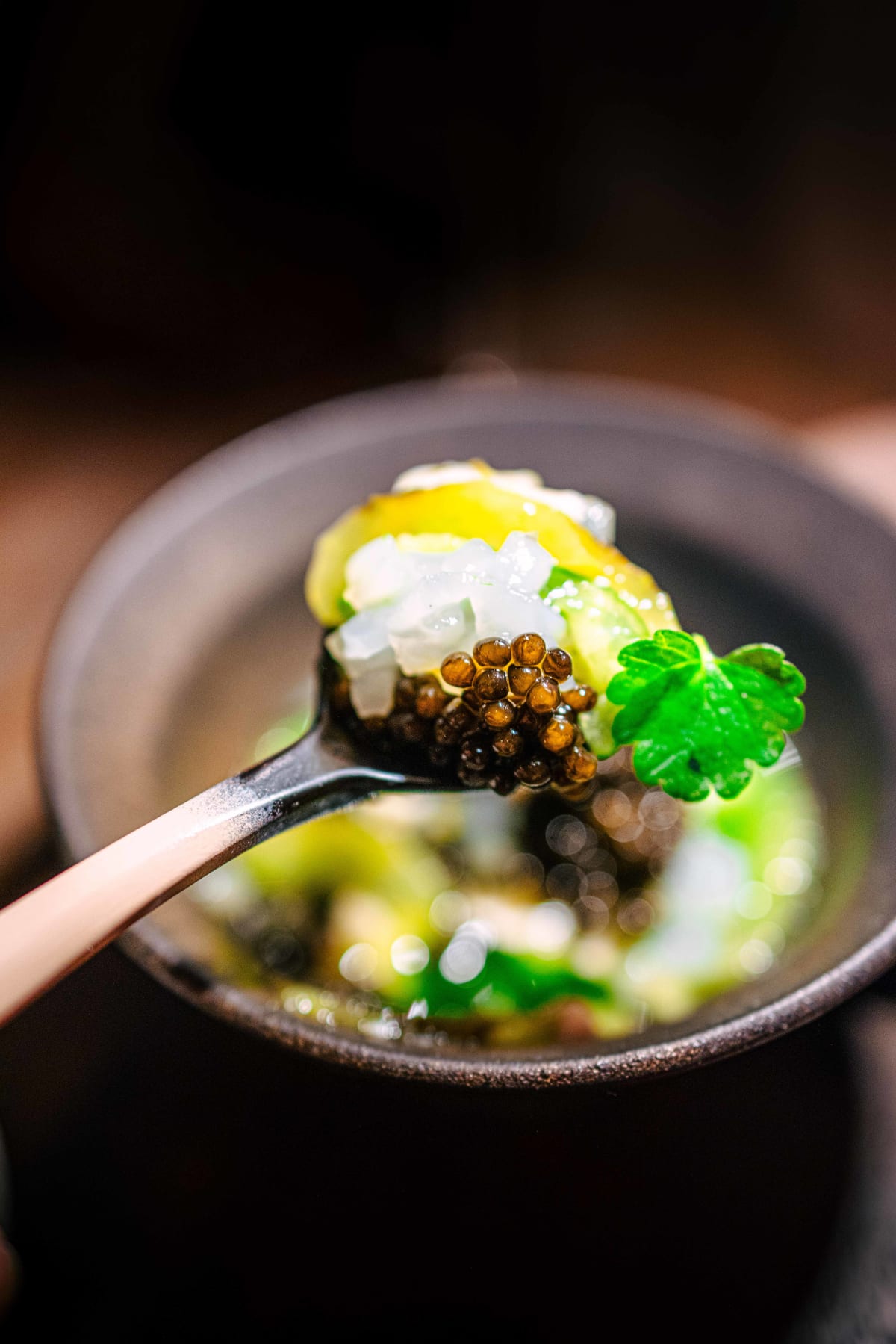
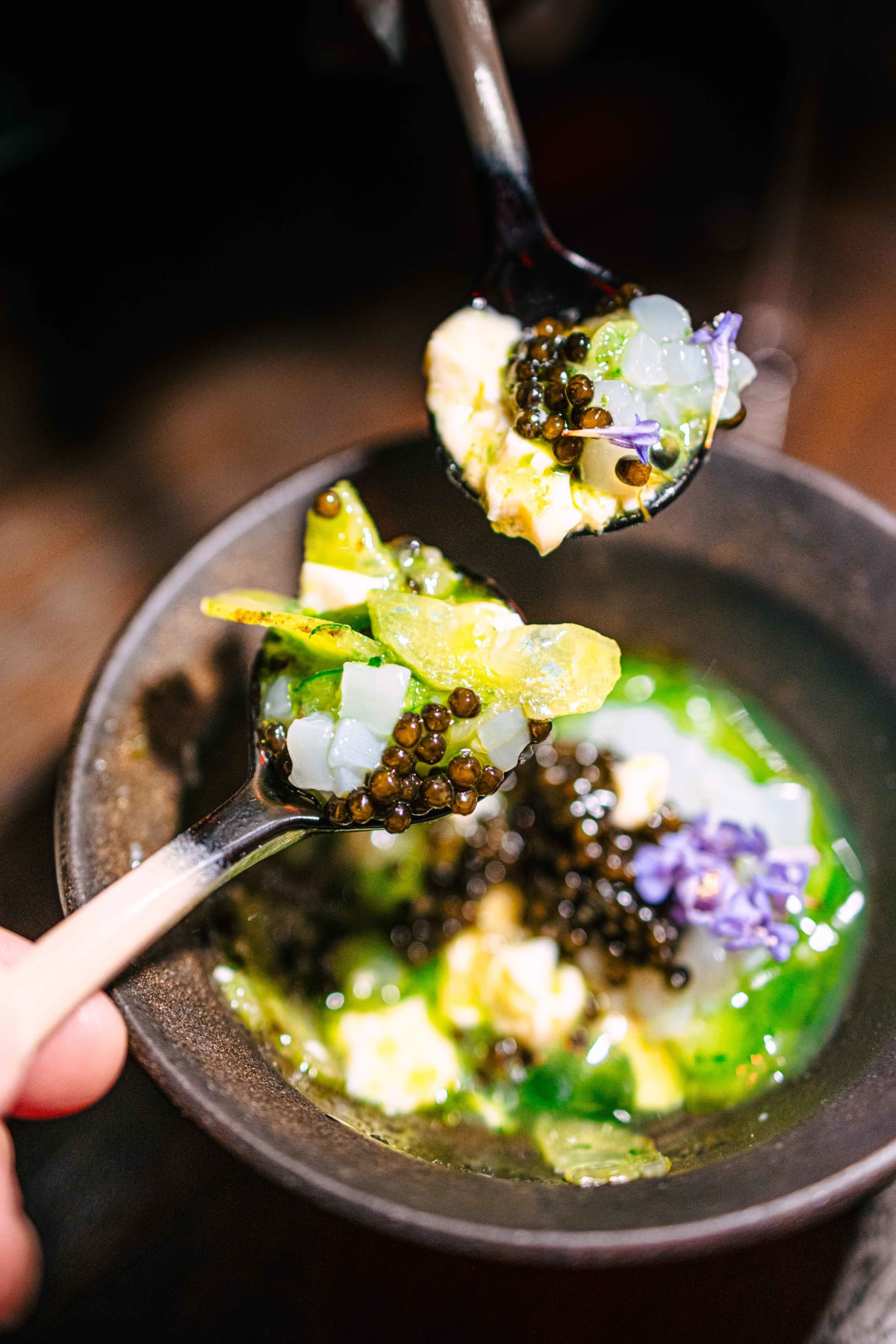
The seventh course, the close of the L'Atelier sequence, was the Cucumber and Kaviari Kristal Caviar enhancement, ordered separately at $45. Cucumber arranged across multiple preparations: cucumber namul, cucumber pressed in garlic-chive oil, a Kirby cucumber relish, a liquid drawn from cucumber and lime. The base was a mousse of smoked Maine eel, with finely chopped Japanese squid, finished with a generous portion of Kaviari Kristal caviar.
42—42 / 121
The herb on top was ground ivy, which I confirmed with the server.
43—47 / 121
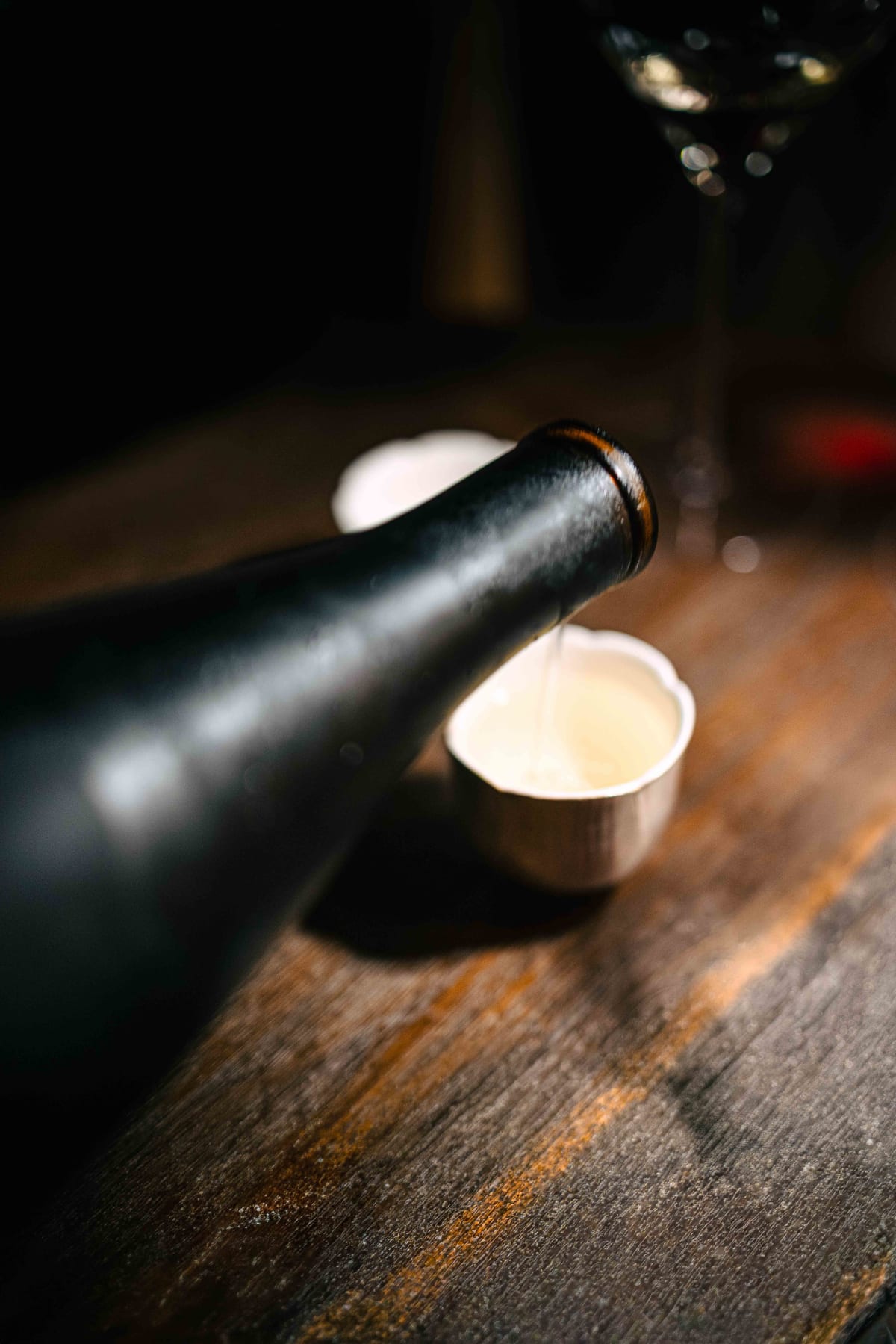
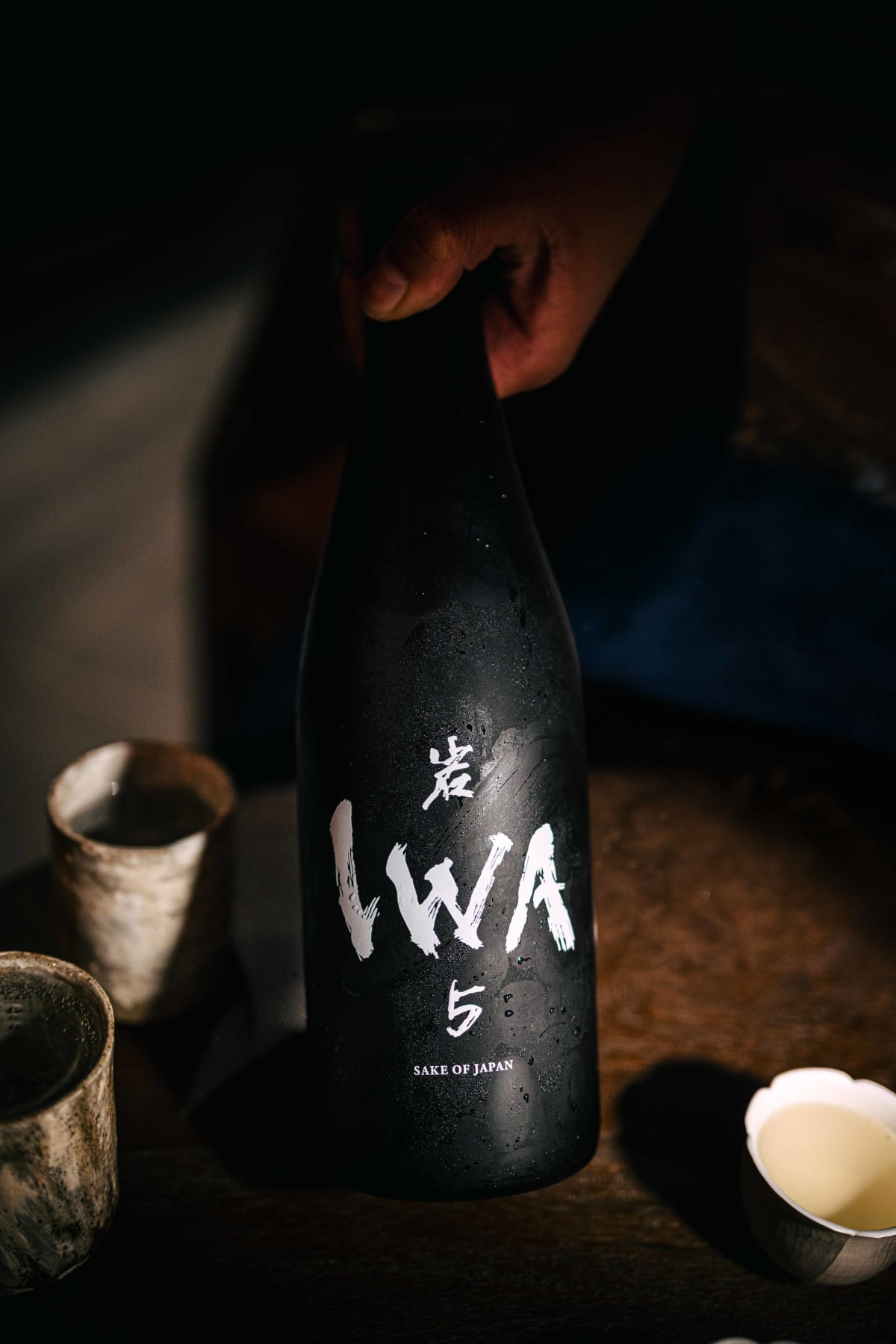
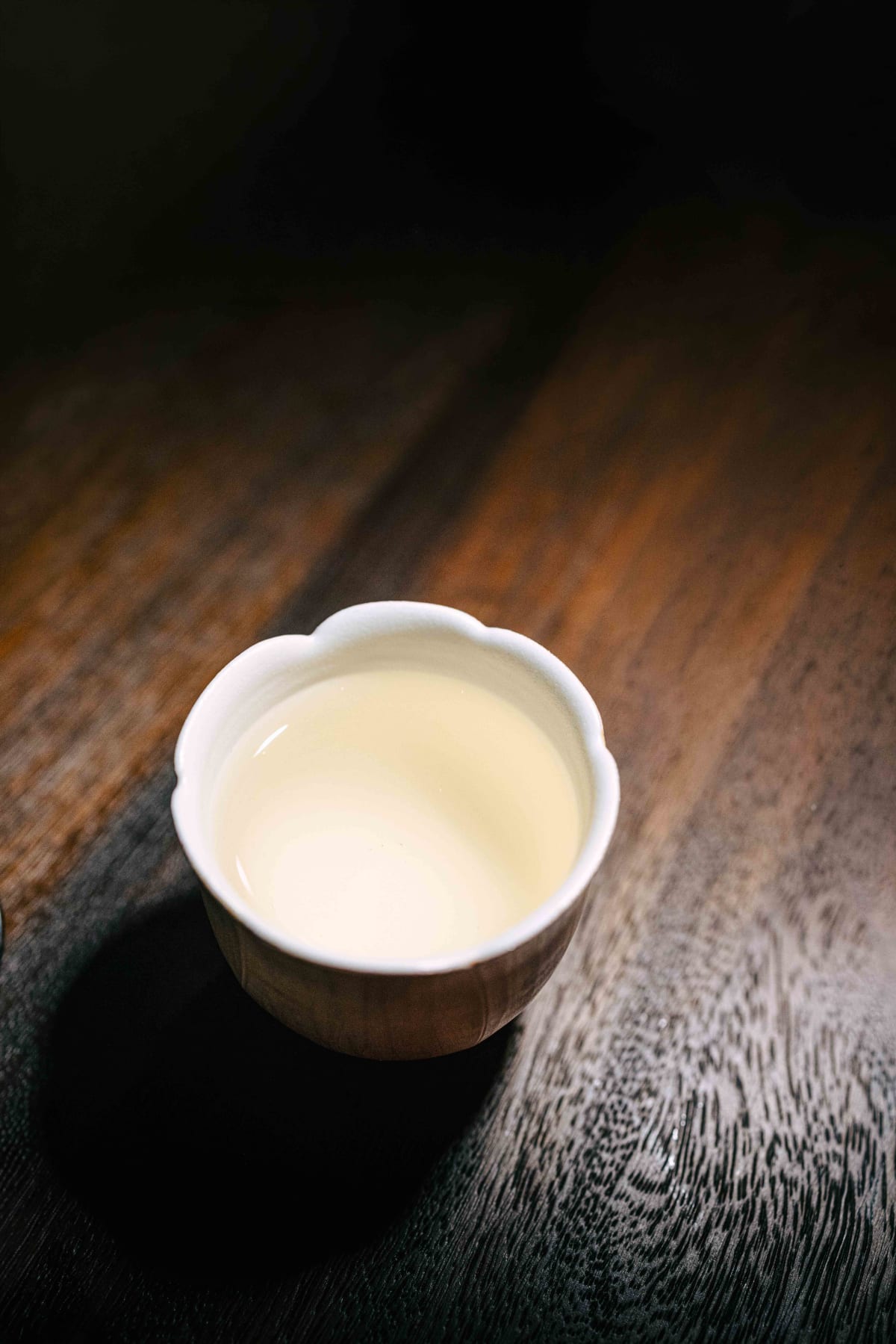
The pairing was Iwa 5 "Assemblage 6" Junmai Daiginjo, the sake from Richard Geoffroy's brewery in Toyama. Geoffroy is the former chef de cave of Dom Pérignon, and the brewery operates on a method of fermenting and layering multiple rice varieties within the same complex. The sake itself had aromatic depth and a certain weight, but as an absolute quality and as a pairing, it landed at ordinary level.
40—44 / 121
The dish, however, was the clear high point of the L'Atelier sequence. It read structurally as a cold chawanmushi in mousse form, a soft and grain-fine base paired with caviar at its centre. The texture was delicate, the cucumber held its presence, the balance was excellent. The caviar arrived in generous quantity and functioned as the central element rather than a topping, anchoring the salinity and the roe-adjacent register of the whole, while the smoky depth of the eel mousse carried behind it. The combined effect ran deep on complexity.
48—48 / 121
That closes the L'Atelier sequence. Summing up the ground floor: the cooking was satisfying, but the rough edges of second-day service were clearly visible. Service variance was the most obvious gap. The senior server and the sommelier were strong, with detailed and attentive wine explanations. Other servers, however, would set down plates with no explanation or with a few short words before walking away. In hospitality at this level, the posture and movement of the staff have direct bearing on the atmosphere of the meal, and the training gap was unmistakable.
The unresolved seating placement near the entrance also remained on my mind throughout the course. For a space that runs half of the menu, every seat should match the standard of the inner tables.
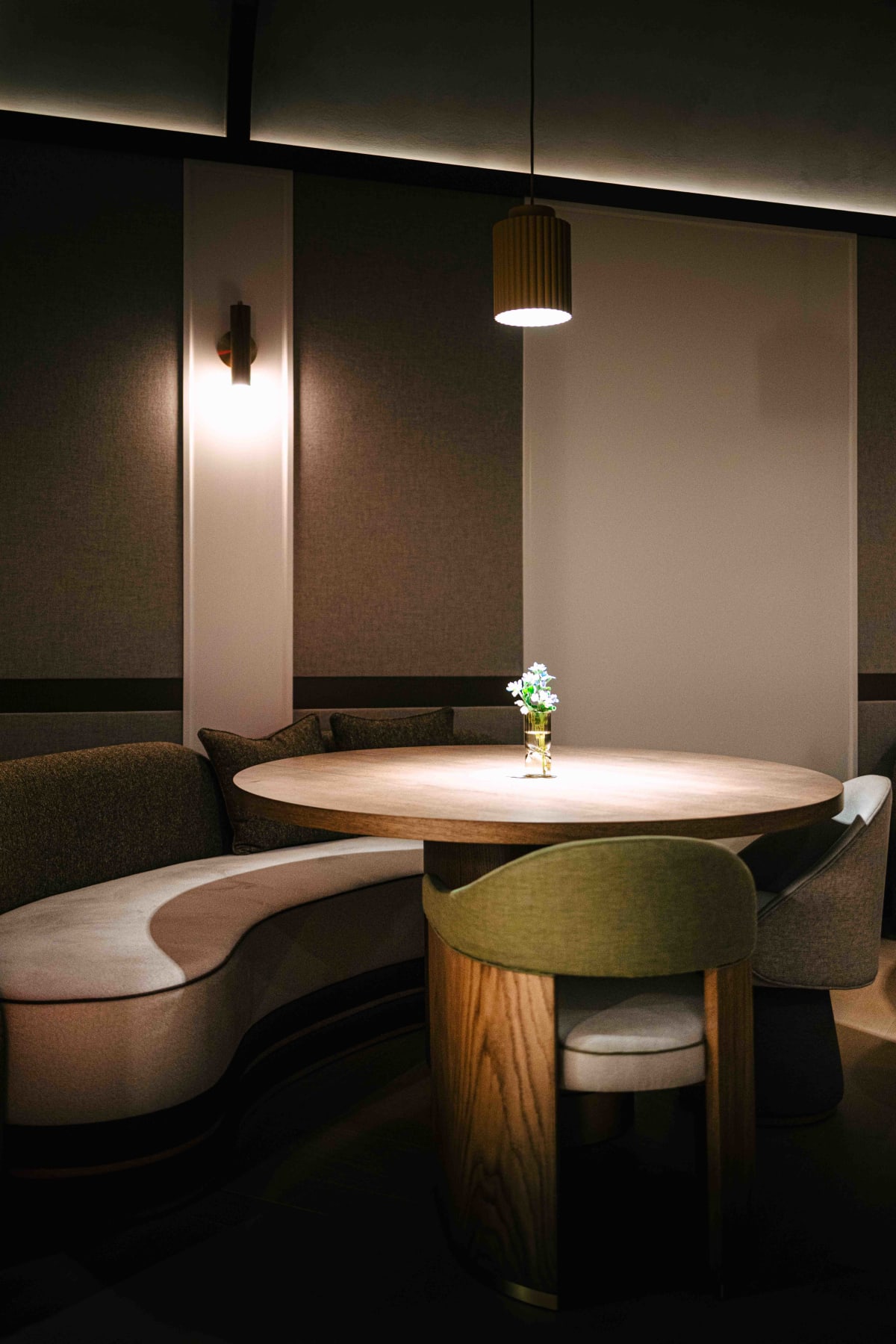
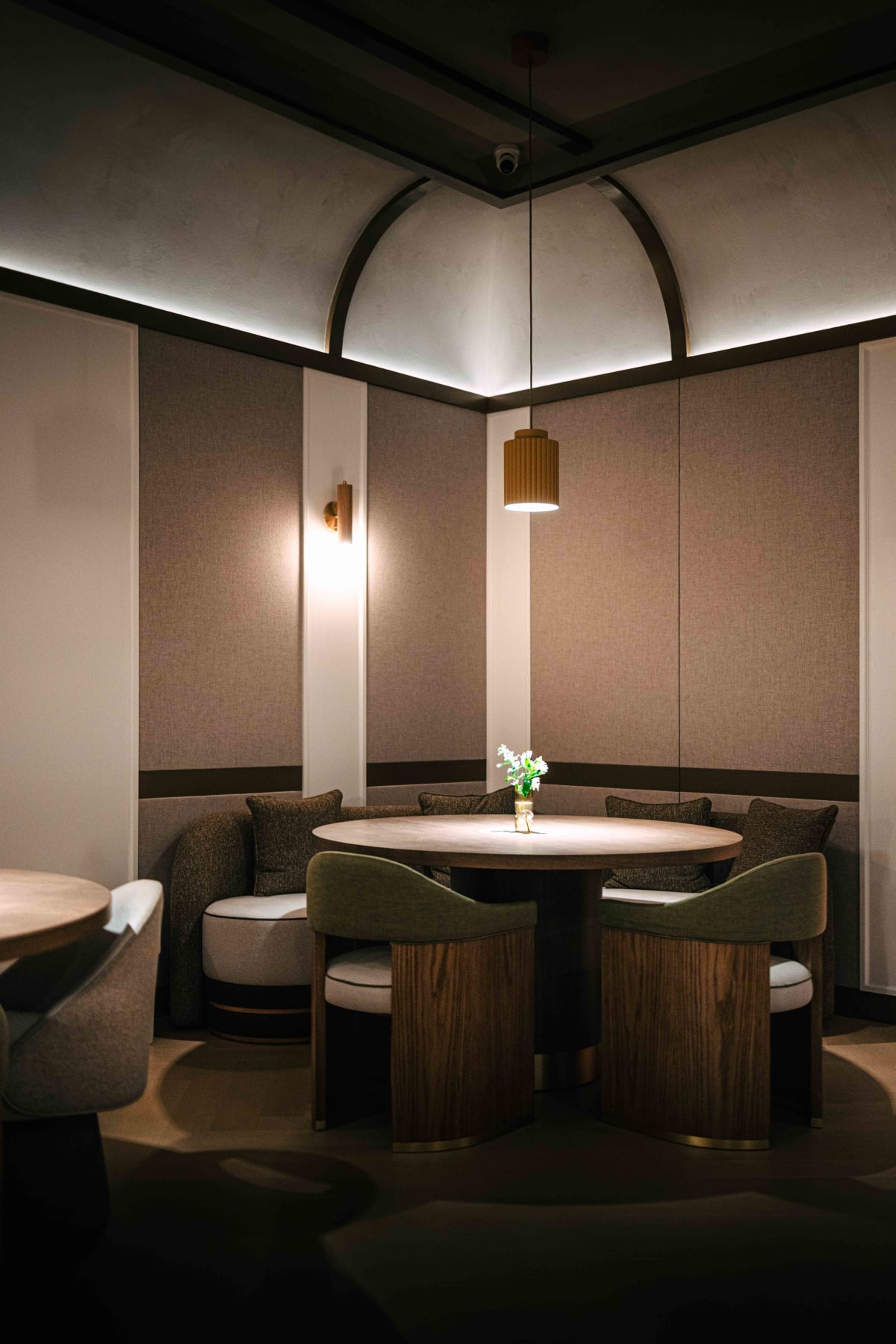
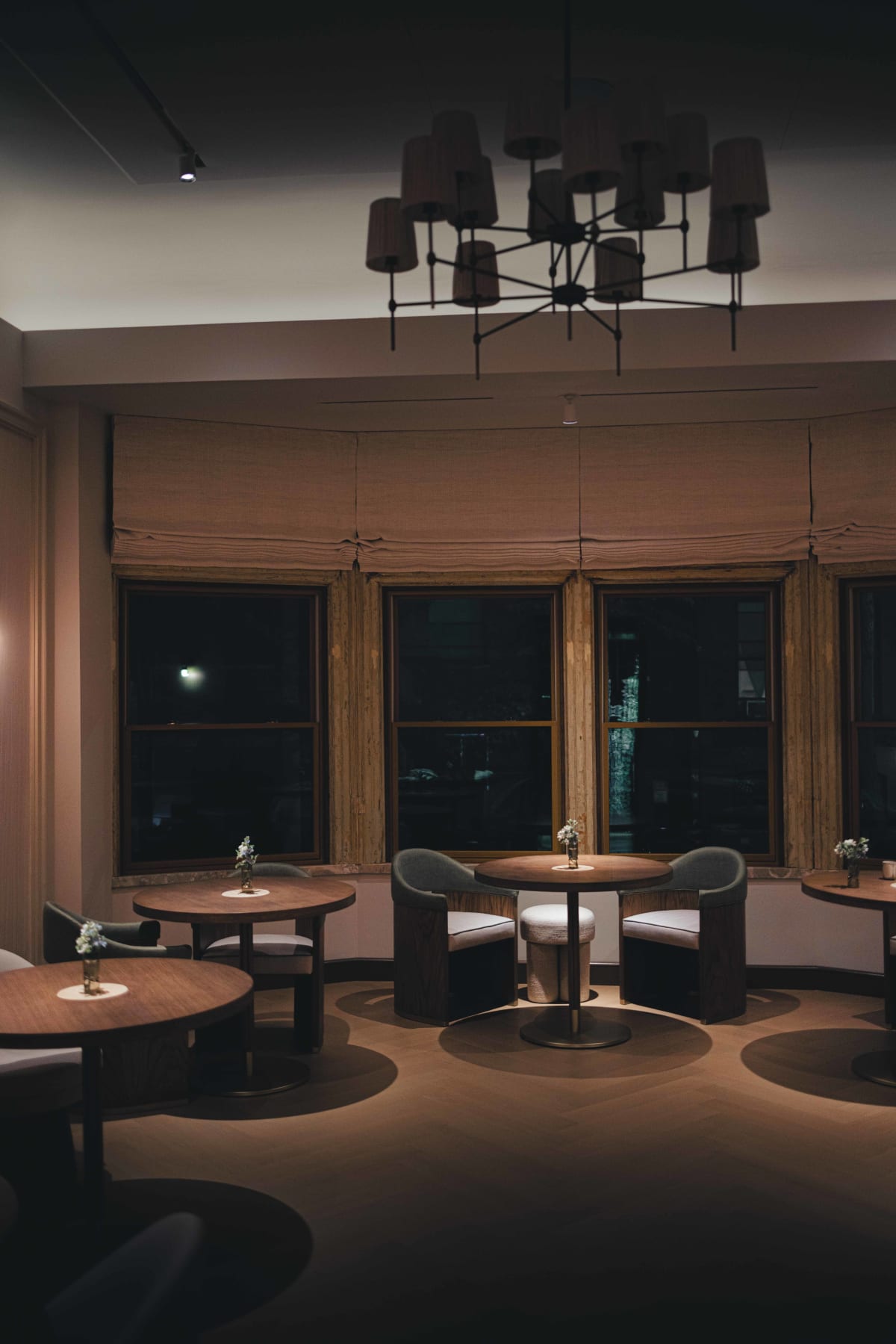
After those rough notes, we moved up to the second-floor Dining Room. The shift in tone is complete. The ground floor's darker wood and casually rustic register gives way to beige, soft lighting, and the arch-detailed ceiling of a restrained modern dining room. The transition is well designed at the interior level. The second floor is divided into two zones: a brighter, slightly more classical area near the windows, and an inner zone closer to the kitchen that runs darker, with the arches more legible and the modern register more pronounced. I was seated in the inner zone, which I preferred personally. It worked better as a dining room.
107—108 / 121
There is a hardware issue on the second floor as well, and this one may not be fixable. The townhouse origin of the building shows in the wooden flooring on the upper level, which has been retained as is. As the servers cross the room, the boards produce the characteristic creaking of an old wooden floor, and the table itself begins to shake in response. Once or twice during a meal would have been negligible. Repeated steadily across the entire dinner, it became a noticeable distraction. Solving it would require either a full floor replacement or a carpet conversion, both of which represent serious construction work on an operating restaurant. Whether either is feasible at this point is an open question.
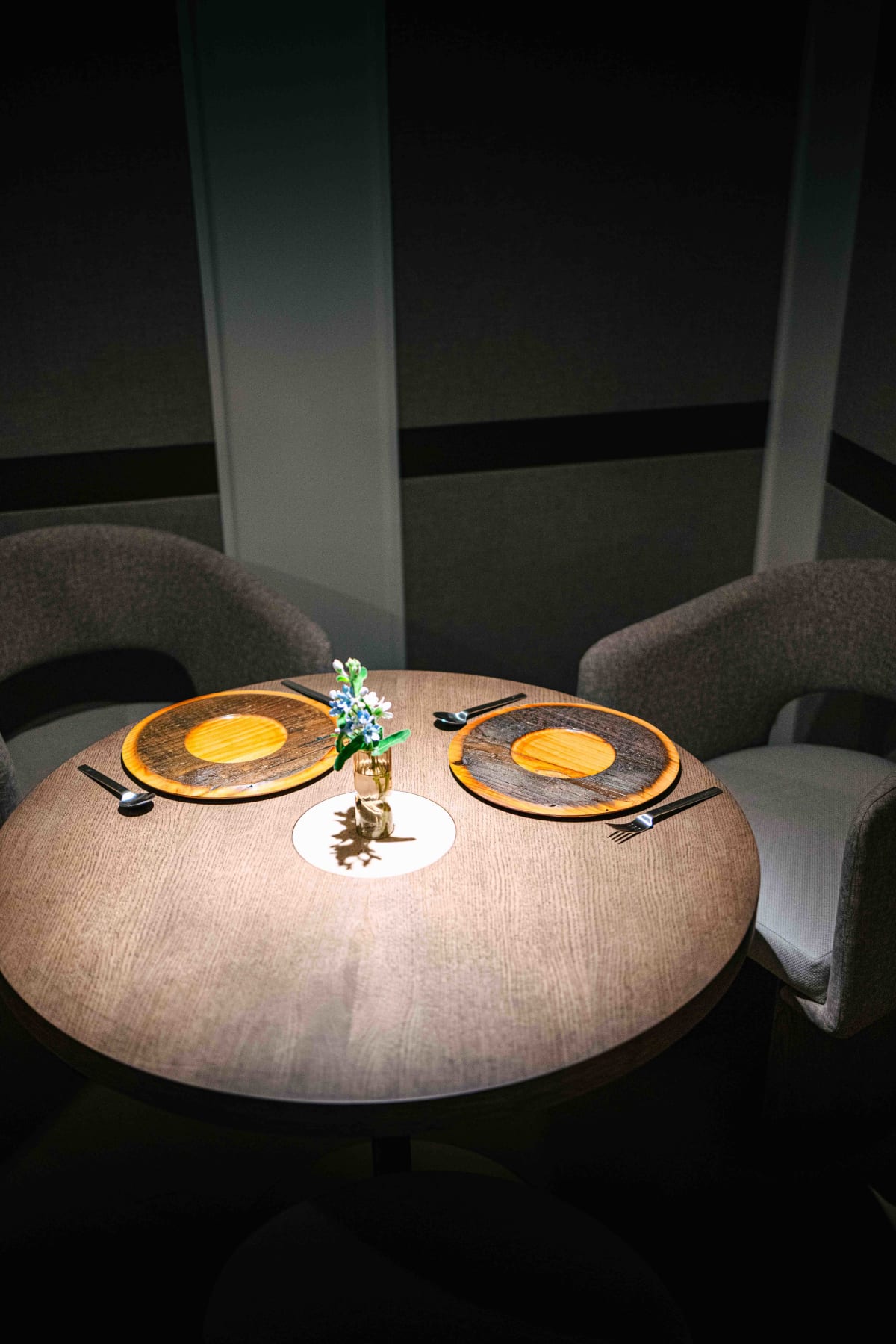
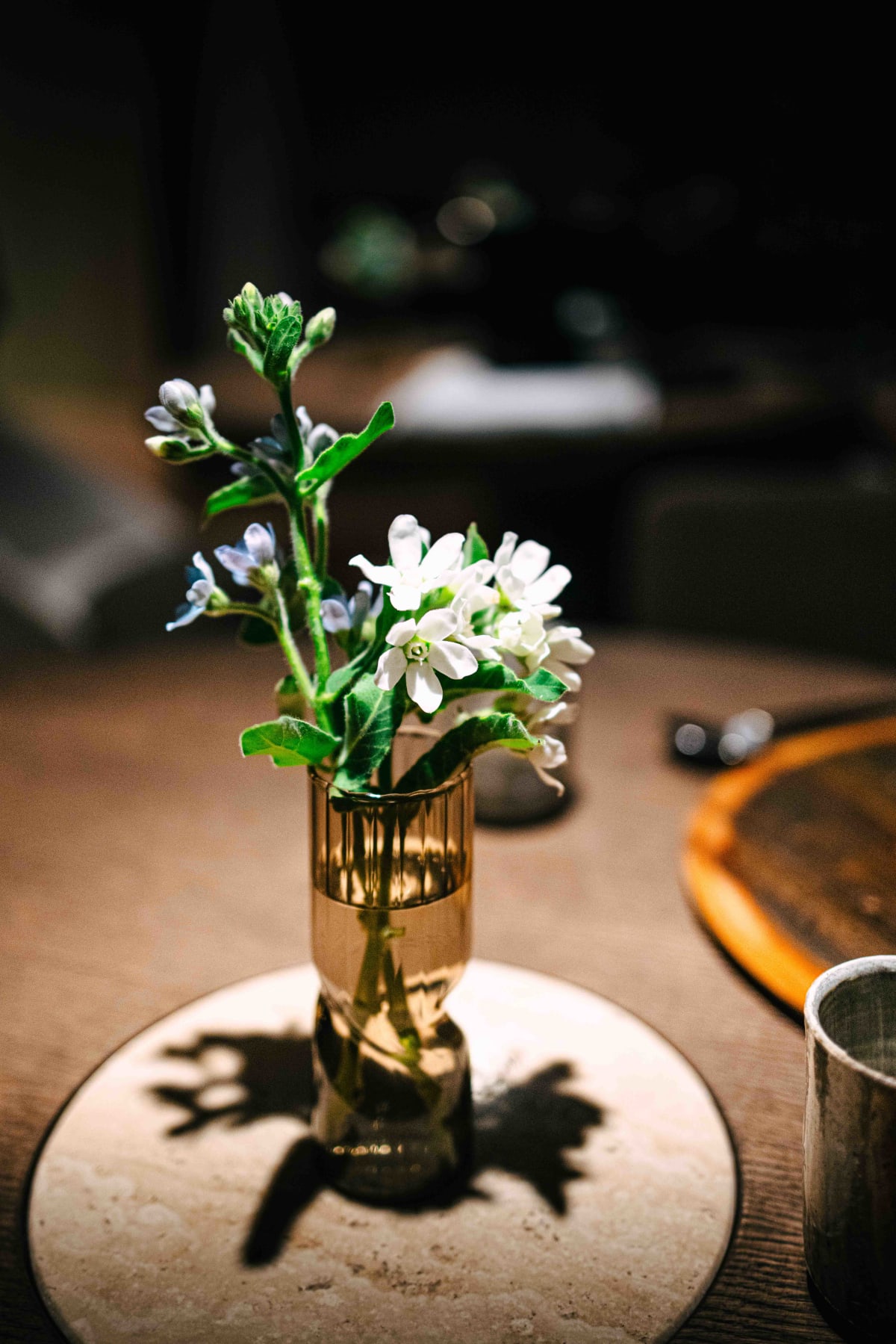
The first thing one sees on sitting down is the table setting.
53—53 / 121
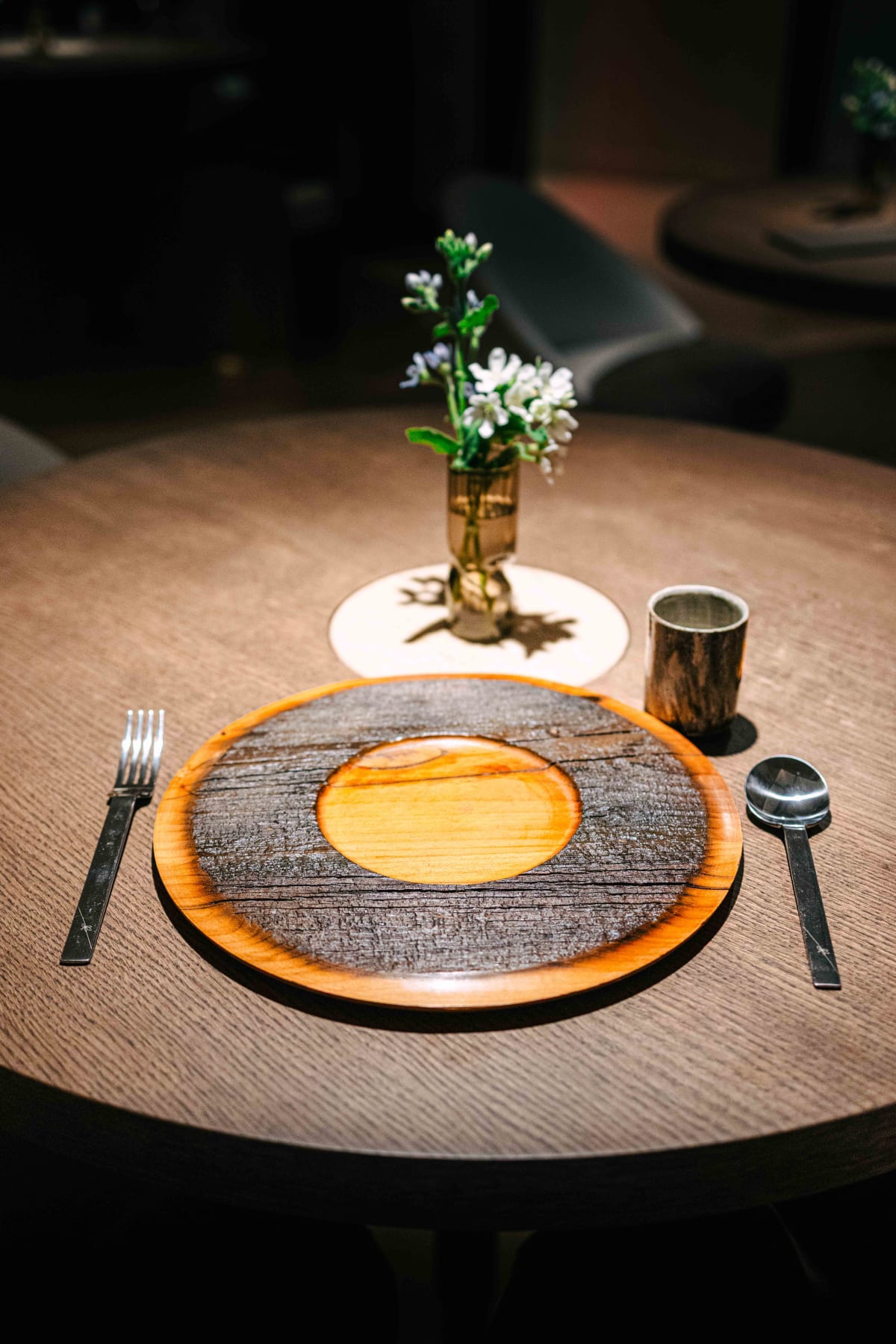
A round charger plate combines rough timber grain with a smoothly finished wood, with a circular inlay at the centre that connects naturally to the restaurant's logo and identity, the O of Oyatte.
56—56 / 121
A small vase holds a single stem of wildflower, the kind of restrained gesture that resonates well with the farm and nature concept of the cooking.
54—54 / 121
The second-floor experience begins here.
55—55 / 121
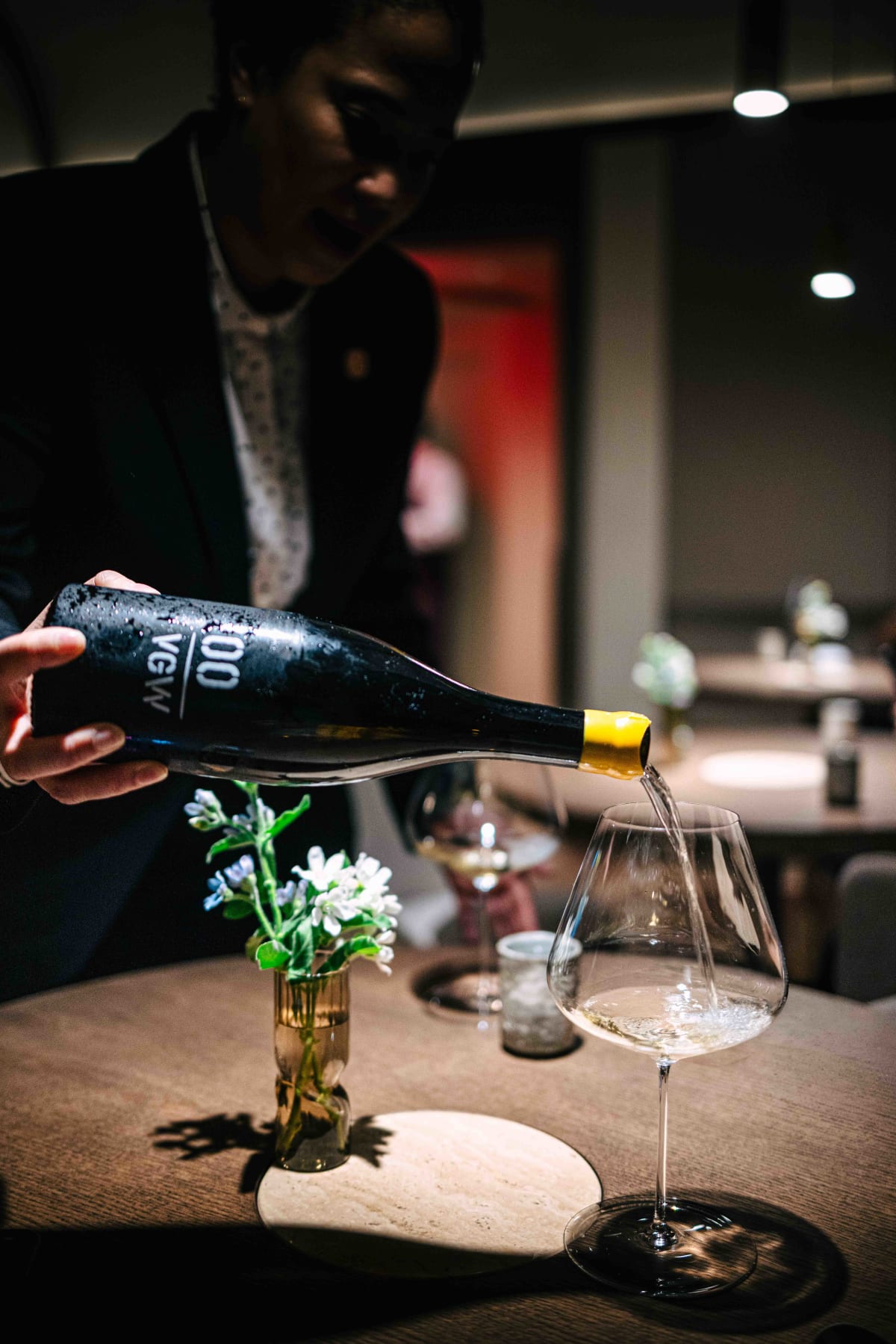
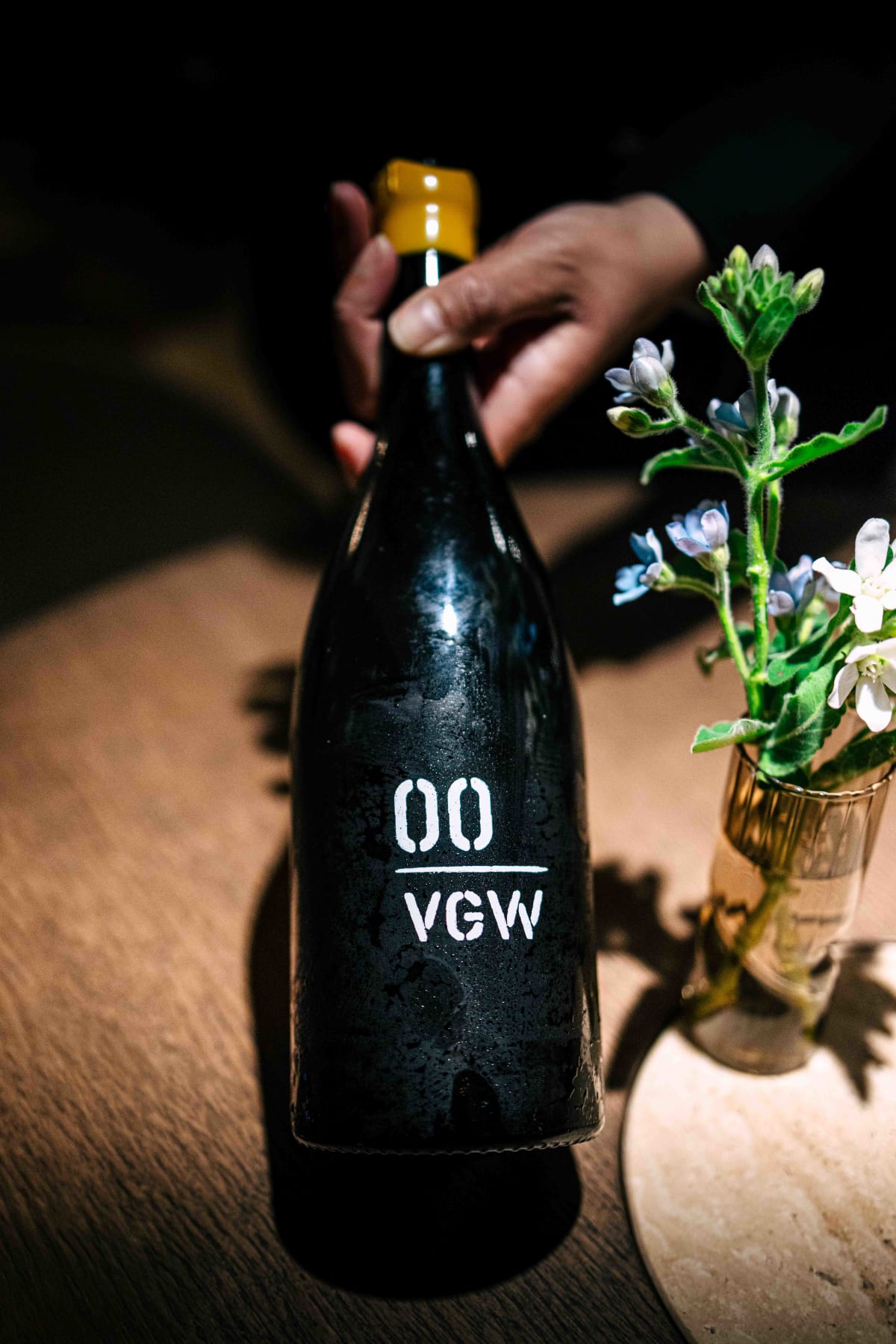
The wine moved to 00 Wines' Chardonnay "VGW" Willamette Valley 2022. Chris Hermann, the winemaker, spent more than thirty years as a veteran lawyer specialising in land-use and vineyard transactions in the Oregon wine industry, and is the author of The Law of Wine, Oregon, a standard text in the field. On the nose the wine produced a fresh sesame quality reminiscent of Meursault, followed by a faintly damp aromatic register.
57—58 / 121
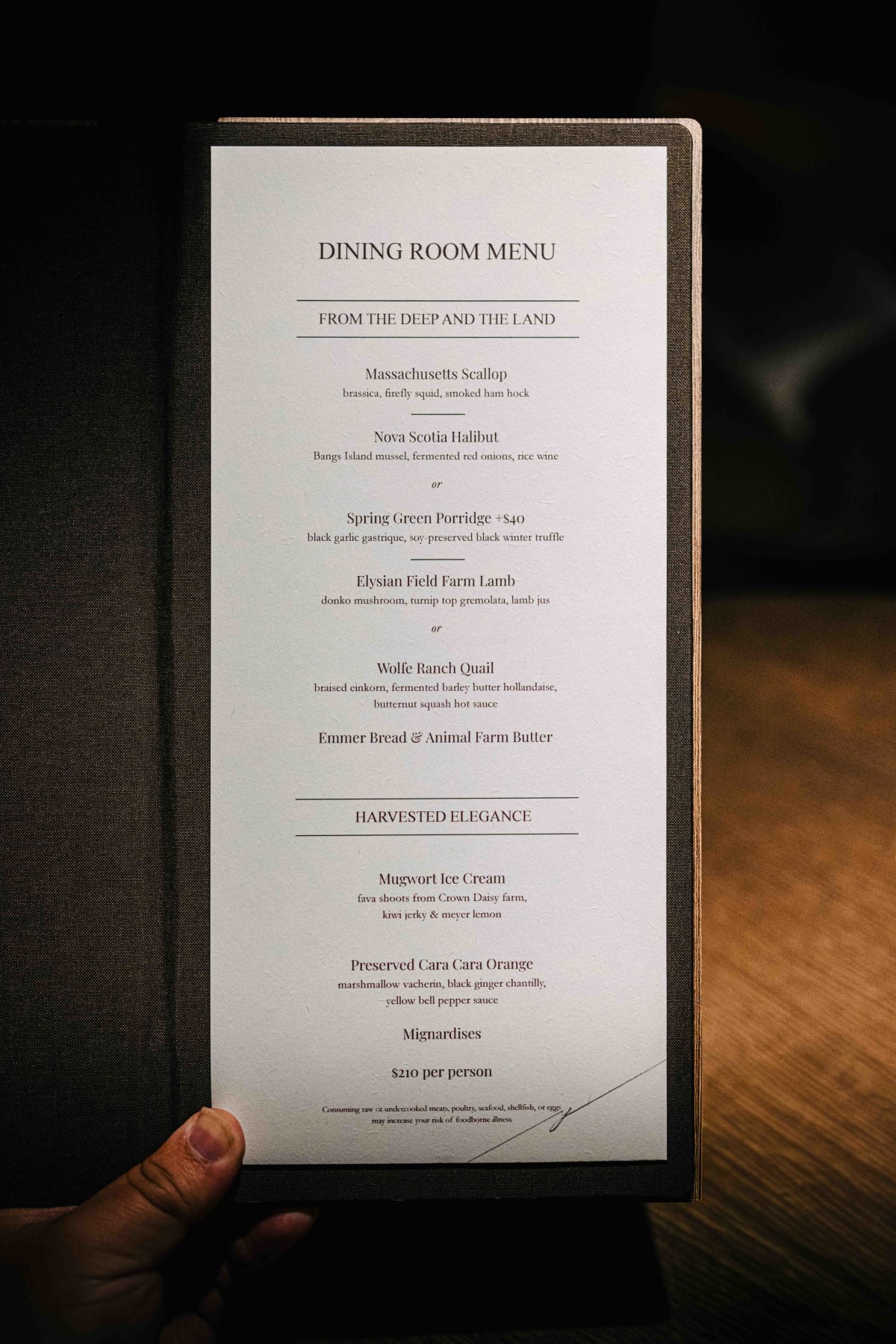
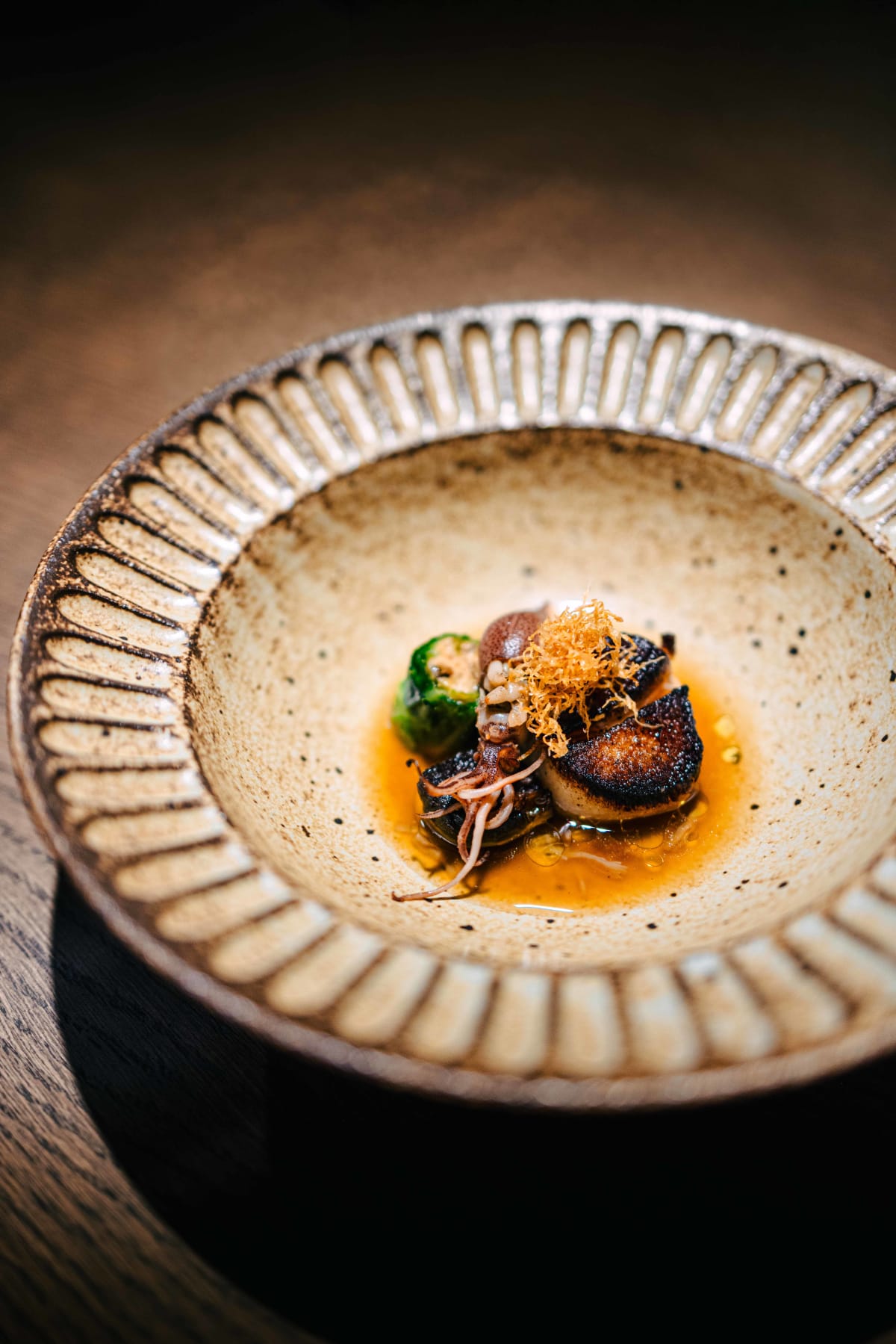
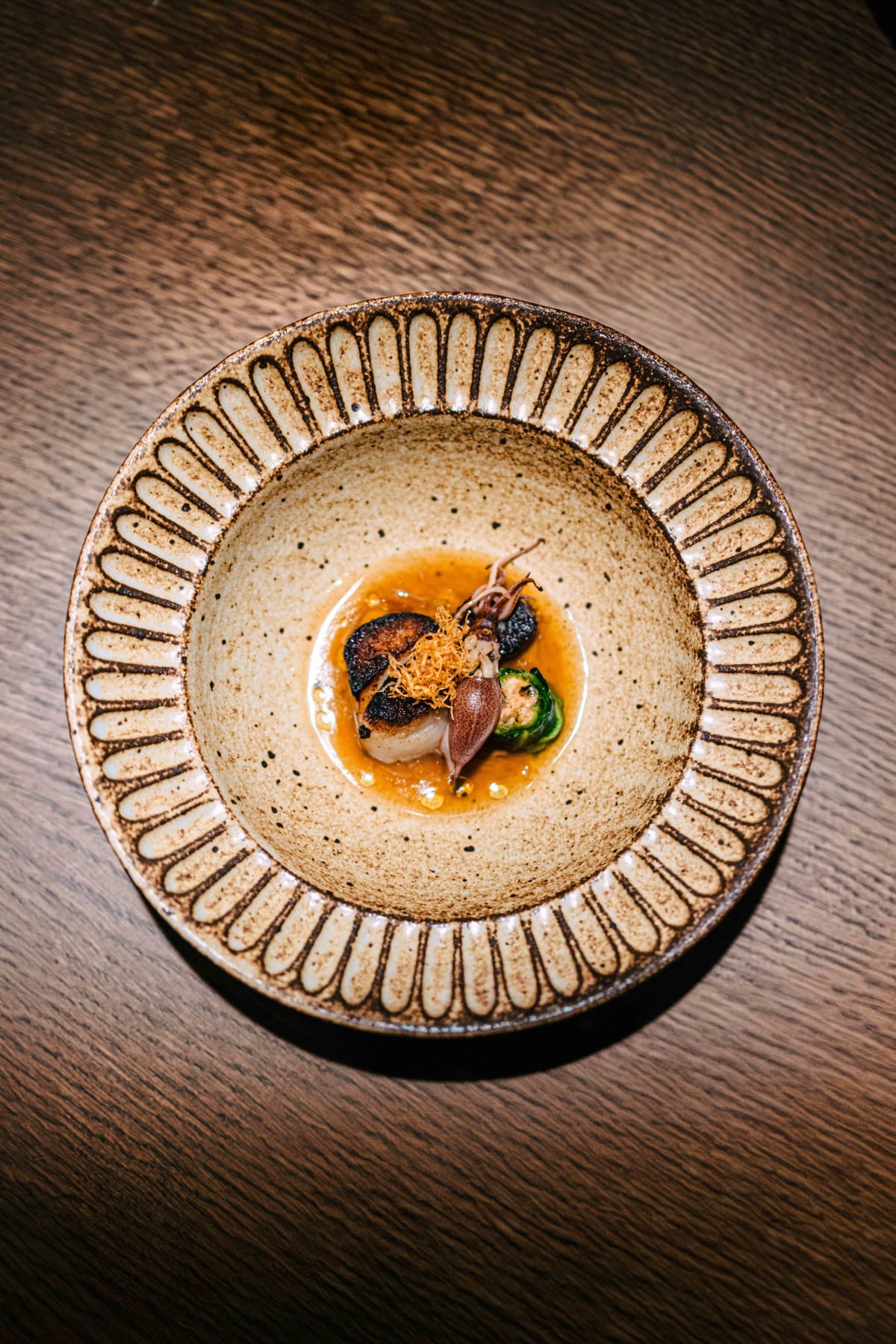
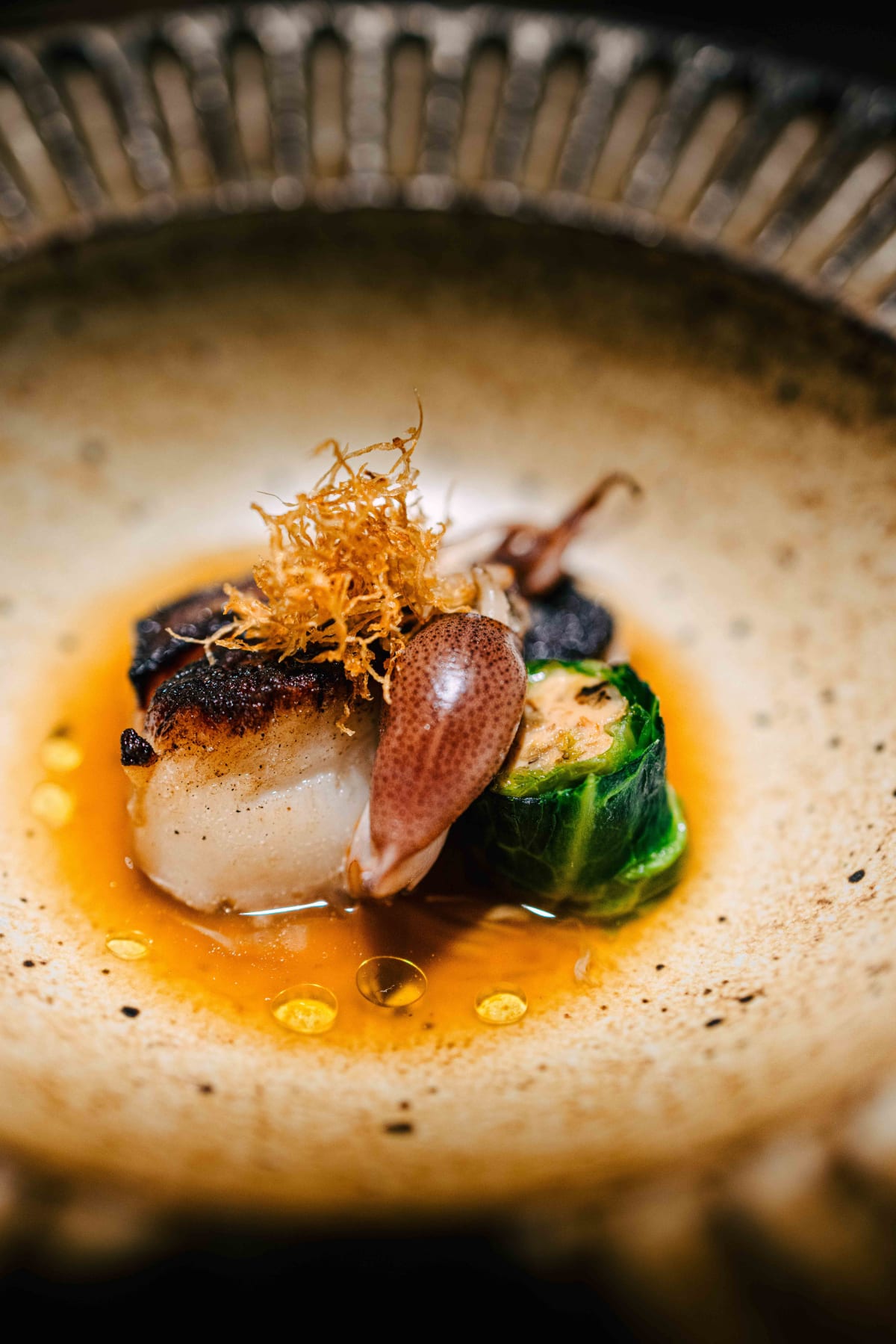
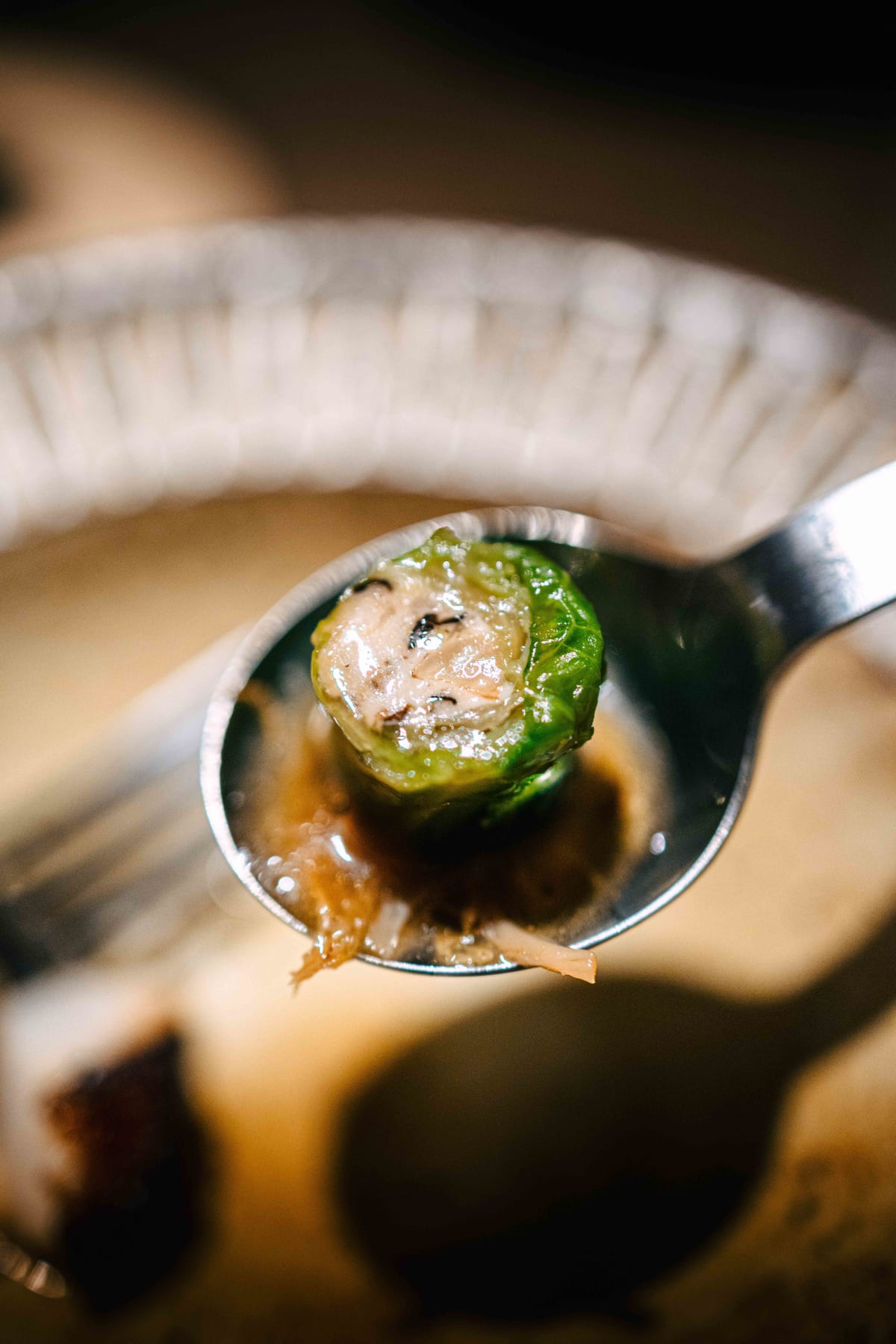
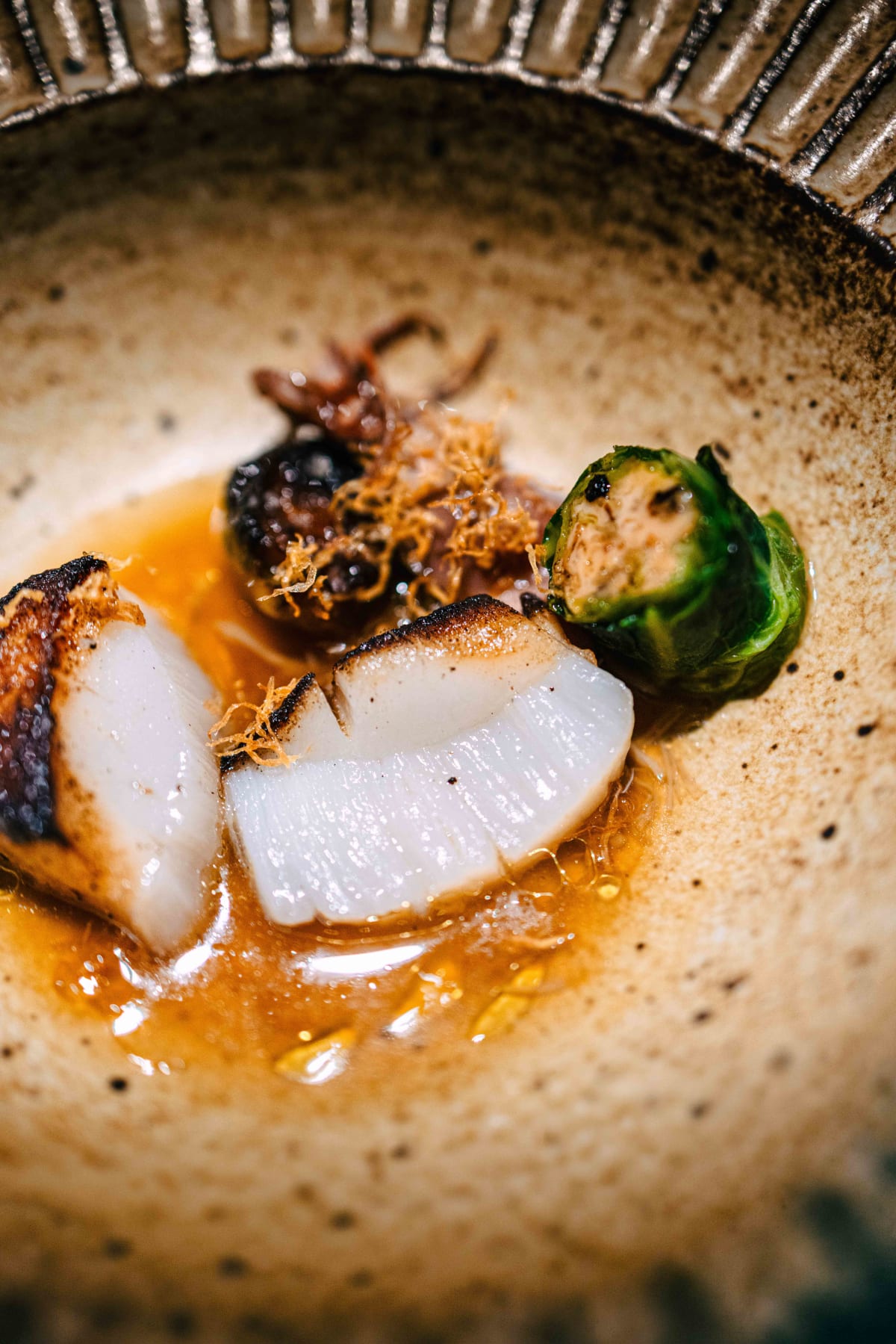
The eighth course was a Massachusetts scallop.
60—60 / 121
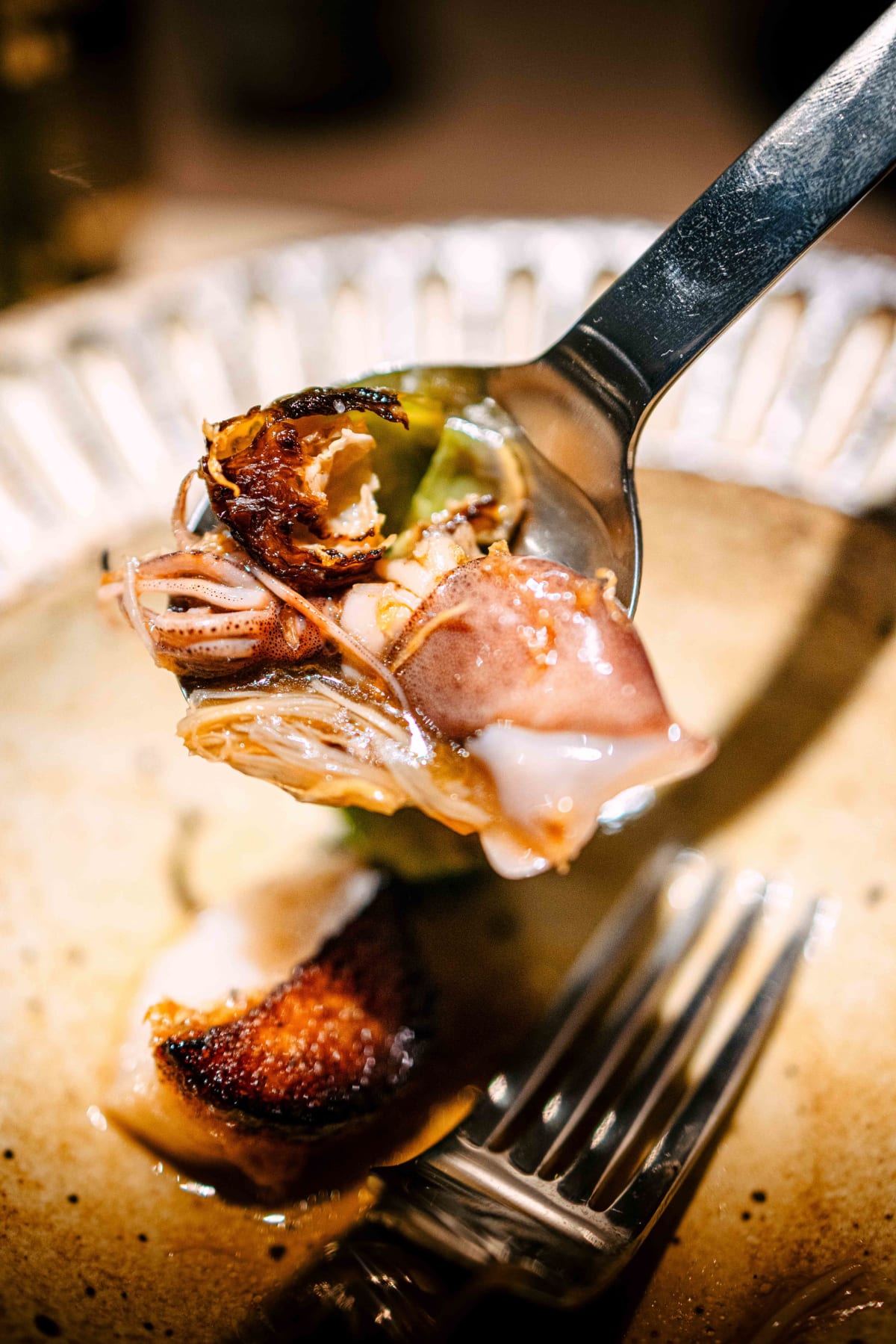
The scallop was dipped in a Japanese sweet wine in the mirin register and lightly charred on the grill, set above a steamed fish cake wrapped in firefly squid, hotaruika, and savoy cabbage, with a sauce built from shredded scallop and smoked fish bones beneath.
61—65 / 121
The cooking of the scallop was excellent. The exterior held a smoky and lightly crisp surface while the interior carried a yielding, almost springy texture, and the sauce ran deep in a Japanese umami register that gave the dish a serious depth.
63—63 / 121
The firefly squid, however, came through with a direct mackerel-like fishy register characteristic of oil-rich blue fish. Whether this was an intentional treatment or a quality-control matter was not clear. The note was not laid quietly into the background but presented with enough directness to draw attention away from the rest of the dish. Hotaruika is a seasonal Japanese spring ingredient with a freshness window that is hard to manage, and for an operation on the East Coast of the United States, the supply control on this particular product is presumably difficult.
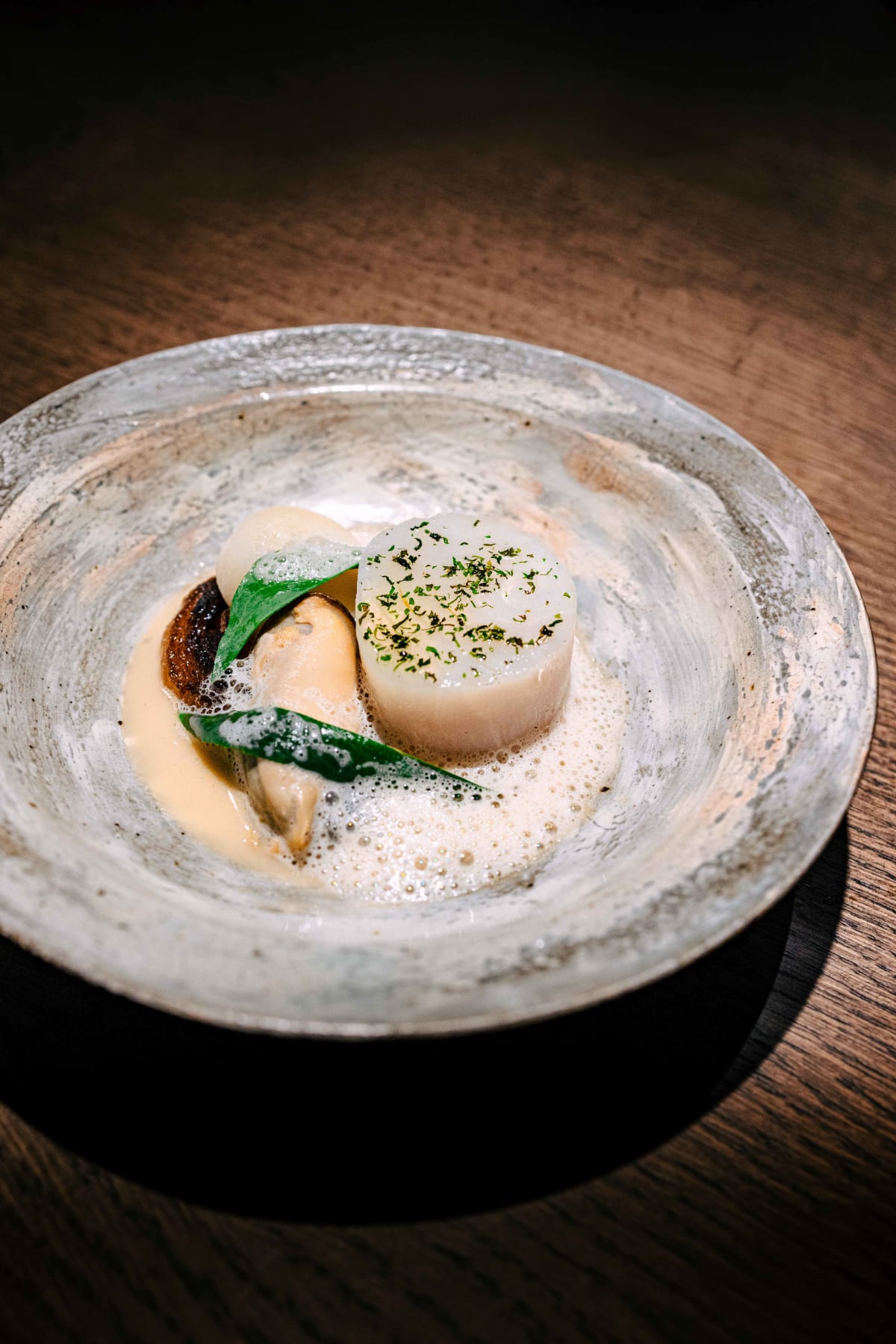
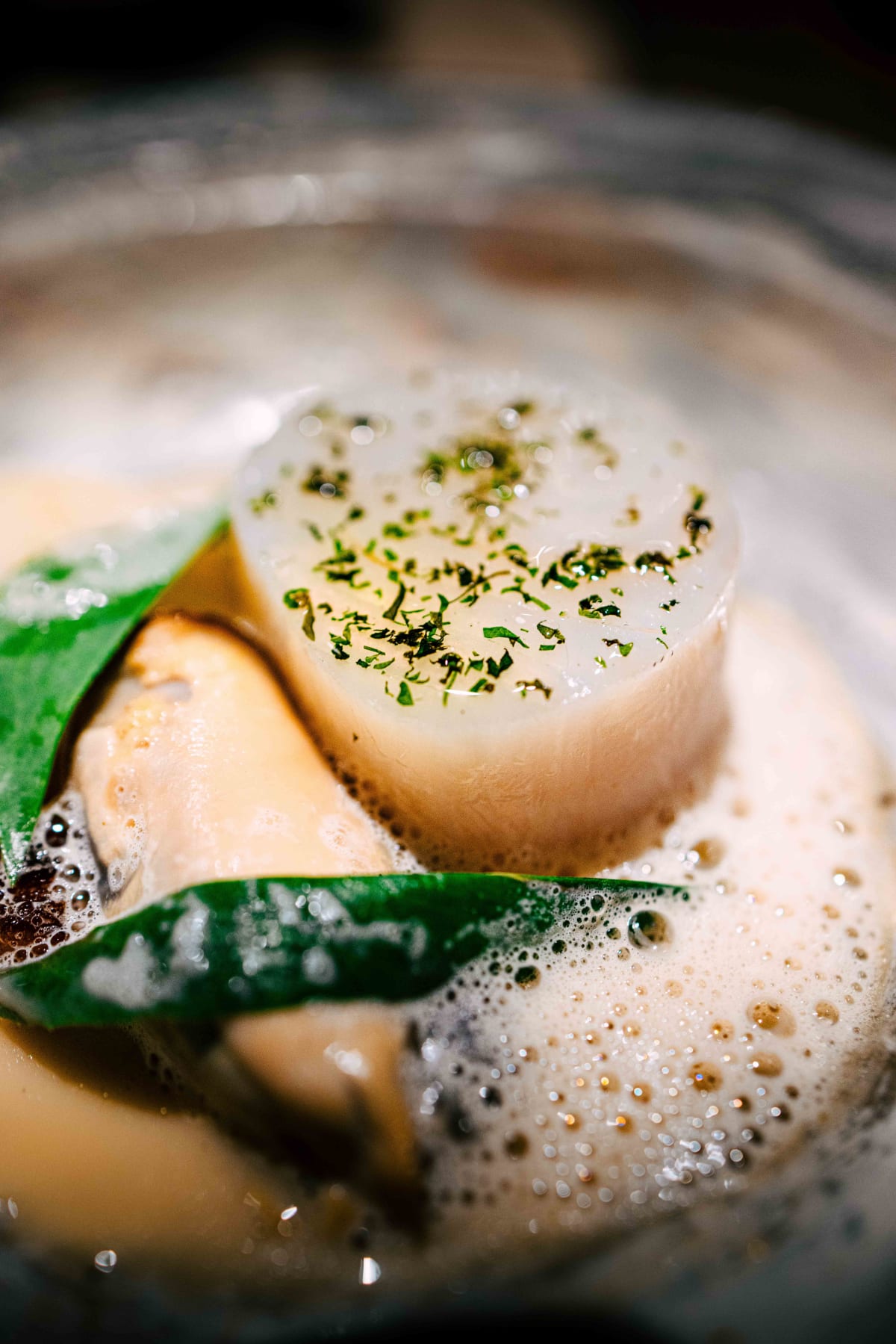
The ninth course was a Nova Scotia halibut.
69—69 / 121
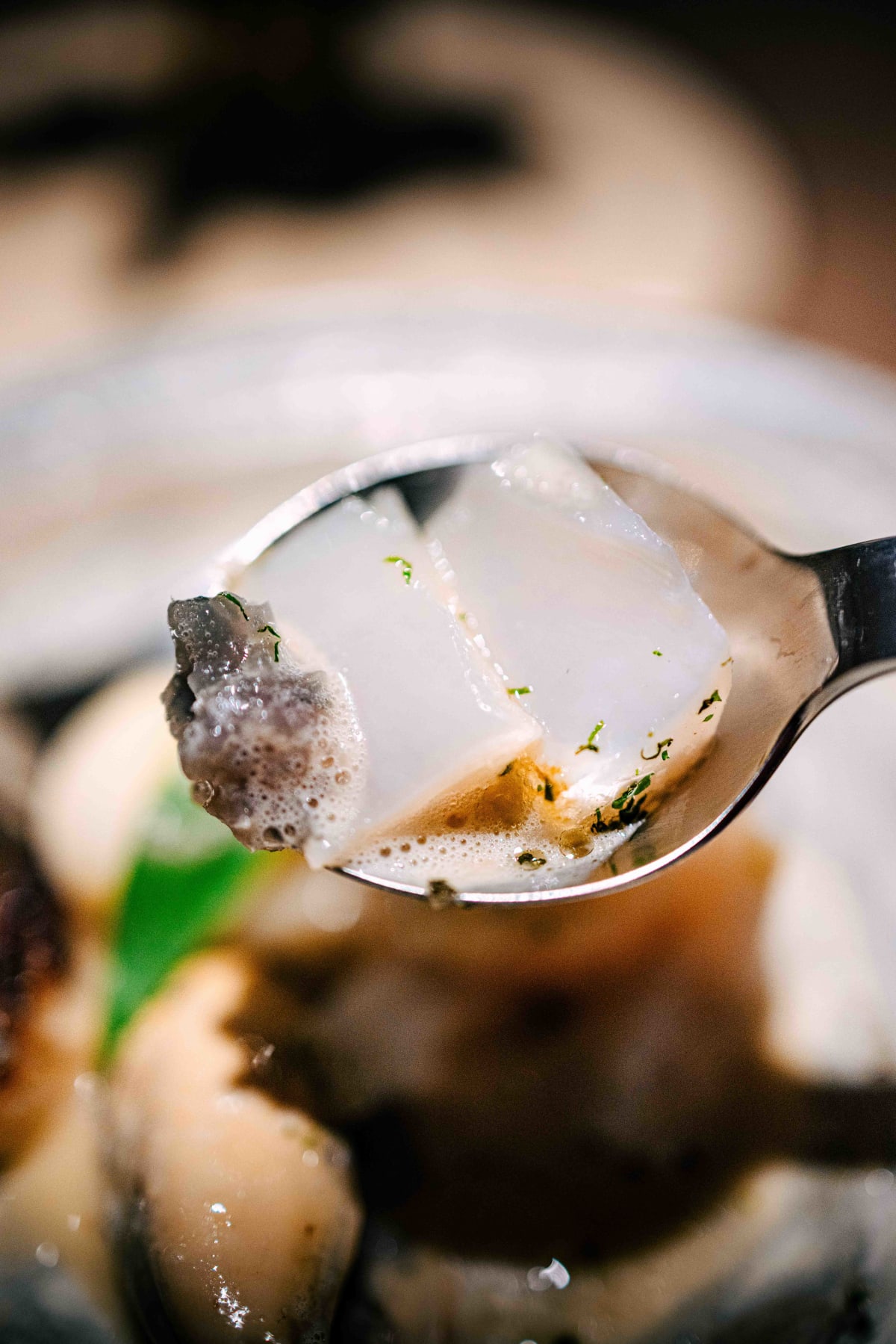
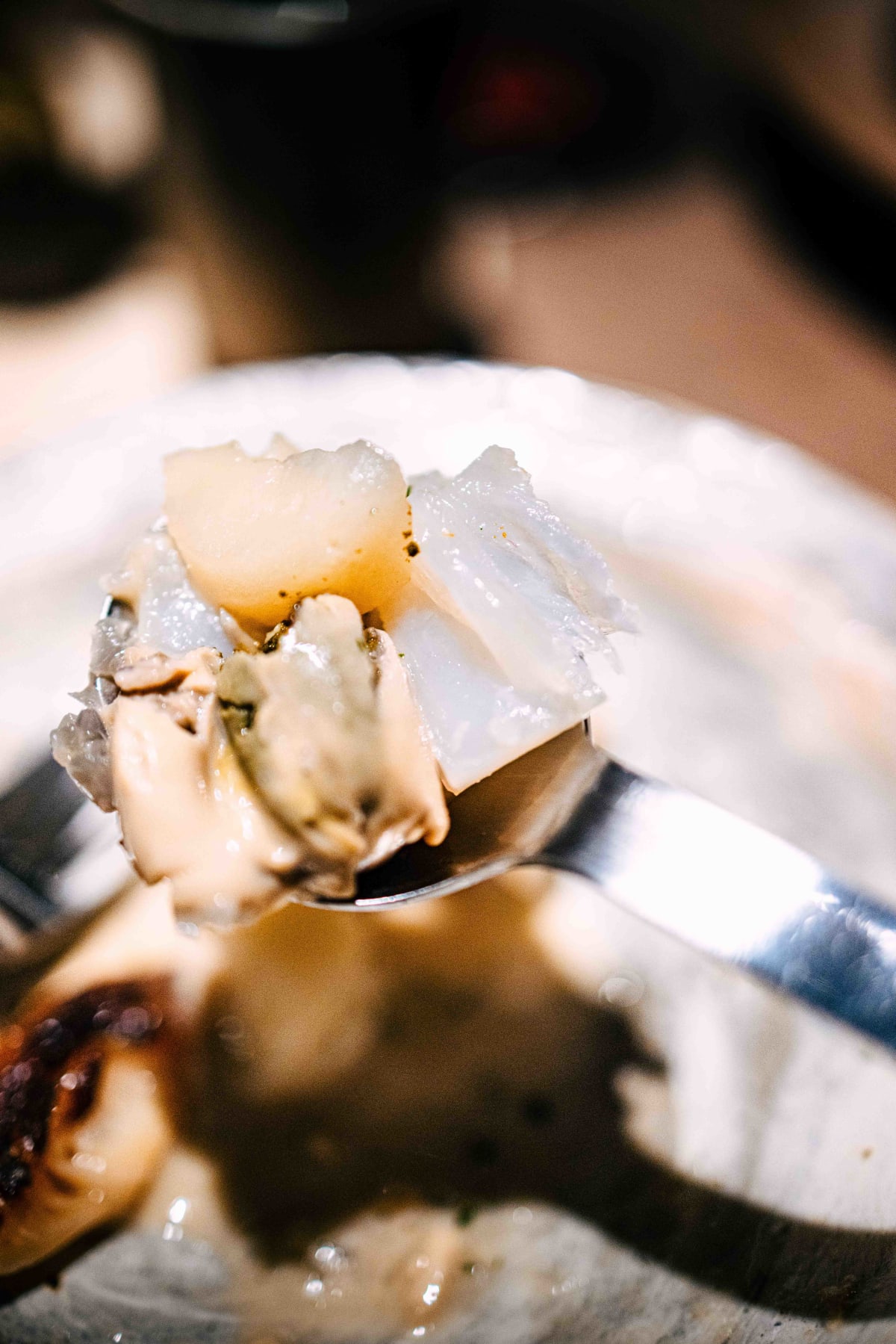
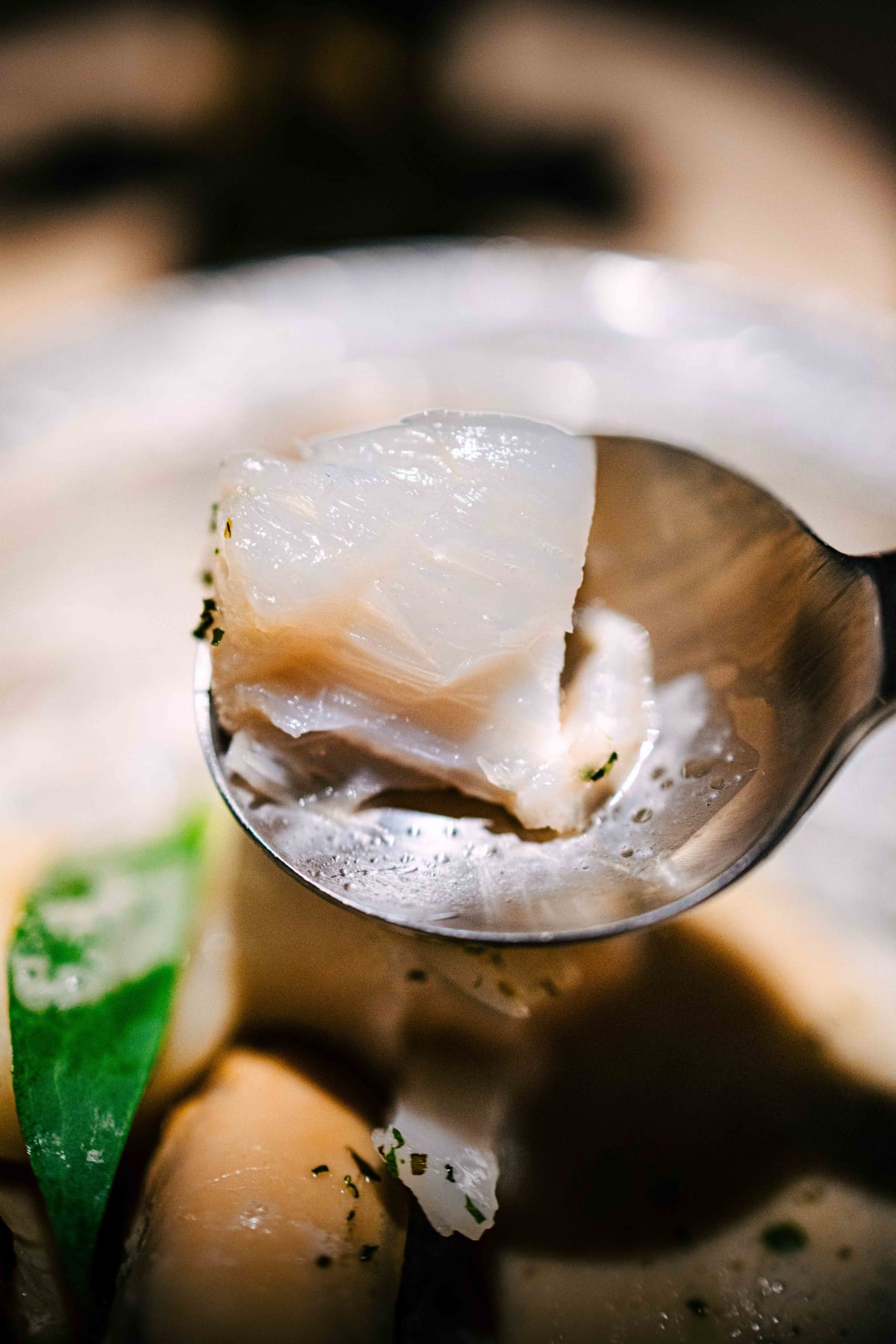
Lightly poached halibut with Bangs Island mussels from Maine and Yukon potato that had been both pickled and smoked, with a sauce built from potato skin and smoked fish bones.

68—76 / 121
The cooking of the halibut was extraordinary. The halibut held a firmness and a chew that did not register as halibut at all, closer in texture to a good Japanese scallop or one cooked with only the lightest touch of heat. I do not recall ever encountering this level of cooking precision in a dish from a Korean chef before.
74—74 / 121
The depth of Chef Lee's pre-broadcast reputation became fully legible at this plate. The reservation I would note is that the sweetness of the sauce came through more prominently than the dish required. The pairing for the halibut, incidentally, was not a new pour but an additional glass of the same 00 Wines Chardonnay served at the scallop course, an intentional pairing flow that the sommelier had explained in advance.
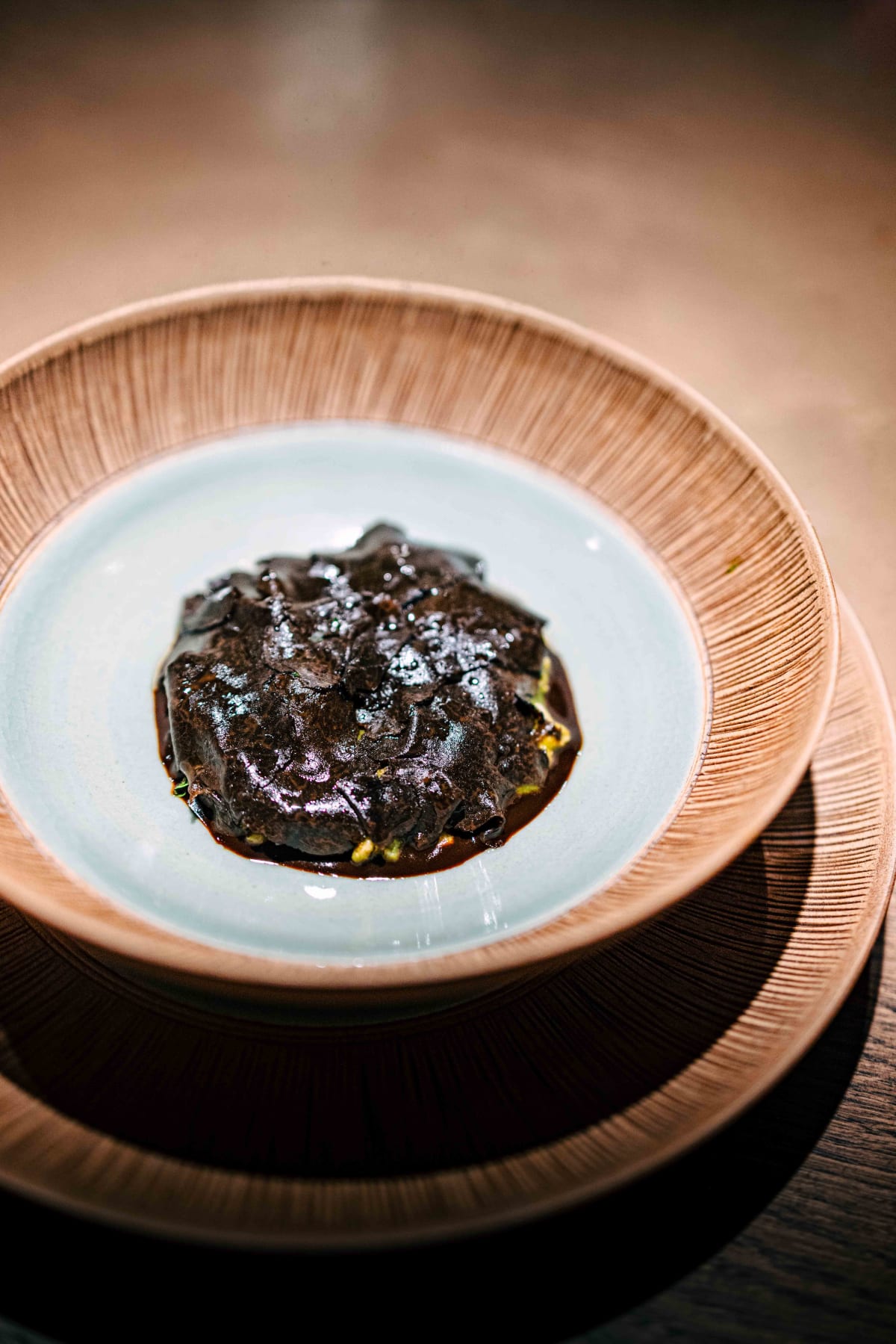
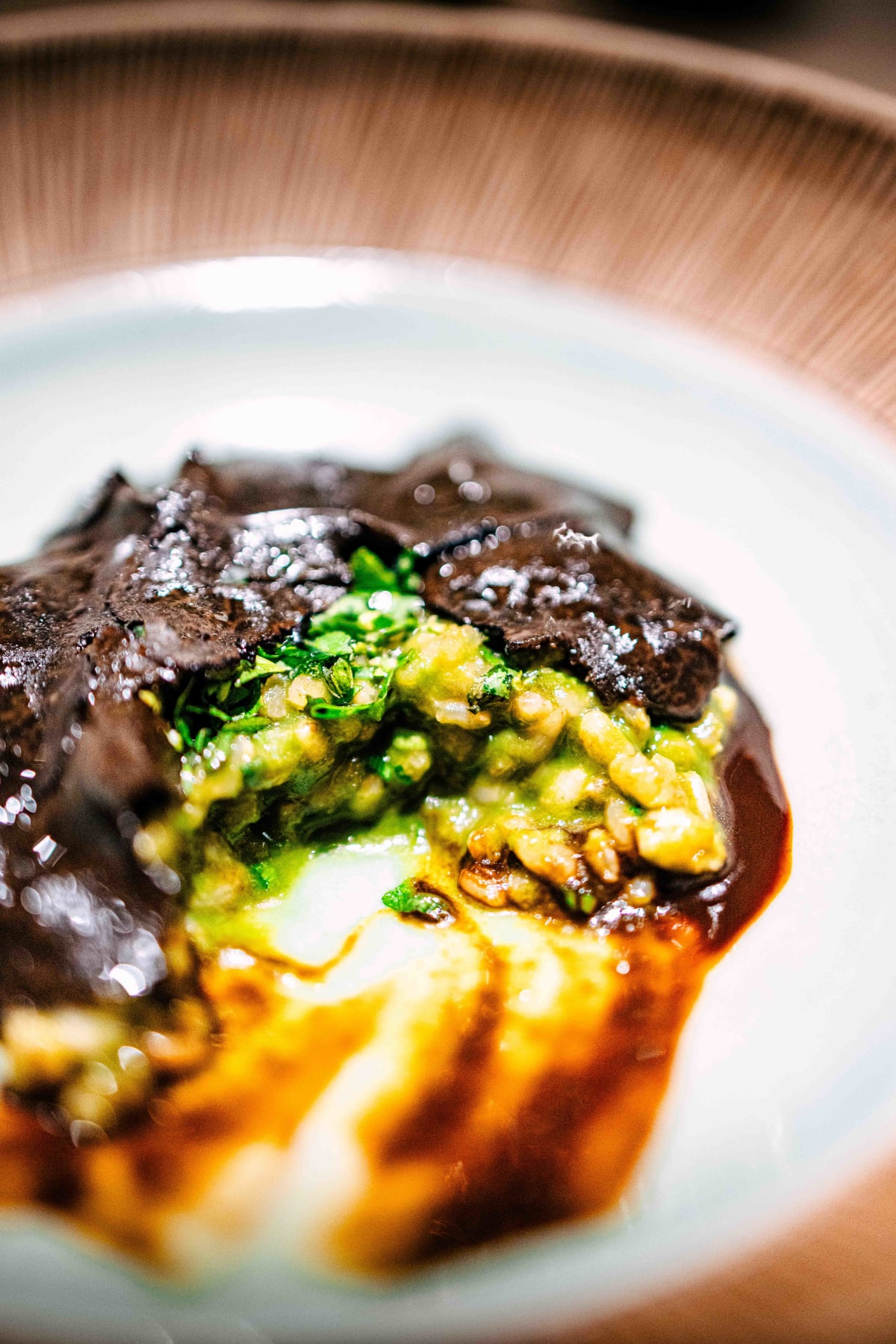
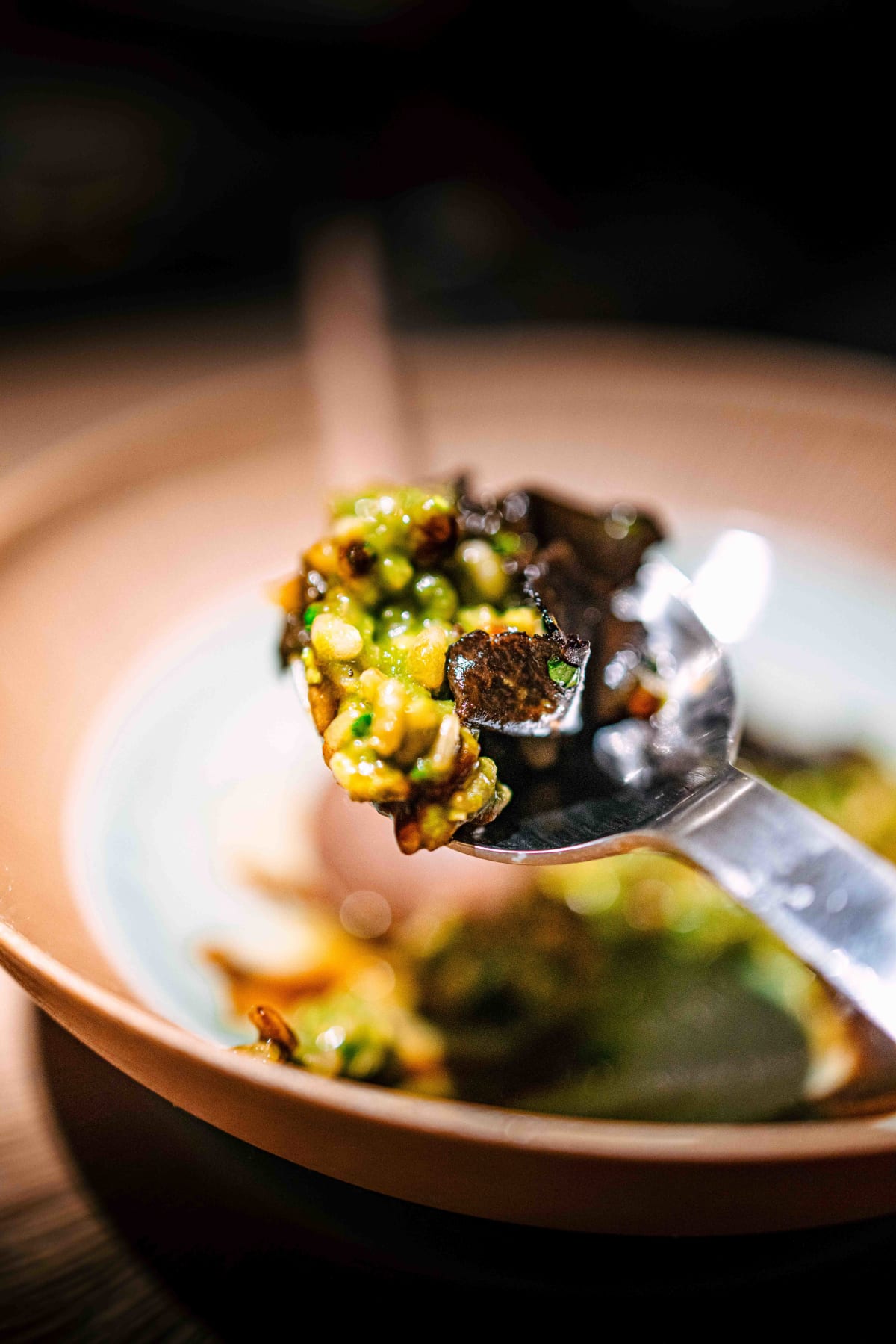
The tenth course arrived alongside the halibut as the other branch of the option, the Spring Green Porridge, ordered as an additional enhancement at $40. Two varieties of brown rice cooked in a herb sauce, finished with thickened black garlic gastrique, soy-preserved black winter truffle, and water parsley, minari. This is the porridge whose earlier iteration the chef presented to Chef Sung-Jae Ahn during Culinary Class Wars Season 2, now extended into a signature course of its own.
70—75 / 121
The texture of the porridge itself was exceptional. The lower part carried the slightly crisp edge of nurungji while the upper layer retained an al dente register on the grain, and the flavour ran on a clear ganjang-doenjang depth from the Korean register.
Taken together with the black sauce above, the black garlic gastrique, the dish briefly read with echoes of jjajang sauce. The depth, however, was constructed naturally without any artificial savouriness or excessive sweetness, leaving a porridge that rewarded slow tasting with a precise weight.
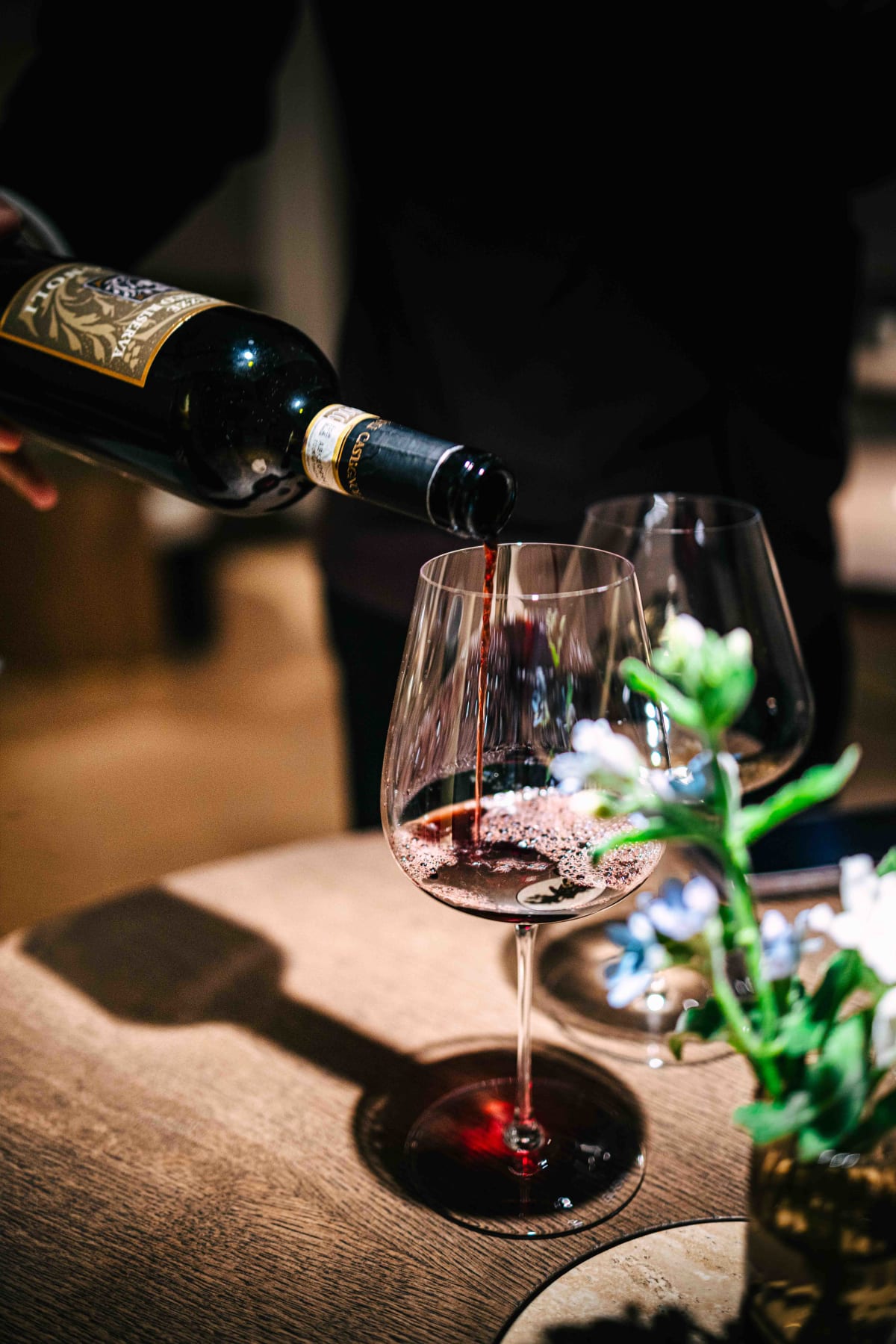
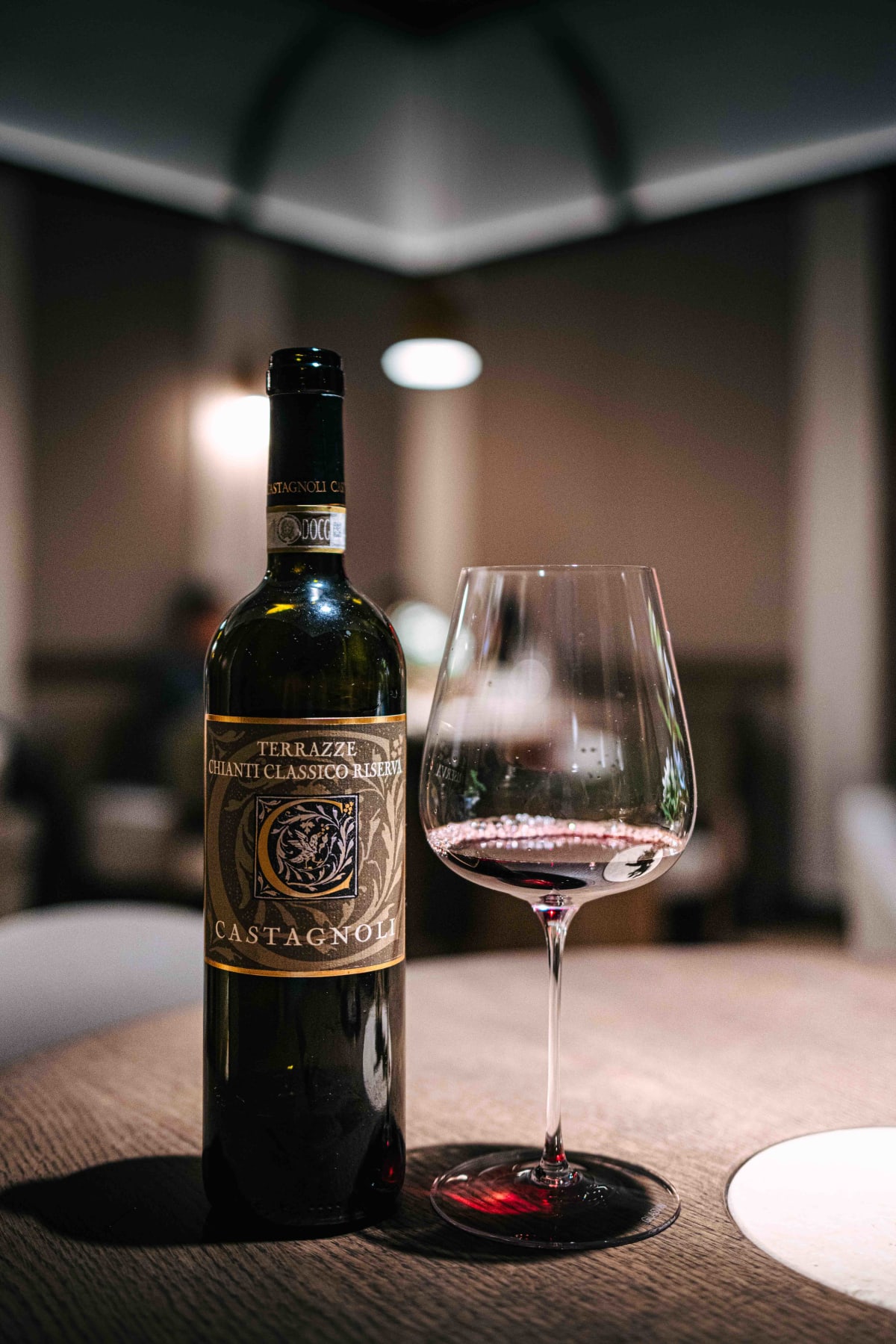
This was the course where the meeting point between Korean memory and global fine dining form became most clearly visible. The pairing for the porridge was Filippo Pratesi's Castagnoli "Terrazze" Chianti Classico Riserva 2015, one hundred percent Sangiovese from Tuscany, but since I chose the halibut rather than the porridge as the main, I did not taste this wine.
66—67 / 121
This was the course where the meeting point between Korean memory and global fine dining form became most clearly visible.
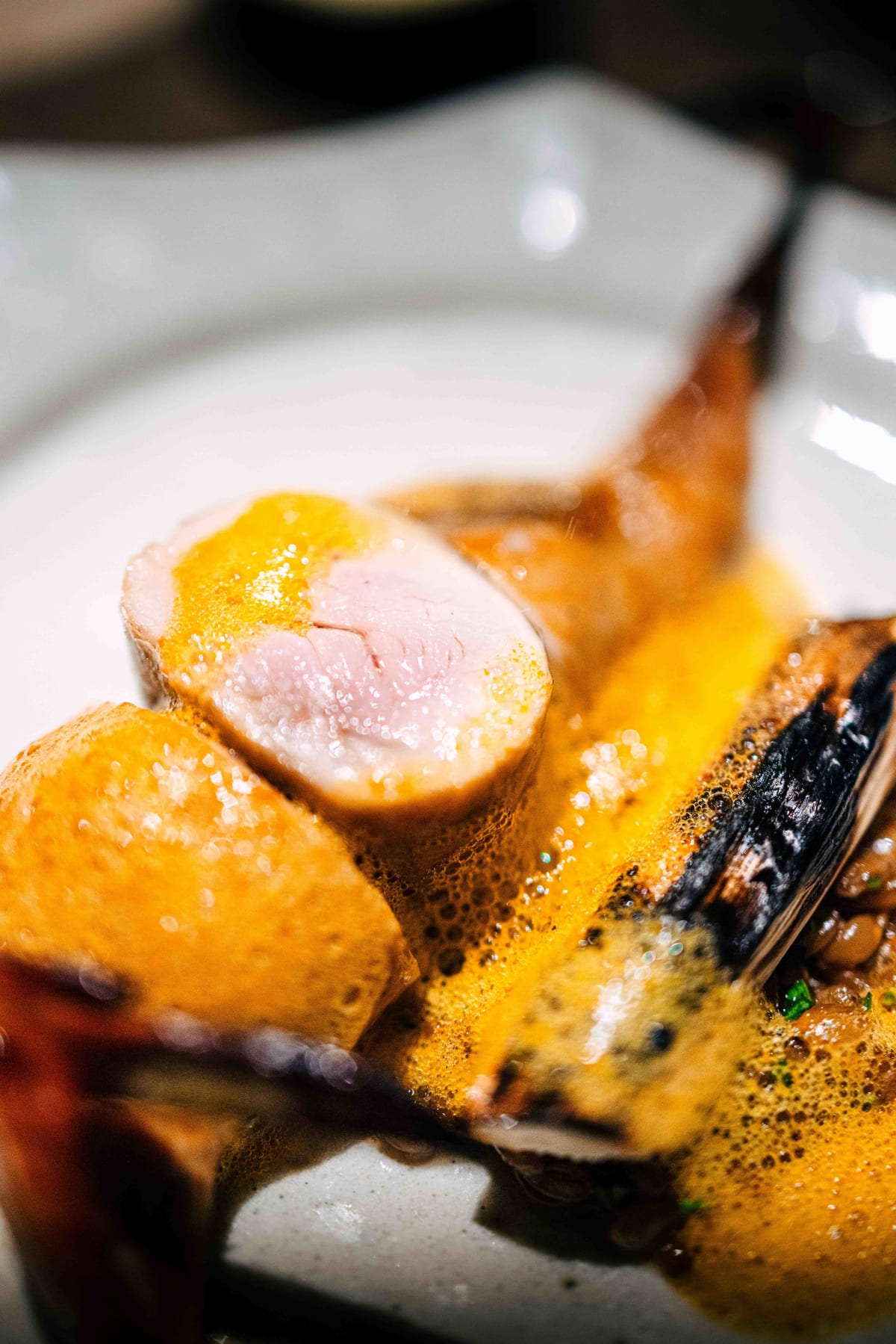
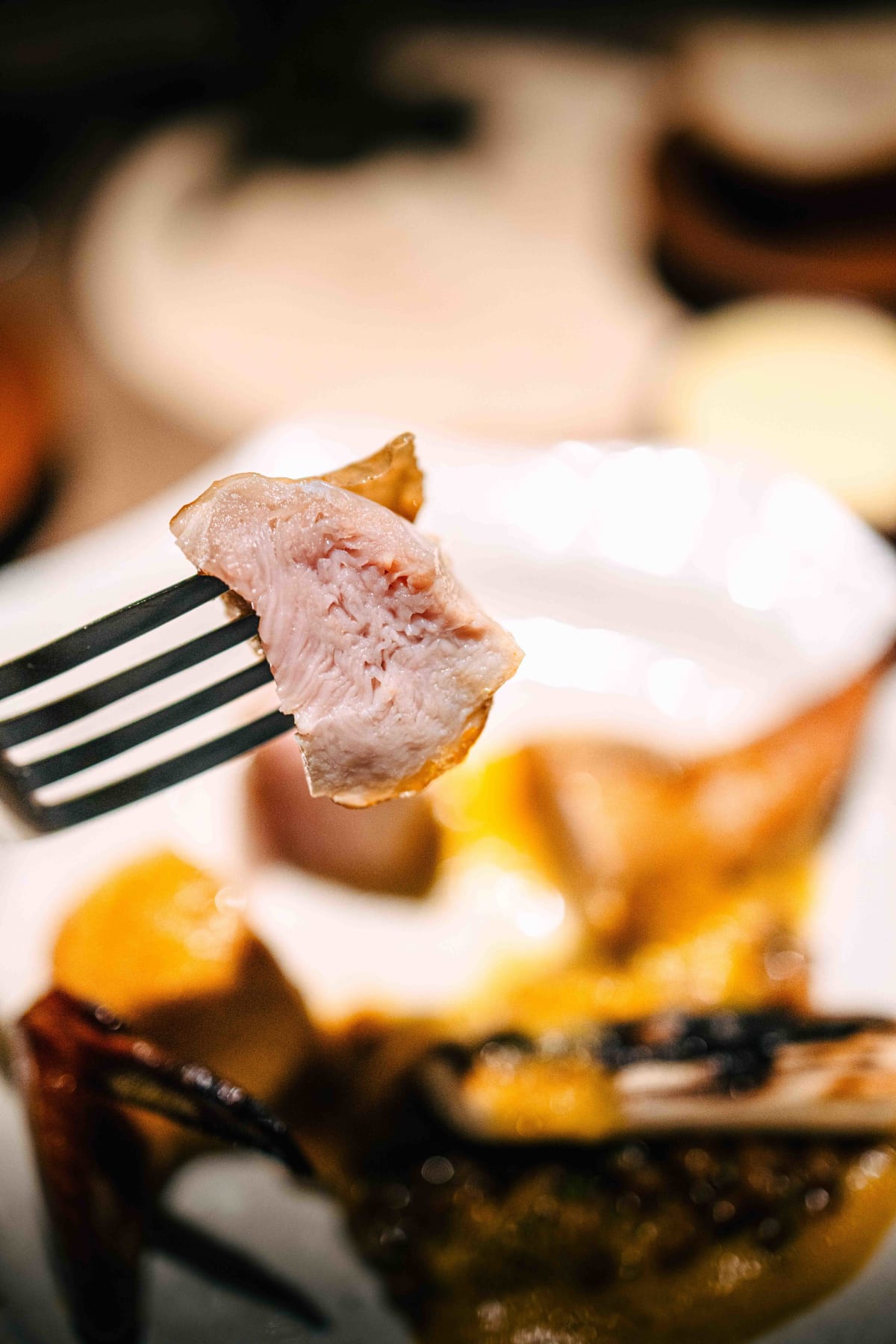
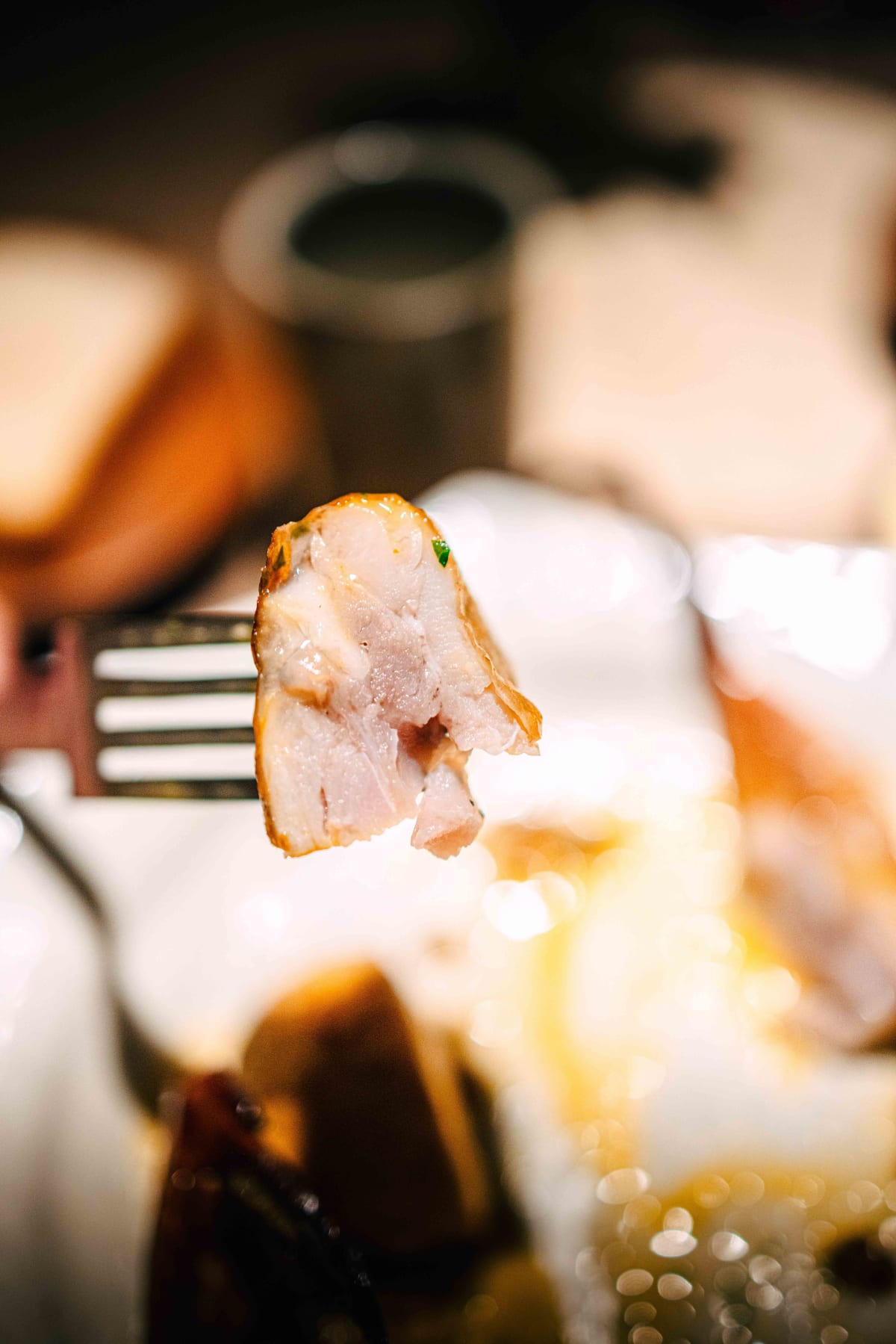
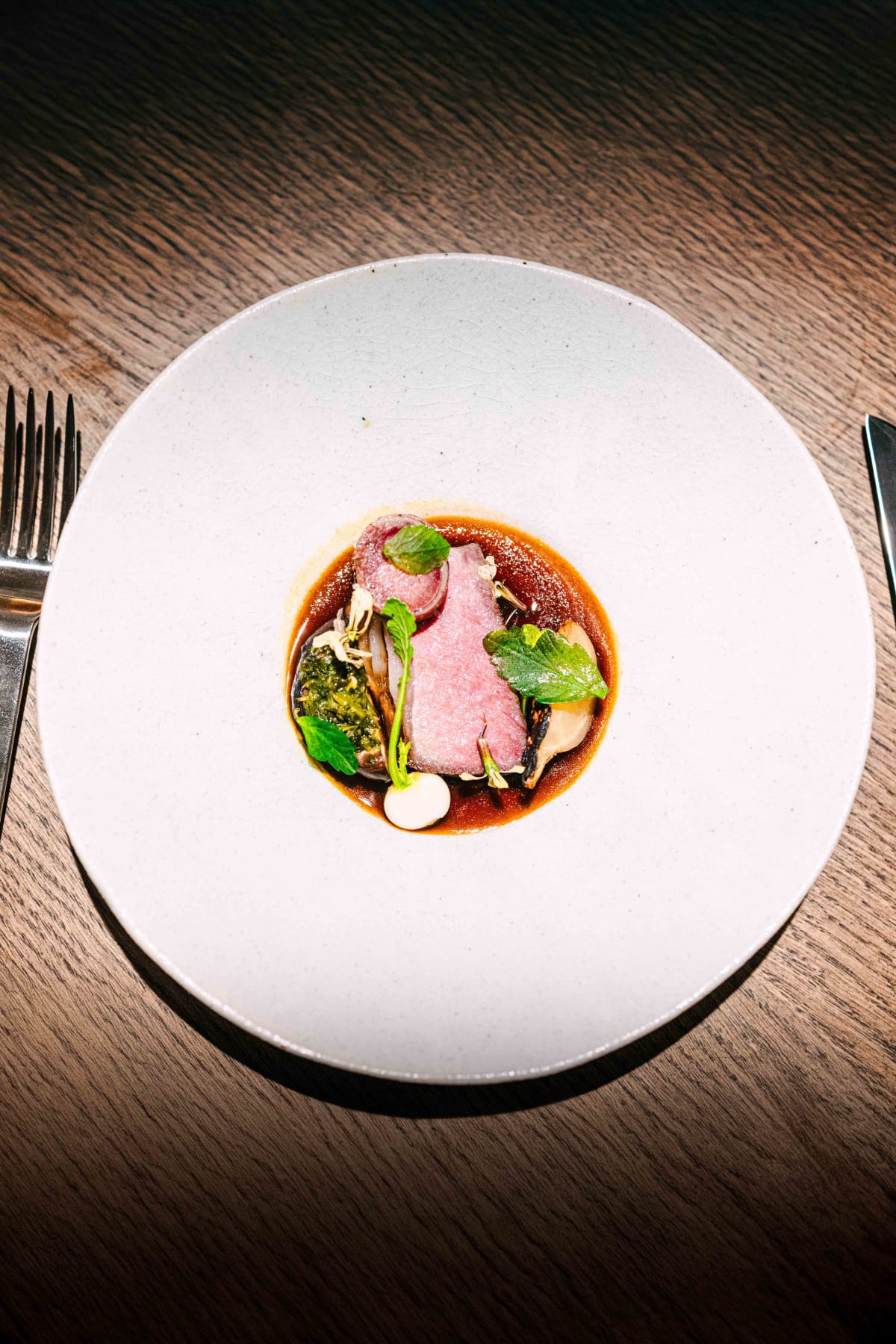
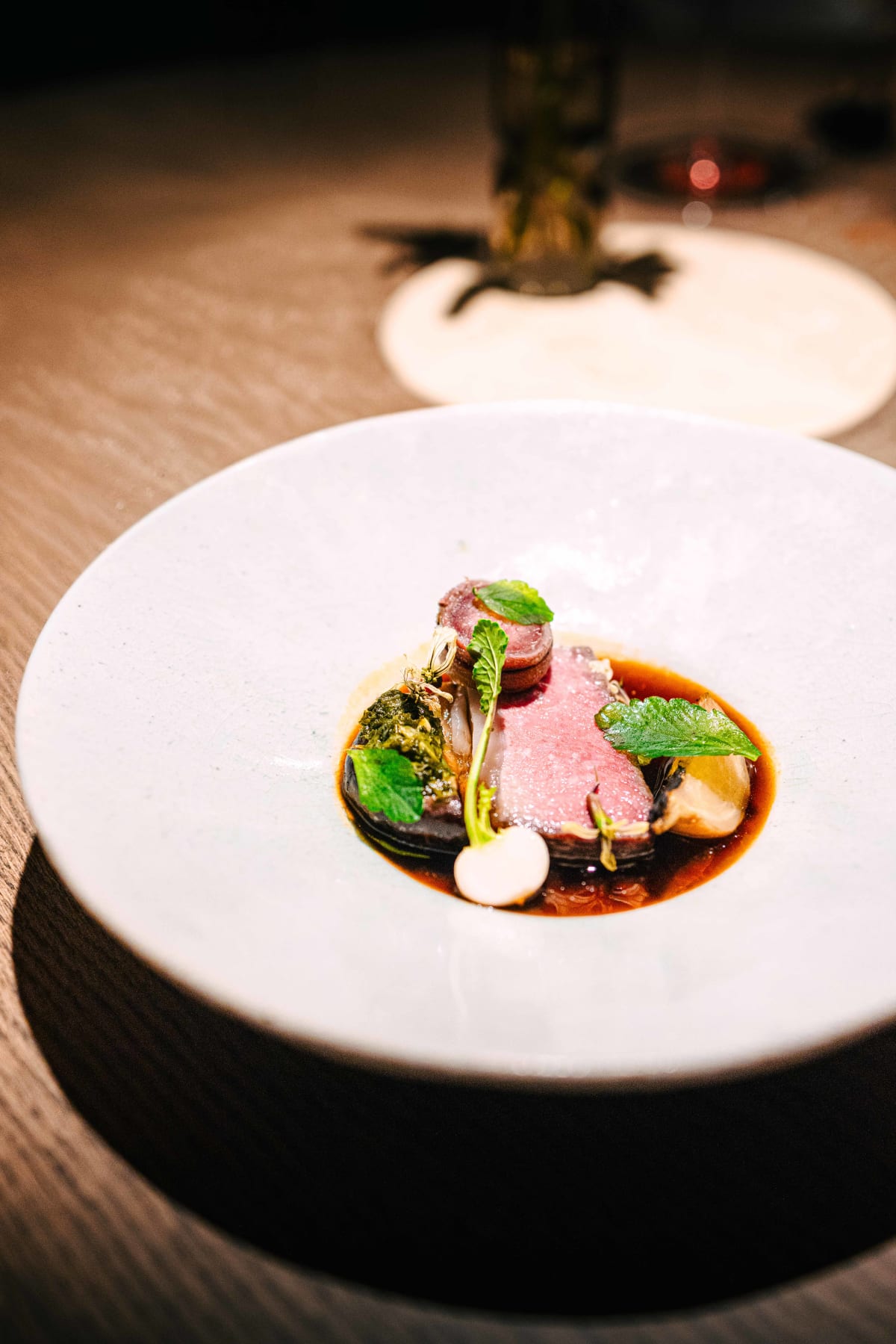
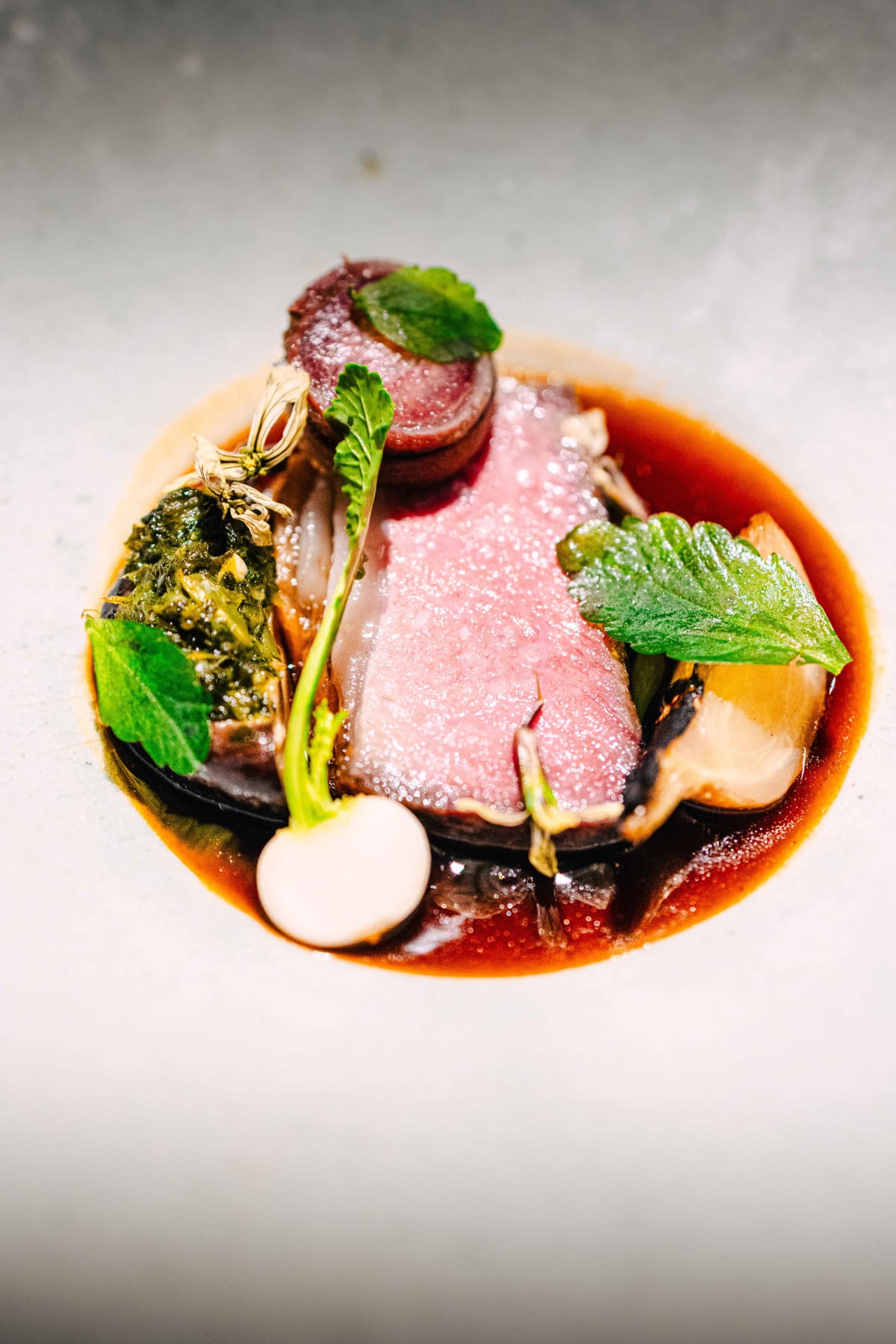
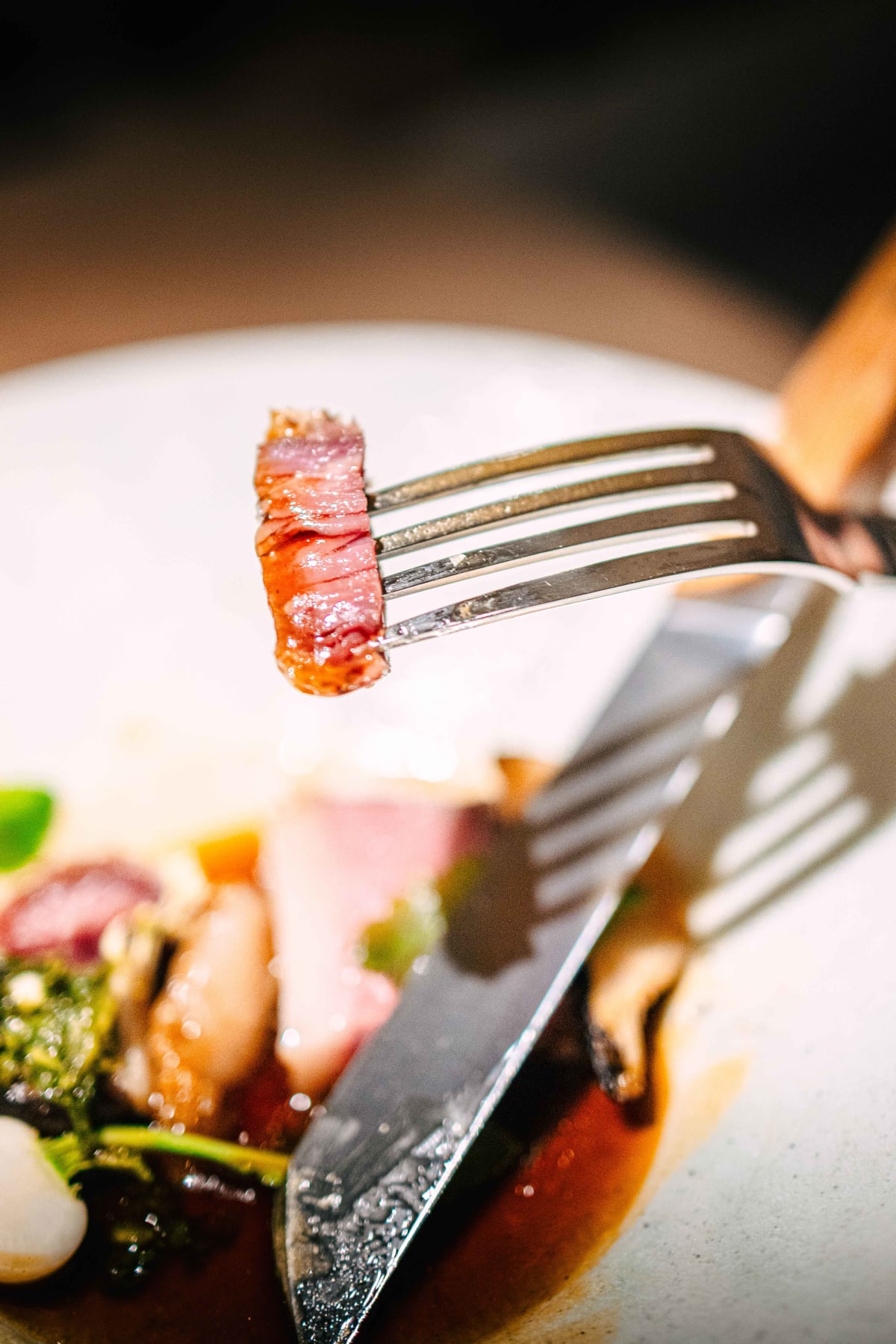
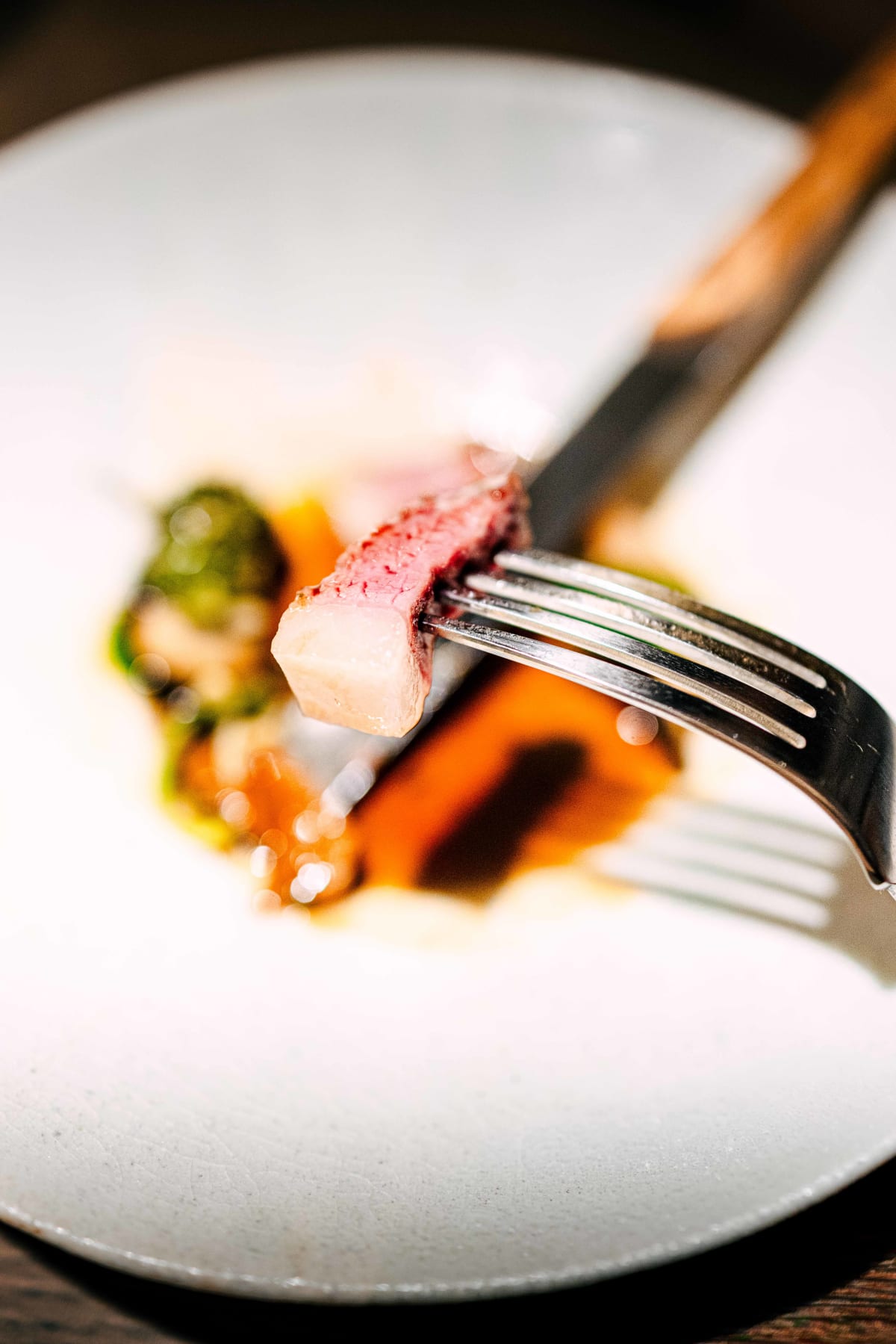
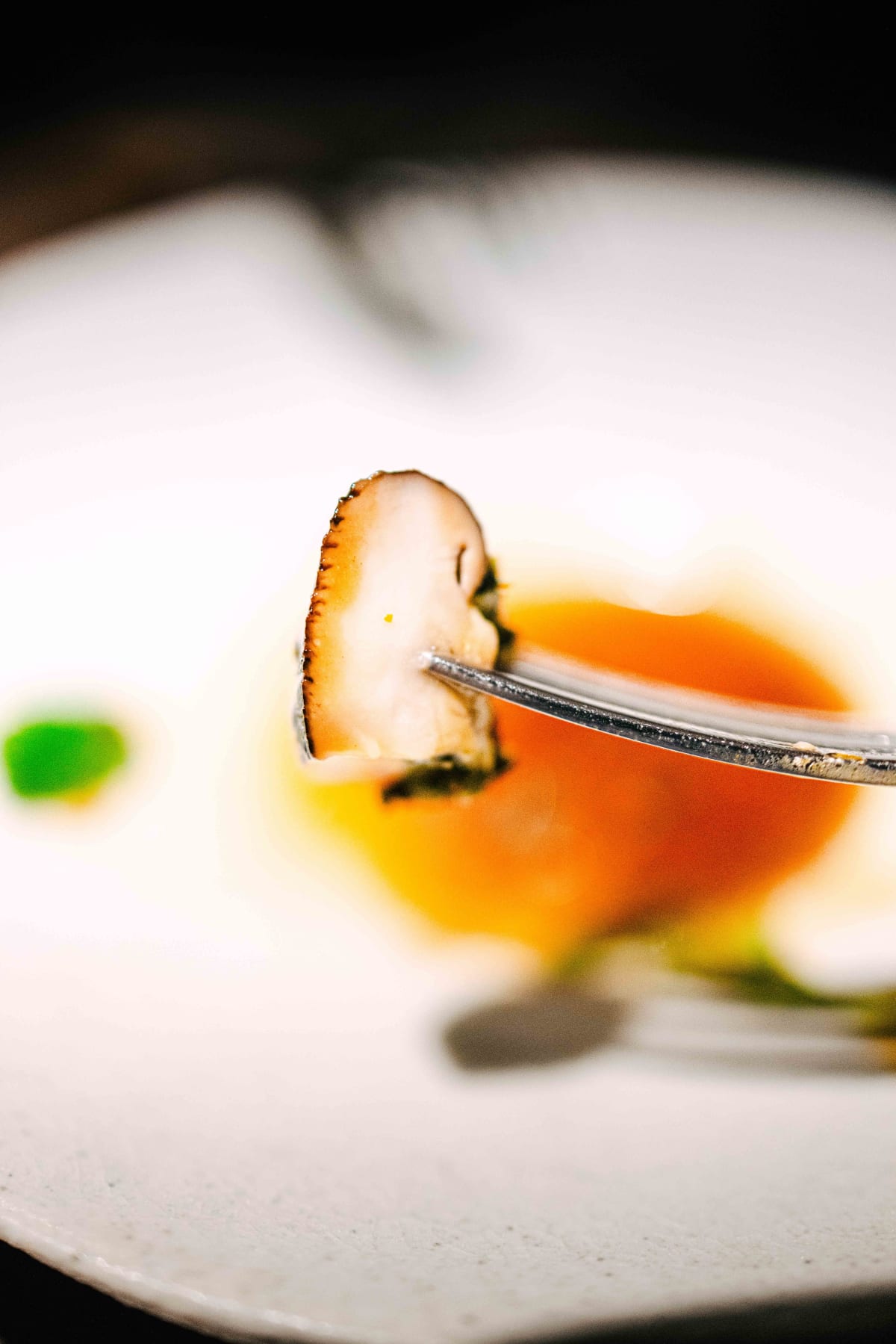
The eleventh and twelfth courses, the two branches of the main split, were Elysian Field Farm lamb and Wolfe Ranch quail. Both arrived at the table. The lamb came as two cuts, saddle in a larger slice and loin in a round, with turnip and donko shiitake mushroom as garnish, the mushroom dressed with gremolata, and a reduction of lamb jus alongside.
81—81 / 121
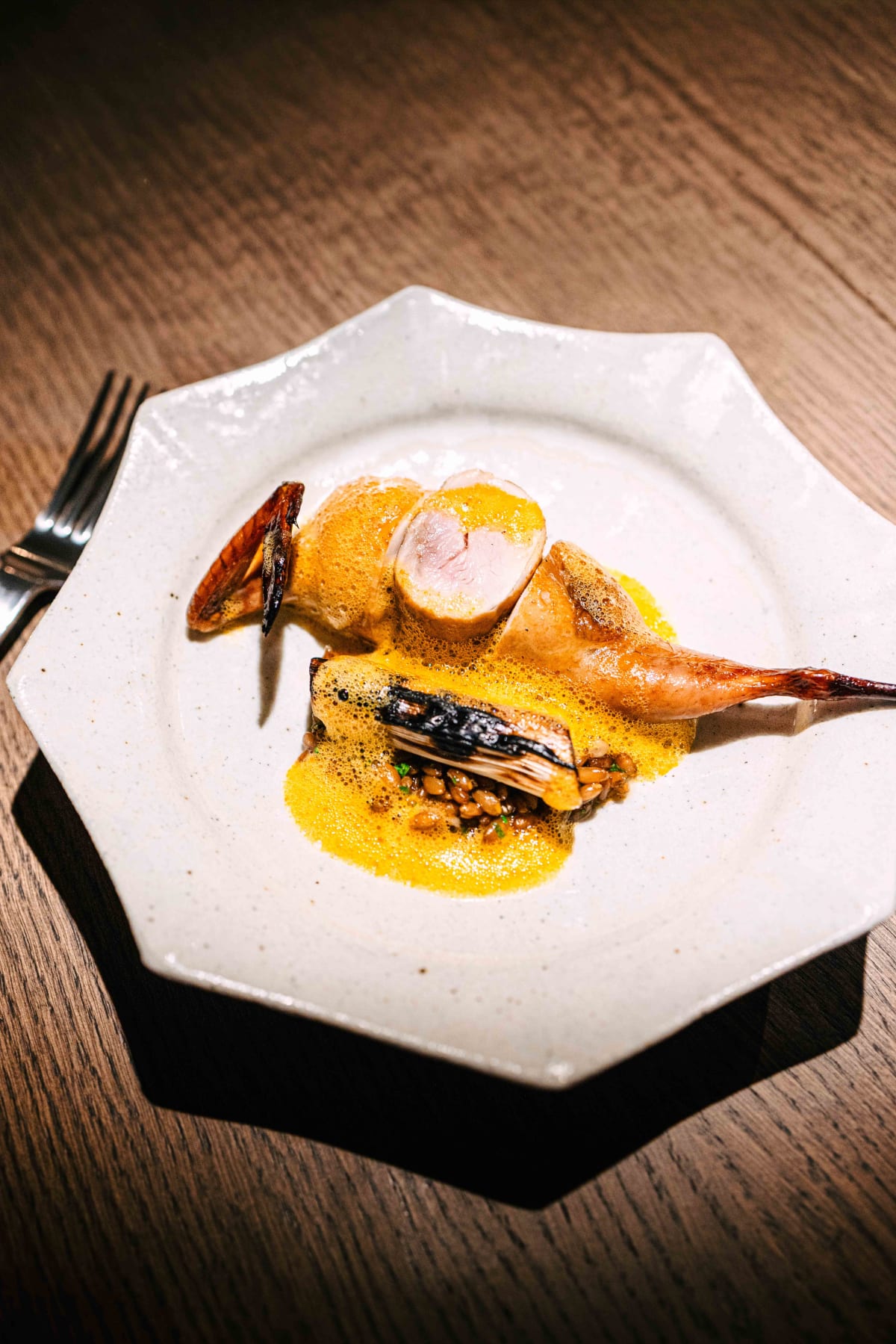
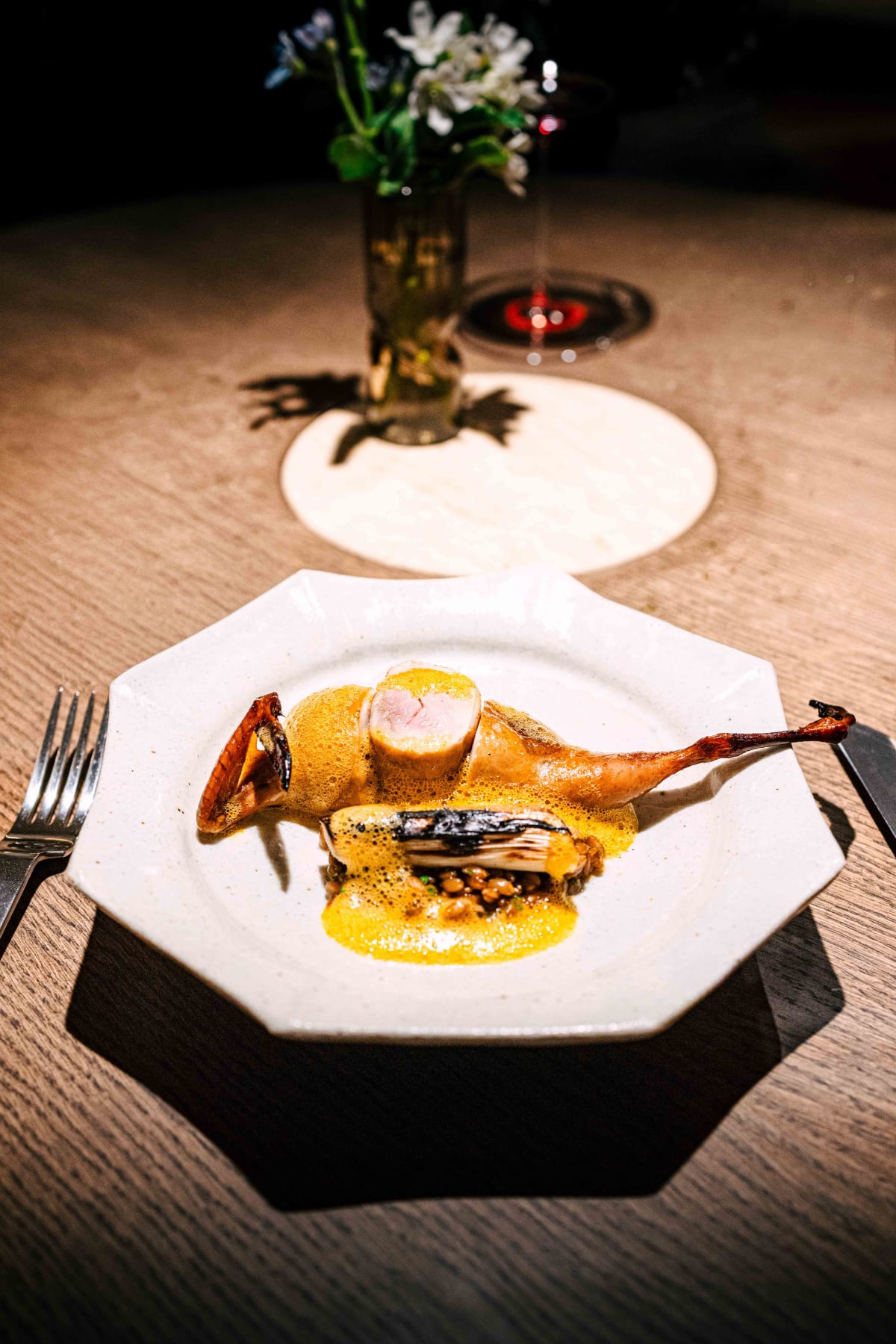
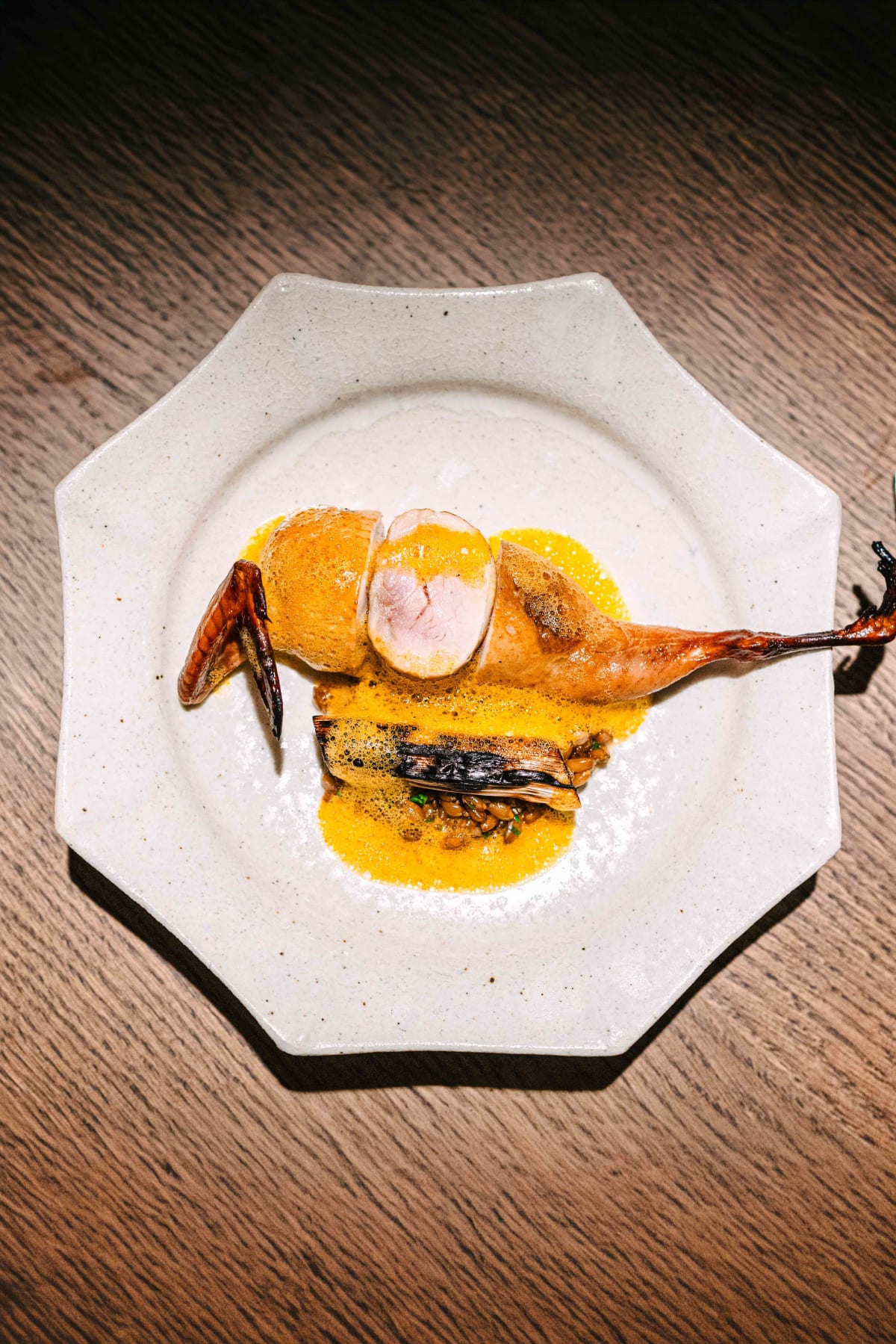
The quail came from Wolfe Ranch in Sonoma County, a farm sited close to The French Laundry, which mirrored Chef Lee's own French Laundry background.
83—83 / 121
The breeder, Brett Wolfe, has worked with the same flock of birds since age twelve, and over decades of selective breeding has developed a quail that runs heavier and juicier than the standard. The bird arrived noticeably larger and softer than typical quail.
82—84 / 121
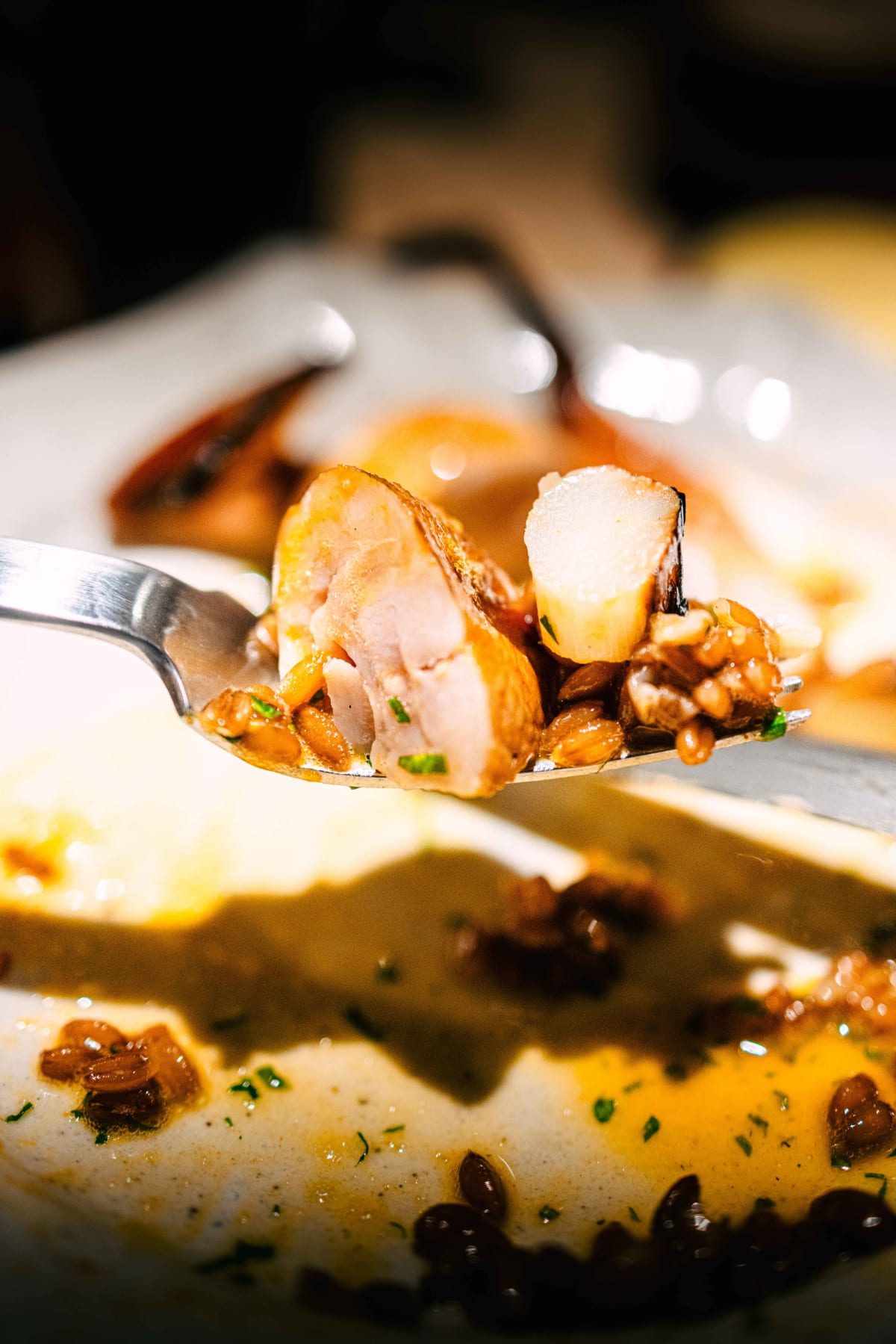
It was finished with a smoke treatment, set over a base of braised einkorn, an ancient grain, with white asparagus heavily charred on the outside, and two sauces alongside: a fermented barley butter hollandaise and a milder butternut squash hot sauce.
89—96 / 121
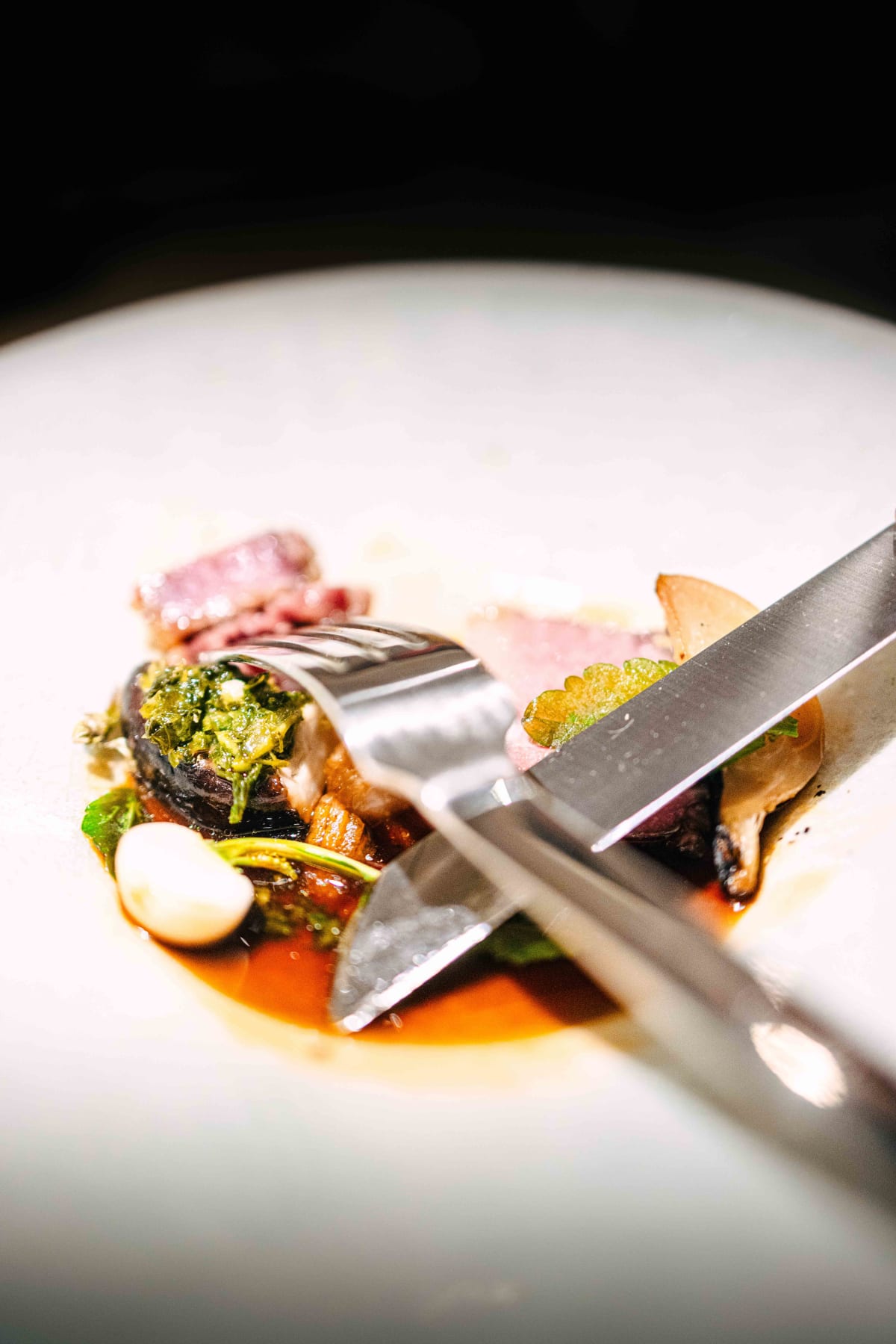
Both meats were excellent, and what made the pairing especially rewarding was that the two ran in completely different directions, so that comparison across the table became the point of the course.
86—86 / 121
The quail I chose was visually arresting first, and on first cut the texture telegraphed itself before tasting confirmed it. The quail carried a balance of springy, chewy density with softness that was unusual and impressive, while the lamb ran in a firmer register. On the pure meat-aroma comparison, separating the texture from the flavour, the lamb was the heavier and more direct of the two and the stronger plate on that axis. The quail's meat register was the more restrained, and not a strong personality in itself.
87—88 / 121
On garnish, the al dente register of the braised einkorn that accompanied the quail was particularly impressive, while the overall composition and finish of the garnish ran stronger on the lamb side.
92—98 / 121
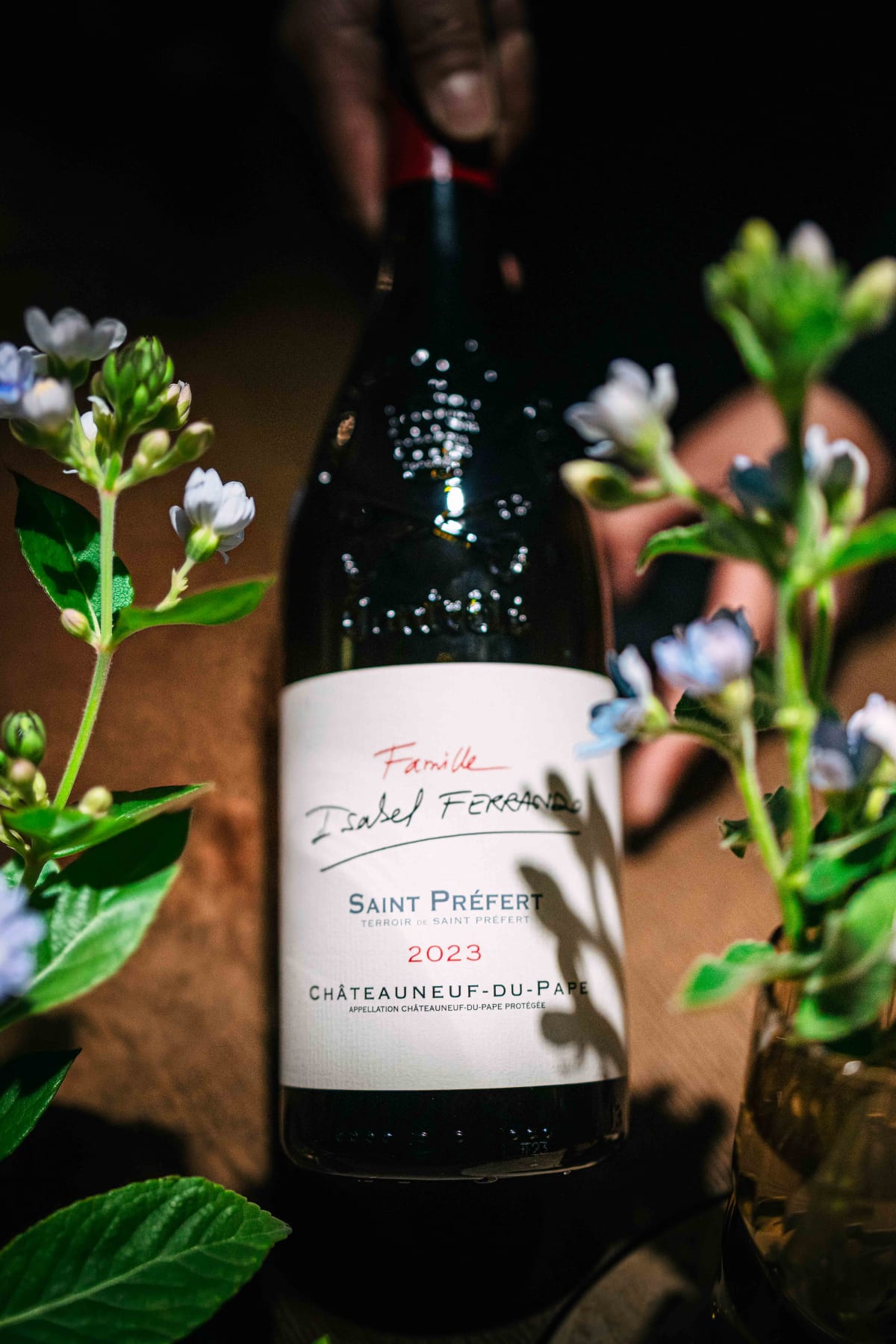
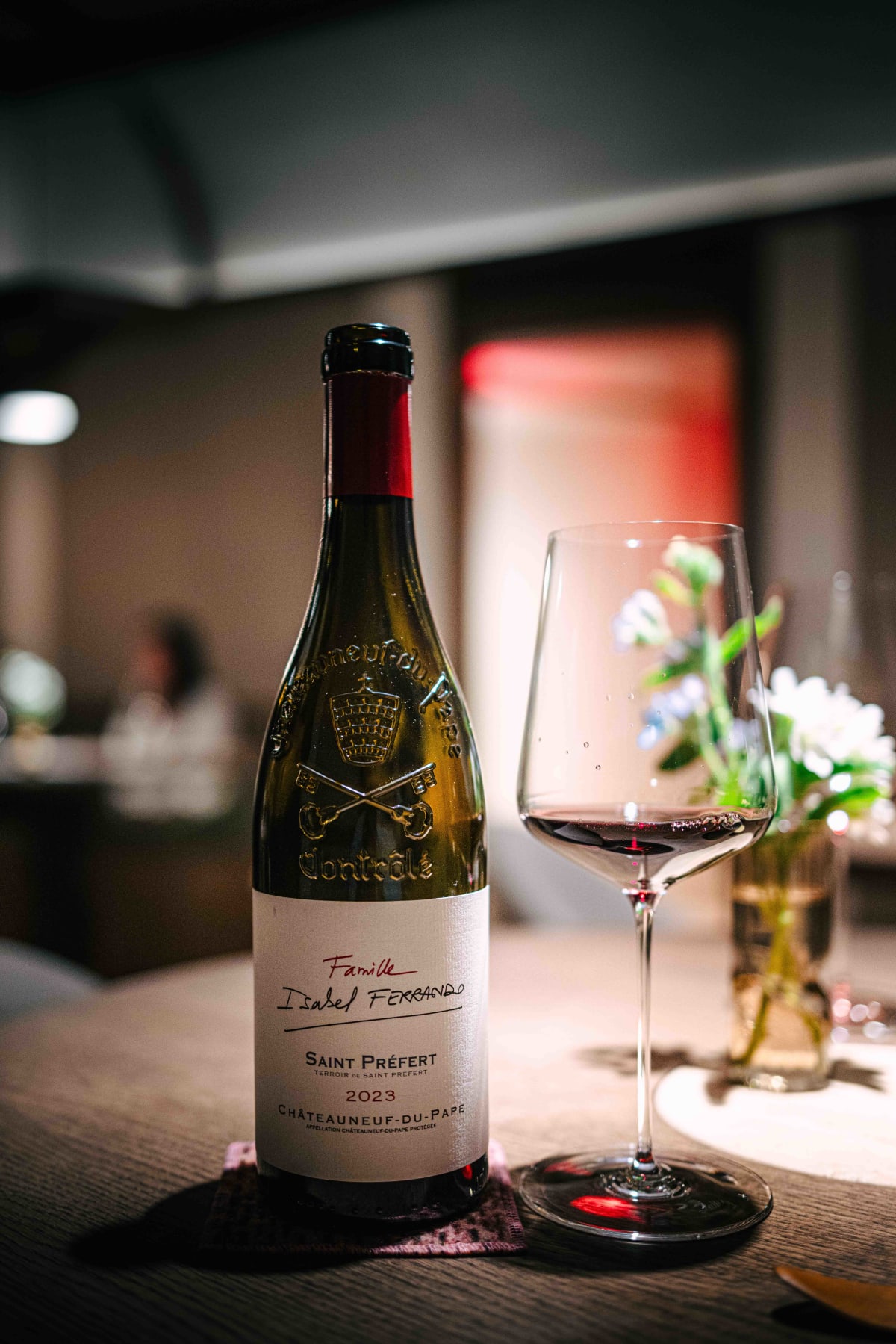
The pairing for this section opened with Famille Isabel Ferrando, Saint Préfert, Châteauneuf-du-Pape 2023. Ferrando came to wine in the early 2000s from a background in finance, and her bottling layers a classical CDP blend of Mourvèdre, Grenache, and Cinsault with her own philosophy of elegance and pleasure.
77—80 / 121
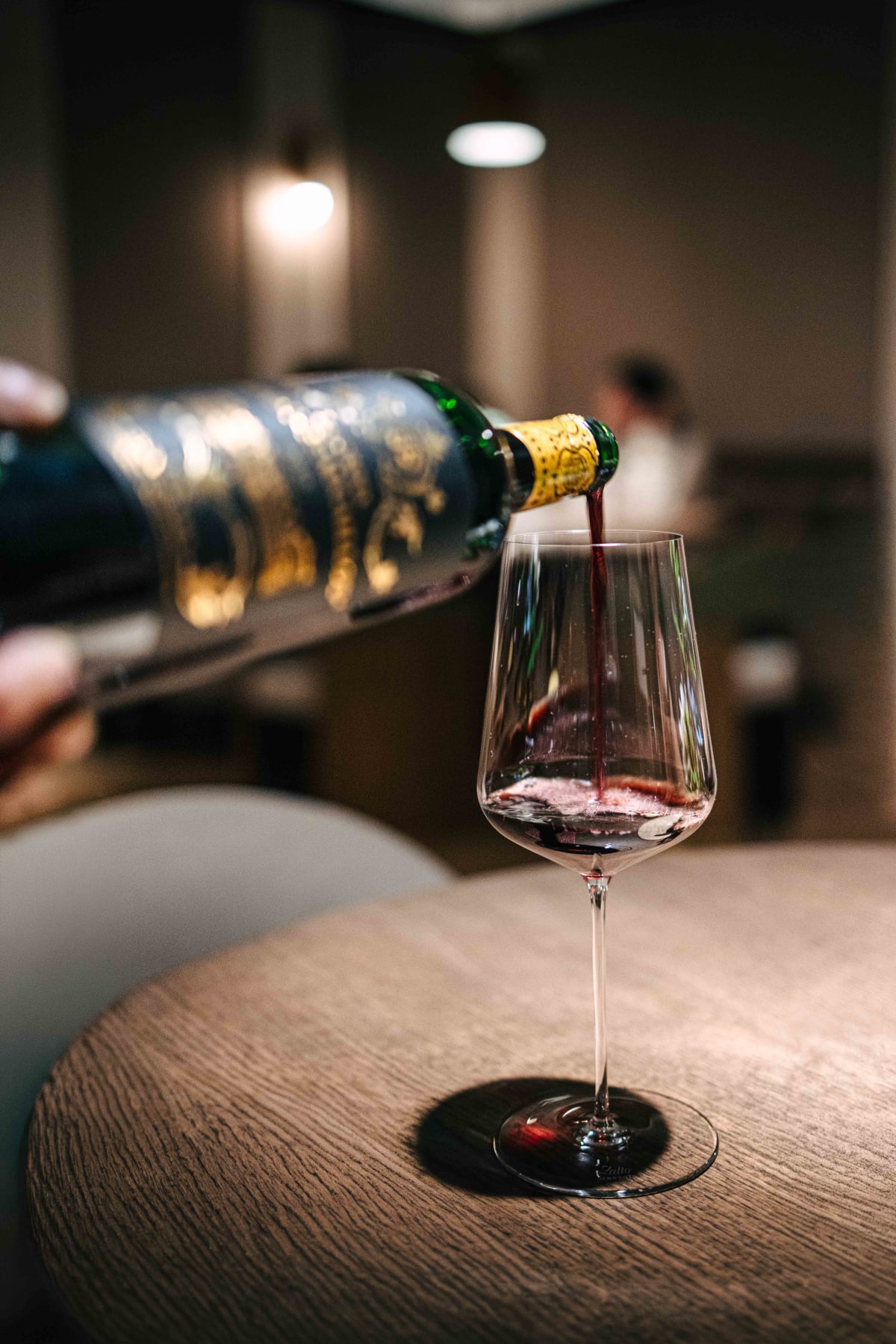
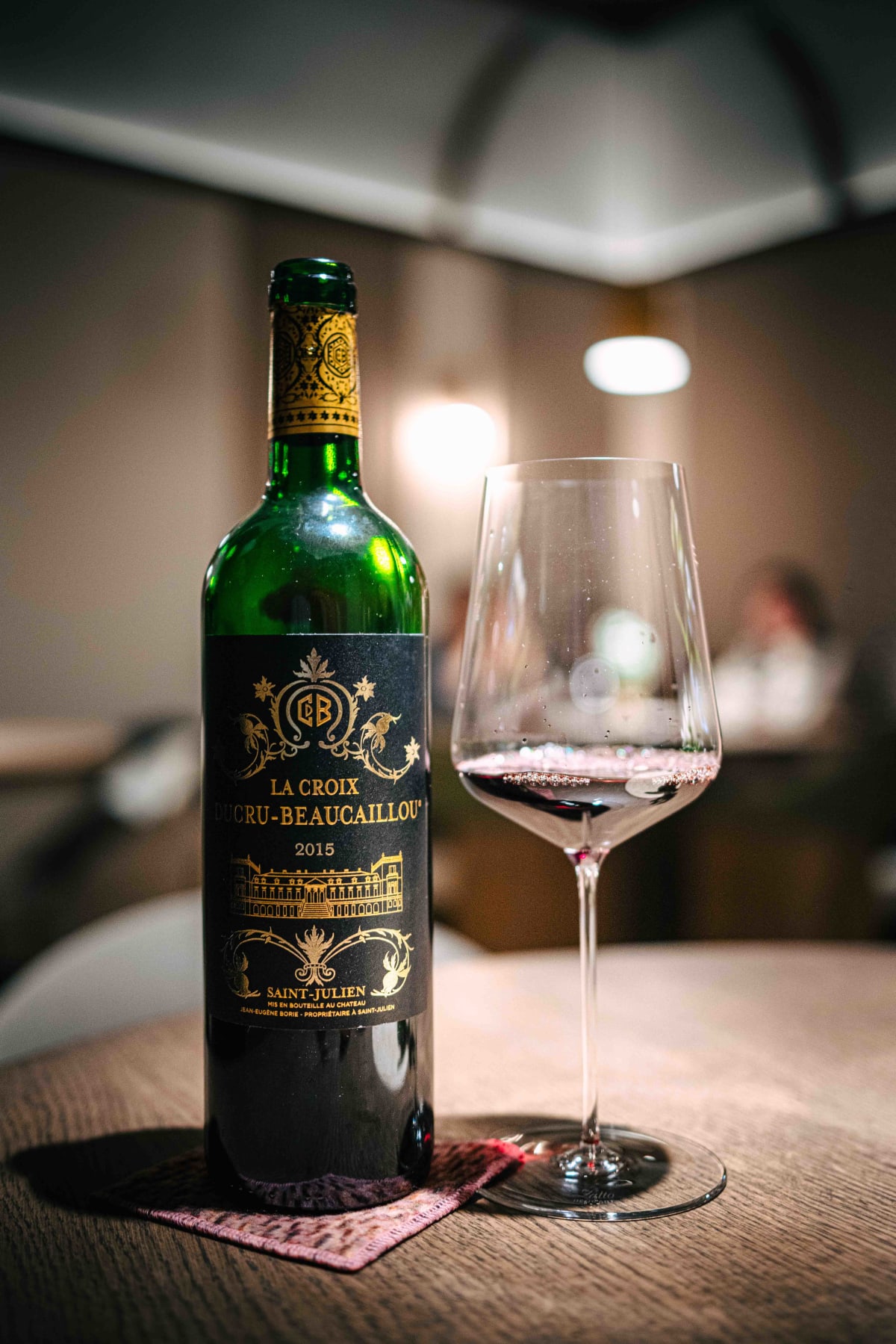
The second pour was La Croix Ducru-Beaucaillou 2015, the second wine of the Saint-Julien second-growth Château Ducru-Beaucaillou. 2015 is a recognised great vintage on the Left Bank of Bordeaux, and the classical, dense, velvety Cabernet Sauvignon-led profile worked as solid scaffolding for the direct meat-aroma of the lamb. The classical aging register of Left Bank Bordeaux had matured enough to make the pairing distinctly competent.
78—79 / 121
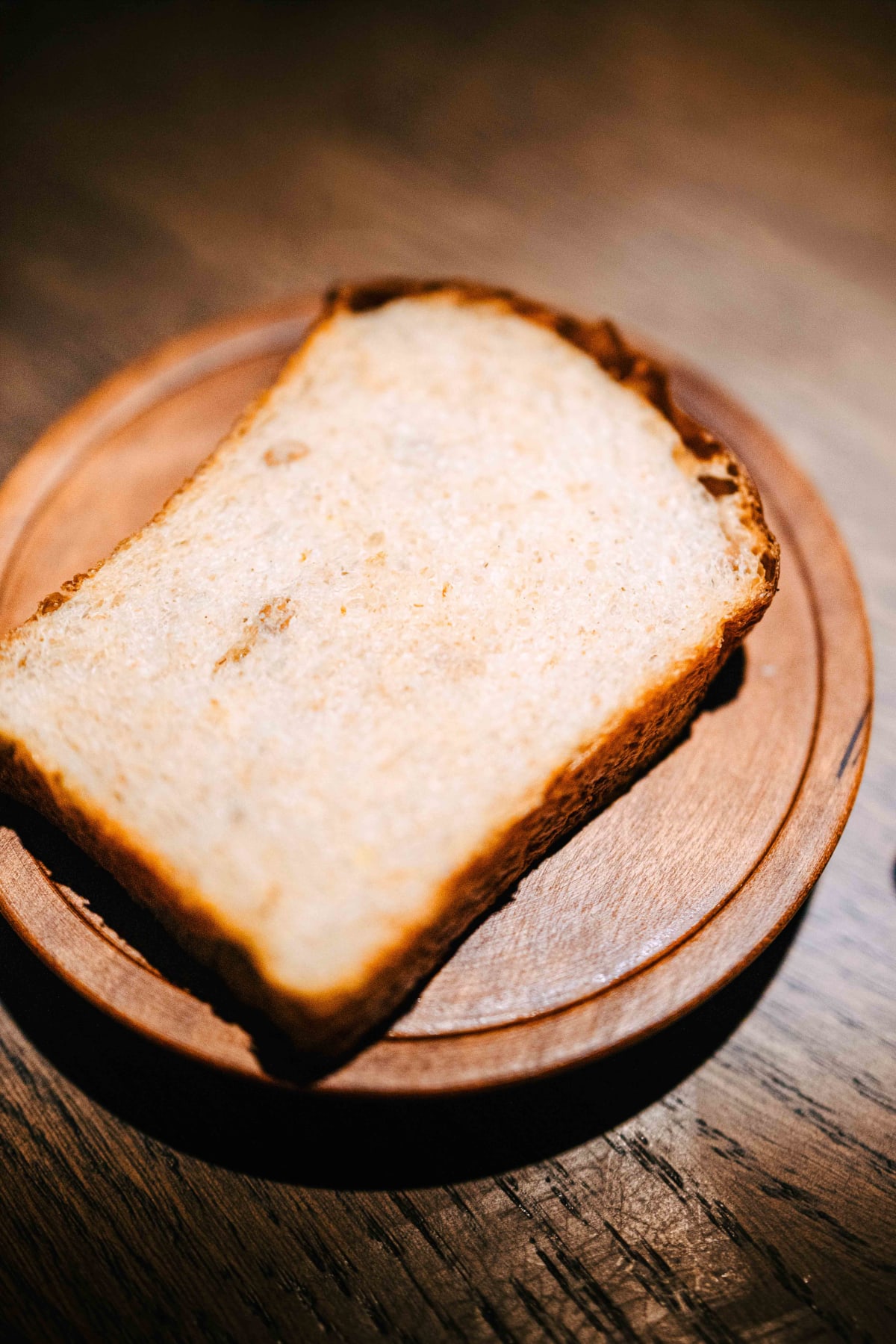
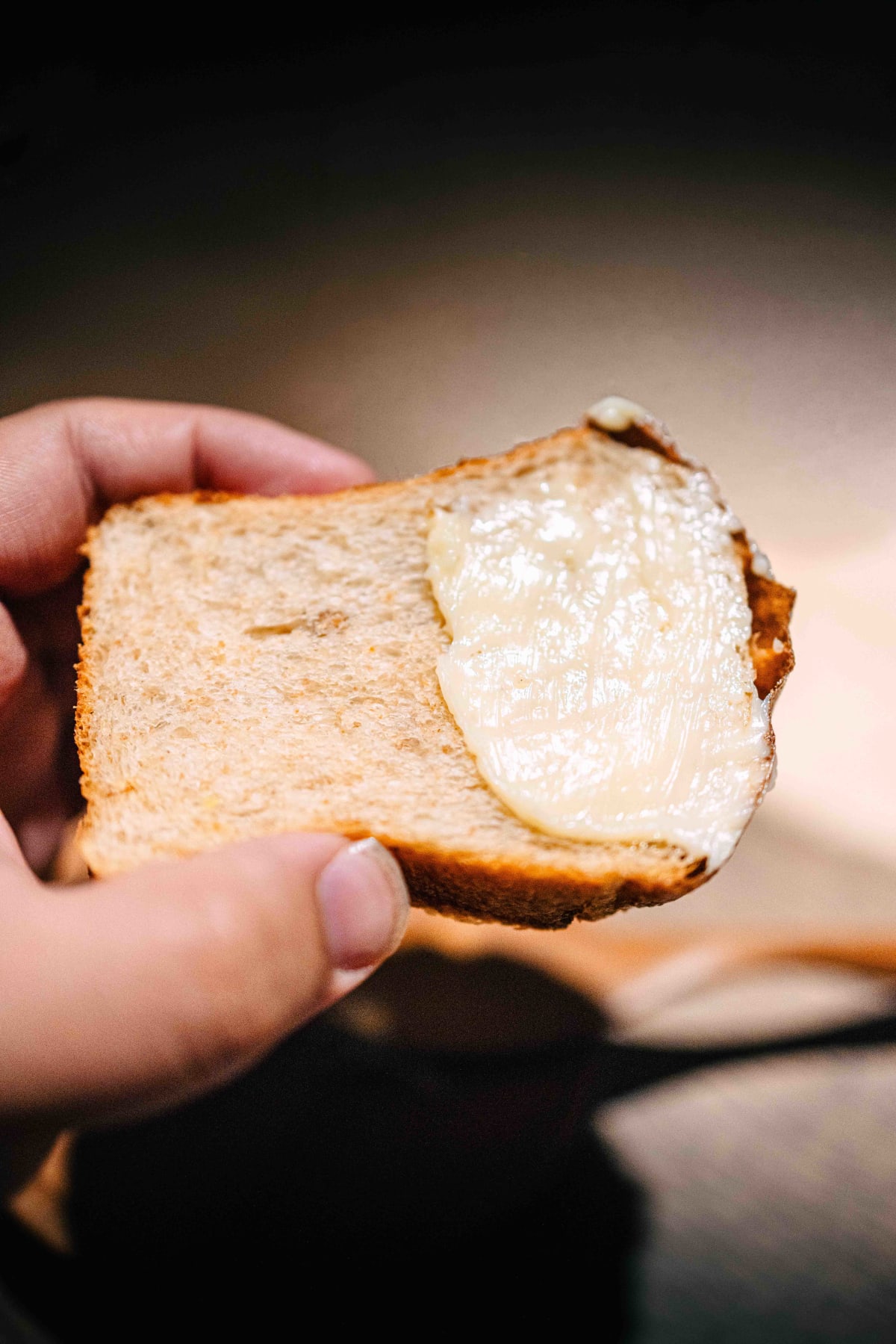
The bread service for the meat course was Emmer Bread and Animal Farm Butter. Animal Farm is a small Vermont producer known for supplying only an extremely limited circle of top American restaurants, including Per Se, The French Laundry, and The Inn at Little Washington. Chef Lee's French Laundry network appears to extend even into this supply line, which is one indication of the luxury-ingredient sourcing capacity Oyatte has assembled at this early stage. That said, while the butter was striking in its delicate, polished texture, the bread itself was unremarkable, and arriving as it did at a point in the meal when appetite was already saturated, it did not draw much attention.
99—100 / 121
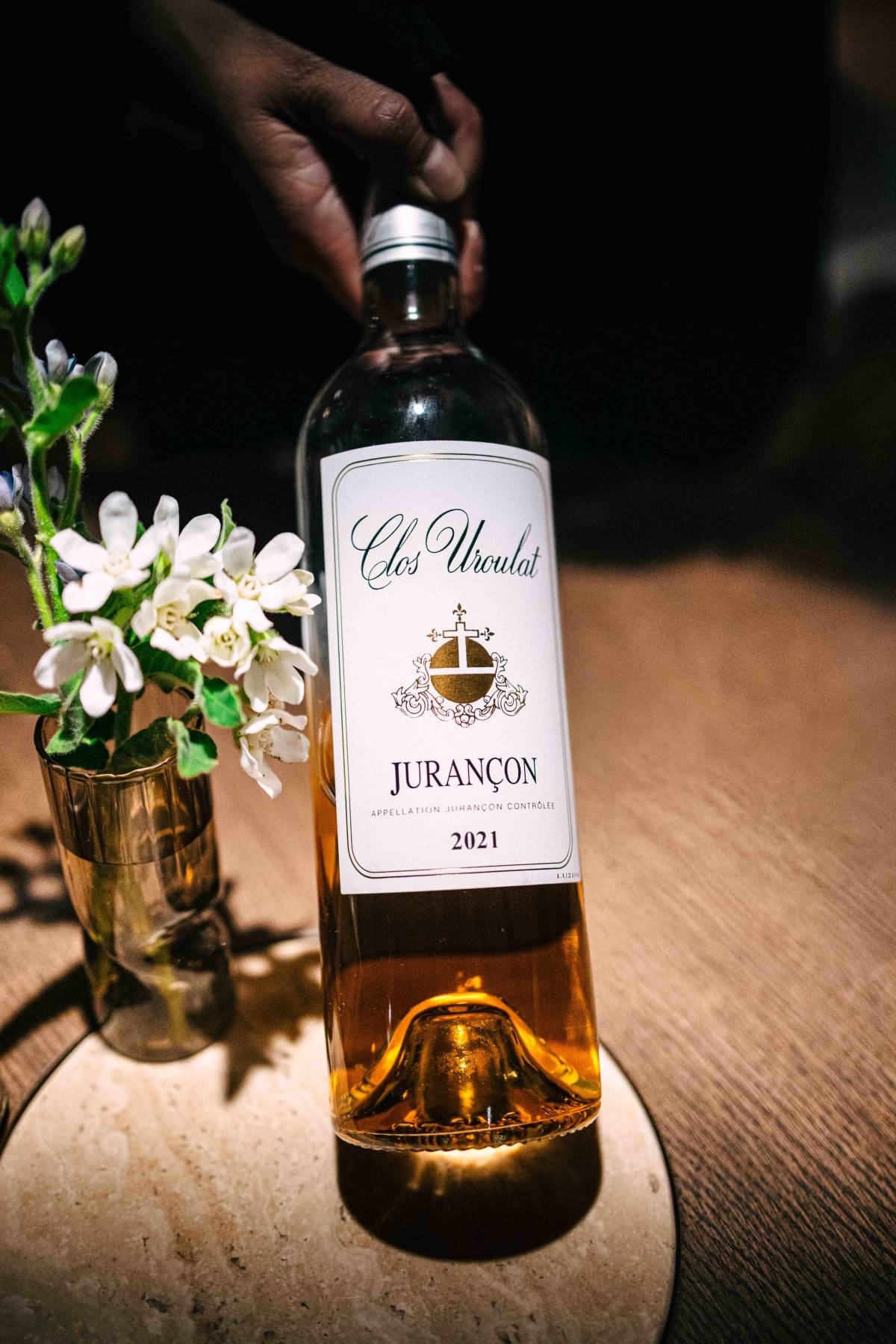
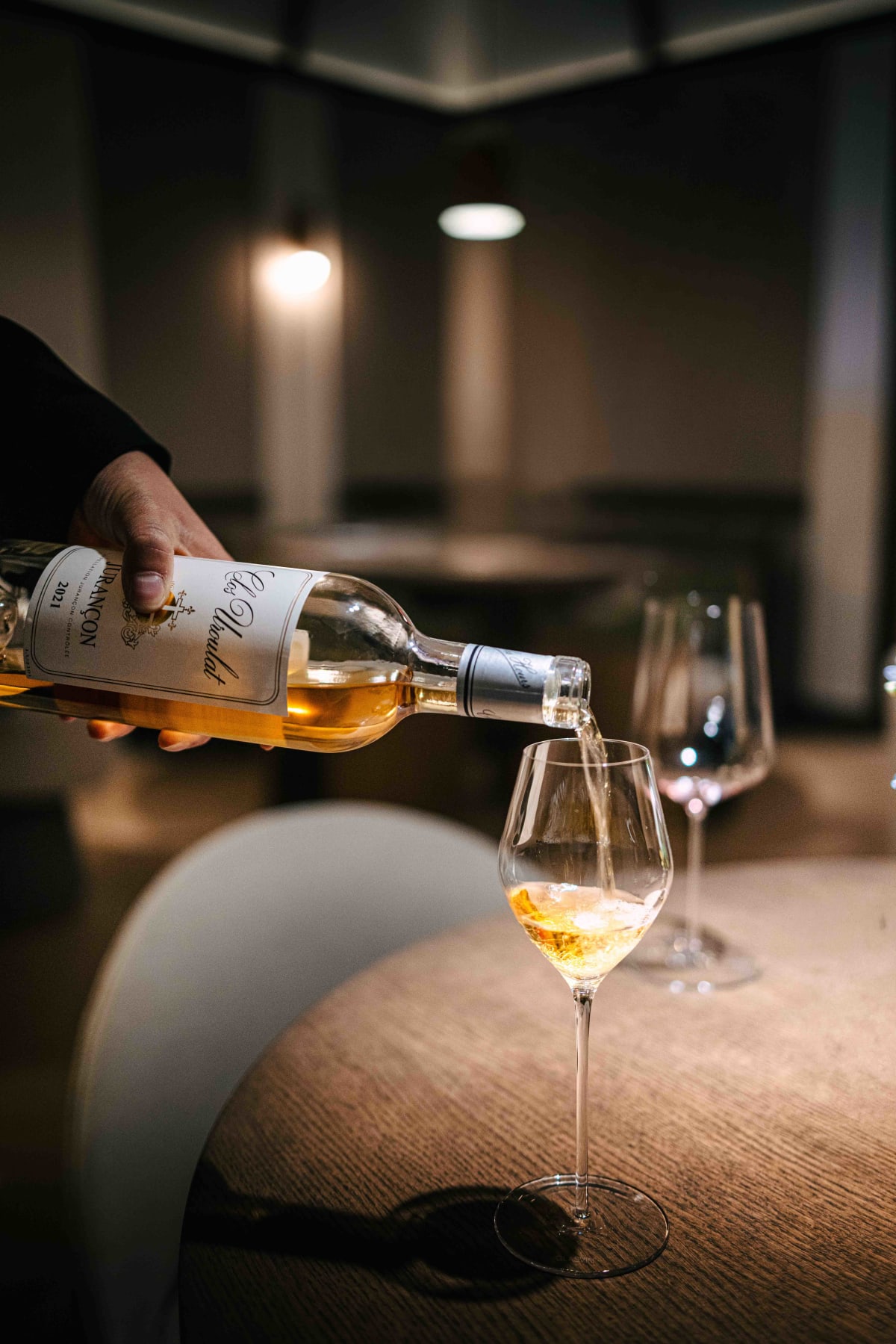
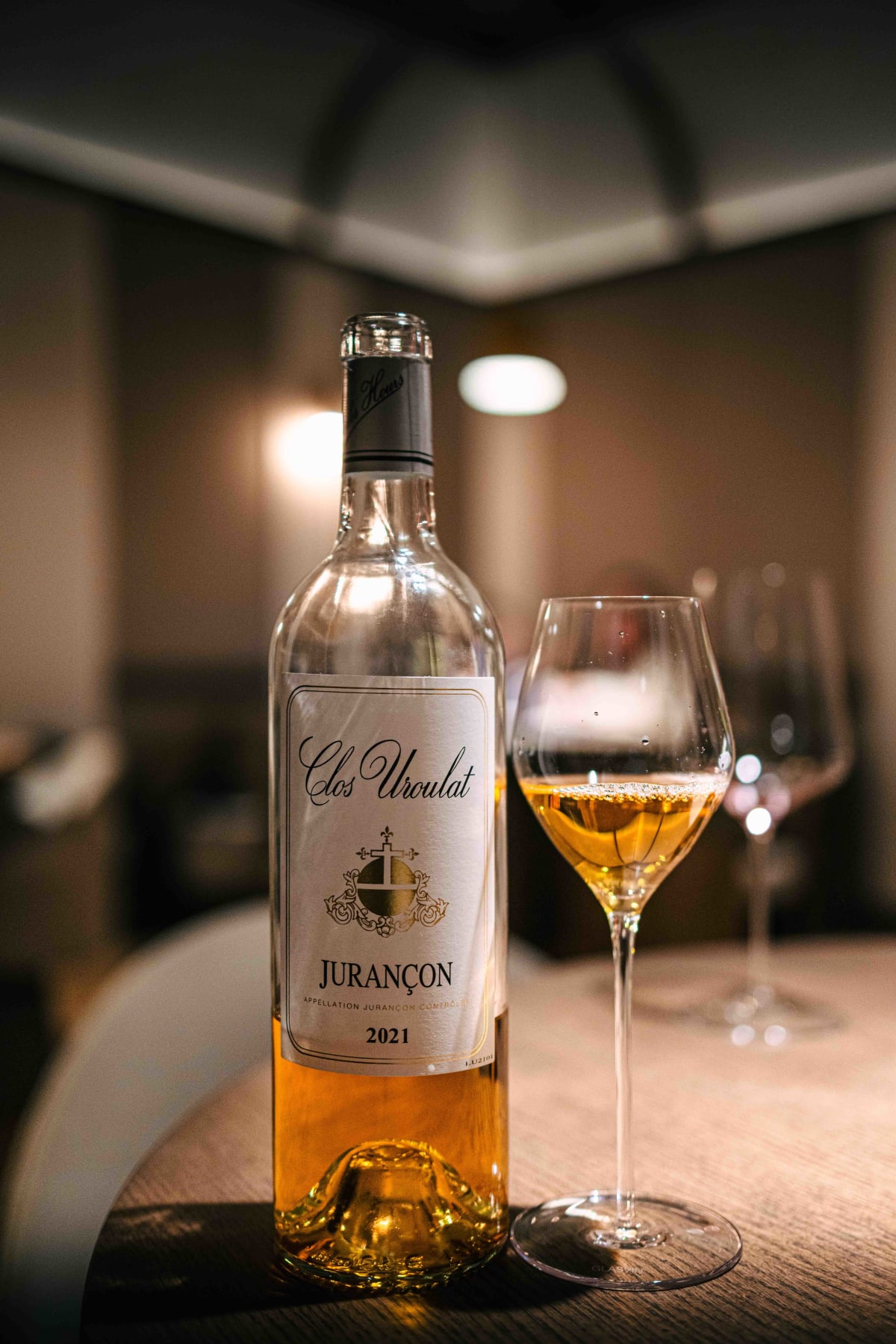
The dessert sequence, Harvested Elegance, began with the final wine, Charles Hours' "Clos Uroulat" Jurançon 2021. Jurançon, the southwest French region close to the Pyrenees, produces sweet wines, this one made by passerillage, leaving the grapes on the vine to concentrate naturally late into the season. The family name Hours is pronounced identically to the English word, and the producer's daughter calls her own wine "Happy Hours," a detail that goes onto the list of charm points. The wine itself was good, but in concentration and depth, compared with the Sauternes d'Yquem register I keep encountering elsewhere, the weight ran lighter, an unfair comparison perhaps, but a real one. For a dessert pairing on which heavier sweet-wine expectations might be placed, the impression was on the lighter side.
101—103 / 121
The first dessert, the thirteenth dish, was Mugwort Ice Cream.
104—104 / 121
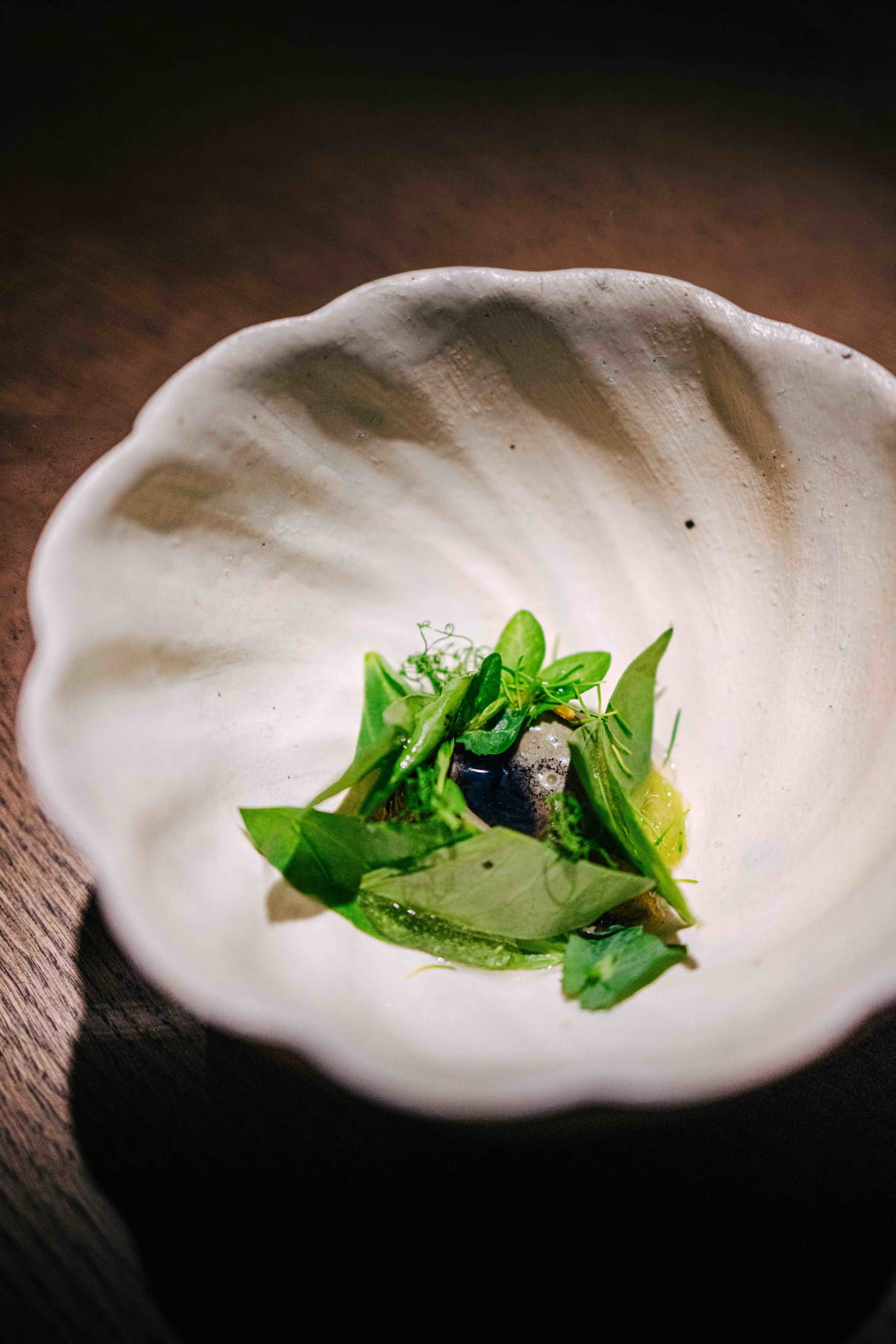
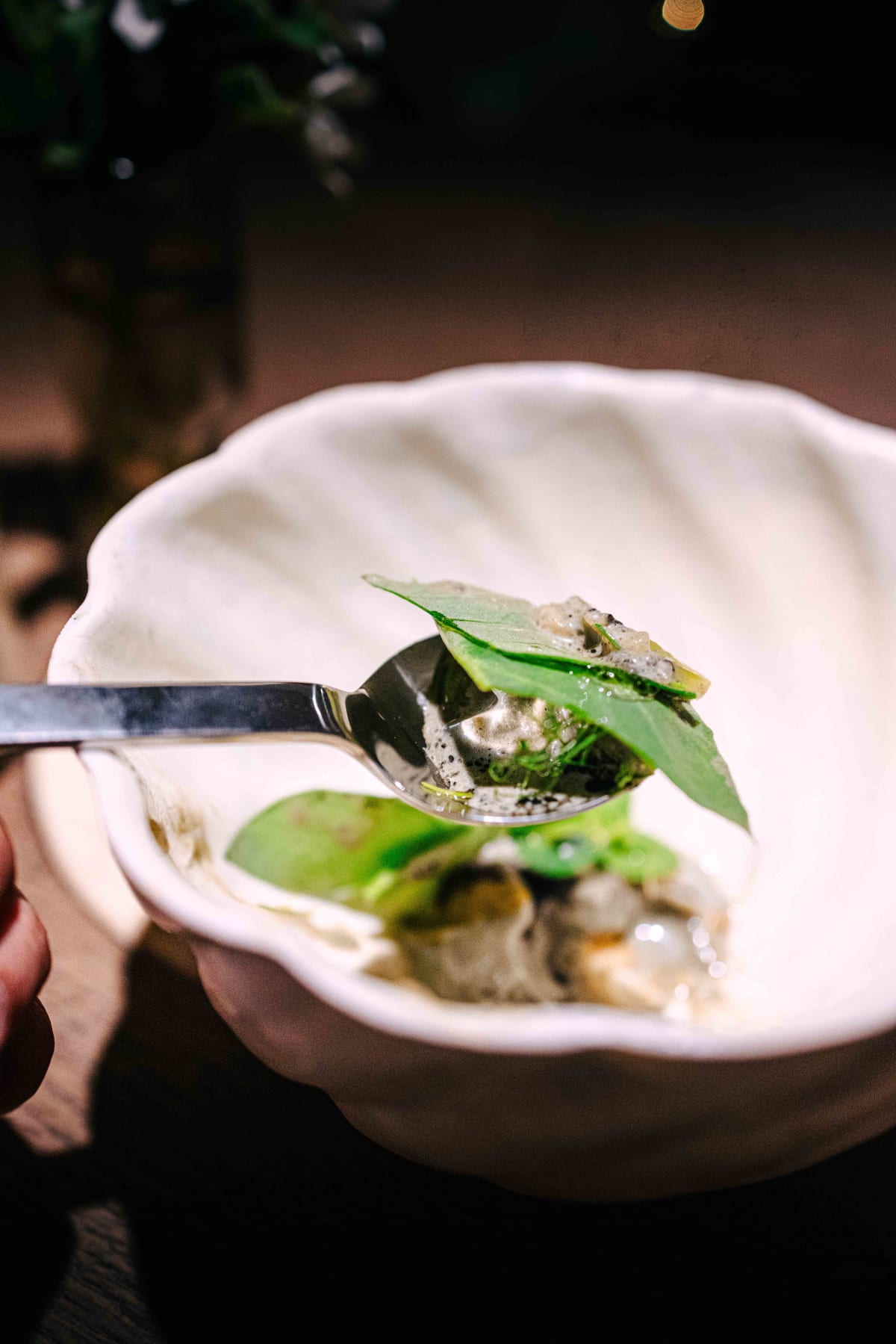
This one carried a particular weight in the meal, as Chef Lee himself came to the table and presented it in Korean. "Mugwort ice cream with a salad of fava shoots from the farm, Meyer lemon, and kiwi. A salad dessert," he said.
105—105 / 121
The dessert itself was strong. The kiwi note within the mugwort ice cream came through more assertively than expected, met by an equally strong spread of green vegetal and herbal aromatics that did not yield to it. The result read less as a traditional French dessert and more as a modern composition that actively used vegetables as primary material, and because the quality of each individual vegetable was high, the synthesis landed well.
106—106 / 121
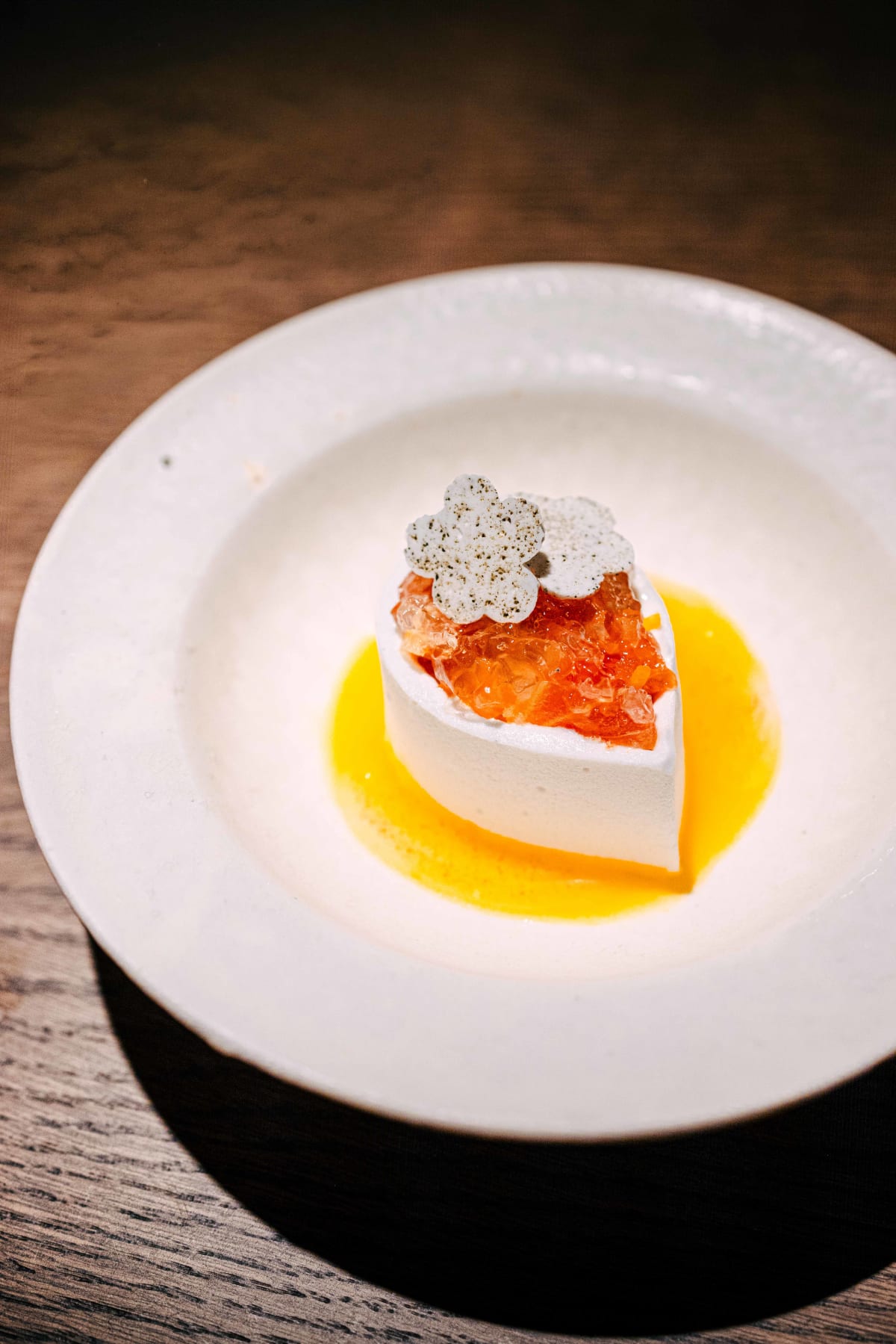
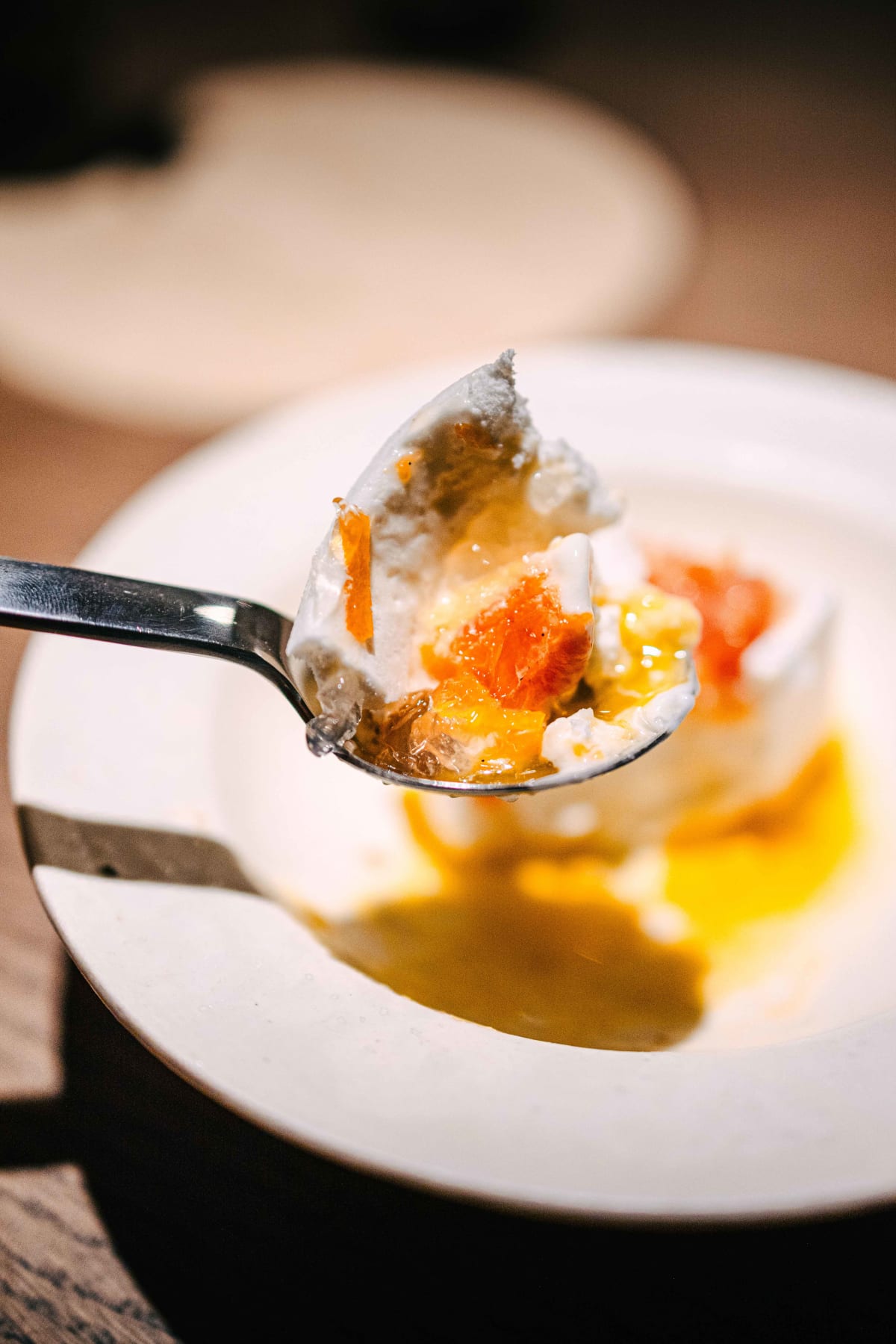
The second dessert was Preserved Cara Cara Orange. Preserved Cara Cara orange as the base, with a marshmallow vacherin, a black ginger Chantilly, and a yellow bell pepper sauce alongside, finished with a dusting of kombu powder on top. The server suggested using the side of the spoon to crack open the firm meringue shell.
110—110 / 121
The dessert was genuinely impressive. The opening texture of breaking the meringue, the splitting and shattering register, was excellent, and the bright spice quality of the yellow bell pepper that emerged from within paired remarkably well with the citrus orientation of the dessert.
111—111 / 121
On the ice cream, a faint chili-like aromatic followed, and on first contact it produced a brief question mark in the head. Once I confirmed it as the yellow bell pepper sauce, the precision of the aromatic construction registered with even greater admiration.
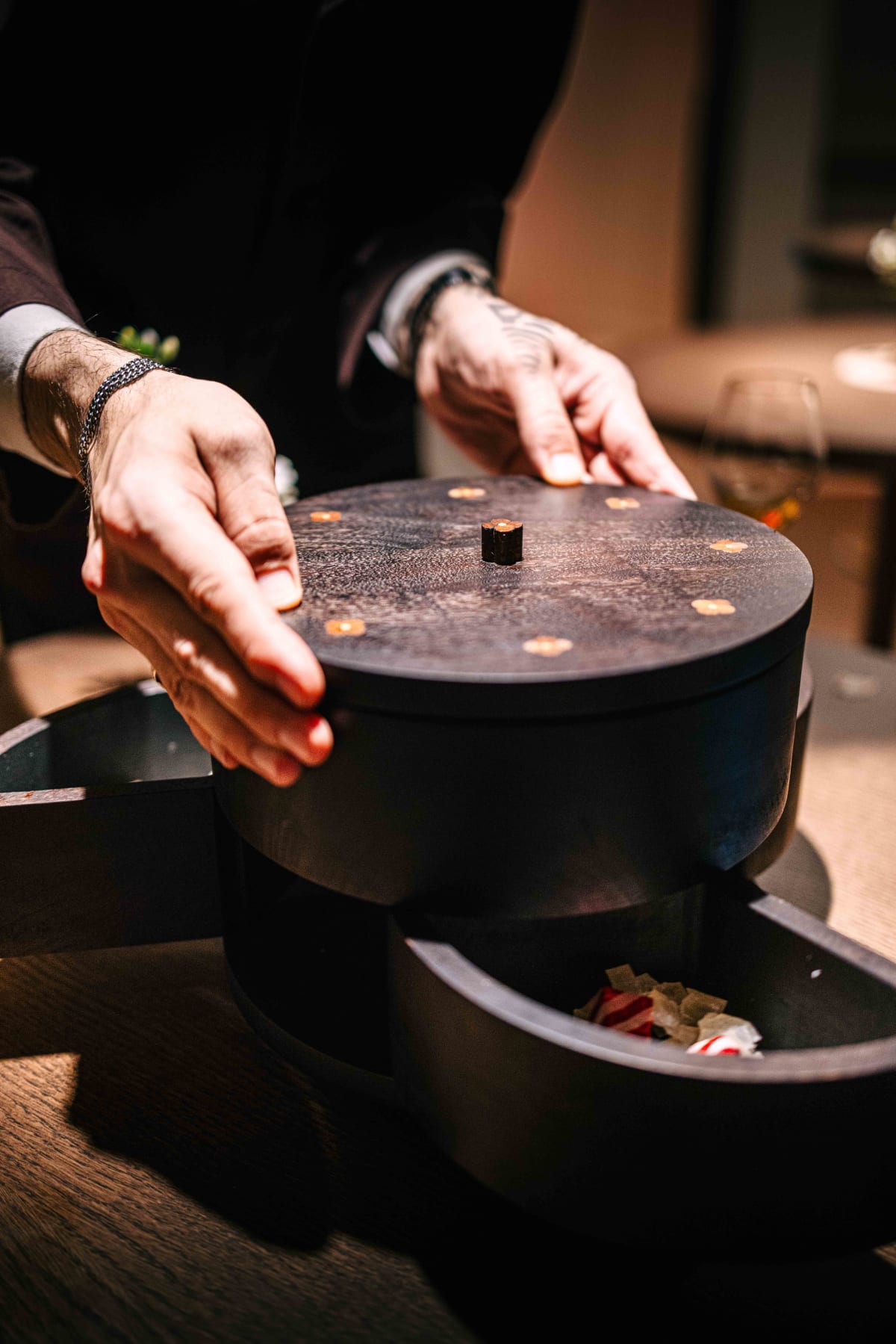
The fifteenth dish, and the close of the meal, was the Mignardises.
112—112 / 121
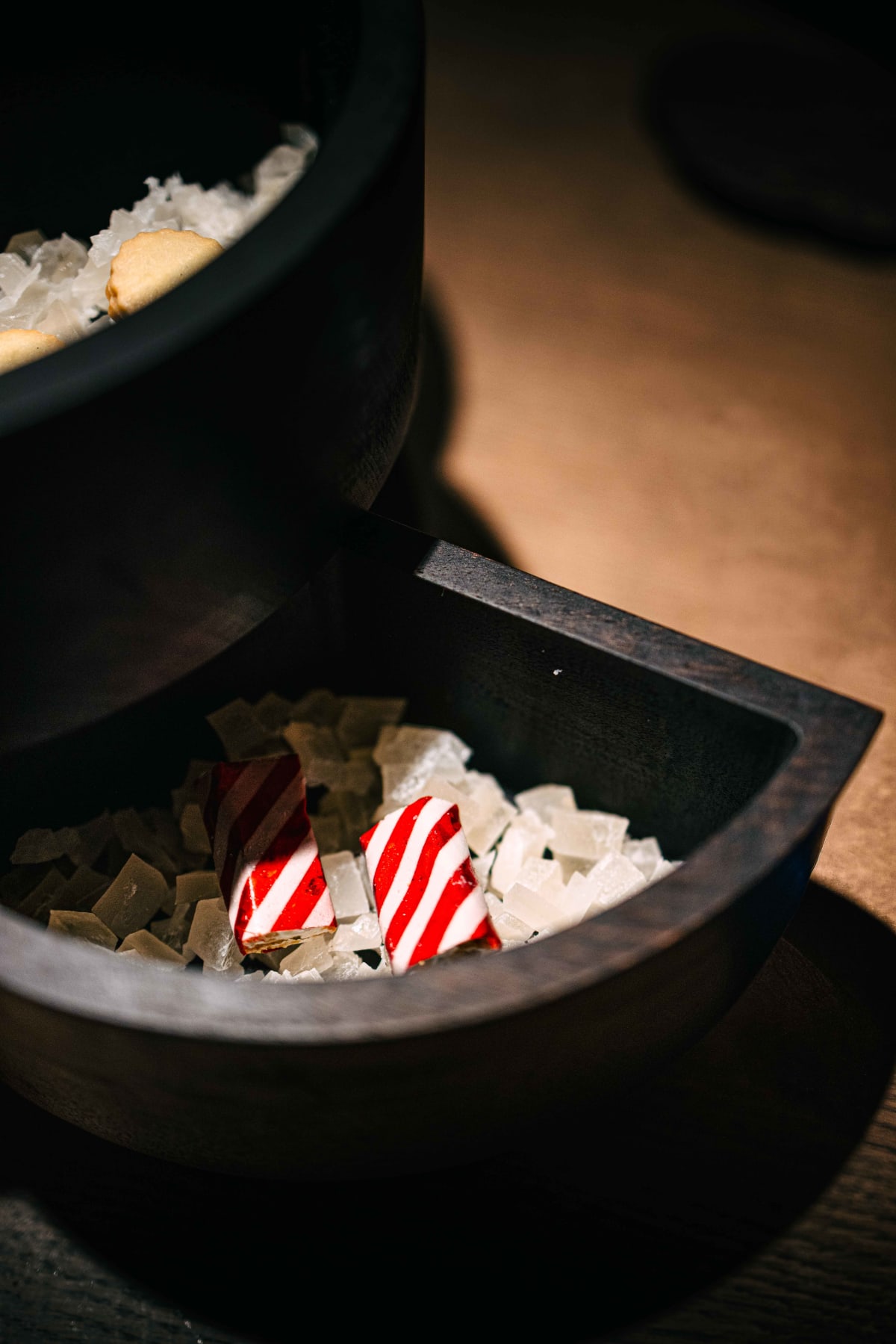
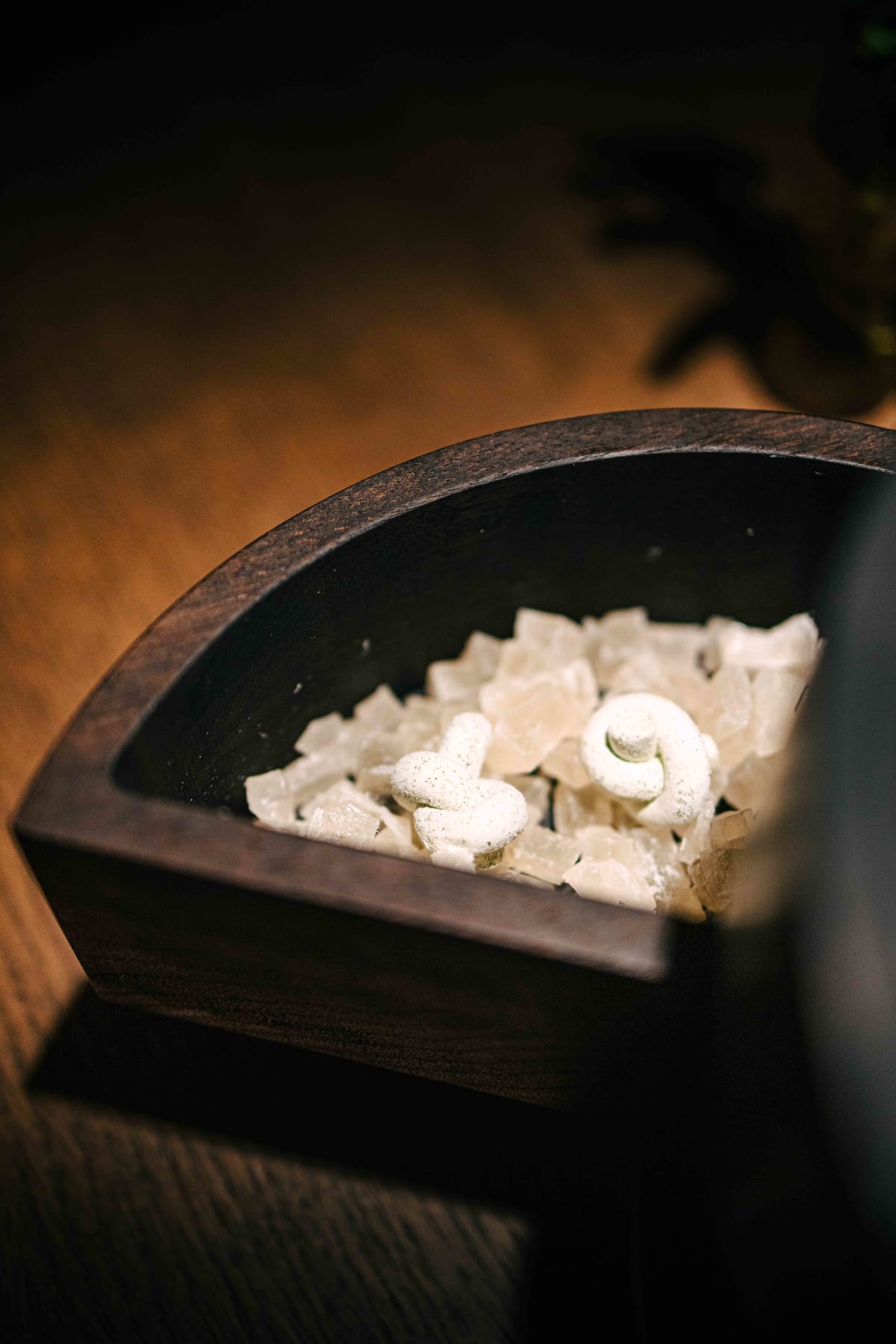
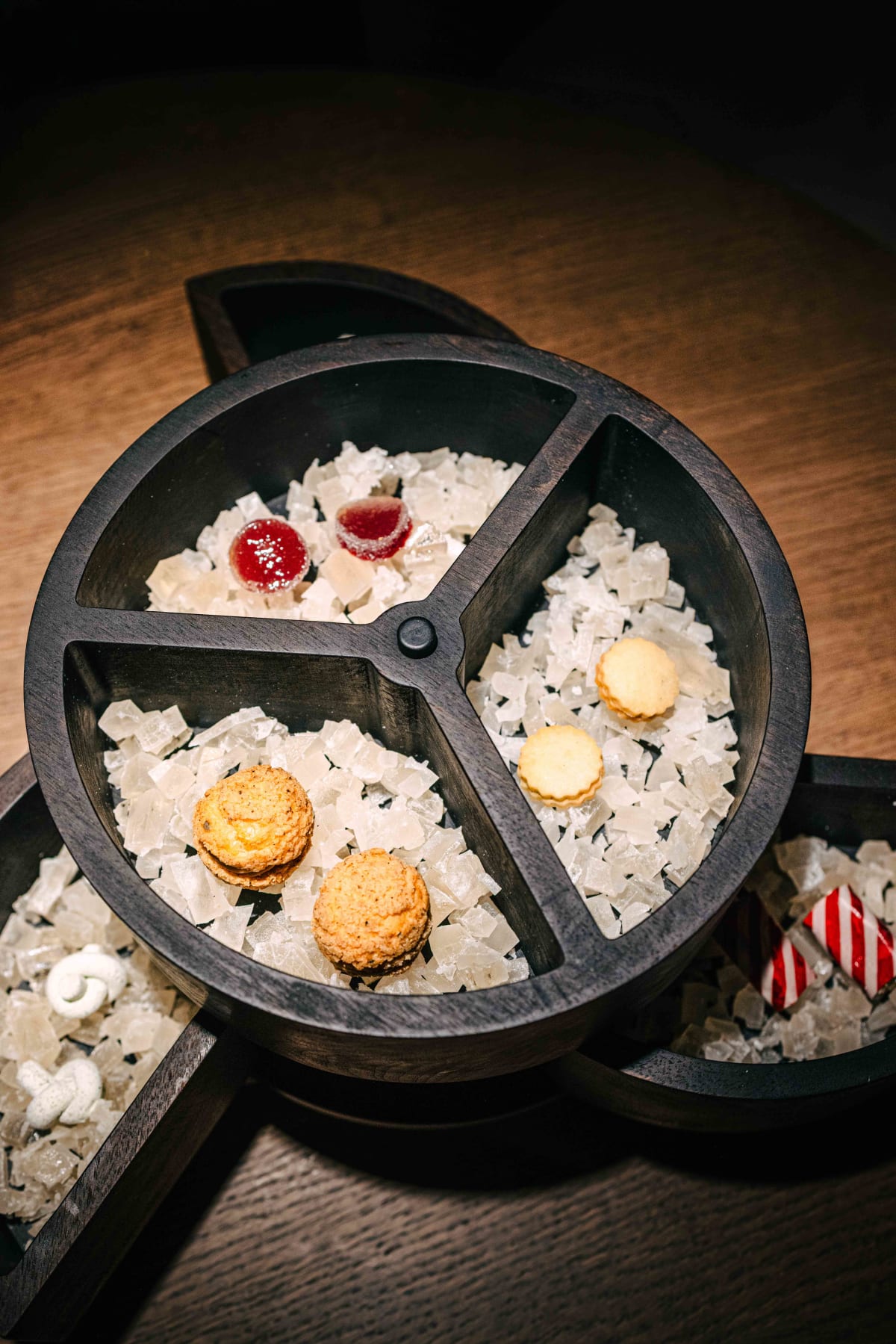
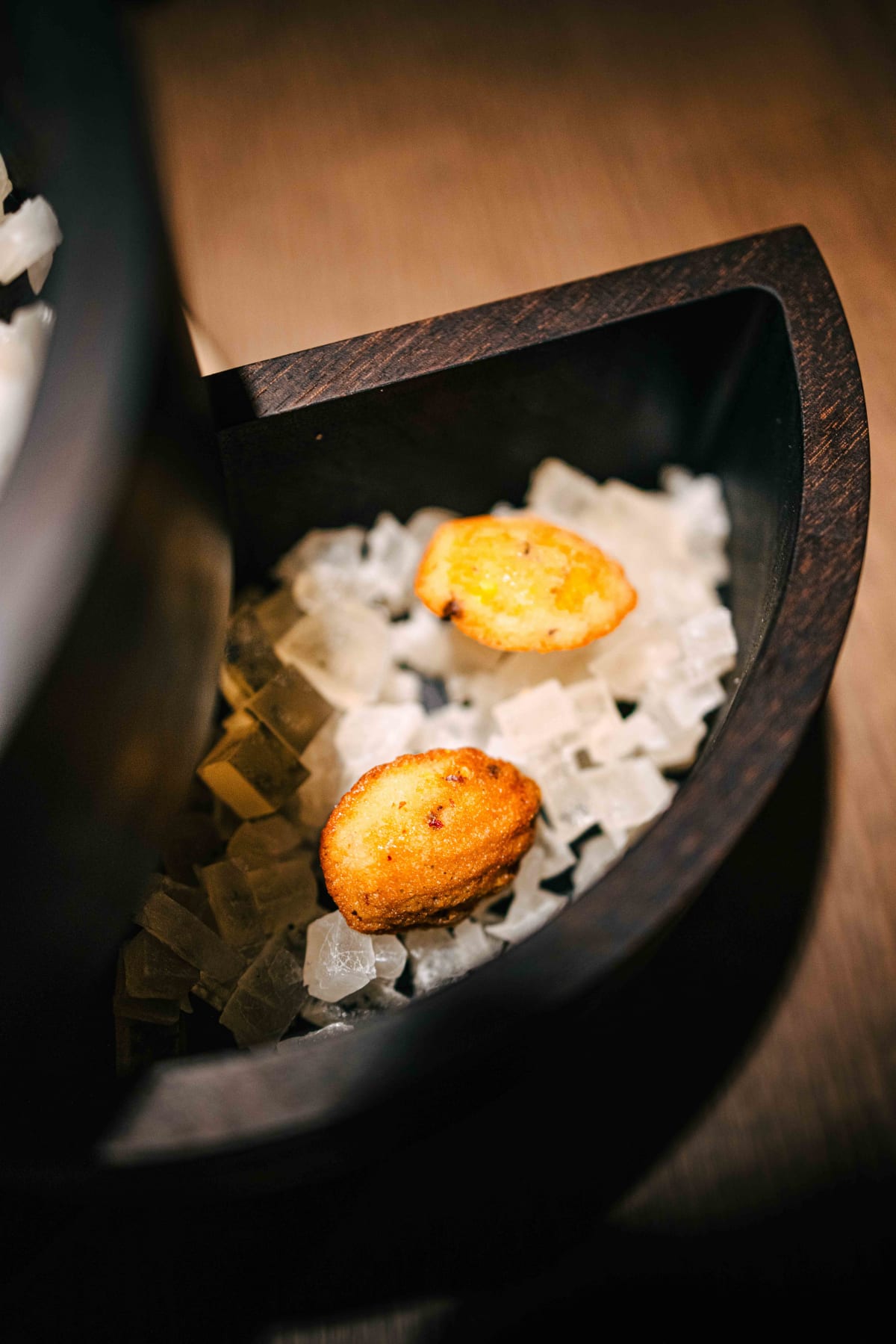
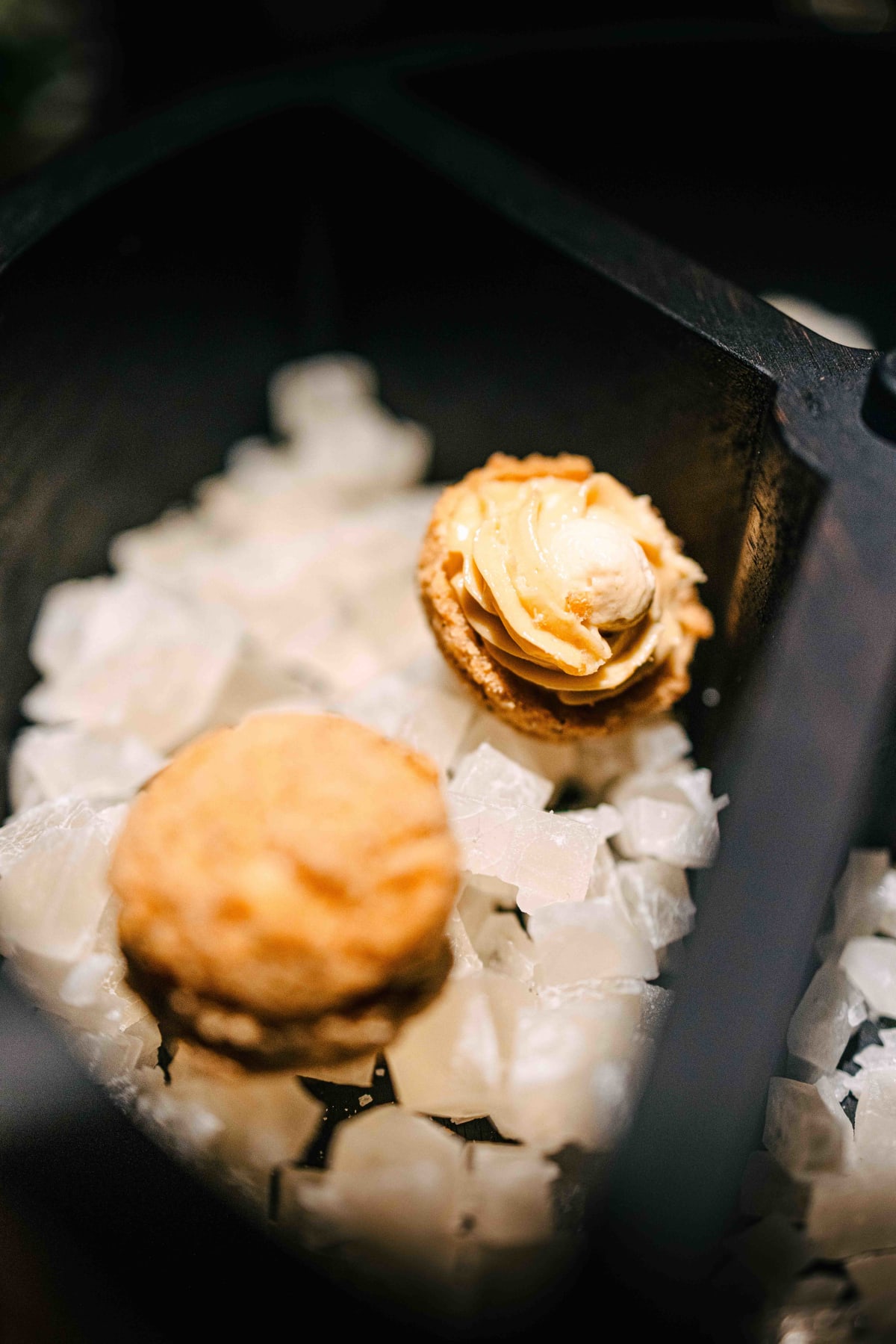
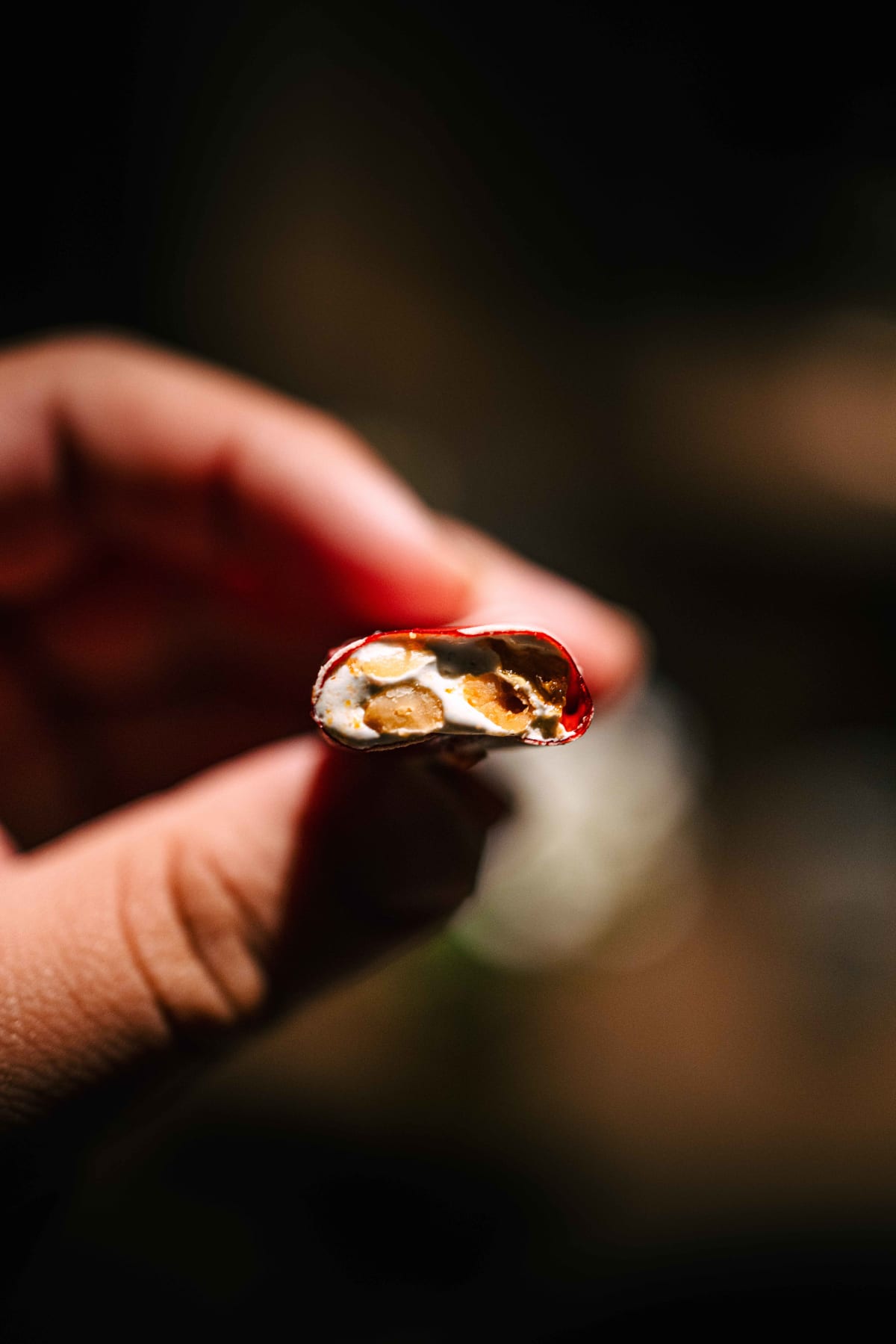
A platter of six small bites, all leaning toward a vegetal and herbal green register: a nougat of pine nut and raisin wrapped in strawberry and coconut leather, a pandan gum in a chewy-candy texture, a pistachio financier, a pâte de fruit of raspberry and lychee, a roasted green tea shortbread, and a choux pastry bun made from burdock root.
113—118 / 121
The recommended order from the kitchen was to start at the lightest marshmallow register and use the pâte de fruit as a palate cleanser. The most interesting bites were the herbal, green-aromatic ones, and the pandan gum, the nougat, and the raspberry pâte de fruit were the most satisfying on flavour.
Taken in summary, the cooking ran to a high level of completion throughout. That the kitchen could deliver consistently at this register on the second day of service settles any question about the chef's ability outright. The L'Atelier dishes were delicate and well-pointed, but the cooking on the second floor ran a clear step above the ground floor. Two days after this visit, I returned to Thomas Keller's Per Se. If I had to identify a single common thread between Oyatte and Per Se, it would be precision of technique. Until this trip, I had taken it as given that New York's dining ran a step below Paris or Tokyo. After Oyatte and Per Se in close succession, I came away with the first real sense that at least the top tier on the technical axis here is competitive on level terms.
119—119 / 121
The cooking of the scallop and the halibut at Oyatte in particular ran at a world-class level that I would set against what I have encountered at French three-star Michelin restaurants. The pull to make my own visit to The French Laundry only grew through this trip.
120—120 / 121
The secondary registers at Oyatte, however, the small details such as the wet hand towel, the seating placement near the entrance on the ground floor, the variance in service, the creaking second-floor wooden flooring, all need to keep moving upward as service stabilises. The cooking already touches world-class. For the hospitality and the hardware to reach the same level, more time will be needed. To have witnessed and recorded, on the second day of service, the moment in which a Korean chef makes his own debut in the New York fine dining scene under his own name, was already enough by itself to make the meal worth the seat.
121—121 / 121
What usually distinguishes opening restaurants is the hospitality, with cooking expected to catch up over time. Oyatte inverts that structure. The kitchen already touches world-class on the second day of service, while the room around it is still finding its rhythm. The right question for a return is not whether but when, and an evening six months from this one, with the floor settled and the small details corrected, will land differently against the same menu. A chef's first kitchen under his own name, after earning stars elsewhere, does not often open at this level.
Have a question about this restaurant, or want to share your own experience?
Send a message