Fine Dining · France
Plénitude
"At Plénitude, sauce is not a supporting element — it is the subject. Every dish is written in its name: the ingredient exists for the sauce, not the other way around."
Plénitude is housed on the second floor of the Cheval Blanc hotel, an LVMH property positioned at the foot of the Pont Neuf, with a direct view of the Île de la Cité. The reservation was made nine months in advance by email, the only method the restaurant accepts. That friction is part of the statement.
The entry sequence is deliberate. Before being seated, a member of the team leads guests through the dining room into the wine cellar: a tunnel-shaped passage that holds, among its verticals, deep stocks of Cheval Blanc and Château d'Yquem, both LVMH estates, going back farther than a reasonable dinner budget could comfortably access. Burgundy, Alsace, Italy, and California are also well represented. The tour is brief, but it is not decorative. It is the opening argument.


1—5 / 53
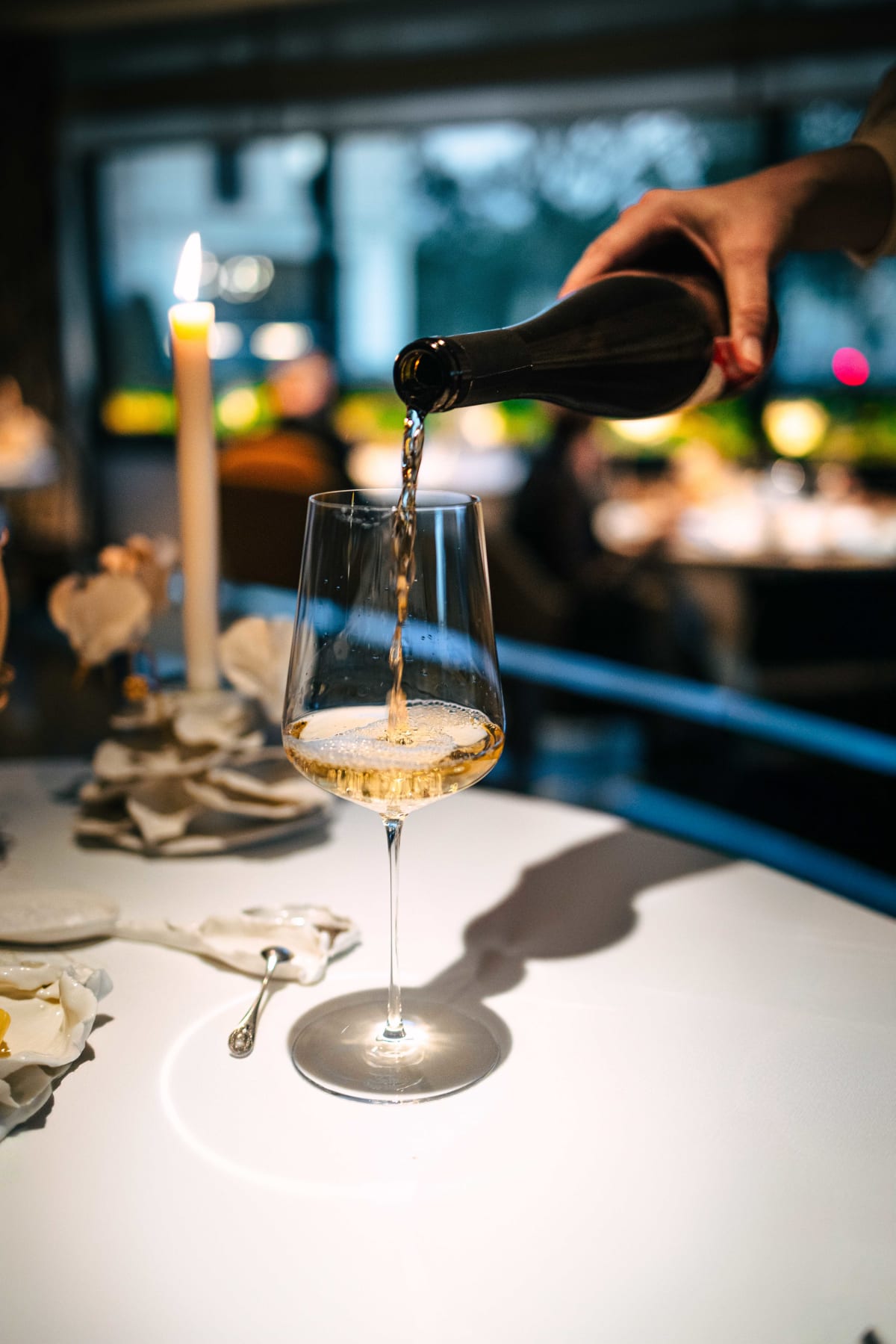
The first glass arrived before the amuse-bouche: Dom Ruinart Blanc de Blanc 2010, ordered by the coupe. Ruinart is among the oldest champagne houses in France and, like Cheval Blanc and d'Yquem, part of the same ownership network. This matters less as a fact than as a signal: within this portfolio, provenance is managed, and management here is serious. I had encountered the non-vintage Ruinart Blanc de Blanc on a previous occasion and had been unimpressed. The 2010 was a different object: precise, mineral, with a finish that extended long enough to recalibrate expectations for the evening ahead. The first glass did what a first glass should do.
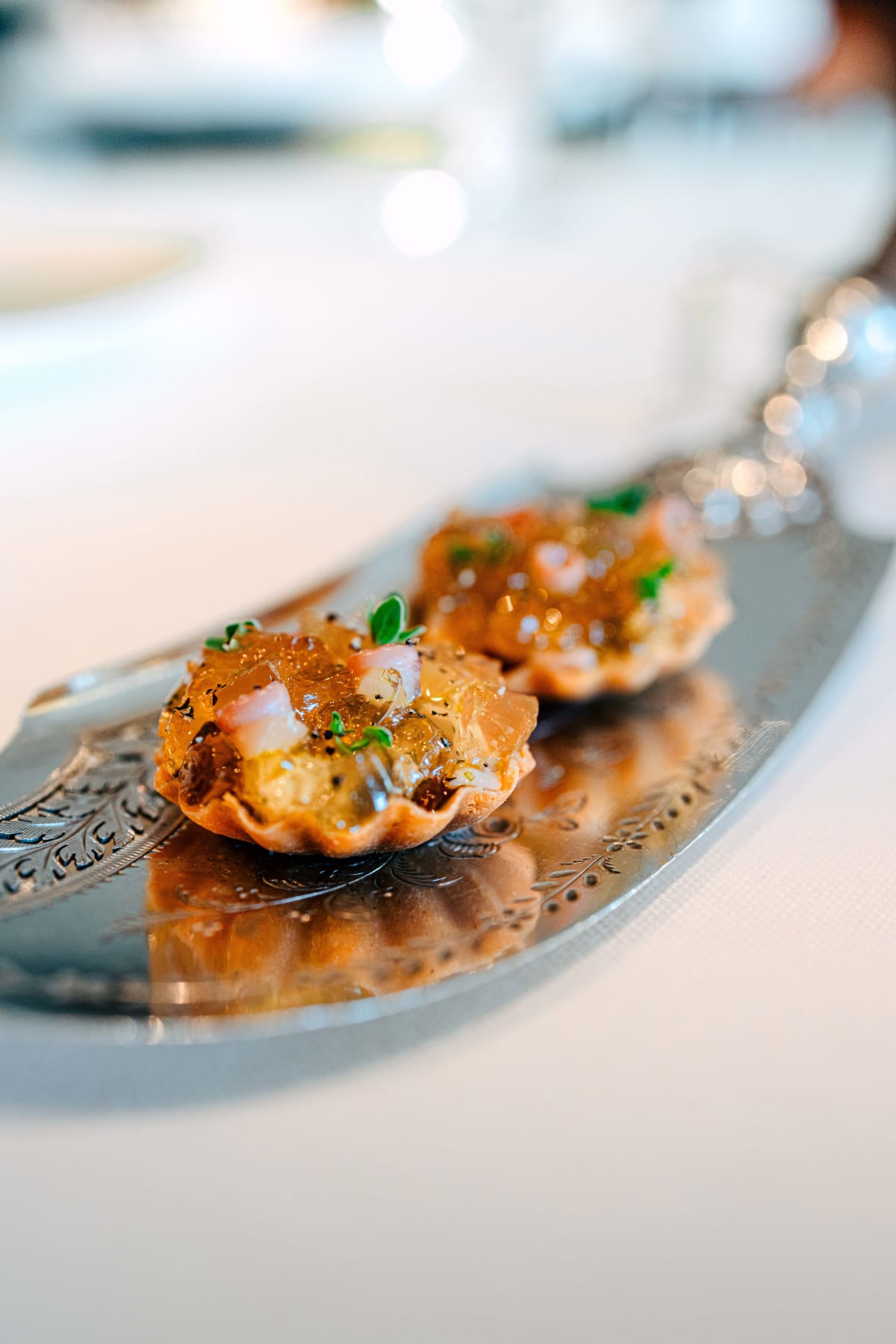
The amuse-bouche arrived in three stages, followed by a fourth. The first was a consommé jelly, its surface arranged with small preparations whose exact nature was difficult to identify before eating. What came through most clearly was the flavour of meat: concentrated, cleanly expressed, a signal of intention rather than an end in itself.
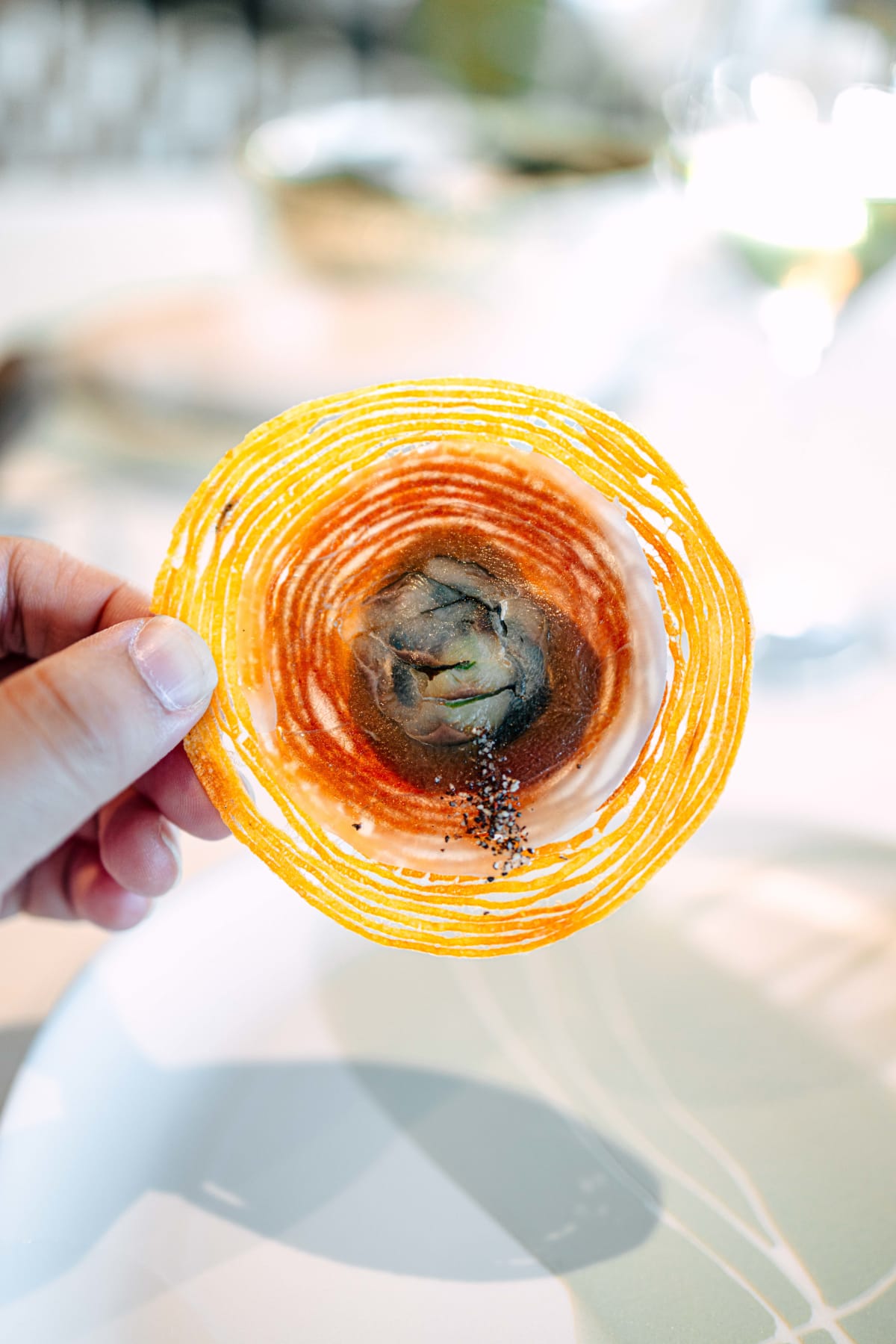
The second was a round crisp layered with jamón and, above it, a further element I assumed to be mushroom. I ate it and understood only afterwards that it was herring or a similar oil-rich fish. The combination is ambitious in concept and remained unresolved on the palate. The jamón dominated, and the fish did not register as a distinct presence. There are dishes in which an unlikely pairing succeeds by transforming both components, and there are dishes in which one component simply disappears. This was the latter. Worth noting, even at this level.
The third was an oyster in a deep bowl, covered with savoury jelly and a sauce containing a small green element that introduced a sweetness adjacent to melon. The oyster itself was of good quality. The combination did not fully cohere. There are approaches to seafood in French cooking that elaborate on the ingredient, and there are approaches that prefer to let it speak with less intervention. My own preference, over years of eating this kind of food, leans toward the latter, and this course fell on the other side of that line.
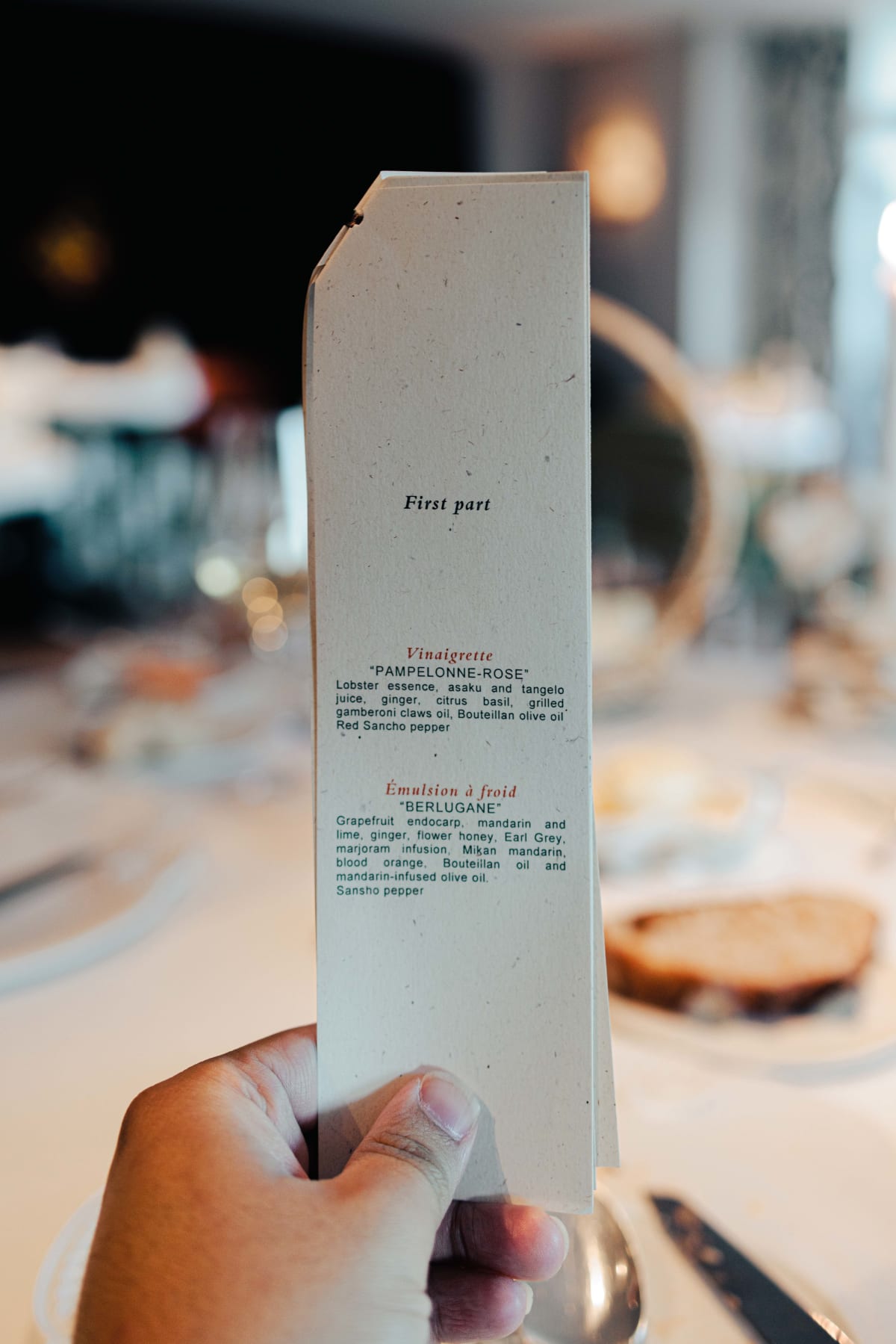
The fourth, named Canapés, was a correction of sorts: crab meat in a broth poured at the table, accompanied by a thin savoury biscuit. Genuinely good. A printed card describing the sauce components was presented alongside it. At the time, its purpose was not entirely clear. It became clear when the menu arrived.





6—12 / 53
The menu structure reveals the restaurant's identity immediately. Each dish is described not by its main ingredient alone, but by its sauce, which is named, subtitled, and treated as the protagonist. The sauce card at the amuse-bouche was, in retrospect, an introduction: a short primer in the language the kitchen would speak for the rest of the evening.
The dish exists for the sauce. This is not a stylistic flourish; it is a philosophy, and Donckele executes it with complete conviction.
Wine occupies a position here that is not always given to it even at this level. The tasting menu offers three pairing programmes; the one I selected, TIMELESS ICONES, is priced at 495 euros per person. This is a figure that carries specific meaning when measured against any major dining market outside Paris. Within France, and specifically at a restaurant whose parent company holds Cheval Blanc, d'Yquem, and Ruinart, the case for the number rests entirely on what will appear in those glasses. The sommelier, after presenting the pairing menu, produced the bottle list and suggested, without pressure, that some guests prefer to work from both simultaneously. The implication was clear. I ordered the pairing and kept the list within reach.
The bread and butter that arrived before the first course were among the most instructive moments of the meal, which is not a claim I would make about the bread and butter at most restaurants. The same day had begun with lunch at Hémicycle, a one-star address in Paris, whose butter was already among the better I had encountered that year. Plénitude's was categorically different: a fat so rounded and a flavour so deep that the comparison felt slightly unfair. It raises a question that butter does not usually raise, which is whether what one has been eating elsewhere belongs to the same category at all. I ate nearly an entire serving of bread and stopped only because there were seven courses ahead.


13—17 / 53
The lobster arrived raw, its texture precisely between sashimi and the barely warmed preparations of Bruno Verjus a few streets away. The Pampelonne-Rosé vinaigrette, built from eight components including lobster essence and tangelo, transformed the plate entirely. Asparagus, kept almost raw and sharply textured, created contrast with the yielding shellfish. Alone, each element was fine. Together, they were something else.
The sardine course was among the most technically precise fish preparations I have encountered in France. The kitchen warned at the start of the meal that their approach is deliberately minimal: very lightly cooked, is that acceptable? The sardine embodied this exactly. Opened flat, barely warmed through, and served with fennel and a tarragon sorbet, the Eden sauce, built from grilled sardine and bonito vinegar, gave the dish a savouriness and depth that the fish alone could not have reached. What struck me most was the logic: individual components tasted of themselves, sometimes modestly. In combination, the flavour multiplied rather than added. Le Petit Cheval 2020 White, a Bordeaux blanc on Sémillon and, until that evening, an unknown quantity to me, arrived alongside: balanced and lightly acidic, with enough stone fruit to hold against the dish's salinity. As the last light left the Île de la Cité and the Pont Neuf came into silhouette, there was a moment in which the setting appeared to be cooperating with the kitchen.
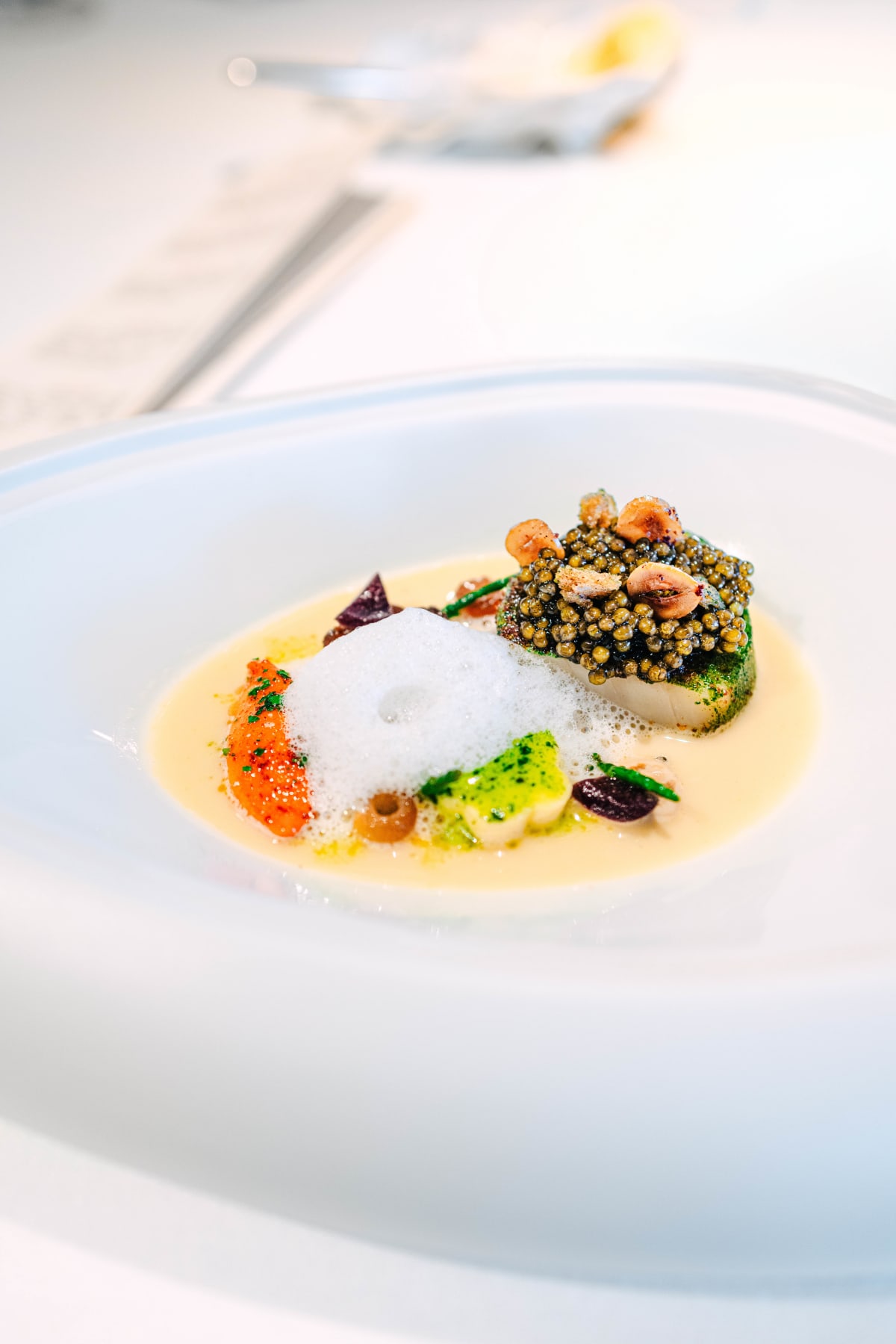
The scallop course, SCALLOP/SEAWEED/CAVIAR For Bouillon 'ALOYSE,' arrived with considerable visual force: the roe set to one side and a generous portion of caviar placed on top, an arrangement that read as deliberate rather than decorative. The Bouillon Aloyse, buttery and dense, was the richest sauce of the meal to that point.
The course was well executed. The scallop was cooked precisely, and the caviar contributed its expected register. What it did not do, against the standard the lobster and sardine had established, was reorganise its components into something that exceeded them individually. Those two courses had built their impact from a kind of multiplicative synergy, ingredients that transformed one another upon contact. The scallop sat cleanly alongside its elements without that same transformation occurring. This is a narrow criticism, and it speaks more to the height of the bar than to any deficiency in the dish itself.
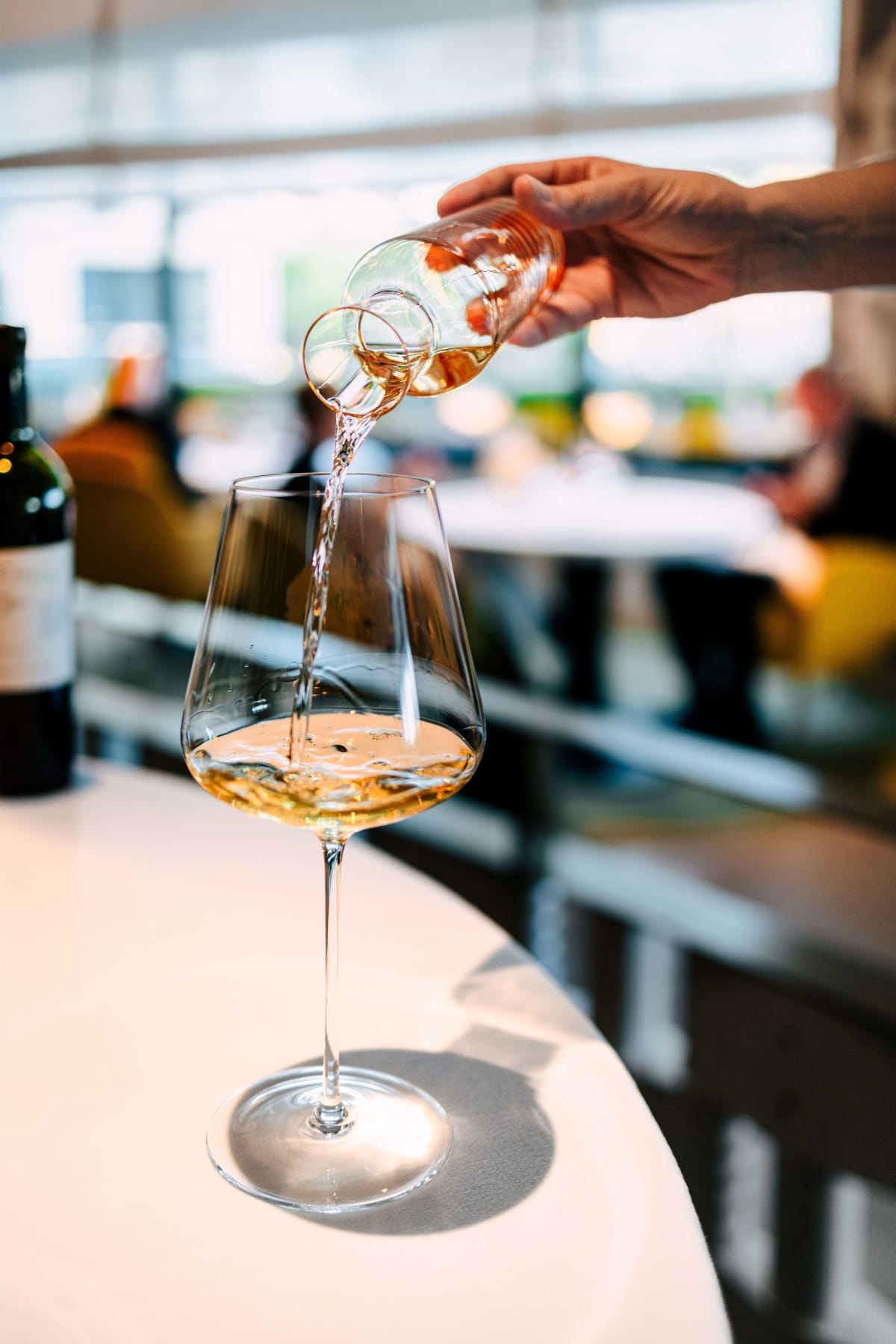
The wine did not share in the slight diminishment. Domaine Rémi Jobard's Meursault Premier Cru Poruzot-Dessus was the first white Burgundy of the evening, and the difference was immediately legible: the colour, a dense gold in the glass, preceded the flavour and established a new register before the first sip. The acidity was lively, the balance precise, the aromatics expansive. It made the Bordeaux blanc of the sardine course feel, in retrospect, like an opening act.
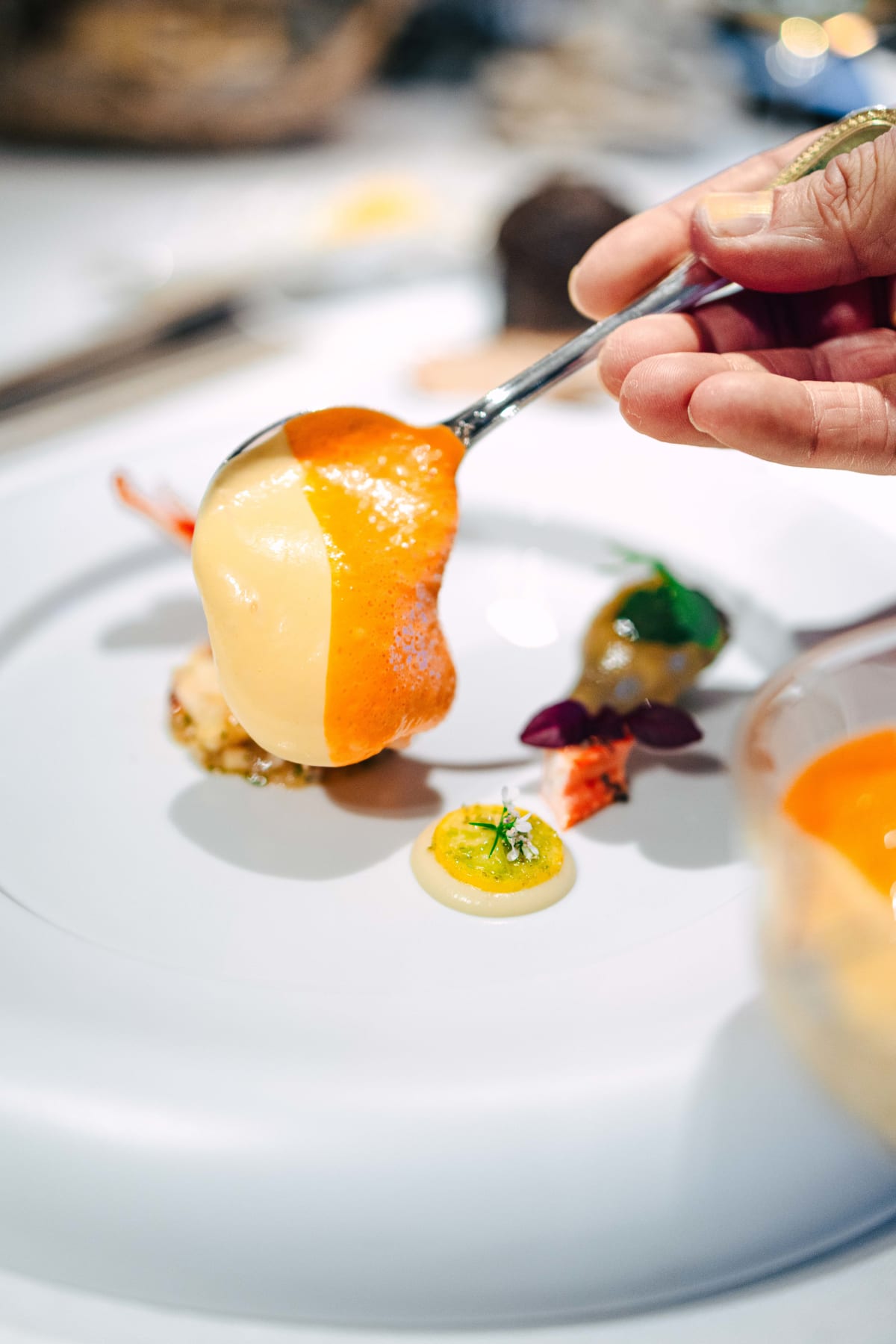
The langoustine was the largest I have eaten. The preparation was comparatively restrained, the emphasis on the shellfish itself rather than on embellishment: artichoke and crab meat arranged at the base, coriander lending a low aromatic note. What distinguished the presentation was the sabayon, named Arlequin and arriving in two distinct colours, poured at the table so that the contrasting streams landed side by side on the plate. Visually, it was one of the more precise gestures of the evening, the kitchen's instinct for design made explicit.
The cooking method continued the approach established at the sardine course: minimal heat, the shellfish barely changed from its raw state, the texture preserved rather than altered. By this point in the meal, a pattern was fully legible. There is a quality here that I can compare most accurately to Bong Joon-ho's Parasite: a work that achieves analytical complexity and direct pleasure simultaneously, without asking the audience to choose between the two. Plénitude's cooking operates on the same principle. The langoustine was a clean example of this.
Donckele's kitchen does not reduce complexity in order to achieve impact; it finds the simplest path to the most direct flavour, and that path turns out to require a great deal of knowledge.
The Domaine Ostertag that arrived with it was the one pairing of the evening that fell slightly below the level of the food. An Alsatian wine, capable and correct, but against the precision of the langoustine and the two-colour sabayon, the match felt more dutiful than illuminating. A minor note in a programme that had otherwise performed without failure.








16—31 / 53
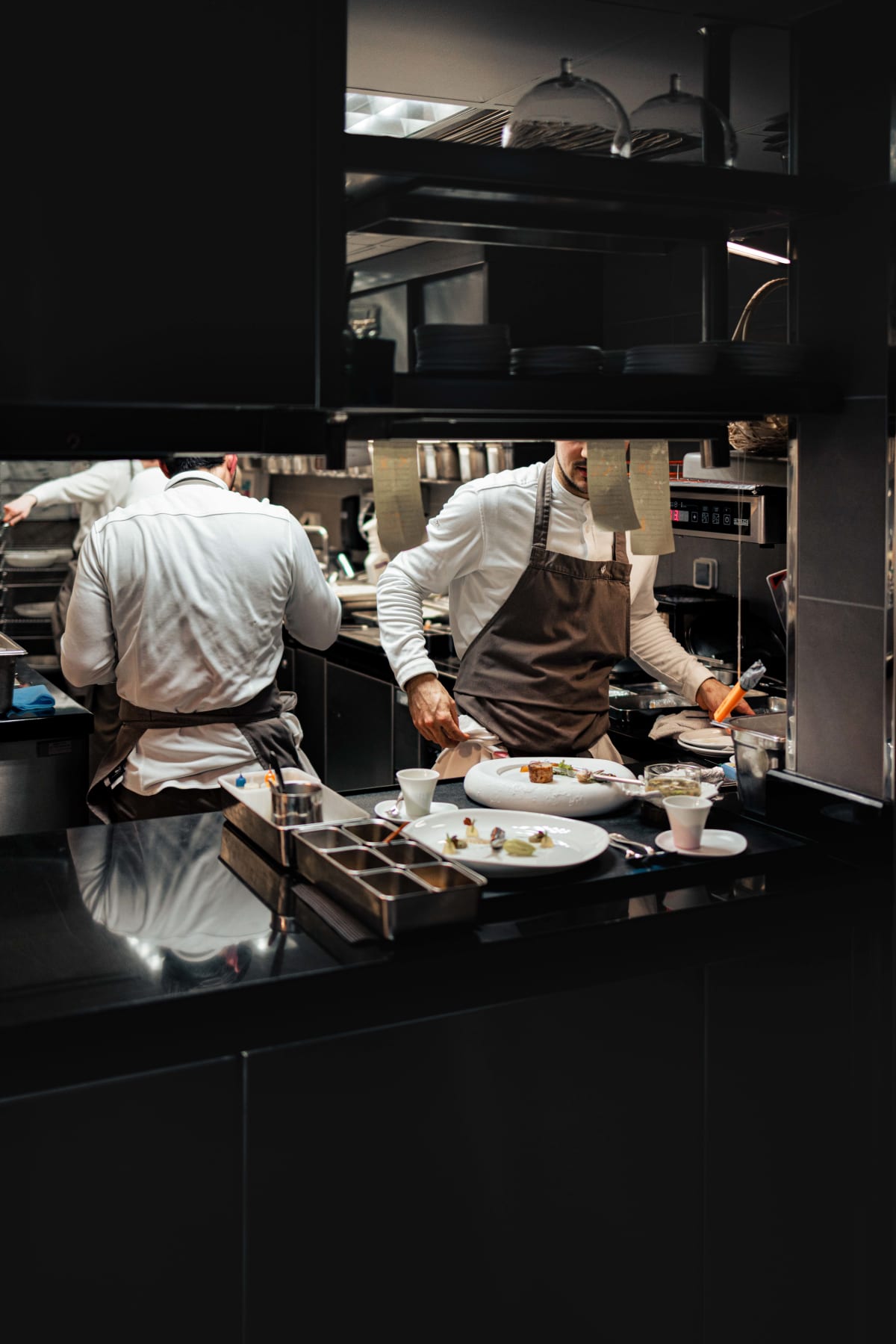
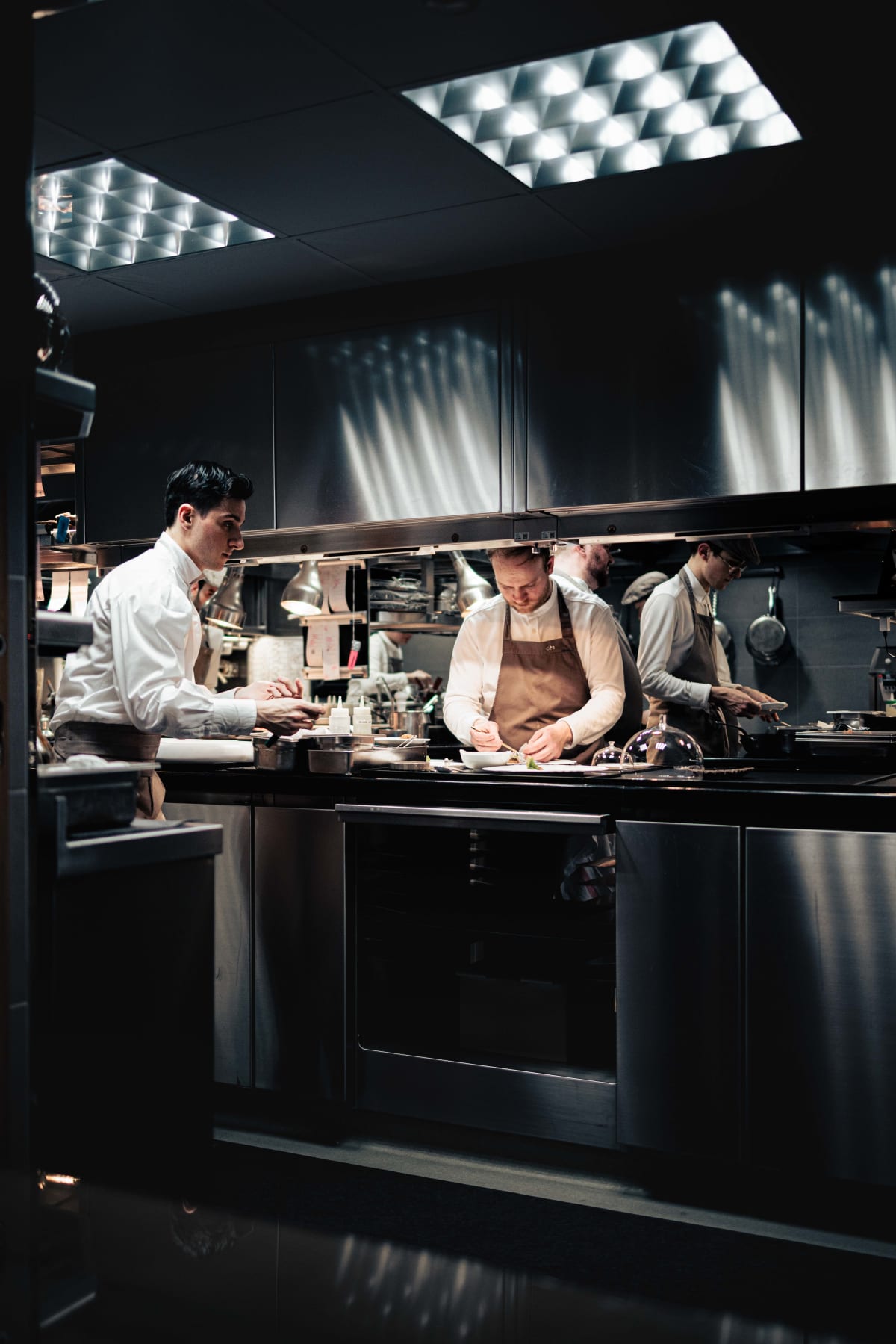
Before the final main course, a manager arrived and invited us through to the kitchen. This is, apparently, a standing practice at Plénitude: each table is brought back before the final savoury course for a palate-cleanser served in the working kitchen itself. I had experienced something adjacent to this at Belcanto in Lisbon, where a chef's table is positioned within the kitchen for the duration of the meal. The dynamic is the same in each case: the dining room enforces a particular kind of composure, and the kitchen, the moment you step into it, enforces a different one entirely. Plénitude's kitchen was organised and fast, with runners moving in patterns that had clearly been rehearsed into habit. The Michelin three-star plaque from 2022 was mounted in direct line of sight from the main prep area. In a kitchen that operates at this standard, it functions less as a trophy than as a standing instruction.
We were seated in a small room adjacent to the kitchen, surrounded by cookbooks, jars of house-made preparations in various stages of aging, and photographs of the staff taken in the kind of collective good humour that is, in a high-pressure kitchen, both genuine and earned. A sorbet with Calvados arrived: the Trou Normand, the traditional Norman interlude between savoury courses. Cold and clean, with the apple spirit cutting through whatever had accumulated on the palate. When we returned to the dining room, it felt, briefly, like re-entering a theatre from backstage.


32—36 / 53
The pigeon was the finest I have eaten. My mother, who had joined me for the meal, had requested the chicken alternative. Based on what arrived on my side of the table, this was an error I noted quietly and did not press.
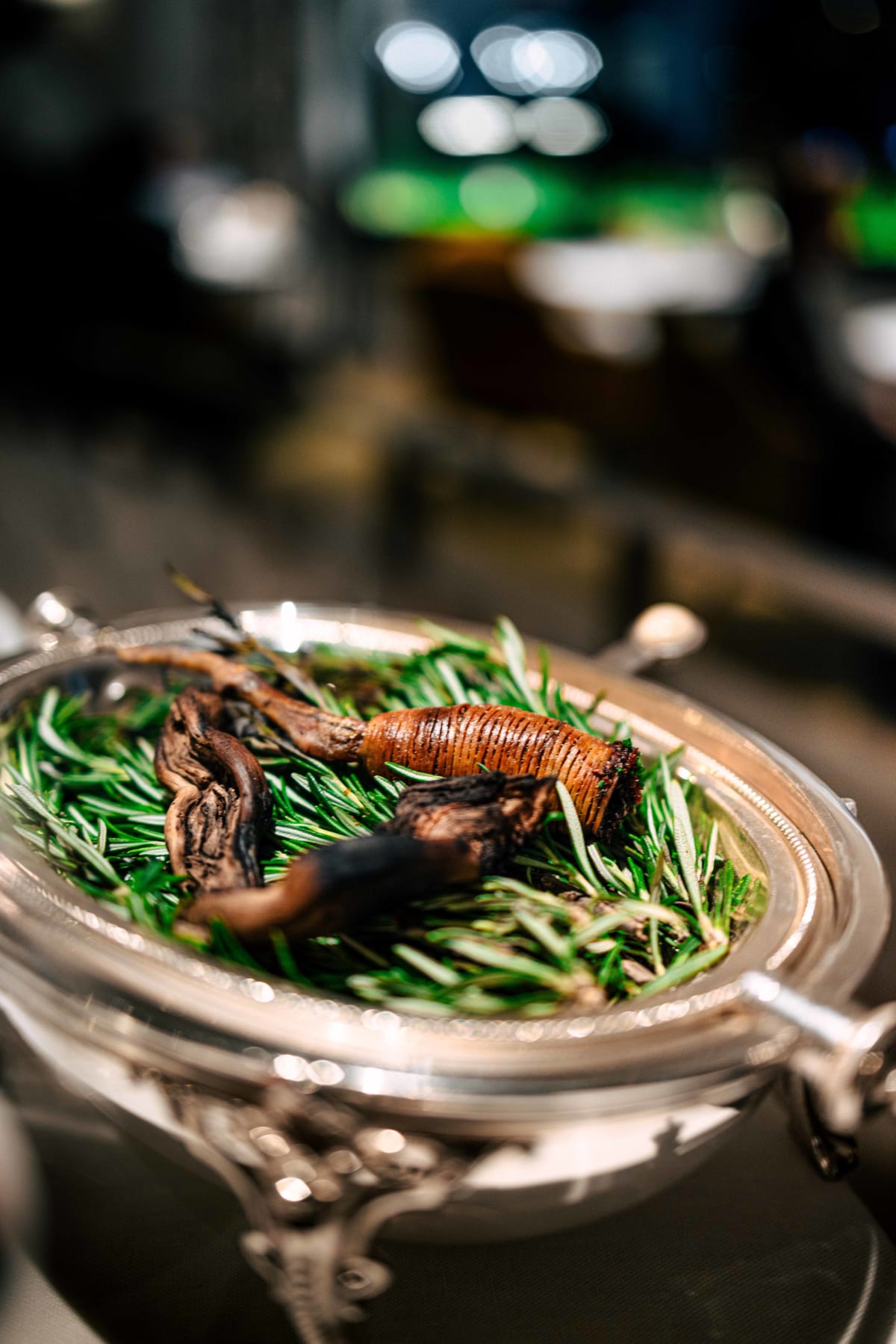
PIGEON/GOURMANDINE/GIBLETS For Jus "SOUVENIR DU GARLABAN": the skin was rendered to a shatter, the interior at medium-rare, the giblets composed alongside with the same precision that had characterised the rest of the menu. The subtitle of the jus, Souvenir du Garlaban, refers to a limestone massif in Provence, the landscape of Marcel Pagnol's childhood: a name freighted with a specific pastoral memory, and one whose connection to the sauce on the plate I found myself wondering about through the rest of the course.
A second plate arrived separately: a leg, its exterior intact and its shape undisturbed, which turned out to conceal a different preparation entirely. The interior had been removed and replaced with finely ground pigeon meat, seasoned and compressed within the leg's own skin. It registered first as surprise, then as intelligence.
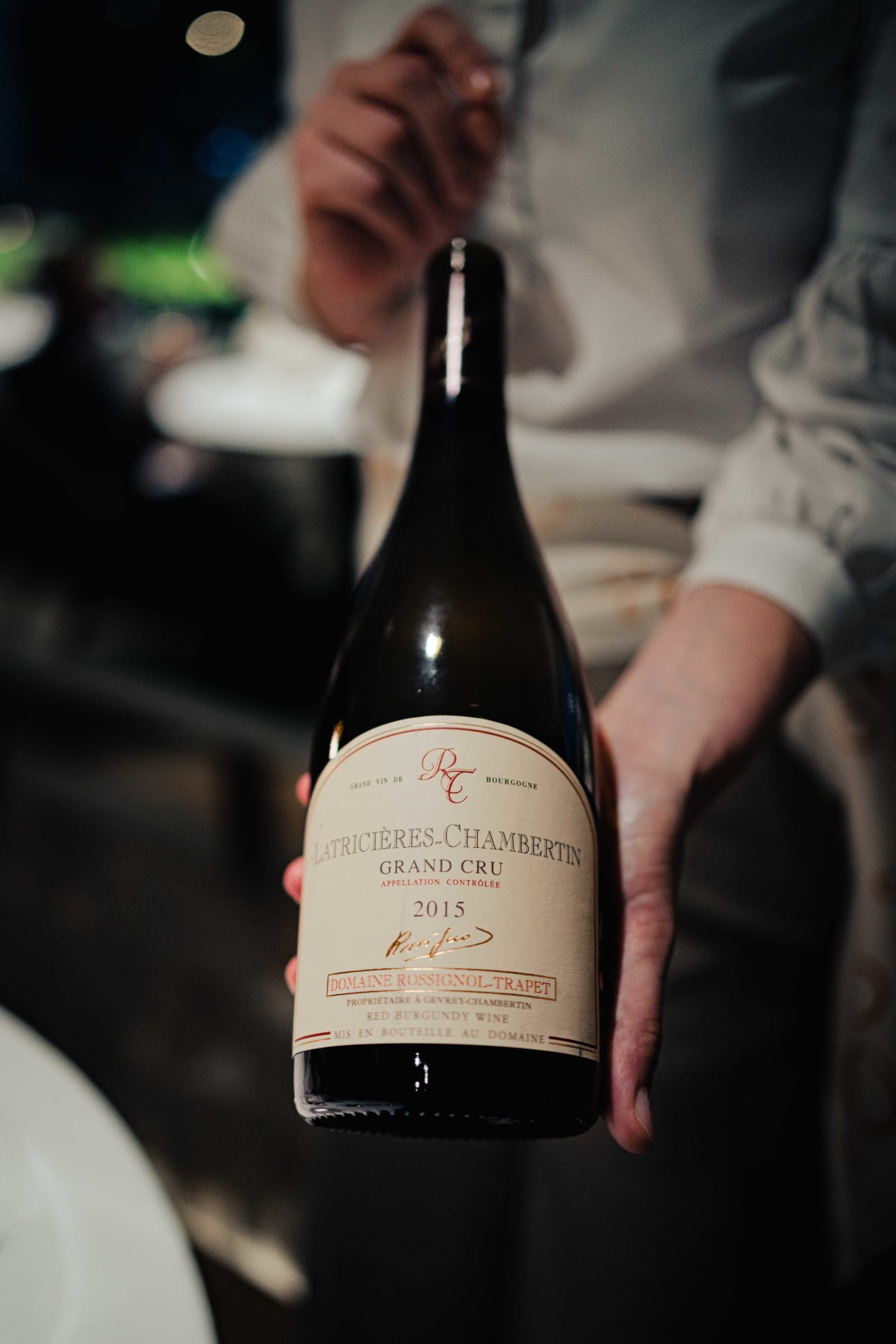
Domaine Rossignol-Trapet's Latricières-Chambertin Grand Cru 2015 arrived alongside. In a programme that had moved through Champagne, Bordeaux blanc, white Burgundy, and Alsace, this was the first red, and the transition was handled well: a wine of finesse rather than weight, its tannins fully integrated, the fruit precise enough to follow the pigeon's subtlety without overwhelming it.


37—40 / 53
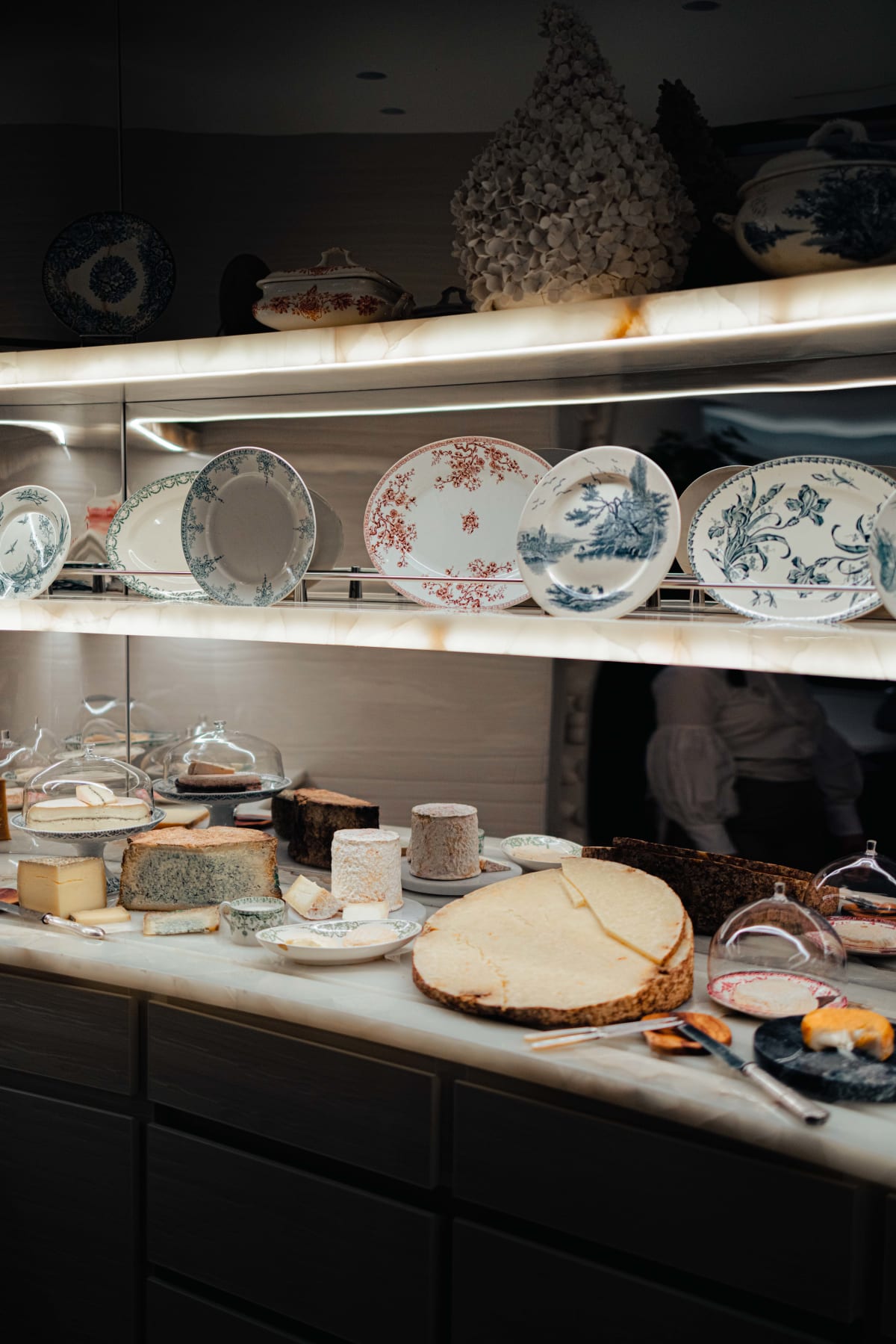
Most French Michelin restaurants offer cheese from a trolley, rolled tableside and plated to order. Plénitude does not. After the main course, we were escorted to the Cave à Fromage, a separate room where the cheeses are stored in glass-covered cases. The practical reason is likely the restaurant's two-level layout. The experiential effect is something else: entering the room, with its specific smell and its rows of cheeses in various stages of maturation, was a more concentrated version of what the wine cellar tour had provided at the beginning of the meal. A second descent into the house's materials.
I asked, as I always do in these rooms, for Creamy and Strong. A staff member assembled a selection, pausing at one particularly dense, pale variety before deciding to include it. "This one is my favourite," she said, "but it is very strong." I asked her to add it.
Back at the table, the cheese she had favoured turned out to be the most aggressive of the selection: fermented, ammonia-sharp, sharing a character I can only describe accurately by reference to Korean hongeo, the fermented skate whose intensity operates at the outer edge of what most palates will accept. My mother tried a small piece and made the expression one makes when eating something that has gone significantly past the point of redemption. "Harder to eat than hongeo," she said. She was not entirely wrong.
Over years of eating through these cheese courses, I would place my own tolerance at roughly seven or eight on a scale of ten. The staff member's recommendation landed at a ten. I finished it anyway.
The dessert sequence, named JEUX DE FRAGORIA, opened with a small glass of berry juice: deep red, sharply sweet, its function clearly transitional rather than substantive. A rhubarb ice cream followed, which I retain less clearly than what came after it, not because it was poor but because the strawberry tart that arrived next left little room for competing memories.
The strawberries had been reduced and concentrated until their colour deepened toward burgundy, the natural sweetness intensified to something more direct than fresh fruit usually provides. They were arranged on a pastry lacquered with sugar, the shell crisp and faintly caramelised at the edges, with a cream made from Madagascar vanilla and Muscat Beaumes de Venise. Château d'Yquem 2018 arrived alongside: technically early for this wine, its optimal window beginning several years from the date of this visit, but already compelling. That particular density of sweetness that ages into complexity was present in outline if not yet in full resolution. A pairing programme that had set a price at its outset and spent the evening justifying it found an appropriate close.
The final dessert was a milk ice cream with various nuts folded through it. The impact was unexpectedly strong: a flavour of considerable refinement, uninsistent but deeply characterised, the kind of dairy depth that suggests rather than announces itself.
The meal closed with petit fours, brought to the table alongside a copy of the Plénitude book, opened to a spread showing Paris at dusk: rooftops, river, the city framed as cities present themselves most persuasively when seen from inside one of their better rooms. The petit fours were placed on the open pages. It was a small gesture, and it was perfectly timed.
It was, from start to finish, a meal in which the kitchen's intelligence was never in doubt.

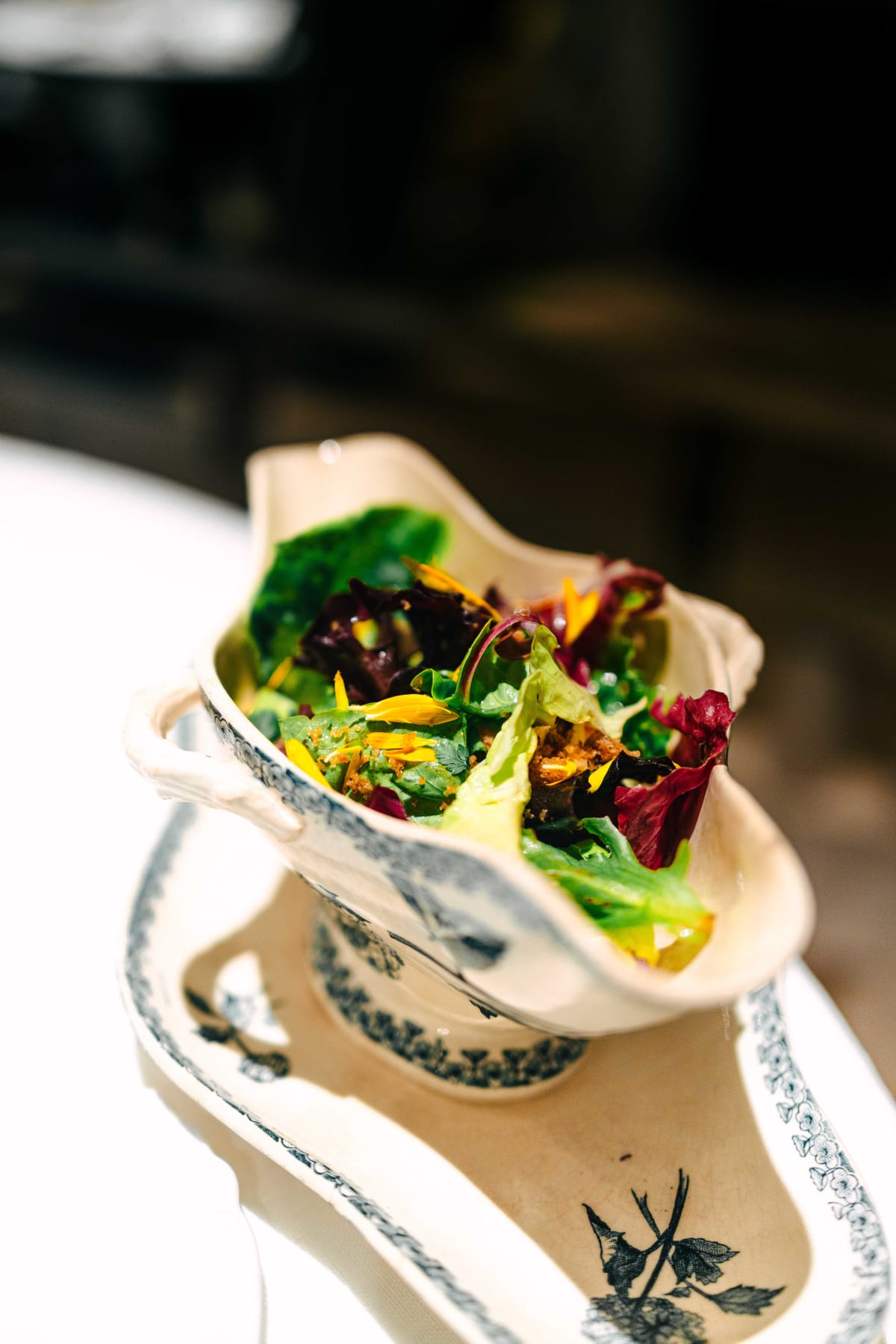


41—53 / 53
The finest meal I have had in Paris. Donckele's treatment of sauce as the primary subject of French cooking is not a concept — it is something you taste, and then understand. The wine programme, the hospitality, the kitchen visit: everything functions at the same level. Reserve nine months ahead by email. Order the full tasting menu. Do not skip the cheese cellar.
Have a question about this restaurant, or want to share your own experience?
Send a message