Local & Essential · Korea
Sadang Heuksando Hongeo
"Hongeo is not food you taste. It is food you inhabit for an evening."




























There is a problem that everyone who loves hongeo shares. Finding someone to eat it with. Hongeo is fermented skate, a fish that has been central to southwestern Korean cuisine for centuries. During fermentation, urea breaks down into ammonia, producing a pungent, nose-stinging character that puts off many Koreans, let alone anyone encountering it for the first time. When you love it, you spend a surprising amount of energy finding people who will join you at the table.
I grew up eating it. My father is not from Jeolla Province, which is the heartland of hongeo culture, but he loved it, and so I ate it alongside him from childhood. By the standards of my generation, I can handle it well. Even so, the list of people I can call for a hongeo dinner is short.
In December 2024, toward the end of the year, I had a chance to gather some of those people. Everyone at the table was genuinely serious about hongeo, and genuinely serious about drinking. The evening's outcome was more or less legible from the start.
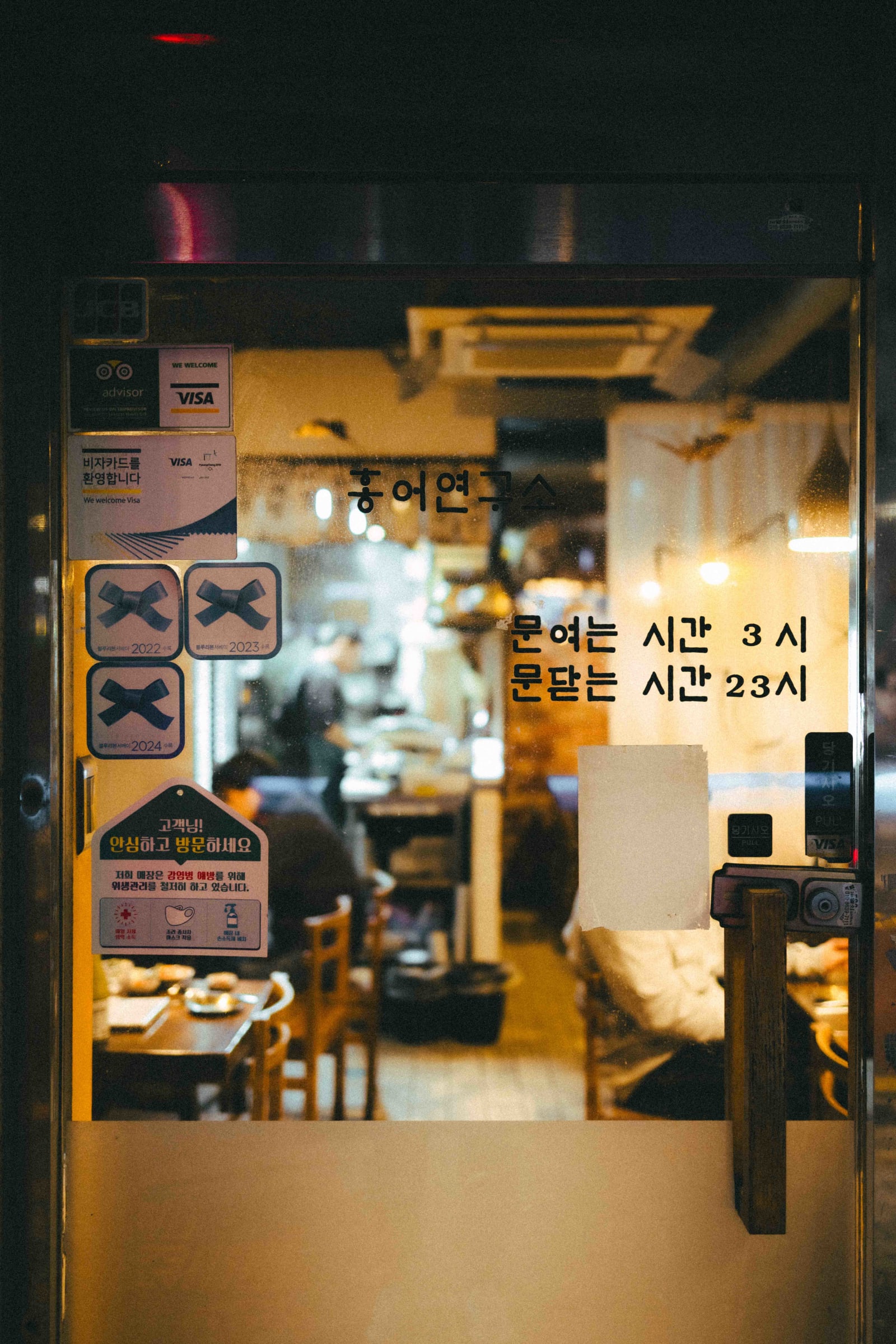
The restaurant was in Sadang, the neighborhood where I have lived for three years. Sadang has long been a transit hub in southern Seoul, and because rents here run comparatively low, many people who moved to the city from other regions settled here. That demographic history shows up on the restaurant signs. There are quite a few hongeo places near Sadang Station. Most are the kind of old establishments you would expect. But there is one that people travel for. Sadang Heuksando Hongeo, near Exit 11.
The name carries meaning. Heuksando, in Sinan County, South Jeolla Province, is considered the finest source of hongeo in Korea. The fish caught there and shipped to Seoul commands both a premium and a kind of prestige that other origins don't. This restaurant is run by young owners, and that shows in how it operates: the traditional appeal of hongeo is intact, but the range of preparations is varied and ambitious enough to draw a crowd that extends well beyond the older male regulars you would find at most hongeo spots. There are people in their twenties and thirties here, and quite a few women.
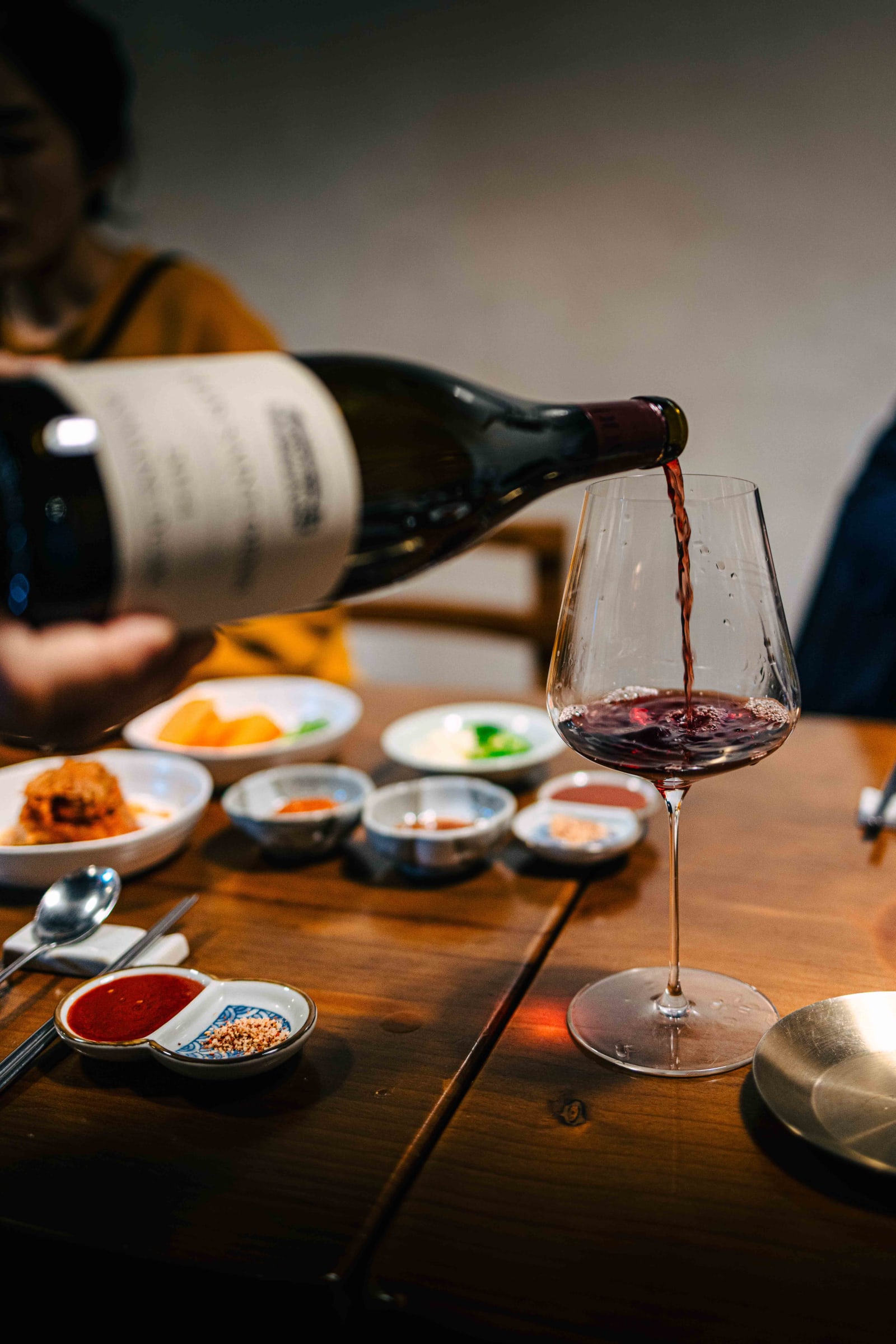
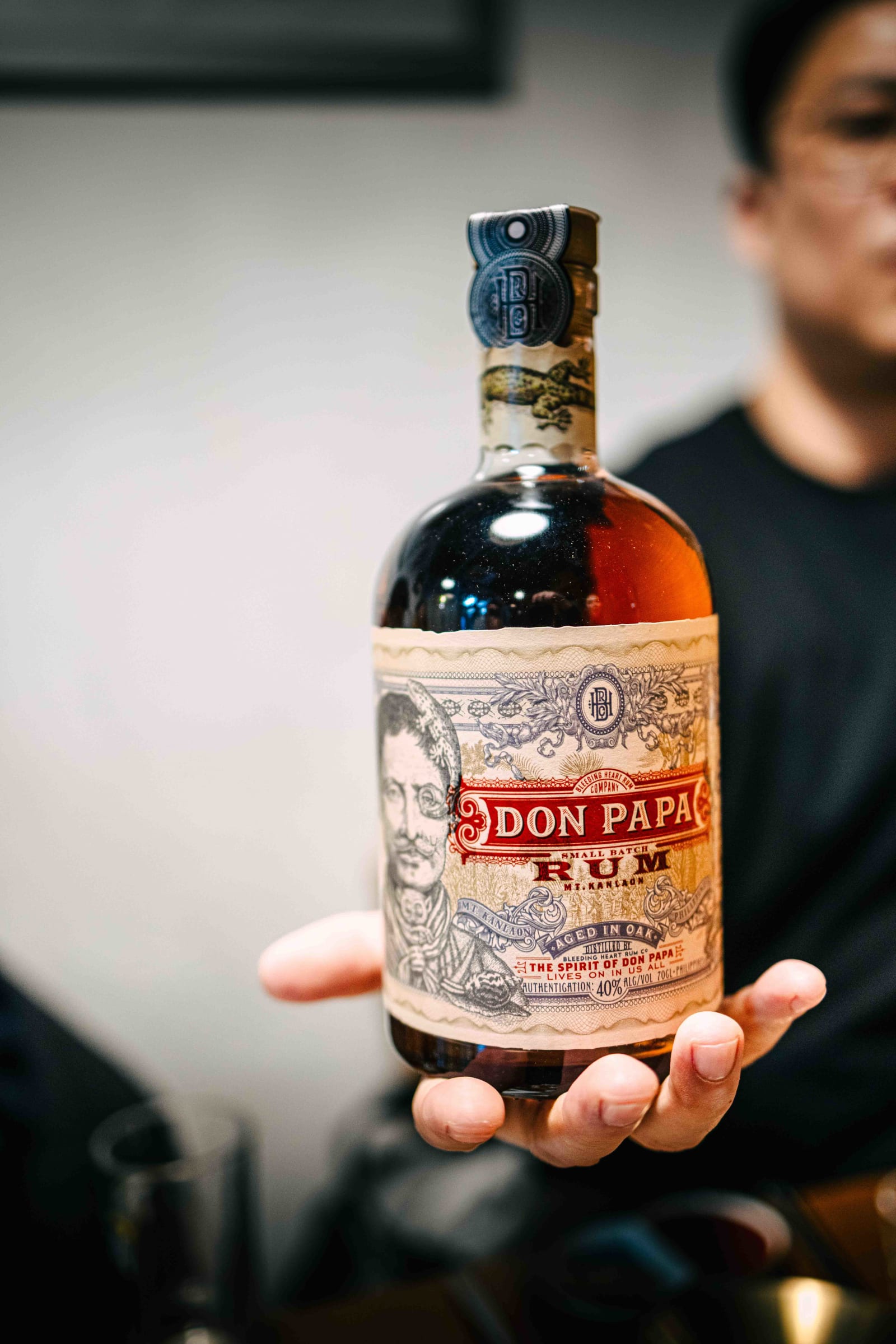
The corkage policy is unusual. Free, with one condition: you pour the owner a glass. I liked that condition. One member of our group brought a bottle of Domaine Dujac Clos Saint-Denis, from one of Burgundy's most respected grand cru producers. Opening it in a hongeo restaurant felt improbable. But in practice the fermented funk in the room did not touch the wine's aromatics at all. I ran home around the corner to grab two wine glasses and drank it very happily. Someone else brought rum. The theory was that hongeo's high alkalinity interacts with the esters and acid compounds in rum, neutralizing the ammonia on the palate and refining the overall experience. The theory held. It was a good pairing.
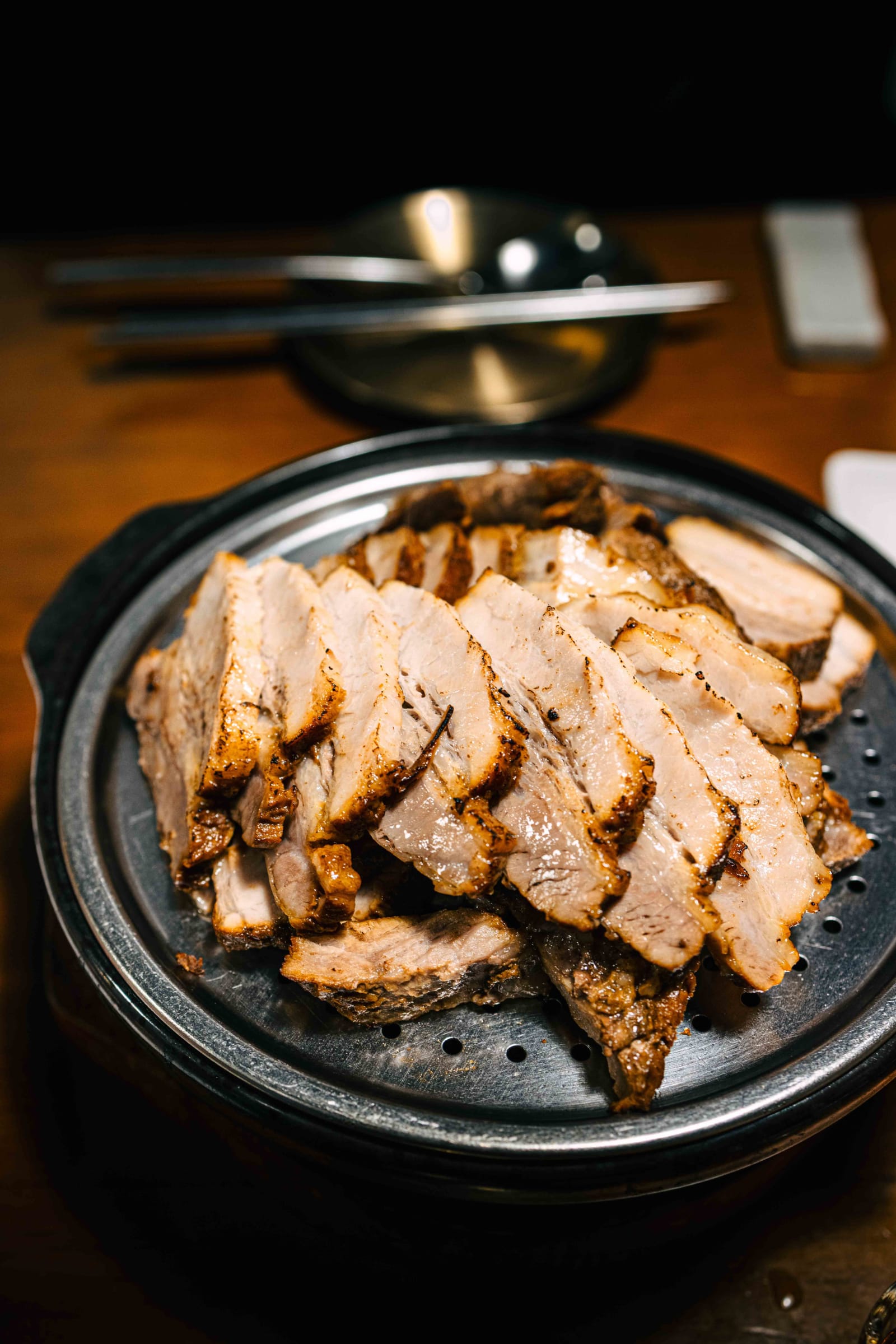
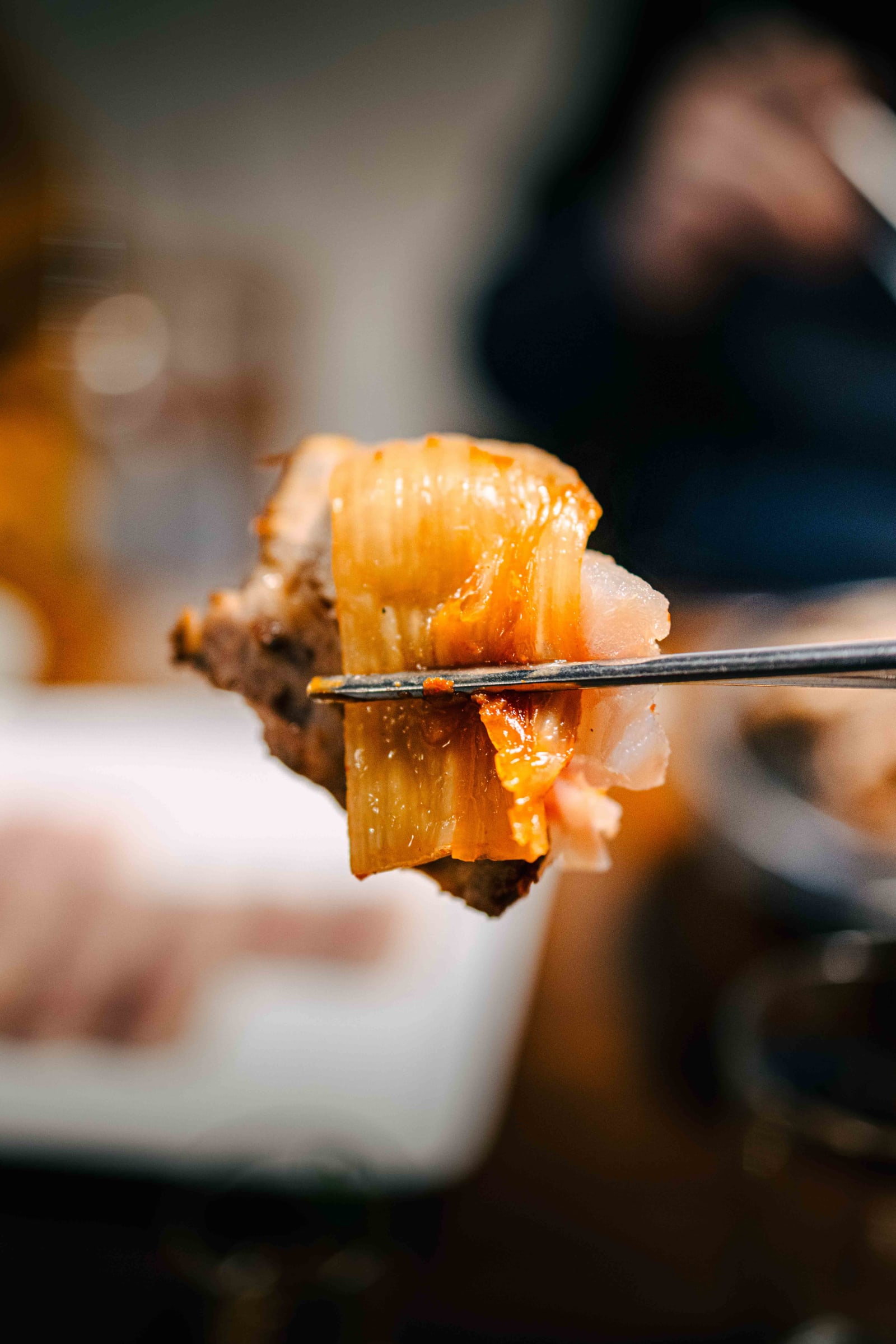
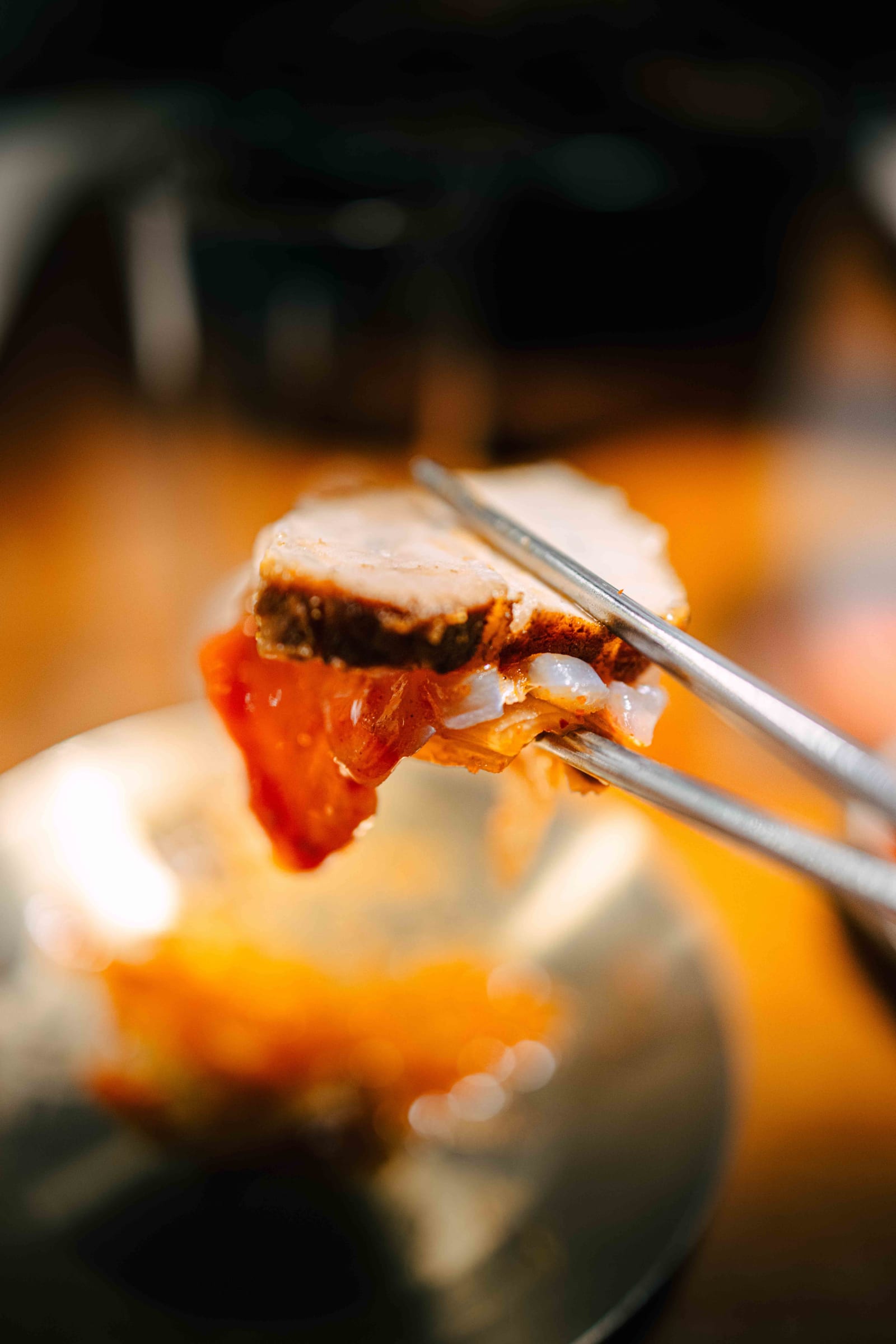
A spread of well-seasoned small dishes arrived first. Then the first course: hongeo samhap, a combination developed in Jeolla-style Korean restaurants in the 1980s. The three components are fermented hongeo, su-yuk (boiled pork belly), and mugeun-ji (aged kimchi). The logic is precise. The pork fat coats the palate and softens the ammonia hit. The deep fermentation acids in the aged kimchi push back against the skate's alkalinity. The hongeo provides the umami that pulls everything together. The su-yuk here had a noticeably sweet character, which I took as a deliberate choice to ease the combination toward new eaters. The mugeun-ji was excellent. One bite with all three, hongeo and pork and kimchi, and the sharp edge of the fermentation recedes into something that tastes simply, unmistakably good. If you eat it this way and still find hongeo unpleasant, then hongeo is probably not for you, and that is fine. The wine was not going to sit untouched.
Second came hongeo hoe-muchim, a spiced raw skate salad: tangy, fiery, with chamnamul (wild parsley) layered on top for its green fragrance. The seasoning sauce was expertly balanced. After that, I very much wanted makgeolli.
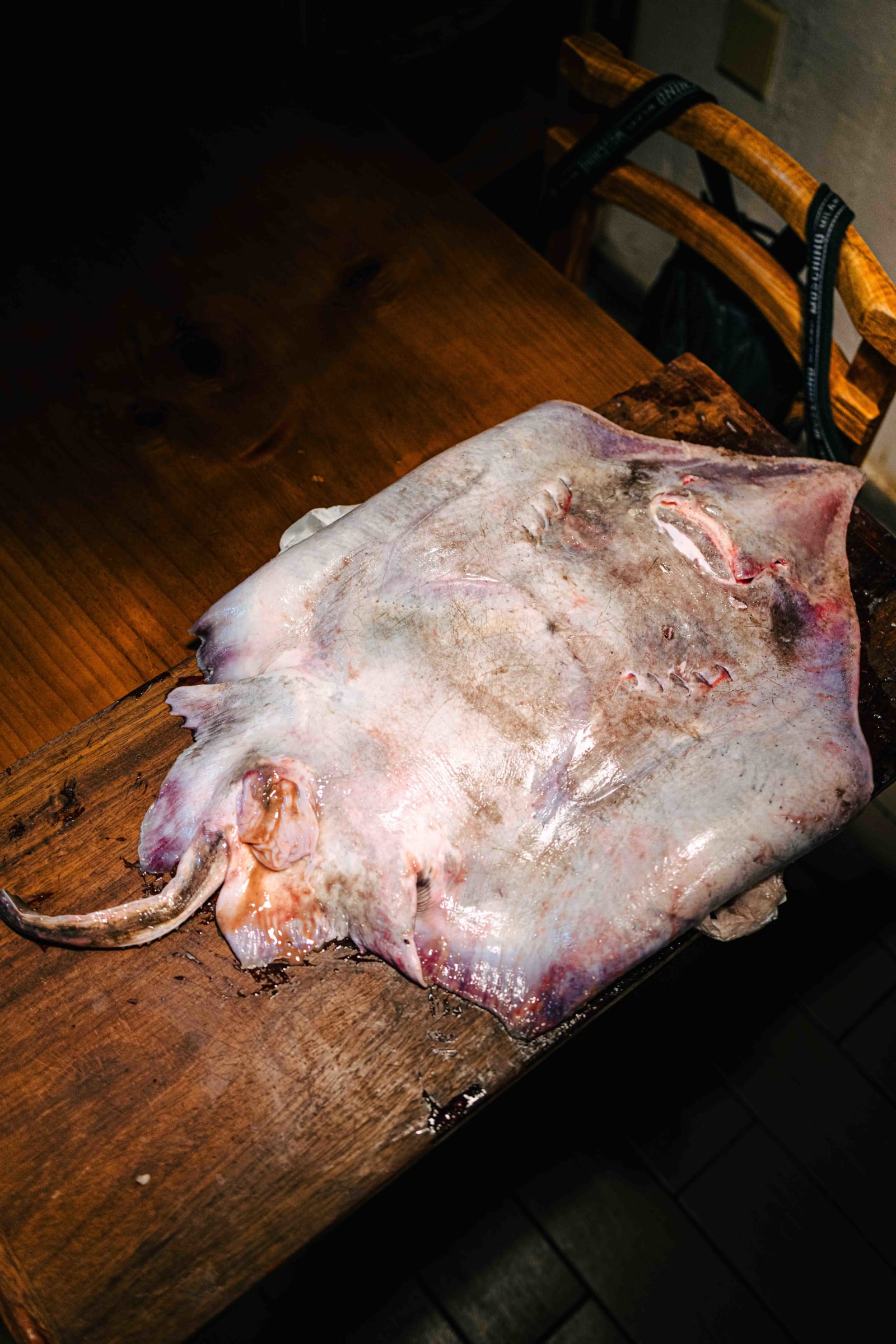
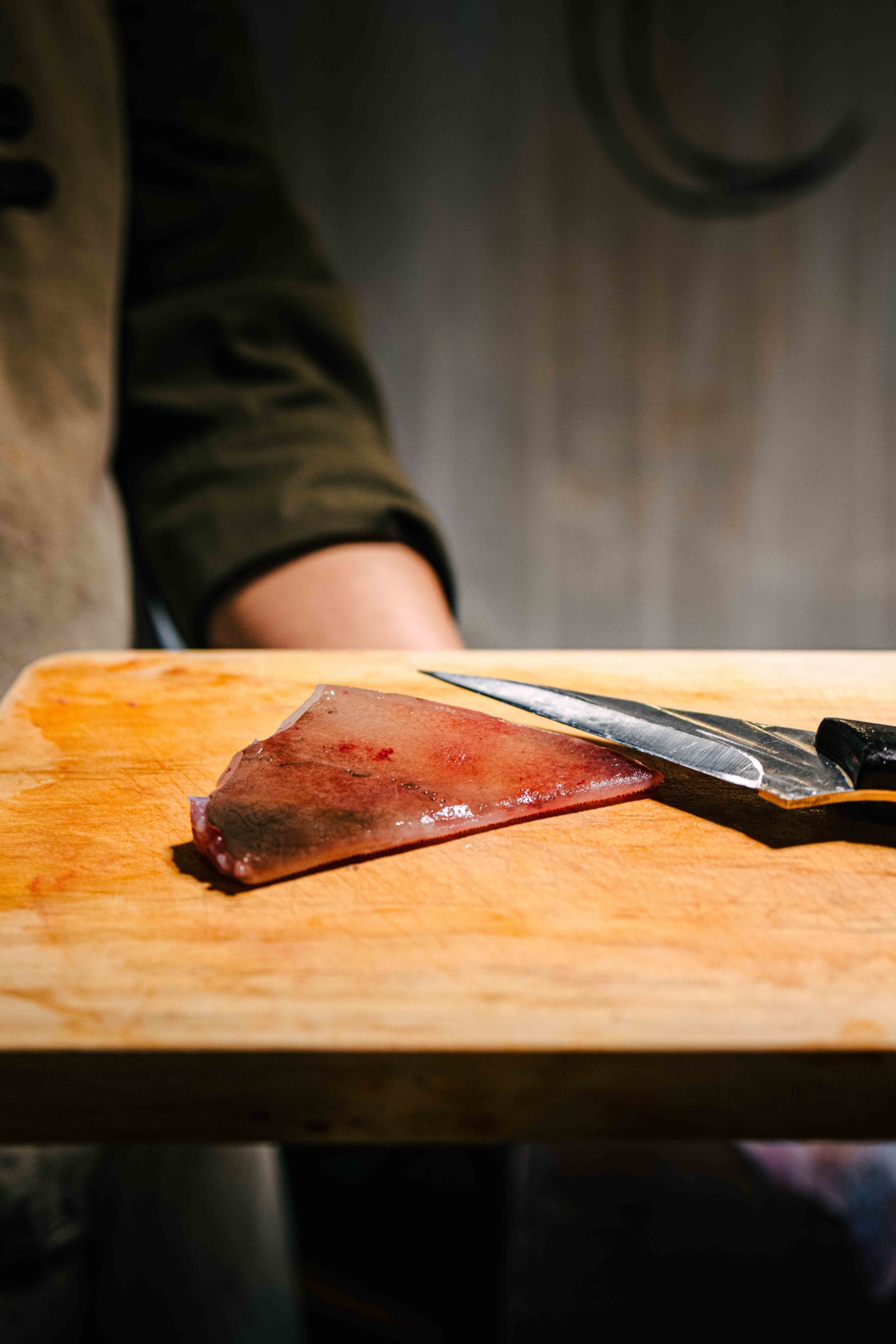
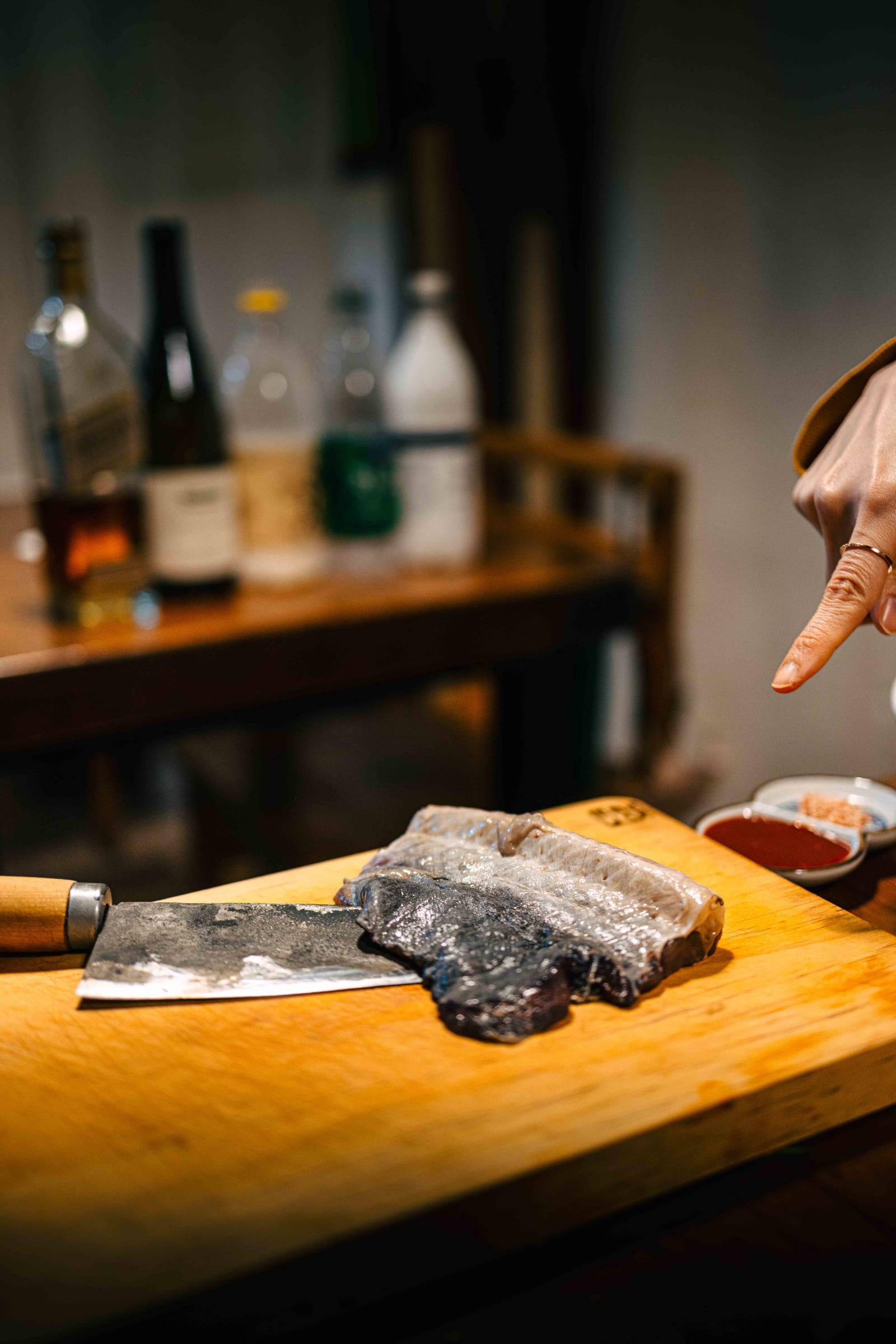
Then the owner cleared the adjacent table and carried over a large shelf. The decomposition performance was about to begin. This restaurant is known for its haecheol course, which requires advance reservation. The owner sources a whole, fresh Heuksando skate and breaks it down at your table. The fish that came out was enormous.
One thing matters here. The skate being decomposed is fresh and unfermented. The fermented hongeo we know, the kind with that sharp ammonia character, has its origins in the transport route from Heuksando to the port cities of Mokpo and Naju (Yeongsanpo), several days' journey by sea. The prevailing historical account traces this further back: during the Mongol invasions of the Goryeo period, Heuksando residents were forcibly relocated to Yeongsanpo at the mouth of the Yeongsan River, and they brought their fish with them. Over that journey, fermentation occurred. Which means the fermentation was never a choice made on the island. It was what happened in transit. On Heuksando itself, the skate is eaten fresh. I spent some time before the evening reassuring people in our group that the organ courses would not carry fermented intensity. They did not need to worry.
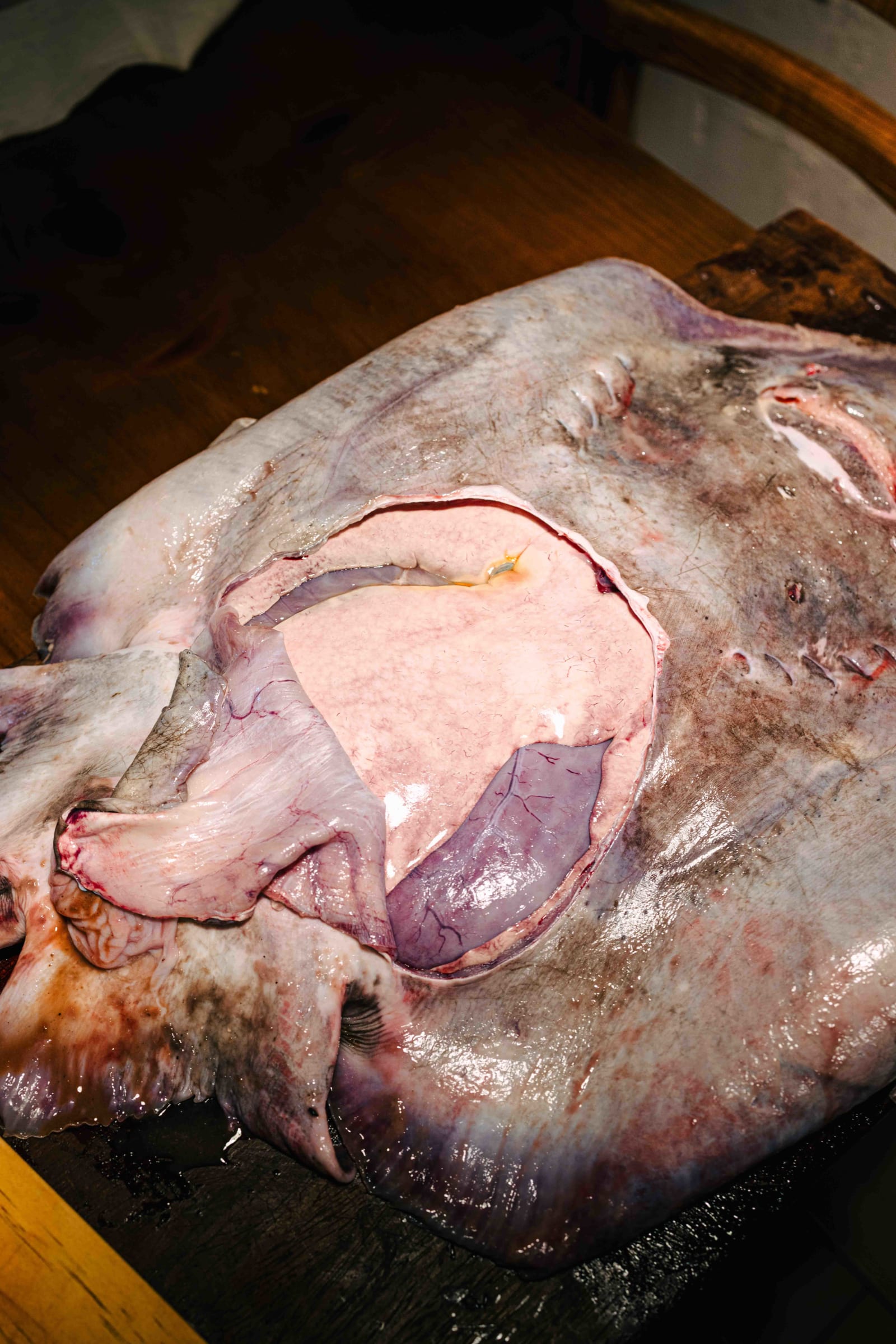
The owner put on gloves, brought out the tools, opened the skate's belly, and began slicing the organs to order.
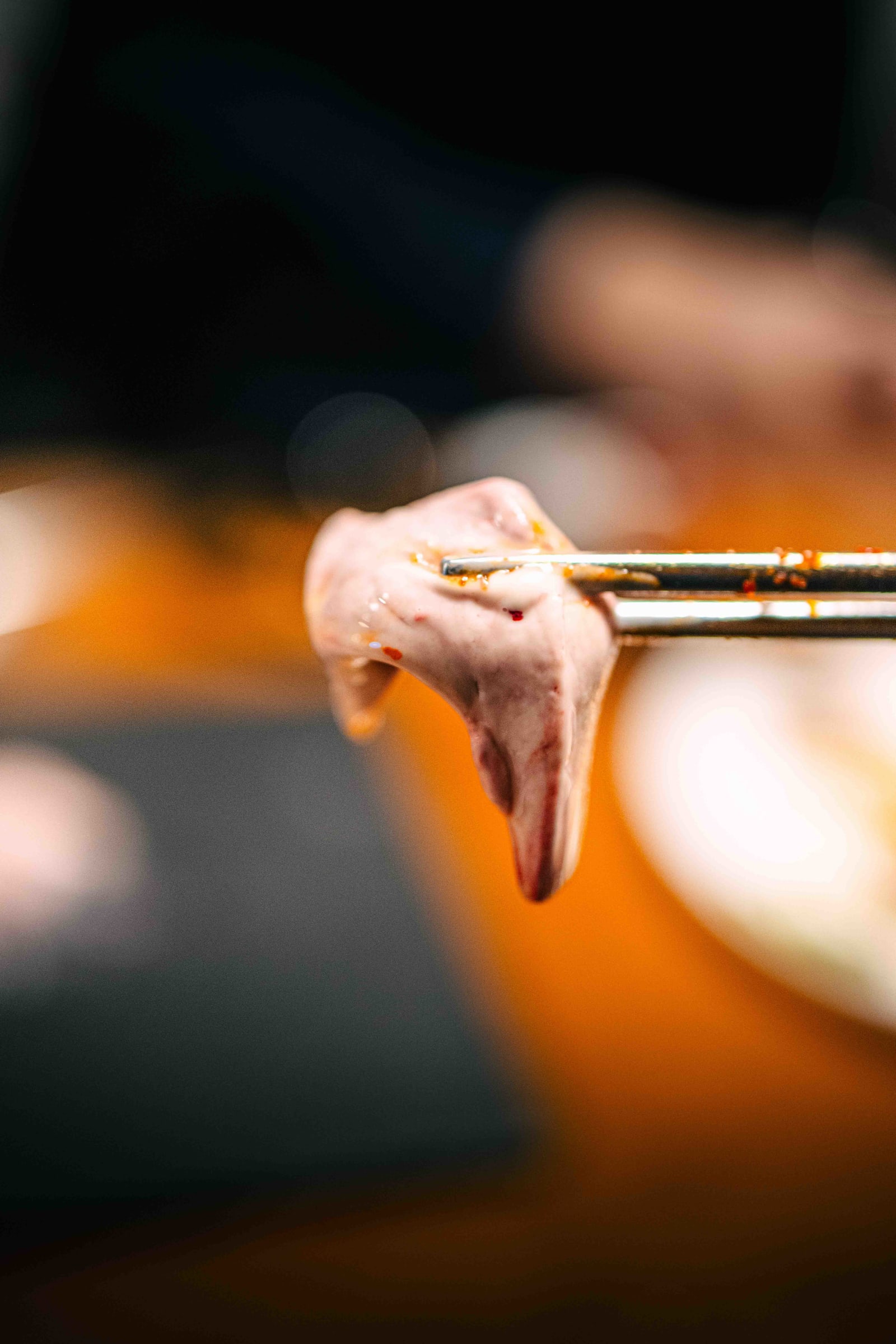
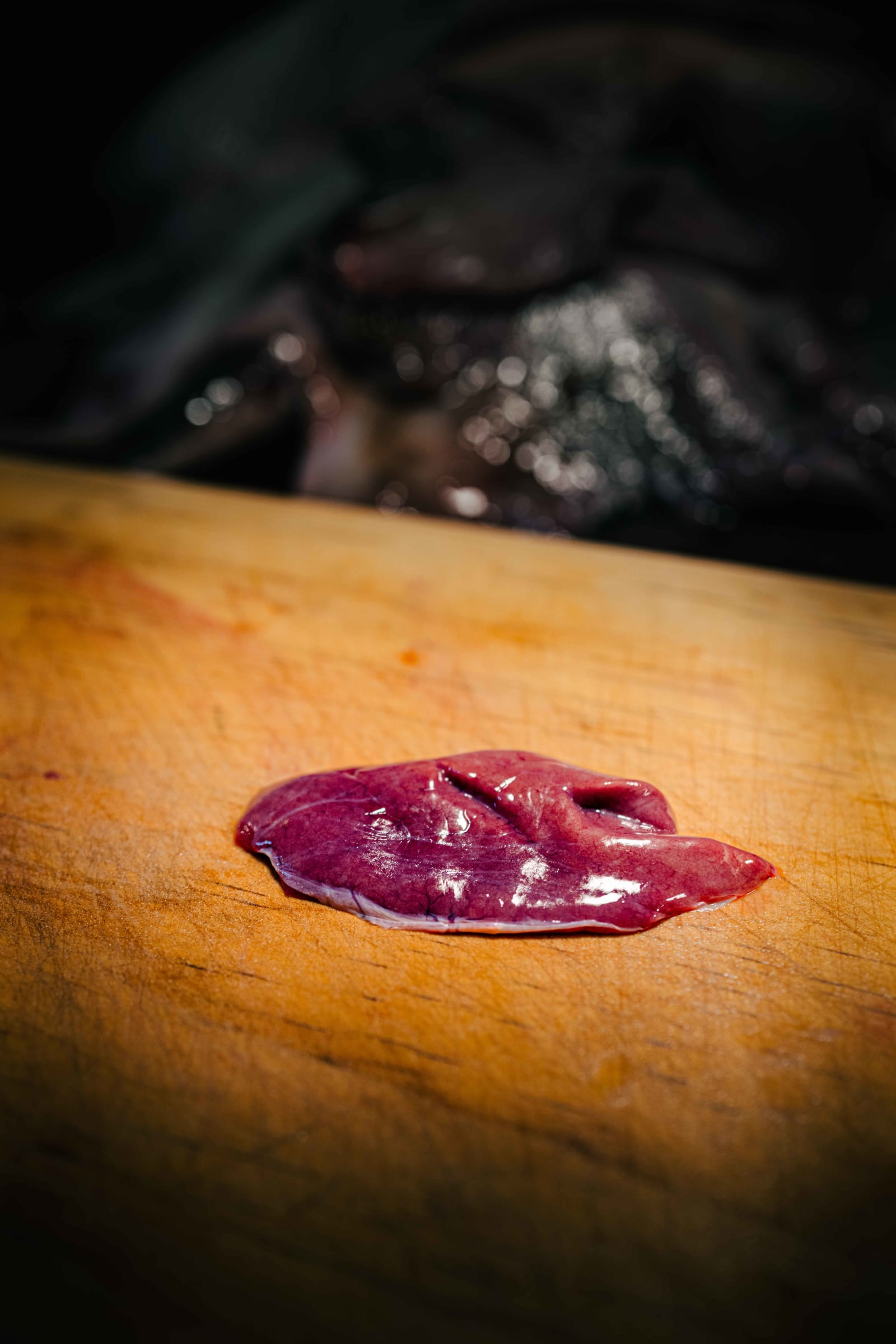
The first thing out was hongeo-ae, the liver. I put a piece in my mouth and paused. Writing this now, a good while after that evening, I can still feel what happened. Not ankimo, the monkfish liver we associate with Japanese fine dining. Not foie gras, which the world calls one of the three great delicacies. Something richer than either, more purely saturated in itself. A deep, unctuous melt that arrived quietly and then stayed. Someone at the table said, half-joking: where are Korea's fine dining chefs while this exists in a neighborhood restaurant in Sadang? Having spent time at three-star restaurants across Europe and Asia, I found the question harder to dismiss than it sounded.
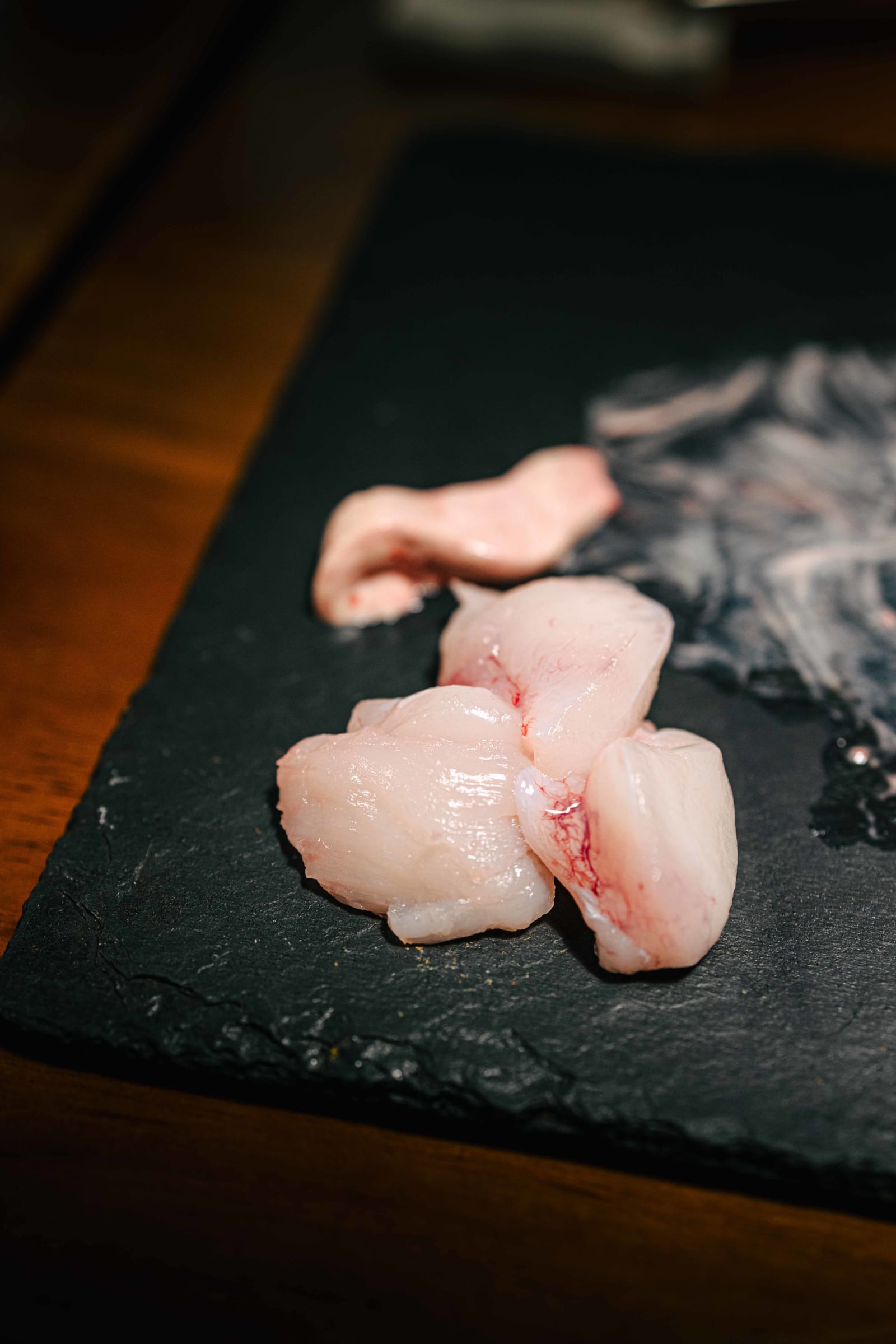
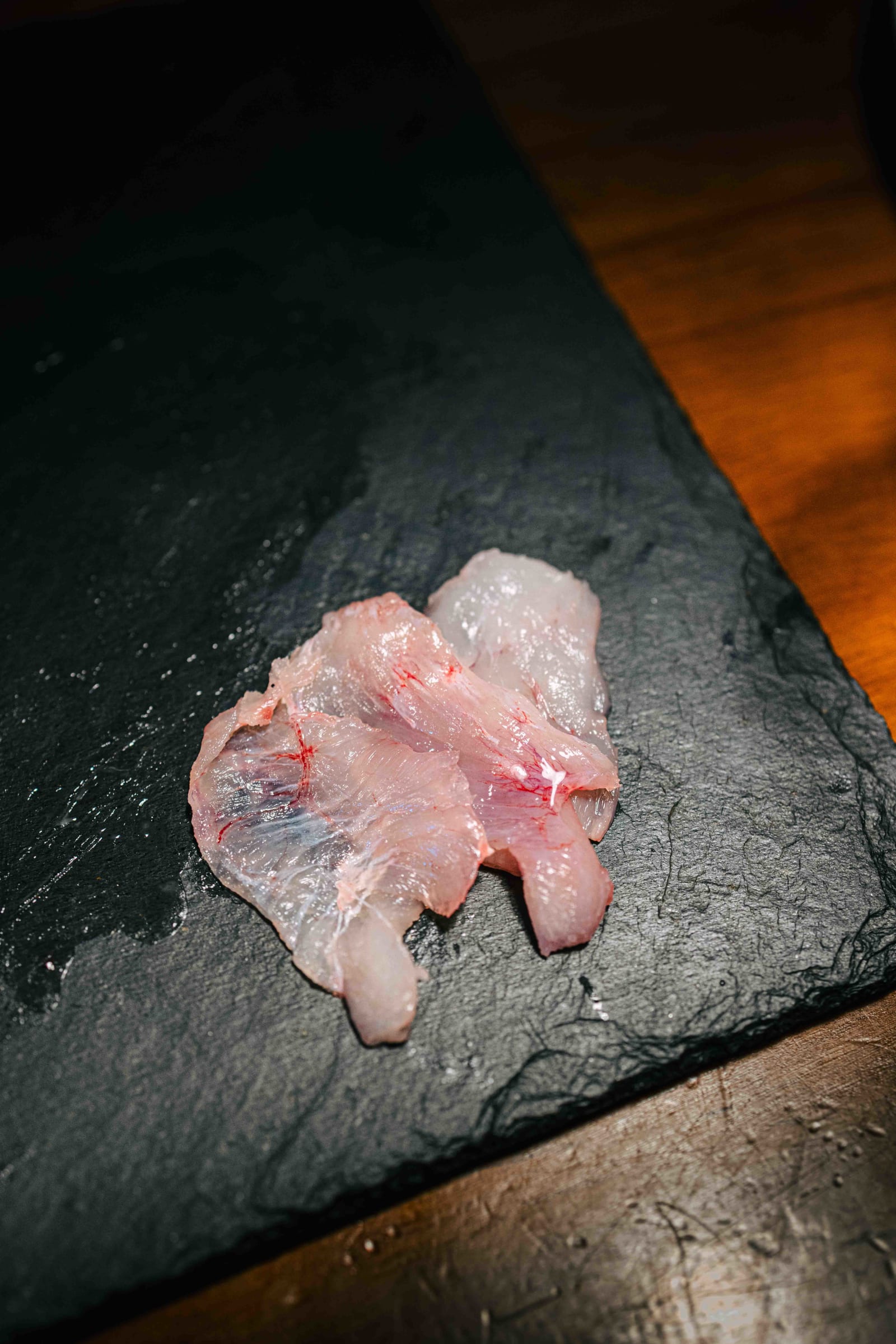
After the liver came gyeotgan, a secondary organ adjacent to it, firmer in texture and slightly drier, but equally fresh and good. Then the cheek meat: thick slices with real resistance on the bite, dipped in vinegar chili paste. The wing meat we usually eat with samhap is thin-sliced and tender. This was something else. After that, a thin cut of skate served sashimi-style, eaten with sesame oil. The texture was like a thin slice of fugu, clean and firm.
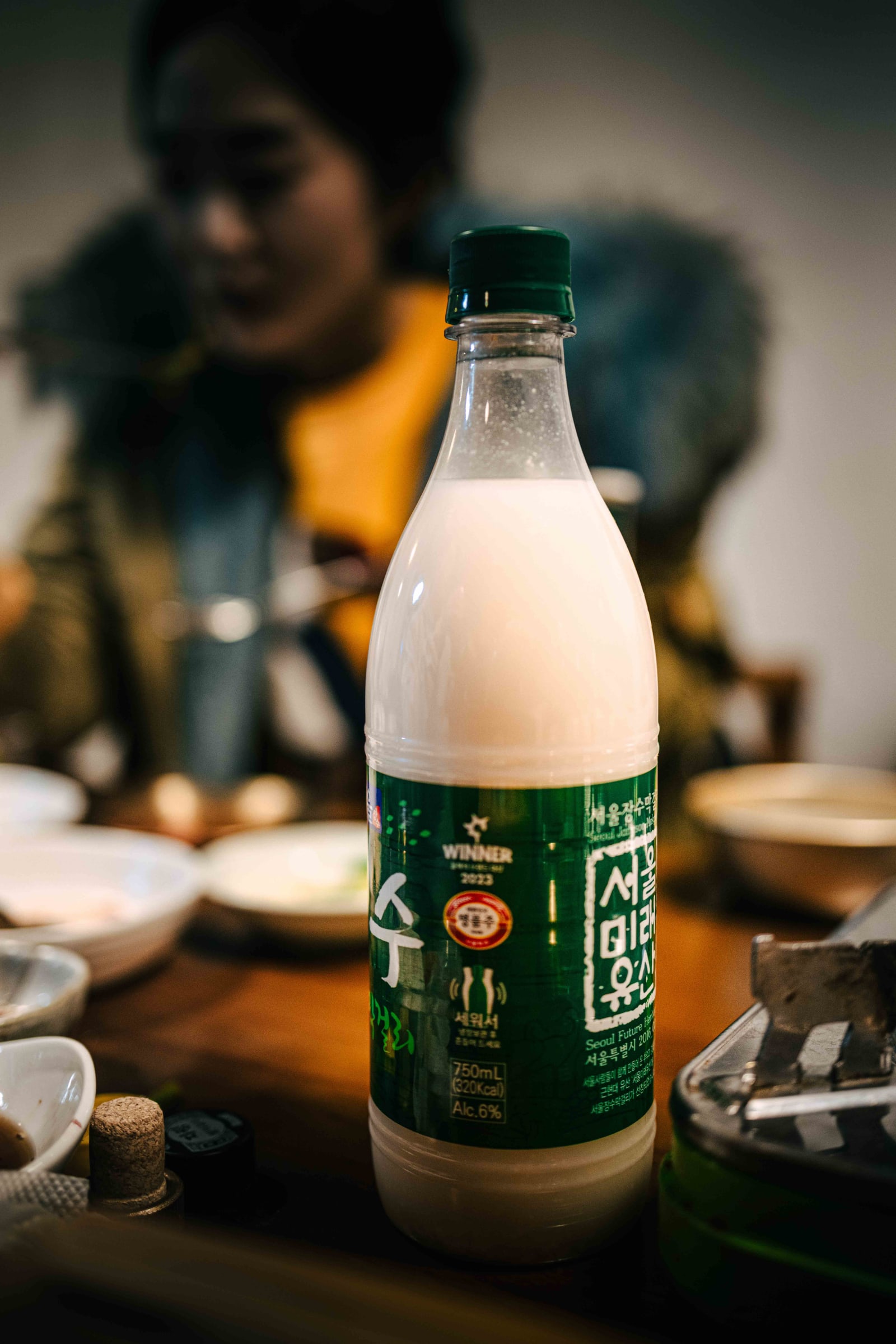
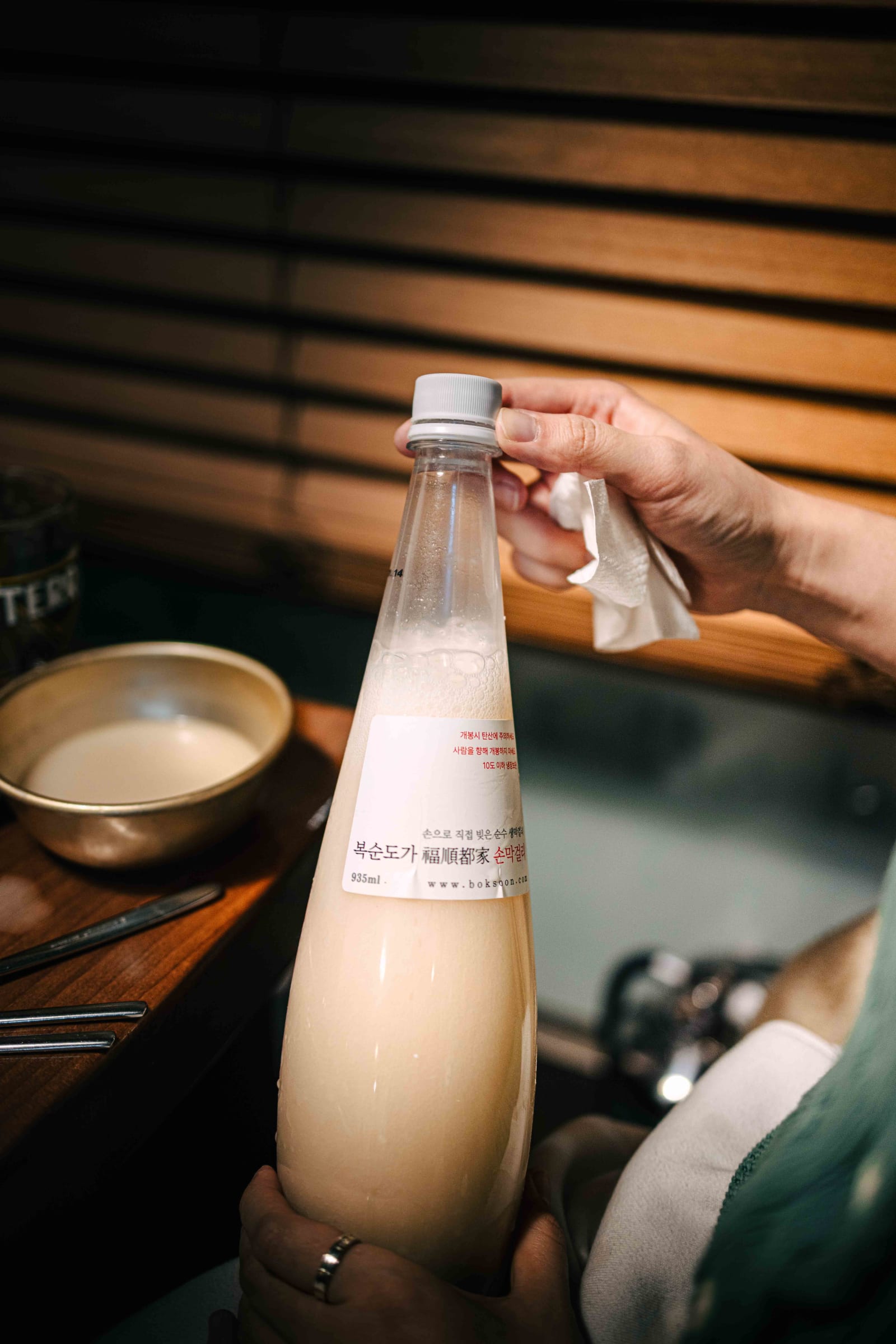
By this point I wanted makgeolli badly. I don't usually drink it, mostly because of the hangover. But there was no denying that it was the only drink that made sense here. I ordered haechang makgeolli. The restaurant stocks an impressive range. Hongeo with makgeolli is one of those combinations that Koreans describe with the word geungnak, a Buddhist term for paradise. I am not going to argue with that.
The decomposition continued. The gills came out next: oily and cartilaginous, with a satisfying crunch on each bite. I kept thinking that I had lived in Sadang for three years and had not come here until now.
I was starting to lose the thread of the evening. The last piece from the decomposition was the nose, the snout: cartilaginous and dense. Fermented, it is said to be nearly unapproachable, the intensity too concentrated in that small mass. Fresh, it was something else entirely. Dense and springy, with a jelly-like give from all the water it still held. The texture alone was worth the experience.
The atmosphere was running hot. Someone introduced maksuki: makgeolli poured into a glass with Johnnie Walker whisky, a bomb drink whose name explains itself. It was good. My memory from this point becomes less reliable.
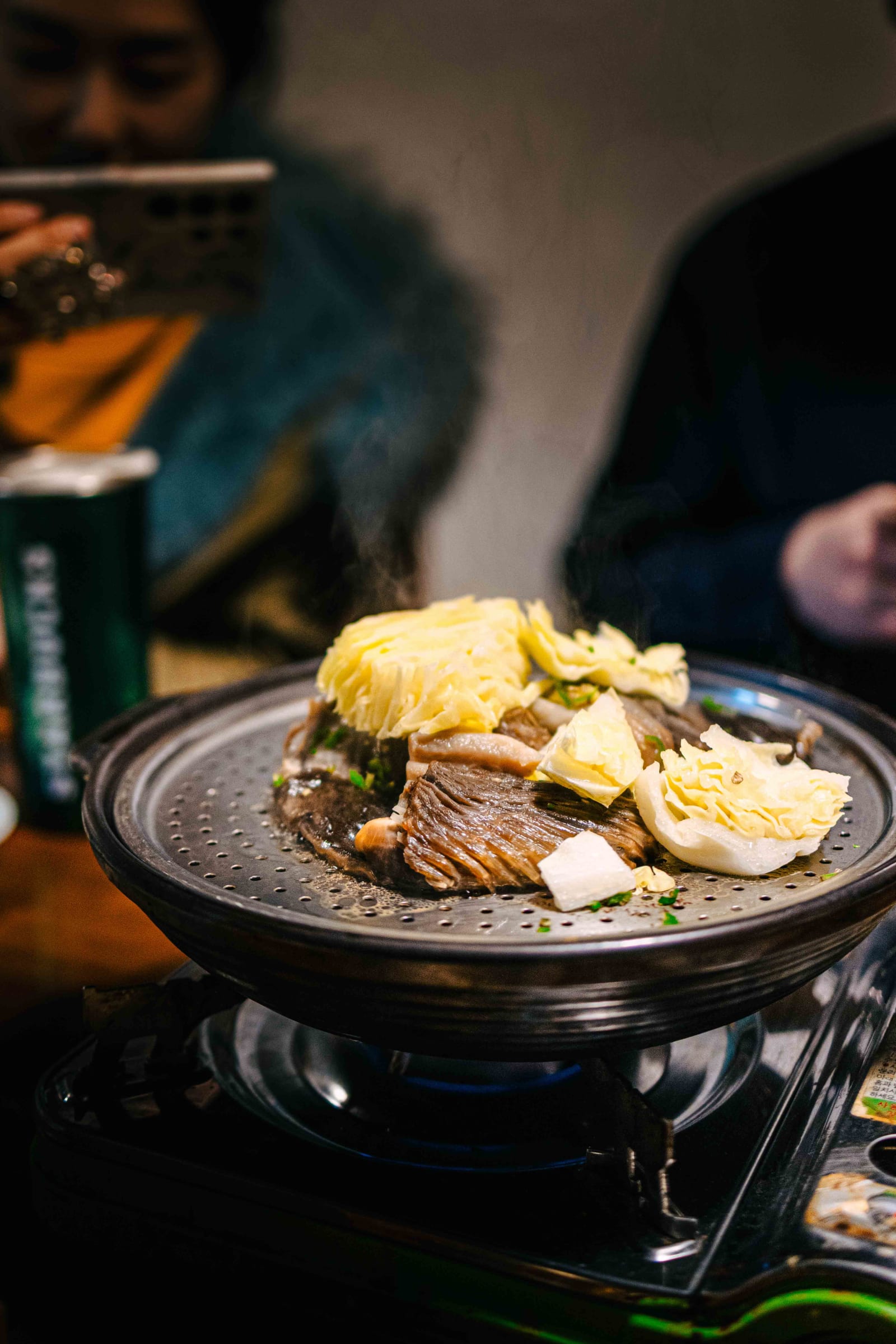
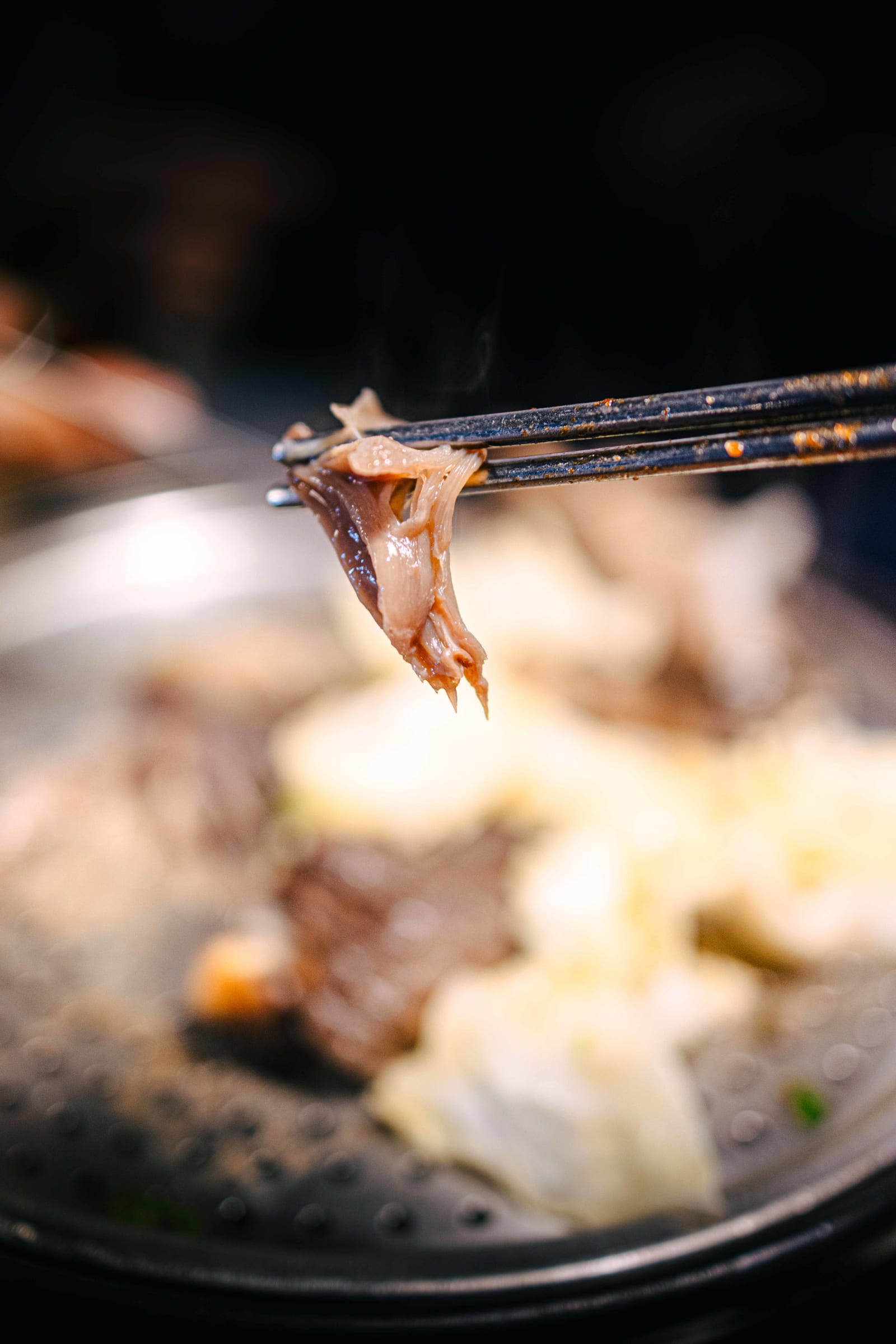
But hongeo did not let me go entirely. The second half of the course began. First, fermented hongeo torched at the table. When heat hits fermented skate, the ammonia volatilizes sharply and all at once. The room shifted. I remember that course clearly because the force of it cut right through everything else. Then hongeo-jjim, steamed fermented skate: the same fermented intensity, but the meat was yielding and moist where the torched version had been forceful. Of the two heat preparations, the jjim had better texture.
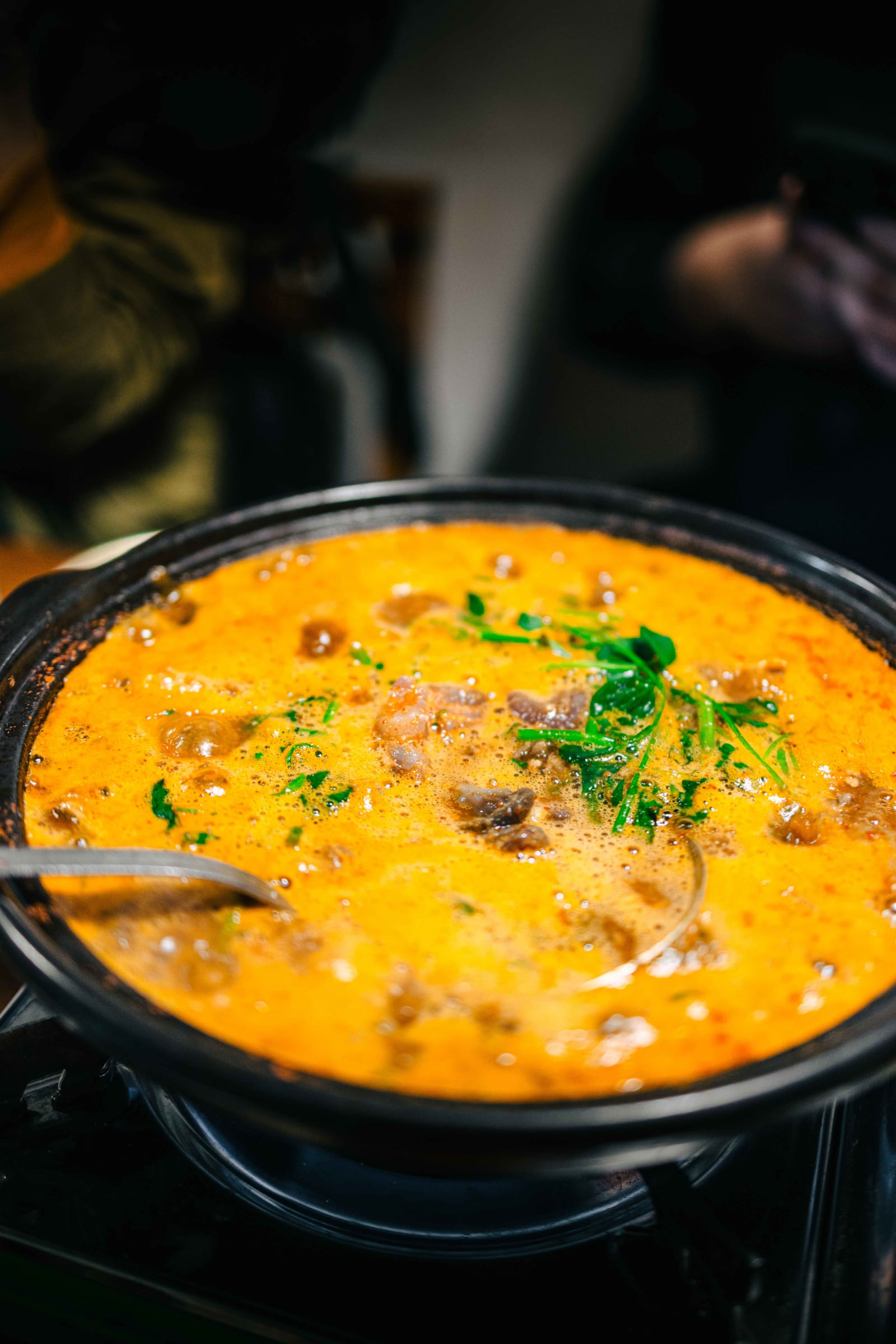
Jangsu makgeolli and Boksundoga arrived somewhere in between. Then the hongeo-tang. The owner brought out a wooden board with a large slab of skate for the stew, a dark piece, almost black, deeply fermented. You could tell without being told. It went into the boiling broth. The soup hit first with a blast that opened the nasal passages wide, then settled into a broth that was dense, savory, and long. It reminded me of a stew my mother used to make at home with hongeo bones from Isu Namseong Market, simmered with doenjang and fresh-tart kimchi. I would eat two bowls of rice with it every time. I thought about how good this tang would be with fresh kimchi added.
The last course was hongeo-mandu, skate dumplings. I was nearly gone by then. One bite and something briefly snapped back into focus. The format is casual and contemporary, a modern interpretation of hongeo. The intensity inside was not. The ammonia came fast and hard on that first chew. I almost got a nosebleed. Do not underestimate these because they look like dumplings. Especially if you are new to hongeo.
That was how the evening ended. The next day was bad, start to finish. Hongeo is said to help with digestion, and maybe it did. My liver had its own opinion.
Hongeo is not food you taste. It is food you inhabit for an evening. If you have someone to share that evening with, Sadang Heuksando Hongeo is the most honest version of that experience I have found.
The twelve restaurants reviewed before this one share a certain grammar: tasting menus, wine pairings, rooms designed to hold the weight of a long sitting. The question those reviews answer, visit after visit, is how well an institution delivers on what it has promised. Sadang Heuksando Hongeo does not speak that language. What happened at this table argues it does not need to. Hongeo-ae, the fresh liver of a whole Heuksando skate, served in a neighborhood restaurant to a group of people who brought their own wine, was by any honest measure as profound a single bite as anything in those twelve reviews. The nearest comparison I have is the foie gras at Akelarre, which I called the best thing I ate on a trip across Europe. The liver here was better. That is not a critique of the three-star restaurants. It is a description of what hongeo is, and of what the Korean culinary tradition holds that fine dining has not yet organized around. Hongeo-ae at this level of freshness is not available in Seoul's fine dining restaurants, not because anyone has tried and failed, but because the conversation has not started. The question asked at this table, half-joking, turns out to have a real answer that the formal dining world has not yet given. The Local category on this blog exists because food like this exists. A restaurant does not need a tasting menu or a reservation system to justify serious attention. It needs to do something that cannot be done elsewhere. Sadang Heuksando Hongeo does.
Have a question about this restaurant, or want to share your own experience?
Send a message