Fine Dining · Japan
Soujiki Nakahigashi
"Where the Michelin Green Star becomes the actual frame of the work"
1—1 / 99
When considering Kyoto from a culinary perspective, two genres come to mind first. Japanese cuisine, and Chinese. Of the two, the form of Japanese cooking that grew alongside the tea ceremony and became inseparable from the city's identity is often called Kyoto cuisine, or kyoryori (京料理). On this Kyoto trip, my first reservation attempts were aimed at the well-known kyoryori houses, but the end-of-year season seemed to have closed every door. The Chinese restaurants fell into place more easily, and after a long stretch of failed attempts on the Japanese side, what eventually caught my eye was a place that held a Michelin star, carried a Tabelog score in the mid-4.3 range, and still had open slots. I attempted the booking on a whim, with no real information, and it went through.
2—3 / 99
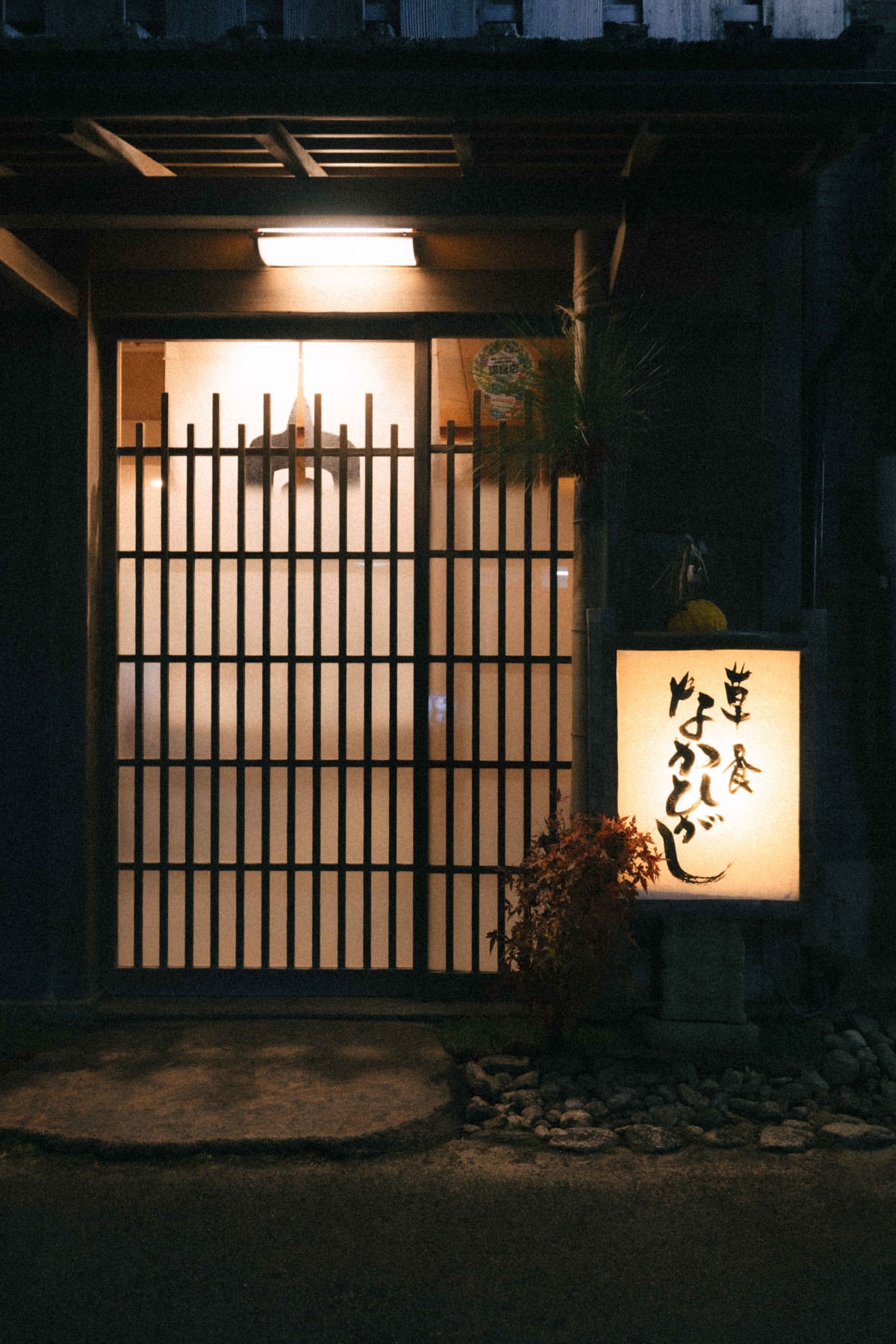
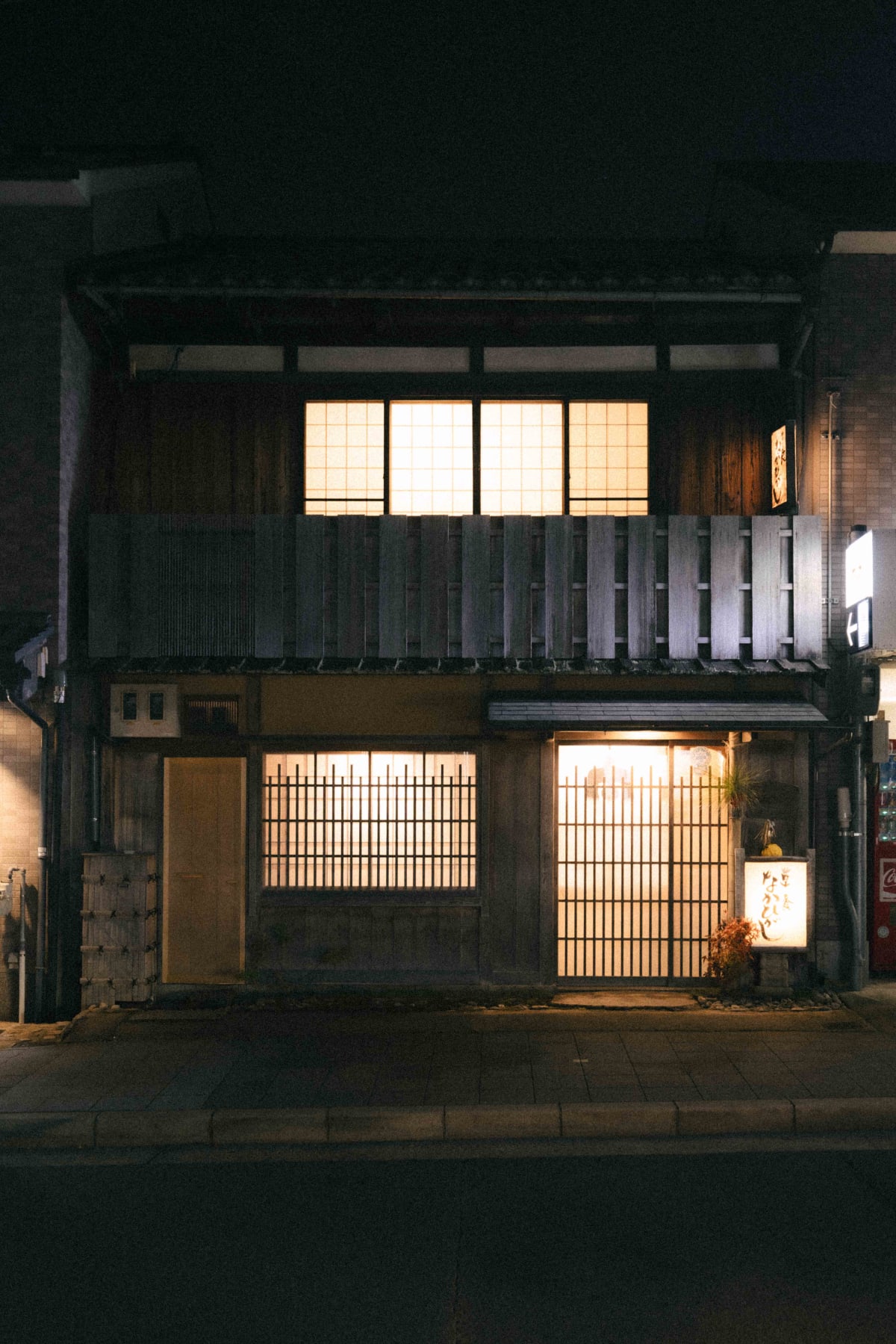
That place was 草喰 なかひがし, Soujiki Nakahigashi, in Jodoji in Sakyo-ku.
Only after the reservation did I discover that the restaurant held a Michelin Green Star and leaned heavily toward vegetable-driven cooking. A small note of regret followed, the suspicion that an impulse choice might turn out to misalign with my own register. The worry, in the end, proved misplaced. For someone with little prior exposure to Kyoto's traditional cuisine and ingredients, the meal turned into something closer to a quiet primer on a city's food culture.
For someone with little prior exposure to Kyoto's traditional cuisine and ingredients, the meal turned into something closer to a quiet primer on a city's food culture.
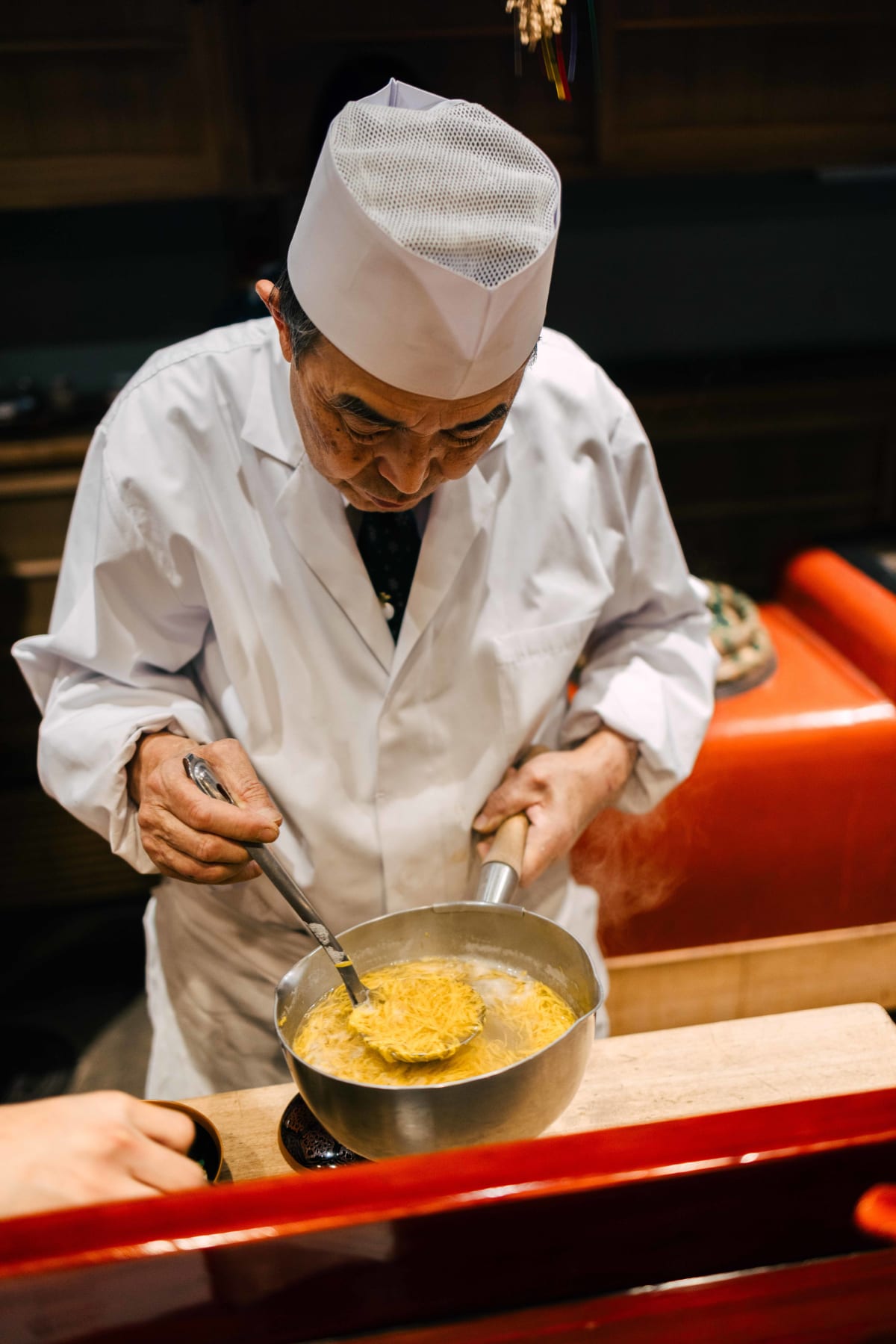
A single piece of background gives the dinner a different texture from the first course on. The restaurant is the city outpost that chef 中東久雄, Hisao Nakahigashi, opened alone in 1996. His family, for four generations, has run the inn 美山荘 Miyamasou in the mountainous Hanase area north of Kyoto, an inn originally built to receive pilgrims to the nearby Daihizan Bujoji temple. The current head of the main house is his brother 中東久人 Hisato, the fourth-generation owner. The practice of gathering wild plants and mountain herbs from the surrounding land was the daily fabric of the inn long before it was anything else, and the codification of that practice into a formal cuisine is what came to be called 摘み草料理 (tsumikusa ryori).
33—33 / 99
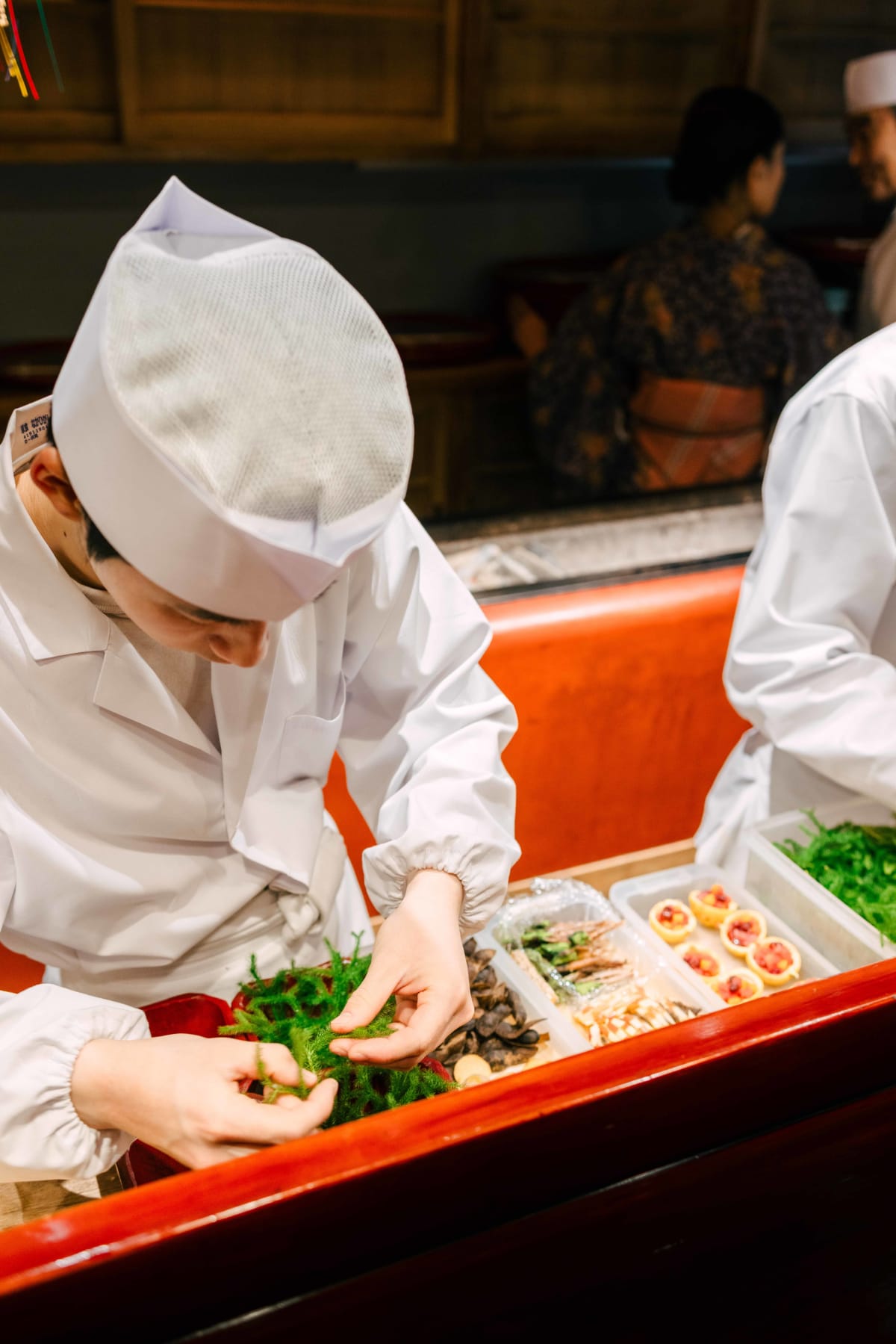
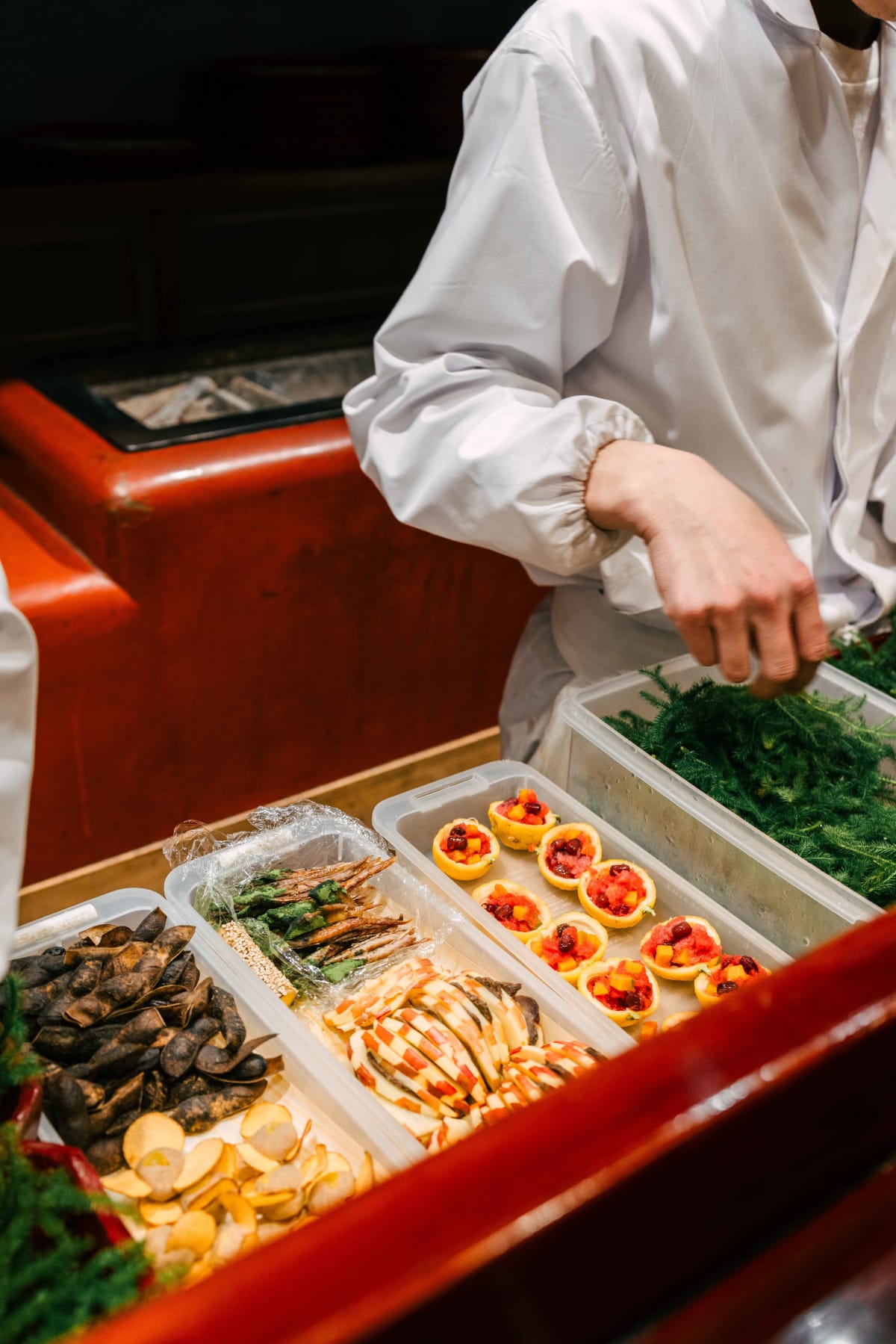
The literal sense of 摘み草 is "to pick grass," and the restaurant's name 草喰 (soujiki) goes one step further, settling on the act of "eating grass." The custom of nobles walking into the fields to gather young herbs was already recorded in the Manyoshu during the Heian period, threading through Japanese aesthetics ever since, and it was Miyamasou in the early Showa period that lifted the practice into a defined culinary form. The chef himself still walks the hills of Ohara every morning to gather wild greens, flowers, and herbs, and reorganizes the day's course around whatever the mountain has handed him.
6—7 / 99
There is another axis to this work that explains the Michelin Green Star beyond the conservation of tradition. The kitchen runs on the principle that everything edible should be eaten, extending this to immature vegetables, and unused portions return to a poultry farm in Ohara as feed. The more interesting layer sits beside this. As a warming climate has thinned the mountain vegetation and the populations of wild boar and deer have grown, the surrounding ecosystem has come under increasing pressure, and the chef has responded by drawing this wild game actively into the course. The venison and wild boar bacon that appear during the meal are not exotic flourishes but direct connections to the restaurant's environmental position, an awareness that takes a moment to recognize.
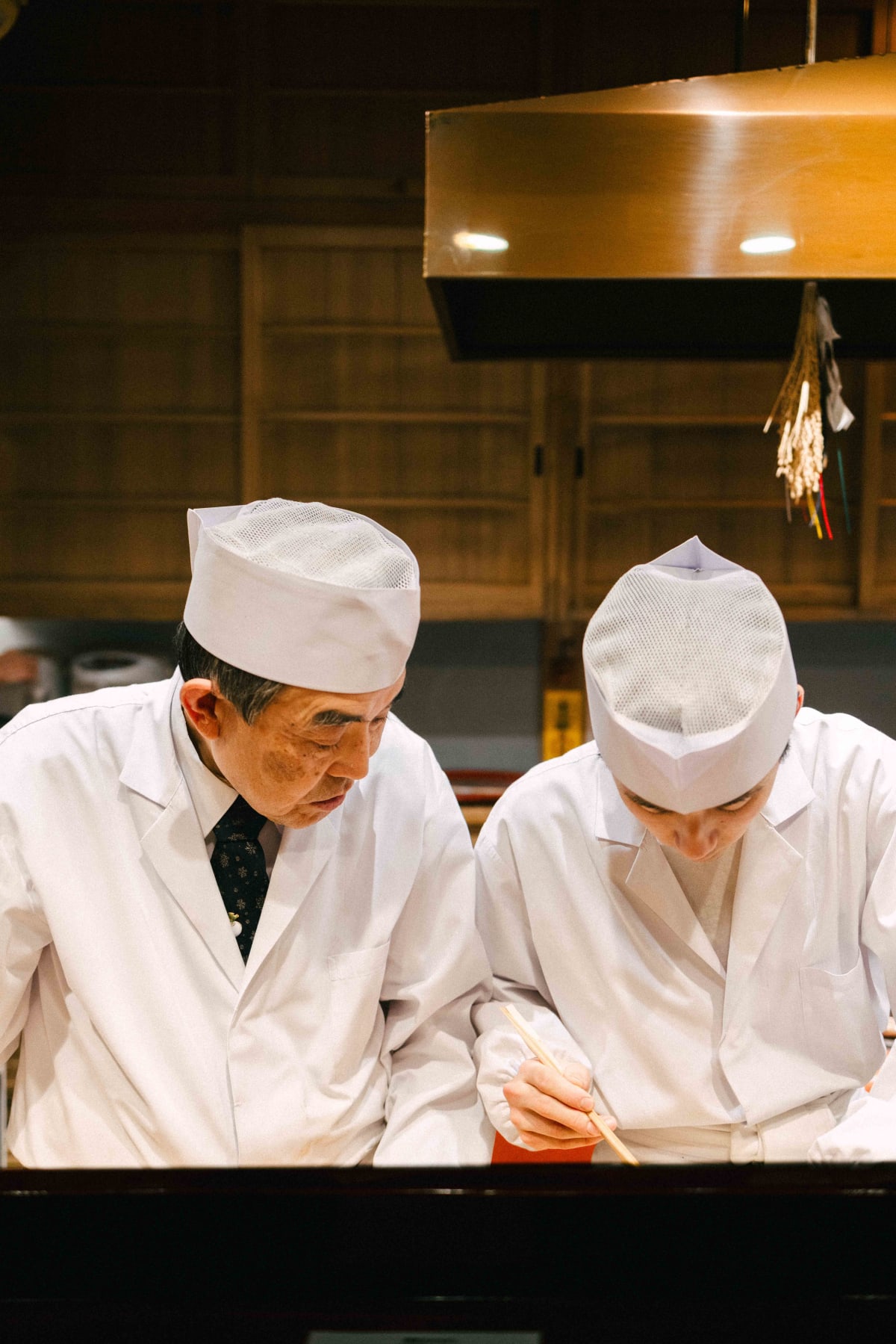
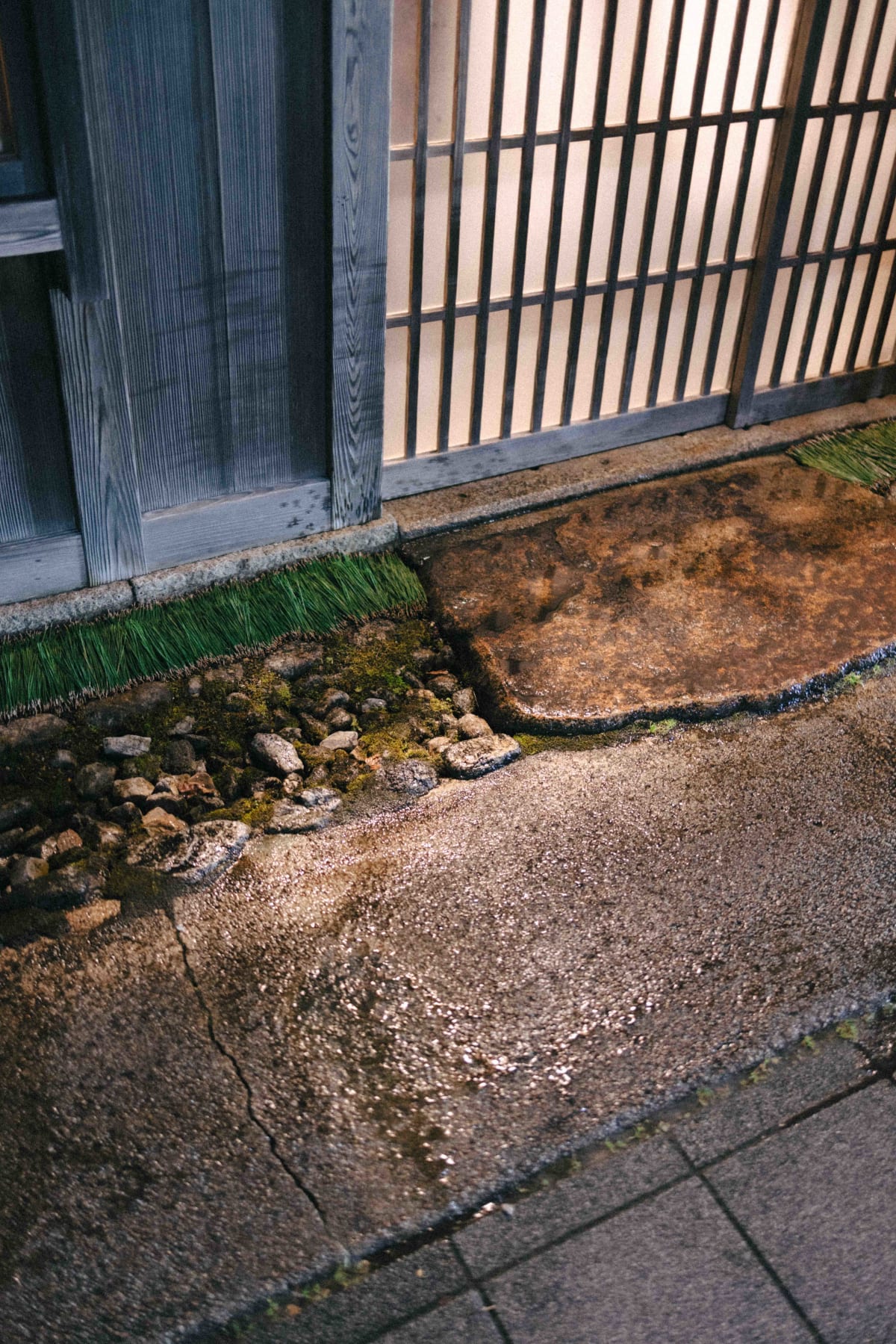
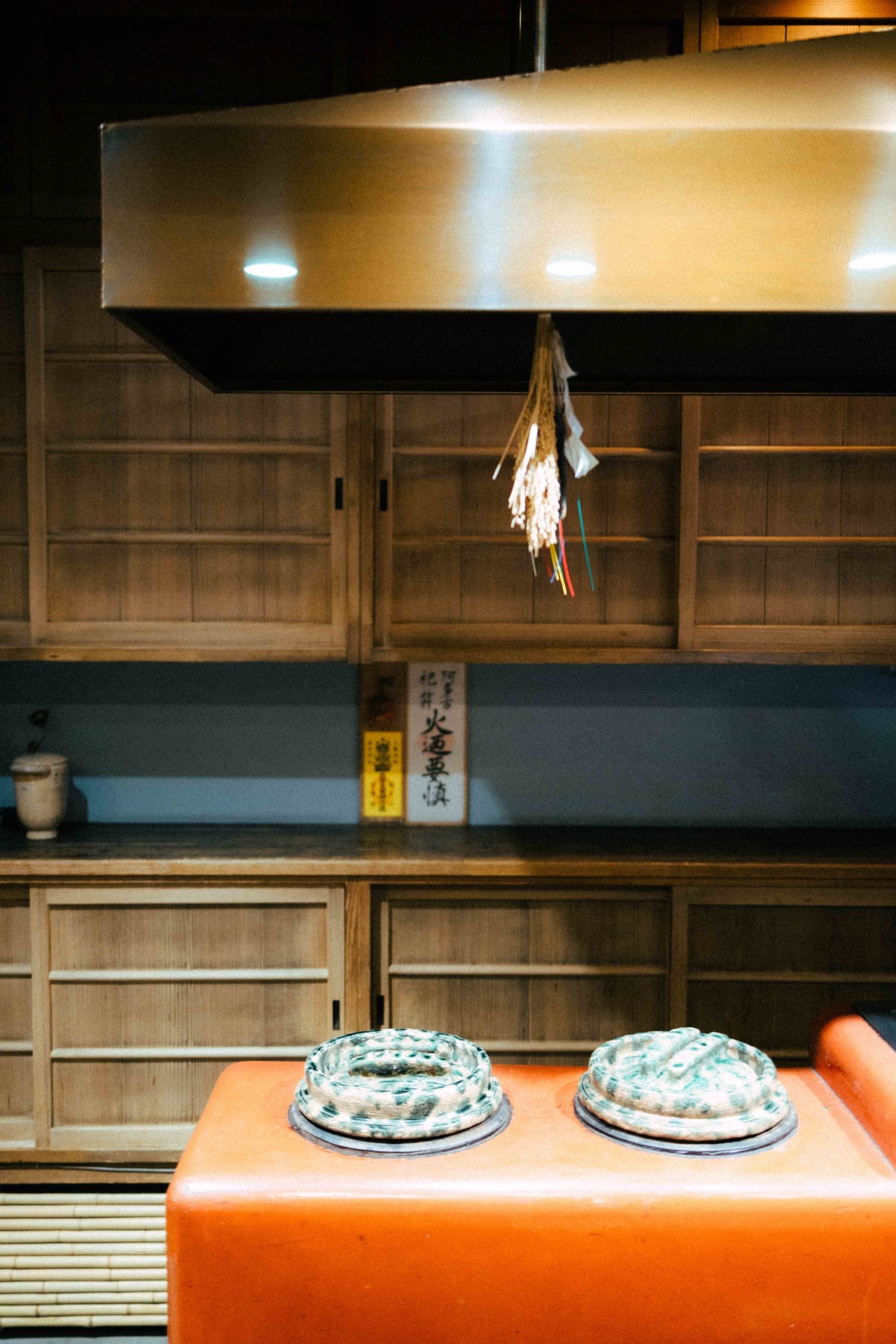
The restaurant sits along the path toward Ginkakuji, in a quiet bend by the Shirakawa stream. The interior carries less of the refined hush of a high-end sushi counter or ryotei and more of the texture of an old neighborhood tavern.
4—5 / 99
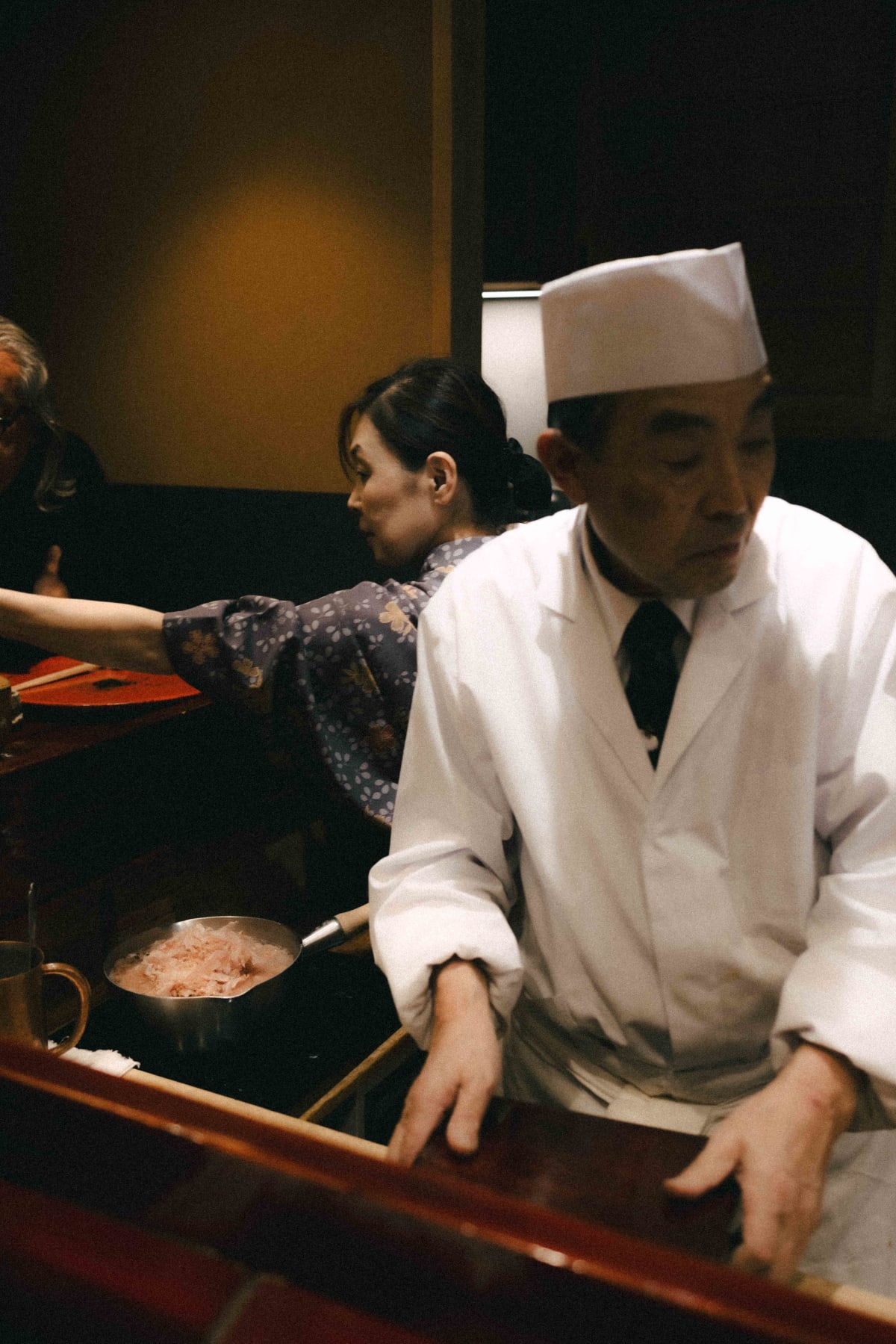
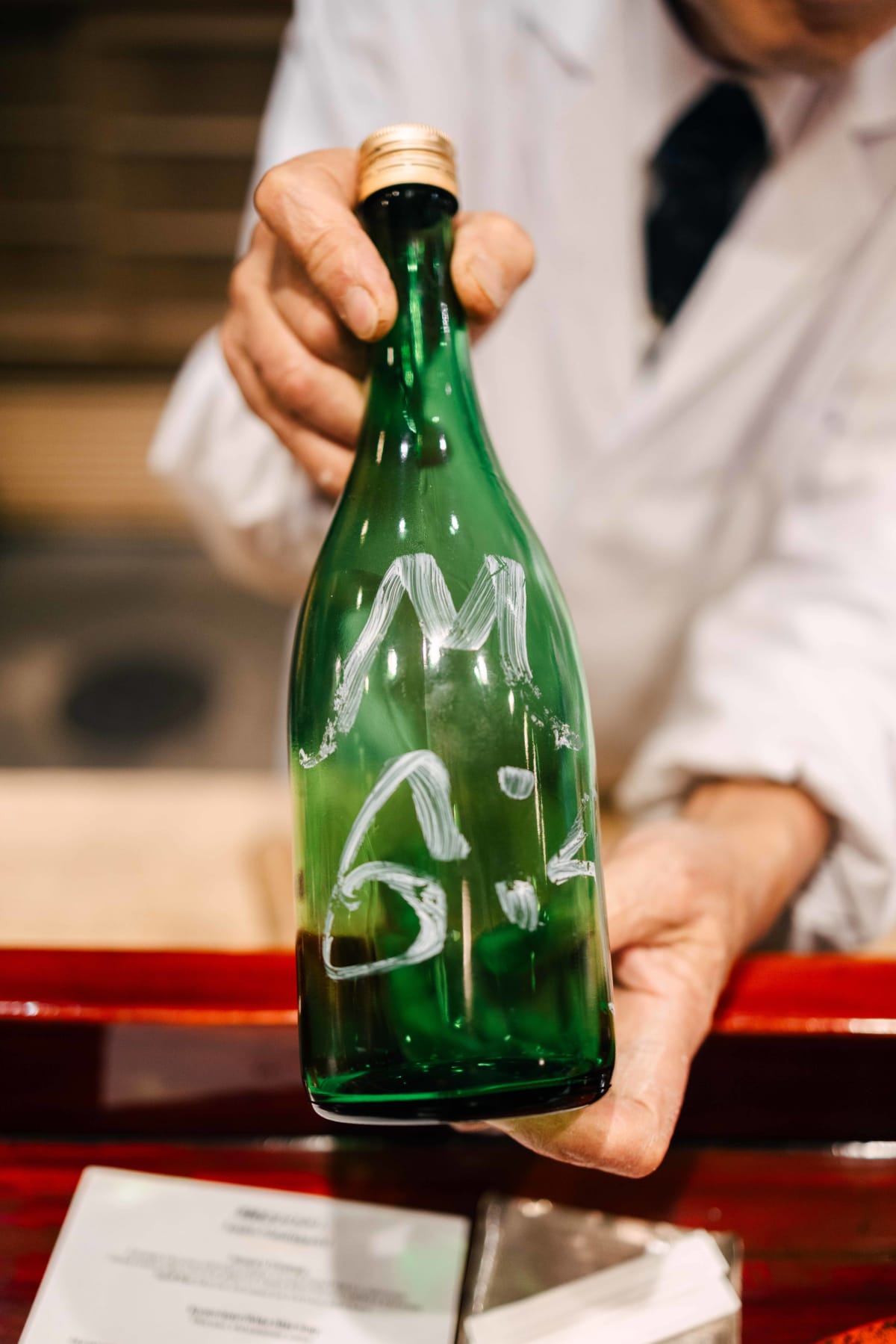
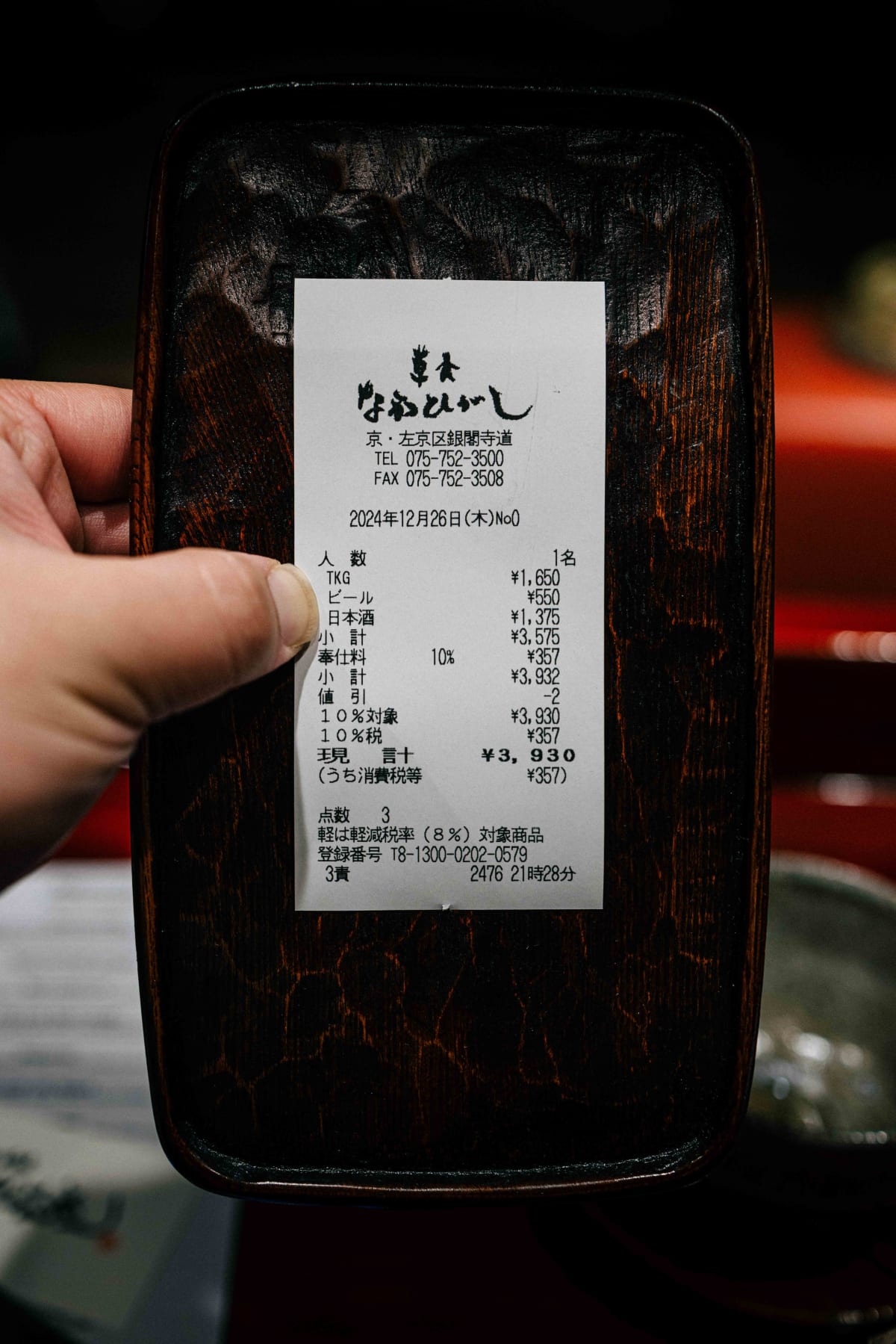
A counter and private rooms share the floor, and on this evening the seats split almost evenly between Japanese guests and foreign visitors. The course offerings come in several price tiers; I chose the longest and most expensive option at 33,000 yen, which placed me in the early dinner seating.
8—8 / 99
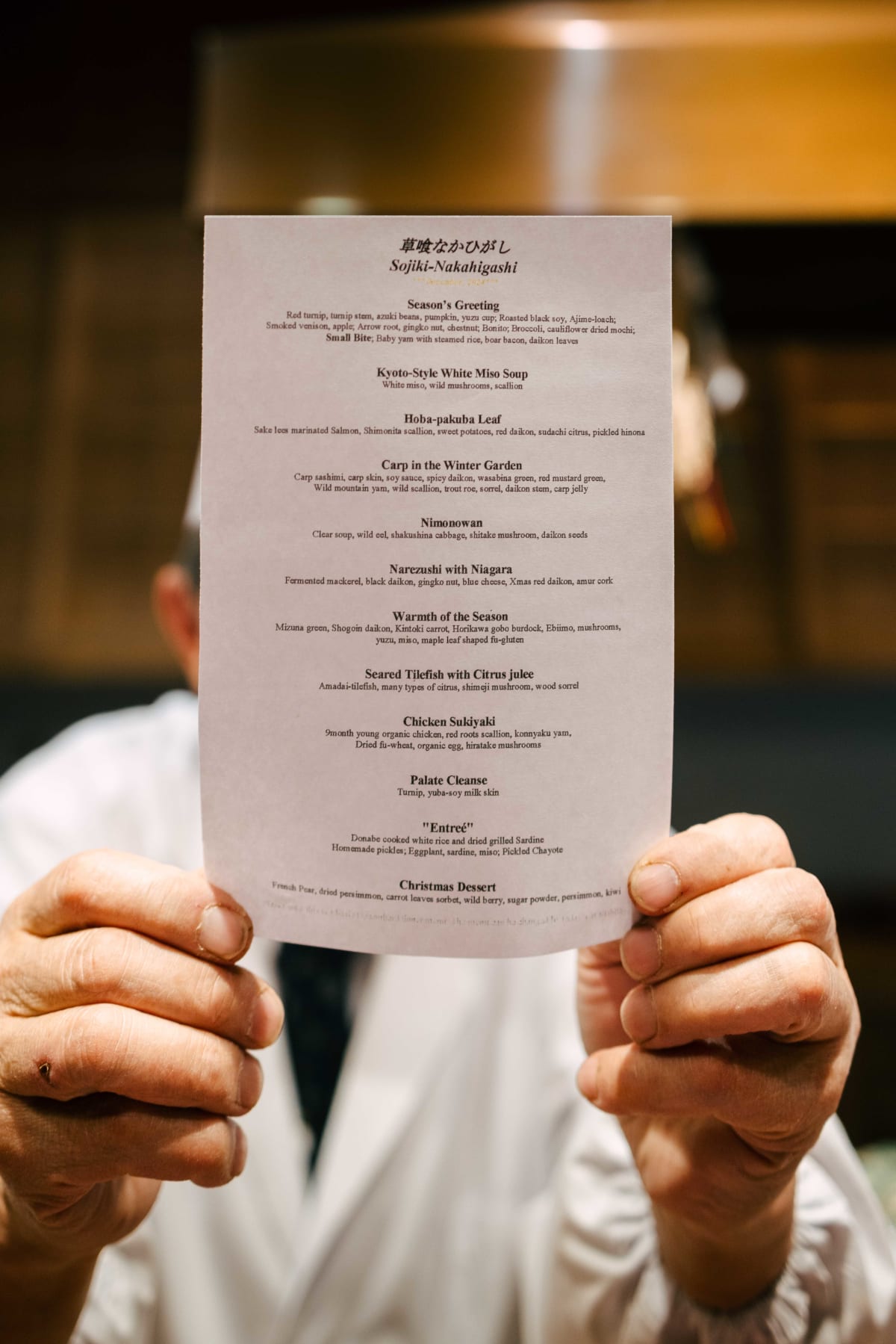
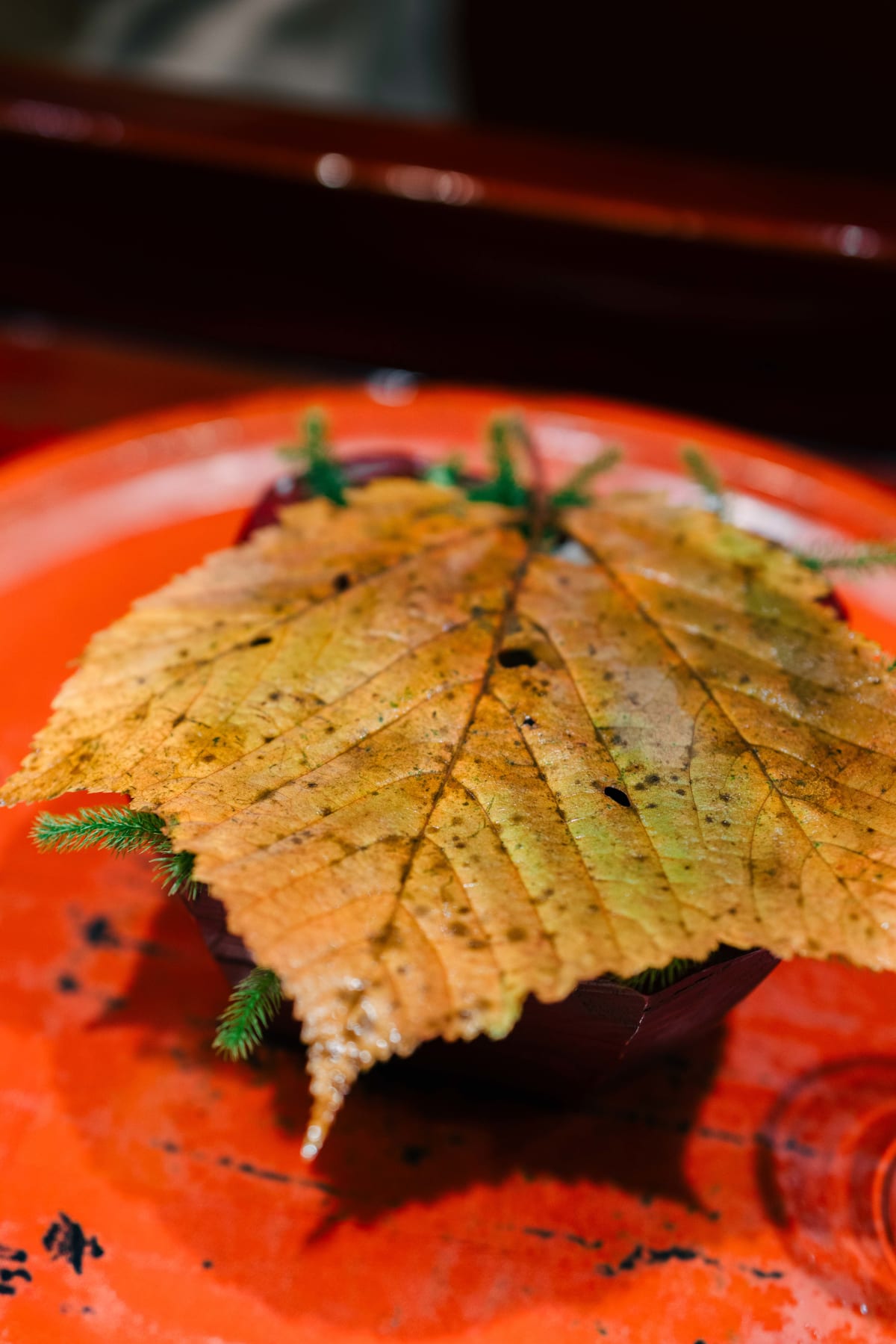
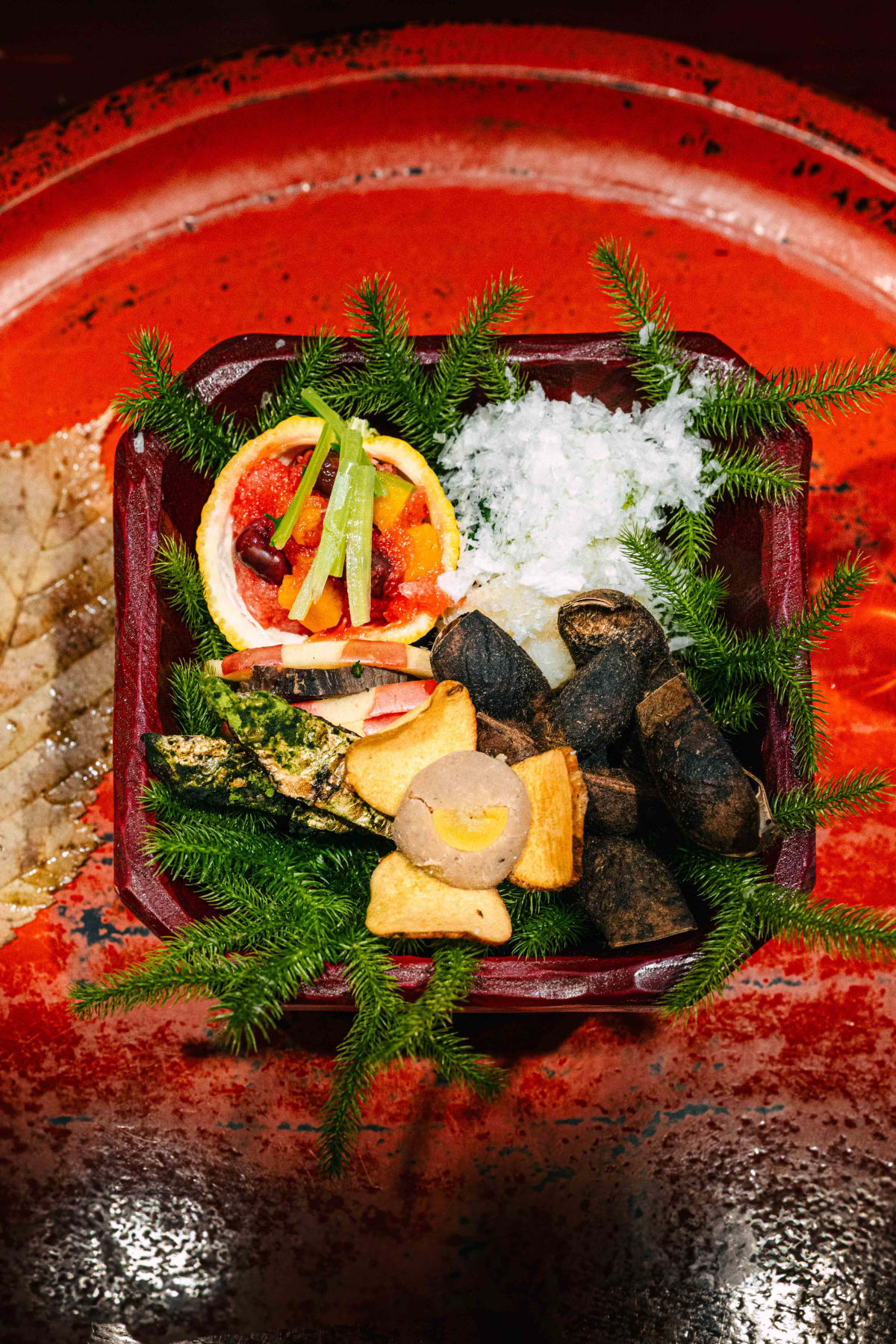
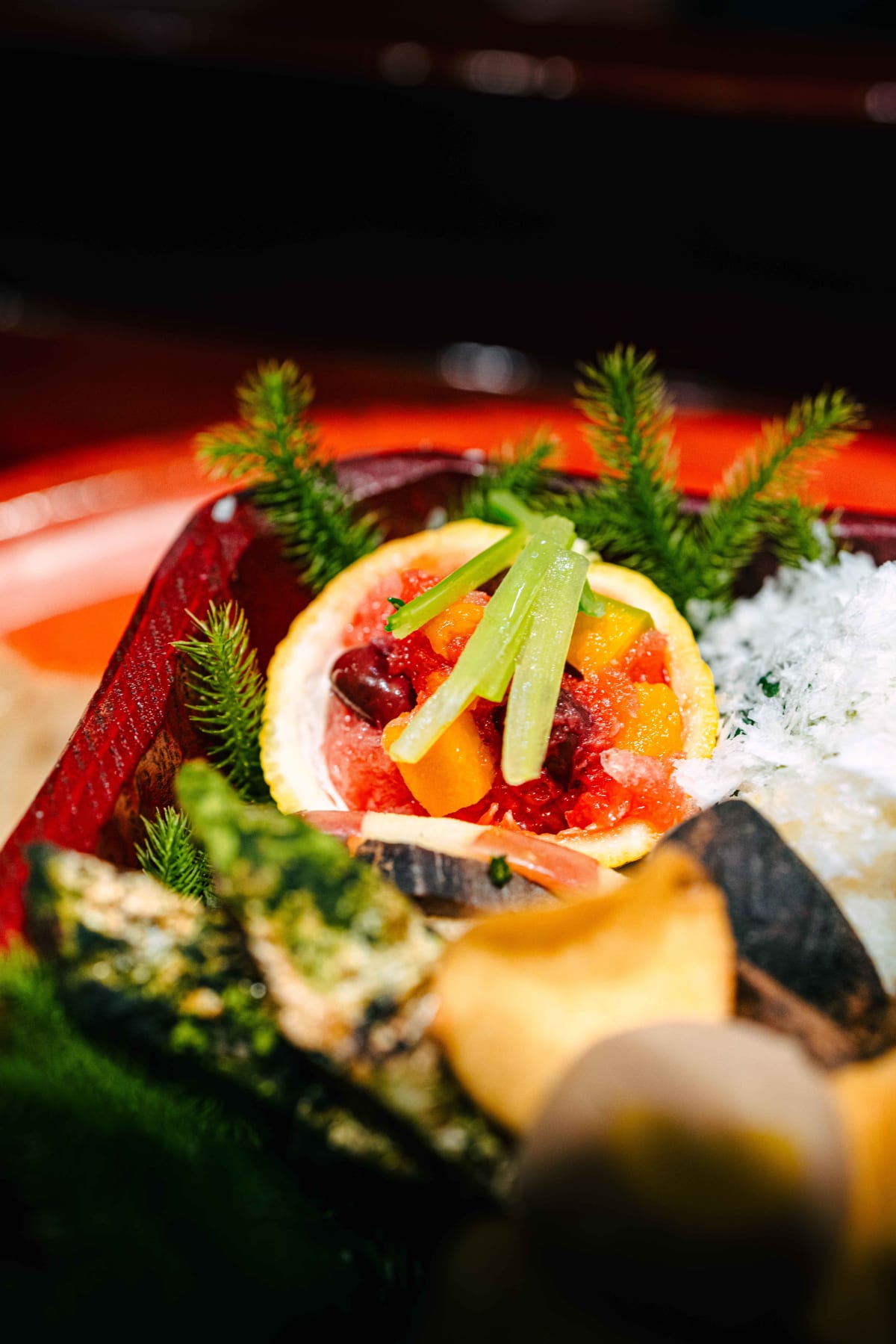
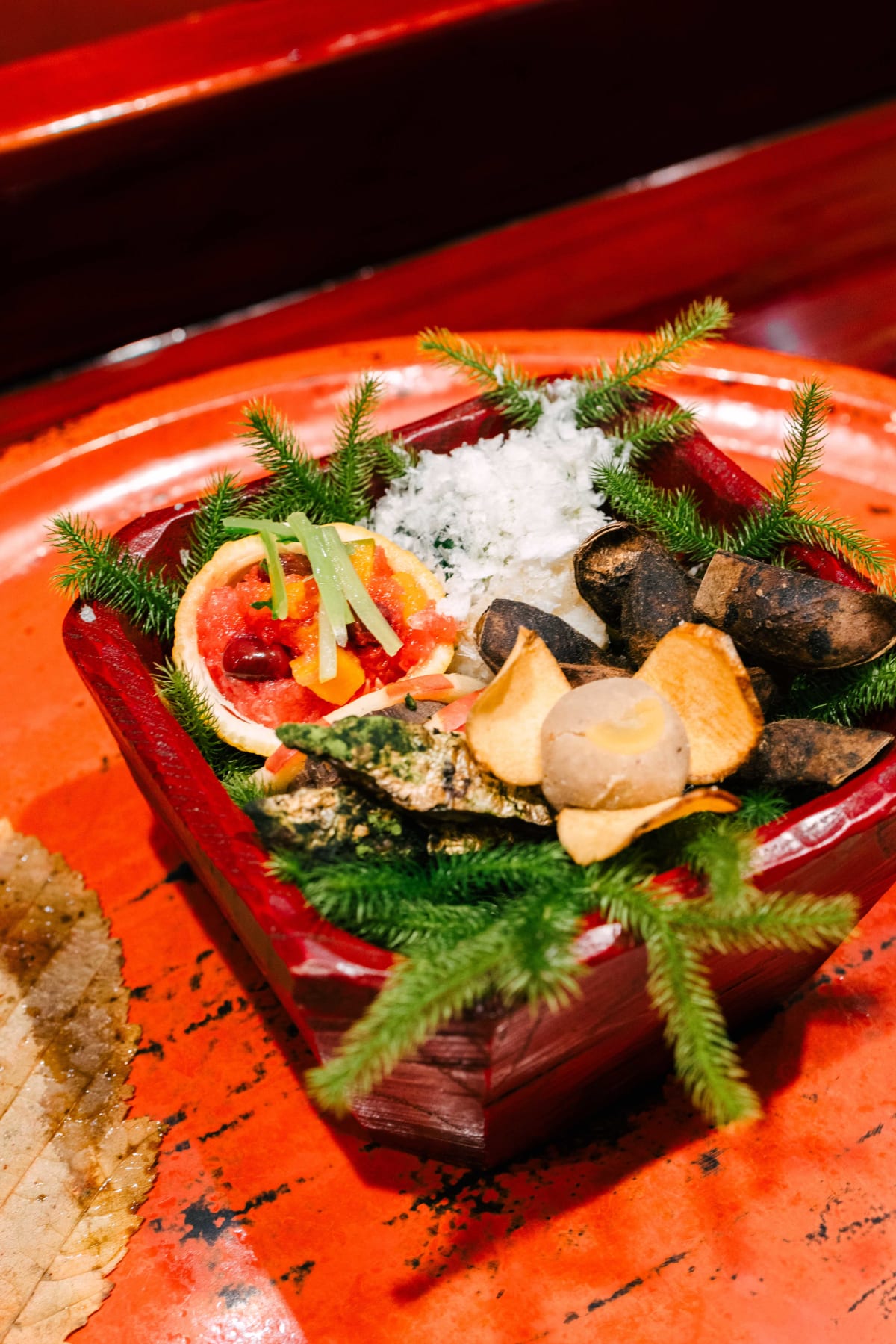
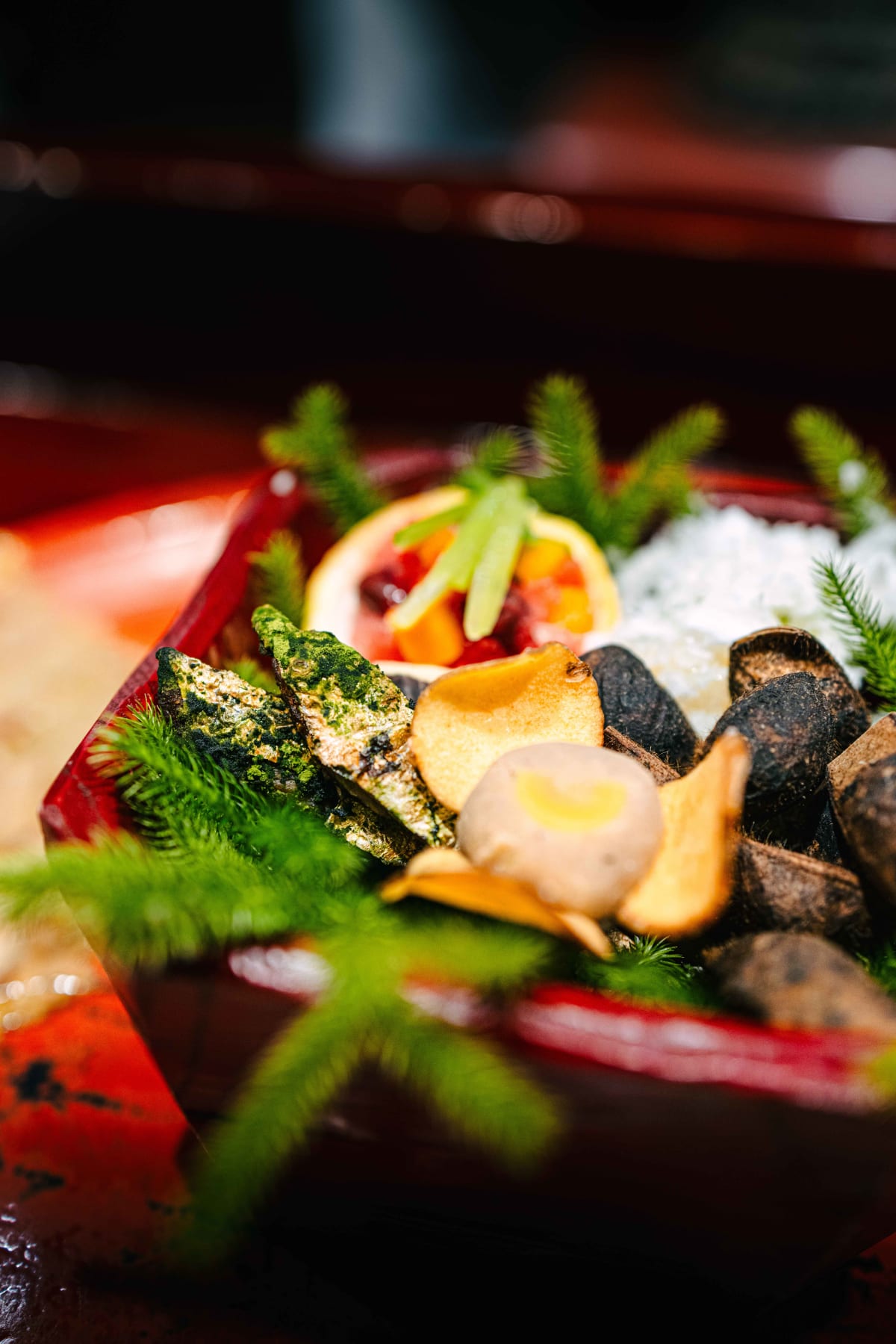
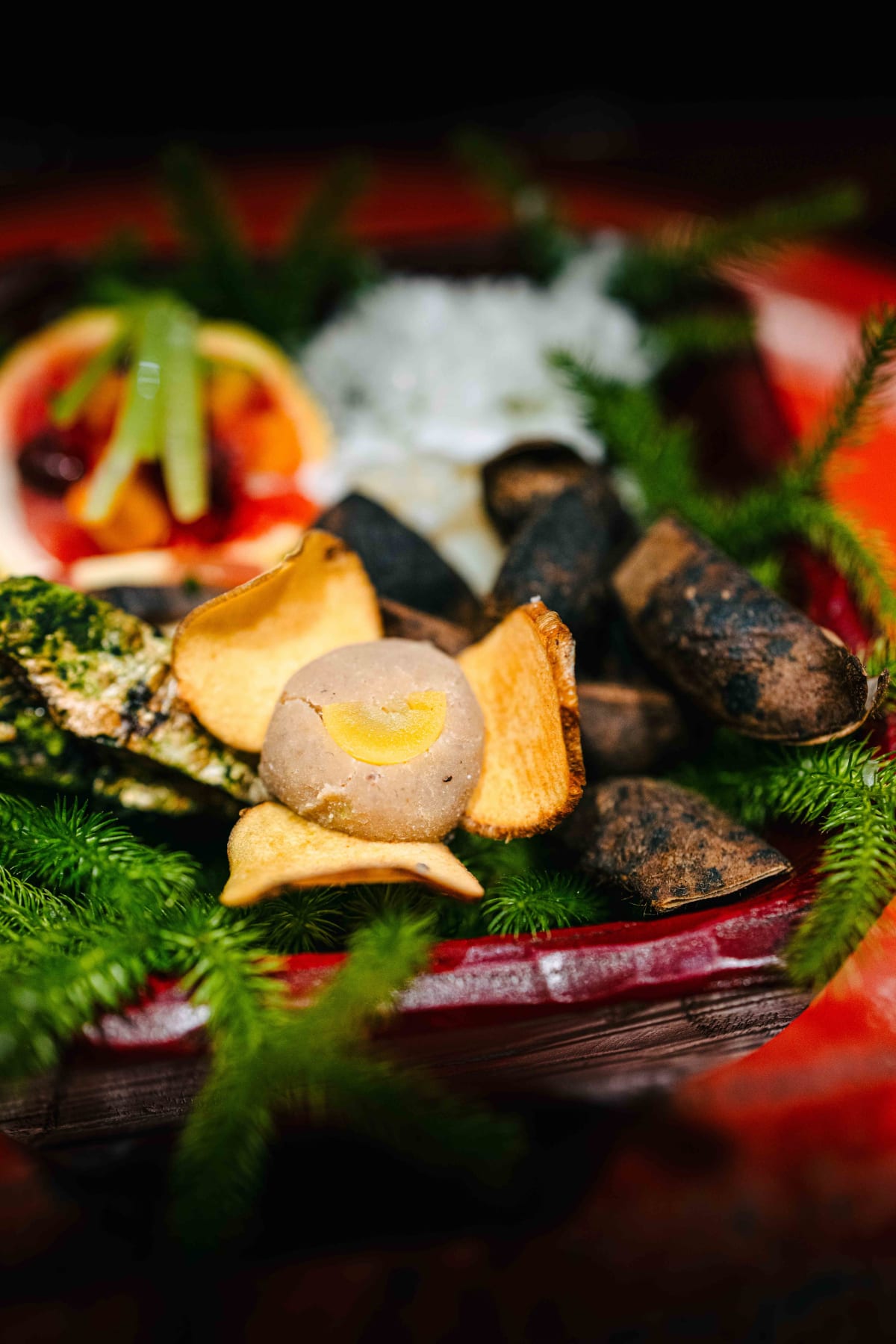
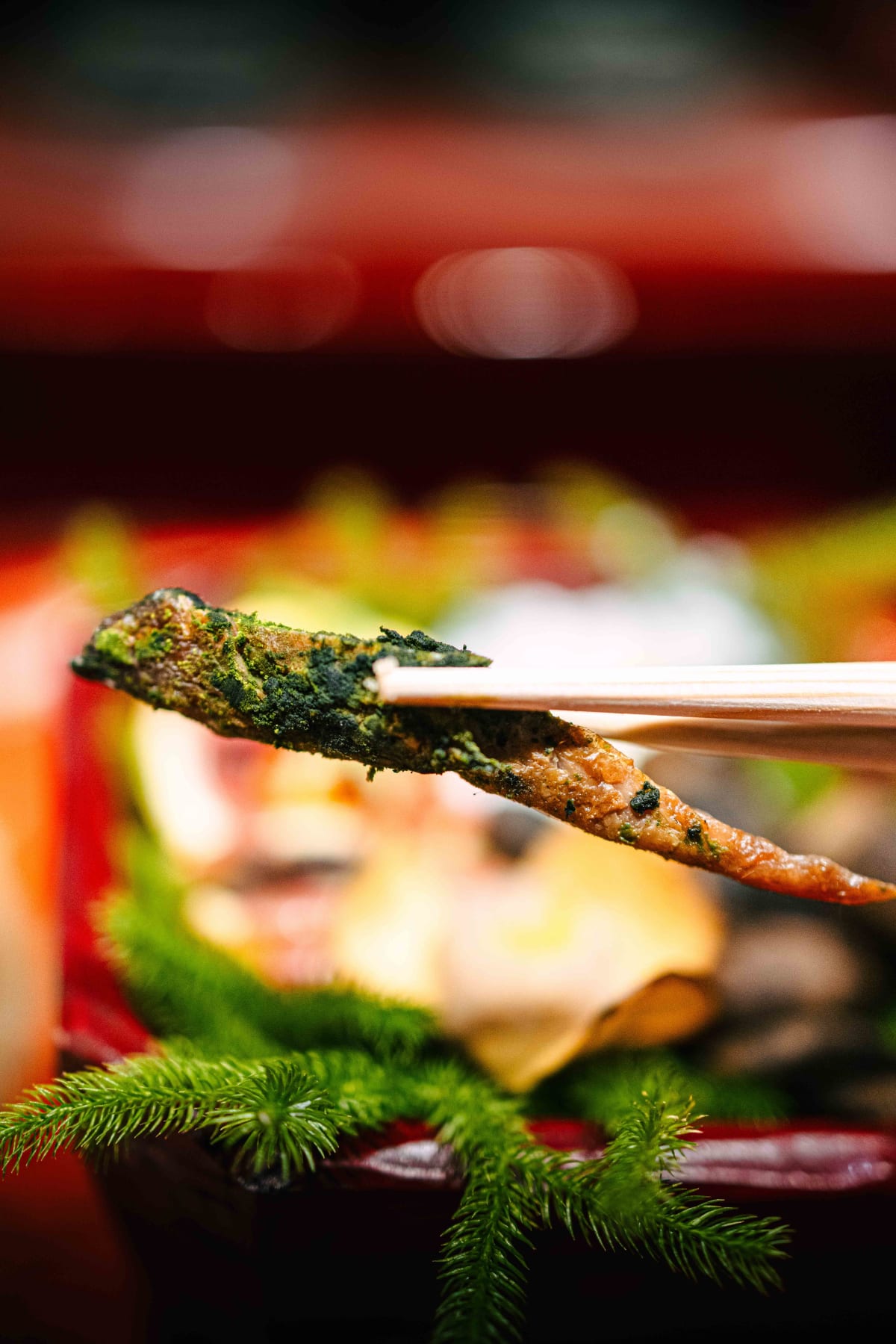
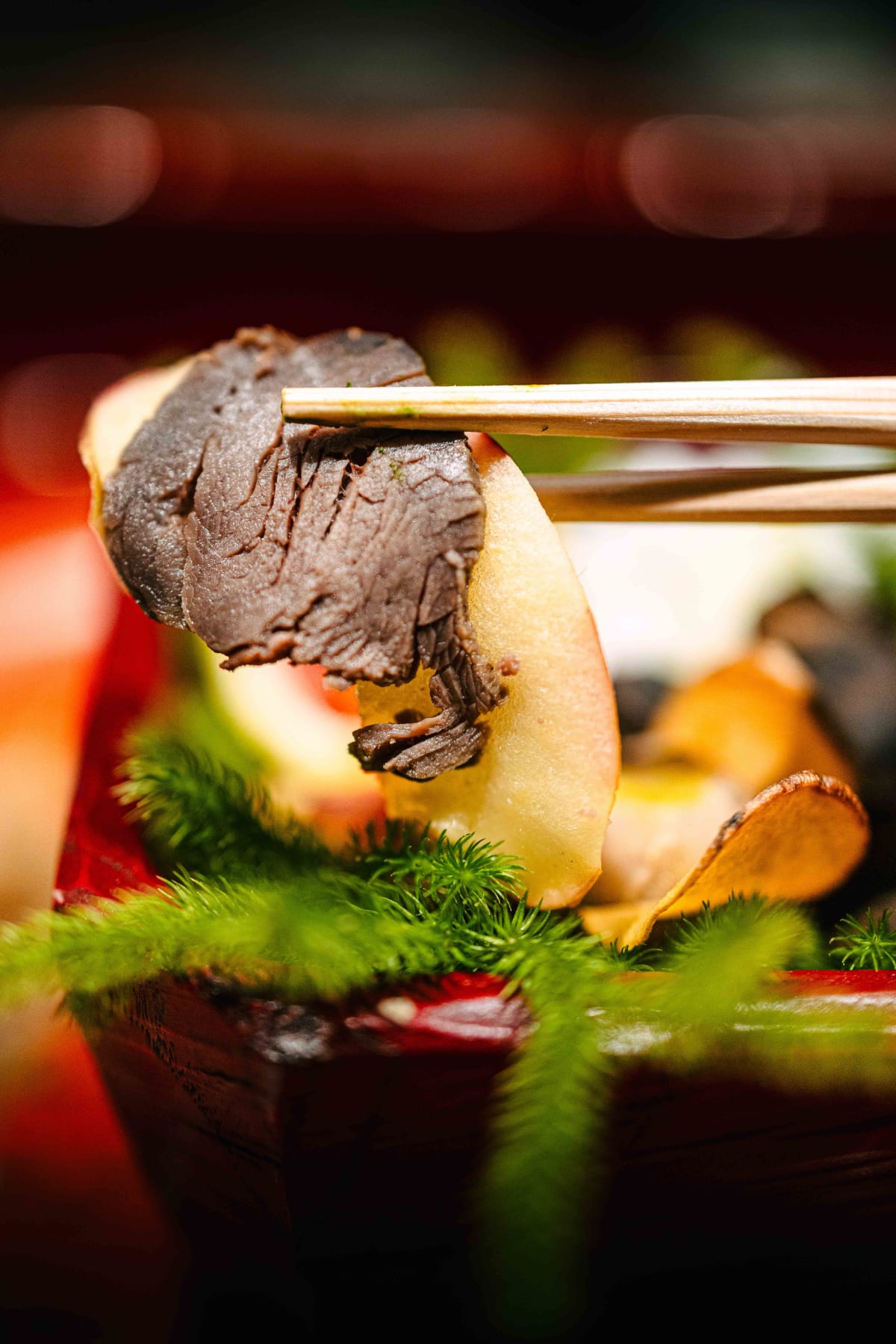
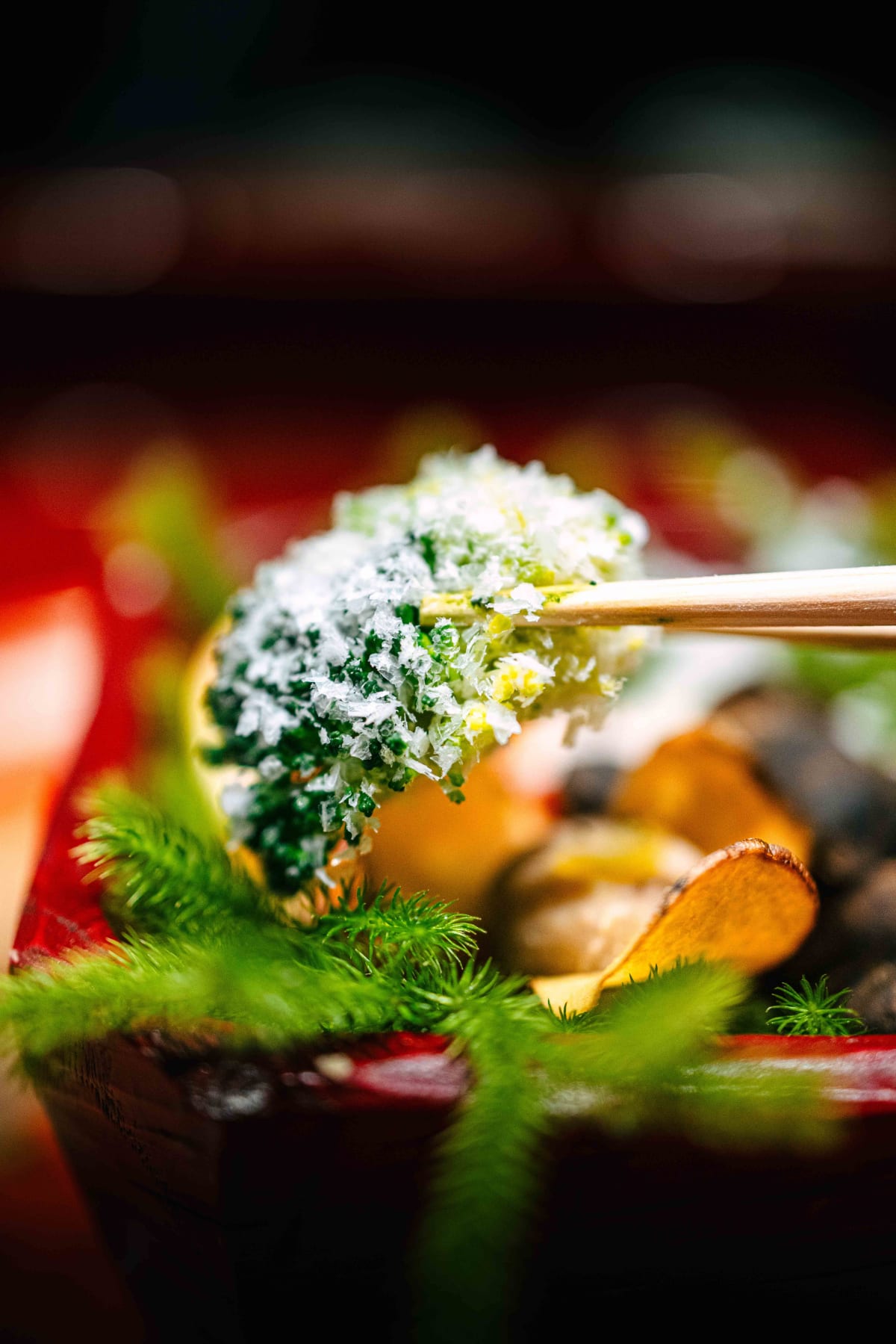
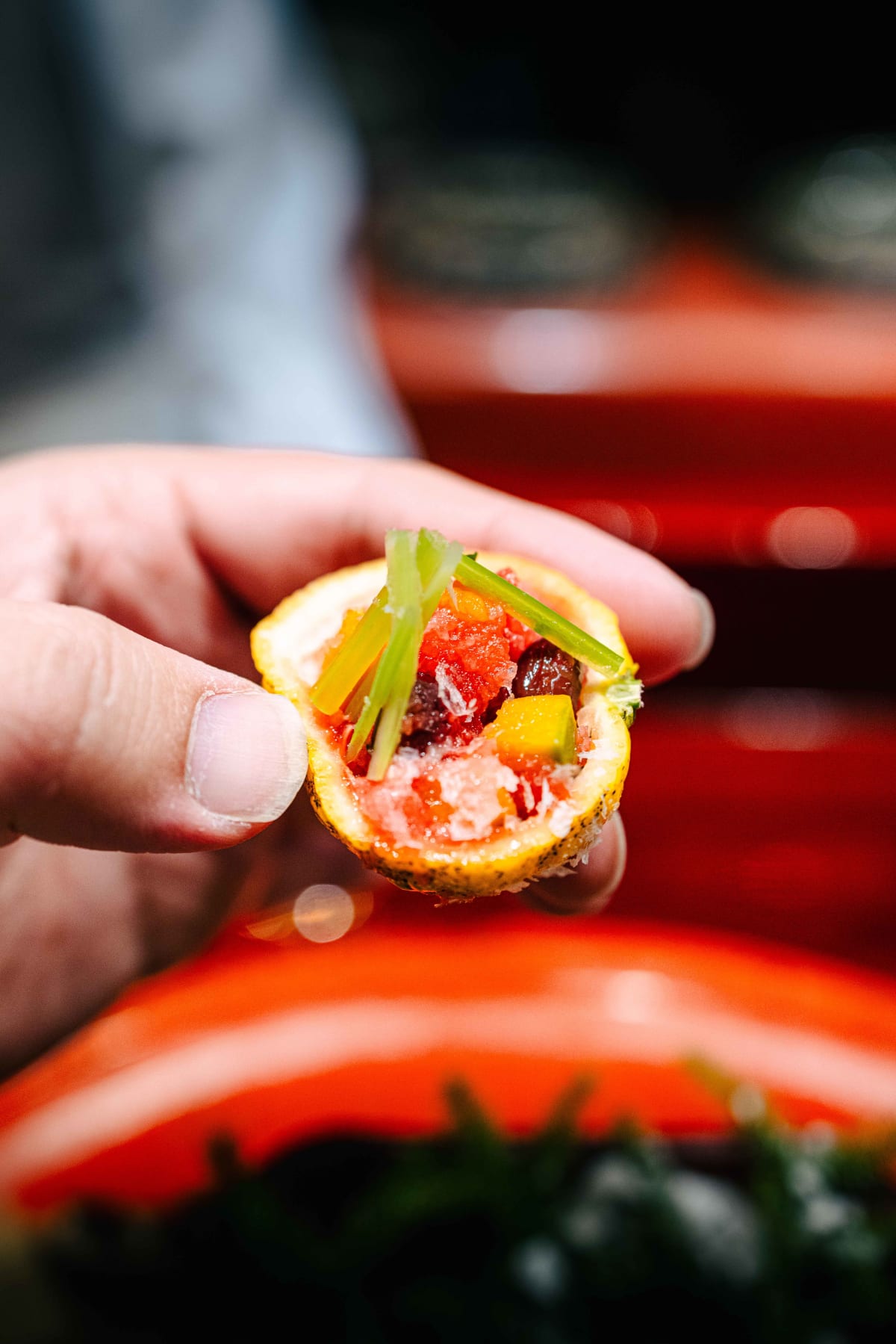
The first plate carried the name Season's Greeting. Six small compositions of seasonal ingredients arrived together on a single board, each a single bite. A grouping of red turnip and turnip stem, azuki beans, and pumpkin set inside a yuzu cup; a small pairing of grilled black beans with ajime loach; smoked venison with apple; arrowroot with ginkgo and chestnut; a single slice of katsuo (dried bonito); and a final assembly of broccoli with dried cauliflower mochi.
9—9 / 99
The impressions were not uniform across the six, as some of the ingredients were unfamiliar territory. The pieces that landed cleanly were the katsuo, which carried a faintly oily, oceanic note close to gwamegi, and the broccoli, where the bitterness had been managed more deftly than I expected, with the dried white cauliflower powder beside it filling in the aromatic frame. The most surprising pairing was the smoked venison and apple, where the sweetness of the fruit and the lean of the meat settled into a single shape with no friction.
15—15 / 99
Looking it up afterward, I found that the apple and game pairing turns up more often in Western hunting traditions than in Japanese ones, raising the suggestion that the chef had drawn that grammar inward and rephrased it in his own.
11—14 / 99
The piece that landed less clearly was the turnip on top of the yuzu cup; its slightly bitter residue arrived without an obvious point of focus, leaving the bite slightly blurred.
16—19 / 99
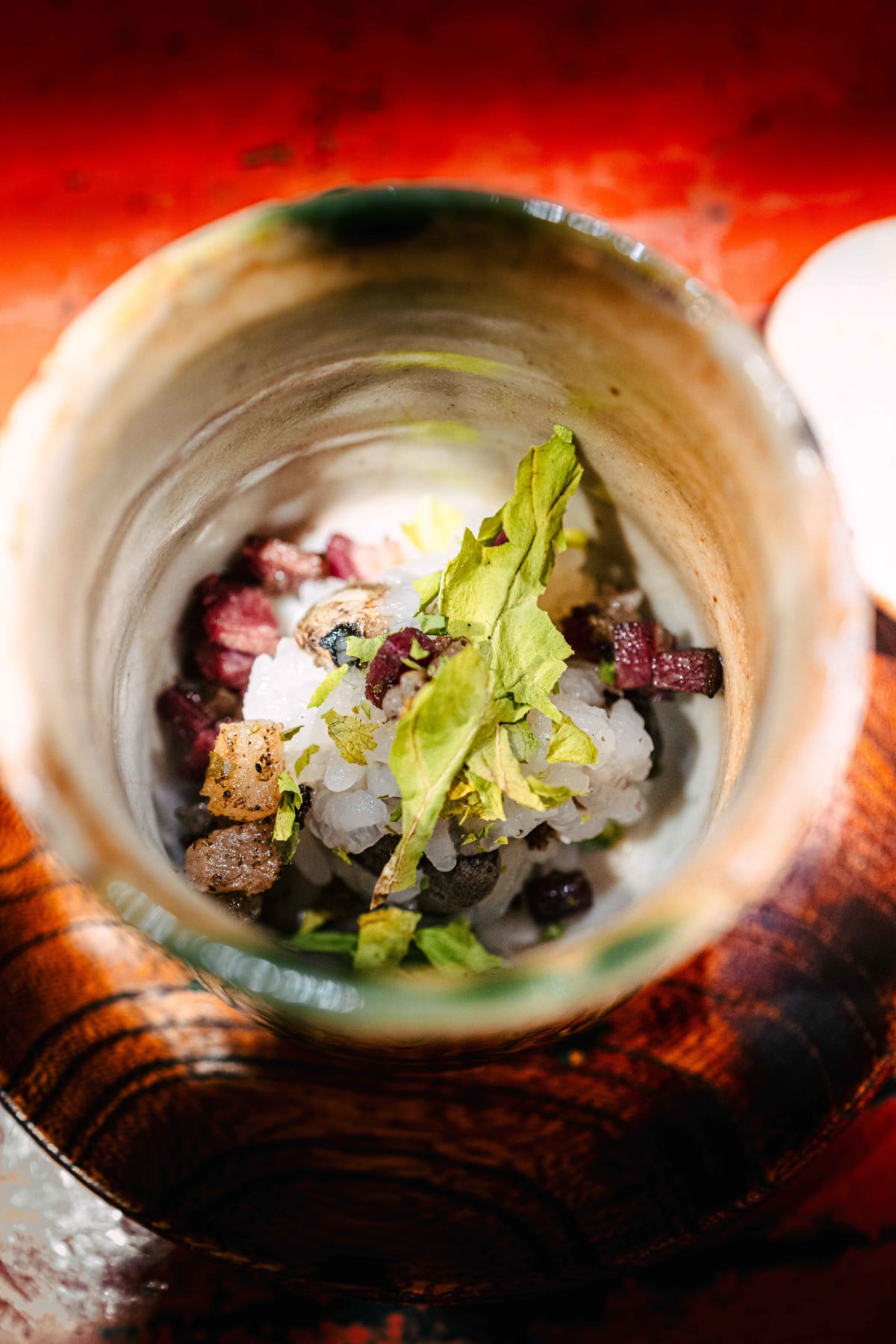
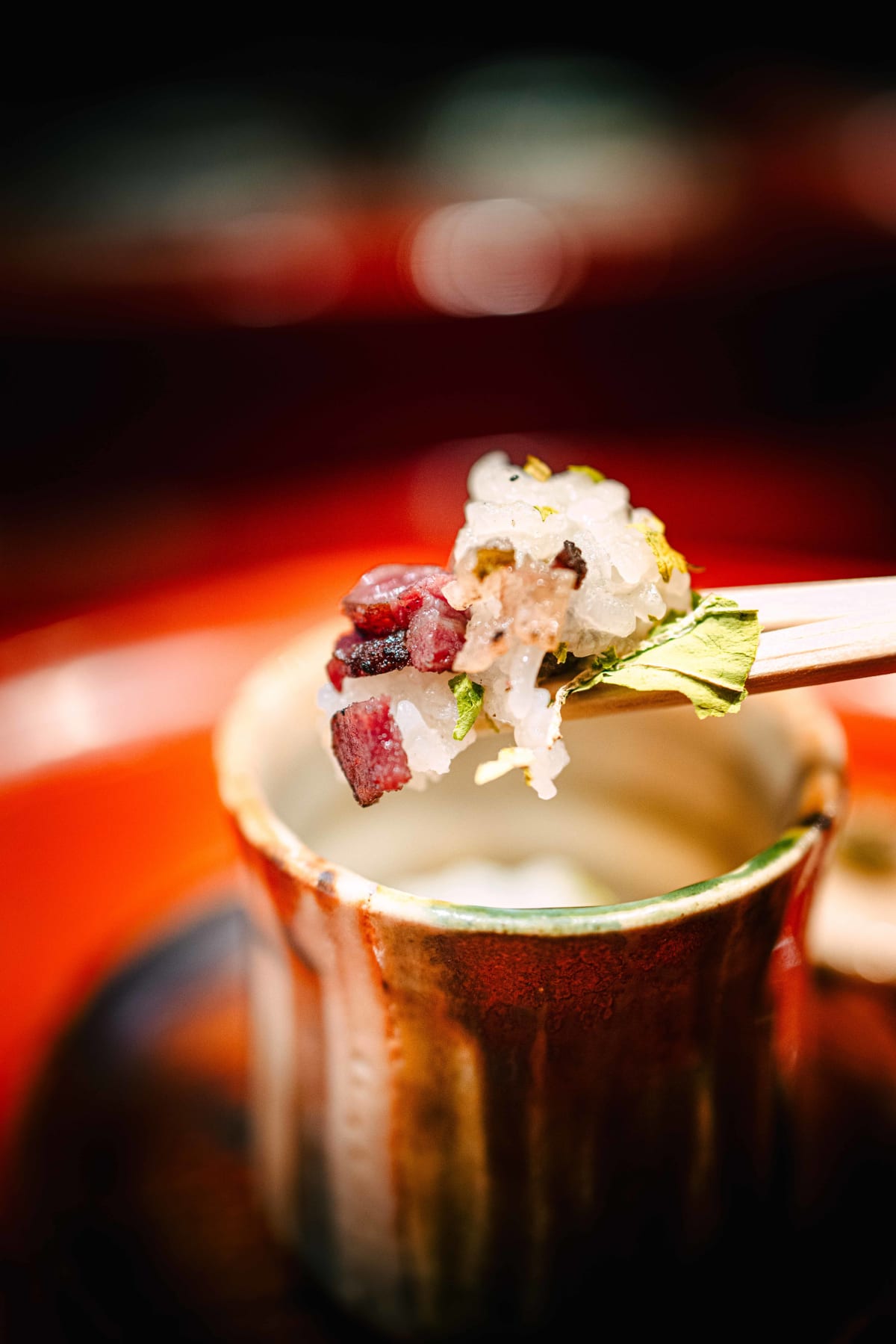
A small ceramic cup followed, formally close to chawanmushi but holding steamed glutinous rice with wild boar bacon, daikon leaves, and grilled mountain yam. The saltiness met the rice with a quiet ease, and the bacon carried so little of the gaminess one might fear from wild boar that the dish moved forward without any hesitation about its components.
21—22 / 99
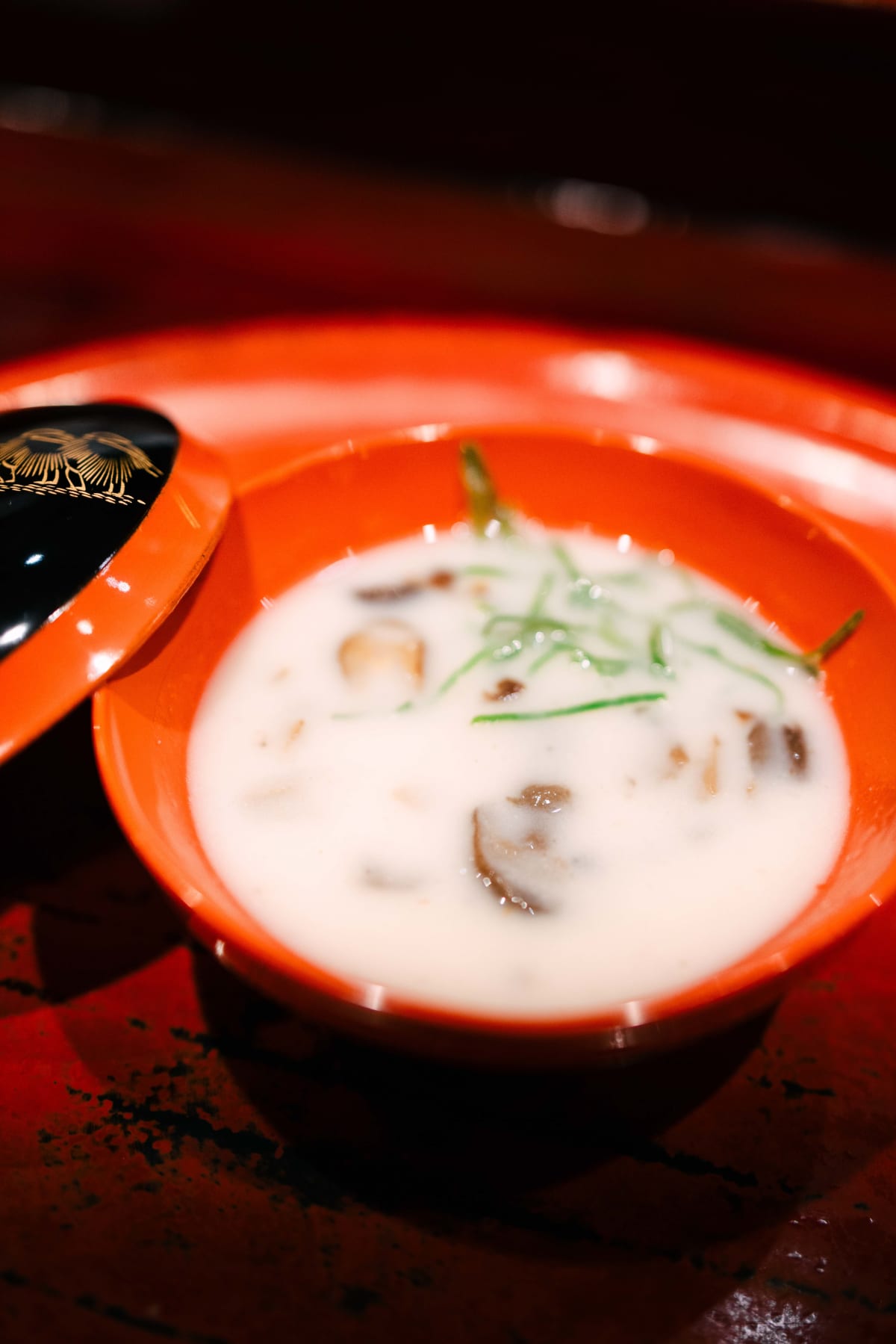
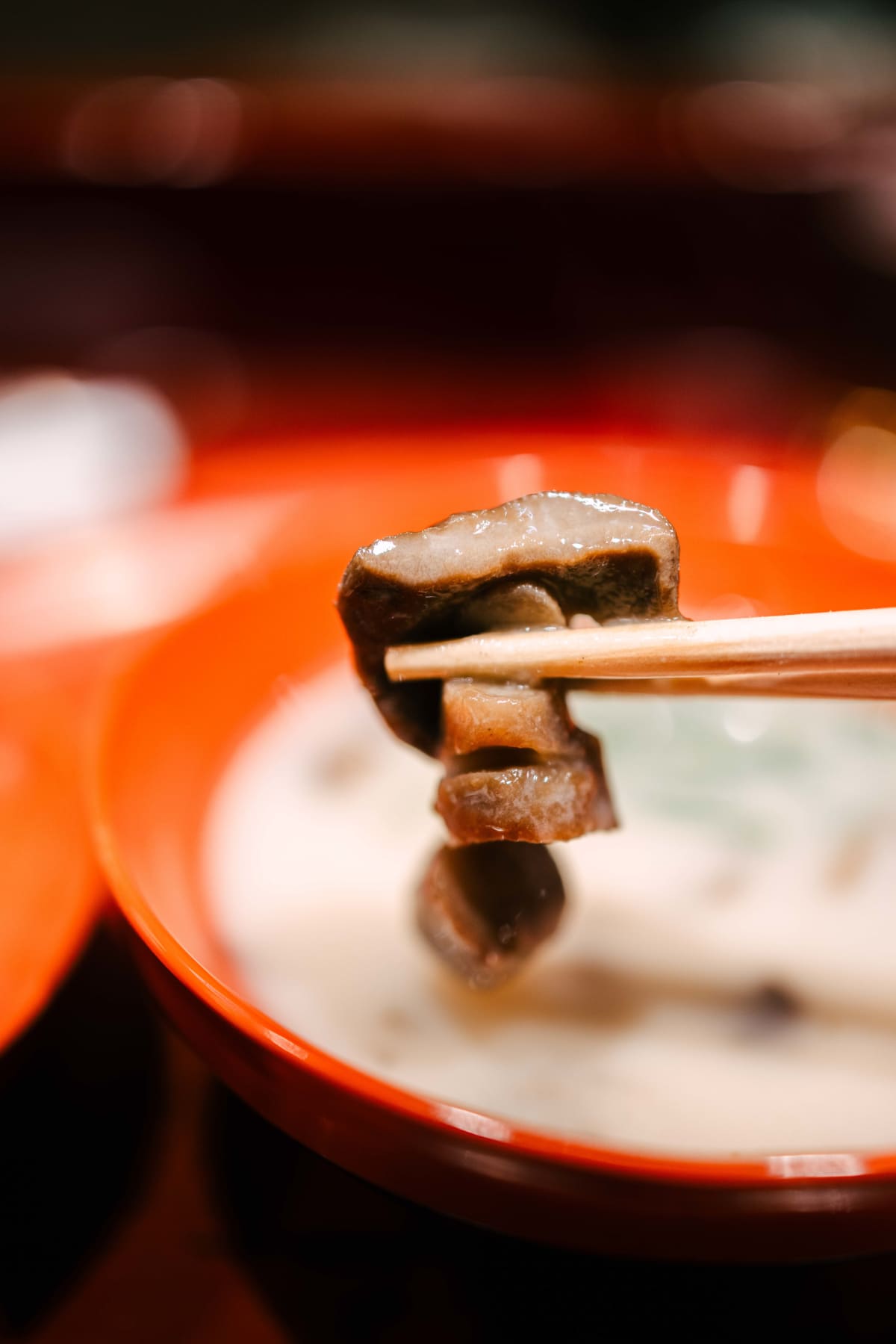
The second course was a Kyoto-style white miso soup. The color leaned almost ivory, with several kinds of mushroom suspended throughout, but for a Korean palate the sweetness ran more pronounced than I could easily settle into. What I had expected from a miso soup as a category, that umami-led balance, was overridden here by a forward sweetness, and I did not finish the bowl.
23—24 / 99
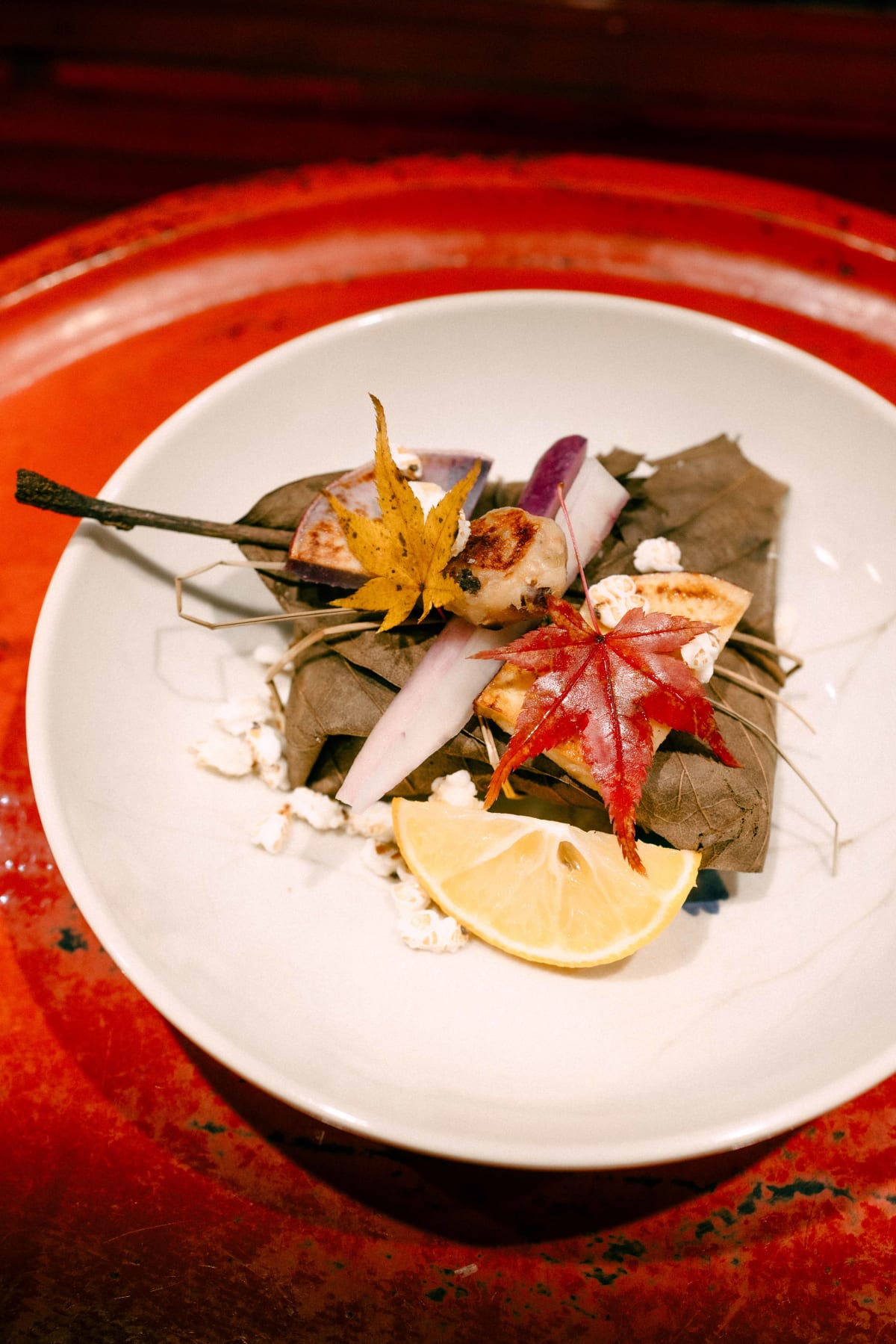
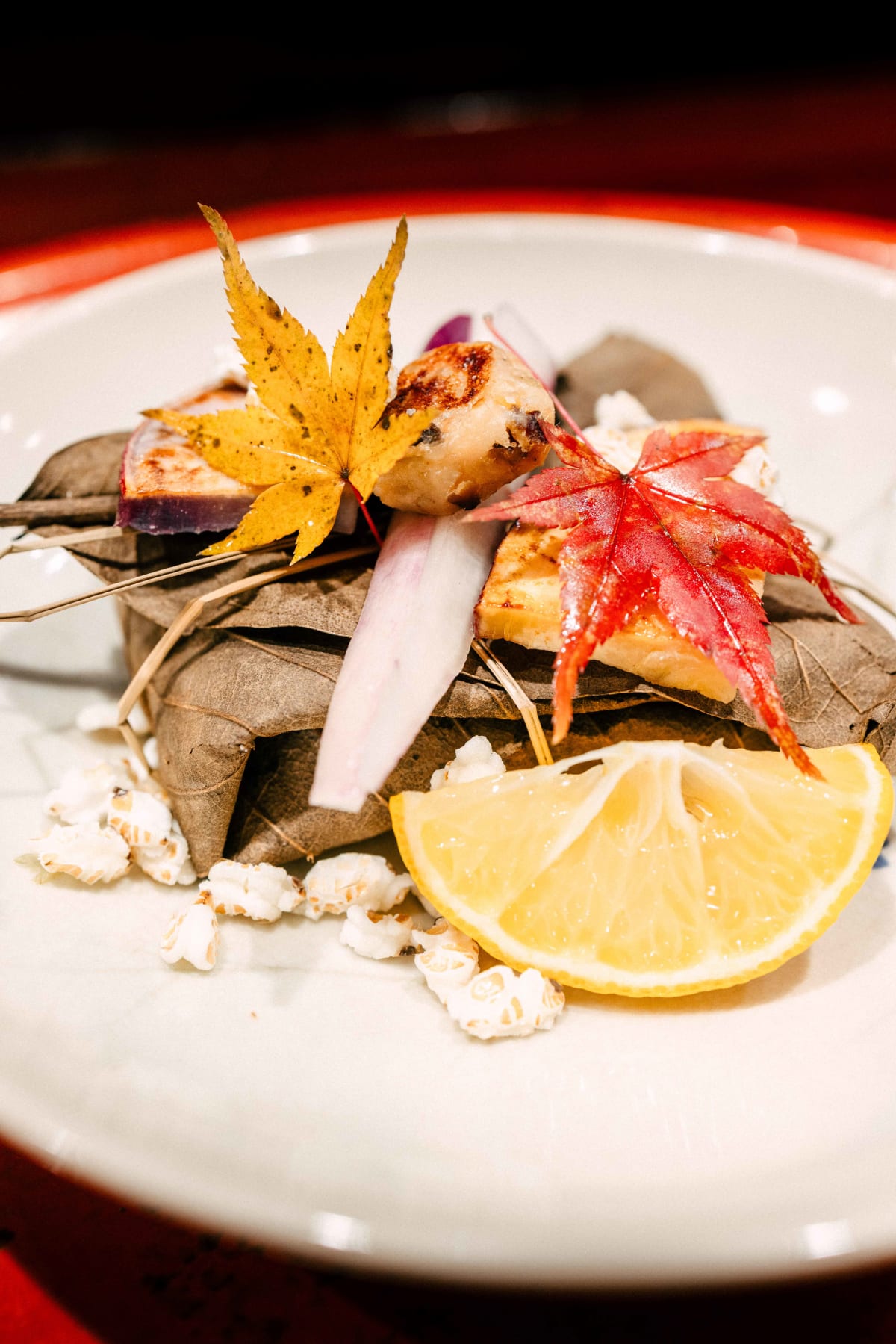
The third course arrived wrapped in a large brown hoba leaf, the magnolia leaf whose color carries the depth of late autumn so directly that the visual itself took a beat of the meal's time.
27—28 / 99
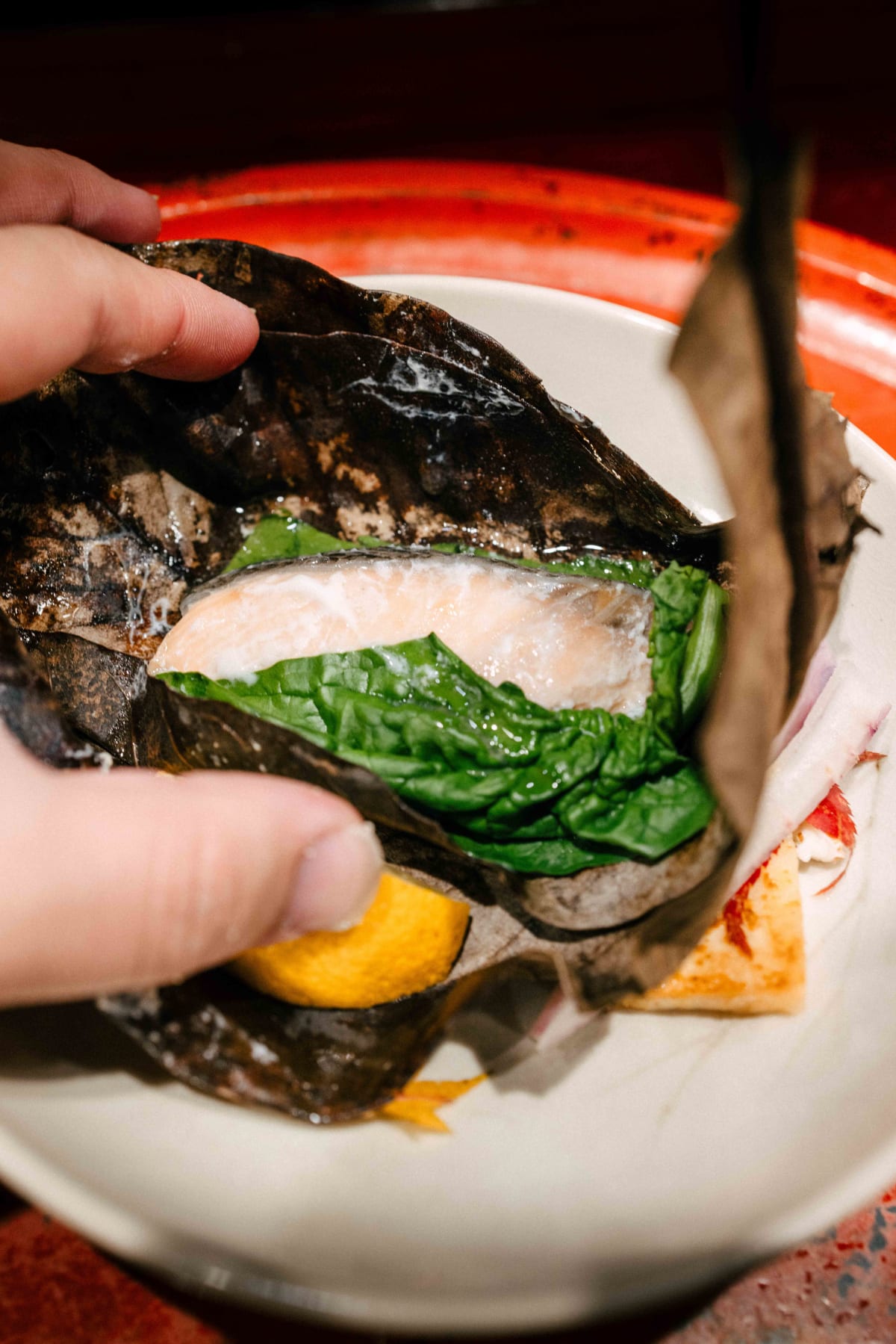
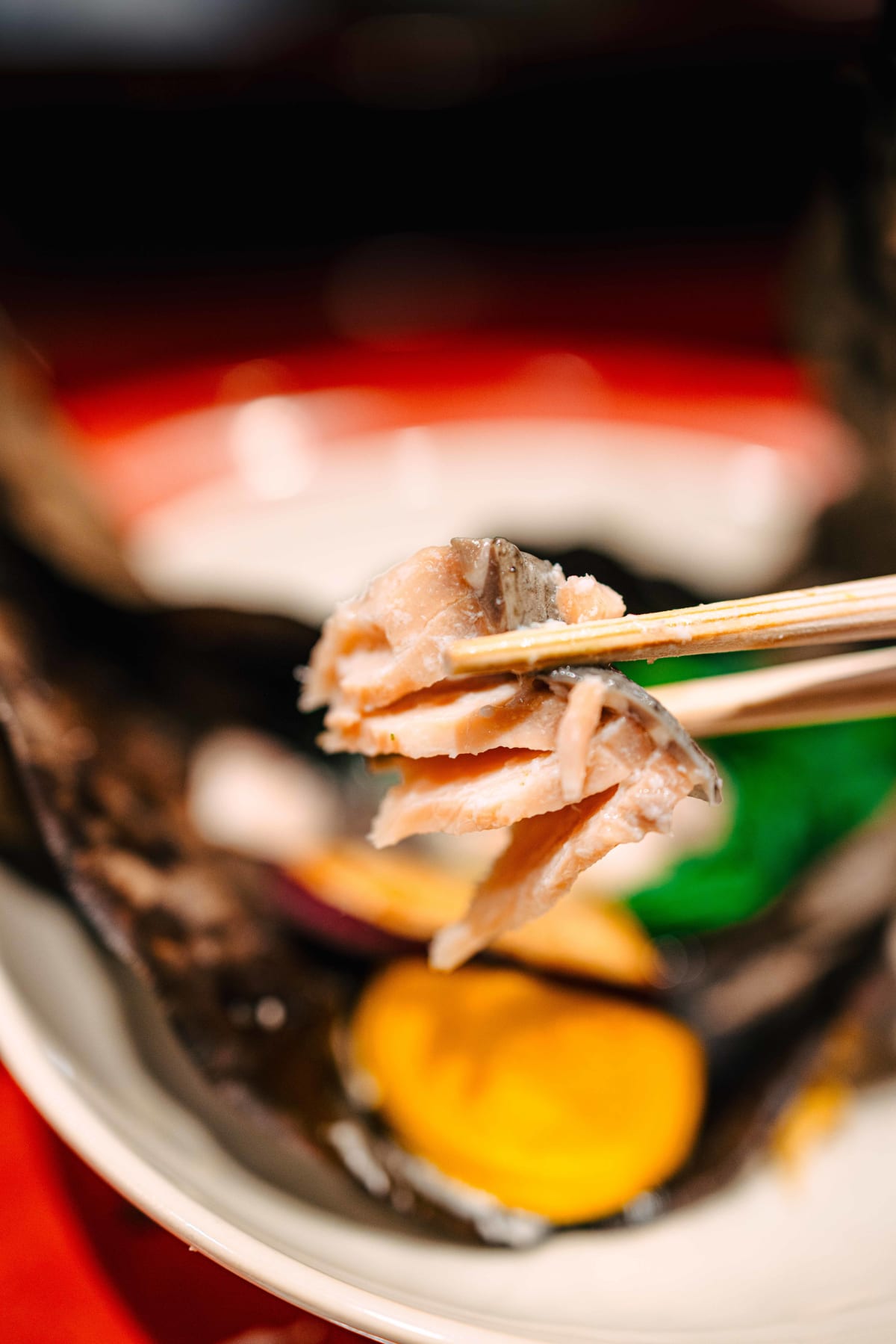
Inside the leaf sat a salmon cured in sake lees, topped with sweet potato, turnip, and green tangerine. Stalls in Kyoto's markets and depachika almost always include cured salmon on their pickle counters, and meeting that display piece as a course on a formal tasting menu was a first.
29—32 / 99
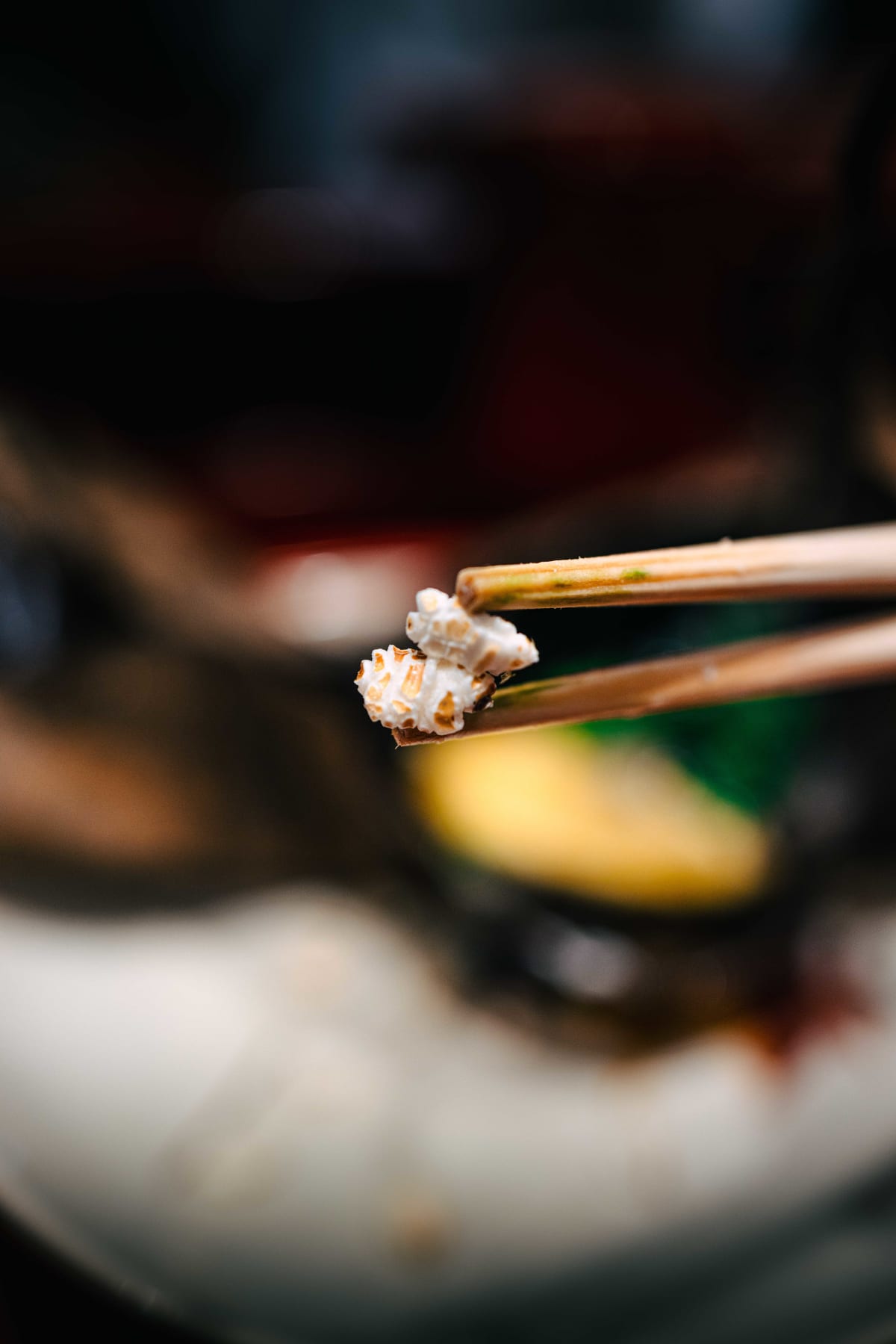
The sake aroma laid down in a steady layer, the salmon's own character holding its position above it without being overtaken, and a squeeze of sudachi added the small lift of acidity that settled the balance. Paired with a glass of sake, the dish also showed the clear contours of a drinking course.
31—31 / 99
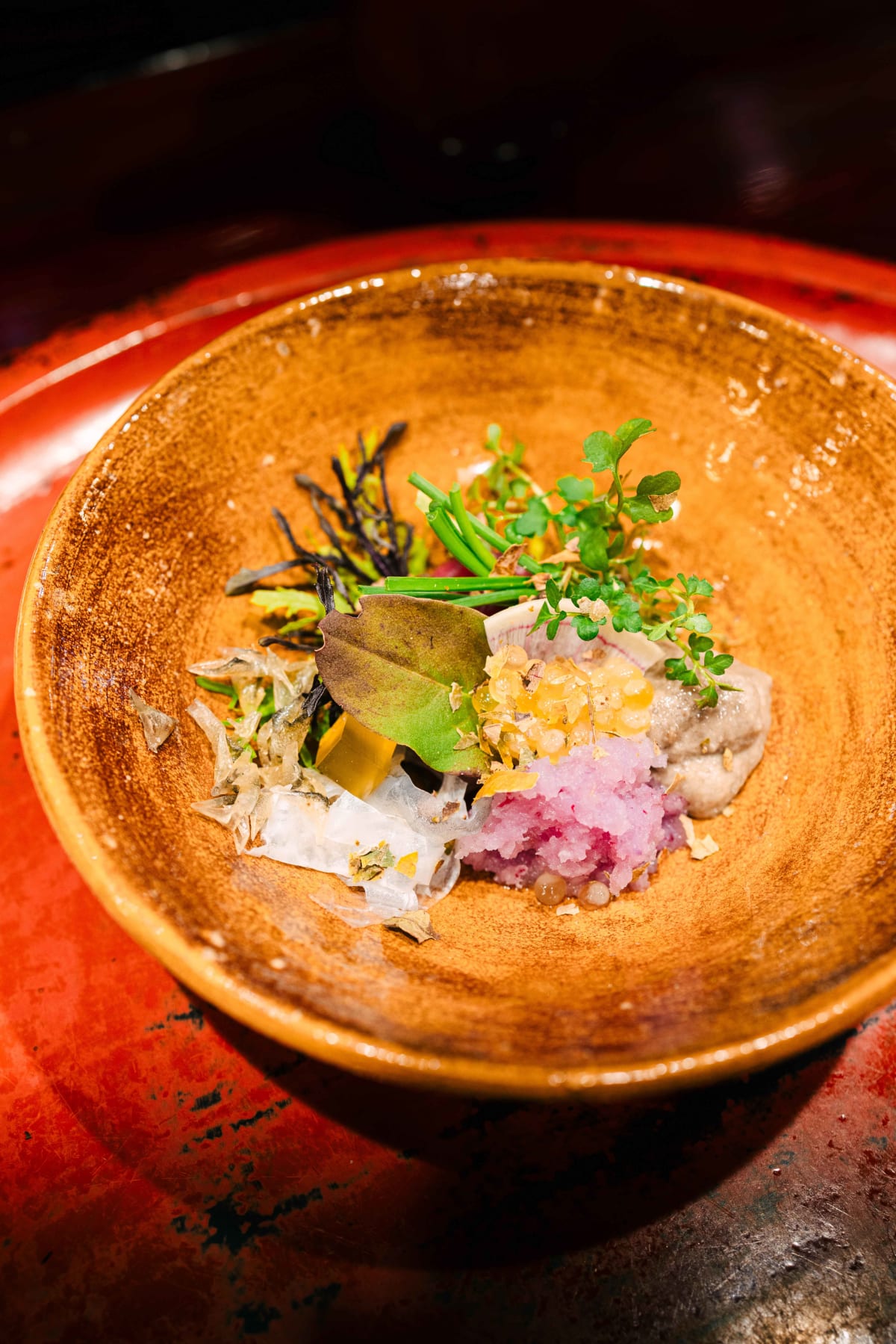
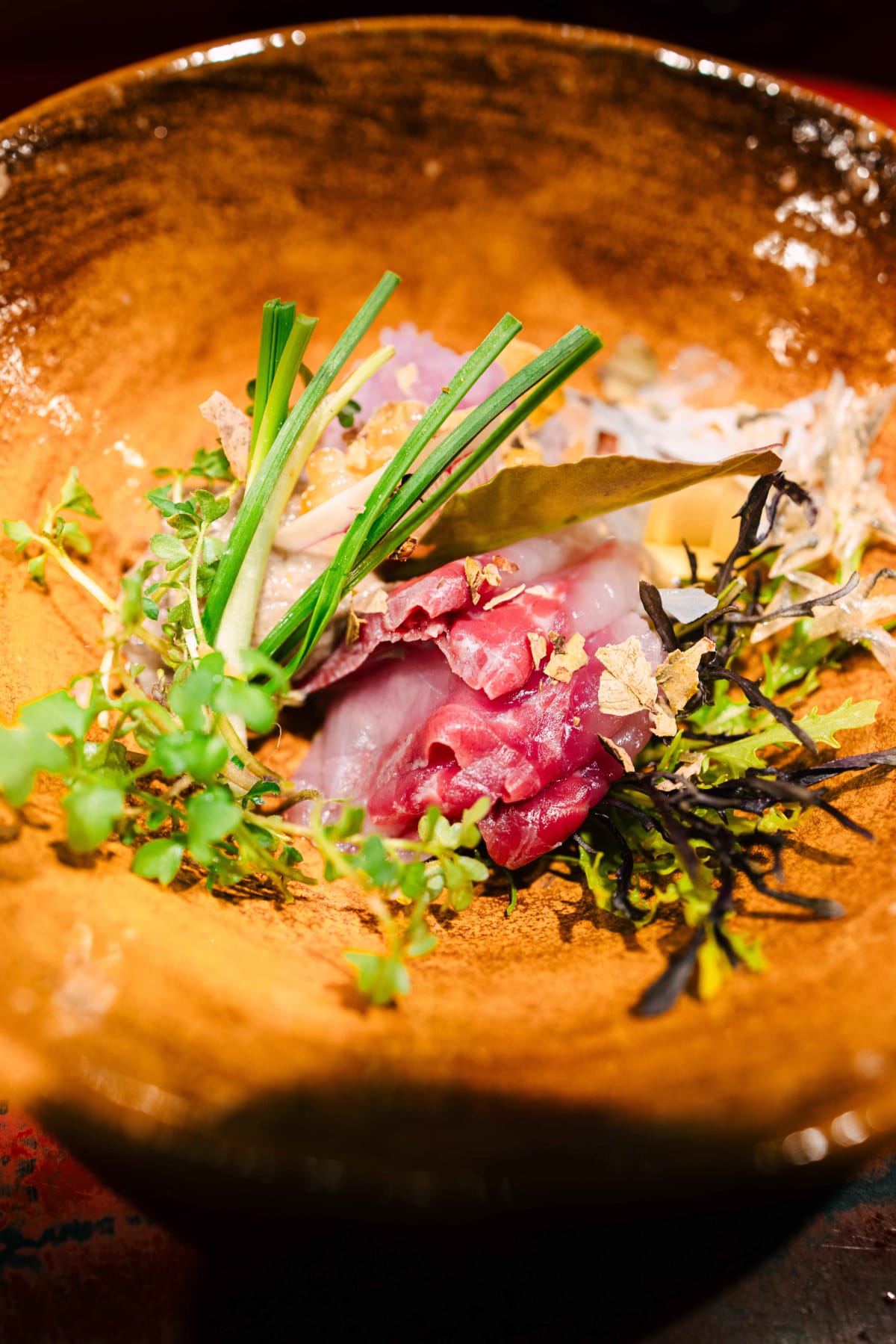
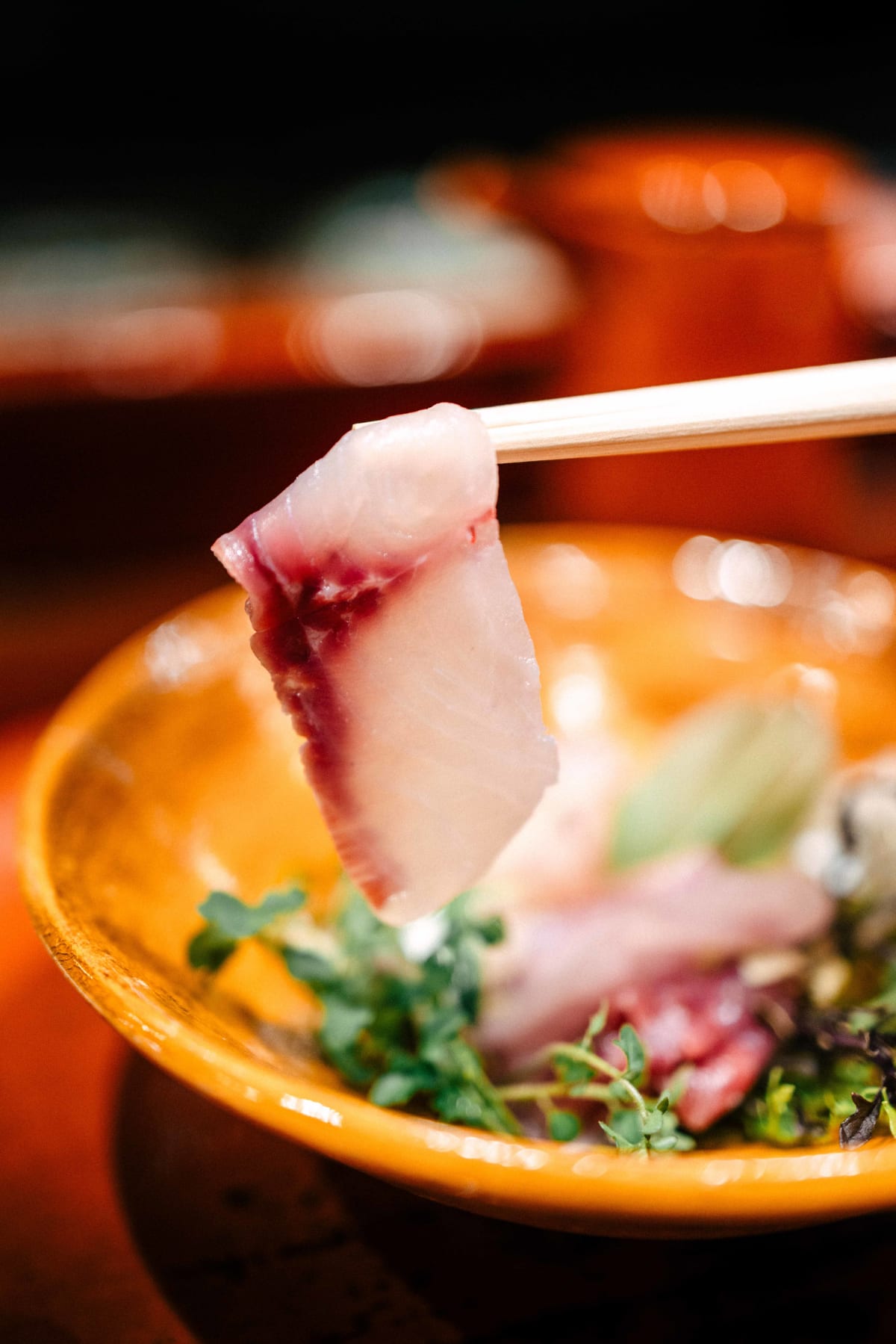
The fourth course, Carp in the Winter Garden, brought together carp sashimi, carp skin, and trout roe, set alongside turnip, wasabi, and daikon stem.
35—35 / 99
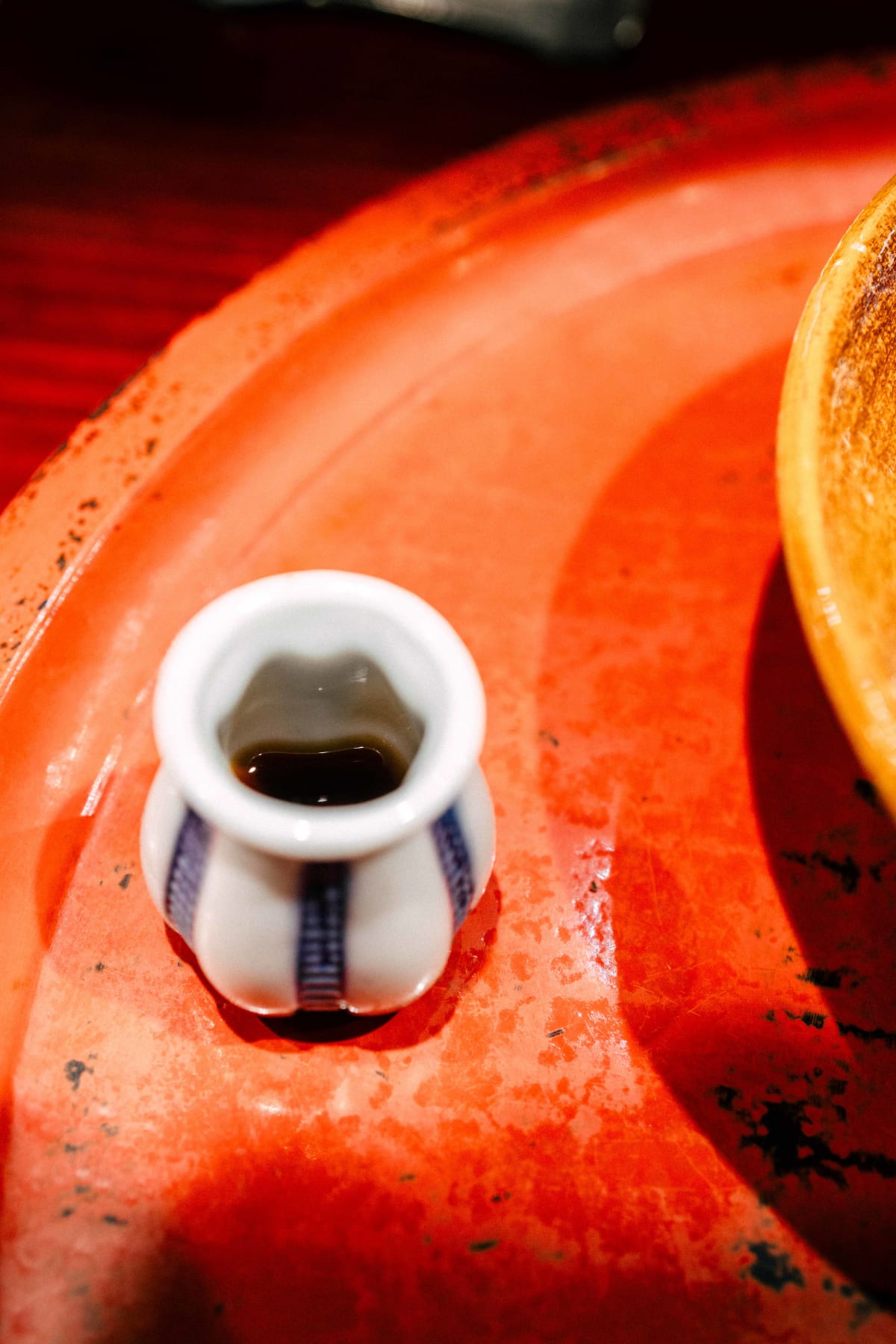
Freshwater fish often carry a soil note that keeps them at a distance from ordinary sashimi, but here the carp had been cleaned thoroughly enough to move in the register of regular raw fish. The texture held its firmness, and eating it slowly with soy and the surrounding vegetables, the small gastronomic curiosity of taking carp seriously at a formal table was satisfied alongside it.
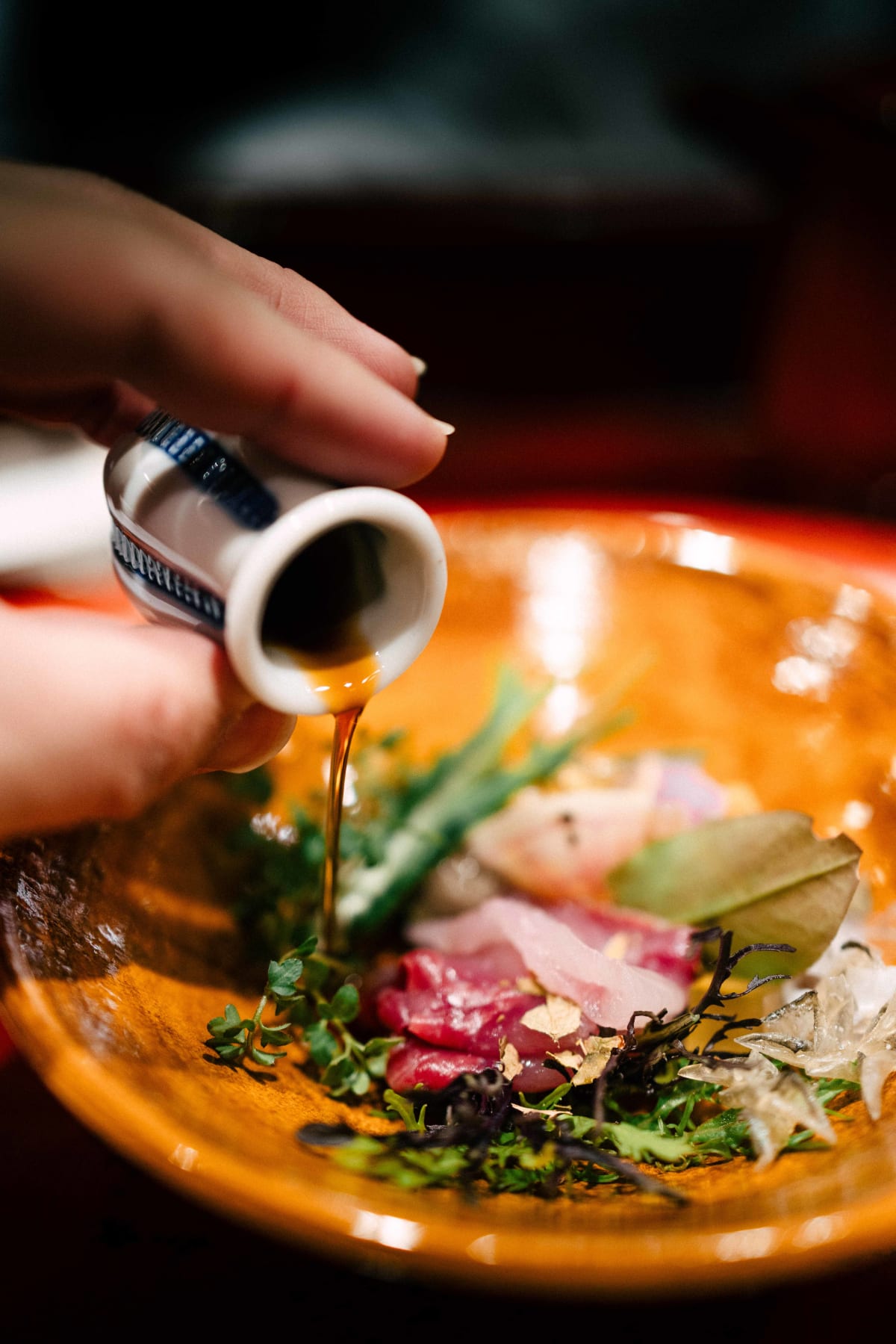
36—39 / 99
One element pulled against the rest. The carp skin itself was tough, and arriving in the middle of the otherwise smooth flow of the plate, the skin pushed past unusual texture into genuine discomfort.
25—26 / 99
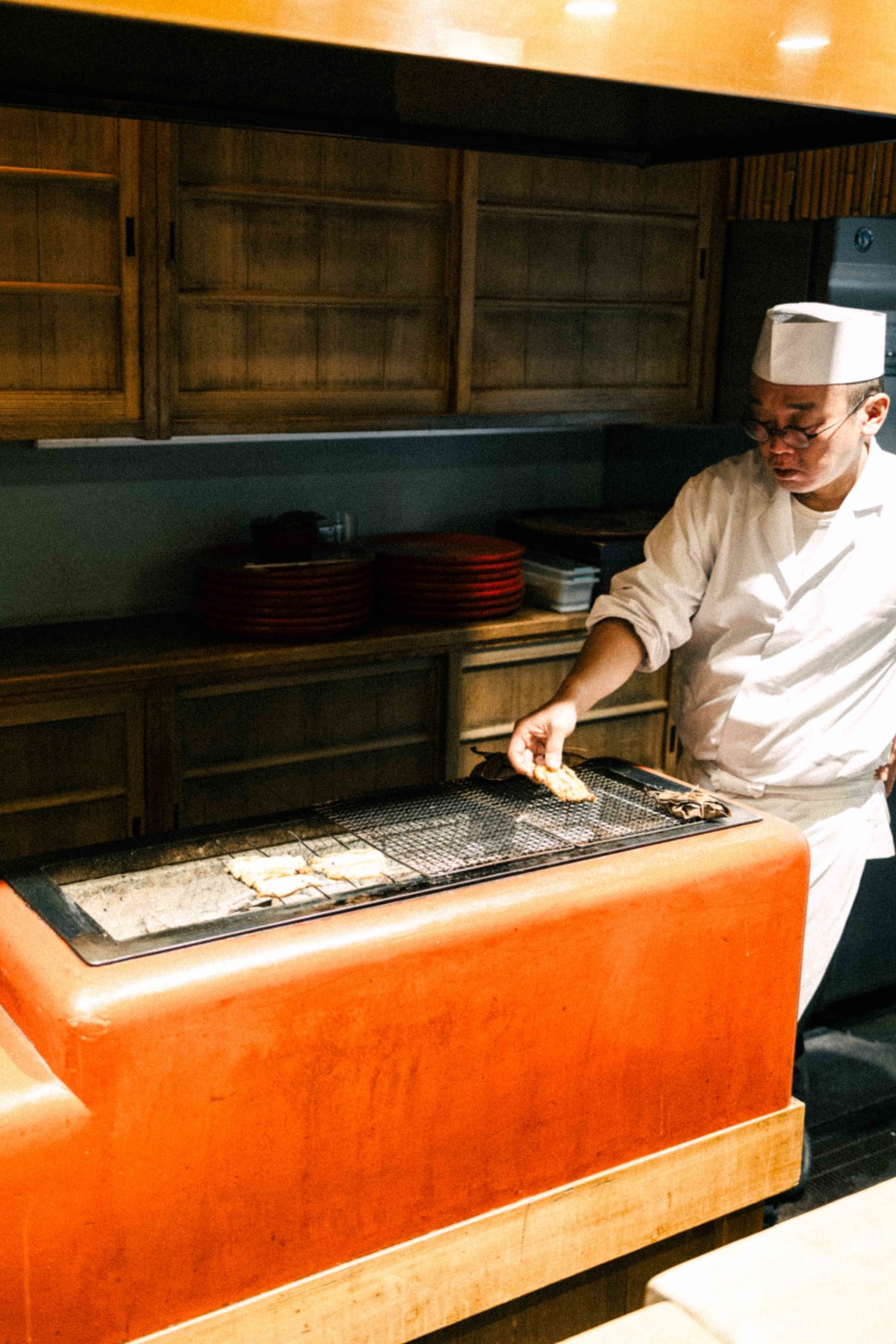
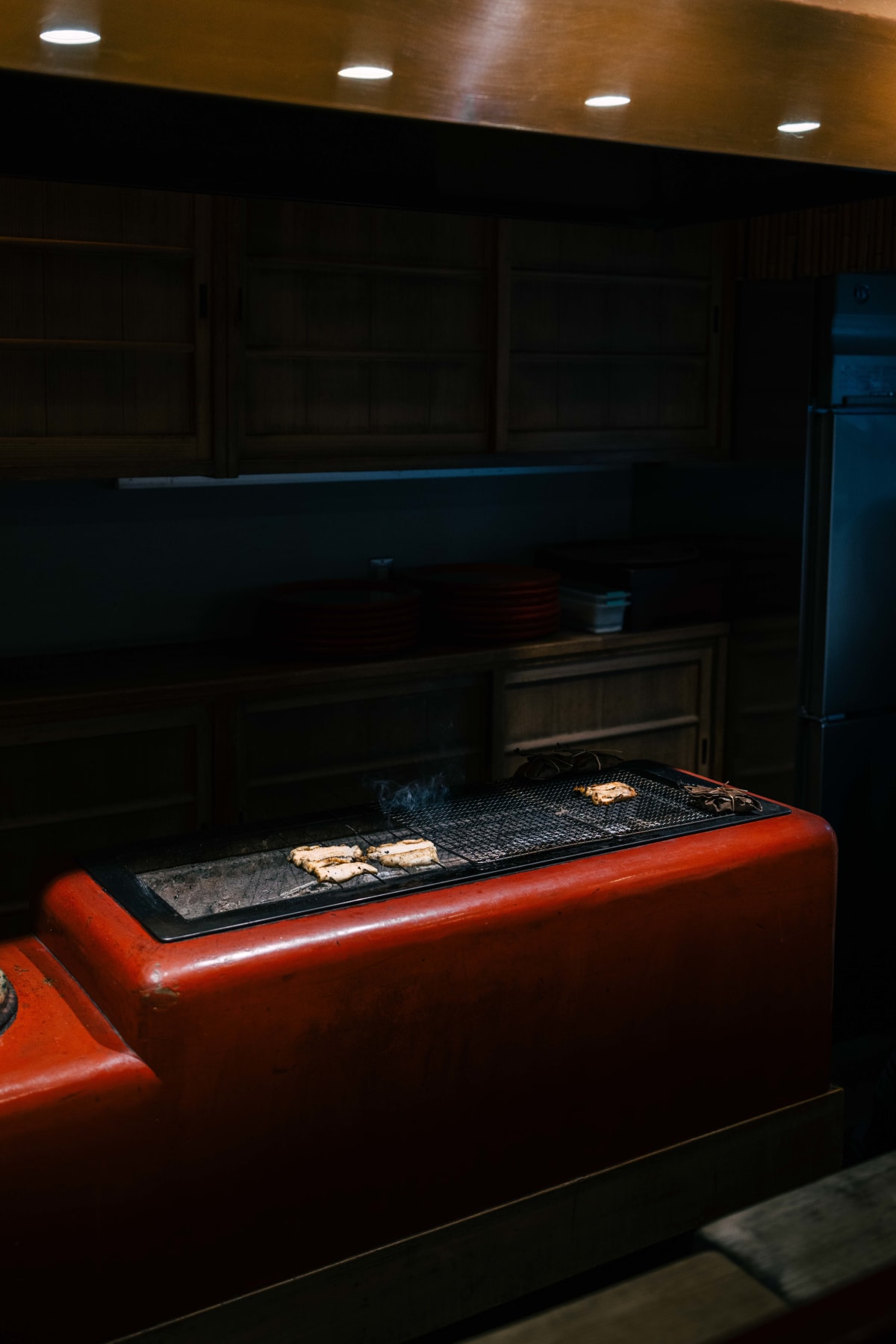
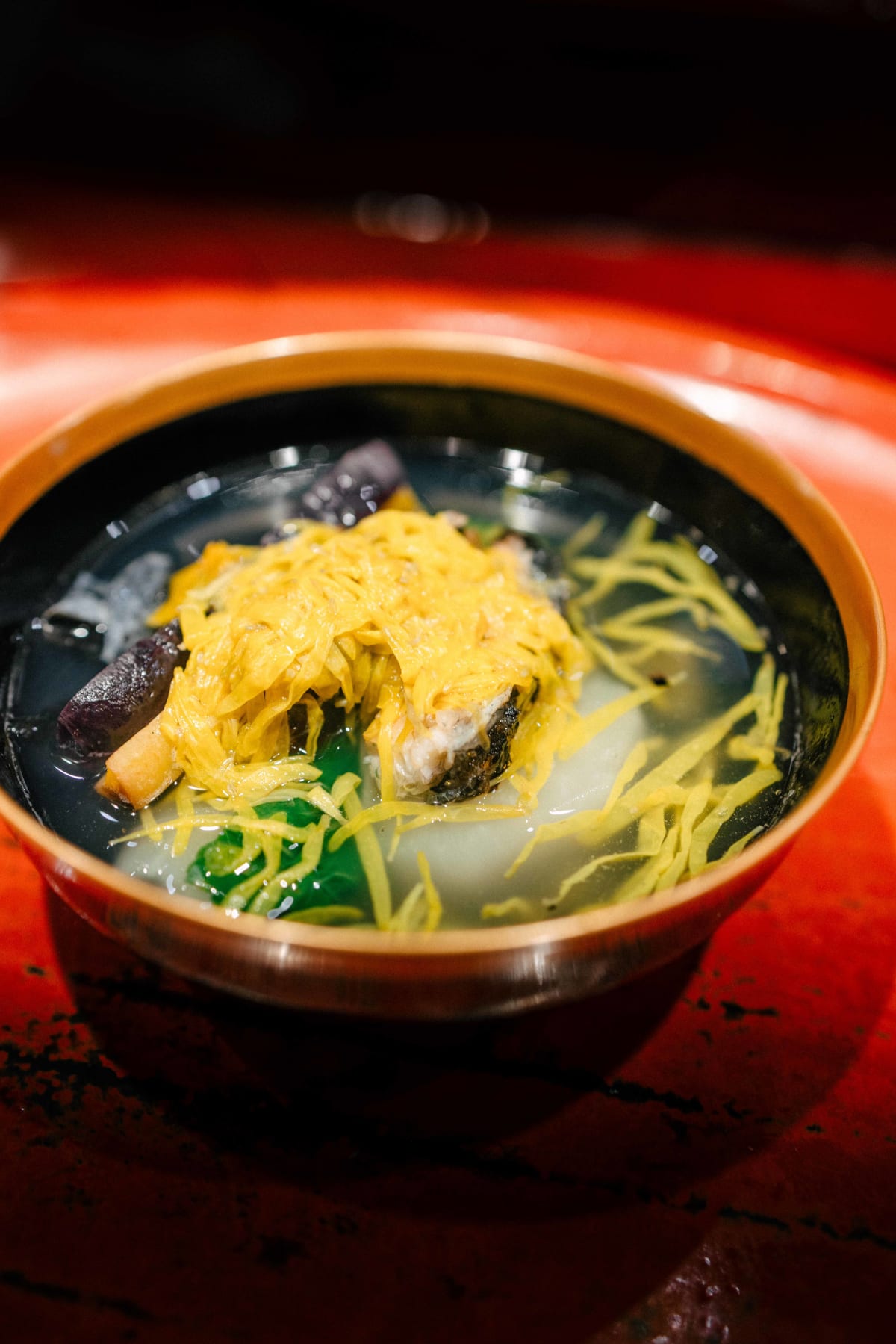
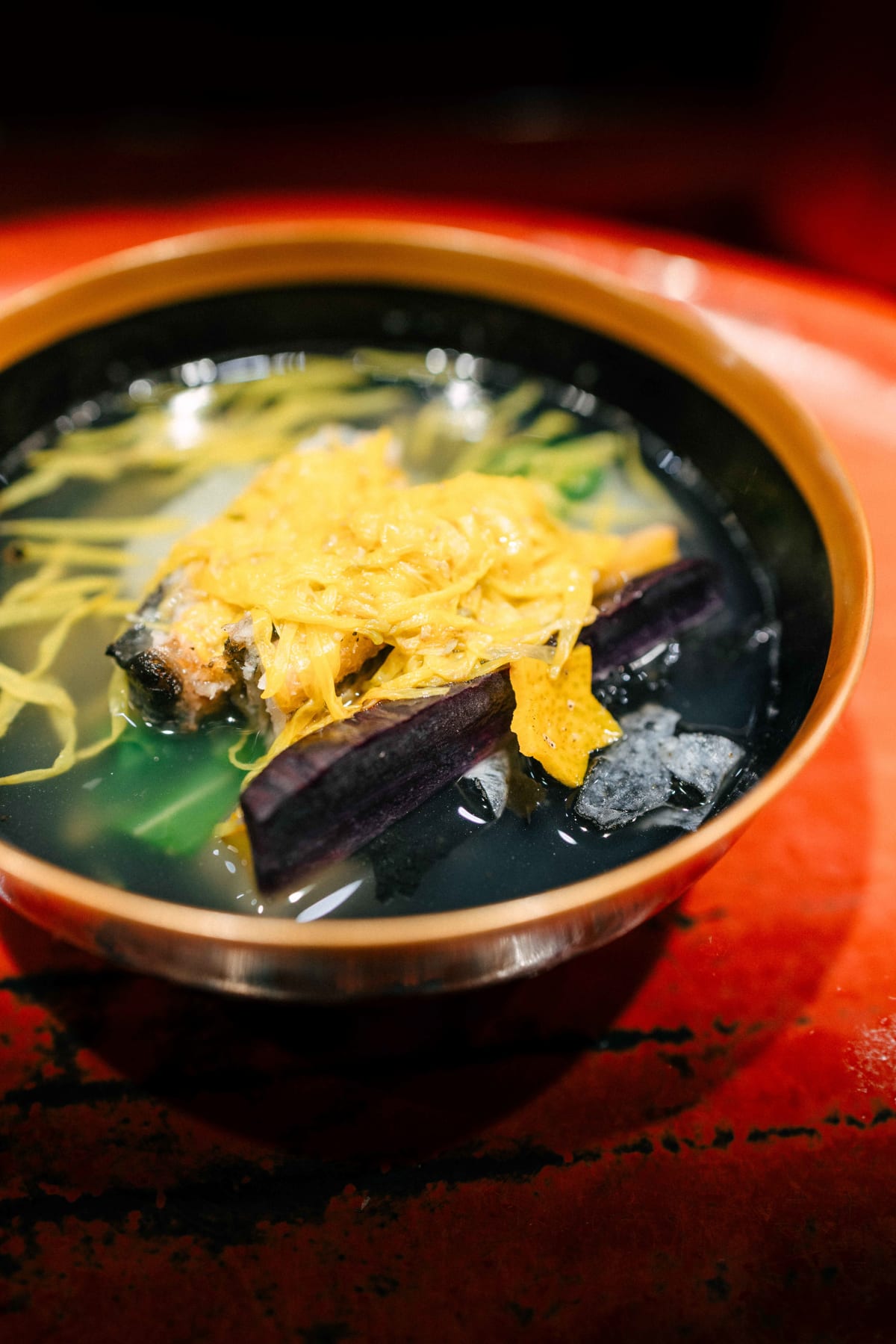
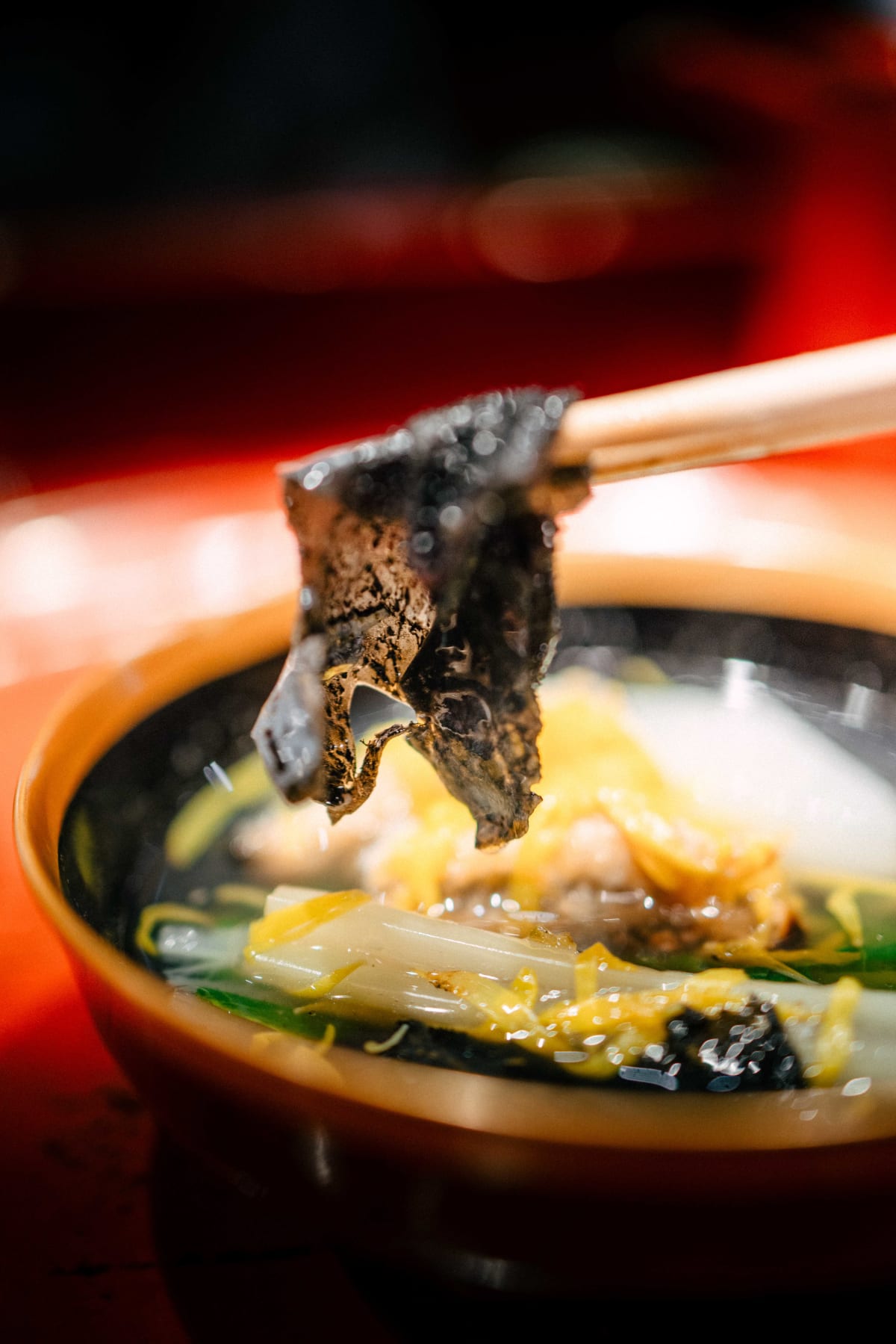
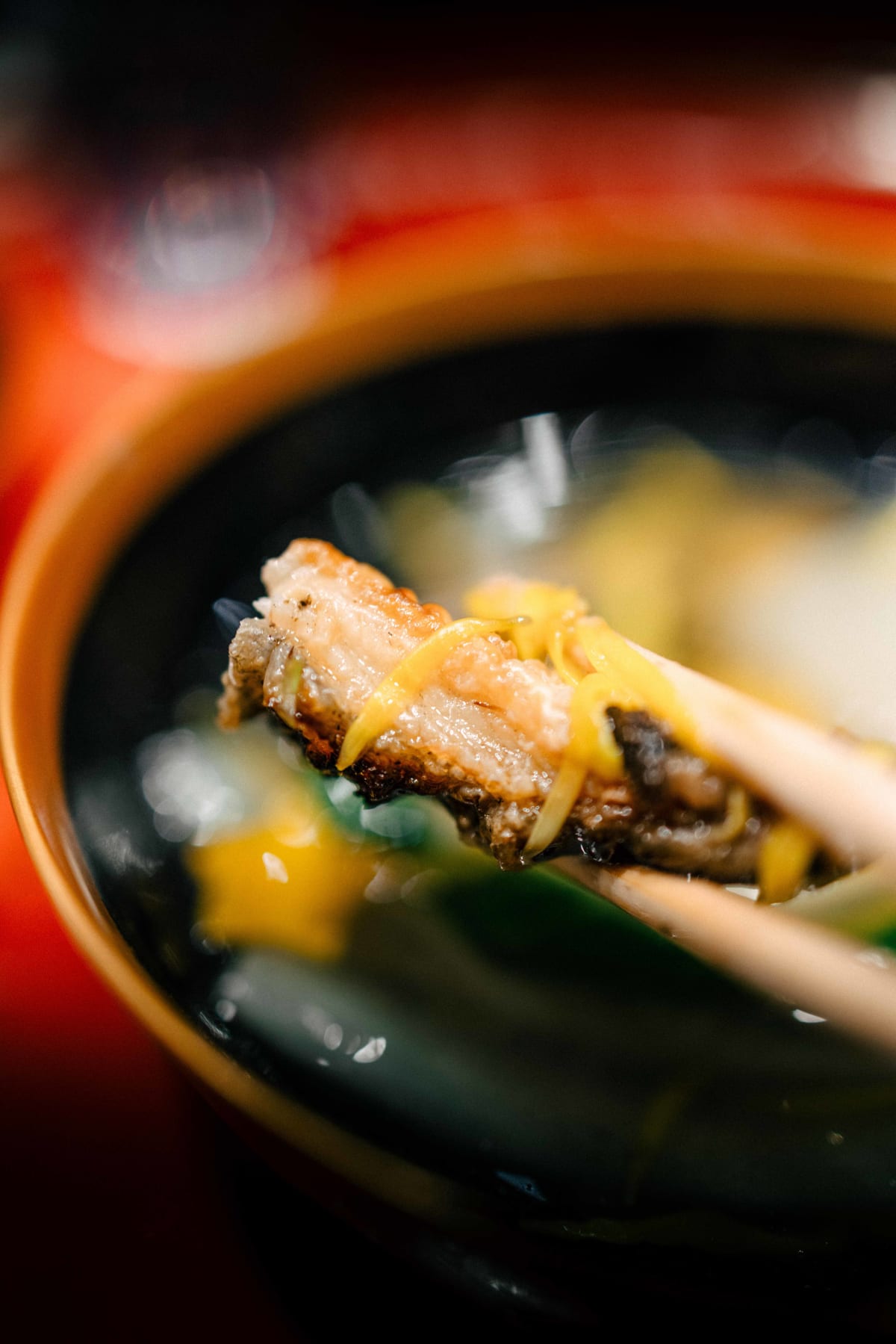
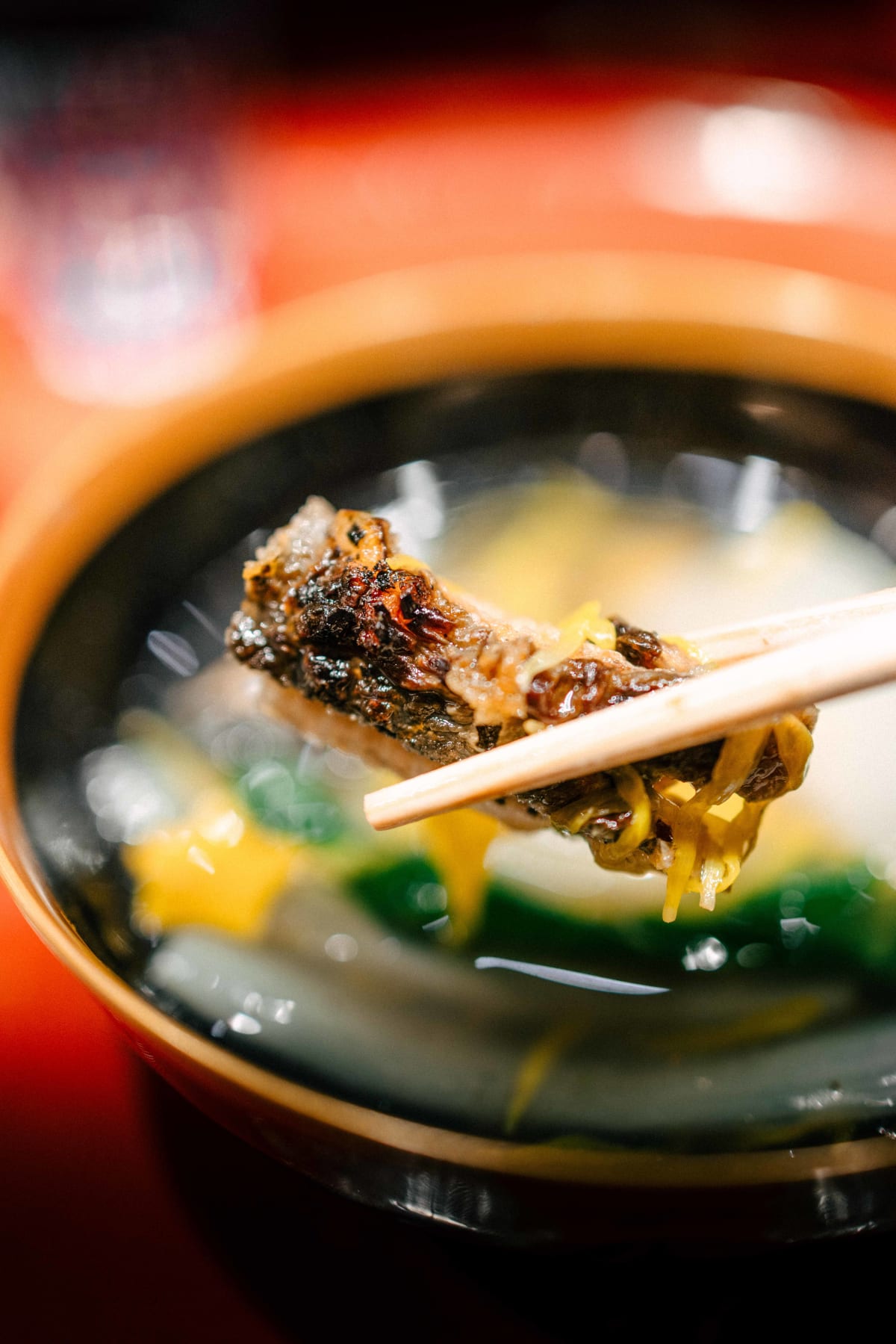
The fifth was nimonowan, a clear soup built around charcoal-grilled unagi.
41—41 / 99
Cabbage and mushroom sat in the bowl with it, and a small yellow petal, likely a flower, floated on top as a final mark of the season.
42—42 / 99
The eel had been grilled to the right degree to keep its aroma intact, and the broth was clean and unhurried, holding its position comfortably within the course.
43—46 / 99
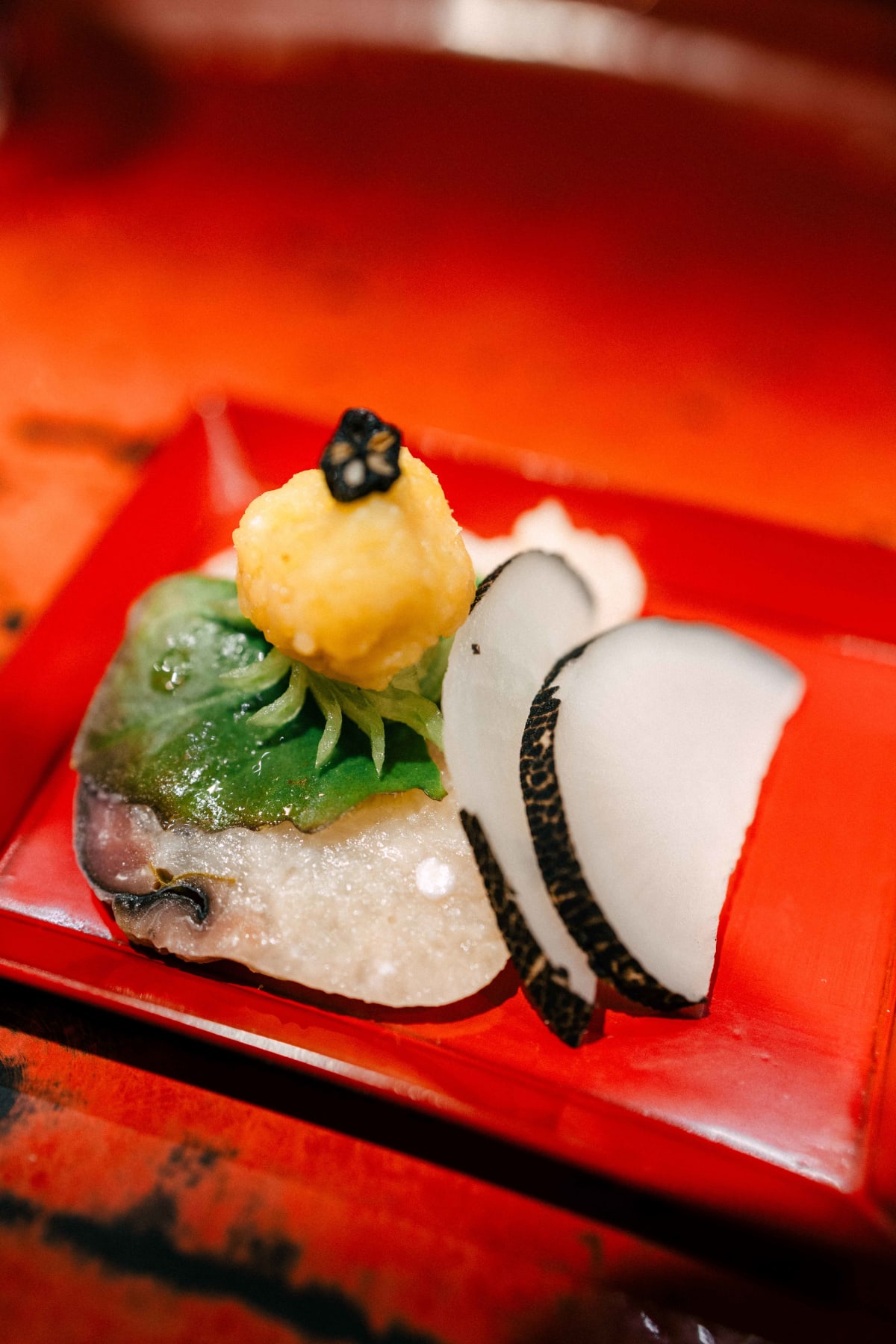
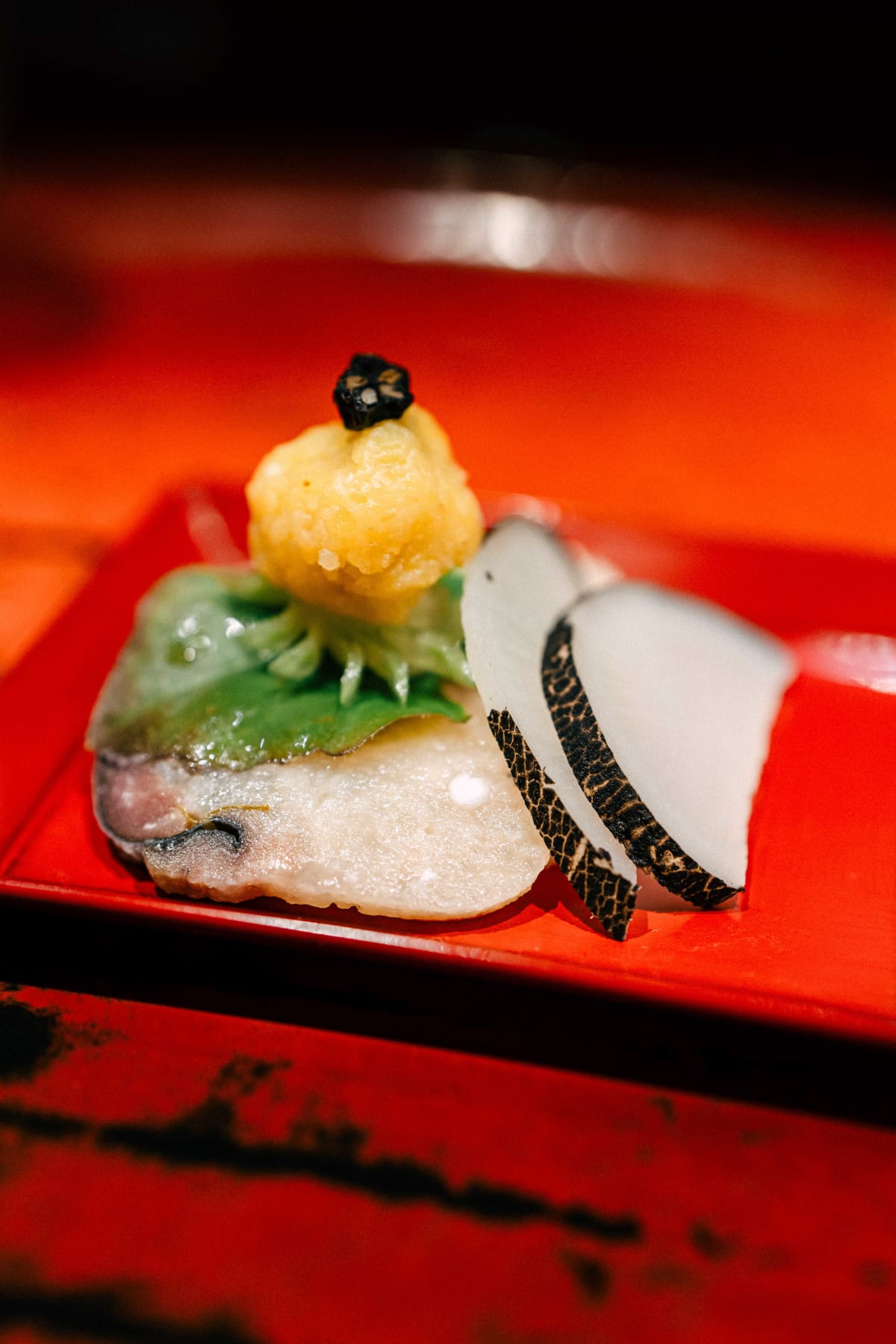
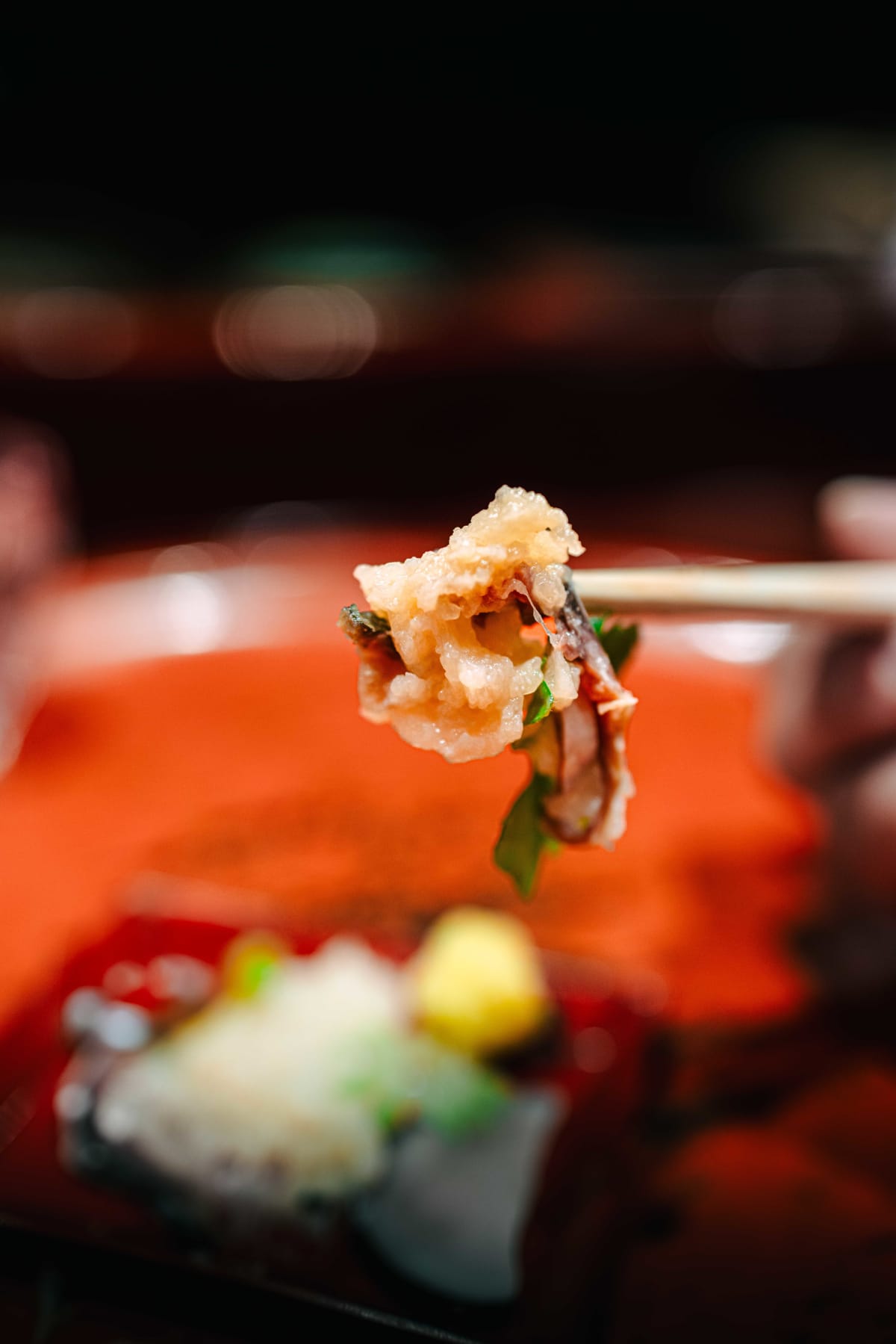
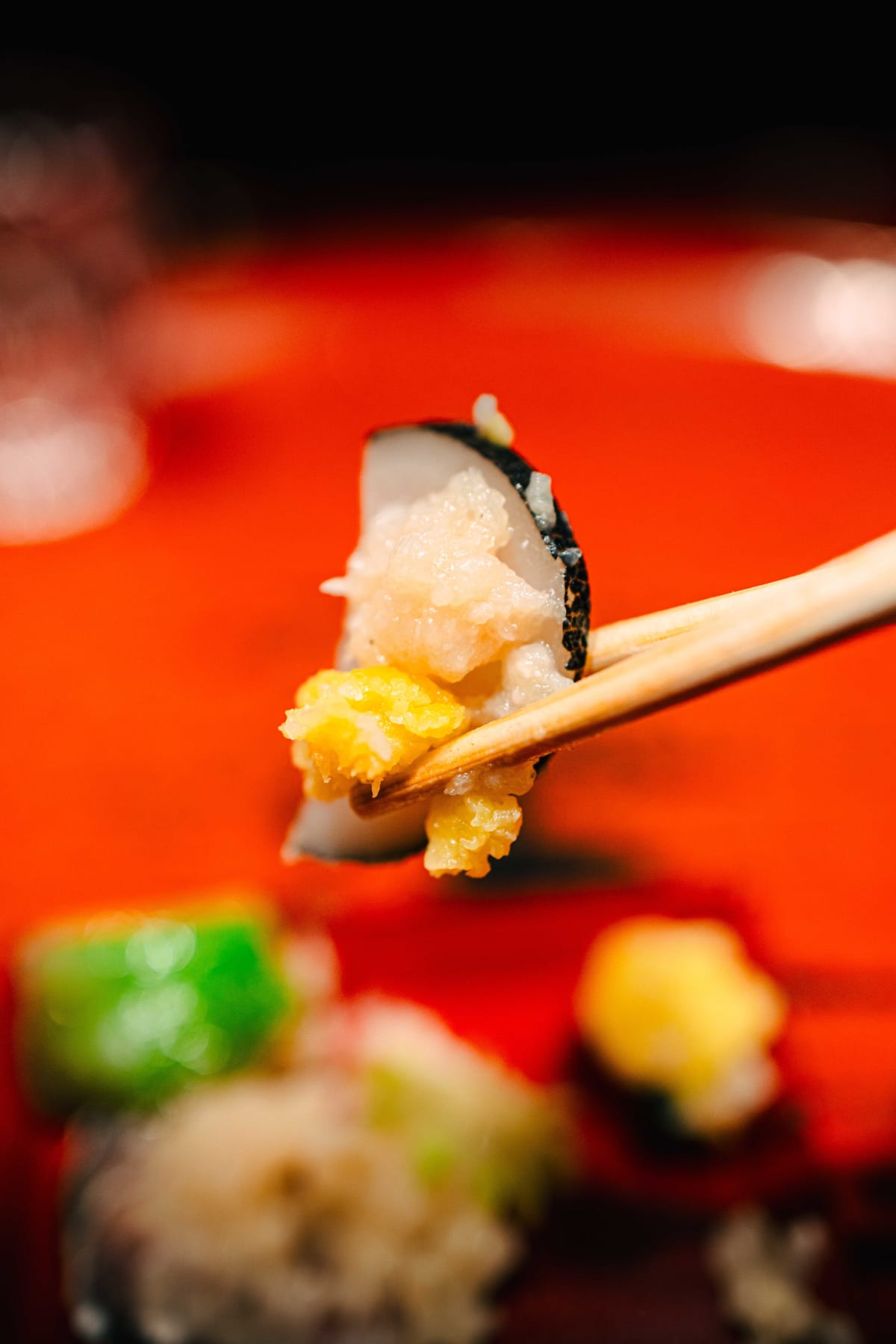
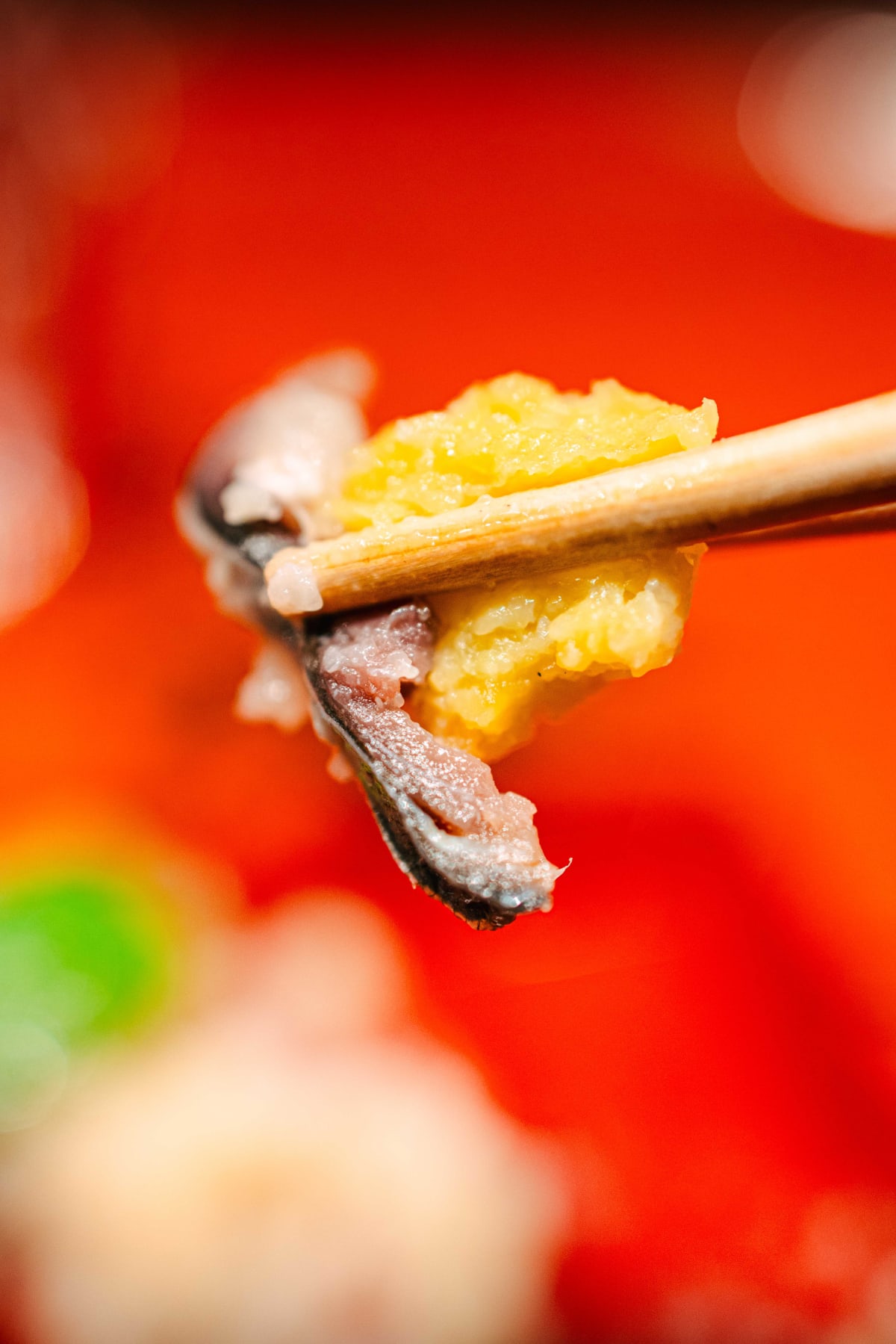
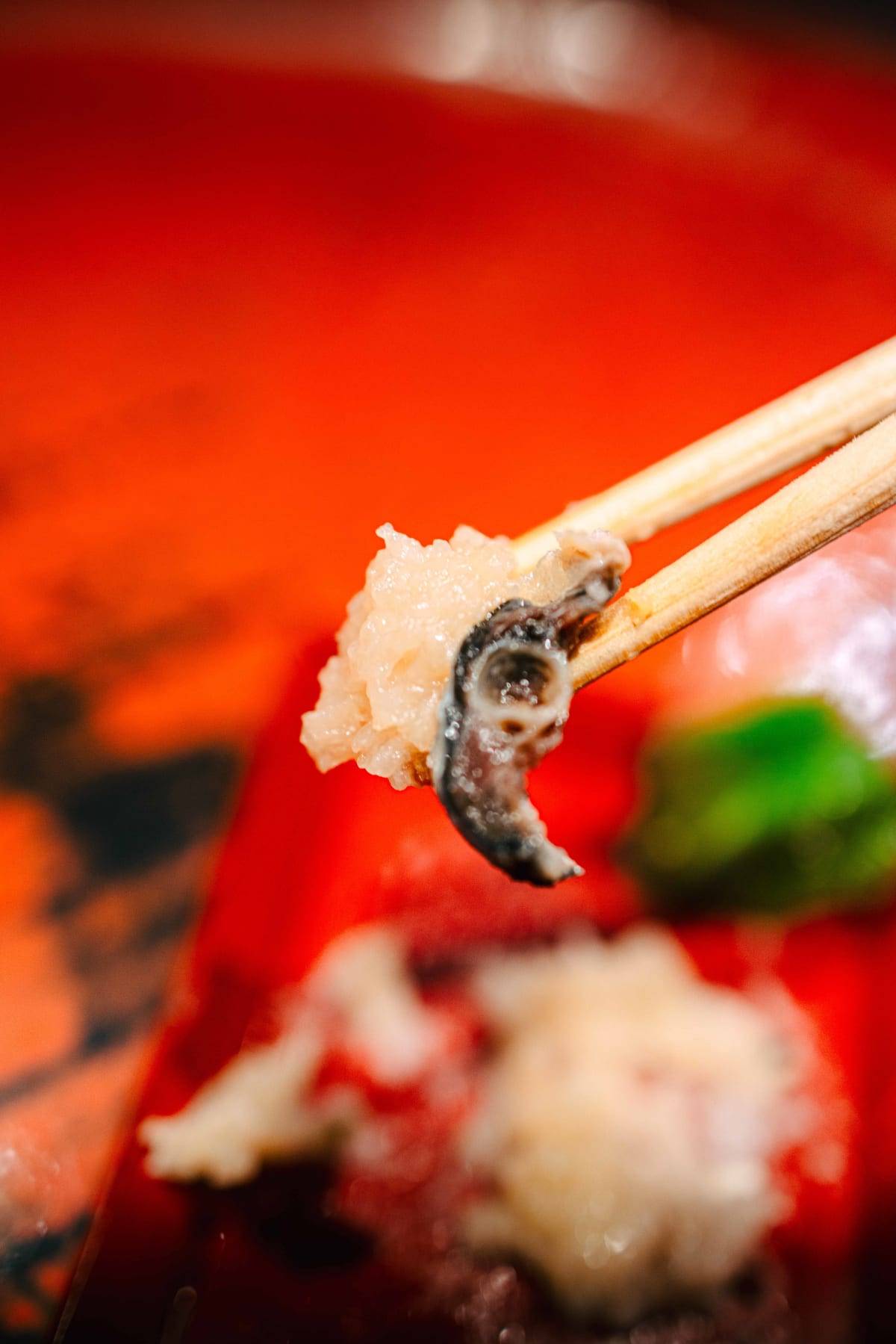
The sixth course, Narezushi with Niagara, was the high point of the evening. Narezushi, often described as the primordial form of sushi, was made here from fermented mackerel and arrived with daikon, ginkgo, and turnip. The menu noted that blue cheese had been incorporated as well, but the narezushi's own intensity was strong enough that tracing the cheese out individually was difficult.
48—49 / 99
The first bite, before I had registered that it was a fermented preparation, brought a sharp note that gave me pause. The shape of it is not quite the nose-clearing intensity of fermented skate; closer is the cool salinity of gajami-sikhae intensified by a step.
50—50 / 99
Coming from a country with a comparable fermentation culture, the adaptation came quickly, and eating it alongside the surrounding vegetables, the plate emptied faster than I expected, the gesture not far from the way a well-aged kimchi is offered to a foreign guest back home. The course made me recognize, perhaps for the first time, that most of what I had eaten as Japanese cuisine until now had already been modernized away from its older shapes.
51—54 / 99
The course made me recognize, perhaps for the first time, that most of what I had eaten as Japanese cuisine until now had already been modernized away from its older shapes.
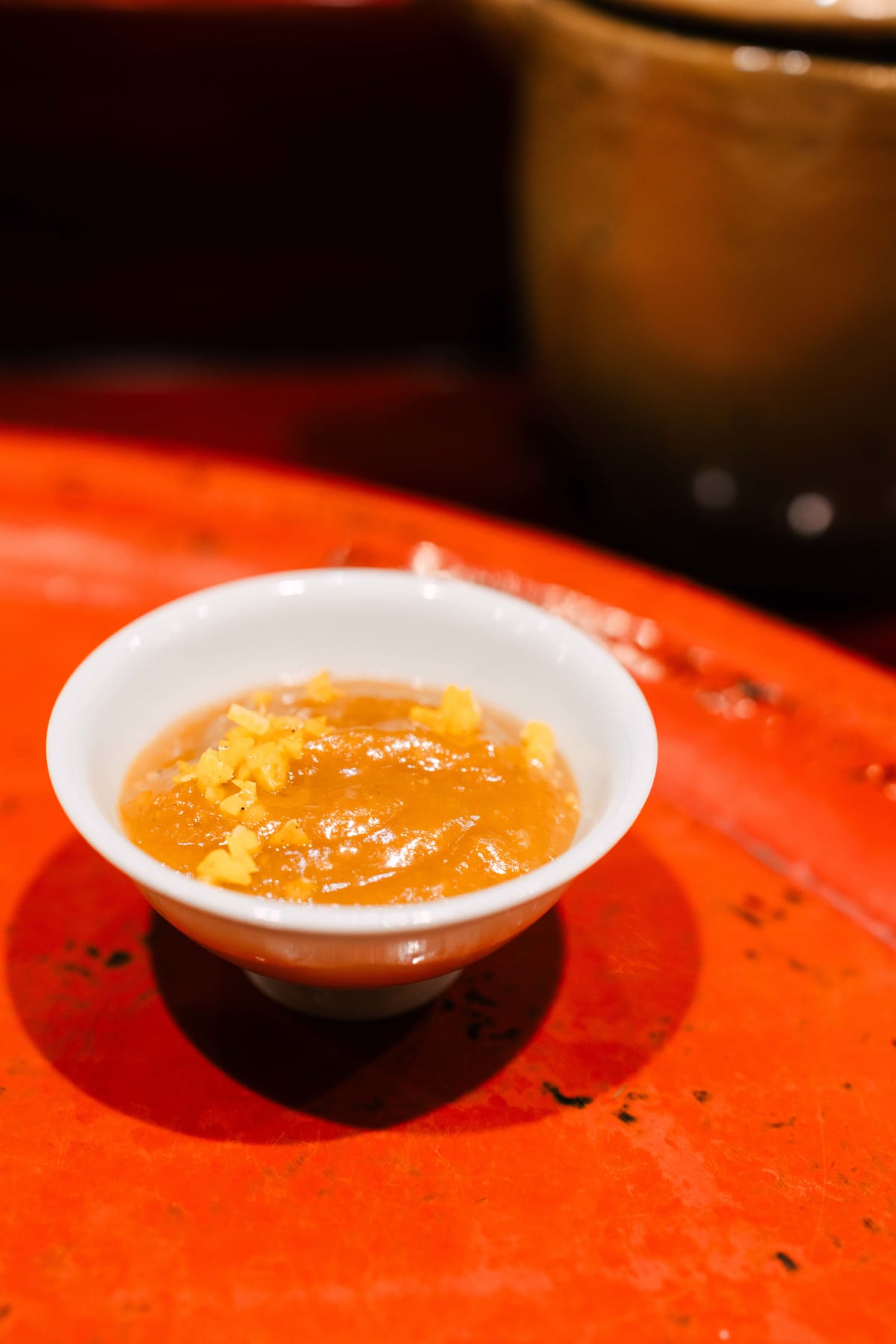
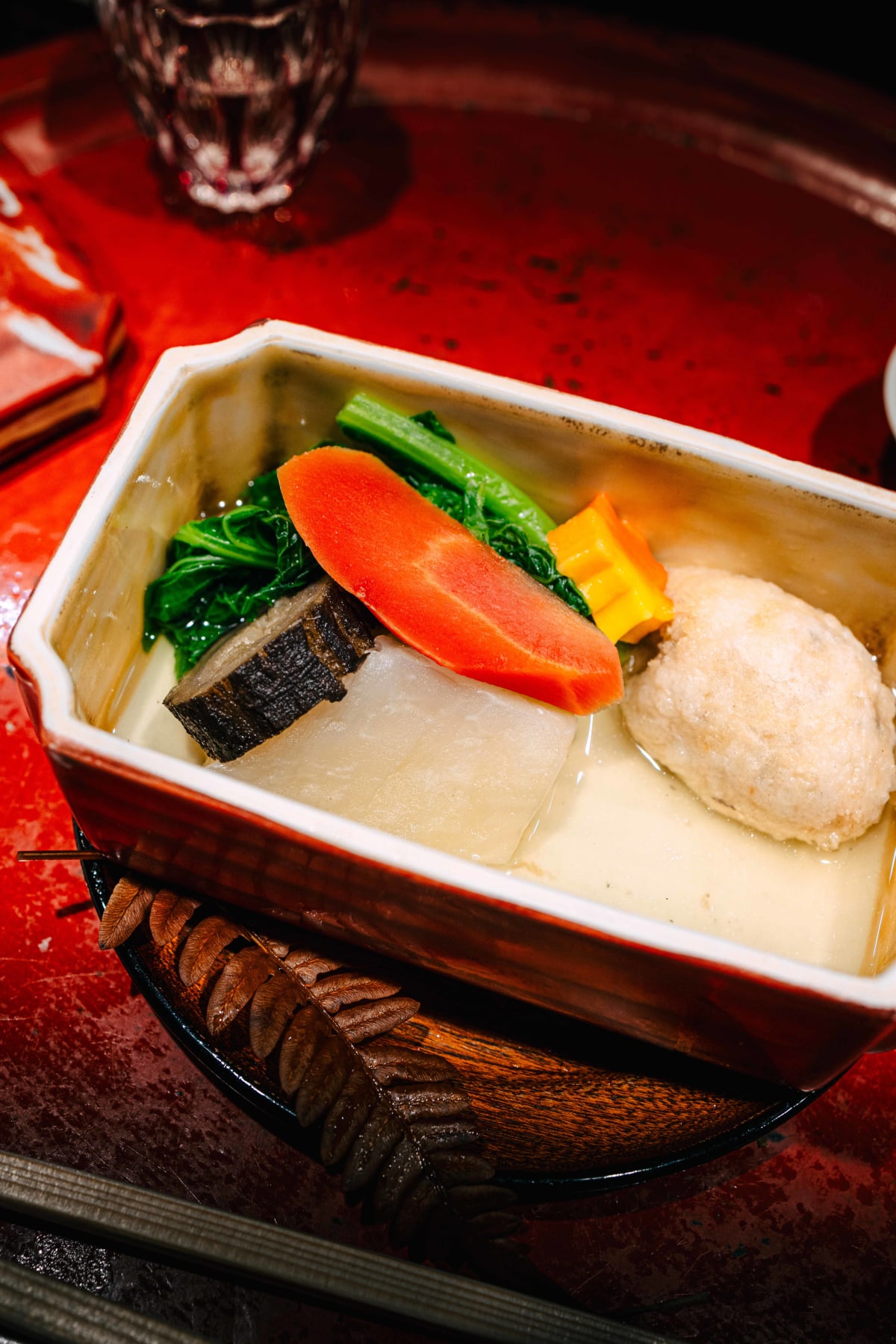
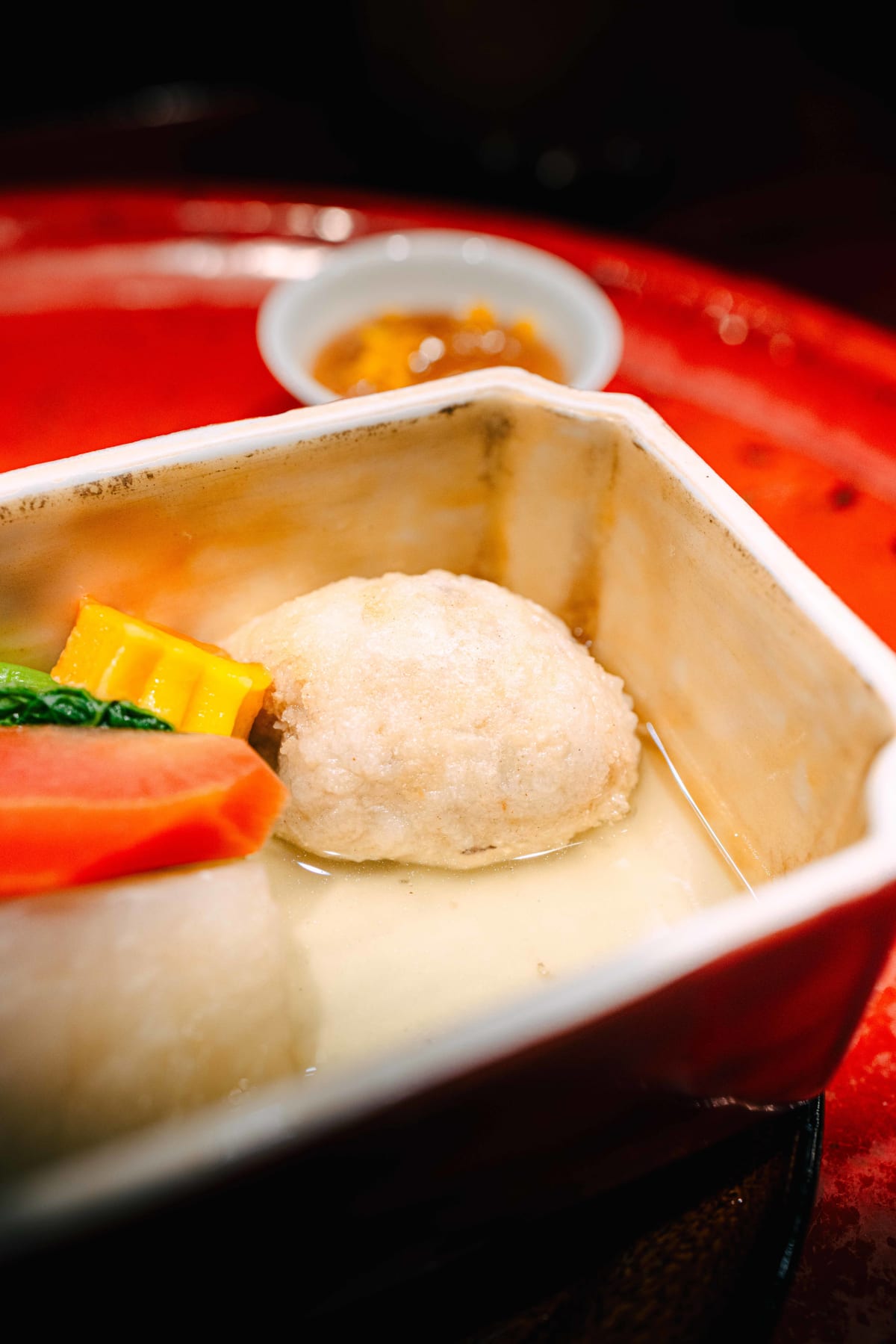
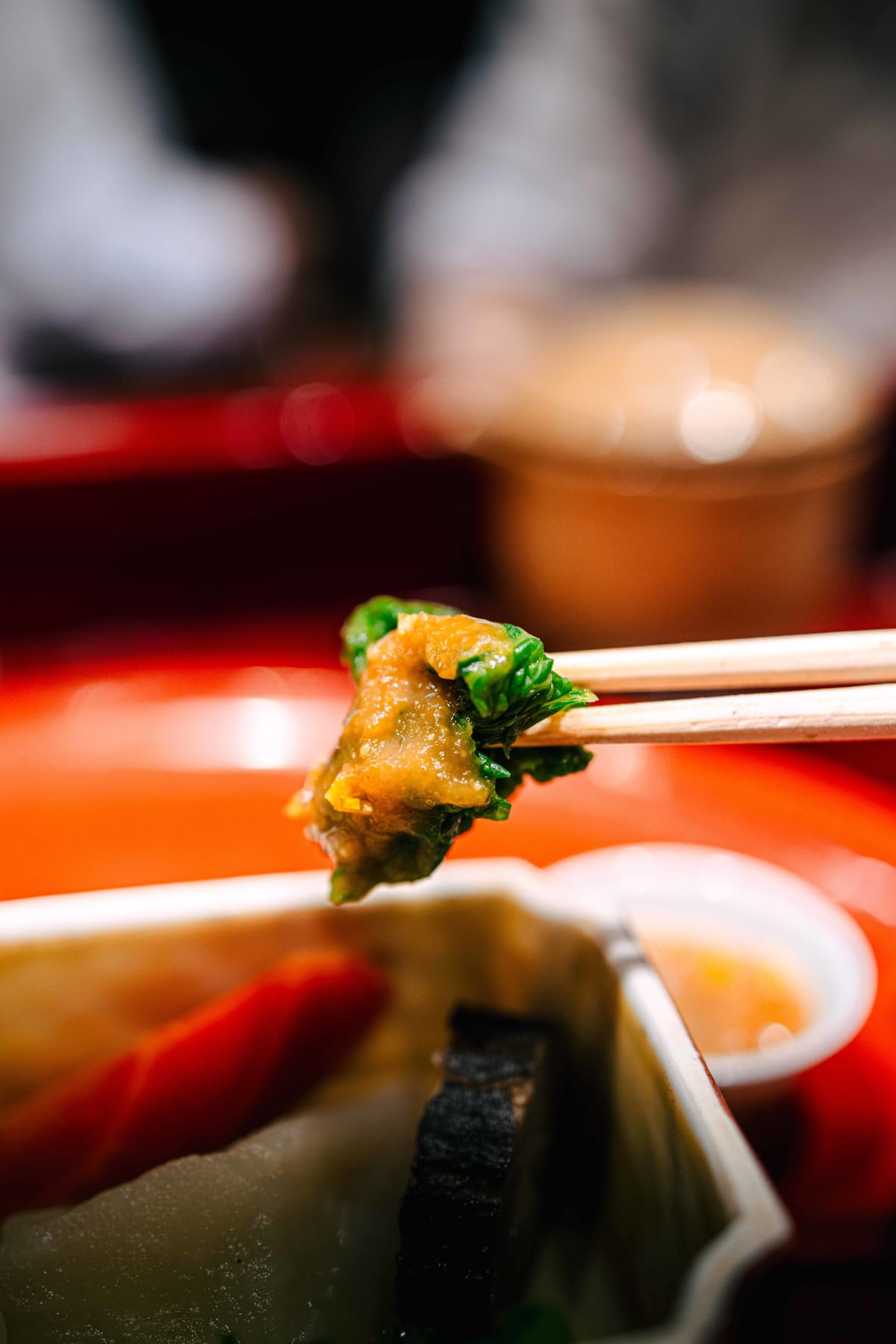
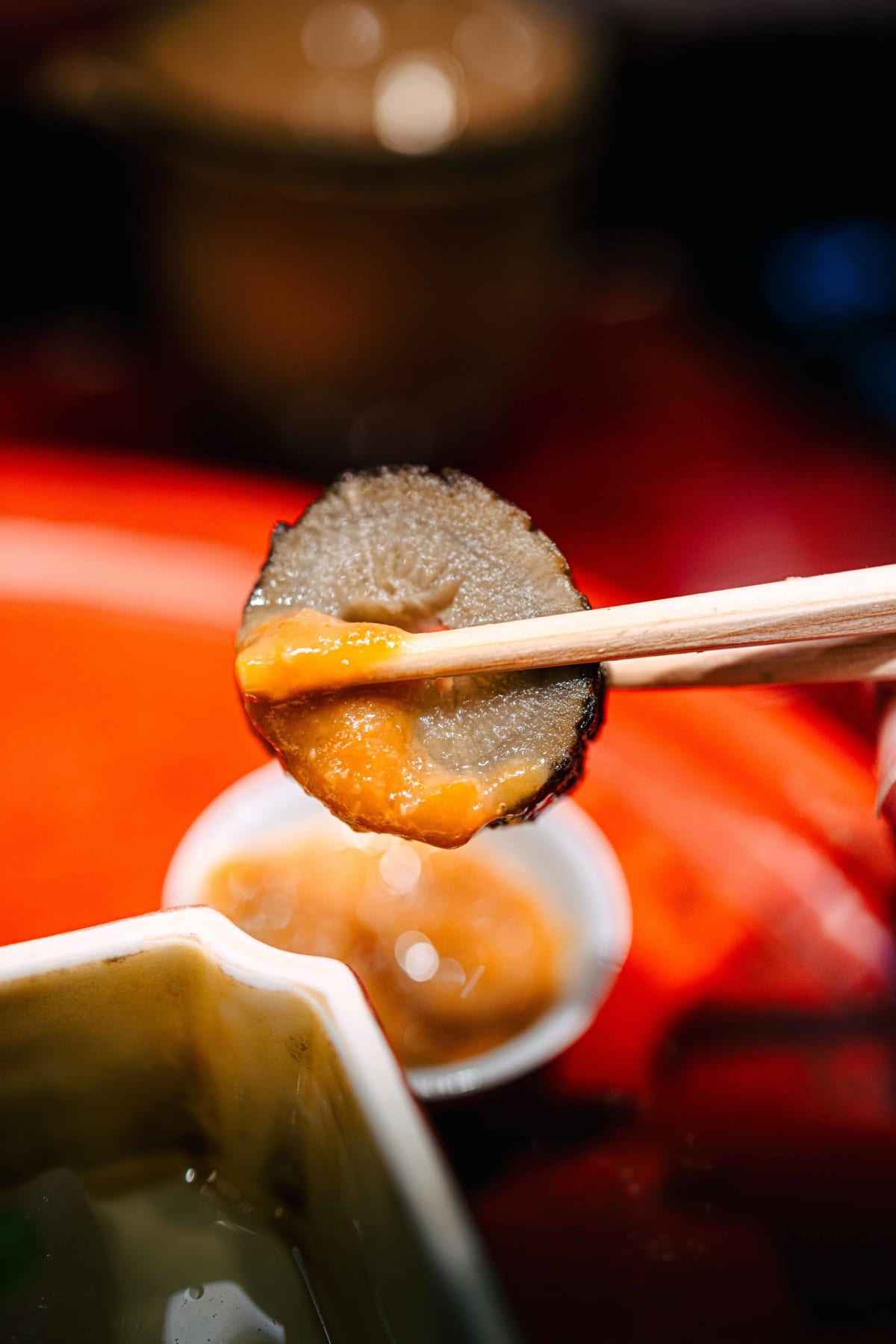
The seventh course, Warmth of the Season, was built around a light oden-style broth holding daikon, burdock, and a finely ground fritter of ebi-imo (shrimp taro) and sweet potato.
56—56 / 99
The texture of the ebi-imo was a familiar one from winter trips through Japan, and that familiarity served the flow of the course, smoothing it down. Against the stronger impressions left by other plates, this one did not stand up as sharply; it held its position in the course without quite making one stand up.
58—61 / 99
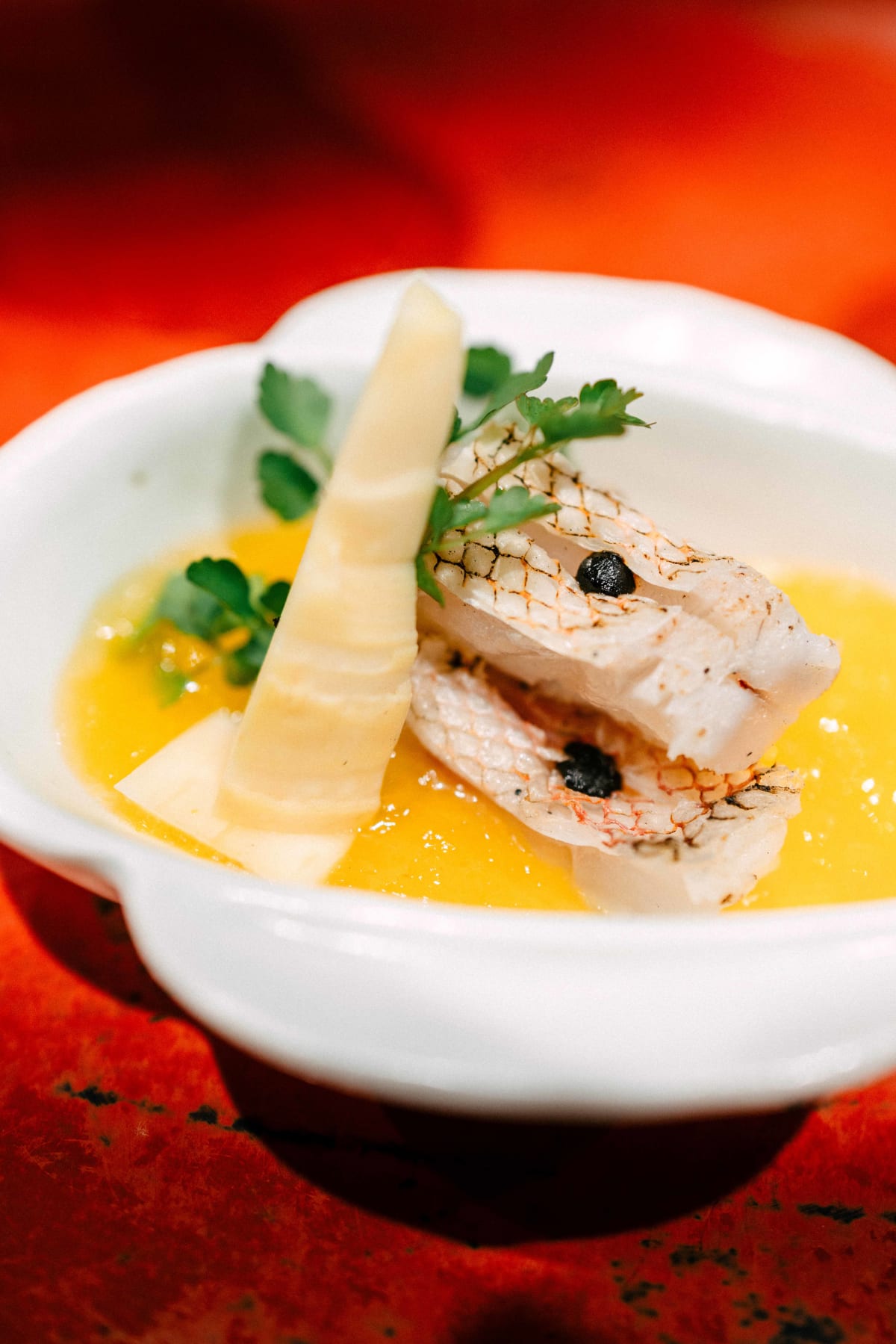
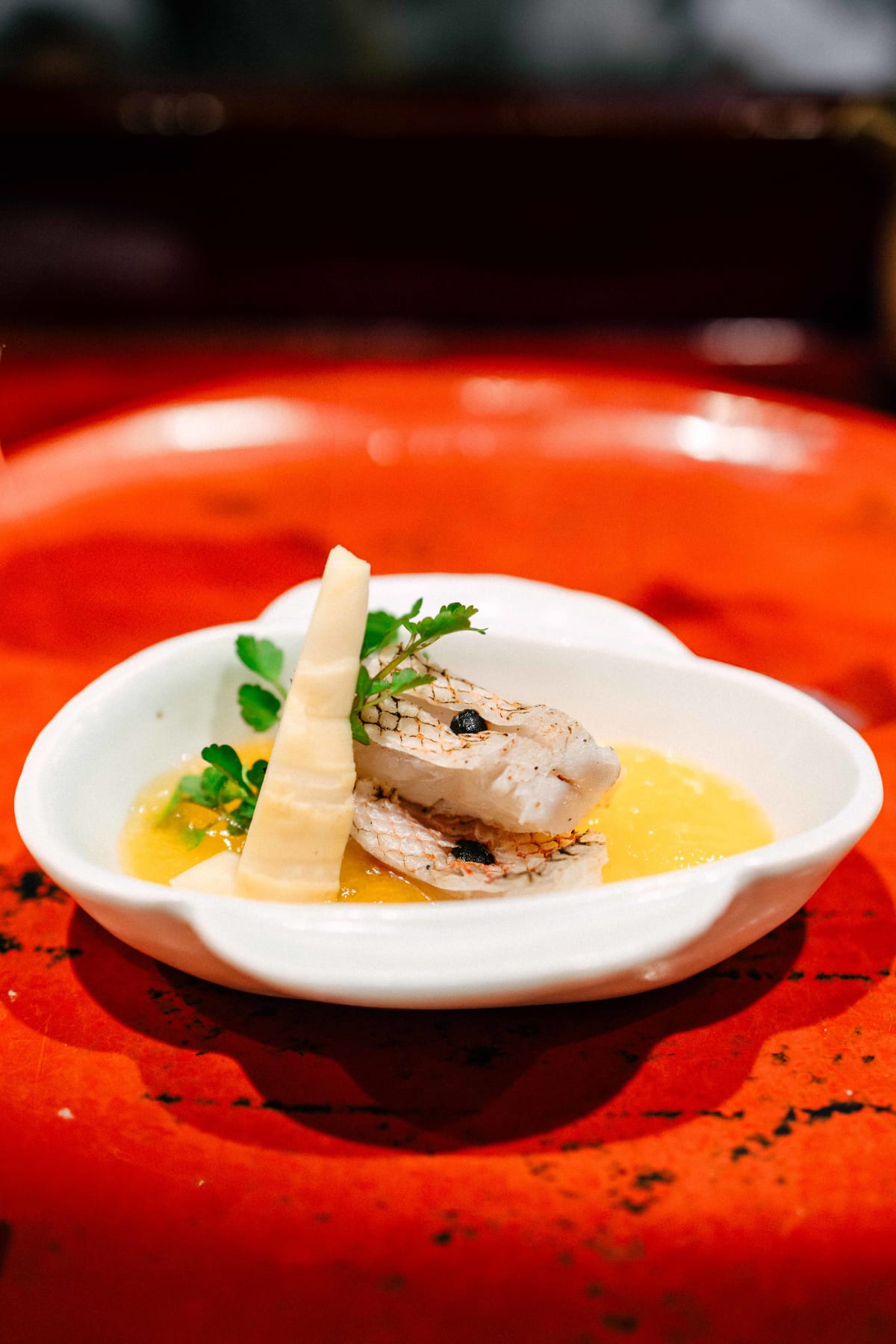
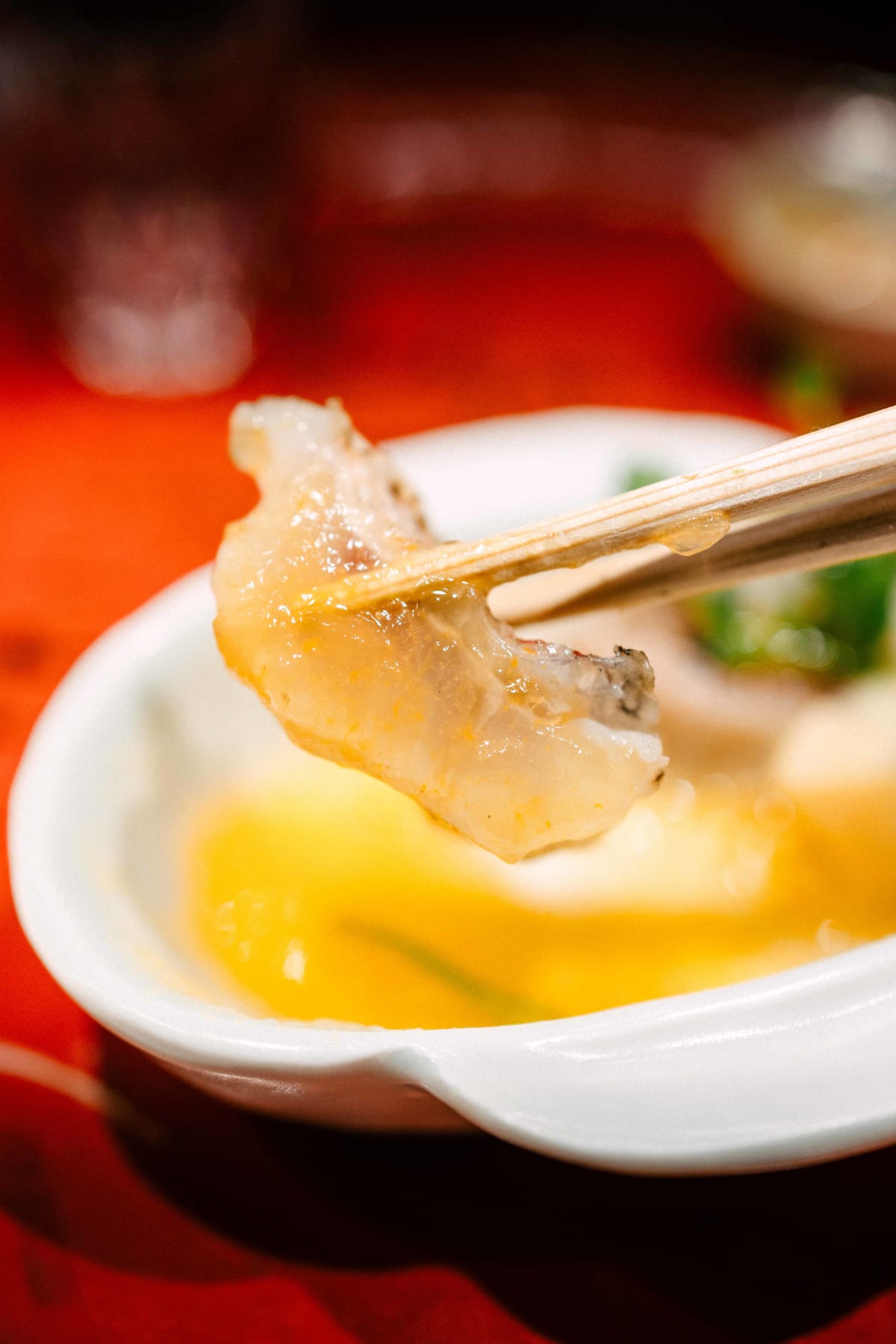
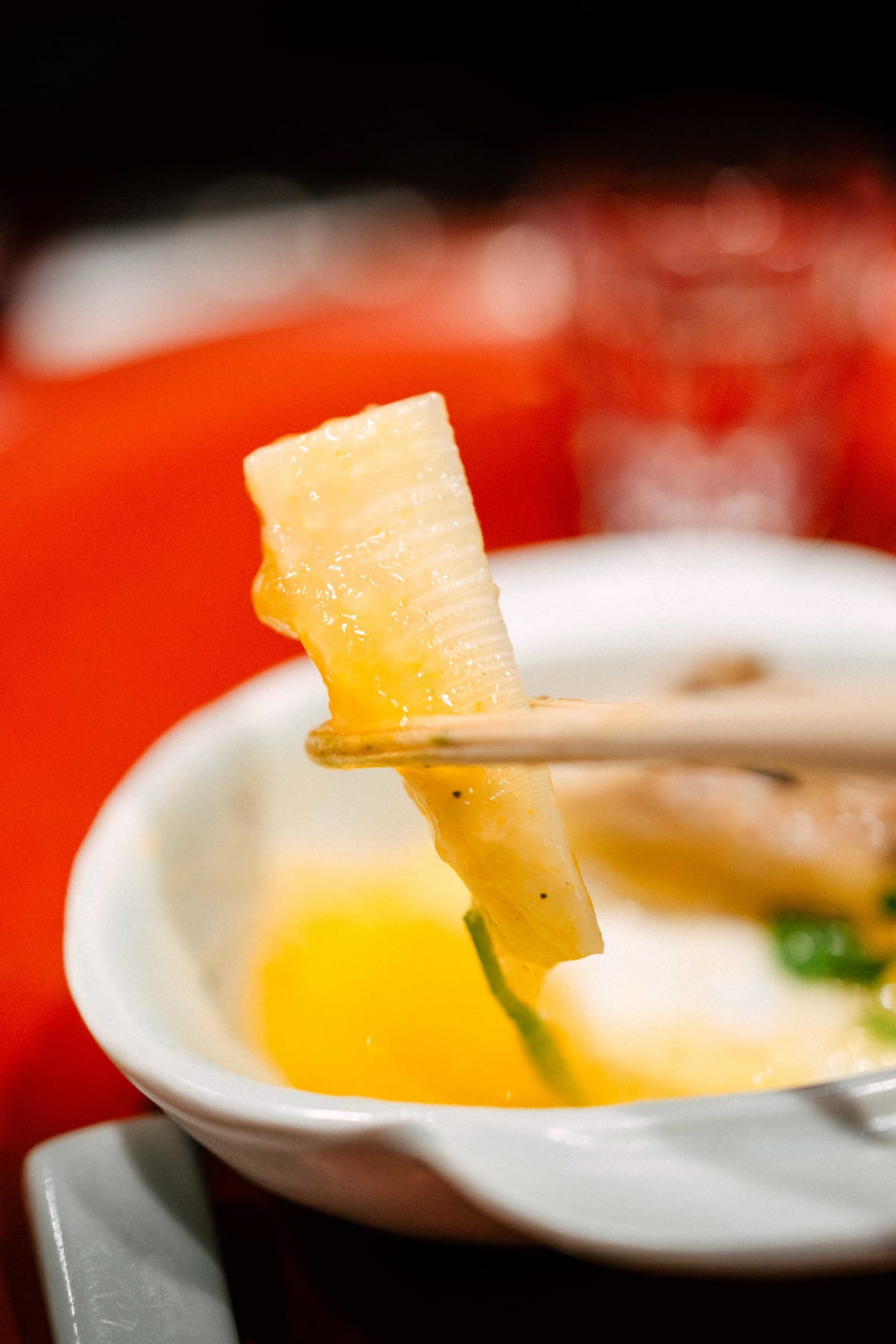
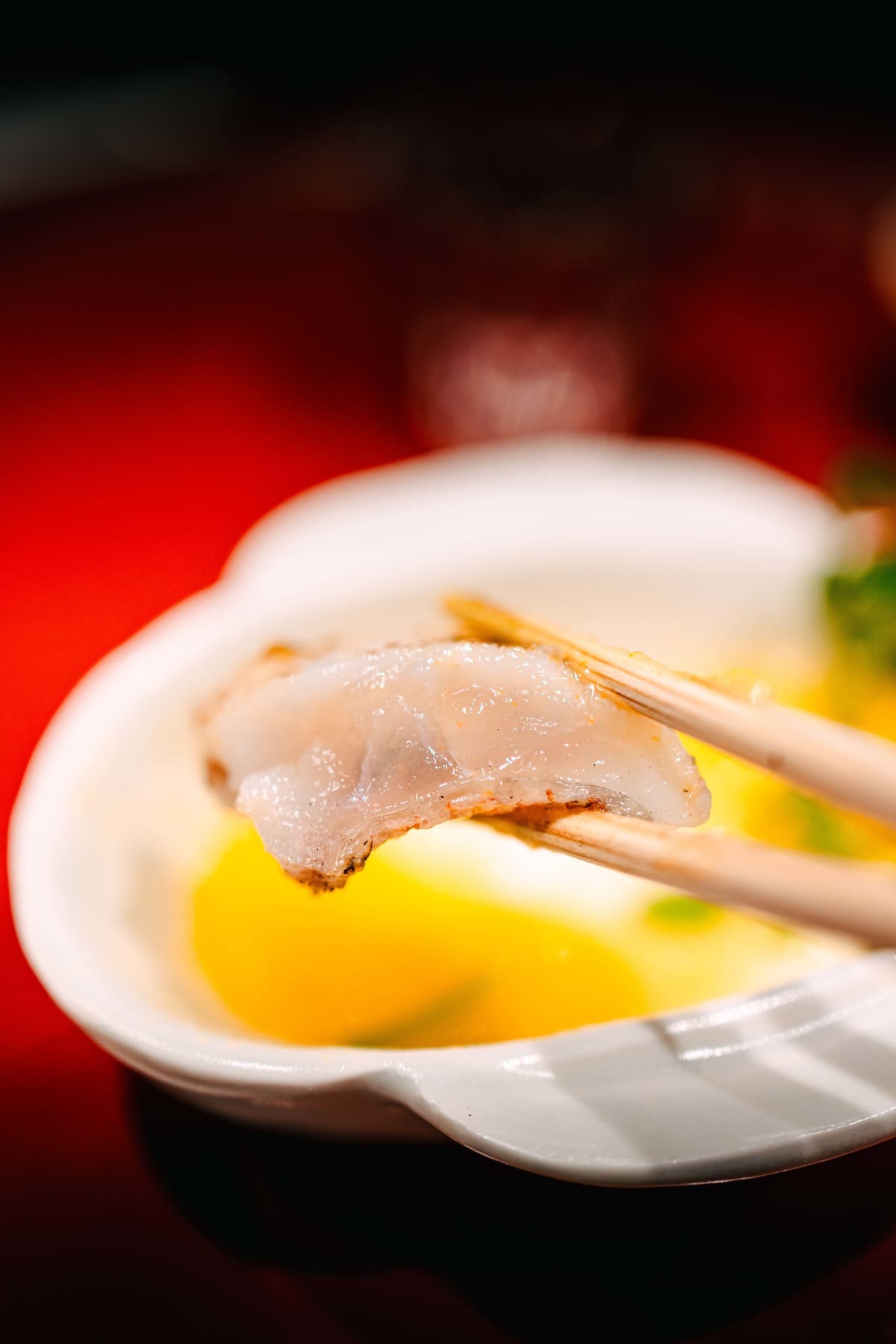
The eighth was Seared Tilefish with Citrus Jelly, where amadai (tilefish) and bamboo shoot arrived alongside a yuzu-based jelly sauce.
63—63 / 99
The tilefish itself did not move in the register one expects of a grilled fish. Cooked through, the texture was nonetheless heavier and more gelatinous than the form implied, and the temperature was closer to lukewarm than warm.
62—66 / 99
The fish on its own held enough character to keep curiosity intact, but the pairing with the citrus jelly was less fluid than expected. The bright lift of the citrus and the weight of the fish did not converge cleanly, and within a single bite the two flavors moved past each other in separate directions.
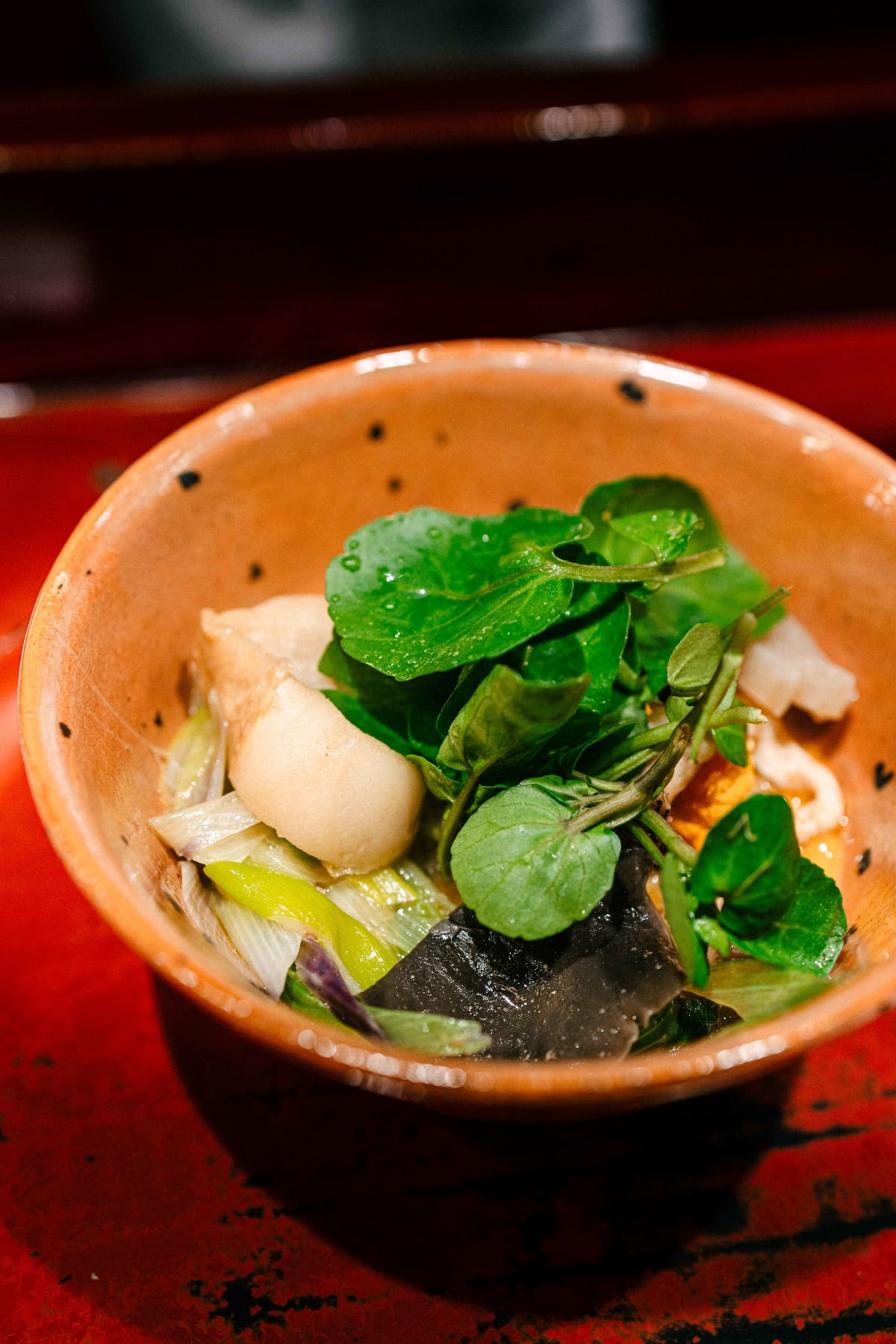
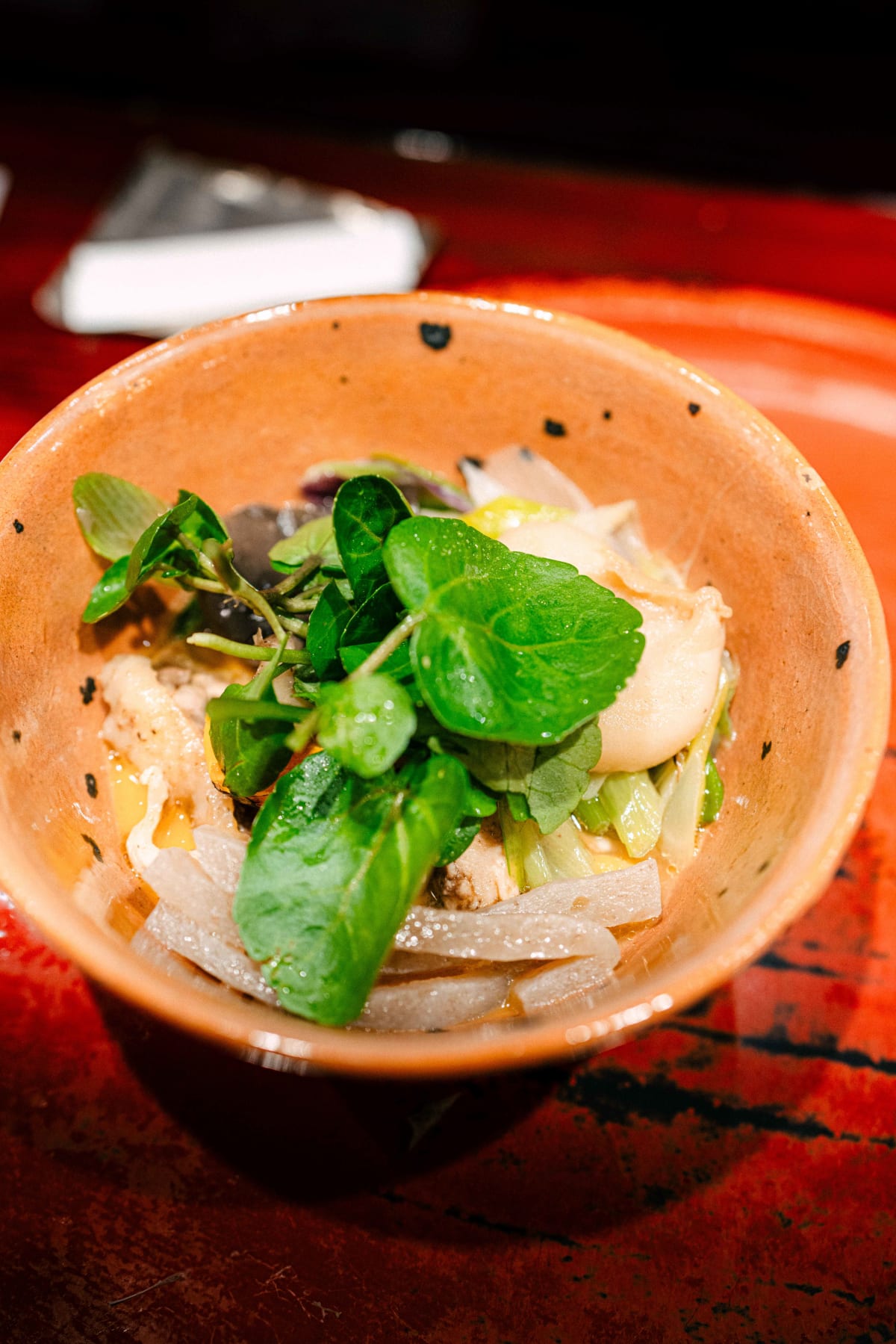
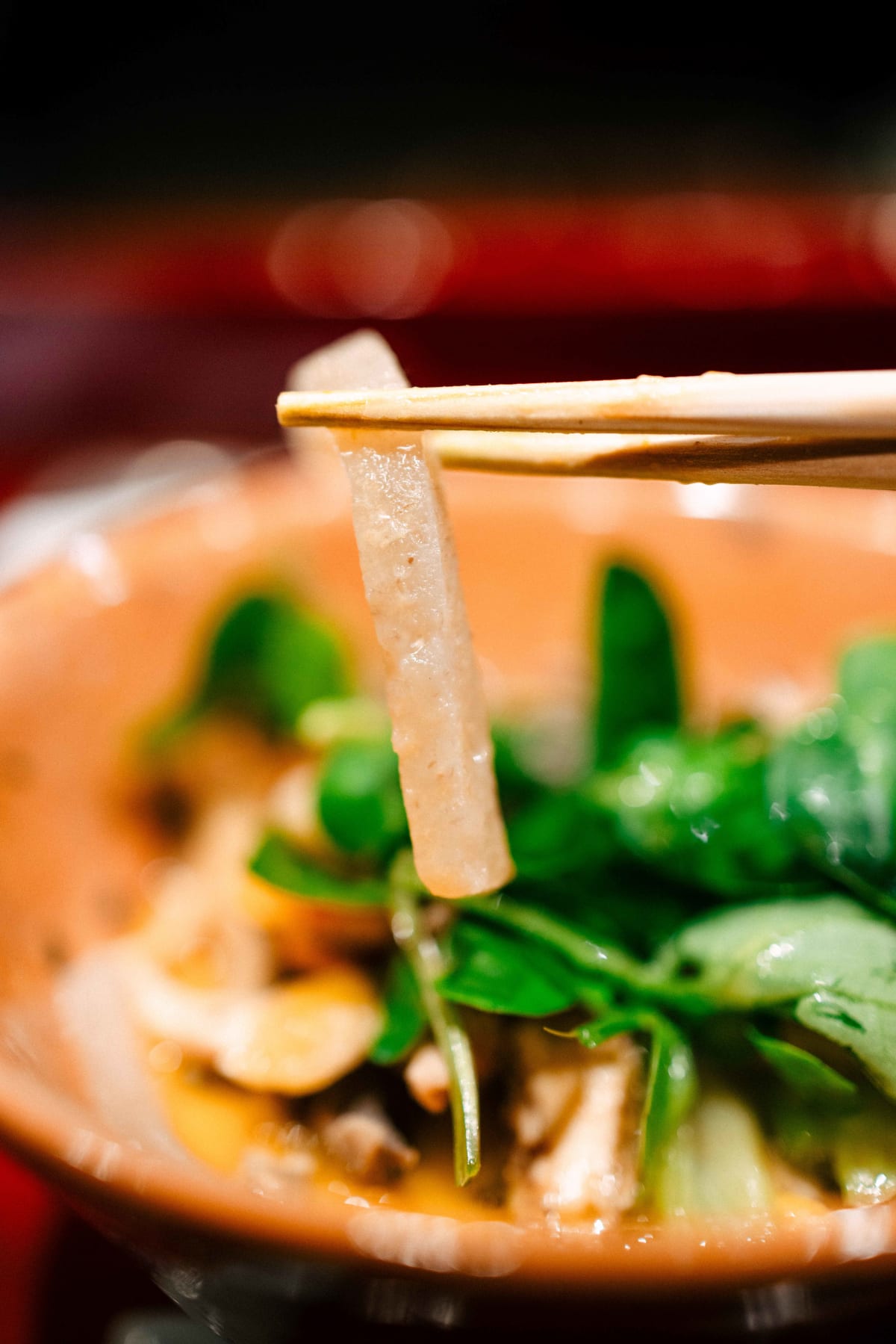
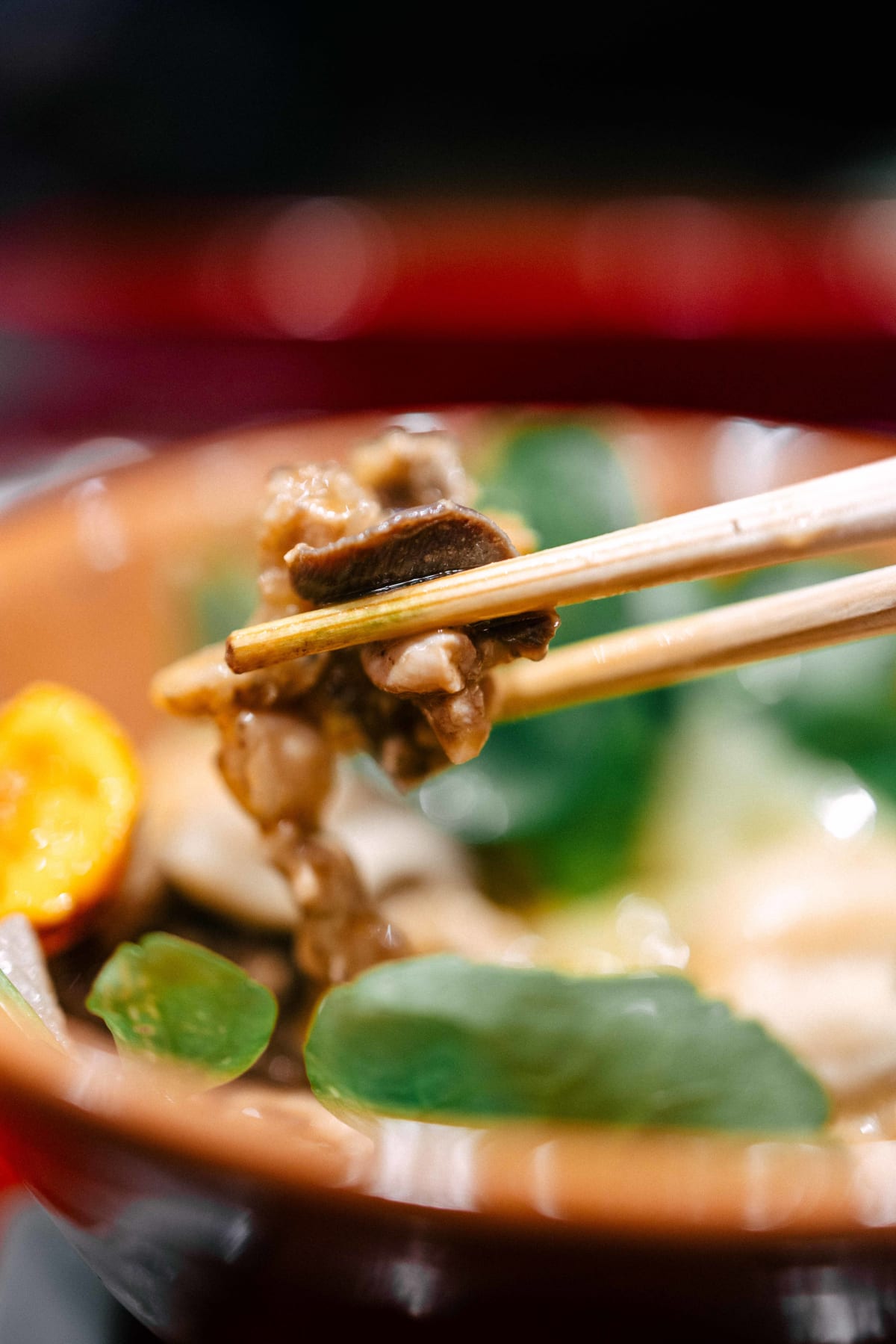
The ninth course, and the last of the main savories, was a chicken sukiyaki. A nine-month-old bird, a soft-boiled egg, konnyaku, fried tofu, and grilled scallion sat together in the pot. The bird arrived not only as breast and thigh but with organ cuts included, giving the texture a real range, and the yolk of the soft-boiled egg tied the whole composition together. My experience of sukiyaki has been narrow, but the winter season for the dish was clearly the right one for this presentation, and the recommendation made sense at the table.
67—70 / 99
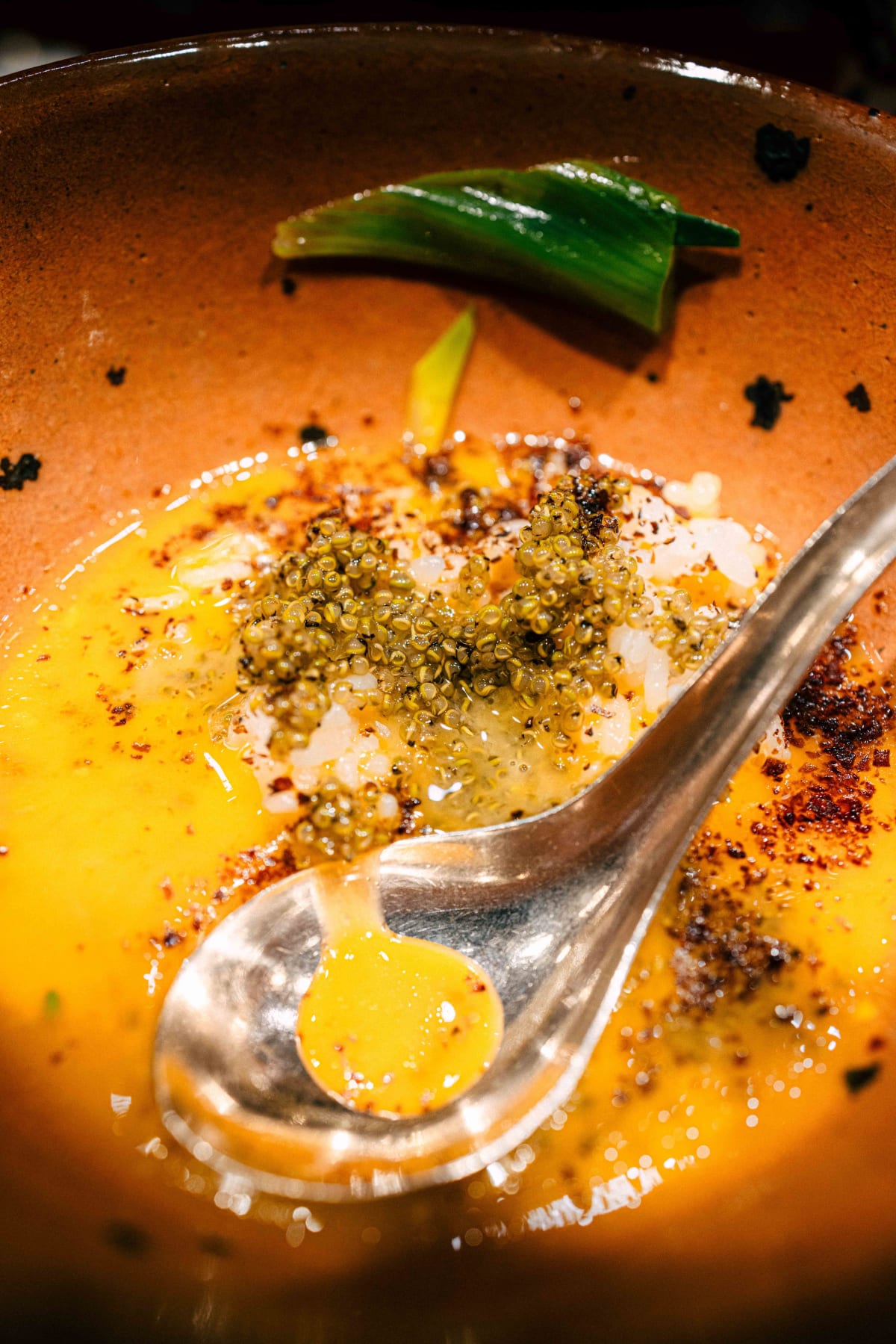
Once I had eaten through some of the sukiyaki, the chef leaned across the counter and asked, "Would you like to try a donburi?" Curious, I asked for one, and a small bowl arrived with rice topped by a small handful of caviar-like green pearls. The joke became clear: the bowl was small, so it was a "small donburi," the donburi here being literally tiny. The lightness of this naming was a quick early glimpse of how the rest of the meal would be paced.
72—72 / 99
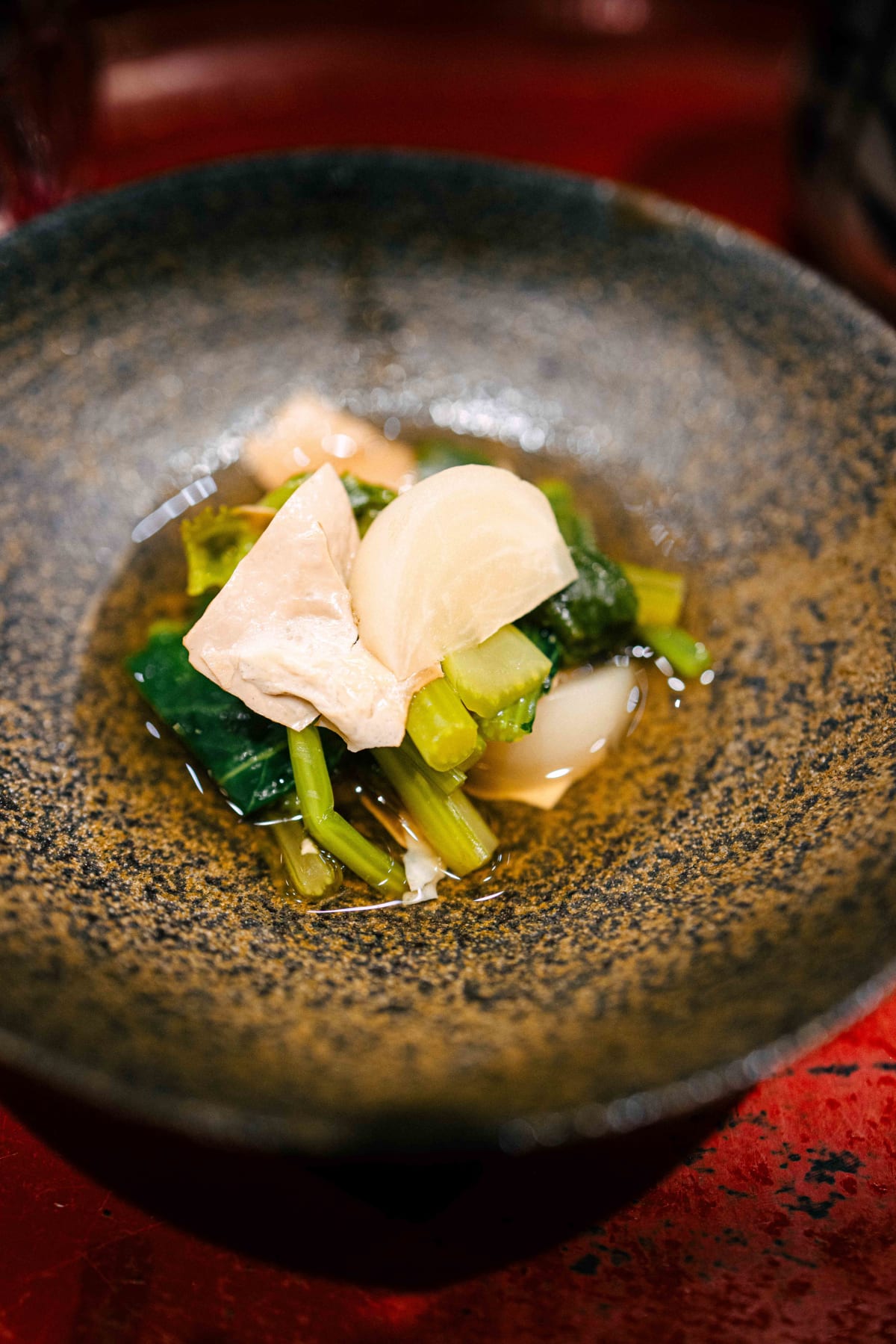
A palate cleanser of cold turnip and yuba arrived before the rice course. The bitterness of the turnip, however, still ran clearly through, so setting aside what the format was supposed to do for the course, the bite was harder to clear the palate with than the format implied.
40—40 / 99
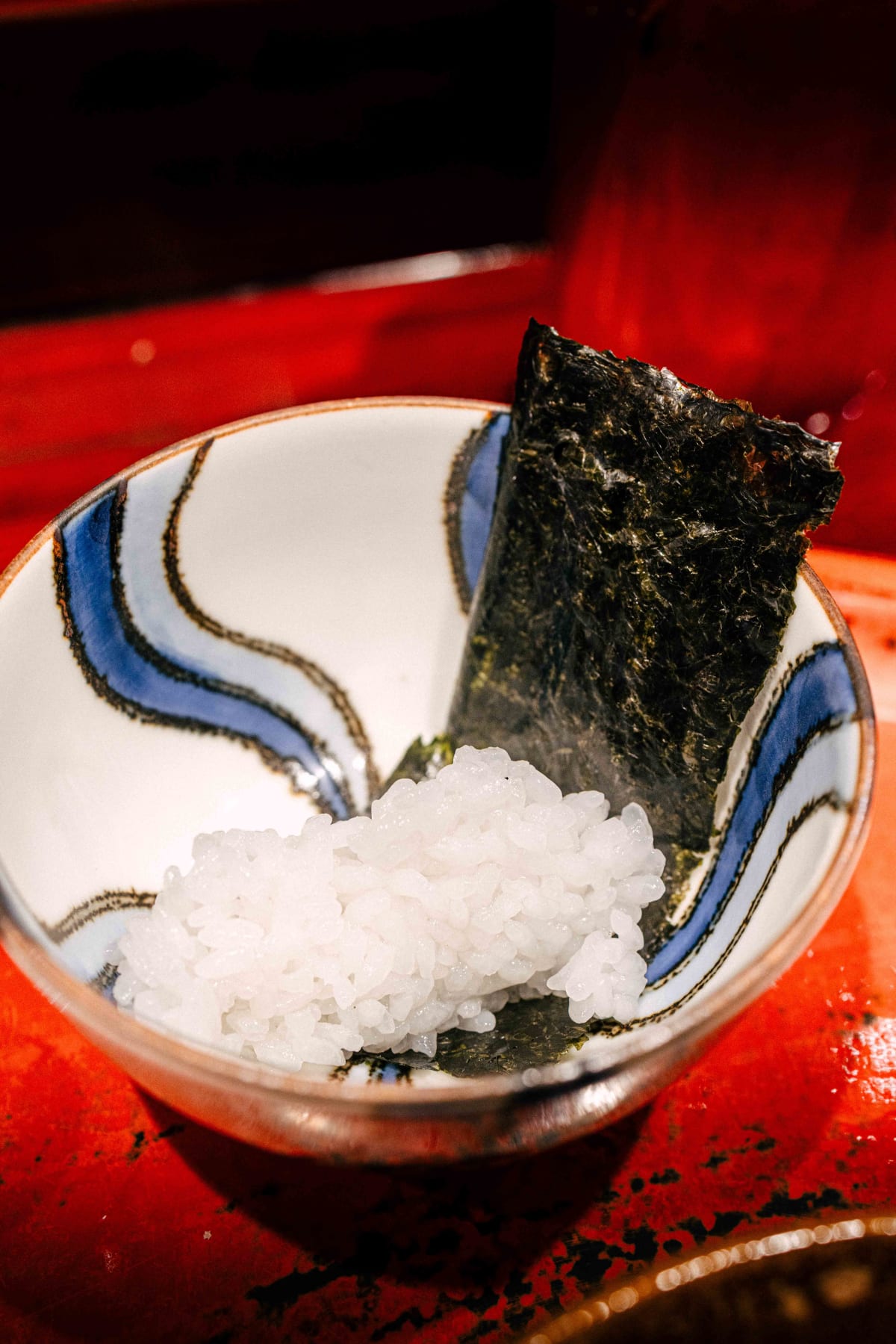
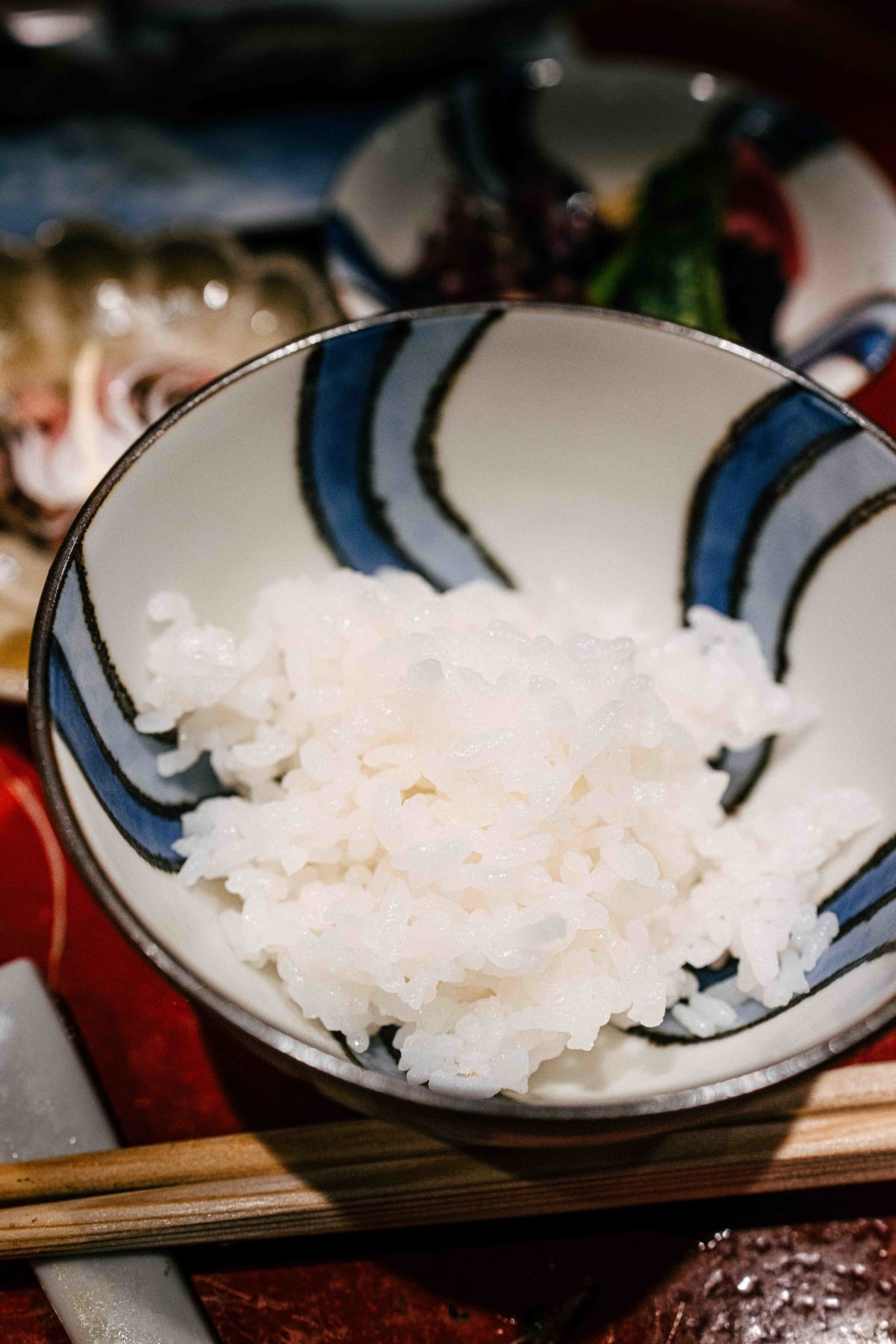
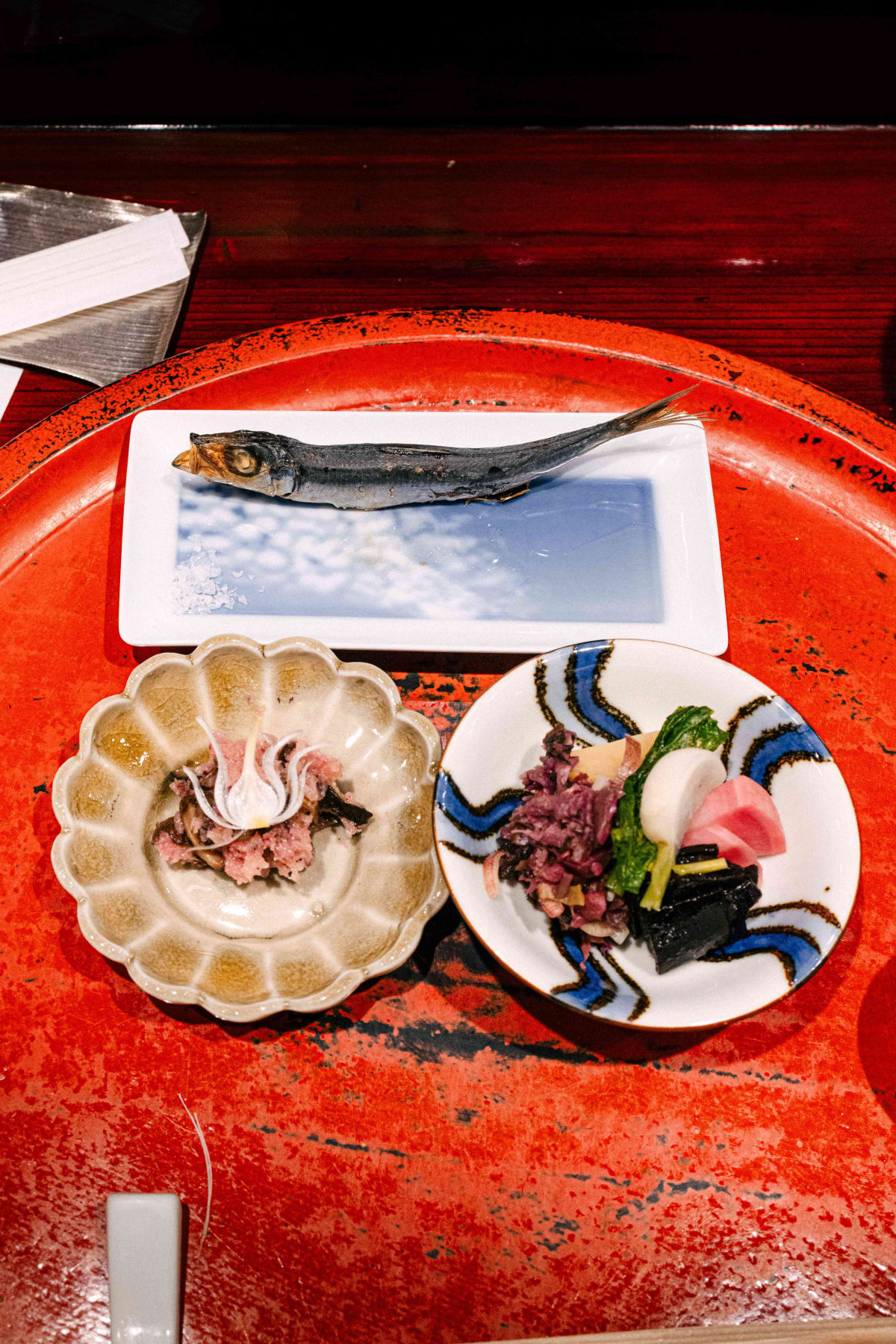
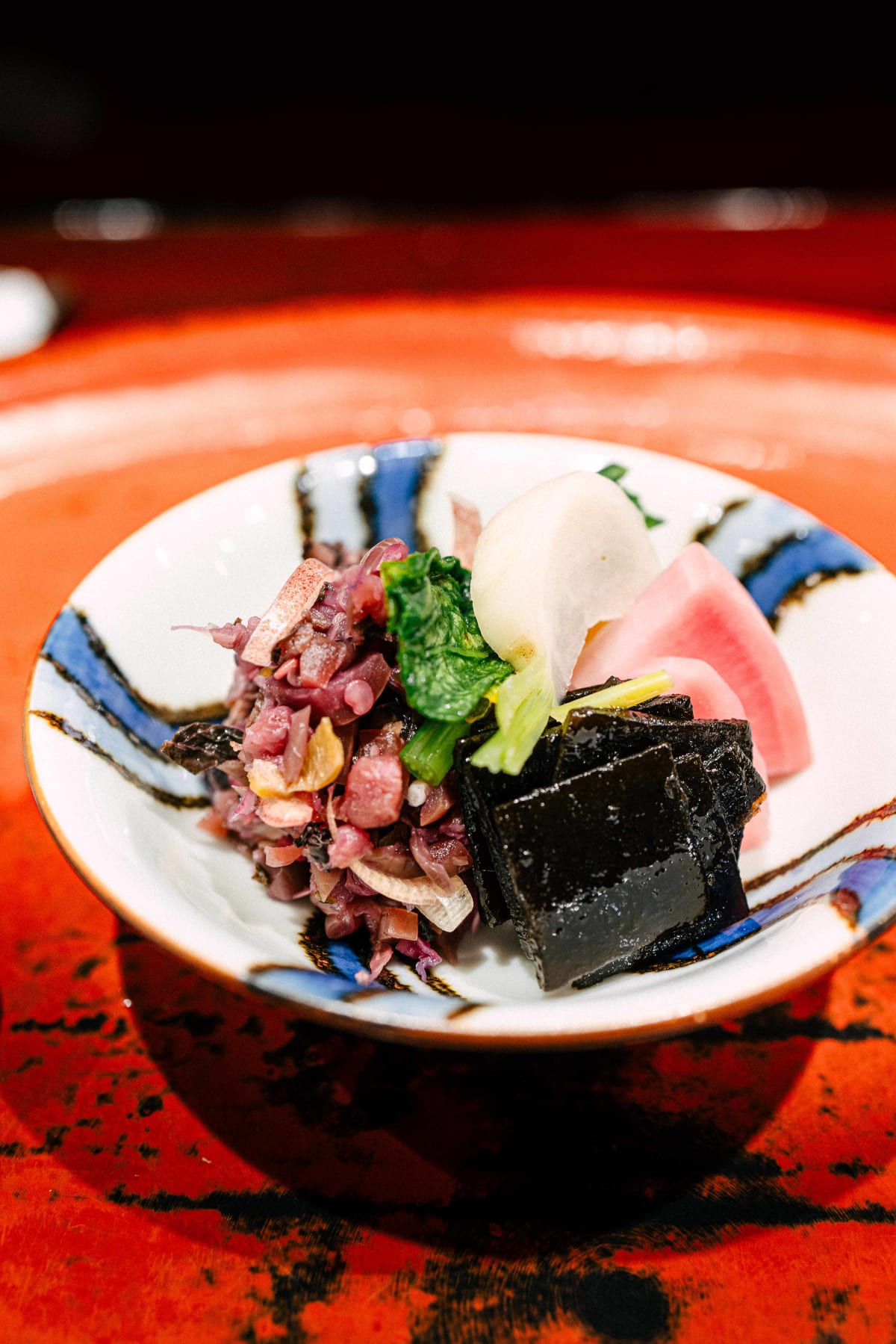
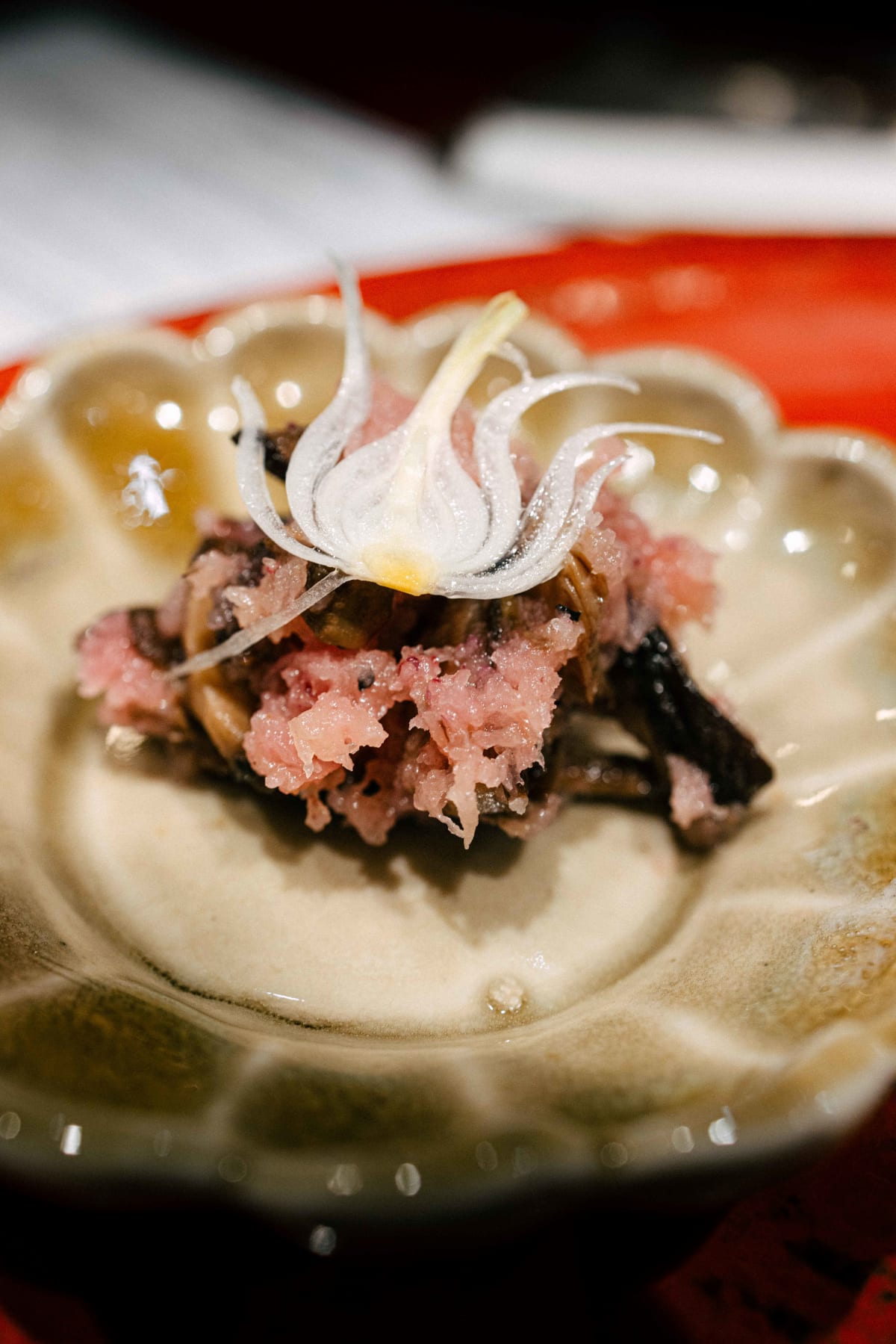
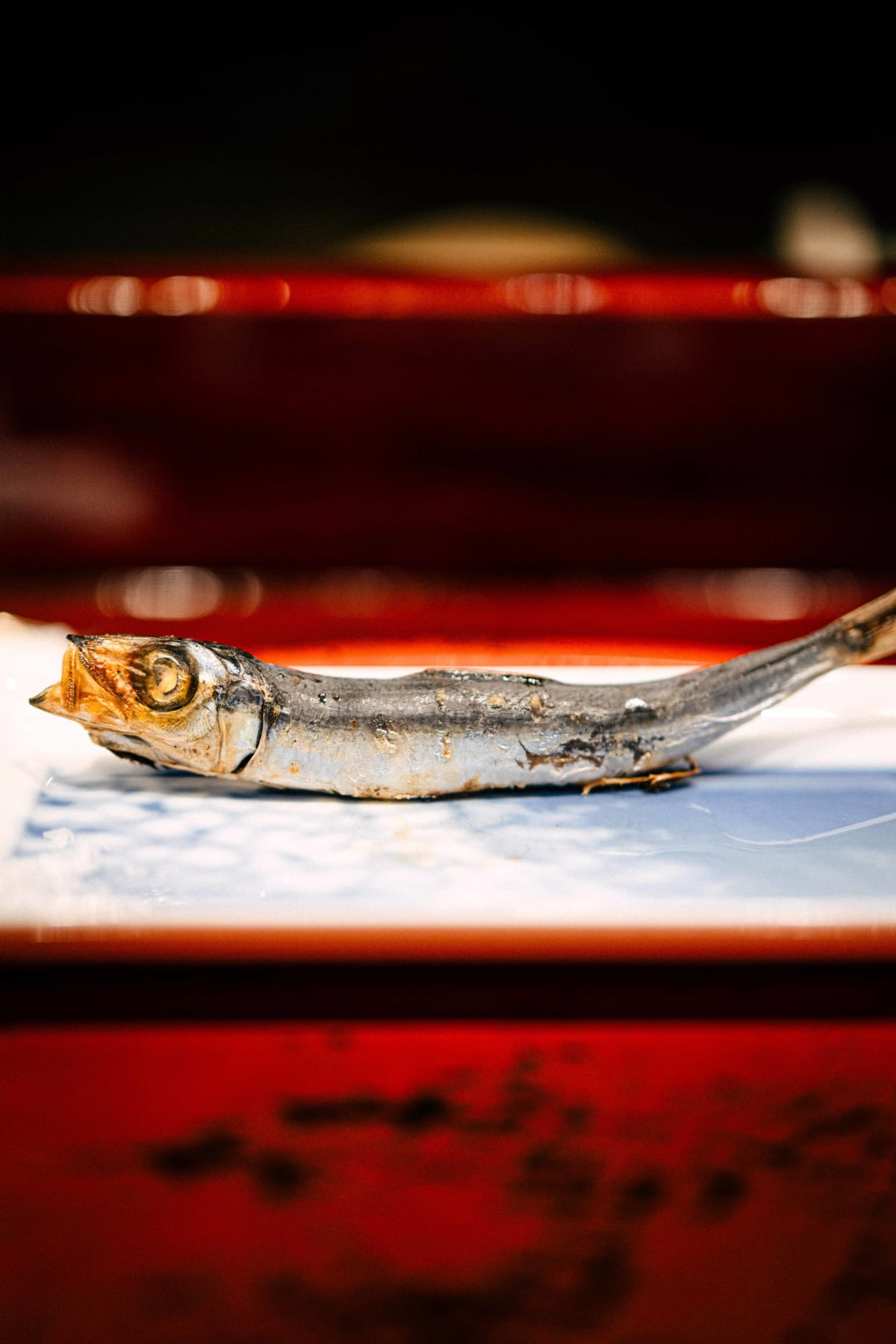
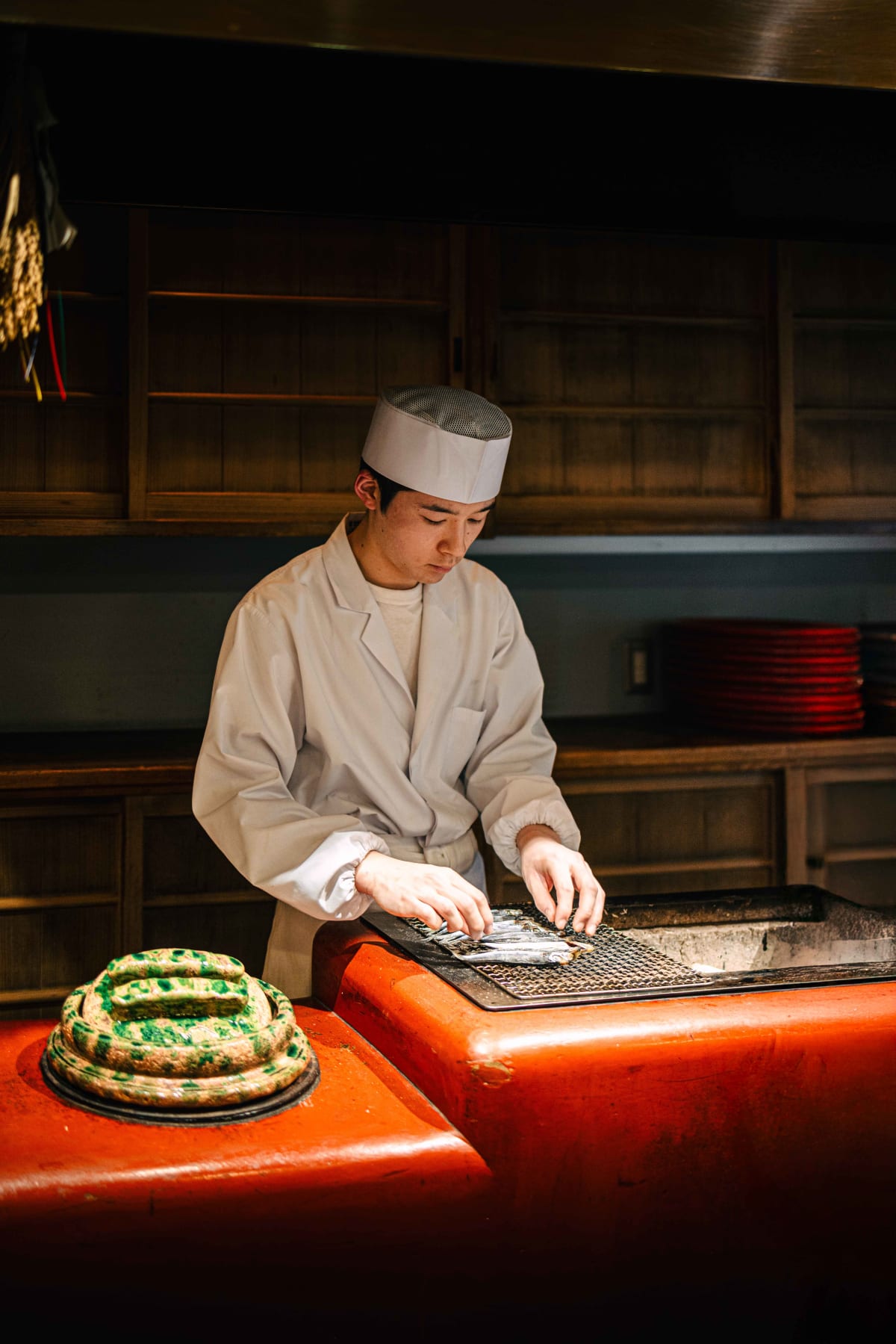
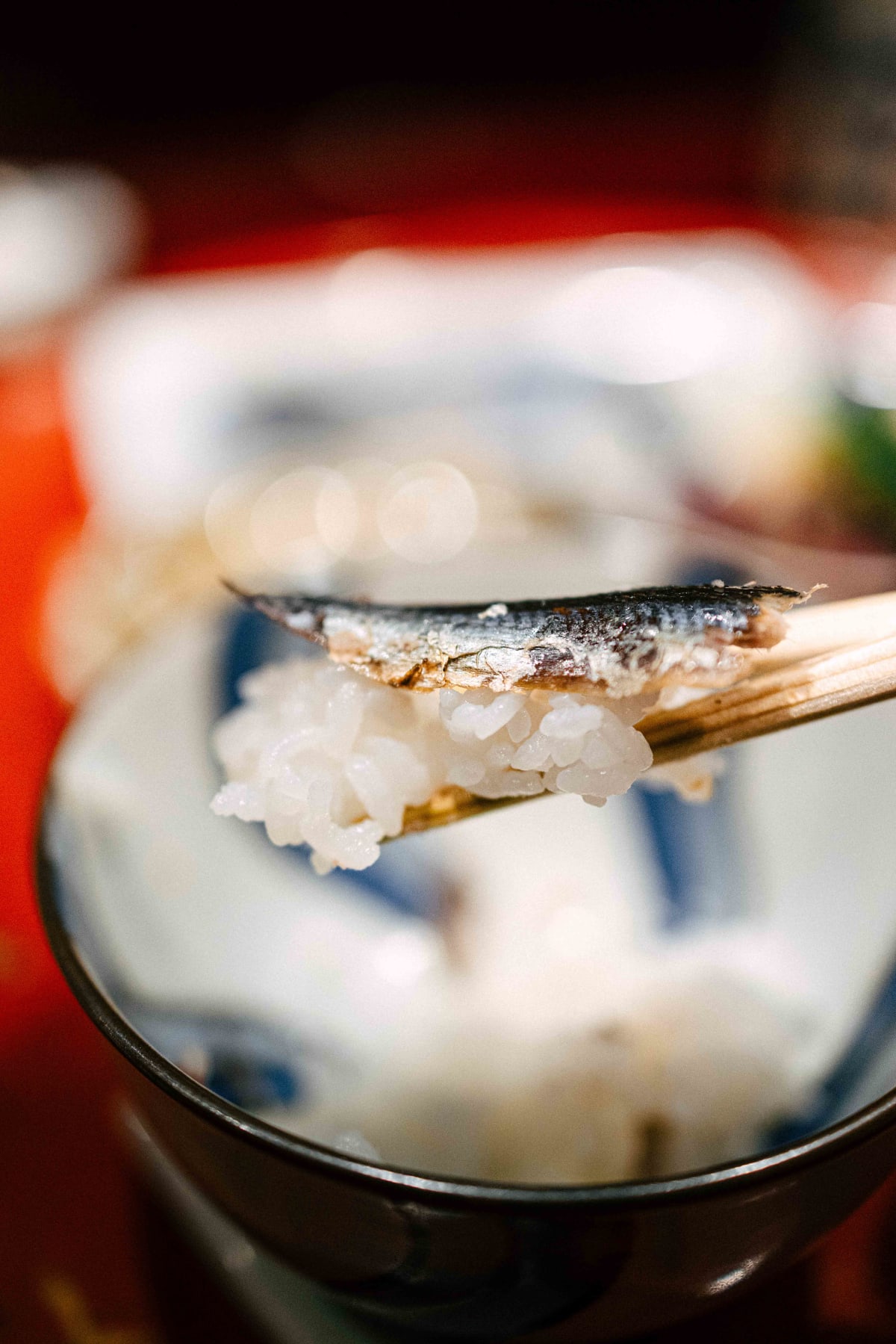
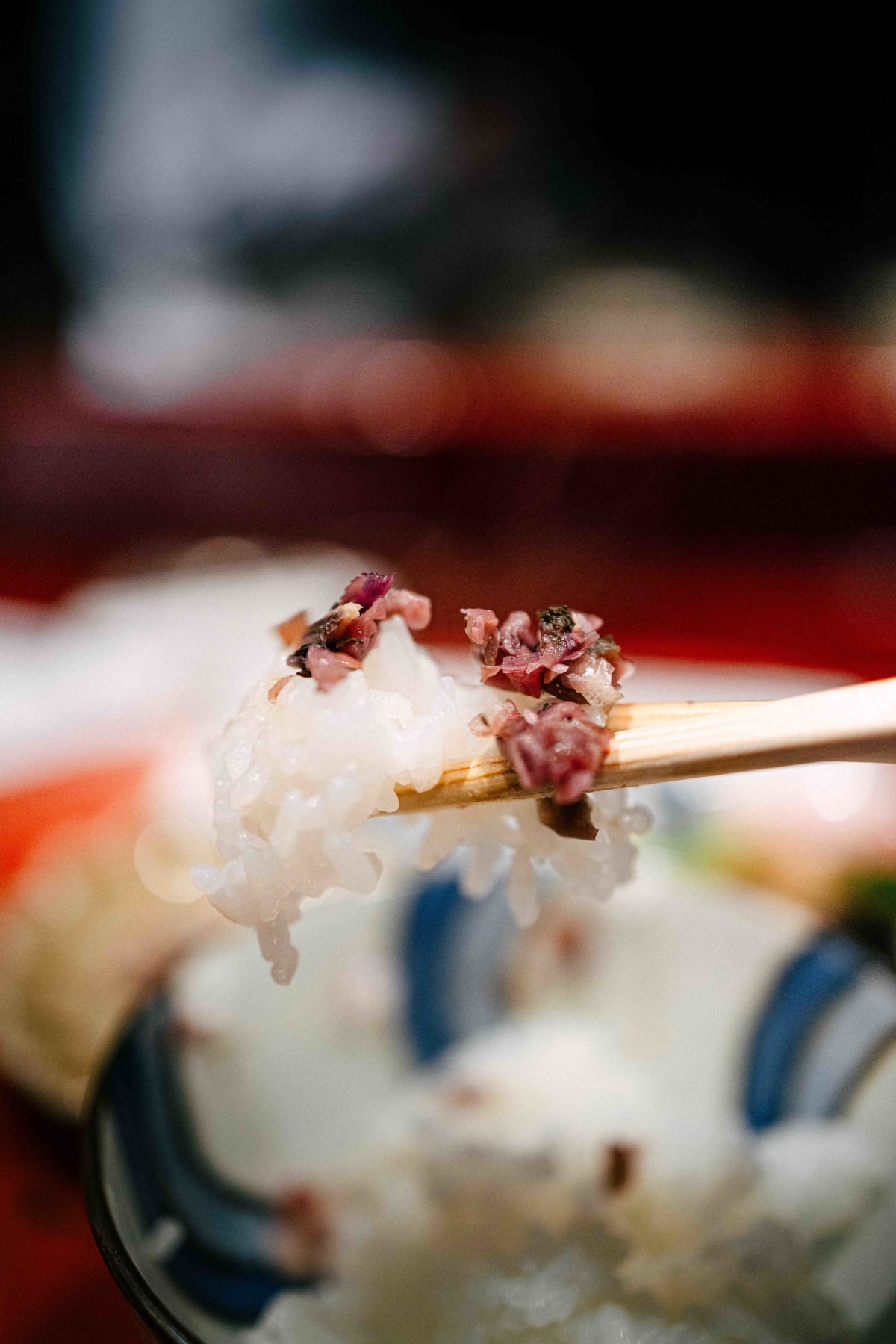
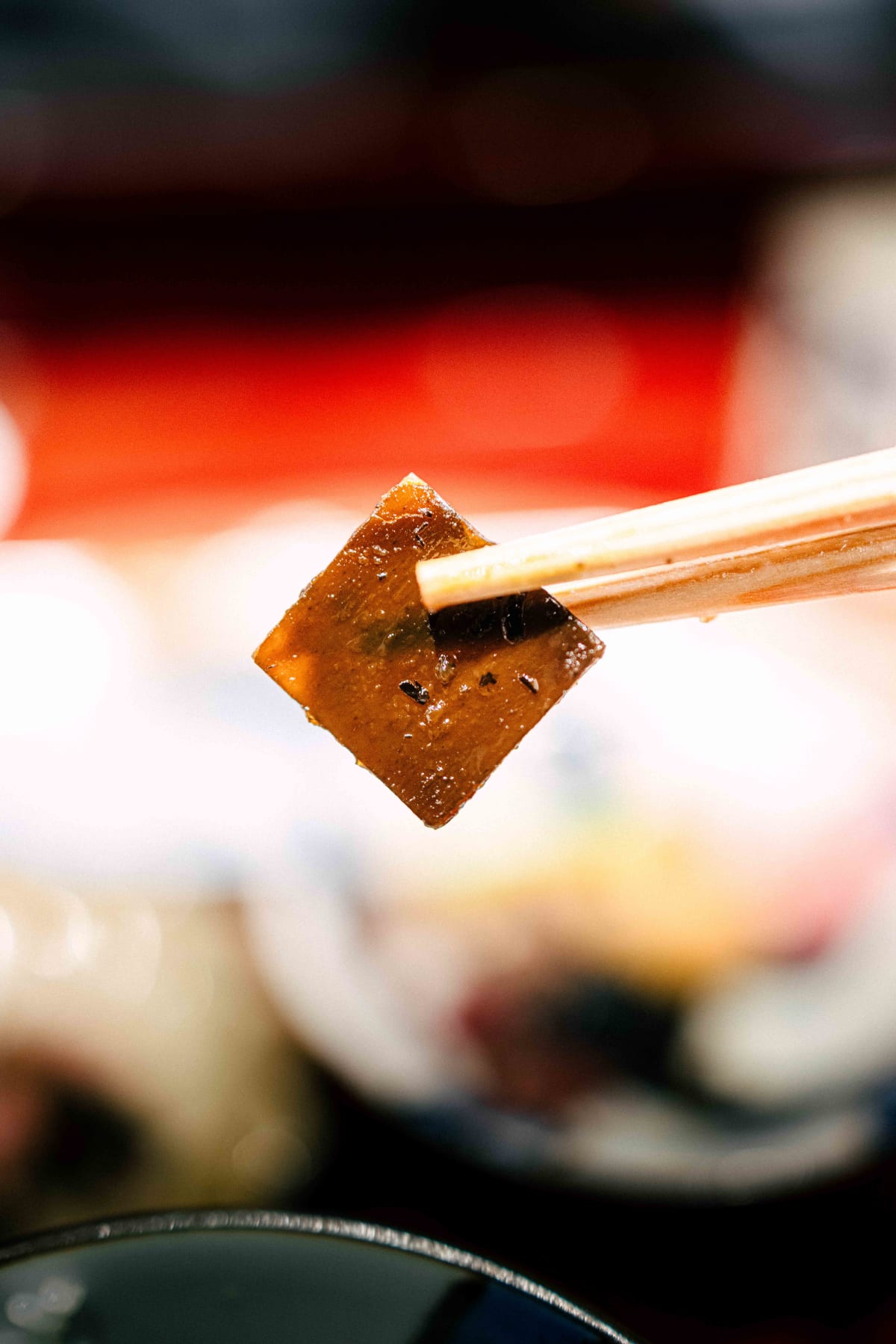
Before the dessert, the final savory course was a bowl of freshly cooked rice served with several pickles and a grilled sardine. In Japan, this configuration of rice with assorted side dishes is often called obanzai.
79—79 / 99
The pickle that left the strongest mark was shibazuke, a Kyoto pickle of cucumber and eggplant, here chopped finely. The acidity went well past simple brightness, and more than that, an olive-like aroma and flavor sat in the mouth briefly before fading. The first taste was unfamiliar, but two or three bites in, a clearing sensation followed, and the small dish began to draw repeated attention.
78—78 / 99
The real surprise was the grilled sardine. I had expected something in the register of a mackerel or gizzard shad grill, but the first piece I lifted from the bone carried sansho (Japanese pepper) so forcefully that the mouth went briefly numb.
74—77 / 99
The chef had clearly used sansho with intention, generously, in the grilling itself, and for a moment I caught myself wondering whether the fish might simply have been better grilled plain.
71—71 / 99
After the sardine was finished, the chef suggested stirring the rice in the empty bowl, and following that instruction, the rice itself had quietly absorbed the sansho aroma. What this meal made unmistakable was that the received impression of Japanese cuisine as low-intensity in aroma collapses entirely inside this restaurant. Each pickle carried a distinct aroma and acidity, strong enough that anyone meeting the table for the first time might find it unfamiliar.
80—82 / 99
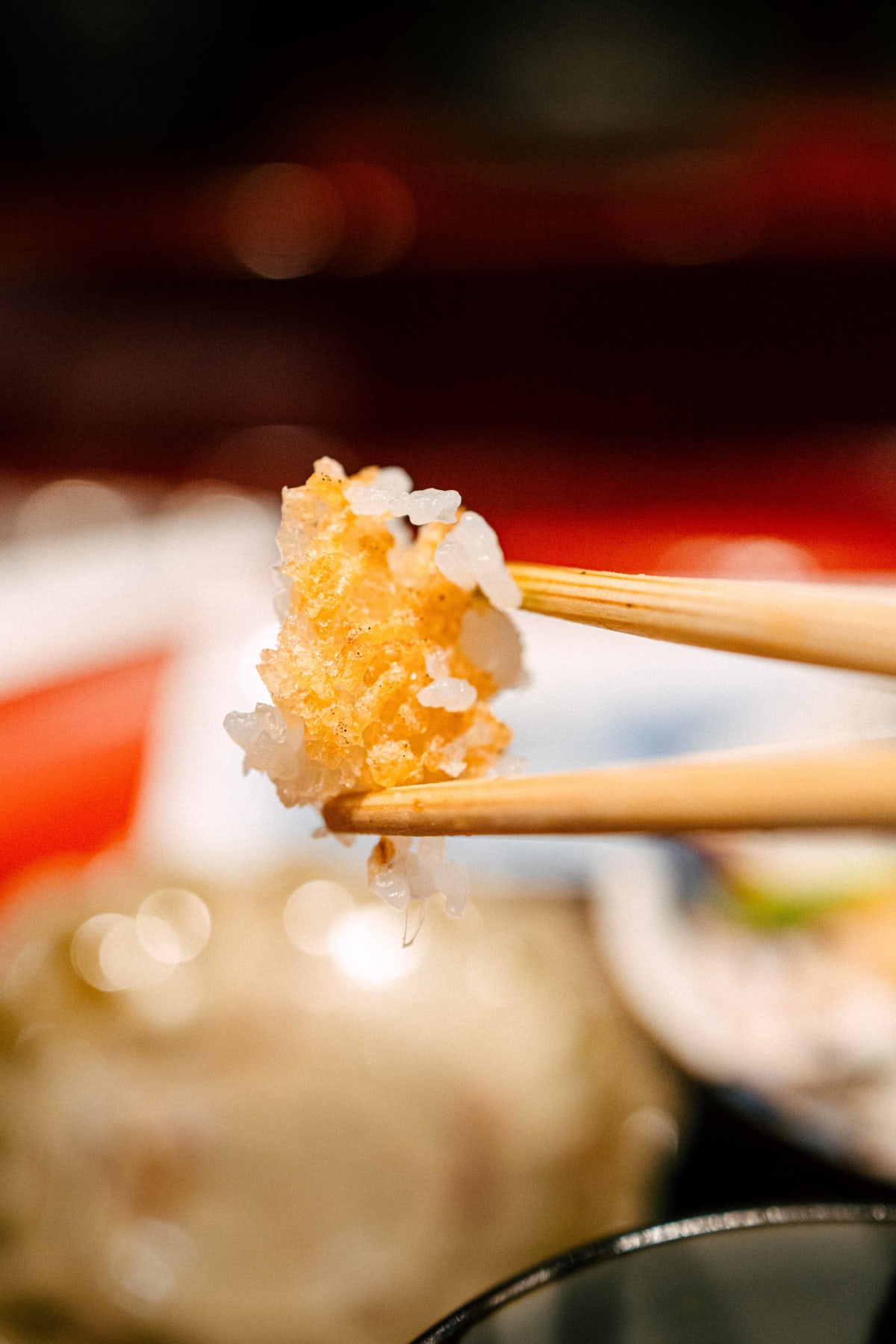
The rice course did not stop at one bowl. Watching other guests at the counter receiving variations that looked similar yet different, I asked for them as well, and the chef brought each one out with a light name attached. The first was called "Paris." It was scorched rice scraped from the bottom of the pot, and the chef named it Paris because the Japanese onomatopoeia for crispiness, pari-pari, slid neatly into the city's name.
83—83 / 99
The texture of the scorched rice was virtually identical to nurungji, the Korean scorched rice, and it was hard not to think that a side of kimchi would have completed the bowl into a full meal. The second was called "New York."
84—84 / 99
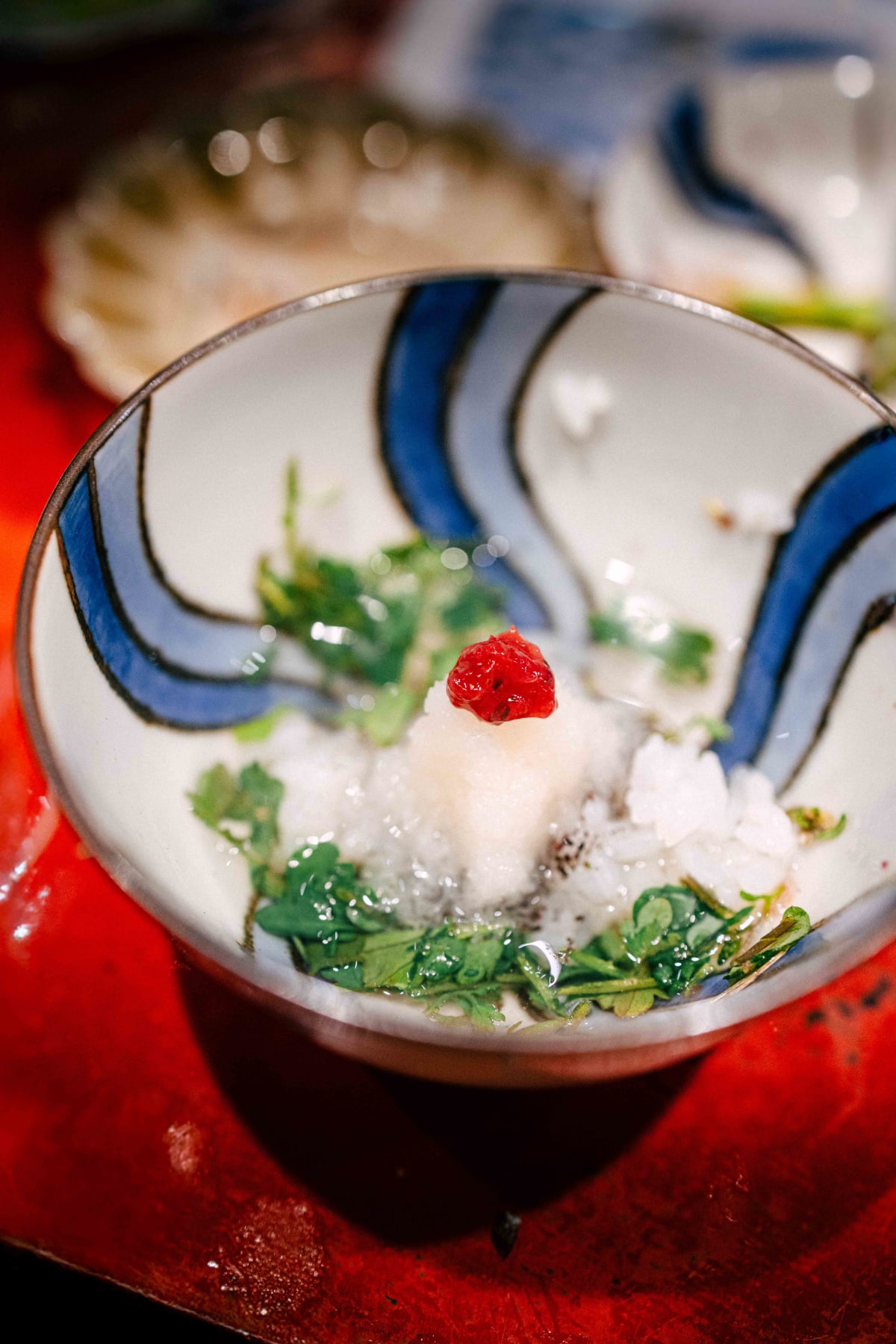
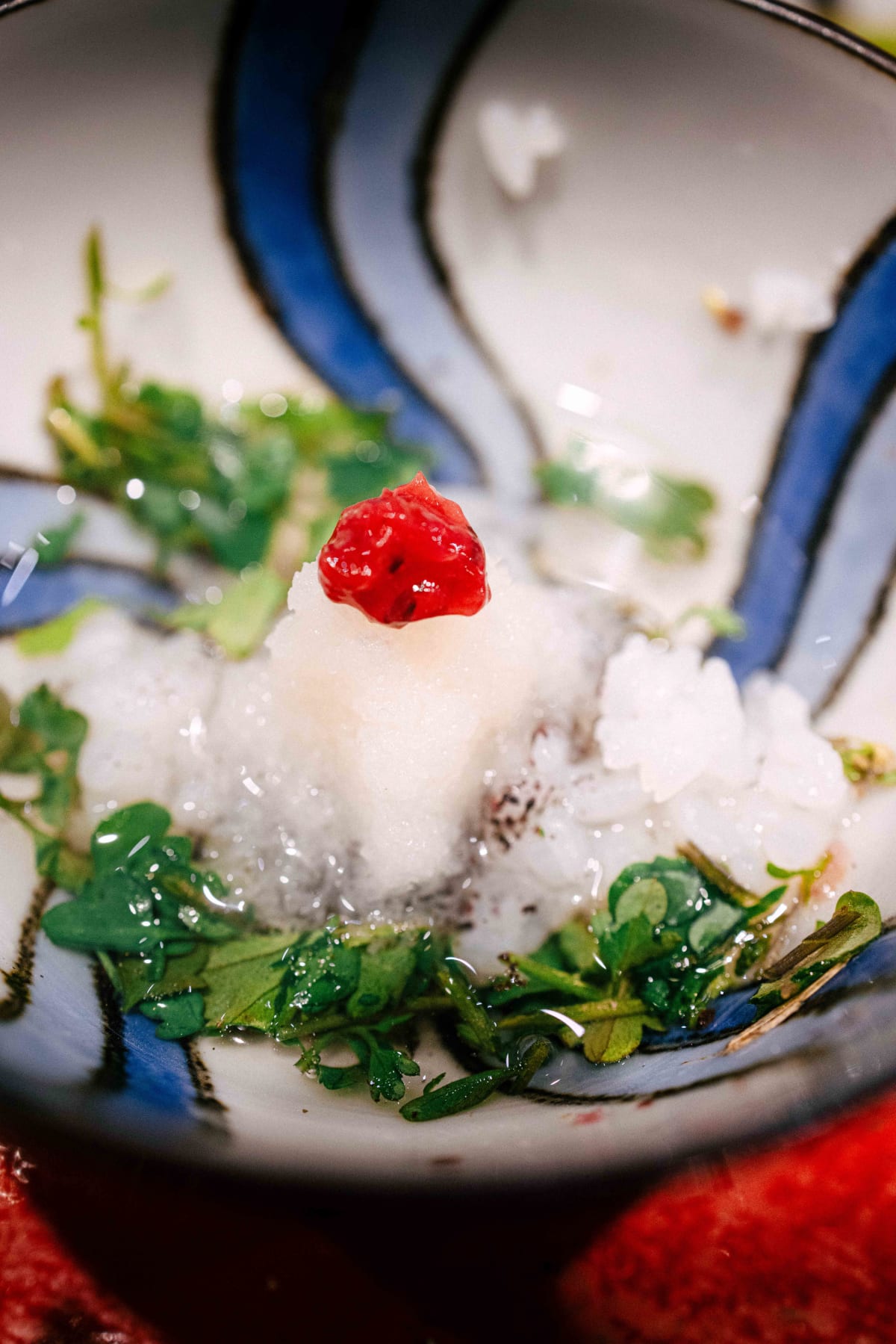
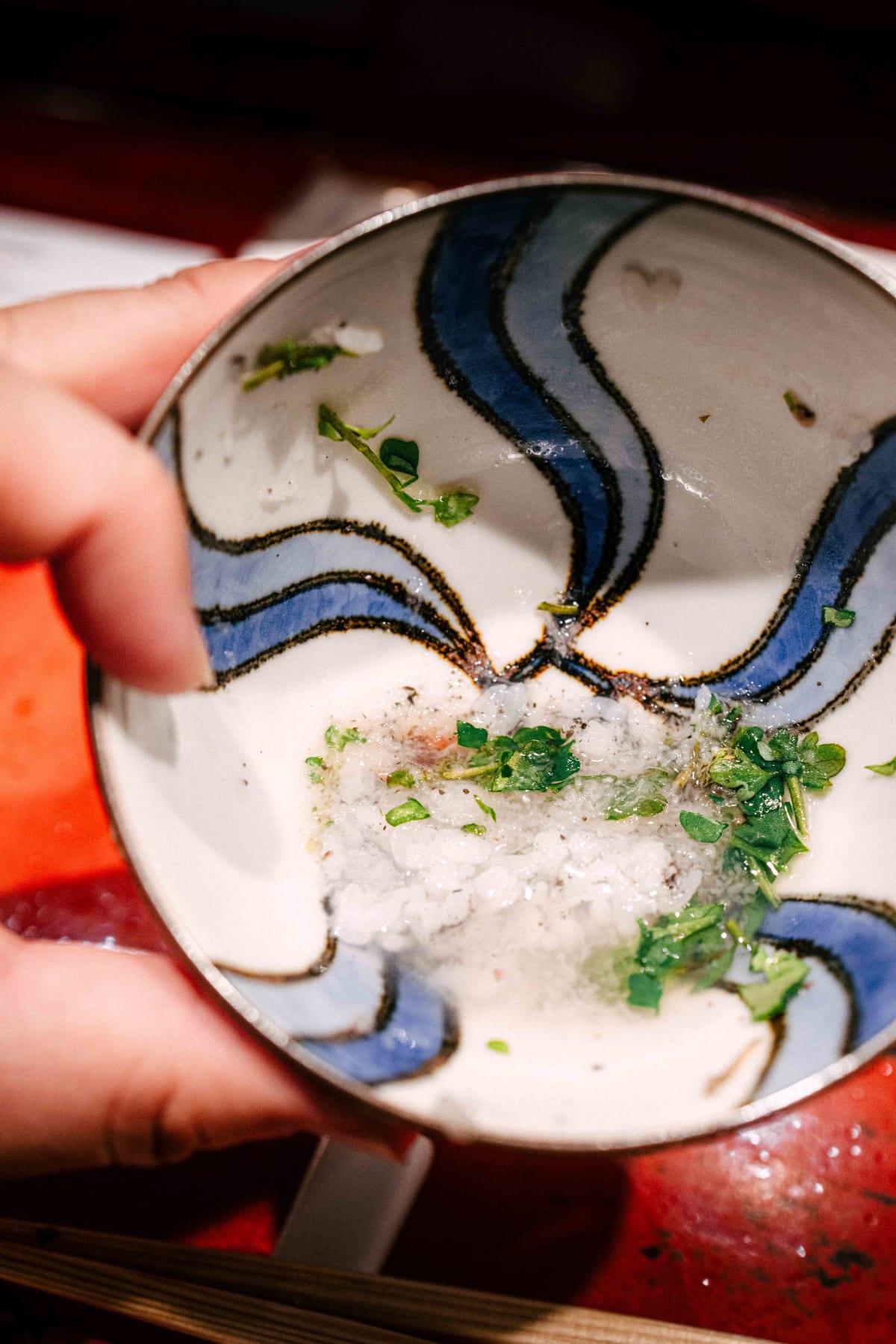
Rice mounded with chopped daikon was piled into a peak with a single umeboshi at the summit, and water was poured over the assembly to make an ochazuke; the resulting shape held an unmistakable echo of Mount Fuji. The chef called the dish New York because nyuyoku (入浴, "to enter the bath") and New York share a near-identical pronunciation in Japanese, and the cool temperature of the dish also gave it the air of a light palate cleanser.
85—87 / 99
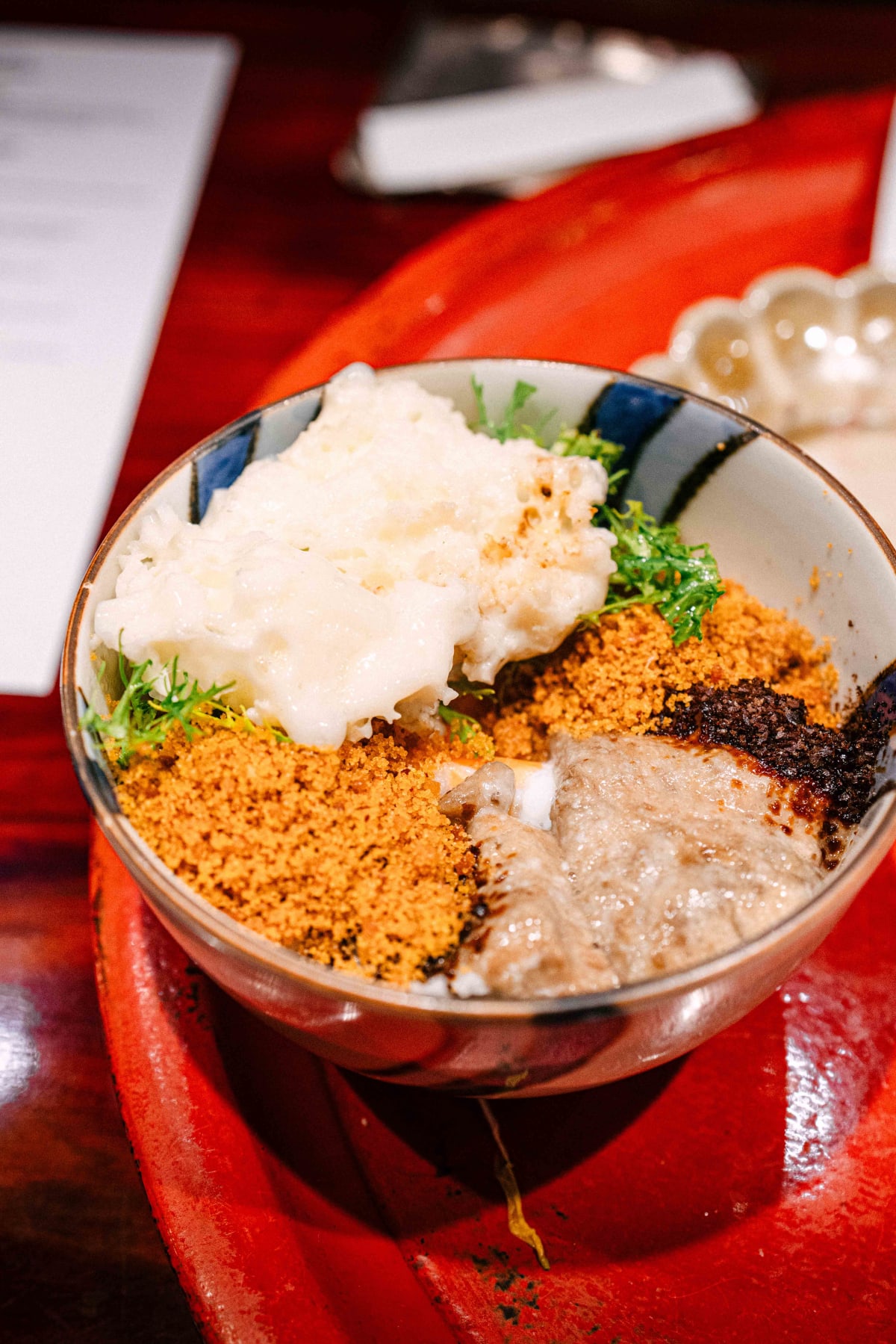
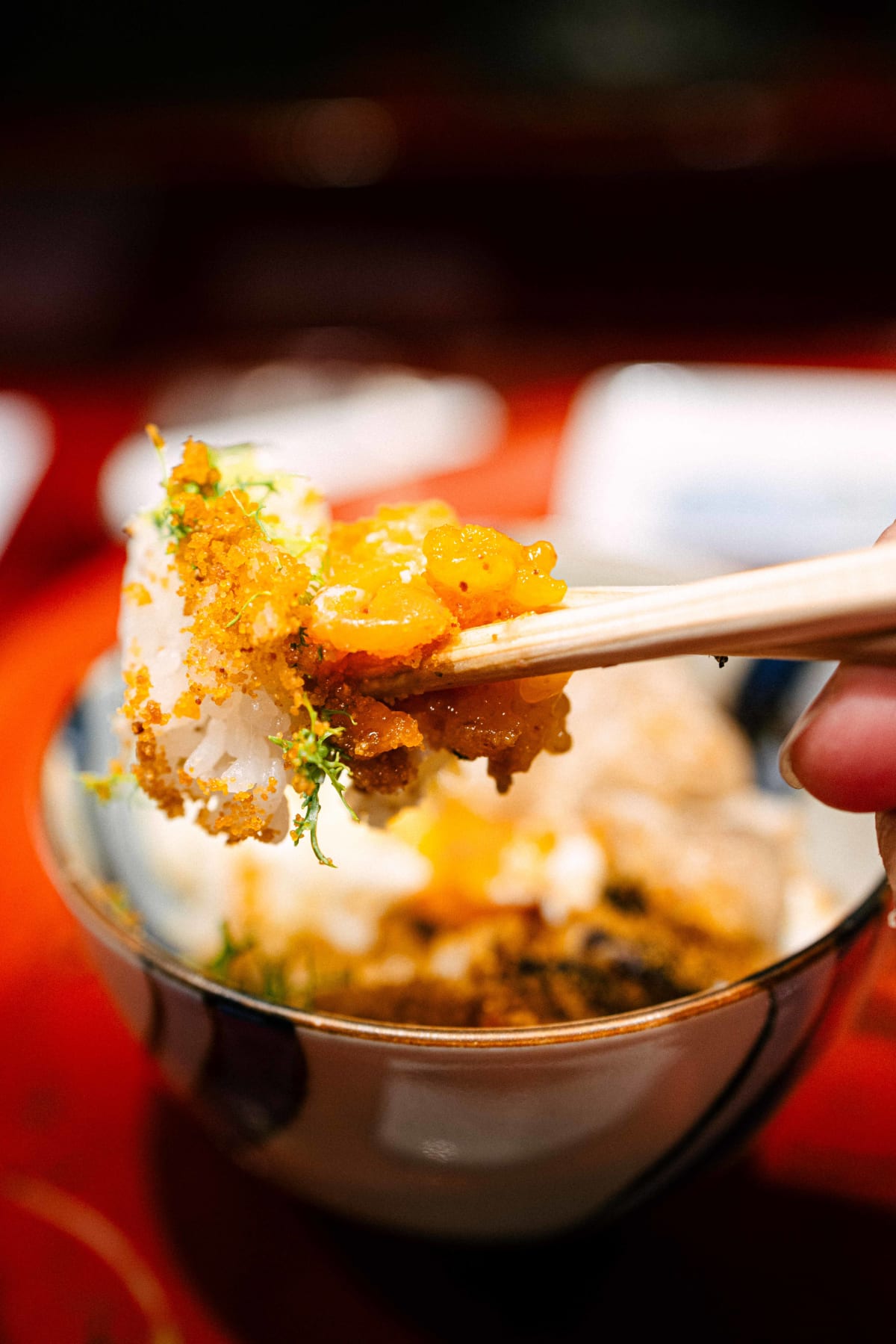
The third was called YTKG. A standard TKG (tamago-kake-gohan, raw egg over rice) had received an additional letter Y at the front for yamaimo (Japanese mountain yam). From a distance the color suggested a chopped meat patty, but the substance was grated yam, and karasumi (cured mullet roe), finely shaved, sat in a generous mound beside the egg. The roe spread its depth through the rice while the slick, particular texture of the yamaimo held its own within the same mouthful, and this last bowl lifted the late stretch of the counter into its most decisive register.
89—90 / 99
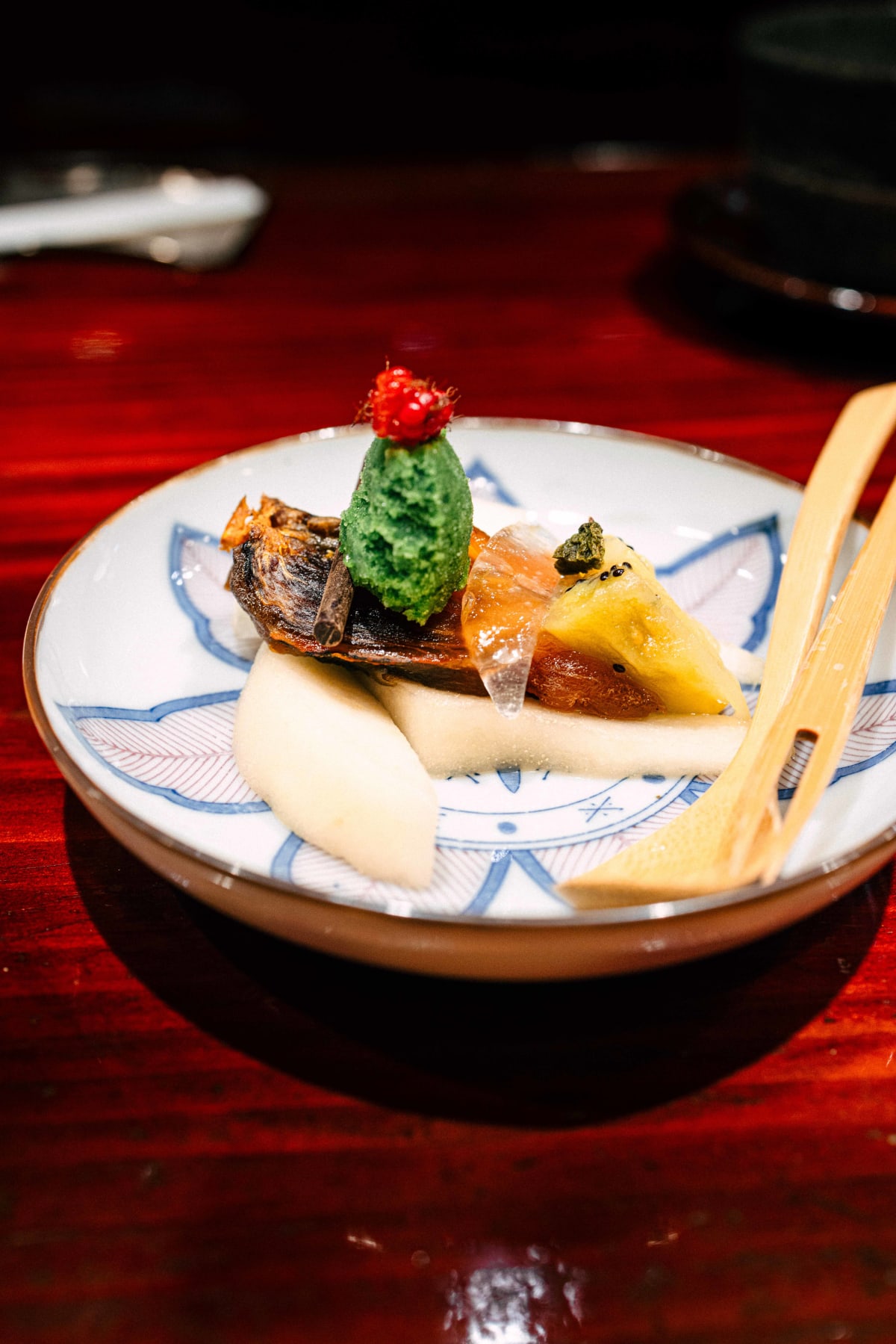
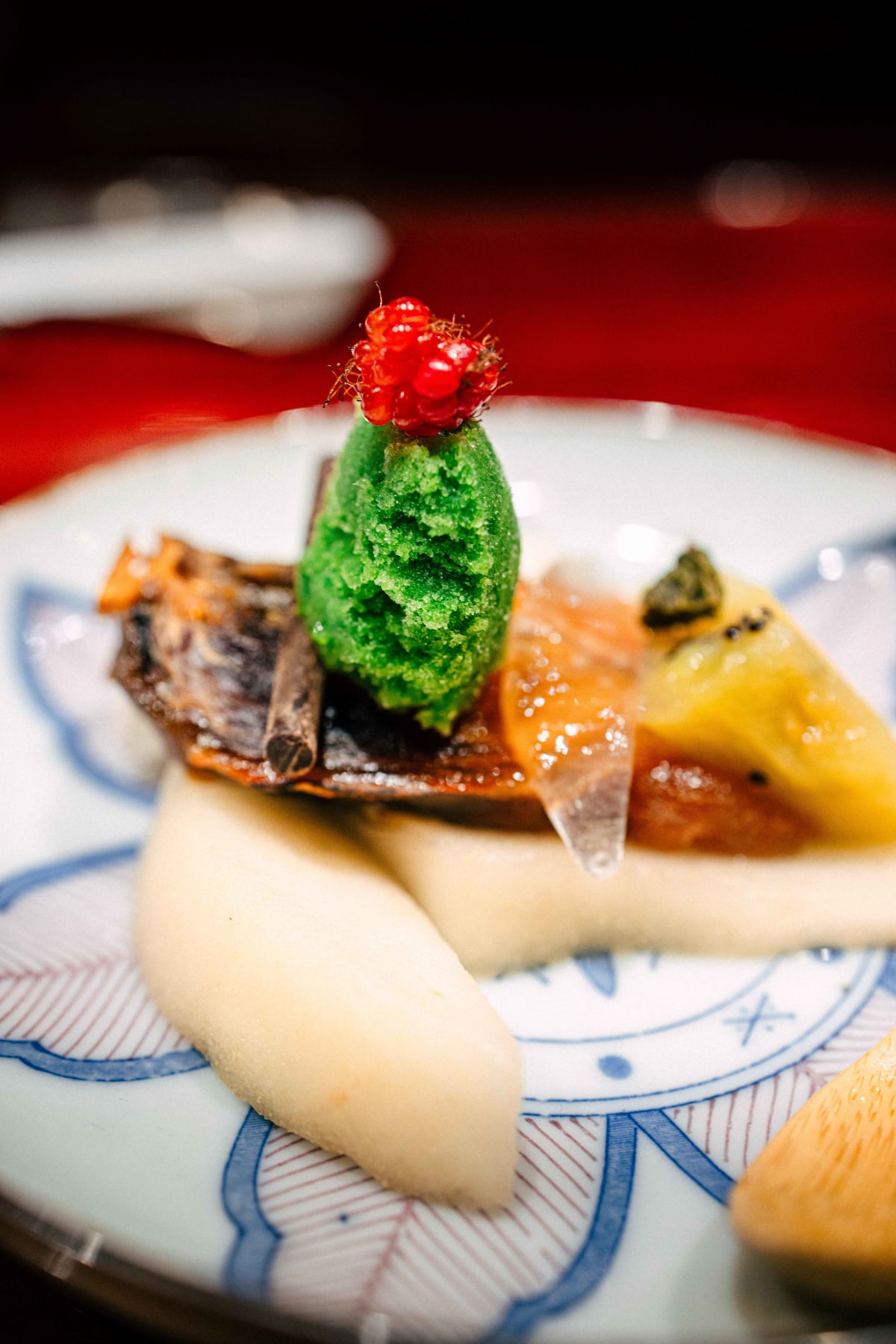
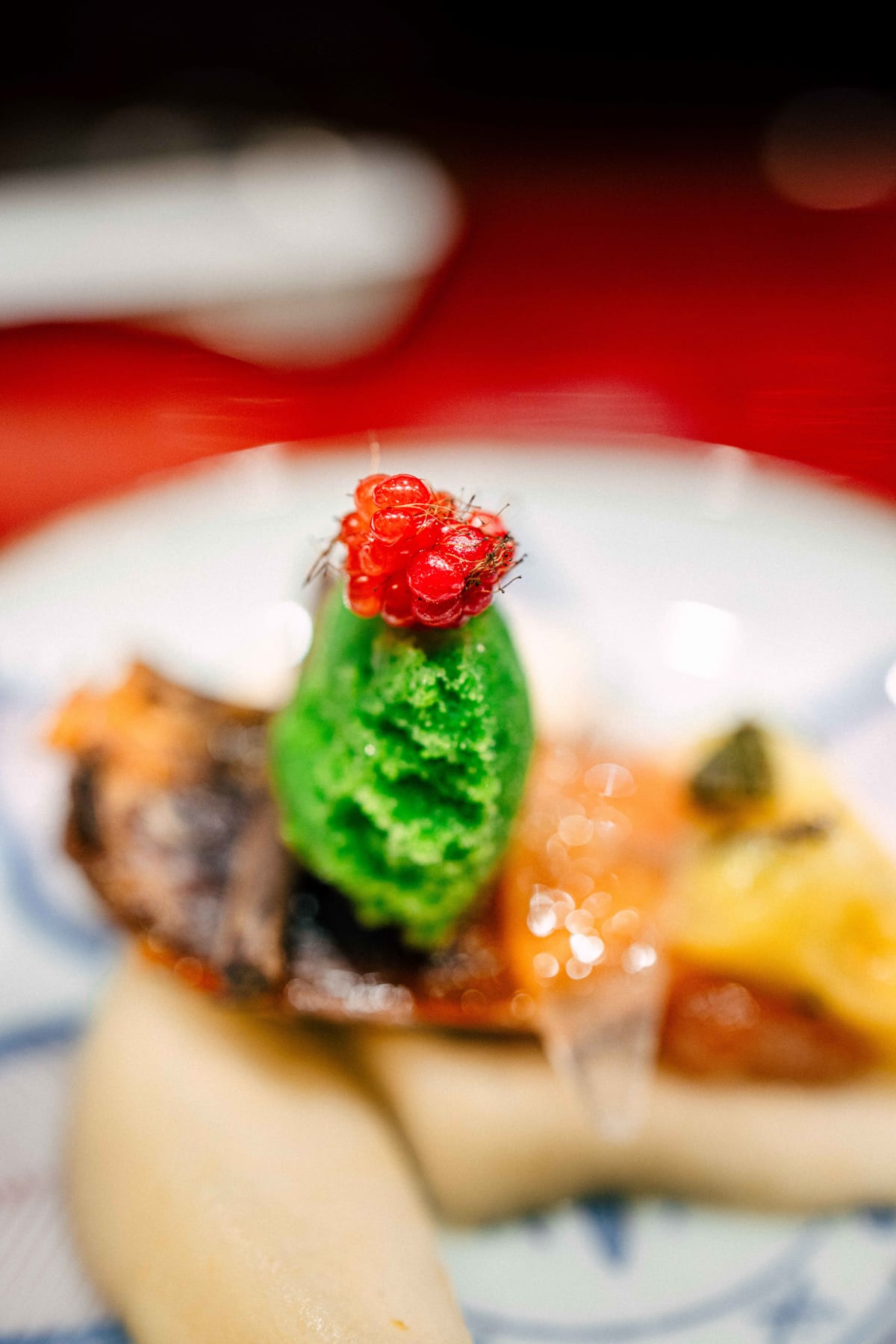
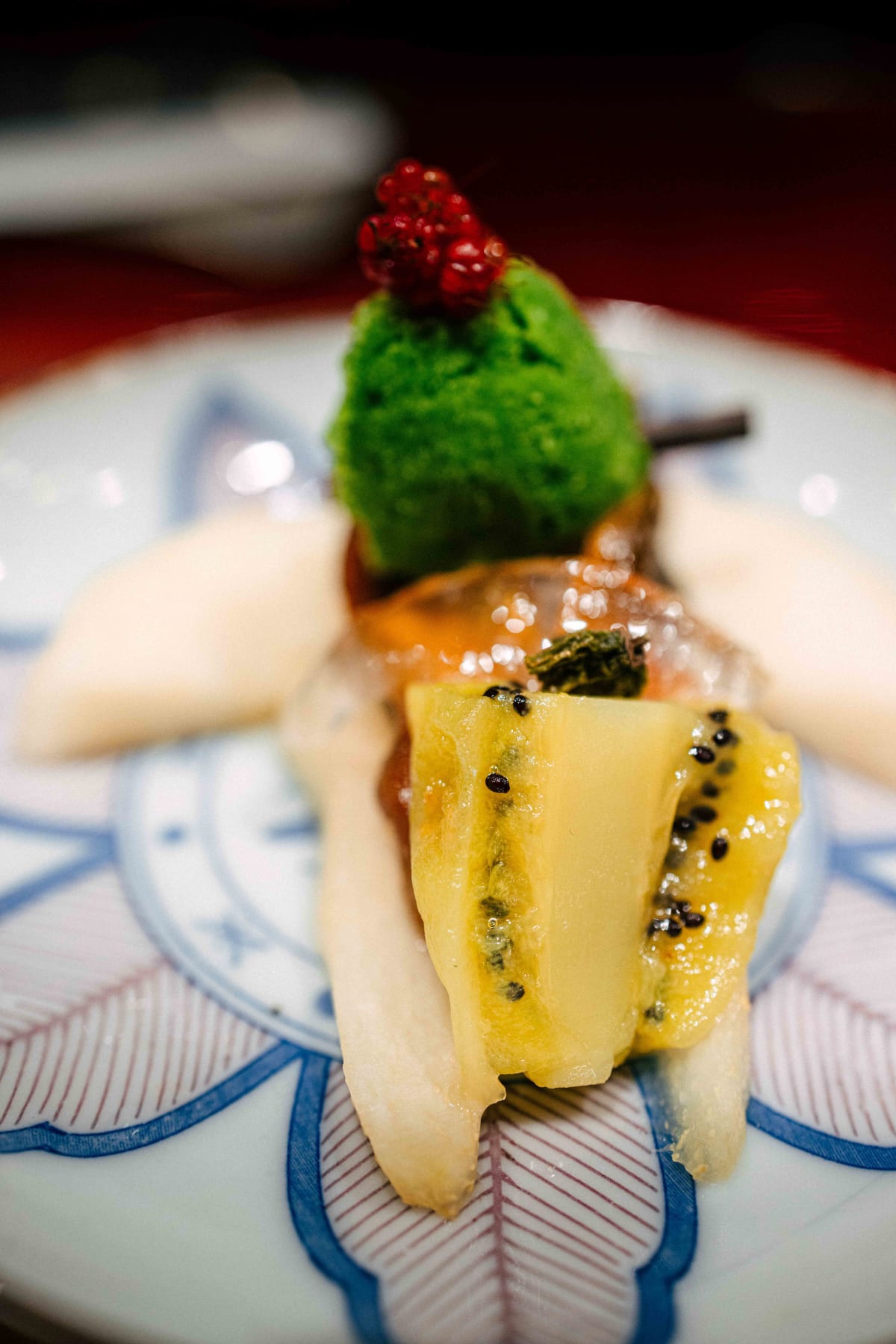
The dessert moved around seasonal fruit. Pear, kiwi, and dried persimmon were laid out together, with a sorbet of carrot leaf set on top. The sorbet itself was plain, but the selection of the fruit was strong, and the dried persimmon stayed in mind longest.
92—95 / 99
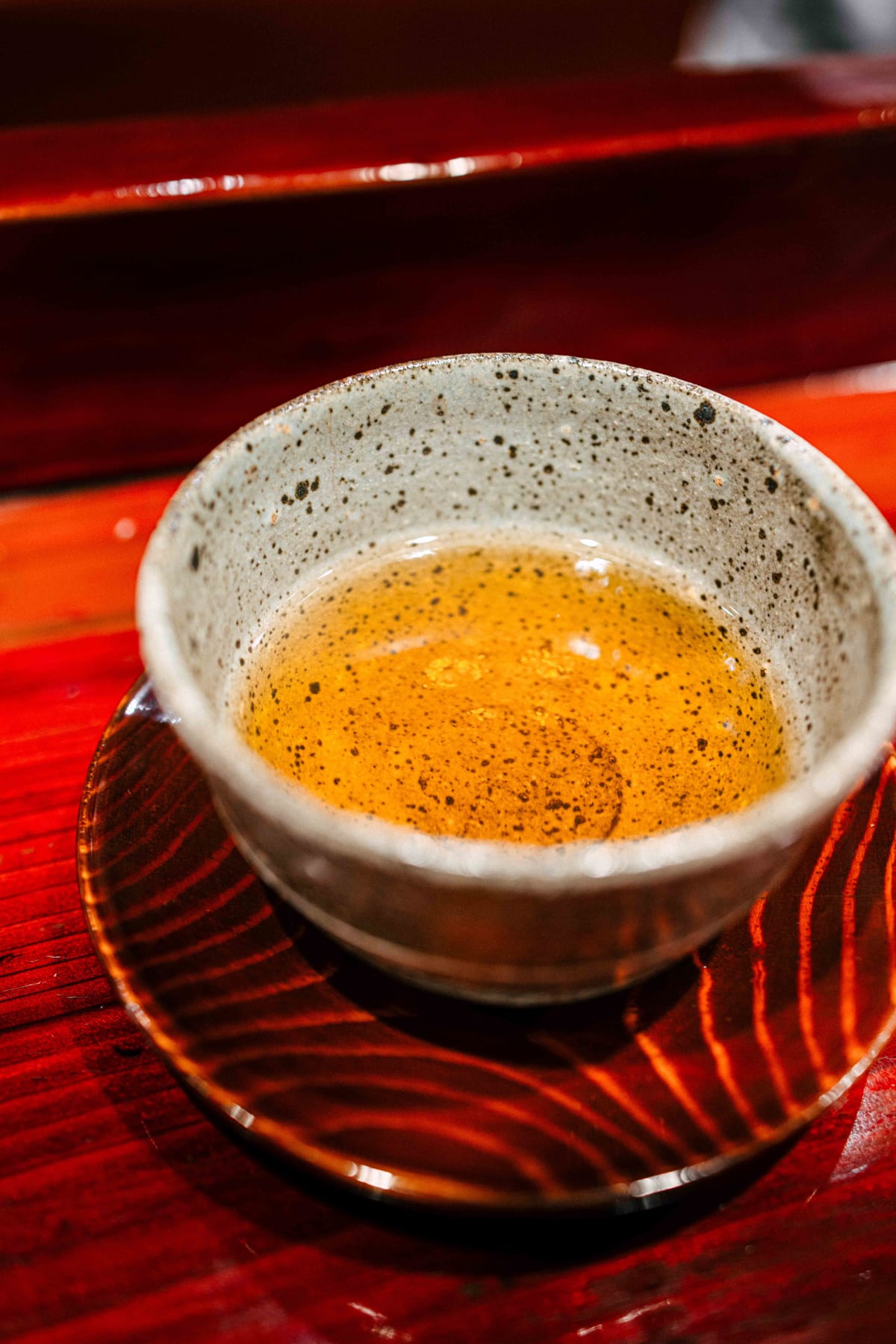
The roasted bancha that arrived with it, iribancha, was a tea I had drunk several times during the Kyoto trip, but the cup on this evening carried the cleanest aroma and the most settled body of any I had encountered.
91—91 / 99
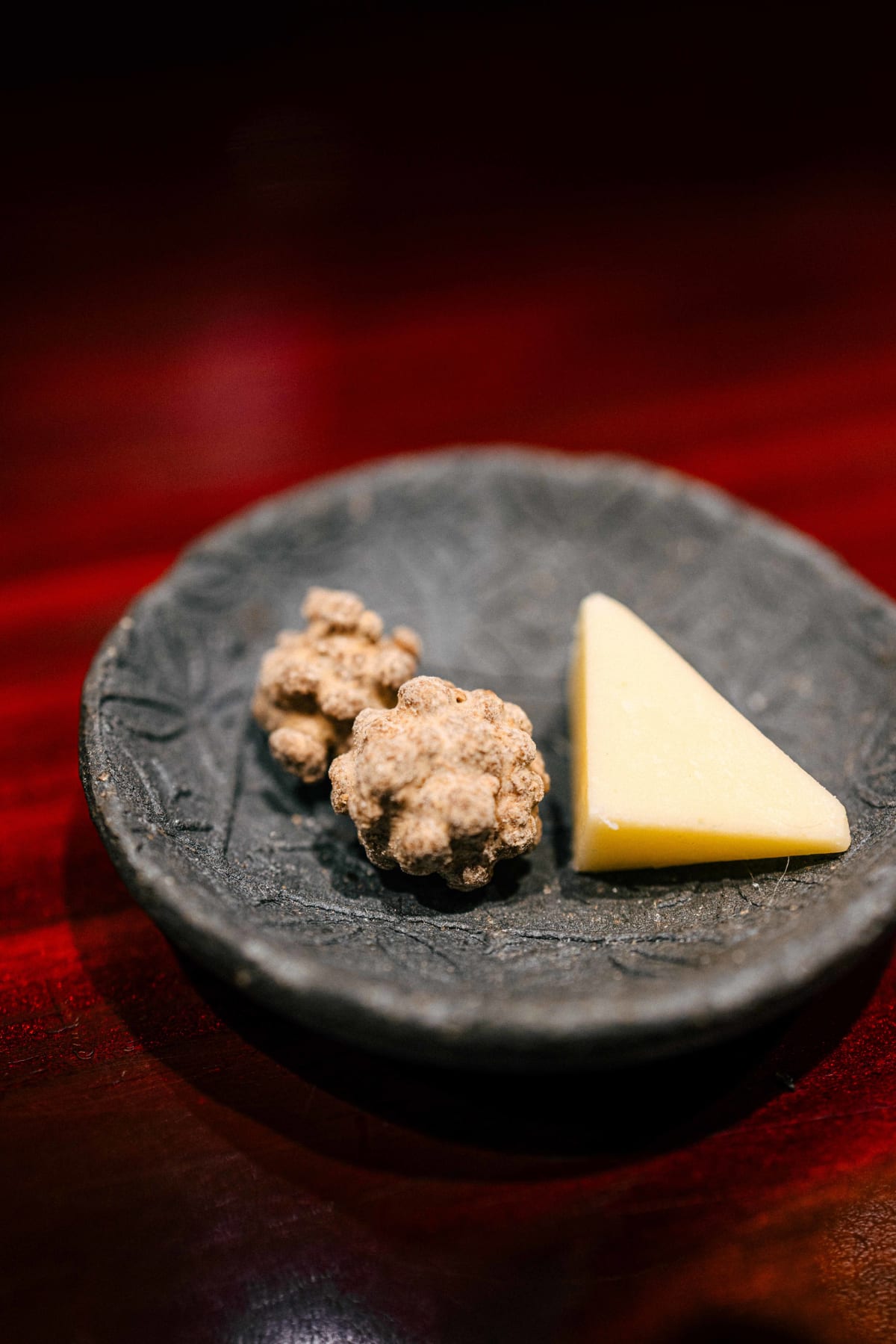
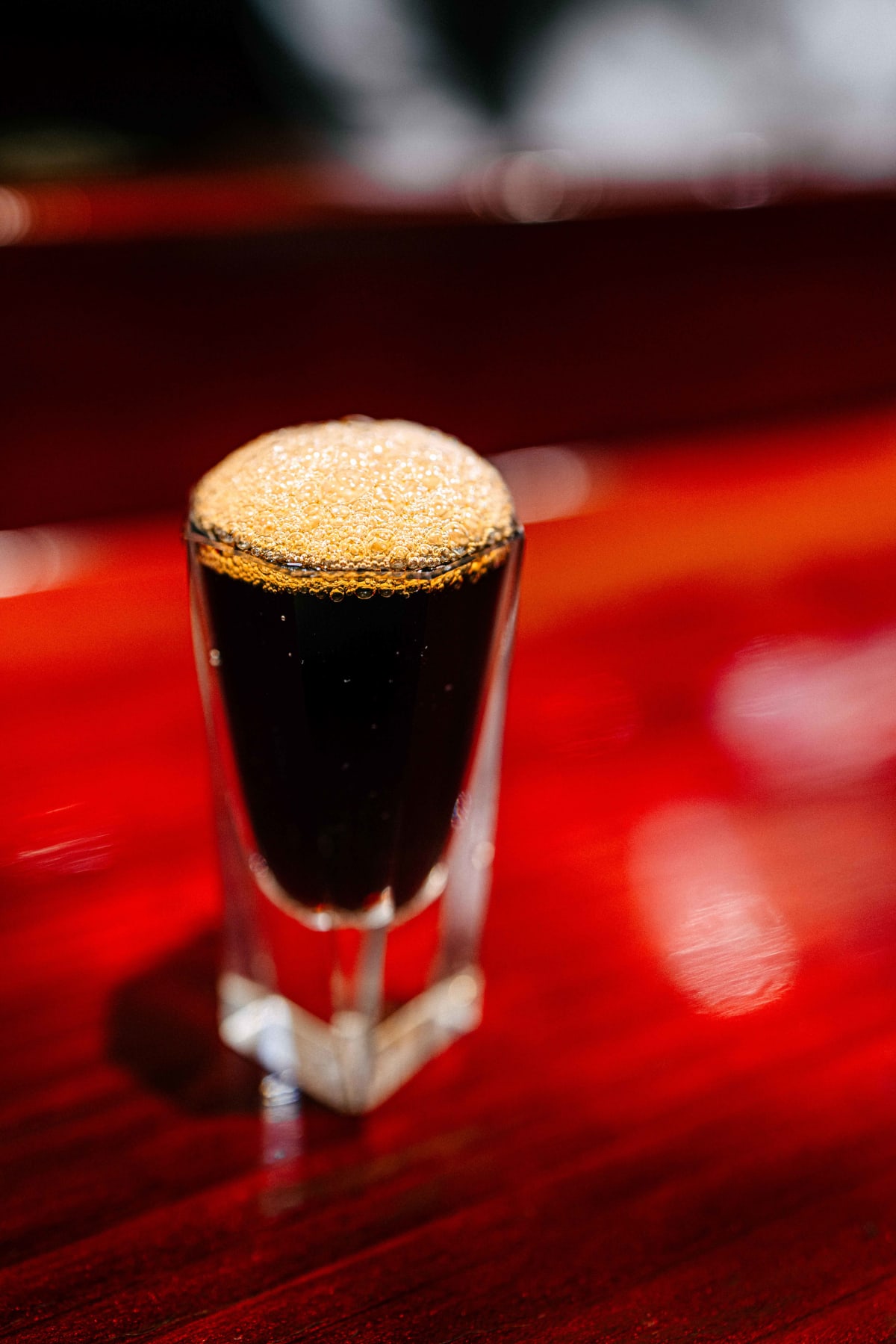
The course closed with a single piece of cheese, a candy of clear sweetness, and a cold brew that had reportedly been steeped for several weeks. Coffee at the close of a tasting is often a habitual gesture, and I picked up the cup without much attention, only to find the aroma and the lingering sweetness substantial enough to make me sit forward and reconsider it. The accompanying cheese and candy were not afterthoughts but a final pairing, each tuning the coffee's edges.
96—97 / 99
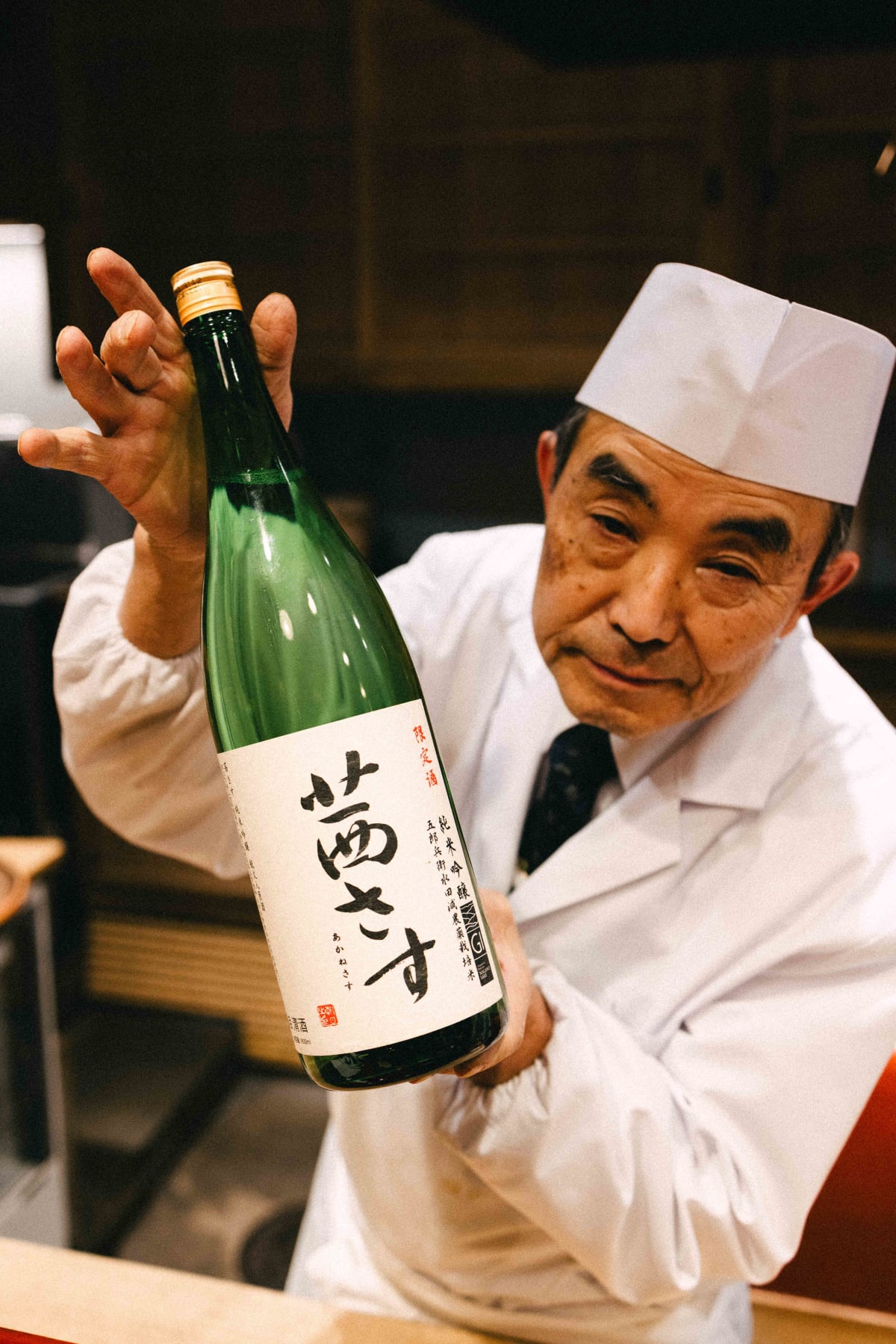
Toward the end of the meal a brief conversation crossed the counter. Once the chef learned the table was from Korea, he brought up Chef Morita of Ariake at The Shilla in Seoul in passing. It turned out the restaurant had served as a quiet conduit through which Korean chefs of Japanese cuisine had come for training. Looking up the restaurant's record once I was back at the hotel, I found that it had held Tabelog Gold status in 2020, moving through Silver afterward and now sitting at Bronze, with the Michelin two stars and Green Star both held throughout. Read alongside the news that the family's main house, Miyamasou, has been elevated to three stars in the 2026 guide, the family's foraging-driven cuisine emerges as a current that has now settled into a new altitude across the Japanese culinary map.
The evening was the first time I clearly registered that what I had thought of as Japanese cuisine in earlier visits had been a quietly modernized version of something older. Tsumikusa ryori, as a form, is one answer to the question of how grasses and herbs gathered from a mountain that morning can find their everyday shape on a counter in the city, and the answer is laid out, course by course, within a single 33,000-yen meal in this small space in Jodoji. If the main house in the mountains unfolds the daily rhythm of foraging through the seasonal life of a ryokan, the city outpost has compressed the same time into the span of a single seat at the counter.
98—99 / 99
"Picking grass," in the literal reading of 摘み草, is an act recorded in the Manyoshu and threaded through Japanese aesthetics from the Heian period onward, the practice of nobles stepping out to gather young herbs as the seasons opened. To see how that act has settled onto a counter in Jodoji as of 1996, this restaurant is the clearest answer in the city. When the chef's daily walk into the mountains, the unused trimmings returned to a poultry farm in Ohara, and the deliberate use of wild boar and deer to ease pressure on the forest meet at a single point, the Michelin Green Star ceases to read as a peripheral mark and becomes the actual frame of the work. What the main house unfolds in the mountain inn over the rhythm of a season, the city outpost has compressed into the span of a single 33,000-yen evening at the counter.
Have a question about this restaurant, or want to share your own experience?
Send a message