Local & Essential · Japan
Tonkatsu Narikura
"The Japanese path to tonkatsu, met by Korea on its own terms"
Korea, where I live, has long been on the receiving end of broad cultural influence from Japan, the result of both geographical closeness and one sorrowful chapter of shared history. Within that influence, Japanese cuisine occupies a particularly strong position. Nearly every genre of Japanese cooking has rooted itself in Korea, from casual eateries to fine-dining rooms, and the level reached in many of those places is genuinely high. Even so, my reading is that across nearly every category, Japan still does Japanese cuisine better than anywhere else does. The single exception is tonkatsu.
16—16 / 25
The single exception is tonkatsu.
I will, in the years ahead, write a fair number of tonkatsu reviews from both sides of the strait, but on this one dish I believe Korea has reached a point very close to Japan, while developing a clearly distinct character of its own. The price points, too, are often lower than in Japan. The starting point of that view, for me, was a visit in April 2023 to Narikura in Minami-Asagaya.
Up to that point I had never been to a top-Tabelog, high-end Japanese tonkatsu specialist. But because tonkatsu sits at an unusual intersection of broad popular appeal and a clearly established position within the Japanese dining scene, I had been telling myself for a while that I needed to address it at least once. At the time, the number-one tonkatsu restaurant in Tokyo on Tabelog was Narikura.
1—1 / 25
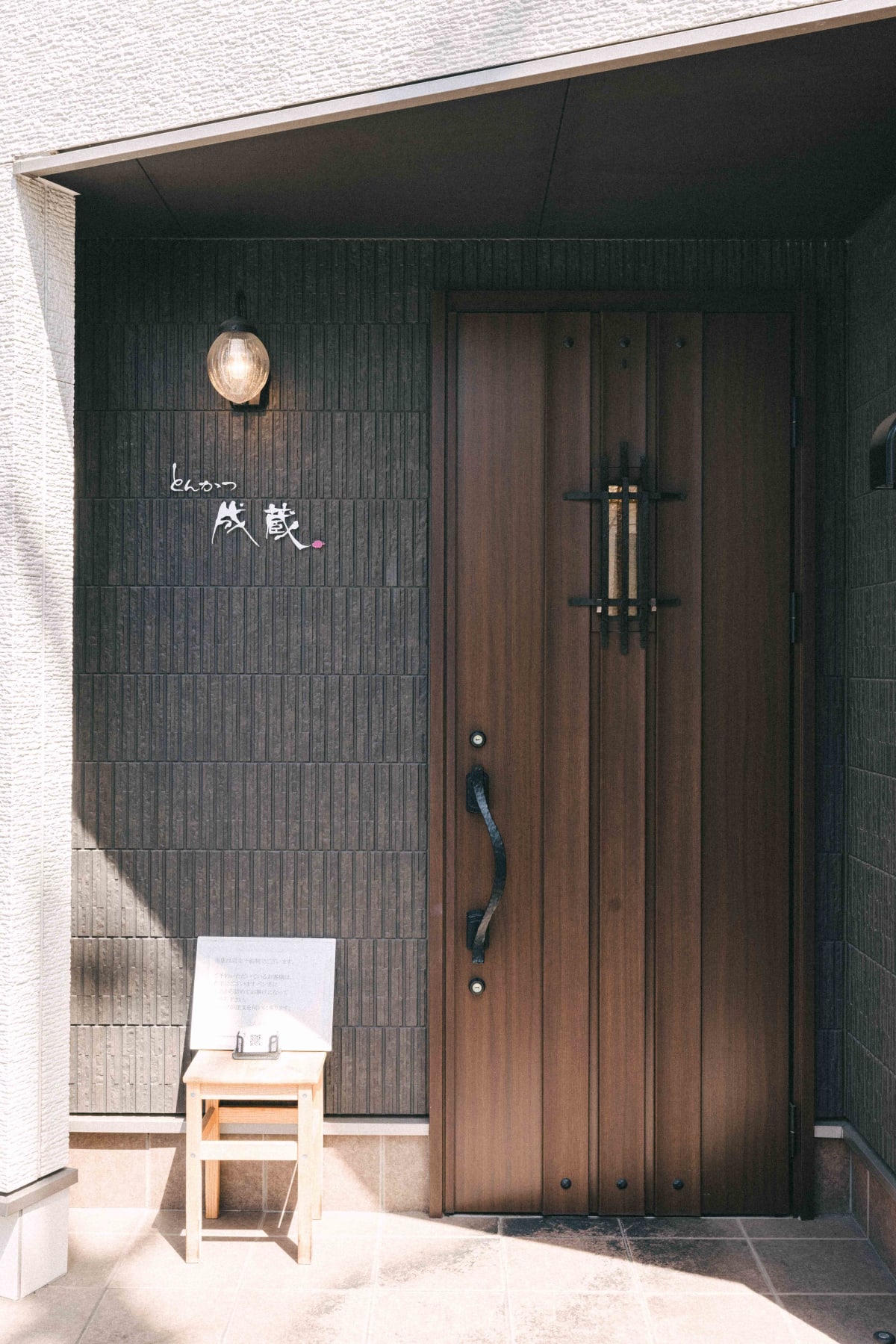
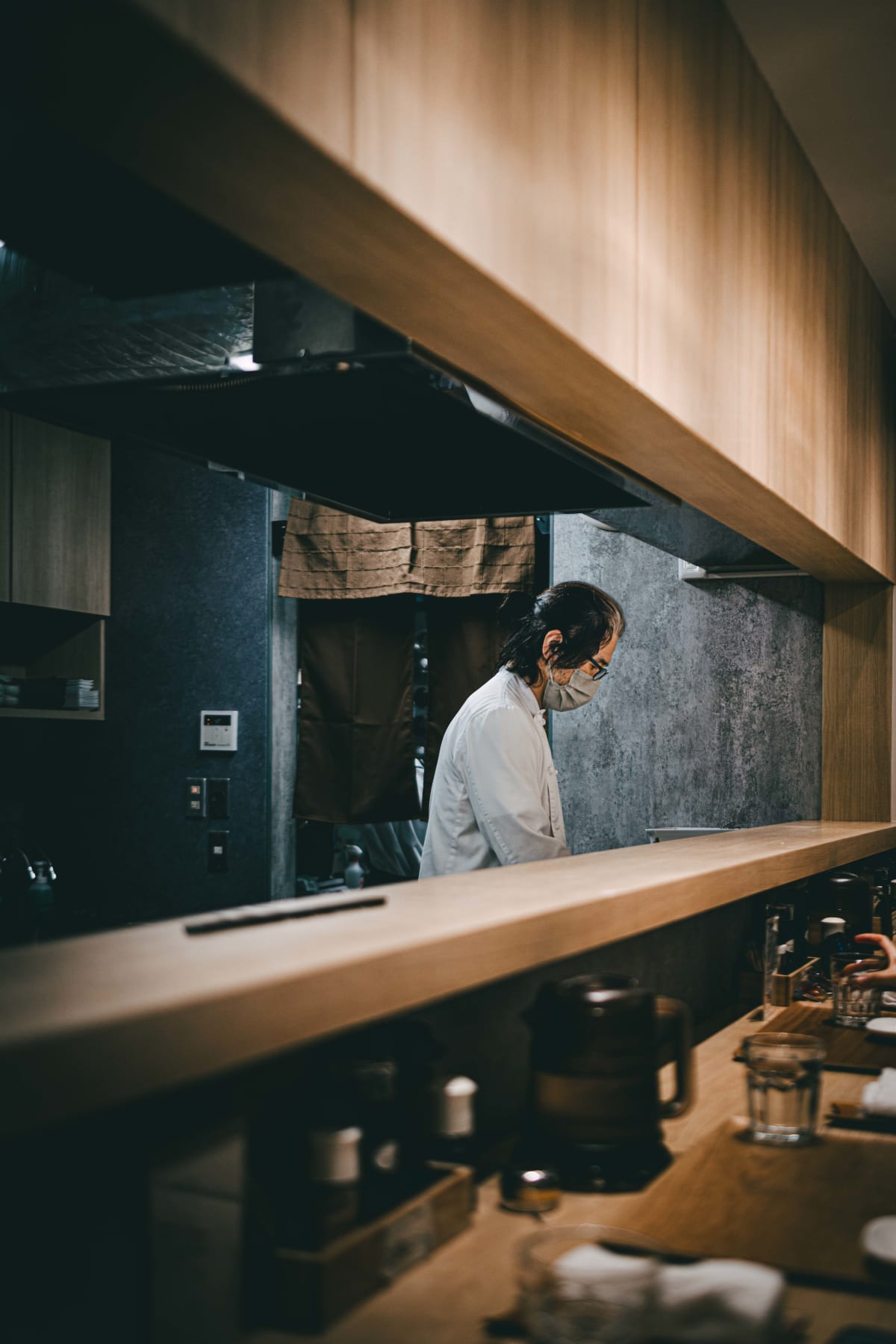
Narikura was opened in 2010 in Takadanobaba by Chef Mitani Naritada (三谷成藏), the restaurant taking its name directly from his own.
5—5 / 25
The early years were thin: there were stretches when the kitchen seriously considered downgrading the ingredient grade to keep the place running. It was during that same period, while testing new frying methods on staff meals at the restaurant using ingredients near expiration, that the chef arrived at what is now known as his "white tonkatsu" (白いとんかつ). The cooking begins at a low temperature and climbs slowly from there, so that the interior of the meat cooks evenly while the cross-section holds a pale, almost apricot-pink hue. About a year after this method took hold, the Takadanobaba location turned into a permanent line out the door. In July 2019 the restaurant relocated to Minami-Asagaya and shifted to a fully reservation-only format.
By the time of my visit, Narikura had been included in the Michelin Guide for several consecutive years and held the Michelin Bib Gourmand, the Tabelog Award 2023 Bronze, and a place on the Tonkatsu Hyakumeiten (百名店) simultaneously.
2—2 / 25
Securing a reservation was itself the first barrier. The OMAKASE platform opens slots every two weeks, and even with the alarm set I was not seriously expecting to land one. The push notification went off while I was already on the road in Tokyo. I jumped in immediately and got the seat. The whole thing leaned closer to luck than to planning.
The restaurant sits about a six-minute walk from Minami-Asagaya station, set deep inside a quiet residential block to the west of Shinjuku, clearly removed from the central Tokyo dining scene.
The room itself is small, around fourteen seats.
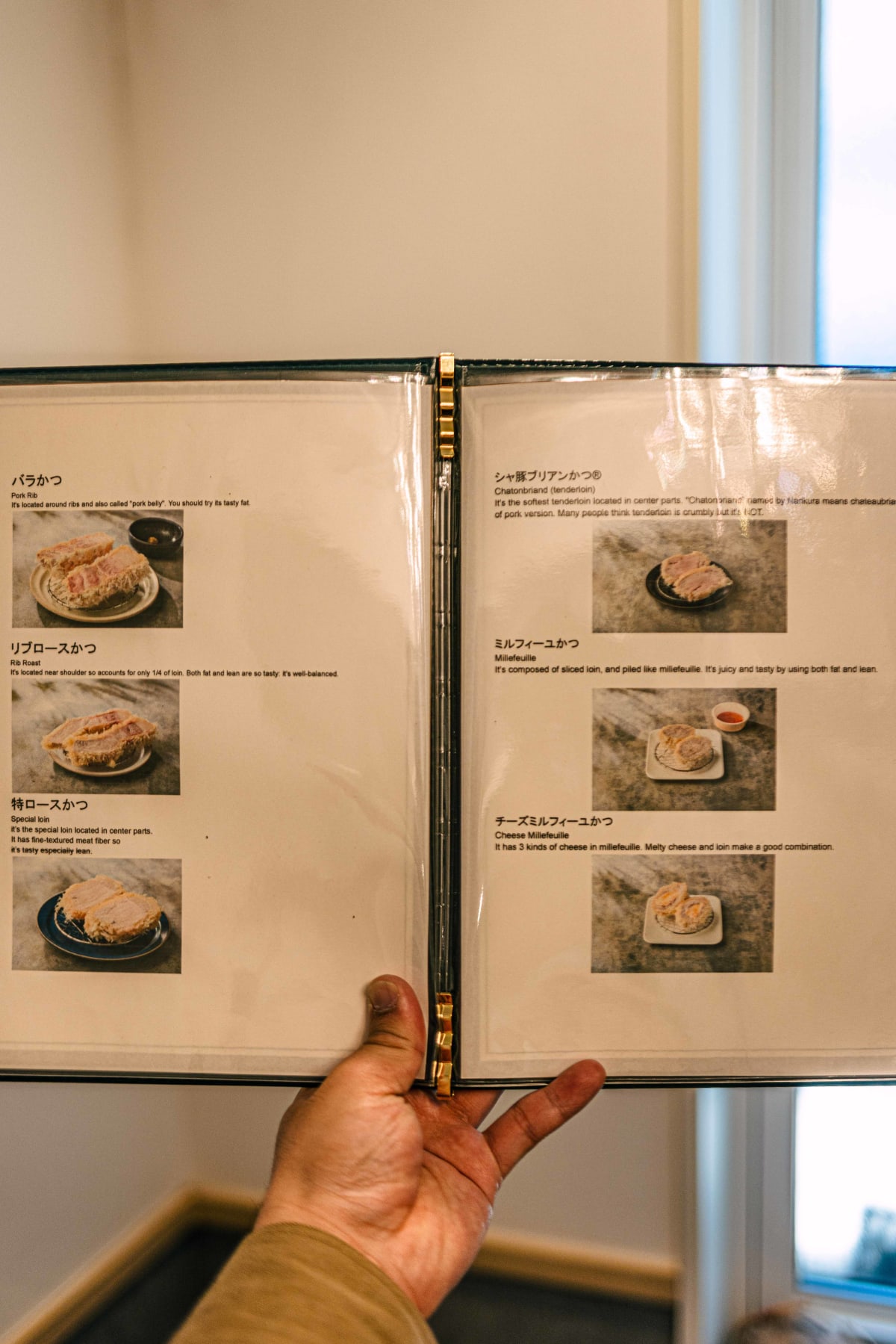
Even arriving on time for the reservation, there is a brief wait outside; in that interval guests choose their cuts from the menu, and once seated indoors the course begins.
25—25 / 25
The menu is structured as either a two-cut or three-cut tasting, with each cut priced at around two thousand yen apiece.
4—4 / 25
I asked the kitchen to recommend the three most popular cuts and was served bara-katsu (pork belly), the special loin (which appeared to be a loin section near the shoulder), and chateaubriand.
The total came to between six and seven thousand yen.
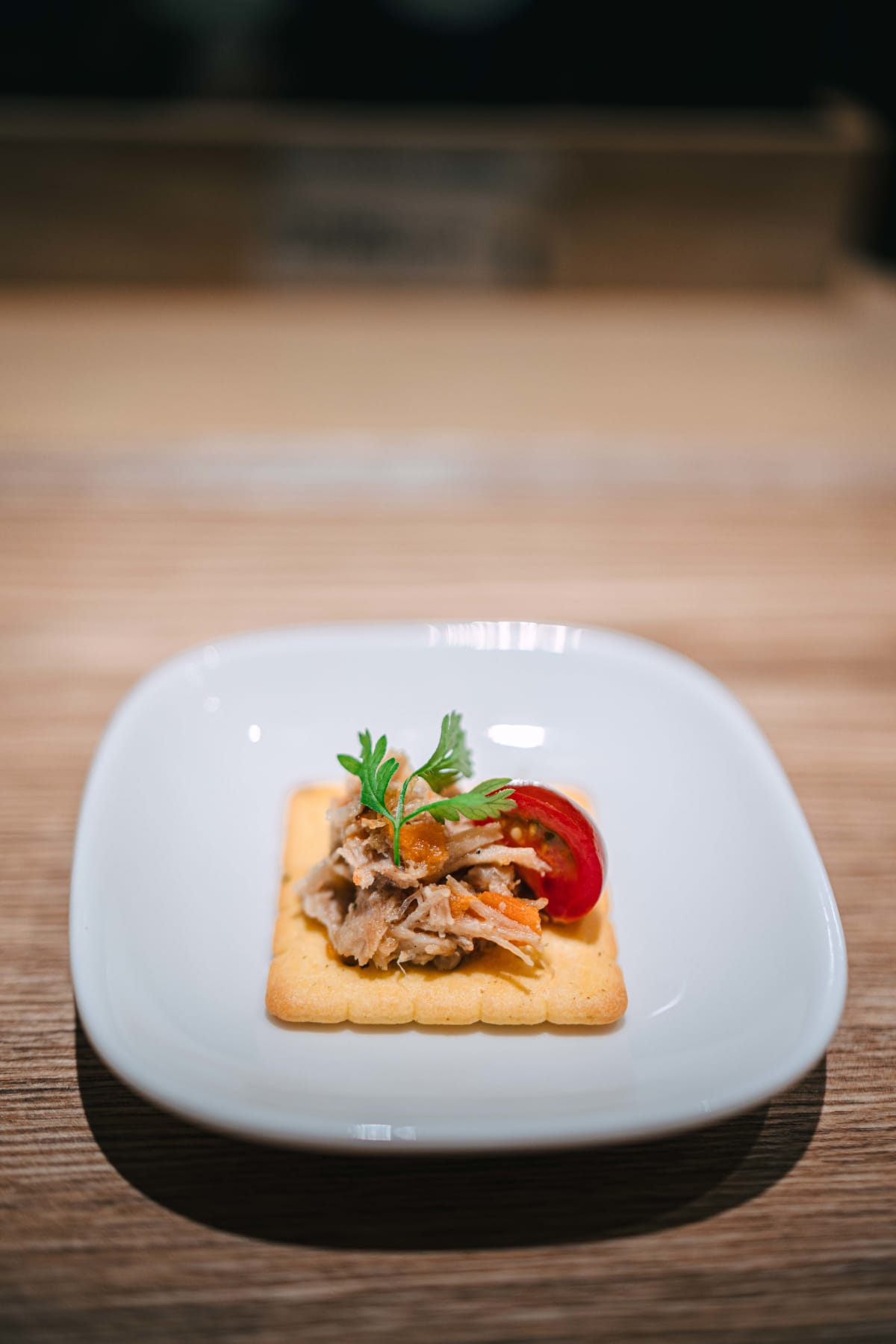
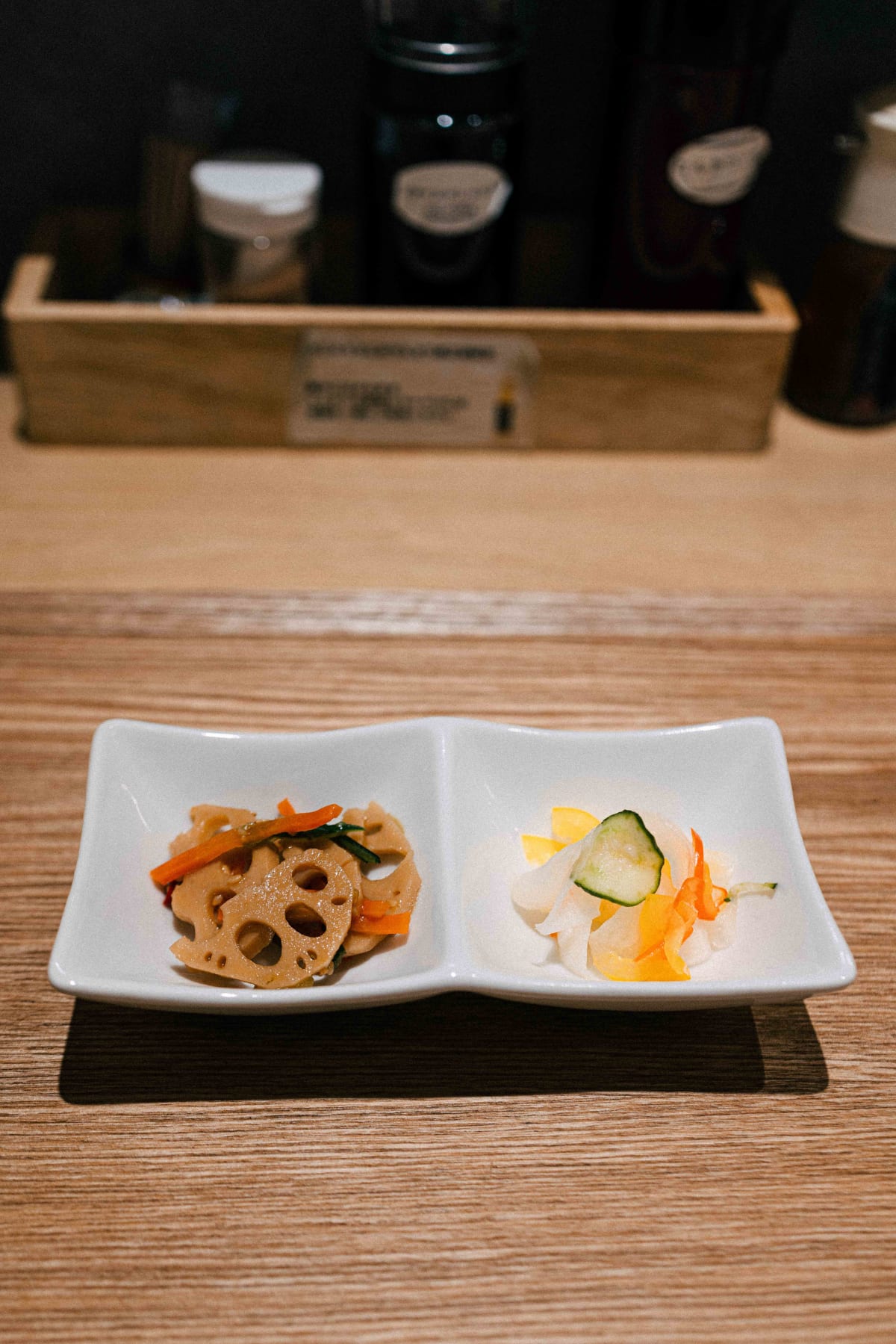
The course opened with a small cracker and salad amuse.
3—6 / 25
Neither left a particular impression.
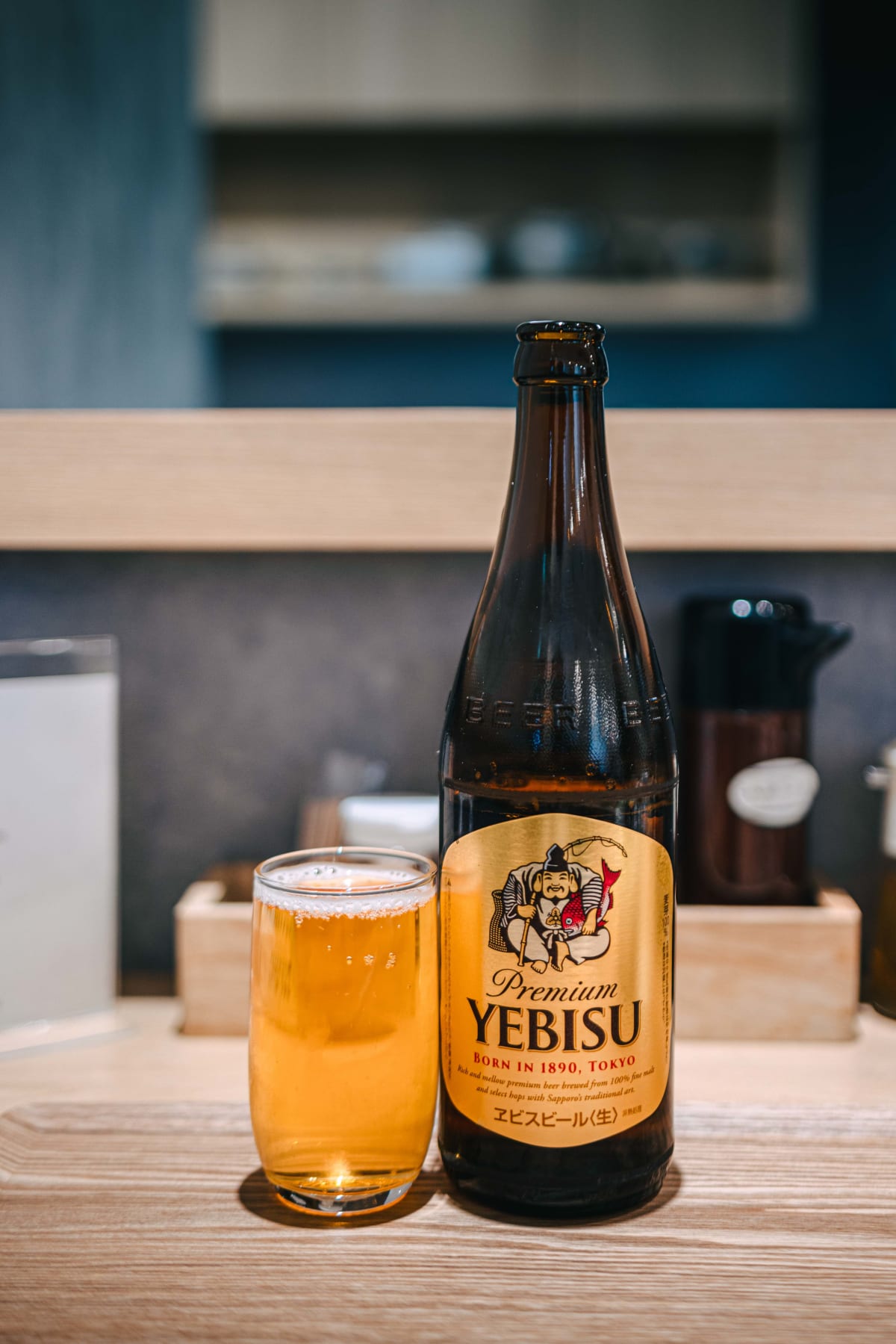
7—7 / 25
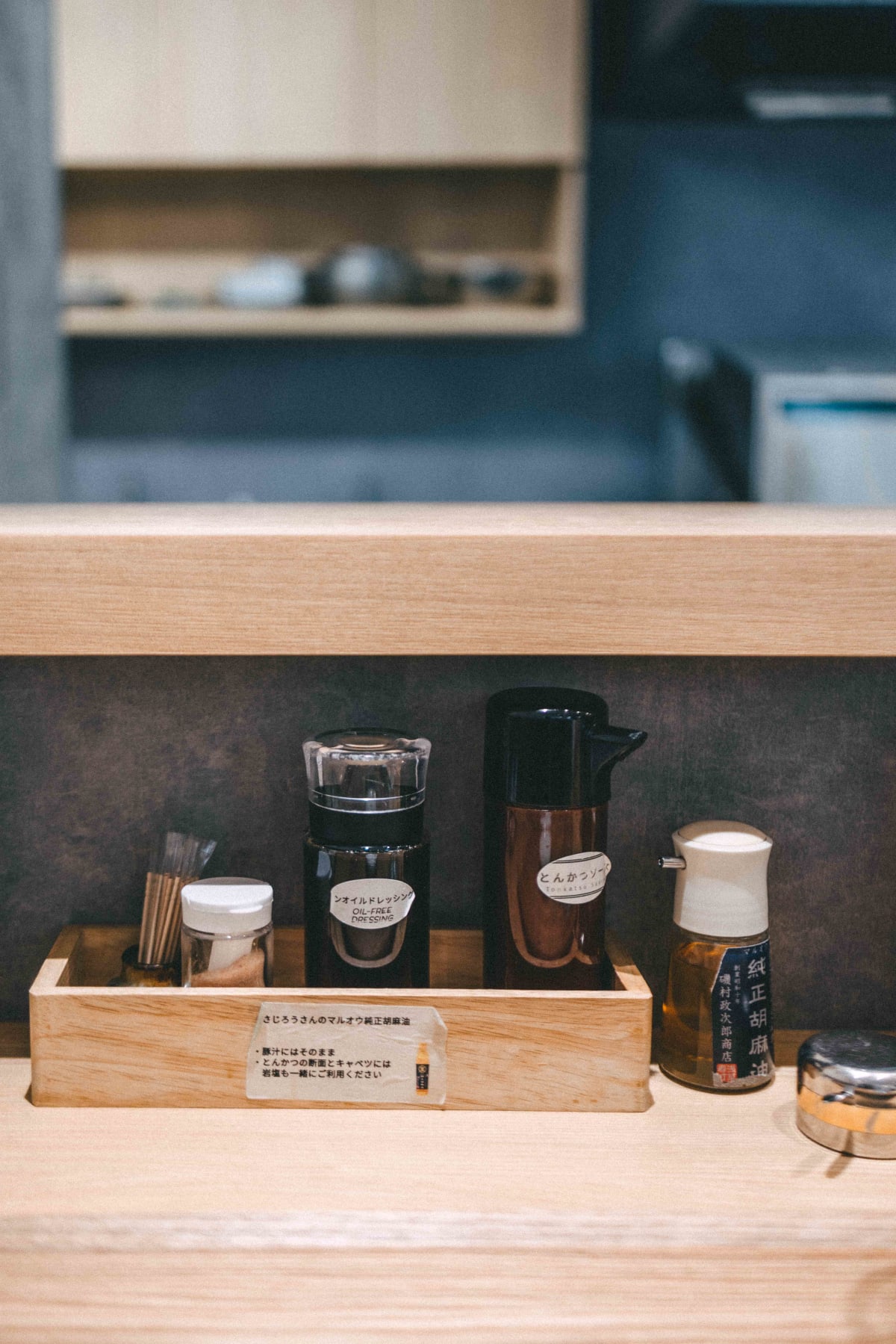
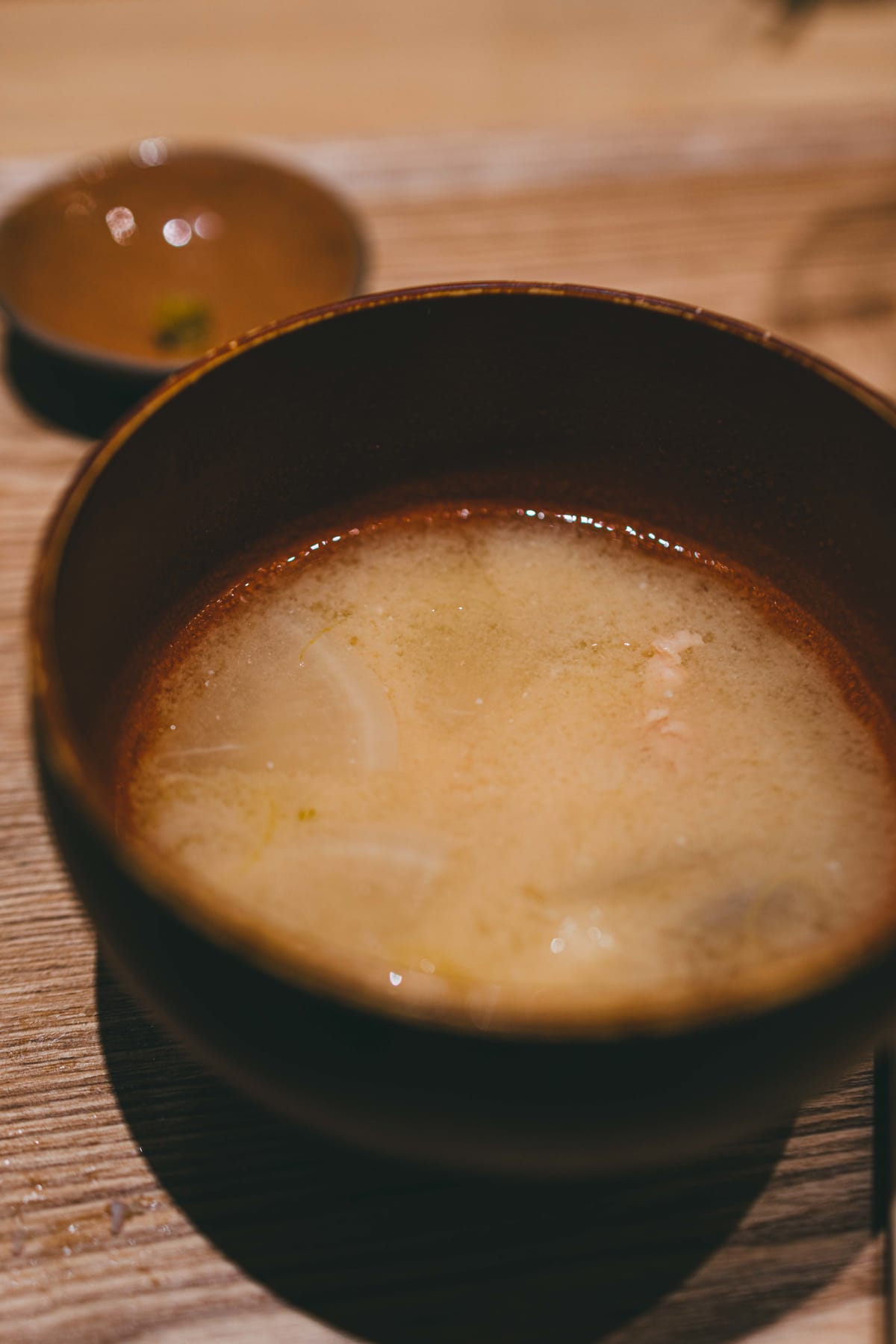
After that came tonjiru (豚汁), rice, and the cutlets, served in sequence.
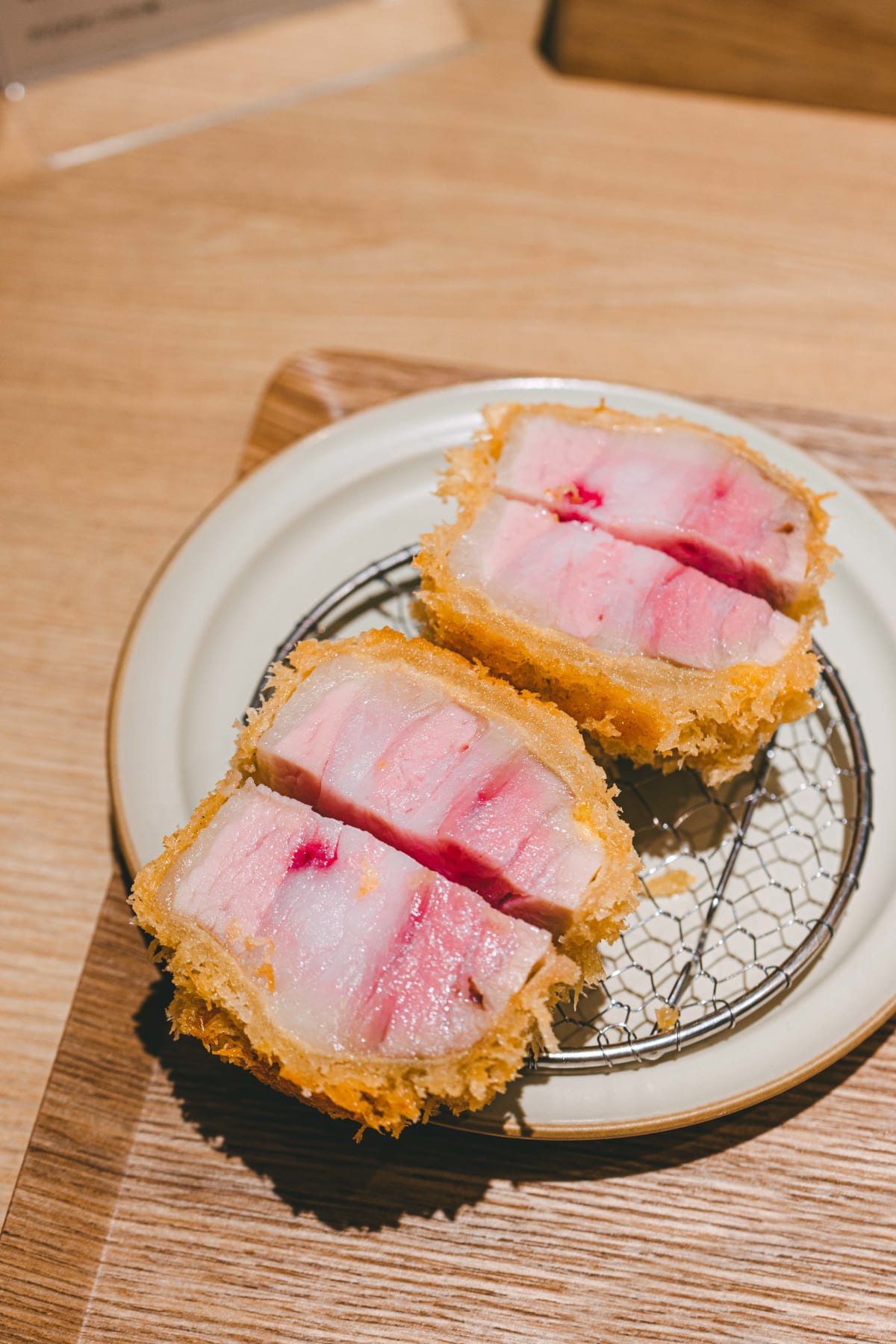
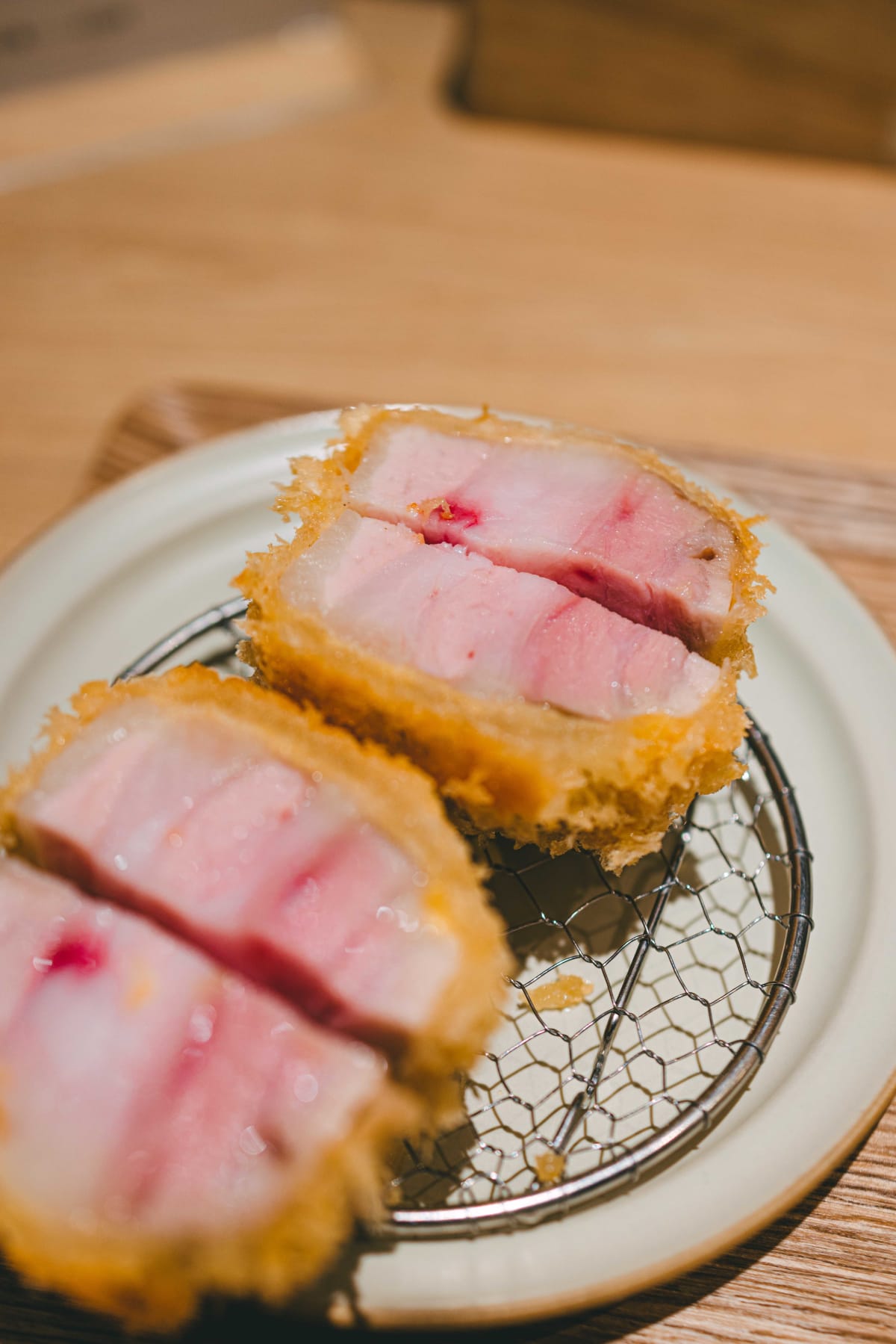
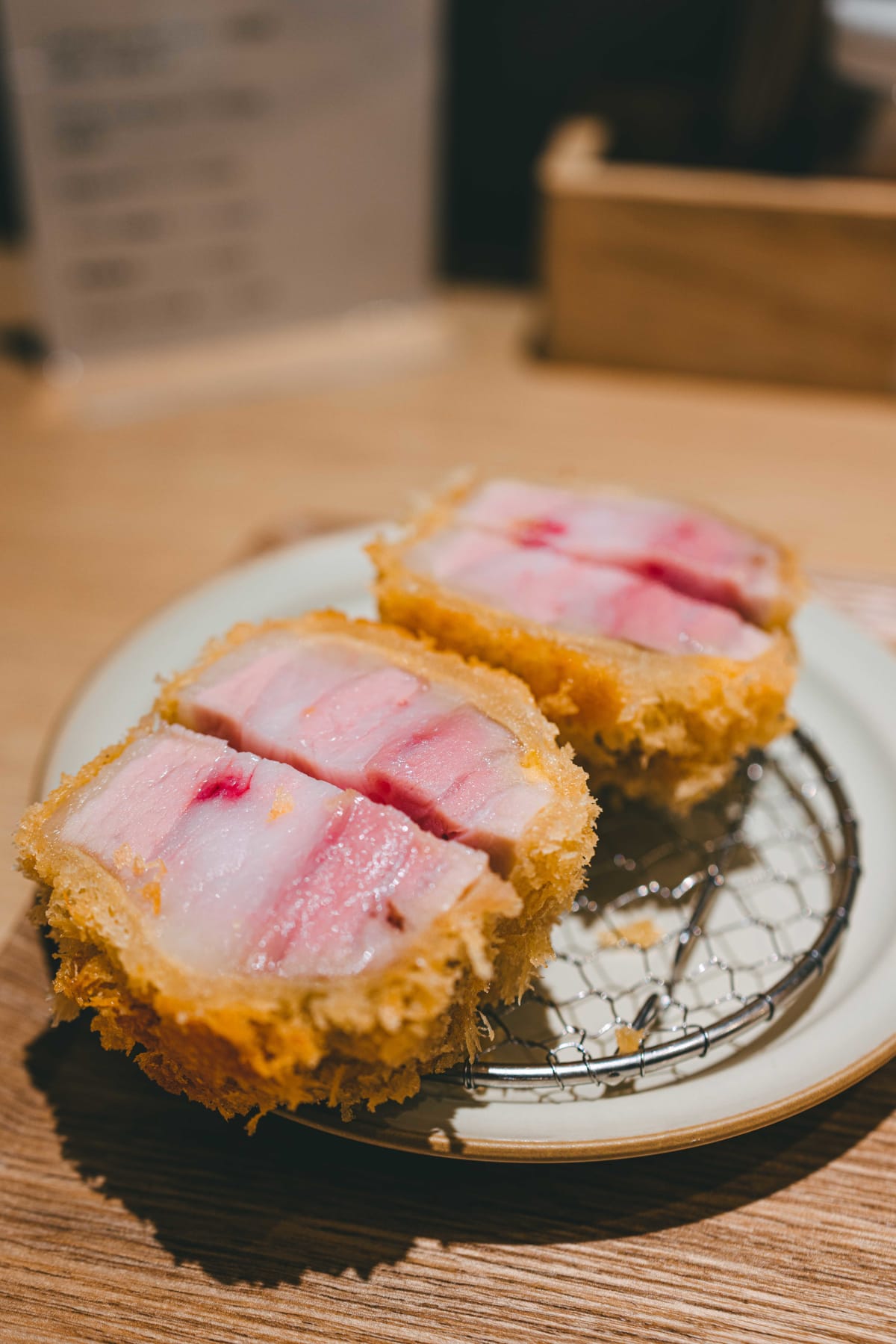
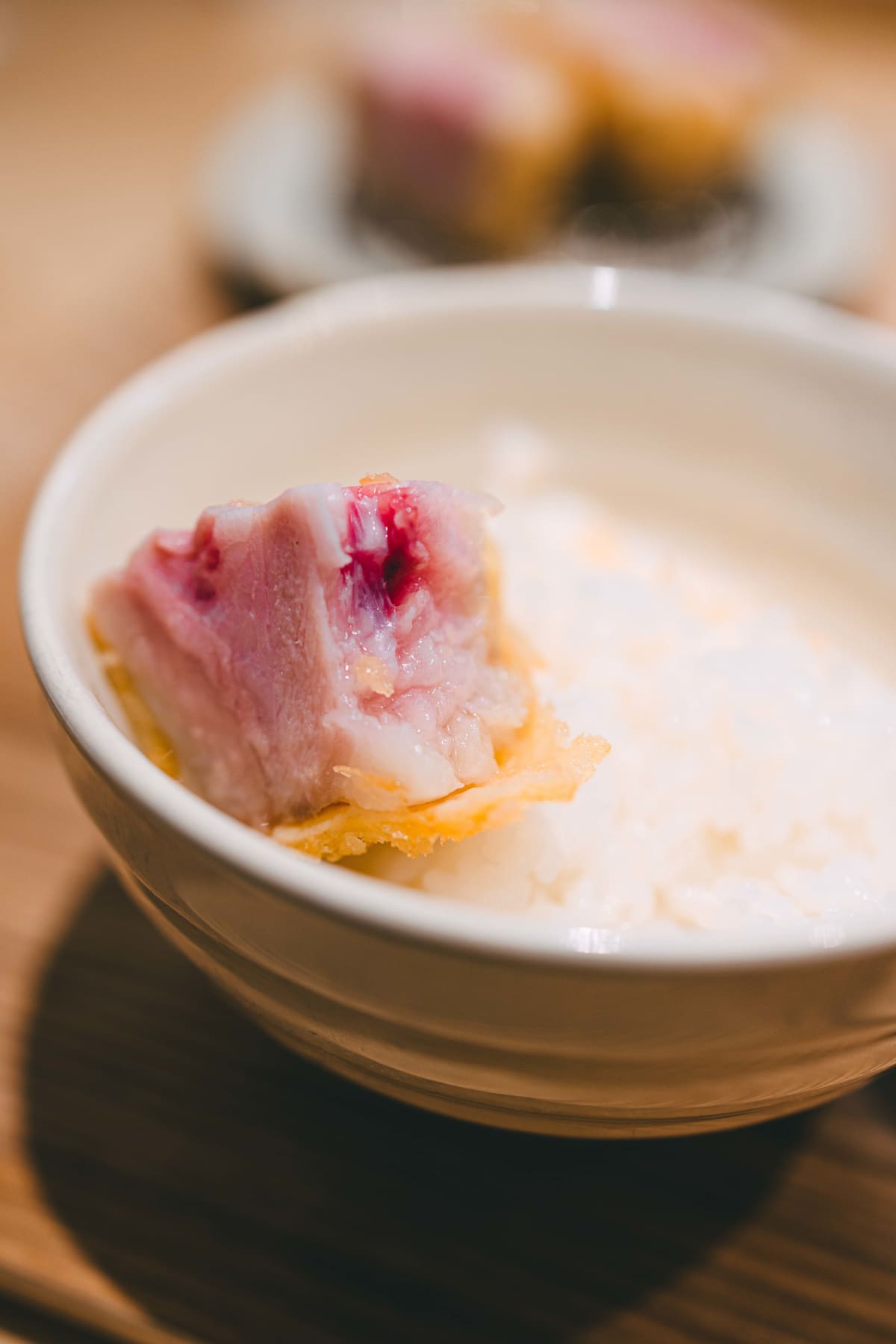
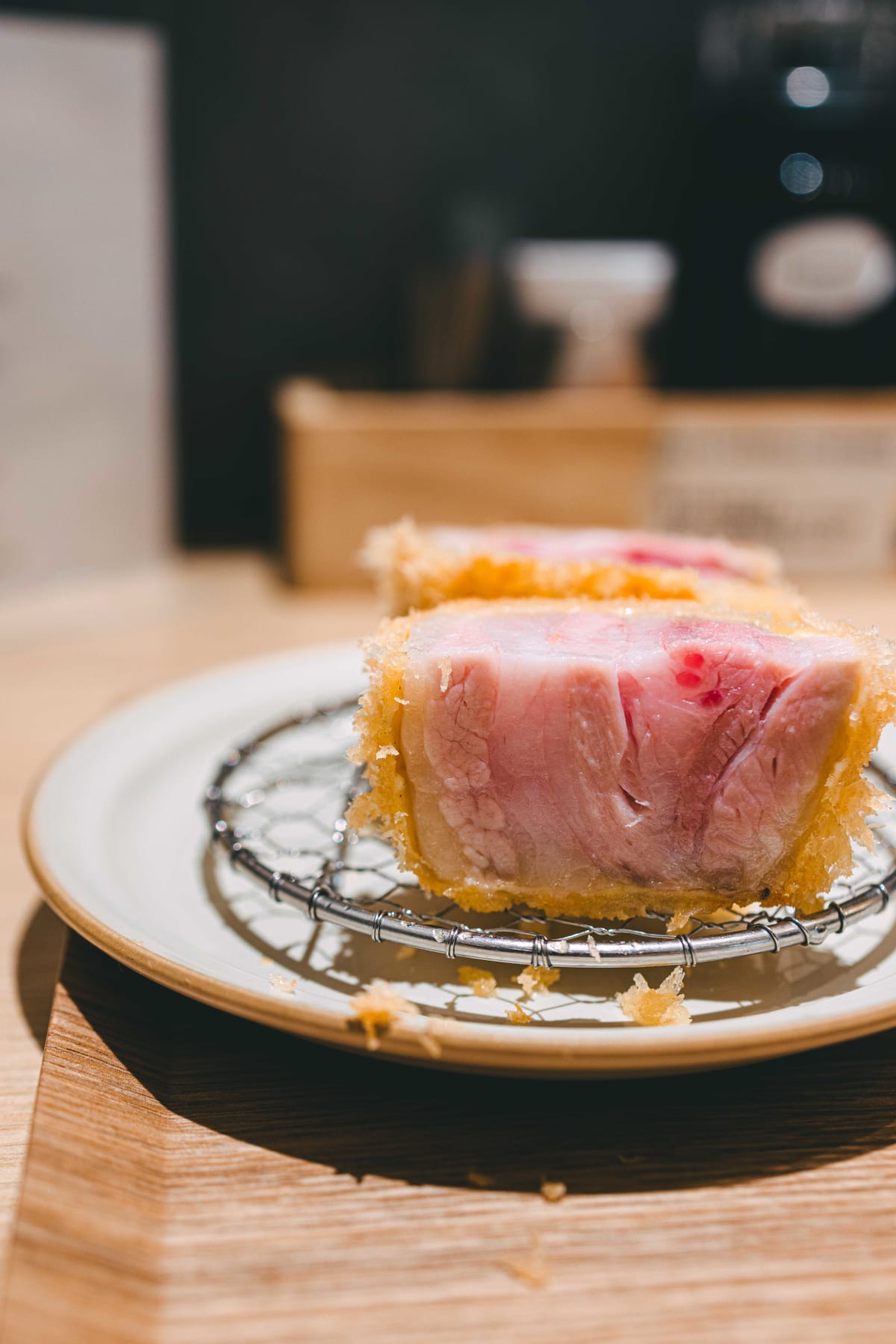
The first cut was the bara-katsu, and the read came inside a single bite.
8—8 / 25
There was no heaviness in the cutlet at all, none of the chewy quality one tends to brace for in a belly section.
The fat that should have run thick through this cut did not separate from the body of the meat; it moved with the cutlet as a single, integrated mouthful.
10—14 / 25
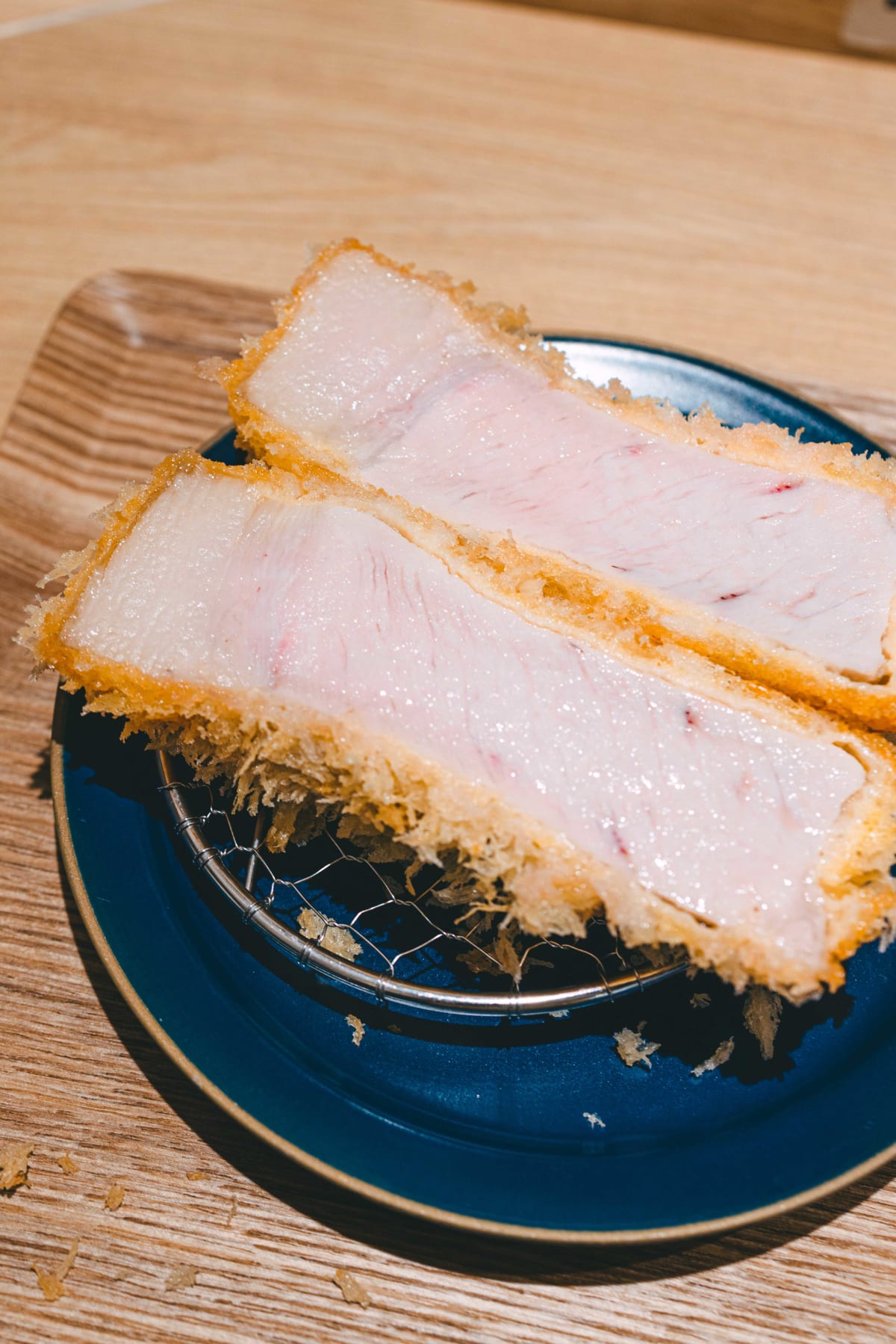
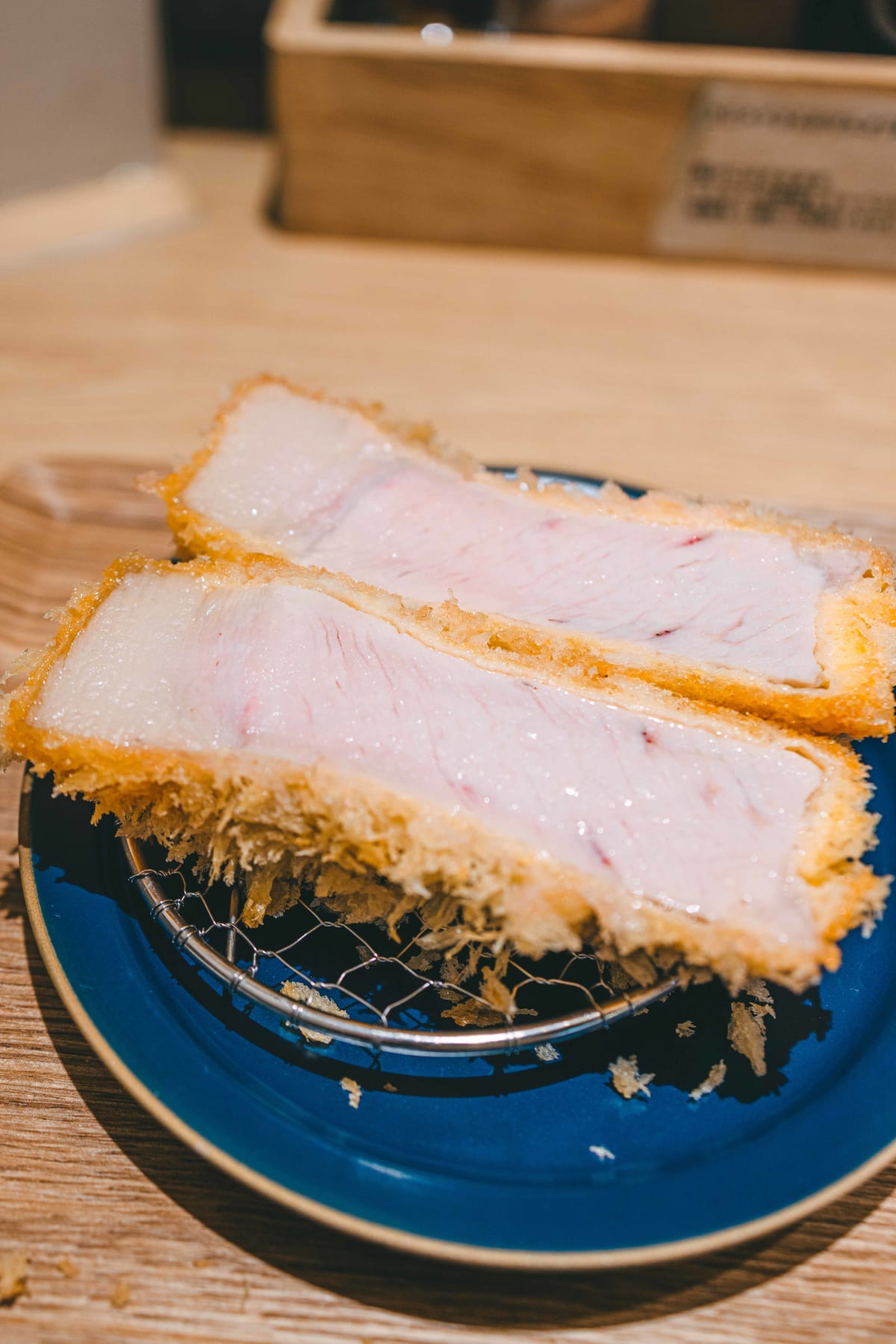
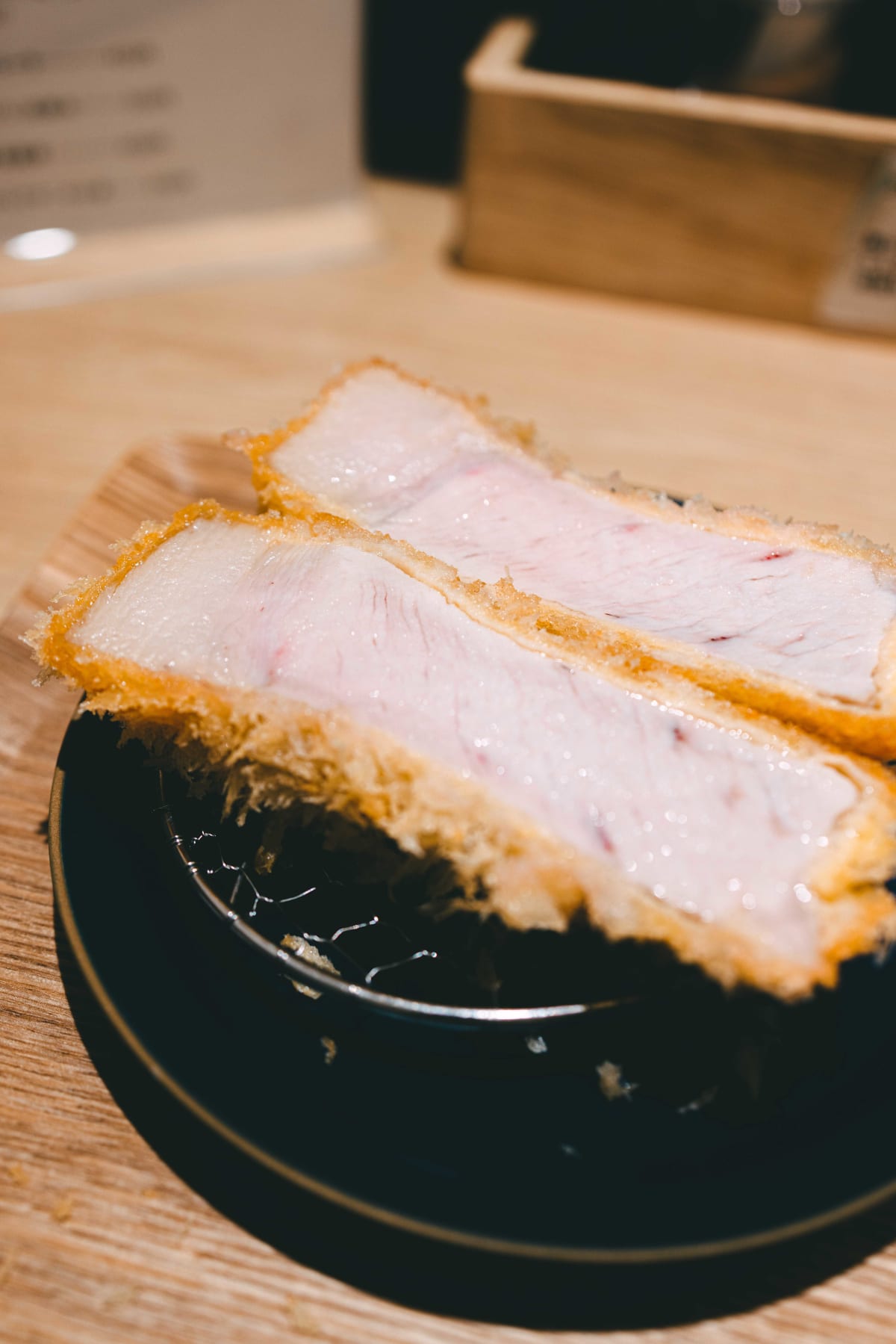
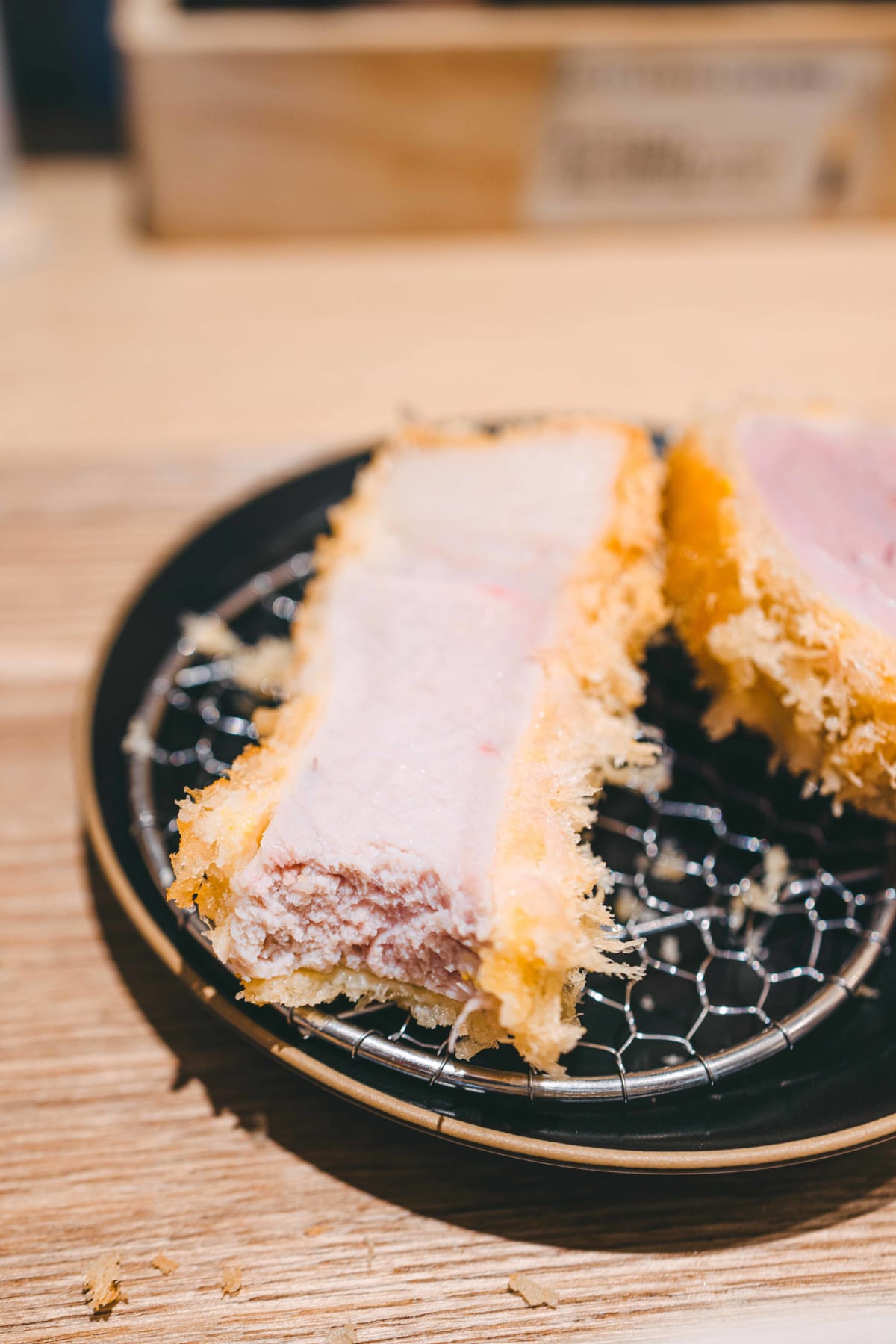
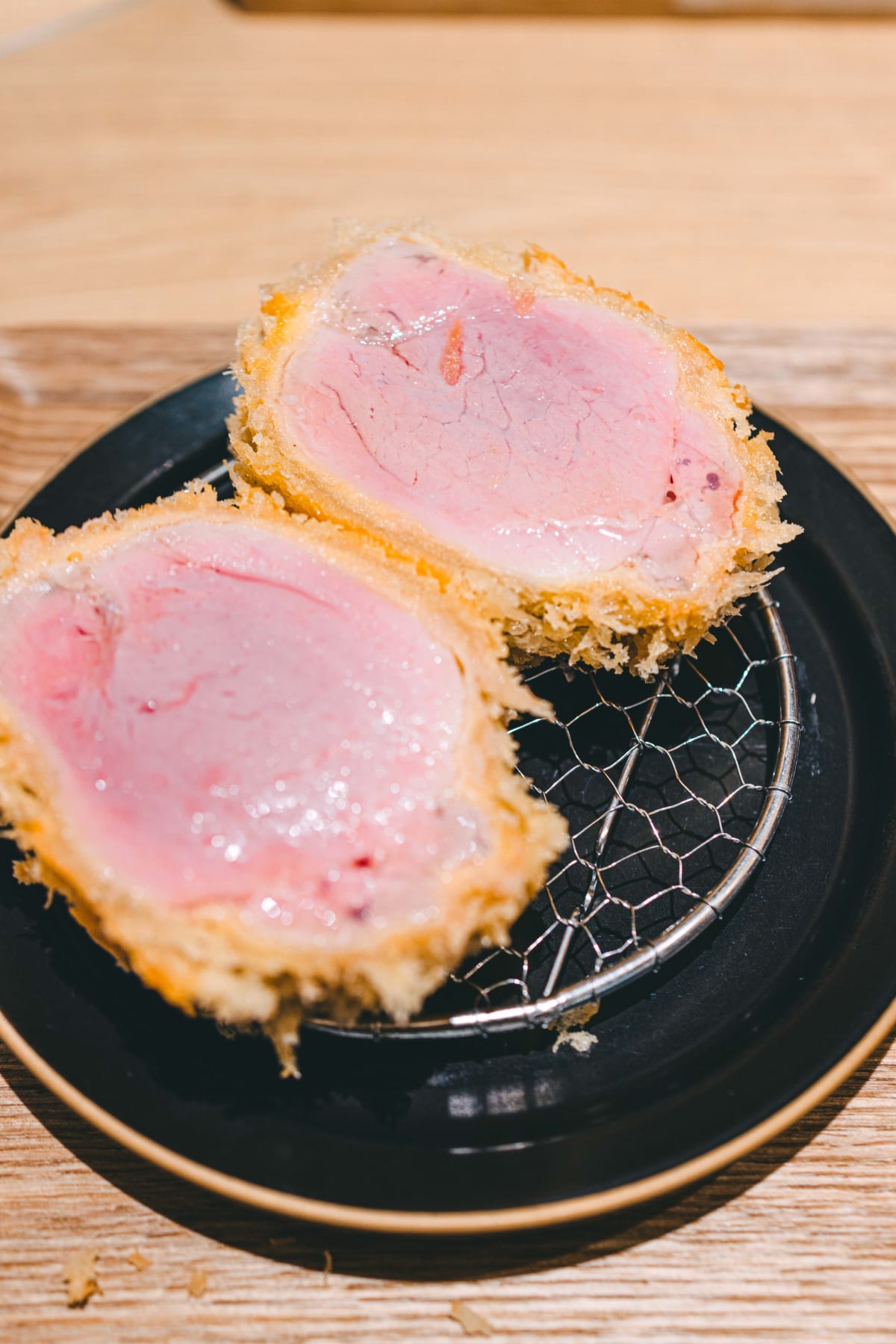
The second cut, the special loin, delivered a visual shock first.
15—17 / 25
I had not realised pork could come up this white.
The cross-section was effectively a true white.
23—23 / 25
The flavour landed just as well, the lean ran with a clean, controlled chew, and crucially the texture did not overlap with the bara-katsu that had preceded it.
21—21 / 25
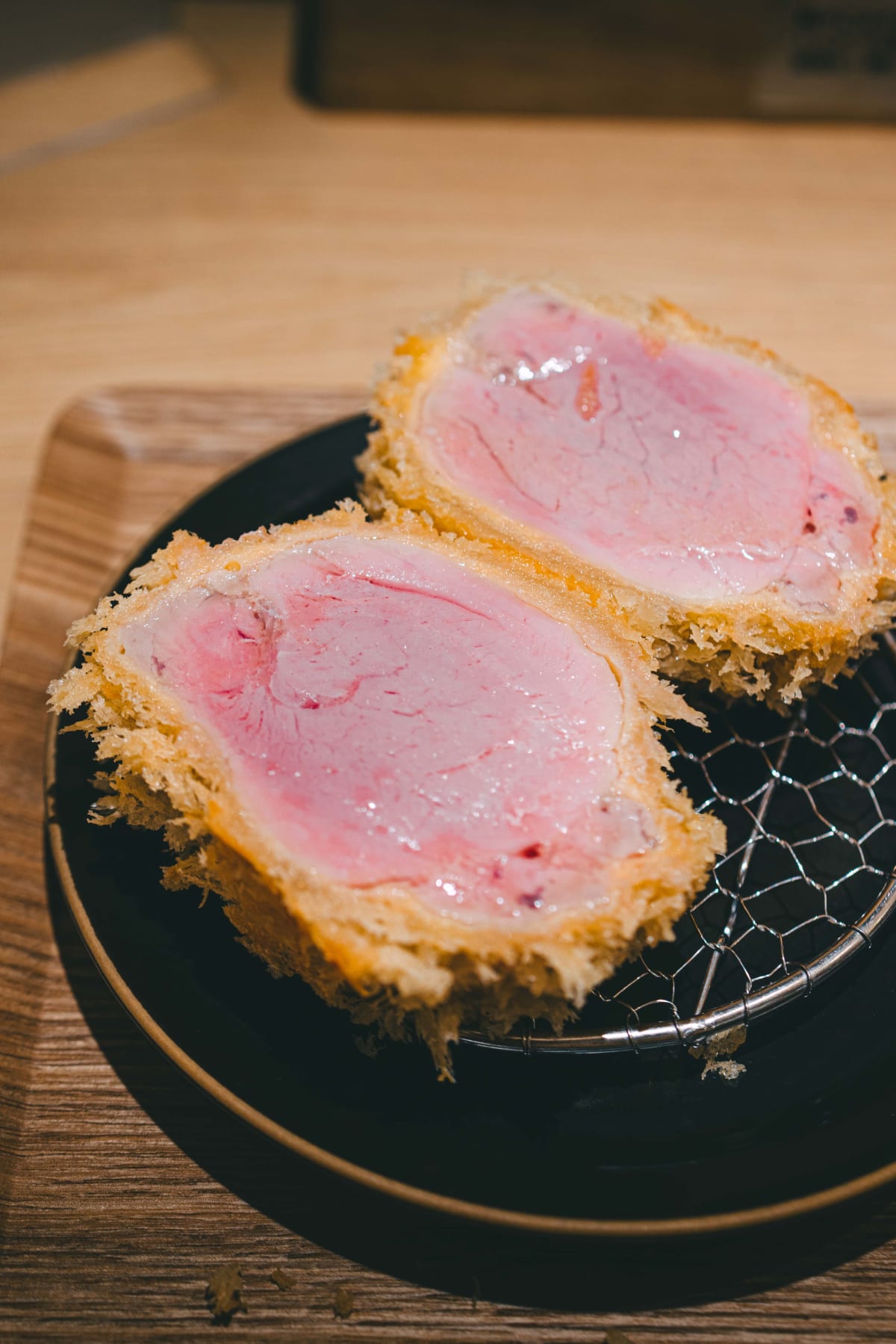
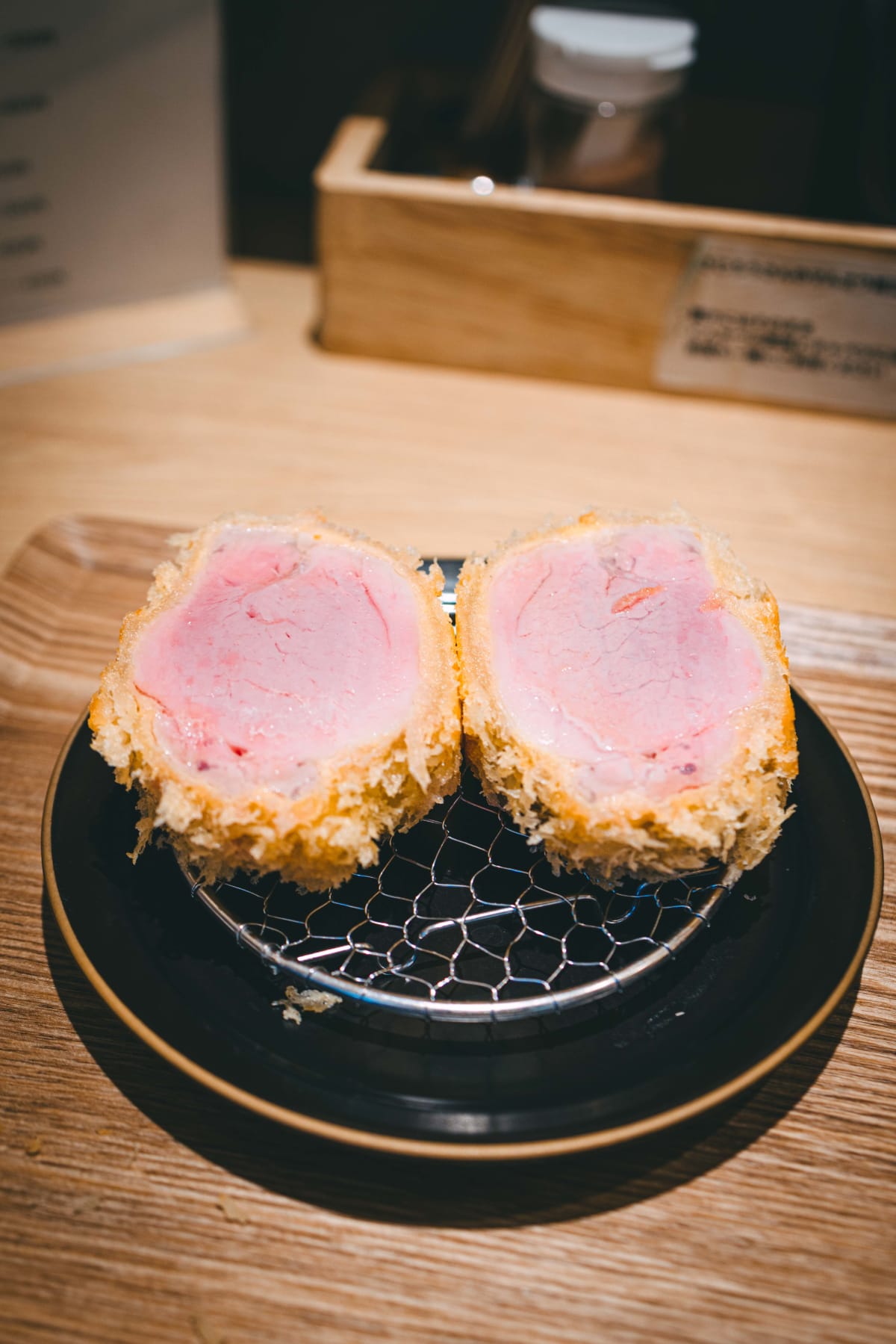
The last cut, the chateaubriand, returned to softness and depth, and that was the best plate of the night.
19—22 / 25
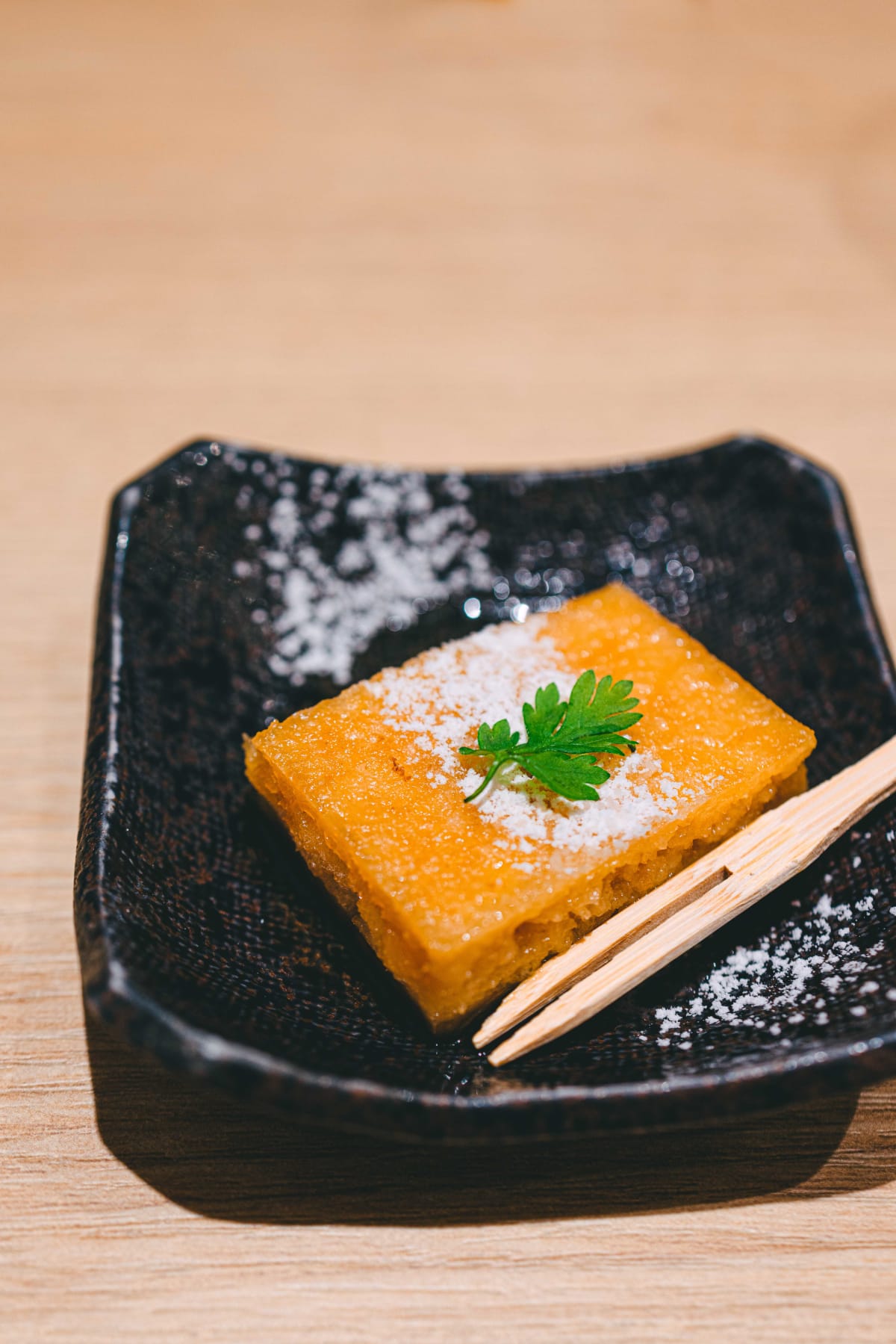
After the chateaubriand came a small dessert to close the meal.
24—24 / 25
The identity sits in the fat and the texture rather than in the depth of the flavour or the aroma of the meat.
Where the course faltered was after the bara-katsu and the fat portion of the special loin had both passed, when the accumulated weight of the fat arrived in a single wave. This, in my reading, is the essential characteristic of high-end Japanese tonkatsu. The same pattern shows in Japanese wagyu, and in Japanese pork more broadly: the identity sits in the fat and the texture rather than in the depth of the flavour or the aroma of the meat. On any other night I would have left some of it on the plate; given the price, I downed beer and finished it. For anyone with a low tolerance for richness, two cuts would be more than enough.
The other friction point was the tonjiru itself. Tonkatsu is already oily on its own terms, and there was no obvious reason for a tonkatsu specialist to pair the course with another pork-based broth just because the kitchen handles pork. A cleaner, lighter stock would have suited the structure better.
13—13 / 25
The tonjiru itself was ordinary on its merits. And it carried a separate charge. Japanese restaurants are usually clear about how items get charged individually, but the per-item additions can quietly push the total well past the headline number, which is worth flagging before the meal begins.
In the three years or so since this visit, Korea has seen a steady arrival of serious tonkatsu rooms. Prices come in below Narikura's range, and because Korea's pork ecosystem is, by national temperament, both broad and obsessive, the country has been producing tonkatsu with character drawn from a variety of regional breeds. I have since spent more time in Tokyo and Osaka, walking back through high-rated tonkatsu rooms on the assumption that the gap would still hold. Not one of them has fundamentally shaken my view that this is the single dish where Korea, on its own terms, has caught up.
Narikura is the cleanest case study for understanding what high-end Japanese tonkatsu has chosen to perfect: a single technique, executed with such precision that the dish ultimately reads through the structure of its fat and the texture of its cross-section more than through anything else. The "white tonkatsu" is the ceiling of that direction, and the visit makes that ceiling unusually visible. What the meal clarifies, almost more than the cooking itself, is that the ceiling of one direction is not the ceiling of the dish. Korea has been moving in a different direction inside the same category: more breeds, more flavour profiles, with a price floor low enough to let diners take more chances. Narikura is worth one visit as the reference point for the Japanese path. The next round is worth trying outside that original line.
Have a question about this restaurant, or want to share your own experience?
Send a message