Fine Dining · Spain
Txispa
"The apprentice's fire burns differently, and that is exactly the point."

1—1 / 63
The itinerary was built around a single shared conviction. A group of serious food travelers, a trip to the Spanish Basque Country in late September, and one destination that appeared on everyone's list without discussion: Asador Etxebarri. But alongside it, over the past year, a second address had begun appearing in the conversations of those who had already made the pilgrimage to the Axpe valley. That address was Txispa.
Txispa was opened in the spring of 2023 by Tetsuro Maeda, a Japanese chef from Kanazawa who spent a decade working under Bittor Arginzoniz at Asador Etxebarri. The restaurant sits within walking distance from its predecessor, close enough that the relationship between the two places is impossible to ignore and impossible to reduce to a simple narrative.
2—4 / 63
Maeda's path to the Axpe valley is one of the more unlikely origin stories in contemporary fine dining. He spent his younger years as a snowboarder, a mountain lodge worker, and an aerobics instructor before turning to cooking relatively late. Around 2011, with a sum of money earned from participating in pharmaceutical clinical trials, he bought a plane ticket to Spain. After staging at the Michelin-starred restaurant Alameda in Hondarribia, he identified Etxebarri as his singular destination and spent a year learning Spanish before finally securing a position. A local contact who knows the Axpe valley well told me that the competition to work at Etxebarri is fierce, and that Maeda's persistence was exceptional, eventually earning him the kind of trust from Arginzoniz that made him, in practical terms, the chef's right hand. Ten years of working with fire, charcoal, and smoke followed. Then, in 2023, Maeda renovated an 18th-century farmhouse in the valley and opened Txispa. Seven months later, it held a Michelin star and had entered the World's 50 Best Restaurants list at number 85.


5—7 / 63
The proximity has not gone unacknowledged. Arginzoniz has indicated that Maeda's choice of location was not something he found ethically comfortable. Maeda has said simply that he wanted to open a restaurant in the village where his family lives. Both statements are probably true, and neither resolves the tension between them. What I can say is that by the time I visited, Txispa had already grown into something that needed no borrowed credibility. It stands on its own.
By the time I visited, Txispa had already grown into something that needed no borrowed credibility. It stands on its own.
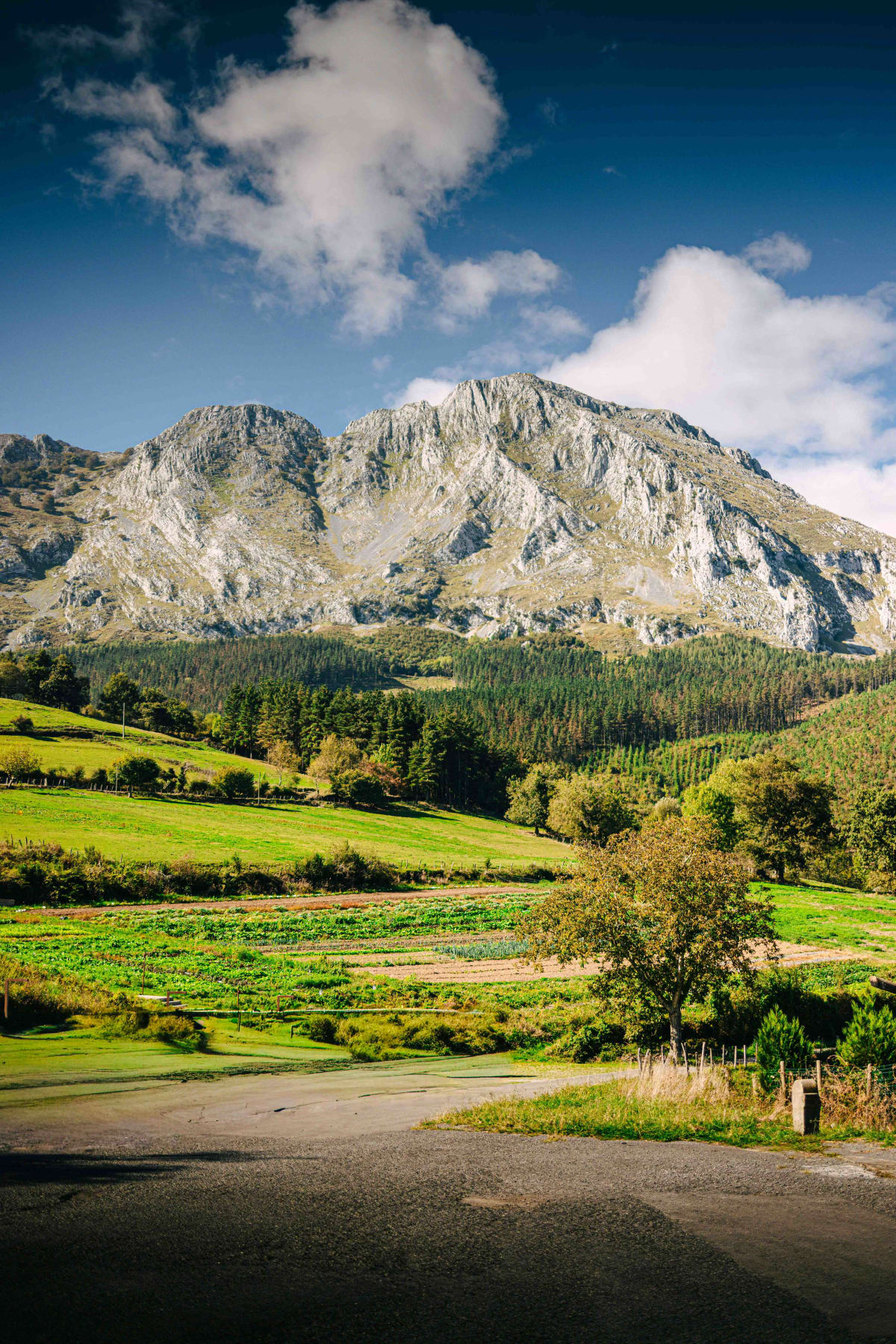
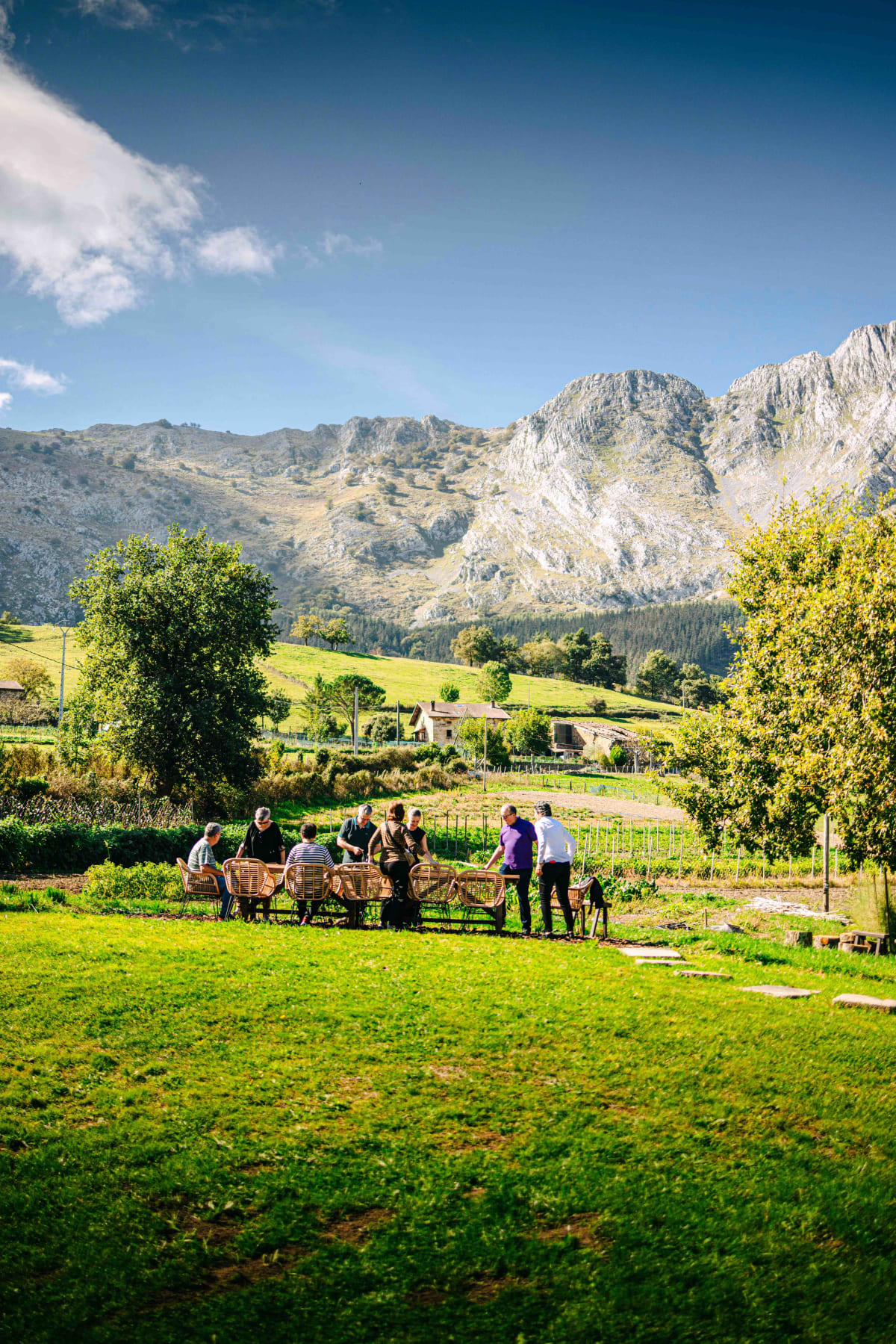
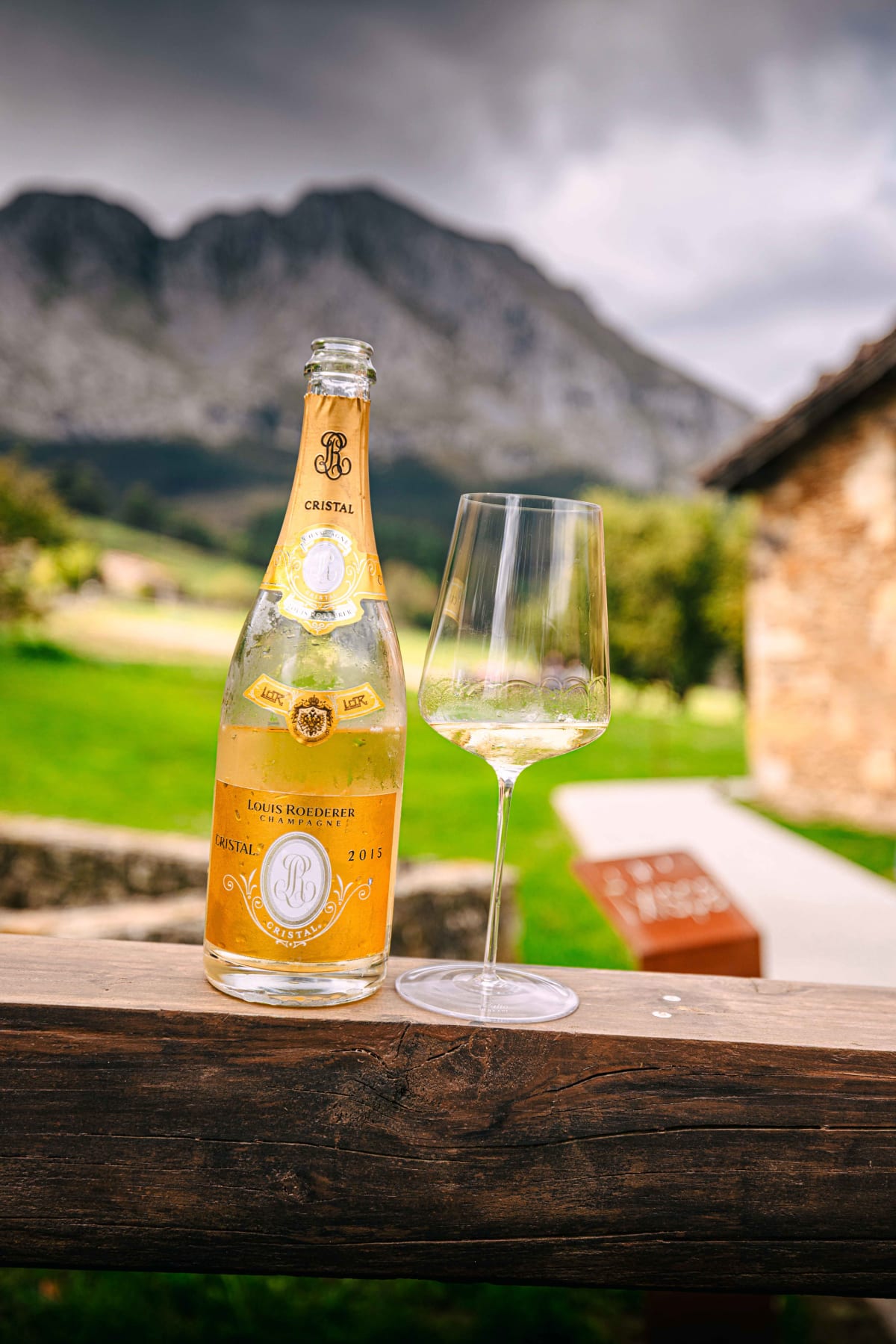
The setting alone justifies the journey. The Axpe valley in northern Basque Country presents the kind of landscape that stops conversation entirely: a panorama of mountains and deep green ridgelines that reads more like the Southern Alps or the New Zealand highlands than anything one typically associates with Spain. We arrived to find the weather perfect and the view of the mountains fully open. The combination was impossible to resist, and before anything else had happened, we had ordered a bottle of Louis Roederer Cristal 2015 and taken it outside.

8—10 / 63
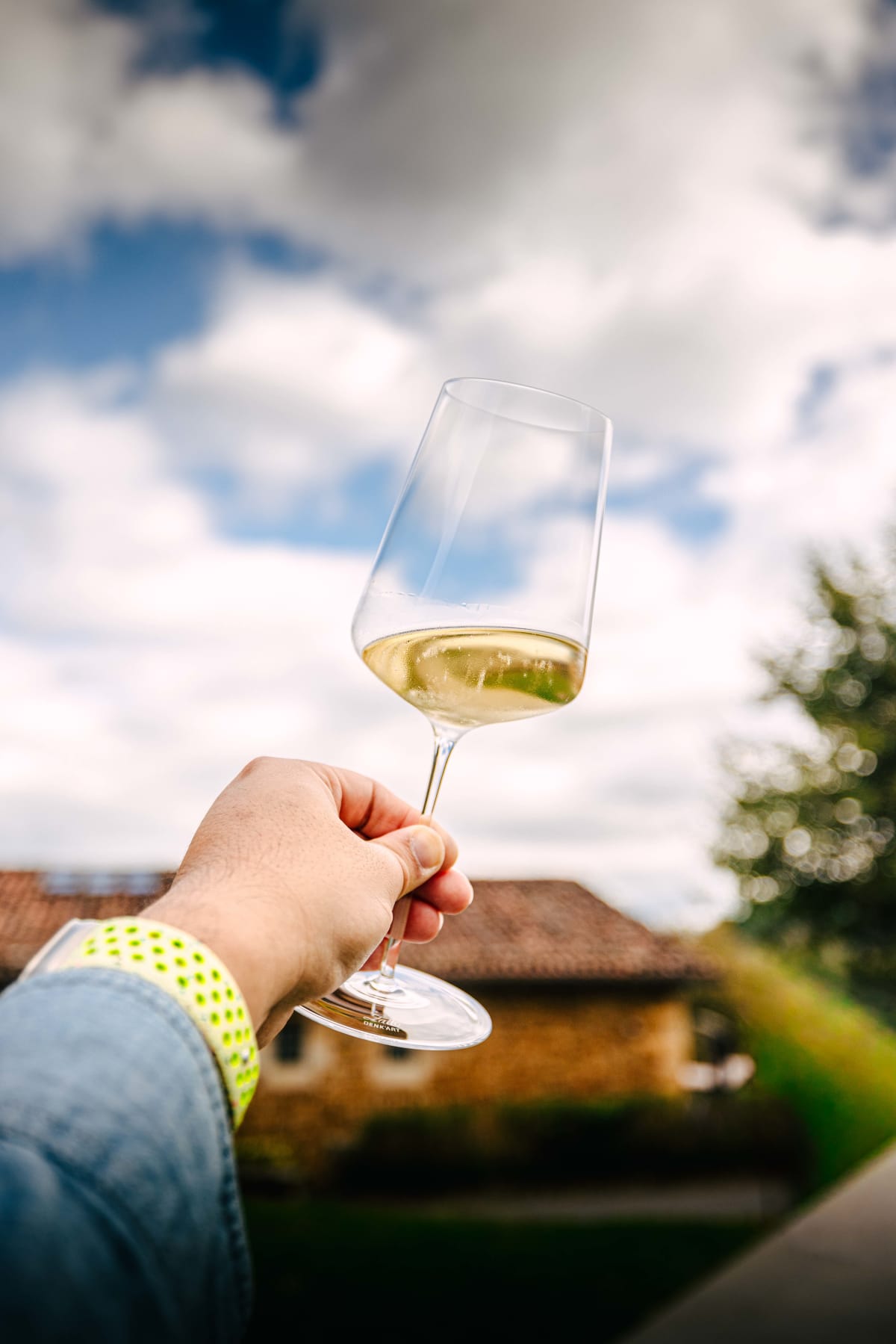
The Cristal, for what it is worth, lived up to its reputation entirely. The balance between acidity and weight, the depth of aroma, and the precision of the mousse all made for a champagne that felt entirely at home against that backdrop.
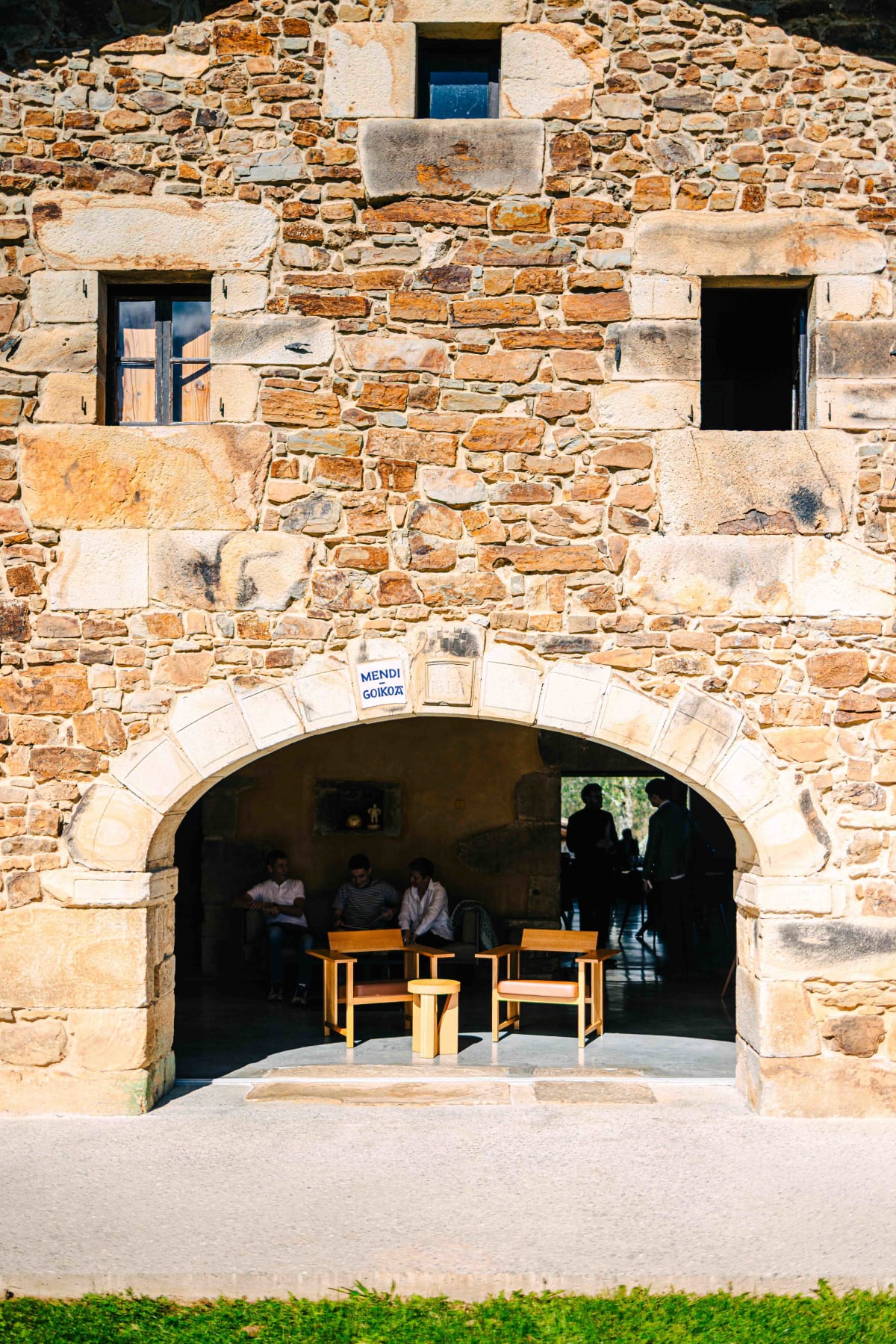
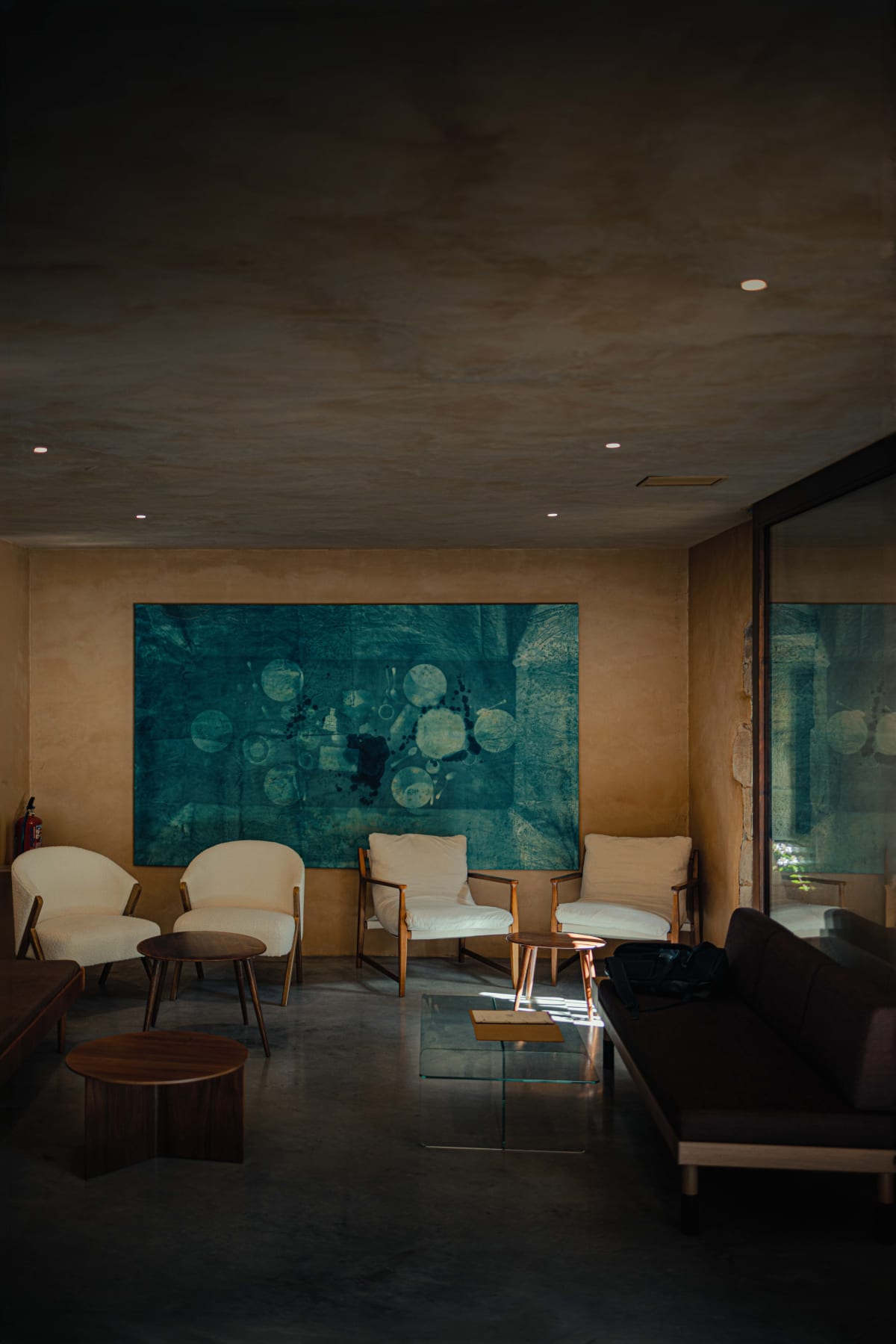
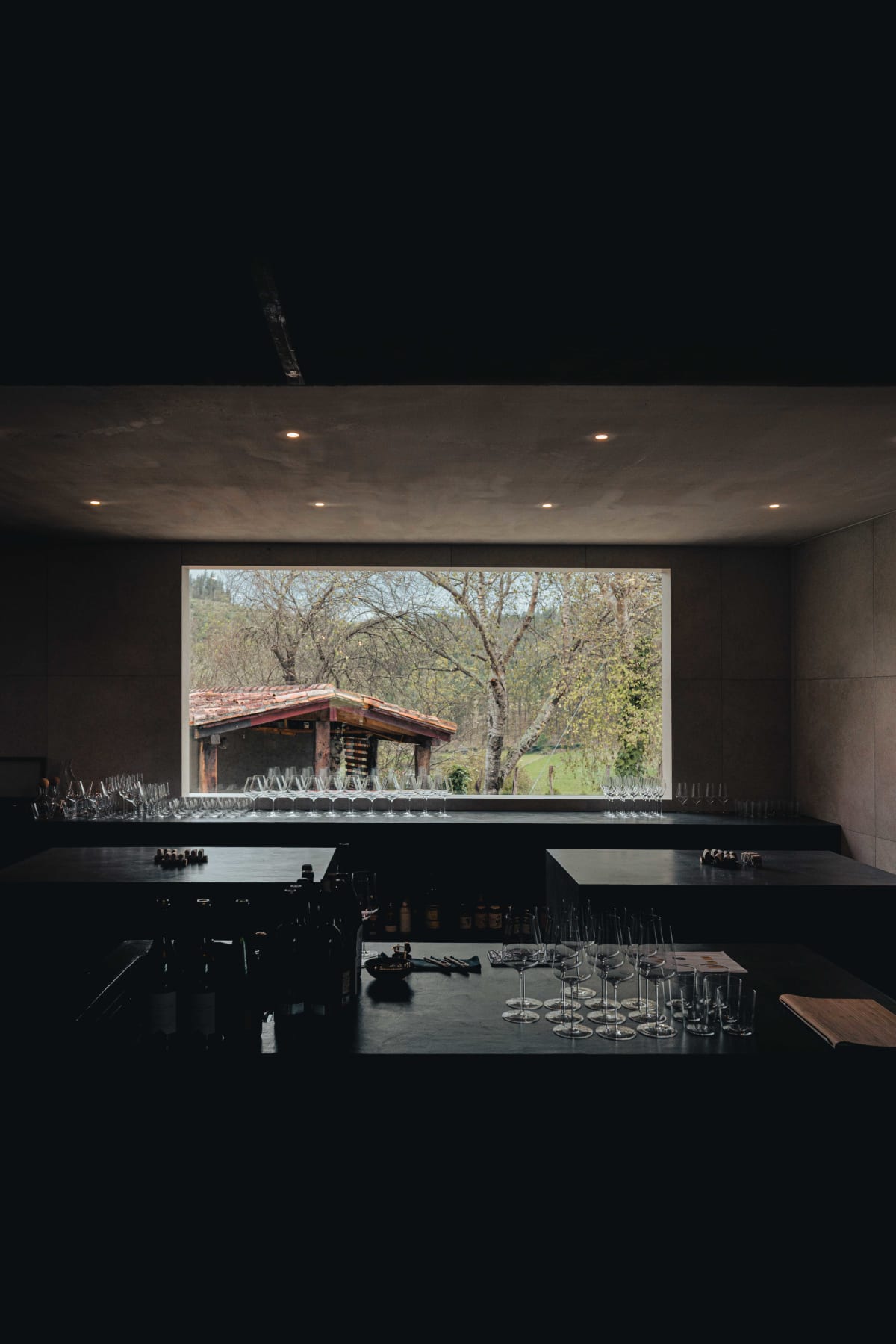
The building itself is the former caserio, a traditional Basque farmhouse structure, renovated with enough restraint that the original scale and character of the space remain intact while the interior now reads as genuinely contemporary. The dining experience begins in a reception area where guests choose wines and take in their welcome drinks before being moved through to the main room. The transition is deliberate, paced, and sets the register of everything that follows.

11—13 / 63
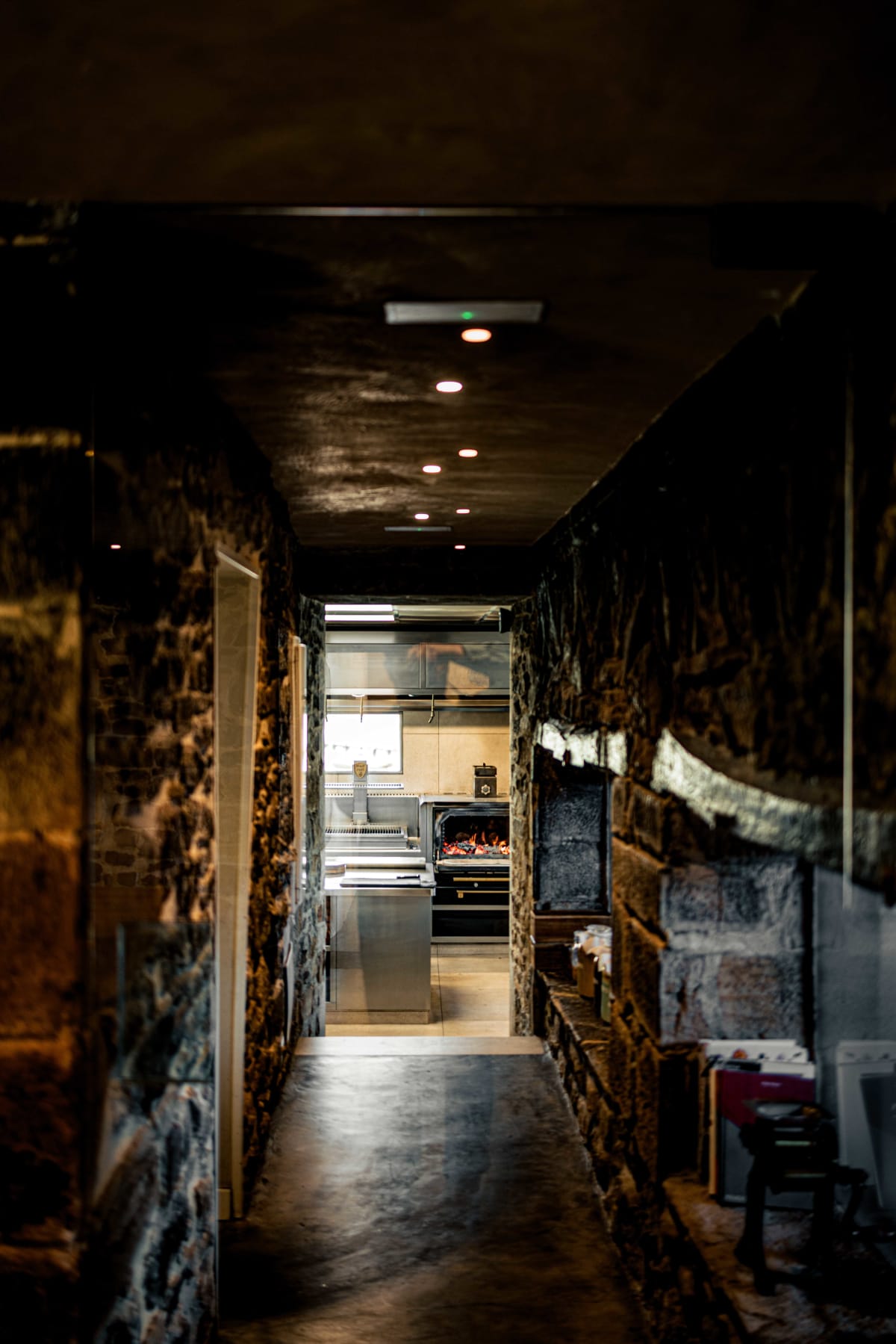
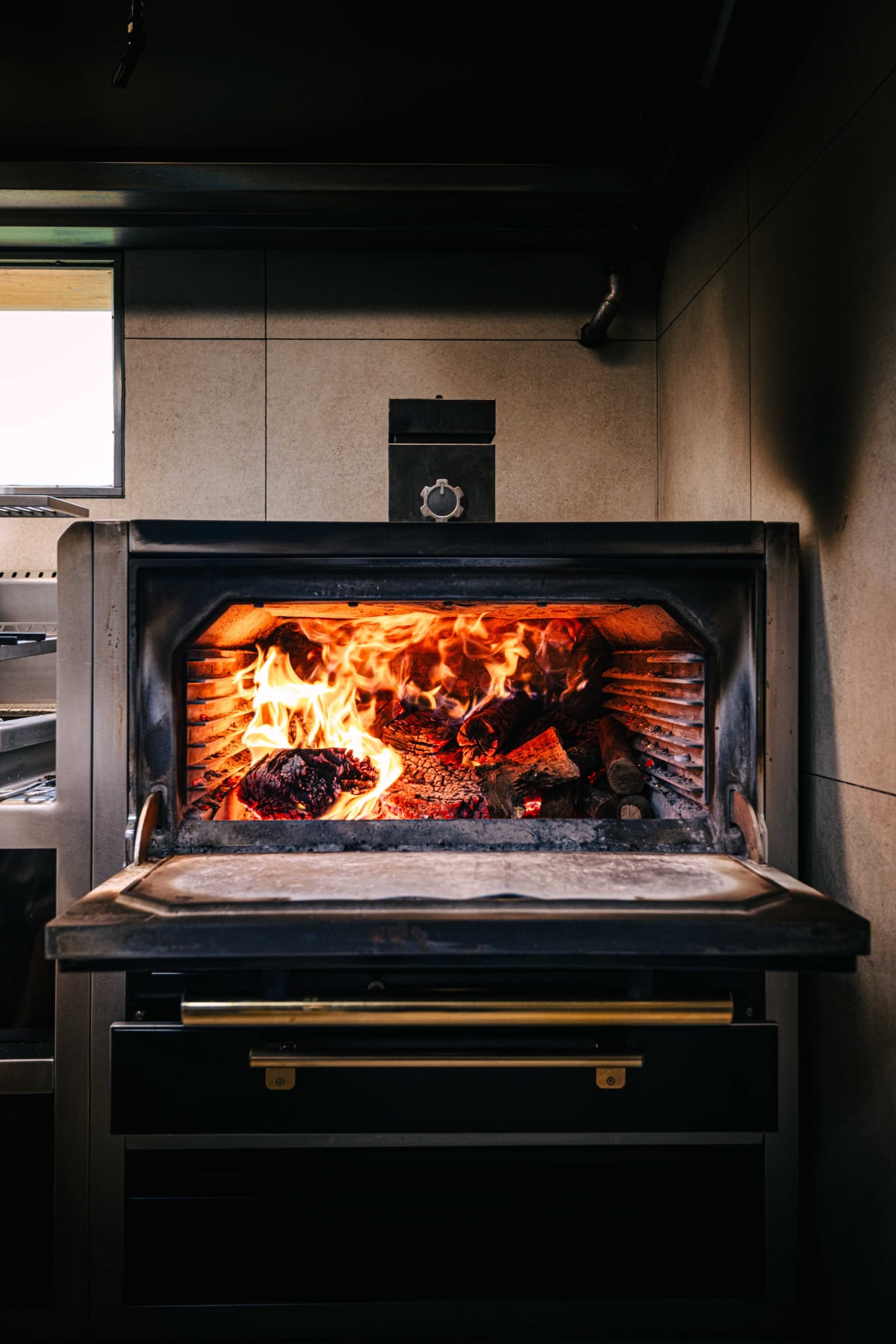
Before being seated at table, all guests are invited into the kitchen. This is not a perfunctory tour. Maeda leads it himself, and it functions as the clearest possible introduction to the philosophy of the restaurant.

14—16 / 63
The kitchen staff is notably international, with Japanese cooks working alongside others from across Latin America and Europe. The English-speaking front-of-house team, many of them British, manages the service with a confidence and fluency that distinguishes Txispa from many restaurants of comparable ambition. The presence of a staff of this calibre at this scale, in an 18th-century farmhouse renovation in a remote Basque valley, speaks to a level of capital and operational planning behind the project that the cooking alone might not immediately reveal. Communication is never an obstacle here, which matters when the dishes being described carry this much conceptual weight.
The first thing Maeda shows guests is the grill. When he opens the door, the heat that comes out is extraordinary, the kind of physical presence that makes clear immediately that fire is not a tool here but a medium. He then offers each guest a roasted peanut, one that he explains was harvested directly from the garden in front of the restaurant. The difference from an ordinary peanut is immediate: yielding, intensely nutty, with a softness that suggests the gap between proximity to the source and distance from it is not a cliché but a measurable fact.

17—17 / 63
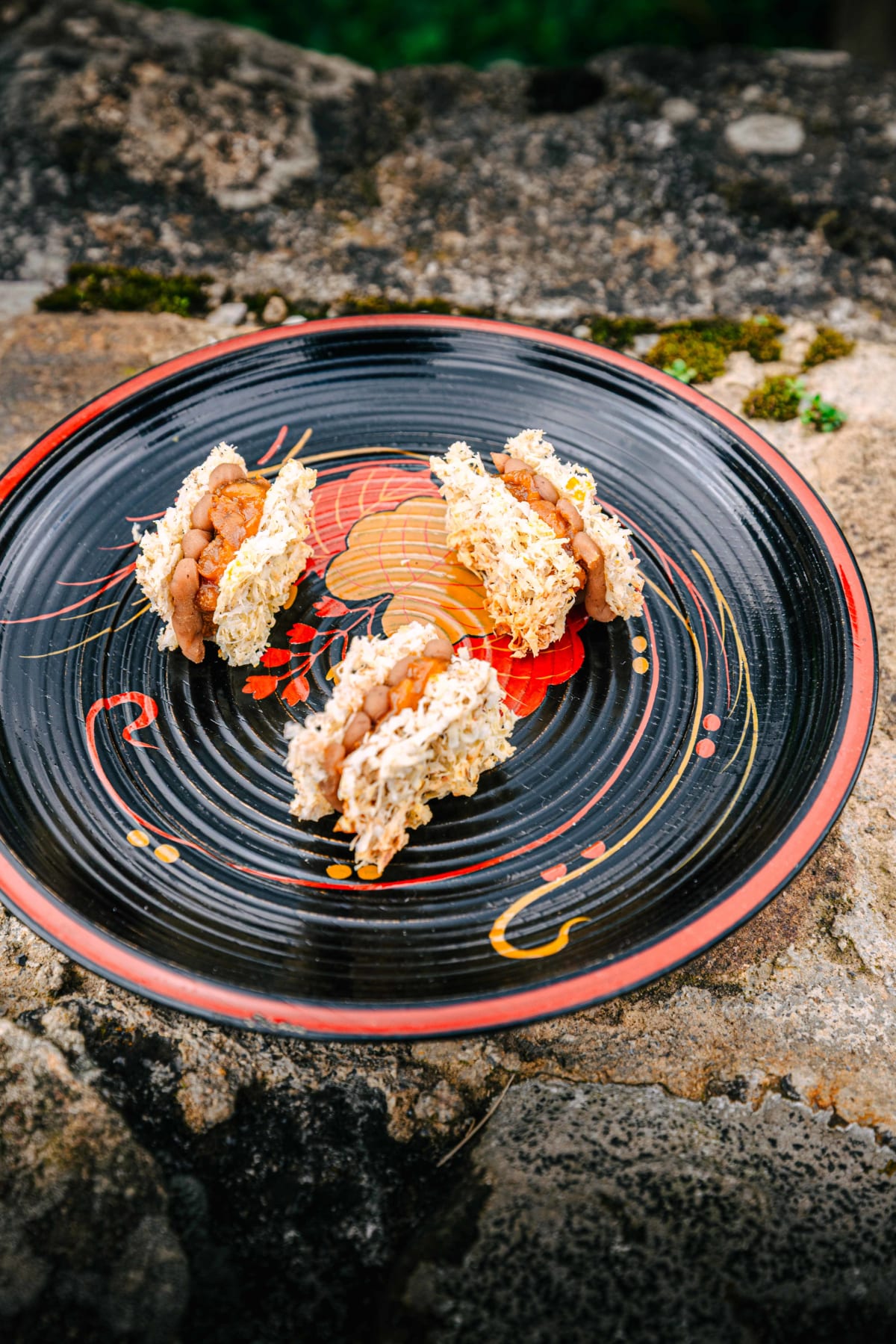
The first snack to follow was a cube of what appeared to be deep-fried dough but revealed itself on first bite to be a takoyaki. The octopus filling, the dashi-forward seasoning, the contrast of a genuinely crisp exterior against a molten, gelatinous interior: this was a technically flawless version of the Japanese street food executed with considerably more intensity than the original. It announced the kitchen's orientation immediately.


18—19 / 63
The kitchen tour concluded with Euskal Sushi, a piece of Basque-style katsuo sushi. The use of bonito here reflects the deep pride Basque gastronomy takes in its local catch, though the chef explained with characteristic candor that the rice had to be imported, as the region cannot grow it. The flavors were good, though the natural acidity of katsuo was somewhat muted, an editorial choice that I found slightly puzzling given how much the cut depends on that tension.


20—23 / 63
Seated in the main dining room, we ordered a bottle of Domaine Arnoux-Lachaux Chambolle-Musigny 2021 before the courses began. It was among the best wines I drank across the entire trip: a Pinot Noir of exceptional delicacy, with an aromatic profile of rose and red berry fruit and a texture so fluid and refined that it reframed what that variety is capable of in the right hands.


24—27 / 63
The first course arrived as six separate preparations on a single plate: Tomato, Prawn Nukazuke, Physalis, Eggplant, Nasturtium, and Eel Kabayaki. As an opening statement, it was dense with information and clear in intention.


28—29 / 63
The prawn tartare had been prepared with nukazuke, a Japanese fermented rice bran pickle, in place of the conventional gherkin or caper. The fermentation brought a different register of acidity, earthier and more complex. The eggplant, which Maeda described as based on his grandmother's summer recipe, had been prepared with miso, butter, and shiso in the manner of a Japanese summer vegetable dish; the caramelized sweetness of the eggplant was deep and long-finishing, the most immediately persuasive element of the plate. The tomato component incorporated a white kimchi-style pickle alongside cucumber, and the combination of freshness and clean sourness was well-judged. The nasturtium, stuffed with a preparation of miso and roasted garlic, presented a flavor I found unfamiliar and slightly difficult to orient within the rest of the dish. The eel kabayaki was the most technically striking item: cooked to a texture so rendered it verged on brittle, and glazed in a sauce made entirely from eel head and bones reduced with apple cider, apple pectin, and apple vinegar to replicate the sweet-savory viscosity of teriyaki without a single drop of conventional tare. The intellectual clarity of that solution was impressive.
The smoked caviar course that followed was the one I had been anticipating most, and the one I found most complicated to assess. This dish has its direct antecedent at Etxebarri, where Arginzoniz places caviar on a piece of kombu over the grill, using the seaweed both to protect the eggs from direct heat and to coat them in its own umami as the smoke passes through. I had encountered a version of this at Firedoor in Sydney earlier in the year, where another Etxebarri alumnus operates on similar principles. By the time I reached Txispa, I had eaten three iterations of the same concept within a single twelve-month period, which made comparison unavoidable.


30—31 / 63
Txispa's version added a chickpea tofu as the base sauce, a substitution that Maeda explained was driven by the absence of traditional soybeans in the Basque region. The caviar itself, taken alone, was fine. In combination with the chickpea tofu, however, something was lost. The eggs carry a fragrance and salinity that exist at the very edge of perception, and the weight of the legume preparation was enough to push that register below the threshold where it registers clearly. Against Etxebarri's original, which delivers the caviar's character with an almost unsettling directness, this version felt like a reduction rather than a reinterpretation. That said, understanding where Txispa draws the line, and where it departs from it, is itself part of what makes visiting both restaurants in sequence worthwhile.
The oyster course that followed was where Txispa established, for me, its clearest identity and its highest point.


32—33 / 63
Maeda opened it with a question about how long oysters have existed as a species: his answer was somewhere between 200 and 300 million years. He then noted that human use of fire dates back one to two million years, and that the act of cooking an oyster over flame is one of the most primitive culinary gestures in our history. His philosophy, which he calls "Primitive," is organized around this kind of temporal framing: returning to the longest relationships between human beings and their food.
His philosophy, which he calls "Primitive," is organized around this kind of temporal framing: returning to the longest relationships between human beings and their food.
The sauce for the oyster was built on sourdough and goat's milk, on the basis that fermented bread and goat dairy are among the oldest processed foods in human history. The sourdough brought a clean, live fermentation acidity that cut against the richness of the oyster without diminishing it. The goat's milk contributed a faint, slightly barnyard complexity that prevented the dish from being simply rich. The combination of umami, fermentation, and salinity was among the most coherent single bites of the meal. From this course onward, it was clear that Txispa was not making adjustments to an inherited model but working from its own set of first principles.
The beef tongue arrived next, marinated in rice koji at the restaurant, then slow-cooked over wood fire for an extended period. The resulting texture was the finest I have encountered in any form: firm enough to register, yielding enough to feel effortless, with a pull and elasticity that suggested the full potential of the cut had been reached. The accompanying sauce, made from tongue stock with soy as its base, was finished with what appeared to be yuzu kosho but was in fact a green pepper miso, slightly sweet, mildly sharp, and considerably more subtle in heat than the Korean equivalent. Padron peppers on the side prevented the plate from ever becoming monotonous.


34—37 / 63
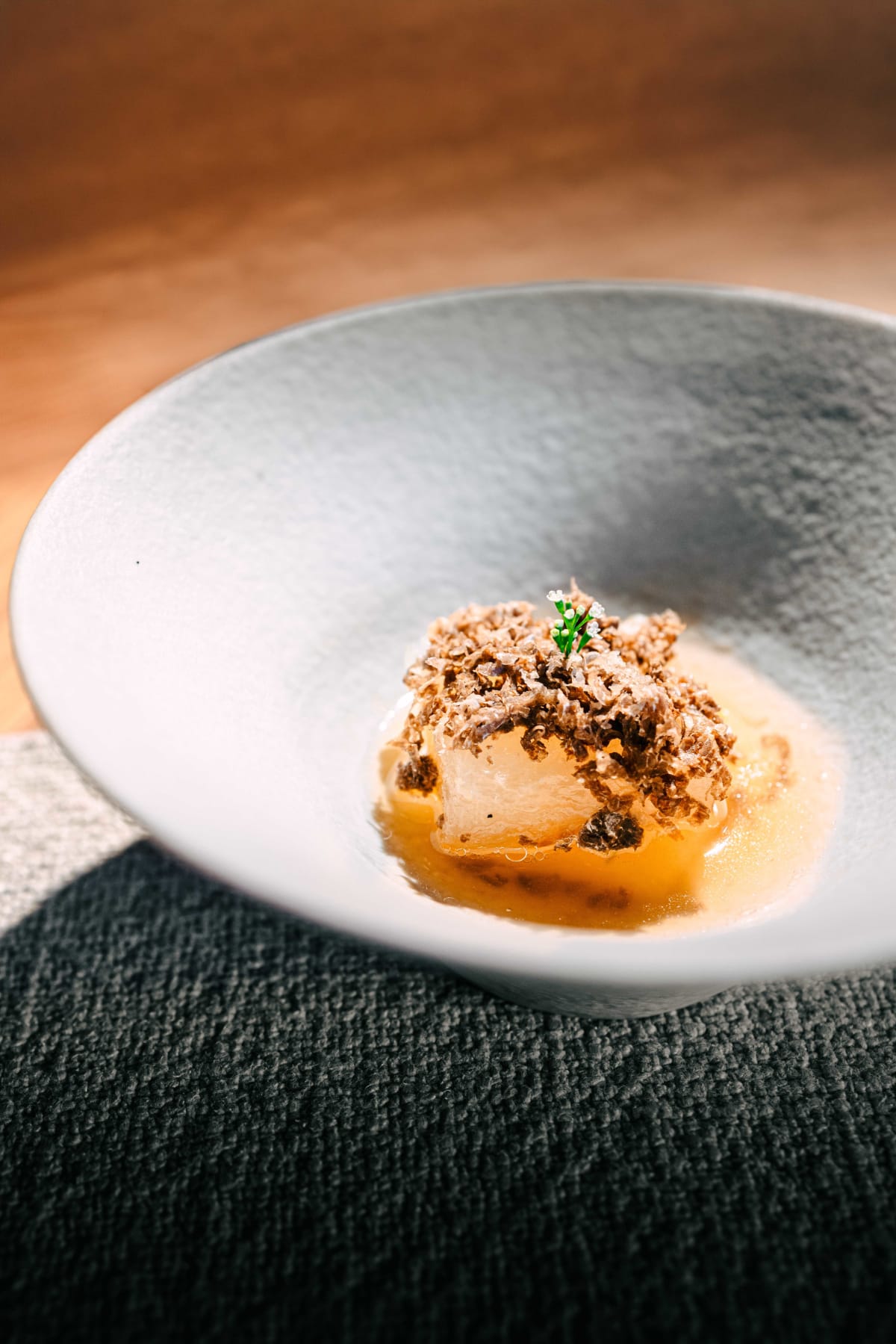
Between courses, two separate soup preparations served as transitions. The first combined Basque melon, not the sweet Japanese variety but the starchier local type, cooked in duck consommé in the manner of a Japanese nimono, with black truffle grated at the table. The duck fat had been left in the broth deliberately, and the resulting richness was offset by the smokiness acquired during the grilling of the melon. It was an exceptional bowl.

38—39 / 63
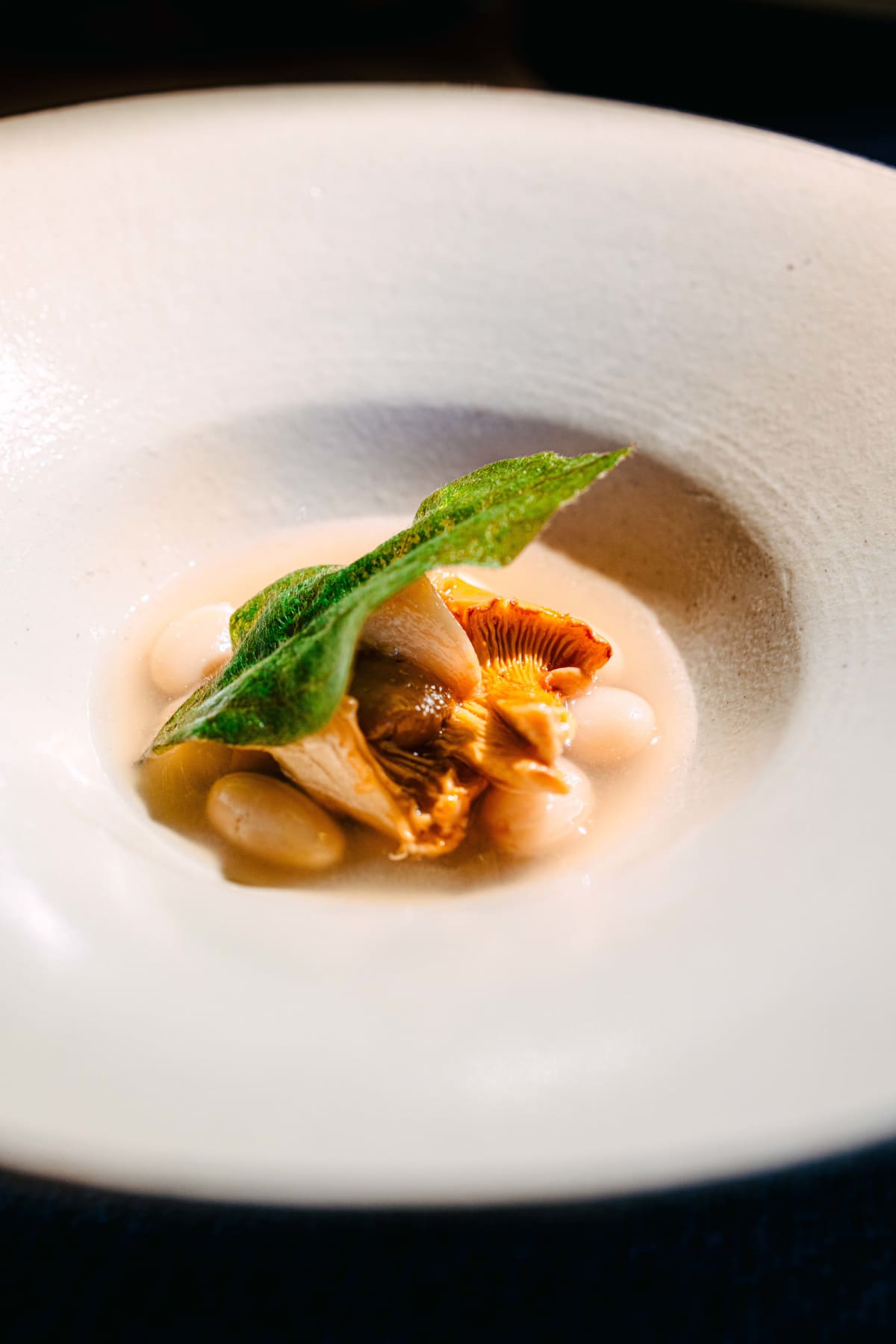
The second, a preparation of bochas beans from the Basque region cooked in clam broth with house-made sake in the manner of Japanese sakamushi, topped with grilled girolles and bean leaves, fused Spanish, Italian, and Japanese elements so completely that attributing its lineage to any single tradition felt beside the point.

44—45 / 63
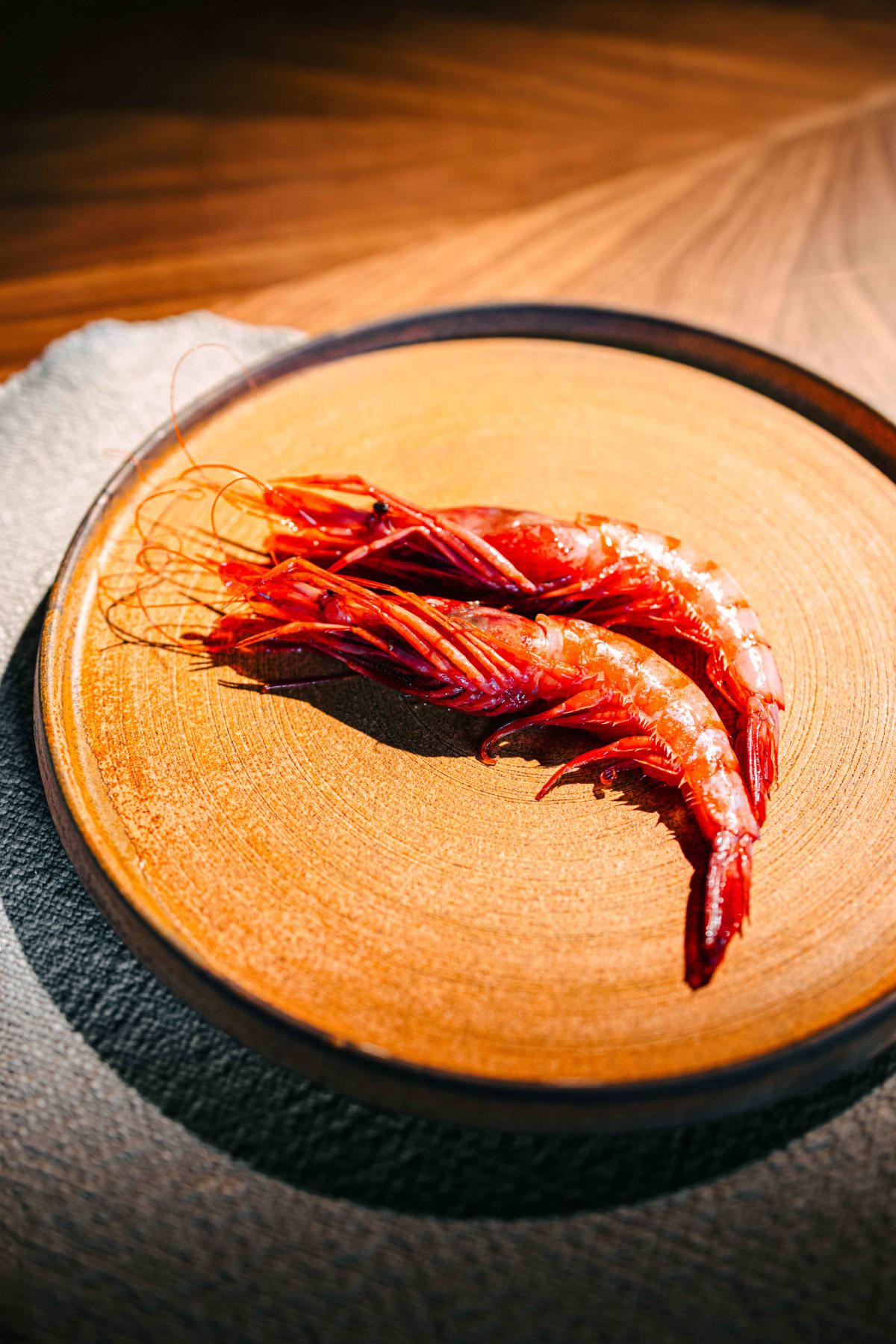
The Gamba Roja, the red prawn of Palamós, was one of the courses most directly connected to Etxebarri's way of thinking. No additions beyond a touch of sake; no intervention in the product itself. The grilling technique placed the head facing downward toward the fire and the tail elevated, on the basis that the head's interior fat deepens in flavor under higher heat, while the tail meat cooks gently from the indirect heat and retains its texture. The result was a prawn of intense flavor in the head and precisely calibrated tenderness in the body. Spanish red prawns carry a depth of flavor in the head cavity that has no equivalent in most Asian varieties, and this preparation made no effort to distract from that fact.


40—43 / 63
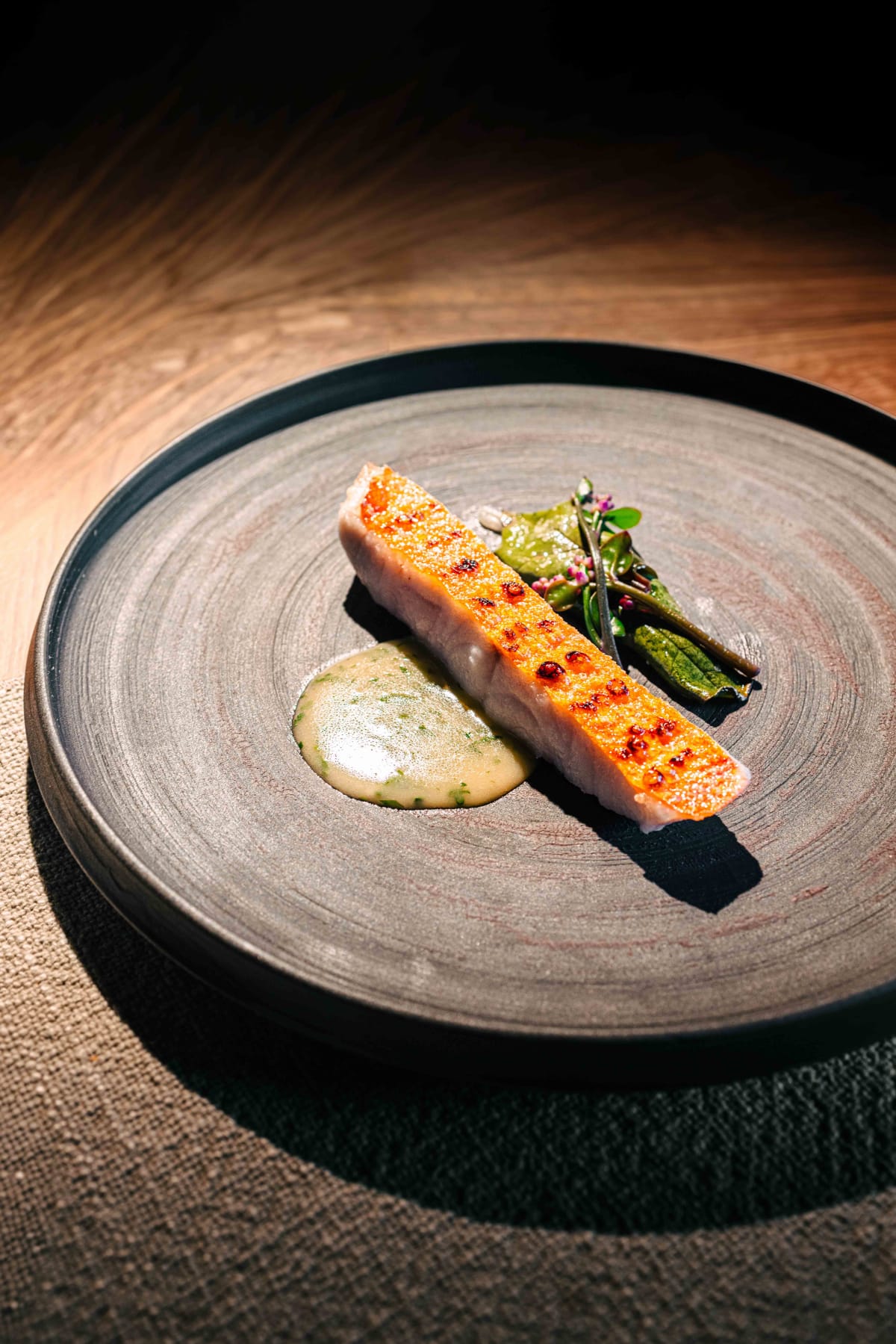
The fish course was a kinmedai, golden eye snapper, sourced outside Japan and dry-aged for five days before service. The skin had been dried and grilled to a lacquer-like crispness, with the flesh beneath remaining moist. The sauce was a pil-pil made from the fish's head and bones, brightened with rhubarb and shiso. Malabar spinach, known in Japanese as tsurumurasaki, accompanied it: a slightly mucilaginous, aromatic leaf common in Japanese and Southeast Asian cooking but rarely seen in European restaurants. Its slight bitterness and slippery texture balanced the richness of both the fish and the sauce.

46—47 / 63
Before the final savory course, guests were invited back into the kitchen to watch Maeda butcher and plate the chuleta directly. The beef was a cross between Galician native cattle and another local breed, dry-aged for 180 days. The cut was on the thinner side compared to others I had encountered on the same trip, which limited the textural satisfaction of chewing through a thick steak. What the aging had produced, however, was a fat with the intensity of blue cheese: complex, slightly funky, deeply persistent. The meat itself had good juice and clean flavor. Structurally, I preferred a thicker cut; in terms of aged character, the fat was its own argument.


48—55 / 63
The dessert sequence began with a grilled fig, split and filled with a house-made butter cream, accompanied by a transparent sauce made from fig pulp. Grilling had concentrated the fruit's sugar into something resembling toffee while the cream inside provided a lightness that made the combination less indulgent than it sounds. The contrast between the sticky exterior and the fresh interior was the best kind of simplicity.


56—57 / 63
The second dessert was a pumpkin ice cream with a caramel made from pumpkin miso, which brought an unexpected depth of umami and salt into what might otherwise have been a straightforwardly sweet course. Spaghetti squash compote and roasted pumpkin seed crumble added textural variation and a gentle nuttiness.


58—59 / 63
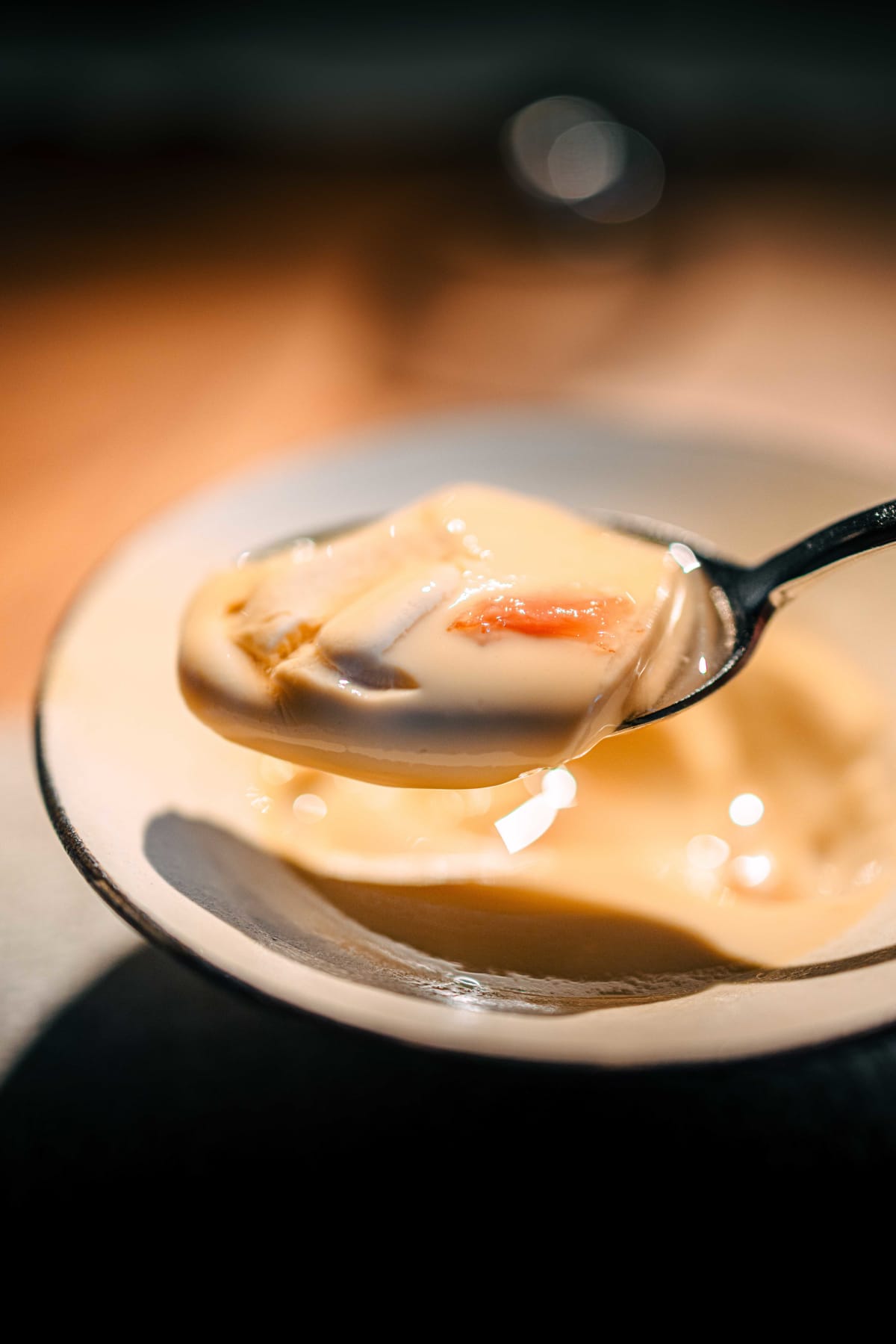
The meal ended with a sakura flan. The cherry blossoms for it are picked each spring from two old trees at the rear of the restaurant, salted in the Japanese manner, and preserved for a full year before use. The result is a flan with a floral salinity that is both delicate and clearly defined, the kind of precision that only patience produces.

60—61 / 63
I visited Txispa the day before Etxebarri, which allowed me to experience the contrast in the most direct terms. What I expected was considerable overlap. What I found were two almost entirely different restaurants, sharing only the red prawn and the chuleta as obvious points of comparison. Etxebarri operates with a stripped-back confidence that comes from decades of refinement; everything it does is reduced to its essential version. Txispa operates in the register of fine dining proper, with composed dishes, layered sauces, cross-cultural reference, and a narrative running through each course. In terms of overall completeness, I would say Etxebarri's best dishes are marginally ahead of Txispa's best dishes, but Txispa's finest moments, the oyster, the tongue, the kinmedai, are not behind the fine dining dishes Etxebarri occasionally produces. The potential, should Maeda continue on this trajectory, feels genuinely open-ended.


62—63 / 63
Txispa is not Etxebarri with Japanese seasoning. It is something more considered and more original than that description allows. The proximity to its predecessor is a geographical fact, not a culinary limitation. What Tetsuro Maeda has built in the Axpe valley is a fine dining restaurant with its own philosophy, its own relationship to the landscape and to history, and its own clear sense of where it is going. If you are traveling to visit Etxebarri, the case for spending the preceding day at Txispa is straightforward. The two restaurants together tell a story that neither tells alone.
Have a question about this restaurant, or want to share your own experience?
Send a message