Fine Dining · Hong Kong
WING 永
"A guide that rewards mastery of established forms, and a list that rewards the construction of new ones"































The building at 198 Wellington Street in Central has no particular reason to draw attention from the outside. What makes it worth noting is what it holds. The Chairman occupies the third floor. WING 永 is on the twenty-ninth. VEA, Vicky Cheng's first restaurant, is on the thirtieth. All three are among the most discussed dining rooms in Hong Kong, and I visited all three during the same trip. The Chairman is written up elsewhere on this site. What follows is an account of what happened two days and twenty-six floors above it.
WING 永 first came to my attention through the rankings. The 2024 World's 50 Best Restaurants placed it at number twenty, and Asia's 50 Best had it at third the following year. What made the numbers worth examining was a single additional detail: WING holds no Michelin stars. VEA, one floor above, has one. Most restaurants in the top tier of either list hold at least one star, and many hold more. The gap between how these two systems evaluate the same kitchen is not easily explained. After the meal, it remained unexplained.
Vicky Cheng was born in Hong Kong and grew up in Toronto. He studied at George Brown College, cooked at Auberge du Pommier and Canoe in Toronto, then moved to New York to train under Daniel Boulud at Restaurant Daniel. He returned to Hong Kong in 2011, opened VEA in 2015, and launched WING 永 in April 2021. The stated philosophy at WING is a modern reinterpretation of China's eight great regional cuisines: Cantonese, Sichuan, Jiangsu, Shandong, Zhejiang, Fujian, Anhui, and Huaiyang. The restaurant describes this as a "no-rules contemporary interpretation," and positions the food under the label Contemporary Chinese Cuisine, a category that acknowledges the presence of European technique within a Chinese framework.
In practice, the food at WING did not taste, to my palate, fully grounded in the local character of Chinese cooking. That is not a criticism so much as a description of what the restaurant is doing and where it sits. The food is excellent. It occupies a register closer to a modernist chef's dialogue with Chinese culinary tradition than to the tradition itself, and the label Contemporary Chinese Cuisine is accurate precisely because of that distance. Whether the distance matters depends on what you came looking for.
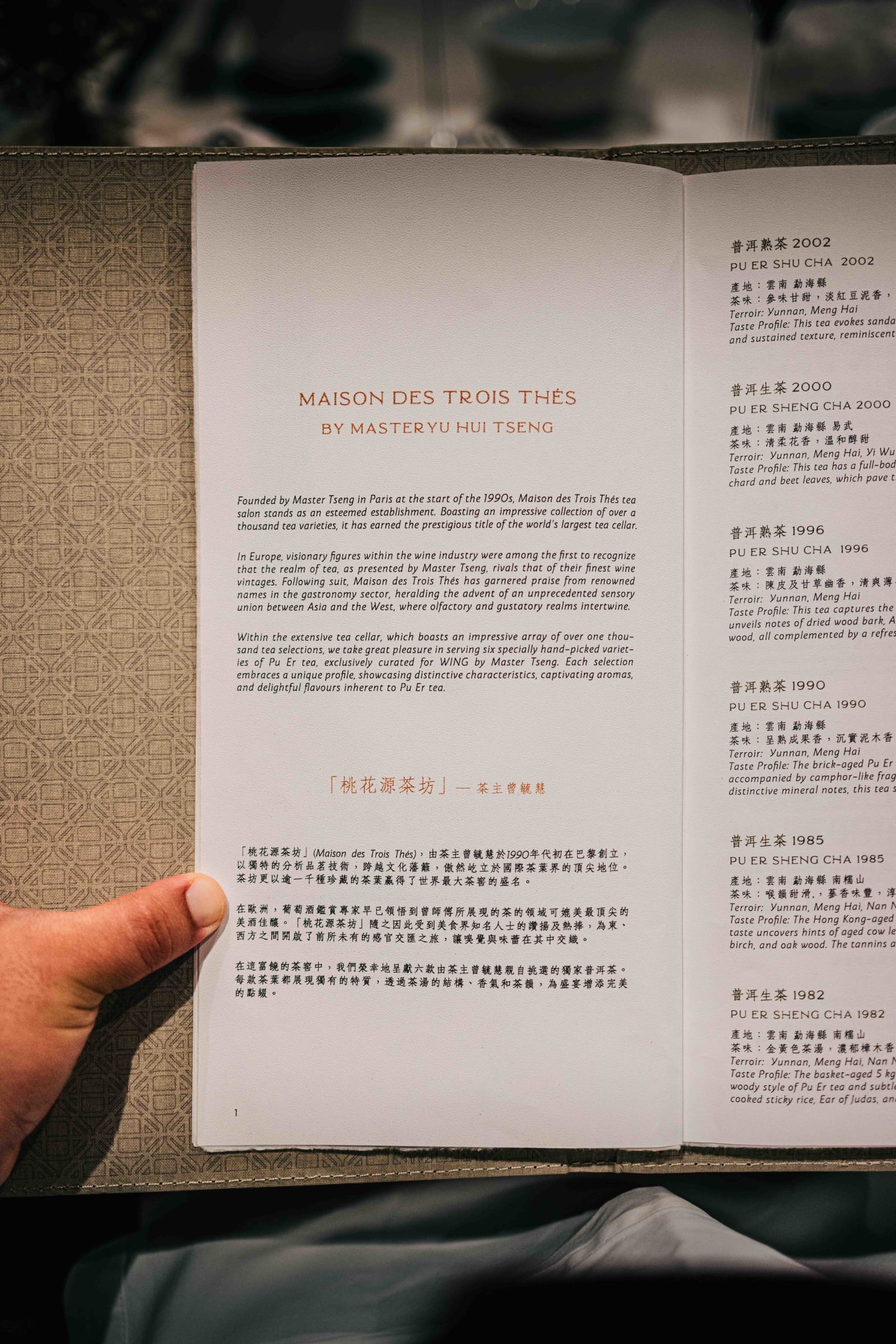
The menu runs to fourteen courses and two desserts. I eat well and I ate a great deal here. Advance planning around lunch is advisable. Before the food arrives, the team presents both a wine list and a pu'er tea list. The tea list is organized by terroir and vintage, on the same logic as fine wine, with some selections priced above seventy dollars a cup. Pu'er is a fermented tea produced exclusively in Yunnan Province, and its quality varies meaningfully with age and origin. I found the list genuinely interesting and ordered Champagne.
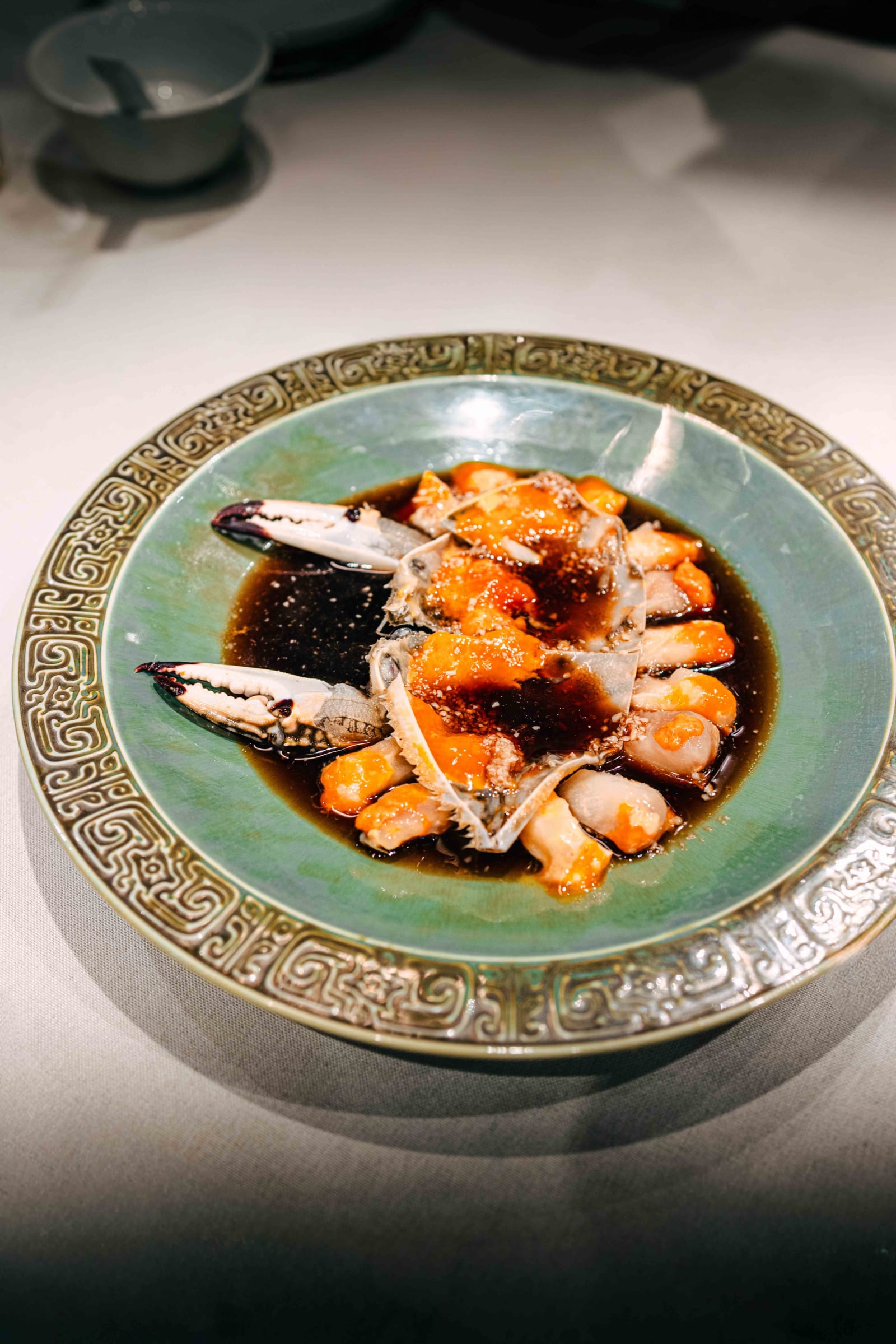
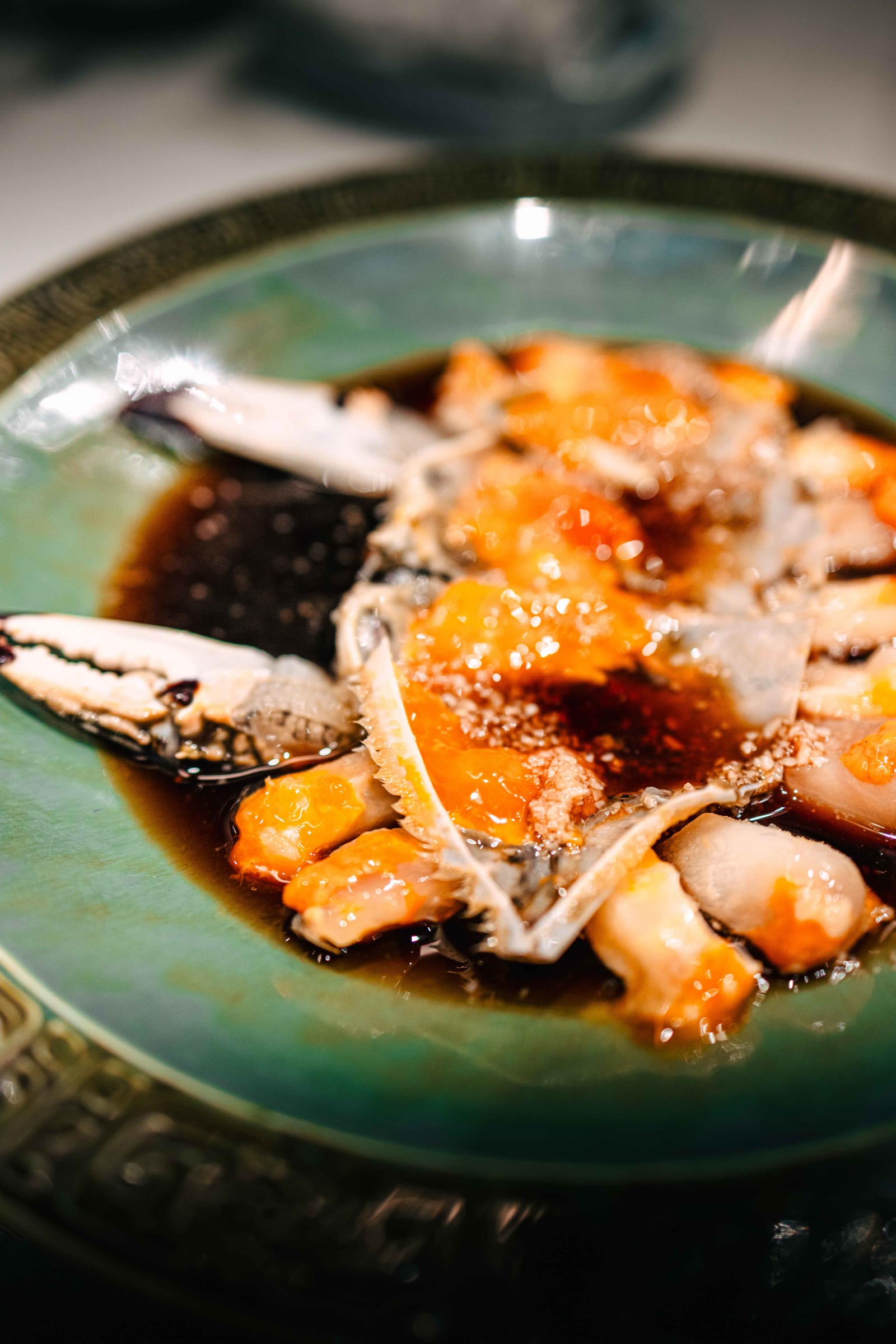
The meal opens with five dishes served simultaneously, each distinct in character. SMOKED EGGPLANT arrived braided into something precise and beautiful. The flavor was bright and acidic, nothing like the fried eggplant preparations I associate with Chinese cooking. RAZOR CLAMS with Yunnan chili and bull kelp had a clean, muscular quality, and the flavors landed somewhere unexpectedly familiar, close to what I think of as Korean in character. CHILI JAPANESE OYSTER with GOLDEN CRYSTAL EGG, a large raw oyster paired with a spiced sauce and century egg tofu, is the kind of combination that sorts a room. I was on the right side of it. The preserved egg stayed in check, the oyster was high quality, and the dish delivered exactly what I had come to Hong Kong hoping to find. The sauce returns later in the meal with noodles rolled through it, which was a welcome reappearance. DRUNKEN SOUTH AFRICAN ABALONE, cured in rice wine and star anise, was good, well-made, and more or less what I expected from abalone in that preparation. SALTED RAW CRAB was the standout of the five. The crab is marinated in a brine built on minced garlic and multiple vinegars, producing something more acidic and complex than the Korean ganjang-gejang I know well. The crab arrives slightly frozen, and as it yields the flesh takes on a texture that recalls half-thawed dried persimmon. The coldness of the meat against the bright, cutting sauce carried the same bracing quality as cold noodles with vinegar. I kept reaching for the liquid long after the crab was gone.
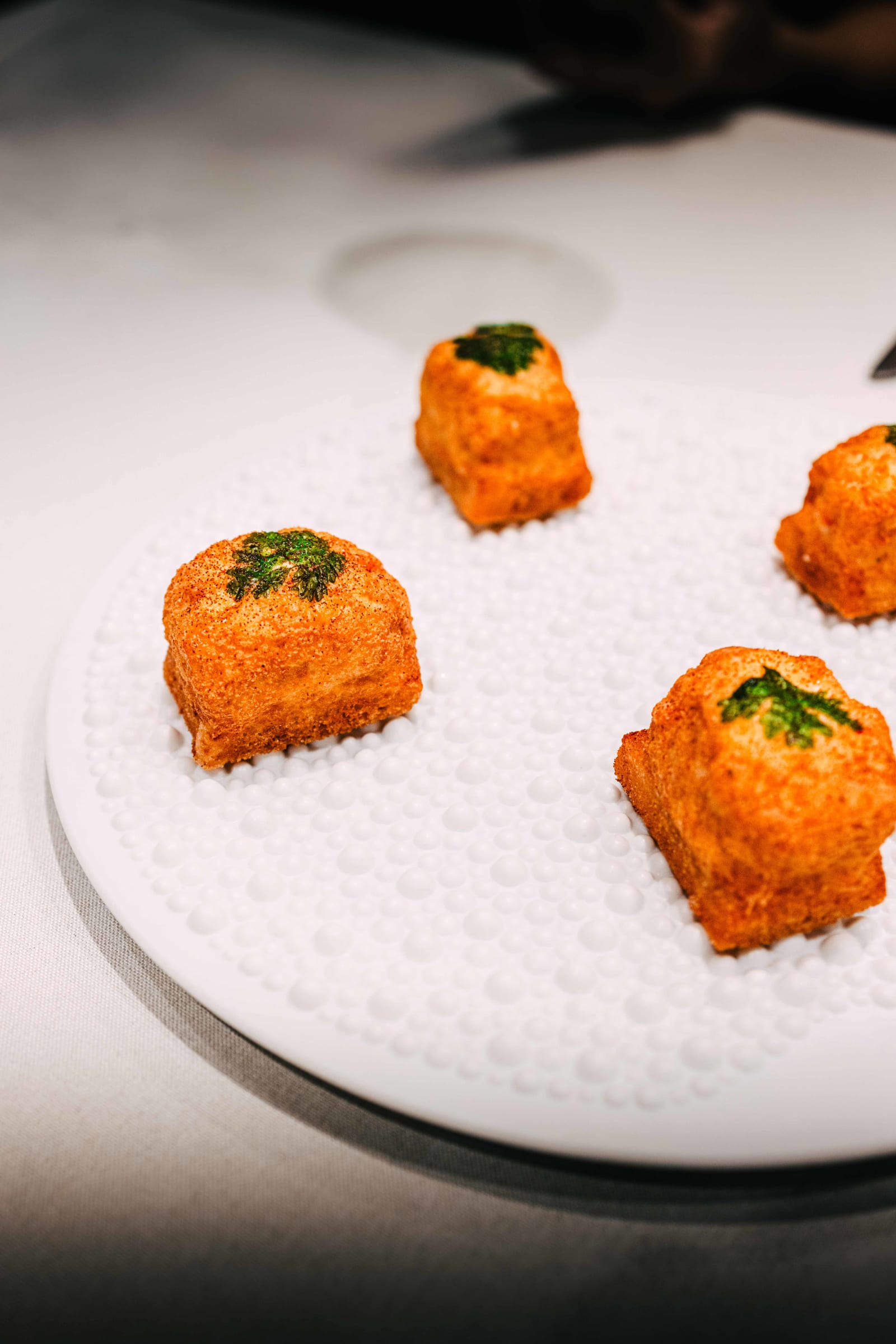
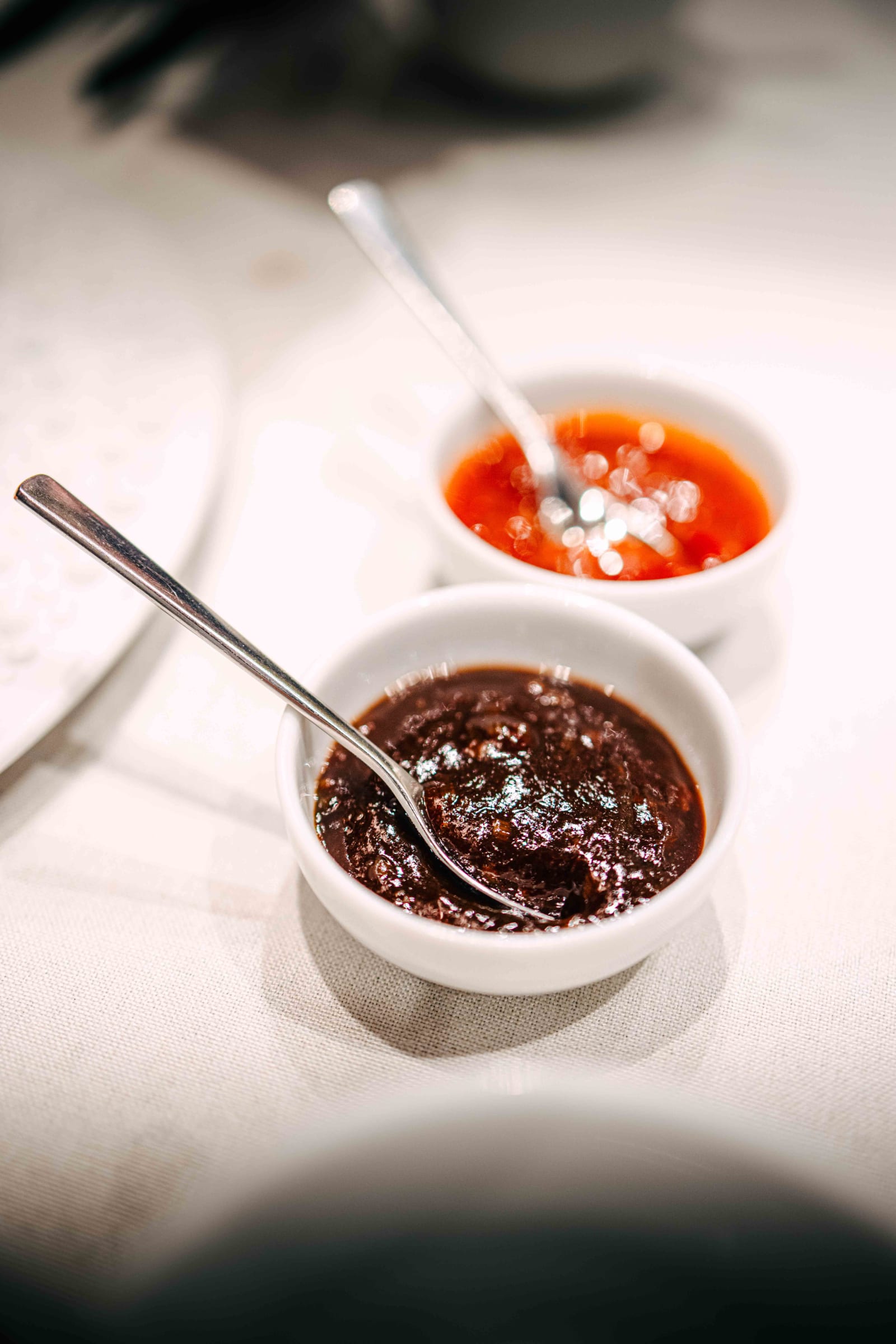
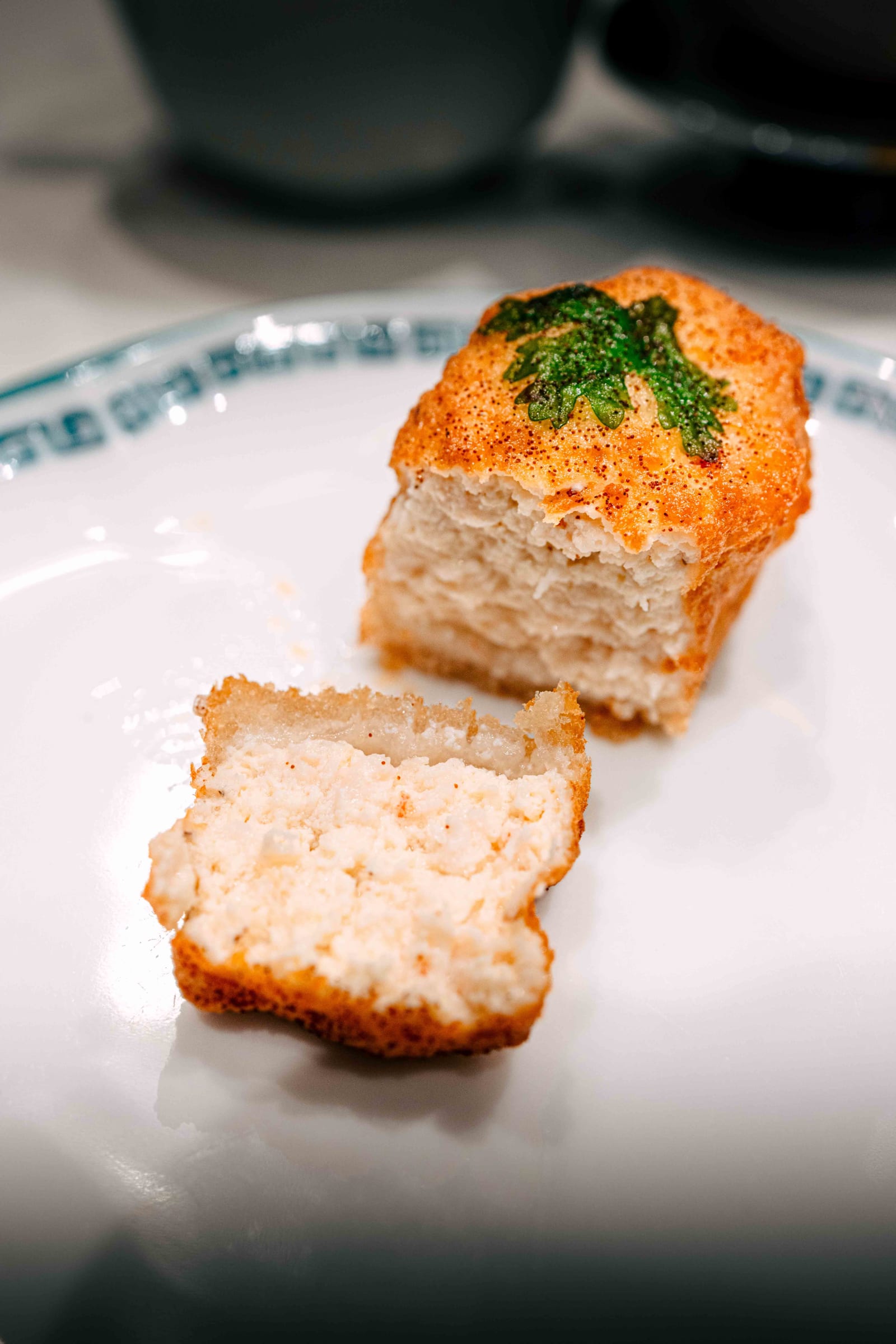
The optional starter I chose was STINKY TOFU TIGER PRAWN TOAST. Stinky tofu is a fermented tofu whose aroma typically precedes it. The version here was fried, and the smell surfaced only briefly when cut. Eaten with the sauce, what remained was savory and deeply satisfying. The intensity had been calibrated for a room that welcomes a broad audience, and the calibration was well done. I would order it again.
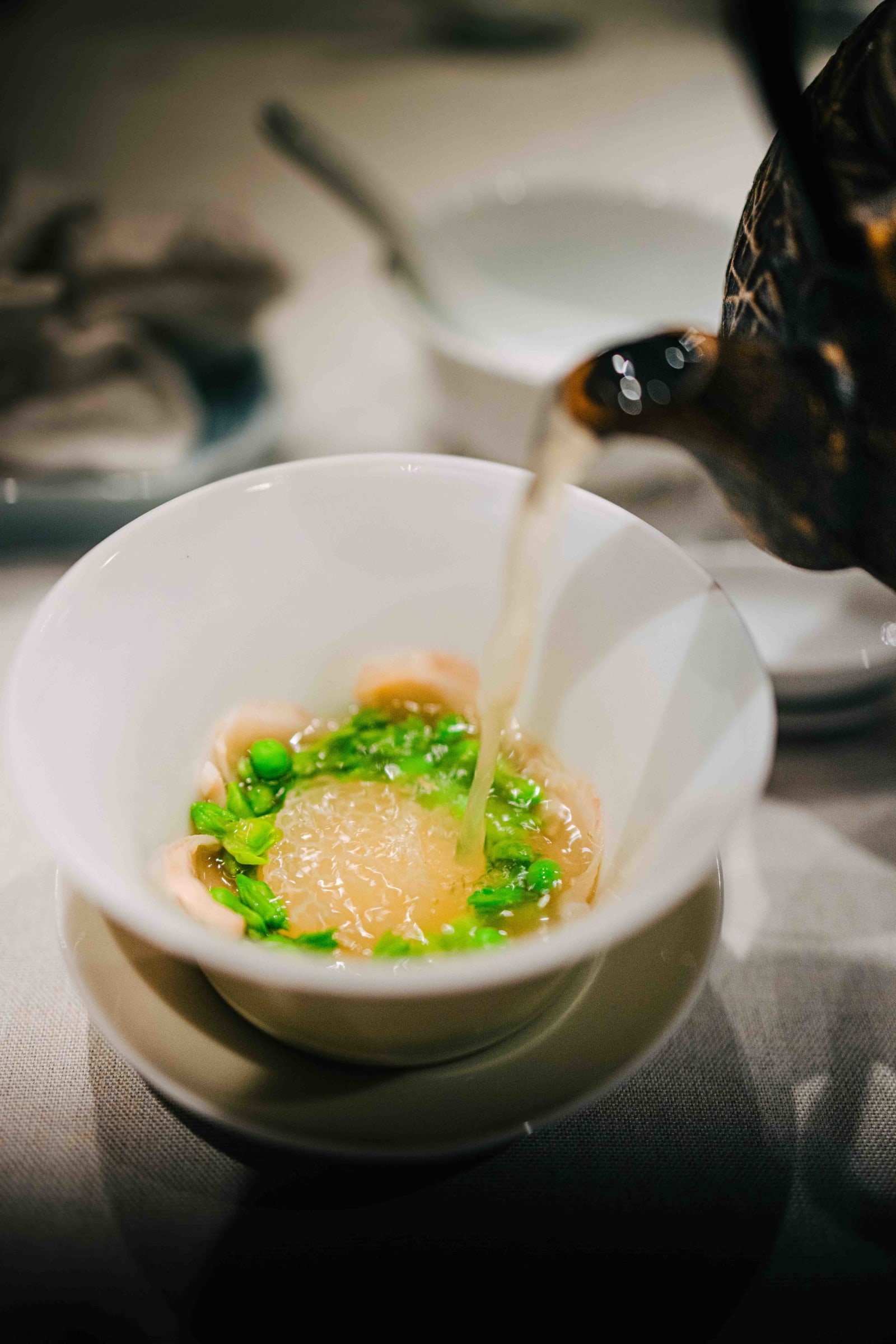
GEODUCK and WINTER MELON SOUP followed. Geoduck is a large Pacific saltwater clam; winter melon, or dongua, takes on the flavor of whatever surrounds it when cooked. The soup also contained jasmine and bamboo fungus, a netlike mushroom I had not encountered before. Most of the ingredients in this course were new to me. The combination, unfortunately, did not work for me. Something in it tasted off, and the strangeness did not resolve as I ate.
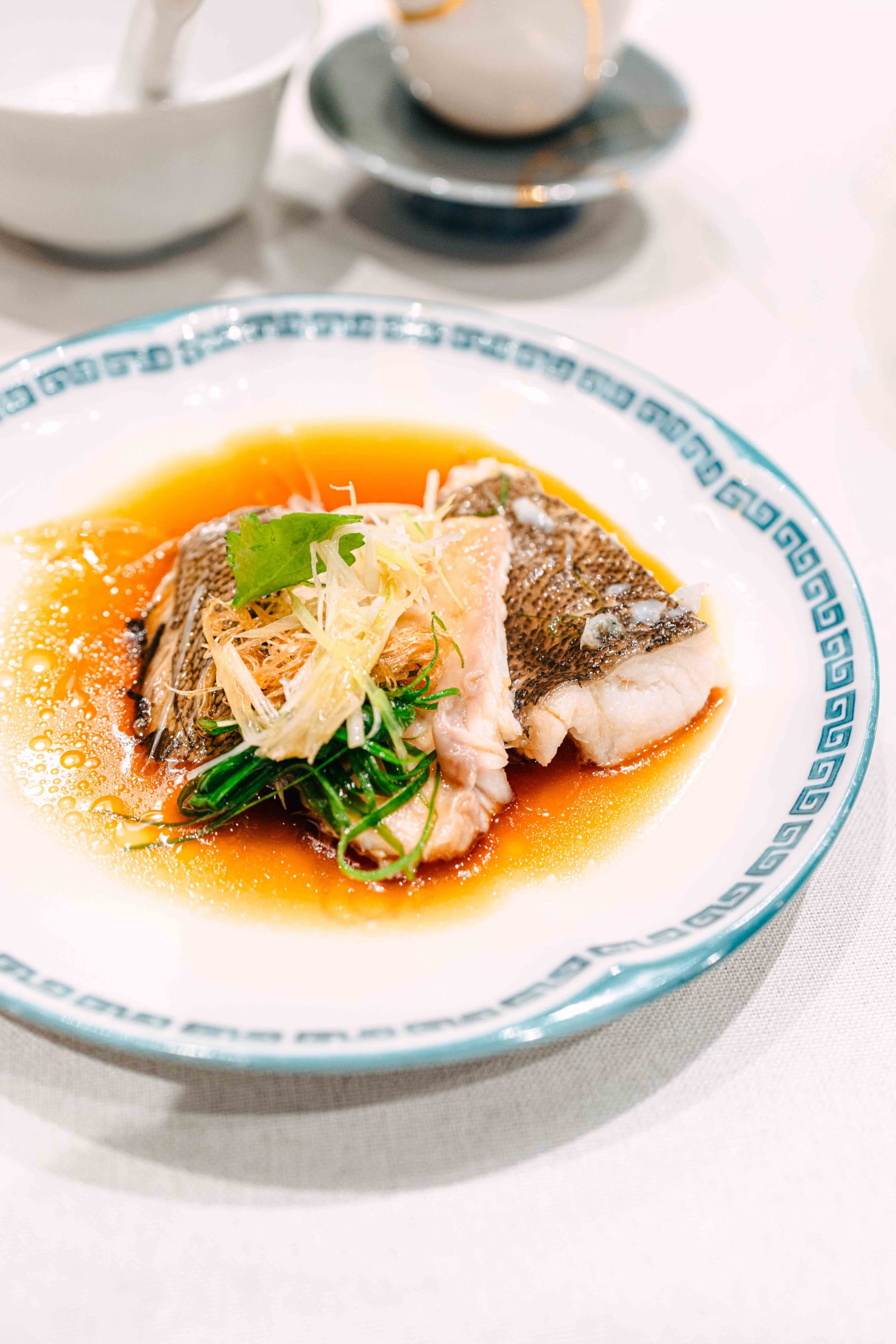
The fish course was STEAMED WILD MACAO SOLE. The fish, called 方腳 in Chinese, was steamed and served with ginger and scallion, the fin and body sections presented separately. The execution was clean. It was a competent, unremarkable example of a classic Chinese steamed fish preparation, and I left it at that.
BABY PIGEON came next, smoked over sugarcane. Two days earlier I had eaten The Chairman's pigeon three floors below, and the comparison was unavoidable. Both were good. The Chairman's version had the edge: chewier, more intensely flavored, more insistent. The pigeon at WING was slightly sweeter, the smoke softer. I would call this a difference in direction rather than quality, though the direction at The Chairman worked better for me. The head was included, as it had been downstairs. I followed the same custom as before.
FRAGRANT CHILI ALASKAN KING CRAB with CRISPY CHEUNG FUN was one of the two best courses of the evening. King crab in a fragrant chili sauce is good wherever you encounter it. The variable here was the cheung fun, a rice noodle roll that had been fried until its surface shattered. Cheung fun in its usual context is soft, slippery, a dim sum staple. Here it absorbed the chili sauce as you ate and the combination of textures and heat was unexpected and excellent. I had not previously thought much about cheung fun as an ingredient. I think about it now.
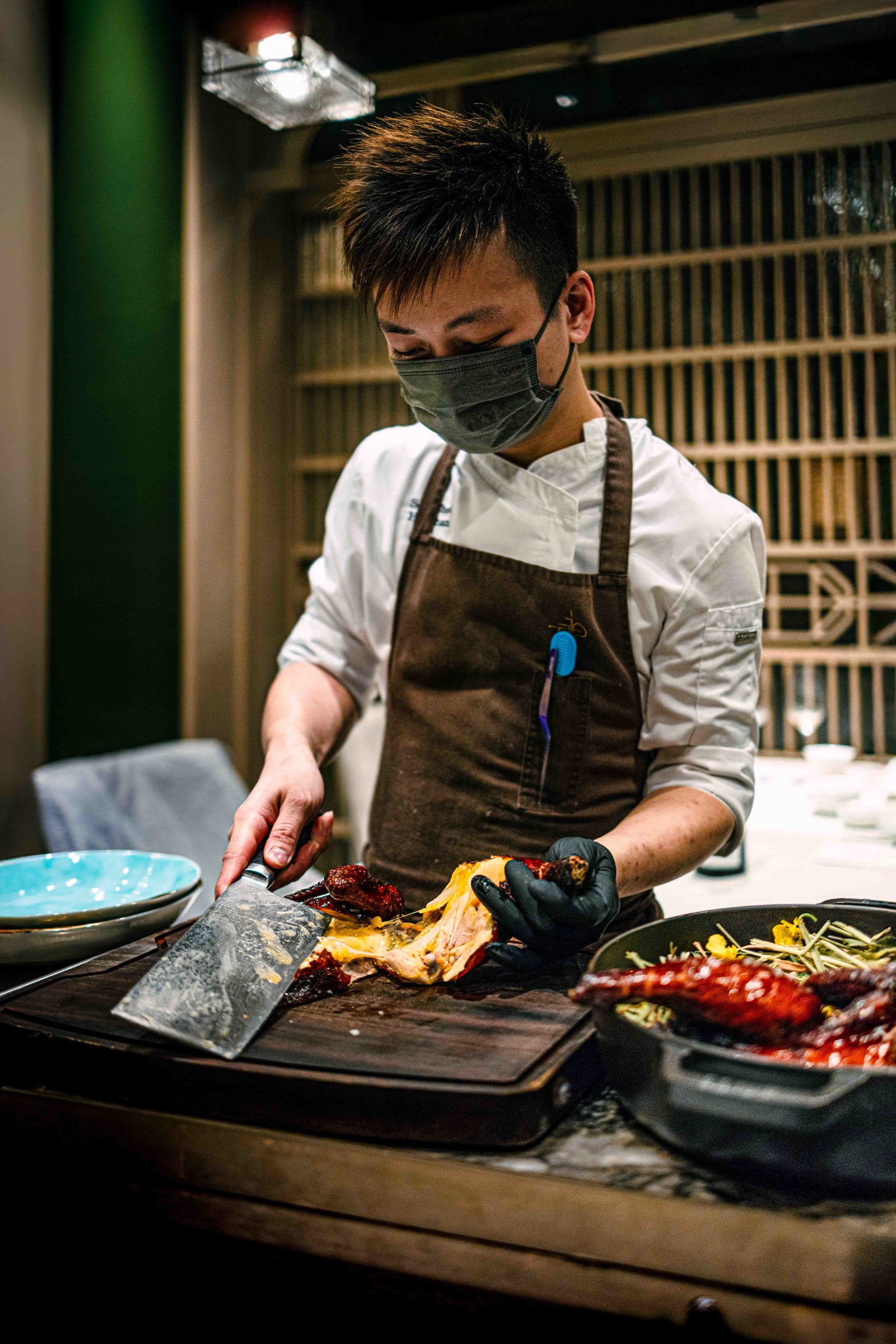
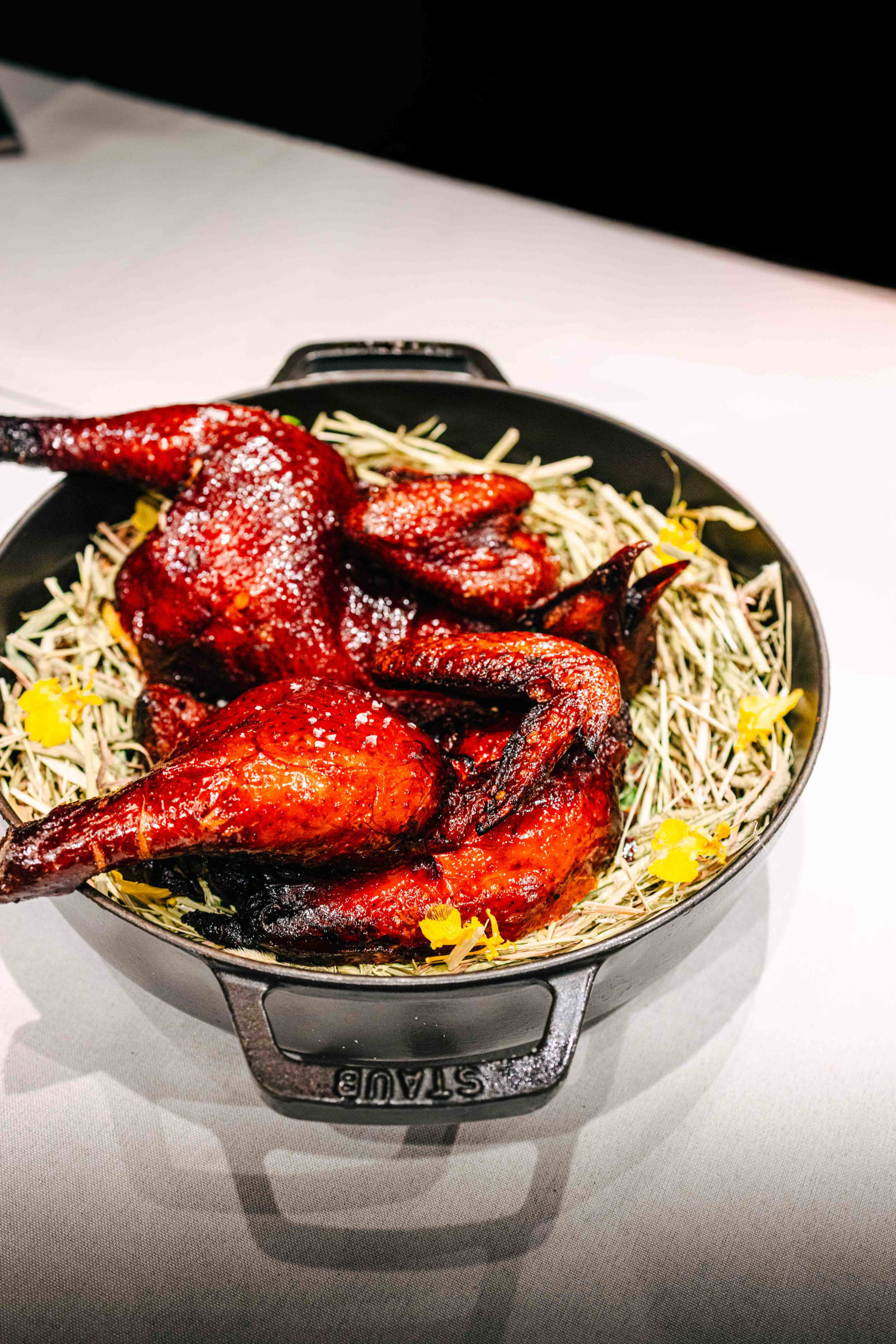
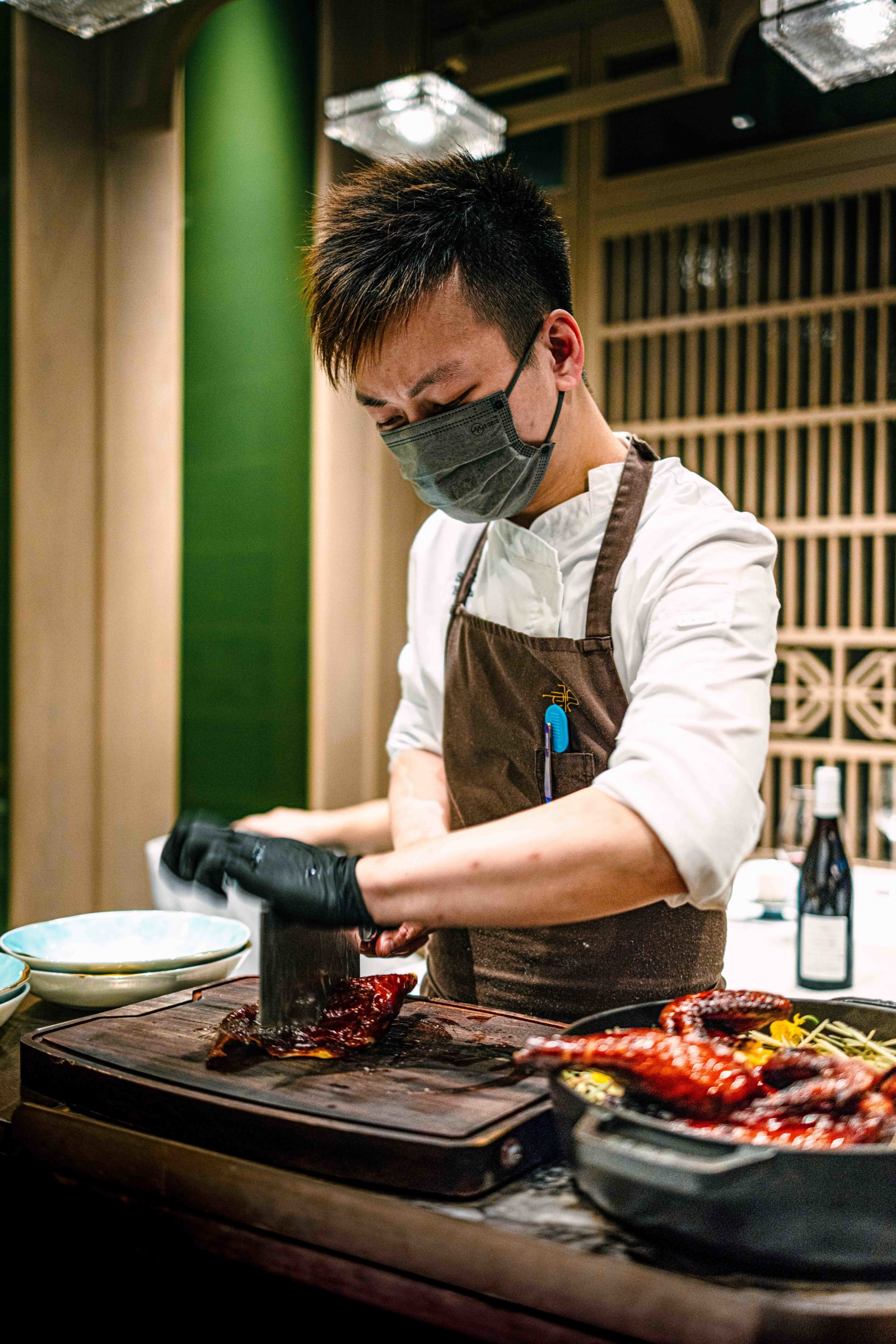
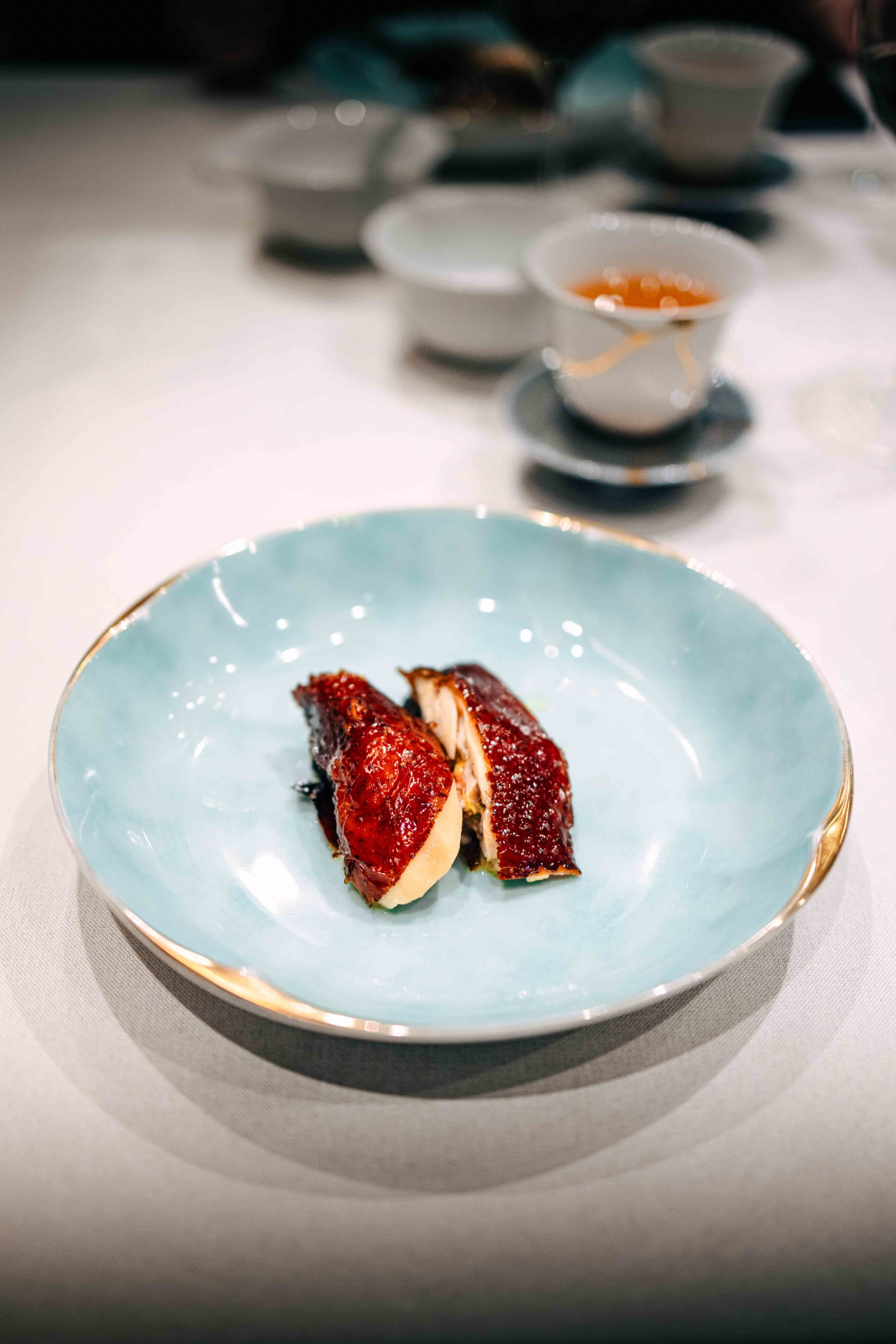
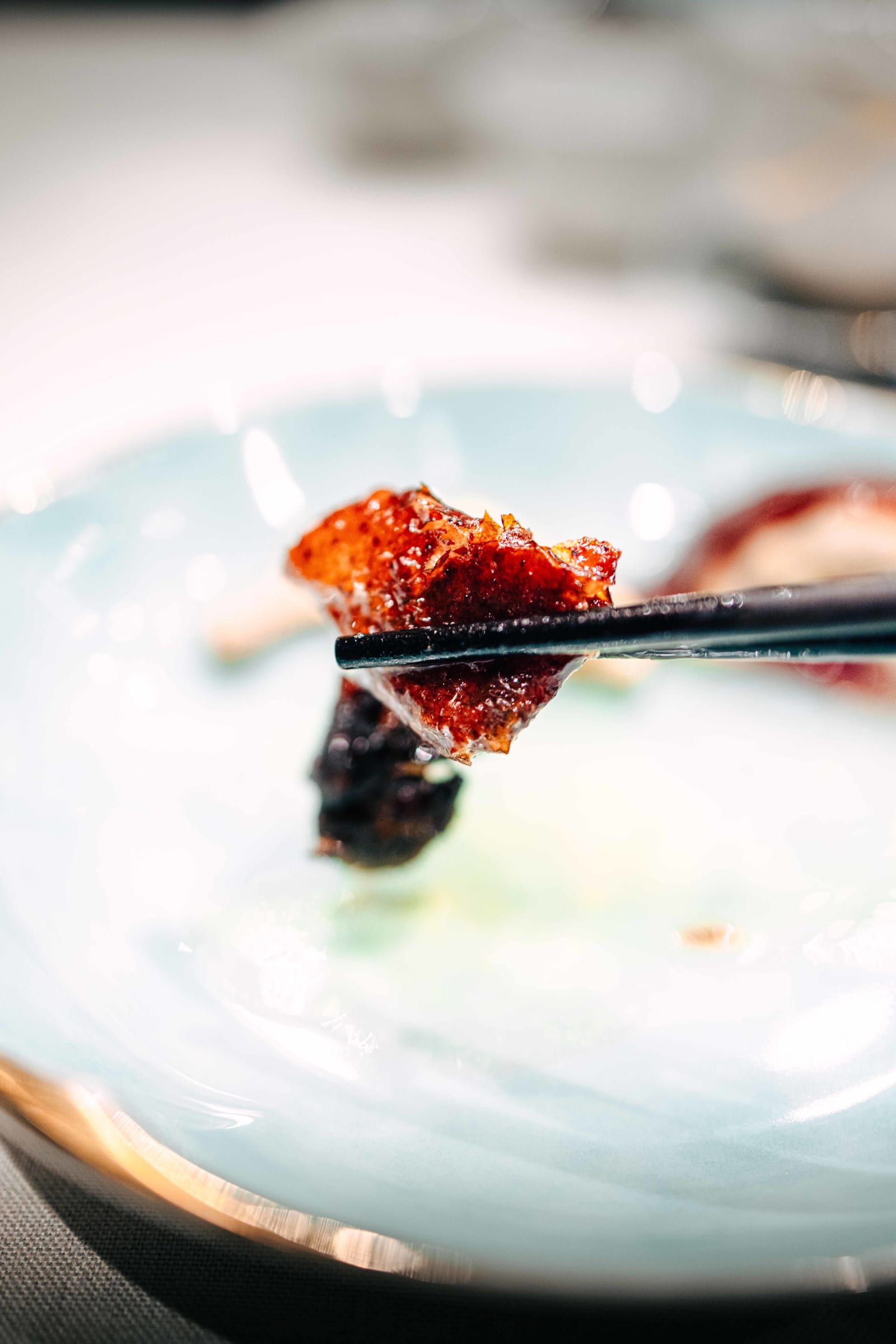
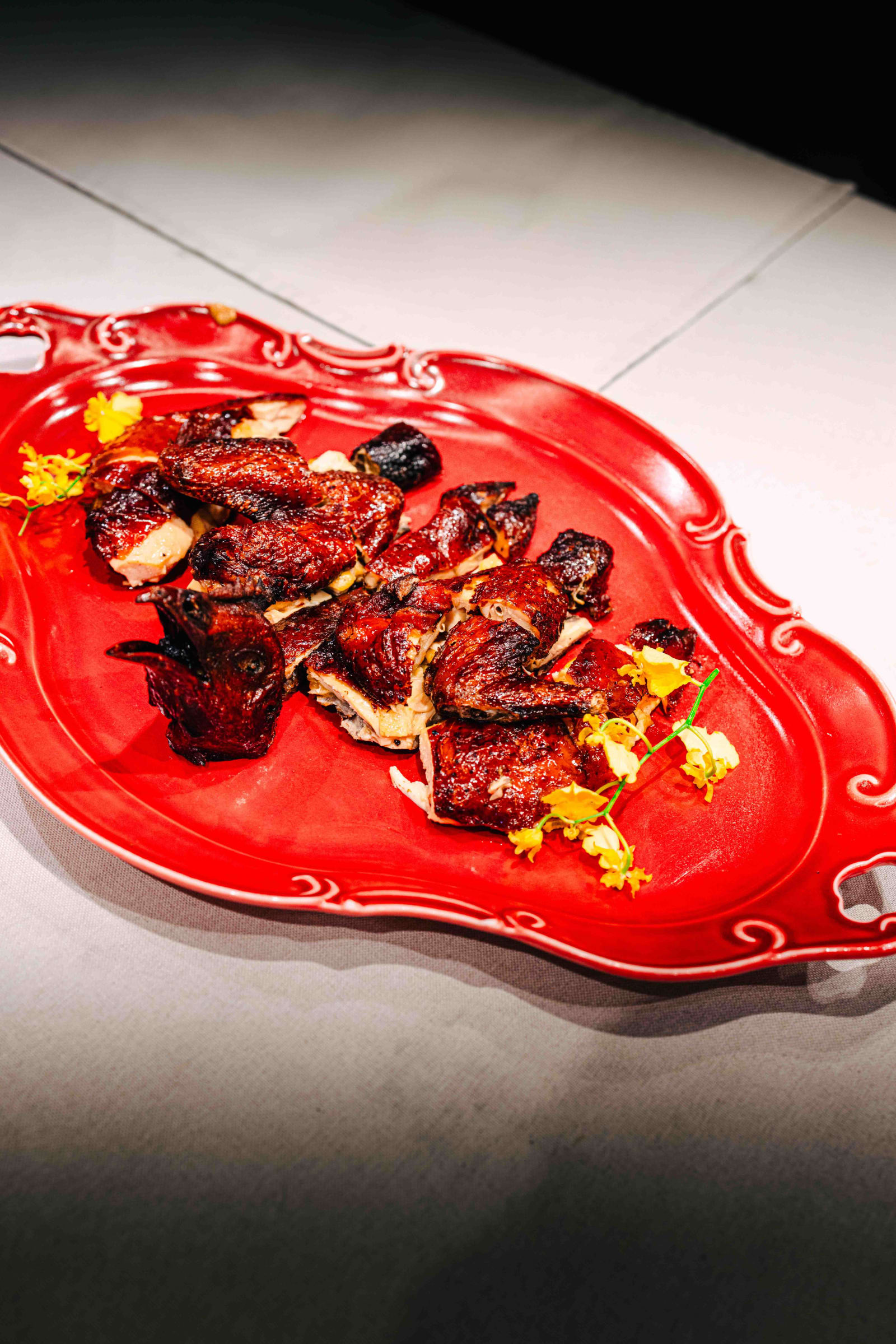
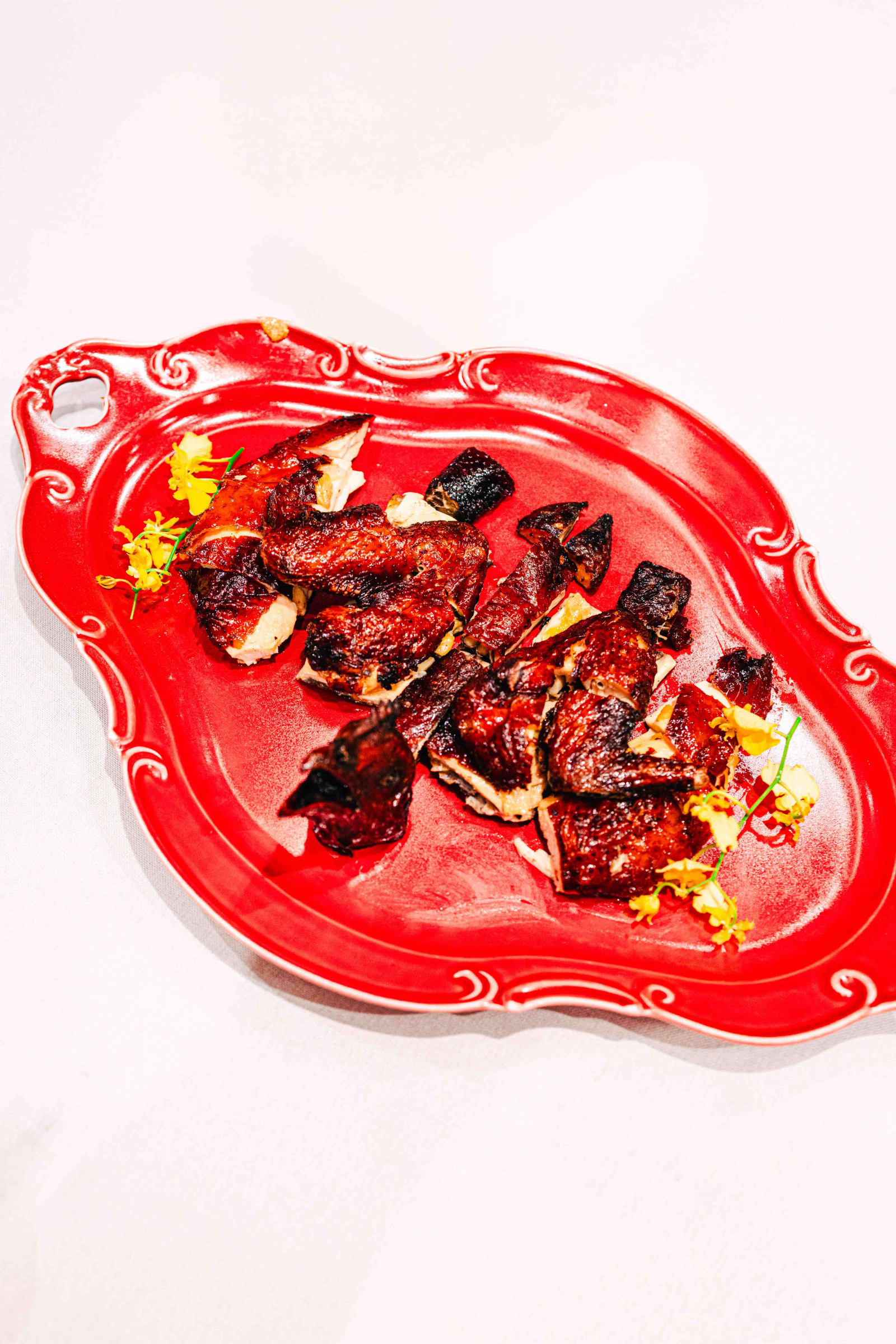
SIGNATURE CRISPY CHICKEN arrives via gueridon. A server wheels the cart tableside, takes up a Chinese cleaver, and breaks the bird in half. Yellow fat runs freely down both sides. The chicken is a Three-yellow chicken, 三黃雞, a heritage breed named for its yellow feathers, beak, and feet, raised for ninety to a hundred and twenty days on a schedule that commercial poultry does not follow. The skin registers this difference immediately. It is fried once, from raw, without the par-fry and hold method common in high-volume kitchens. The crust that results is of a different order entirely: impossibly thin and shattering. The meat underneath is rendered through with fat and yields without resistance. This is the best chicken I have ever eaten. I have nothing to add to that.
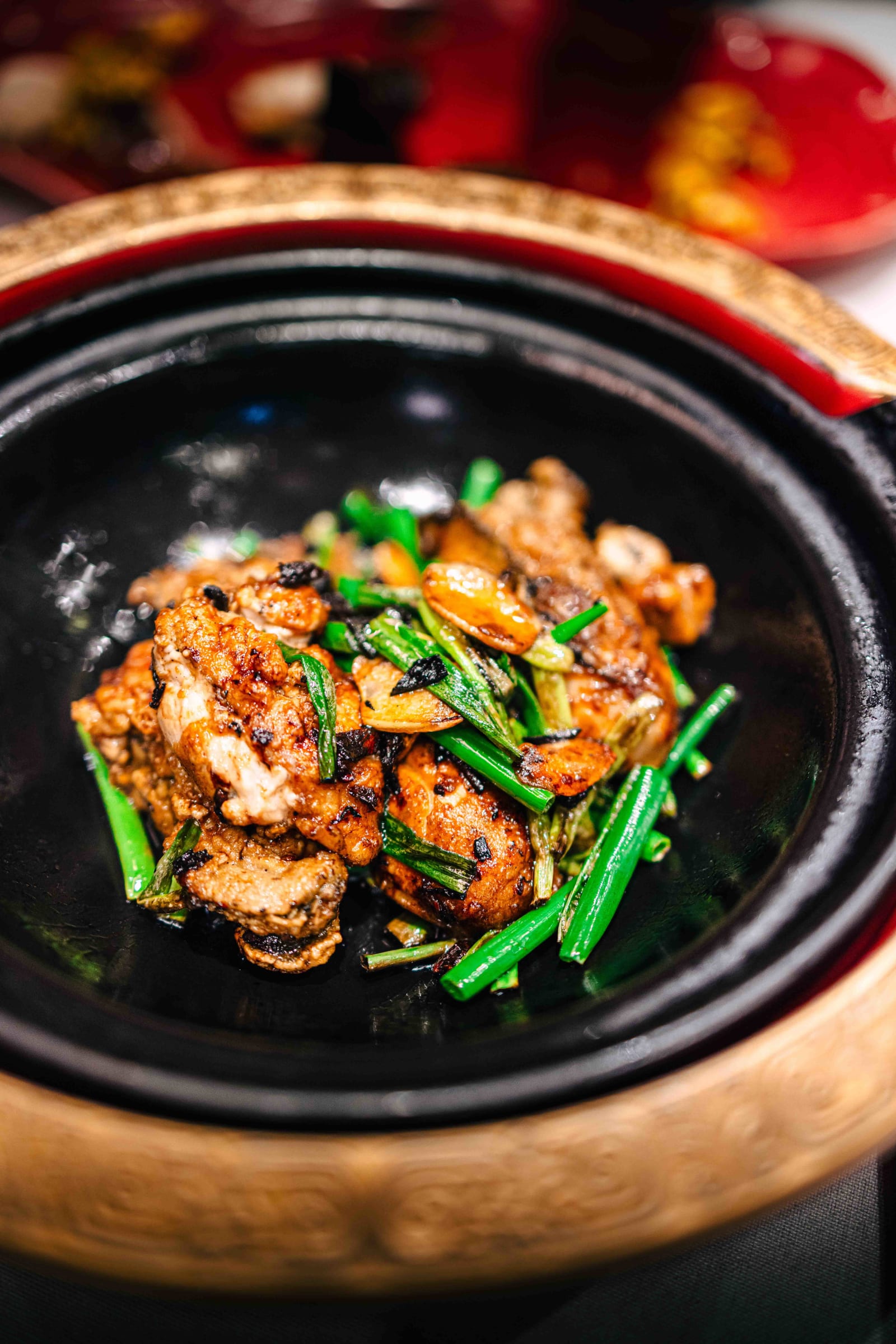
STUFFED FRESH OYSTER and SEMI-DRIED OYSTER in a spring onion and ginger pot arrived next, served in two sizes. The larger oysters were better. The course had no room to register, placed as it was immediately after the chicken.
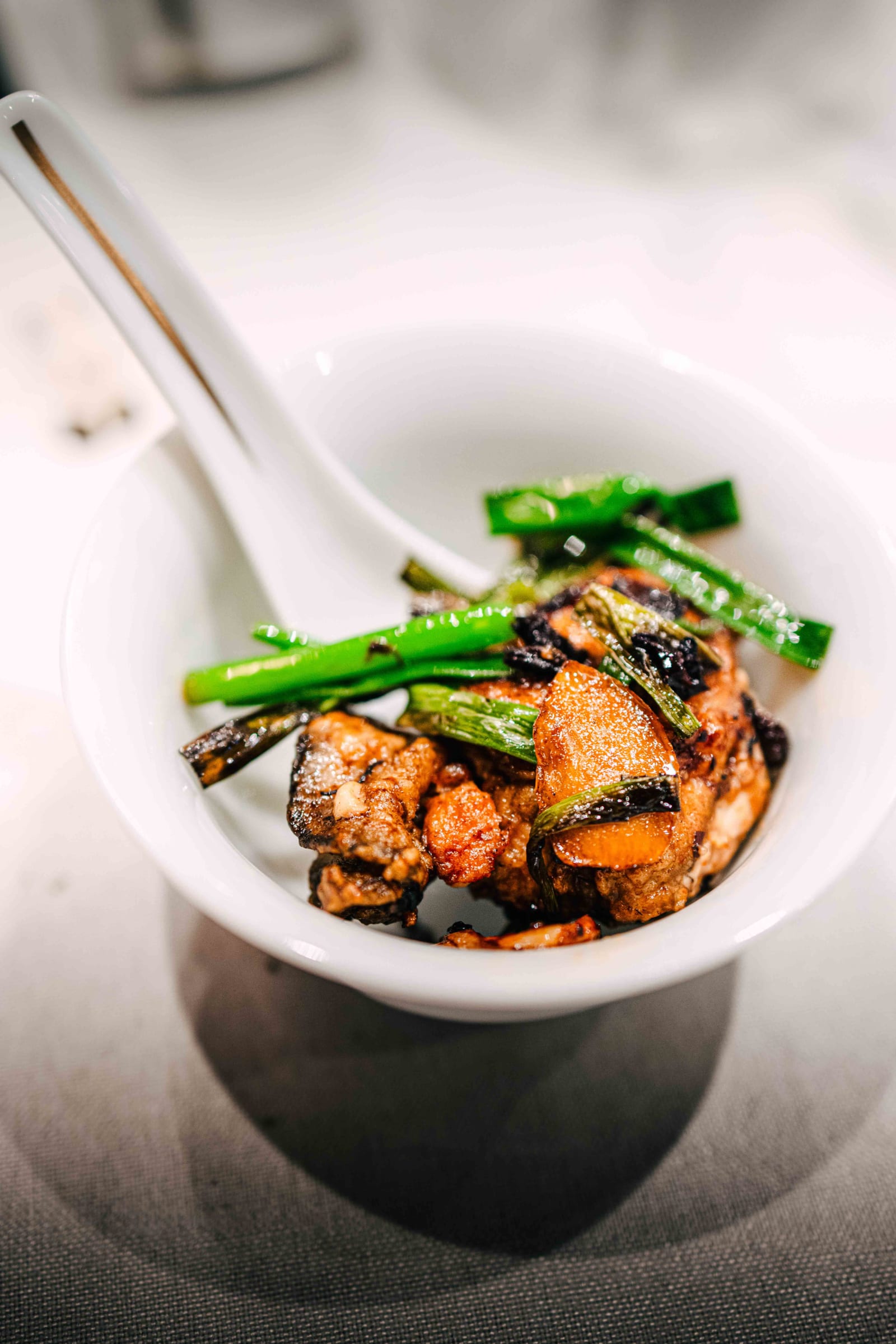
STIR-FRY CHINESE KALE with SHRIMP PASTE CURED PORK was more interesting than its description suggests. The kale had been cooked in chicken stock. I do not remember the kale. The pork, cured in shrimp paste, was remarkable: the paste had driven a deep, penetrating intensity into the meat, and the texture was so unlike standard pork that I briefly wondered whether I was eating something else entirely.
FISH MAW with YELLOW FUNGUS, ABALONE SAUCE, and RICE was a fried rice built on swim bladder collagen, which thickened every grain into something glutinous and cohesive. Fish maw is a prized and expensive ingredient, and the dish was constructed with evident care. By this point I was full in a way that made it difficult to give the course proper attention, and the flavors, for all the rarity of the ingredients, did not produce an impact proportionate to what was on the plate.
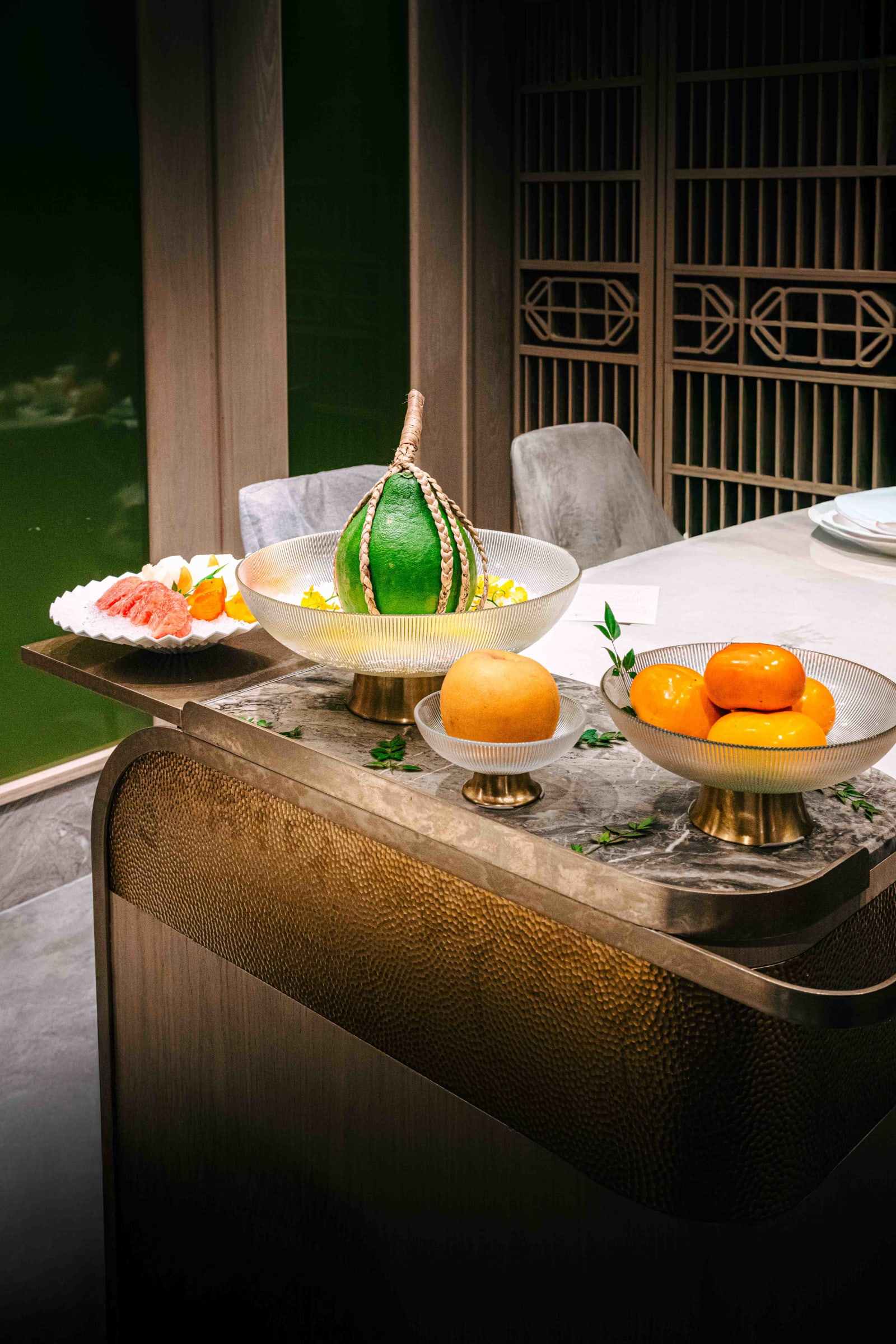
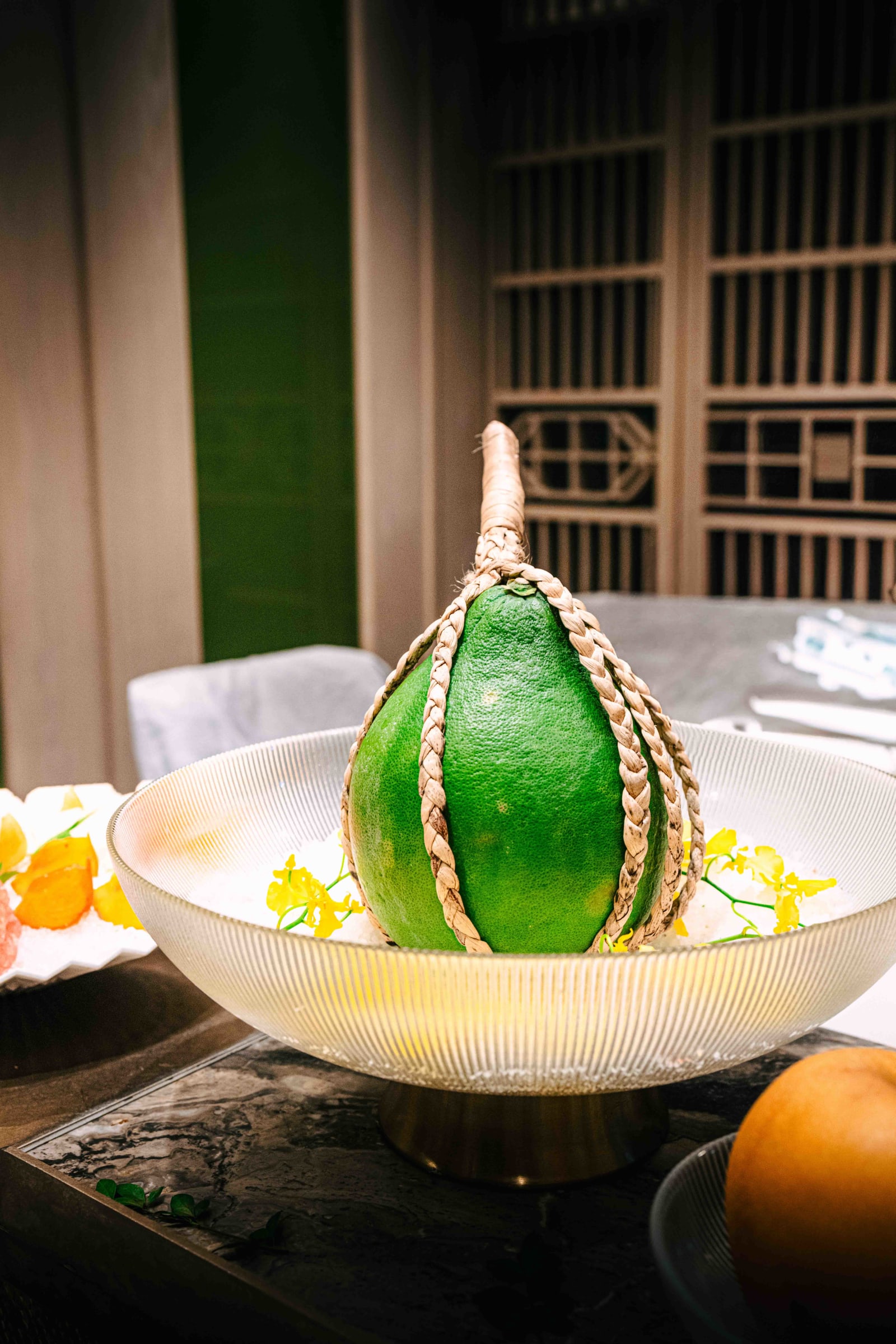
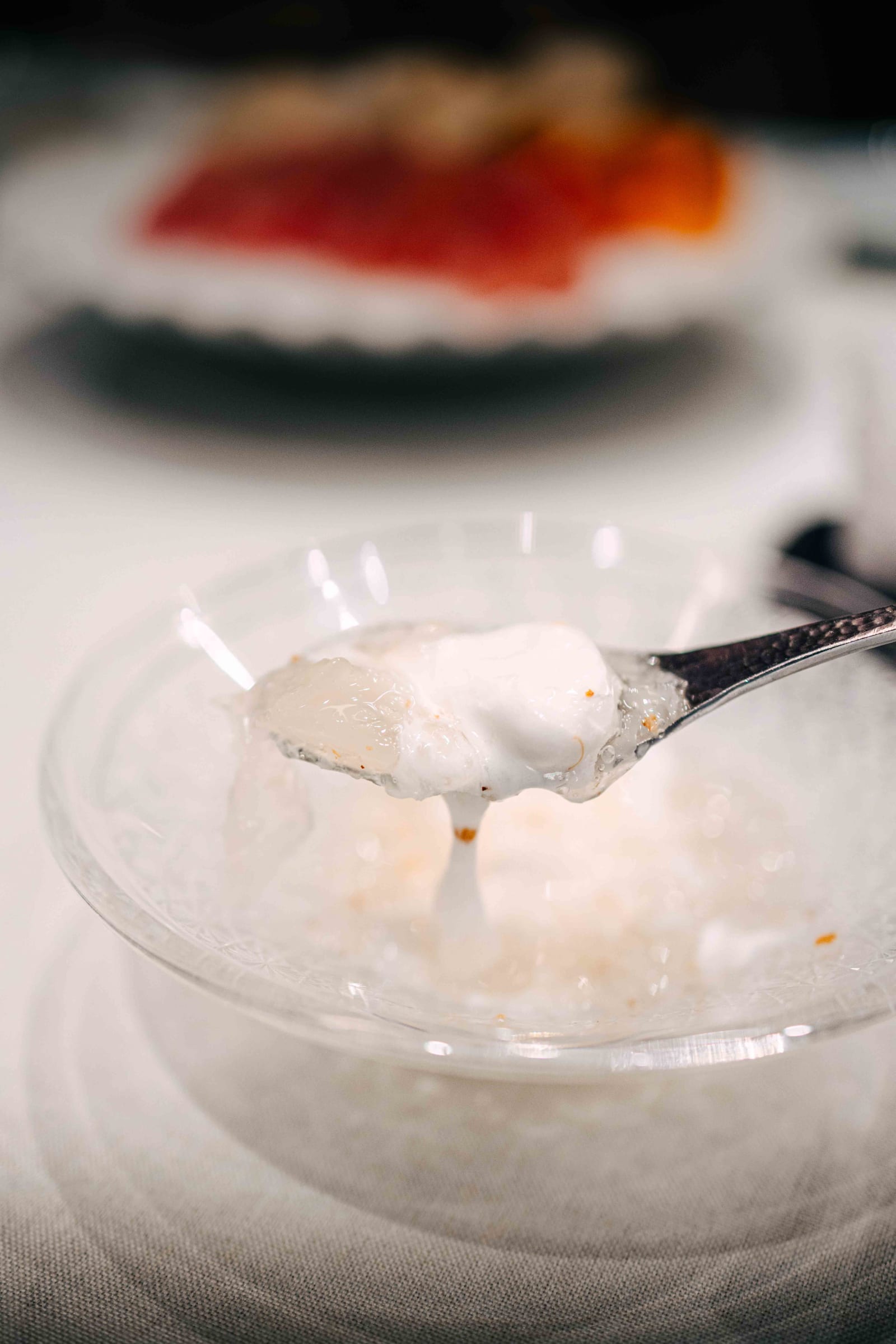
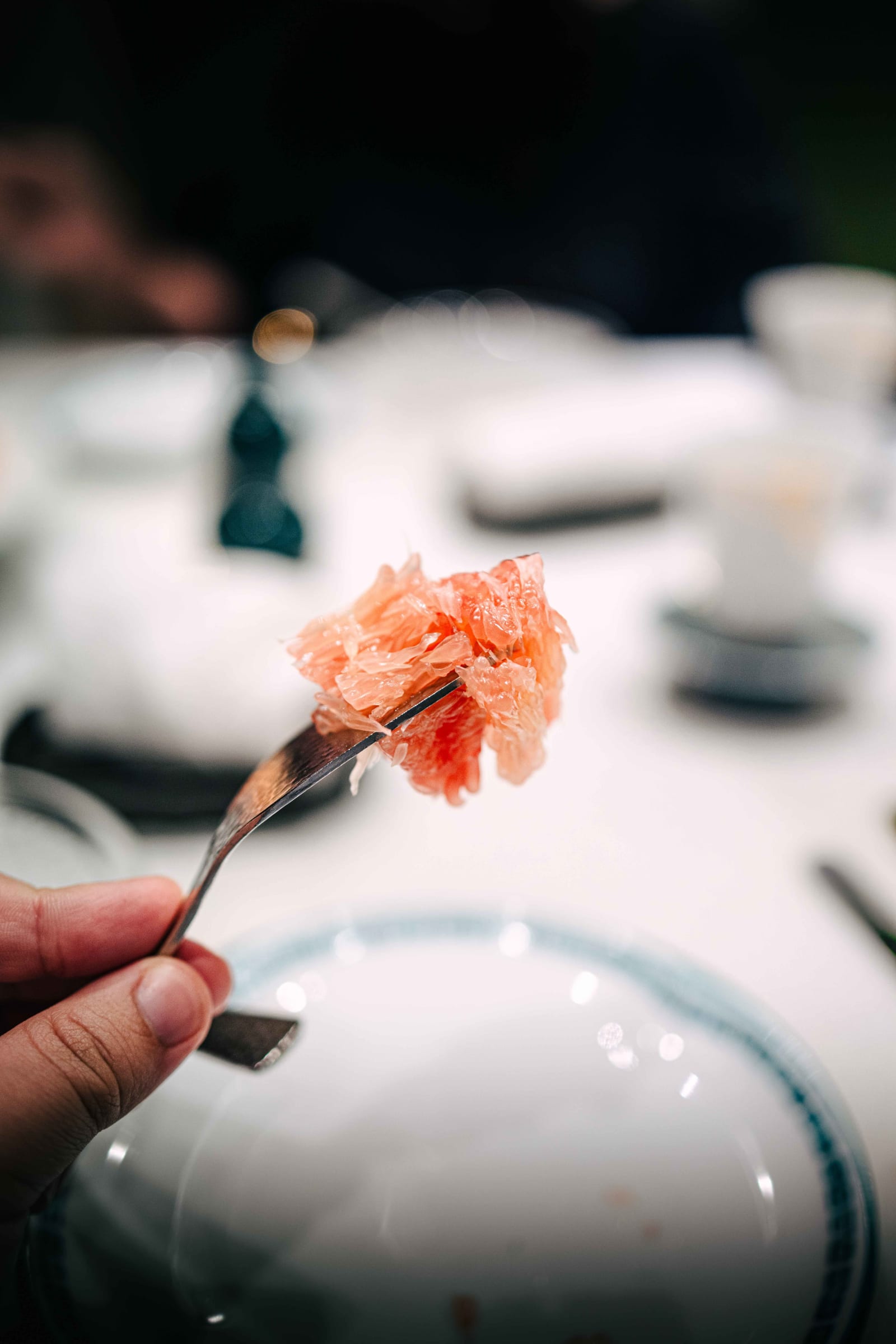
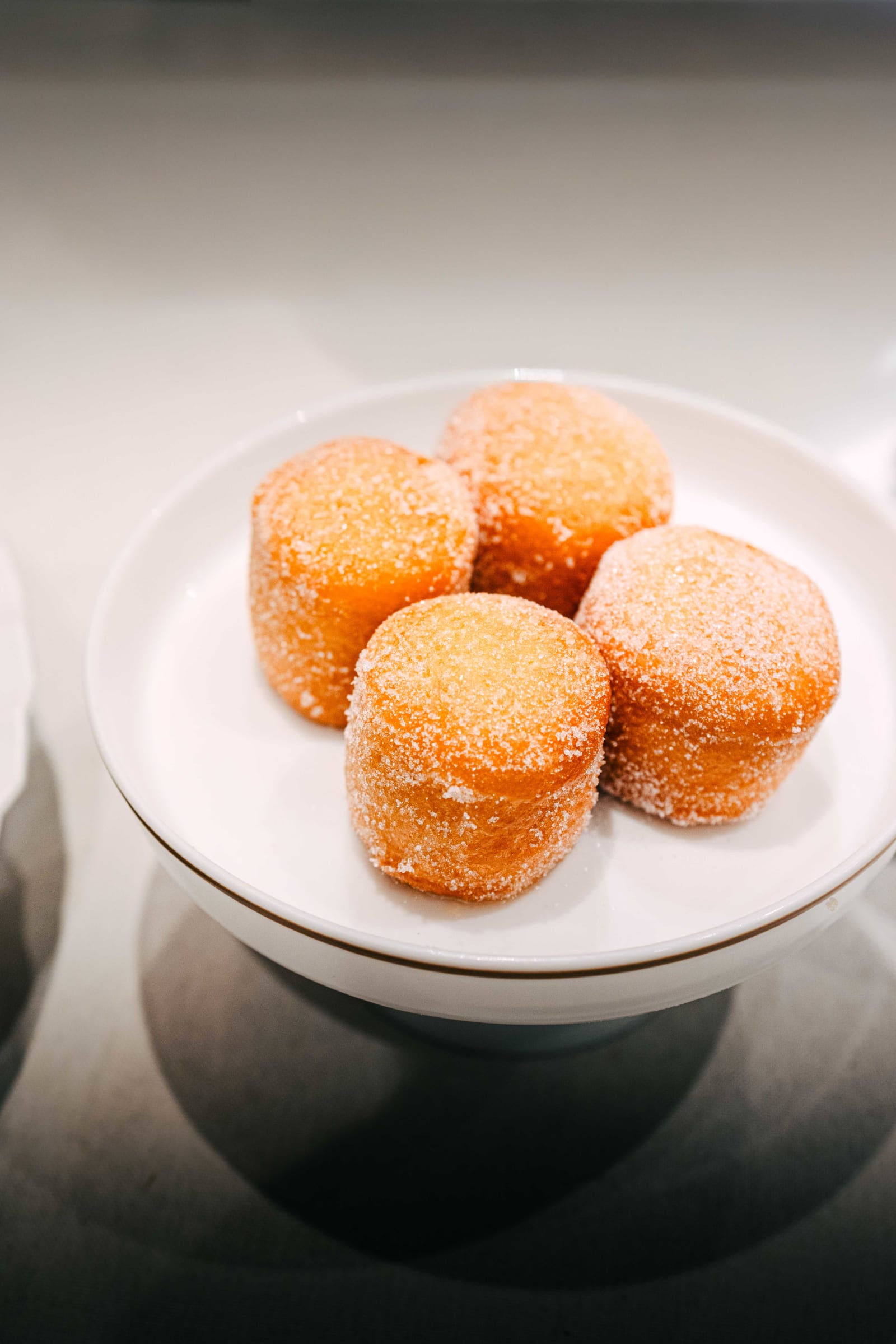
Dessert began with a selection of fruit. One piece, a pear I believe, had come from Japan. I had heard that Hong Kong and the mainland import Japanese premium produce at considerable scale, but fruit still surprised me. COCONUT SORBET and a traditional dessert followed.
The wine list spans the full range, from Champagne houses and well-known domaines to accessible bottles for those who prefer not to extend the bill. I opened with a bottle of Champagne Frederic Savart L'Ouverture Premier Cru. Midway through the meal I wanted something red and found Paul Jaboulet Aîné's Hermitage La Chapelle 1999 on the by-the-glass list. Aged northern Rhone alongside the heavier meat courses was the right call. I had become the designated wine orderer for our group of four by accident, and had no particular claim to expertise, but the choices turned out well.
The service at WING is the most energetically alive I encountered during this trip. The quality is real rather than performed, and the energy in the room comes from people who appear to genuinely enjoy the work. The server who looked after us that evening came upstairs to VEA the following night to say hello when we arrived for dinner. No standard of service accounts for that.
Eating at The Chairman and WING 永 on consecutive evenings from the same building is an unusual vantage point. The two restaurants share an address and nothing else. The Chairman moves toward the center of Cantonese tradition, deepening what is already there. WING moves outward across eight regional cuisines, using the full span of Chinese culinary history as raw material for a contemporary project. A single comparison makes this clear: The Chairman's pigeon and WING's pigeon, two preparations of the same bird, built on different convictions, landing in different places. The restaurant that ranked twentieth in the world in 2024, and has since climbed to eleventh, holds no Michelin stars. Whatever that gap says about the two systems of evaluation, it does not reflect what was on the table.
Vicky Cheng runs two restaurants in the same building. VEA uses Chinese ingredients to cook French food. WING uses French precision to cook Chinese food. The distinction is not semantic: one extends a tradition, the other builds something with no prior category to be judged against. That WING ranked twentieth in the world in 2024 and eleventh the year after while holding no Michelin stars may say something about the difference between a guide that rewards mastery of established forms and a list that rewards the construction of new ones.
Have a question about this restaurant, or want to share your own experience?
Send a message