Local & Essential · Central · Hong Kong / September 2024
22 Ships
"A tapas bar still named after the Wan Chai address it left behind"

Section 1·Spanish For Every Day
In Europe, I prefer French cooking for fine dining, but when it comes to everyday local food, I love Spanish. The liveliness of fresh seafood, the umami: that simple impact, which only Spanish food has, moves me in the most ordinary moments.
Among the places I had saved for Hong Kong but never got round to, there was a Spanish restaurant, and with some time to spare I went on the spur of the moment. That was 22 Ships, a tapas restaurant. I had saved it after seeing it in the OAD guide's ranking of casual restaurants in Asia (20th in 2024), and later I received a DM telling me it is quite a well-known tapas restaurant in Asia.
Section 2·22 Ship Street
22 Ships opened in October 2012 at 22 Ship Street in Wan Chai, Hong Kong, and the name comes from that address. It was the first Hong Kong restaurant of the British chef Jason Atherton, opened with Hong Kong's JIA Group. It began as a small tapas bar, counter seats around an open kitchen and closely packed tables, and because it took no reservations, it became known as a place you had to queue for. Since 2020 the kitchen has been led by Antonio Oviedo from Madrid. Having worked in the kitchens of Sergi Arola, the Roca brothers, Santi Santamaria and Eneko Atxa, he rebuilt the menu around the cooking of Spain's regions.
Oviedo grew up in Madrid. His mother comes from Extremadura in the southwest, famous for its Ibérico pigs, and his father from Burgos in the north, known for its lamb and close to the Basque Country. So he spent most of his school holidays in those two regions. At weekends he followed his uncle into the countryside around Madrid to hunt rabbit, partridge, deer or wild boar, depending on the season, and he lent a hand when his uncle's mother made goat's cheese. Those years of growing up on the food of many regions, he says, run straight through to the menu at 22 Ships today.
Section 3·A New Home At PMQ
Its current home is on a hill in Central, so on a hot day I would recommend taking a taxi. 22 Ships wrapped up twelve years in Wan Chai on 21 August 2024 and reopened at PMQ in Central on 6 September. The day I went was twelve days after the new place opened. The restaurant has moved, but its name still carries the Wan Chai address it left behind. PMQ was built in 1951 as the Police Married Quarters, homes for police officers and their families, on the site where the Central School had stood from 1889, and in 2014 it was reborn as a creative hub of design shops and galleries.

The new place has grown from twenty-five seats in Wan Chai to sixty. There are three dining areas, a private room and an outdoor terrace, plus a separate bodega counter where you can drop in without a booking for a drink and some tapas.
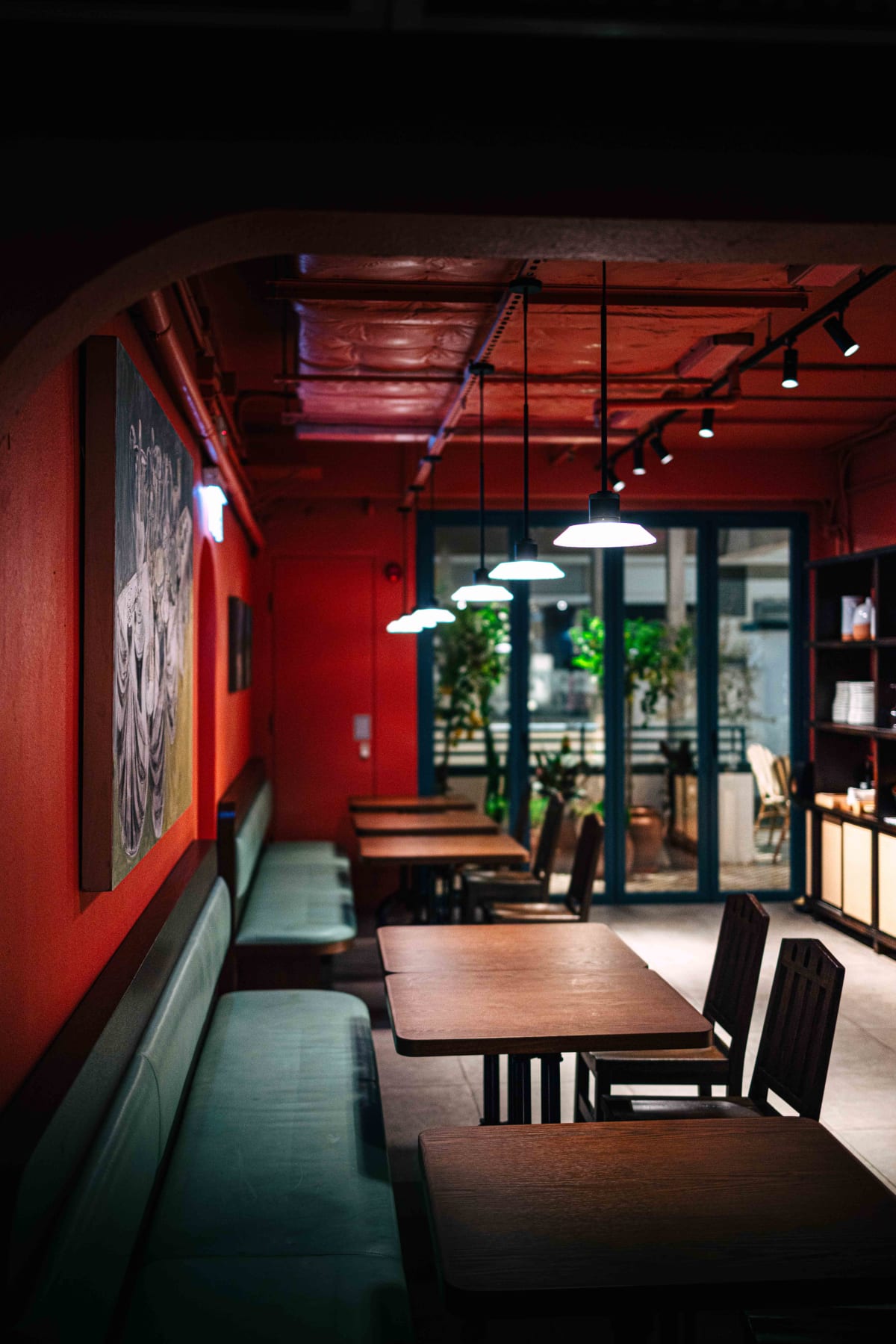
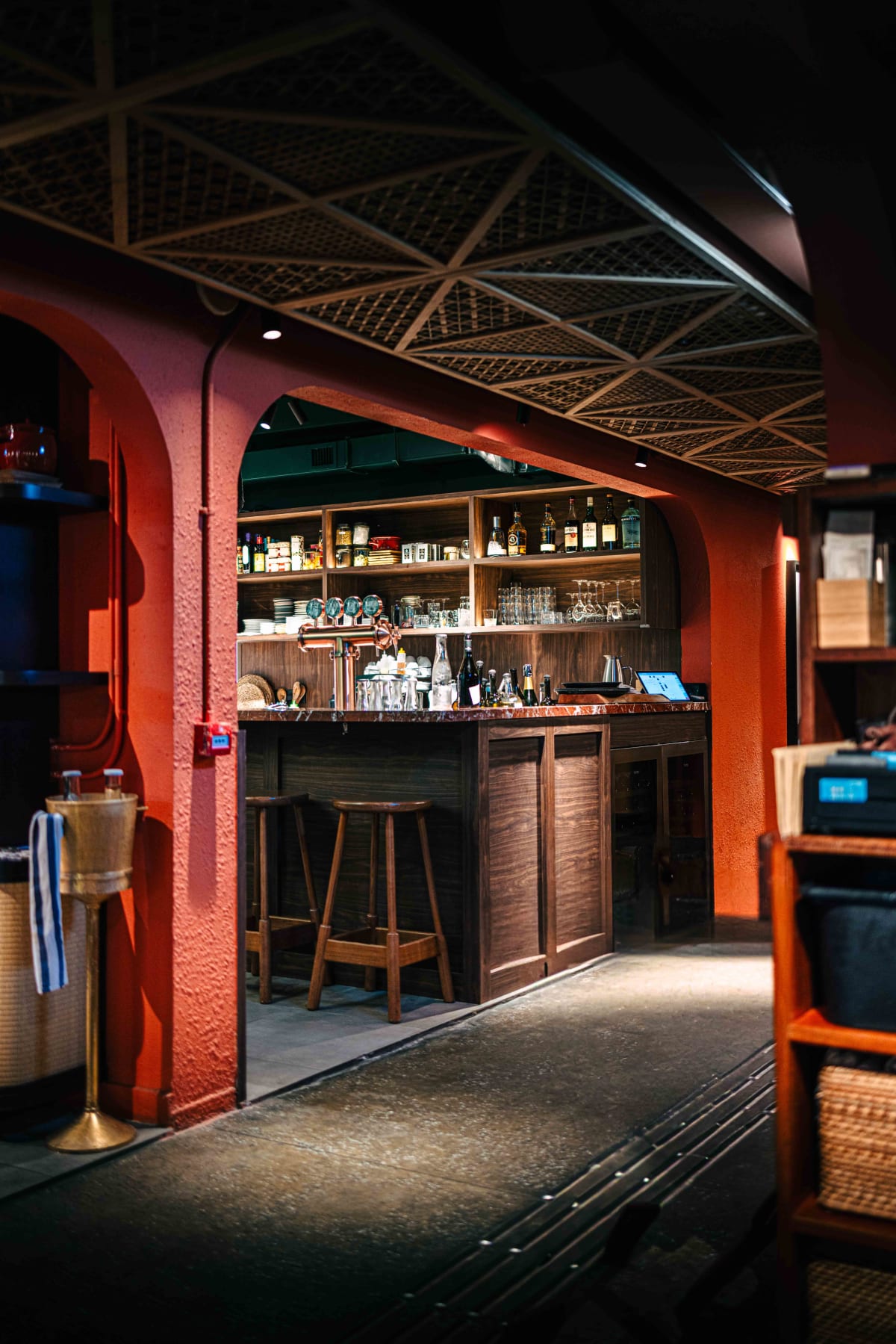
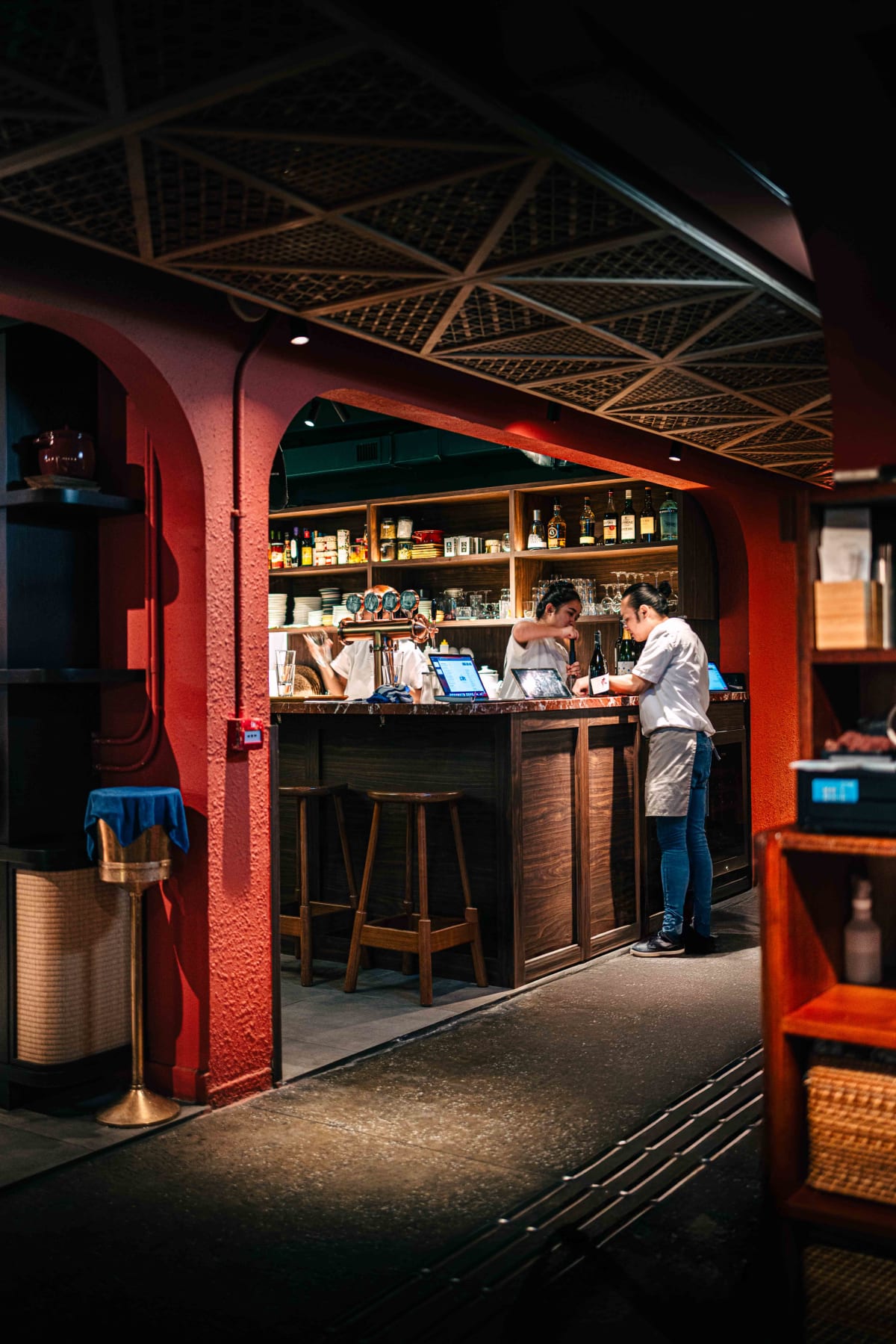
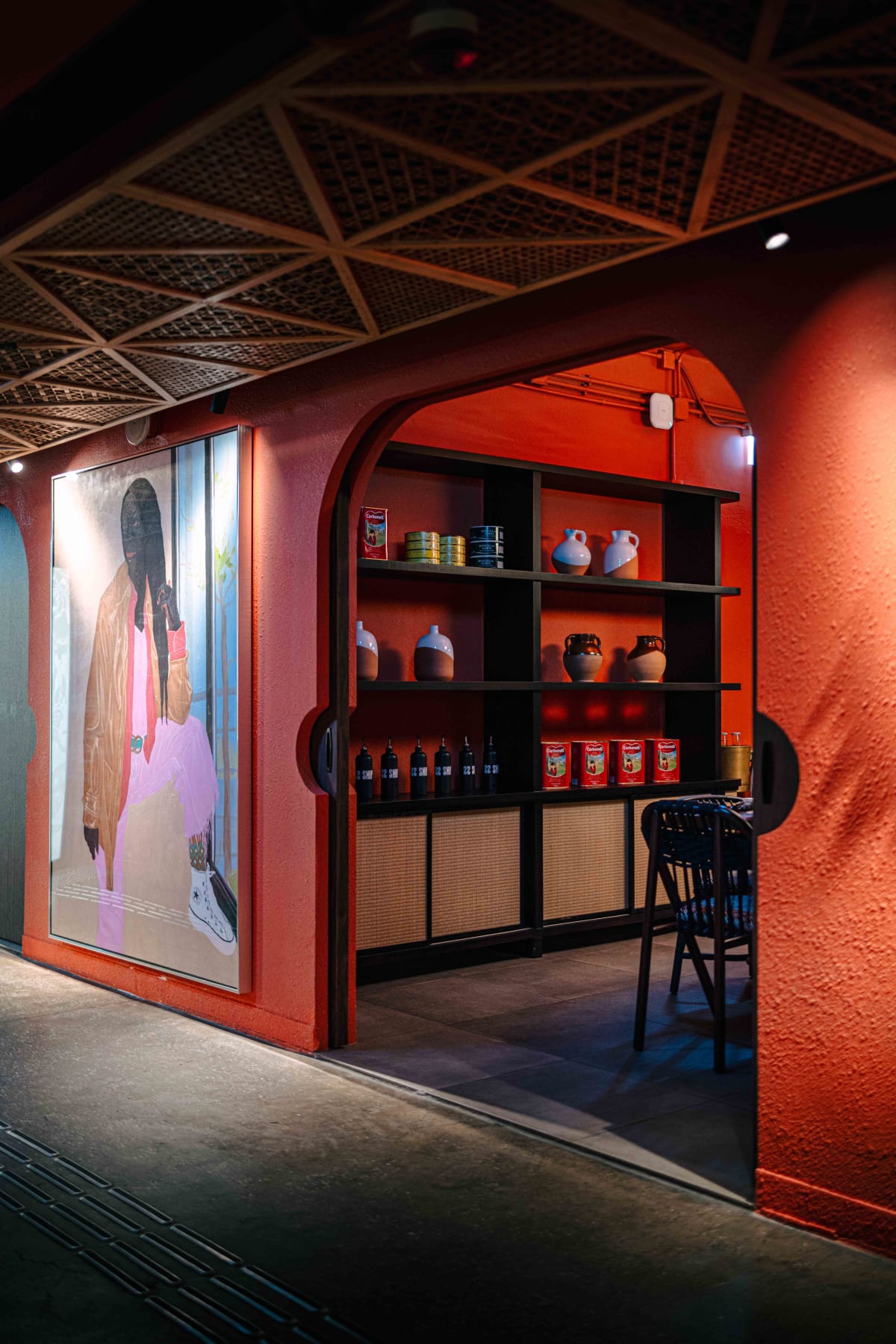
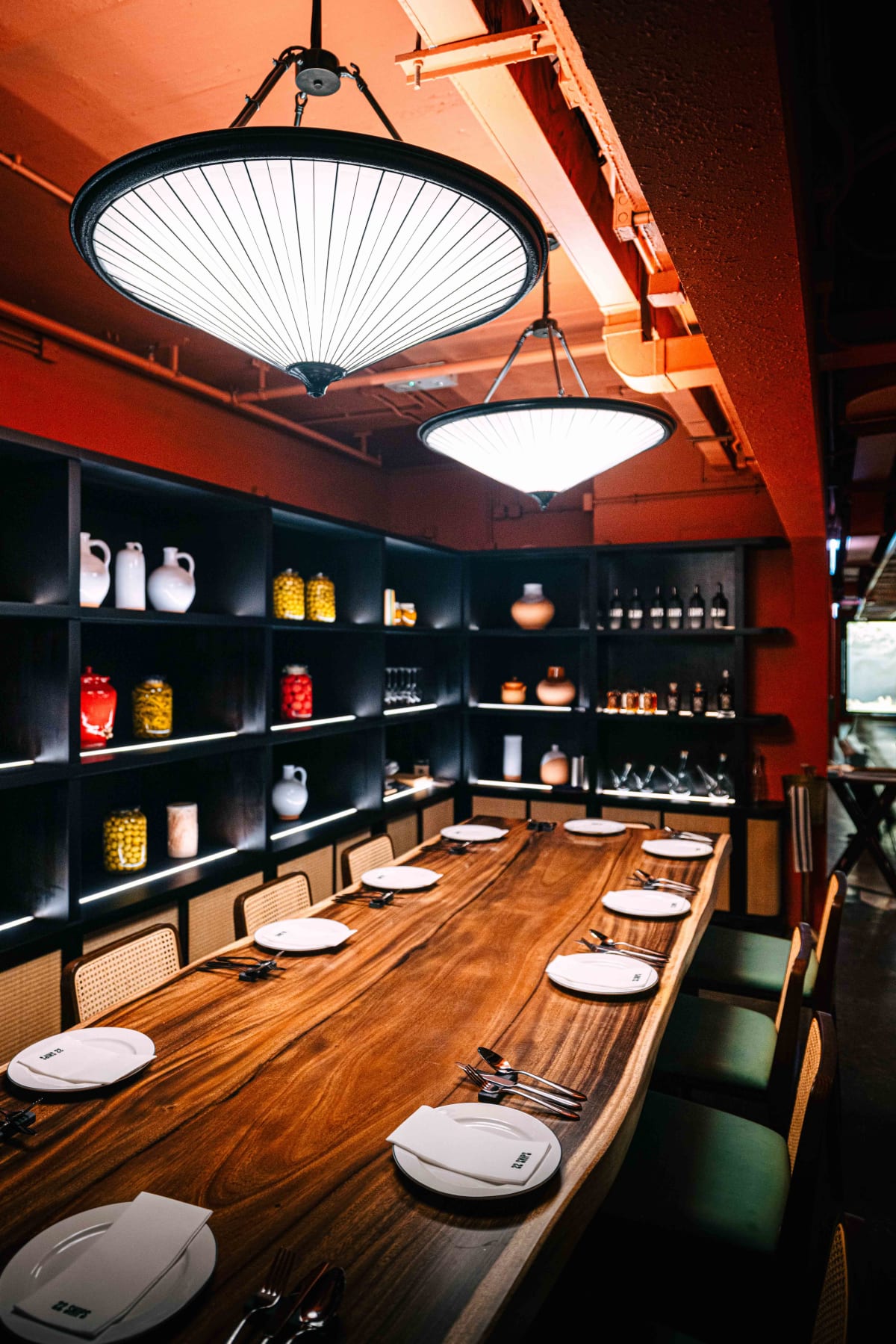
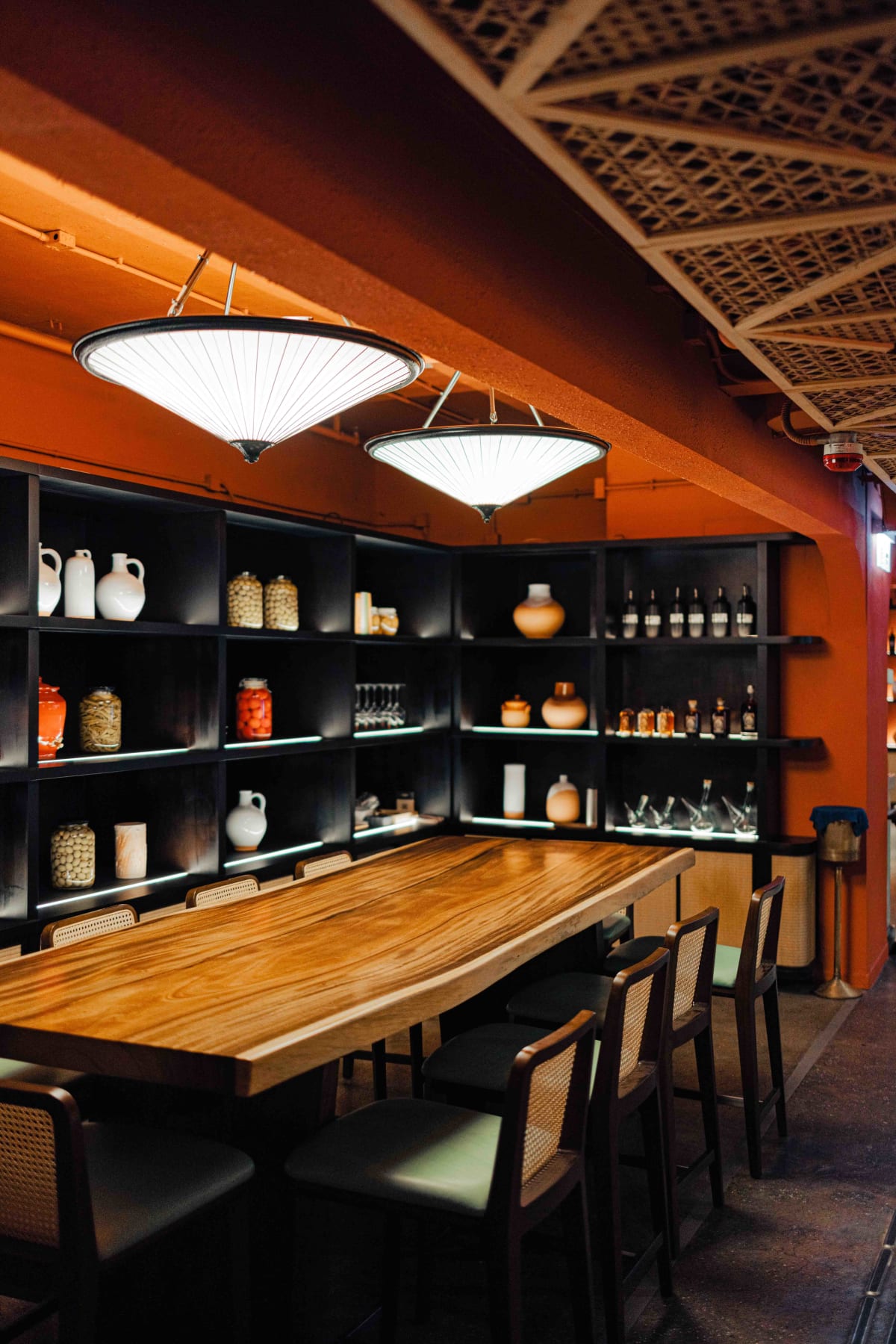
Rough-textured red arches and a ceiling of latticed triangular panels link the rooms, and in the private room two large conical pendants hang over a long table cut from a single slab of wood.
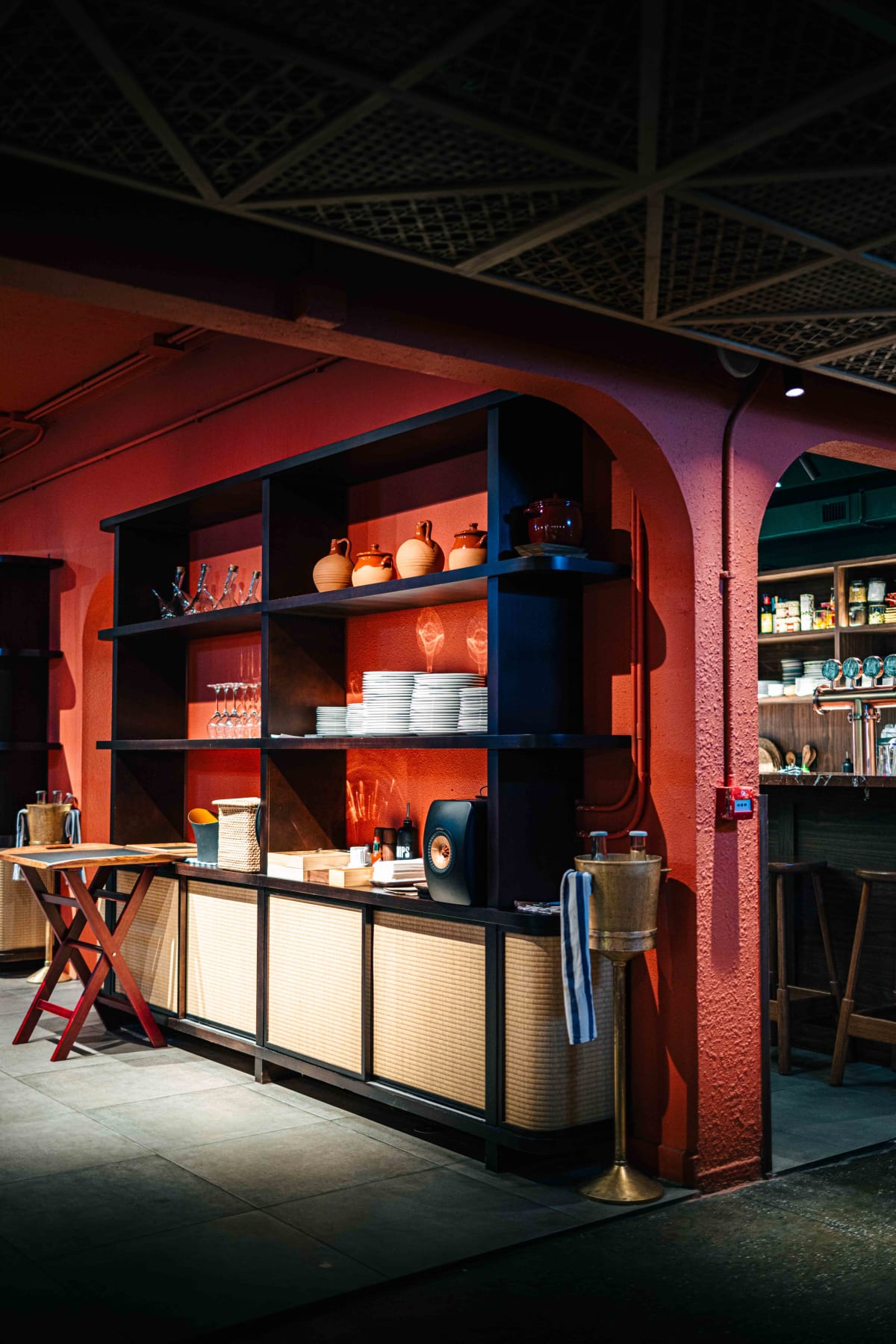
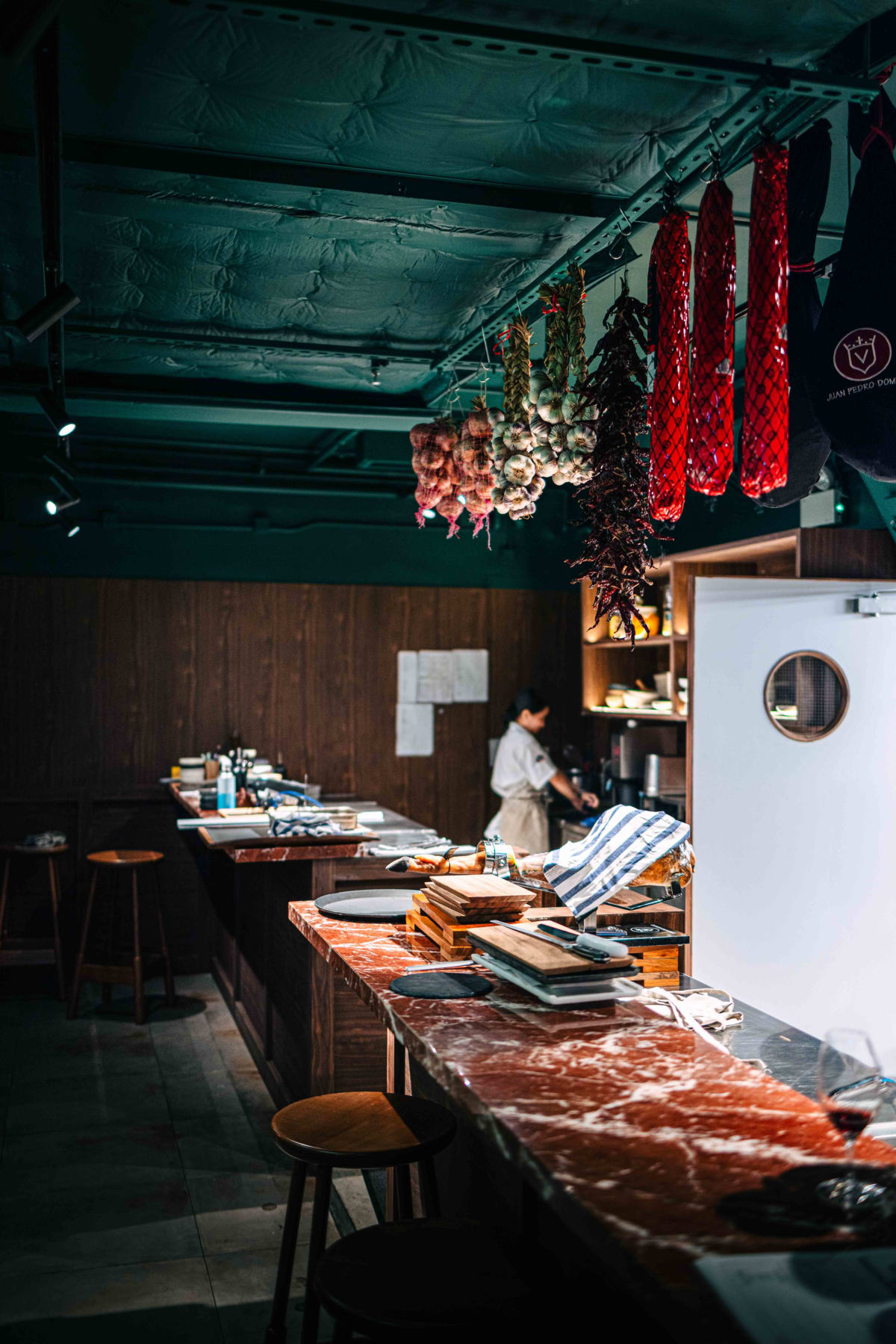
Above the open kitchen counter hang a leg of jamón, braids of garlic and strings of dried chillies, giving the whole place a strongly Spanish feel.
Section 4·Spain By Name
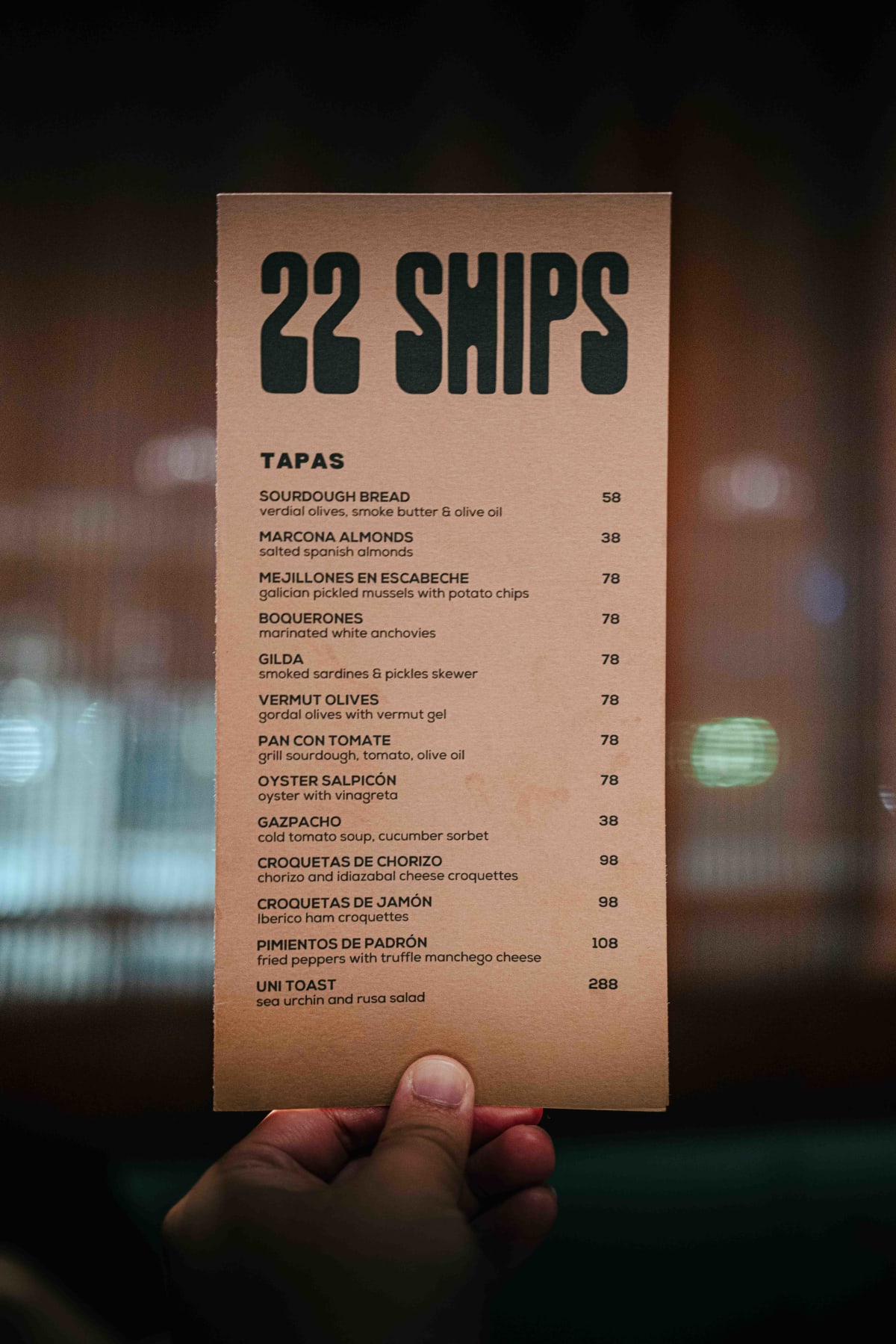
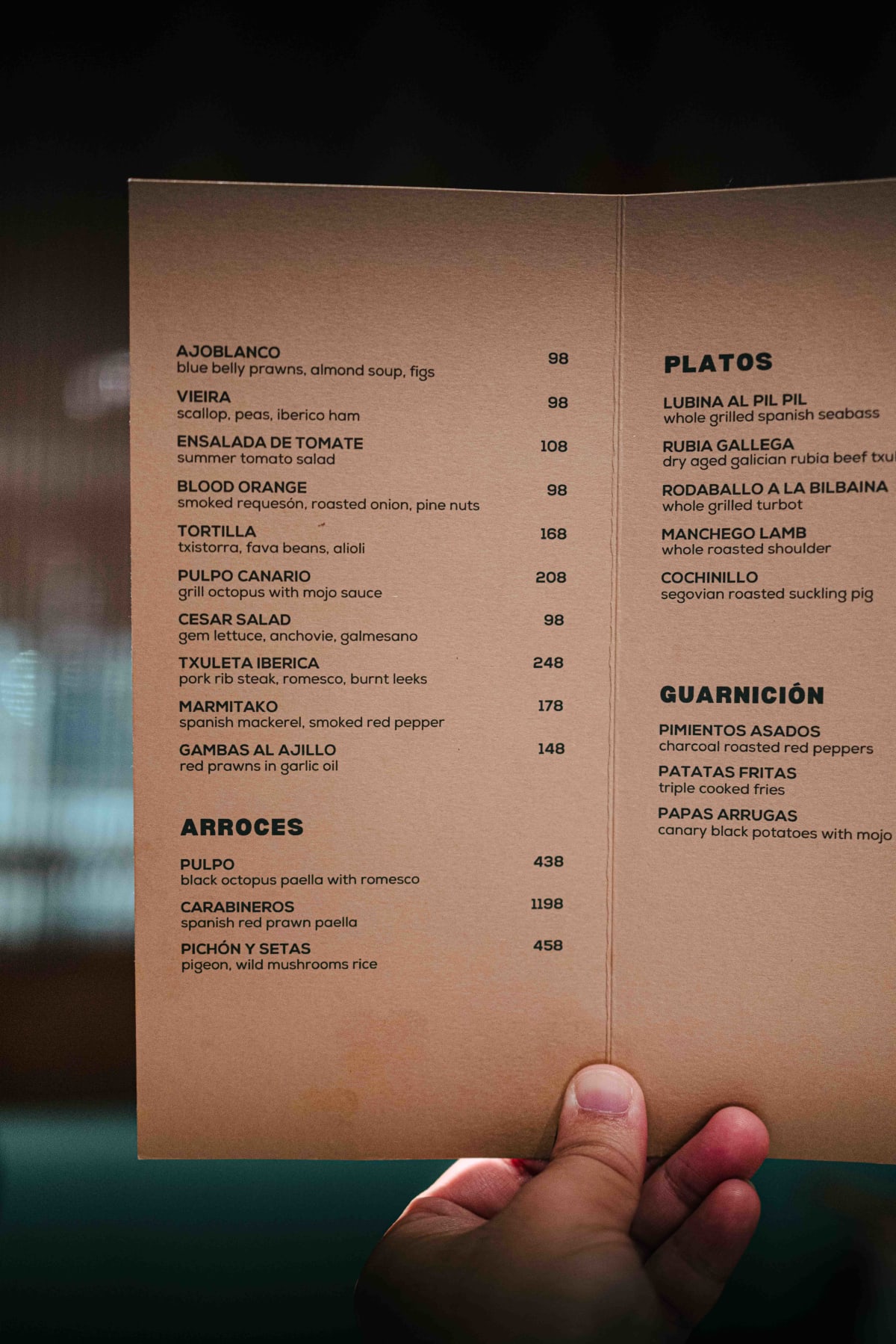
As befits a tapas restaurant, there was a wide choice of small tapas, along with a seasonal menu and main courses of steak and fish.
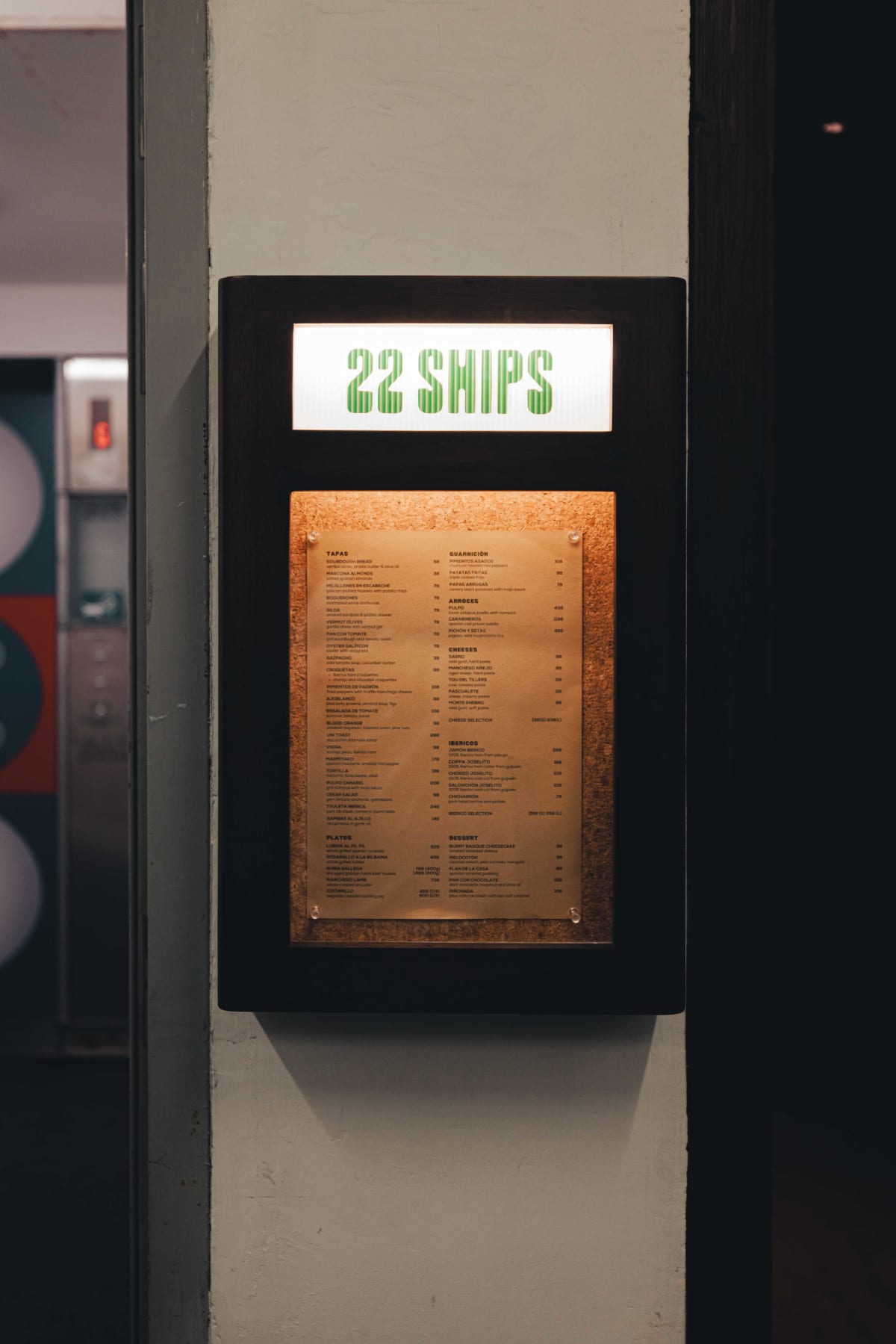
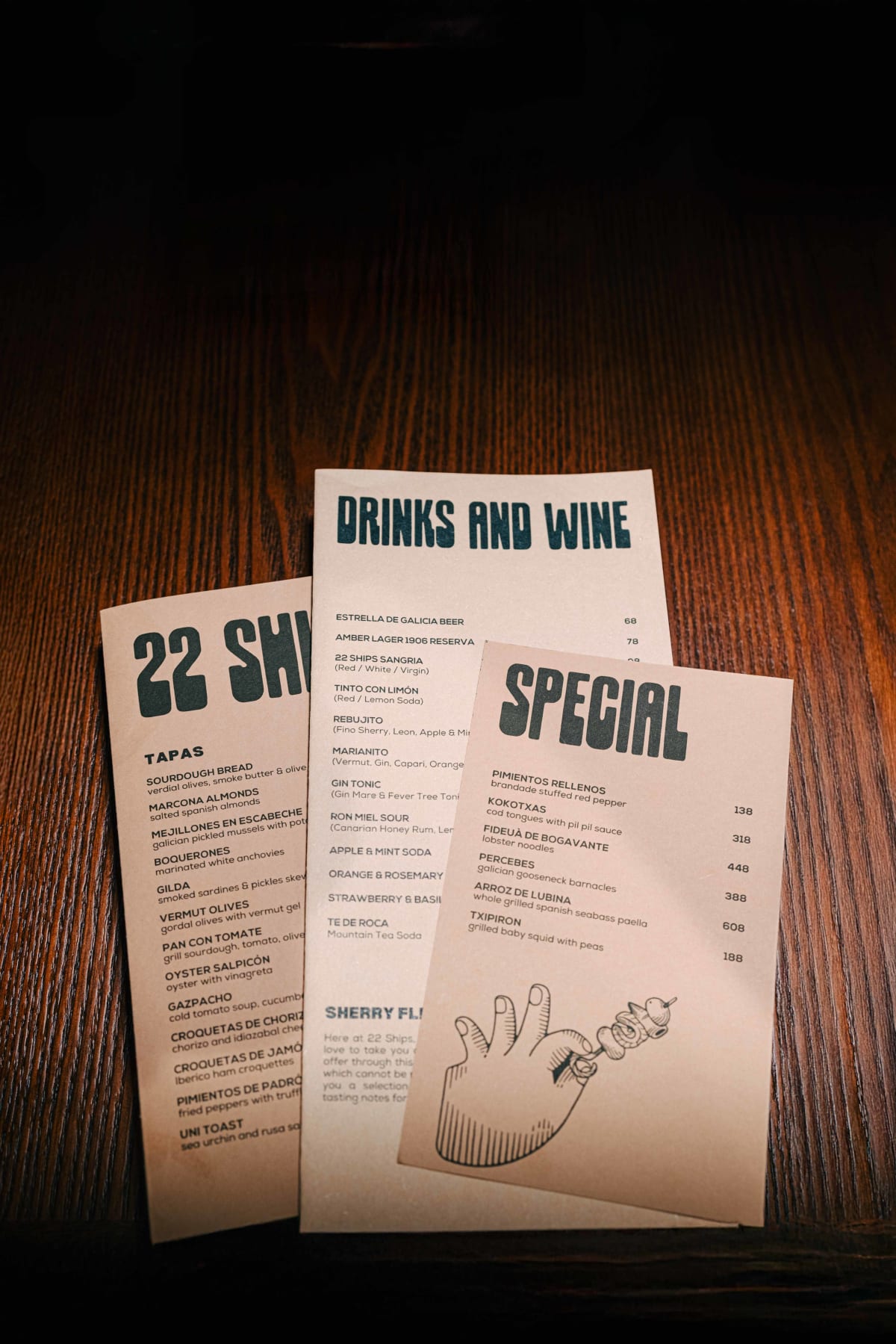
Read only the names and you could be in Spain: the dishes and ingredients I had seen on my travels there were written out just as they were.
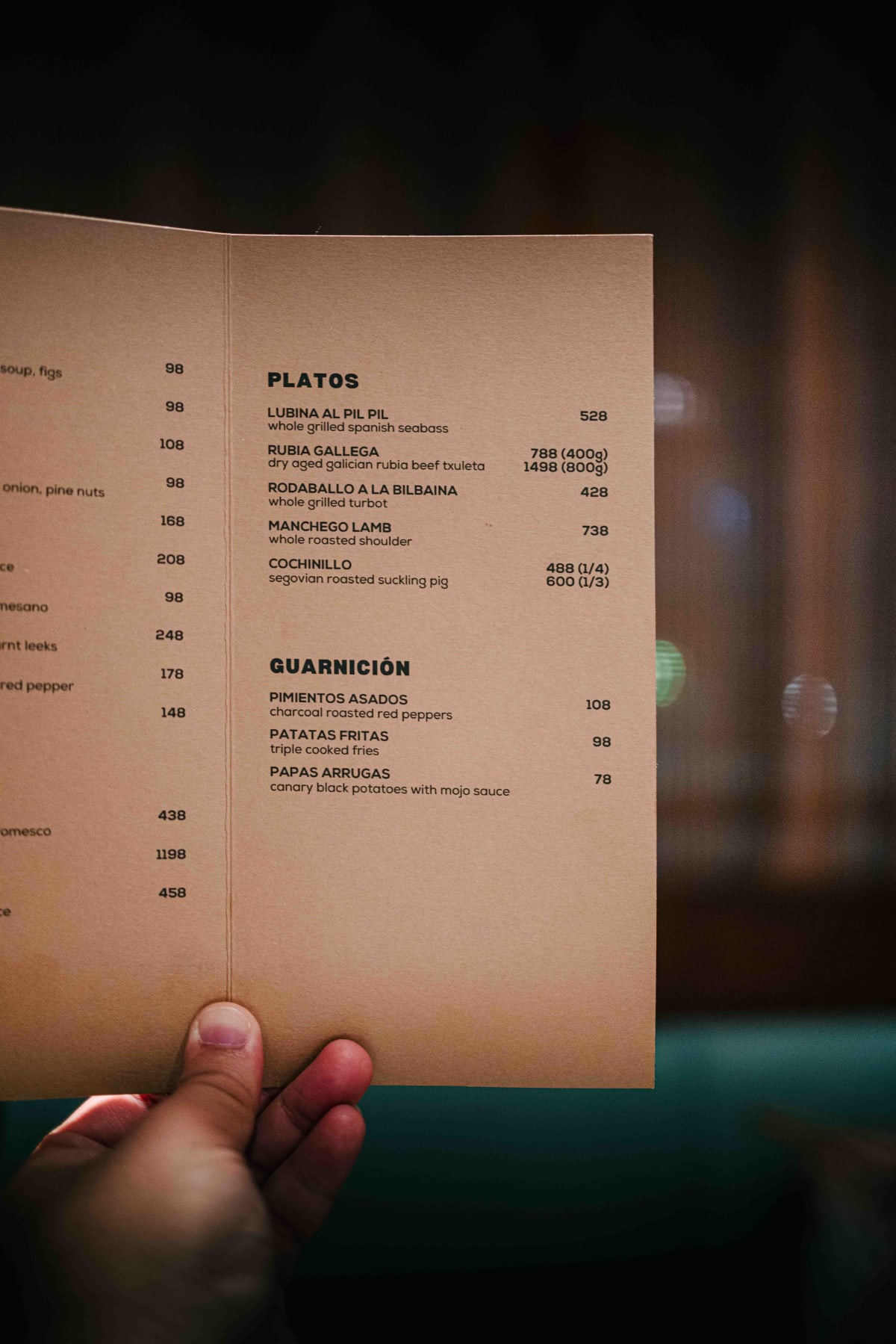
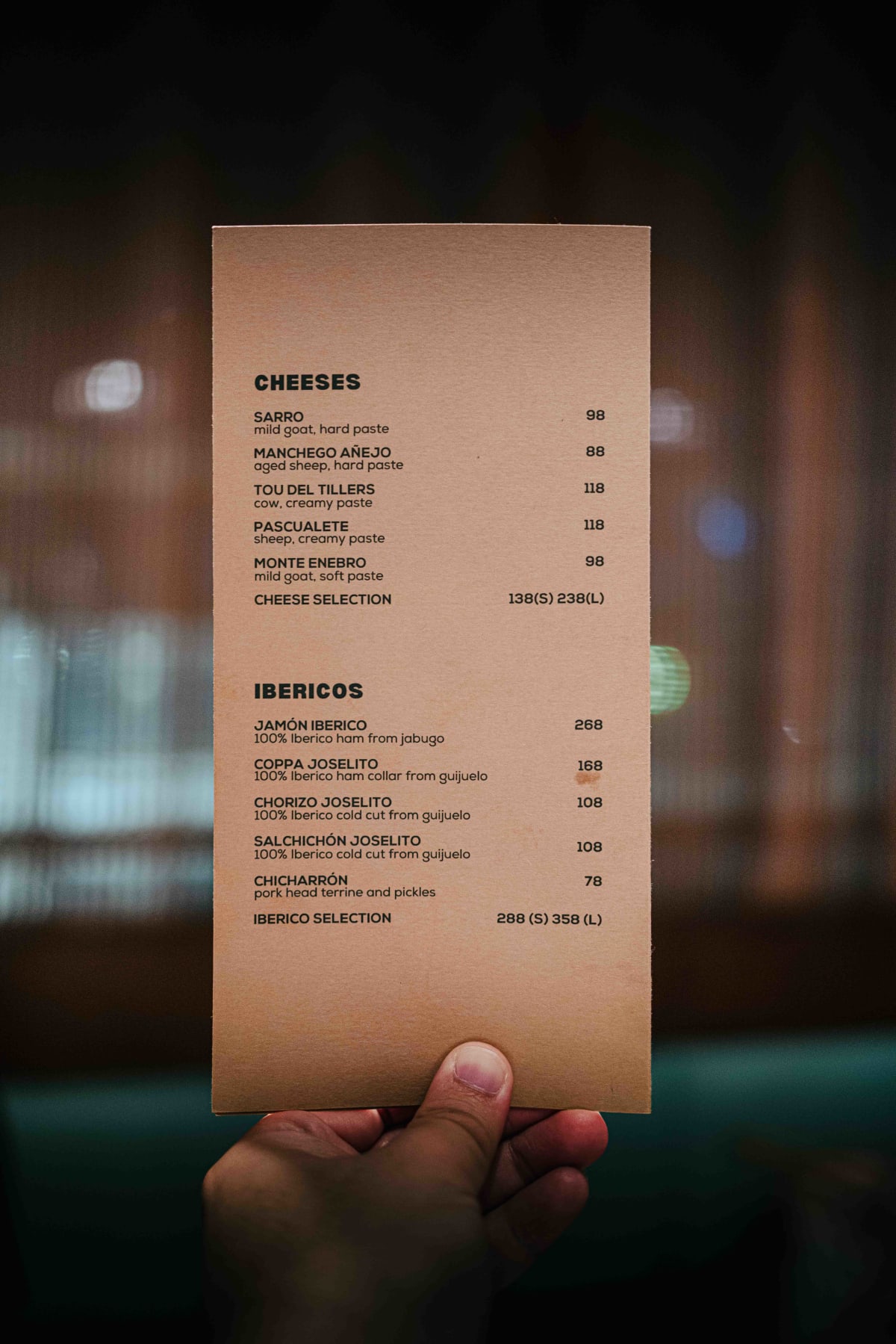
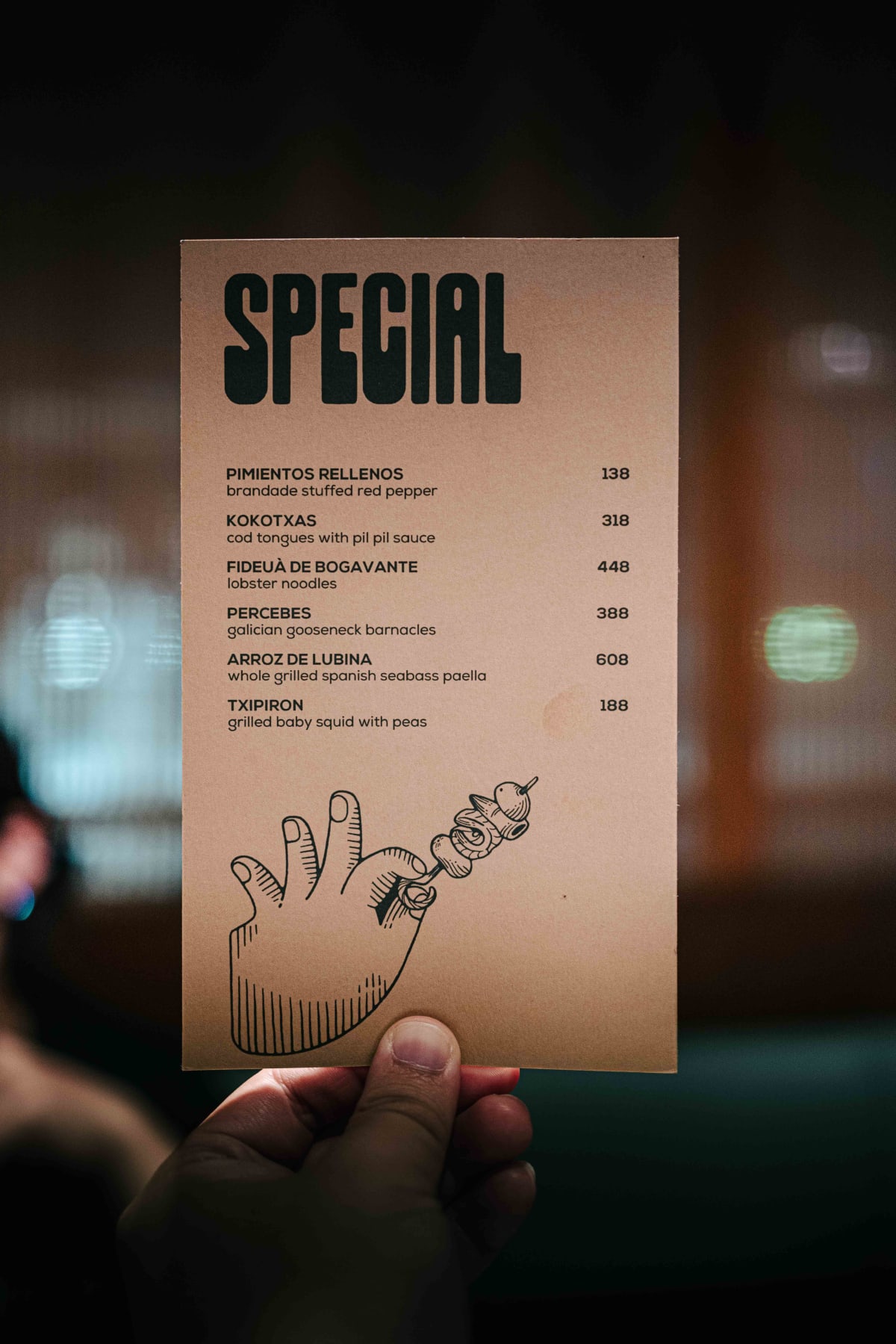
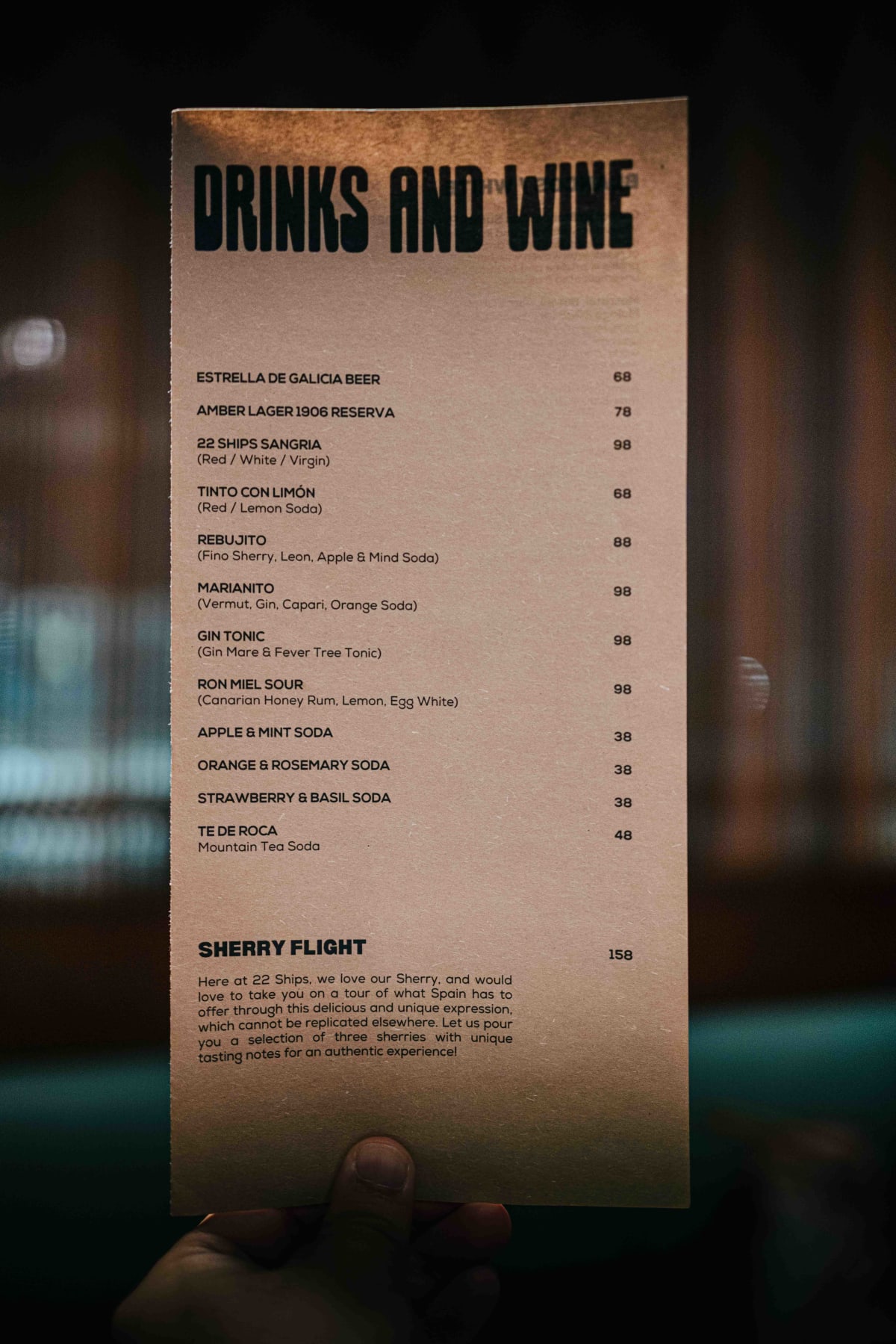
That night's seasonal card listed kokotxas, cut from under a cod's jaw, Galician percebes, the gooseneck barnacles, and a lobster fideuà. I did not drink any wine, but the range of the list still caught my eye, and there was a sherry flight for comparing three sherries side by side.
Section 5·Sangria Under Foam
I was thirsty, so I ordered a drink first, and if it is Spanish, it has to be sangria. Of the three versions, red, white and alcohol-free, I chose the red, served well chilled. Order sangria and you usually picture slices of lemon or orange and decorations you cannot eat, but here there was only sangria and ice in a straight-sided glass, like the beer glasses at a sushi-ya, topped with a white foam.
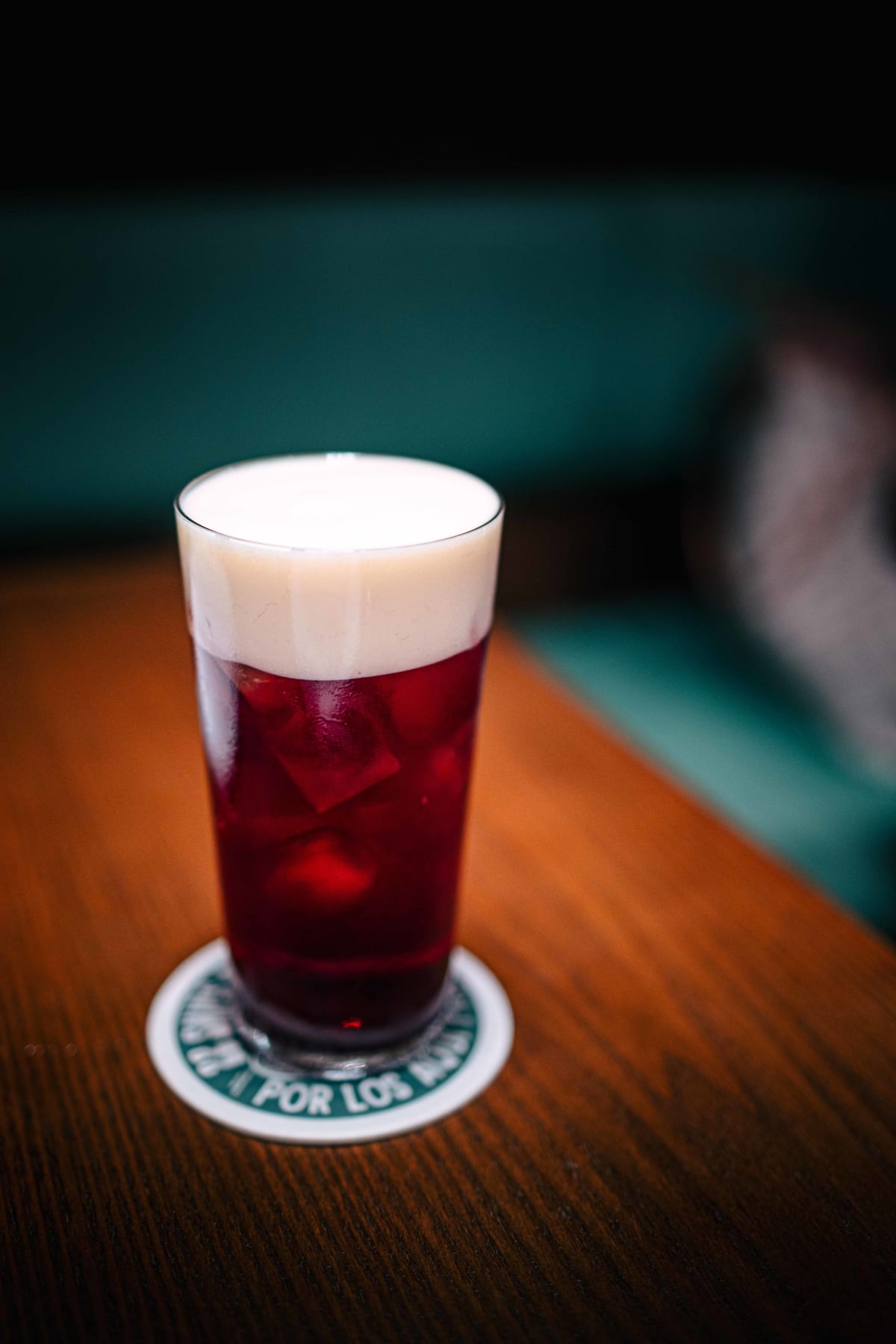
At the first sip, the sweet foam wet my lips before anything else, much like drinking an Einspänner coffee. I had ordered it without expecting much, but it was a sangria in a style that stayed with me.
Section 6·Pearls Of Vinaigrette
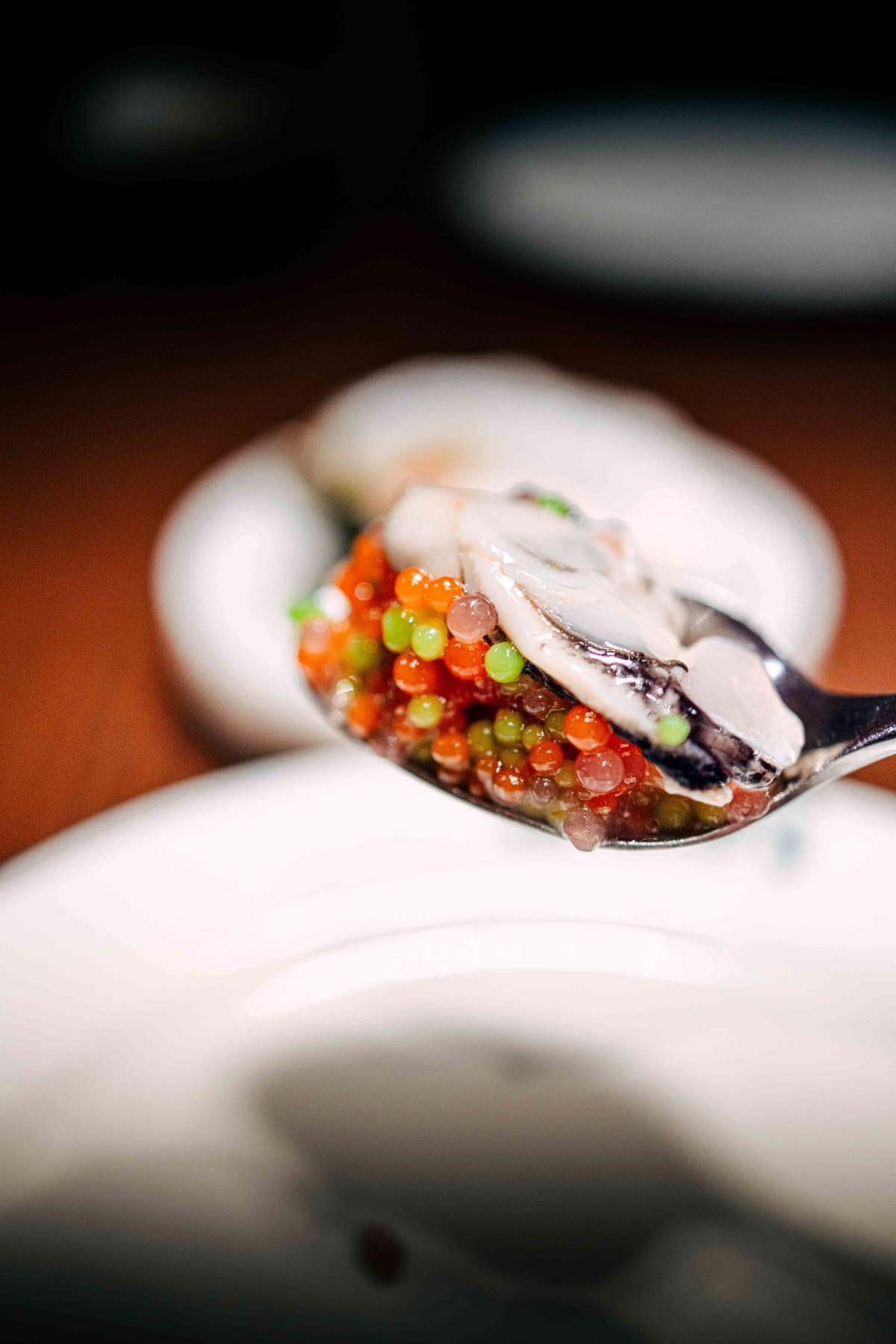
Then the tapas came out one at a time. First was the Oyster Salpicón. Salpicón is a Spanish seafood salad of finely chopped onion and peppers tossed in vinaigrette, but here the oyster was heaped with what looked like colourful beads. At first I took them for fish roe, but they were not roe at all: they were a vinaigrette made from several ingredients. The finely chopped vegetables had, in effect, become coloured pearls.
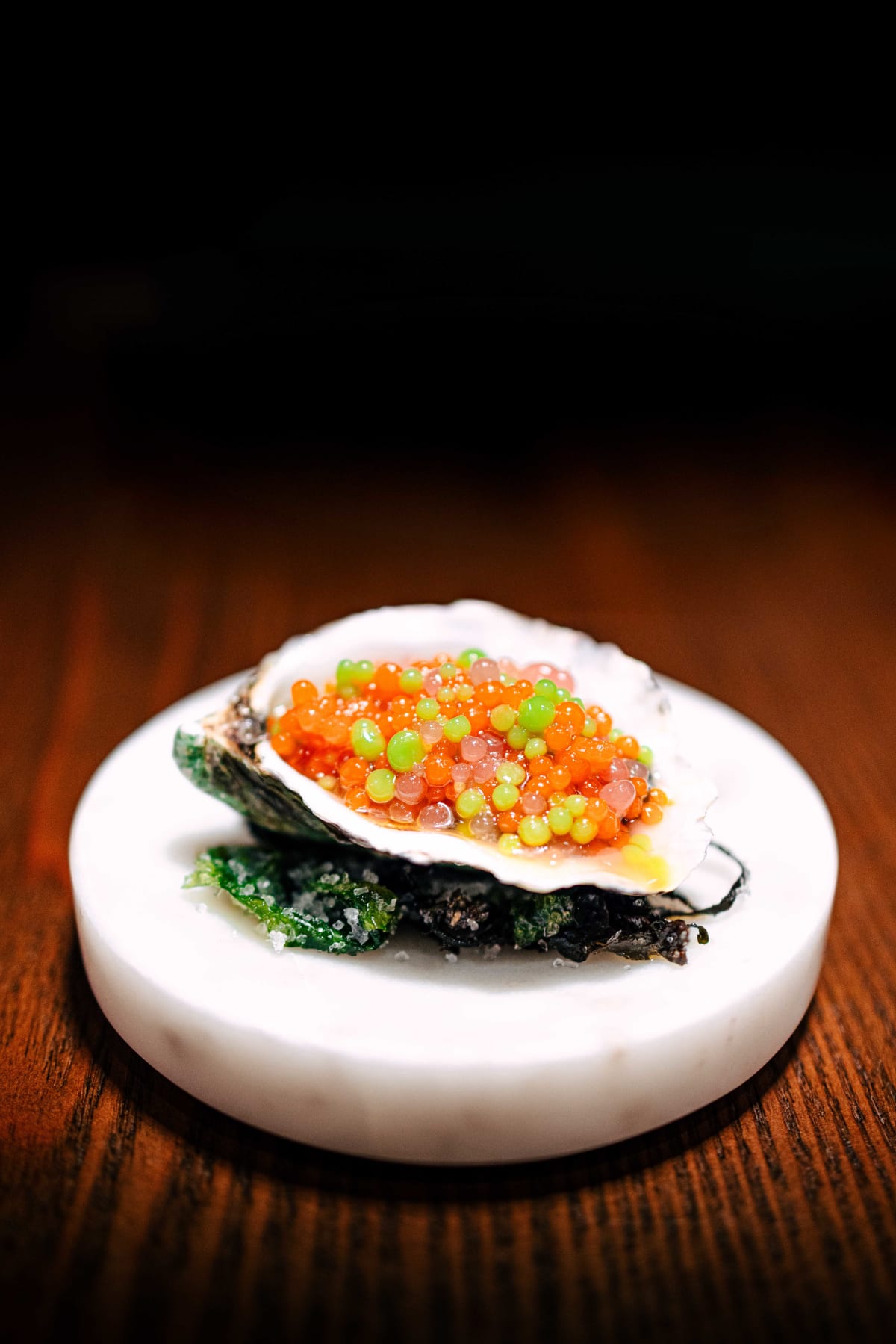
It is also the tapa that 22 Ships put forward as a signature when it moved to PMQ. The oyster was large to begin with, and on the palate the acidity stood out and suited the oyster well.
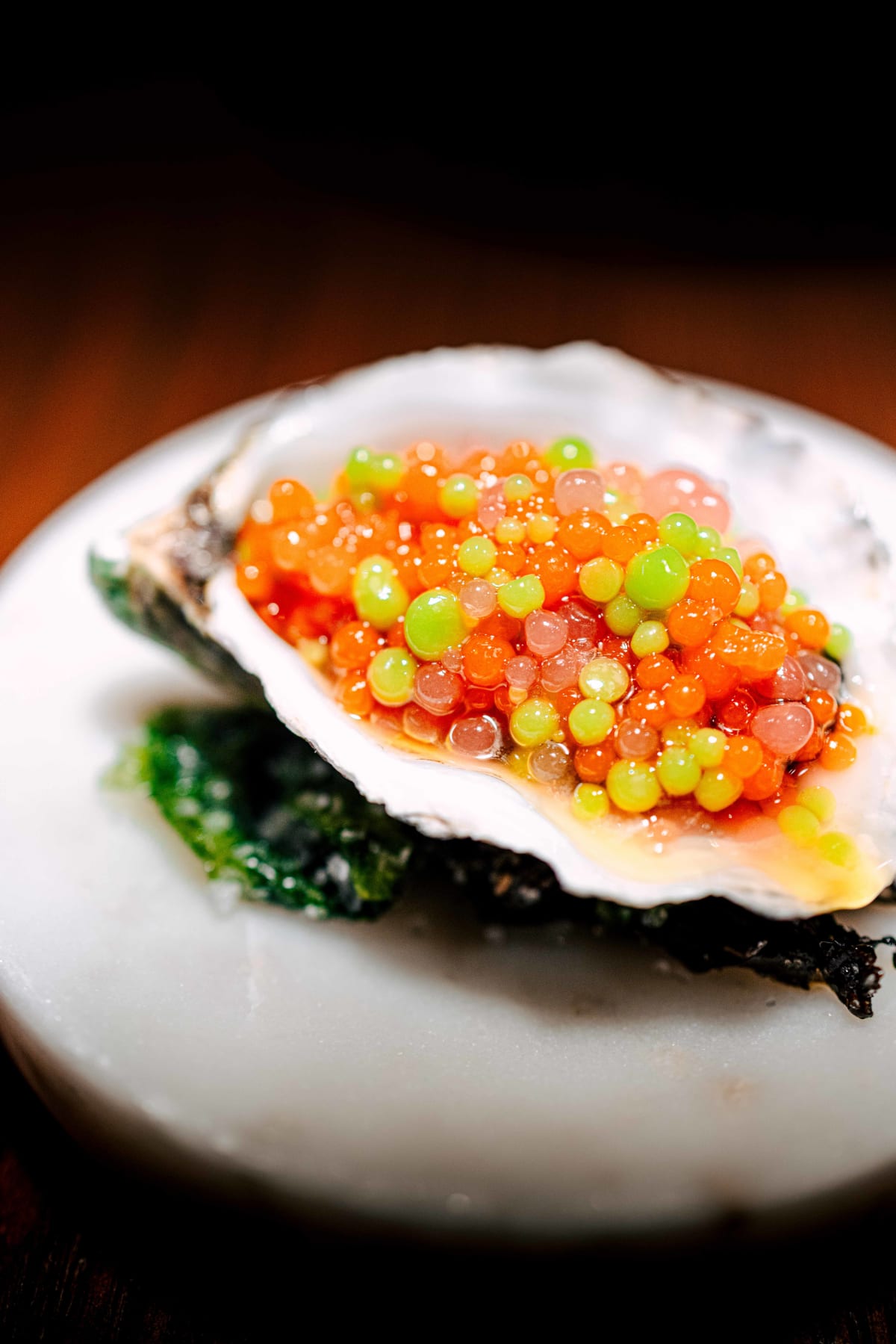
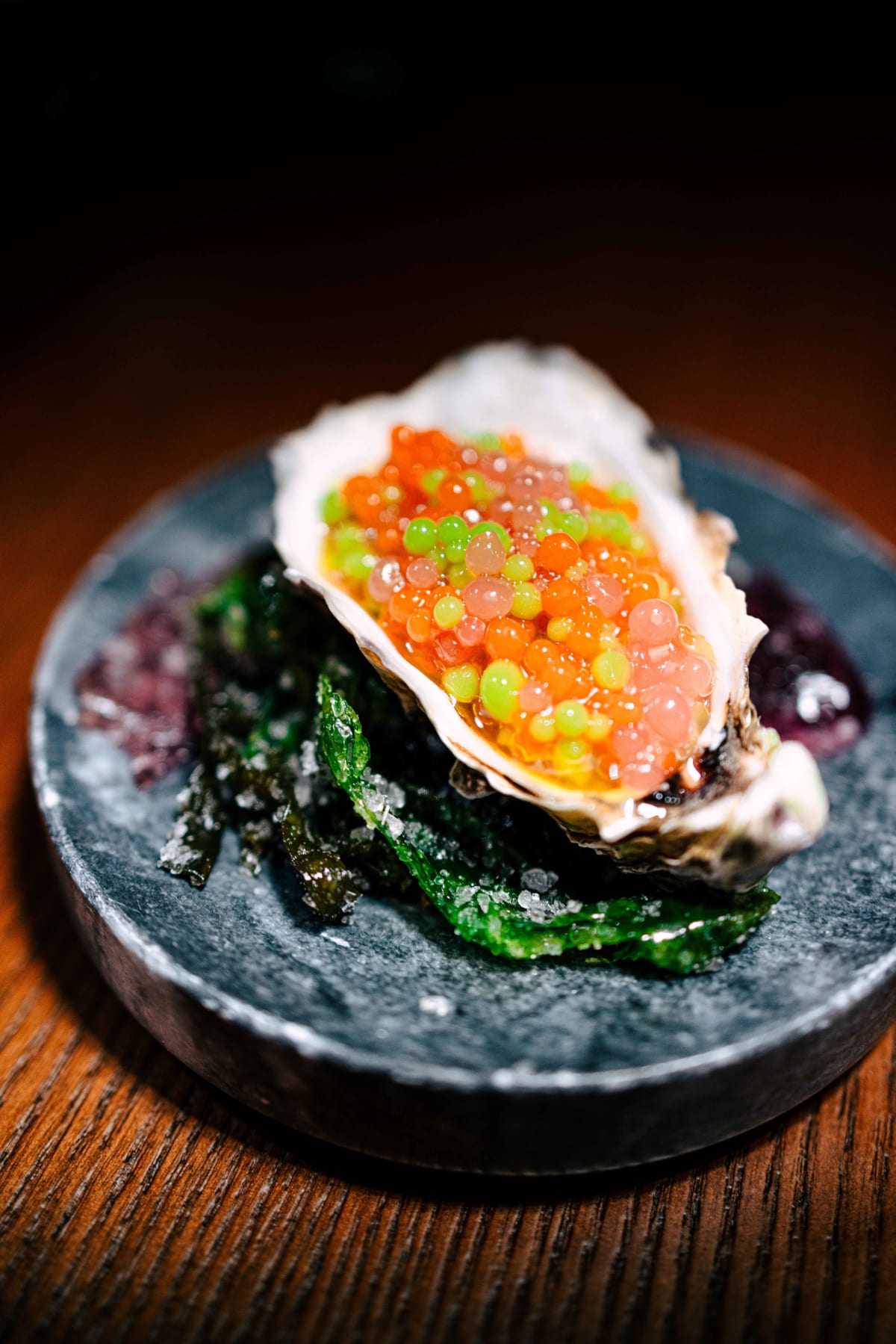
The one flaw was the oyster itself: the dish could not overcome the gap in ingredient quality that distance brings.
Section 7·Canary Islands Octopus
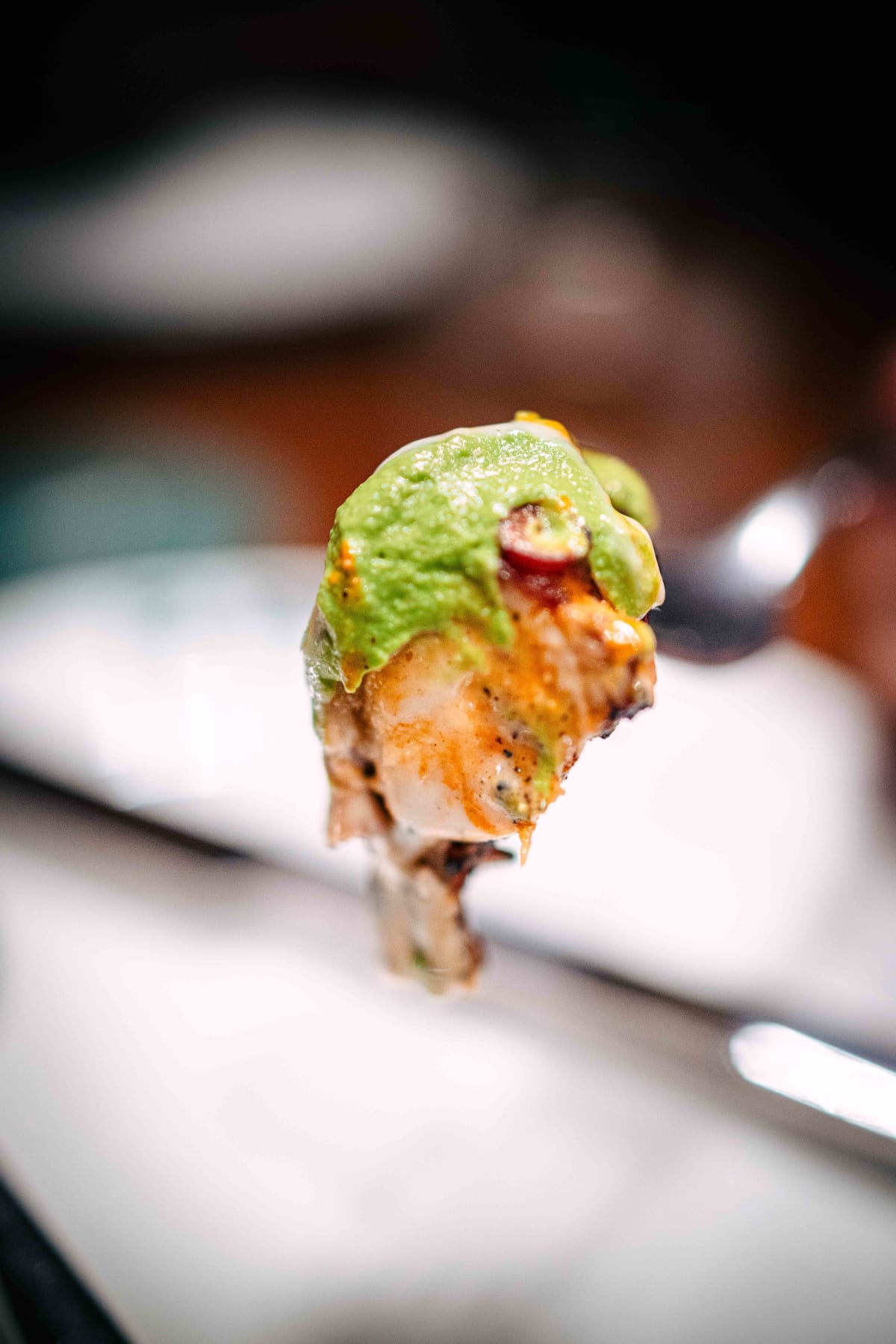
Octopus is something you see in restaurants wherever you go in Spain, so I ordered the Pulpo Canario. My first thought on eating this octopus tapa was: is this really Spanish? The flavours and aromas were ones I had met in Latin American food rather than Spanish, a long way from the octopus I had eaten on my travels in Spain.
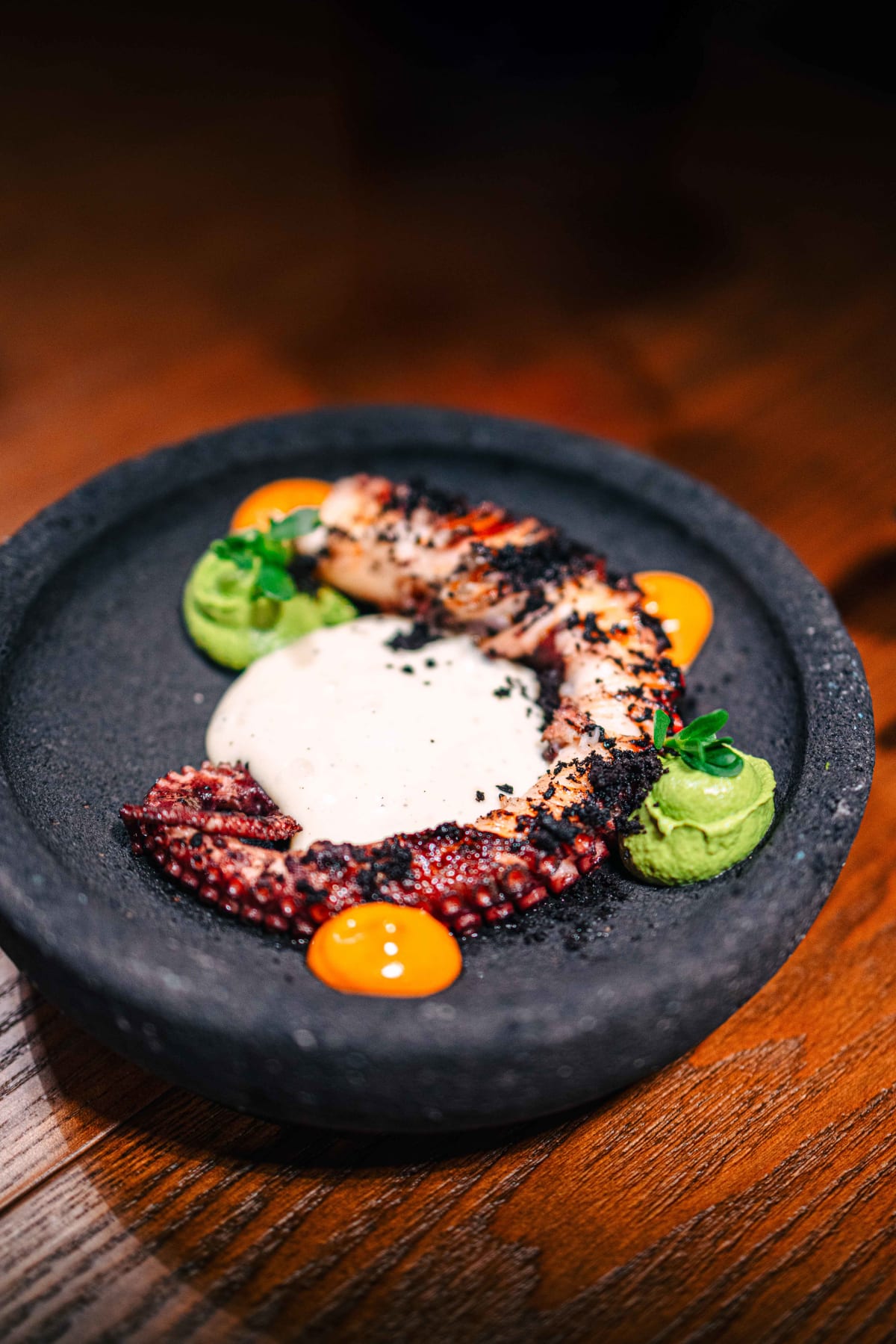
The dish comes with mojo. Mojo is a family of sauces made from olive oil, local varieties of chilli, paprika and spices such as cumin or coriander, and it comes mainly from the Canary Islands. So that was why Canario had been added to the name: it all clicked.
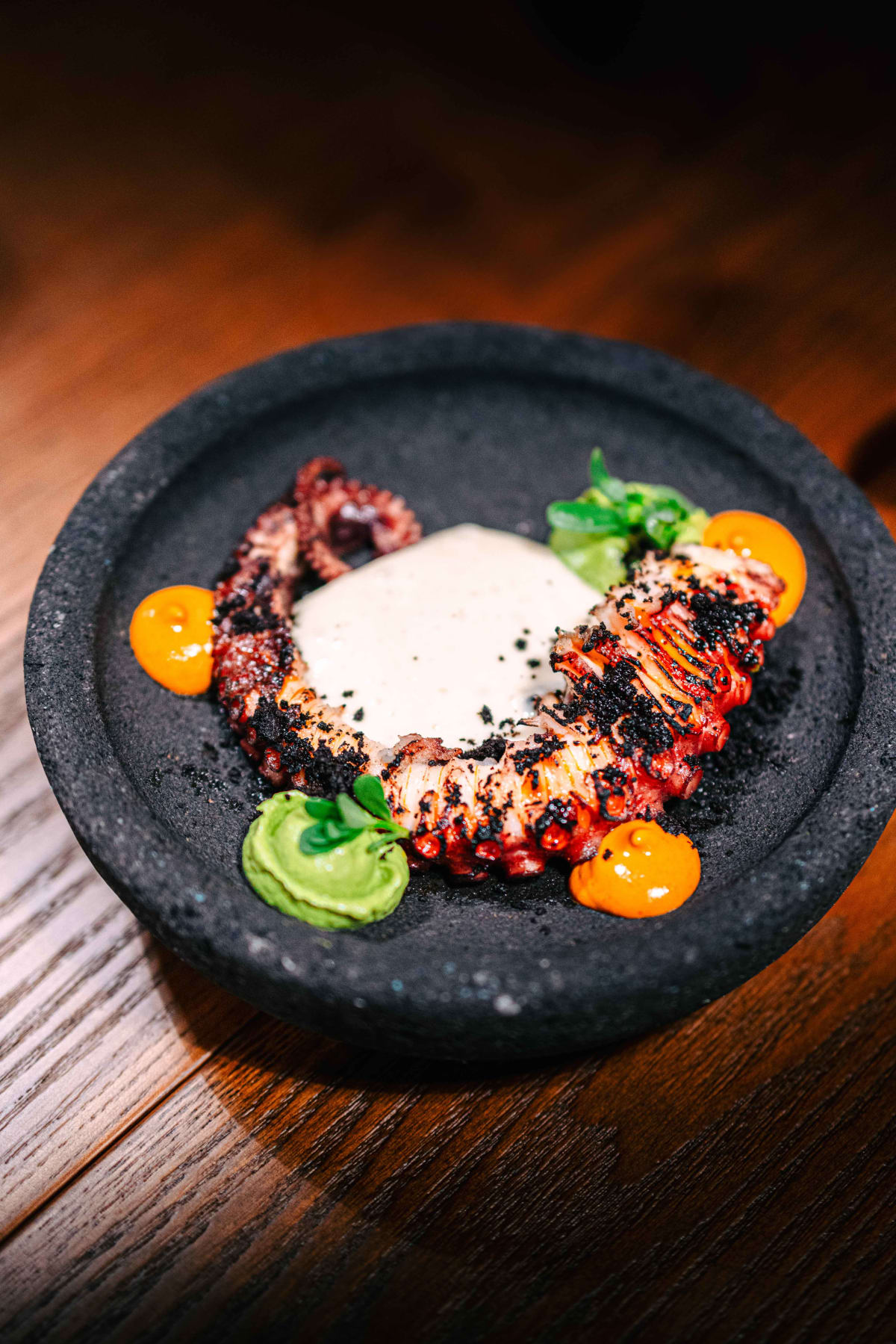
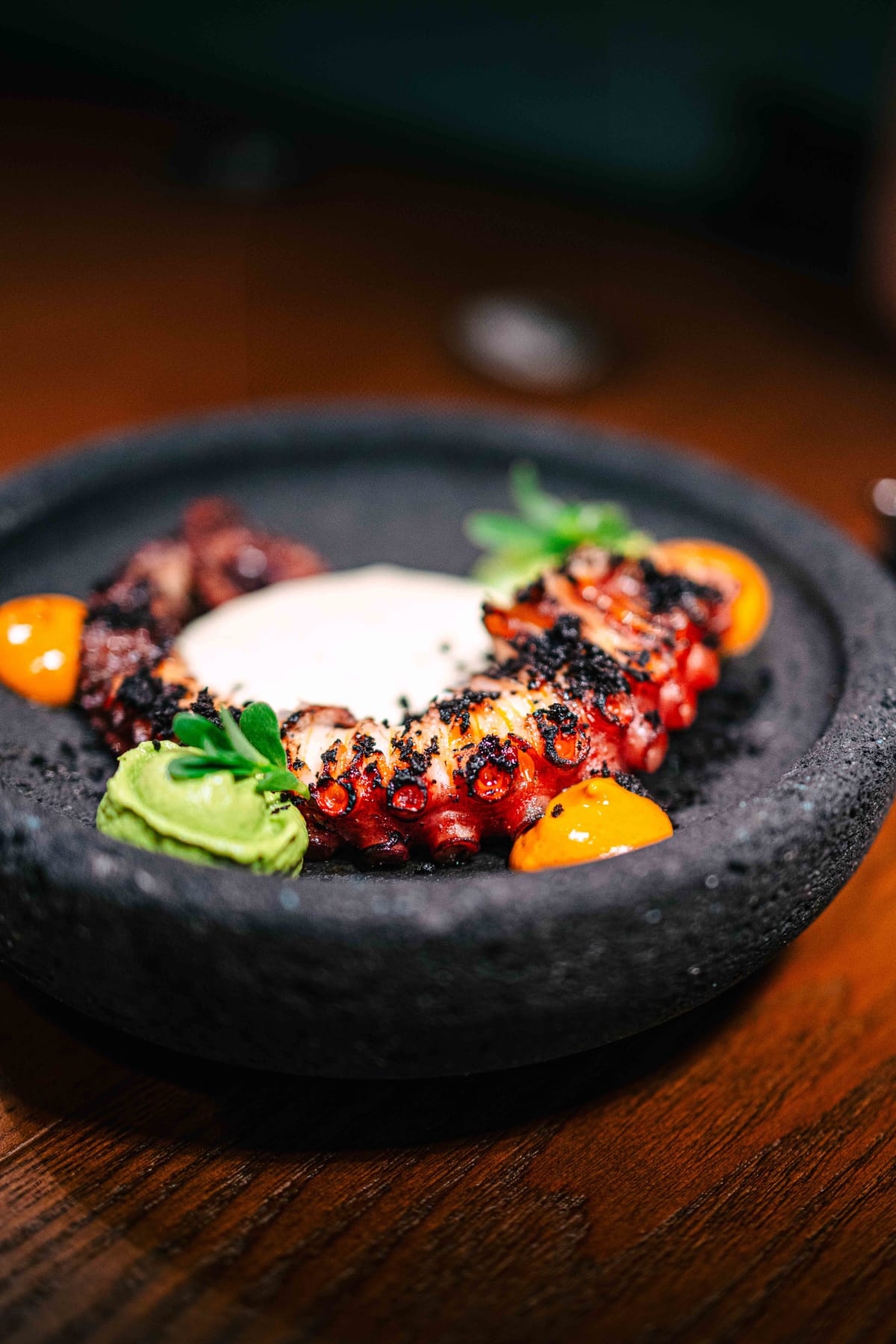
The chef first put it on the menu in the autumn of 2020, inspired by the time he spent in the Canary Islands: charcoal-grilled Galician-style octopus with a green mojo made in house, a spicy mojo picón and a potato foam. Canary Islanders emigrated to Cuba and the Caribbean in great numbers and took mojo with them, so my first impression, that it tasted Latin American, was not so far off after all.
The texture of the octopus was fine, but I could not help wondering how it would have been with the really thick, big tentacles I had eaten in Spain.
Section 8·Ham And Chorizo
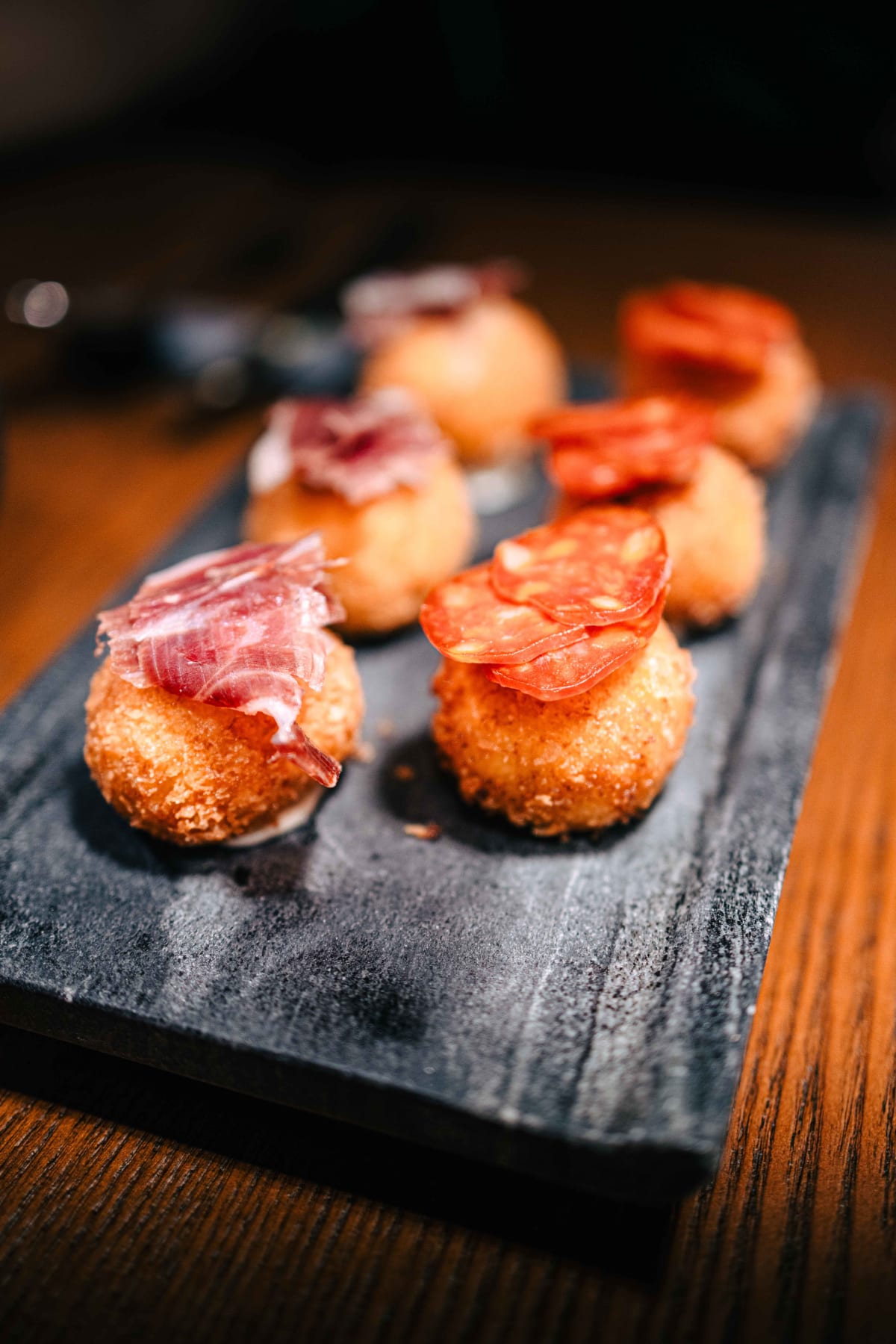
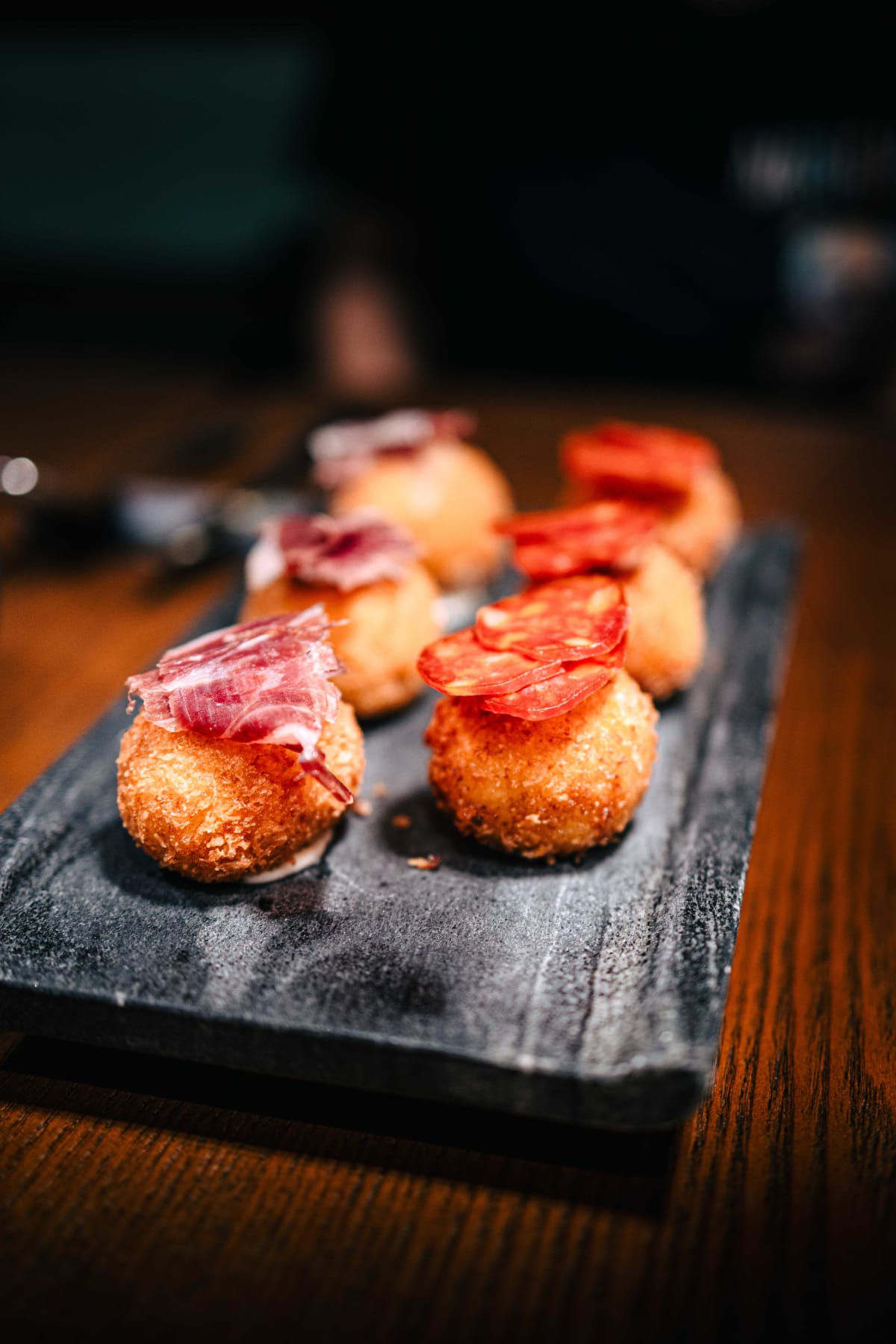
After that I ordered a plate each of jamón croquetas and chorizo croquetas, and they were well made.
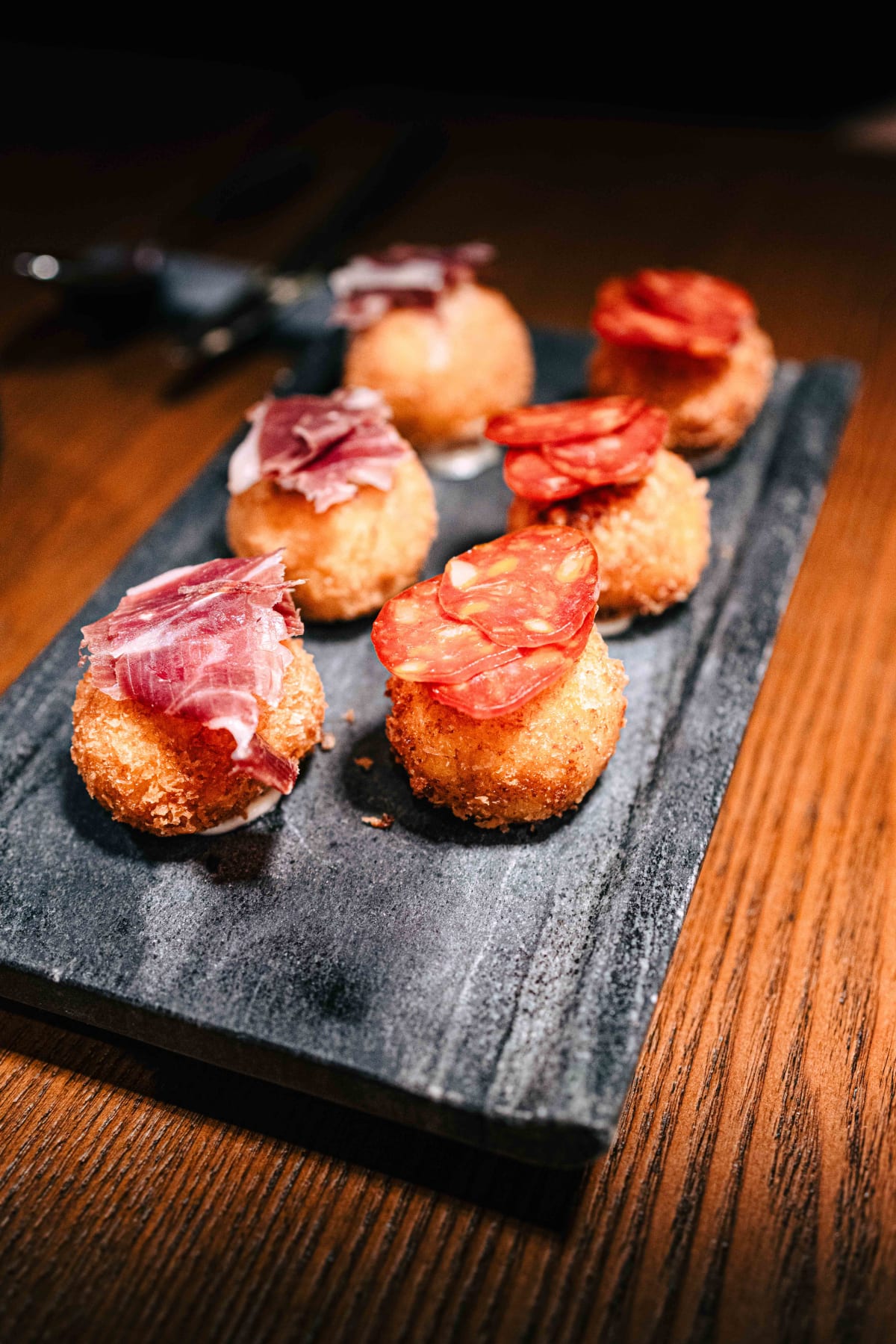
The buttery, rich cream inside was delicious and went well with the flavour of the jamón laid on top. The chorizo croquetas were good too, and these have Idiazabal, the Basque sheep's milk cheese, inside as well.
Section 9·A Sweet Bilbaína
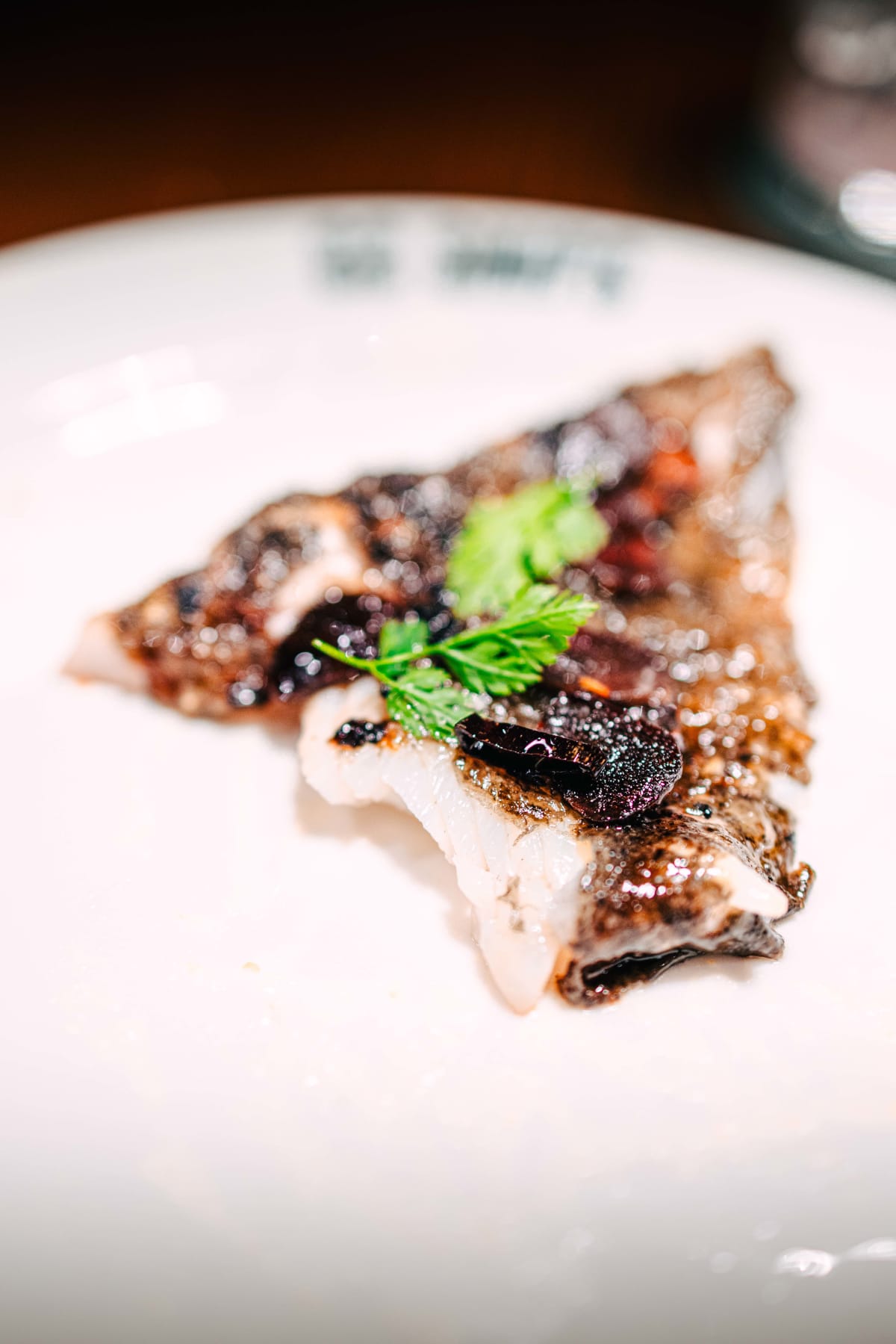
Last to arrive was the fish I had ordered, Rodaballo a la bilbaína. Rodaballo is Spanish for turbot, and a la bilbaína, Bilbao-style, means it is made with bilbaína sauce, which takes its name from Bilbao but is used across the Basque Country.
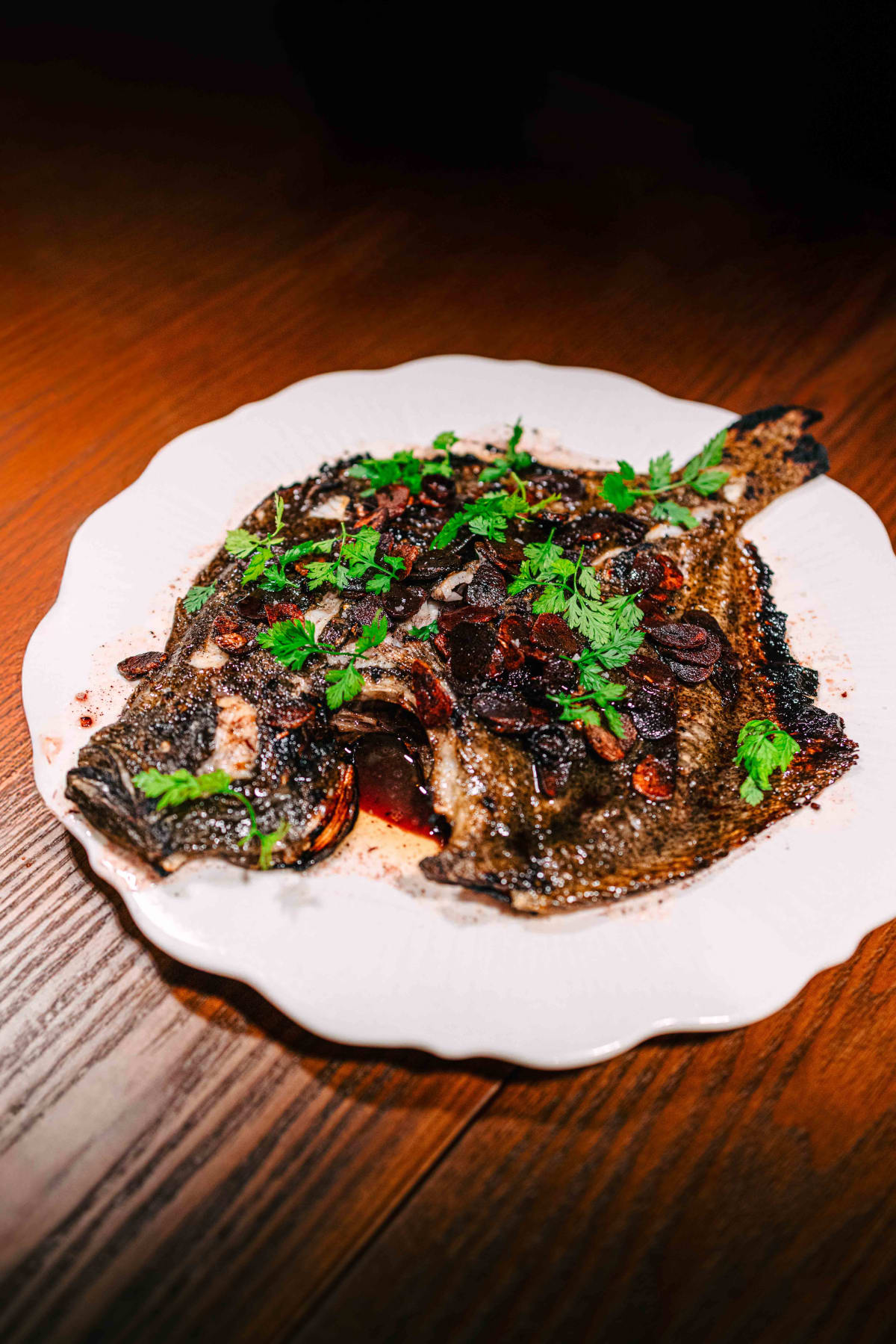
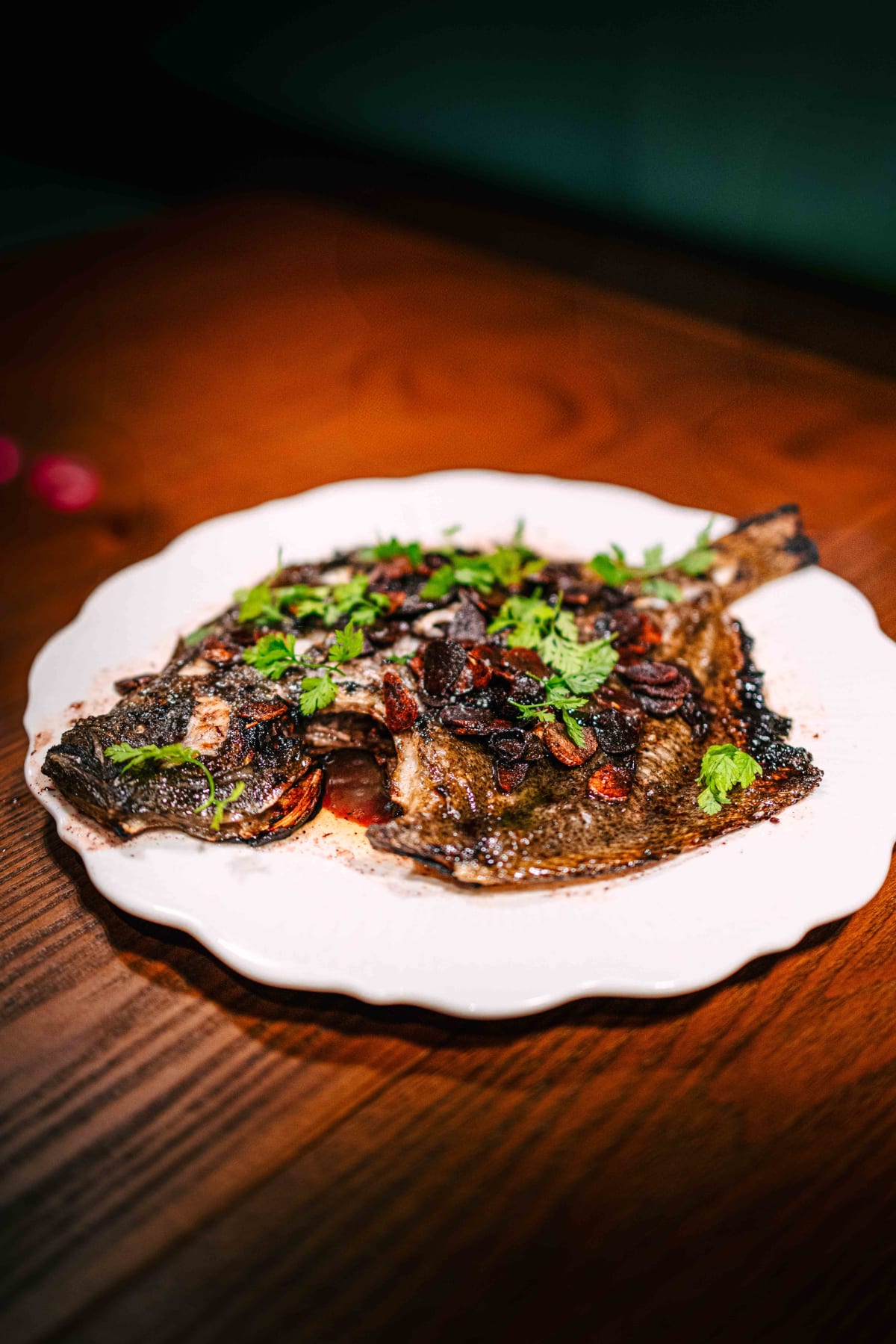
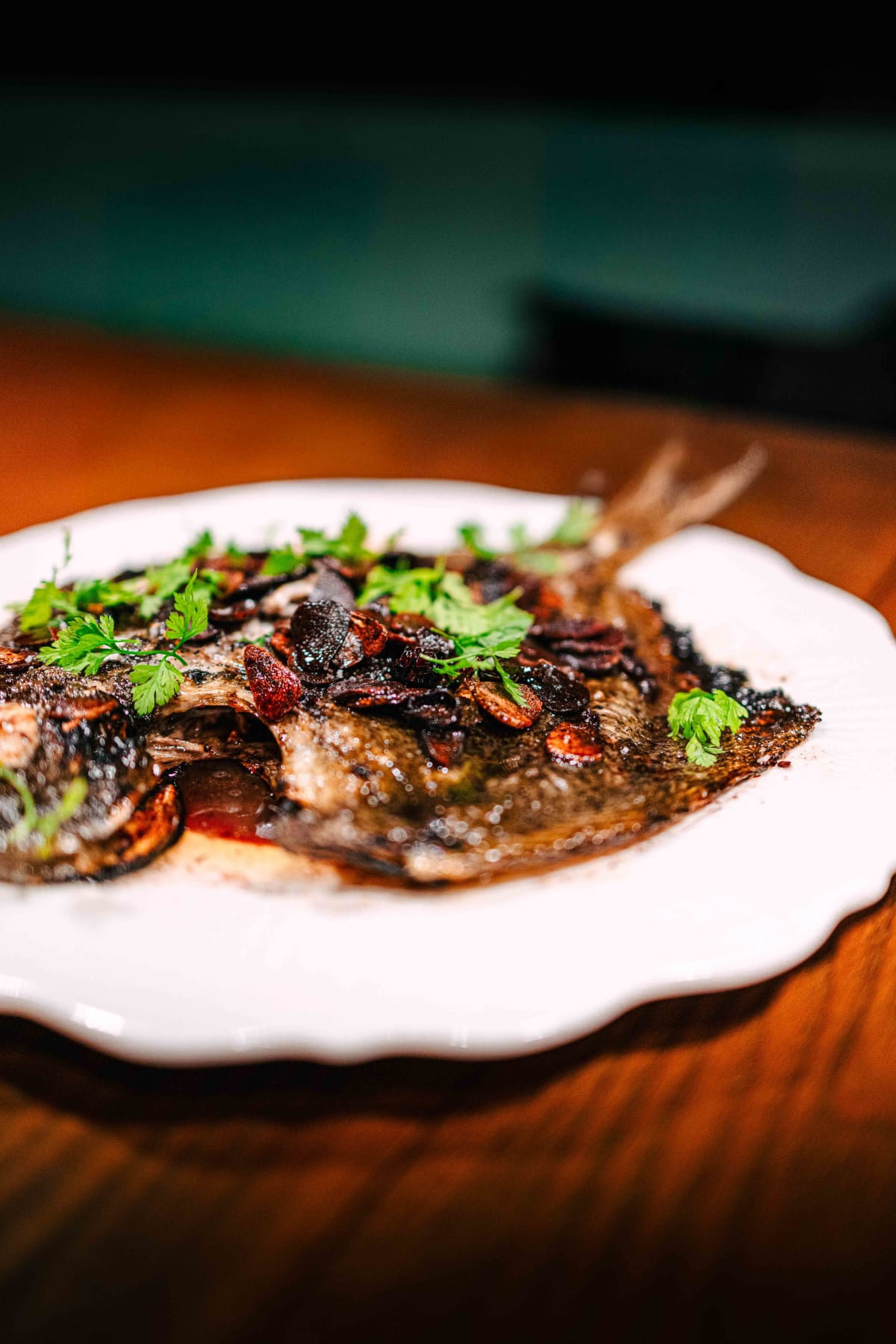
The turbot was grilled whole, dressed with a sweetish sauce and olive oil and topped with garlic toasted crisp, and I wondered whether this was really the Basque way. It seemed to have been made with sherry vinegar and then sweetened a little, perhaps to suit local palates. A small salad of lettuce and onion came alongside.
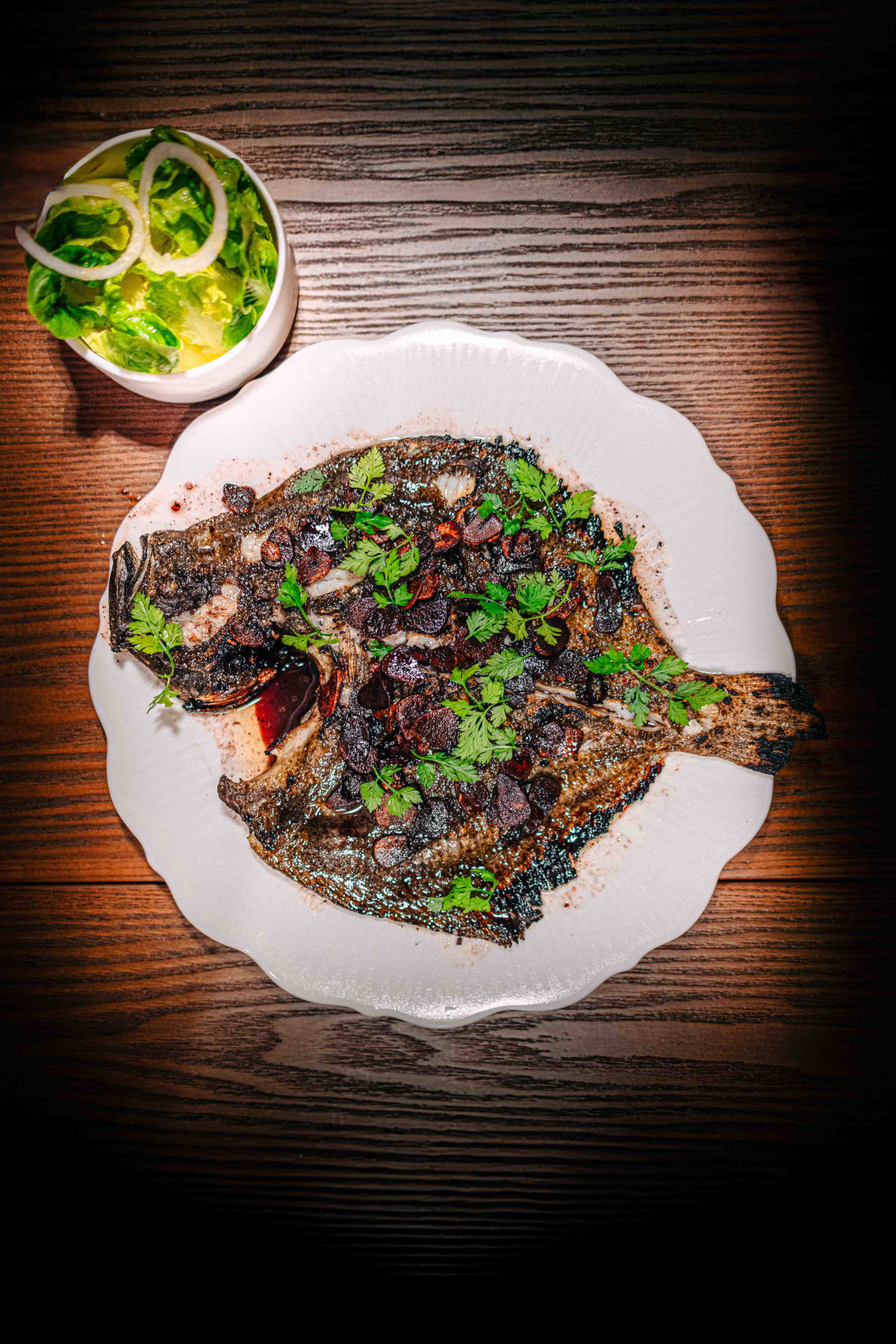
The gap between the Spain I expected in my head and the flavour I met at the table sent me to a chef who lives in Spain and knows Spanish cooking inside out. I was told that almost all of the fish dishes you see in the Basque Country are indeed made with bilbaína sauce. The classic sauce is a kind of warm vinaigrette: sliced garlic and dried chilli cooked slowly in olive oil, with vinegar added, spooned over grilled fish. There is nothing in a traditional bilbaína to make it sweet.
There is nothing in a traditional bilbaína to make it sweet.
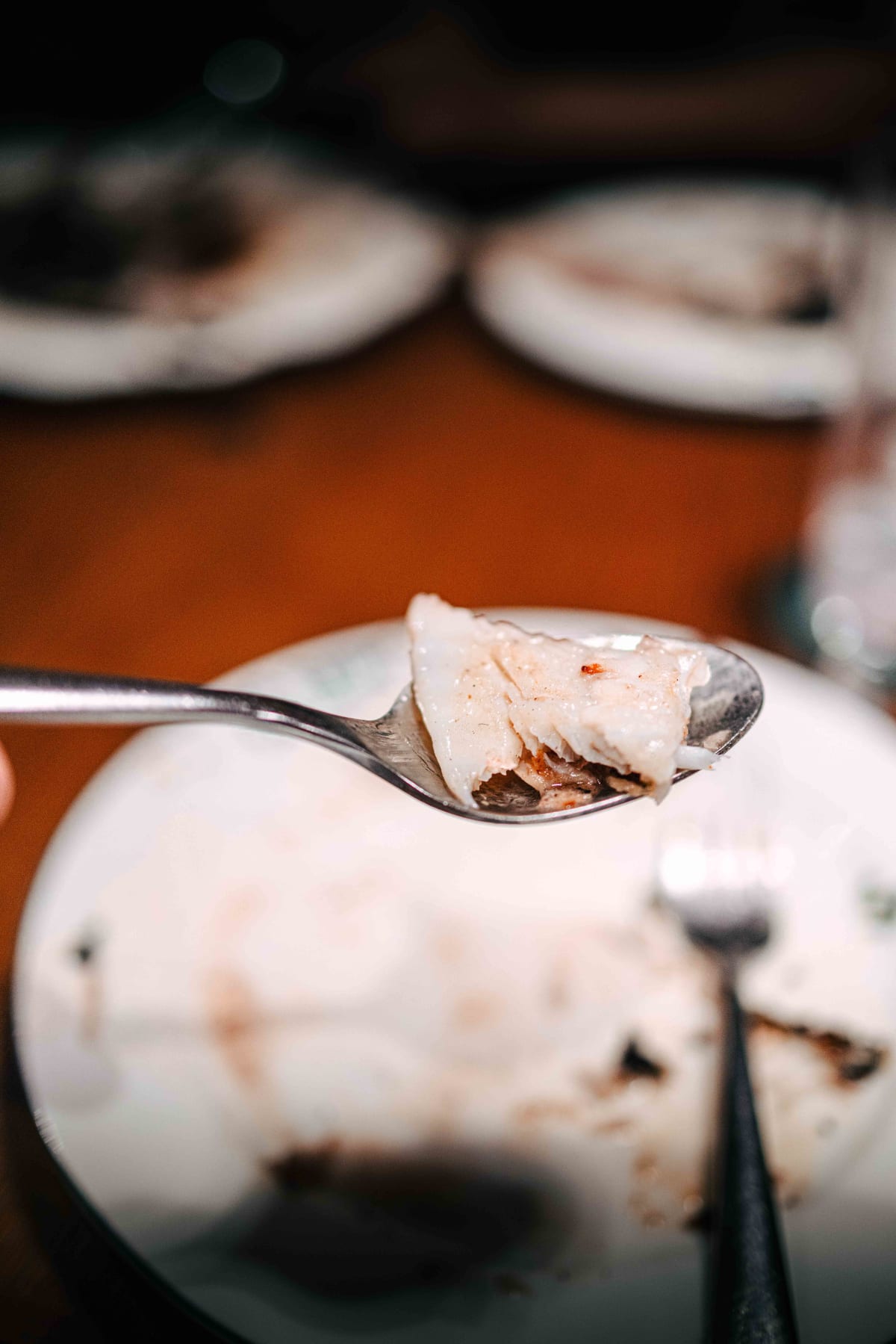
The turbot at 22 Ships looked different from the Basque fish dishes I had seen in San Sebastián. I suspect black vinegar went into it: the kitchen seems to have taken the Basque fish dish finished with bilbaína as its motif and reinterpreted it with a Hong Kong touch. The turbot was not large, but it tasted good, and the bouncy, chewy gelatine and the flesh had a fine texture. Still, having hoped for the fish I had eaten in San Sebastián, I found the sweetness a letdown.
Section 10·Calanda Peach
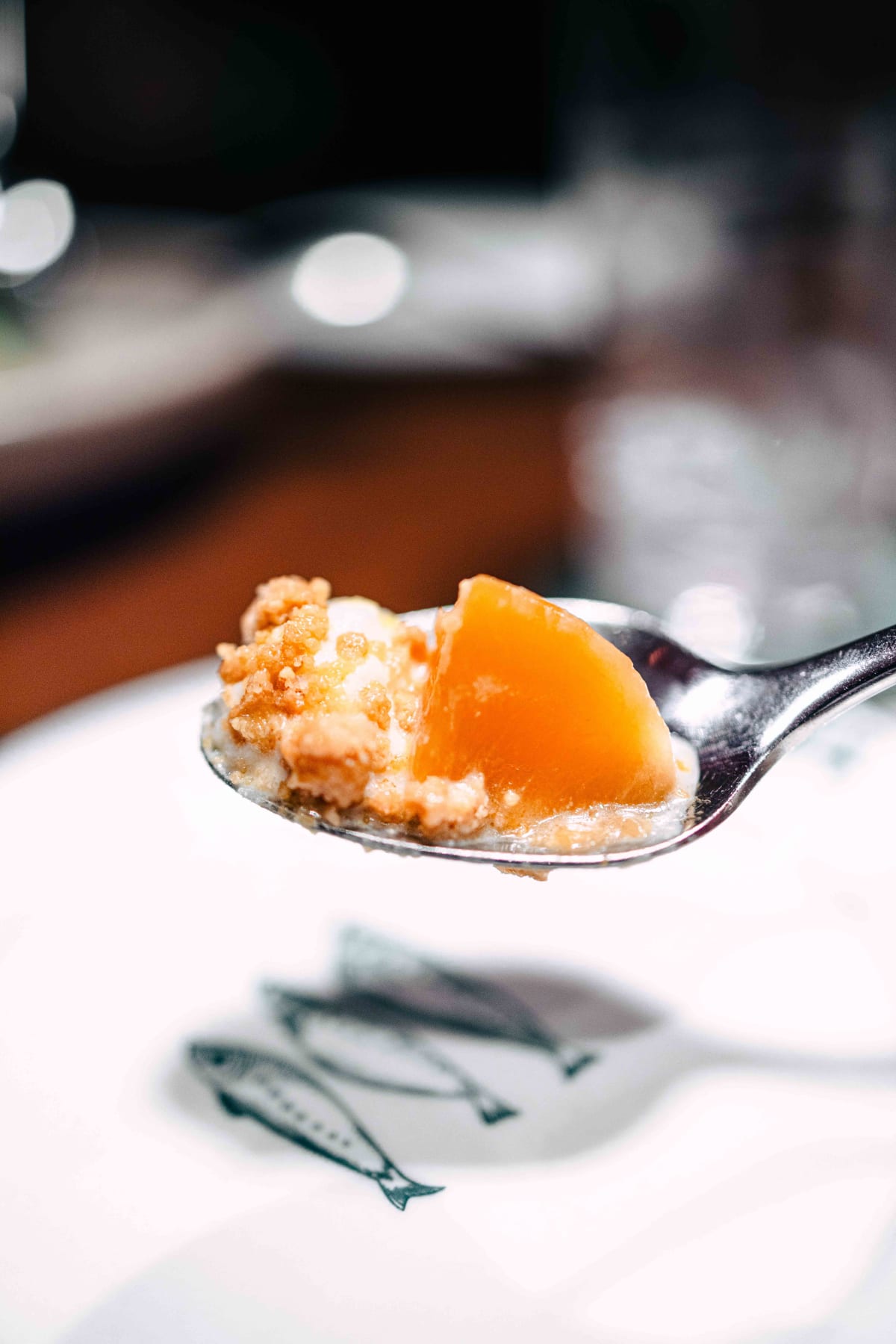
For dessert came the Melocotón, peach served with sherry and a sorbet, cool and delicious. The menu describes it as Calanda peach, palo cortado and marigold.
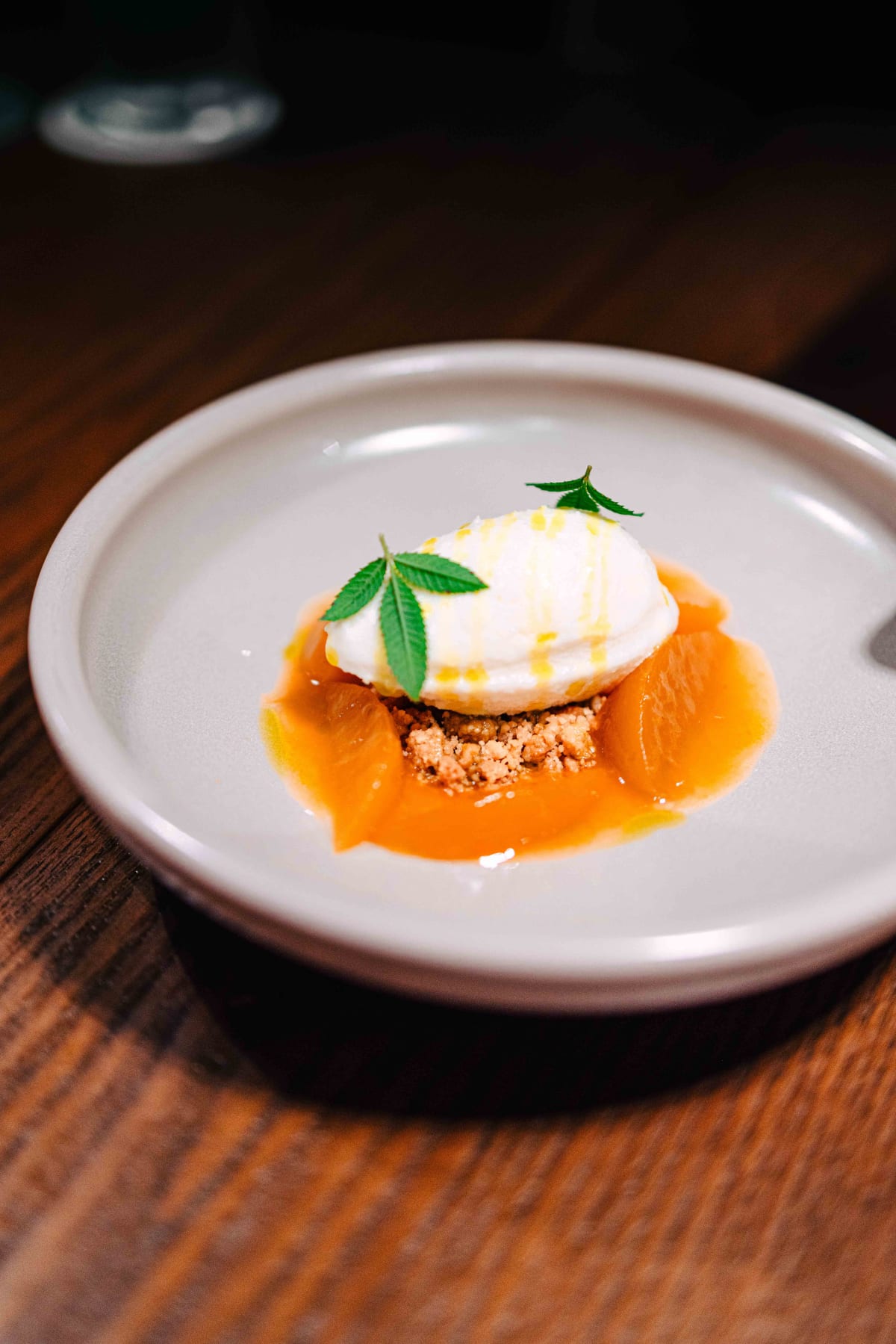
The Calanda peach is a late peach from Aragón in Spain, grown inside a paper bag while it hangs on the tree and picked from mid-August to early November, so in mid-September it was right in season. Palo cortado is a sherry first set aside for ageing under flor, the film of yeast, then turned over to oxidative ageing, and it is the rarest of the dry sherry styles.
Section 11·Spain On The Menu
For anyone in Hong Kong who wants something other than Chinese food, this is a good Spanish restaurant to recommend. The cooking was skilful, and judging by the dishes in other people's reviews, plenty more looked good. With a wide range of Spanish wines, sherry included (more than fifty Spanish wines alone), it should suit anyone who wants to drink wine too. Every name on the menu was Spanish, yet on the plates sat the Canary Islands, Latin America and Hong Kong together.
Every name on the menu was Spanish, yet on the plates sat the Canary Islands, Latin America and Hong Kong together.
Oh, and one important fact: Bar Leone is only a few minutes' walk from here.

Pedro Subijana of Akelarre has said Spain has no national cuisine, only regional cooking, and most of the menu here can be traced to one region or another: marmitako to the Basque coast, Rubia Gallega beef to Galicia, papas arrugadas to the Canaries, cochinillo to Segovia. 22 Ships lays them side by side, the way Spain tends to look from abroad, so it is best taken as a survey of the regions rather than a test of any one dish against its home ground. In September 2024 most tapas sat between HK$78 and HK$108, the octopus was HK$208, the whole turbot HK$428 and a flight of three sherries HK$158. The entrance is on Staunton Street, at Block A of PMQ.
Have a question about this restaurant, or want to share your own experience?
Send a message