Fine Dining · Seoul · Korea / May 2023 / Michelin ★
exquisine
"Seoul's classic first Michelin star, a sea urchin taco, a hangover-curing broth and a cult Burgundy by corkage"

Section 1·The First Rung
Every hobby is like this, I think: unless you are simply out to conquer something, you enjoy a hobby more by starting where it is easy to get in and working your way up step by step, rather than going straight to the top and ticking it off just because you can afford it. Dining has a bottom and a top too, and there are many ways to tell them apart: the number of Michelin stars or the Tabelog rating, how hard a table is to book, the price, or simply the taste itself. Everyone has their own favourite restaurants, their own idea of which ones are the best and their own yardsticks, but these are the ones most people go by.
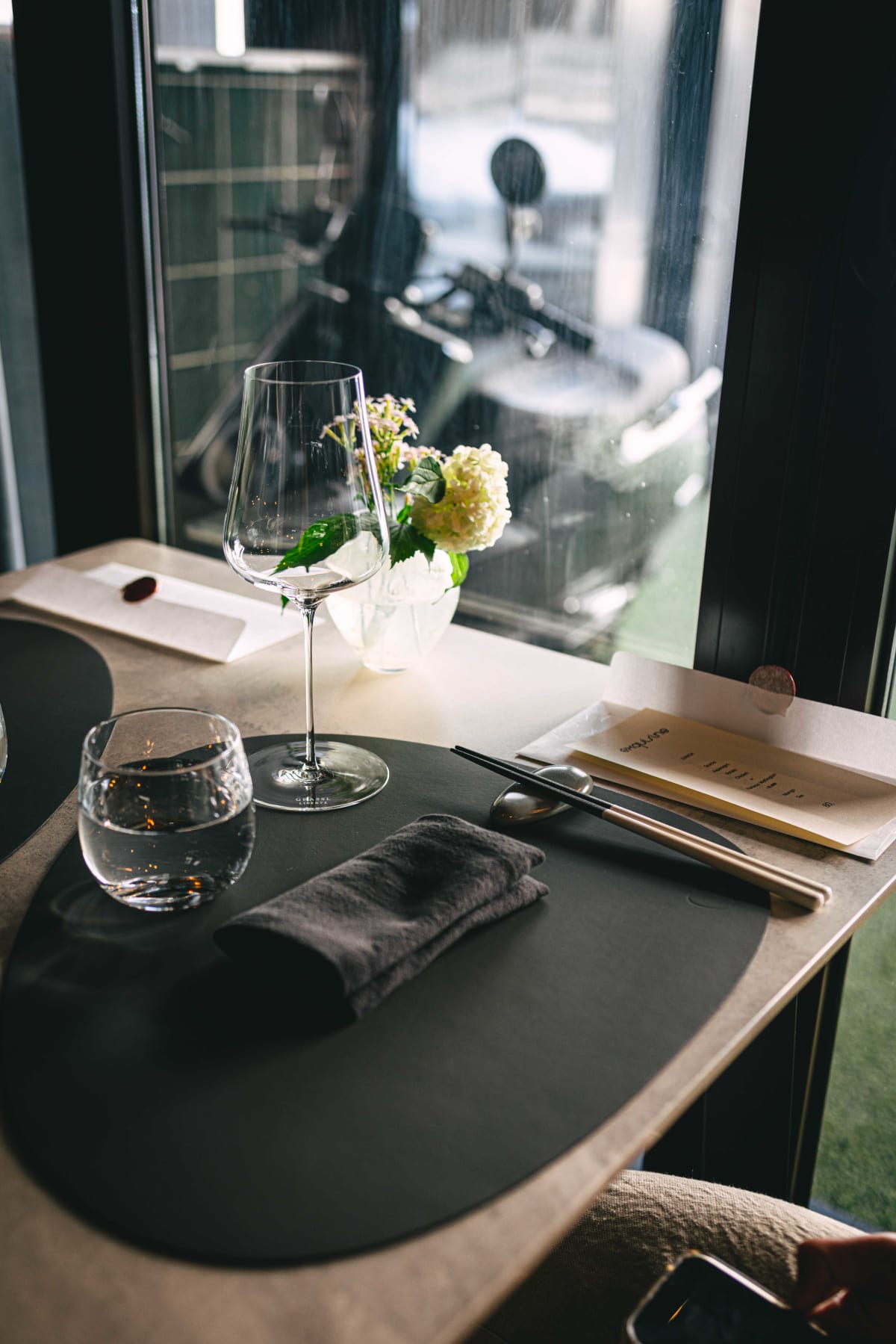
Exquisine, the subject of this review, is often named the best place in Korea for people who enjoy dining as a hobby to take their first step into Michelin-starred dining. Of the yardsticks above, the ones that put it there are price and the taste itself.
Among Korea's Michelin-starred restaurants, it is also one whose value for money has kept its tables in demand for years, and its lunch is especially famous for that value. My own first Michelin-starred meal in Korea was at Exquisine, and I have been three times, all three for lunch.
I keep my photos in one place, so I could trace how the lunch price has changed: about USD 45 on my first visit, about USD 55 the following year, about USD 60 in 2023, the visit in this review, and about USD 90 now, in 2026.
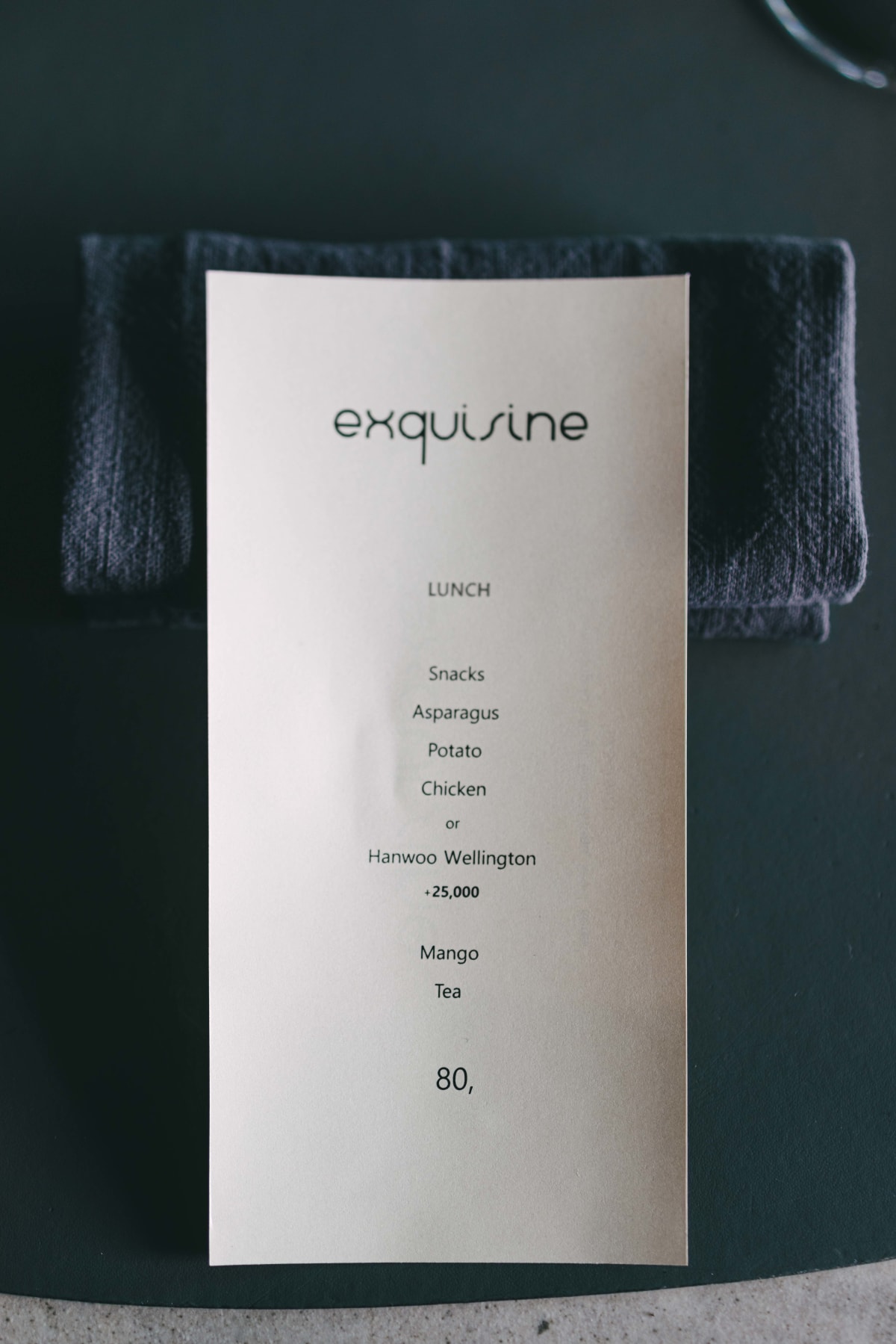
In an age of inflation, when not raising a price amounts to an automatic sale, a rise of about USD 7 a year is one I can accept.
In an age of inflation, when not raising a price amounts to an automatic sale, a rise of about USD 7 a year is one I can accept.
Section 2·Exquisite Cuisine
Exquisine sits in a quiet residential part of Cheongdam-dong, and its name puts two words together: exquisite and cuisine.
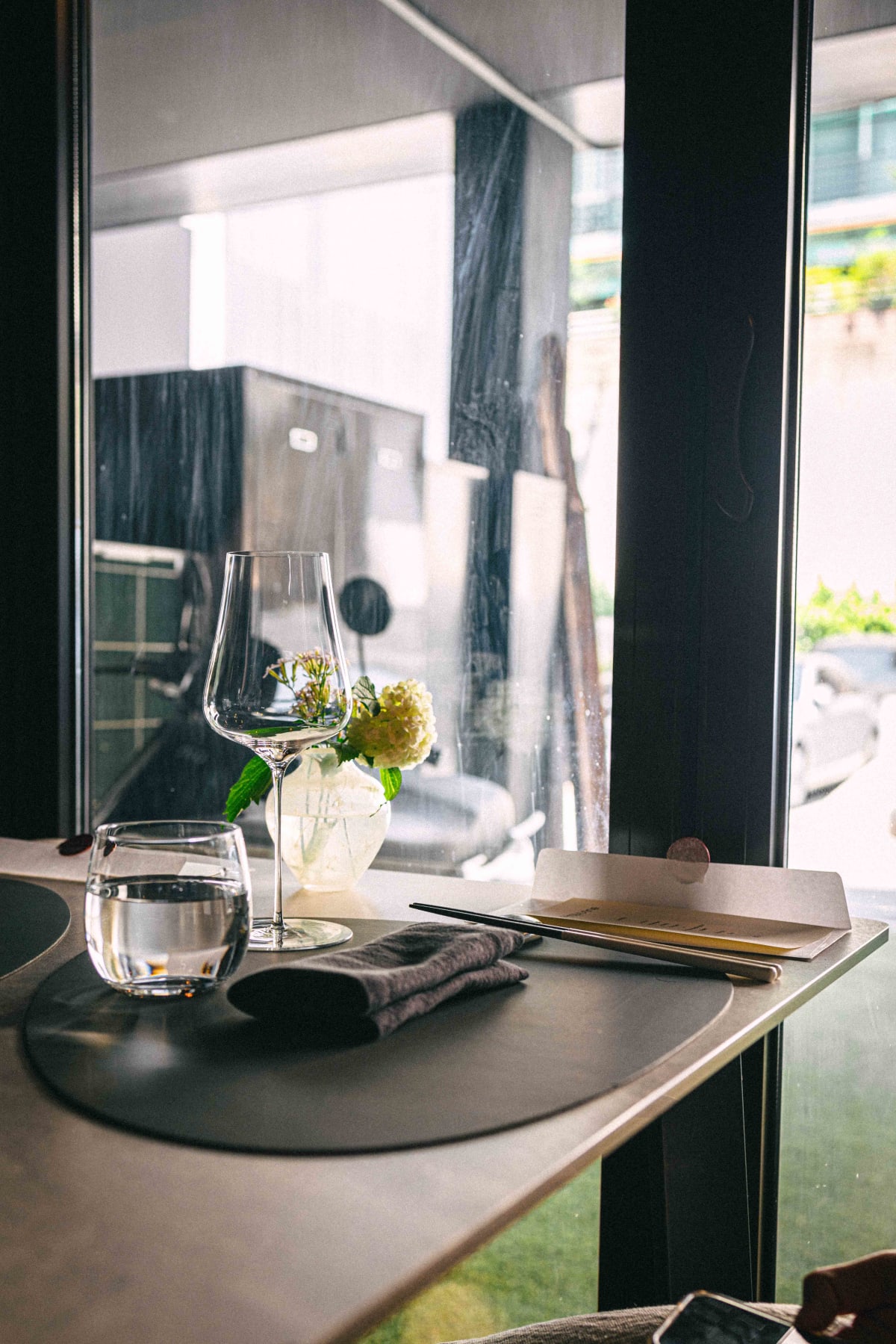
Chef Jang Kyung-won has said he chose the name because he wanted to take a step back from the borders between genres such as Korean, Western and Chinese food and simply cook exquisite food. The restaurant officially opened on 1 November 2016, and in the Michelin Guide Seoul 2018, announced almost exactly a year later, it won one star straight away. It was one of four restaurants newly awarded one star that year.

On the day of the announcement, the phone, which on an ordinary weekday rang six or seven times with booking enquiries, rang a hundred times, and the chef is said to have panicked for a moment. It has never lost the star since, and through the 2026 edition that makes nine consecutive editions with one star.
Chef Jang's career is far from the typical path of a fine dining chef. He did not graduate from a well-known culinary school or train under a world-renowned master, and he only began cooking in earnest in his mid-twenties, after his military service.
Of the year he spent in Australia, he worked the first six months at a steakhouse in Penrith, on the western outskirts of Sydney, and spent the rest travelling with a backpack, including three months on a self-sufficient farm. It was then, milking cows at dawn, with freshly drawn milk and just-laid eggs for breakfast and a chicken killed at dawn for lunch, that he is said to have found his yardstick: so this is what it takes for food to be truly delicious.
Section 3·A Pattern On The Menu
My visits to Exquisine came about a year apart, so the menu was different every time. Even so, a familiar dining pattern shows through: snacks, then vegetables or seafood with a bright, tangy sauce, then seafood, meat and dessert, and finally petits fours and tea.

The fun part is that the menu card names not the seafood but the garnish around it, or the sauce at the heart of the dish. That day the card read, in order: Snacks, Asparagus, Potato, Chicken, Mango, Tea.
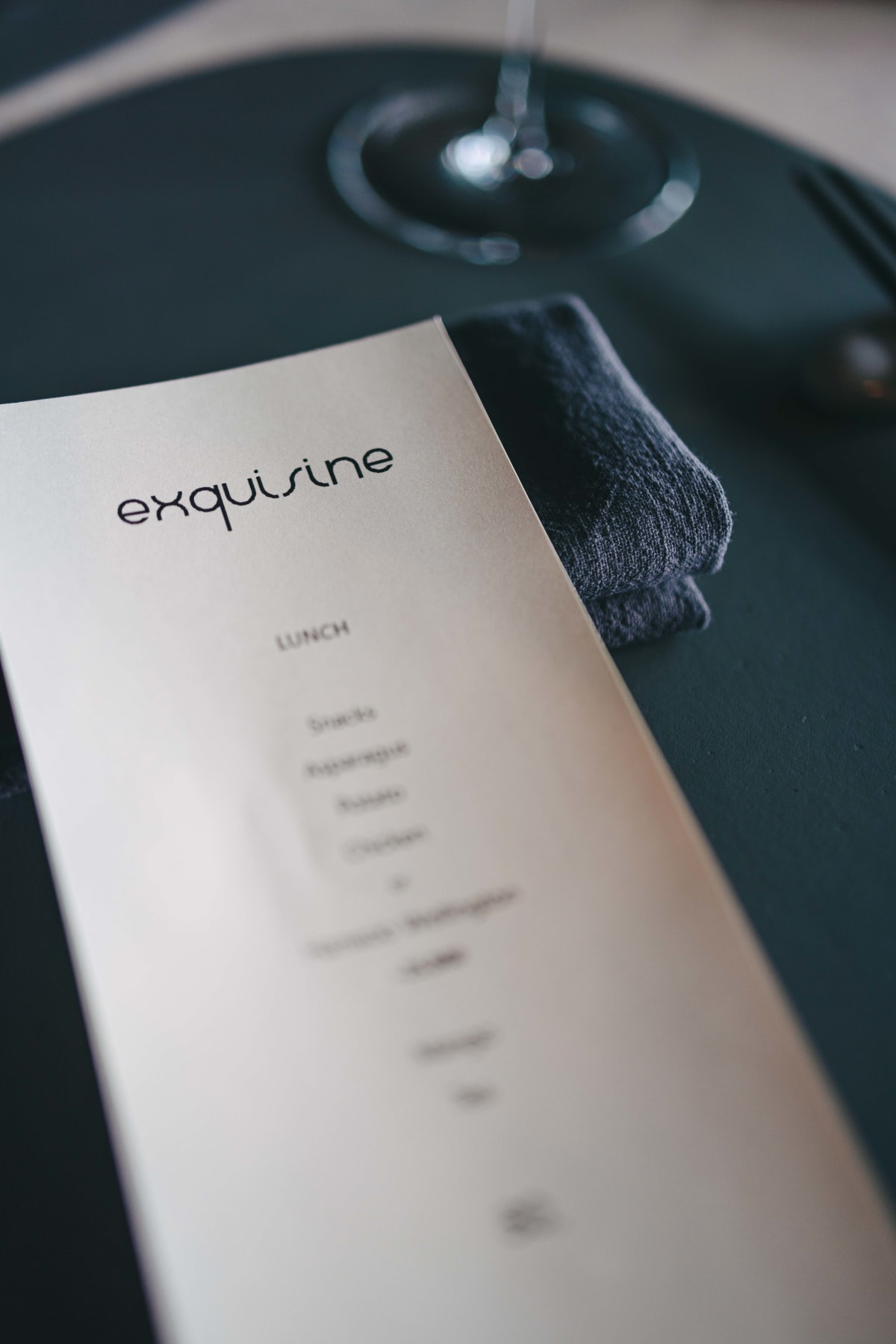
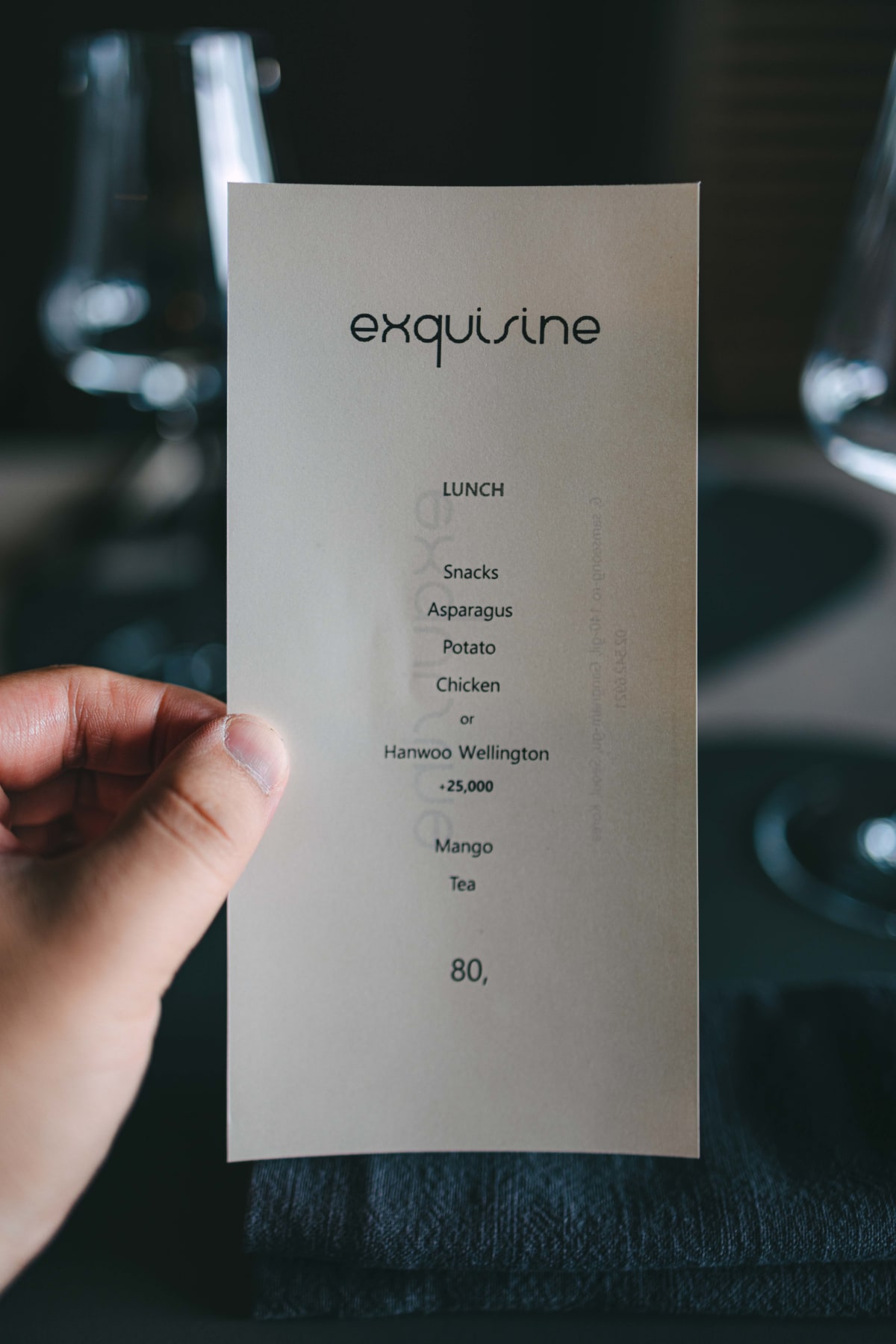
Reading it like that, I could not guess at all what would arrive, apart from the main meat. As a way of stirring curiosity, it seems a good approach.
The chef's way of working also has a hand in how often the menu changes. He has said his menus are born in one of two ways: an idea that hits him all at once while he is staring into space, or a menu worked out painstakingly, step by step, from the ingredients up. Yet the painstaking ones, he says, taste good but are strangely no fun.
Michelin's current write-up also says there is a single course at lunch and a single course at dinner, and that the line-up changes often, depending on the ingredients and on how things stand in the kitchen.
Section 4·Snacks
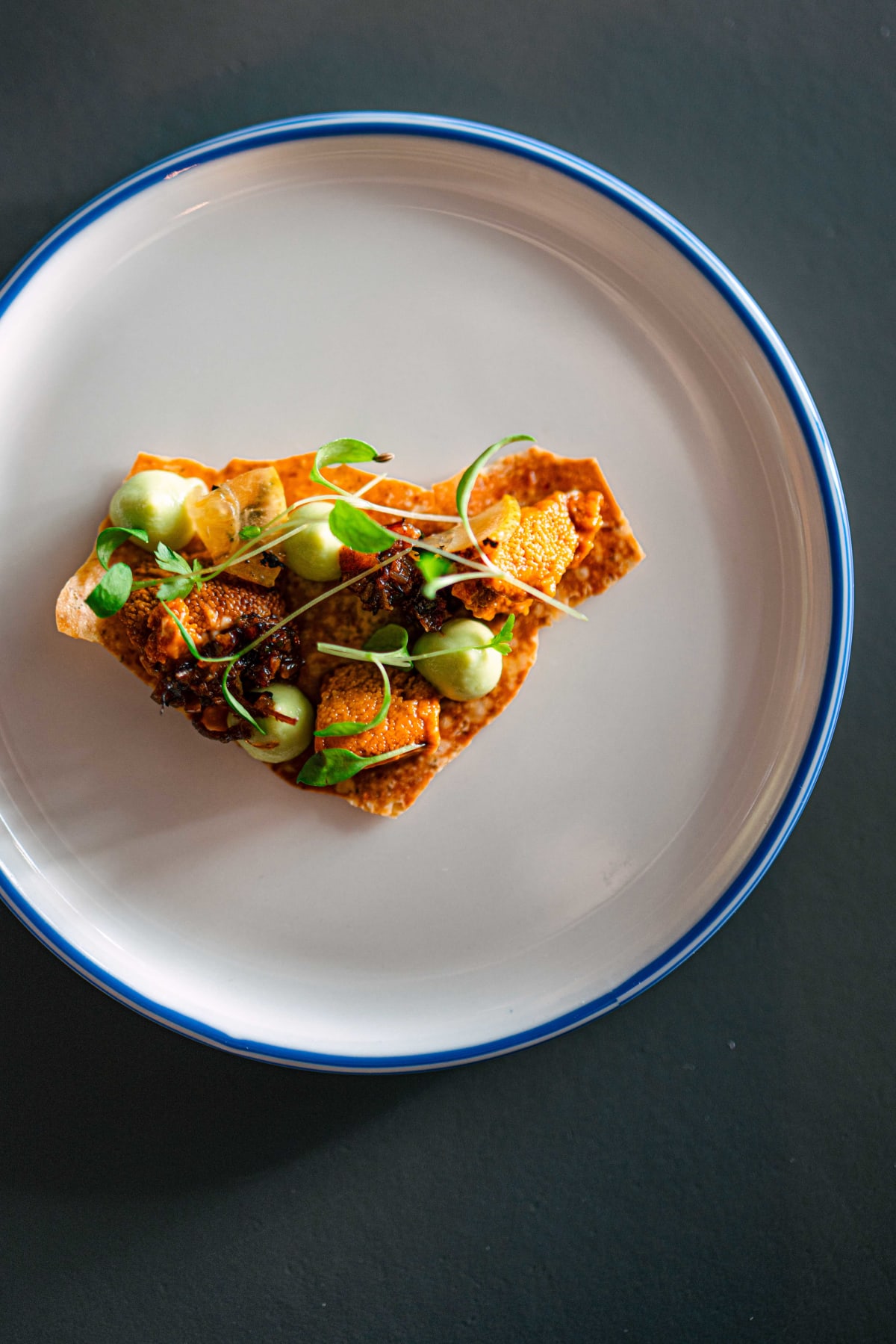
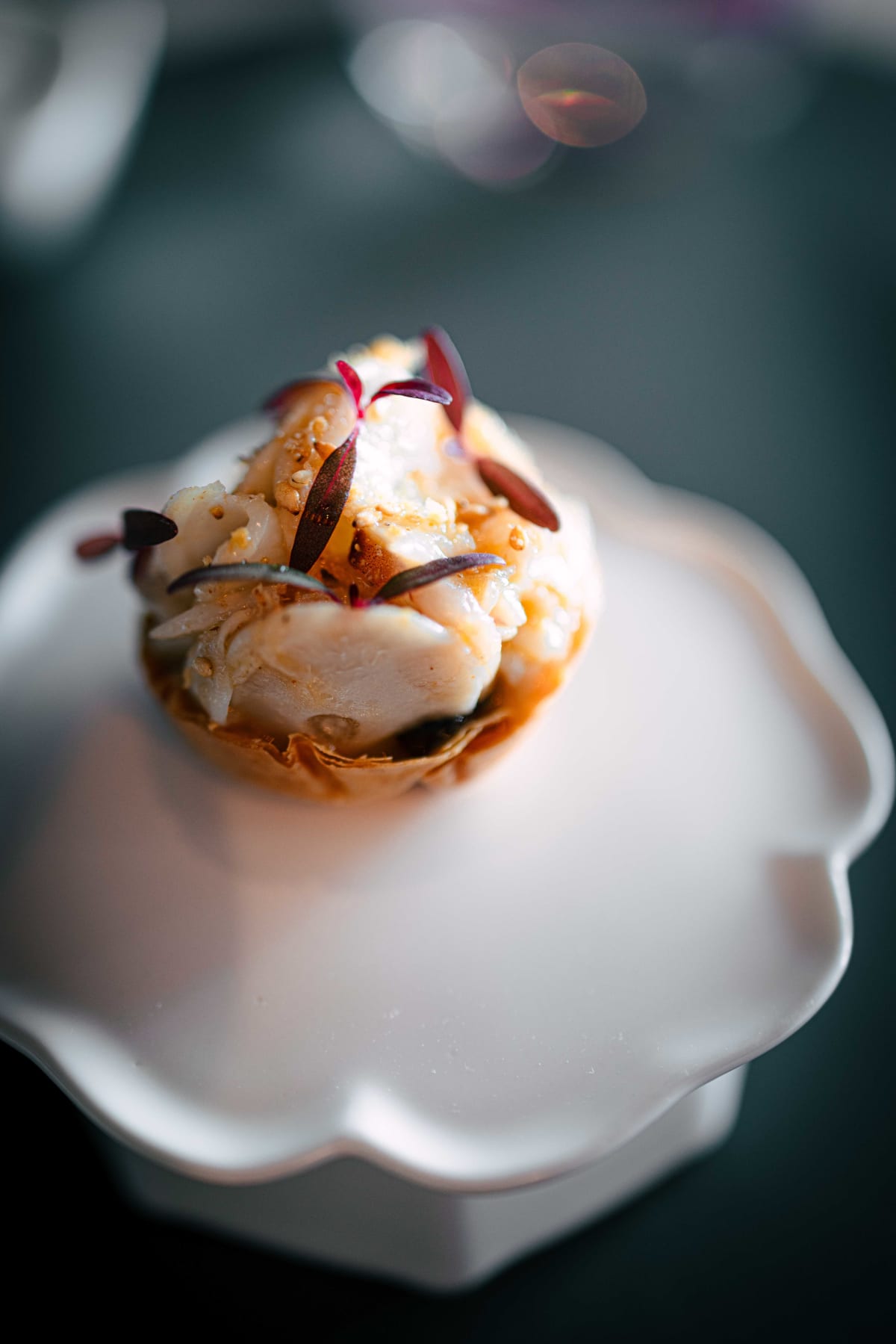
The course that day was good overall, but something interesting turned up as early as the three snacks: the second of them, sea urchin and assorted vegetables set on a taco.
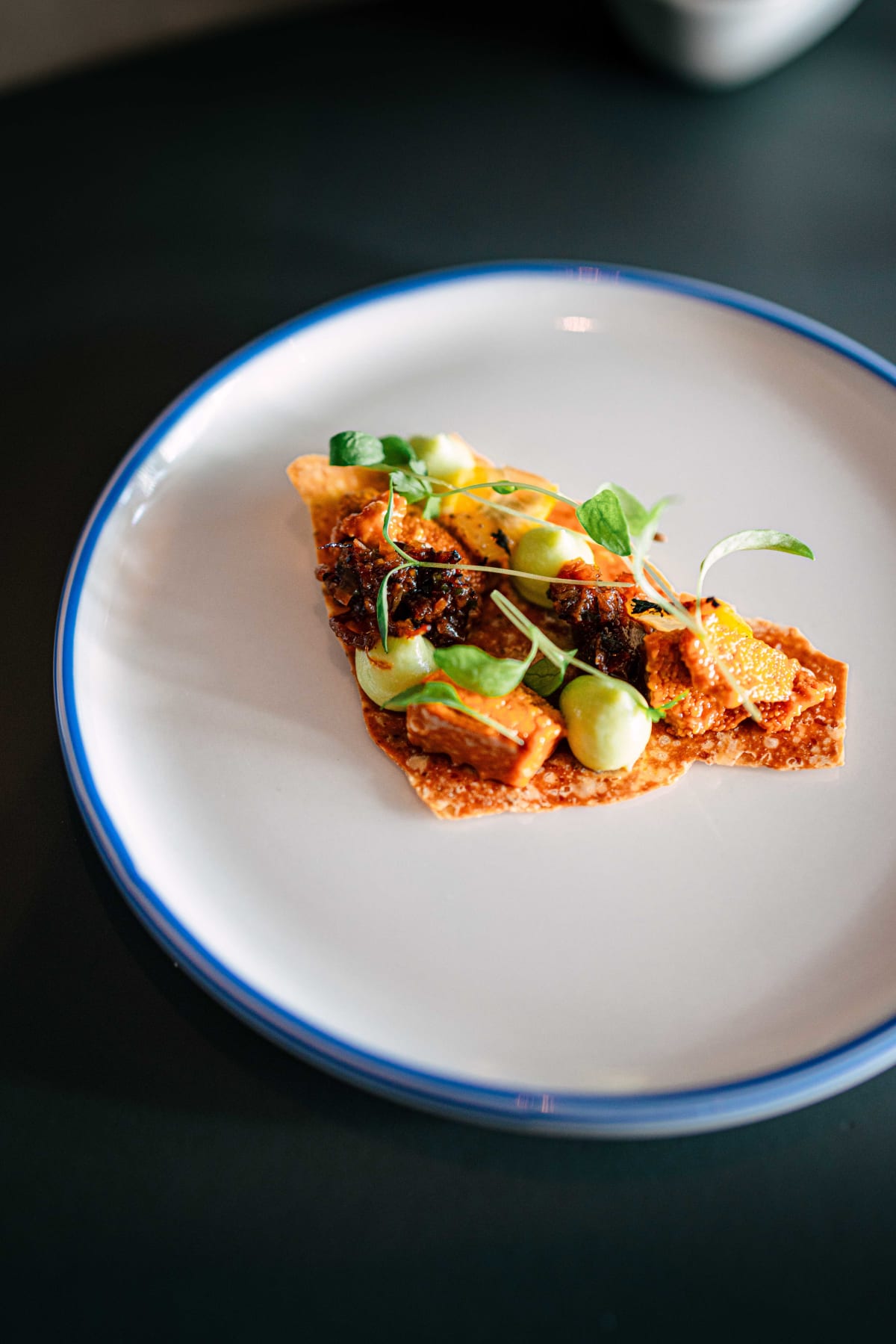
That day was the first time I had seen a snack like this at Exquisine.
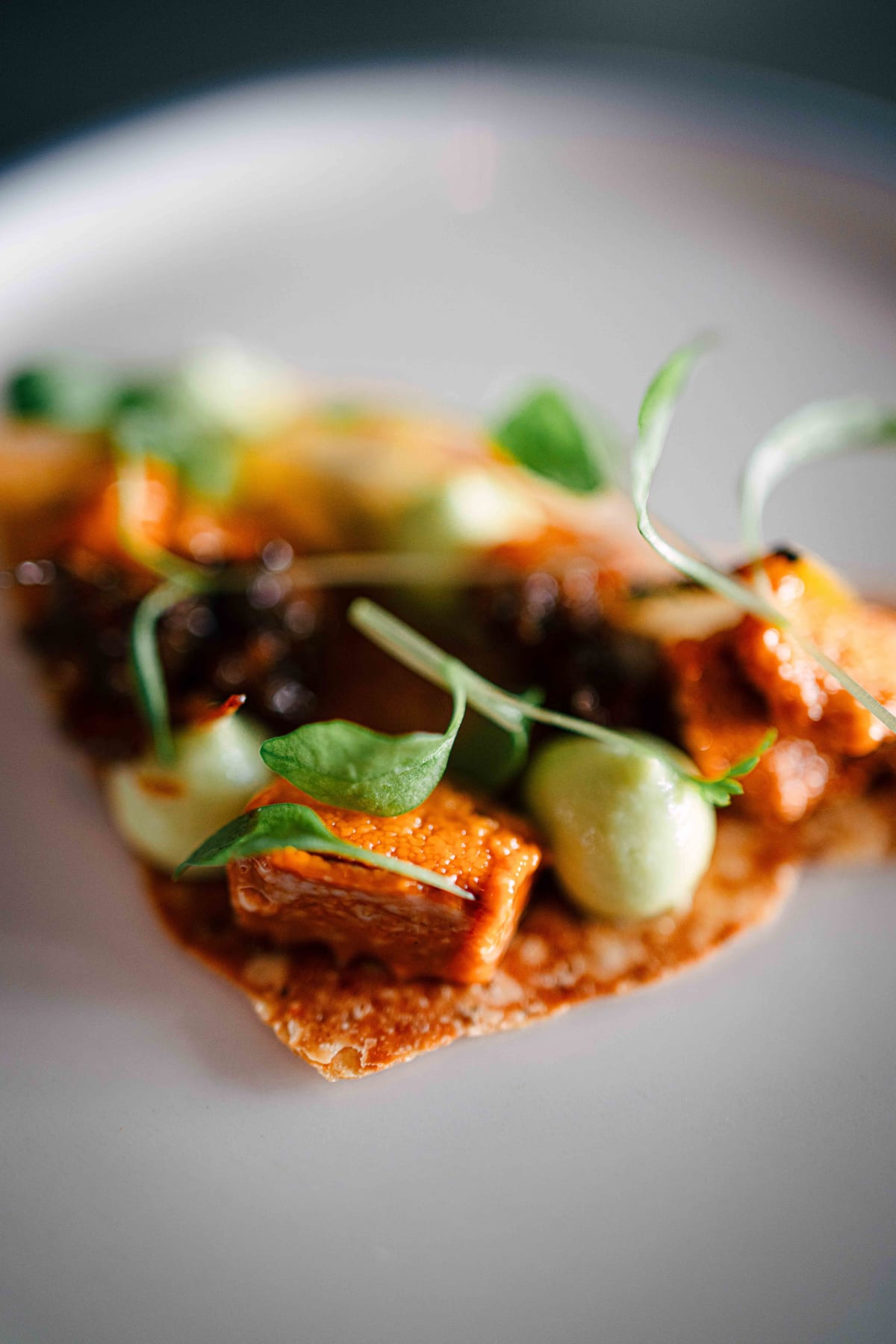
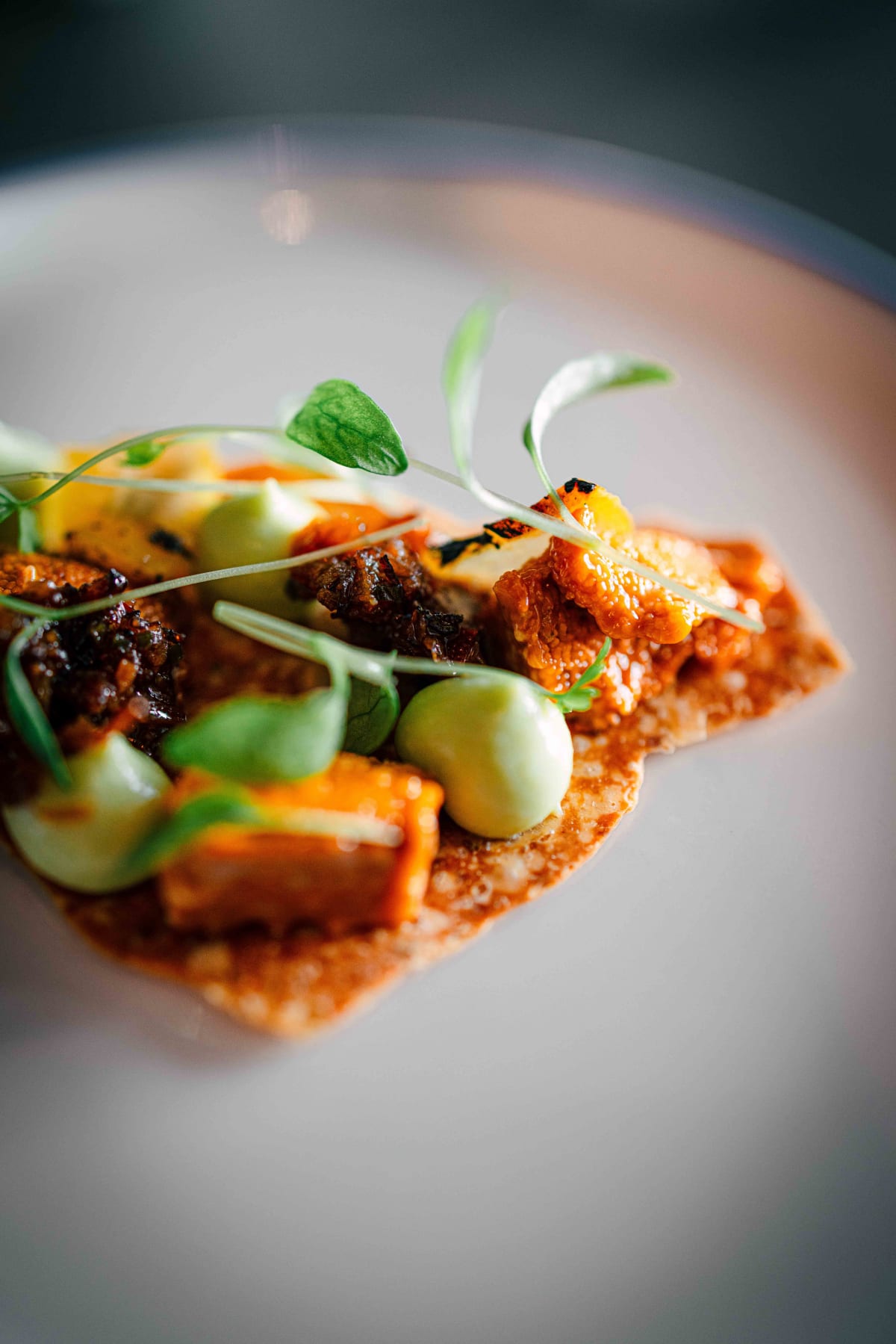
I had only ever seen round snacks shaped like Home Run Balls, the Korean choux-puff snack, and tasting a variation like this, I thought: so this is the pleasure of going back again and again to a French restaurant that cooks well.
The last snack was the signature fish fry, which anyone who has been to Exquisine more than once will know.
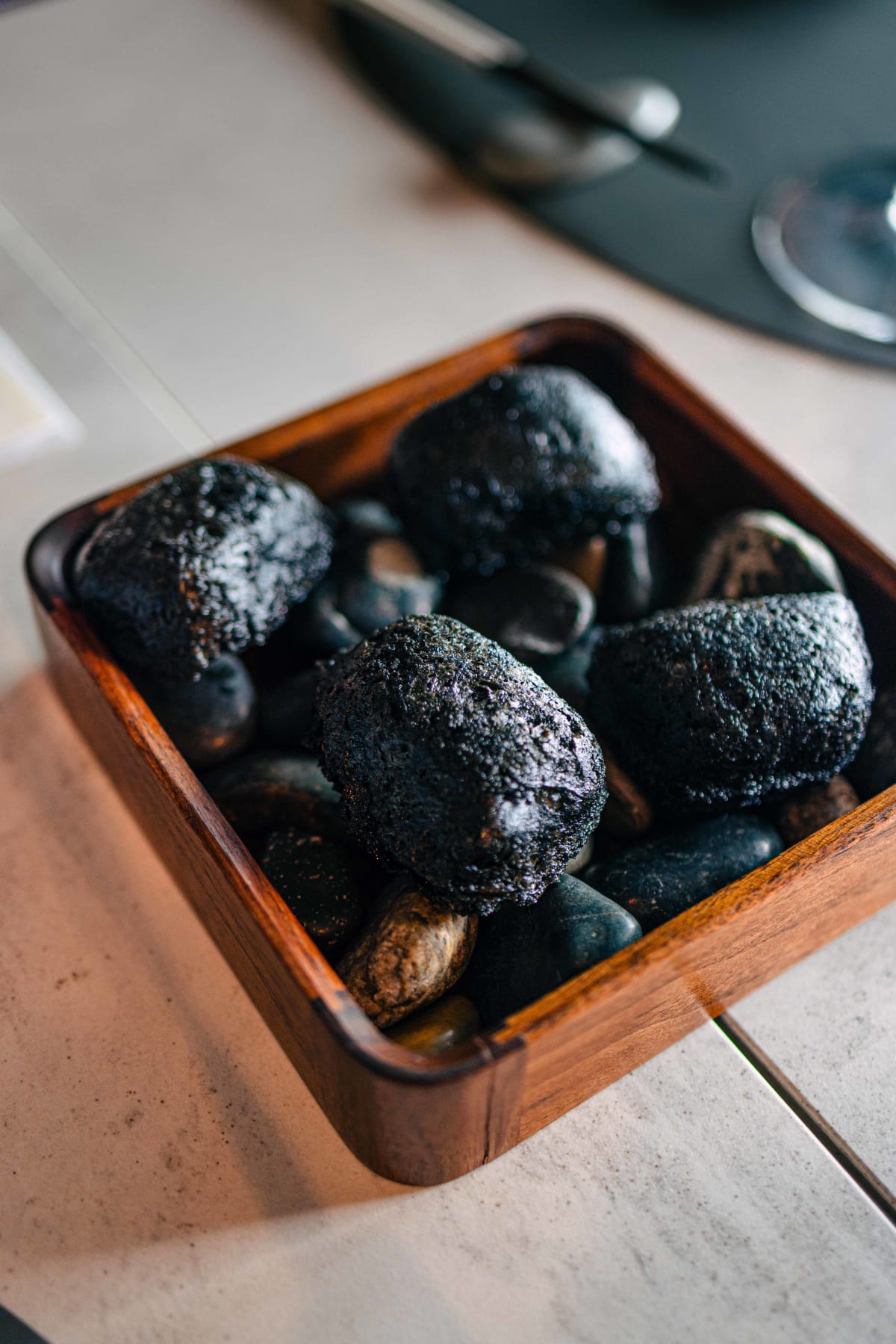
It is a dish the chef must have made thousands of times already, so of course it tasted good, and that day it seemed to have come out warmer than on other days.
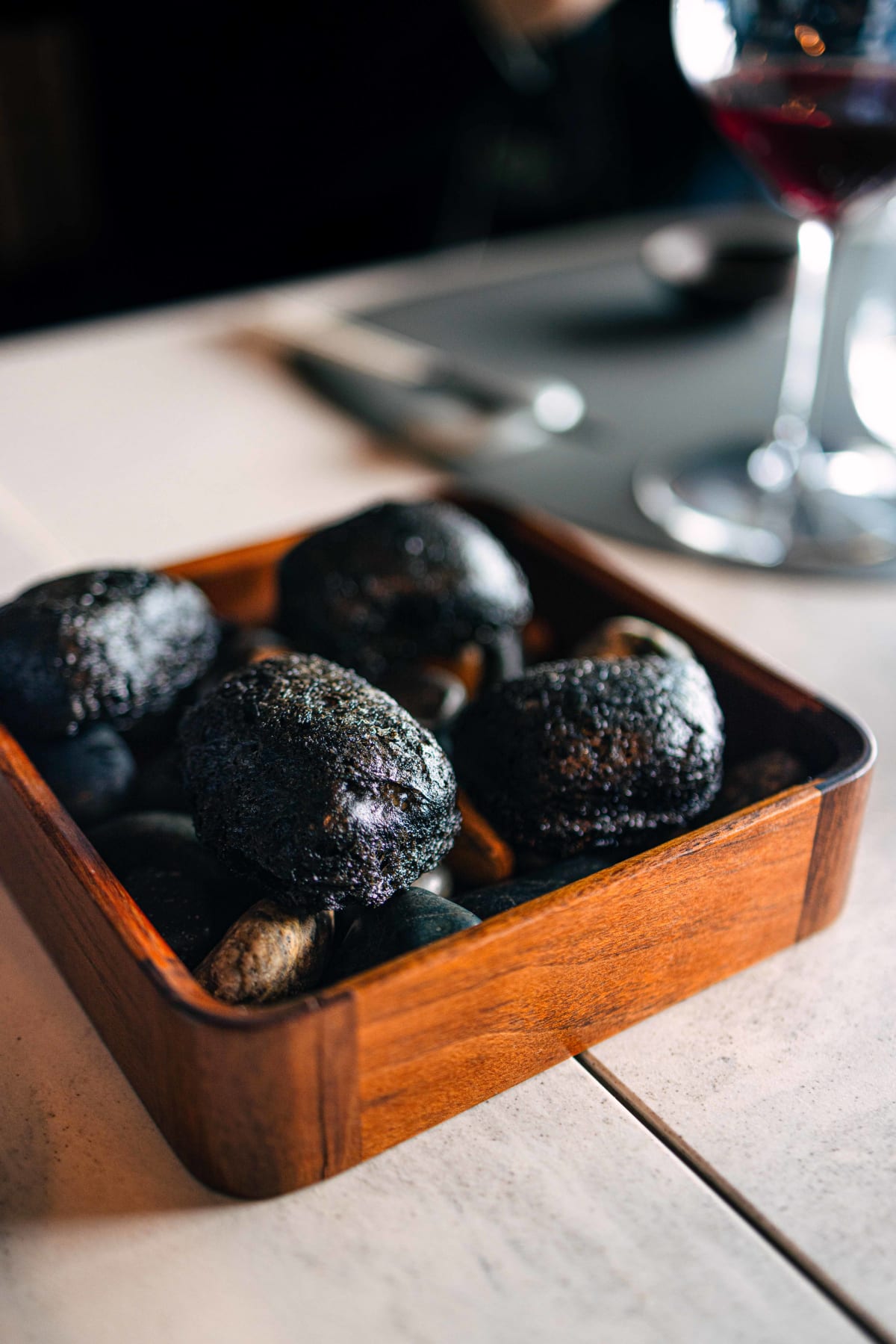
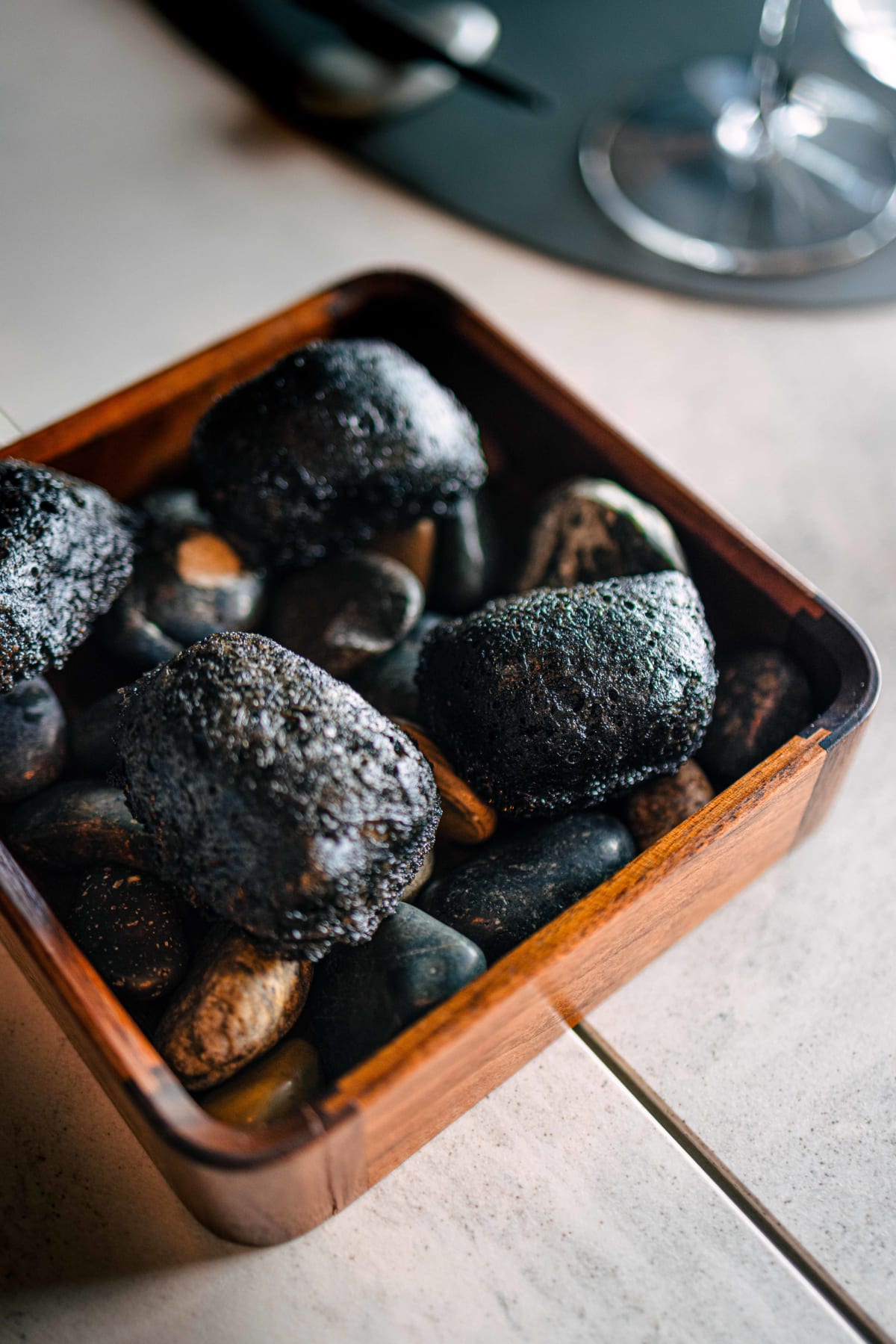
The pieces, dark-crusted, were set among river pebbles in a wooden box so that at a glance they passed for stones, and a small bowl of bright orange sauce came alongside.
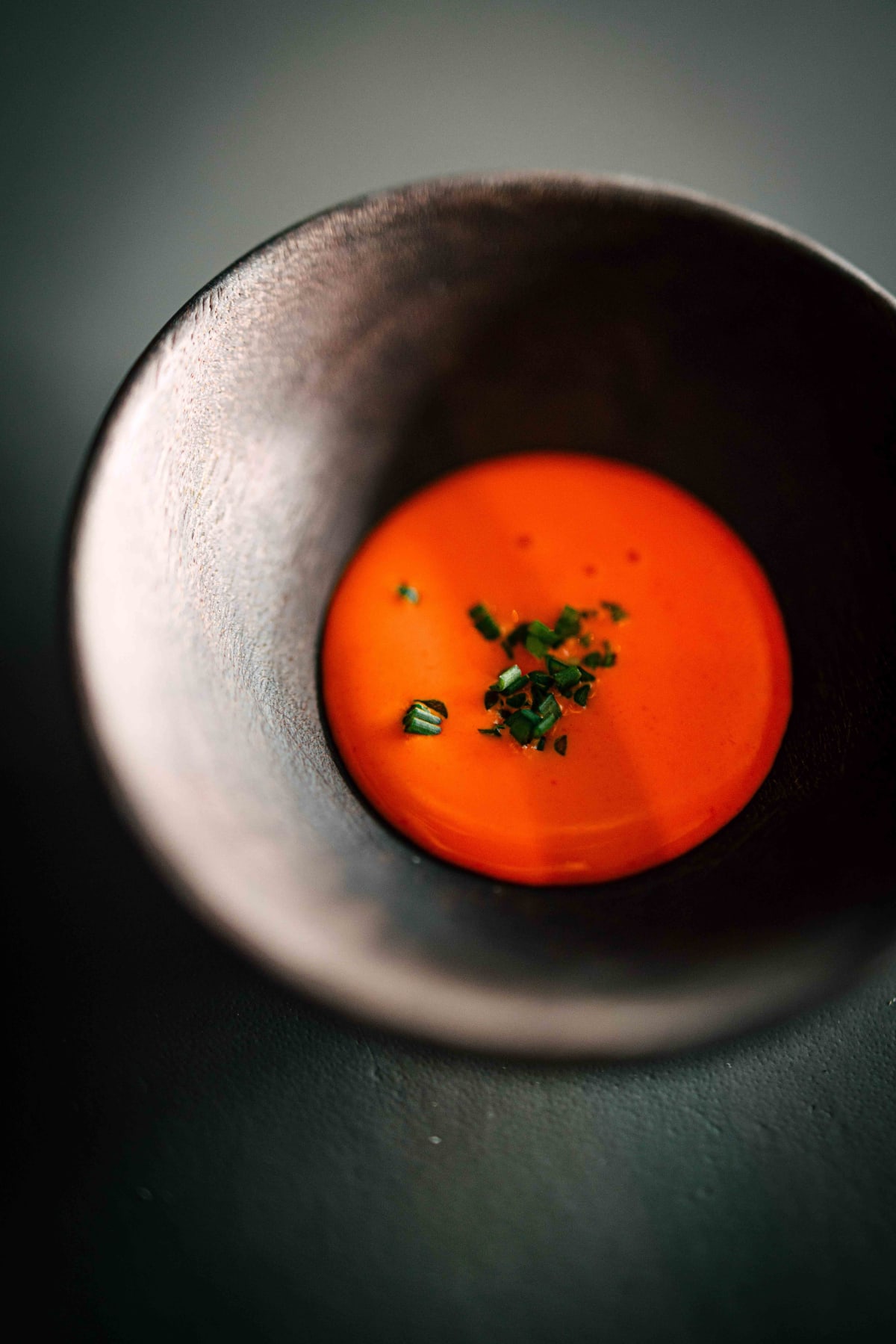
The first snack, as it was explained to me, had what may have been a chimichurri sauce inside, with octopus laid on top, and this one was good too.
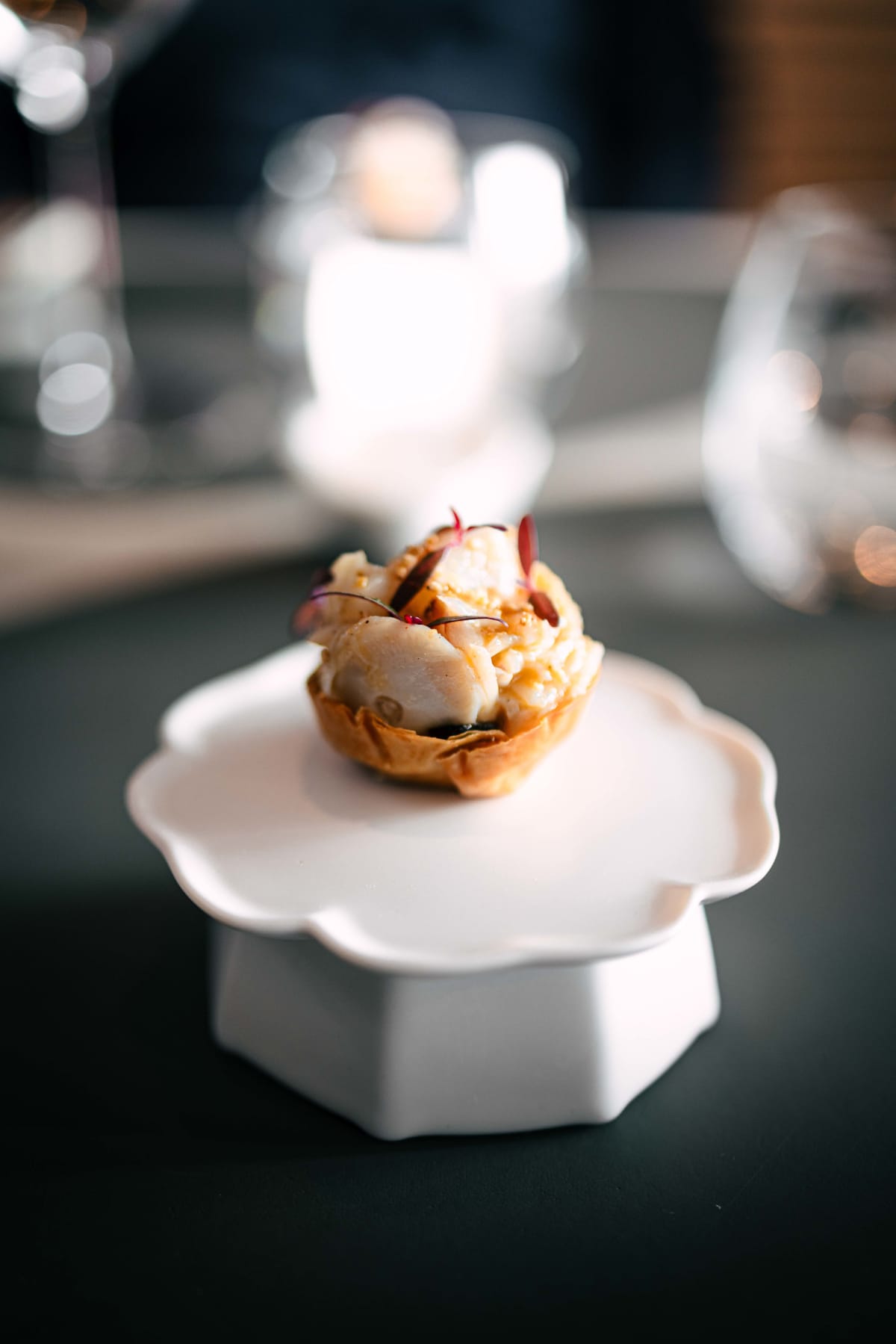
It came in a crisp pastry cup, finished with purple micro-leaves, on a small scalloped plate raised on a stand.
Section 5·Asparagus
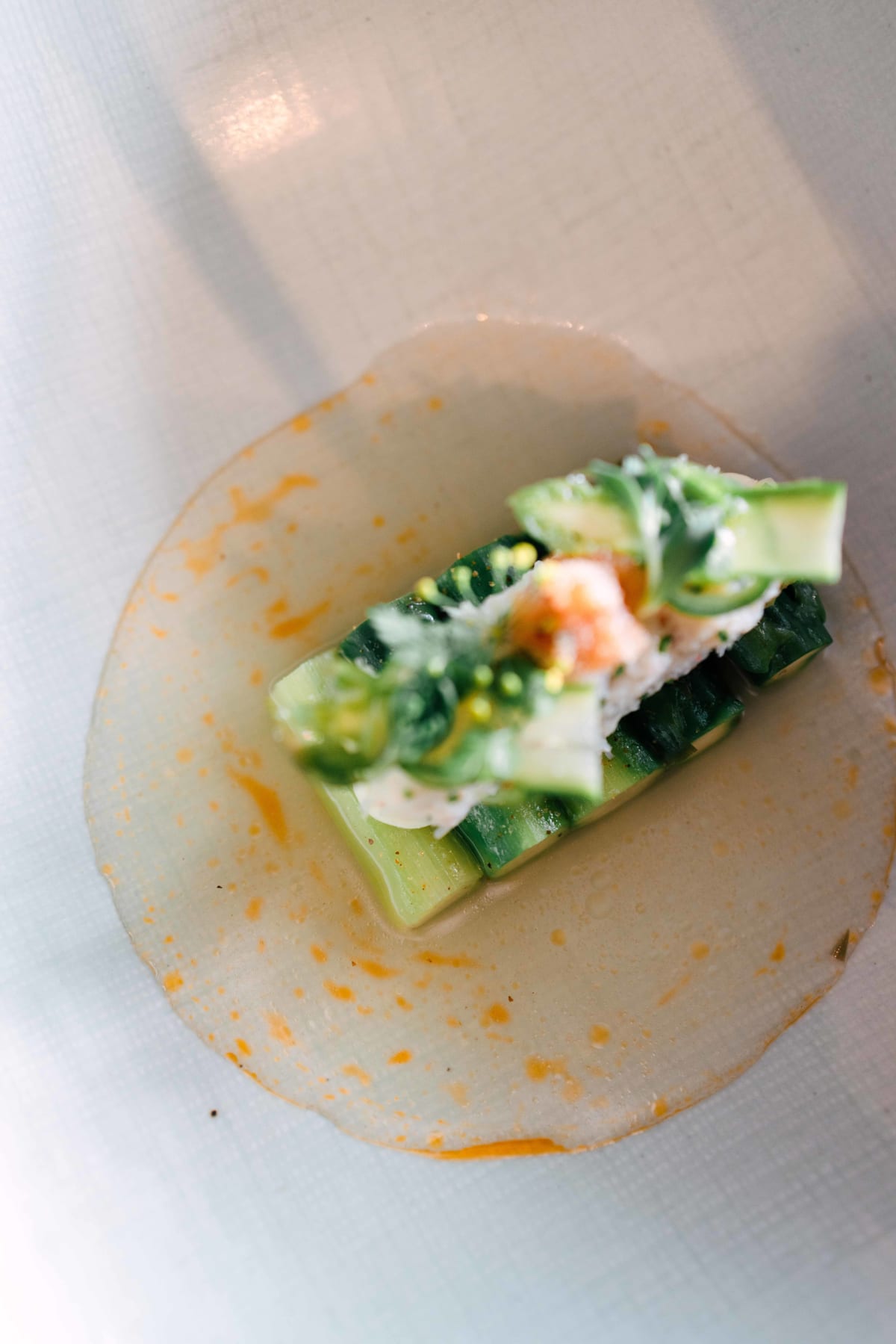
The second course was the plate the menu called Asparagus. A bright sauce that tasted of fruit was poured over it at the table, and it made me wonder once again whether French cooking really is all about the sauce.
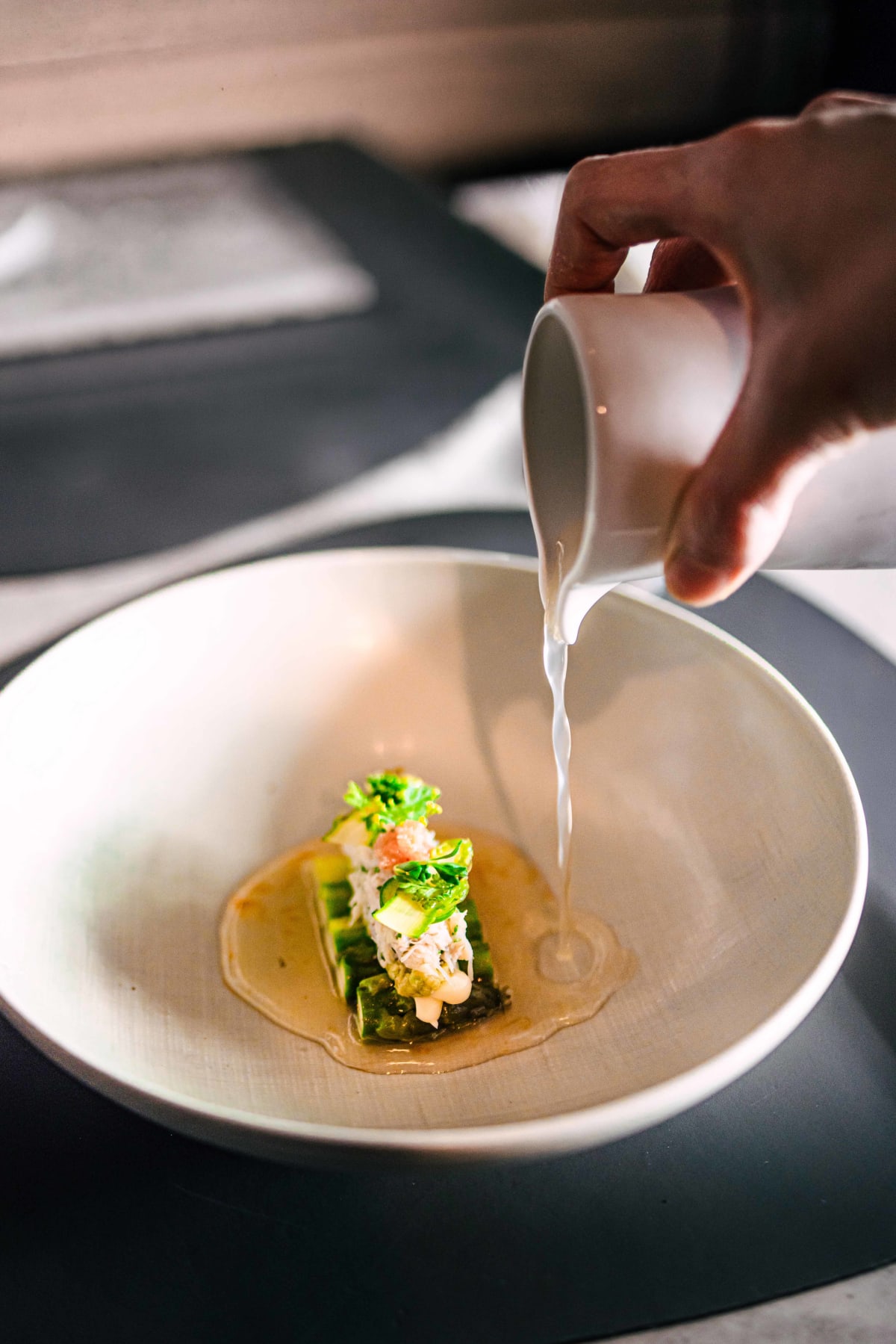
Tasting that sauce felt a little like rinsing my mouth clean.
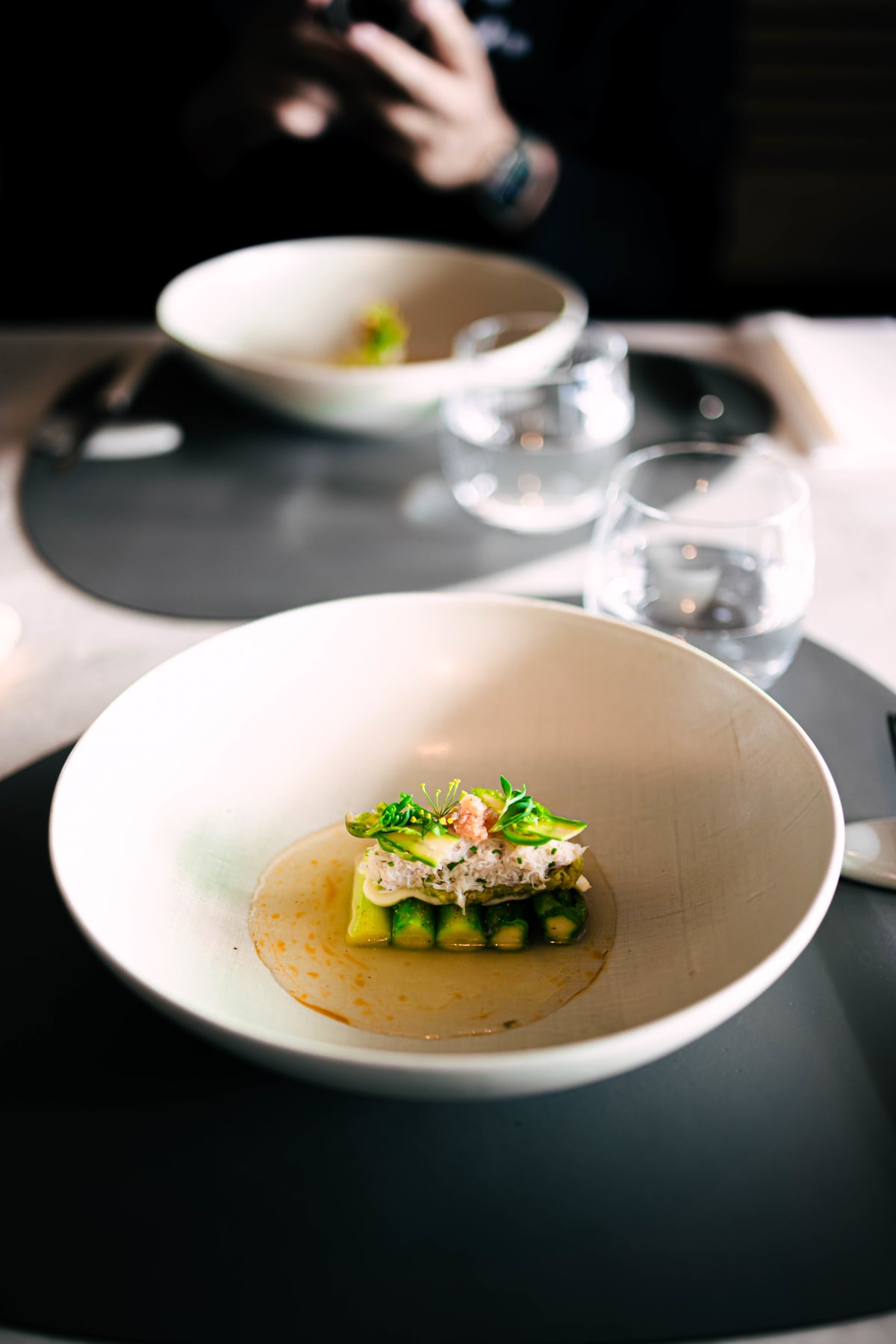
The chef has said that Exquisine sets the acidity of its cooking with yuzu juice and the juice of cheonggyul, unripe green tangerines. Seasonal yuzu comes in by the ten or twenty boxes and is squeezed by hand, a job that takes two people ten days, and the juice is frozen and used all year round. The reason, he has said, is that it tastes on another level from juice pressed by machine.
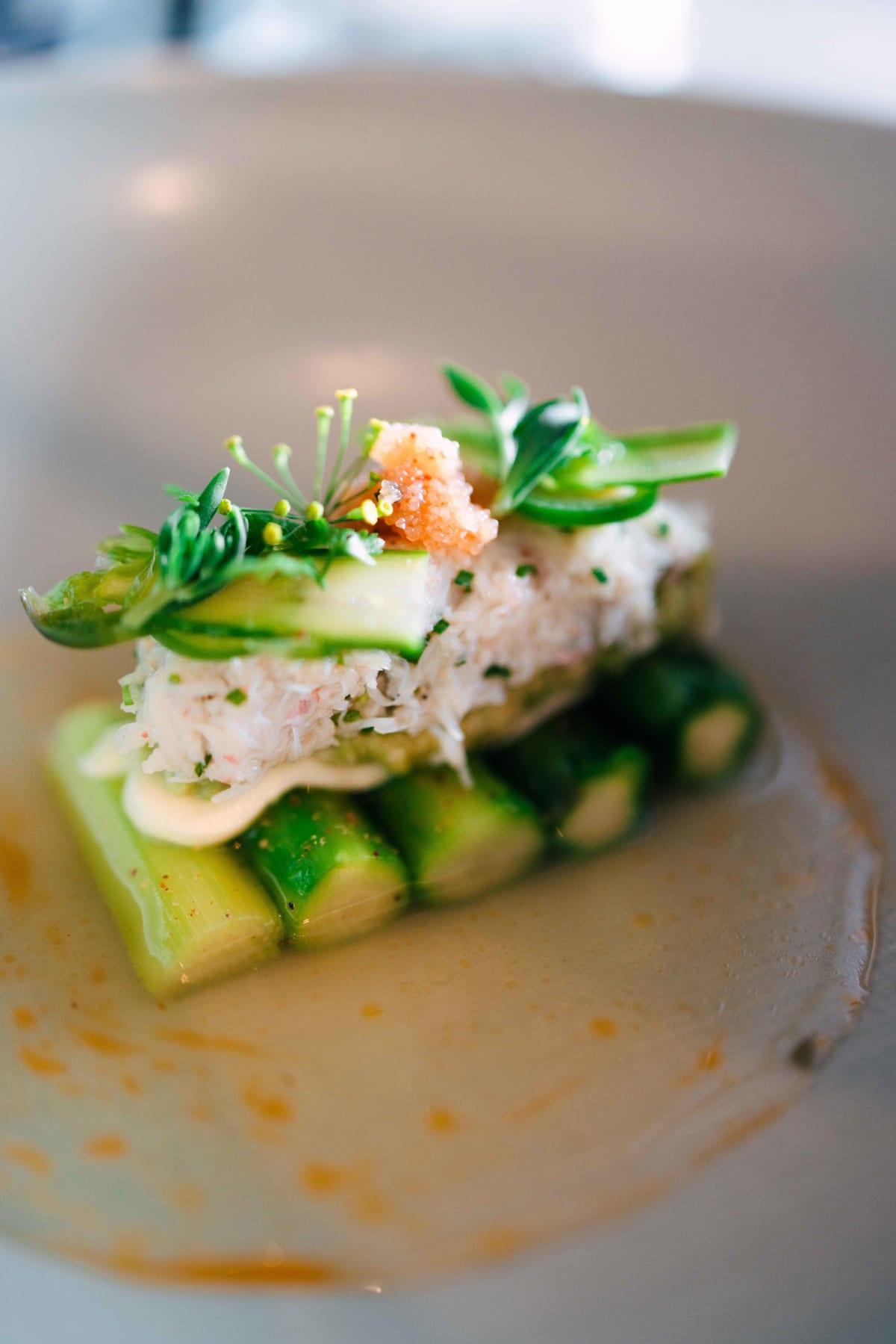
I could not confirm whether the fruity acidity of that day's sauce came from that yuzu juice, but drawing acidity from fruit has been Exquisine's way since its early days.
Section 6·Potato
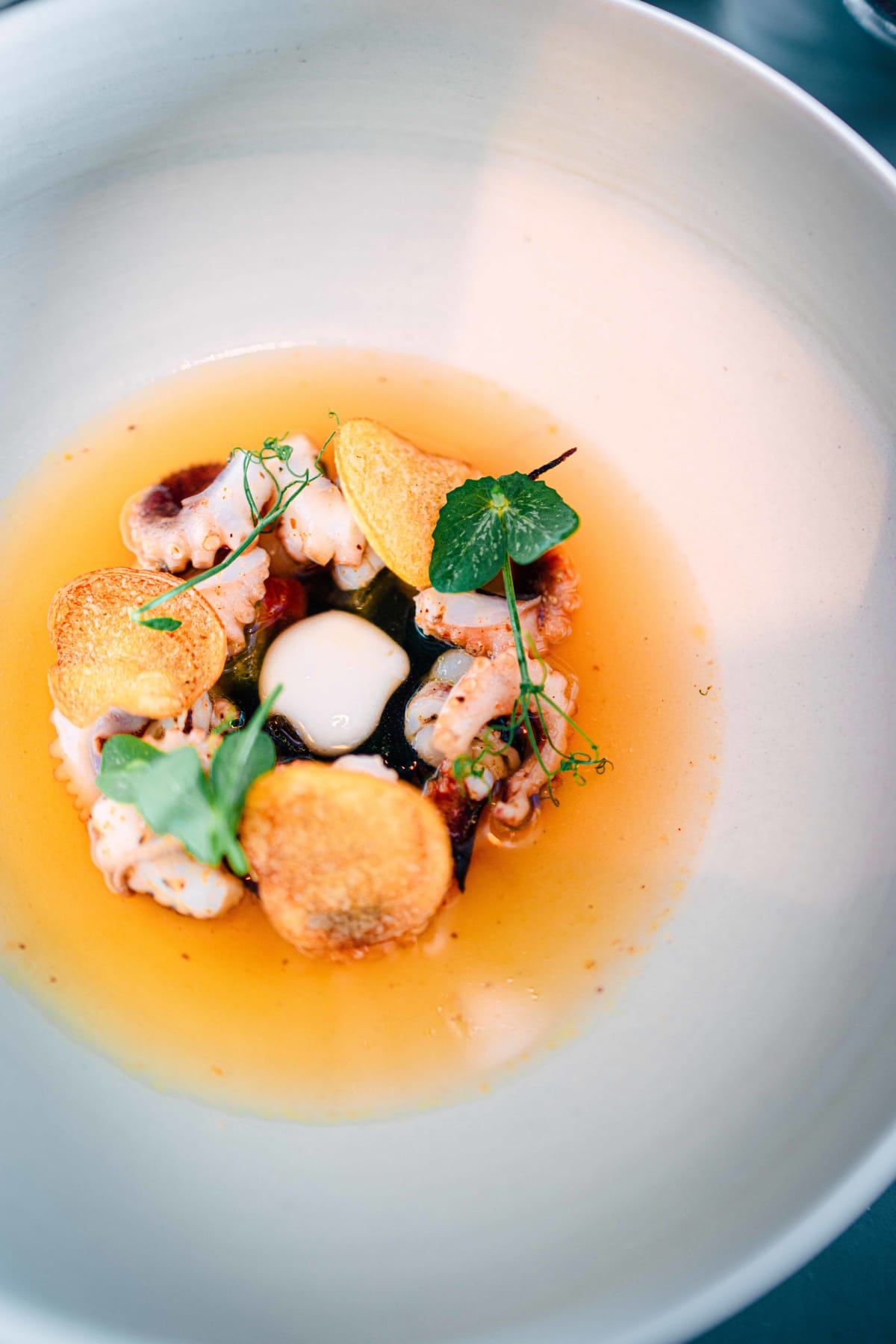
On the plate named Potato, a broth was poured at the table, something like nurungji broth, the toasty drink made from rice scorched onto the bottom of the pot, though it may have been a consommé.
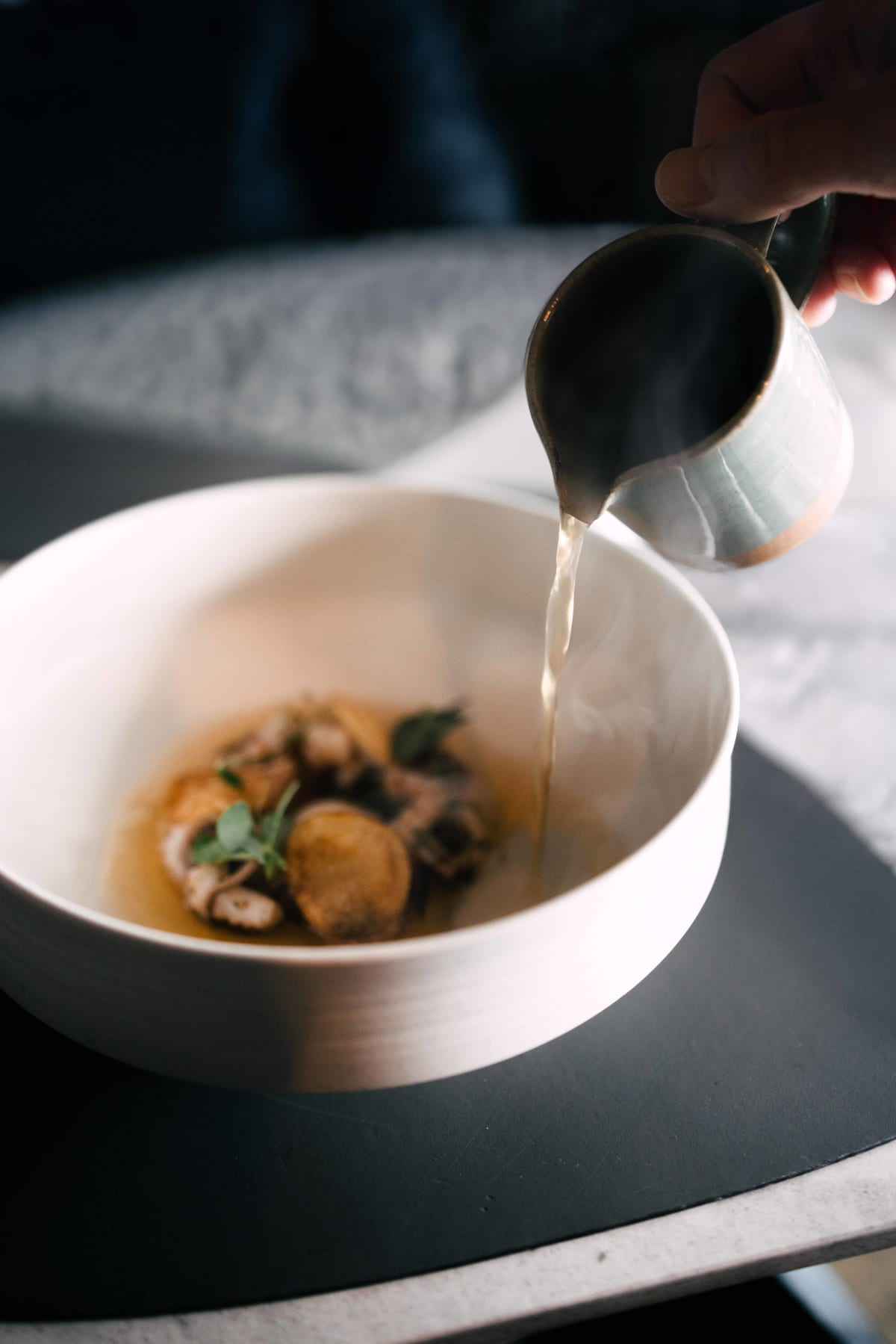
It was served on the hot side, with potato crisps and octopus inside. The octopus tasted good and the potato crisps added their crunch, but above all it was the broth in this dish that stole the show.
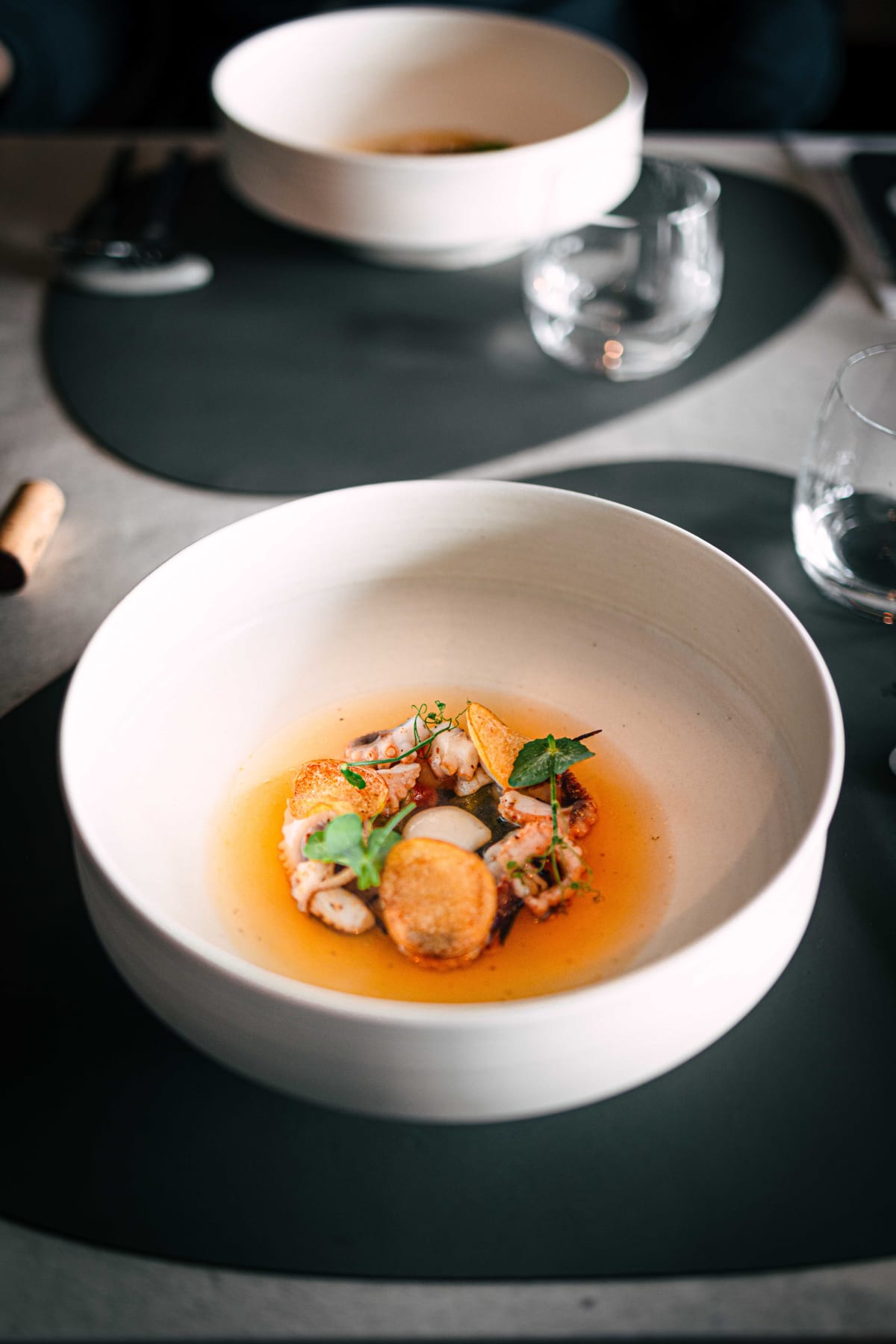
The night before, I had been to another restaurant for wine, gone on to soju for a second round and then knocked back cocktails at a bar, so my head and my stomach were both in a sorry state. This broth felt as though it was curing my hangover too.
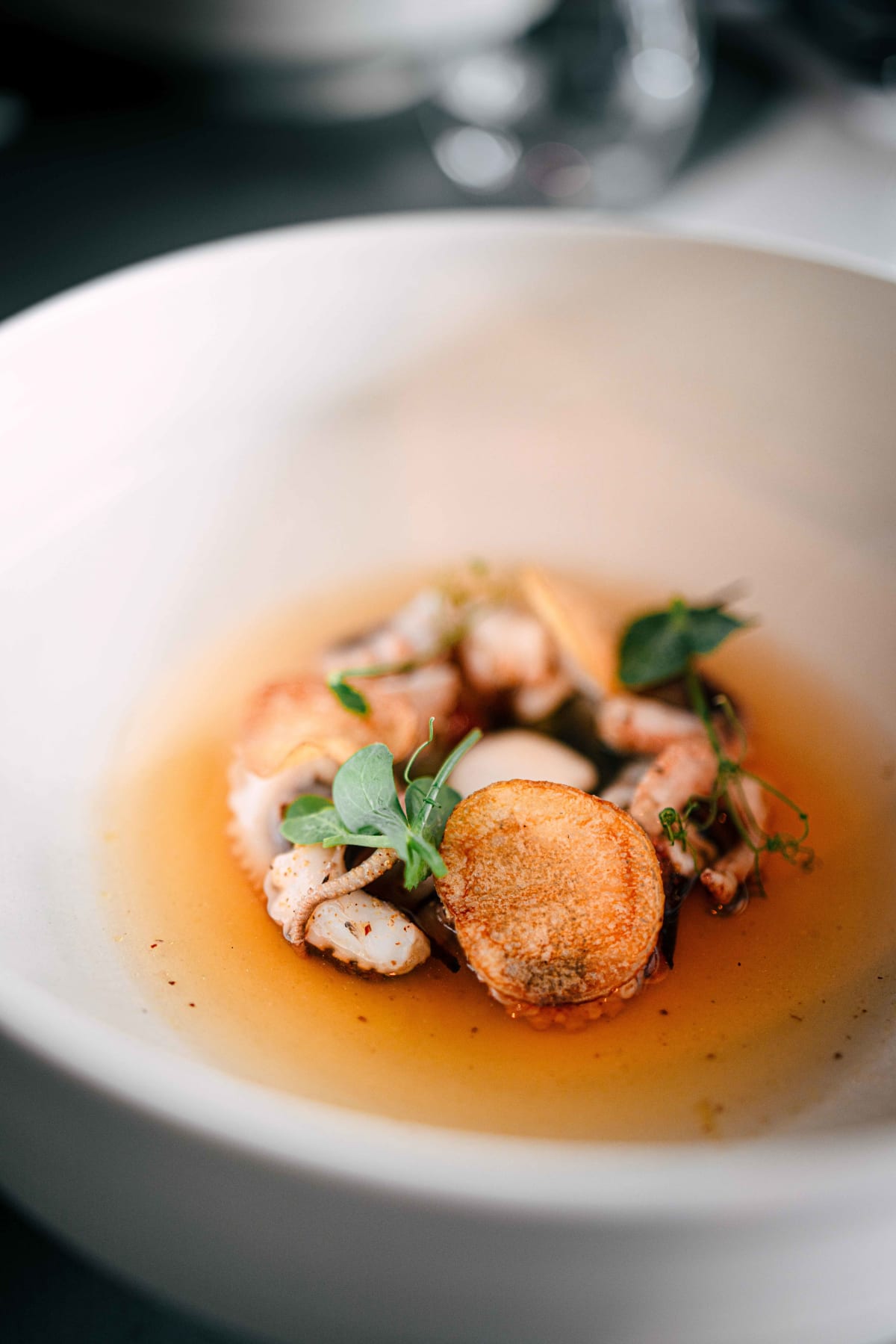
The menu said only Potato, yet there was octopus inside, which is exactly the way this house names its dishes, as I described above. Potato is also a long-standing ingredient here. At a special lecture for Sempio, the Korean soy sauce maker, the dish the chef demonstrated was a potato dish as well. It was a dish Exquisine was serving at the time, built on what Sempio's Urimat research into Korean flavour had found about potato varieties and their character, and he took part in that research for about a year as its cooking advisory mentor.
Section 7·BT 2017
Exquisine's wine list had an unusual start too. In its early days, the story goes, there were no servers and no sommelier: four cooks, Chef Jang among them, brought the food and the wine to the table themselves for at most twelve guests. The thinking was that the person who best understands a dish is the cook who made it. The cooks also filled the list one bottle at a time, matching wines to the food themselves after service, and with help from sommelier friends, the list is said to have grown from sixteen wines at the start to fifty about two months after the star.
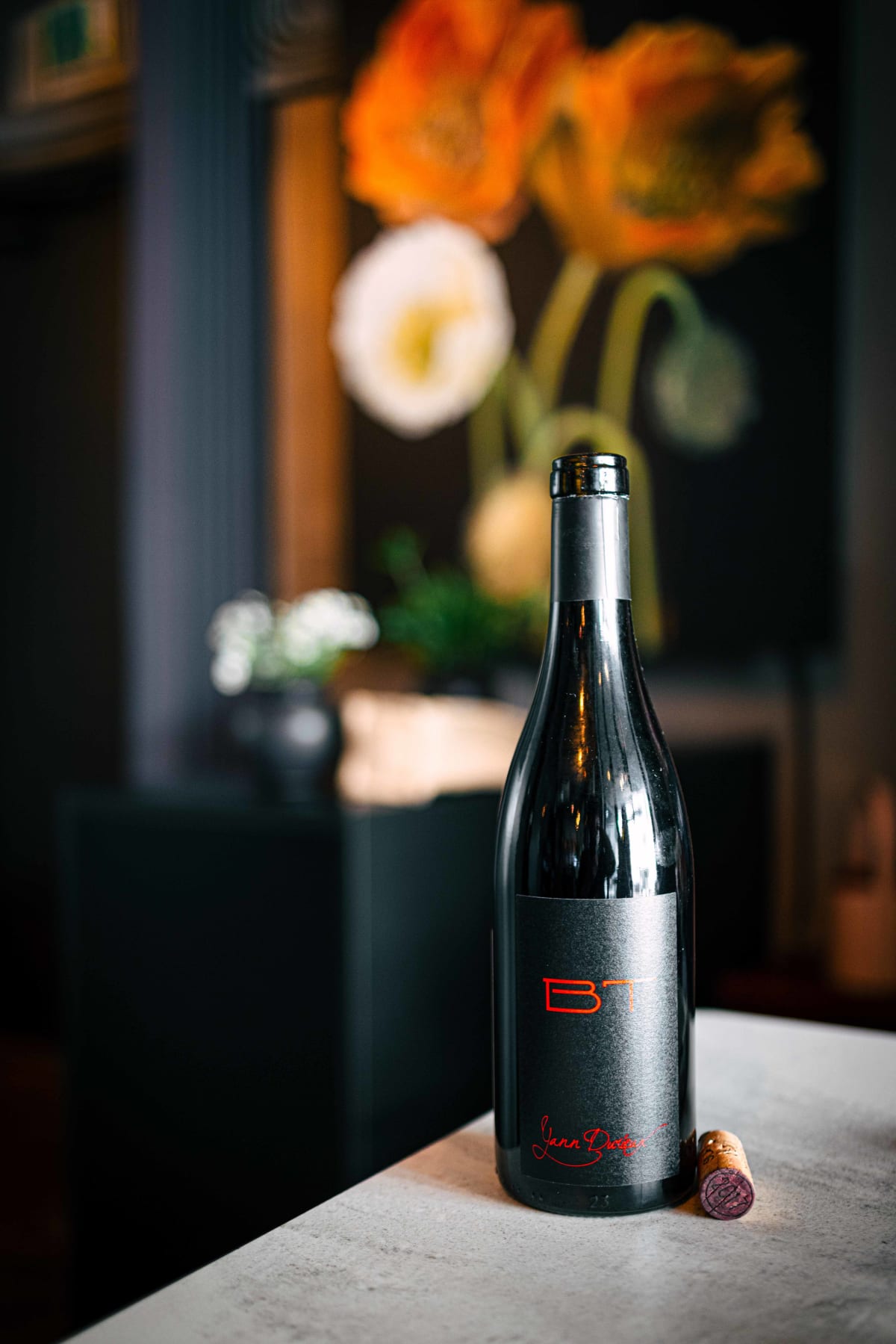
The wine that day was a bottle I had brought for corkage: BT 2017 from Yann Durieux, a high-priced natural wine from Burgundy.
Durieux was born into a wine family in Nuits-Saint-Georges and made his first barrel of wine with his own hands at thirteen. The turning point was the ten years he spent at Domaine Prieuré-Roch. Henri-Frédéric Roch, who founded that domaine in 1988, co-directed Domaine de la Romanée-Conti with Aubert de Villaine from 1992 until his death in 2018, and held to minimal-intervention winemaking that trusted the vineyard over technique.
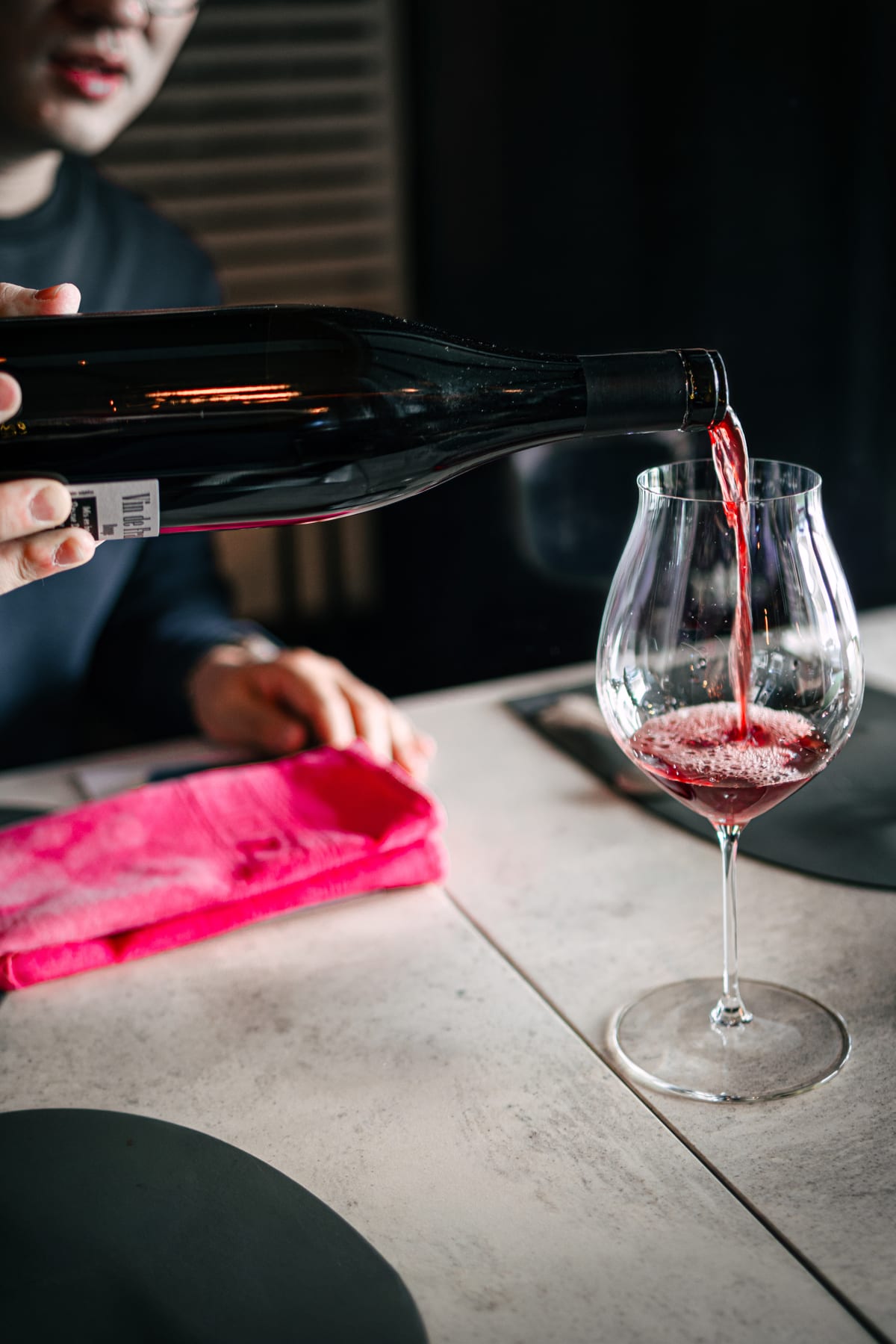
In 2010 Durieux set up his own domaine, Recrue des Sens, in the Hautes-Côtes de Nuits. English-language writers render the name as 'revival of the senses'.
Section 8·Vin De France
By Burgundian standards, his winemaking sits at the radical end. He farms organically and biodynamically, ferments whole bunches with wild yeast, neither fines nor filters, and adds no sulphur at all to some wines. Bolder still is the label. In Burgundy, where appellation and pedigree translate straight into price, he releases his top wines not under an AOC but as Vin de France.
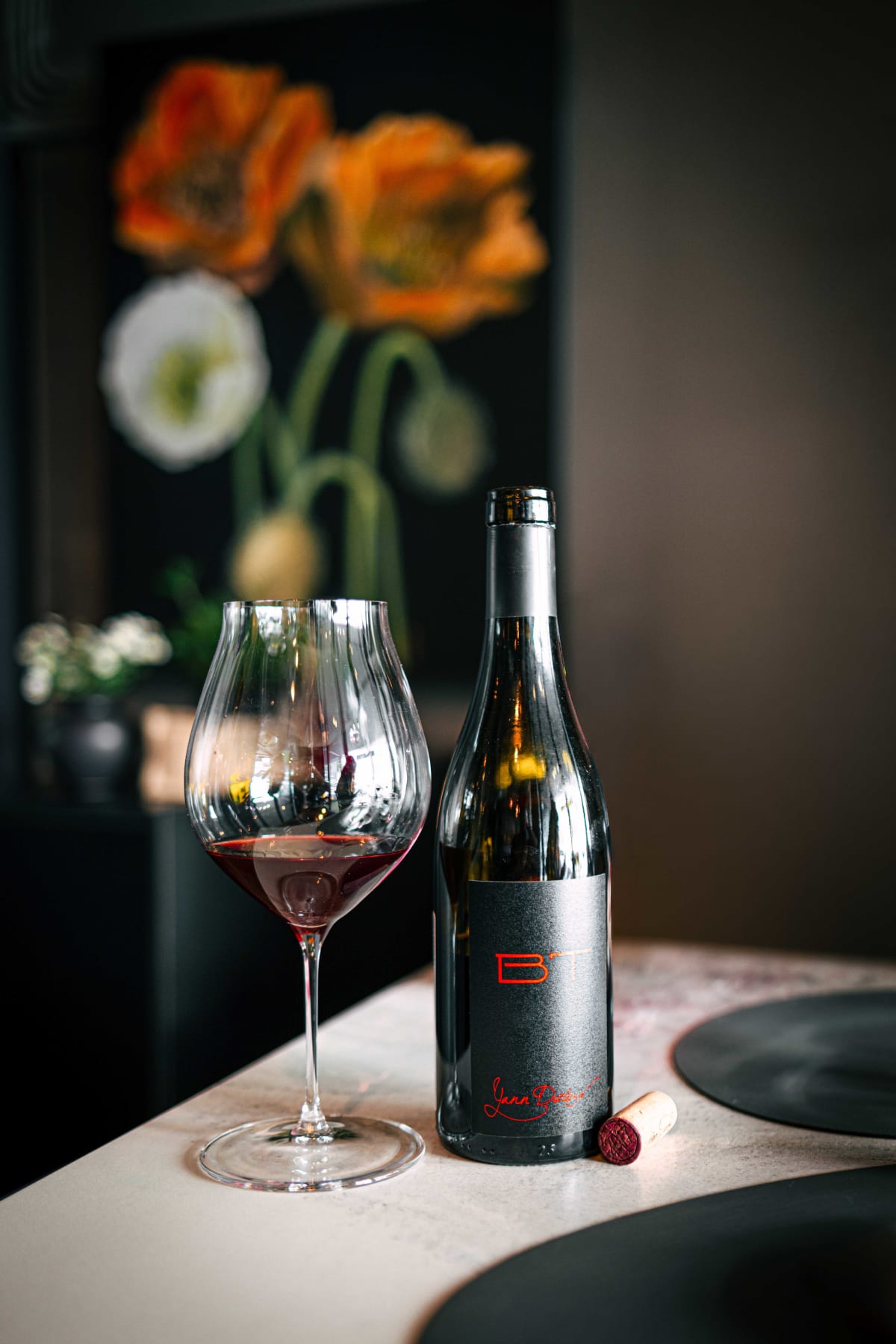
Recalling the time he first stepped outside the AOC system, he has said that the authorities wanted to kill him, and that he was like a stone in their shoe. The label of the BT I drank that day also says Vin de France rather than Aloxe-Corton.
The letters BT on the label stand for Les Boutières. It is a lieu-dit at the northern end of the Côte de Beaune, straddling Aloxe-Corton and Savigny-lès-Beaune, and its name is said to come from an old track used by mule drivers carrying wine in goatskin bags, or boutes.
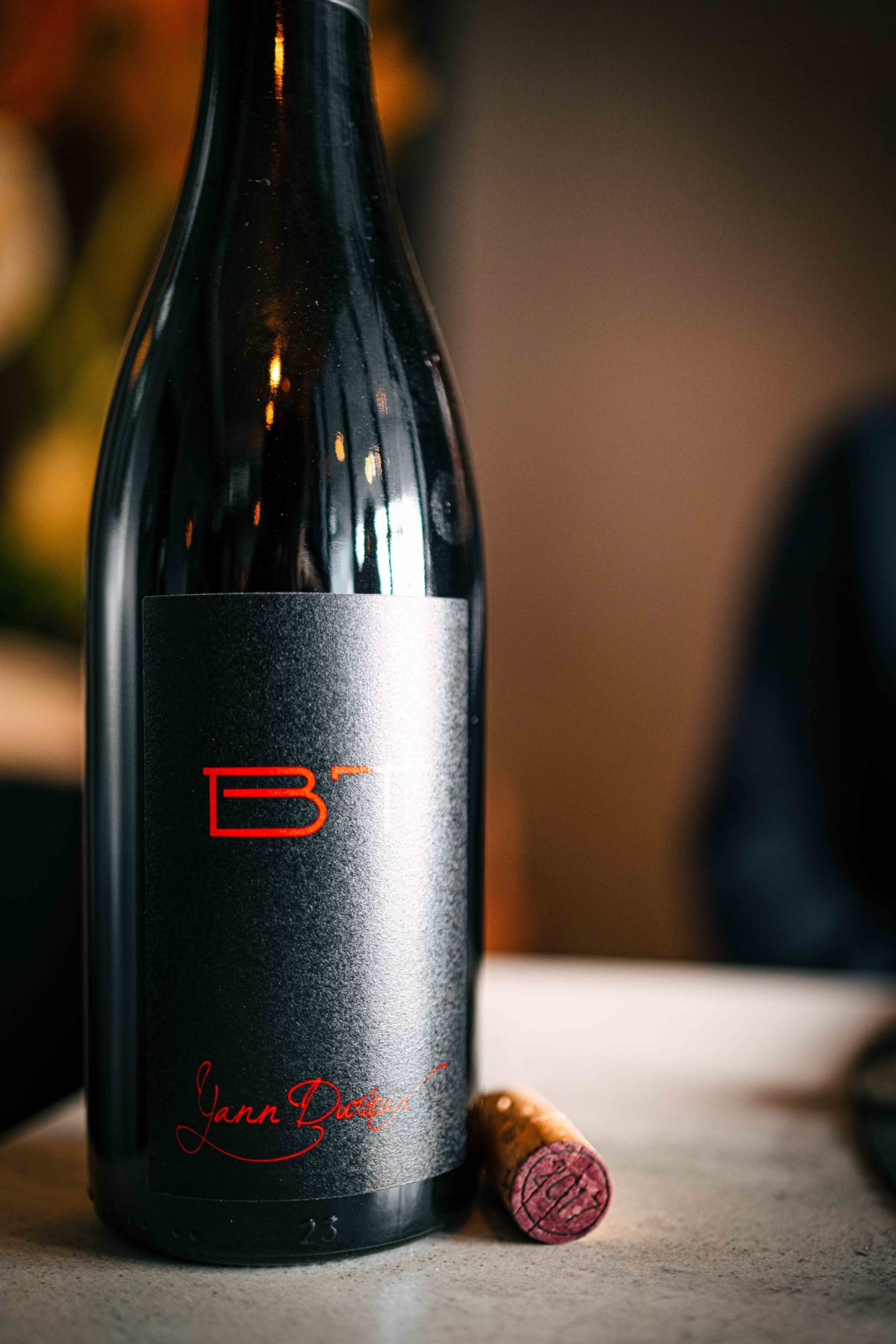
For the 2017 BT, grapes hand-picked from old Pinot Noir vines in this vineyard were fermented naturally as whole bunches, aged for 24 months in old casks that give no new-oak flavour, and bottled without fining, filtration or added sulphur.
Production is tiny, yet so many people seek it out, from Paris to Tokyo, that his wines have become cult bottles among natural wine lovers around the world. He exports 70 to 80 per cent of what he makes, half of that goes to Asia, and some of it reaches Korea too.
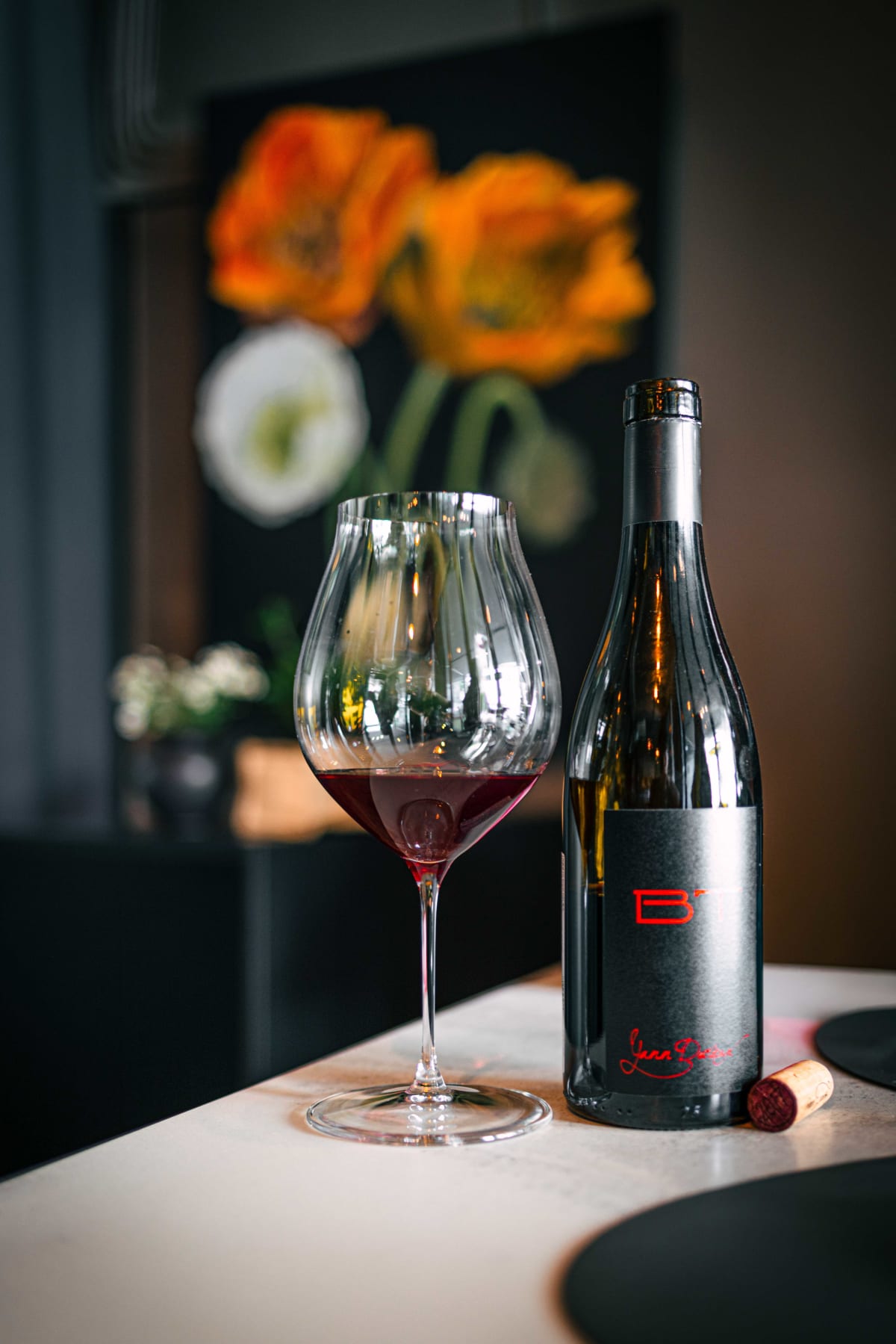
In Burgundy, 2017 brought a generous harvest at last, after frost had cut the 2016 crop hard. The reds are generally soft in tannin and show their charm early, close to the type the French call a 'restaurant vintage', meaning one you can enjoy from the moment it is released.
Section 9·From Funk To Complexity
Drinking this wine at the time, I felt that I still struggled with natural wine. In particular, the funky aroma so typical of natural wine came through strongly in this one, and back then I found that hard going.
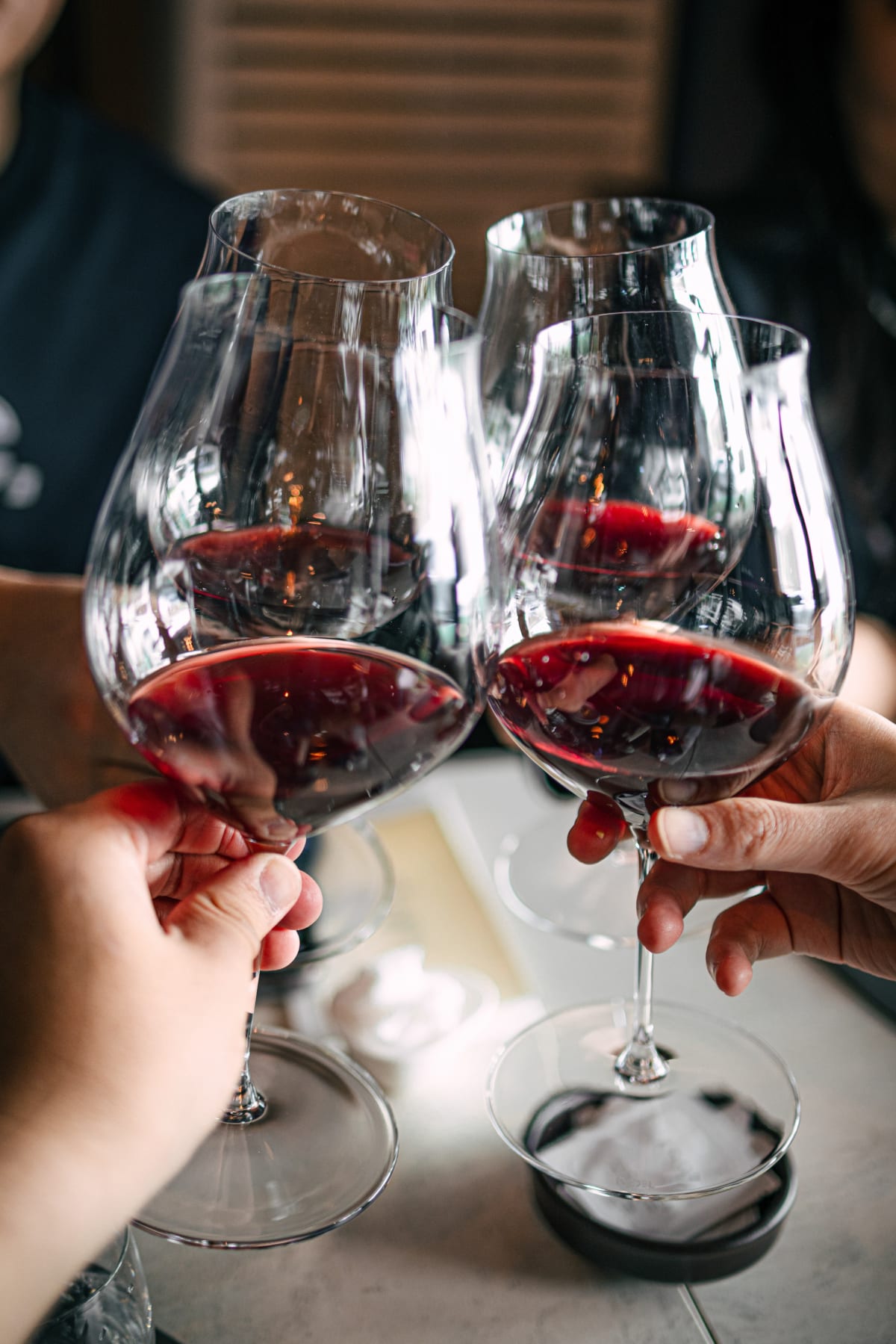
Yet once enough time had passed, I think it came close to showing the greatest complexity of any natural red I have tasted. So, looking back now, I wonder what it would have been like to drink it more slowly, giving it time. Wines bottled without sulphur and without filtration do often change their expression a great deal once opened, as they meet air and time.
Section 10·Chicken Or Hanwoo Wellington
For the final meat course, you choose between one dish that changes every time and a Hanwoo beef Wellington, made with Korea's native Hanwoo cattle, for a supplement of about USD 18. The Wellington has long been part of Exquisine's repertoire, and when the chef explained that Exquisine is not a Korean restaurant, the example he gave was a pork Wellington.
I always order the dish that changes. That day I was told it would be poultry, chicken, so I chose the chicken.
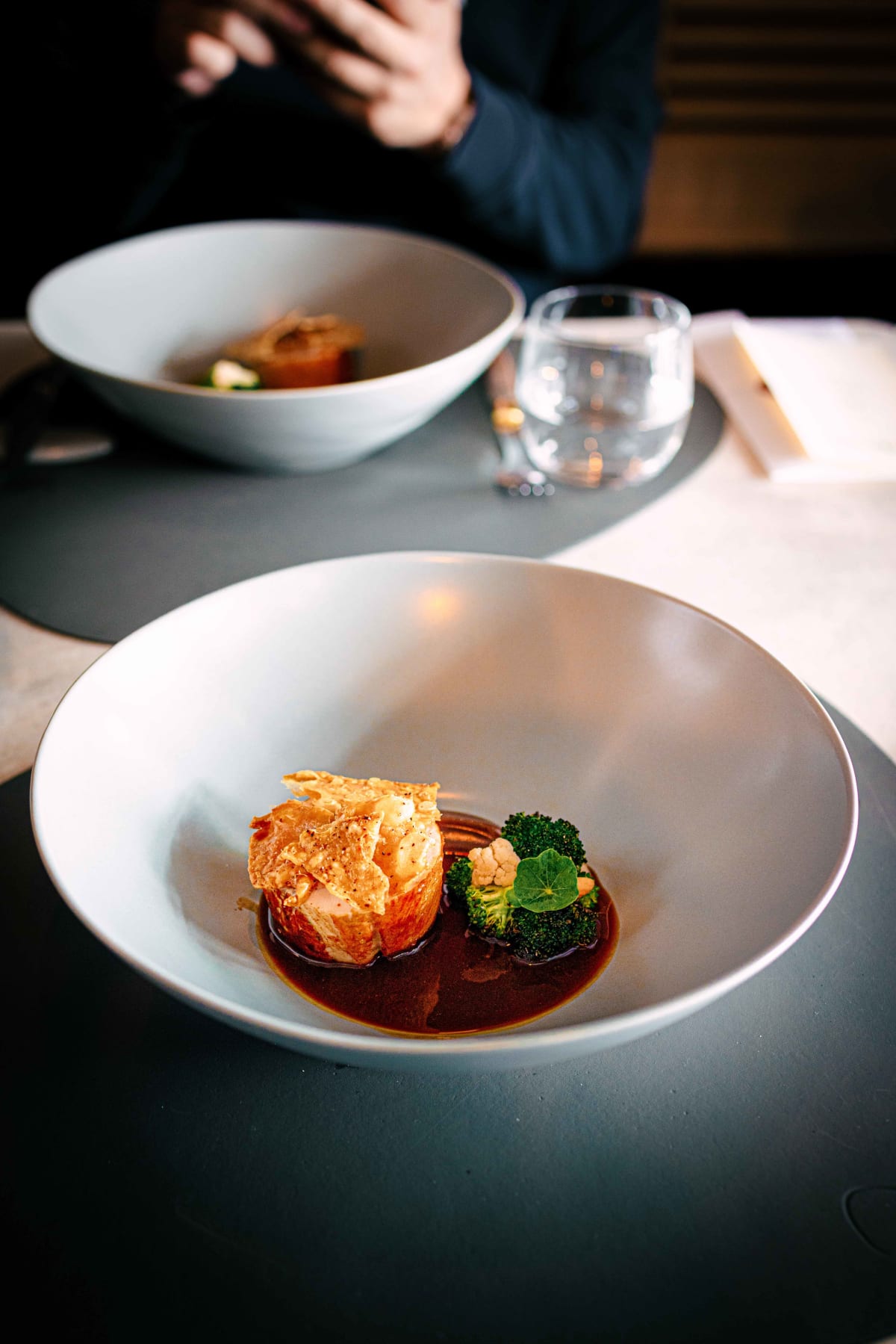
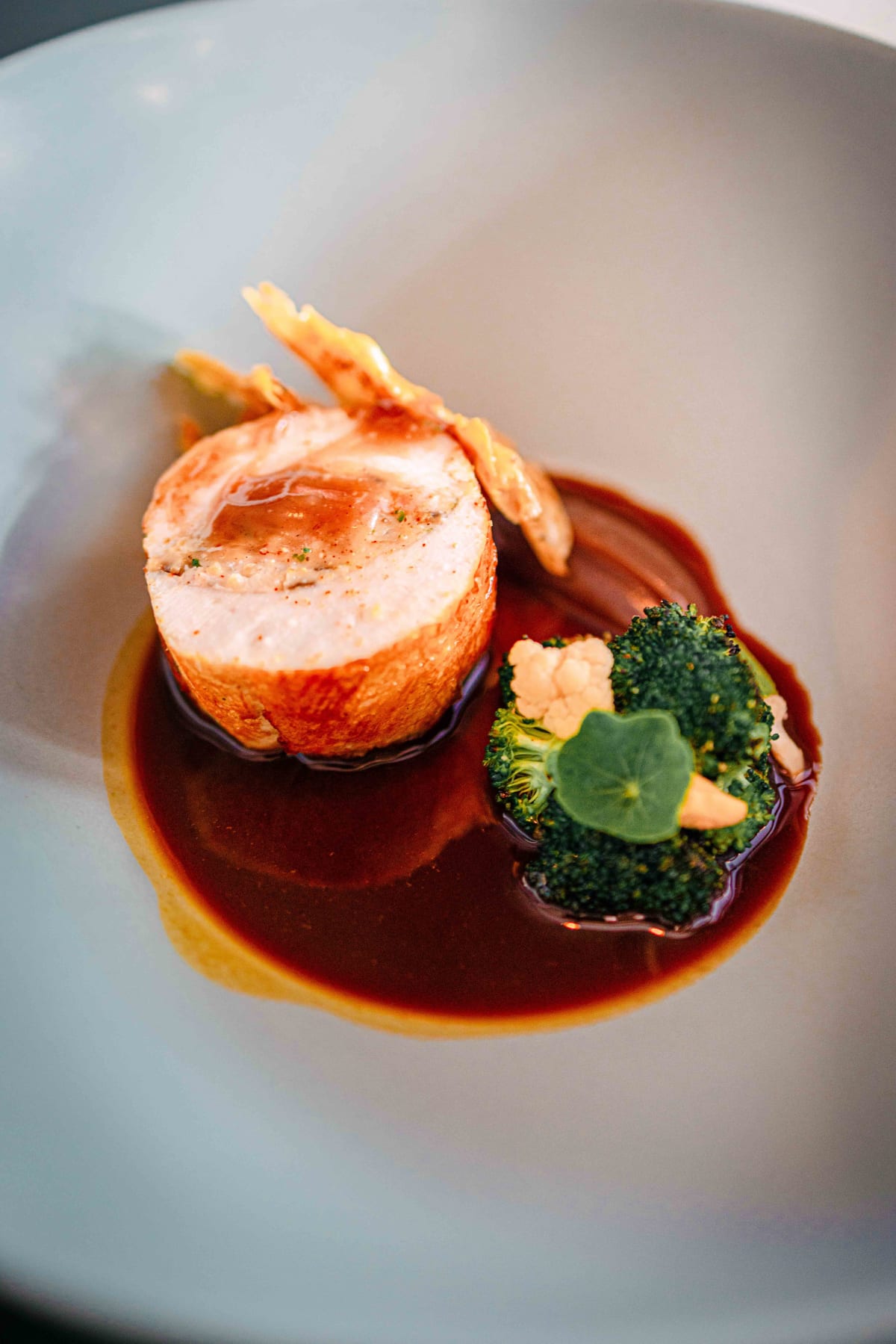
It seemed to be the tenderloin. The sauce was tasty and the chicken well cooked, so I had no regrets about my choice. As you would expect, from the colour of this dish's sauce alone, it is hard to imagine it tasting bad.
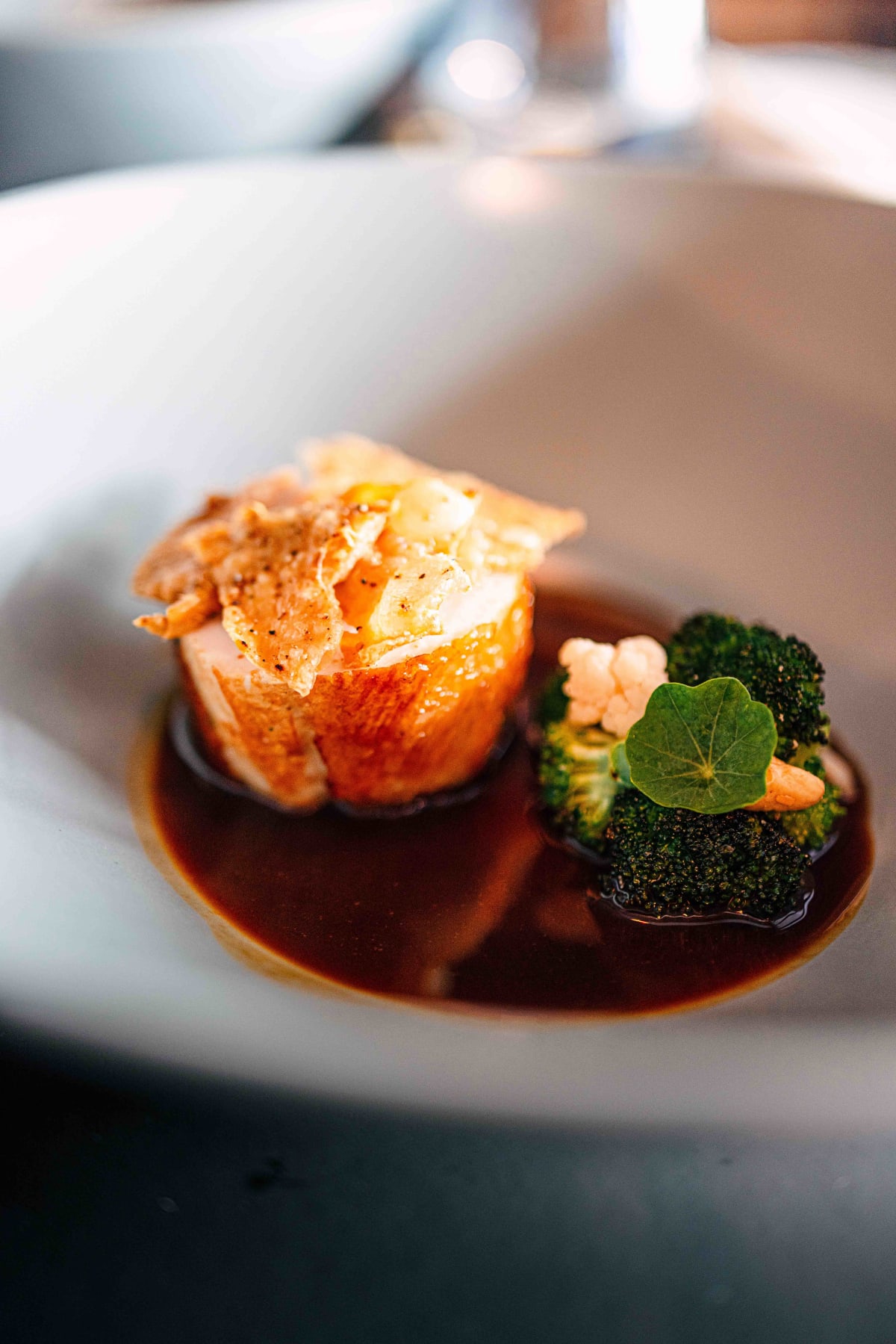
While writing this, I looked up what the meat had been on my earlier visits: pork, then pork tenderloin, then this chicken. Not only did the sauce and the form change every time, but that first pork dish was an unusual plate done in the style of yangnyeom galbi, Korean marinated grilled ribs.
There is a reason the regulars keep coming back. The chef, for his part, is someone who remembers his regulars' tastes. When guests book, he asks carefully about foods they cannot eat and ingredients they avoid, and if a guest leaves even a scrap of herb on the plate, he has said, he always sends a member of staff to ask why.
Section 11·Mango
The dessert had something like a mango mousse underneath, with mango ice cream on top. As ever, it is the dessert that completes a course.
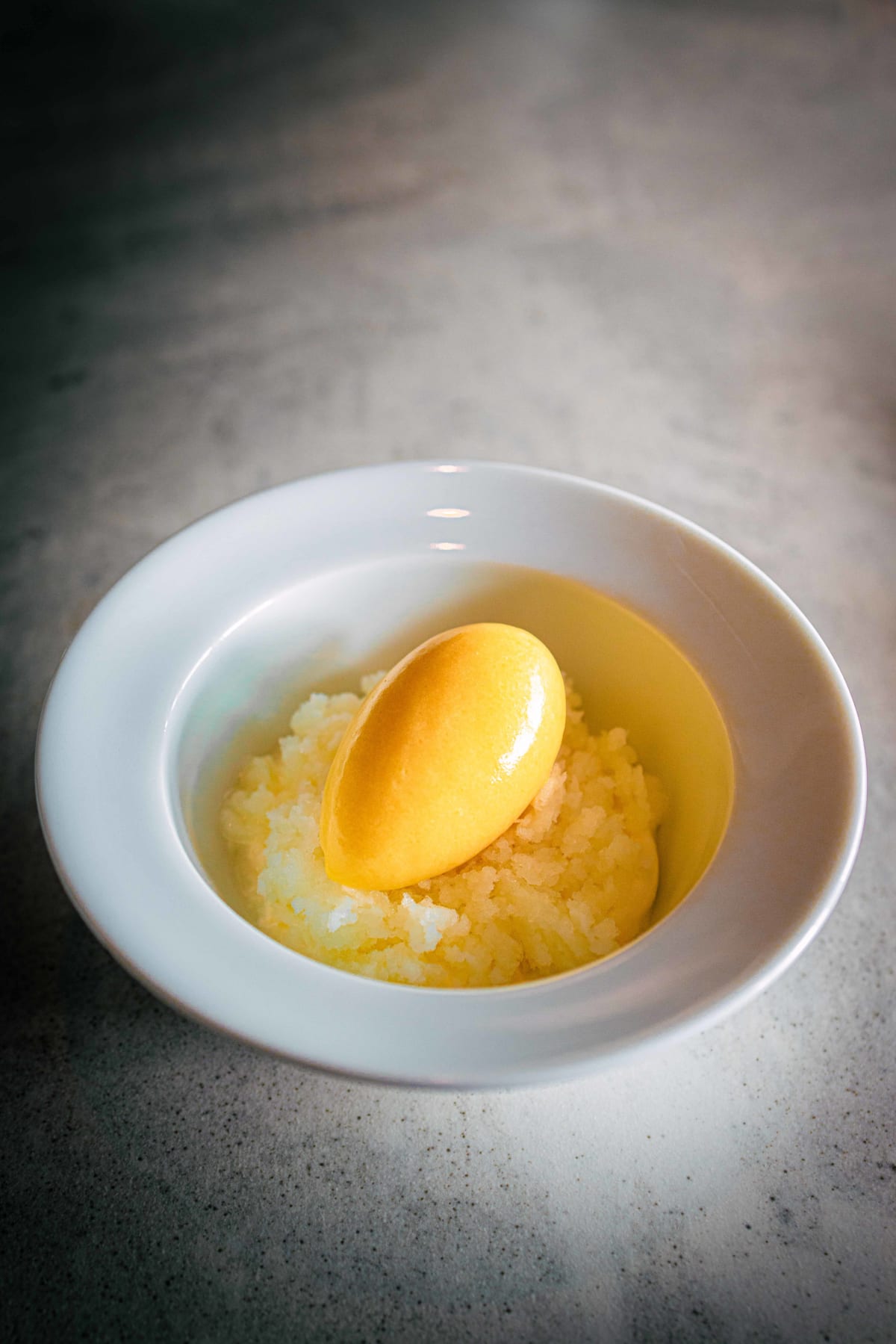
Finishing on a delicious dessert bursting with fruit lifted my satisfaction a notch above what I had felt through the rest of the course.
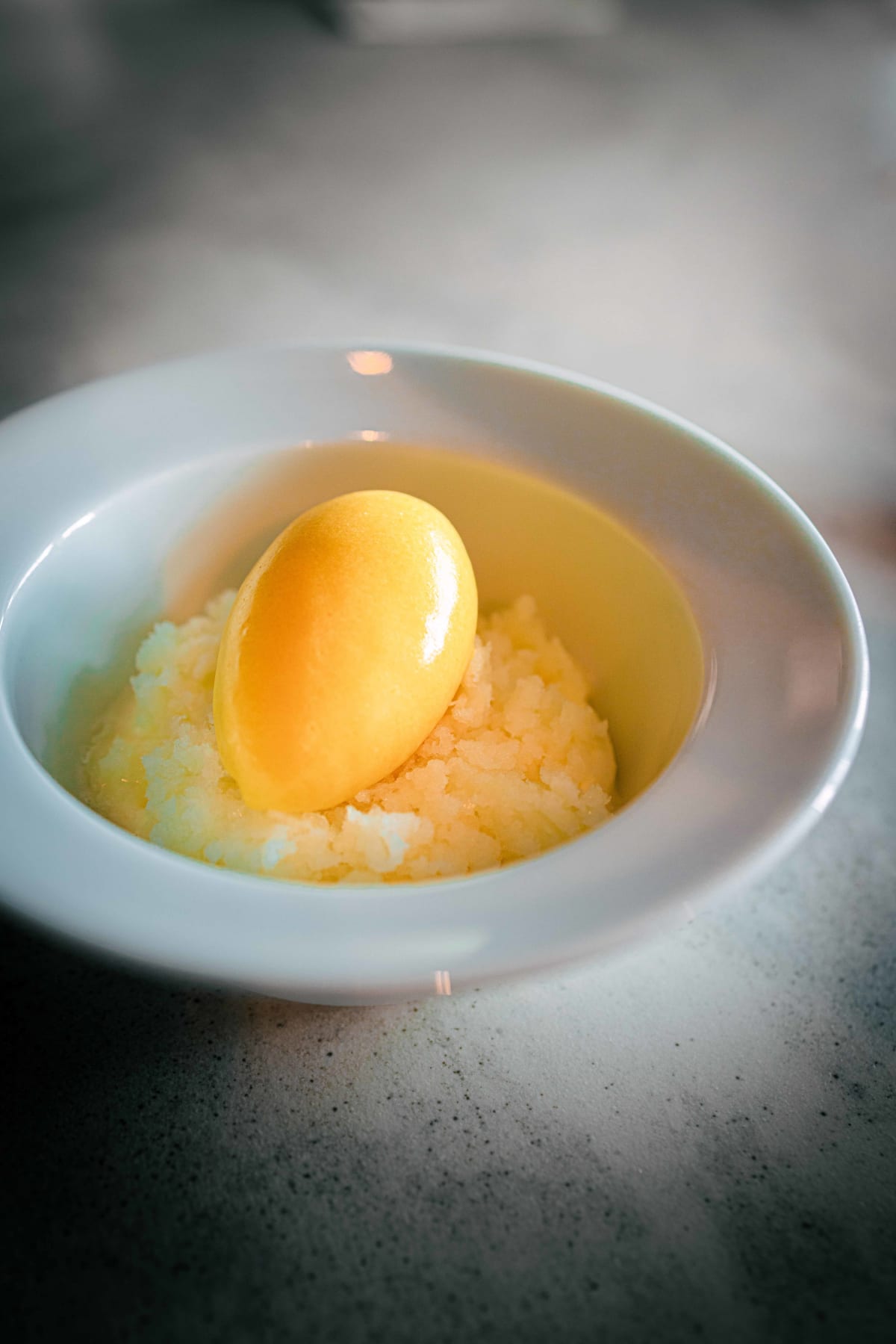
I think my photos came out rather well that day. It has now been three years since my last visit to Exquisine. It was where I first stepped into Michelin dining, yet the thrill of that first experience has not faded at all; it has matured, and it stays in my memory as something deeper.
It was where I first stepped into Michelin dining, yet the thrill of that first experience has not faded at all; it has matured, and it stays in my memory as something deeper.
Having come only for lunch, all three times, I feel that after all this time I should finally try dinner once.
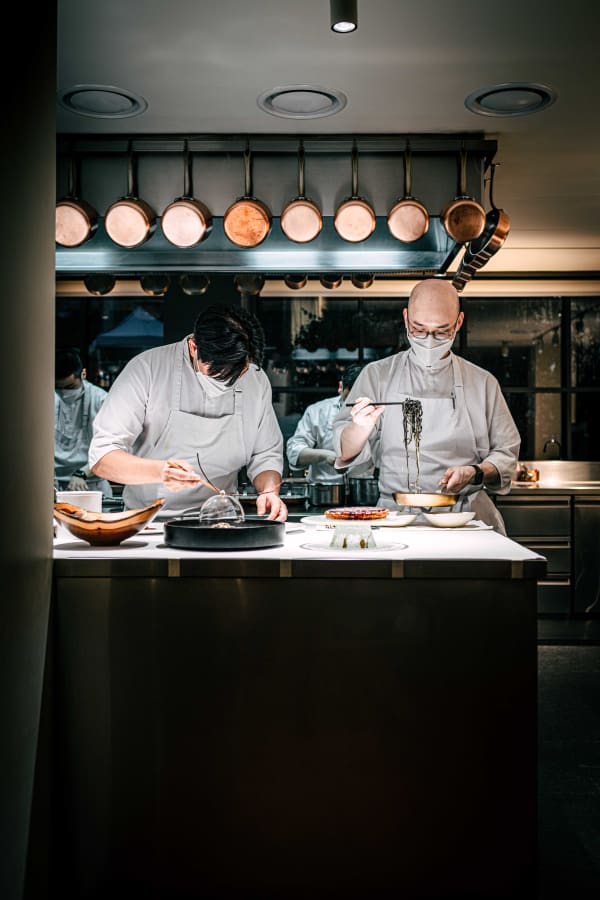
Michelin files Exquisine under contemporary cooking rather than French, and describes it as a place for exploring what Korean ingredients can do, which suits a menu that names the potato and leaves the octopus unsaid. Ask for a window table when you book. The room is done in black and grey under soft light, and on an earlier visit it left the plates hard to photograph; by the window this time, they caught the daylight. Lunch ran about an hour and a half from sitting down to dessert, so a natural wine brought for corkage is best opened at once, with a glass kept back for the main course.
Have a question about this restaurant, or want to share your own experience?
Send a message