Local & Essential · Tokyo · Japan / November 2024
Hanchika
"Shumai at 3 am in an old Shibuya car park, across from ATOM"
Section 1·One Chinese Restaurant
In November 2024, I flew back to Tokyo for the first time in seven months, all for the sake of one Chinese restaurant. That restaurant was Sazenka (茶禅華), booked for Saturday evening. I landed on Friday night, dropped my bags at the cheap hostel I had booked in Shibuya, and some time after 11 pm made my first stop of the night at the Shibuya branch of Yasubee (やすべえ), a tsukemen shop.
Even in November, the Tokyo night hung hot and humid. From there I wandered Shibuya's back streets, and in the small hours I found my way to Hanchika (半地下), a Chinese-style izakaya whose name means semi-basement.
Section 2·Across From ATOM
Rather than long directions or an address, one line does the job: "across from ATOM." Anyone who likes clubbing has probably been to ATOM TOKYO in Shibuya, or at least heard of it, and Hanchika sits right across the street. You can turn off Dogenzaka (道玄坂) into the street lined with clubs, or slip out of the Hyakkendana (百軒店) shopping street through a narrow alley between a hotel and another building.
Hyakkendana opened in 1924 under a plan to develop Shibuya after the Great Kanto Earthquake of 1923. Renowned shops and old family businesses were invited in from the quake-ravaged shitamachi (下町), Tokyo's old downtown, until 117 famous shops, along with theatres and cinemas, had moved in. Once the rebuilding was over and many of those shops had returned to their original sites, it became an entertainment district lined with cinemas, cafés and restaurants, and so it remains today. This bar sits in a back alley of that hundred-year-old district, across from a club.
Section 3·A Bar In A Car Park
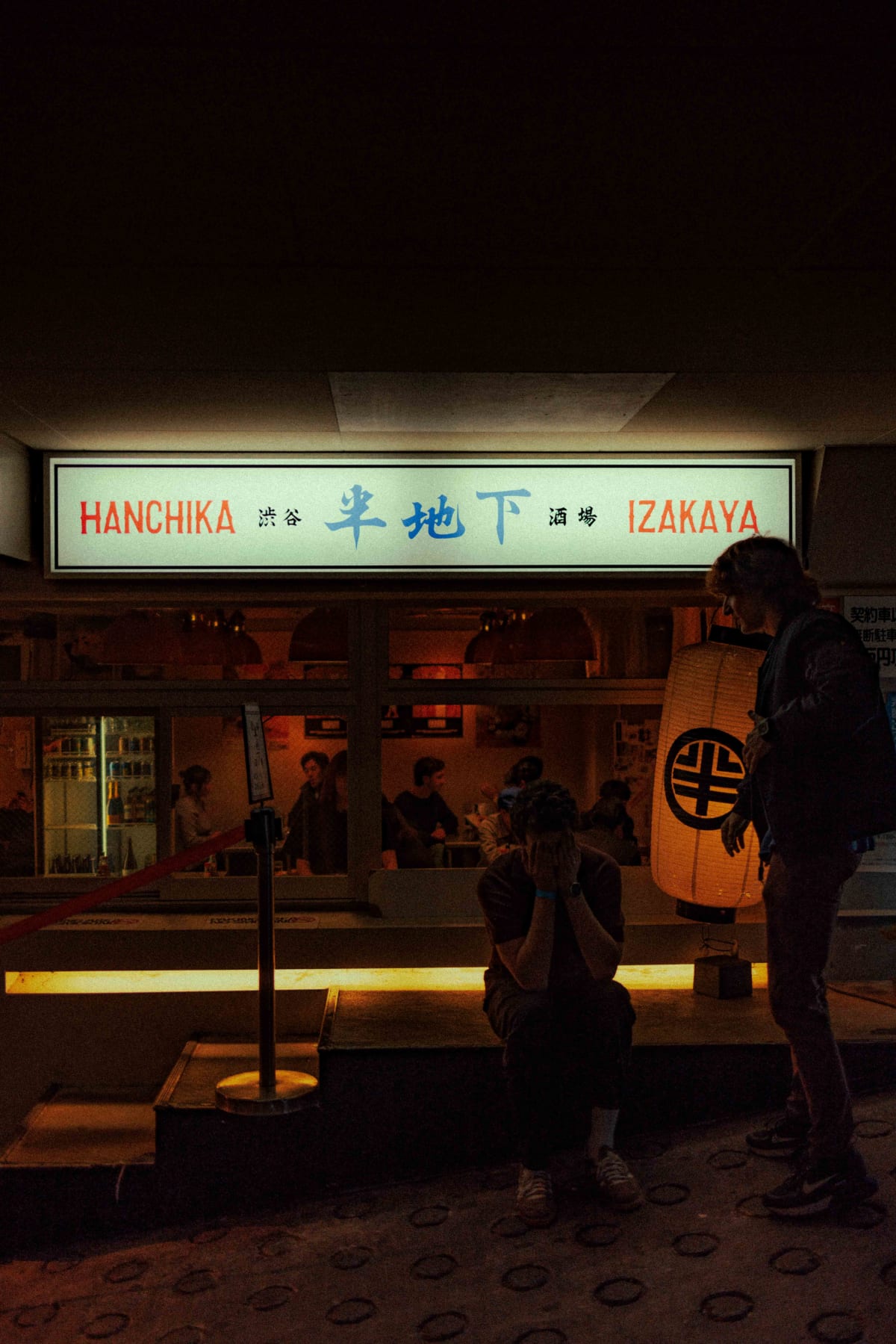
I arrived a little after 2 am. The sign reading HANCHIKA 渋谷 半地下 酒場 IZAKAYA glowed over the entrance, and beside the door stood a large paper lantern painted with the house mark.
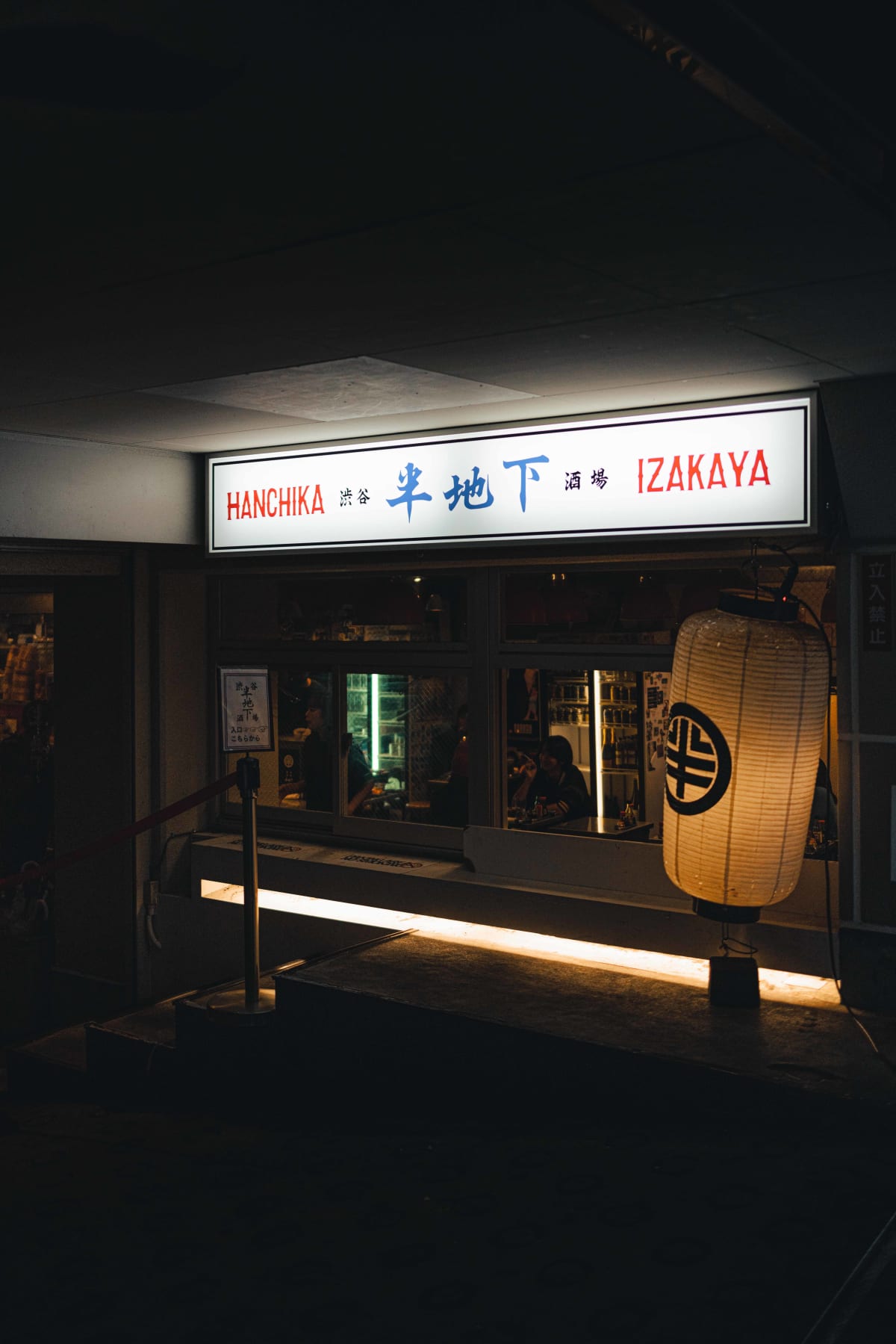
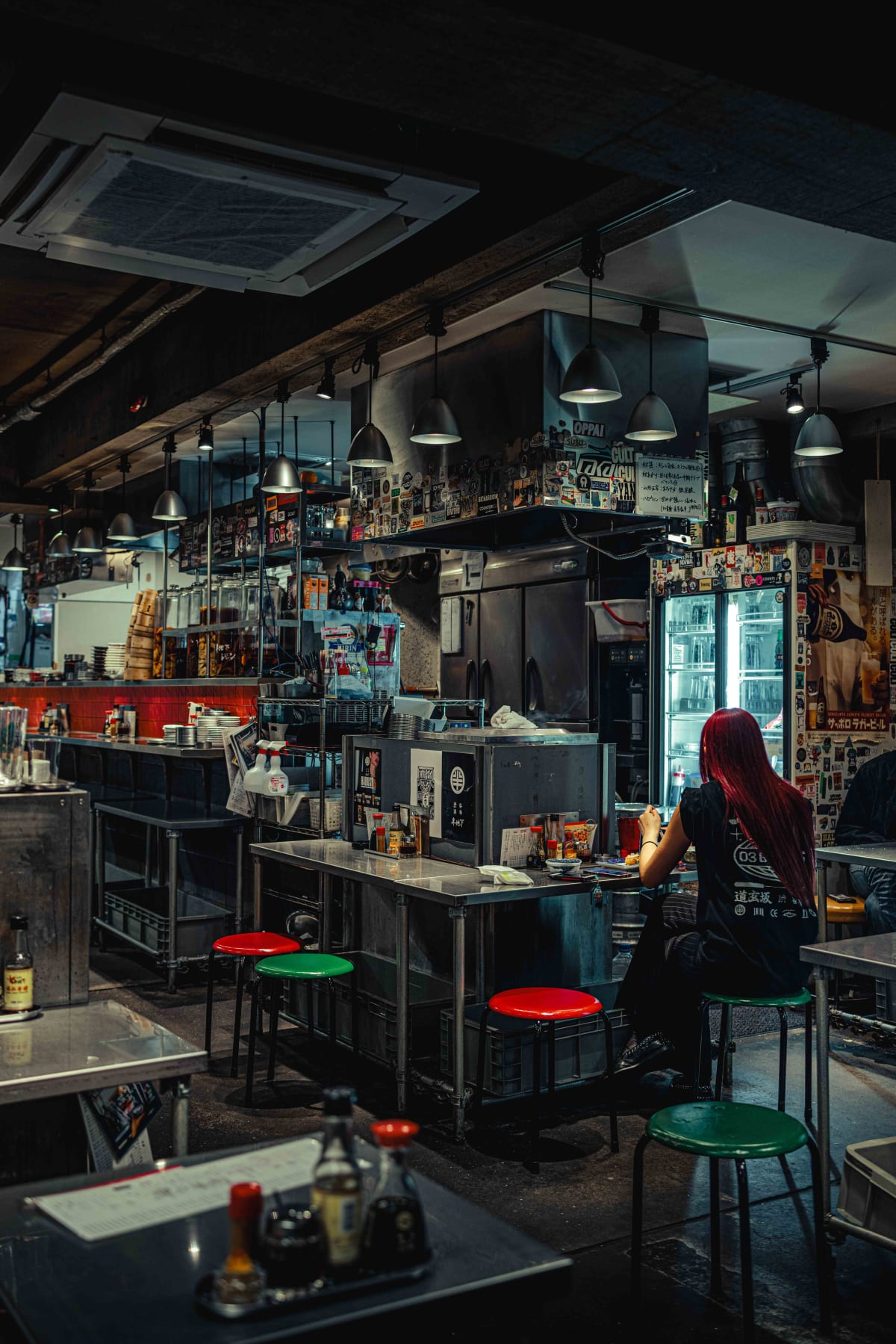
Its full name is Shibuya Hanchika Sakaba (渋谷 半地下酒場), literally the Shibuya Semi-Basement Bar. The bar took over the semi-basement that used to be the building's car park and kept it much as it was. The white lines and numbers of the parking bays are still on the floor.
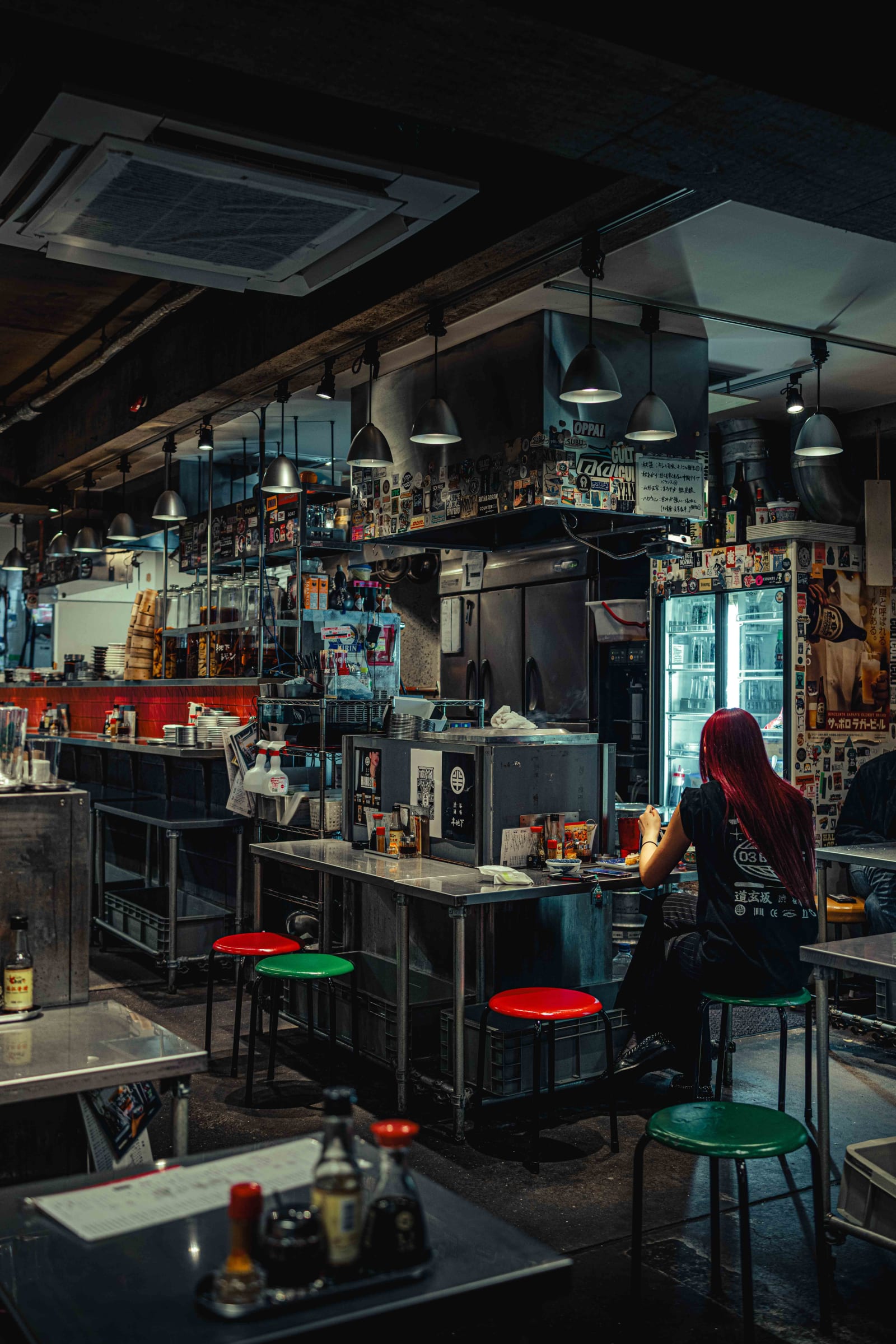
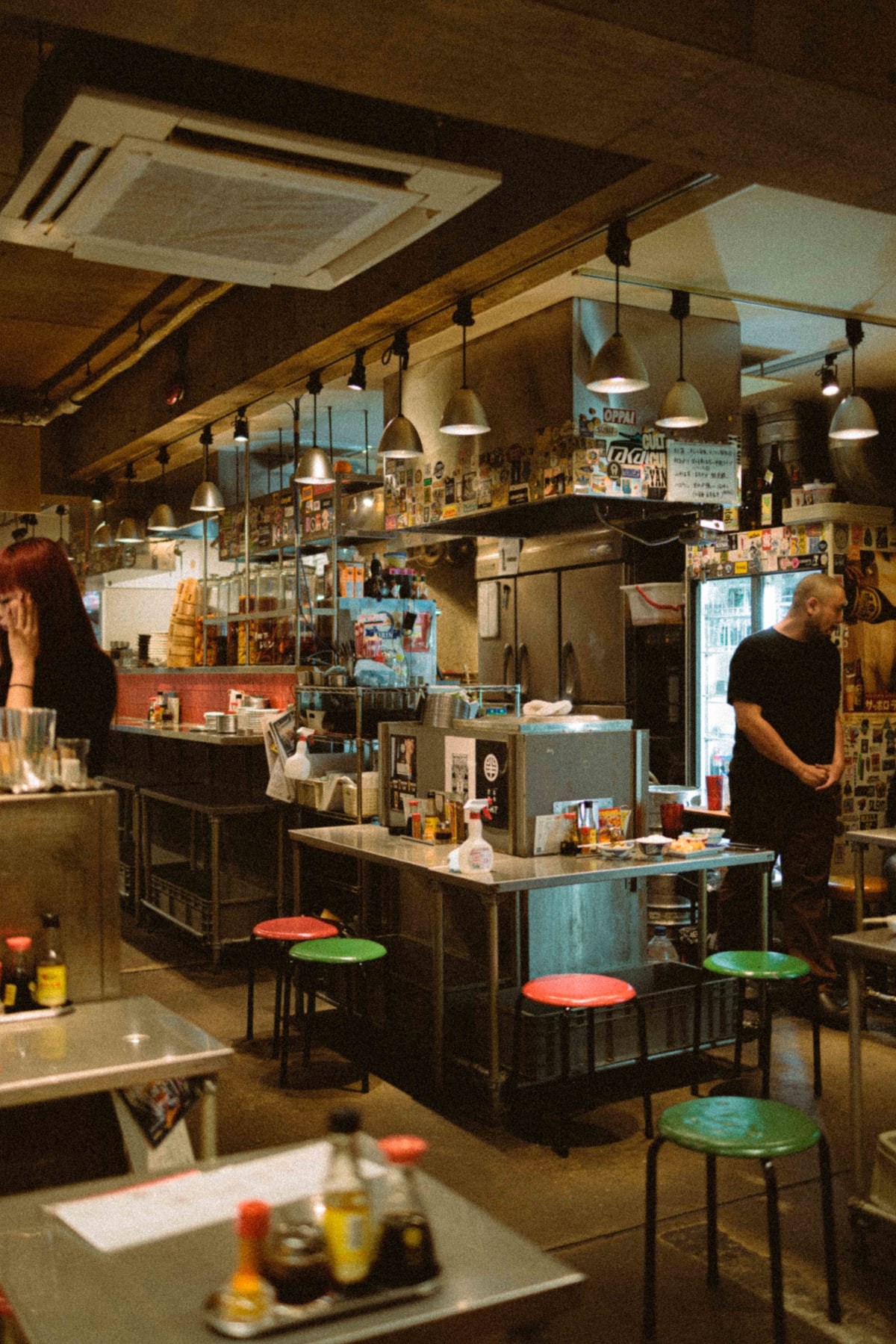
Inside, stainless steel tables and round red and green stools stand under a bare concrete ceiling, and the fridges and shelves of the open kitchen are plastered with stickers. It is like stepping into a street stall somewhere in Asia.
Section 4·A Menu I Could Not Read
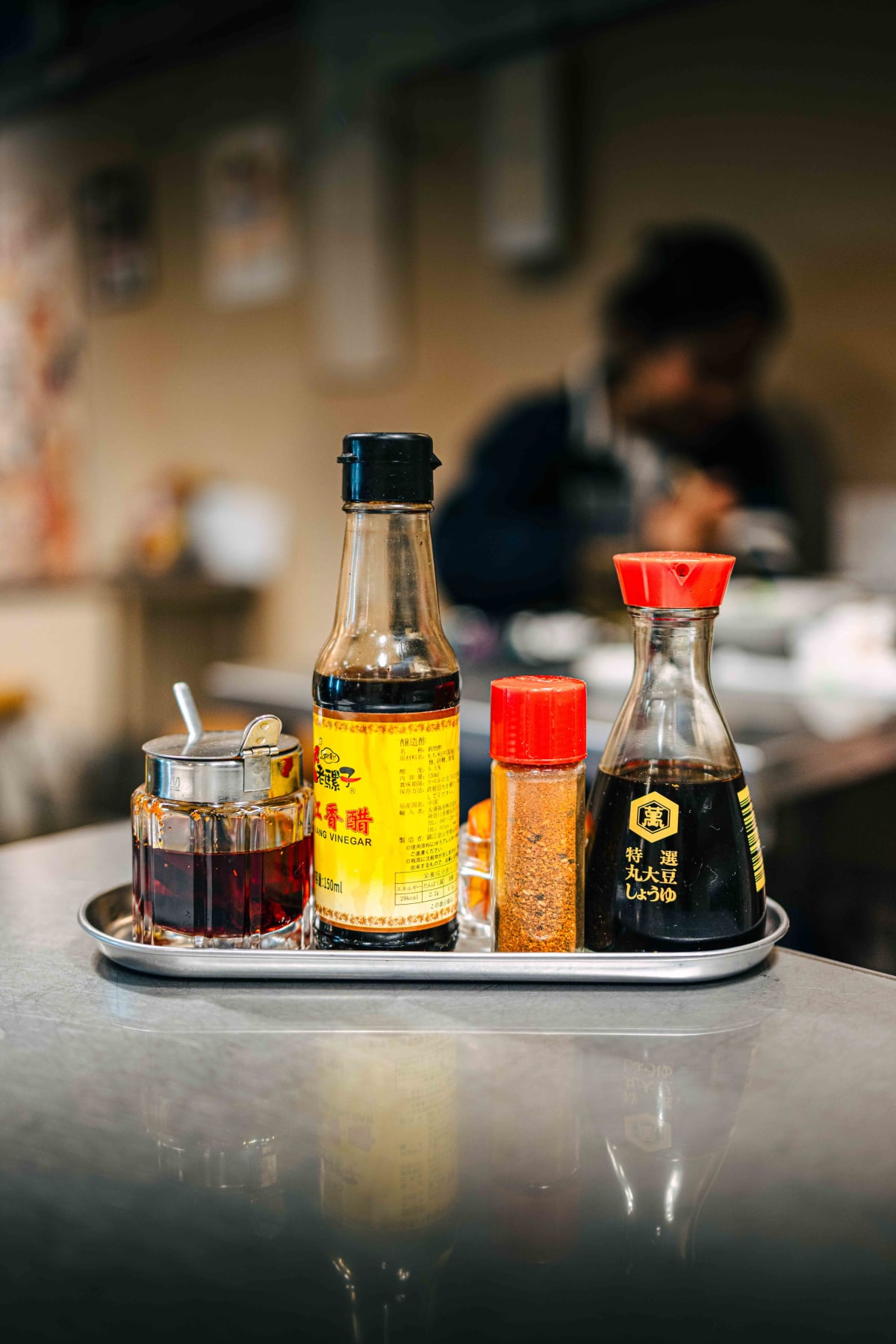
Before the trip, I had worked through a long list of places that stay open late or are good for a drink, and this one drew me in. Staying open until 5 am helped, but the real draw was the Chinese style. Not an ordinary izakaya, but a Chinese-style one: I wanted to see what that meant. When I sat down, the tray on the table held chilli oil, Chinkiang black vinegar (鎮江香醋), ground chilli and soy sauce, the Chinese set-up for dipping gyoza and shumai.
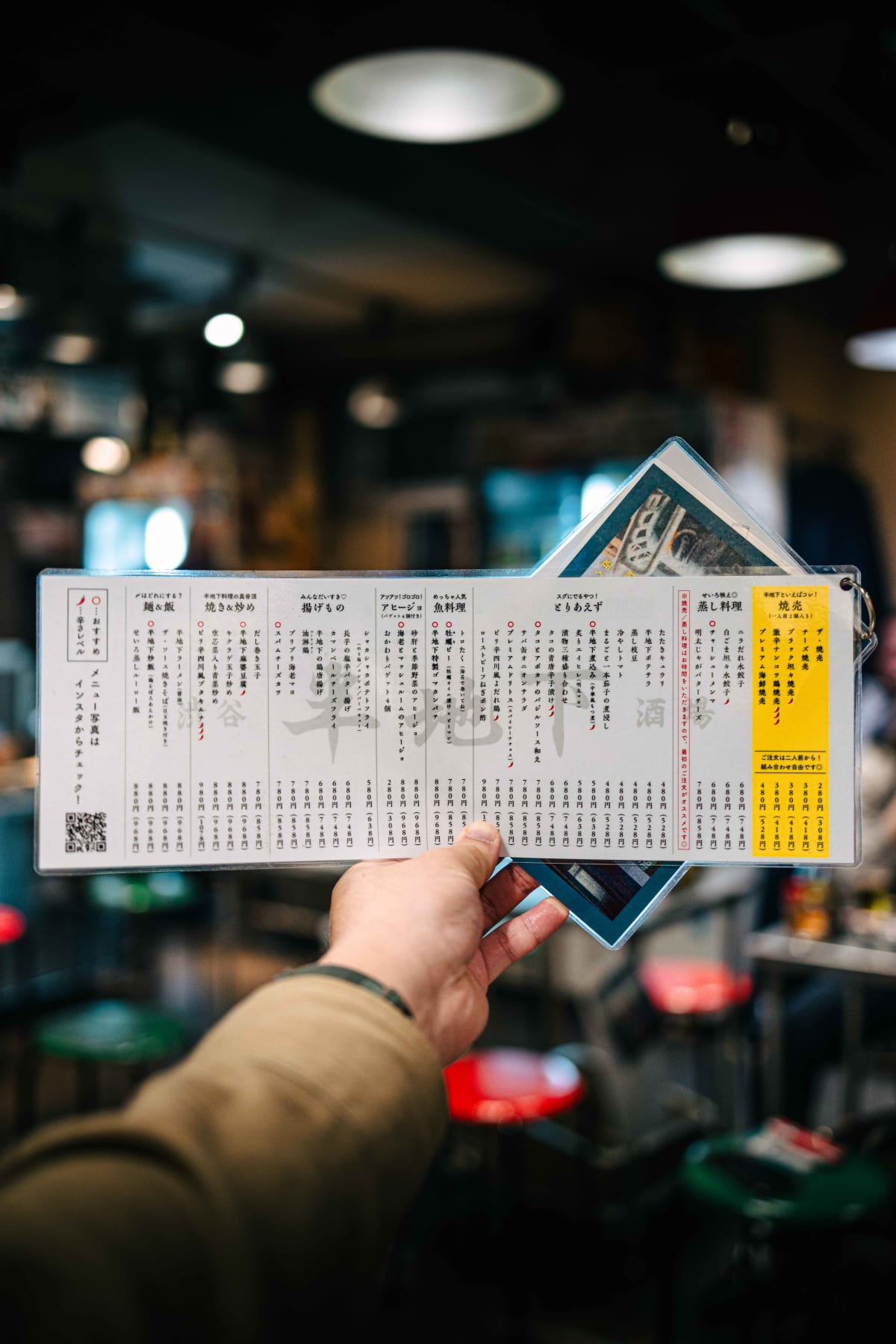
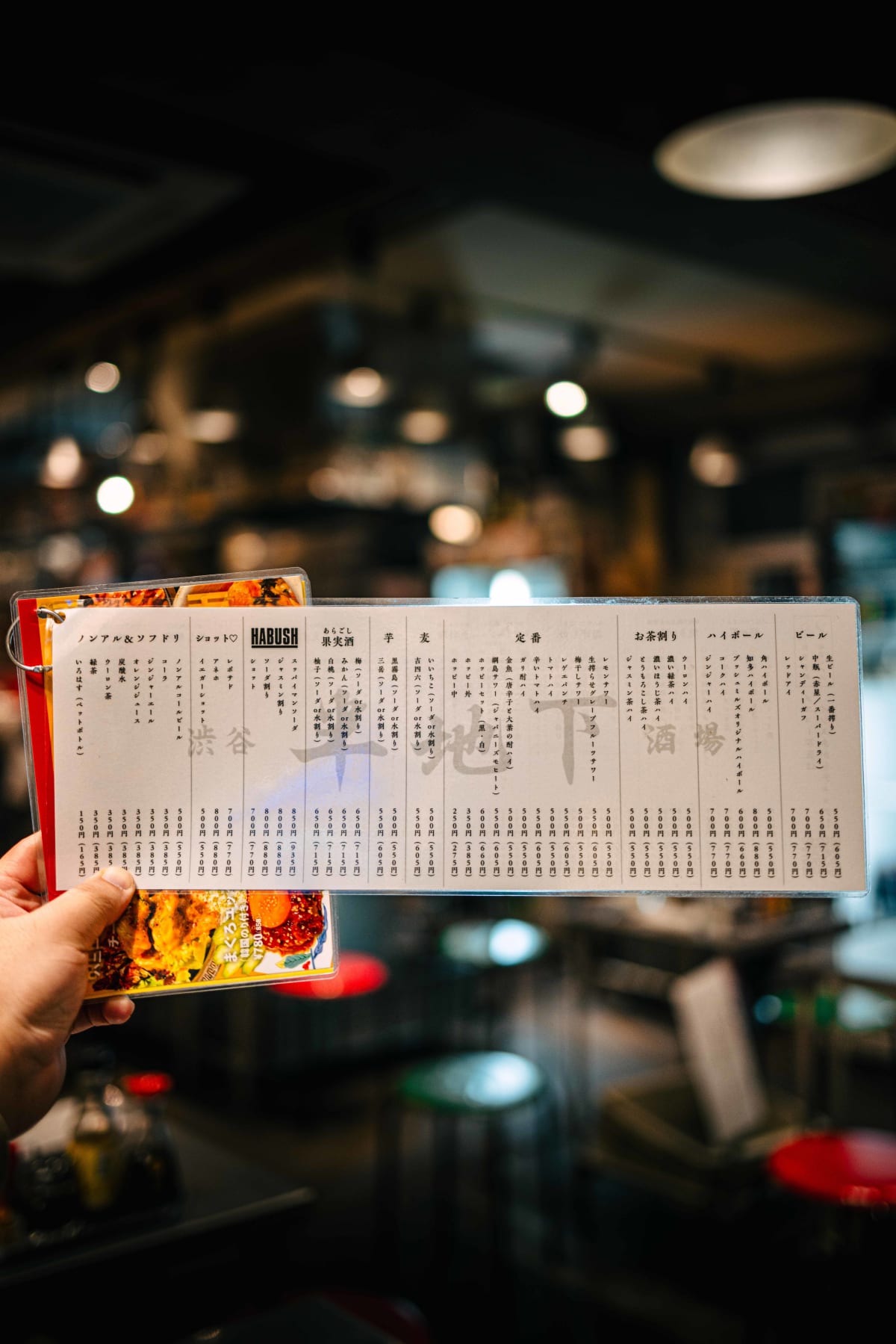
I took the menu and could not read a word of it. Back then I had only beginner's Japanese, and the type was tiny. More than forty dishes were crammed in vertical columns onto a long laminated card. Working out what each one was would have taken me well over an hour. Even Papago, the translation app, could not make out type that small. In one corner, beside a QR code, a note said: "For menu photos, check Instagram."
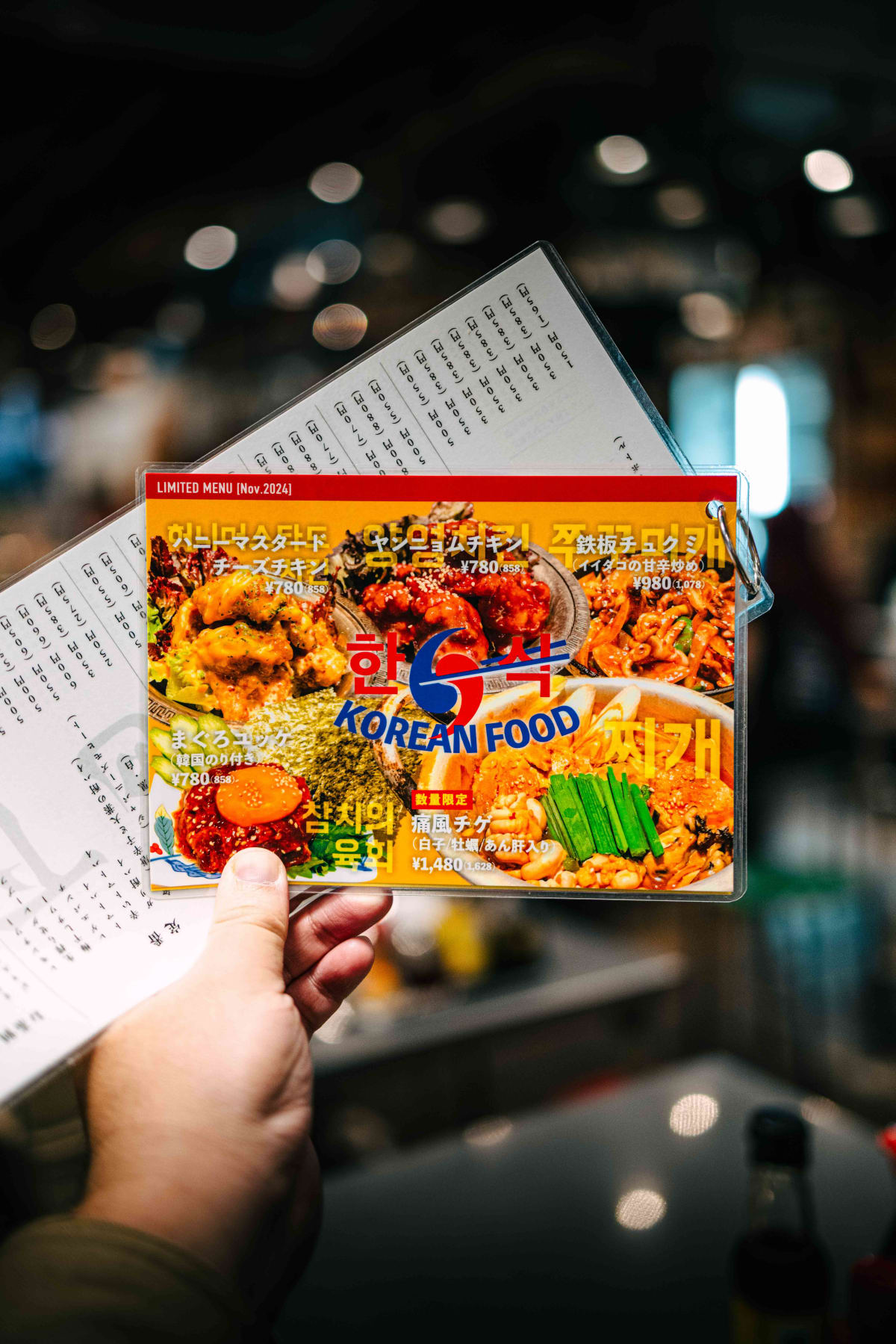
I had come knowing full well it was a Chinese izakaya, yet one of the menus announced, in enormous letters, 한식 KOREAN FOOD. Wait. Had I walked into a Korean restaurant? Korean food keeps growing in popularity, in Japan and around the world, but I never expected to run into it so suddenly.
That month, the bar was running a limited menu headed LIMITED MENU Nov.2024. It offered honey mustard cheese chicken and yangnyeom chicken, jjukkumi (baby octopus) stir-fried on a sizzling iron plate, tuna yukhoe served with Korean laver, and a jjigae made in limited numbers, loaded with shirako (fish milt), oysters and ankimo (monkfish liver), exactly the rich things that bring on gout, hence the name Gout Jjigae (痛風チゲ).
Of all the months to visit, I had picked the one when the limited menu went Korean.
I could not sit staring at the menu forever, so in the end I used my lifeline: Google Maps. I picked whatever looked good among the review photos and ordered by showing them to the server.
Section 5·Kimchi Where The Fish Should Be
The first dish arrived. I had ordered it believing it was a spicy braised fish, and then: huh, why is there kimchi in this? The meat was not fish either, but pork. The dish turned out to be something like a spicy kimchi duruchigi, the Korean stir-fry of pork and kimchi.
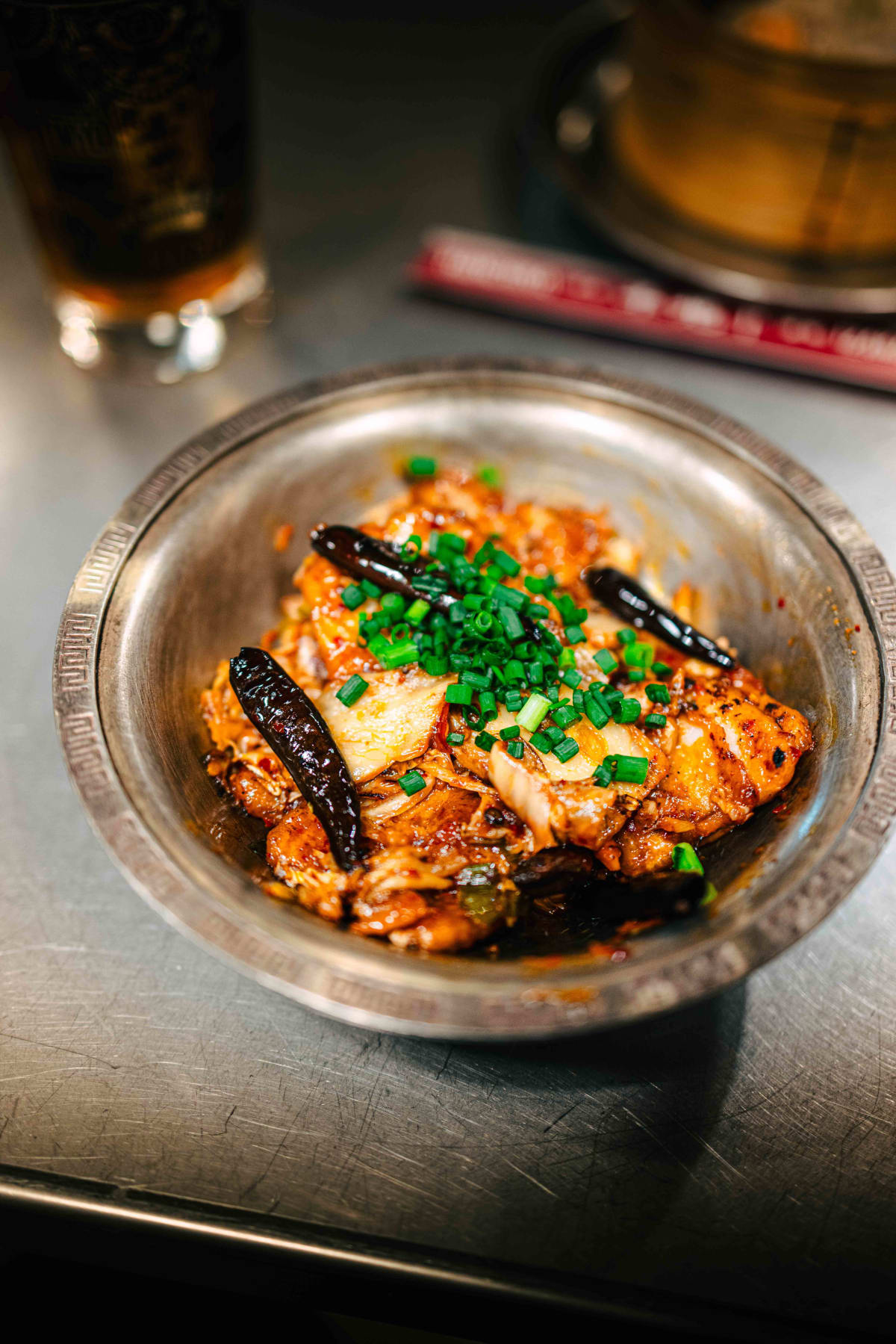
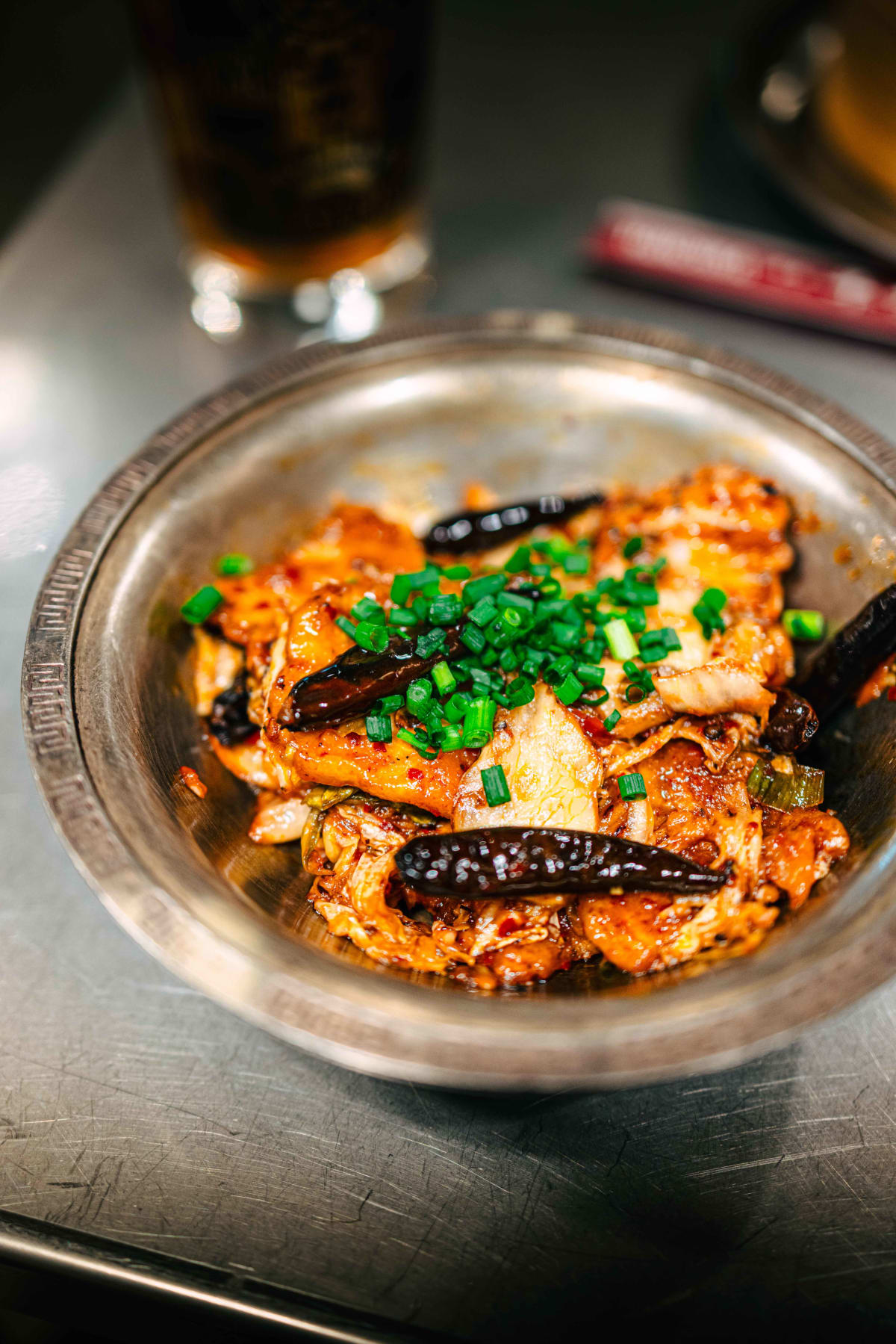
In a stainless steel bowl with a key-pattern rim, pork and kimchi sat in a red sauce, topped with a few whole dried chillies and a scattering of chopped spring onion. Lifted on chopsticks, the pork glistened with sauce, its edges seared golden.
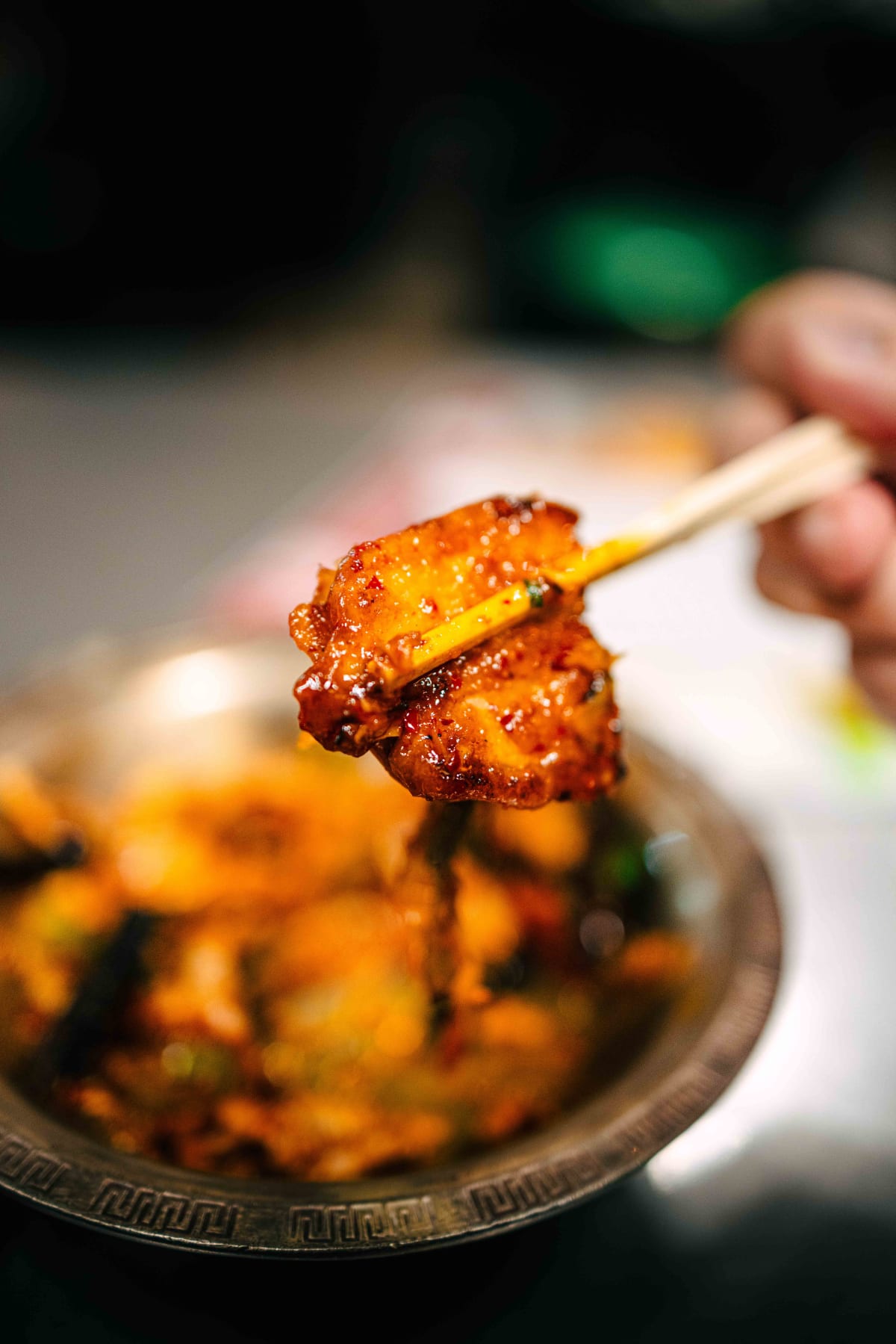
I had wanted Chinese bar food. It was a let-down, but luckily it tasted good. What I liked most was the texture of the pork, so tender it ate like yukjeon, Korean slices of beef dipped in egg and pan-fried.
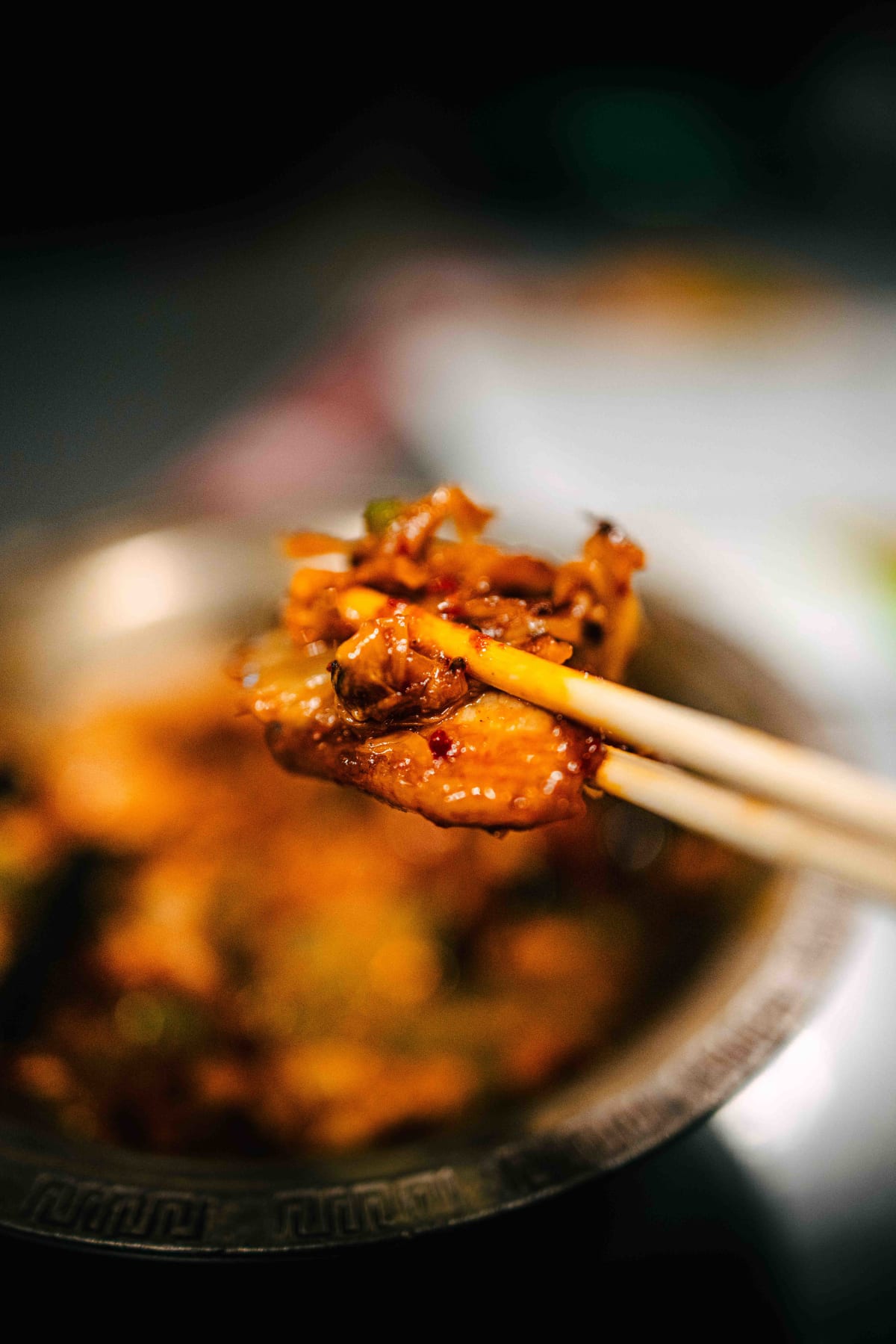
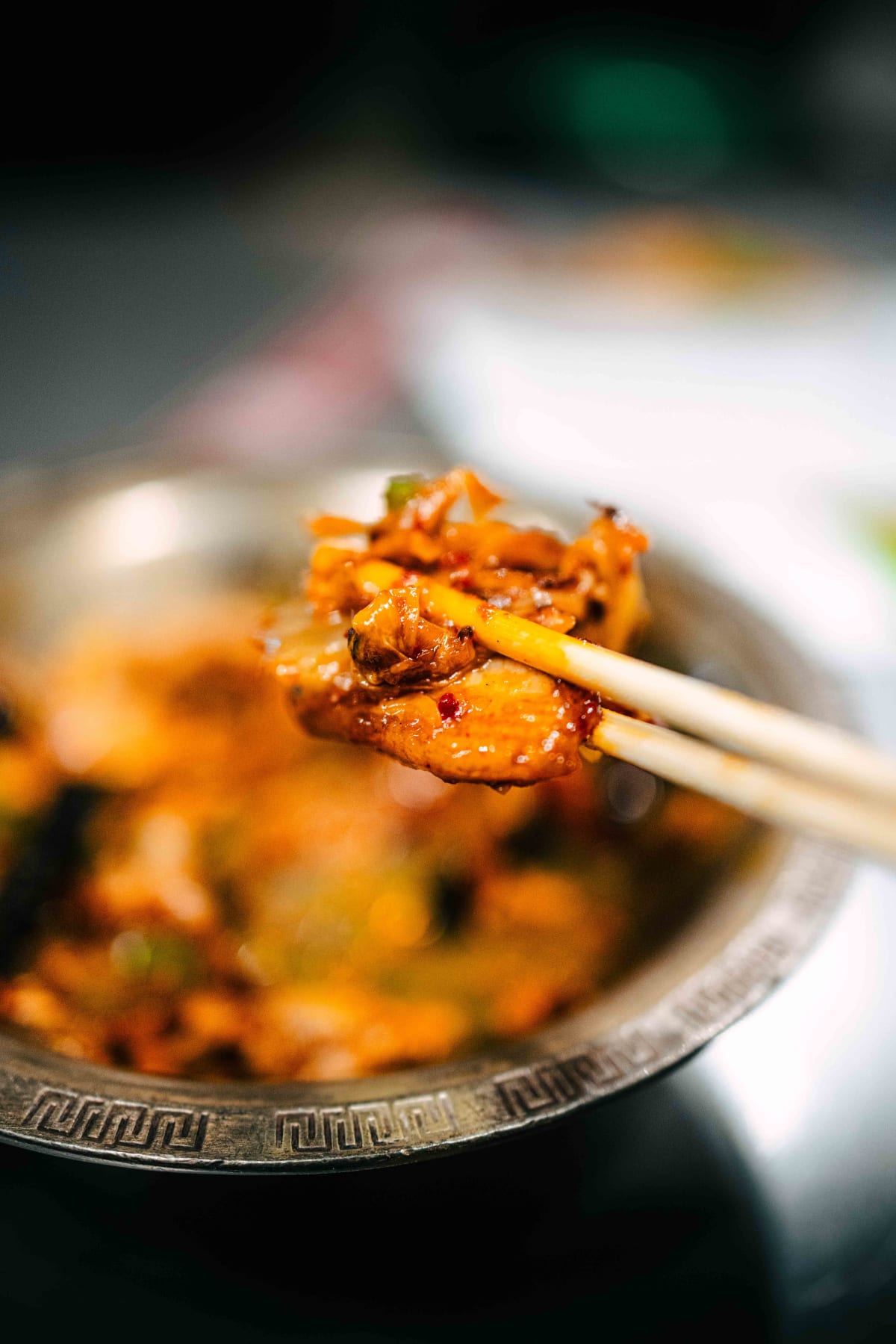
On the menu, the dish is listed as ピリ辛四川風ブタキムチ, a spicy Sichuan-style buta kimchi. Buta kimchi, pork stir-fried with kimchi, is a common dish in Japan, and this bar gives it a Sichuan turn by throwing in whole dried chillies.
It is a regular item in the stir-fry section, marked as a recommendation and rated at the top of the menu's heat scale. It had not come from the November Korean card, yet a Korean-style dish had landed on my table all the same. To me, waiting for Chinese food, it looked Korean. To the house, it is a Sichuan-style stir-fry through and through.
To me, waiting for Chinese food, it looked Korean. To the house, it is a Sichuan-style stir-fry through and through.
Section 6·Shumai And Two Yasubees
My second order was dim sum: shumai, with a pork filling and a prawn on top. Two arrived in a bamboo steamer, their thin wrappers pleated and gathered by hand, each shaped a little differently from the other. These tasted good too.
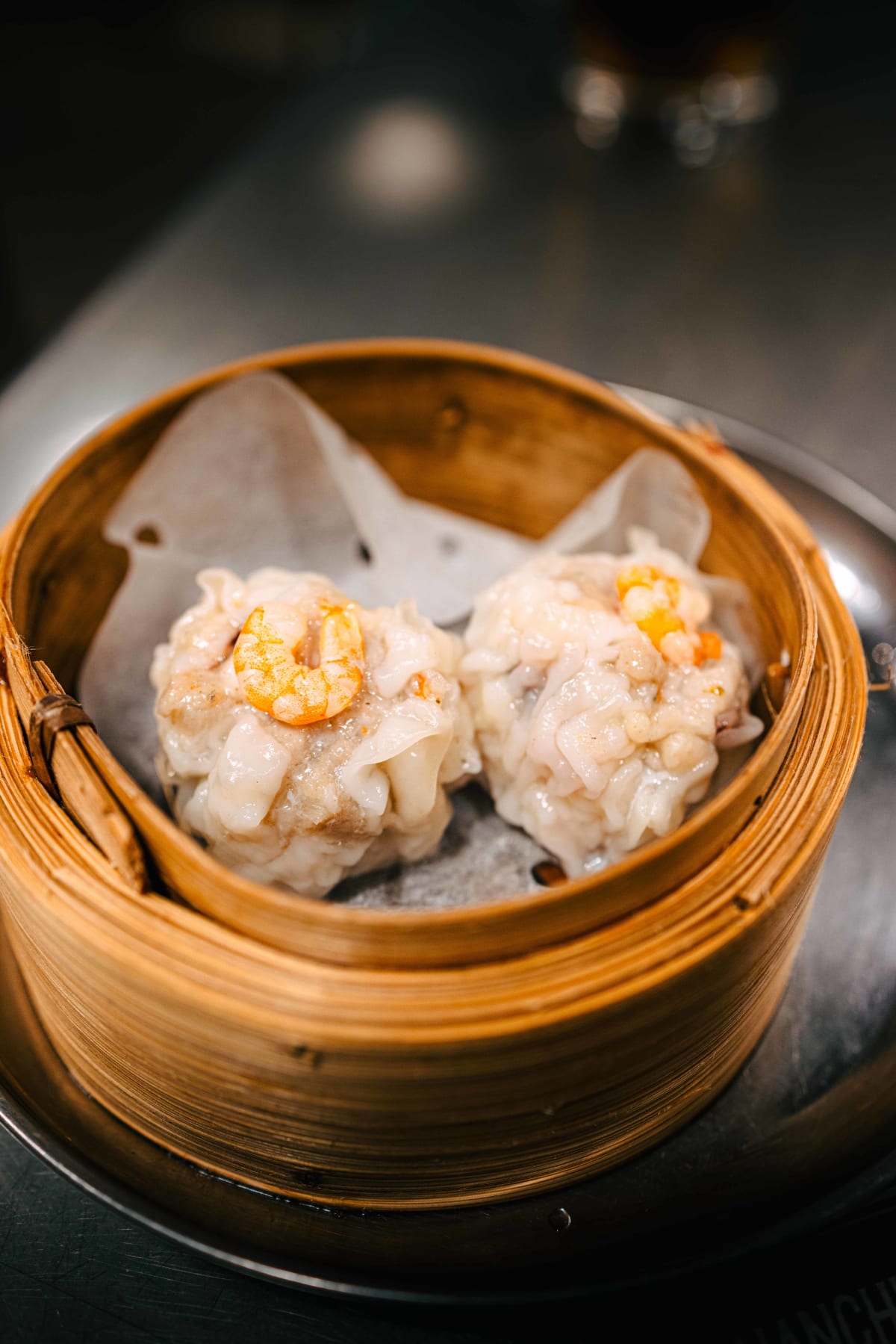
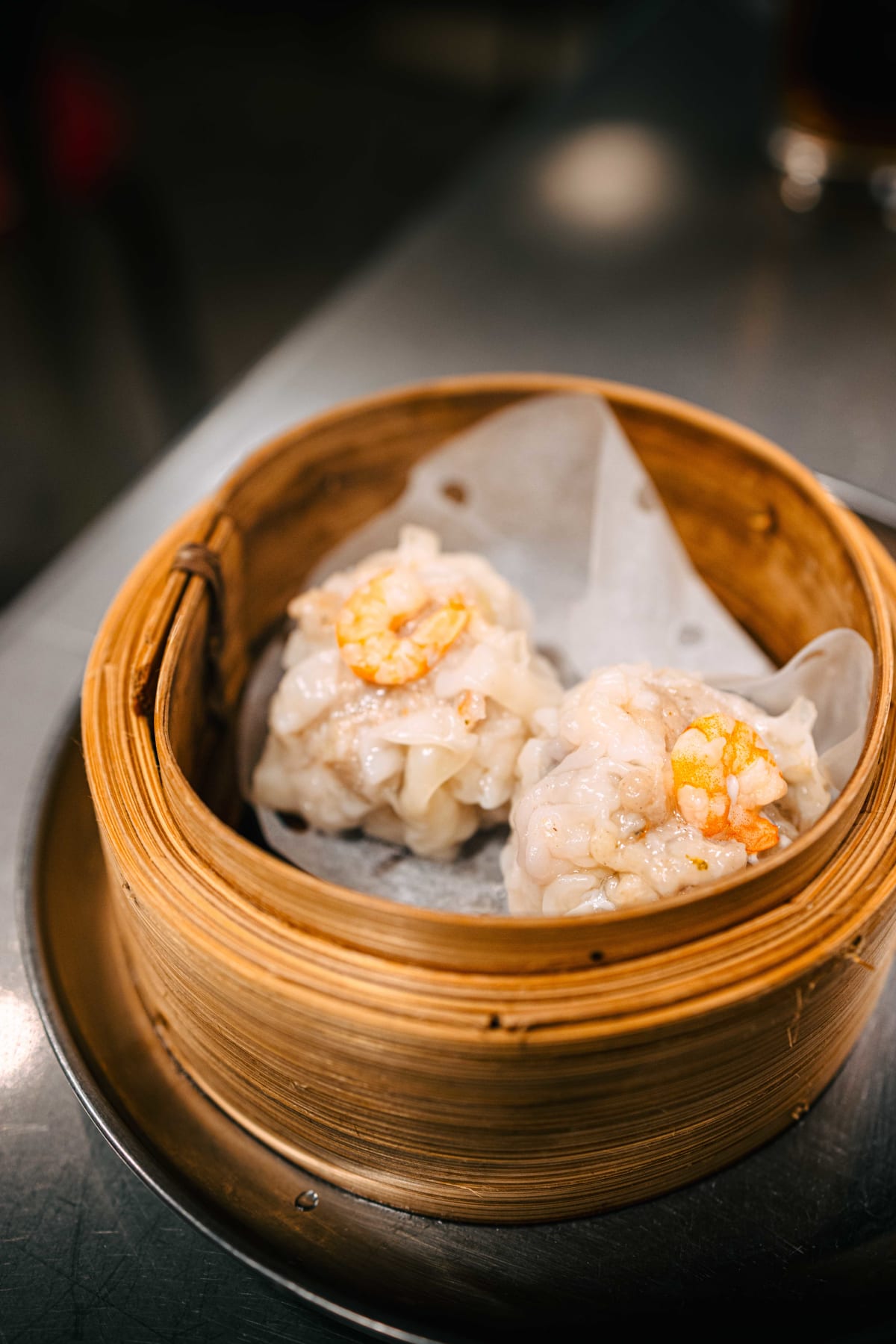
Shumai are the house speciality. The place began as a shumai shop. It opened in June 2021, when COVID had visibly thinned the crowds on Shibuya's night streets. The owner came from the apparel trade and was already running an udon izakaya and a bar in Hyakkendana.
Before choosing the site, the owner happened to have visited Yatai Yasubee (屋台安兵衛), a famous street-stall gyoza shop in Kochi (高知). A stall-style shop in a car park, like Yasubee, could be fun. Why not open a shumai shop in that semi-basement car park? A friend who had also worked in apparel came on board, and that is how this place began.
As it happened, my first stop that night had been a Yasubee too. The tsukemen Yasubee in Shibuya and the gyoza Yasubee in Kochi have nothing to do with each other, but in a way, I had passed through two Yasubees in one night.
The filling is coarsely minced pork shoulder, kneaded with soy sauce and coarsely ground black pepper, and the staff wrap each shumai by hand. They go into the steamer only once an order comes in, so they take time. That is why, at the far end of the menu, the shumai have a yellow box of their own headed "Think Hanchika, think this!", and why a note in red beside it advises ordering shumai and steamed dishes first, since they take a while.
Section 7·A Highball And House Infusions
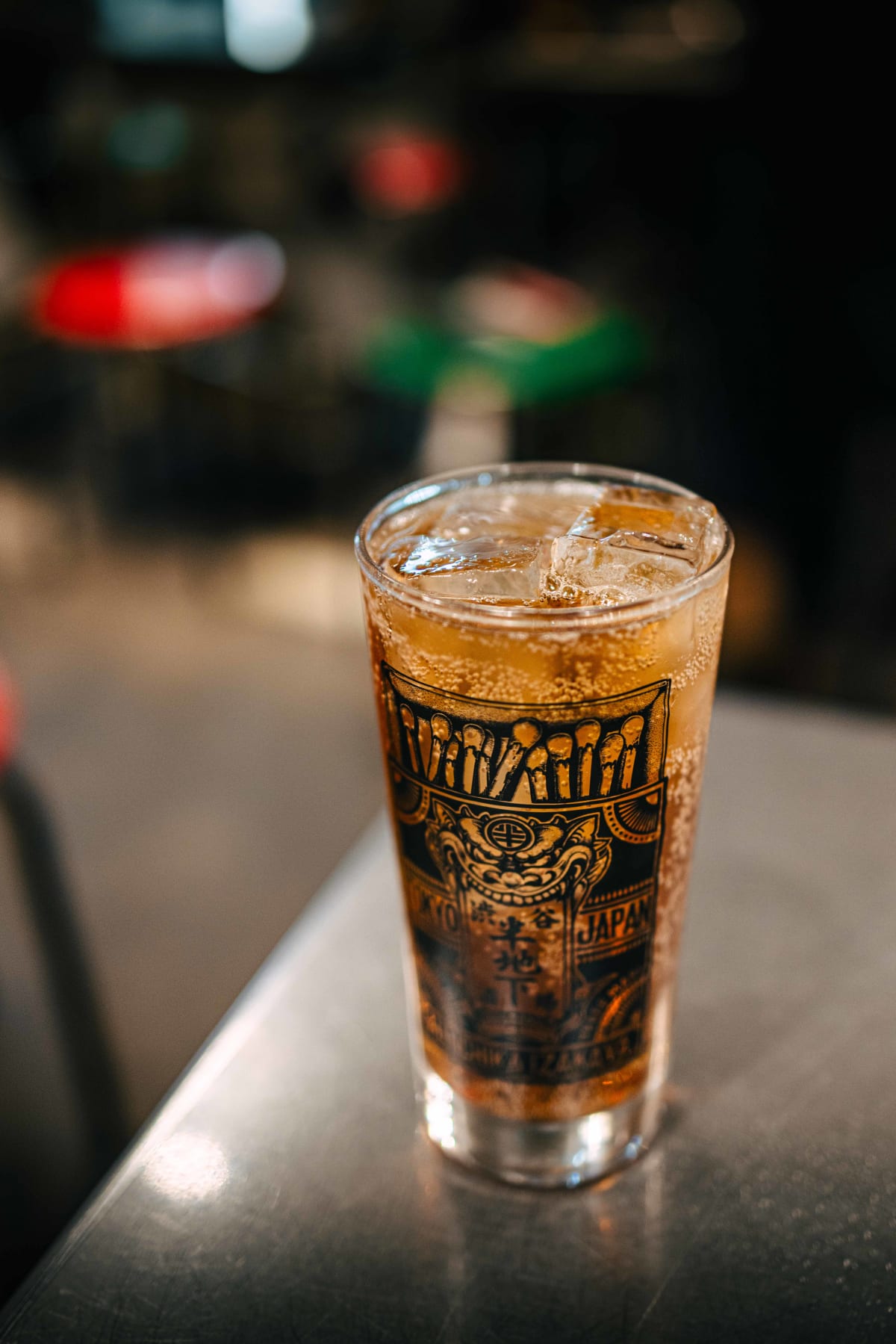
To drink, I ordered a highball. The highball column on the menu listed Kakubin, Bushmills and Chita. It arrived in the house glass, printed with the bar's matchbox design: matches poking out of a box, a lion's face, 渋谷 半地下 酒場 and HANCHIKA IZAKAYA. The highball was dry rather than sweet, and it went down well.
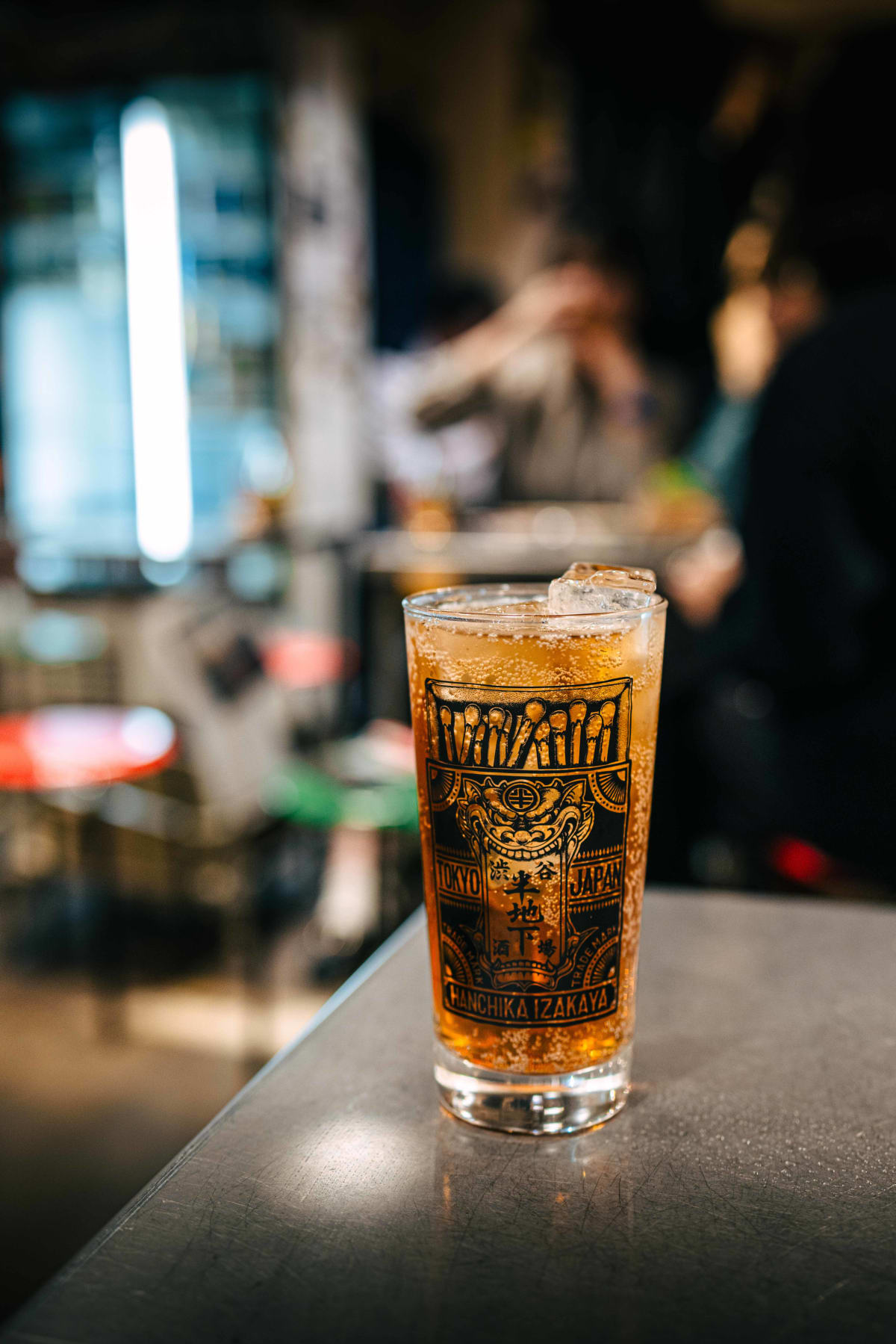
Artists were involved from the very start. The mark on the glass and the lantern, and the matchbox design, are the work of a graphic designer, while a gardener and bonsai artist designed the sign together with a tattoo artist.
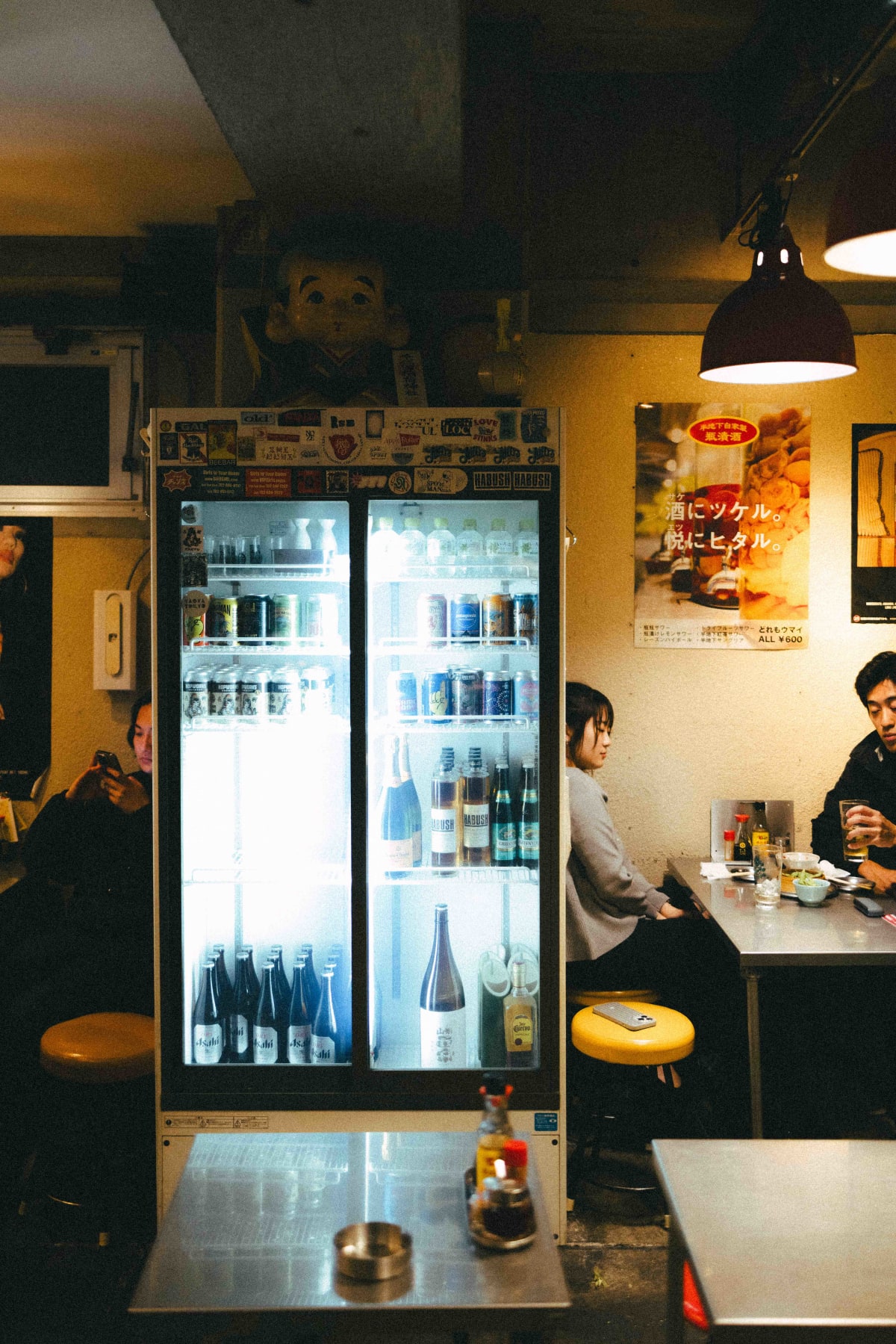
The real signature among the drinks is something else: binzuke-zake (瓶漬け酒), house infusions made by steeping ingredients such as dried fruit in liquor. When the bar opened, it tested more than fifty and picked five.
A poster on the wall beside the fridge listed a whole range of them: the Binbin Sour made with a herbal liquor, a lemon sour, a raisin highball made with raisin-steeped spirit, a dried fruit sour, the Hanchika Black Tea Sour of shochu topped up with Indian tea, and sangria.
Section 8·A Different Colour
Food and drink alike were simply a different colour from what I had pictured, and as an izakaya, it was a good one. Thinking it over, this is less a Chinese izakaya than a Shibuya taishu sakaba, one of Japan's cheap and cheerful drinking halls, with shumai as its calling card.
Food and drink alike were simply a different colour from what I had pictured, and as an izakaya, it was a good one.
The owner, too, describes the menu as all-genre, taking in Japanese, Western and Chinese alike. On the menu, Chinese dishes such as mapo tofu, yurinchi fried chicken, boiled dumplings and lu rou fan, Taiwanese braised pork over rice, sit next to izakaya standards like dashimaki tamago, chilled tomato and potato salad, with fried Camembert and even Doritos mixed in. Having come expecting a Chinese izakaya, I was always going to find it a different colour.
Section 9·Three In The Morning
Whether they had come from the clubs I could not tell, but even as 3 am drew near, the room buzzed with a bigger crowd than I had expected. I liked that energy, still running at that hour. According to the owner, the place draws plenty of people who live or work nearby. On a short trip I wanted to get my money's worth out of every hour, and this was the izakaya for it.
I left a little after 3 am. The sign and the lantern were still glowing, and out front, people who were not yet done with the night lingered by the door.
It stays open deep into the night, so if you are out at ATOM and start to feel peckish, I recommend crossing the street to the old car park.
Hanchika belongs to Tokyo's neo-taishu sakaba: a designed room, low prices and a menu with no single nationality. Shumai come two to a portion, from ¥308 in November 2024, and are ordered two portions at a time, mixed freely. Walk-in seats are held daily, which suits a stop decided after midnight.
Have a question about this restaurant, or want to share your own experience?
Send a message