Local & Essential · Seoul · Korea / August 2023
IKKI
"A modern, hard-to-book izakaya in Hapjeong where a former omakase chef brings real precision, and a Korean accent, to the casual counter."
Section 1·Hapjeong
If I had to name the country geographically and culturally closest to Japan, it would surely be Korea. The culinary cultures of Japan and Korea have developed and changed over a long time through all sorts of mutual influence, but setting influence aside and looking purely at popularity, Japanese food is far more popular in Korea than the other way around. Today Korea has restaurants across a wide range of genres, from sushi to Japanese cuisine, tempura, and yakitori, at high levels and considerable prices, but the genres that first made authentic Japanese food culture popular in Korea were the izakaya and ramen.
The izakaya, the Japanese pub, was the first to catch on, a place where you could have inexpensive, tasty snacks and Japanese drinks alongside Korean soju and beer, and starting in Seoul they sprang up everywhere across the country. These days there is hardly anywhere you cannot find an izakaya, but the neighborhoods that boast both high density and high quality are only a few, and one of them is Hapjeong in Mapo-gu, Seoul.
Section 2·ikki
ikki, an izakaya in Hapjeong, opened in early 2023 and grew popular by word of mouth. Unlike the older Korean izakaya that simply transplanted the alleyway, local atmosphere of Japan, it has the feel of a modern restaurant and serves food of a high standard.
ikki is enormously popular. As of 2026 it has been open for three years, yet despite being an izakaya you have to attempt a booking the moment reservations open, as if it were a hard-to-book restaurant. There is an upside to it being an izakaya, though: it stays open late. If you could not get a reservation, I recommend trying the walk-in waitlist early. Hapjeong, where ikki sits, is a neighborhood full of some of the best local restaurants in Seoul. After a meal at one of them, I suggest putting your name on ikki's waitlist after nine in the evening and visiting it as your second or third stop of the night.
Section 3·A Summer Night
I have been here several times, and the most memorable was in mid-August 2023, on a summer day so hot that my skin still prickles at the thought, with a group of acquaintances.
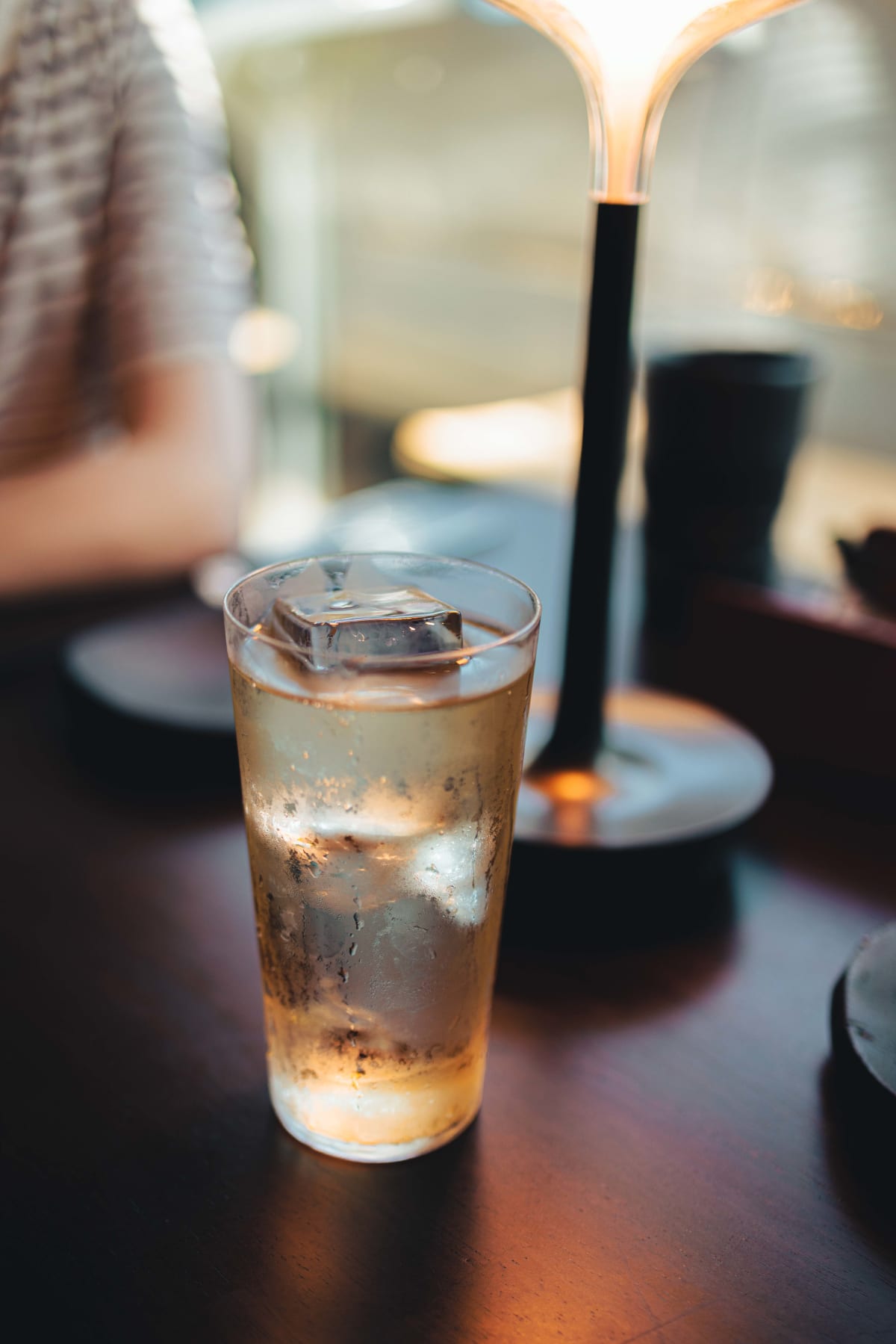
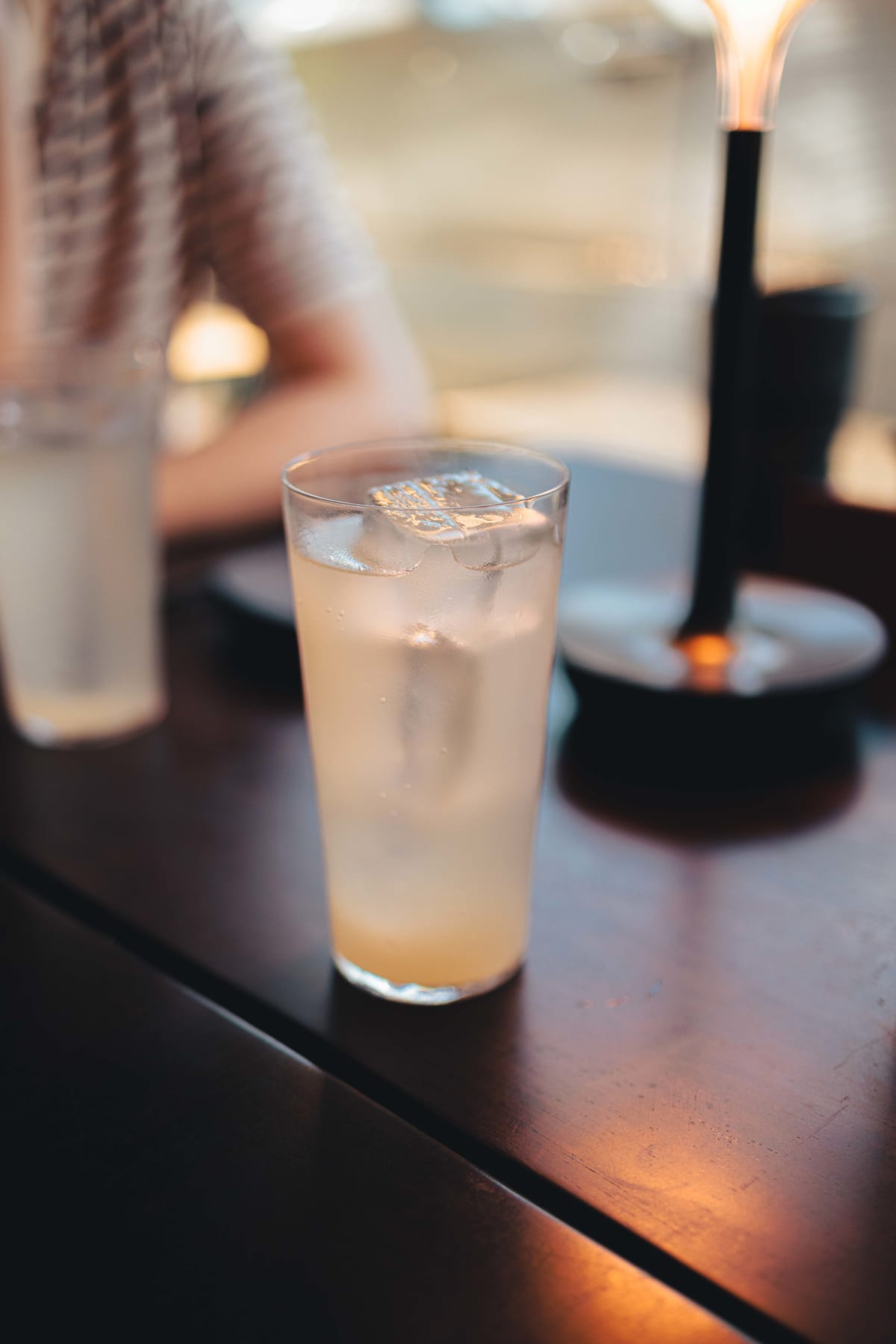
There were about five of us, and with such a large party we set out to try nearly the entire menu, and even though we had already eaten a great deal at lunch, we cleared all of it, it was that good.
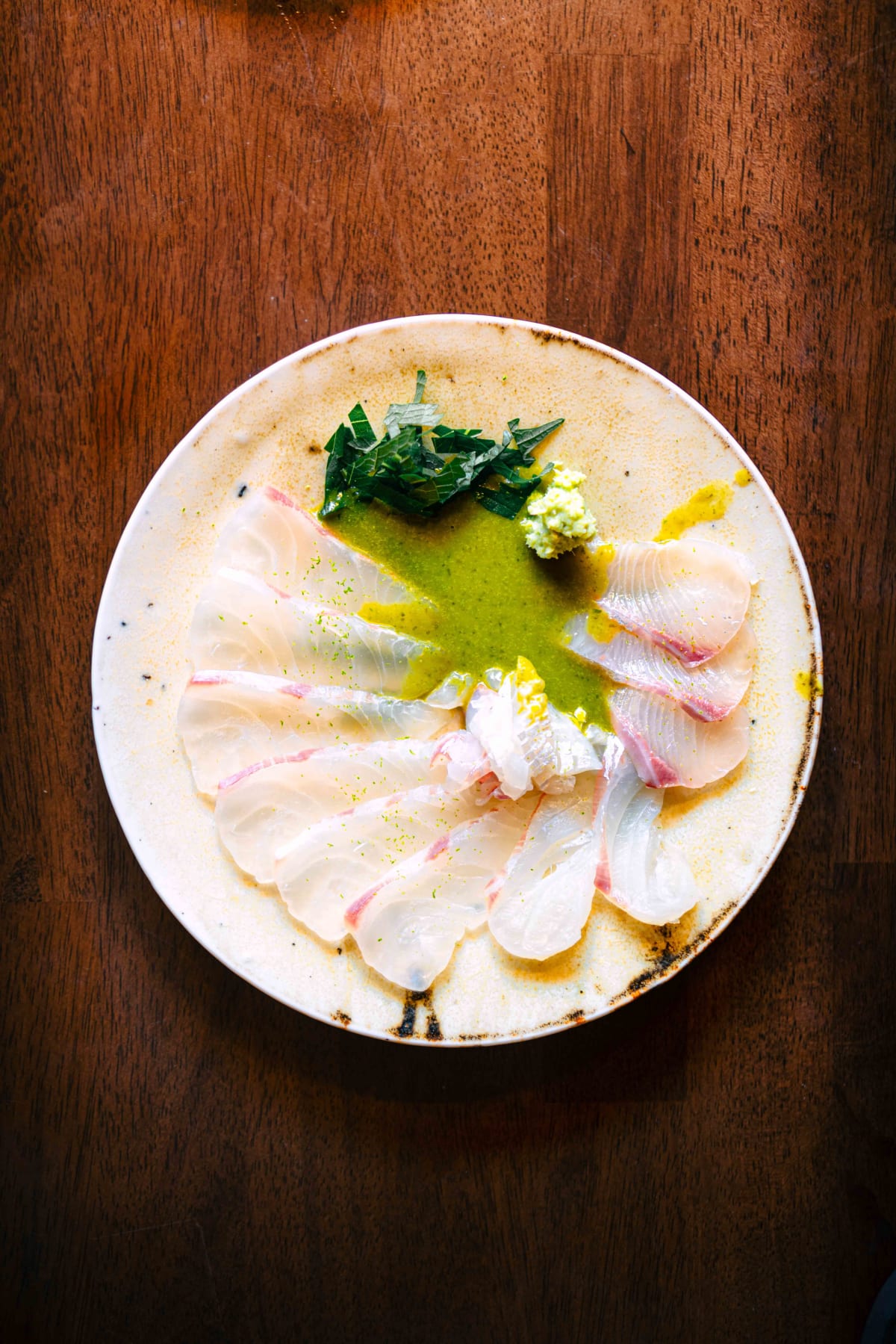
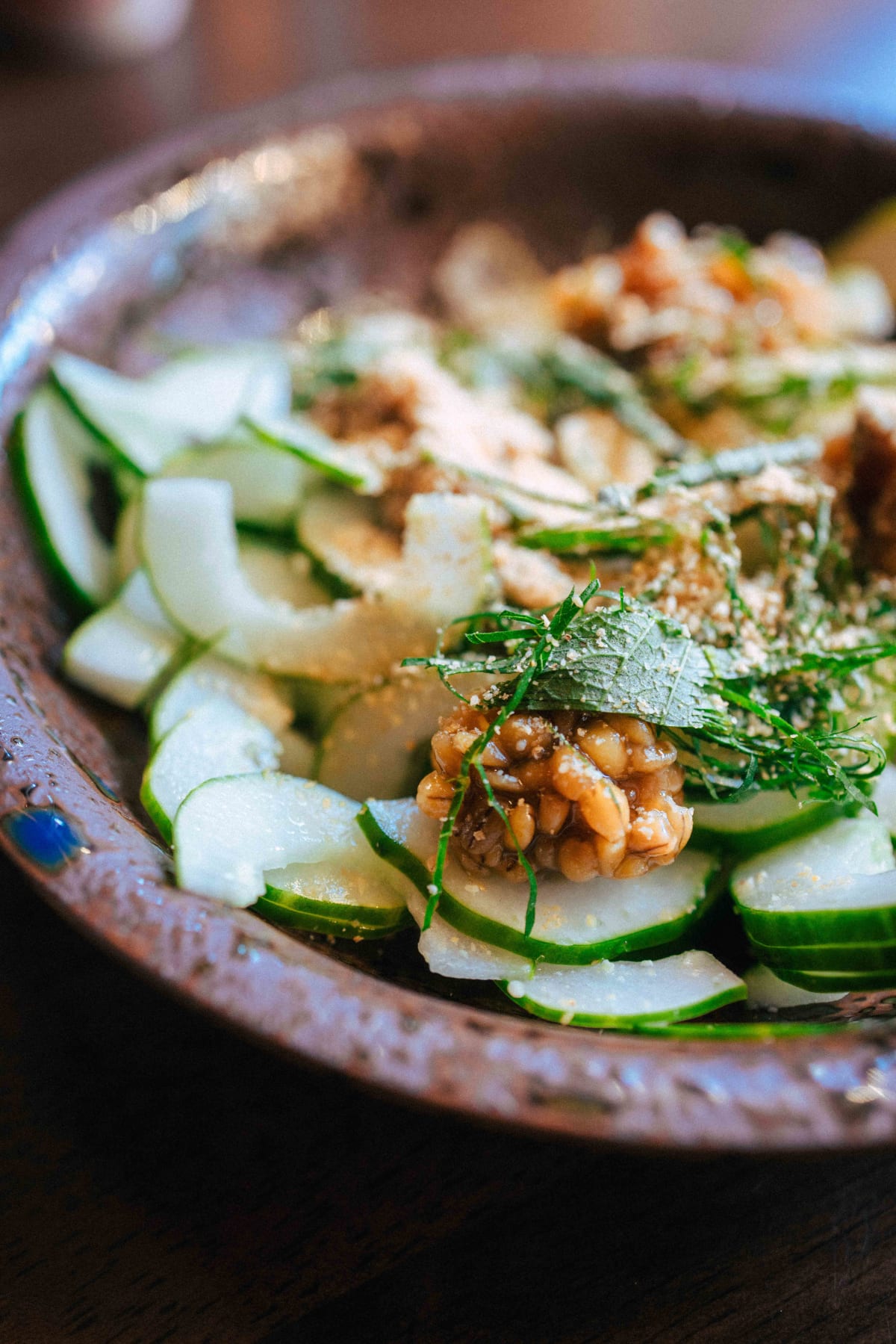
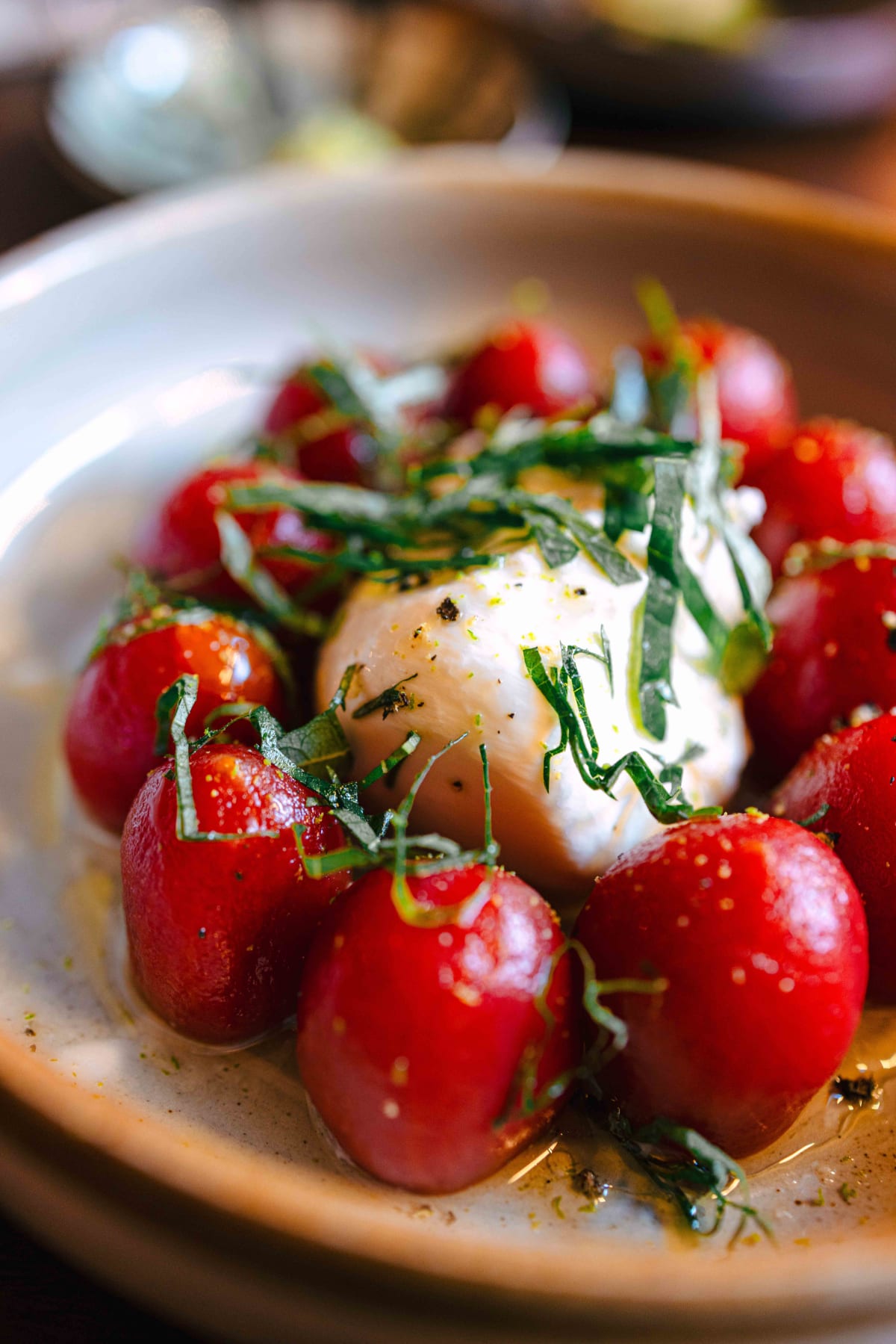
The chef here used to make sushi at Sushi Dajeong in Yeouido, once famous as a value omakase, and his skill seems strong across the board, not only with Japanese food. And yet, looking at the customers around me, many wait in line, get in, order something like a single oden hot pot, tip back a few drinks, and leave. I cannot understand why someone would go to the trouble of coming to such a good place and then make menu and drink choices that miss the level and the care the restaurant puts in. It left me thinking that, beyond the enthusiast crowd, the depth of food culture in Korea is not yet all that deep.
beyond the enthusiast crowd, the depth of food culture in Korea is not yet all that deep.
Section 4·The Openers
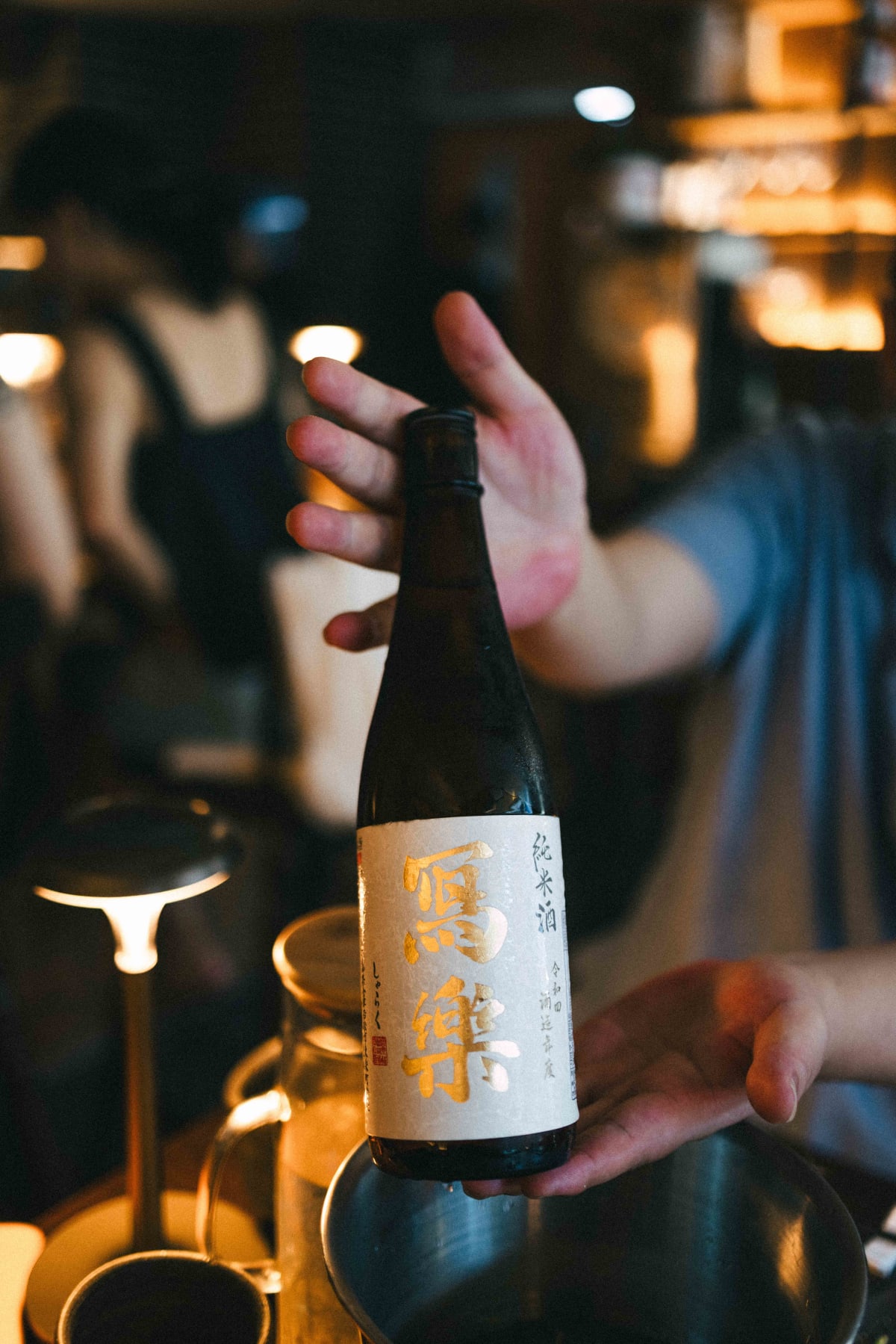
The first dish we enjoyed that day was ankimo. Ankimo is monkfish liver, and when gently steamed it takes on a texture rich and smooth enough to be likened to foie gras, a winter delicacy. Rather than being served in small amounts as at a sushi omakase, it came very generously, and it went beautifully with the Sharaku junmai we had ordered.
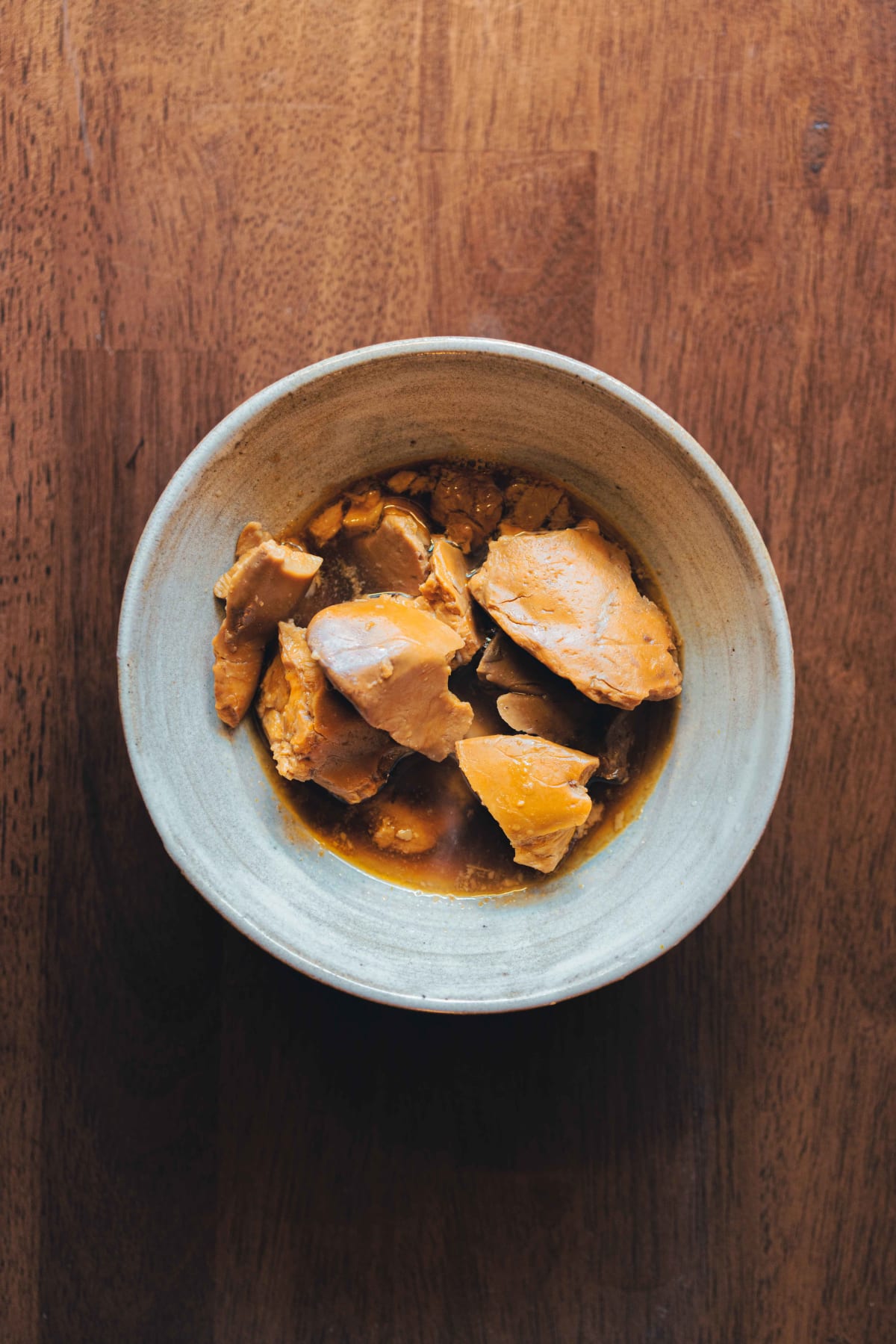
Sharaku is brewed by the Miyaizumi brewery in Aizu-Wakamatsu, Fukushima, a name revived by the fourth-generation head, Yoshihiro Miyamori. With its concentrated sweetness and a beautifully clean finish, it has become so hard to obtain even within Japan that it is called a phantom sake. It paired wonderfully with the rich ankimo.
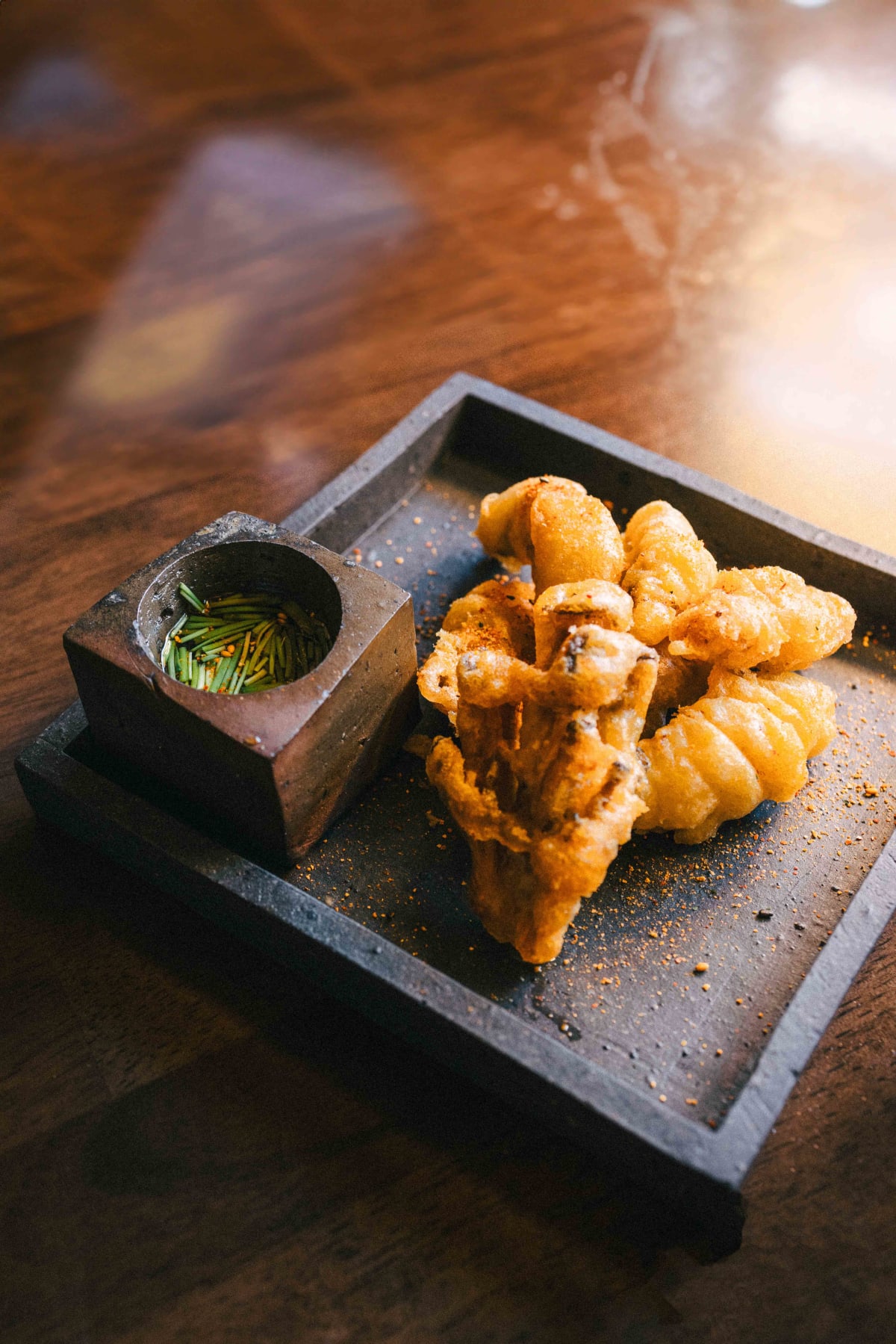
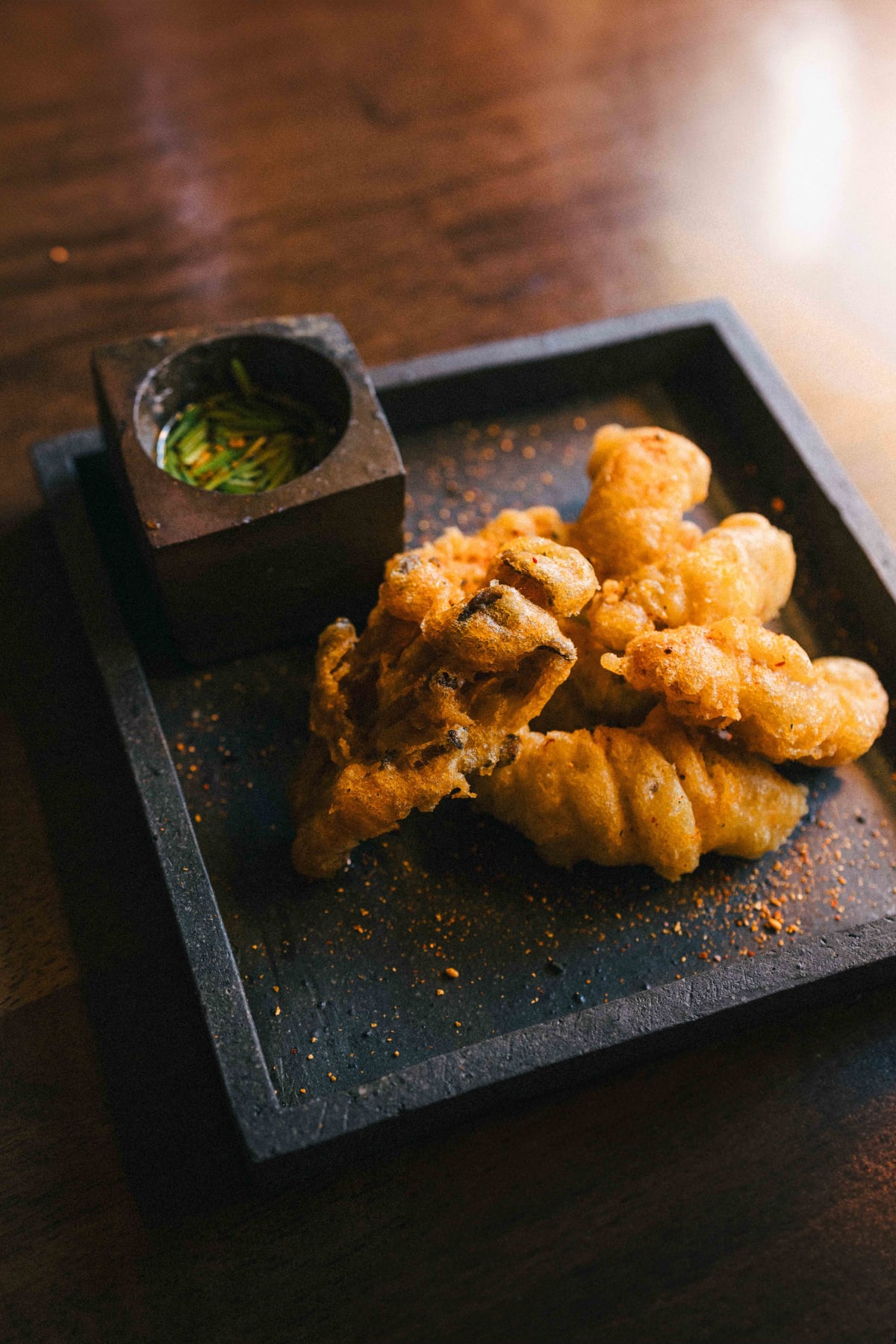
The second was fugu tempura. The batter was not the fluffy kind, but its texture was not hard either, soft enough to be pleasant, and the flesh of the fugu had a nice moistness to it. This fugu tempura was so good that I ordered it a second time, and it was excellent again.
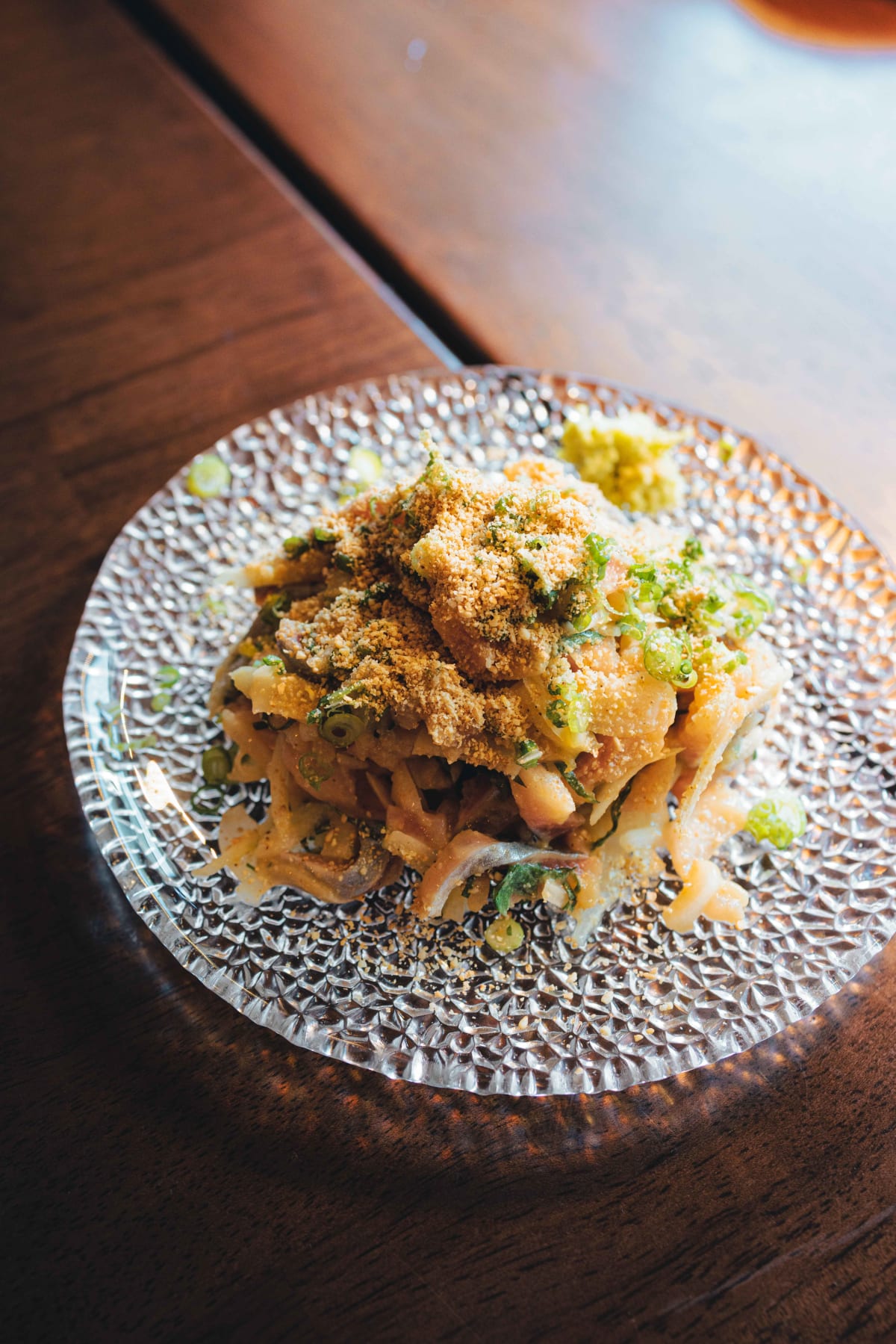
Another dish I would recommend is namero. Namero is a Japanese preparation of blue-backed fish cut into small pieces and mixed with sesame, ginger, scallion, and the like, and it originated as a fisherman's dish along the coast of the Bōsō Peninsula in Chiba. On a rocking boat, where soy sauce would spill easily, they seasoned it with miso instead, pounding the freshly caught fish on a cutting board with a knife until it turned sticky. The name is said to come either from that sticky texture or from the idea that it is so good you would lick the plate clean. It is not aggressive, and while the flavour of the fish comes through on its own terms, the various ingredients mixed in tame the fishy edge particular to blue-backed fish, making it a dish you can thoroughly enjoy.
Section 5·A Korean Twist
That day one of my companions offered to mix me a good drink and ordered Hwayo, a premium Korean soju, with tonic water, then asked for some shiso leaf to be cut into it as well.
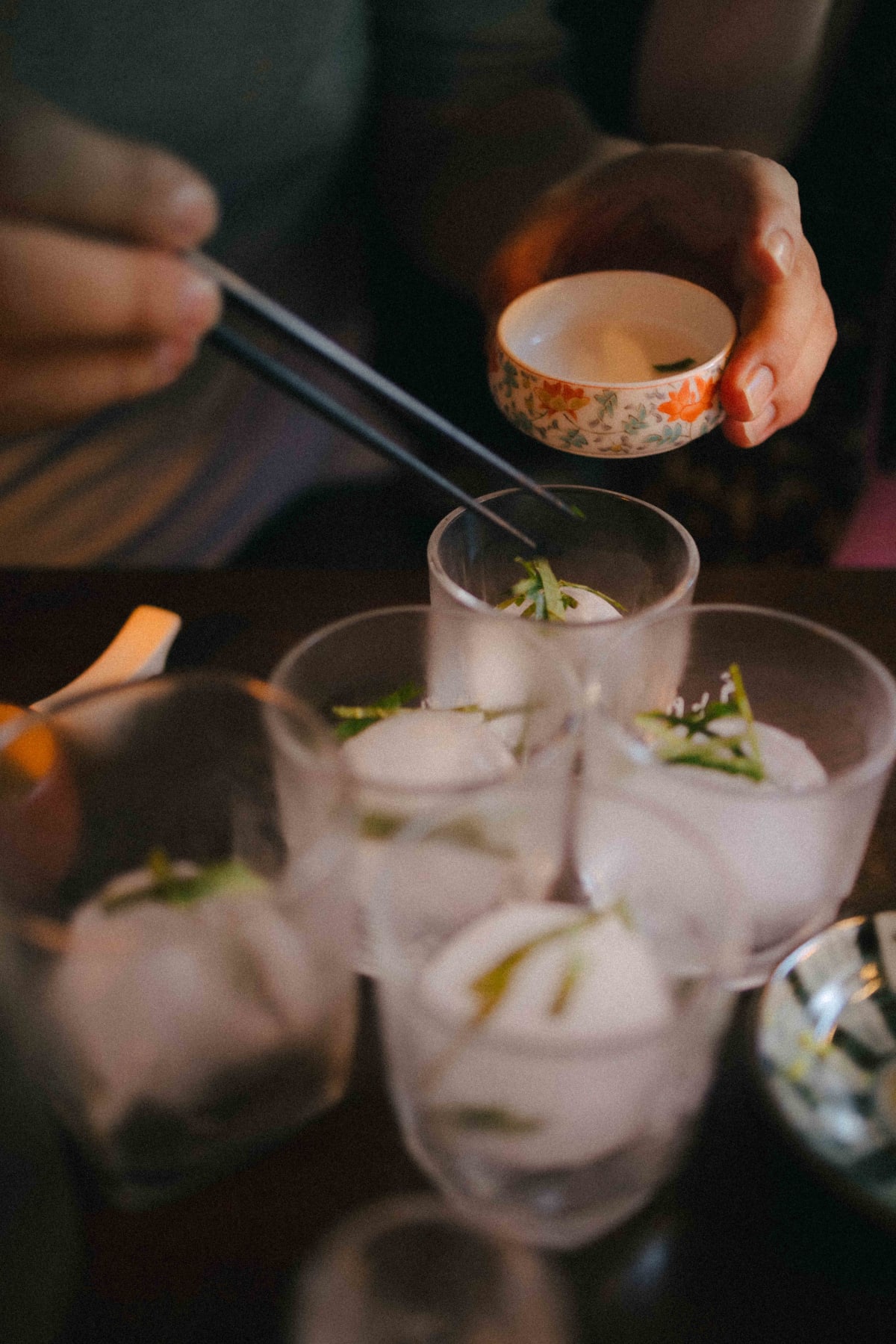
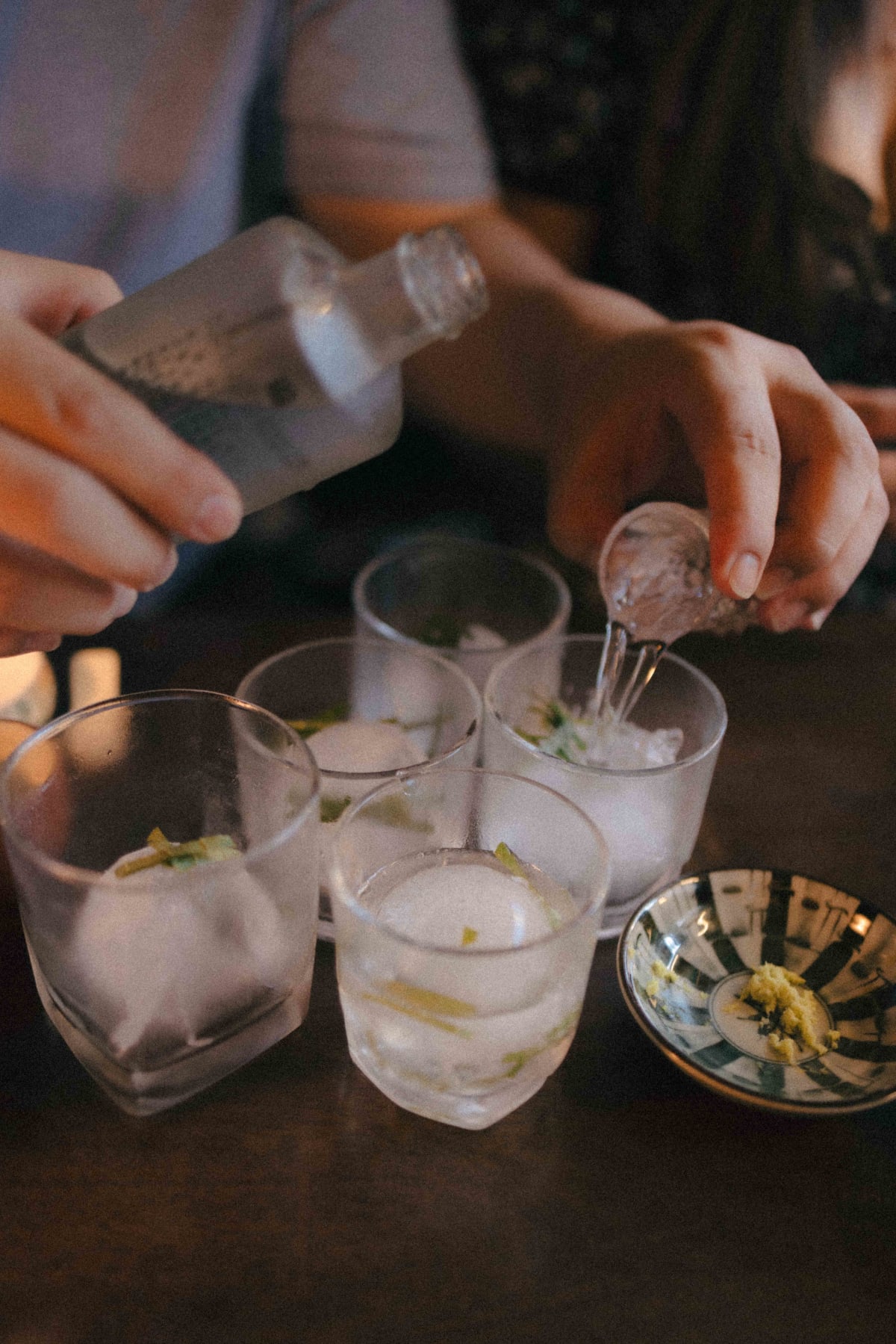
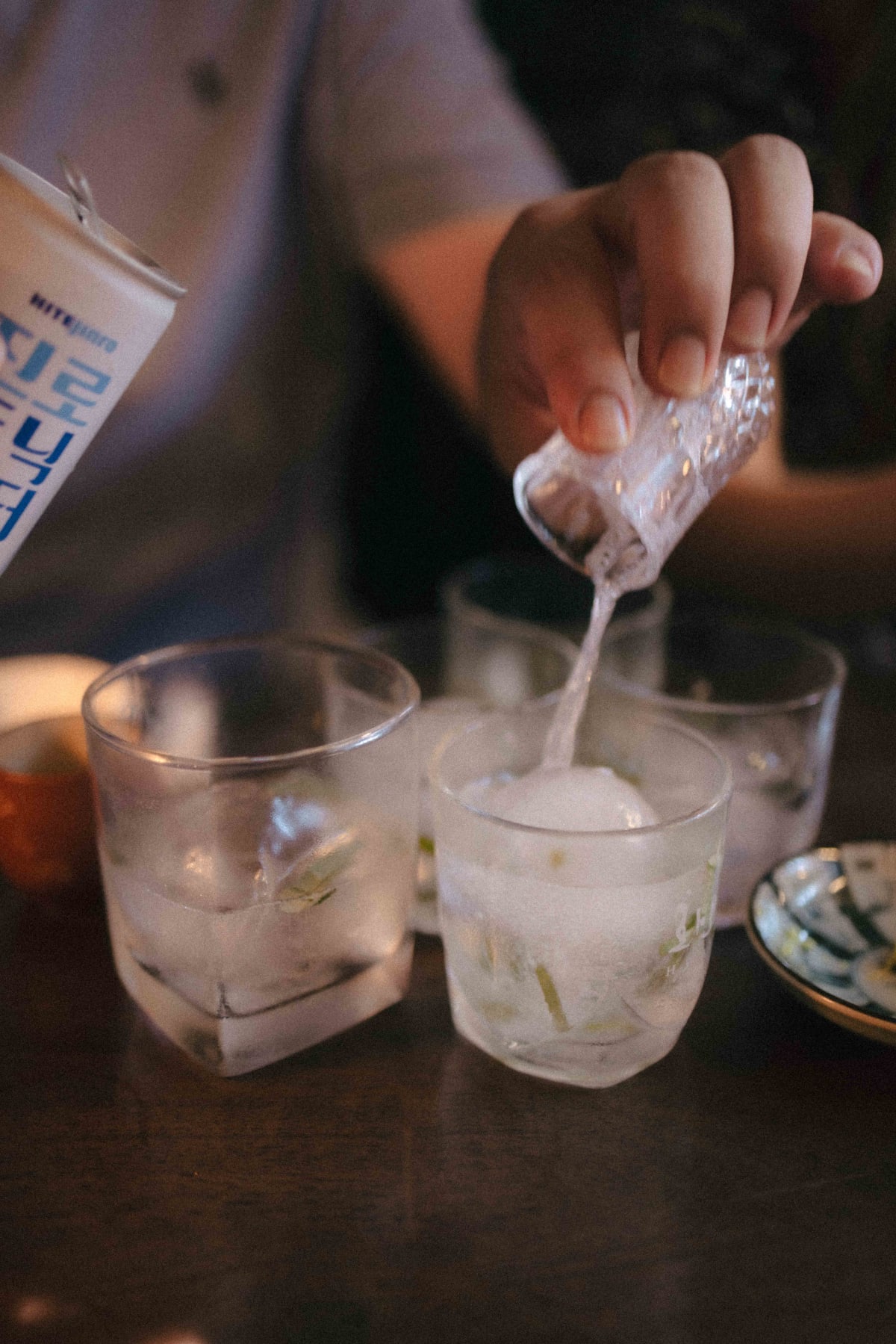
I wondered why shiso, but it turned out he wanted to layer the aroma of the shiso leaf into the drink too. Hwayo is a distilled soju made from one hundred percent Korean rice in Yeoju by the Kwangjuyo group, a distinguished ceramics house, and it is aged in breathing onggi earthenware to deepen its flavour and aroma. The same group once ran Gaon, a Korean restaurant that held three Michelin stars, which tells you how deep its roots in Korean cuisine and Korean drink run. I was surprised that such an improvisation was even possible, and in a way it felt like a special experience available only at a Korean izakaya rather than in Japan itself.
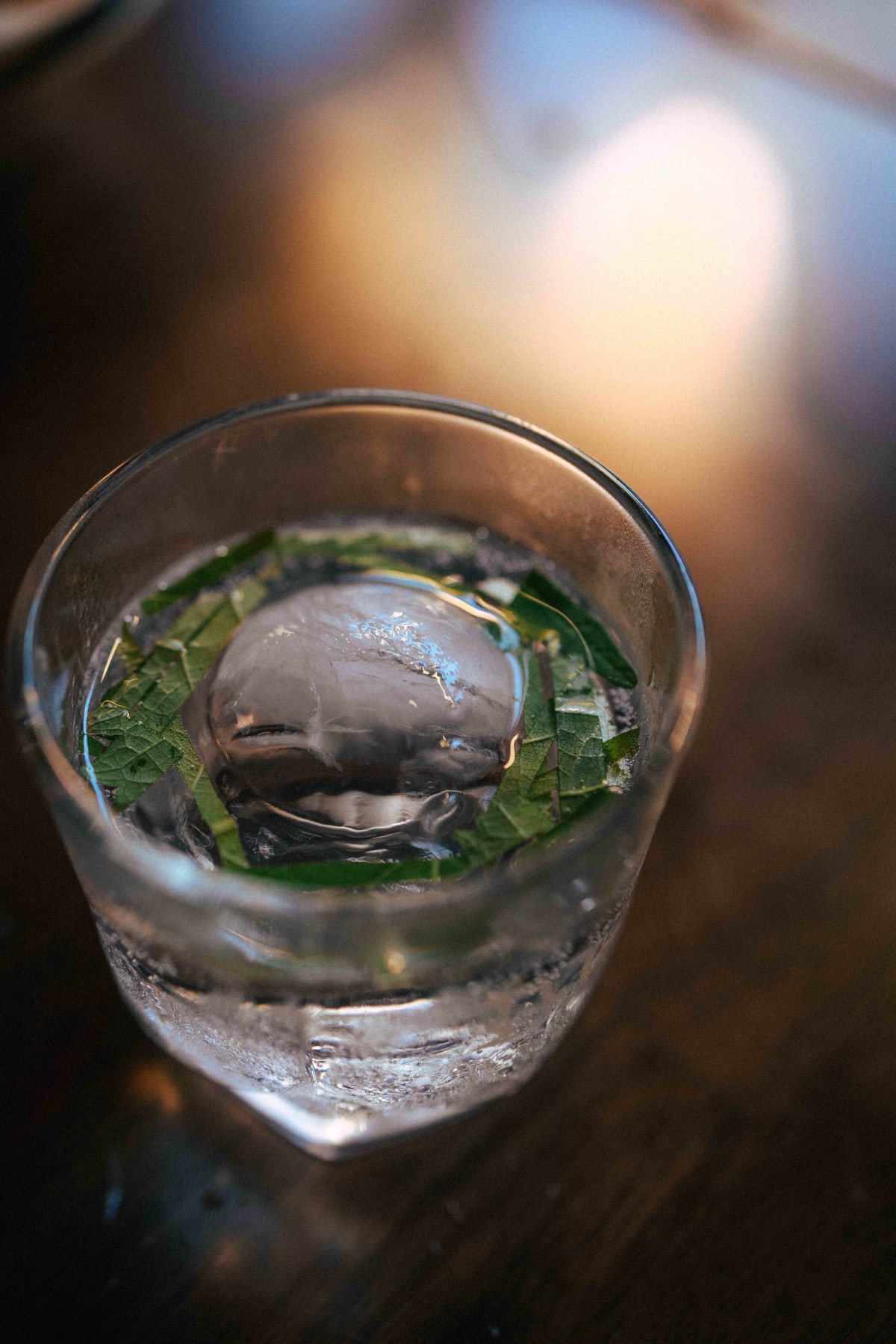
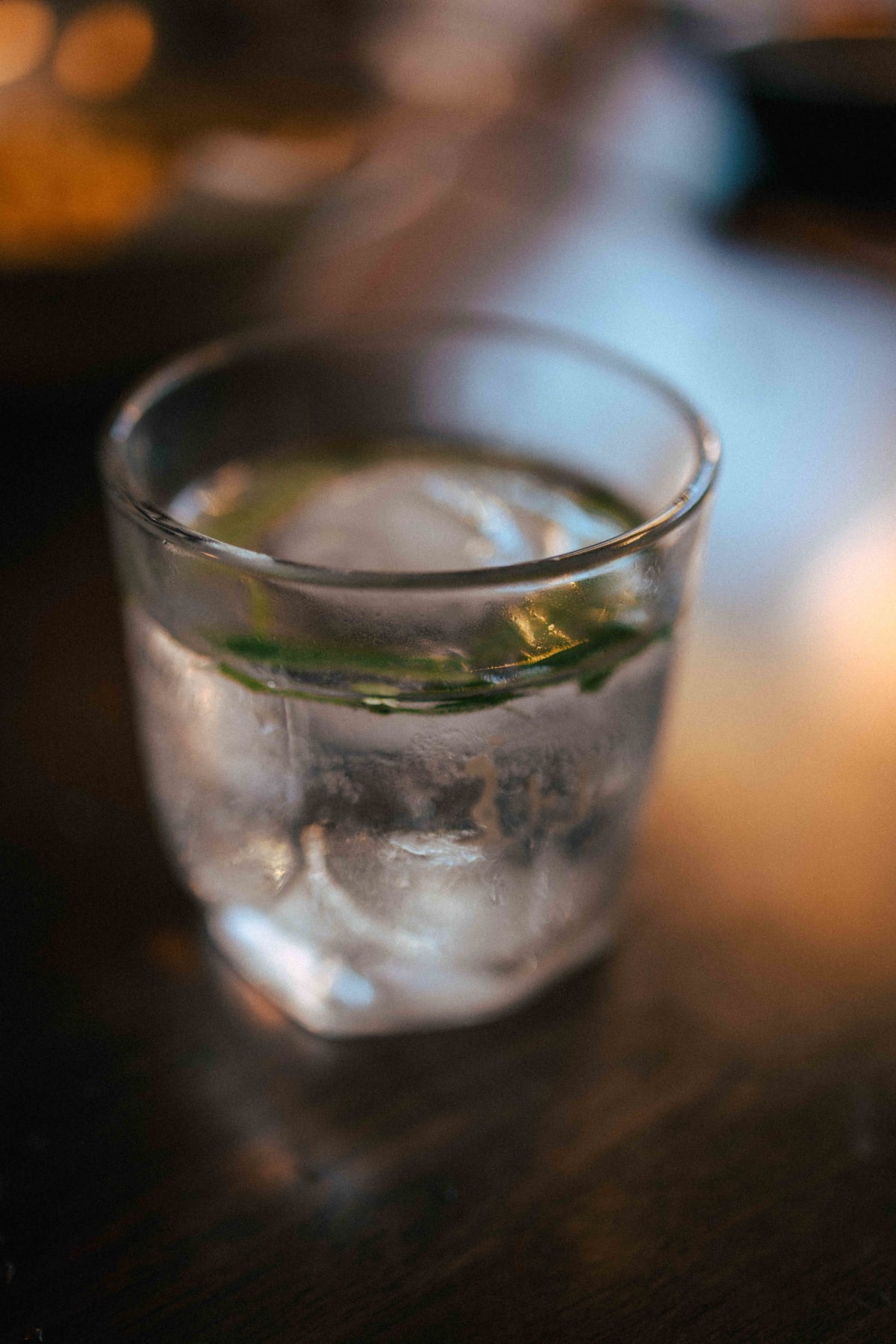
in a way it felt like a special experience available only at a Korean izakaya rather than in Japan itself.
Section 6·More Plates
Having ordered so much, at one point the chef sent out, as a gift, bonito lightly seared on the surface, and this too was delicious.
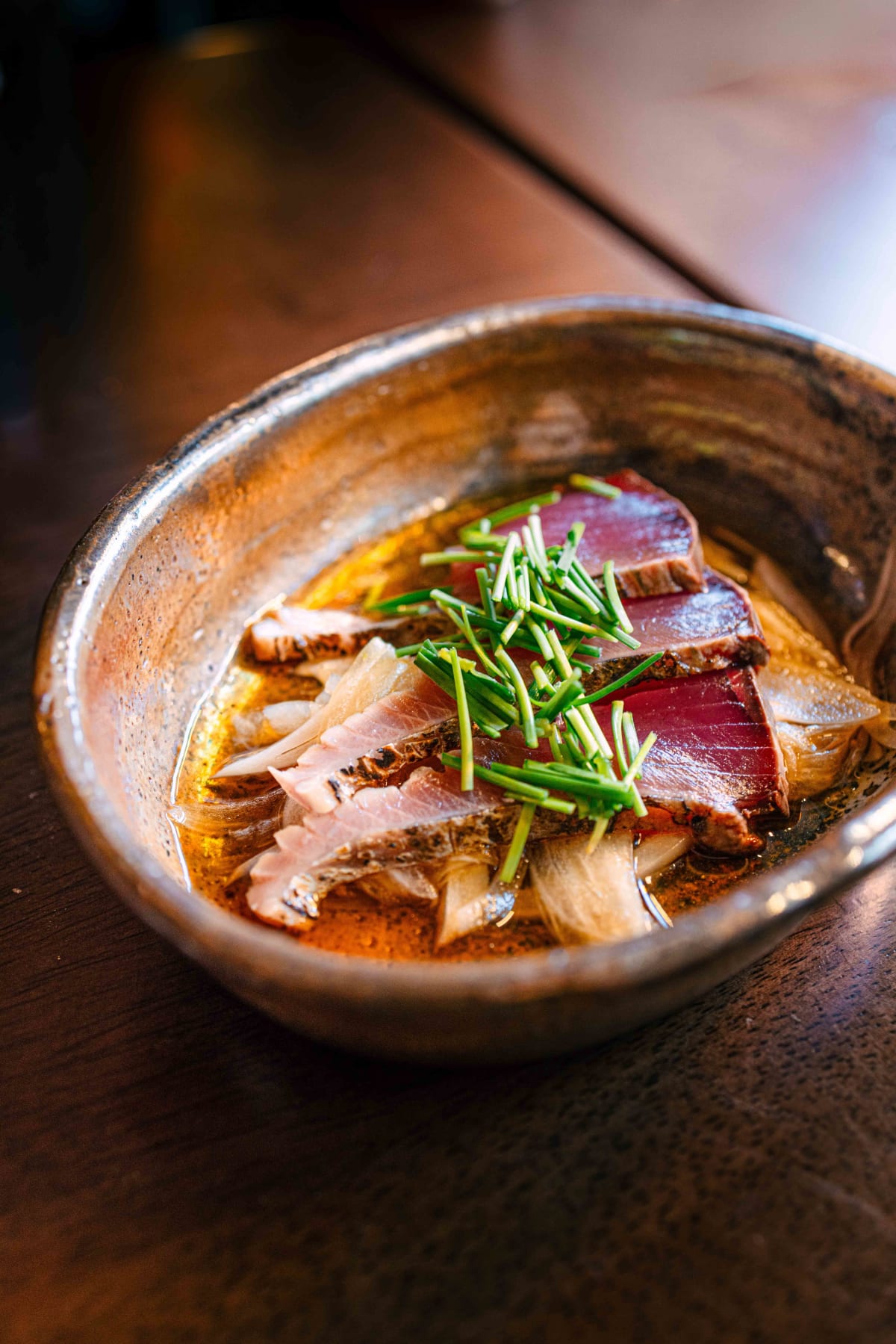
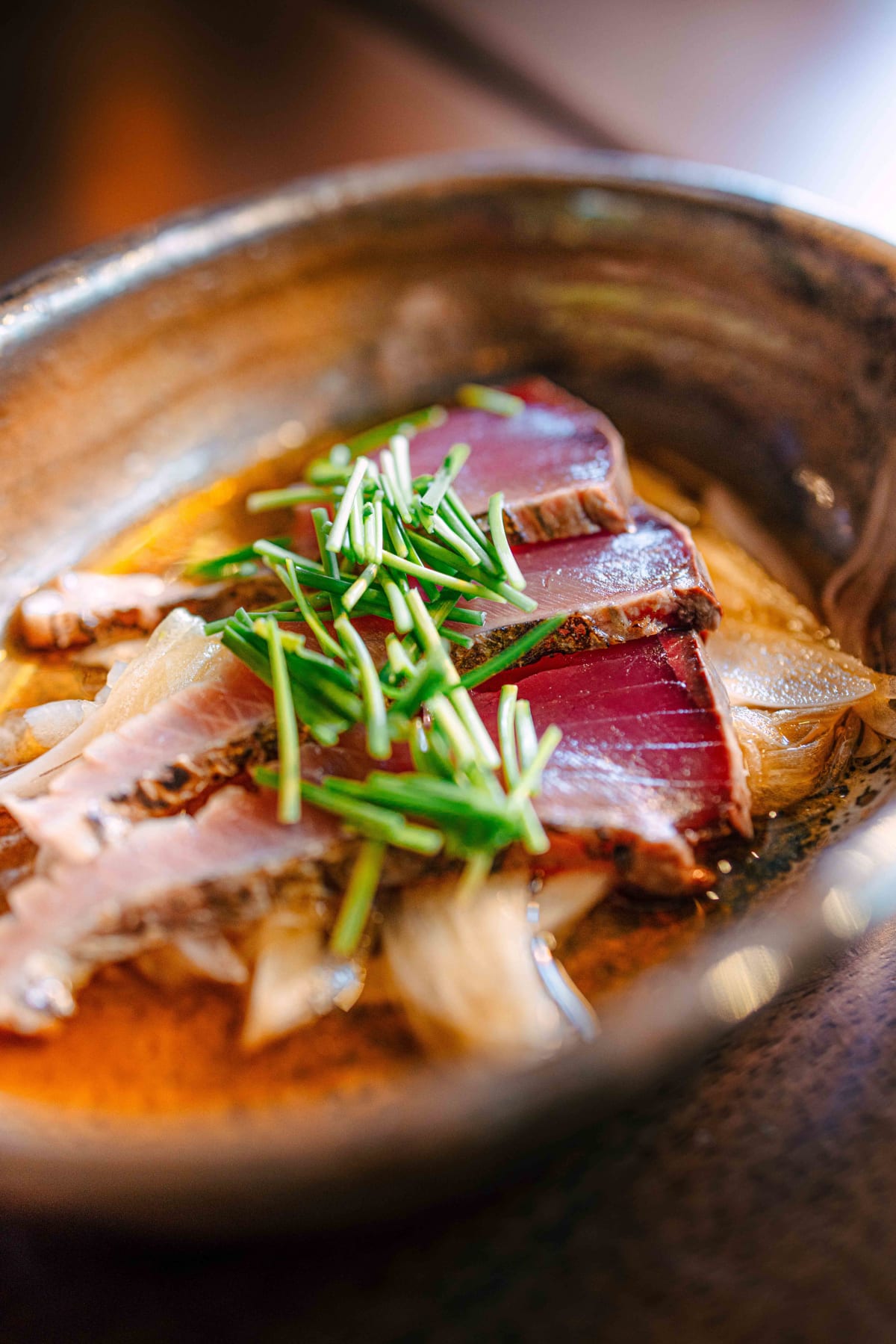
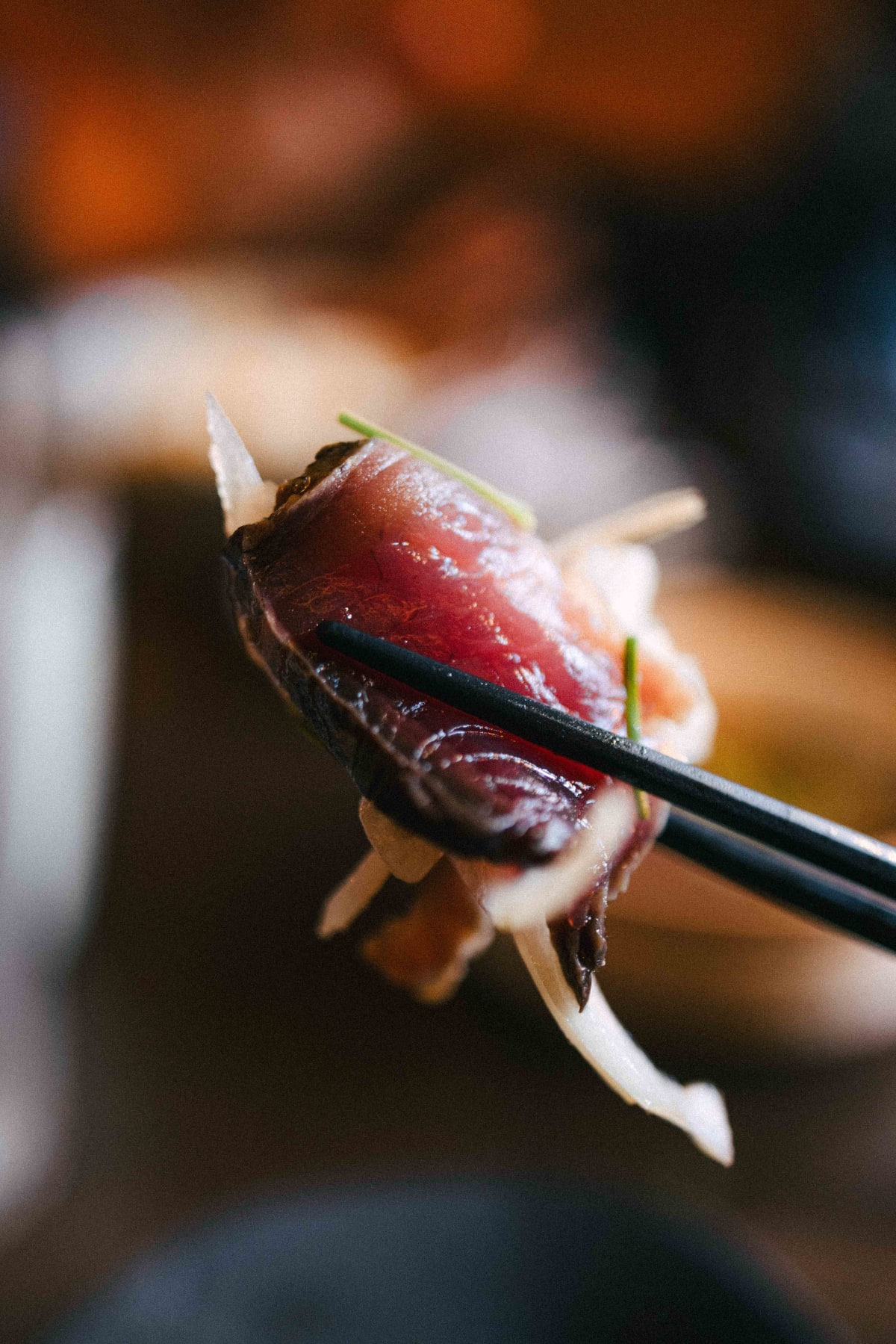
In return we soon ordered karaage and corn, and the karaage was very good. The frying technique behind karaage came from China, but the Japanese-style chicken karaage of today, pre-seasoned before frying, became popular in postwar Japan as poultry farming grew, with Oita in Kyushu regarded as the home of chicken karaage.
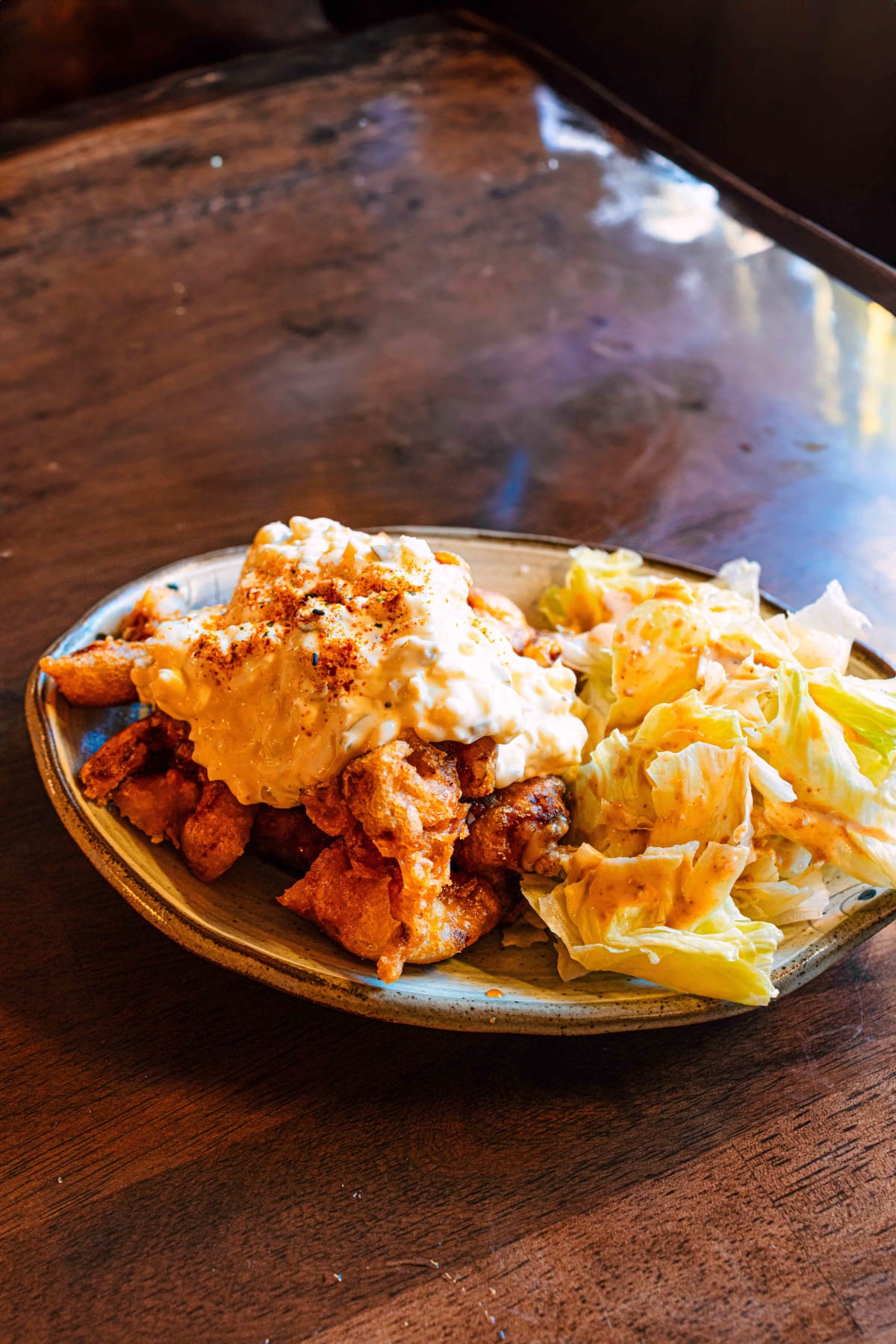
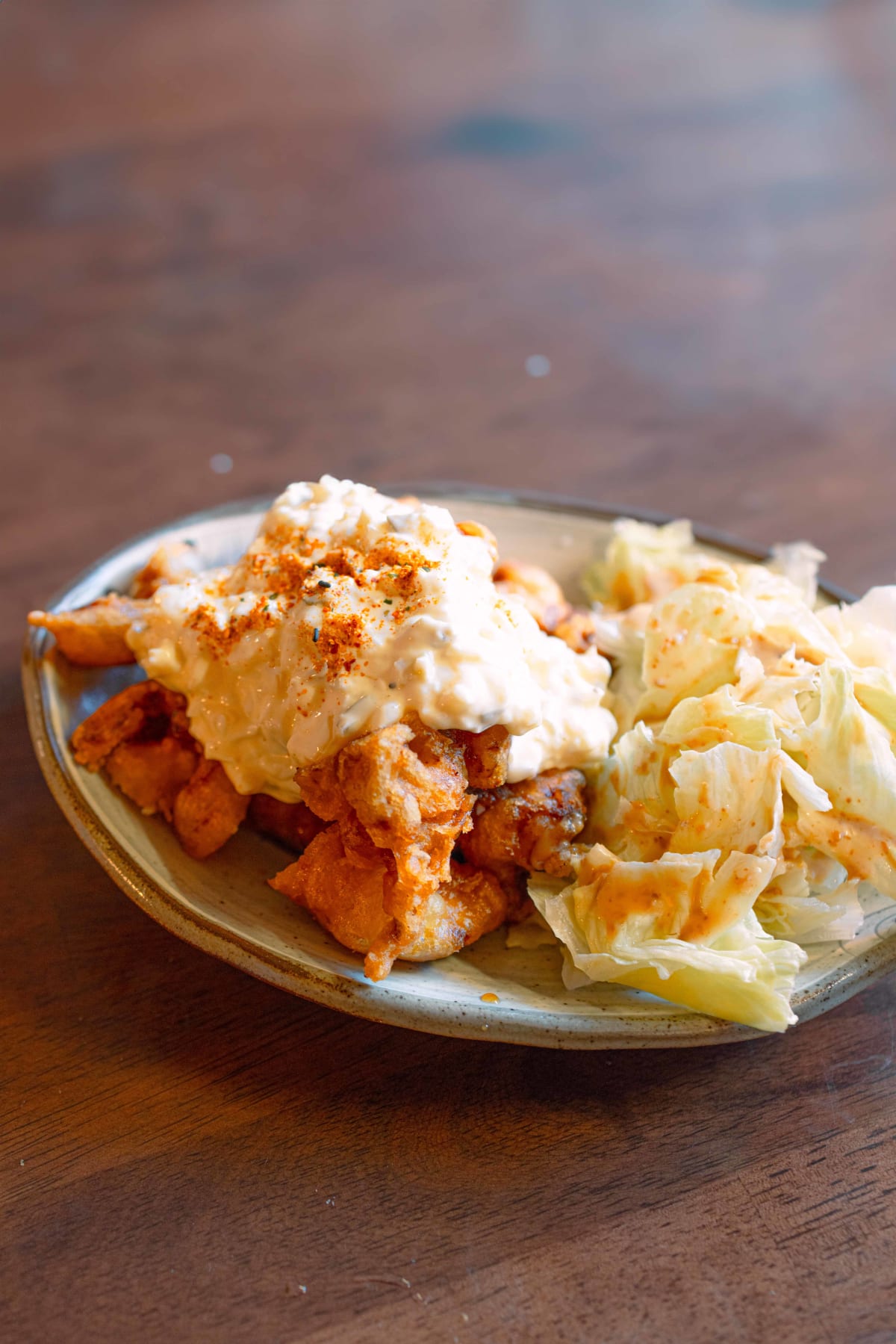
This is not the kind of extremely delicate, fine-dining-level technique, but the dishes here never miss the point of the flavour or the strength of the ingredient.
The corn was fried in a very thin, soft batter, and perhaps because summer is corn season, the sweetness of the ingredient was lovely, and stepping away from the texture of corn itself to add the playful texture of a fritter was a nice touch.
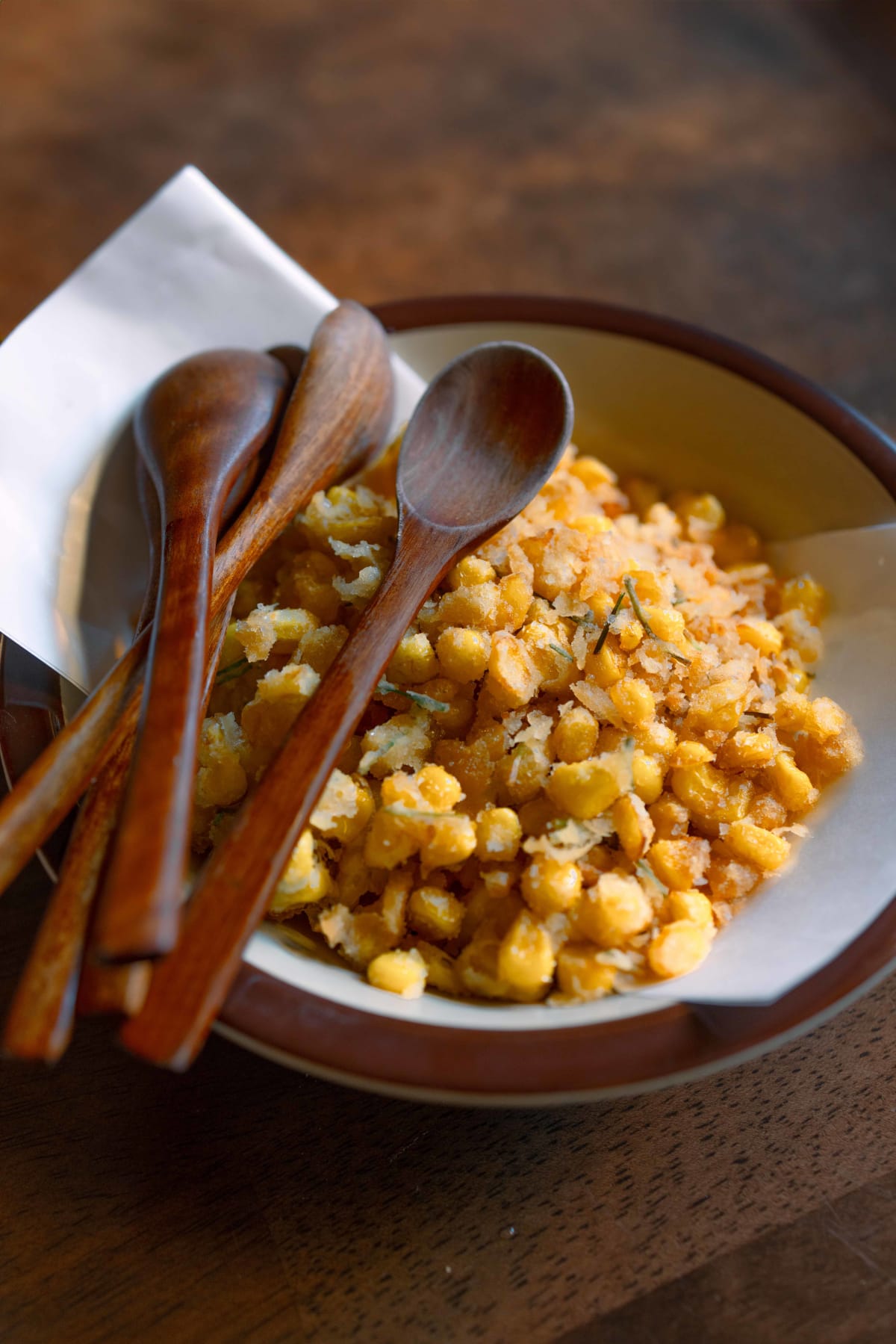
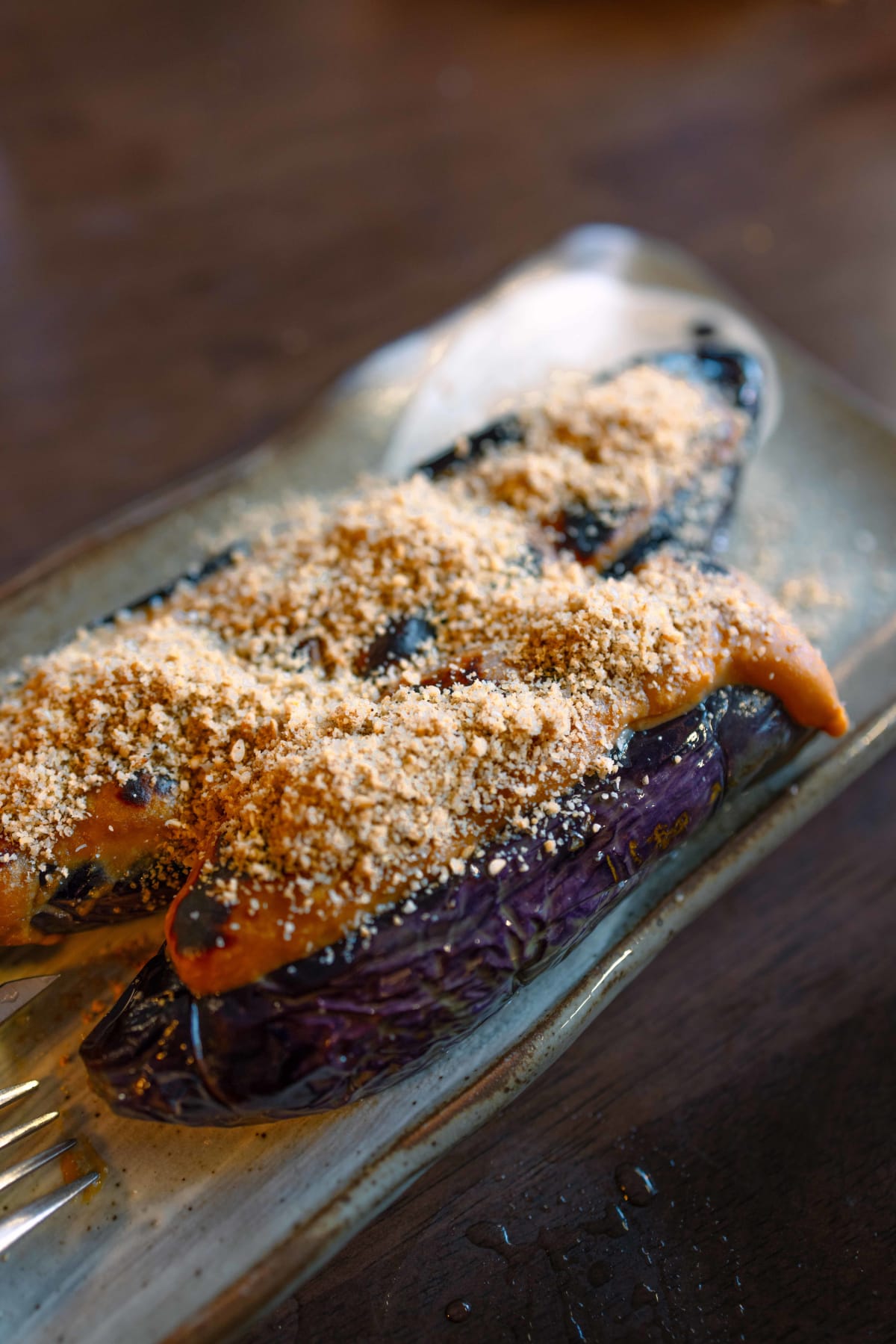
Even if you come with someone who cannot eat raw fish, ordering dishes like these would be a good idea.
Section 7·The Mackerel
I am quite fond of raw fish, and of blue-backed fish in particular, so I ordered the live-mackerel stick sushi. Perhaps because the chef came from a sushi restaurant, the mackerel bo-zushi was delicious.
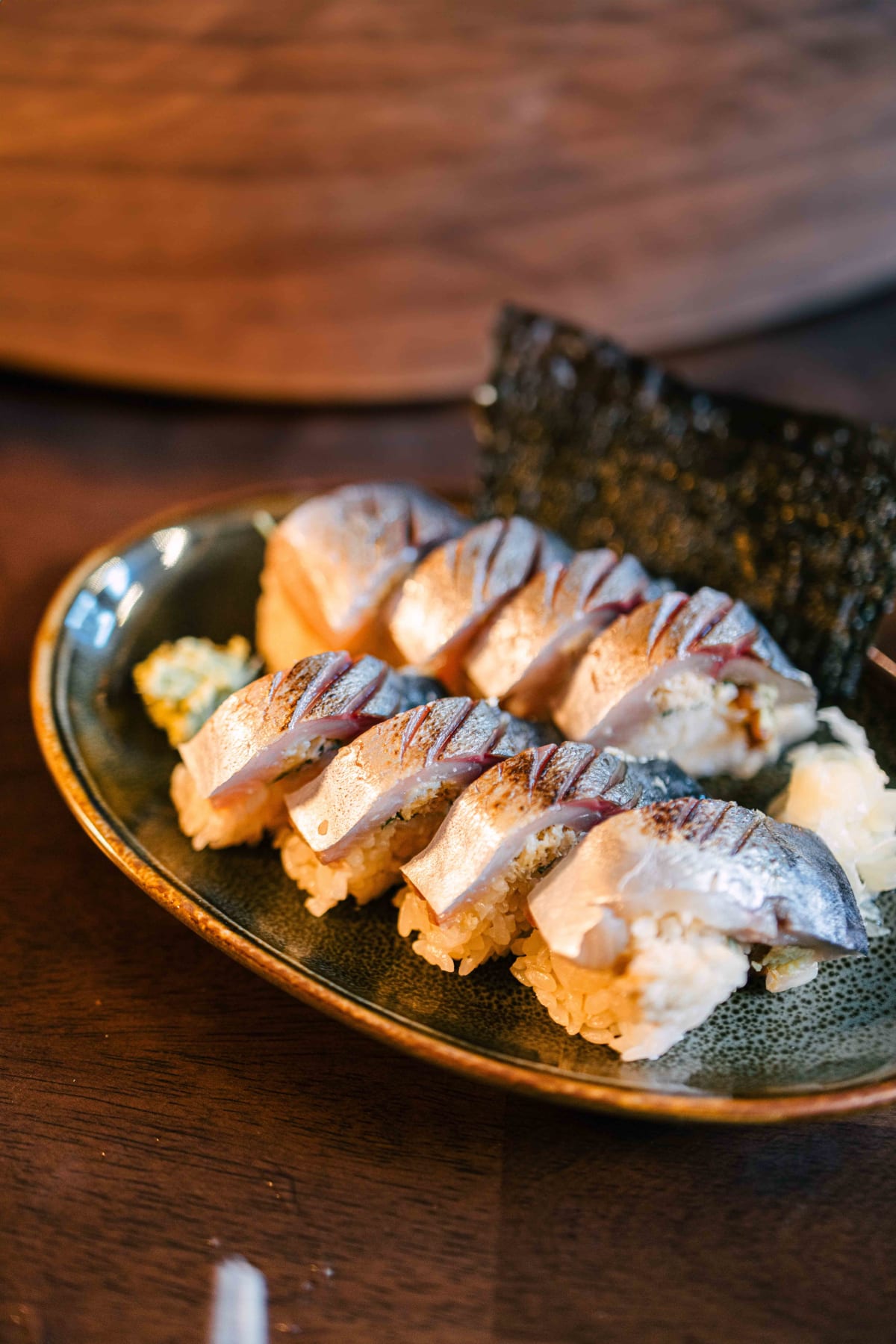
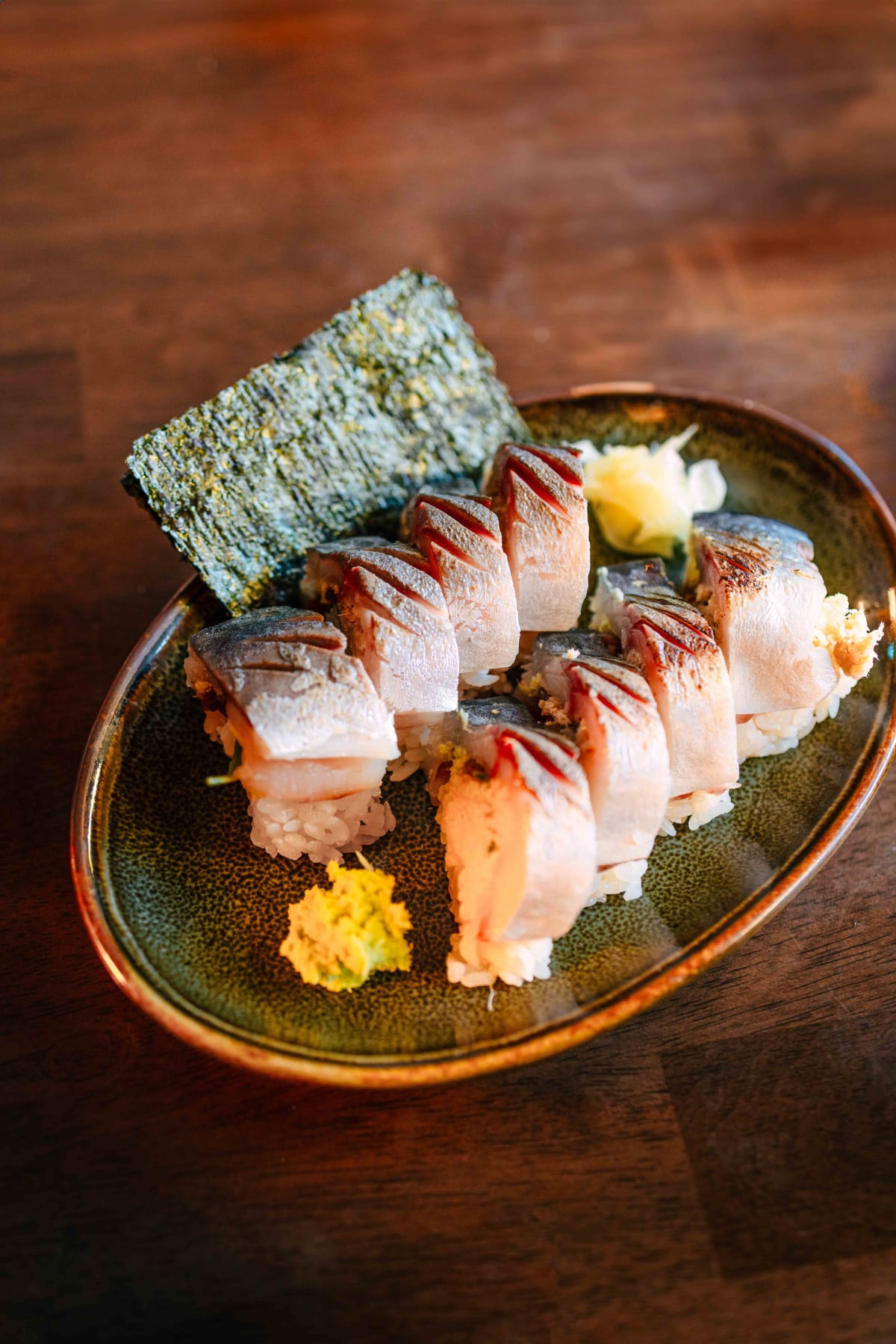
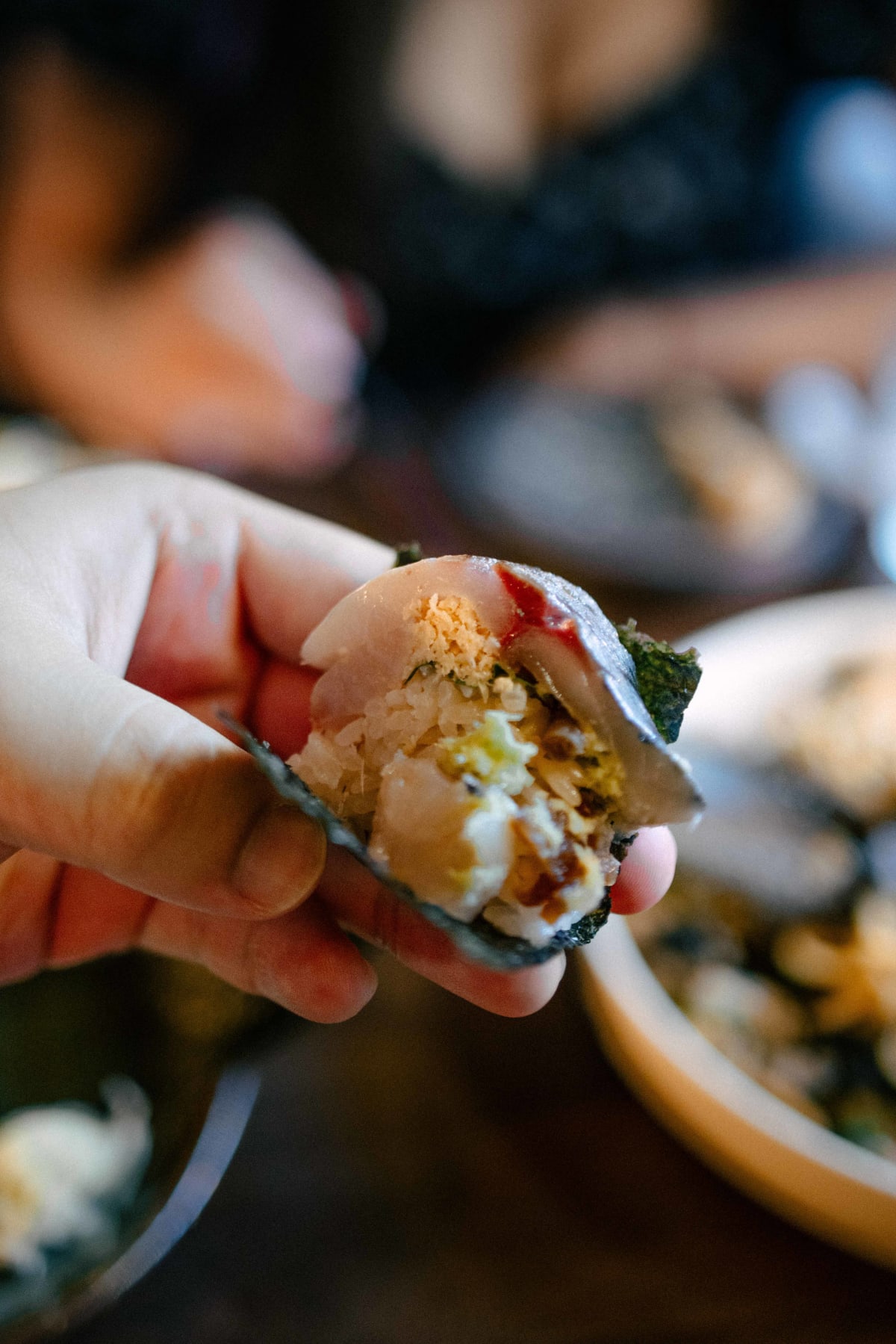
In fact, mackerel stick sushi, or saba-zushi, is originally a dish that represents Kyoto. Landlocked Kyoto brought in mackerel caught in Wakasa Bay along the Saba Kaido, the Mackerel Road, over two or three days, and by the time it reached Kyoto the salt had settled in just right, and pressing that mackerel into sushi was the beginning of saba-zushi. At ikki it was a fresher version made with live mackerel rather than cured. They serve nori alongside, and wrapping a piece in it makes it even better.
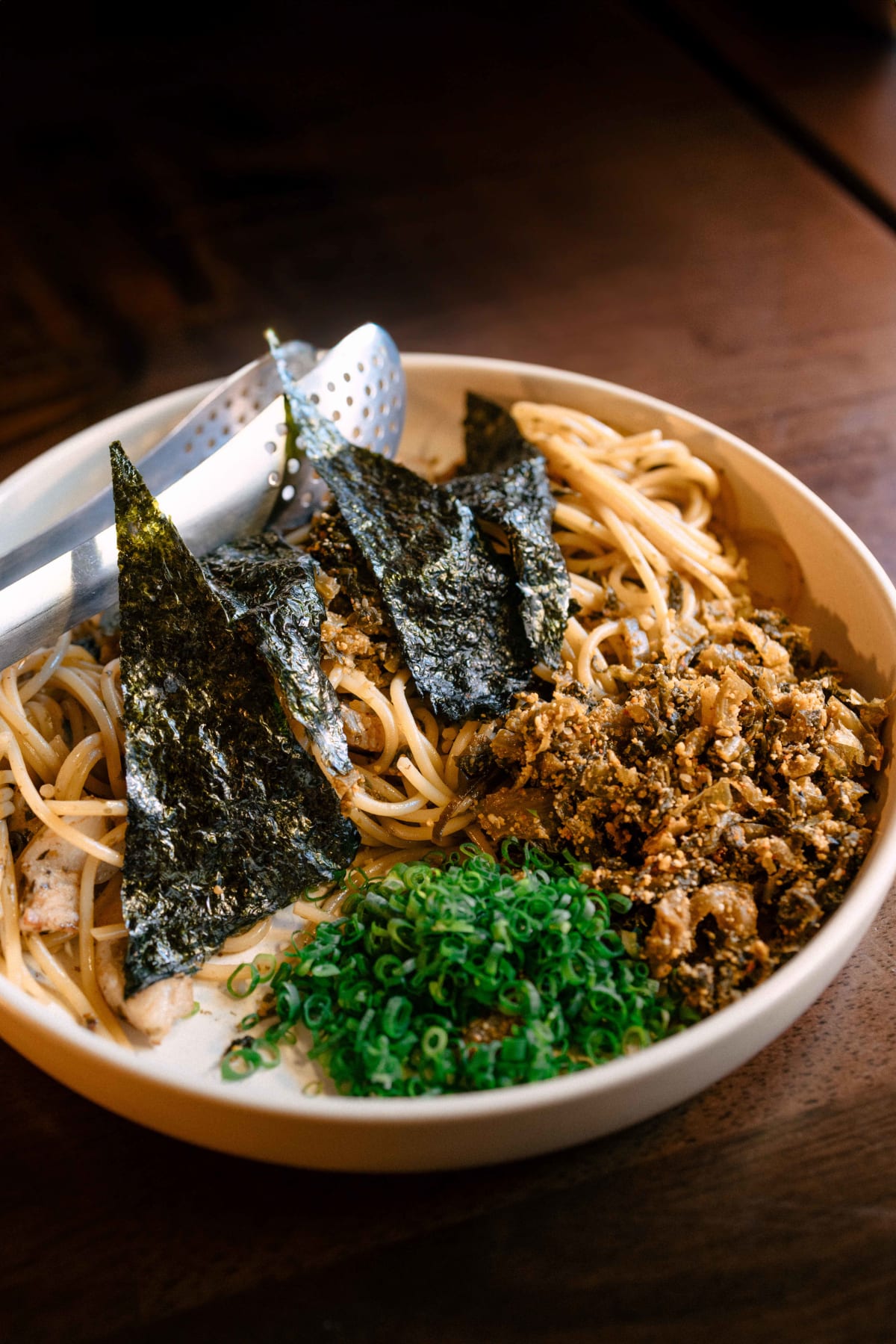
If I came alone, I would order a single stick sushi and have it with a drink.
Section 8·Dessert
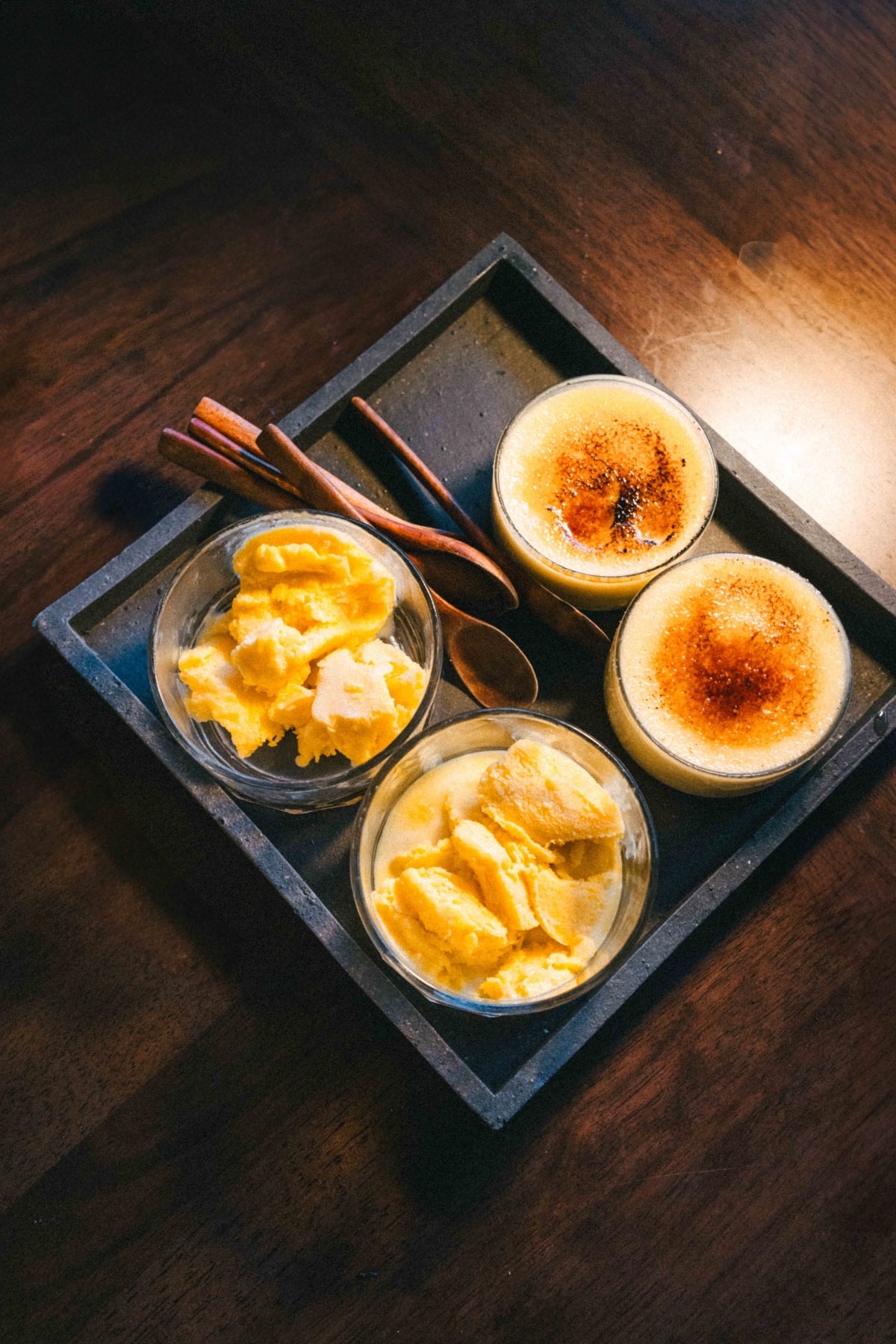
At the end, the chef even took care of dessert, a sweet crème brûlée plus ice cream to cool off the heat, a fine finish.
ikki is a pleasant, modern space and a distinctive, high-level izakaya that holds up fully for the purpose of serious eating. And the fact that it does not simply follow the izakaya dishes of Japan but adds ikki's and the chef's own variations is yet another reason to visit.
The useful way to read ikki is as a chef's kitchen keeping a bar's hours: the training of an omakase behind the cooking, but without the fixed price, the set sequence, or the occasion. You order as you like and spend as you like. For anyone who wants real cooking without the ceremony, it is the quietly luxurious choice, worth returning to rather than ticking off once.

Have a question about this restaurant, or want to share your own experience?
Send a message