Fine Dining · Seoul · Korea / July 2024
Jungyookgongbang
"Five cuts of No.9 hanwoo, with seafood and broth in between"
Section 1·Omakase, Imokase And Hanwoo
After Covid-19, an omakase craze swept through Korea. At first the word mostly meant sushi omakase, but little by little people began attaching the idea, and the word omakase itself, to all sorts of food, and it started to reach beyond the bounds of Japanese cuisine.
The most entertaining of the new words is imokase. In Korea, imo, literally an aunt, is what people call the middle-aged or older women who work in or run a local restaurant known for its home cooking. When such an owner sends out flavourful Korean food made from whatever she has ready that day, it is called imokase, imo and omakase rolled into one.
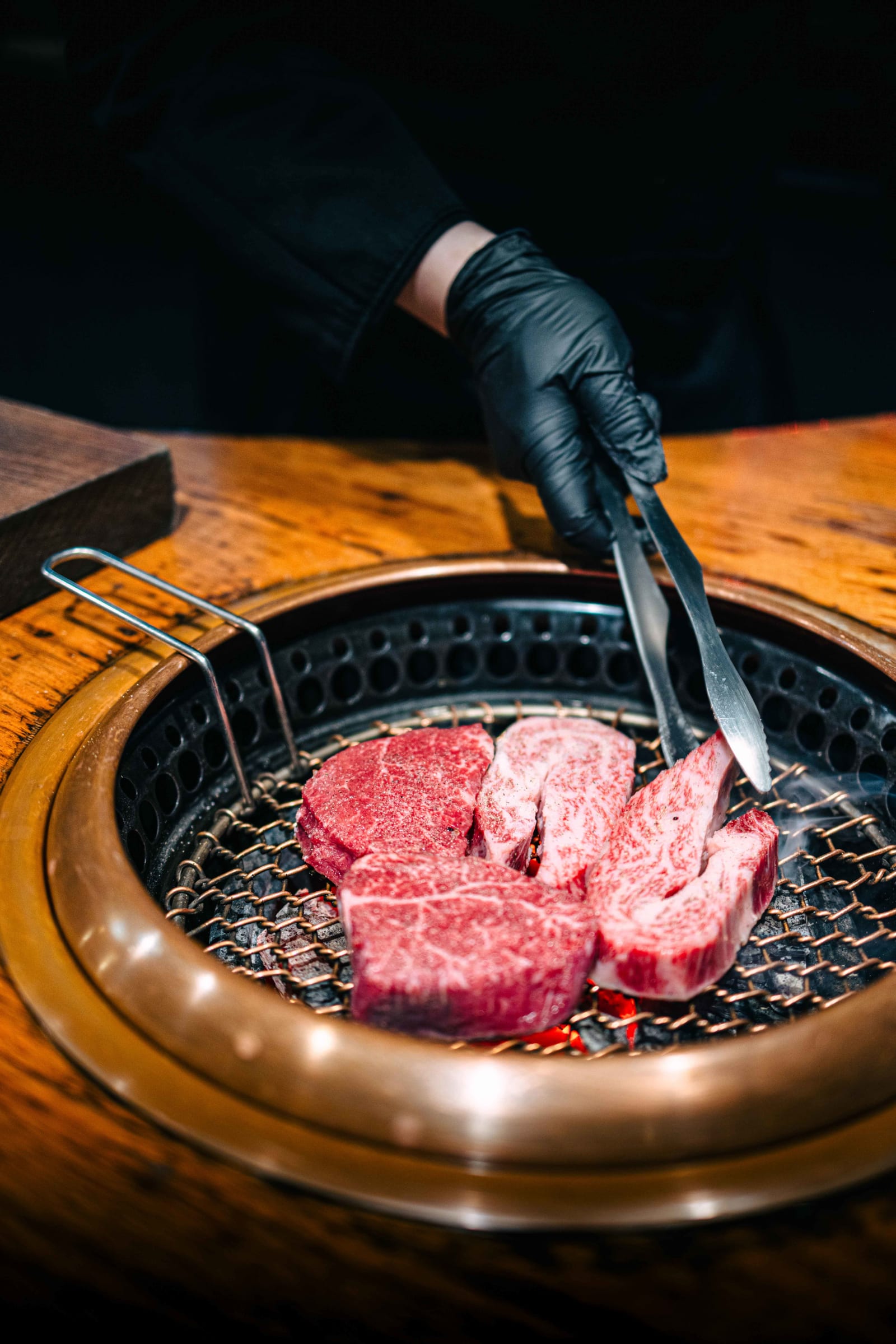
Still, if I had to name the one omakase that belongs to Korea alone, I would choose hanwoo omakase. Various cuts of hanwoo, Korea's native beef, are grilled and served with other dishes the way an omakase would be, and under the name hanwoo omakase the format took off.
In truth, I am not one to seek out rich, heavy hanwoo. So I have not made the rounds of hanwoo omakase, but if I had to name the most satisfying one I have been to, and the one I keep returning to, it would be this place, Jungyookgongbang.
For one thing, I prefer seafood to meat. And unlike high-end sushi, for which Korea has no real substitute outside omakase, top-grade hanwoo can be found at good value if you look around, so I have not been to hanwoo omakase all that often.
Jungyookgongbang, though, is a place I like. Each grilled hanwoo dish is infused with a fine-dining complexity and balance, and along the way come plenty of delicious dishes that clear away the richness.
Each grilled hanwoo dish is infused with a fine-dining complexity and balance, and along the way come plenty of delicious dishes that clear away the richness.
Section 2·A Butcher's Workshop Built For Wine
Ask for the defining hanwoo omakase and the answer will most likely be Born & Bred. Chef Heachan Chung of Jungyookgongbang is the man who worked as head chef at that very Born & Bred in Majang-dong.
He opened Jungyookgongbang in 2019, in a side street off Dosan-daero in Nonhyeon-dong, Gangnam-gu. He studied at the Apicius cooking school in Florence and did stages at two restaurants there, then opened a Korean restaurant in Manila before coming back to Seoul to work at Tasting4 and Born & Bred.
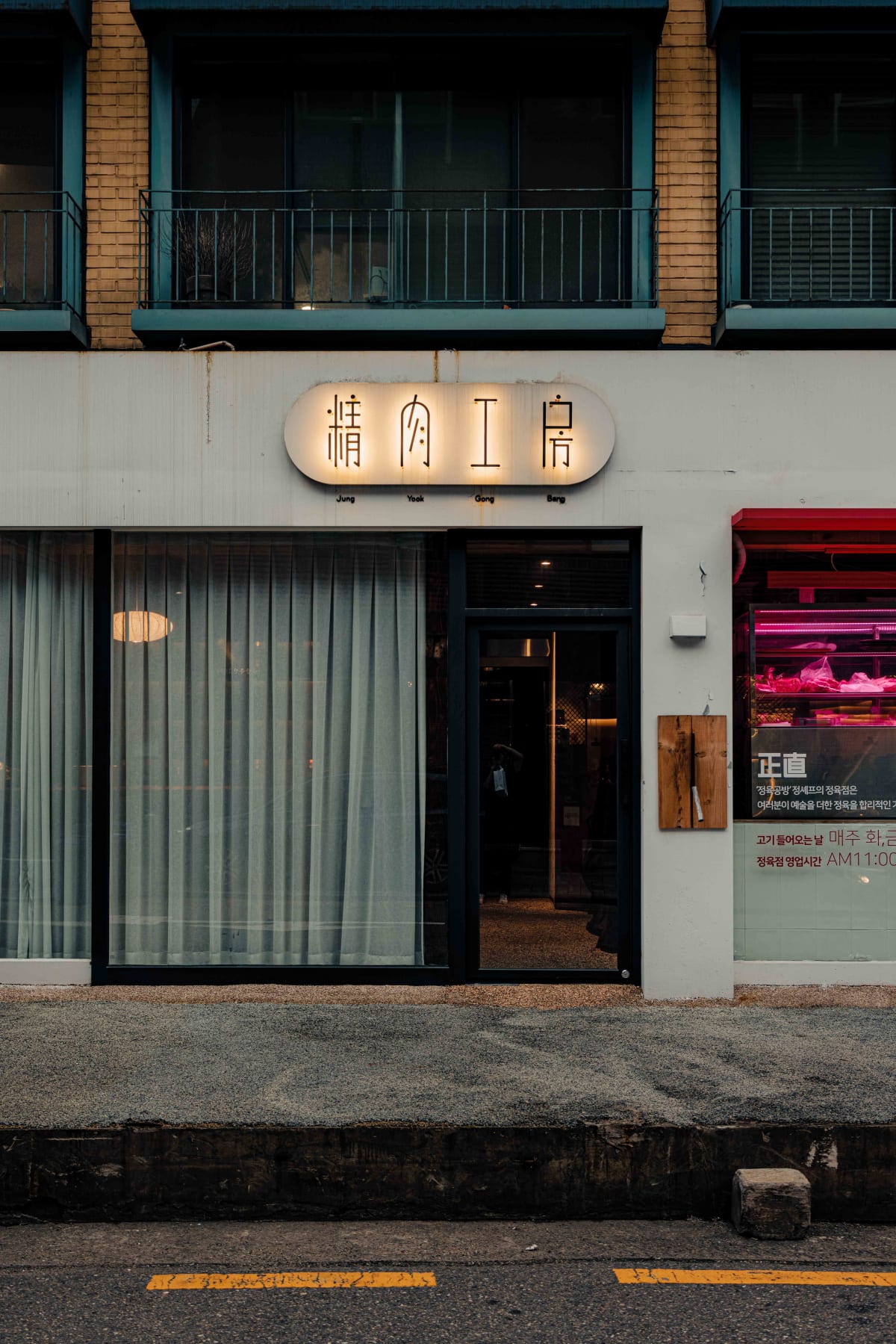
As the jungyook (精肉, butcher's meat) in its name suggests, it began as a restaurant and a butcher's shop in one, and when I went in the summer of 2024, the red-lit display case beside the entrance still listed the butcher's opening hours and the days the meat comes in.
Good as the food is, the biggest draw at Jungyookgongbang, and the reason for its popularity, is wine. Under the restaurant's published terms, the counter room takes up to four bottles of wine free of corkage and the table room three, with each extra bottle charged at about USD 40 (50,000 won). Whisky has its own allowance of two to three free bottles.
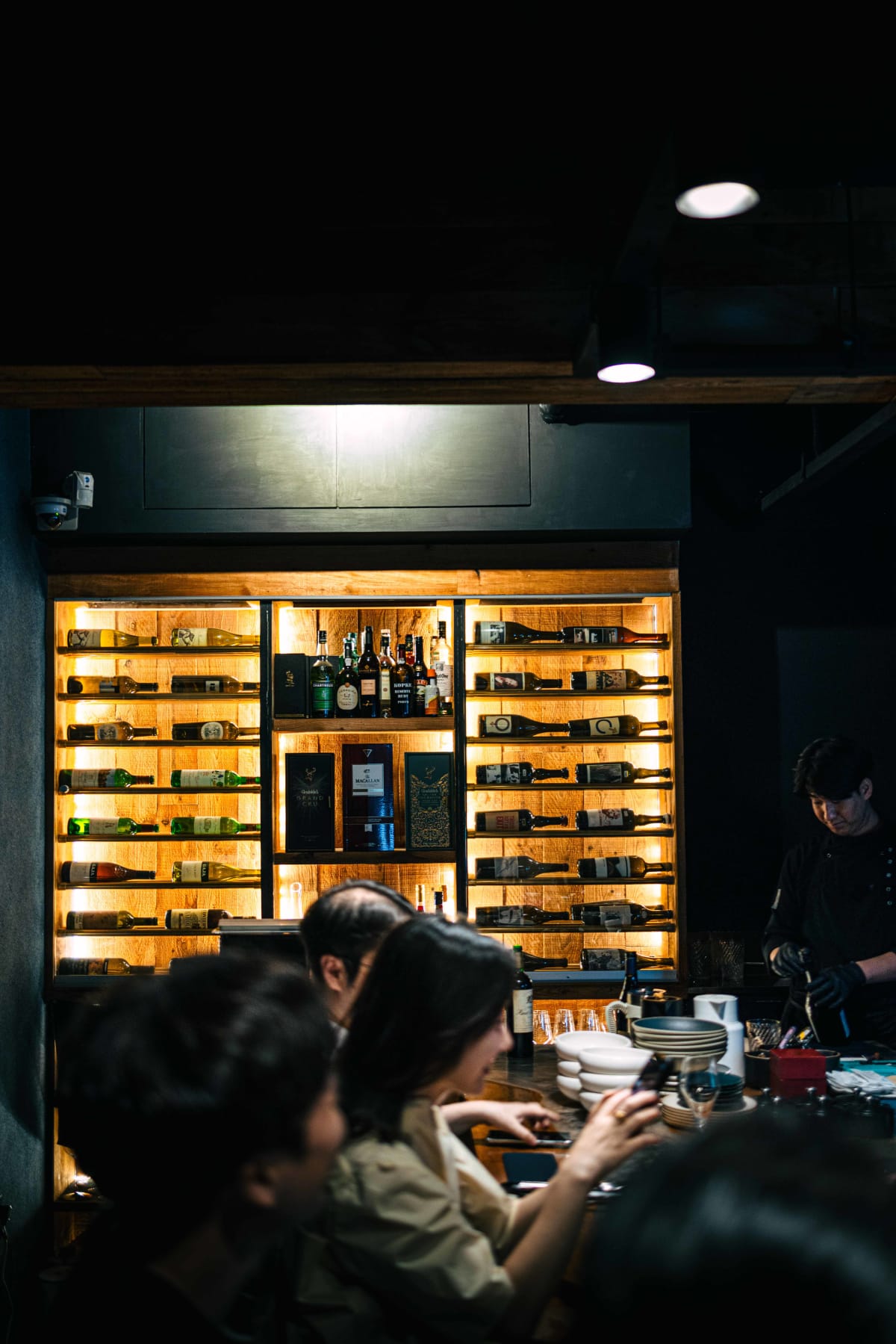
The reason, as I understand it, is that although Chef Chung is now the owner, a number of well-known Korean wine lovers invested in the restaurant and held stakes when it opened. That is why it became famous, and very popular, for a wine service hard to find at an ordinary Korean omakase, from the corkage policy to the handling of the bottles.
Section 3·A Year's Wait And A Question Of Balance
When I went in 2024, reservations were backed up by close to a year. A good opportunity came my way, and I found the place excellent and memorable. From the first bites, it was the most satisfying hanwoo omakase I had ever been to, and I wanted to go back if I had the chance.
I tire of rich food quickly, which is why I seldom eat tonkatsu or fried chicken, and I cannot eat much fatty beef. So in a hanwoo omakase, I think what matters is the play of strong and light, a balance that keeps you from tiring of it.
Here, all kinds of dishes come in at just the right points between the grilled hanwoo, and the timing and the balance against the beef were superb. Those dishes tasted good in their own right, too, which made it all the more satisfying.
More of the non-hanwoo dishes were seafood than I had expected, and as someone who loves seafood, I was happy with that.
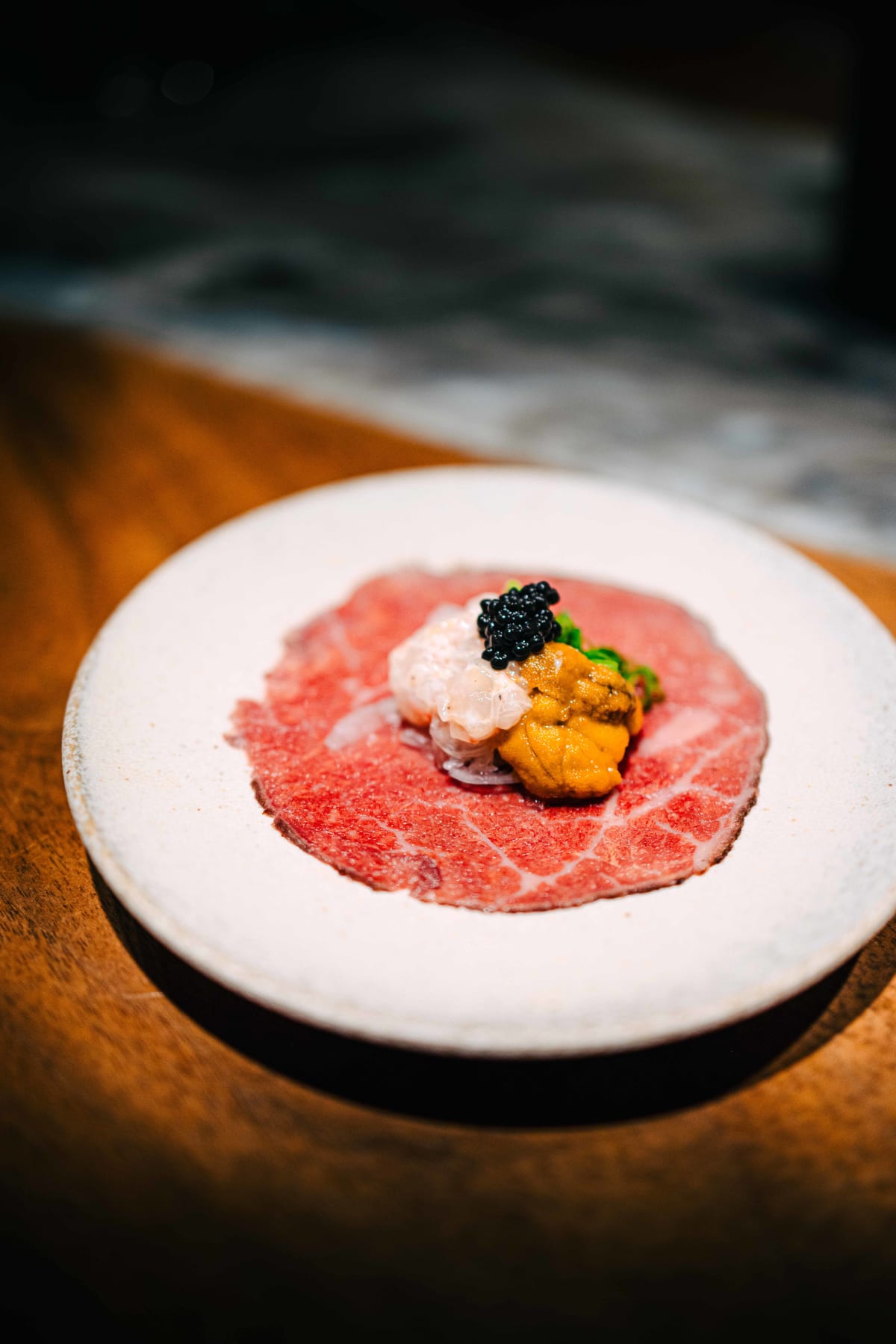
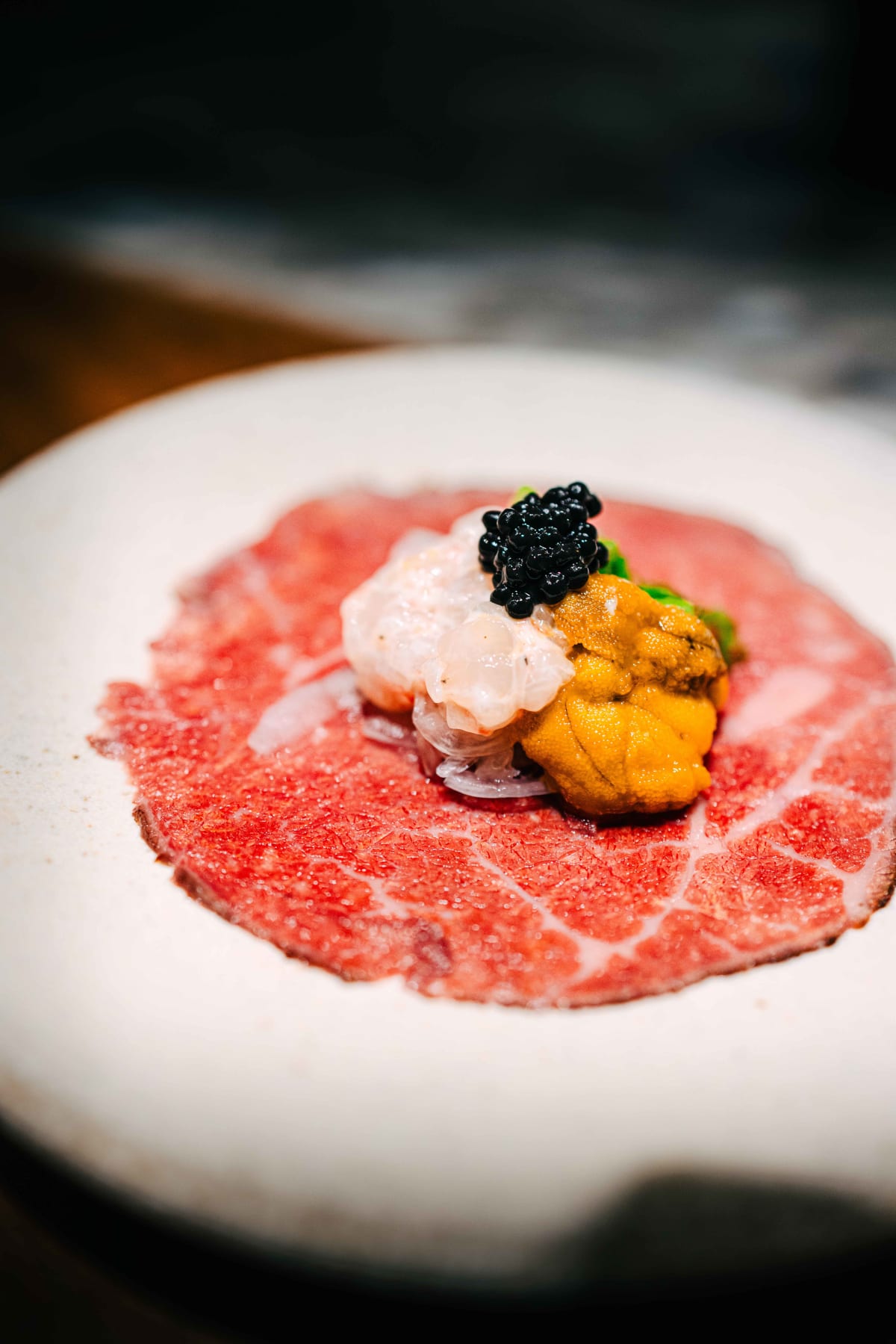
Right at the start came hanwoo carpaccio topped with uni and sweet shrimp, with avruga spooned over them. In a sense, it put the least fatty, cleanest pairing of hanwoo and seafood at the very front of the meal.
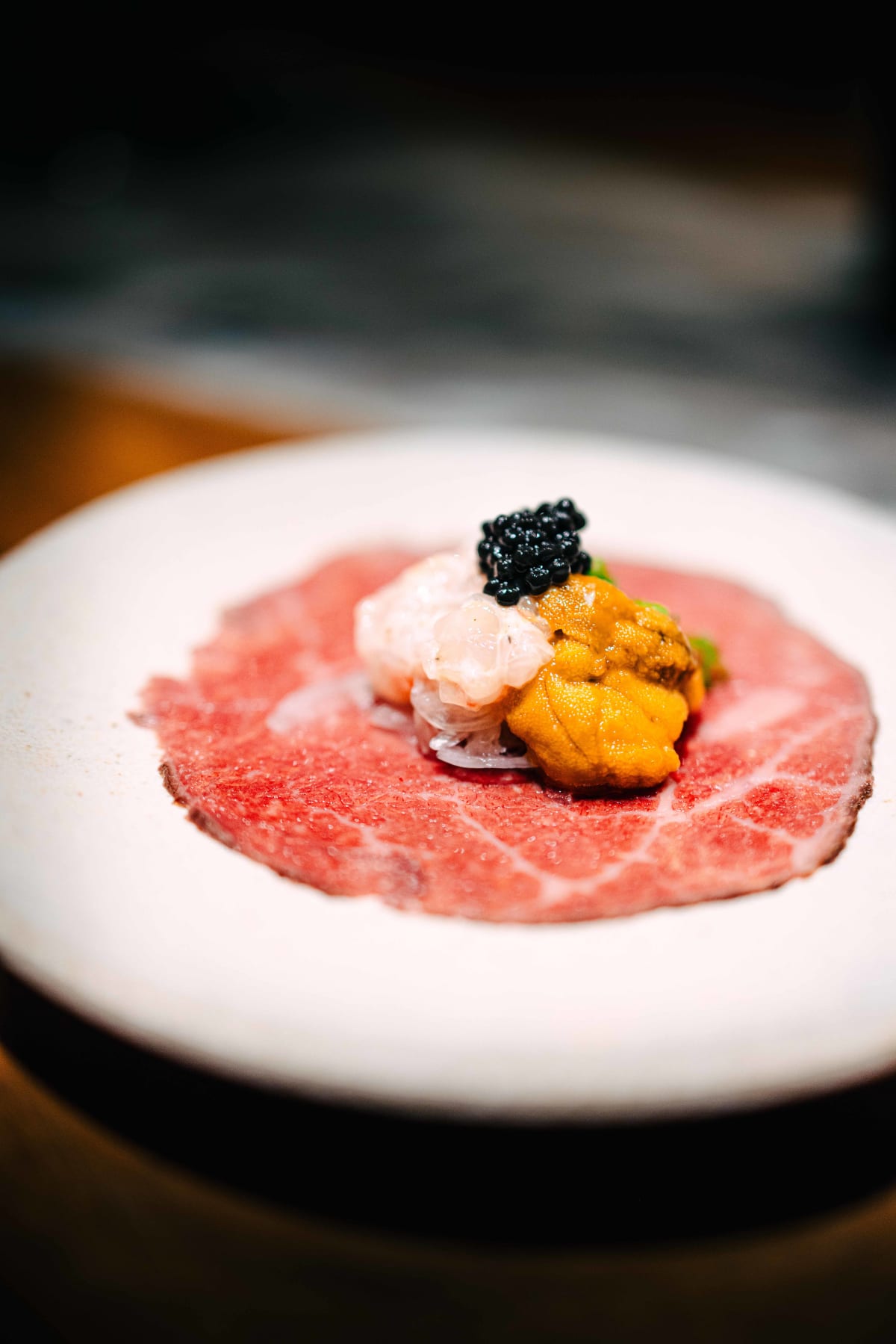
Wrapping the delicate seafood, the uni and the sweet shrimp, in the hanwoo carpaccio, I tasted the sweetness and sea scent of the uni and the springy texture of the shrimp, and the acidity of the carpaccio came through as well. It was very good.
Section 4·A 1995 Champagne And Crab Soup
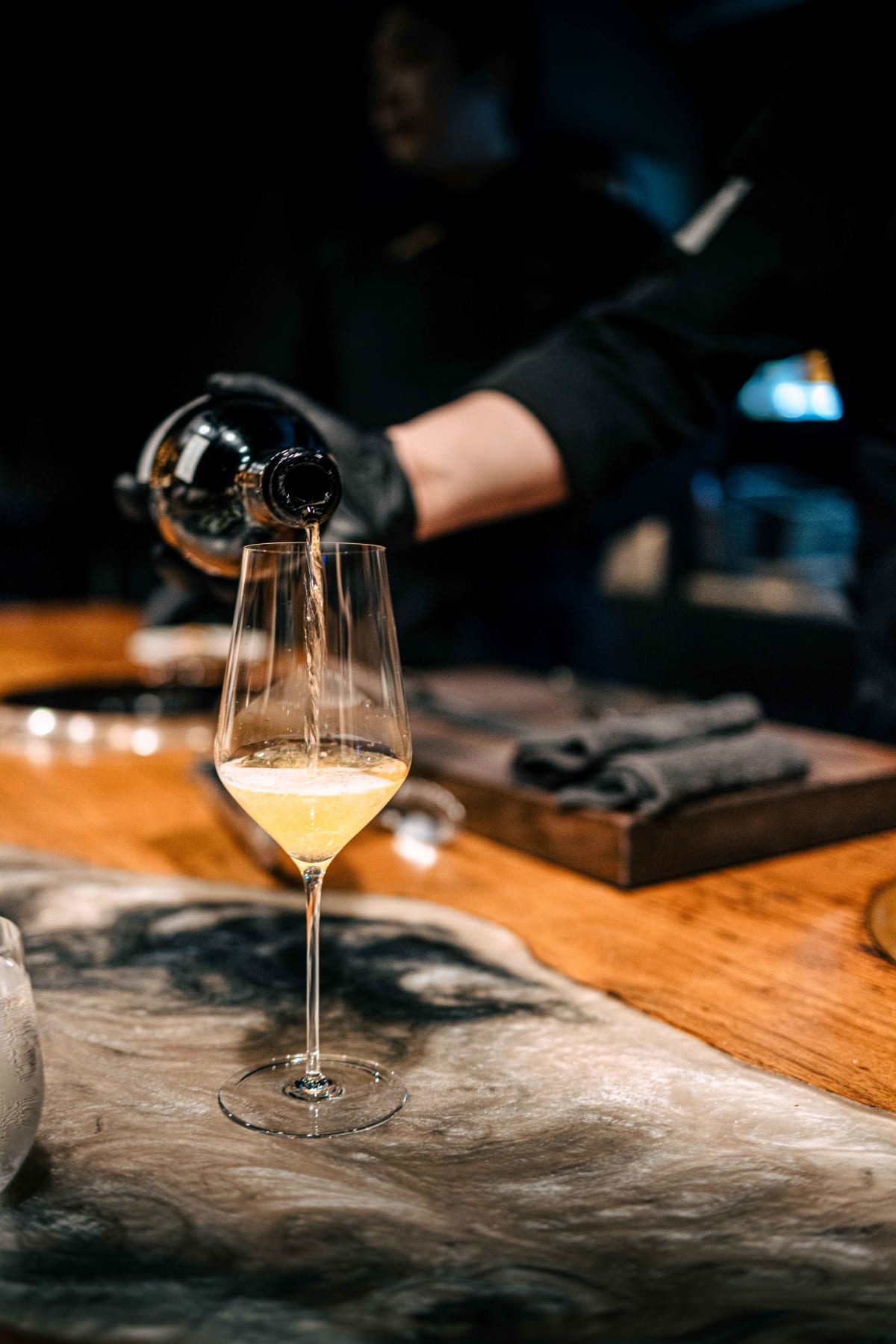
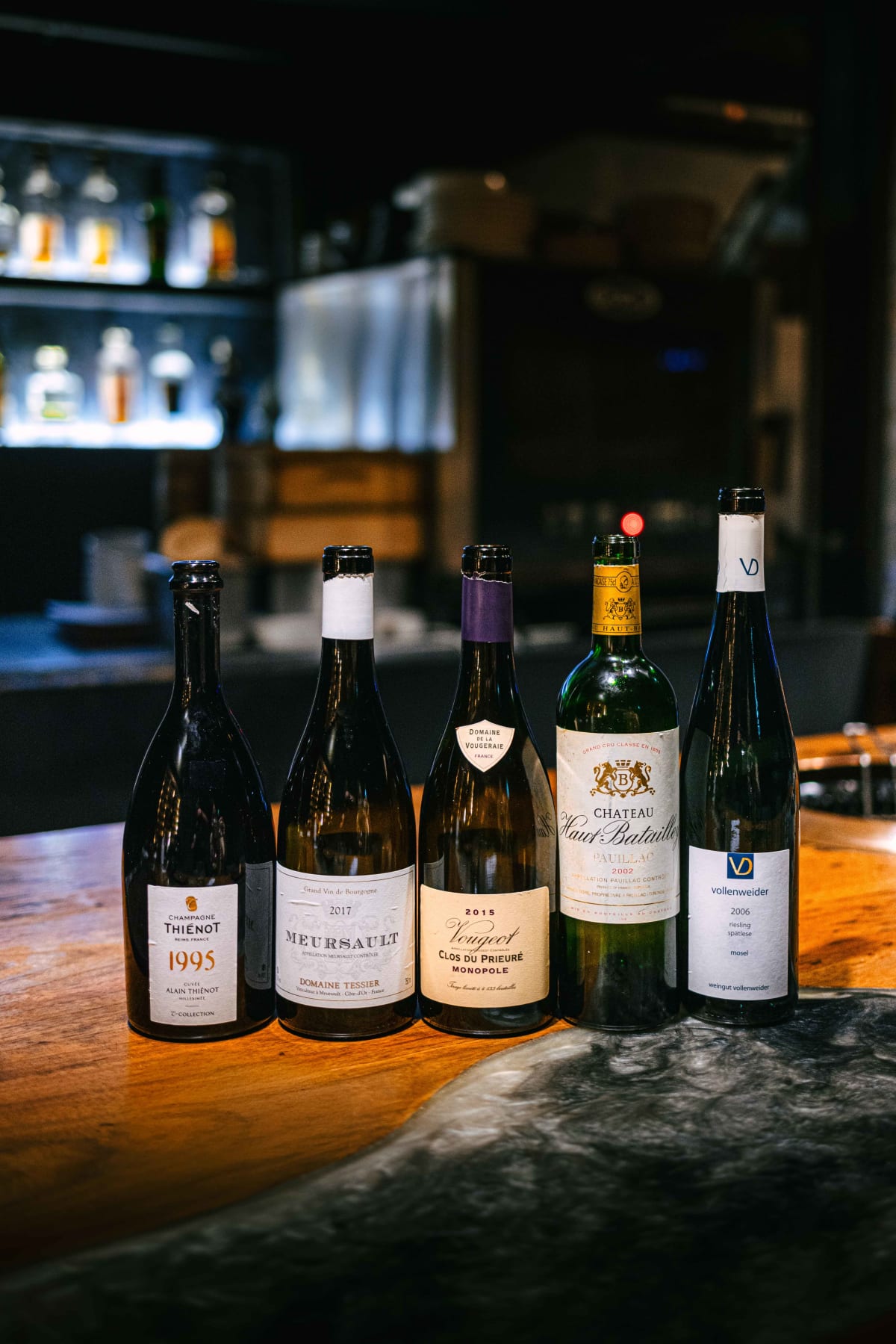
That evening was BYOB, with each of us bringing a bottle, and I brought a Champagne Thiénot Cuvée Alain Thiénot 1995 that I had bought at a wine shop on the outskirts of Tokyo. To tell the truth, I had never seen this Champagne before, and I bought a bottle simply because it was my birth vintage and the price seemed fair. The price tag read 26,180 yen including tax, and I judged that reasonable for a 1995.
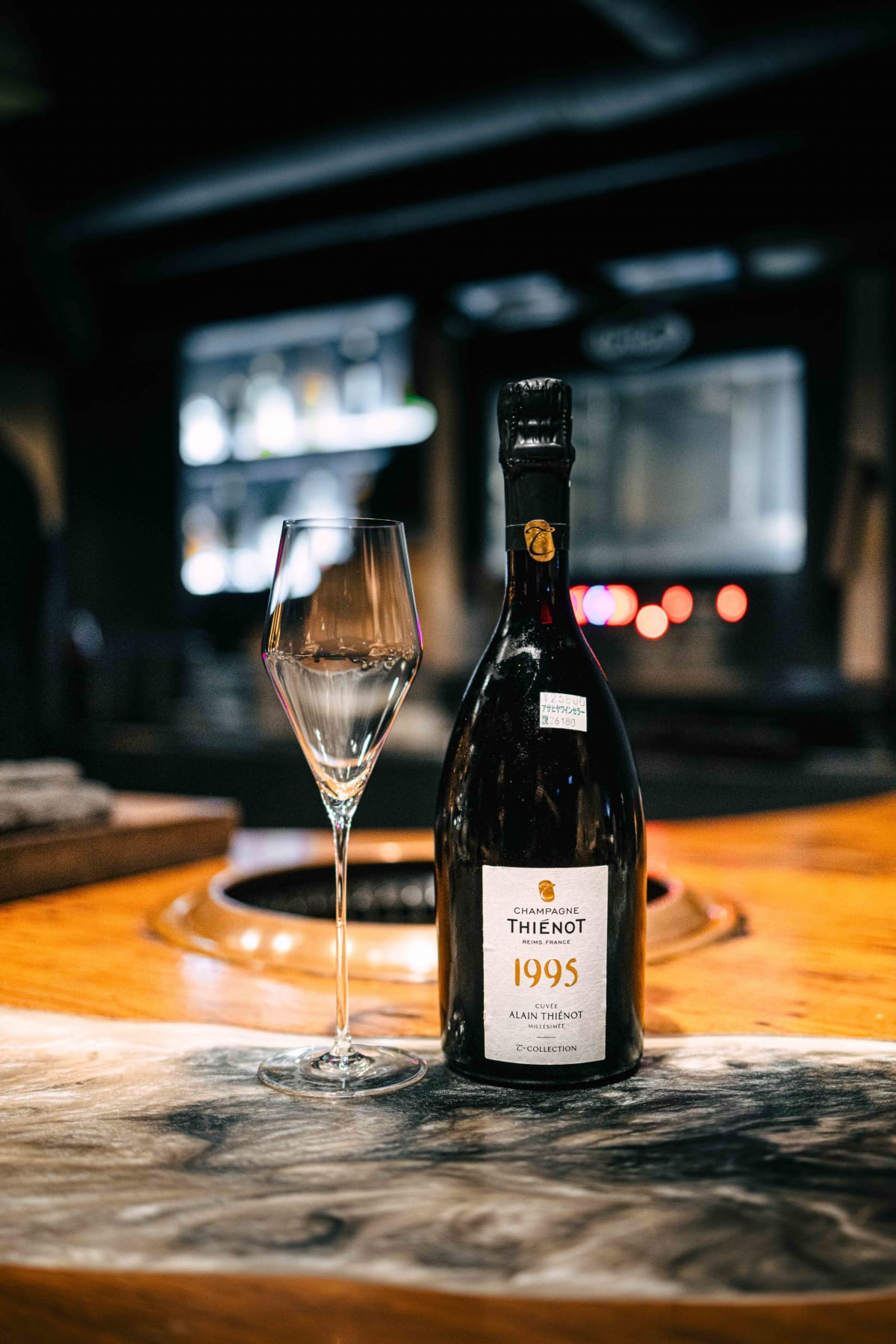
I brought it, but it did not leave much of an impression. As I remember it, the wine had lost its strength and the acidity stuck out a little. Still, trying bottles like this one at a time was part of the fun of my modest life as a wine novice.
Champagne Thiénot is a young house, started in Reims in 1985 by Alain Thiénot, who had worked as a banker and a Champagne broker and had been buying vineyards since 1976. Today his son Stanislas and daughter Garance run it, and the same family also owns Joseph Perrier and Canard-Duchêne. Cuvée Alain Thiénot, named after the founder, is a vintage Champagne made only in good years.
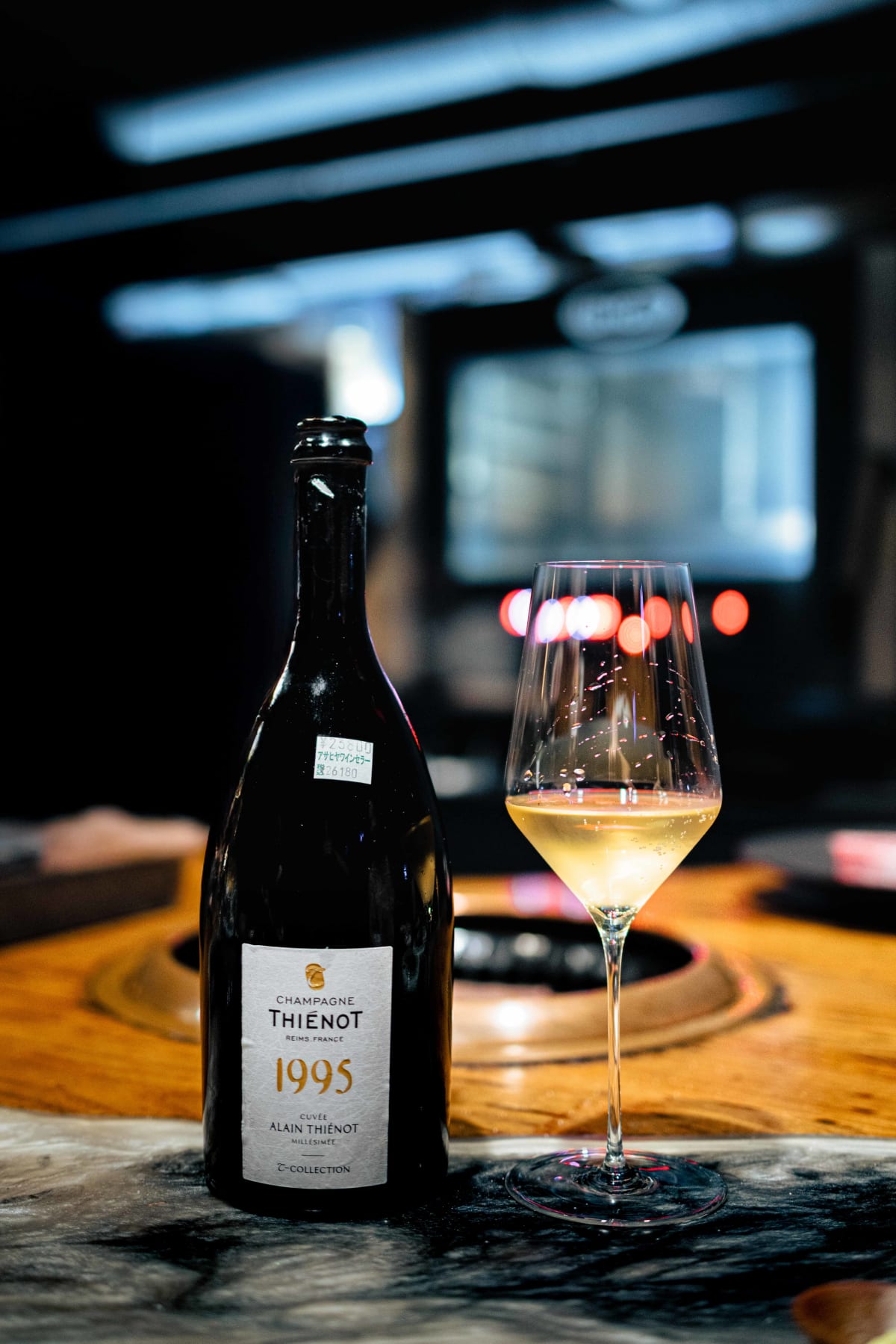
In 1995 the top cuvée was released as Alain Thiénot Grande Cuvée, a blend of 60% Chardonnay and 40% Pinot Noir, and the 2002 edition of the Guide Hachette already judged it to be at its peak.
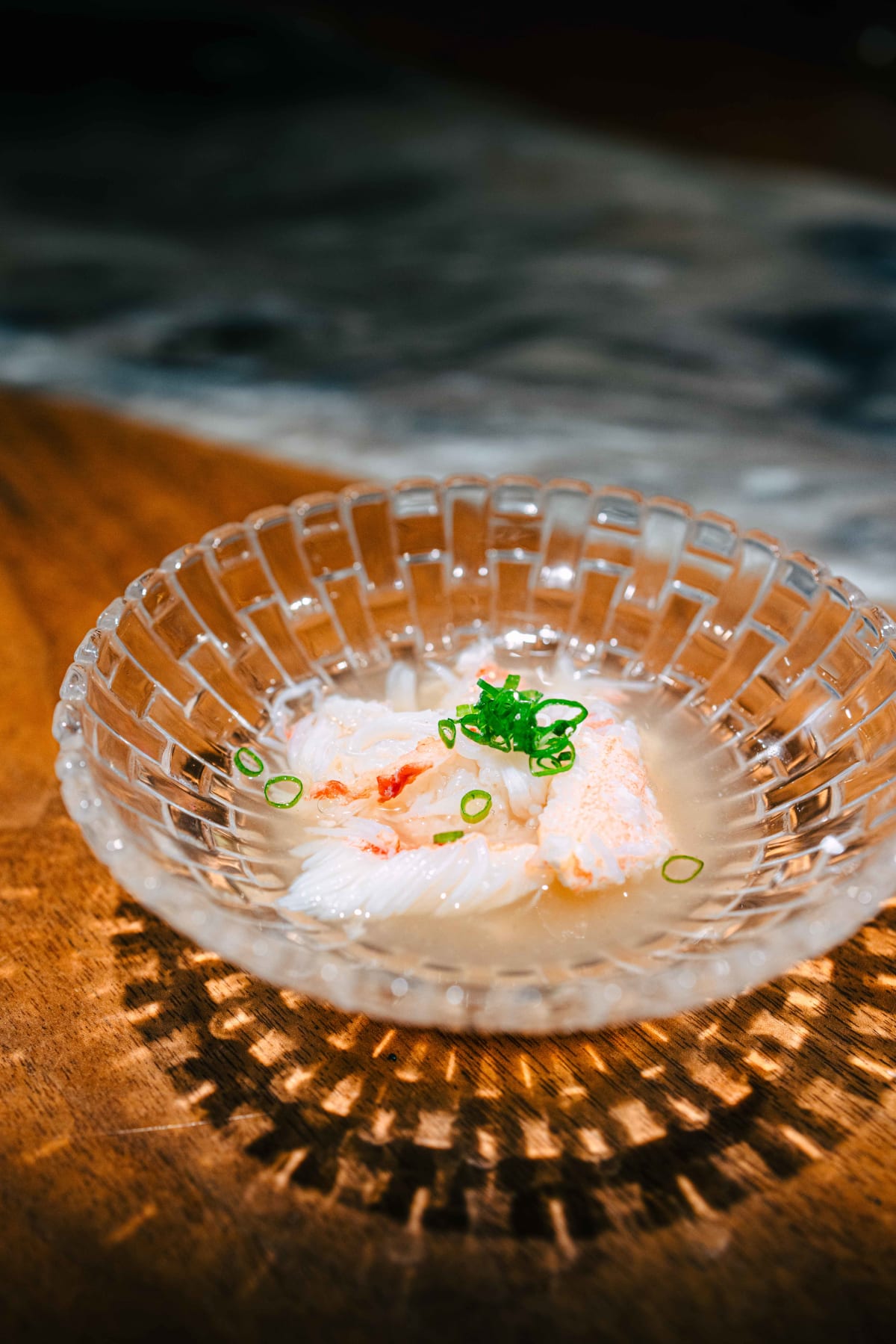
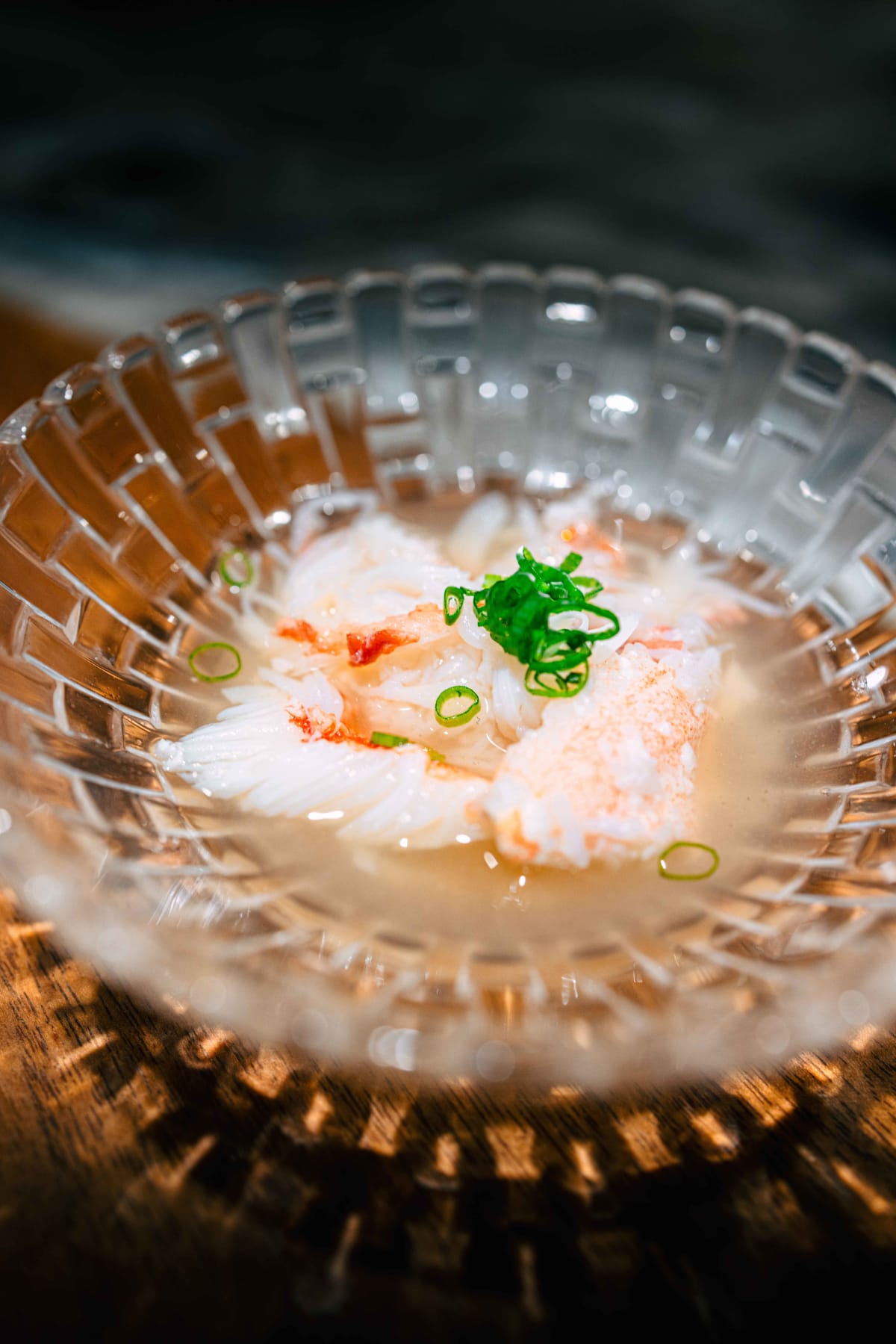
The second dish was not hanwoo but seafood: crab soup. Rather than crab shredded so finely that you taste only its flavour and none of its texture, it let you feel the crab's own texture properly. It came in a lattice-patterned glass bowl with spring onion on top, and the seasoning was right, the crab smelled good and the sweetness of the meat was decent.
Section 5·The Platter, The Salt And The Tenderloin
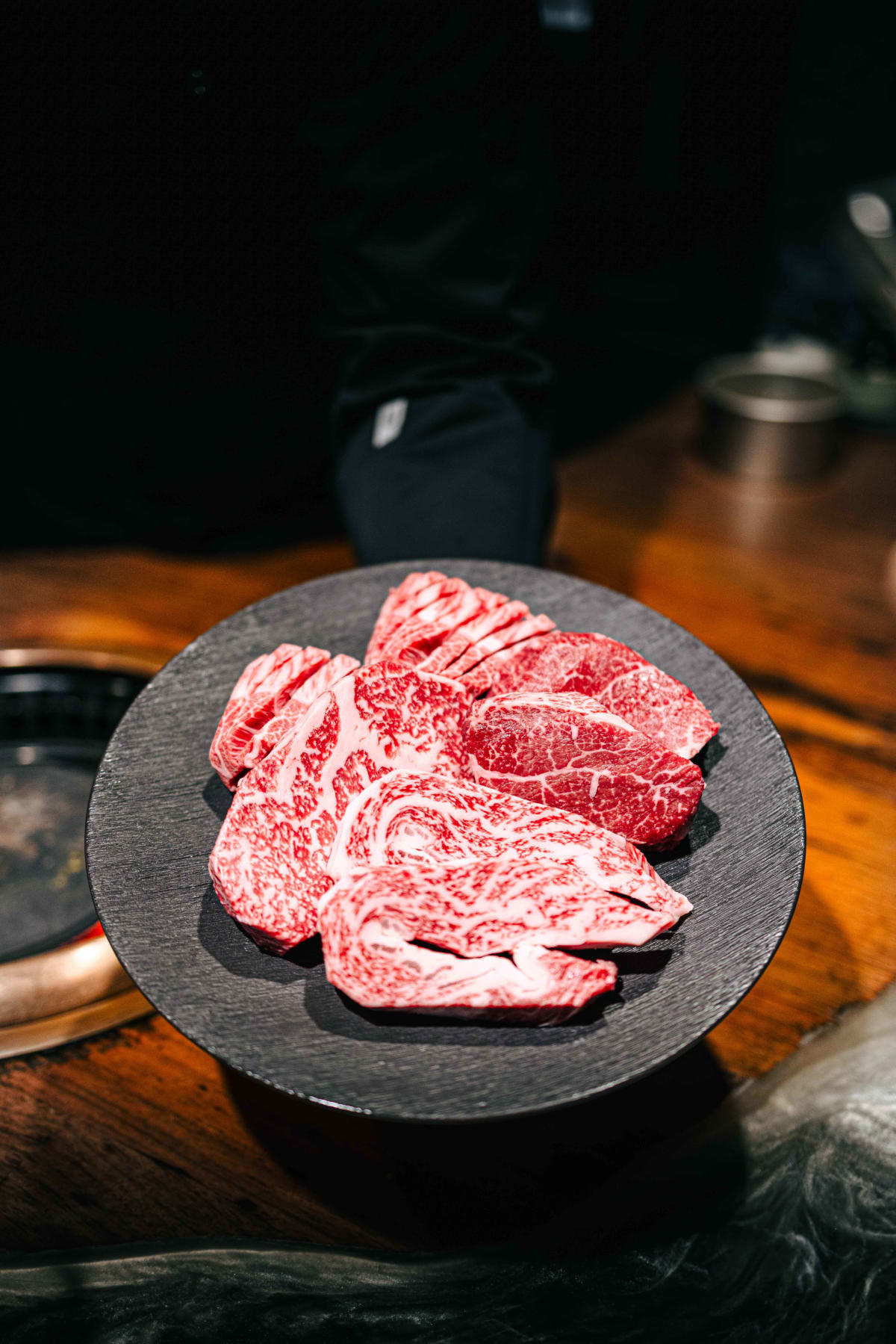
Early in the meal, before the grilling begins, the cuts to be grilled that day are brought out on a plate to show you.
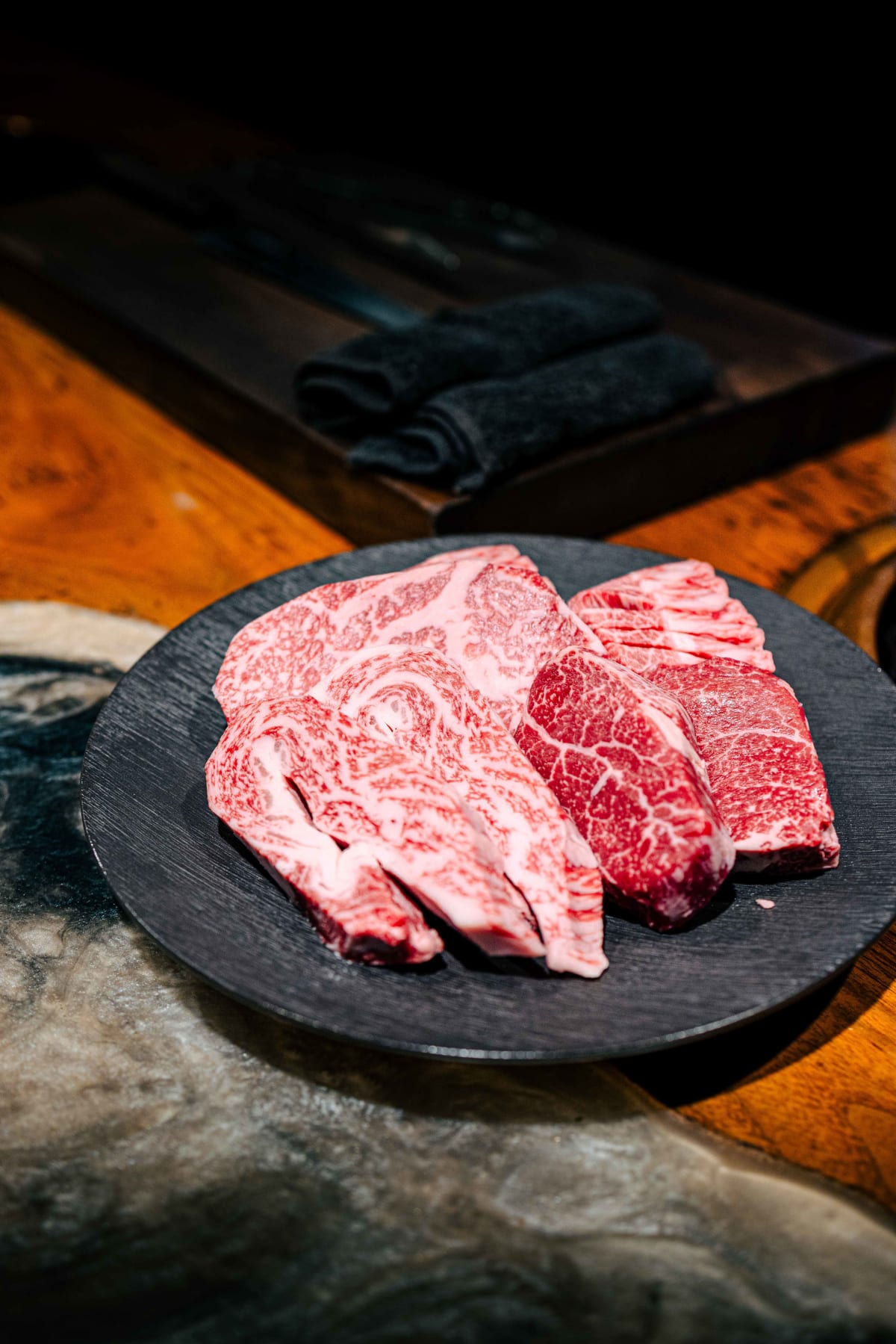
One look at the proportion of marbling told me it would be hard for any of it to taste bad.
Then the meat went onto the grill, and the chef put on a fine show at the counter grill, scattering salt from high above as he gave it a first sear.
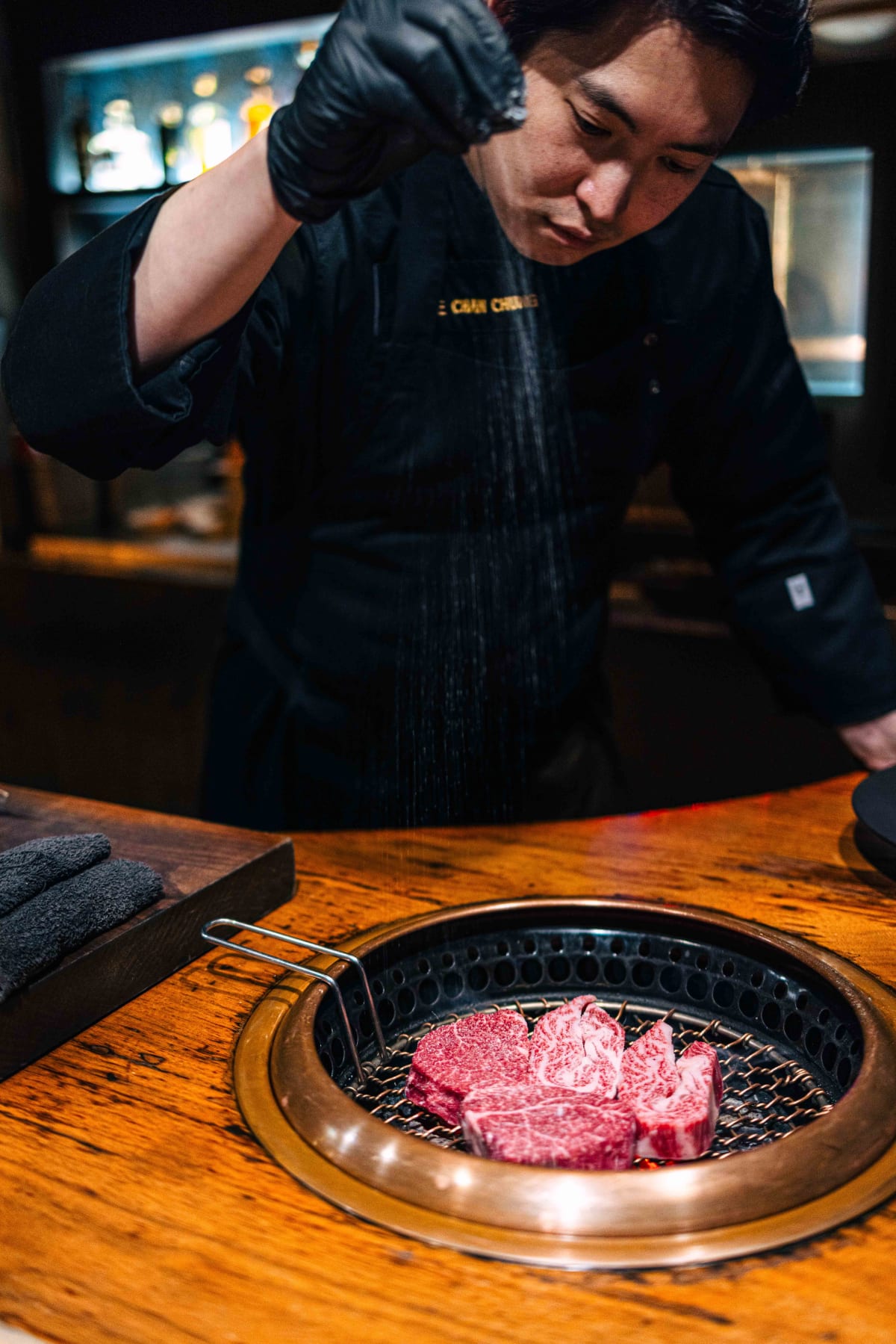
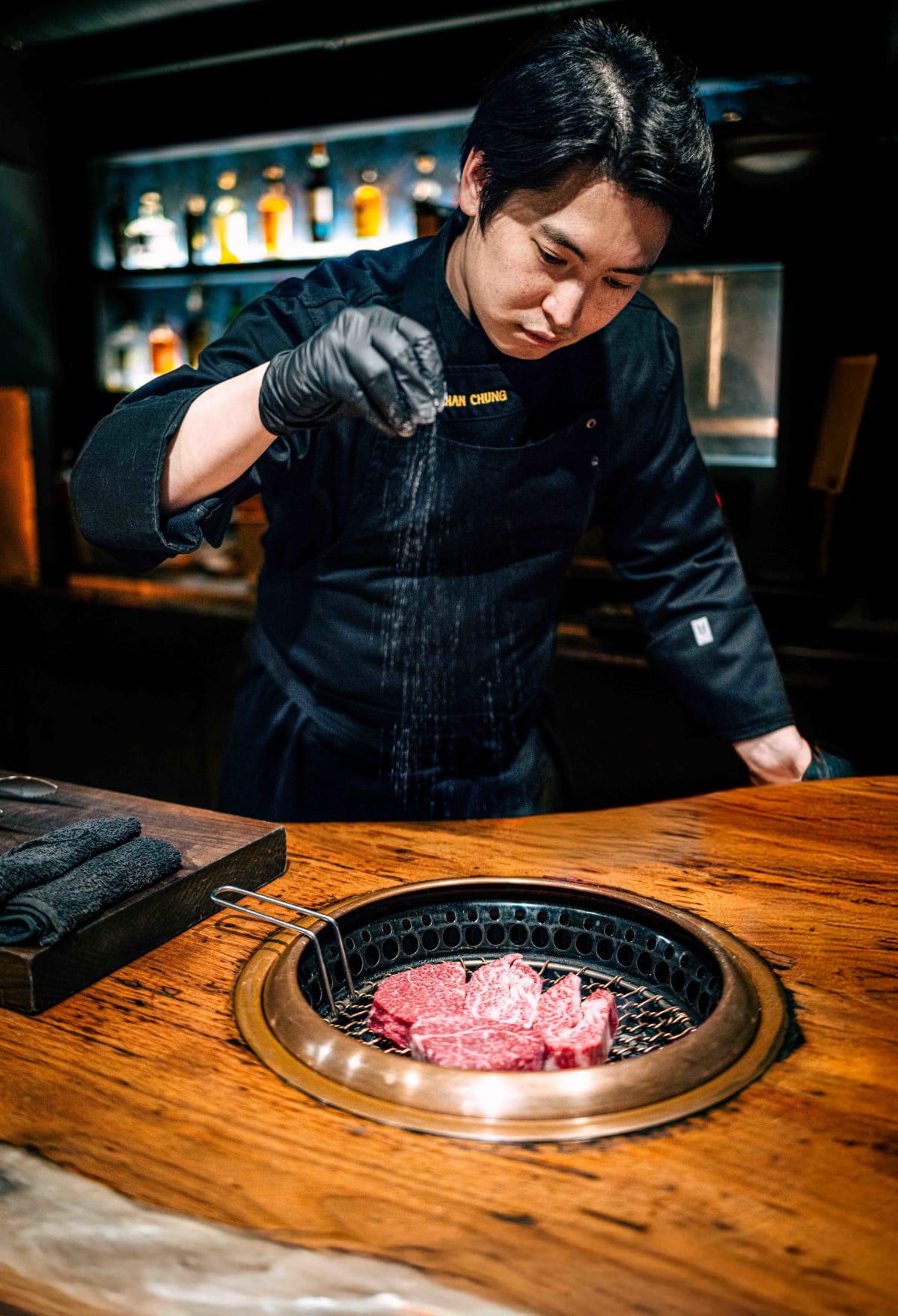
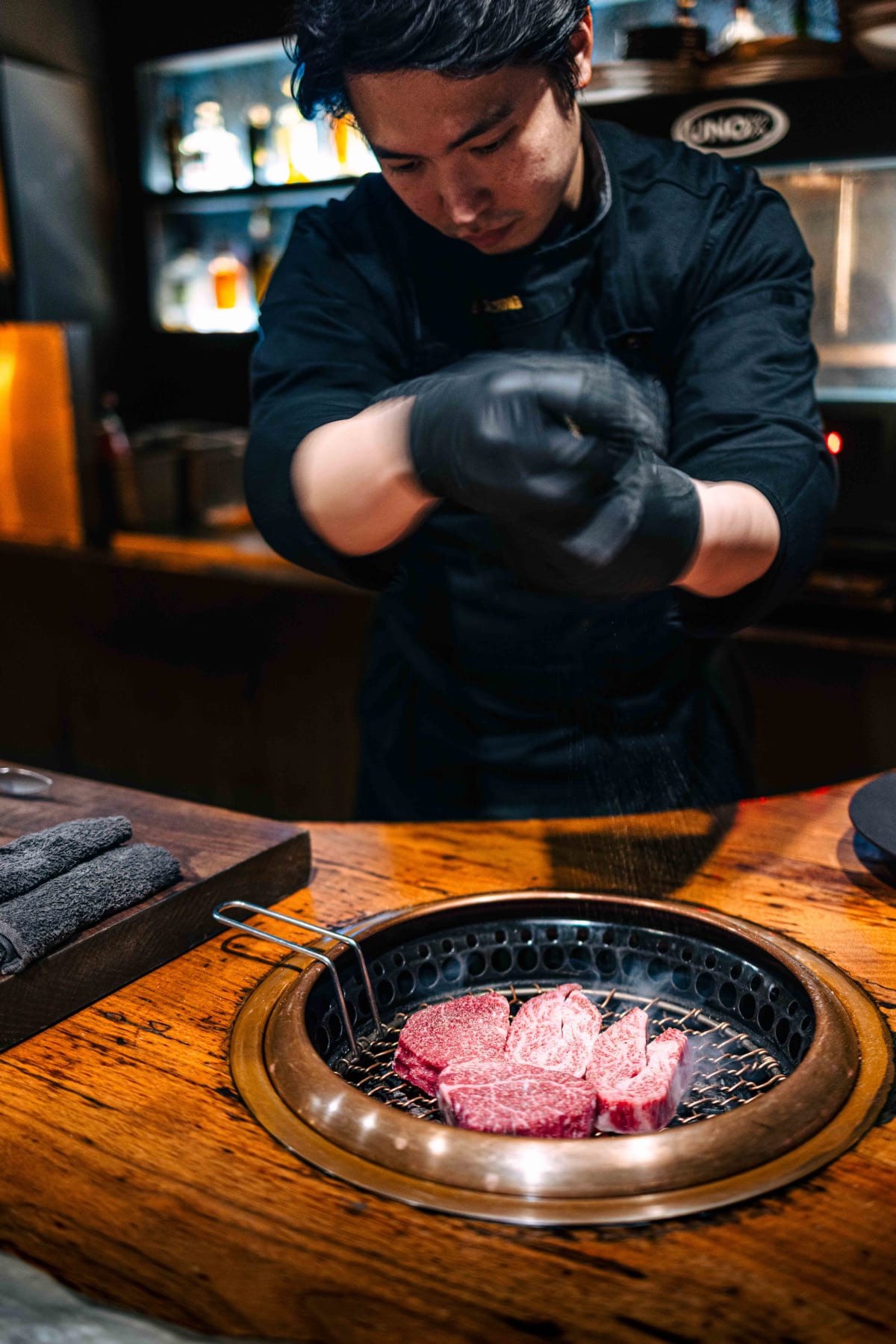
He seemed to know exactly which visual moments land well.
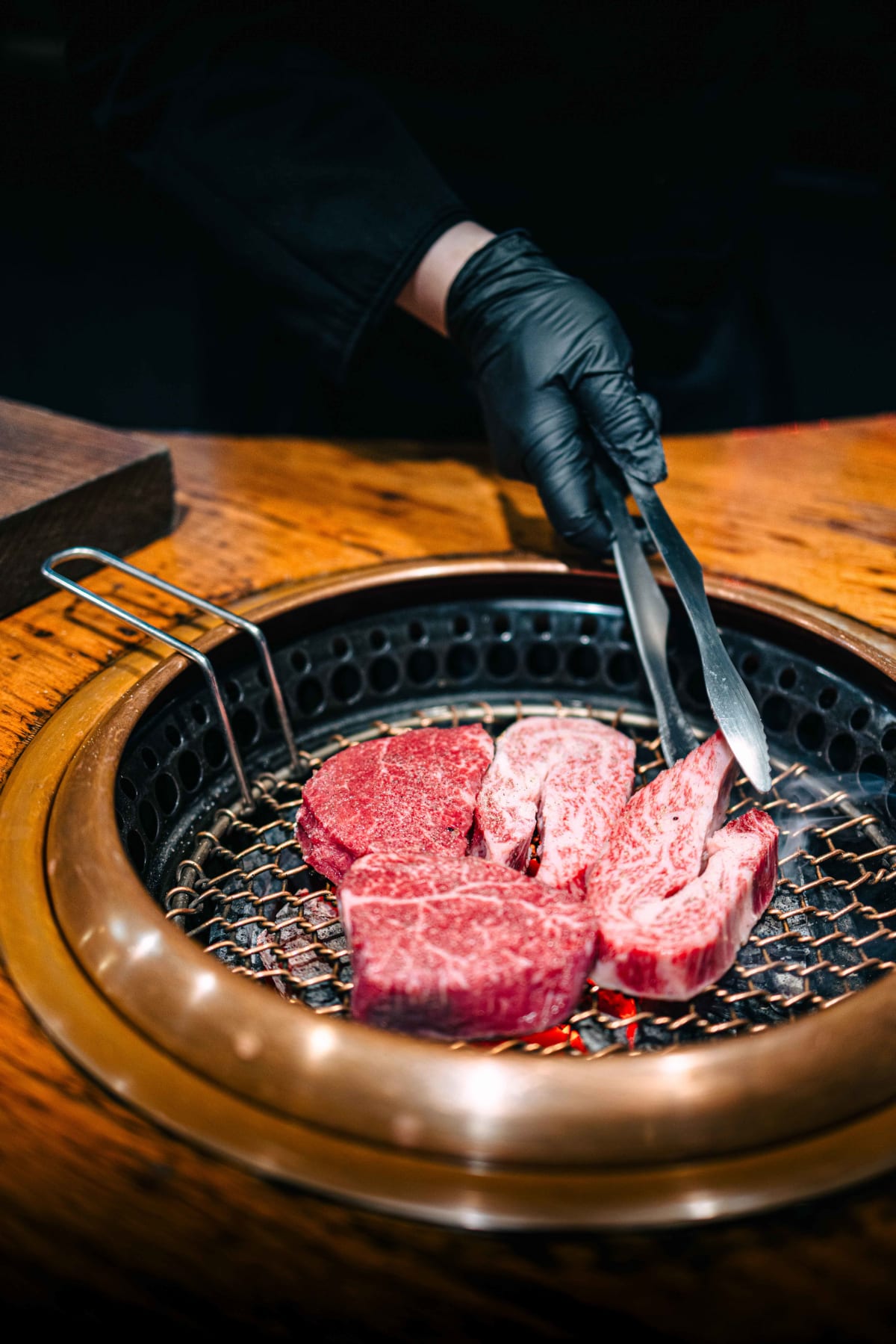
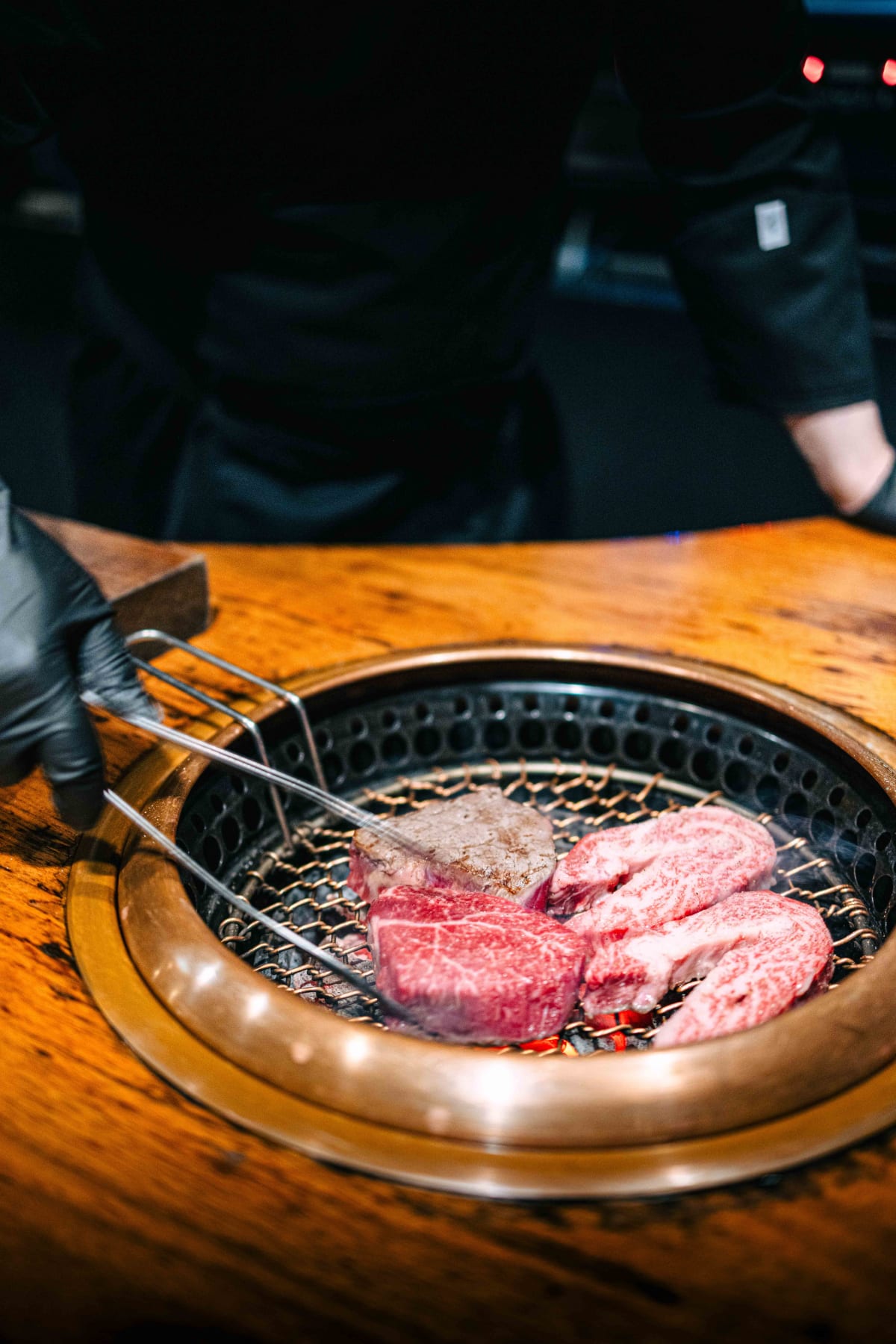
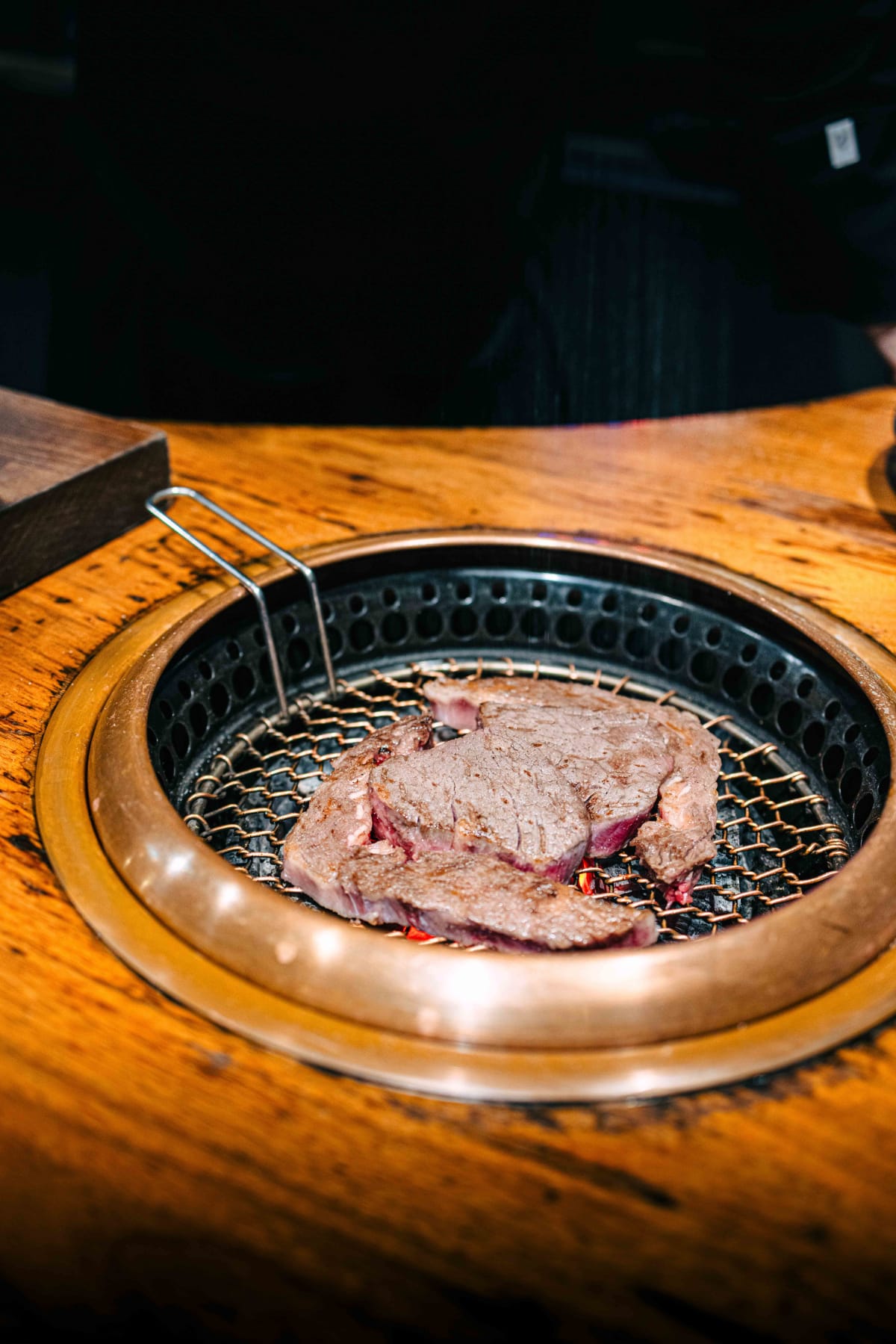
Jungyookgongbang says it uses only hanwoo graded 1++ with a marbling score of 9, the so-called No.9. When Korea revised its beef grading standards in December 2019, the 1++ grade widened from marbling scores 8 and 9 to 7, 8 and 9, and the score began to be printed alongside the grade. No.9 is not a separate grade but the top number within 1++, where the marbling is densest.
There were about five hanwoo dishes in all, and every one was delicious from beginning to end. I do not have much experience of hanwoo omakase, but Jungyookgongbang's beef had what I would call a concentration of flavour: beyond the texture, the beefy aroma that came through from the meat was deep and strong, and I liked that.
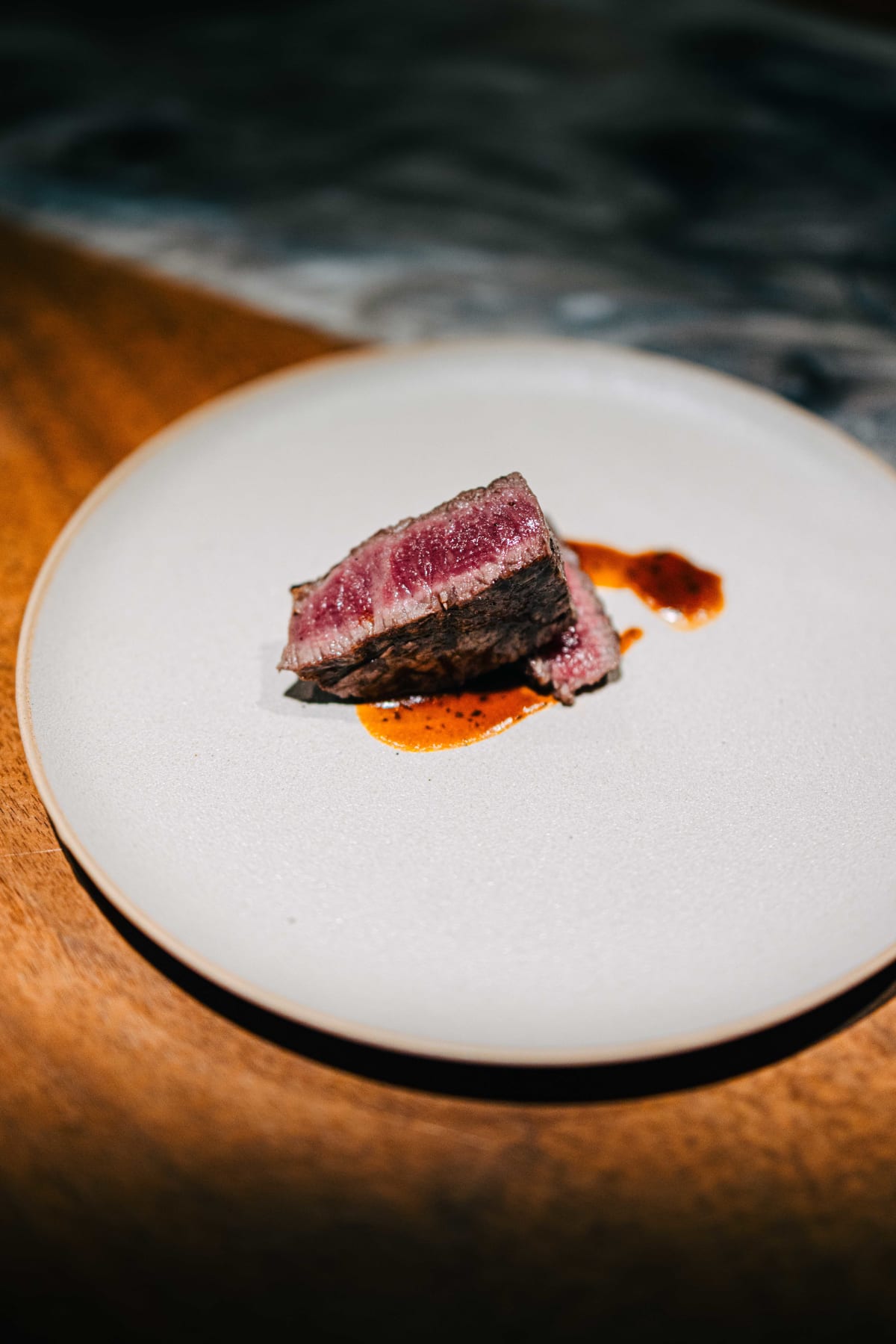
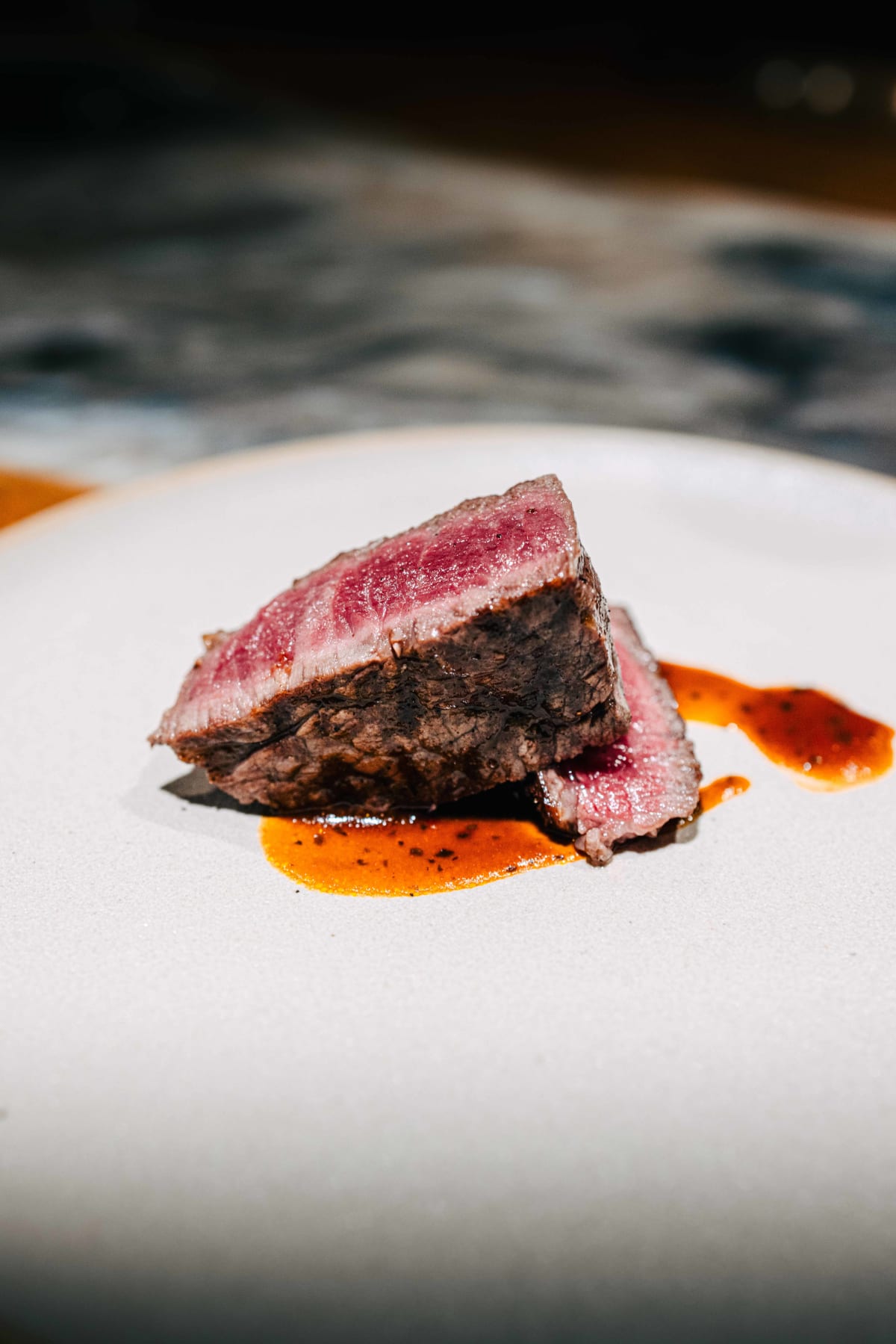
The first hanwoo dish was tenderloin.
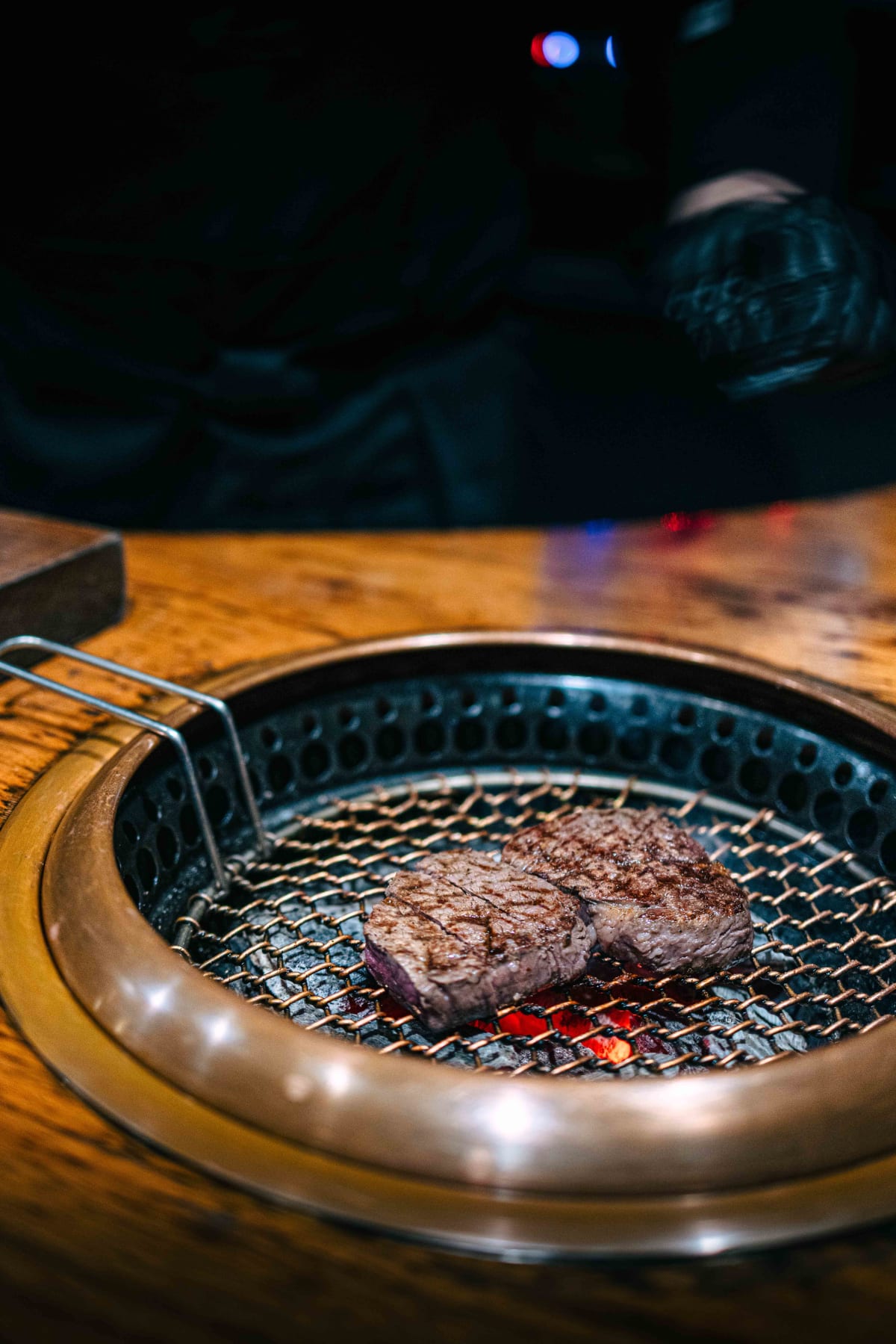
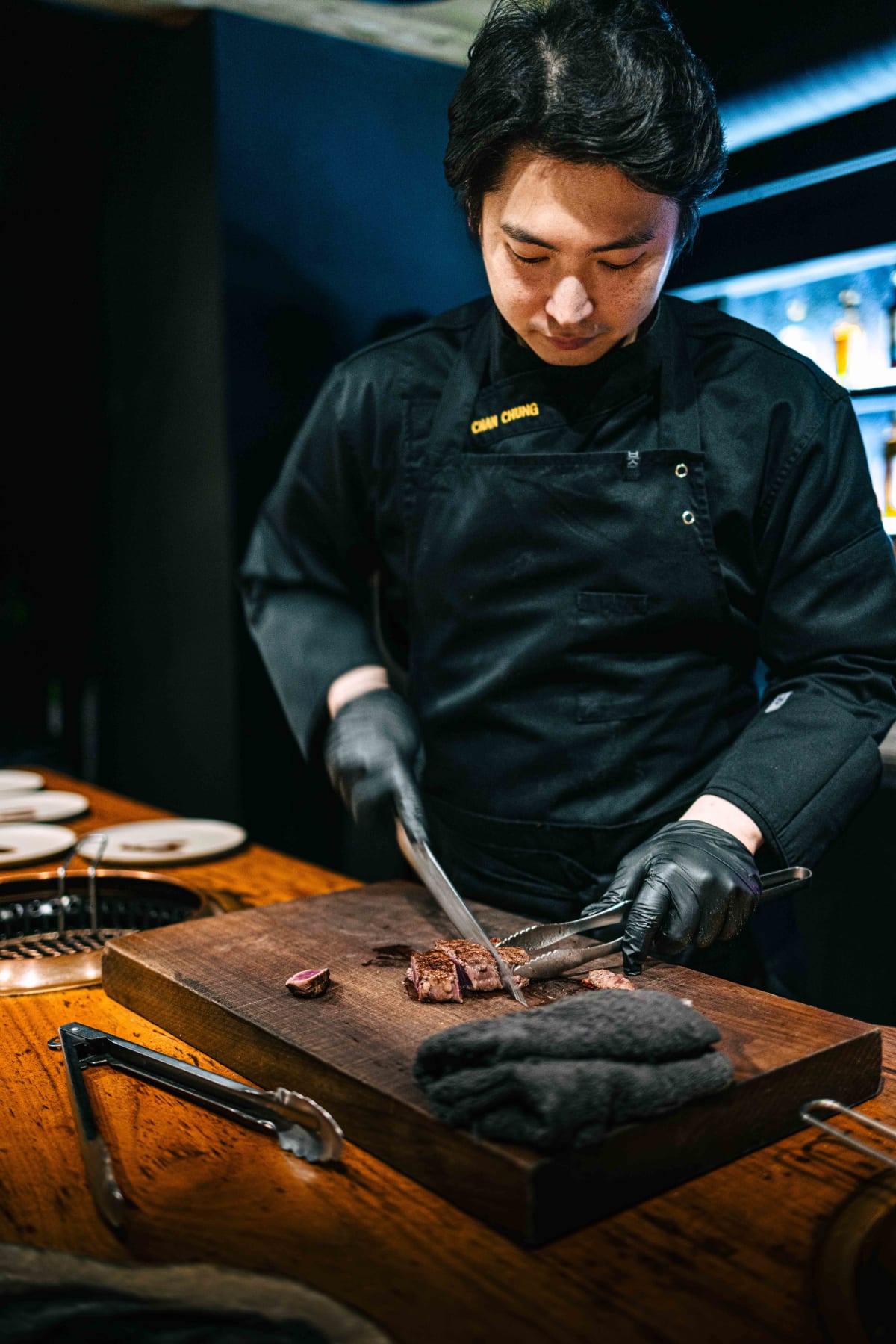
It came simply, with a sauce, and the fattier cuts followed later, which I thought made for a good order across the whole course.
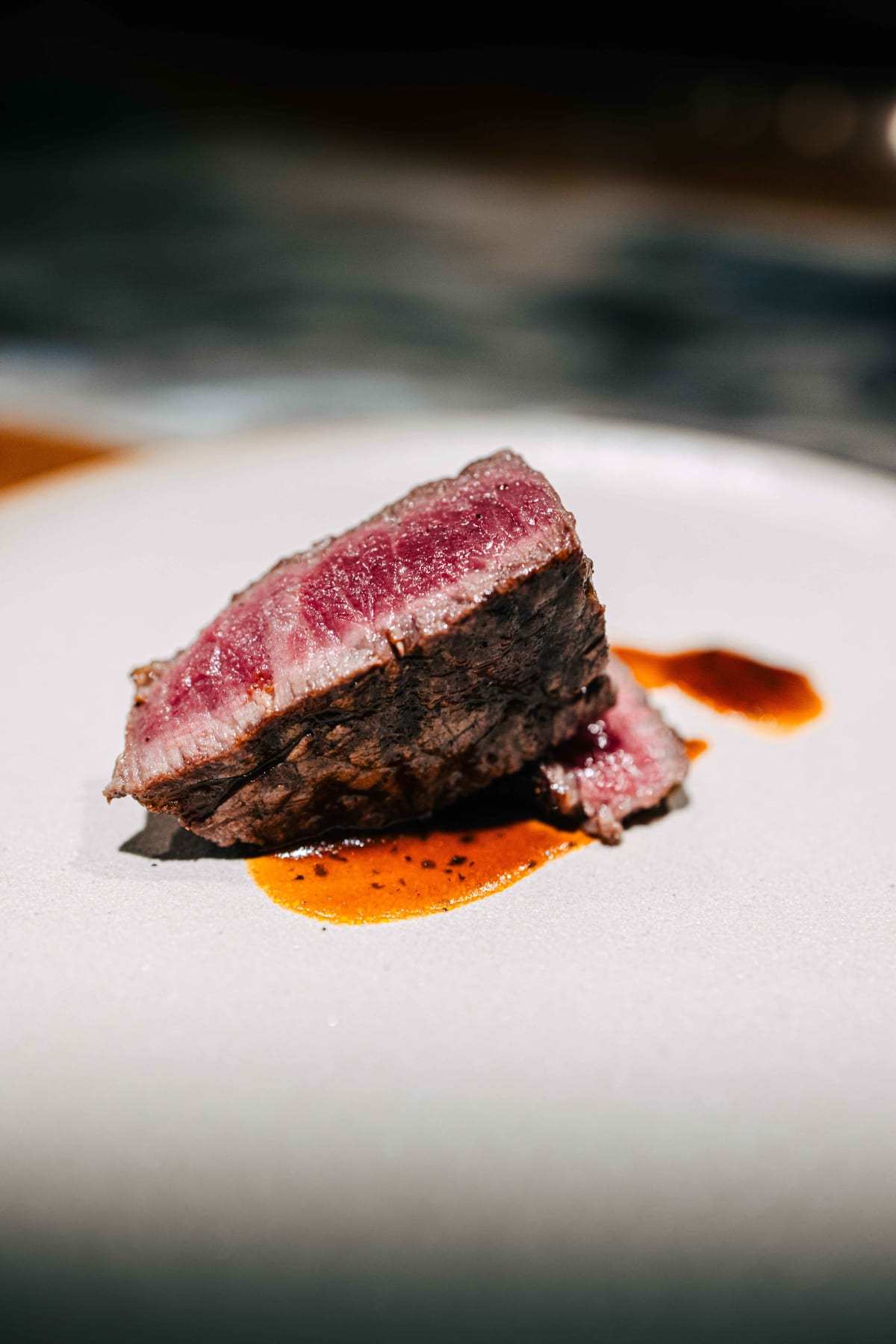
Tenderloin has little fat, so if it is cooked without attention to technique and doneness, as it often is at local hanwoo restaurants, it easily turns tough. Here the meat itself was excellent, and the chef grilled it with extreme care, so there was no toughness at all, and the doneness was superb.
Section 6·Rib Cap, Aji Bozushi And Scallop Katsu
The next hanwoo dish was saeusal, rib cap, served with onion and a mushroom duxelles. Rib cap is the cut that wraps like a band around the outside of the ribeye, and within the ribeye it is finely marbled and tender.
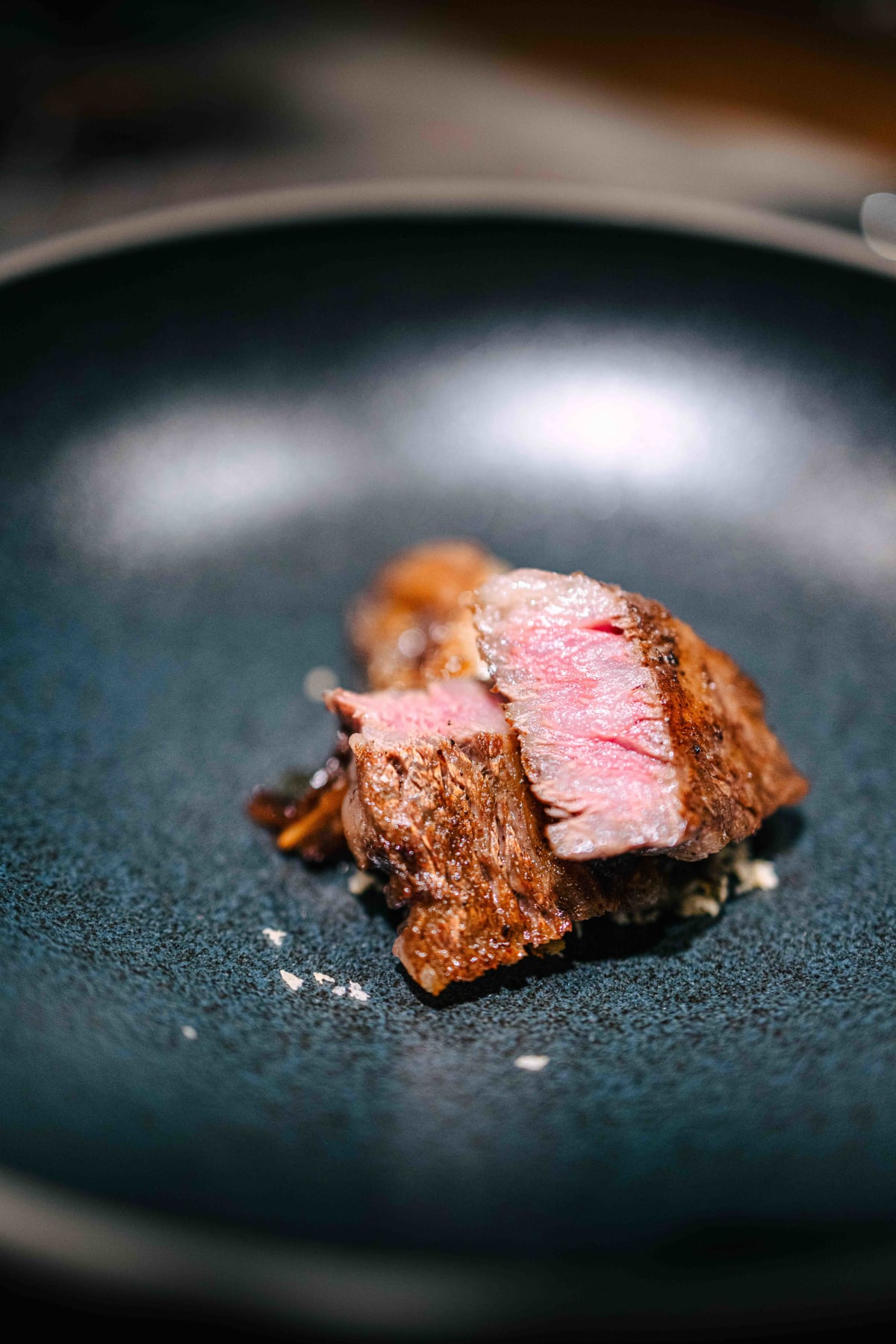
Rather than a dish for enjoying the rib cap on its own, it was one for enjoying it together with the other ingredients, the sweetness of the onion and the texture of the mushroom. I was satisfied.
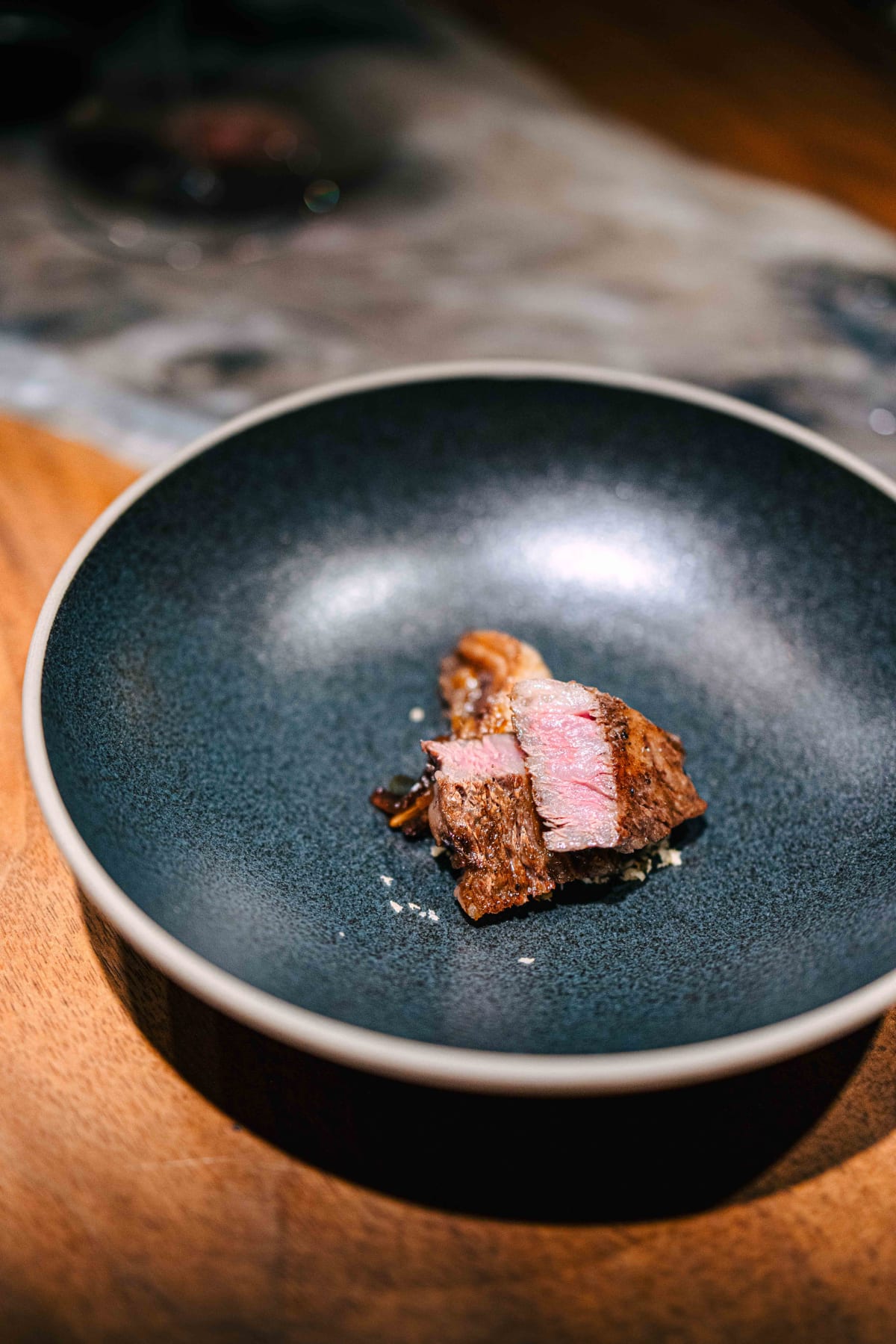
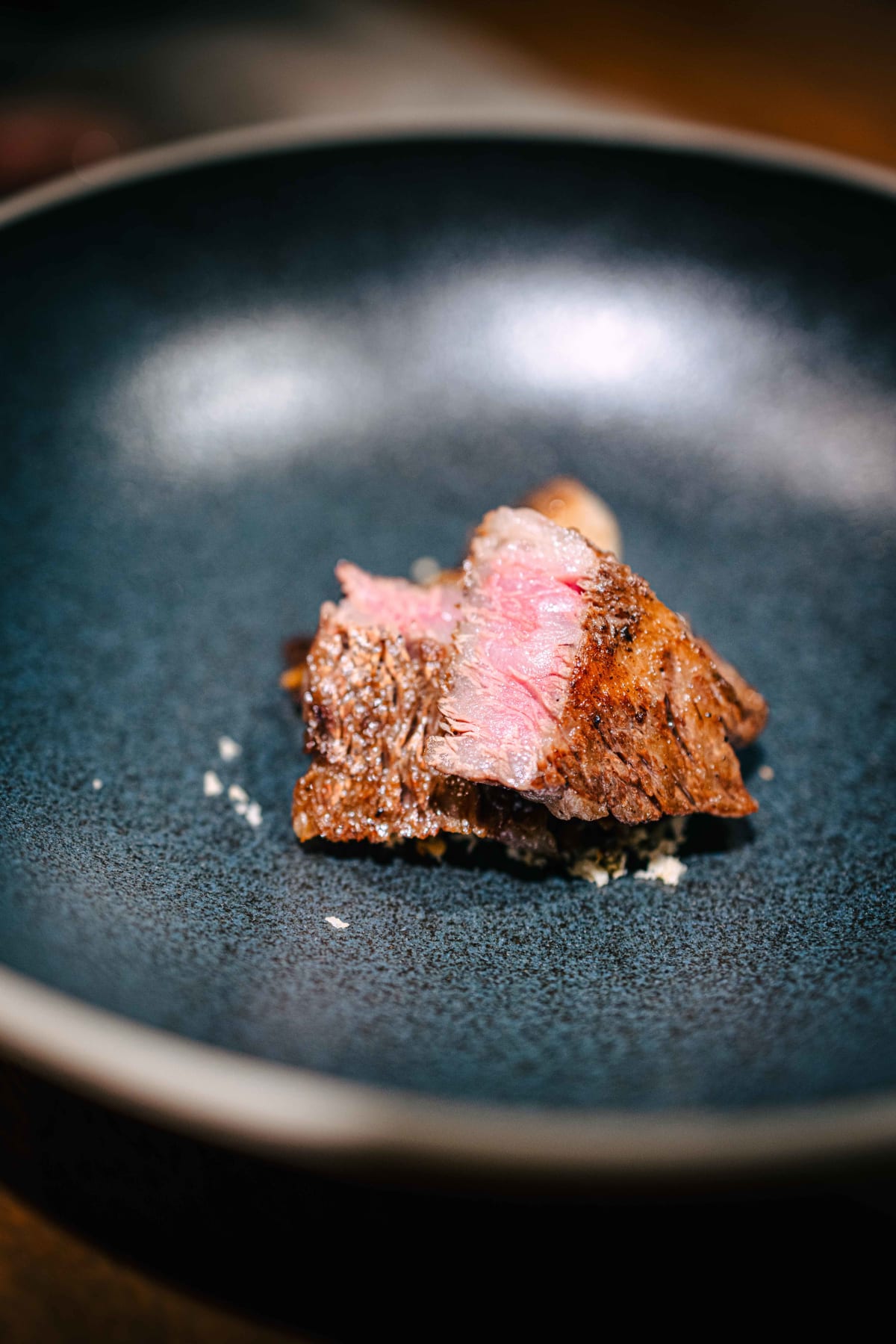
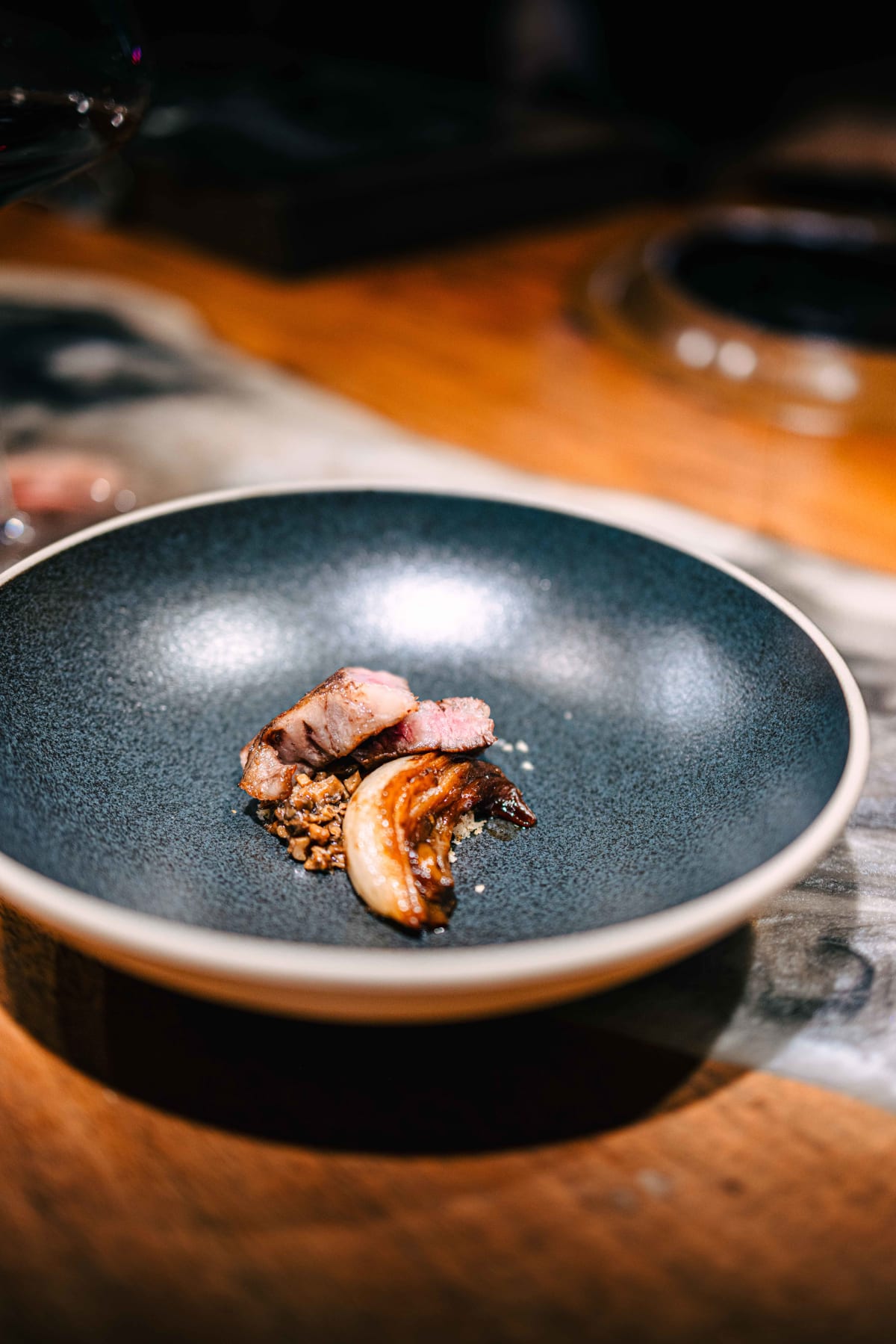
Whether or not it was intended, the later the hanwoo dish, the more sauce and garnish it carried compared with the earlier ones, and the more complexity came through.
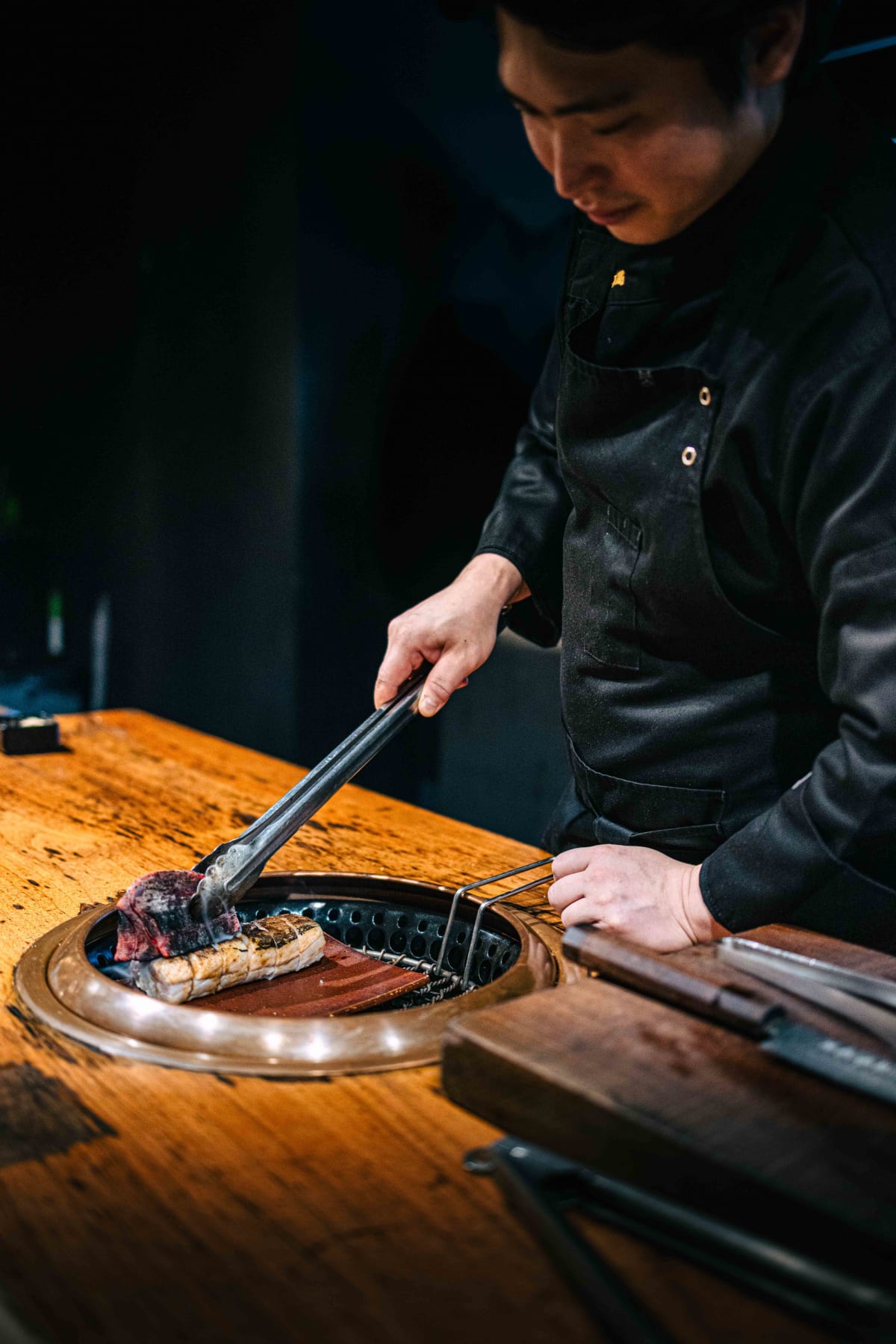
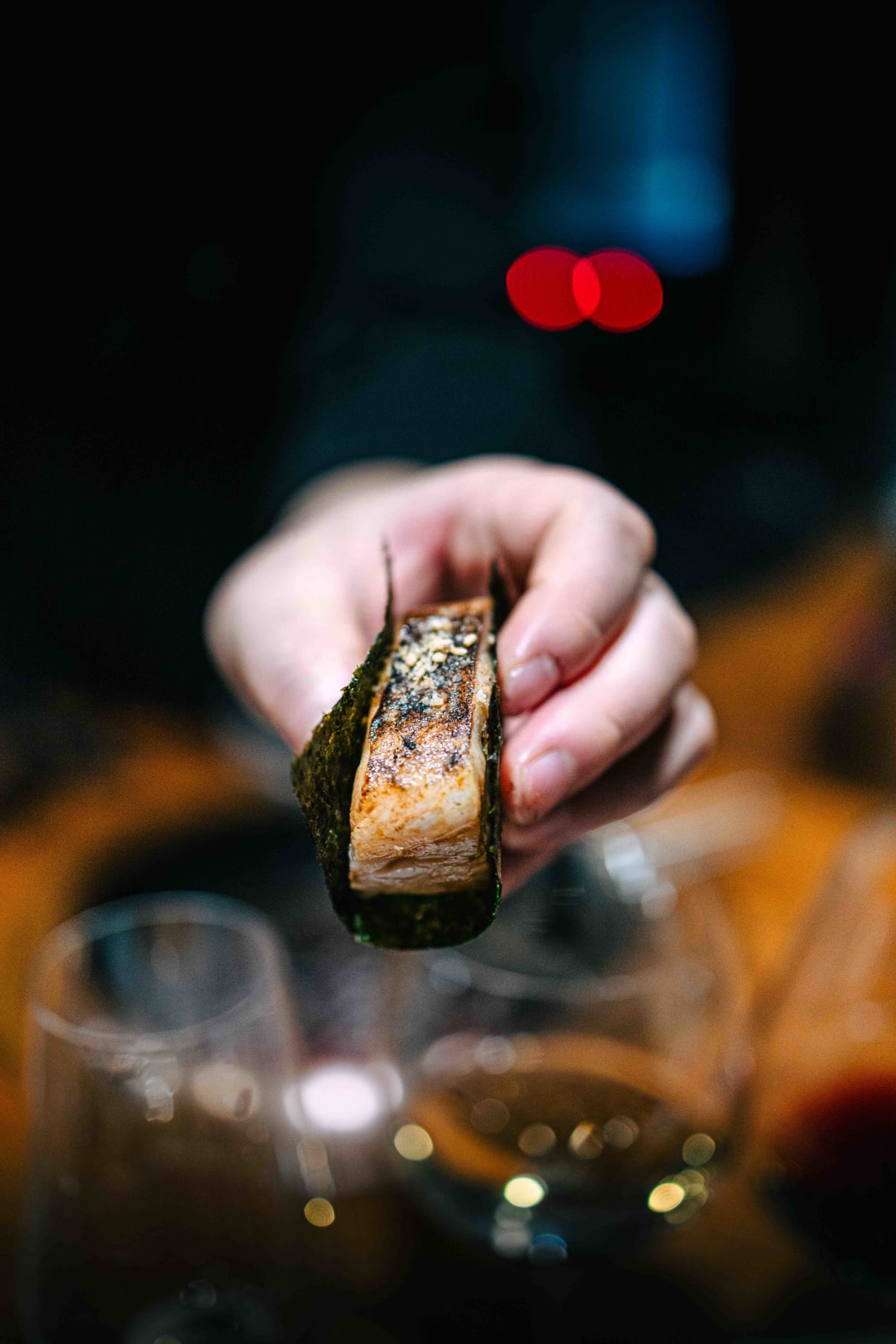
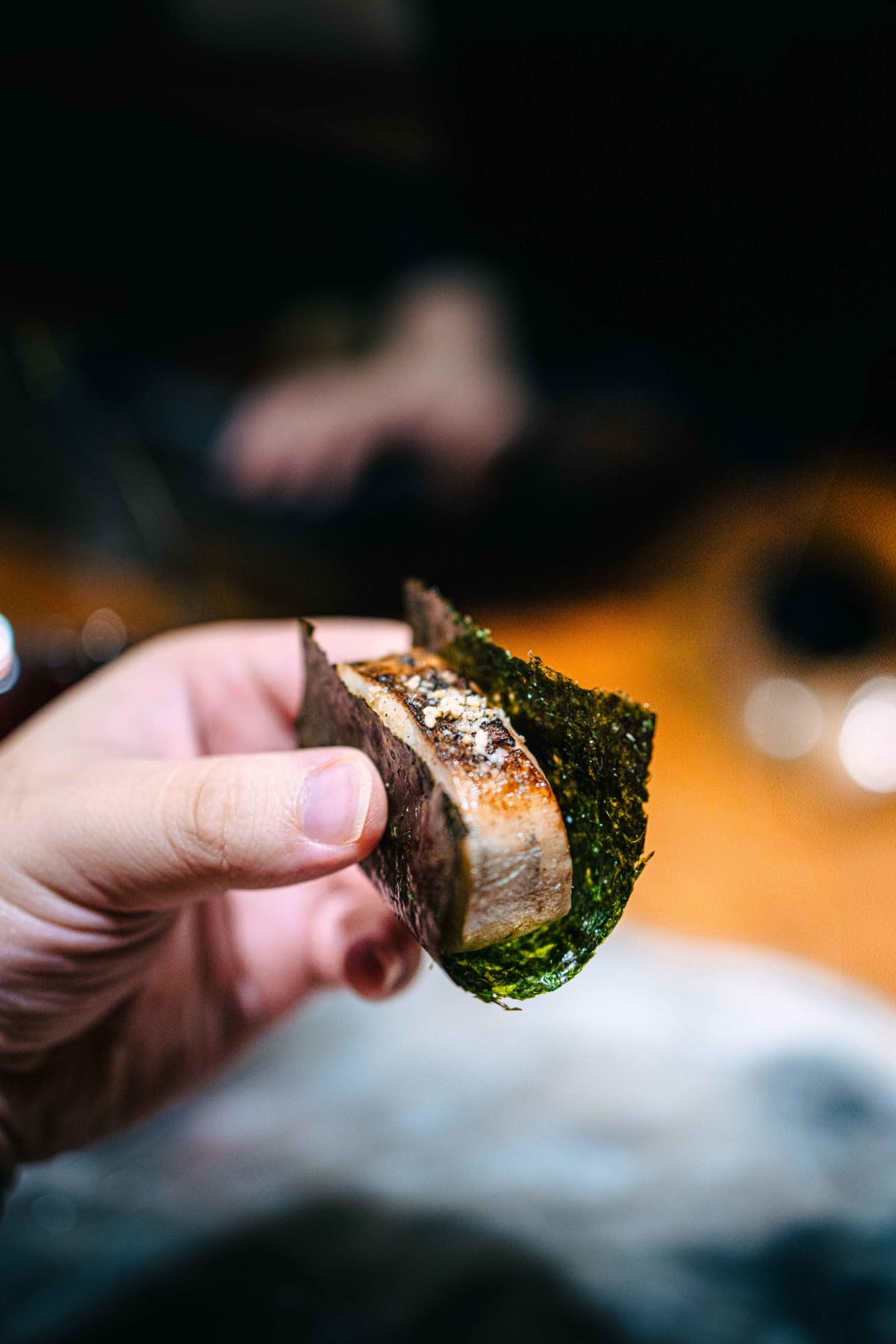
Between the hanwoo dishes came other delicious things, and the aji bozushi that arrived midway stood out. Bozushi (棒寿司) is sushi pressed into a long bar and then sliced. It is usually made with mackerel, but since aji, horse mackerel, is good in summer, the chef made it with aji.
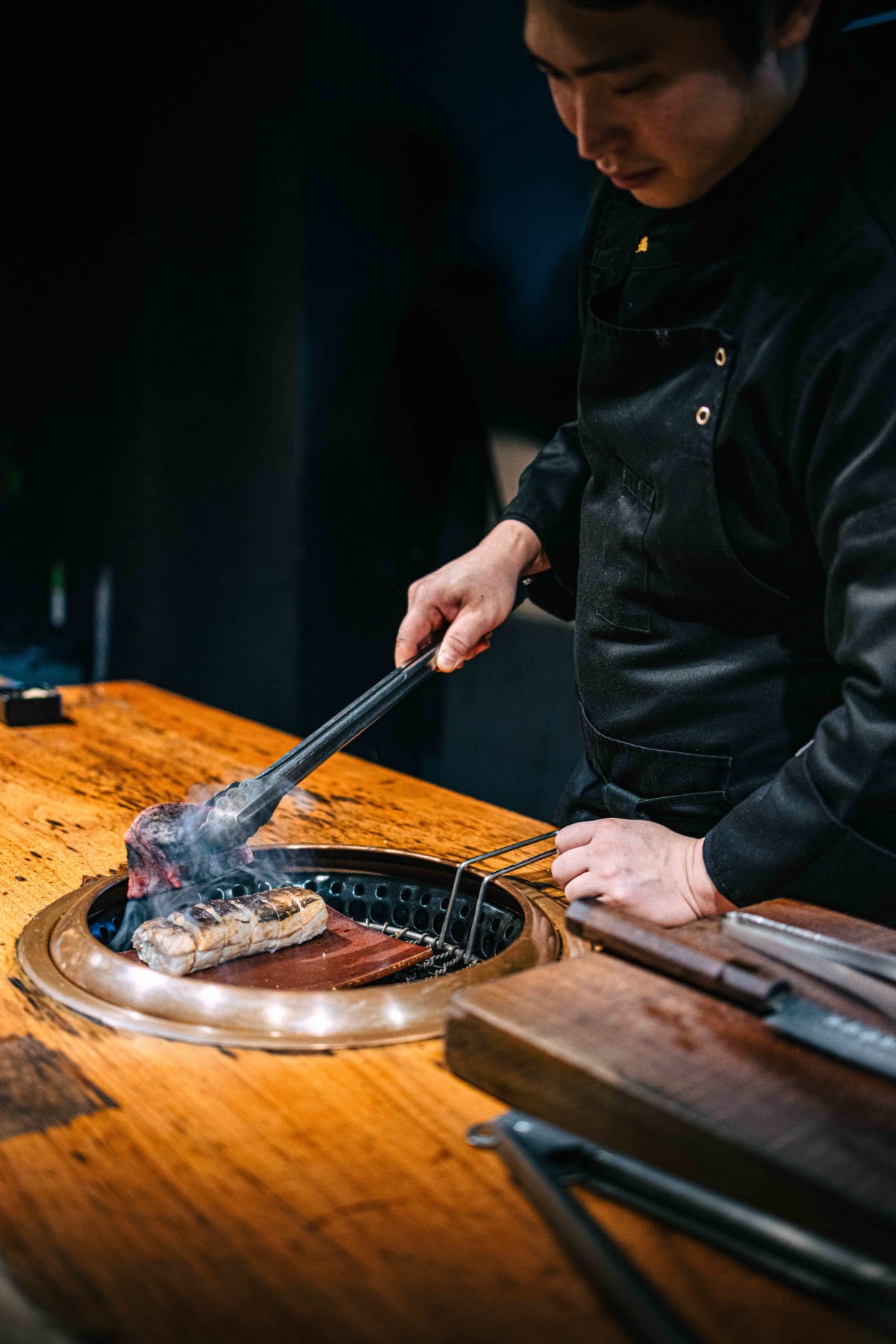
At Jungyookgongbang, the bozushi was set on a wooden plank over the grill to scorch the outside, then sliced piece by piece, wrapped in nori and handed over. And this bozushi was better than the mackerel bozushi at most sushiya. The concentrated flavour of the aji, the smoky edge on the outside, the shari: everything about it was excellent.
Scallop katsu came too, cut in half and plated to show the cross-section.
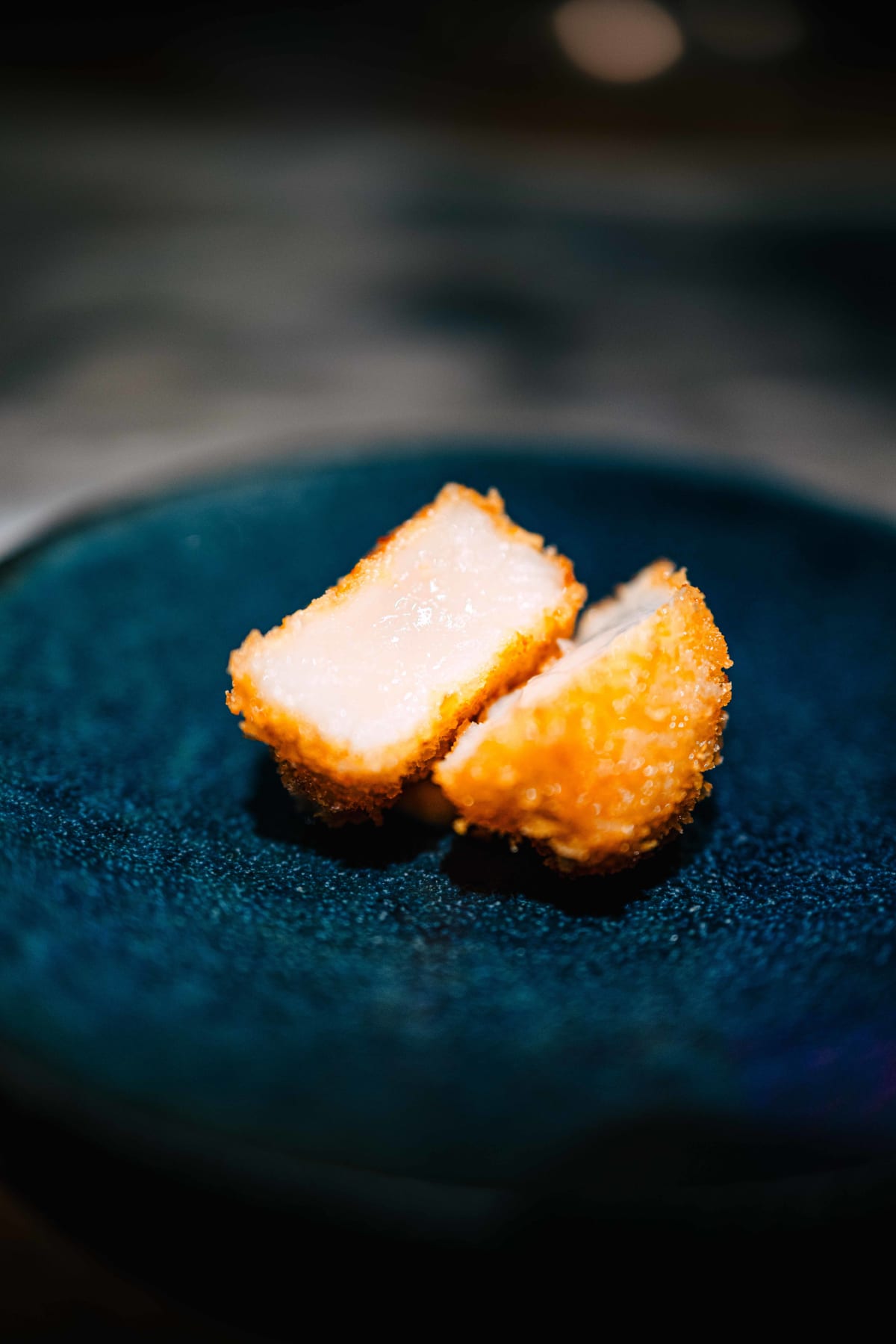
The frying was closer to a croquette or kushikatsu than to tempura. The scallop's springiness and flavour were good, but frying does not seem to suit scallop as an ingredient.
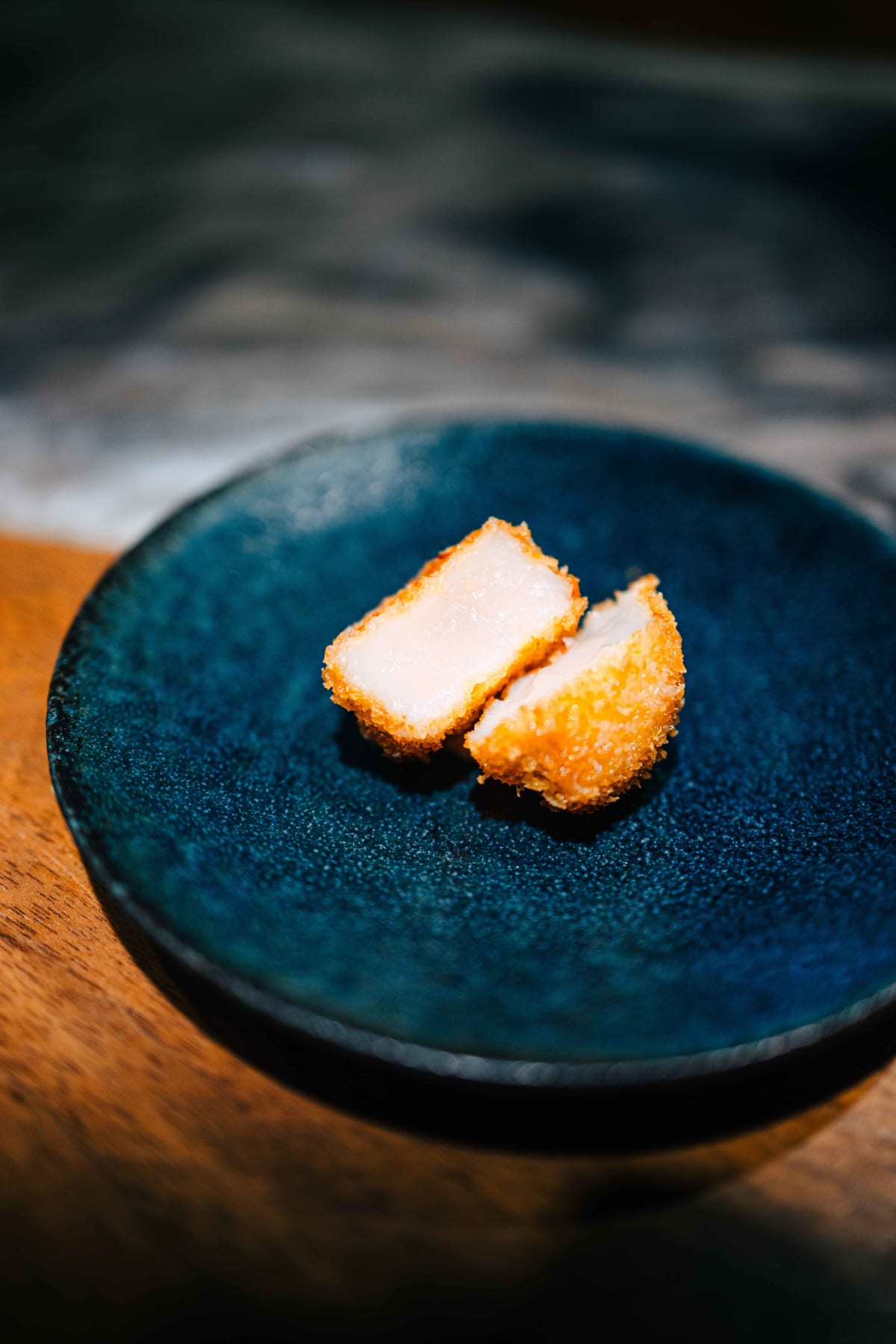
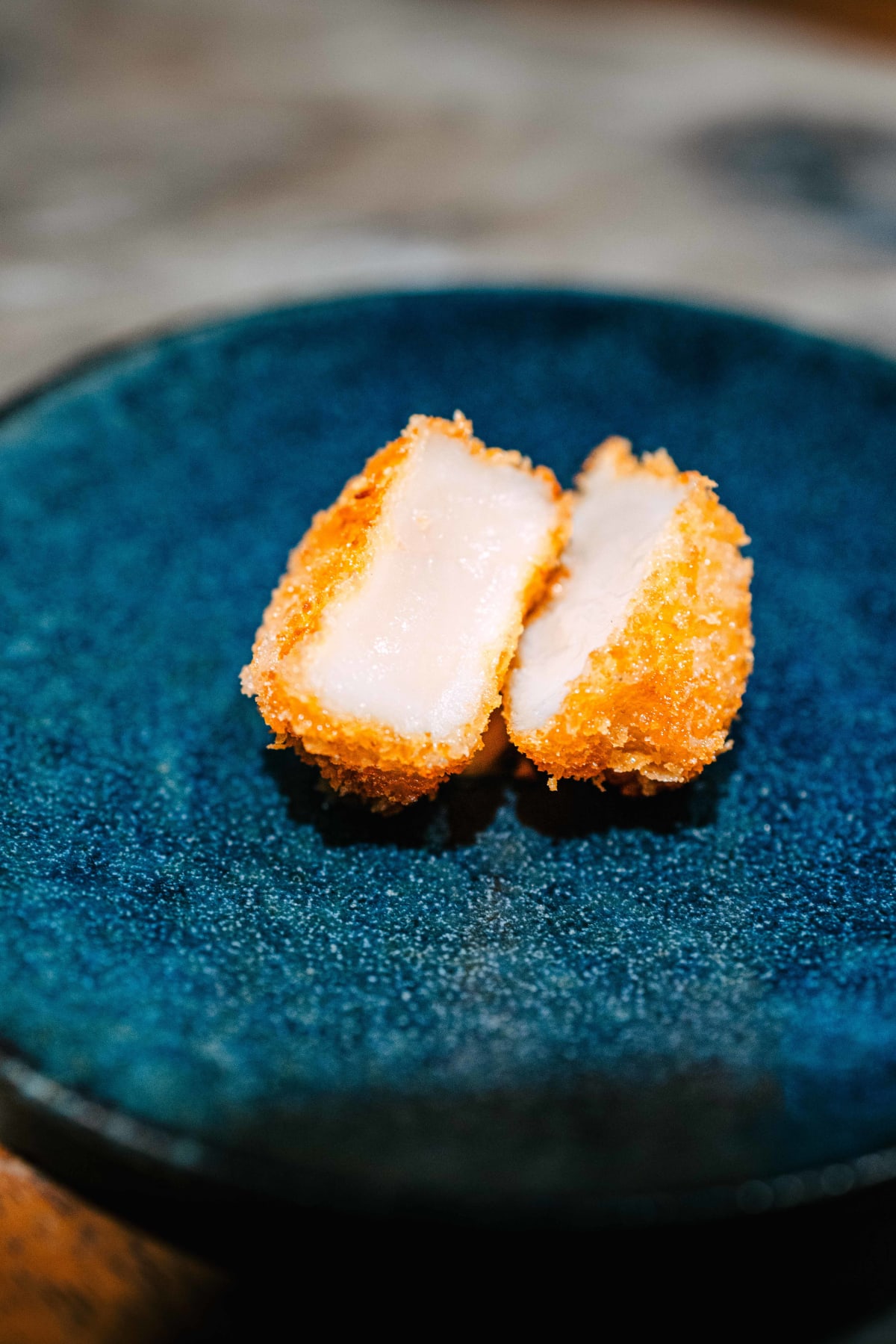
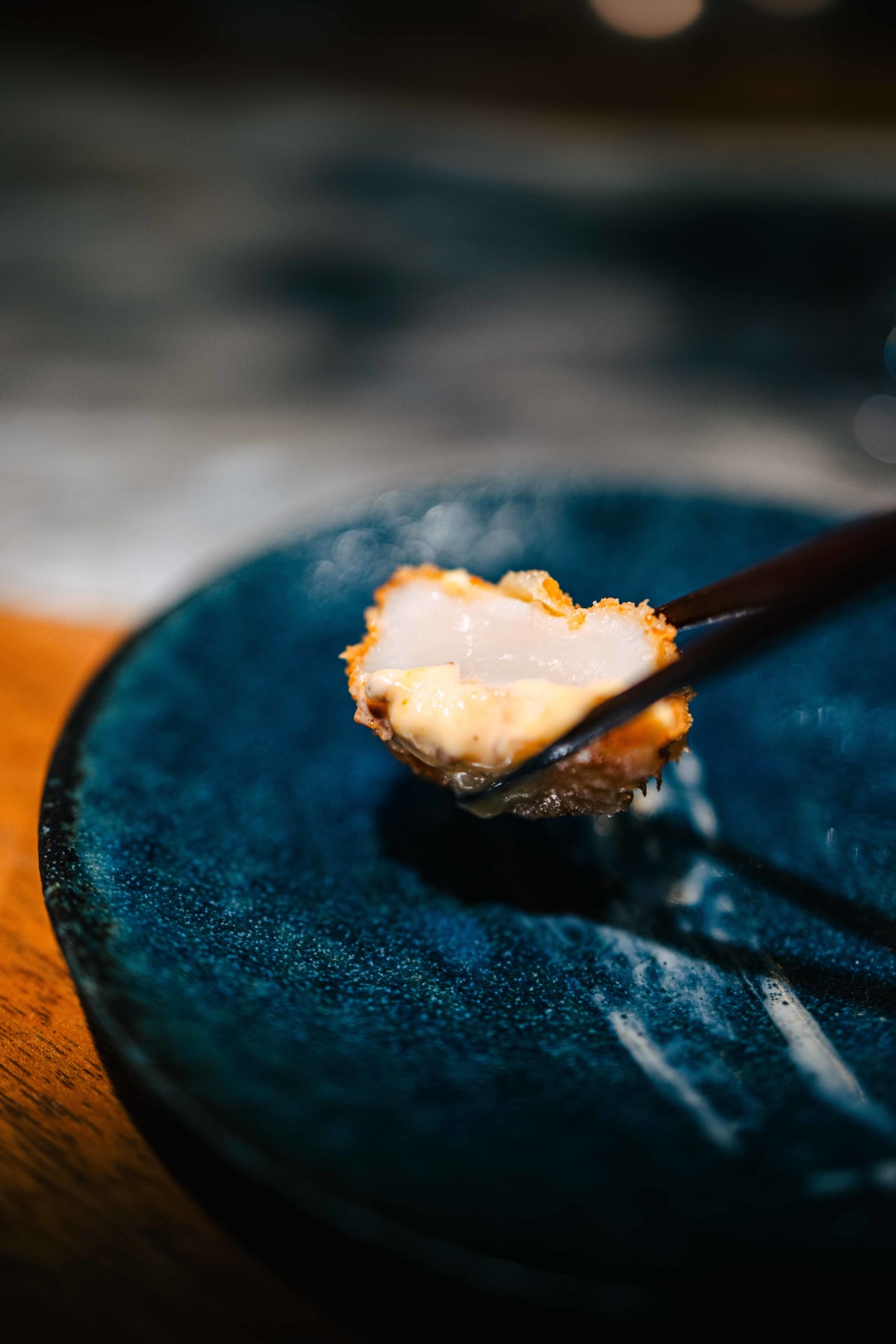
The great strength of scallop is its particular springiness, and in my view frying makes that strength harder to feel.
Section 7·Oxtail Soup And Two Burgundies
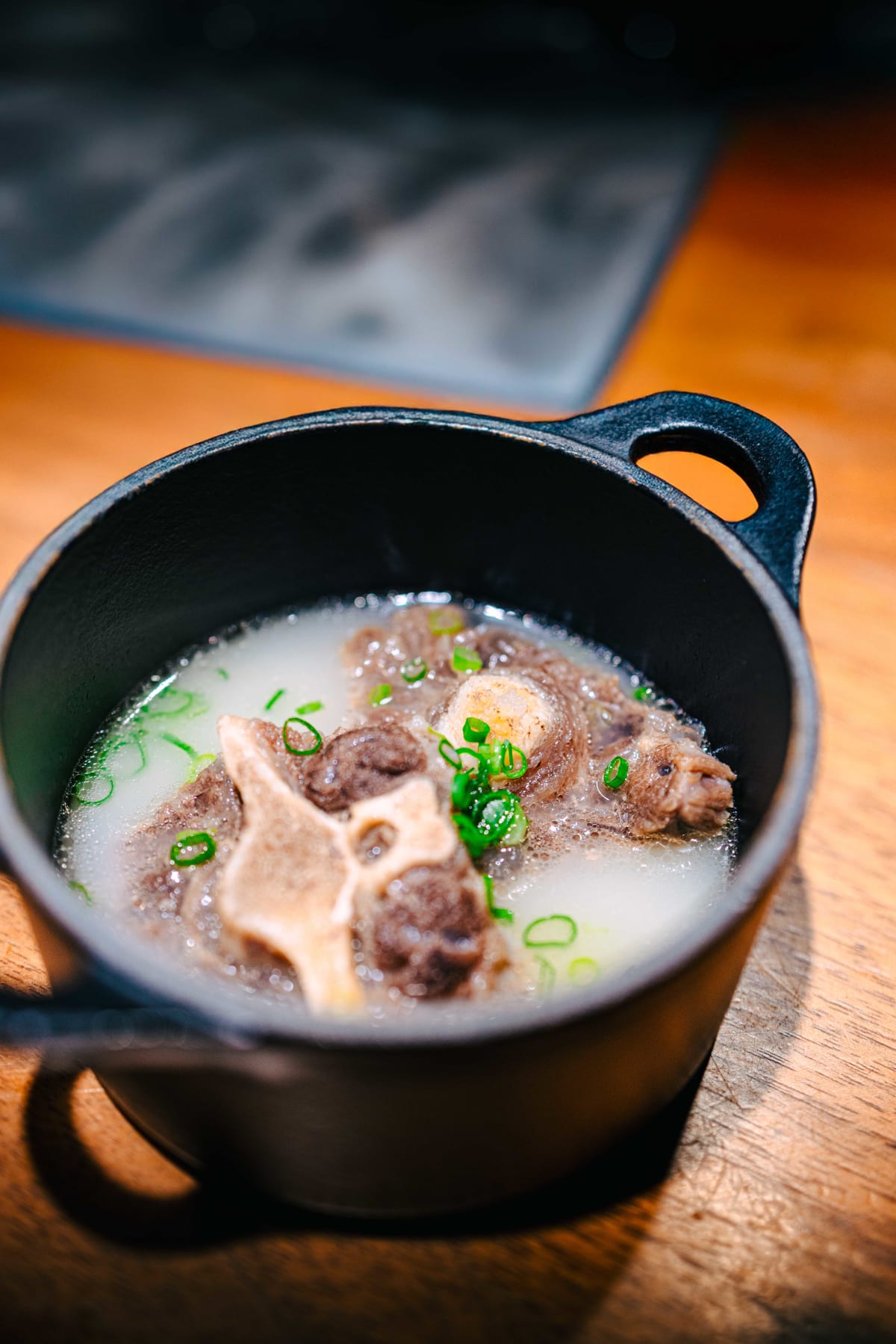
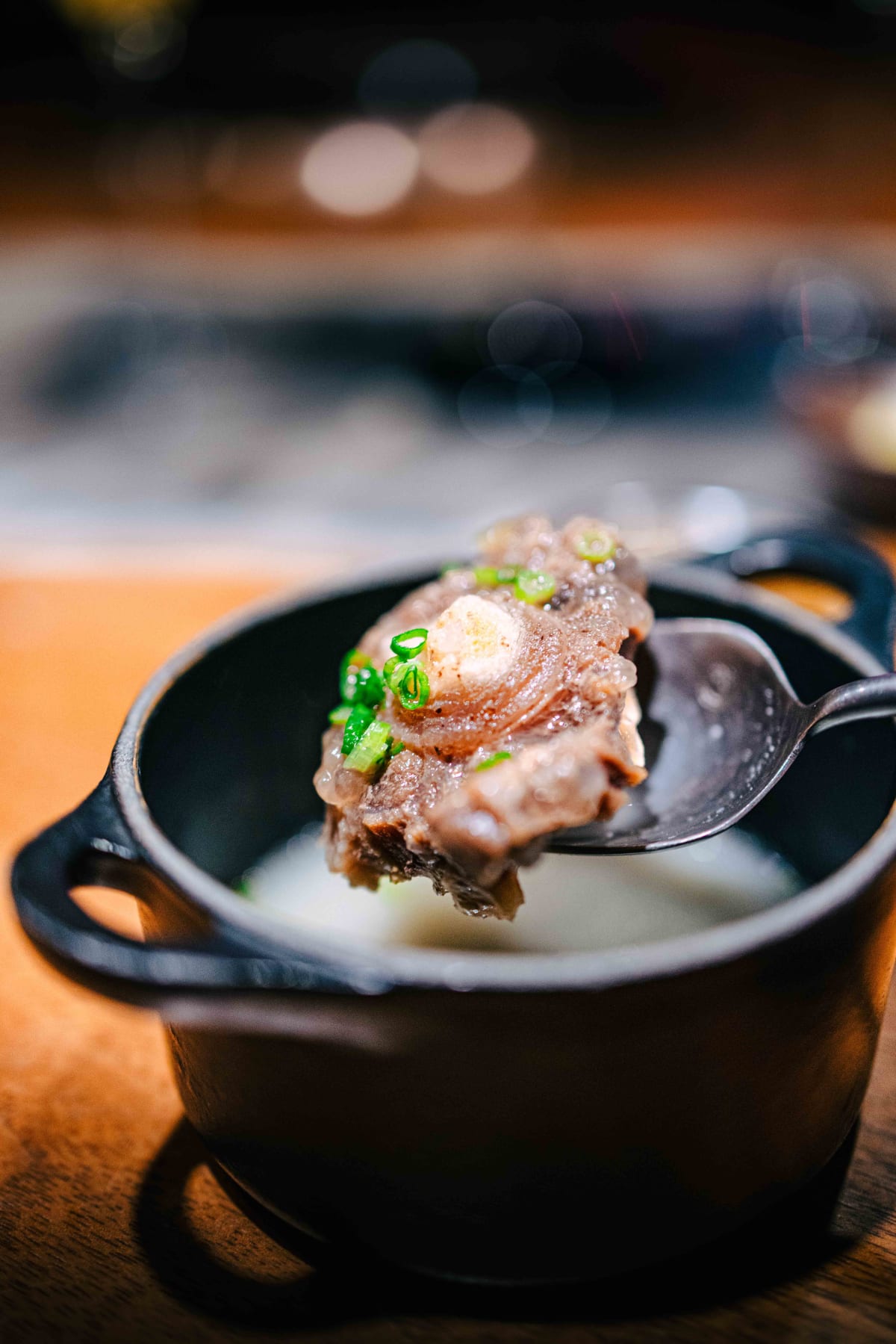
Not everything was a small bite. Midway through came oxtail gomtang, a milky broth served in a small cast-iron pot. As I will come back to later, Chef Chung makes a remarkably good broth. He brings out the deep, hearty savour and umami of beef stock, and he sets the salt just right, neither flat nor too salty, at a level that suits drinking wine.
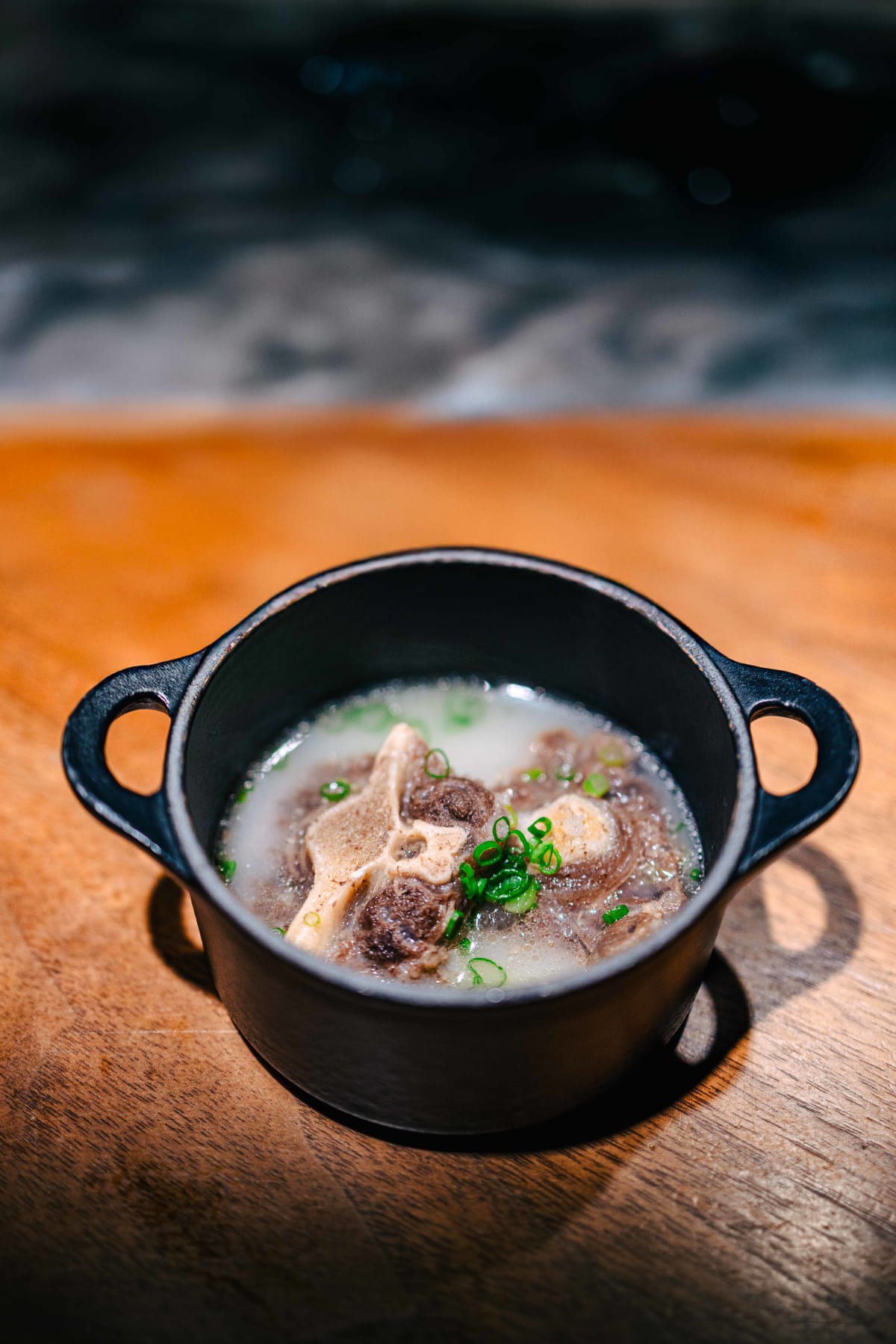
Oxtail is a truly prized cut of beef. It has a chewy spring and a gelatinous feel, and there is a fair amount of fat around the bone and between the meat, which makes it nutty and weighty. As suyuk, boiled and sliced, several pieces of it make an expensive plate that can turn cloying, but eaten a little at a time with the broth like this, it was just right.
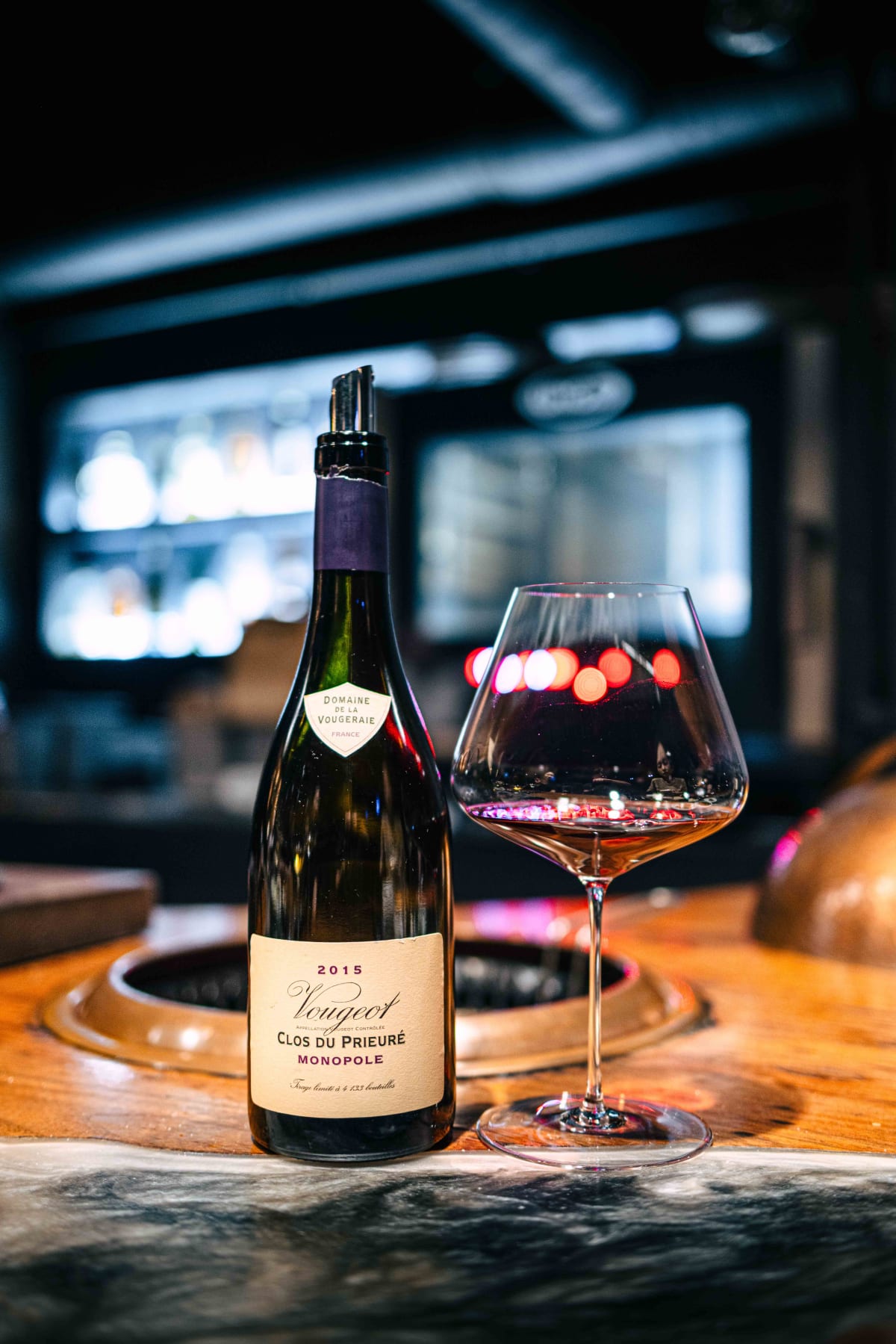
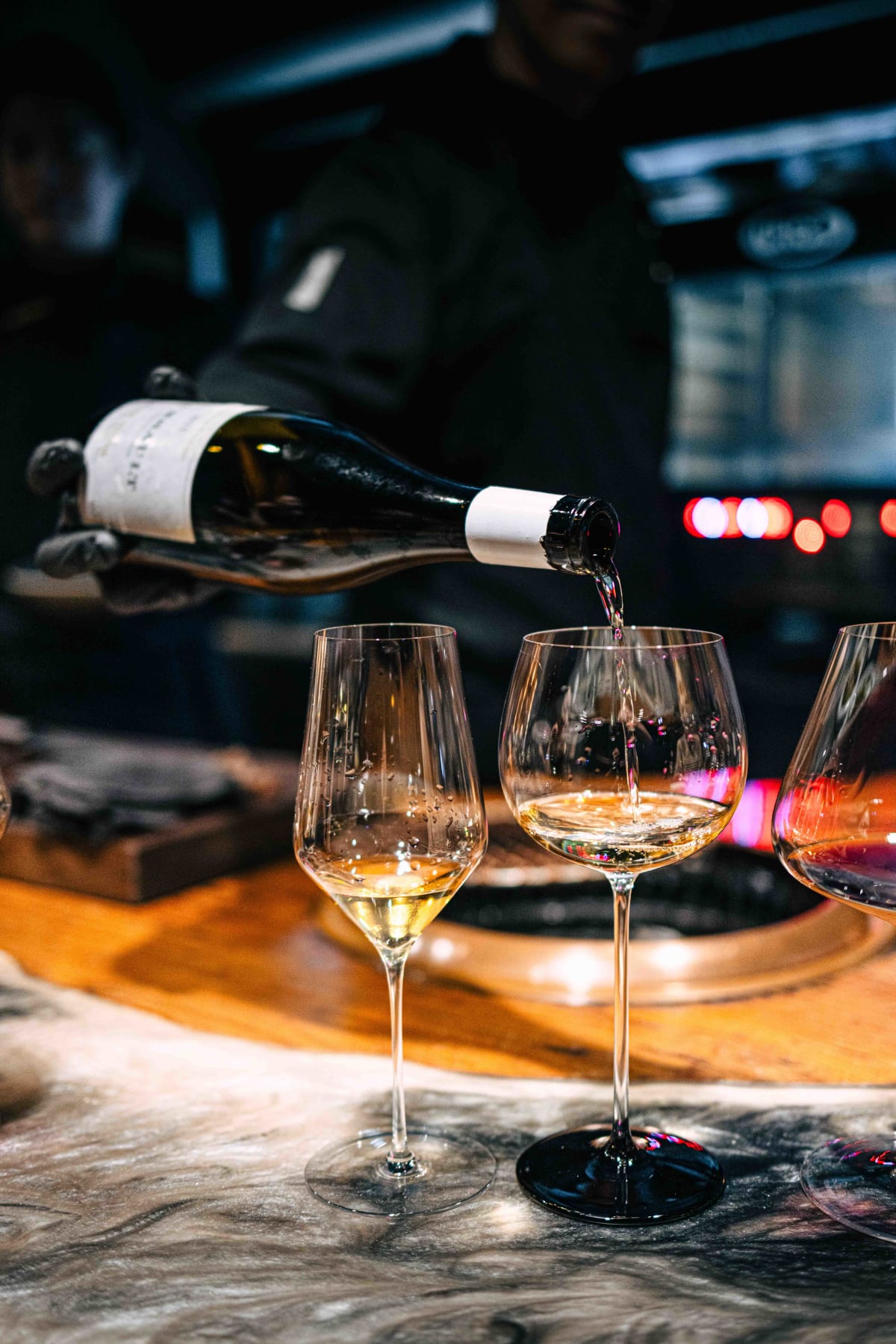
With it, we drank a red Burgundy: Domaine de la Vougeraie Vougeot Clos du Prieuré Monopole 2015.
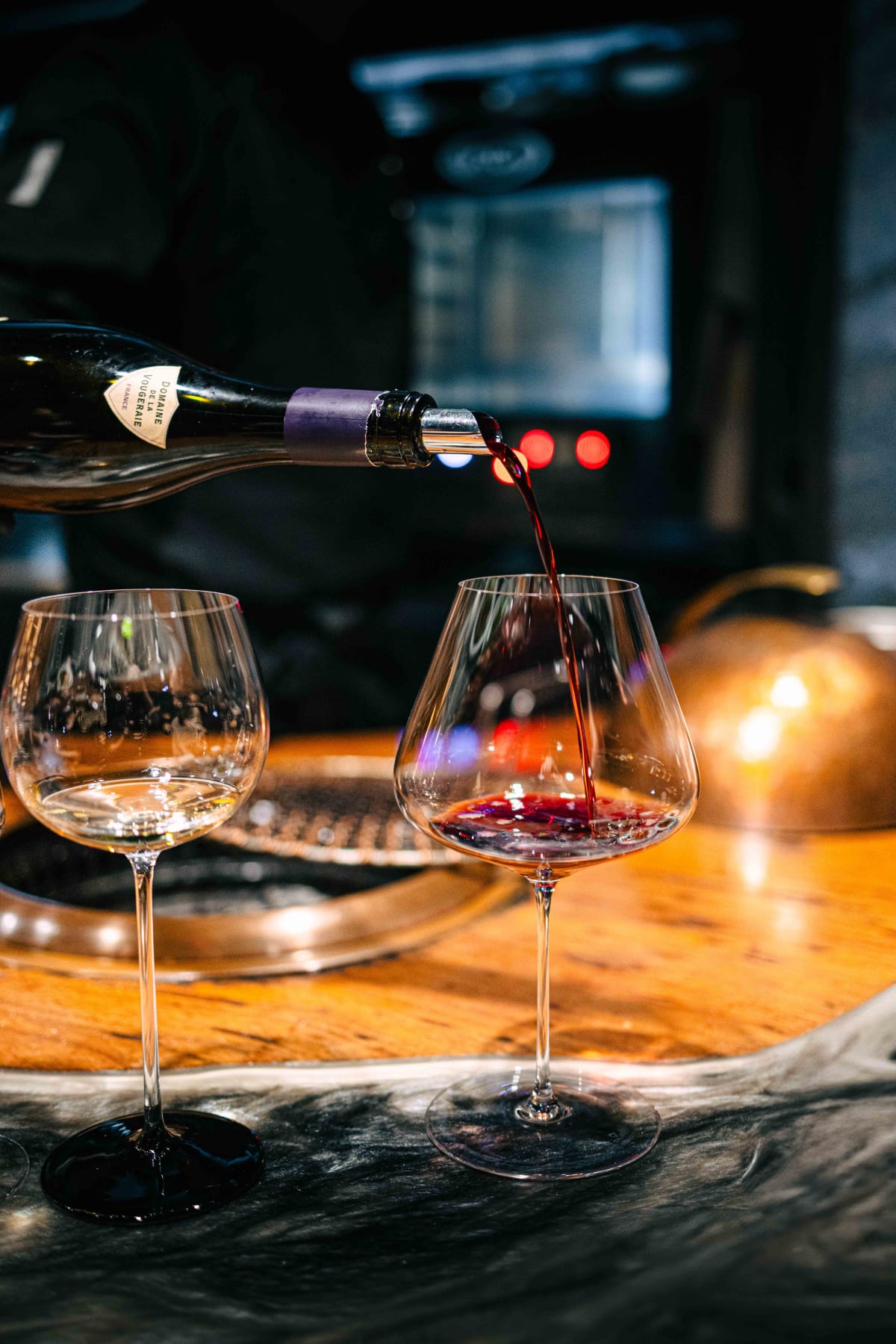
The Clos du Prieuré is a plot in the village of Vougeot owned outright by Domaine de la Vougeraie, the biodynamic domaine the Boisset family created in 1999 by bringing together its family vineyards. In the Middle Ages it belonged to a priory attached to the Abbey of Saint-Germain-des-Prés. The label states that only 4,133 bottles of this vintage were filled.
A white was opened as well: Domaine Tessier Meursault 2017.
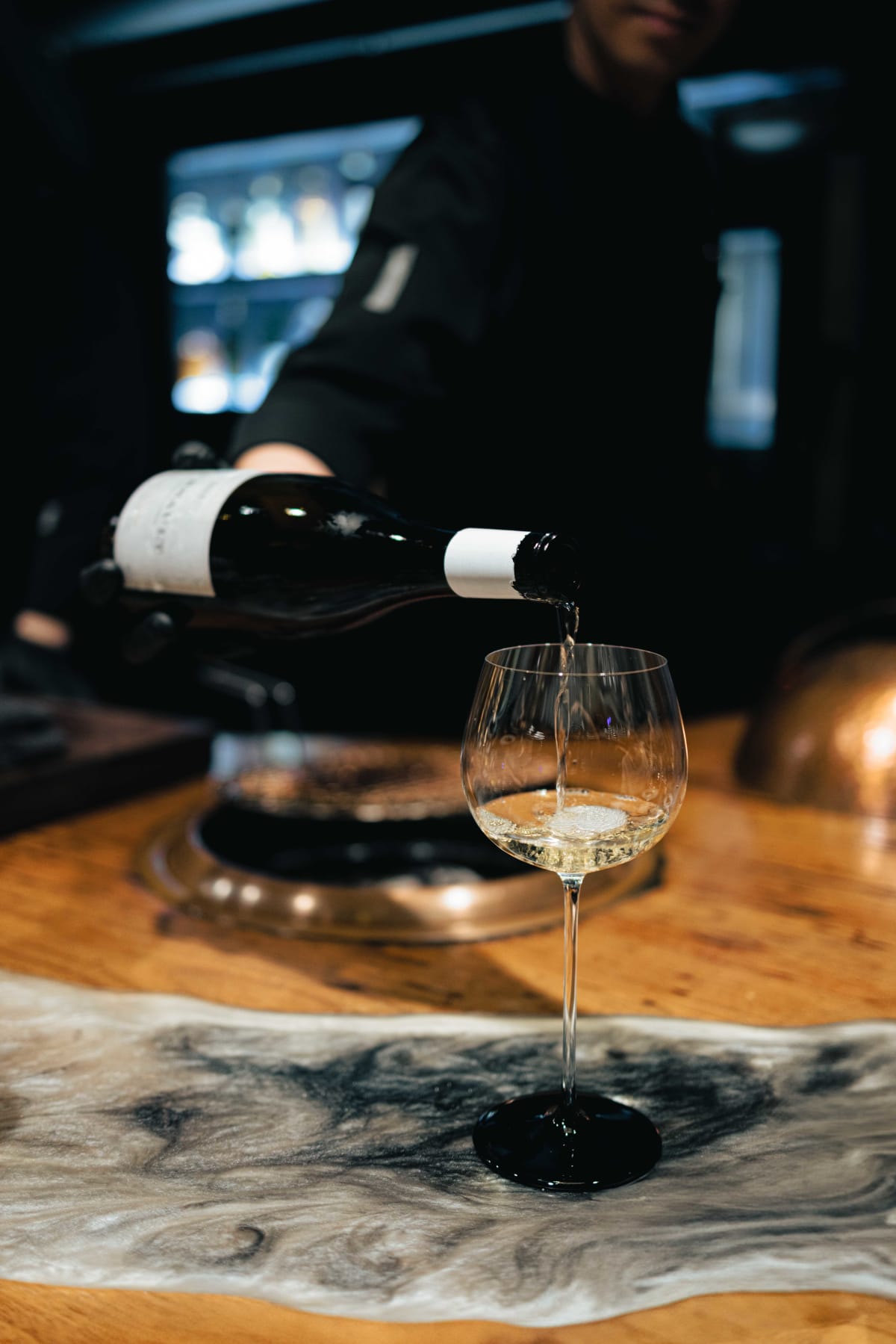
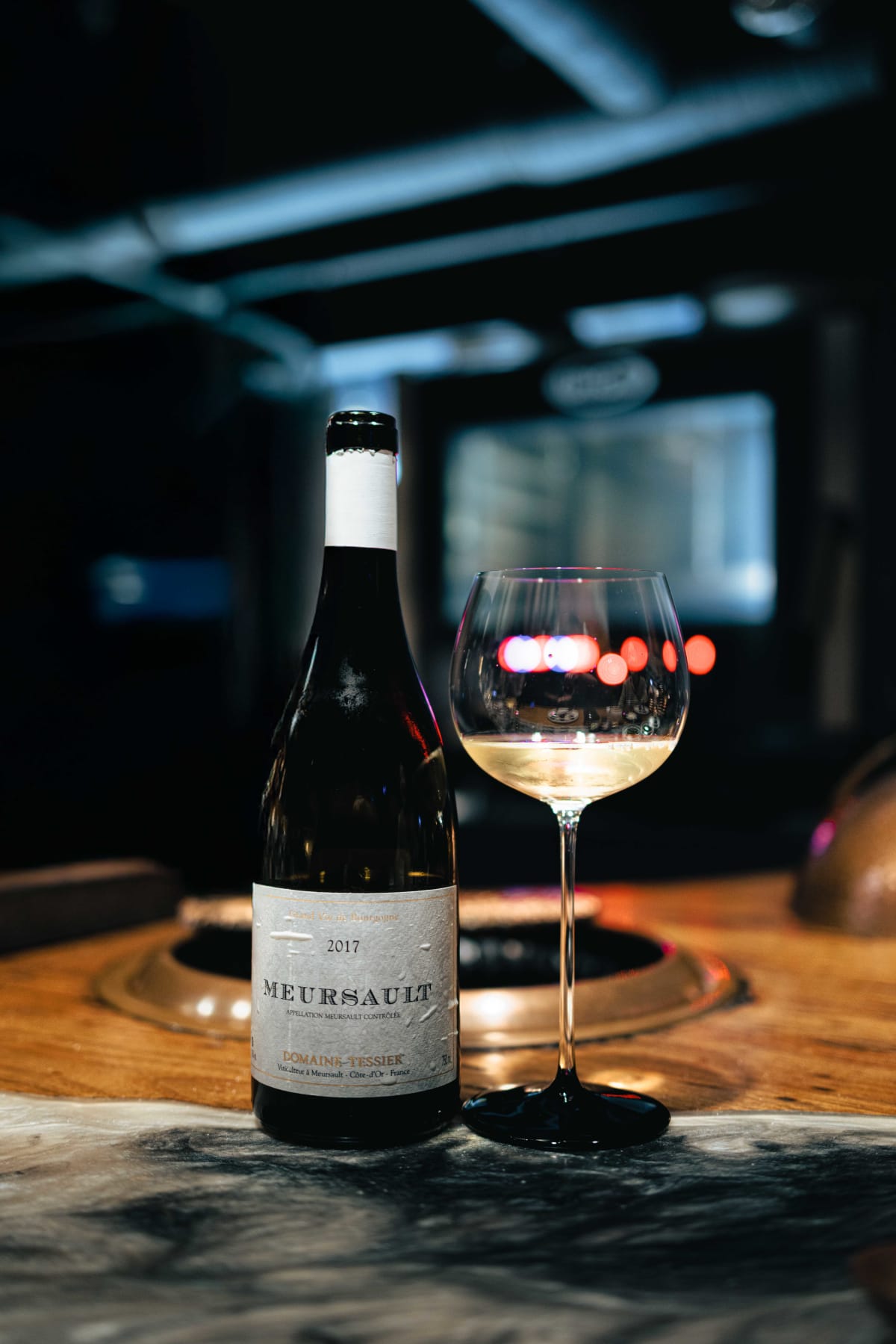
Domaine Tessier is a small family domaine in the heart of Meursault, taken over at a young age by Arnaud Tessier after the sudden death of his father, Michel. It has vines in the premiers crus Charmes-Dessus, Poruzot-Dessus and Genevrières, ploughs with horses, farms organically and ferments with indigenous yeast.
Section 8·Striploin And Haut-Batailley
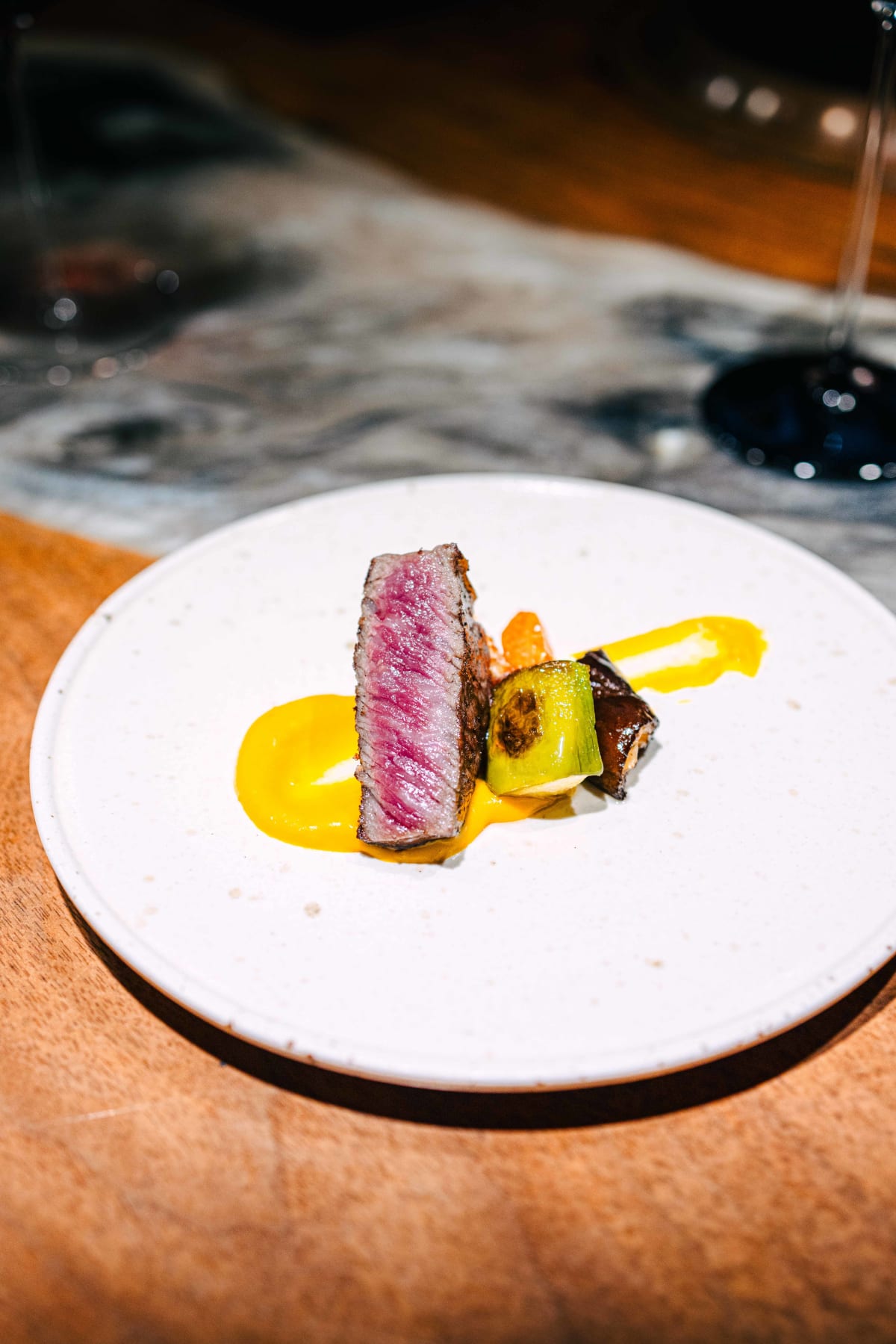
Jungyookgongbang's hanwoo was superb not only in the grilling but in how well the sauces and garnishes matched it and lifted it, like eating well-made French food, and the third hanwoo dish, striploin with well-grilled vegetables and a purée, was a particularly outstanding combination.
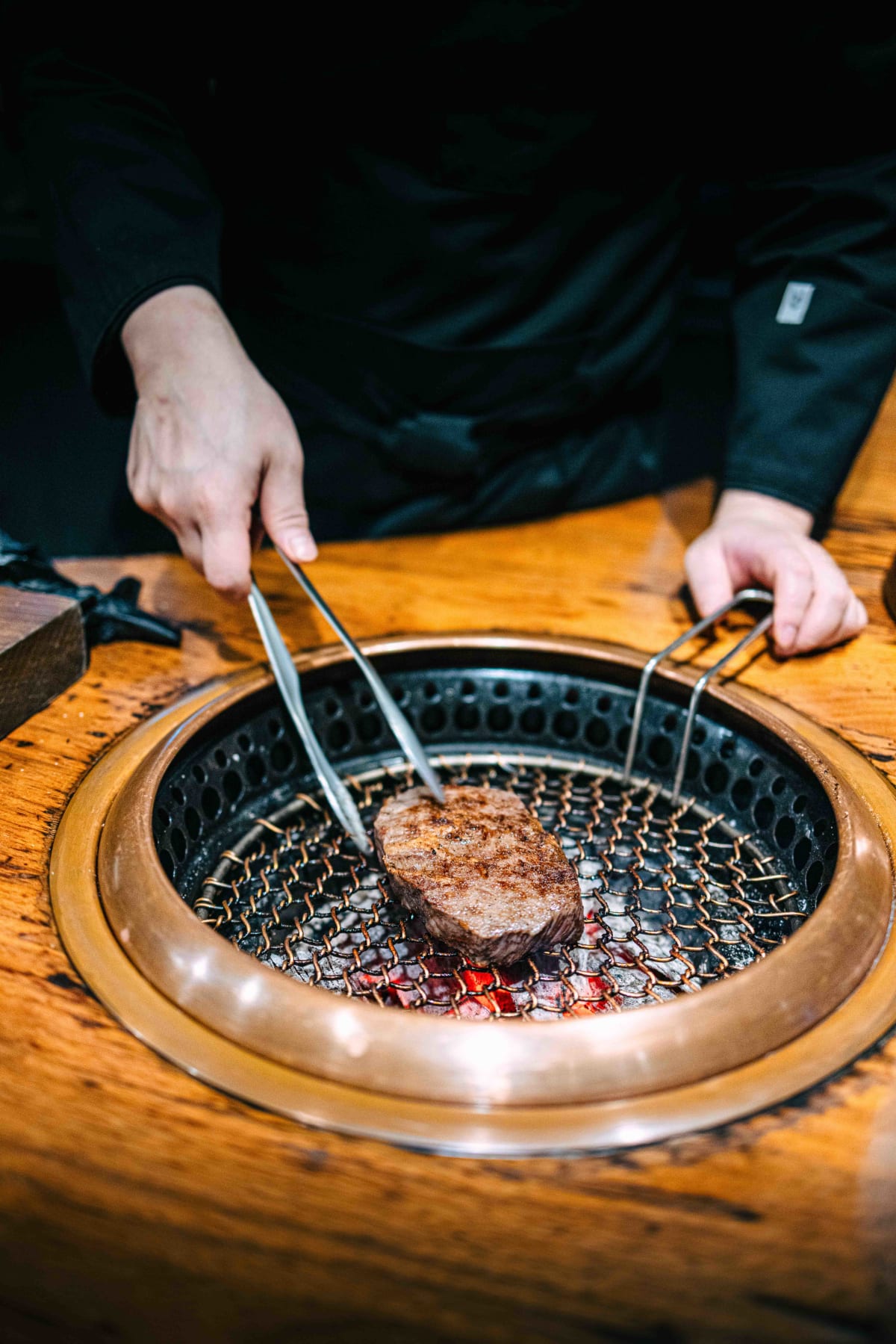
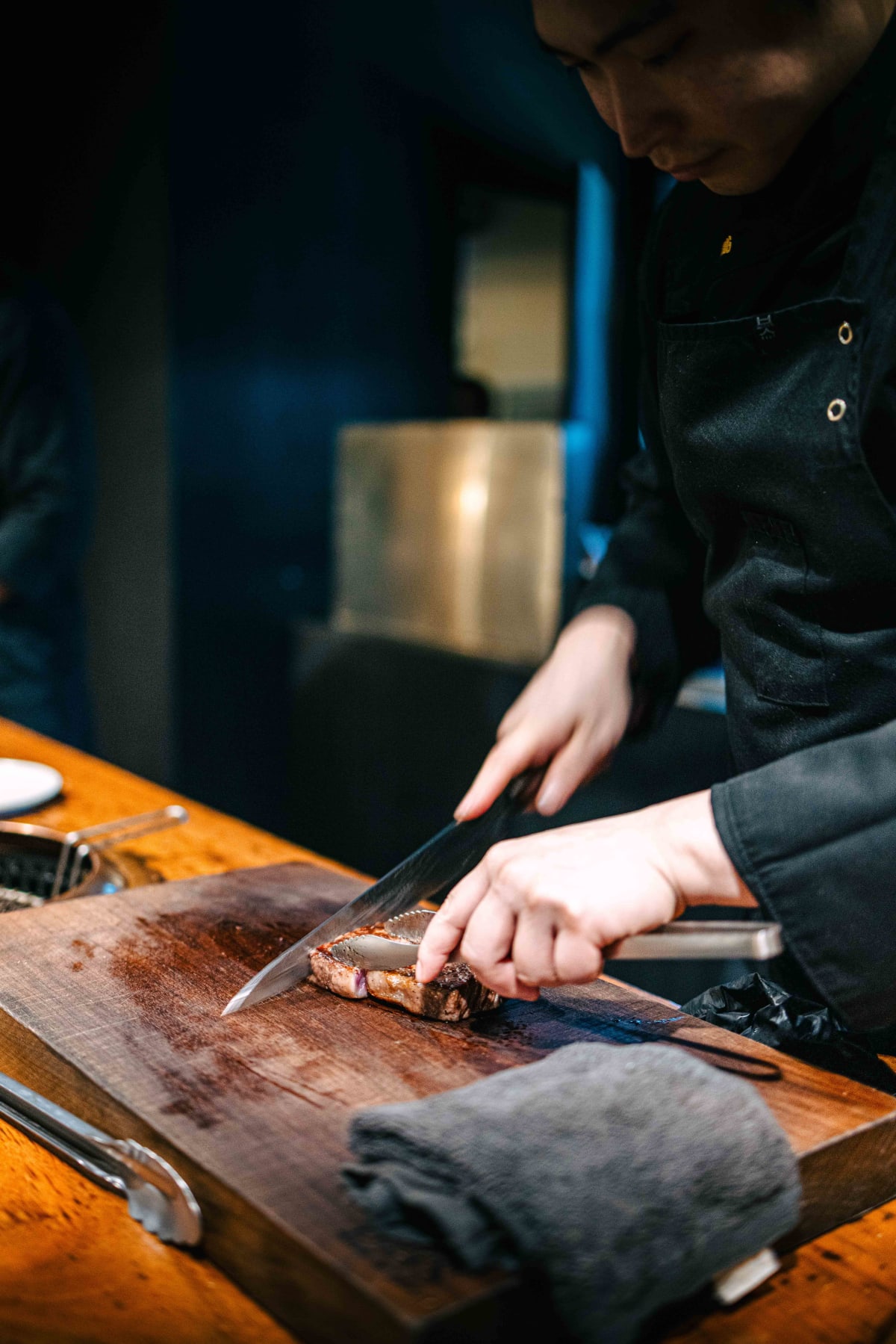
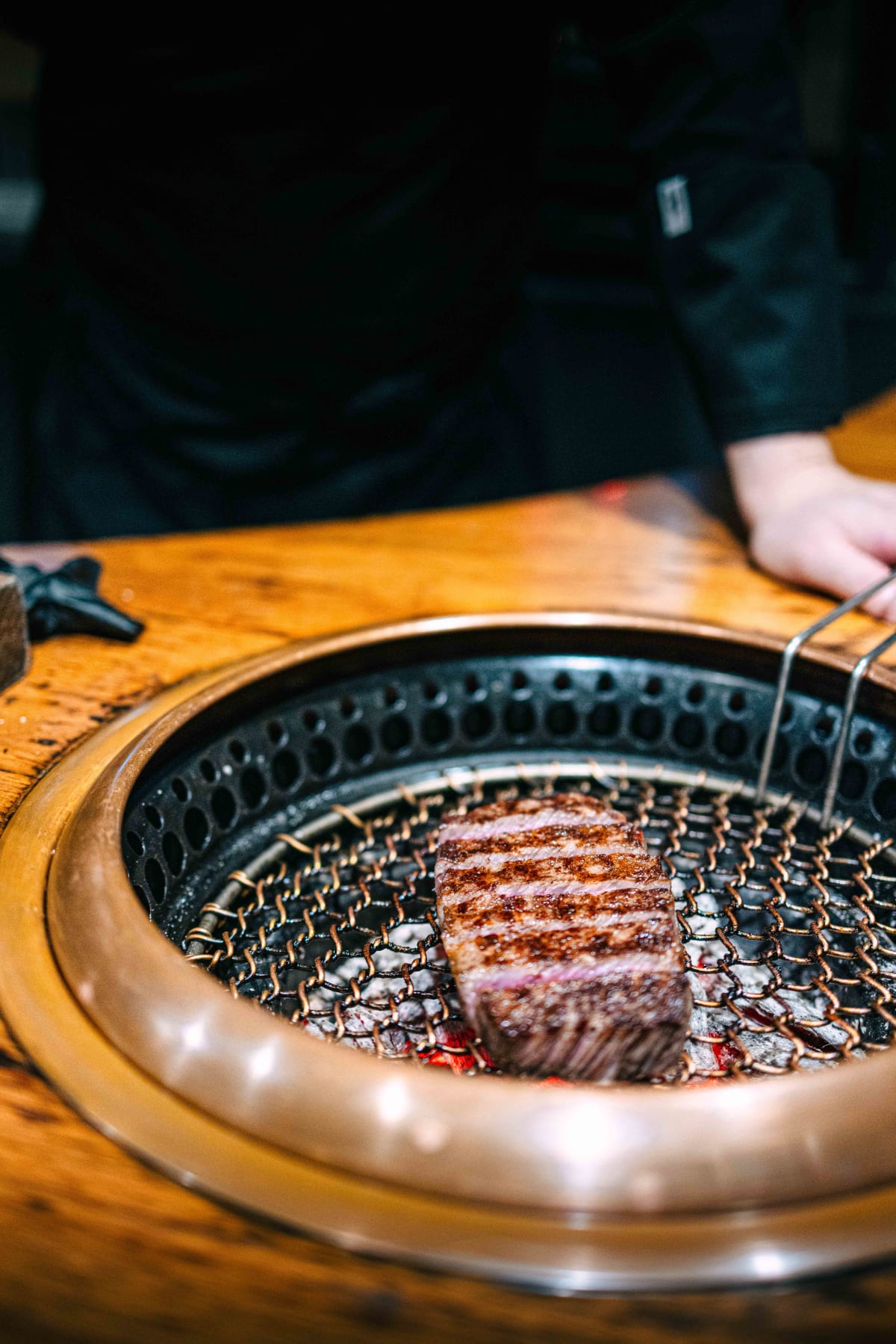
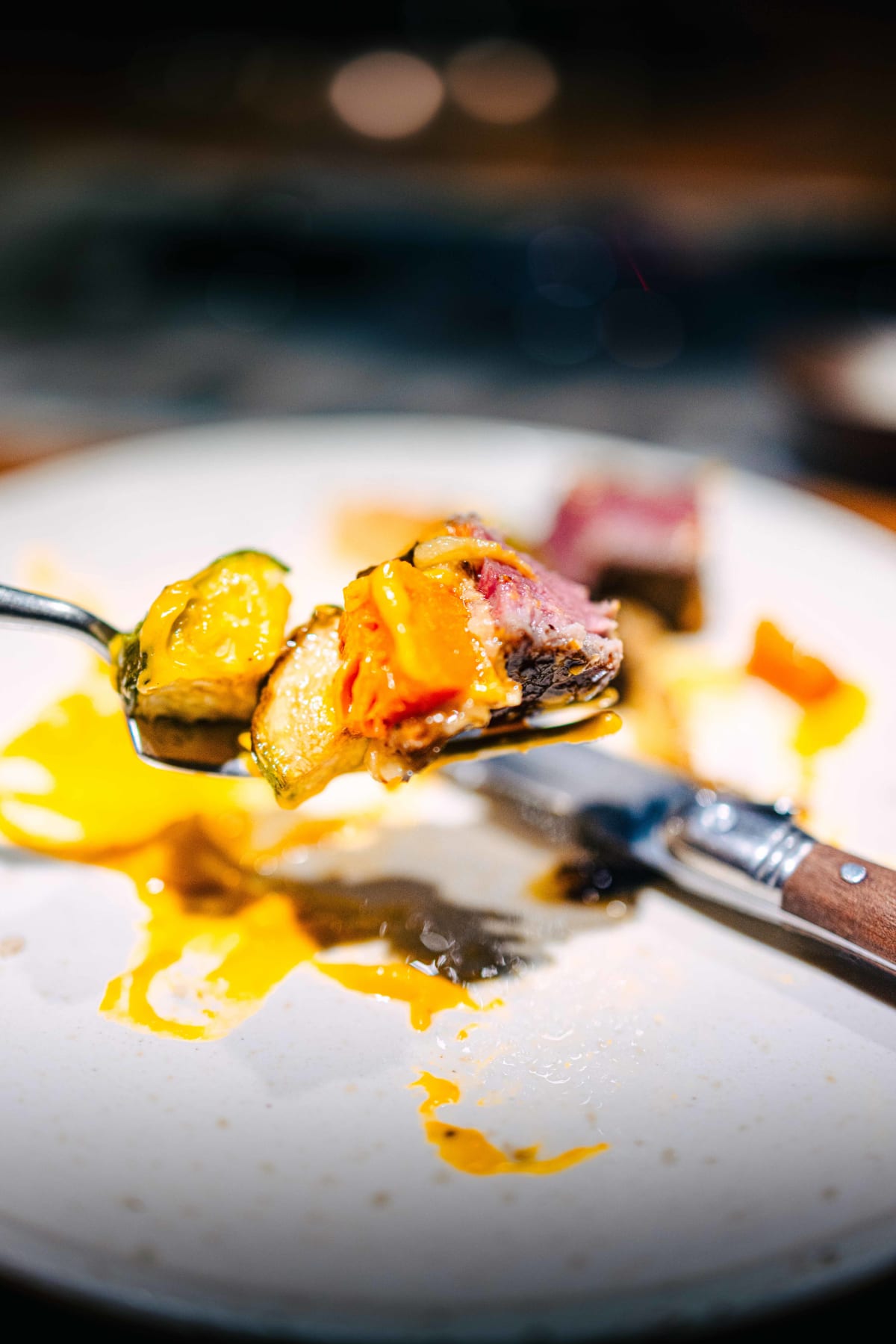
Chaekkeut, the part of the loin between the ribeye and the tenderloin, is the Korean equivalent of a Western striploin. Grilled thick with a crosshatched crust, it was stood on its side and served with grilled courgette and other vegetables and a sauce that looked like a yellow kabocha squash purée.
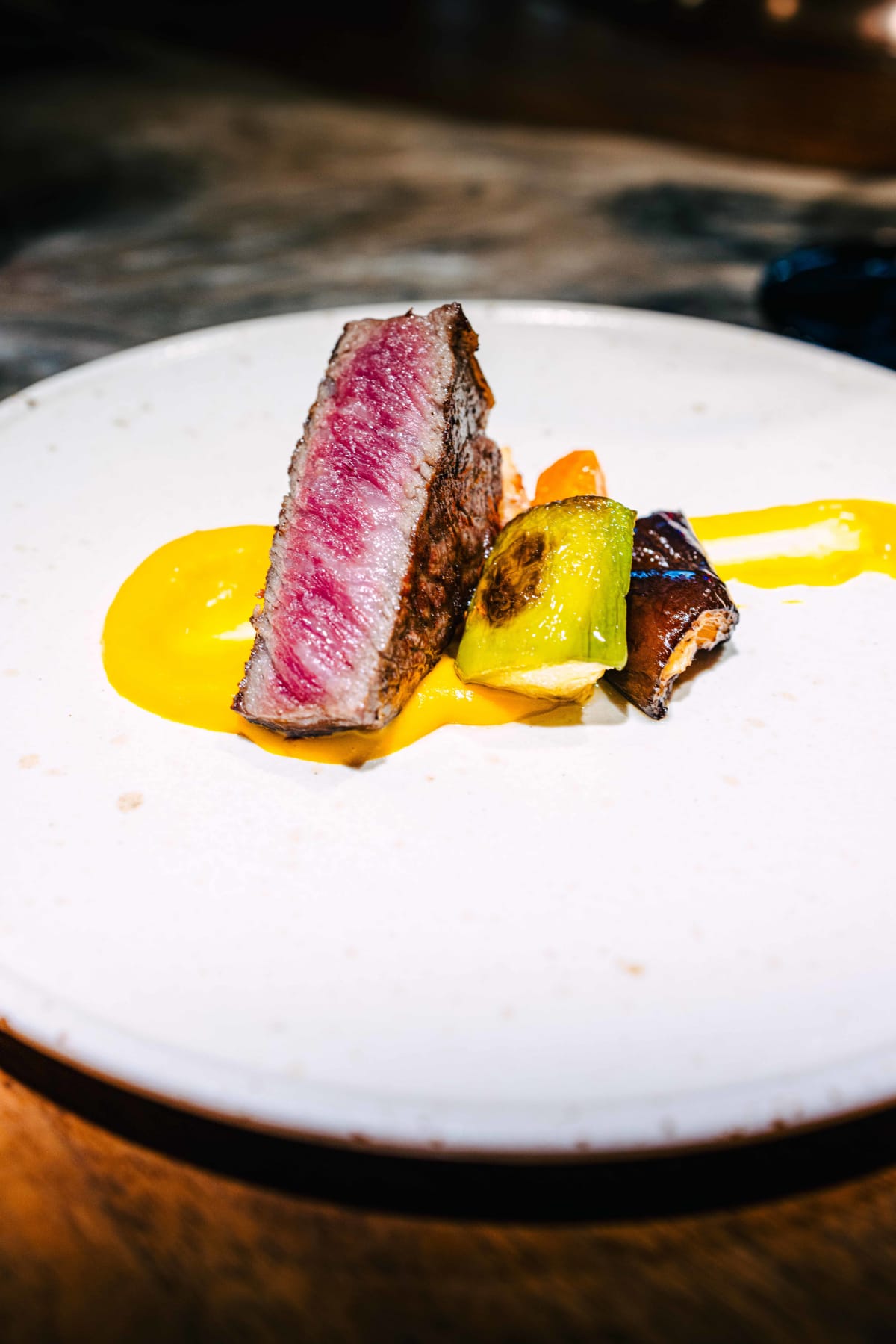
The striploin had a wonderful spring of its own, and the vegetables' smokiness and the purée did a very good job of cutting its richness. Yet they did not erase the striploin either; they brought its flavour out.
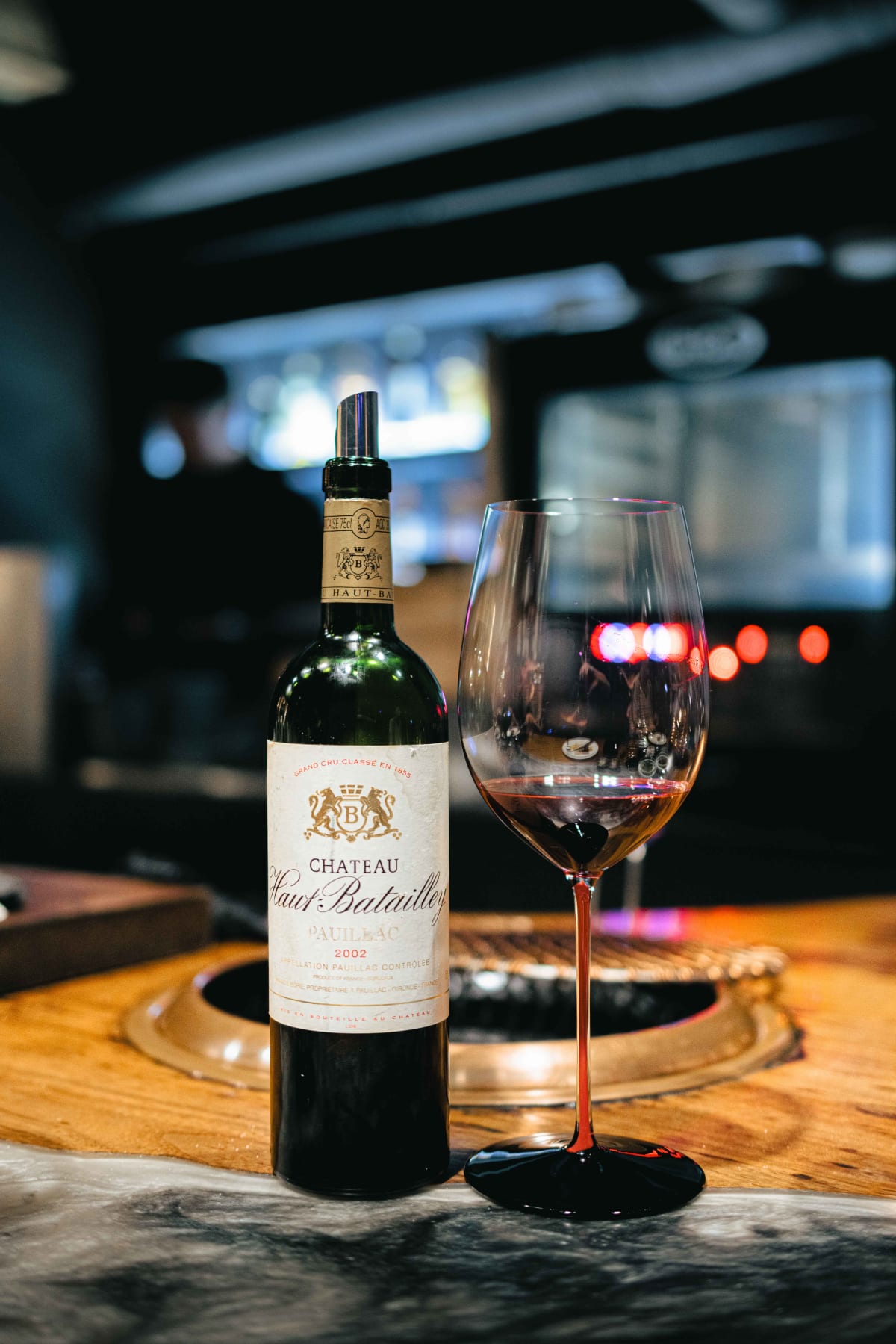
With the striploin, we drank a Bordeaux: Château Haut-Batailley 2002. It is a Pauillac château classified as a fifth growth in 1855. Once part of Château Batailley, it became independent in 1942 when the Borie family divided the land over inheritance, and in 2017 the Cazes family of Lynch-Bages bought it.
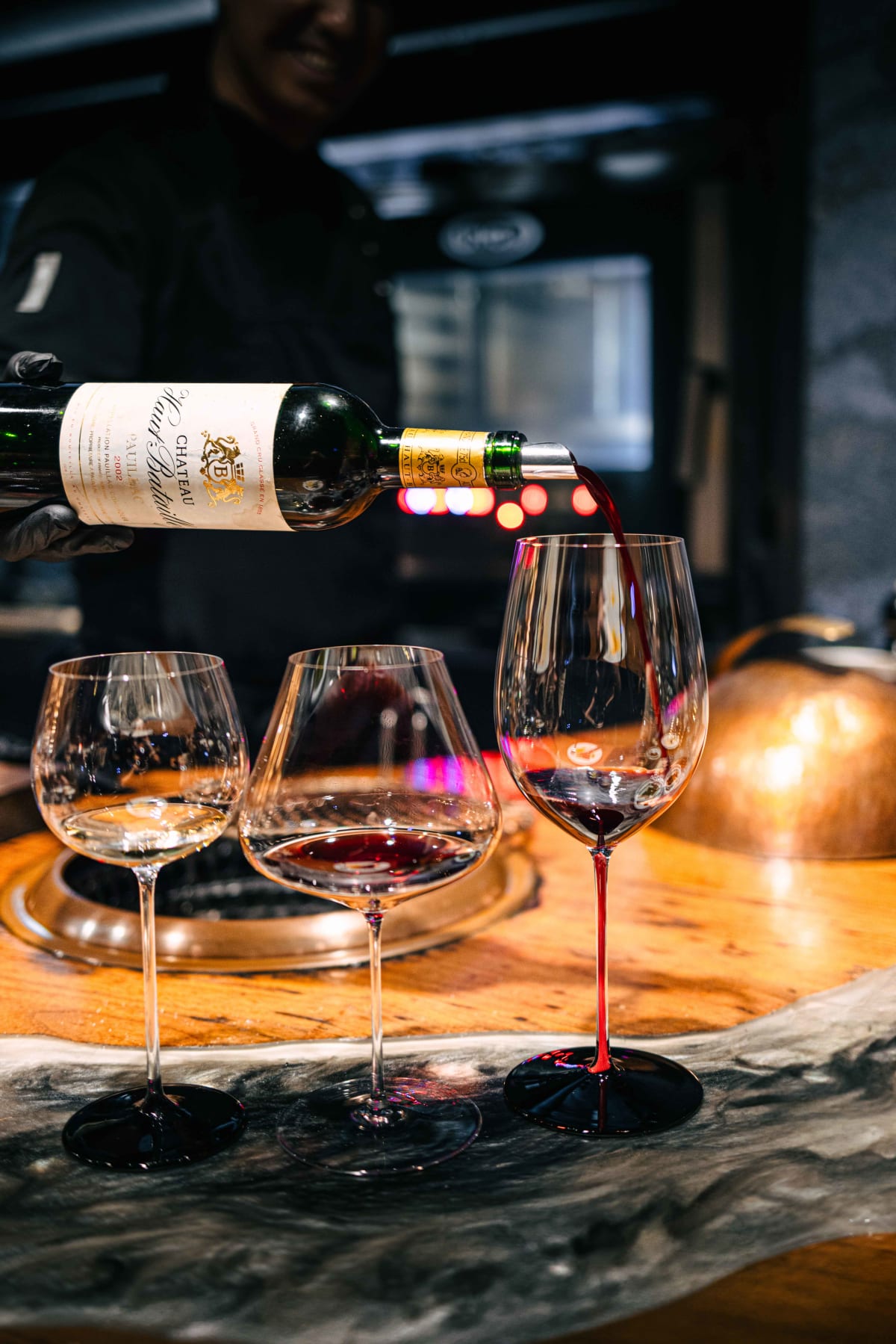
The 2002 vintage saw an uneven summer rescued by a clear September, which favoured Pauillac and its high proportion of Cabernet Sauvignon.
Section 9·Rice Noodles, Tartare, Brisket And Nodoguro
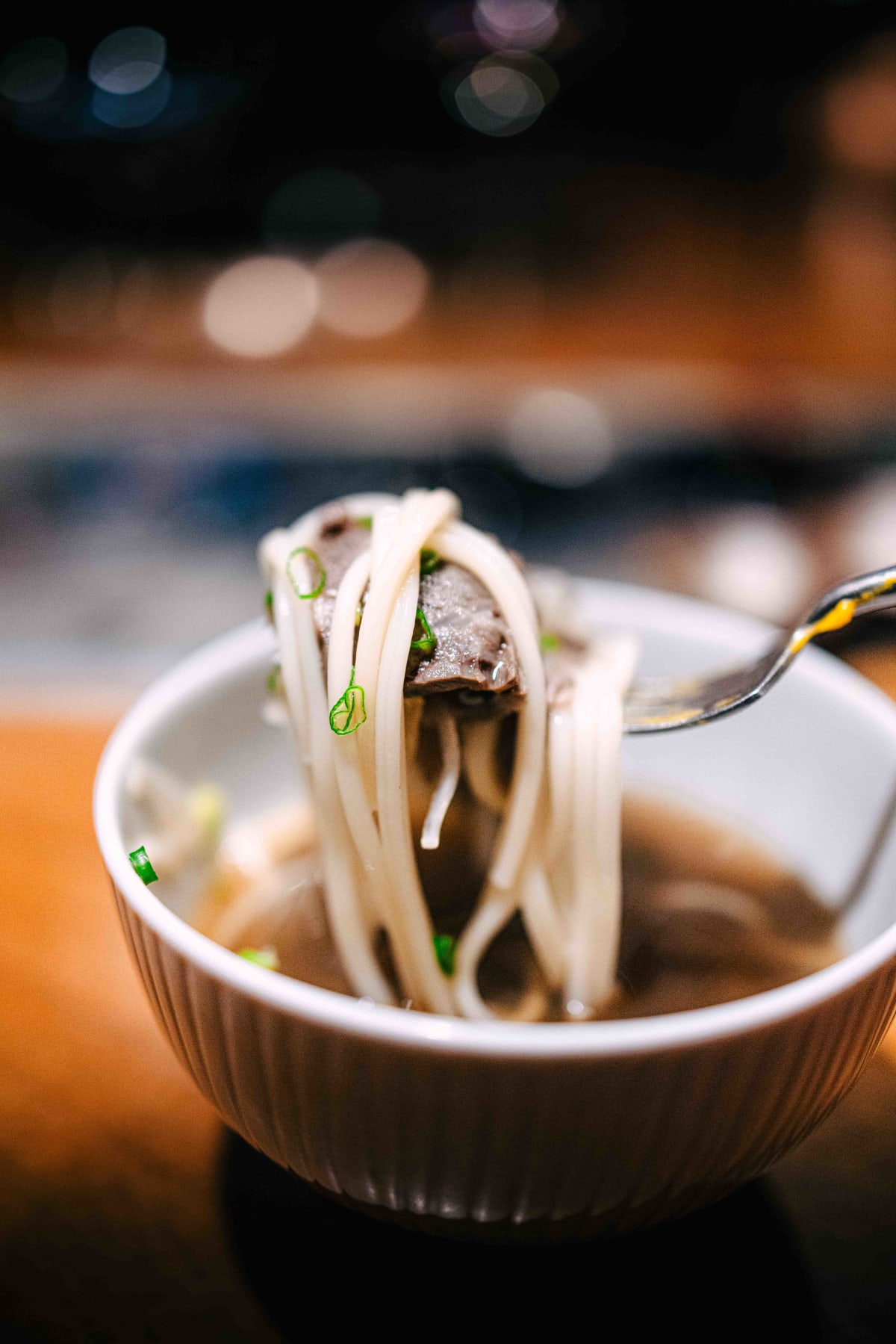
As the course passed its midpoint and headed into its second half, out came a noodle dish, the kind that at most dinners arrives near the very end. At Jungyookgongbang, though, even the noodles were not ordinary noodles but rice noodles.
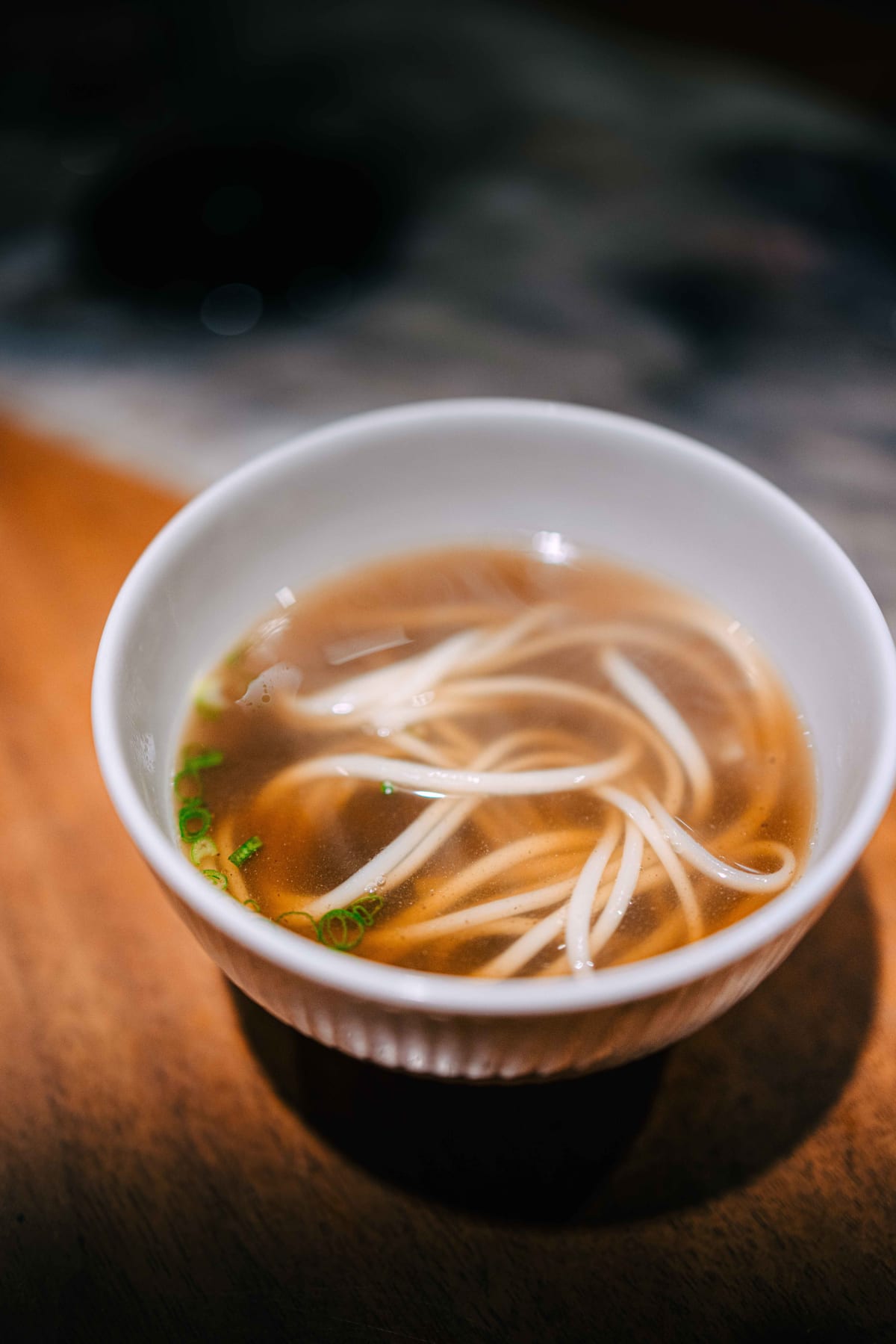
Rice noodle soup at an ordinary neighbourhood place is usually cheap food, so the broth often lacks depth and the true flavour of meat, leaning on seasoning instead. Perhaps because Jungyookgongbang is a hanwoo omakase at heart, its version was truly delicious. On top of that, the noodles were cooked well without going soft, and true to a Southeast Asian dish, the character of the spices came through to a degree.
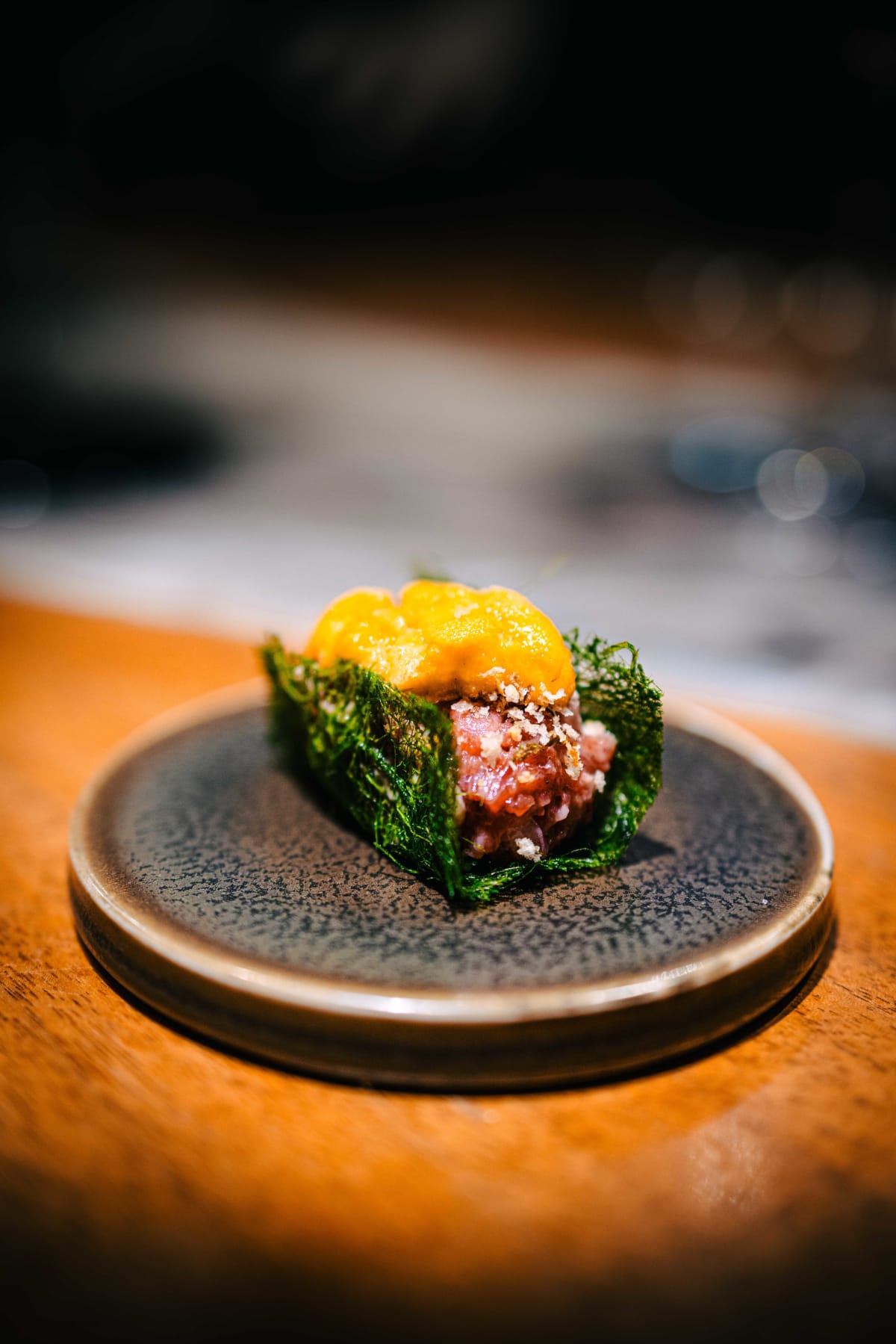
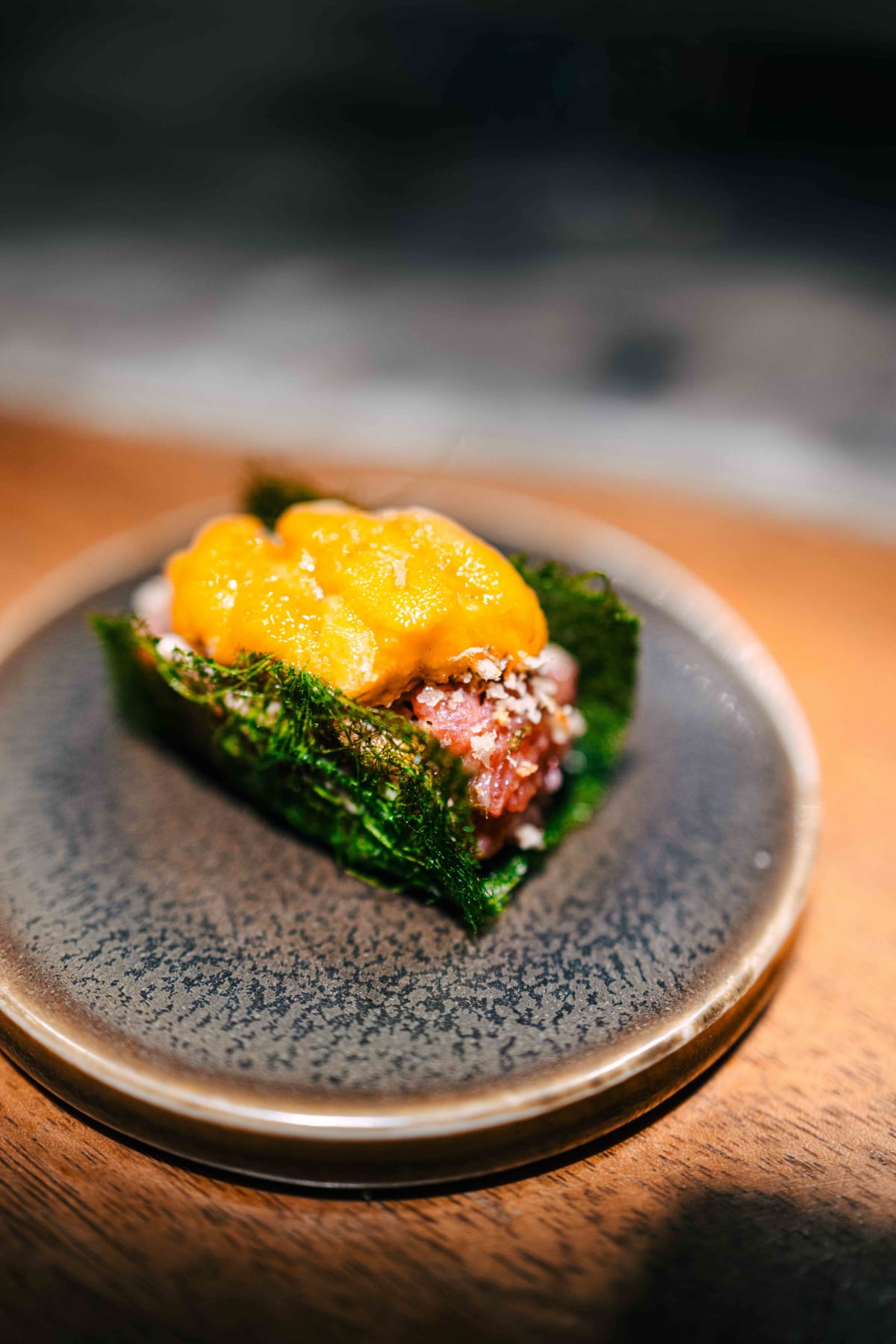
Next came hanwoo tartare set on gamtae, a fine seaweed crisped into a sheet, with uni on top. This too leaned less on the weight of fat than on uni with a cool sea scent and a tartare with good acidity, and it cut through the richness midway and refreshed the palate.
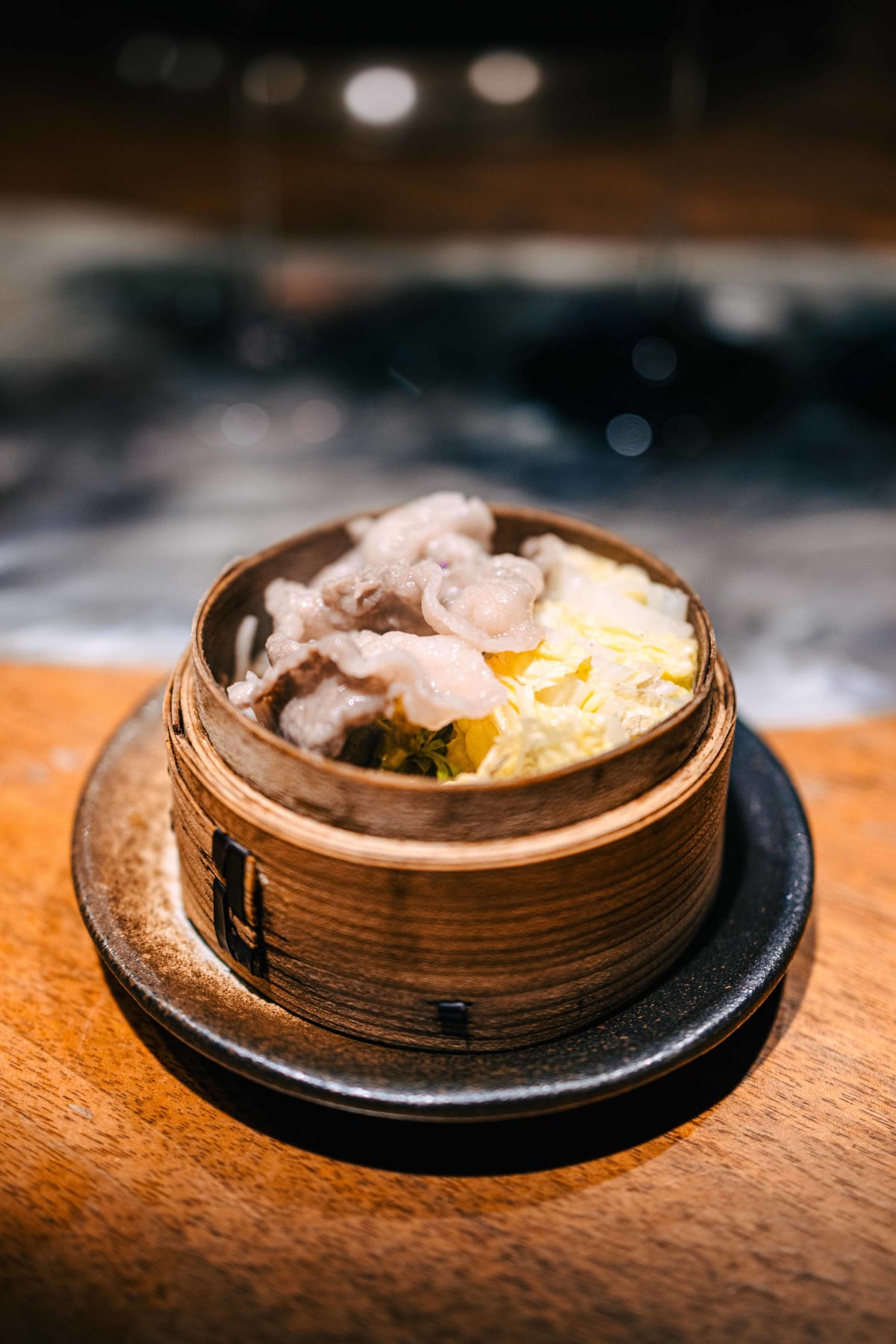
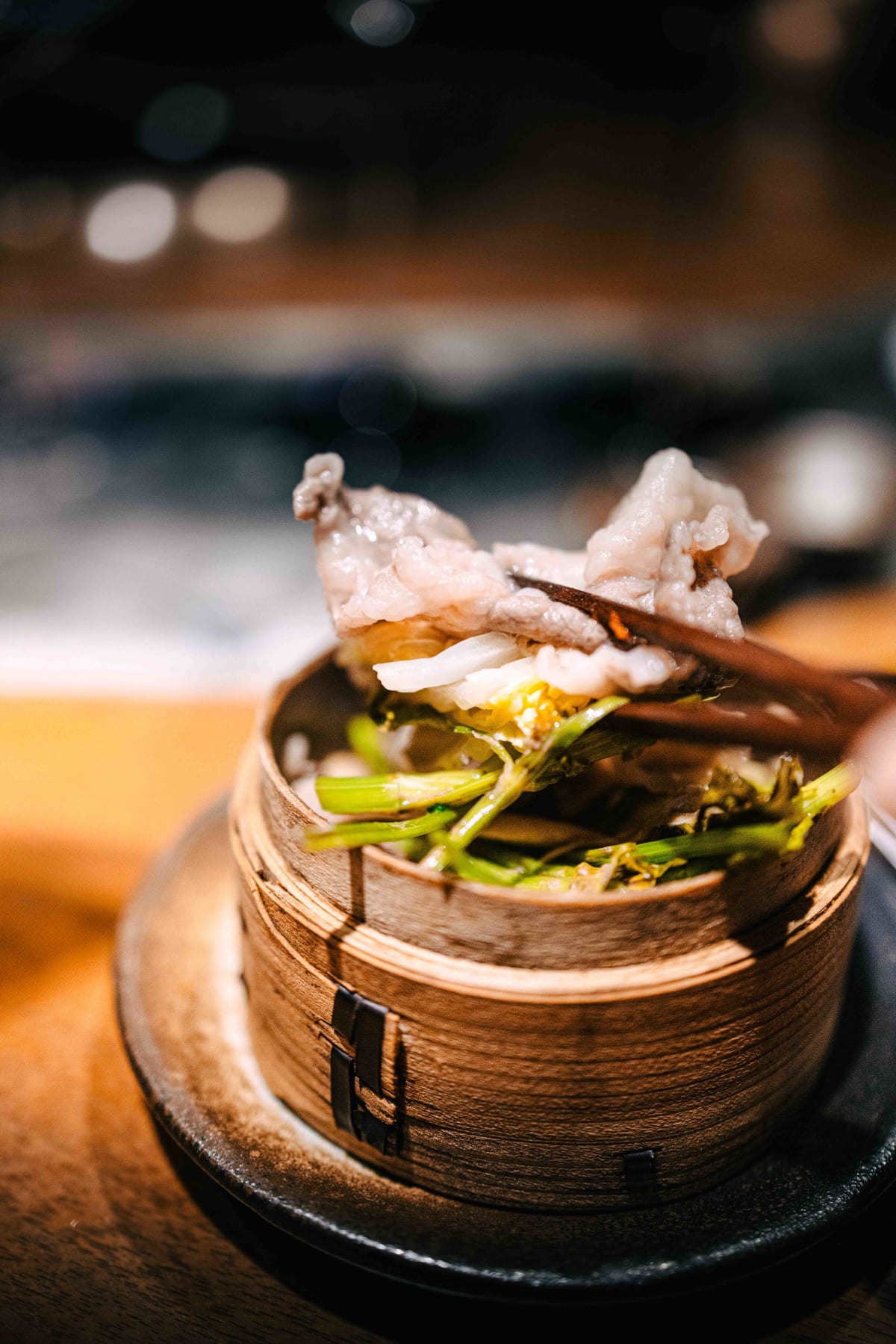
It is not a grilled dish, but steamed brisket appeared as well. Thin slices of chadolbagi, brisket, were laid over napa cabbage in a small bamboo steamer and steamed, and I liked the firm yet chewy texture of the connective tissue that rims each slice.
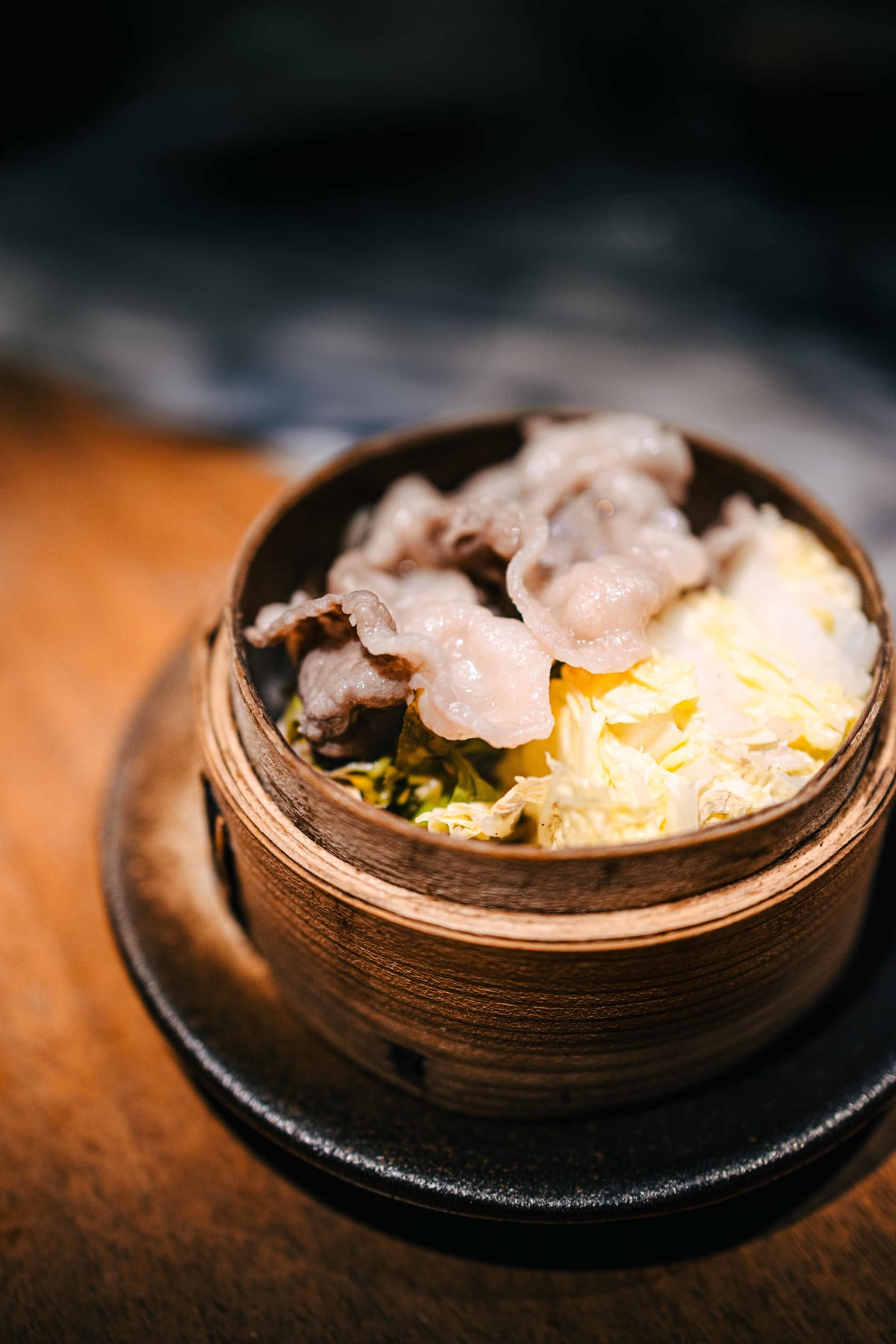
Chadolbagi is another of the fatty cuts of beef, but eaten with the vegetables underneath, its greasiness was cleared away. Still, delicious as the steamed version was, I think chadolbagi is at its best grilled.
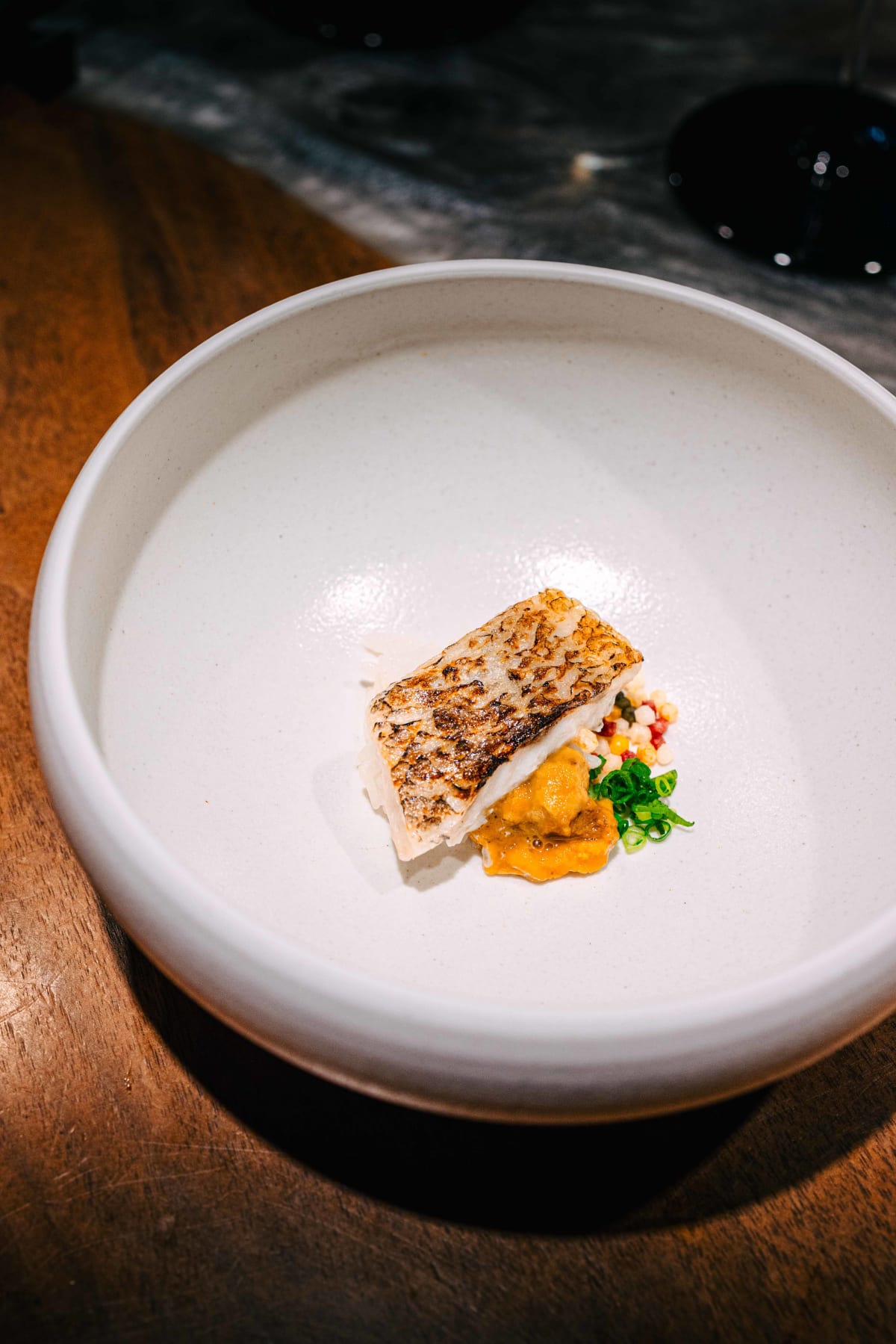
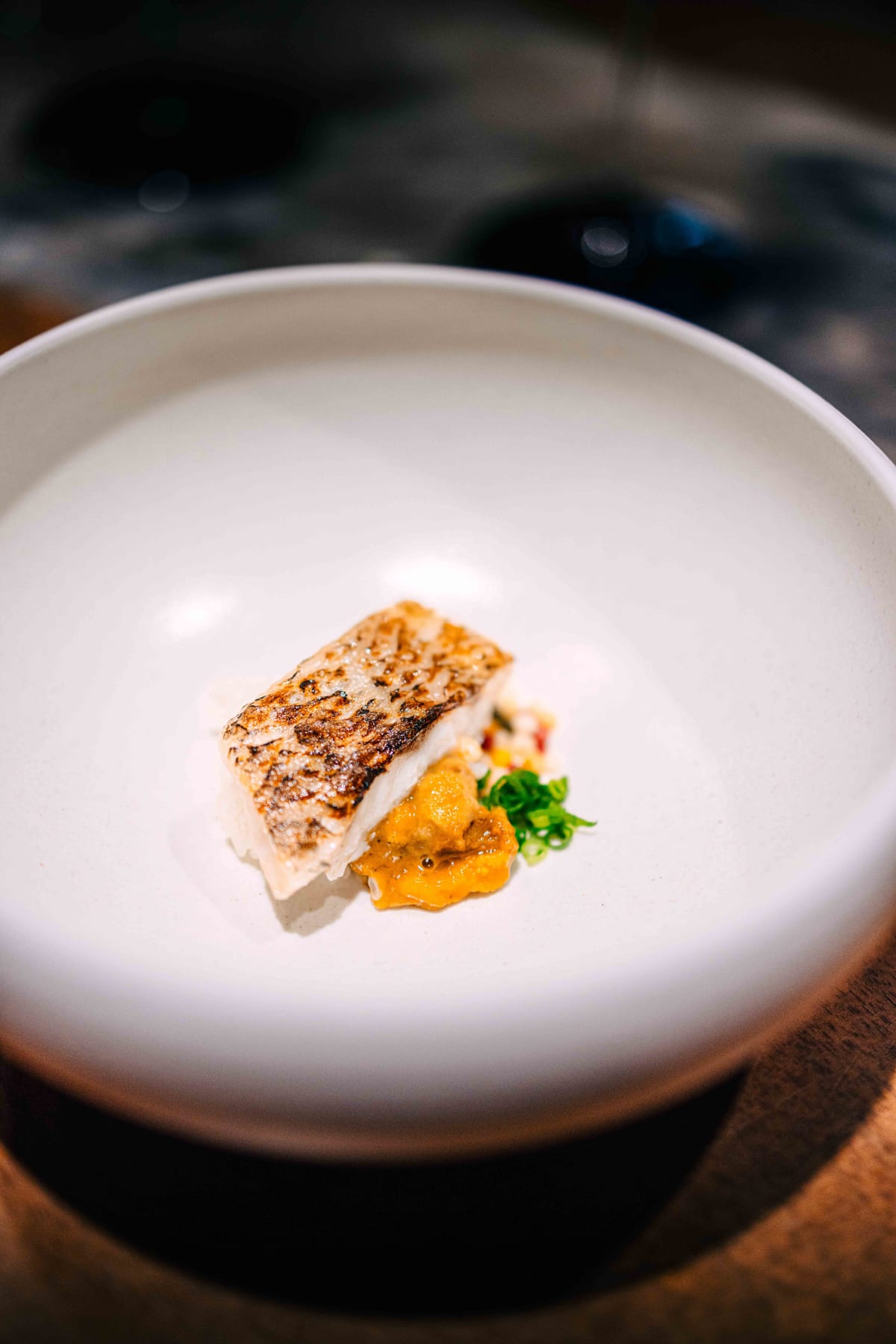
To clear away the fattiness of the brisket came nodoguro with uni. Geumtae, as Koreans call it, is the blackthroat seaperch, a rich white-fleshed fish prized in Japan as nodoguro.
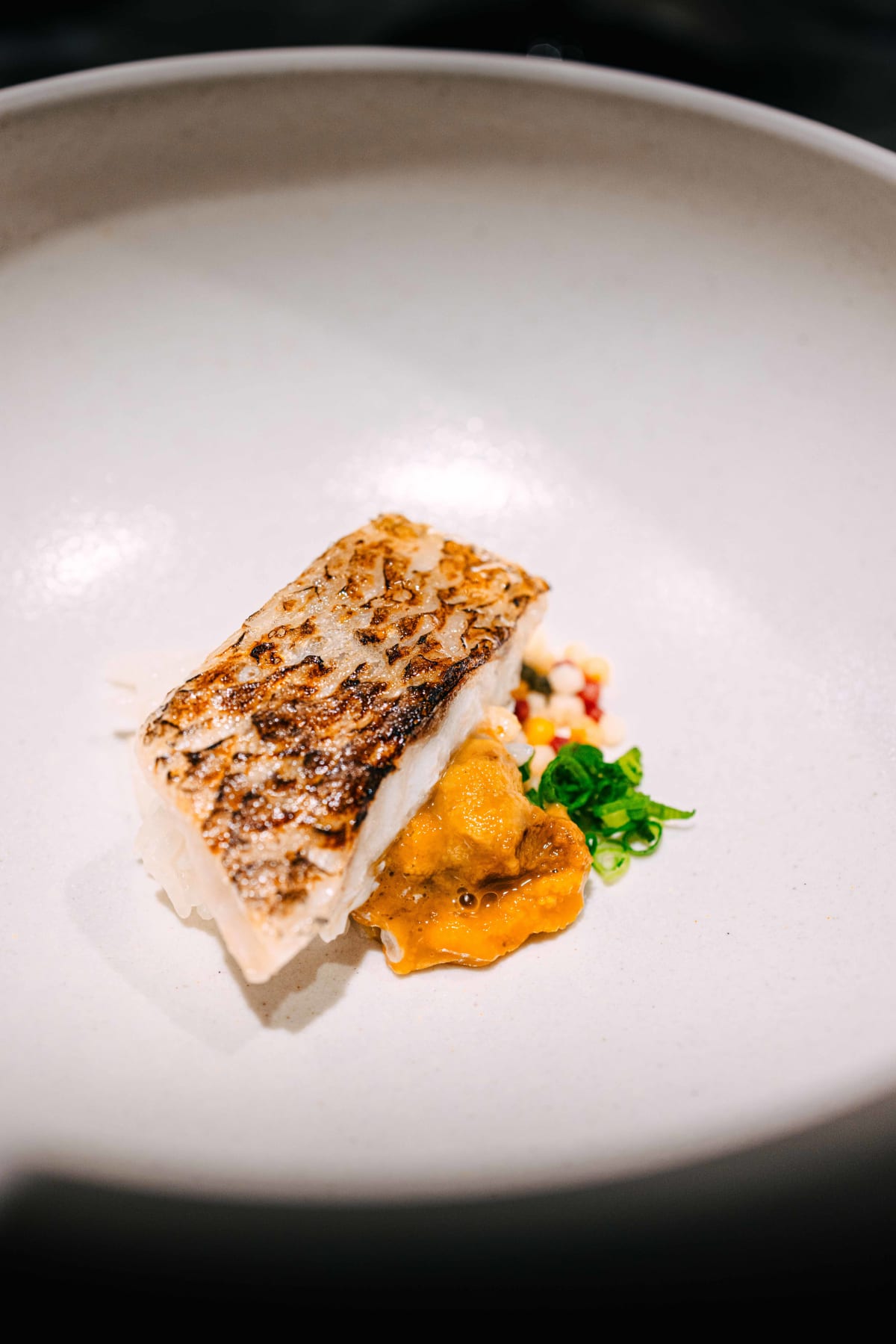
The nodoguro, grilled on the skin side, sat on rice with uni, spring onion and finely diced vegetables. Nodoguro is a fairly oily fish in itself, but the cool uni struck a decent balance with it.
Section 10·Galbisal And The Katsu Sando
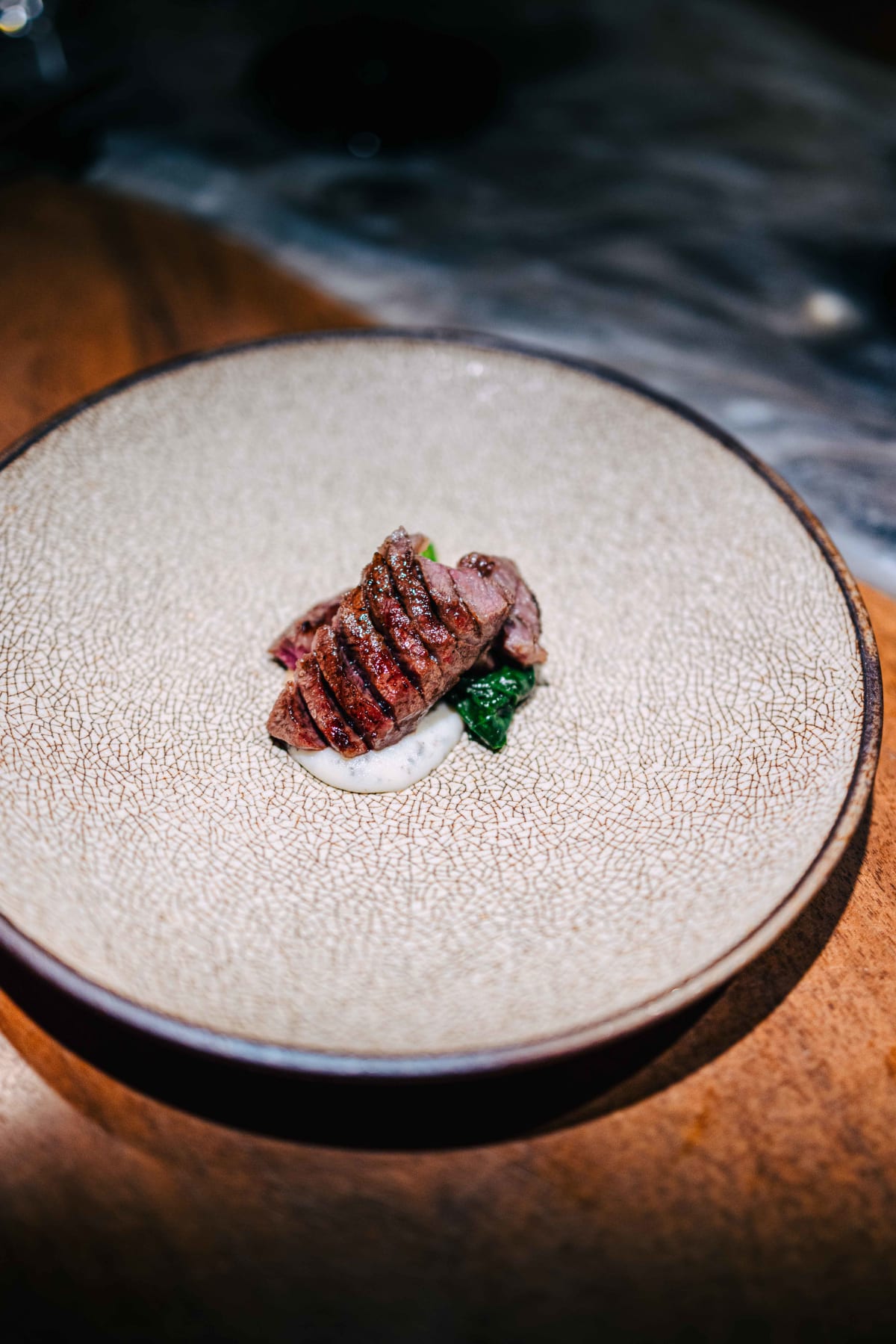
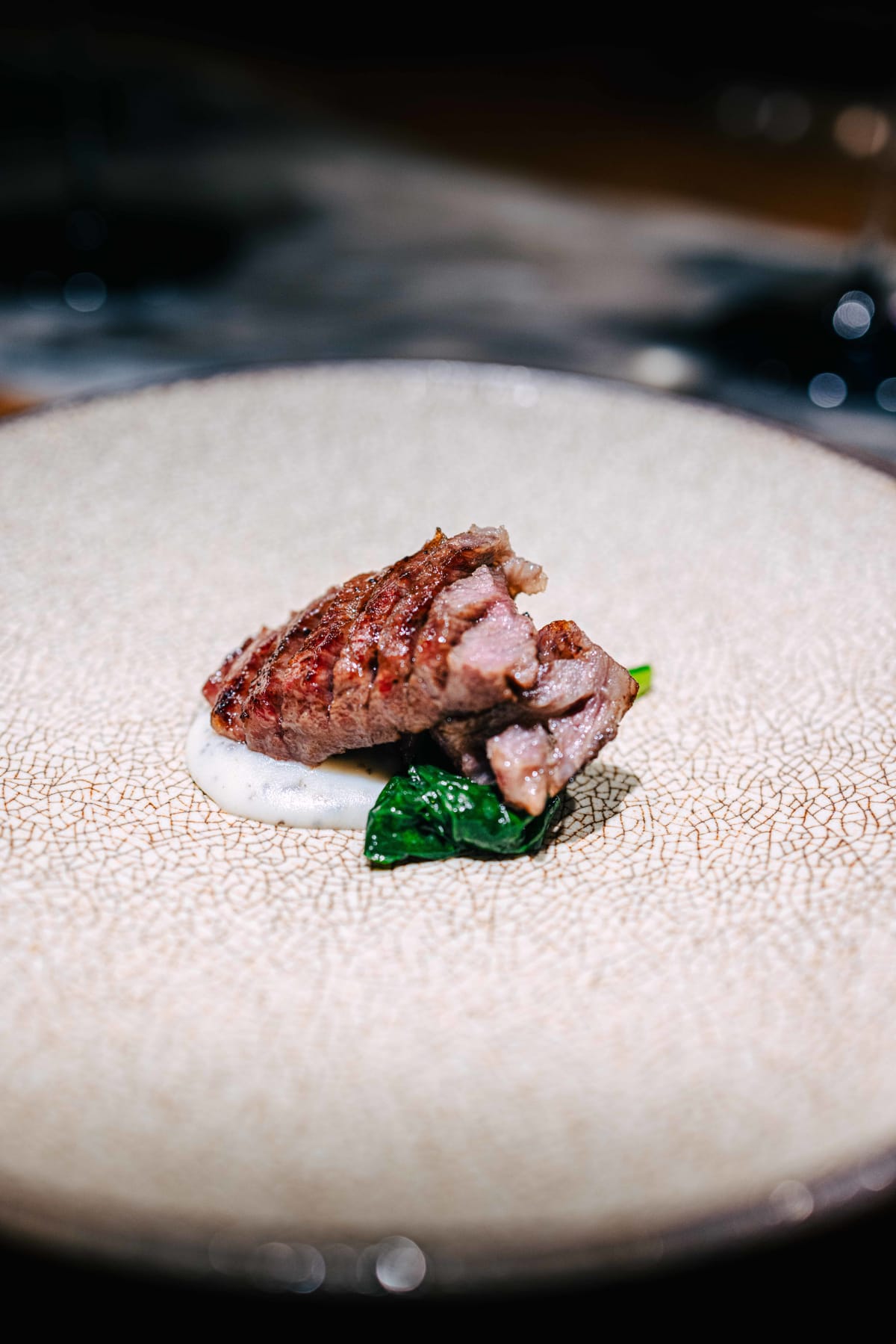
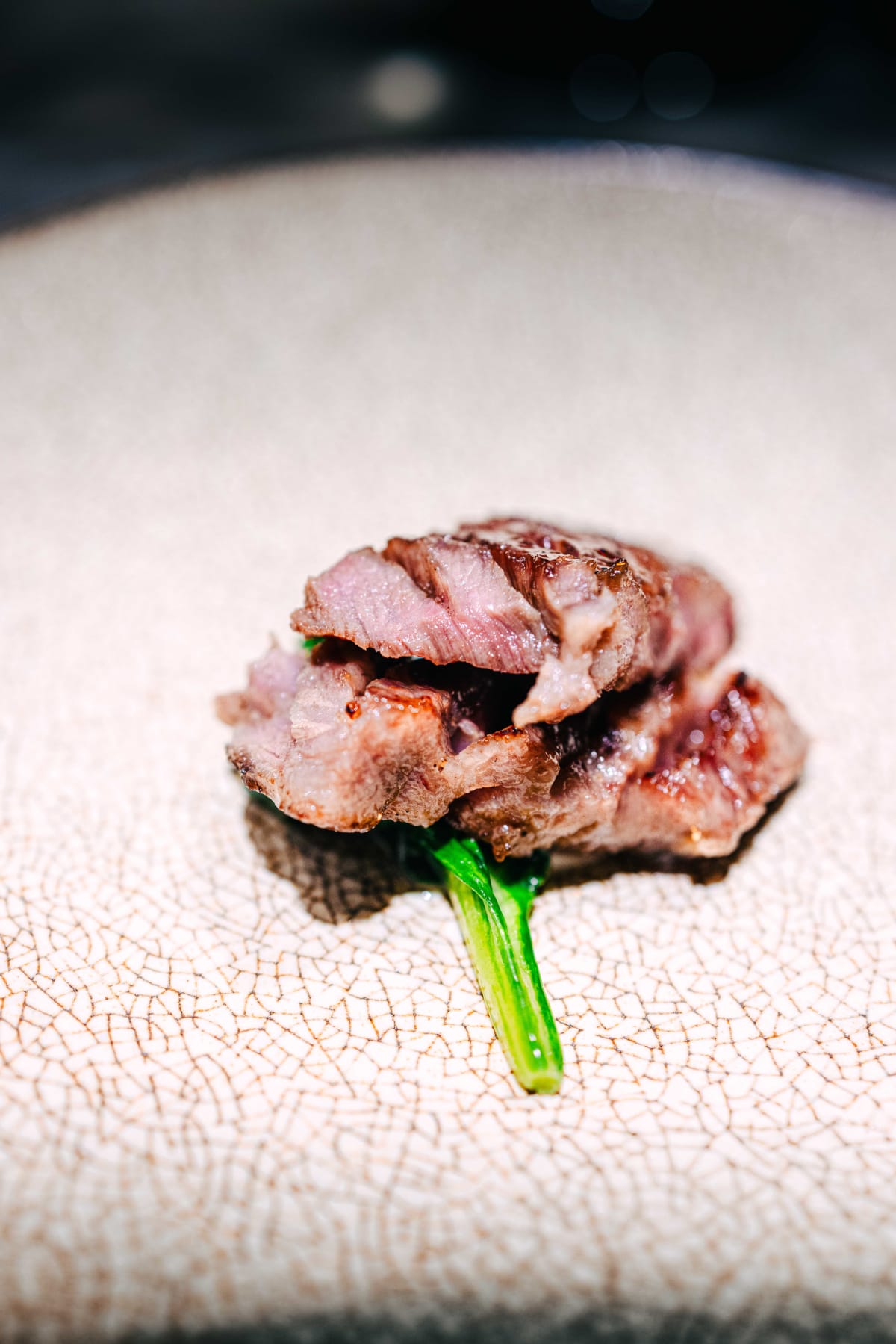
As the course moved towards its close, the fourth grilled hanwoo was galbisal, the meat from between the ribs: long, scored strips grilled separately on a small grill, sliced, and served with a white purée and spinach.
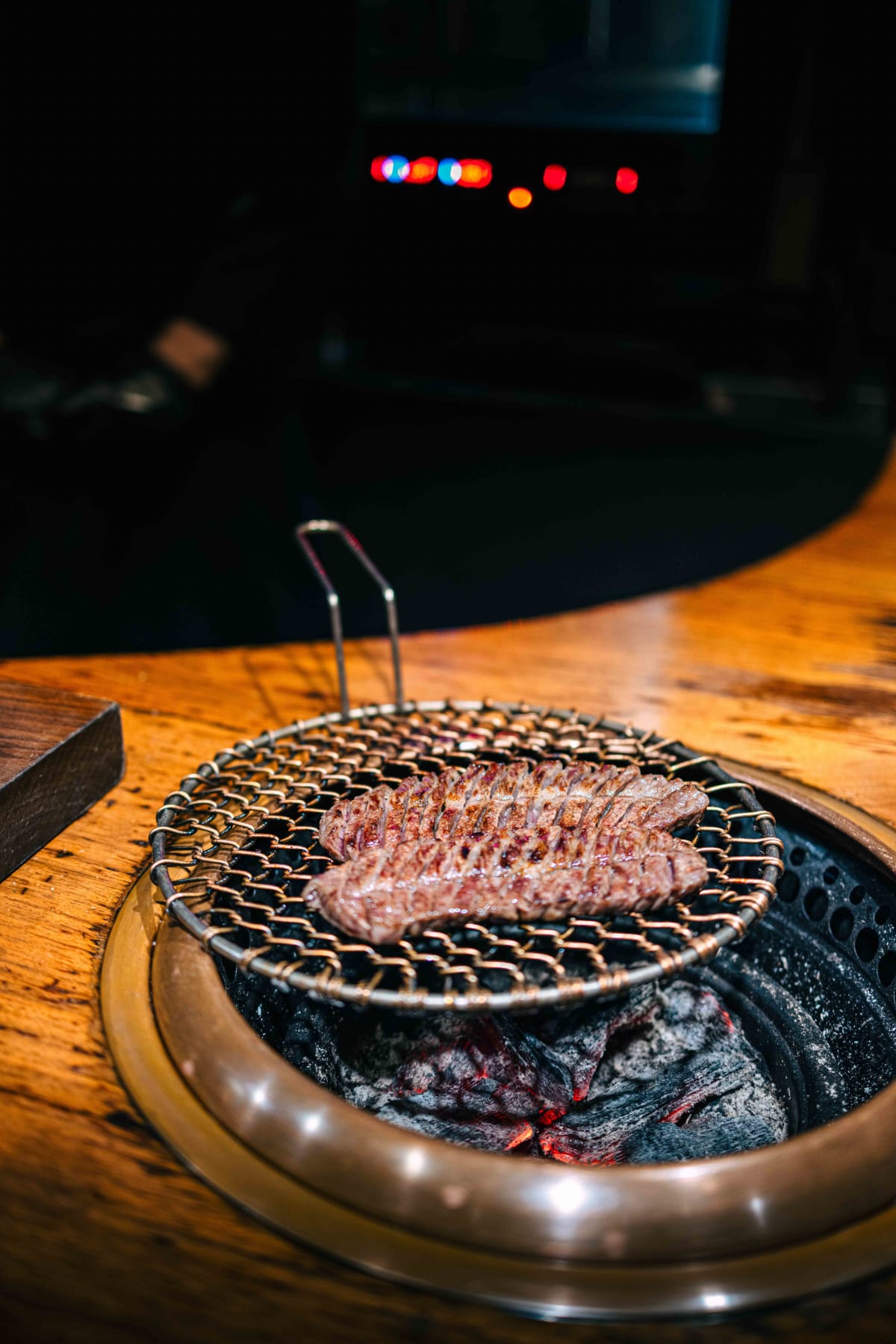
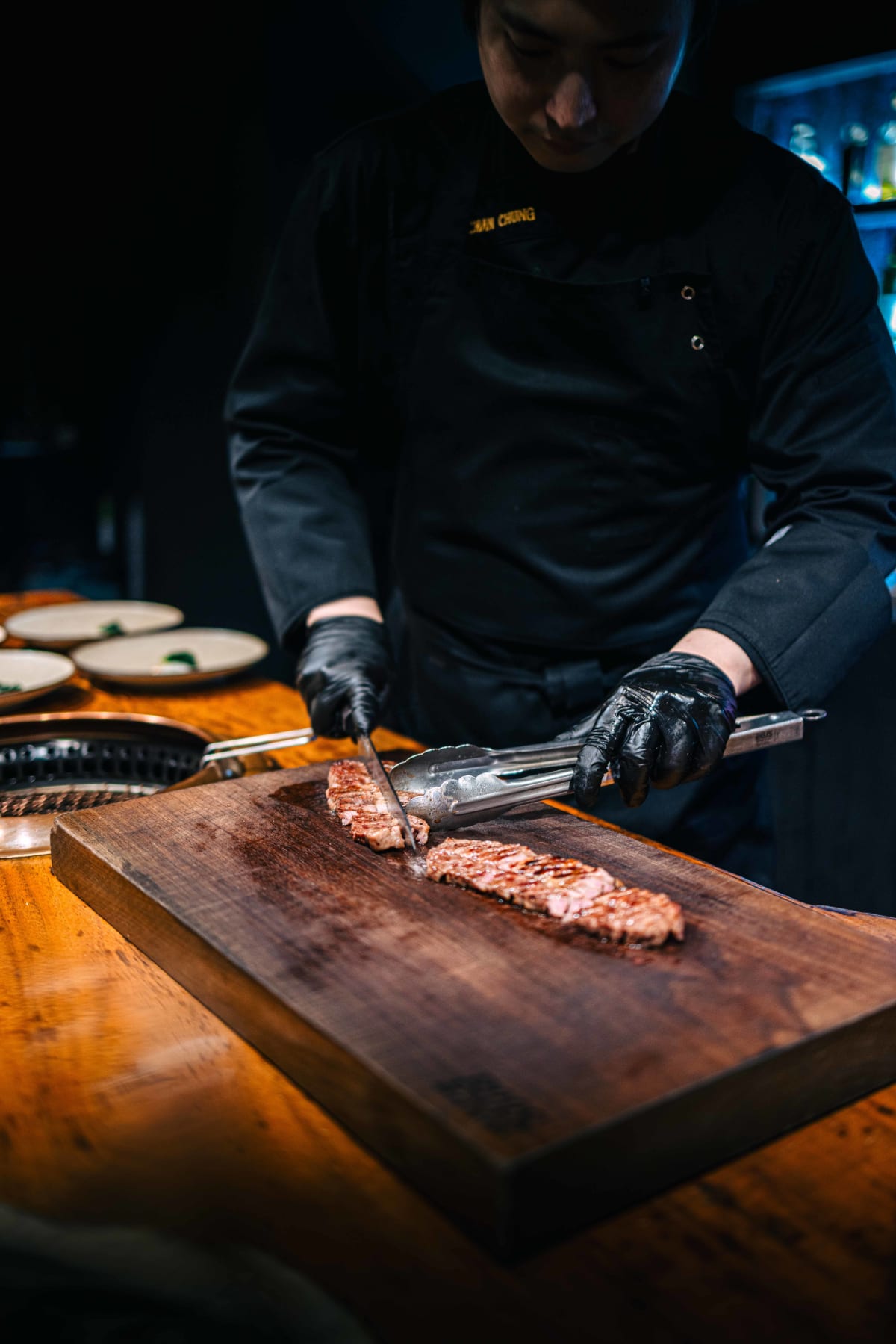
With the earlier striploin, the garnishes had been just as forceful as the beef, and the two had pulled against each other in a tug of war full of tension, strong against strong. This was not that kind of fierce balance. The galbisal took the lead, balanced by a gentle sauce and the faint bitterness of the spinach.
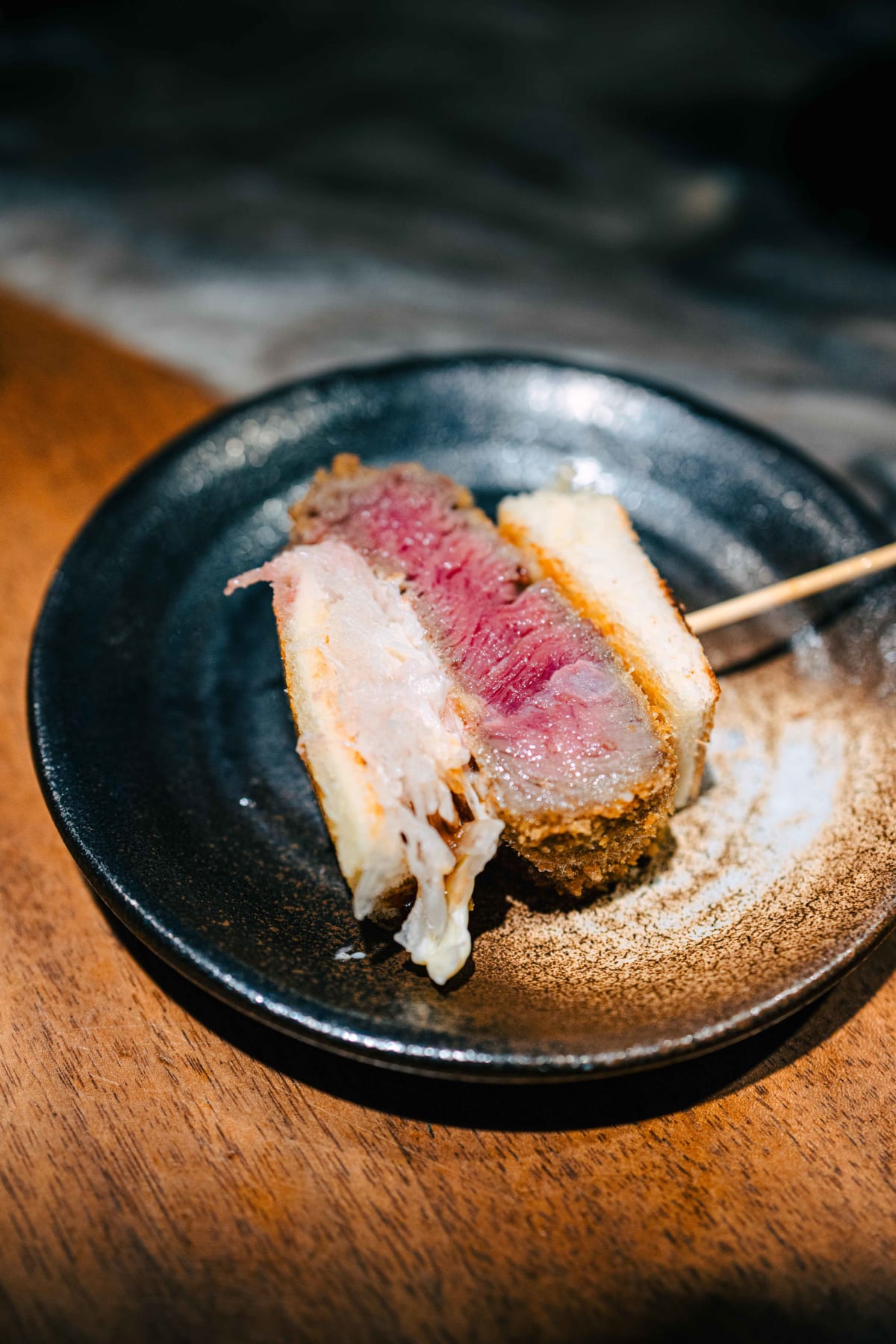
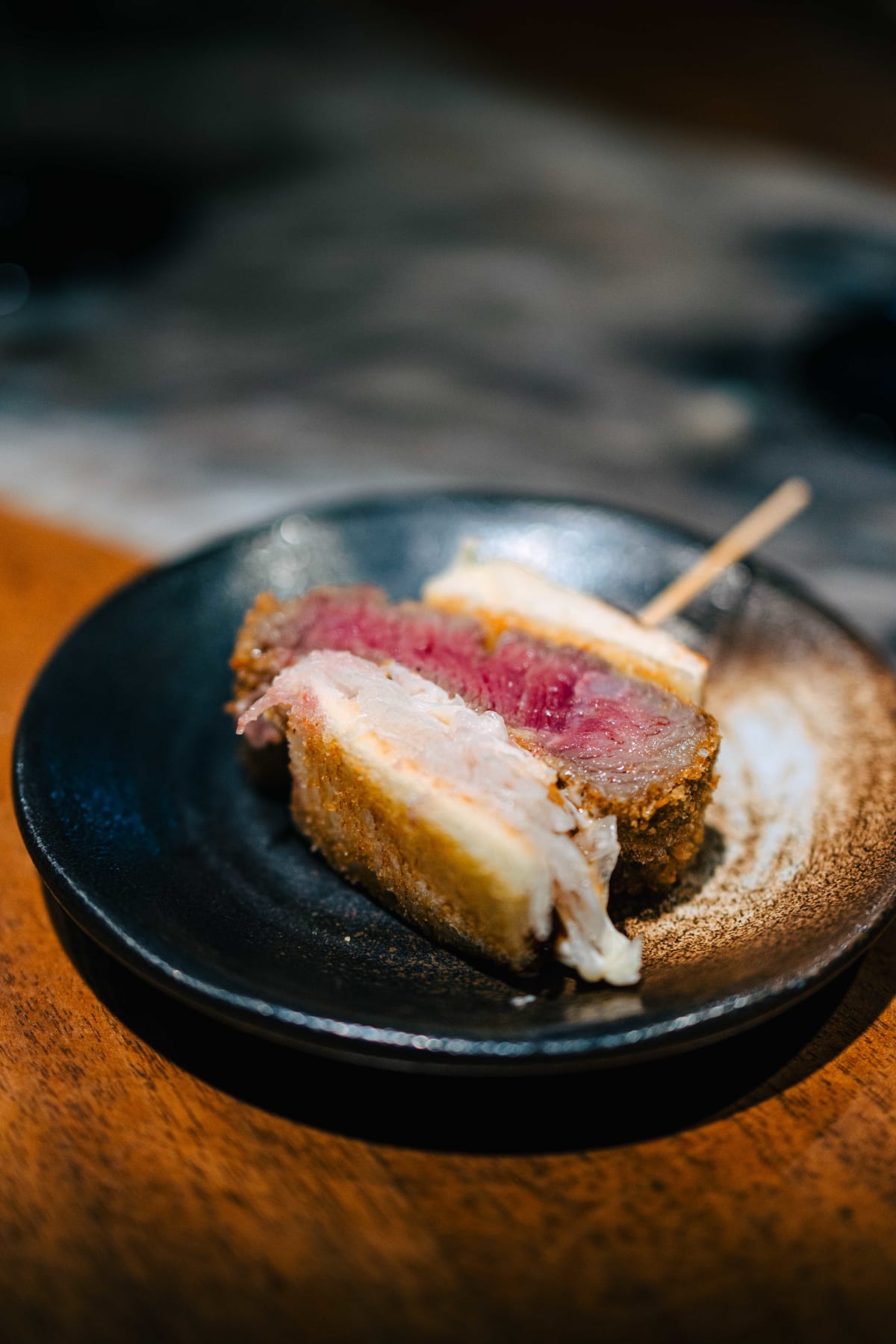
Good as the striploin was, the katsu sando that came last was excellent, the best of the night. The chef sliced the sando on the board and pushed a pick through each piece, and the beef in the cross-section was evenly pink right to the edges. At a glance it looked magnificent.
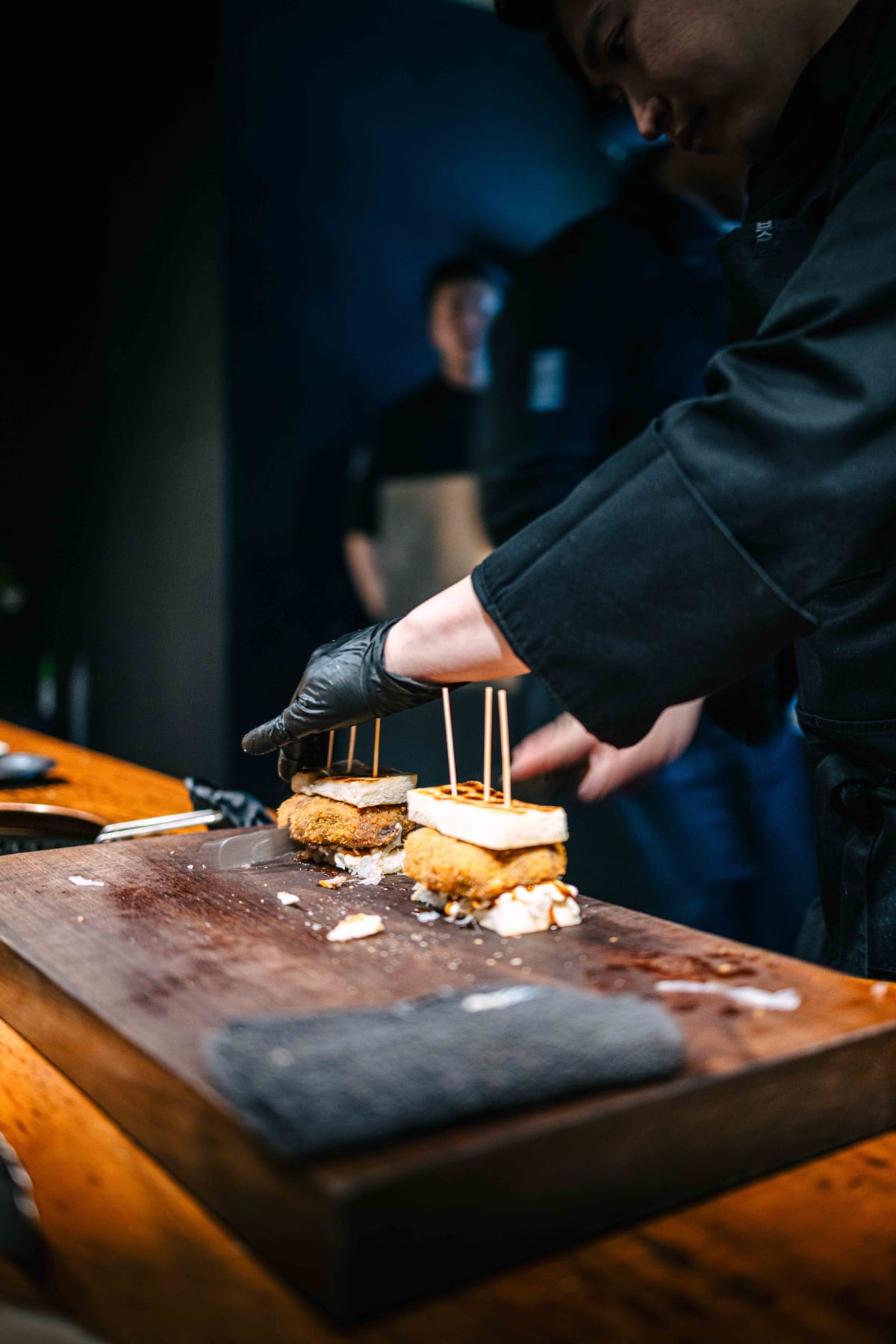
I had only seen gyukatsu sando like this in reviews of wagyu restaurants in Japan, and eating one made with hanwoo, I understood why people call it the taste of money.
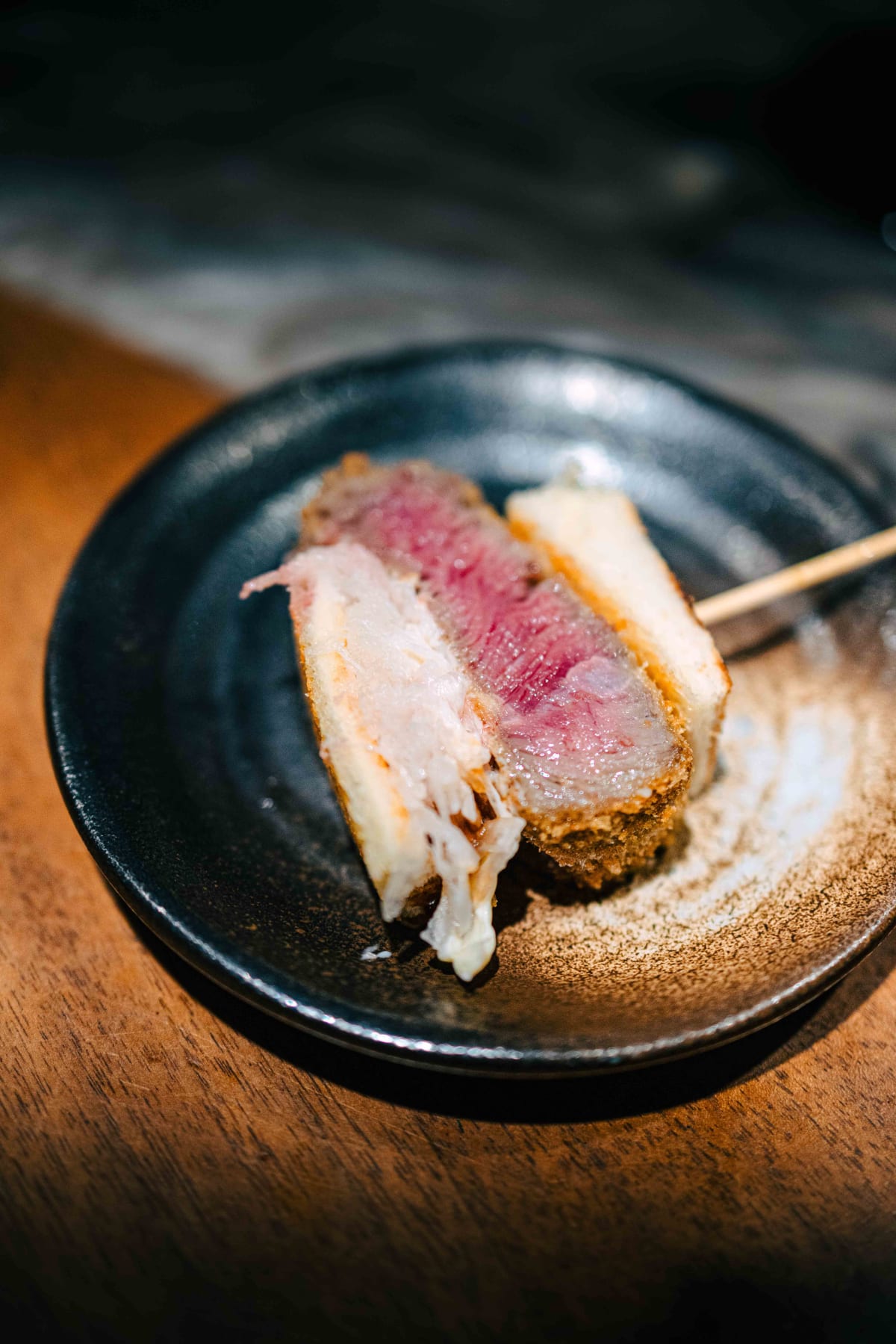
I could not have eaten many, but that first bite was overwhelming, pure and simple.
Section 11·Gopchang Jeongol, Dessert And The Room
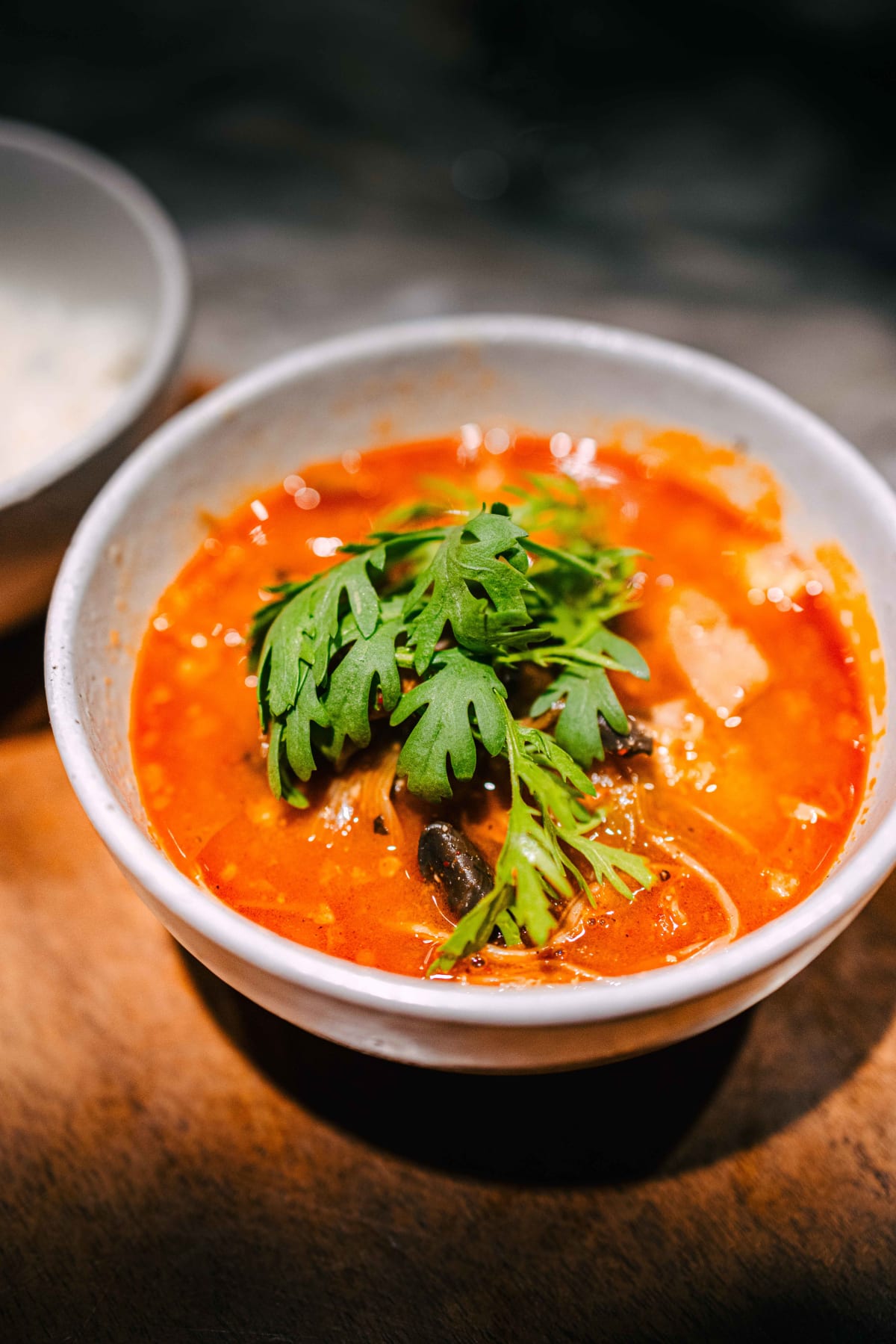
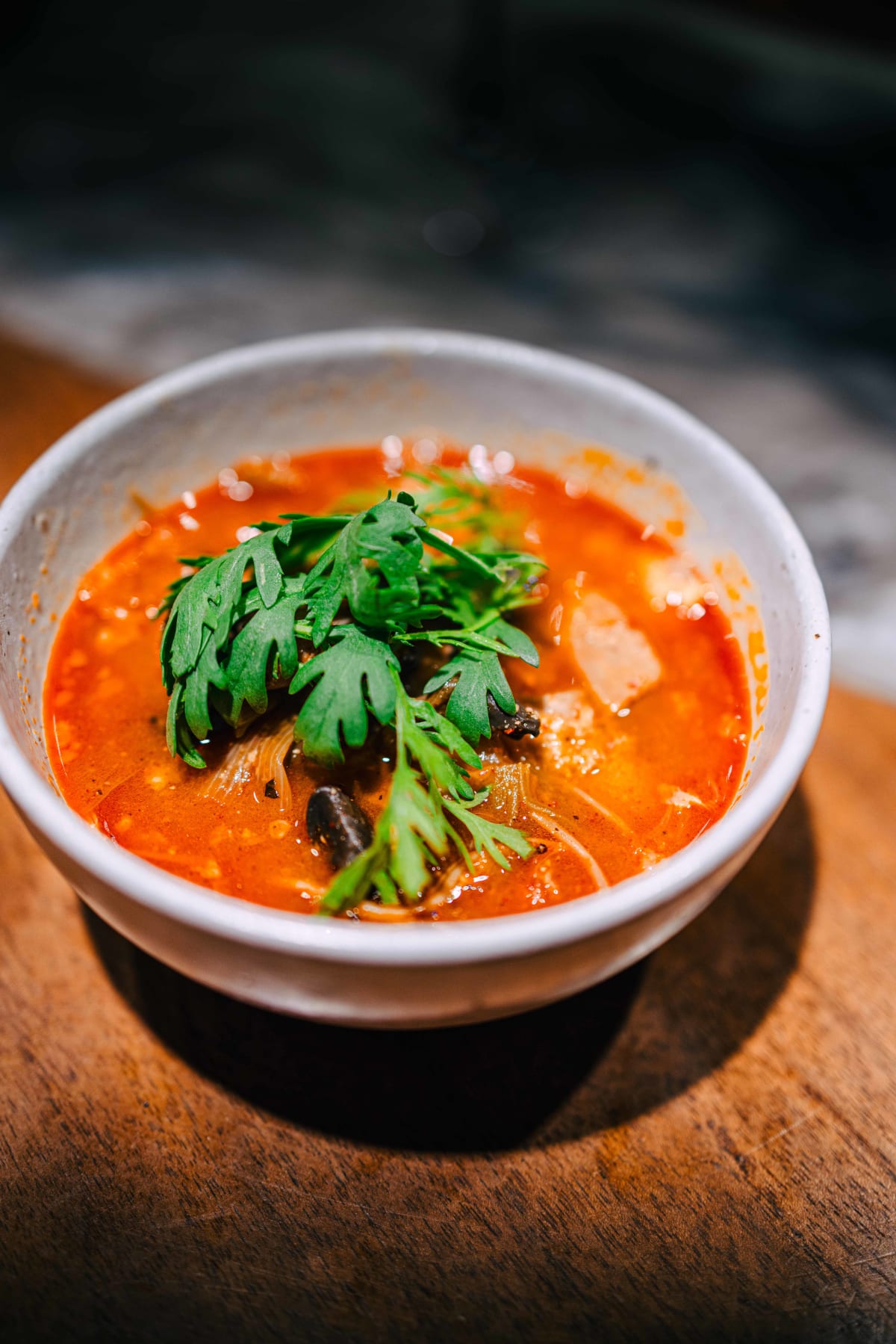
The rice course at the end was gopchang jeongol, a stew of beef intestines, and it was excellent. I have been back to Jungyookgongbang many times since, and the one thing I have always missed on those visits is that the gopchang jeongol never appeared again. Even now I think of the gopchang jeongol I ate on this first visit.
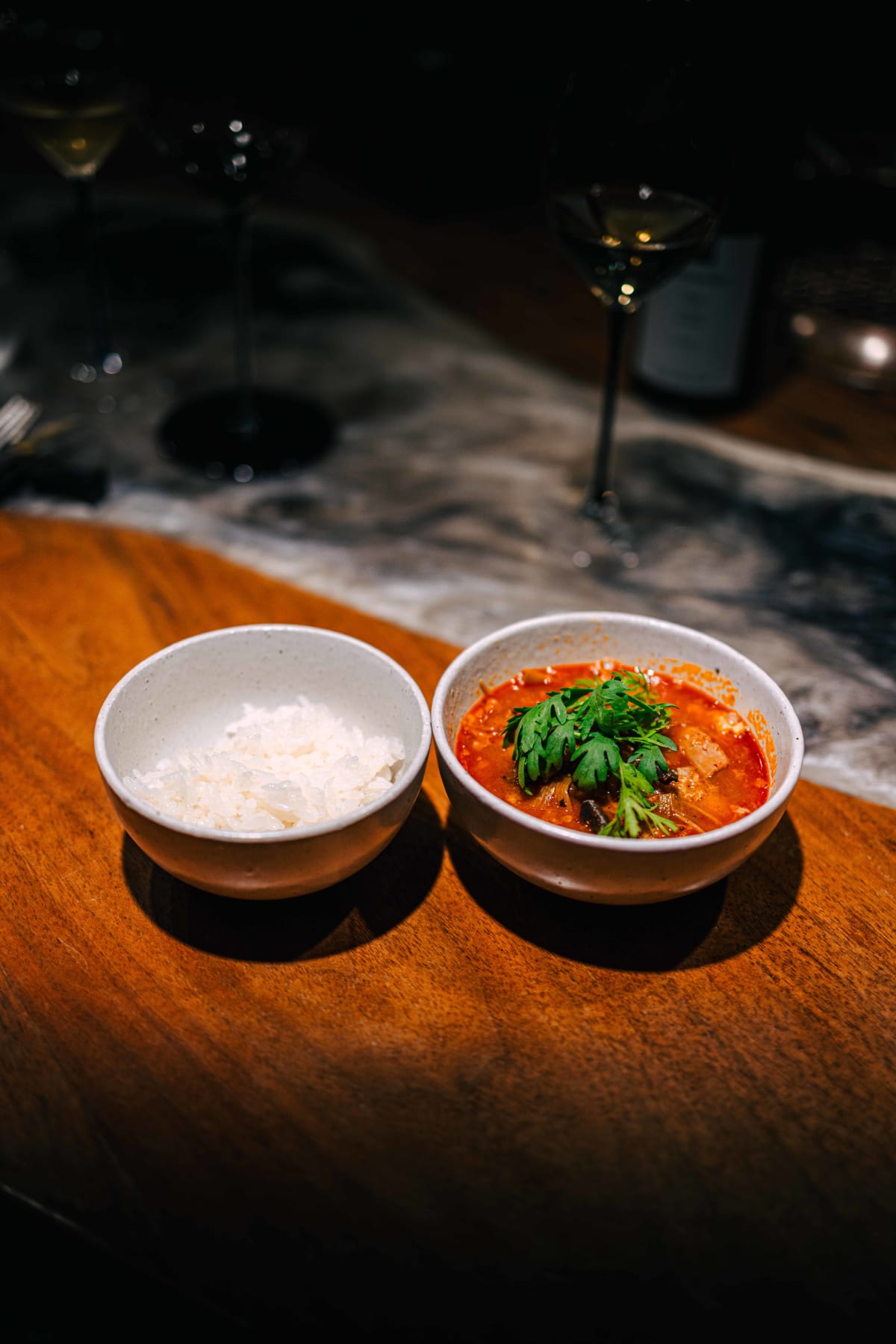
The jeongol itself was delicious, the weight of the gopchang sitting well with a Korean kind of sharp heat, but the rice that came with it was outstanding. When I asked the secret, the chef said he adds kelp soy sauce, and I felt that his skill and depth as a cook go far beyond the flavour of the meat alone.
Cheongdam Haejeong, a haejangguk restaurant in Cheongdam-dong serving seonji haejangguk, the hangover soup with ox blood, and boiled brisket, is also run by Chef Chung. I had only heard that it was good, and the thought that I should go kept coming back to me.
Even now I think of the gopchang jeongol I ate on this first visit.
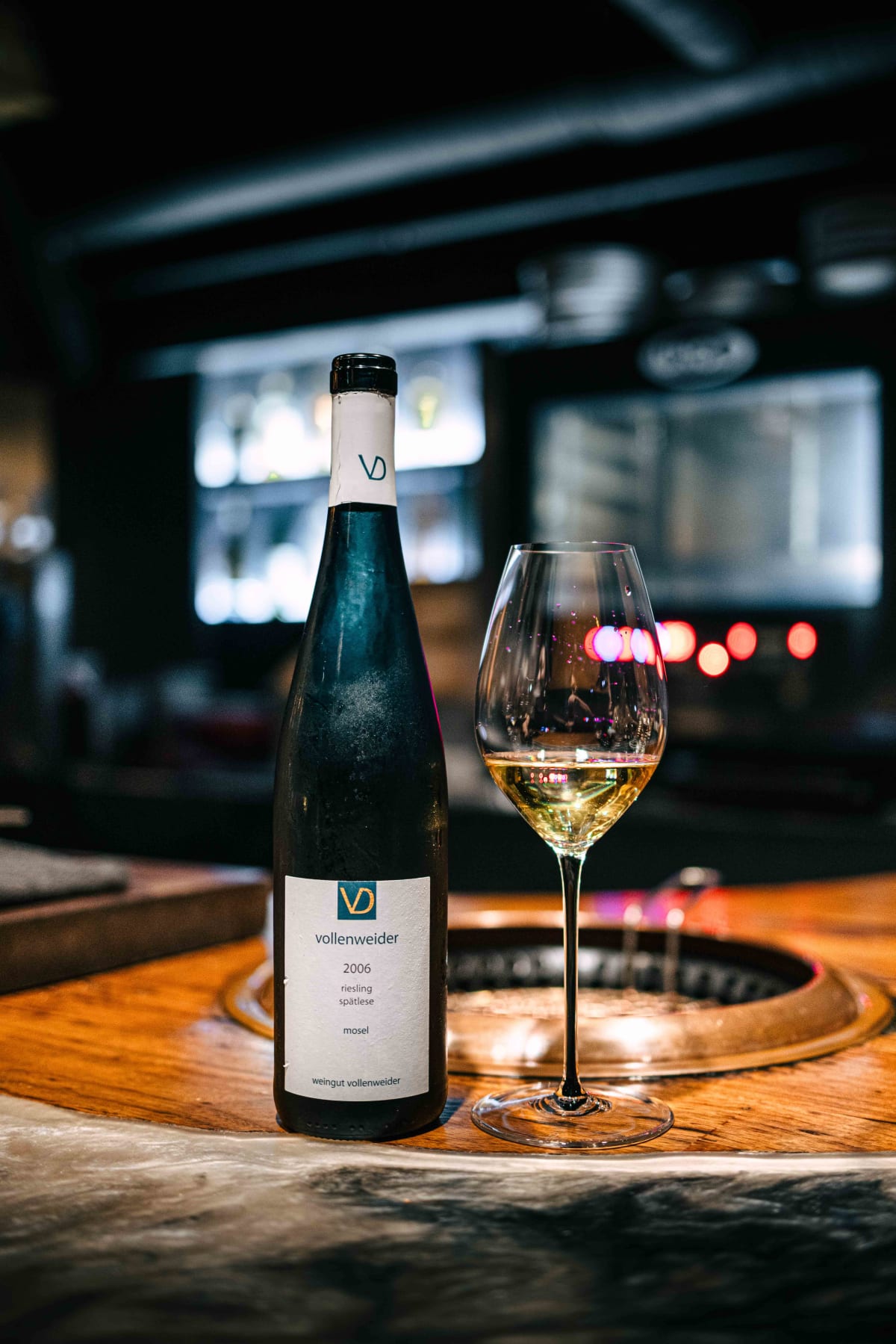
The dessert wine, which we drank right through the rice course and dessert, was Weingut Vollenweider Riesling Spätlese 2006. The winery was founded in 2000 in Traben-Trarbach on the Mosel by the Swiss-born Daniel Vollenweider, who worked old, ungrafted vines on the slopes of the Wolfer Goldgrube.
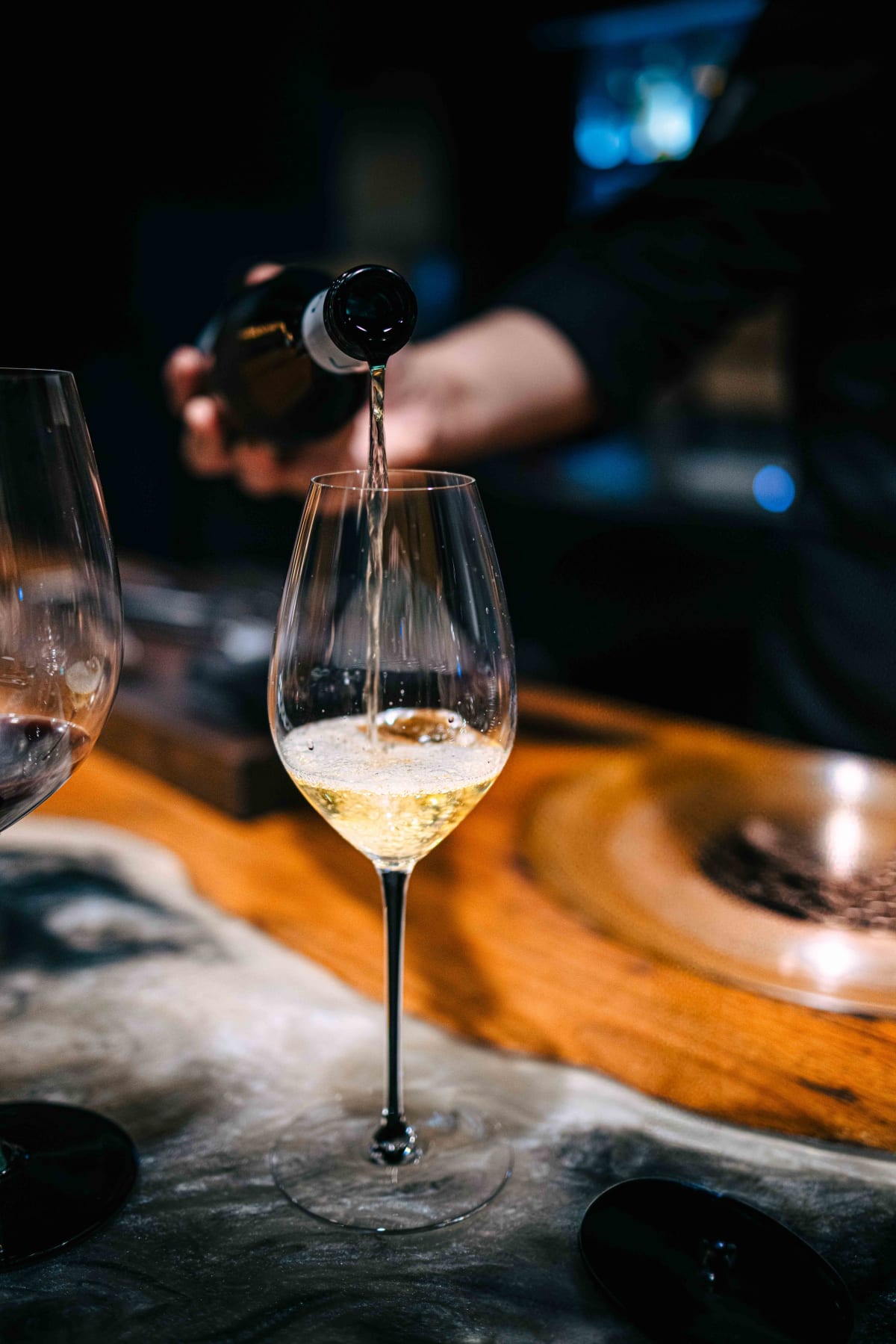
Since his death in 2022, his partner Moritz Hoffmann has carried it on. On the Mosel, 2006 was a year in which botrytis and rot spread together and yields fell sharply.
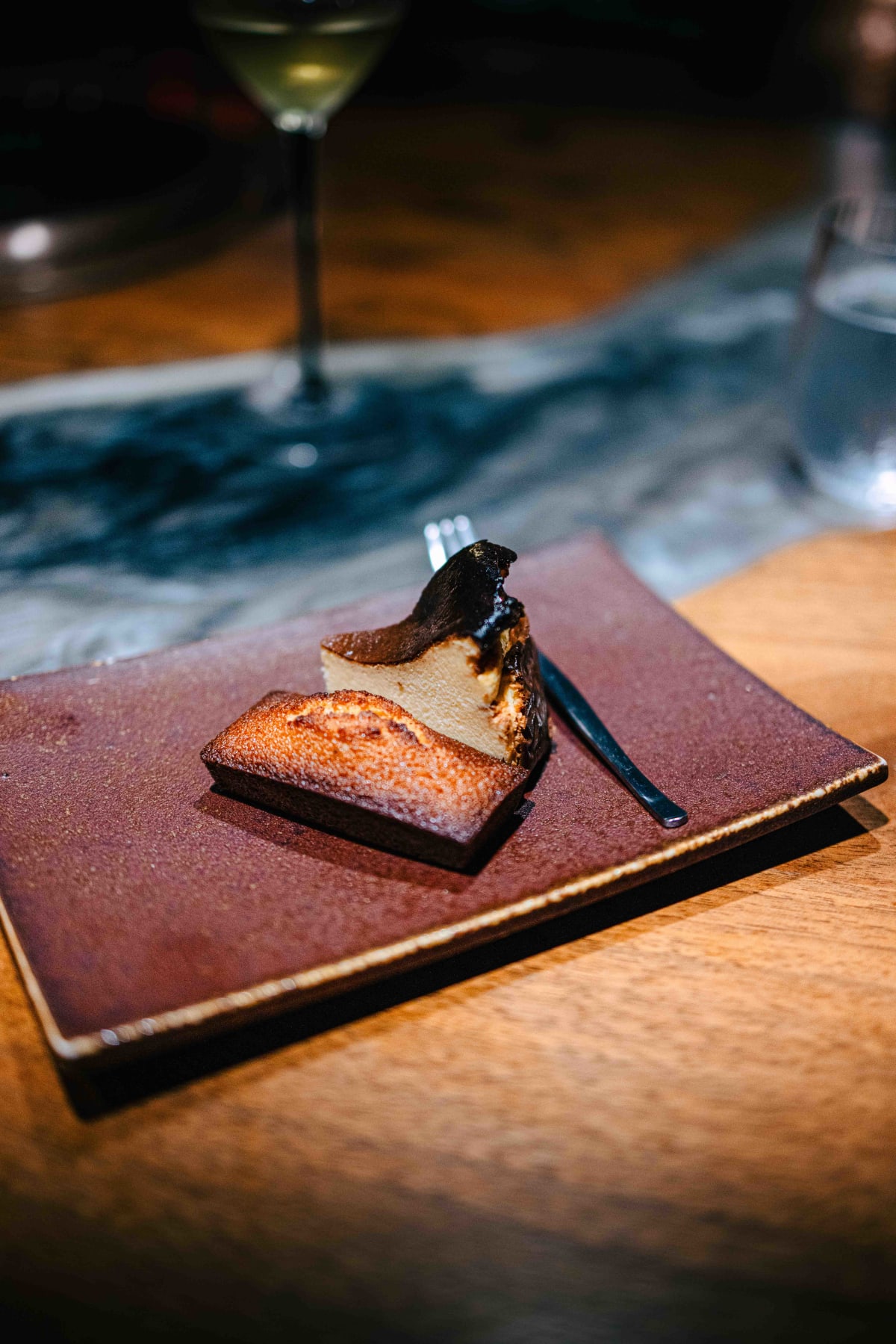
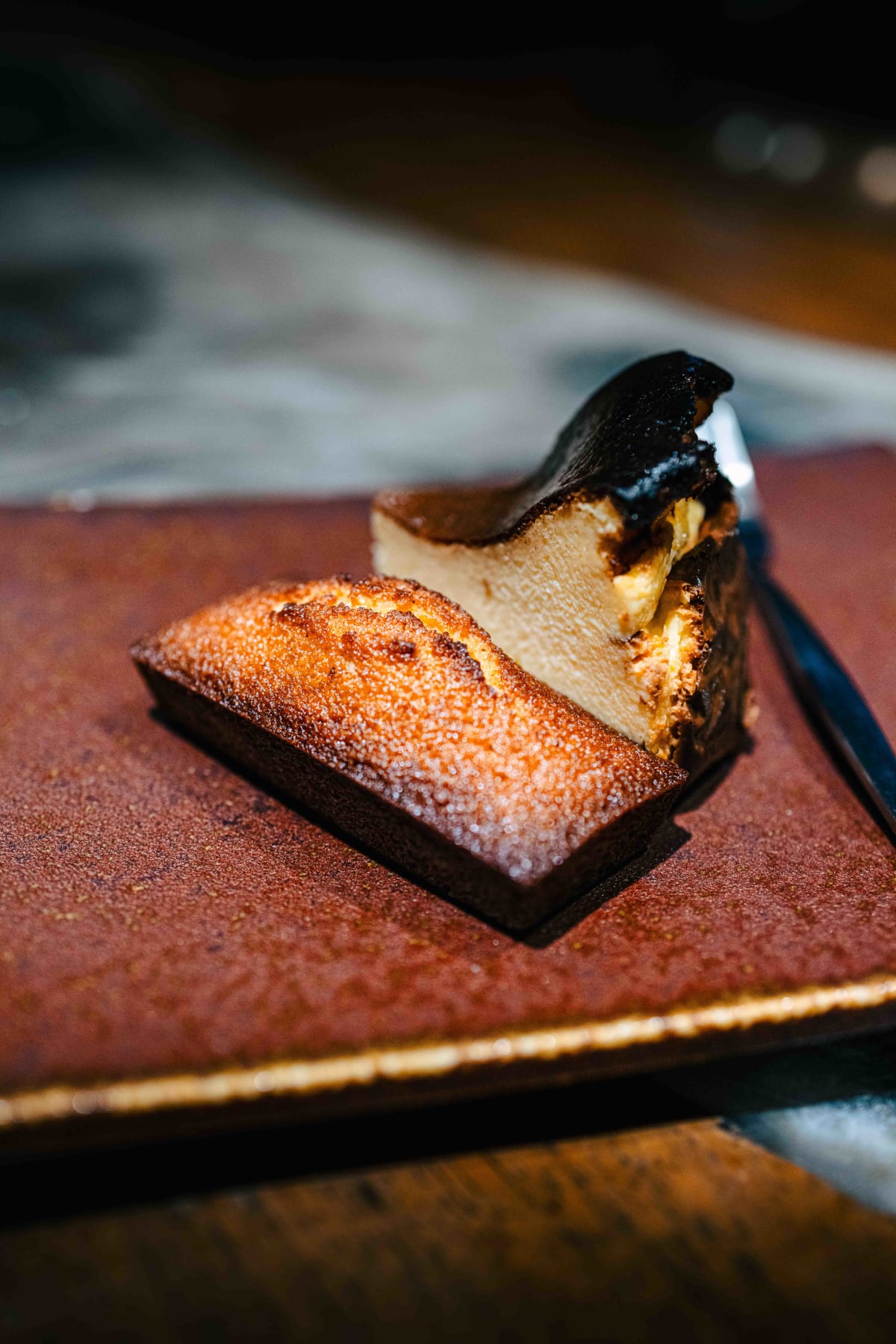
Finally, dessert: a financier and a cheesecake. The financier was so good that at the time I wondered whether it was the financier of my life.
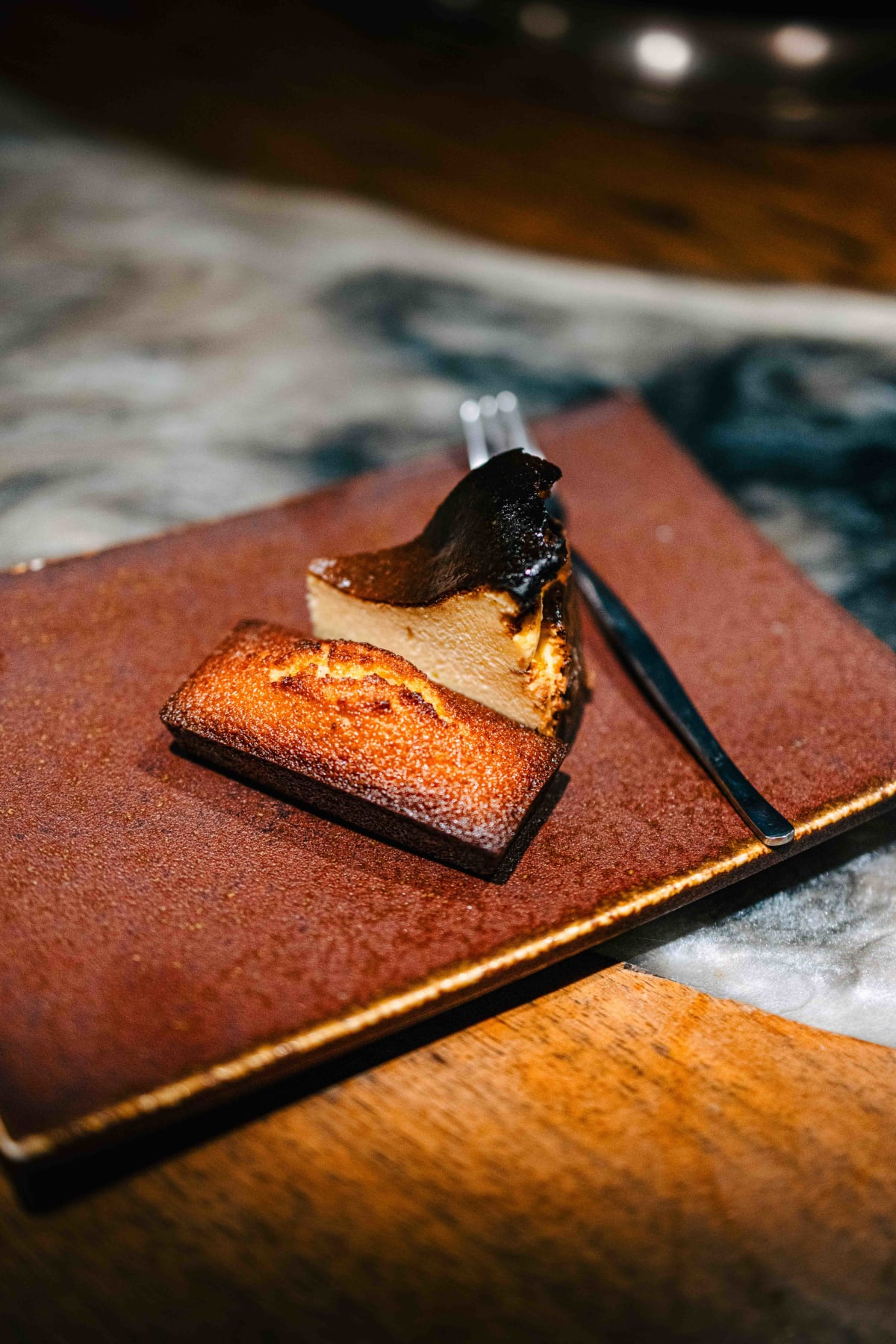
The cheesecake was in the Basque style, its top burnt black, but it did not satisfy me as much as the financier. I love a cheesecake with a texture that seems to melt away and a deep cheese aroma, and that kind is not easy to find in Korea.
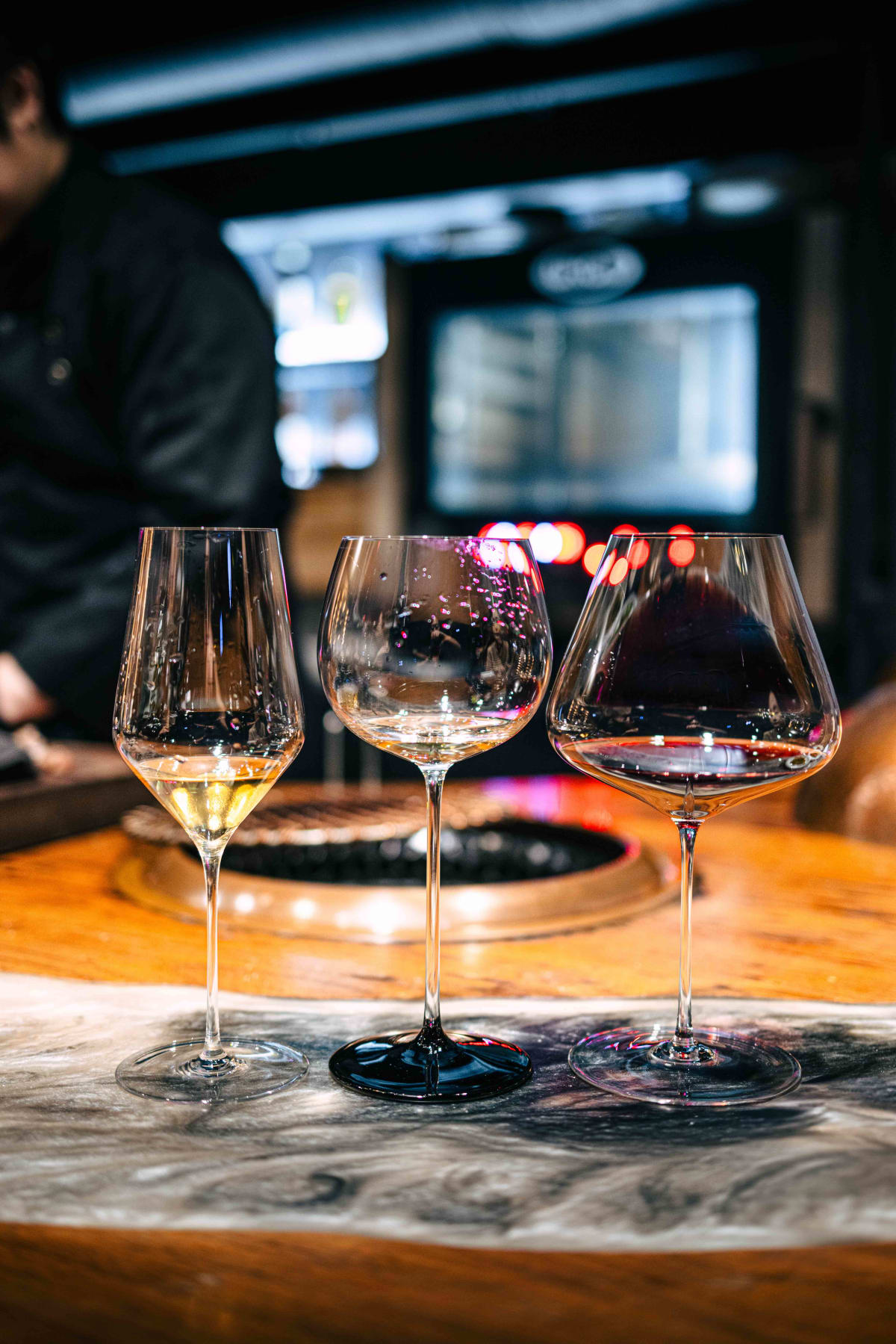
As I said earlier, corkage is free for up to four bottles of wine in the counter room, which makes it a good place for a wine gathering, and that evening we made a thorough job of it, from Champagne to a white Burgundy, a red Burgundy, a Bordeaux and finally a dessert wine.
Beyond the food, the atmosphere and the room were satisfying too. I am not certain, but I think ours was the only party dining there that evening. So it was quiet and easy to talk with my companions, and the chef who grilled the meat for us was a wonderful host.
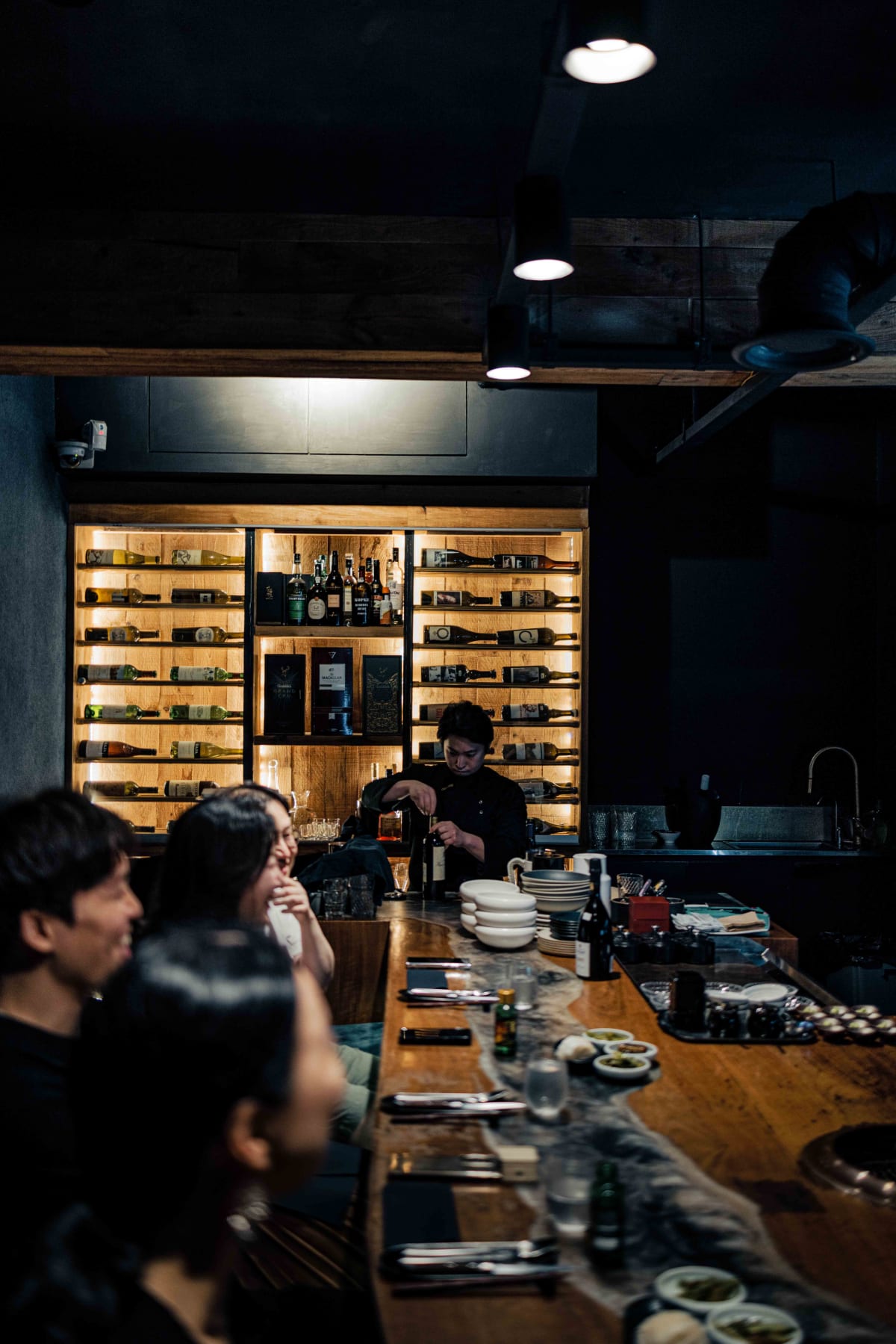
Jungyookgongbang now runs on private hire, taking one party at a time in each of two rooms: a counter room for six to eight, where the chef grills in front of you, and a table room for five to six, where guests sit facing one another. We sat at the wooden counter of the counter room, with charcoal grills set into it and a wall of lit wine shelves behind.
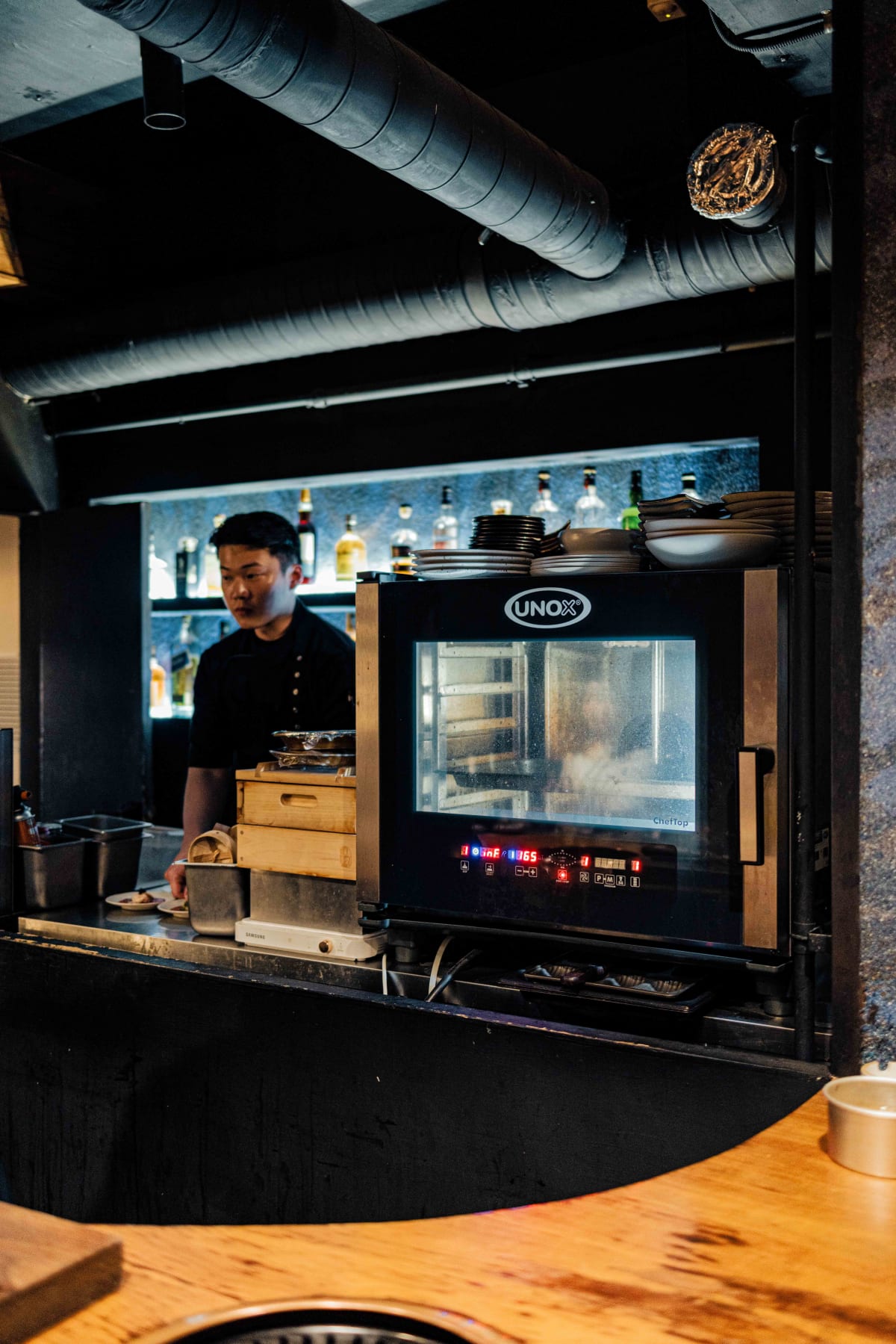
Jungyookgongbang is enormously popular, but I wanted to go back, and I have been many times since. I would like to set down my visits one at a time, as a record of how Jungyookgongbang keeps changing, little by little.
Hanwoo omakase as a format tends to march from one rich cut to the next, so it lives or dies on how much fat a guest can take. Jungyookgongbang treats the beef as the spine of the meal rather than the whole of it, and its noodles, broths and seafood do the work that sorbets and small palate cleansers do in a French tasting menu, which is why the evening reads as a course rather than a long sitting at the grill. Rooms are booked whole, so it pays to gather the full party before chasing a date. Where earlier years offered two courses at two prices, there is now a single course at about USD 190 (250,000 won) a head, and the restaurant is closed on Sundays.
Have a question about this restaurant, or want to share your own experience?
Send a message