Fine Dining · Èze · France / September 2022 / Michelin ★★
La Chèvre d'Or
"Two stars handed down across generations above the Mediterranean"
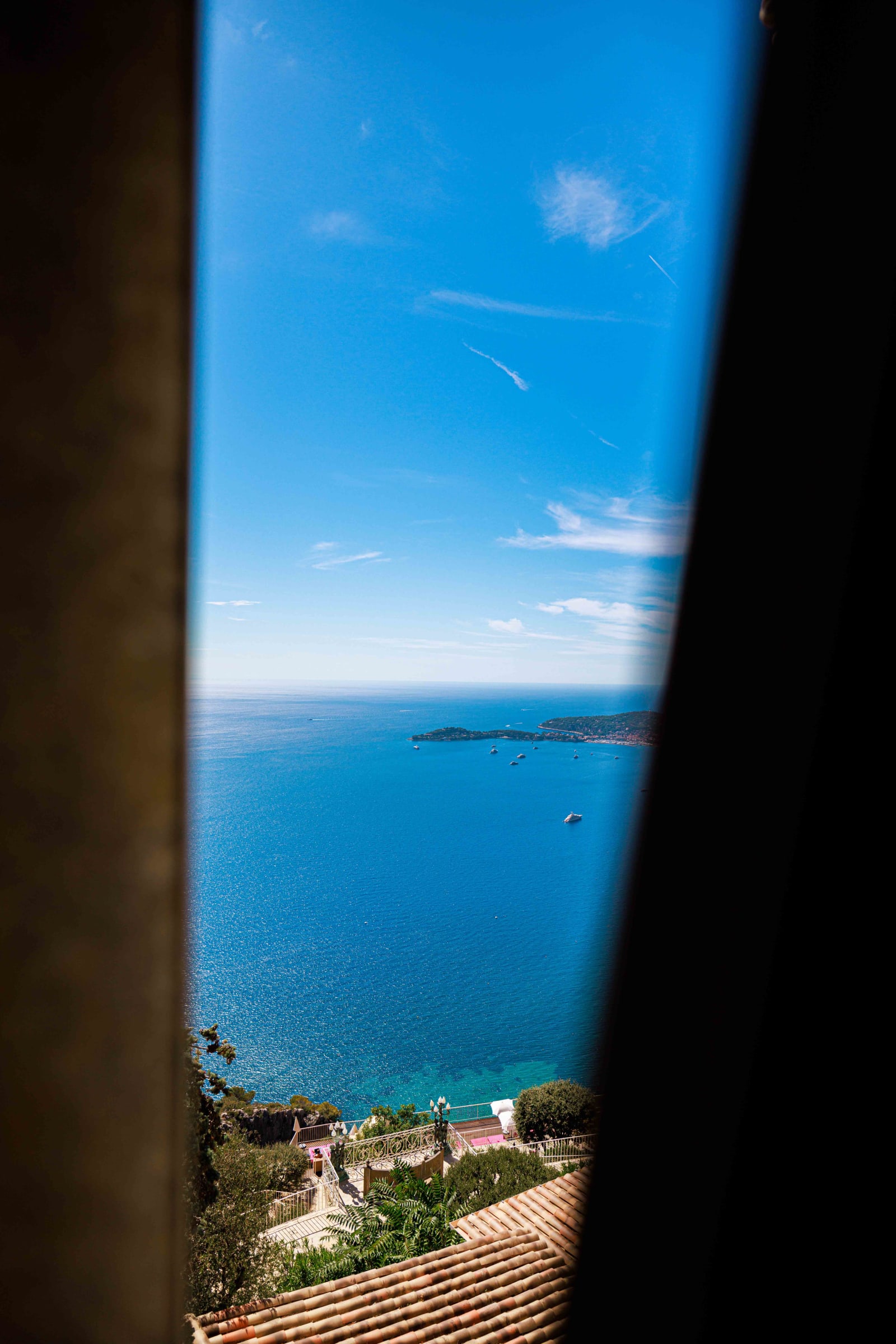
Section 1·A Clifftop Village
This was my first trip to Europe after the pandemic, and the last stop on a journey that ran from late August into early September 2022. East of Nice, on a clifftop more than four hundred metres above the Mediterranean, sits the medieval village of Èze. Inside that village is the two star restaurant of the five star hotel Château de la Chèvre d'Or.
Outside Paris, French two and three stars are mostly attached to hotels in the countryside, and without a rental car they are hard to reach at all. Èze is close to an exception. You can get there from Nice by bus, and having heard the daytime view was good I booked a month and a half ahead. There were almost no accounts of it on the Korean portals, which is why I think this piece may be of use to someone.

Èze sits between Nice and Monaco, one of the emblematic hill villages of southern France formed along a cliff. Narrow stone lanes and stairways and the traces of old walls run up the slope. People have lived here since antiquity, it belonged to the House of Savoy from 1388, and its strategic position led to fortification. In 1706, during the War of the Spanish Succession, Louis XIV ordered parts of the castle and walls destroyed, and it was only in 1860 that the village was finally incorporated into France. In the 1880s Nietzsche walked up and down the steep path from Èze-sur-Mer on the coast to the village above, and that path still carries his name.
Section 2·The Approach
The way into the hotel already tells you the character of this place. There is no single building. Rooms are scattered on both sides of the lanes, which makes it a little hard to find.
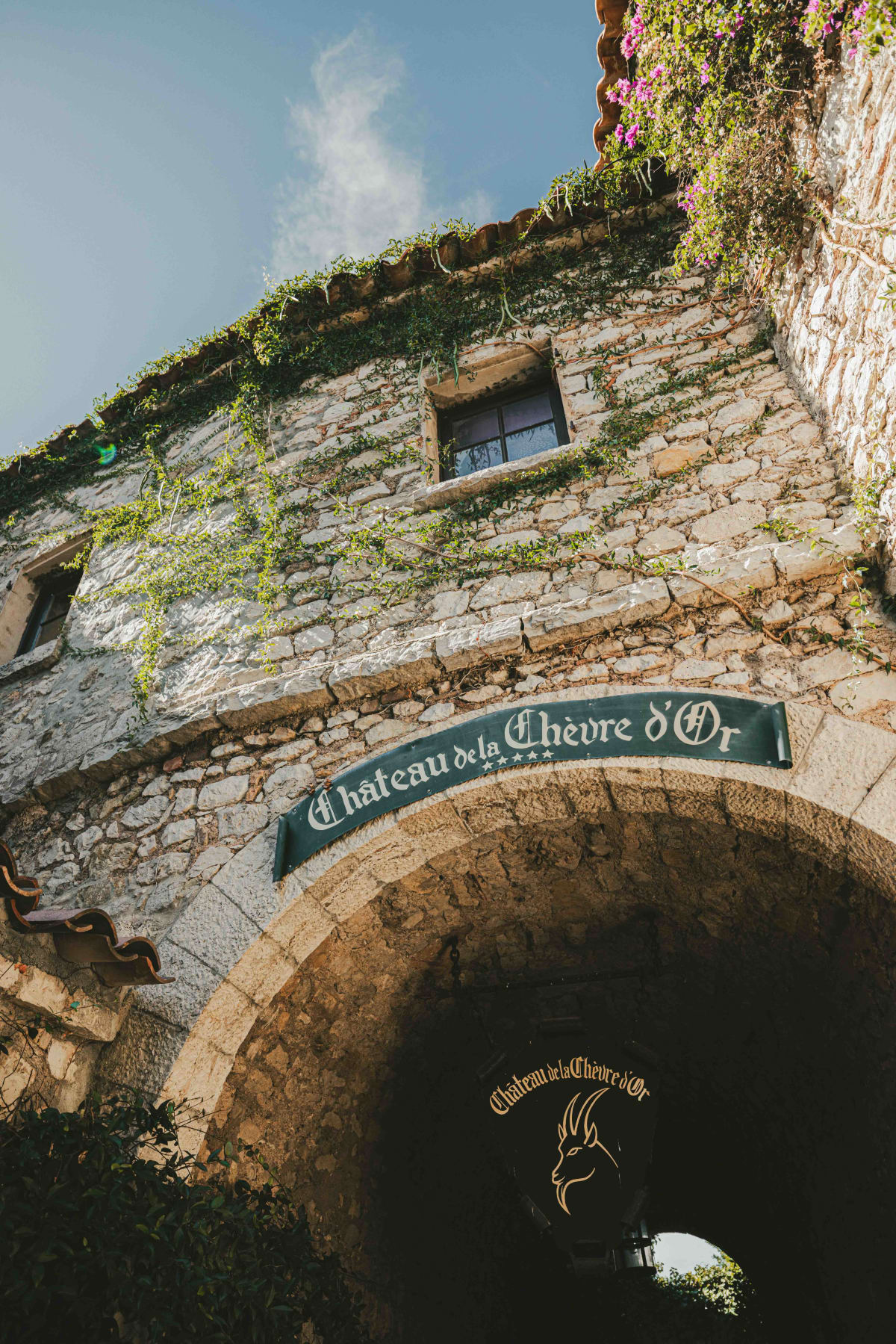
Structurally it could not have gone otherwise. The modern history of this restaurant begins in 1953, when the hotelier Robert Wolf bought the building and turned it into a restaurant. In 1956 Walt Disney stayed here, was taken with the place, and according to the hotel's own history advised his friend Wolf to grow it into a hotel rather than a restaurant.
The problem was that Èze was already a finished medieval village. There was no land to put up a large new building. Wolf's solution was to buy the old private houses inside the village one at a time and convert them into rooms. So the Château de la Chèvre d'Or today is not one hotel but rooms and gardens and stone stairs and a restaurant distributed among the village lanes. Less a hotel that moved into a village than a village where part of it became a hotel.
The position this hotel holds within Relais & Châteaux is more than membership. The owning group presents it as one of the early points that made up the Route du Bonheur, the predecessor of Relais & Châteaux, and dates the relationship to 1956. Which is to say it was an early instance of the destination restaurant, a place you travel to as the object of the trip, long before the luxury hotel and fine dining pairing we now take for granted was assembled.
Section 3·The Reception
On arrival you are shown not to the restaurant but to a reception room. A space with the atmosphere of a medieval castle. Banners with coats of arms hang on the stone walls, and the sea is already visible through the arched windows. Apart from me and a few Indian guests, everyone was white.
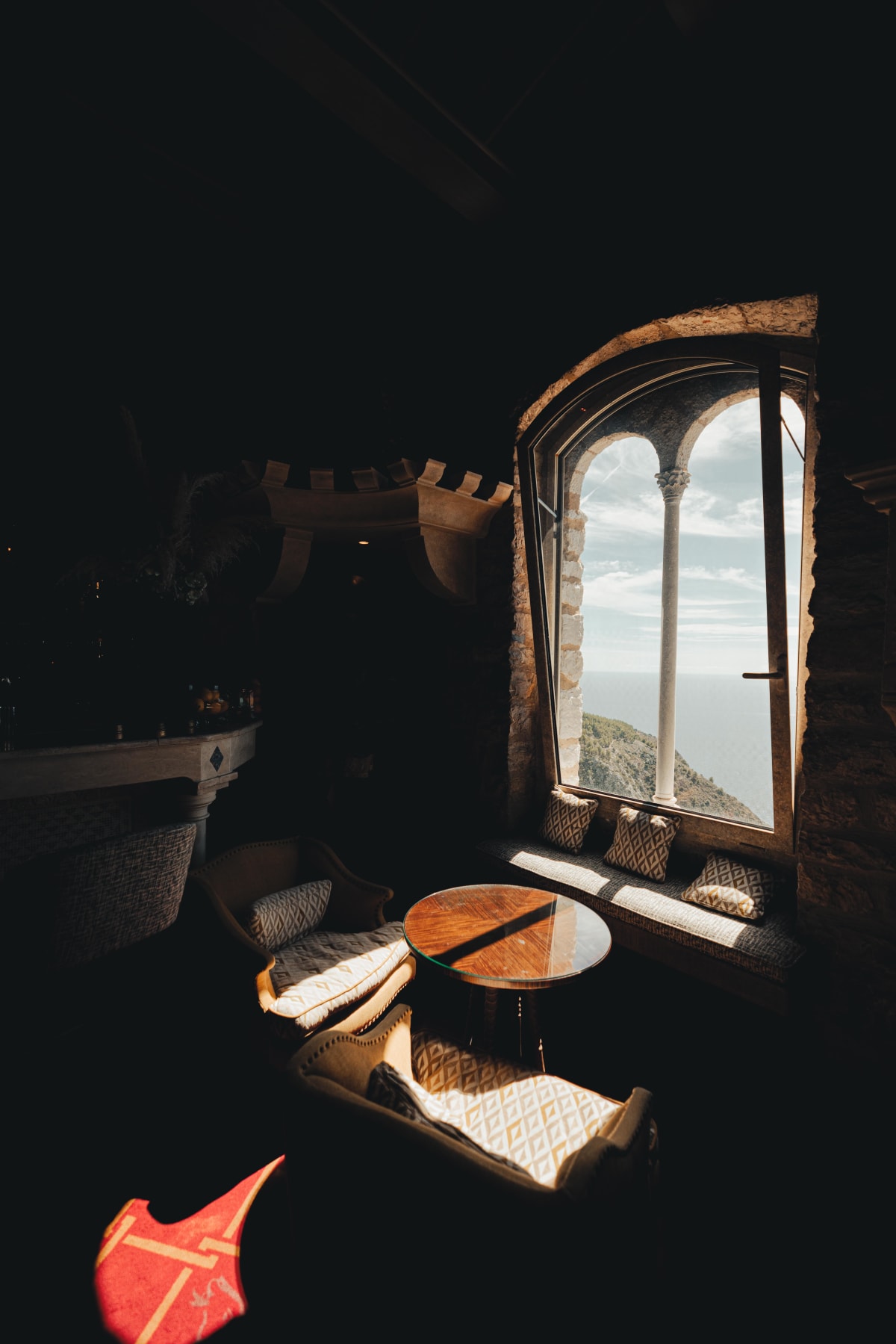
They offered a drink and I asked for sparkling water. The wait here ran about thirty minutes. At first I wondered whether something had gone wrong, but it had not. European dining culture is hard to enjoy without patience. If you plan to see a lot during the day, skip lunch here. You come out at four in the afternoon.

The sea comes in through the arched windows before you have sat down.

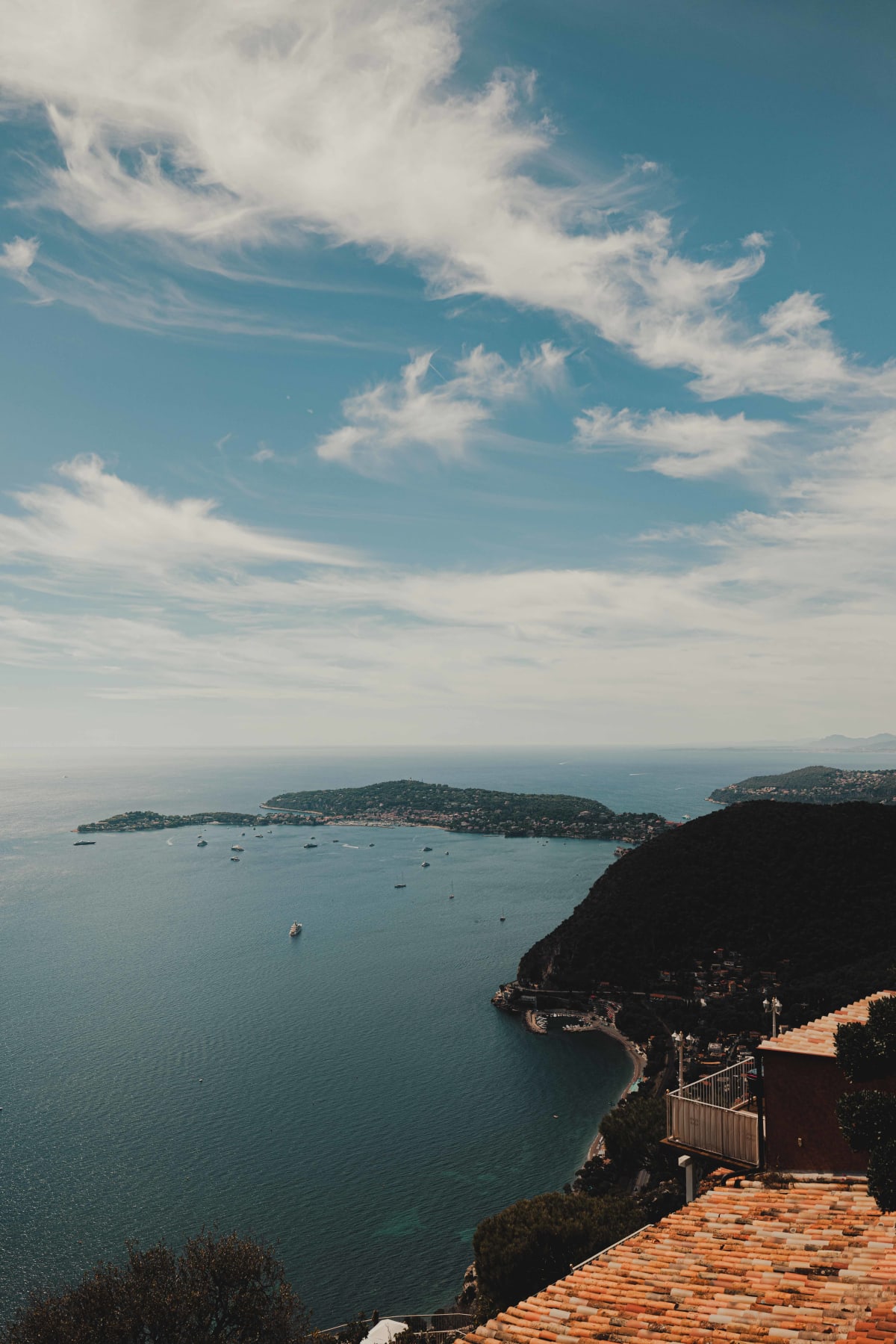
Outside there is a viewing terrace where you can look down over the coast of southern France. It is tremendous. That said, this hotel has a cafe as well as the Michelin restaurant, and purely for the view the cafe is better. Many of the clifftop terrace photographs that come up in a search are the other venue at the same hotel, and the meal at the two star Chèvre d'Or takes place in the indoor dining room.


Section 4·The Room
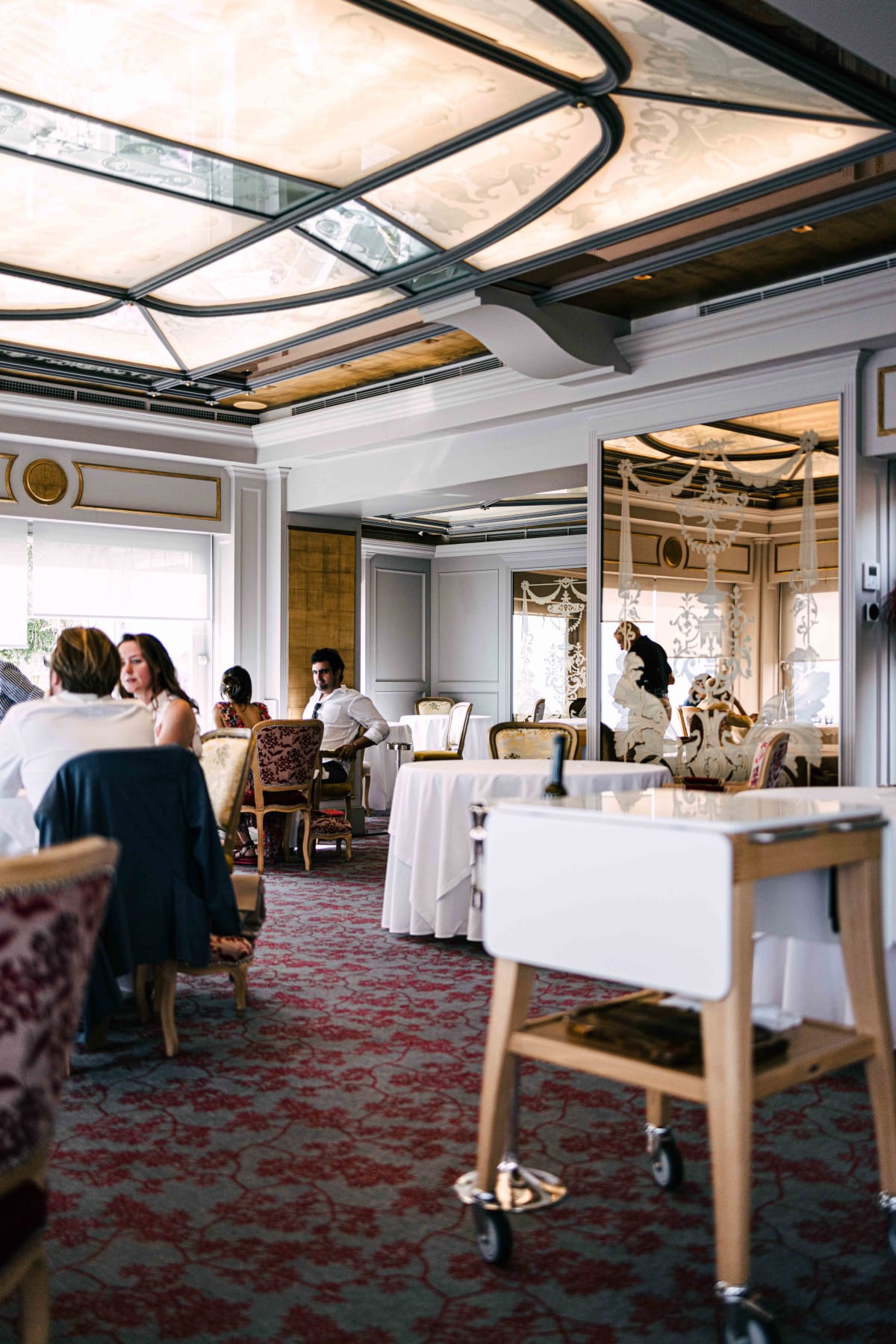
After about thirty minutes my turn came and I was shown to the table. I had asked for the best view when booking, and whether the request was honoured or not, I was seated by the window. The Mediterranean drops away directly below it.
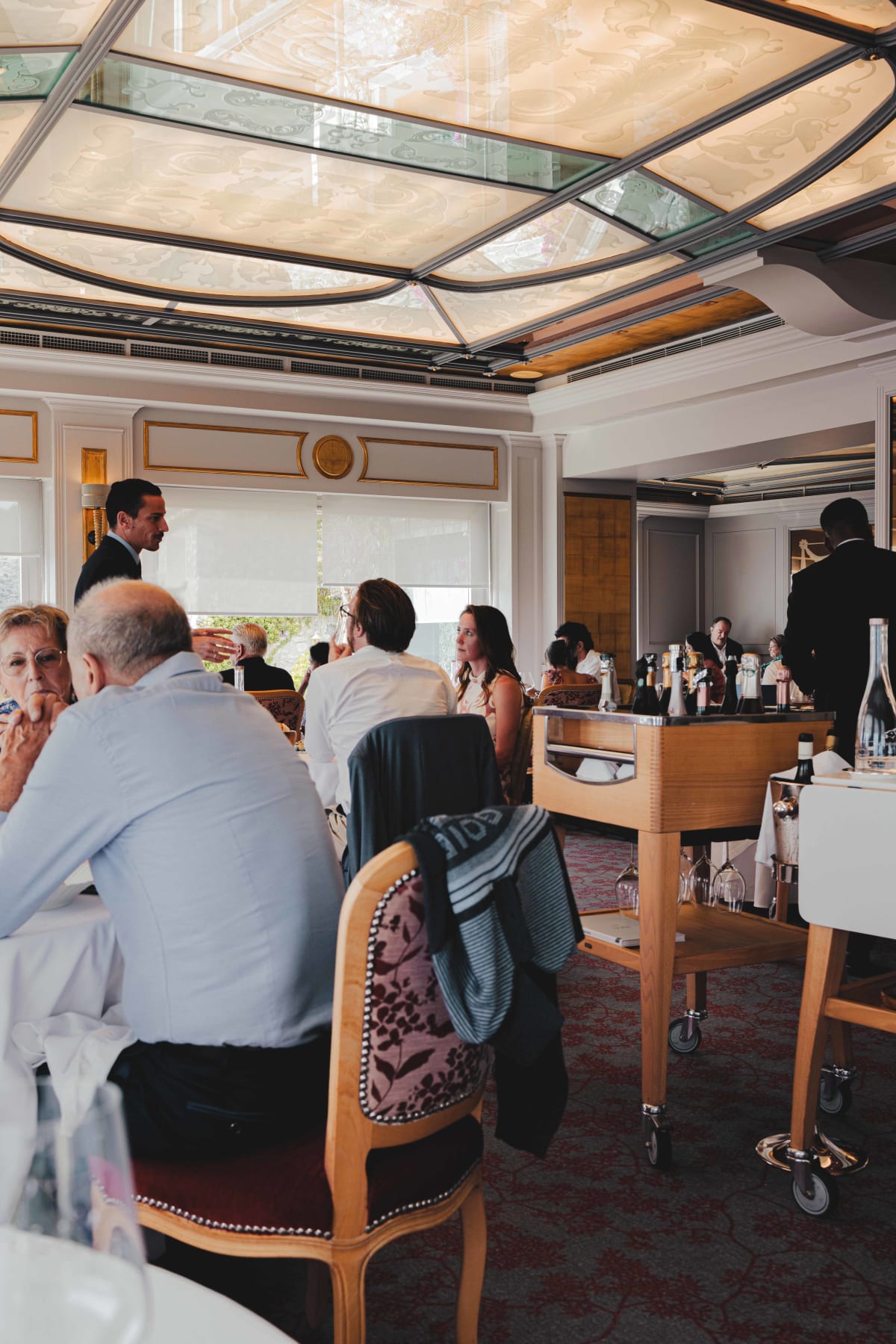
The main dining room is a classic space of glass ceiling and gilt moulding. The tables sit closer together than I expected.

There is a fact worth setting down while sitting in this room. This restaurant took its first Michelin star in 1978 under the chef Elie Mazot, and Jean-Marc Delacourt won the second in 2000. Those two stars held through to 2022, when I was sitting there. Twenty two years at two stars, and forty four from the first.
Names like Philippe Labbé, Fabrice Vulin and Ronan Kervarrec passed through this kitchen along the way. Not the new restaurant of one star chef but something closer to an institution of the Côte d'Azur, where the stars have been handed down across generations.

The chef in 2022 was Arnaud Faye. Born in Clermont-Ferrand in 1978, he became head chef of L'Espadon at the Ritz Paris in 2007 at twenty nine and won that restaurant its second star two years later, took part in the opening of Mandarin Oriental Paris, then in 2012 took charge of the kitchen at Auberge du Jeu de Paume in Chantilly, winning one star in 2013 and two in 2014.
Not a chef who inherited stars but one who had made them. He moved here in the summer of 2016, and in November 2018, while in post, was named Meilleur Ouvrier de France.
Section 5·The Champagne
A waiter wheels over a champagne trolley and asks which you would like. Krug is on it, among a range of others. I asked for a rosé and Beaugrand was poured into the glass.

The base of this name is Montgueux in the Aube, a hill of two hundred and sixty eight metres about ten kilometres west of Troyes where the hill is the whole village, a pure chalk site rising at the southern limit of Champagne. Geographically it is classed with the Côte des Bar but its character is entirely different, and slopes opening south to southeast take strong sun that gives the Chardonnay tropical fruit aromatics.
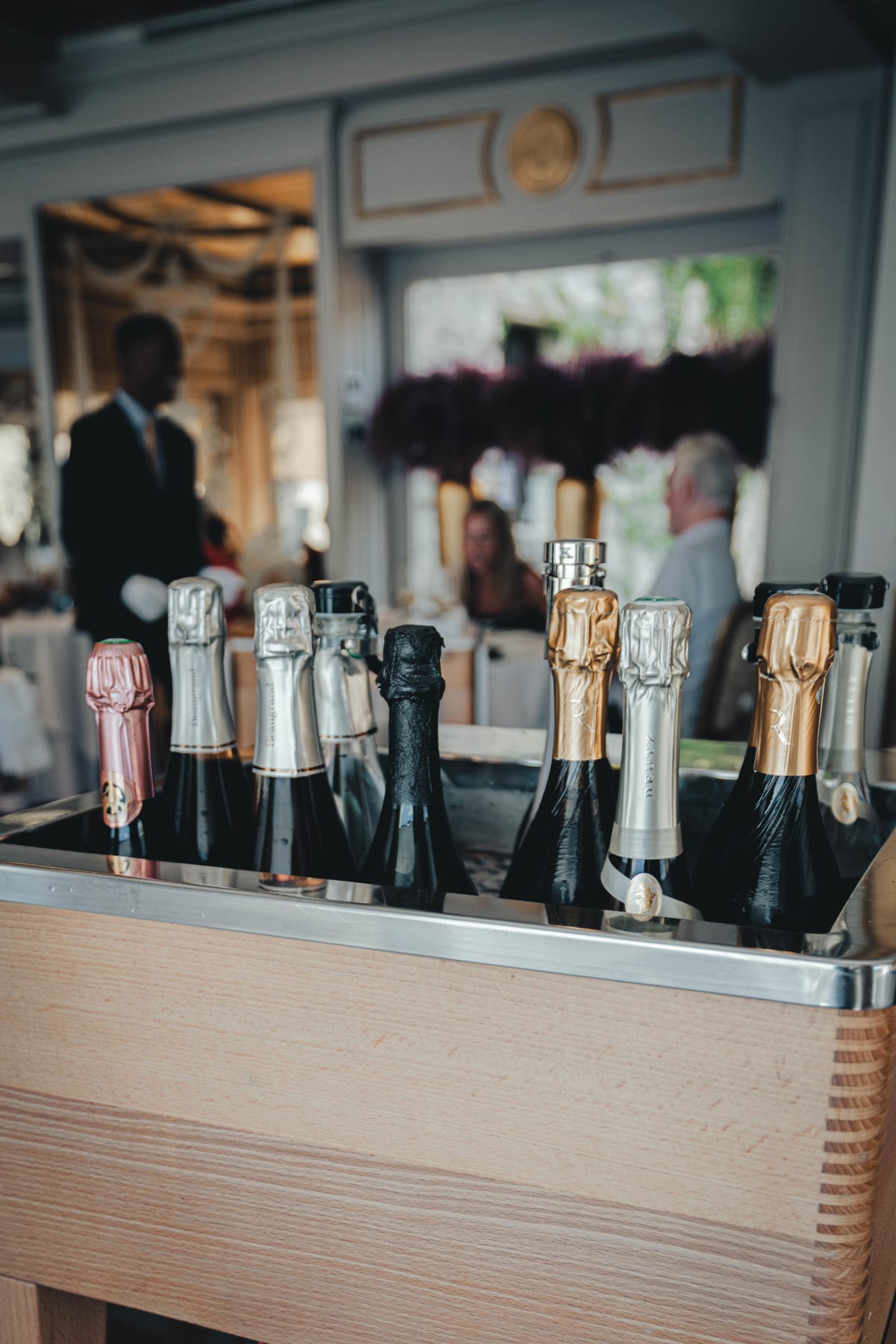
Hence the village's nickname, the Montrachet of Champagne. It is also a relatively late recognised cru, brought inside Champagne when the Aube was included in the appellation law of 1927. The Beaugrand family were the first to replant this hill after the First World War, and the village's main road carries the name of one of them.

Choosing a grower champagne when a house like Krug was on the same trolley, and it turned out not to be a bad call.
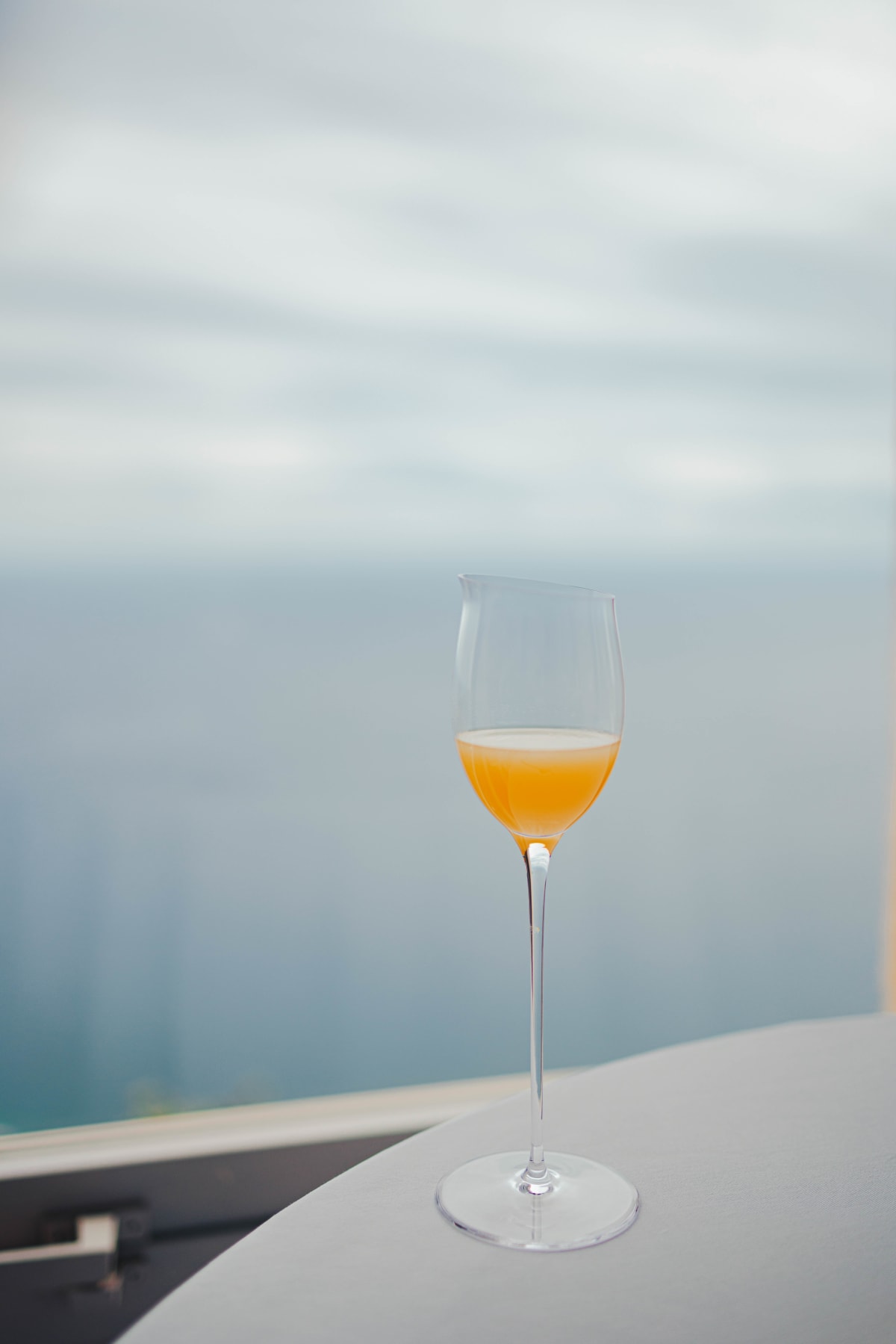
The condition of champagne at French Michelin restaurants is remarkably good. Temperature, bubble and acidity were all right. I photographed the glass against the window and it was something.

Section 6·De Roche Et D'Eau
The course here in the Faye era had a name. De Roche et d'Eau, from rock and water. The hotel described his cooking as an expression of terroir running from the rock mountains of the Mercantour to the blue of the Mediterranean. Which is to say the seafood of the Riviera and the ingredients of the inland mountains used within a single plate. Èze itself, wedged between mountain and sea, made into the title of the course.
The core of his work here was a modern rereading of Niçoise cooking. Taking apart the compositional logic of local dishes like pan bagnat, soupe au pistou and pissaladière and reassembling them in the language of fine dining. And onto that he pushed vegetables hard.
He uses skins and trimmings, cooking liquid, herb infusions, bouillon and extraction, and said himself that rather than the classical heavy sauces built on cream and butter he wants cooking that leaves no burden the day after a long course.
Less a hotel that moved into a village than a village where part of it became a hotel.
There is evidence the sense of place is not decoration. In the terraced cliff gardens of this hotel he planted around five hundred citrus trees and about two hundred and fifty basil plants. The last garden terrace, with its orange and lemon trees, runs almost to the edge of the cliff. Lemon and basil and olive oil recurring on the plate is not a gesture toward a southern French feel but a direct consequence of this building's own ground.
Section 7·The Openings
The first thing served was a biscuit. An olive wood bowl lined thickly with olive leaves and a single salted biscuit standing on top. It was salty and good.

Accounts from other visitors at this time mention an amuse arriving with the champagne that reread pissaladière as a chip. The Niçoise onion tart topped with caramelised onion, anchovy and Nice olives, compressed into one bite, and what I received looks to be of that family.
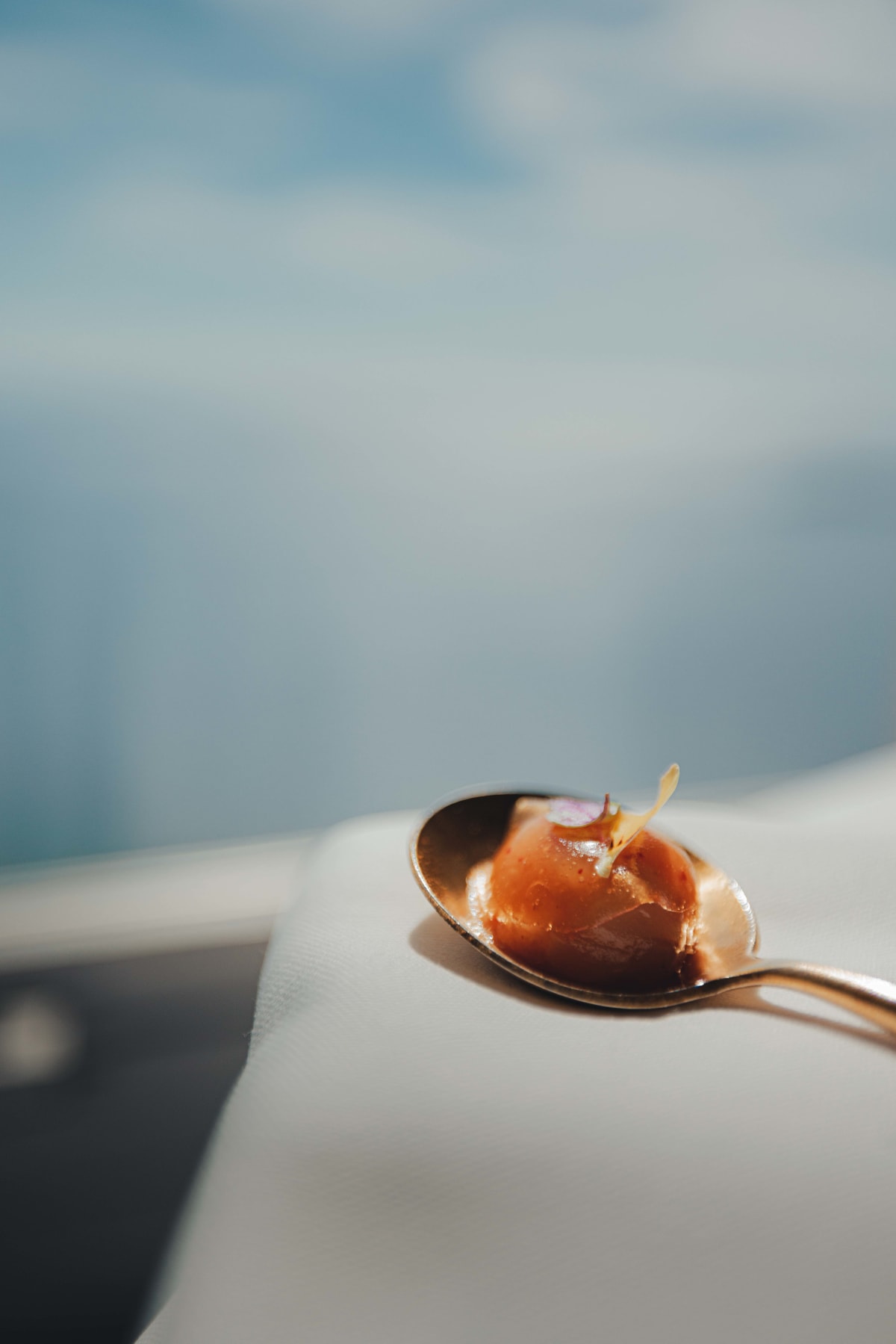
The amuse-bouche proper came as three. A black bowl with reddened grains of rice underneath and something like a clam on top, a translucent jelly sphere with an edible flower on a gilt spoon, and last a brown sphere on a spoon. To be plain, they did not carry much impact. Enough time has passed that my memory of them is faint.

One thing that came among them is still vivid.

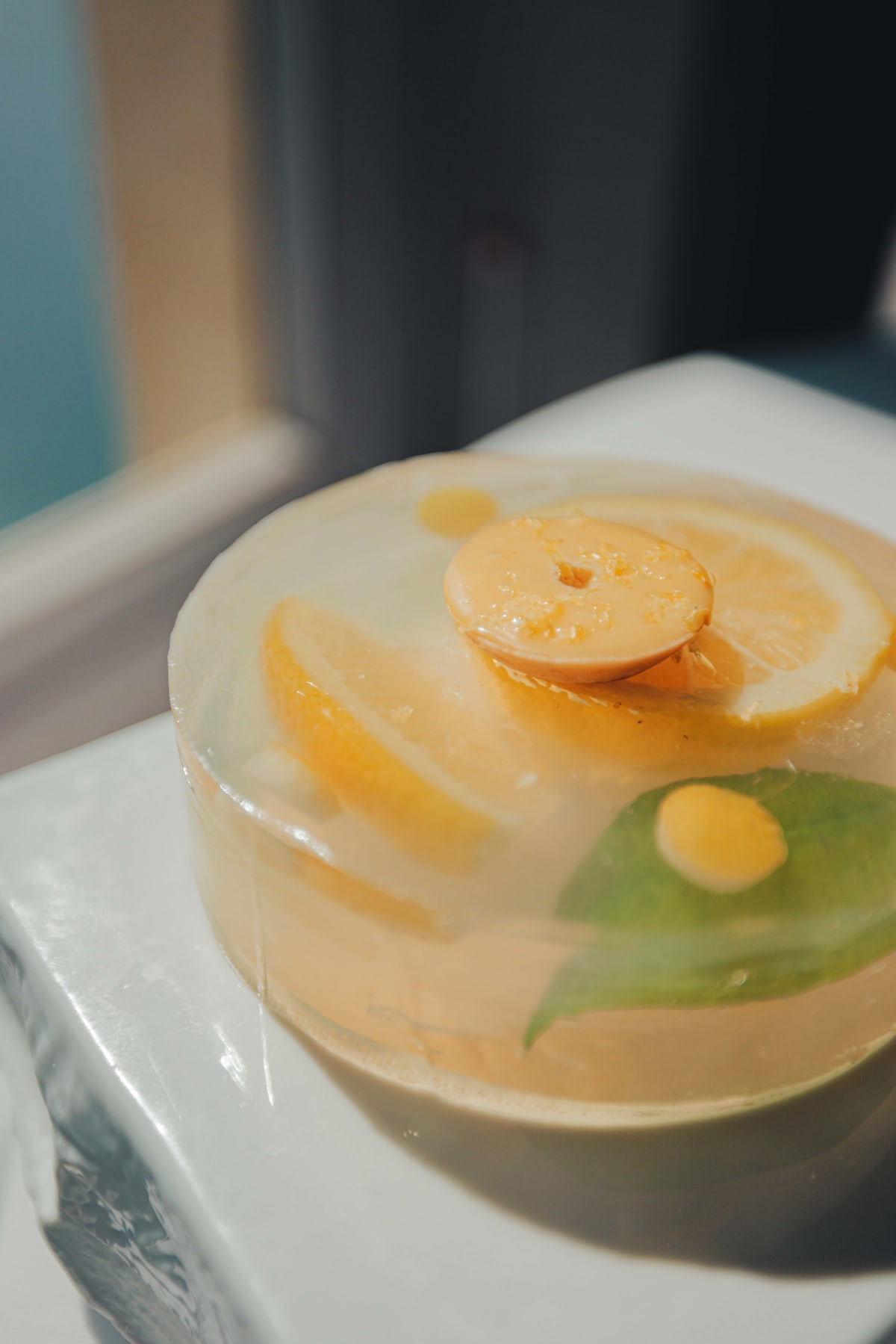
A plate with lemon slices and a leaf sealed inside a clear jelly dome, and the lemon flavour was so distinct that it stayed with me. Read as the moment the citrus of the cliff garden arrived on a plate, it may have been the most honest bite in the house.
Section 8·The Bread
Bread and butter arrived and I spread it. I do not know why the bread at a real French Michelin restaurant is this good.

A whole roasted sourdough split in a cross, served in an olive wood bowl lined with grain. The butter came in a blue glass bowl over olive oil, quenelled and dusted with a dark crumble and lemon zest.

It was good enough that I could not keep my hands off the bread. If you are going to a Michelin restaurant in France, I do not think you need to go hunting for a good bakery separately.

Section 9·The Mackerel
The first course was mackerel.
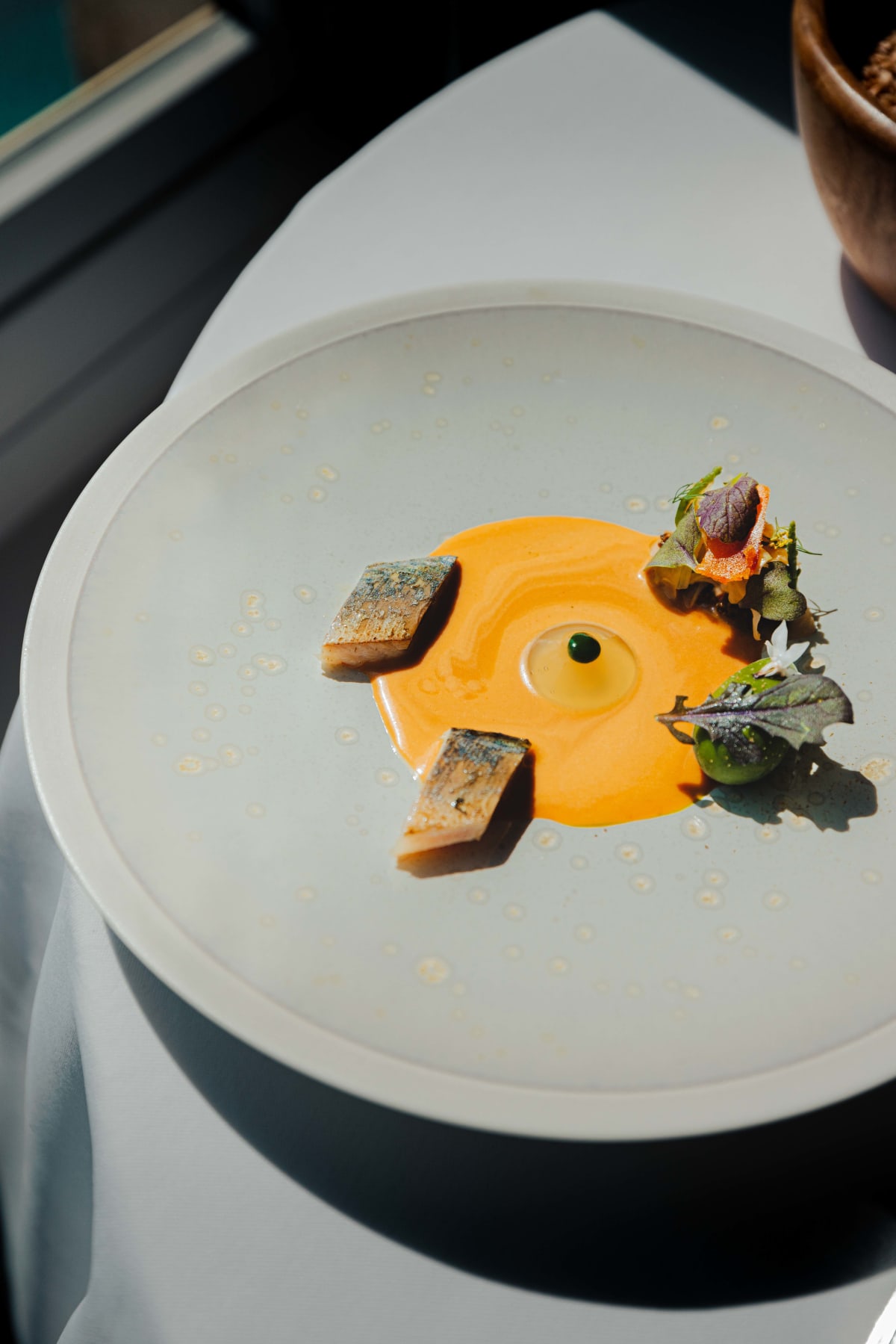
An orange sauce laid down like a disc, a yellow gel set in the centre like a pool with a single green dot. Two pieces of mackerel with the skin left on, artichoke and young leaves beside them, citrus peel. Mediterranean cooking using an acidic marinade, of the escabeche family. A composition setting the fat of the mackerel against acidity and the cool aromatics of fennel.
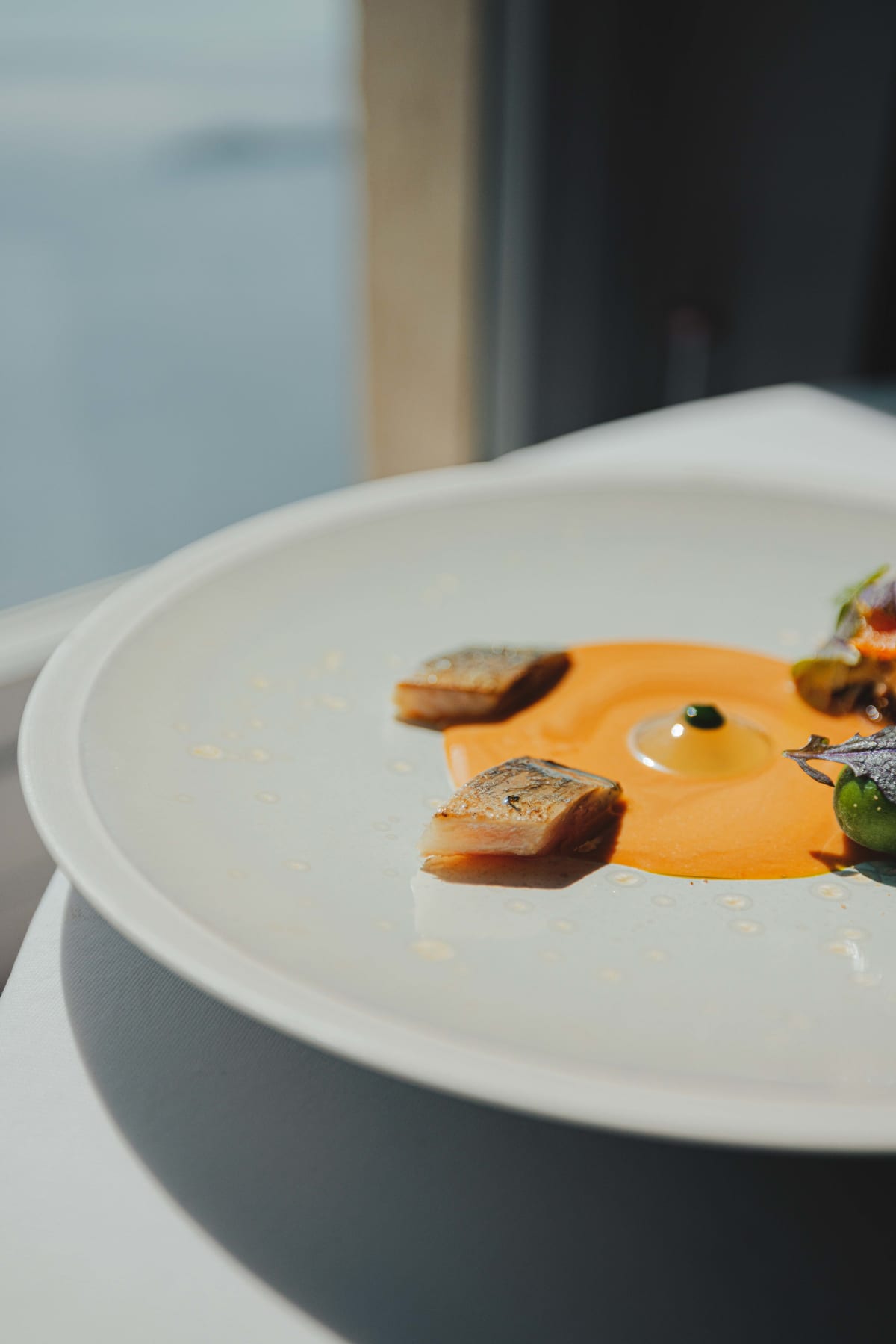
To be plain, I think this will land with almost no impact for a Korean or Japanese diner, who eats a great deal of very good raw fish. For the price of this course it is a disappointing piece of mackerel.
That said, arguing the standard of Korea and Japan, where we eat a lot of raw fish, would make for an exhausting trip through Europe.

Eaten with the sauce spread over it, it was decent after all.
This is not a passage to move past. Another account from a visit in the same month also records the sauces and the jus as particularly excellent. Faye's plates look light on the surface, leading with vegetables and herbs, but what holds the centre of the plate is in the end the precise sauce work of French cooking.
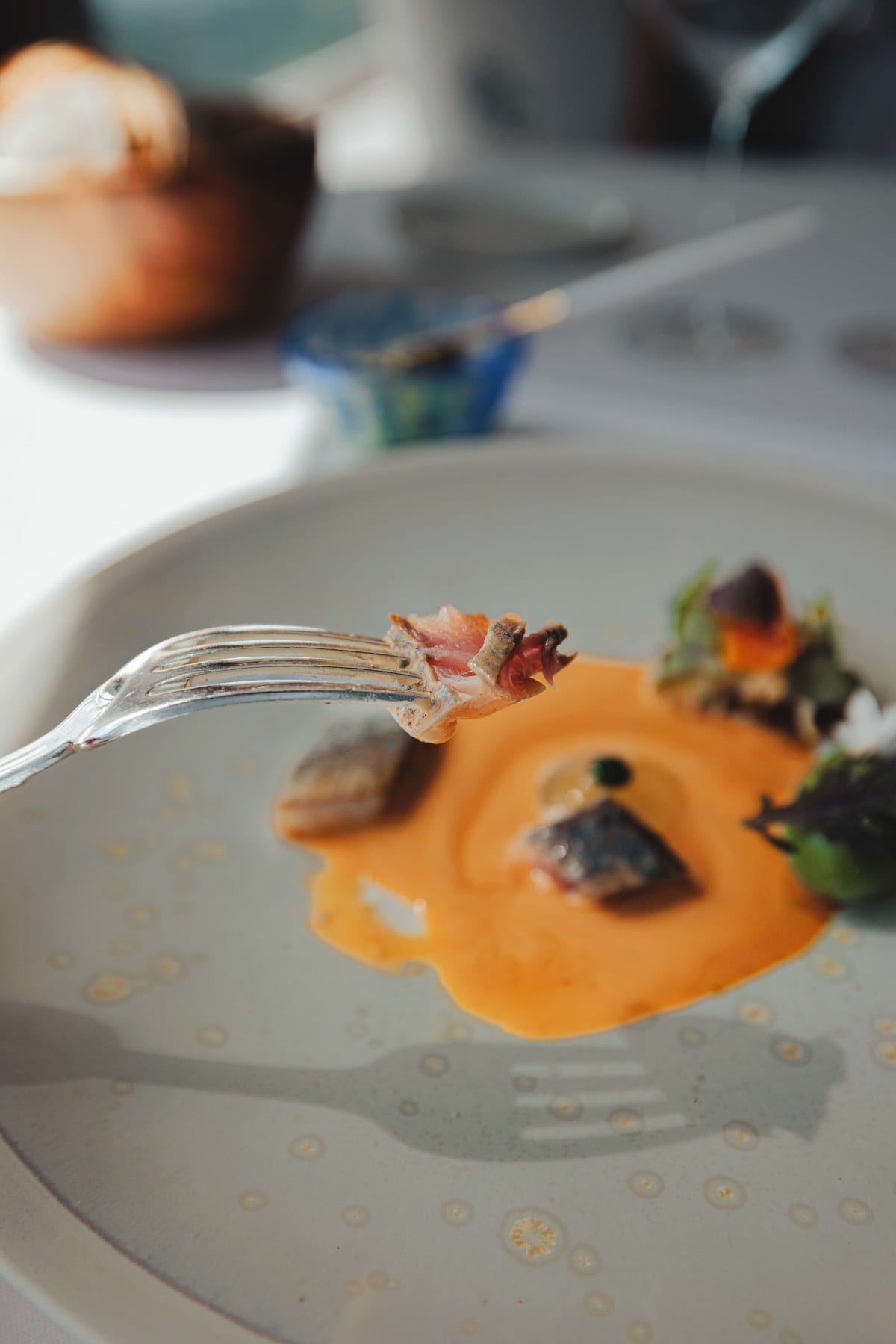
In fact every principal plate that day had its sauce poured at the table from a jug. When the ingredient was weak, what lifted it was also the sauce.
Faye's plates look light on the surface, leading with vegetables and herbs, but what holds the centre of the plate is in the end the precise sauce work of French cooking.
Section 10·The Pairing
The wine pairing begins in earnest. It was a hundred and twenty euros and I think it was quite good. There were wines I would find hard to taste in Korea.

The first glass was Château Barbanau's Cuvée Kalahari, a Cassis white from 2020. Cassis is a very small appellation east of Marseille and a rare Provence site centred on white wine. Barbanau holds seven and a half hectares within it, was the first domaine in Cassis to be certified organic, and converted to biodynamics from the 2018 vintage.
Kalahari is the house's prestige cuvée, blending Clairette, Marsanne and Sauvignon Blanc with some Ugni Blanc, fermented with wild yeast then aged twelve months on the lees in Burgundy barrels. Annual production runs at around four thousand bottles. The name comes from the family's affection for southern Africa.
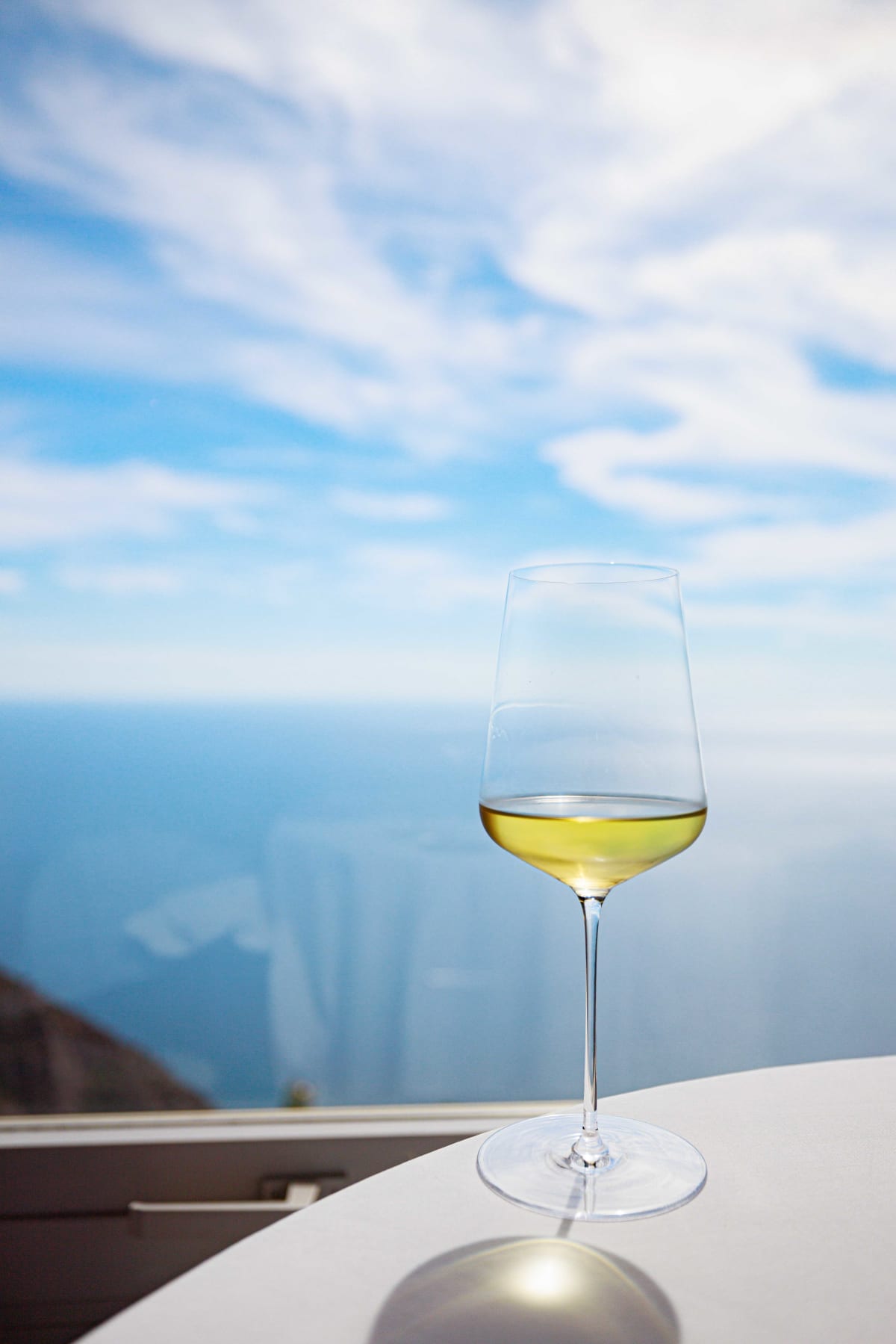
Looking down over the Mediterranean from this seat, there are few more exact choices for a first glass. A white from limestone soil right beside the sea, with the sea and the earth and the sun all in it.

The second wine was a Pouilly-Fumé white, Jonathan Didier Pabiot's Léon 2020.
The sommelier asked whether I had heard of the Loire Valley, and when I said isn't that the place with all the châteaux, his eyes went wide.
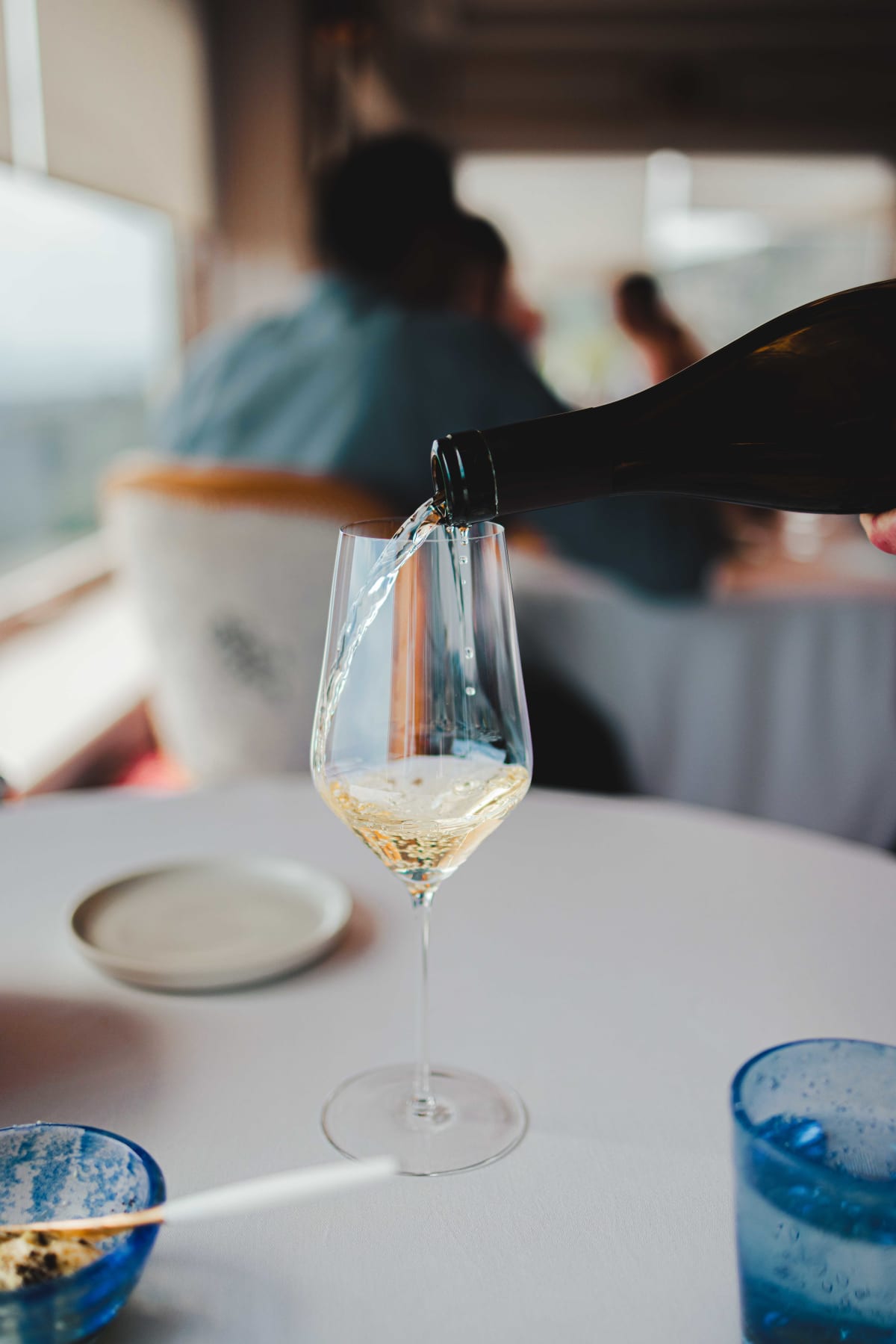
This one is not a plain Loire Sauvignon either. Jonathan worked at Léon Barral in the Languedoc, returned to the family estate at twenty one, persuaded his father Didier to convert to organics, and became the first domaine in Pouilly-Fumé to hold Demeter biodynamic certification.
Twenty hectares divide across three soils, Kimmeridgian marl, chalky Portlandian and flinty clay, and each becomes the frame of a cuvée. Léon, formerly named Florilège, is the house's flagship, from vines of thirty years fermented slowly with wild yeast. A style where the smoky nuance of flint, rather than granite, sits over lime and gooseberry.

Section 11·The Prawn
The second course was prawn with persimmon, the sauce poured over. This one satisfied me.
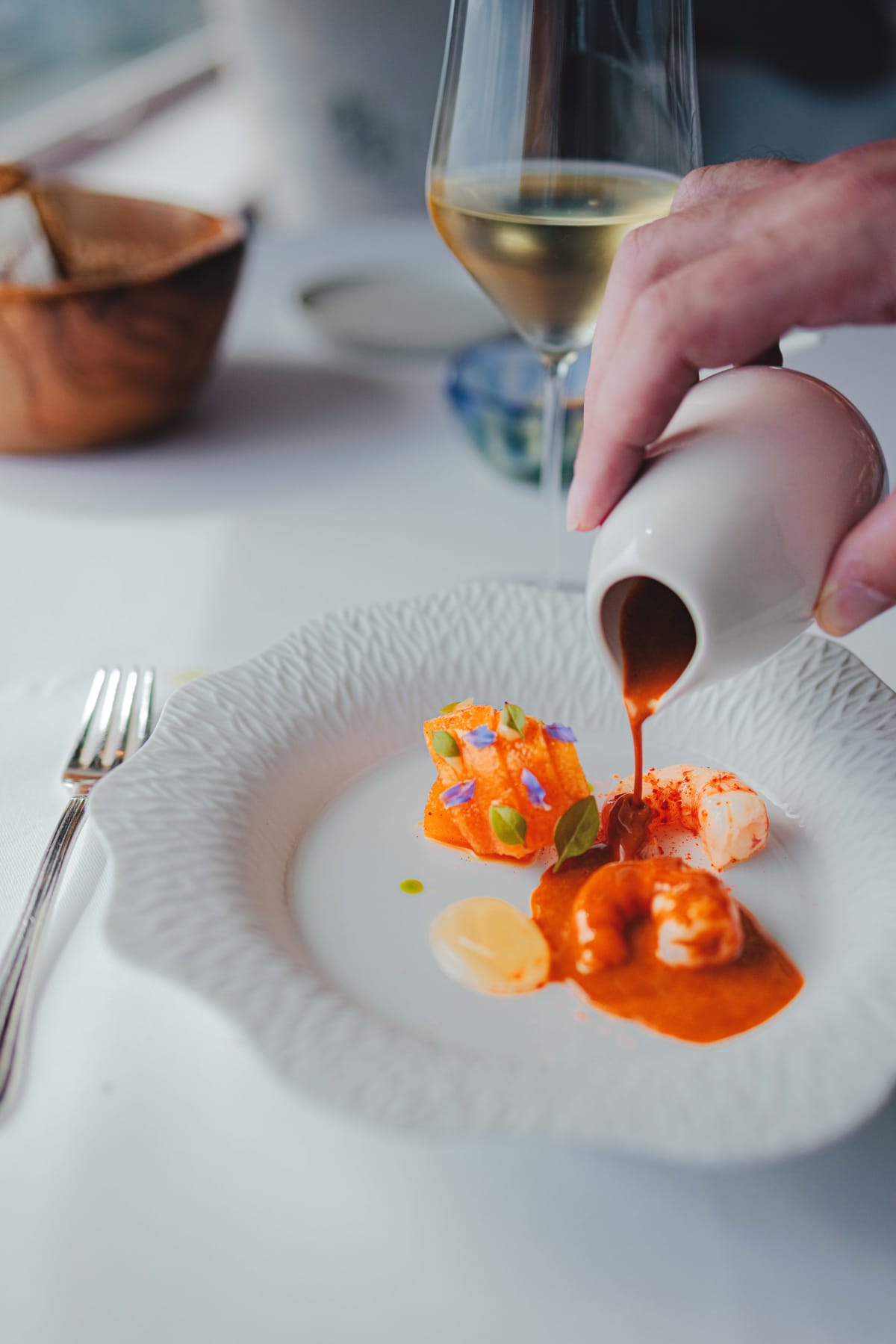

Thinly sliced persimmon rolled up into a mass with basil leaves and a purple edible flower on top, two prawns beside it and a drop of white cream, then a red crustacean sauce poured at the table.

The prawns were a little small, but eaten with the sauce and the persimmon the flavour was distinctive and good.


Section 12·The Fish
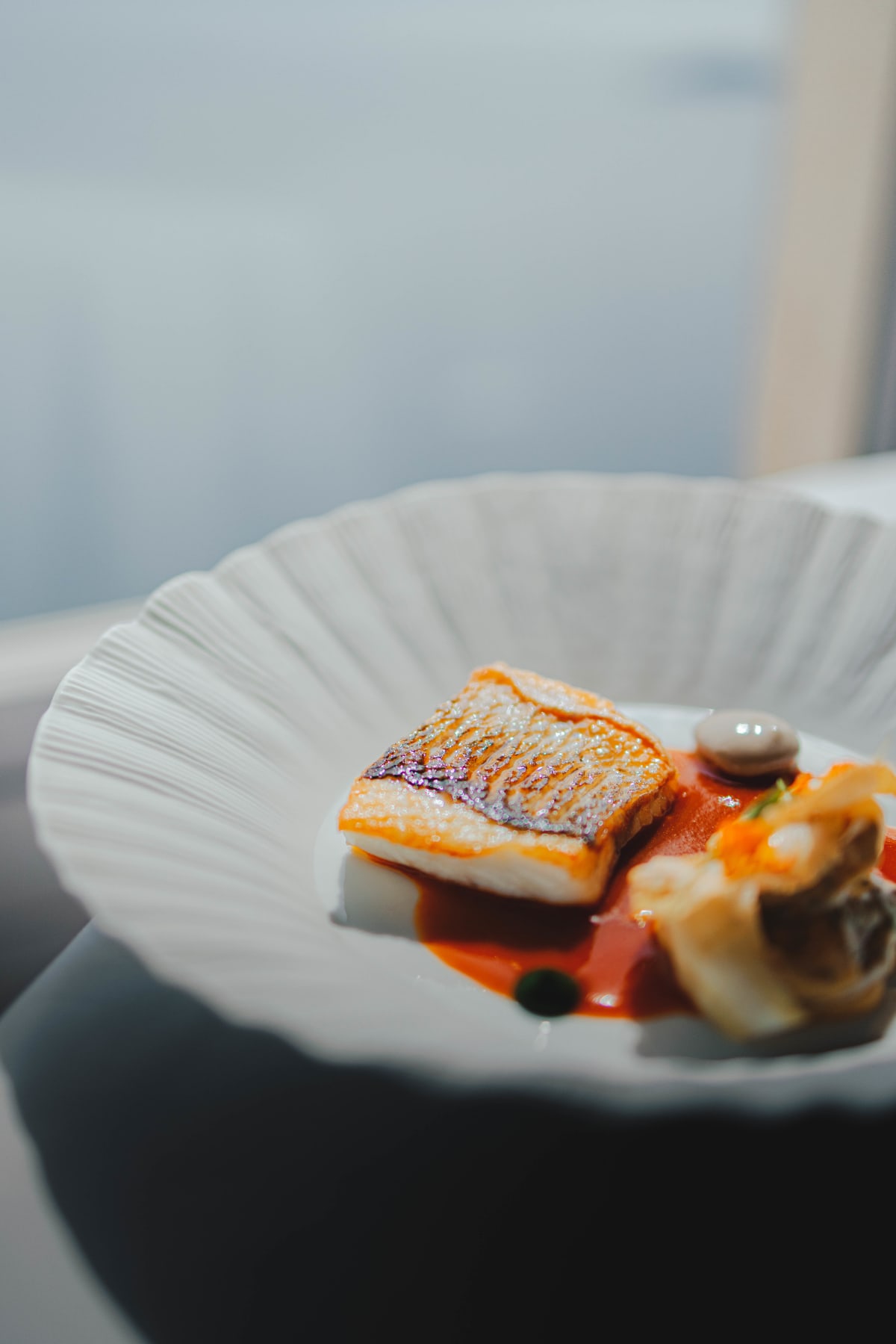
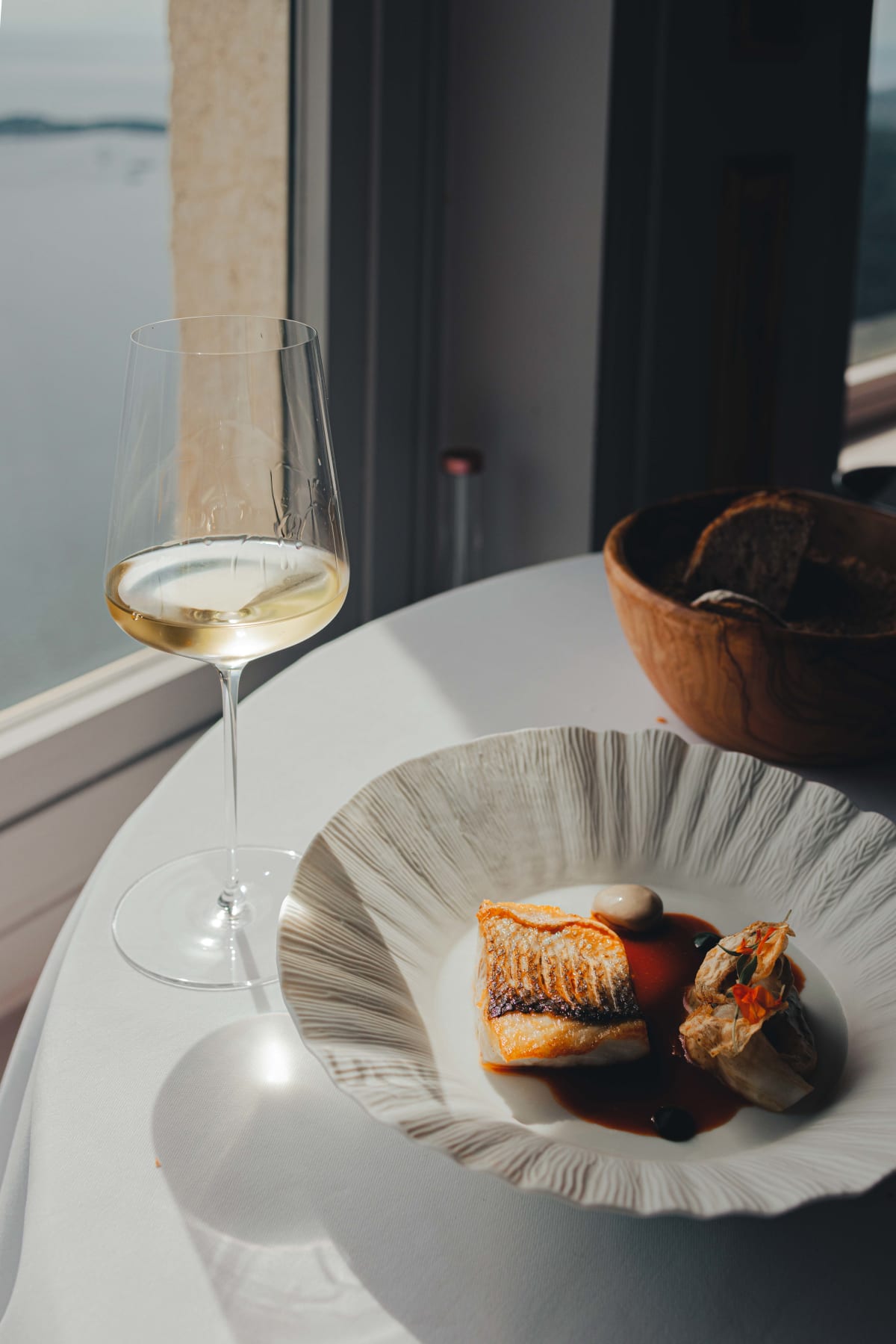
The third course was a grilled seasonal fish with a cabbage type vegetable roasted alongside and sauce poured over, and this is the dish I would pick as the best of the day.
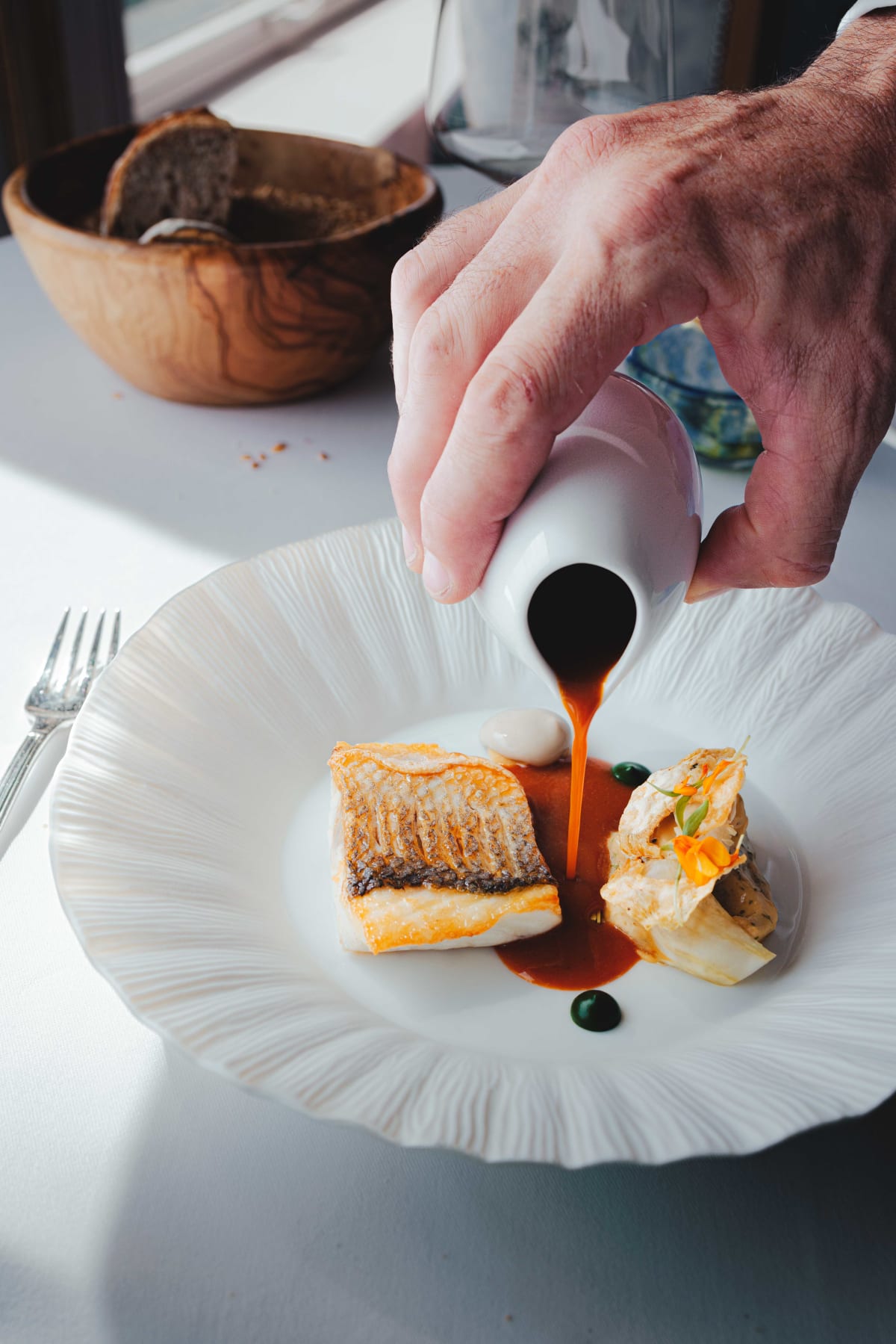
A single piece of white fish with the skin crisped, a roasted vegetable wrapped and filled with herbs, a white cream quenelle, a dot of green oil, and a red orange sauce. The cooking of the fish was close to perfect. Eaten together with the vegetable garnish and the sauce it was excellent.


I drank it with a Rhône white that came alongside, Château La Nerthe's Châteauneuf-du-Pape blanc 2020. One of the oldest names in the region, traceable in the records to 1560, when the Tulle family acquired the château, after which the wine is said to have reached the courts of London, Rome and Versailles.
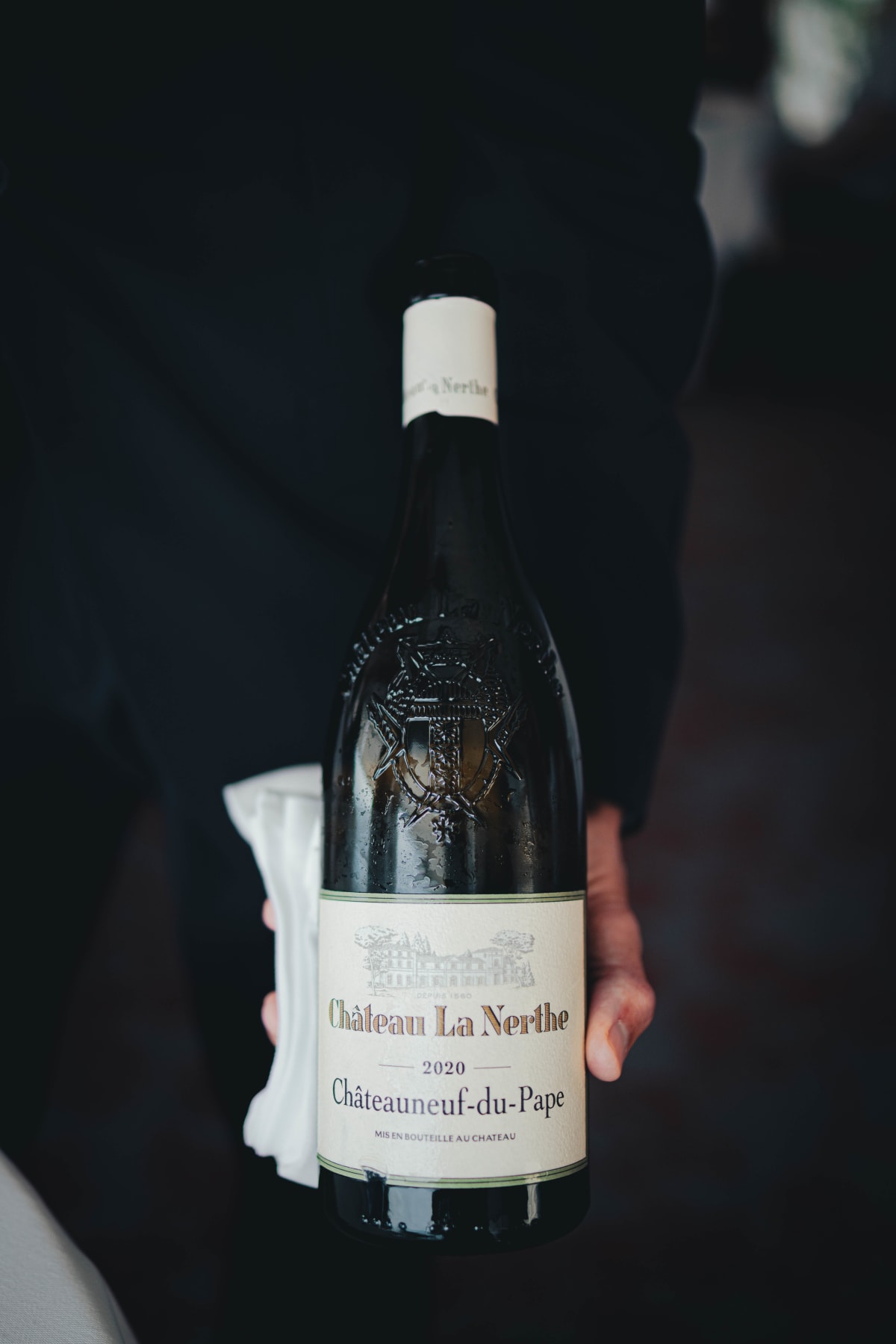
Ninety two hectares run as one block around the château, including the pebble ground of the La Crau plateau, and organic certification has been held since 1998.
White accounts for only six or seven percent of production in Châteauneuf-du-Pape. The 2020 white is a blend of forty seven percent Roussanne, thirty eight percent Grenache Blanc, thirteen percent Clairette and two percent Bourboulenc, hand picked in the early morning from vines over forty years old, with the Roussanne juice fermented in barrel then aged nine months on the lees. That is where the density comes from that takes on the strong sauce of the fish without weighing the plate down.
Section 13·The Pigeon
A red arrives before the meat. M. & C. Lapierre's Morgon 2021.
It would not be unreasonable to call this the starting point of natural wine in Beaujolais. Marcel Lapierre was born in Villié-Morgon in 1950 and took over the family estate at twenty three, and after meeting Jules Chauvet, the chemist and winemaker from the region, in 1981, turned entirely toward working without sulphur or cultured yeast. This at a time when Beaujolais Nouveau was easy money and herbicides and high yields were common sense.

Along with Jean Foillard, Jean-Paul Thévenet and Guy Breton he came to be called the Gang of Four in the United States. The 2010 vintage was Marcel's last, and his son Mathieu and daughter Camille now carry it on with biodynamics. The vines on granite gravel are mostly over sixty years old, worked with wild yeast, semi carbonic maceration and ageing in old Burgundy barrels.
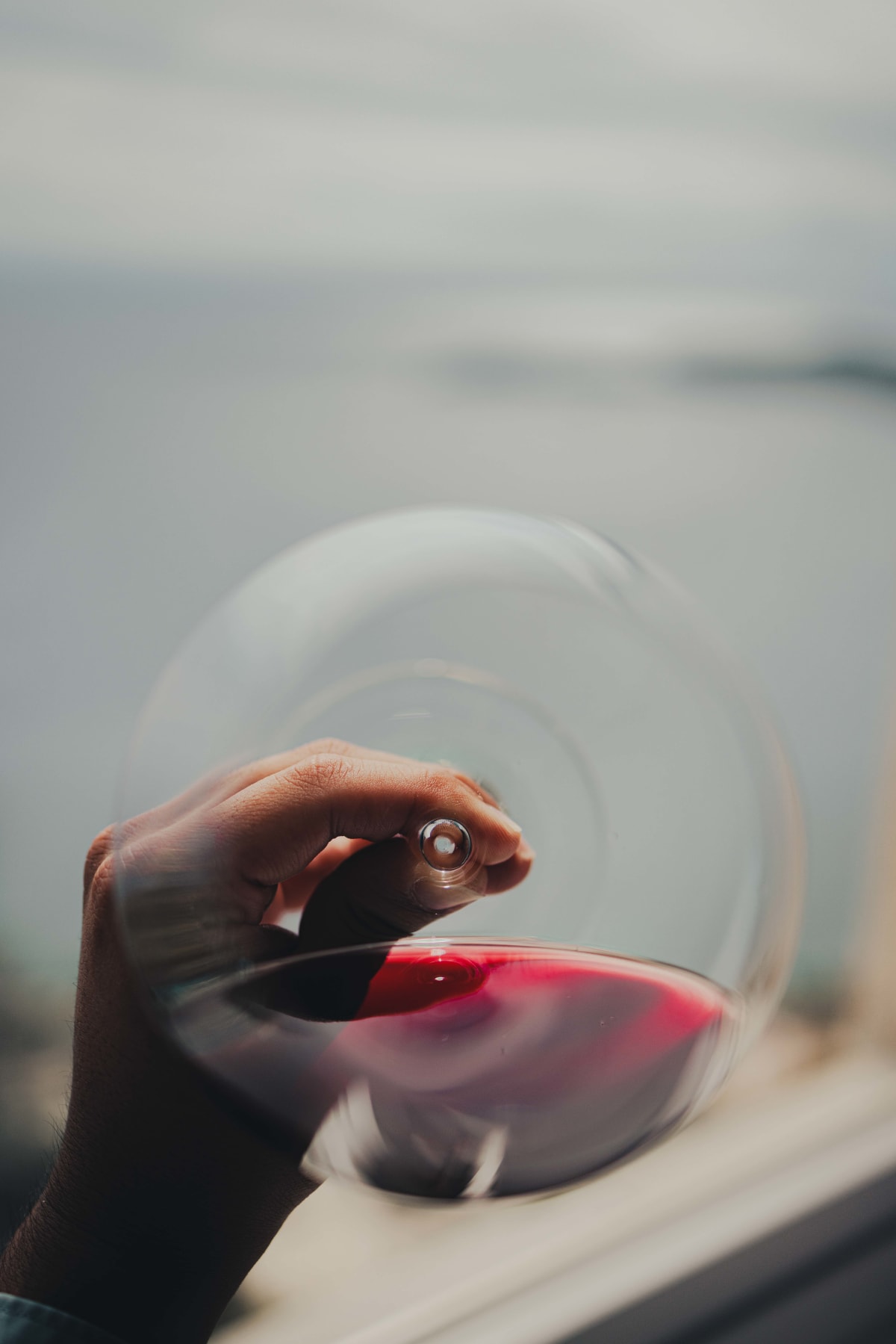
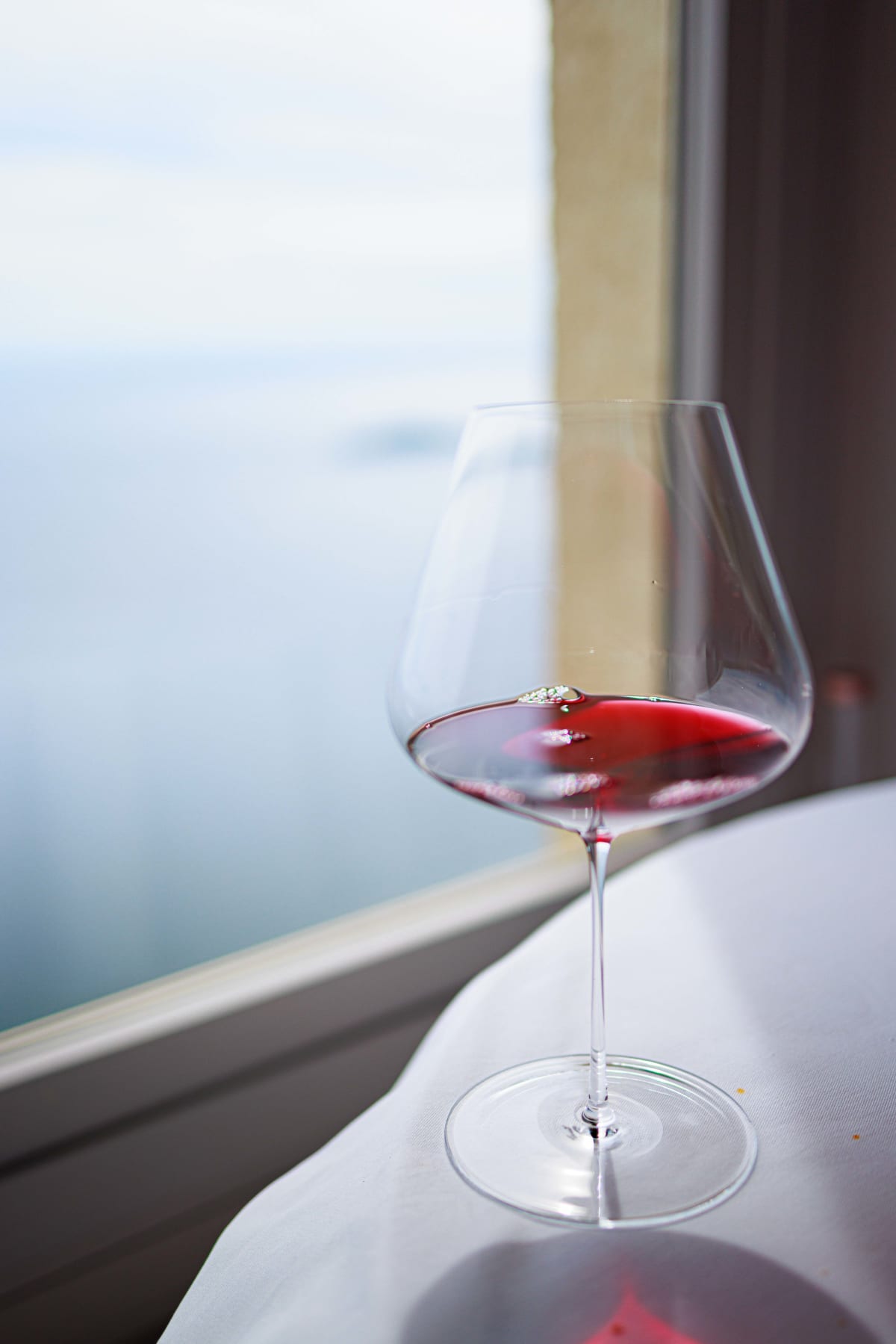
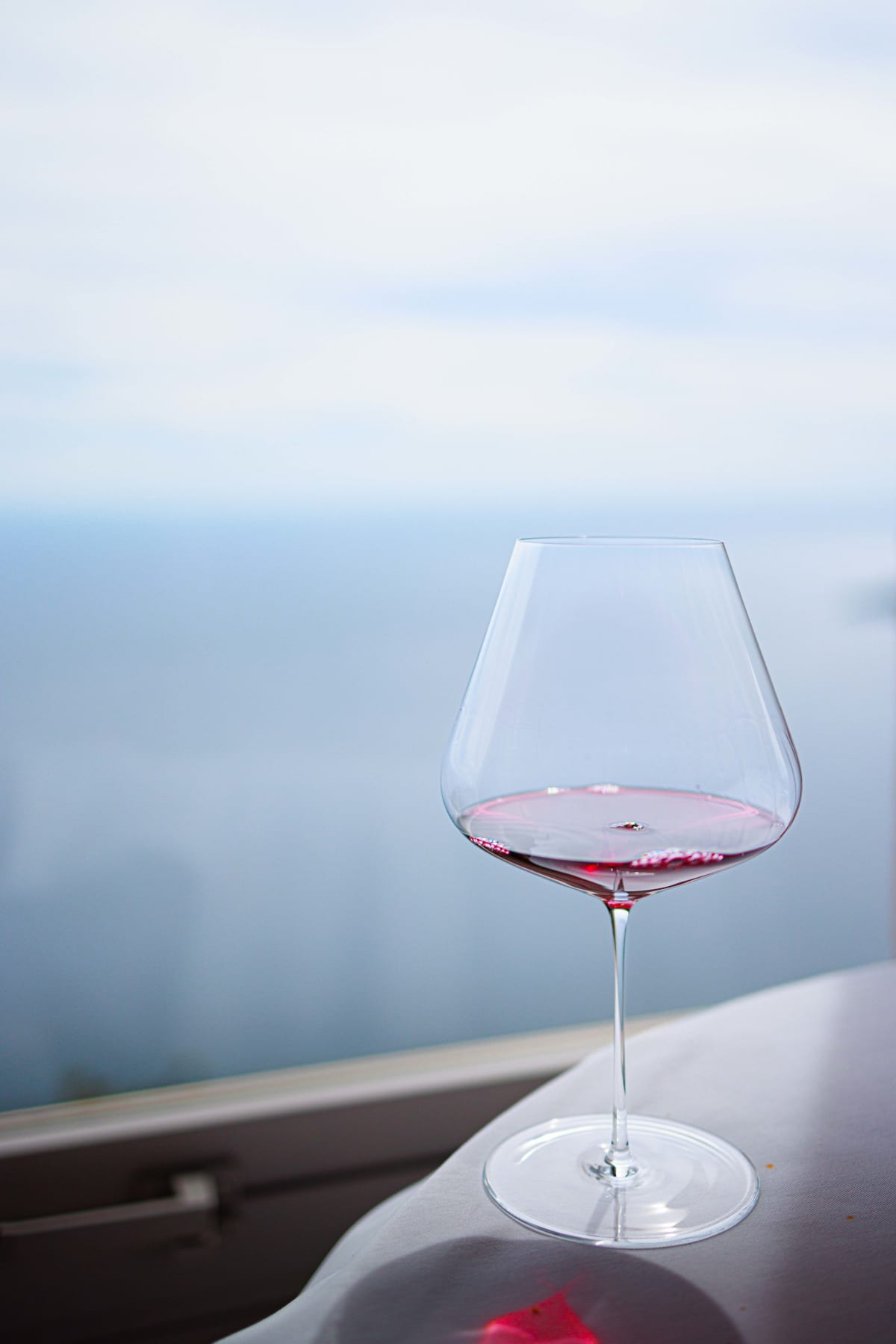
What is interesting is that Gamay, rather than the weight of Cabernet or Syrah, was put against the meat. It meshes exactly with Faye's stated direction of bouillon and extraction over heavy sauces.
The meat is pigeon. This turns out not to be a choice but fixed.
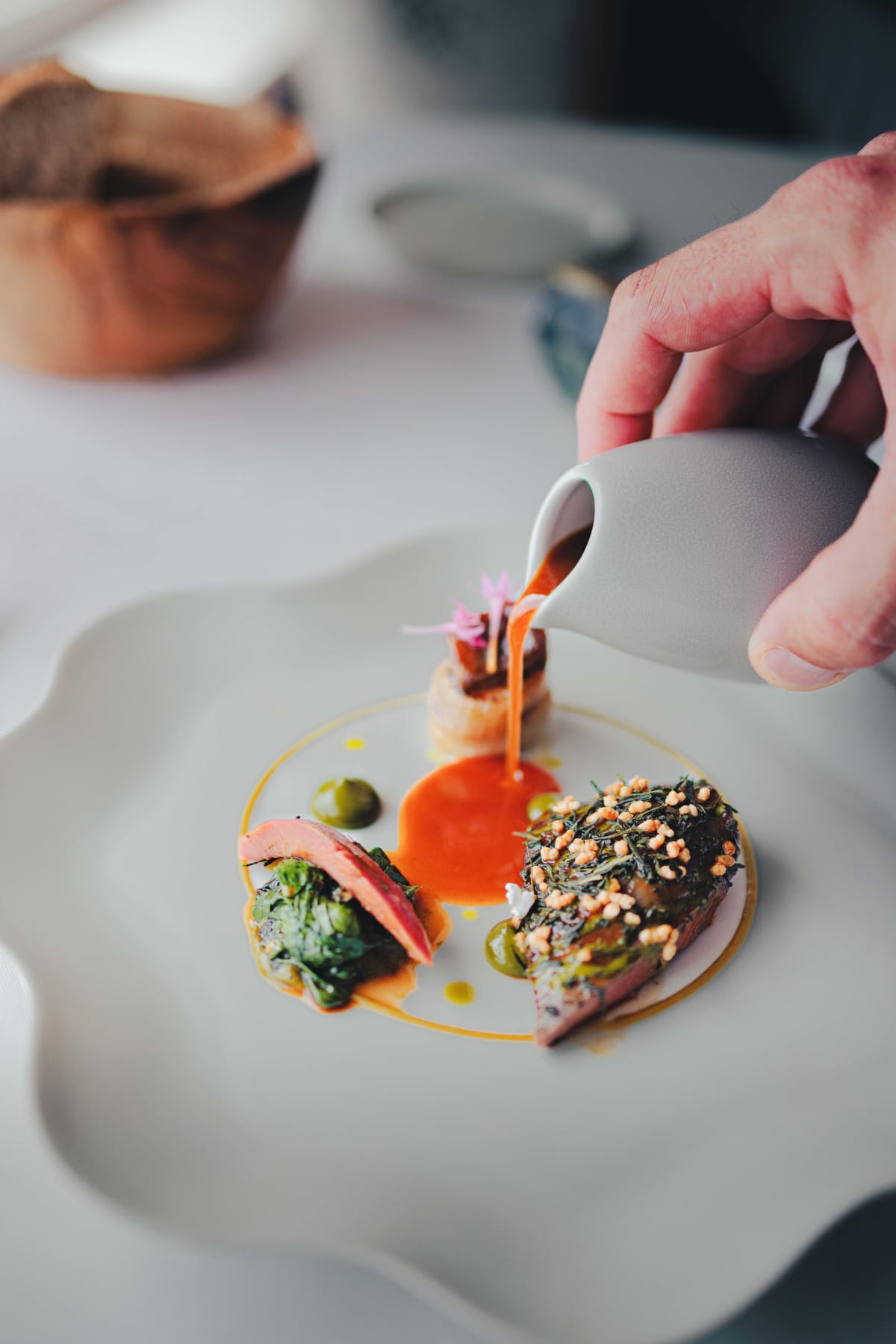
Breast under a thick cover of herbs and scattered grain crisp, pink slices laid over something thinly cut, a spinach type vegetable, a green dot, and a red sauce. Pigeon, and the cooking was good. Cutting into the onion revealed a preparation of chopped offal inside. It was good. What I realised going to France is that I really do eat everything.
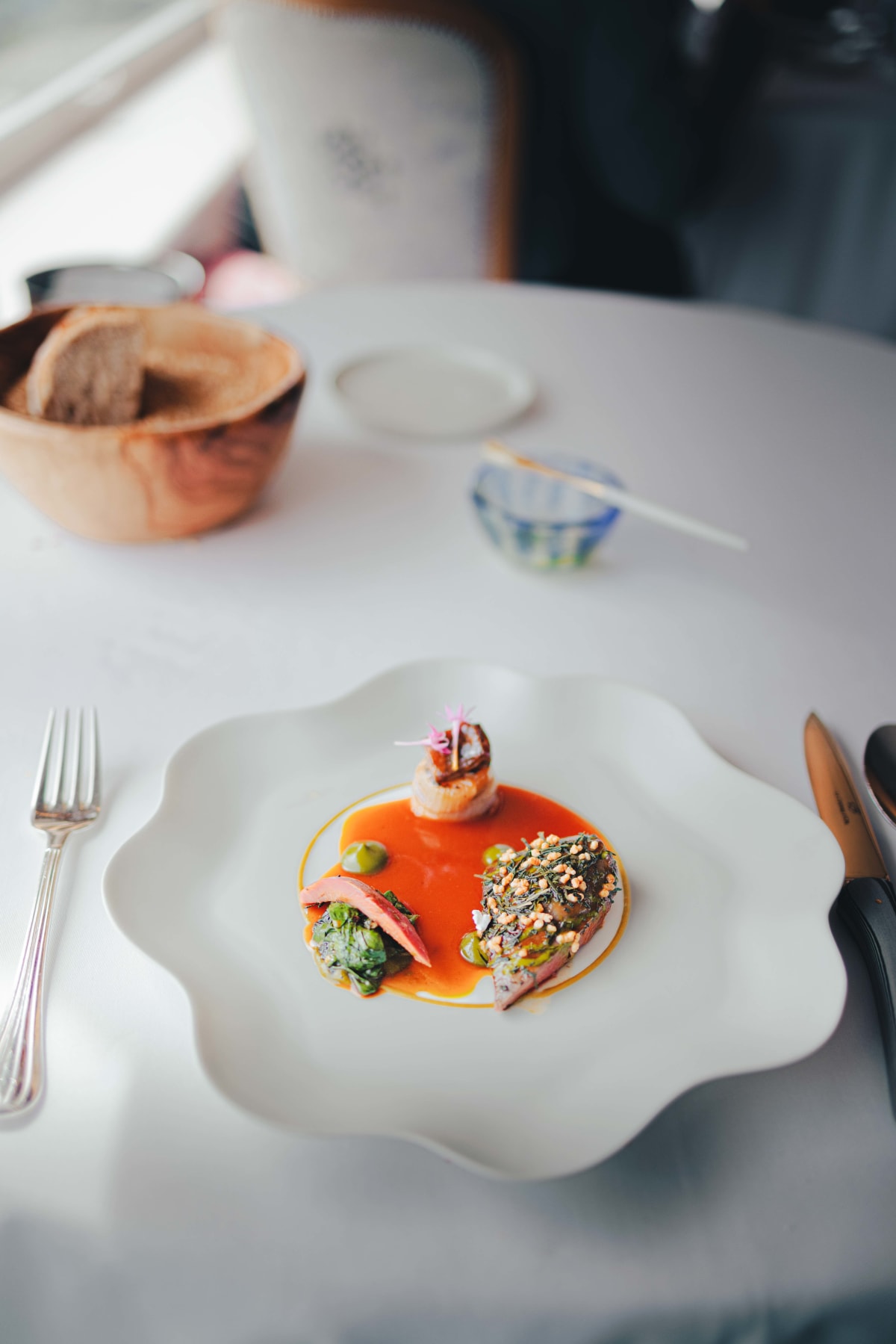
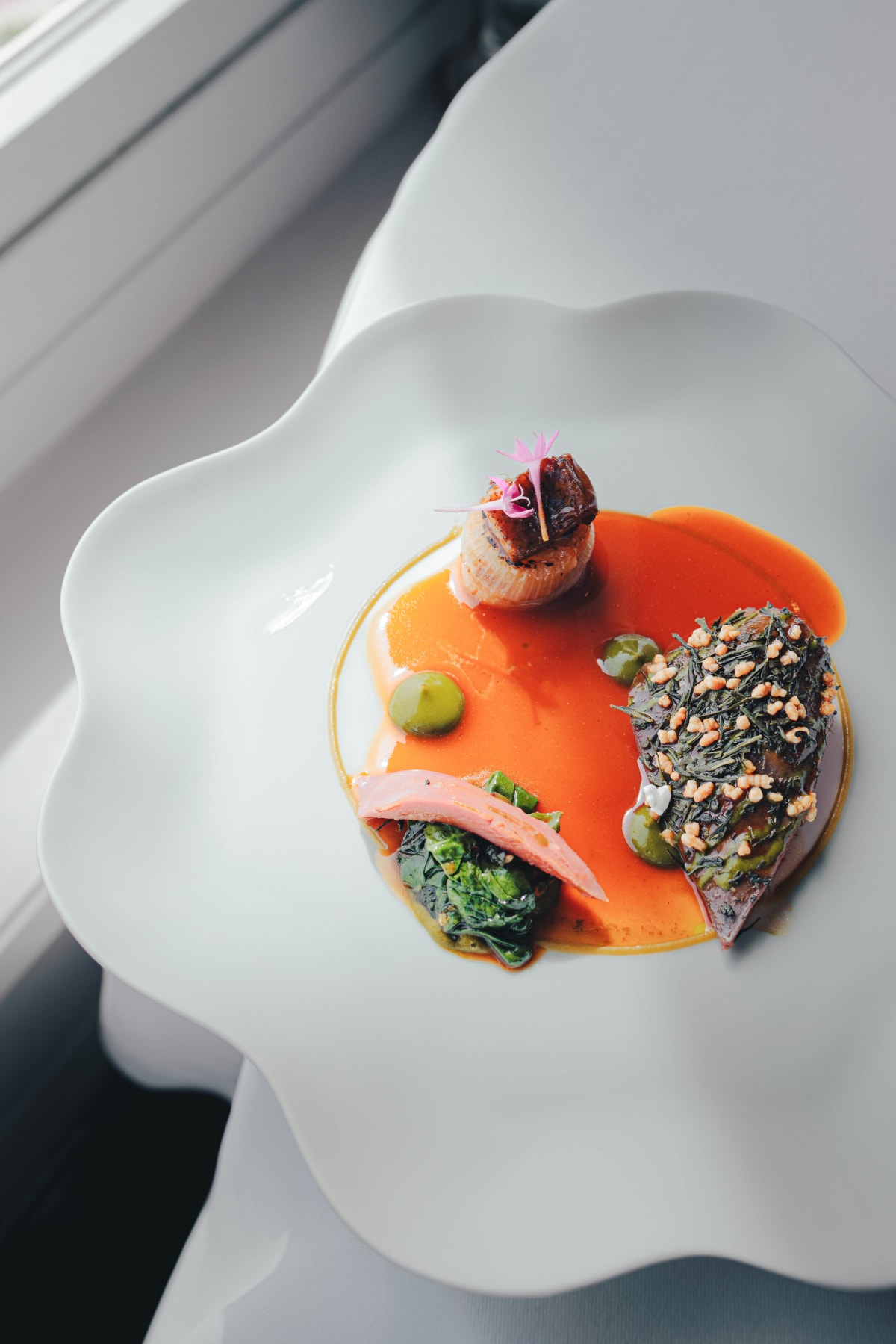
The pigeon was good, but the whole roasted pigeon carved at the table at Le Taillevent, which I have written about before, was overwhelming enough that this one did not stay with me by comparison. Having passed through Paris earlier on the same trip worked against this plate.


Section 14·The Cheese
With the course finished they ask whether you want cheese. I said yes and they brought the trolley over.

Without question the cheese here was the best of the trip. It was superb.

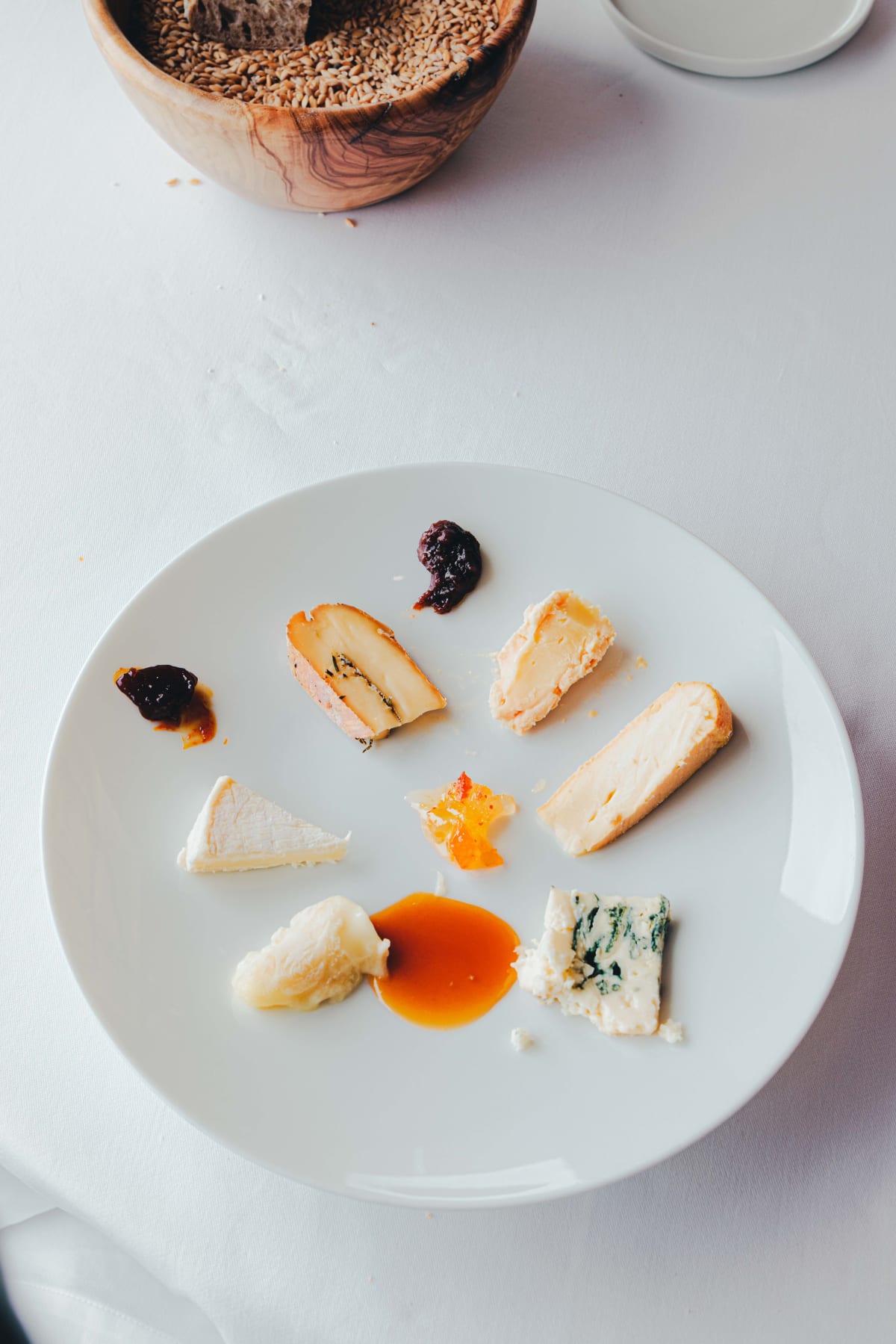
There were more than twenty on the trolley. White rinded soft, semi hard with herbs, runny aged soft, and blue. Six were put on a plate and I was told to eat clockwise starting at seven o'clock. Generally you go from the mildest aroma to the strongest.
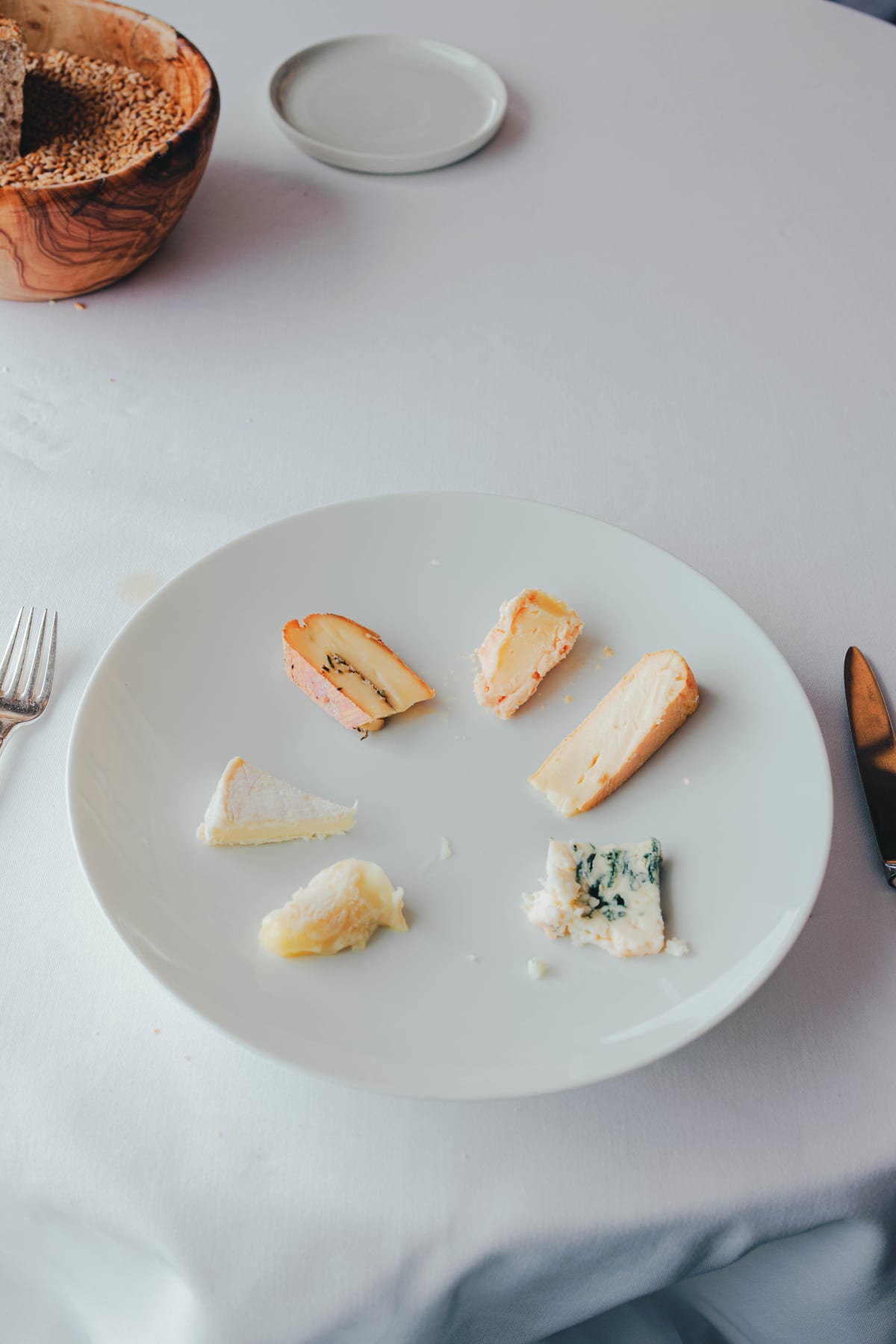
They also bring honey and various jams to eat alongside, and each of them with the cheese was good.

Apart from the honey I had never had any of them before so I did not know what to expect, and they were all good. It felt as though the earlier disappointments were being smoothed over by a good ending.
Section 15·The Close
Before dessert they pour something like a juice to clear the palate. Then a plum wine as the final dessert wine.

It is Distillerie Cazottes' Prunelle. Not plum but a liqueur made from wild sloe berries, and the method is fairly extreme.
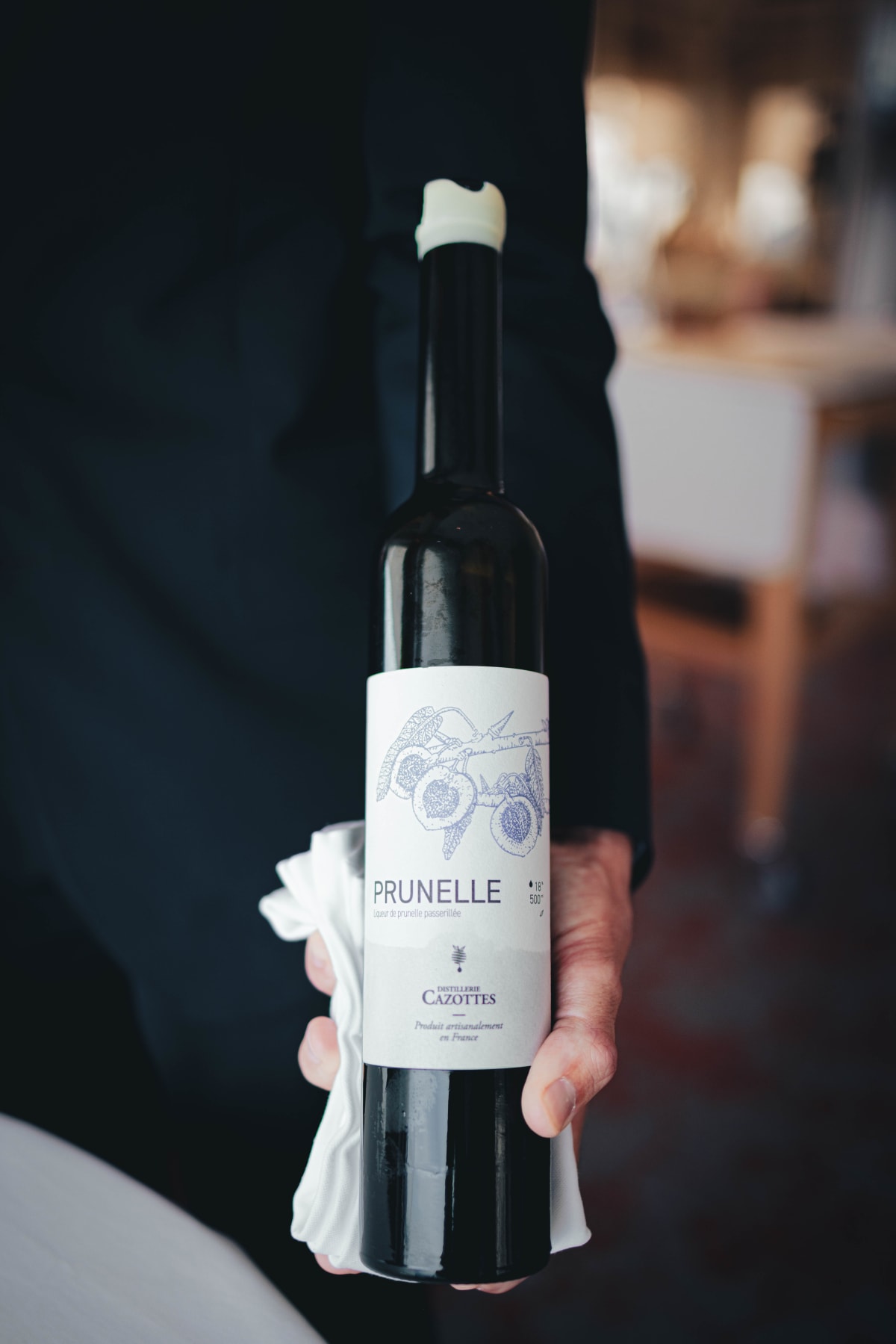
The distillery is at Villeneuve-sur-Vère in the Tarn, near Gaillac. Laurent Cazottes inherited the craft of an itinerant distiller and grows his own fruit and flowers organically and biodynamically, with around six hundred Williams pear trees and about two hundred Reine Claude Dorée plums.
The Prunelle hangs on the tree until late December to dry naturally, picked only after the first frost has concentrated the flavour. He has written that the thorns make the harvest itself a painful job. The fruit is then finished drying on racks, burst by hand one berry at a time, and macerated for six months in his own organic wine spirit with a little sugar added.

After pressing and distillation, the eau-de-vie drawn from that young marc goes back into the liqueur to build colour and life and length. It sits at eighteen percent. The house holds that the word liqueur does not mean liquorous, and in fact both alcohol and sugar run low.
This was very good. Sweet, well scented, and I wanted to buy a bottle to carry home. I want to drink it again.

Then they suddenly bring out a grand cru salt.
A smoked fleur de sel from Batz-sur-Mer on the Guérande peninsula. The bottle was stamped Sel des Rois, Grand Cru de Batz, and the 2021 millésime.

Fleur de sel is the salt taken only from the thin crystals that form on the surface of the pans, so the daily yield is very small, and this house blends what is gathered on a west wind with what is gathered on an east wind to balance it, then dries it naturally for six months and cold smokes it over beech. The very idea of putting a vintage on salt explains what this thing is.
A grain is dropped onto the dessert.
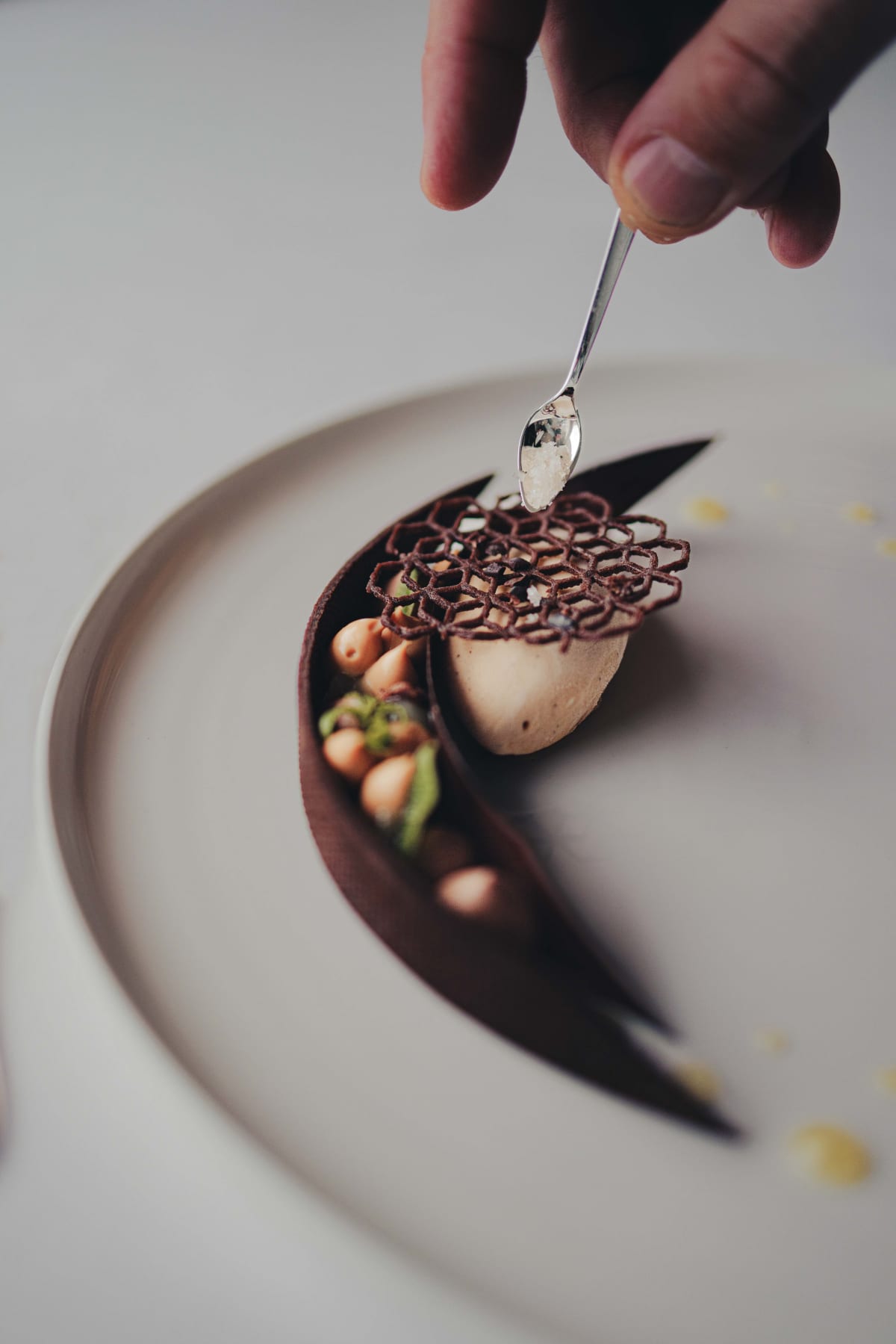
The last dessert satisfied me. A crescent chocolate shell holding a caramel coloured mousse and spheres, topped with a honeycomb patterned chocolate tuile. I usually prefer bright fruit desserts, but this chocolate was good. It may have been that the plum wine was so good.
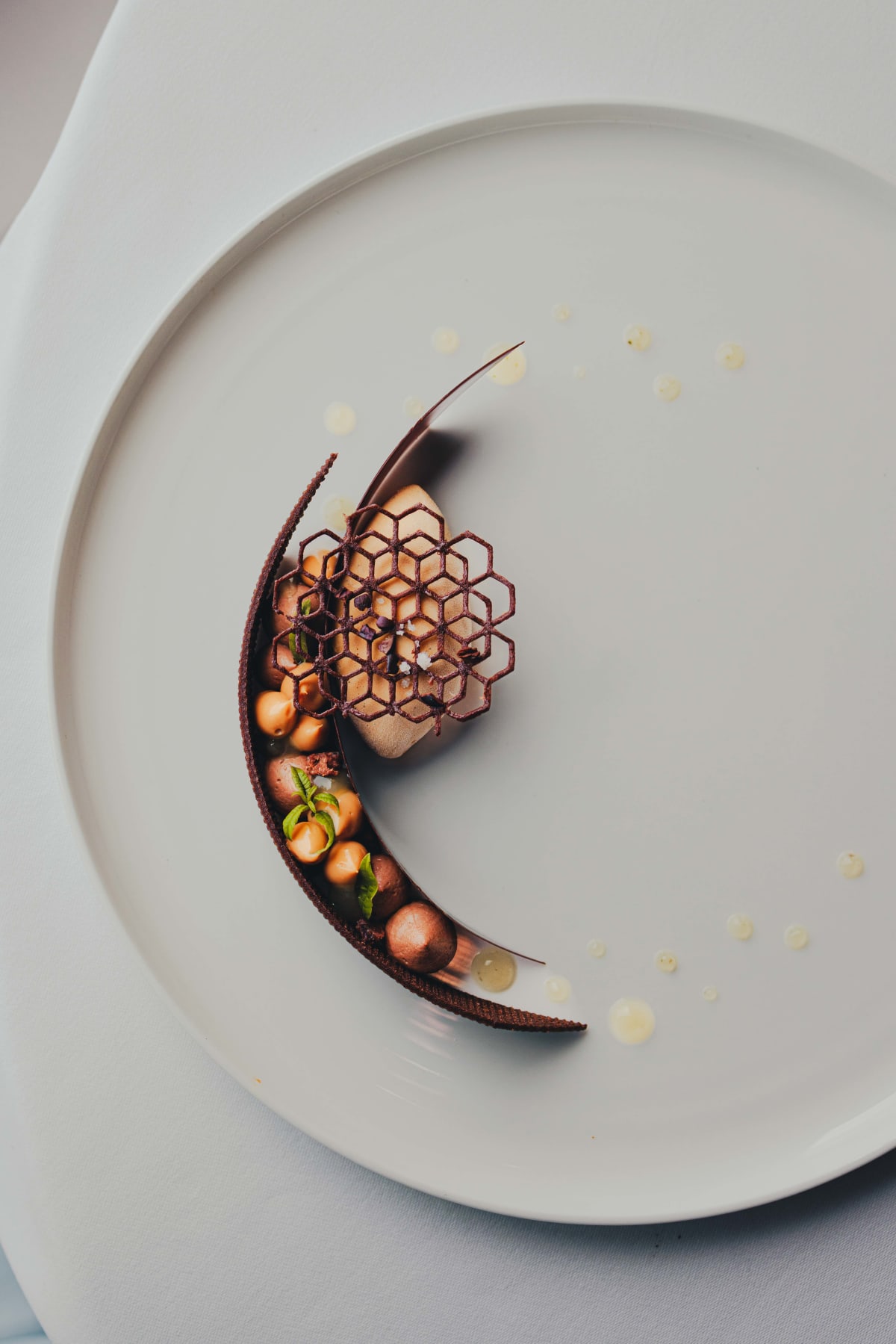
The person responsible for the pastry here at this time was Julien Dugourd. He joined in 2010, so he was in his twelfth year, having started in Marc Veyrat's kitchen and passed through Jean-Georges Klein's L'Arnsbourg, the Hôtel de Paris in Monaco, Louis XV and Christophe Michalak at the Plaza Athénée before settling here.

In 2021 he made a dessert in collaboration around a Dior fragrance. A month or so before my visit, in August 2022, the French trade press reported that he was preparing his own patisserie in Nice. Which means I was sitting in the last season of a man who had made the desserts in this house for twelve years.
Looking around, everyone was unhurried. Even those who had started thirty minutes before me. I had too much to see and left early.
Section 16·The Bill
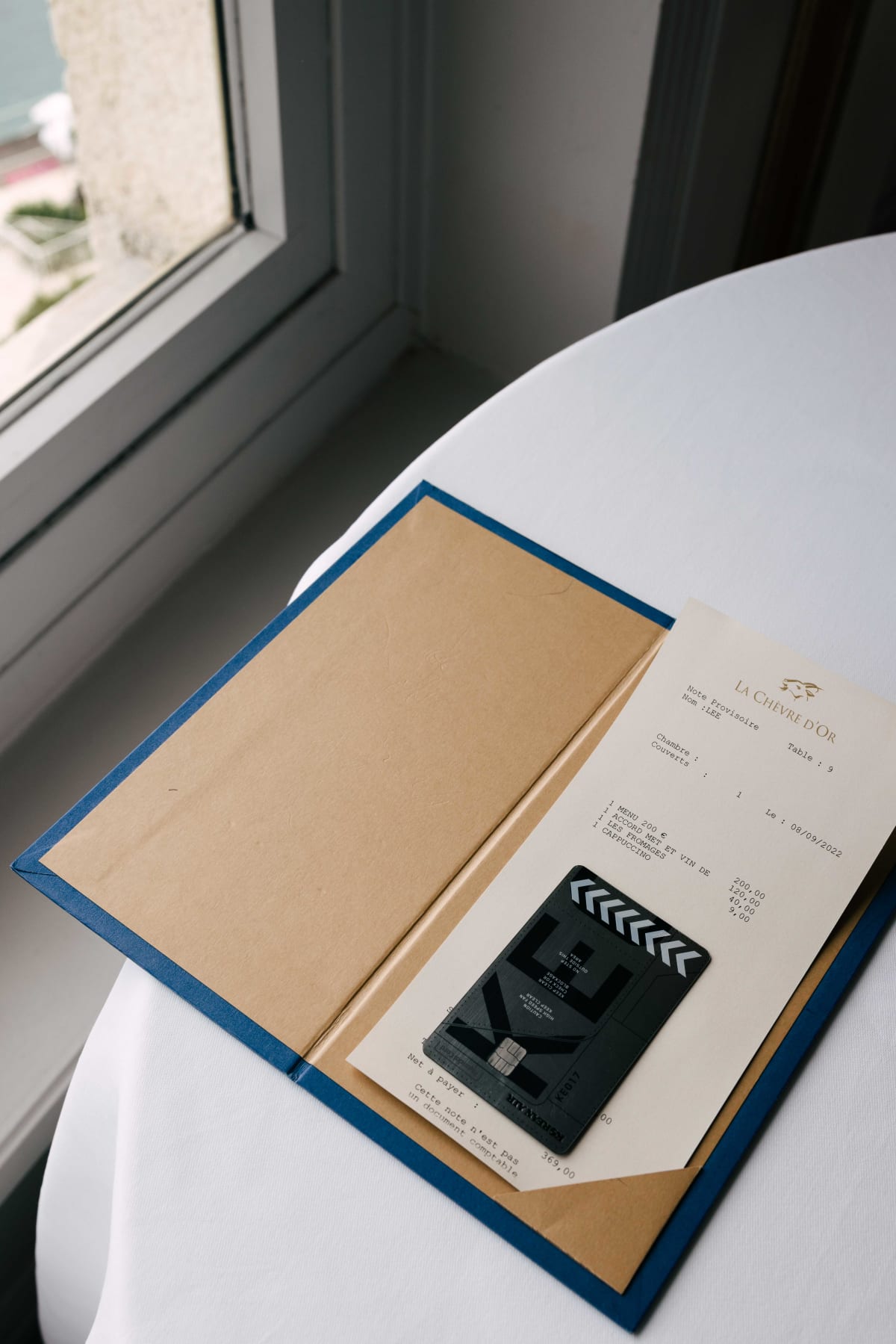
The bill showed a two hundred euro course, a hundred and twenty euro wine pairing, forty euros of cheese and a nine euro coffee. Three hundred and sixty nine euros in total. The cheese was a separate line rather than part of the course.

On the food, I think the early part falls somewhat short of two stars, but the two main plates in the back half were good. And the cheese and the dessert wine pairing satisfied me.
Above all the view and the atmosphere were so good that, allowing for what the view is worth, I think it was a decent meal. Which is why I recommend lunch over dinner after the sun has gone.
Writing this up I found that they close from November to early April. Being a resort area they presumably shut for the winter. For anyone travelling to Nice, I think it is a good place to go just outside the city.
Section 17·After That Season
That meal turned out to be the last phase of an era. Dugourd did leave and open his own shop in Nice, and Arnaud Faye announced in early April 2024 that he would end eight years in post, leaving the kitchen on 4 May to move to Le Bristol in Paris, succeeding Éric Fréchon.
The structure in which savoury and pastry each had a clear author from 2016 to 2022 was dissolved that way.
The successor was Tom Meyer. What is interesting is that he came back to this house. The kitchen where he had worked as demi chef de partie under Ronan Kervarrec in 2015 became his to run as executive chef in July 2024, after he opened Granite in Paris in 2021, won a star under his own name, and was made Meilleur Ouvrier de France in November 2022.
And he kept both stars. The way of this house, handing down the first star of 1978 and the second of 2000 across generations, worked once more. The seat I sat in was one point on that line.
The course was called from rock and water. On a cliff over the Mediterranean, the water gave less than the view of it did: the mackerel and the prawn both fell short of how close the sea looked. What lifted them was the sauce, poured at the table from a jug, which is technique and accumulated time rather than proximity. This is not a chef's restaurant but an institution, holding two stars since 2000 across six kitchens, and it shows. Come for lunch, since the view is half of what you pay for.
Have a question about this restaurant, or want to share your own experience?
Send a message