Fine Dining · Saint-Tropez · France / September 2025 / Michelin ★
La Terrasse
"The lunch half of a three star kitchen, above the Mediterranean"
Section 1·Lunch In Paradise
In 2025 I took a trip through France and Spain with friends purely for the food. If I had to name one moment on that European trip that went beyond taste and left every sense in a kind of daze, I would say this place without hesitating. La Terrasse, in Saint-Tropez in the south of France.
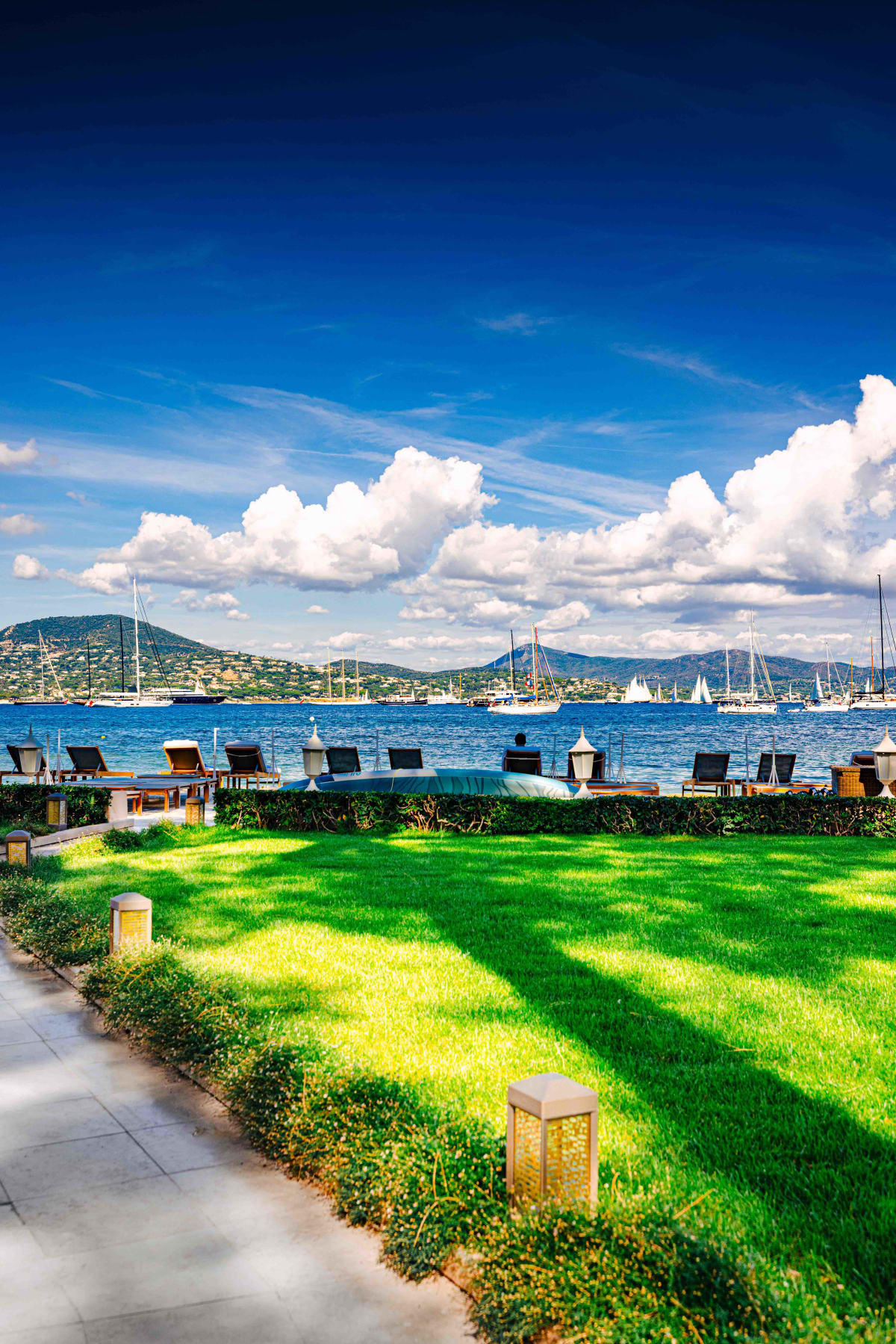
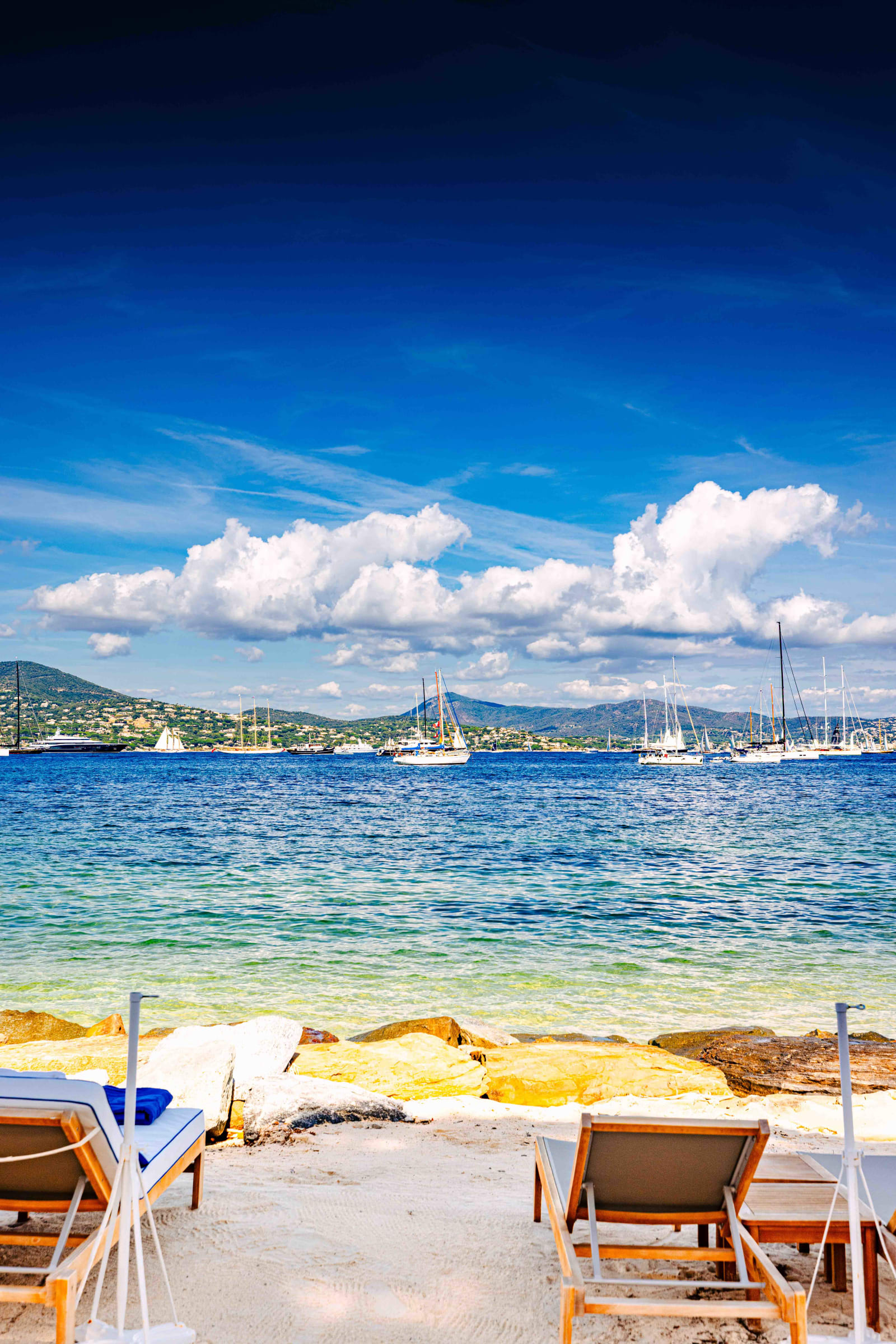
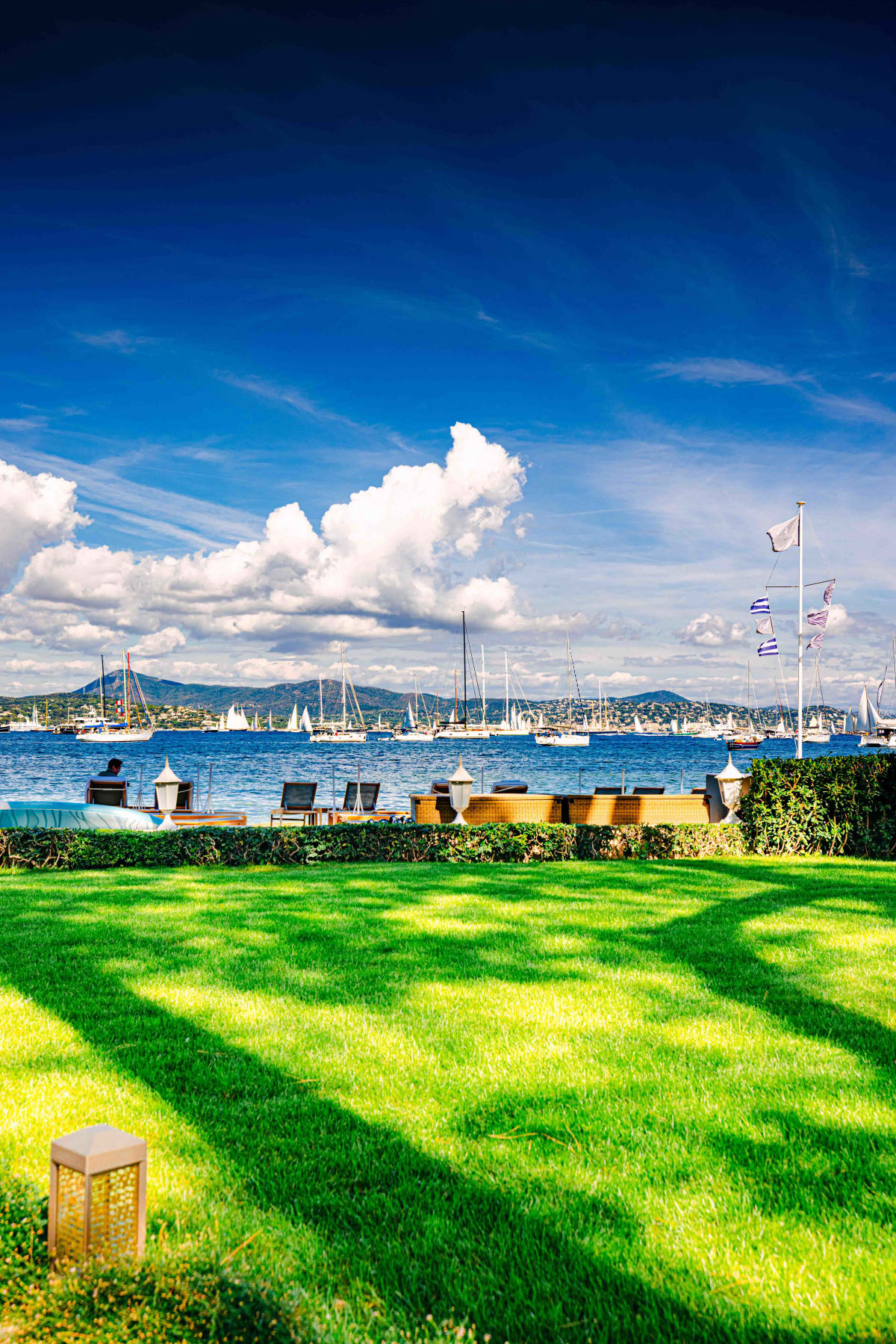
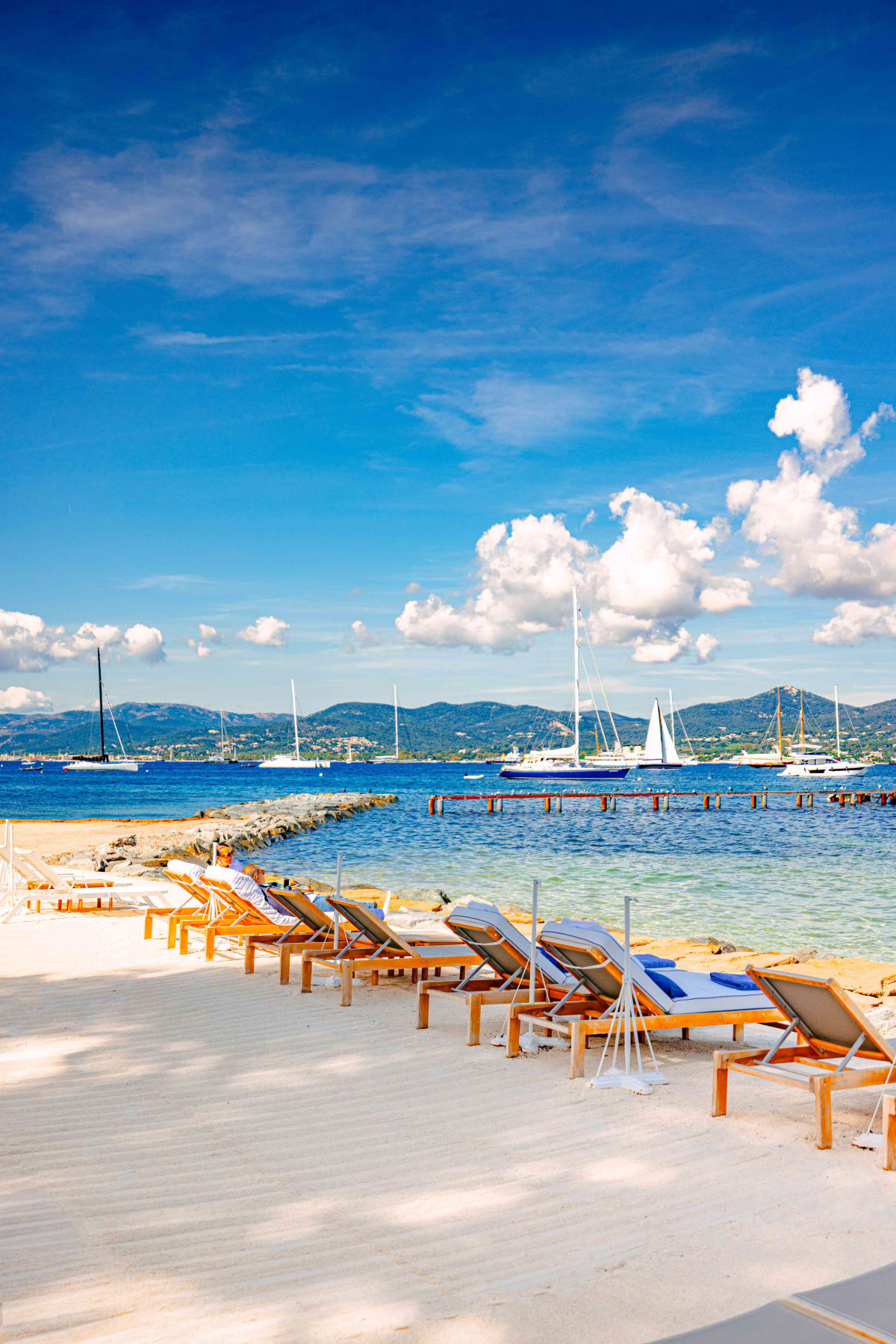
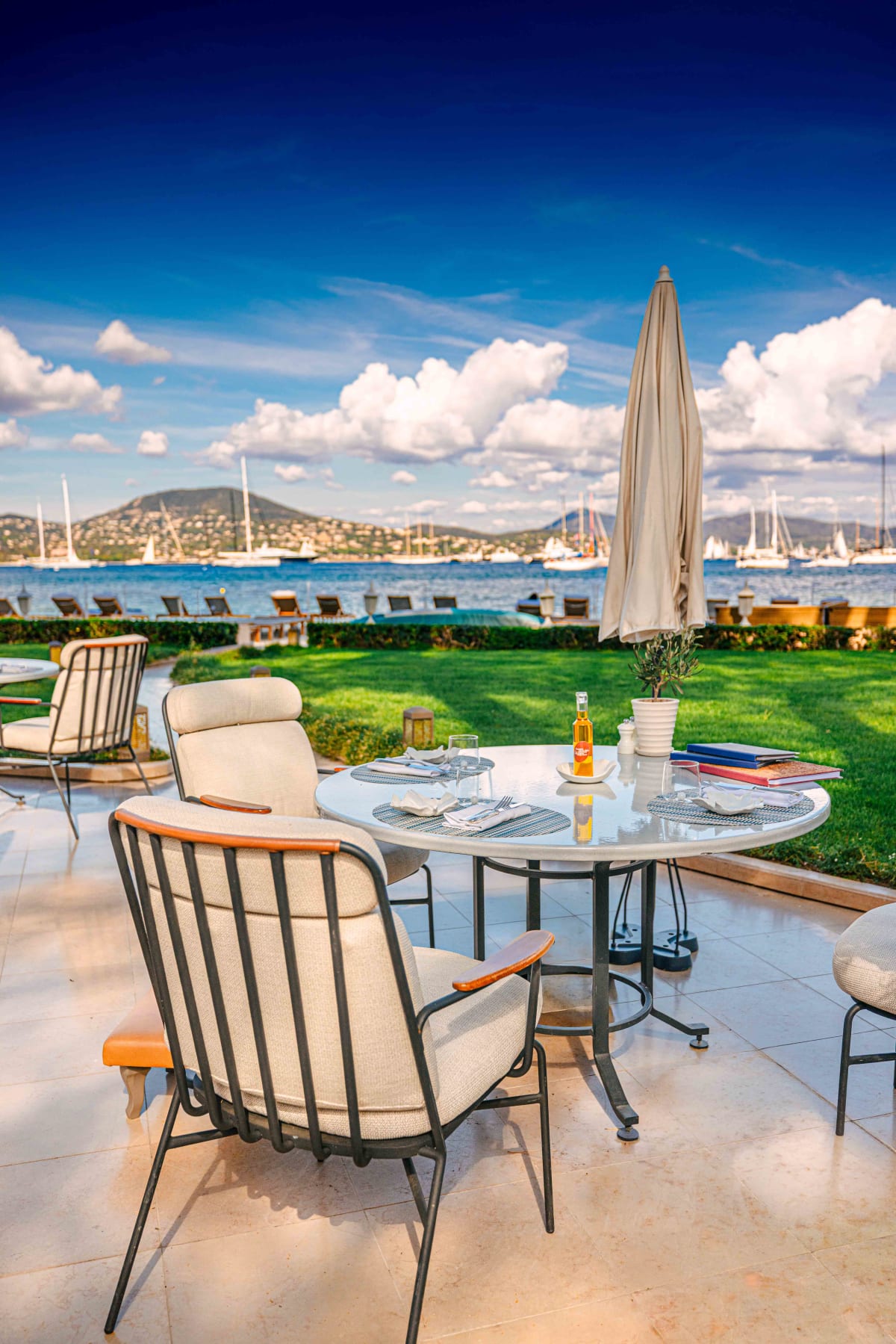
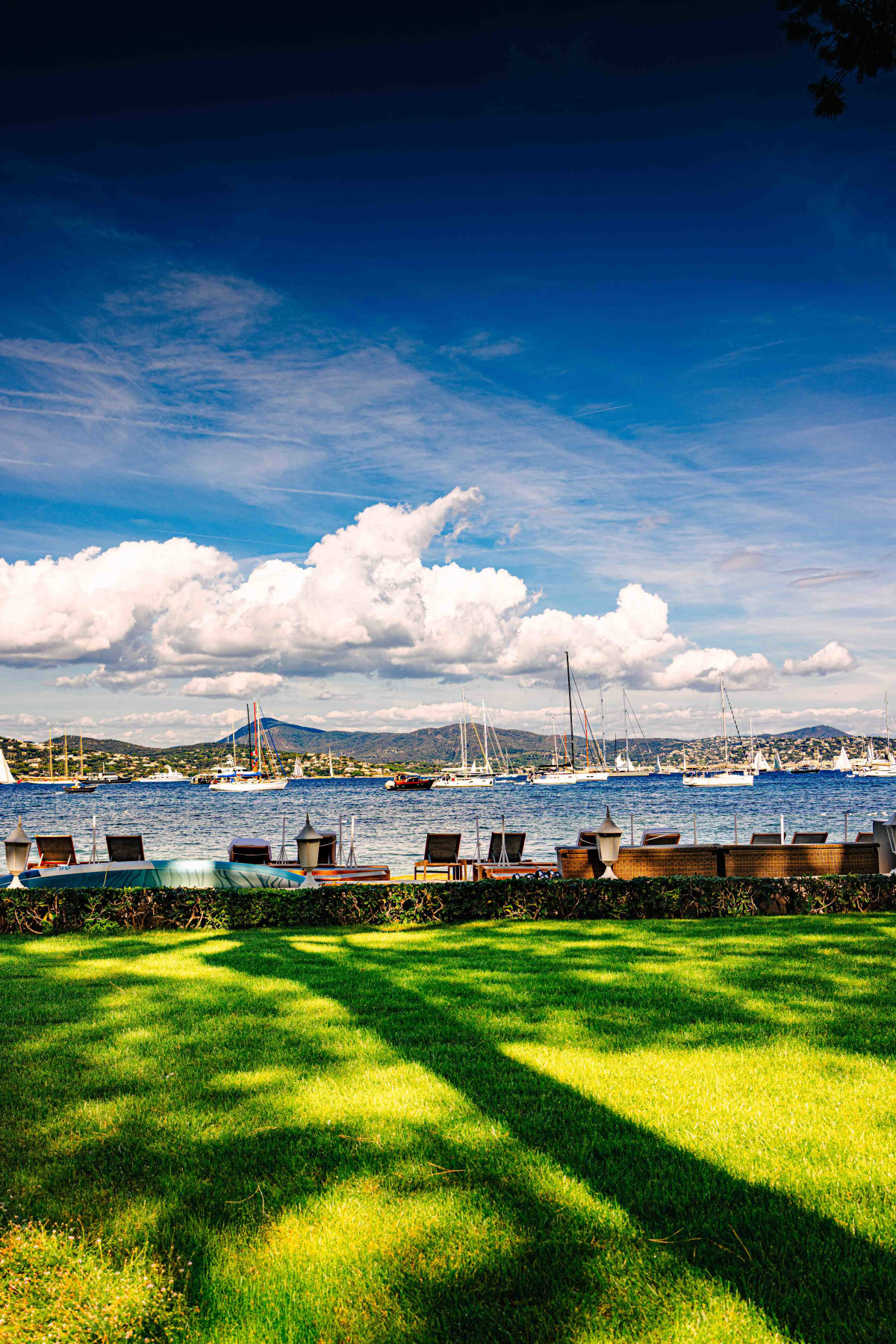
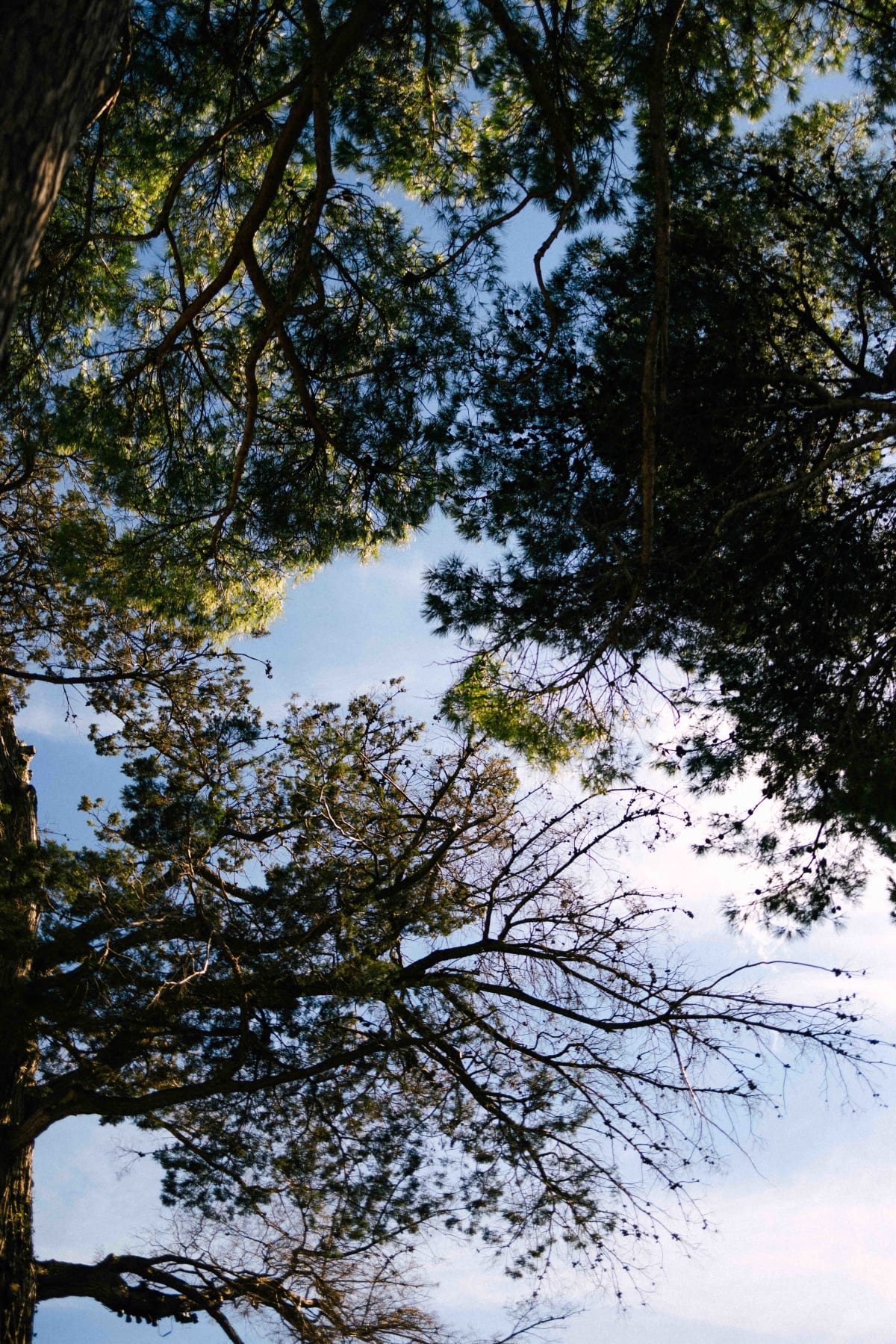
On a clear day you pass the entrance of the Cheval Blanc hotel, walk along the garden, and the whole Mediterranean opens up in front of you. Eating with that sea in front of me, luxury yachts drifting slowly across it, is a meal I will probably never forget. If you had lunch in paradise, I imagine it would look something like this.
If you had lunch in paradise, I imagine it would look something like this.
Section 2·The Hermes Of Resorts
Saint-Tropez is often called the Hermès of resort towns. Among the many resorts in the south of France it is one of the few genuine luxury destinations. Most famous resorts can be reached by train, but this one is different.
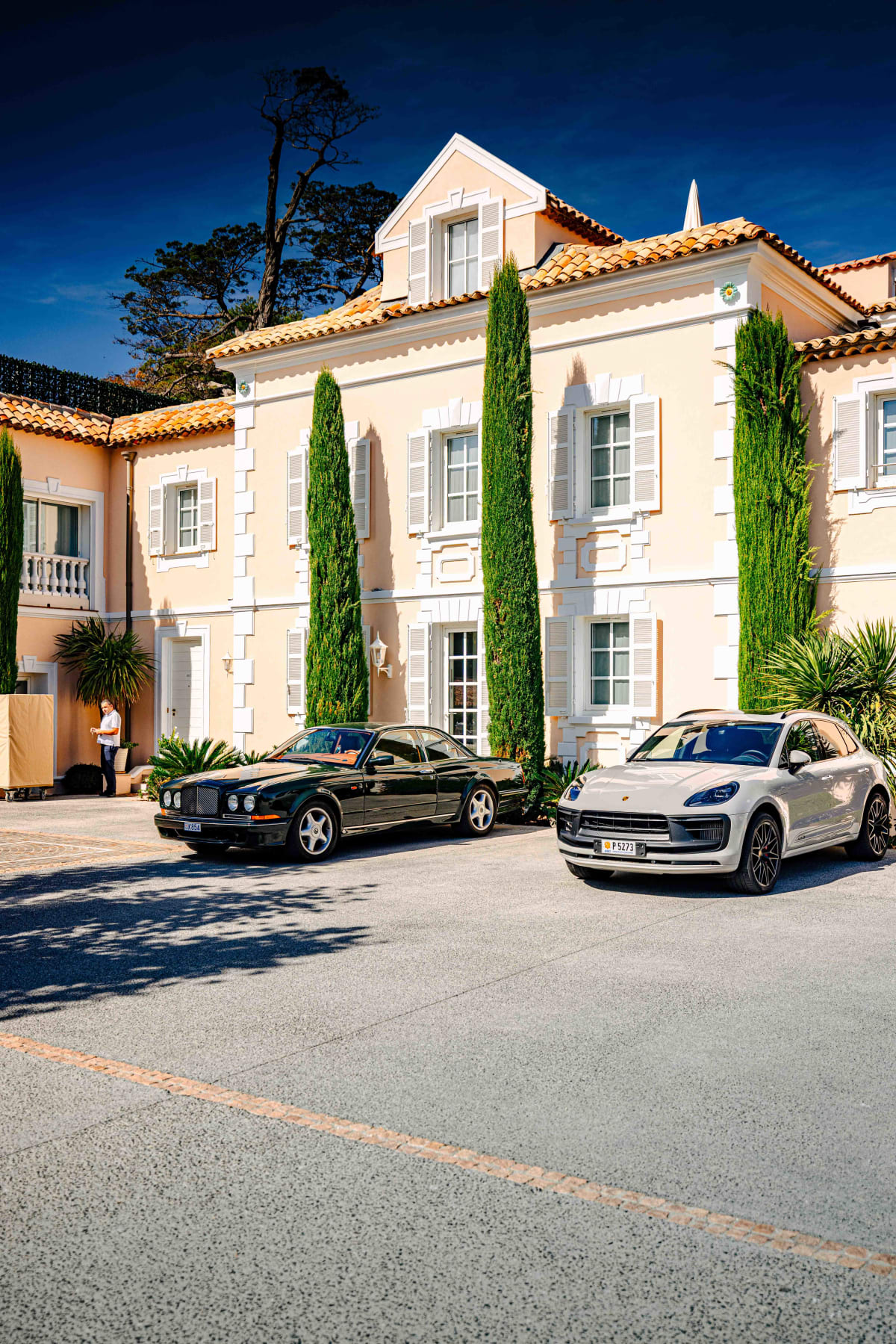
There is no train and not even a motorway nearby, so even by rental car it takes considerable time and patience. There is a reason Hollywood stars and billionaires come in by private jet and helicopter. Difficulty of access becomes scarcity here, an old form of luxury that still works.
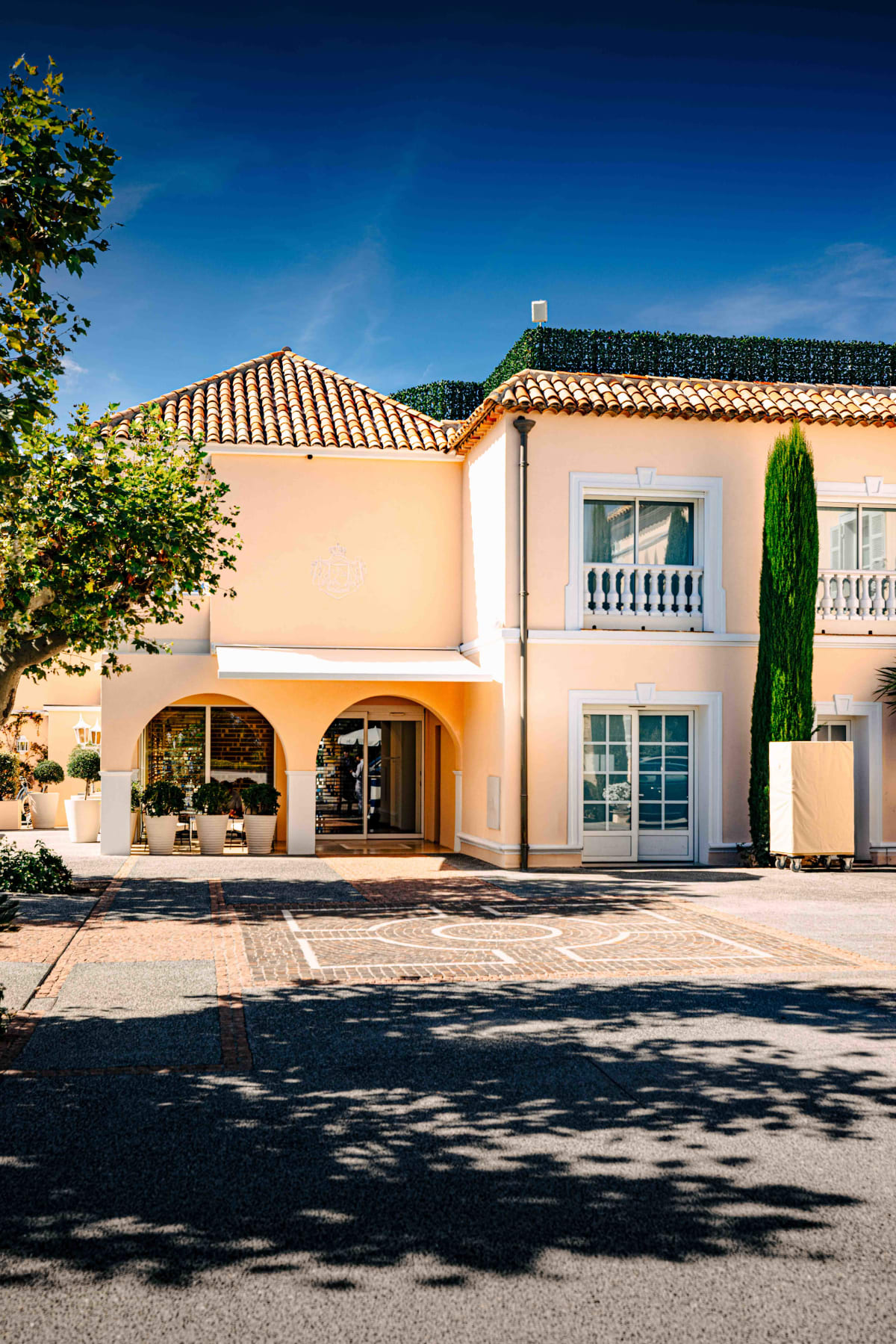
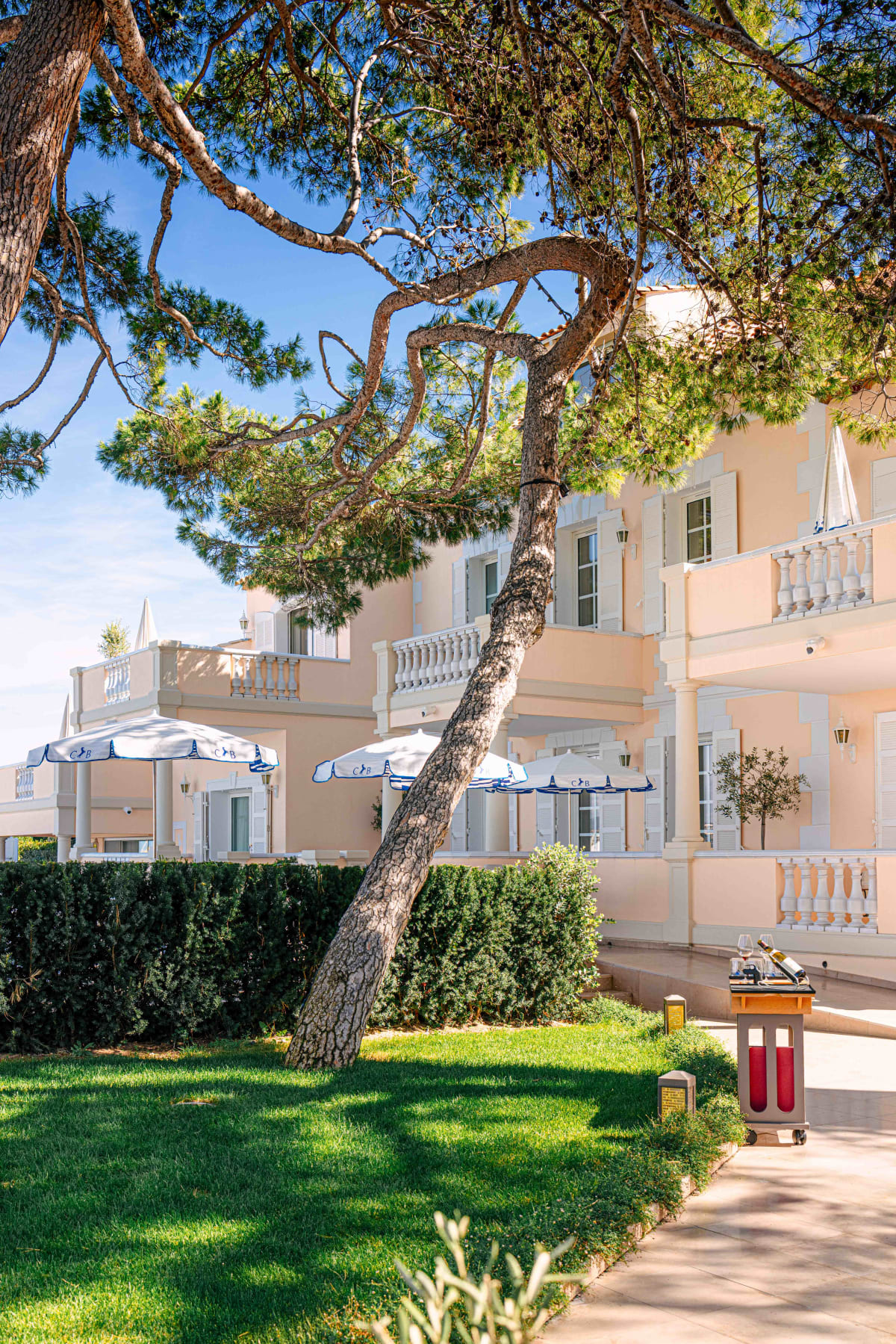
If you had to name the best hotel in that Saint-Tropez, it would be Cheval Blanc St-Tropez, where this meal was. The hotel sits a little away from the centre of town, which makes it private, and it owns the only private beach in Saint-Tropez. The number of rooms is very limited, so even in high season you can have a quiet time of it.
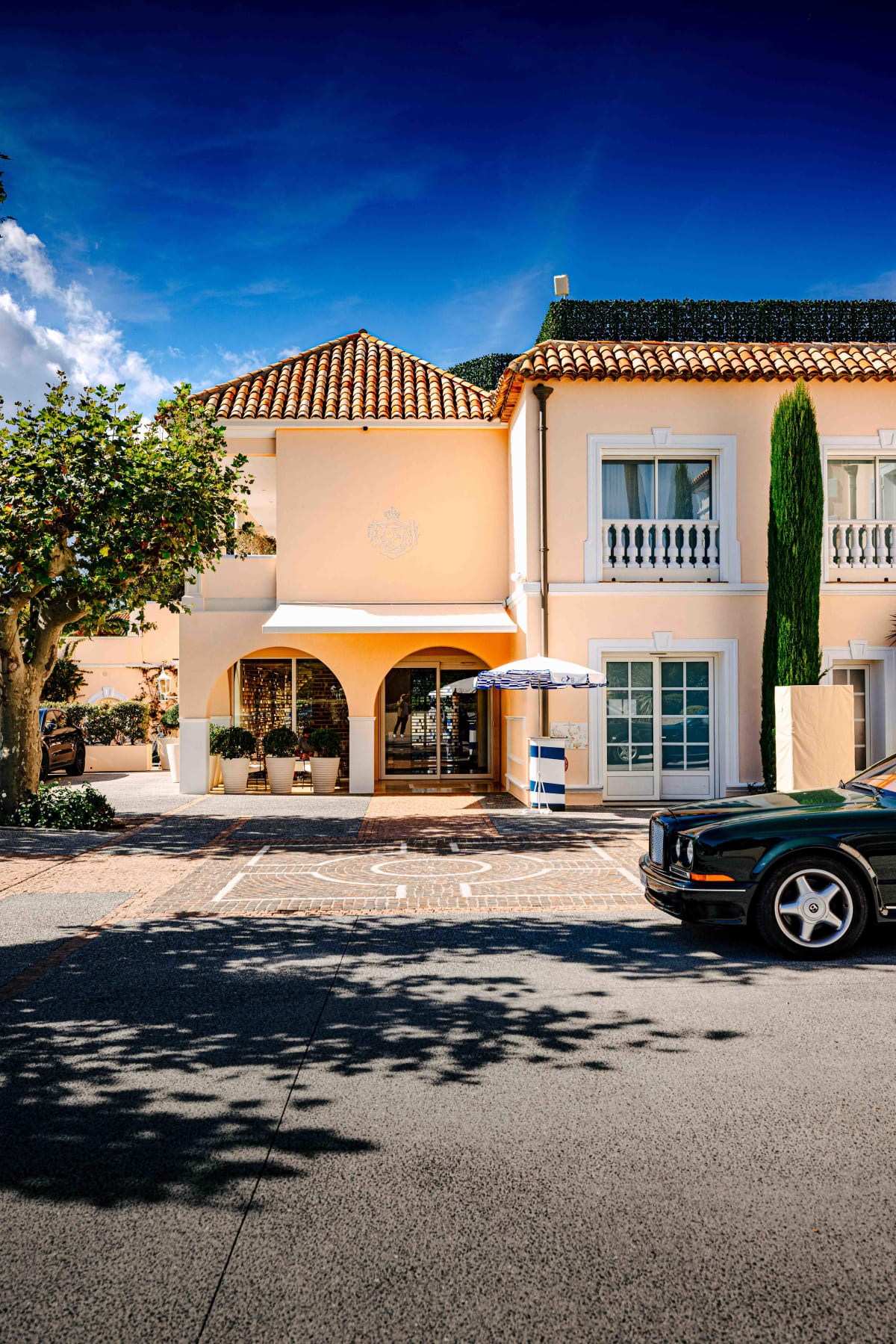
The price is something you can guess without my saying it. Of course we came not for the rooms but for the restaurant this hotel holds.
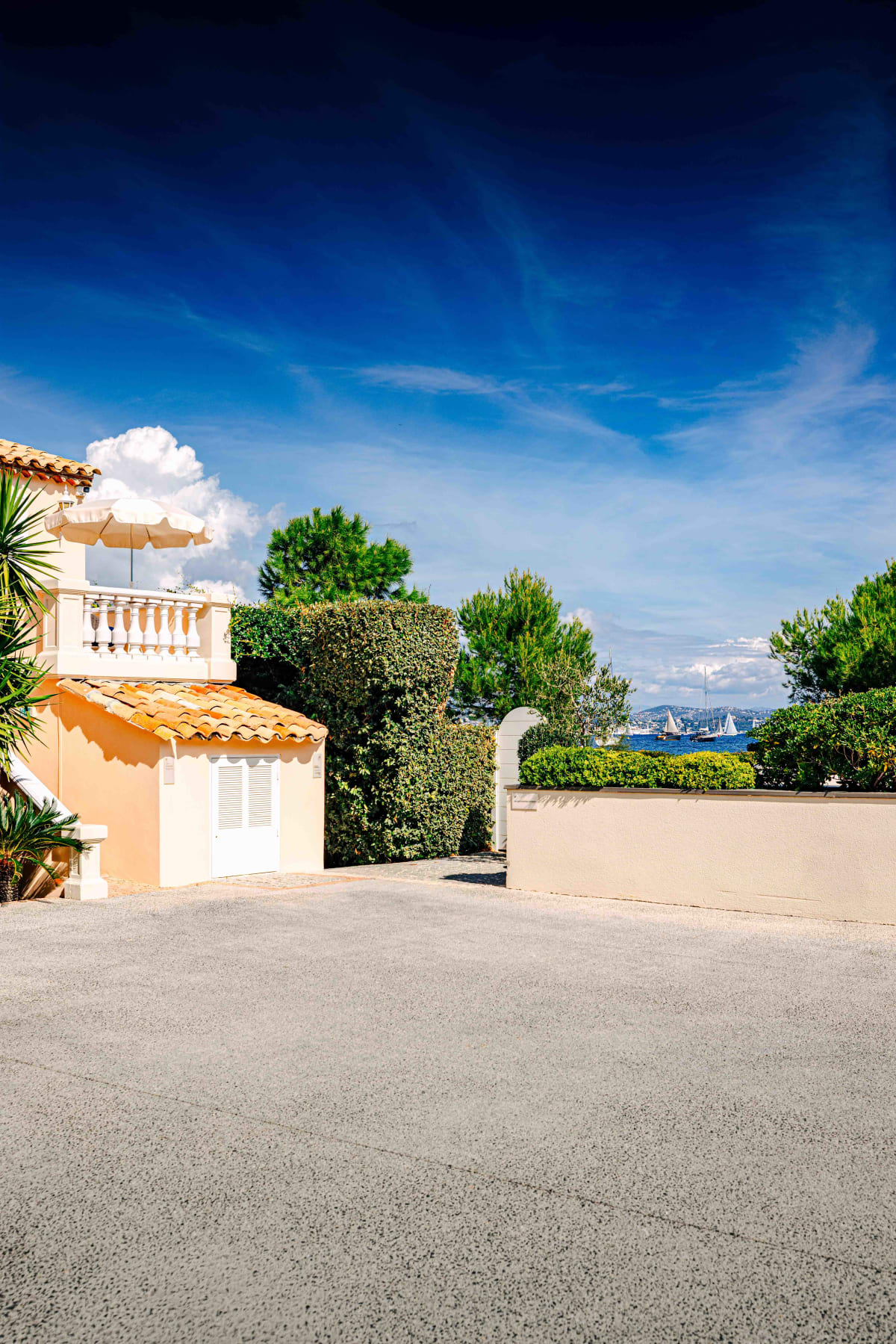
Section 3·Day And Night
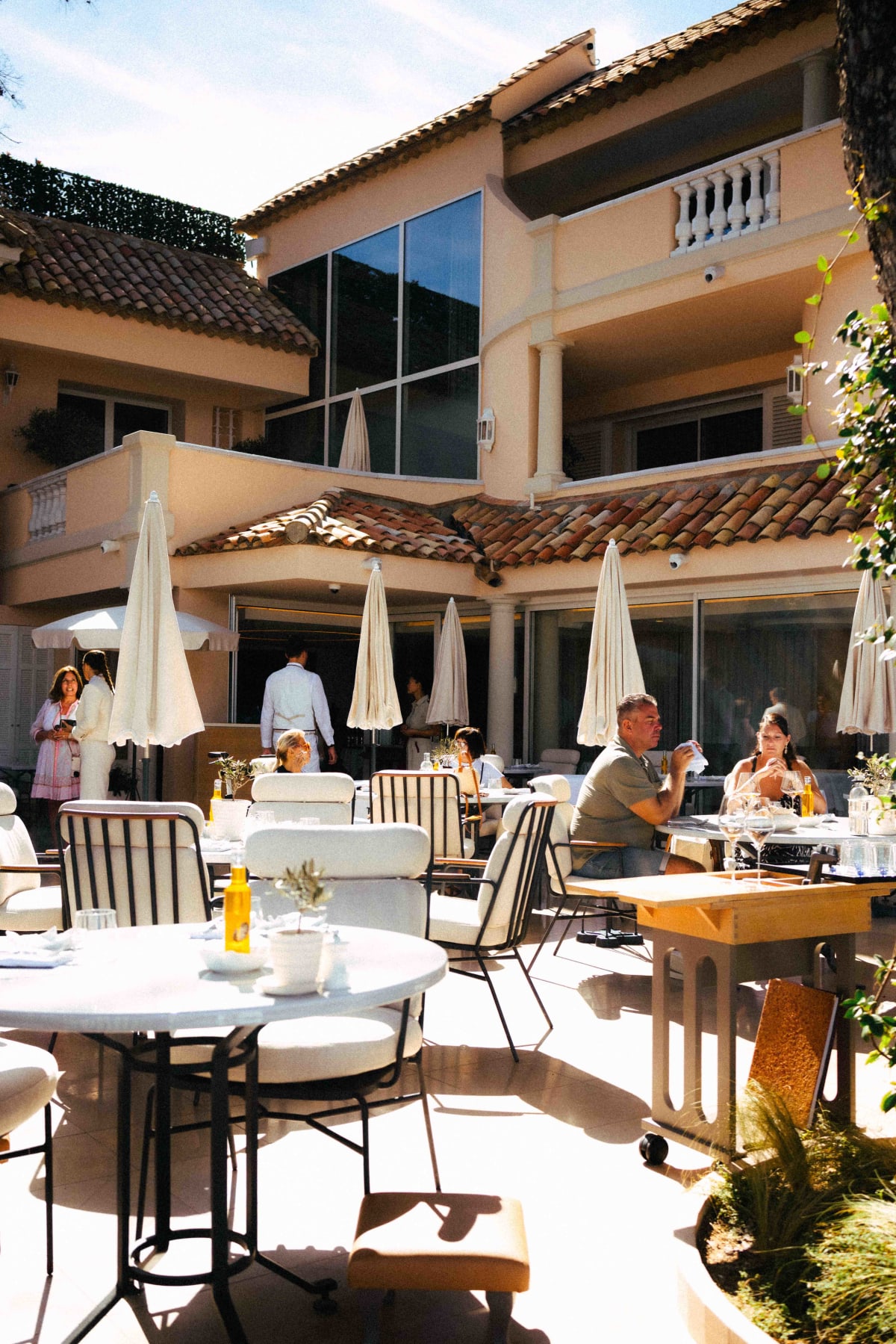
At Cheval Blanc St-Tropez there is the three star restaurant La Vague d'Or. But La Vague d'Or only opens in the evening. In the same place at lunch, under the name La Terrasse, a slightly more casual restaurant runs where you eat outdoors with the view.
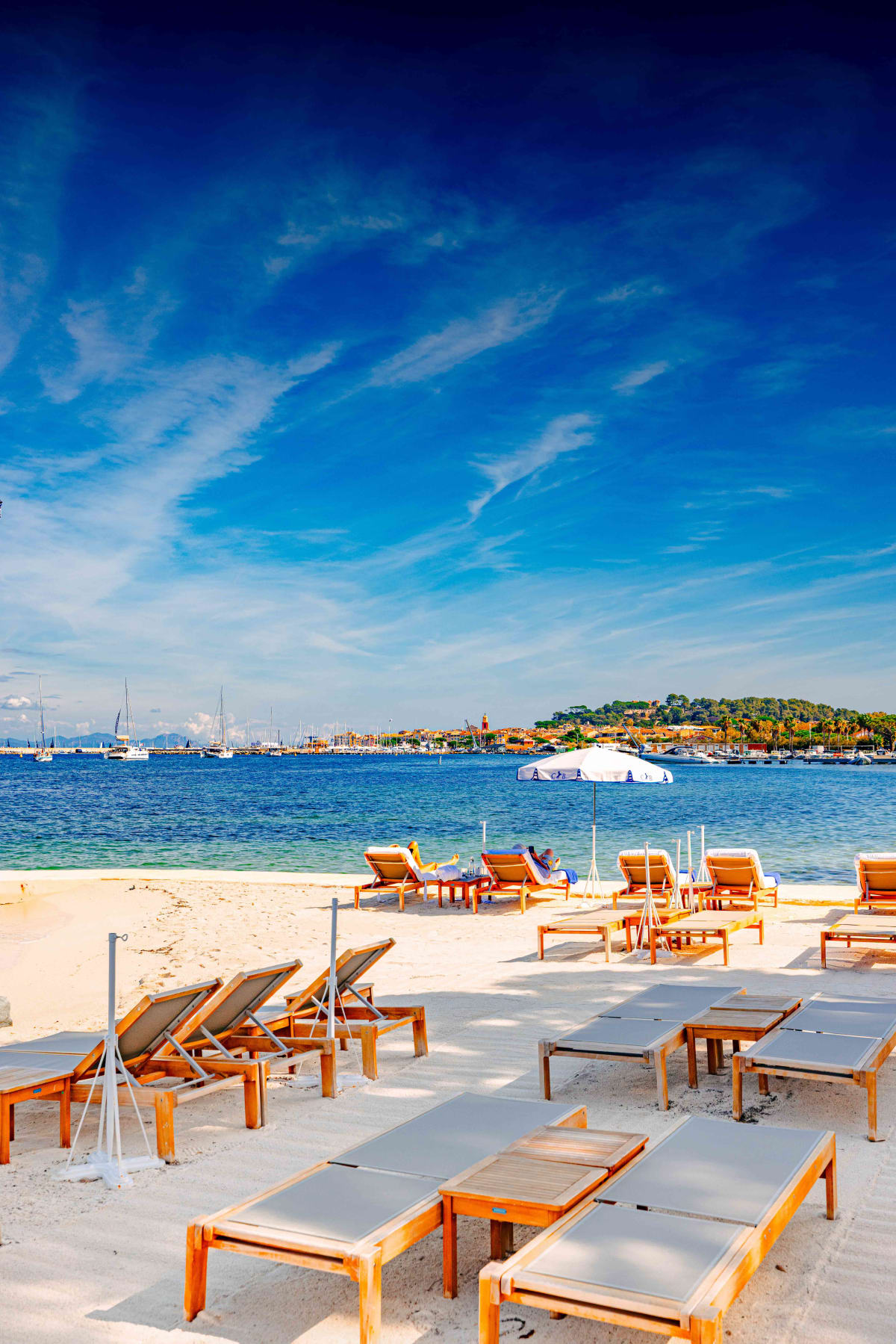
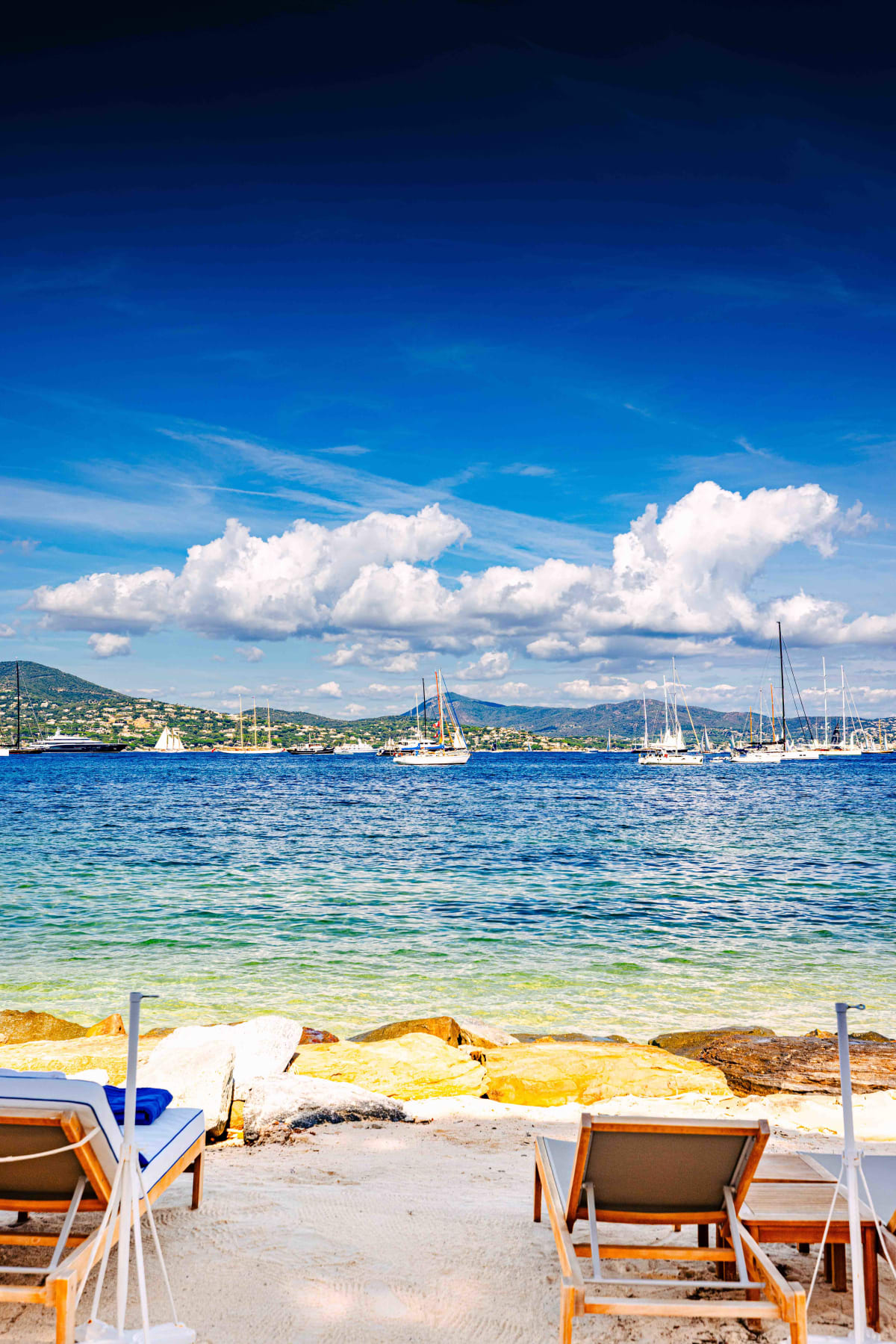
What matters is that La Terrasse is also led by chef Arnaud Donckele and that the cooking is at a high level. In 2024 it took a Michelin star.
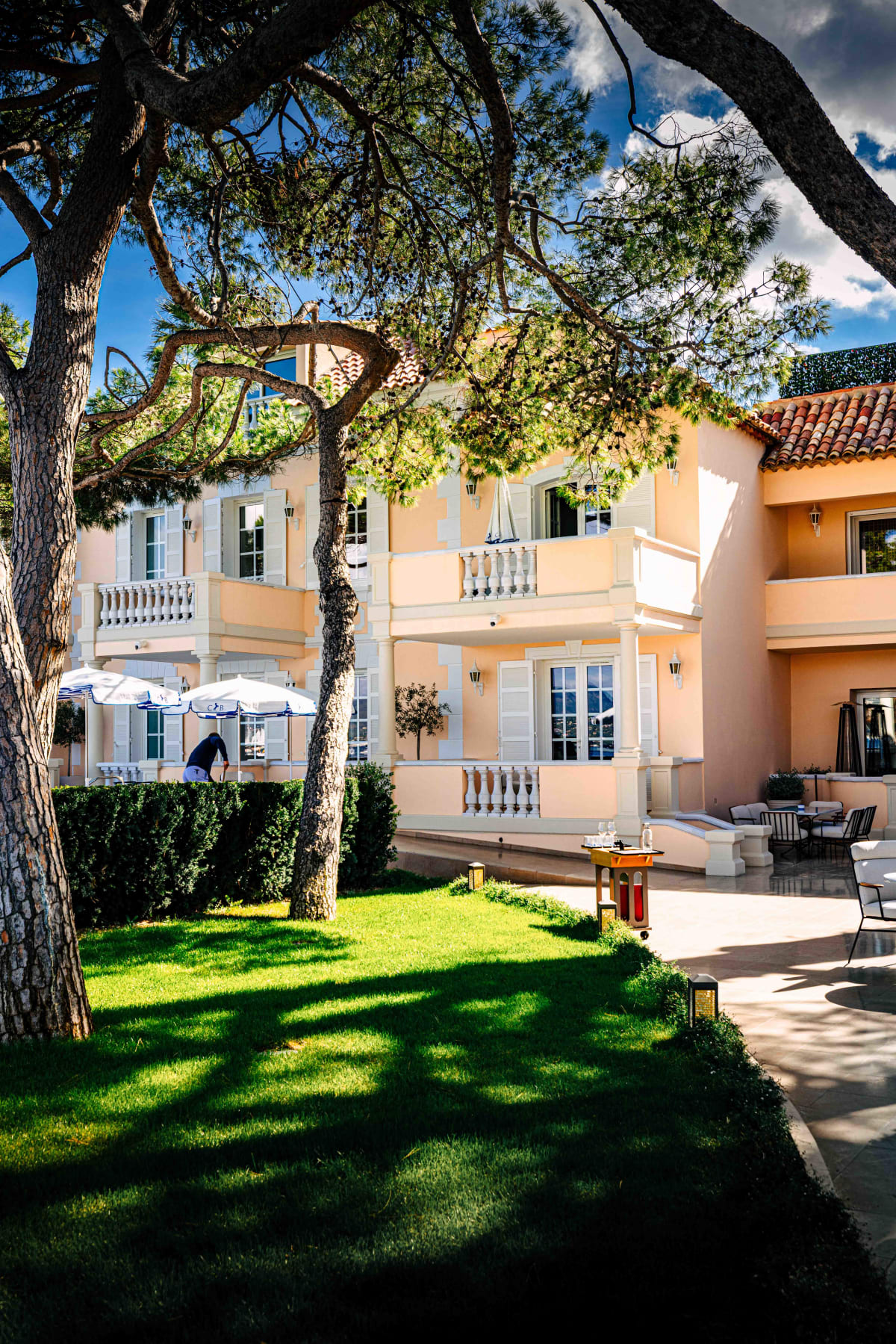
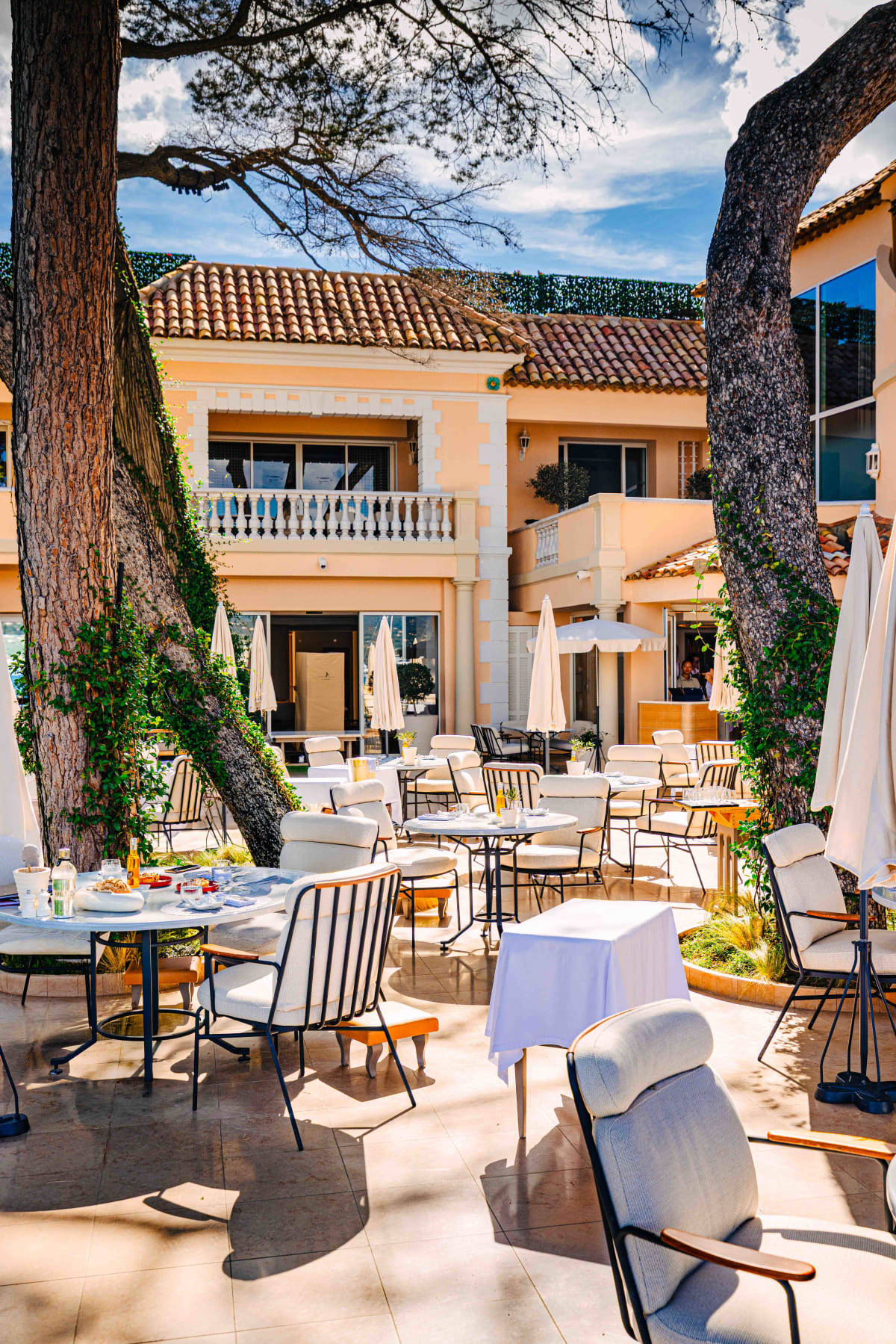
Personally I found the lunch here, where you get the whole of that view, more satisfying than dinner after the sun has gone. The food was excellent and, considering the class of the hotel and the price of everything in Saint-Tropez, the cost was not that high. Both restaurants run only from early May to early October as far as I know.
Section 4·The Name Behind It
One more name has to go down here for this to be accurate. Augustin de Margerie. When this restaurant took its first star in 2024, he was the person the trade press named, and at the time he was executive chef of Cheval Blanc St-Tropez, running the lunch kitchen at La Terrasse in practice.
By his own account he worked with Donckele for eleven years, Donckele handed him command of lunch, and in the evening he is back beside Donckele running La Vague d'Or. The two of them work quatre mains, four hands, as he put it.
De Margerie has a solid line behind him too. From a hotelier family, he passed through Le Meurice under Yannick Alléno and Emmanuel Renaut's Flocons de Sel before joining Donckele's team in Saint-Tropez in 2013.
So this star was not made by a star chef brought in from outside but by someone inside, who had shared the same grammar for over ten years, growing a lunch restaurant. Cheval Blanc's 2026 material also names him as Donckele's key lieutenant in Saint-Tropez.
And there is one more reason this star means something. Even with a three star already in the same building, Michelin assessed La Terrasse as a separate restaurant and gave it a star. Not one thrown in because a three star kitchen also cooks well at lunch, but recognition of this house's own concept and execution.
Section 5·Where Donckele Made It
The restaurant that comes to mind first with Arnaud Donckele is probably Plénitude, the three star at the Cheval Blanc hotel in Paris. I went there myself last year. But look through his career carefully and his decisive stage is here, Saint-Tropez and La Vague d'Or.
La Vague d'Or existed before the Cheval Blanc hotel did. Where Cheval Blanc now stands there was a hotel called La Résidence de la Pinède, and La Vague d'Or was its main restaurant.
Arnaud Donckele was appointed chef of this restaurant in 2004, at twenty seven. He went on to take two Michelin stars in 2010 and three in 2013. Which is to say Donckele and La Vague d'Or were a three star chef and a three star restaurant before any relationship with LVMH.
Then in 2016 the LVMH group bought La Résidence de la Pinède to expand the Cheval Blanc hotel brand. The colour and identity LVMH wanted to express through food matched Donckele's cooking, and La Vague d'Or carried straight over. Later, when the Paris Cheval Blanc was built, Donckele took charge of Plénitude and another three star restaurant was born.
After the change to Cheval Blanc St-Tropez, La Terrasse was reborn as a lunch led restaurant. For the record, Le 1947, the three star at the Cheval Blanc hotel in Courchevel, is run by Yannick Alléno.
Something more of Donckele's history is worth setting down. Born in Rouen in 1977, his grandparents farmed and his parents were charcutiers traiteurs, so he grew up close to produce and meat and cooking. His career runs almost straight through the core line of modern French cooking. Goumard Prunier, Michel Guérard's Les Prés d'Eugénie, Alain Ducasse's Louis XV in Monaco and the Plaza Athénée, and Jean-Louis Nomicos at Lasserre.
The record after that goes: two stars at La Vague d'Or in 2010, three in 2013, Plénitude in Paris begun in 2021, three stars immediately after opening in 2022, one star for La Terrasse in 2024, one star for the Louis Vuitton restaurant in Saint-Tropez in 2025, two stars in Hakuba in 2026. A chef leading two three star restaurants at once, in Saint-Tropez and Paris, is rare even in France.
Section 6·Who Grew It
If you had to name one theme La Vague d'Or and La Terrasse share, it is Provence. Turning the ingredients and the landscape made by the sea and the land and the sun of Provence into gastronomy is the theme of both.
Coming from Plénitude in Paris first, the ingredients here read as sharper and more intense. The way Japanese seafood does it, the fruit and vegetables and herbs of Provence carry a keen edge, and you get that alongside the beauty of French dining.
At this restaurant a local ingredient means not only where it came from but who grew it. Cheval Blanc's own material names the producers. Yann Ménard's vegetables and fruit at Jardin de la Piboule in Cogolin, the olive oil Éric Barnéoud-Chapelier makes at Domaine de Val-de-Bois in Gassin, the goat and sheep milk cheese Loïc de Saleneuve makes in Collobrières, and the Mediterranean catch the local fishermen bring in.
At this restaurant a local ingredient means not only where it came from but who grew it.
La Terrasse carries the same thinking. A 2019 record already mentions Ménard's vegetables and Mediterranean fish, and de Margerie says the team goes out to the producers and the fishermen themselves. So the Mediterranean cooking here is not the usual combination of tomato and olive oil and fish but closer to taking what the Gulf of Saint-Tropez and the Var can yield in high summer and refining it with the technique of French haute cuisine.
Section 7·Three Or Four
The menu at La Terrasse divides into à la carte and set courses, and the courses divide again into three and four. We came on a recommendation from a Japanese foodie that the à la carte here is the good part.
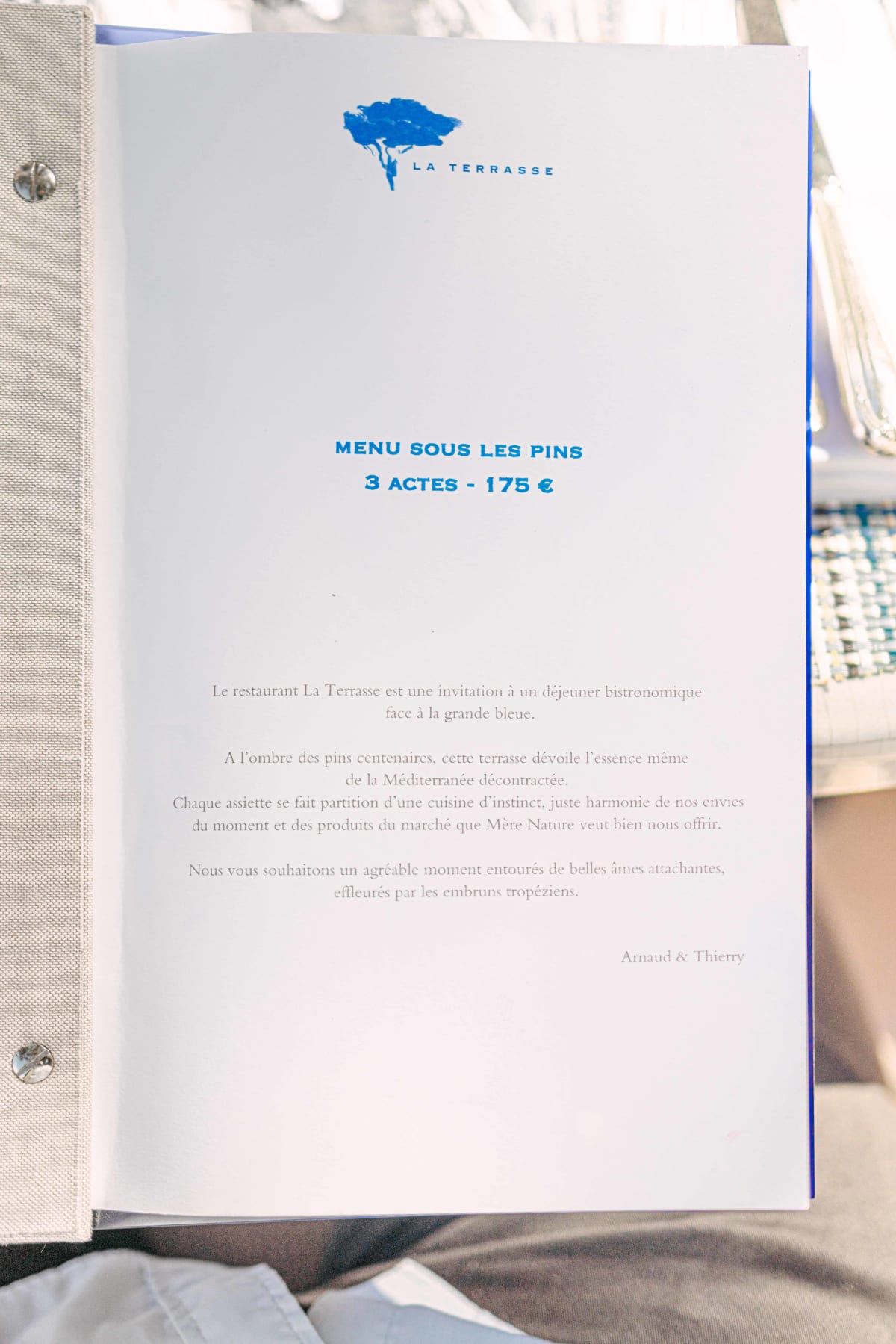
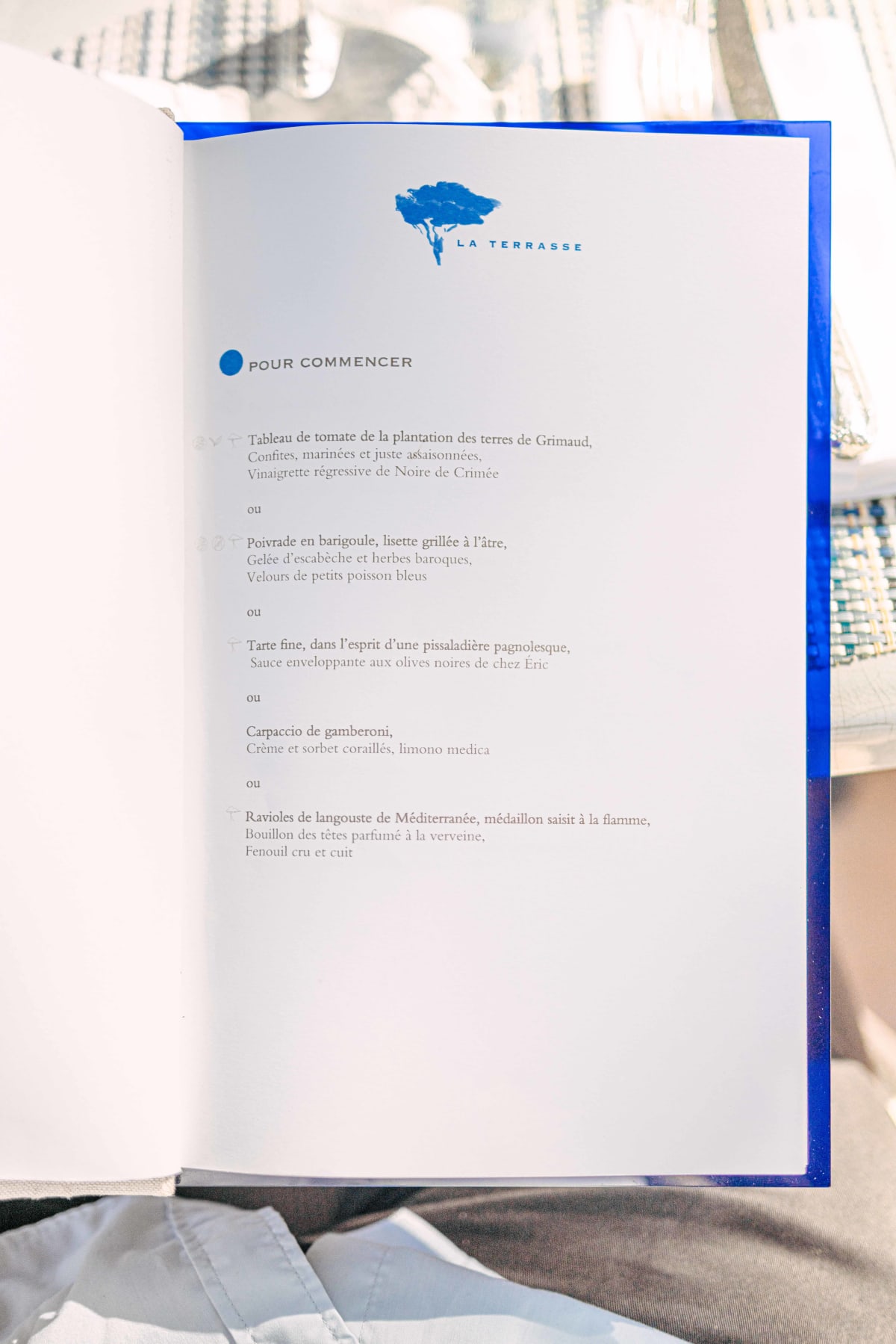
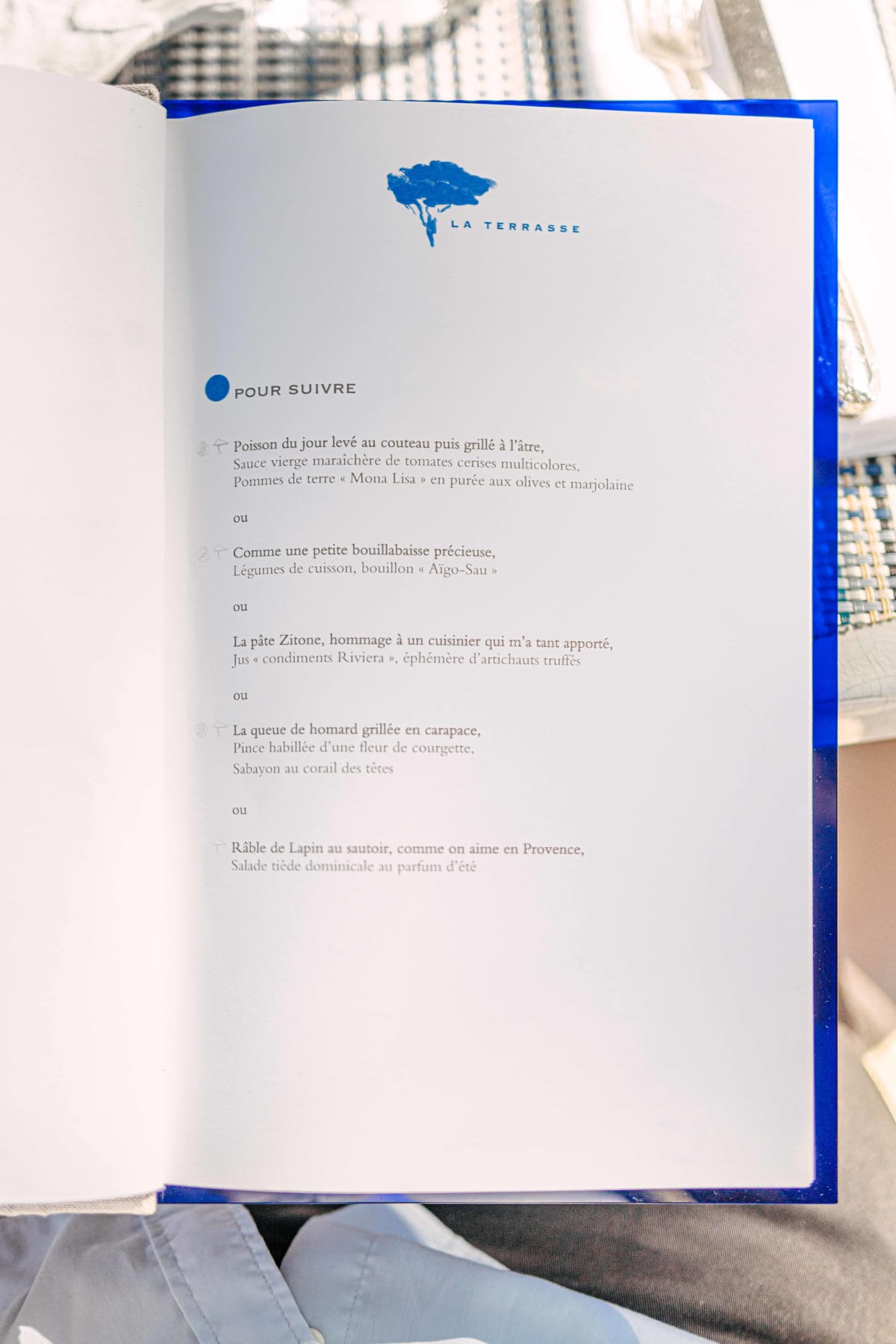
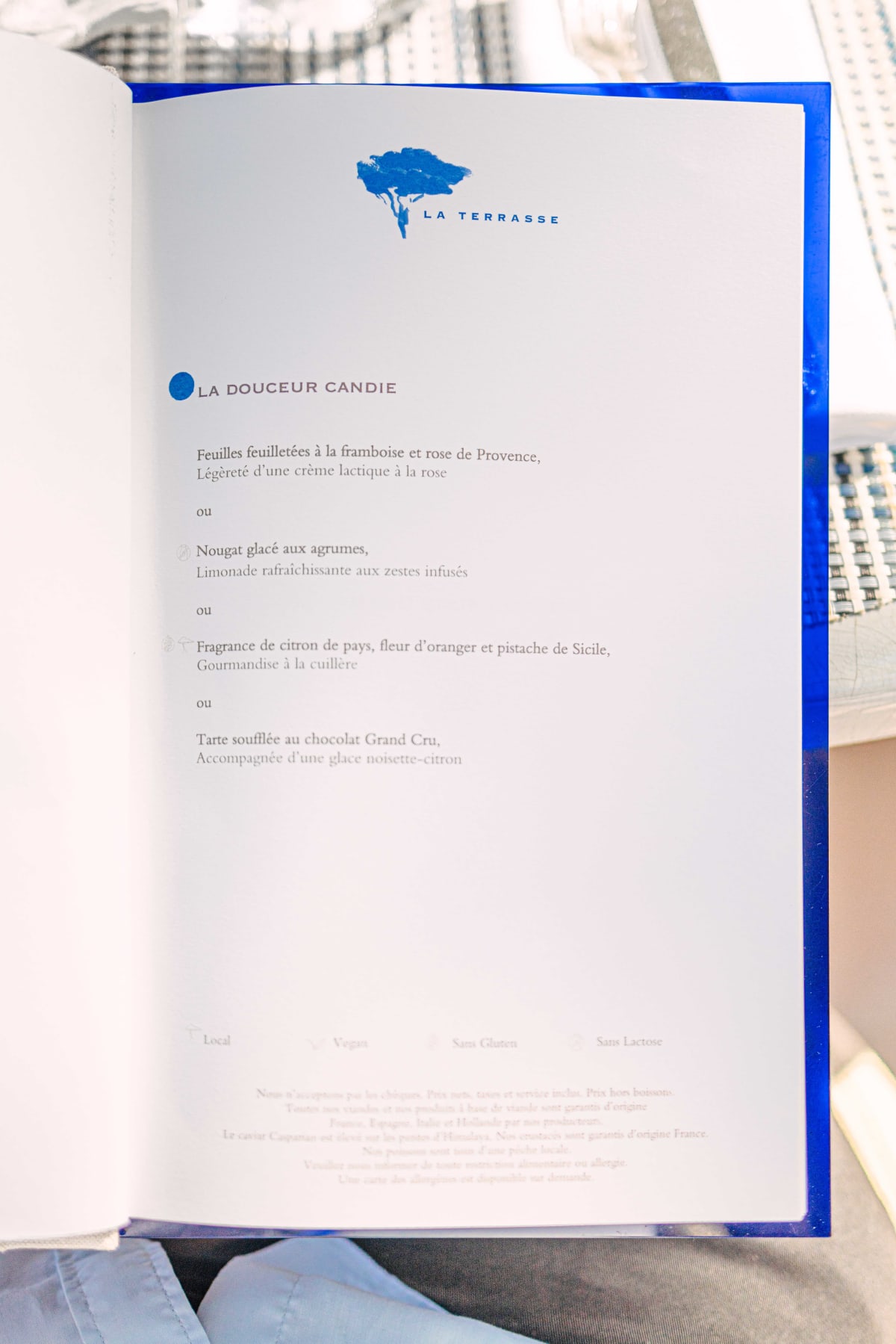
But once there the dishes we had in mind were not on the à la carte, and ordering several came out close to the course anyway, so we took the course. Three courses were 175 euros and four were 200, and at 25 euros for one more dish the four looked reasonable, so we ordered that.
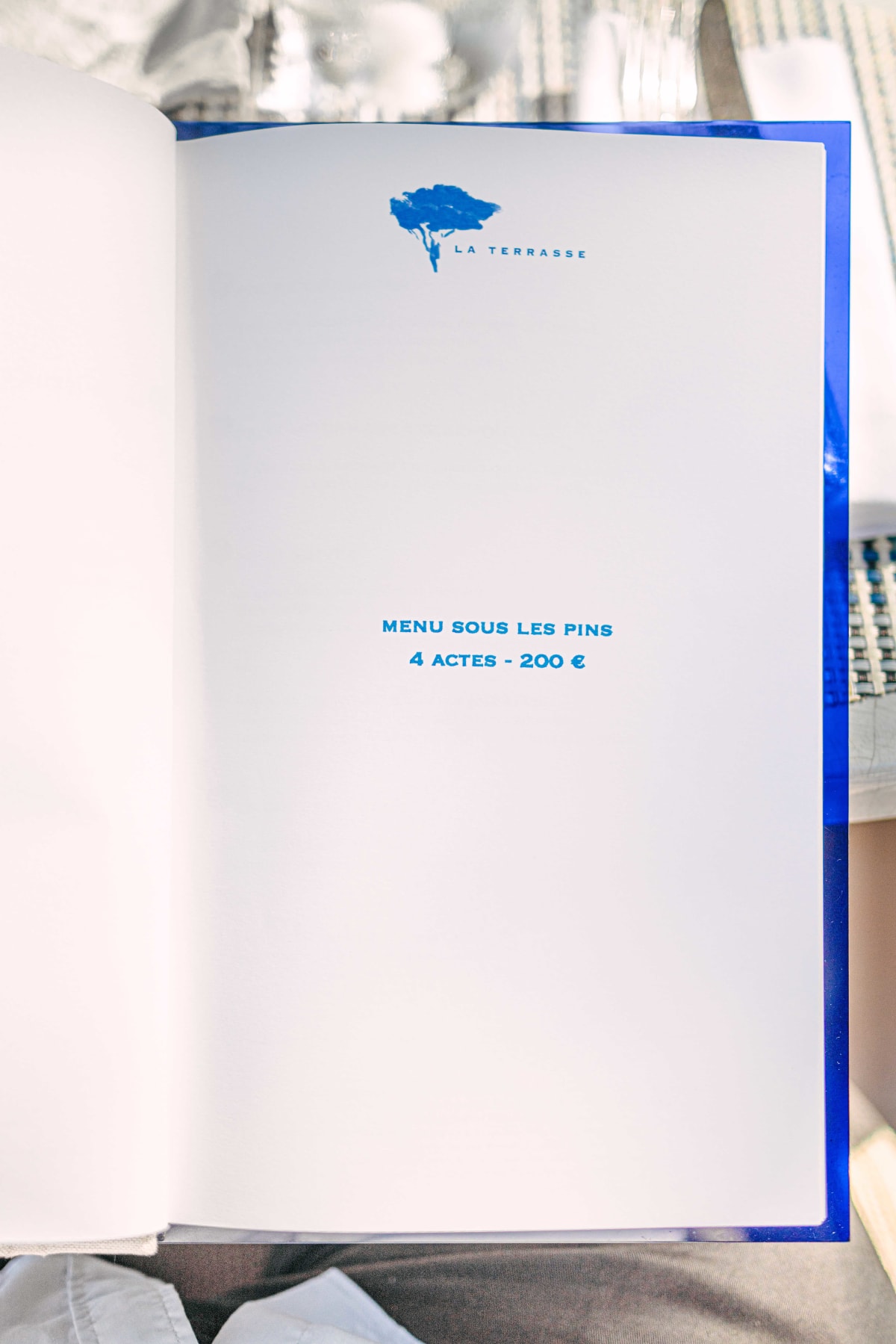
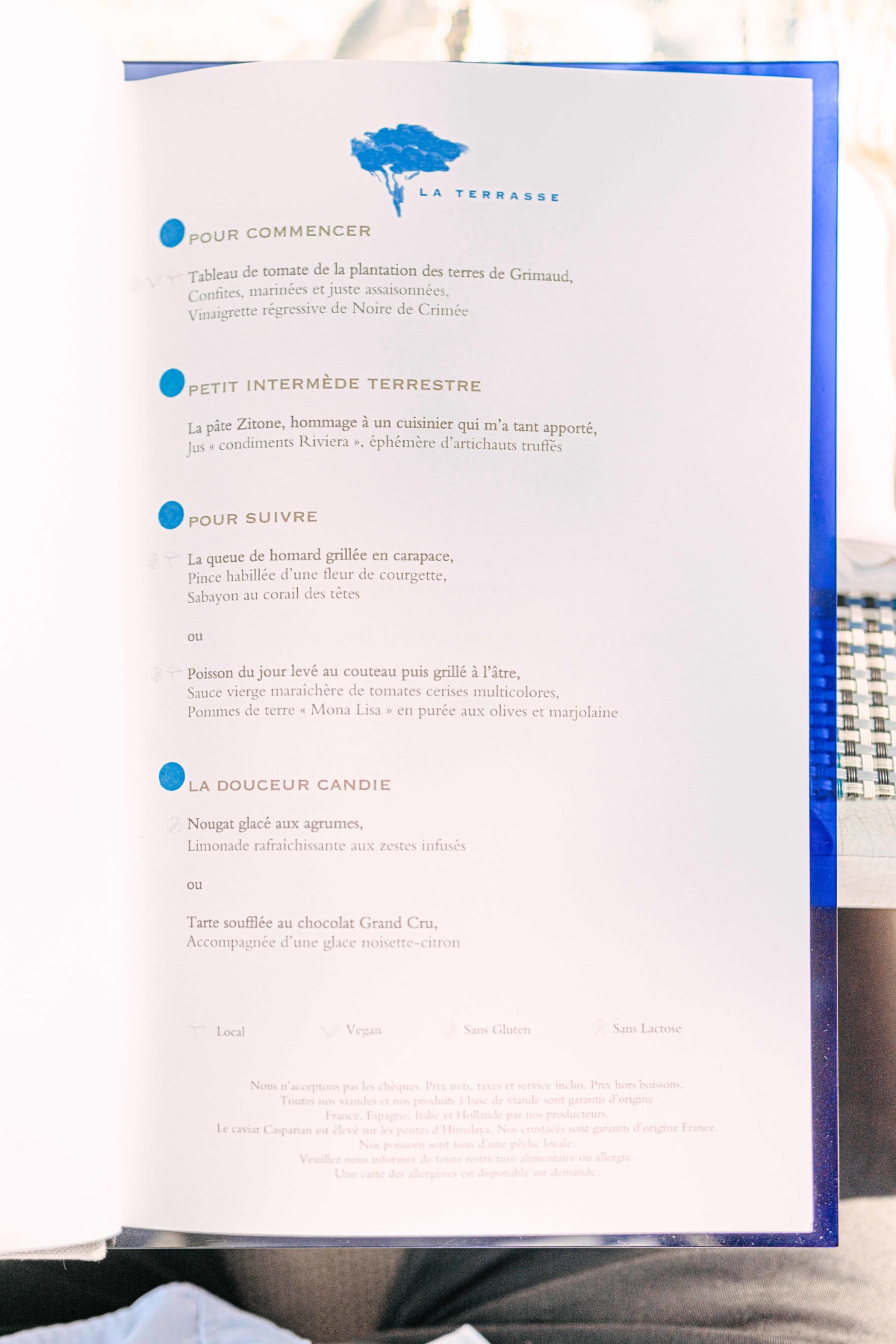
The one weakness I see here is the drinks. The wine list is shared with La Vague d'Or and the prices are not good. It was the only place on this trip where a regional dining room felt savage on price. So we split champagne and white between a bottle and glasses.
Section 8·Bread And Oil
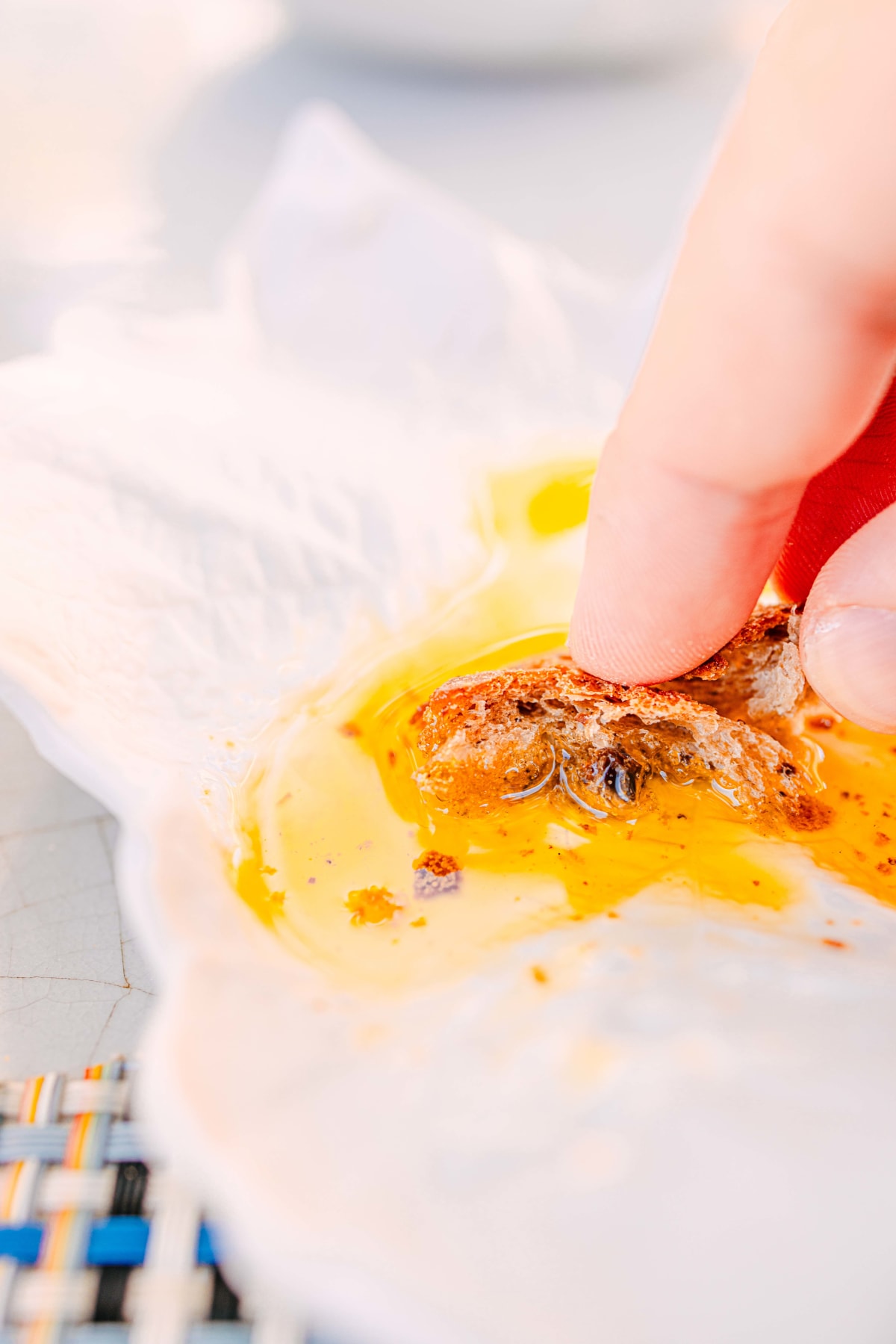
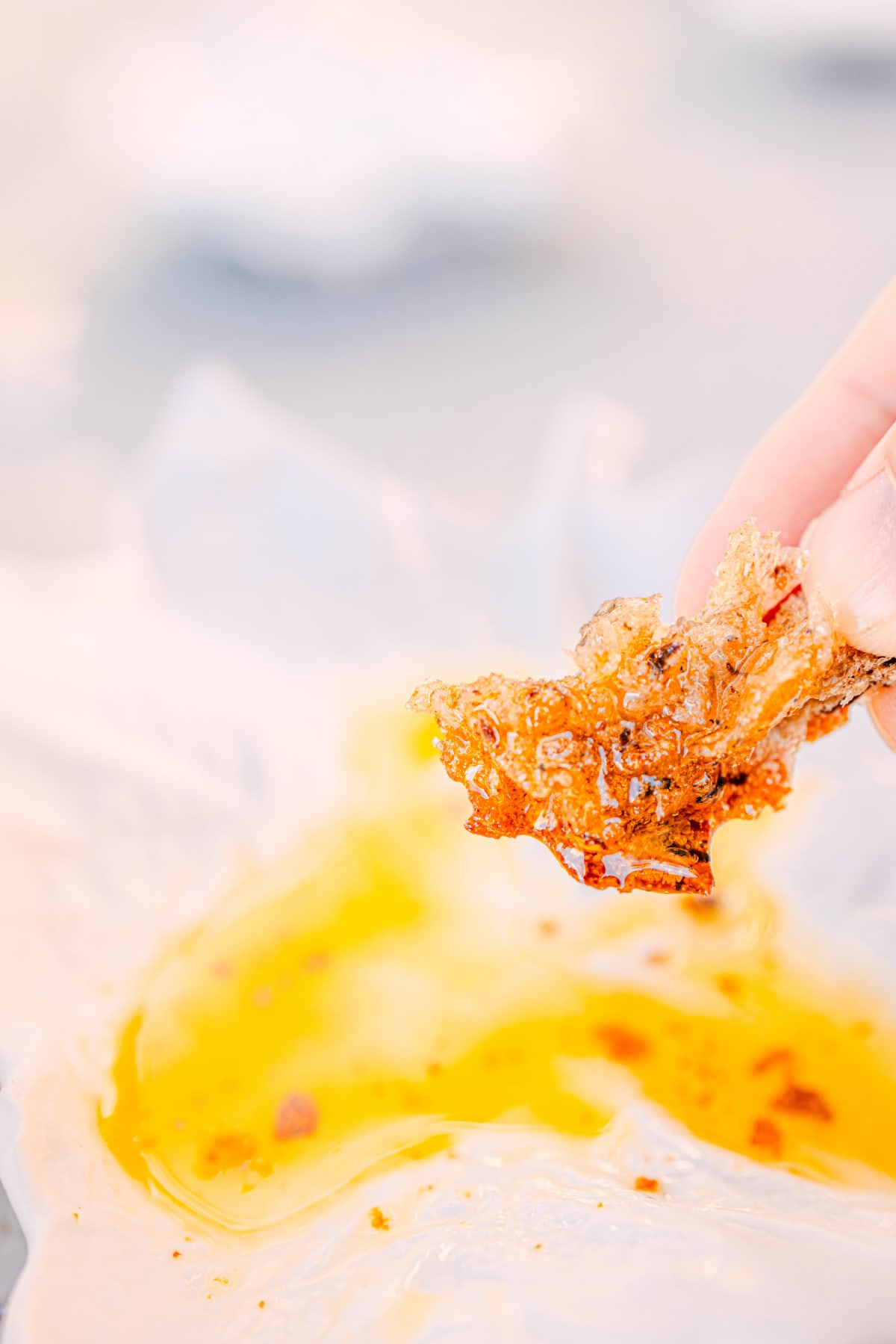
The meal starts with bread. Bread baked with tomato, artichoke and olive set into it, so the ingredients of Provence show from the bread onward. The bread itself is well made, but the ingredients on top tasted remarkably clear.
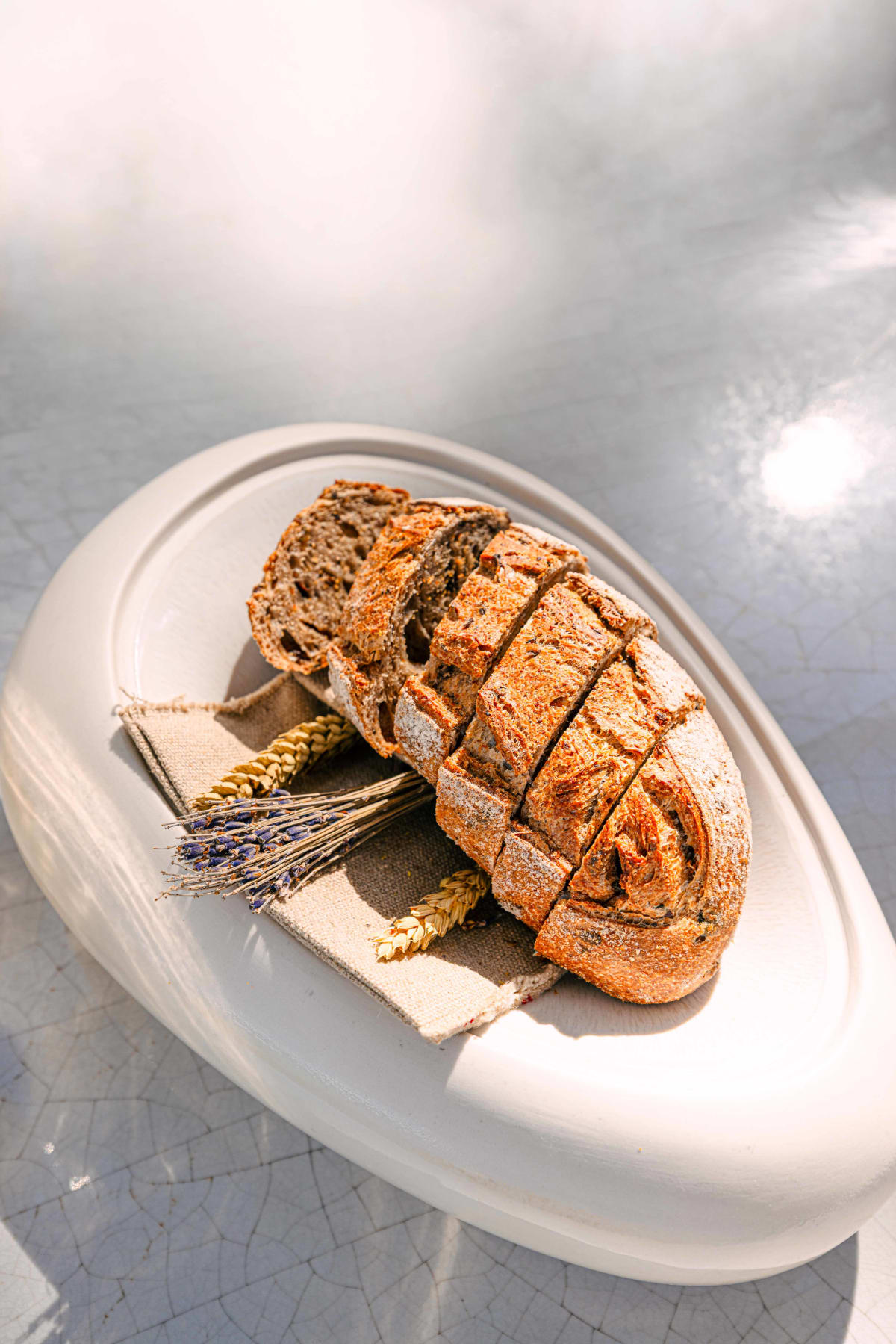
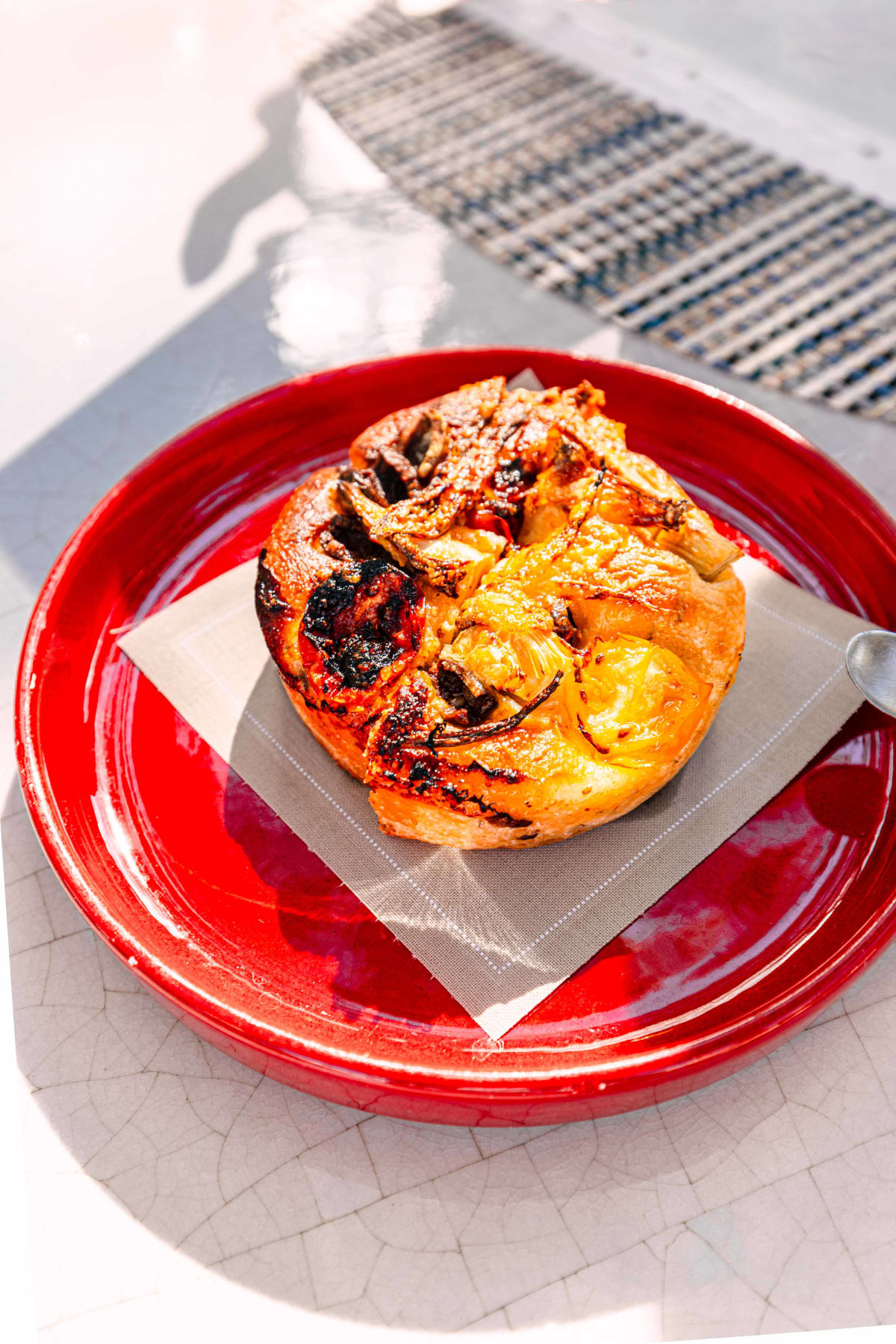
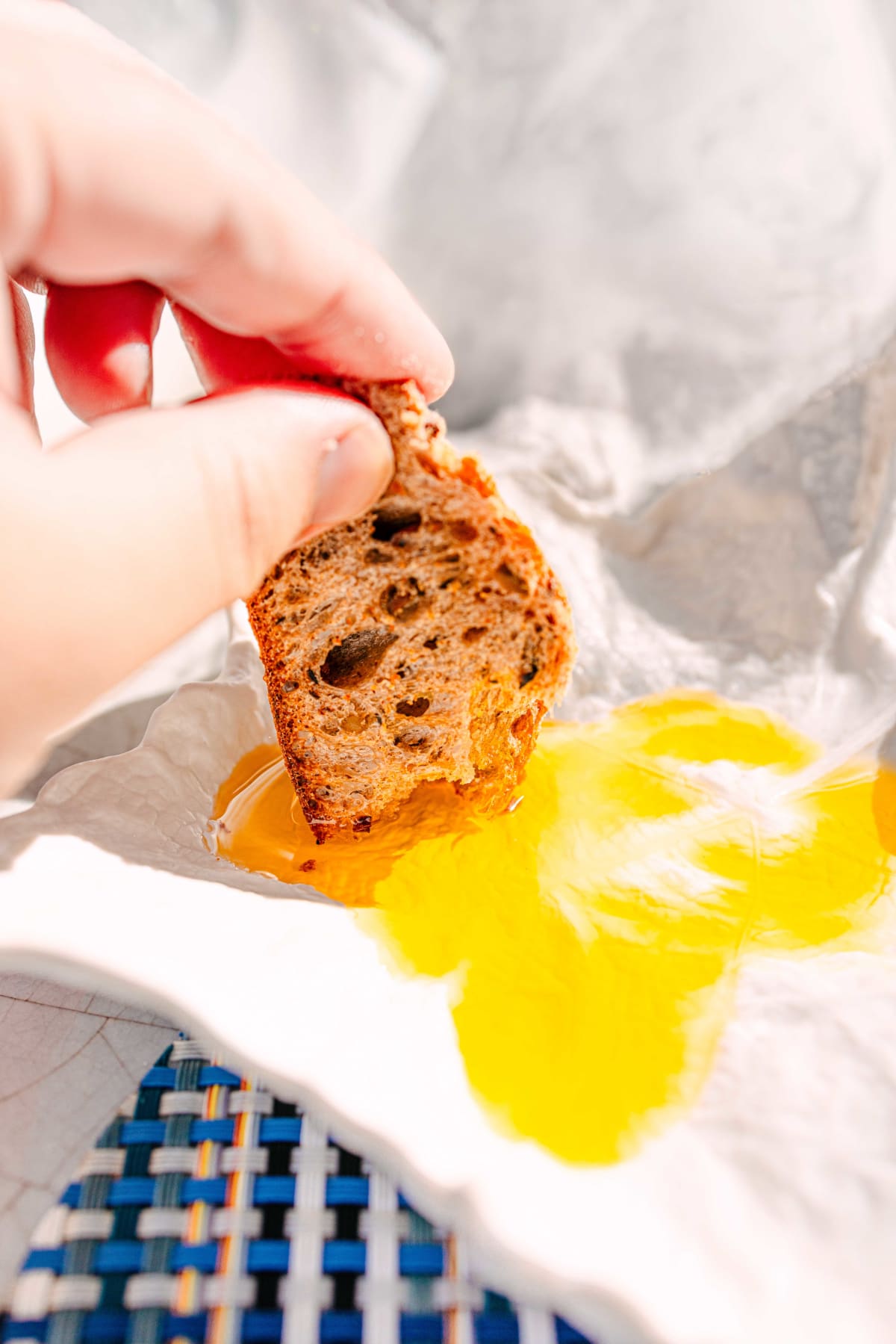
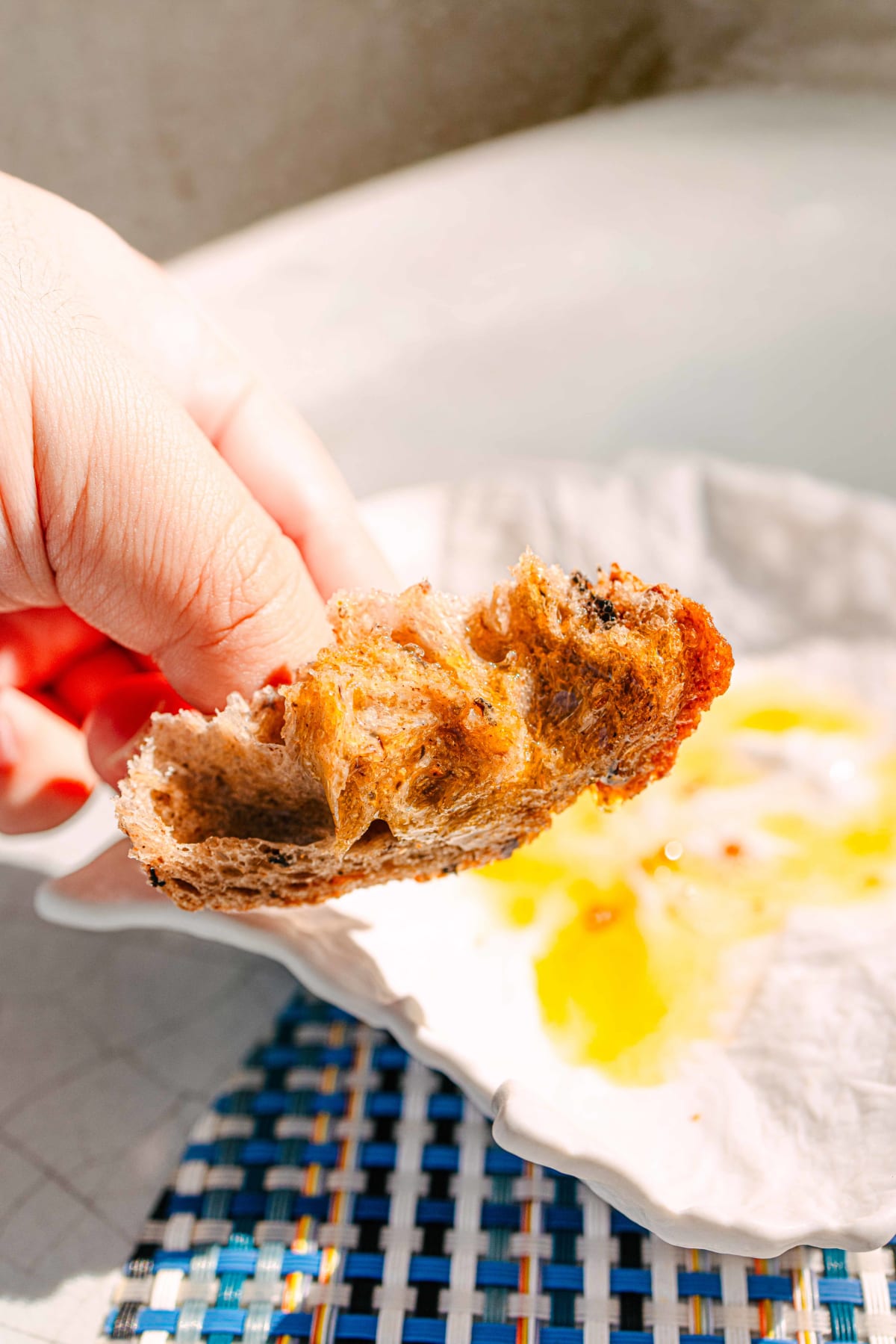
Whether the dough carries olive oil in it or not, the aroma and flavour were unusual, and spreading the green anchovy and basil sauce that came with it added a salted savour that sat well together. Then, this being Provence, they bring out olive oil in the bottle, and the level of that oil was excellent too.
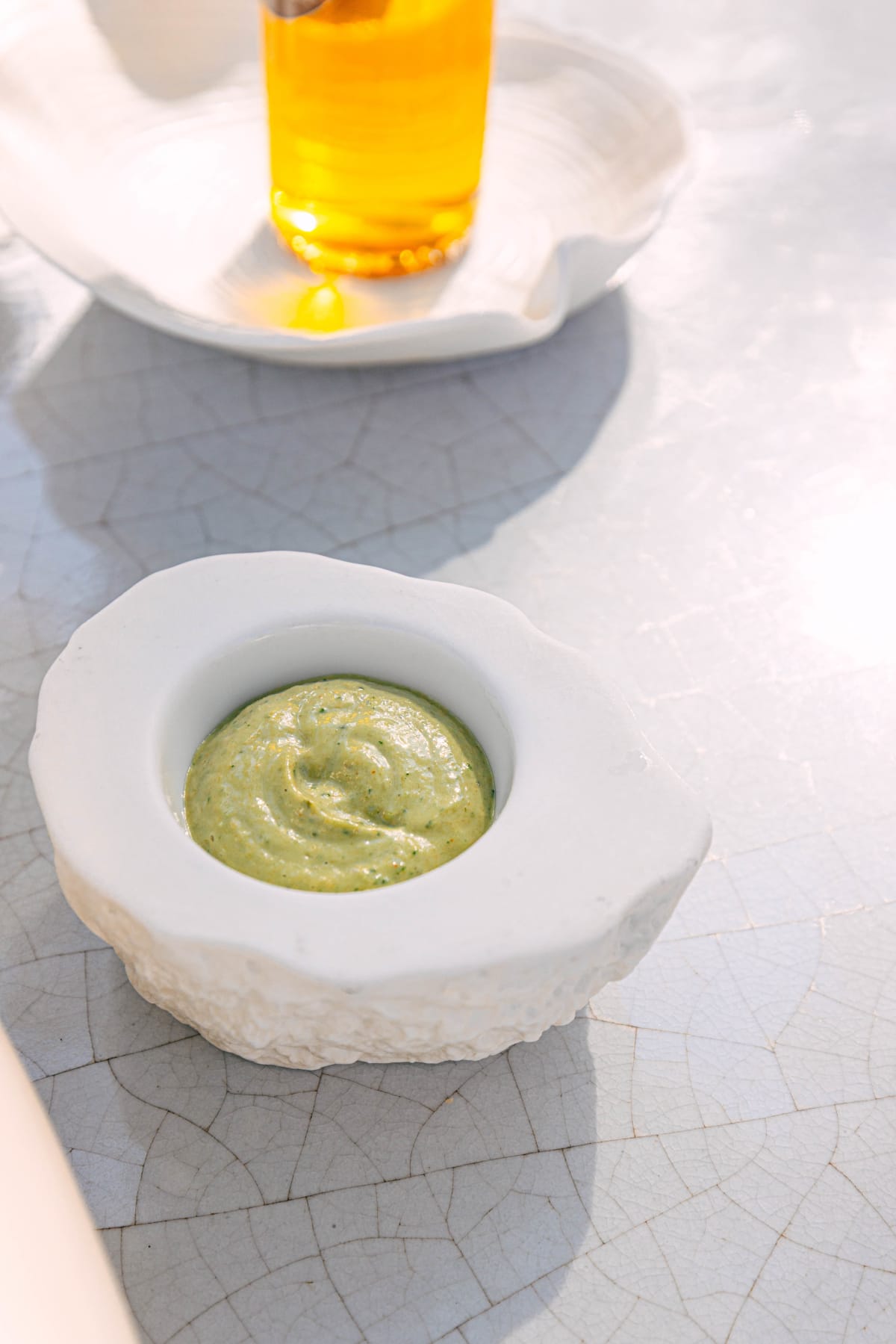
I have had good olive oil several times in Spain, and where the Spanish runs bitter with the spice standing out, the French goes softer and more fragrant. I confirmed that difference again here.
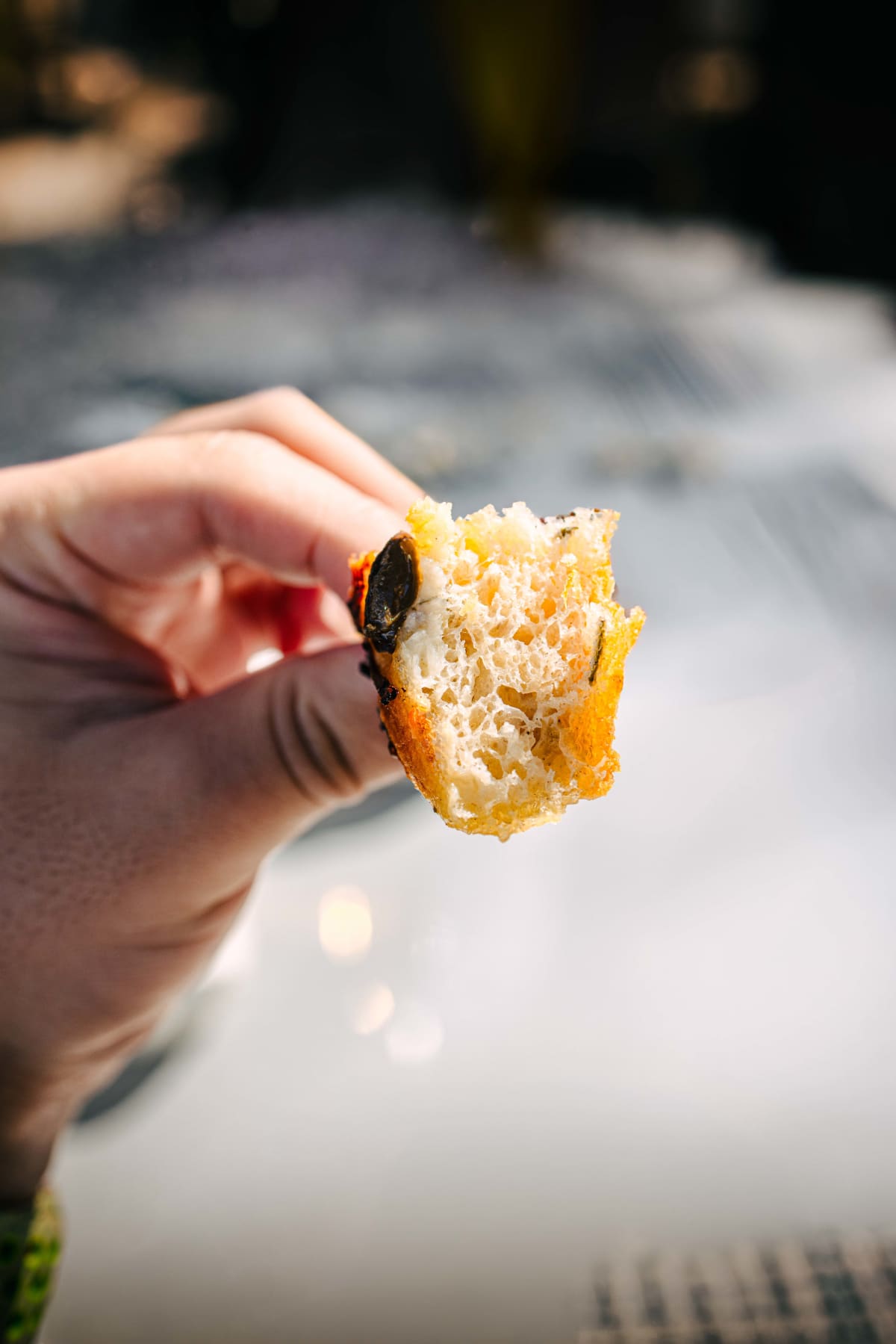
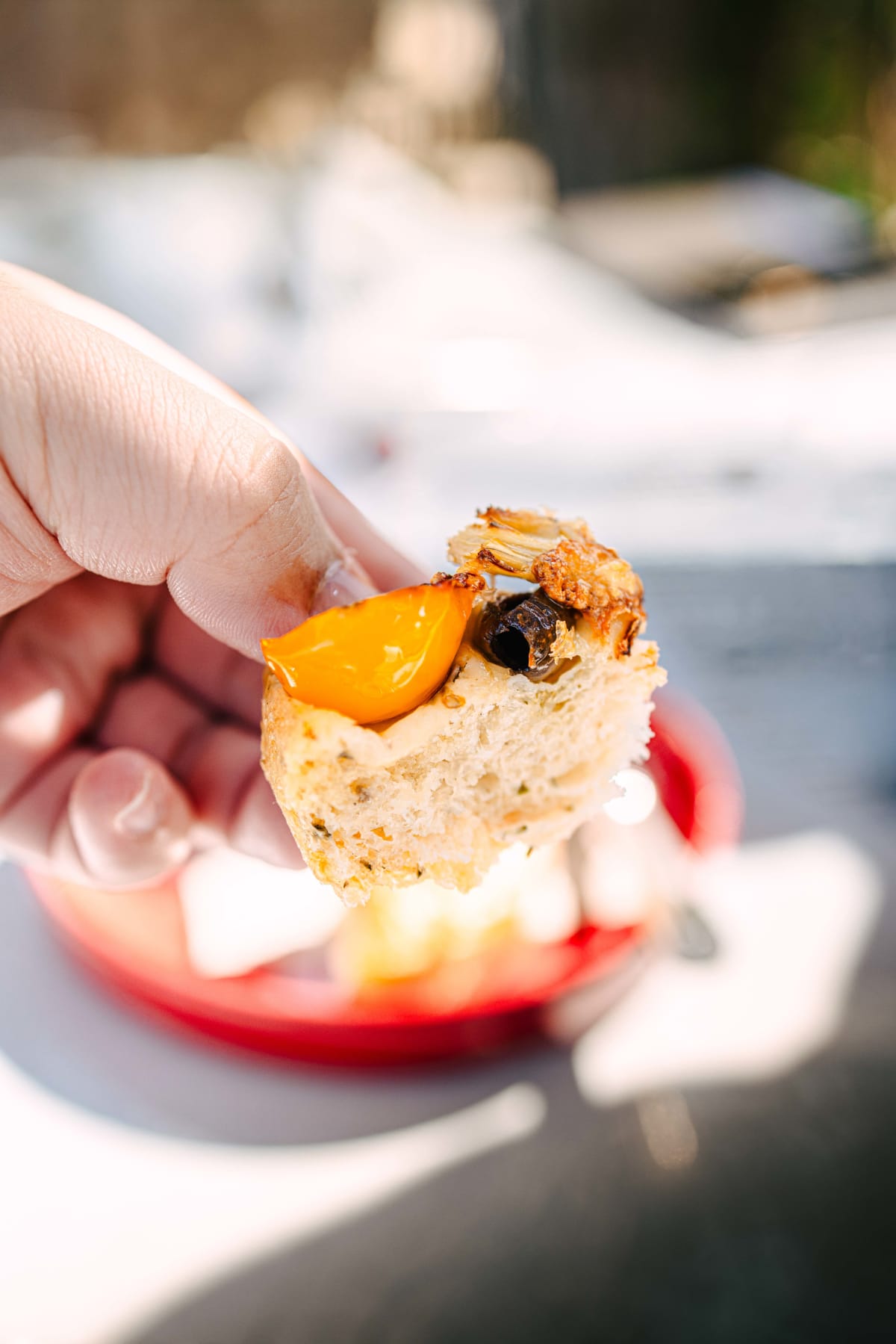
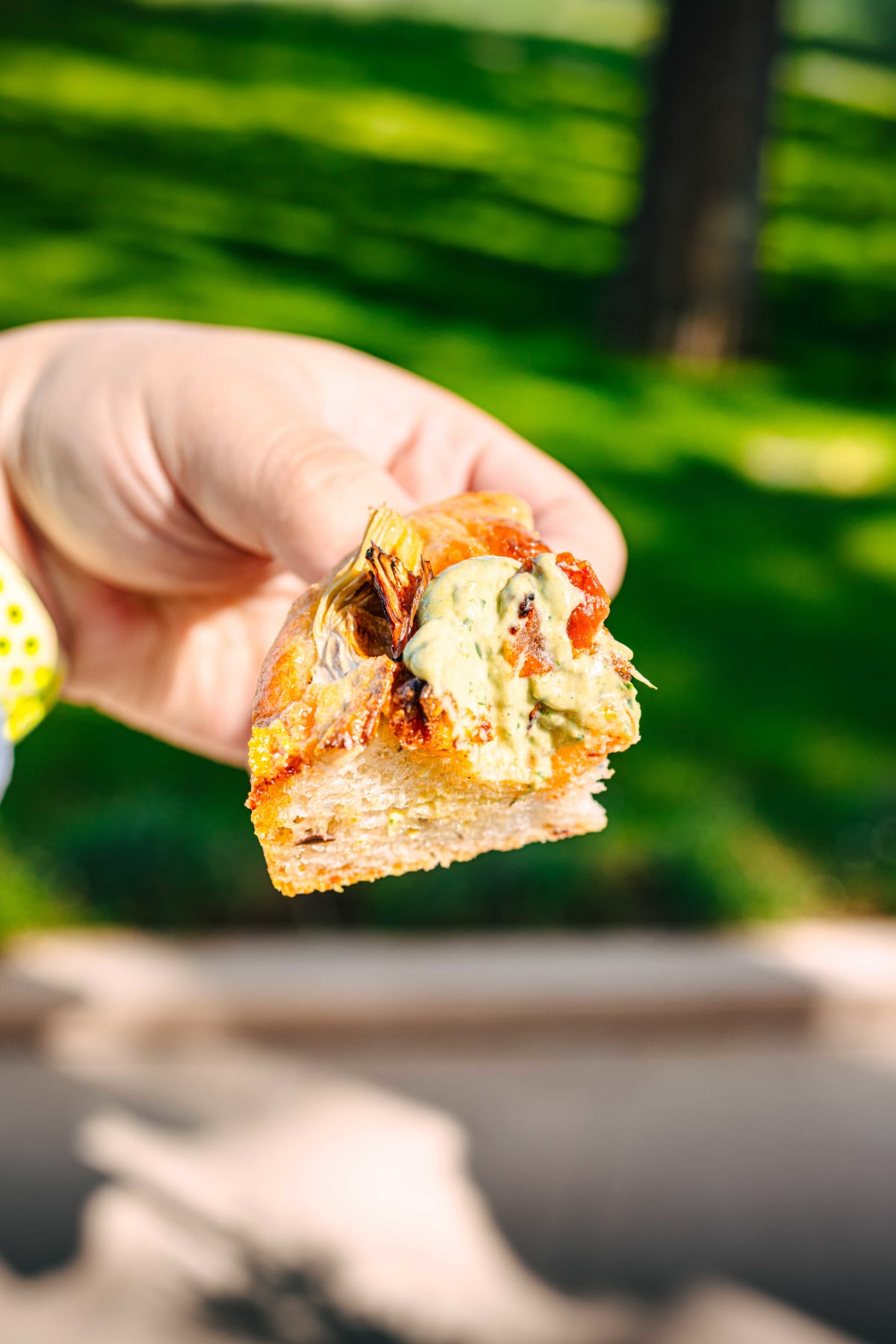
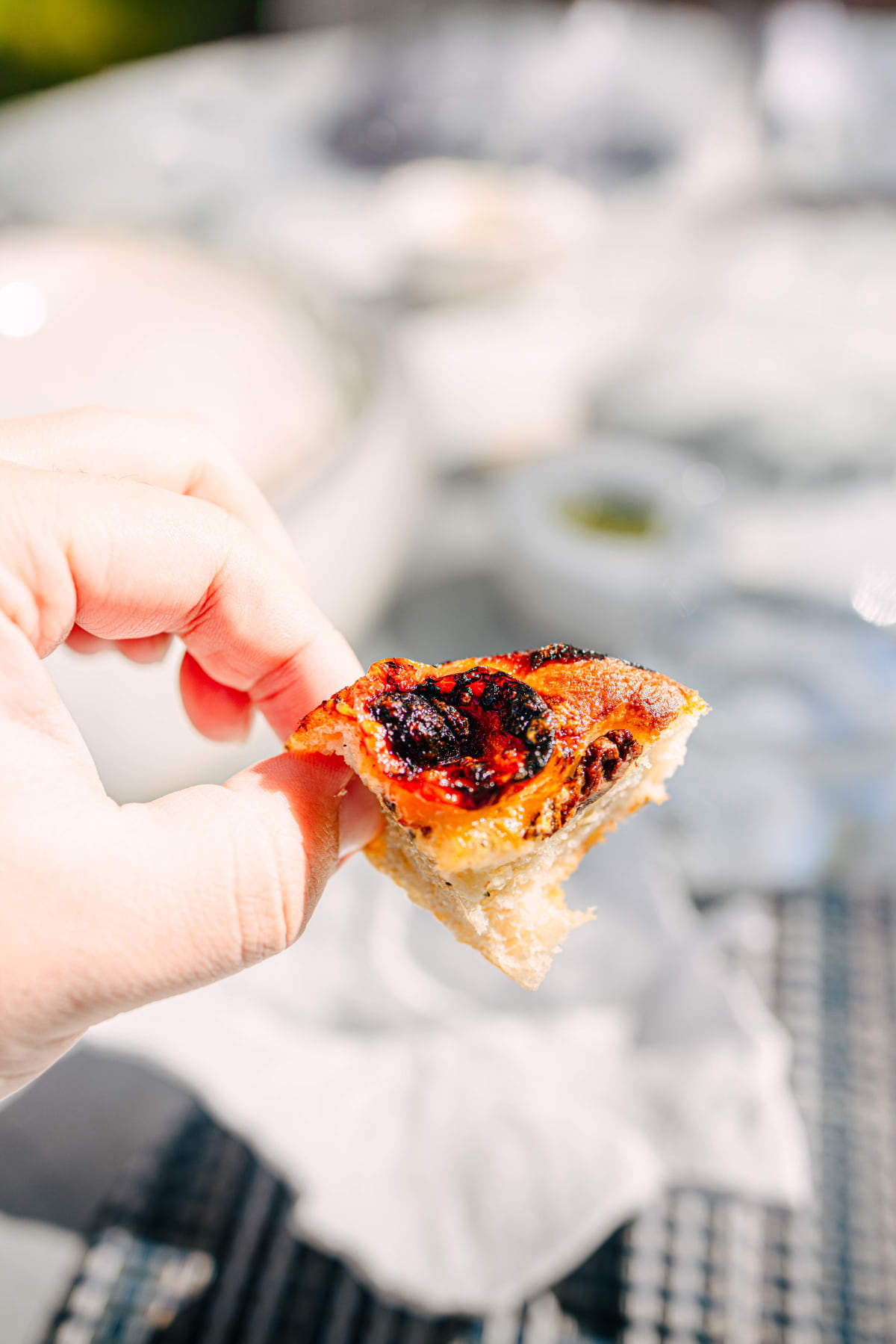
To add to it, the olive oil this restaurant uses is the Domaine de Val-de-Bois from Gassin noted above. The Provençal ingredients begin at the bread and the oil, before anything reaches a plate.
Section 9·The Champagne
For champagne I ordered Les Frères Mignon's L'Aventure Blanc de Blancs. In truth it was the only choice on the list at a price I could accept. I wondered whether something this cheap would hold up, and it went beyond what I expected. The aroma was good and the structure of the flavour was sound.
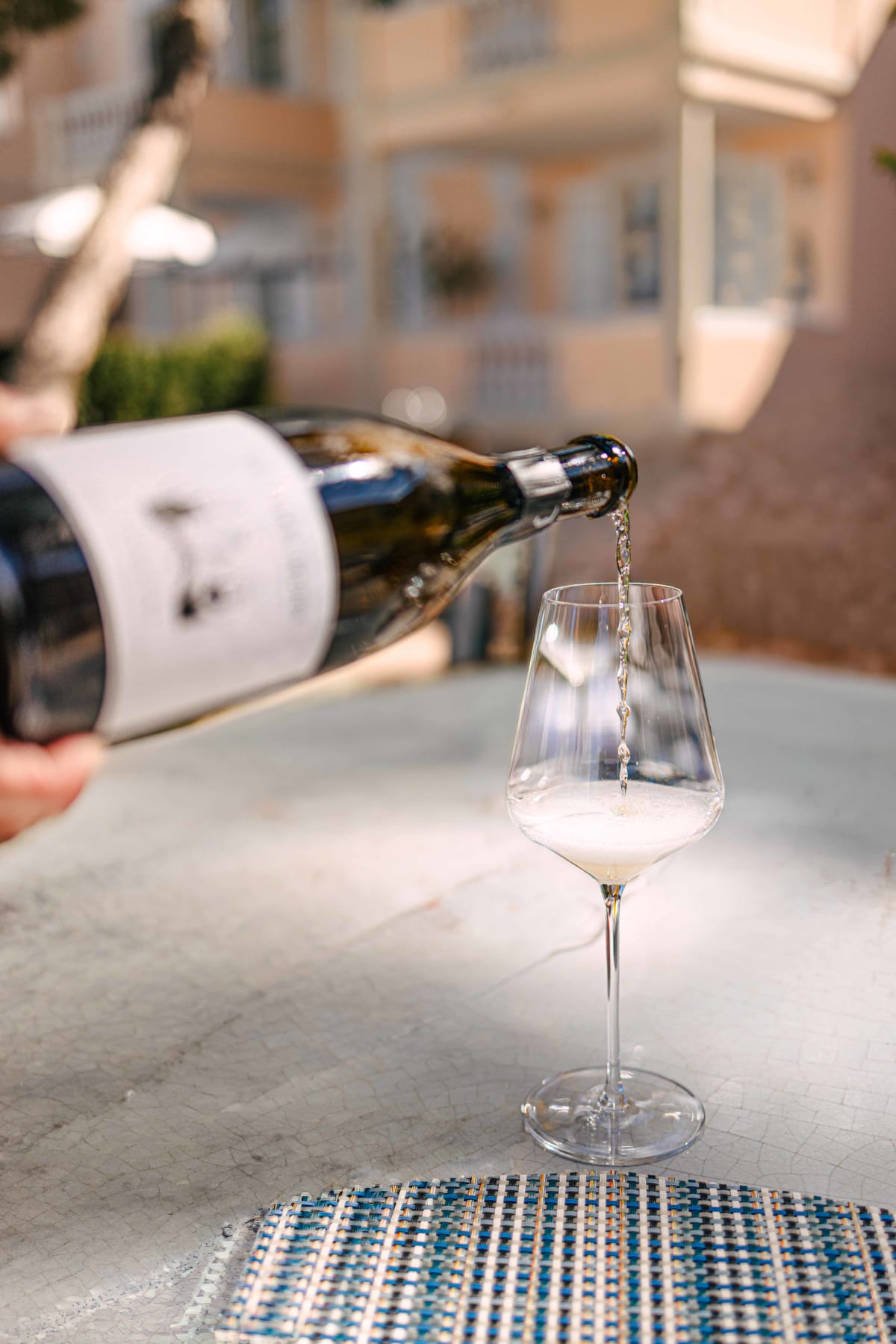
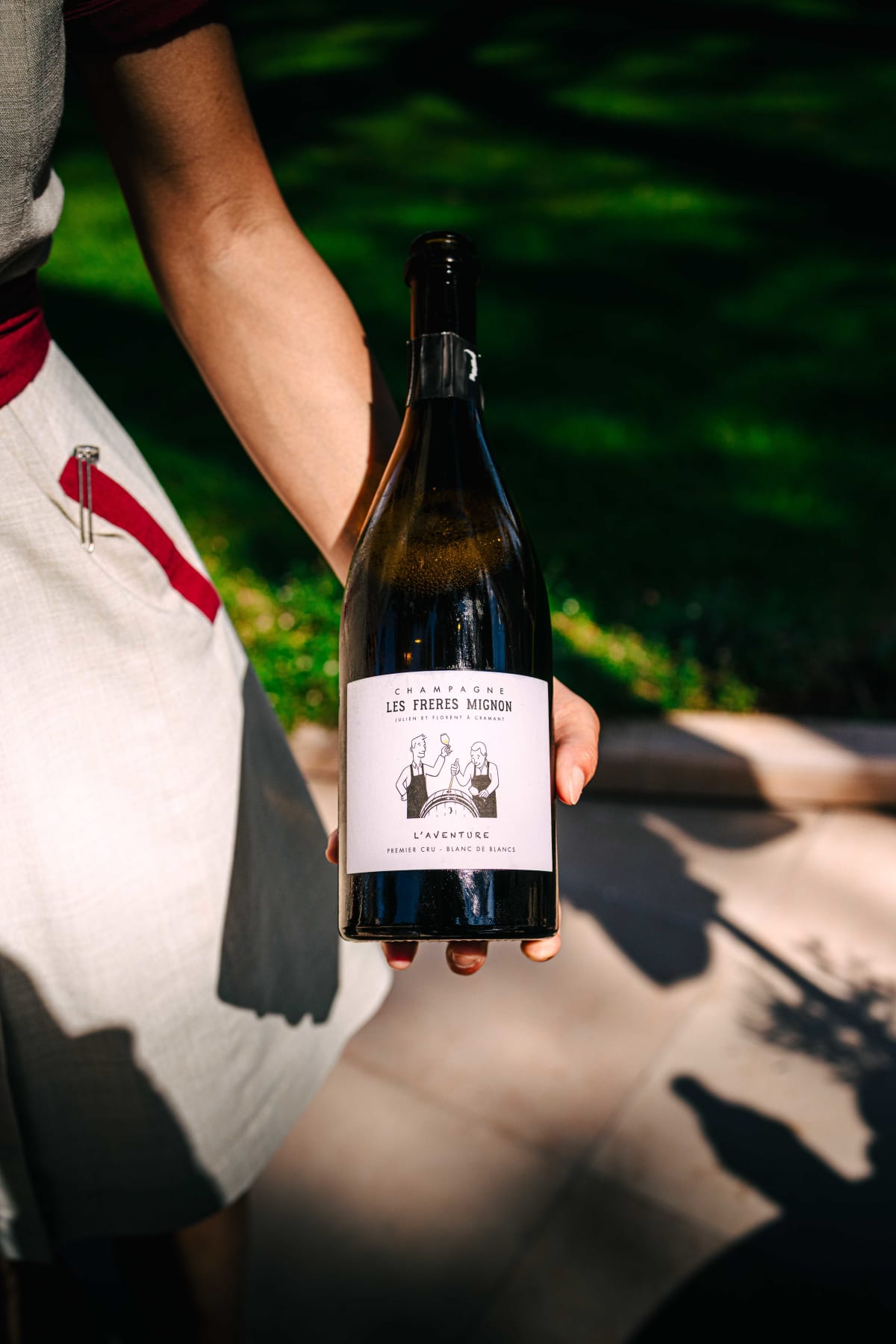
Les Frères Mignon is the house of the brothers Florent and Julien Mignon in Cramant on the Côte des Blancs. For decades this family grew grapes only to sell them to the large houses, until in 2015 the two brothers, at twenty four and twenty eight, took over their parents' vineyards and began bottling themselves.
Their first champagne reached the market in 2019 and its name is L'Aventure, the adventure. The holdings come to 8.5 hectares, with Avize and Cramant as grand cru and Cuis as premier cru, ninety percent planted to Chardonnay. The remaining ten percent of Pinot Noir sits in Cumières.
L'Aventure uses only Chardonnay from old vines over fifty years in those three sites. It ferments with wild yeast, is raised in a mix of stainless steel and barrels from 228 to 600 litres along with foudre, and rests on the lees for a minimum of thirty months. Dosage runs between 1.6 and 3.2 grams per litre, which is very little.
The cartoon label makes it look light and what is inside is not. That is why the cheapest thing on the list went beyond expectation. It is because this is a young grower whose name has not travelled yet, not because the wine is thin.
Section 10·Three Small Bites
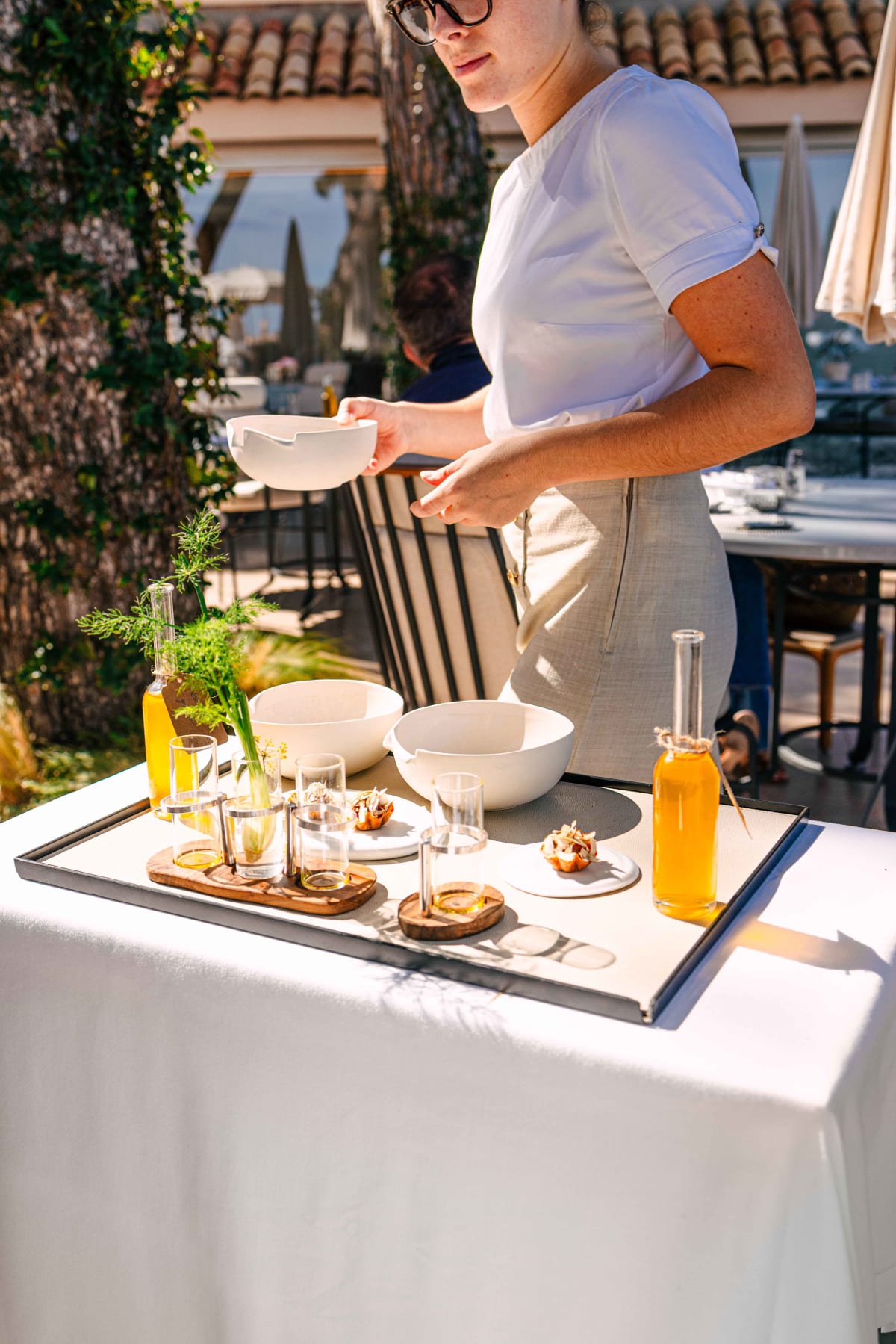
The course proper begins with three small bites.
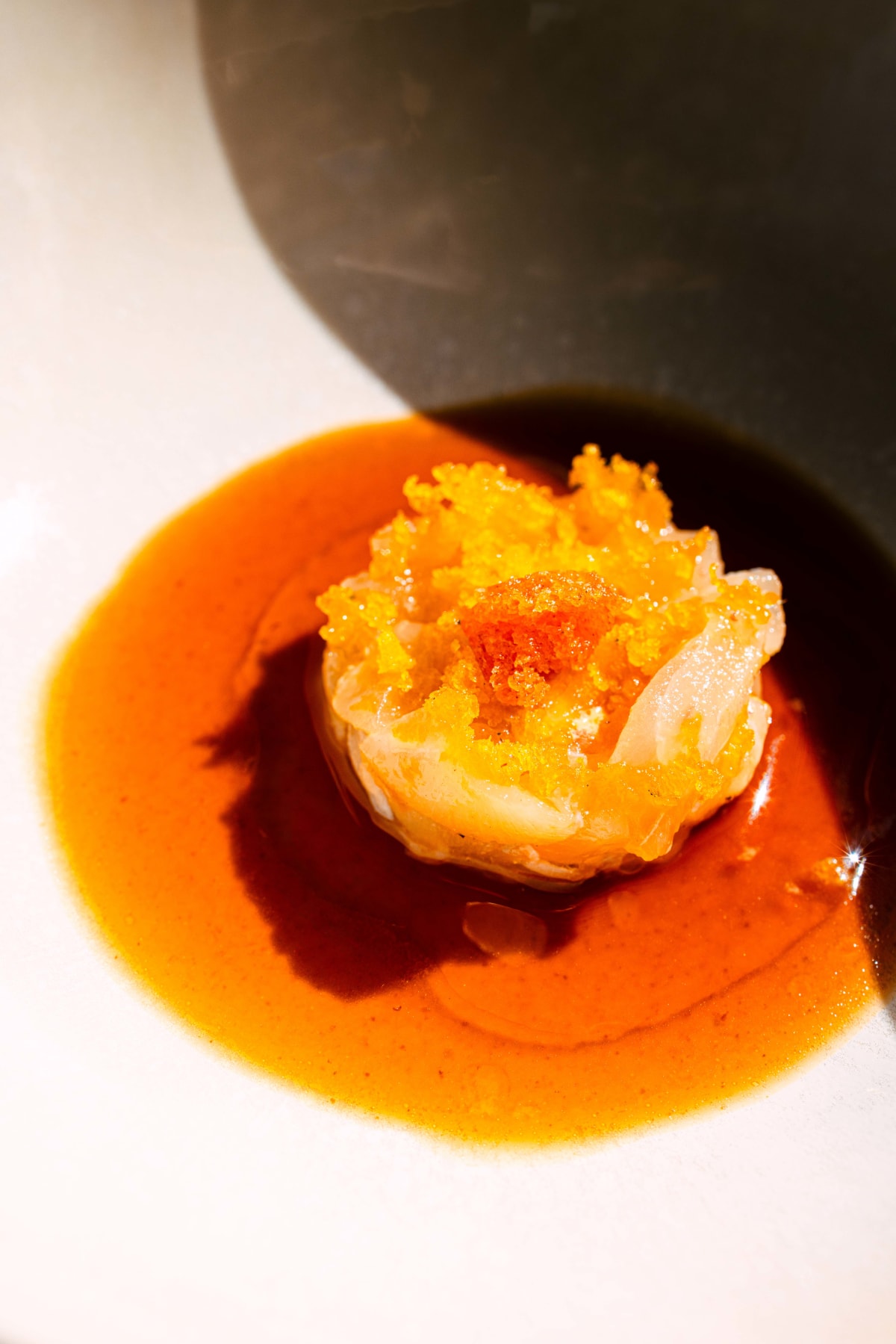
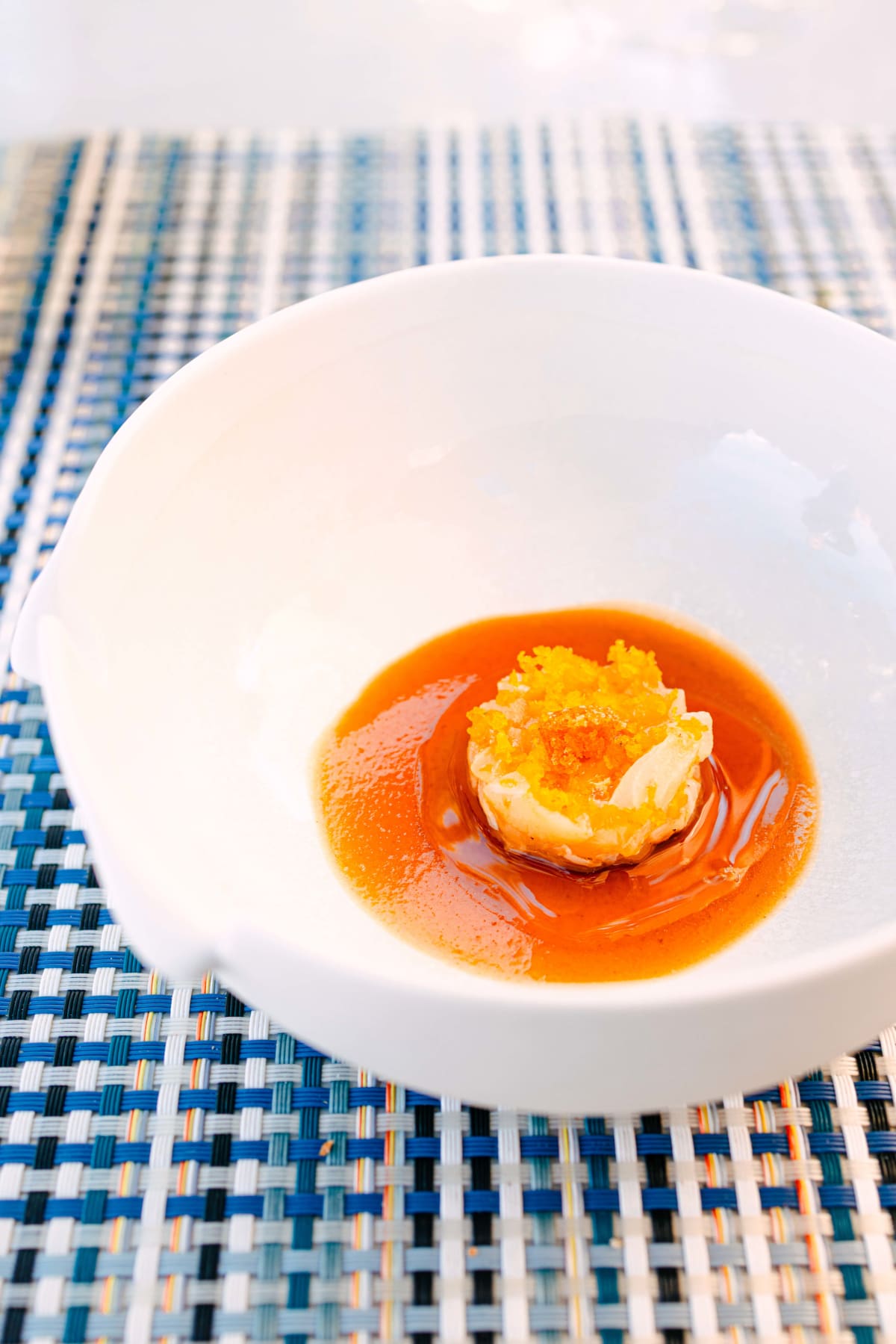
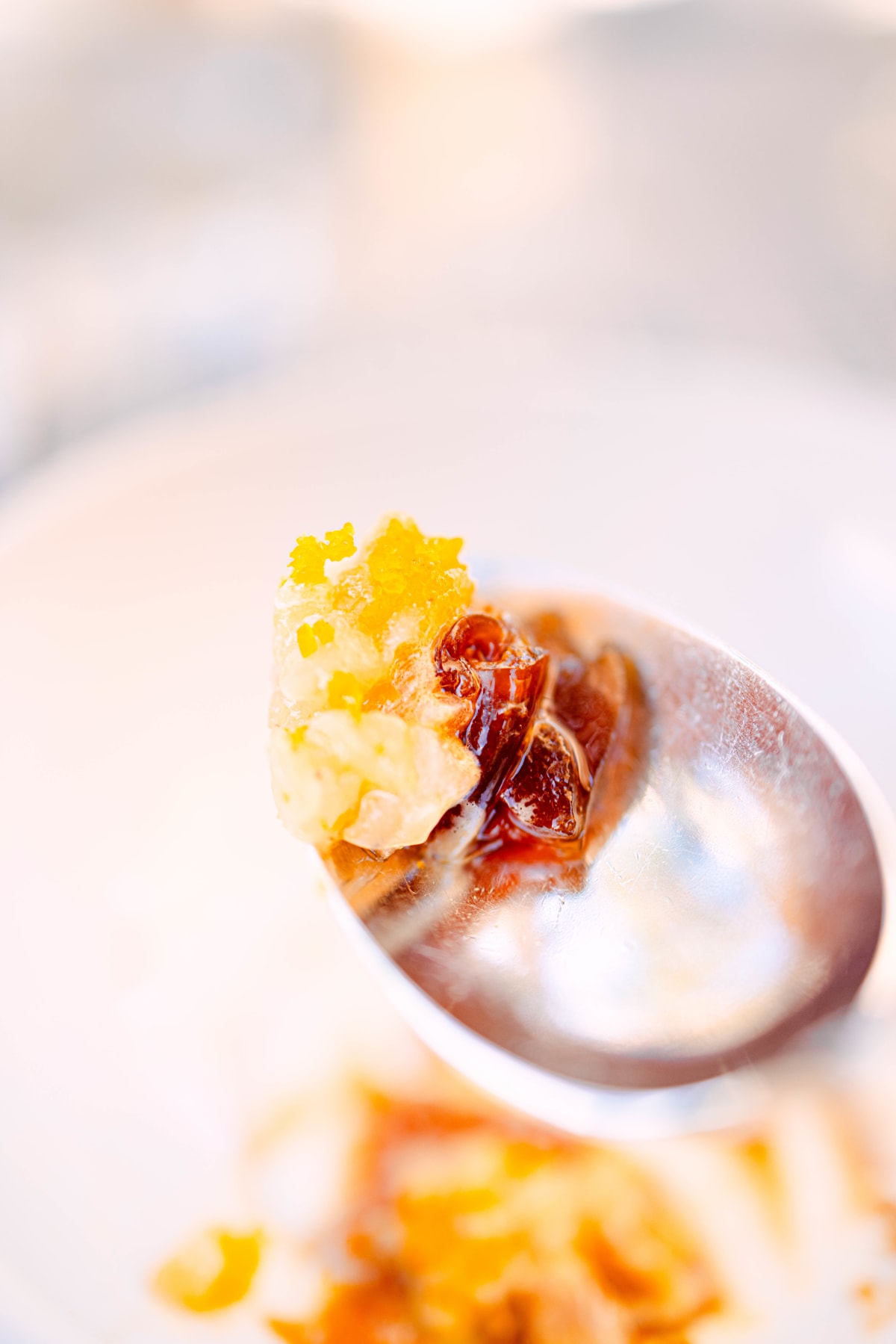
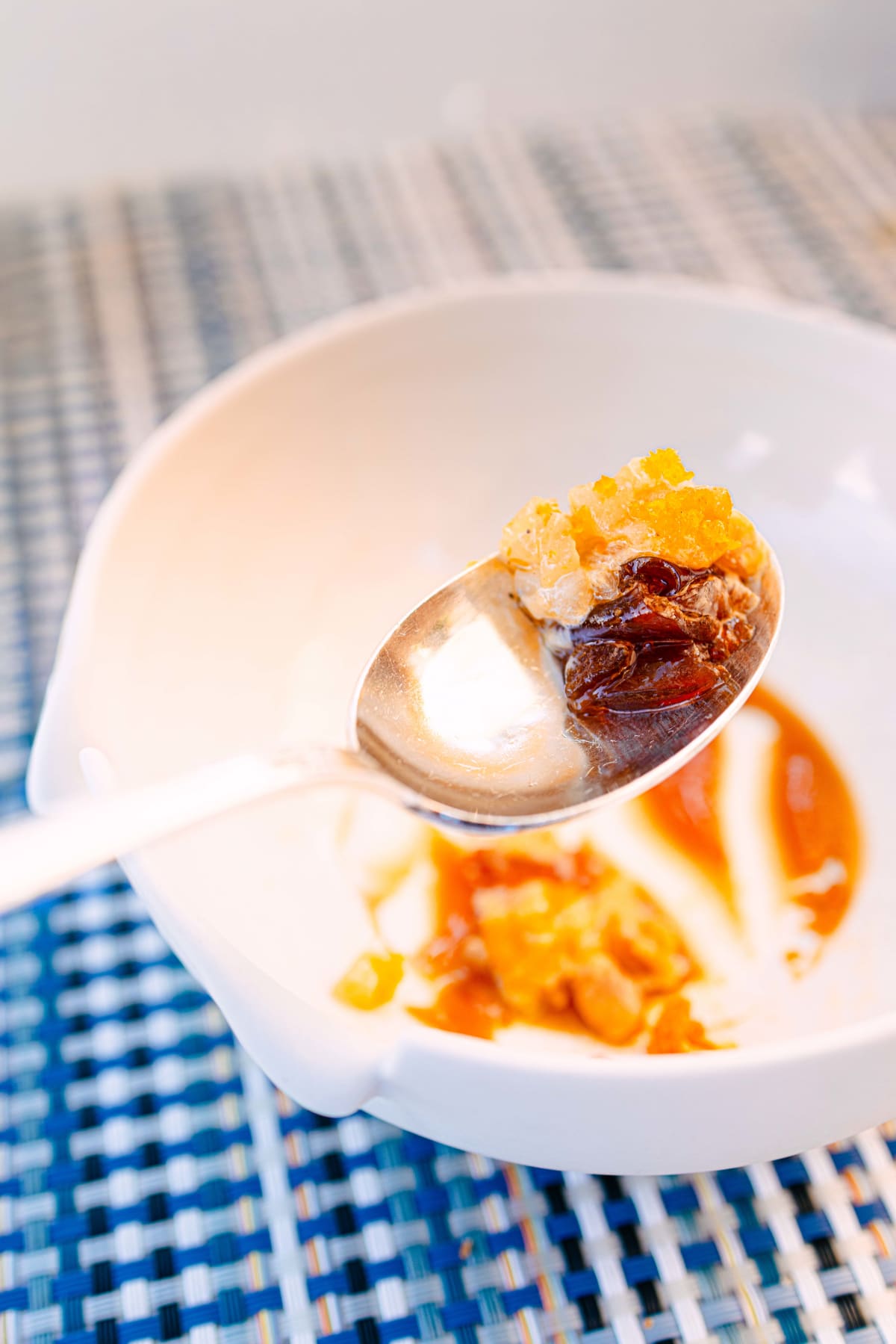
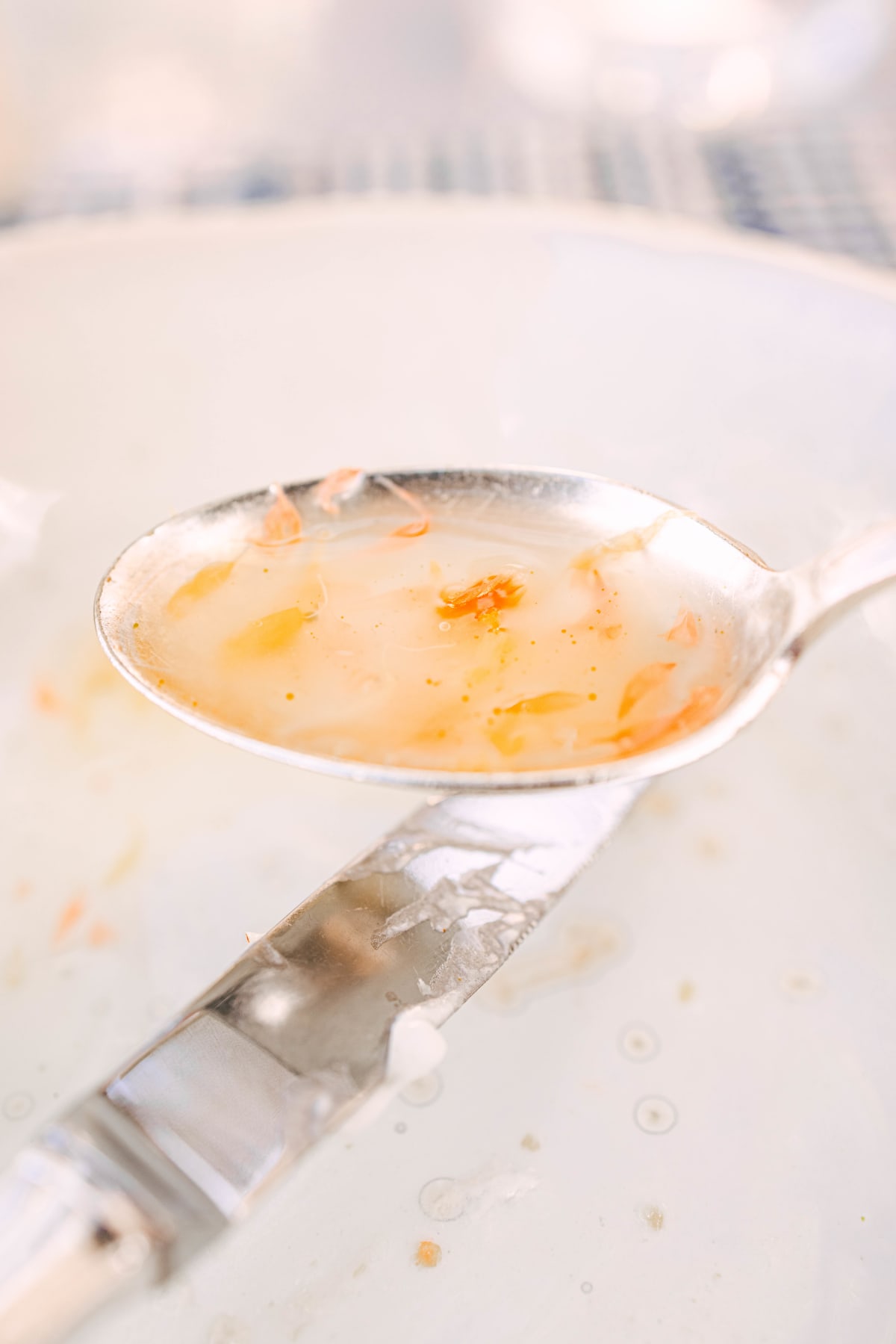
The first small bite was a fish tartare. Denti, a large fish of the bream family, with a jelly made by setting a fish consommé.
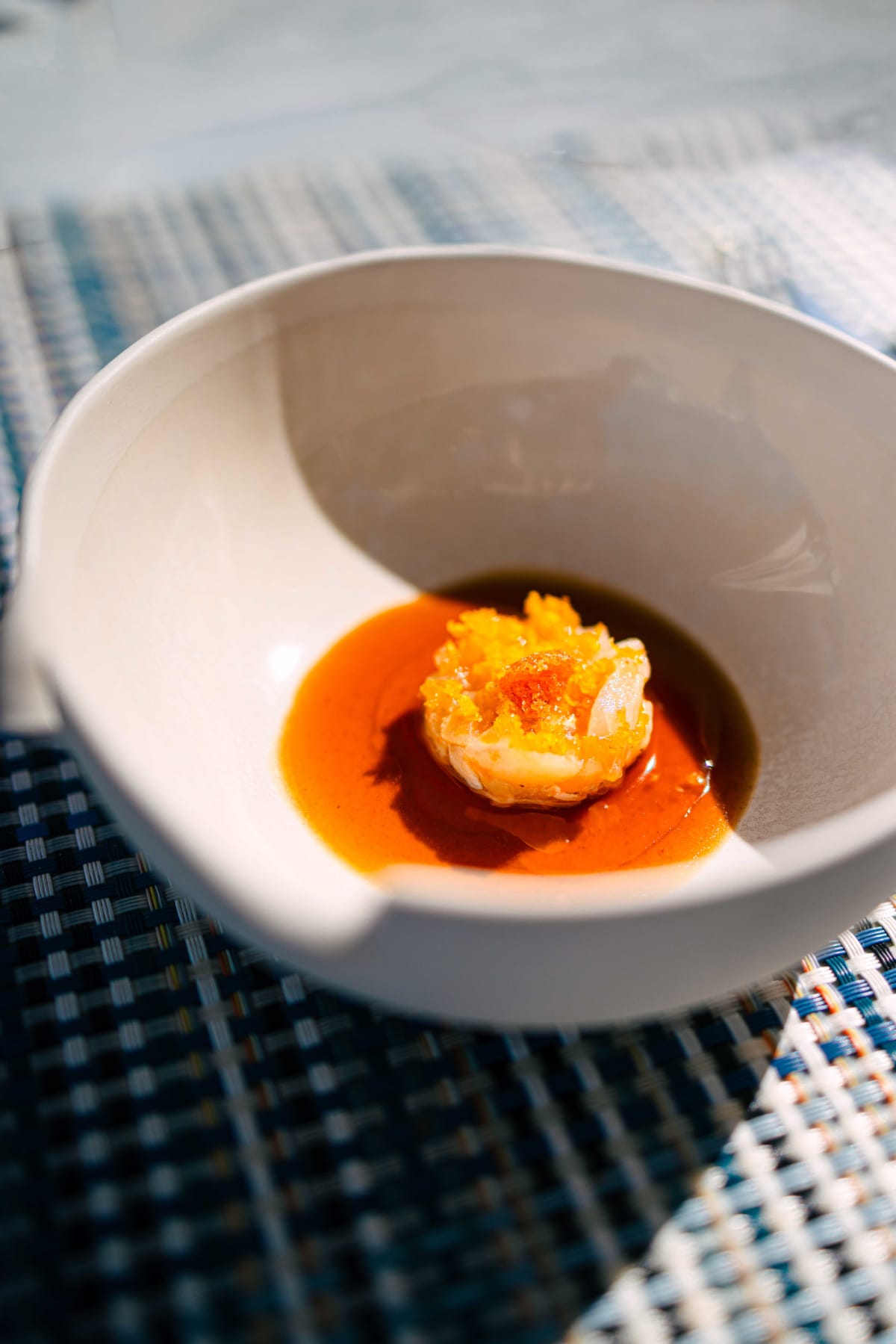
Perhaps for that reason the jelly carried a deep fish flavour, and the jelly in particular was good. The fish itself tasted like an honest white fish and nothing more.
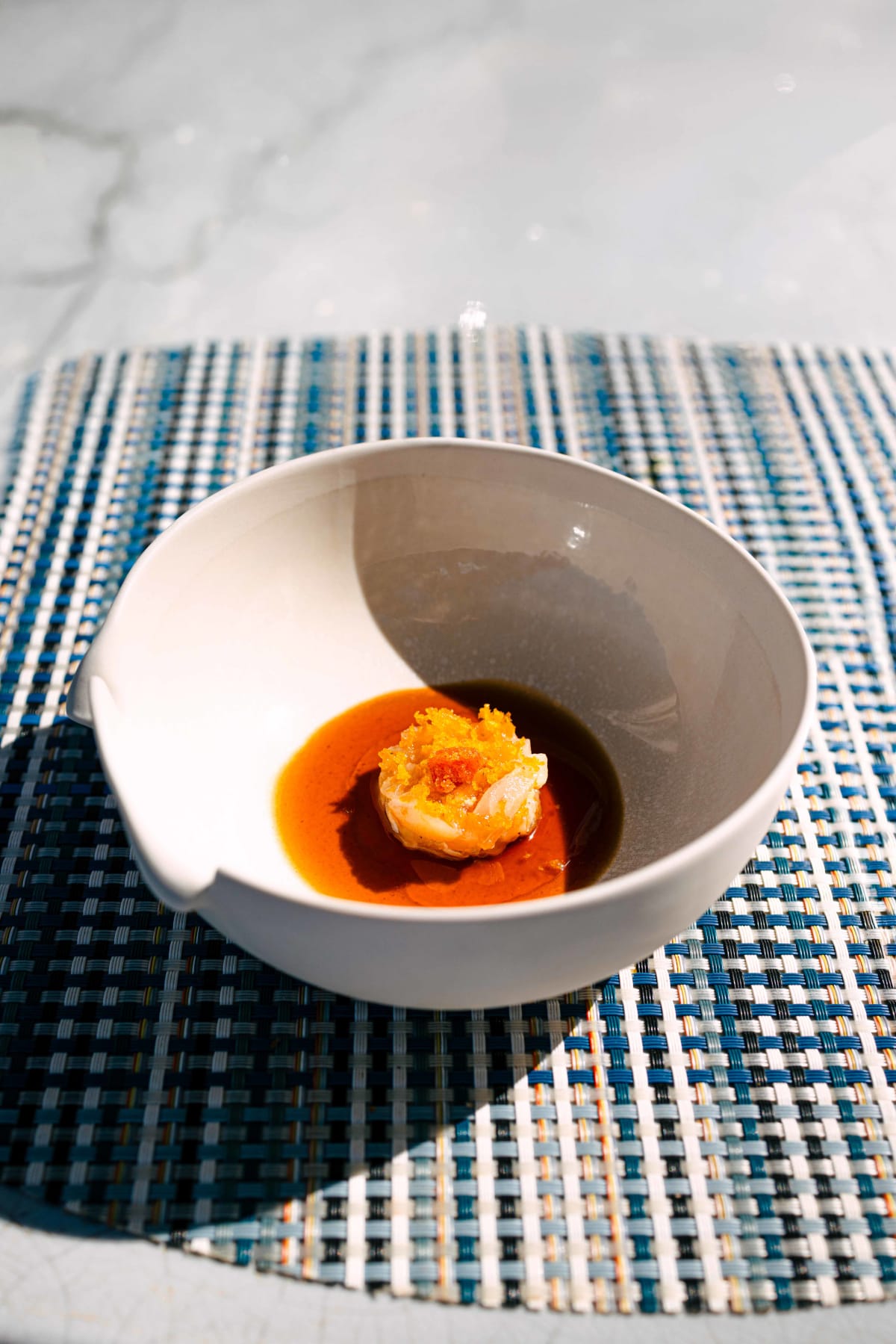
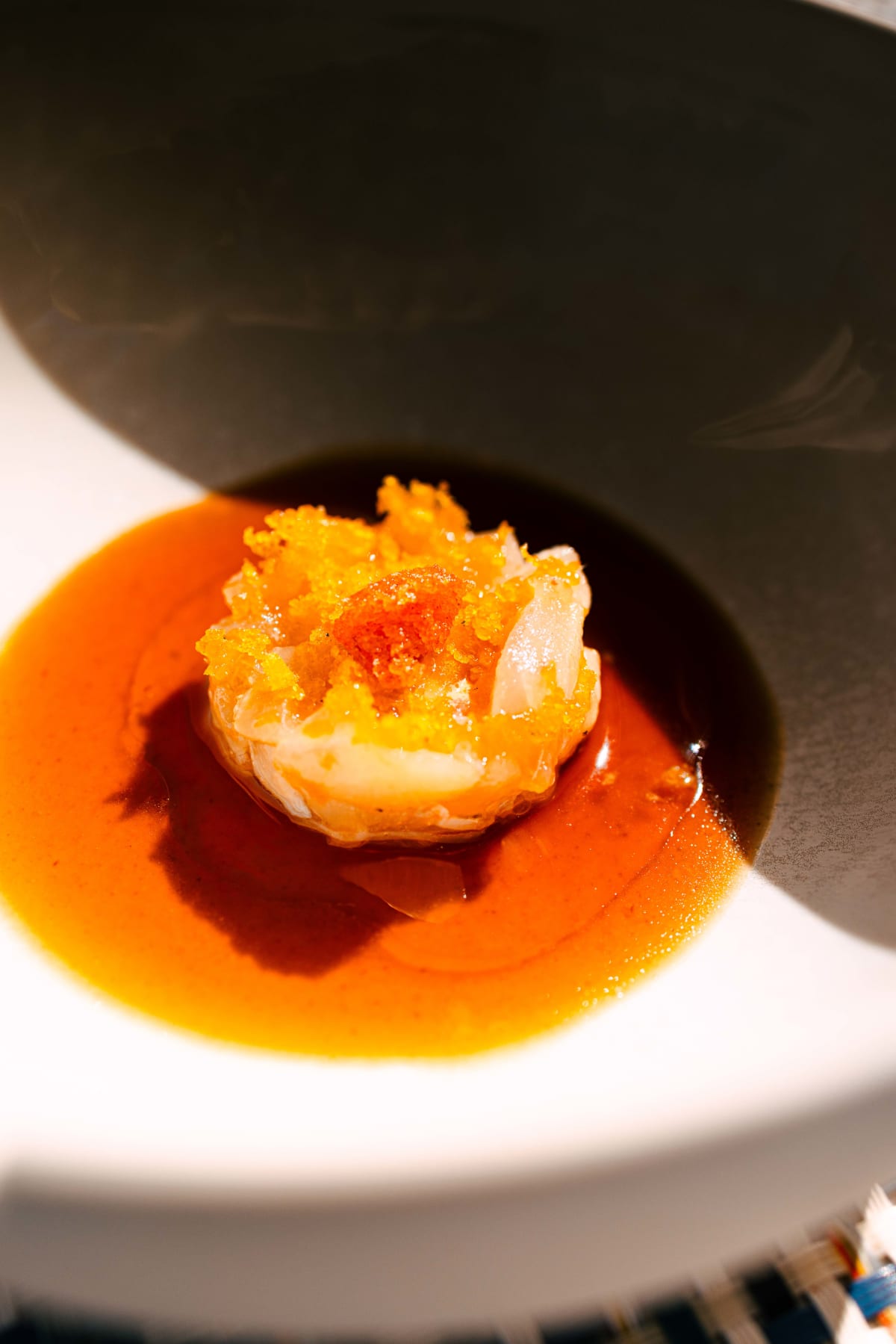
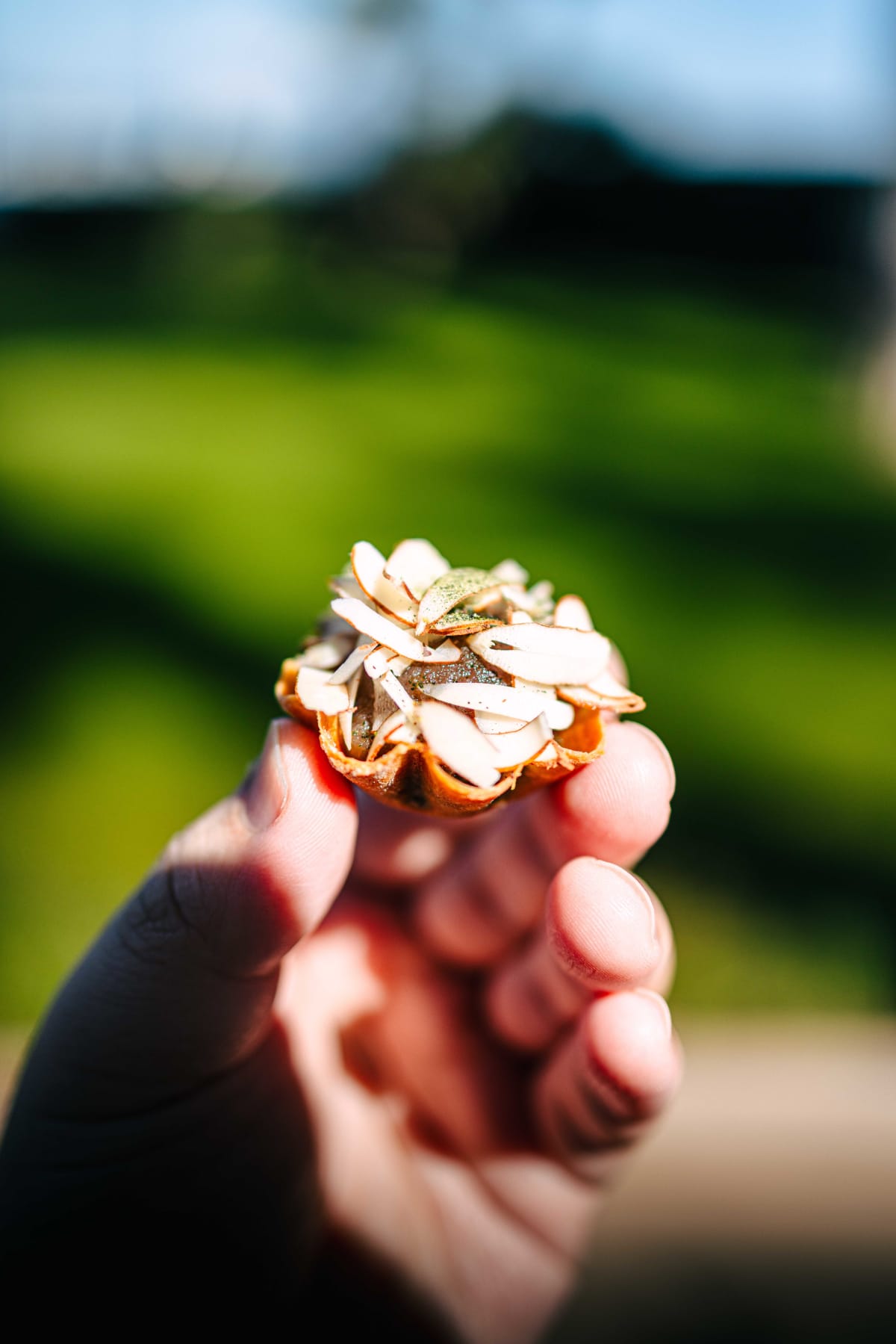
The second was a tuna tartare with almond.
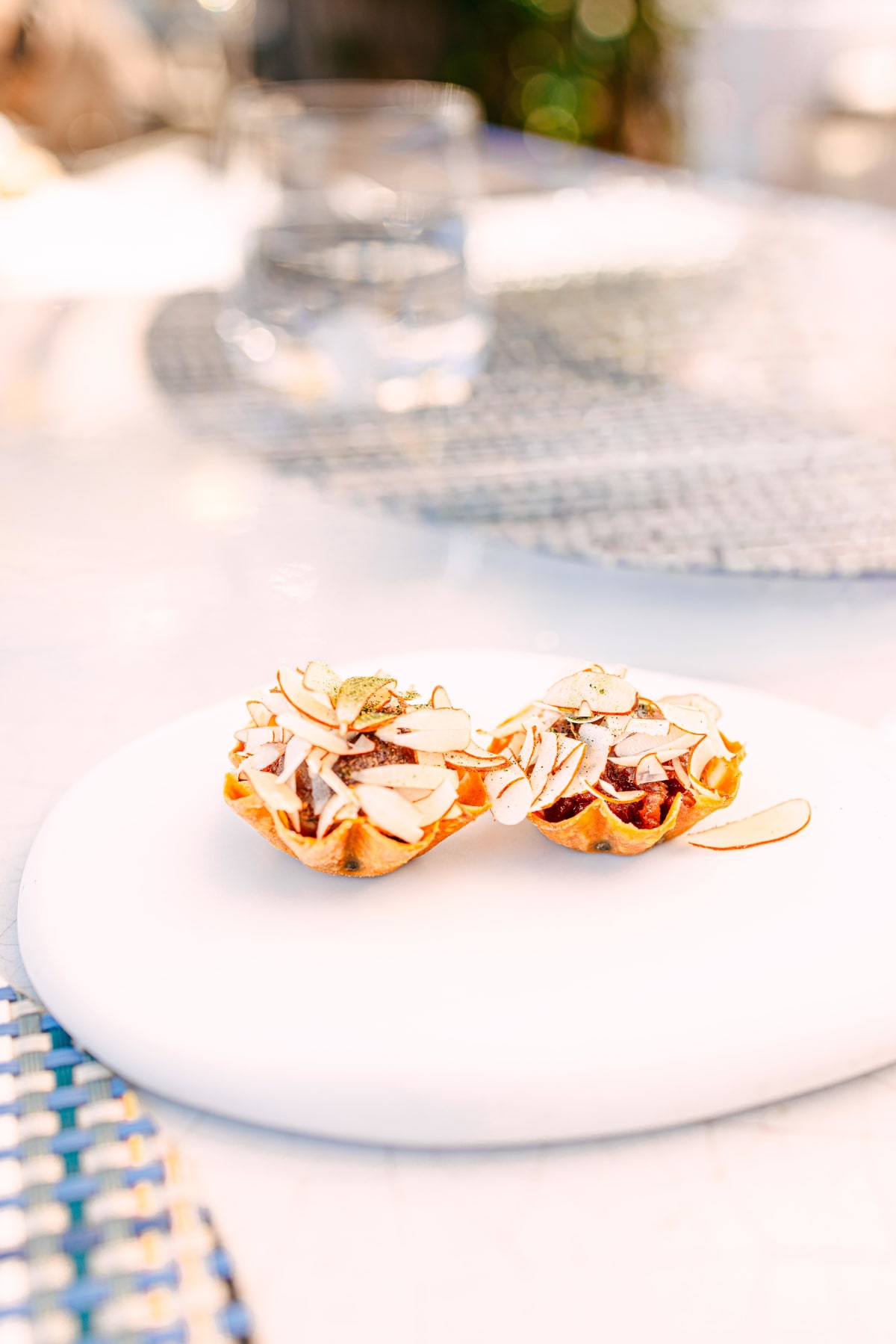
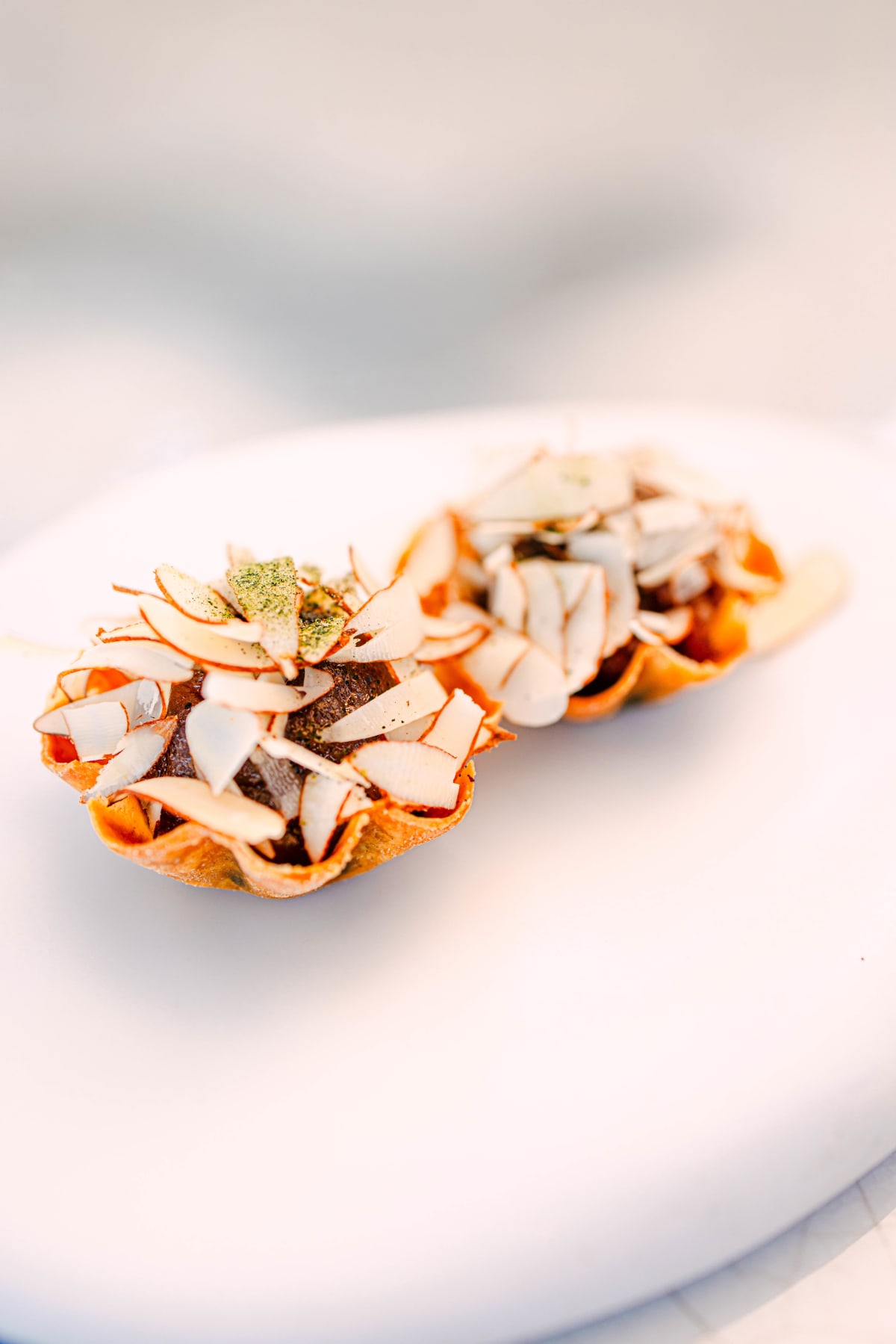
The tuna was chopped very fine and pressed together with almond on top, and strangely there was an aroma of katsuobushi. Whether a Japanese touch went in or it was chance out of the combination I could not tell, but the taste was sound.
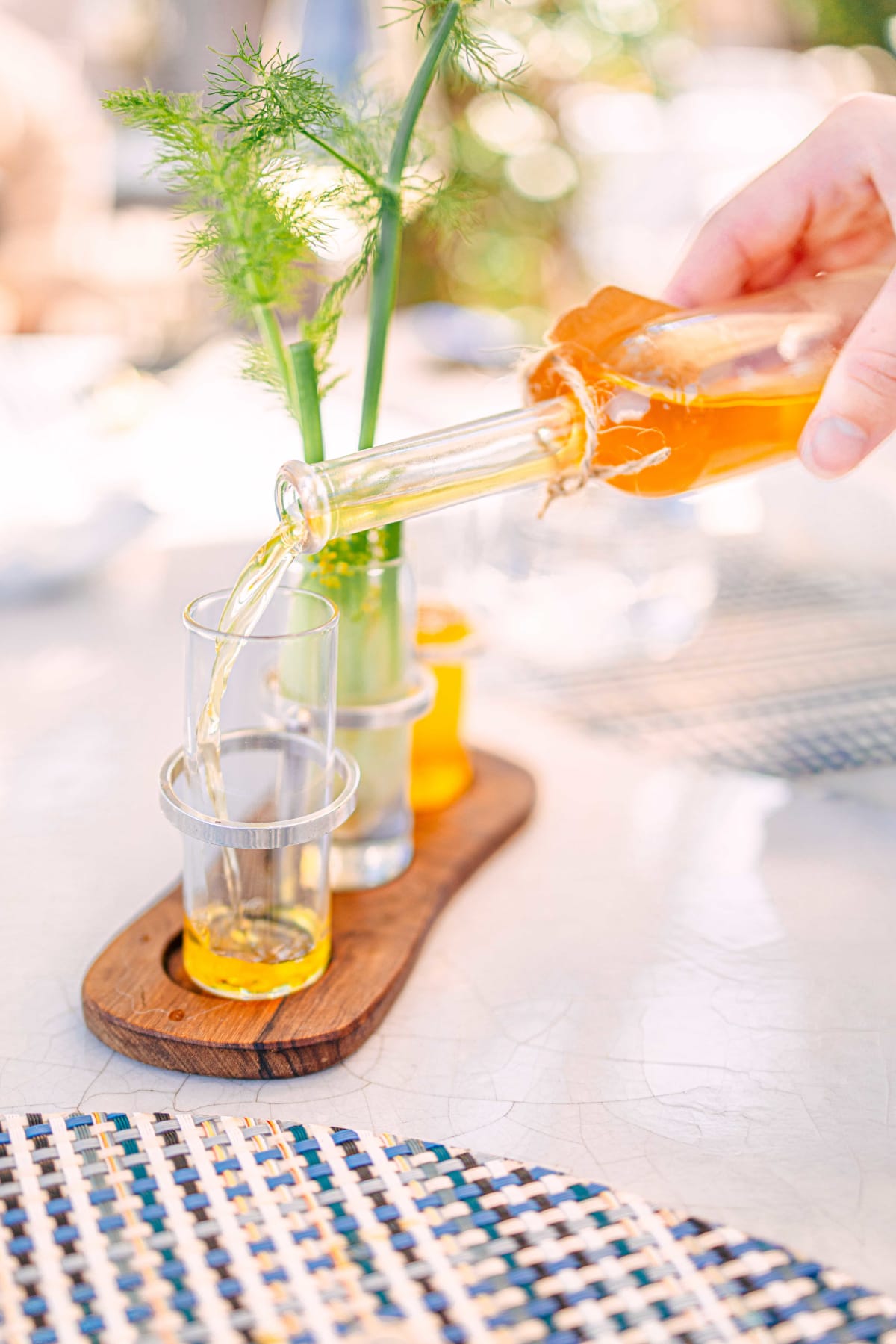
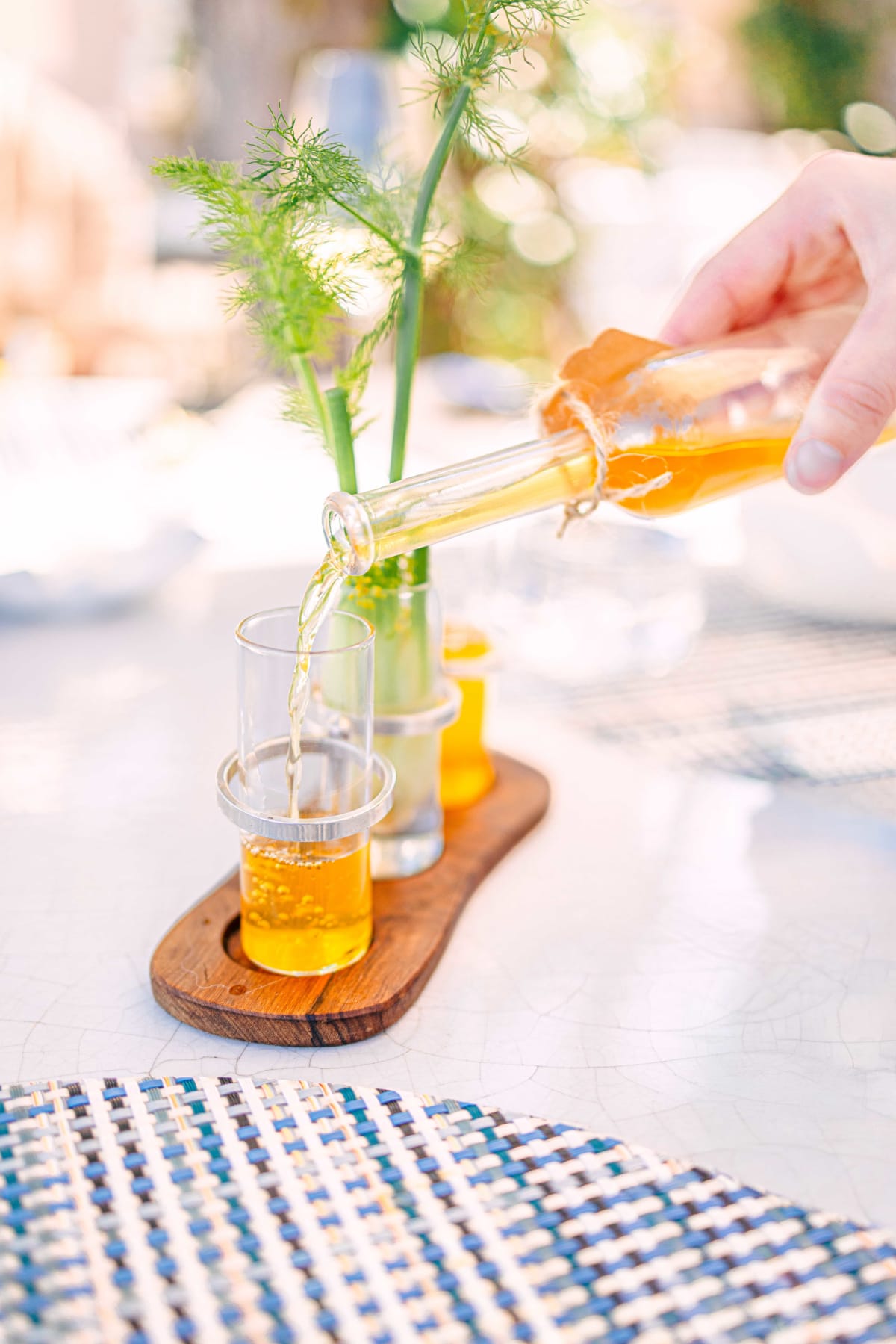
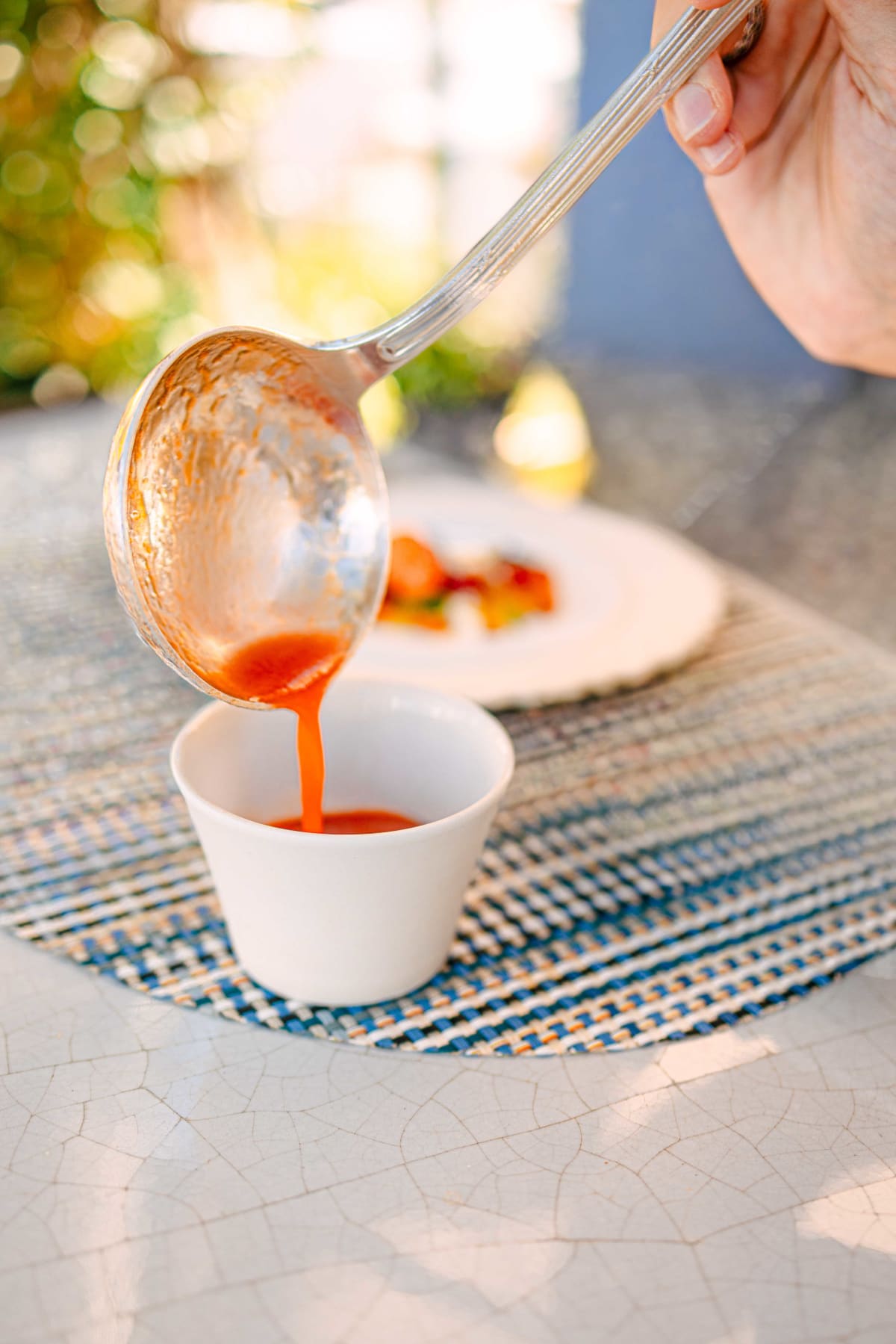
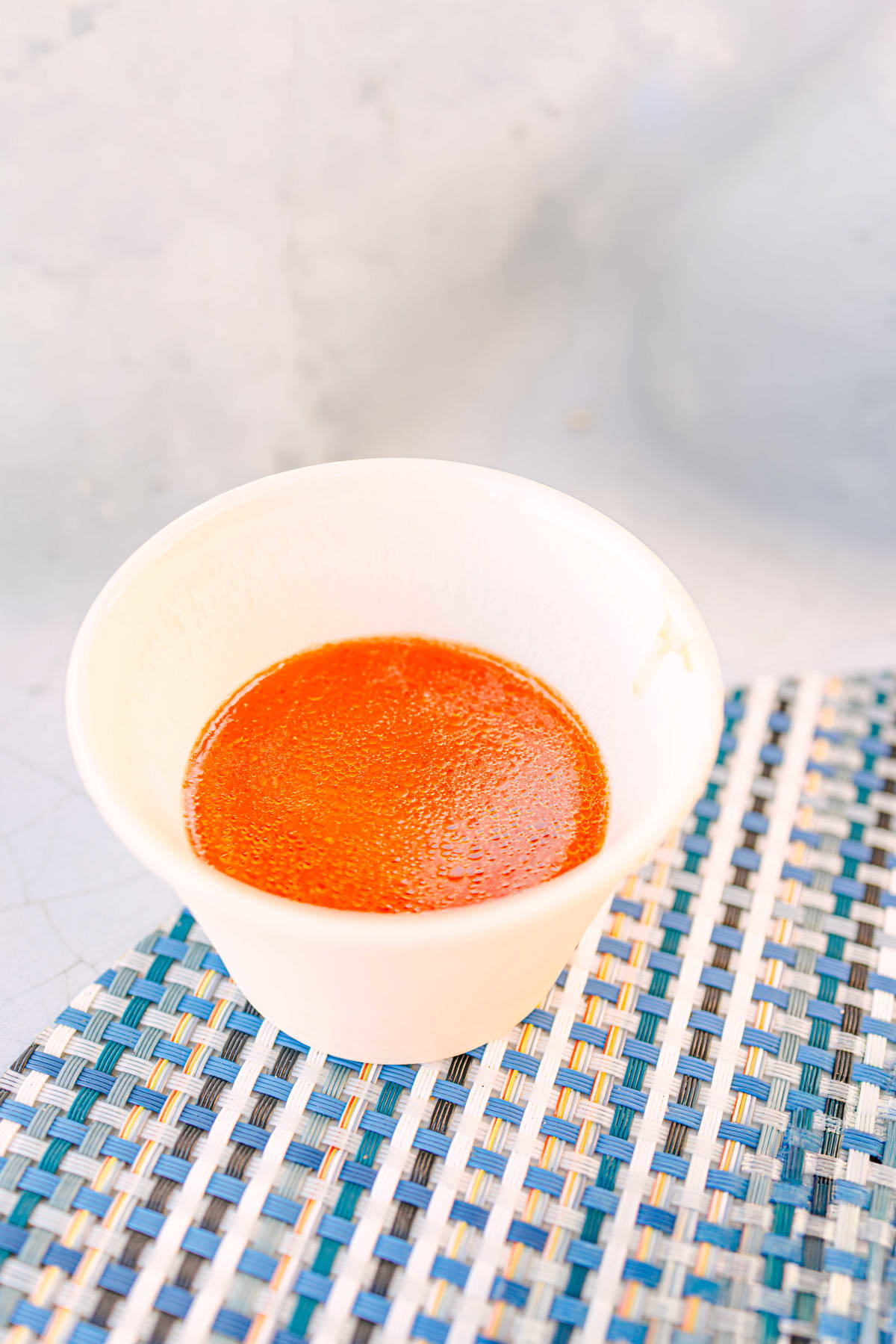
Last they pour a glass each of tomato water mixed with olive oil, and thanks to the quality of the oil the impression of a well made gazpacho came through exactly.
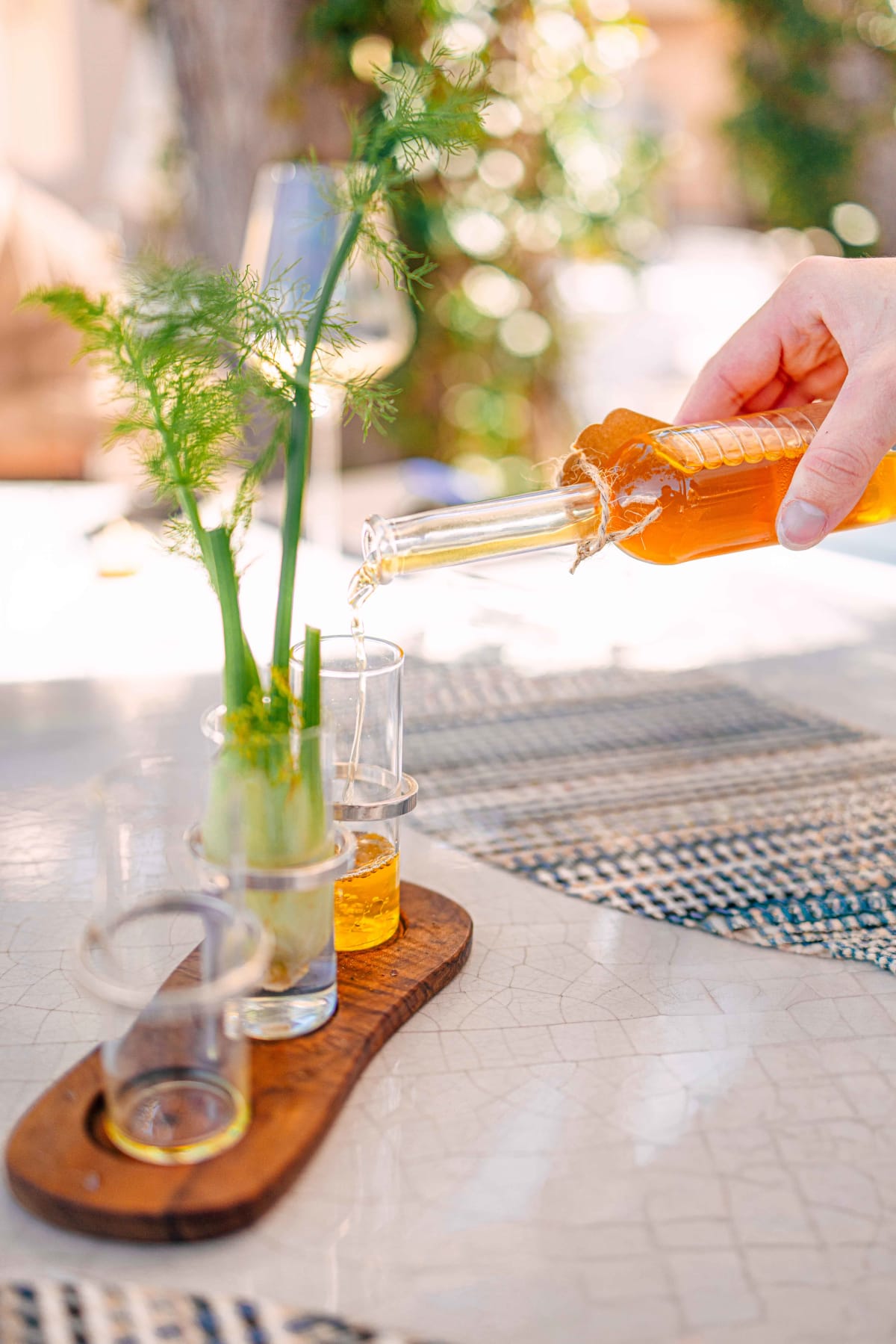
Tomato water is obtained by crushing the fruit and filtering it slowly through a sieve, or by freezing it once and extracting as it thaws.
Section 11·A Painting Of Tomatoes
The first course proper was an extremely beautiful tomato salad. The title is Tableau de tomate de la plantation des terres de Grimaud, a painting of tomatoes from the land of Grimaud.
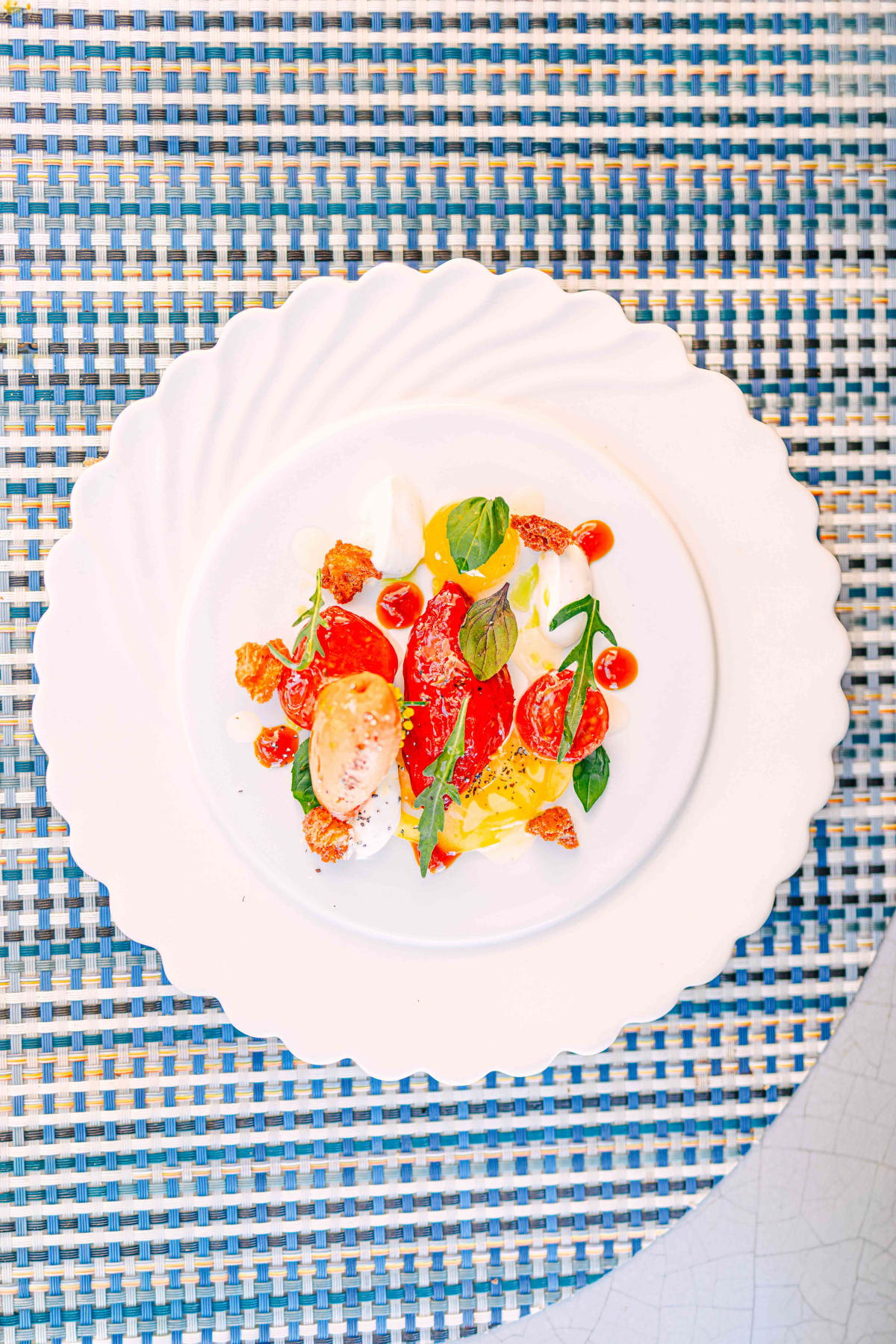
The title alone is poetic. This was the last week of the restaurant's season, and the tomatoes used here were the last summer tomatoes of that year.
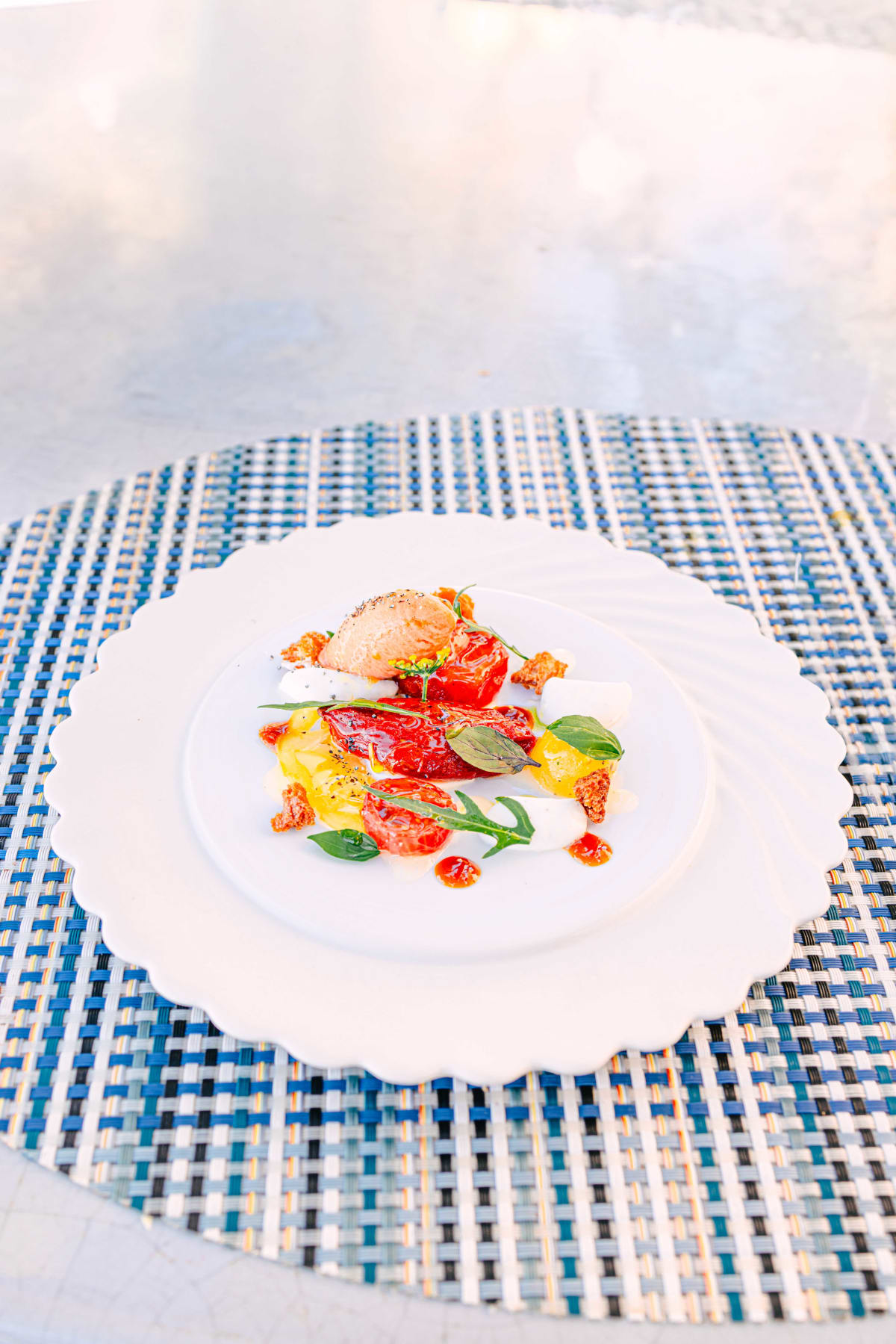
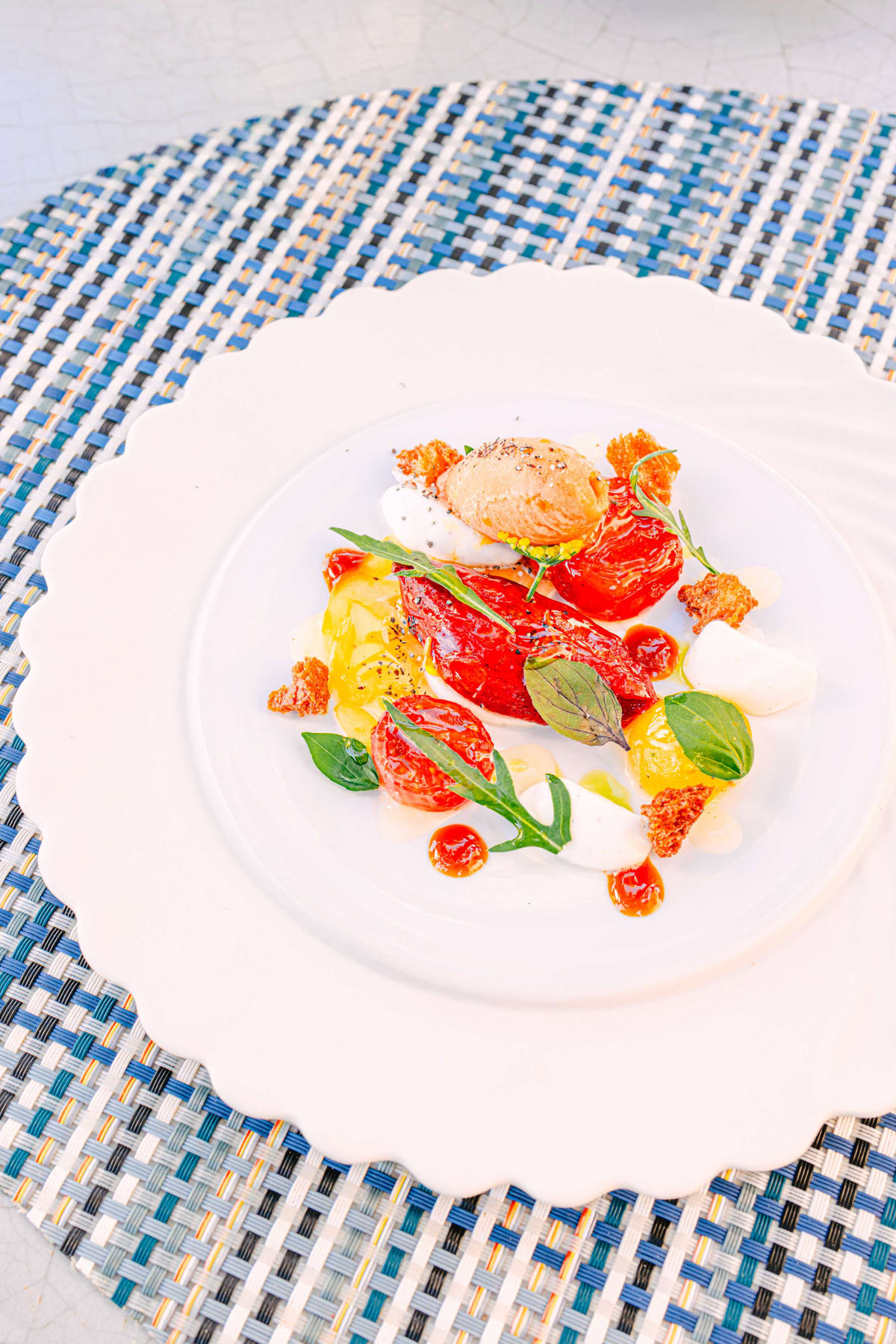
The dish is several kinds of tomato with Provençal herbs and a light sugar glaze. Some tomatoes are preserved, some marinated, some raw and only seasoned, so different treatments gather on one plate.

The menu described it as Vinaigrette régressive de Noire de Crimée.
Noire de Crimée is a fine French tomato variety with a dark red colour, and vinaigrette régressive translates literally as a regressive vinaigrette, a literary phrase French chefs use when expressing the simple flavours of an earlier time in a modern form.
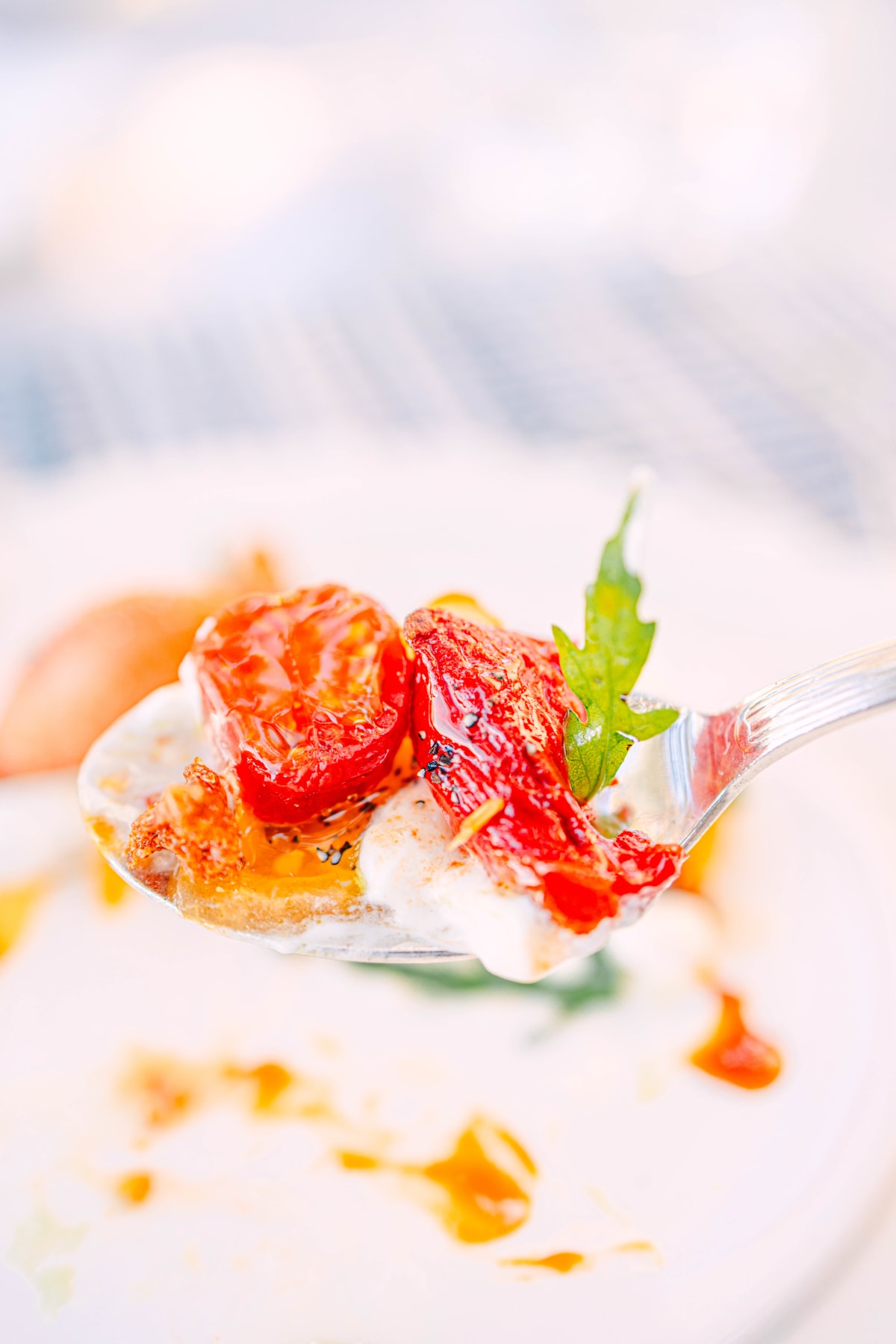
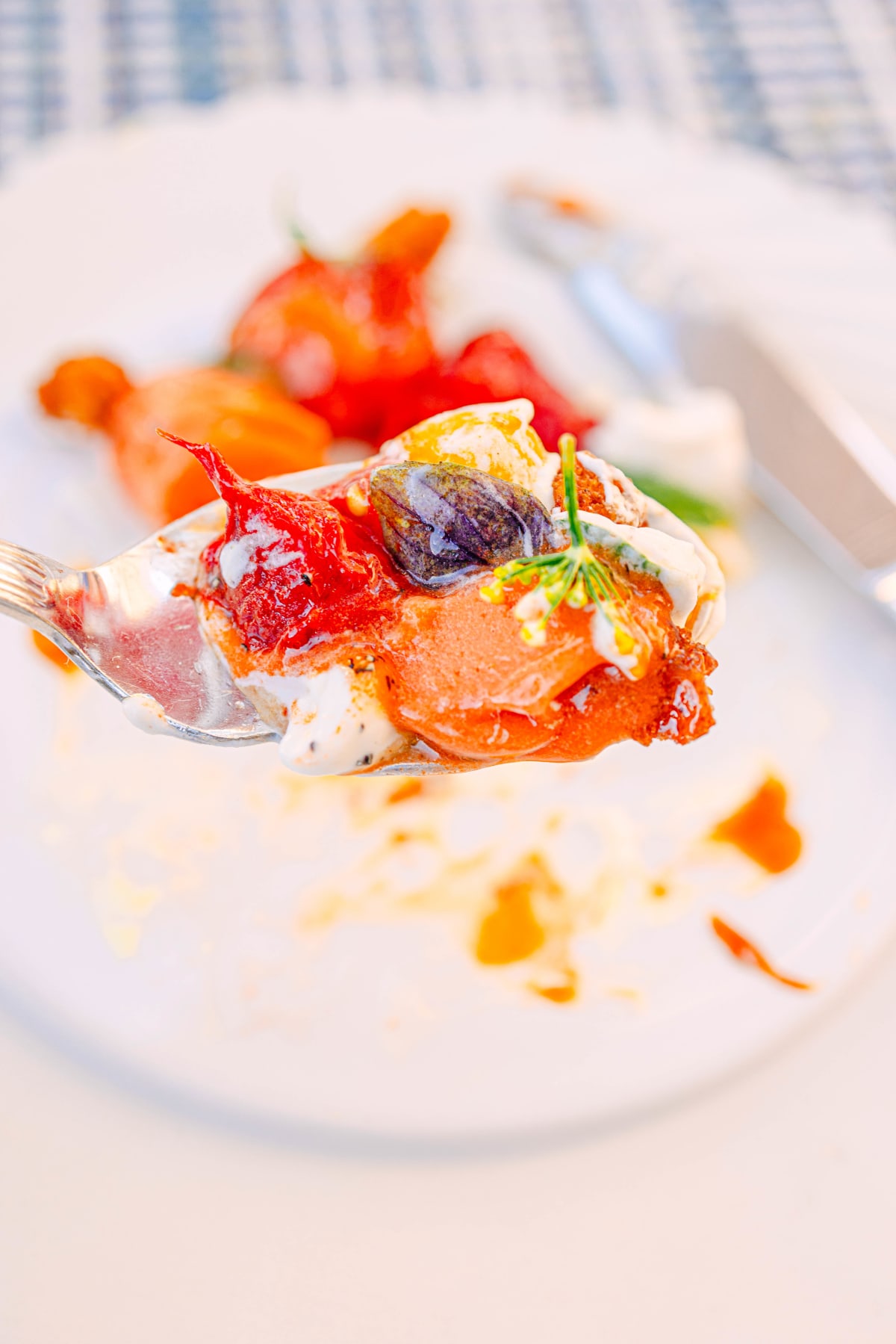
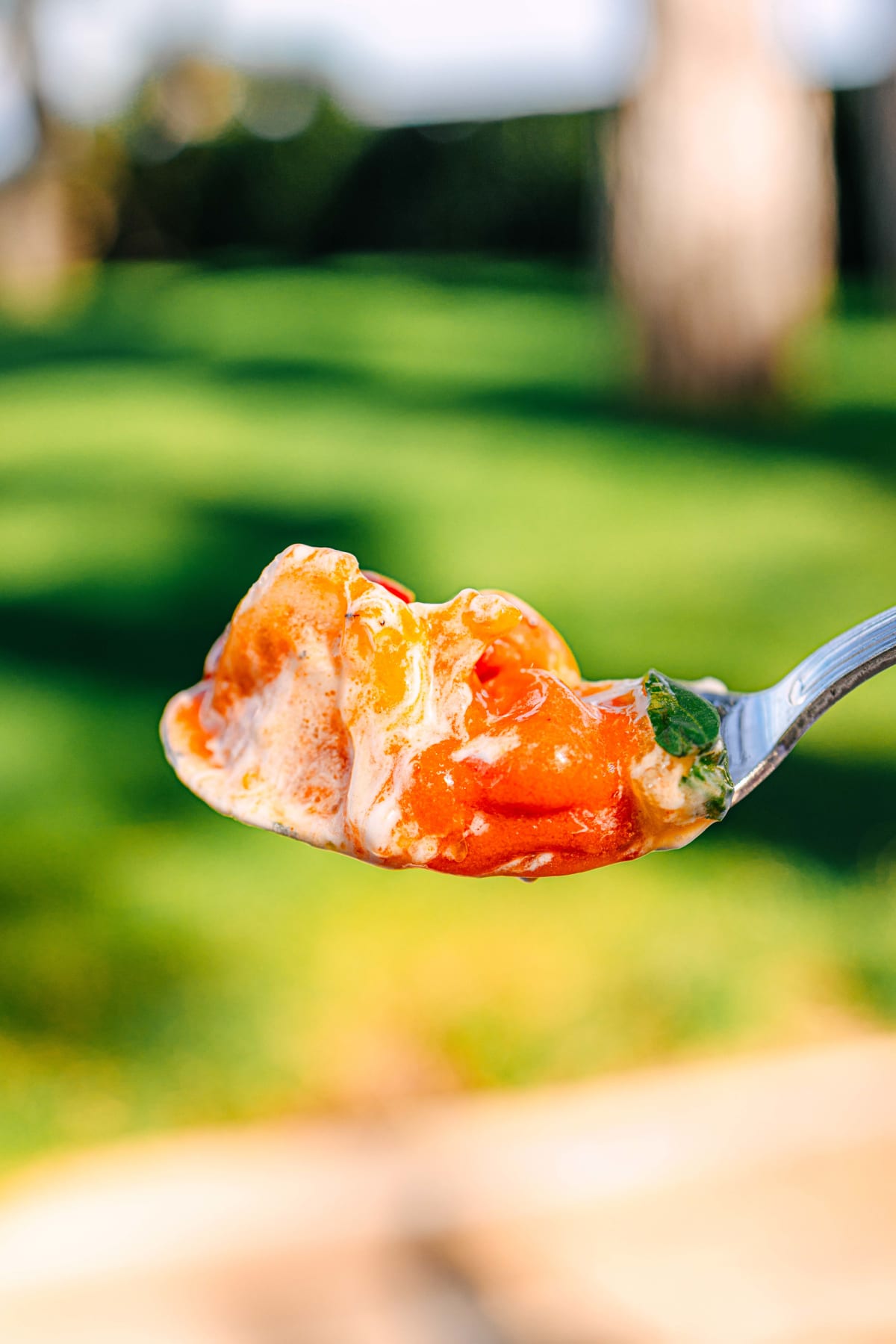
In short this dish is a solo performance where the tomato plays every part from supporting role to lead. And the tomato carried every one of them. Each was good and the other ingredients on the plate held their presence clearly.
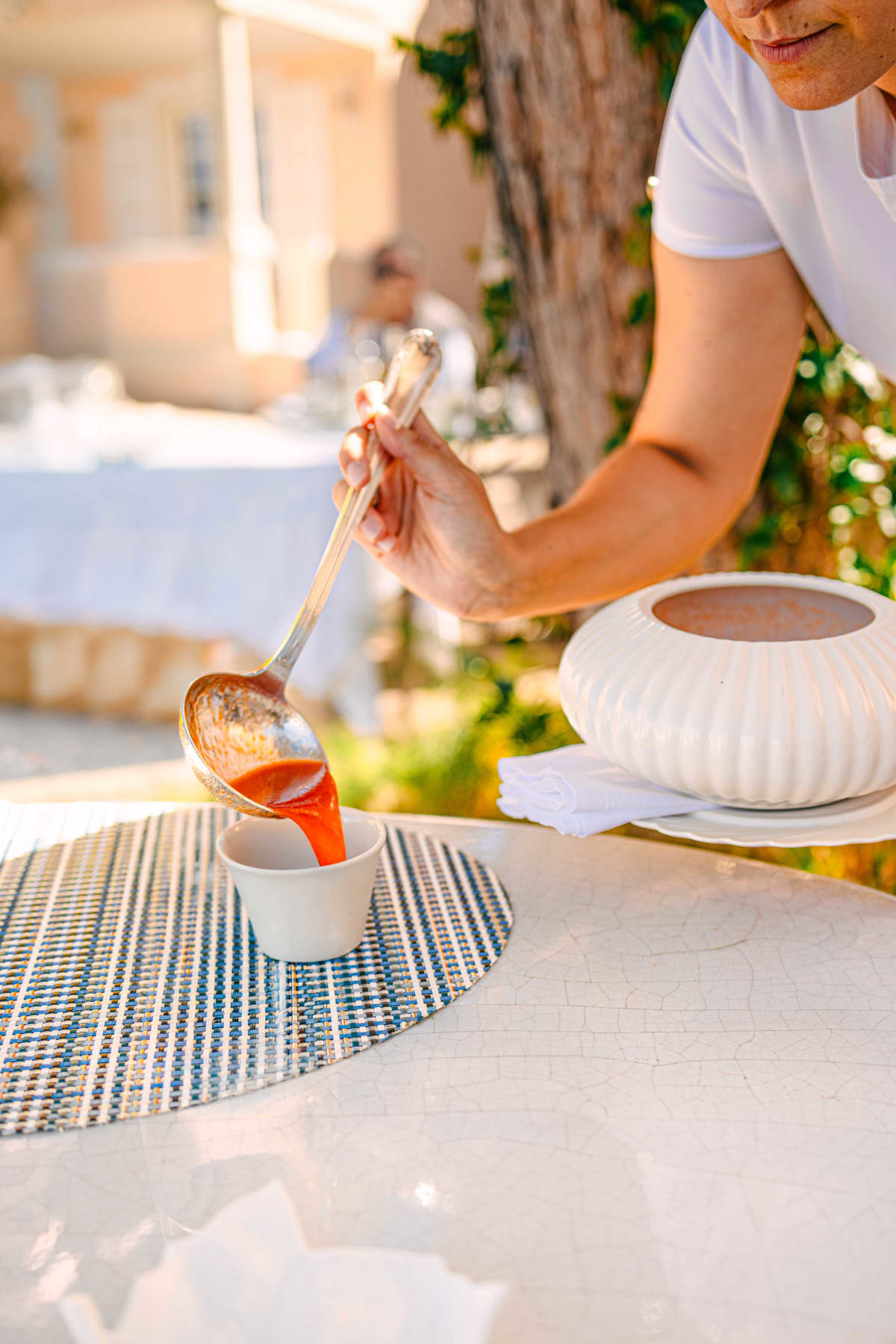
Looked at as composition it seems like a salad with nothing special about it, but the flavour of each herb and each ingredient was so clear that the impression was overwhelming. The cold tomato soup that came alongside had olive oil floating generously on it, and there is no word for that taste other than gazpacho either.
Section 12·Lisette And Artichoke
The second course was mackerel. This one was a painting too. Lisette is the word for a young mackerel, and the skin was grilled crisp. The most important thing in the garnish is the artichoke.
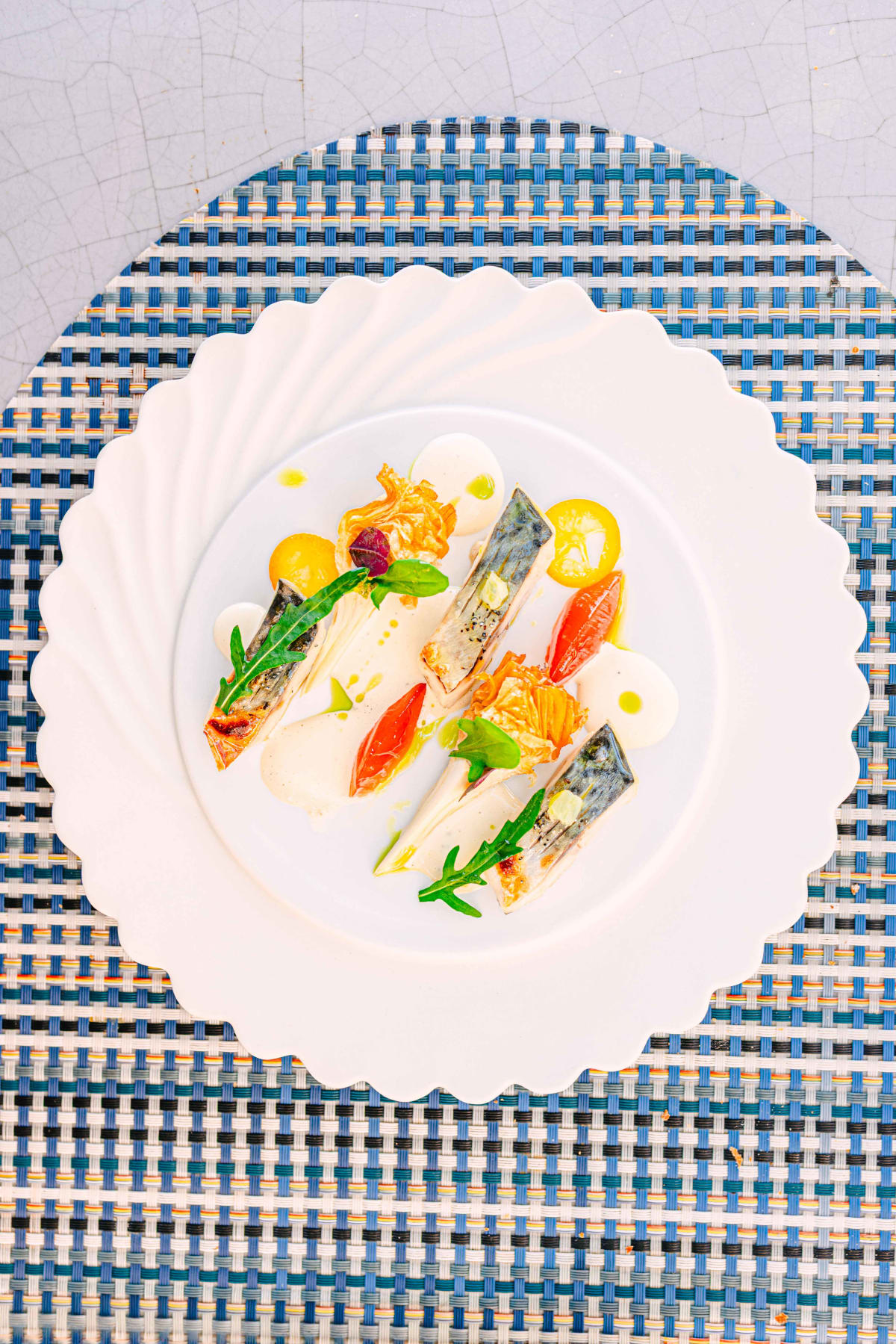
Artichaut barigoule, a traditional Provençal method, cooks artichoke soft in olive oil and white wine.
This dish looked like a rereading of escabèche.
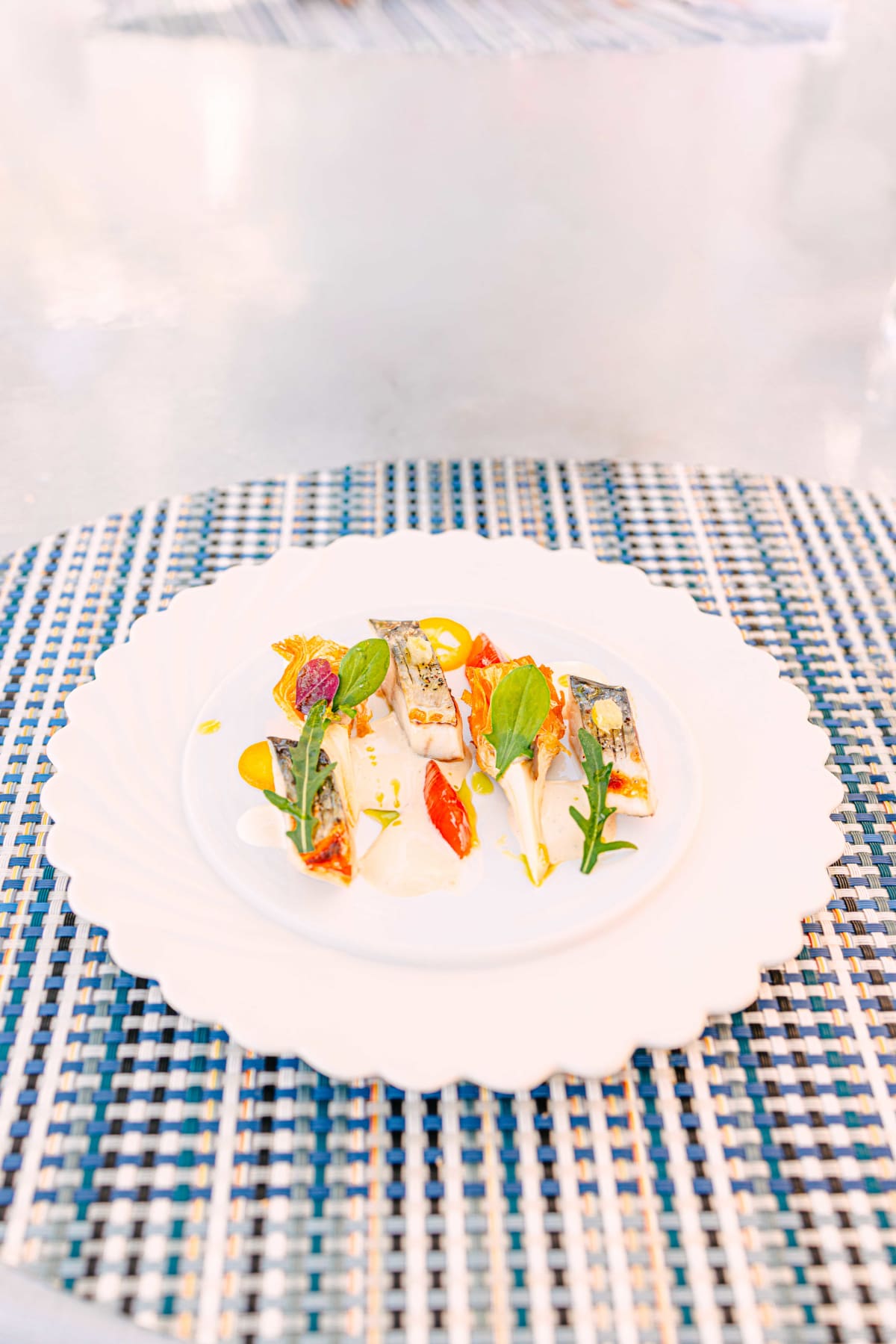
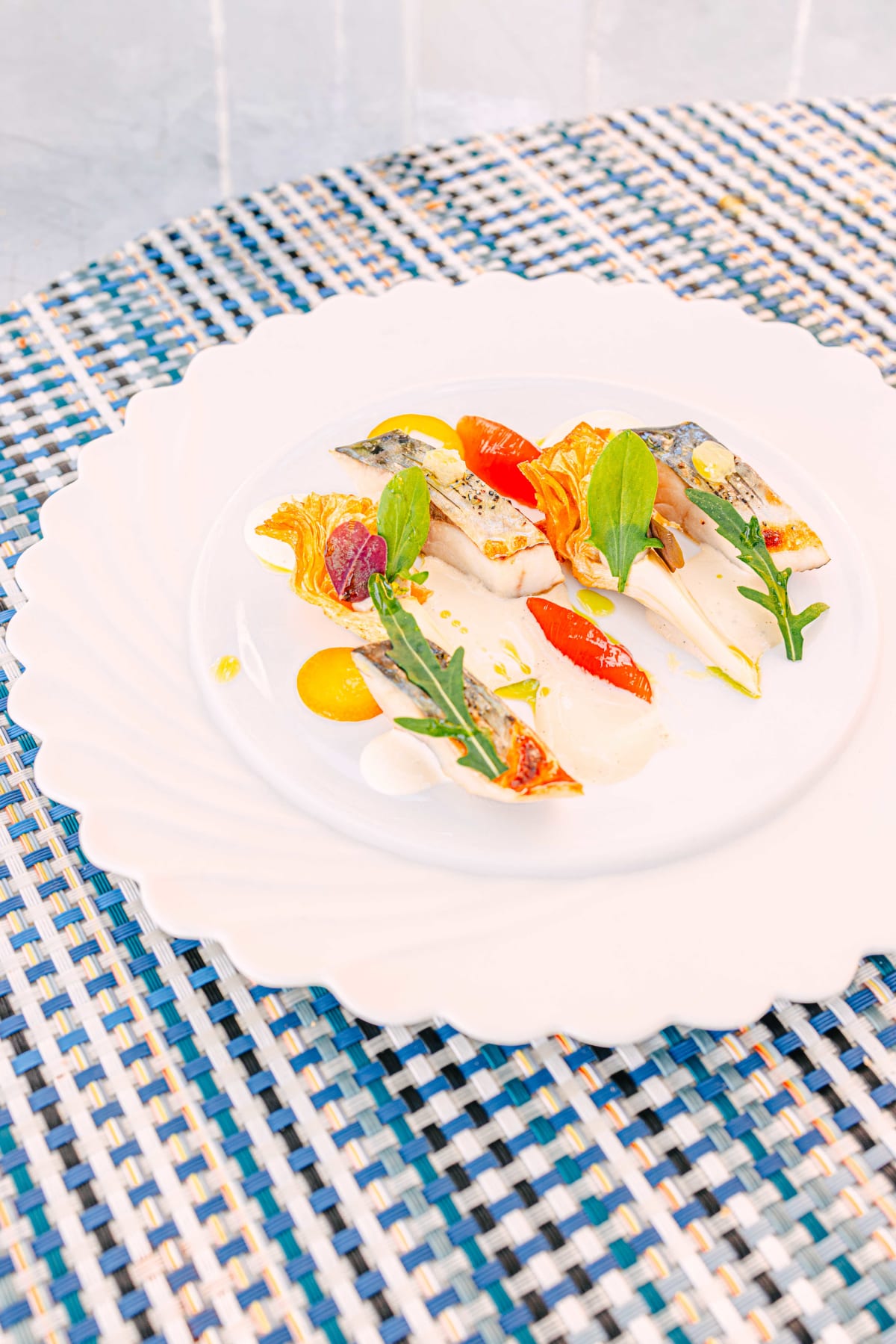
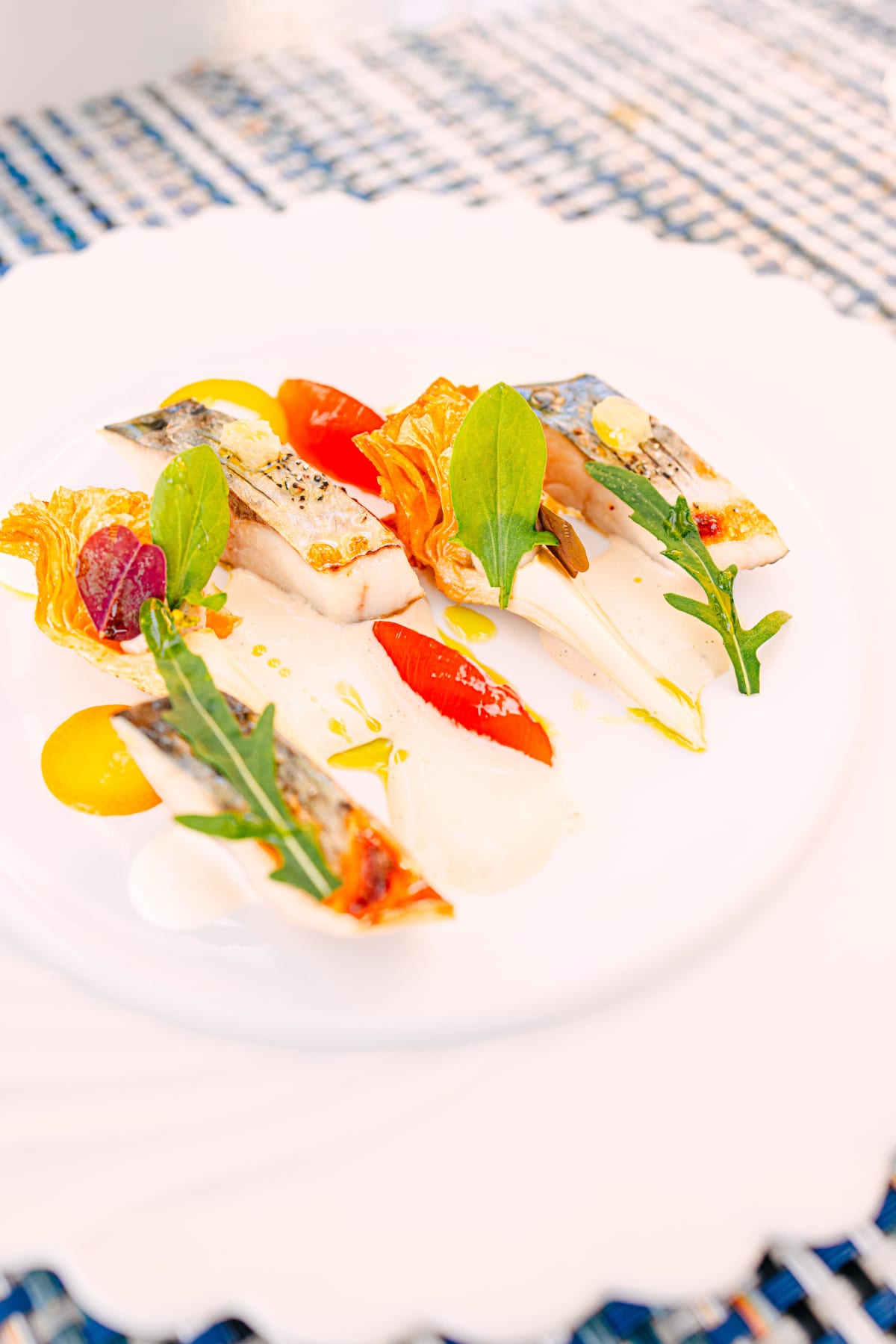
Escabèche is a traditional Provençal method for preserving fish over time, and the word covers a wide range of Spanish and French dishes where cured fish is cooked in or steeped in an acidic sauce then flavoured with paprika, citrus and spice.
Here I suspect grilled young mackerel was used with a pickling sauce of vinegar, onion and white wine. Kumquat was added for freshness, along with tomato and various herbs.
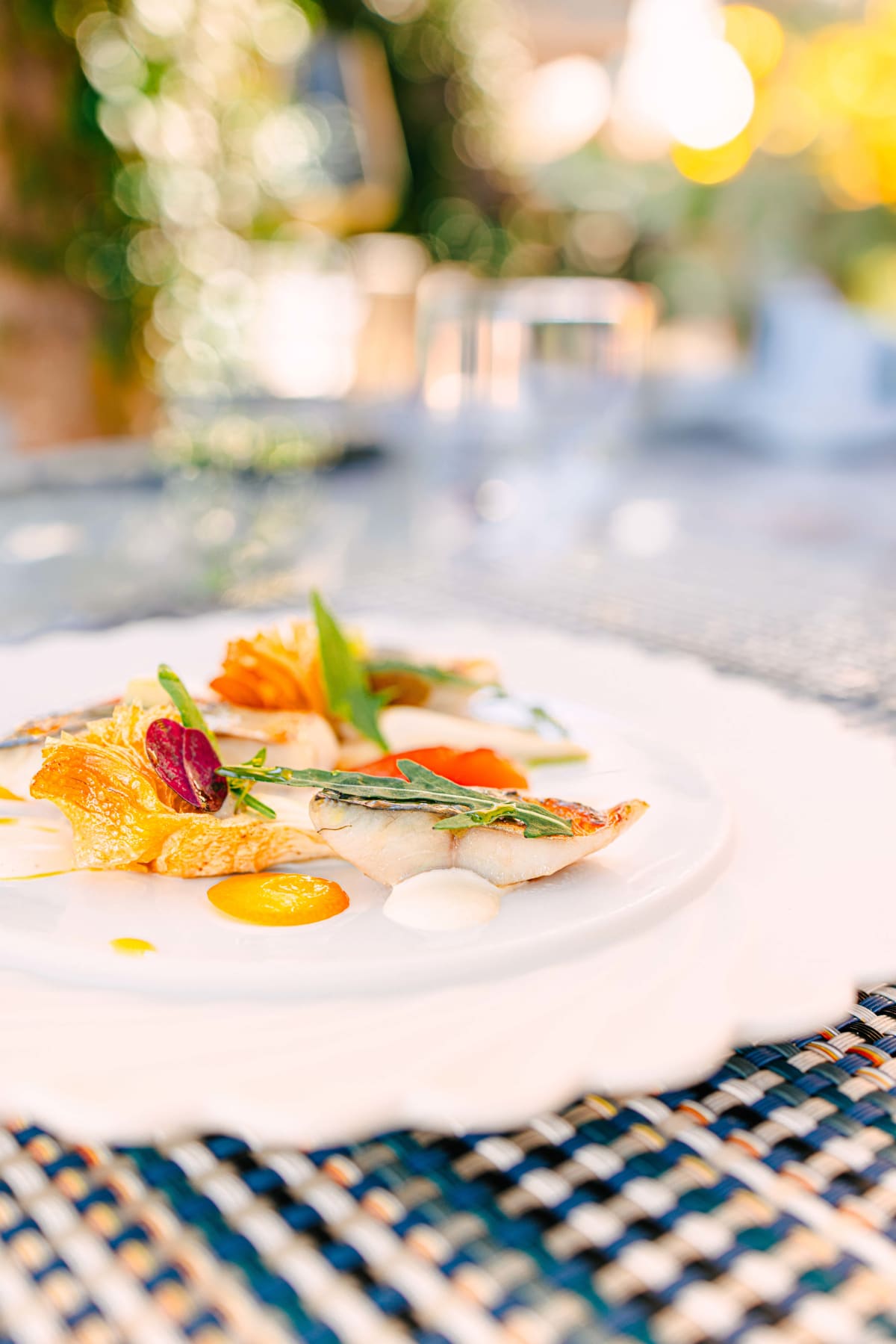
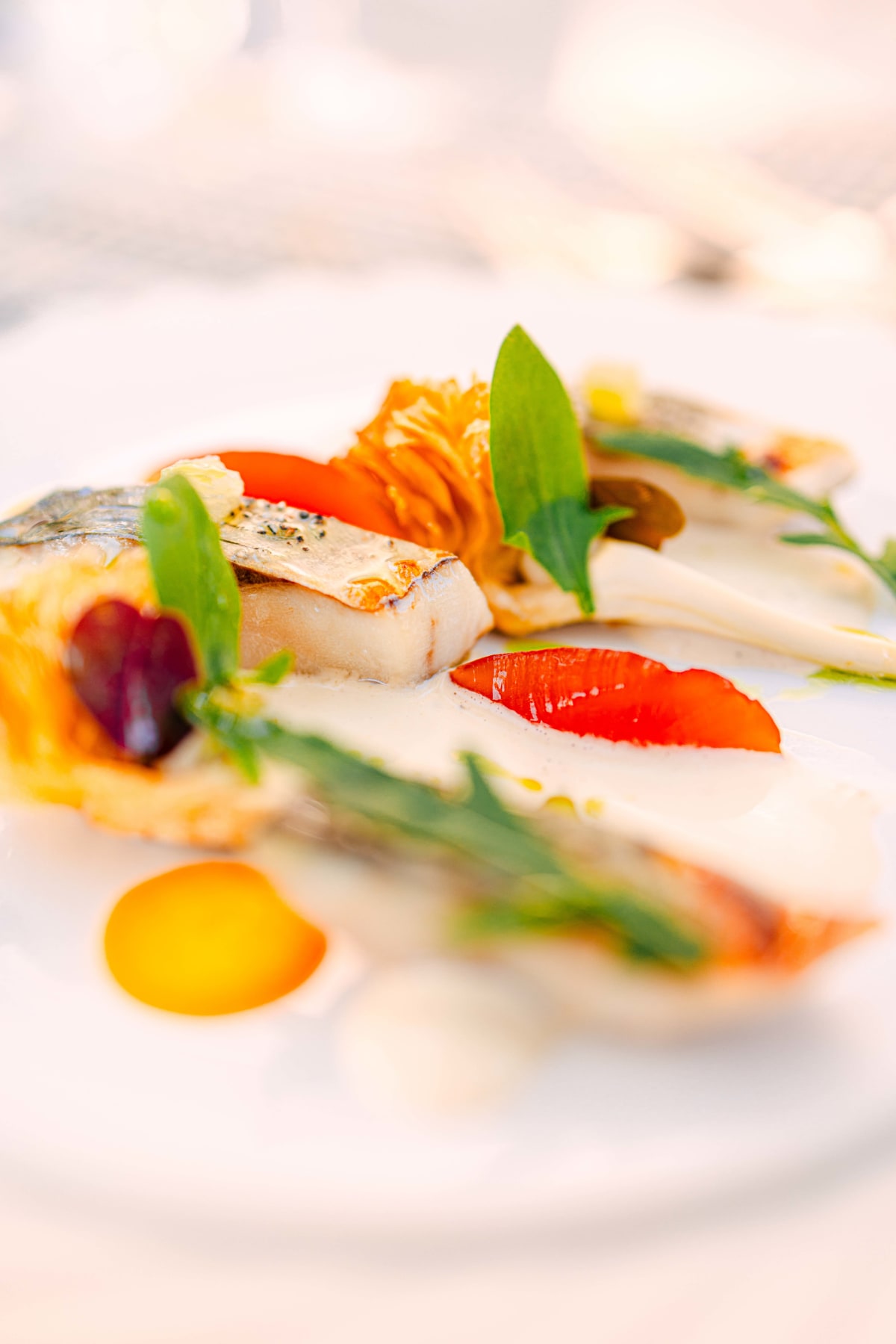
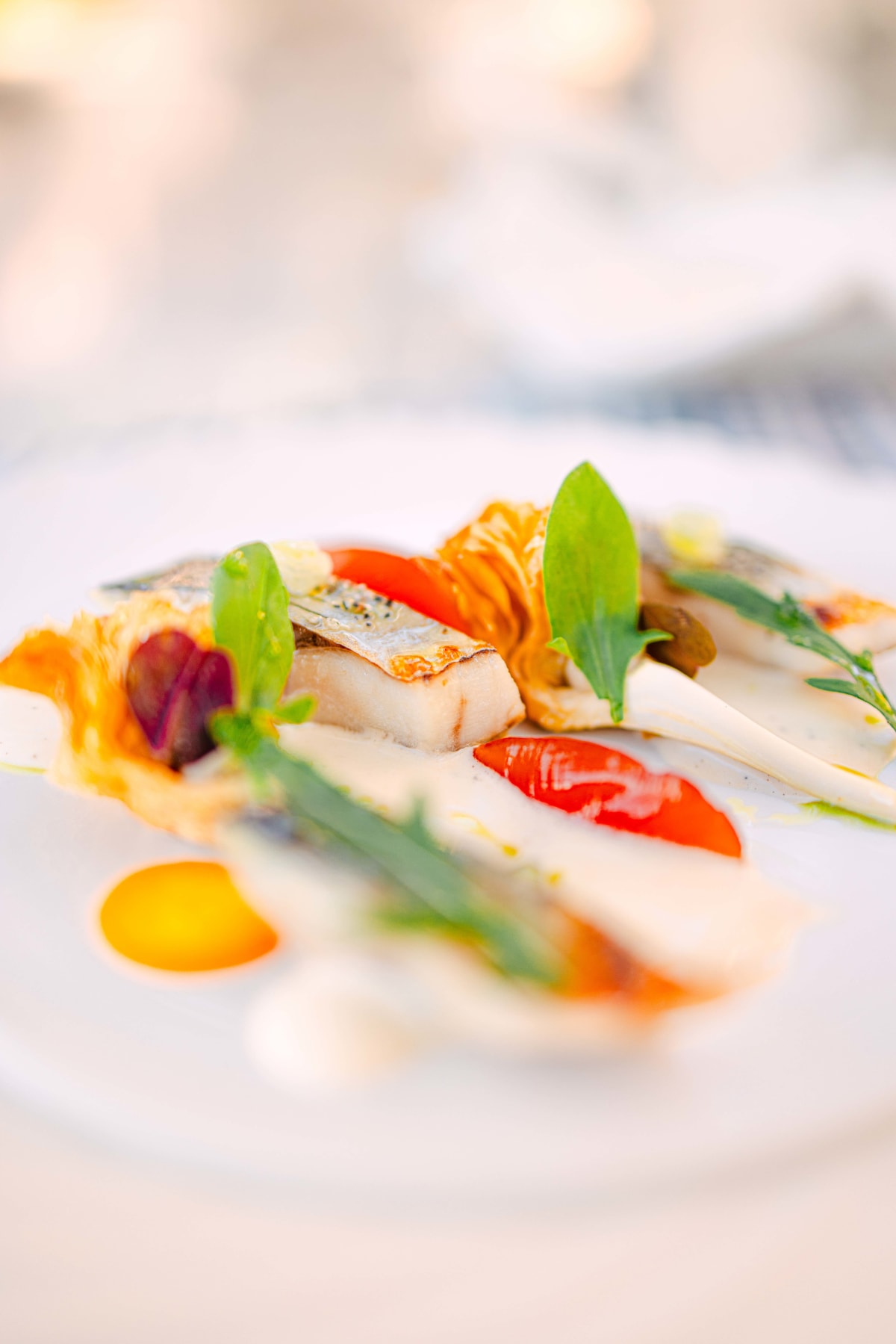
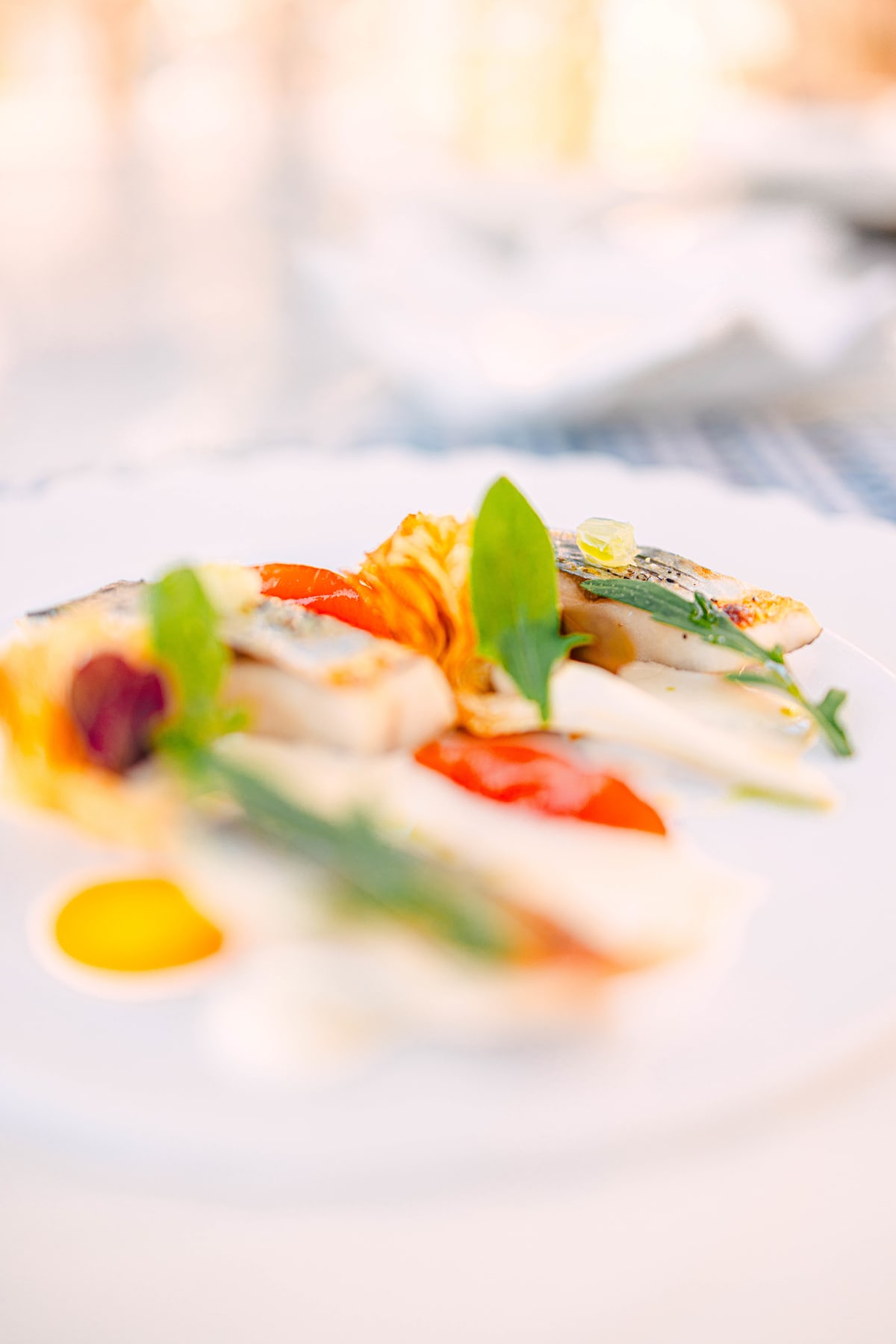
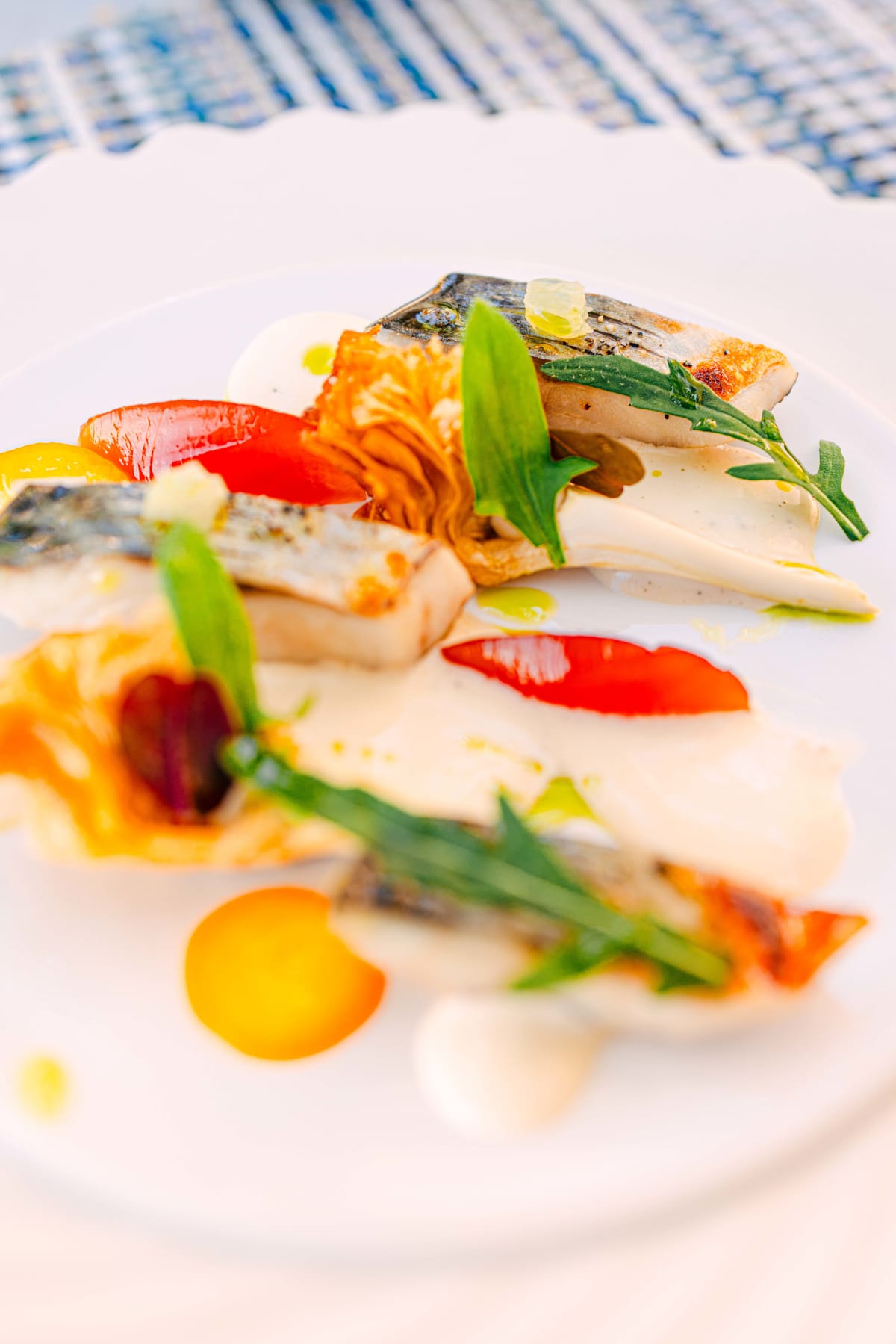
For this dish, coming from Japan and Korea where we eat high quality fish often, the mackerel itself felt rather ordinary. But the clear flavours and combinations of the other ingredients were good again.
The sauce, which seems to belong to the escabèche rereading, gave an impression close to yoghurt and added acidity that worked with the mackerel and with the artichoke. The kumquat did its part by laying a fruity nuance over it.
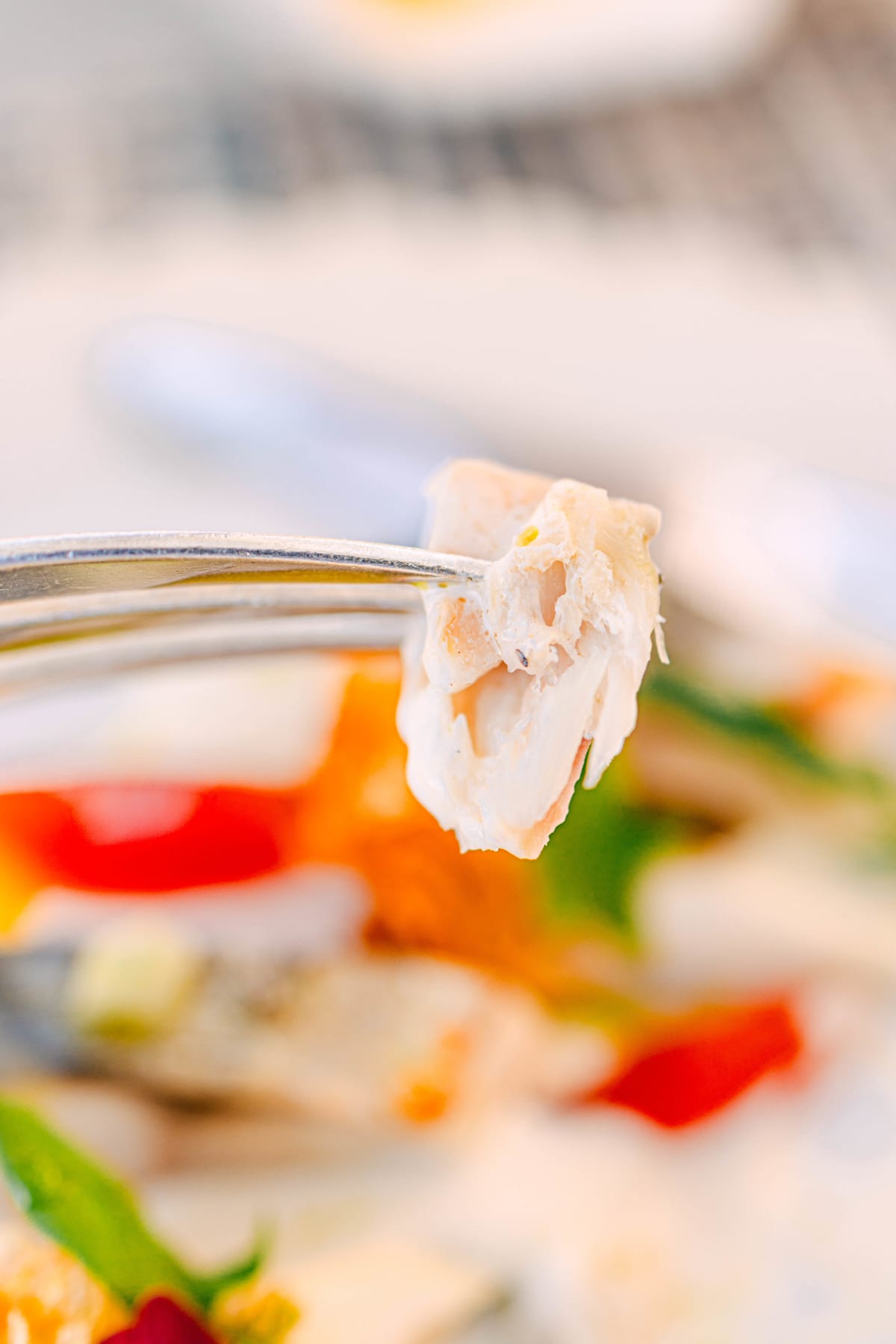
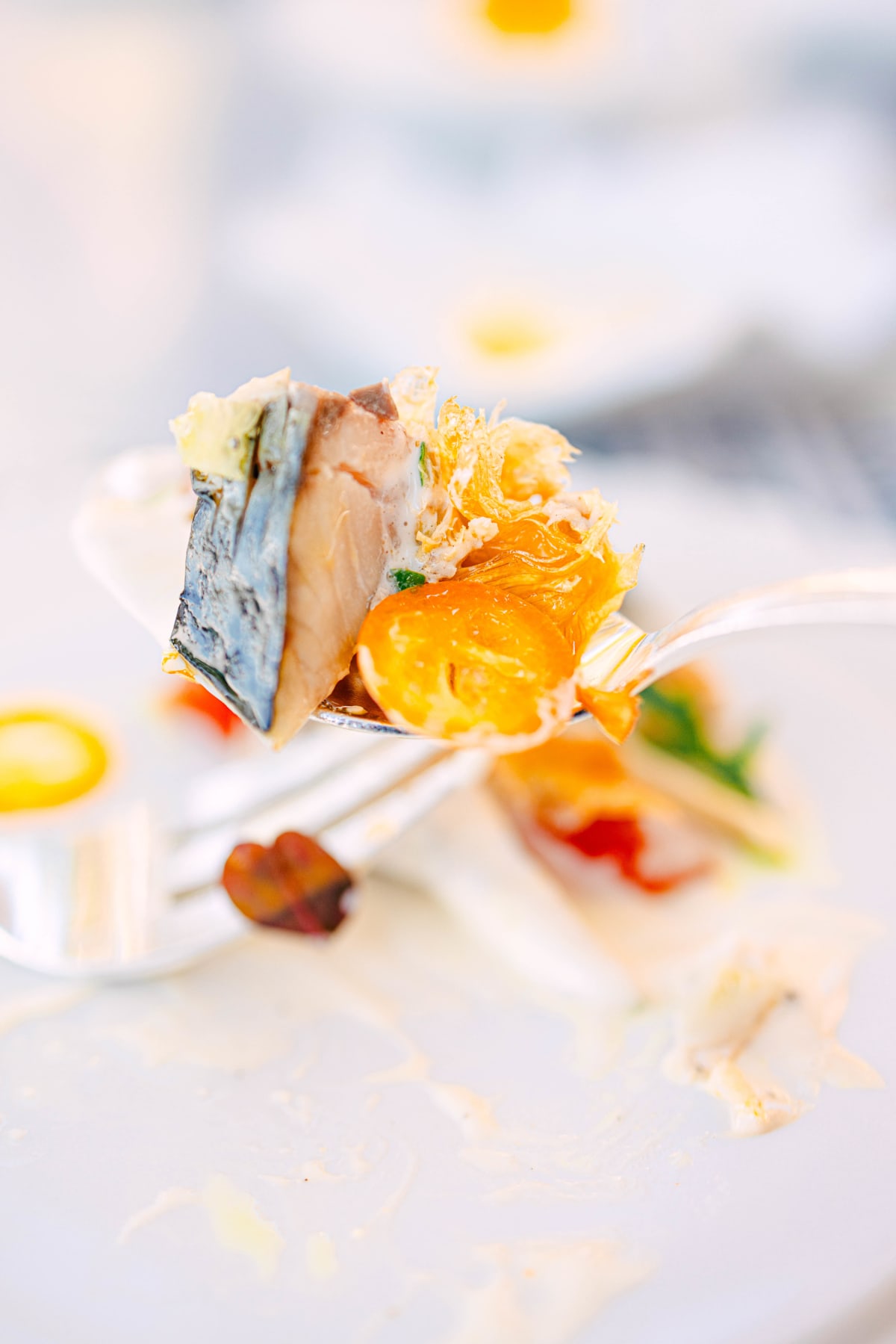
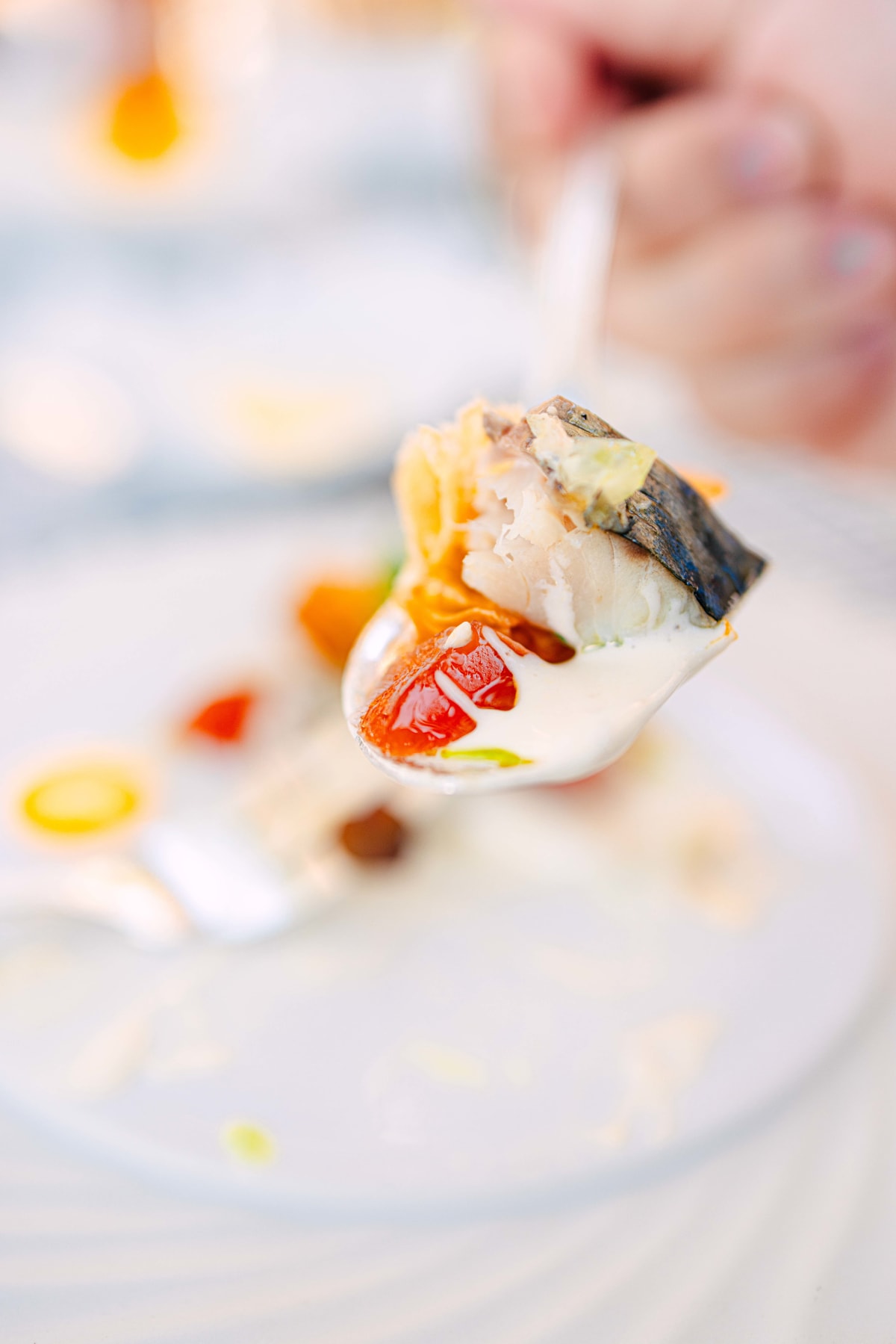
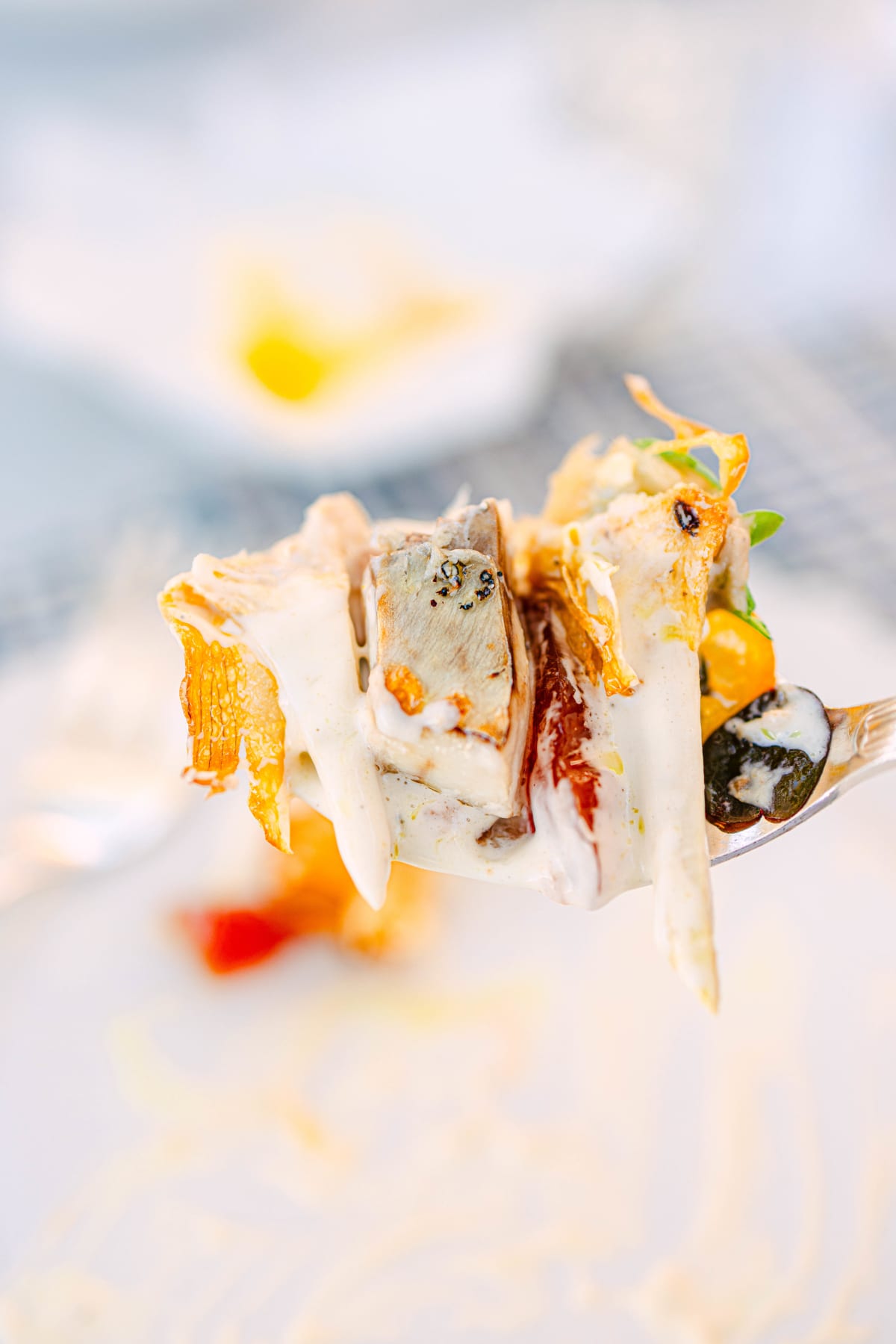
A fish dish in the manner of the south of France, the kind you cannot meet in Korea or Japan, as if an abundant orchard and a flower field were rolling around together.
Section 13·The Zitone
The third is a dish that is something like a soul to Donckele. The title is La pâte Zitone, hommage à un cuisinier qui m'a tant apporté, a homage to a cook who gave me so much.
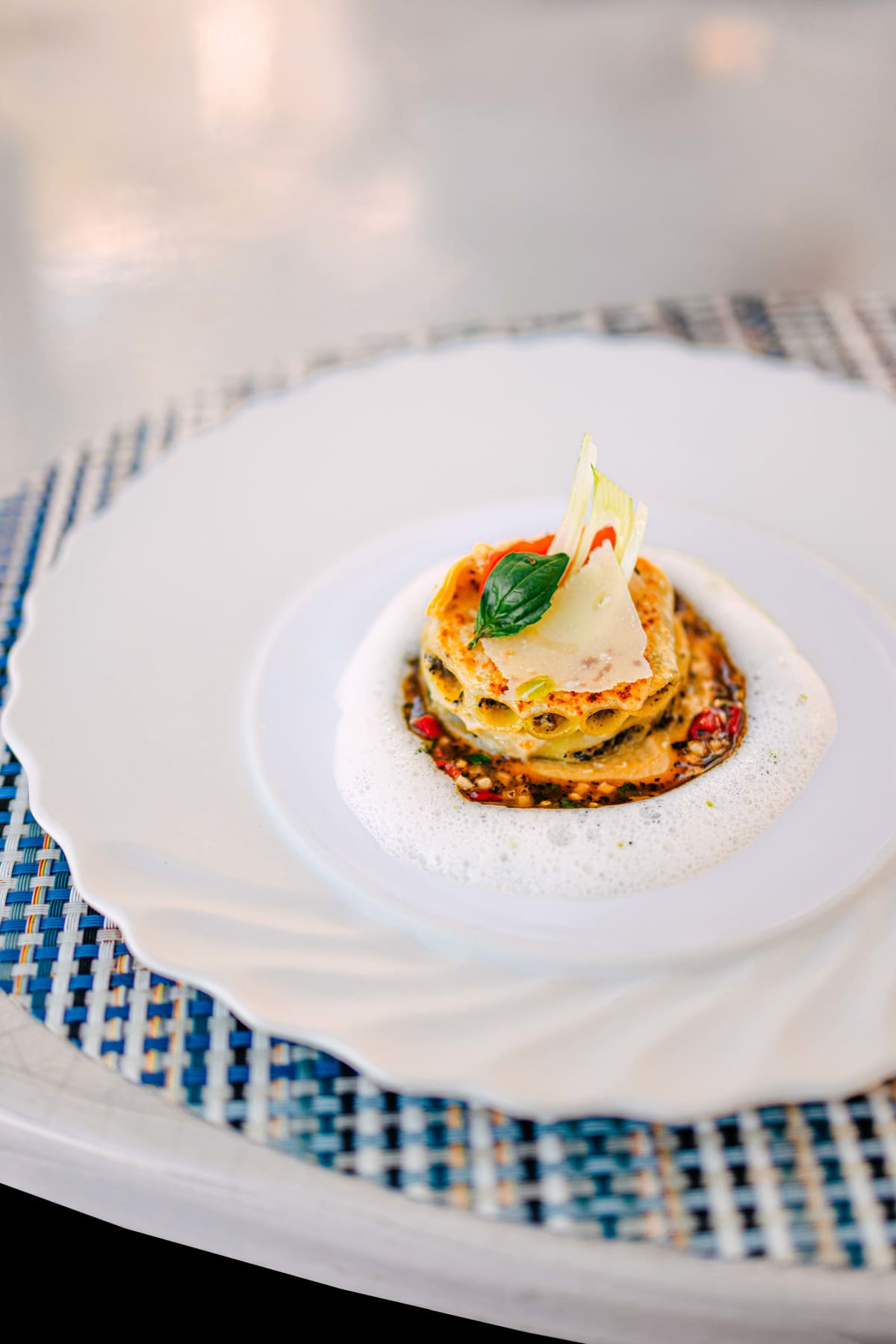
The sauce was described in equally poetic terms, a jus of Riviera condiments and a fleeting artichoke scented with truffle.
Zitone is a thick macaroni shaped pasta and this is a French style pasta dish. He made it inspired by his mentor Jean-Louis Nomicos.
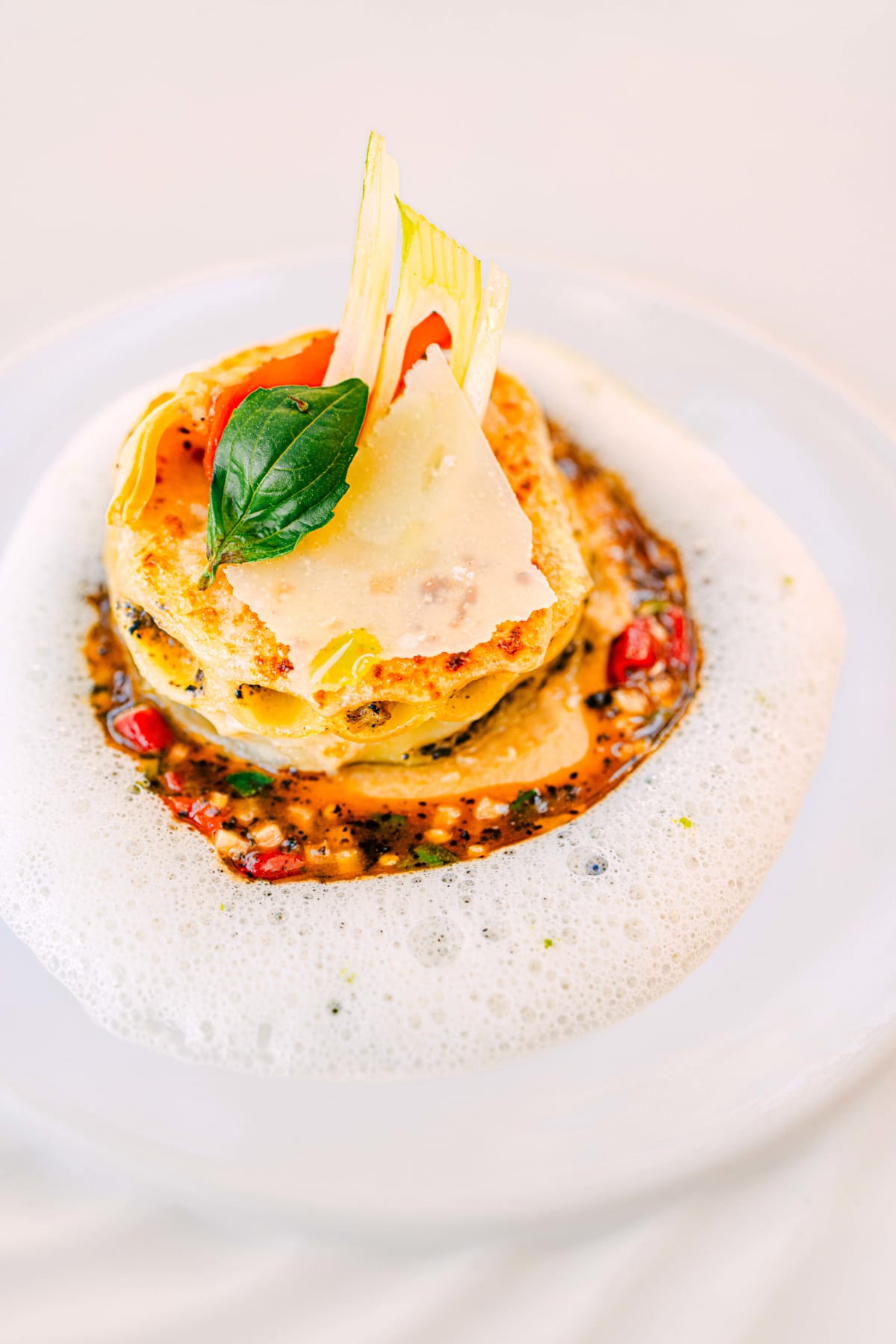
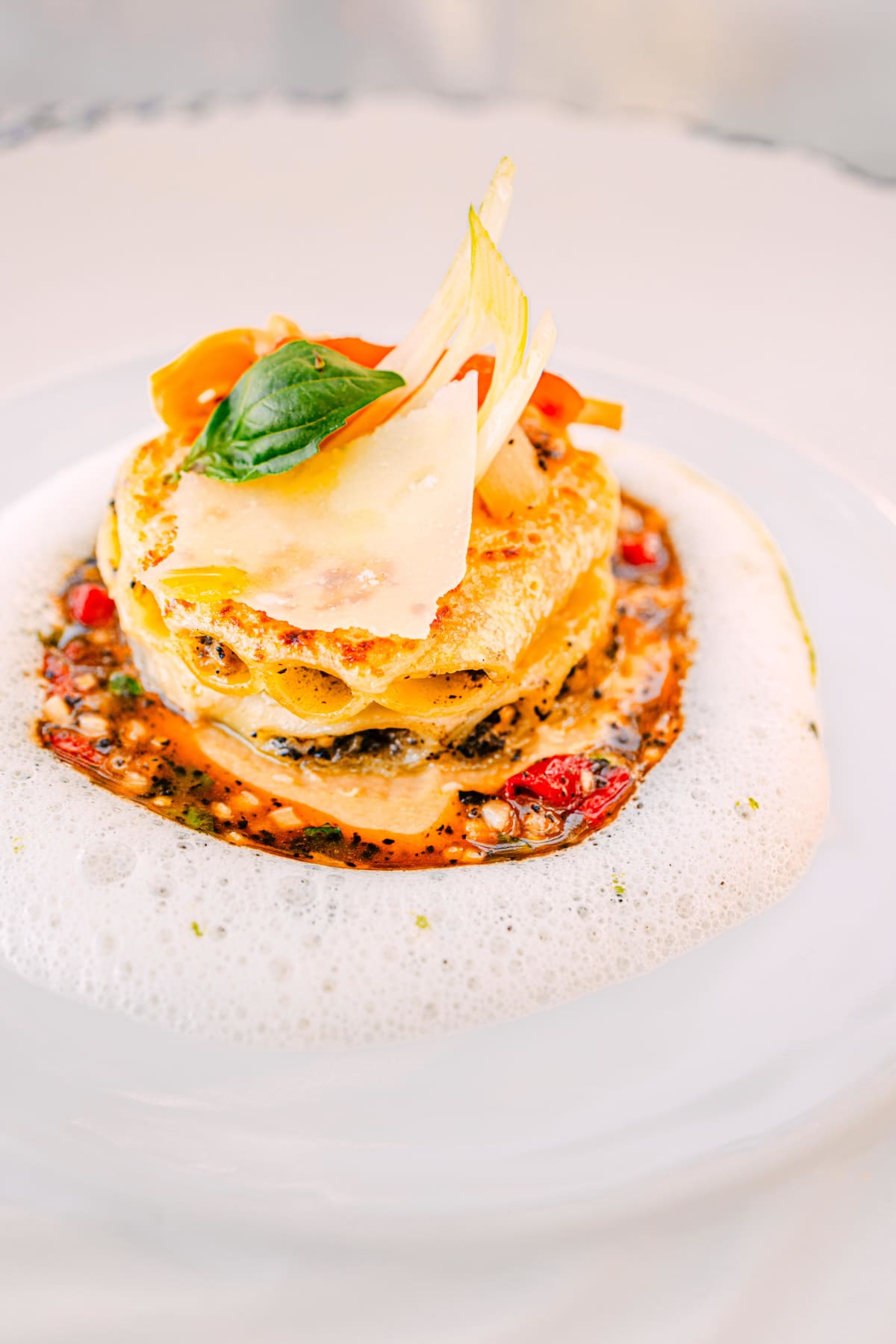
The sauce is a Périgueux combining foie gras and truffle, to which Donckele adds artichoke purée, sweetly preserved tomato, fennel and a parmigiano sauce for a Mediterranean rereading.
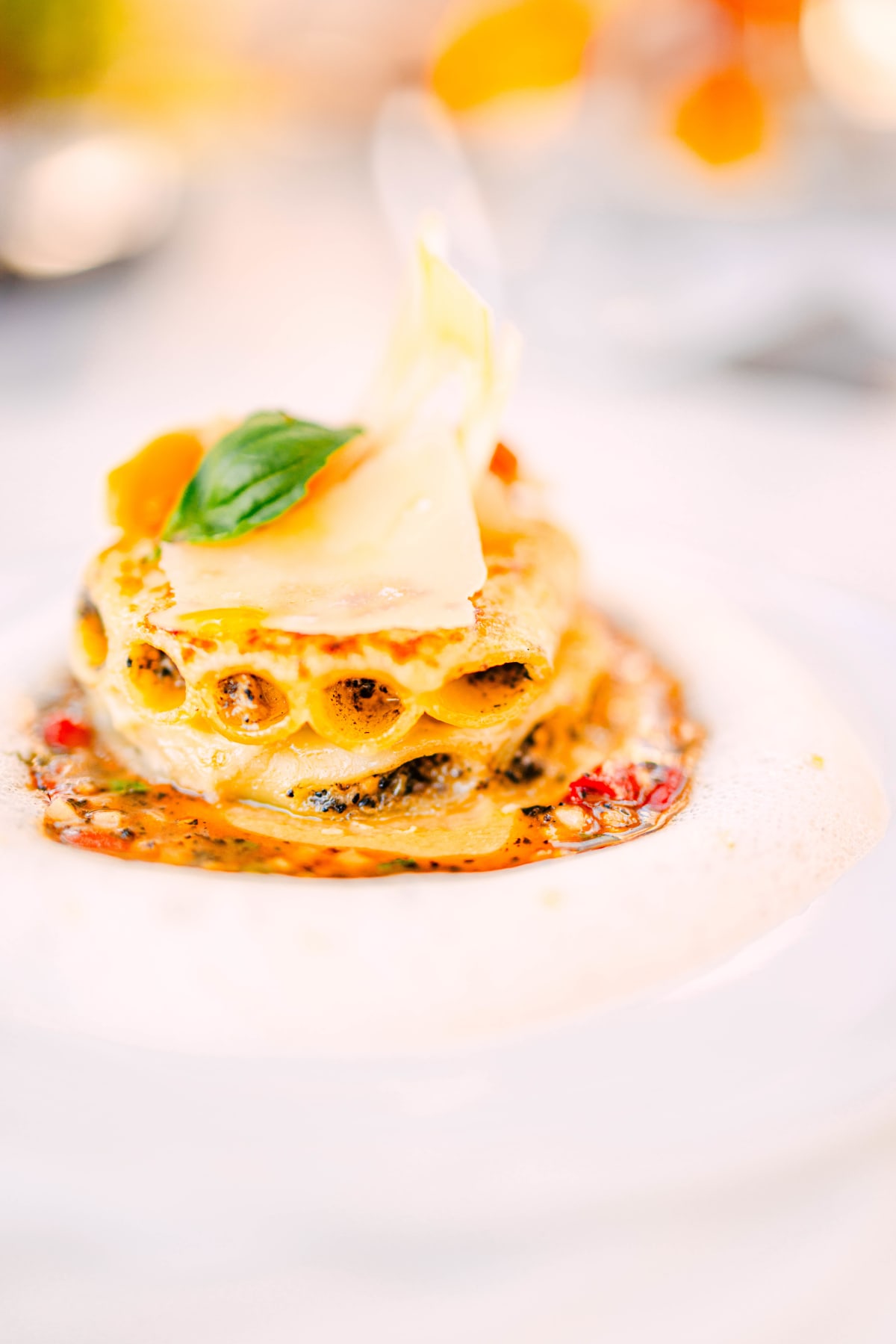
The word éphémère in the French probably stands poetically for that purée.
This dish was clearly good. The dishes before it were excellent too, but where they gave an impression of leaning to some degree on Provence as a source of ingredients, from this one the technique and the composition and the depth of flavour of high end French cooking came to the front.
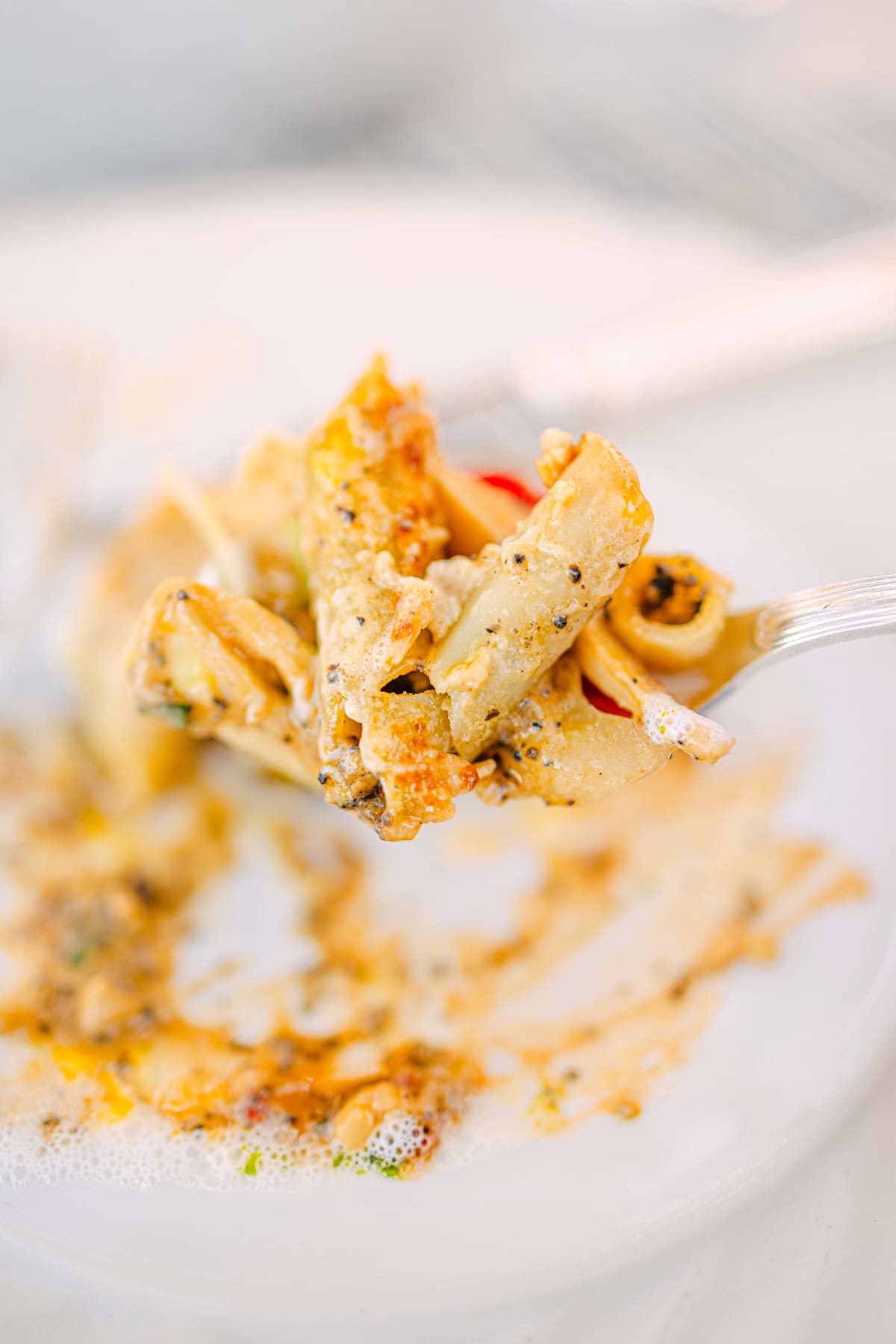
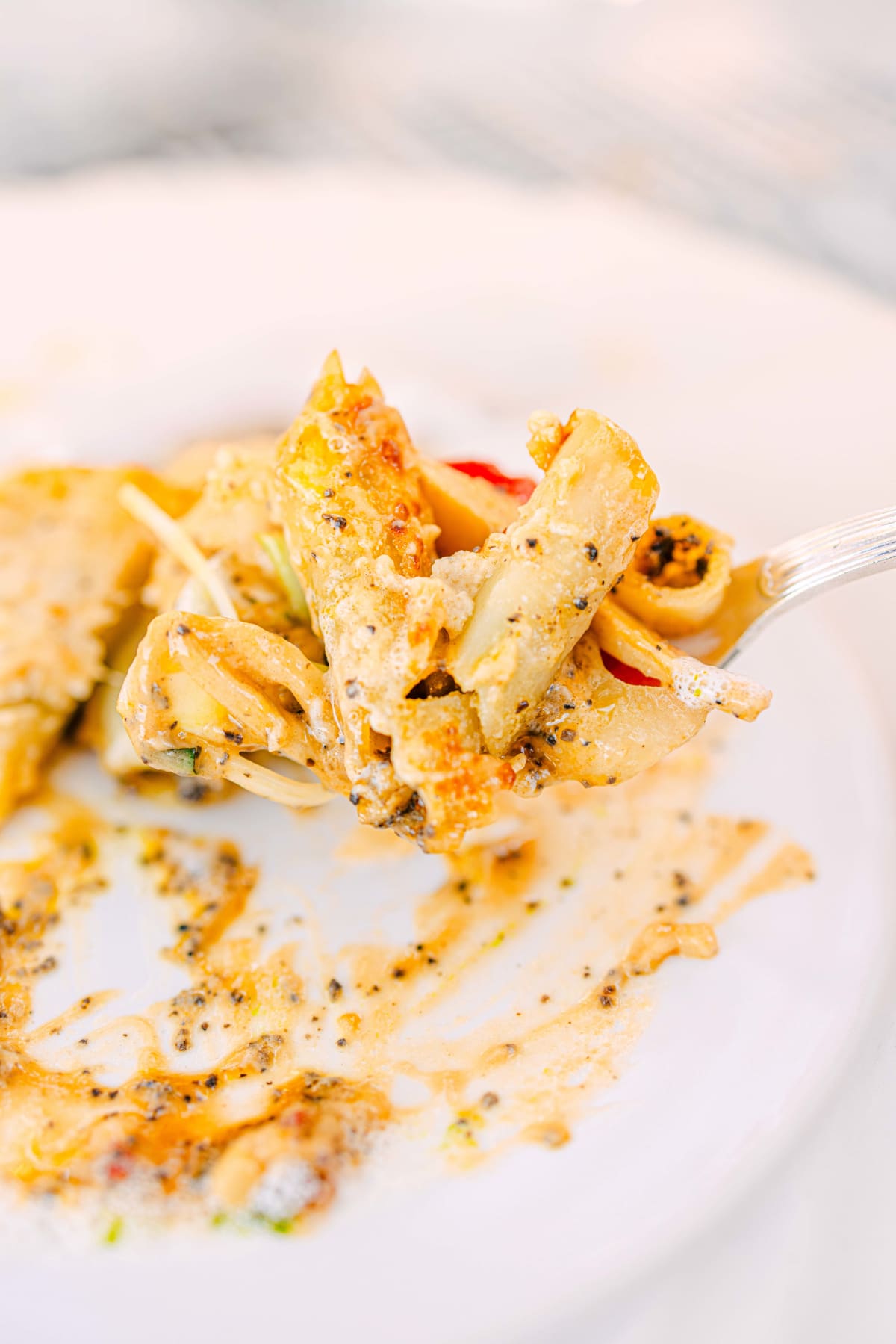
The deep flavour of the Périgueux was good, and because the zitone had been baked the texture called a lasagne to mind, which was excellent.
Section 14·A Glass Of Burgundy
After this dish I ordered a glass of Benoit Moreau's Bourgogne blanc and was surprised by the quality for the price. A fruity impression and an oily aroma came at once, the complexity was good and the balance was sound.
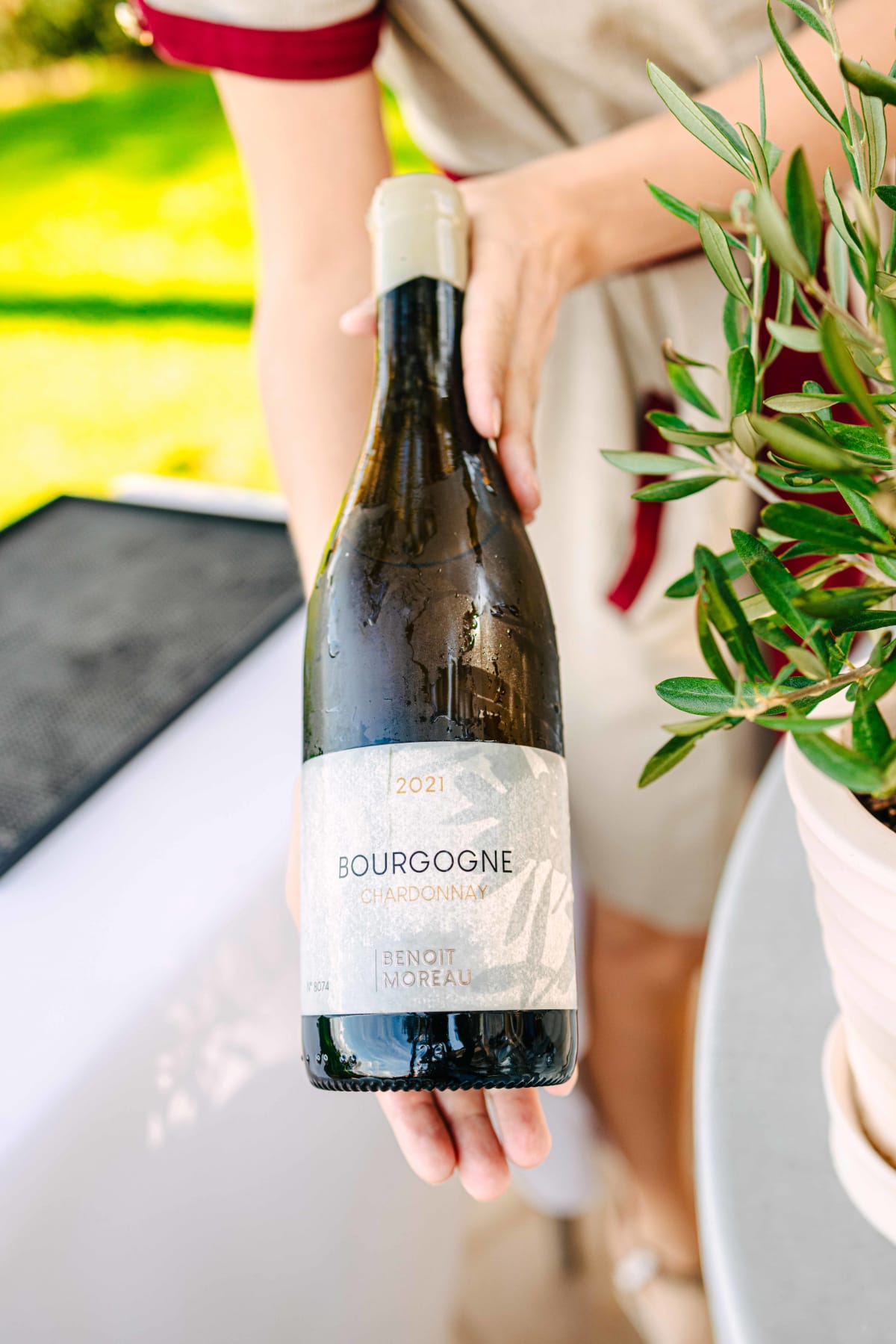
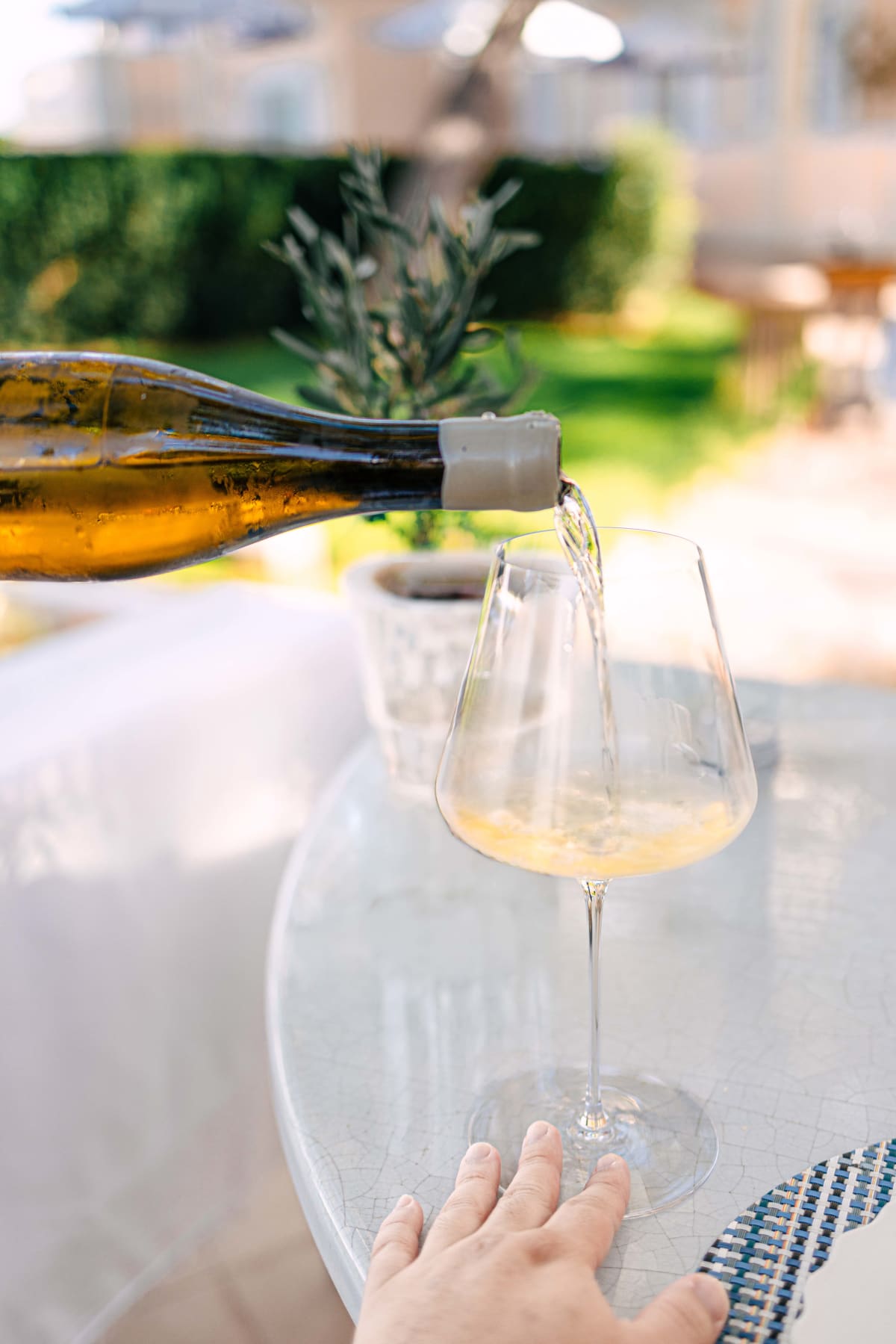
Benoit Moreau is worth setting down too. From 1990 he worked with his father and brother at the family estate in Chassagne-Montrachet, Domaine Bernard Moreau et Fils, and for a long time he managed the vineyards. In 2020 he went out on his own, adding new sites in Beaujolais to his share of the family vineyards to create a domaine under his own name. His brother Alex took over Bernard Moreau, so one house split in two.
The vineyards are farmed biodynamically, pressed slowly and directly, raised eighteen months in oak, then bottled with a light fining and no filtration. By classification it is a regional Bourgogne, but the hands that handled Chassagne grand cru went straight into it. That is where the surprise at the quality for the price comes from.
Section 15·The Lobster
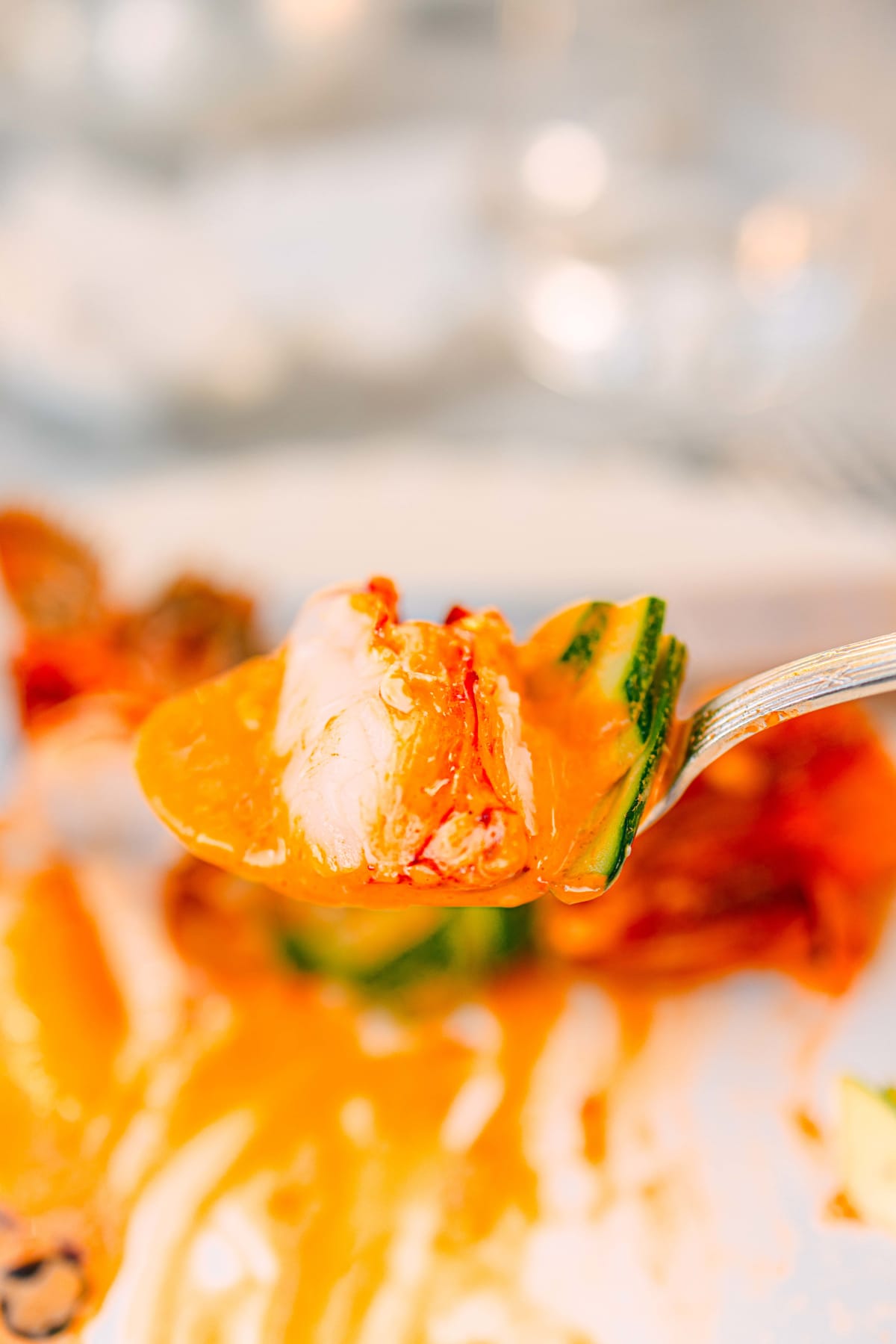
The main was a choice between lobster and fish. I took the lobster and it was the best thing of the day.
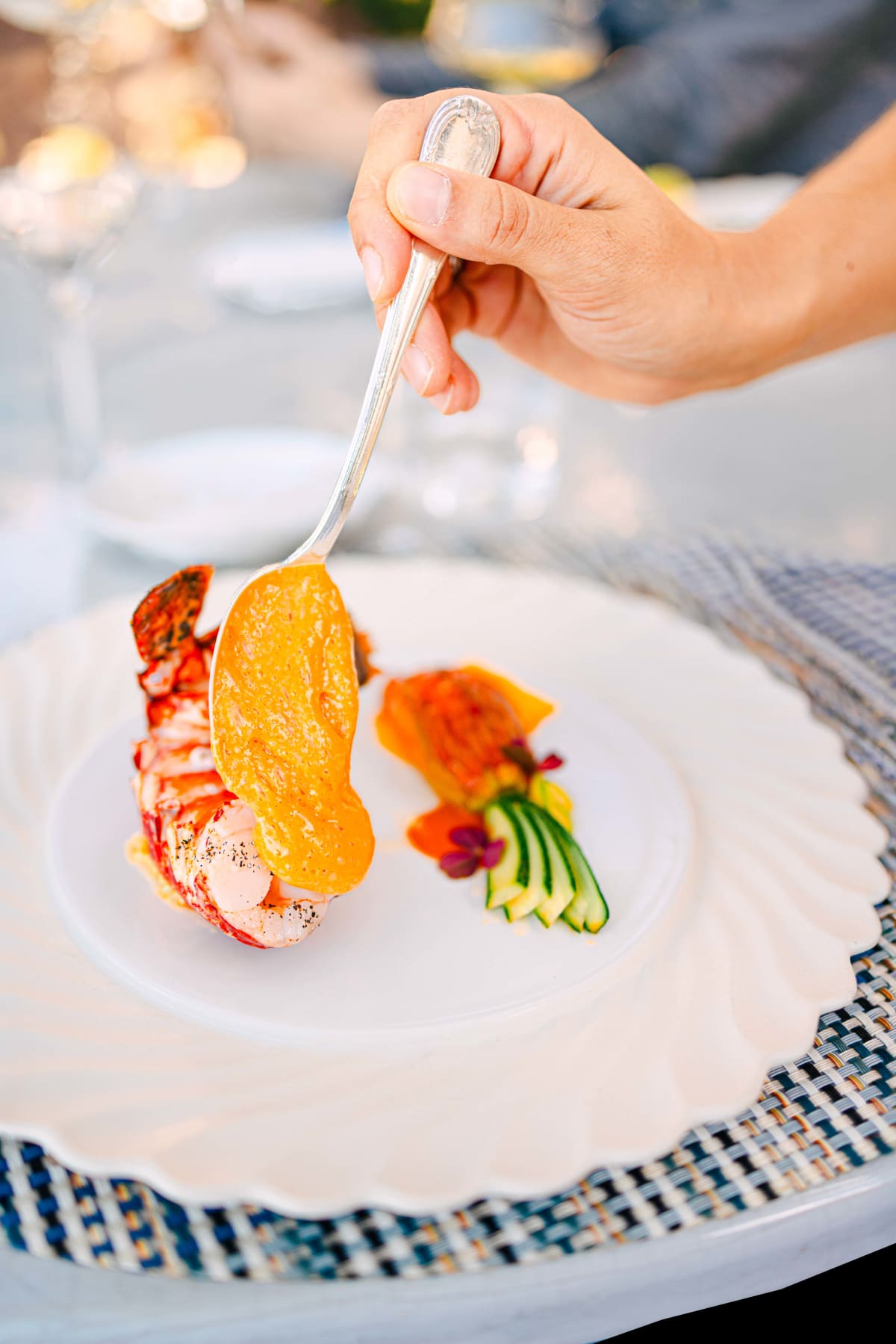
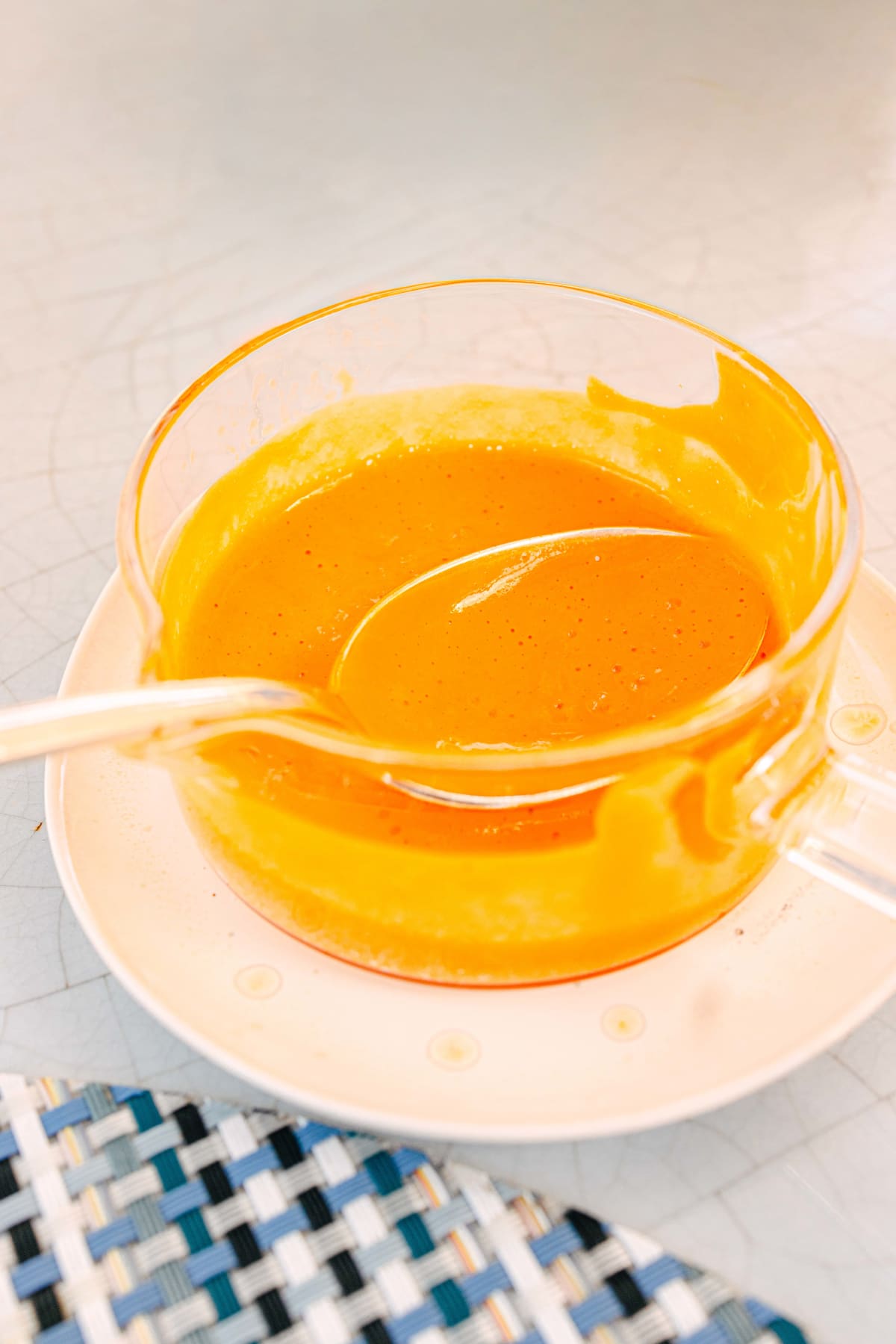
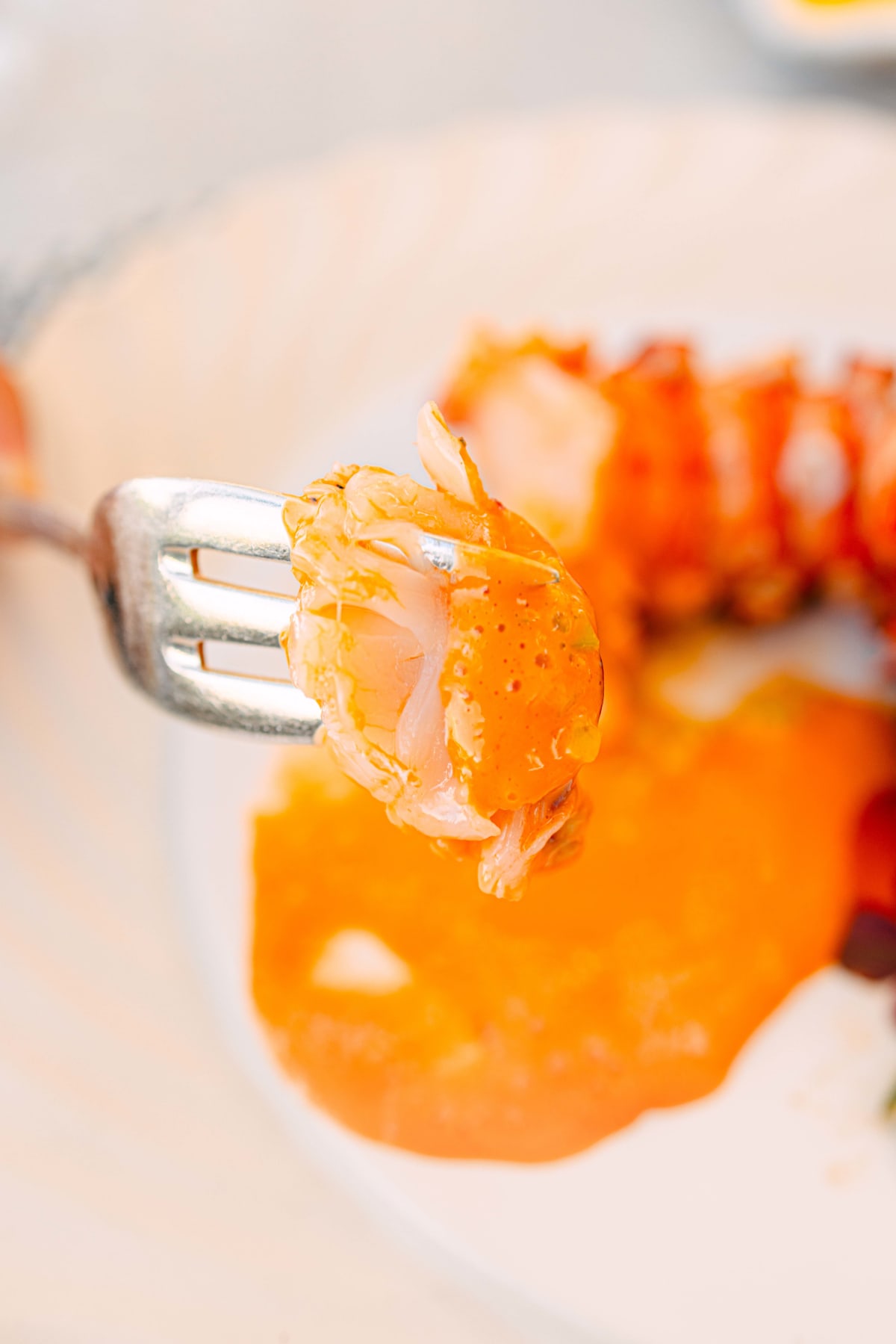
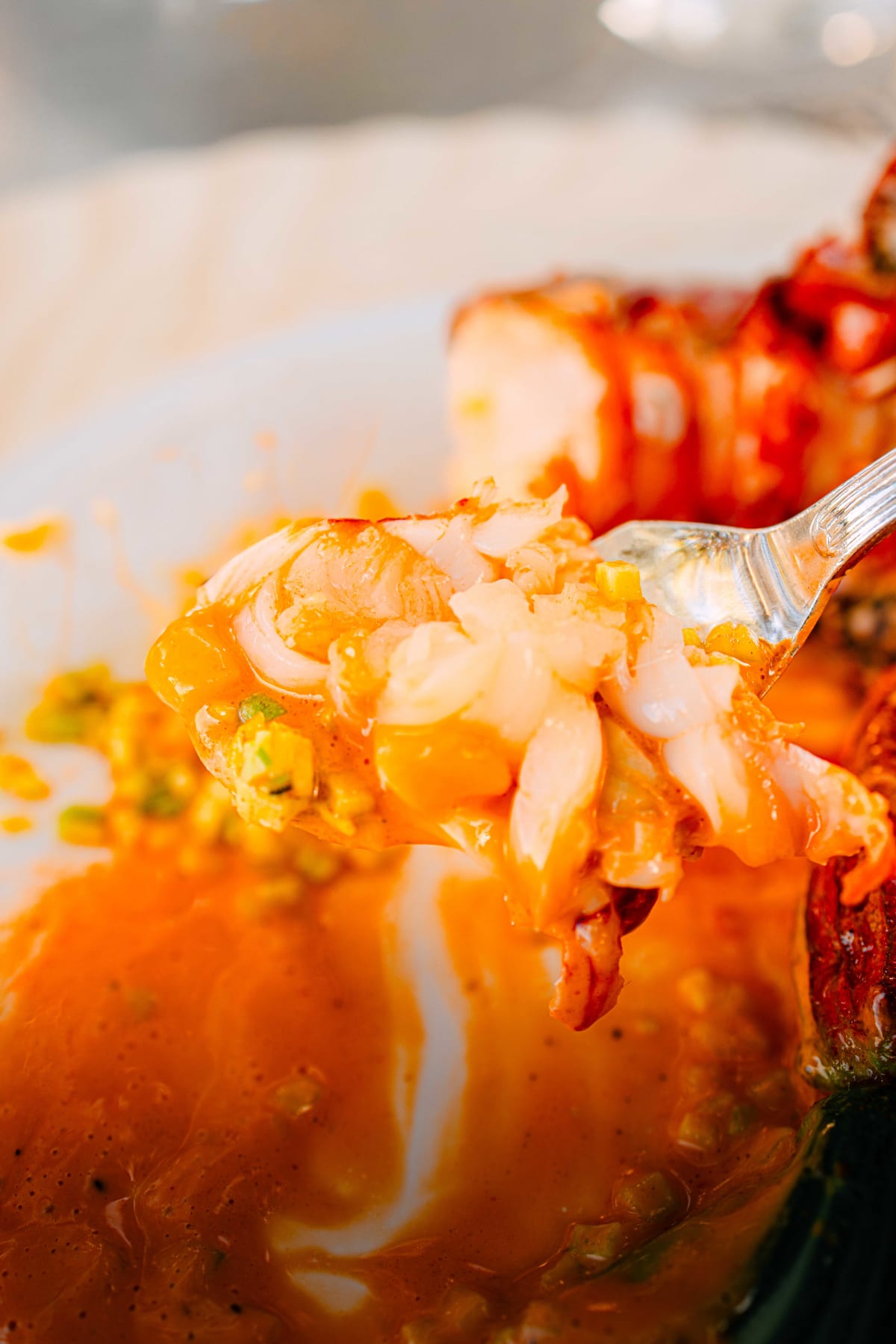
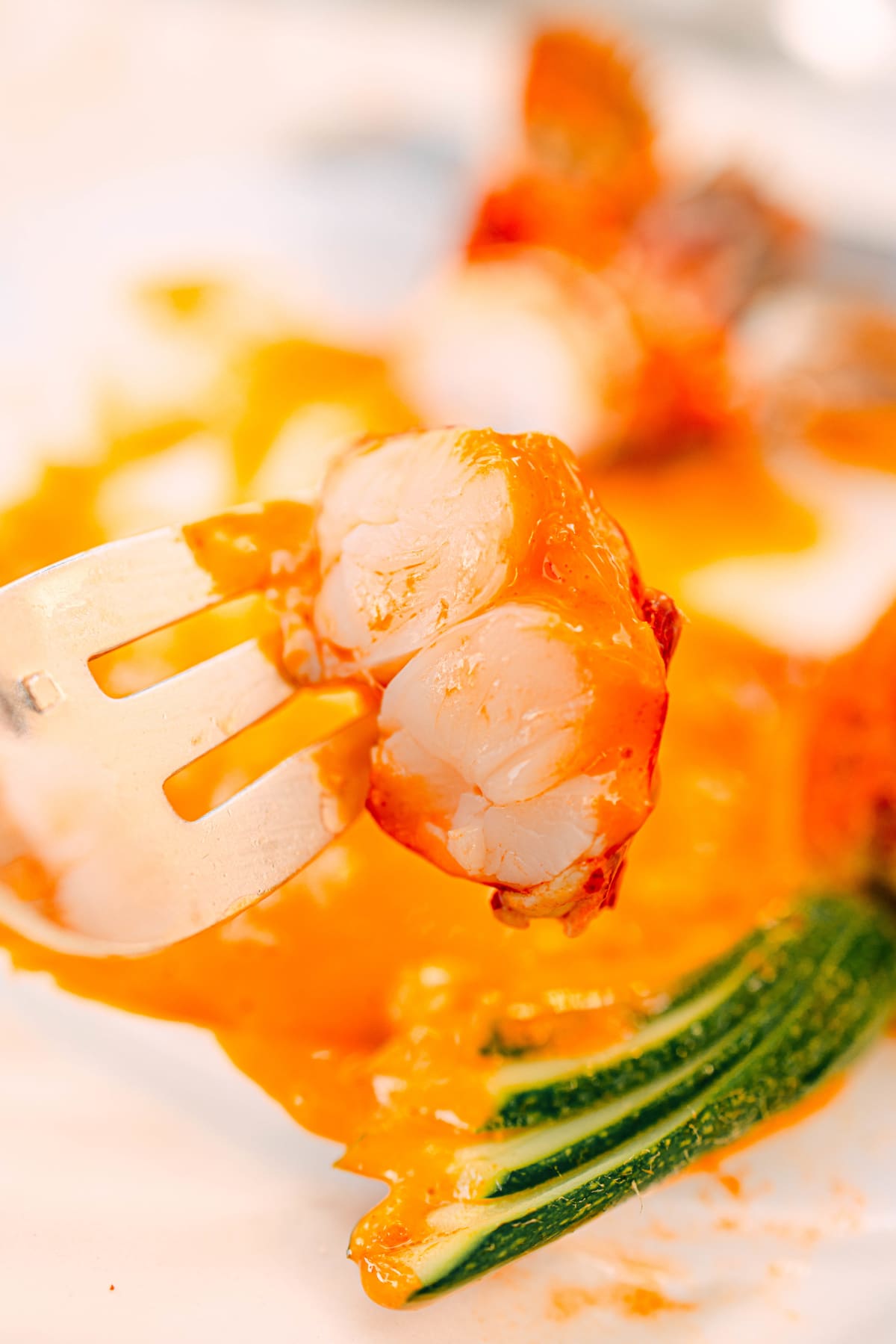
Grilled lobster tail in its shell came with a courgette flower and a sabayon made from the coral of the head.
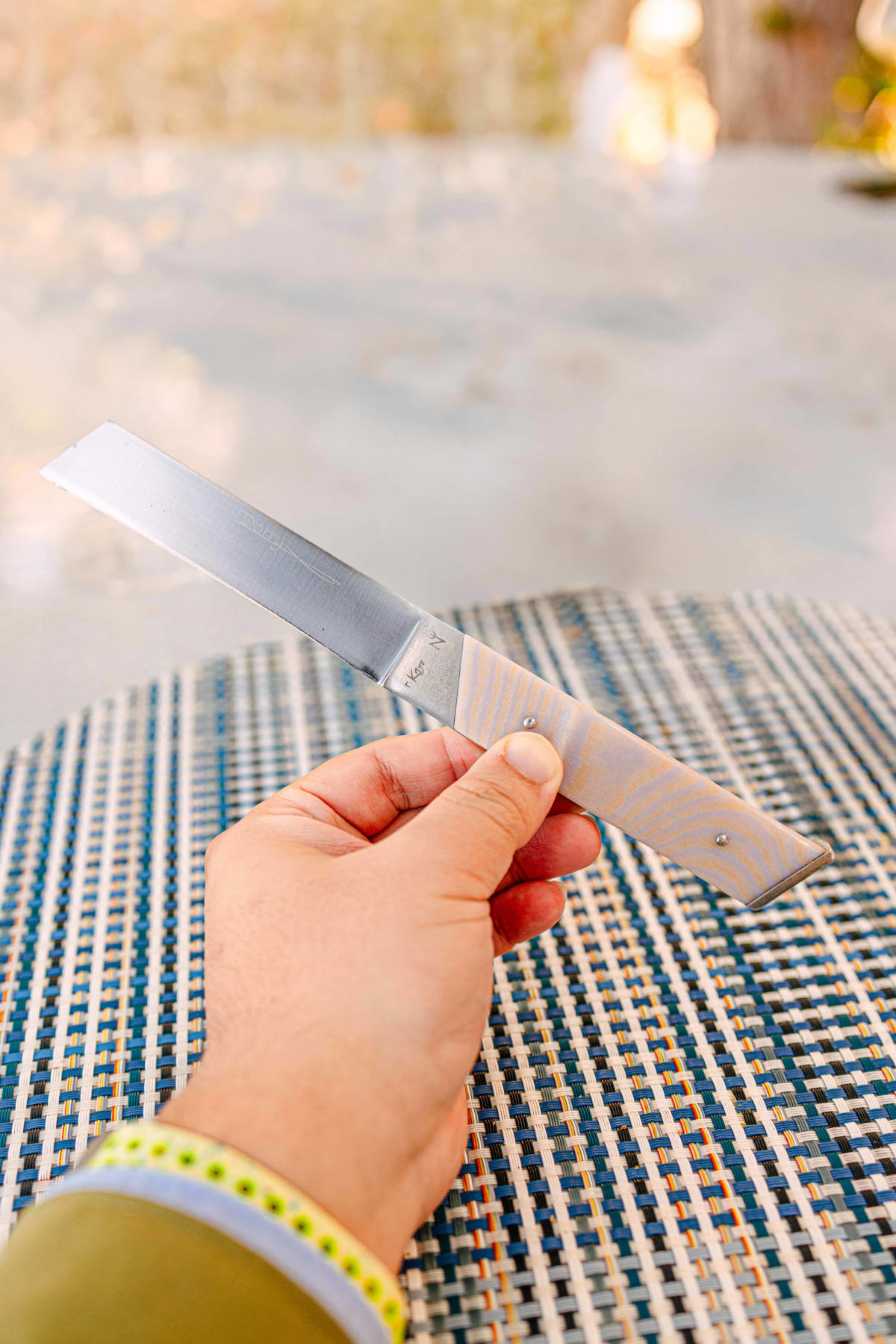
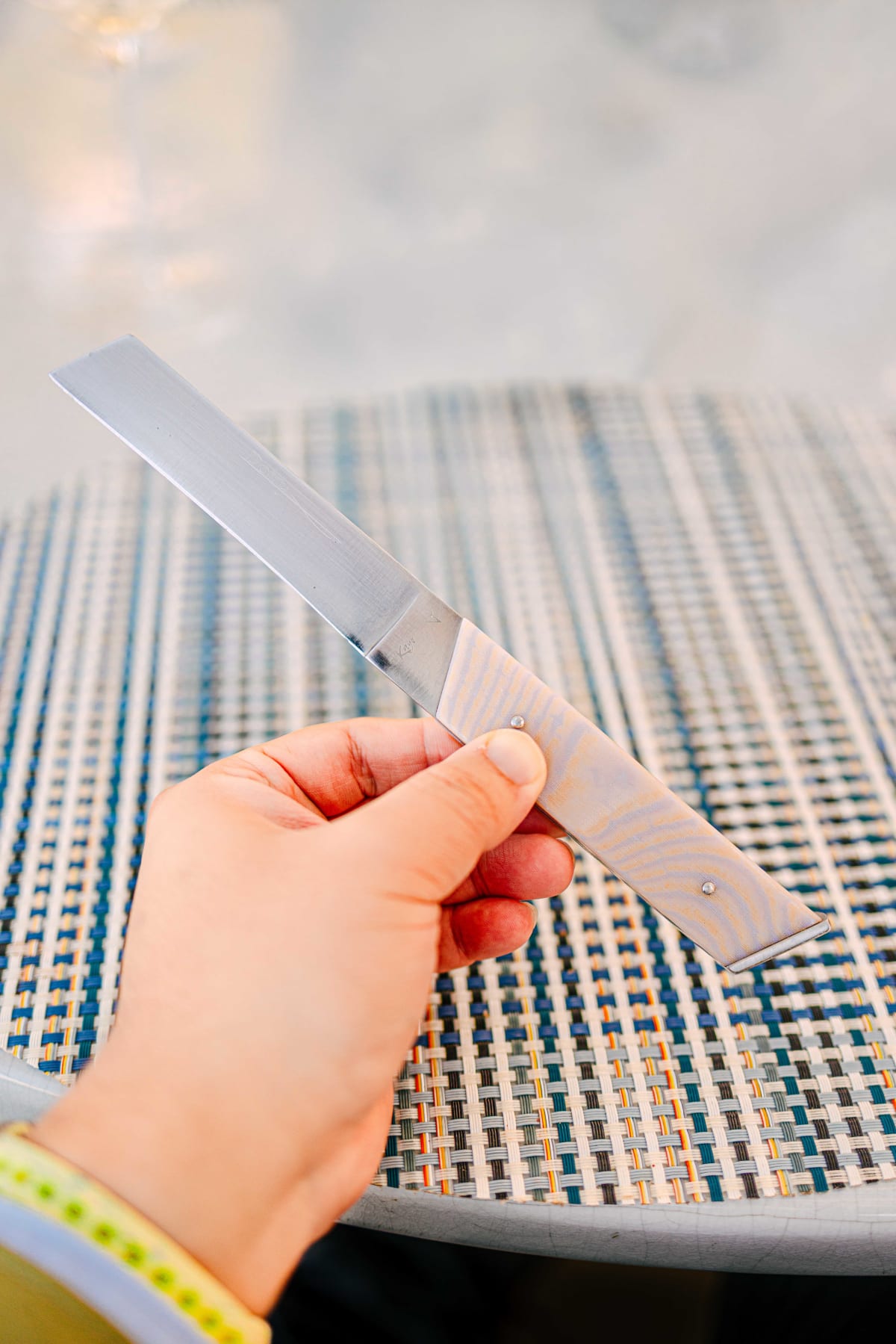
For a lobster tail of this size, this is a satisfying composition inside a 200 euro course.
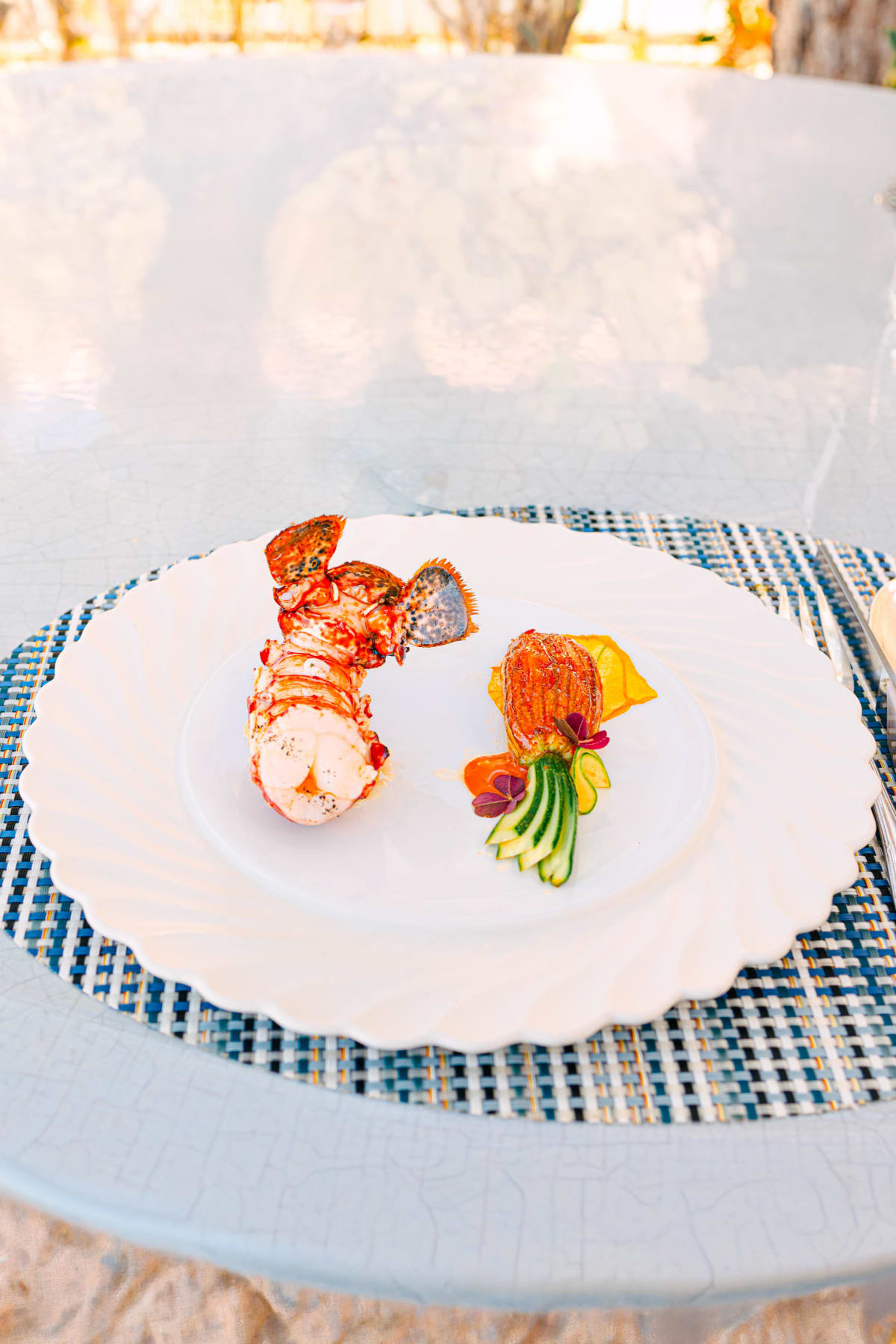
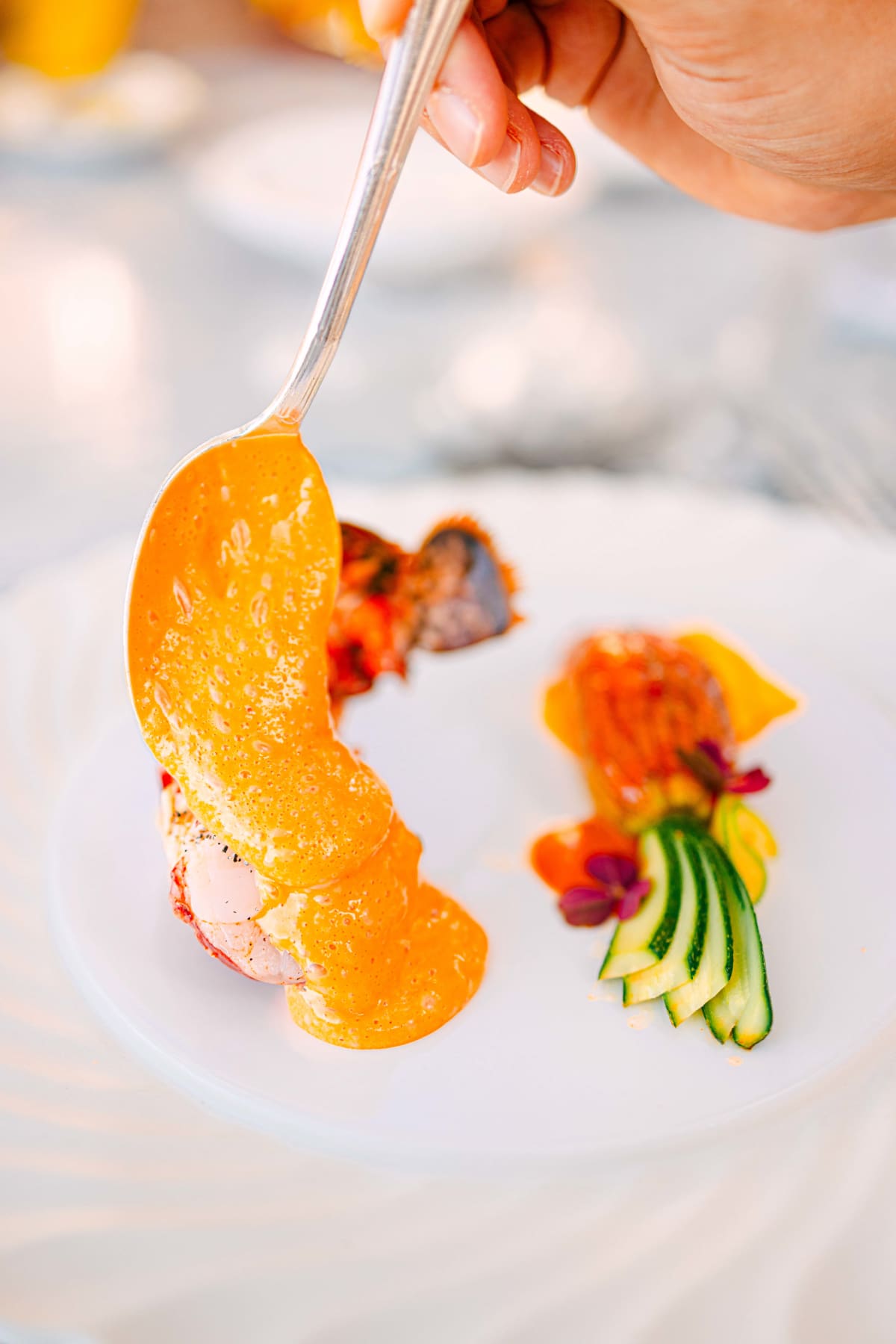
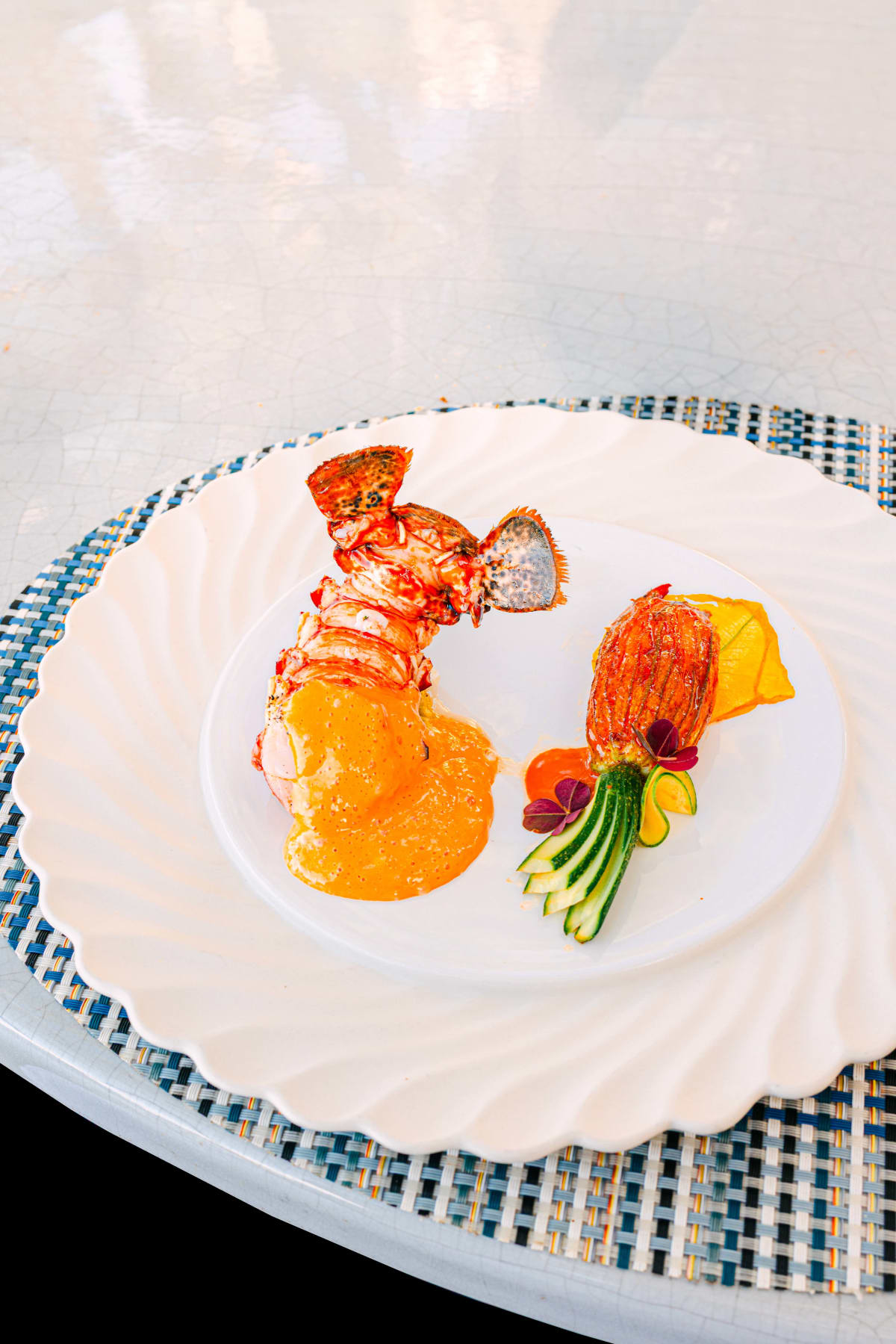
Above all the sauce was overwhelming. A bisque style sabayon with savour and acidity alive at the same time, and it clung to the mouth.
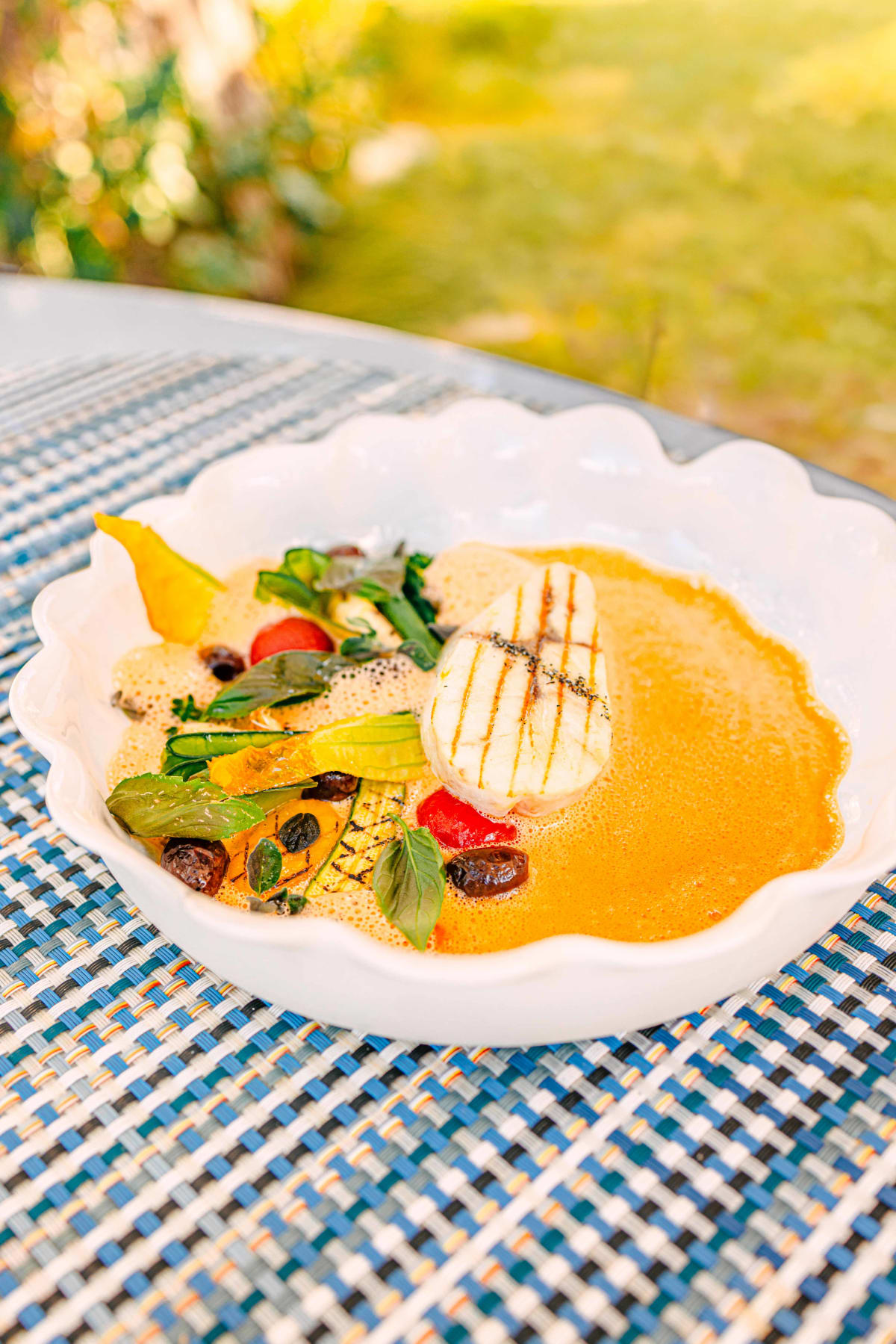
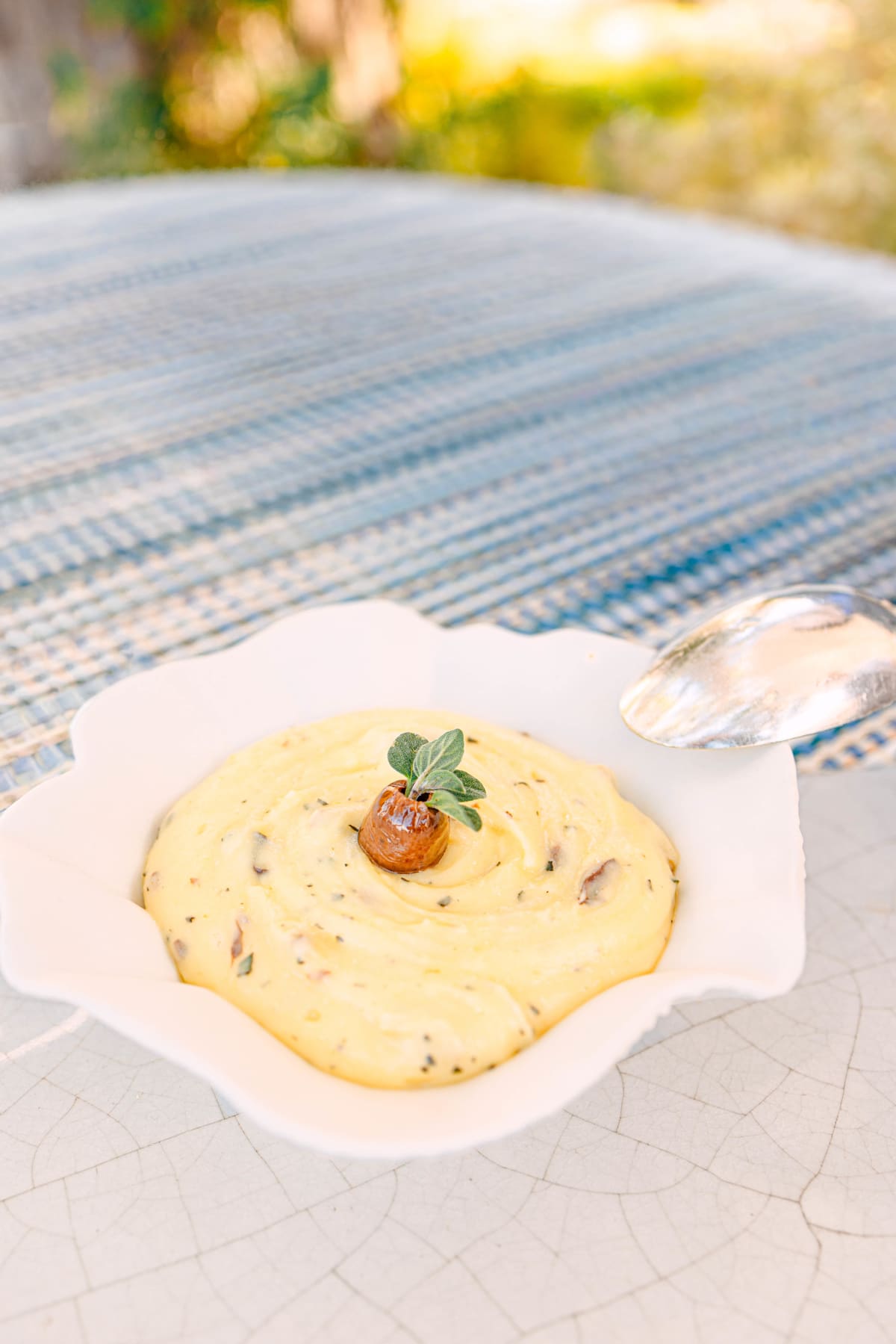
Looking at the colour and the taste of that sauce, the meal at Plénitude in Paris in 2024 came back to me. The taste and the direction of the sauce were clearly alike, and the aesthetic of sauce that runs through Plénitude's philosophy showed here in the same way. At La Vague d'Or that evening the sauces followed the same line.
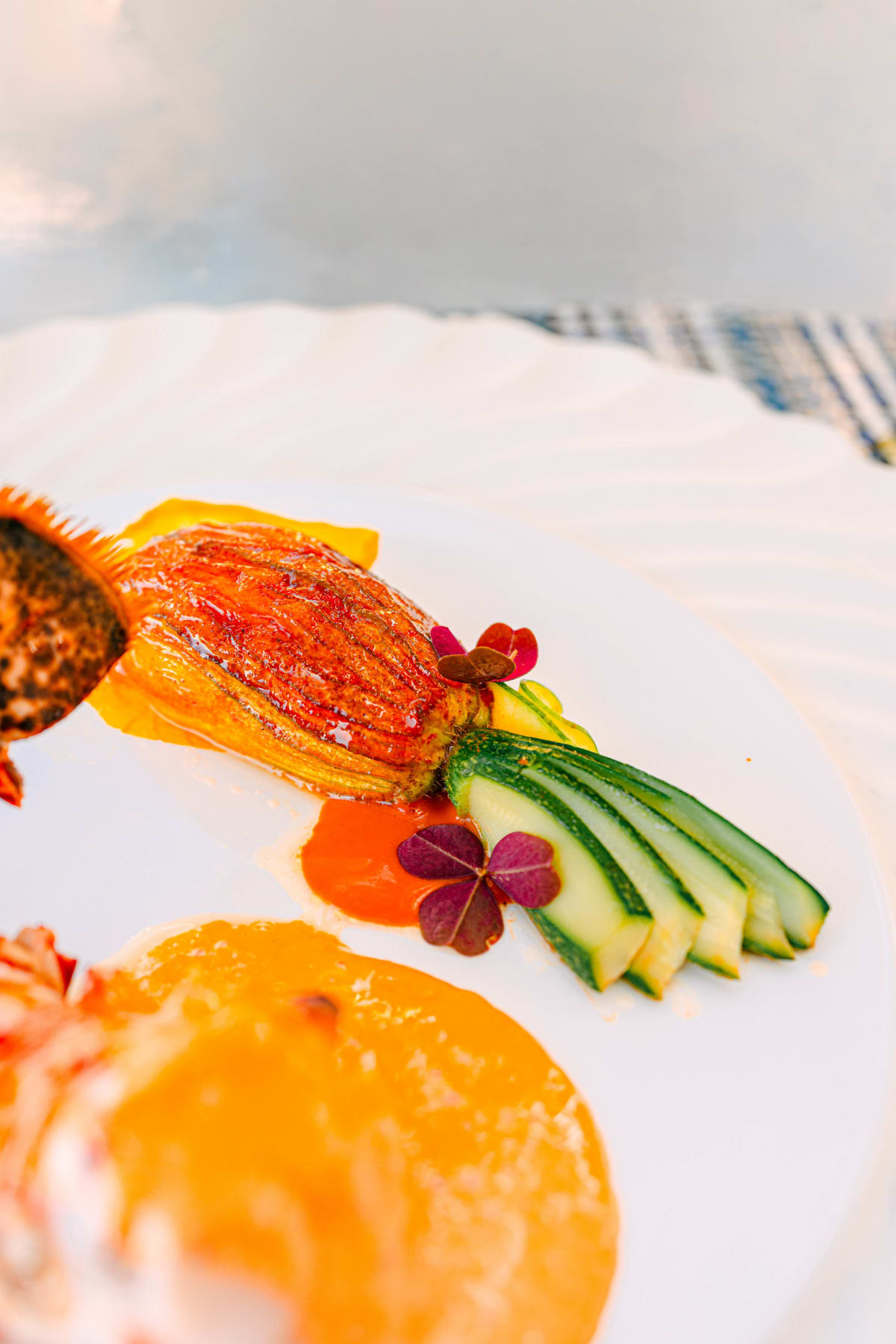
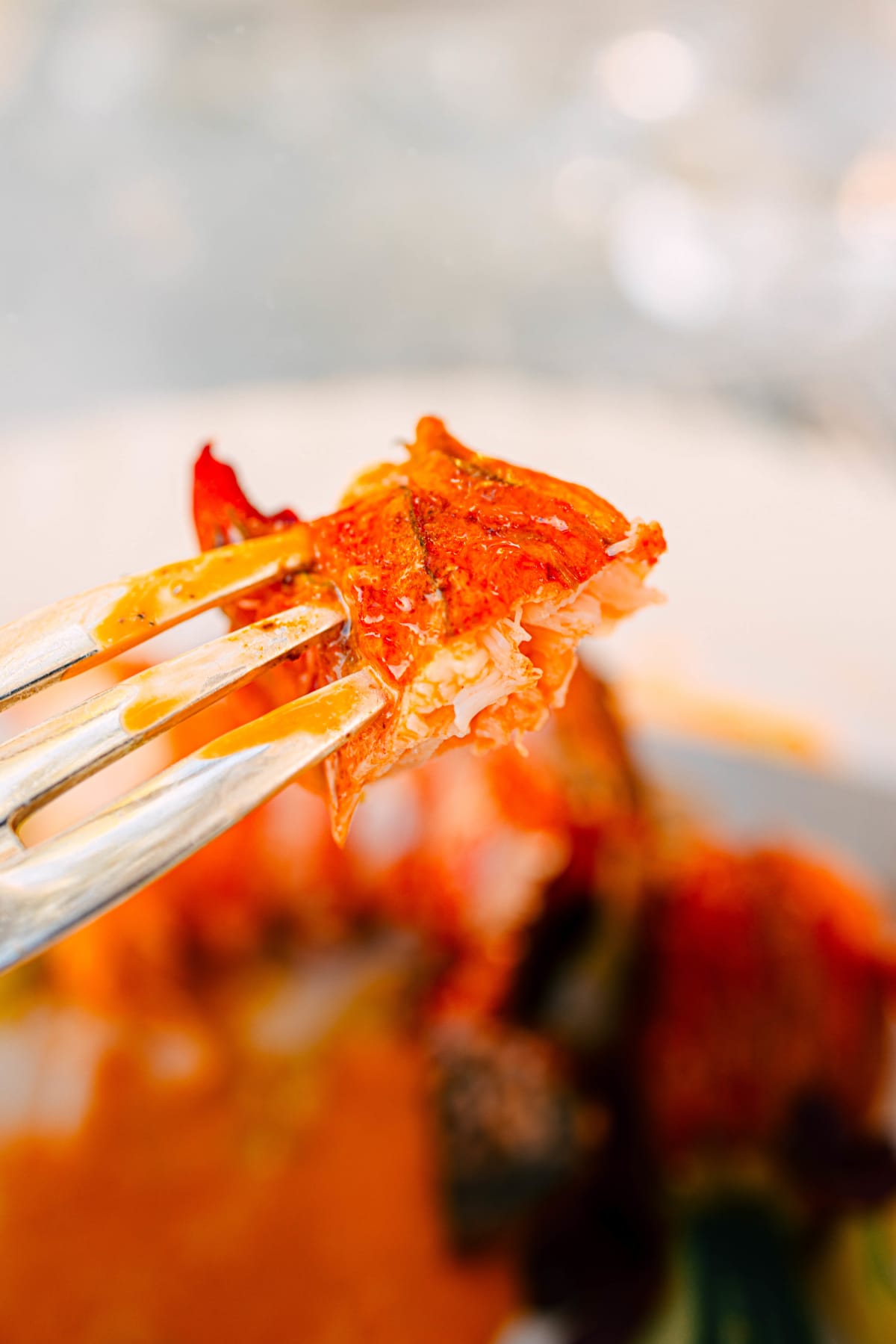
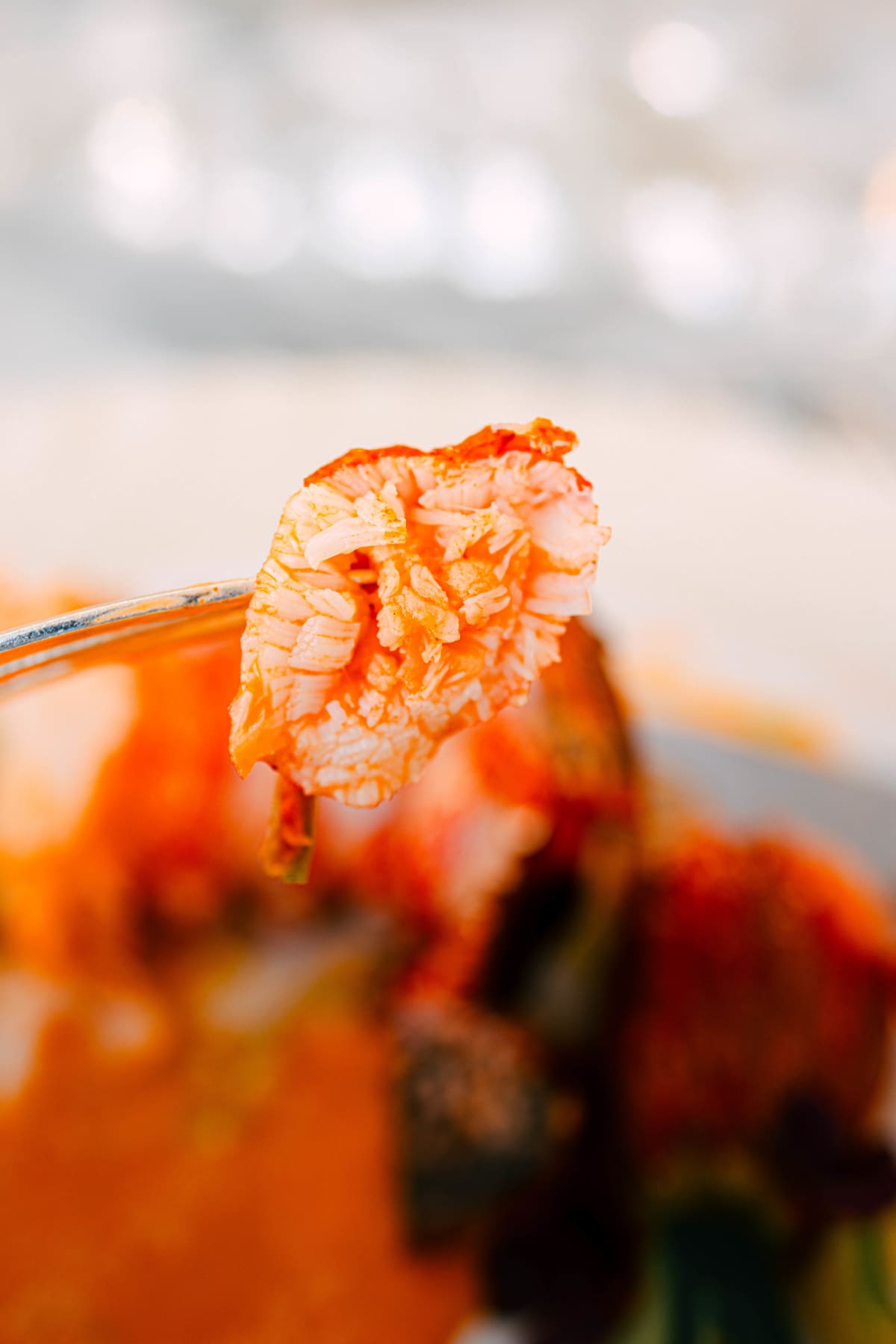
I took the courgette flower for a simple garnish.
Then I bit into it and found the claw meat packed inside, the claw wrapped in the flower. The temperature was right and it caught creativity and flavour at once.
Section 16·Iced Nougat
Dessert was also a choice of two. Between the nougat ice cream and the chocolate soufflé, I took Nougat glacé aux agrumes, an iced citrus nougat.
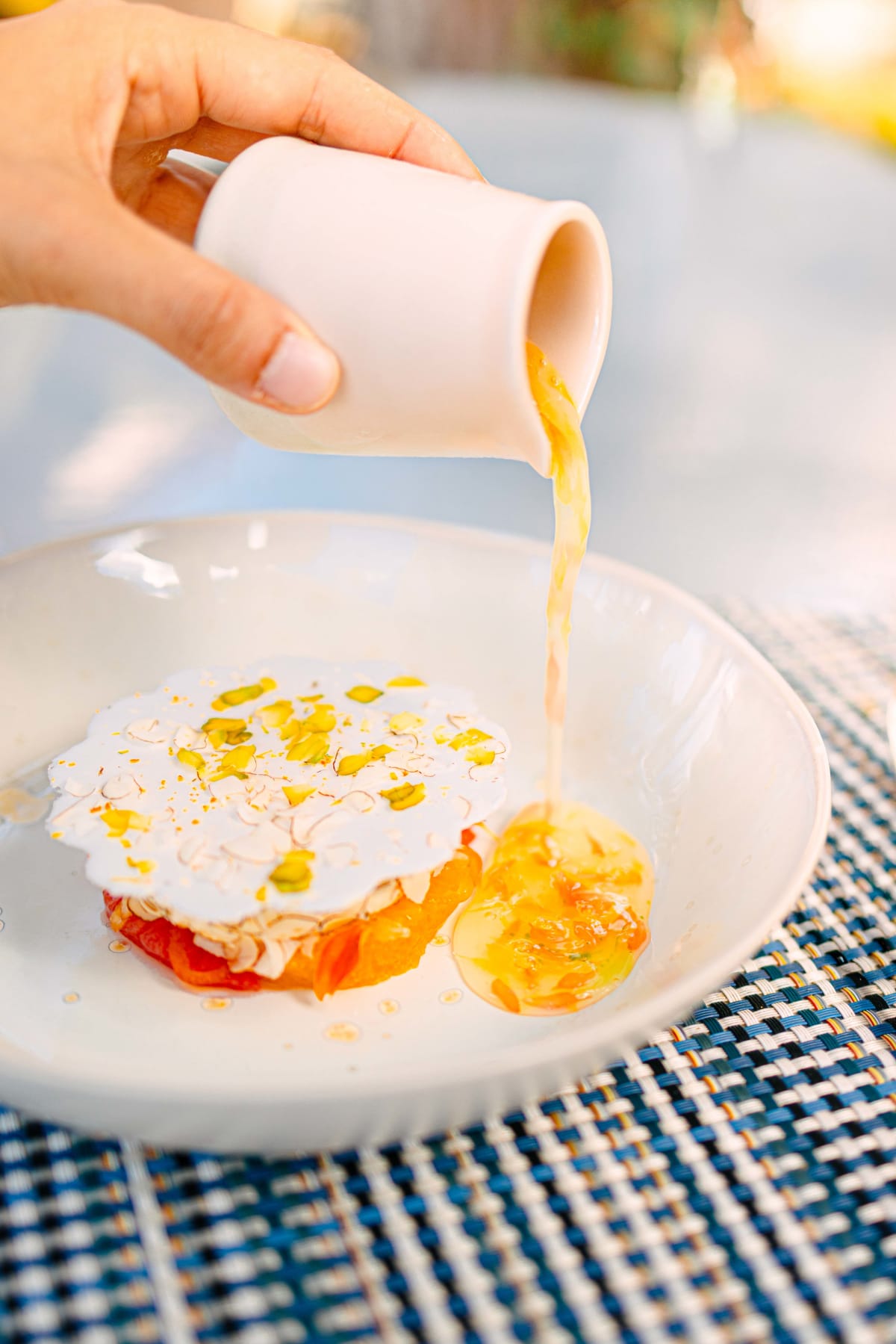
Nougat is a traditional sweet made with honey, egg white and nuts like almond and pistachio.
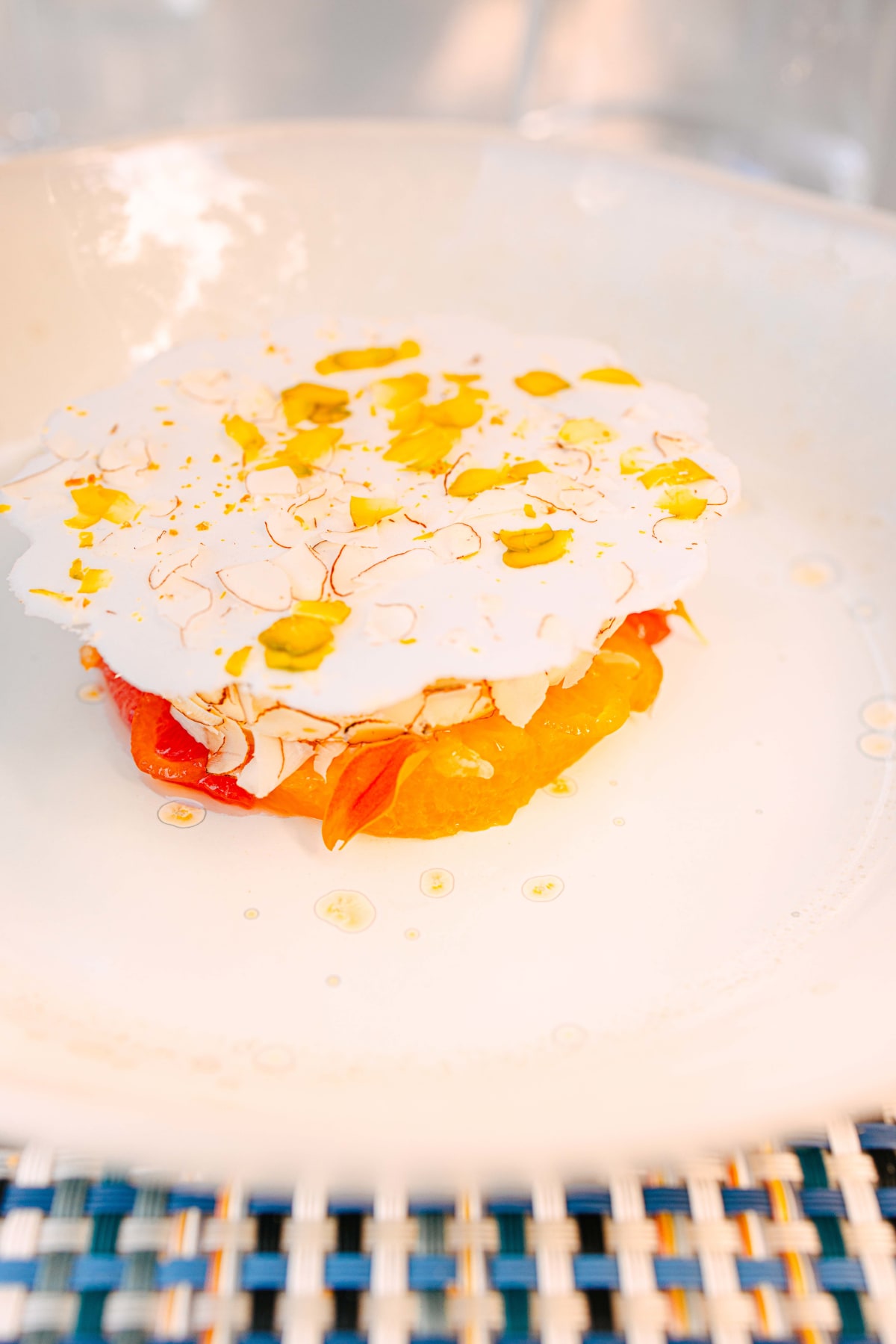
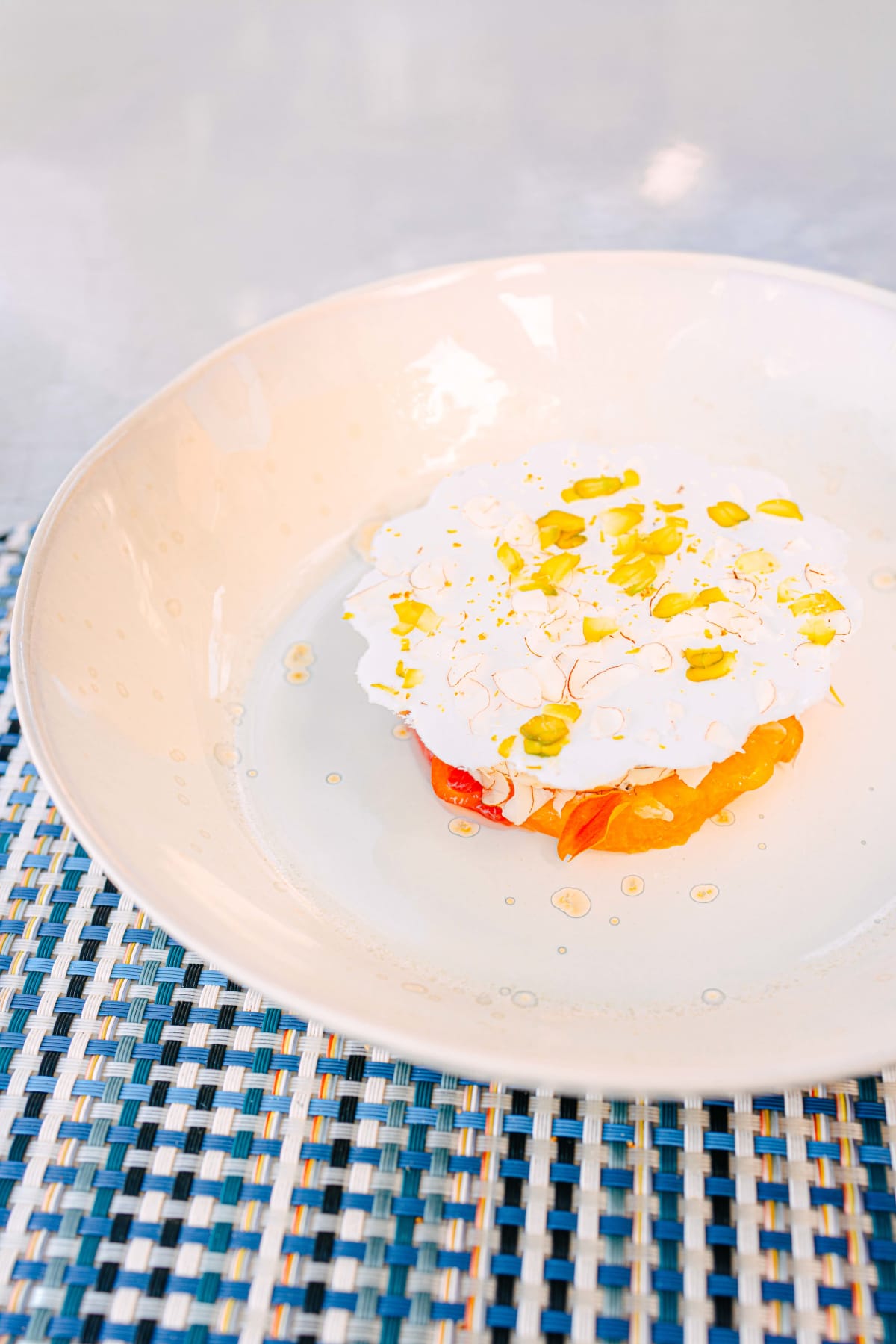
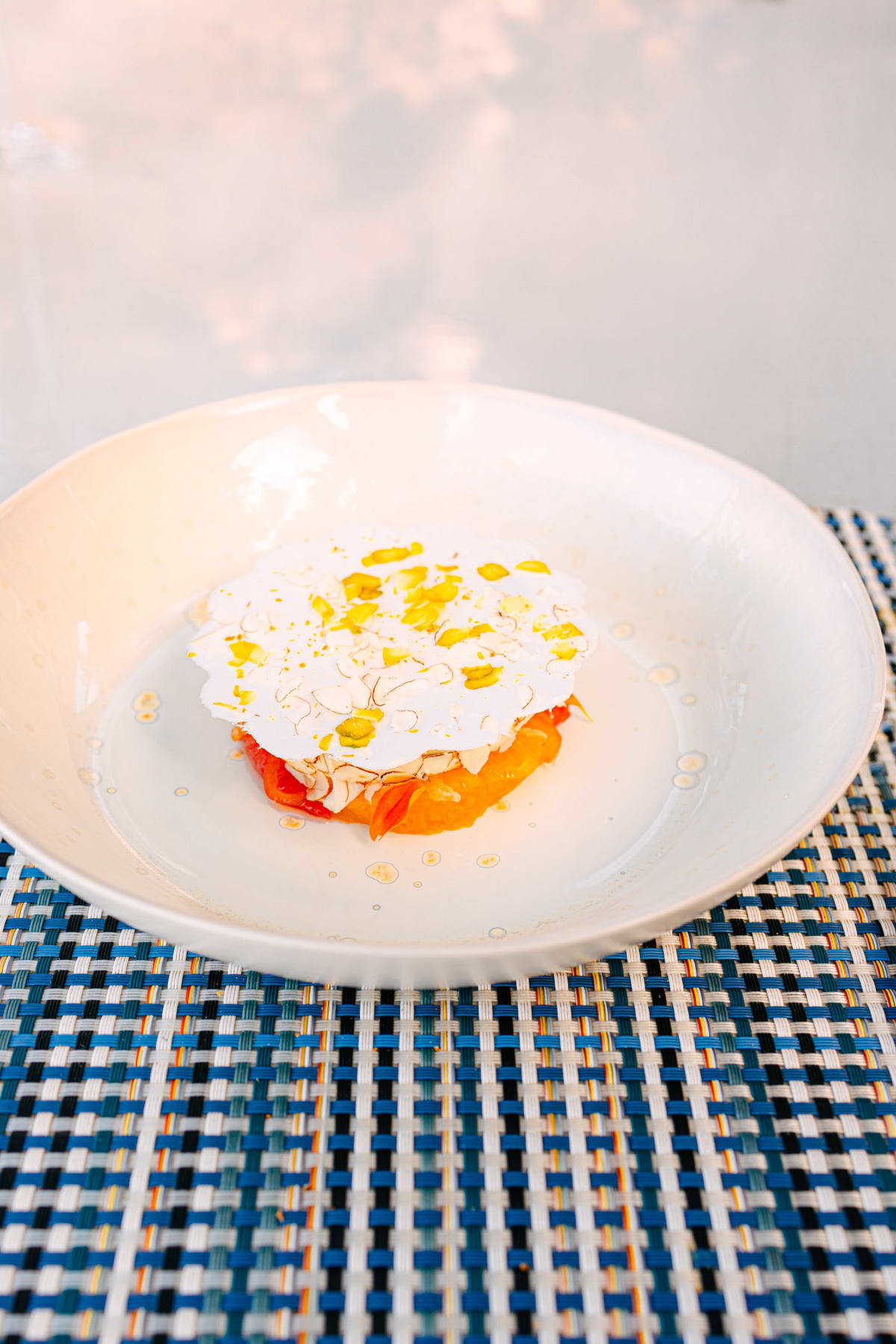
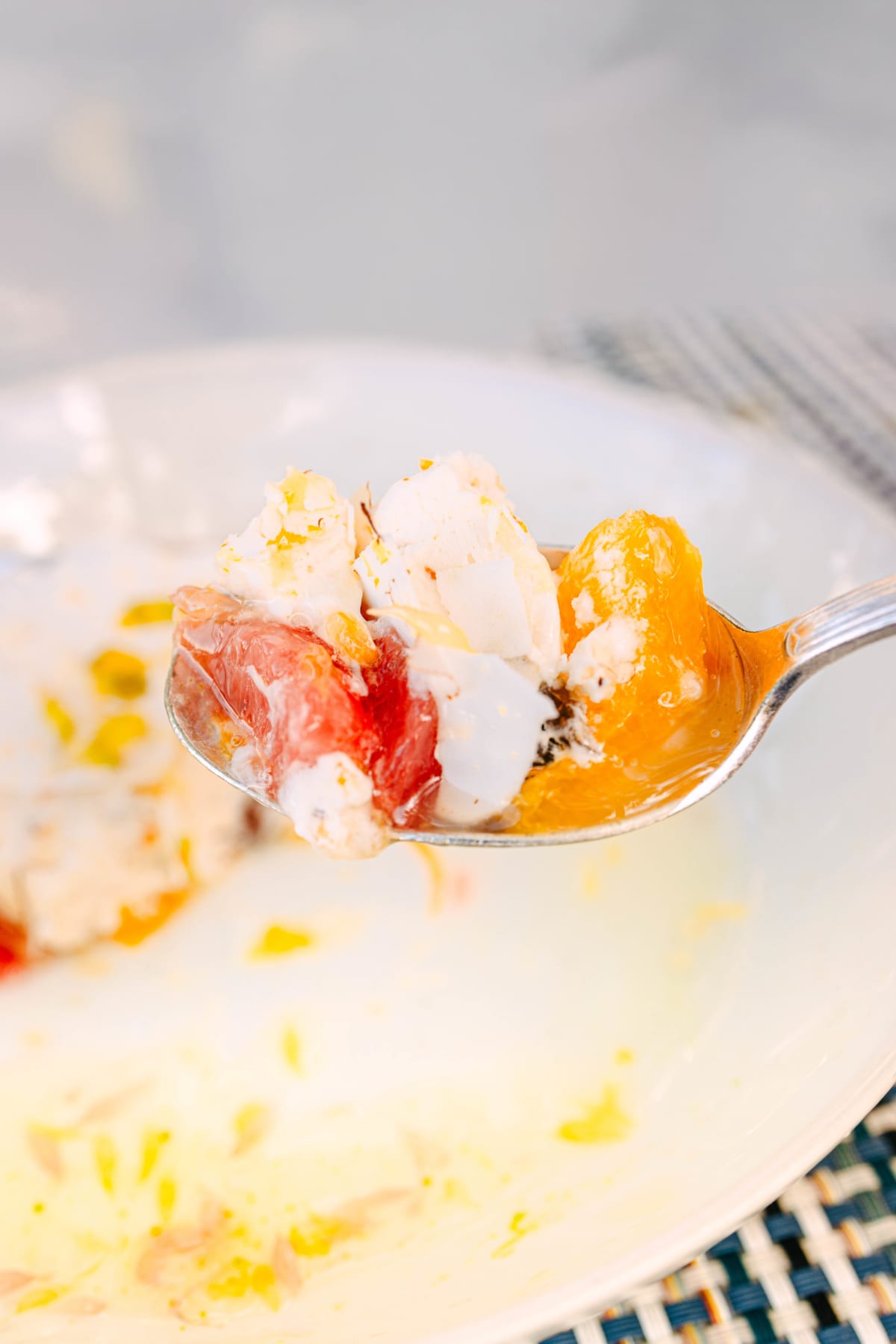
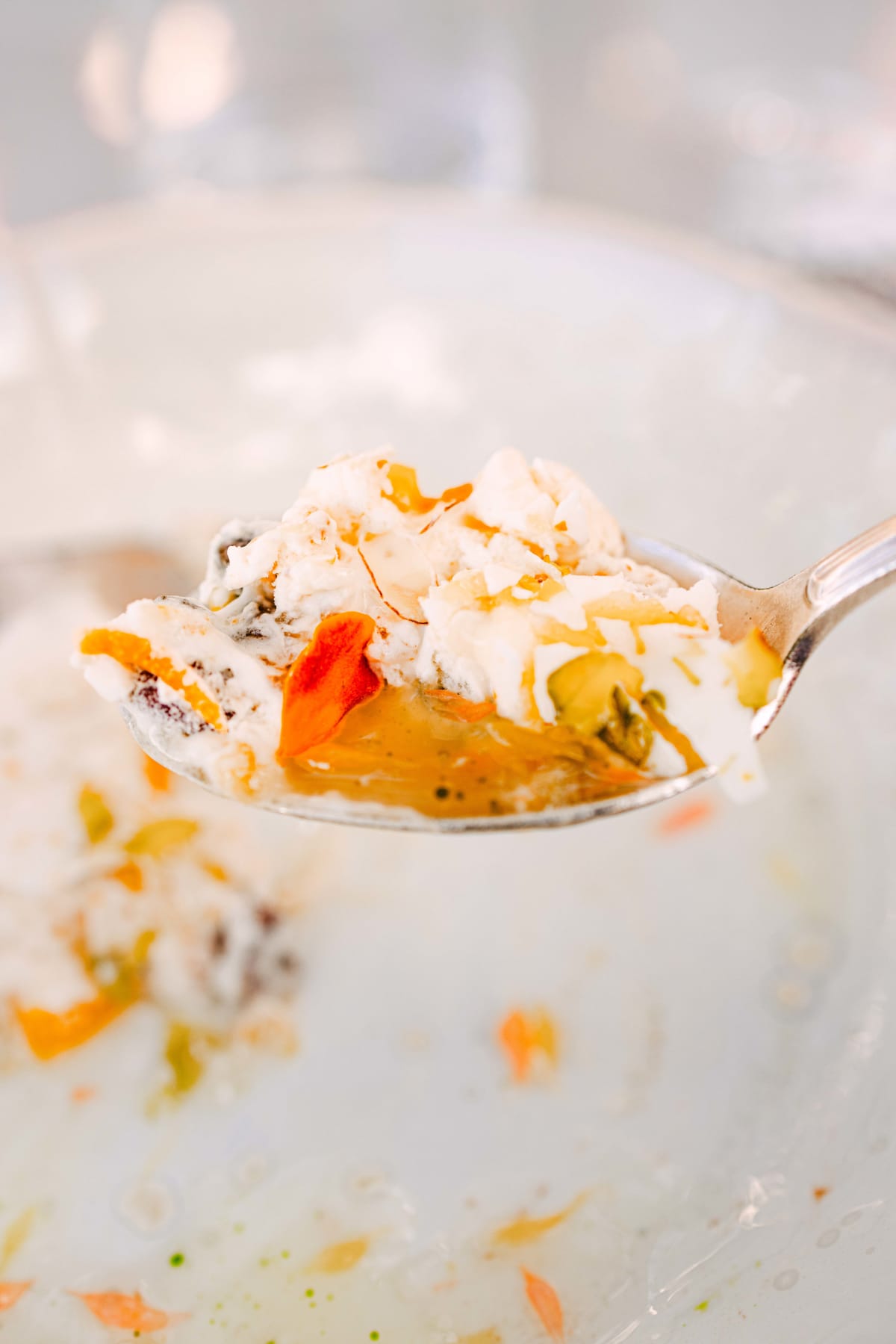
At the bottom sit bright citrus fruits, orange and grapefruit, with the nougat ice cream and honey over them. On top come royal icing, almond and pistachio as the finish.
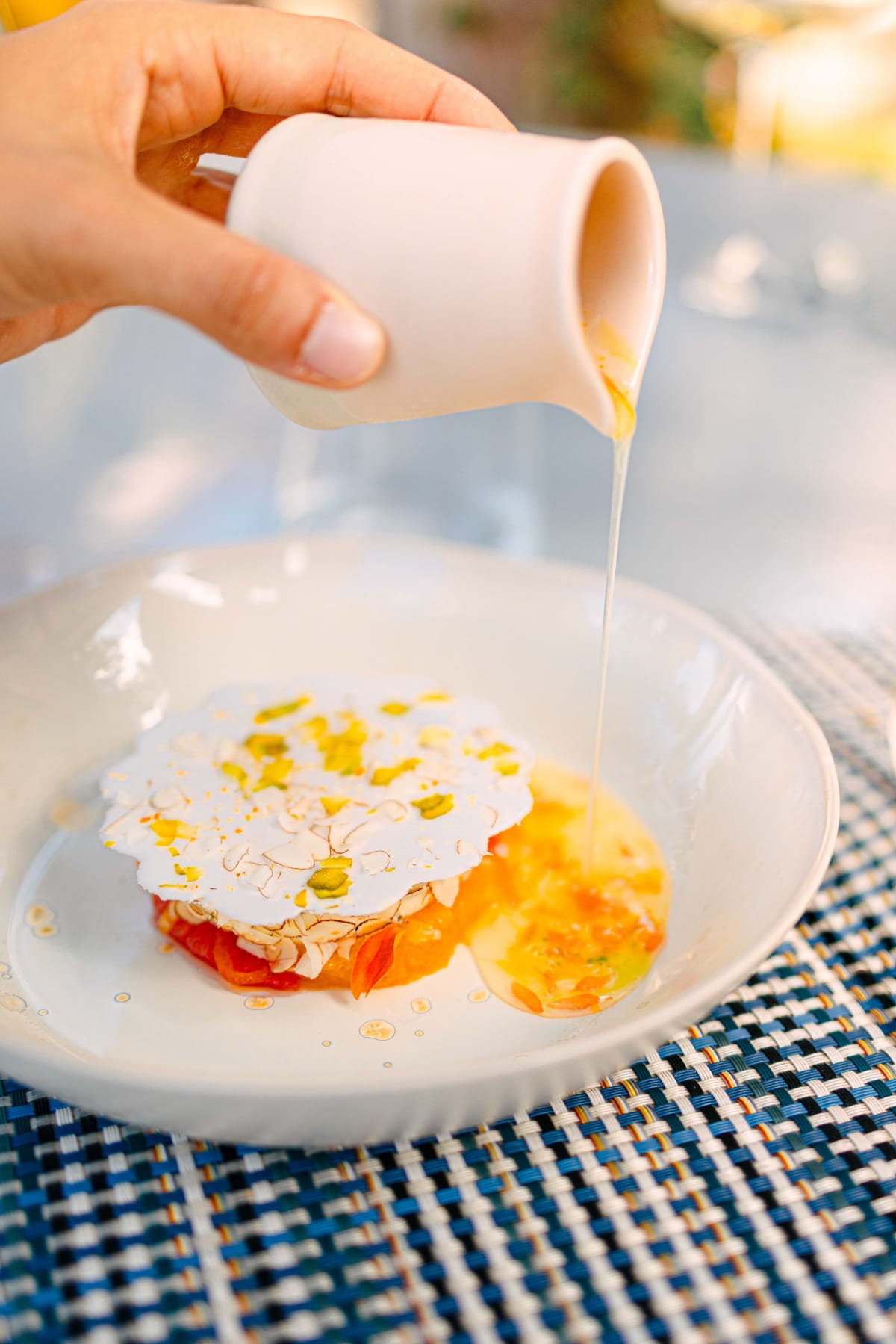
Royal icing is a meringue of egg white and icing sugar set like a thin sugar coating, and it carried the crisp texture. Over that they pour a citrus syrup made by steeping the peel and flesh of orange and lemon to draw out the aroma.
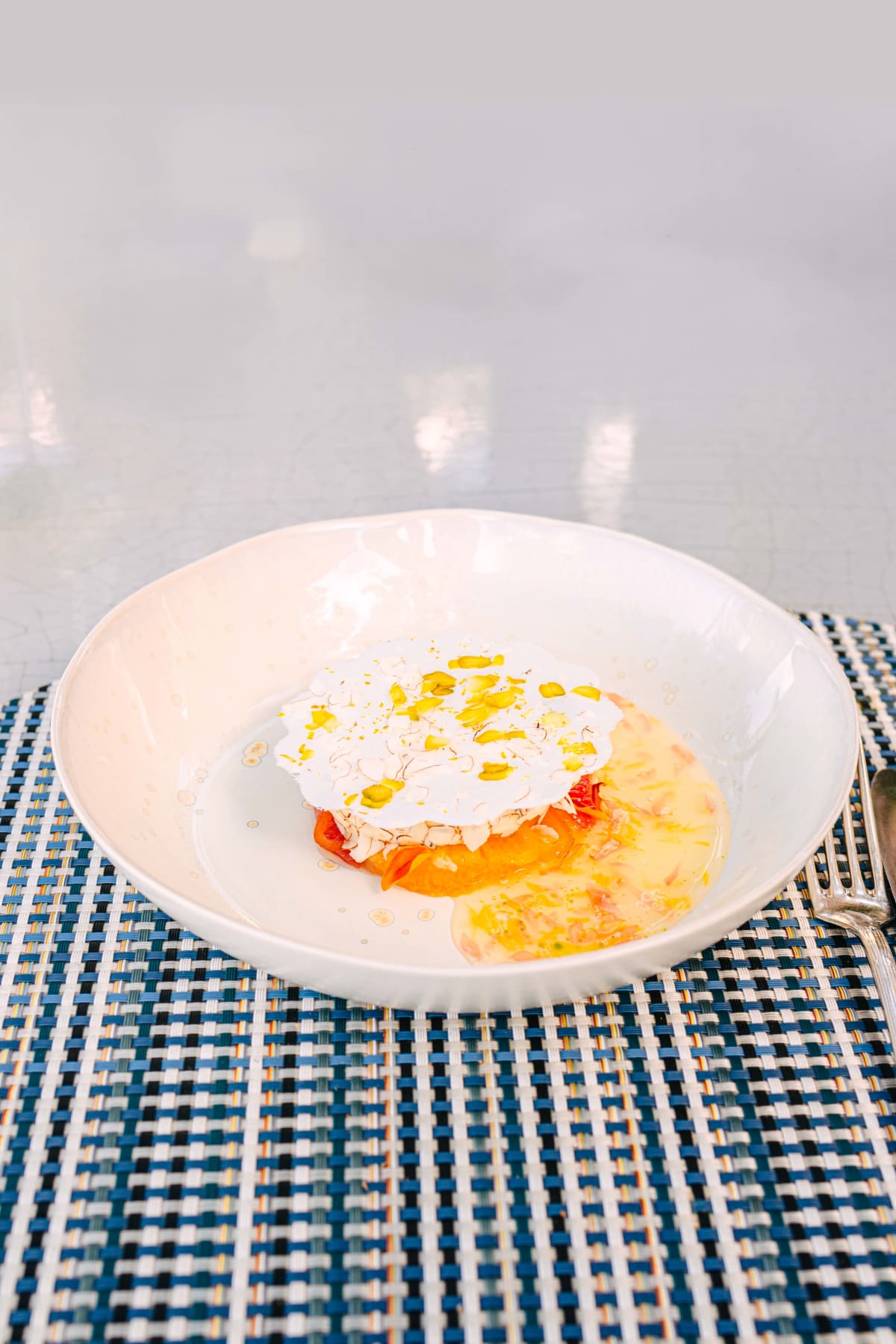
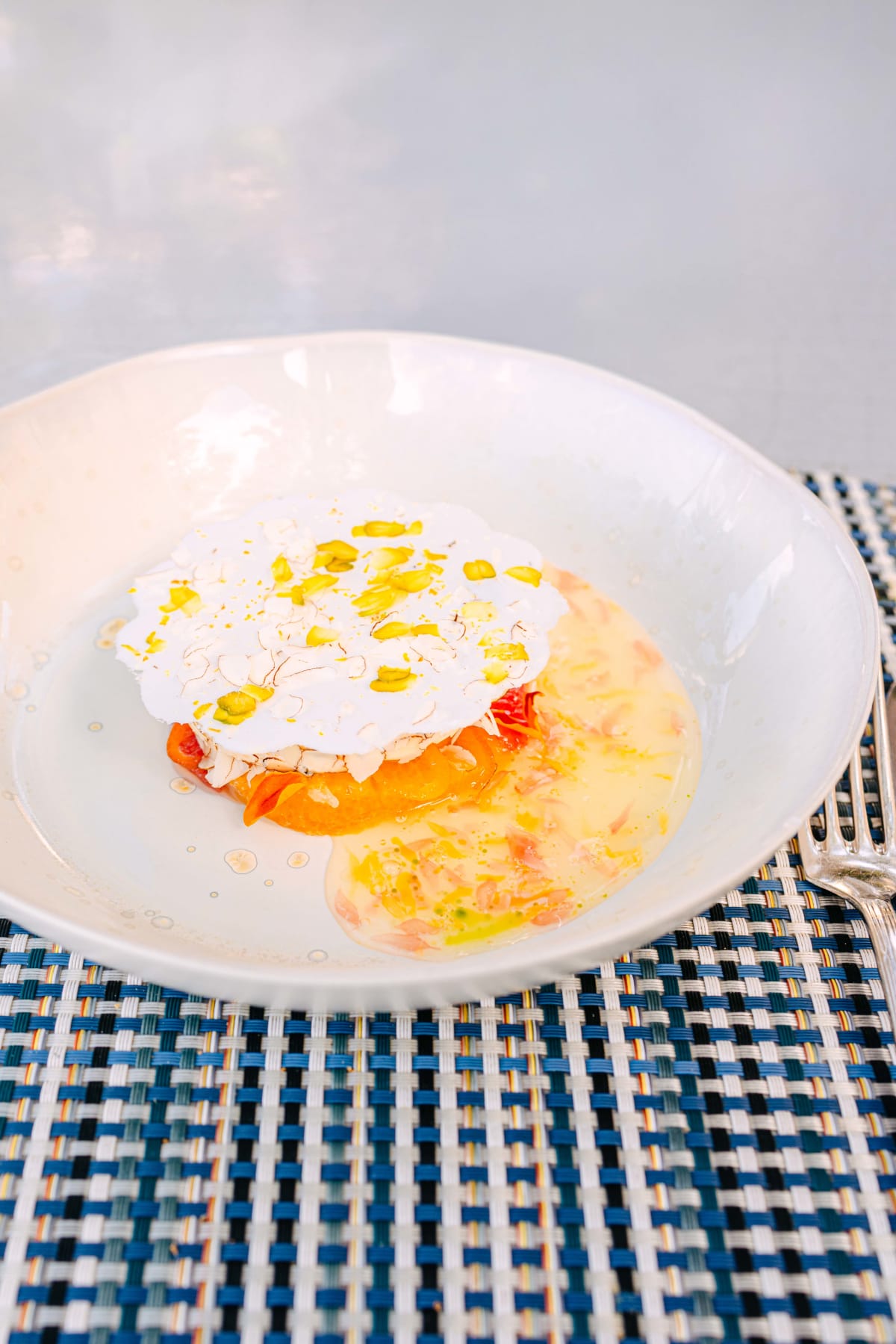
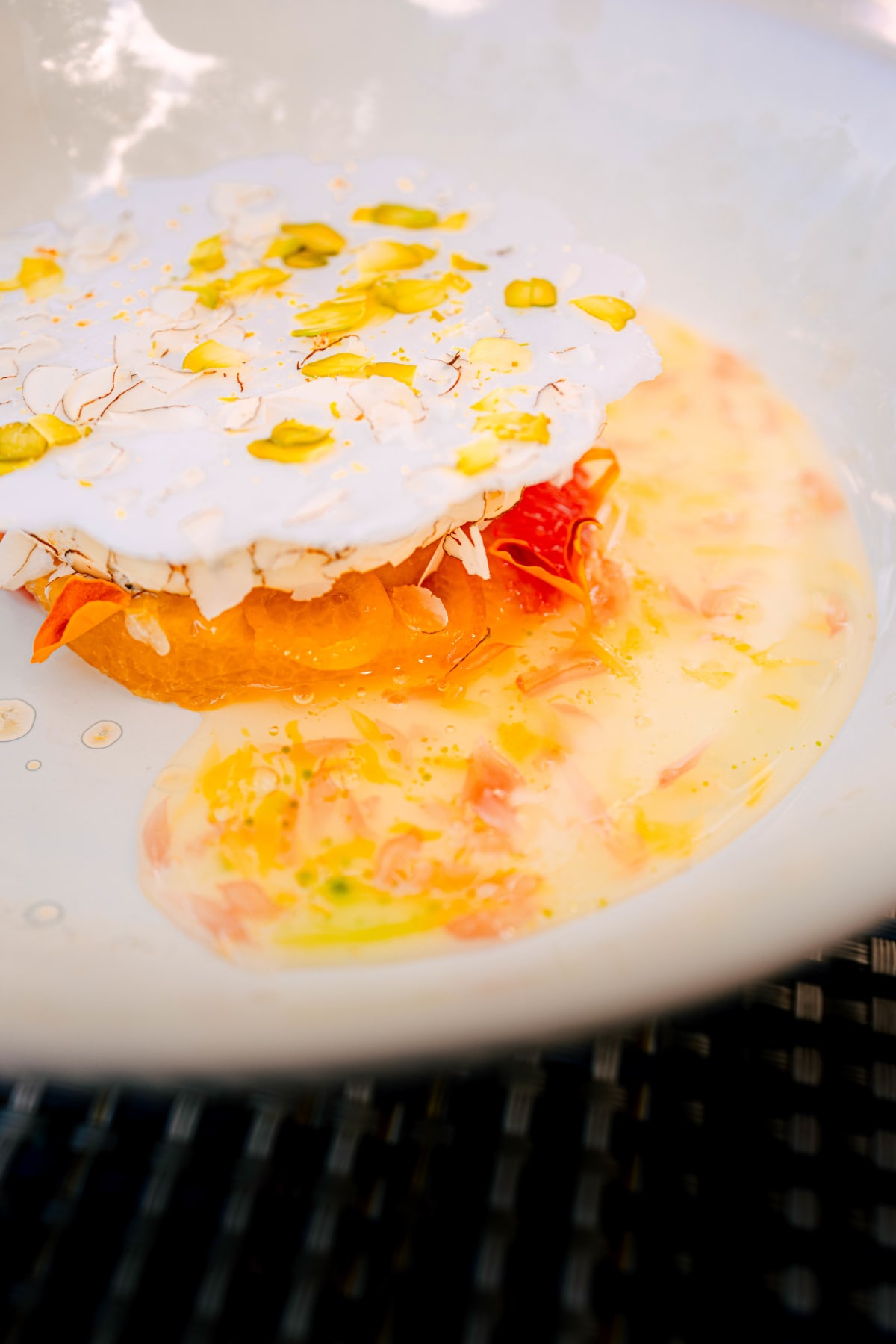
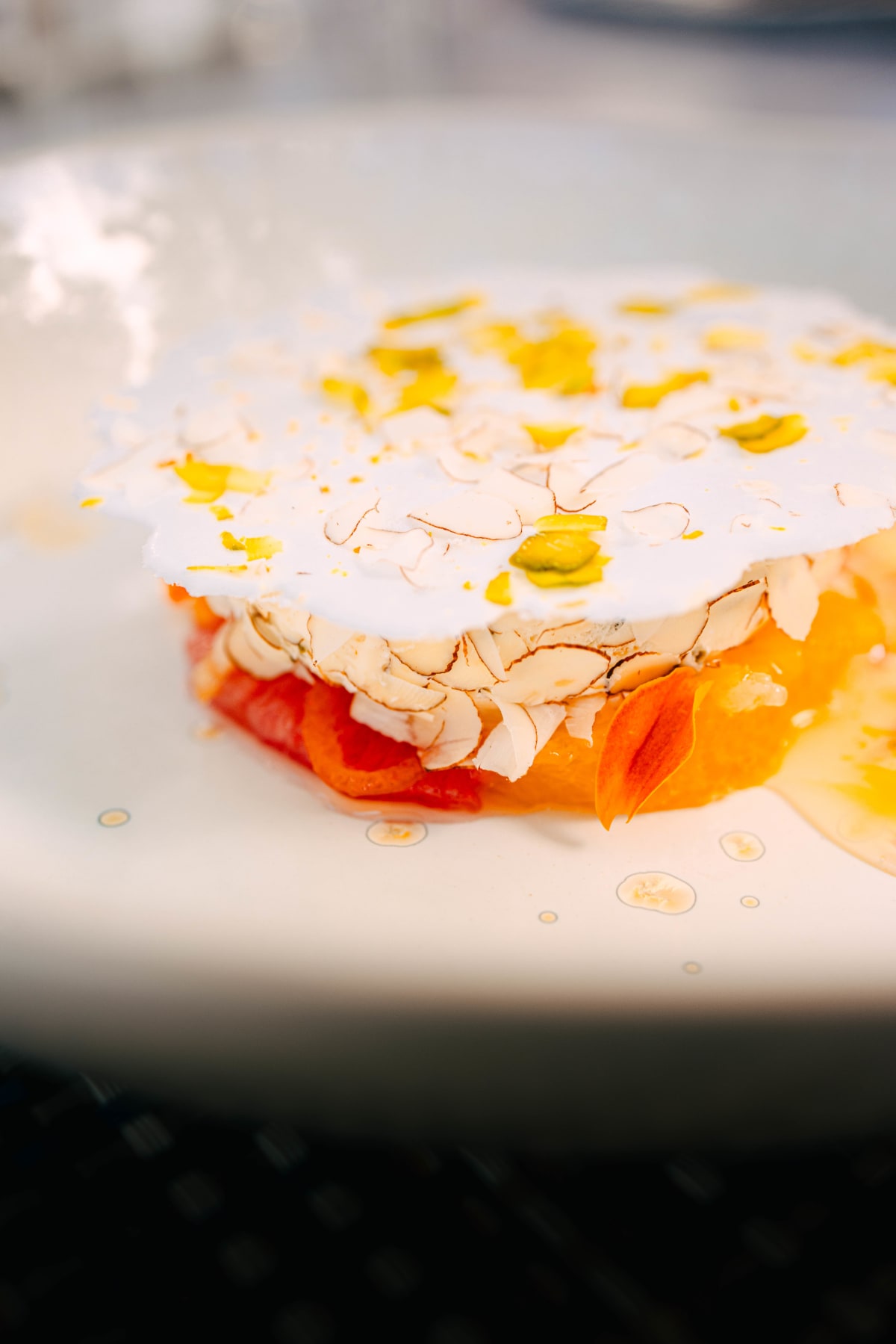
This is the style of dessert I like. A bright close that suited the weather perfectly, not too sweet, with neither the sweetness nor the acidity standing out, showing the whole of its freshness. A well made dessert.
Section 17·Lemon And Port
For the pairing came a lemon liqueur, a liqueur de citron. Twenty one percent. I had expected something like lemon juice and was surprised by the alcohol. This lemon liqueur is Jacoulot's. A distillery founded in 1891 by Vincent Jacoulot at Romanèche-Thorins, known first for marc de Bourgogne.
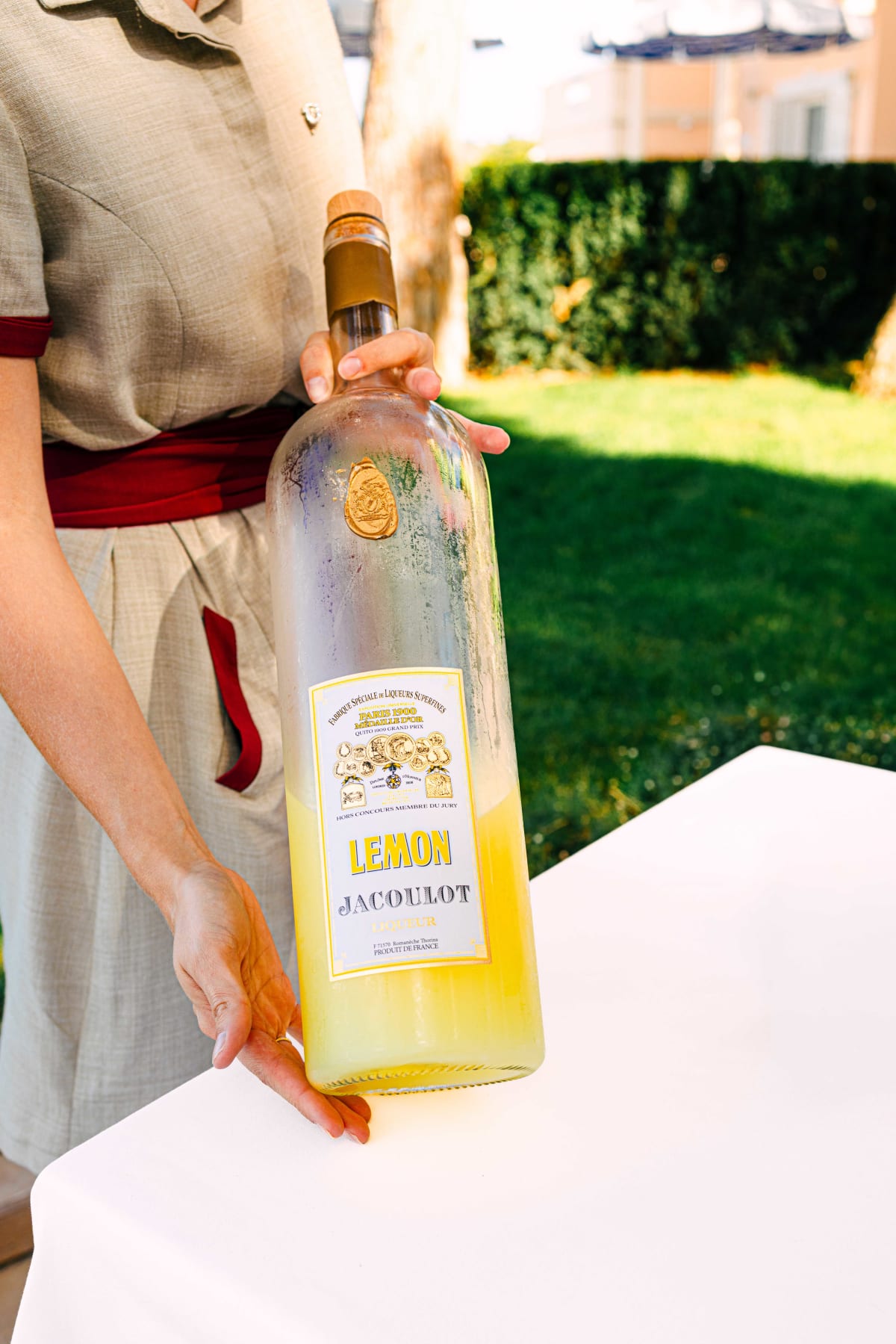
What is interesting is the location. Romanèche-Thorins sits in the middle of the Beaujolais crus, right beside Moulin-à-Vent. So a drink from Beaujolais arrived in the dessert glass of a restaurant in the south of France. The Vançon family took over in 2013 and the house now makes some fifty products, marc and fine, fruit liqueurs and crèmes, whisky and rum.
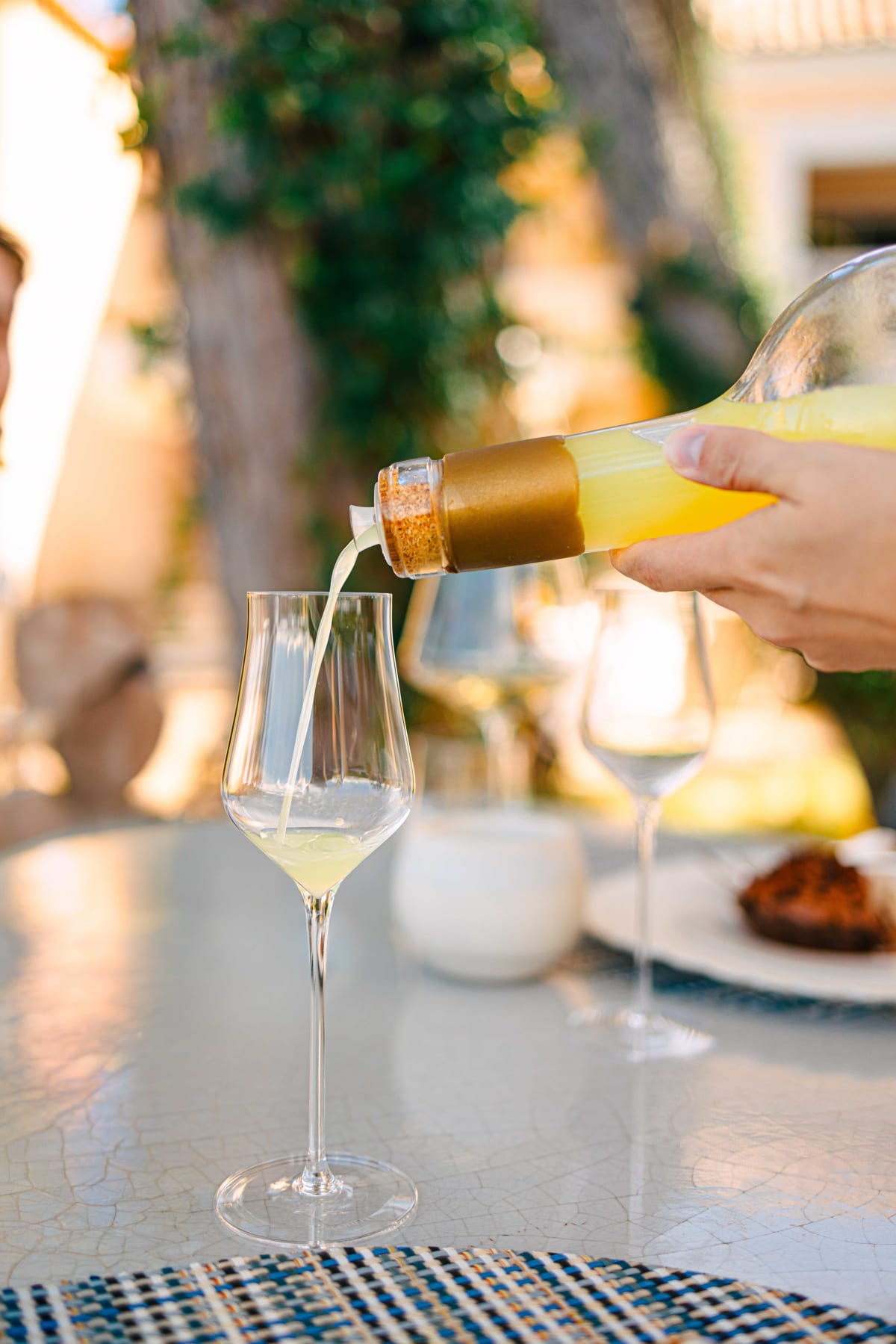
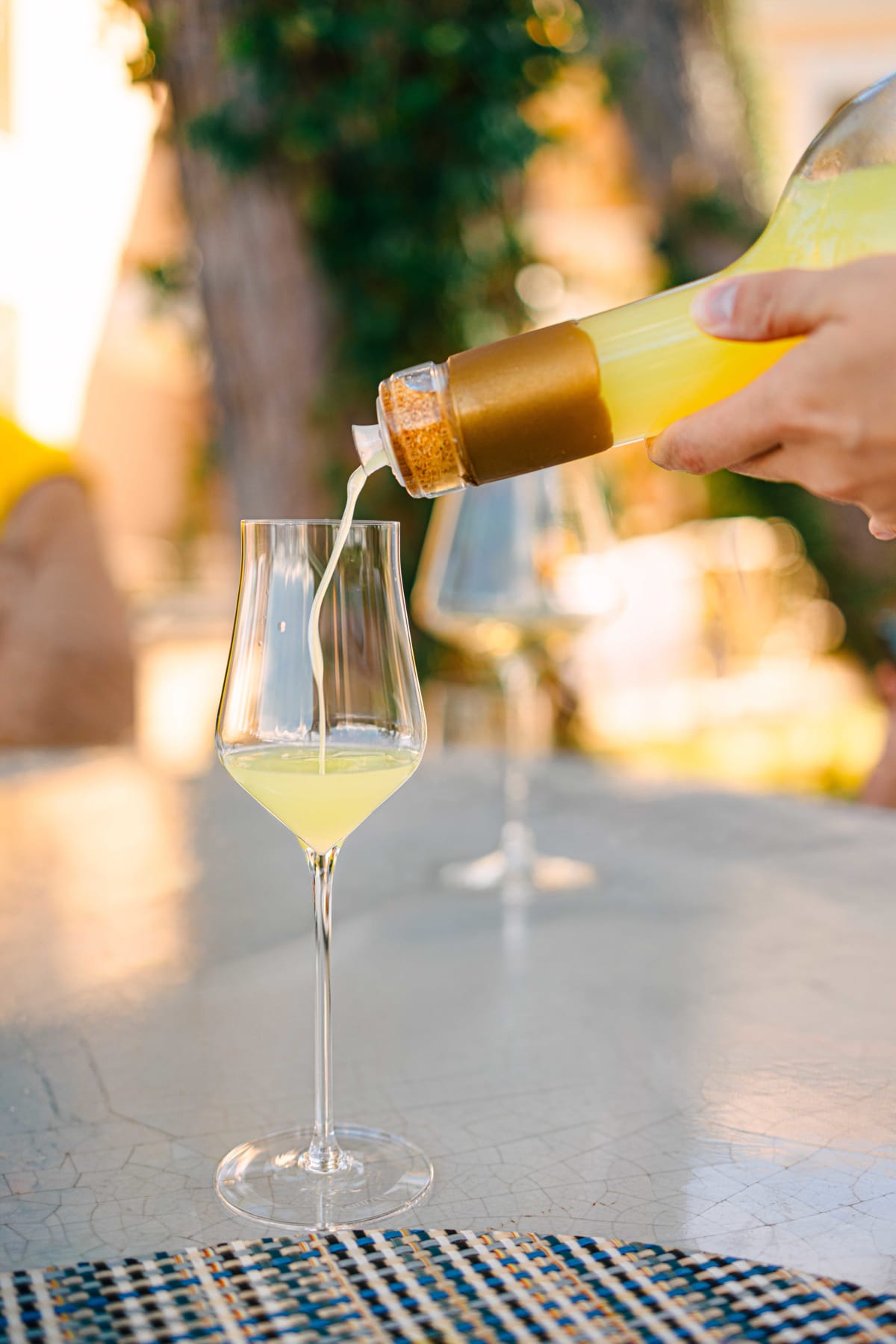
The lemon liqueur is made by drying lemon peel carefully, keeping it in its natural state, then macerating it in alcohol, filtering and bottling. The French press calls this product an artisan limoncello outright. So the impression that it is like limoncello and yet different in style is accurate.
It is similar to Italian limoncello and different in style, and limoncello runs higher, from the mid twenties to thirty percent, with more sugar and more viscosity. Having finished with a digestif in the same register as the dessert, I had the sense of having completed a French course at midday properly.
Worth noting the side I did not choose. The chocolate soufflé tart is made with grand cru chocolate and comes with an ice cream of hazelnut and lemon. The pairing on that side was Martha's ten year old tawny port.
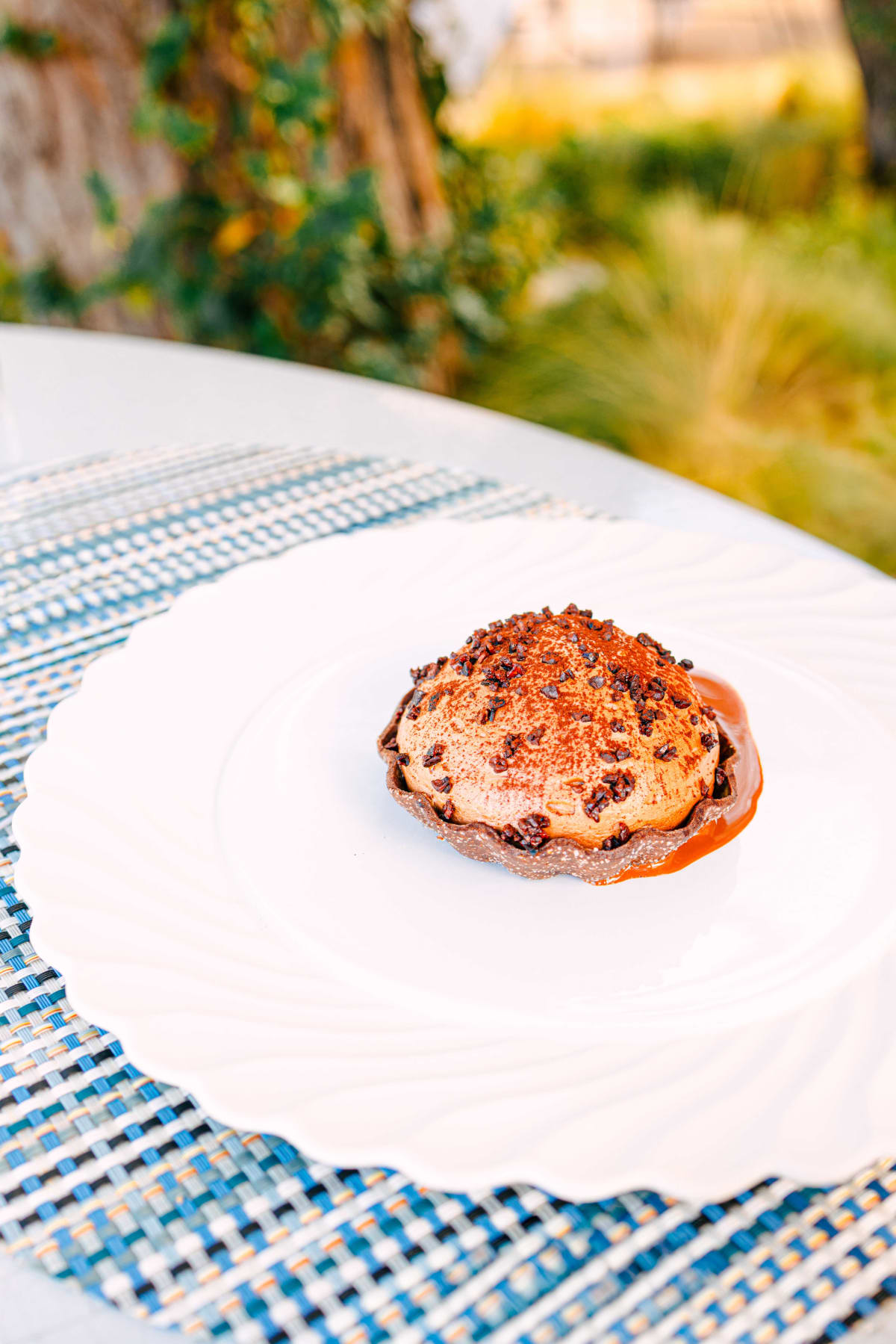
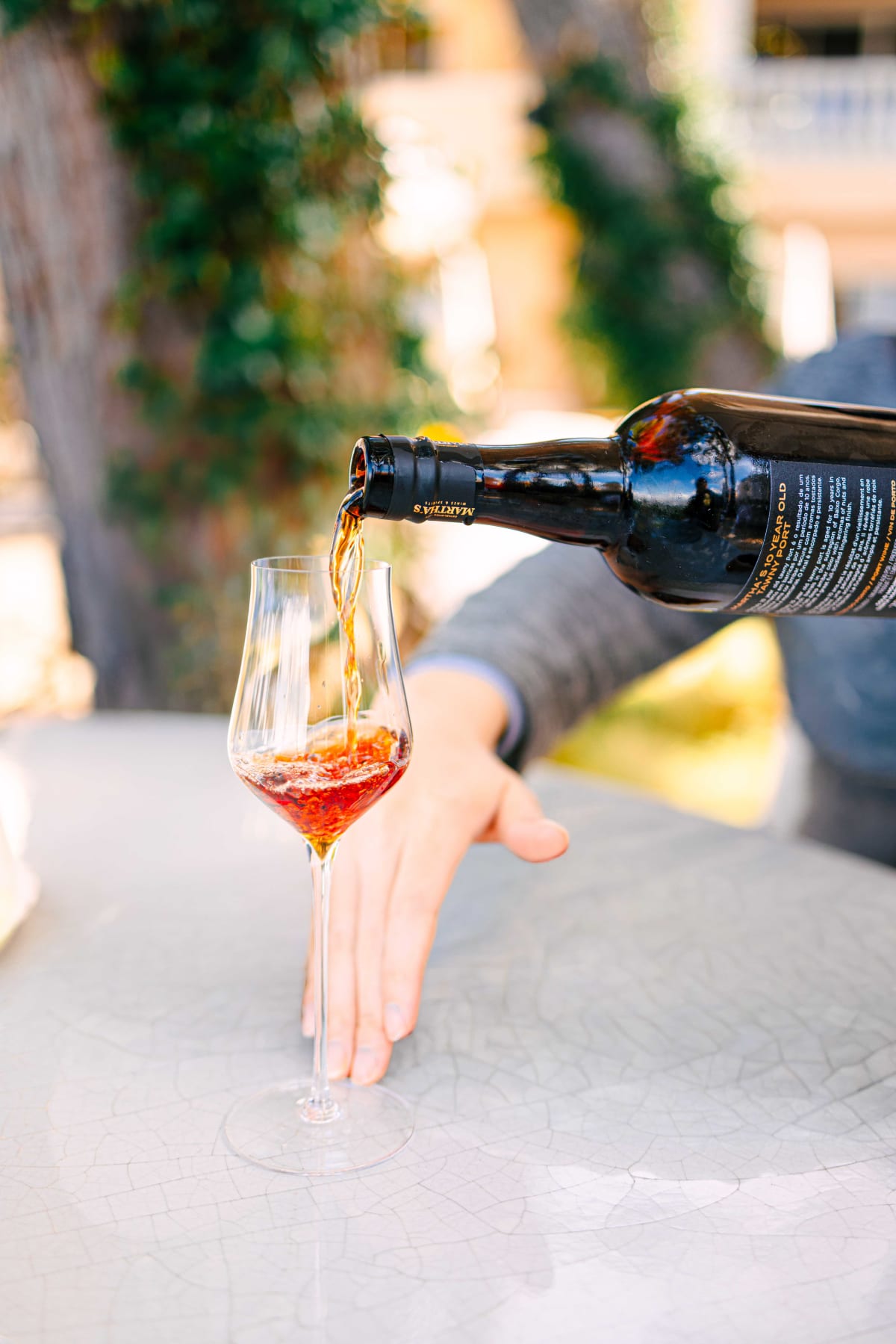
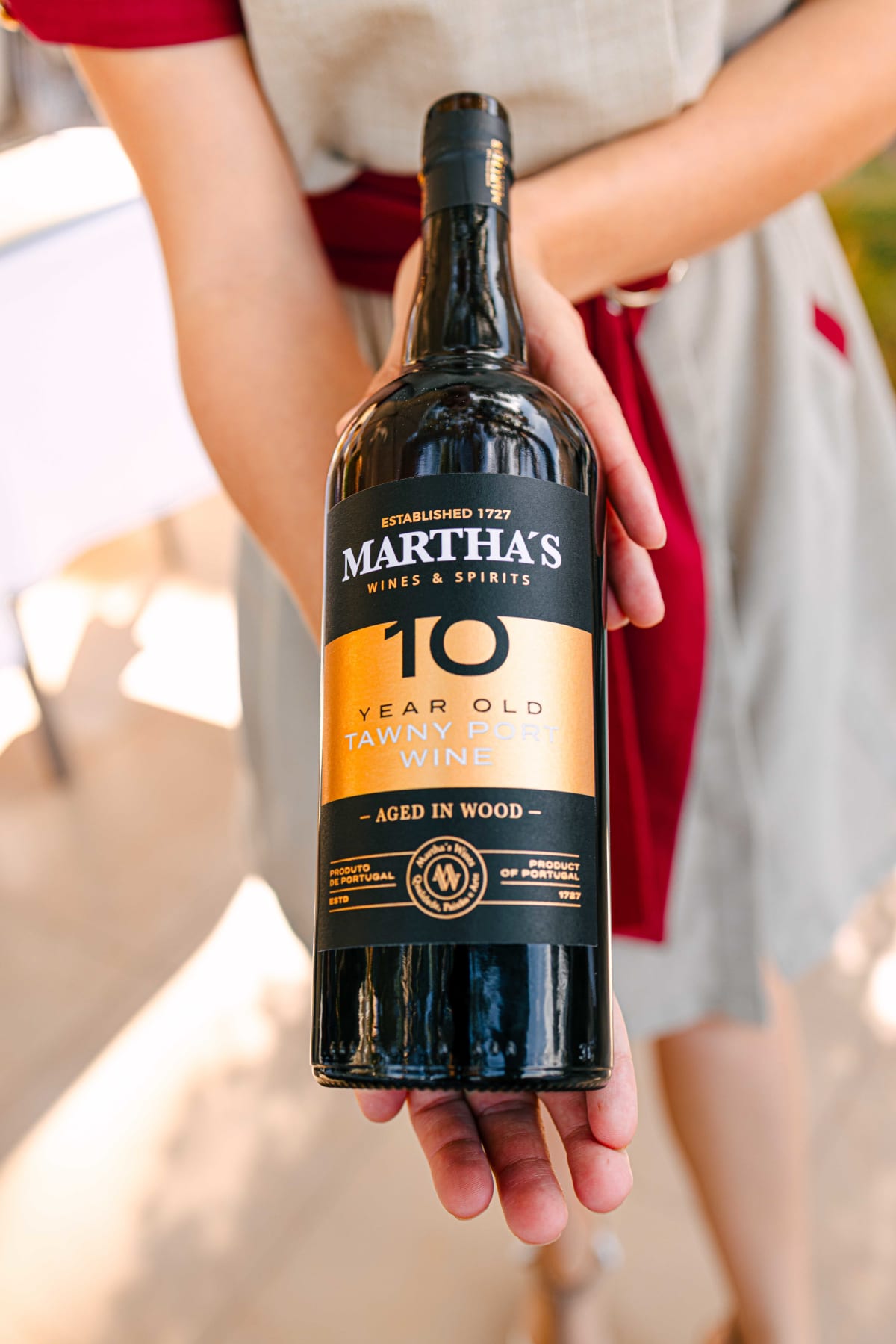
A tawny from the Douro in Portugal is aged oxidatively in barrel for a long time, so nuts, caramel and dried fruit lead, which suits chocolate and hazelnut, while the lemon liqueur suits the citrus nougat. Each of the two dessert choices had a drink of a different family attached to it.
Section 18·Bread At The End
Last came a yoghurt flavoured ice cream and a pound cake brushed with a bright lemon syrup. This was truly excellent.
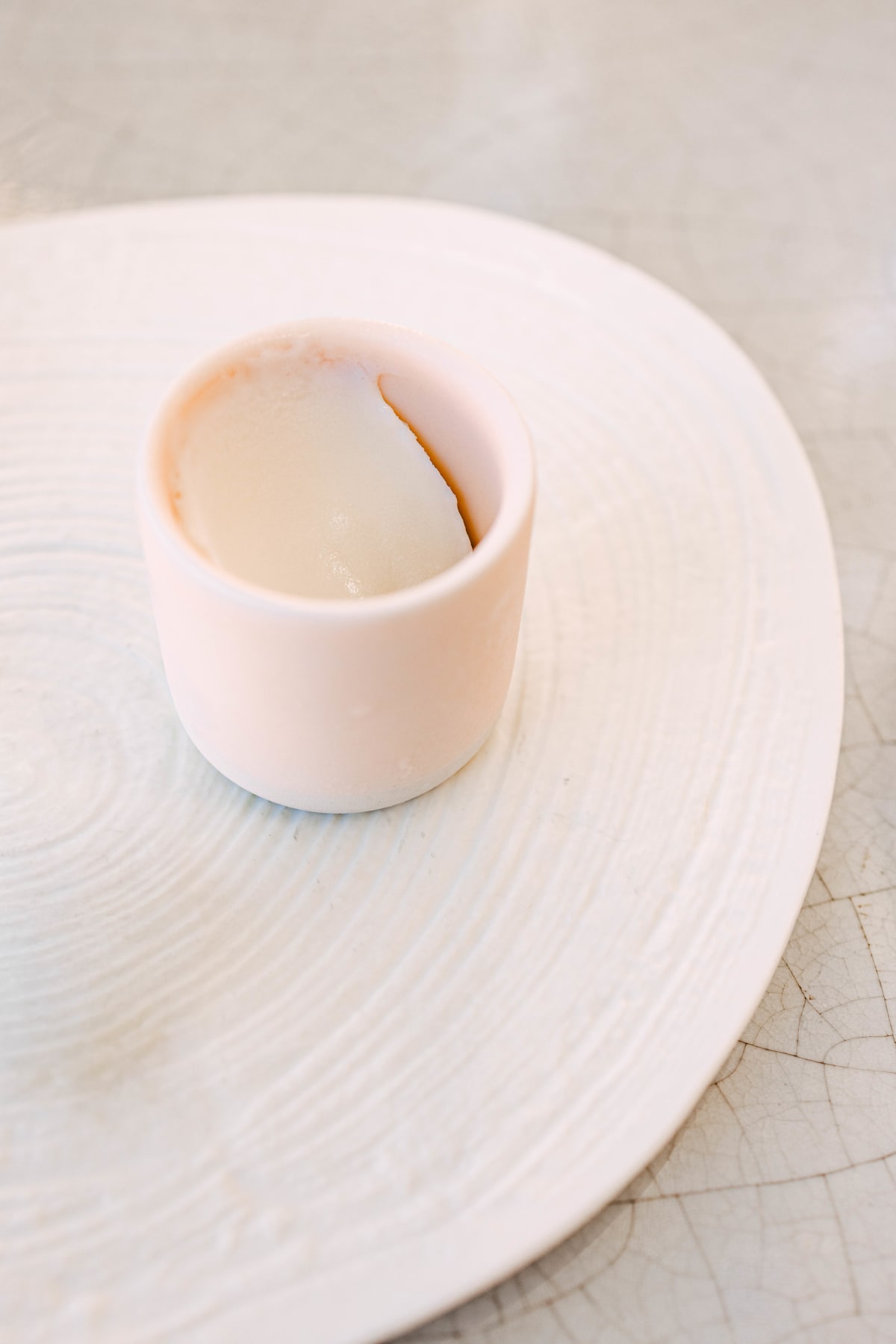
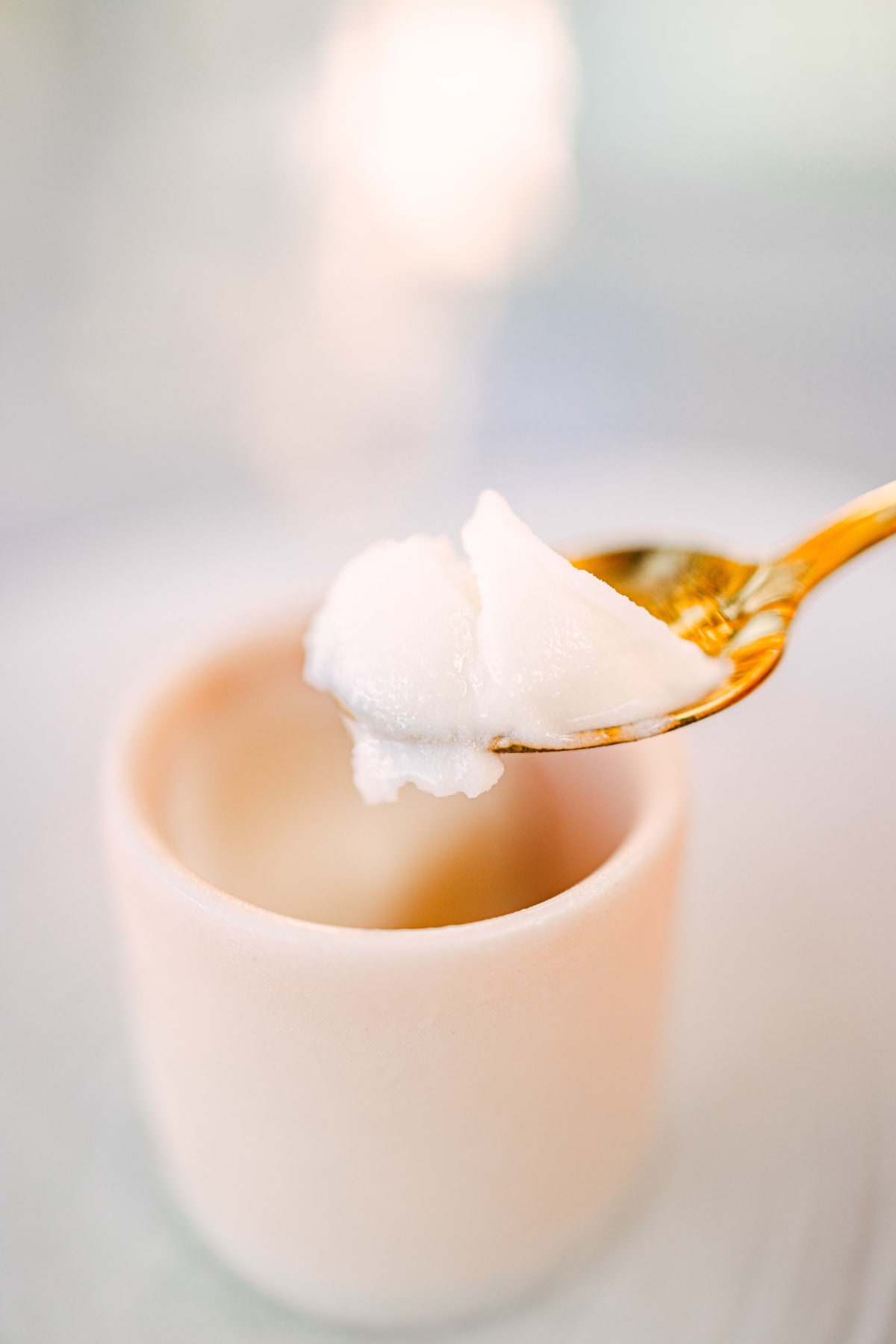
On bread and baked things there is no room for doubt about this place.
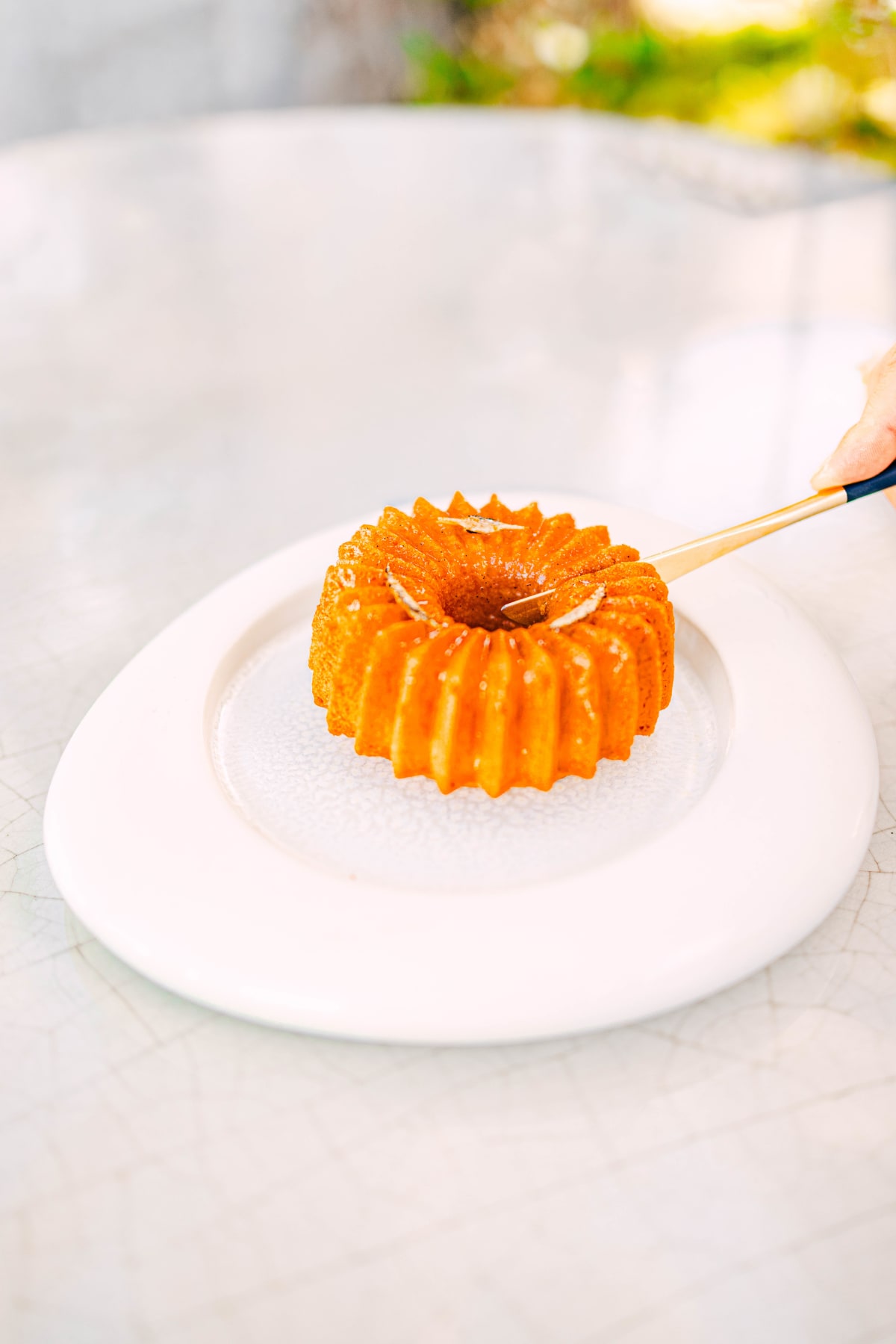
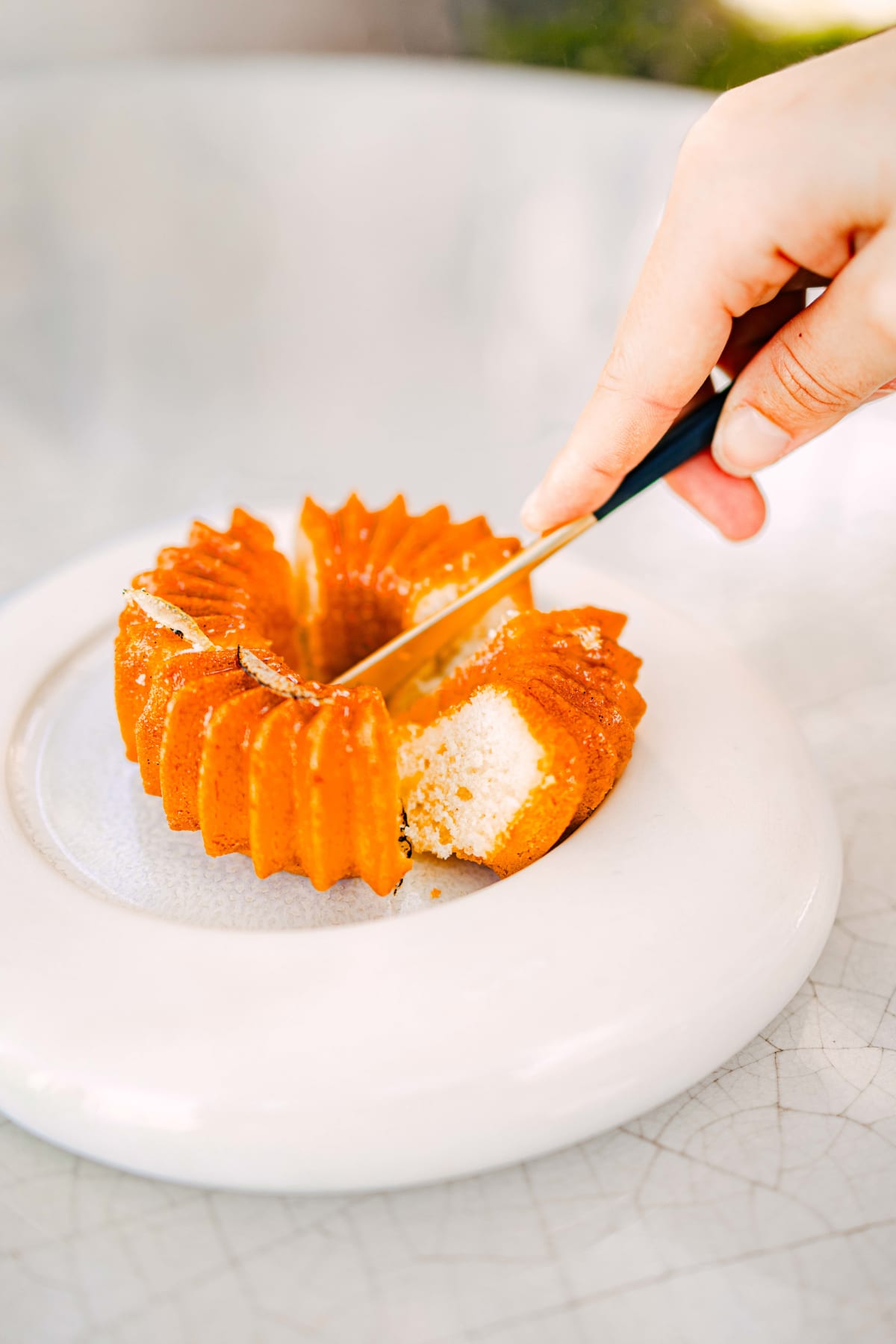
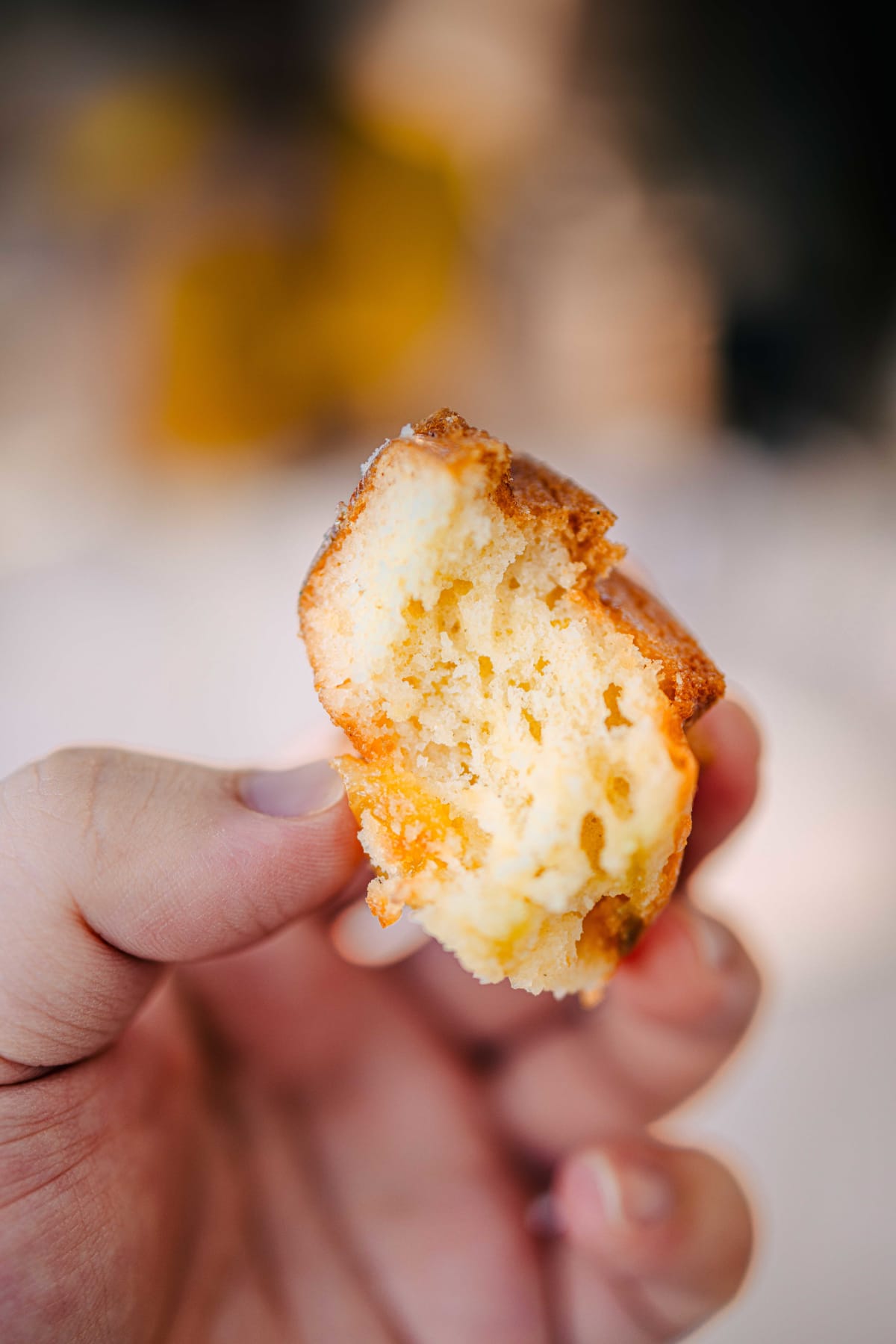
After dinner at La Vague d'Or that evening I was given the same pound cake as a gift, and I ate both of them. Personally I found the bread here more satisfying than at Cheval Blanc in Paris.
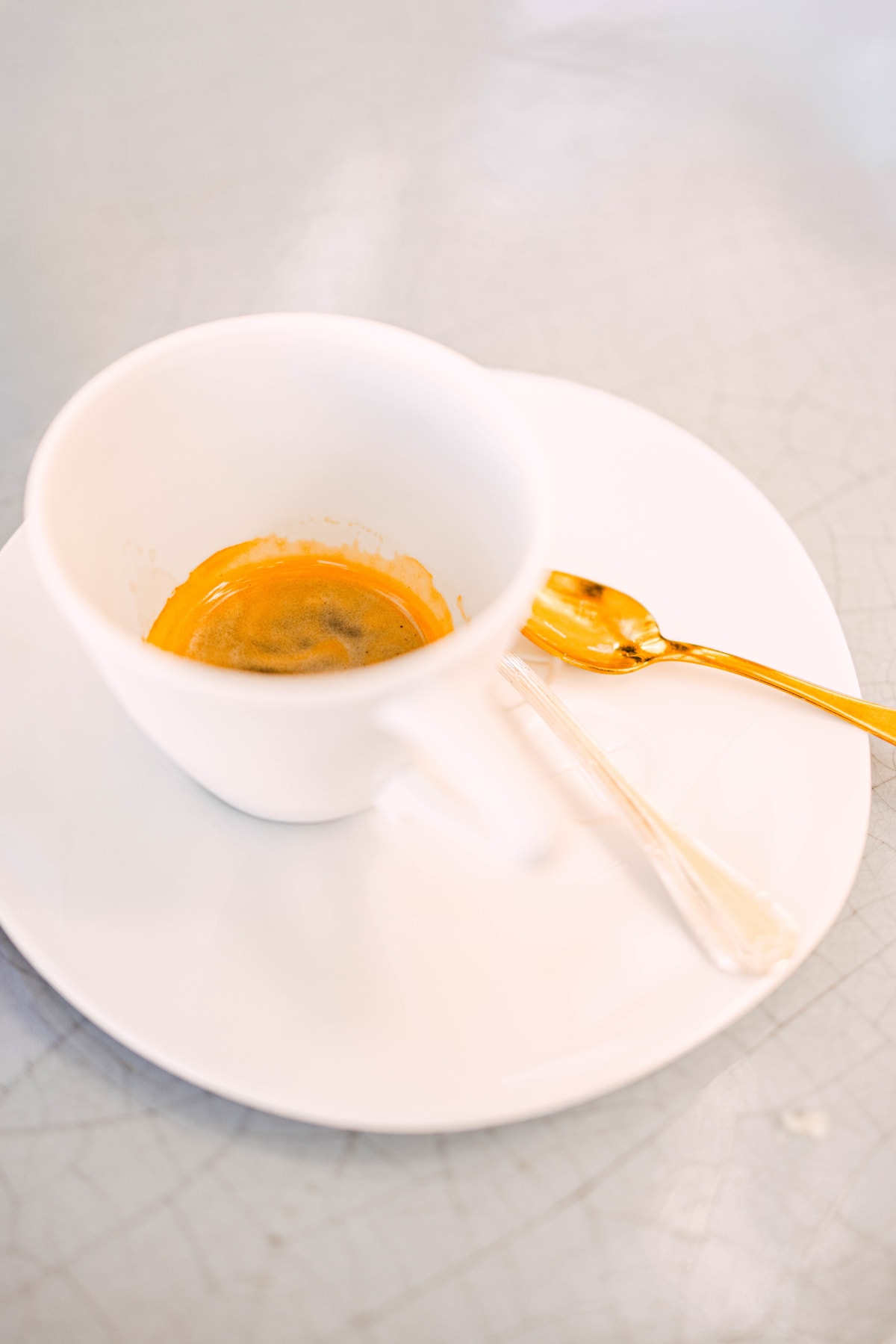
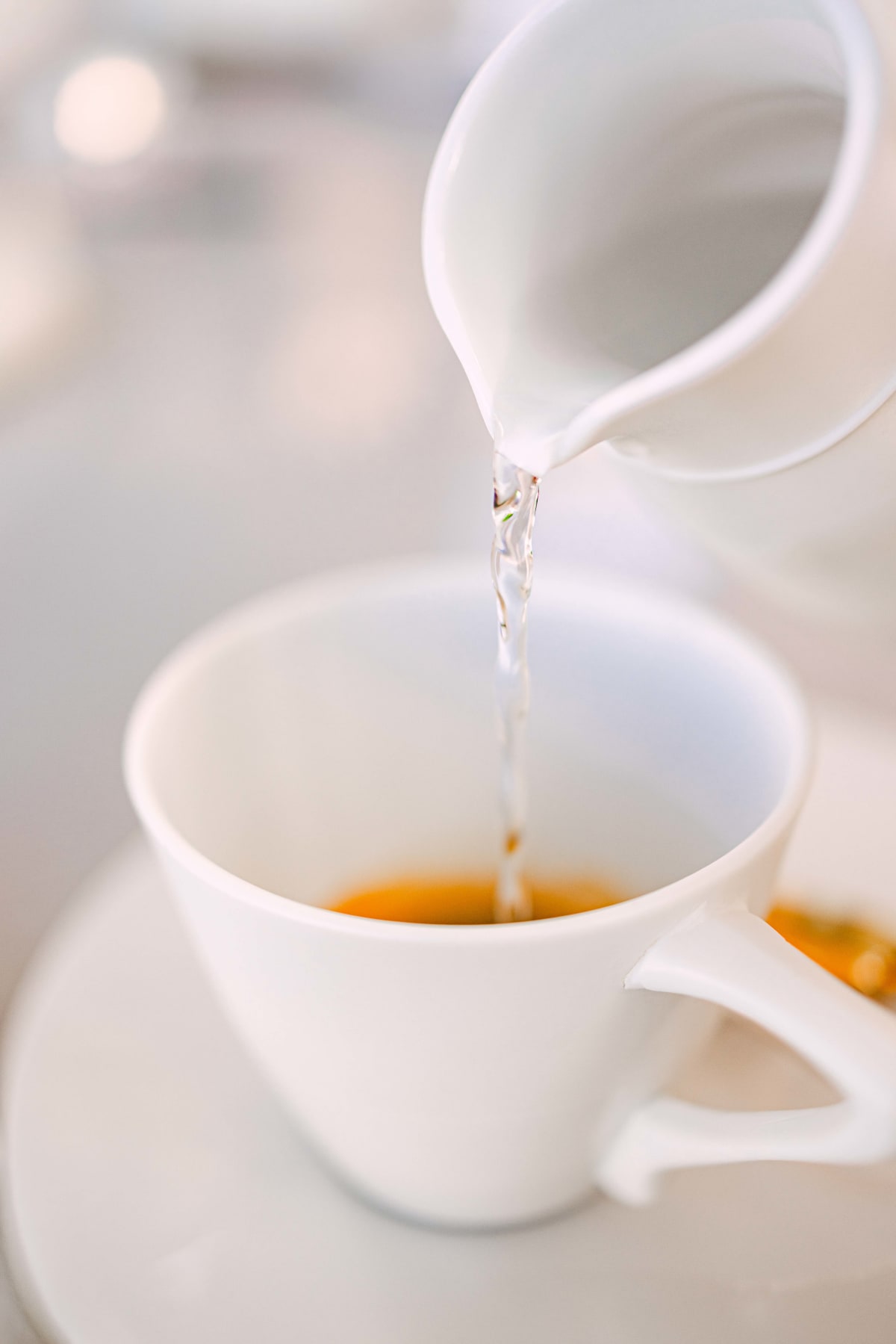
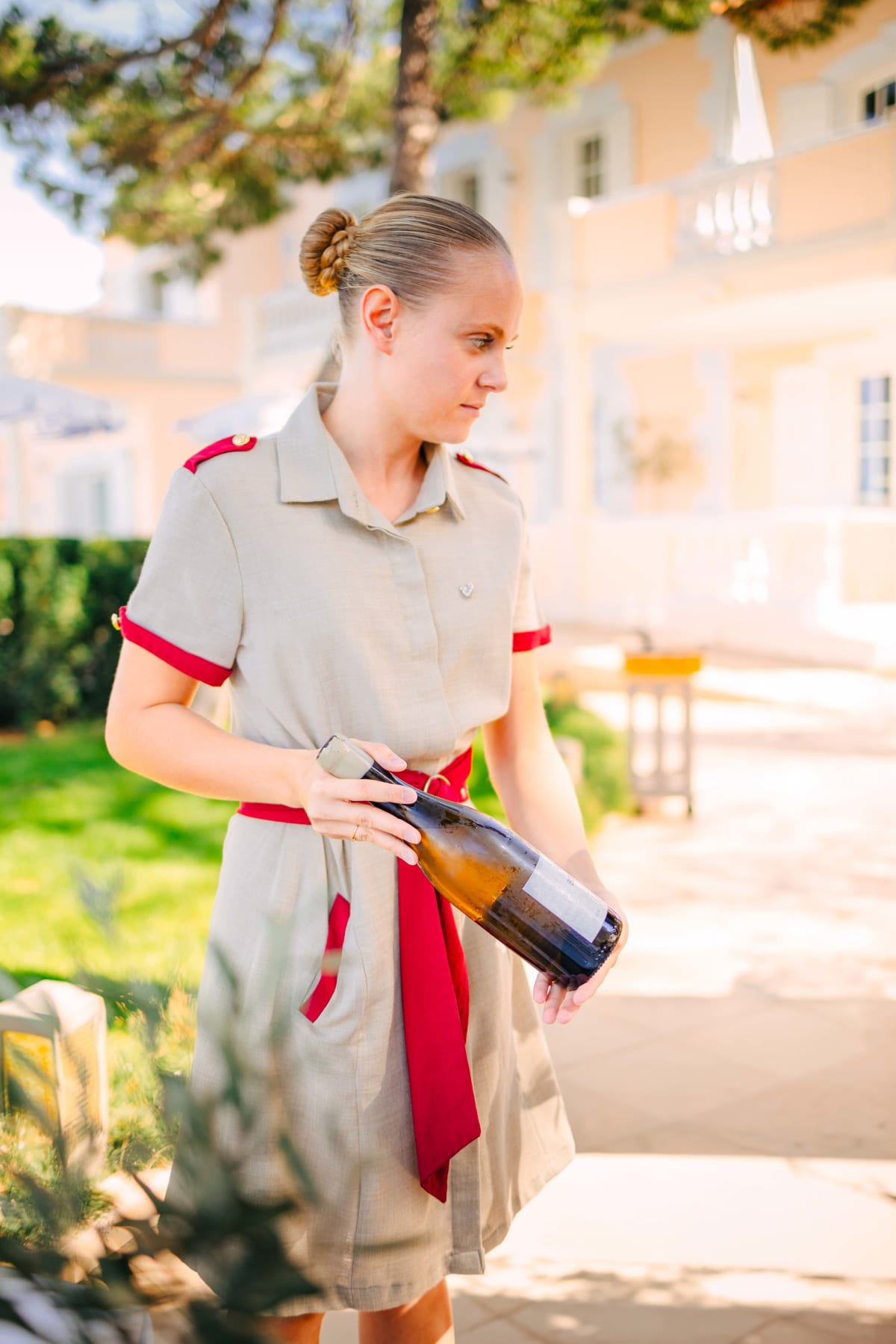
One more thing to mention beyond the food is the service. As you would expect of an LVMH Cheval Blanc hotel, the level of hospitality was very high. Every member of staff was professional, and you could feel that the uniform, the movement, the speech and the conversation had all been properly trained. I think hospitality in French dining is several levels above Korea and above Japan too, and this place stood out even within that.
Section 19·No Substitute
La Vague d'Or in the evening was excellent too. But La Terrasse on a clear day has no substitute, I think. There are experiences in this world that cannot be explained by ranking on the completeness of the cooking alone, and this is exactly one.
Two last things to set down. La Terrasse is a lunch restaurant in principle, but on Wednesday evenings it opens a separate programme called Soirées Riviera.
With live music it serves bouillabaisse and langouste, Provençal mezze and forgotten regional recipes in a form shared like a family table. And both restaurants are seasonal, so they close for the winter.
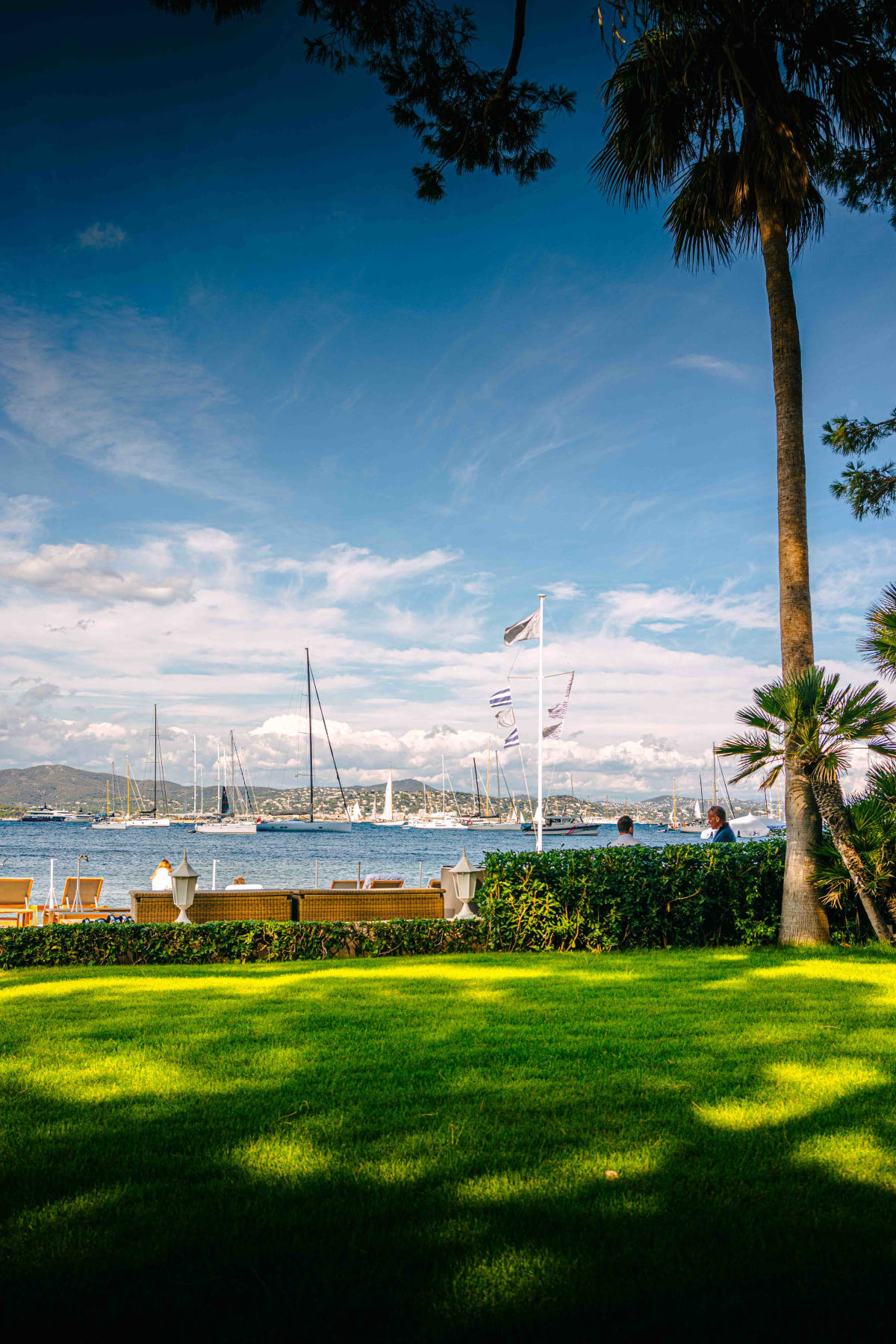
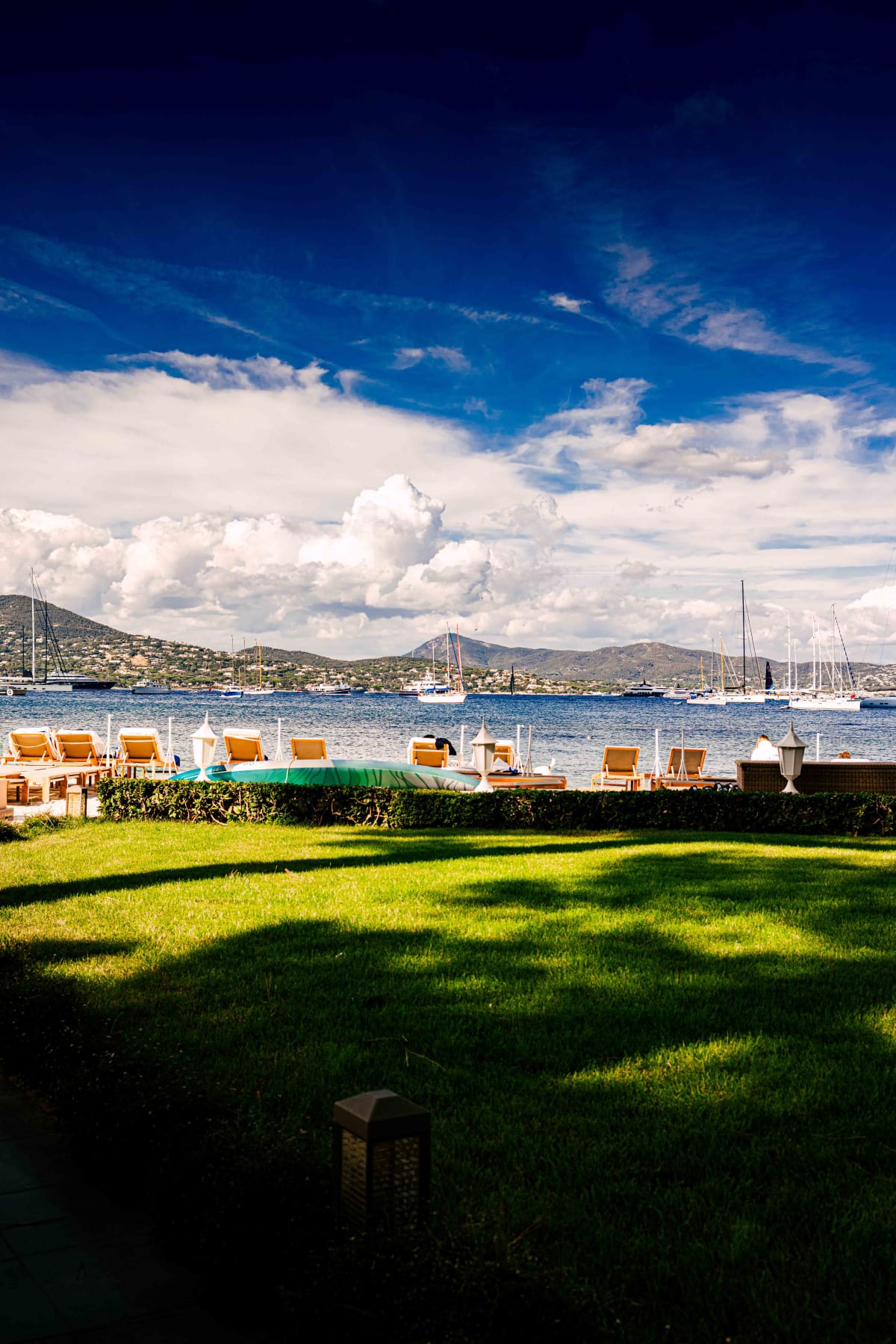
The light and the wind of the Mediterranean, the ingredients of Provence, and the hands of a three star chef working them meet in one place. If I go again I want to push myself to stay the night, lie on a sunbed, swim, and spend the whole of that view slowly.
The star this room took in 2024 is usually filed under Arnaud Donckele, and that is only half right. Augustin de Margerie had worked beside him for eleven years when Donckele handed him lunch, and Michelin assessed the room separately rather than extending the three star downward. What that produced is a kitchen speaking the same language in shorter sentences. The tomato and the mackerel lean on Provence itself, and the plates only step forward once technique takes over, at the zitone and the lobster sabayon. Come at midday. The view is not a backdrop here, it is a course.

Have a question about this restaurant, or want to share your own experience?
Send a message