Fine Dining · Paris · France / July 2024 / Michelin ★★★
Le Pré Catelan
"A signature menu kept honest by its own stillness"
Section 1·The Setting
My visit to Paris in July 2024 was a trip I will remember for the rest of my life. Paris was hosting the Olympic Games for the first time in a hundred years, an event whose scale as global theatre exceeded any reasonable expectation, and a return of the Games to this city that no one alive today had previously witnessed.
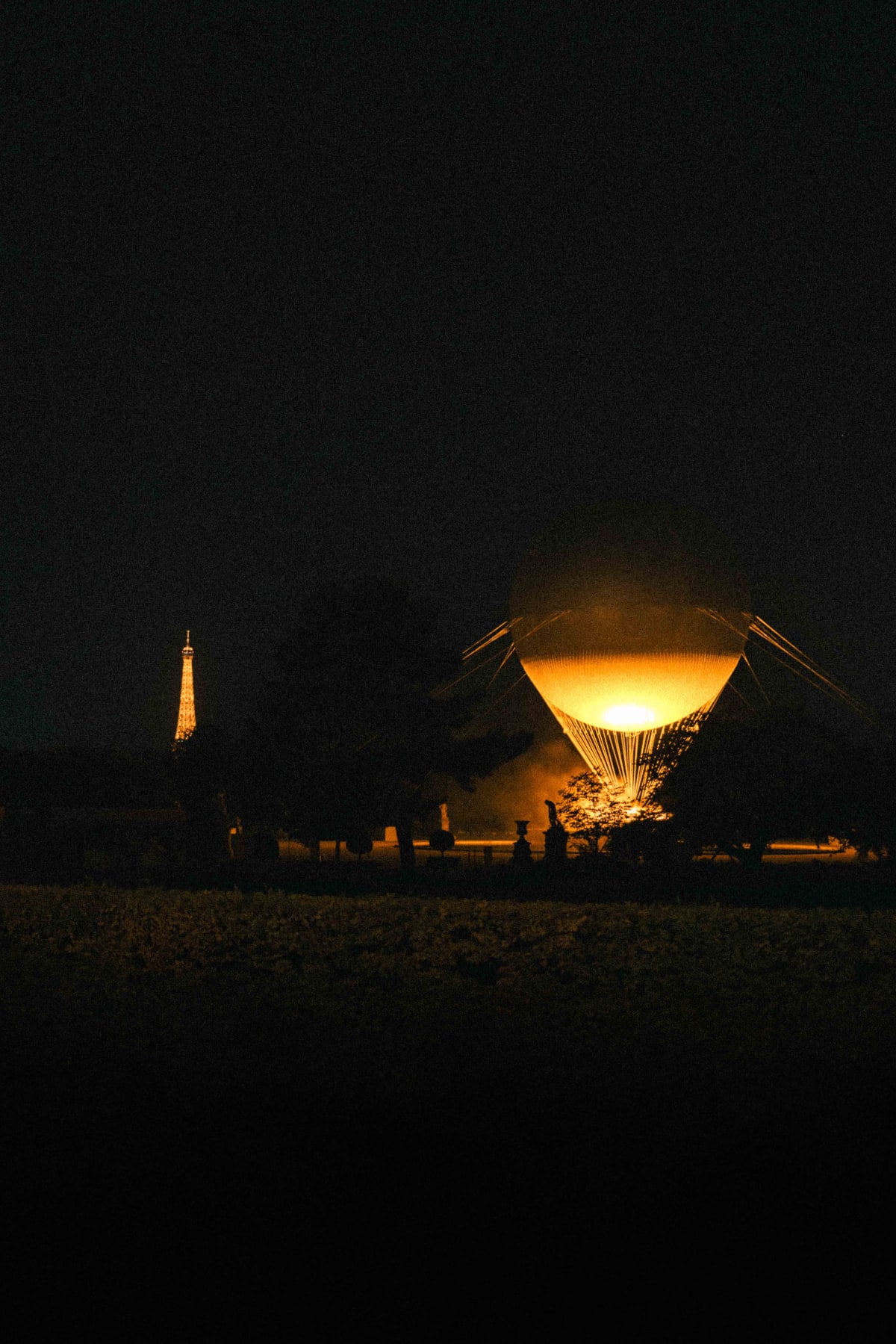
The Olympics themselves were a deep experience, and the restaurants I visited during that window produced a series of evenings without precedent in my own dining record. Despite expectations of a flood of high-spending visitors, the response of the Paris fine-dining scene to the Games was uneven. Alléno and Table by Bruno Verjus closed for nearly two months and left the city through the Olympic window altogether. Le Cinq at the Four Seasons and L'Ambroisie reframed their menus as Olympic editions and operated under that banner; my own visit to L'Ambroisie will appear in a separate post. Le Cinq raised the course price to 750 euros for the Olympic period.
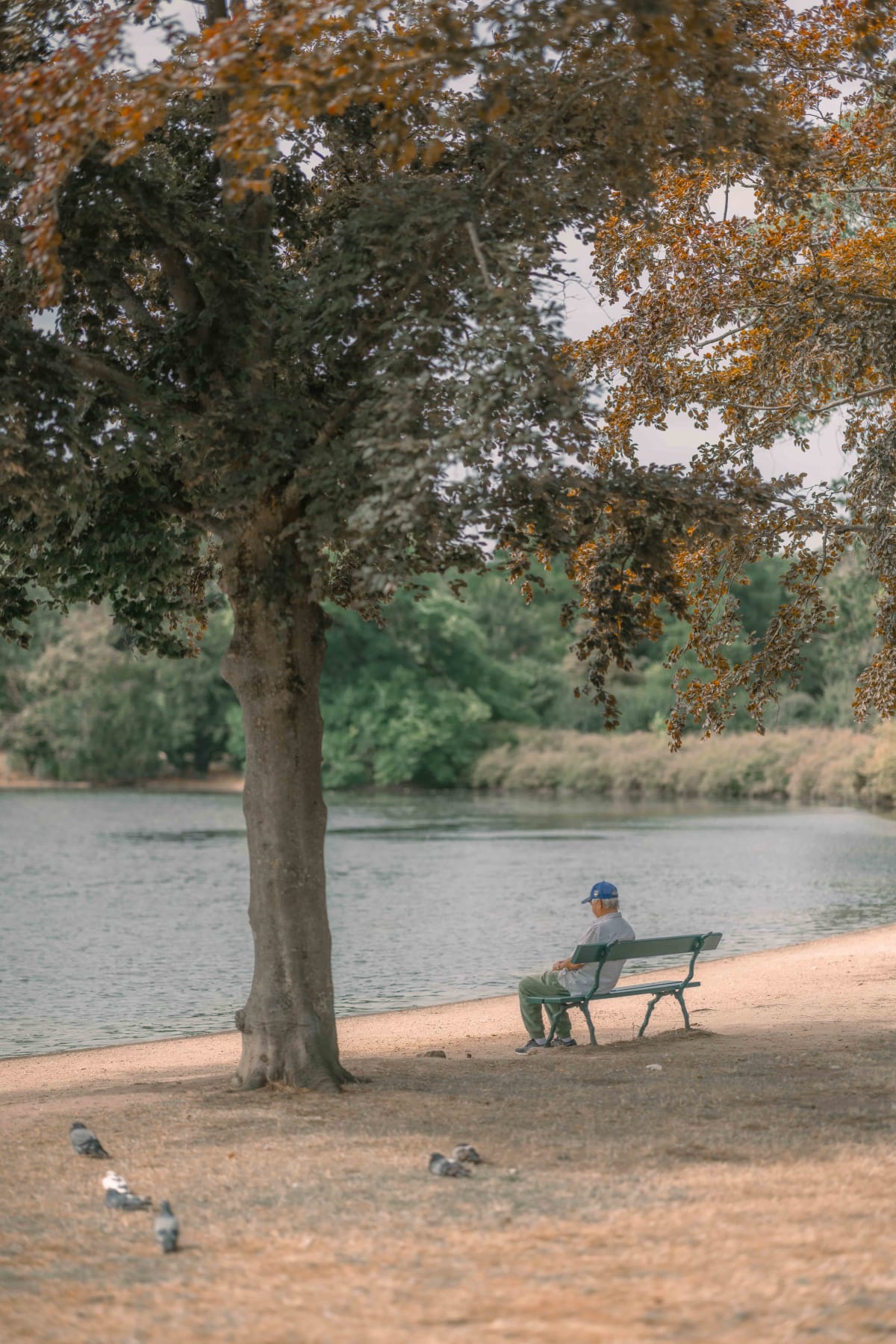
My first choice among the three-star rooms had been Alléno, but it was closed for the Games. On the day before the opening ceremony, looking for a lunch table I could take alone, I turned to Le Pré Catelan, a restaurant I had wanted to visit for some time. The restaurant is not in central Paris. It sits deep inside the Bois de Boulogne, on the western edge of the 16th arrondissement, and unless walking is a pleasure rather than a chore, a taxi or Uber is the only reasonable approach. I had stepped off the métro at the nearest station and walked from there. The midsummer heat that afternoon made the walk harder than expected.

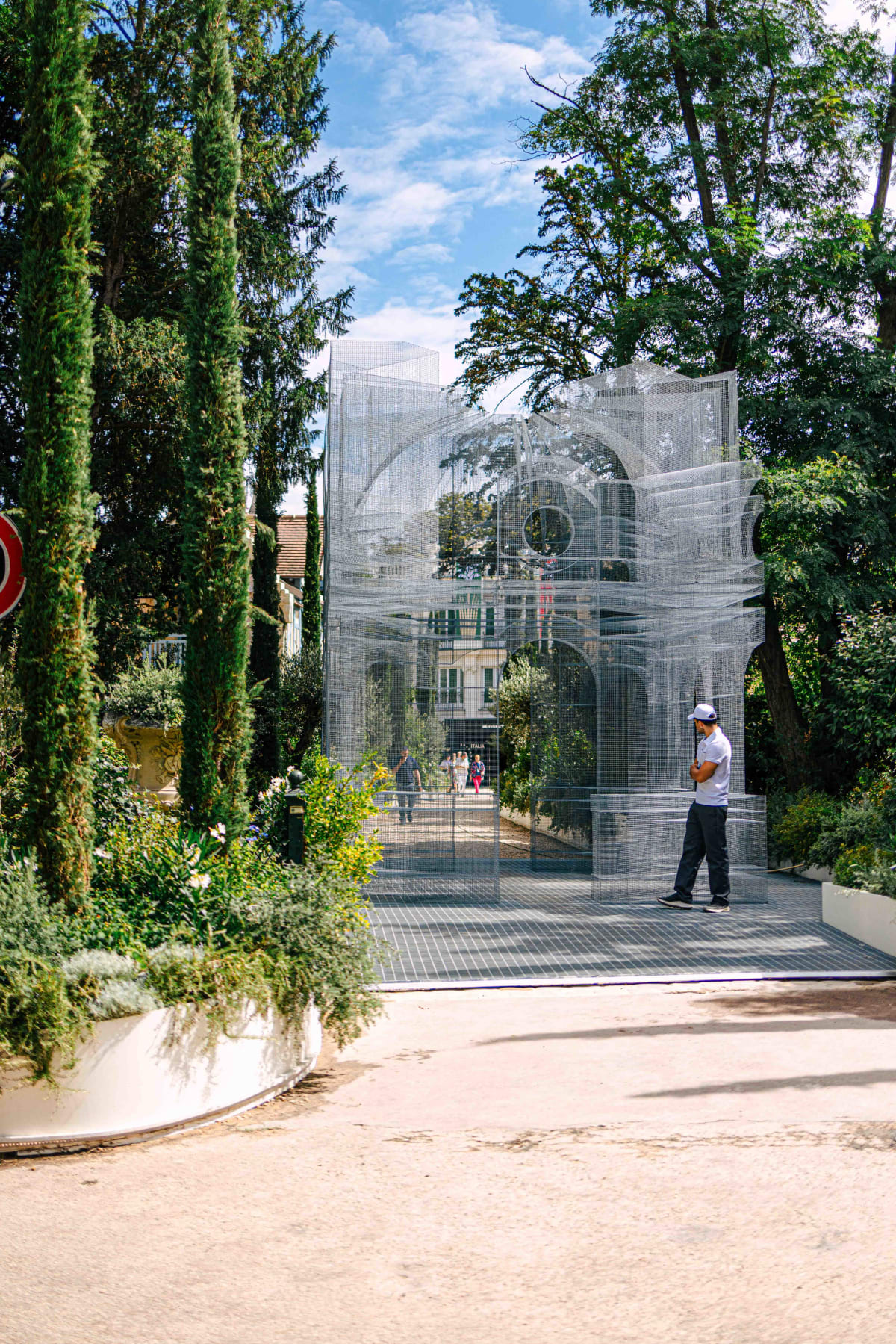
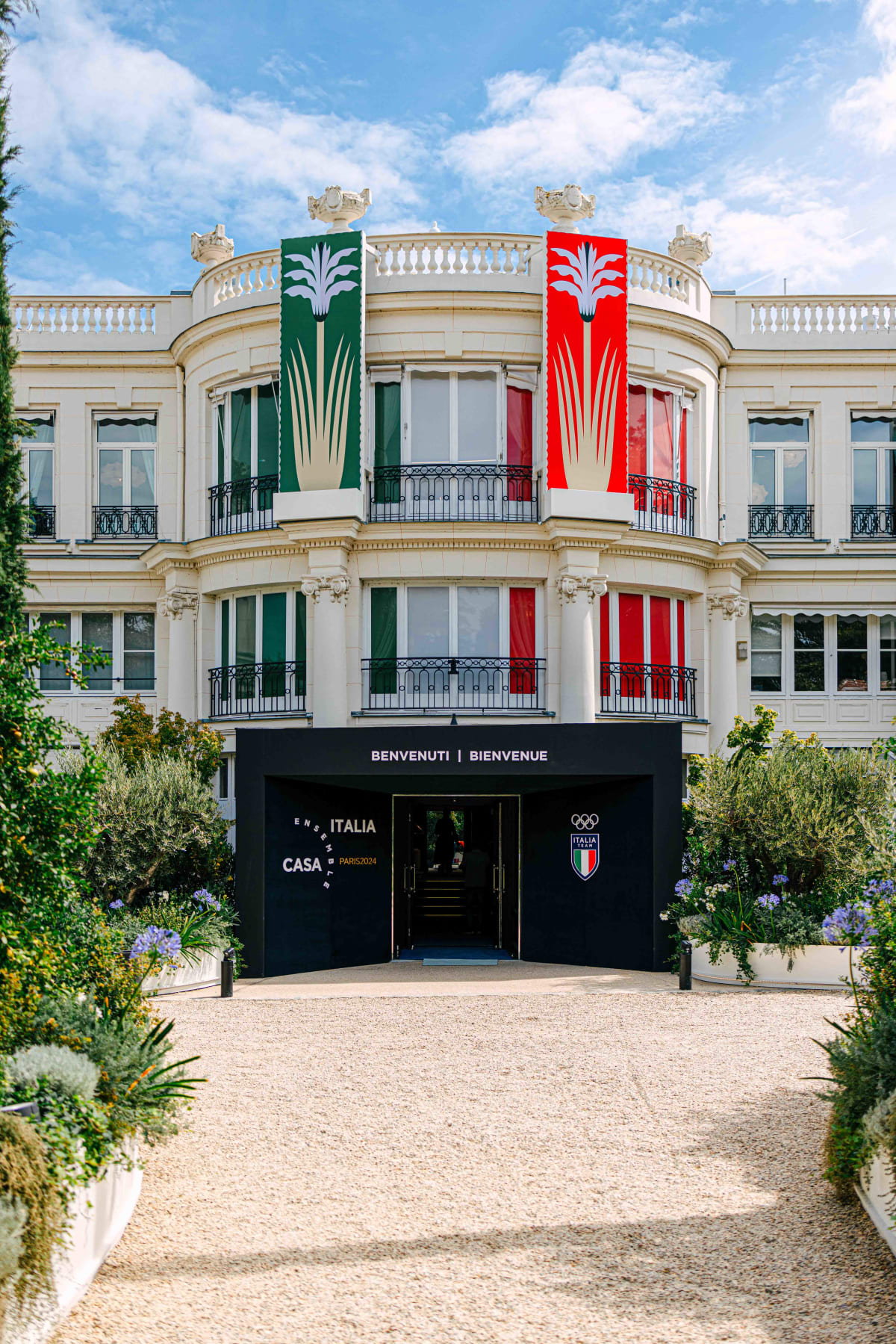
The building approaches the scale of a large mansion.
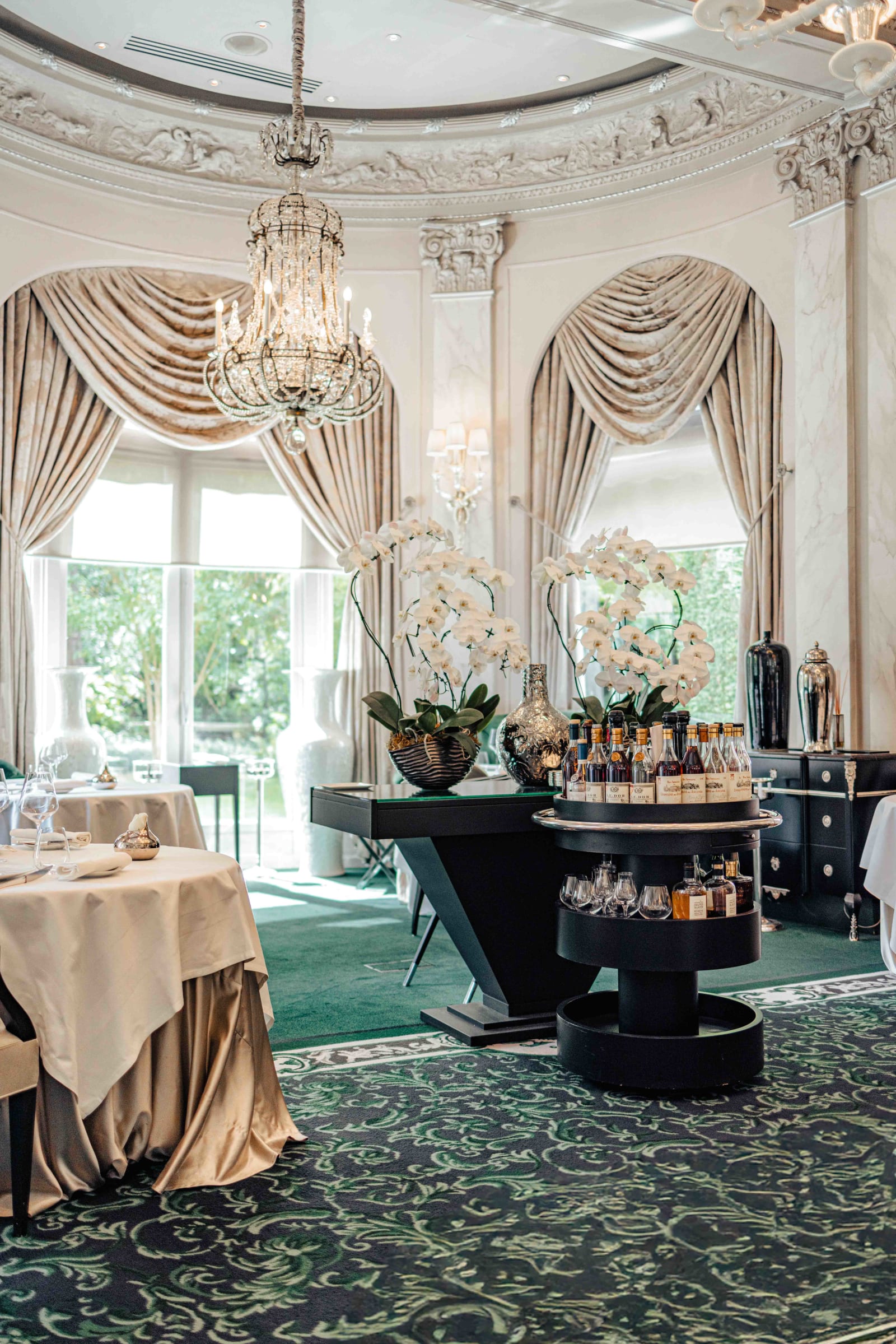
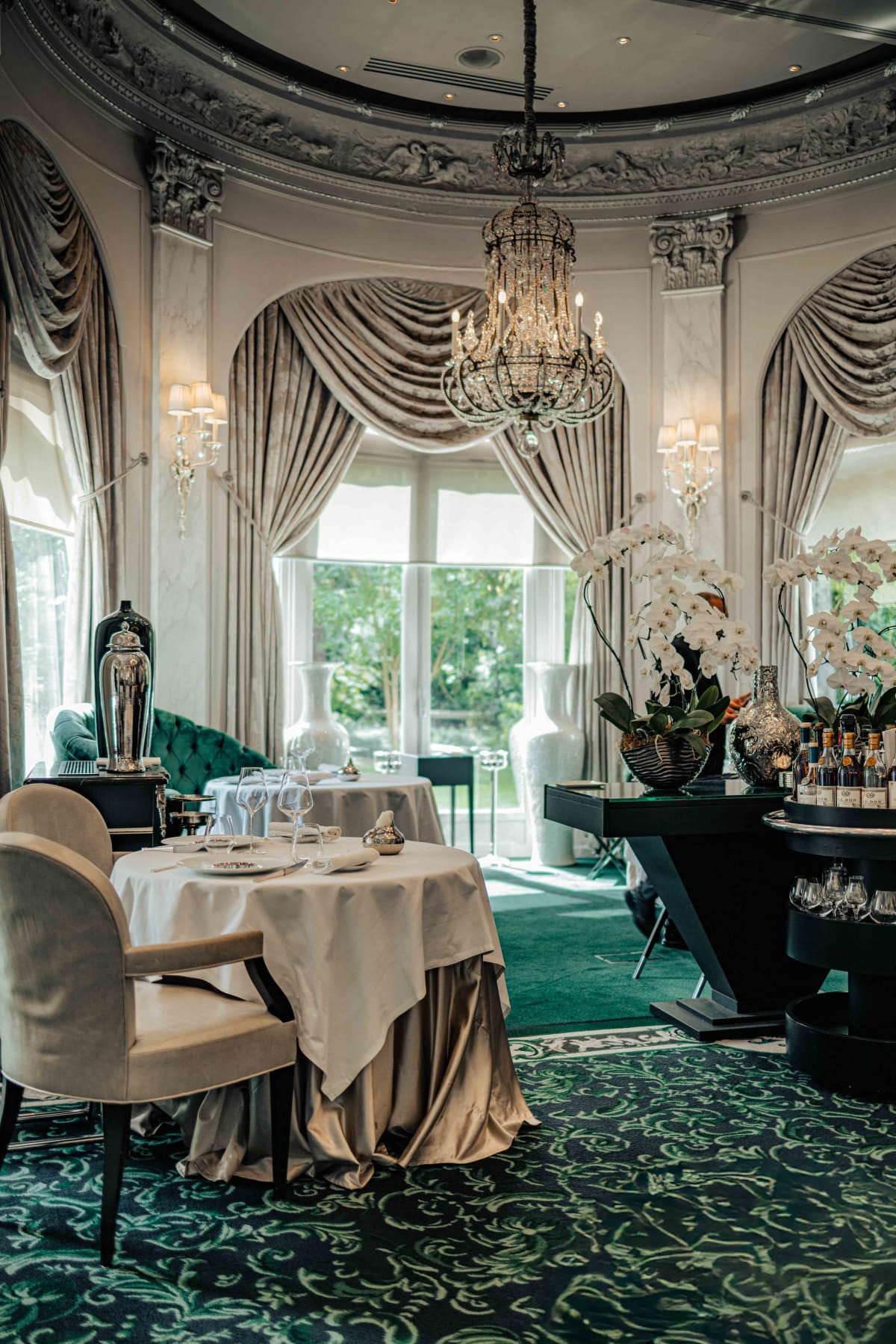
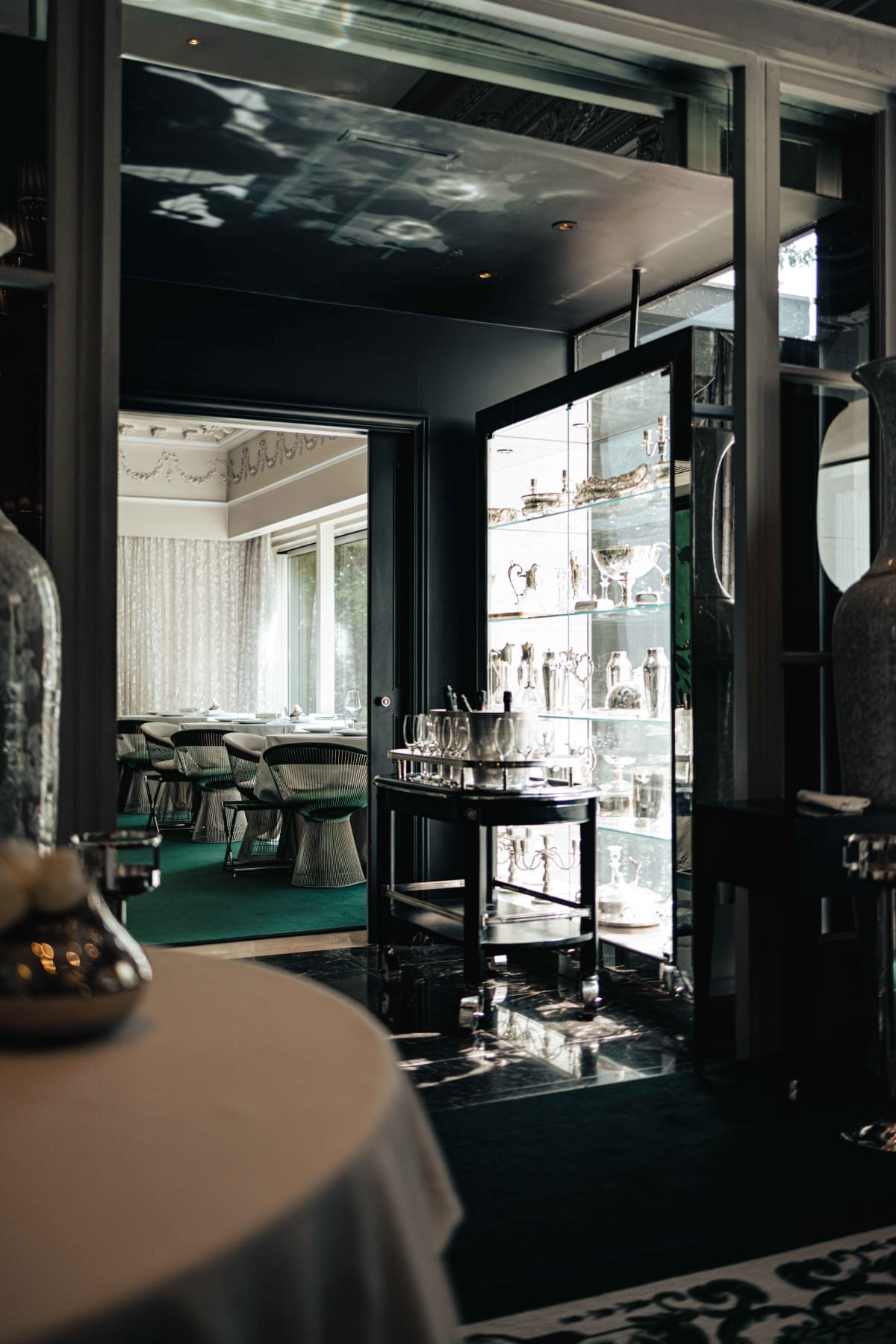
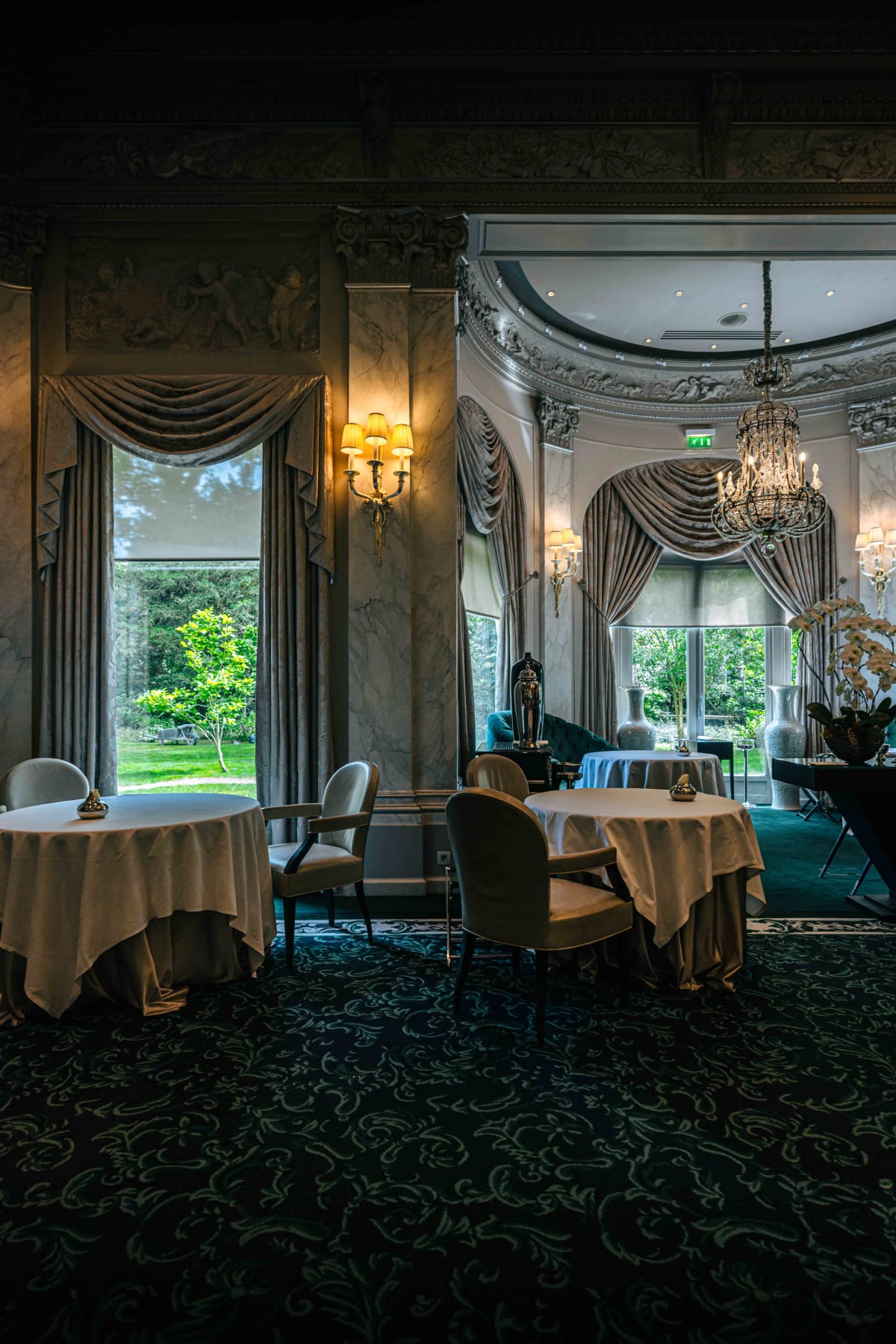
The interior is on a different register, closer to a small palace. At lunch, with daylight flooding the room, the impression is of taking brunch inside a royal residence; at dinner the same room would presumably register as a properly grand evening setting. There were around twenty tables in use that afternoon. The clientele divided into roughly two halves, with the Asian half being almost entirely Chinese visitors and the other half European.
The building itself deserves a brief note. Le Pré Catelan was first built in the mid-nineteenth century, during the reign of Napoleon III, as a pavilion at the heart of the Bois de Boulogne. It was destroyed during the Paris Commune in 1870 and rebuilt in 1905 in the Belle Époque style by the architect Guillaume Tronchet. Parts of the structural frame and ornamentation from that period are protected today as French historical monuments. The pastry master Gaston Lenôtre and his wife Colette acquired the property in 1976, and Maison Lenôtre has operated the restaurant since. The current interior was reworked by the designer Pierre-Yves Rochon in a palette of green, white, and silver, allowing the nineteenth-century frame and the contemporary finish to coexist without friction in the same room.
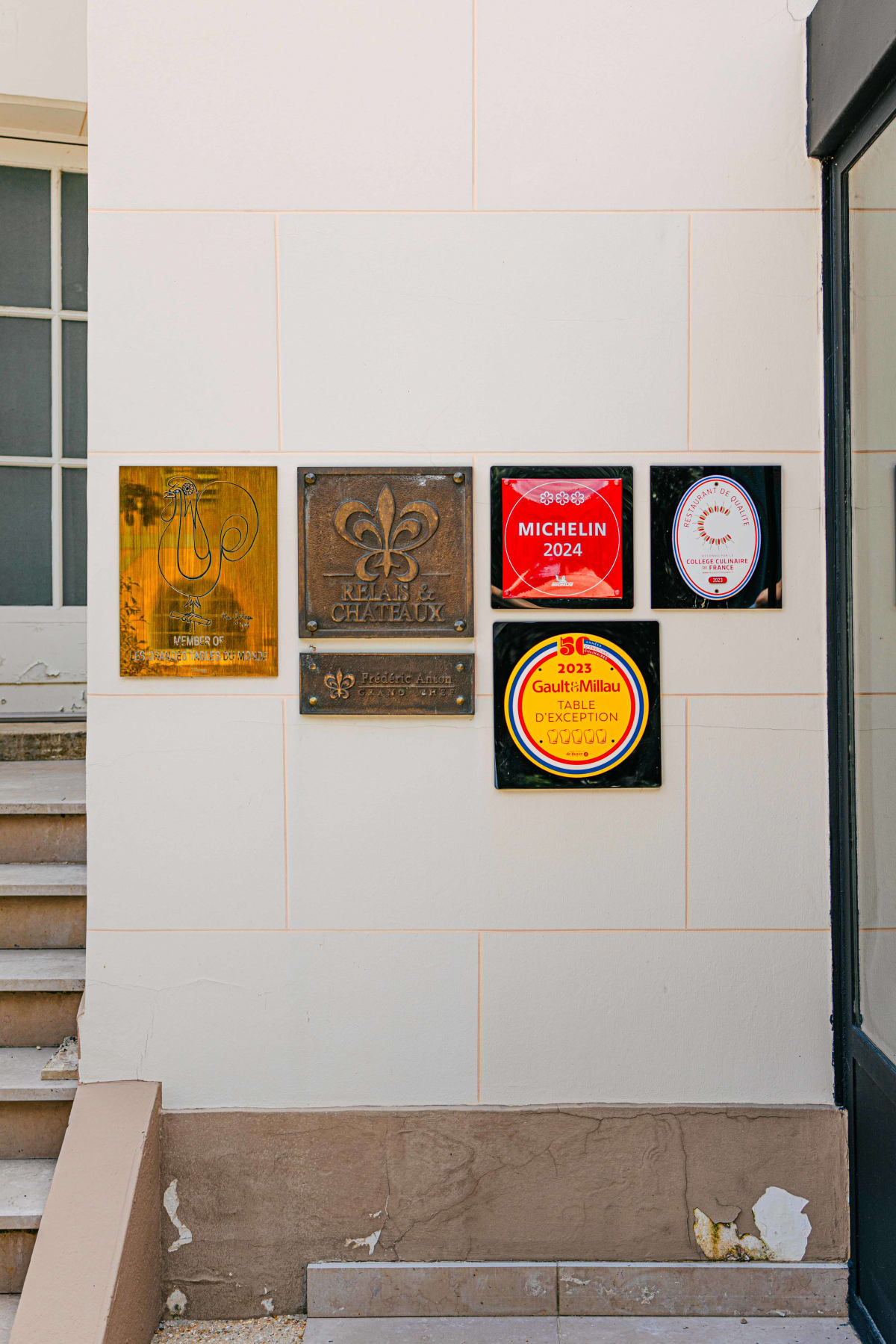
The chef's trajectory is not a short one. Frédéric Anton was born in Nancy, in Lorraine, in 1964. He trained at the Lycée hôtelier de Gérardmer and worked through the early 1980s at the Capucin Gourmand in Nancy, Le Flambard in Lille, and the three-star Les Crayères in Reims under Gérard Boyer. The defining stretch came next. From 1988 to 1996, across seven years, he worked under Joël Robuchon at Jamin and then at the avenue Raymond Poincaré flagship, serving as Chef de Cuisine and consolidating his own register as a cook. In 1997 the Lenôtre group entrusted him with the kitchen at Le Pré Catelan, the first room to carry his own name. The recognitions followed in measured intervals: two Michelin stars in 1999, Meilleur Ouvrier de France in 2000, three Michelin stars in 2007. In 2018 he also took over Le Jules Verne, the restaurant on the first floor of the Eiffel Tower, and elevated it to two stars in 2024. In November of the same year, Gault & Millau named him Cuisinier de l'Année for 2025. It is fair to read his current standing as one of the most precisely formed of Robuchon's disciples, settled into a kitchen that has carried his name without interruption for close to thirty years, ageing in place rather than moving on.
It is fair to read his current standing as one of the most precisely formed of Robuchon's disciples, settled into a kitchen that has carried his name without interruption for close to thirty years, ageing in place rather than moving on.
Section 2·The Format
The visit was at lunch service, which offered a range of menus at varying price points. I ordered the full dinner course nonetheless. The waiter confirmed the order twice, which initially puzzled me; looking at the surrounding tables, almost all of them were on a lunch menu or a shorter dinner format. As a result, although I arrived first, I was one of the last to leave. The course at that time was priced at 380 euros.
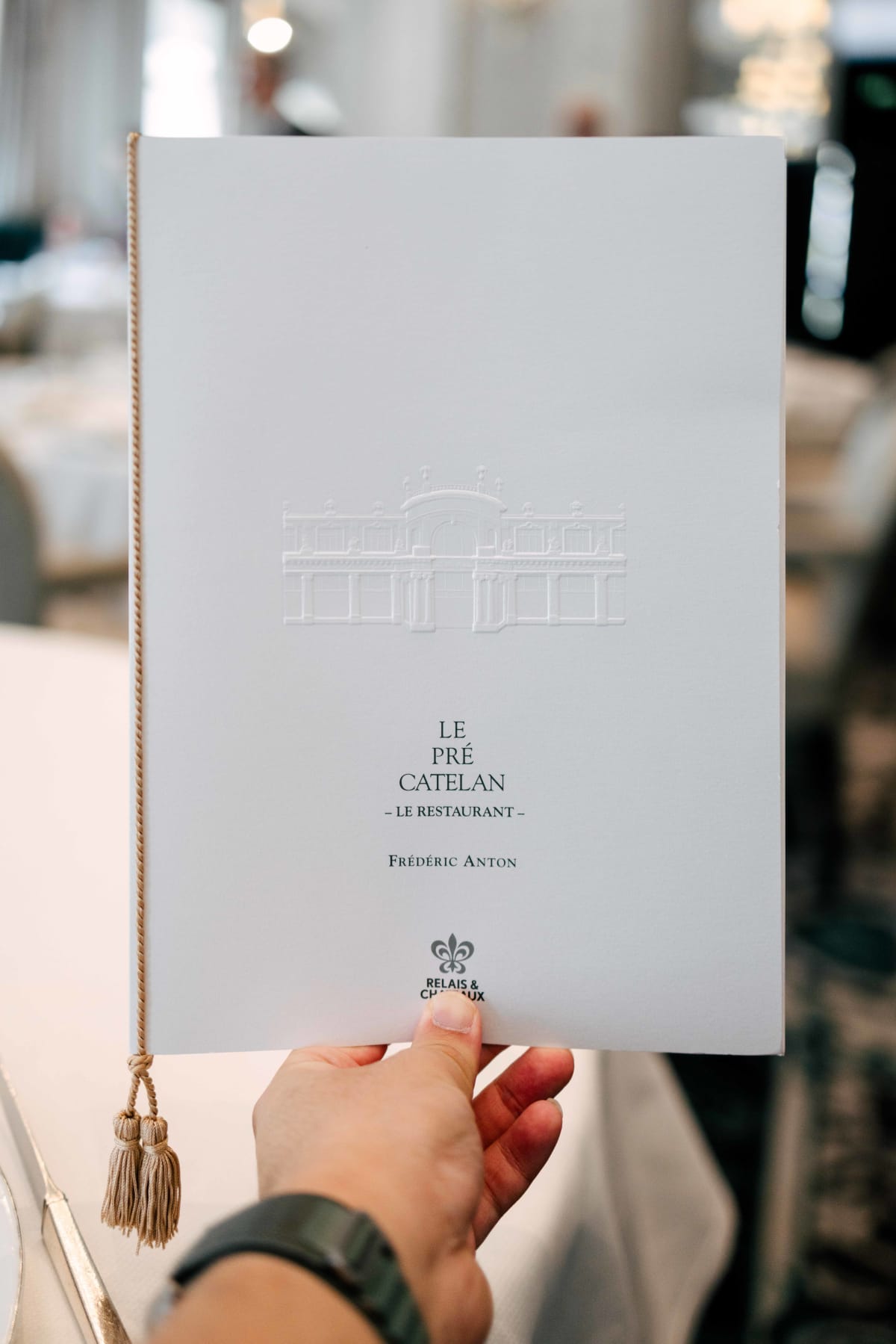
If a single distinguishing feature of Le Pré Catelan's format needs to be named, it is this: the signature dinner course, with the exception of the dessert section, runs as the same composition year-round. Reviews from various seasons consistently describe the same dishes, and a closer look in advance had already suggested no seasonal rotation in the savoury arc. For a visitor who passes through Paris once or twice in a lifetime, this kind of fixed signature course can in fact be an advantage. The diner is guaranteed to encounter the house's defining register regardless of the date on the calendar.
Section 3·The Welcome
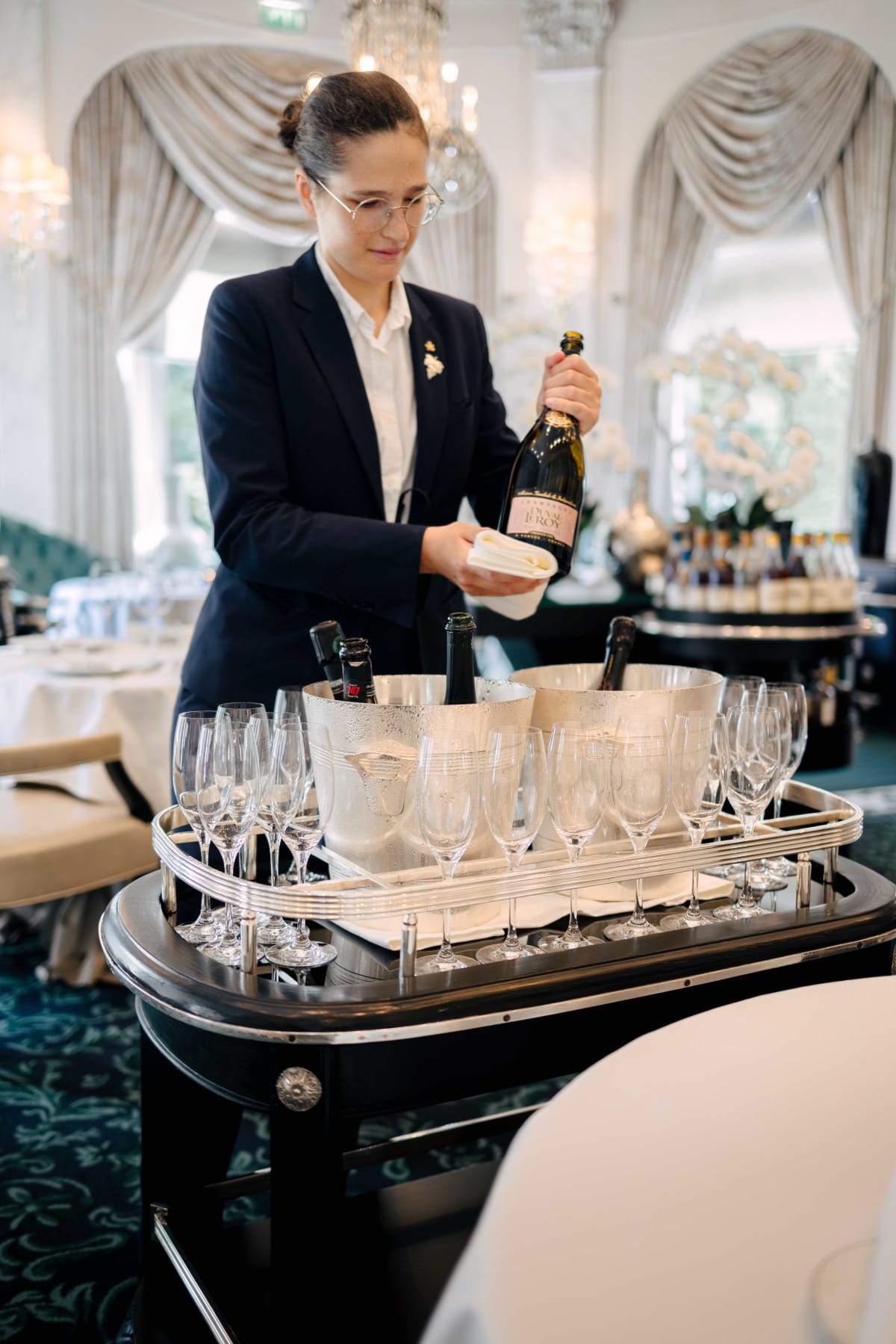
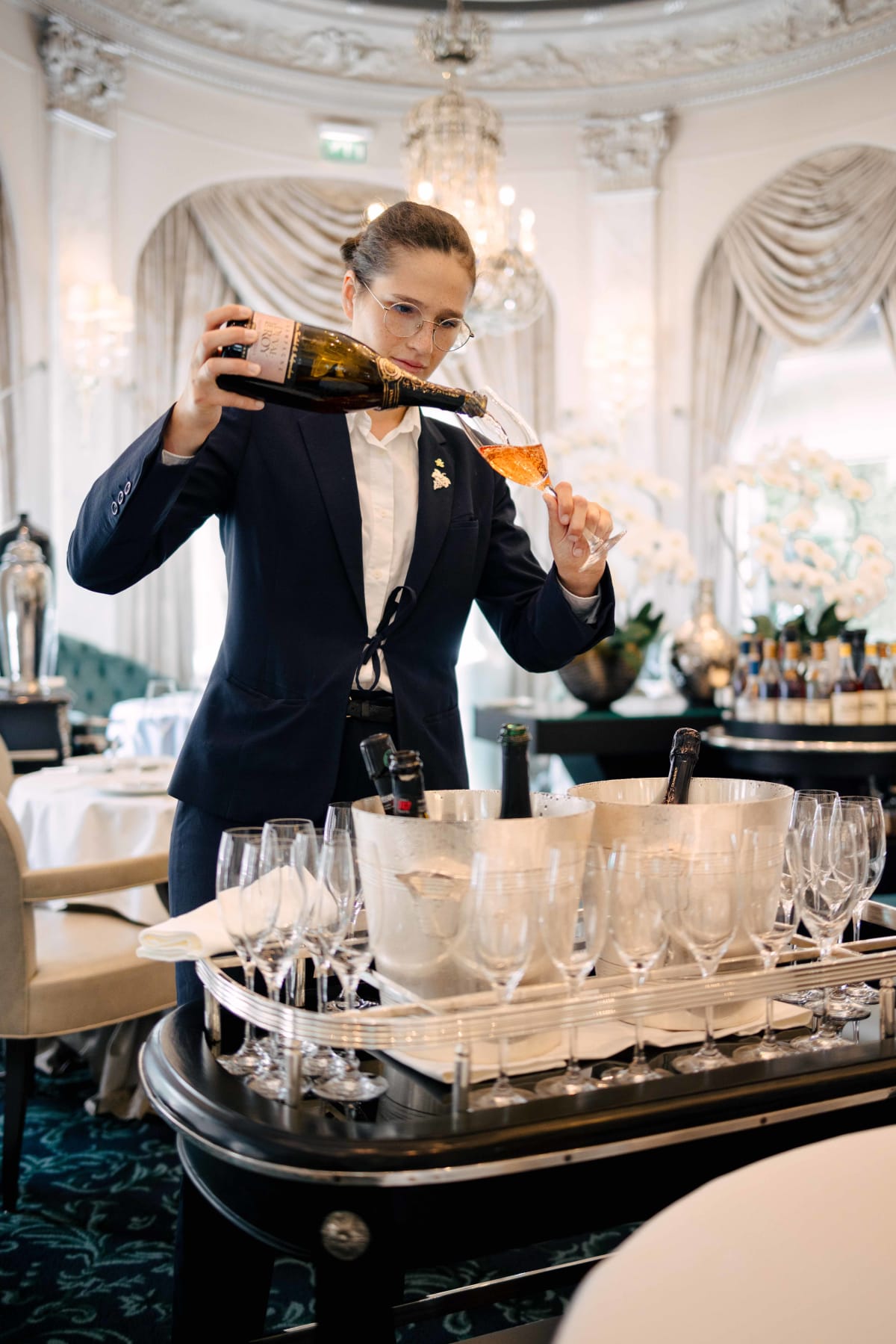
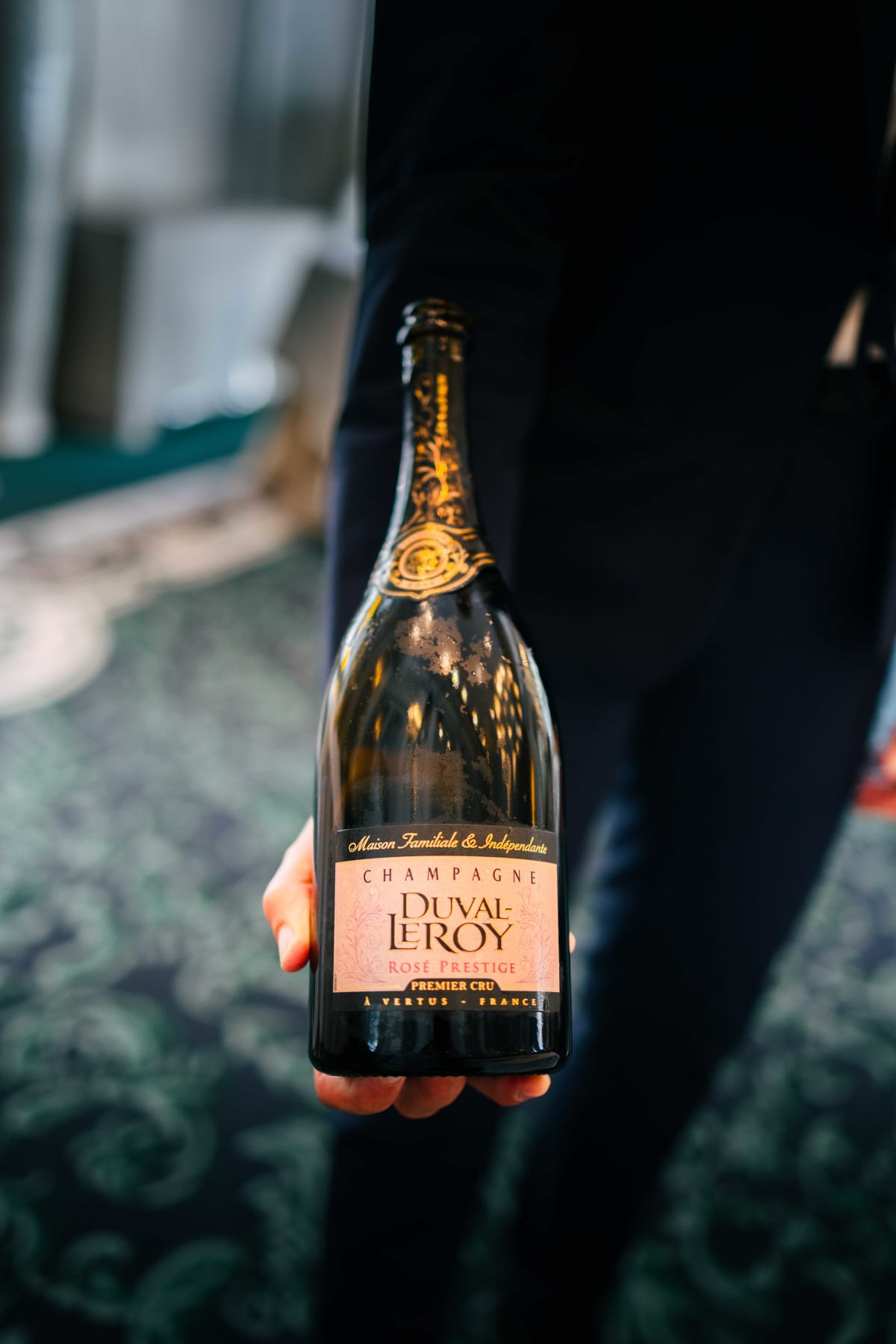
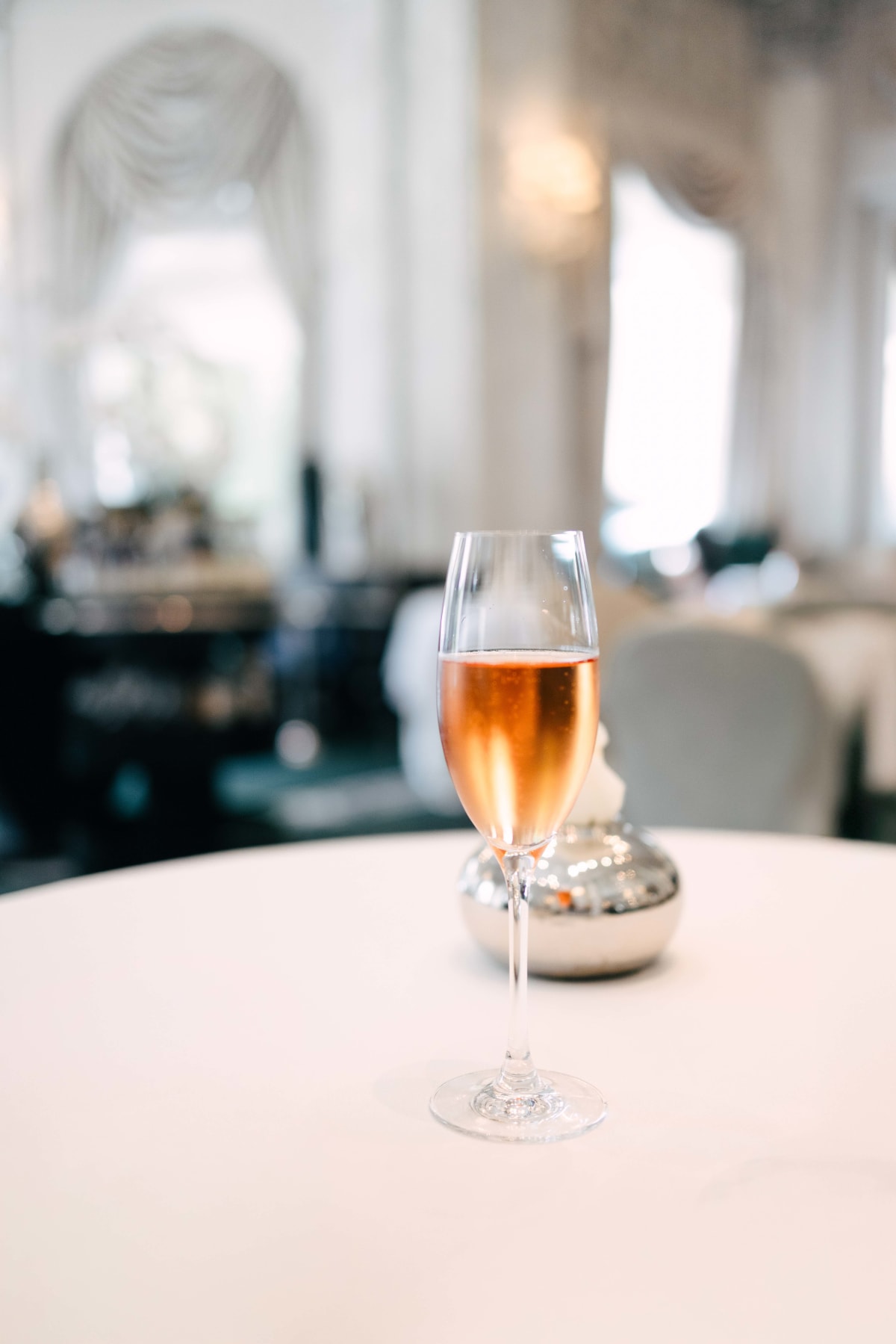
The opening welcome was a glass of champagne. Duval-Leroy rosé, the option I chose, came first. After the heat of the walk through the woods, I drank it less like champagne than like sparkling water, in larger gulps than the glass deserved.
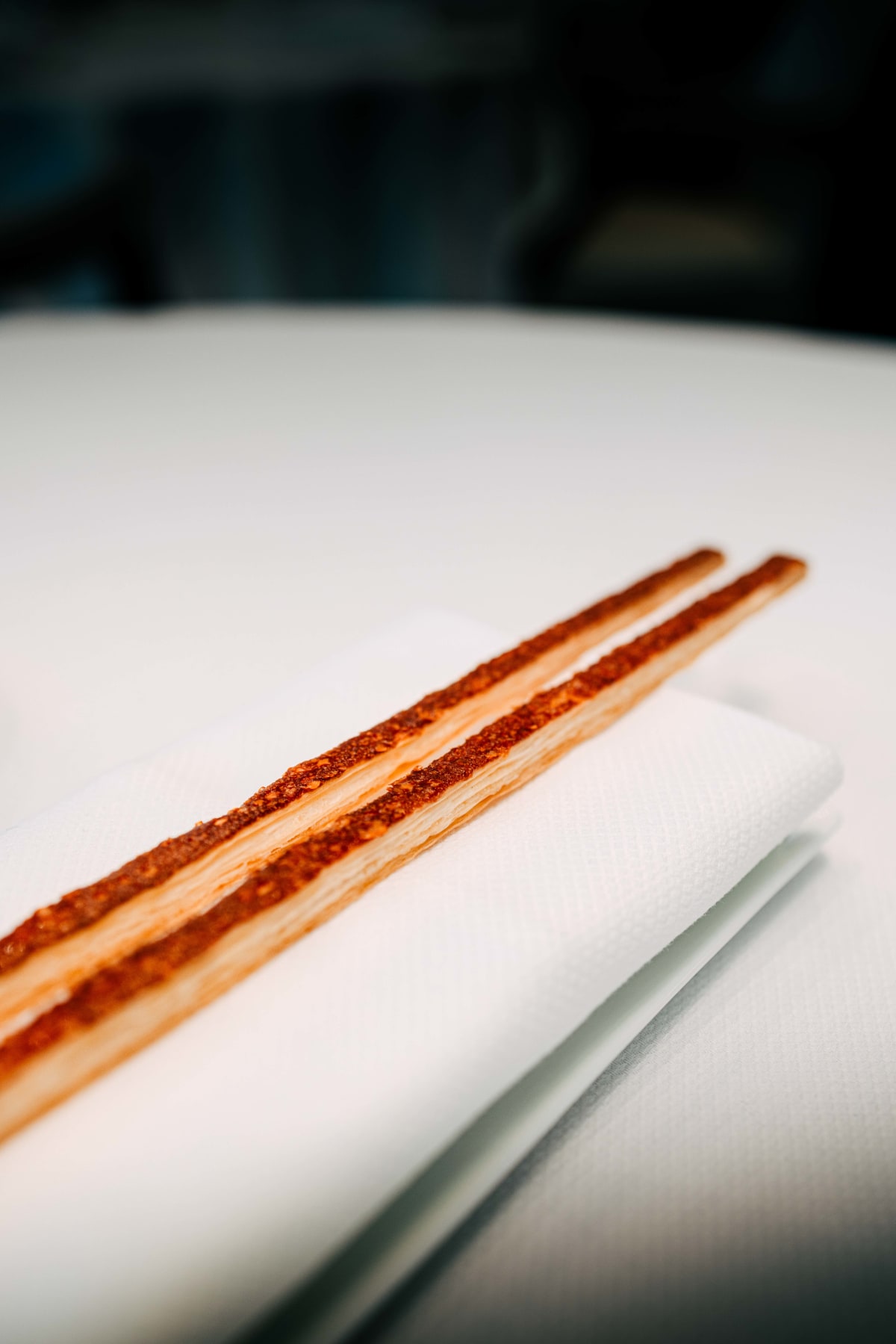
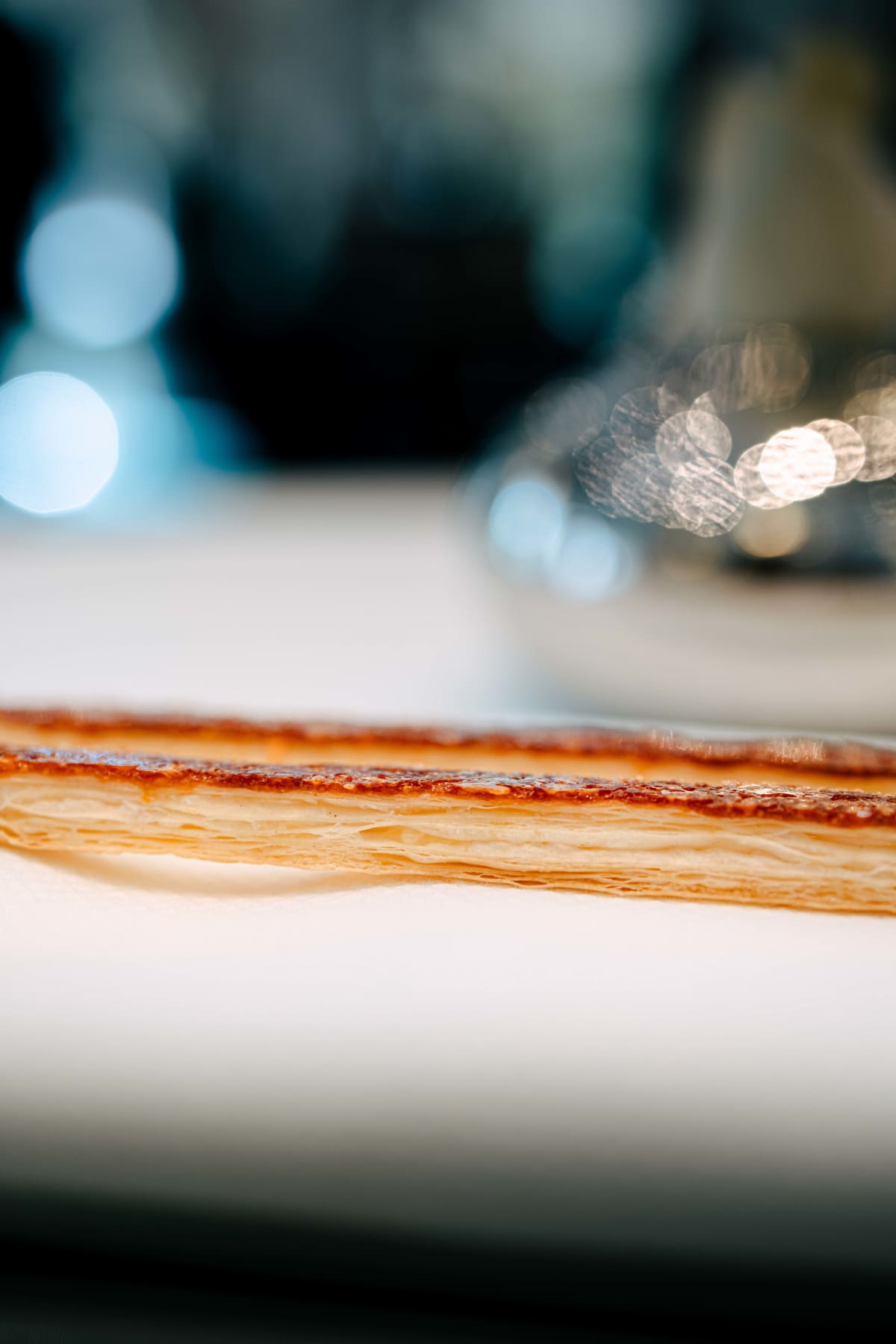
The amuse-bouche arrived in two pieces. The first was a long, thin pastry coated in a cheesy finish, an easy companion to the champagne.
The second piece registered so faintly that no clear memory of it has stayed with me.
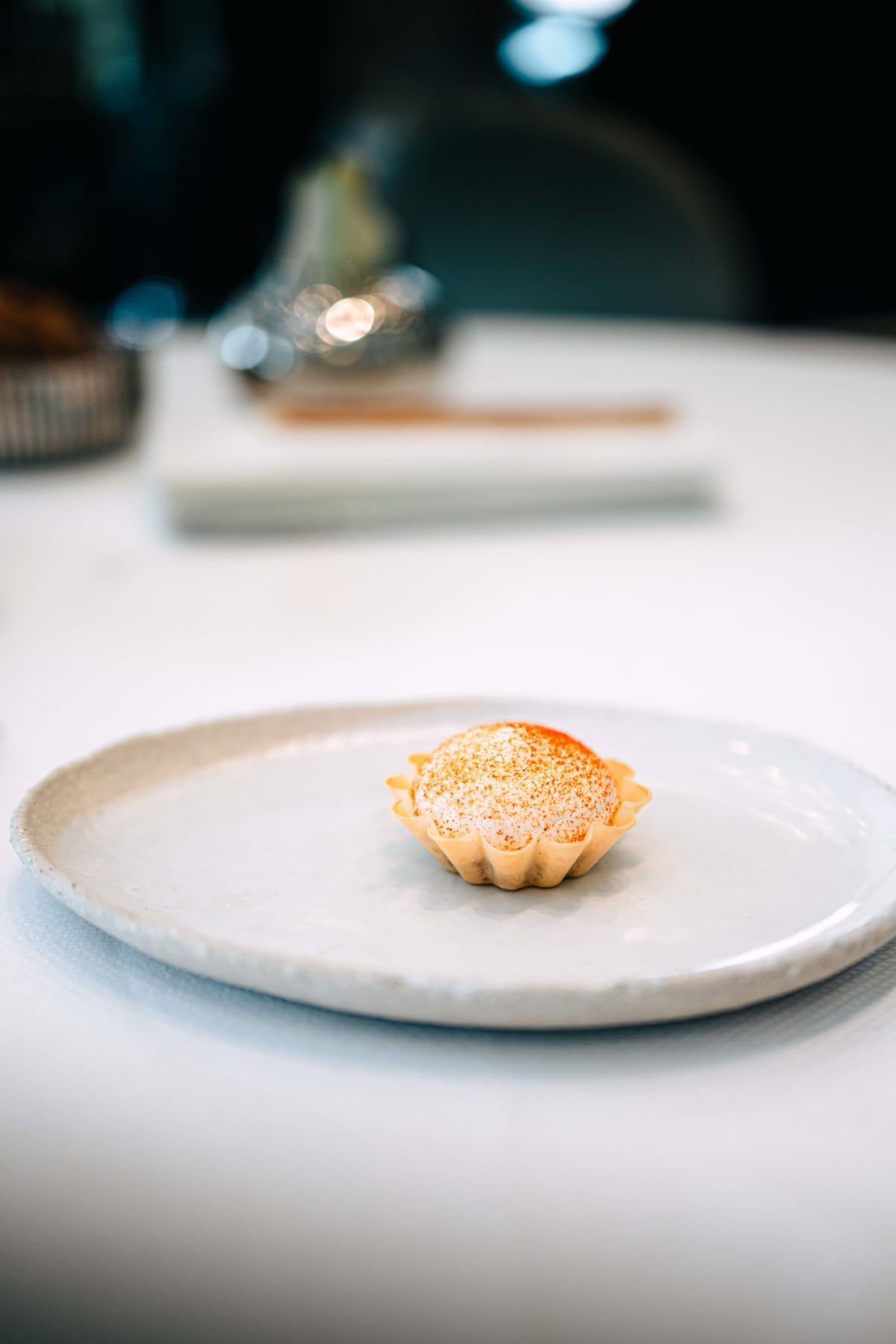
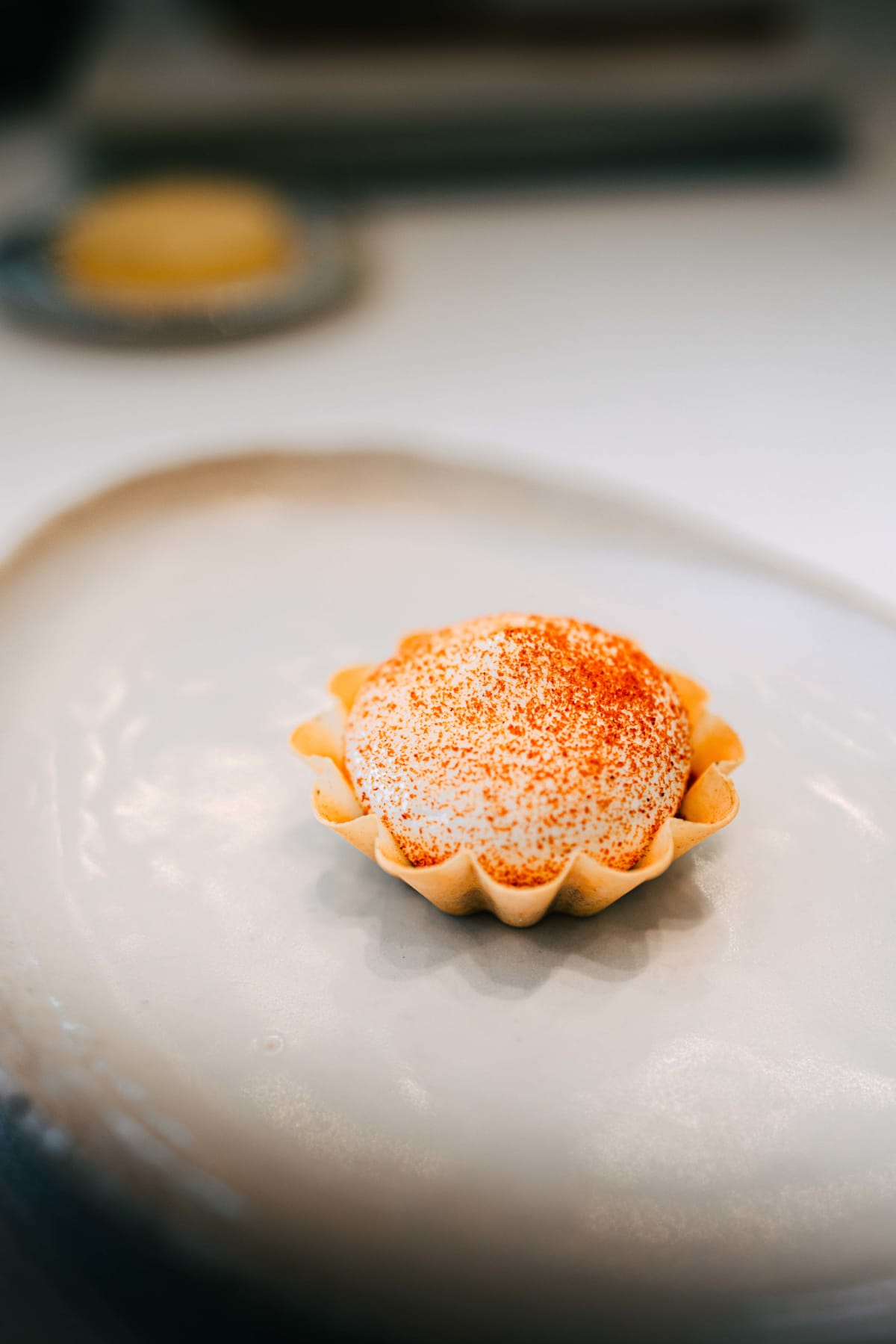
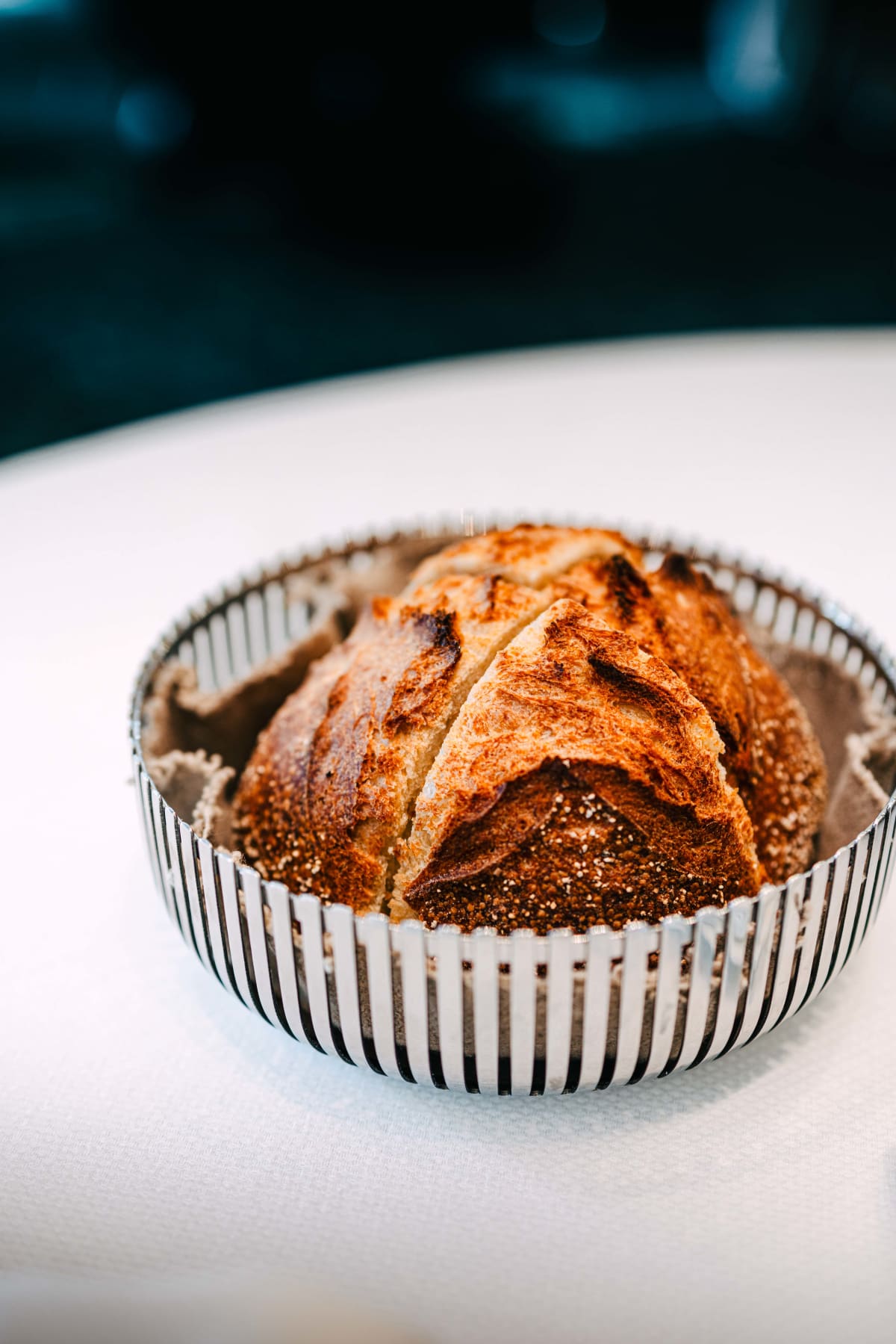
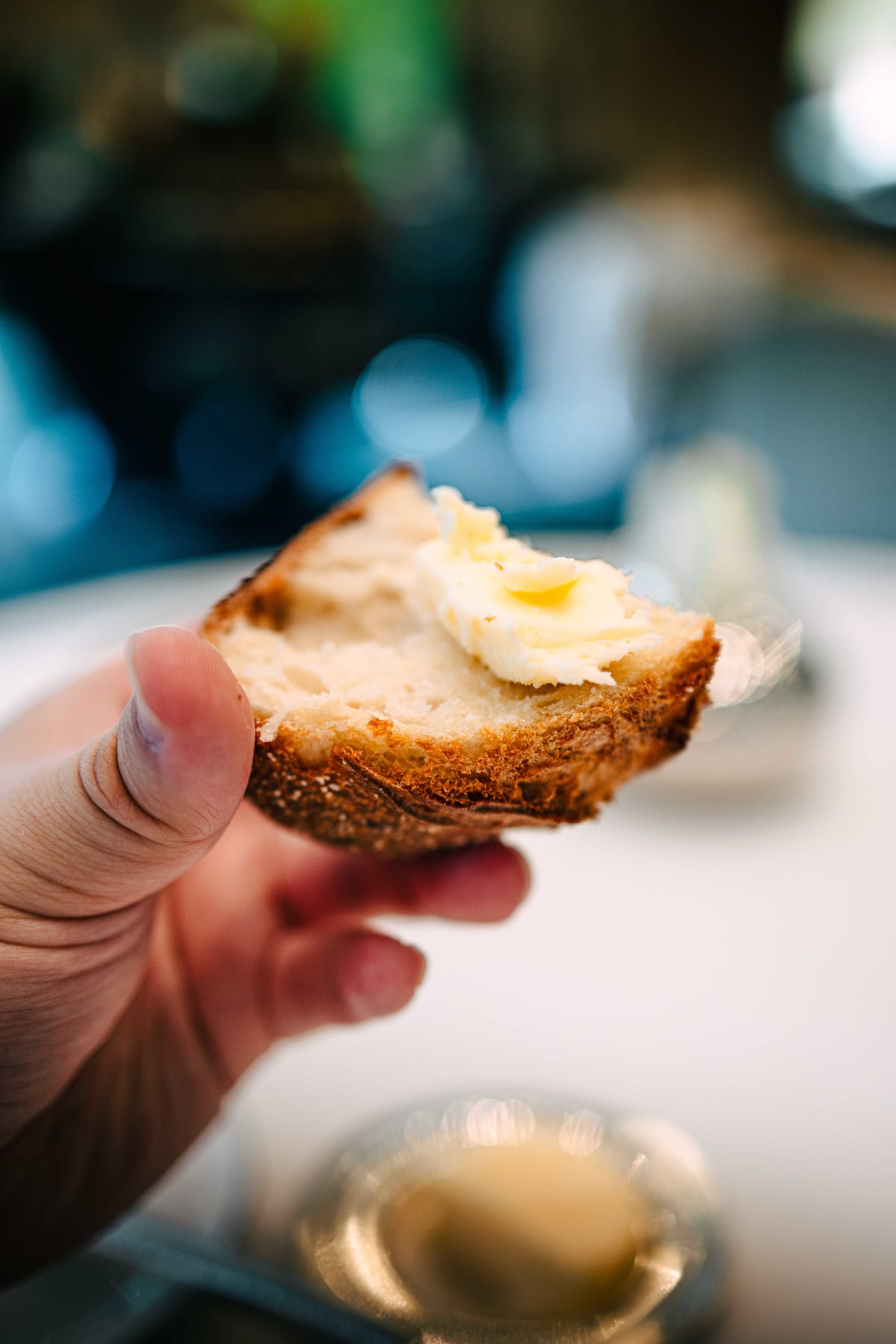
Before the savoury courses began, bread and a generous brick of butter arrived.
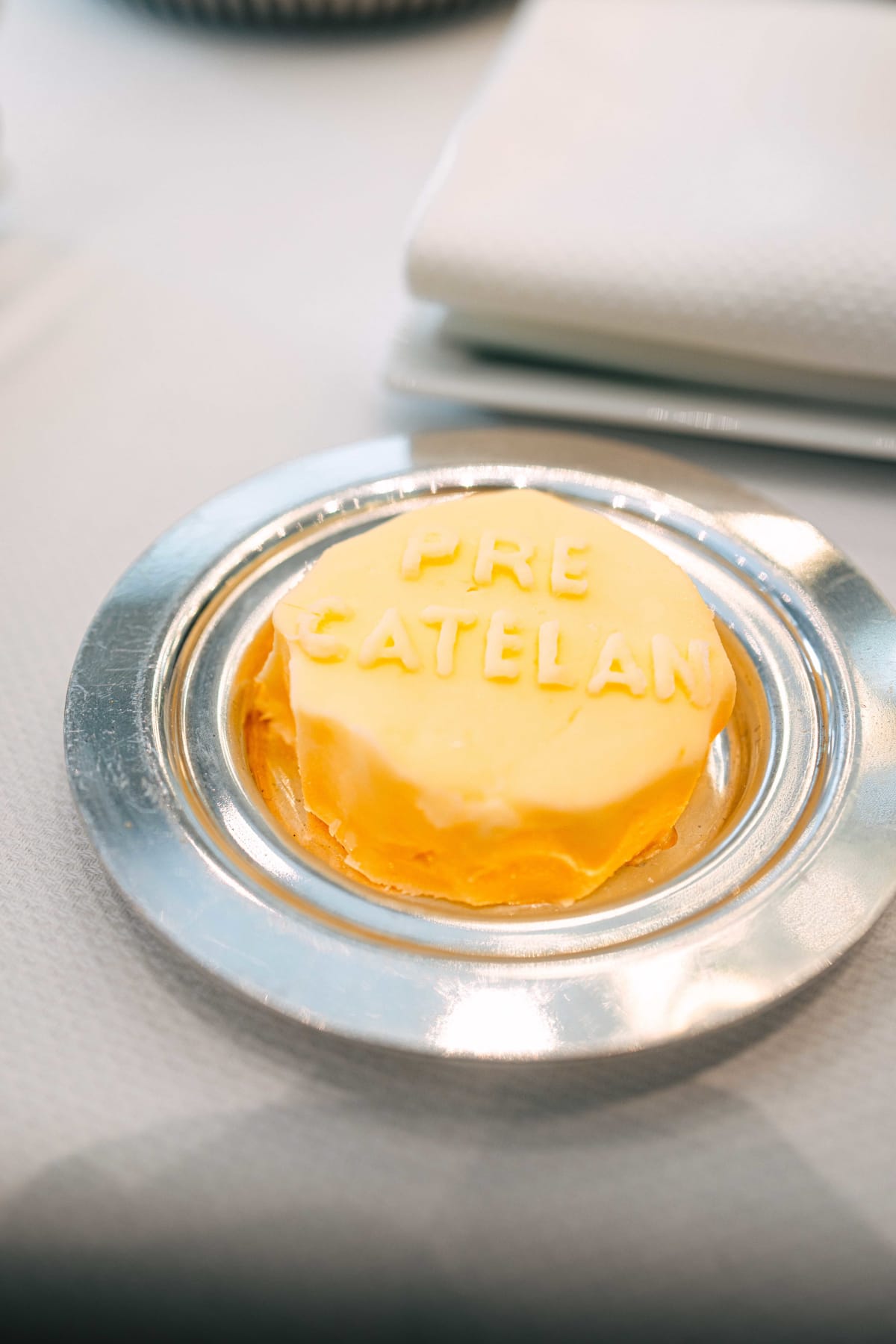
The butter carried the name "Pré Catelan" stamped boldly into its surface. The bread was a classic dinner roll, on the level expected of a three-star room. With the butter sitting in such quantity, I spread a thick layer on the first bite before the course even started, and it was good. The honest qualifier is that, across French Michelin rooms, bread and butter sit uniformly at this level. The question rarely matters.
Section 4·The Opening
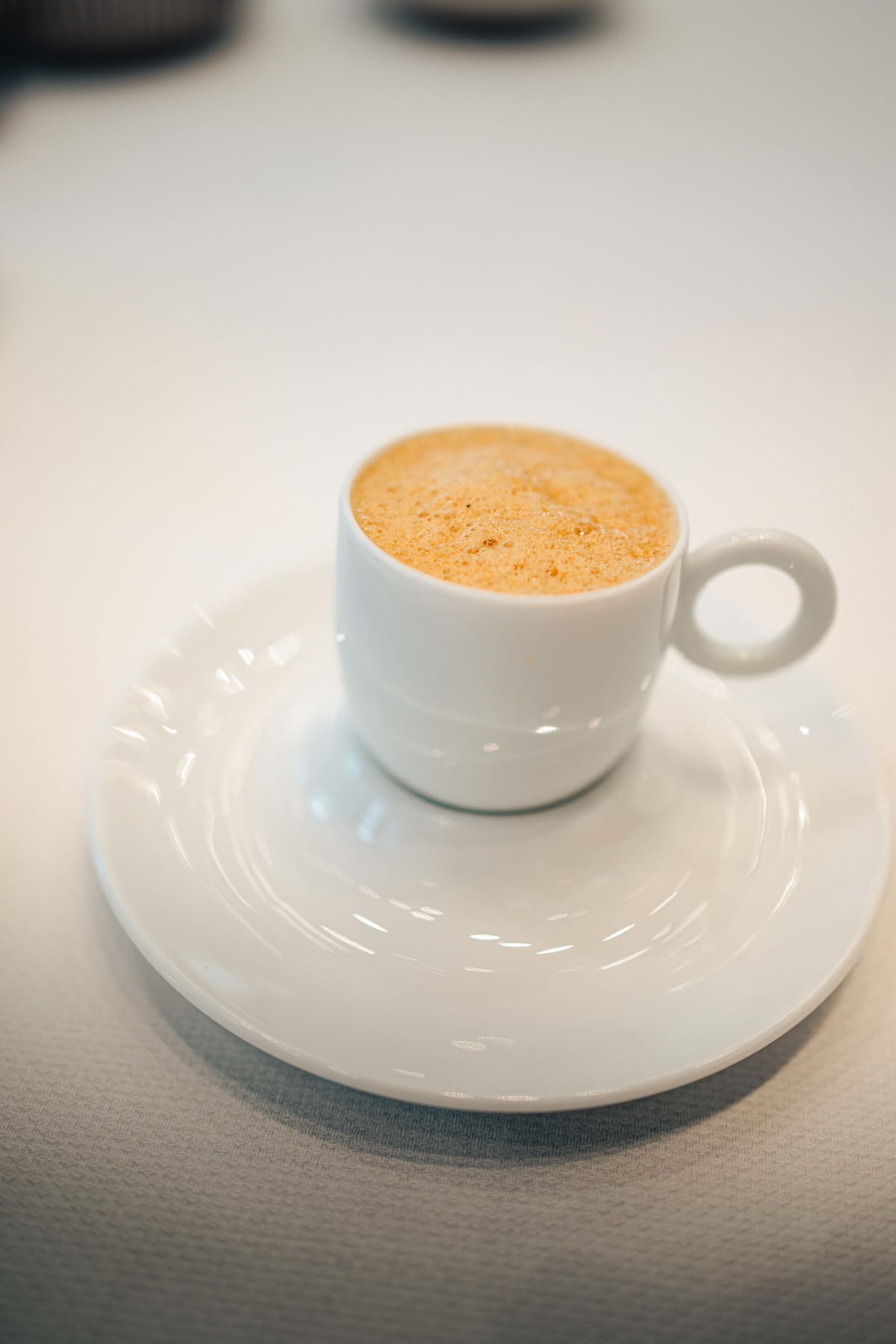
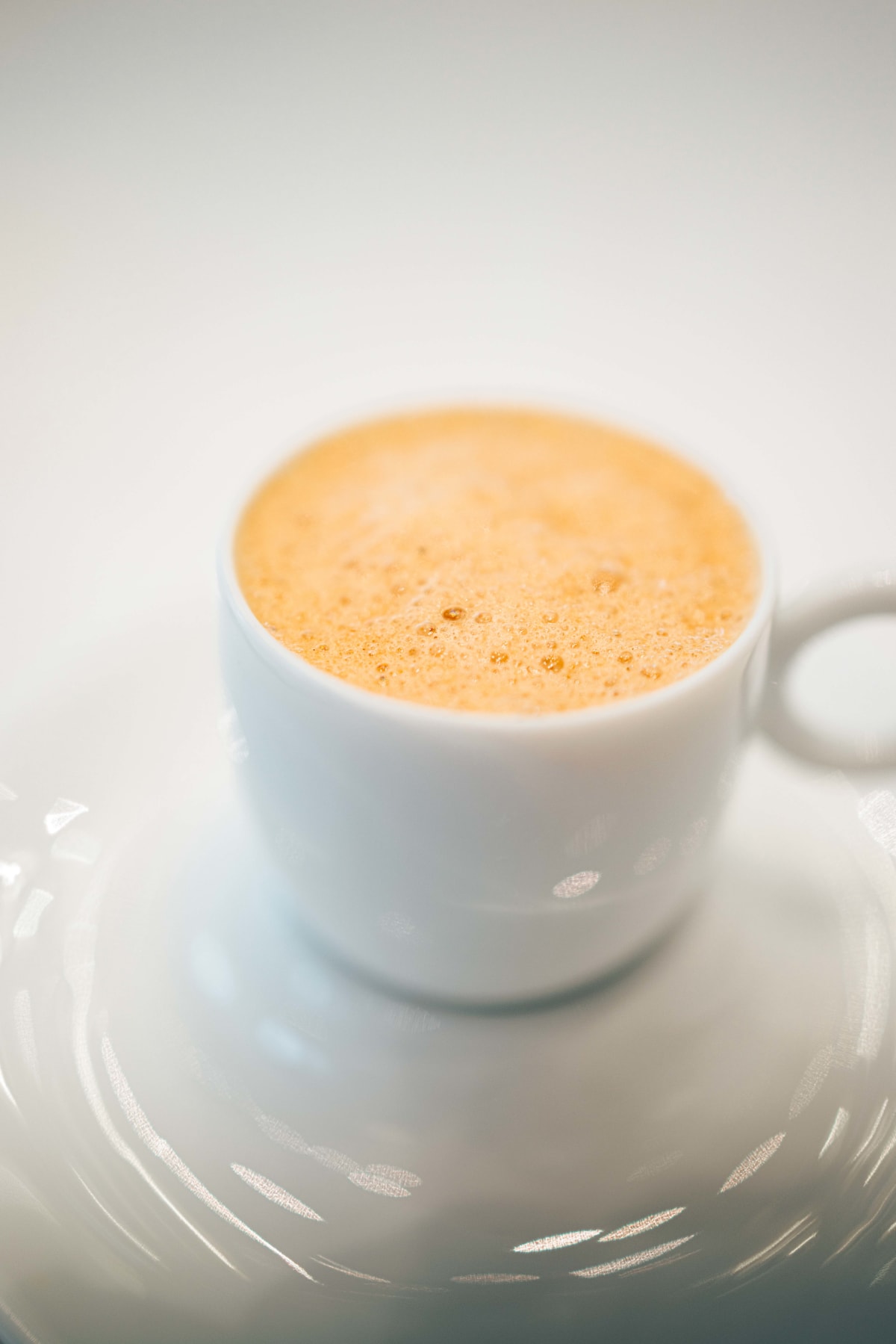
The first proper course arrived as a single glass. Lobster Cappuccino, foam on the surface and a concentrated bisque underneath, to be taken in one continuous pour. The reduction of the bisque carried the right depth. Anyone who does not actively avoid shellfish will read this opening as broadly likeable.
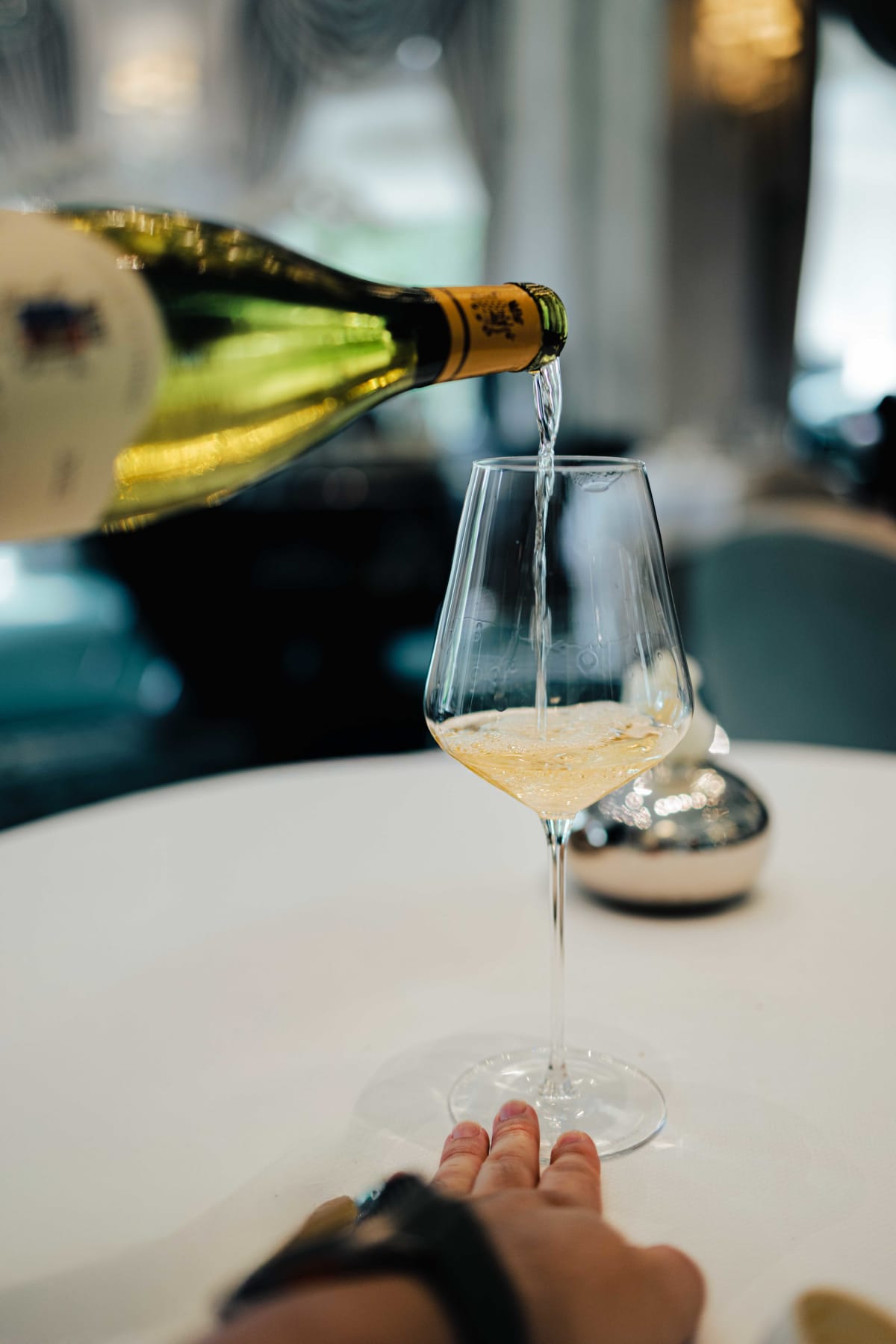
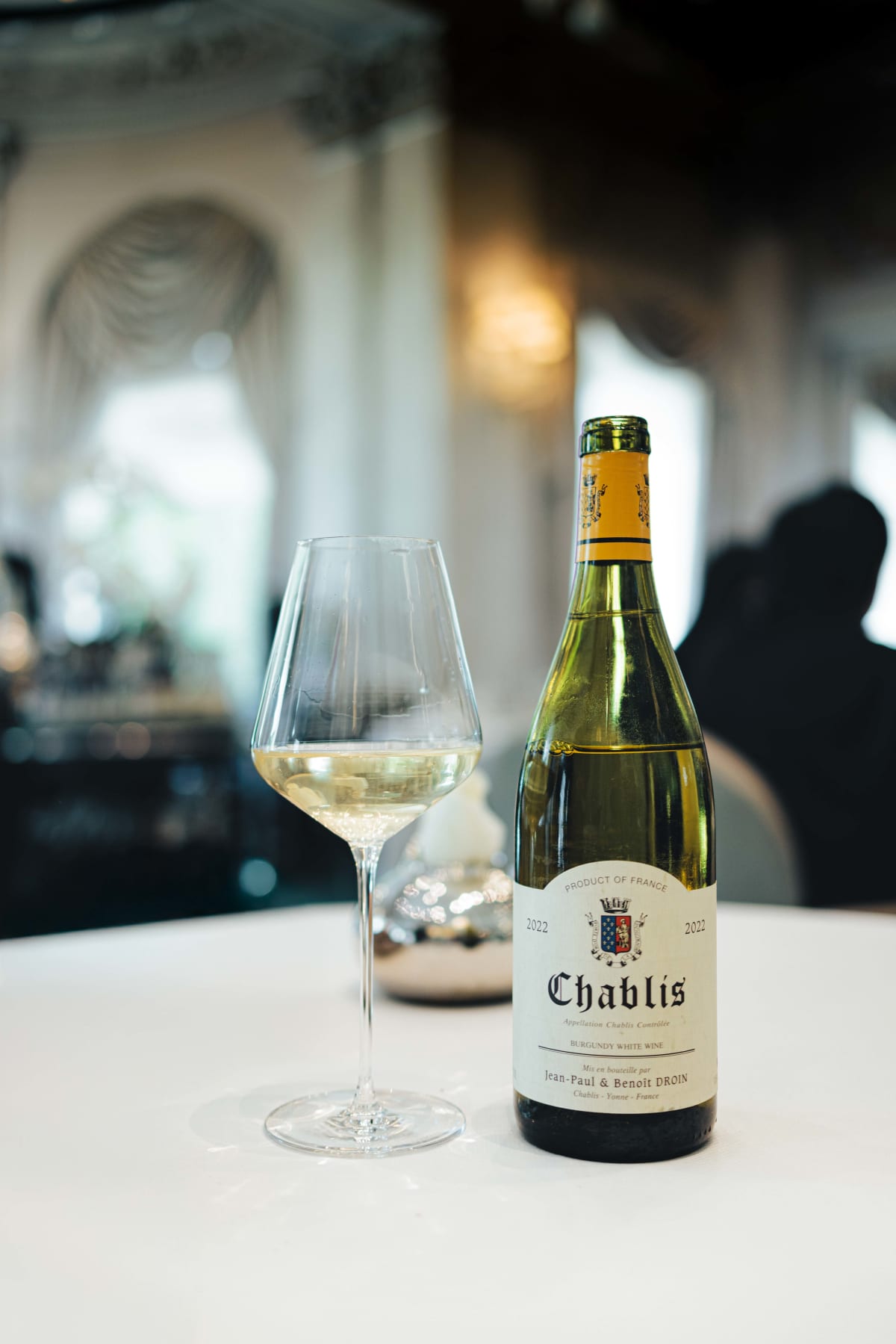
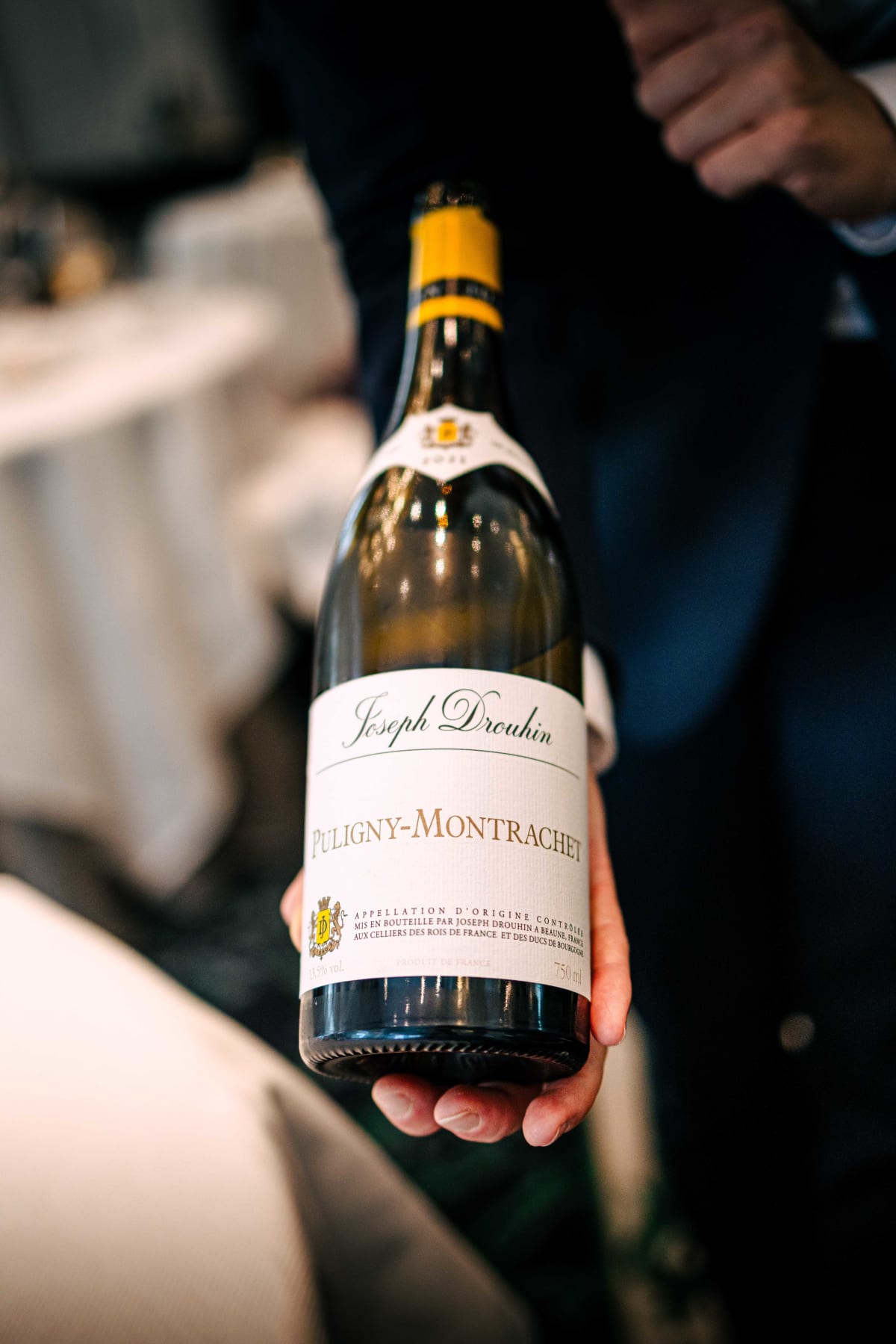
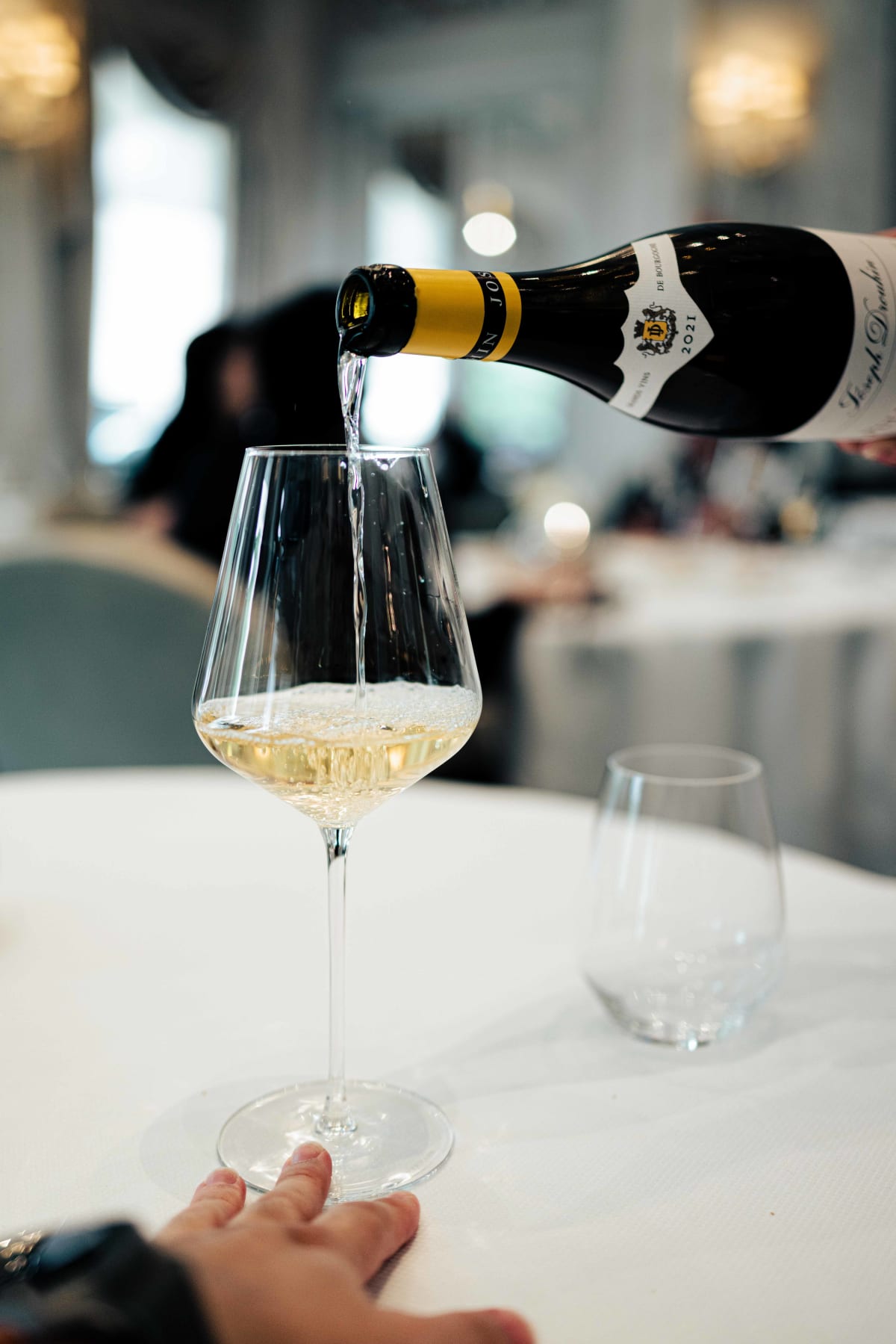
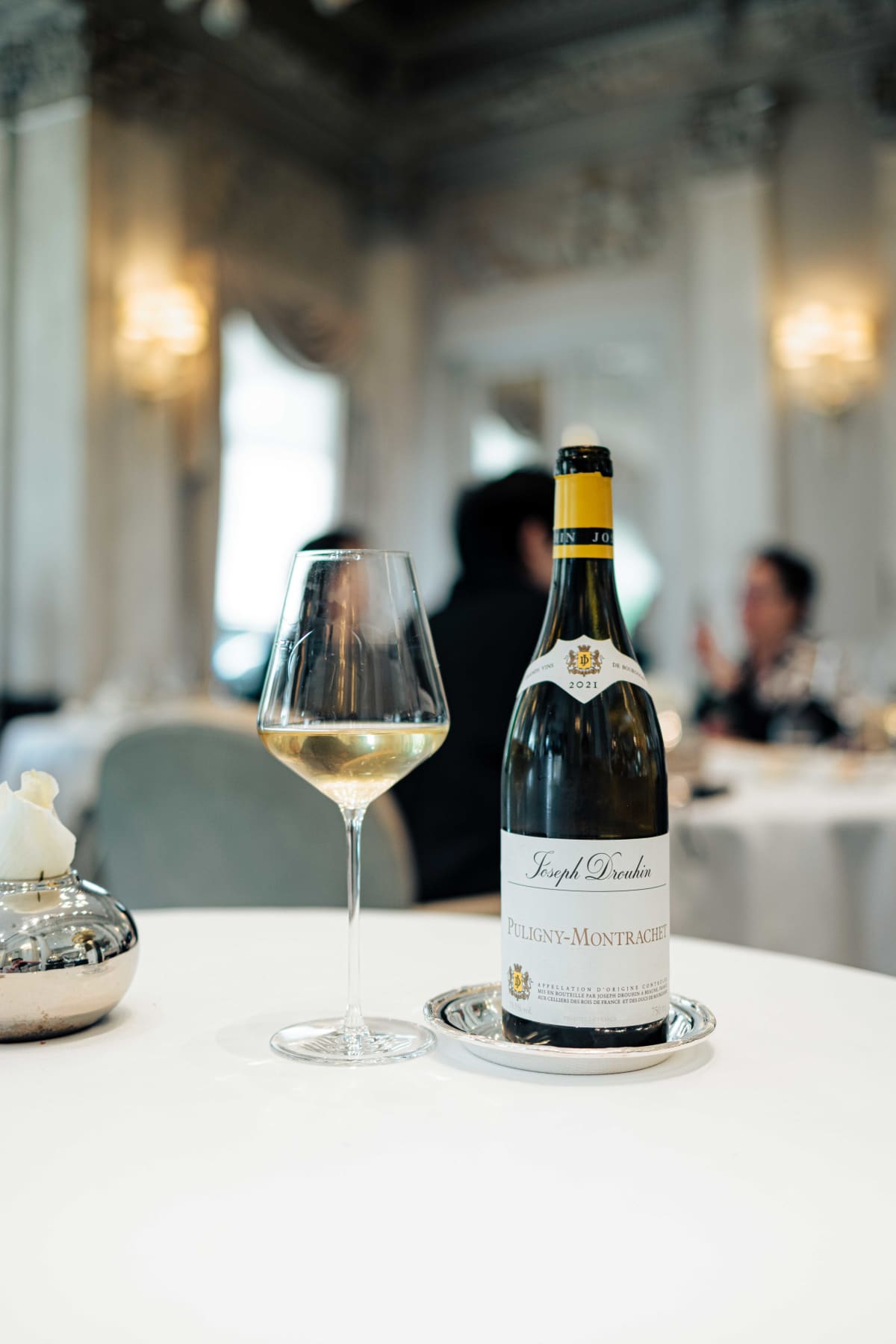
I ordered a glass of Chablis to carry the meal further. Two months earlier, the by-the-glass list at Le Gabriel had been deep enough to navigate independently across an evening, and I had arrived at Le Pré Catelan with similar expectations. The list here did not reach the same depth, and that was a disappointment. The glass options for reds and whites were almost entirely French, in the range of 20 to 45 euros per pour. The pricing was reasonable for a three-star room, but no individual selection on the page promised the kind of impact a serious by-the-glass programme can deliver.
Section 5·The Tuna
The next course was Le Thon, the tuna course.
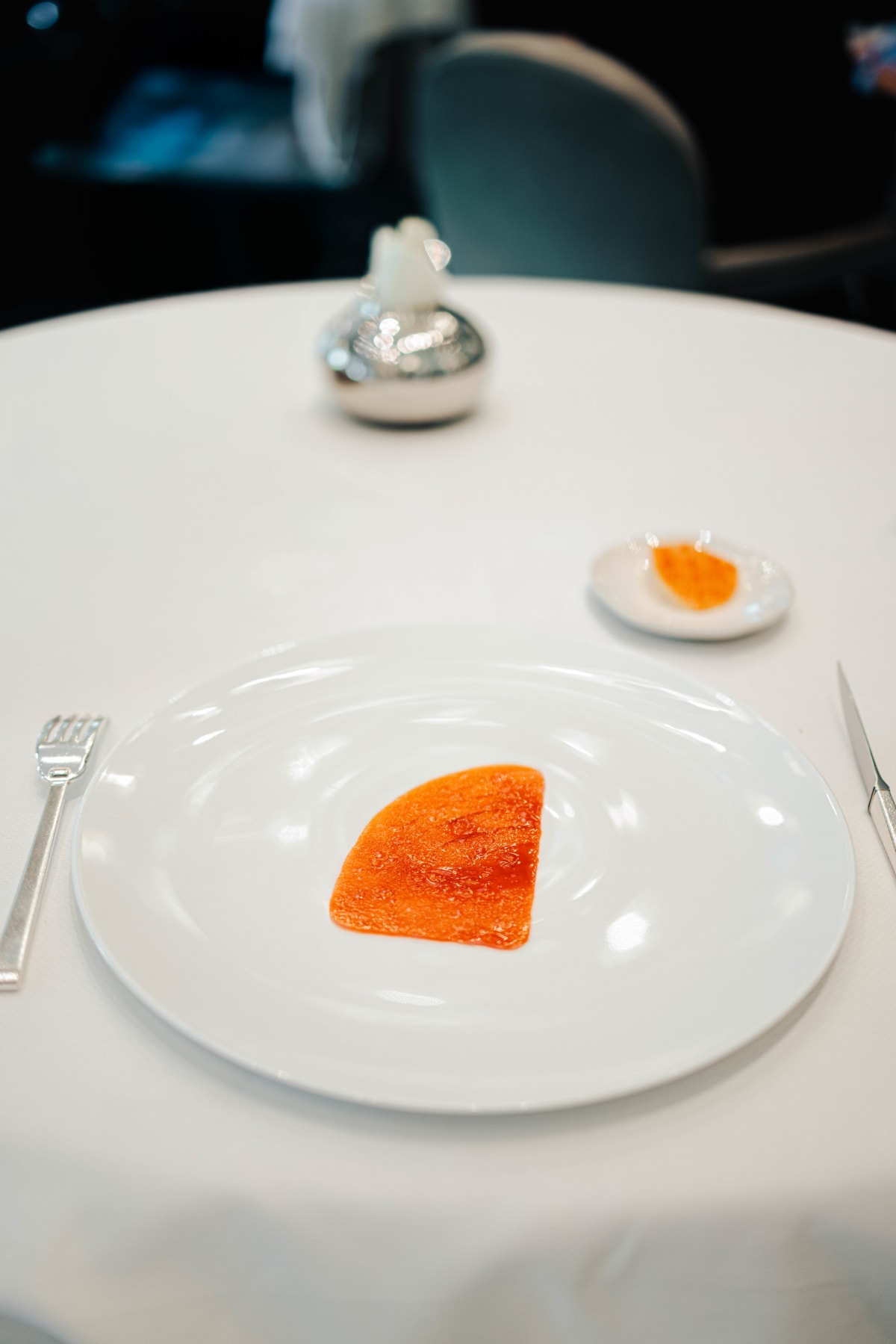
A thin slice of tuna, cut along the side of the loin rather than separated into the small blocks of the Japanese convention, arrived alongside a spiced potato wafer. I ate part of the slice on its own and set the rest on the wafer in a single bite. The flavour of the high-grade tuna familiar in Japan or Korea was, as expected, not in this dish.
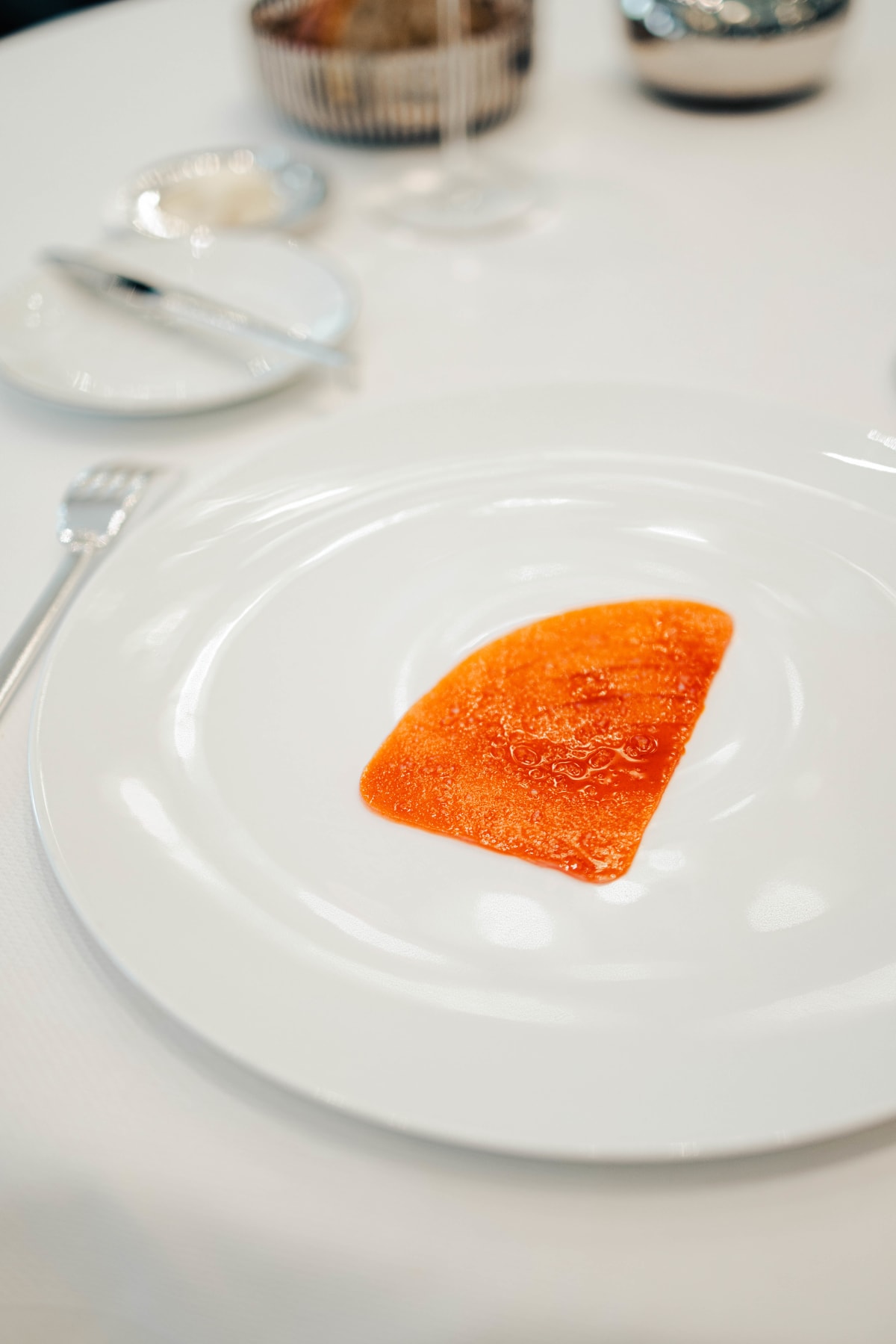
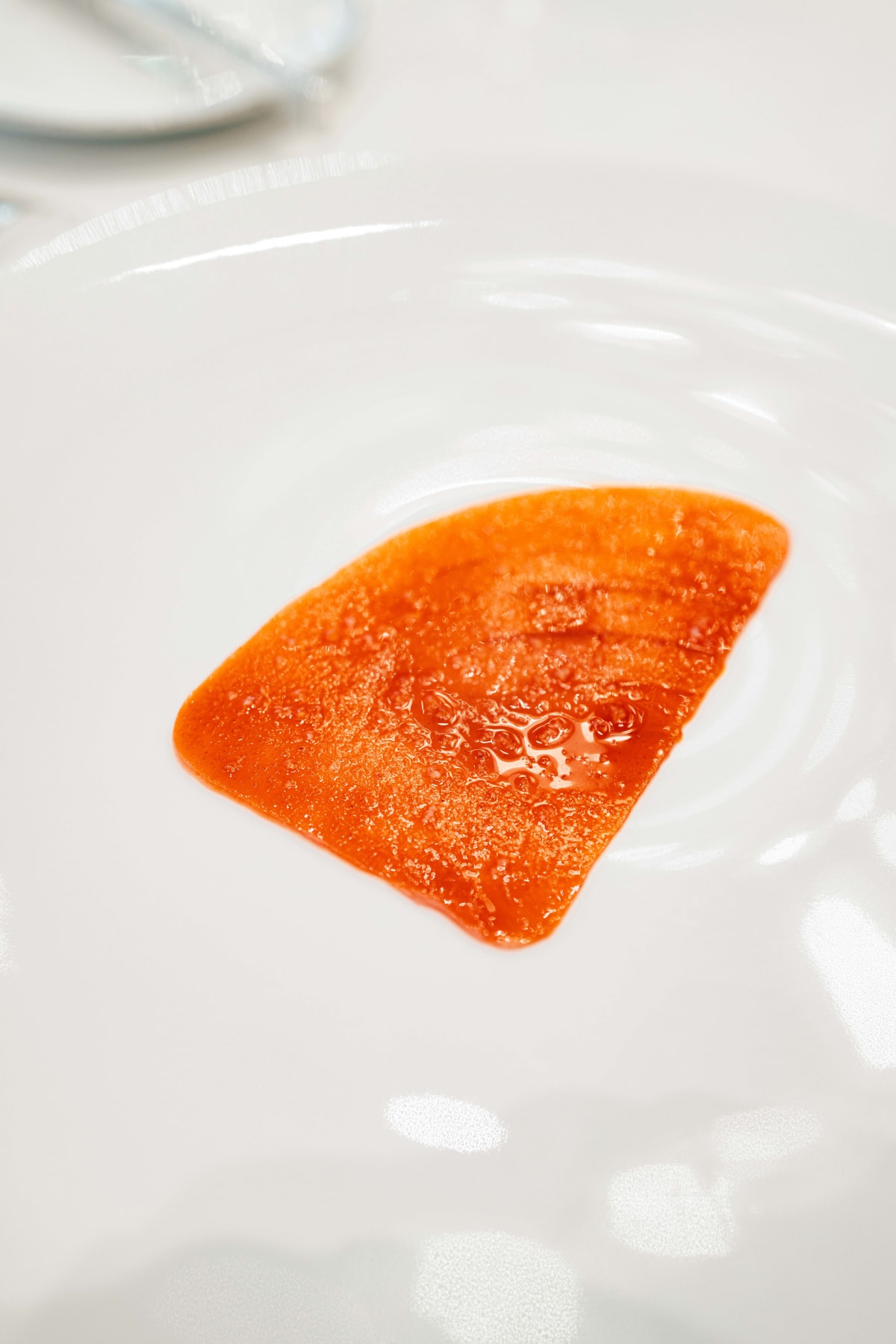
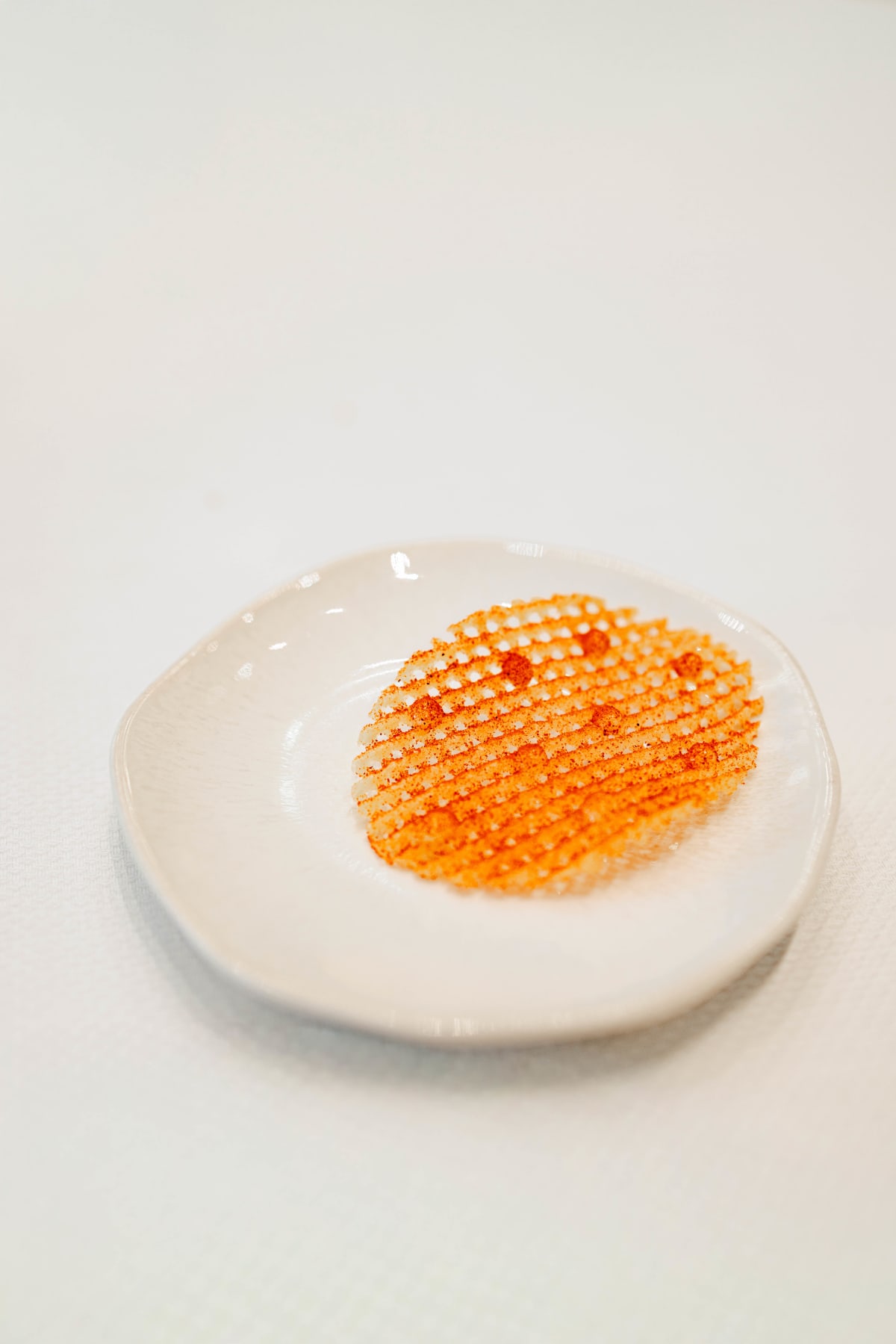
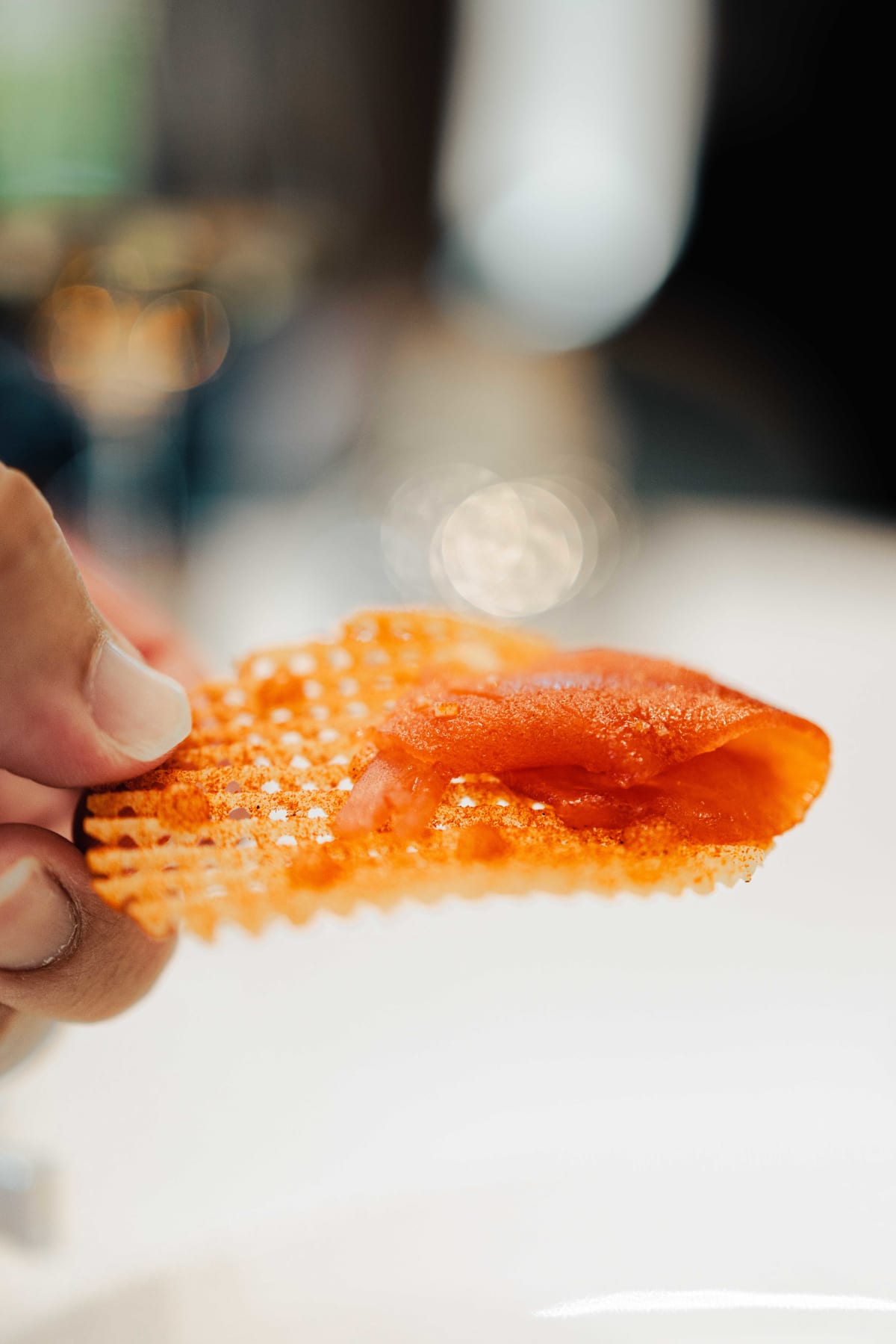
For a tuna course in a European dining room, however, there was enough acidity present in the fish, and the spice on the wafer pulled the plate further than expected. For readers based in Japan or Korea who travel to Europe for dining, the practical advice is simple: keep expectations on tuna low in a European context, three stars notwithstanding.
Section 6·Against Plénitude
This was a mid-July visit. Among the French restaurants I had encountered up to that point, the one that had registered most strongly on the food alone was Plénitude in May. The comparison surfaced naturally while eating at Le Pré Catelan, and the contrast was immediate. Visually, the plate in front of me was much more reduced than I had expected. The two kitchens approach the construction of a dish from clearly different directions.
Plénitude builds a single plate through the interaction of a central ingredient with multiple supporting elements, and through a careful matching of sauces, arriving at a precise composite flavour. Le Pré Catelan moves in the opposite direction. The weight of the dish is concentrated on the principal ingredient and one sauce, and the plate is finished with a single decisive note. Visually, the plates would not immediately read as French Michelin. The simplicity carries a register closer to certain Spanish Michelin rooms, and at moments the visual language tilted toward the Japanese-French wing of contemporary fine dining.
The strength of this approach is that when a dish lands fully, the impact carries little resistance. The corresponding risk is that when a dish only reaches the merely good zone, there is little secondary structure for the diner to engage with. The plates this afternoon, on the strength of the raw material, sat closer to the first outcome.
Section 7·The Sea, First Half
The next course was La Bouillabaisse (Sauce rouille safranée). That bouillabaisse, the regional fisherman's preparation of Marseille, would appear in a fine-dining context had not occurred to me in advance. Rouille safranée is a saffron-based aromatic sauce used along the Mediterranean coast of southern France, traditionally in bouillabaisse and adjacent fish preparations. It arrived first as a yellow base on the plate, set beneath nut-like elements that read as almond.
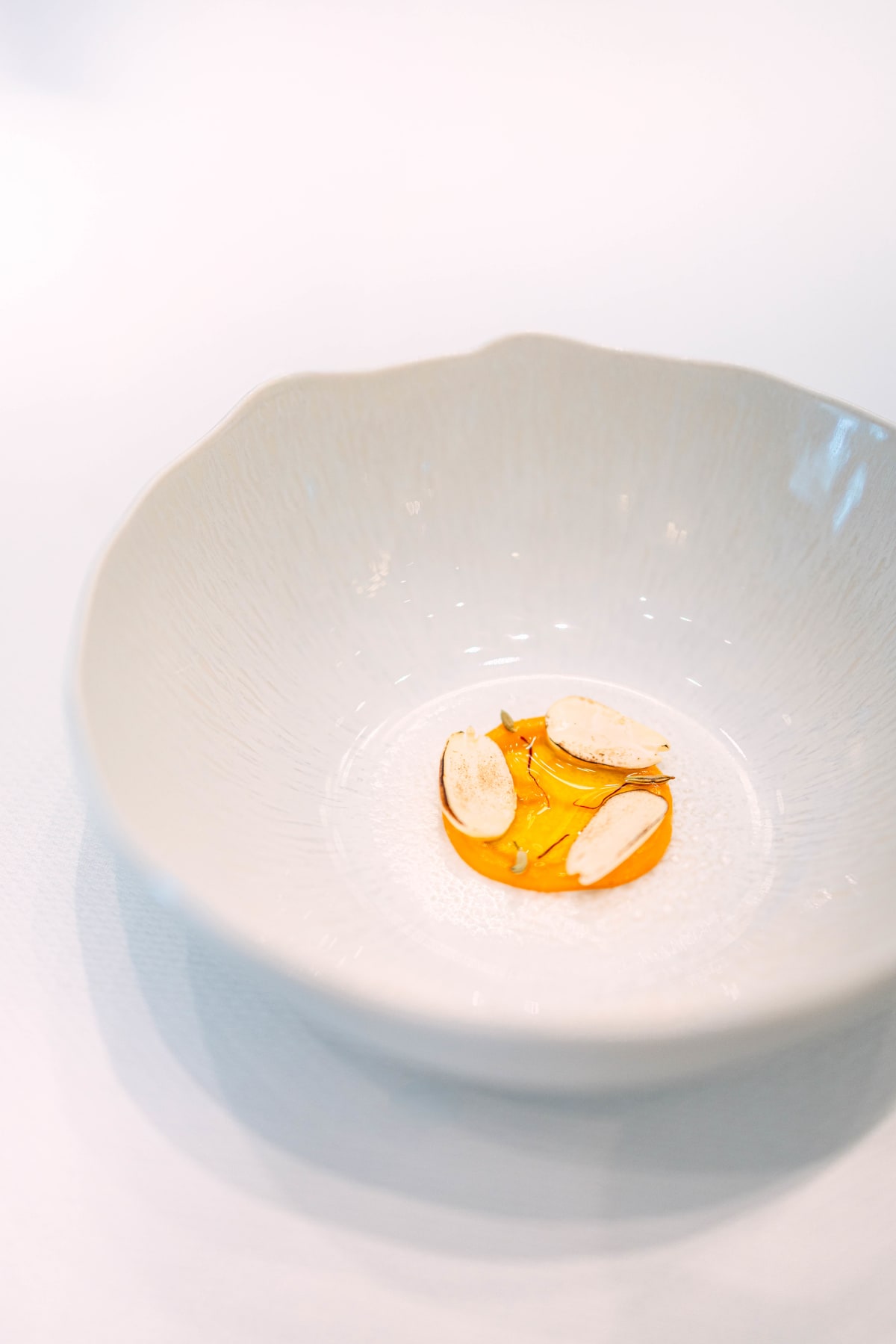
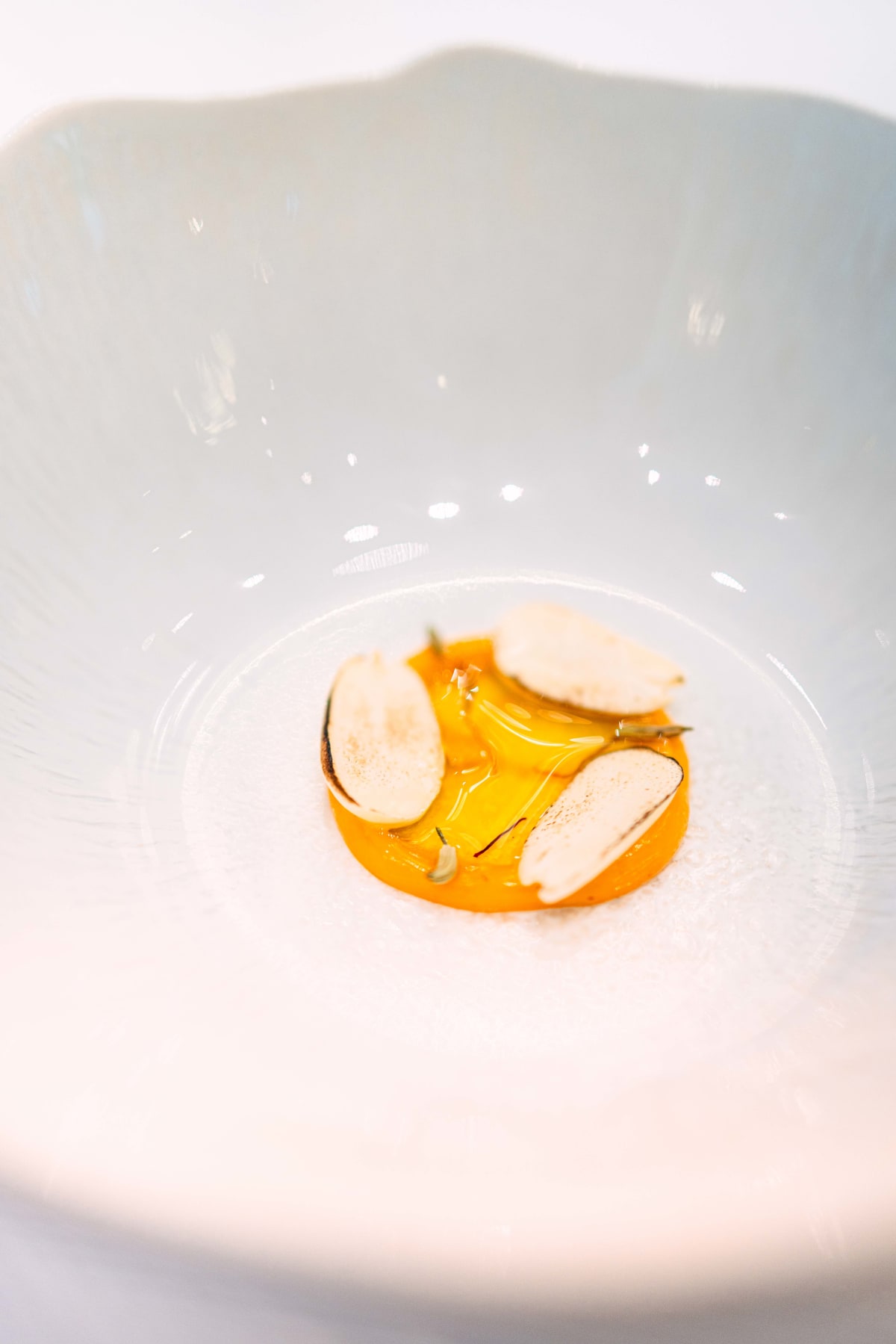
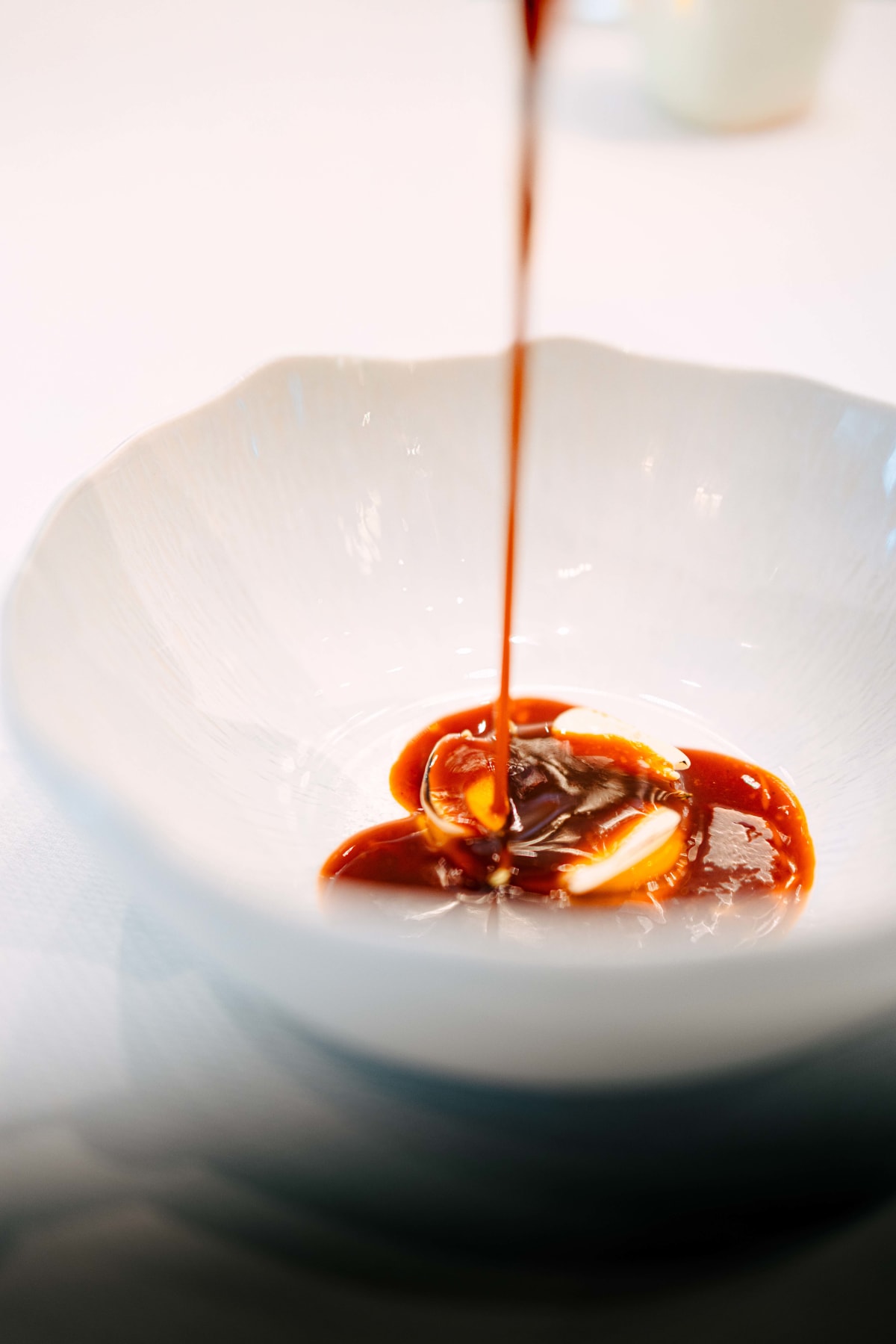
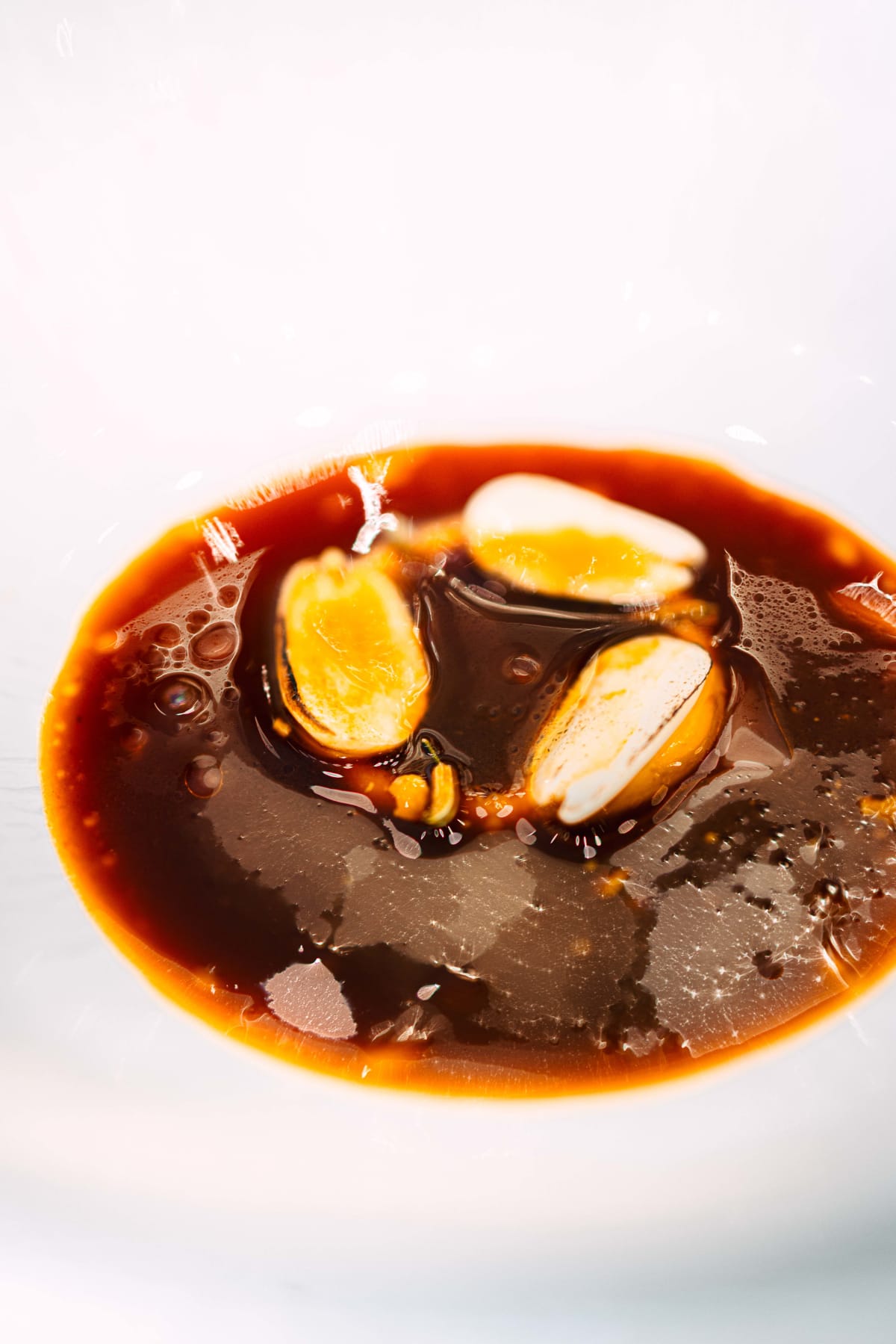
The broth was poured into the plate at the table, and the first spoonful made the case for the dish. The deep aromatic register of the sauce, the register that defines a proper bouillabaisse, came across with measured refinement here. In Marseille, the cost of a bouillabaisse derives from the ingredient list rather than from any formal sophistication of the dish itself, and the eating experience there had not previously struck me as elevated in form. This was the first encounter that genuinely re-mapped the genre. The course left me imagining how the Korean maeuntang, the spicy fish stew of a comparable folk register, might be reframed within the grammar of fine dining.
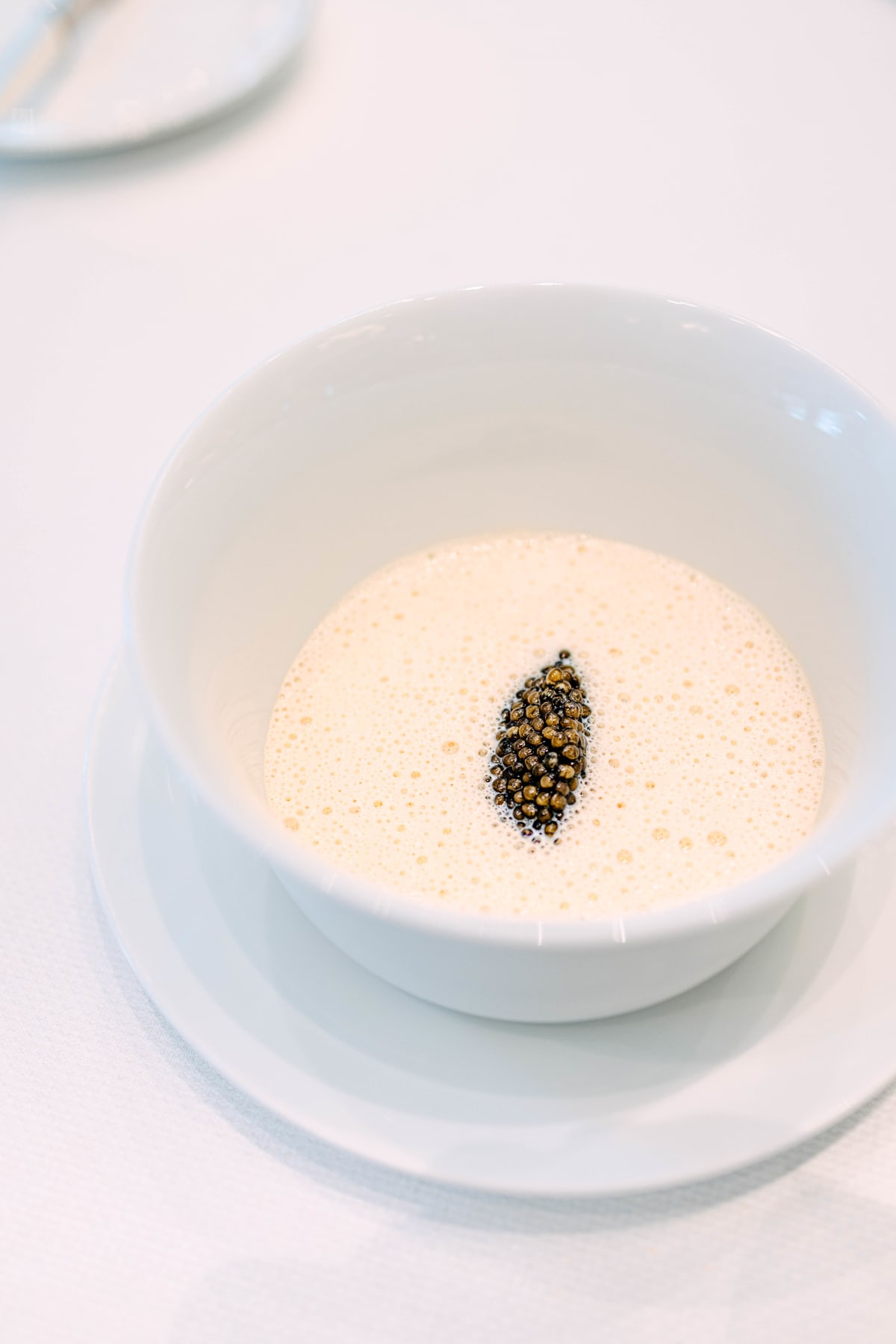
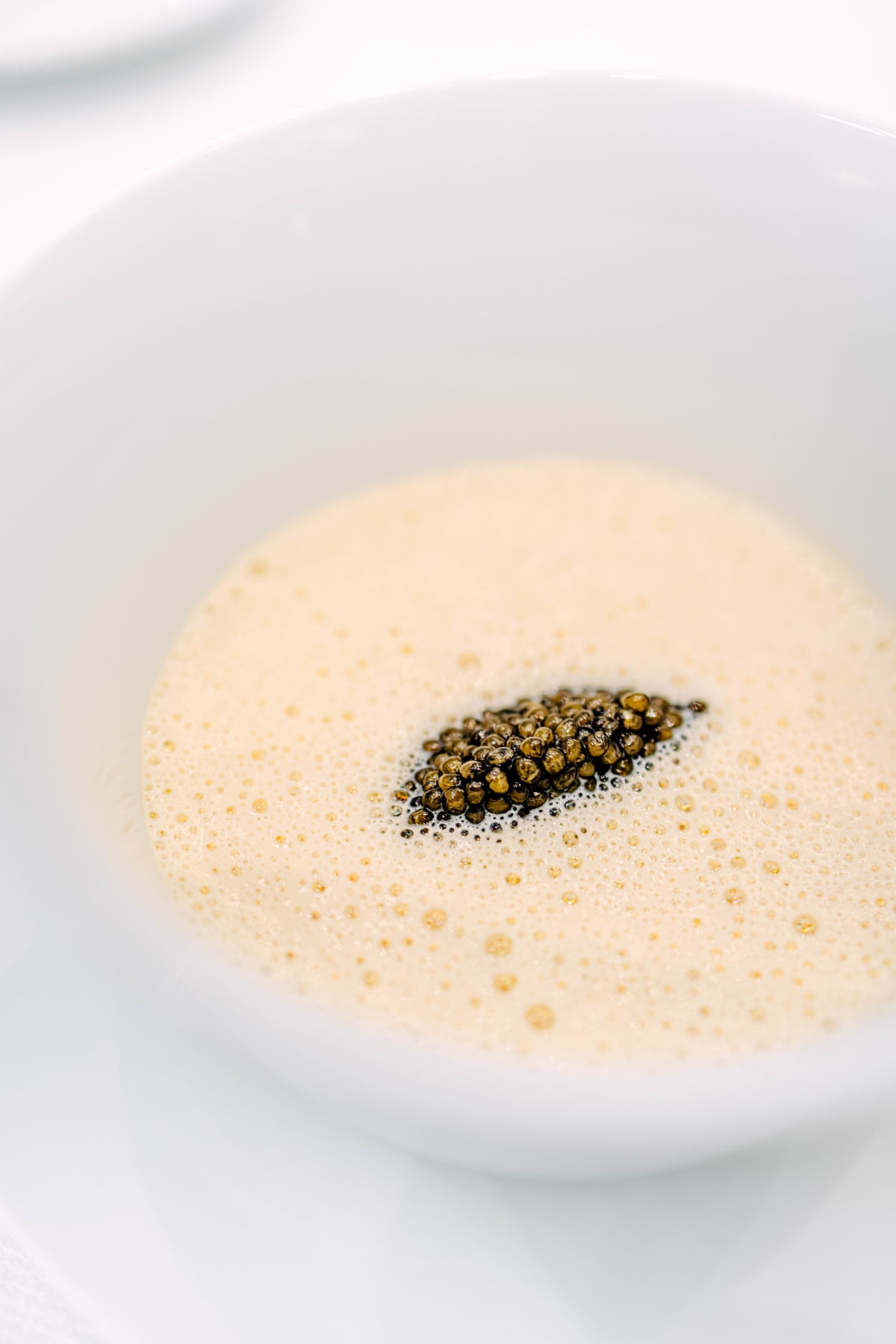
The next course was Le Crabe, a crab preparation served in the form of a cream with a layer of jelly.
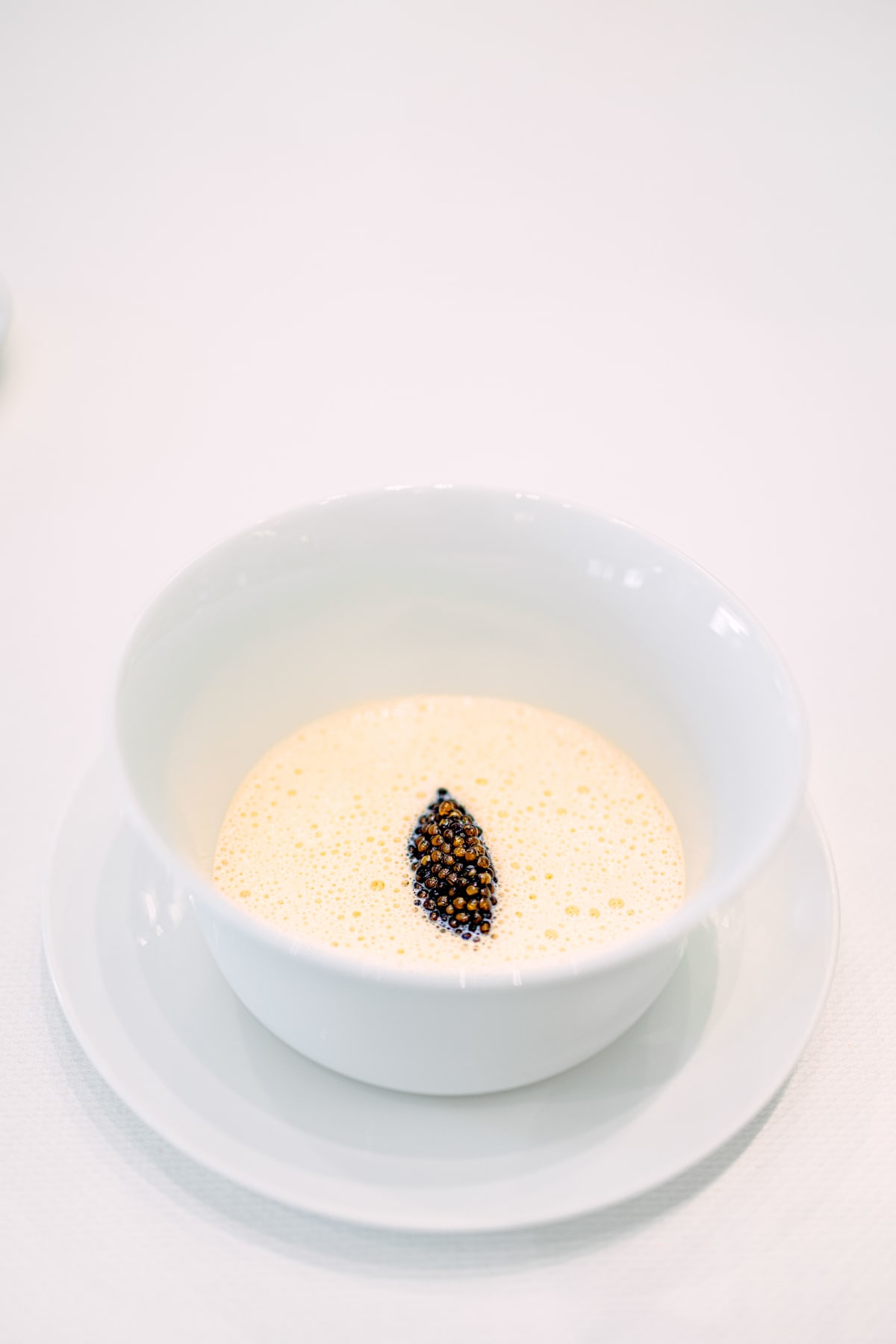
The visual recalled a Japanese chawanmushi. Caviar sat on top, and the dish landed cleanly. The cream, finished with fennel, sat well with the crab. The caviar added a subtle saline lift, and the assembled balance was the strongest reading of the three components together.
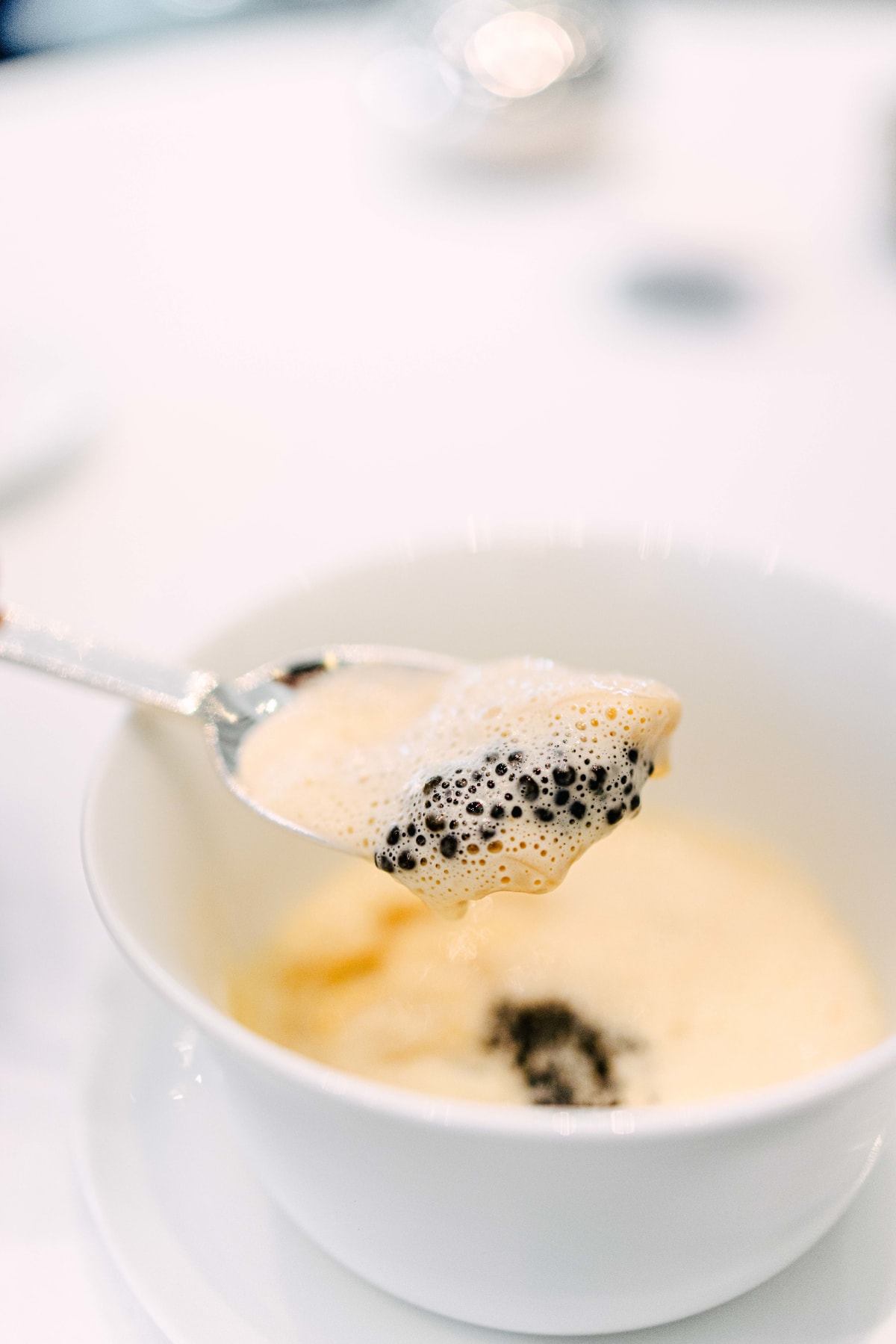
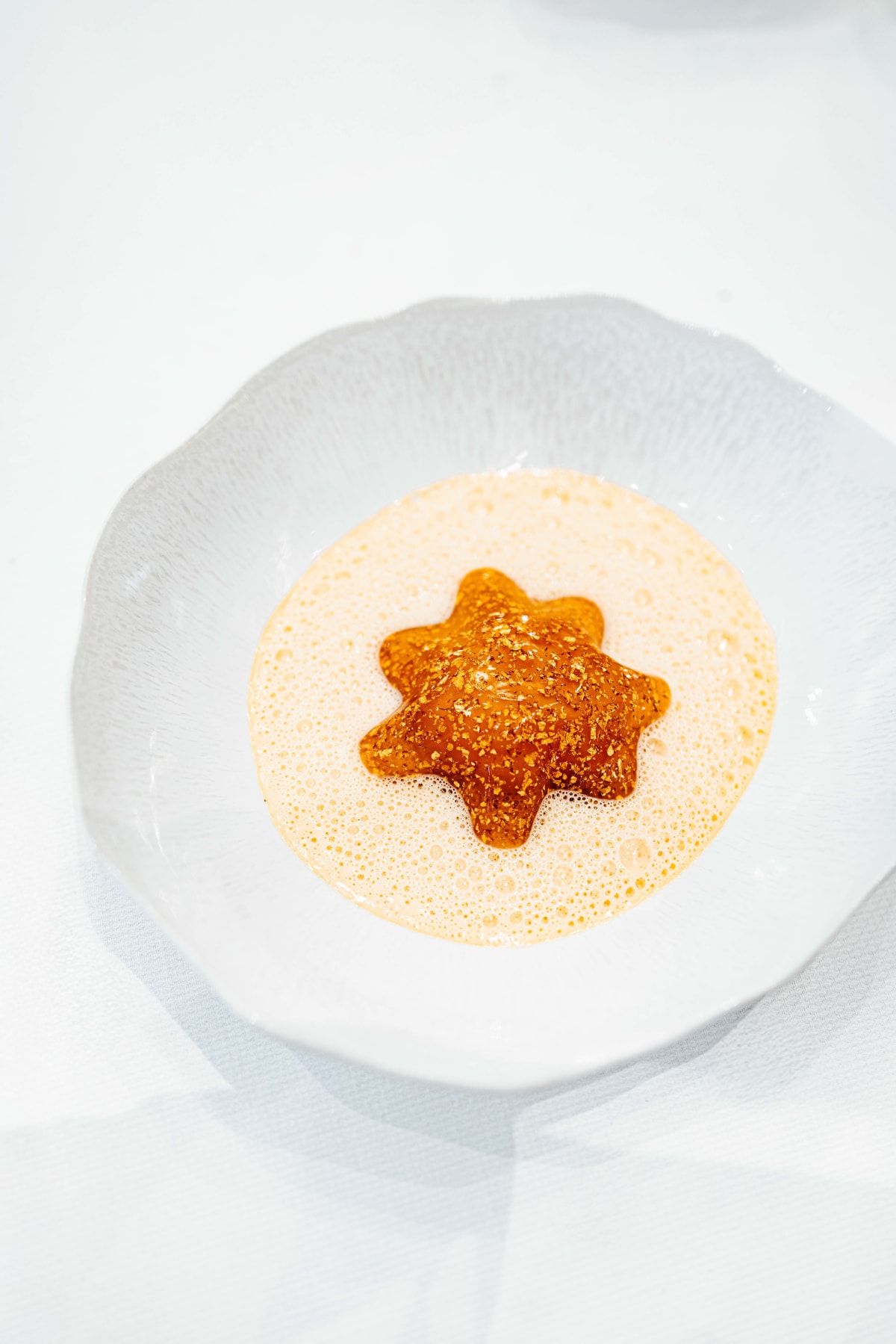
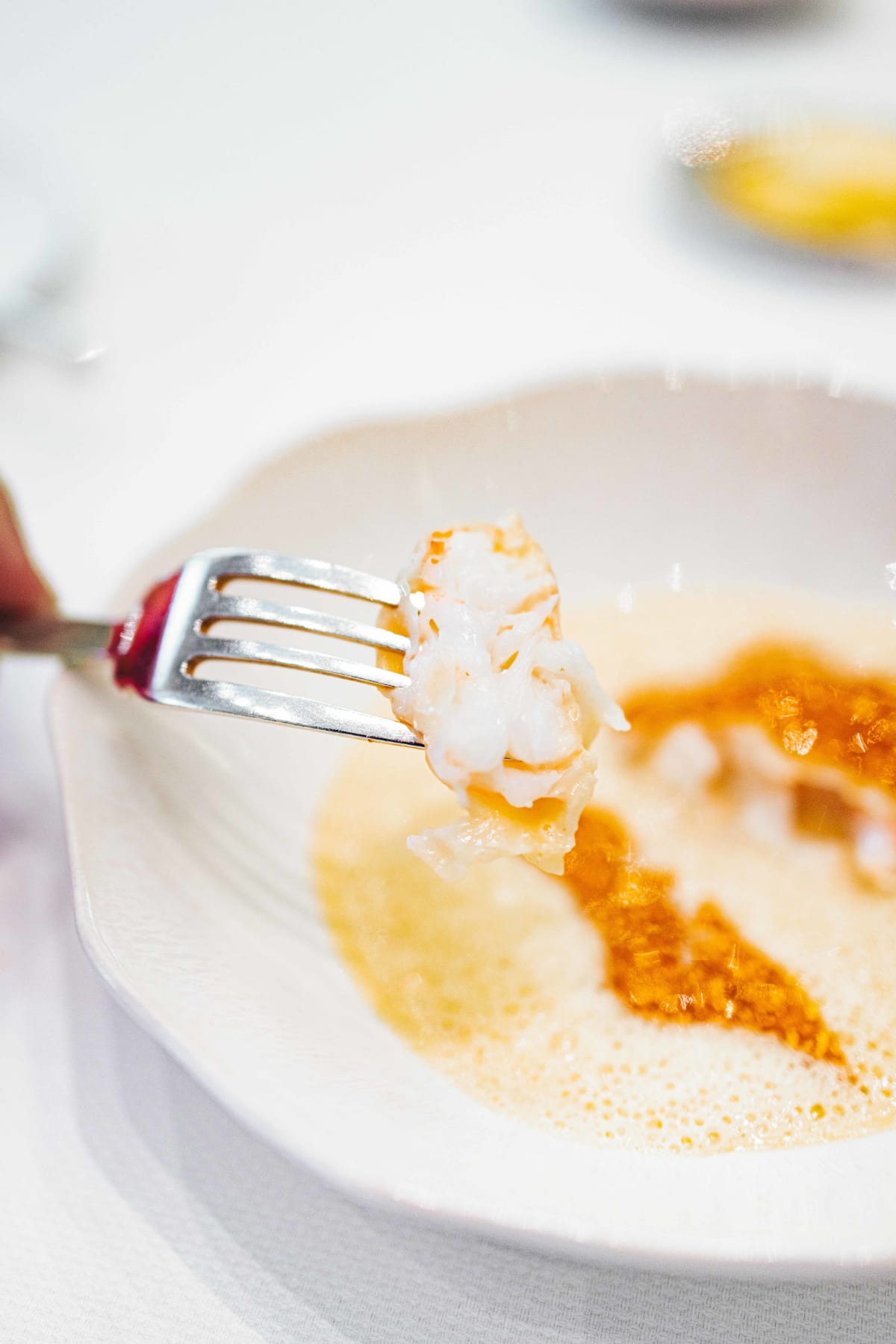
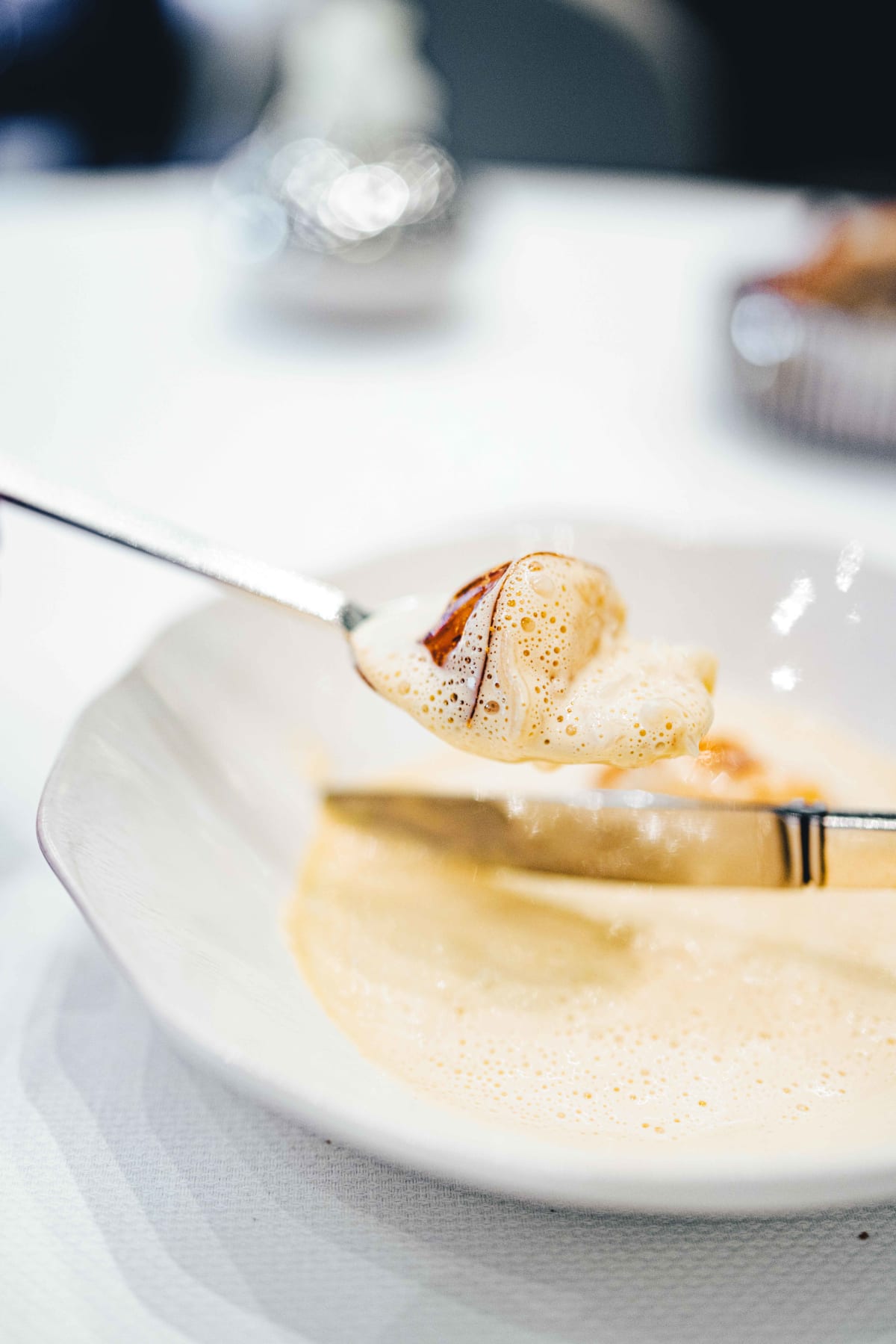
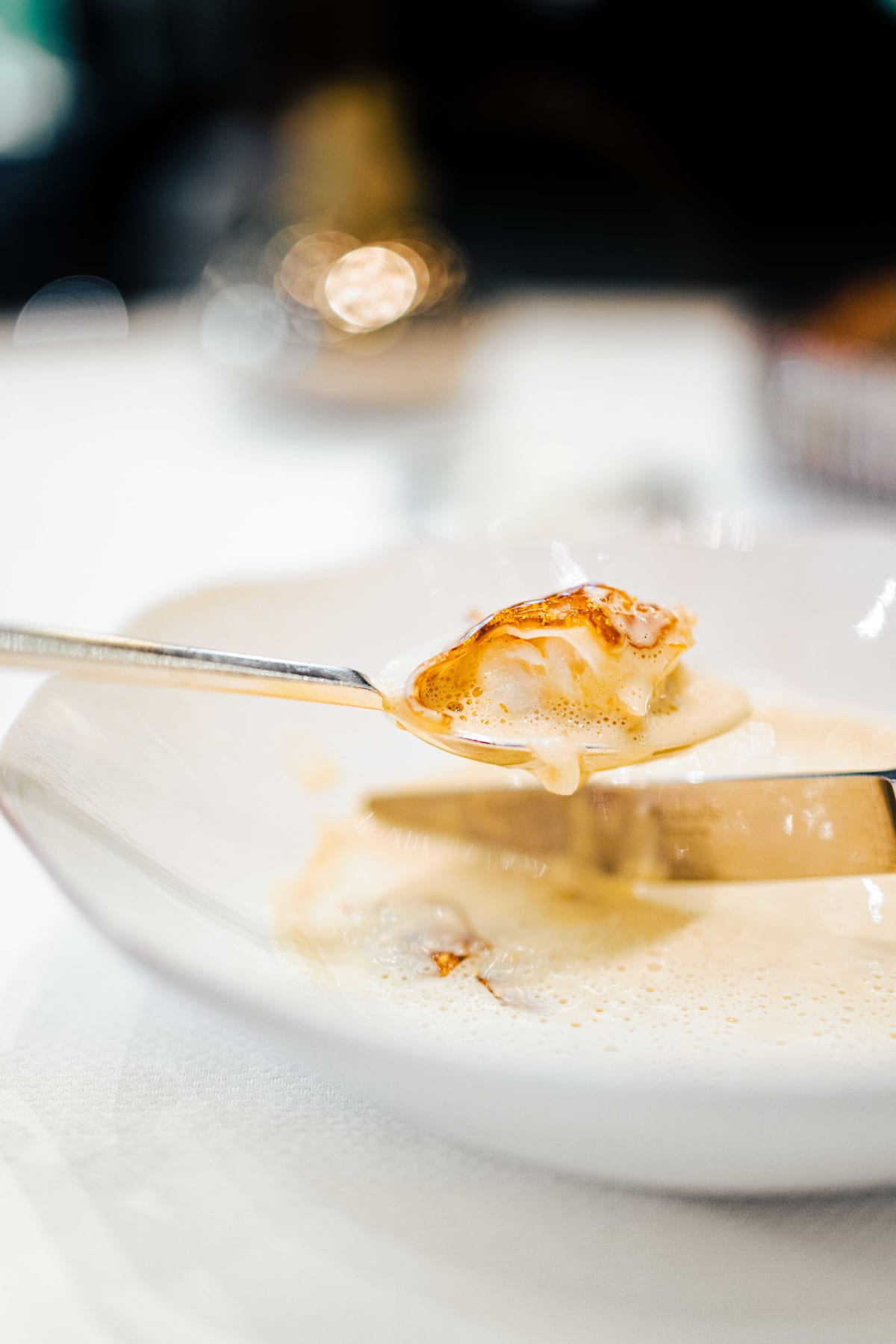
The best course of the meal arrived next. La Langoustine, langoustine wrapped inside a ravioli, with a gold leaf jelly set on top and a sauce built around foie gras. The plate was excellent.
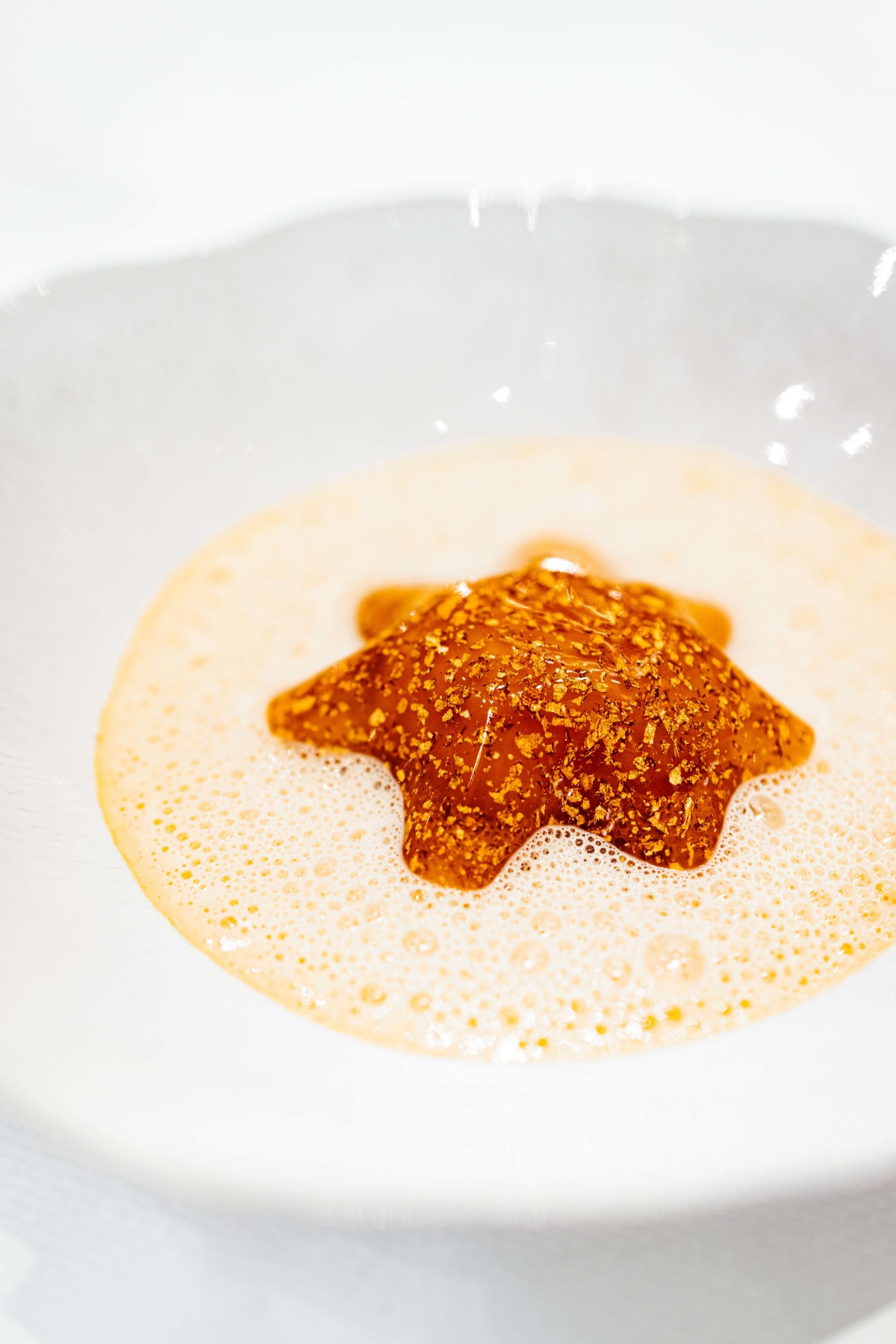
There is a common phrase for dishes that taste exactly as one would imagine. This dish fit that phrase in composition and then exceeded it on the first bite. The langoustine itself carried its own weight. The foie gras sauce, in particular, had been worked into a cream foam that landed lightly on the tongue while delivering a deep, almost unctuous body underneath. The note I wrote in my own private record that afternoon read, "Has a dish ever made you almost cry in broad daylight?" If a return to that seat could be arranged, I am confident that the reaction would now run further than almost.
Section 8·The Sea, Second Half
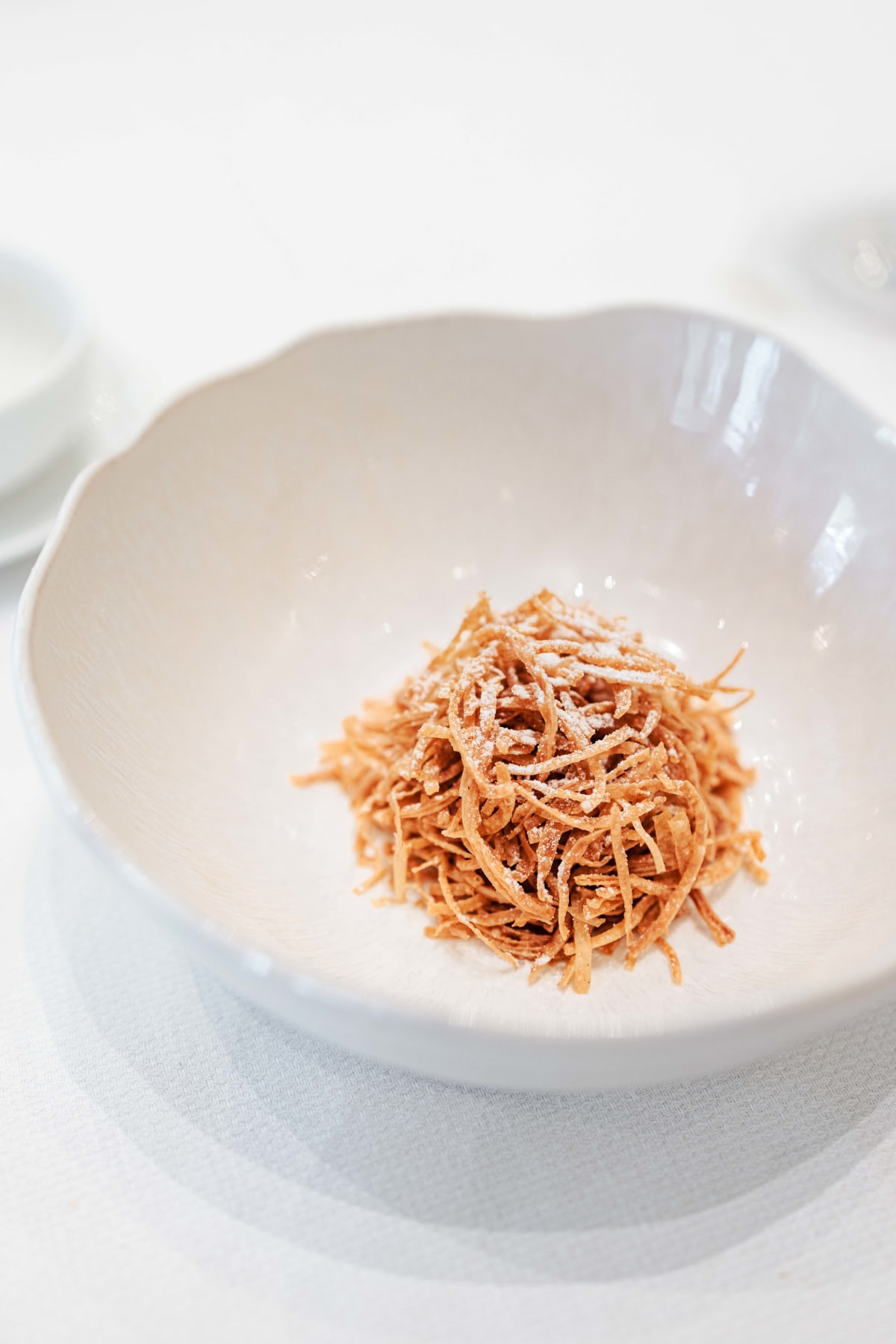
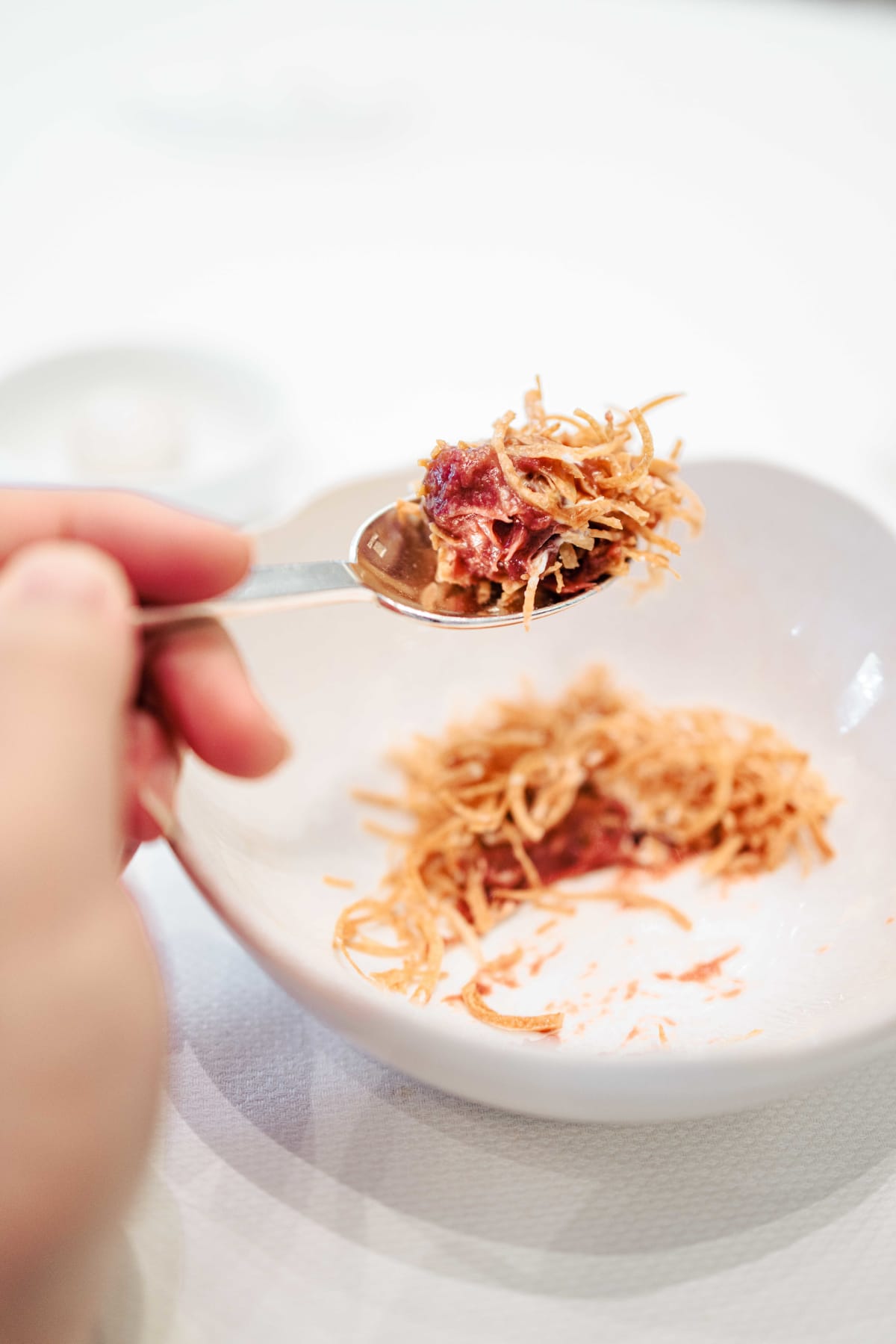
While still working through the after-impression of the langoustine, a plate that visually resembled a potato pancake arrived.
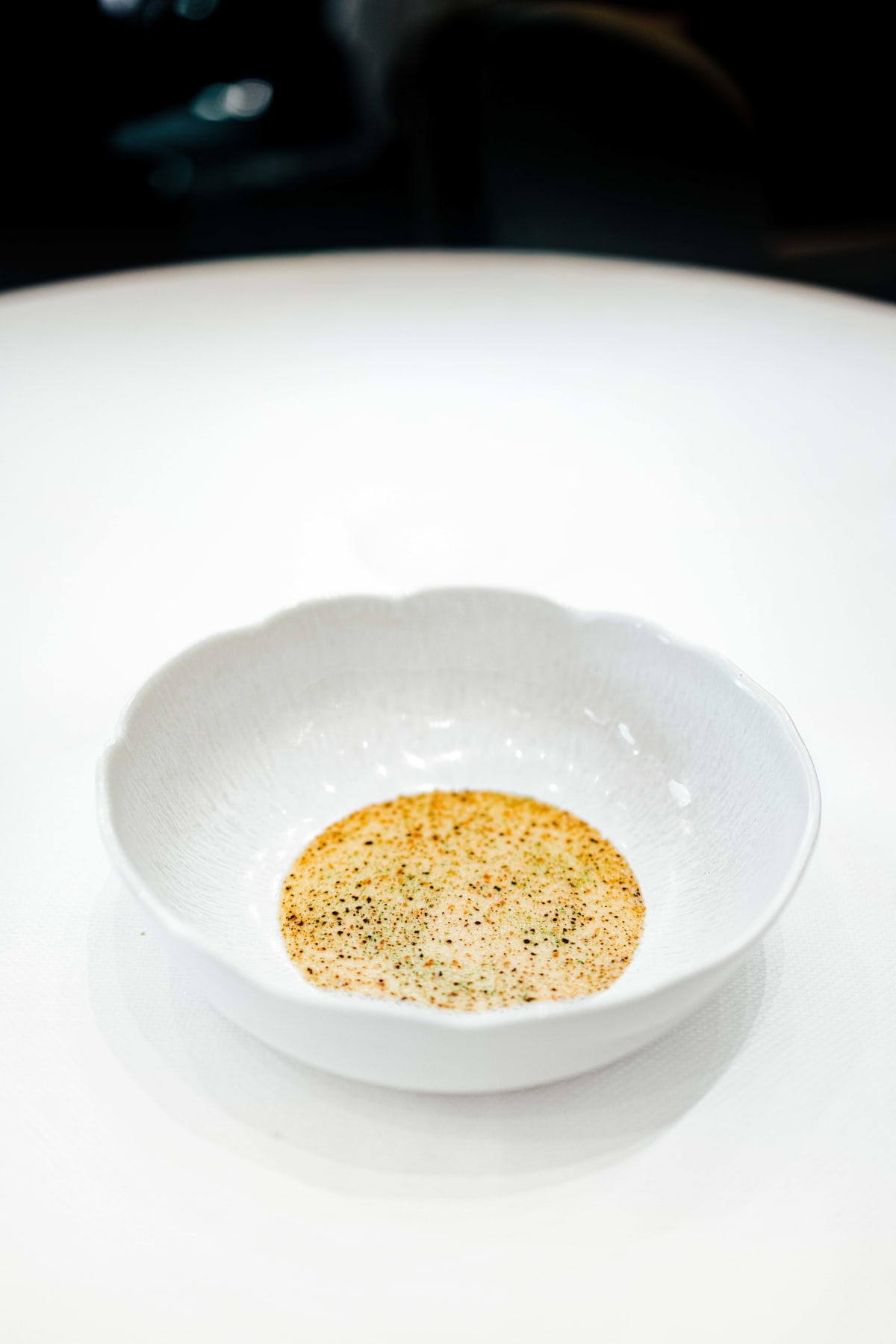
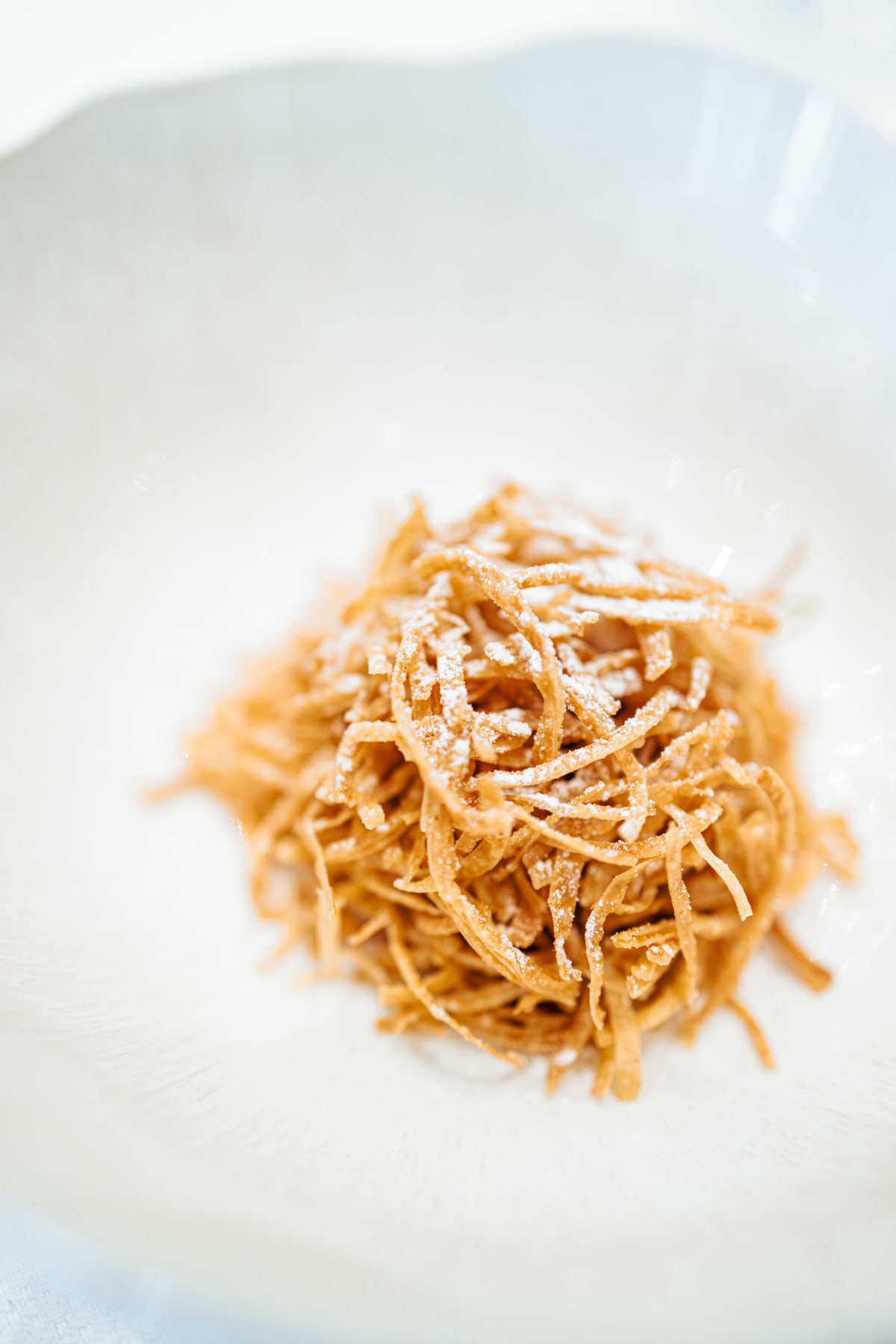
Le Cabillaud, the cod course, did not come in its whole form. It was prepared in the brandade style, with the fish broken down and combined with garlic, milk, and olive oil into a soft, dense purée. Each spoonful was creamy and intensely concentrated, and the plate, despite a steady run of "what exactly is this" spoonfuls, emptied faster than I would have wanted.
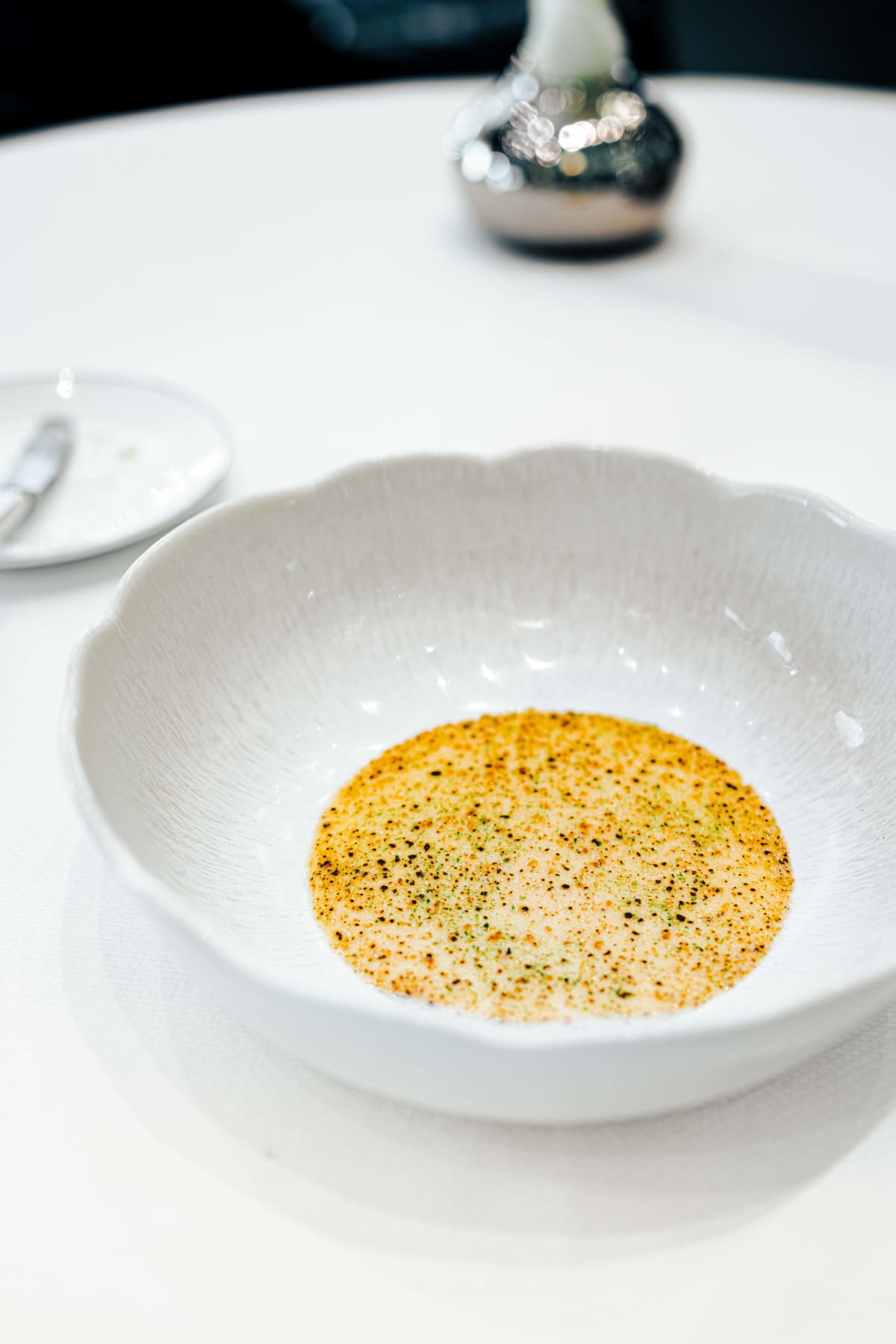
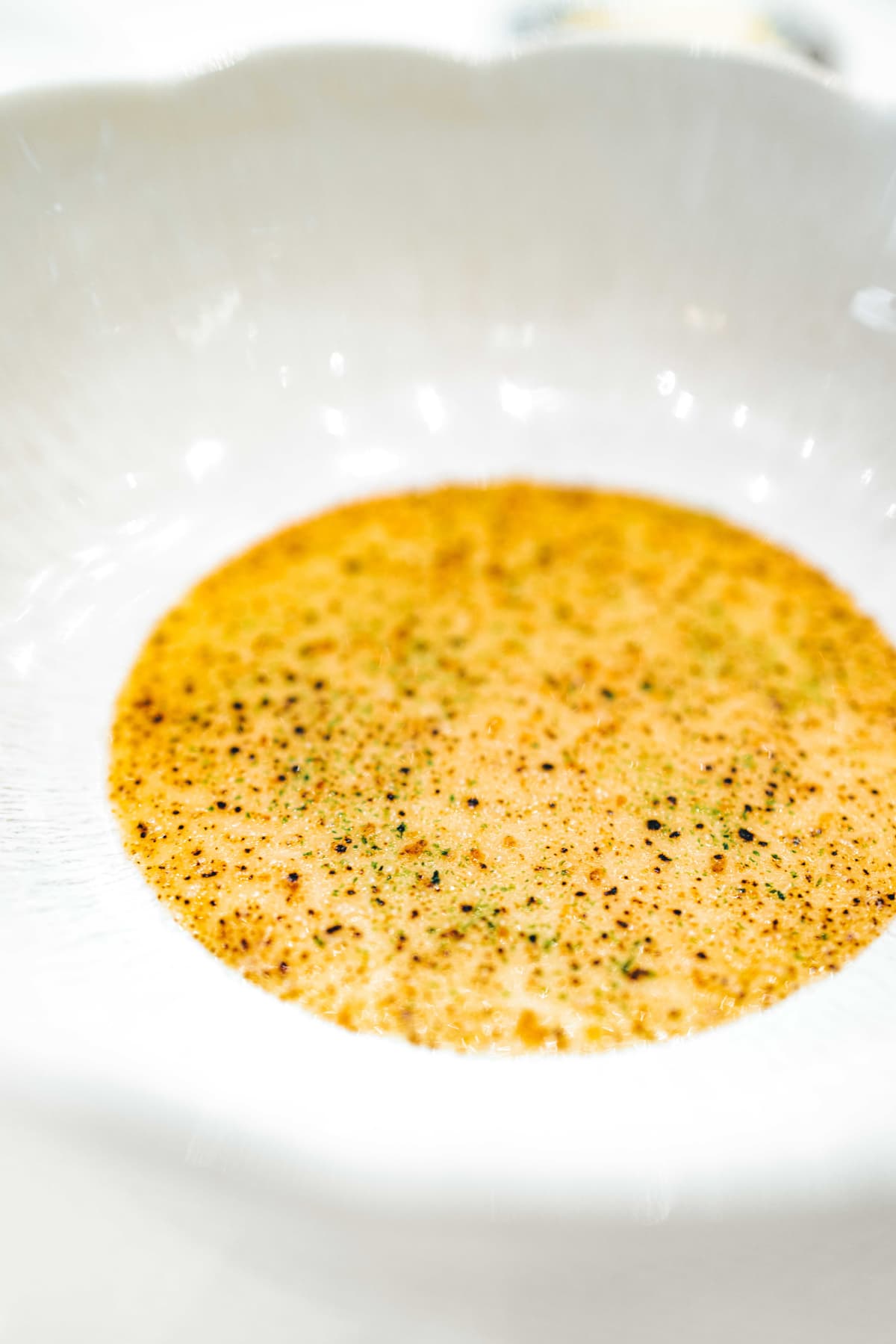
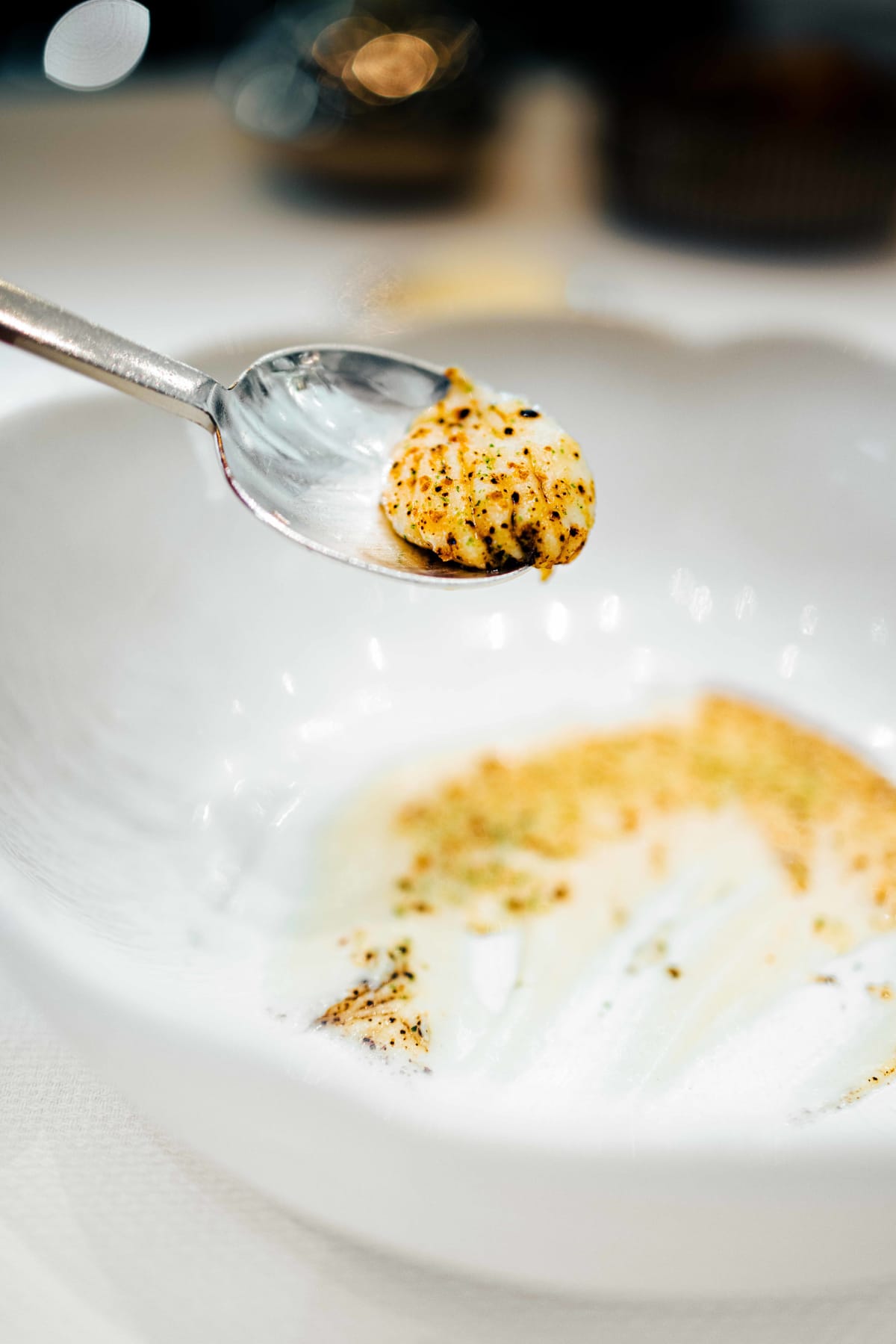
If a return to Le Pré Catelan presents itself, two plates would be motivating it. The langoustine, for the affect of the original encounter. The cod, for the curiosity left over from a course that ended too quickly.
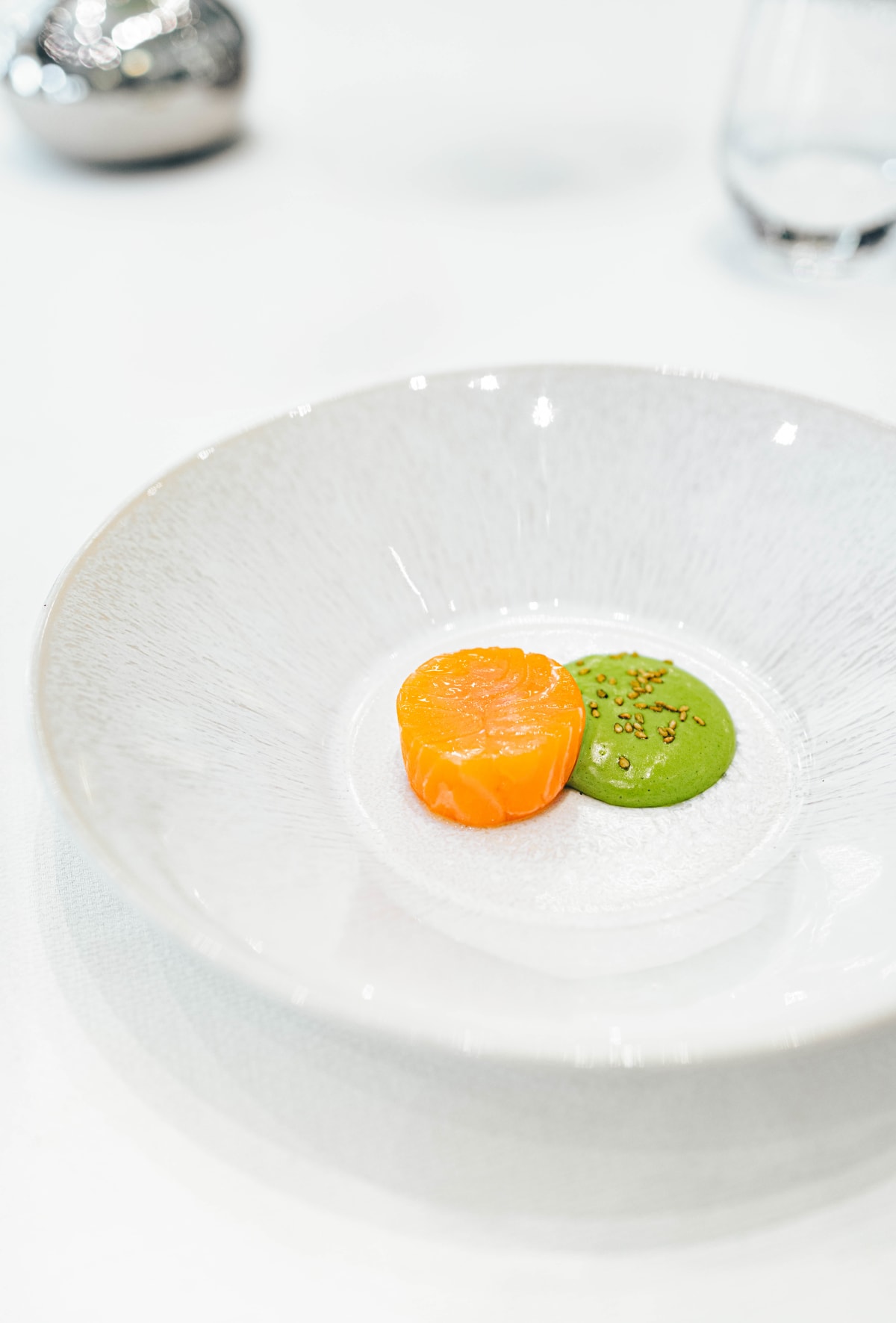
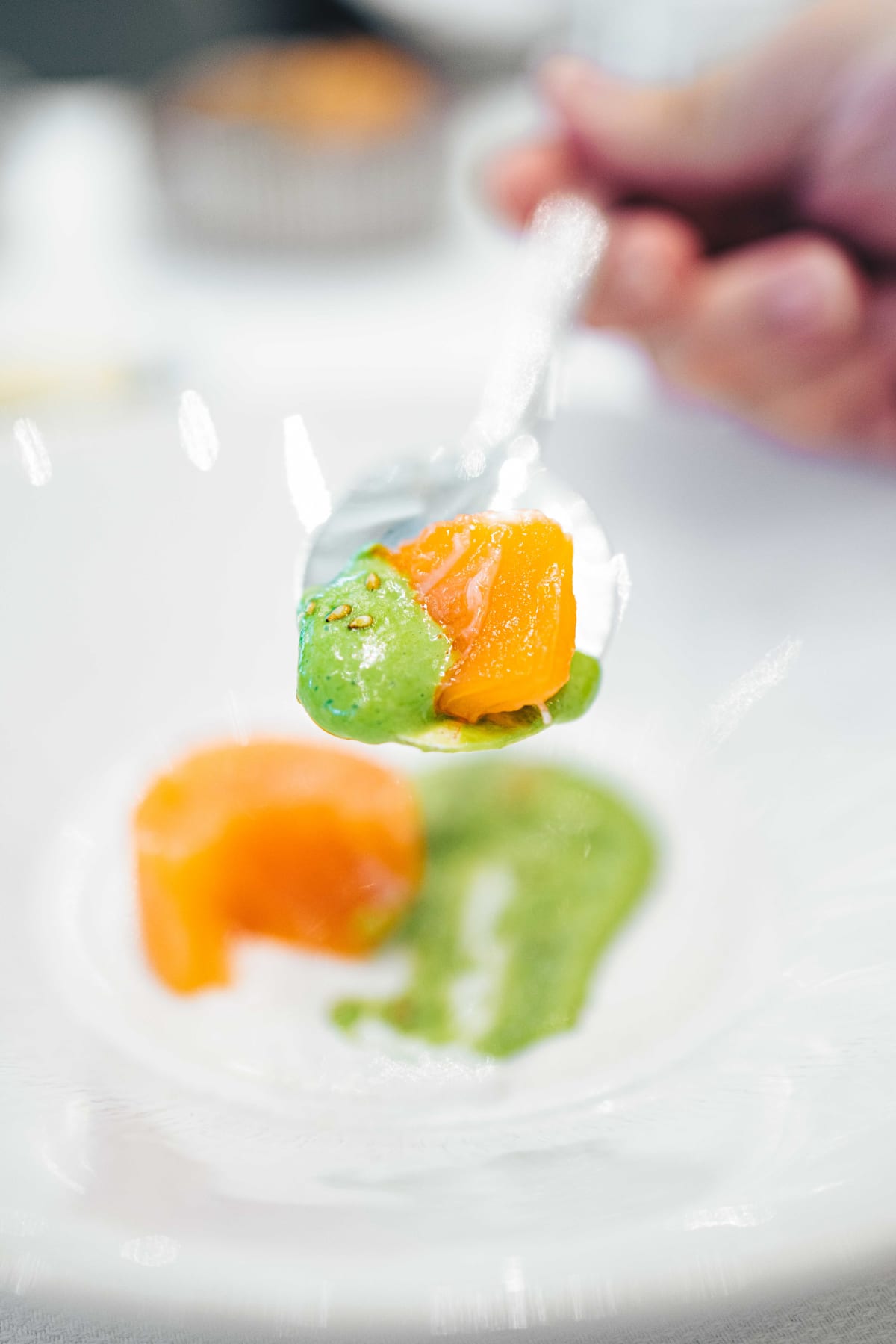
The fish run continued with Le Saumon, a salmon described as cherry-wood smoked.
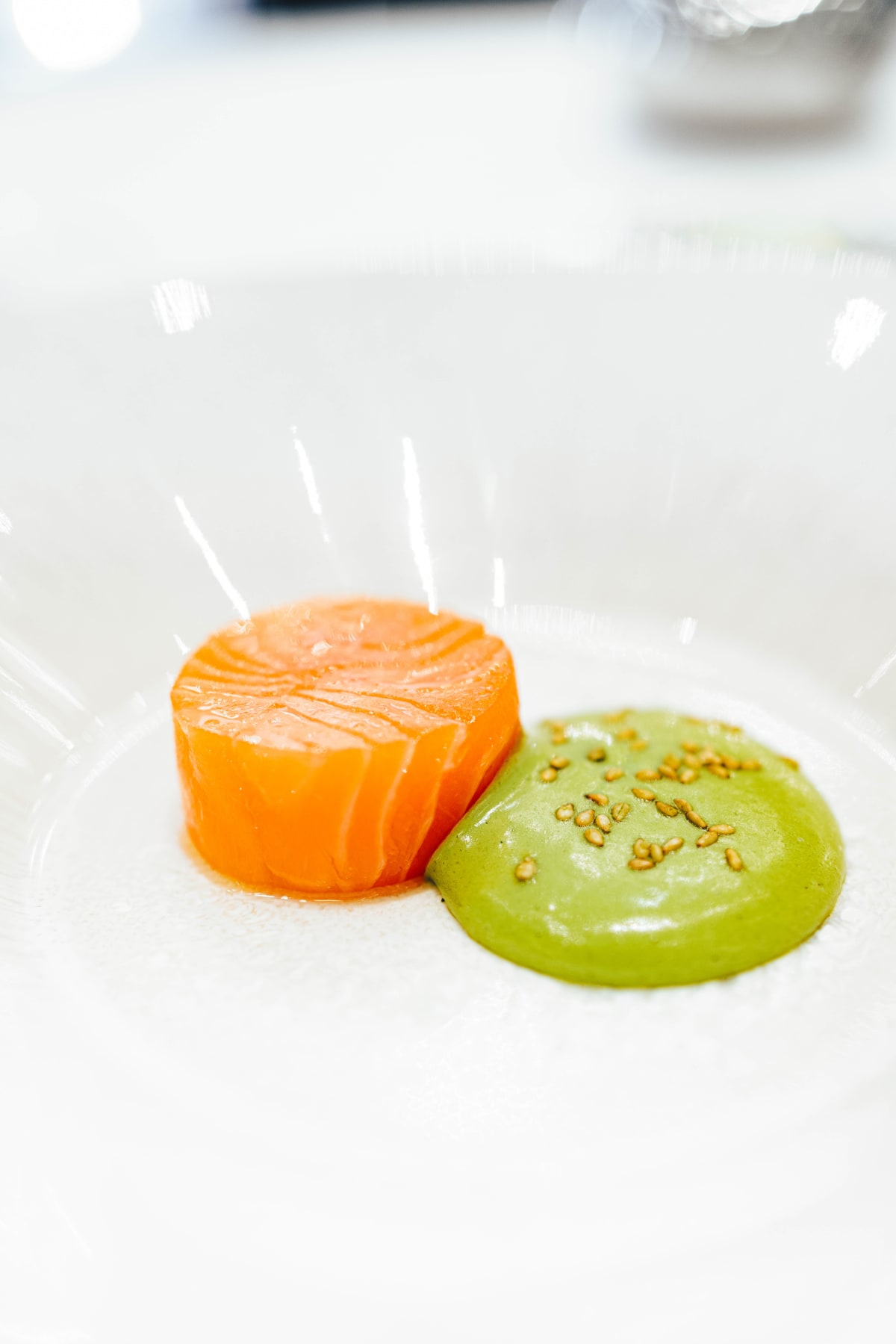
The smoke did not register distinctly in the aroma, but the dish worked all the same. The accompanying wasabi sauce sat well with the fish. The texture of the salmon resembled a well-aged sashimi, with a softness closer to yokan jelly than to most cooked salmon I had encountered. Read together with the crab course earlier, the Japanese influence on the kitchen of Frédéric Anton becomes hard to miss.
Section 9·Caviar and Squab
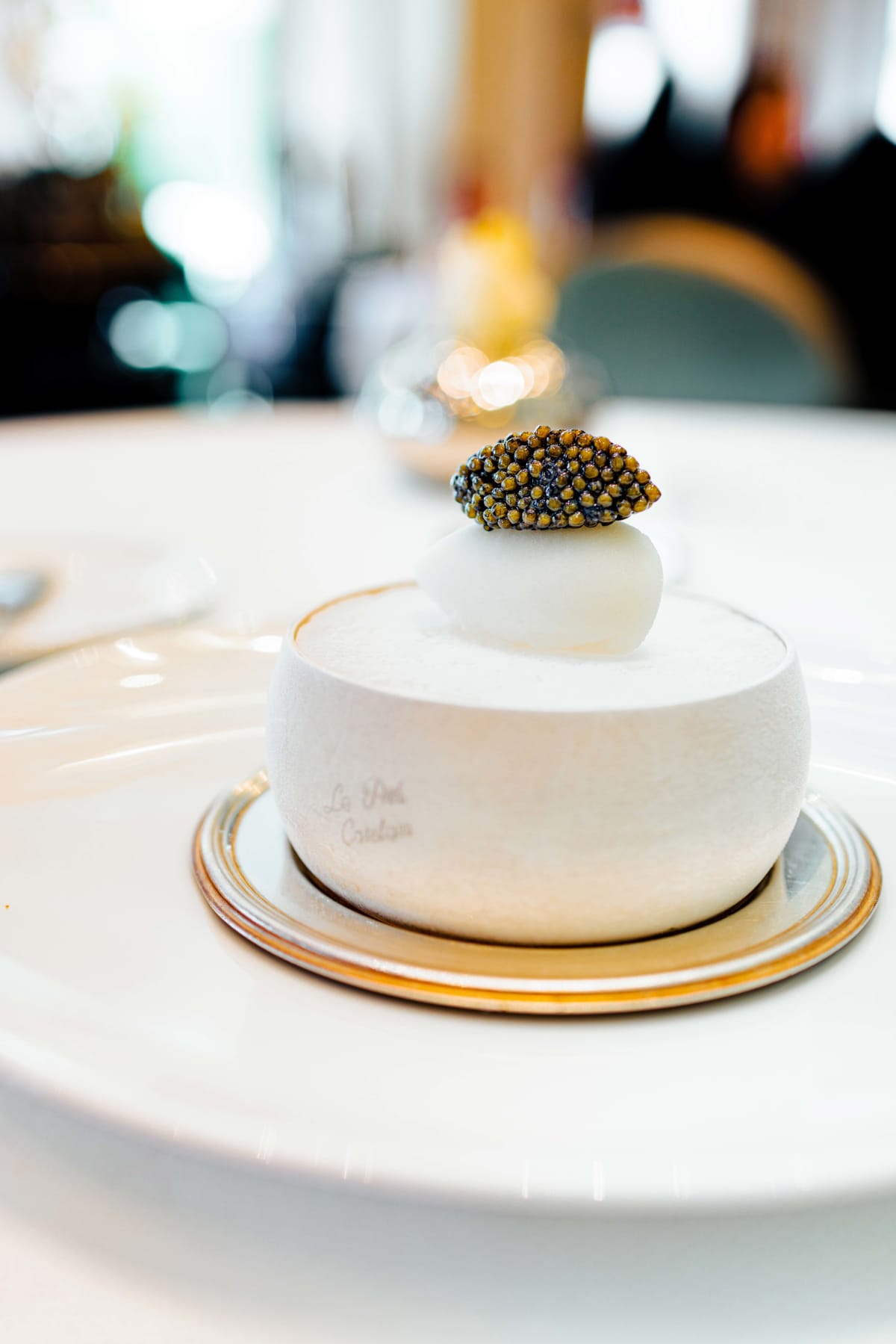
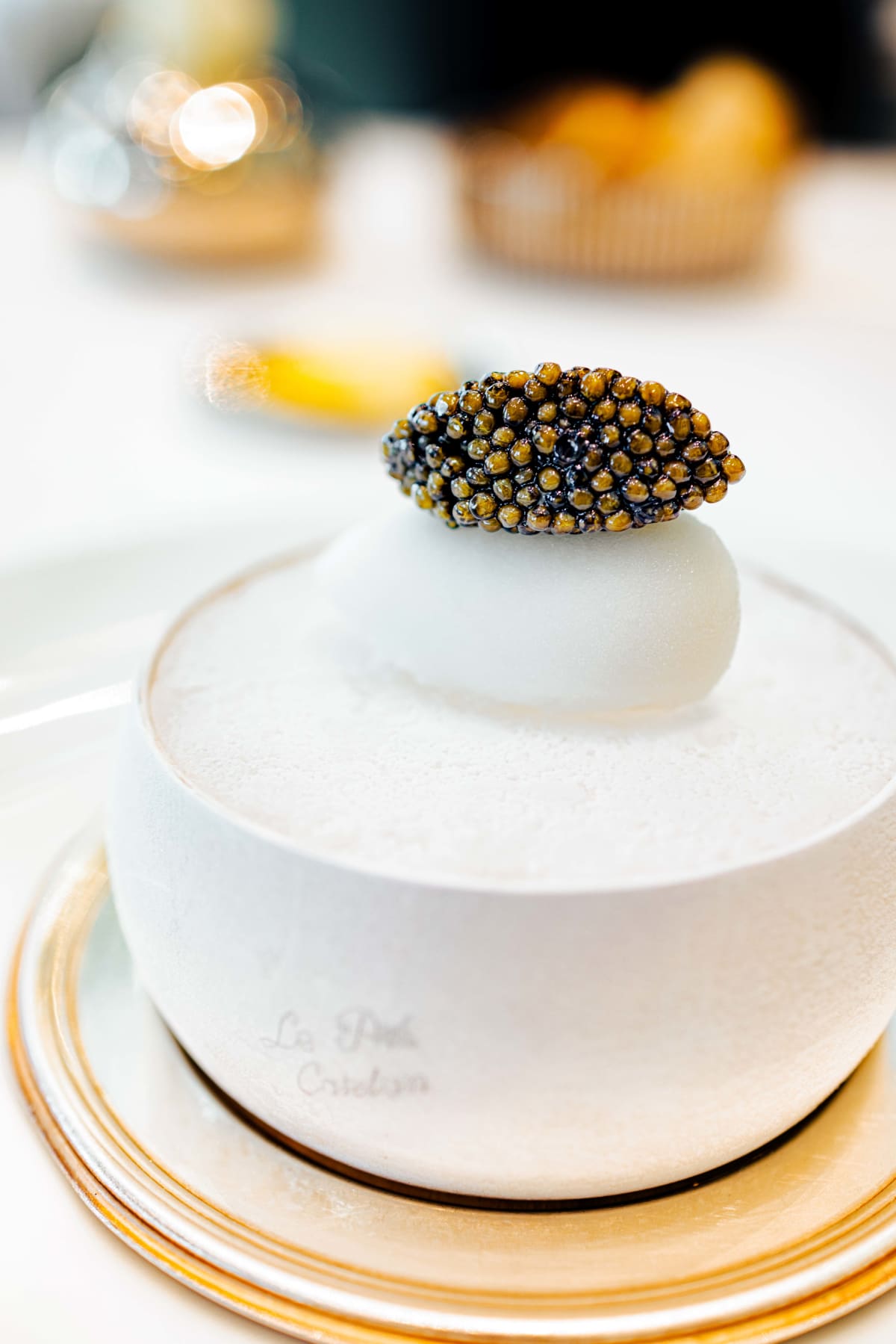
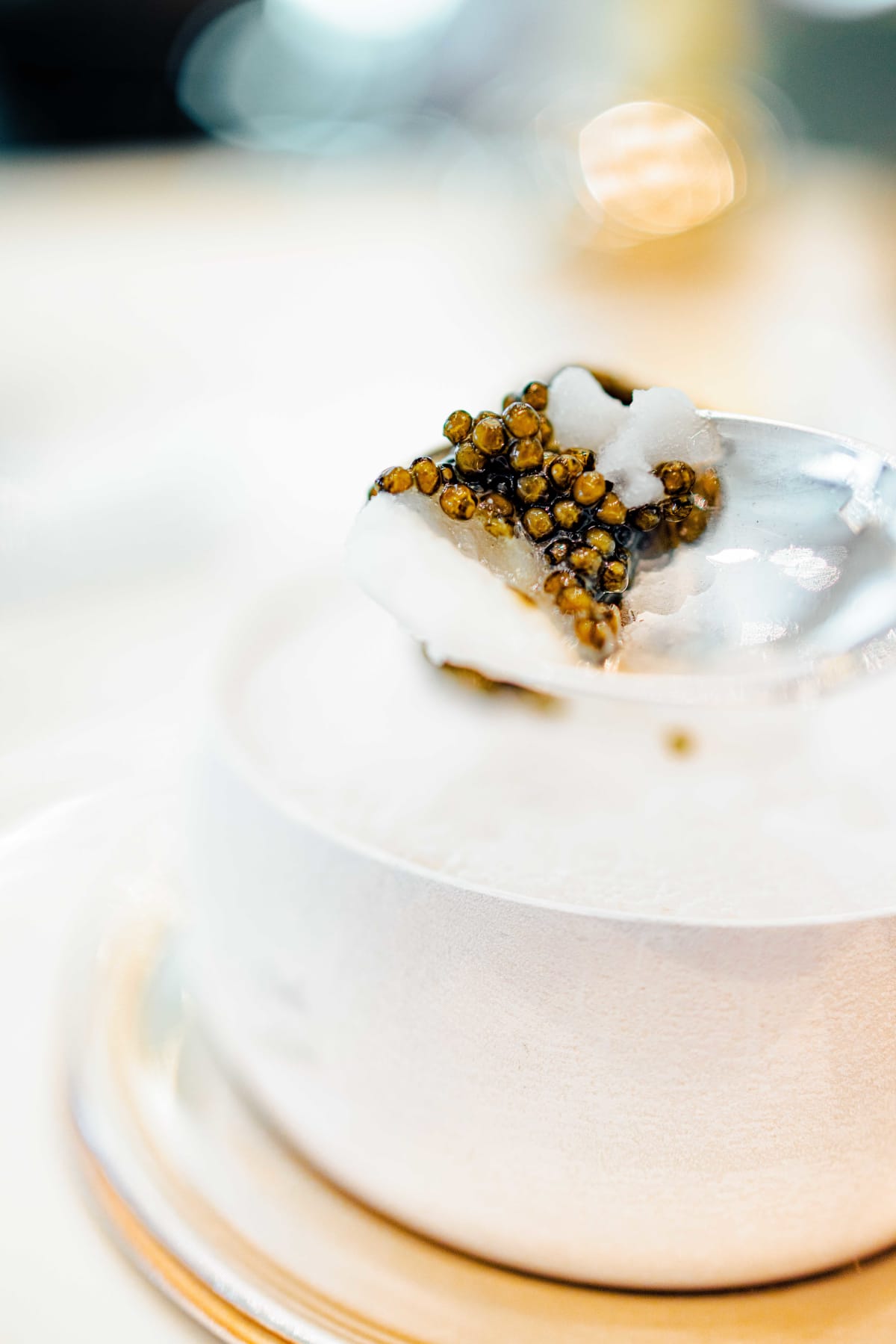
The final course before the main was Le Caviar, served with a champagne sorbet.
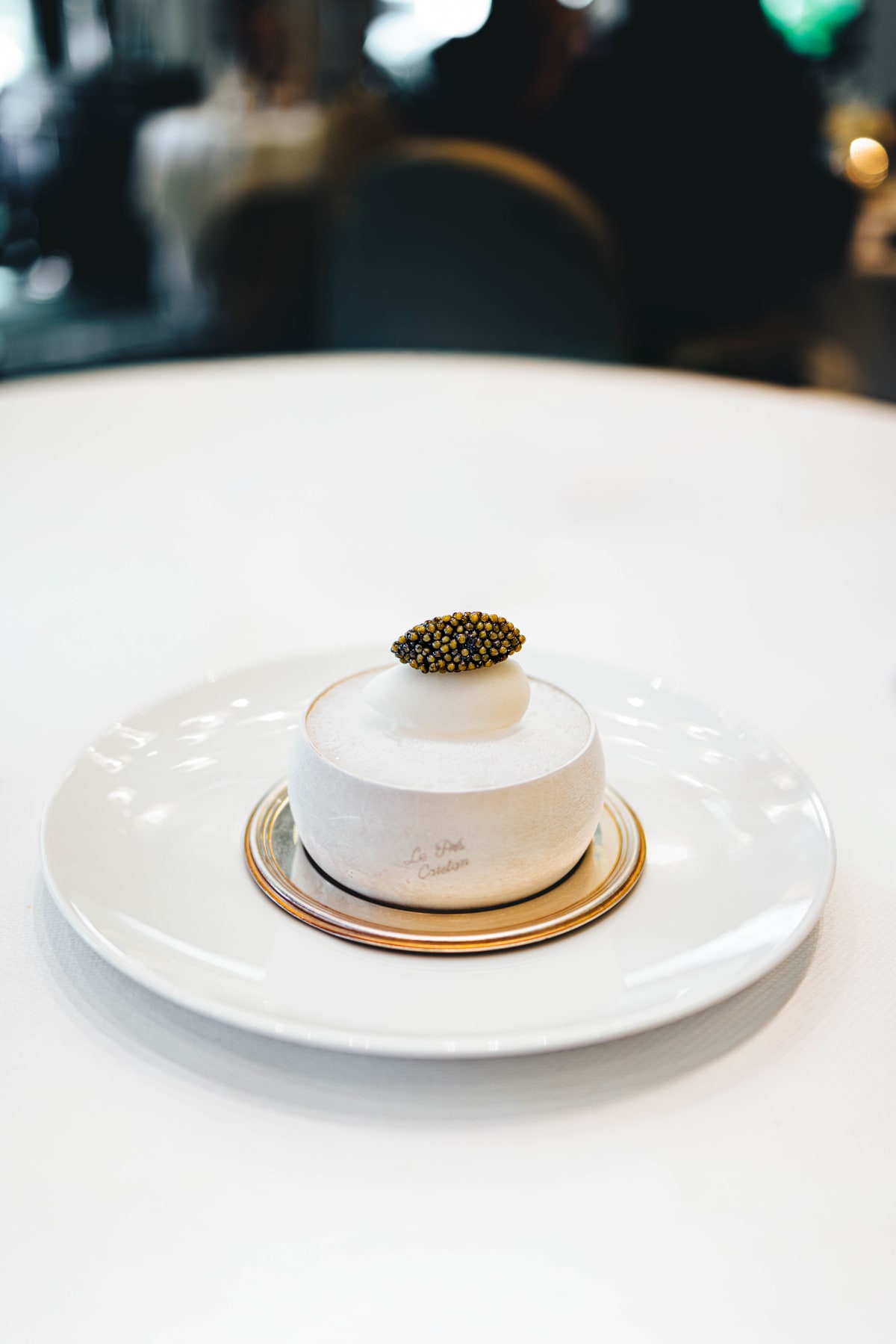
The visual composition was elegant, with the appearance of a palate cleanser used decoratively. Of all the dishes of the afternoon, however, this was the one I could not read clearly. The pairing of caviar with the cold sorbet did not resolve in the mouth. The sorbet, taken alone, would have been pleasant enough; what the caviar contributed on top of it was not obvious to me. The temperature of the sorbet was also low enough that I had reservations about whether it served the caviar well.
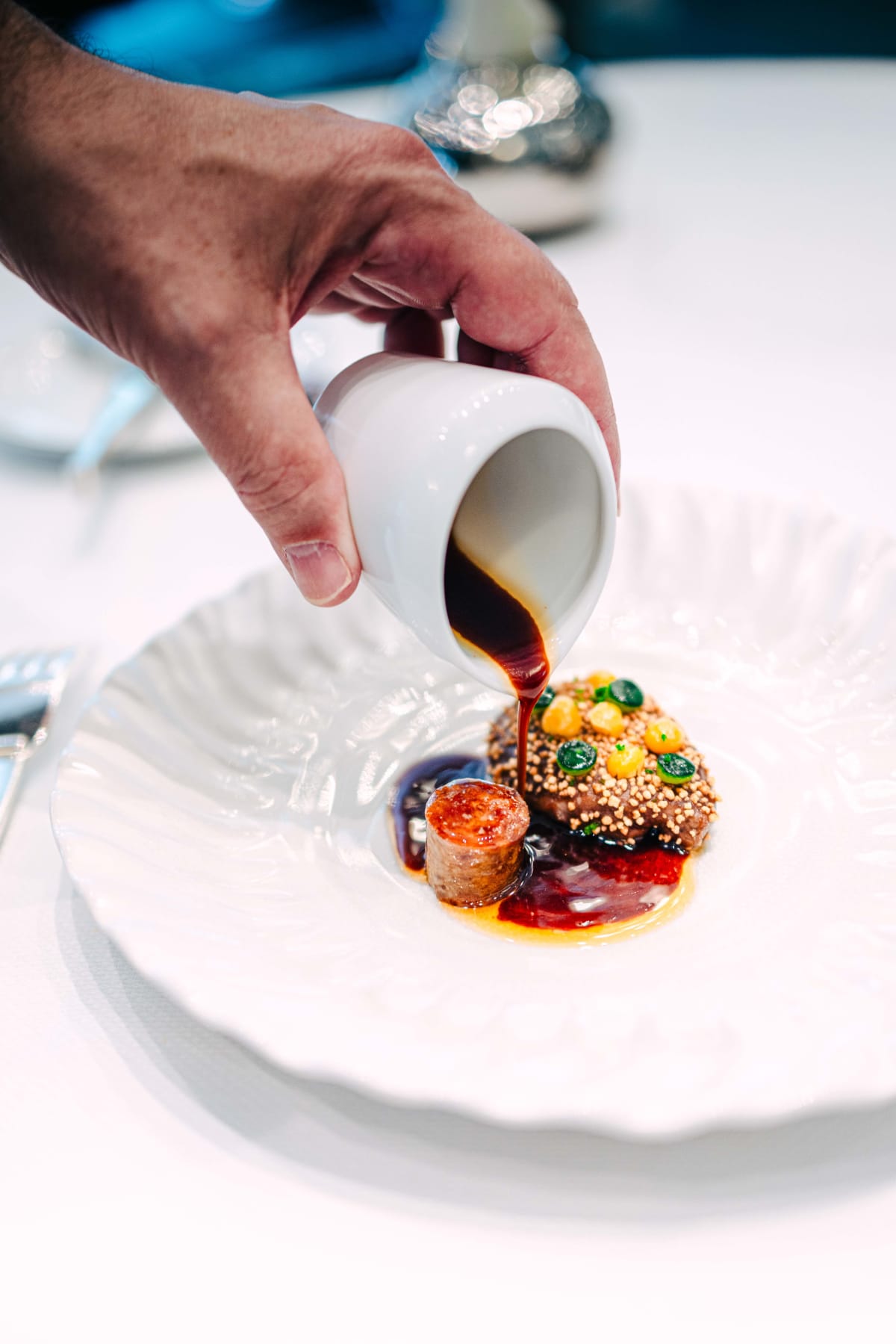
The main course was Squab (Poached, Dates, Crunchy Semolina).
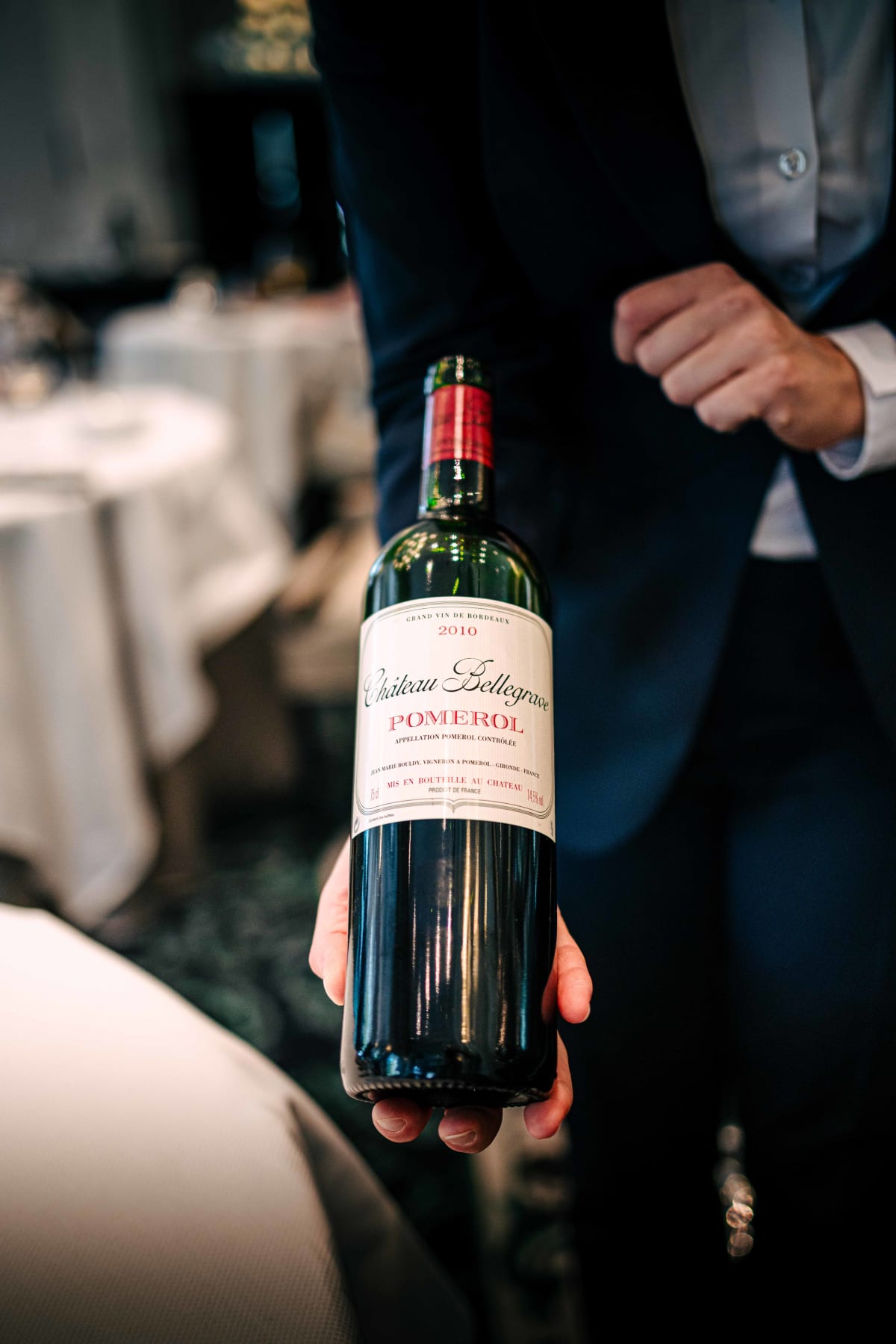
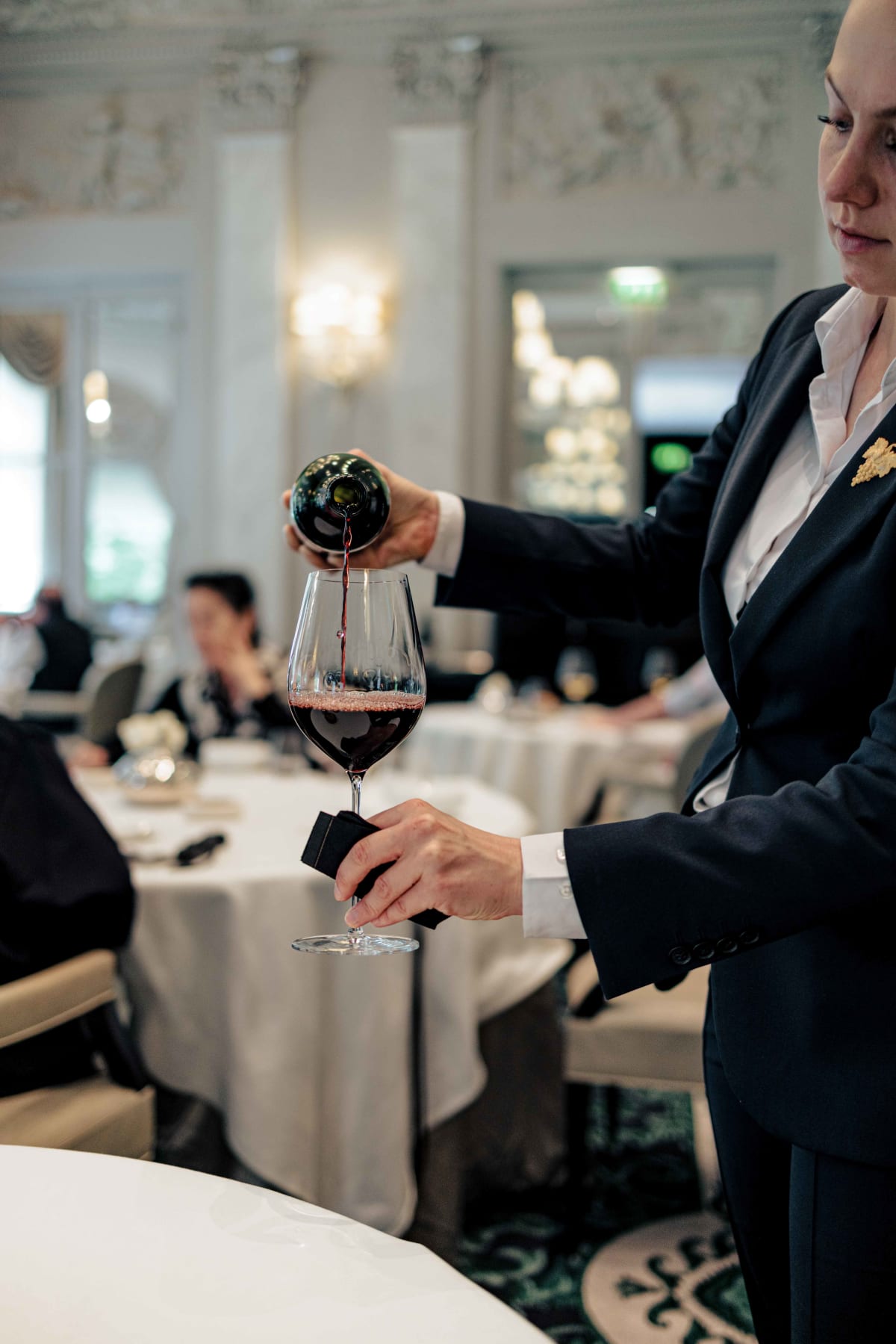
A young pigeon, poached, presumably in stock or wine. Dates appeared to have been used to draw a sweet edge from the sauce, and the crunchy topping read as the semolina component named in the title.
I had previously held the impression that French Michelin kitchens spread their main-course proteins across a wider range than what I encountered at home. This trip began to dent that impression. Across the May and July visits to serious Michelin rooms in France, the main course was pigeon in every instance except one. By the end of the run, the appetite for an old-school beef course at some point along the sequence had begun to assert itself.
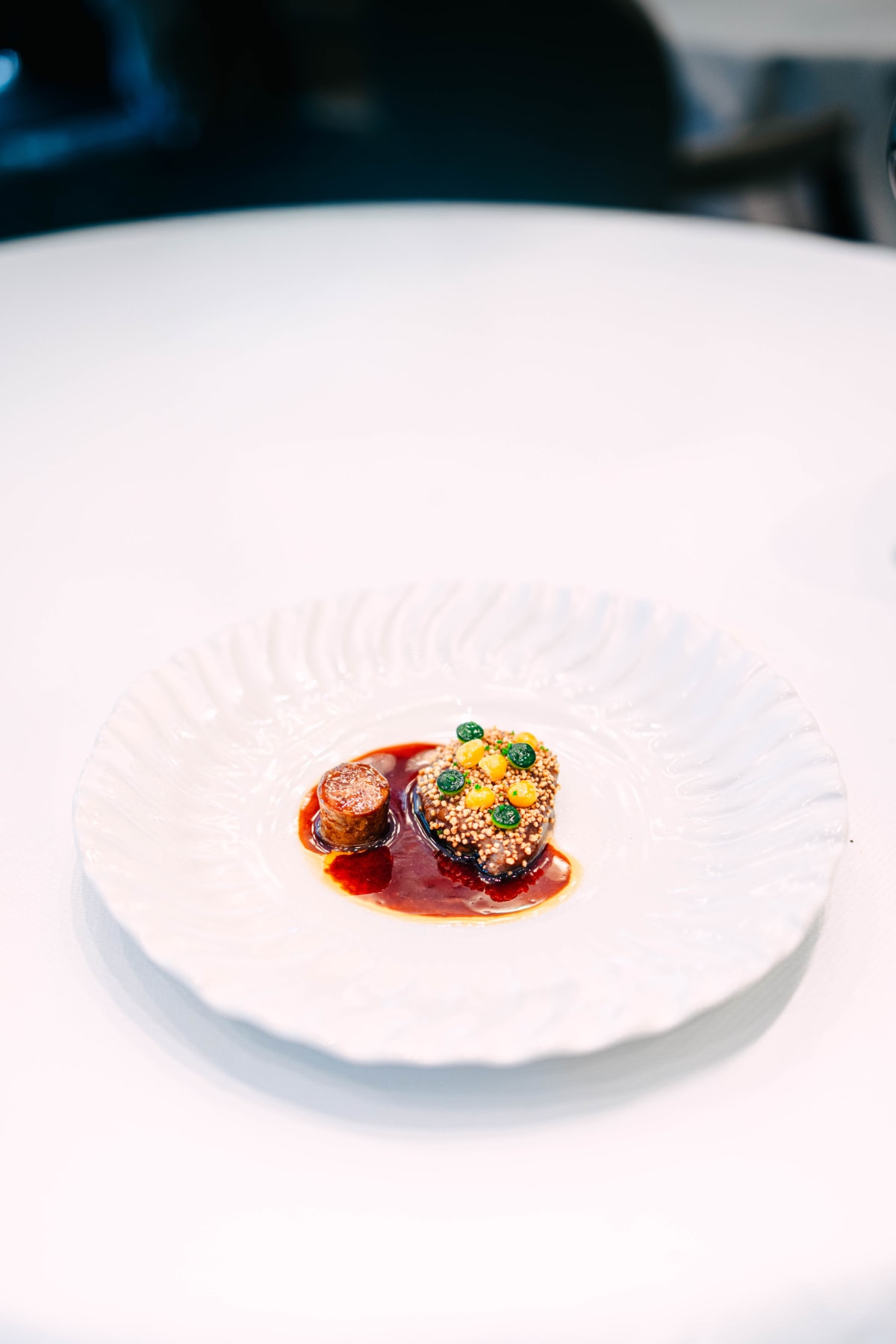
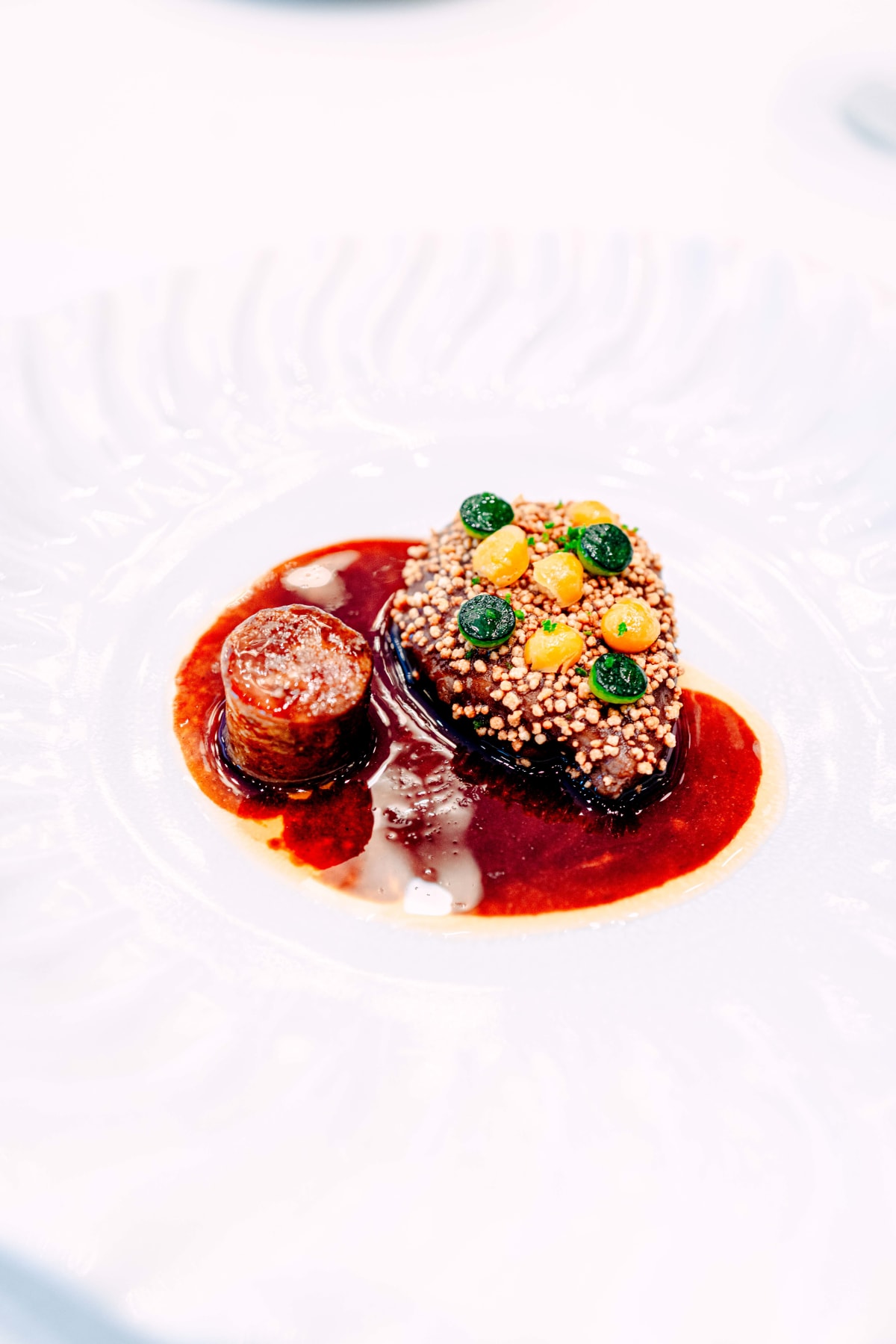
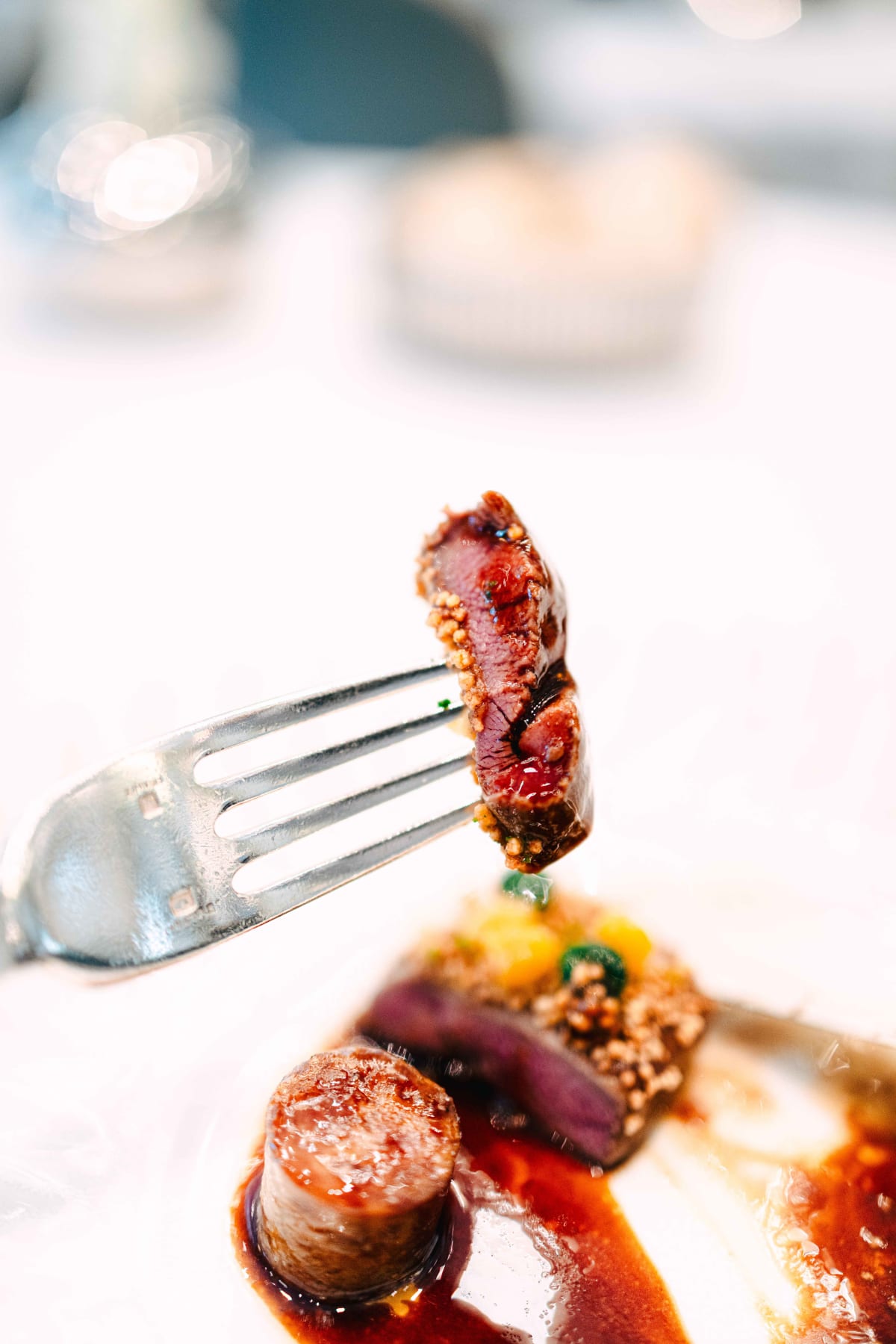
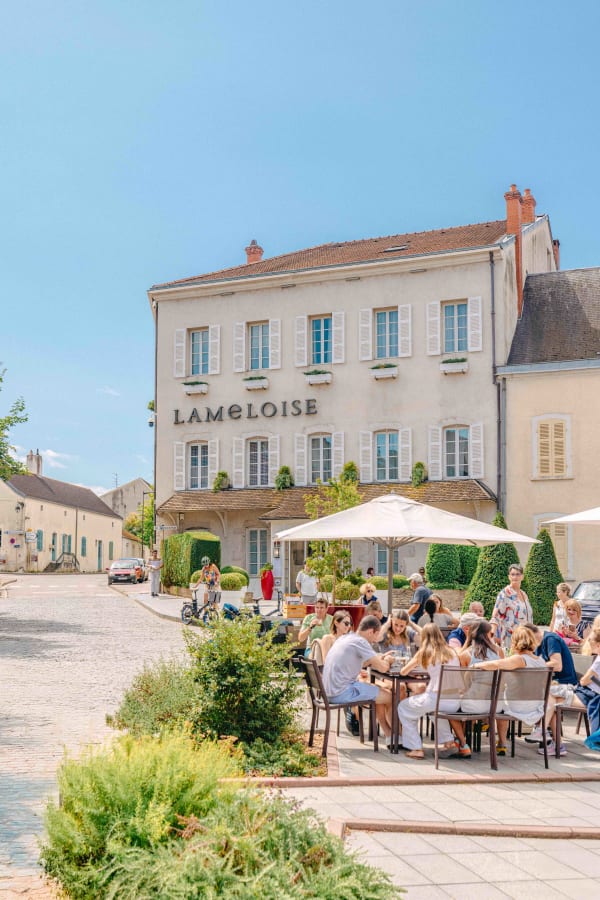
The meat itself was cooked tender enough, but the crunchy surface of the semolina interfered rather than supported. The flavour of the pigeon did not strike me as superior to other versions of the same protein I had eaten on the trip. The construction of the plate, equally, was much simpler than the parallel dishes at other rooms. Maison Lameloise, which I will cover in a later post, layered the pigeon course with multiple accompanying components; Le Pré Catelan stayed with only two. The kitchen's overall principle of one ingredient with one sauce, which had worked well across the earlier seafood arc, sat more loosely here in the main slot.
Section 10·Cheese and Desserts
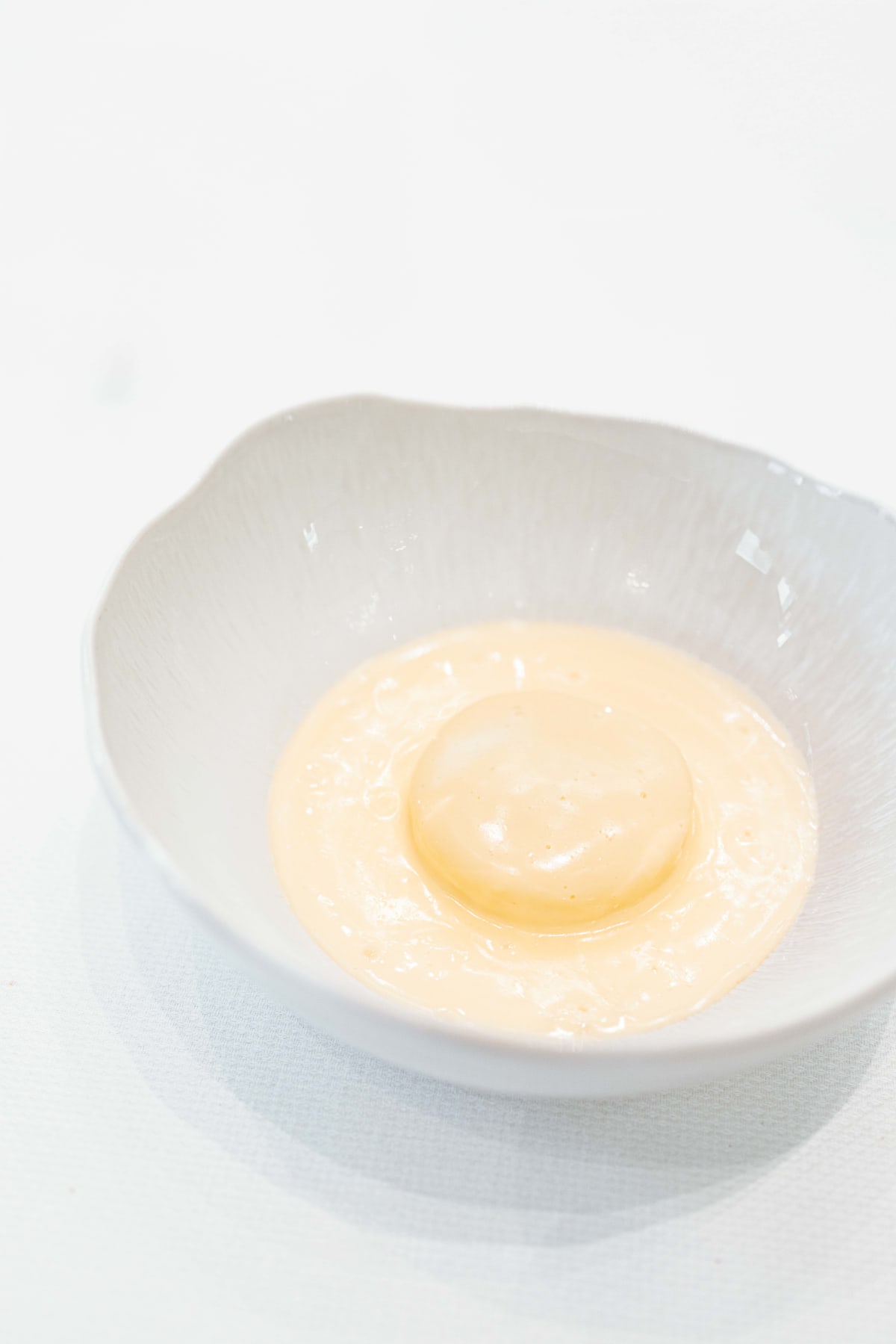
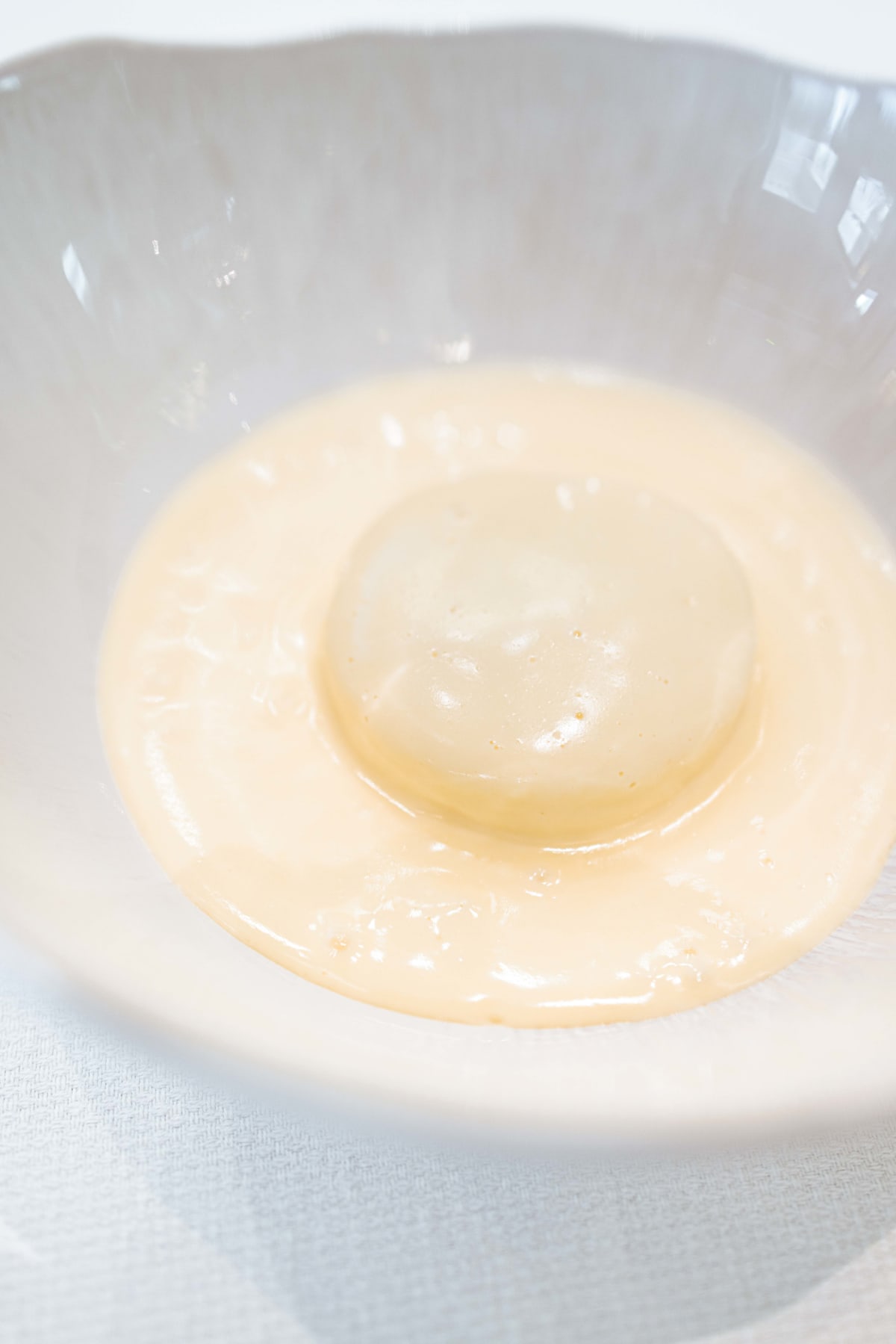
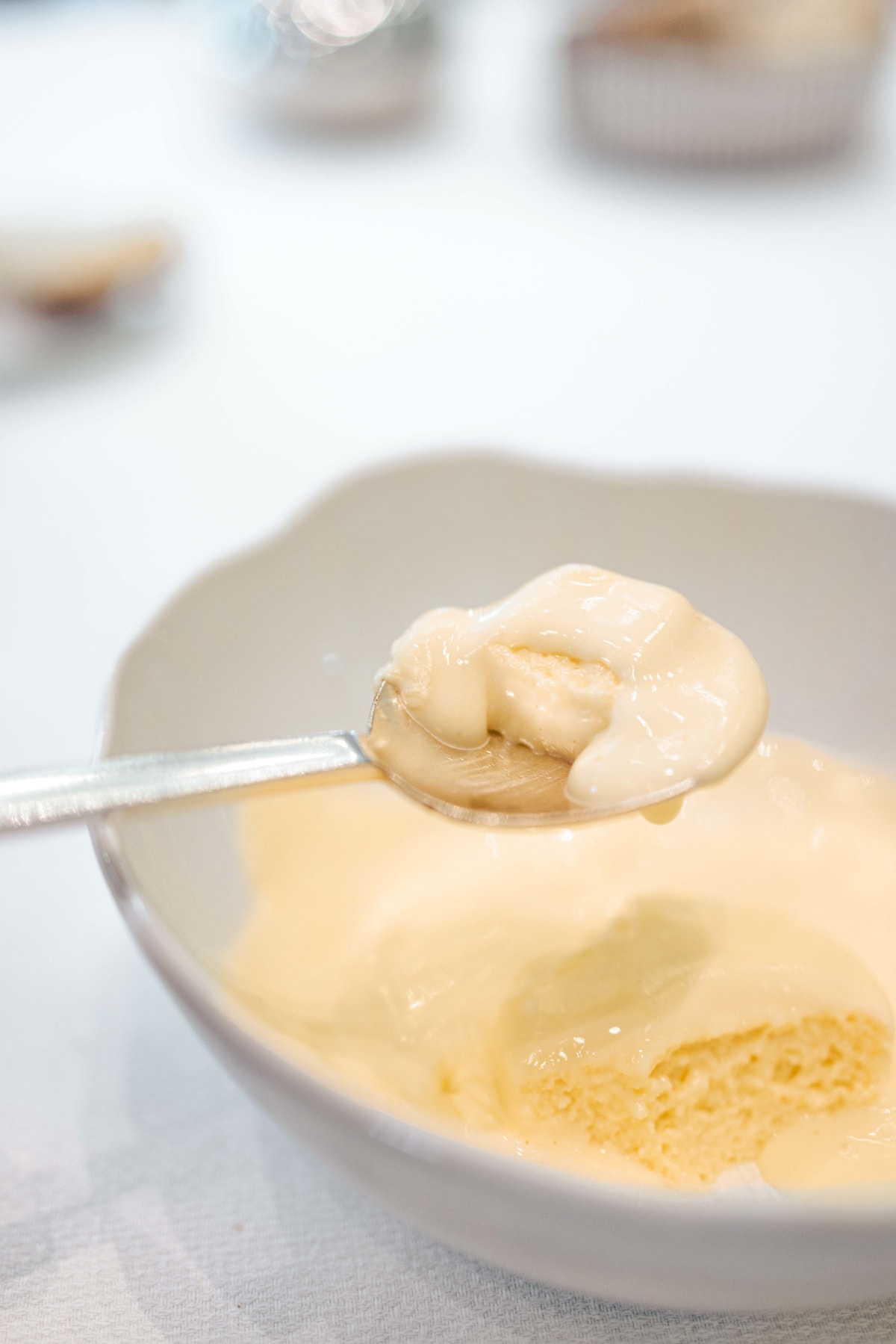
The cheese course was handled differently from the standard French Michelin convention. Most restaurants at this level wheel out a cheese trolley before dessert, with the diner selecting a few options for a single plate. Le Pré Catelan substitutes a single composed dish for that step. Steamed Soufflé, Comté cream. A soft, bread-like soufflé arrived warm, with a Comté cream filling that was dense, faintly funky, and quietly savoury. The dish was excellent.
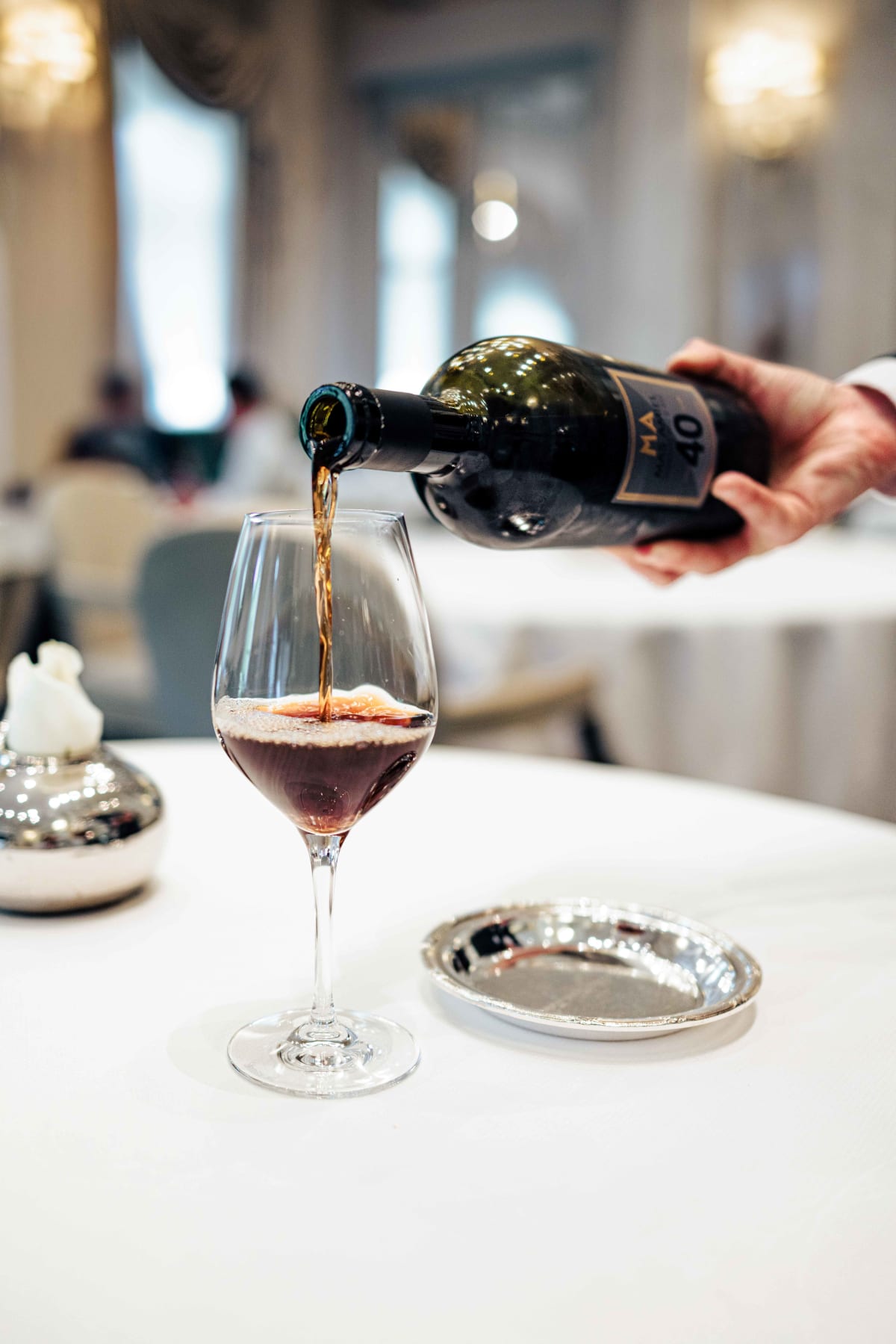
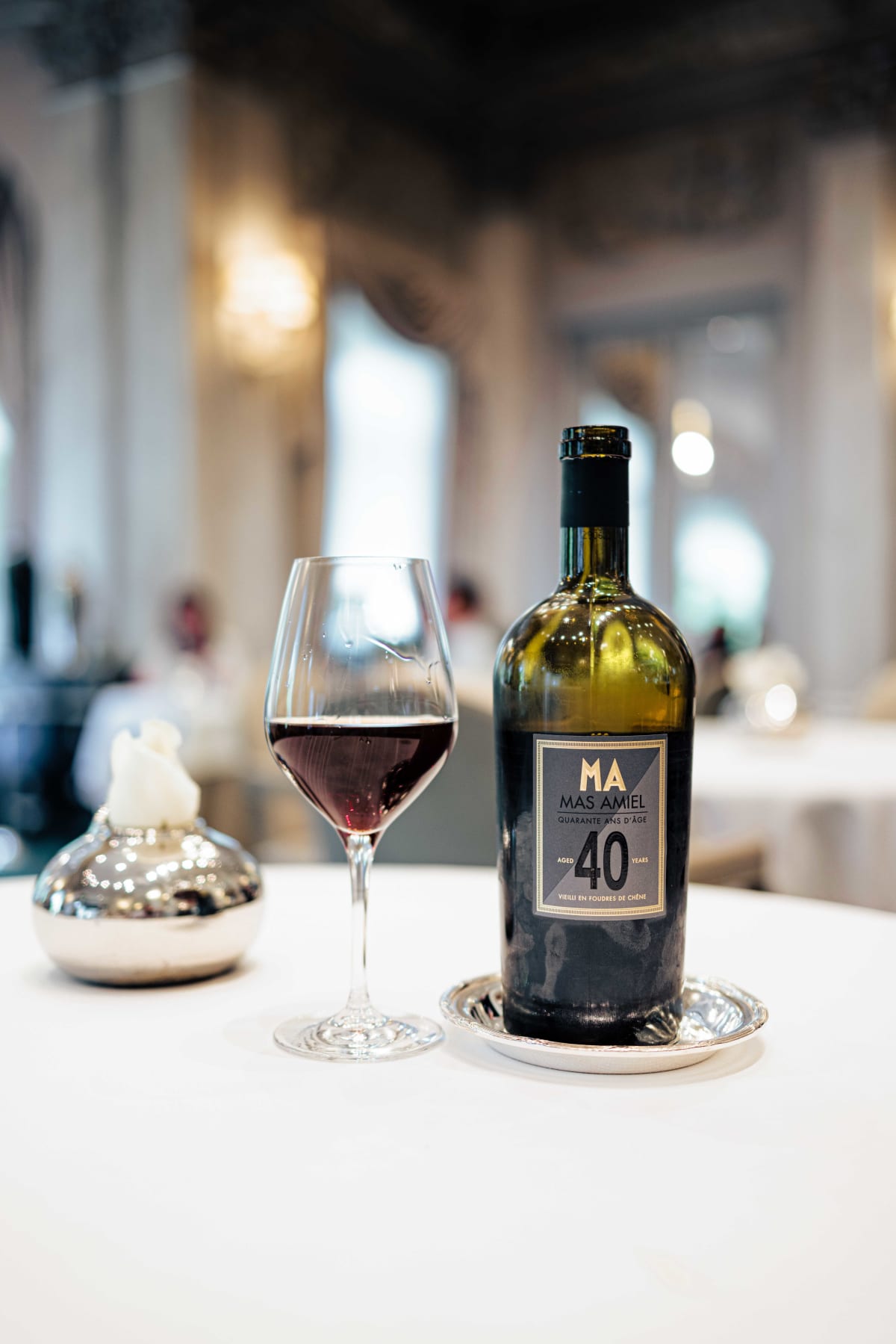
Before dessert, I ordered a glass of MAS AMIEL 40 Year, a sweet wine from the Languedoc-Roussillon region that appears on the wine list of most French restaurants at this level. The same producer had appeared two months earlier at Signatures in Marseille, a one-star room since closed, where an enormous bottle of an 85-year-old vintage had been deeply impressive. The 40 Year poured at Le Pré Catelan was merely fine. The result confirmed an impression that had begun to form earlier. Le Pré Catelan's wine programme may serve bottle-ordering guests well, but for a diner like me who works through the course on multiple glass selections, the depth available is not generous. The one detail worth noting on the dessert wine side was that the pour volume was distinctly more generous than for red or white pours during the meal. For a guest who wants to spend time with a single dessert wine, the gesture is welcome; it does not, however, change the broader impression of a conservatively curated by-the-glass programme across the rest of the course.
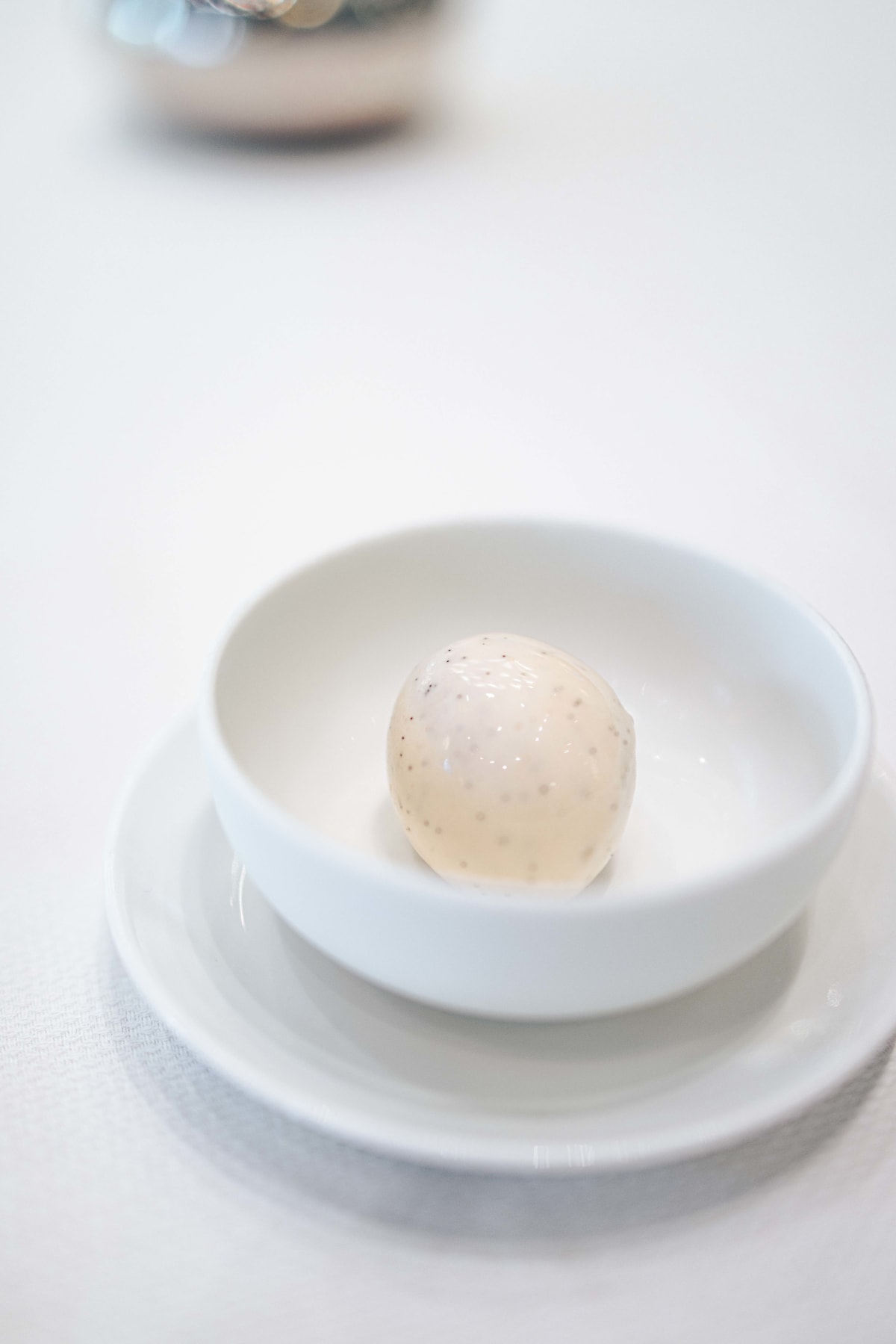
Dessert proper followed in a sequence of plates. The first was a lemon sherbet, refreshing and well-placed, with the practical function of clearing the residual cheese flavour from the previous course. The second was a vanilla ice cream stacked with thin biscuit-like layers, hiding a bright fruit jam at the centre. The contents were not obvious from the surface, and the cumulative bite, taken together, carried a varied texture and a clean sweet finish.
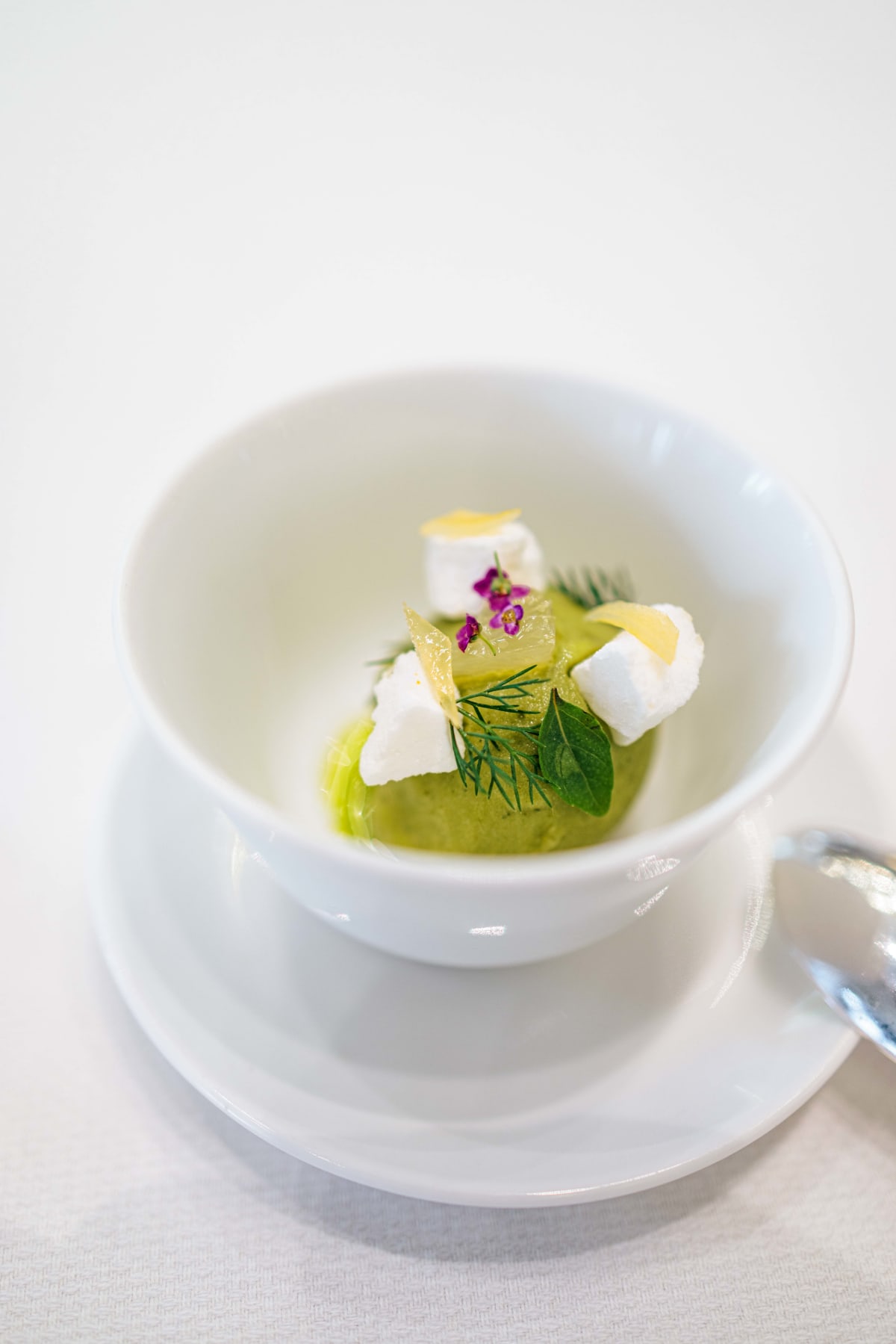
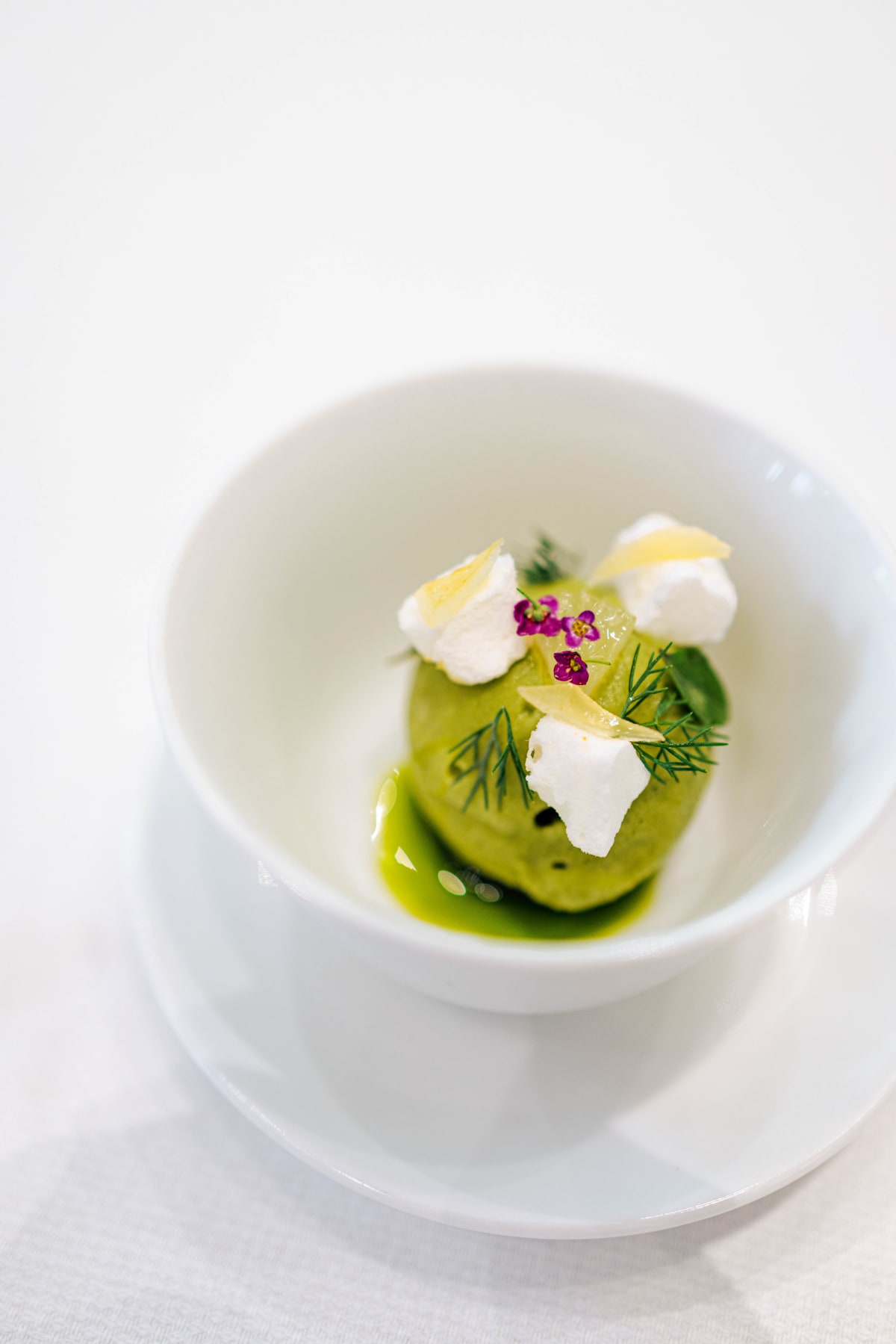
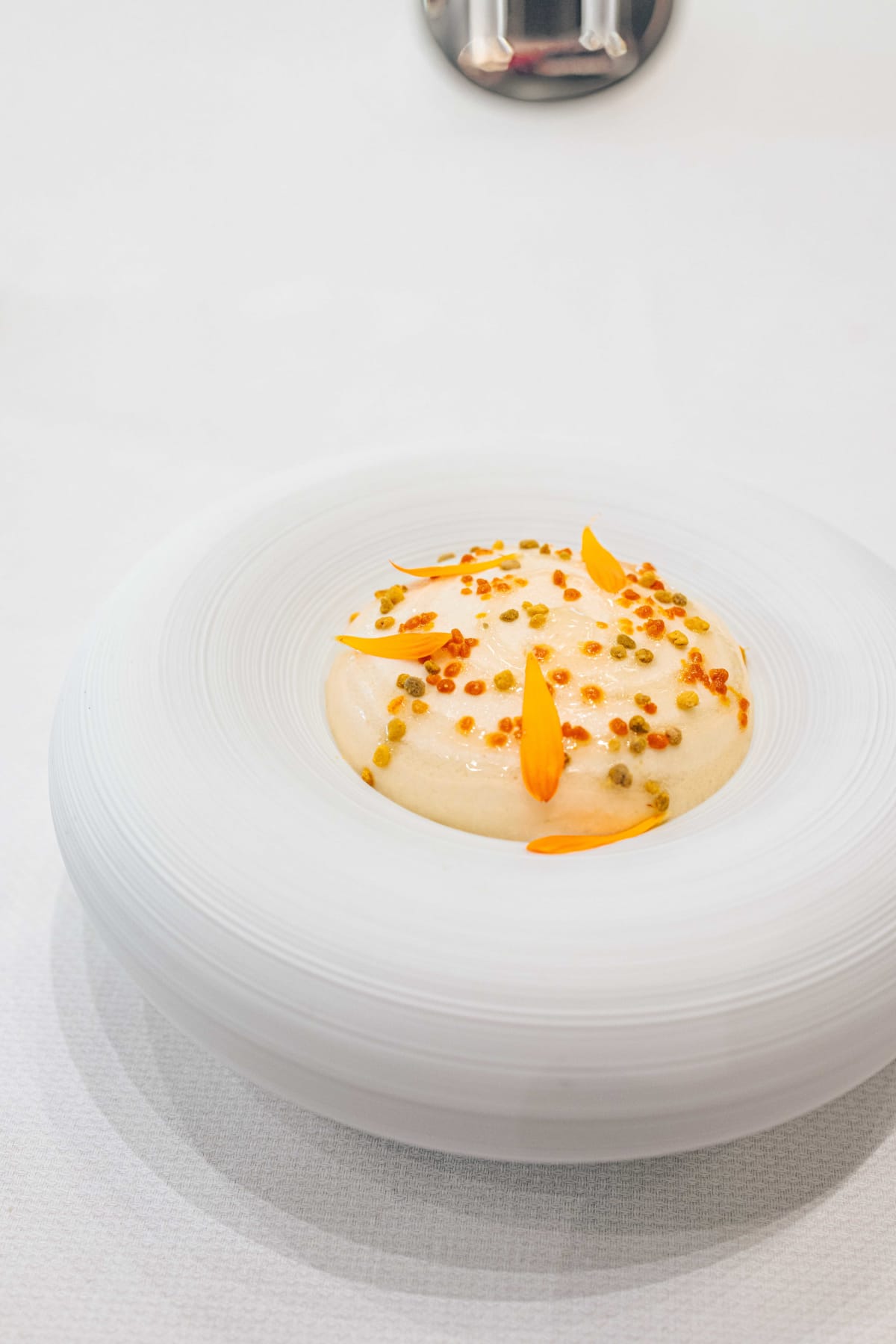
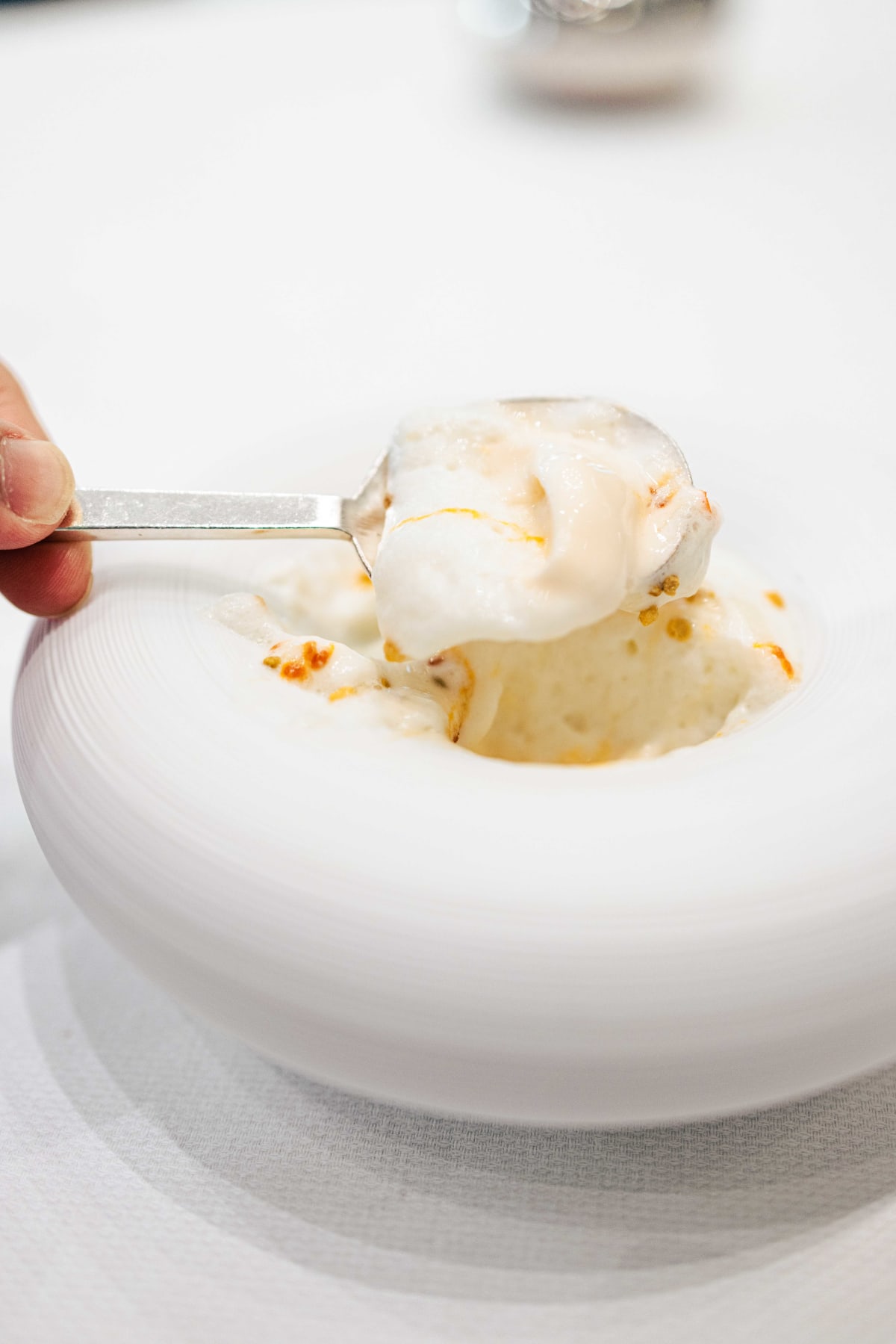
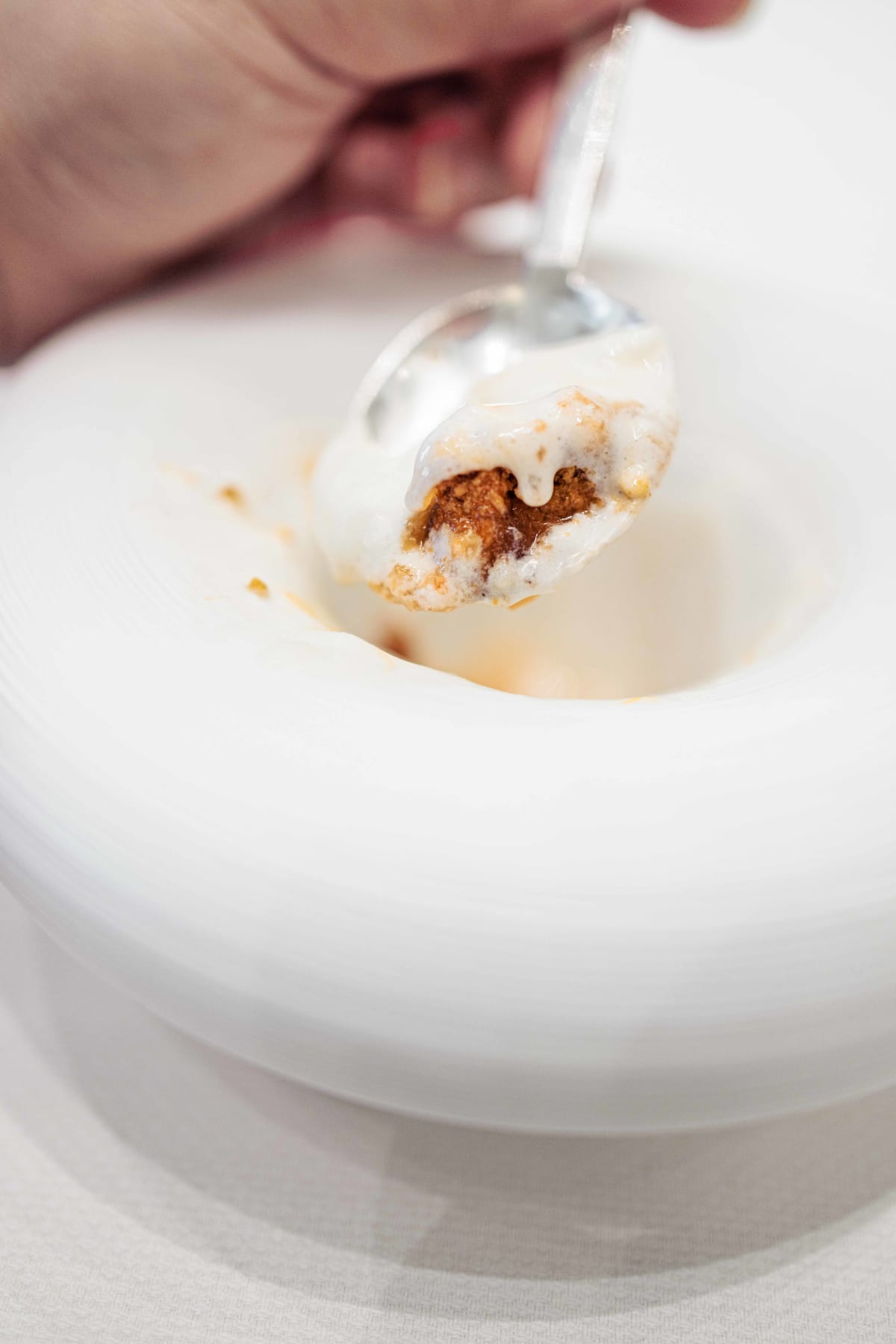
The final dessert arrived as a cream foam containing a yogurt-like ice cream, with edible flowers and small biscuit fragments arranged on top.
The lemon note carried the close cleanly. The plate did not, however, leave a strong impression. Across the dessert section as a whole, the plates varied in form but ran on the simpler side, and the overall reading is fine without being memorable. Picking out one dessert as a standout would be difficult.
During the Olympic period, each participating country operated a national house somewhere in the city. The building housing Le Pré Catelan was the venue for the Italian House, and an event had been scheduled there that day. At one of the neighbouring tables, two diners in Italian Olympic uniform were seated. Frédéric Anton came over at one point, pulled up his own chair, and stayed at their table for close to an hour, walking them through the course as he ate alongside them. The episode read as a particular kind of moment that only the Olympic window could have produced.
Section 11·The Close
The location aside, the description of Le Pré Catelan as the most approachable of Paris's three-star restaurants is one I find easy to agree with. The interior carries its period weight and adds a register to the meal that few other rooms at this level can match. The food sits on the side of stable, well-resolved signature rather than seasonal experiment.
The pricing, for a three-star Paris address, runs at the lower end of the bracket. For a guest considering a first three-star experience in Paris, this is among the more reasonable entry points the city offers.
Le Pré Catelan's signature menu has held its current composition for many years now, with the dessert section as the only piece that turns over annually. What this format makes explicit is a particular position on what a three-star kitchen owes its guests. One school argues that the kitchen should keep renegotiating itself with the season, the market, and its own restlessness. The other holds that, once a kitchen has located the shape of its own ideal plate, the task is to defend that shape rather than to keep moving past it. Le Pré Catelan stands clearly in the second school, and the most accurate reading of the room is not that it is conservative but that it is the most honest possible expression of a manifesto that, in another voice, might simply be called arrival.

Have a question about this restaurant, or want to share your own experience?
Send a message