Fine Dining · Shanghai · China / May 2025 / Michelin ★ · Asia's 50 Best #9 (2026)
LING LONG
"Modern Chinese fine dining on the Shanghai Bund, and a glimpse of where Asian gastronomy is heading"
Section 1·The Bund
When Asia's 50 Best Restaurants was announced this past March, there was only one restaurant I cared about: LING LONG. It was the high point of my trip to Shanghai last year, one of the finest dining experiences I have had anywhere in Asia. At the time of my visit it sat at No. 27 on Asia's 50 Best Restaurants, a ranking I felt badly undersold it, and watching it climb to No. 9 this year only confirmed that I had not been wrong. Even so, I think No. 9 still undervalues it. This was fine dining worthy of Asia's top three.
The main purpose of that Shanghai trip was not food but a photography shoot. Still, wanting to eat well, I asked a well-known gourmet friend of ours for a recommendation, and the answer was blunt: this one place, and nothing else. That settled it.
Reservations open two months in advance, and even for locals LING LONG is known as one of the hardest tables to book in Shanghai. When I first tried, the next two months were already full. By sheer luck a good opening came my way and I was able to go. It pays to be bold.
This was fine dining worthy of Asia's top three.
Section 2·The Waldorf
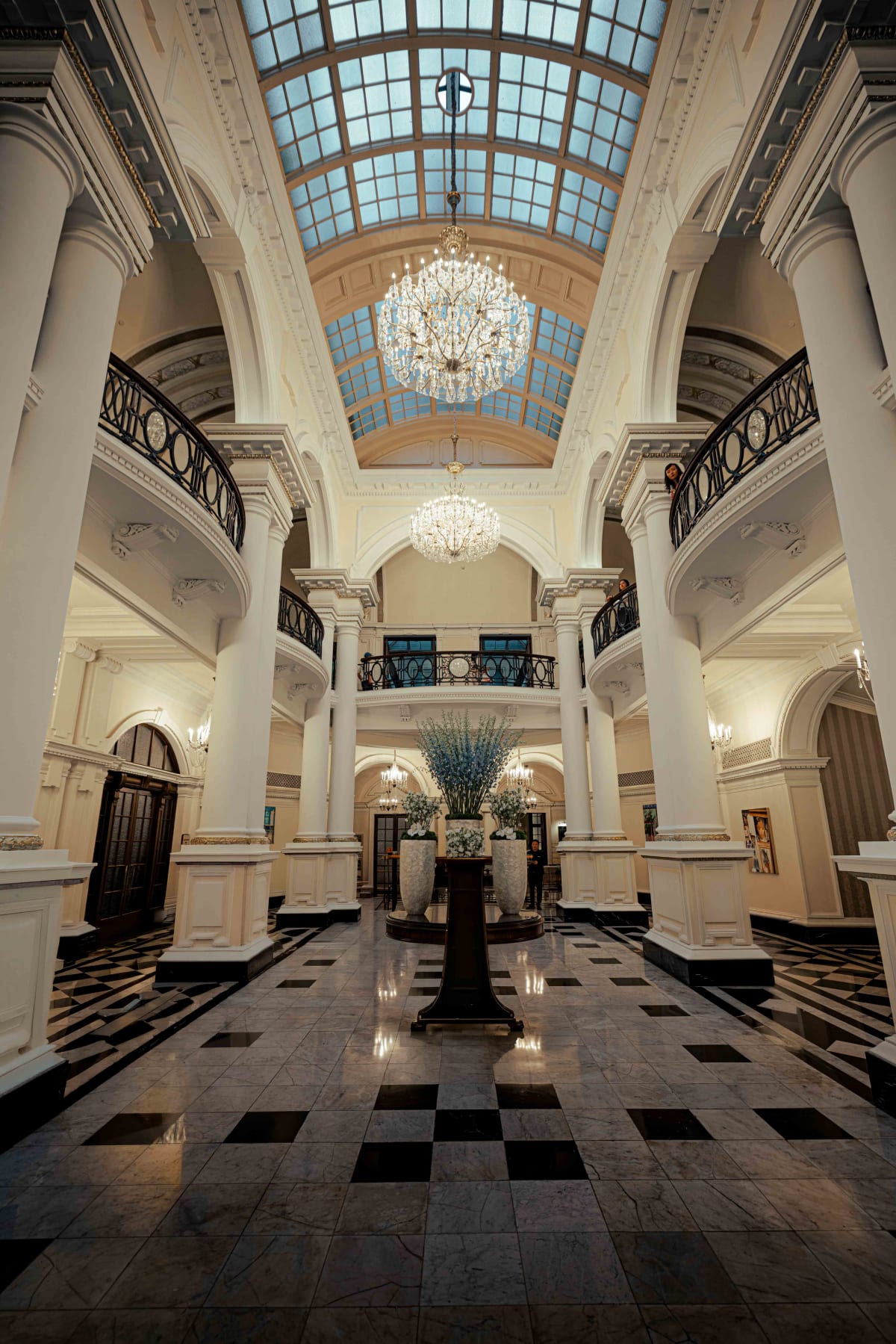
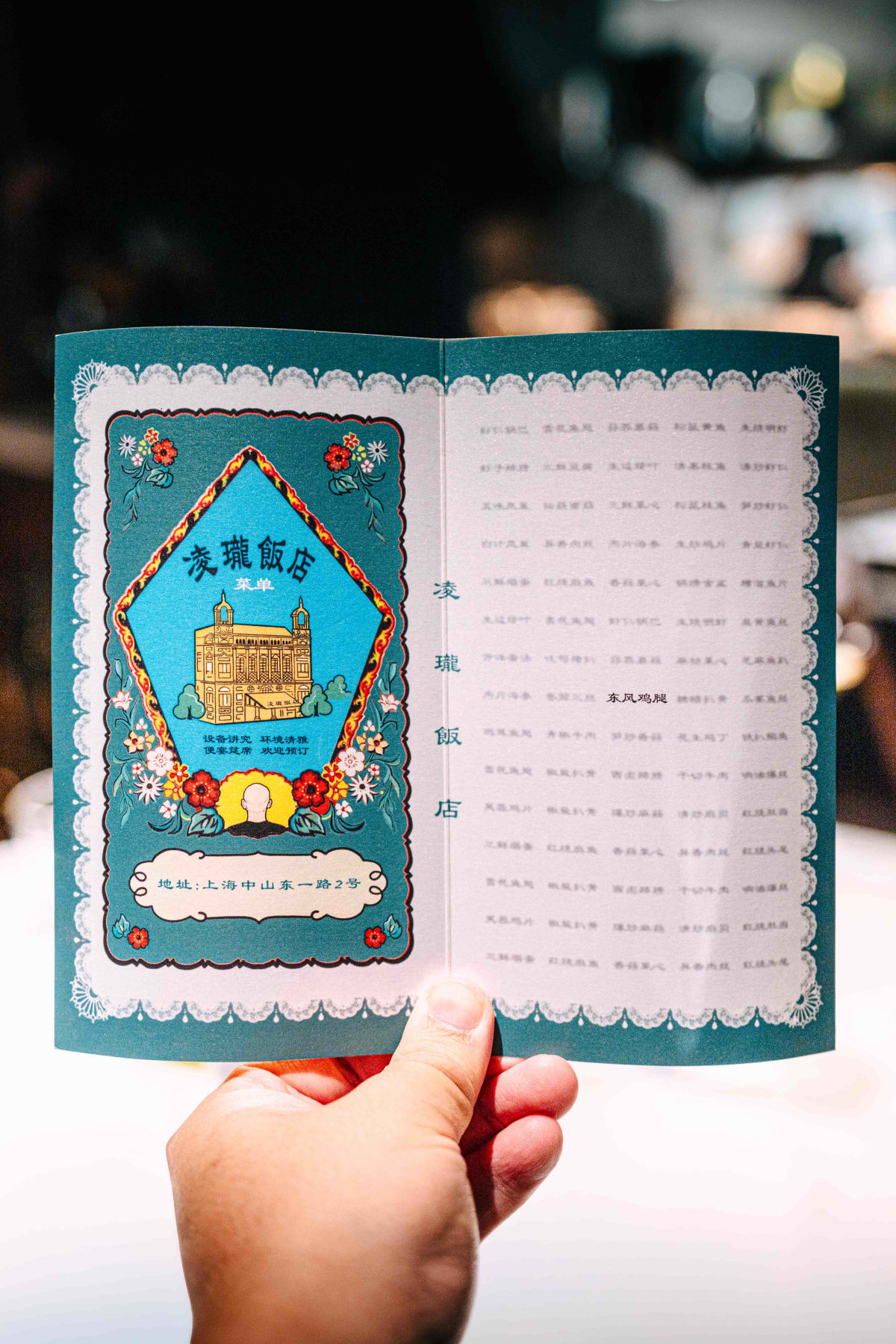
The setting is the Waldorf Astoria, which stands on the Bund (外灘), Shanghai's great riverside landmark along the Huangpu River (黃浦江). The hotel itself is magnificent.
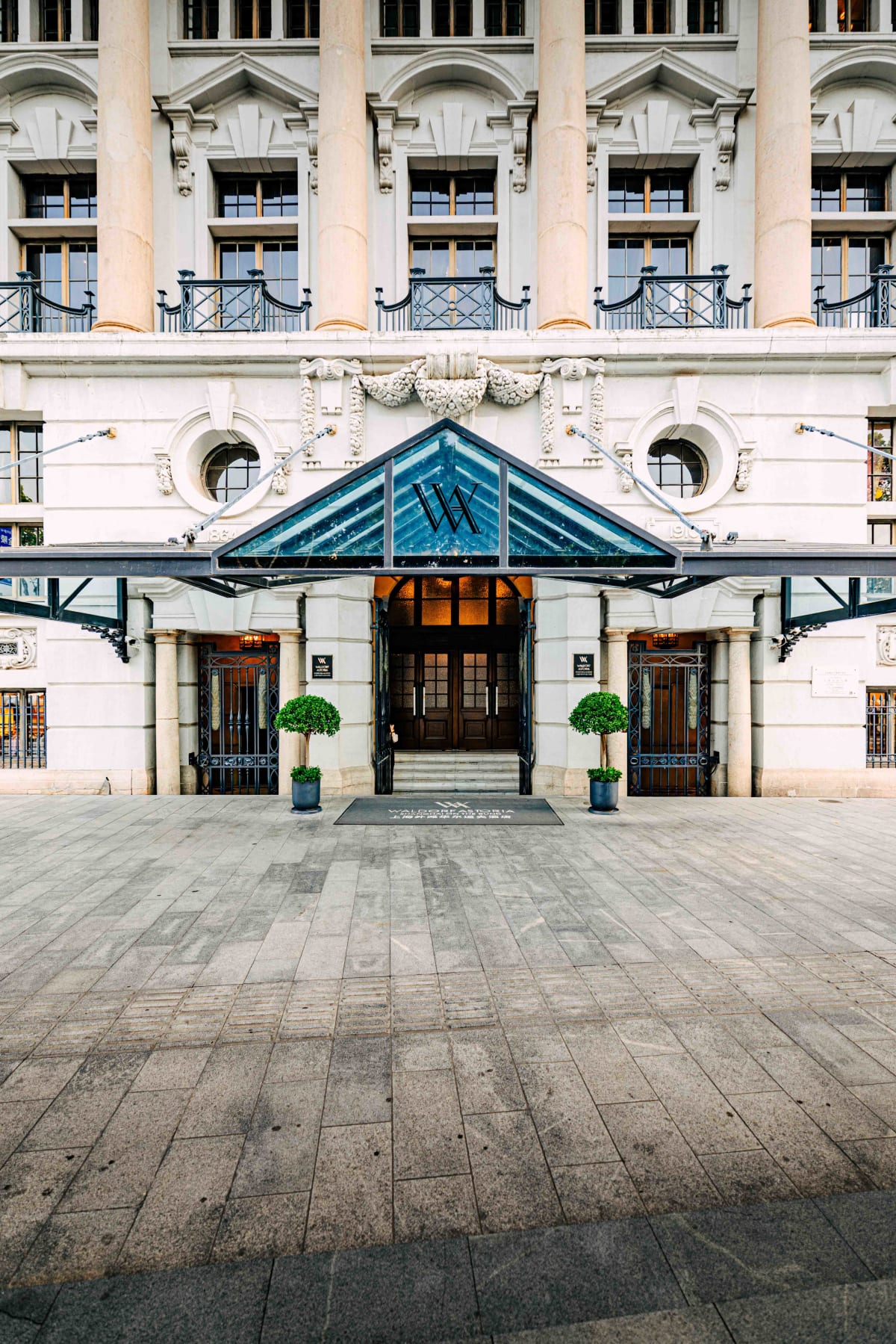
Built in 1911 in the English Renaissance style, the former Shanghai Club building housed a British gentlemen's club founded in 1861, and through the 1920s and 1930s it was the centre of the city's high society.
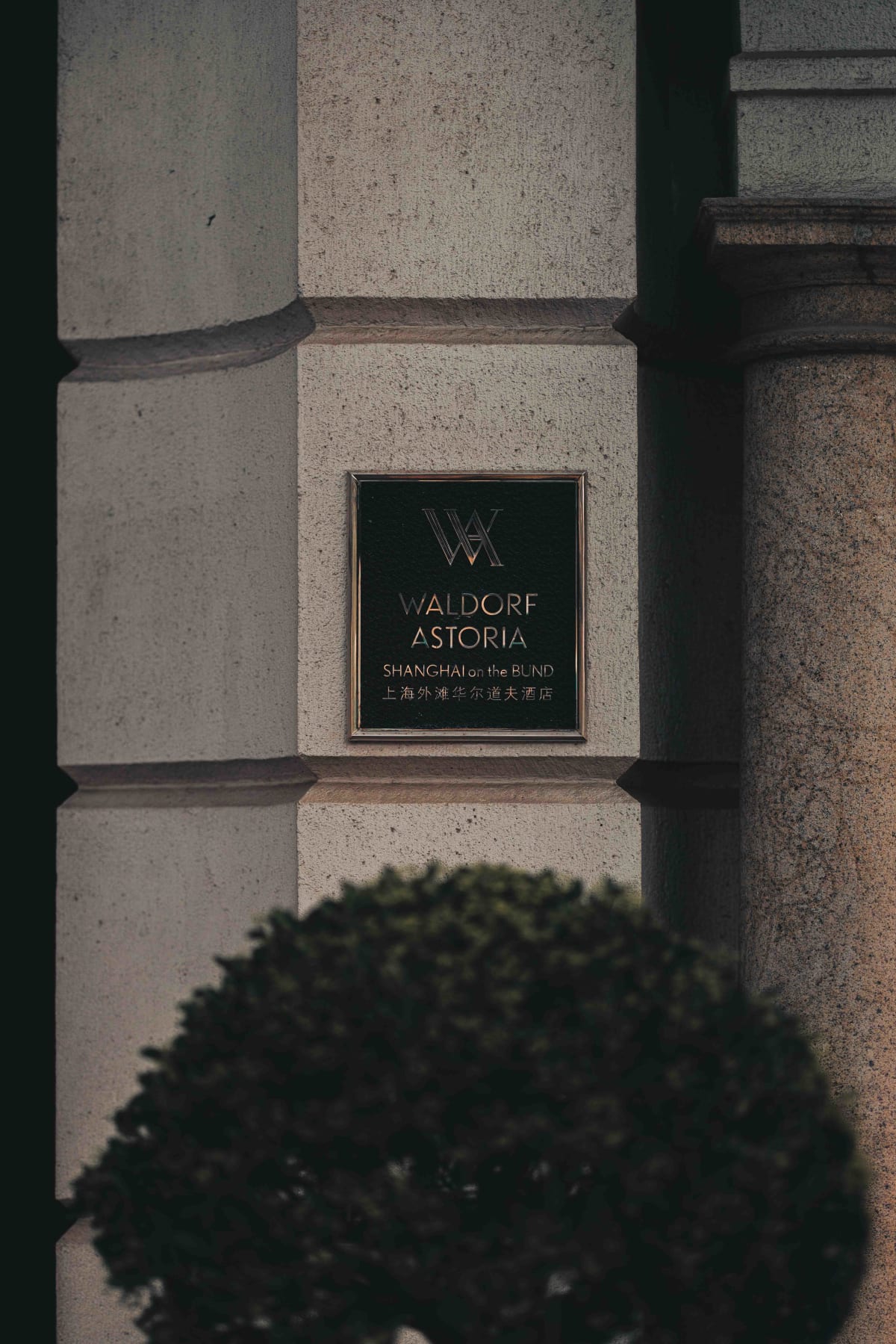
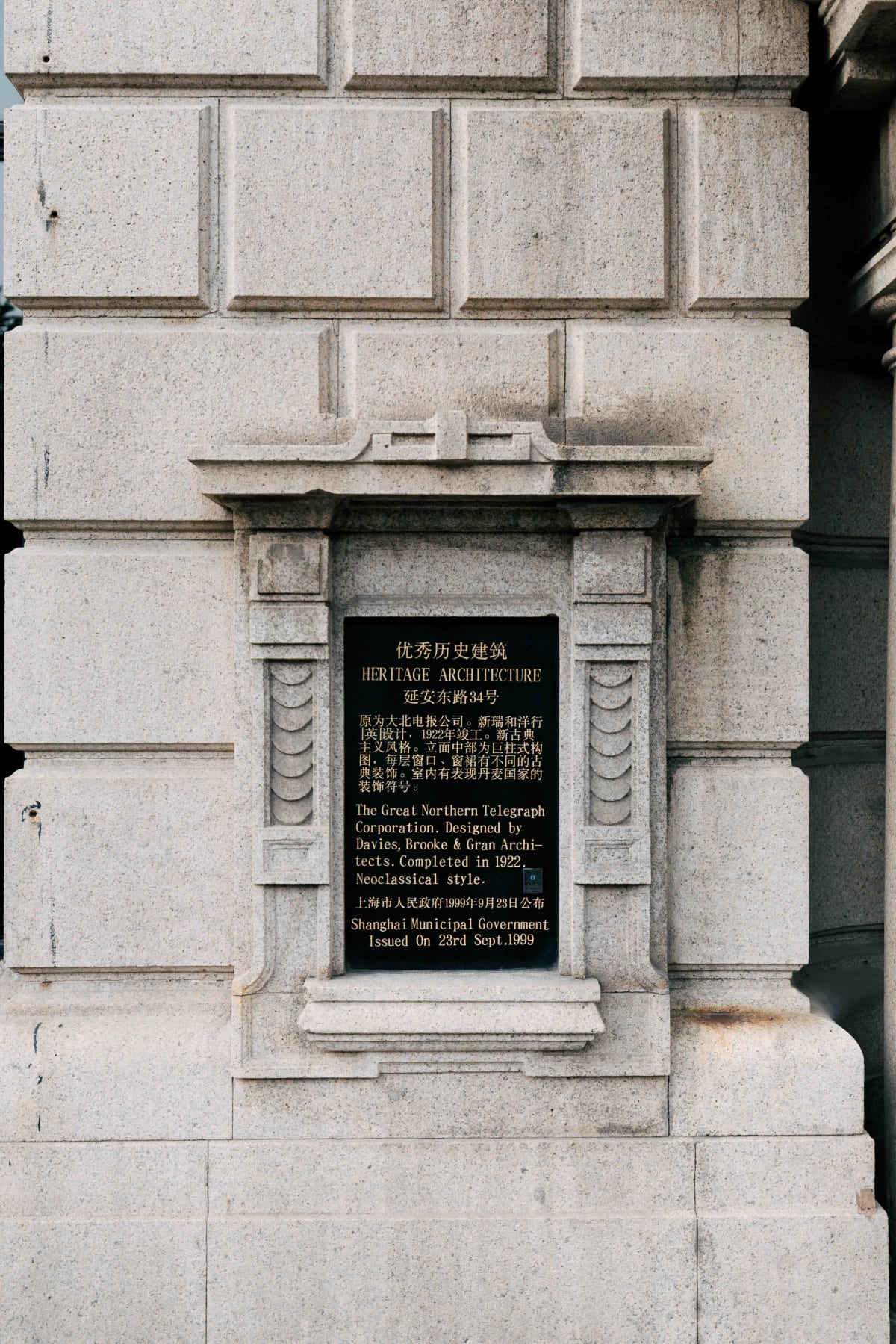
LING LONG occupies the hotel's Heritage Building, which preserves the old club intact. The 110-foot Long Bar, once the longest bar in the world, has been restored exactly as it was, and in 2010 the building reopened as the first Waldorf Astoria in Asia.
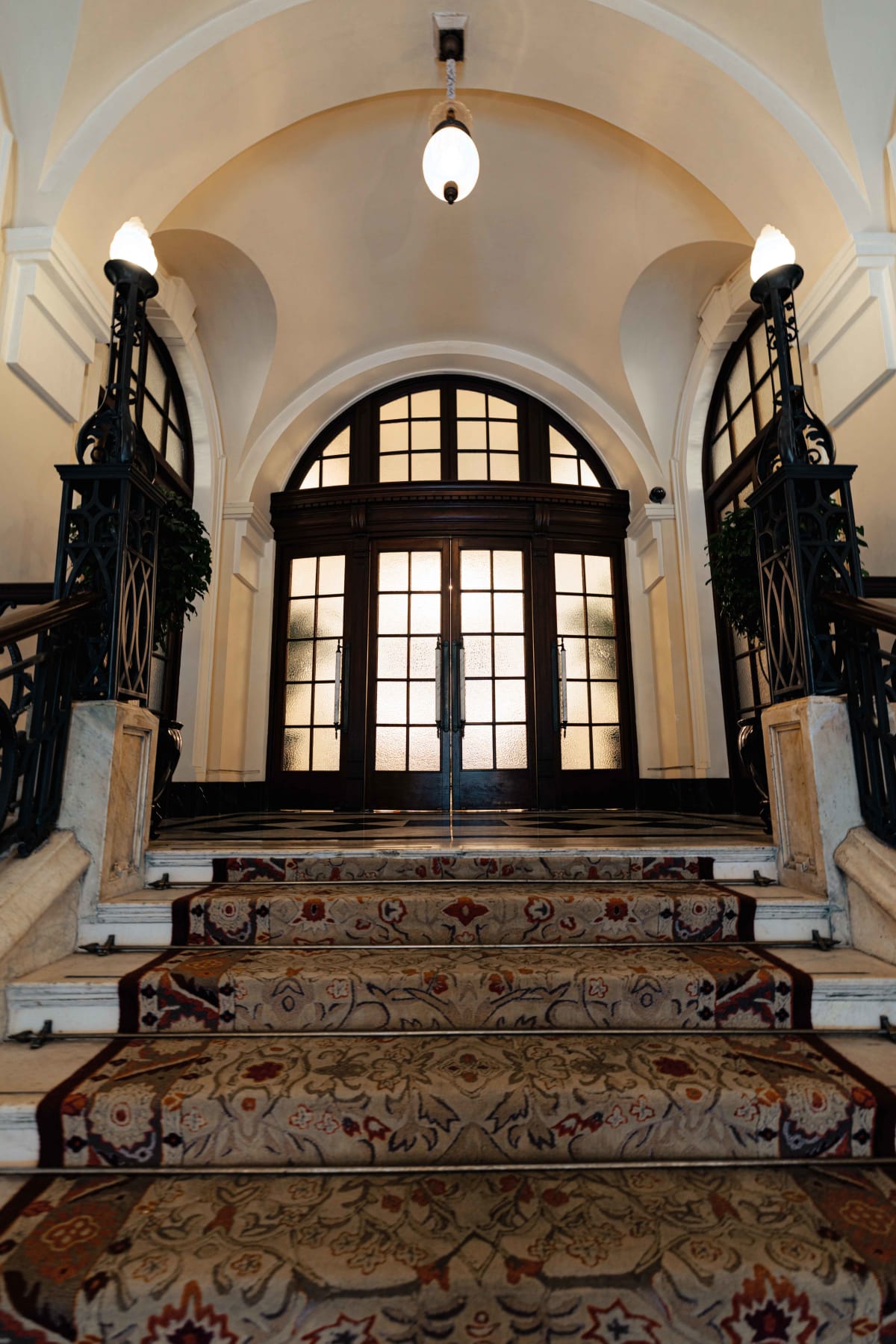
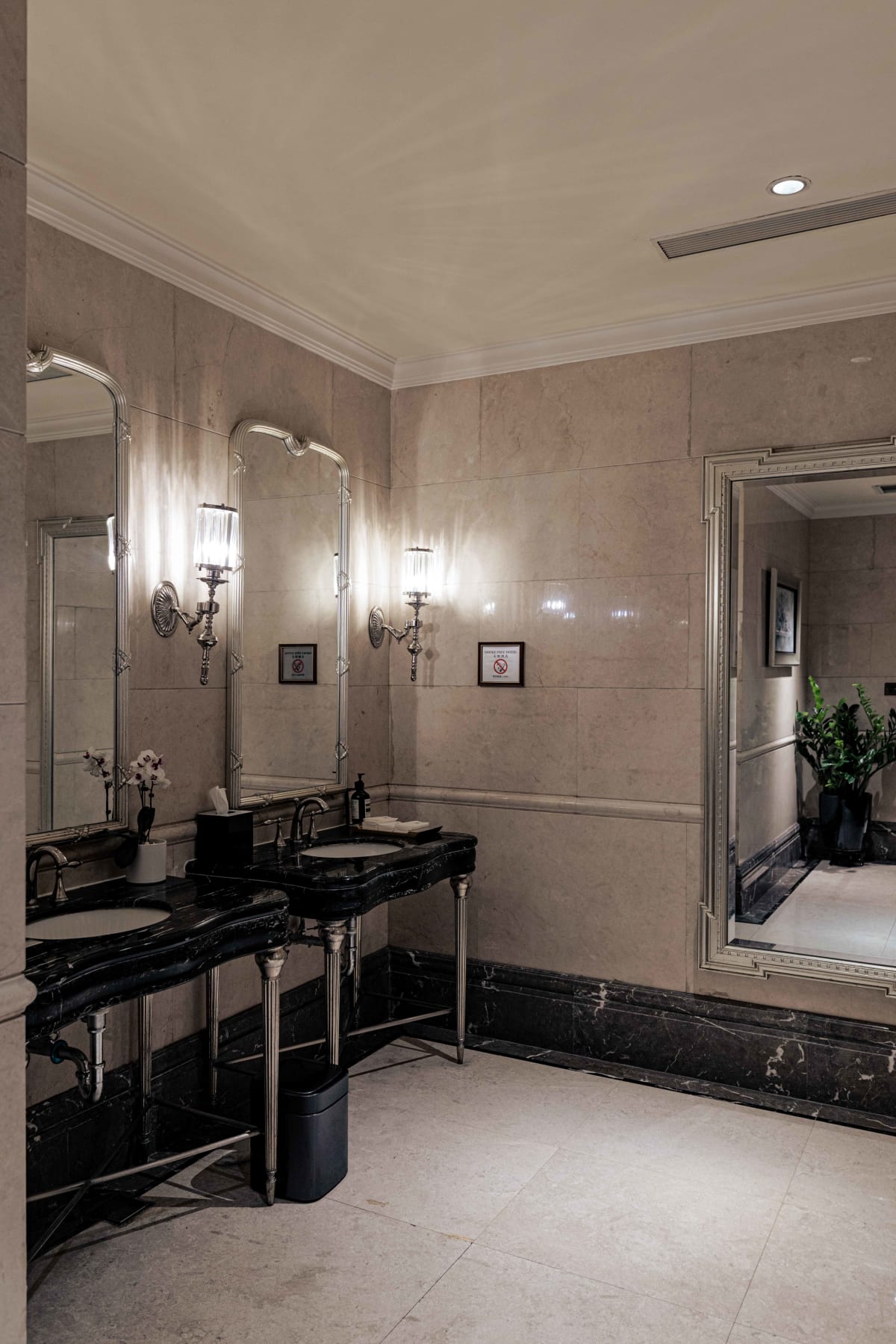
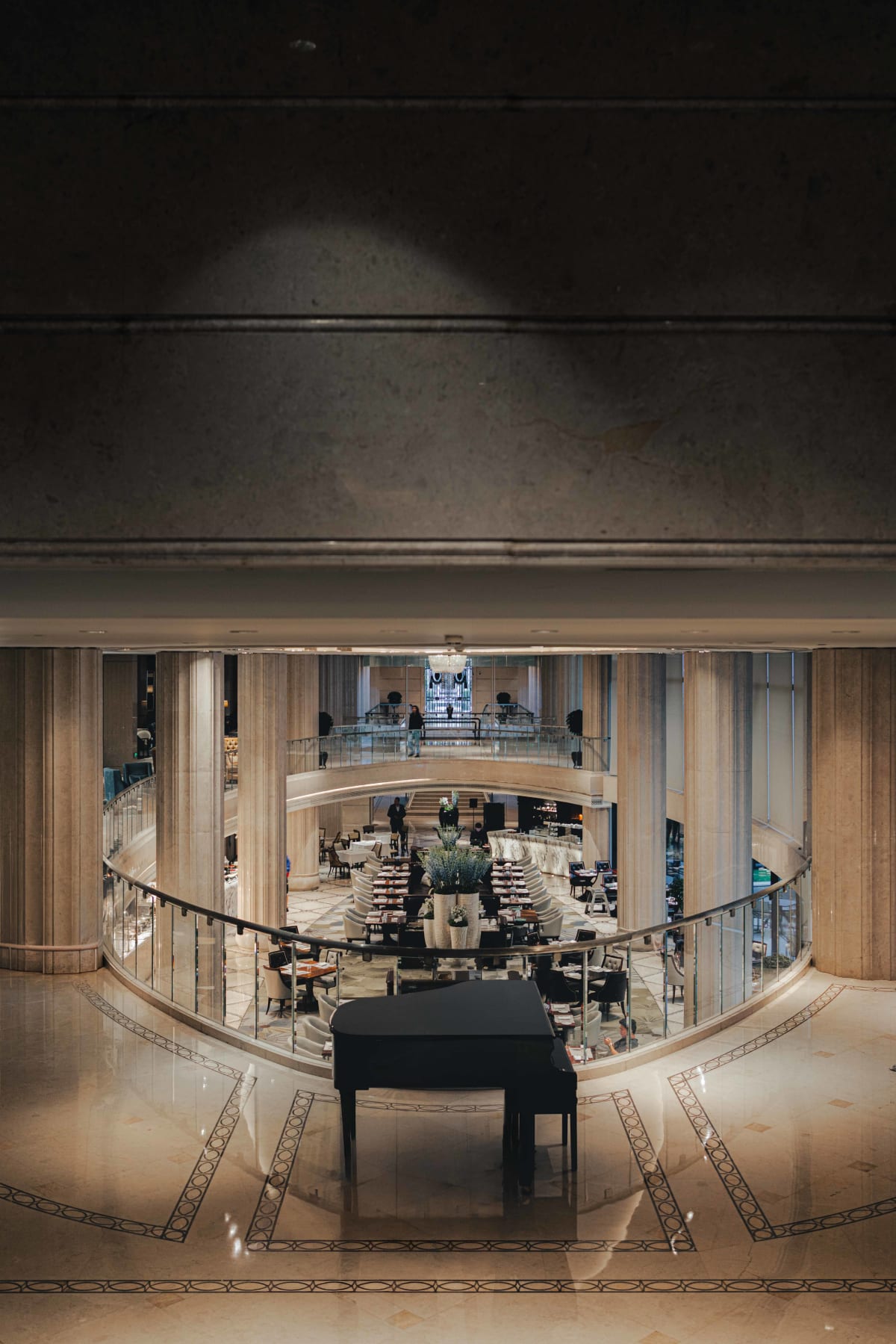
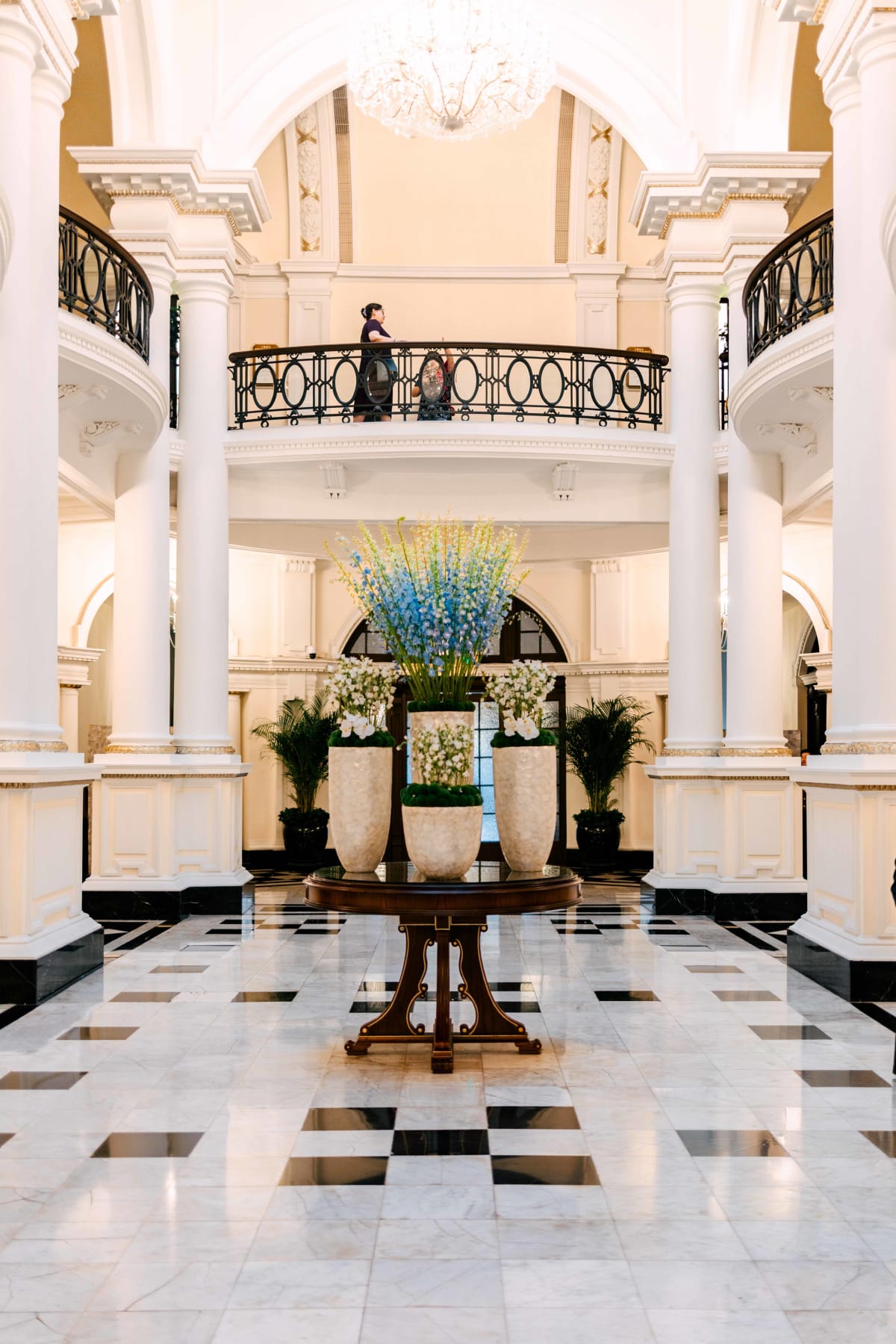
In the ground-floor lobby, servers circulate with champagne and water in a way that recreates the social atmosphere of the early twentieth century, and since we were told we could simply help ourselves, I had a glass.
Section 3·The Chef
Chef Jason Liu is from Taiwan. He began his career in Taipei at fourteen, learned reduction techniques in French fine-dining kitchens, then moved to Beijing and spent a year travelling across China studying its regional cooking before opening LING LONG Beijing in 2019. In 2022, before turning thirty, he won both a Michelin star for the Beijing restaurant and the Young Chef Award, and after expanding to Shanghai in 2023 the Shanghai outpost earned its own star within just a few months. What stands out is that he now stays mostly in Shanghai, where the restaurant is the better regarded of the two; he is said to be renovating the Beijing location into a new restaurant.
Section 4·The Menus
At LING LONG you choose your menu when booking, and there are two.
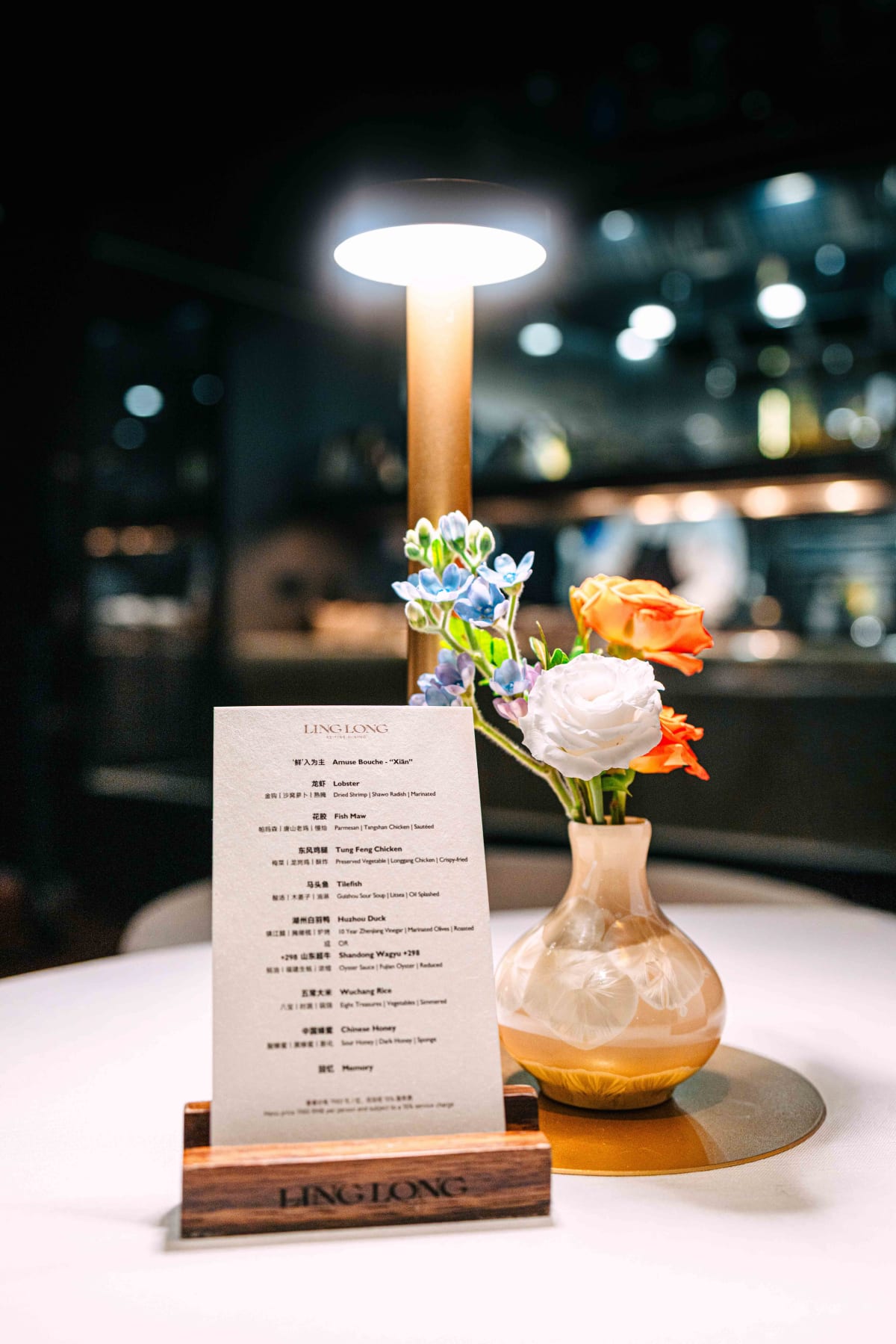
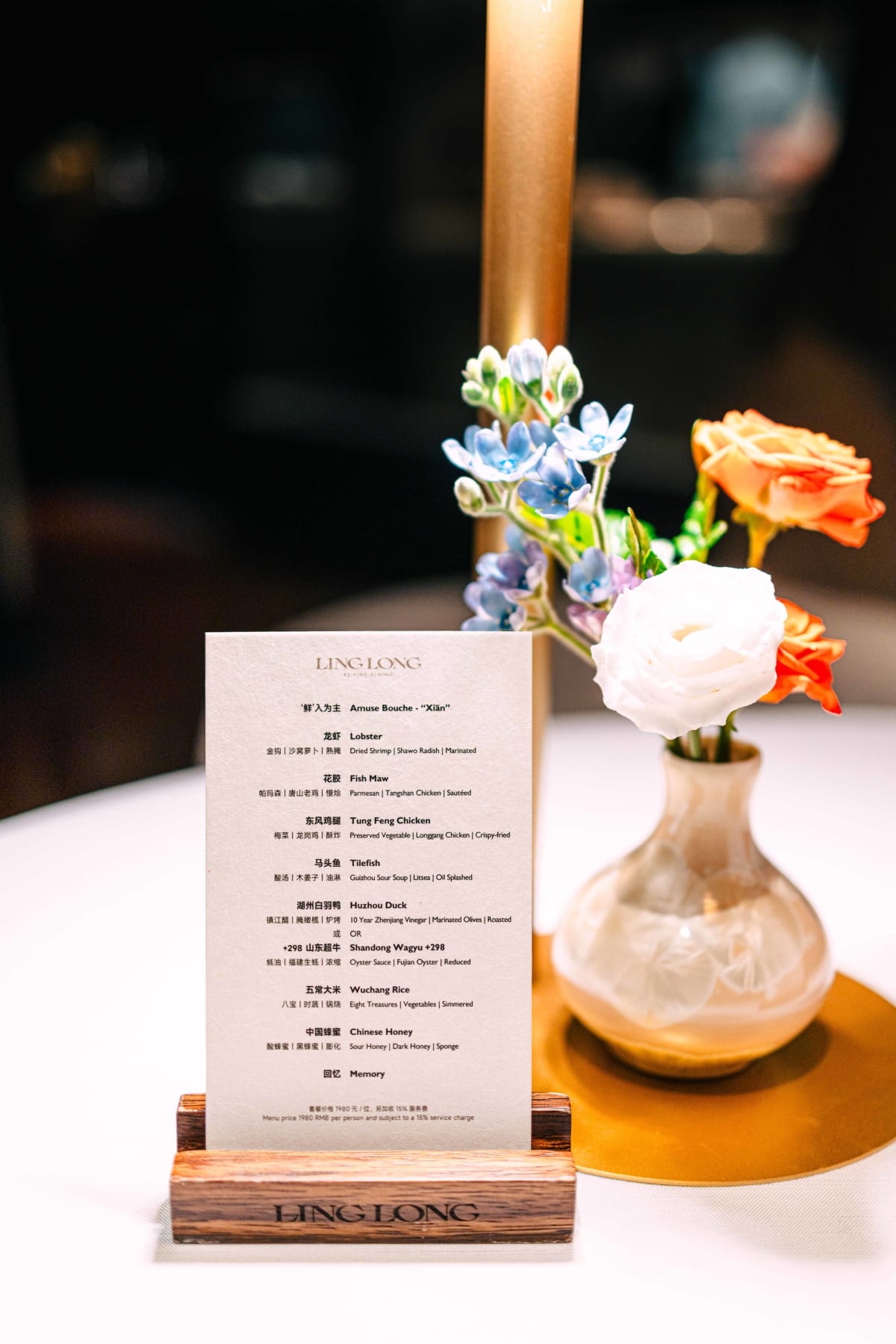
Inspirational Set Menu (1,680 RMB plus 15% service charge per person)
Classical Set Menu (1,980 RMB plus 15% service charge per person)
(These were the prices at the time of my visit.)
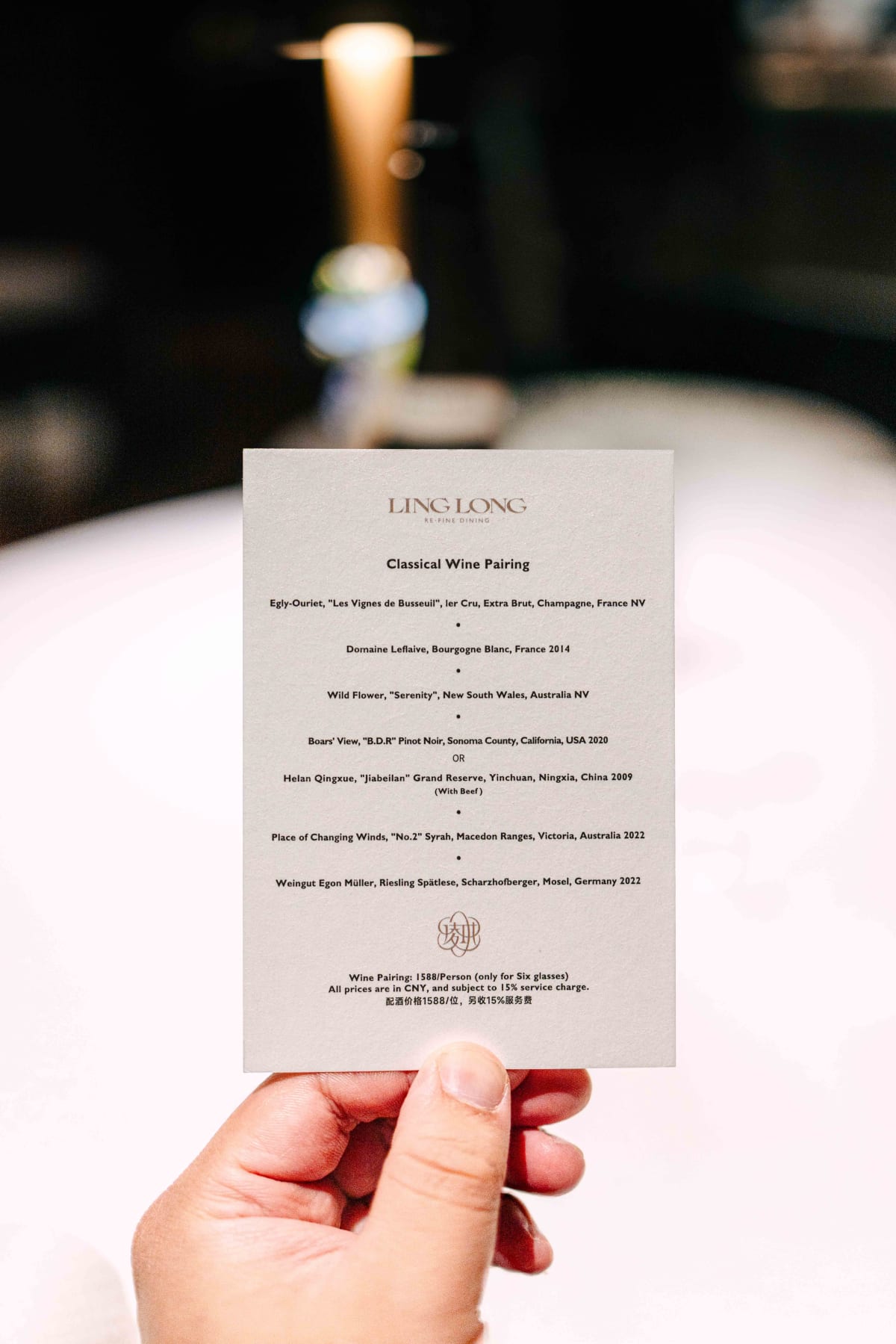
The difference lay in the seafood dishes and the desserts. Since I will likely come here only once or twice in a lifetime, I chose the Classical Set, reasoning it would show the restaurant at its fullest, and I think I chose right. The main is duck by default, with wagyu available for a supplement, but I prefer duck and stayed with the standard choice.
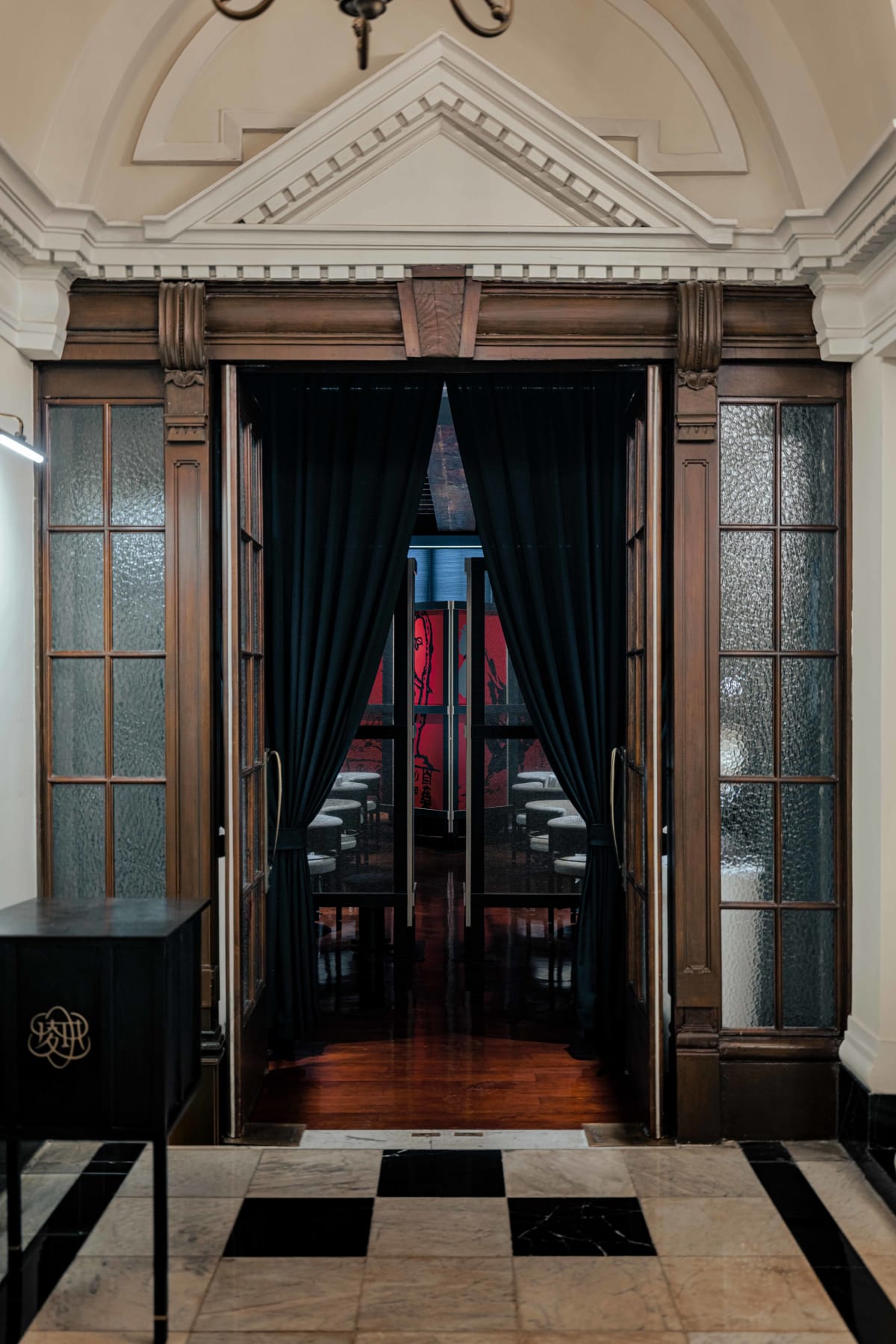
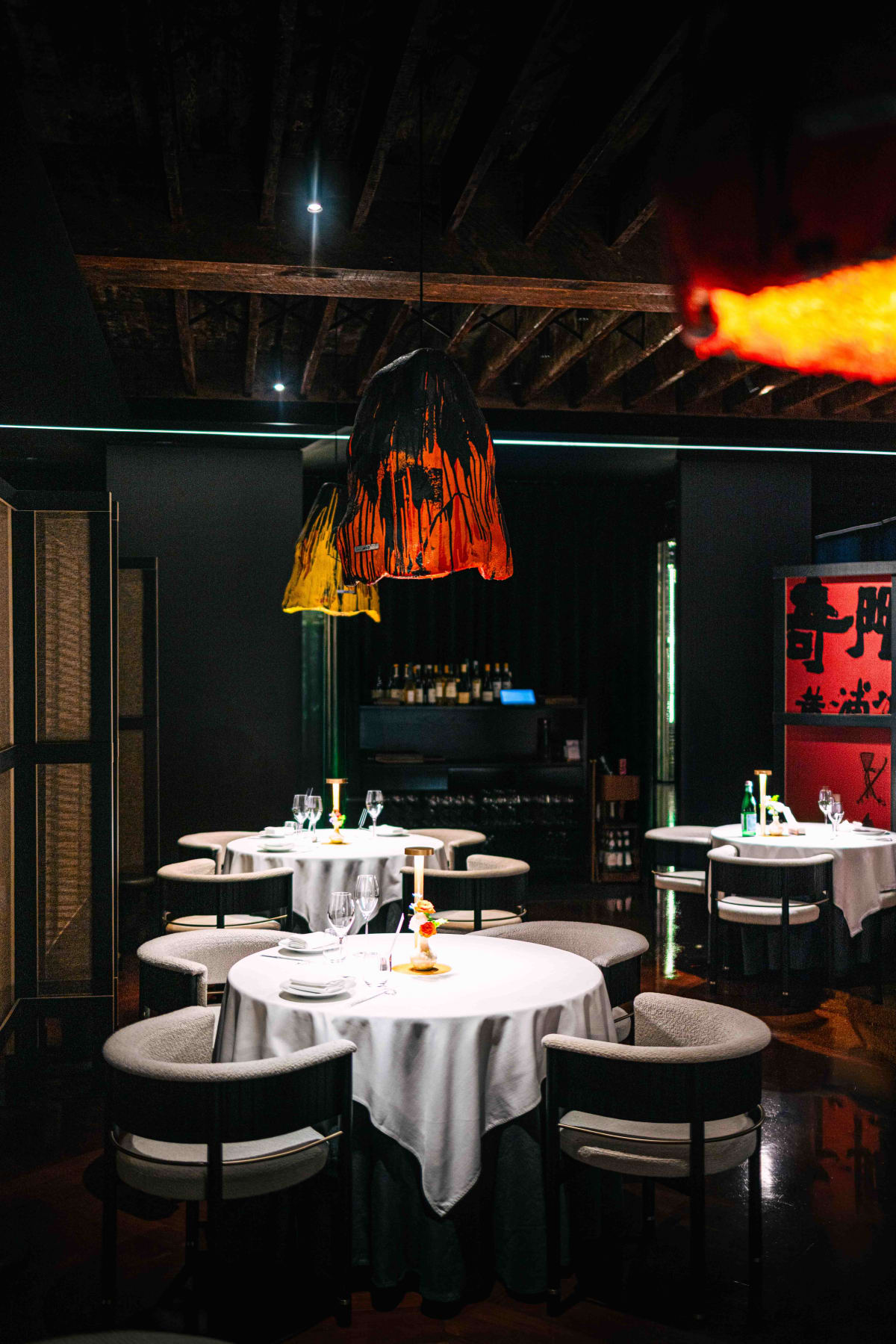
The interior is dark, with strong, contrasting light that creates a dramatic mood. There are about eight tables and one private room.
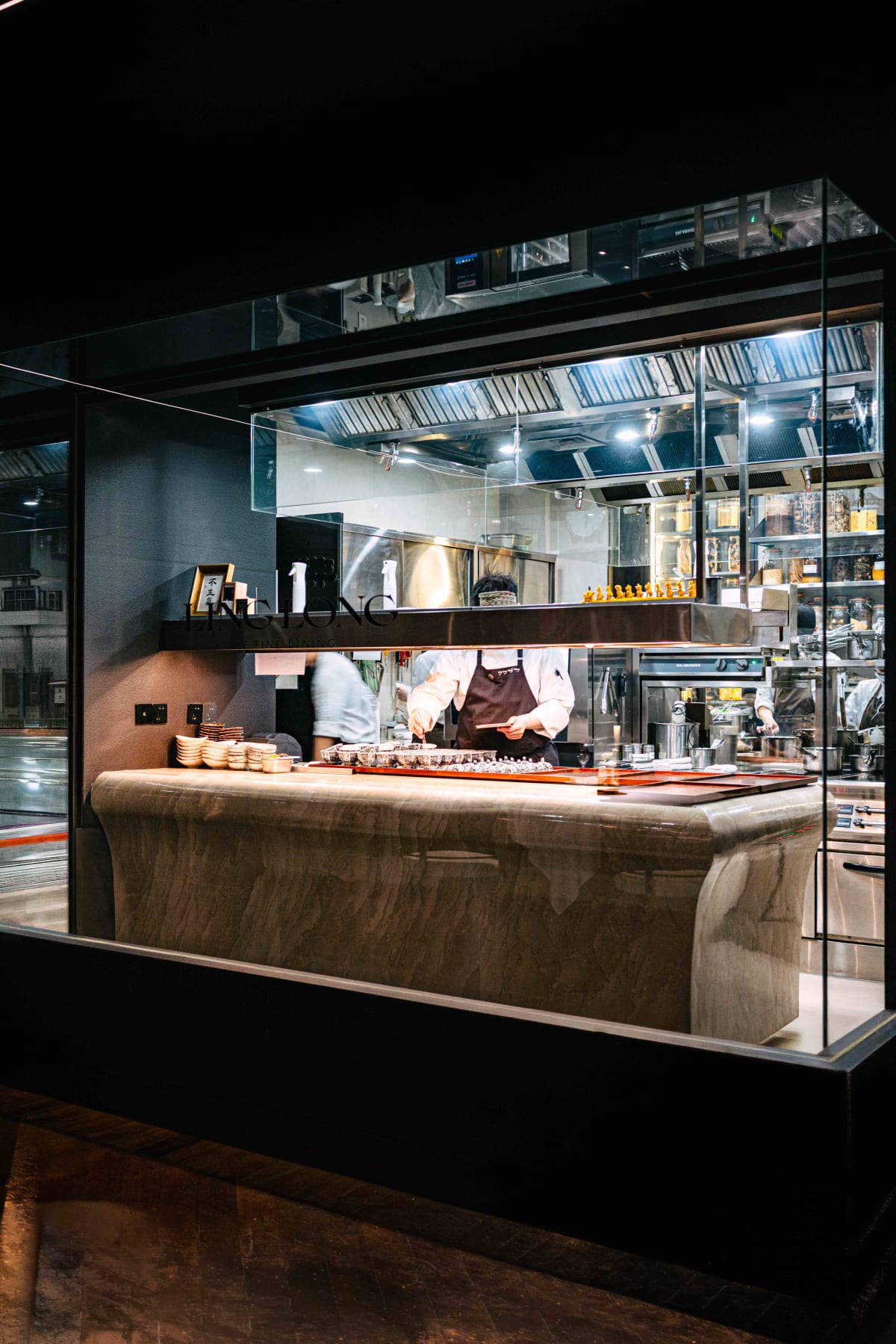
The kitchen sits at the front, though unlike at Mosu or San, you do not get a clear view into it.
Section 5·Xian
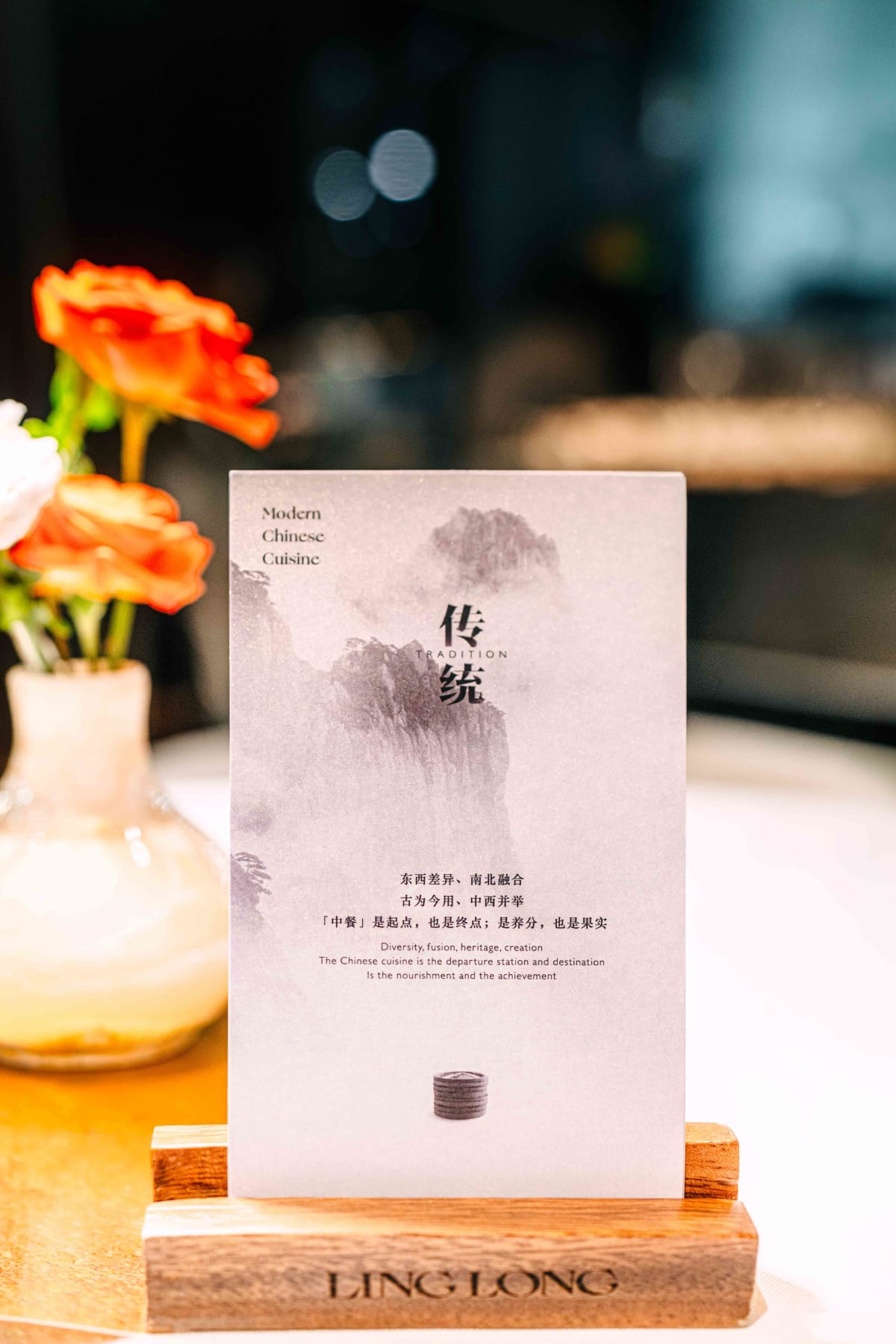
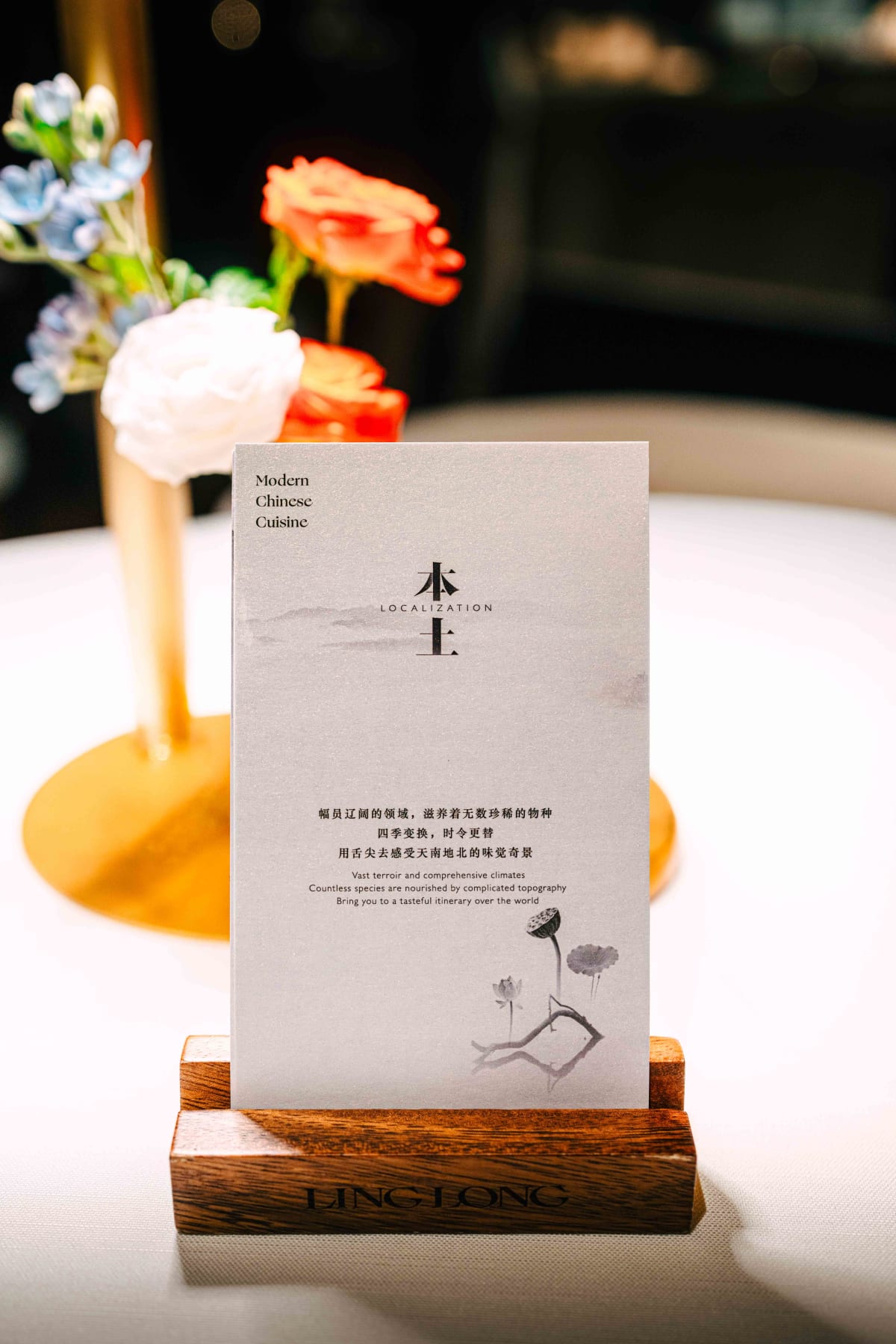
The course begins with amuse-bouche. The whole meal is organized into chapters, each with a clear theme, and the flow that evening ran: Xian (鮮) → Tradition → Localization → Recollection → Memory
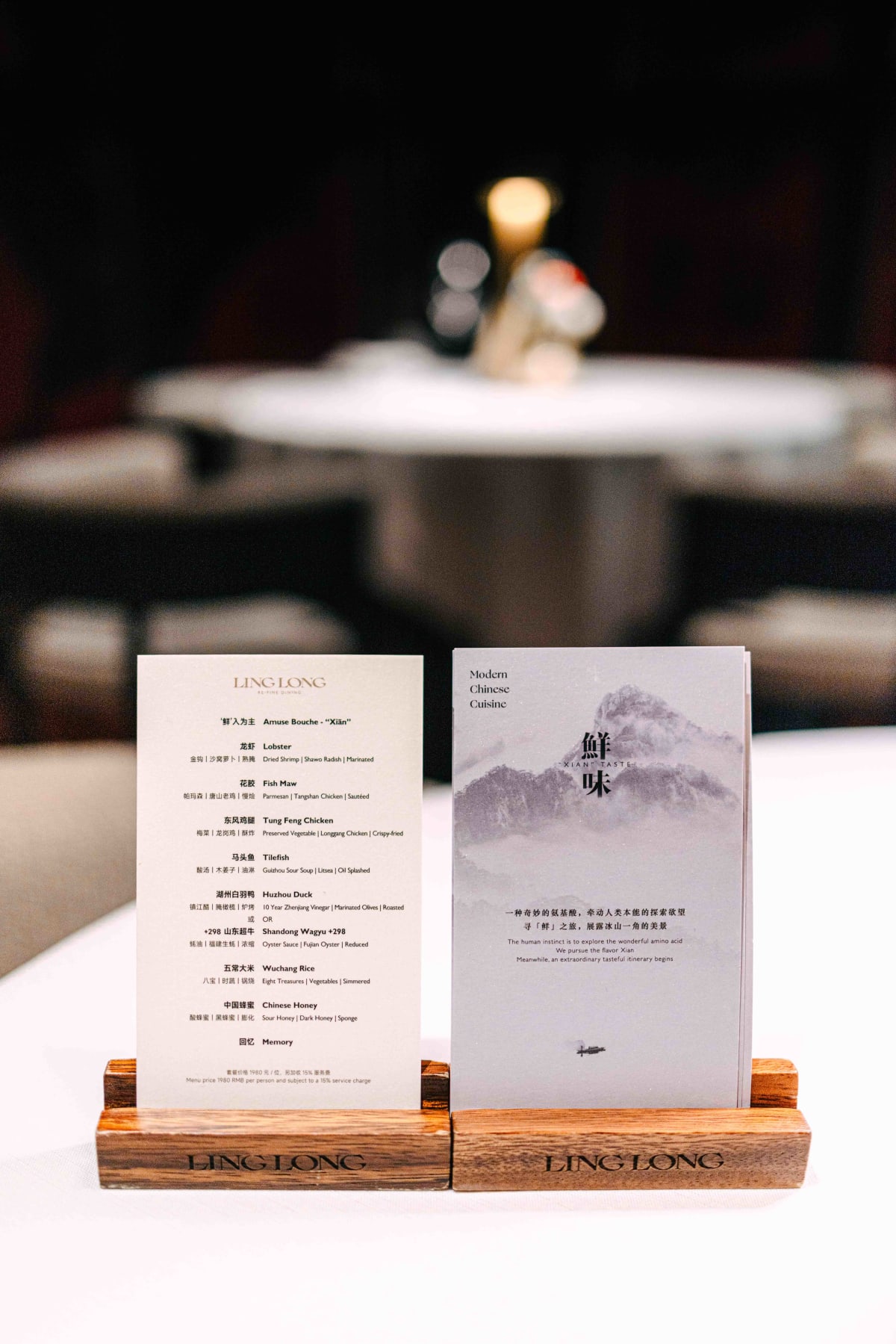
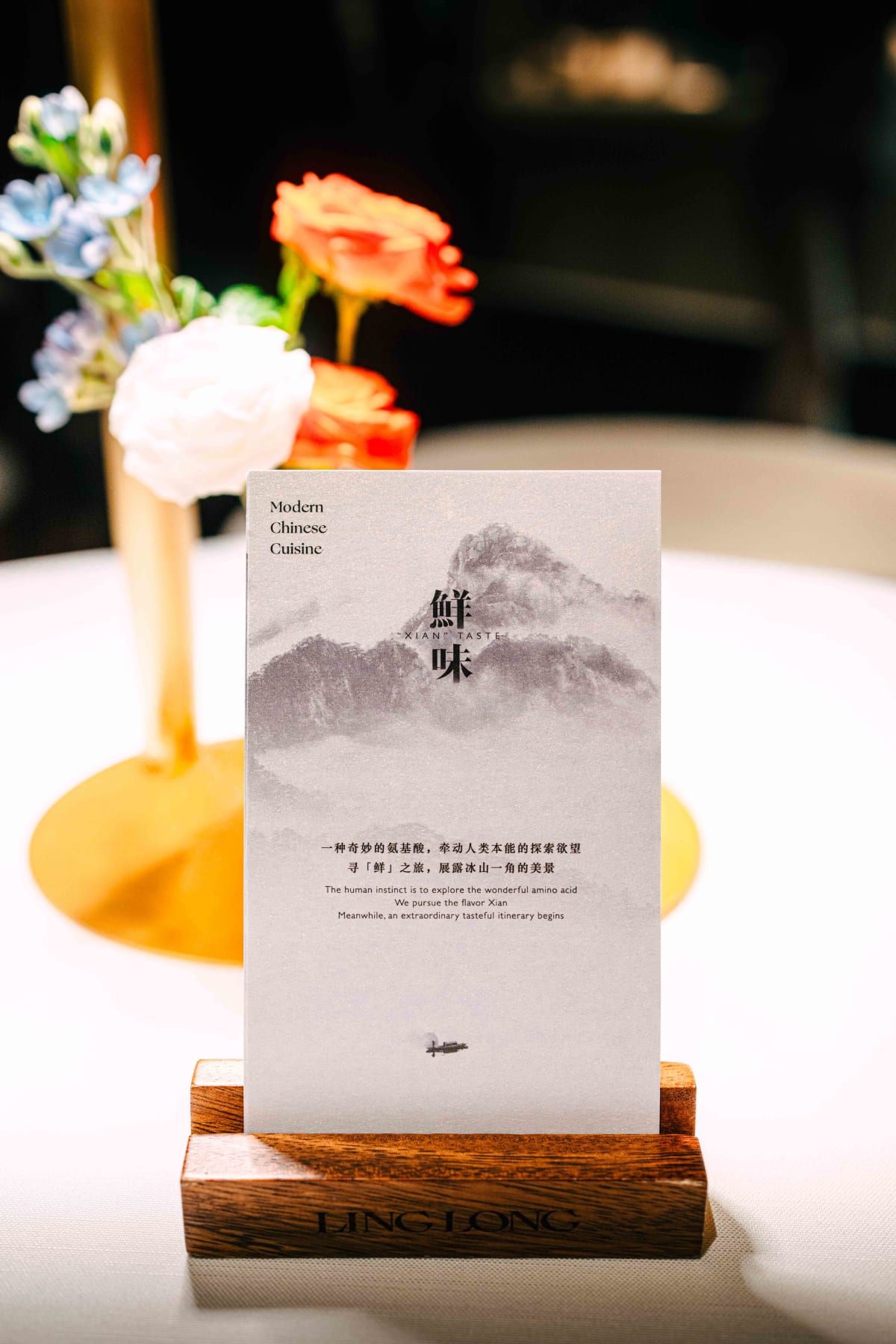
The first chapter, Xian Taste (鮮), turns on a concept central to Chinese cooking. Written with the character for "fresh," it nominally means "fresh taste," but in practice it refers to a deep, expansive savouriness that spreads through the mouth. The server explained that xian emerges when paired with something acidic. Where Japanese umami centres on savouriness itself, xian is a broader idea that takes in freshness and aroma as well.
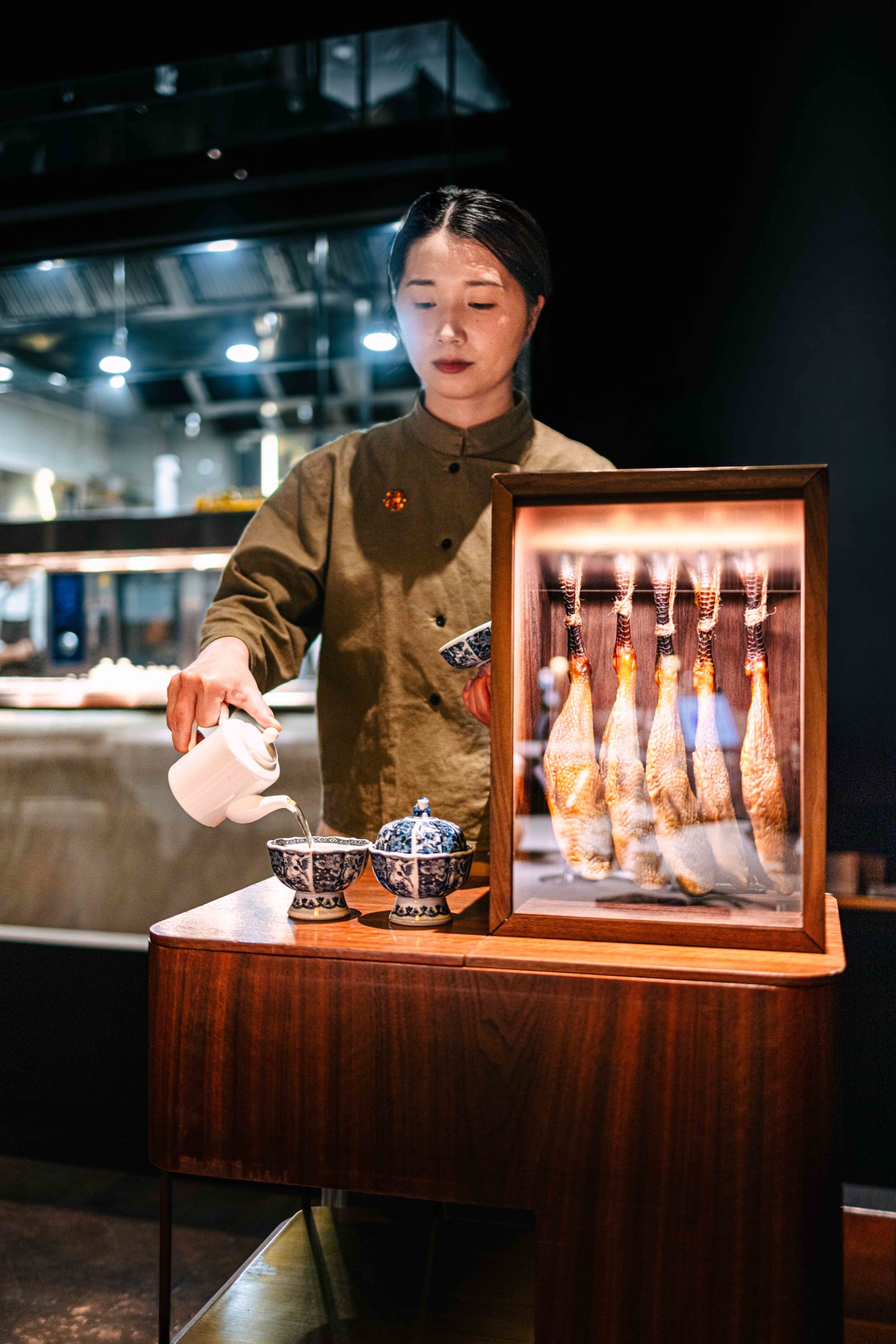
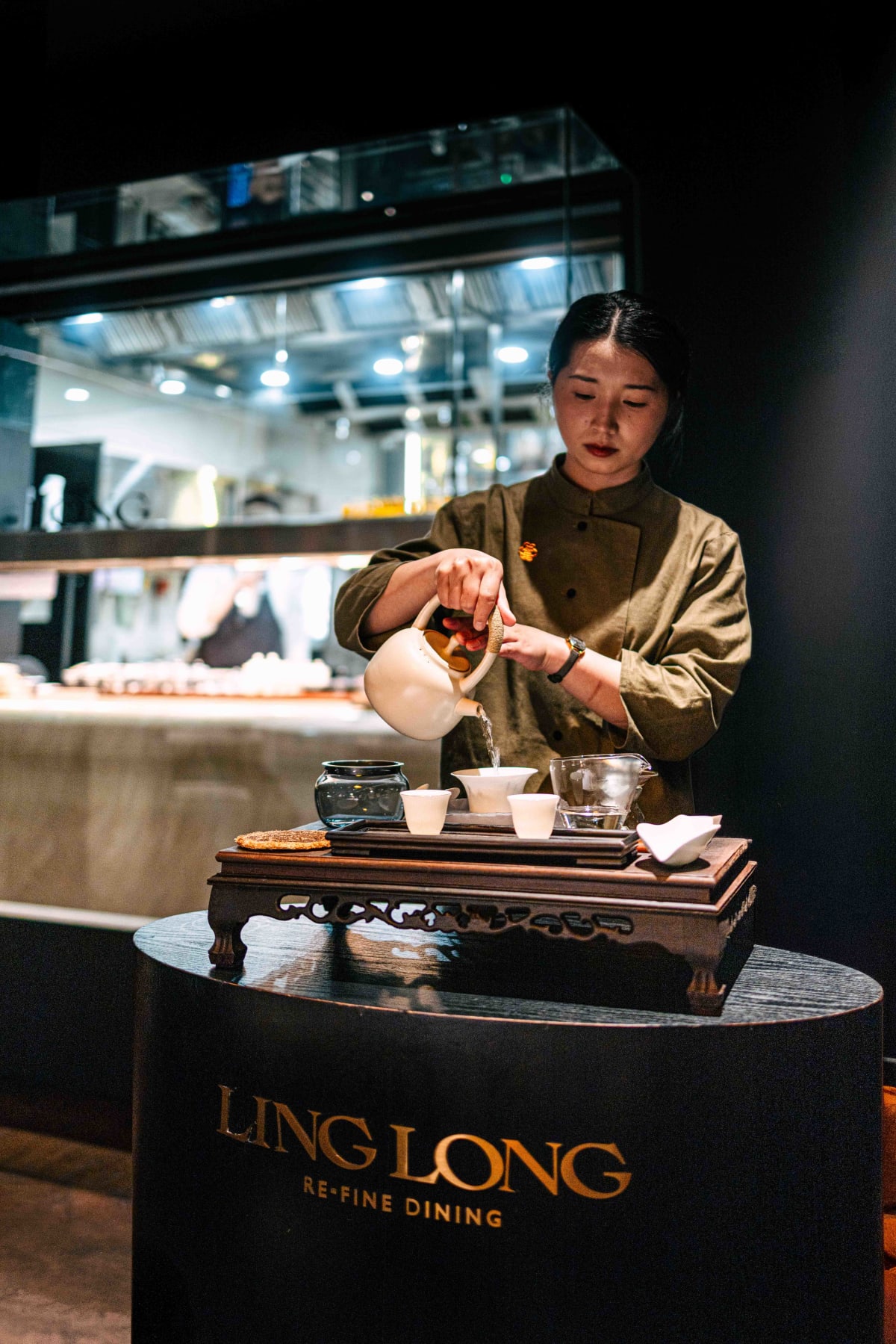
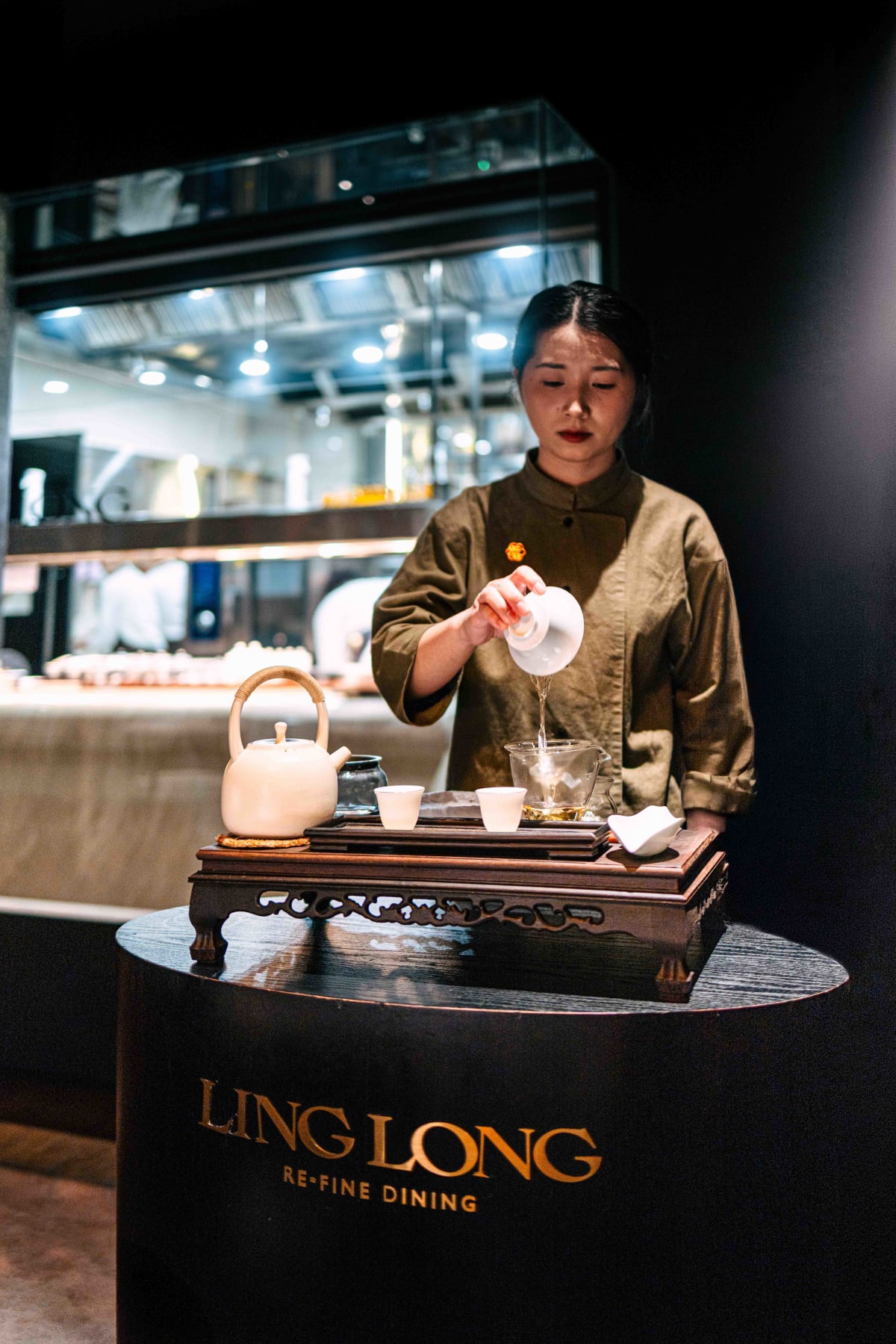
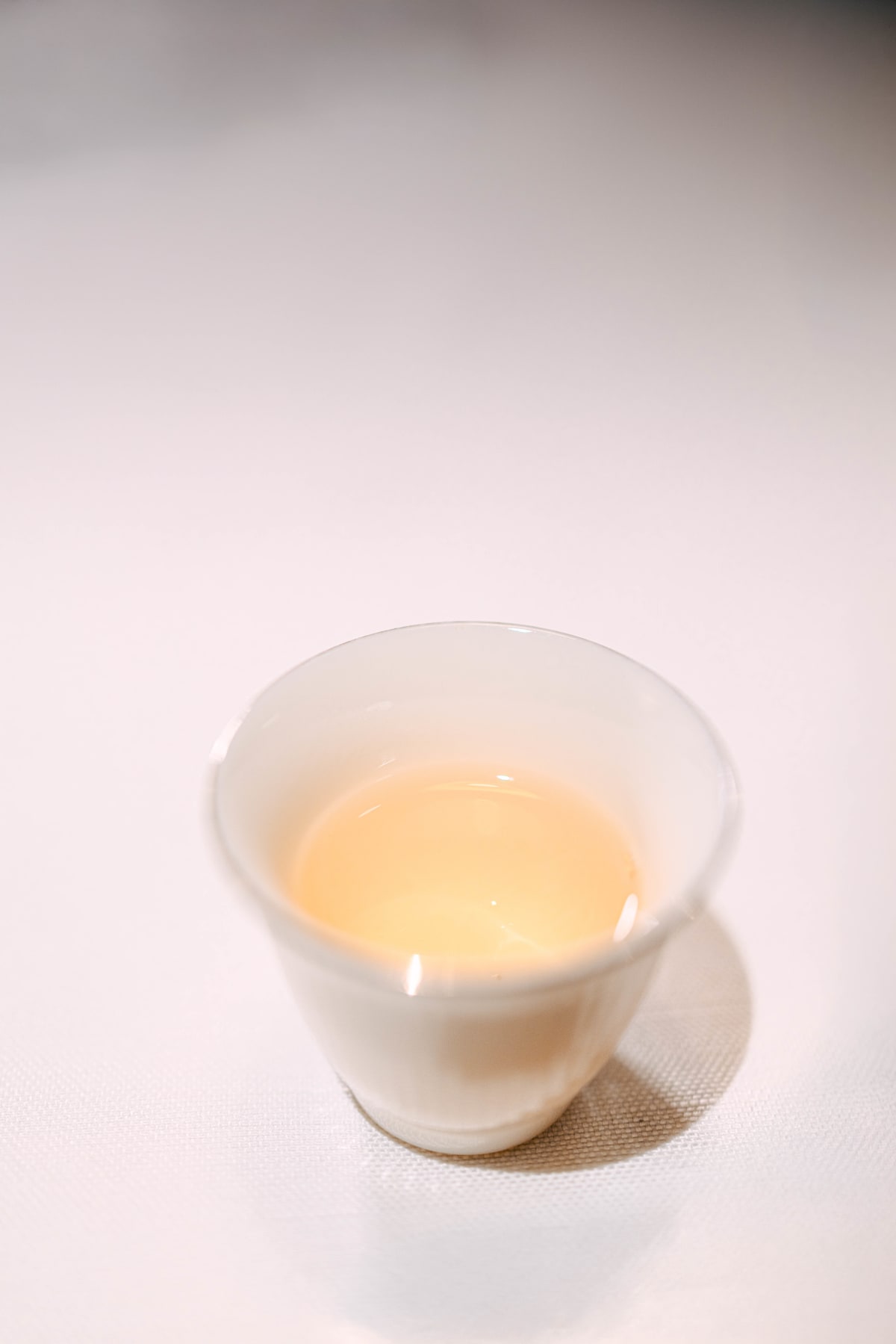
Before the meal, a cart is wheeled over and a cup of tea is served to start. It was a white tea from Fujian. Looking it up afterward, it seemed to be an aged white tea with a plum-blossom aroma (白梅老白茶); I know little about tea, but I could tell this was good.
The first amuse was fish: yellow croaker.
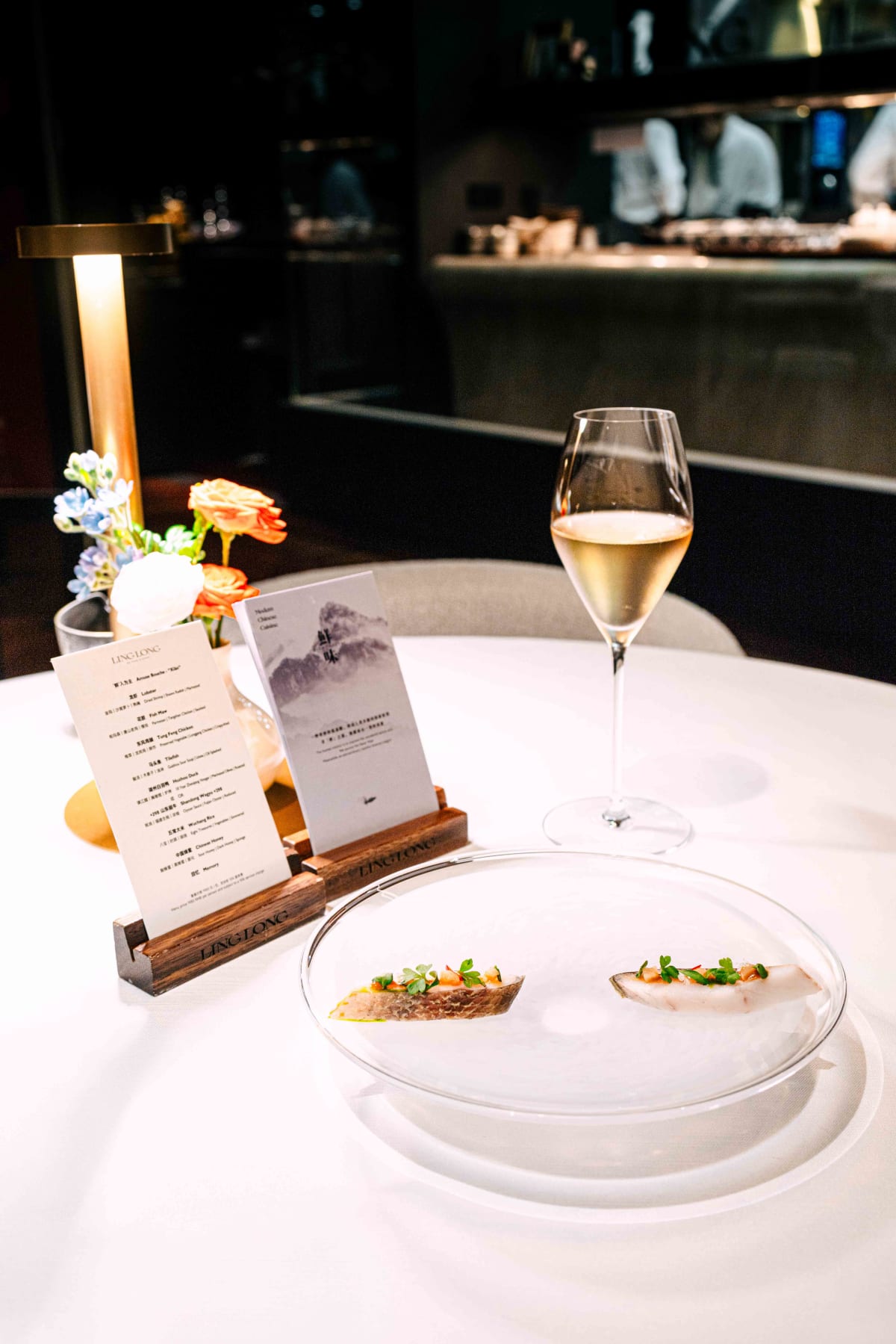
It seemed steamed, topped with cilantro and other southern spices. Shaken by the poor-quality seafood I had eaten elsewhere the day before, I ate warily, but happily the fish here was of good quality.
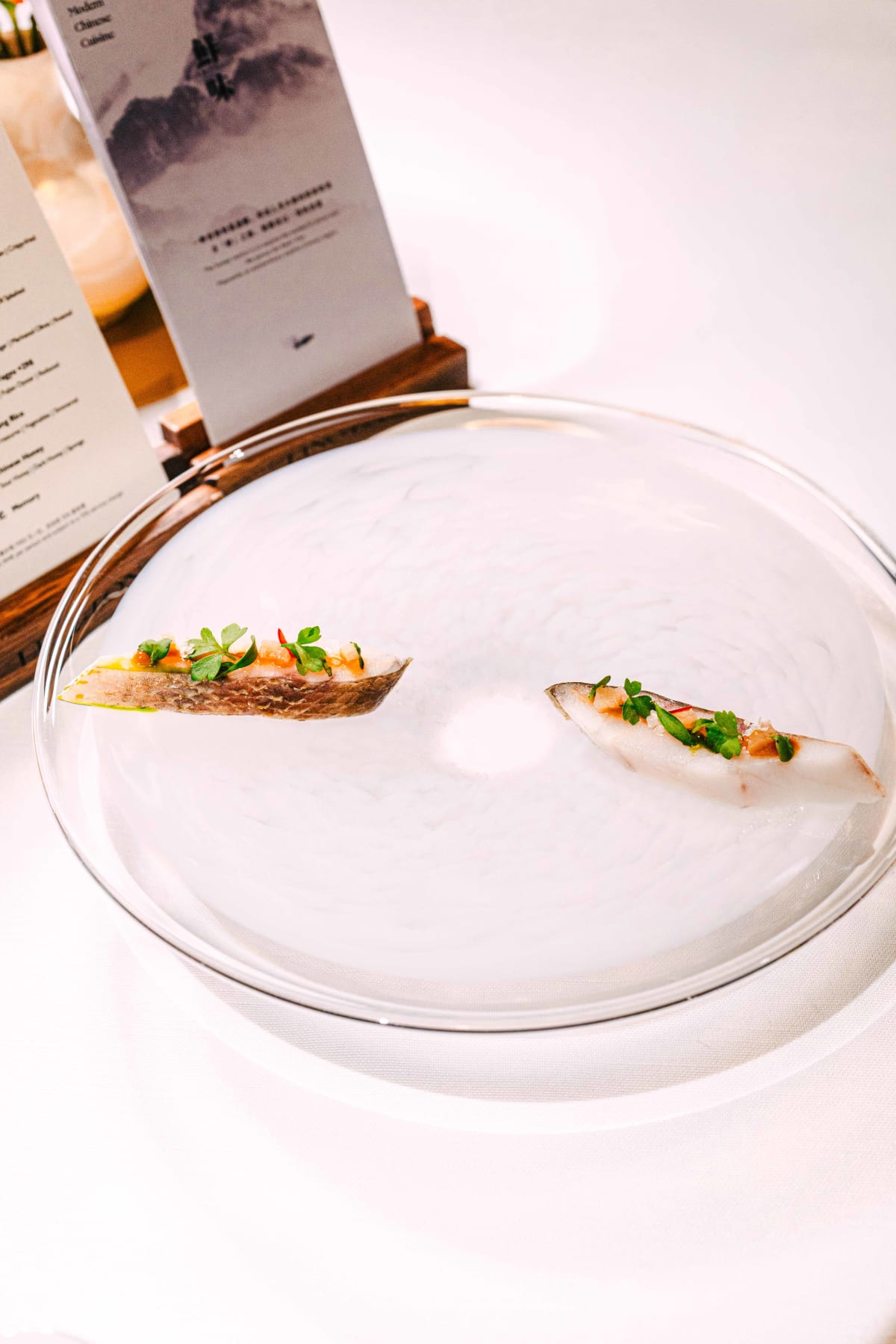
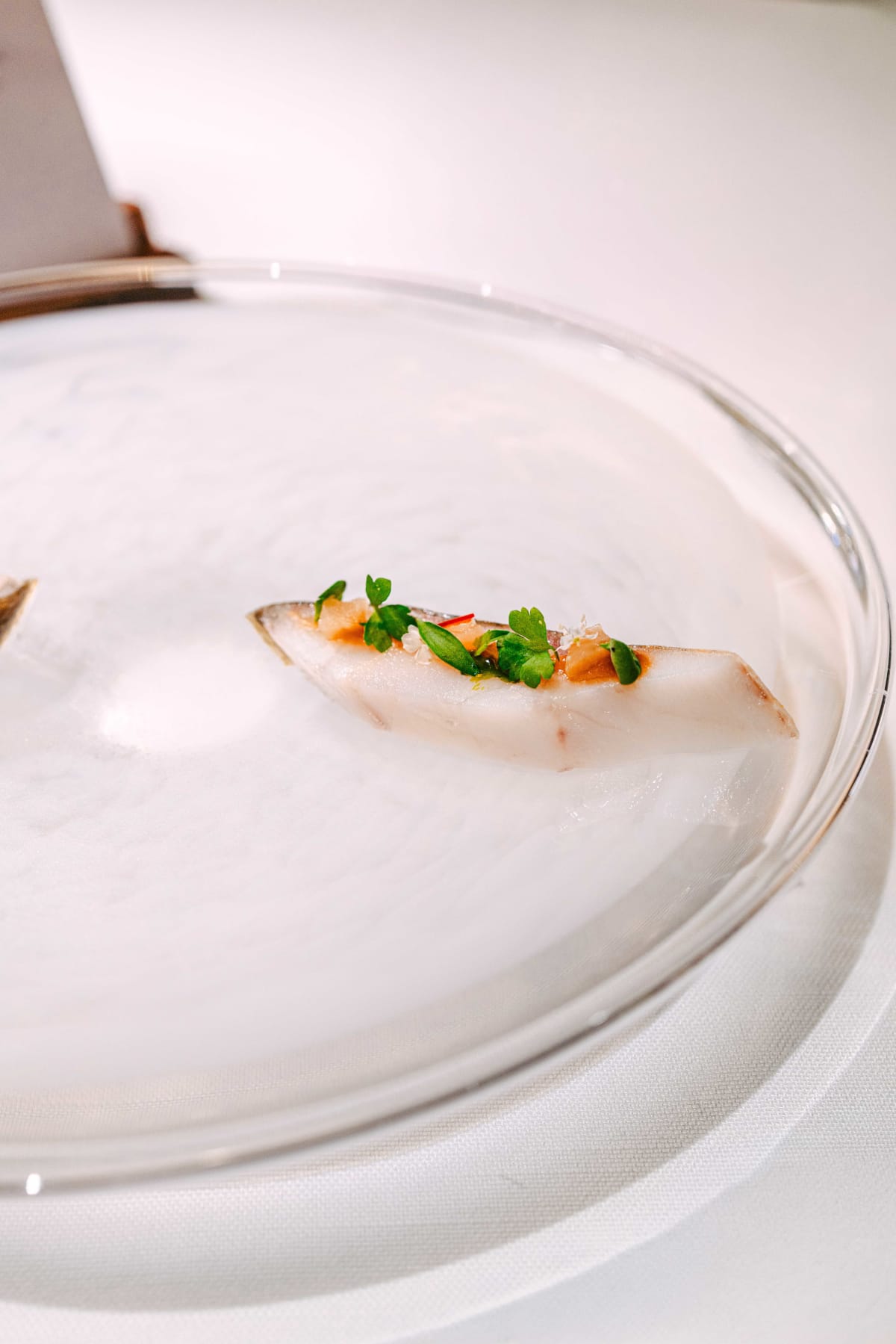
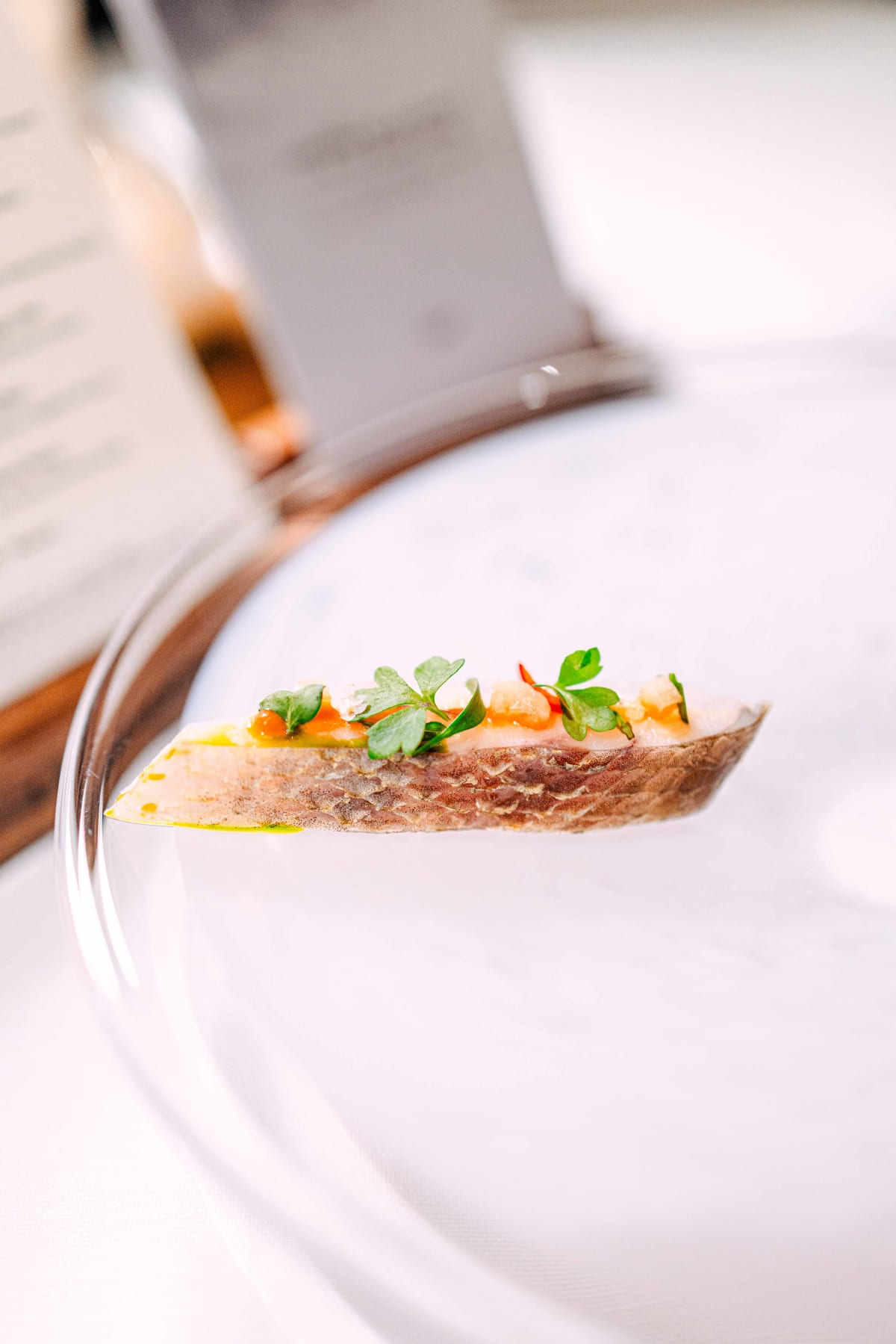
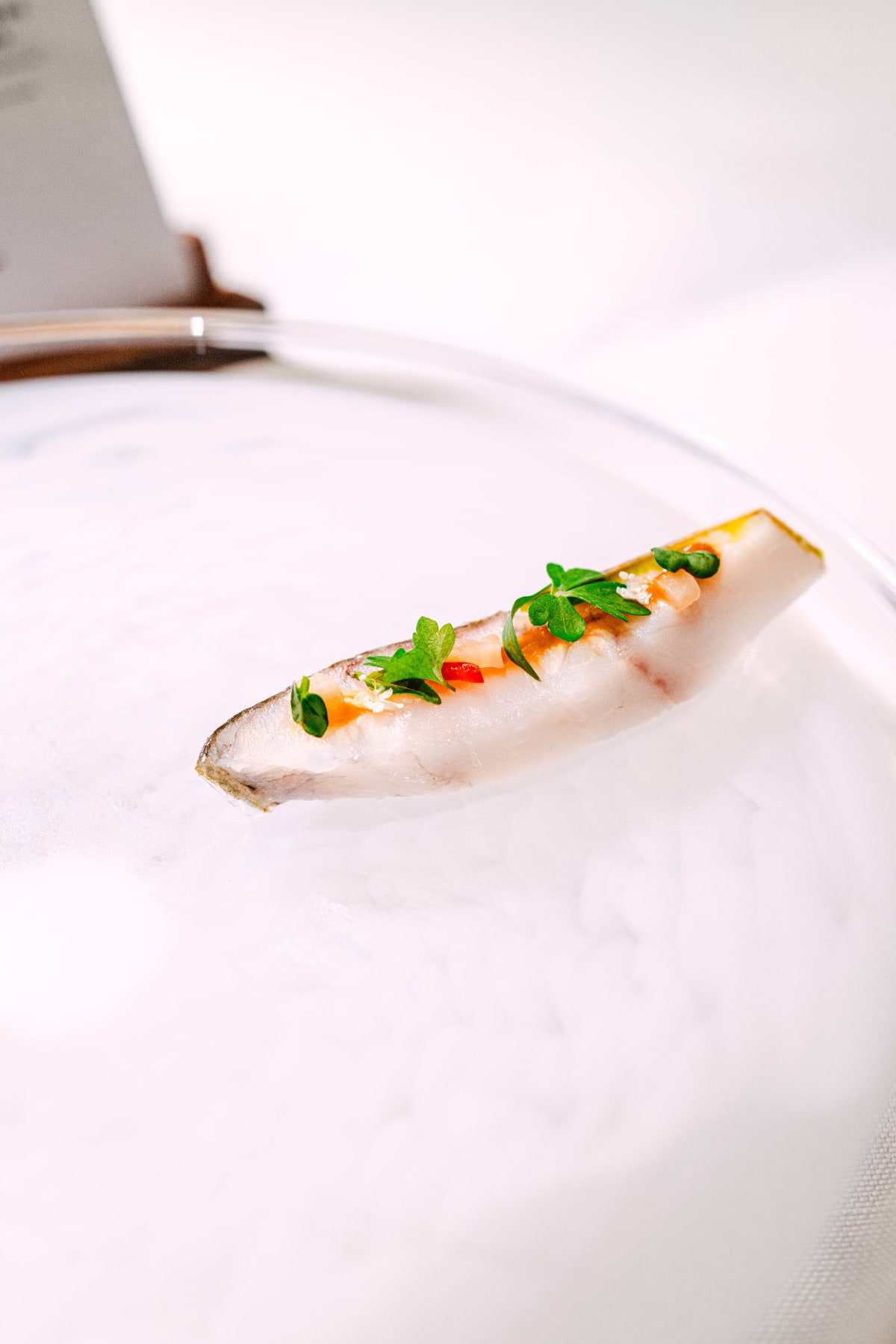
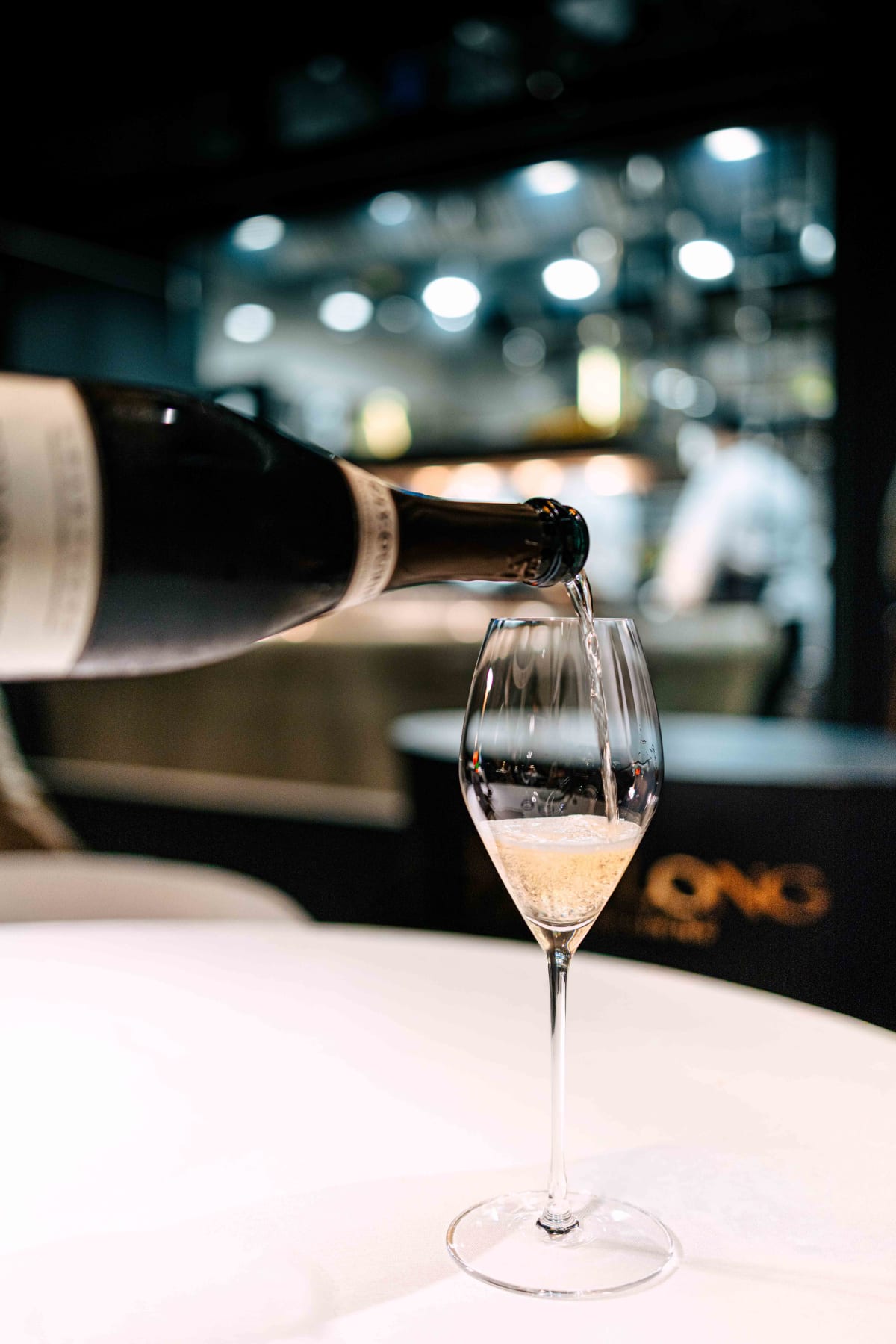
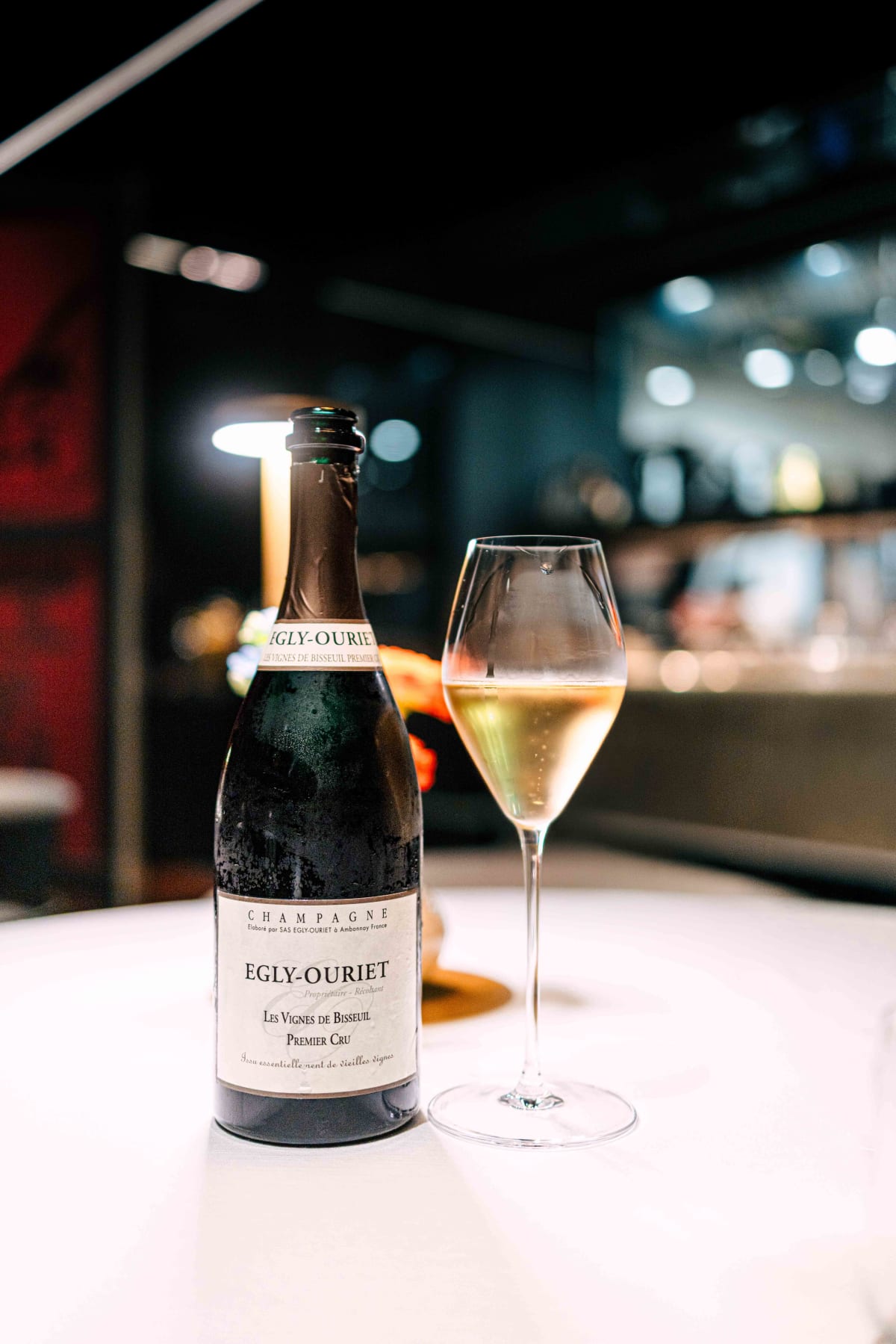
Any fishiness or off note was well controlled, though neither the fish nor its treatment was especially bold, so the amuse itself was a good opener rather than a striking one, and it paired nicely with the accompanying champagne.
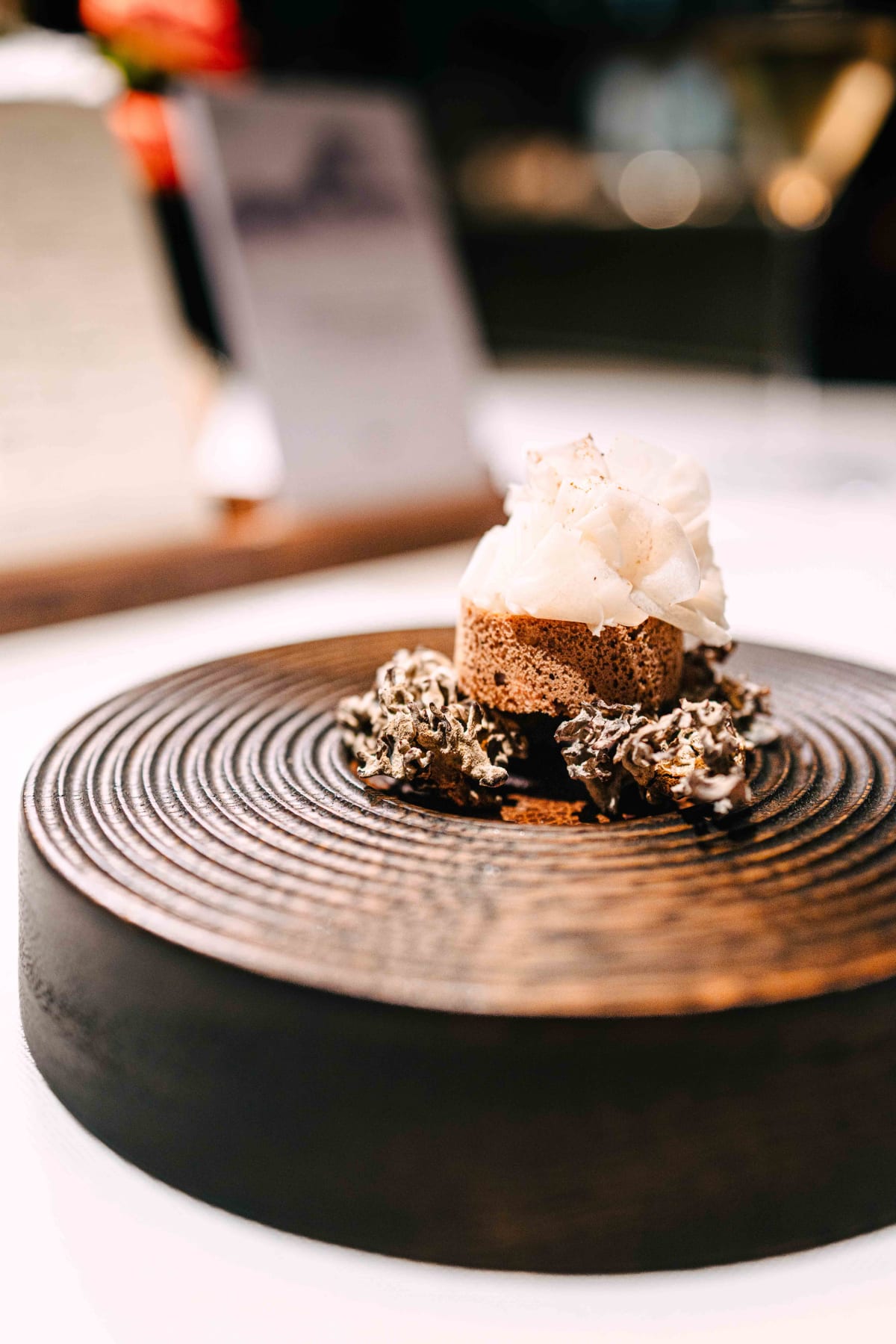
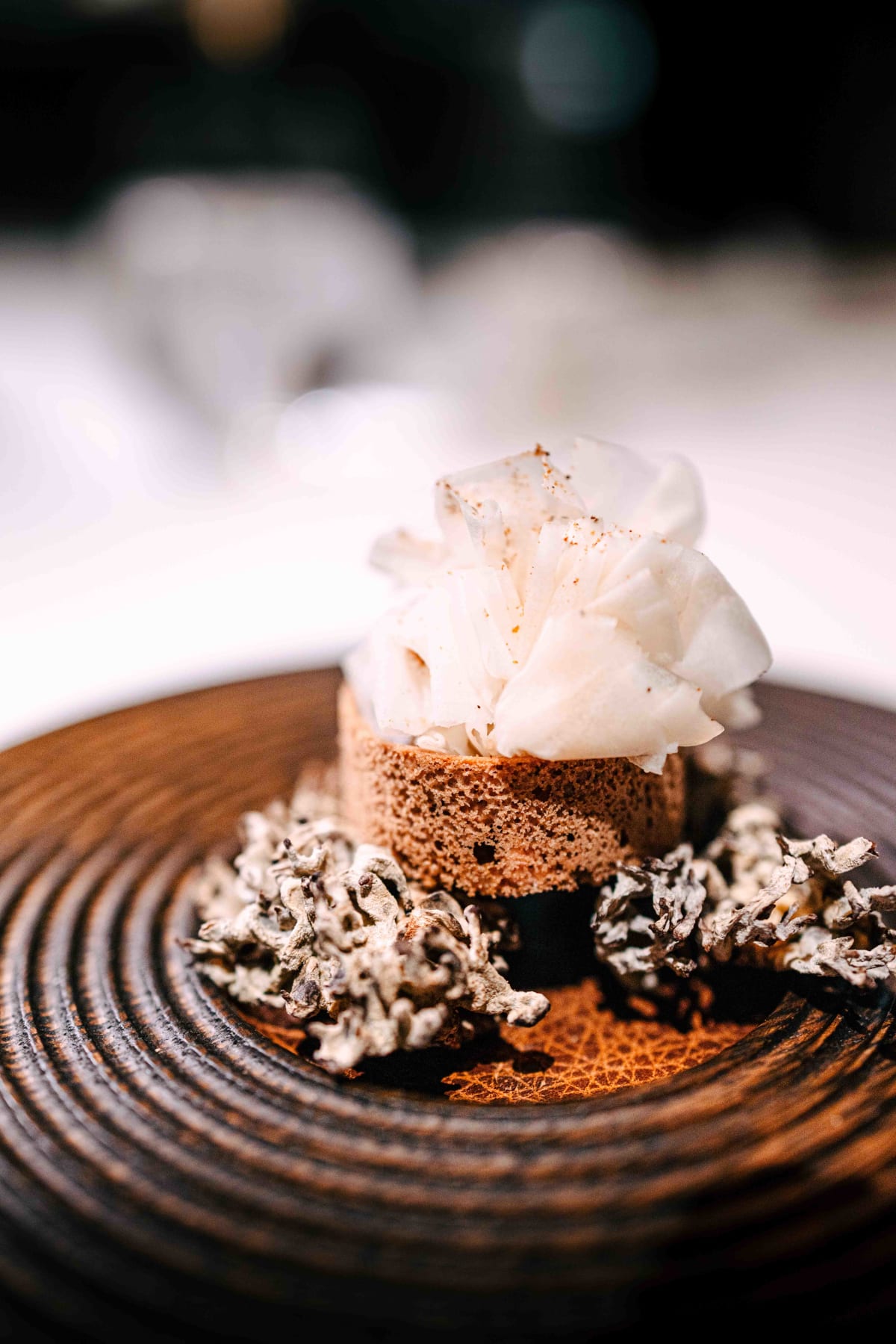
The second amuse was porcini, served as a single bite. A thin shell on the outside enclosed an aged-porcini ice cream, finished with mushroom sliced thin and arranged as a flower on top. It was sized to go in exactly one mouthful, so that the moment you pick it up and put it in, every element fires at once.
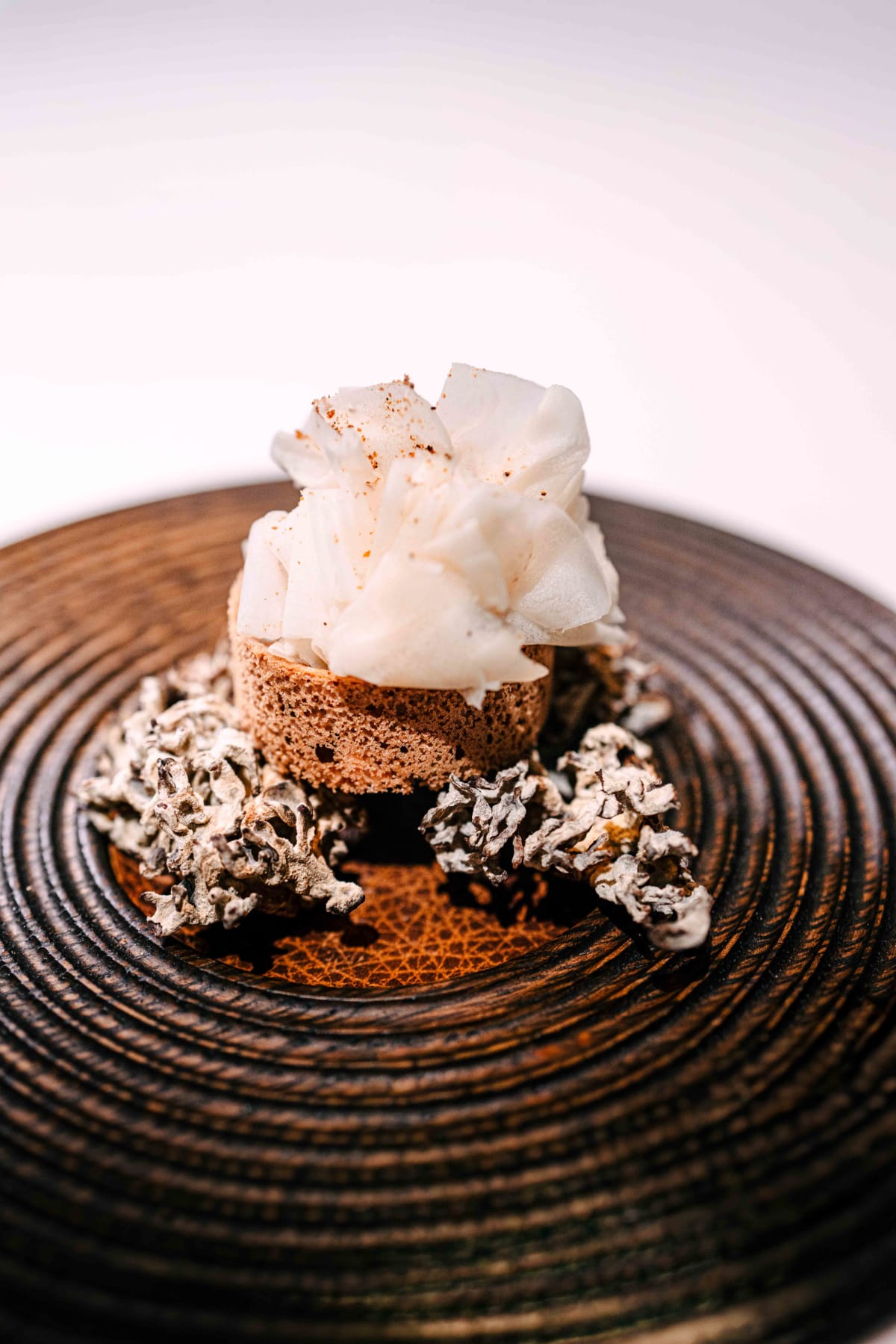
Because the first amuse had been fairly ordinary, I went in with no expectations.
And then it just detonated, right there.
The instant I bit down, the dense presence of porcini landed with real weight, and it was wonderful. The concentrated, woody aroma peculiar to dried porcini felt compressed into a single bite, and serving it cold, as an ice cream, was a fine choice. The cold temperature held the aroma in place, so that as it melted slowly the flavour unfurled in stages. The thinly sliced mushroom on top was not mere decoration either; it met the roof of the mouth as a distinct texture, adding dimension within the single bite. Look, texture, aroma: not one was missing. It was a precisely calculated mouthful.
The last amuse was not a bite but a soup, impressive in both taste and presentation. Before serving, it arrived as a large tray hung with several big chicken legs, and at first I wondered whether a chicken dish was coming. Suspending the legs on the tray was a visual device, as if a scene from a butcher's shop or a farm's processing shed had been brought into the dining room. Showing the tray and then pouring the broth into the bowl was bound into a single staged moment, giving the impact of far more than a simple bowl of soup.
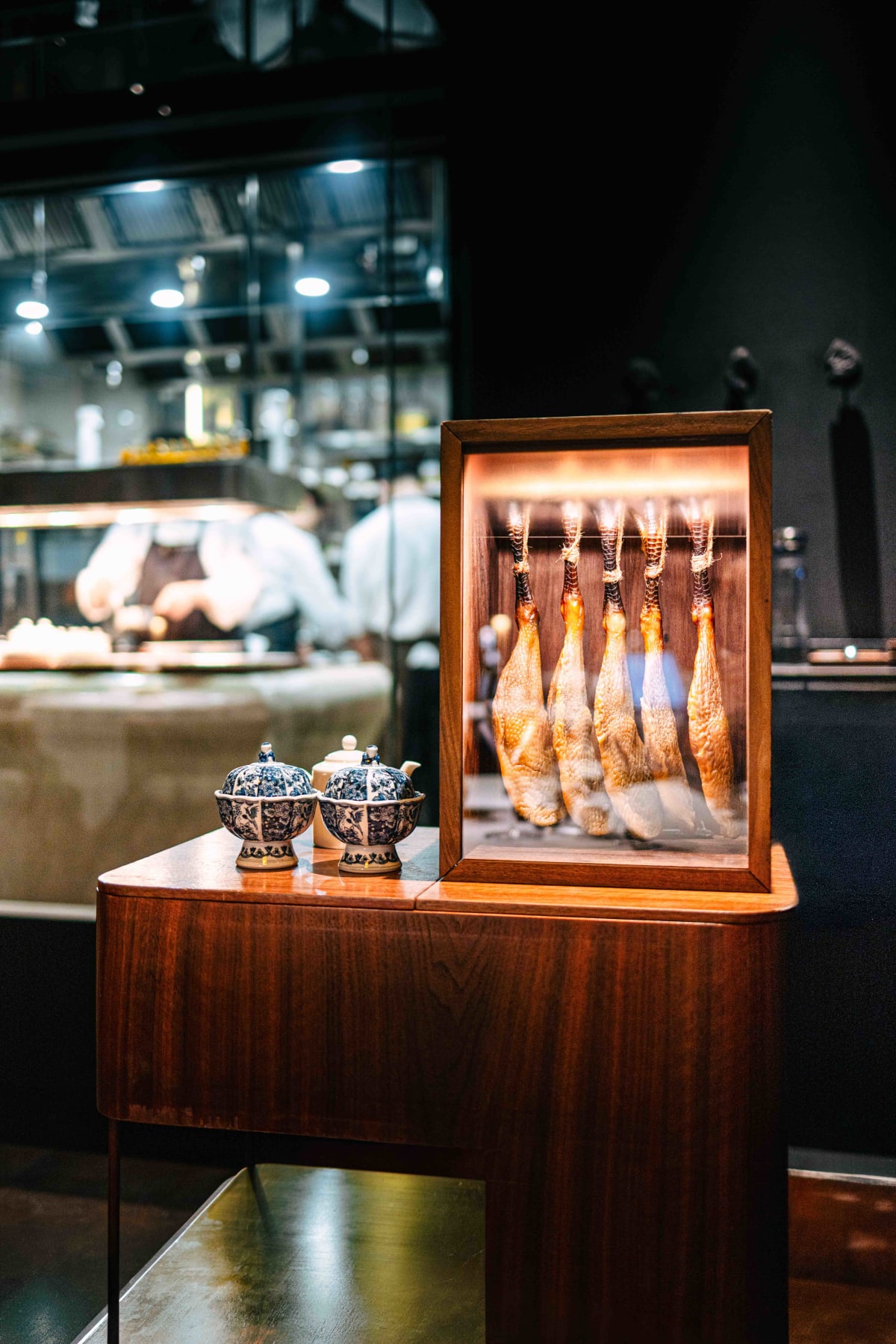
This chicken was raised for three years in Tangshan (唐山, Hebei Province) and then aged for 180 days. Considering that a typical commercial chicken is slaughtered at around six weeks, three years of rearing is an extreme choice made purely to deepen flavour, and a chicken further aged for 180 days is something I have almost never seen.
Yet the chicken does not arrive as meat; it comes as the broth boiled from it. The broth is poured over clams resting in the bowl. These clams, which resemble razor clams, were said to be found in only two places on earth: Fujian in China and Venice in Italy. Few places lay out this much provenance storytelling in a single course.
To begin with, the colour and aroma of the chicken broth over the clams were superb. Perhaps because the salinity ran slightly high, the depth and weight of flavour were truly outstanding. This was not the surface savouriness an ordinary chicken broth can offer but a depth that came from a dense extraction made possible by three years of rearing and six months of ageing. Perhaps because the high cost of the course lets them pour the ingredient budget into ageing the chicken, this was close to the best chicken broth I have ever tasted. Creativity aside, the stronger impression was of a chef who understands the essence of how to build flavour.
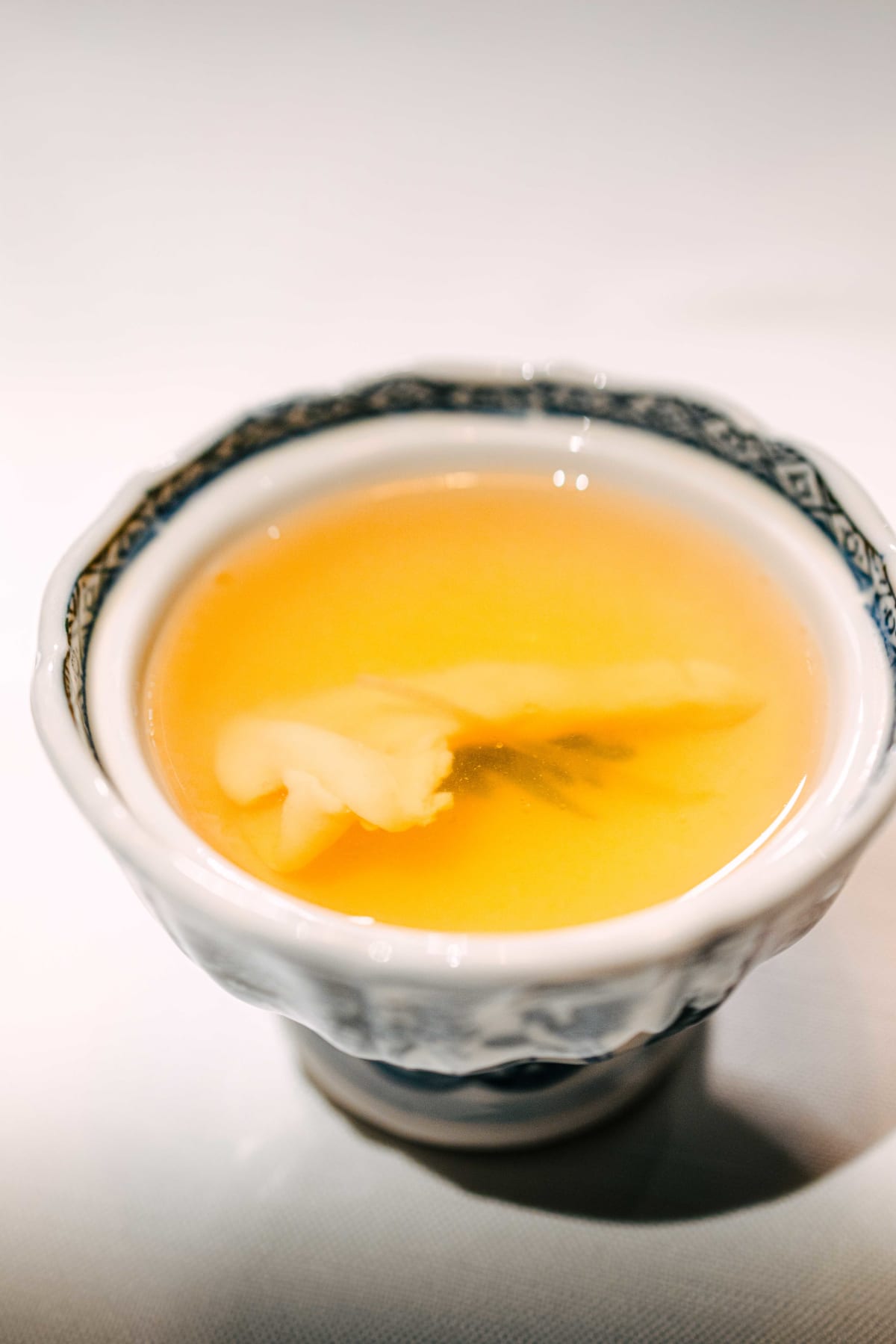
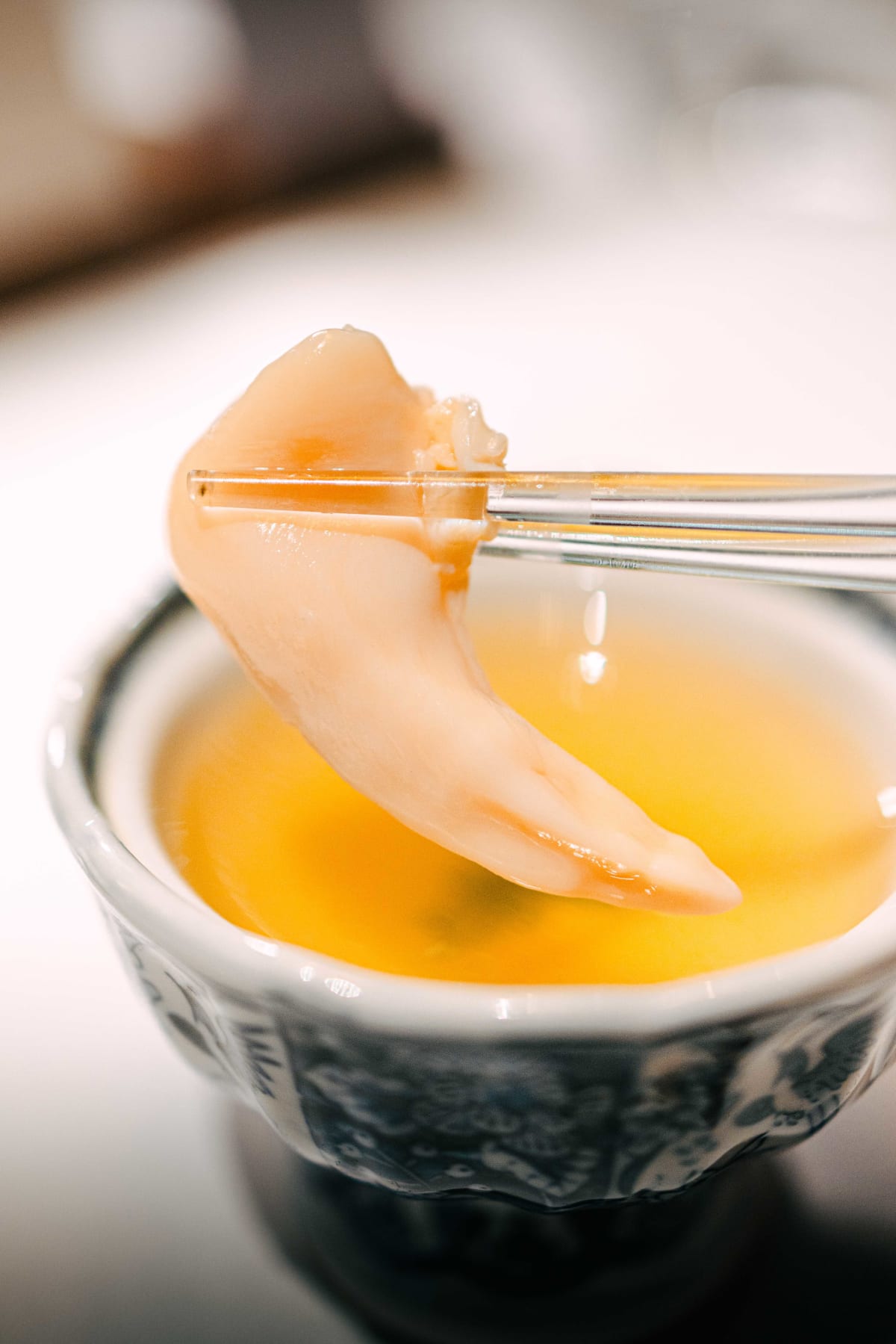
Creativity aside, the stronger impression was of a chef who understands the essence of how to build flavour.
Section 6·Tradition
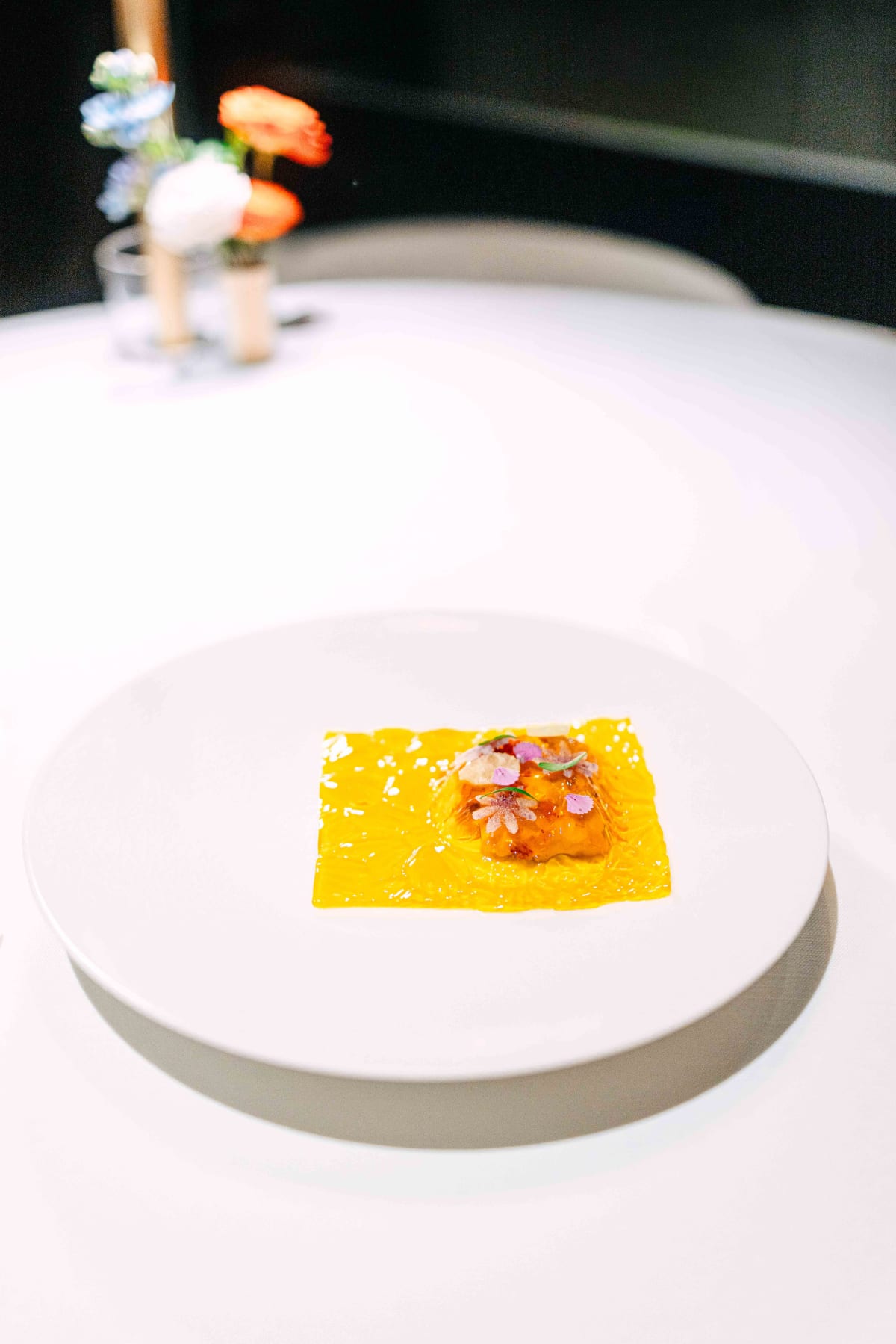
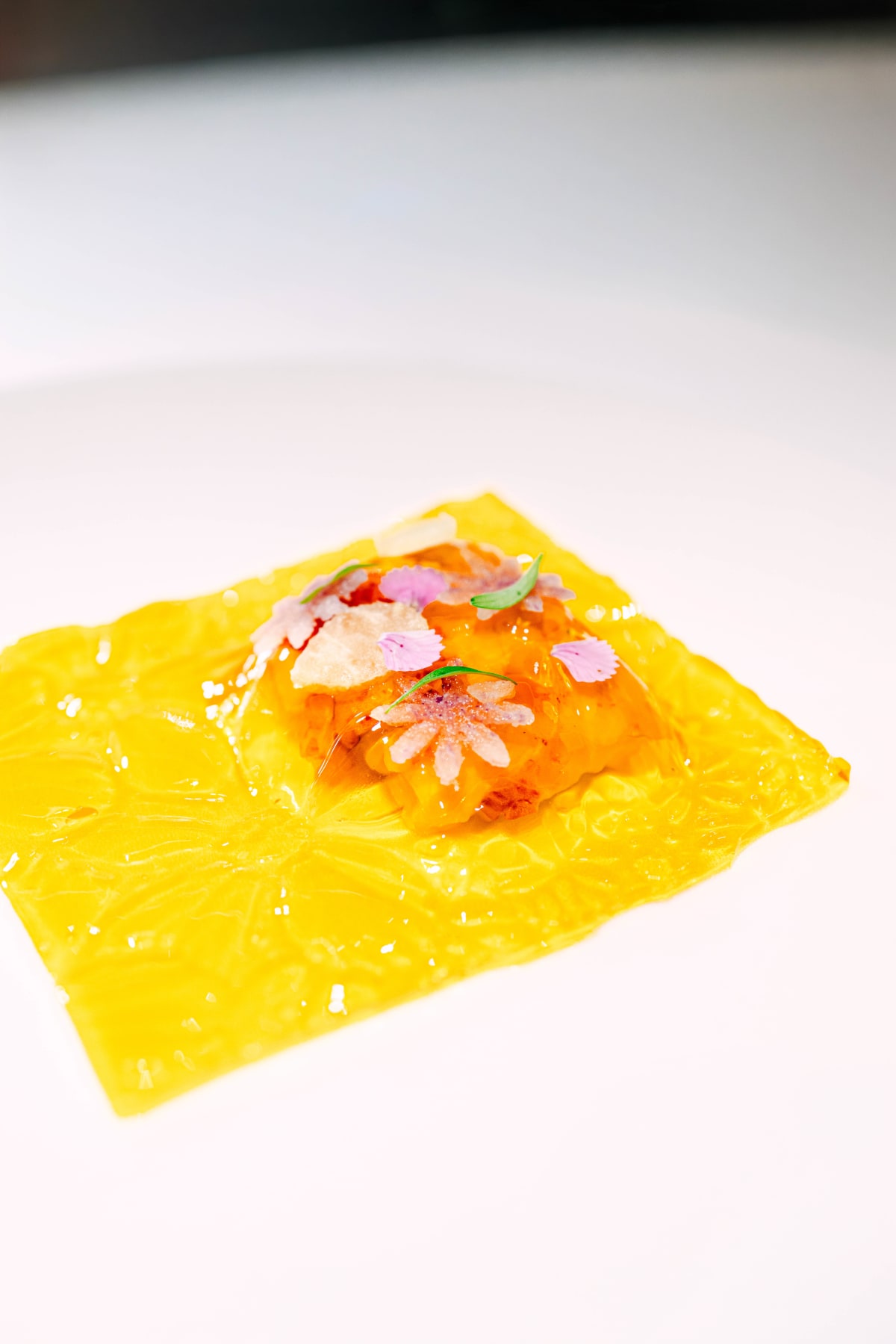
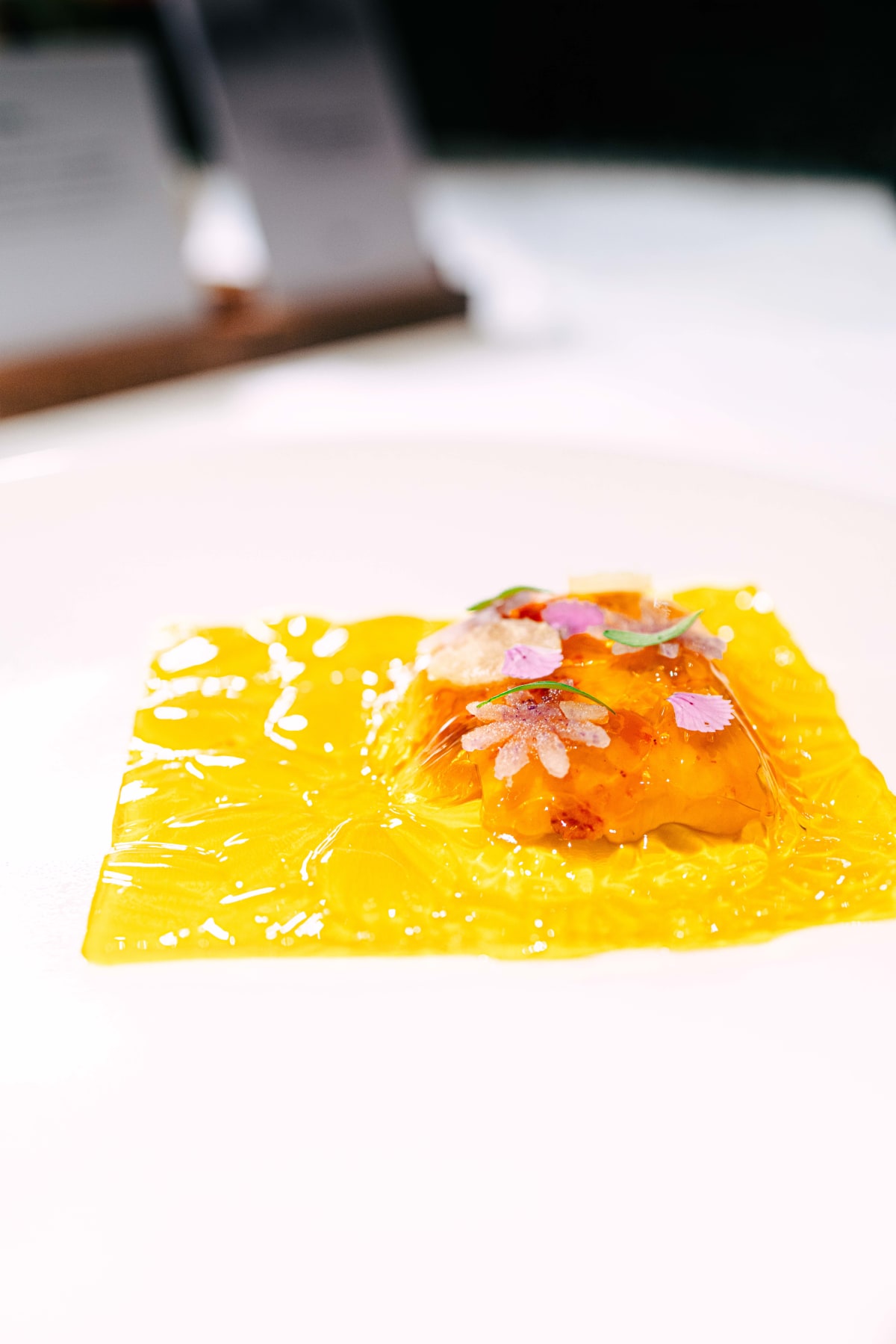
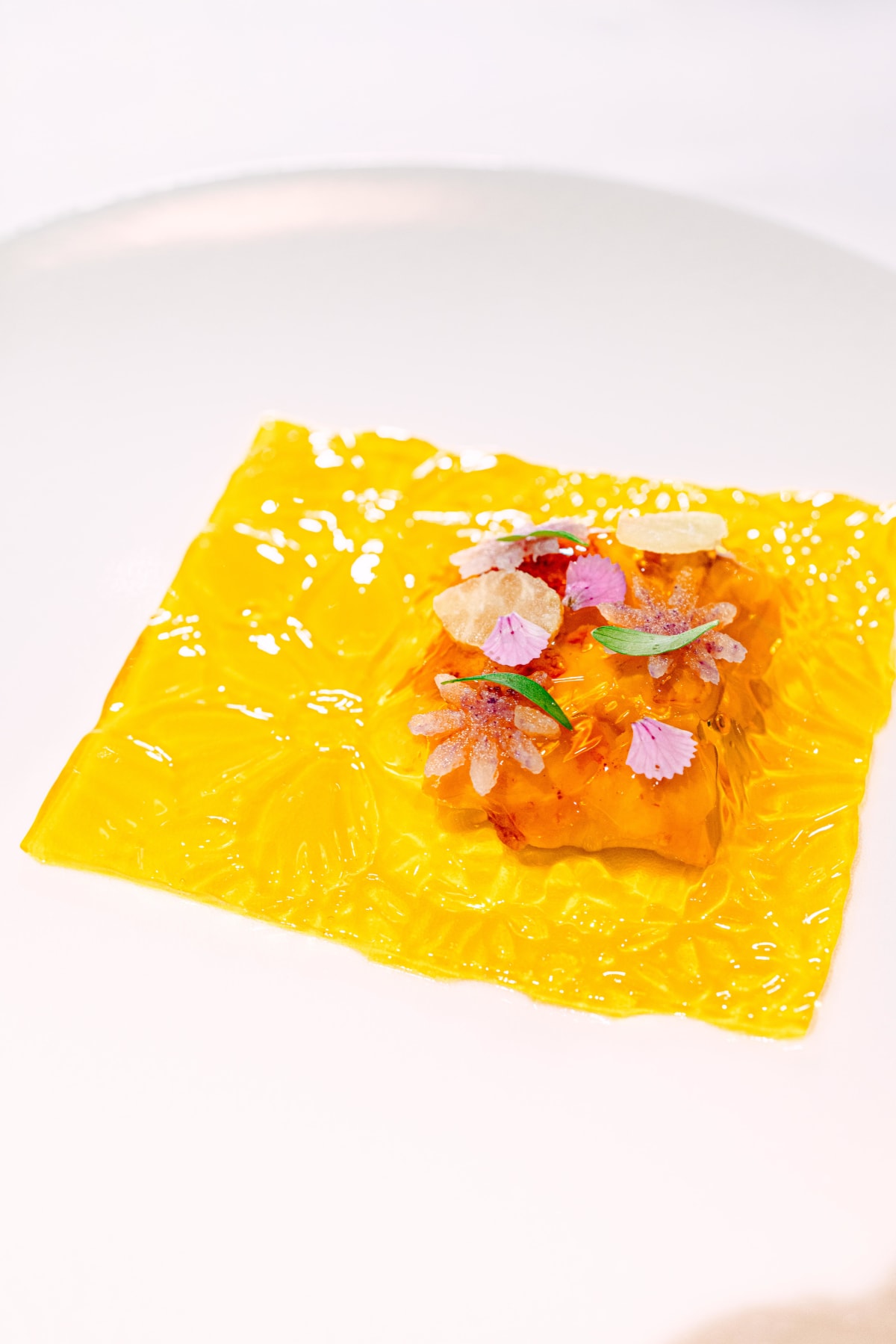
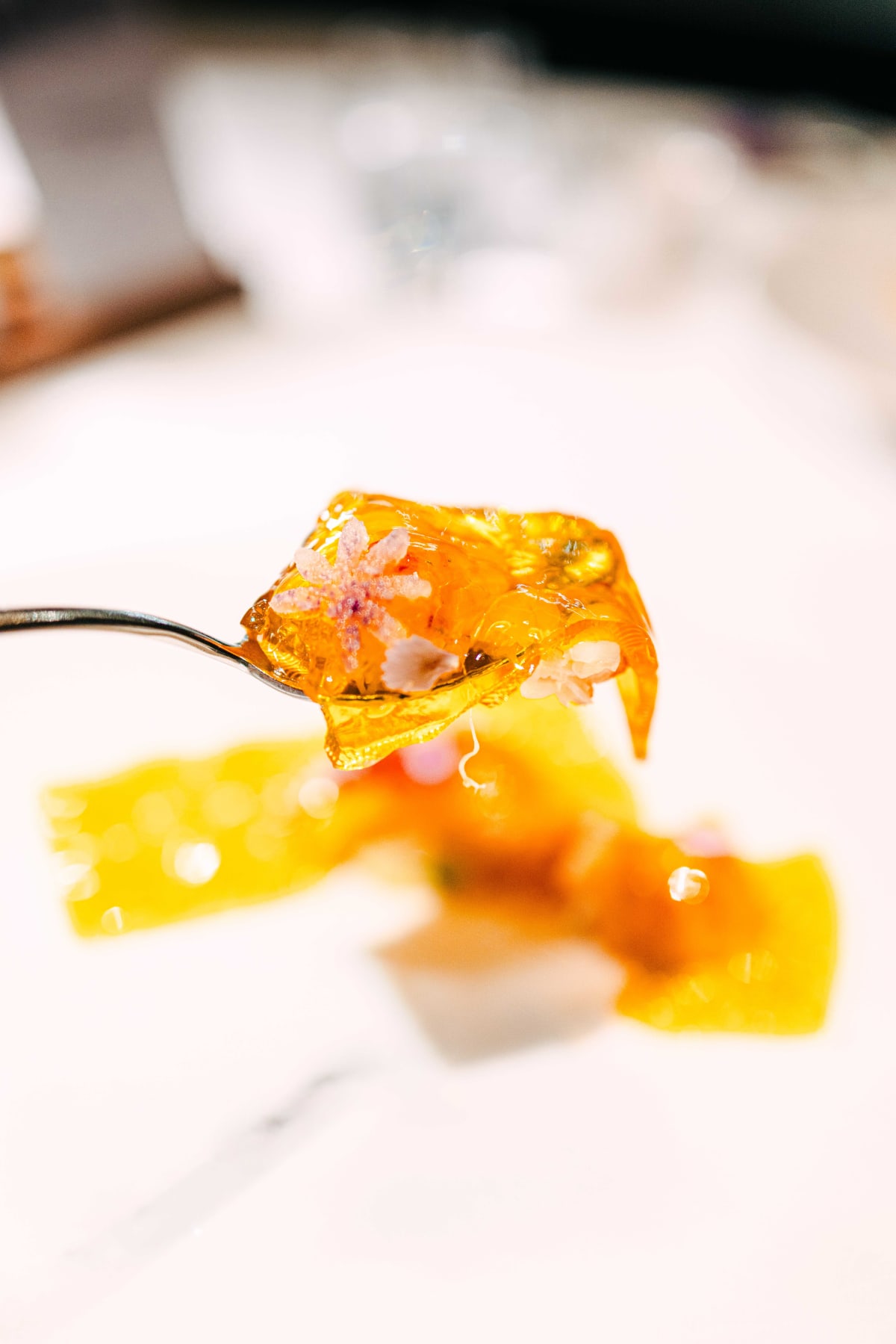
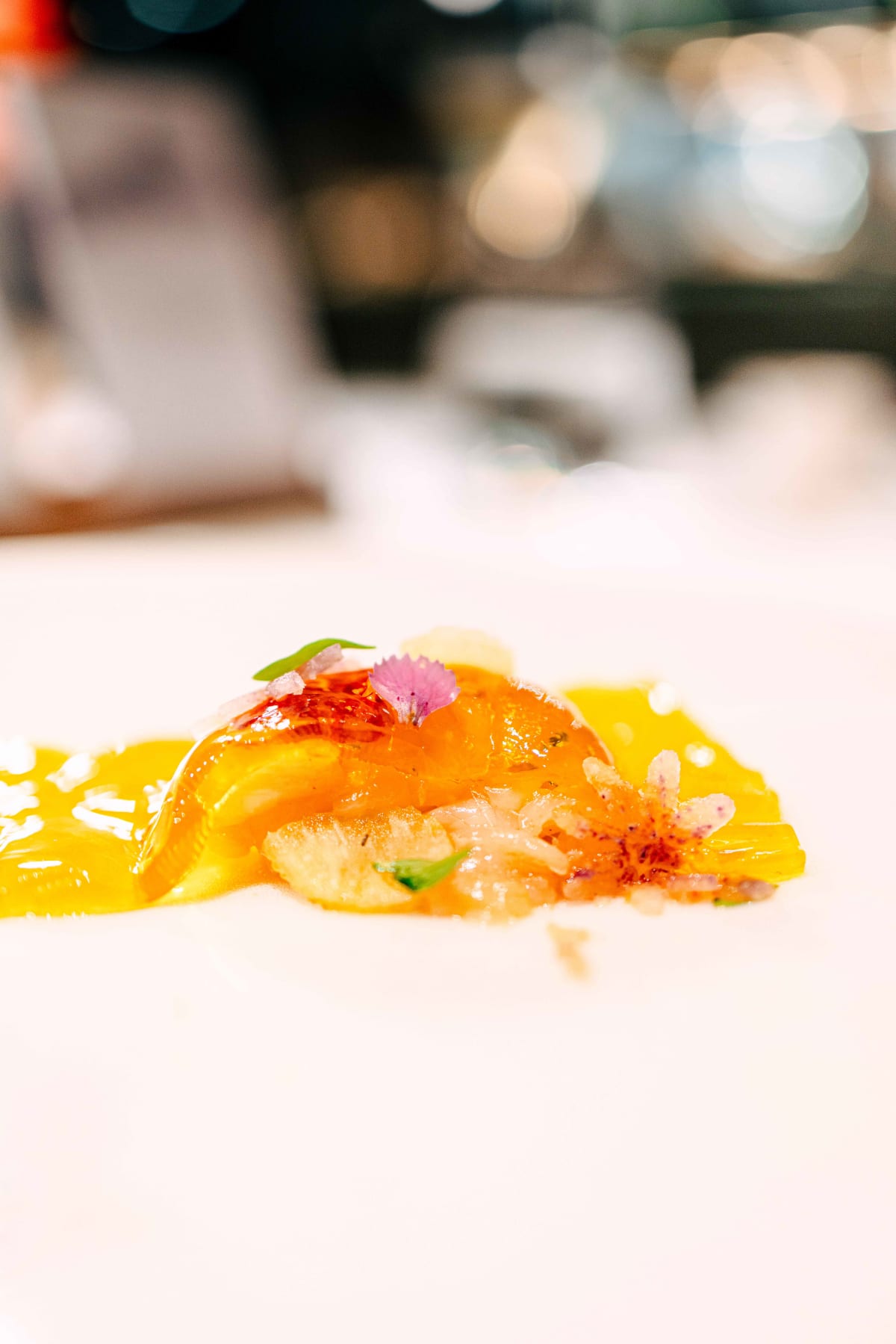
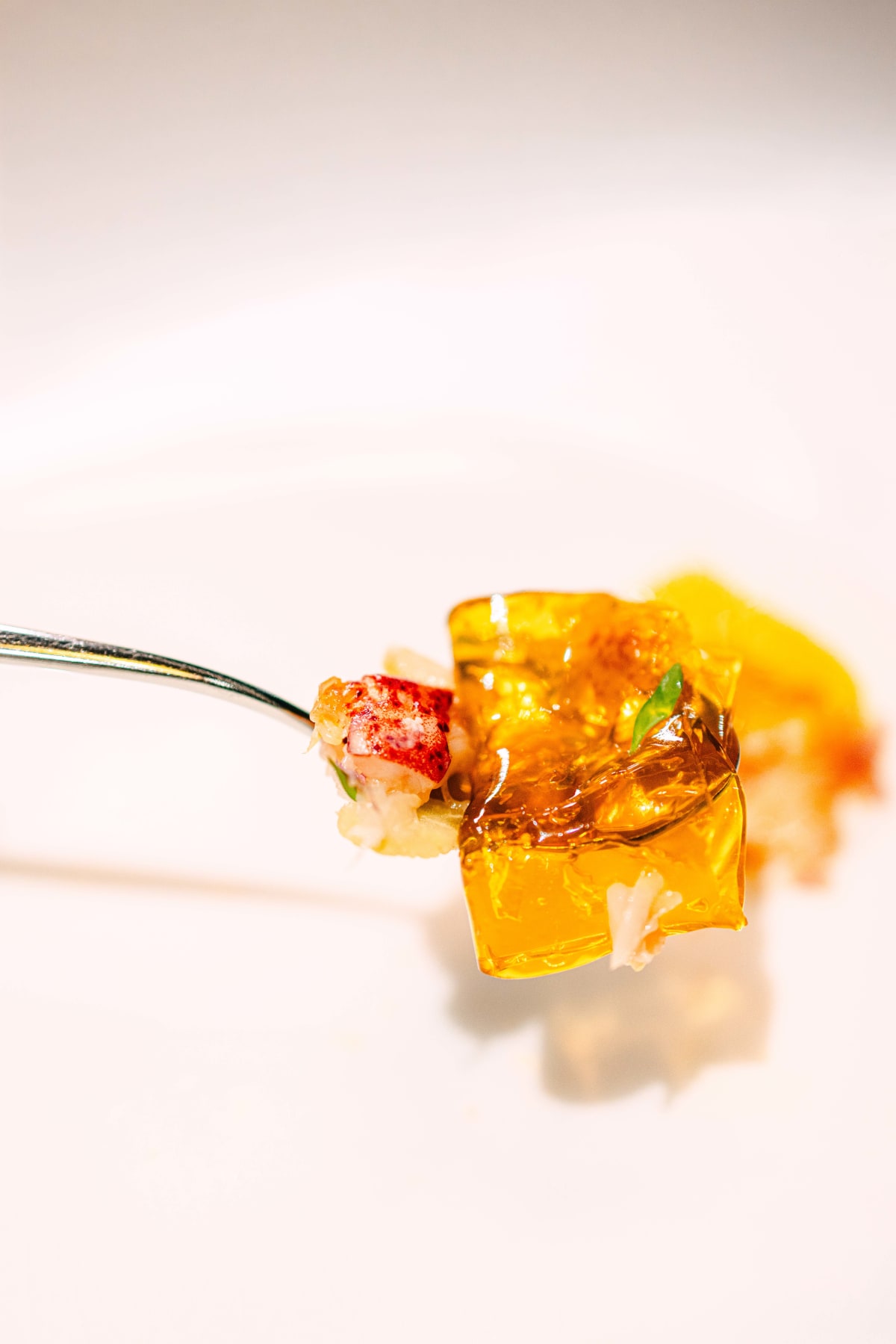
With the course proper underway, the second chapter, Tradition, begins. The first dish was lobster, visually a beautiful plate. The jelly set over the lobster was made from ten-year-aged yellow wine (黃酒). Shaoxing (紹興) yellow wine is a grain brew based on glutinous rice; the longer it ages, the more amino acids develop, deepening its savouriness and making its aroma more complex, and around ten years is the point at which off notes fade and a soft, deep fragrance emerges.
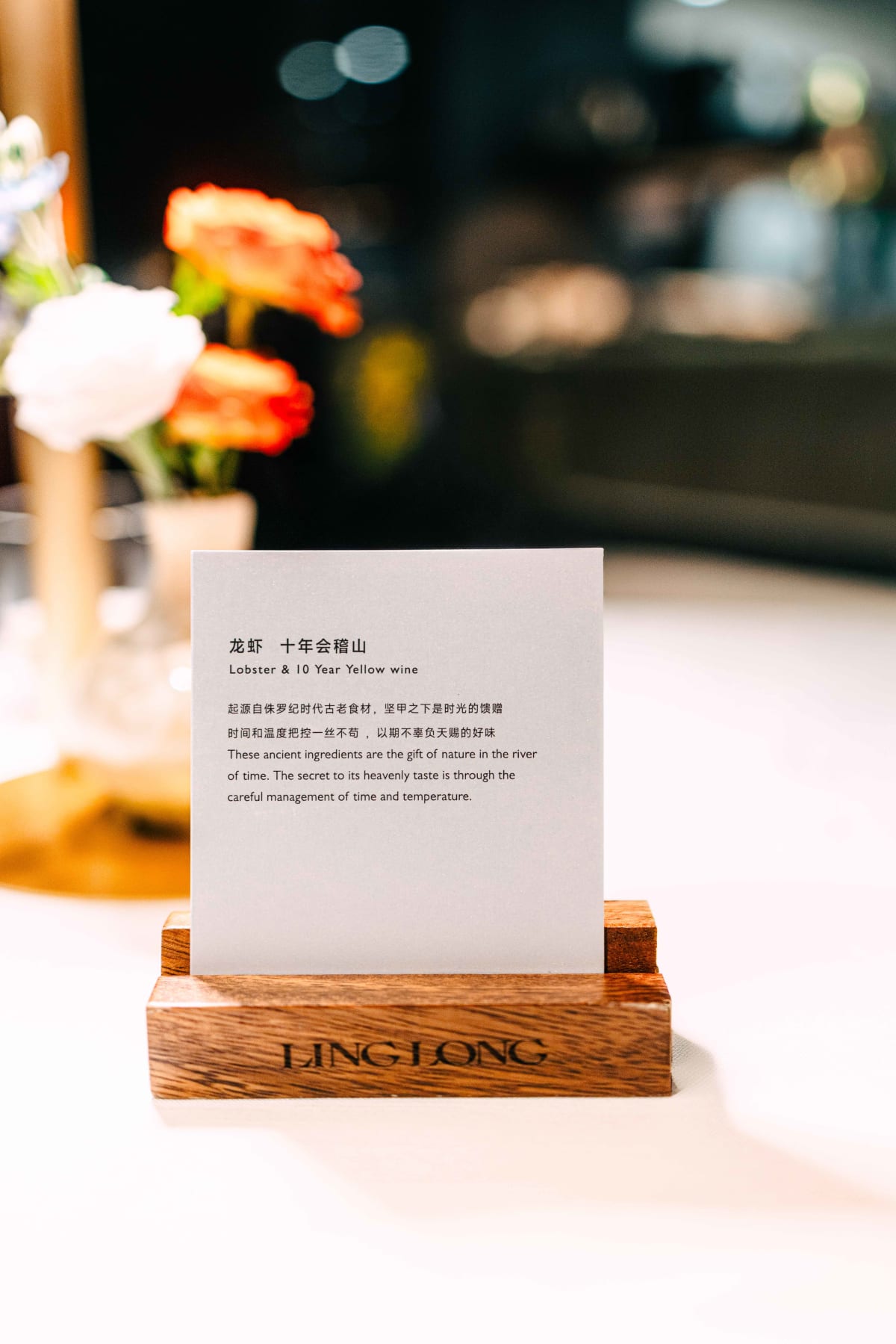
Its colour, too, deepens toward amber, and that hue trapped inside the clear jelly set off visually against the white flesh of the lobster. Yellow wine is usually drunk as is or worked into a sauce, so locking it into a jelly is a way of gathering a volatile aroma into a single bite, which was released as the jelly melted in the mouth. Recalling that crustaceans and shellfish such as crab, shrimp, and clams have traditionally been paired with yellow wine, setting a yellow-wine jelly over lobster reads as an interpretation that fits the chapter name Tradition exactly. Turnip and cilantro were set alongside, so a faint cilantro fragrance ran through the whole bite.
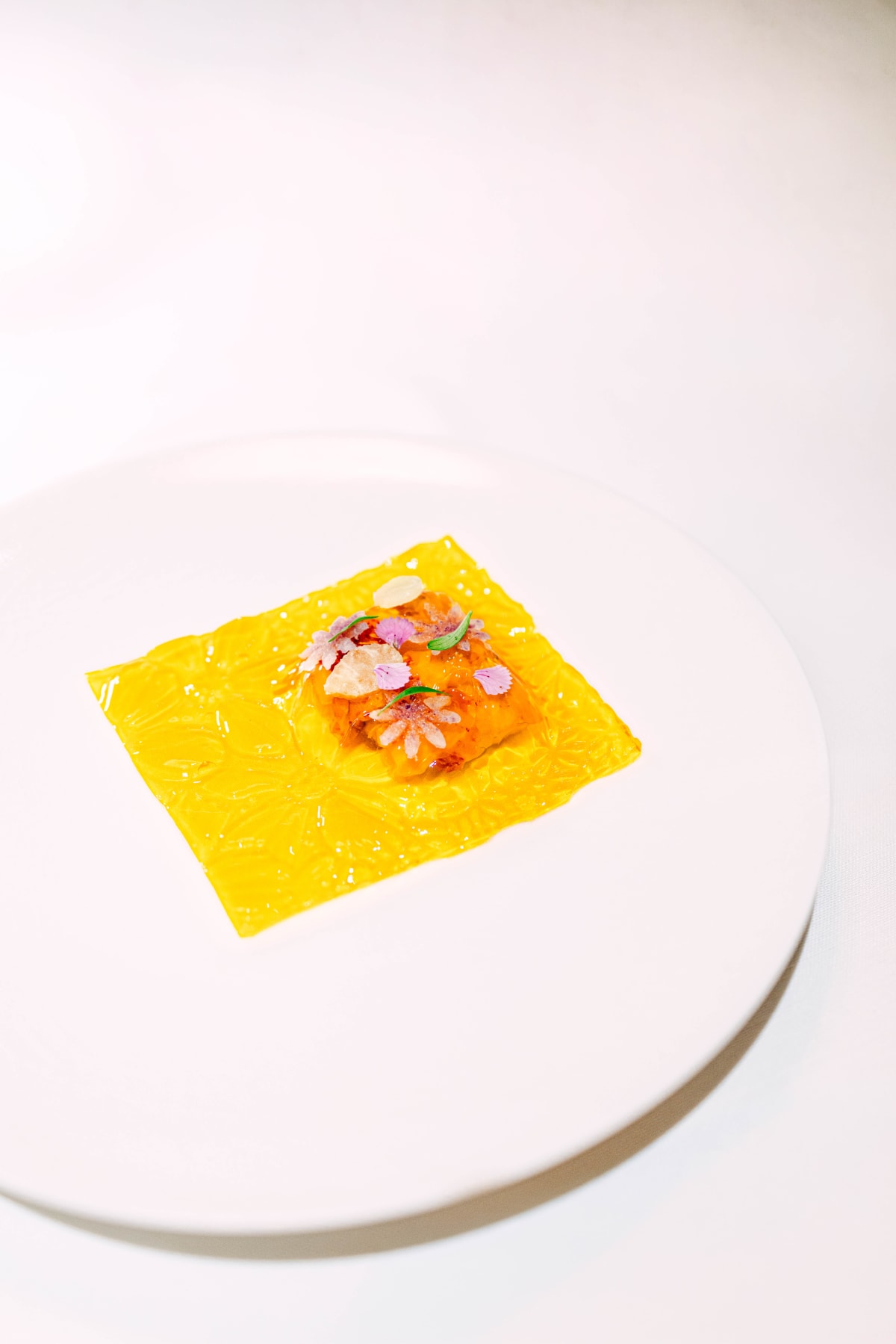
What I liked best in this dish, above all, was the texture of the lobster. Barely blanched, the flesh felt firm from the first cut, and biting into it gave a springy, resilient texture that was a work of art. The attempt to render the yellow wine as a jelly was interesting, but the flavour did not come through as immediately as in the other dishes. It seems a dish to be appreciated for its delicacy. A somewhat quiet start to the chapter, perhaps, but the precision of technique and the care in ingredient selection were already clear from this one plate.

The second dish after the lobster was fish maw. This dish I simply loved, and it was the best of everything I ate across the whole Shanghai trip.
Fish maw is a prized ingredient counted, with abalone and sea cucumber, among the four great dried seafoods (海味). It has little strong flavour of its own, but it is rich in collagen, giving a distinctive slippery yet chewy texture, and it serves as a vehicle that carries other sauces.
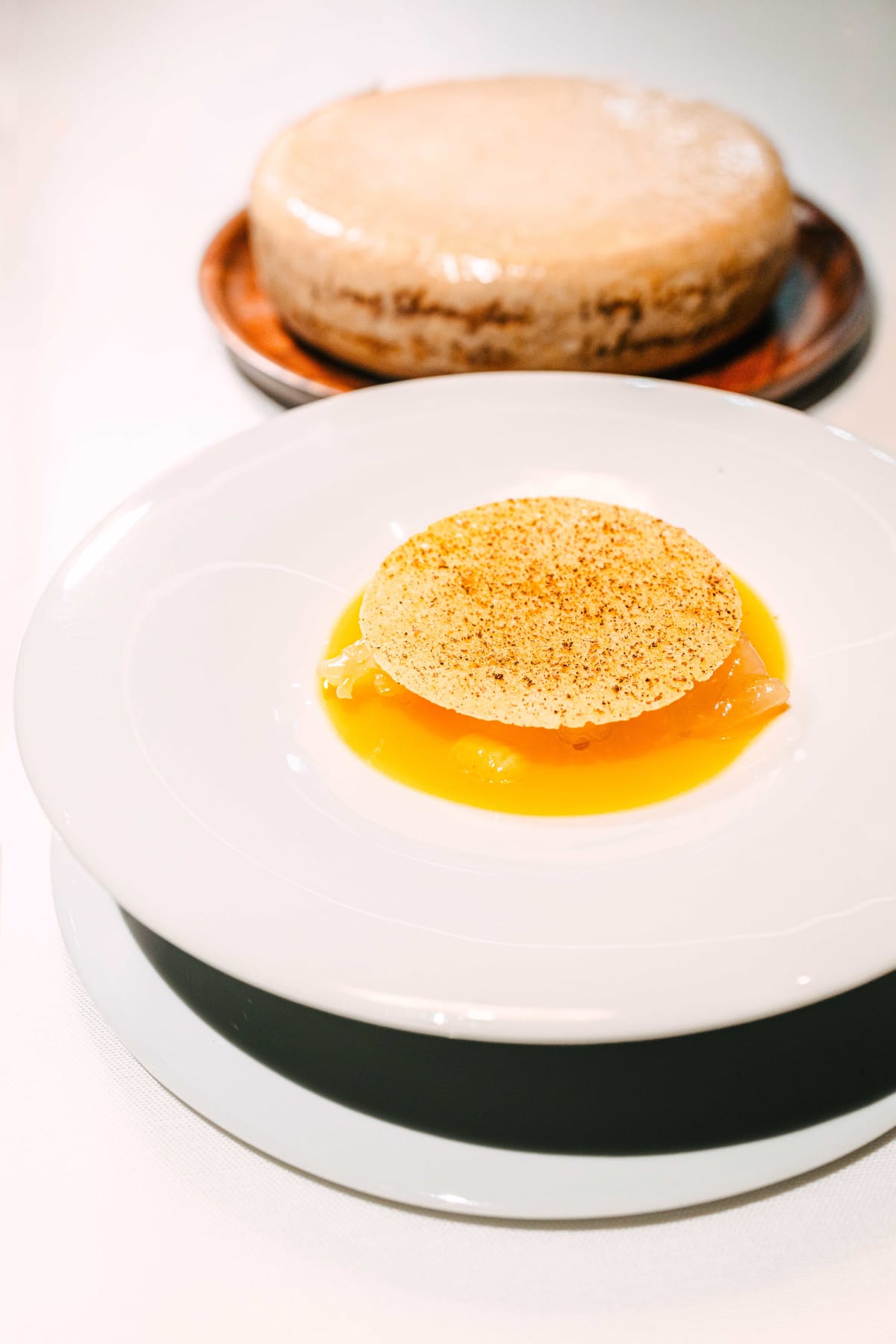
Before the dish arrived, a large cheese was shown to us, said to be the first Parmigiano made in China itself. Milk from Mongolian cows was processed in Beijing following the Italian method exactly.
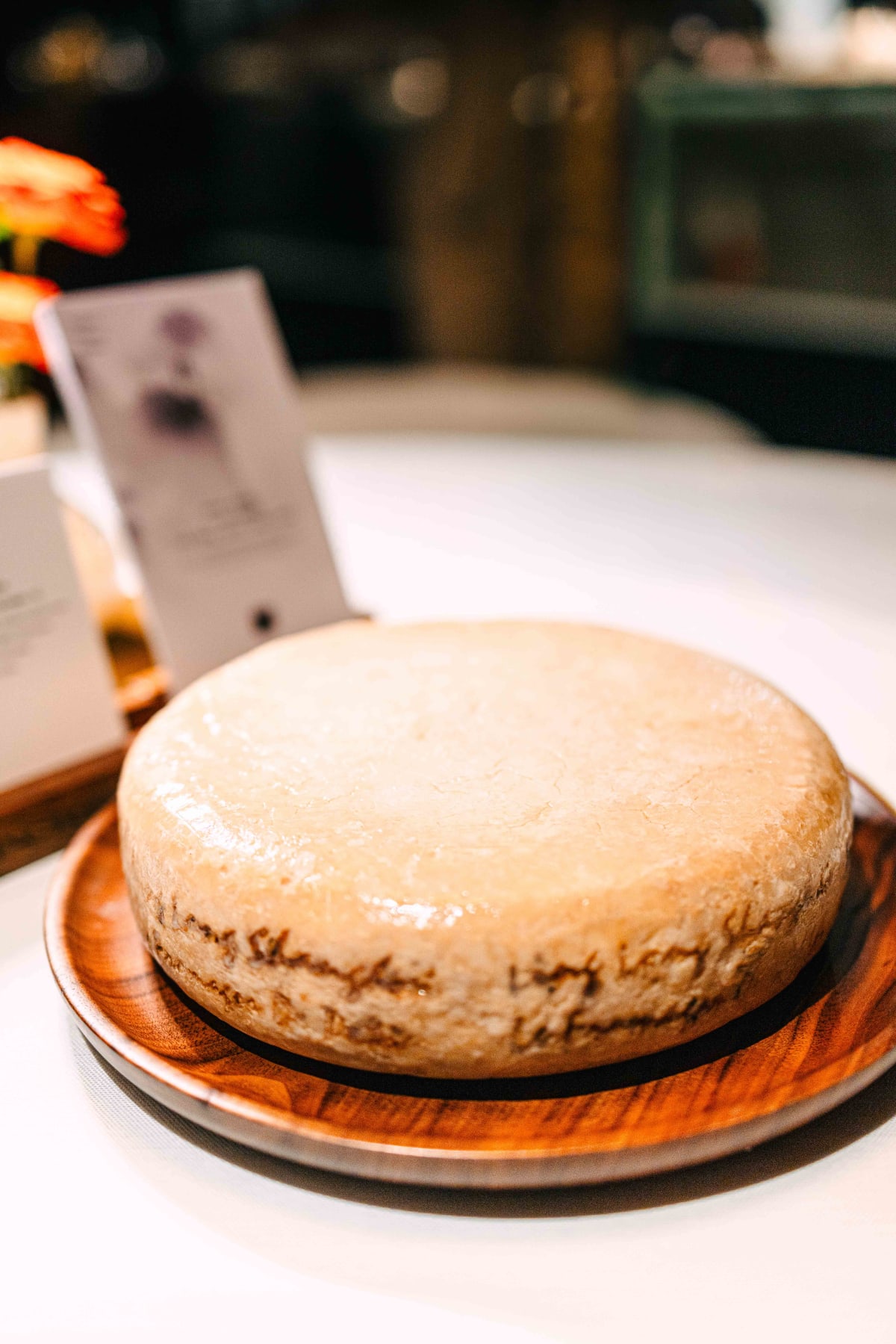
The name Parmigiano can be used only for cheese that meets specific origin, feed, and ageing standards in Italy's Emilia-Romagna under PDO protection, but the very idea of taking that method and recreating it with Mongolian milk shows that China is on the path to becoming a gastronomic power not only in dining, which faces the consumer, but also in ingredients, which are closely tied to the supplier.
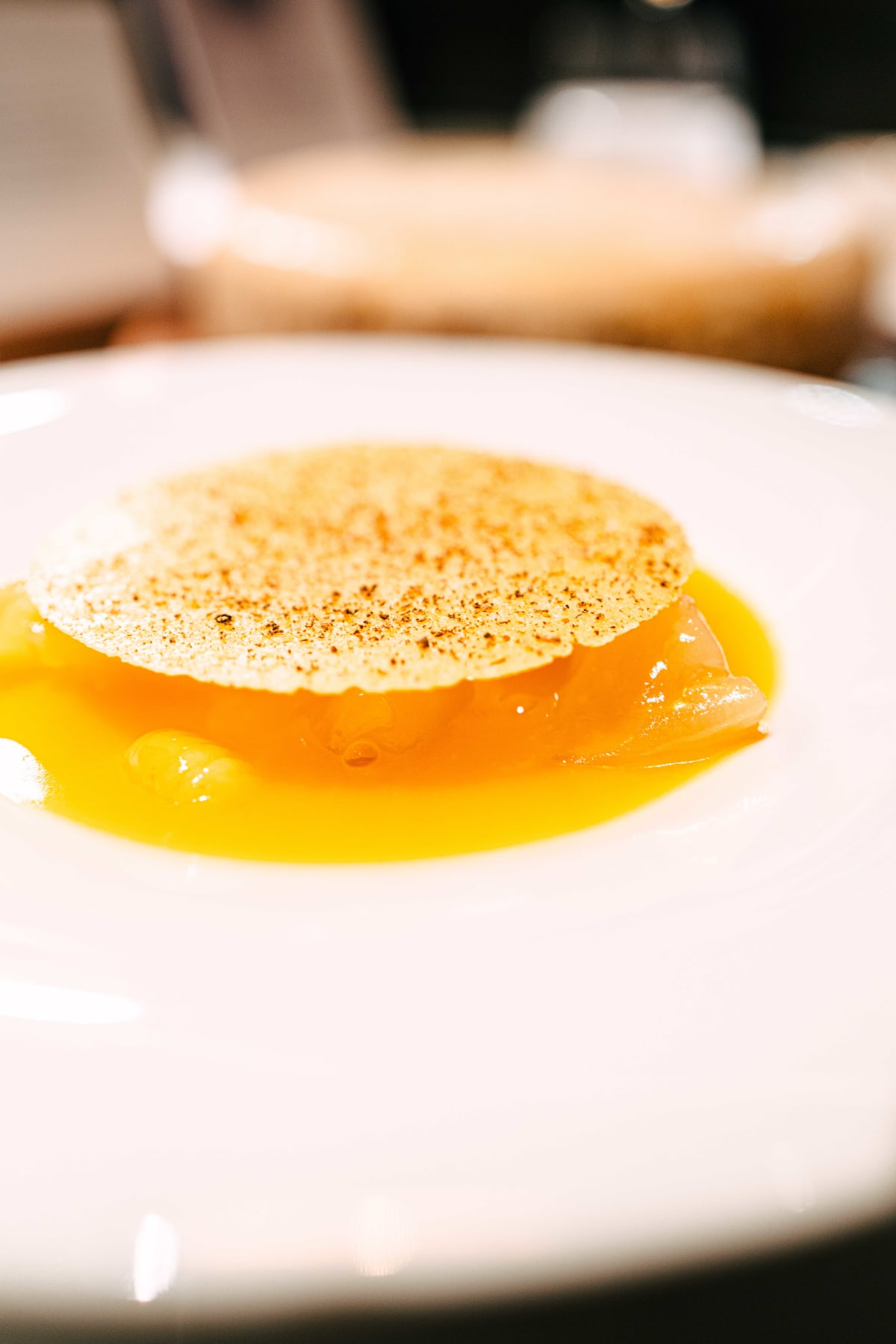
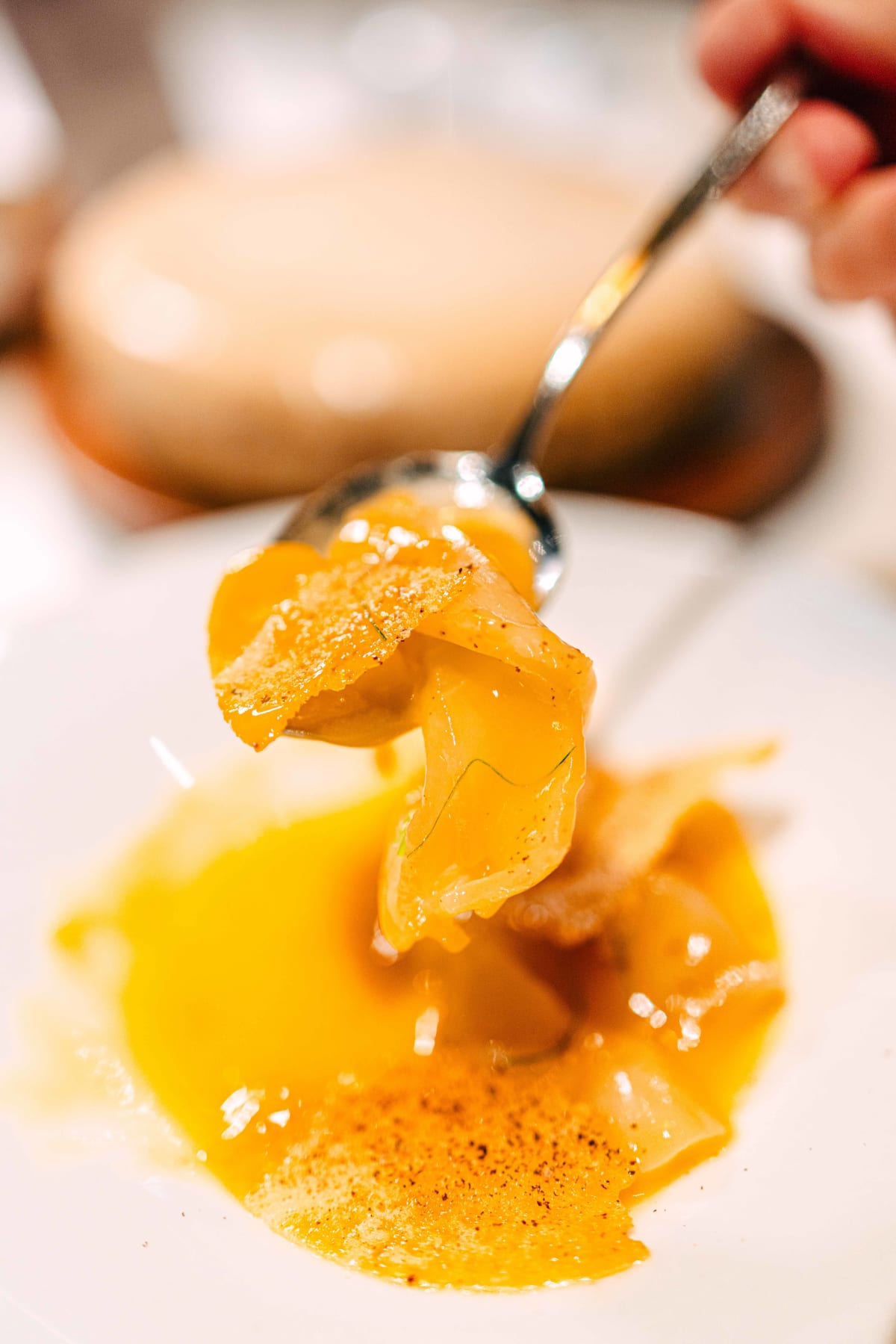
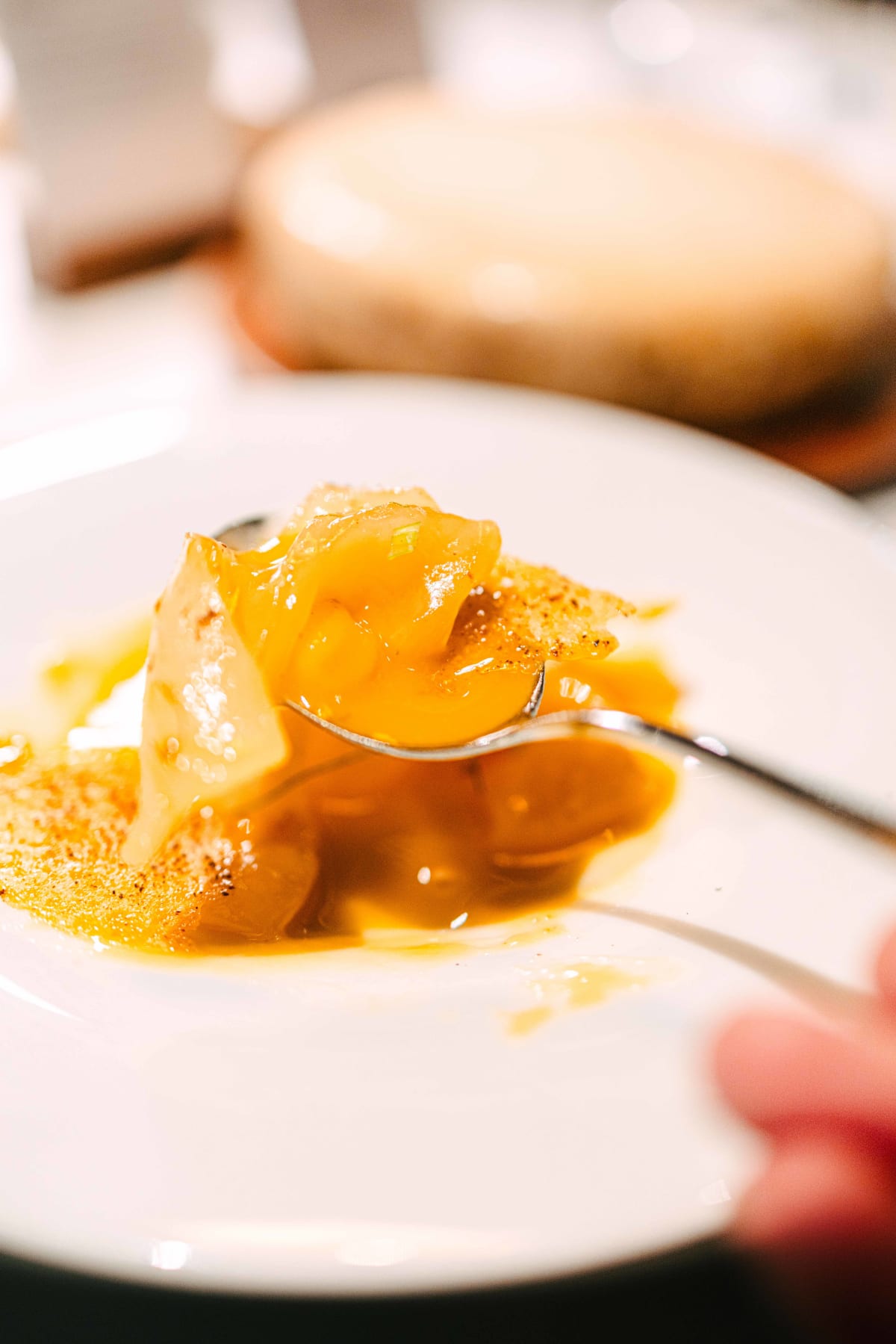
This dish was made by combining that cheese with the Tangshan chicken broth from the earlier course. Inside were fish maw and gnocchi, and the crisp chip on top was also made of cheese. The dot above it was aged tangerine peel (陳皮) from Hong Kong. In Cantonese cooking, the longer aged tangerine peel is, the more it is prized; peel from the Xinhui (新會) region, aged more than ten years, is even used as medicine. Here the citrusy bitterness of the peel naturally cut the weight of the dense cheese sauce.
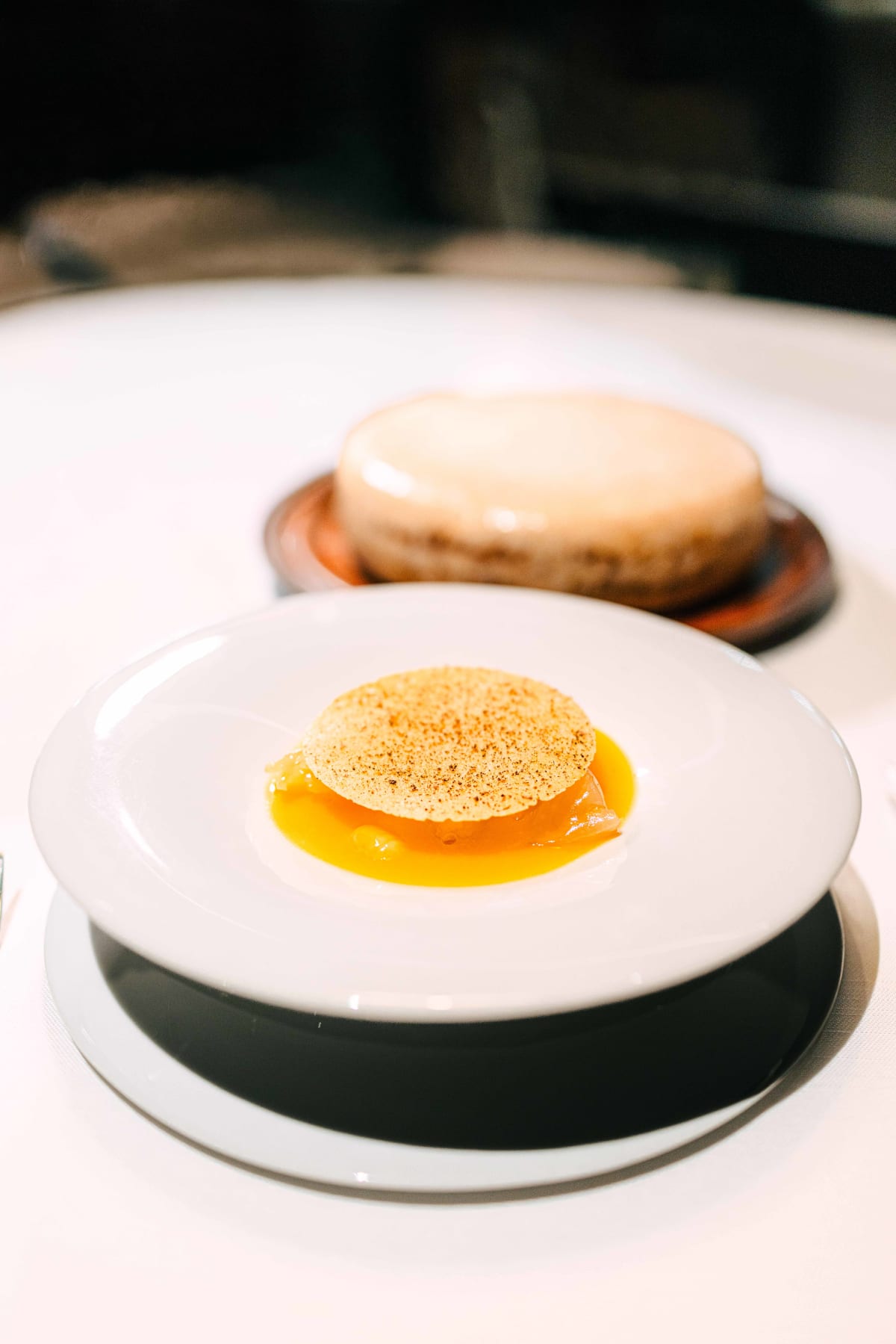
The taste was, to my palate, simply the best. The combination of Parmigiano's richness and nuttiness with the savouriness of the chicken broth was wonderful, and the texture of the fish maw inside was excellent too. Fish maw and cheese sauce went together beautifully. From the gnocchi worked in as a supporting element to the cheese chip on top, not one part felt out of place. The skill of binding Eastern ingredients (fish maw, chicken broth, tangerine peel) and Western ones (Parmigiano, gnocchi) in a single plate was very fine.
Section 7·The Wines
At this point I ordered white wine by the glass.
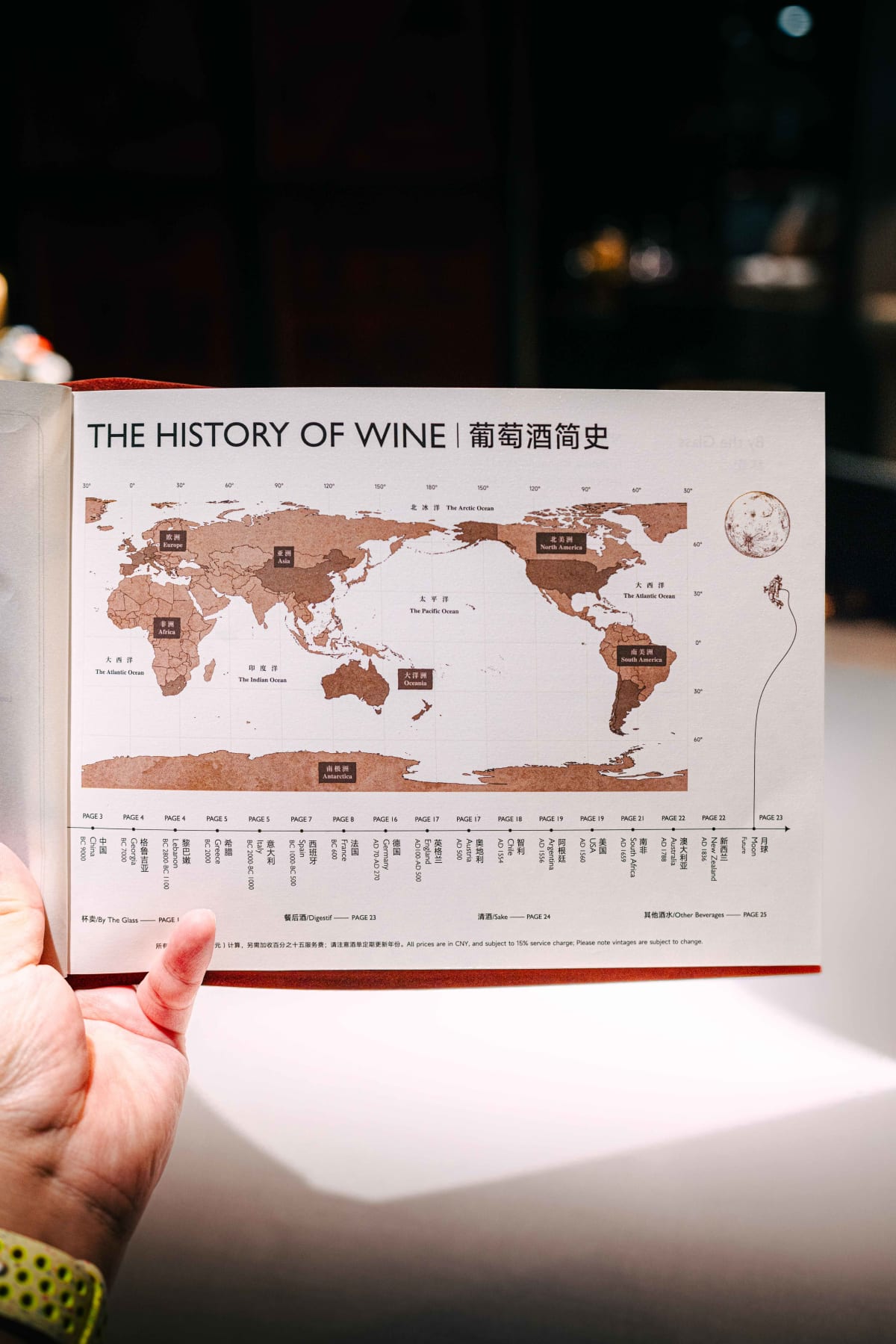
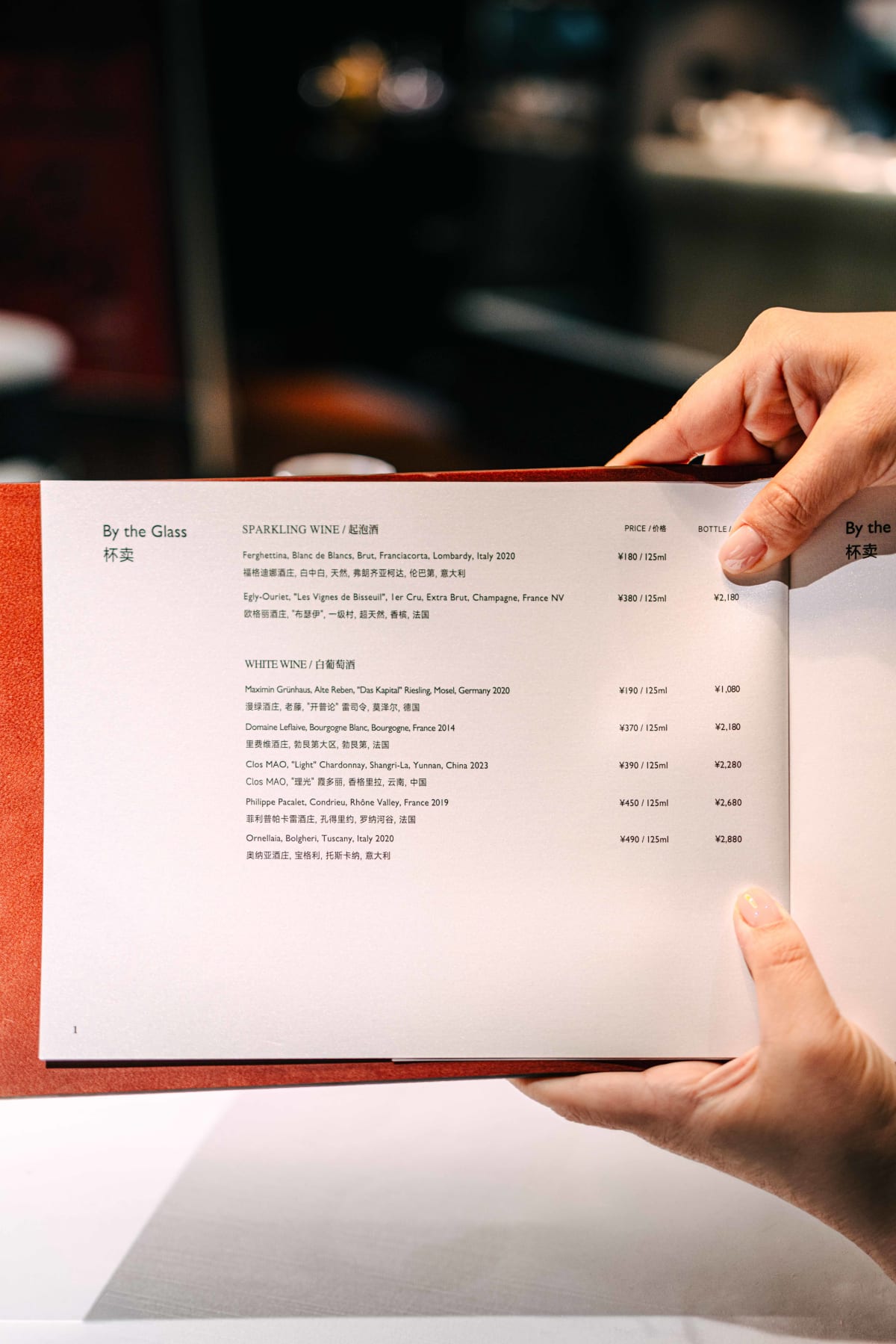
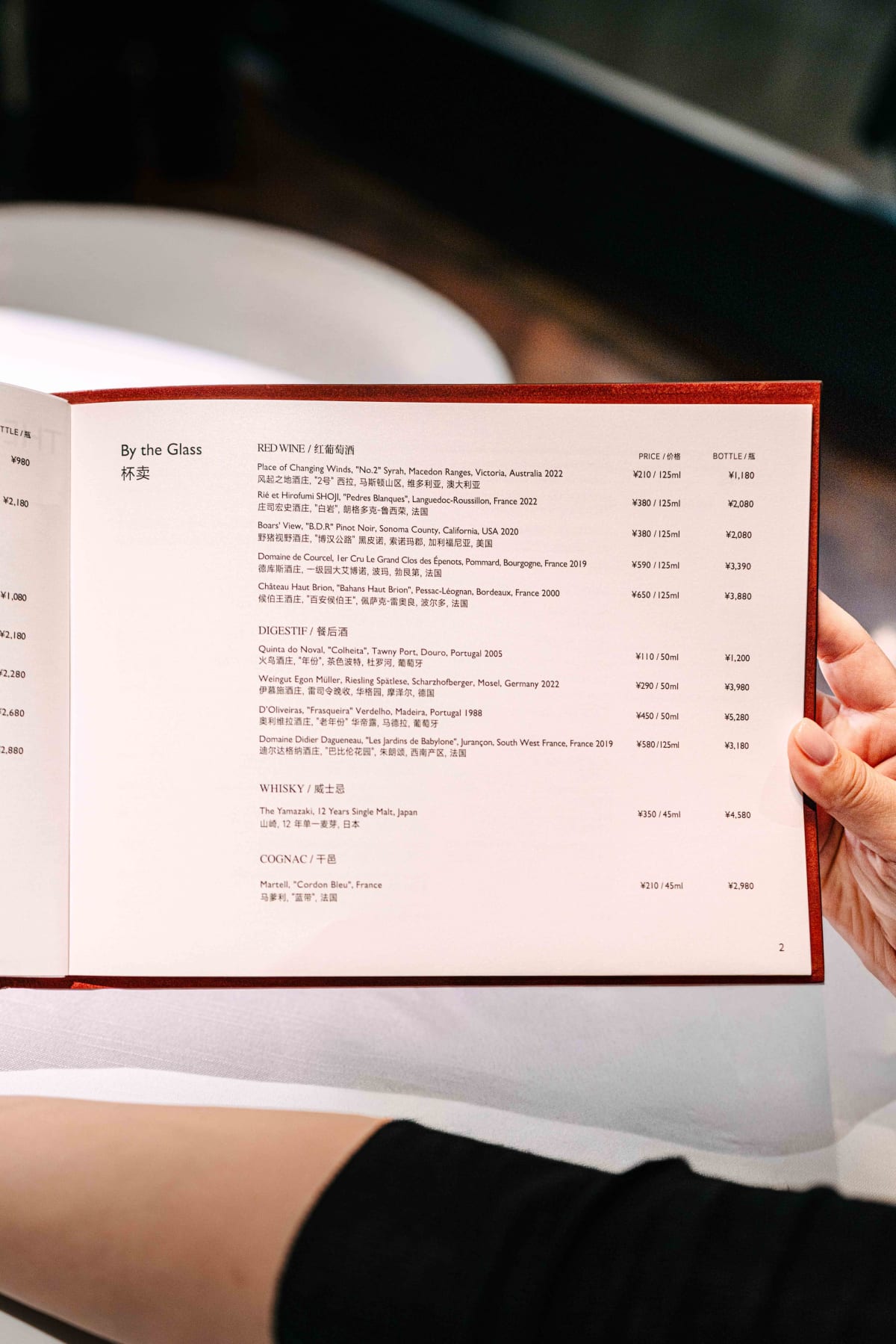
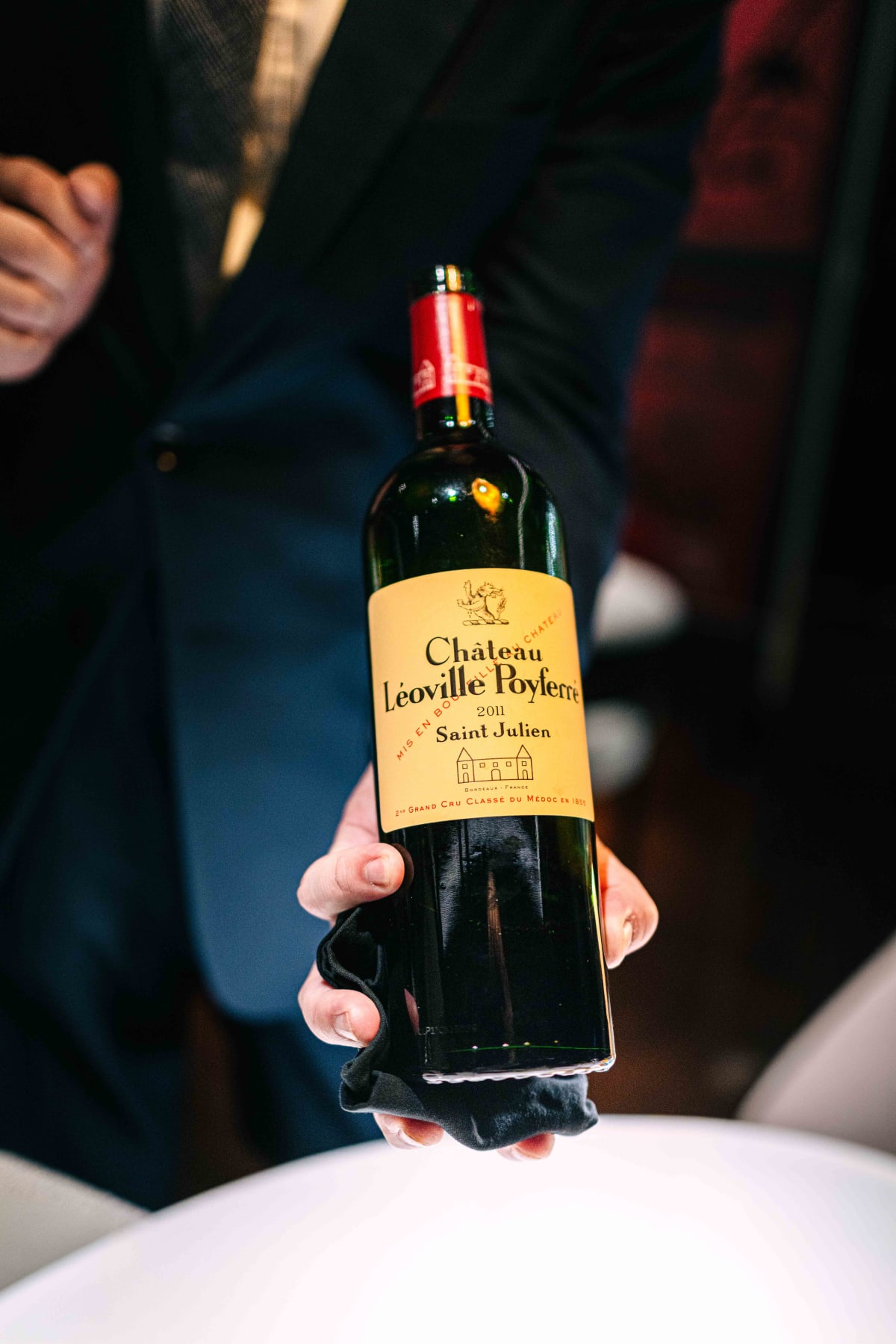
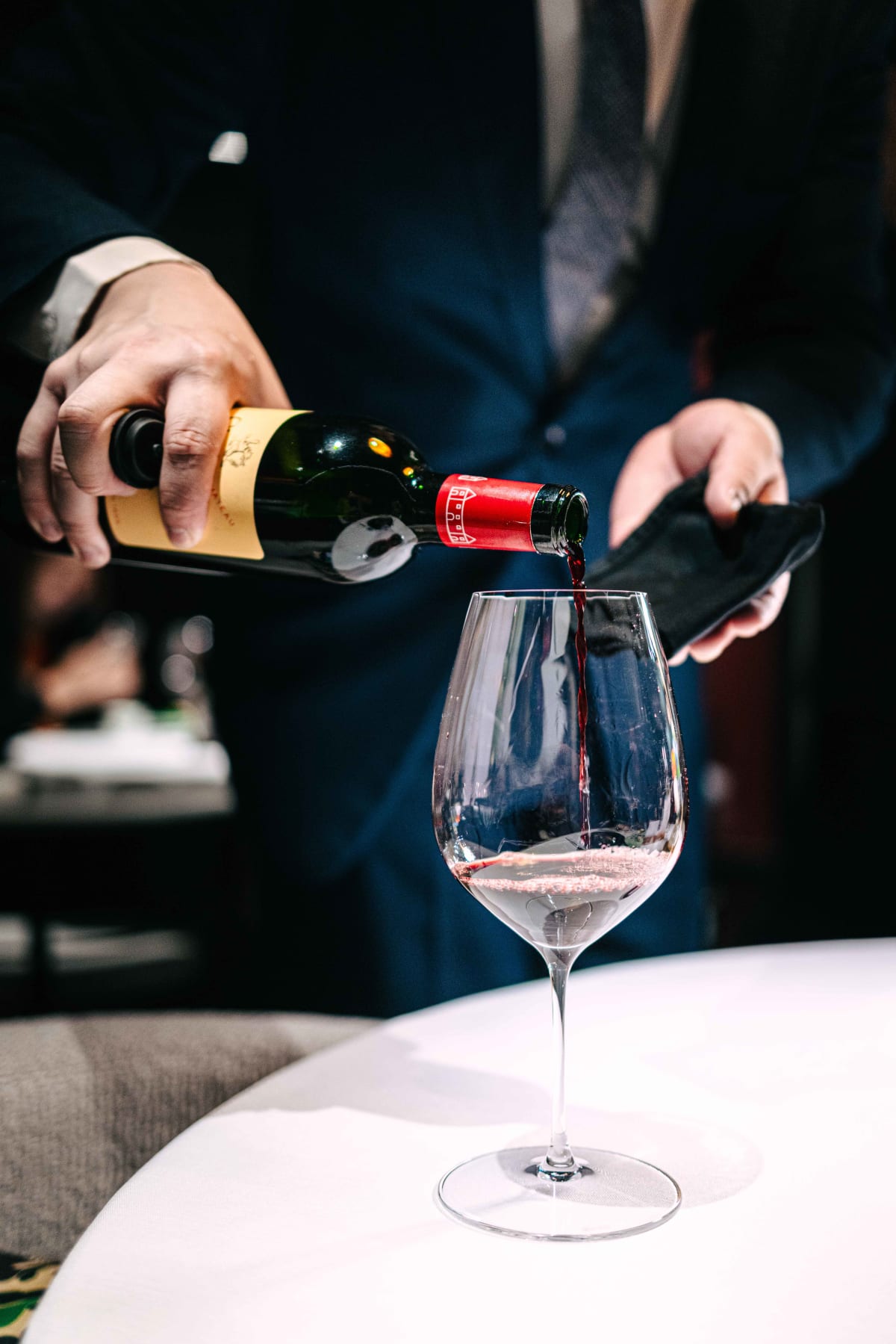
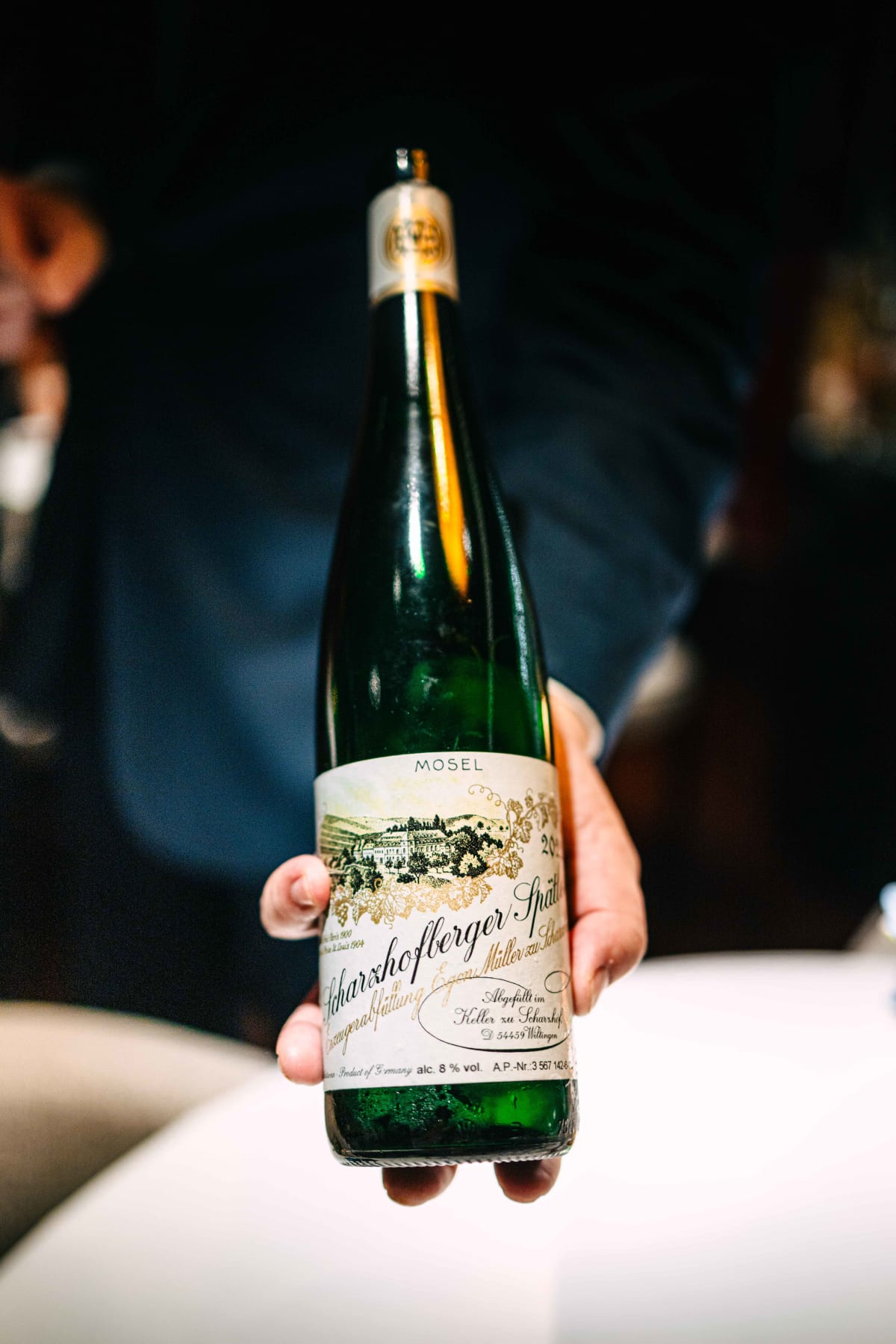
Unsure what to choose, I asked for a recommendation, and the sommelier suggested a glass of Leflaive and a Chinese wine from Yunnan. The two of us agreed to have one glass each and ordered two, whereupon the sommelier said he would split them into half-glasses of each for both of us. But the pours were nothing like half-glasses: in effect he gave each of us a full glass of both, no fewer than four glasses in all.
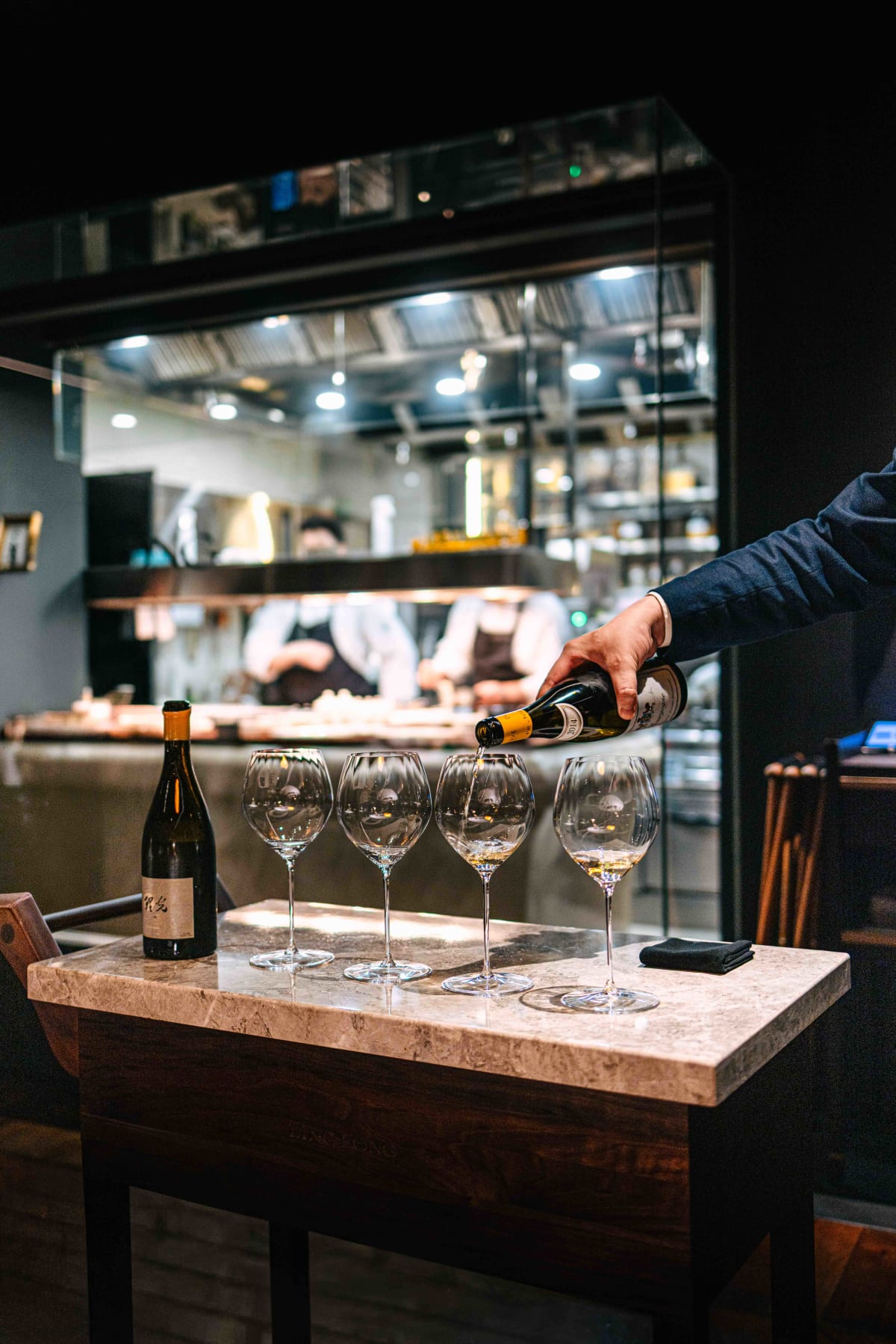
The Yunnan white was Clos MAO "Light (理光)." Made from 100% Chardonnay, it comes, I was told, from a winery founded by an alumnus of LVMH's Ao Yun winemaking team who went independent. Ao Yun is LVMH's high-altitude wine project in the Himalayan foothills of the upper Mekong in Yunnan, a case that proved the potential of Chinese wine to the global market from its very first vintage. Perhaps because the grapes are grown at around 2,900 metres, the acidity was good. The 2023 is the first vintage, and with small production it commands a considerable price for a Chinese wine.
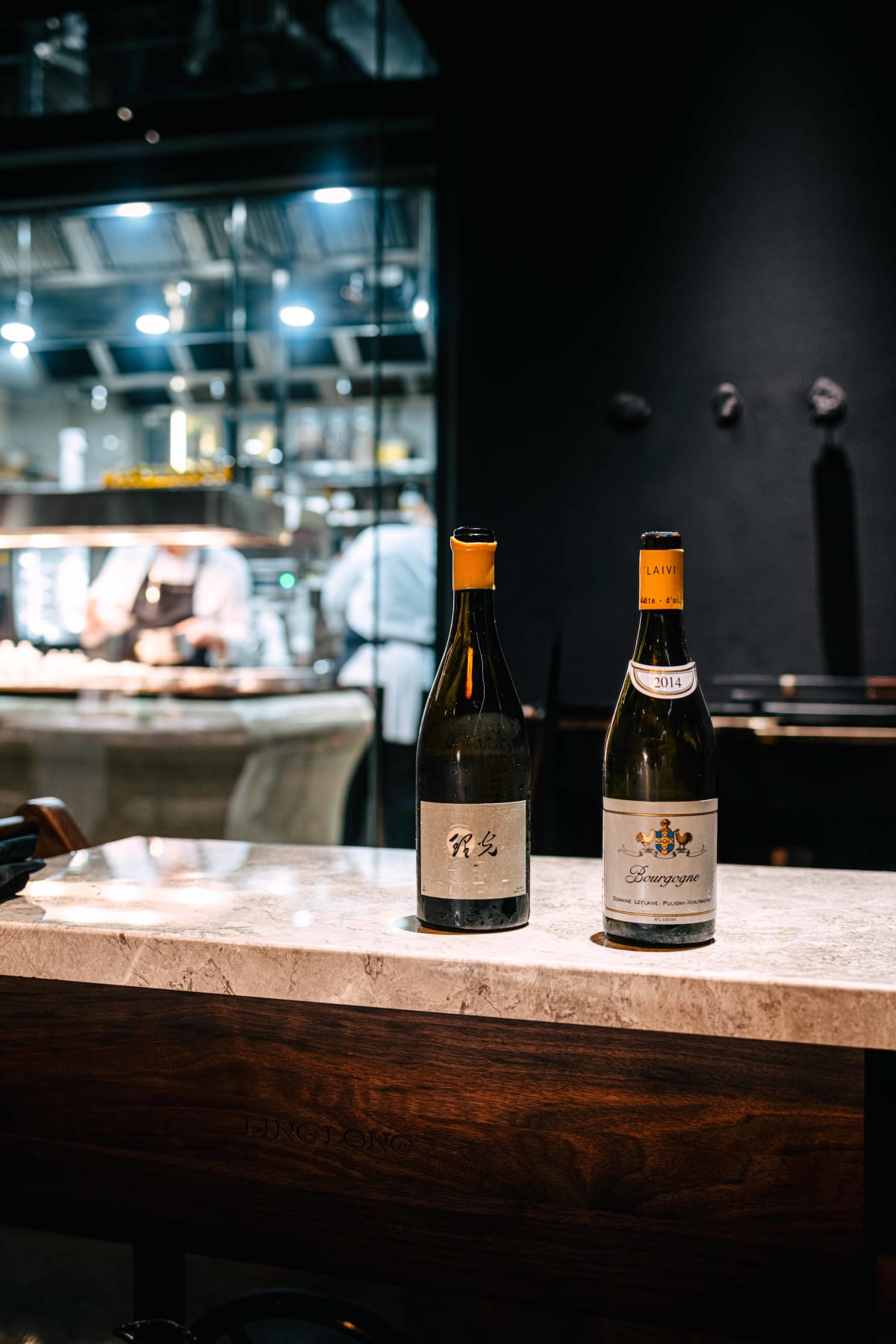
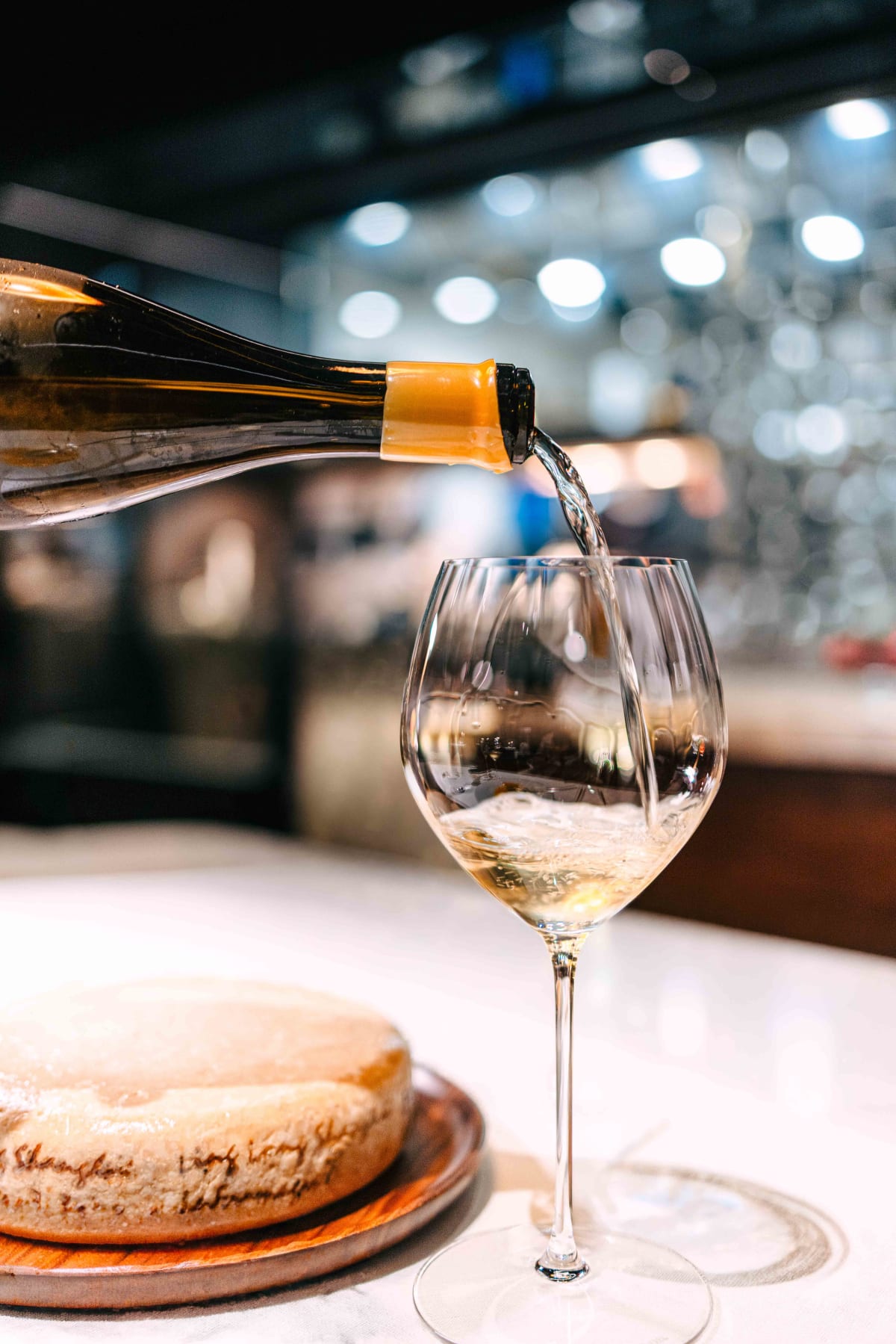
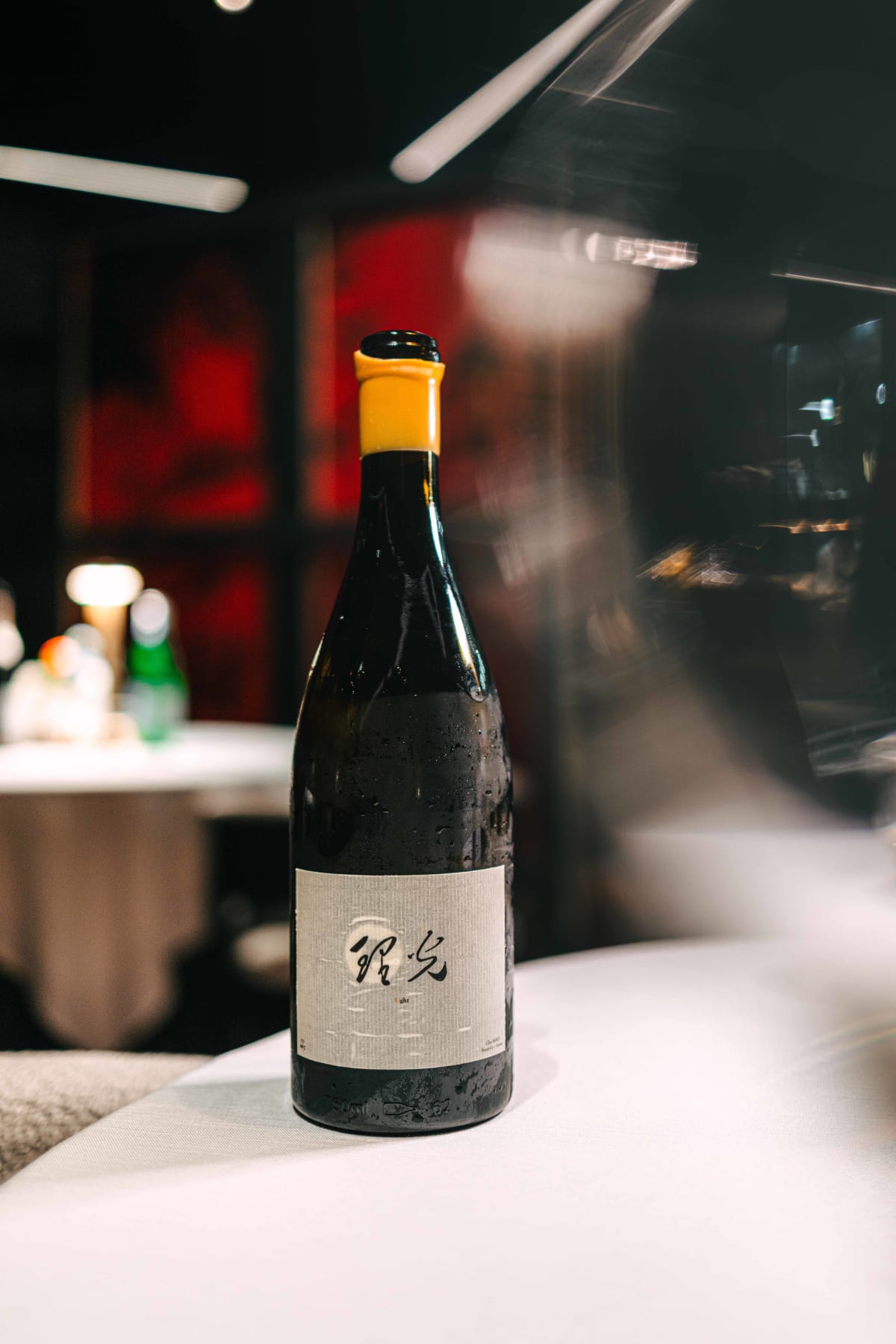
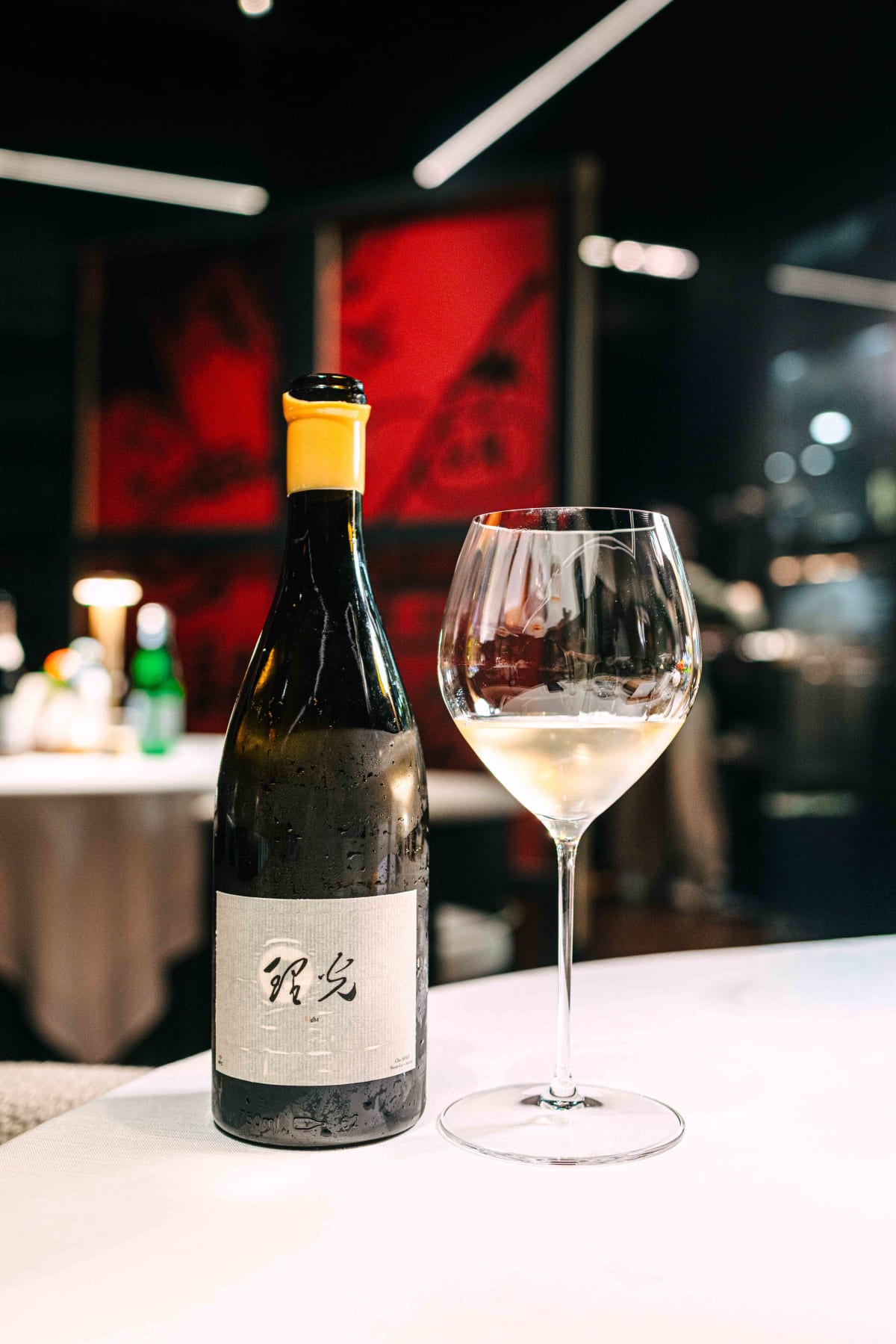
A glass of Leflaive Bourgogne Blanc was 370 RMB (about 50 dollars), and the Yunnan wine 390 RMB. Yet in taste the Leflaive still had the edge. Domaine Leflaive is a Puligny-Montrachet powerhouse and one of the summits of white Burgundy, so the result was only natural, but pricing the two shoulder to shoulder told me the market price of Chinese wine has not yet found its level. It was a fun experience, and the value still falls short, but Chinese wine is only beginning; once technique and know-how accumulate, it seems poised, on the back of vast geographic advantages, to rise alongside Japan as a leader of Asian wine production.
Section 8·Tung Feng
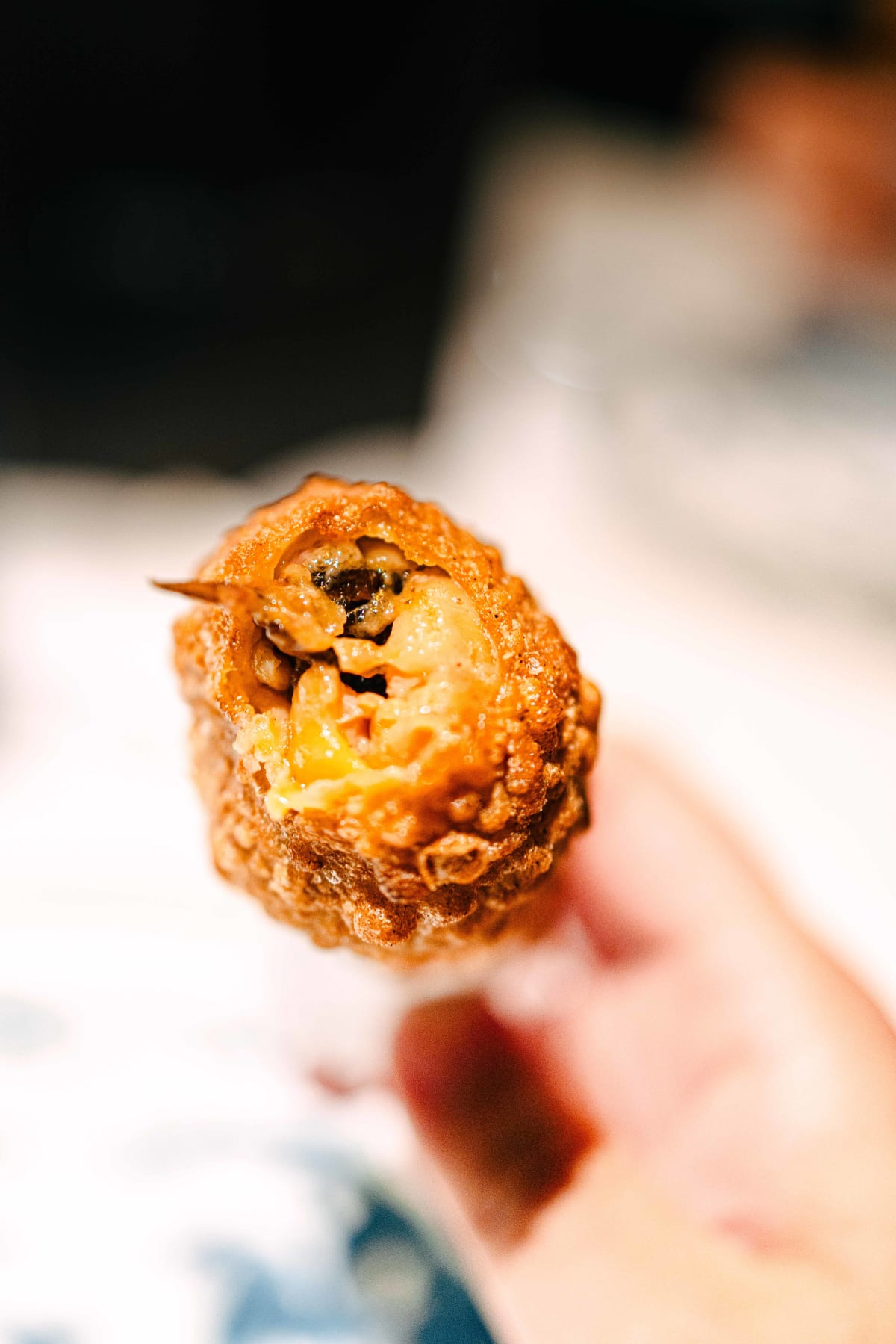
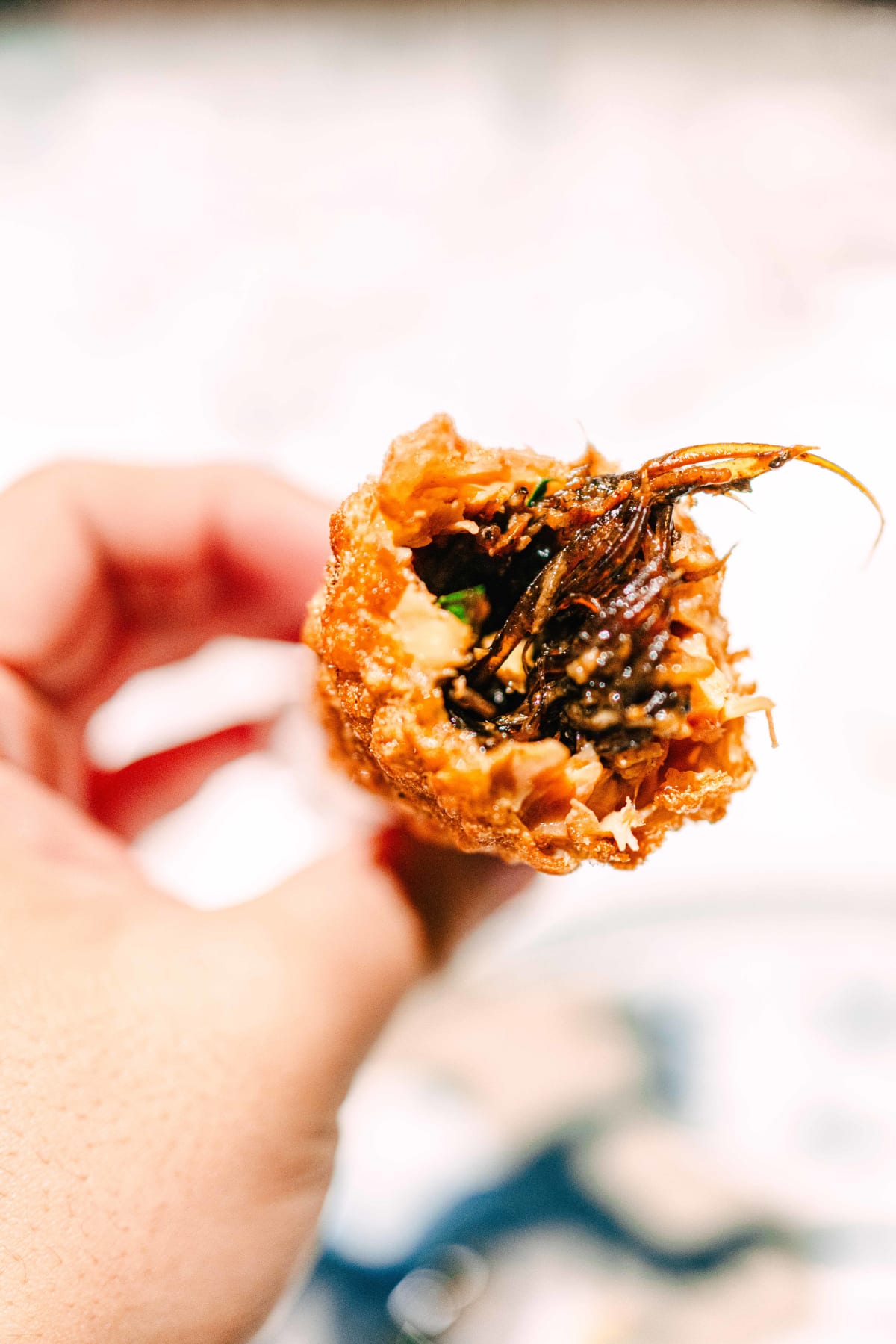
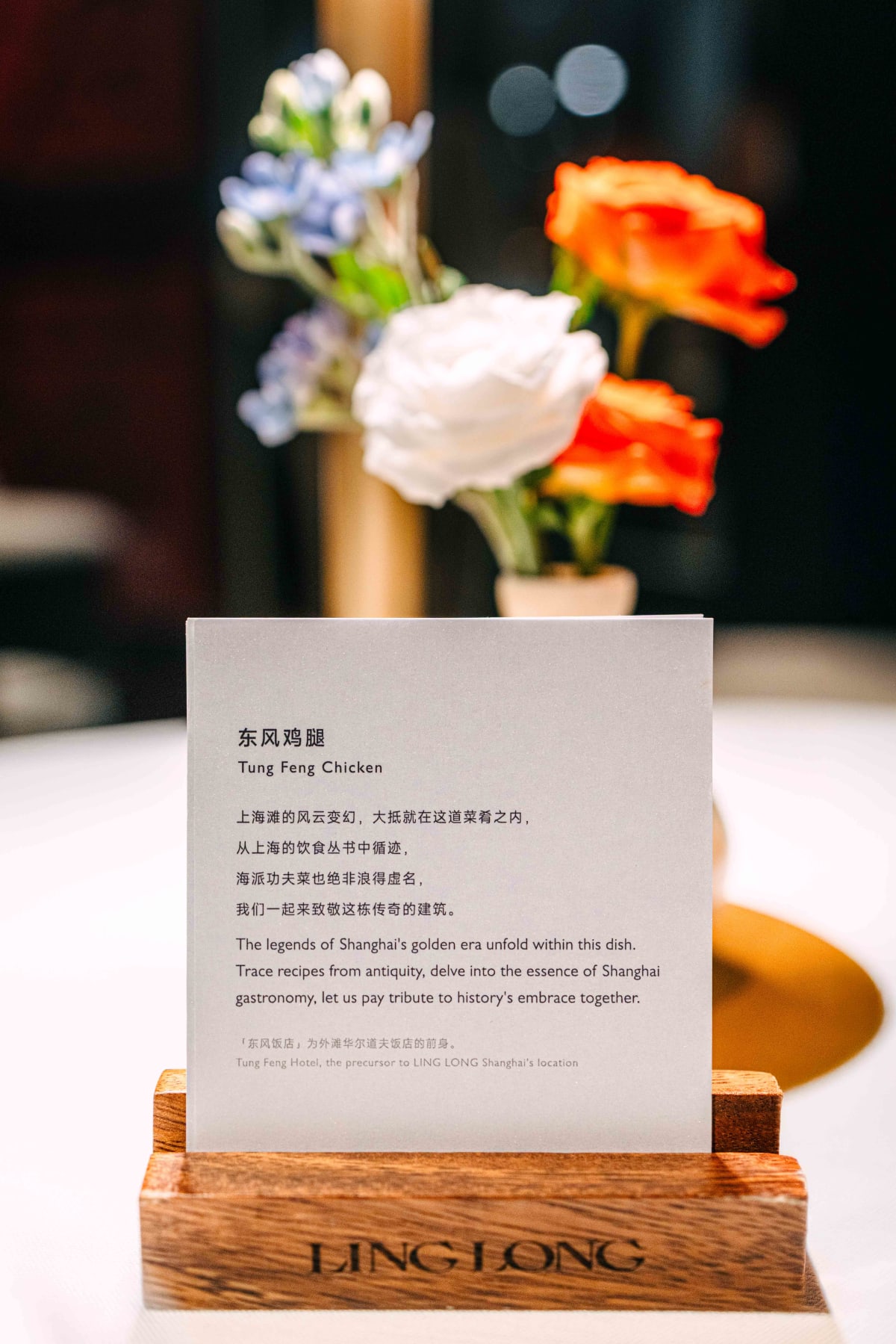
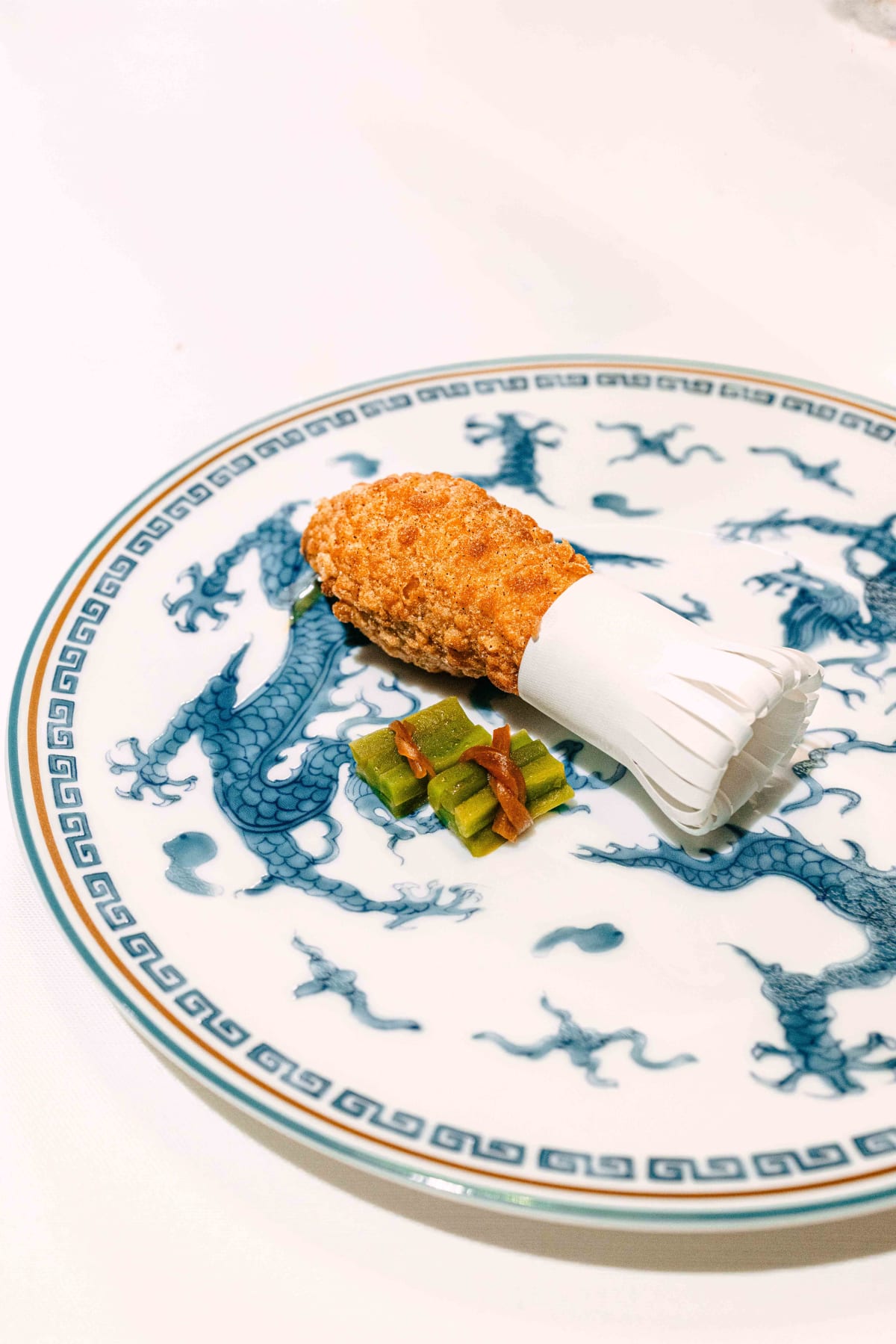
The third dish was tung feng chicken, filled with shark's fin and Chinese pickled vegetables. The name "tung feng" comes from the fact that the hotel that once stood on the Waldorf Astoria site was the Tung Feng (Dongfeng) Hotel. The dish takes that hotel's original recipe exactly as it was, and the very method of condensing the time accumulated on the hotel's grounds into a single plate, to present again to the next generation of guests, dovetails perfectly with the Tradition chapter.
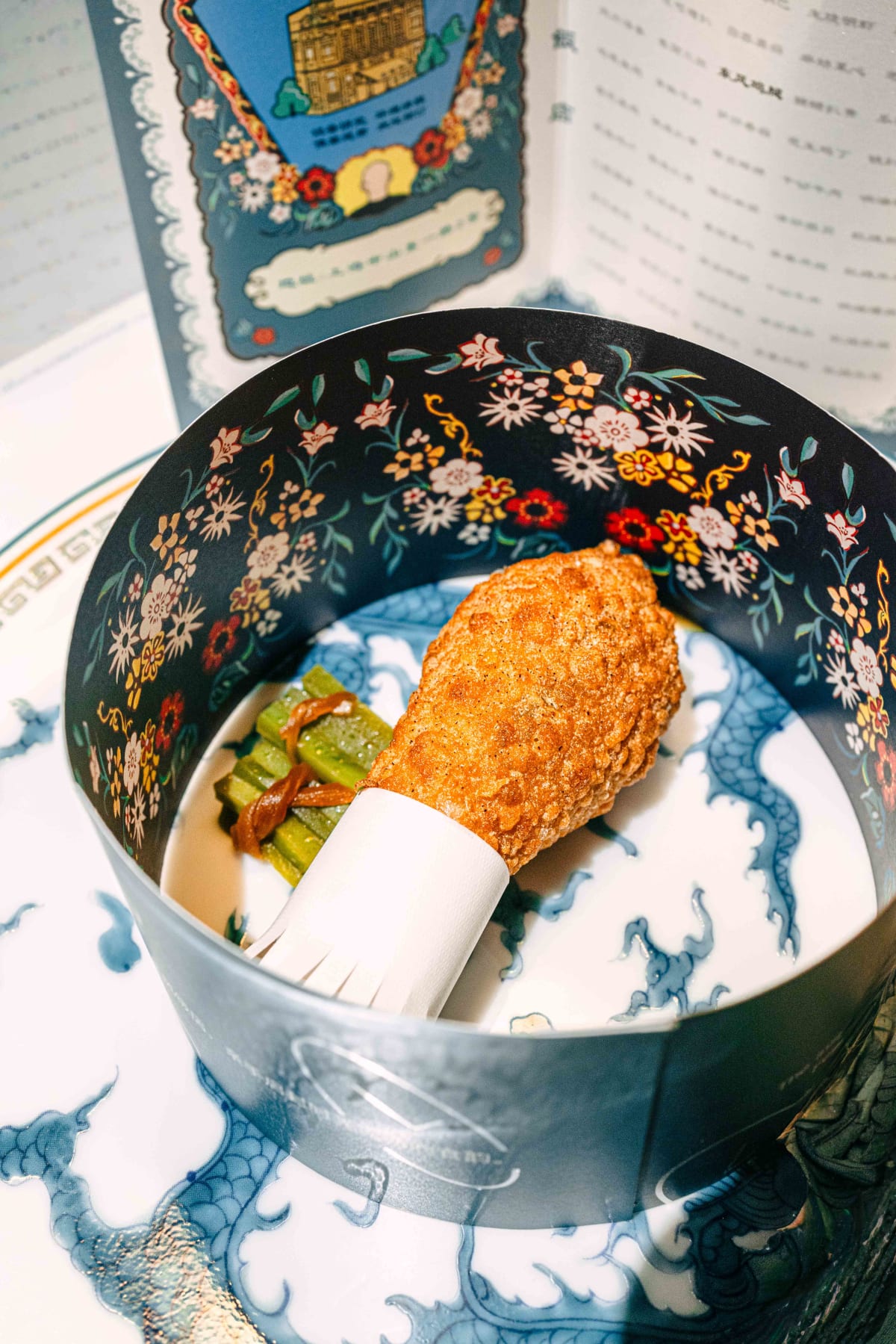
The dish carried a paper decoration said to be drawn from a kind of spear structure once used by Japanese troops stationed in China. I am not sure exactly what it meant, but visually it was striking.
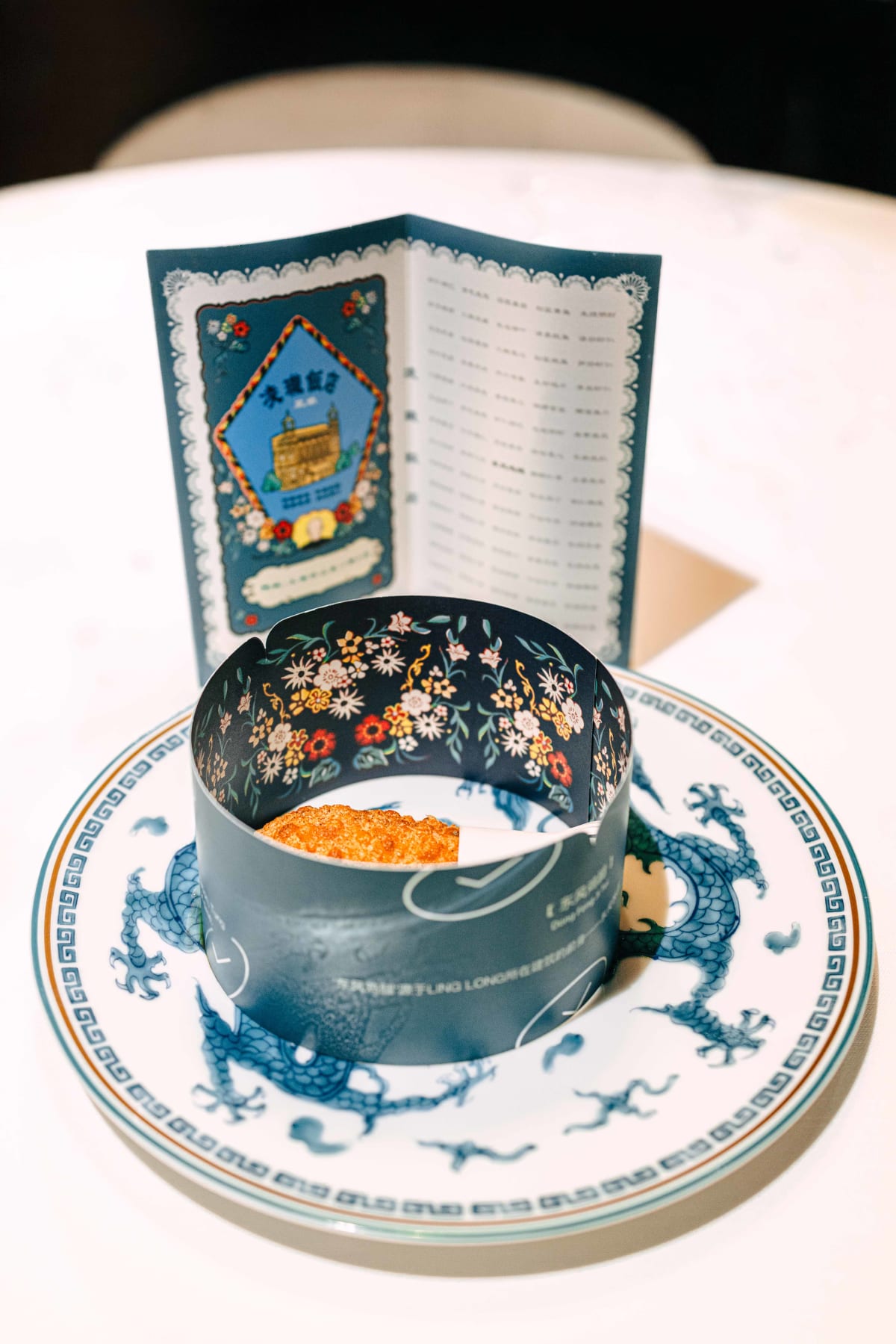
The chicken tasted good. The shark's fin and pickled vegetables inside made their presence felt, but above all it was the chicken itself that was excellent. A very fatty bird, it released a real burst of juice with each bite. The pickled vegetables helped balance things more than one might notice. In the Tradition chapter, the fish maw and cheese dish and the tung feng chicken both left a strong impression.
Section 9·Localization
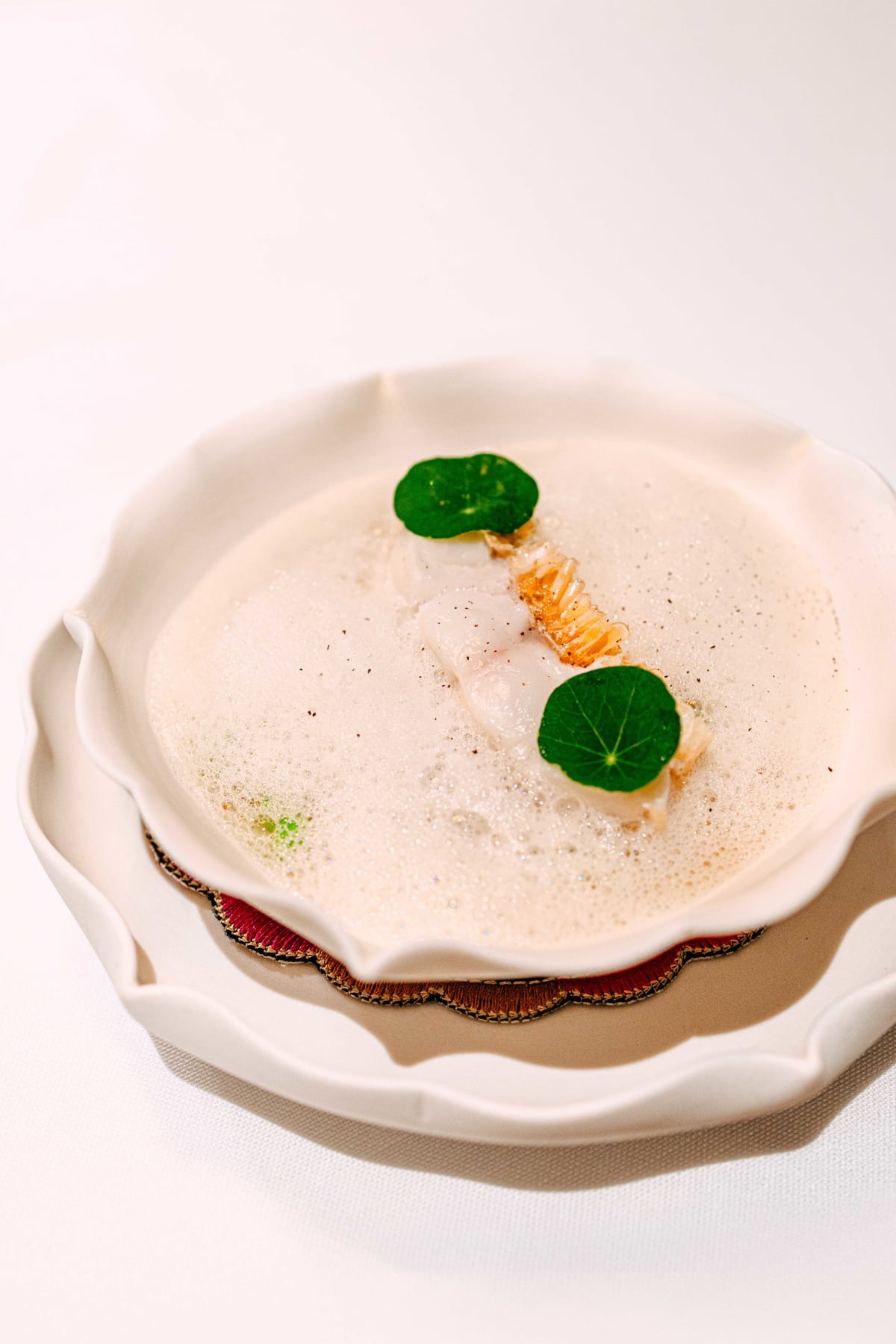
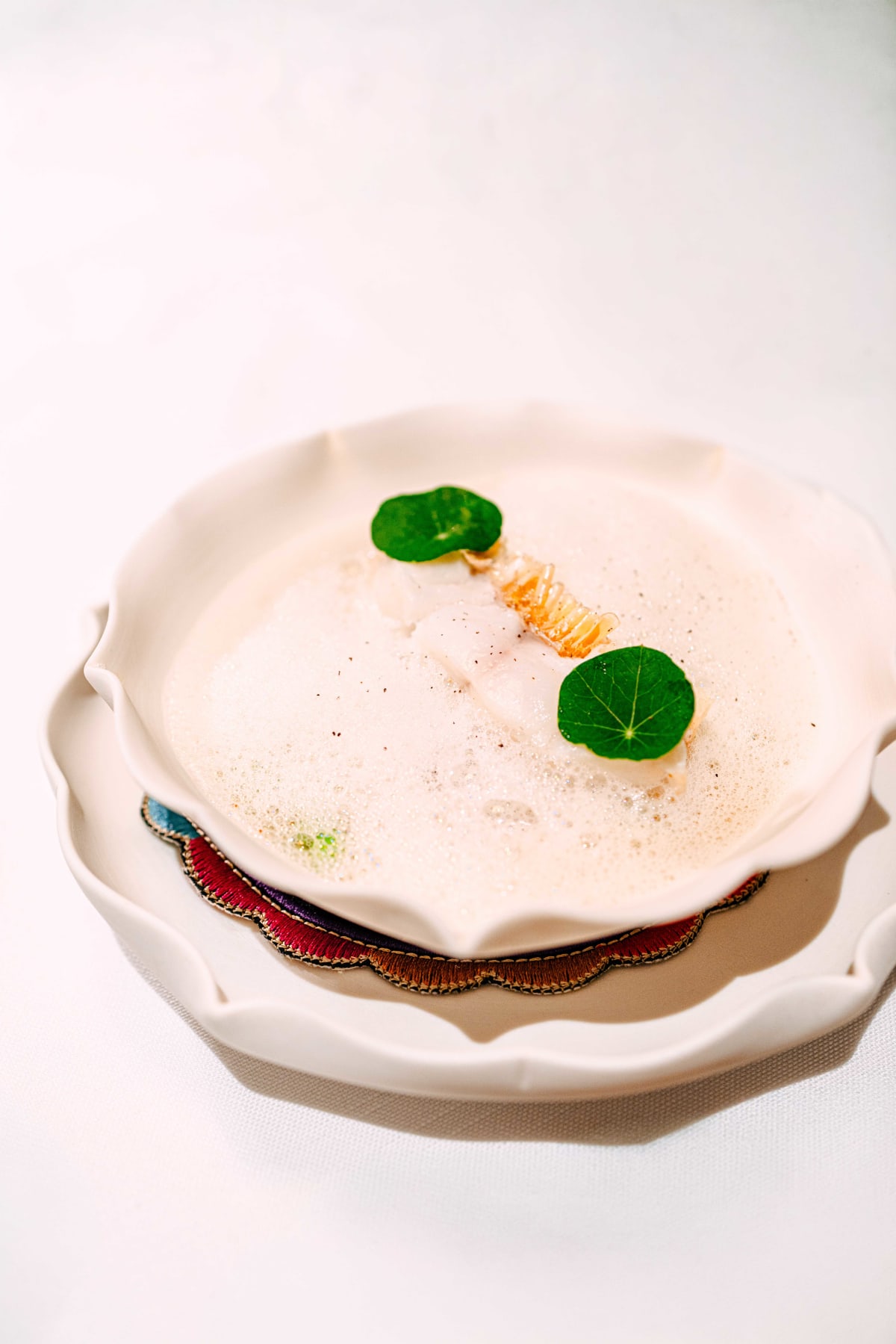
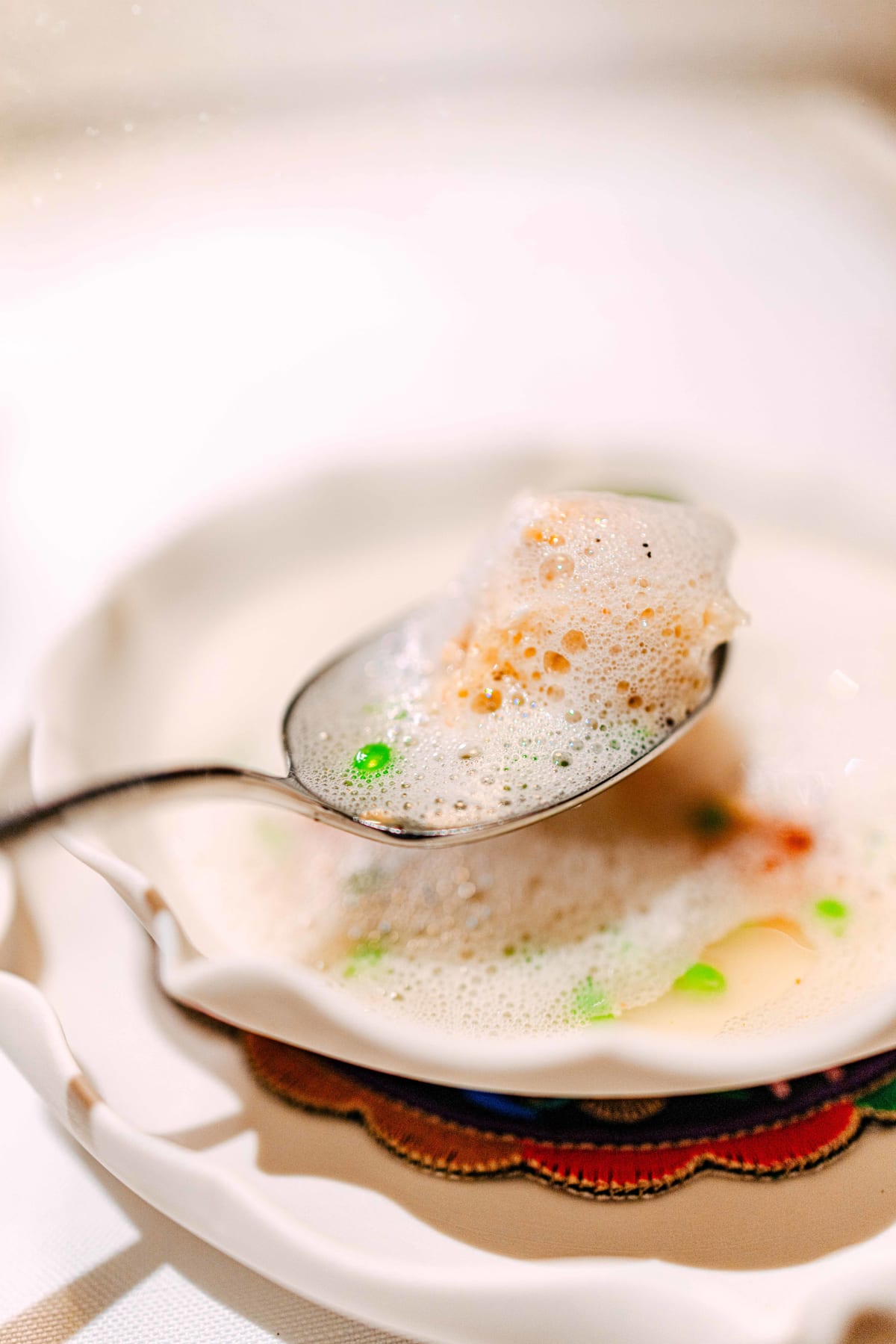
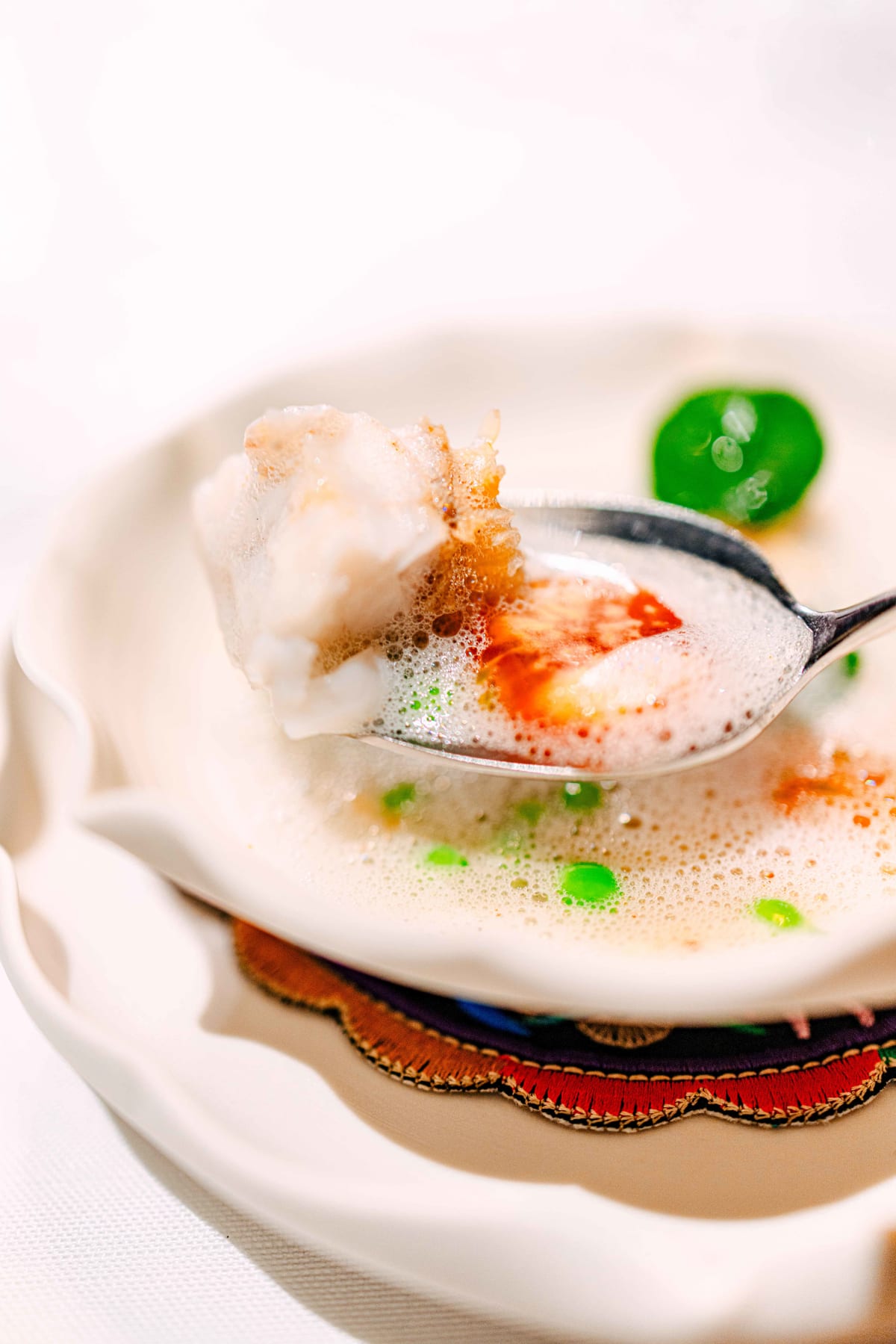
The fourth dish was tilefish, served in a soup style, a fun and memorable plate. Tilefish, prized in Japan as amadai (甘鯛), is a delicate white fish, and to see such a refined fish given a fine-dining treatment as a "soup" was a surprise. It was originally a signature of LING LONG Beijing. The tilefish was cooked by pouring oil over it until the skin turned thoroughly crisp, which, I was told, is what balances the oily richness of the skin. Repeatedly basting with hot oil so that only the skin crisps while the flesh stays moist is the essence of Cantonese fish cookery, and the idea of placing that inside a soup format is intriguing.
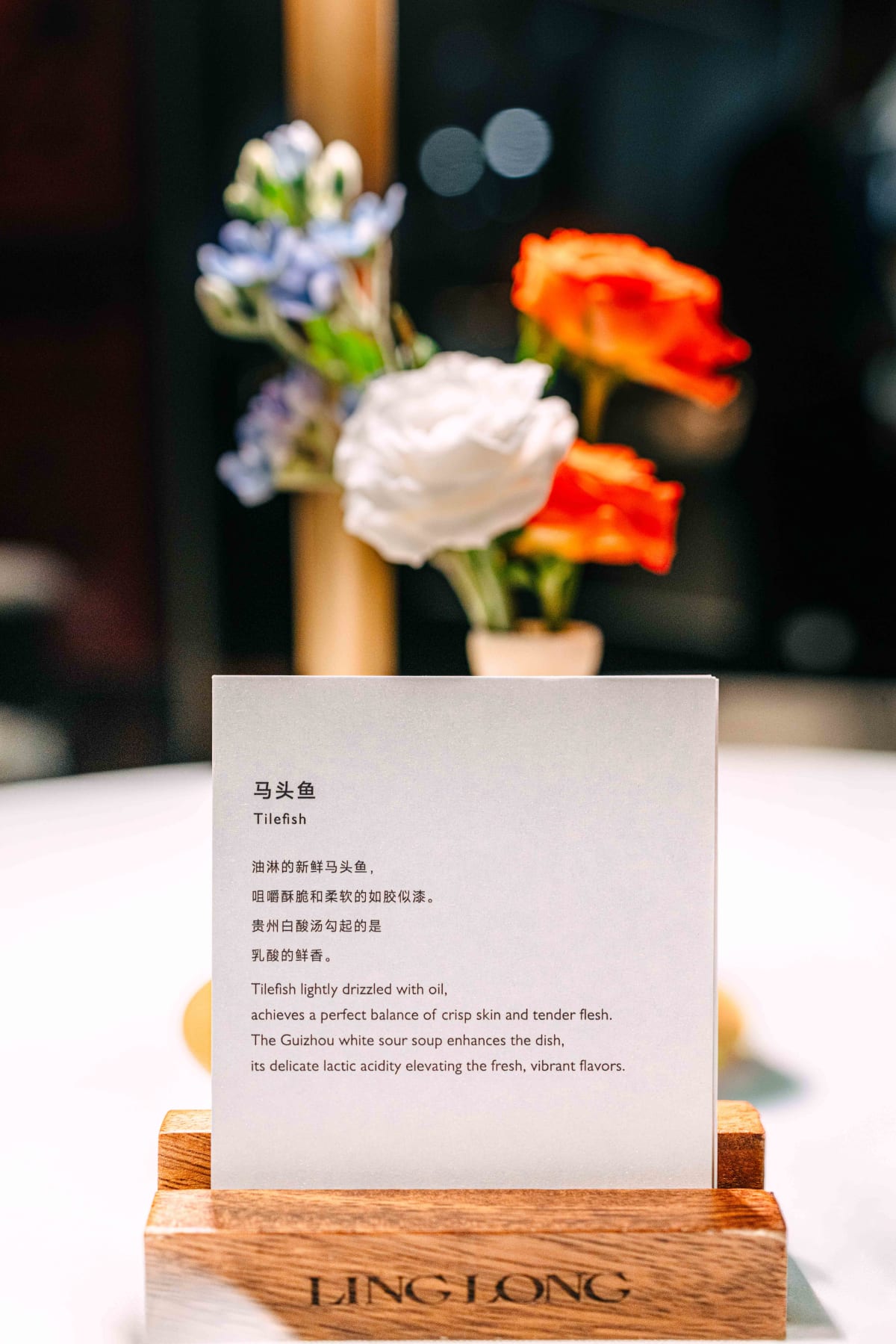
Beneath the fish lay white sour soup (白酸湯). White sour soup is a traditional soup of the Guizhou (貴州) region in southwestern China. Guizhou is not a well-known area, but it is home to many ethnic minorities and its cooks are highly skilled in fermentation and the use of spices; indeed, Guizhou cooking is one of the few Chinese regional cuisines that make sourness (酸) their core. Guizhou has both a red sour soup (紅酸湯) fermented from tomato and a white sour soup (白酸湯) fermented from rice water, and this dish used the latter as a clear, sour base.
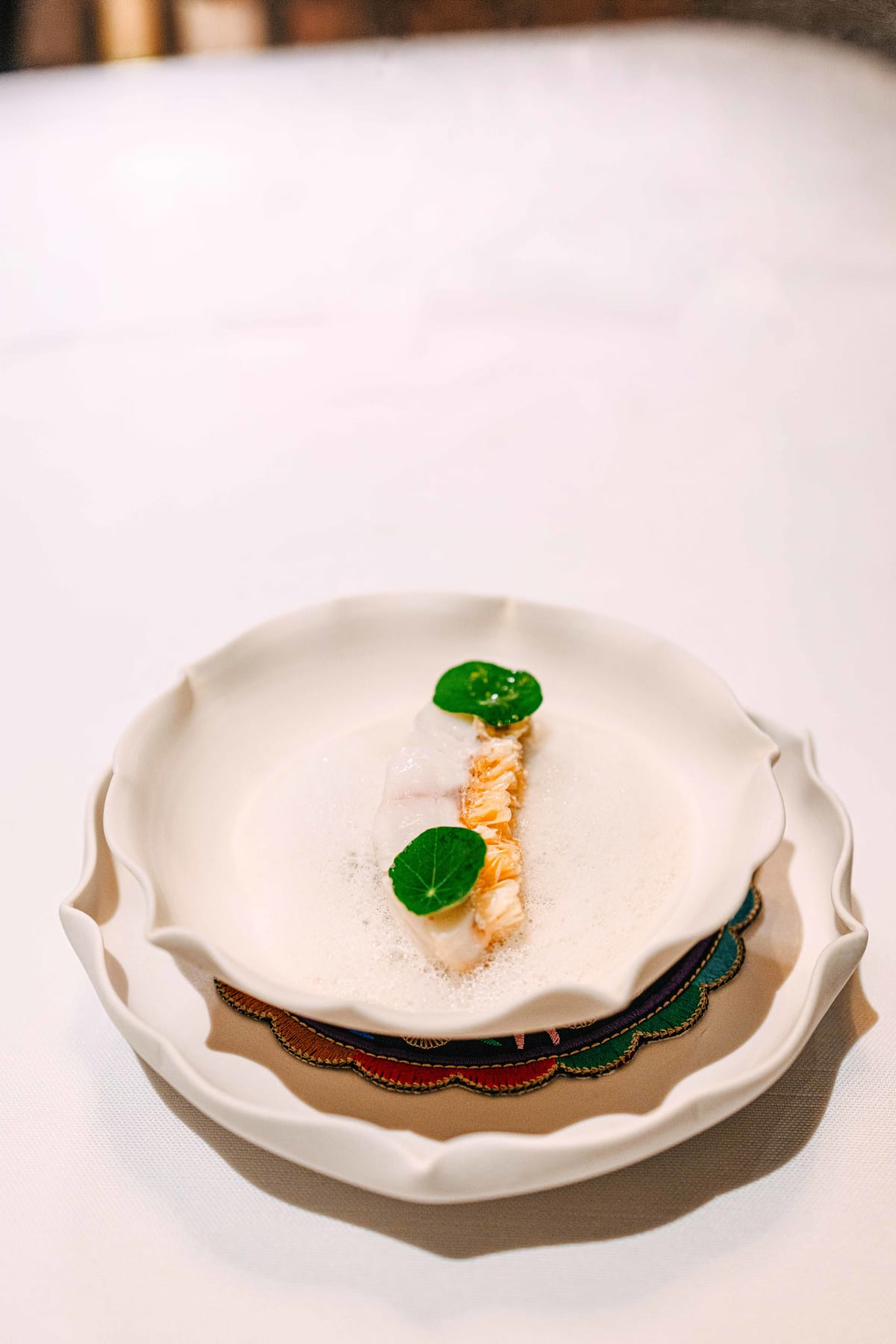
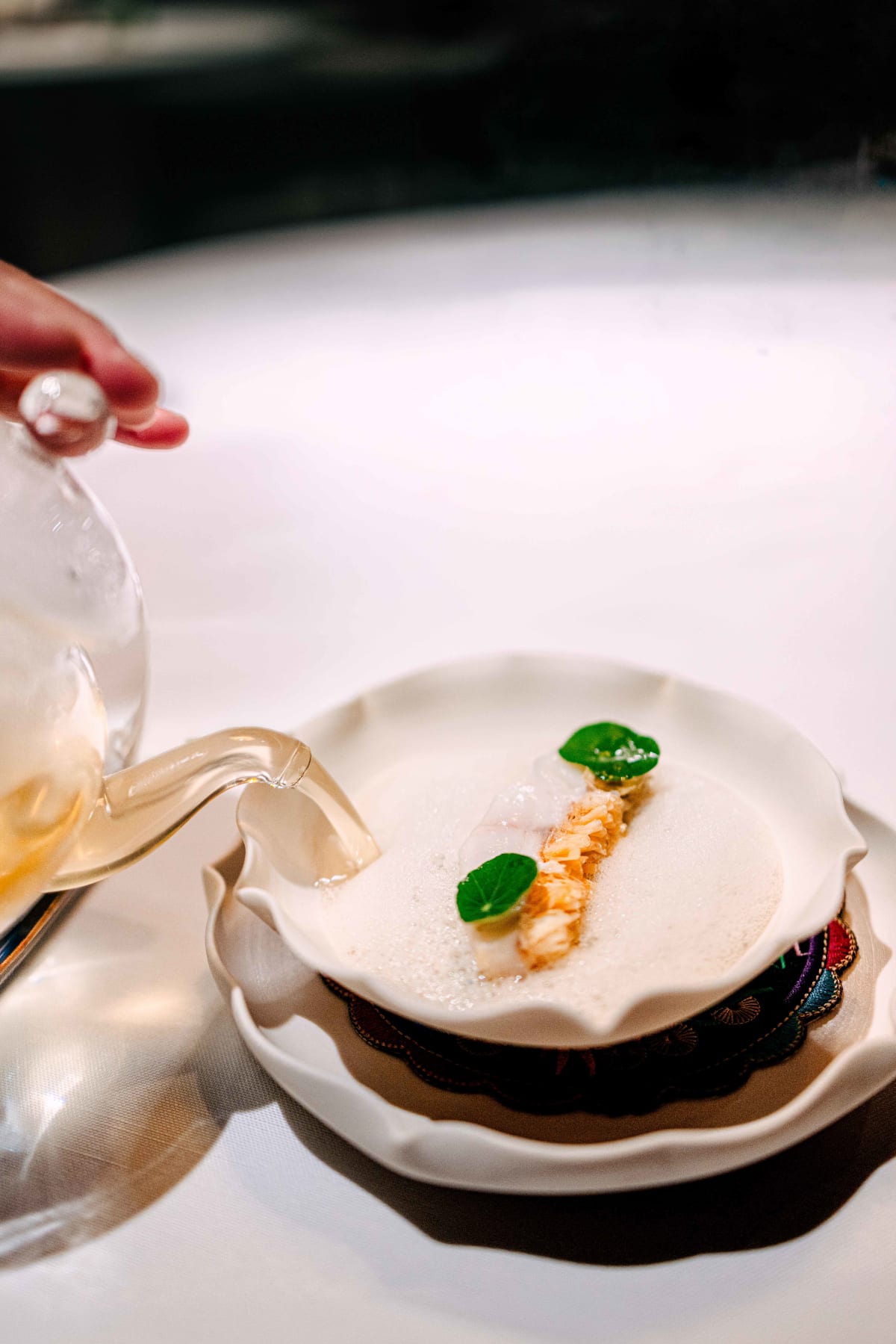
The dish came with a small wooden stick, which was grated over the top as a powder, much as one might scatter yuzu zest. It is a spice often used in Guizhou, called "litse," with an aroma similar to lemongrass. (This "litse" is presumably Litsea cubeba, written 木姜子 in Chinese. A spice common in Guizhou cooking, it is rich in citral and so gives a citrus aroma exactly like lemongrass.)
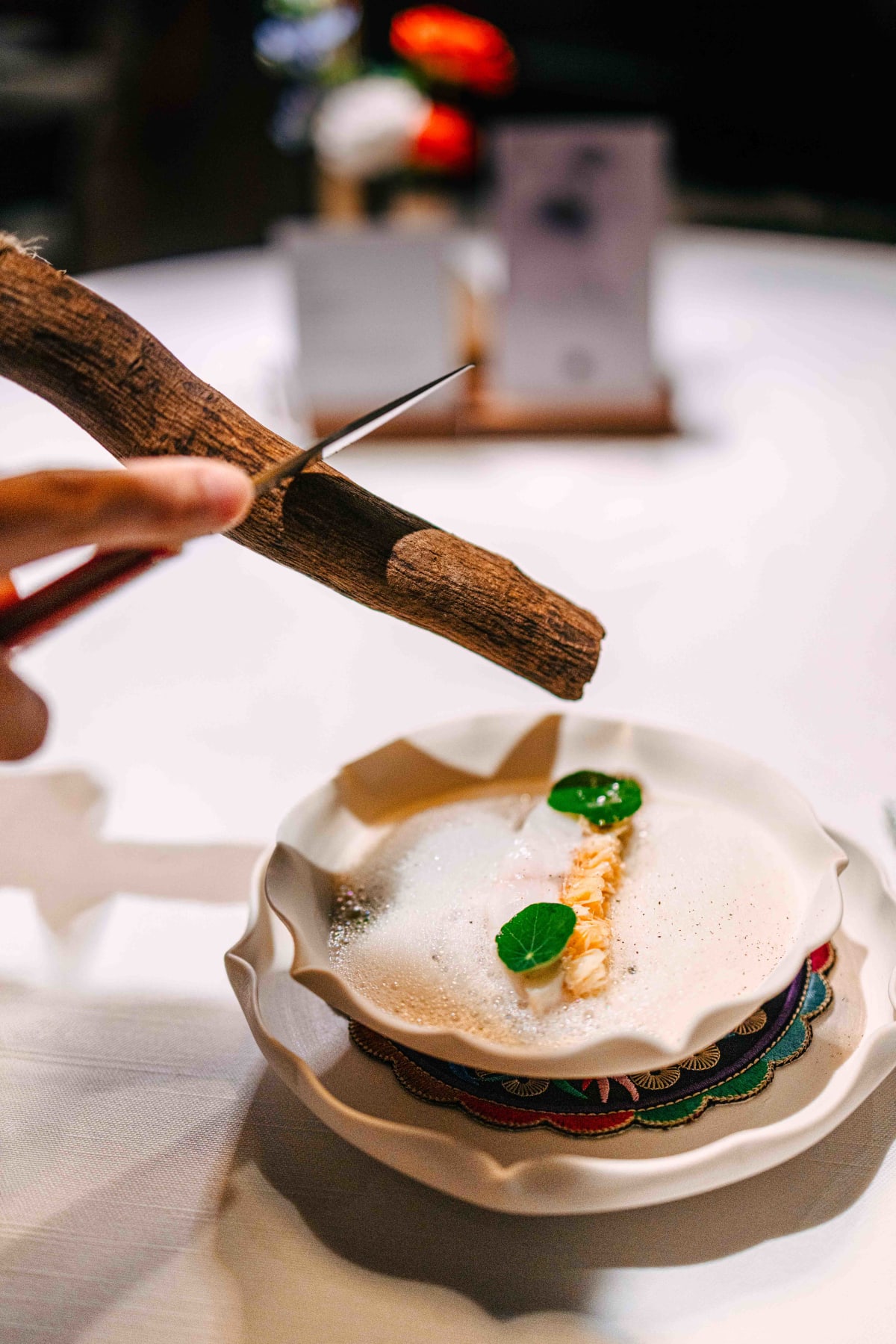
One taste, and I was surprised in the best way. Balance is usually indispensable in fine dining, yet the sourness of this white sour soup is enormous. The remarkable thing, though, is that it does not make your face pucker or jump out at you; it is pleasantly, deliciously strong. It was a little like hot-and-sour soup, a little like eating tom yum, and I do not think I have ever had a soup dish this good with this kind of sourness. The reason such strong acidity is not unpleasant must be that it is a sourness made by fermentation, different in character from the harsh acidity of vinegar.
Tomato and herbs are in it too, so drinking it brings to mind Thai food. When I told the manager it felt like Thai food, he said this is a very traditional, distinctive flavour even within the hot regions of China. The tilefish was very well cooked. If the fish maw and cheese dish was a flavour you could more or less predict, this was one you could not. It is in this single plate that the reason the Localization chapter foregrounds "regionality" becomes clear.
Before the main, a cart was wheeled over again and the server whisked tea by hand right in front of us. It is a traditional Chinese diancha (點茶) method that I have seen in Japanese dining too, the origin of matcha culture.
Diancha is the whisking technique that flourished in the Song dynasty, in which water is poured over powdered tea and beaten with a whisk to raise foam. Japanese matcha and the tea ceremony branched off from exactly this.
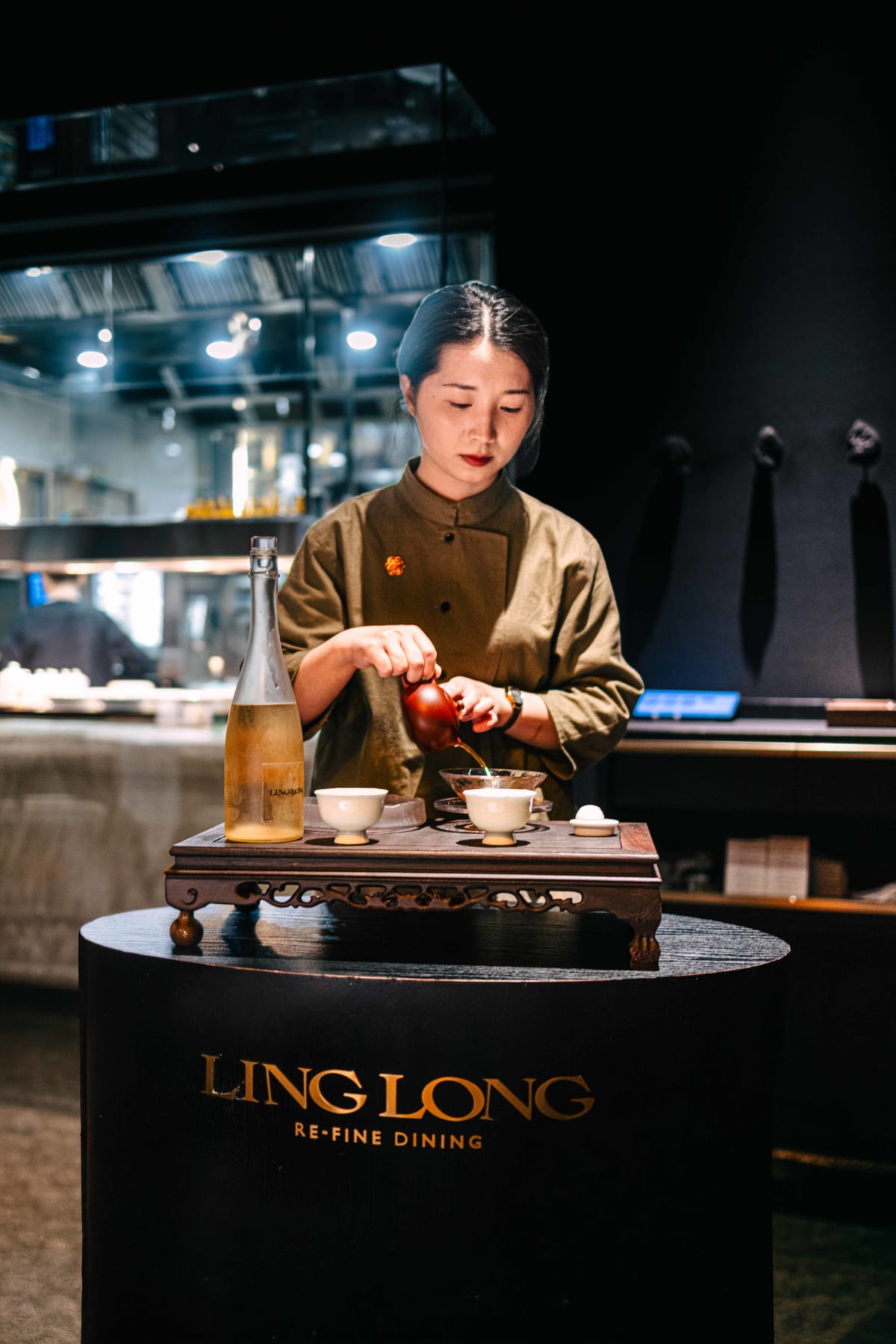
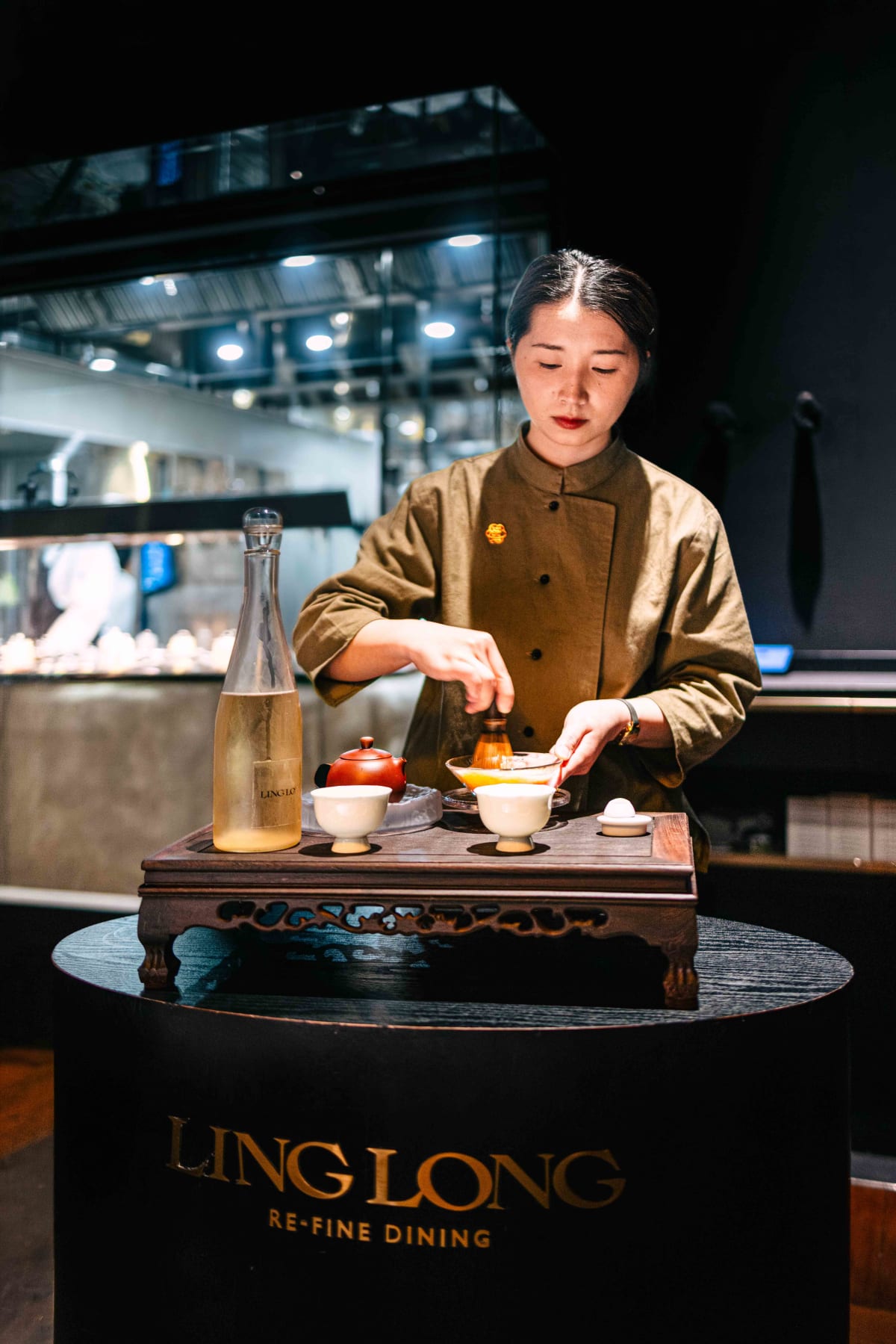
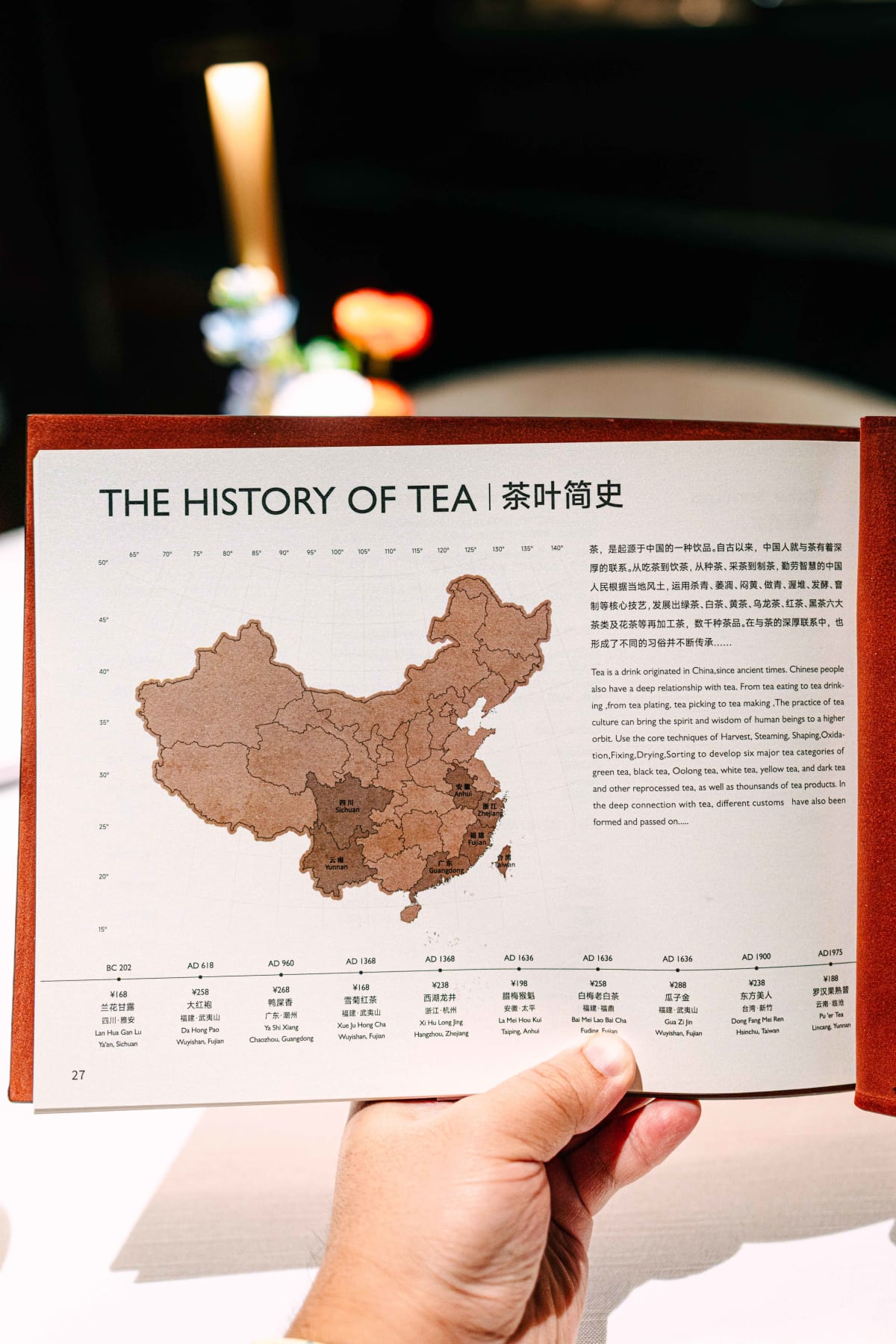
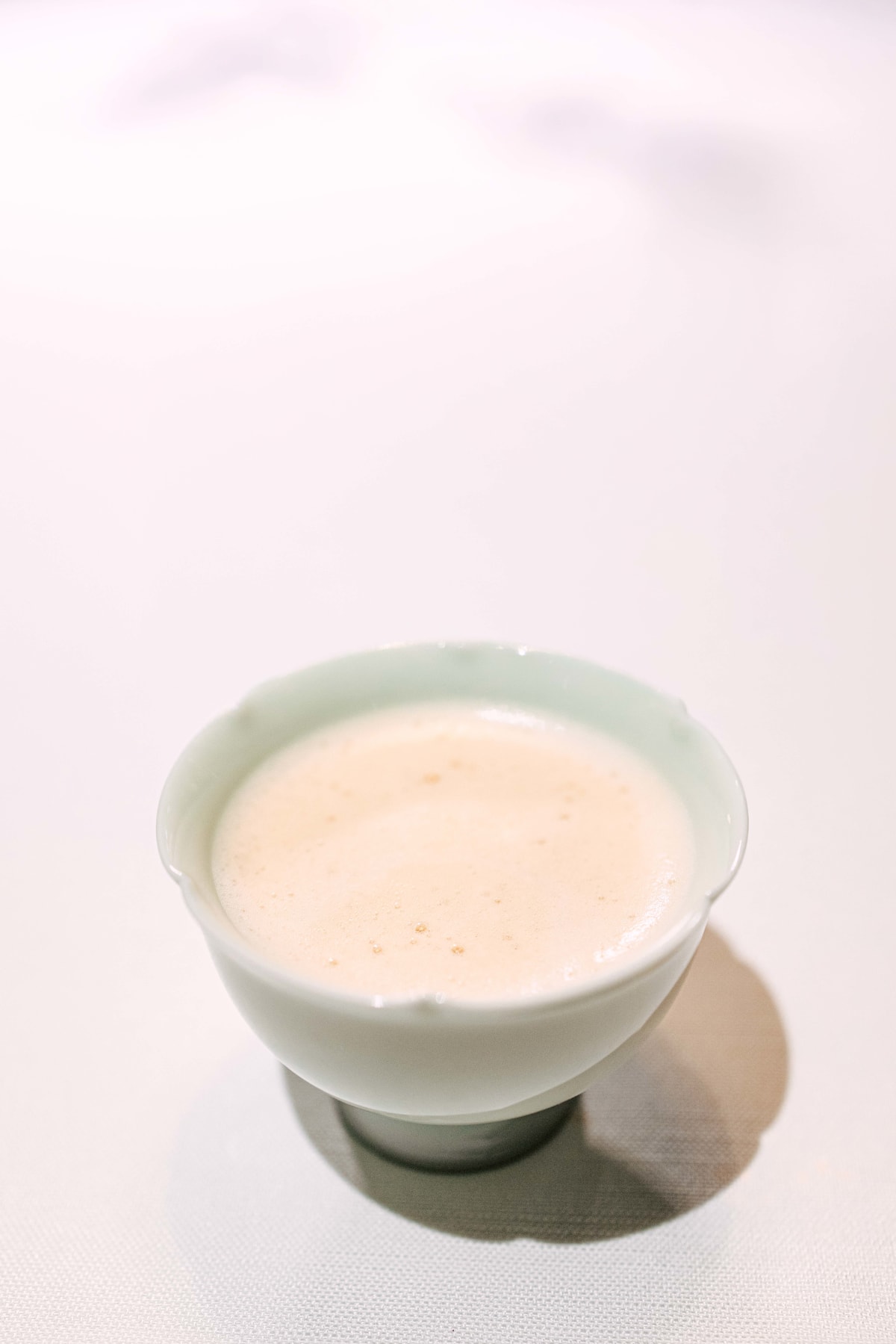
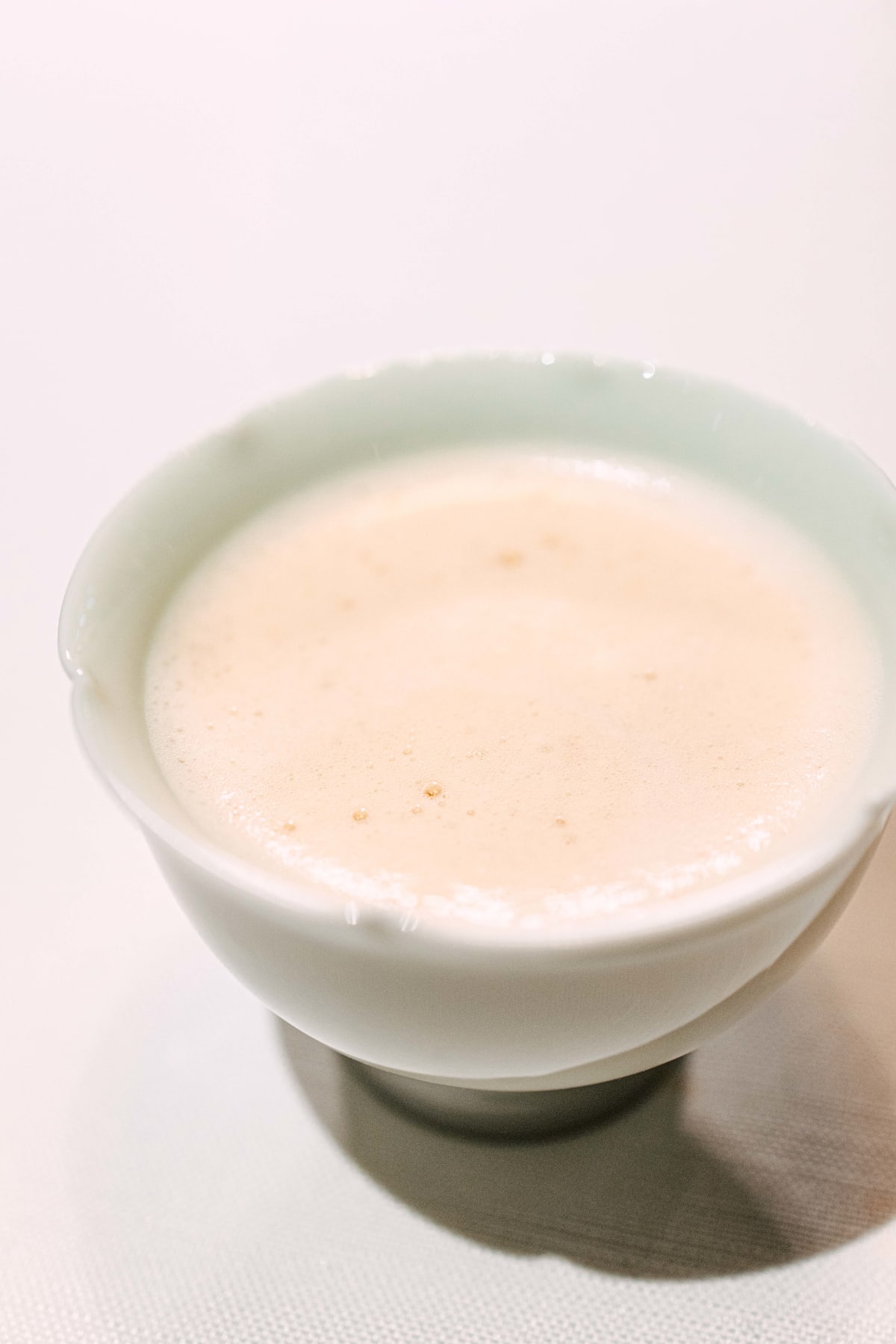
The tea was a Ya Shi Xiang, or Duck Shit dancong (鴨屎香單樅), oolong from Guangdong. A varietal of the Phoenix dancong grown on Phoenix Mountain (鳳凰山) in Chaozhou (潮州), Guangdong, it gives, contrary to its name, very showy floral and honeyed aromas, a high-grade oolong. At first the floral notes came through so well that I took it for jasmine tea, but it is not jasmine; it is a semi-fermented oolong. This tea is cold-steeped and stored the day before, and on the day a highly concentrated brew is poured over it and whisked. That produces a very creamy, finely textured foam, and drinking it gives a faintly sparkling sensation. What set it apart was that, unlike ordinary floral teas, it left a real sweetness in the mouth. It tasted like no tea I had ever had, which was fascinating, and above all the fine bubbles left the mouth feeling fresh.
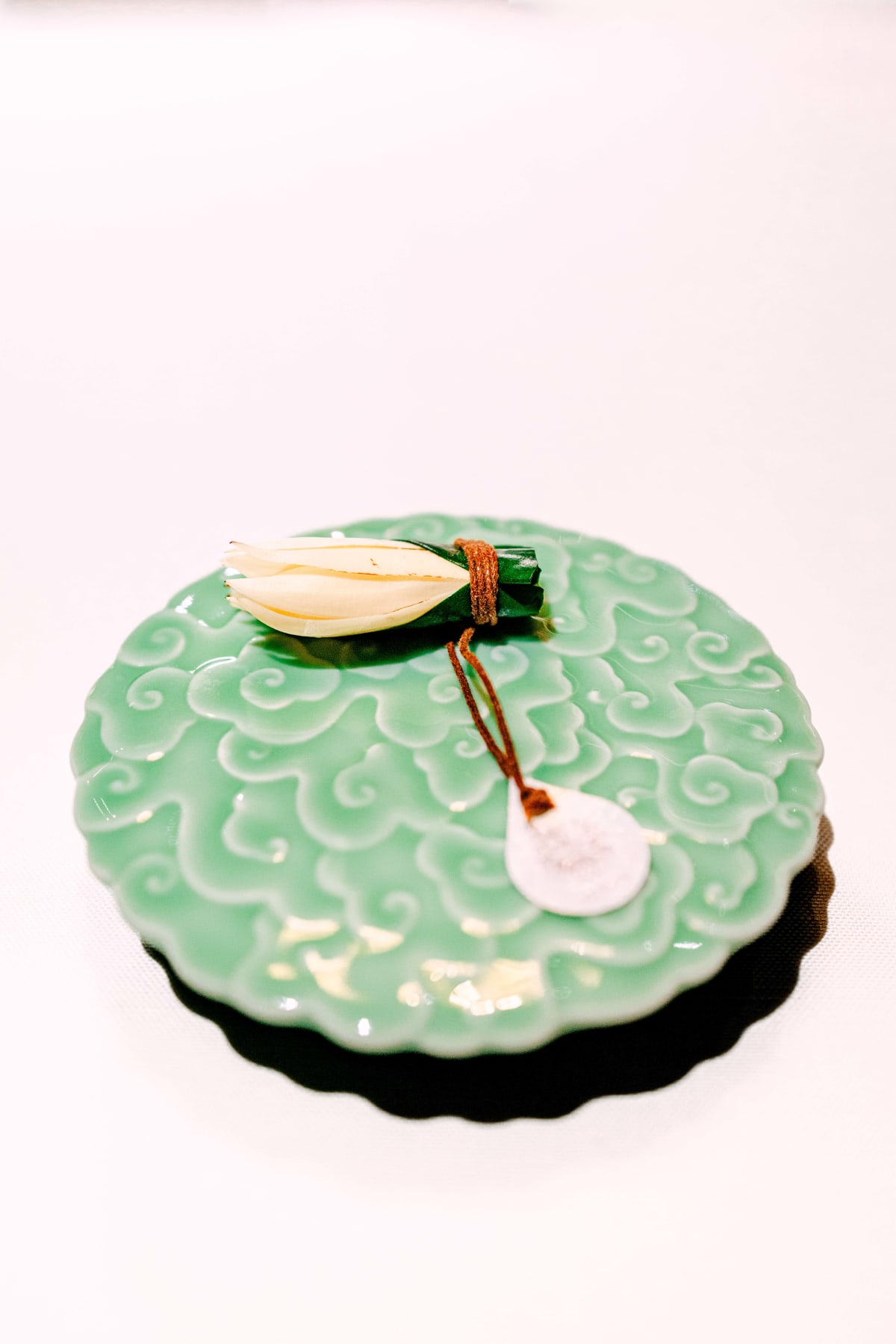
With the tea came a pretty, fresh bud of white magnolia (白玉蘭) to smell, giving off an intense, unusual floral, herbal scent that was truly refreshing. White magnolia is the city flower of Shanghai, which fits the chapter's theme of Localization exactly. Nose and palate were refreshed before the main, and it made for an excellent tea chapter, joining a visually pleasing performance with traditional Chinese culture.
Something I learned only later: the English name of this particular dancong, Ya Shi Xiang, is "Duck Shit Oolong," so it is also a humorous setup for the duck dish that follows. The Localization chapter was a narrative stretch that unfolded the distinctiveness of China's various regions through taste, smell, and sight all at once.
Section 10·The Duck
The main was the duck I had chosen in advance. This duck was raised in Huzhou (湖州), a city near Lake Tai (太湖) close to Shanghai. Huzhou, in northern Zhejiang, is famous for silk, brushes, and green tea, and the Lake Tai area has long been a centre of Jiangnan food culture. The base is similar to Peking duck, but the cooking method differs.
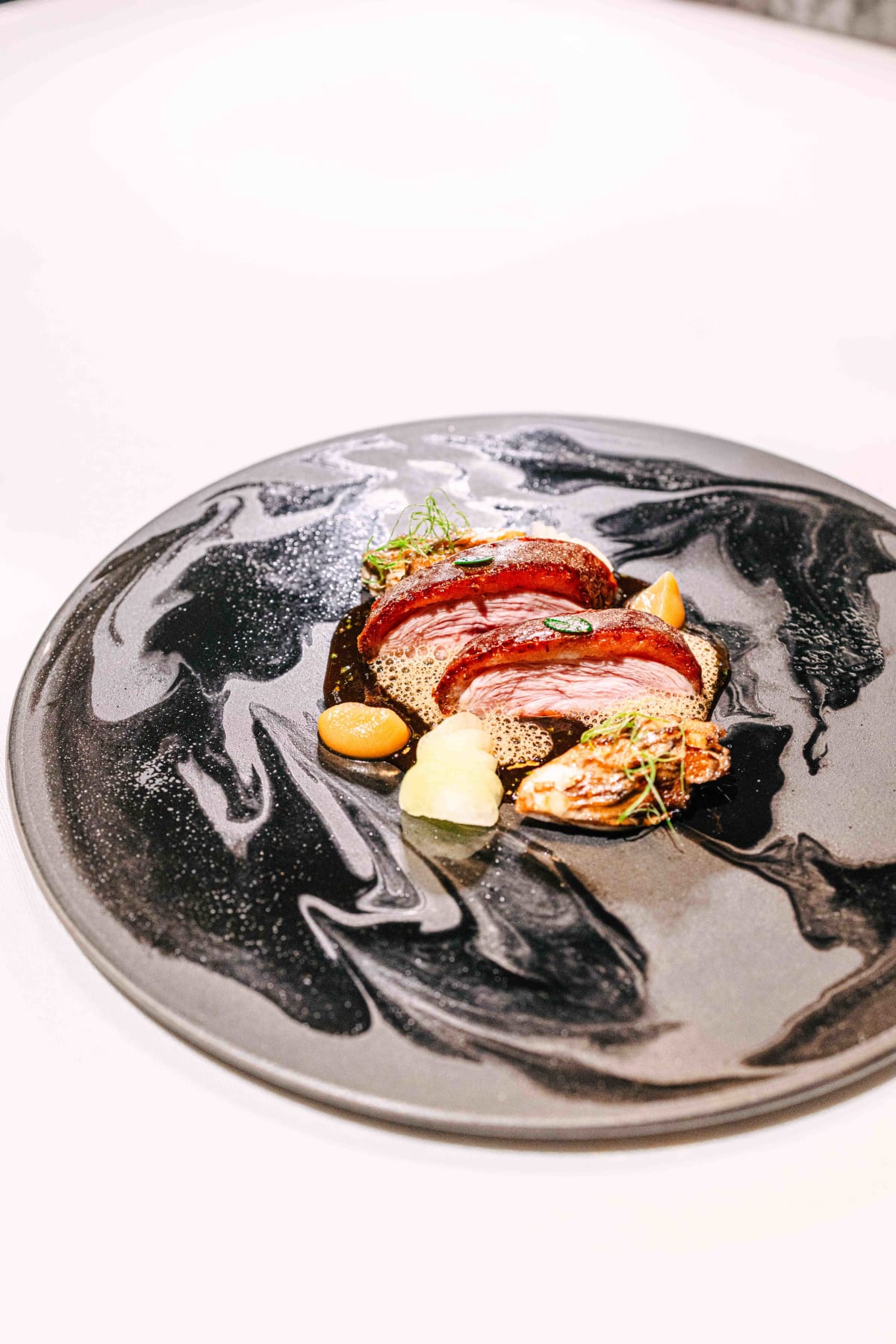
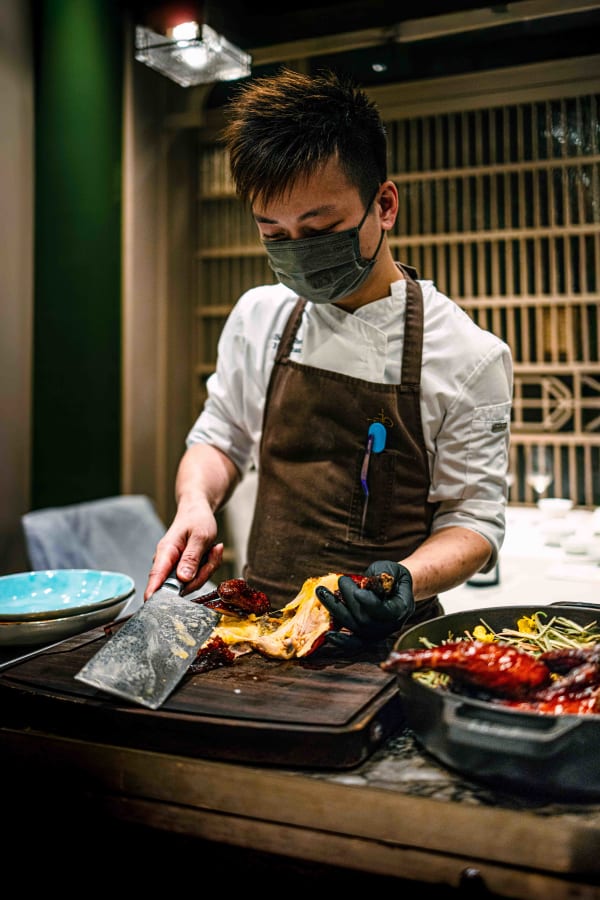
Rather than being oven-roasted like Peking duck, the duck, I was told, is deep-fried whole. As a result the skin is very crisp, with a texture close to Cantonese roast duck. If Peking duck is slowly cooked in an oven, glazing the skin to a sheen, and Cantonese roast duck is marinated in spices and hung to roast for a more linear crispness, then the Huzhou style works the texture between those two streams through frying. Eating it, the texture of the fat and the skin was indeed superb.
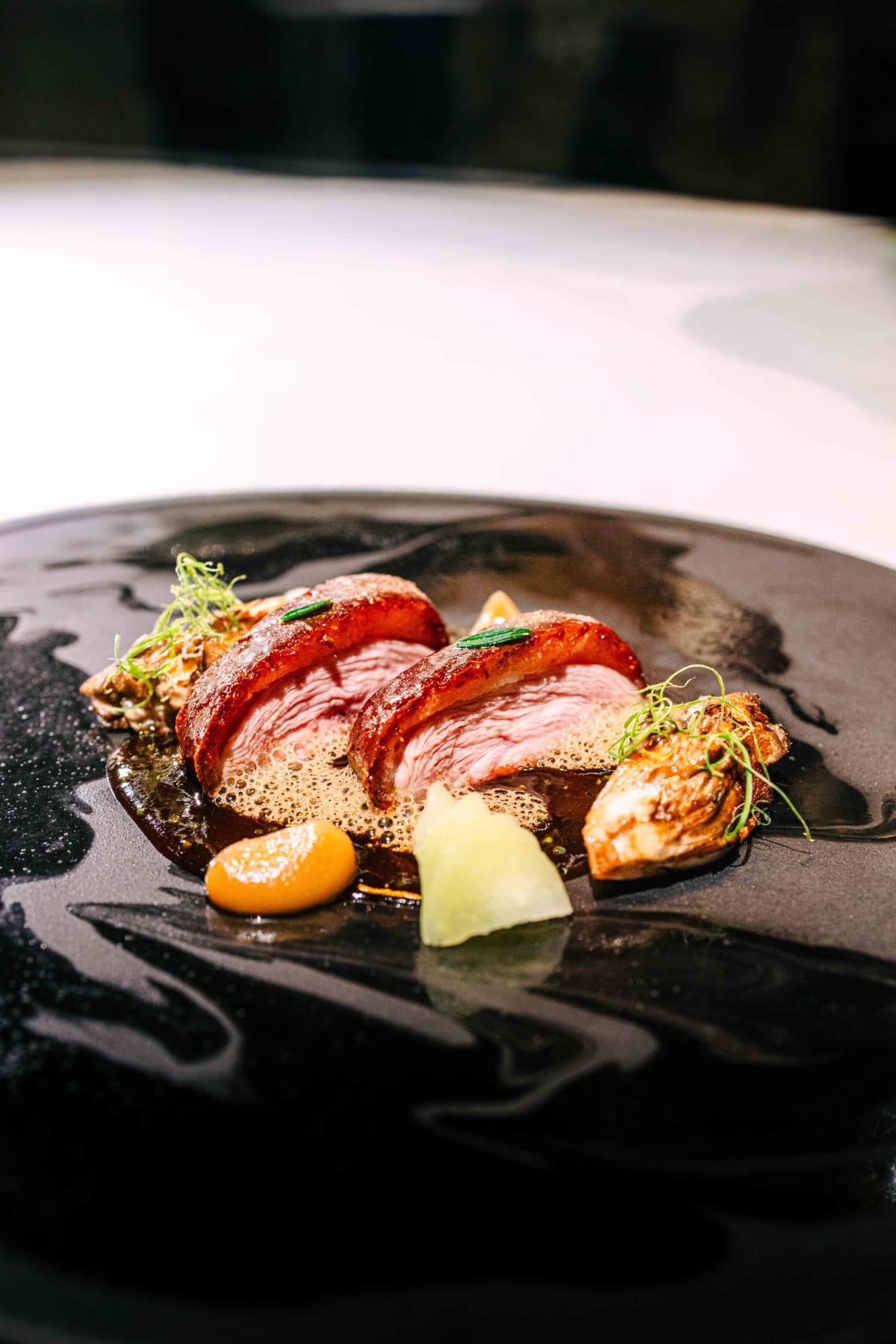
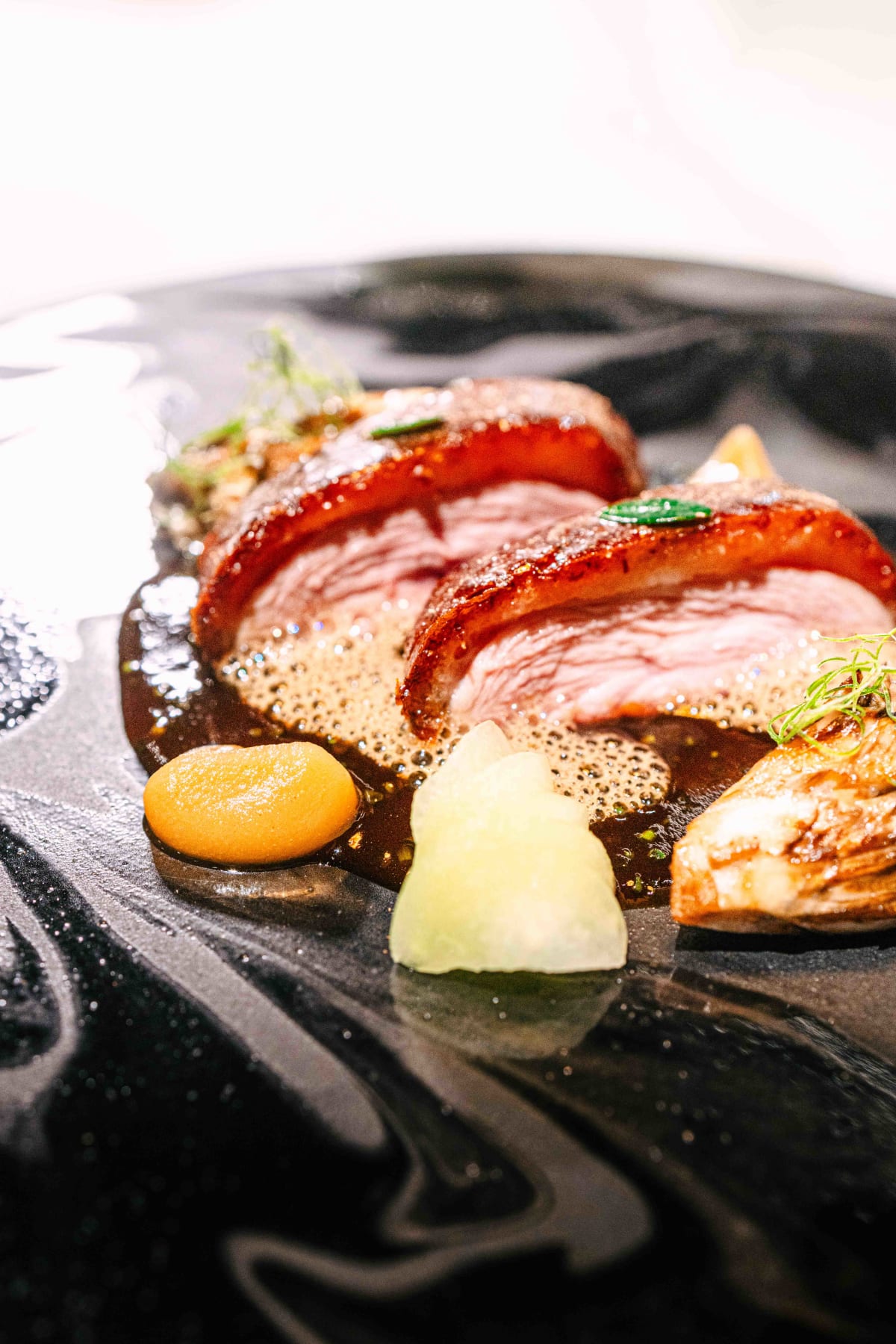
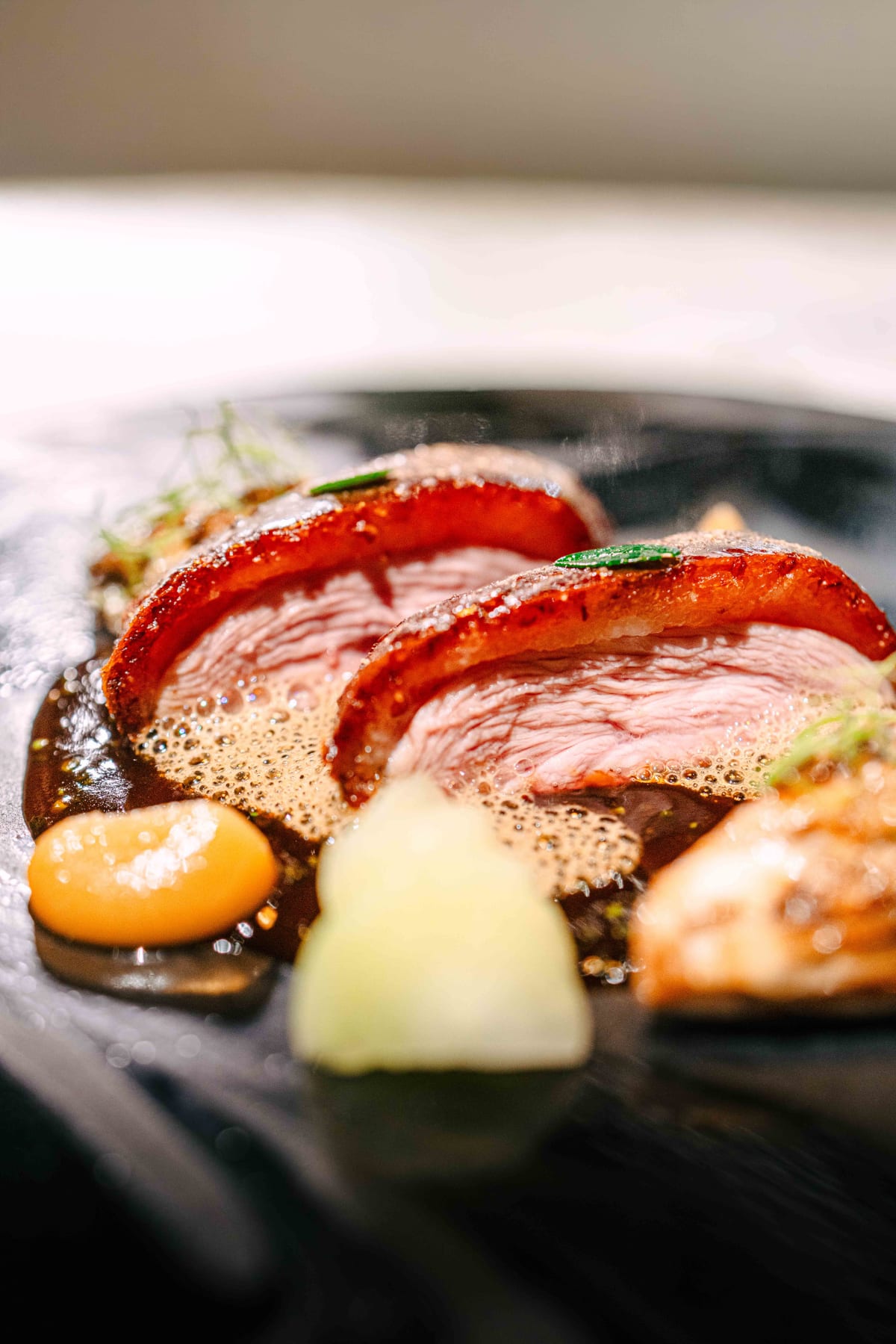
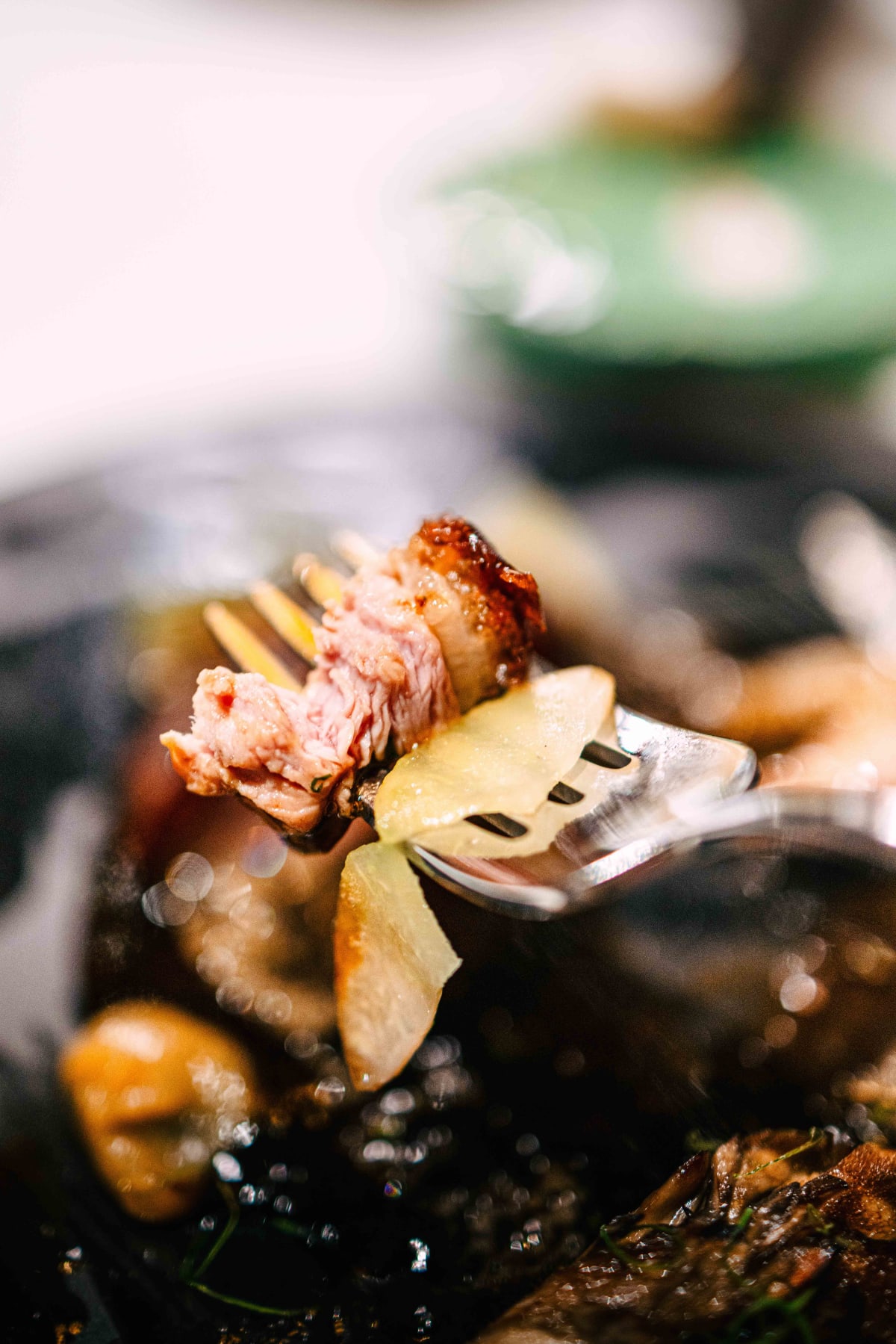
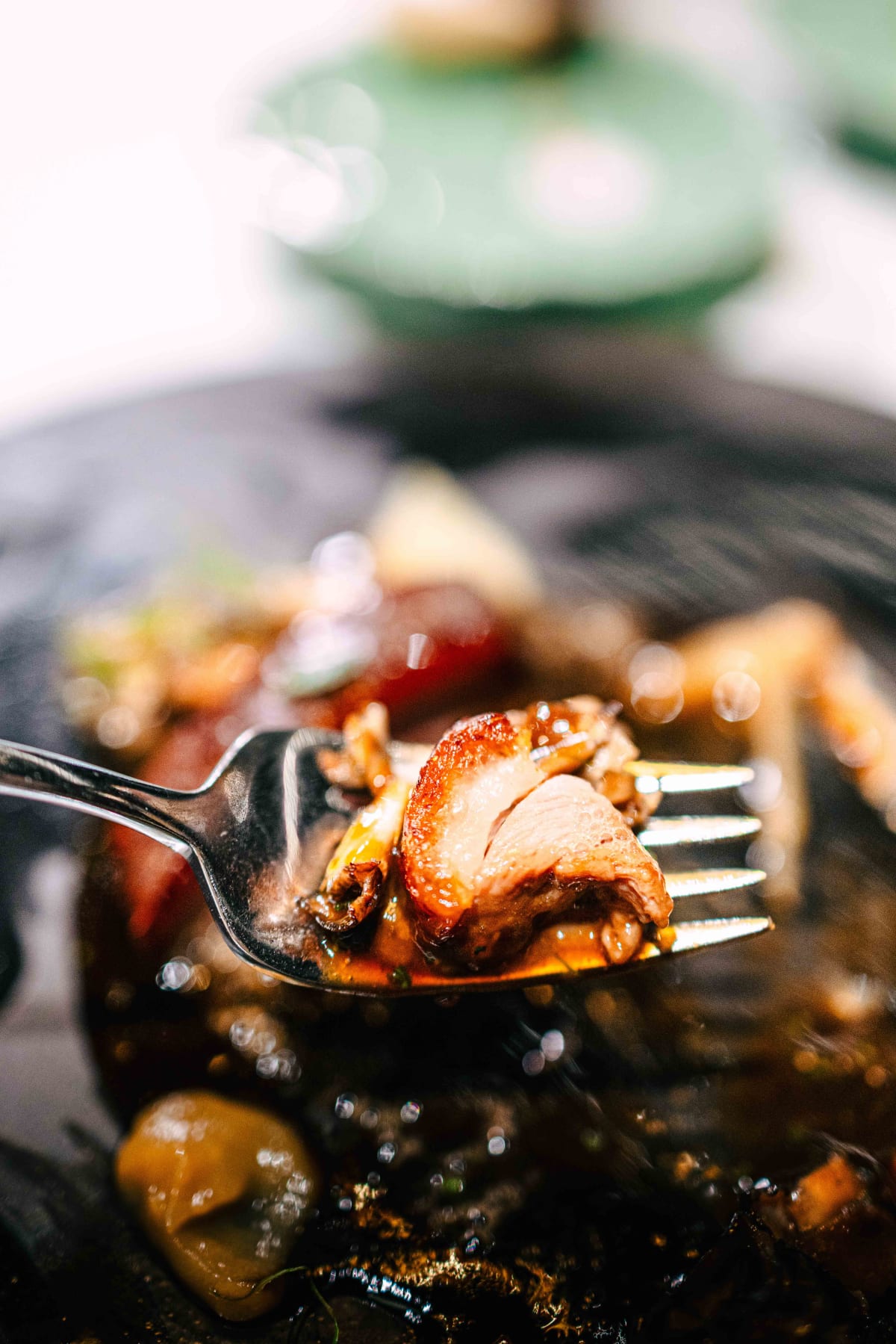
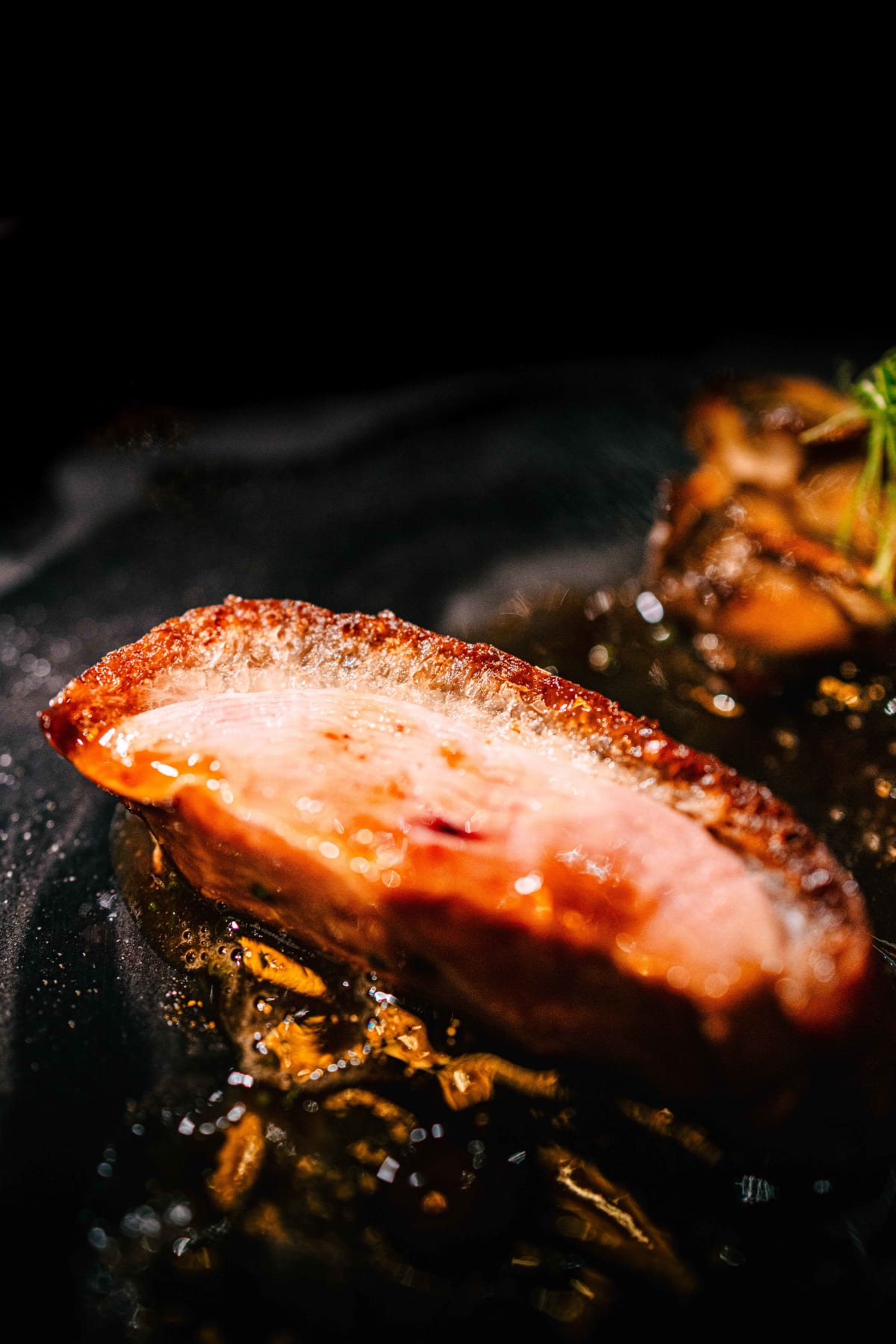
The sauce was said to be an homage to Chinese culture. Shanghai has an expression, "Brown Sticky Sauce," for the dense, brown, savoury sauces it favours (tied to the hongshao, or red-braising (紅燒), tradition of Shanghai benbang cuisine (本帮菜)), and LING LONG recreated that style in homage. A vinegar famous in Zhejiang was added to balance the acidity against the rich duck. It was somewhat sweet as well, and came with garnishes of pickles, roasted mushroom, and the like. As impressive as the other dishes were, this duck was excellent too. There was almost no off odour and the flavour was good, but above all the fat and skin were superb. The acidity of the pickles tidied up the richness while the roasted mushroom added woody depth, and there was fun in matching the duck with each garnish one by one.
Section 11·The Rice
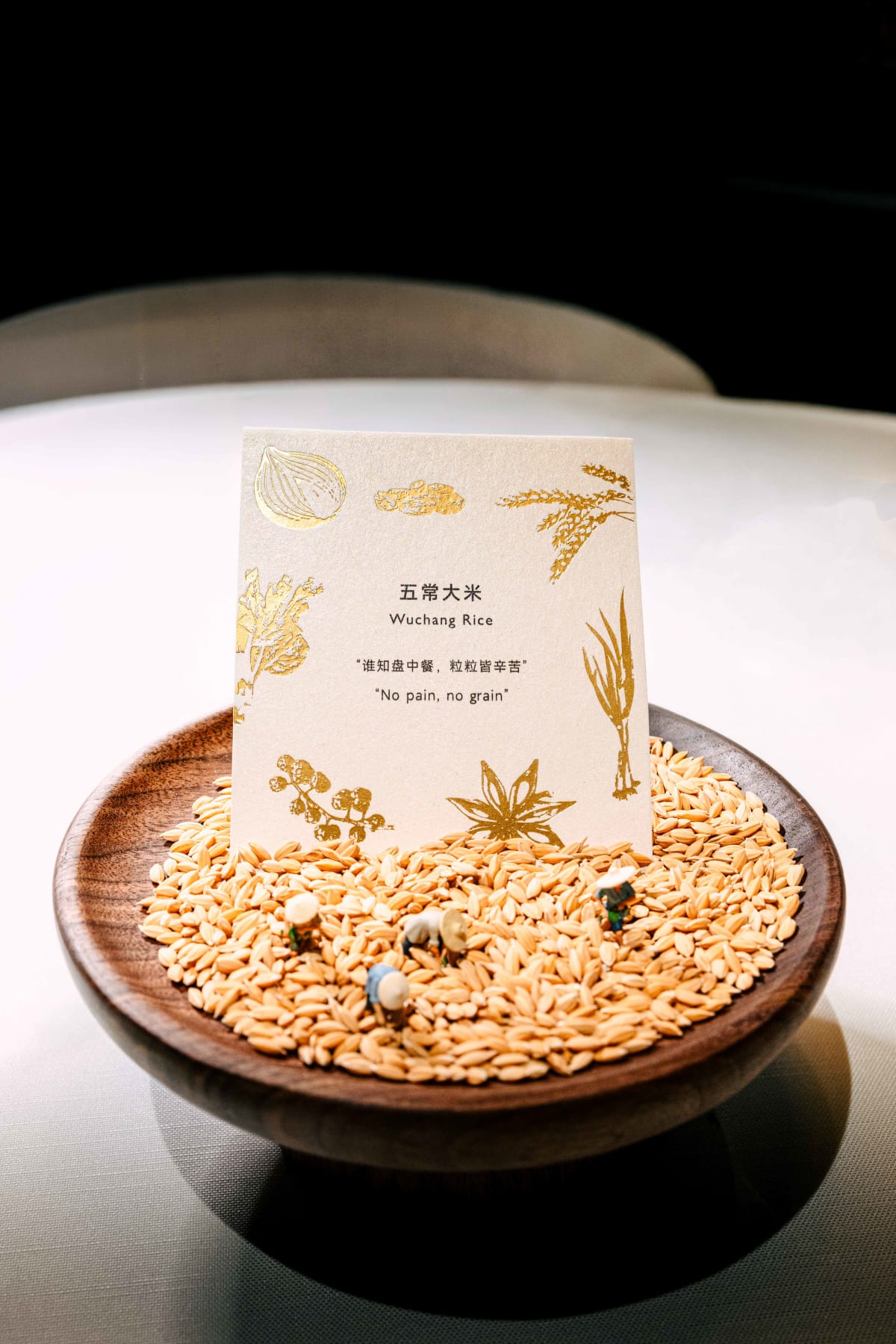
For the final savoury course came a fried rice made with Wuchang rice (五常米). Wuchang rice, from Wuchang City (五常市) in Heilongjiang Province in northeastern China, is one of the most prized famous rices in China, holding a status like Korea's Icheon rice or Japan's Koshihikari, a top-grade variety with overwhelming aroma, stickiness, and sheen. Bringing northeastern rice to the final course of a Shanghai menu seems part of the chef's intent to have you experience ingredients from across China, each once, within LING LONG's chapters.
One of LING LONG's strengths is how much gueridon service there is, with carts wheeled right up to the table to show you the dish. There is something to watch in every course, which is a pleasure.
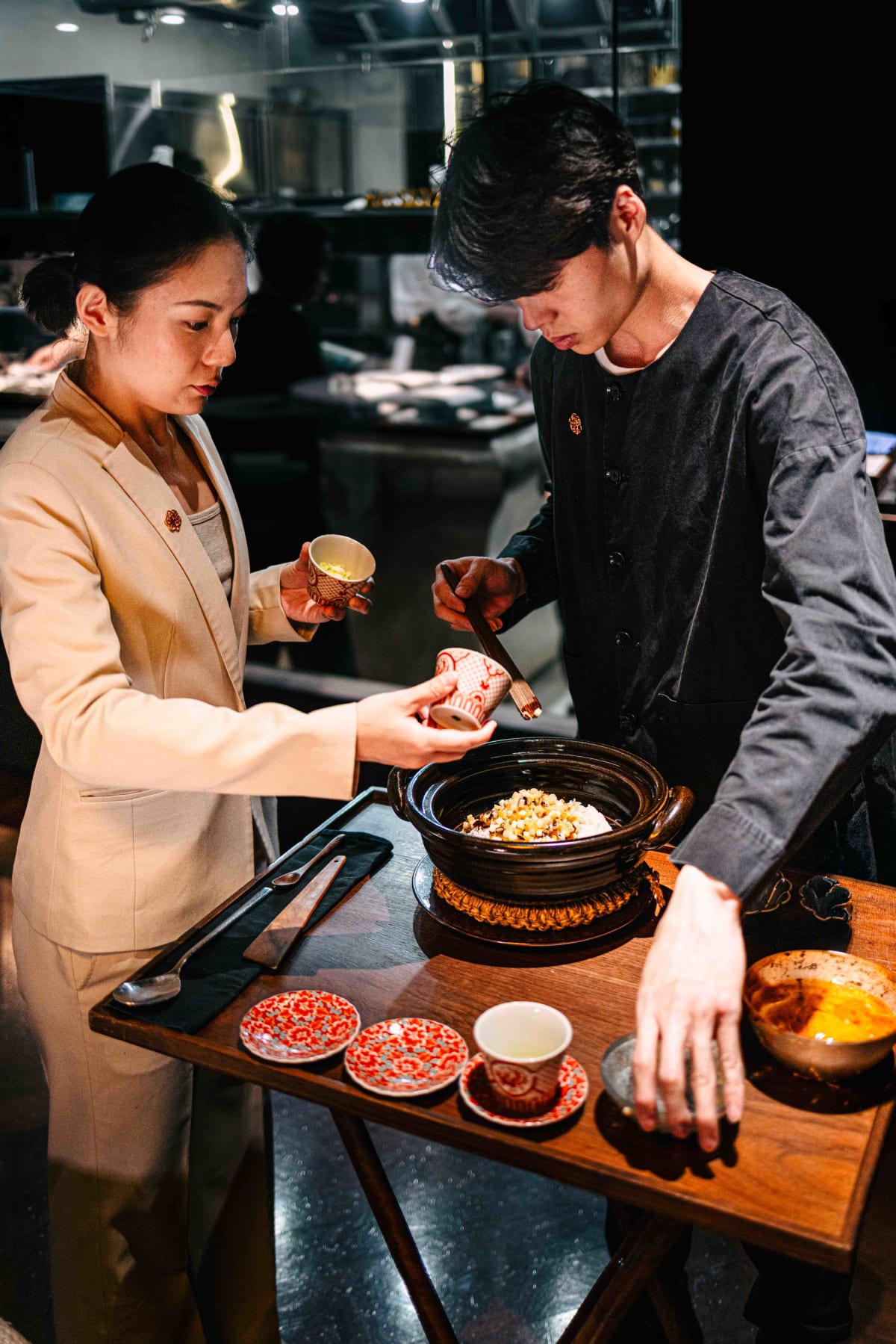
Gueridon service was once the pinnacle of classic French dining but has been gradually vanishing under rising costs, so it is interesting that it thrives in Chinese dining. The savoury courses, too, came out partly prepared in the kitchen and were finished tableside before serving. Beyond the rice there are three important elements: cilantro, garlic stems, and white shallot.
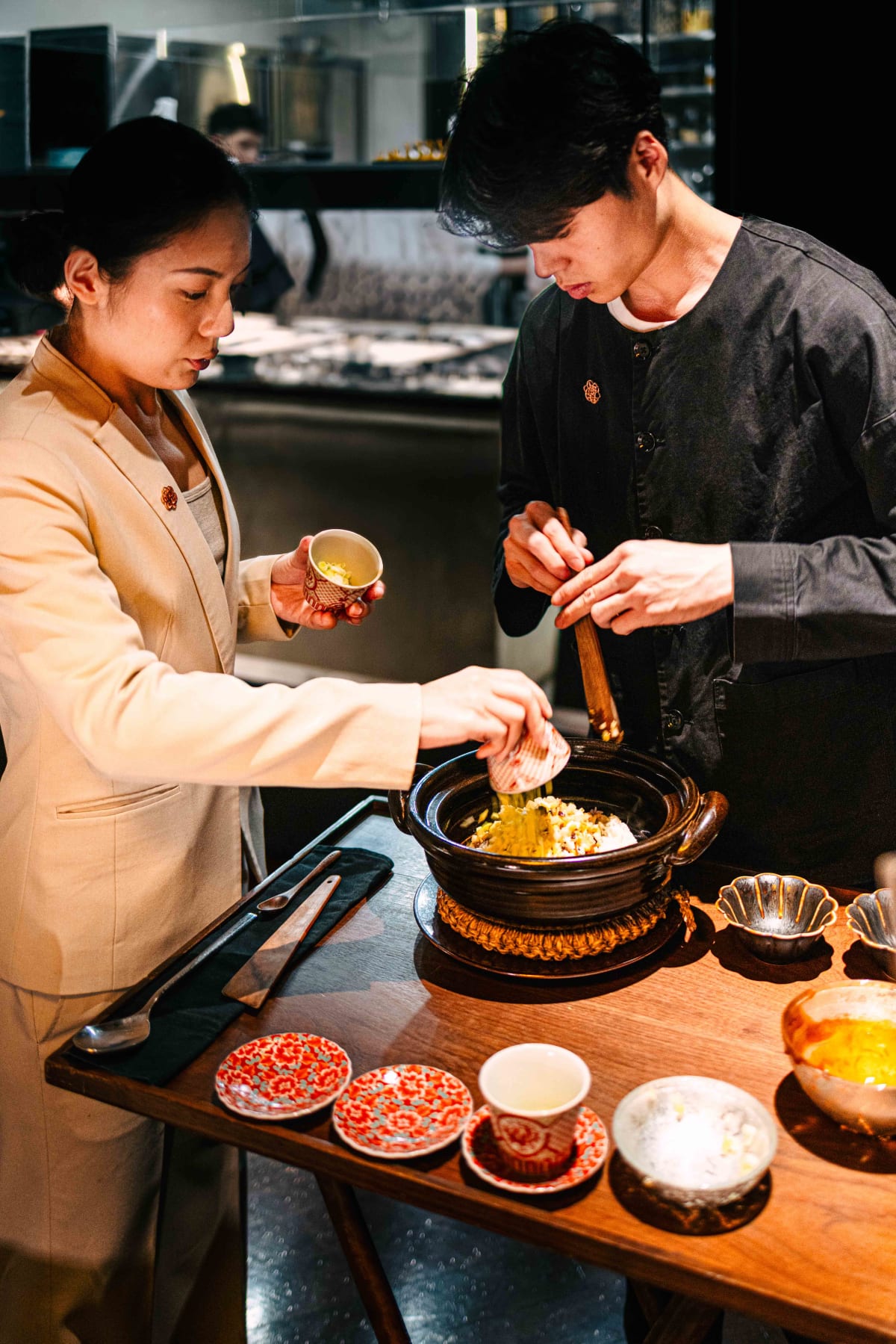
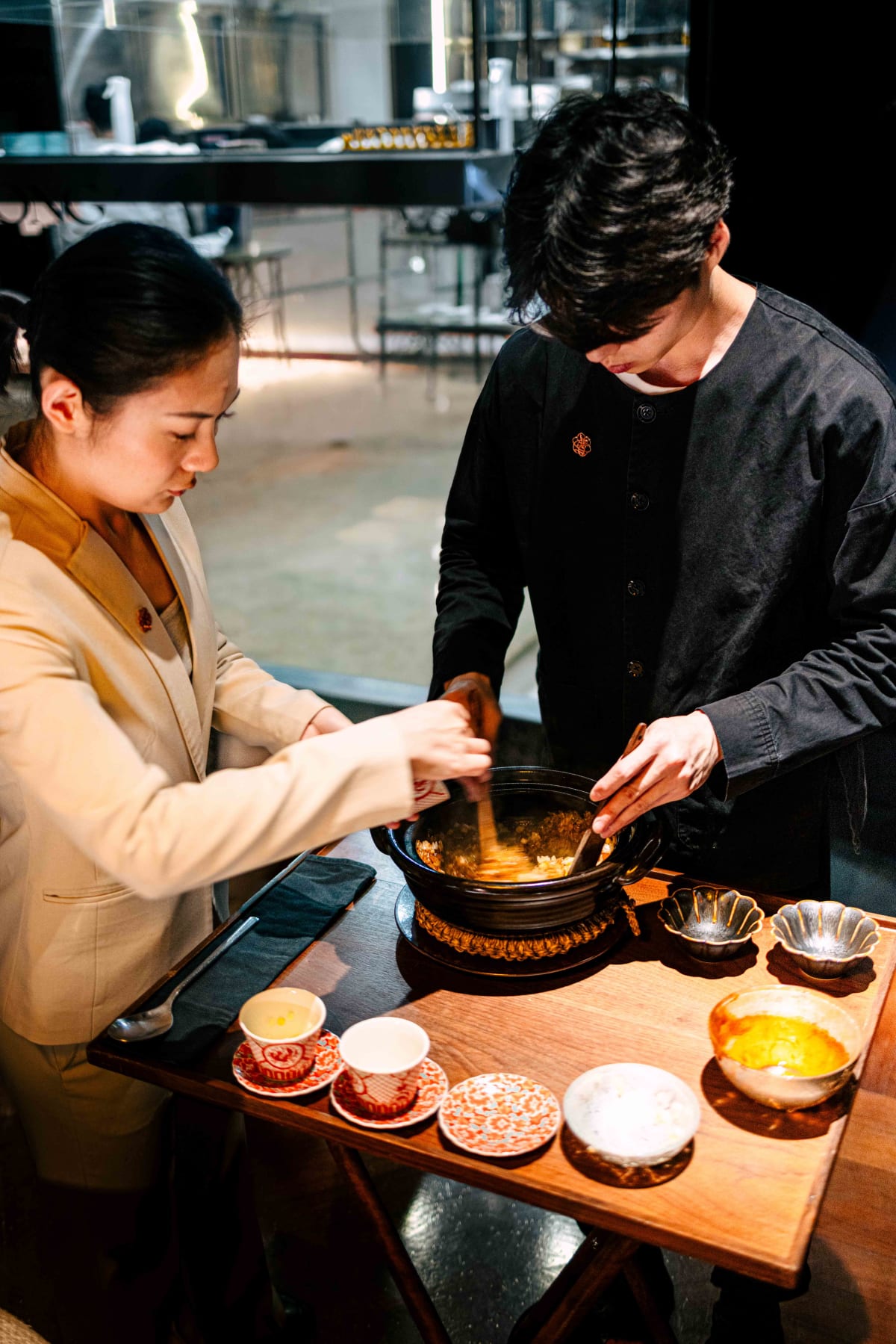
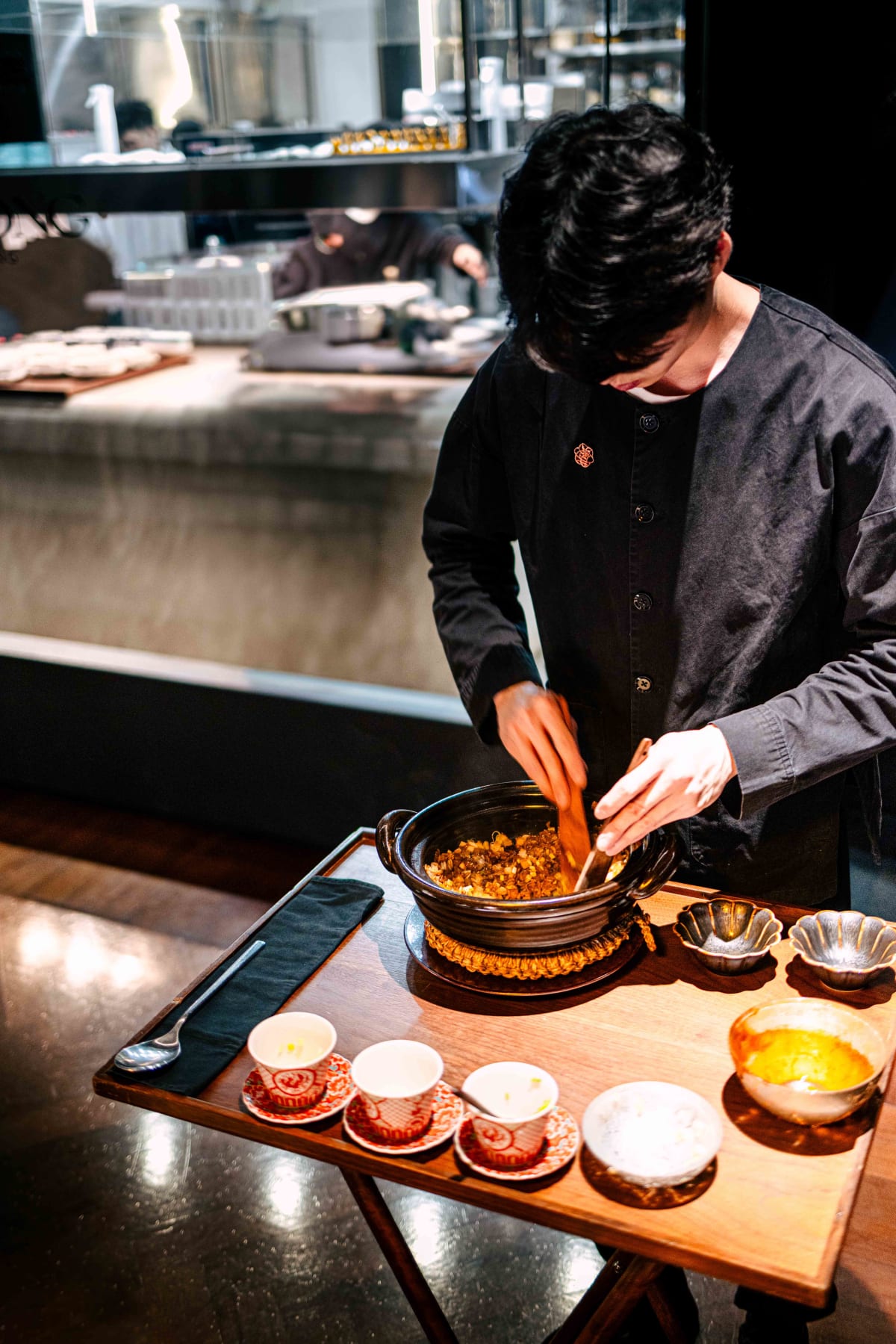
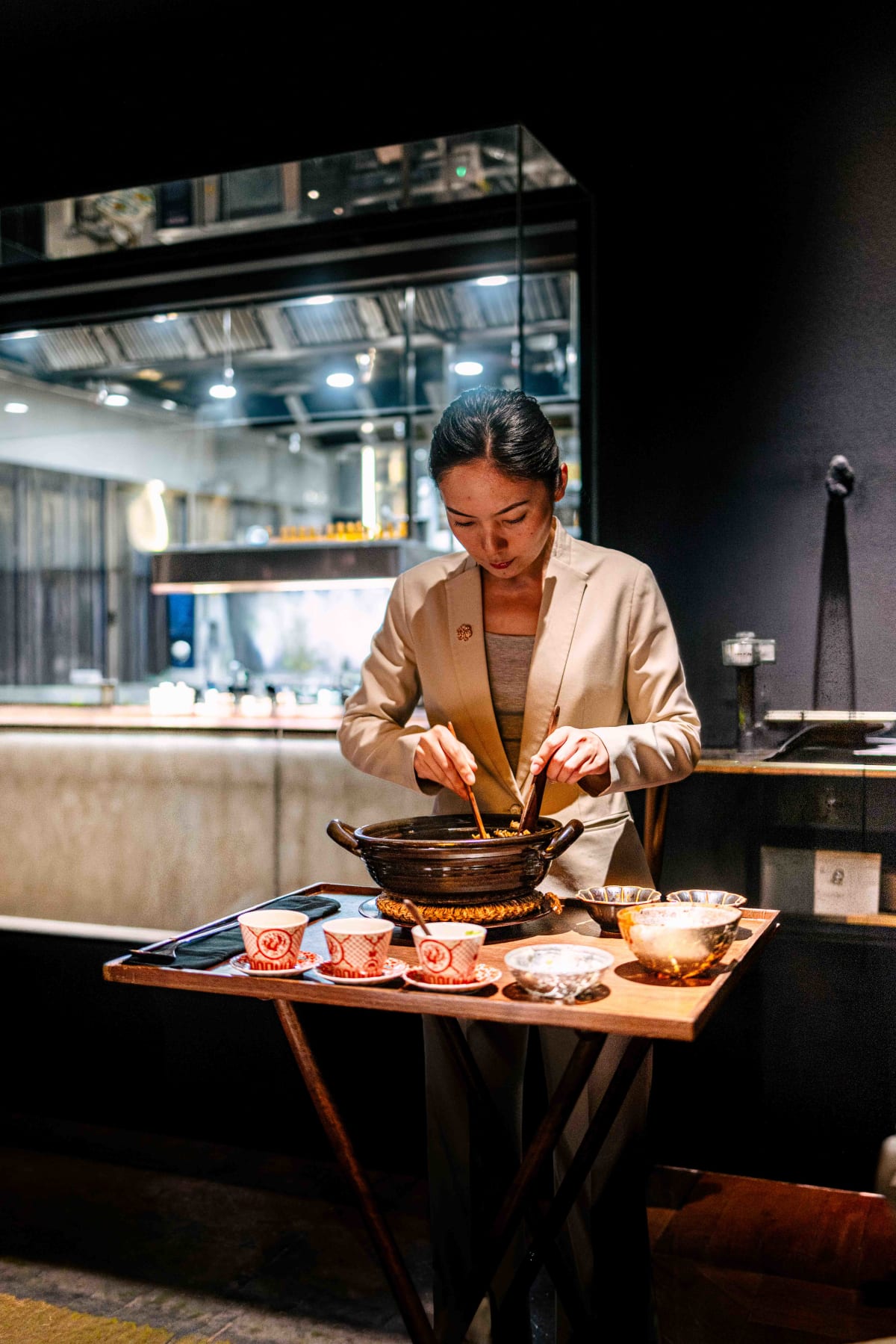
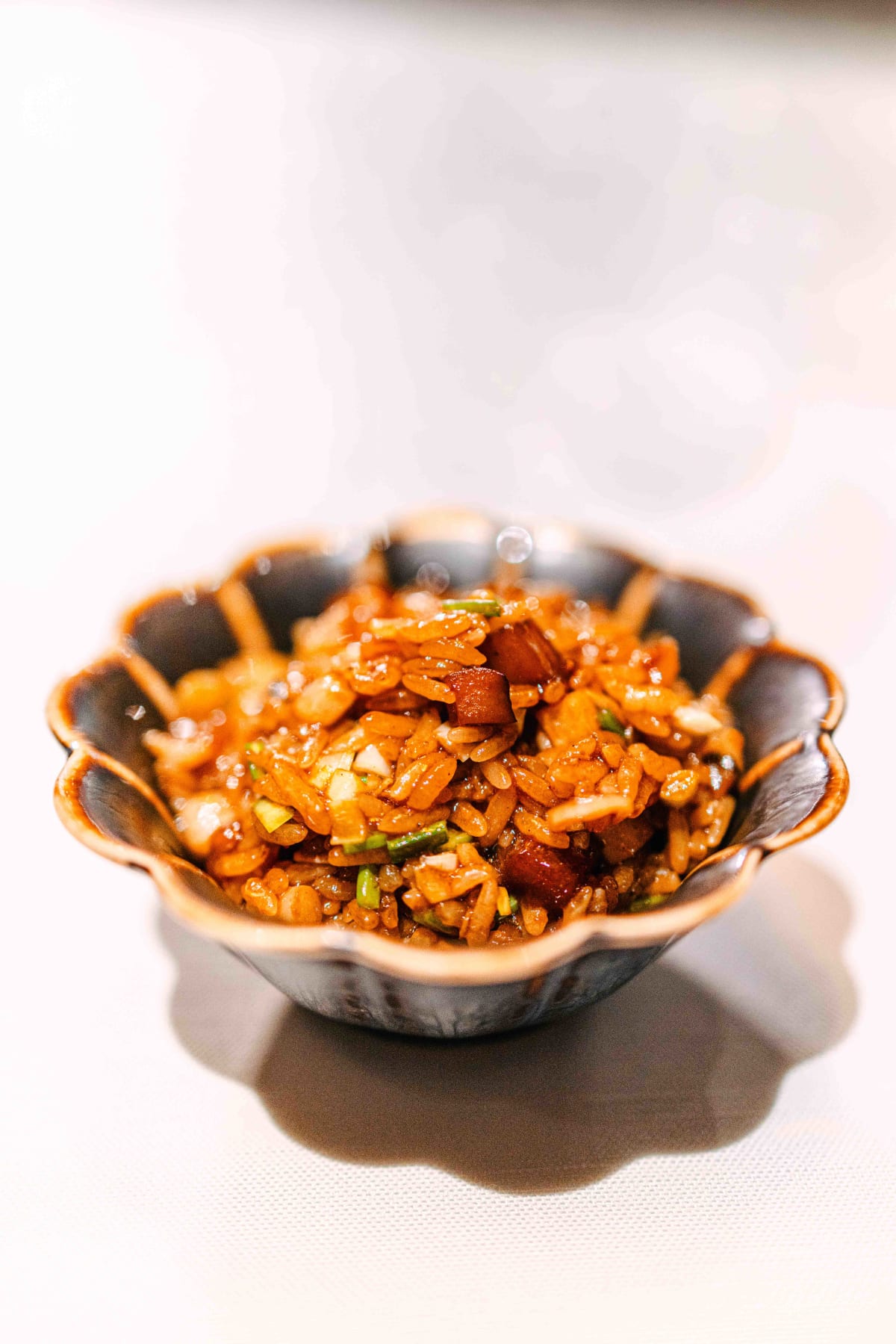
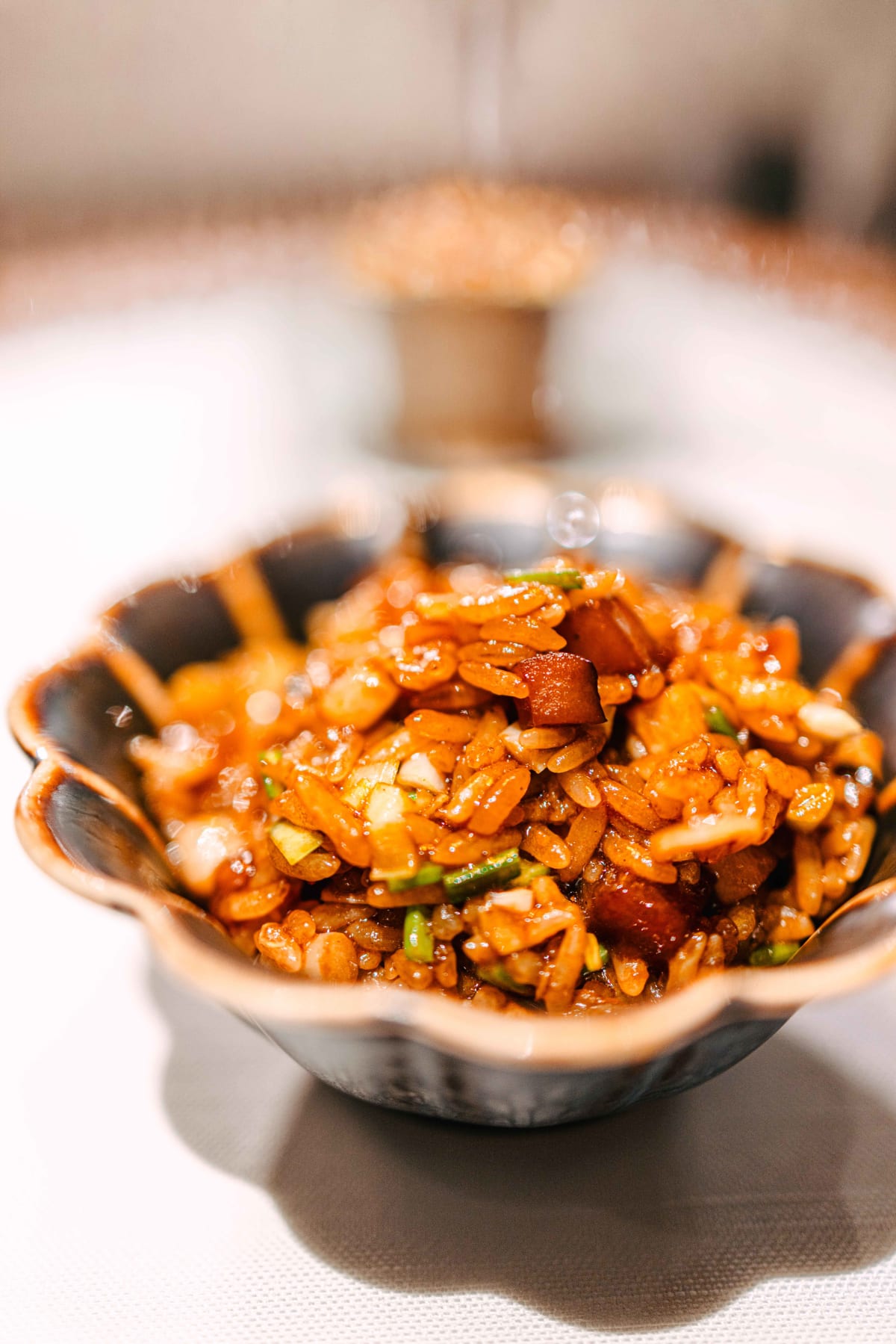
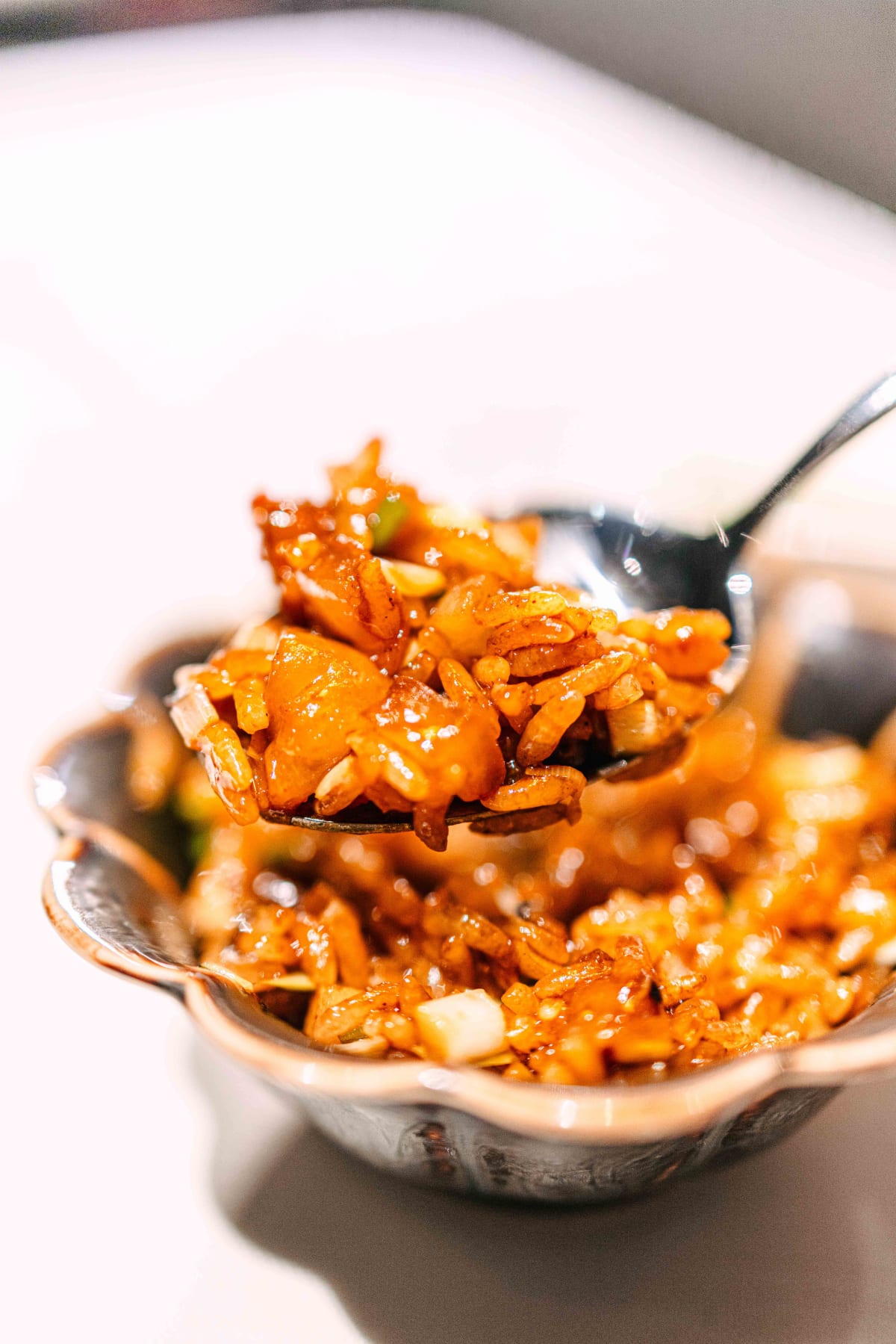
This rice was made with eight-treasure sauce (八寶醬). "Eight" signifies luck in China, and eight-treasure sauce is a traditional sauce used commonly across the country. The eight-treasure sauce in this dish contained glutinous rice, duck, fish maw, cucumber, pickled vegetables, bamboo shoot, mushroom, and white shallot. Together with the shallot, cilantro, and garlic stems mentioned earlier, the mushroom is said to build a varied aroma. True to the name "eight treasures", eight strands of texture and aroma are released at once in a single spoonful.
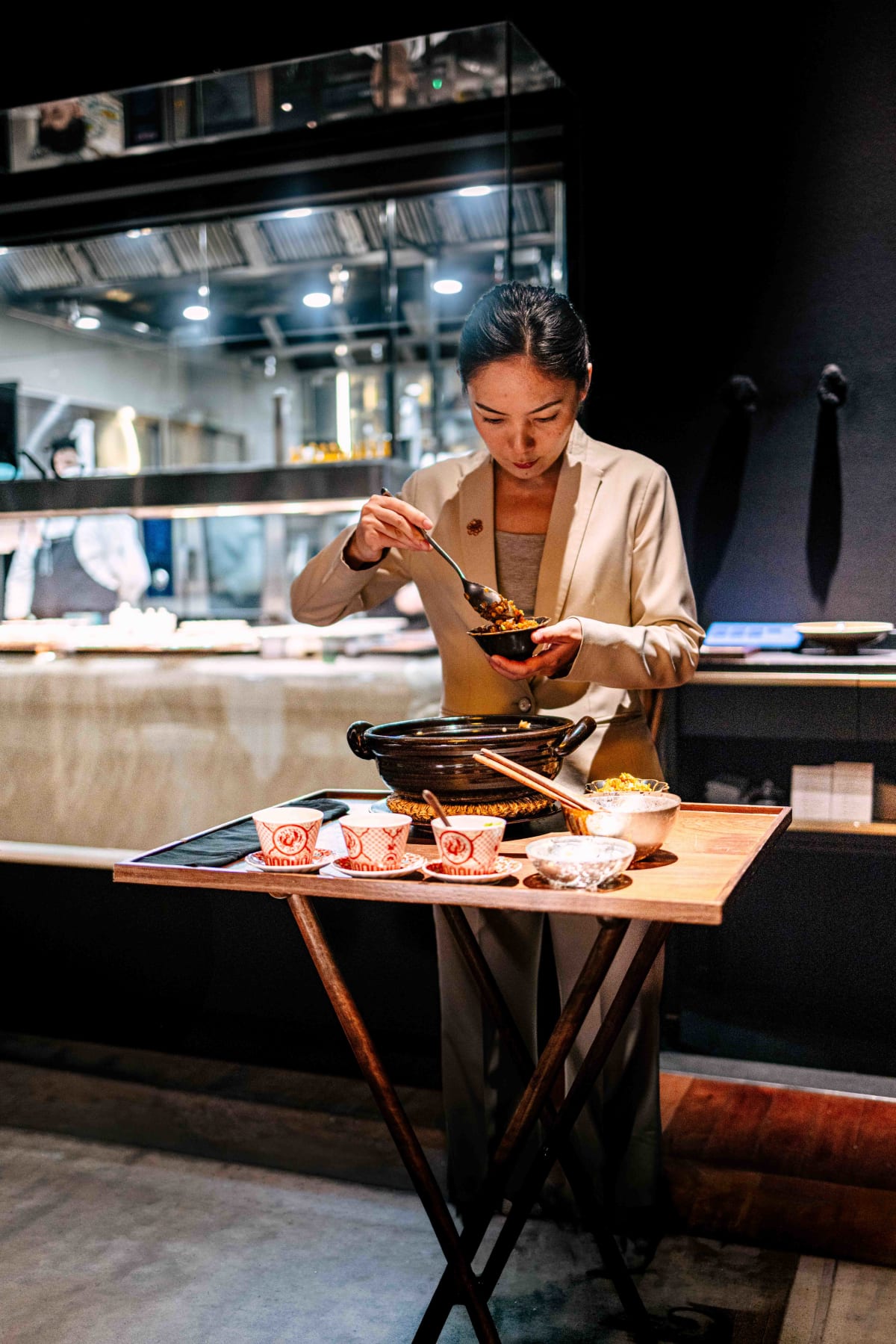
This course was truly, truly delicious. Above all the texture and sheen of the rice, so well coated that it loosened beautifully in the mouth, were utterly wonderful. The closest comparable dish that comes to mind is the fish-maw rice I had at WING in Hong Kong; the rice itself, though, seems a notch above WING here. WING, too, is Cantonese dining where fish-maw fried rice is the signature, and this single bowl at LING LONG surpassed that signature in the precision of its aroma and the gloss of its coating. The cilantro added in exactly the right amount gave a fitting fragrance, and the ingredients worked in, the fish maw in particular, enlivened the texture of what might otherwise have been a somewhat plain rice.
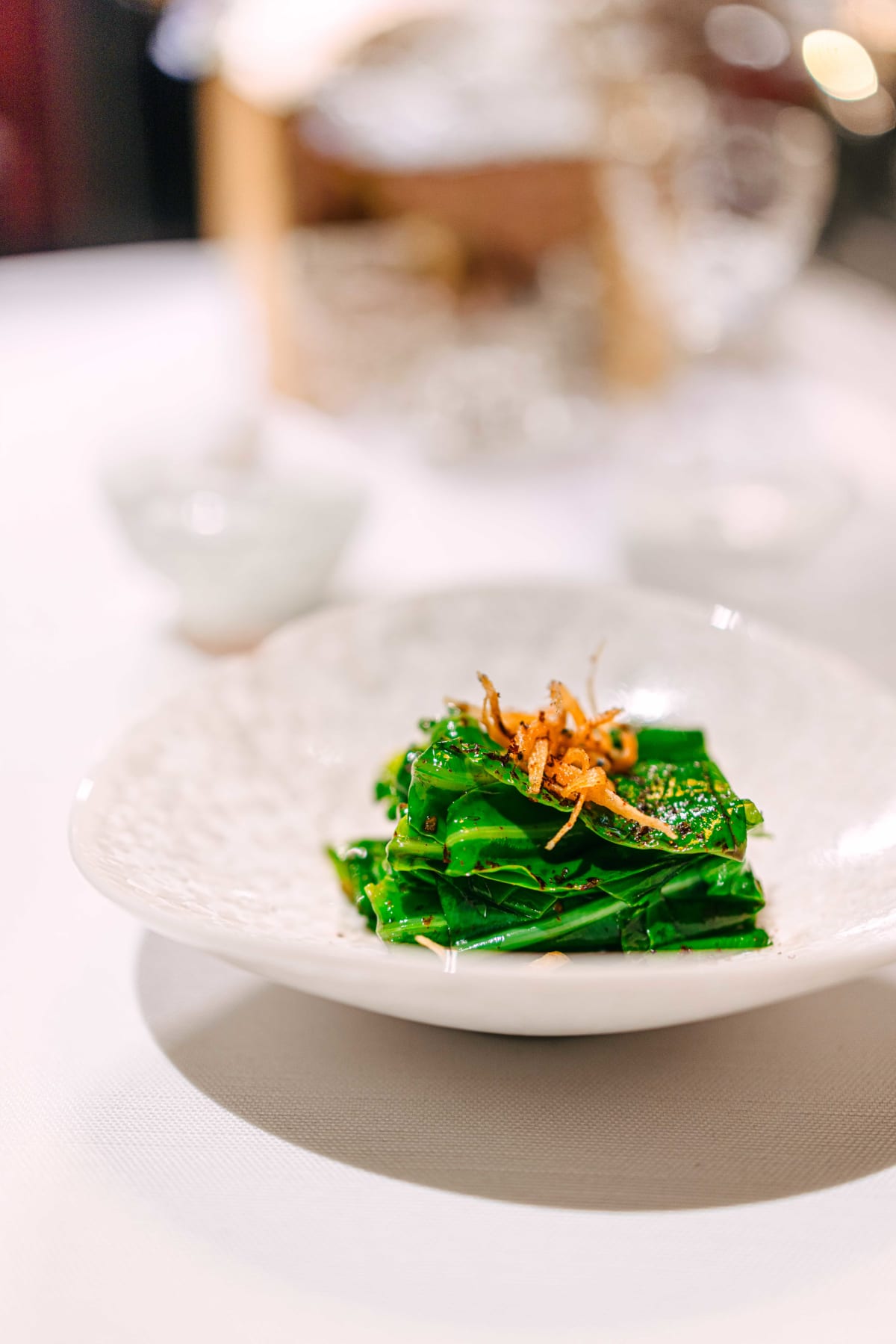
I wanted to rate this as very nearly the best final savoury course I have had anywhere. I went so far as to refill three bowls. At the end they simply scooped out the whole thing and said, "you finish it." The main duck was good too, but this single bowl was the summit of the entire LING LONG course, and the fact that the meal's final savoury dish was its strongest makes clear where the chef's build-up had been heading. In most fine dining the final savoury course leans toward a carbohydrate top-up just before dessert, but LING LONG condenses the essence of its ingredients and strikes here. So satisfaction does not drop as the course nears its end; rather, the impression is that the meal stopped at its peak.
Section 12·The Desserts
With the savoury courses done, the first dessert was a sorbet. First, four ingredients were brought to show: pear, tomato, Buddha's hand citron (佛手柑, a finger-split citrus), and sugarcane, with the idea that you pick one and they make it into a sorbet.
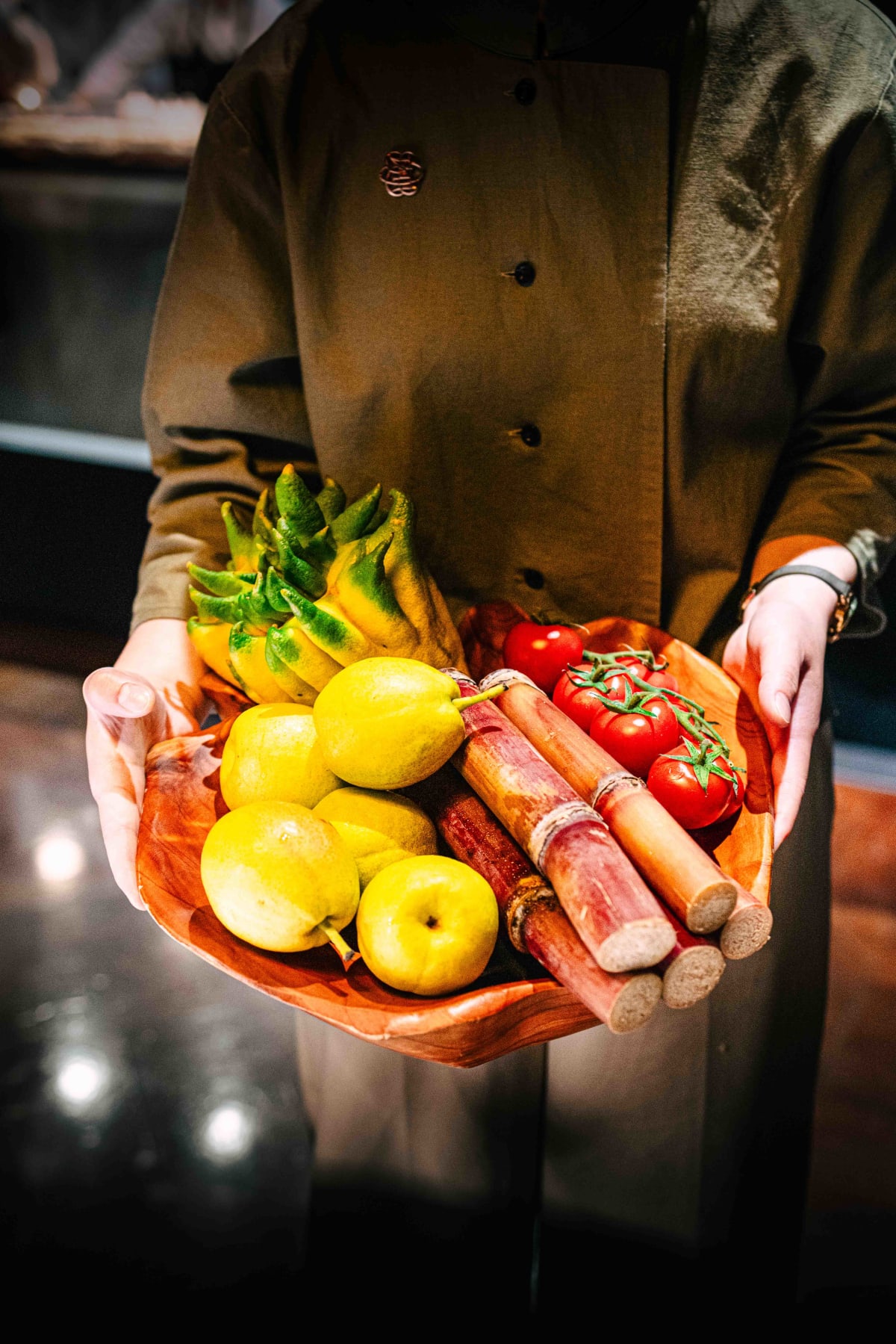
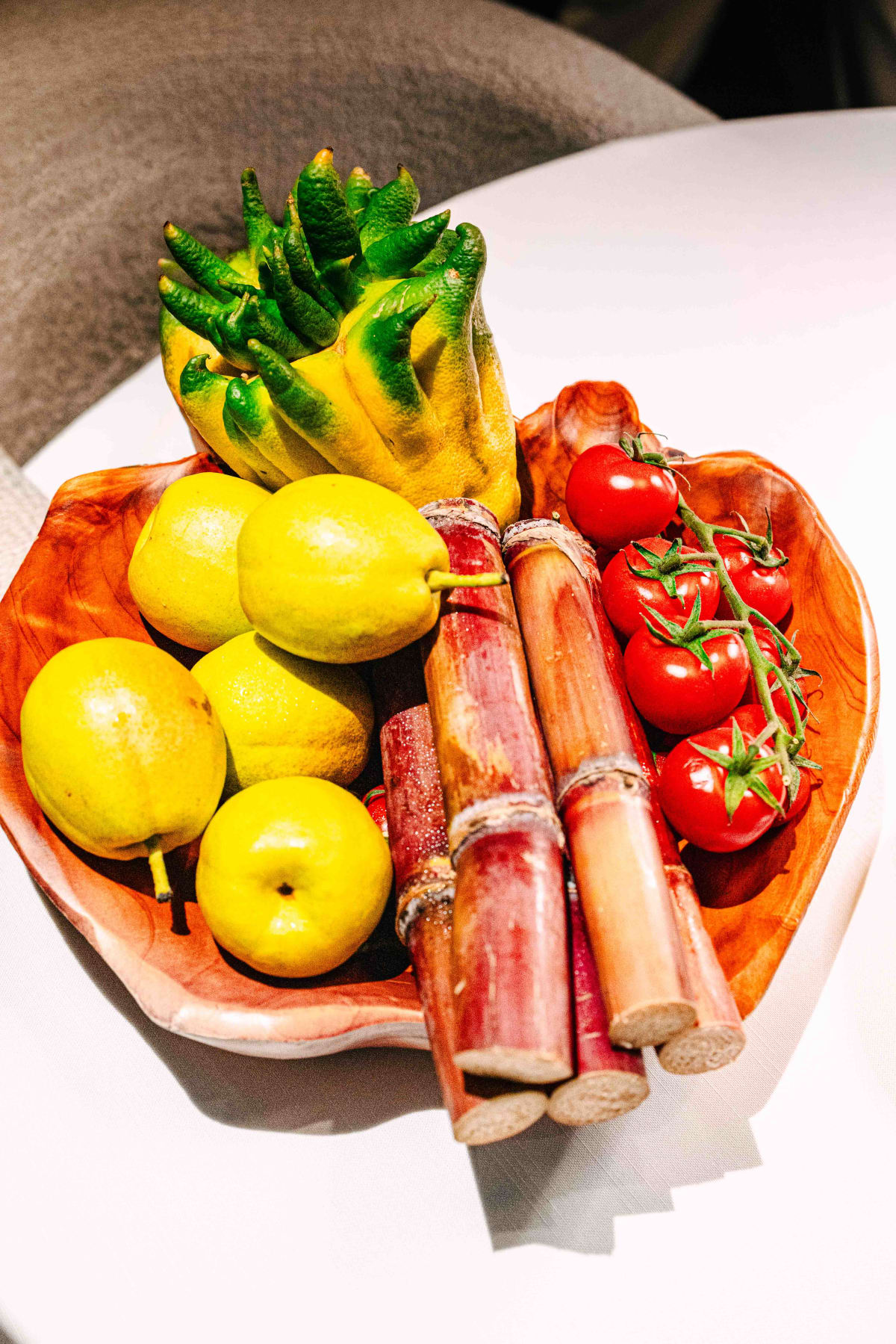
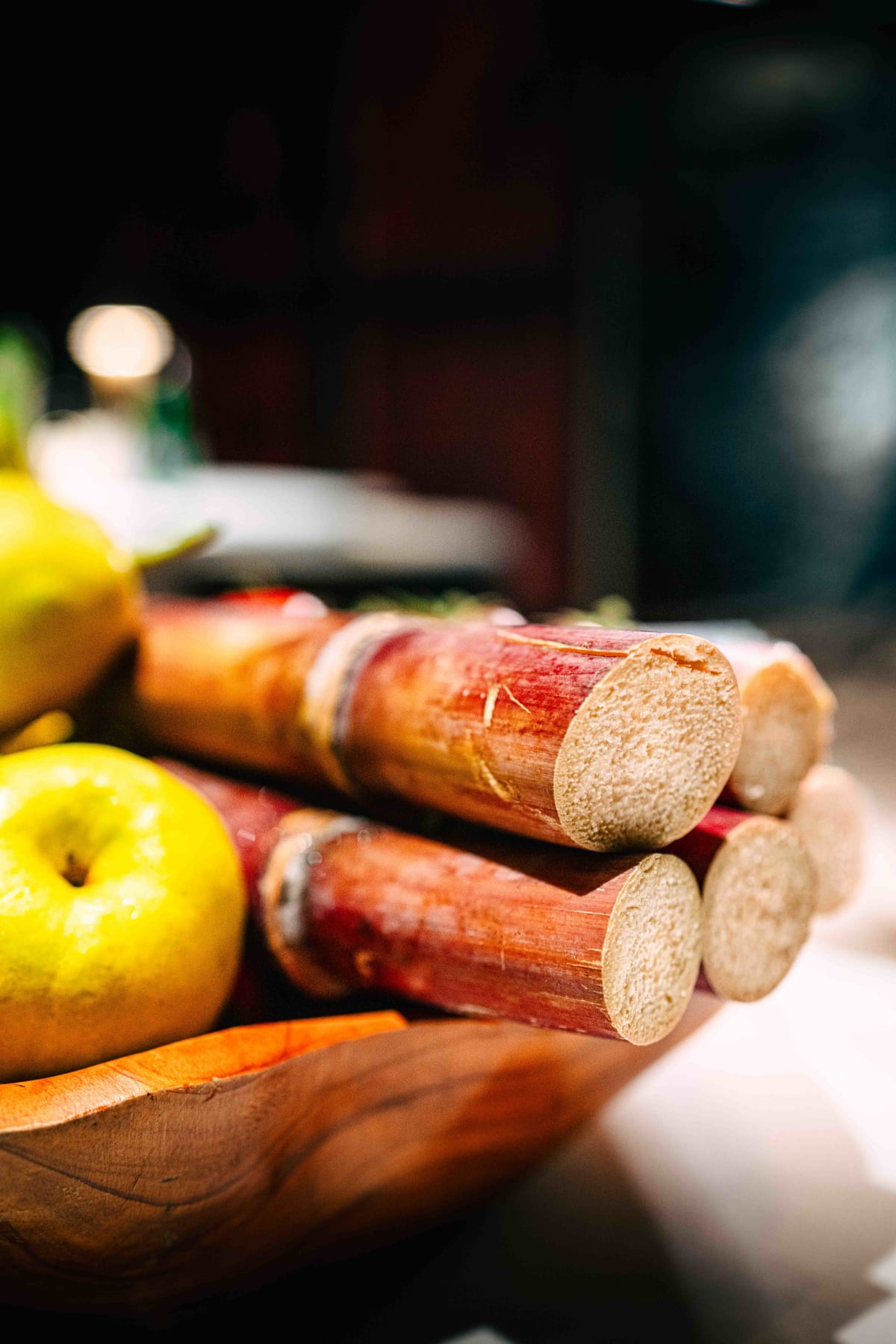
So I picked one each, and in the end all four came out.
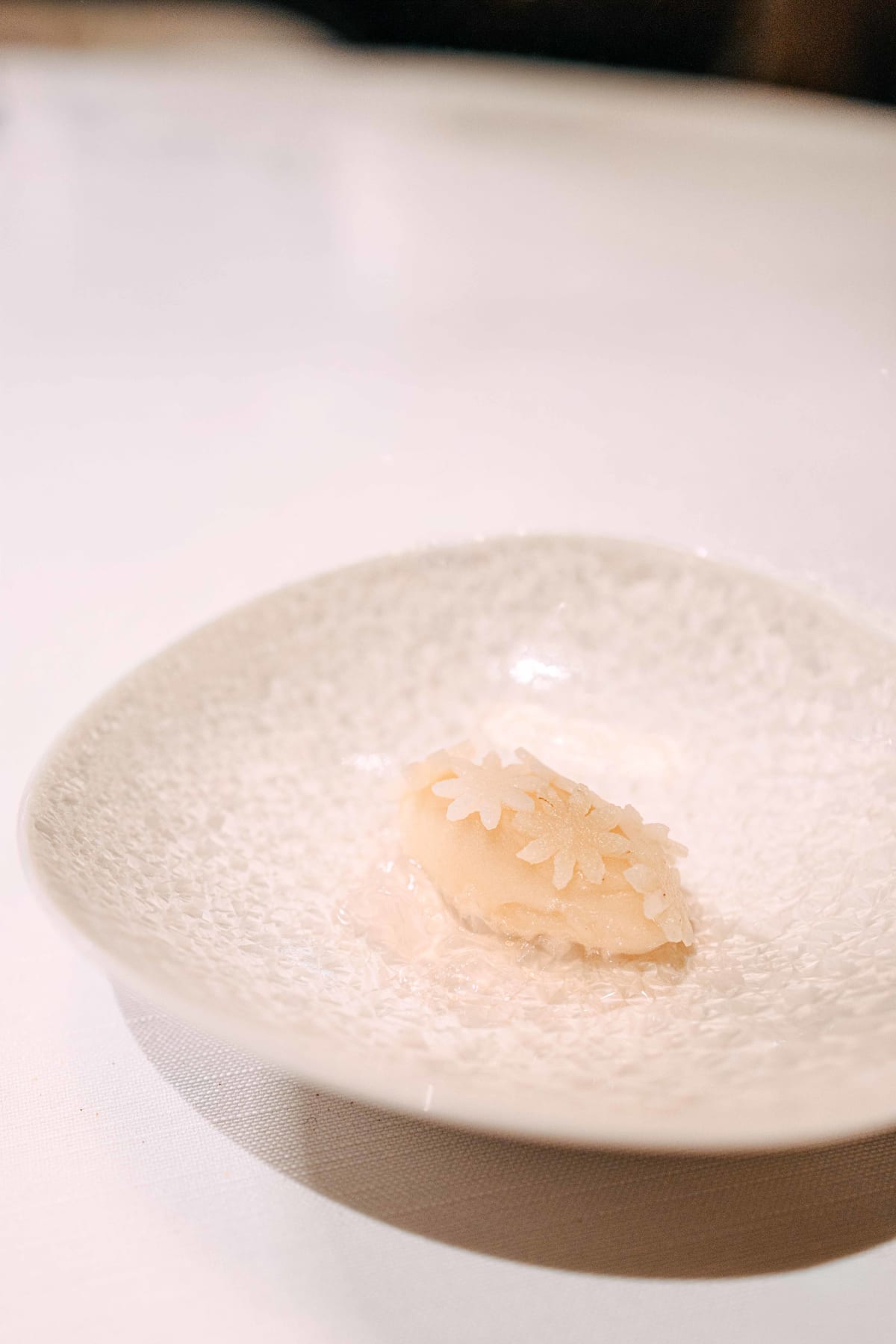
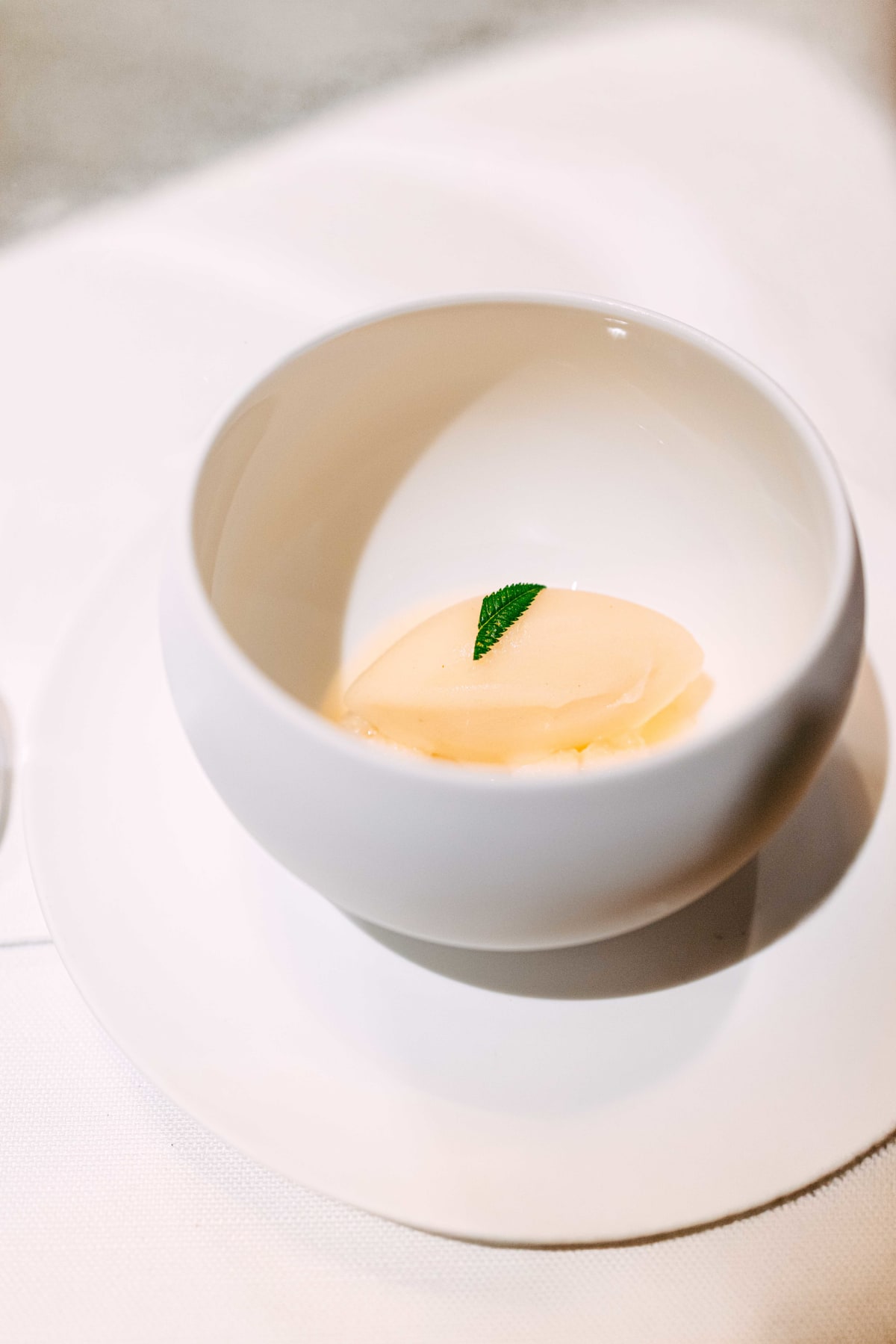
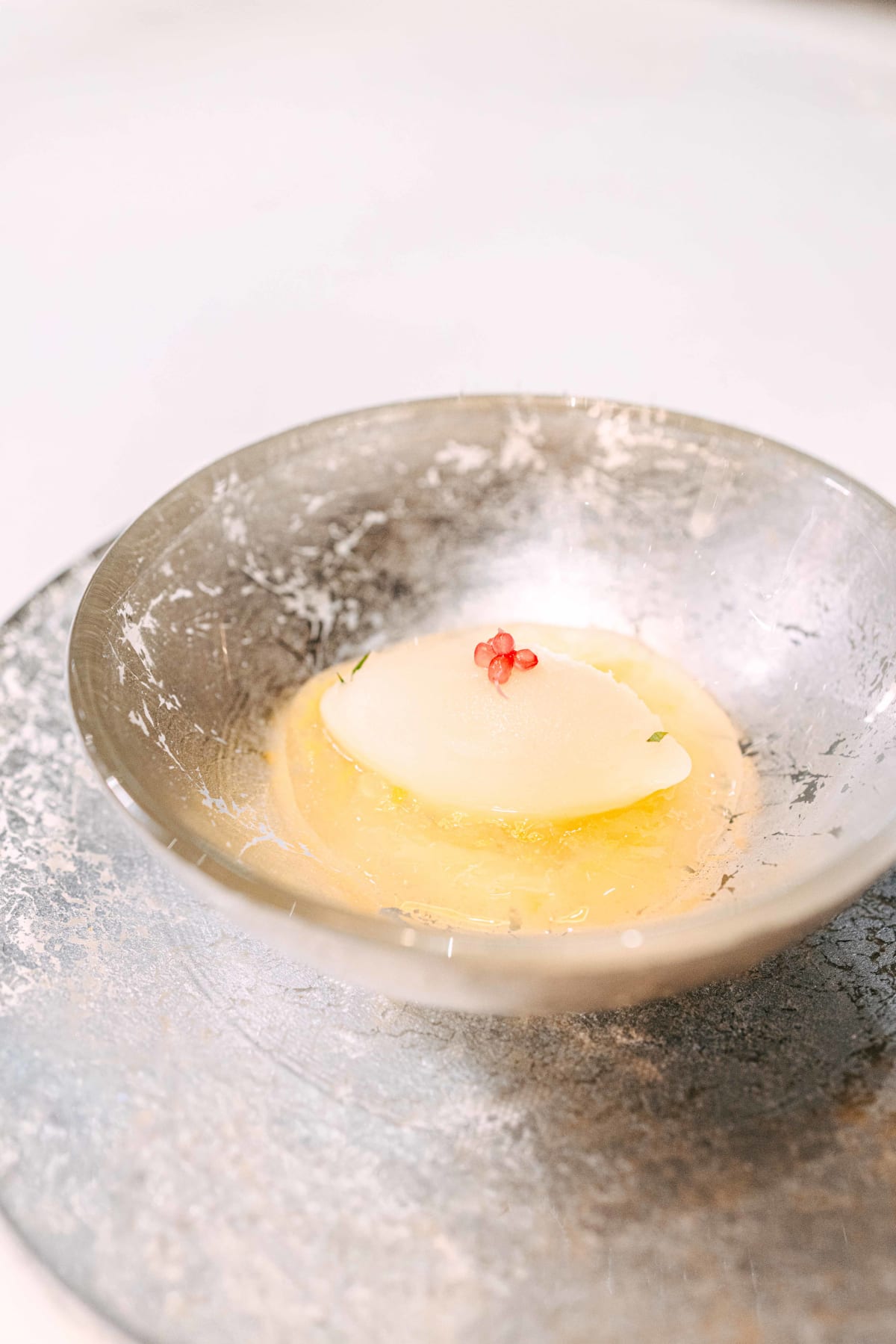
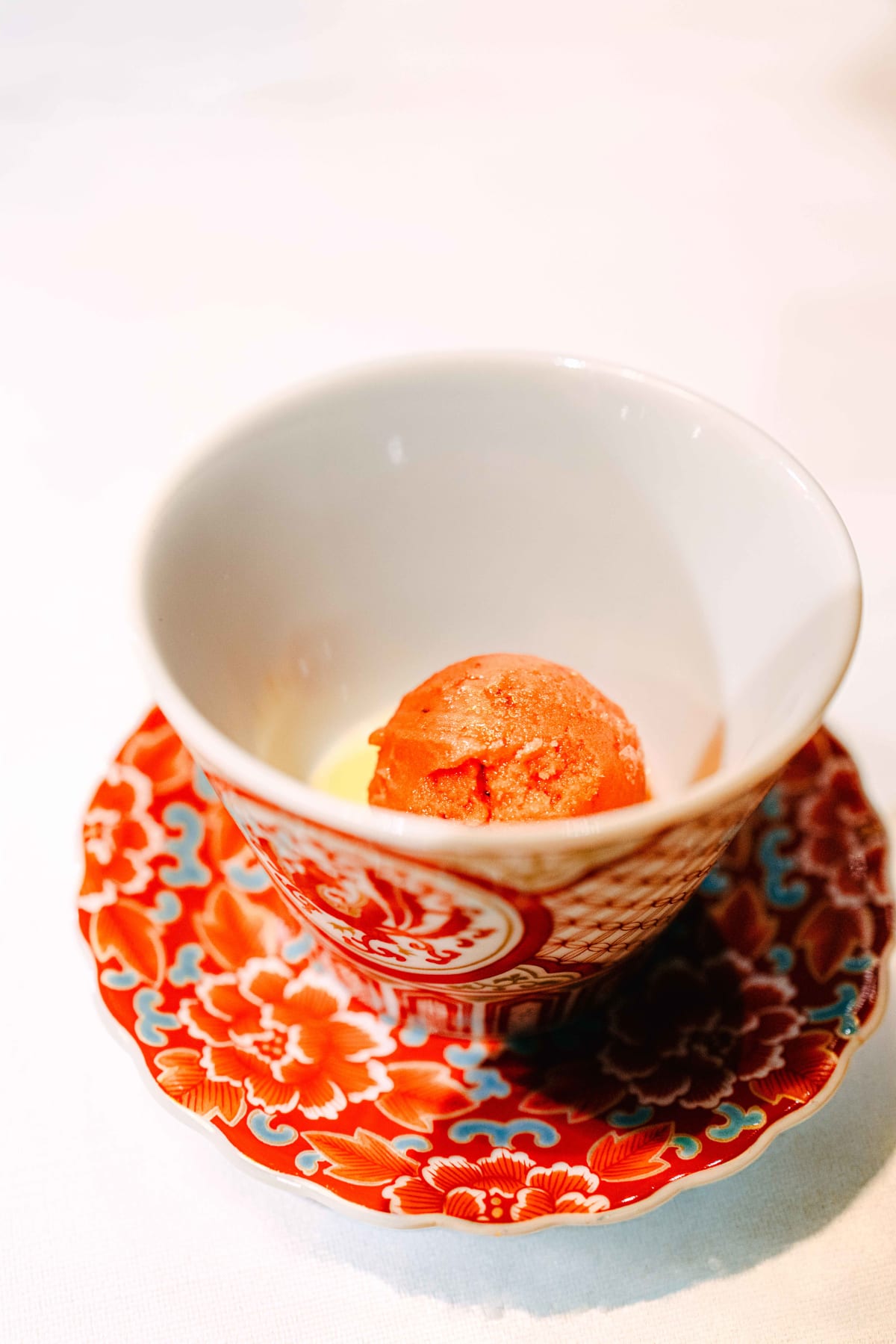
They even gave us a glass each of dessert wine, looking after us generously.
Three of these captured the ingredients faithfully as they were, but one in particular stood out: the tomato. The tomato sorbet was made finer, to a purée texture, and finished with olive oil, giving the feel of eating something Italian. It was a clever approach that pulled the dessert toward something savoury, refreshing and vegetal.
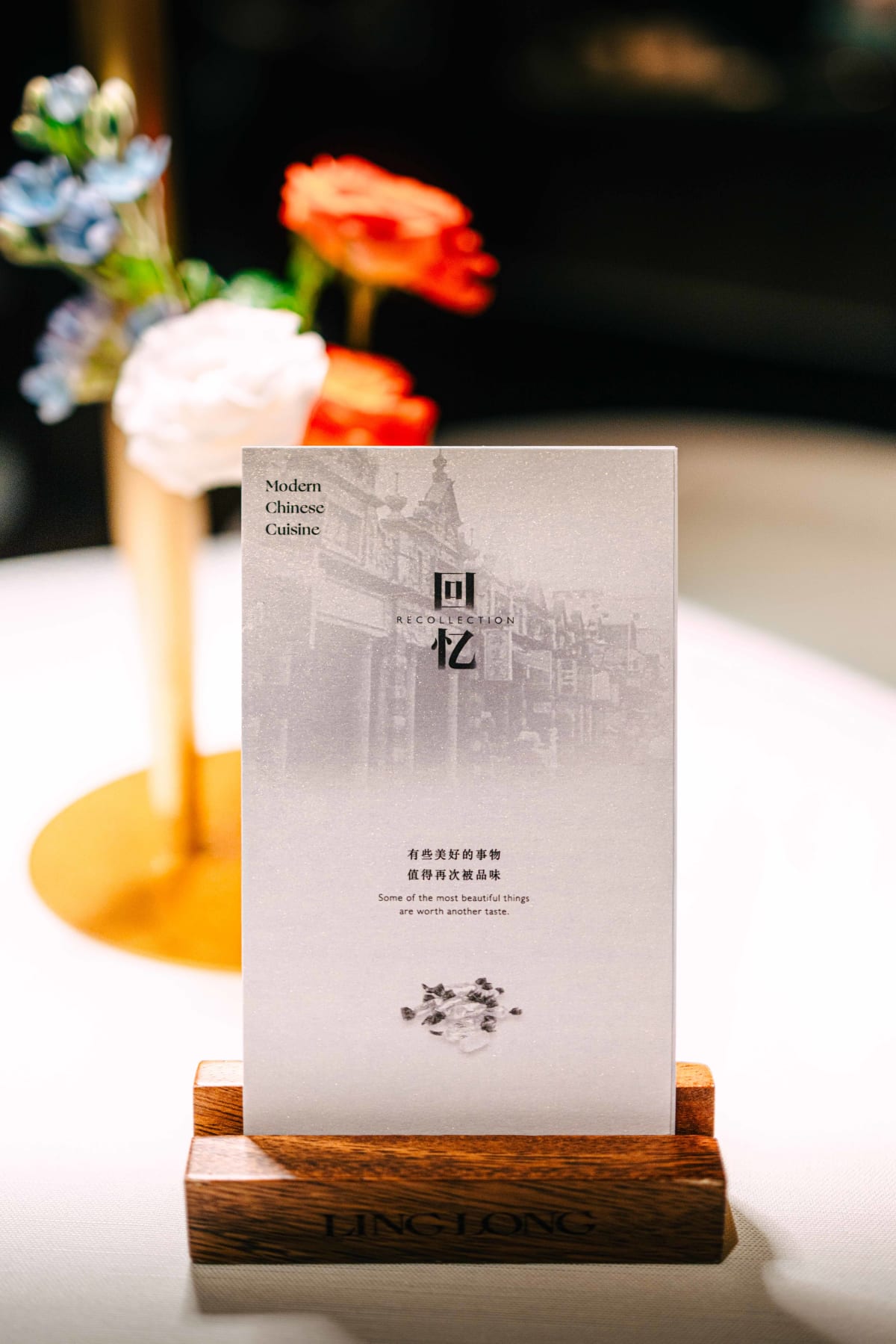
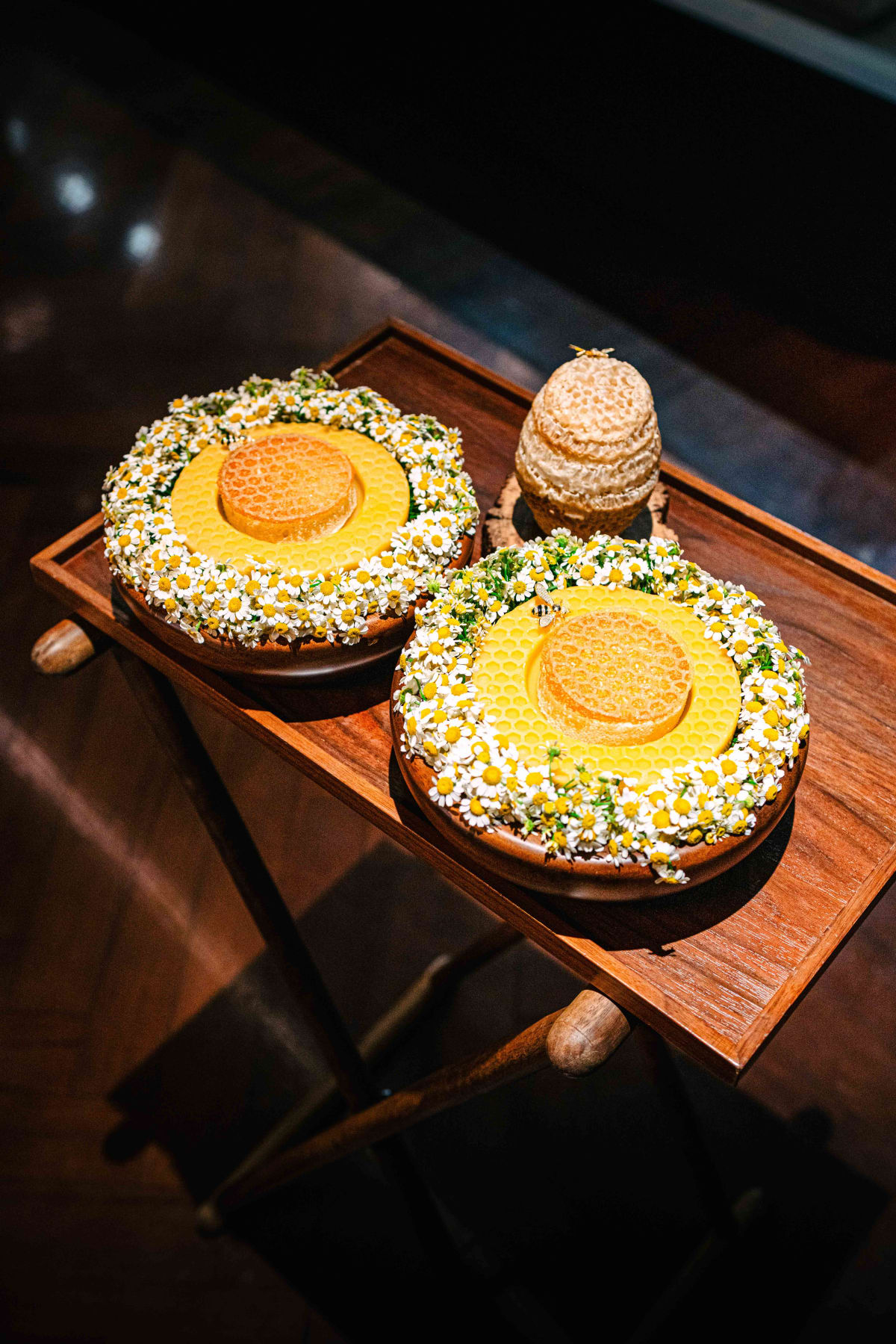
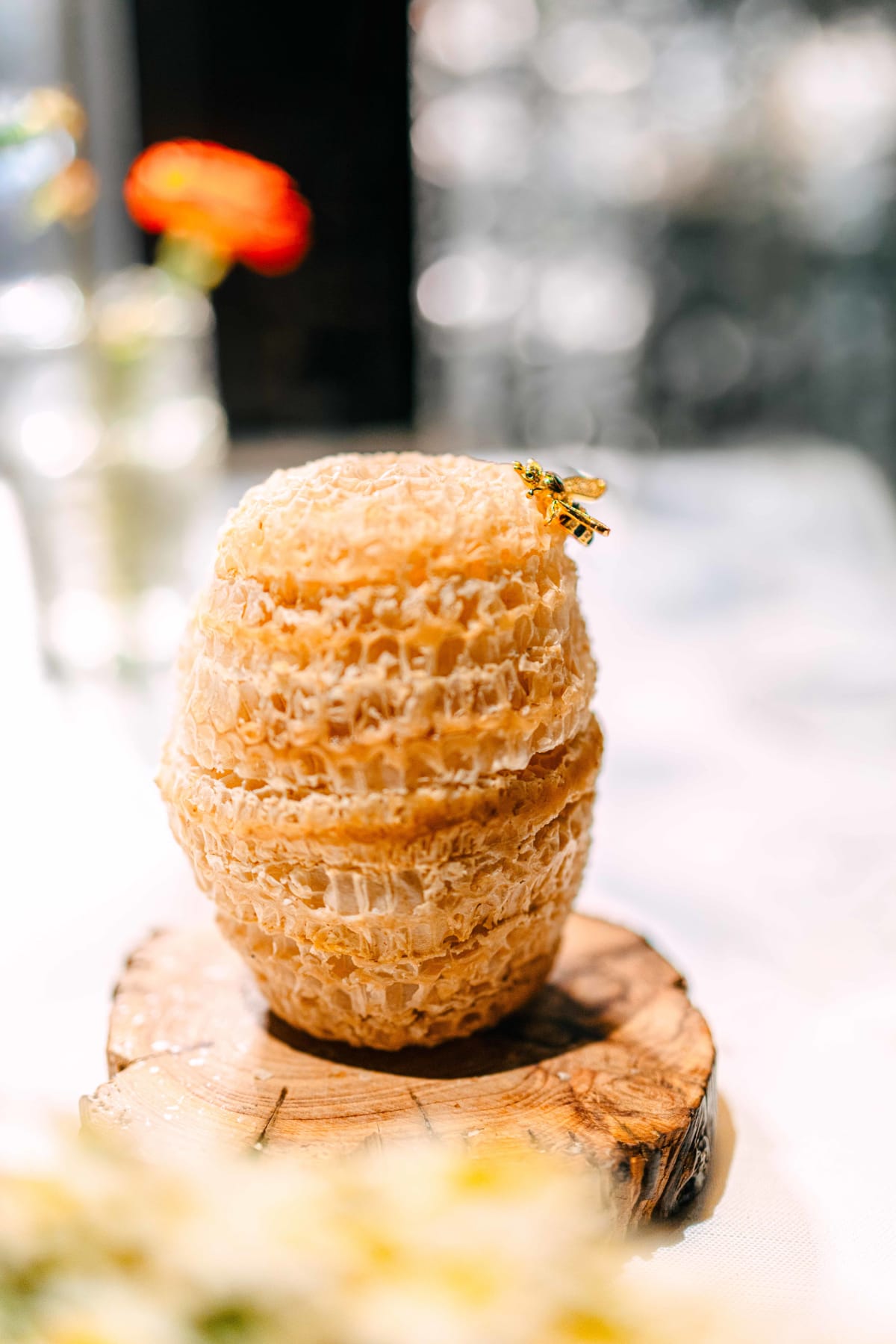
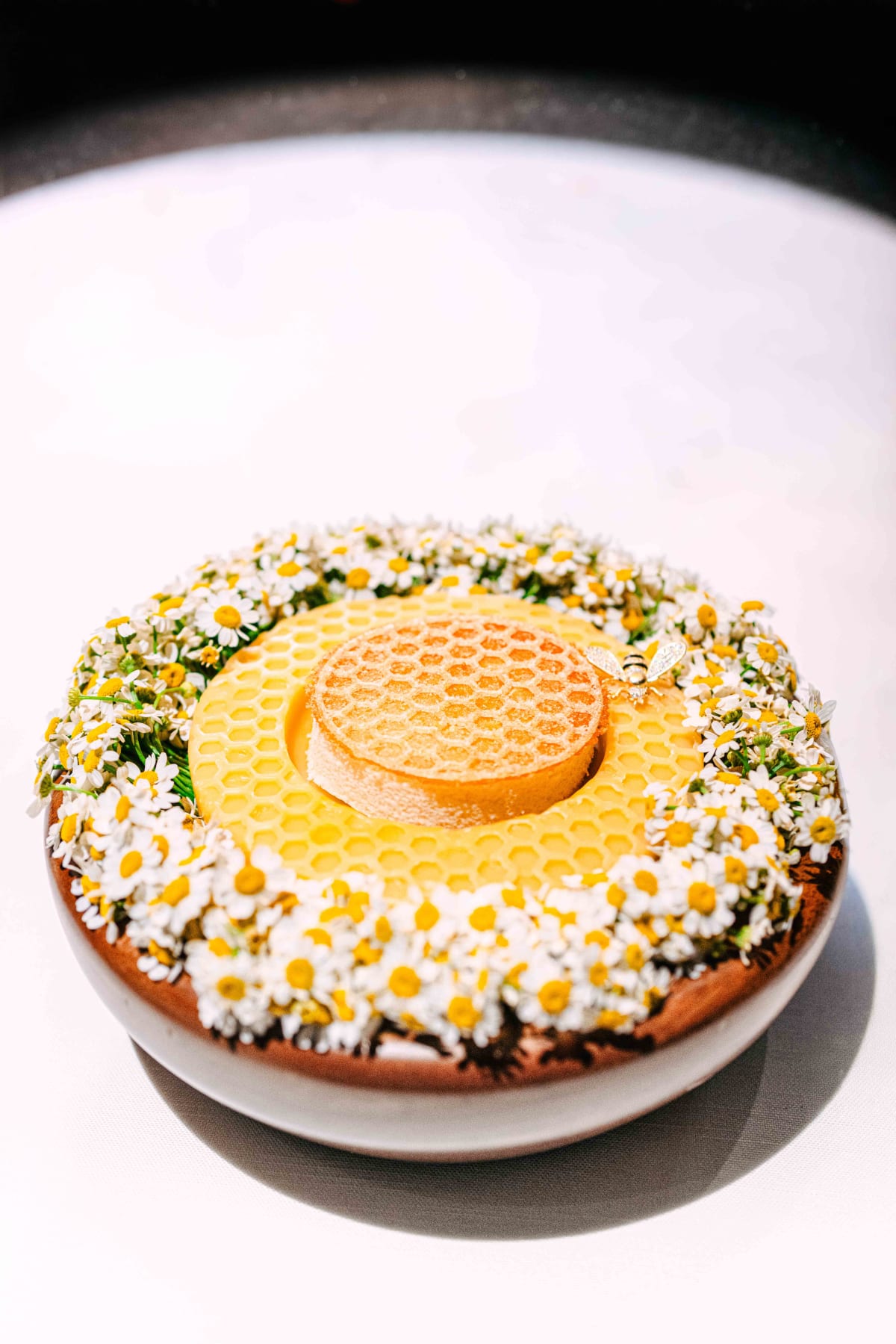
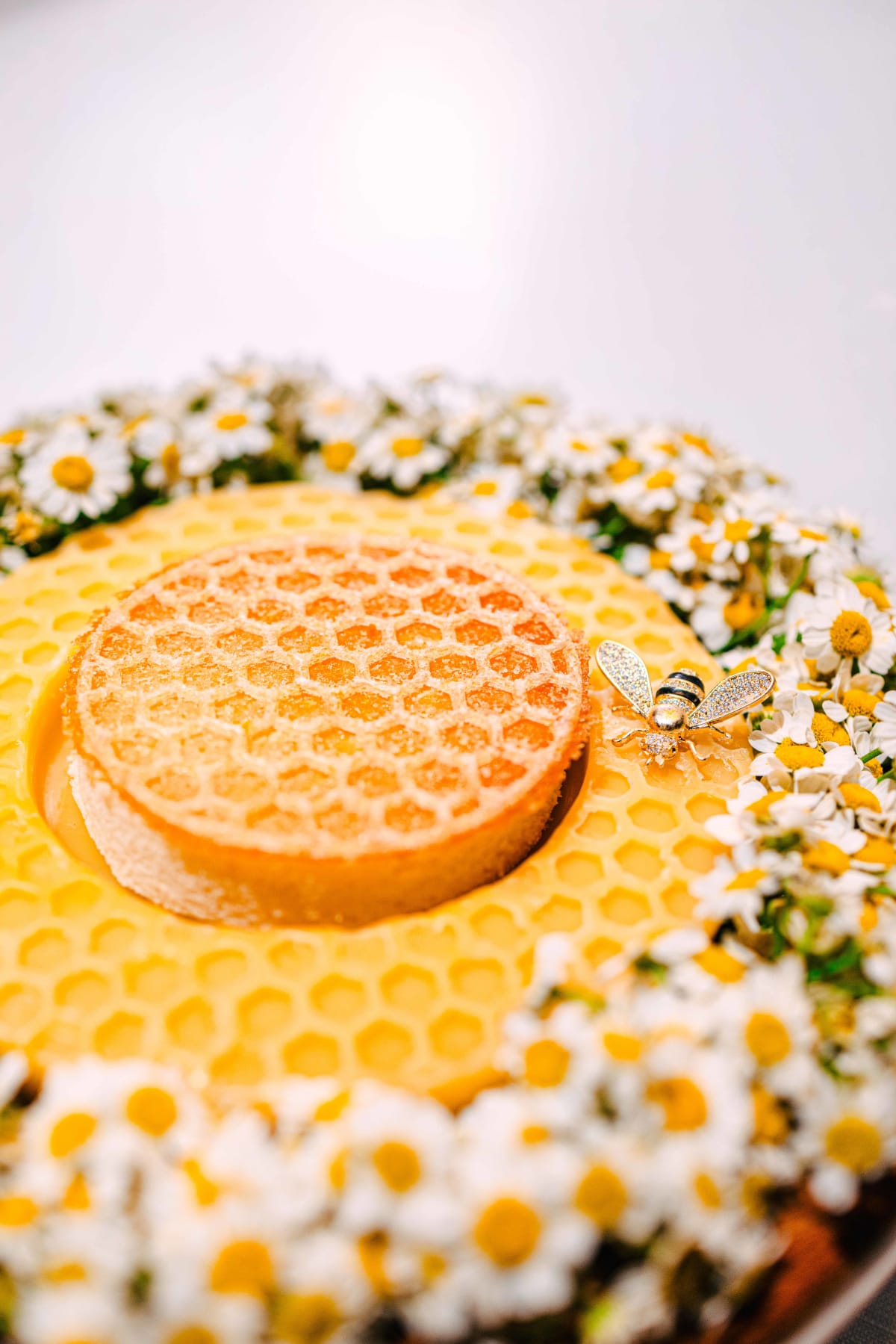
The second dessert was the honey dessert of the Recollection chapter. The garnish, a cute model bee perched on a honeycomb shape, was fun. On top sat a hexagonal honeycomb tuile, made with the bitter aroma of black honey and herbs, giving a slightly sticky, caramelized impression. In the middle was a sponge cake lifted with the citrus flavour of sour honey, and breaking through the top revealed a mousse filled with cliff honey, harvested, it was said, from cliffs 3,000 metres up on the Tibetan plateau, lending a soft floral aroma.
Himalayan cliff honey is made by the world's largest honeybee, Apis laboriosa, and the harvesting itself is a life-risking task; famous for its "honey hunter" culture, it is an extremely scarce ingredient.
Breaking the wafer on top and tasting it, the texture was extremely moist and soft. What this dessert emphasized was that it used only Chinese honey and no sugar at all. The taste and aroma of honey were indeed dominant, yet it was not excessive or cloying like a dessert loaded with chocolate or a truckload of sugar, which I liked. The composition, layering bitterness, acidity, and floral notes through three honeys, was precise, and in drawing sweetness not from sugar but solely from the multilayered flavour of honey, you can read this house's philosophy of chasing "the essence of ingredients" even in dessert.
Section 13·Memory
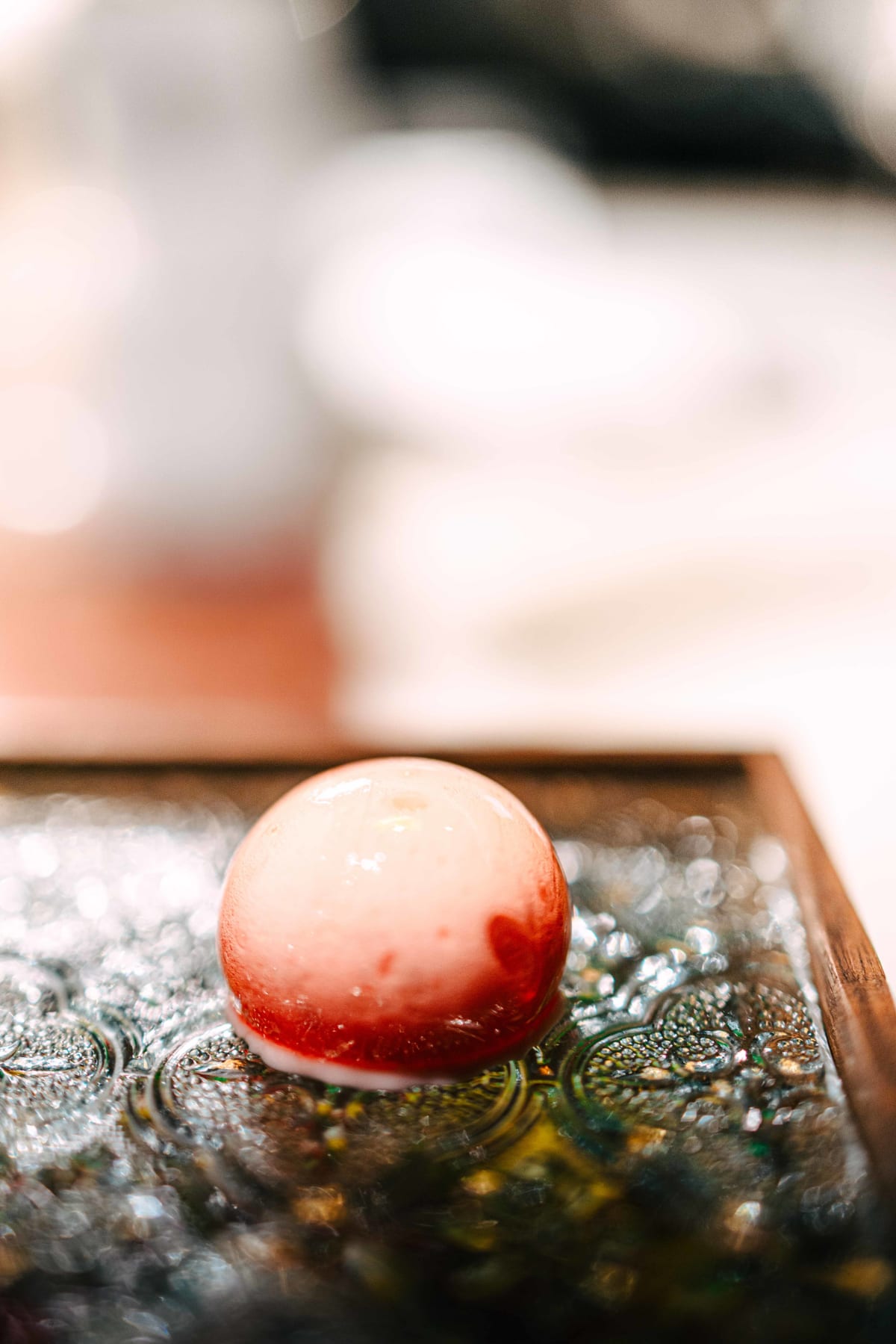
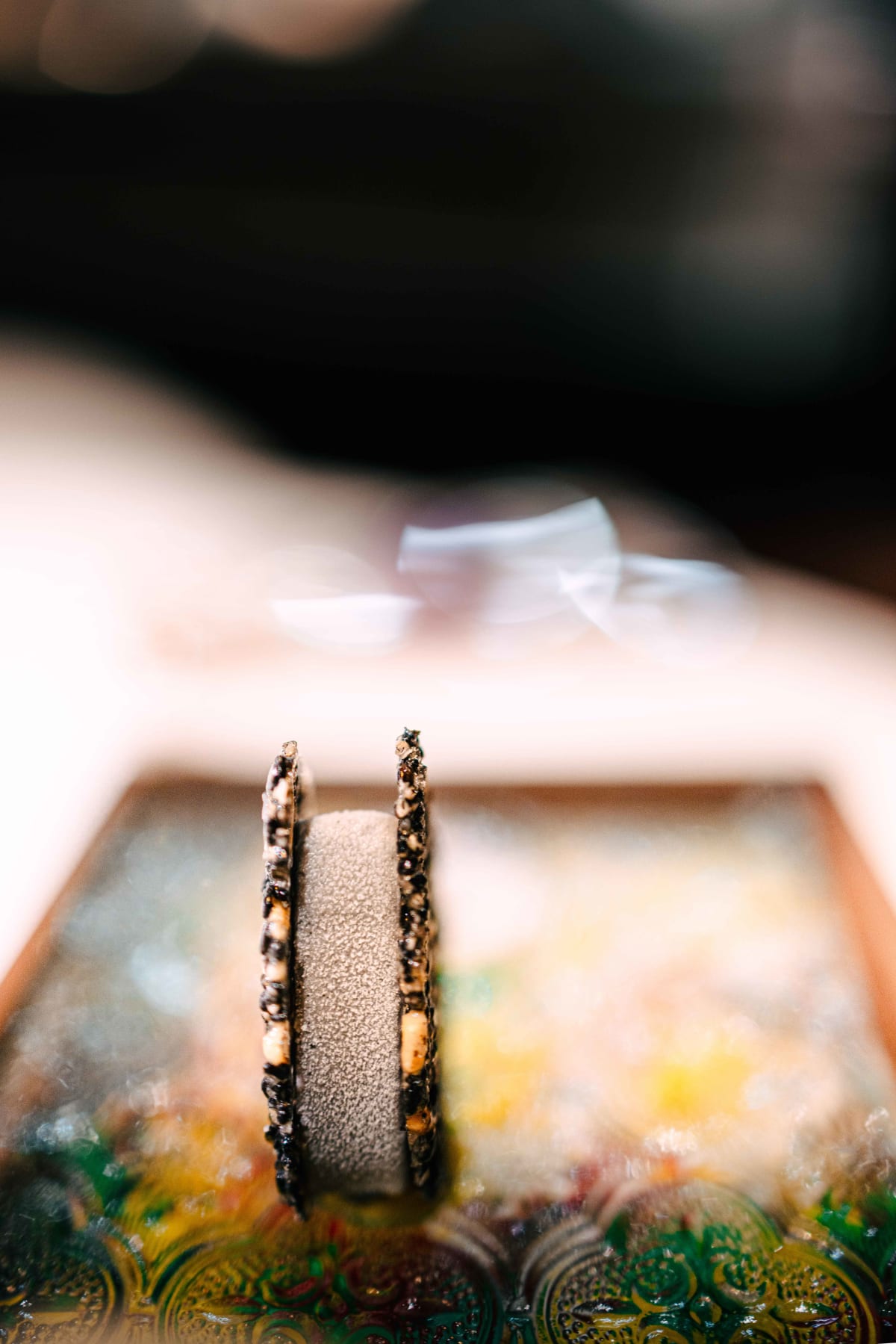
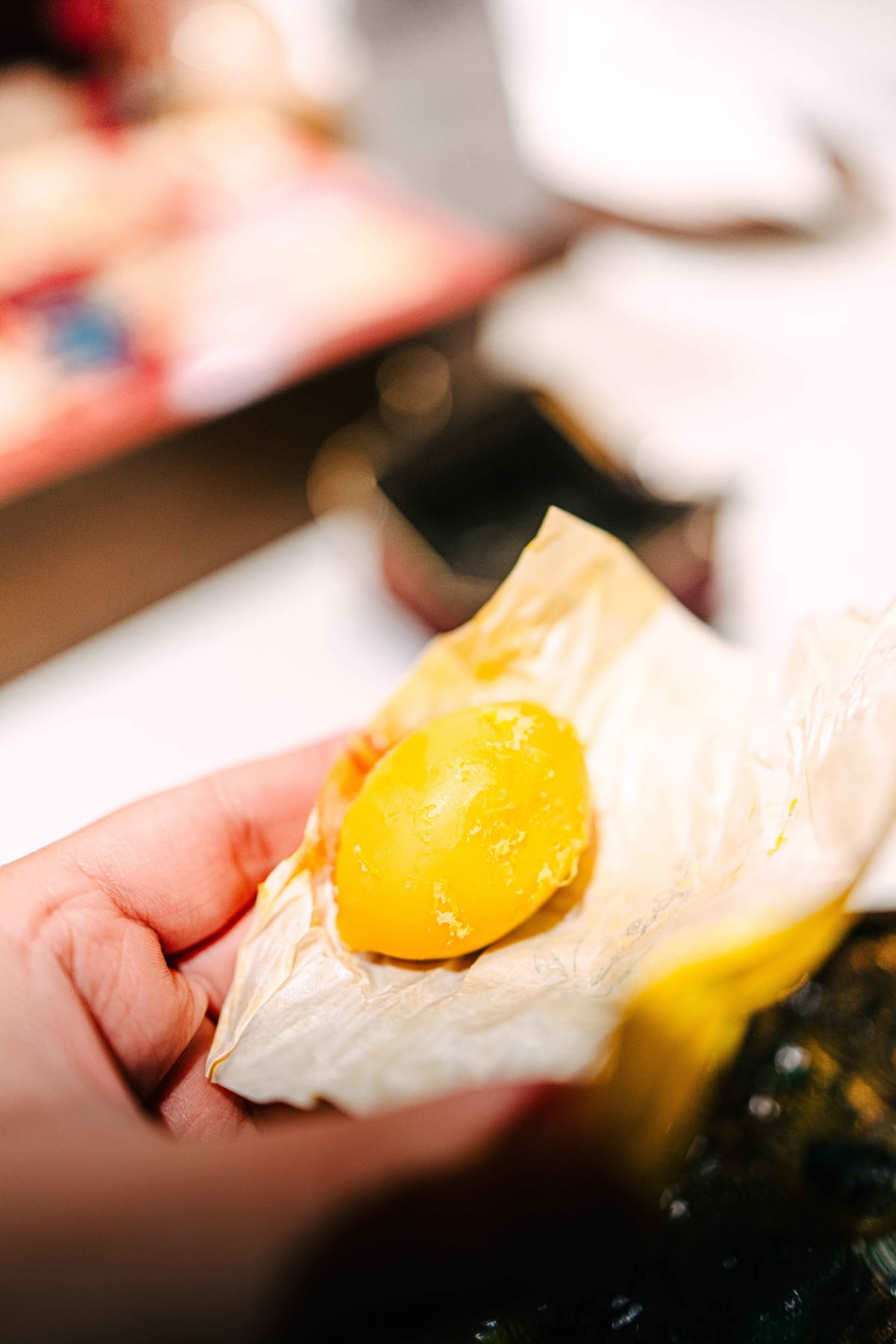
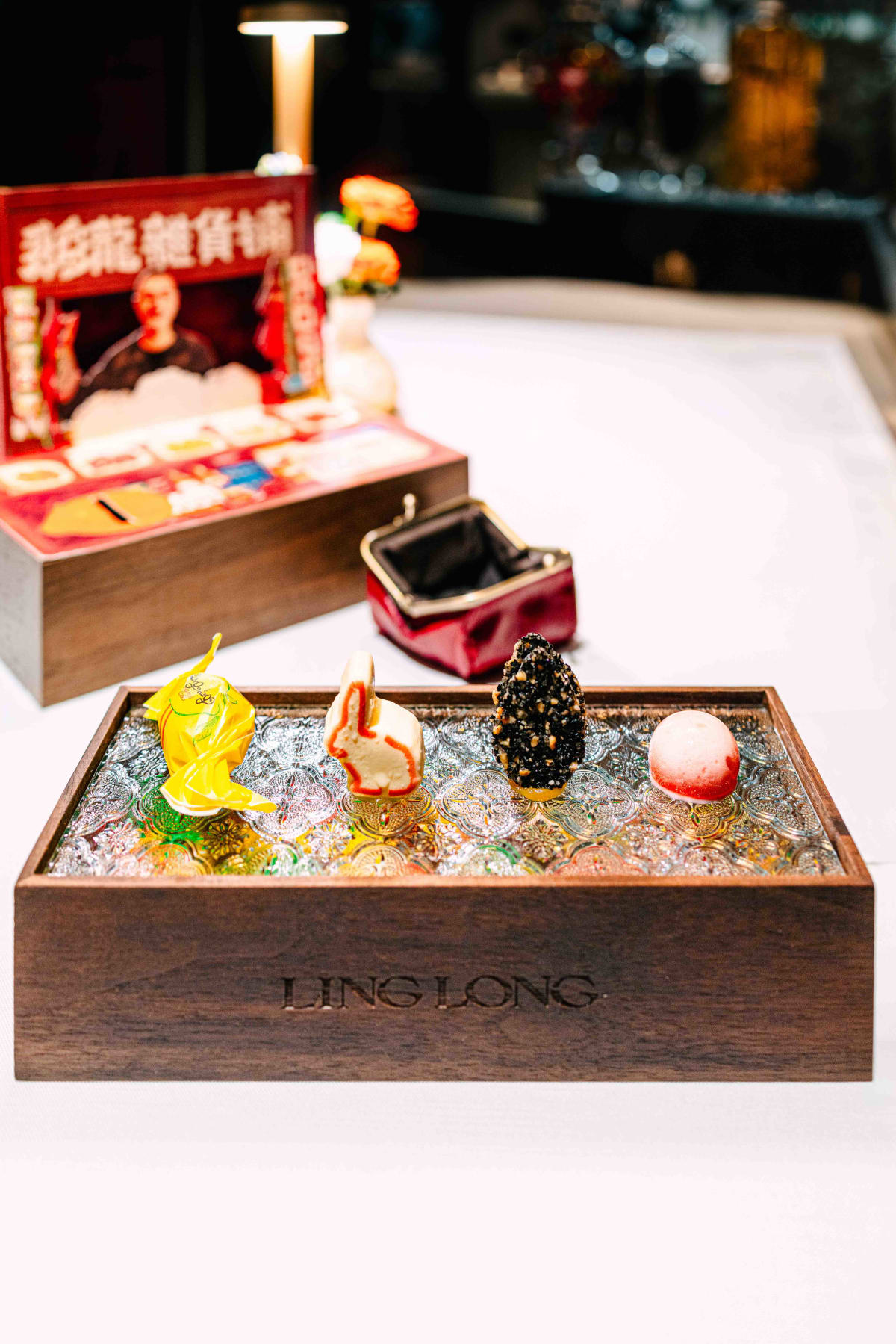
The last dessert was the heart of the Memory chapter. It is a recreation, in the form of petits fours, of Chef Jason Liu's childhood memories. Many restaurants finish with petits fours by simply setting out one of each kind of chocolate, and even two- and three-star places at most bring them on a cart; to dress them in concept and theme to this extent is truly remarkable.
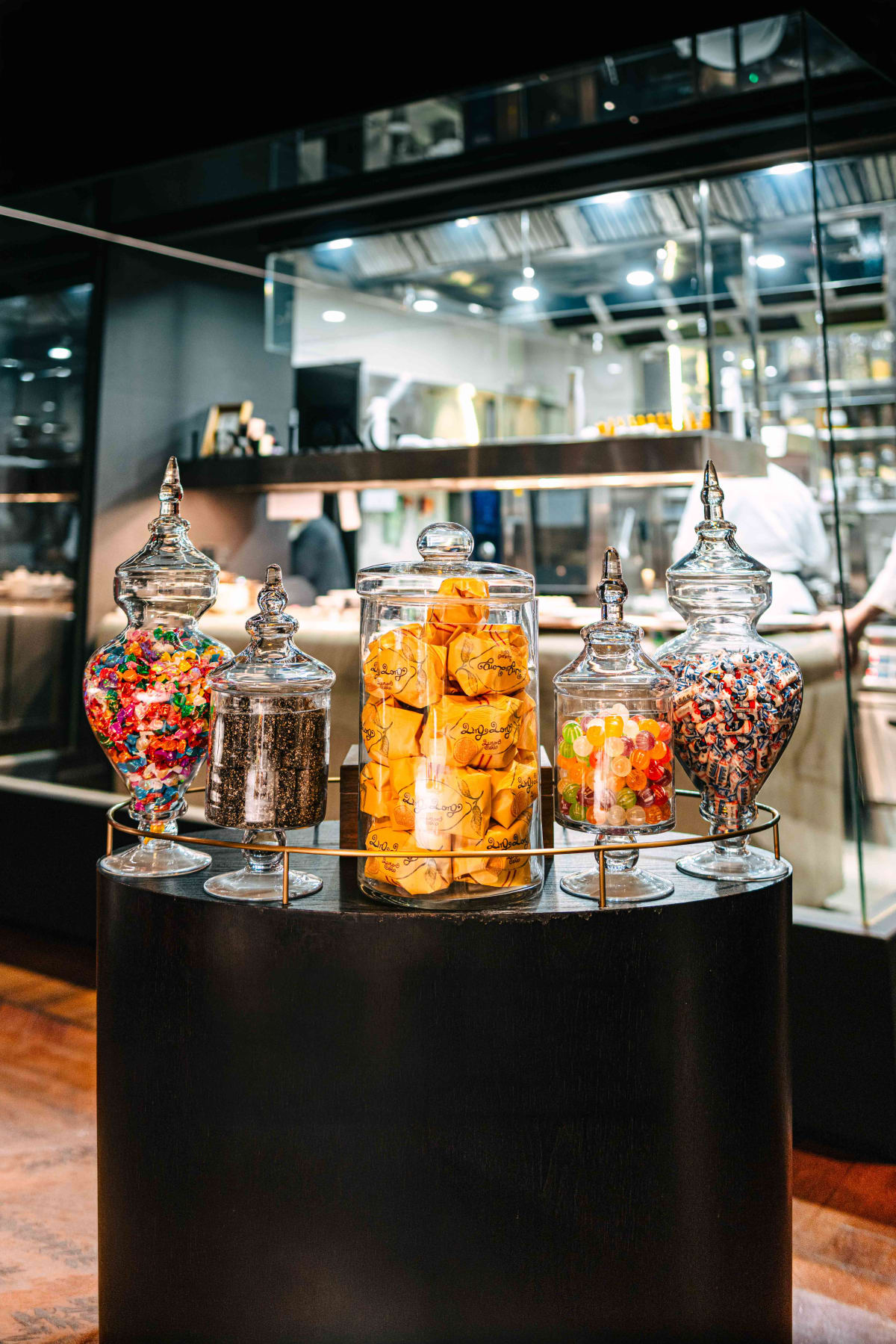
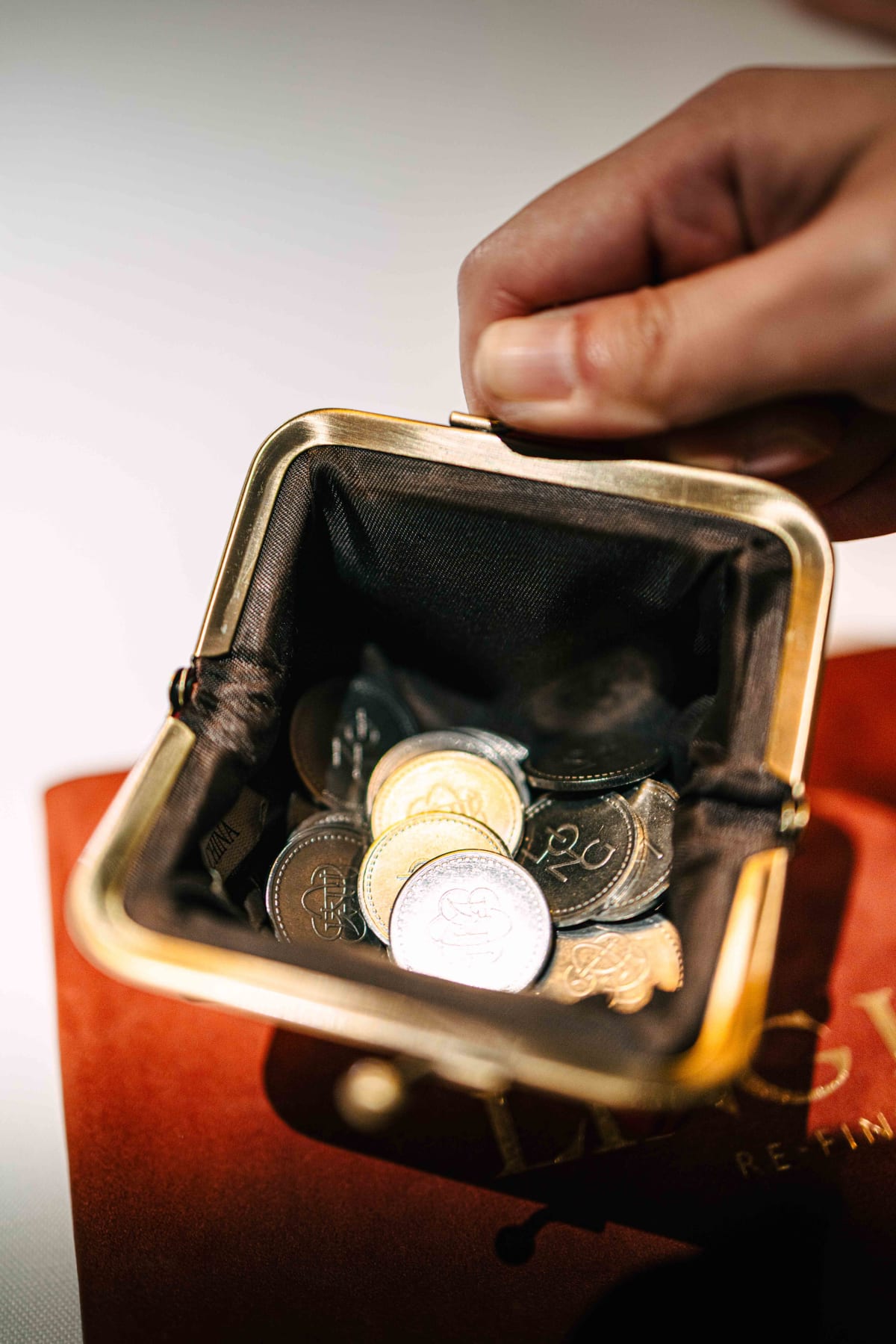
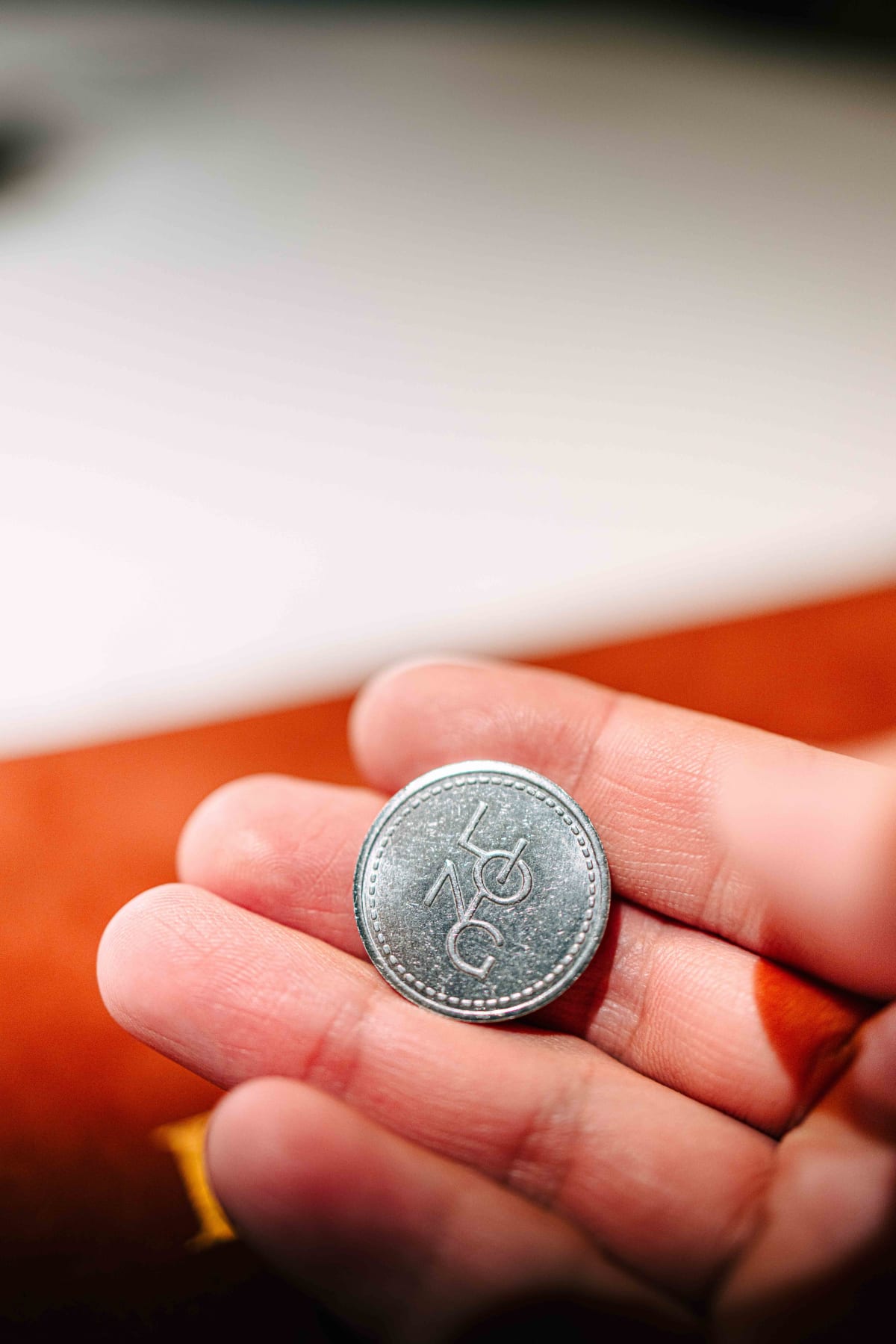
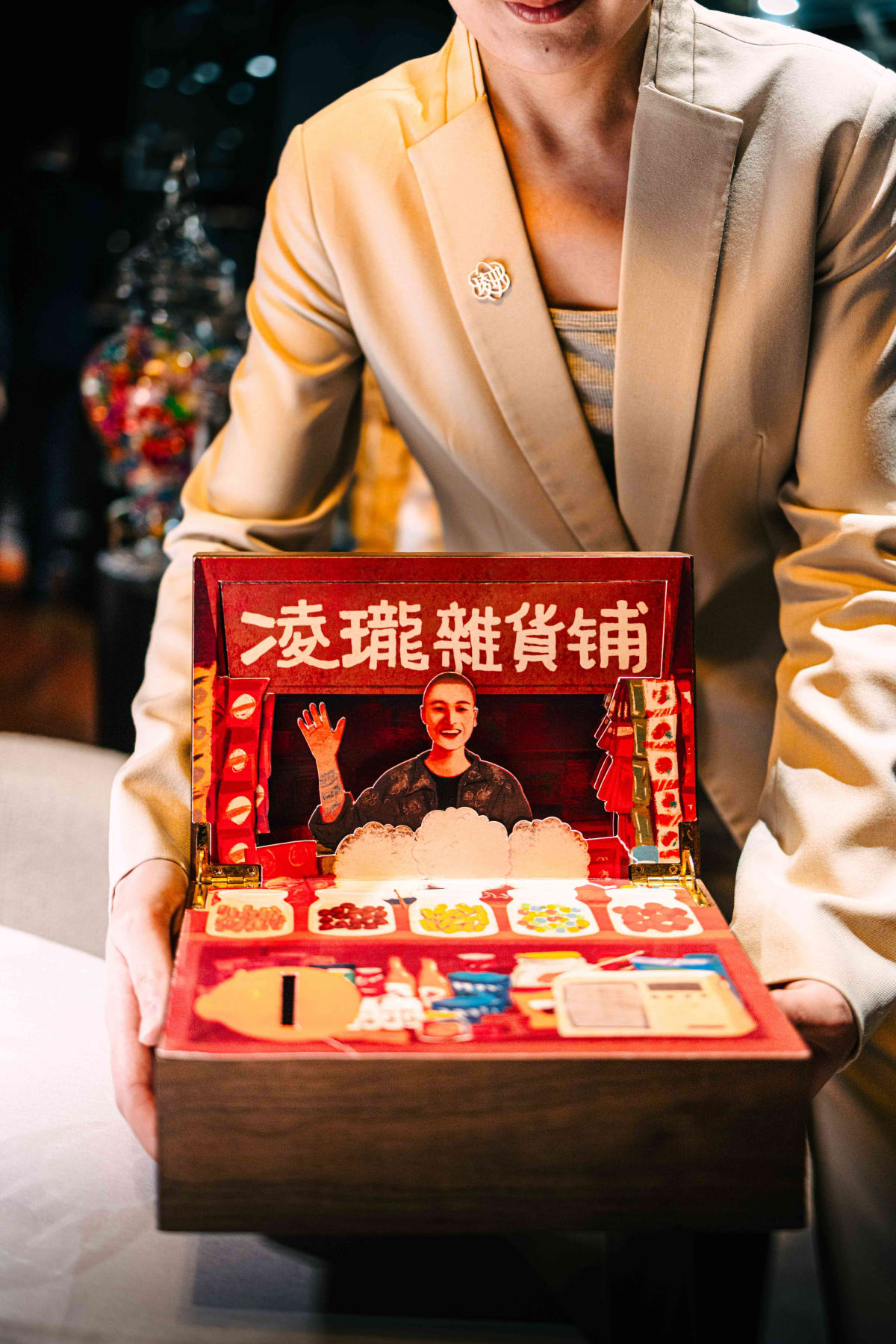
A cart was brought, and at first I thought, "what is this?" A children's candy jar was full of what looked like sweets. Then the server opened a wooden box drawn with a childlike picture of Chef Jason Liu and scenes from his childhood. Inside a Chinese pouch was a coin reading LING LONG, and when told to drop it in (I had assumed dropping the coin would make a dessert appear), I did, and a music-box tune played. They had made "memory," not taste, the closing language of the course; for all the desserts I have eaten, this is a concept I have never encountered.
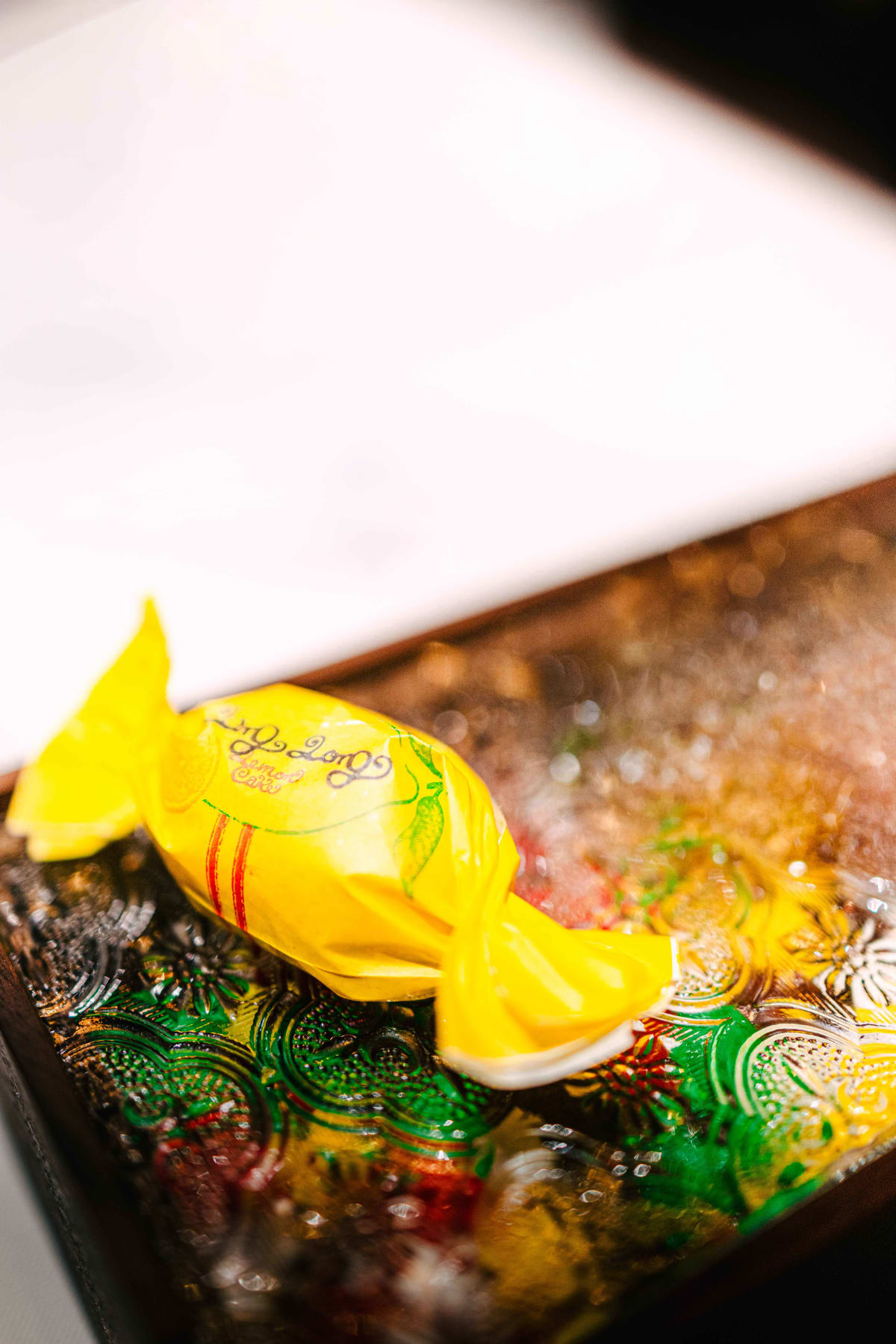
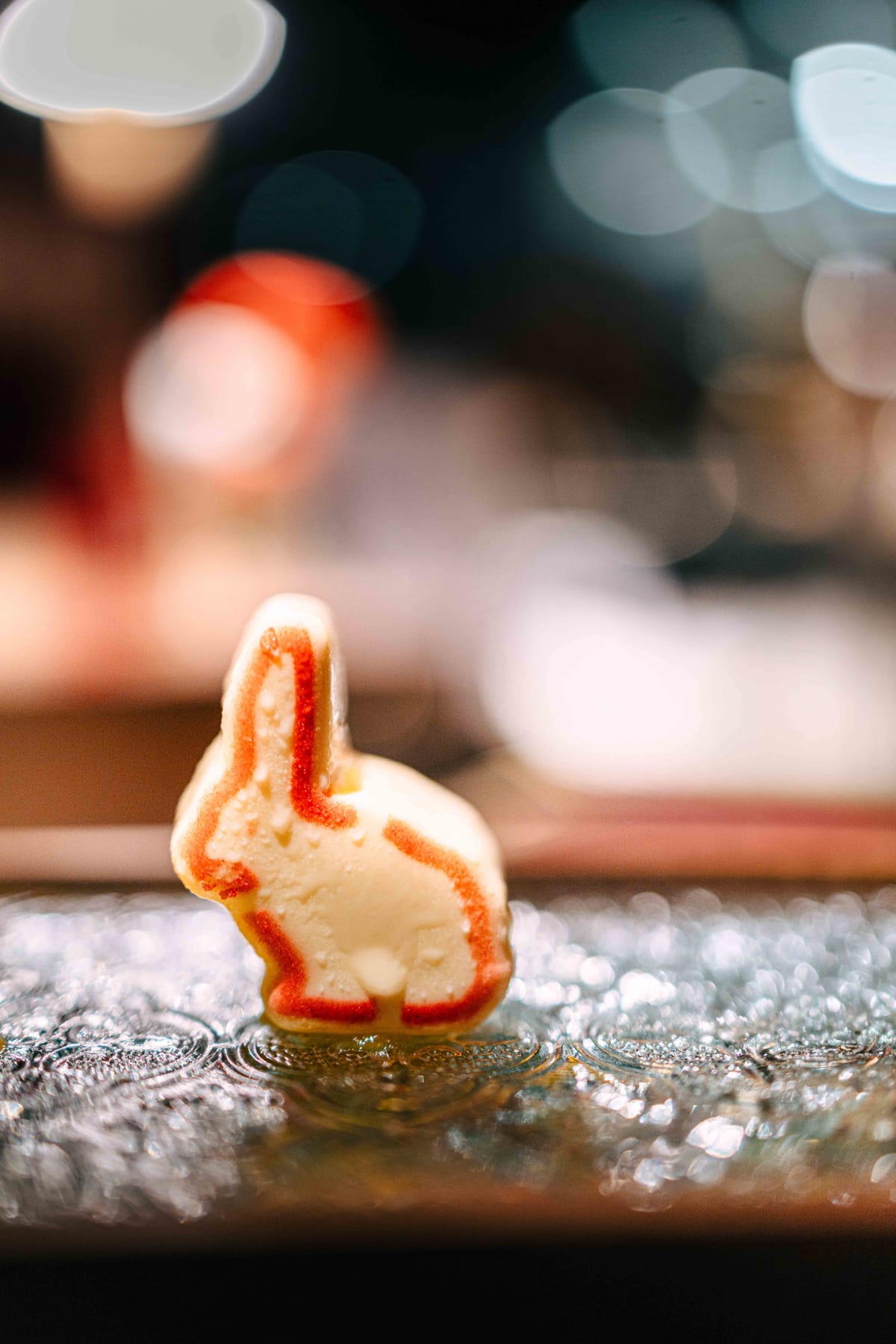
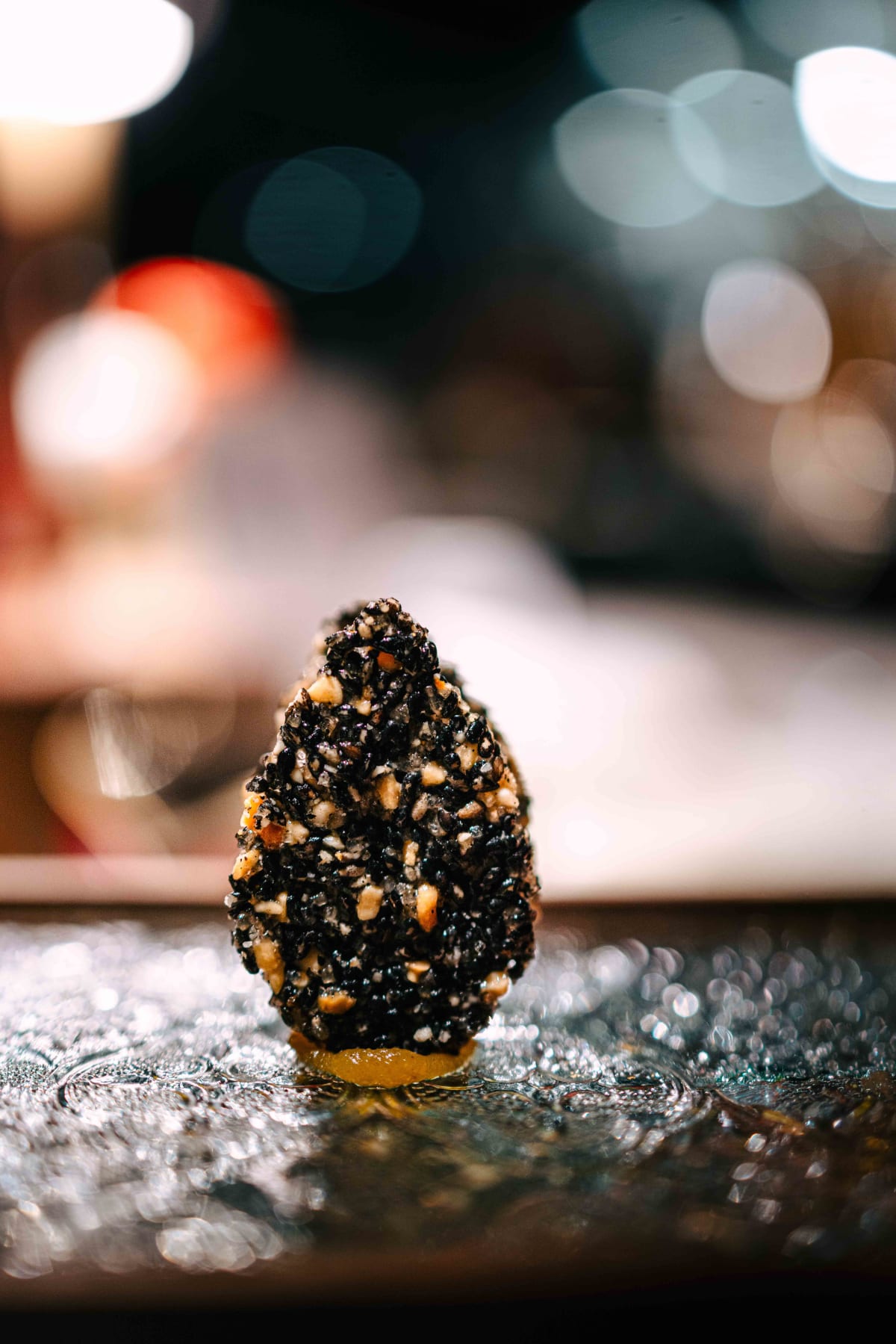
The four petits fours were made in the likeness of old nostalgic sweets and snacks. The first played on the flavour of bubblegum, with a thin, hard glaze outside and a fluffy centre. The second was ice cream sandwiched in black sesame. The third was a rabbit-shaped milk candy drawing on White Rabbit (大白兔), the national candy born in Shanghai in 1959 that brings any Chinese person's childhood to mind, with white chocolate inside. The last, when you open the wrapper, reveals a yellow LING LONG lemon cake, set apart from the others by its prominent acidity. They were all sweet, but the final lemon cake was my favourite.
LING LONG is a restaurant that folds creativity, concept, theme, and performance into exactly the right places and nails the most important thing, taste, as well. Usually a strong concept means the food cannot keep up, and good food comes with a weak narrative, so LING LONG is rare in that it lands both at once, and at a high level. If more foreign foodies visit and its name spreads, I believe it can earn not only a top spot on Asia's 50 Best but a high ranking on the World's 50 Best as well.
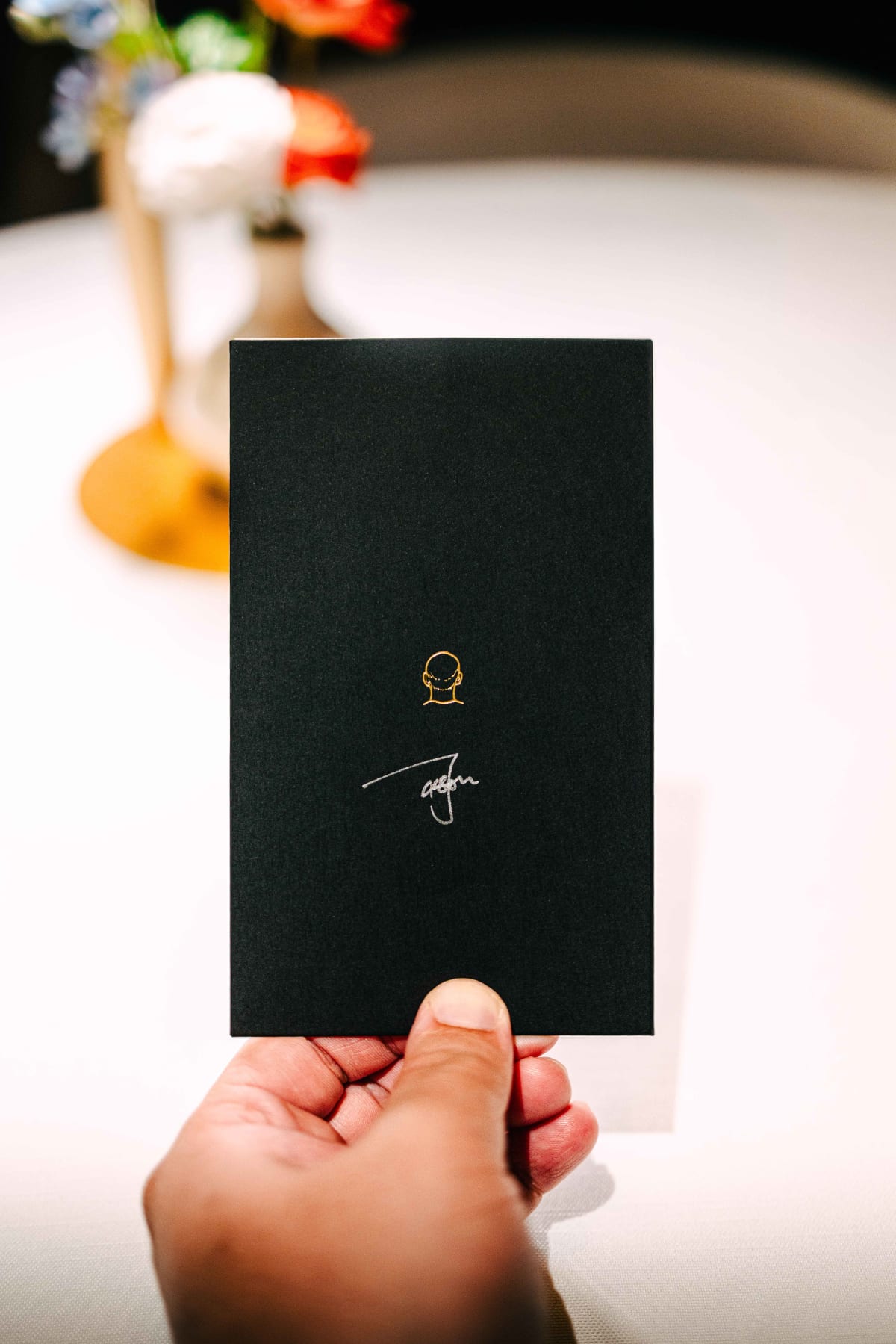
It was the best not only of my Shanghai food journey but of all the fine dining I have experienced in other Asian countries, and I think it is worth coming to Shanghai for this one restaurant alone.
If Asian fine dining is to rise to a position of global leadership, I think LING LONG is showing what that looks like and where it is heading.
The trap of concept-forward dining is that the staging becomes the substance; LING LONG's distinction is that the theatre is never load-bearing. Strip away the chapters, the carts, the music box, and what remains is fine cooking that could stand on its own, from a broth drawn over three years of rearing to a bowl of rice that arrives as the meal's true summit. The deeper point is the foundation: this kitchen makes its bid for the top not on borrowed Western technique but on Chinese ingredient depth, provenance, and regional range pushed to a fine-dining edge, which is a harder and more durable thing to build. But LING LONG seems to show that it can be done.
Have a question about this restaurant, or want to share your own experience?
Send a message