Fine Dining · Dijon · France / July 2024 / Michelin ★
Loiseau des Ducs
"The Loiseau name under Gothic vaults, in a summer between chefs"
Section 1·The Name In Every Michelin Debate
In September 2024, Netflix aired the cooking survival show Culinary Class Wars. Its popularity carried on for more than two months after the broadcast and once again stirred up fierce interest across Korea in good places to eat, in dining and in Michelin.
Michelin's positive, glamorous side was in the spotlight too, its prestige and its place in the dreams of cooks, but for some reason it was the negative view of Michelin in particular that the press and television kept playing up. And whenever they did, one chef was never left out: Bernard Loiseau.
Bernard Loiseau made his name as France's foremost star chef of the late twentieth century. He learned to cook under the Troisgros brothers in Roanne from the age of seventeen, and in 1975 he took charge of La Côte d'Or in Saulieu, Burgundy. Alexandre Dumaine had led it at three stars from the 1930s and made it a symbol of French gastronomy, but by then it was in decline.
Known for sauces made without wine or cream, from the juices of the ingredients themselves and water, he brought La Côte d'Or back to three Michelin stars in 1991. Today the restaurant sits inside Le Relais Bernard Loiseau, the hotel that bears his name.
Section 2·The Rumour Of 2003
But the restaurant came under criticism, and in the 2003 edition of Gault&Millau, a guide held in high regard in France, its score was cut from 19 to 17 out of 20. Speculative rumours then spread in the press that it would lose its three-star status with Michelin as well. And on 24 February 2003, after finishing lunch service at his restaurant, he took his own life.
Yet that year's Michelin Guide left La Côte d'Or's three stars untouched. Since then his name has come up whenever the tragedy of Michelin is discussed, and Michelin itself was criticized for a long time because of it.
Yet that year's Michelin Guide left La Côte d'Or's three stars untouched.
In fact, no one can say for certain whether it was the fear of losing a star and depression that led him to that choice. At the time, a number of problems had piled up on him, his business and his debts among them. In 1998 he had become the first chef to list his own company, Bernard Loiseau SA, on the stock exchange, and by the time he died the company's profitability was falling and it was carrying around three million euros of debt.
Even so, Bernard Loiseau's renown did not die; it has lived on to this day. His wife, Dominique Loiseau, took over the restaurant and has run it well, and La Côte d'Or, though it lost a star in 2016, still holds two. She has also built the group up successfully, opening bistros and restaurants in other places such as Beaune and Paris. One of them is the restaurant I visited: Loiseau des Ducs, a one-Michelin-star restaurant in Dijon.
Section 3·Between Two Chefs
Dominique Loiseau opened Loiseau des Ducs in Dijon in July 2013. Its first chef, Louis-Philippe Vigilant, earned the restaurant a star the following February, and after he moved to the flagship in Saulieu, Jean-Bruno Gosse took over the kitchen in April 2022. Gosse had come up through two-star kitchens, Yannick Franques's at Château Saint-Martin in Vence and Jérémy Desbraux's at Maison Wenger in Switzerland.
At Loiseau des Ducs he kept the star for two years. When I visited at the end of July 2024, though, the kitchen was between chefs. Gosse led it until May that year and moved to a new post on 17 July, and his successor, Iulian Fistos, did not take over until September.
Section 4·Inside The Hôtel de Talmay
I came here on the recommendation of my friend Jean, who lives in Burgundy. The restaurant stands at 3 rue Vauban, a pedestrian street a few steps from Place de la Libération, the heart of Dijon's old town. The square, which spreads out in a half circle in front of the former palace of the Dukes of Burgundy, was laid out at the end of the seventeenth century, and the Hôtel de Talmay, where the restaurant is housed, is older still: a sixteenth-century mansion listed as a historic monument.
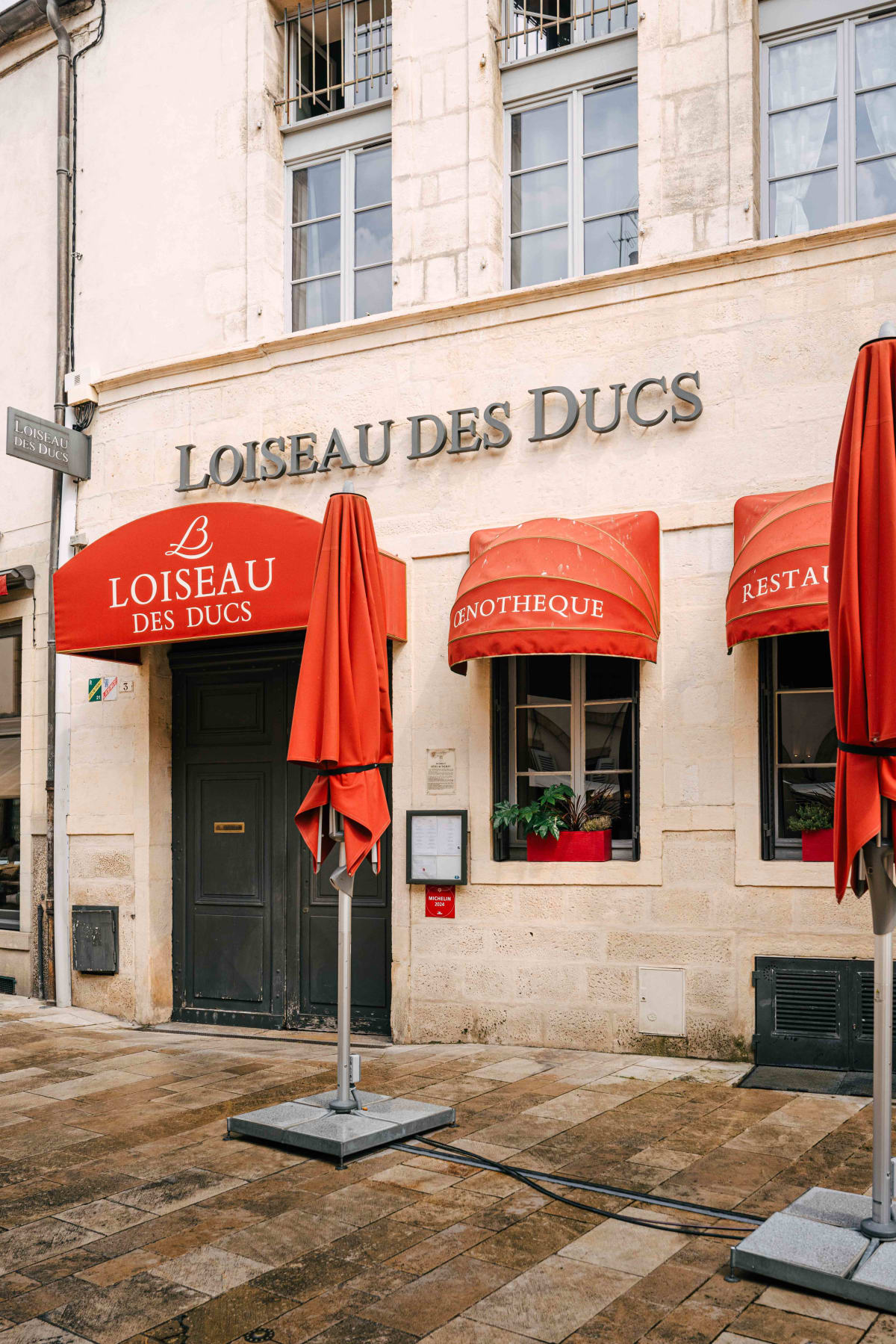
The Ducs in the name is French for 'dukes'. Beside the door, a city of Dijon plaque describing the building hung side by side with a MICHELIN 2024 plaque.
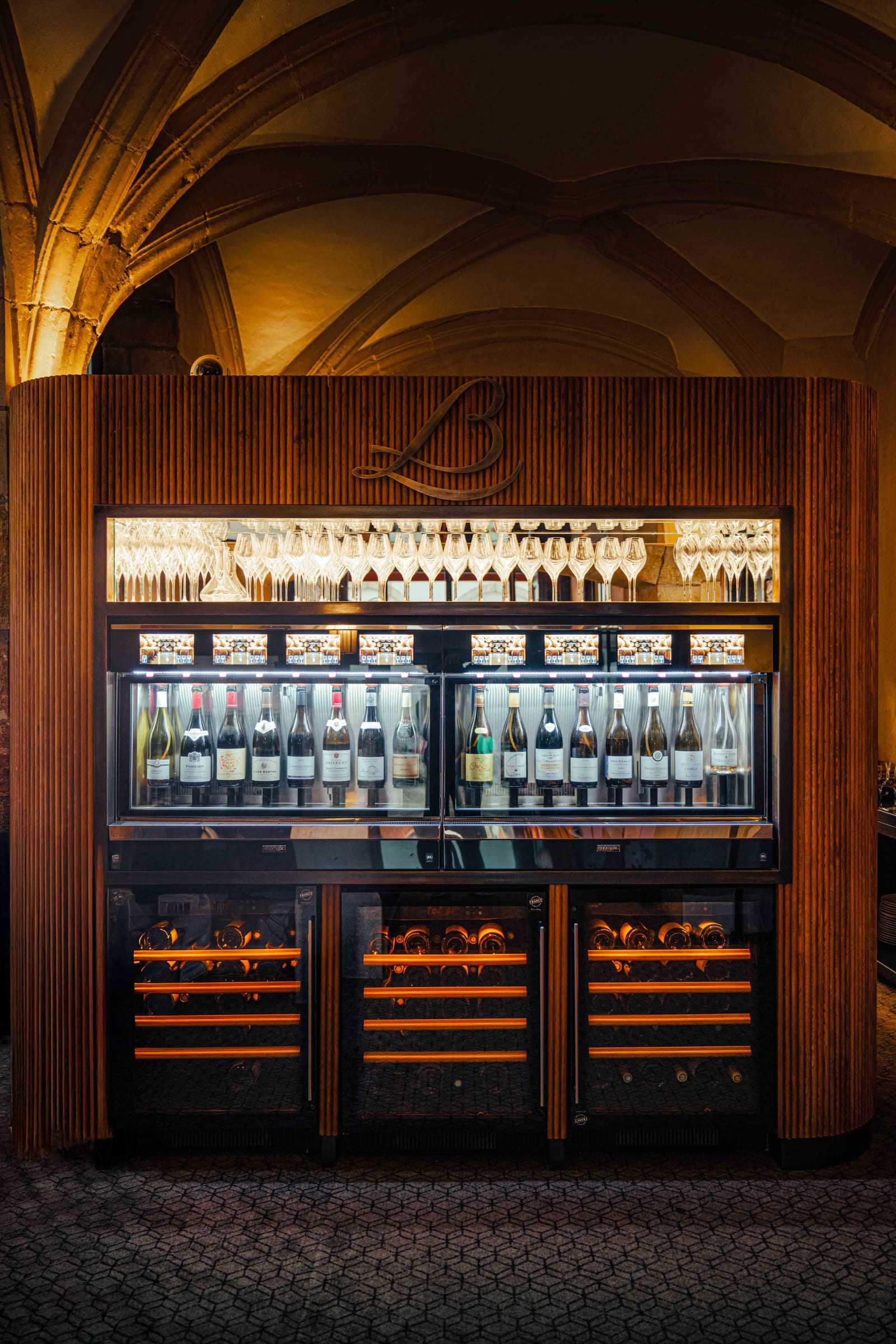
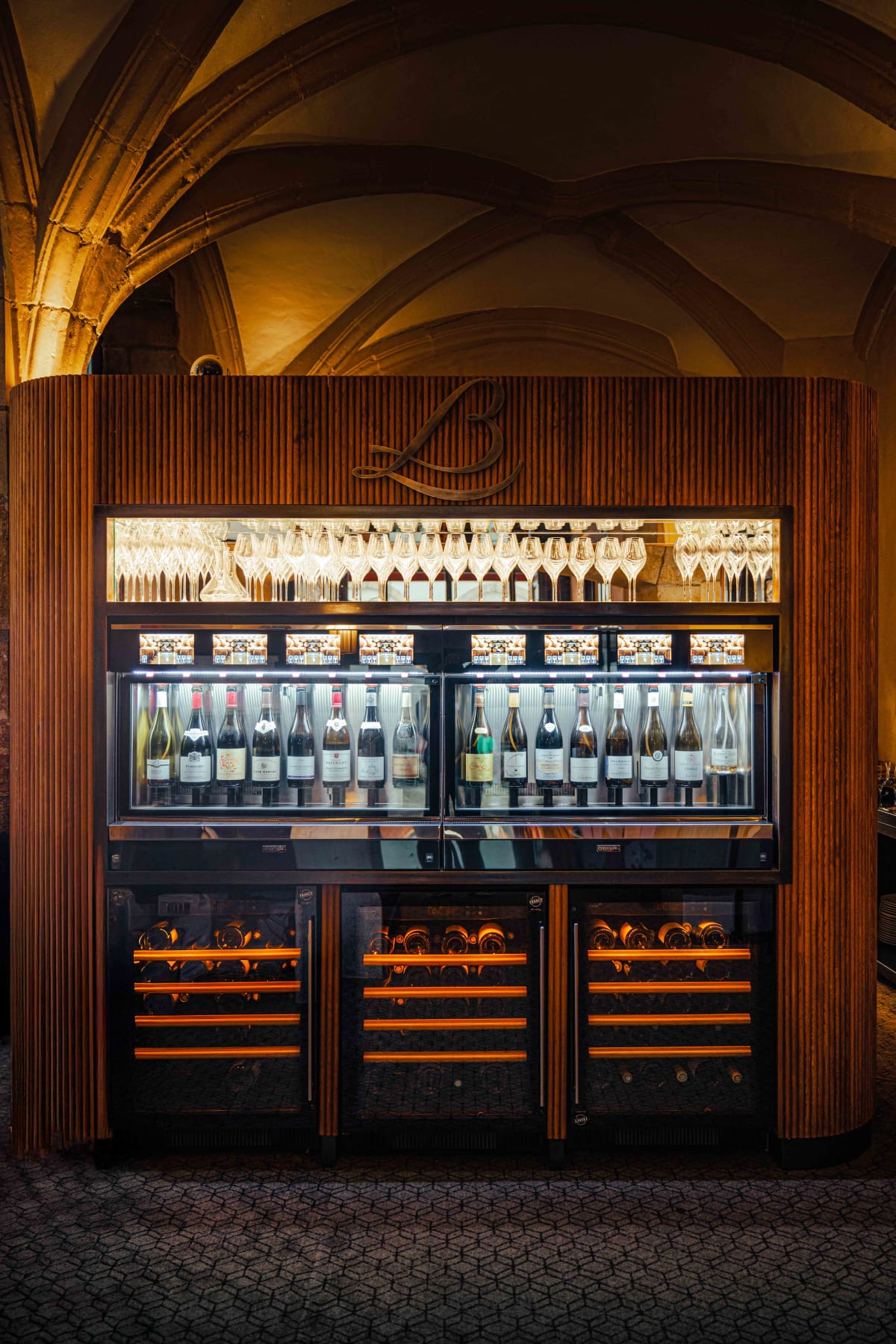
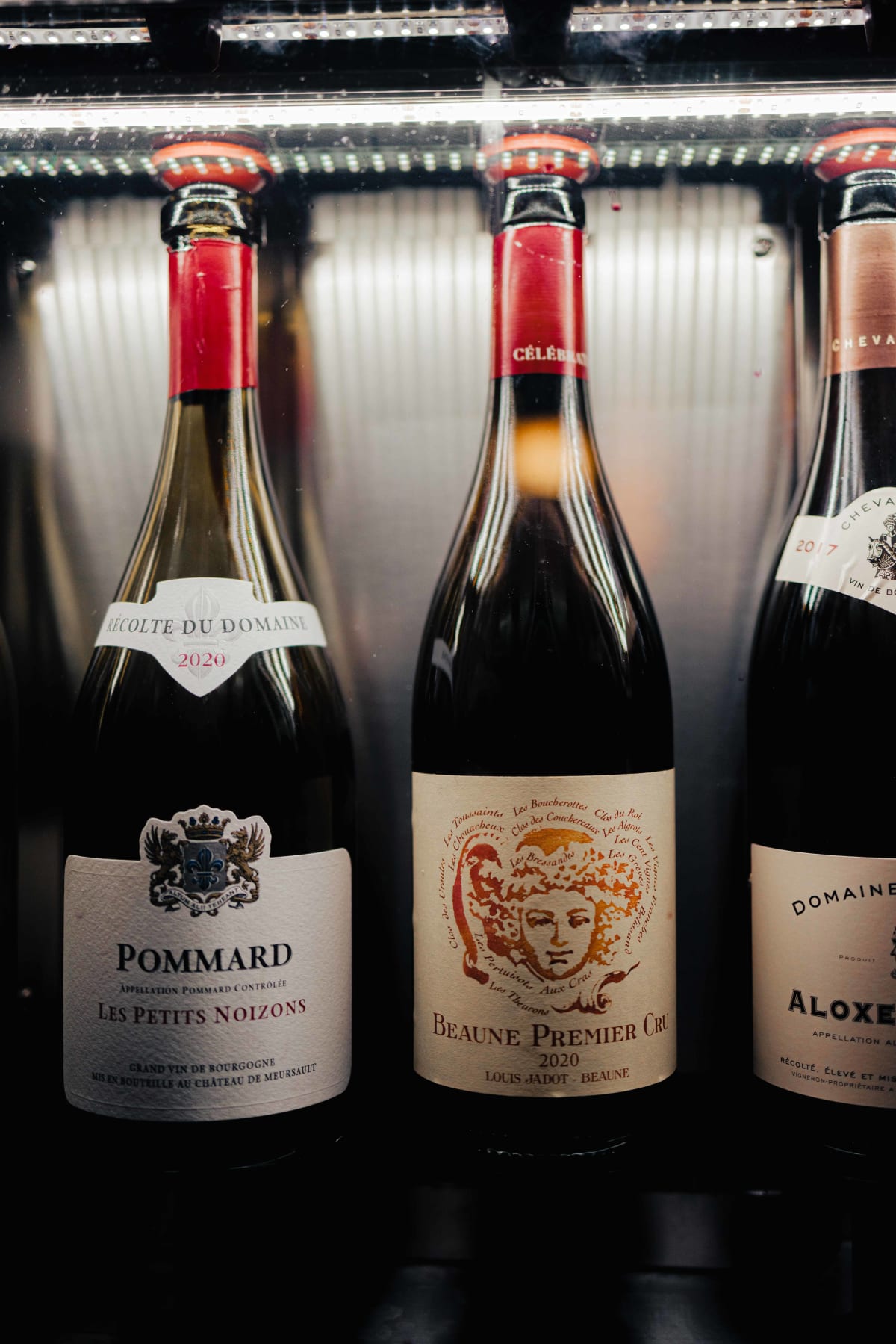
Step inside and, fittingly for the heart of Burgundy, a wine dispenser bearing Bernard Loiseau's B mark stands under a Gothic ribbed vault. The moment I saw it, I was licking my lips, wondering which wine to drink.
For its tenth anniversary, the restaurant was redecorated in early 2024. The original stone walls and the French-style ceiling with its exposed beams were kept, the furniture and window frames were done in cassis, the colour of blackcurrant, and the walls were finished in natural lime plaster. The dining space is divided into a room under the sixteenth-century vaults, a nineteenth-century salon with a fireplace and wood panelling, and a room of exposed stone under a French-style ceiling.
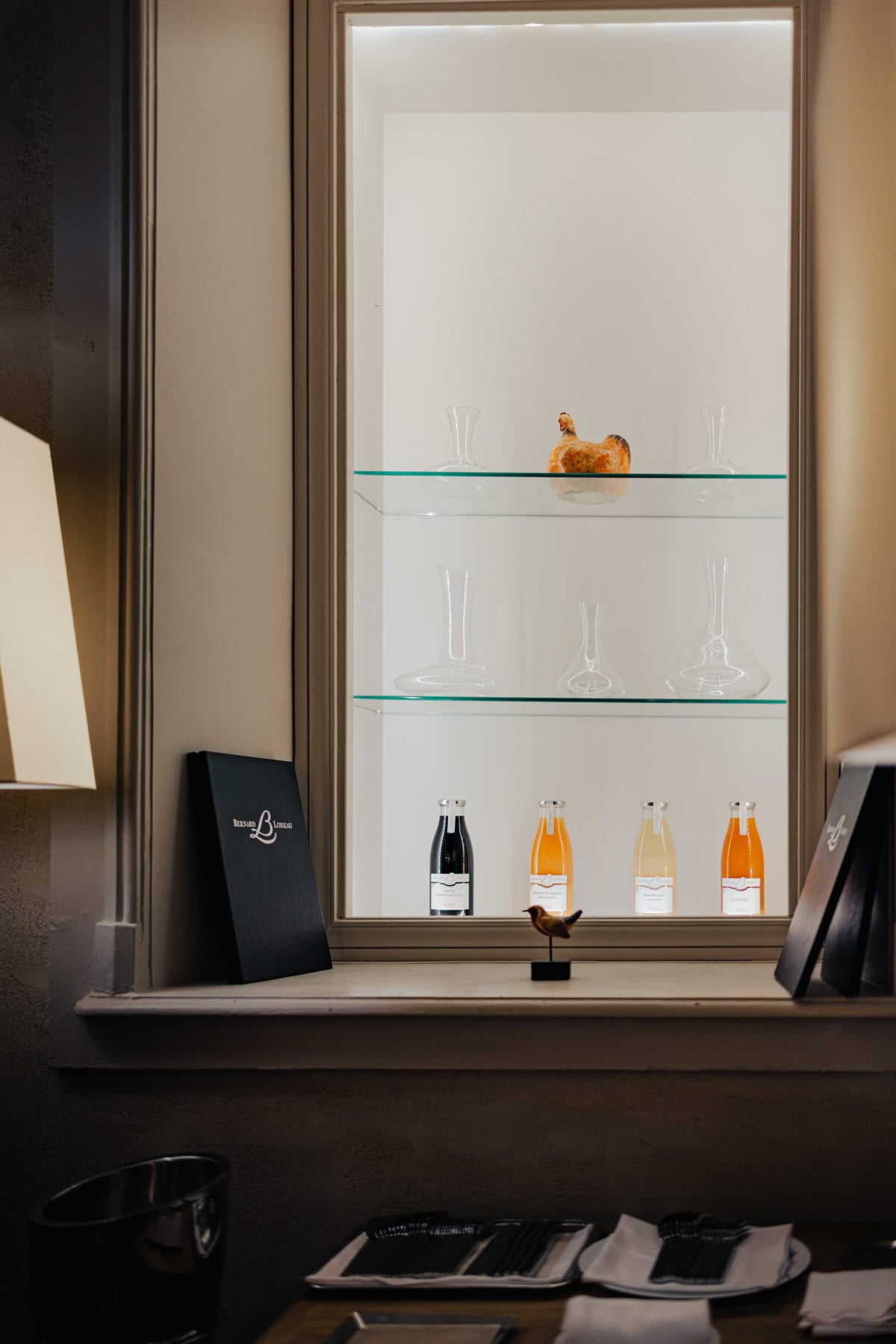
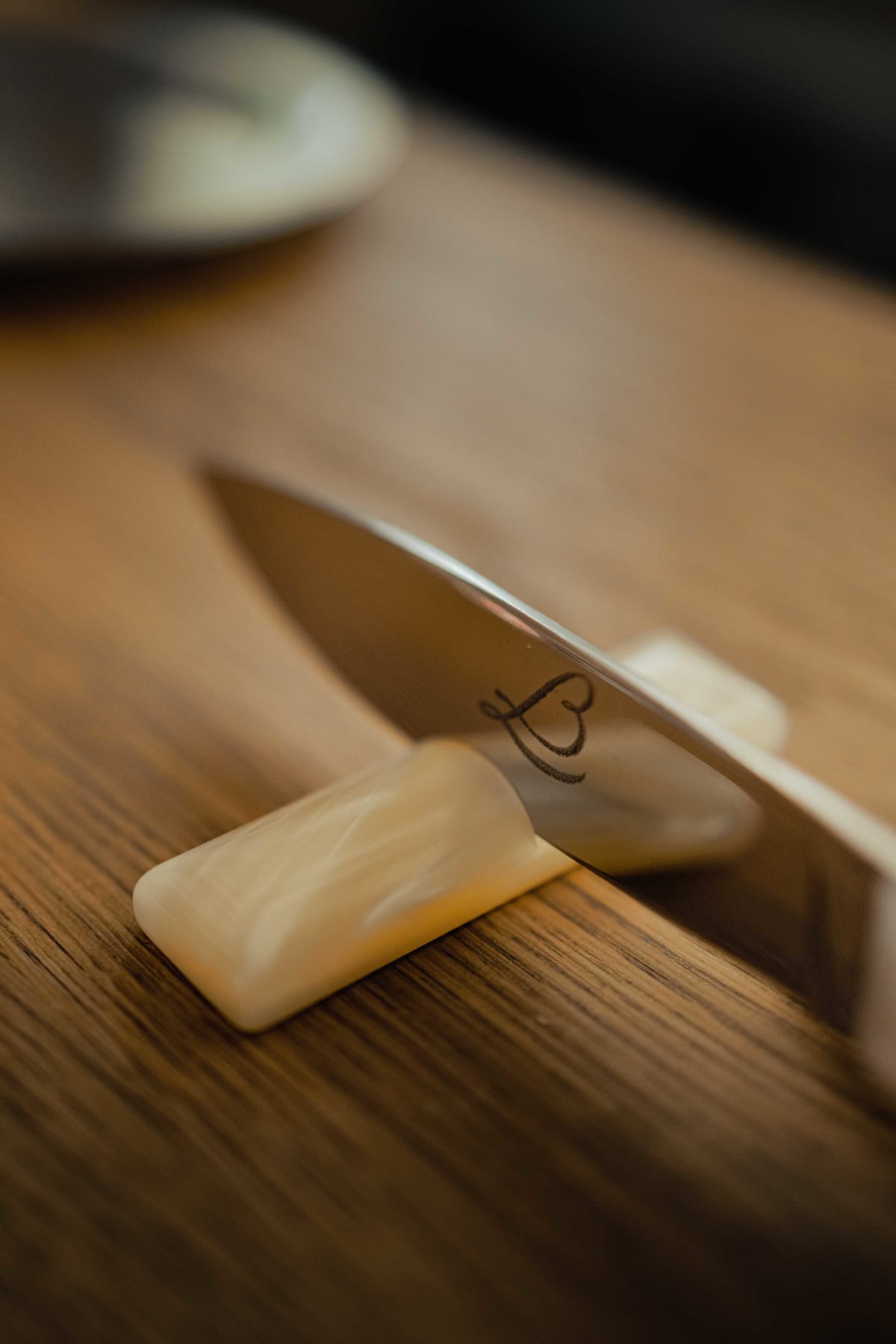
On the shelves by the window stood decanters, a ceramic hen and bottles of fruit nectar bearing the group's name, and a small wooden bird perched on the sill. Loiseau sounds just like l'oiseau, French for 'the bird'. Even the table knives were engraved with the B mark.
Section 5·Burgundy By The Glass
Dinner was the Talmay menu, which shares its name with the building, in two versions: three courses for 95 euros and four for 120. For a one-star restaurant, that felt very reasonable compared with Paris. Jean and I had another gathering to go on to, so we ordered only the three courses and added cheese instead.
As befits a restaurant in the middle of Burgundy, the wine list was worth a good look. One side of the restaurant runs as an œnothèque, a wine bar pouring by the glass, and the dispenser at the entrance held wines from the by-the-glass list too. That night it ran to eight reds alone, from 9 to 25 euros a glass.
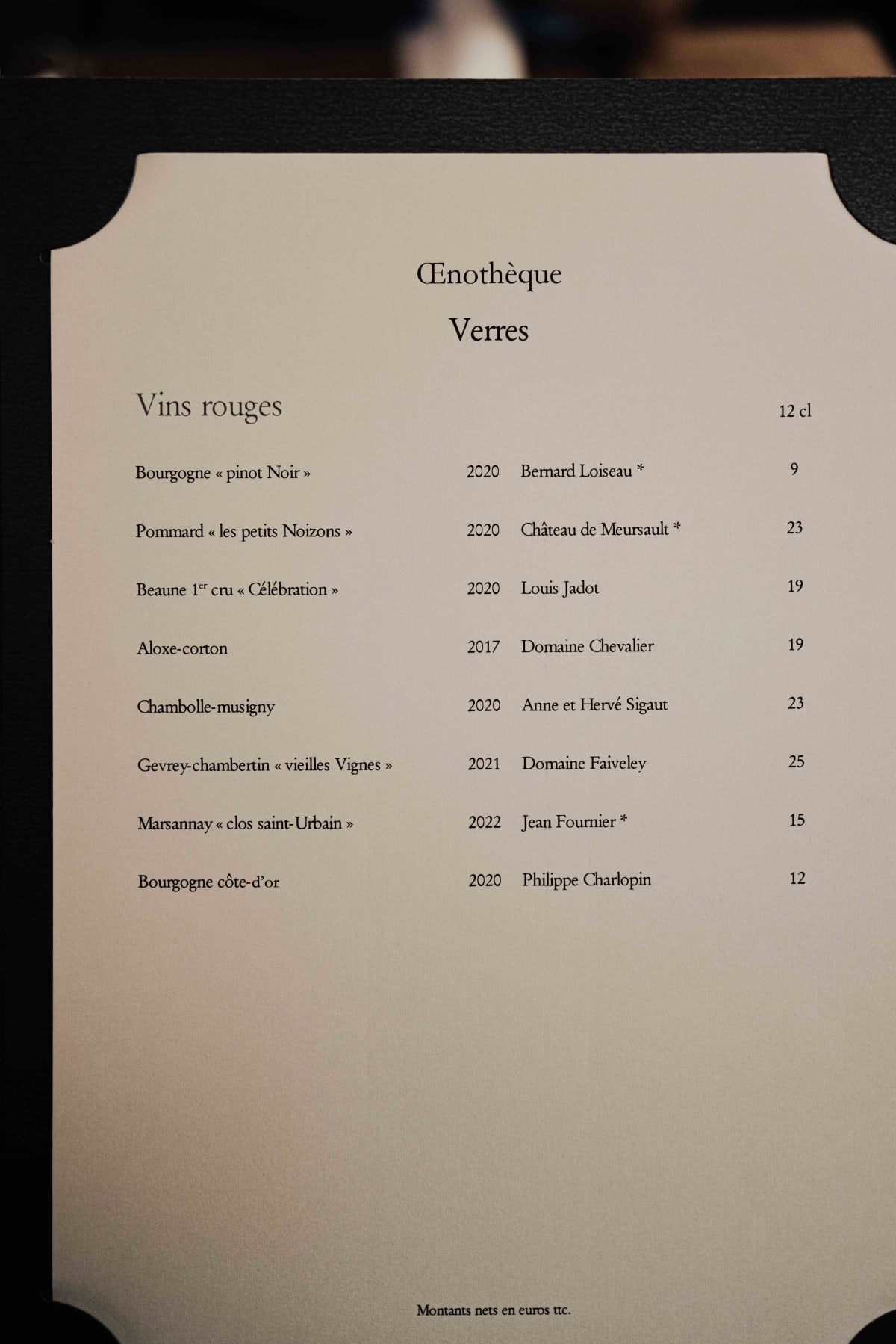
The cheapest, at 9 euros, was a Bourgogne Pinot Noir 2020 under the group's Bernard Loiseau name, and the wines I had seen in the dispenser were on it as well, Château de Meursault's Pommard Les Petits Noizons 2020 (23 euros) and Domaine Chevalier's Aloxe-Corton 2017 (19 euros) among them.
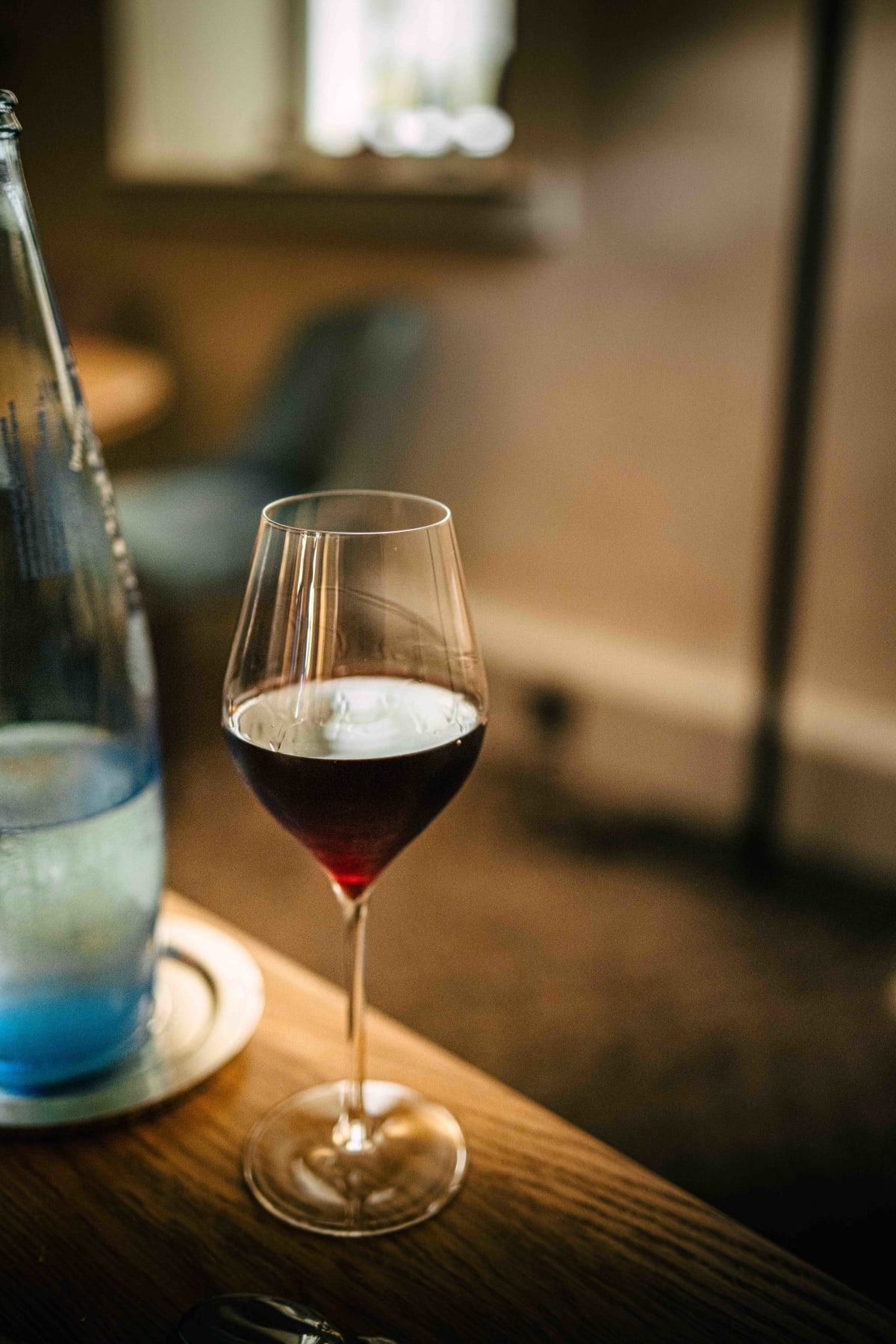
That evening I ordered a glass of red from this list.
Section 6·From South To North
The bottle list, titled 'Le vignoble du Sud au Nord', works its way up Burgundy from the southern vineyards to the northern ones. The reds begin in Givry and end in Irancy, and the whites begin in Mâcon-Chaintré and end in Chablis.
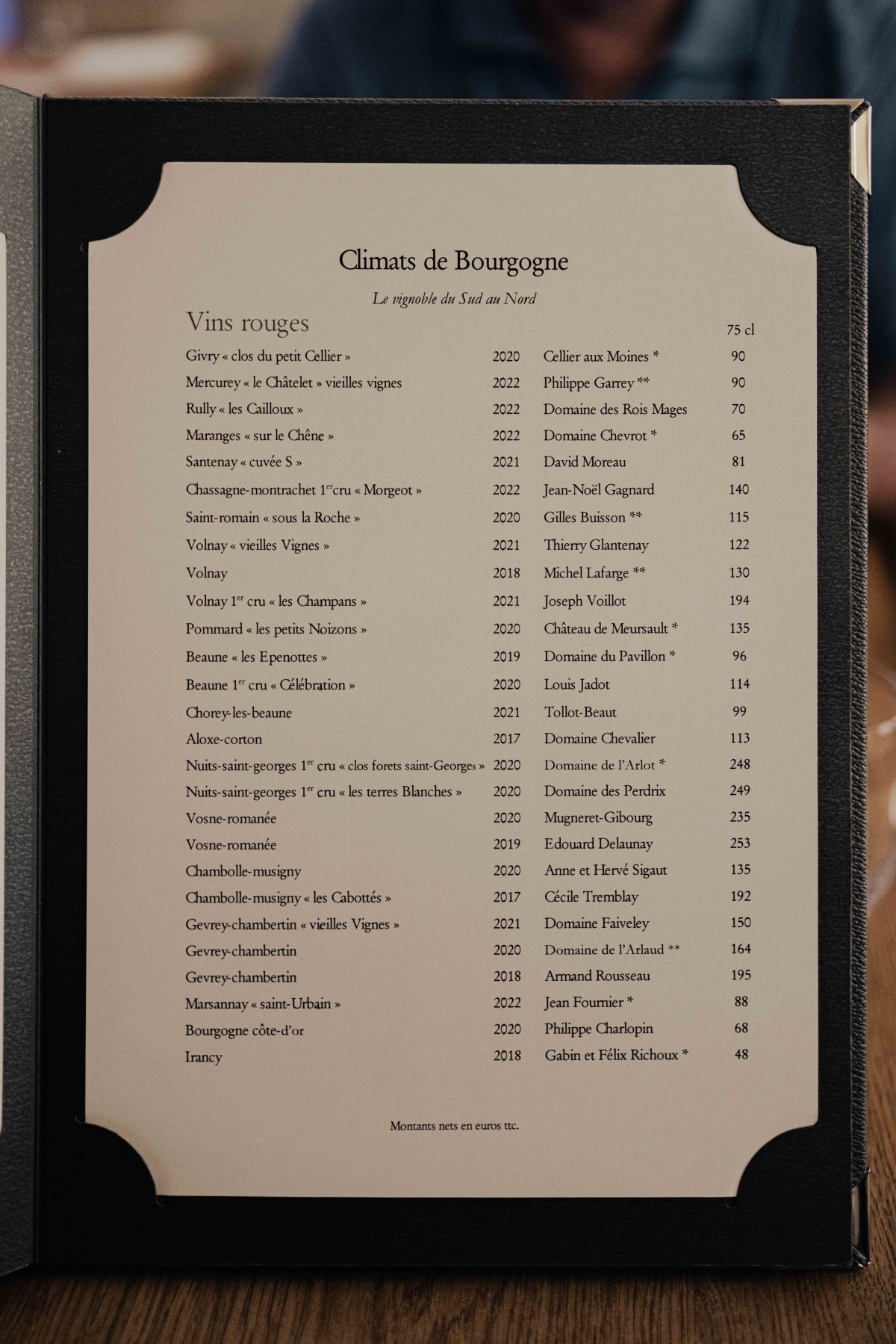
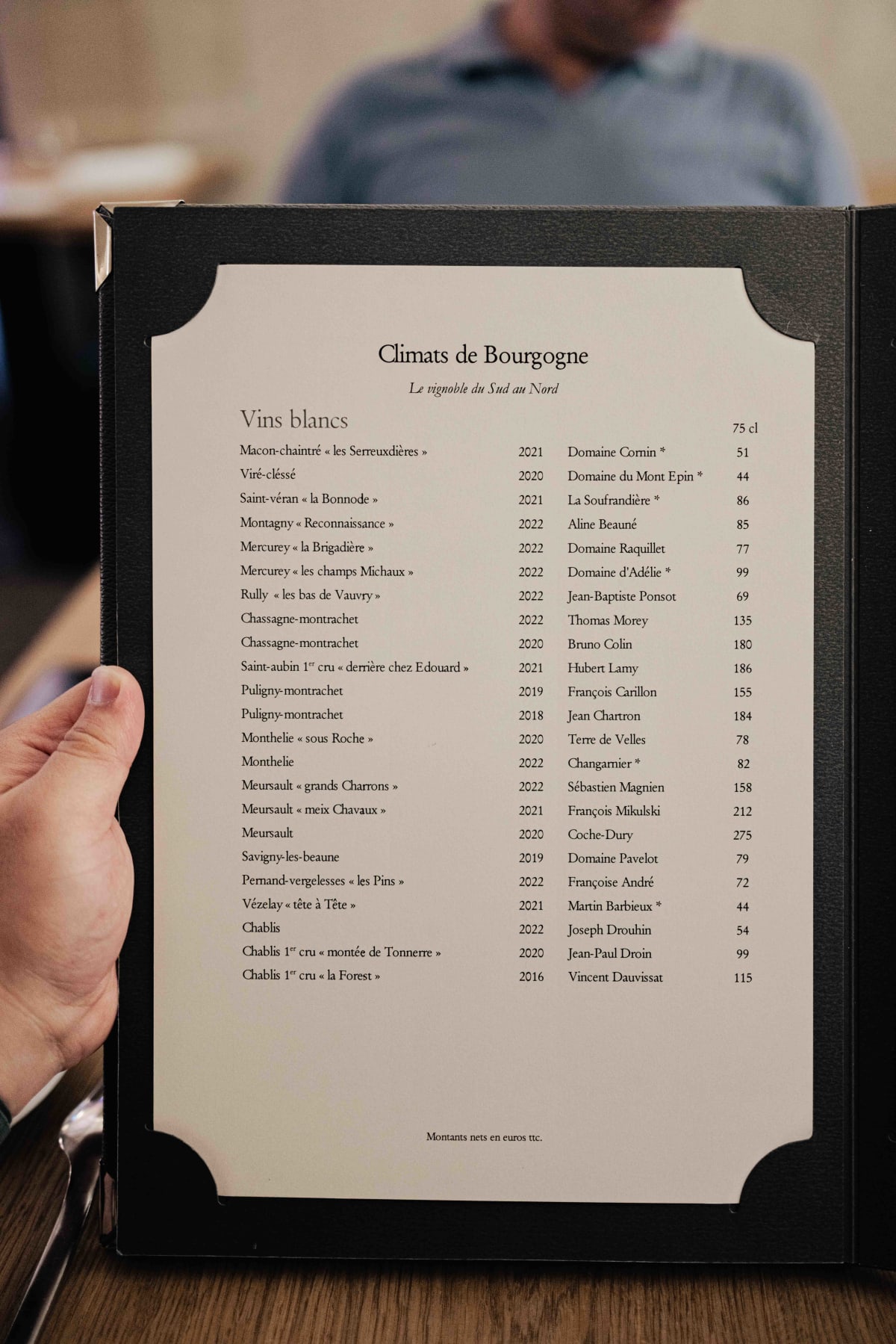
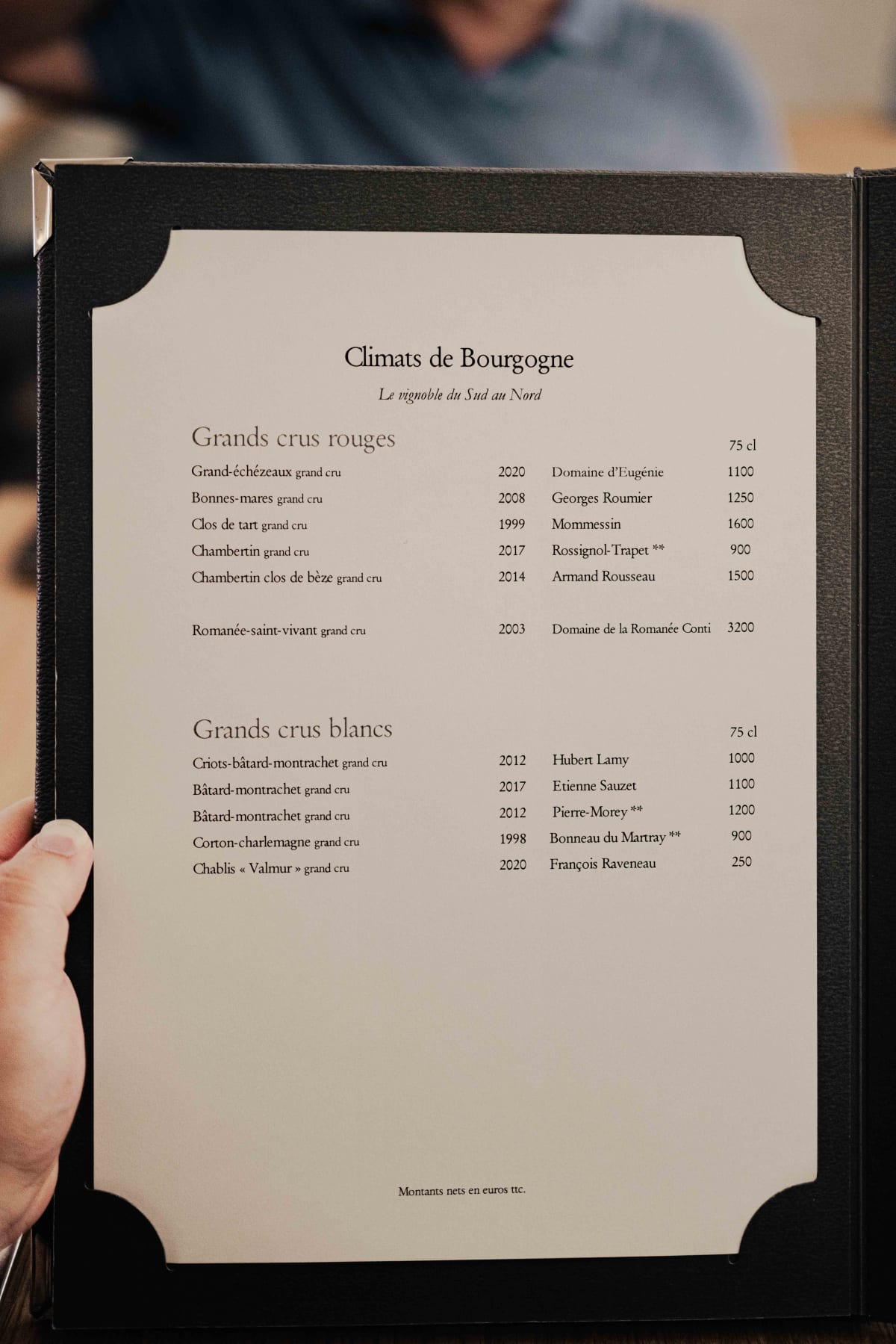
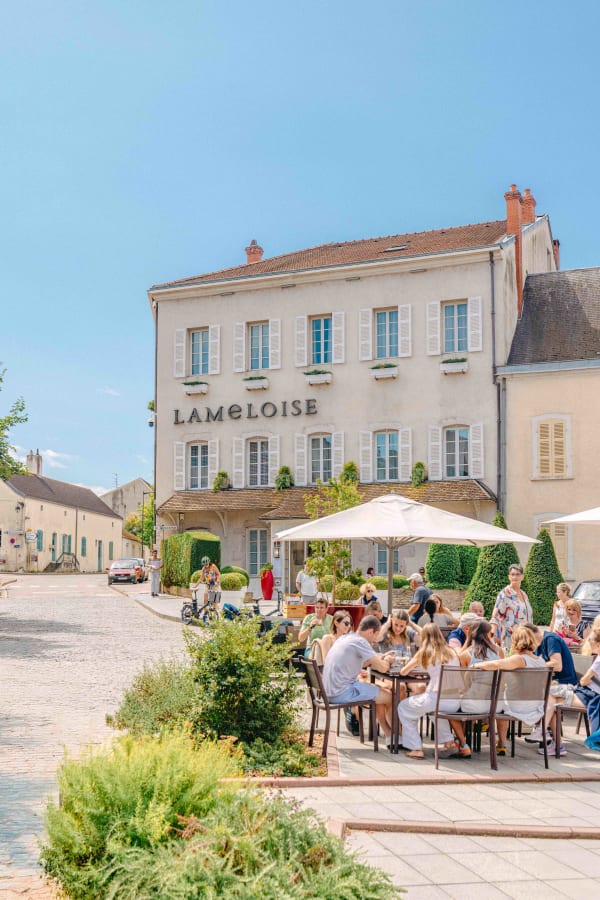
The grand cru page showed some of the most expensive domaines, with bottles such as Domaine de la Romanée-Conti's Romanée-Saint-Vivant 2003 (3,200 euros) and Armand Rousseau's Chambertin-Clos de Bèze 2014 (1,500 euros). The list also held the Coche-Dury Meursault that I would meet the next day in the pairing at Maison Lameloise, in the 2020 vintage.
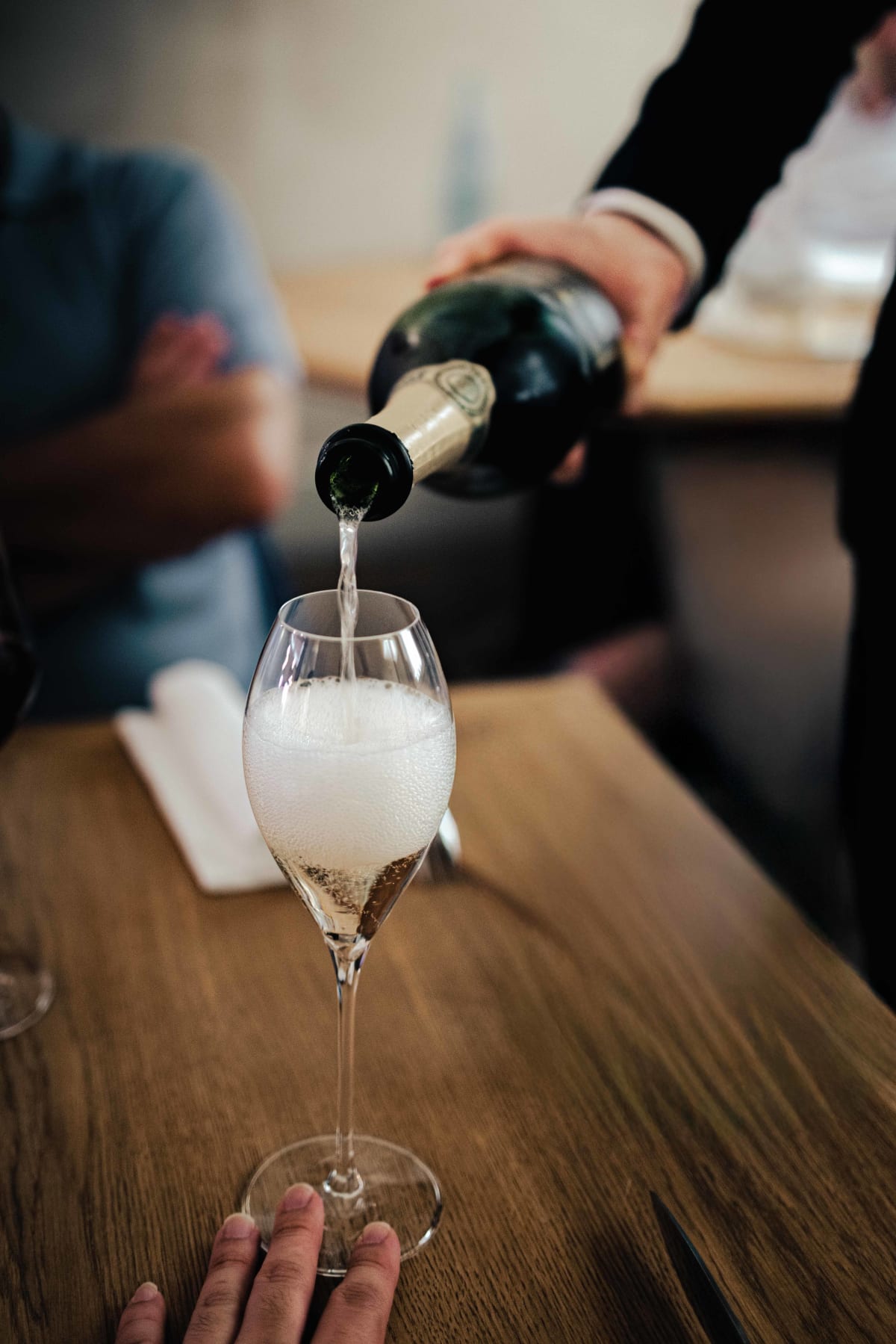
For champagne I ordered the Deutz Brut Classic. The server brought the bottle over on a napkin to pour, and around its neck it wore the name Bernard Loiseau.
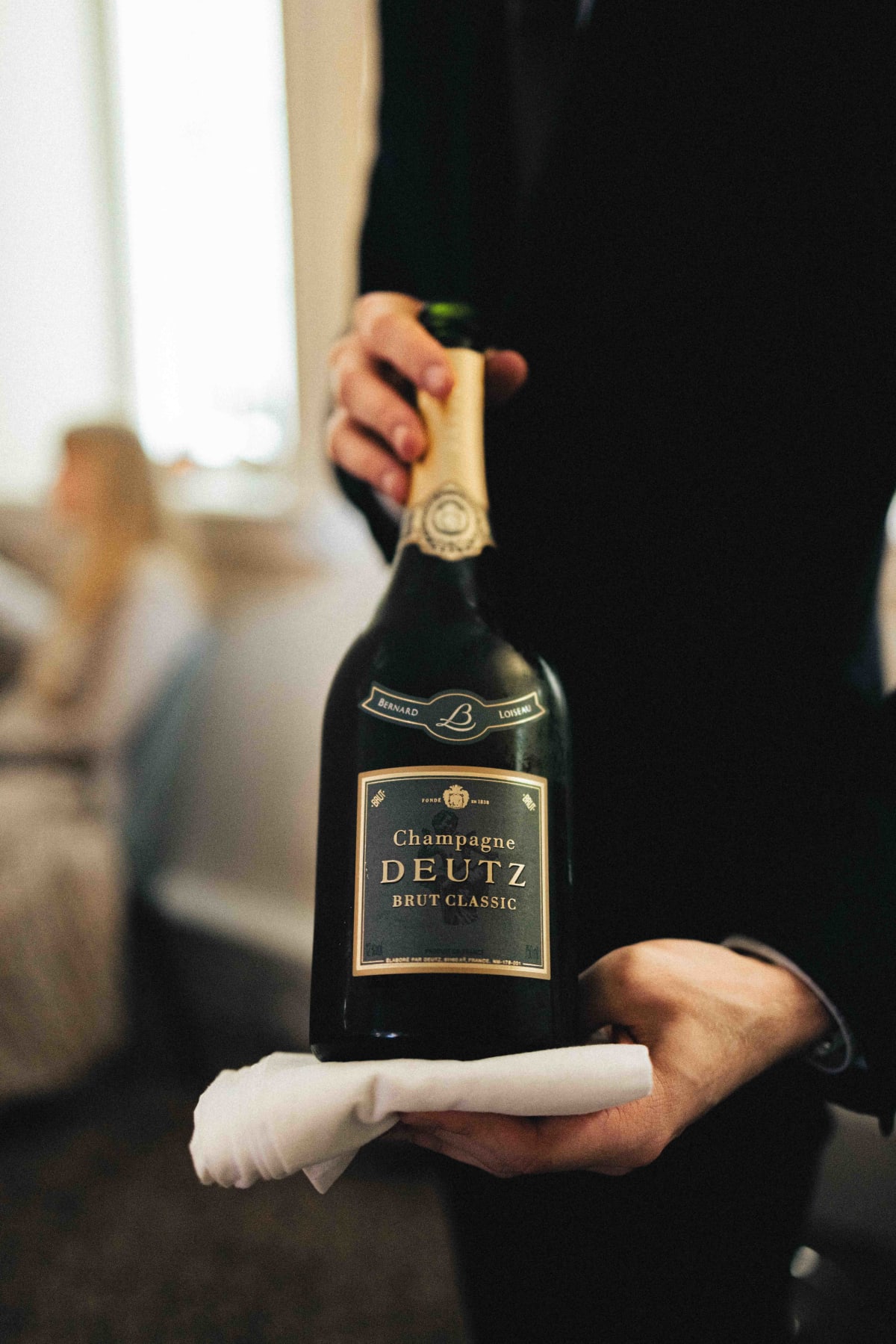
Deutz is a champagne house founded in Aÿ in Champagne in 1838. Its Brut Classic blends Pinot Noir, Pinot Meunier and Chardonnay in roughly equal parts, adds reserve wines and ages on the lees for at least three years.
Section 7·A Box Of Buckwheat
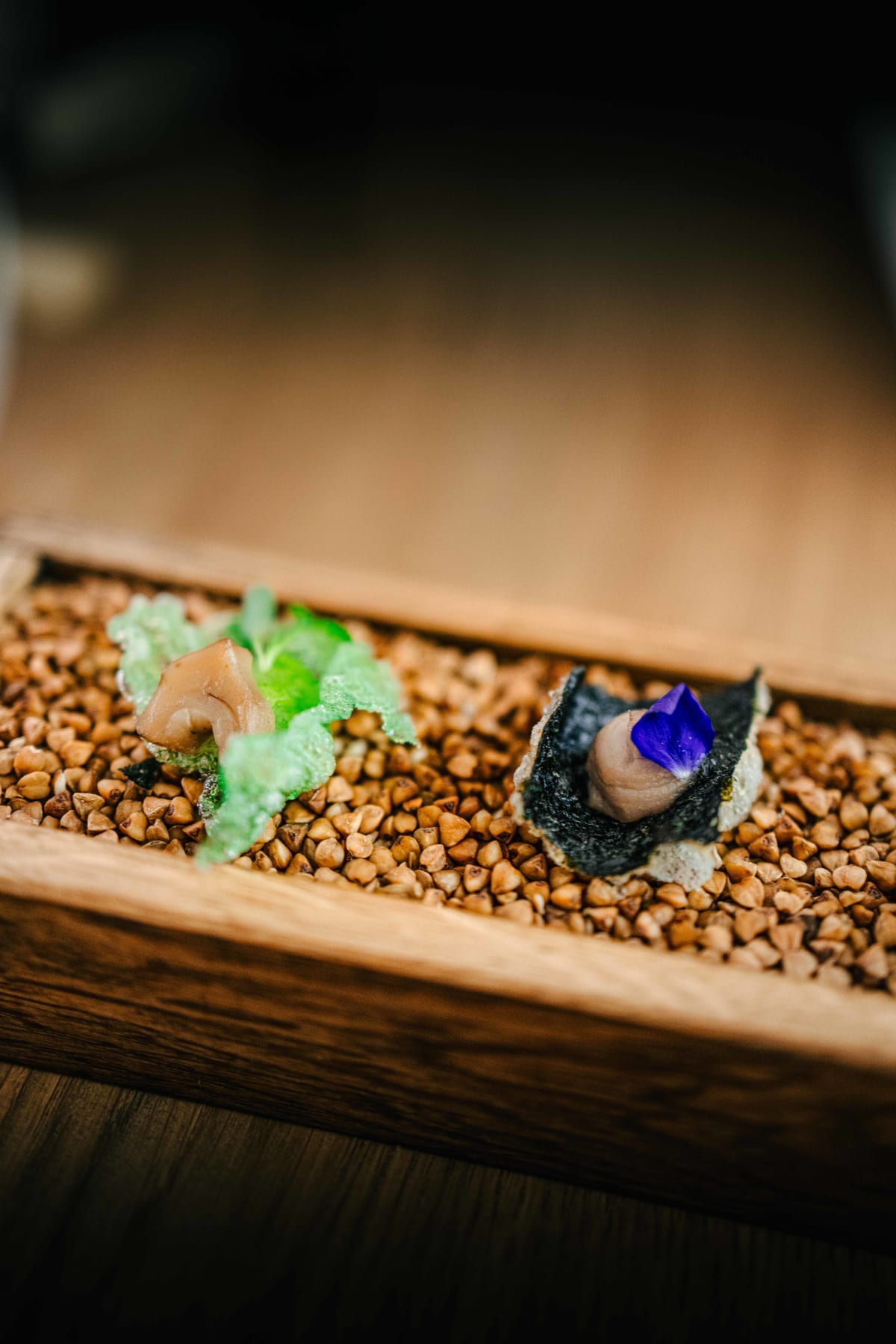
First came the amuse-bouche, and it was not good. It was served in a wooden box lined with toasted buckwheat: a single escargot on a fried lettuce leaf, and a cream on something like a Korean seaweed crisp. Both were crudely made and there only to make up the numbers, and I could not help thinking it would have been better had they never come out at all.
What disappoints me most about Michelin dining in mainland France is the amuse-bouche. At a great many one-star tables I have been let down by amuse-bouches that exist only for the sake of existing and never rise above a formality. If anything, when it comes to the finish of every small dish and every detail of a course, French restaurants in Japan or Germany have satisfied me more.
What disappoints me most about Michelin dining in mainland France is the amuse-bouche.
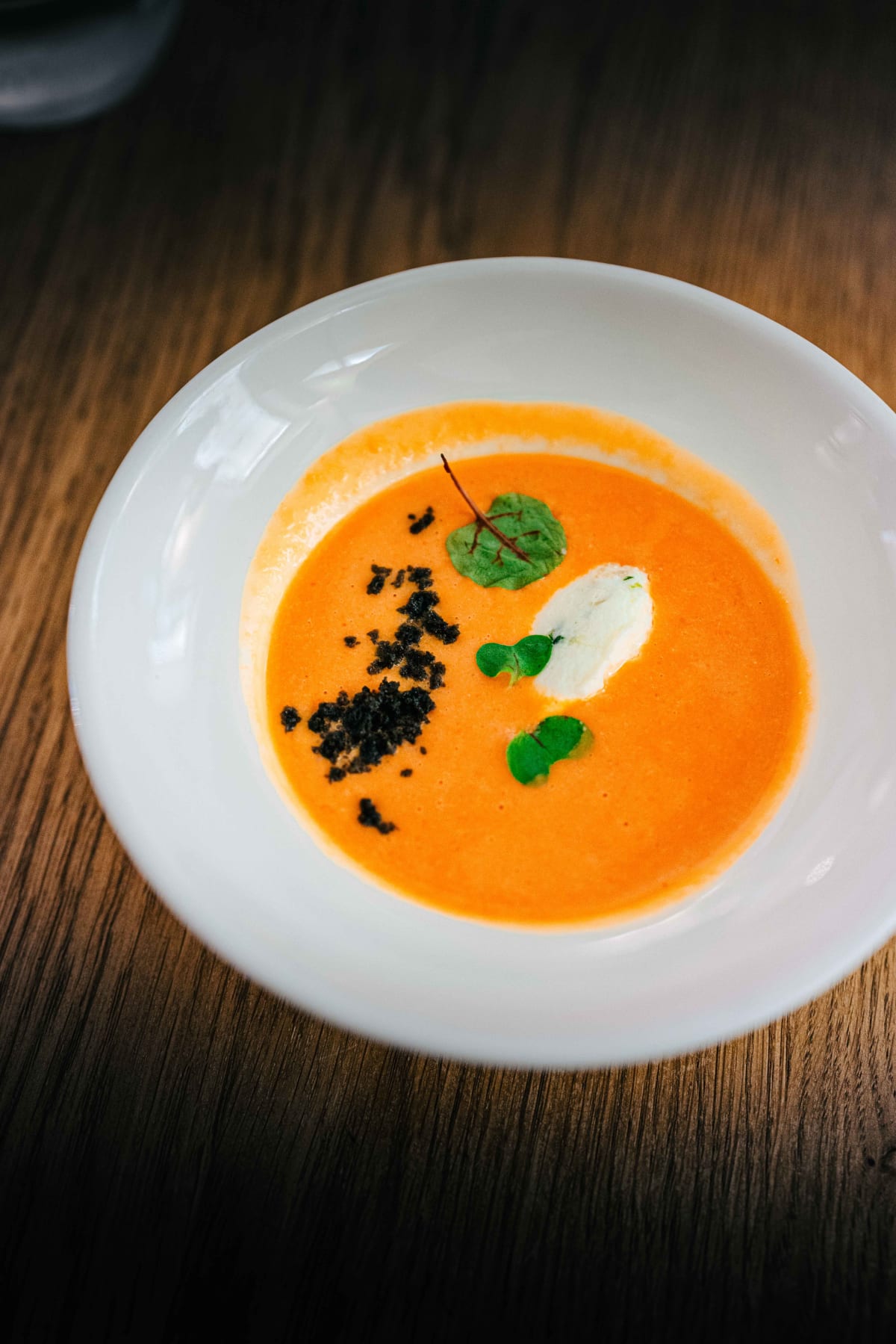
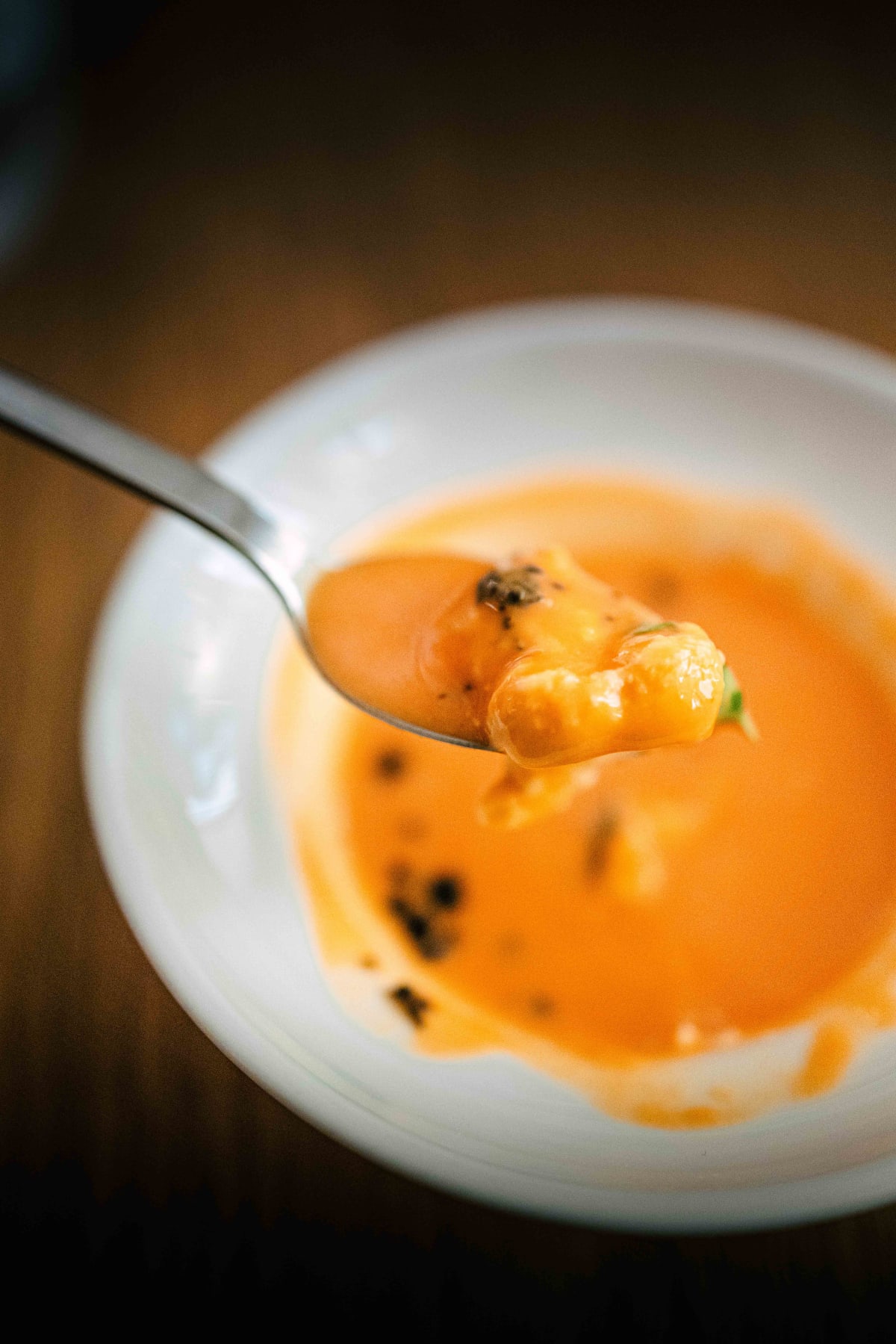
An orange soup followed in a wide white bowl, topped with a white quenelle, a black crumble and a red-veined sorrel leaf.
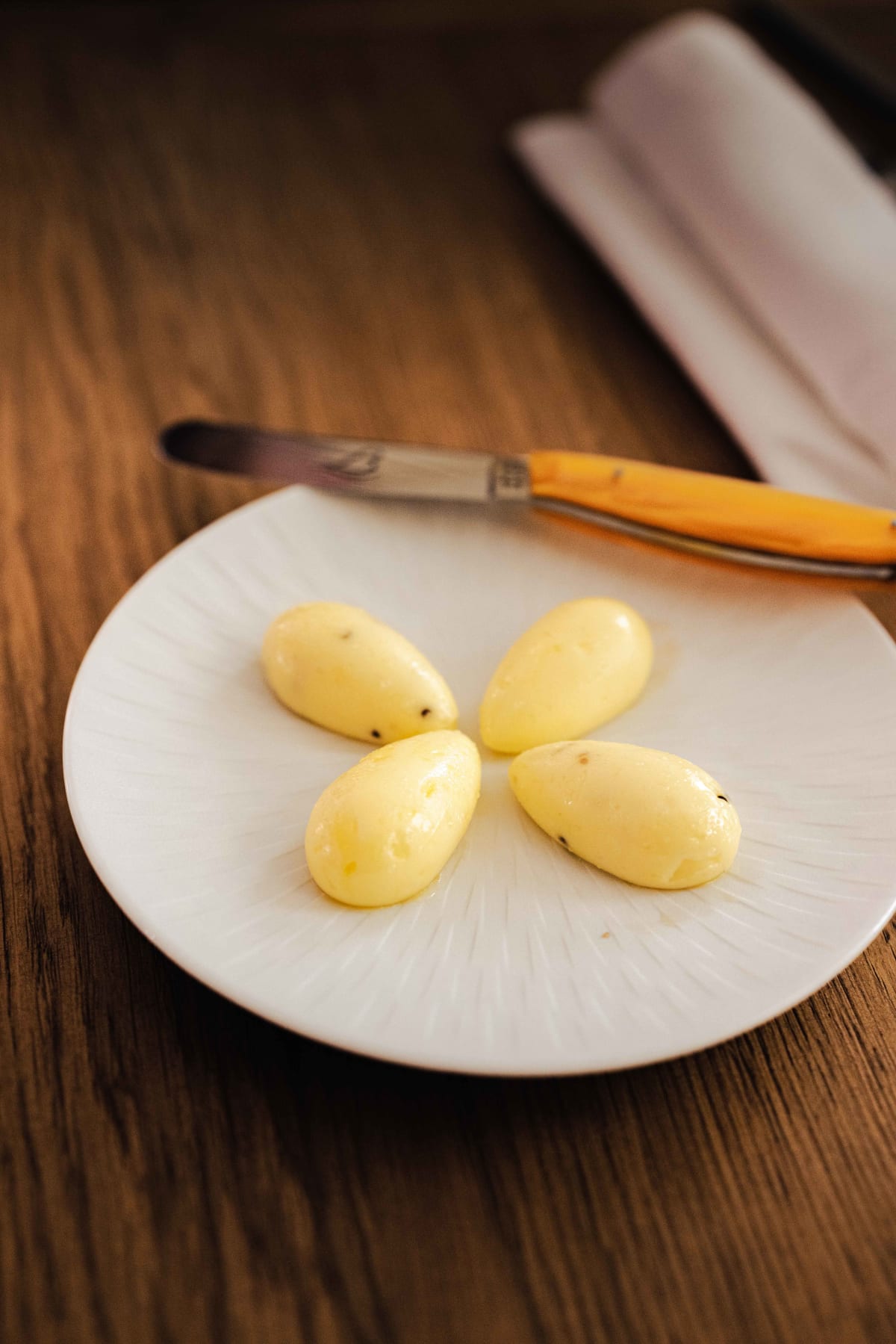
The butter for the bread came separately, shaped into four small quenelles.
Section 8·An Egg Cooked By Cold
Then came a dish that reworked oeufs en meurette in true Michelin style, and this one I ate with great interest. Oeufs en meurette is the signature home-style dish of Burgundy: poached eggs in meurette, a sauce made with the local red wine, with lardons and shallots, and croutons fried in bacon fat on the side.
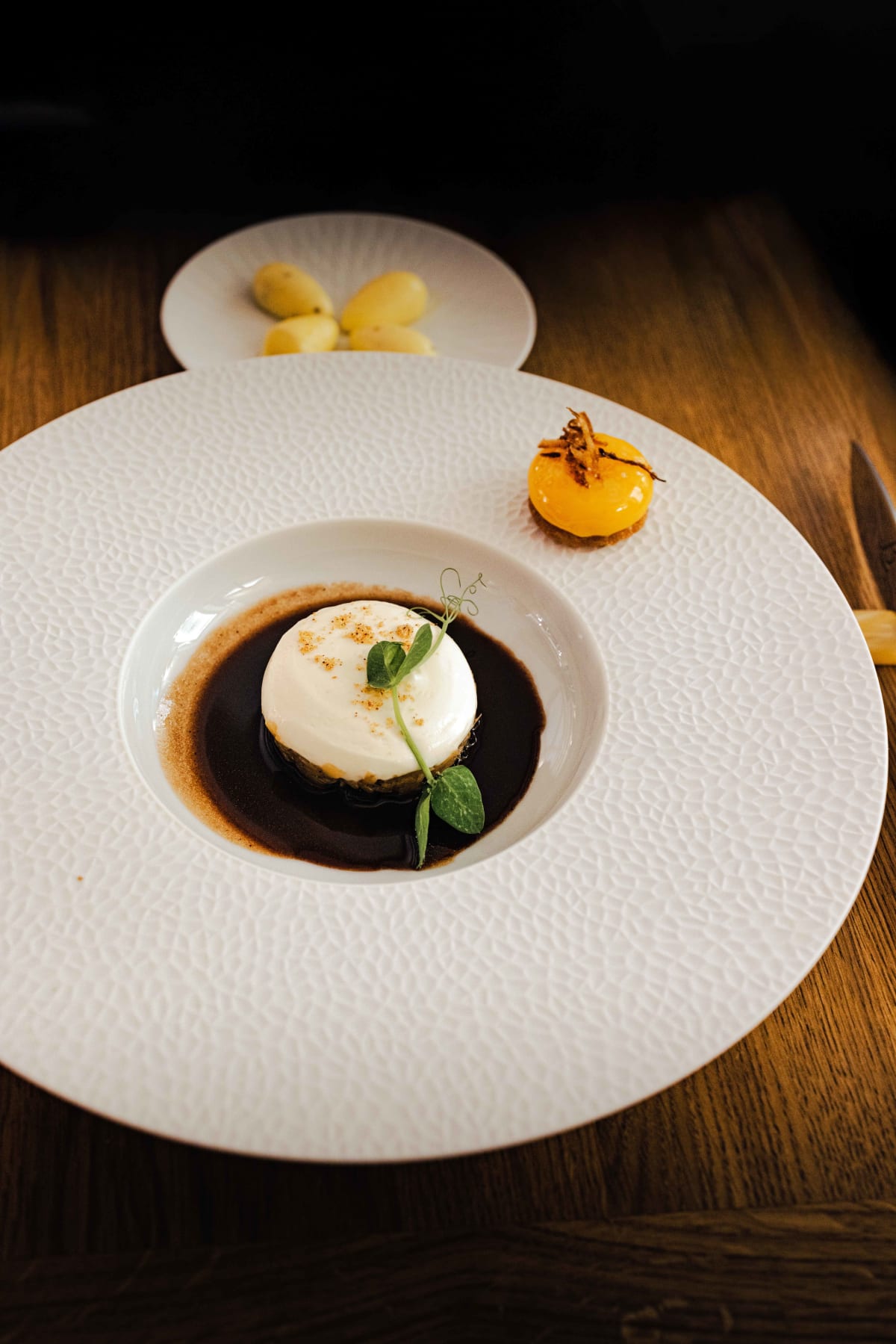
It grew out of what vineyard workers made for themselves with the local red wine. The meurette that night was the dish Gosse introduced when he arrived in 2022, and it had stayed on the menu after he left. In October 2022, at the Worldwide Oeufs en Meurette Championship held at the Château du Clos de Vougeot, his own version won him the creativity prize.
I ate the region's traditional dish twice that day: at lunch at Café de l'Industrie, a local brasserie in Dijon, with Jean, who is Dijon born and bred, and at dinner in a Michelin restaurant. Seeing the difference between the two was a valuable experience.
Here the poached egg at the heart of oeufs en meurette was separated into white and yolk, and each was cooked into a different form. The white became a foam, set in a deep bowl with onions, while the yolk was cooked until very sticky and dense and placed with bacon on a small tartlet at the rim of the plate. For me, the yolk left a far stronger impression than the white.
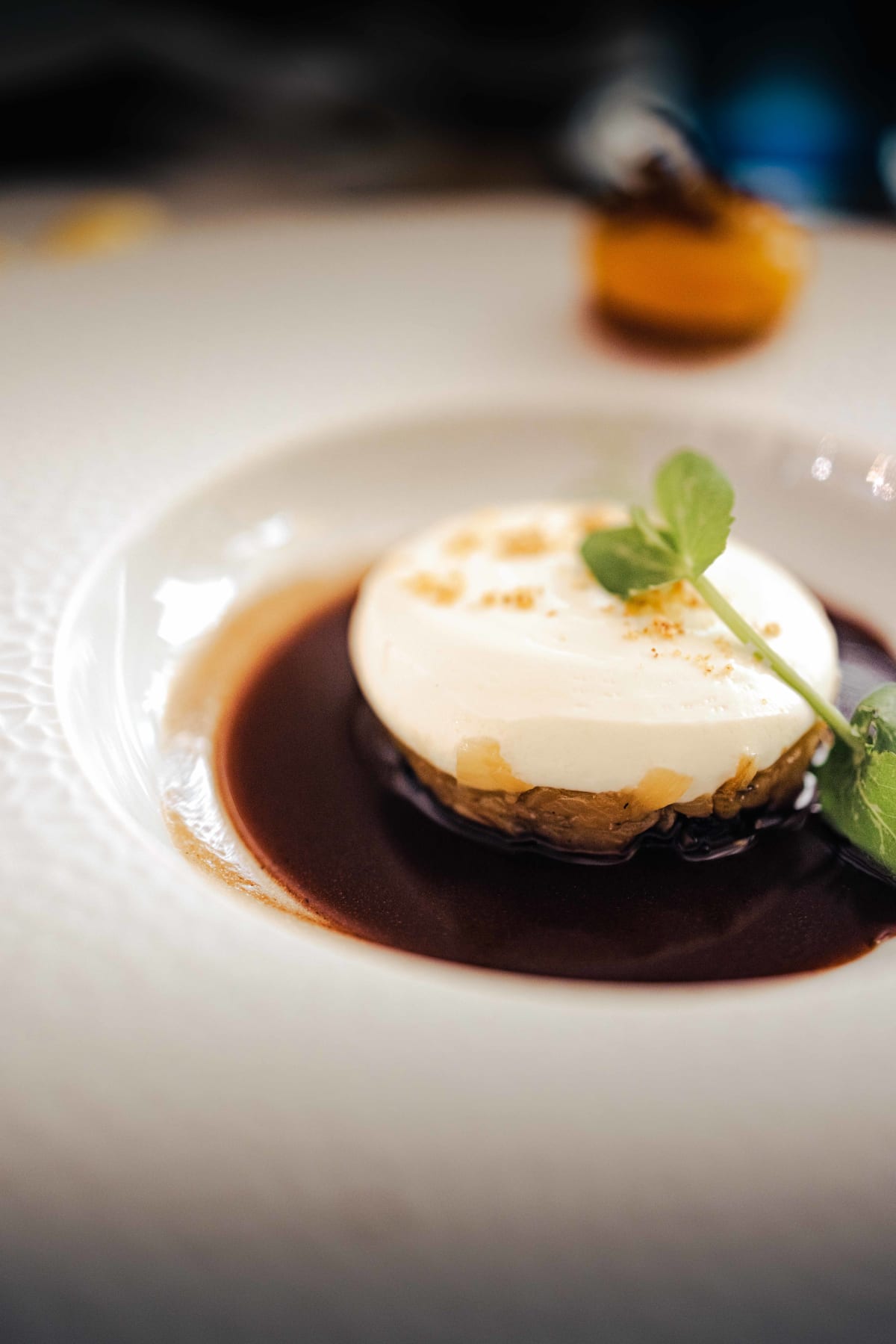
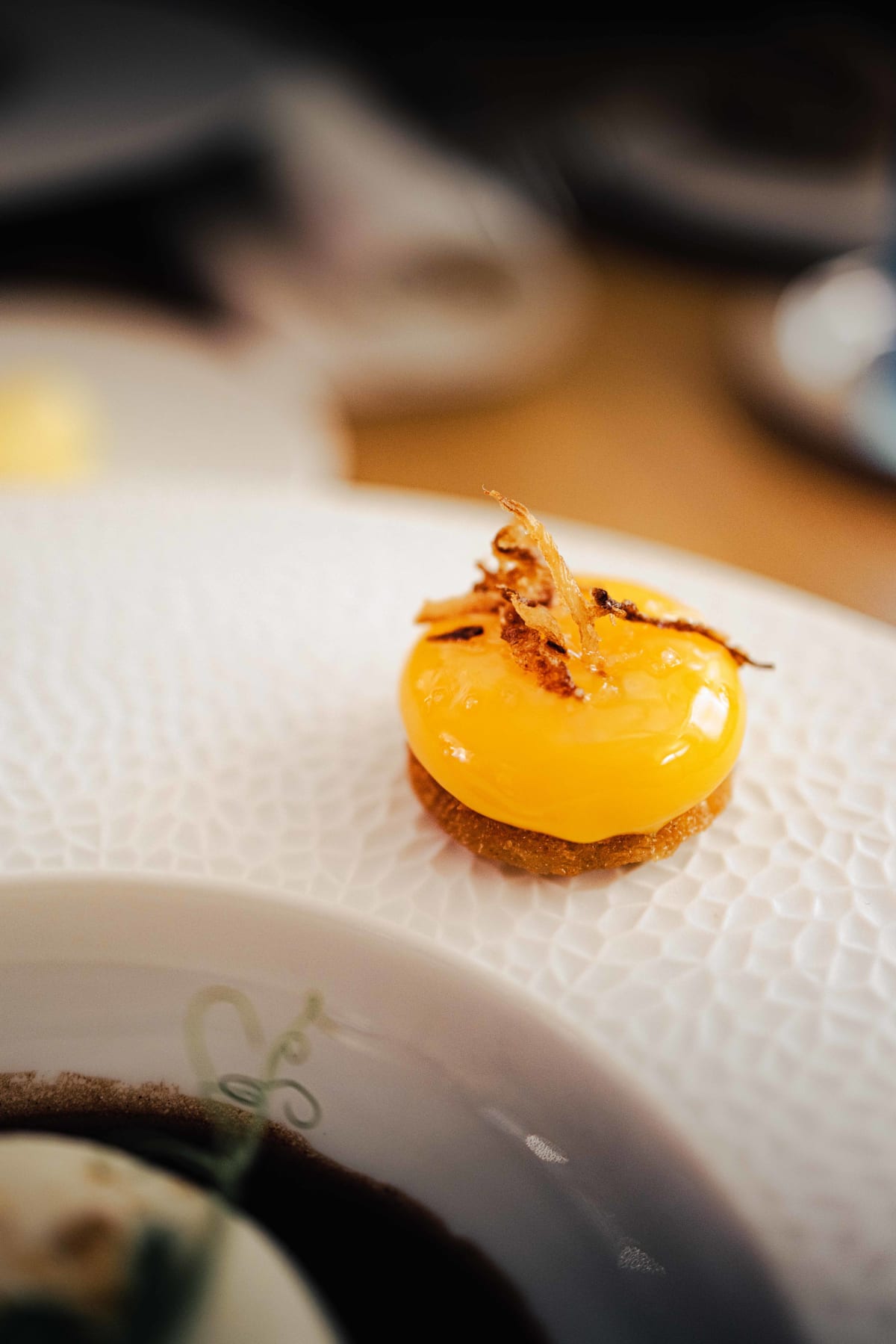
With a little help from Google, I learned that the yolk had been frozen at minus 22°C for 24 hours. Freeze a yolk and its proteins clump together, so that even after thawing it never runs again but sets into a gel. That is where the sticky, dense texture comes from. As for how it differed from the local version I had at lunch, here the alcohol of the wine did not stand out in the bourguignon sauce, and for me that was a plus.
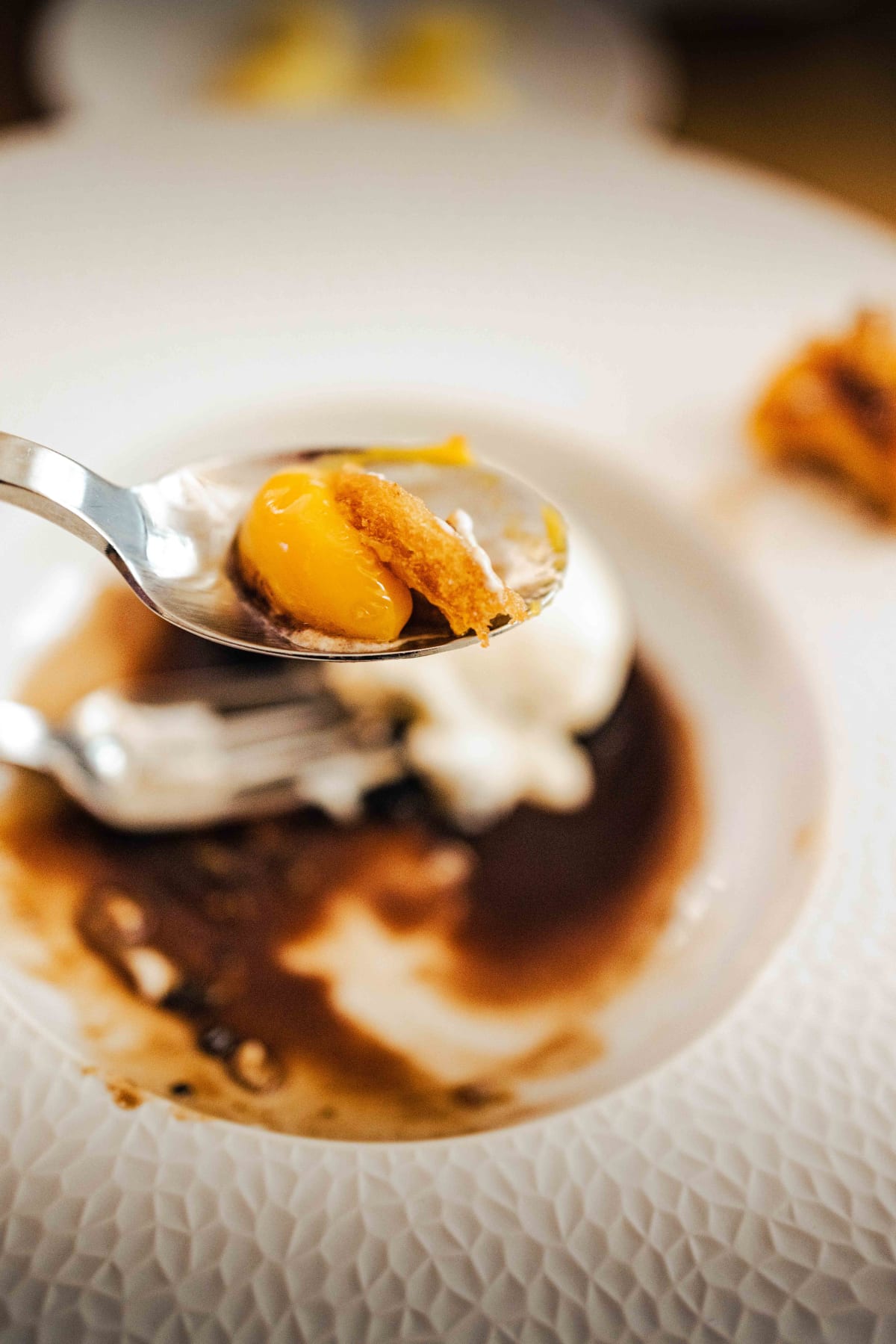
The meurette sauce here was made as a bourguignon sauce and then finished with cassis. Cassis is Dijon's signature product: crème de cassis was first made in this city in 1841.
Section 9·Veal Or Fish
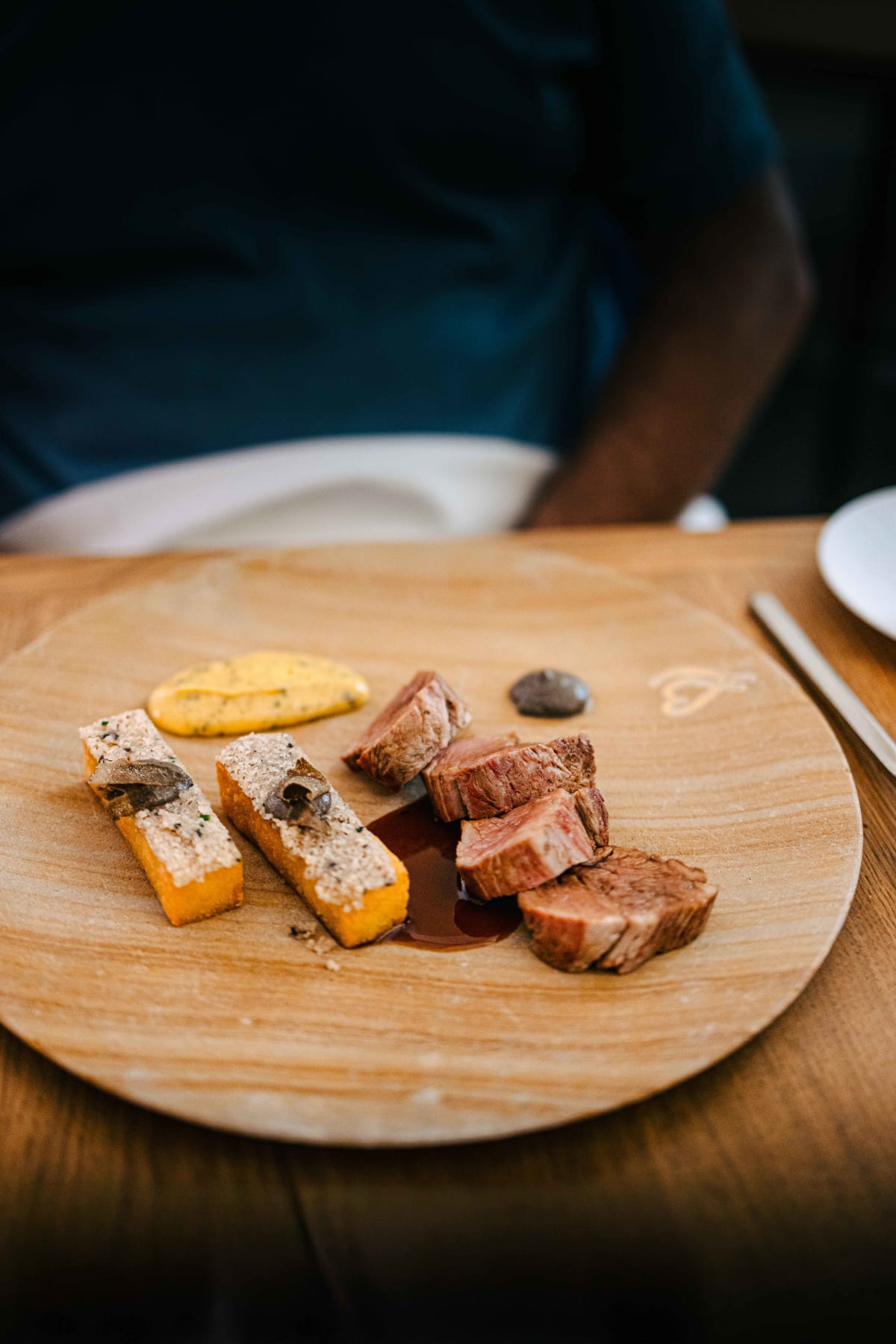
For the main course there was a choice of veal or fish, and I chose the fish and my French friend the veal. Jean's veal arrived sliced and pink, dressed with its jus, with two golden bars topped with mushroom on the side. A yellow herb sauce and a dot of dark purée were on the plate too.
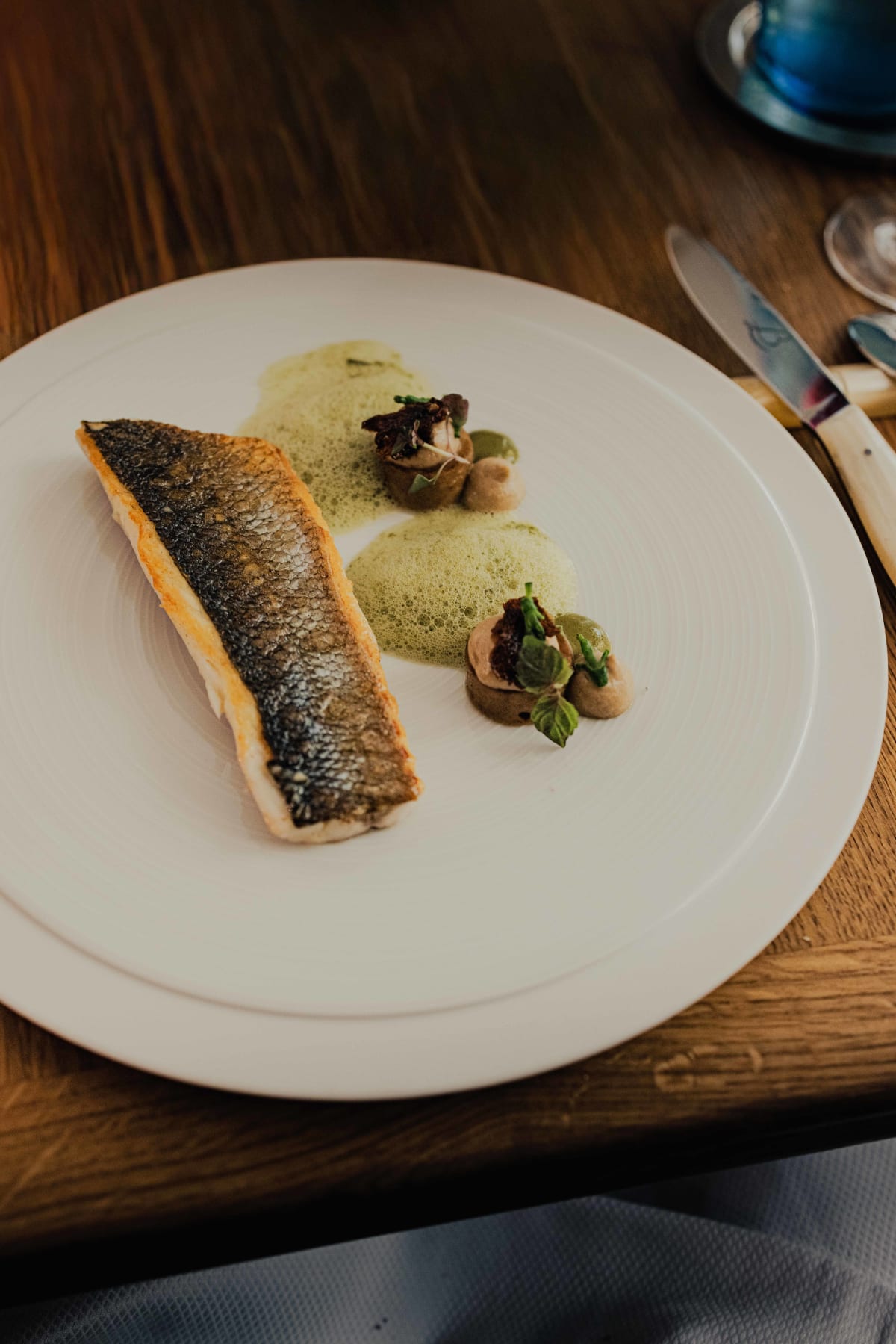
My fish, I would guess, was something in the sea bass family: a fillet cooked skin-on, with a green herb foam, purée and samphire.
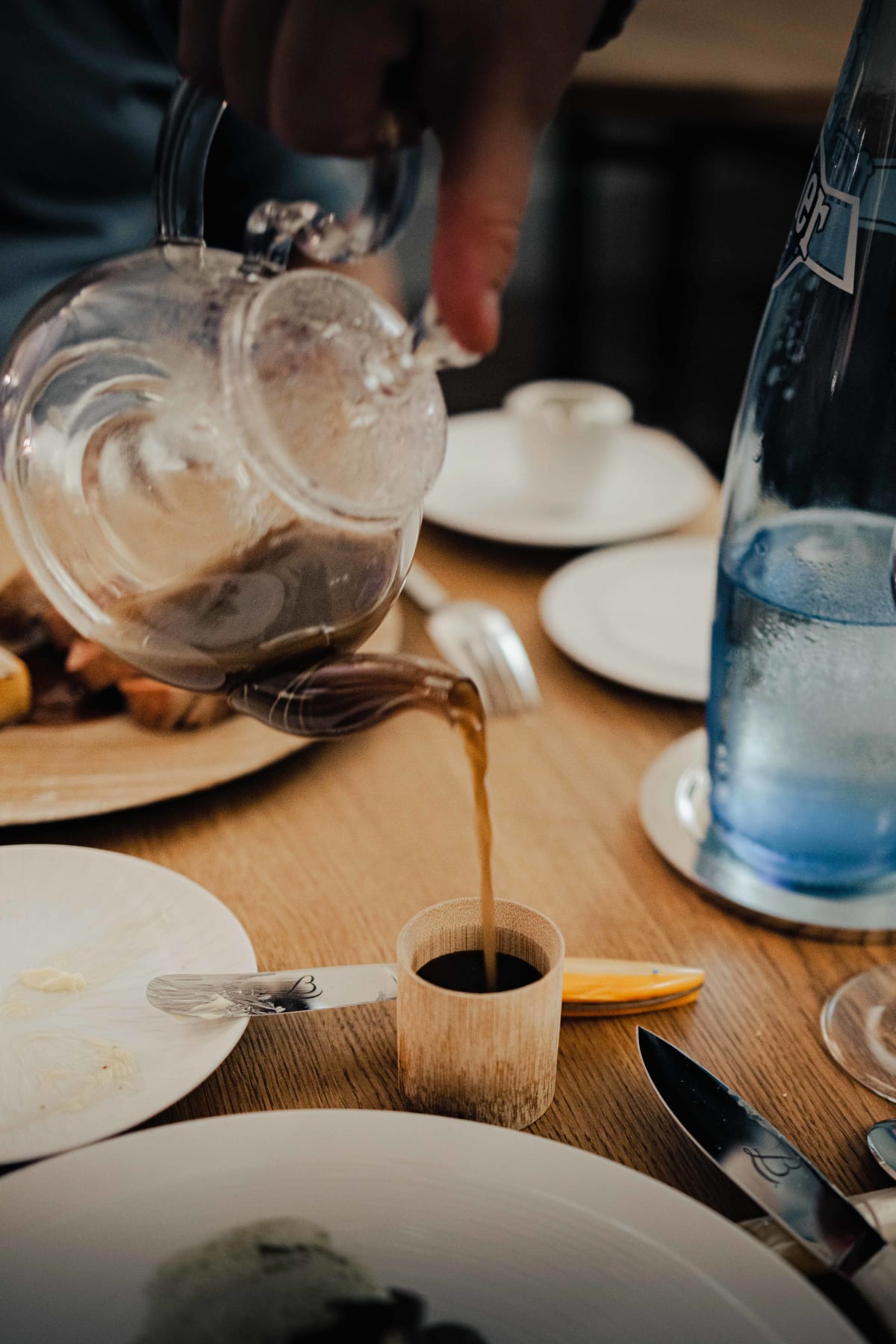
The fish broth came separately; the server brought a dark brown broth in a glass teapot and poured it into a small bamboo cup.
Sadly, the fish was not well cooked, and the skin was rather hard and scratchy, a texture that kept bothering me as I ate.
Section 10·Four Cheeses On One Plate
Last came the cheese I had added, with grilled lettuce and an ice cream. Even in a course like this, I could clearly feel the difference between a three-star restaurant and a one-star.
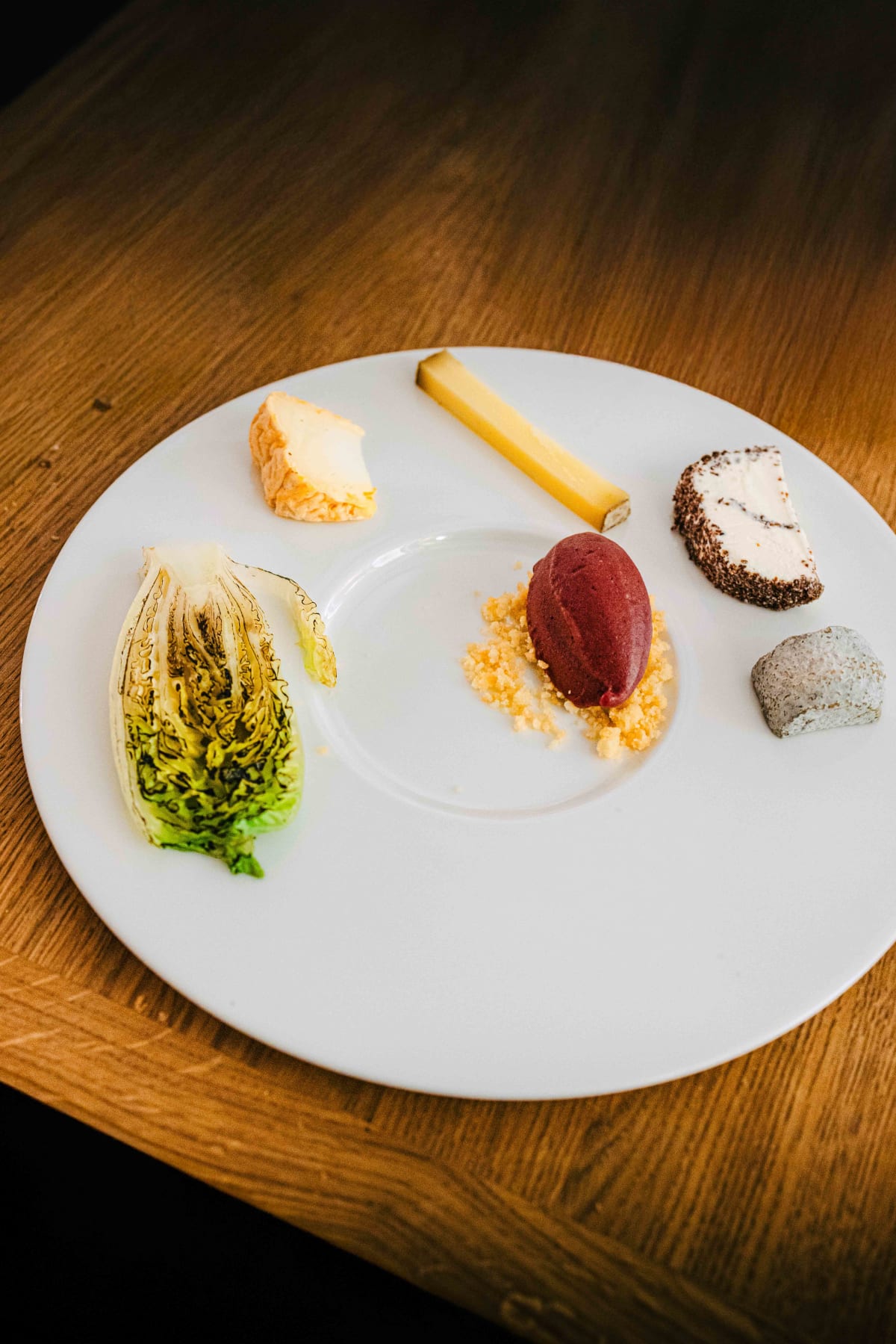
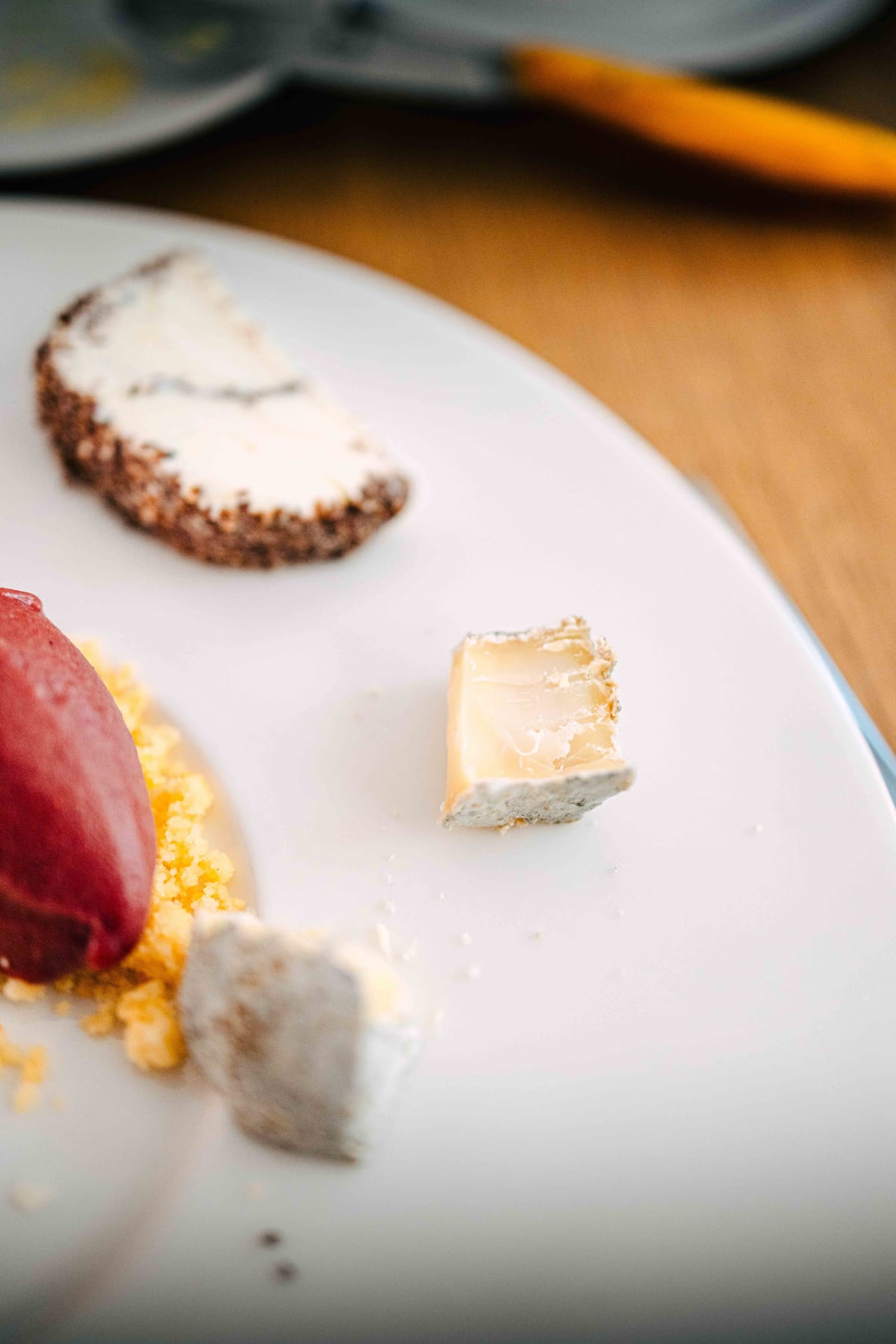
At lunch the next day at Maison Lameloise, a three-star, we chose five cheeses from a trolley kept under glass domes; here they came on a single plate. There were not many kinds, just one of each style to taste. It was four cheeses with half a lettuce, split and grilled, and a crimson ice cream.
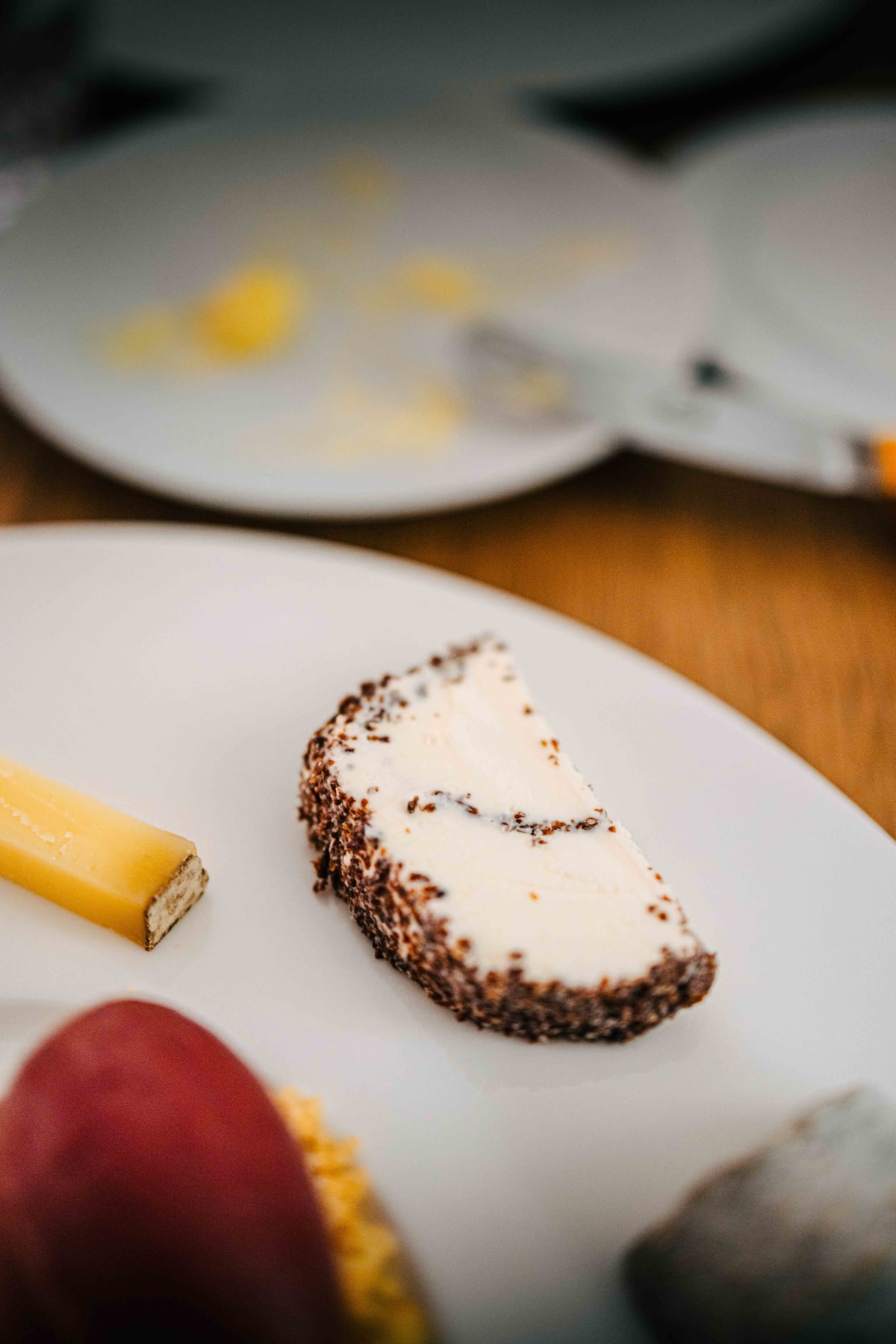
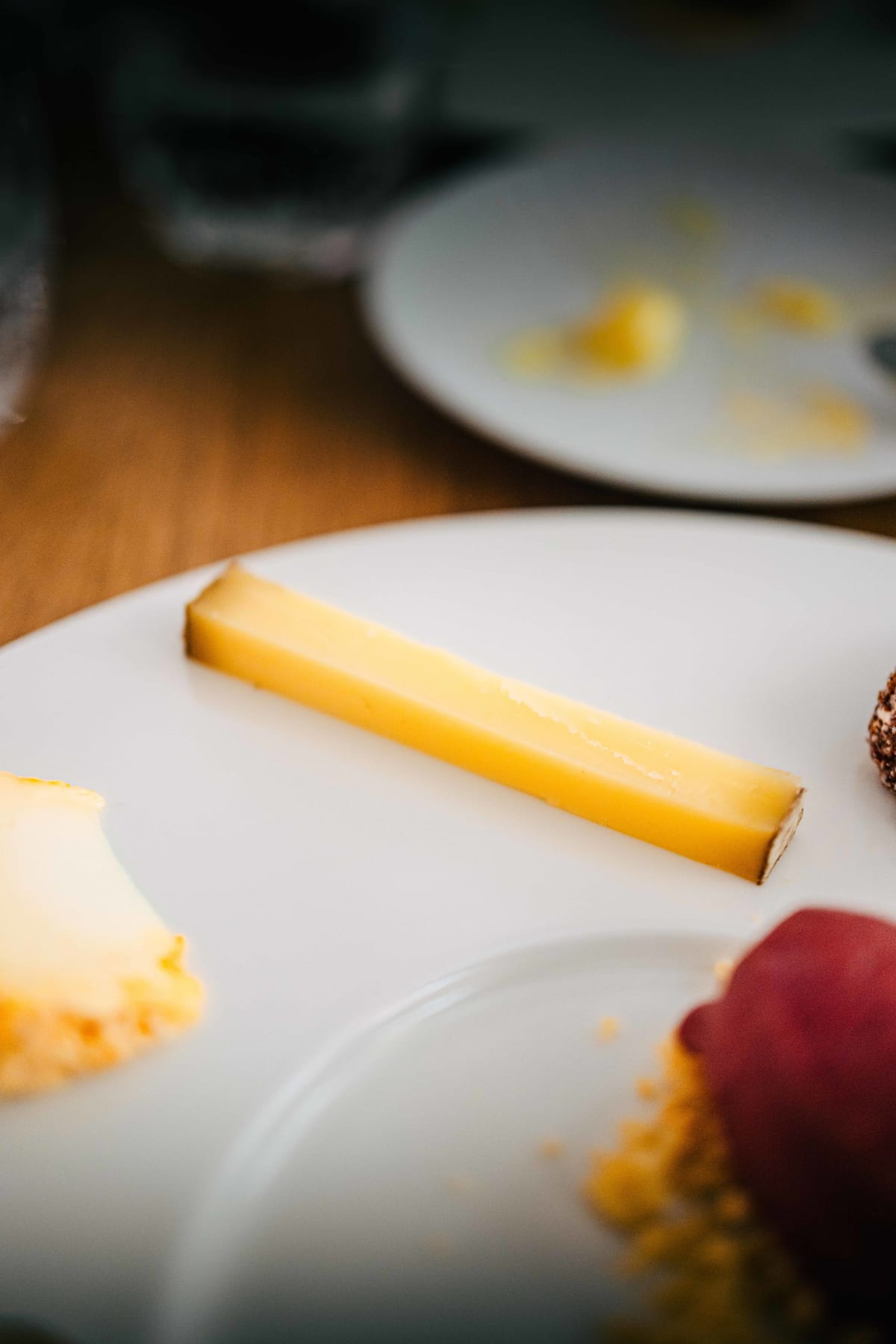
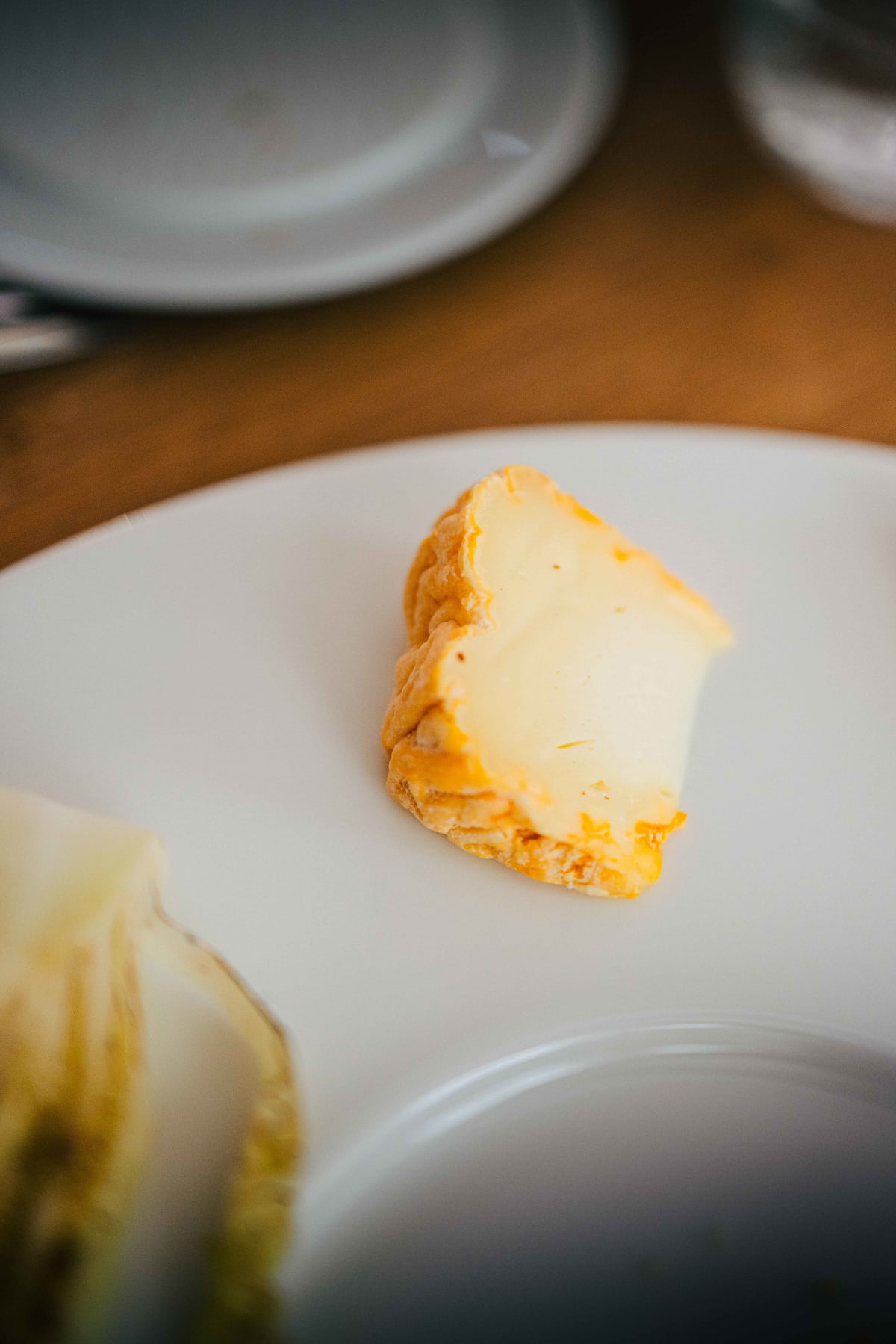
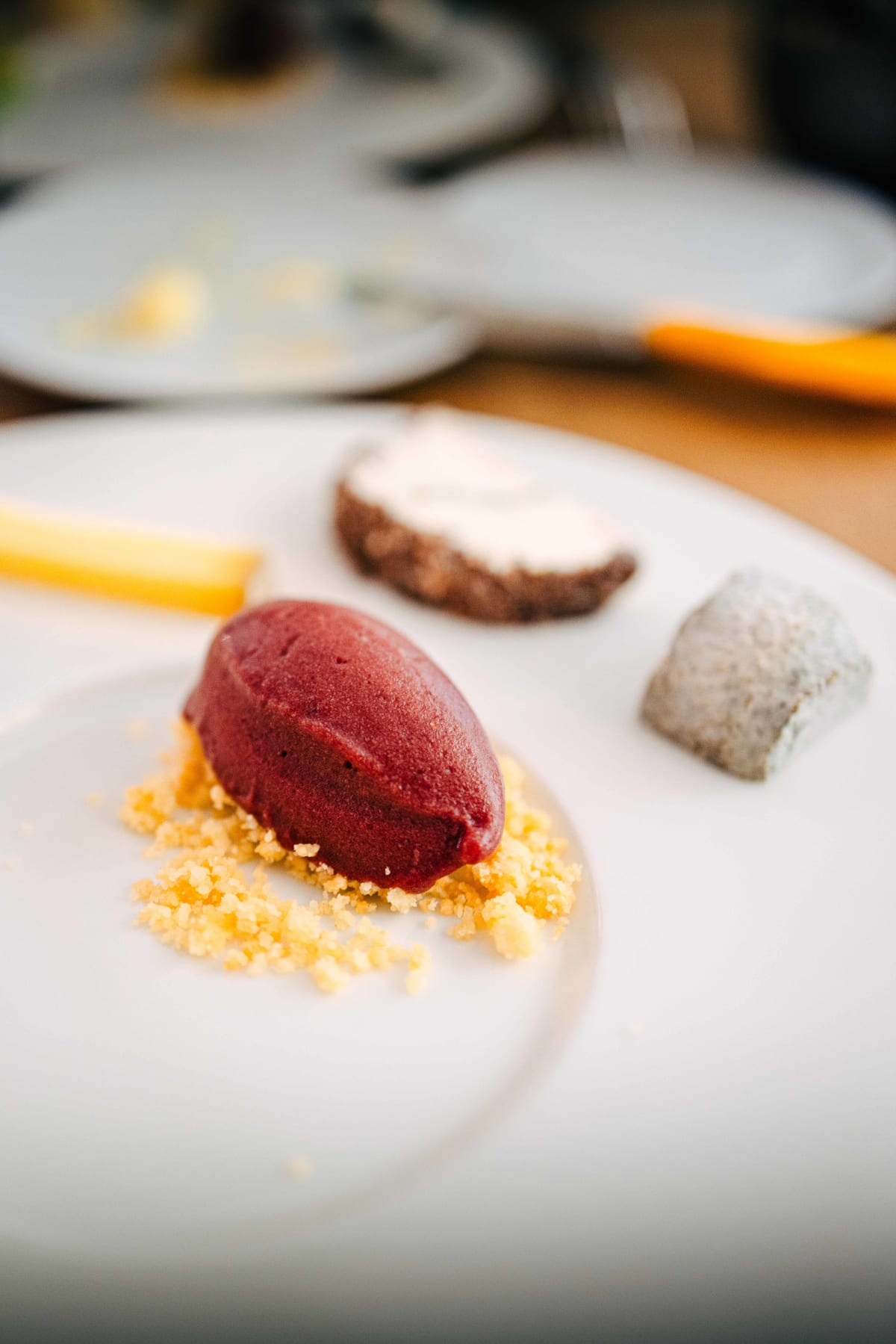
Eating them with bread, as Jean had taught me, I enjoyed the cheese very much.
Section 11·A Table For Visitors
My impression was of a restaurant made for visitors to Dijon who want to enjoy an unhurried meal in a pleasant setting. Indeed, there were hardly any French diners, and most of what I heard around me was English.
Being able to order good Burgundy by the glass was a pleasure, but on the food alone, the local French cooking I had at lunch made the stronger impression on me. The kitchen was between chefs at the time, and that has to be taken into account. Still, the Loiseau story and the renown of that name, which in a country thousands of kilometres away had once raised doubts about the great gastronomic system born in mainland France, were not something I could feel here.
Loiseau des Ducs sets out to carry Bernard Loiseau's style into Burgundian classics: frank flavours, fine sauces and respect for the product. Under Iulian Fistos it still holds its star in the 2026 guide. His October 2024 menu dropped Gosse's oeufs en meurette, and although the dish has since returned to the lunch menu, the version described here is Gosse's, from the months between chefs. In 2024 cheese was an 18-euro supplement to the Talmay menu, and the Vauban lunch, at 40 euros for two courses or 55 for three, served from Tuesday to Friday, was the lighter way in. The restaurant opens for lunch and dinner from Tuesday to Saturday.
Have a question about this restaurant, or want to share your own experience?
Send a message