Fine Dining · Cusco · Peru / February 2026
Mauka
"Pía León's Andean kitchen inside the most expensive hotel in Cusco"
Section 1·A Name From Cusco
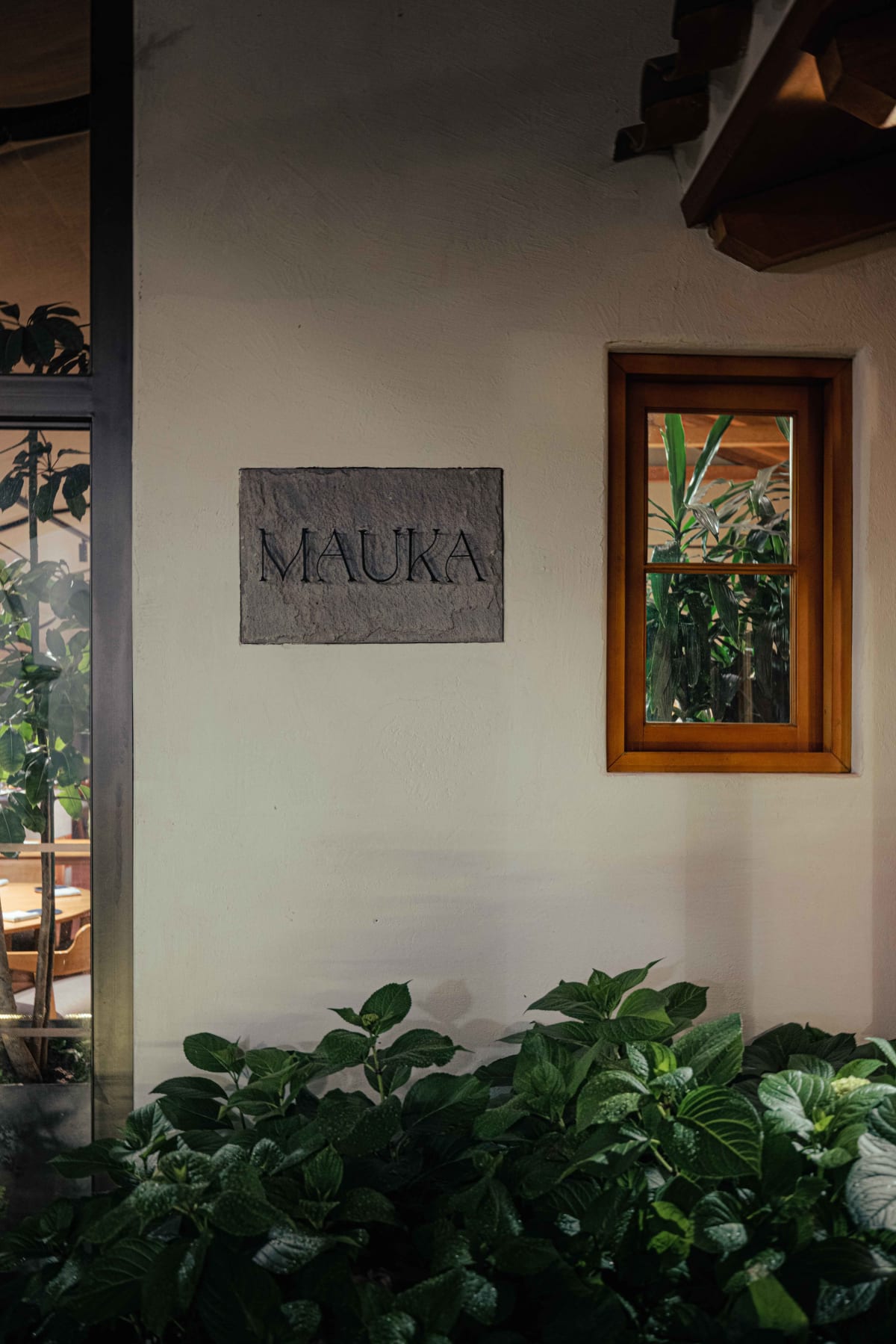
I went to Cusco only to see Machu Picchu, and heard there was a dining room there drawing attention. That one sentence was enough to set me off, and I booked the name, Mauka. I had no great expectations. By the time I walked out after the meal my thinking had changed completely, because I was certain I would meet this name again on the Latin America's 50 Best list, and after that on the World's 50 Best.
On hardware alone it is not on the overwhelming scale of Central or Kjolle in Lima. Even so the finish of the space was fully accomplished, and above all the level of service and the English of the staff were impressive. The decisive thing was the price.
The six course Six of Andes is 130 dollars and the wine pairing 70, coming to a little over 200 dollars a head. If a sole operator ran facilities and service at this level, that price structure would not have held for long. It is possible entirely because of the ambition and the backing of the hotel that holds this restaurant.
Mauka is an Andean restaurant directed by Pía León of Central, which was named the world's best restaurant in 2023, and her own Kjolle, with Cusco born head chef Leonel Almanza running the kitchen. Almanza joined this hotel's kitchen team in 2015 and built his career here over a long stretch, and his name appeared on the Spanish edition of Food & Wine's Best New Chef Peru 2025. The restaurant takes its name from mauka, a rare Andean root crop now close to extinction as cultivation has collapsed.
Section 2·The Hotel First
I hold a fair amount of information about Michelin and fine dining but not much about hotels at the very top. This time the hotel made a strong impression before I even entered the restaurant. From the moment I arrived it was clear this was of a different order from the five star hotels I knew.
It is possible entirely because of the ambition and the backing of the hotel that holds this restaurant.
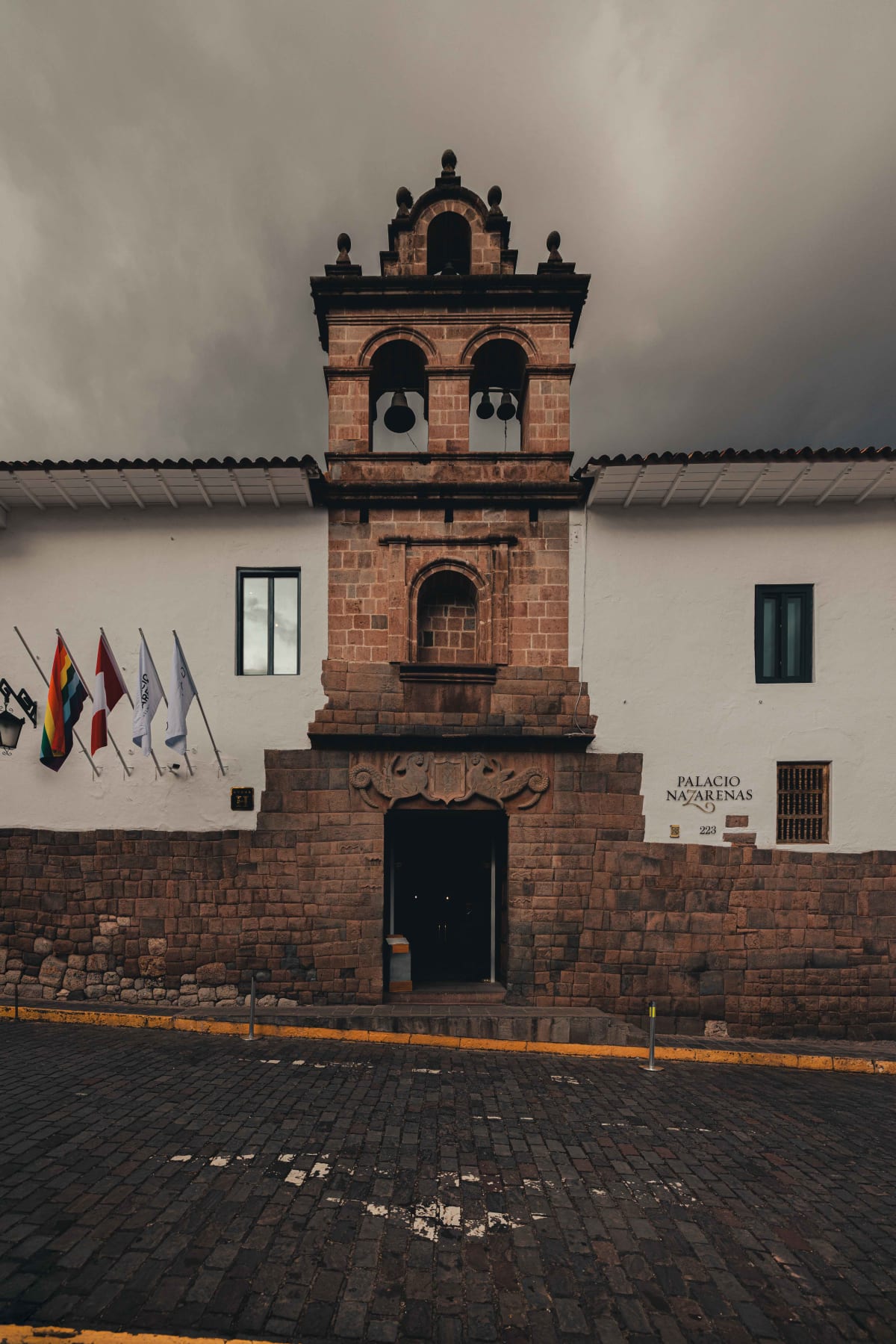
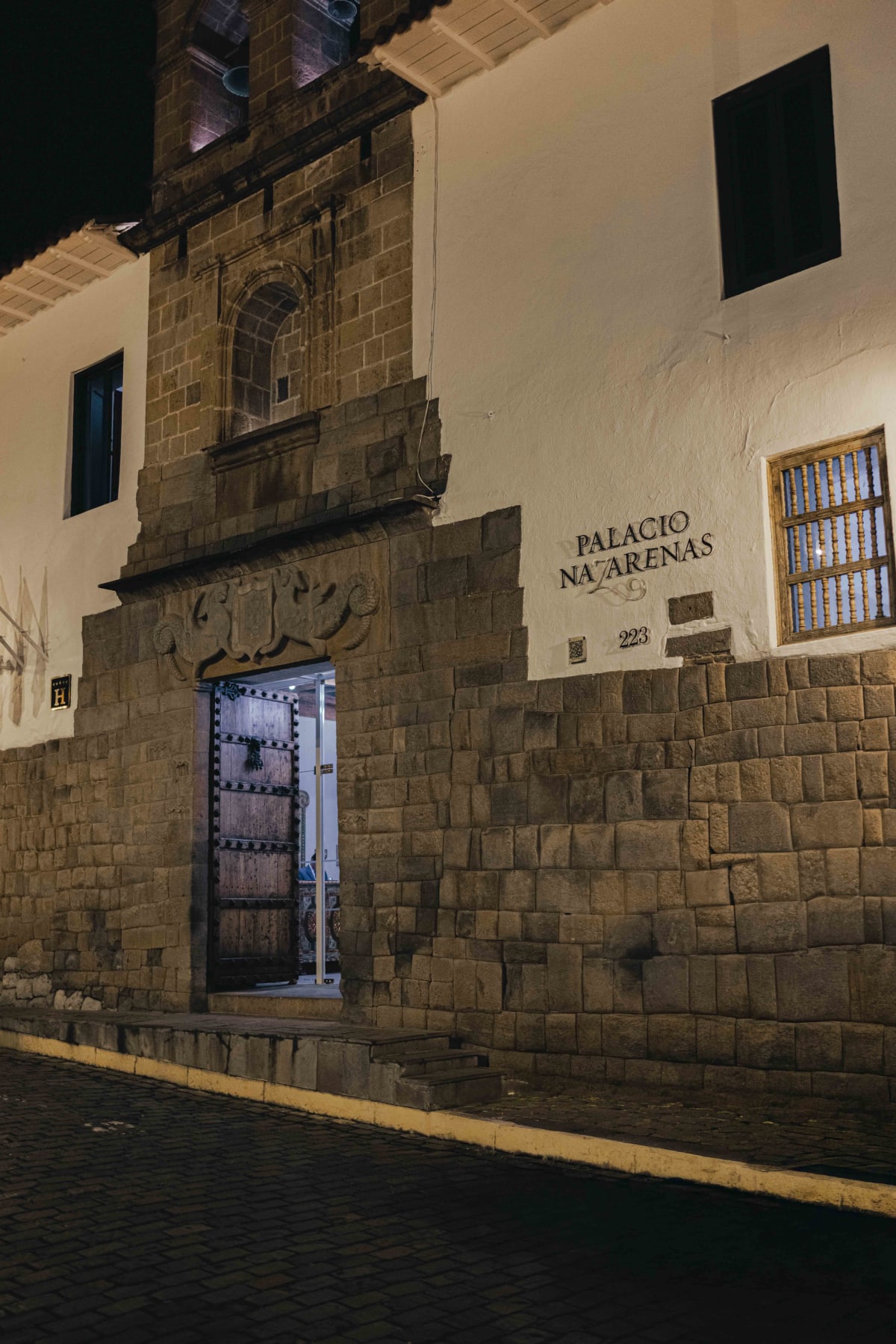
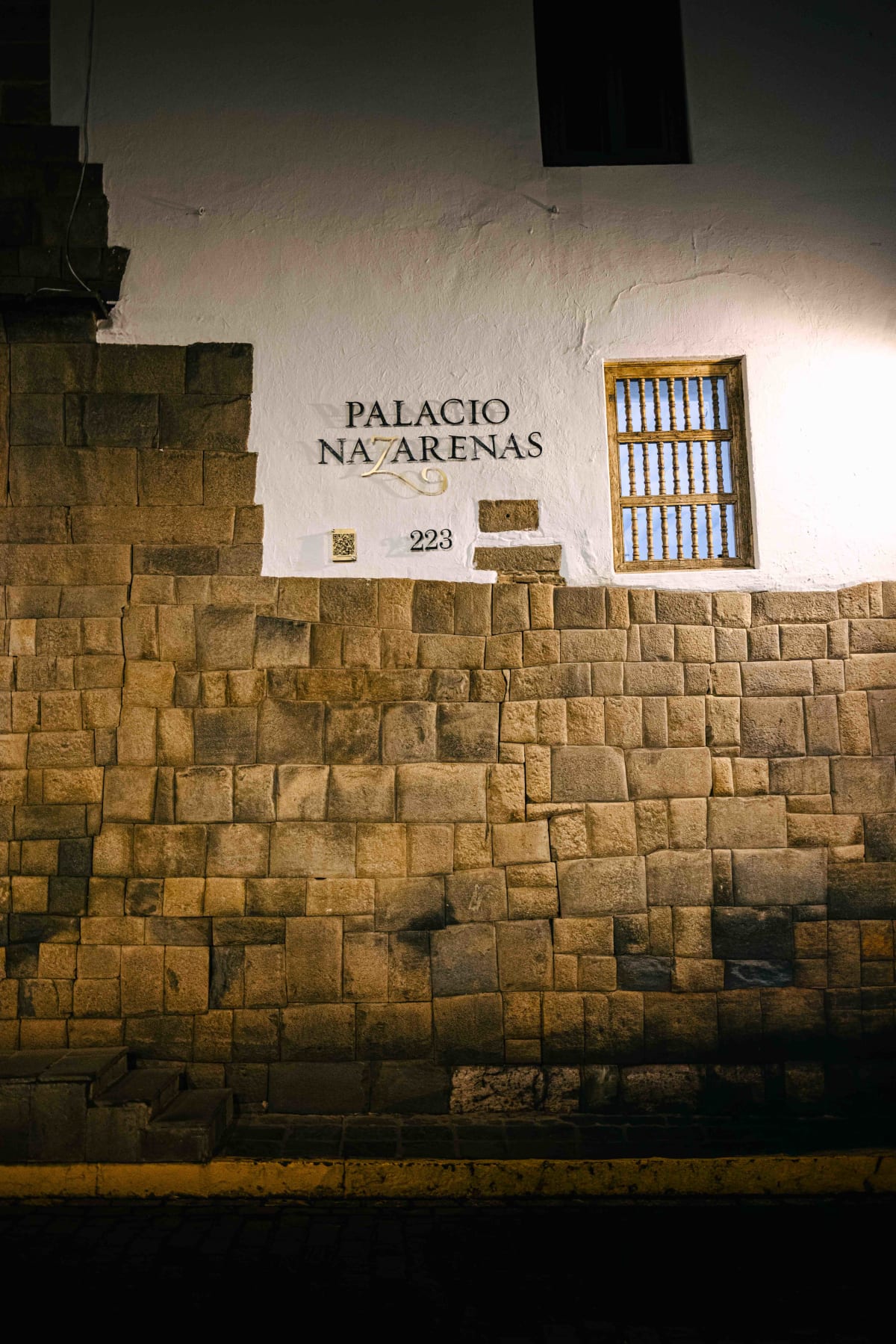
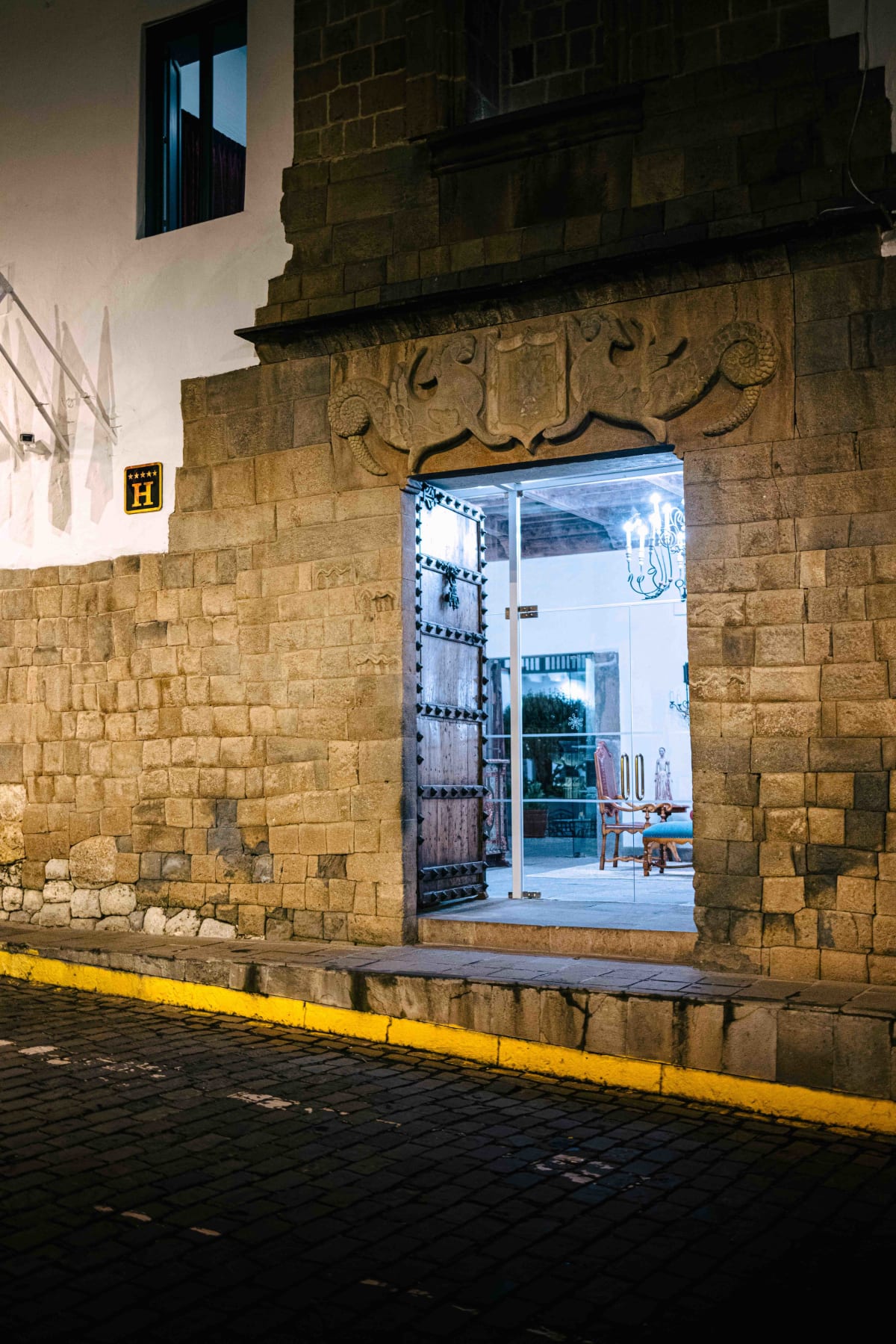
Palacio Nazarenas, A Belmond Hotel, where Mauka sits, is the most expensive hotel in Cusco. An entry room for two starts somewhere between 900 and 1,200 dollars a night including taxes and mandatory charges. Given hotel prices in Cusco that is a startling figure. The hotel came eighty seventh on the extended 51 to 100 list that World's 50 Best Hotels published for the first time in 2025, and it is run by Belmond, part of LVMH.
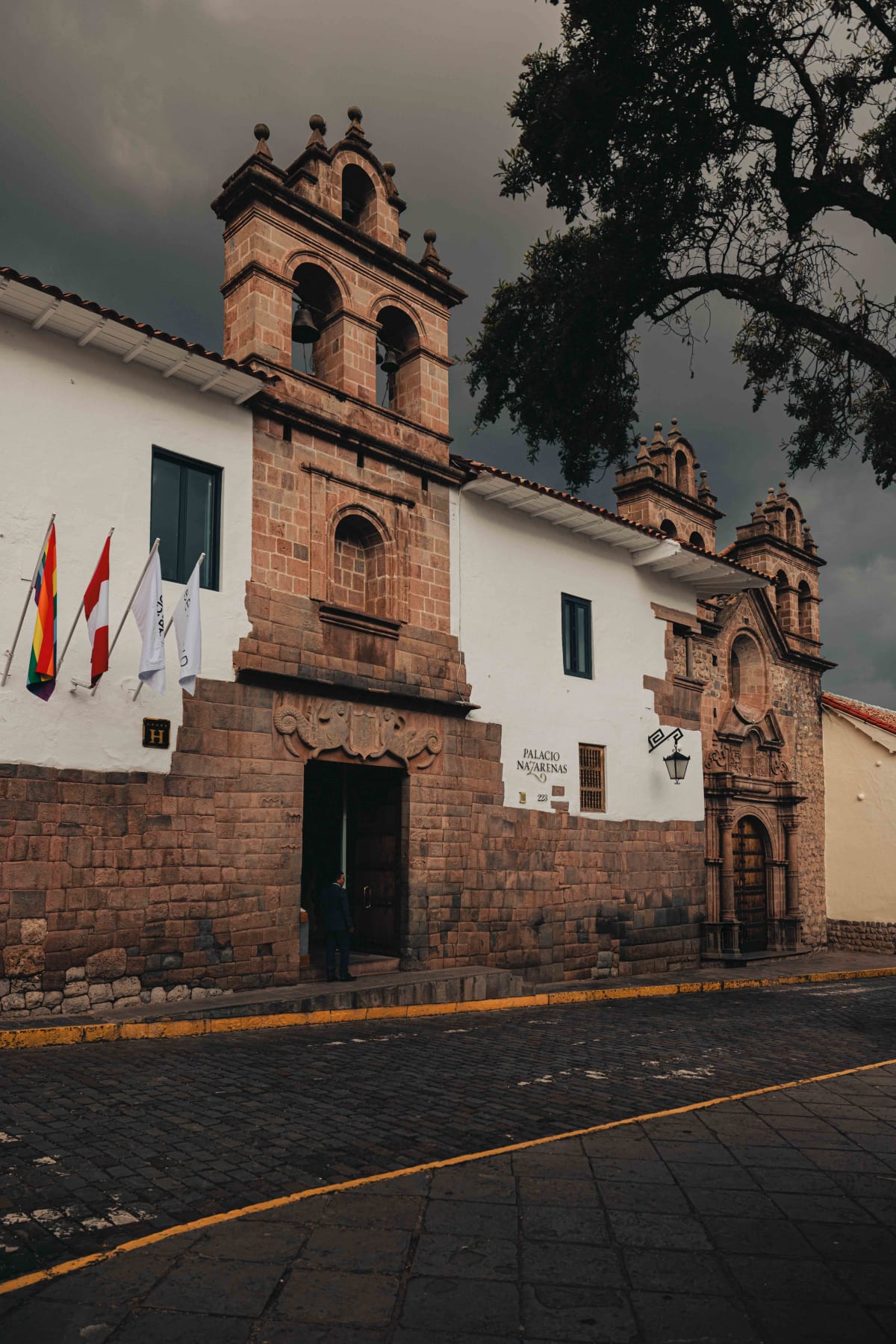
The lane the hotel sits on is striking in itself. The Chapel of St. Anthony the Abbot stands immediately to the right of the restaurant, and the best luxury hotels in Cusco gather around Plaza Nazarenas in front of it. Even arriving at night, the standing of this hotel came through clearly.
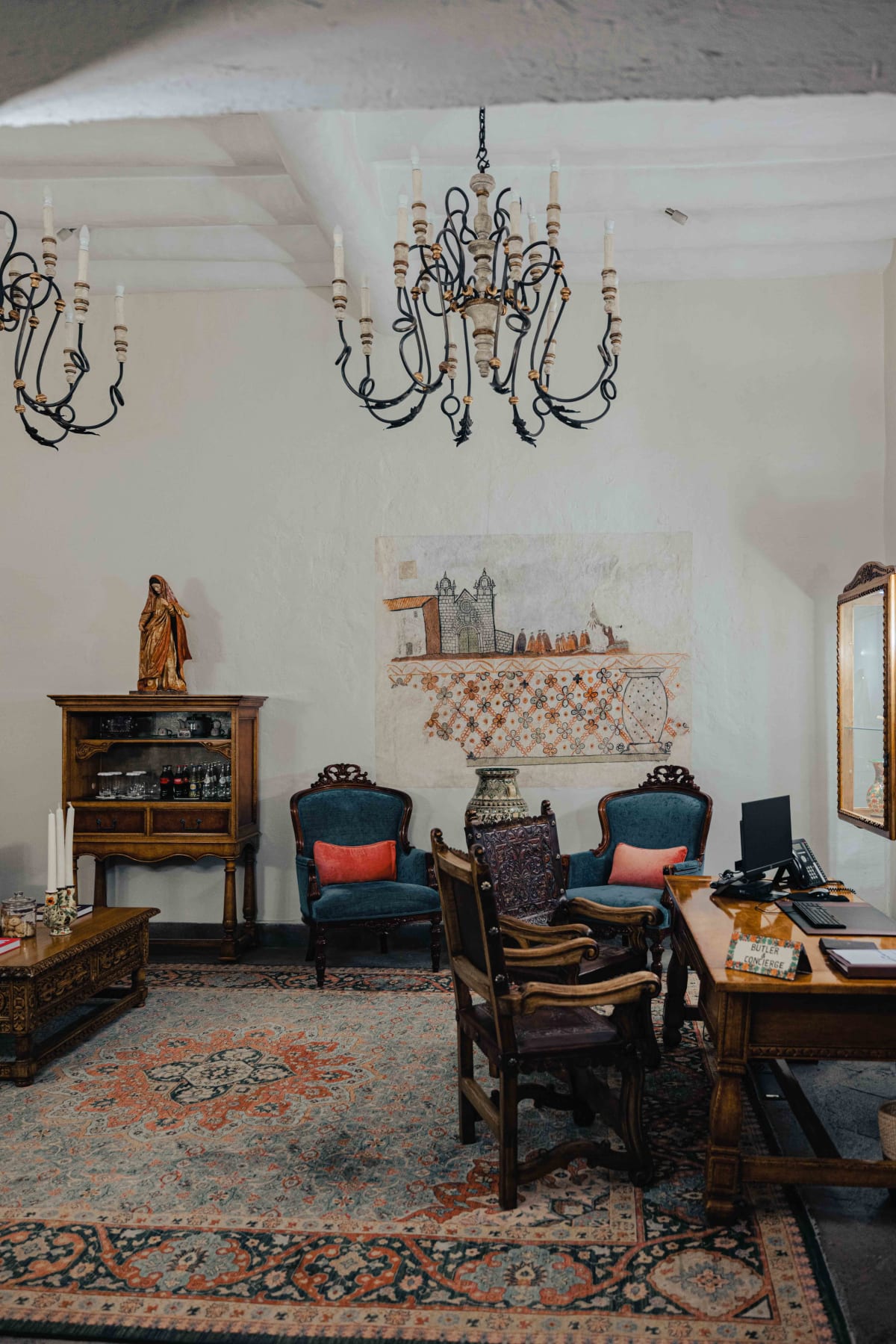
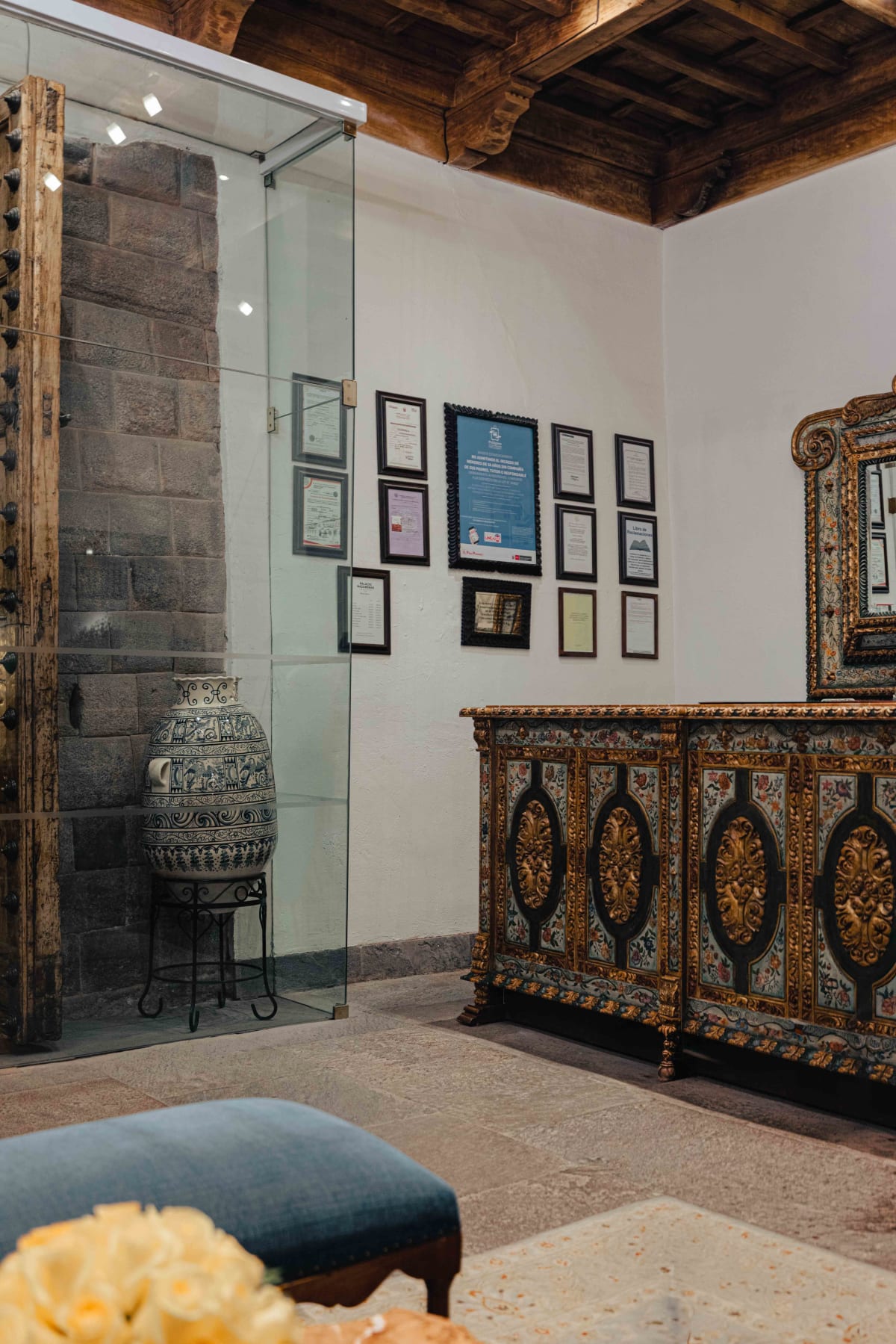
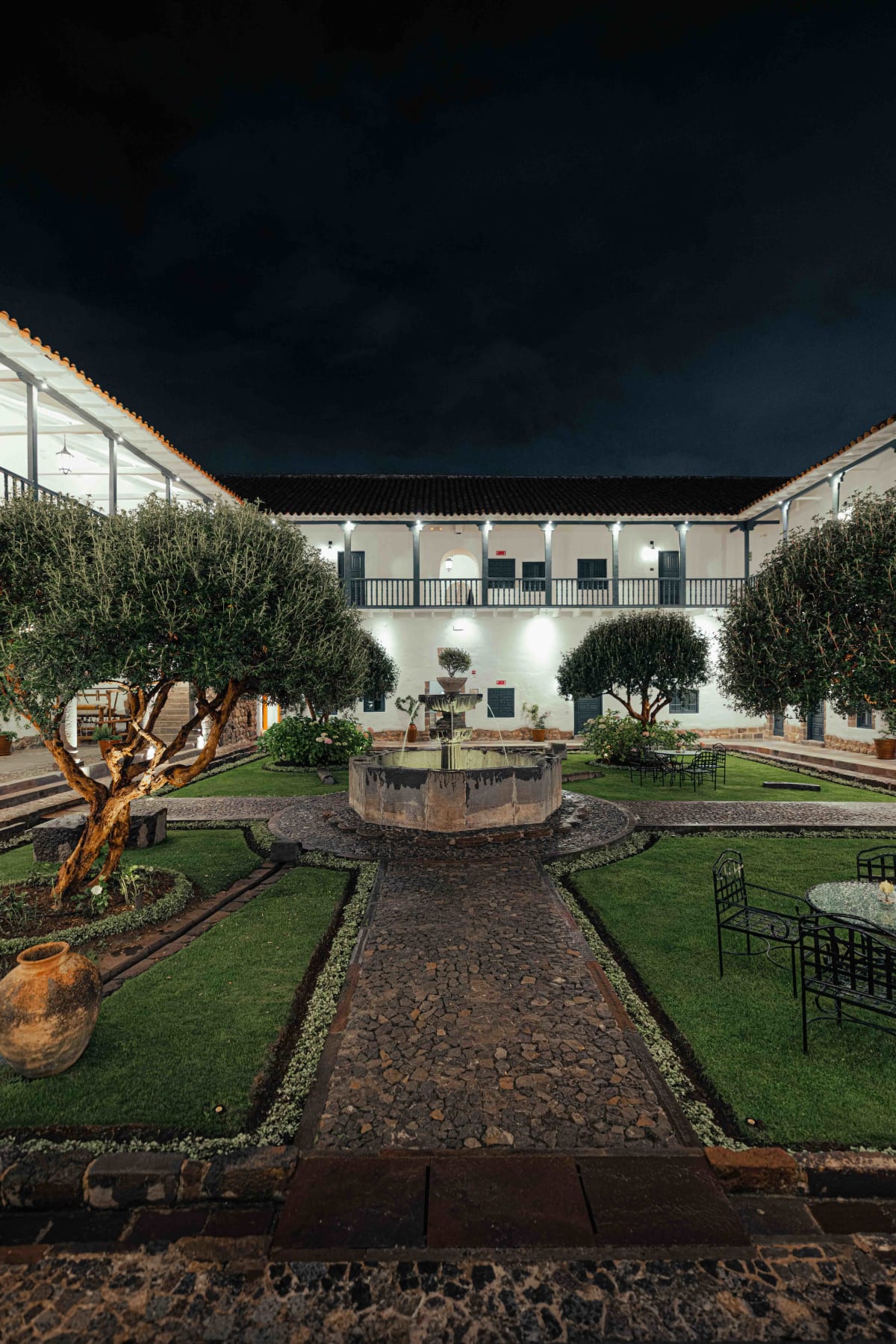
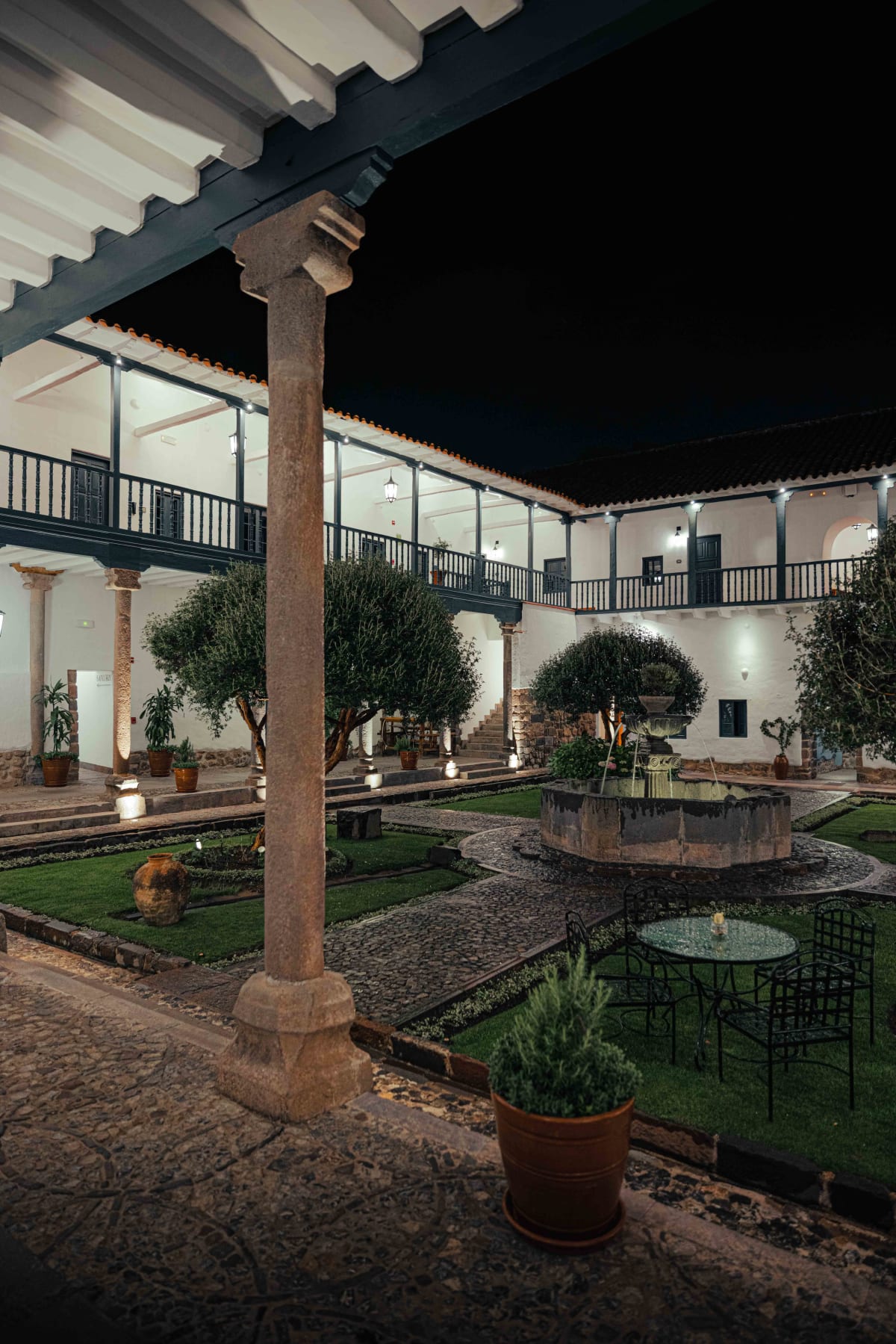
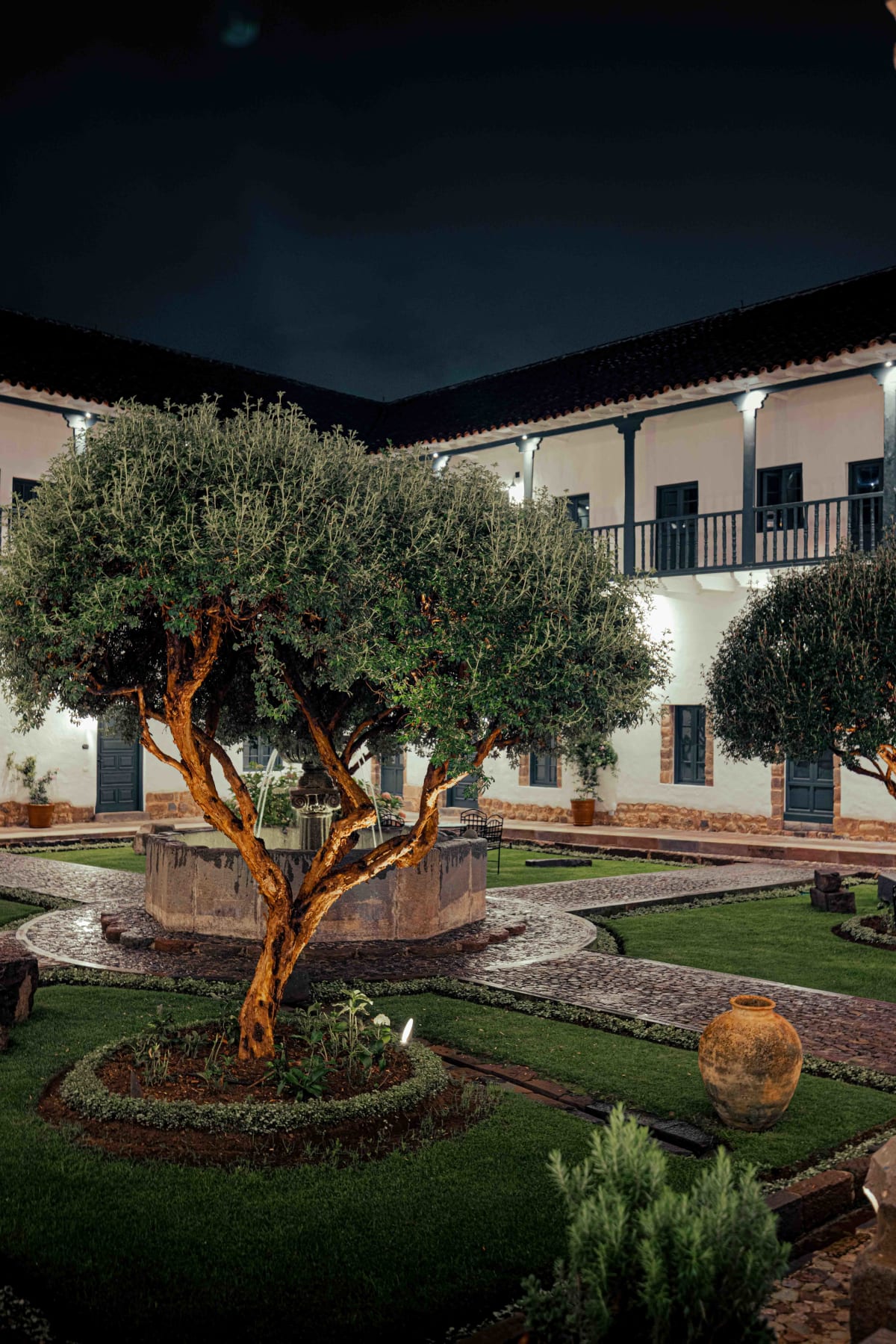
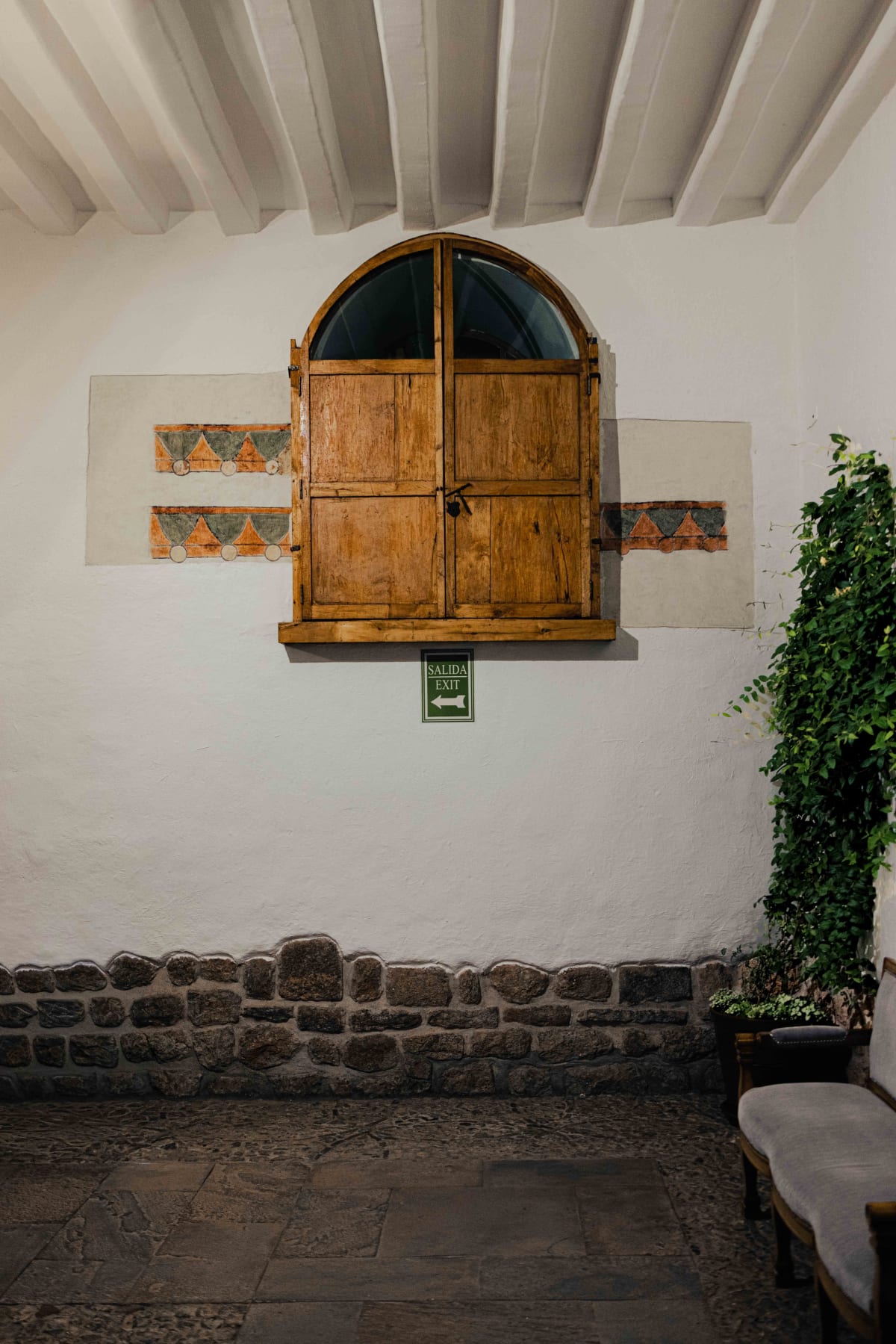
The lobby, as befits a historic building, is restrained rather than ornate. You wait here a moment and a member of staff comes out to guide you through the hotel, explaining as they go, and takes you to the restaurant. Walking past Inca stone walls and the traces of the colonial era, a quiet courtyard and the first outdoor heated pool in Cusco, was an experience in itself.
Section 3·Three Eras Of Stone
Mauka sits deep inside the hotel, so the walk was longer than I expected. Partway along, the staff member stopped and told us the history of the building.
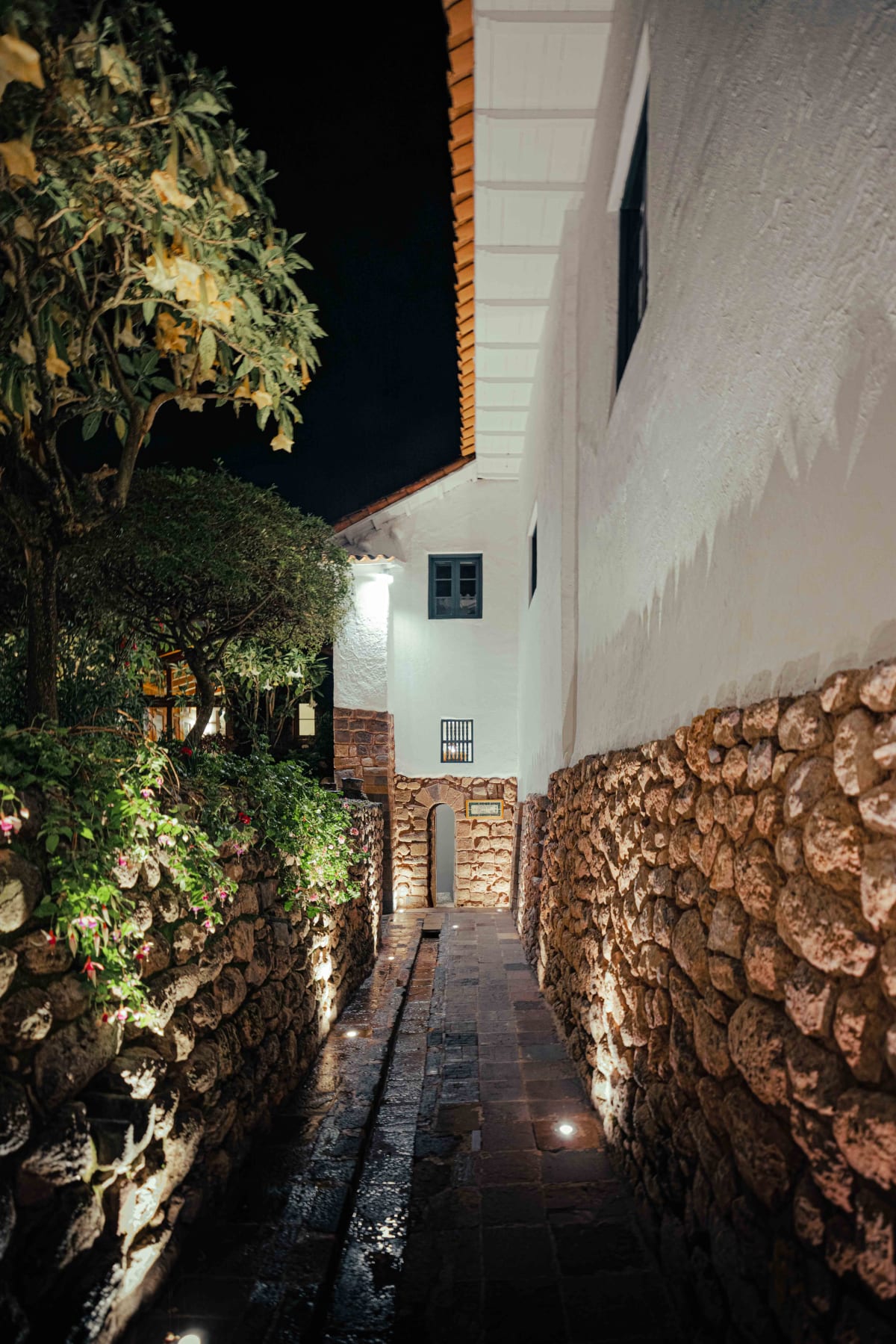
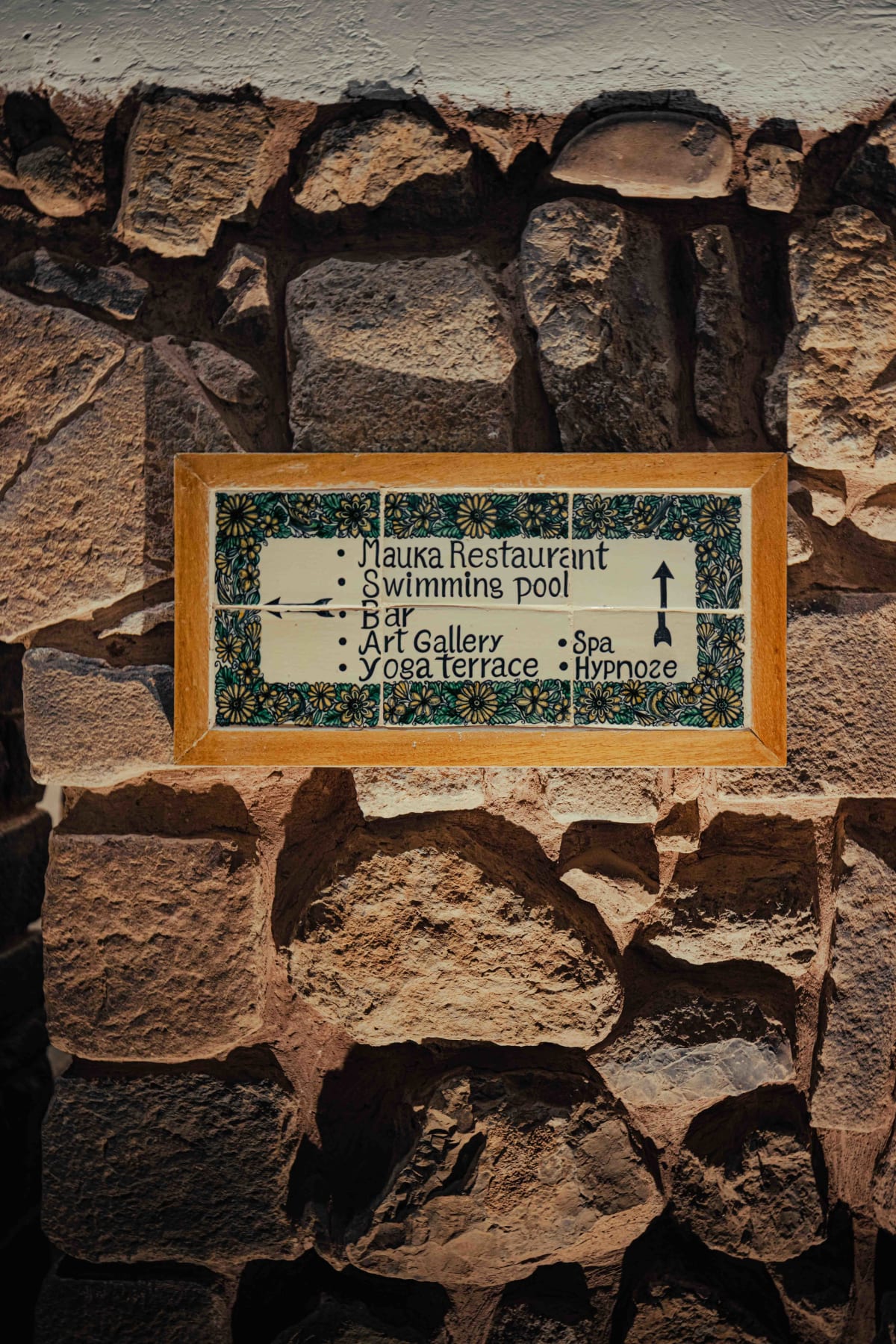
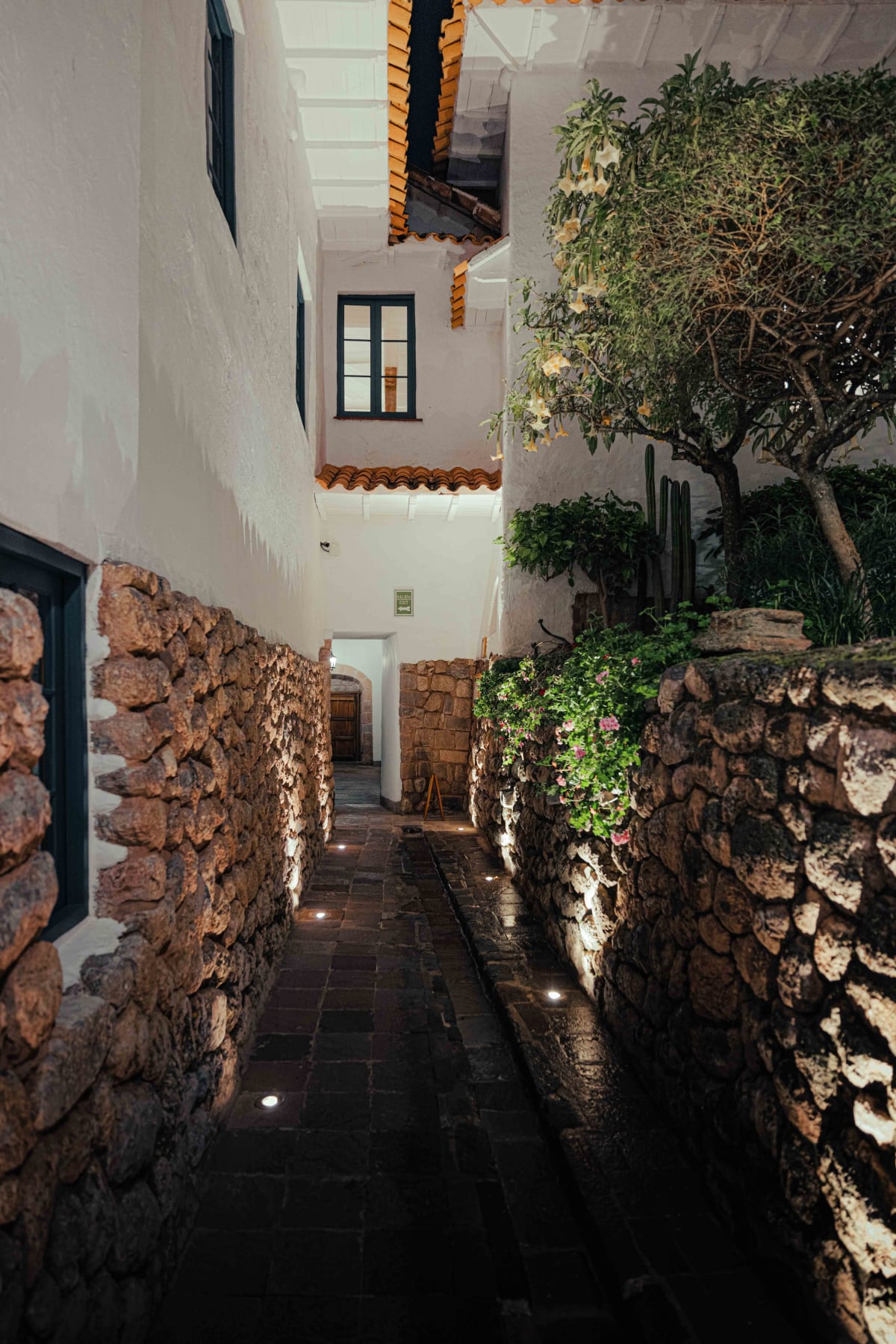
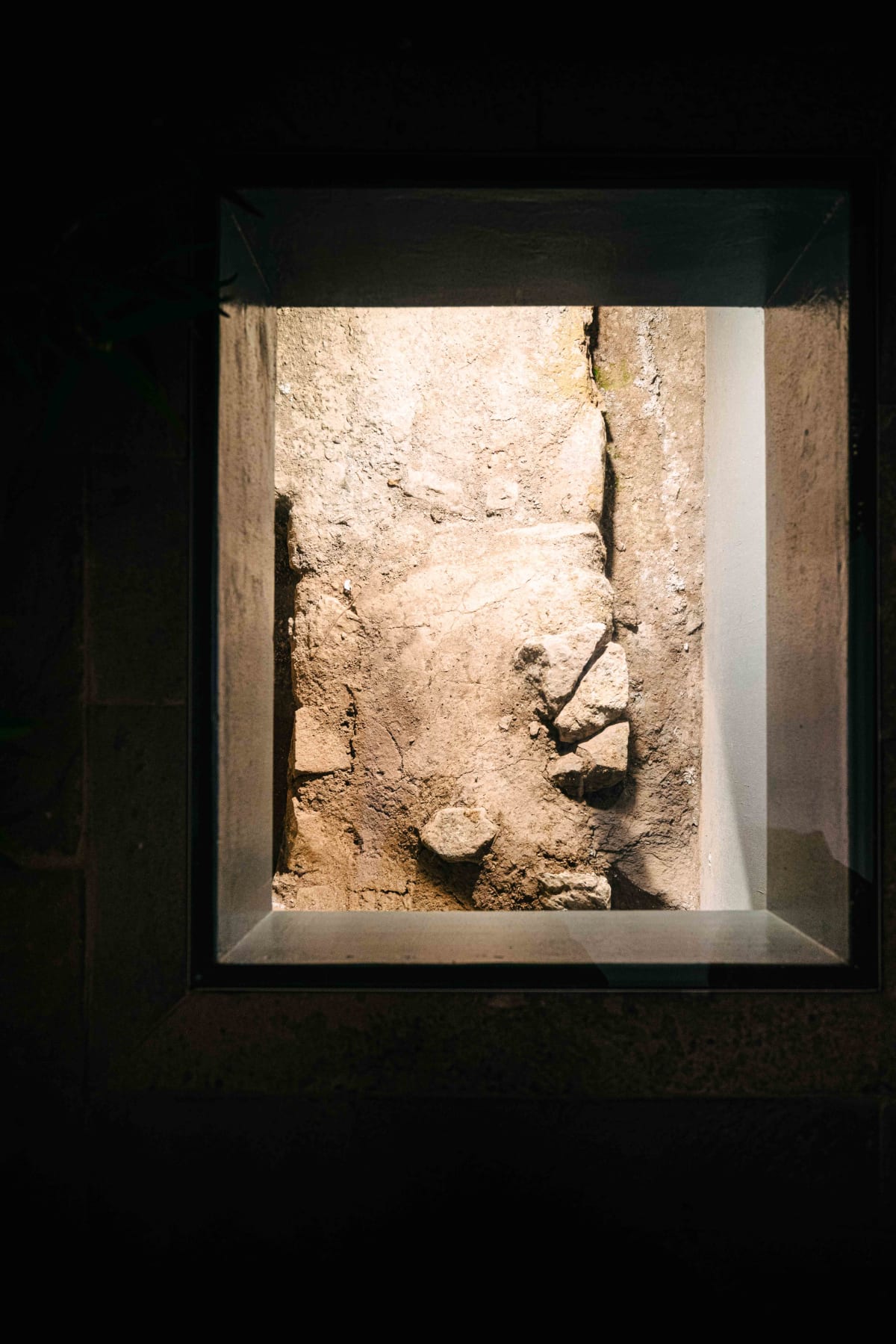
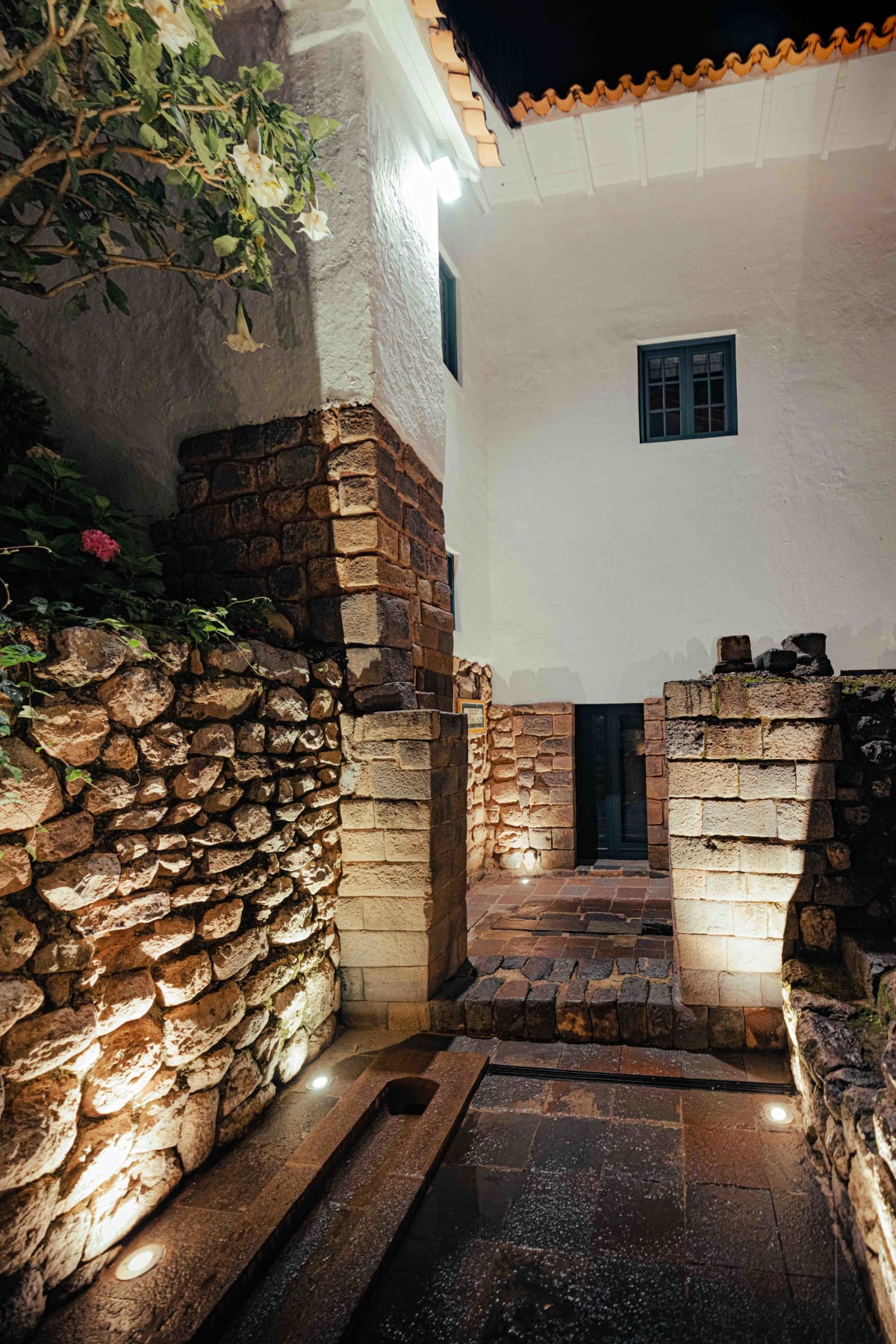
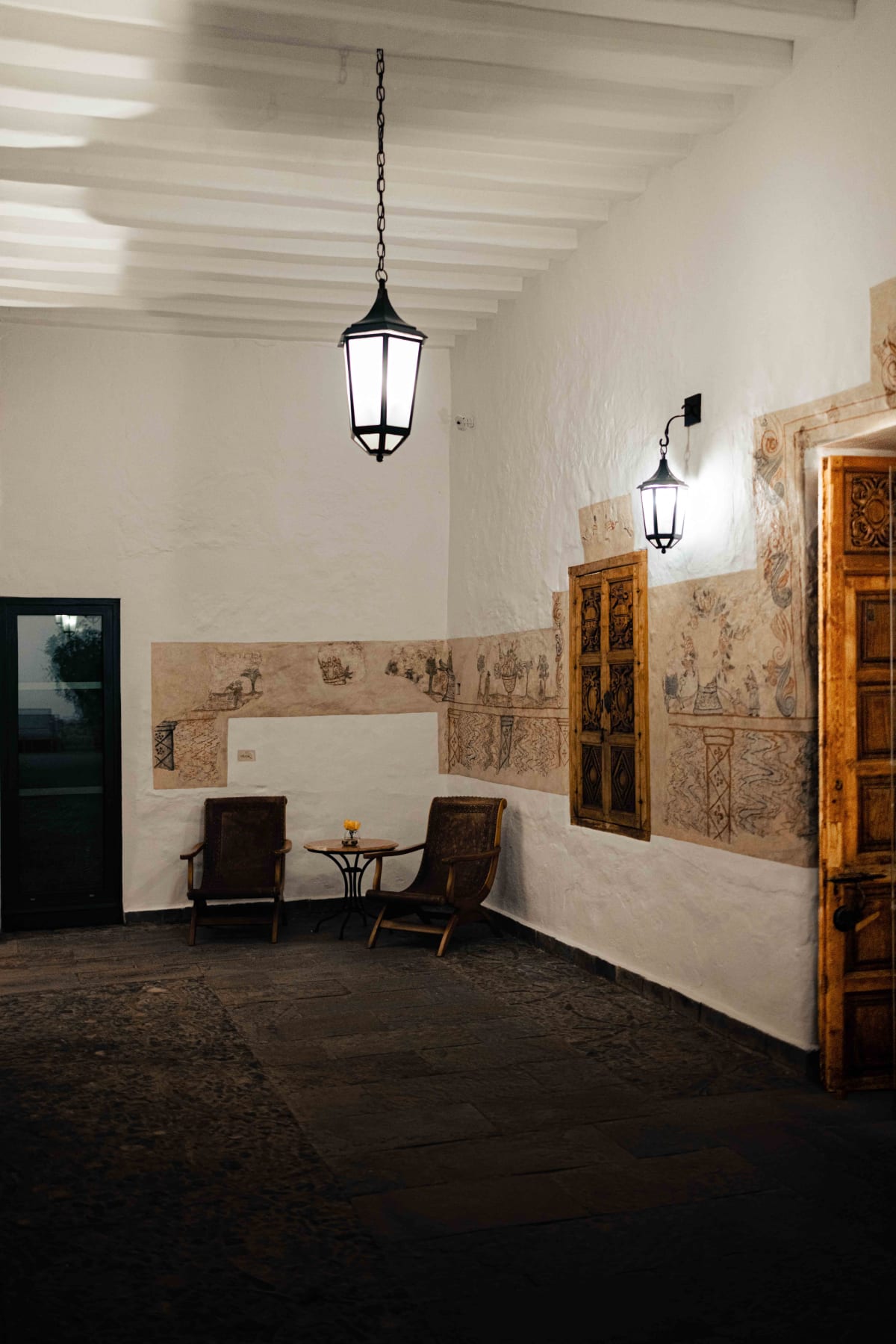
The walls of the corridor leading to the restaurant are made of masonry from three eras, pre-Inca, Inca and Spanish colonial. Traces of an Inca temple remain on this site, and after the Spanish conquest it was the house of the conquistador Mansio Serra de Leguizamón before becoming a convent of the Nazarene sisters in the eighteenth century. Centuries are stacked in layers inside a single corridor.
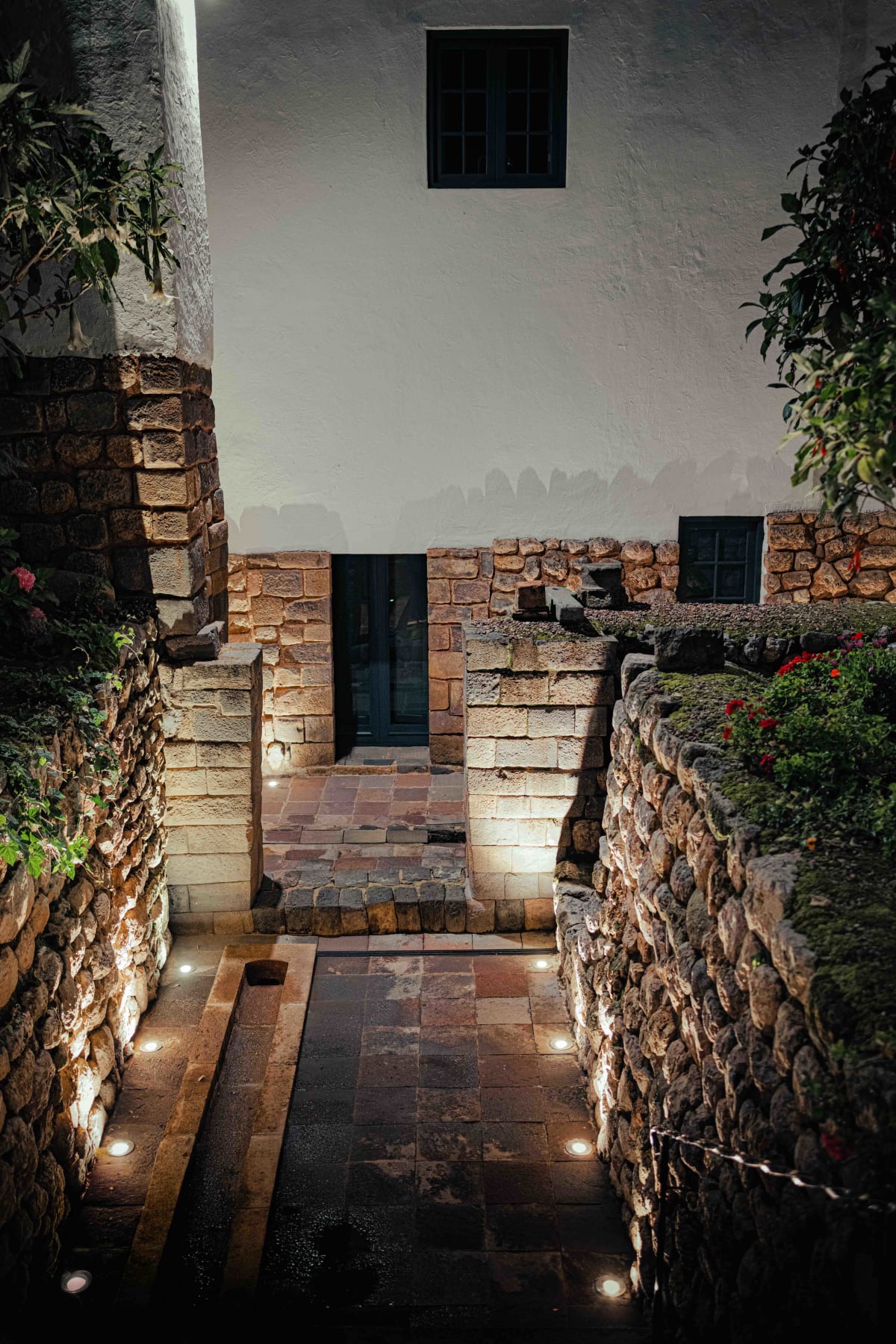
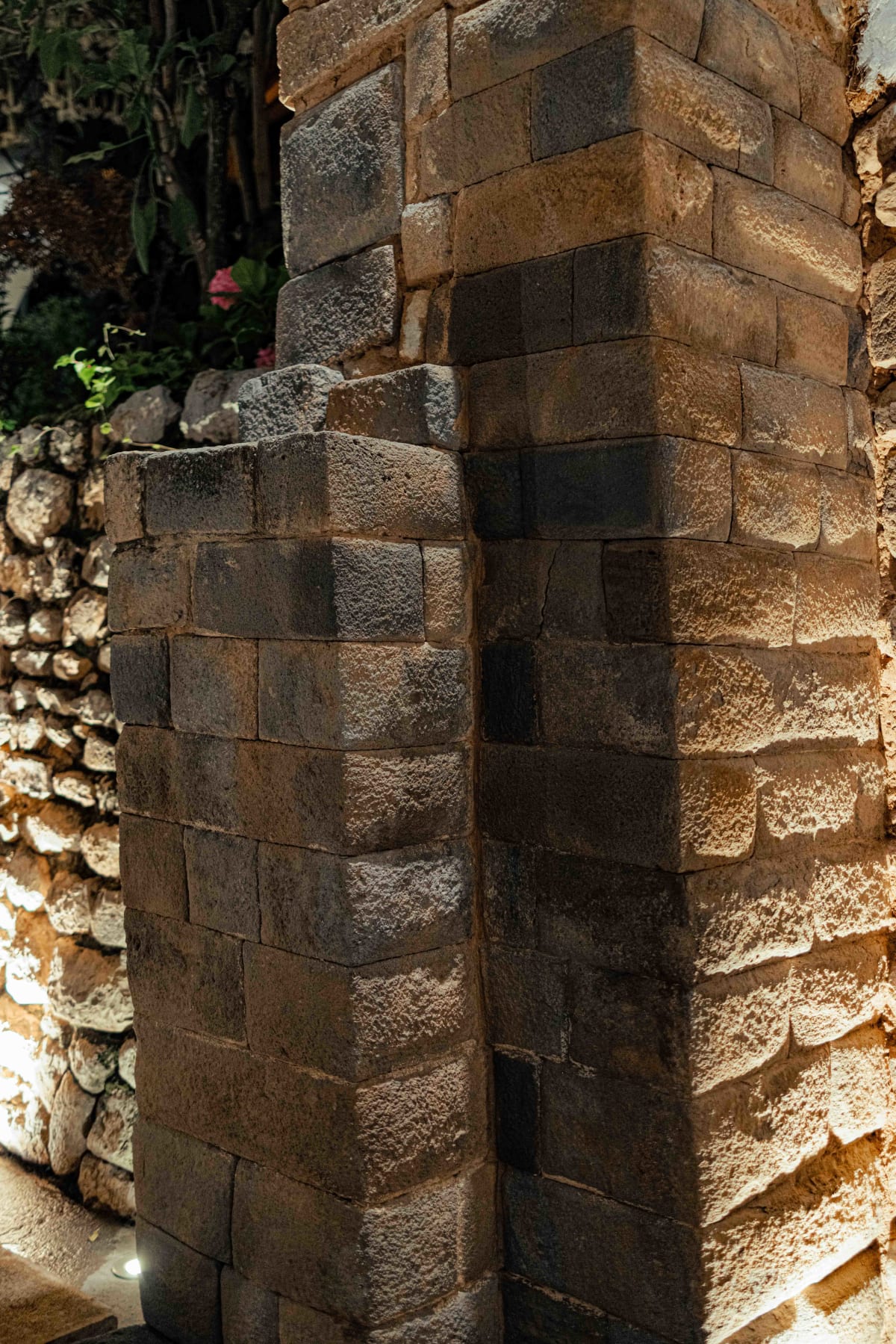
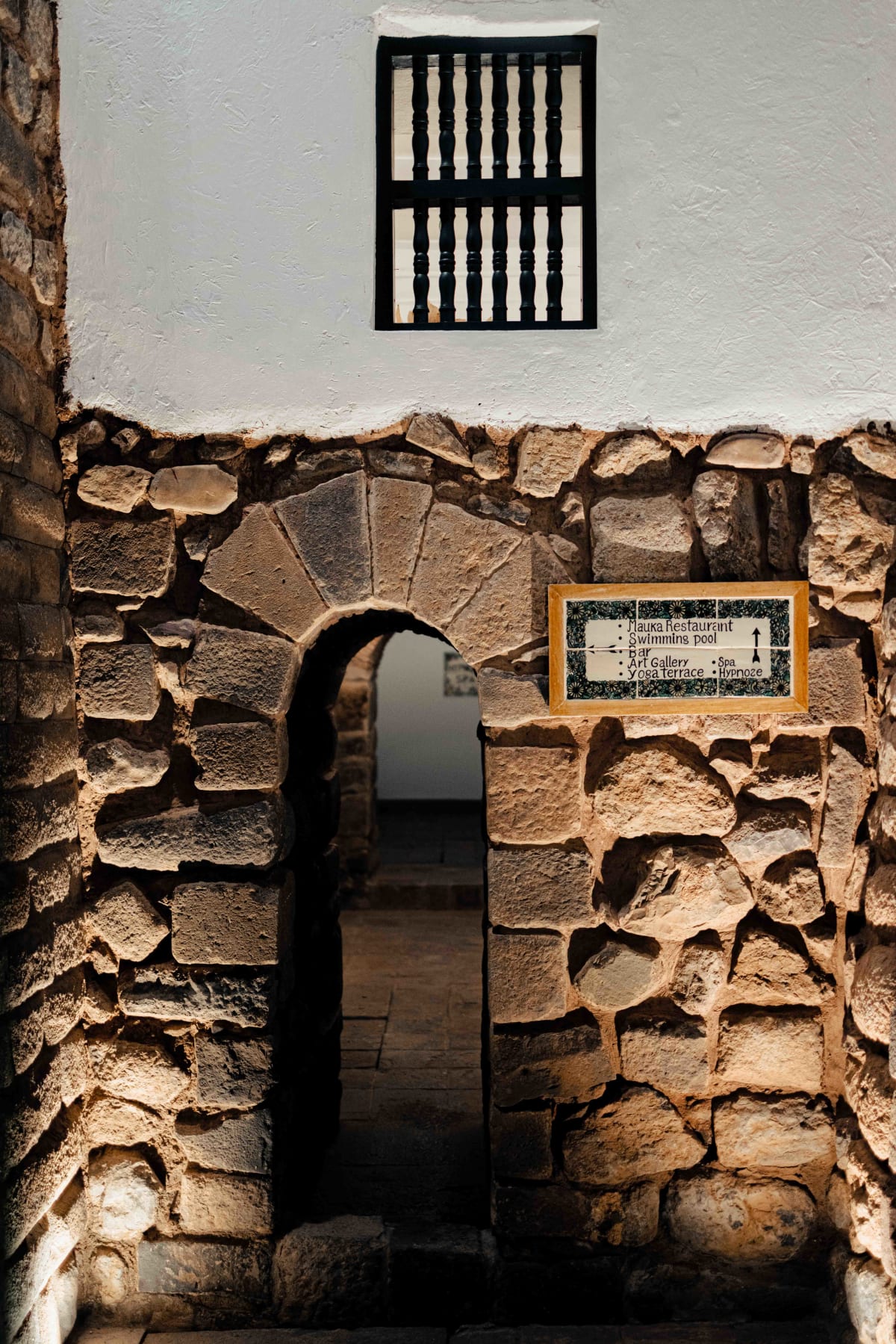
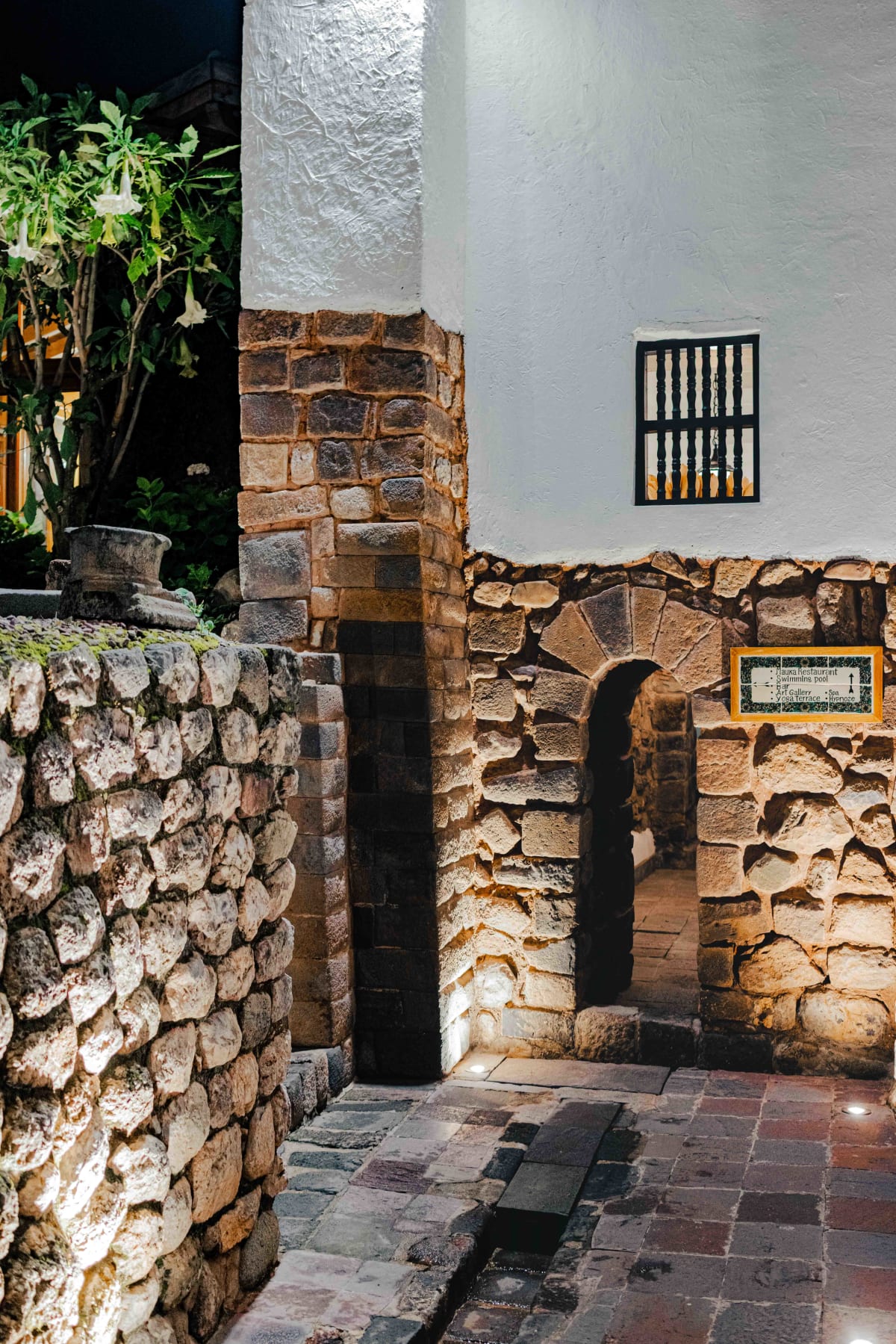
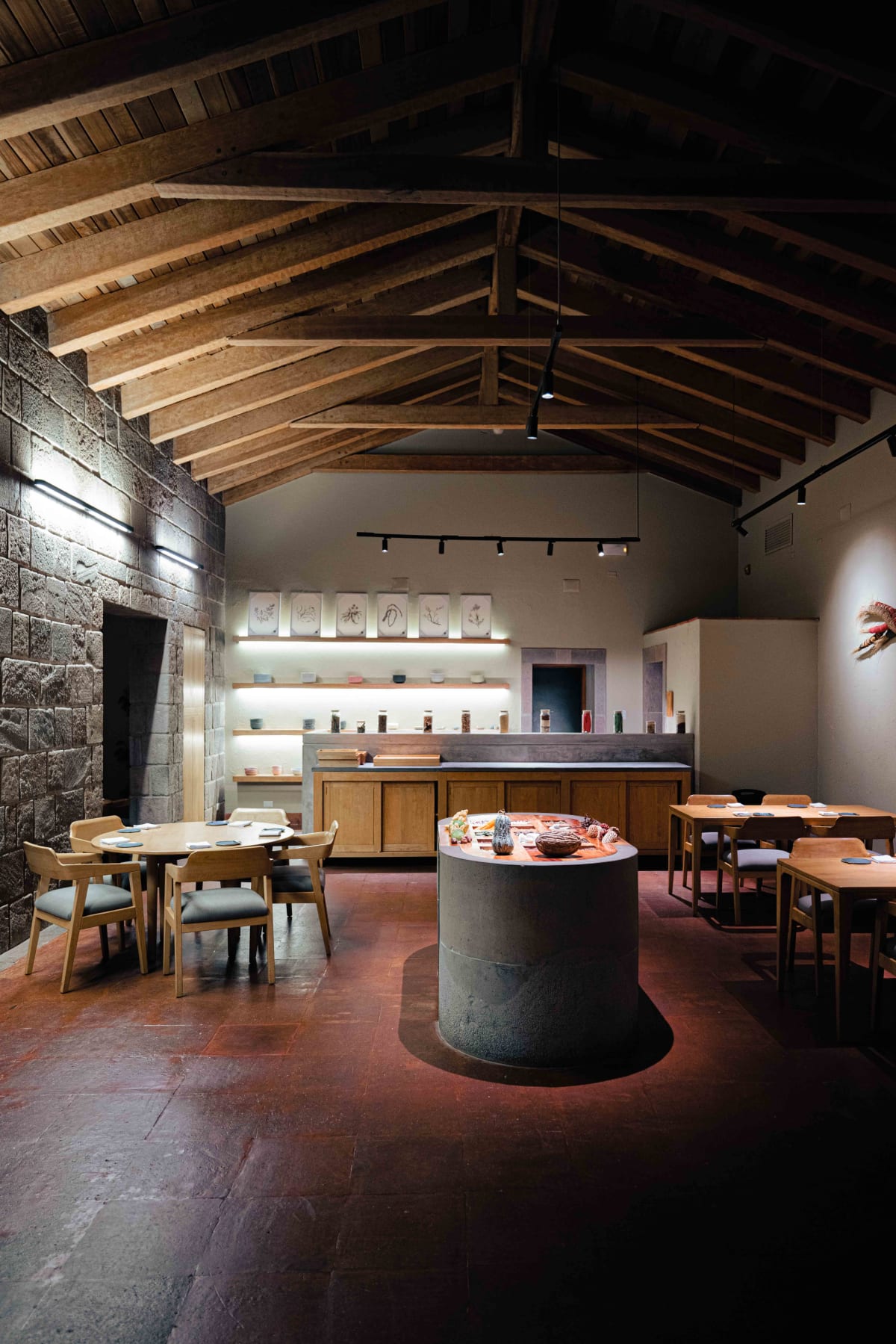
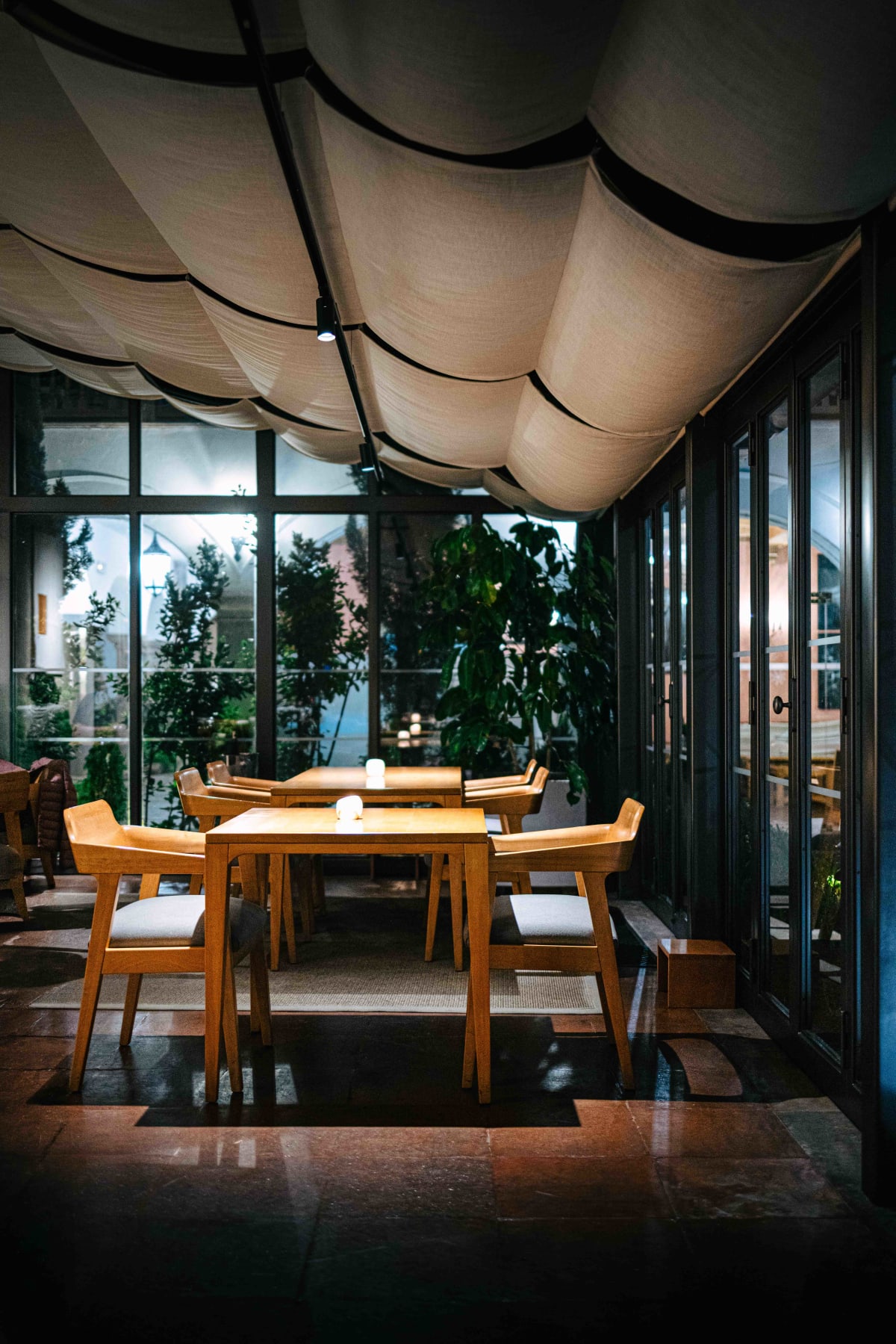
Step inside the restaurant and a main dining hall opens up with high ceilings and a sense of space. It was far larger and wider than I had pictured, which surprised me, and at the same time there was not a single guest in that wide hall, which surprised me again.
Section 4·The Mater Table
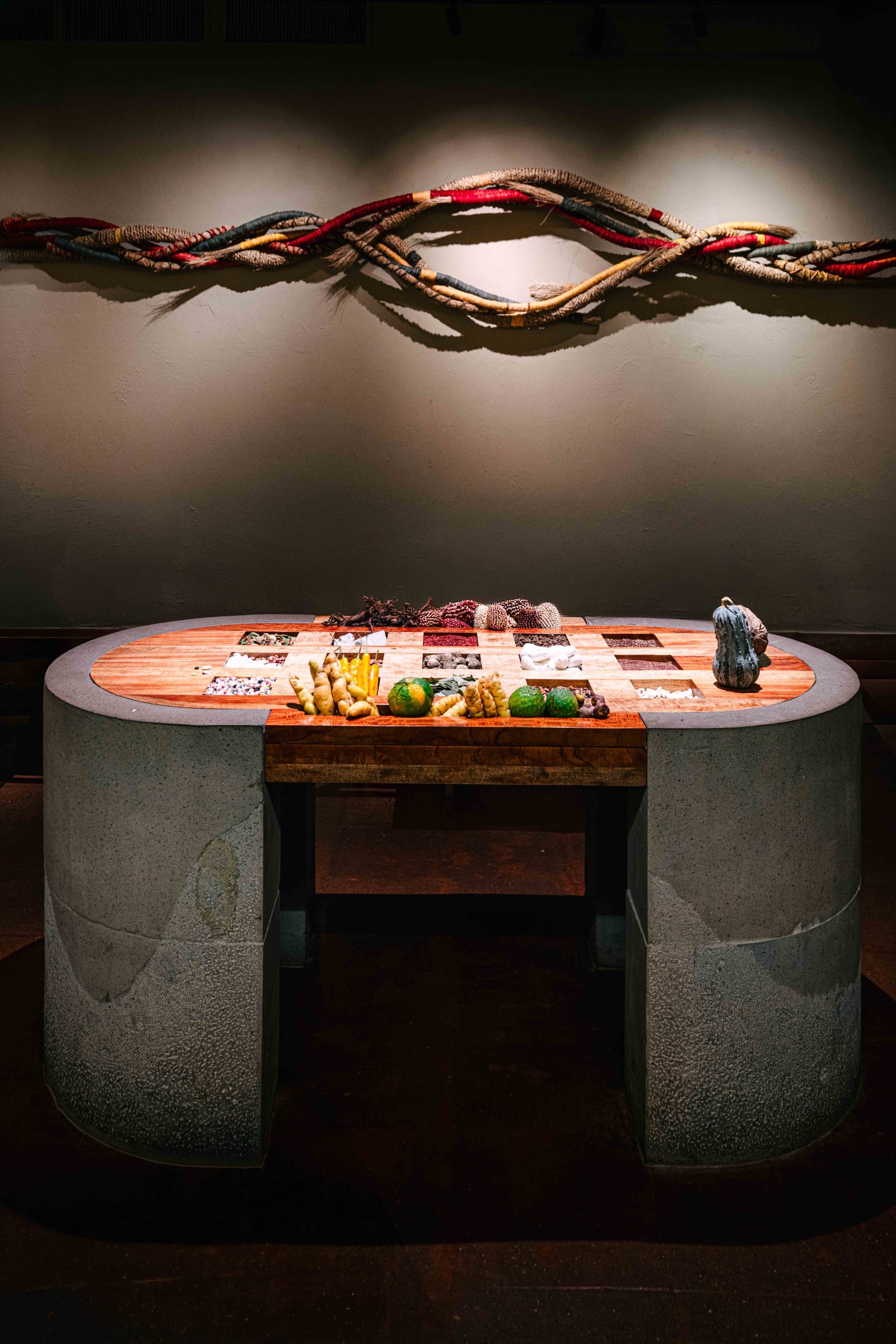
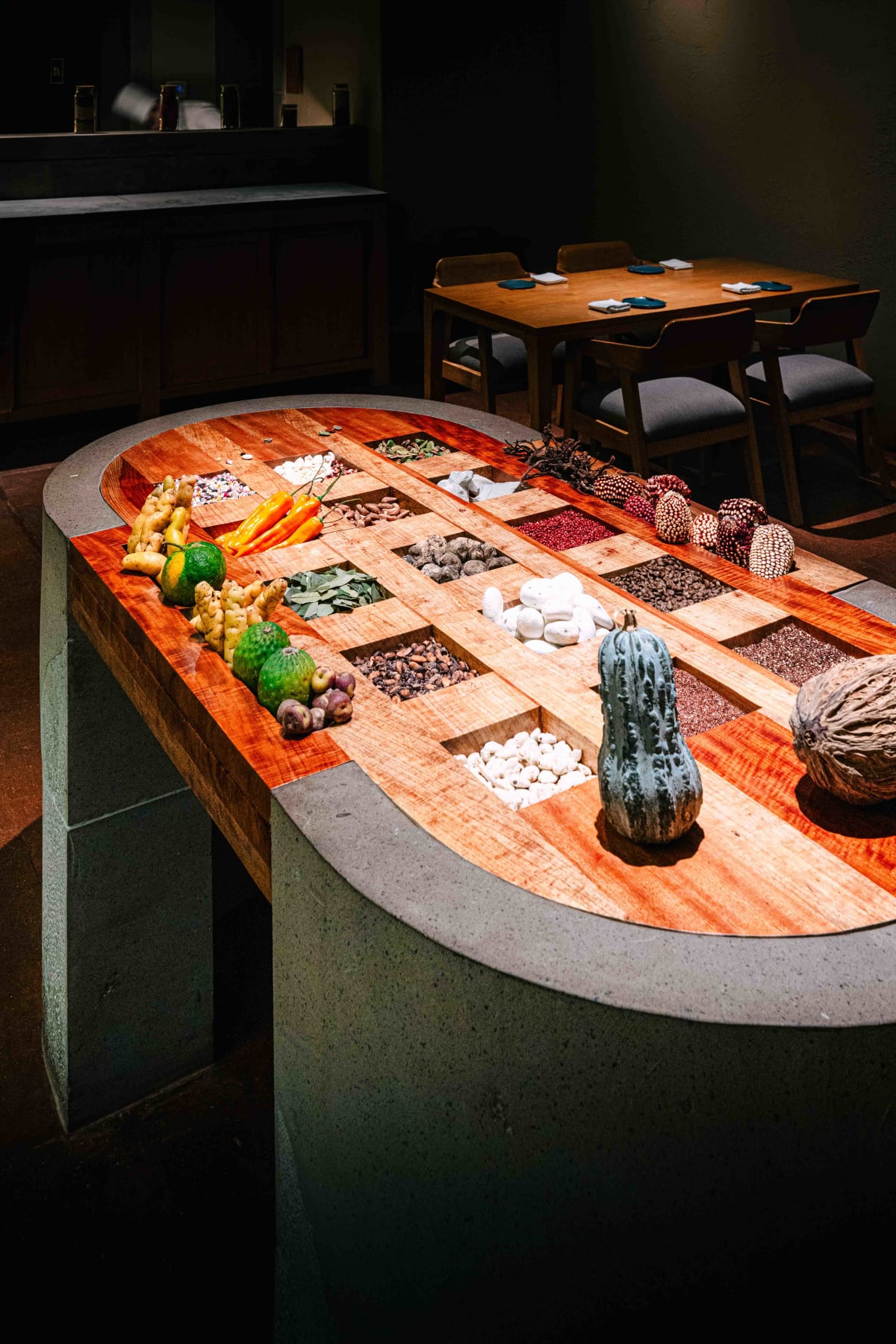
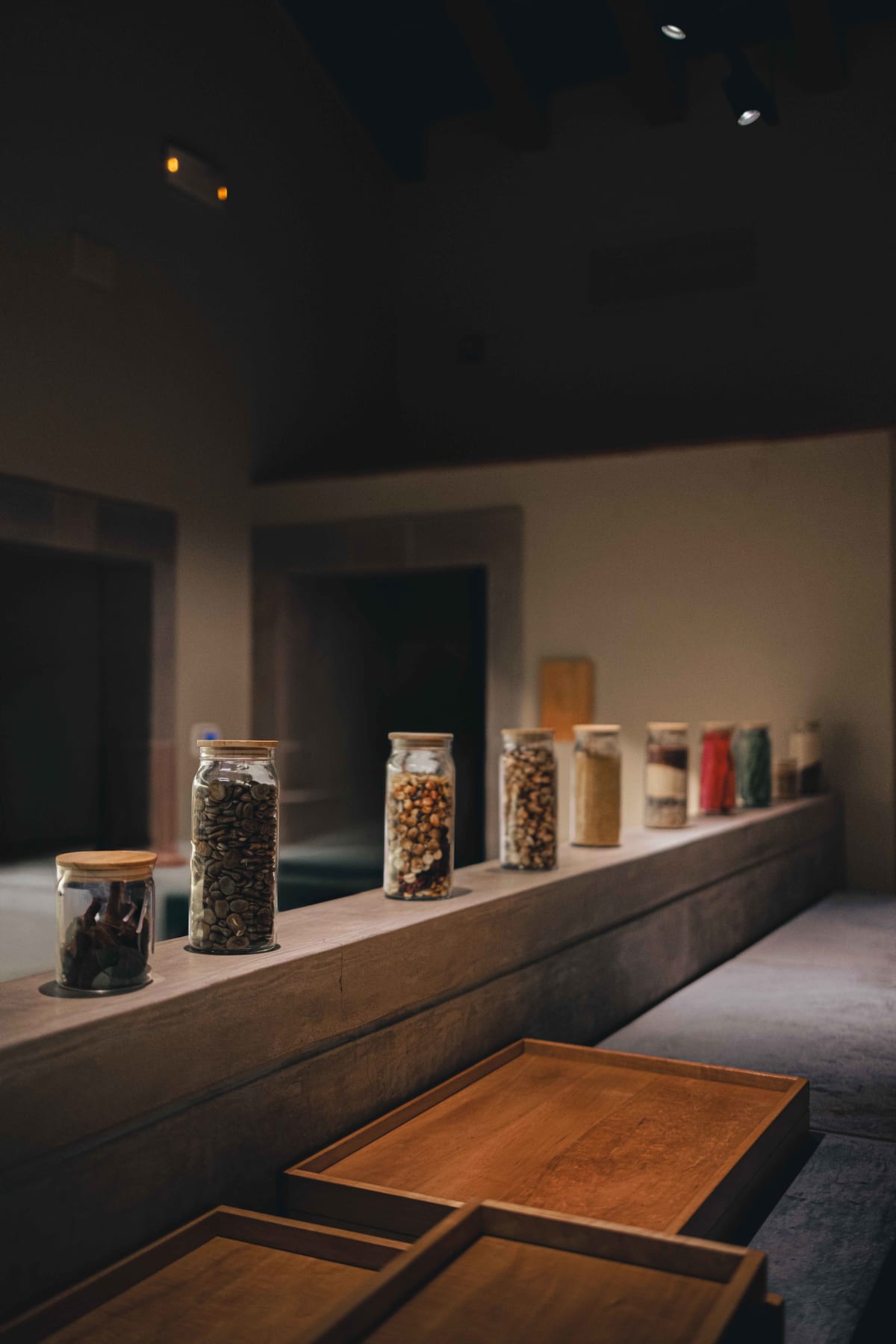
Before being seated, a staff member led us to a large oval wooden table and explained the Andean ingredients laid out on it one by one. This is the Mater table.
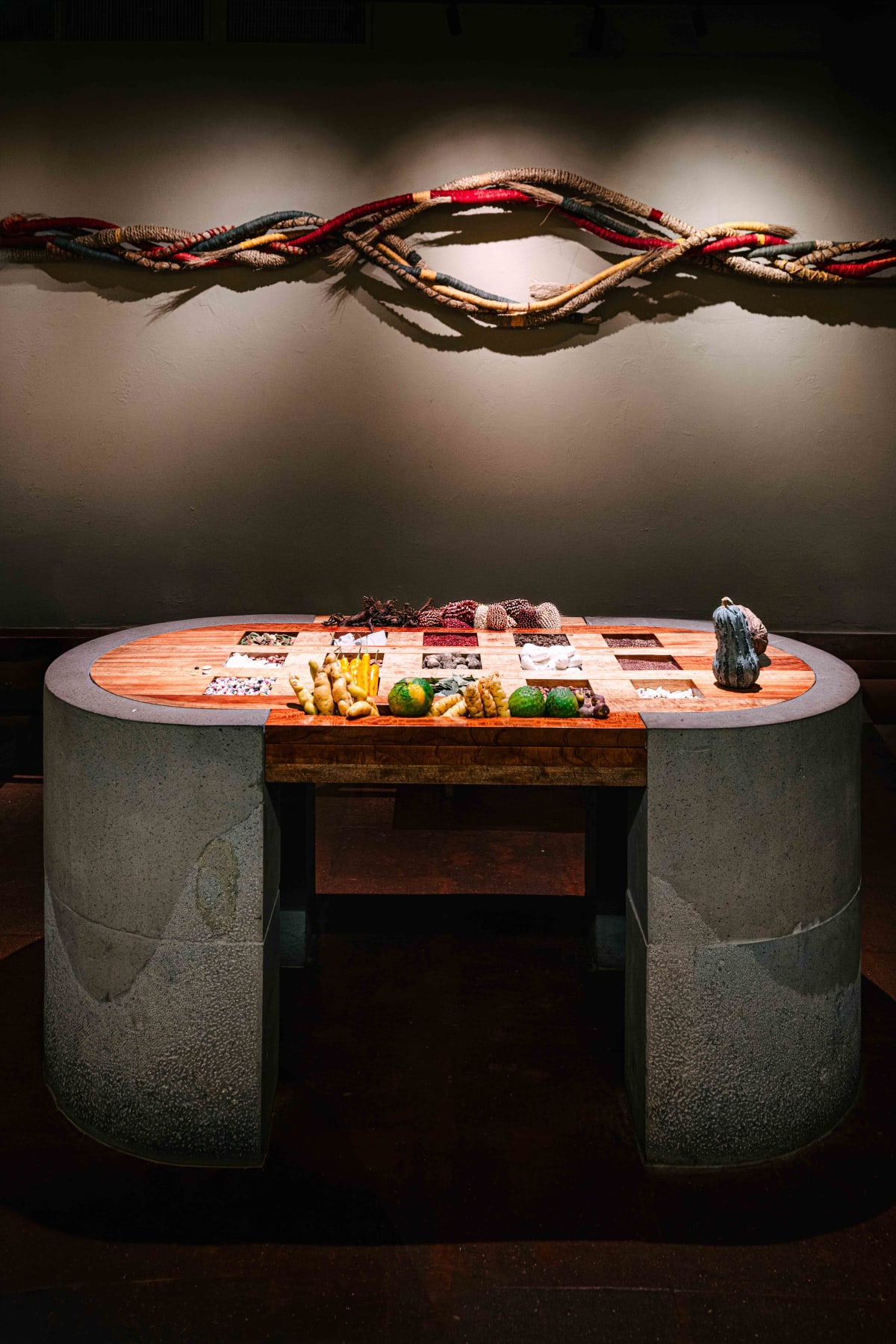
The way it ran felt identical to the Central family, and as it turns out this is Pía León's restaurant, so of course it did. The staff member introduced the table as a place that shows both the connection the restaurant holds with local farmers and the new techniques the chefs bring to those ingredients.
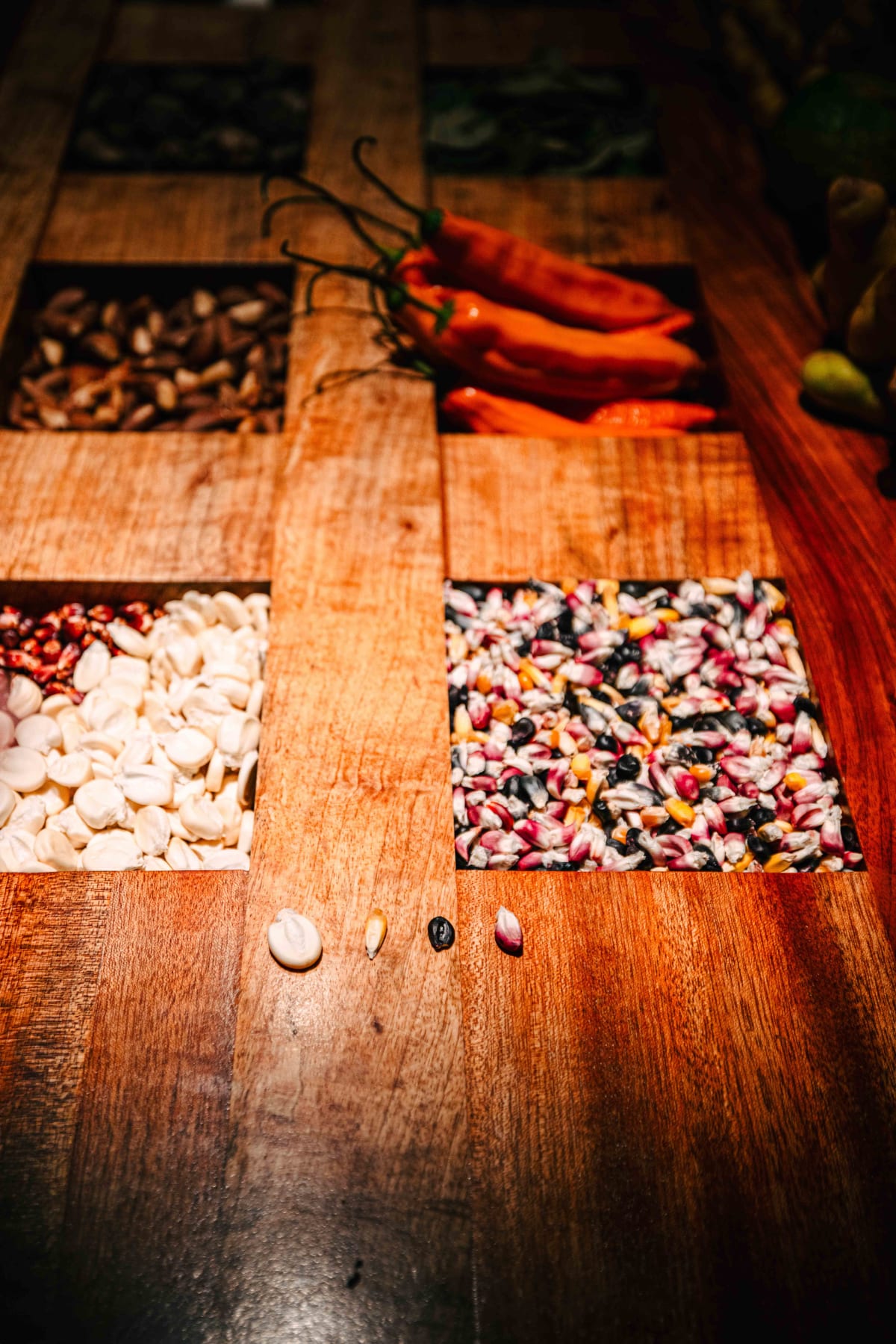
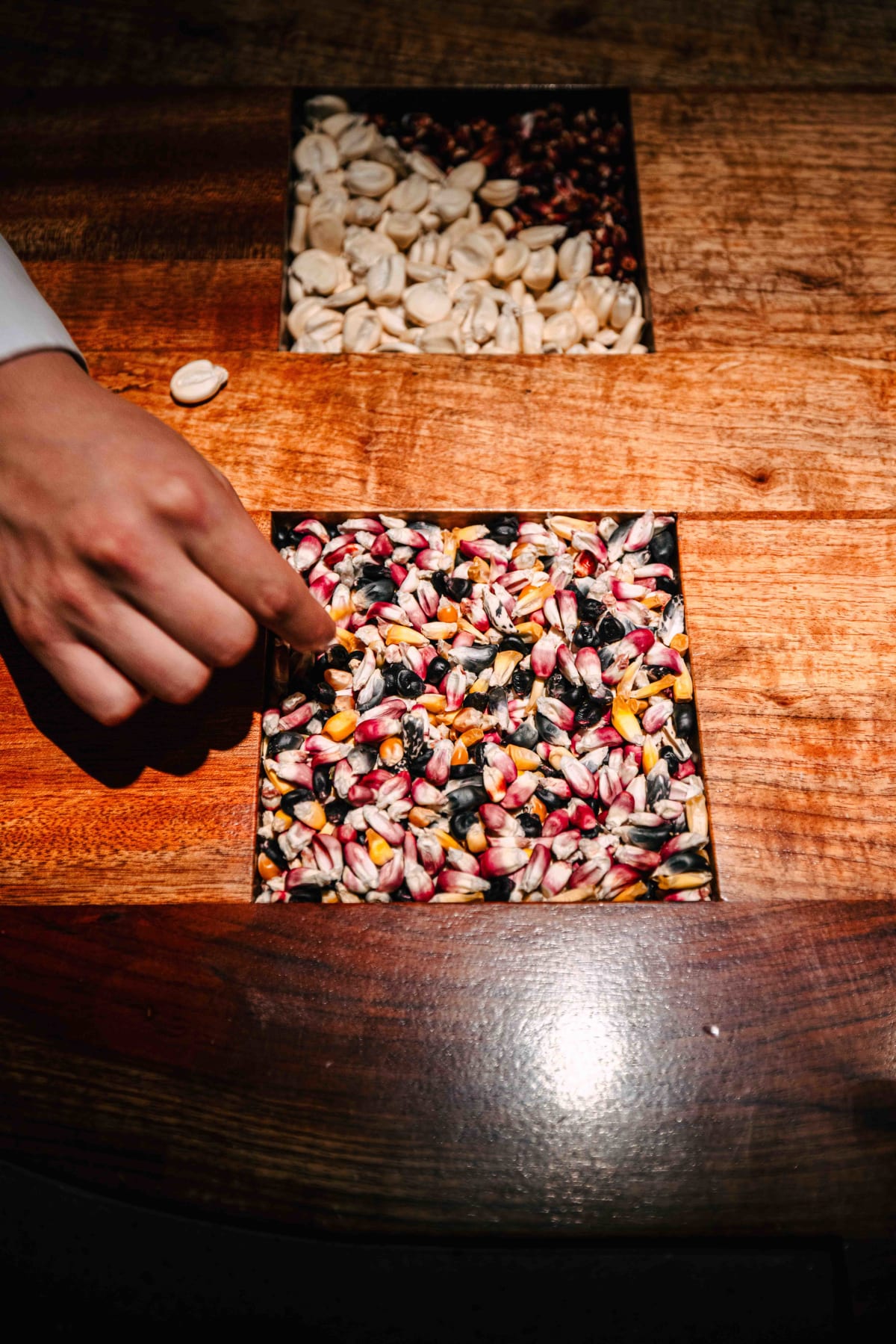
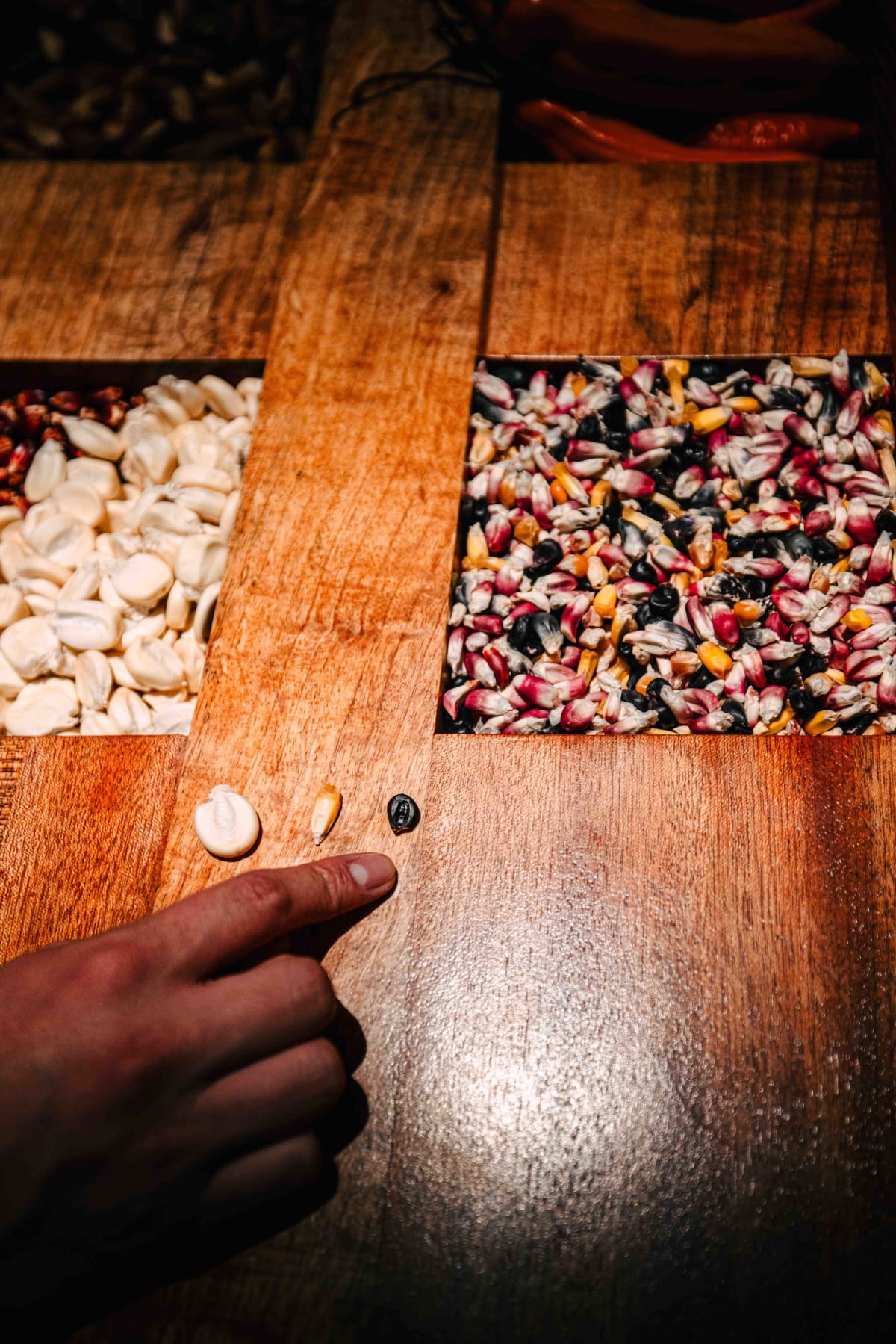
Corn caught my eye first. The giant corn, the largest in Cusco, the yellow corn said to go well with ceviche, and the purple corn used for chicha morada, Peru's national drink. What interested me was the explanation that round corn is boiled to draw out flavour while long corn is toasted, so the method divides by shape.
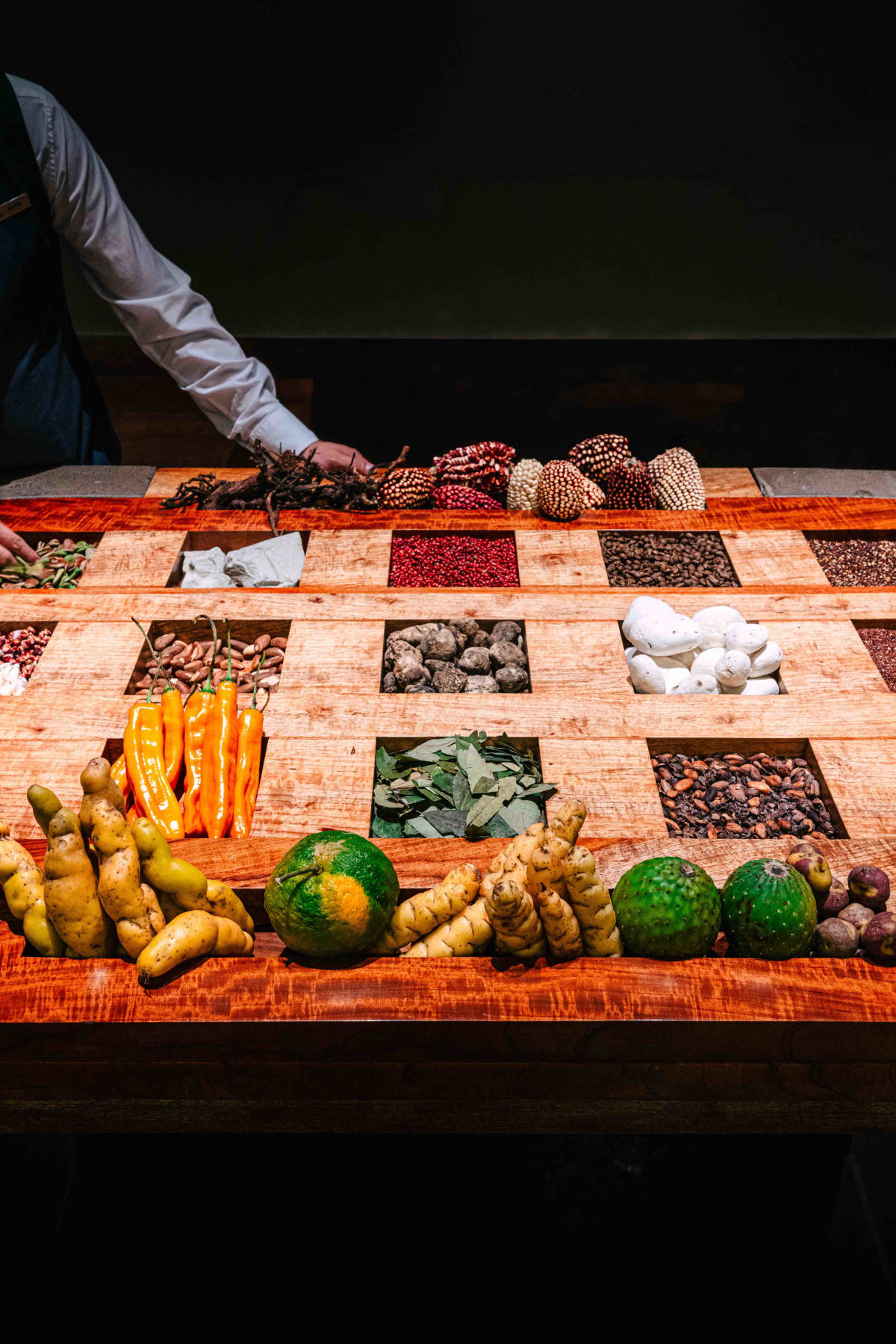
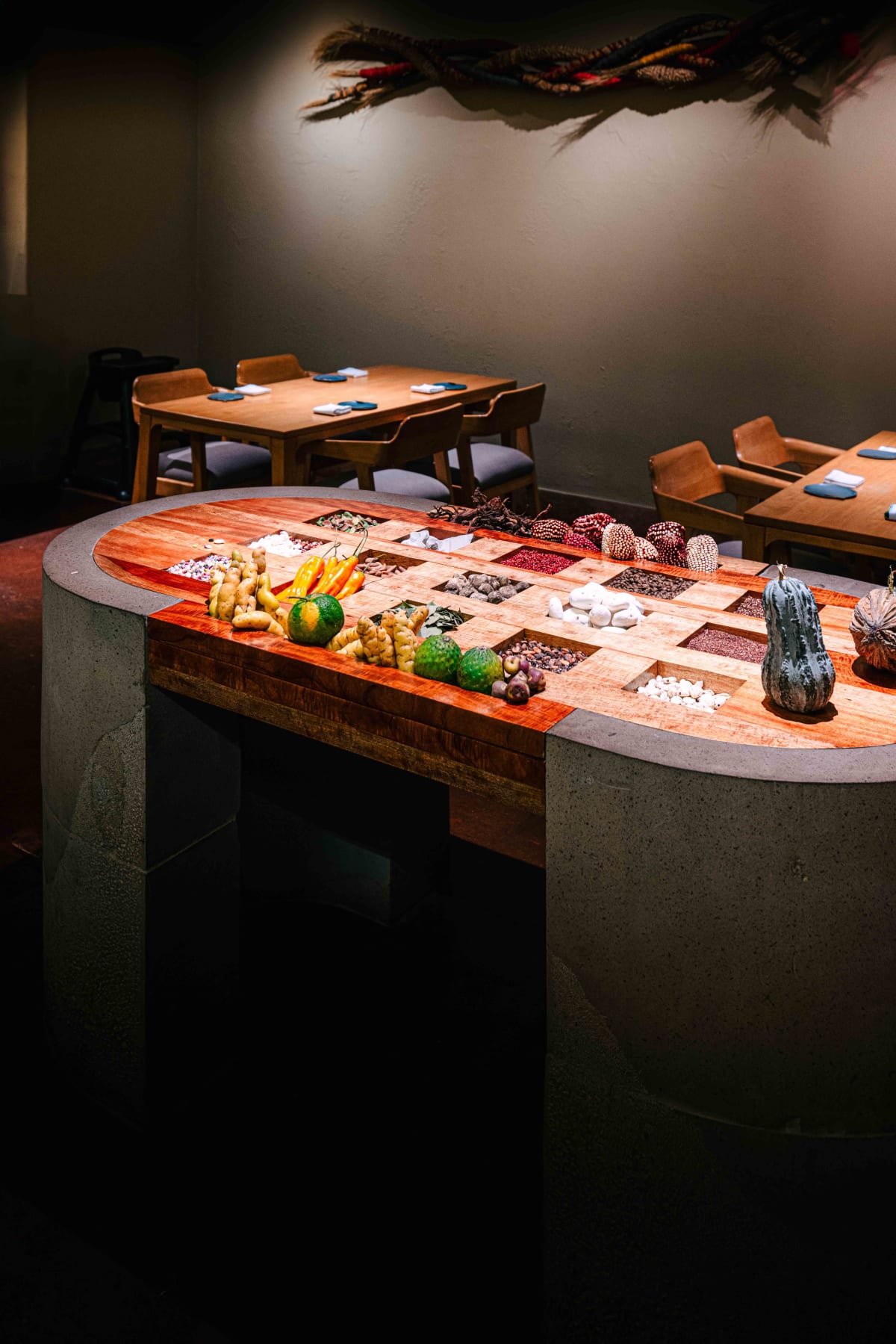
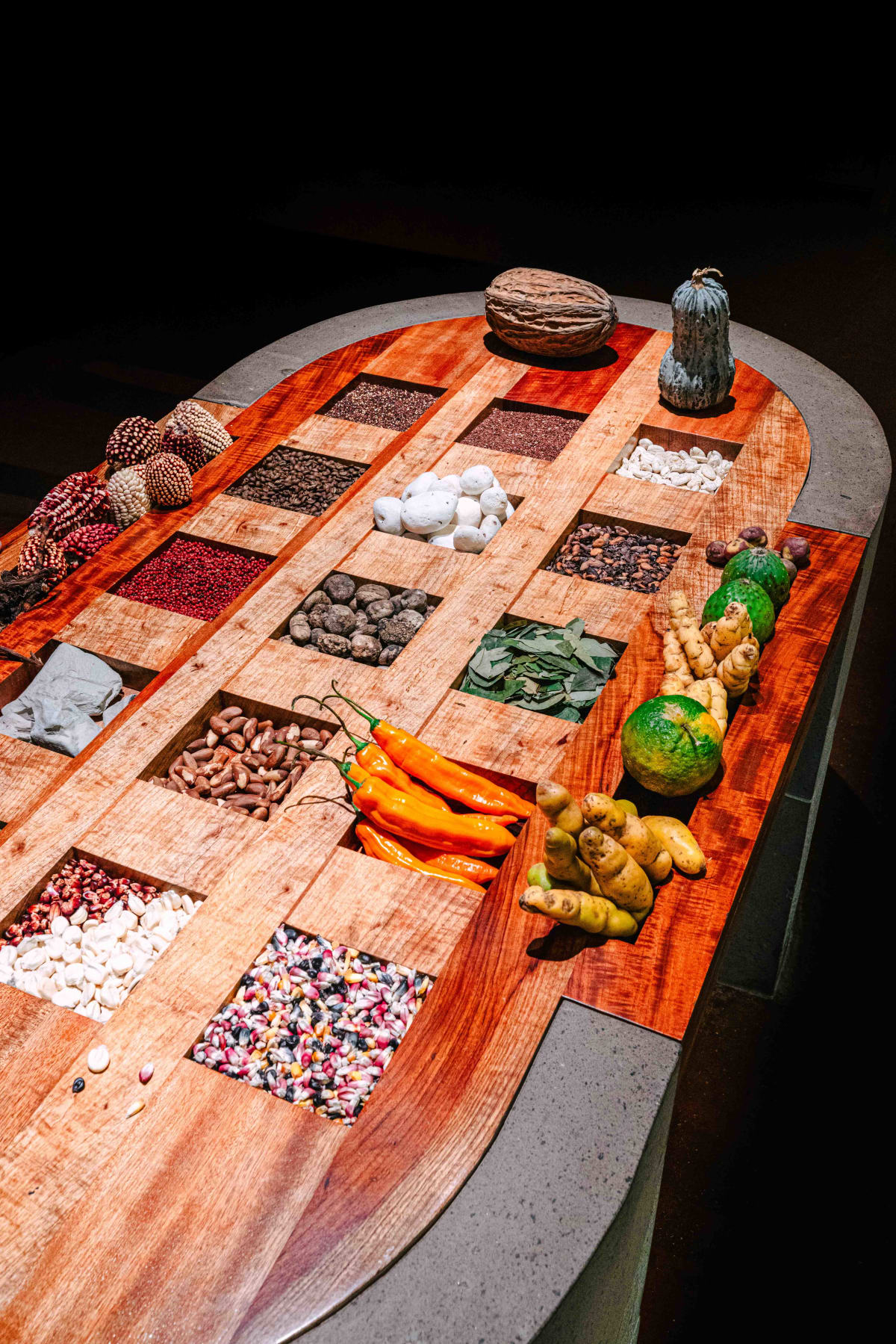
Beyond that there were fava beans, an edible clay called chaco, Peruvian chillies that add flavour without heat, dried potatoes like moraya and chuño, pink pepper, coffee beans and cacao, and macambo, a cousin of cacao.
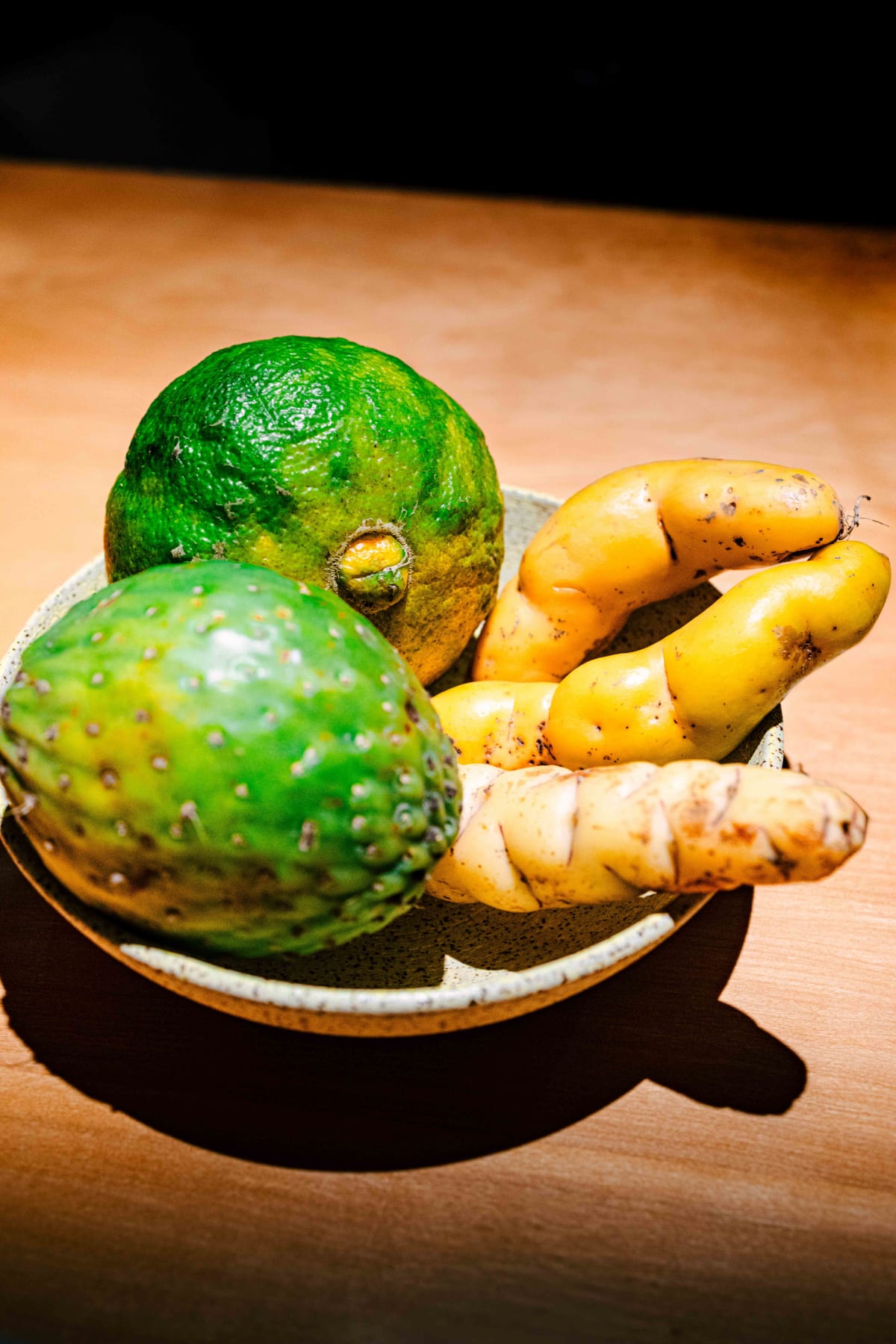
The Andean grains quinoa and cañihua were there along with the tubers olluco and oca, and the staff member pointed out that although they look similar, olluco is more neutral and oca is sweeter. Then came sanki, the fruit of a cactus, potatoes, a squash called loche, and the roots used in infusion sauces.
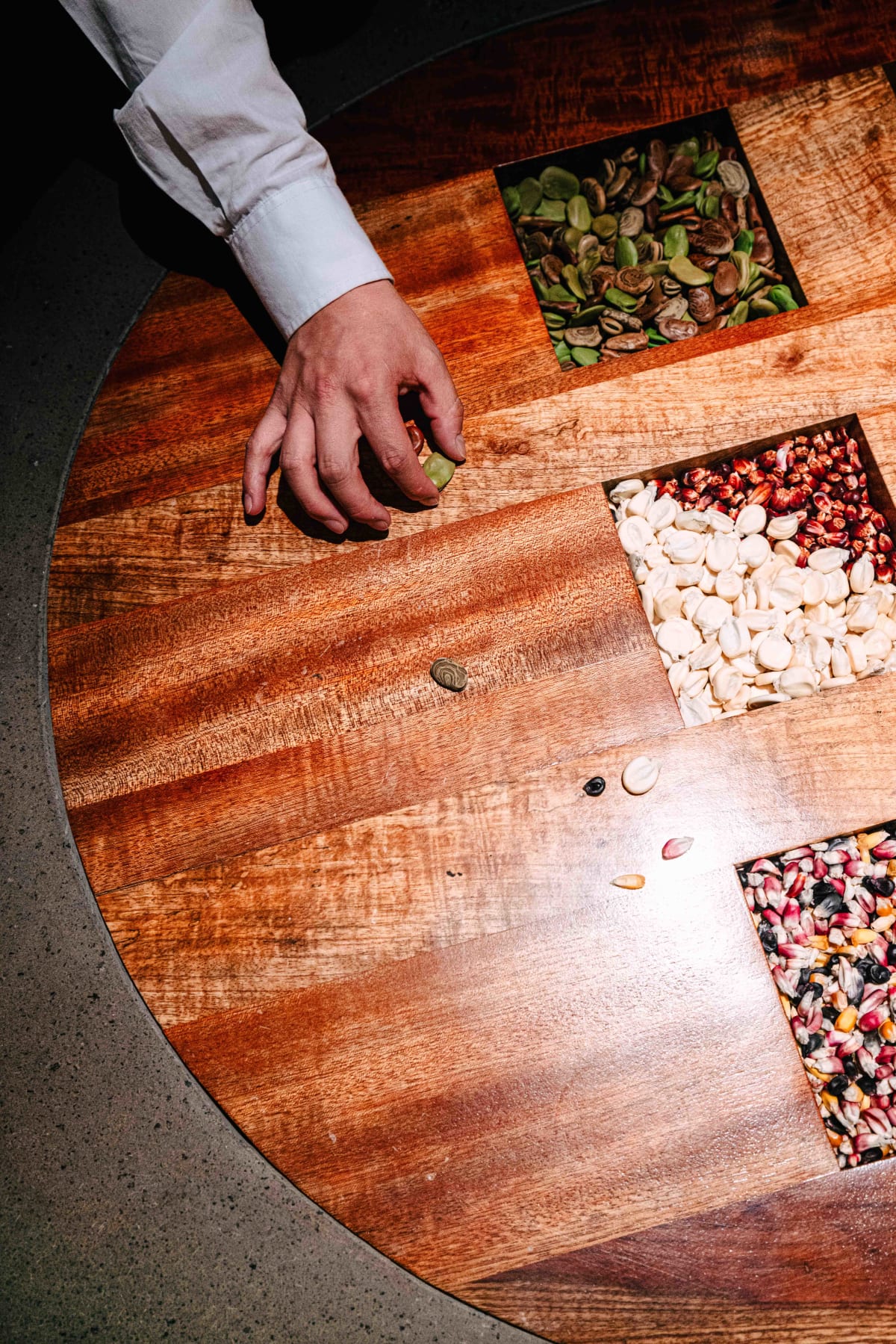
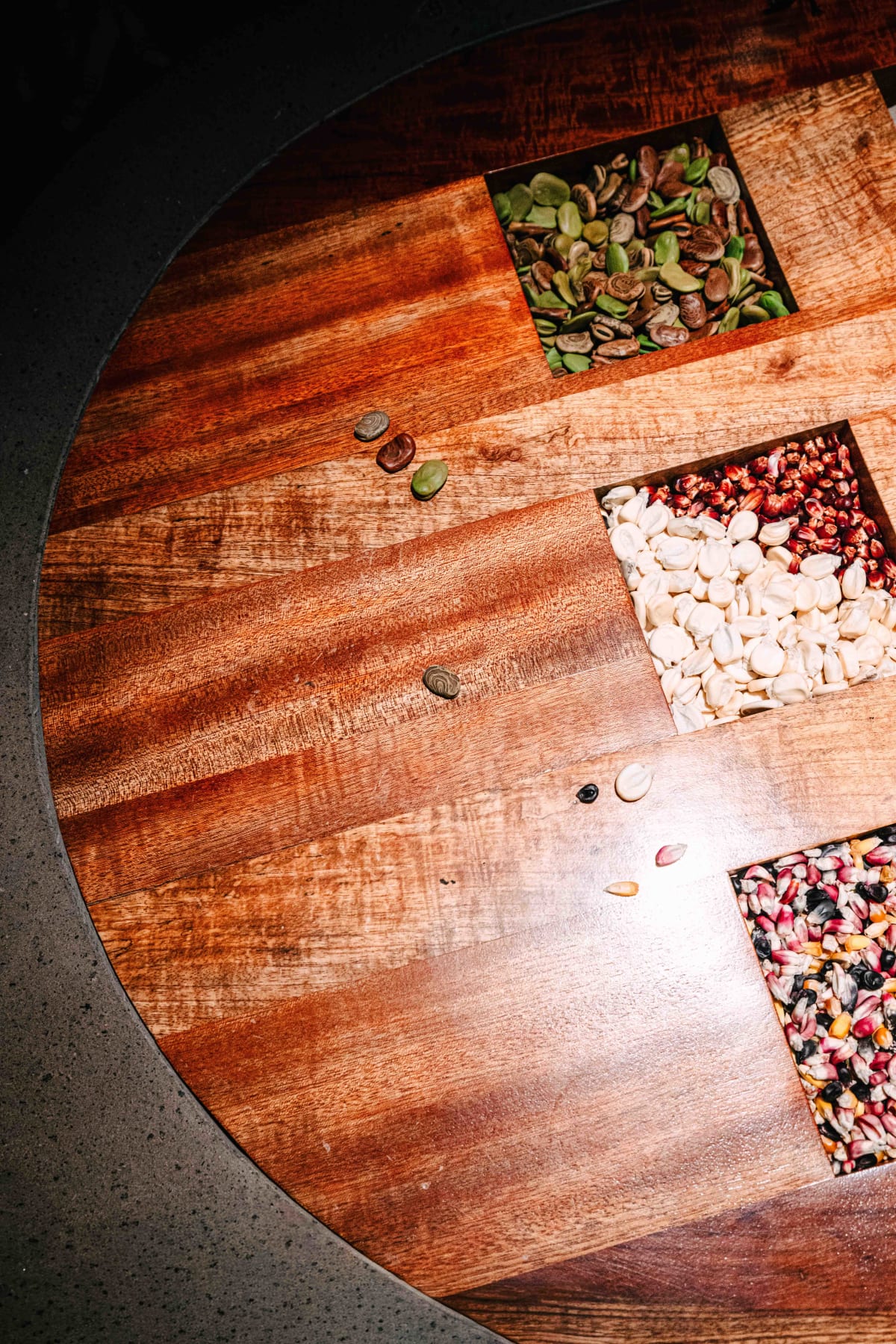
The corn set out in small grains on the table was native corn, each kernel a different colour, the white lumps were dried potato and the red grains pink pepper.
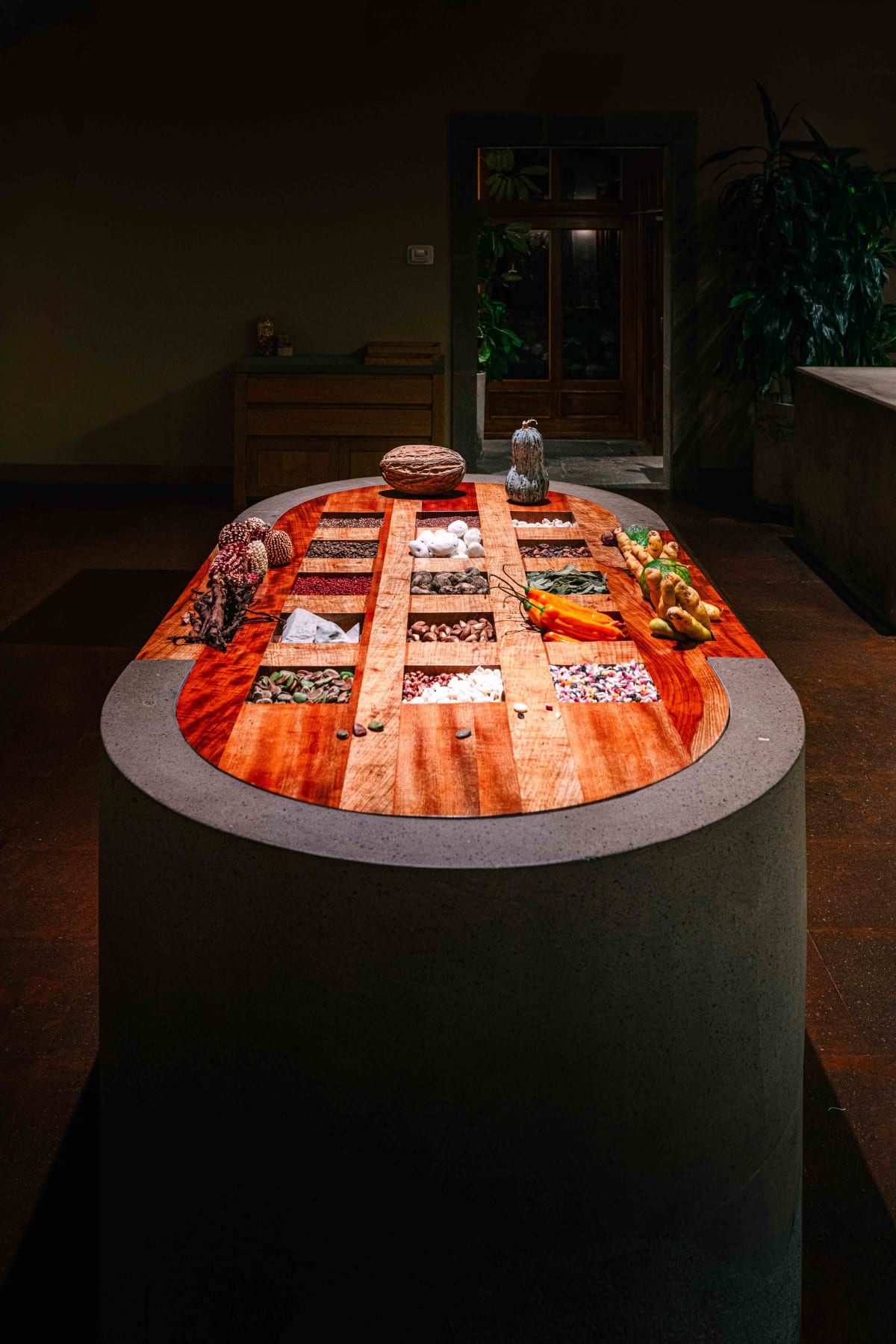
This Mater table gets summoned back throughout the course afterwards. Watching the staff member say, while explaining dessert, do you remember the clay you saw on the table earlier, it seemed the table had been designed as a kind of index running through the whole course.
It seemed the table had been designed as a kind of index running through the whole course.
Section 5·The Inner Room
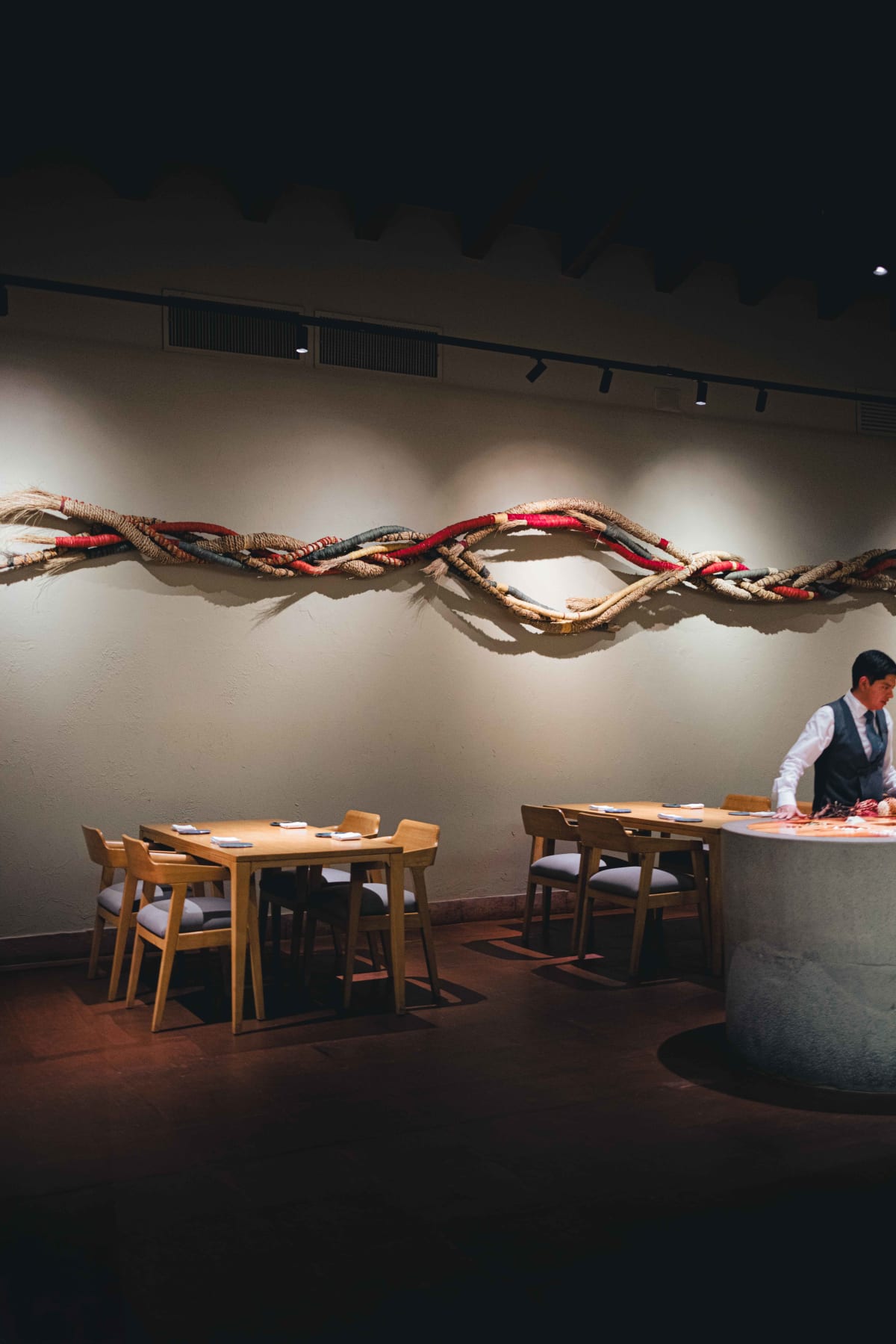
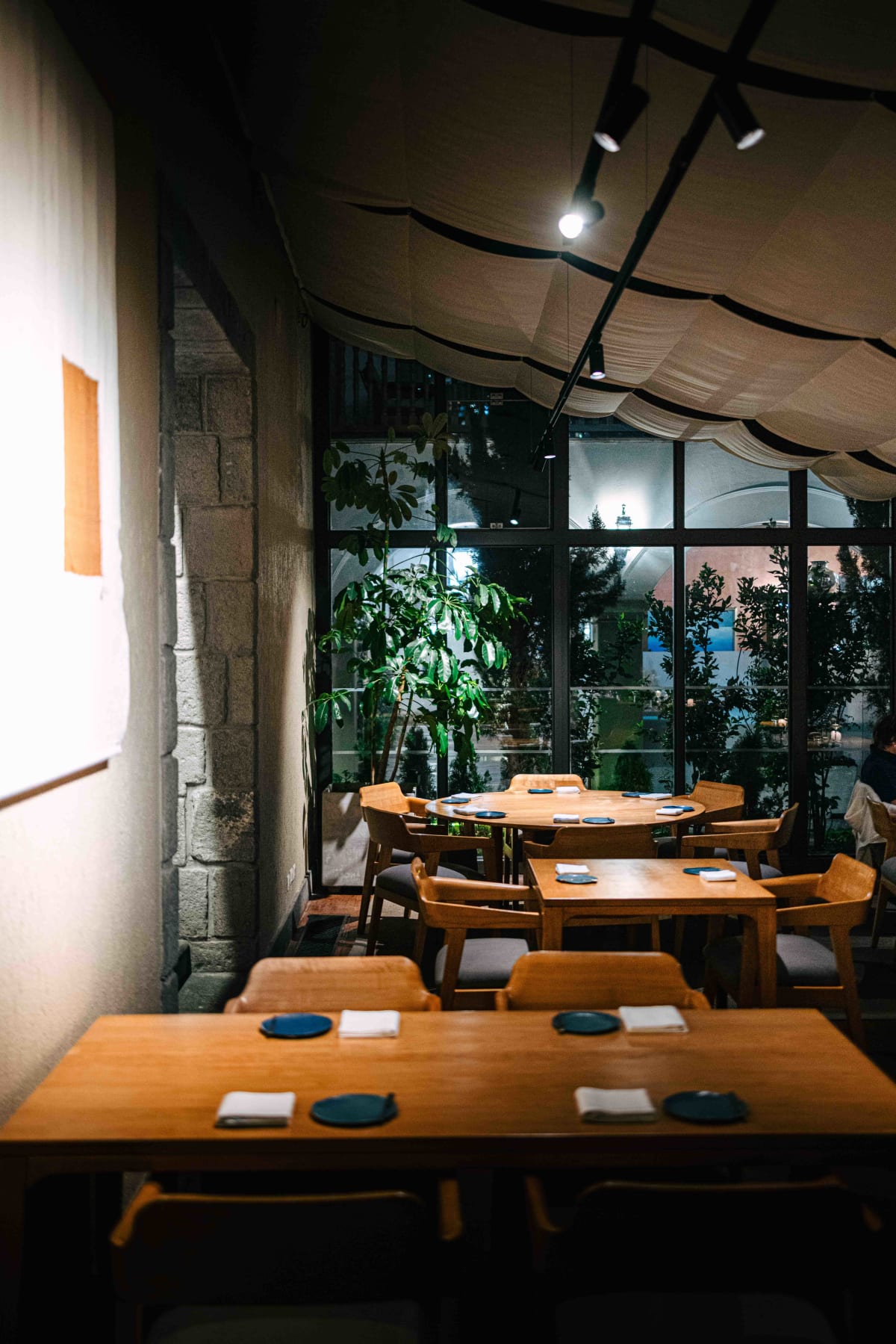
After the explanation we were shown past the main hall to another dining room set deeper inside. The lighting was lower and the atmosphere was good, and there were a fair number of guests here.
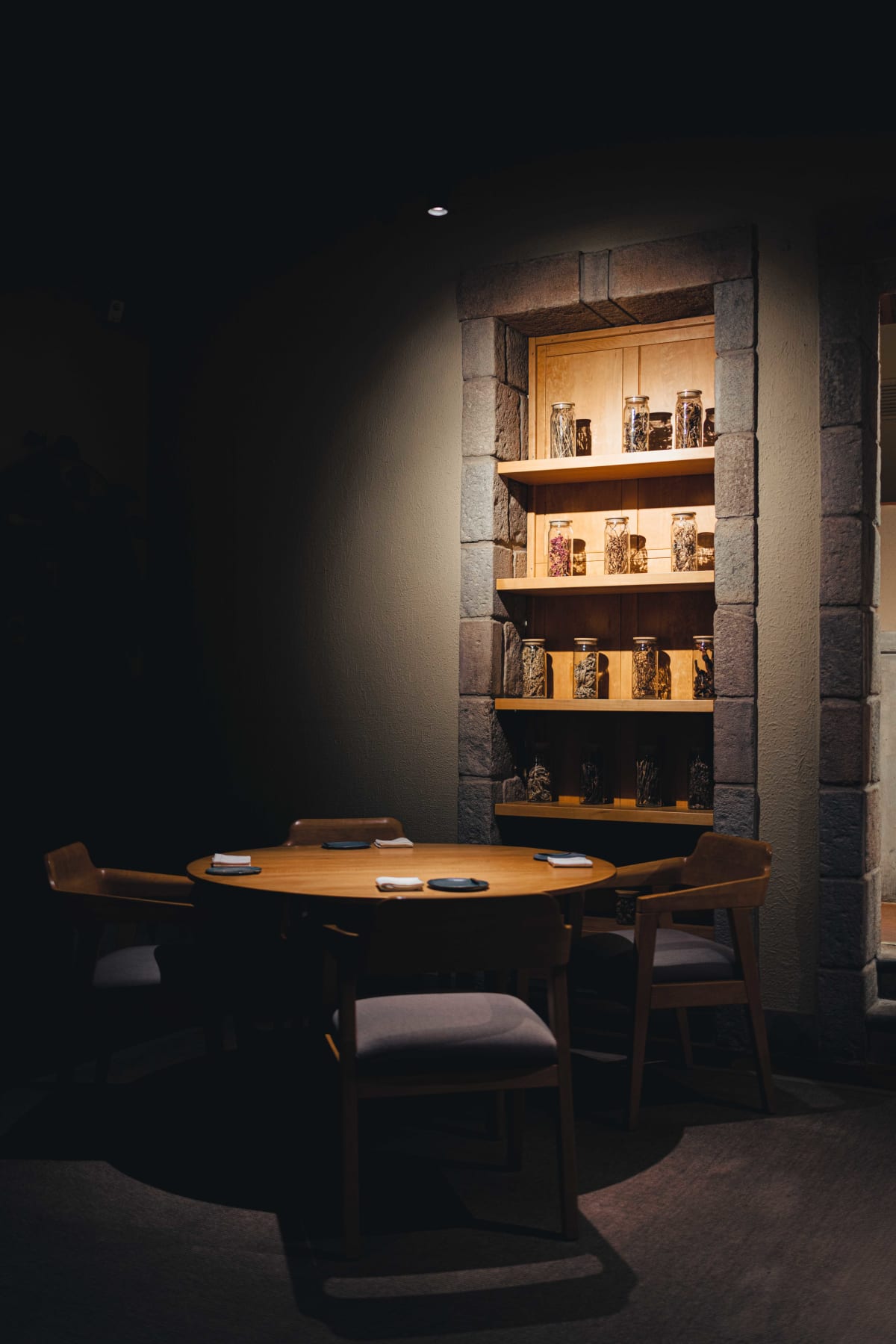
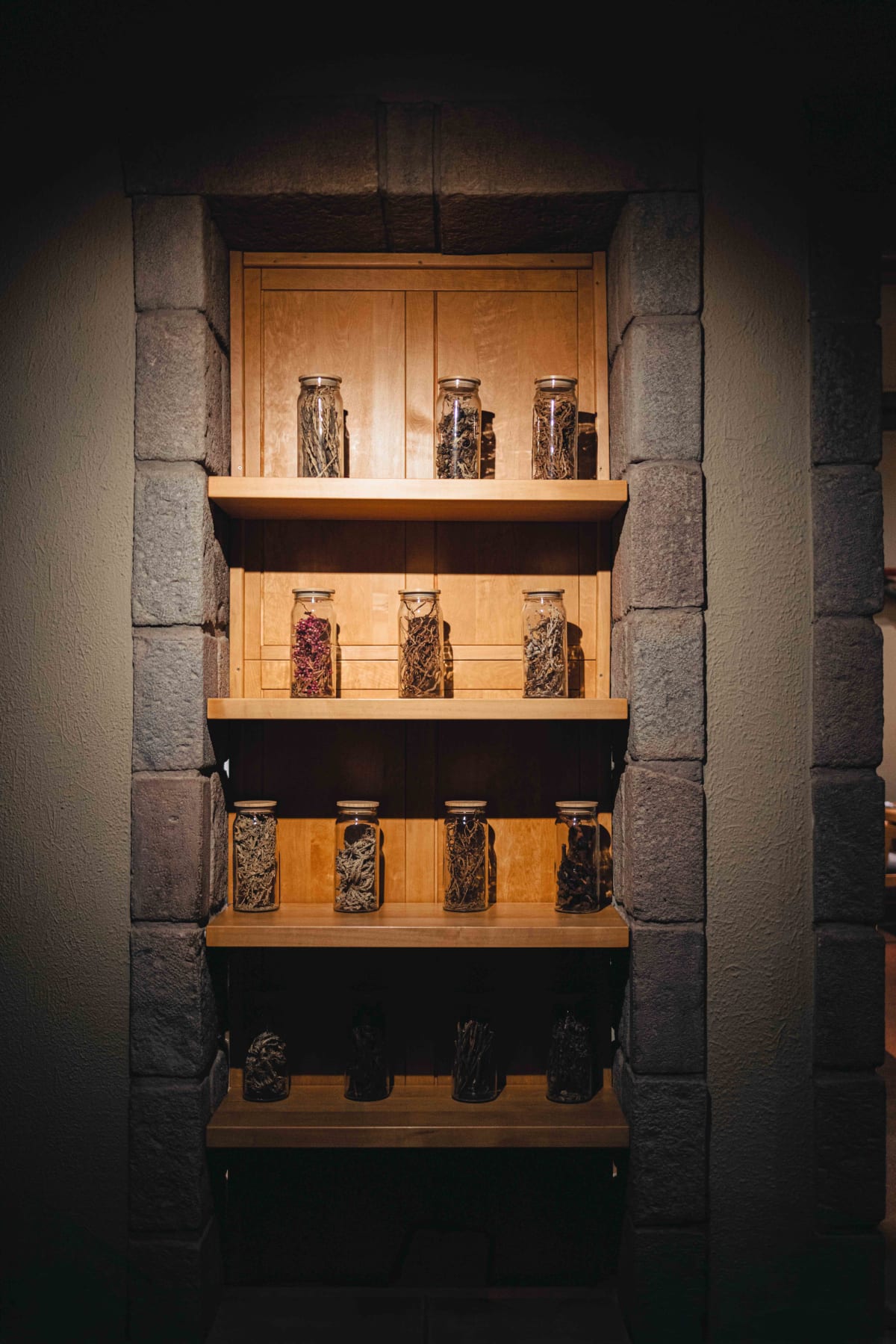
The view back toward the main dining hall from where we sat was good too. Built in shelves along the wall held glass jars of dried herbs and roots, quietly declaring the identity of this restaurant.
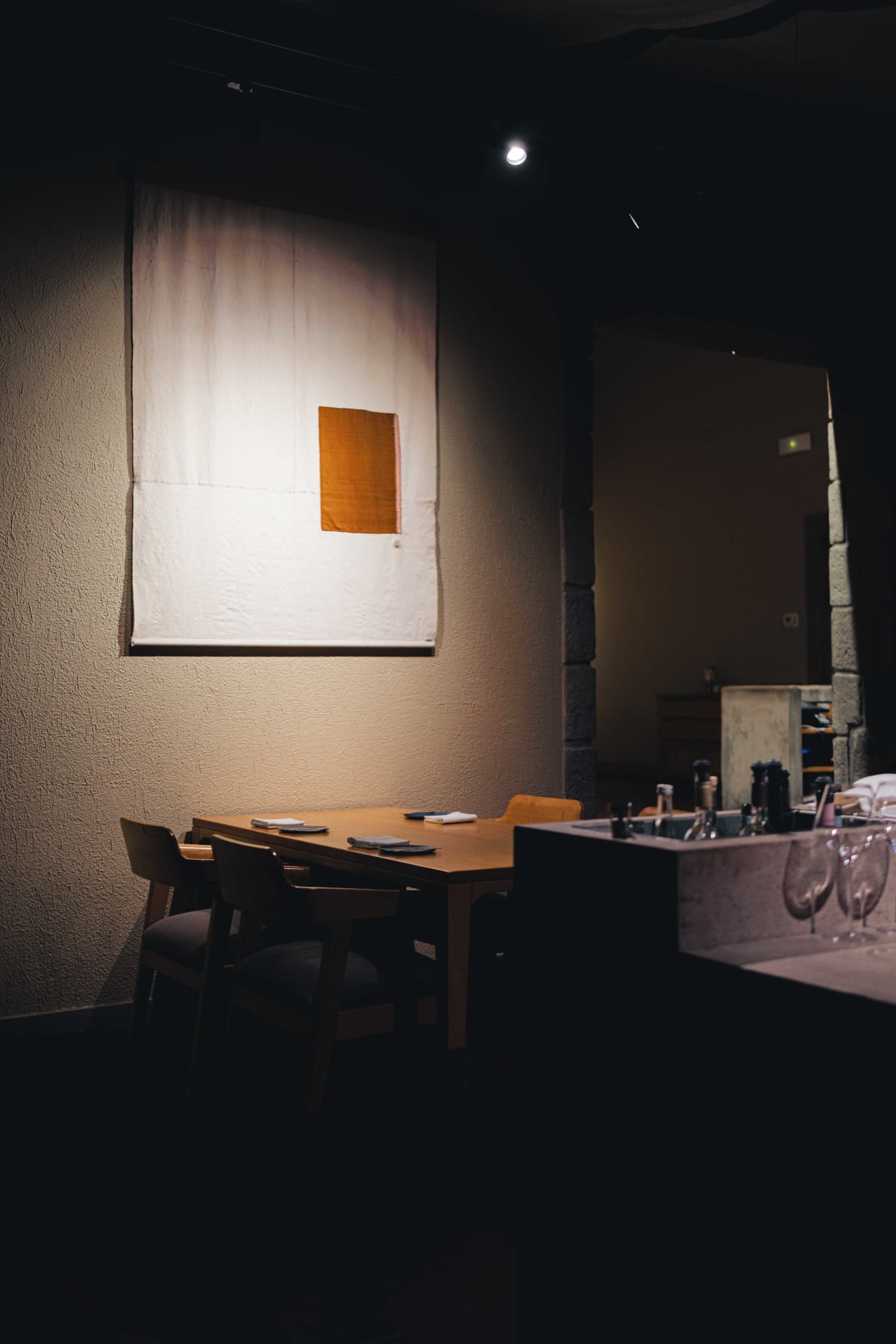
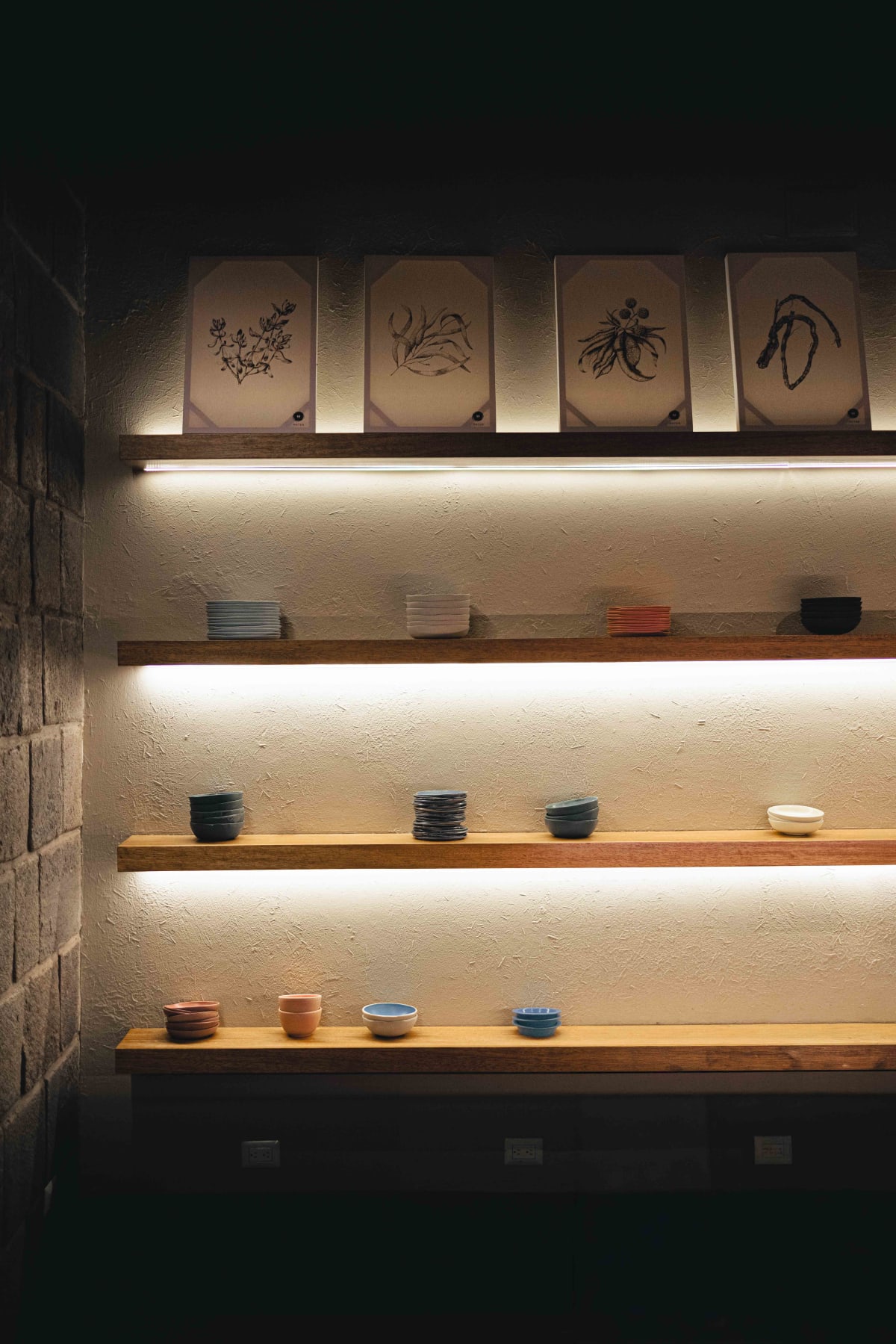
On the wall hung a large installation made of coloured fibres twisted together. It sat well with an interior filled with Andean timber and volcanic stone, natural fabrics dyed with botanical inks, and ceramics made by local artisans and artists.
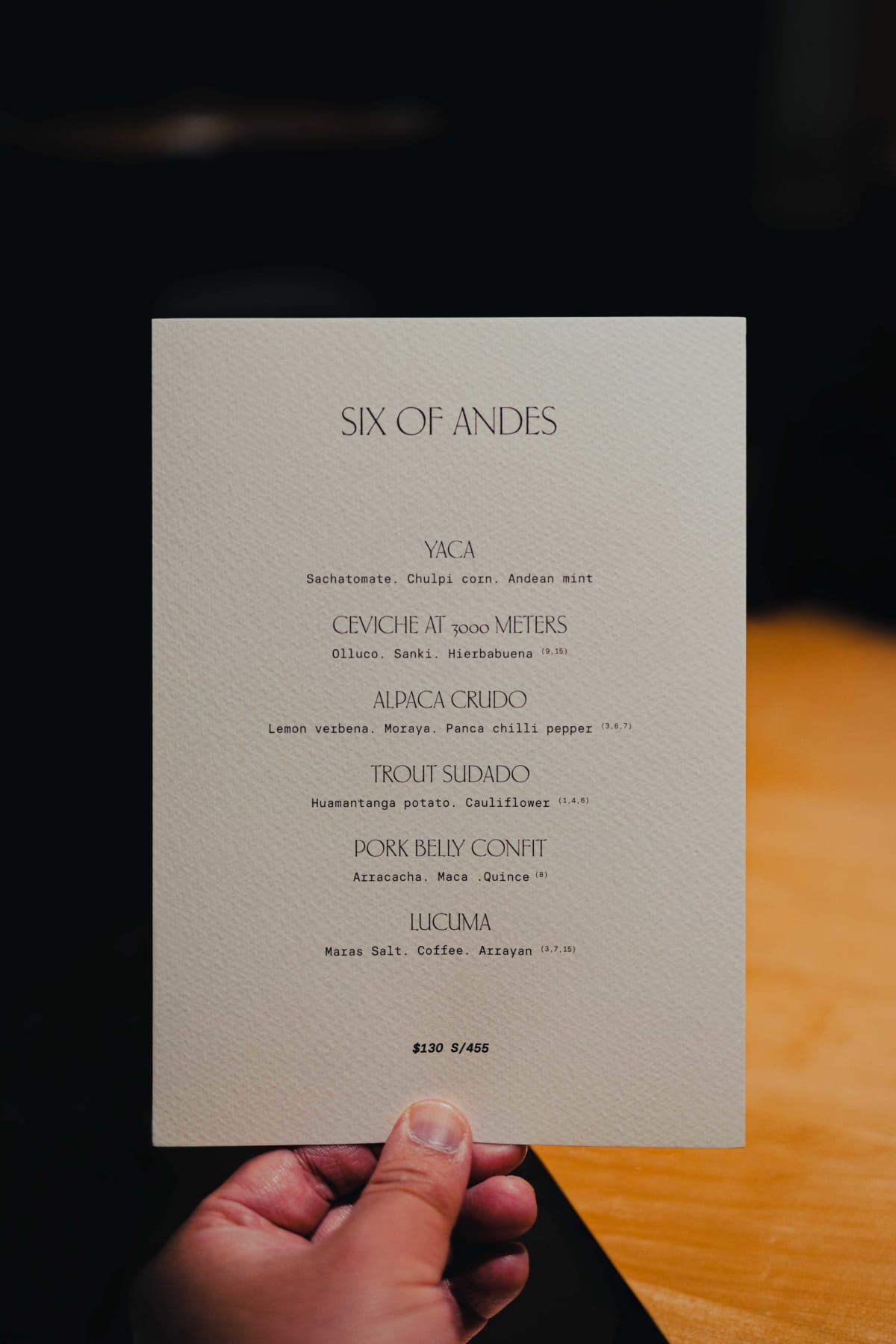
The menus arrived at the table.
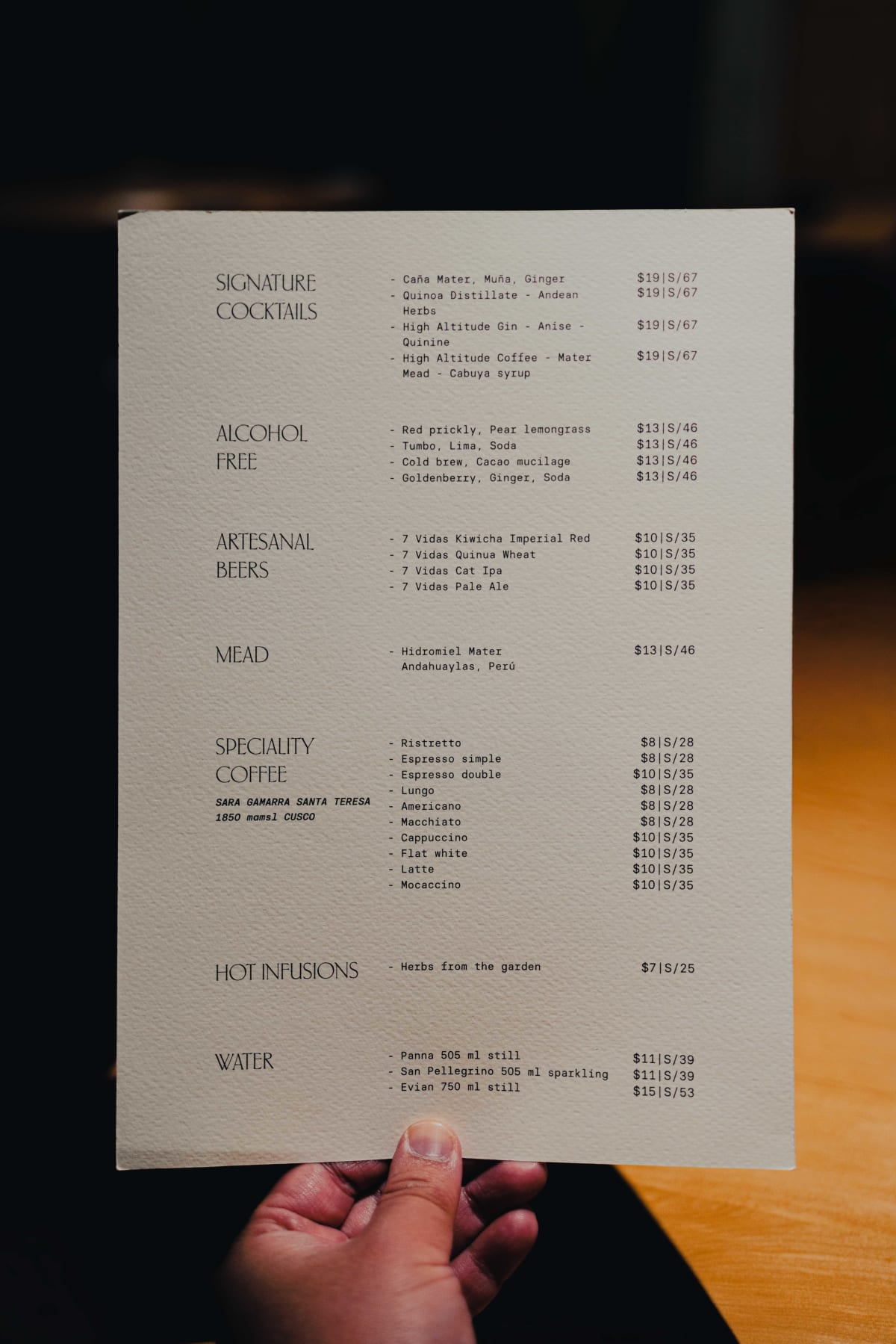
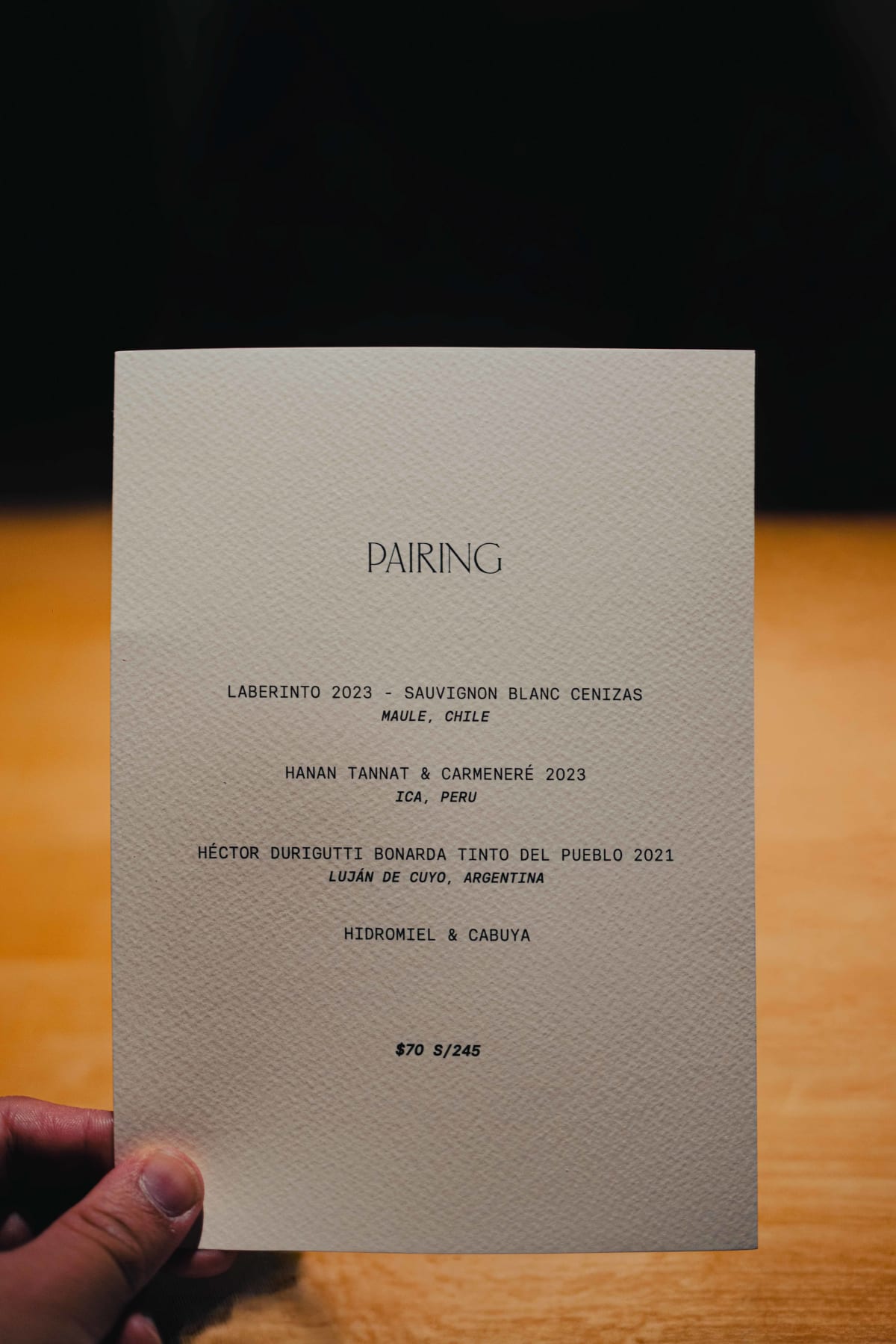
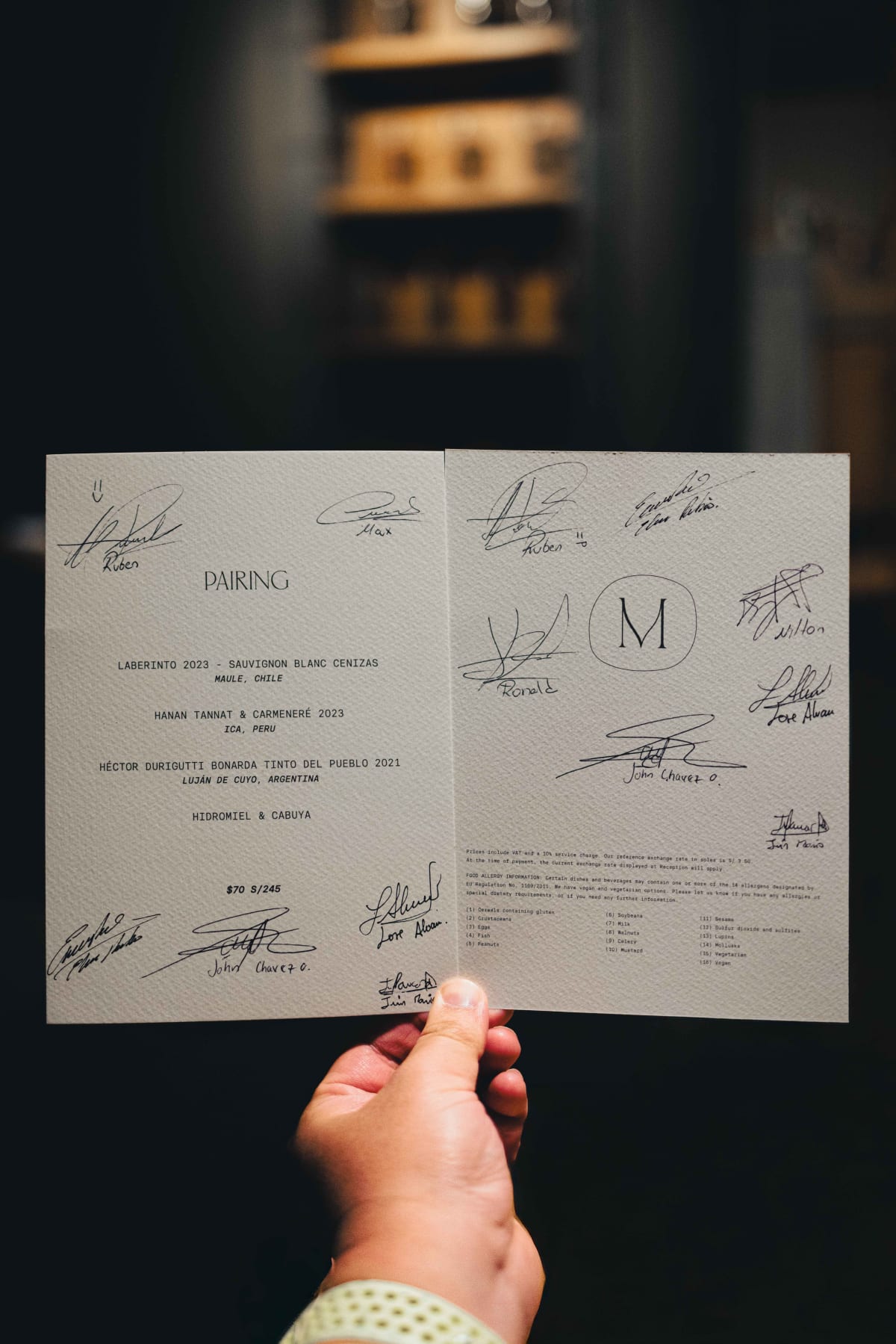
The drinks list and the pairing list came separately.
Section 6·Yaca And Bread
The first course was yaca, with sacha tomate, chulpi corn and Andean mint, a composition that effectively starts with bread.
The staff member introduced yaca as a local fruit of the durian family. Botanically, though, yaca is jackfruit and belongs to the mulberry family while durian belongs to the mallow family, so they are different fruits. It is probably best understood as the two being placed side by side because of the impression of a large, spiked tropical fruit. Jackfruit is in fact grown in highland jungle areas of Peru such as Satipo, which connects to Mauka's Amazon axis.
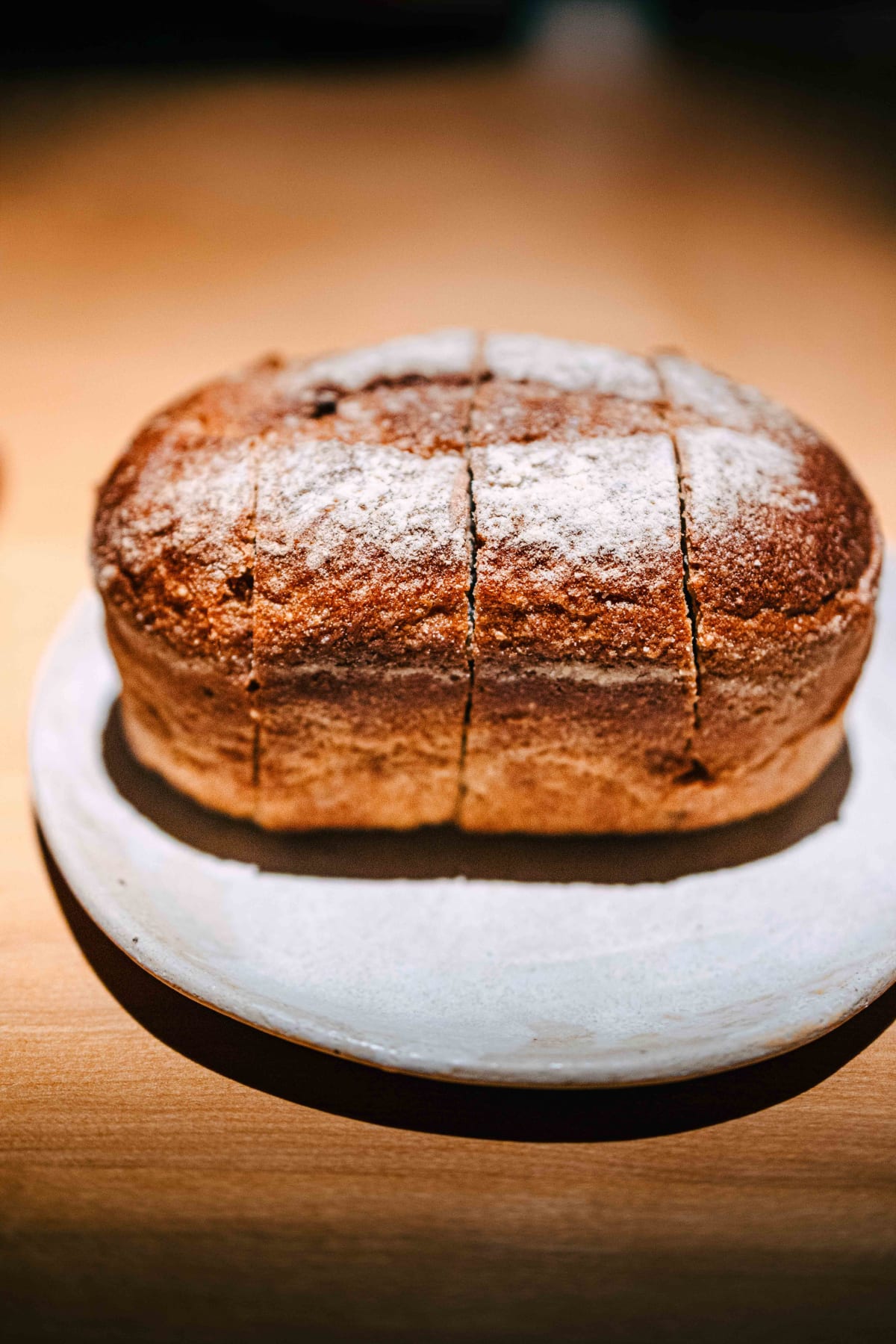
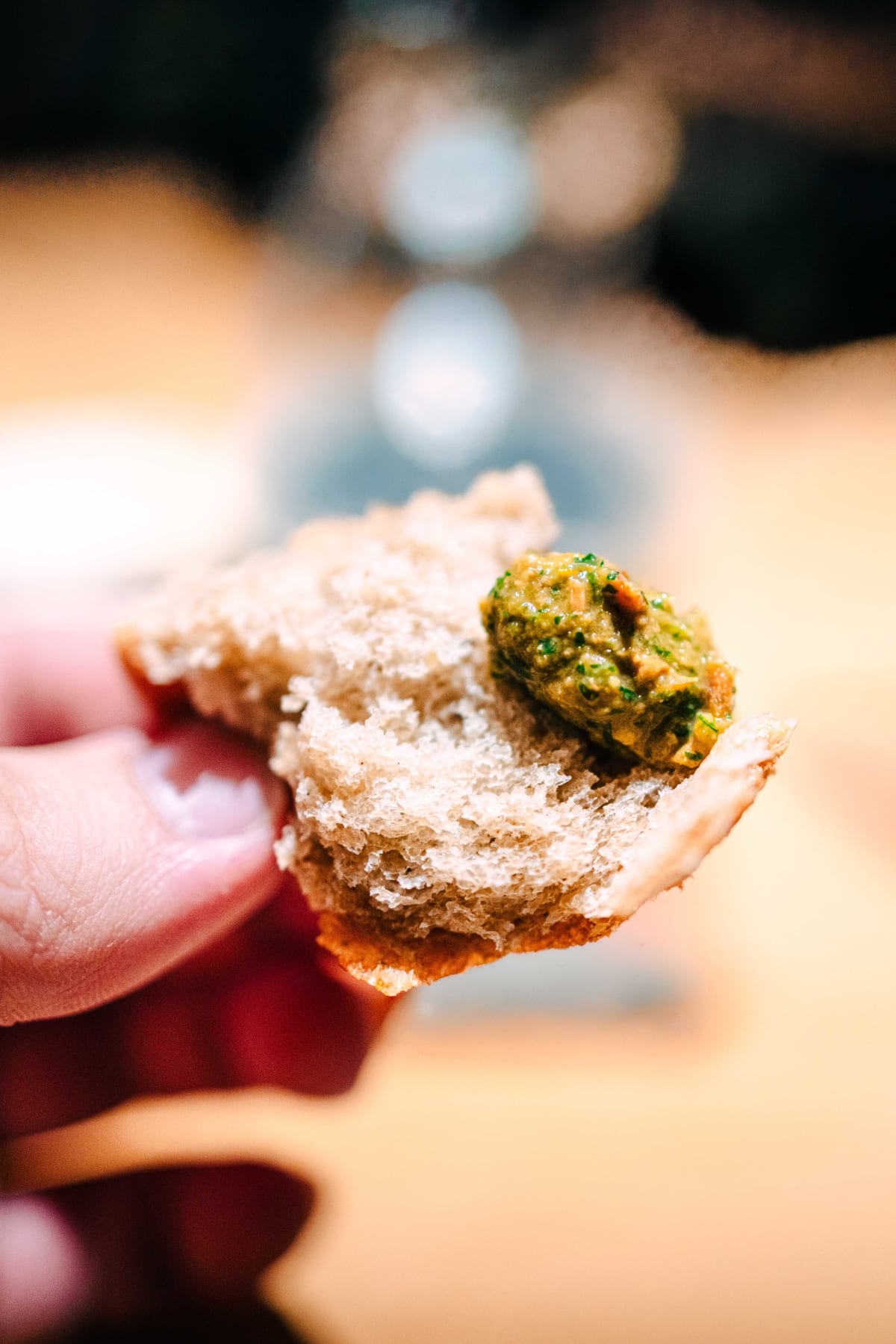
It was a bread baked from yaca with three flours mixed in, wheat, barley and corn, and two things came with it.
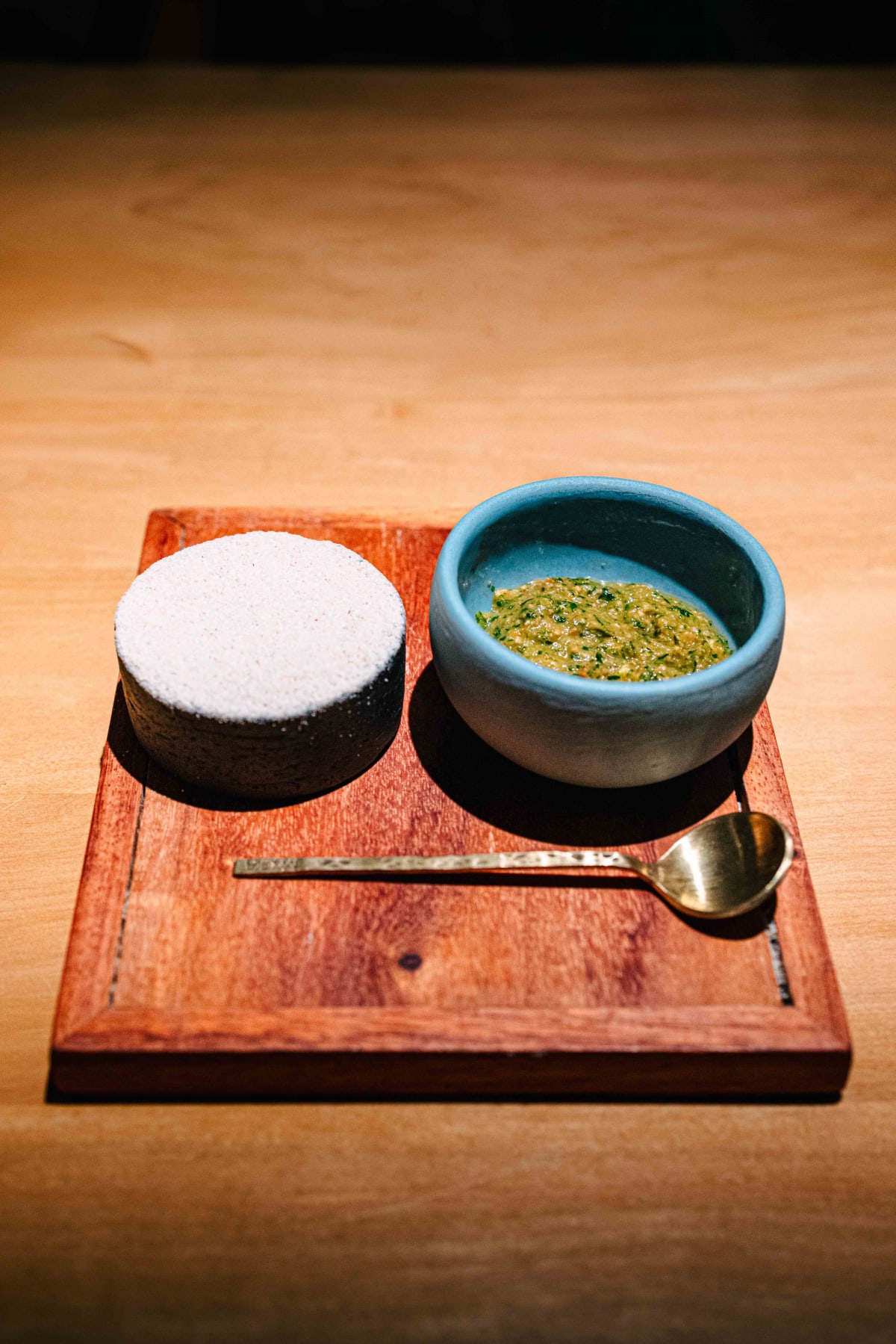
One was a green sauce called uchucuta, made by grinding Cusco chillies and herbs on the spot on a large stone called a batán.
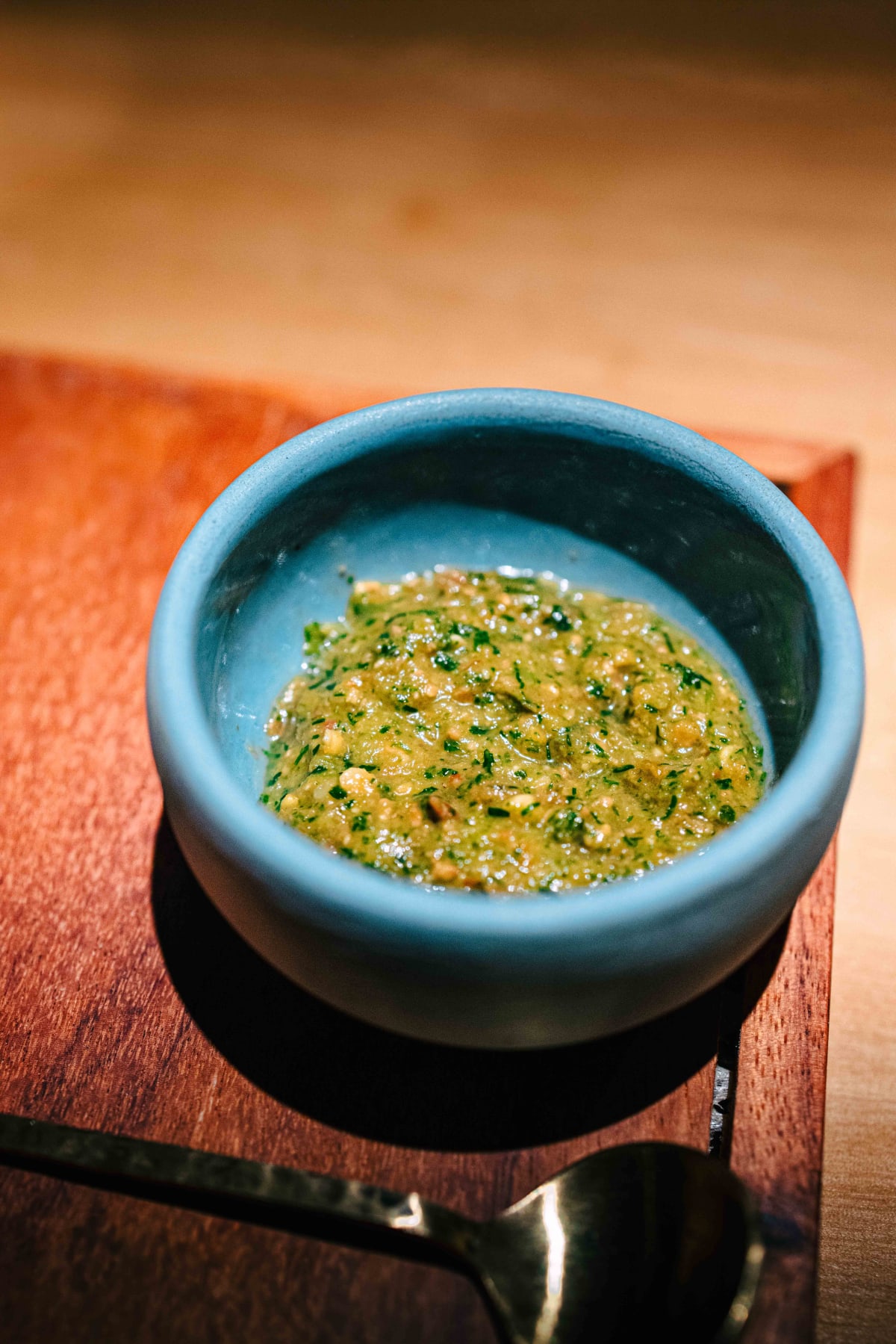
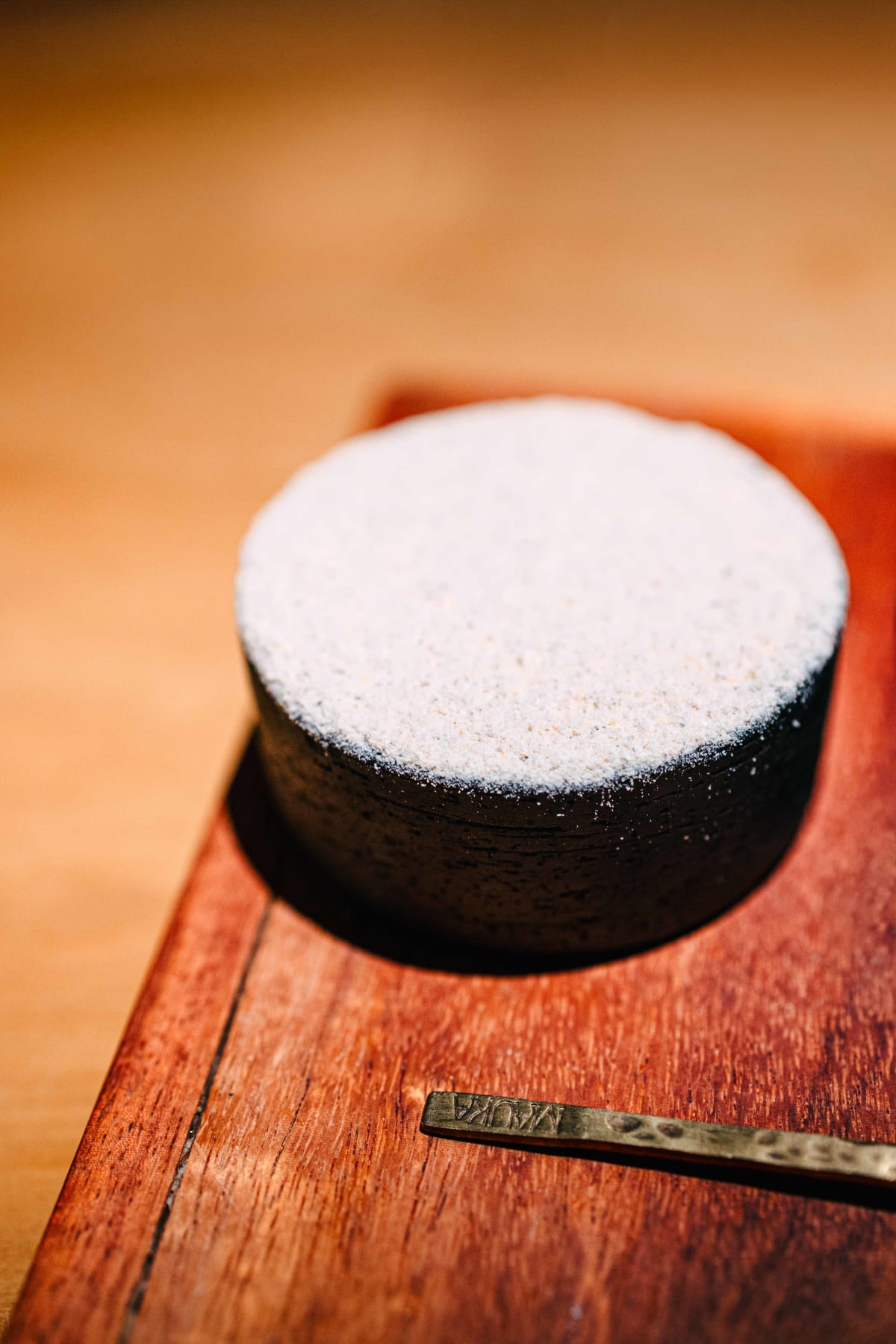
The other was butter dusted with the same flours used in the bread. The bread had an aroma strong enough at first to call cheonggukjang to mind, and it was good, with a crisp outside and a moist inside that were very fine. The green sauce with sacha tomate and Andean mint carried the aroma of the local herbs rather strongly, so it will divide opinion.
Sacha tomate is a tomato family fruit that grows high in the Andes, commonly called tamarillo. The spread that came alongside, close to cream cheese, was familiar to us and directly good.
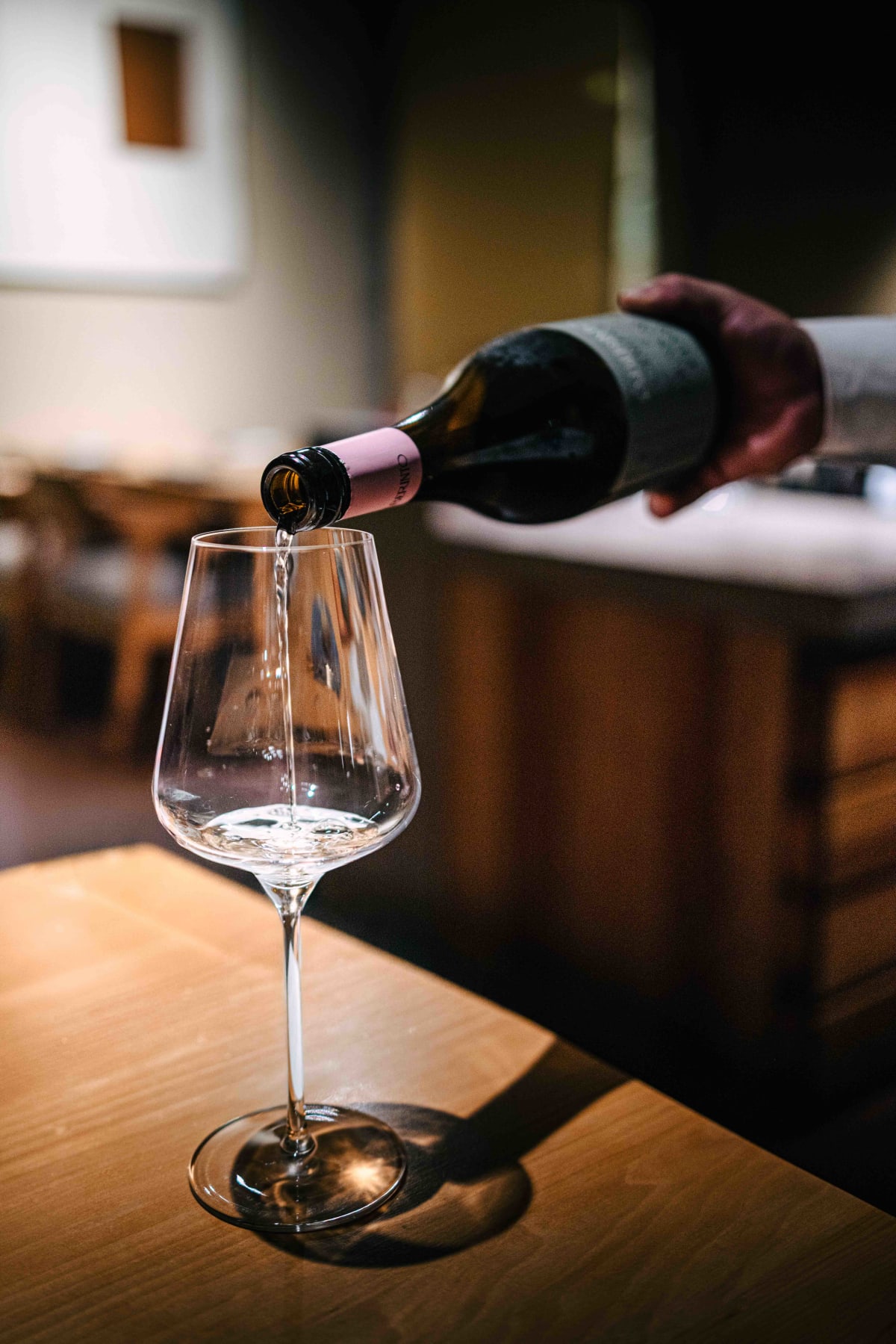
The pairing began here. The first glass was Laberinto Sauvignon Blanc Cenizas 2023 from Maule in Chile. The staff member introduced it as a mineral wine from the far south of Chile's Central Valley, where the soil is strongly volcanic.
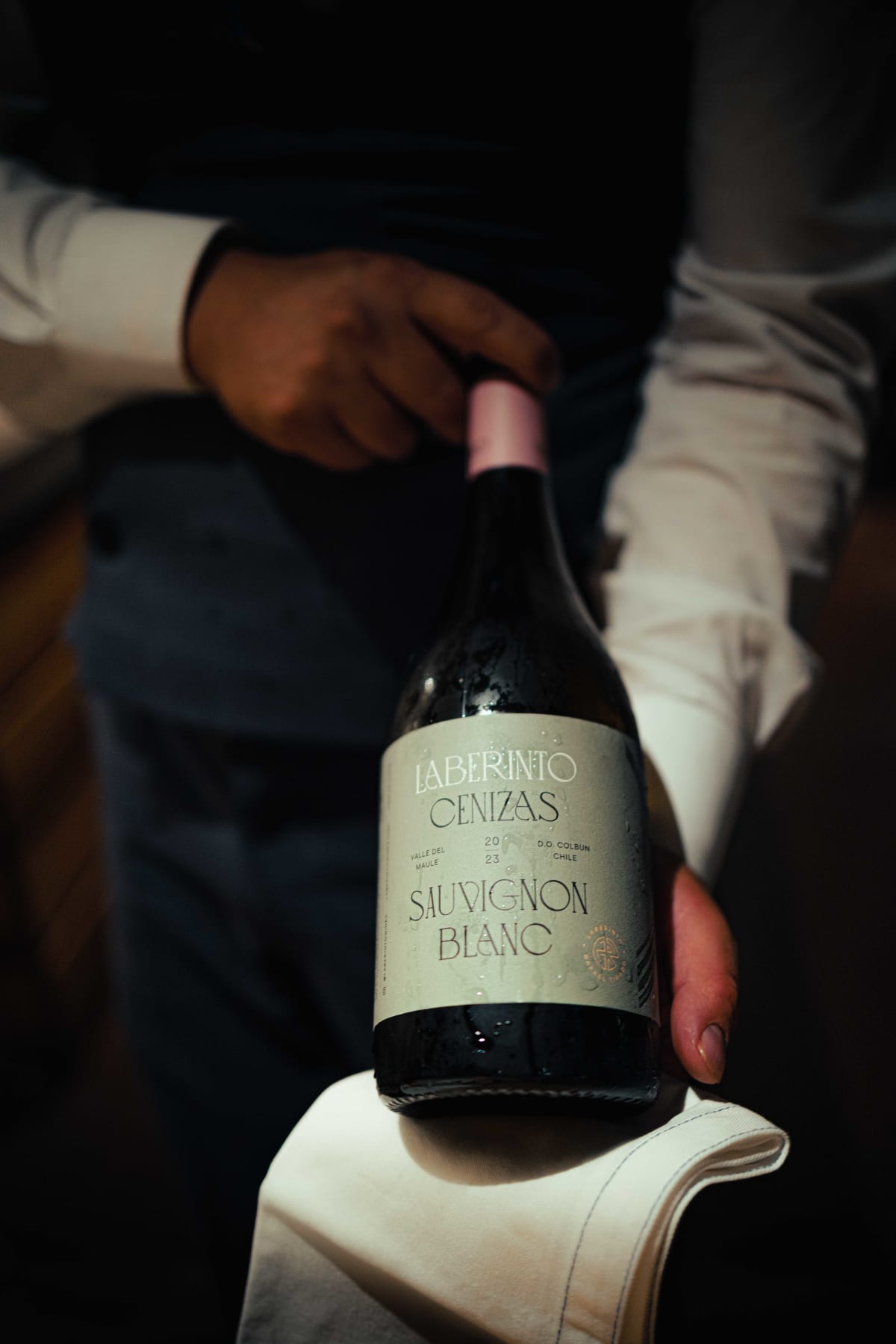
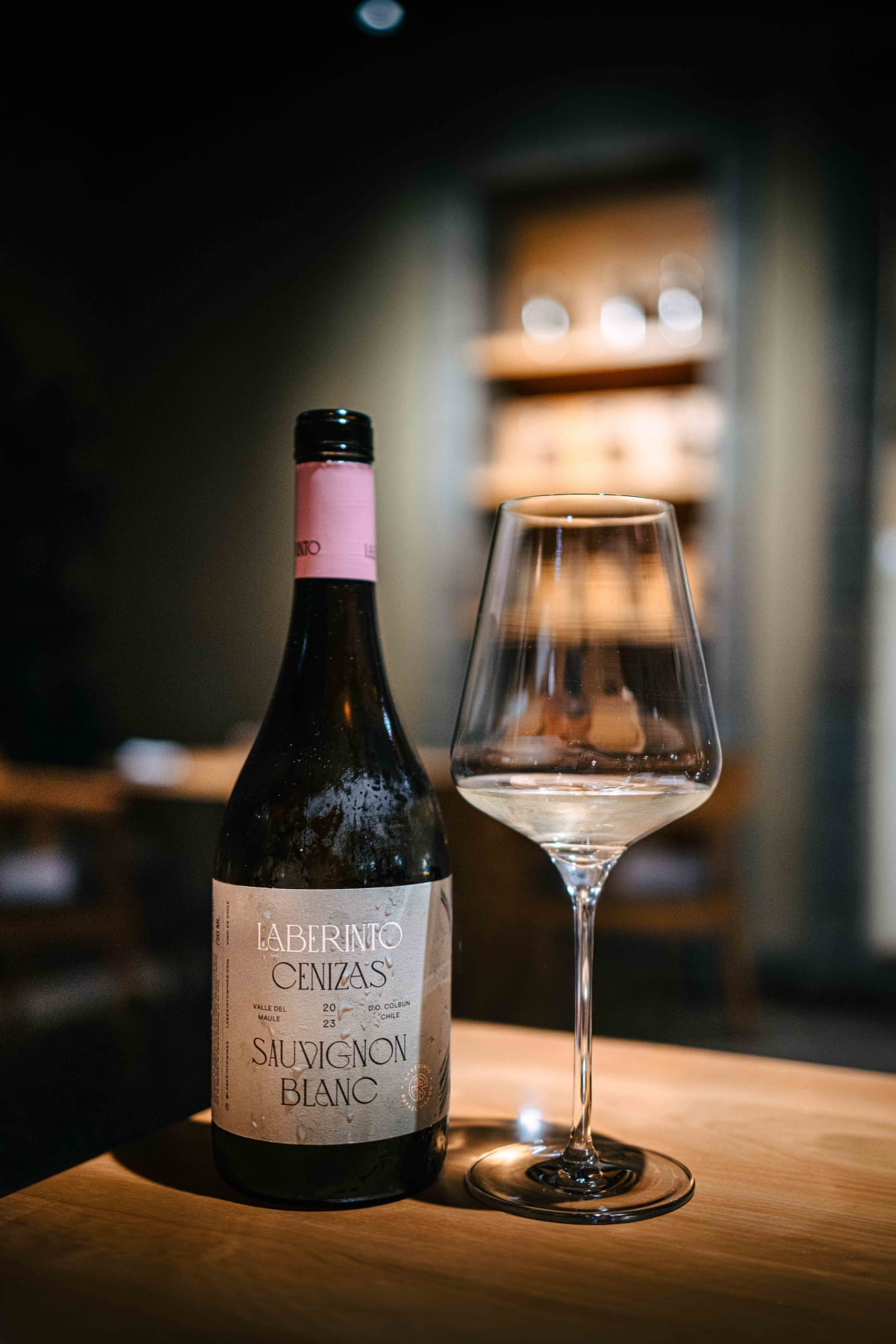
It comes from a vineyard Rafael Tirado planted himself in 1993 on volcanic ash soil beside Lake Colbún, running since 1999. Fermented in stainless, unfiltered, around 12.5 percent alcohol, with a sharp acidity.
Section 7·Ceviche At Altitude
The second course was Ceviche at 3000 Meters. Olluco, sanki and hierbabuena were listed as the other elements. The reason for the name is plain. This is a mountain city with no sea, so no fish is used, and several root vegetables growing at three thousand metres take the place of the fish.
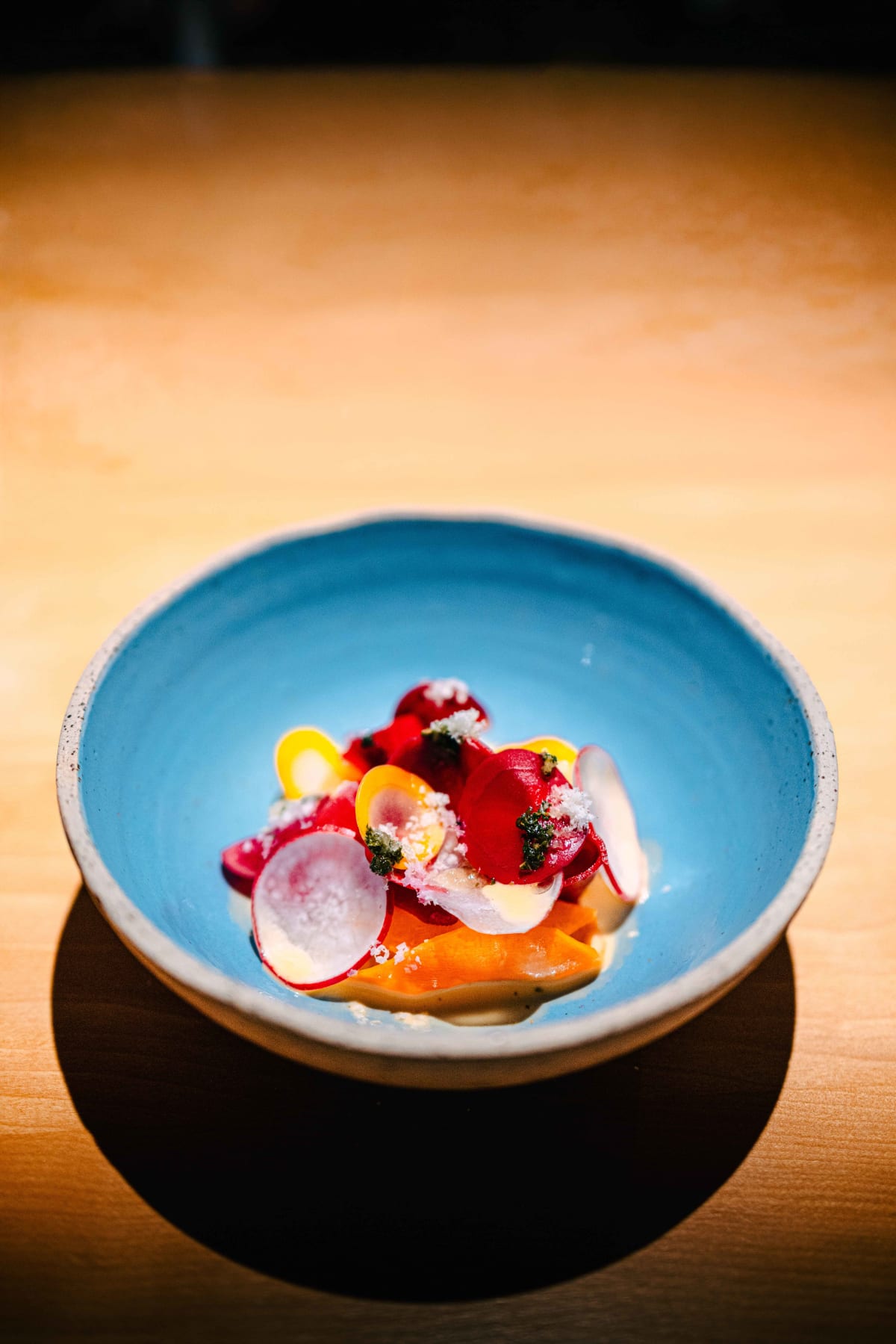
Radish and carrot went in along with yellow olluco and purple oca, and the staff member pointed back to the tubers we had seen on the Mater table. The base was a citrus sauce of lime, tangerine and orange, and they added that in northern Peru ceviche sometimes takes grilled corn or banana.
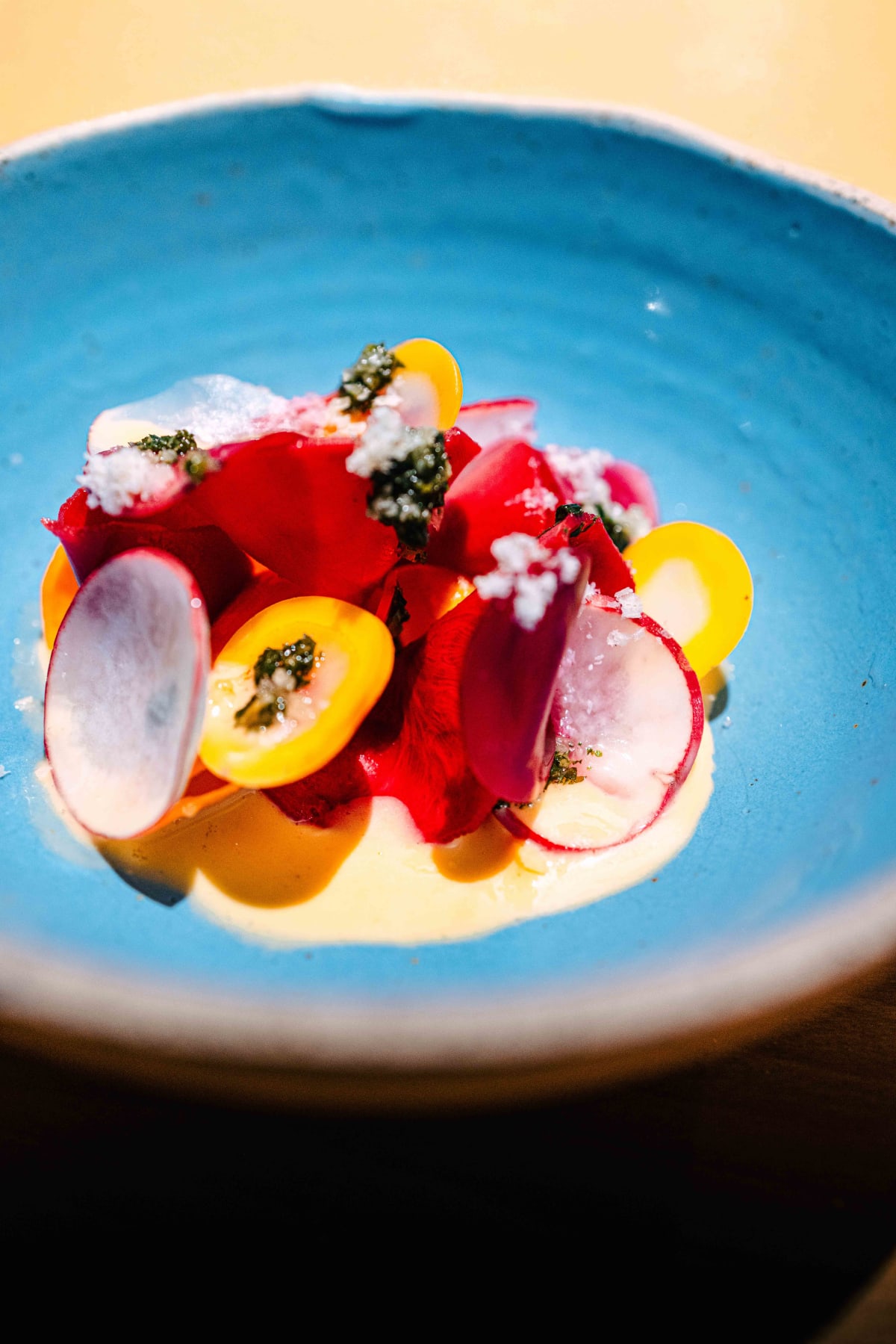
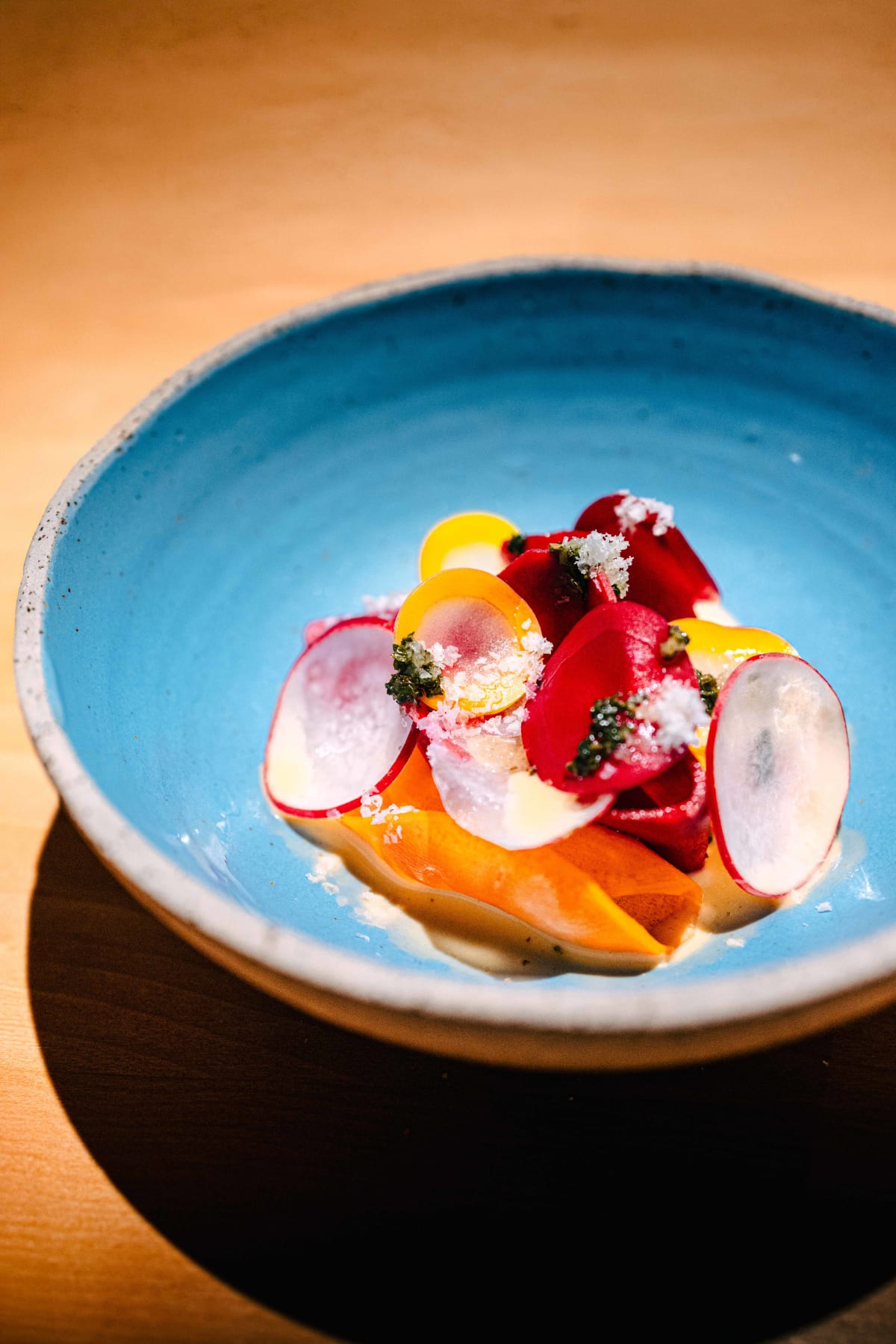
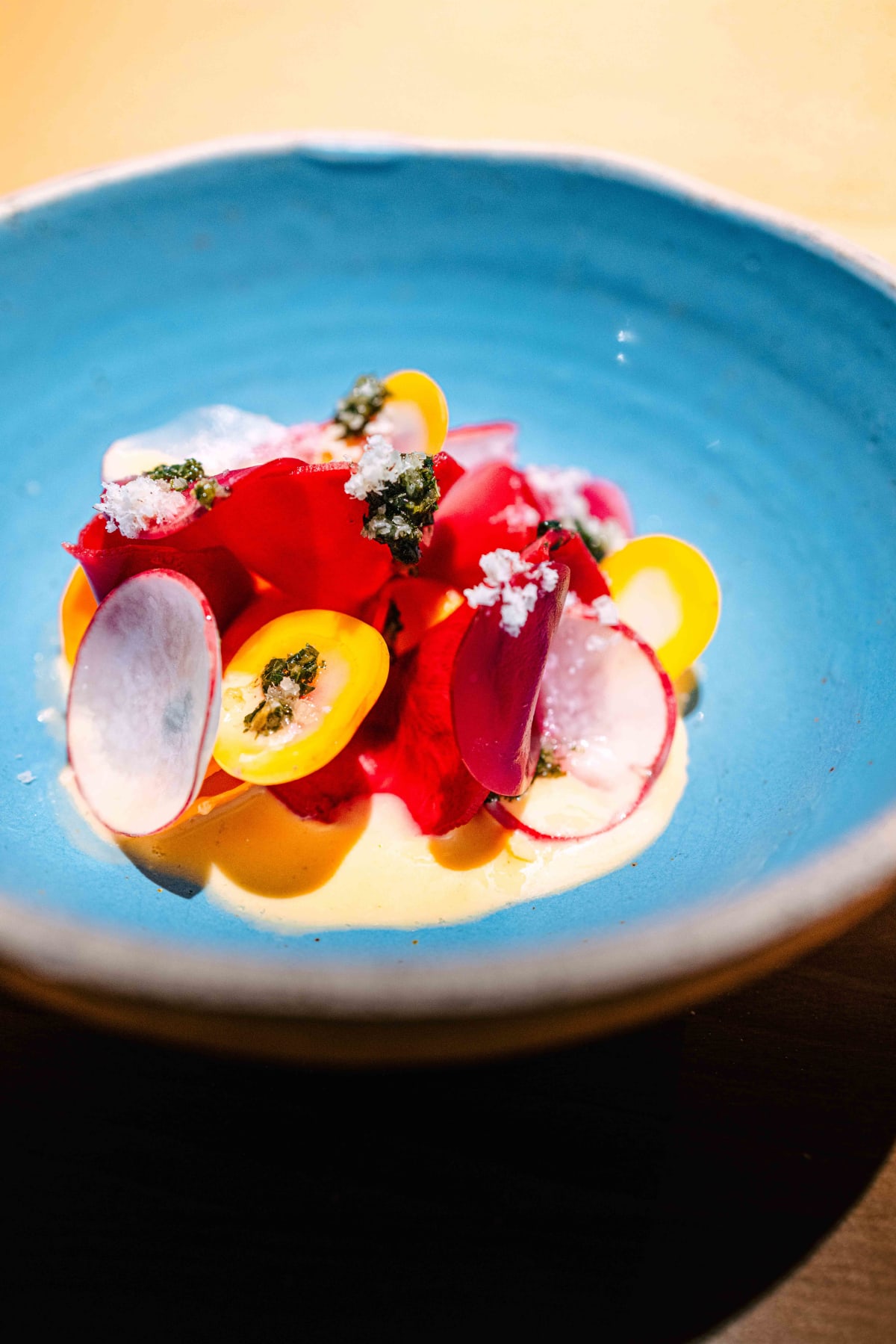
Vegetable ceviche though it was, the purple oca was truly good. Sweet enough that you could say the colour had been given to it. The vegetables tasted excellent throughout, crisp and sweet, and went well with the ceviche sauce.
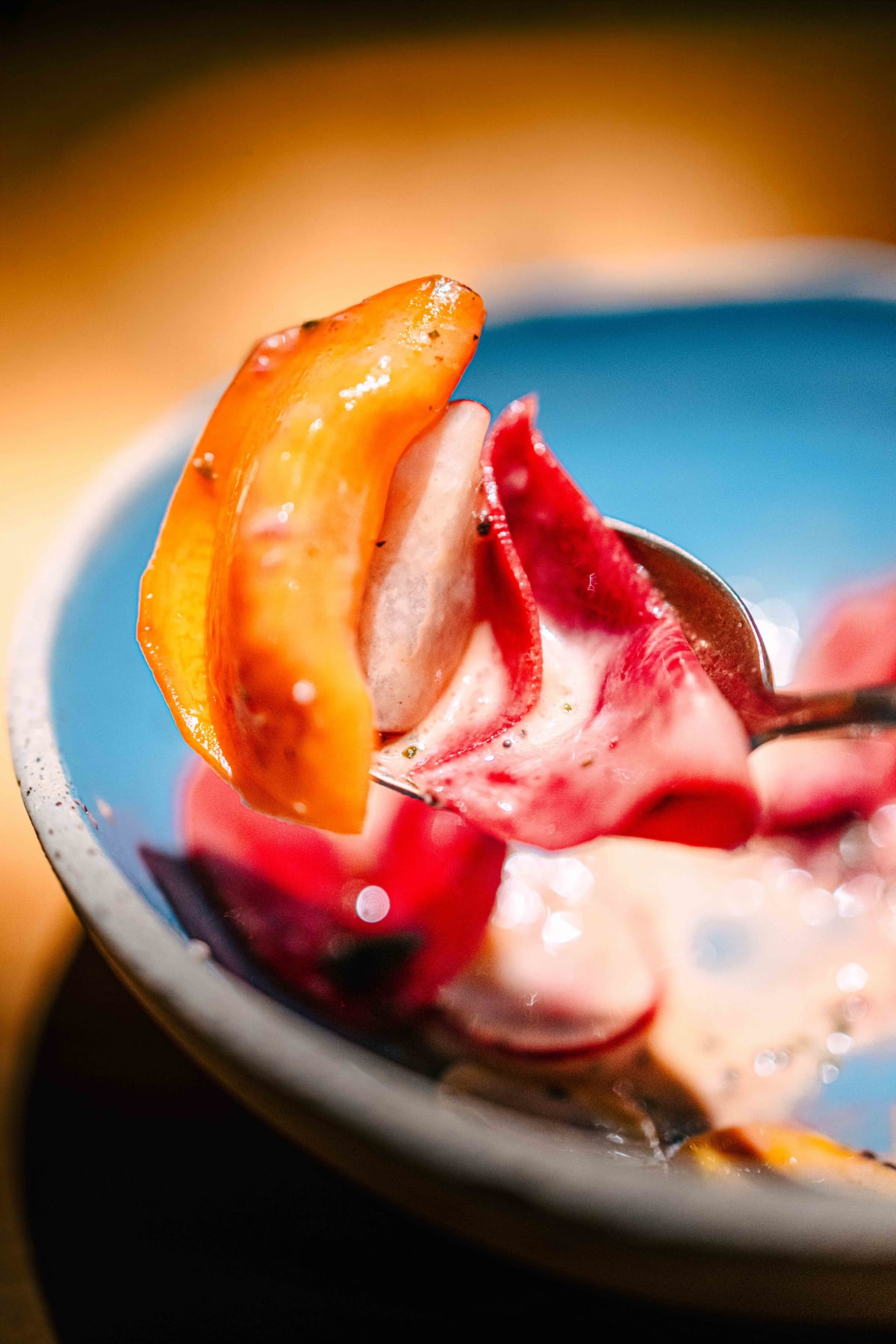
The small black grains were sanki, the seed part inside the cactus. Sanki is the fruit of a wild cactus high in the Andes, sharp in acidity and rich in vitamin C. When I said I was curious about the ingredients, the staff member brought them over in a basket to show me directly.
Section 8·Alpaca Crudo
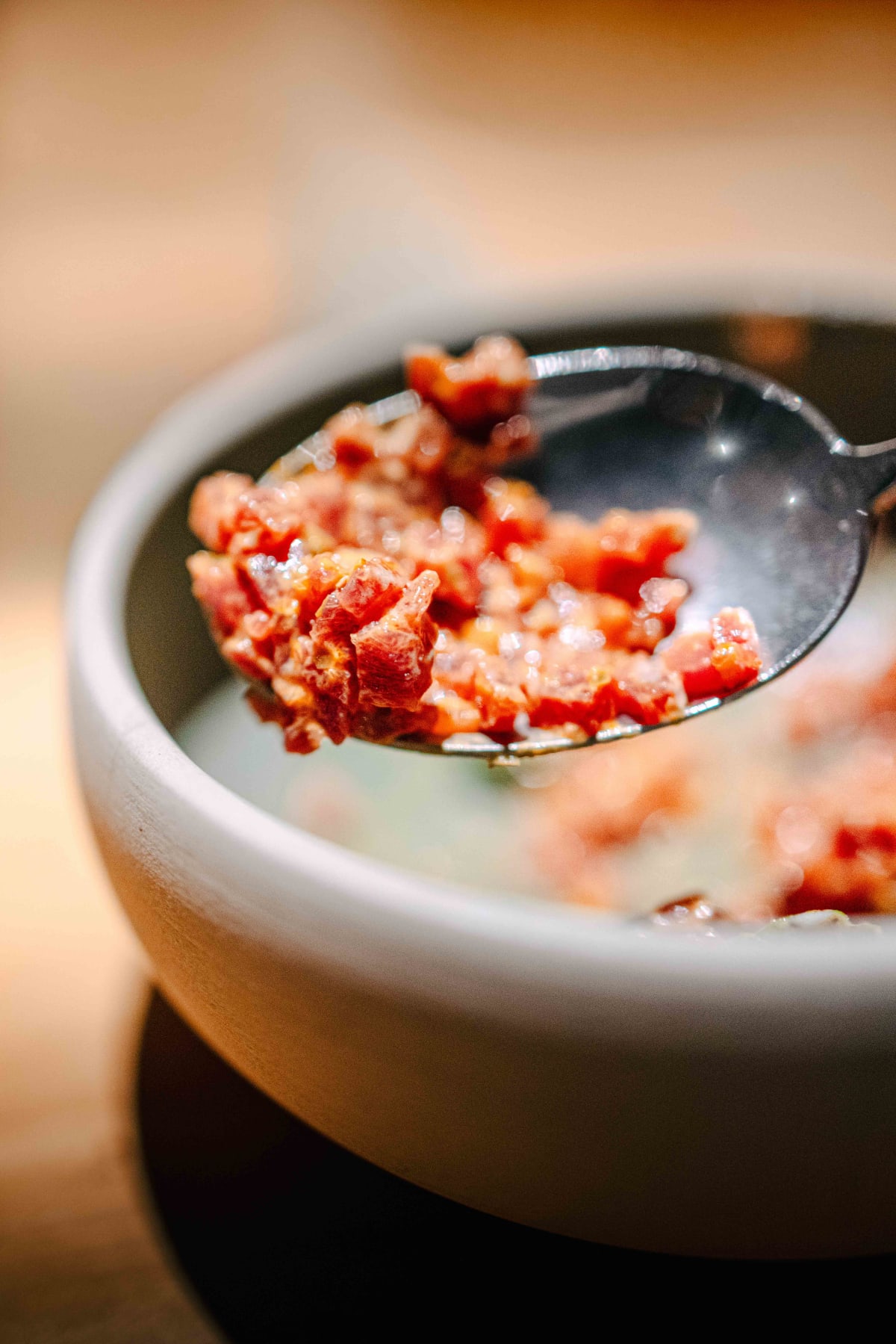
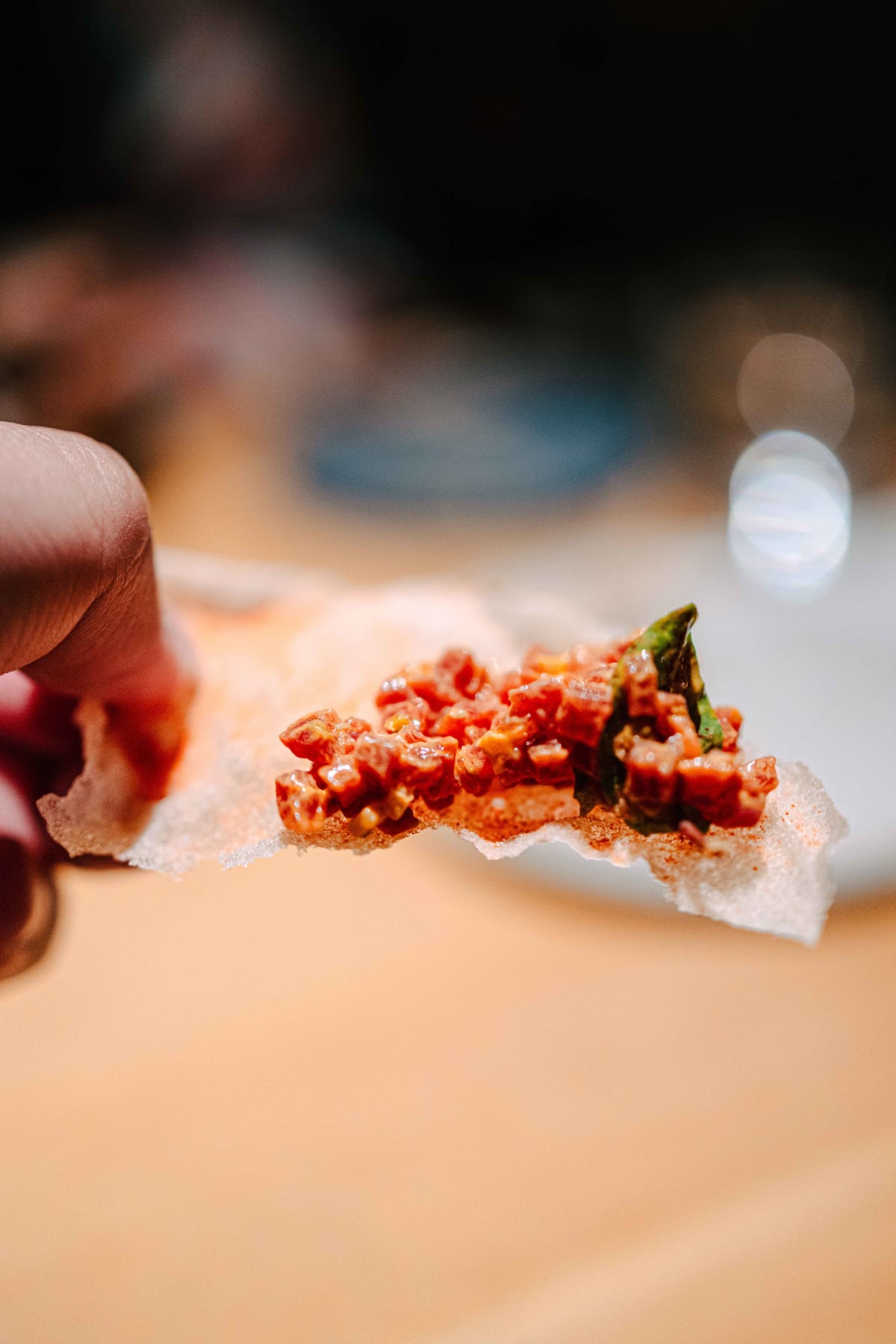
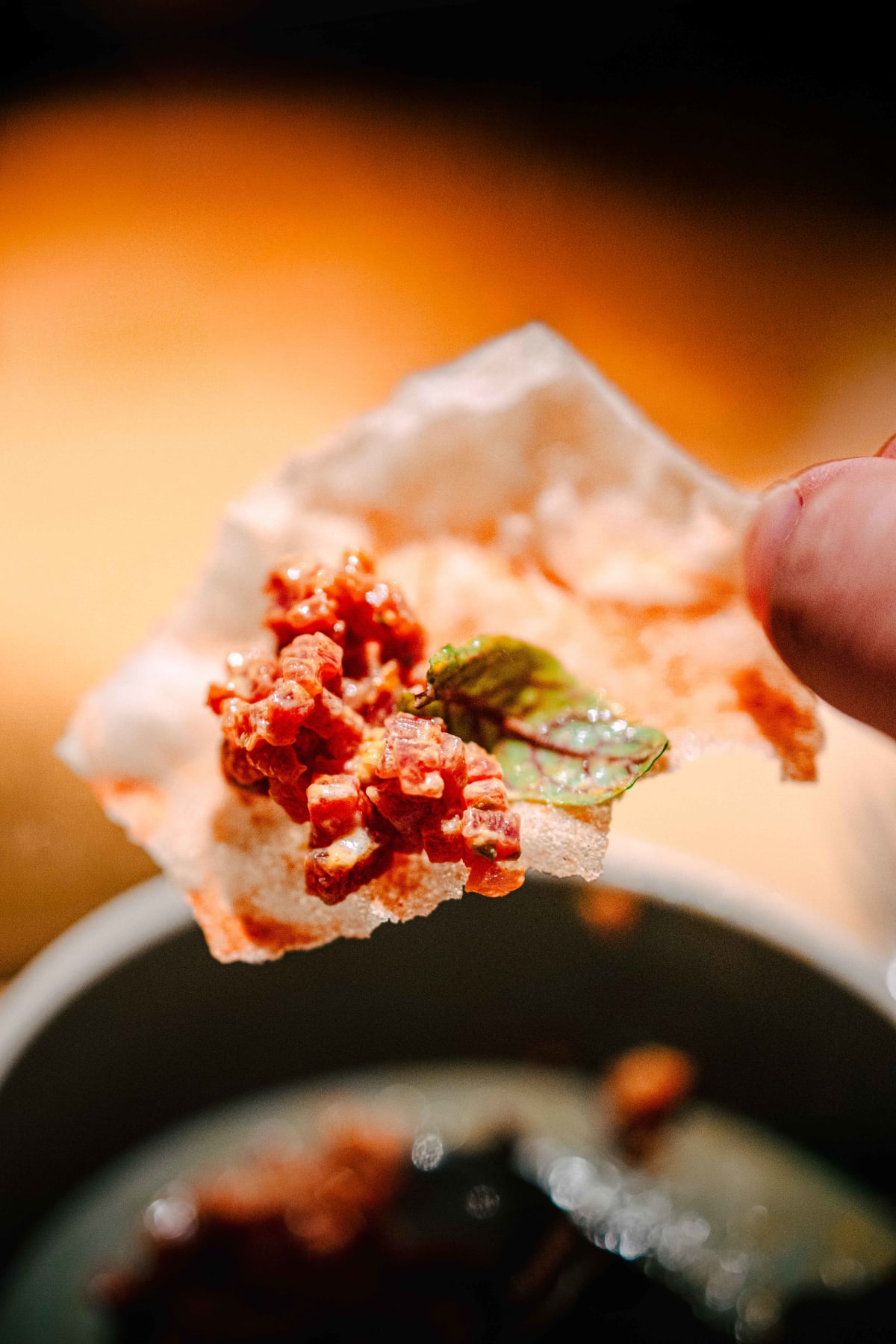
The third course was alpaca crudo. The menu listed lemon verbena, moraya and panca chilli pepper alongside. The staff member introduced it as the way he personally eats alpaca, closer to a tartare.
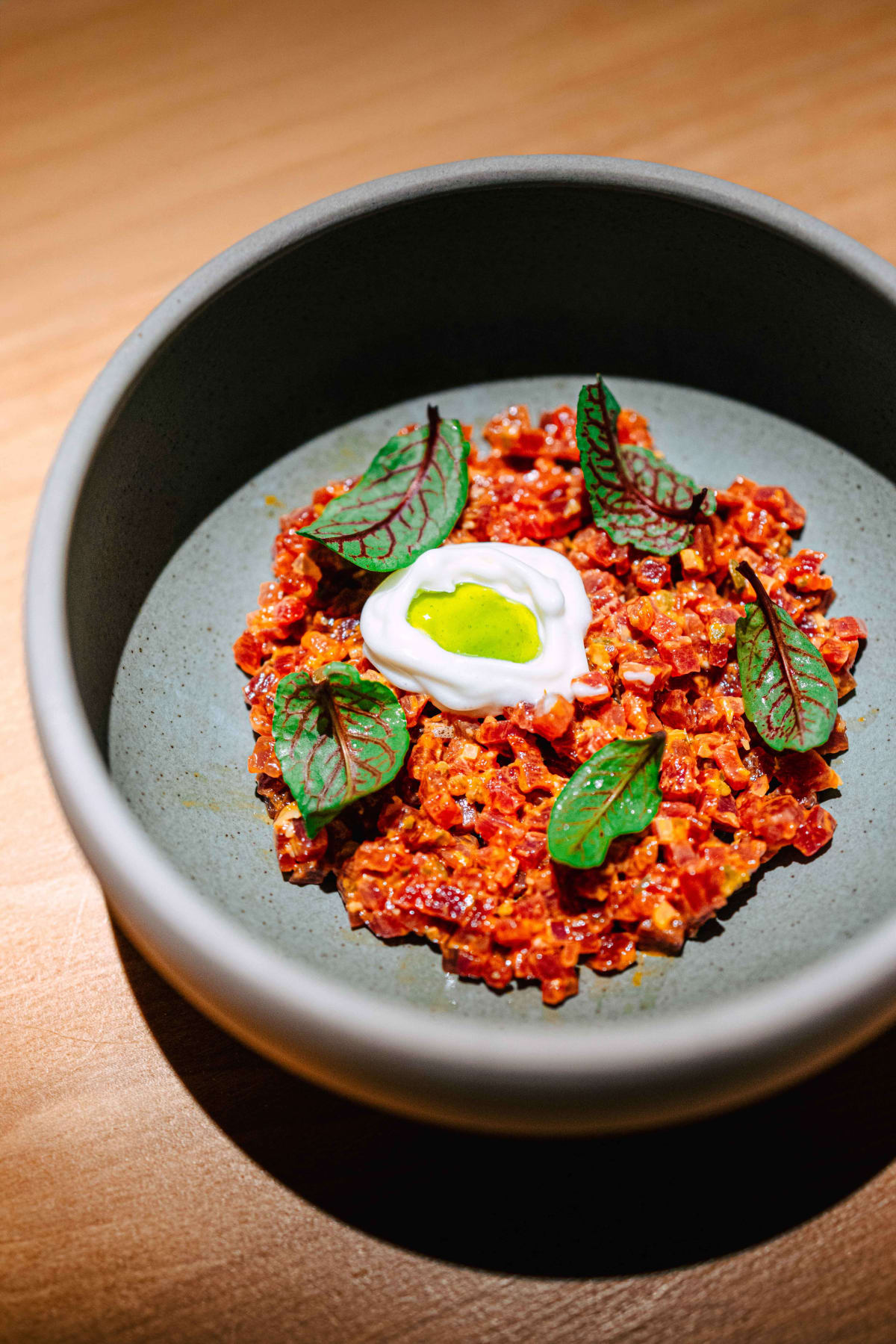
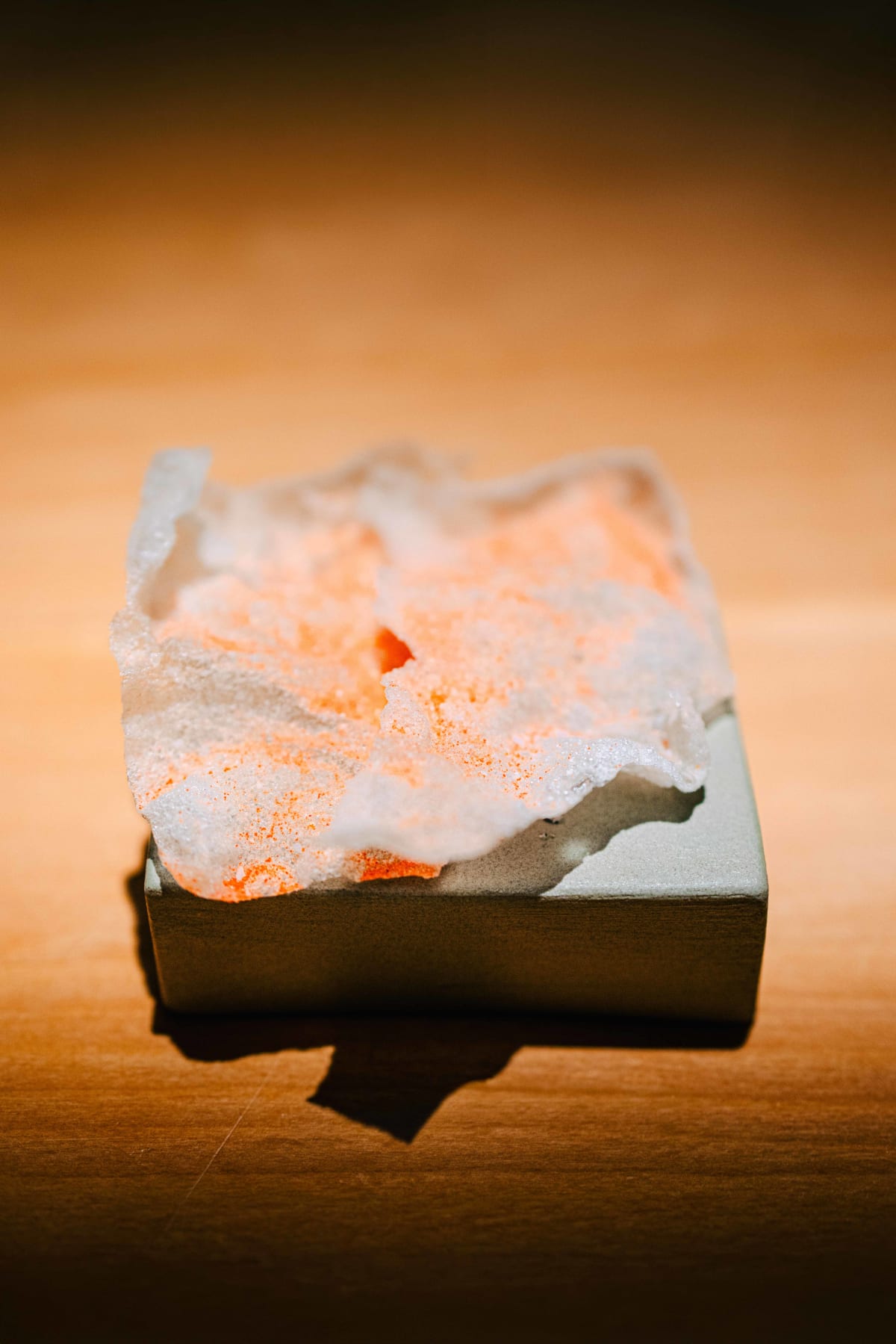
Alpaca cured with salt from the Maras salt pans and sugar, with an ají amarillo mayonnaise made from Peruvian yellow chilli, and oil poured over. Alongside was a cracker made from moraya, the white dried potato we had seen on the Mater table. The pink pepper powder dusted on top was not hot and served to add a little aroma.
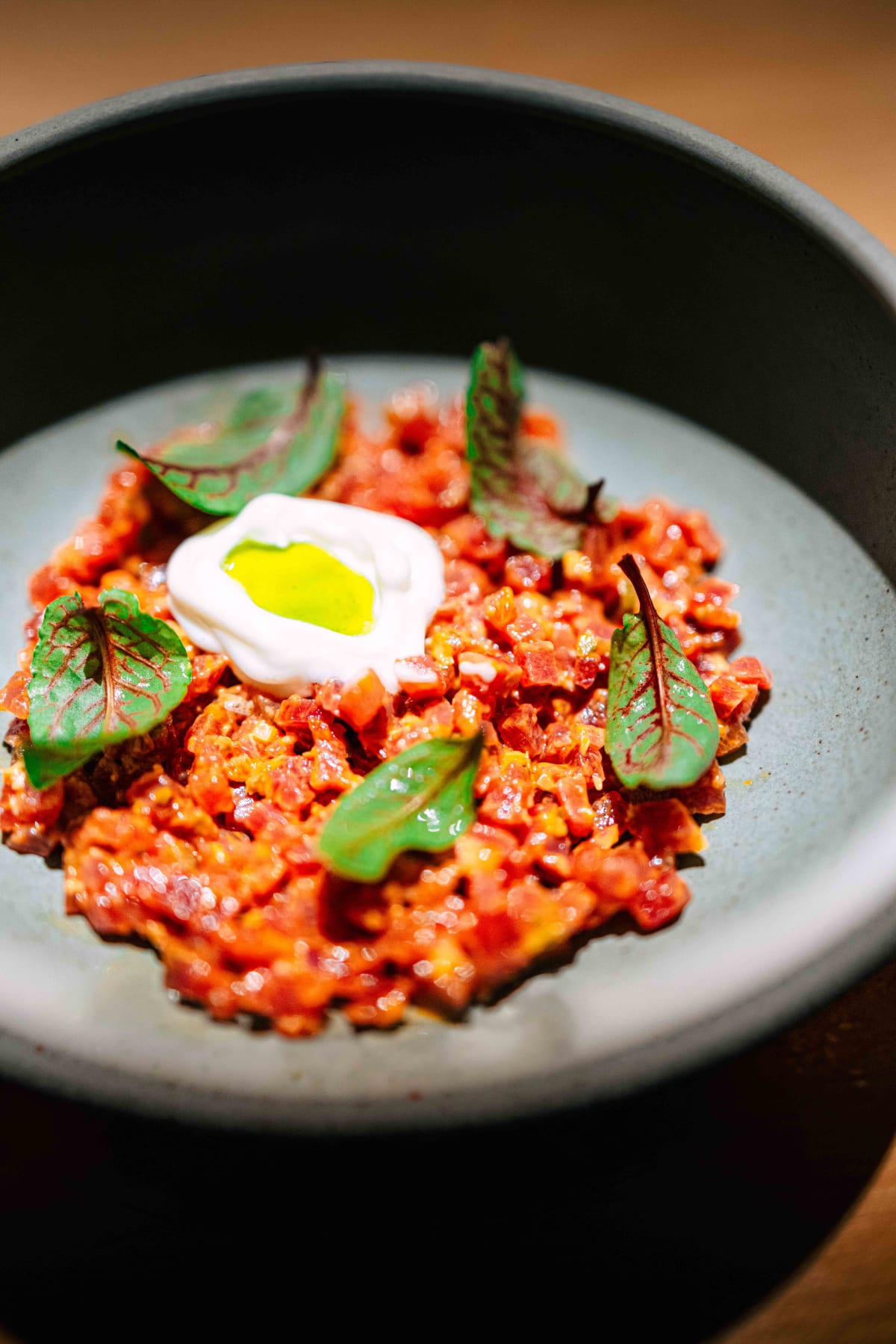
The fine, yukhoe like texture of the alpaca felt almost like jelly, which I liked. But the mayonnaise and the panca chilli sauce were strong enough that the meatiness of the alpaca itself barely came through. It was good on its own and fine on the cracker they gave with it, which tasted sweet and sour like a biscuit.
The second pairing was Hanan Tannat & Carmenère 2023 from Ica in Peru. Both varieties have developed well in South America, Tannat in Uruguay and Carmenère in Chile, and in this case the explanation was that Tacama brought French clones and planted them in the Ica valley.
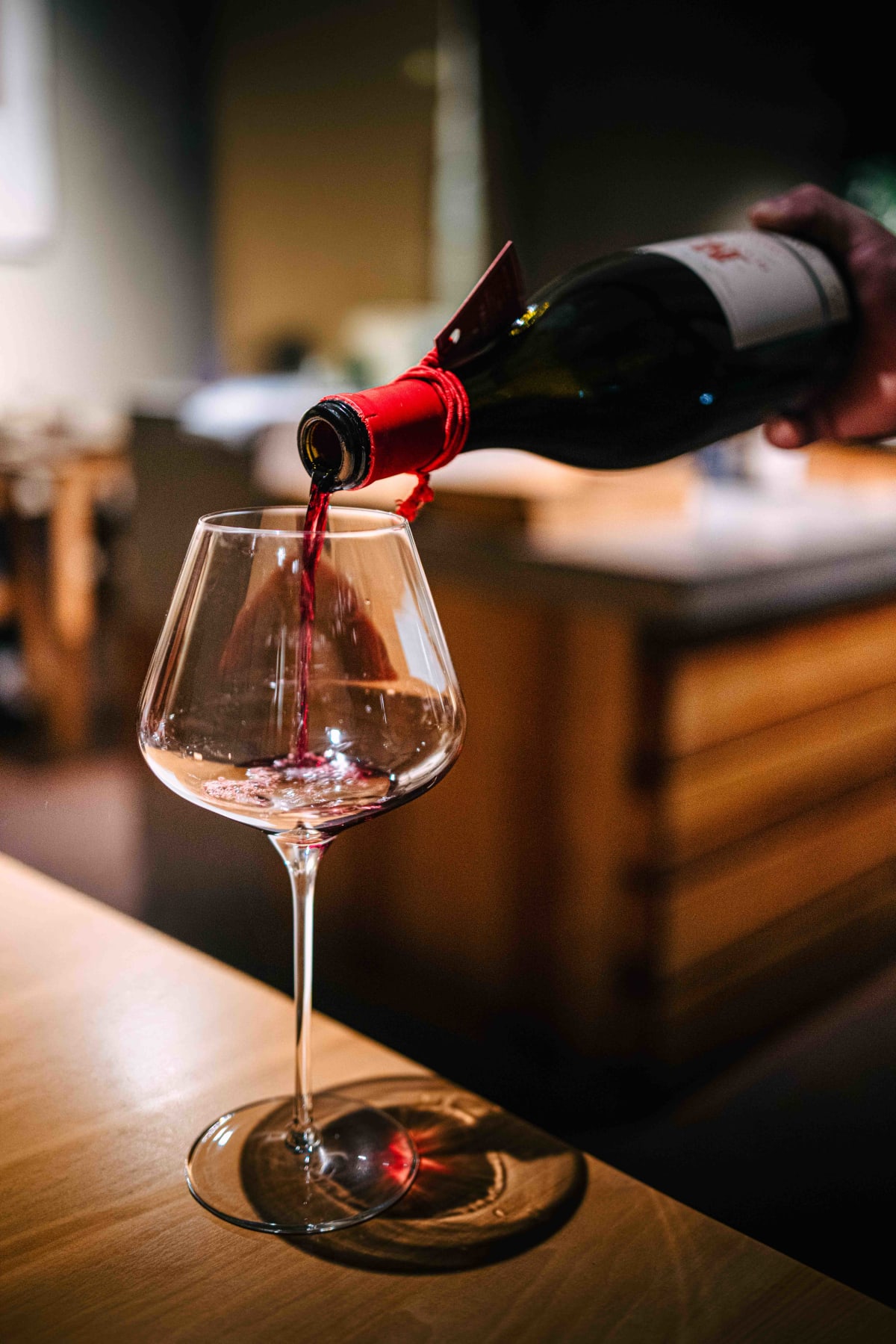
Ica is the central valley of Peruvian wine production and Hanan is this winery's top line. Hanan is in fact the icon wine of Tacama, one of the oldest wineries in South America, and hanan means lofty and high in Quechua. Eighty percent Tannat with twenty percent Carmenère, from grapes grown in the sand of the Ica desert, aged in barrels used for one year.
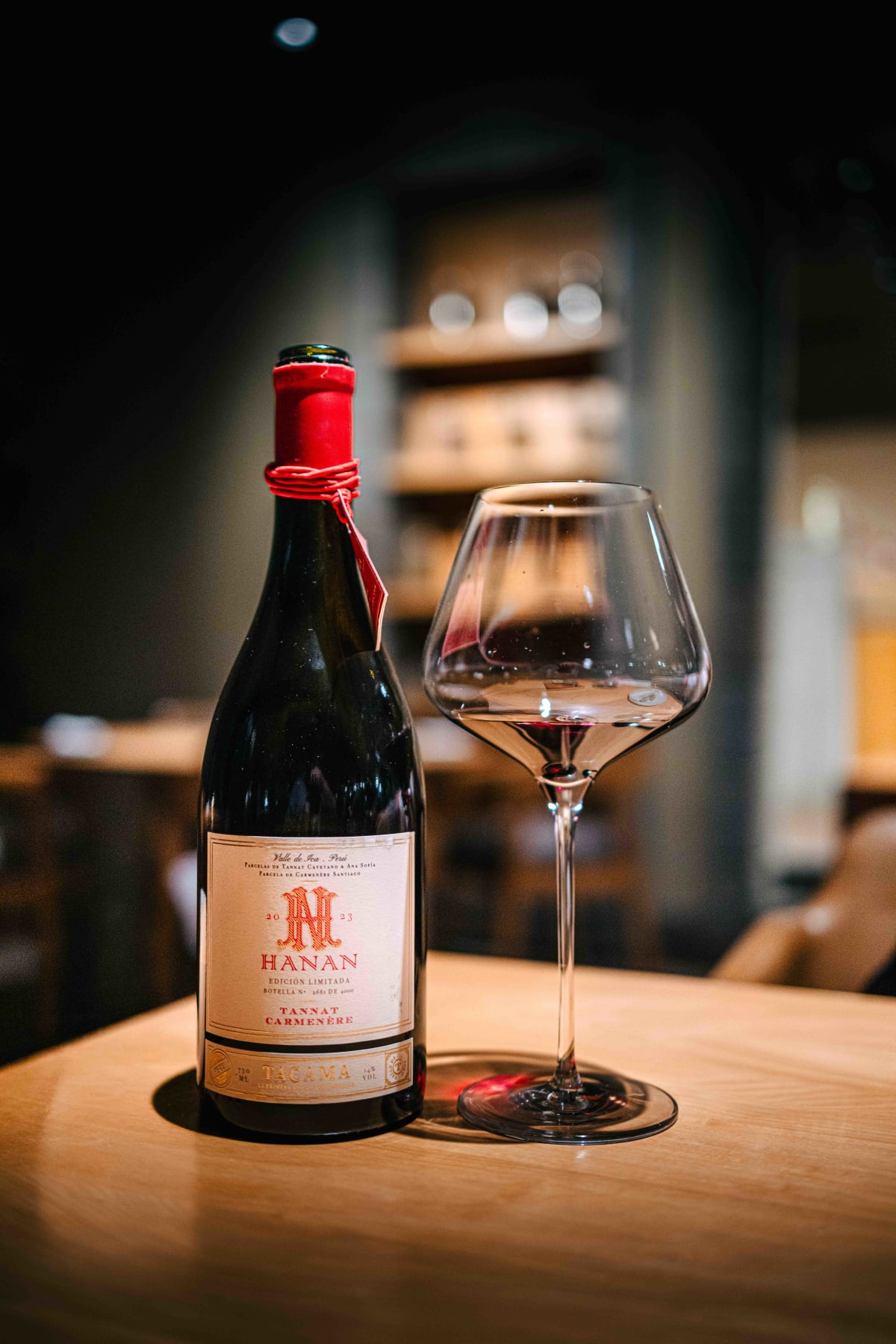
The bottle was marked 2023, number 3681 of a limited numbered run of four thousand, and it sits among the most expensive Peruvian reds. A trace of berry passed first, then an aroma calling fermented soybean paste to mind followed.
Section 9·Trout Sudado
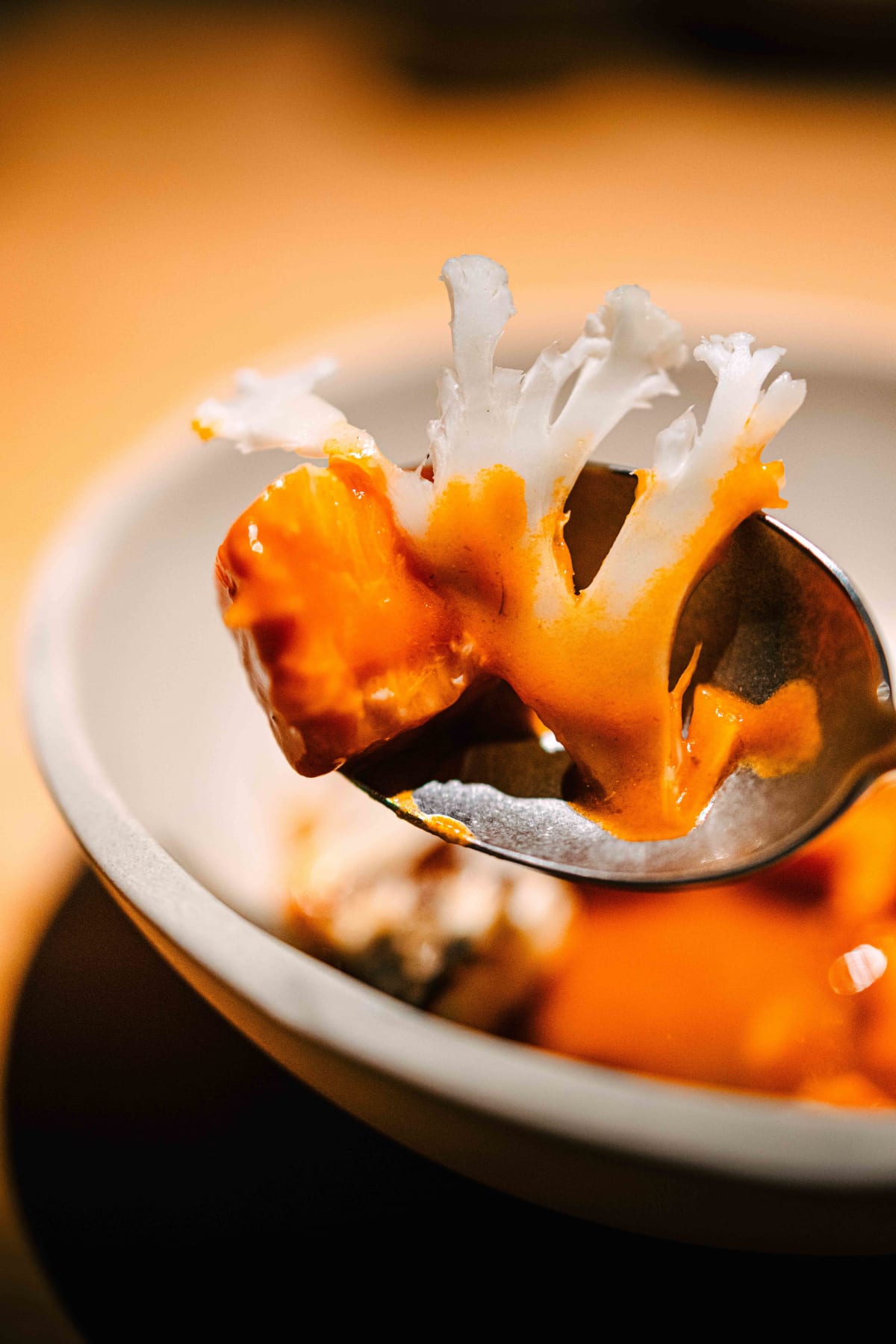
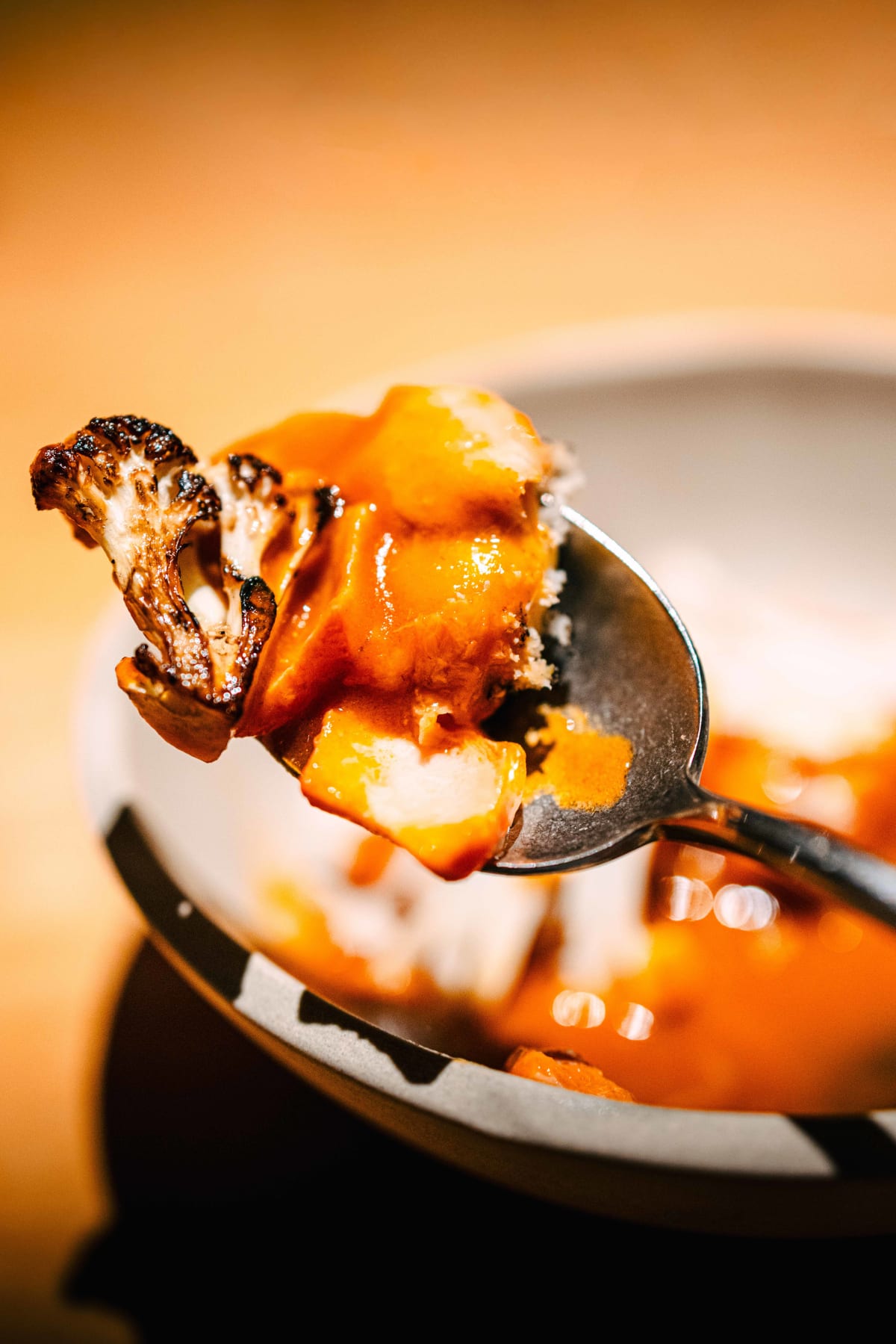
The fourth course was trout sudado. Sudado is a Peruvian method of cooking in hot liquid. The trout is cut into several pieces and put into a large vessel with chilli and the fermented corn preparation called chicha, then cooked slowly for about three hours.
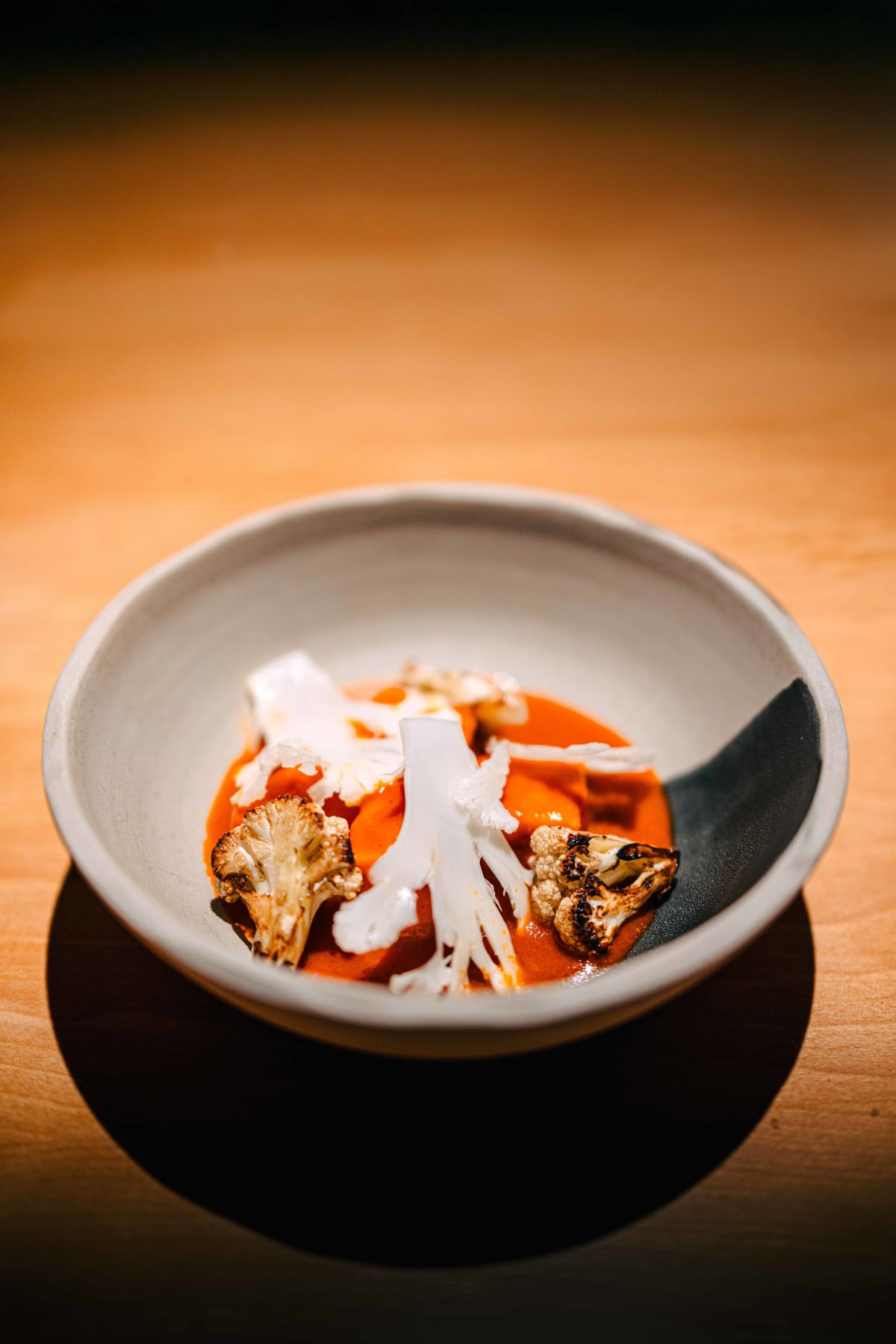
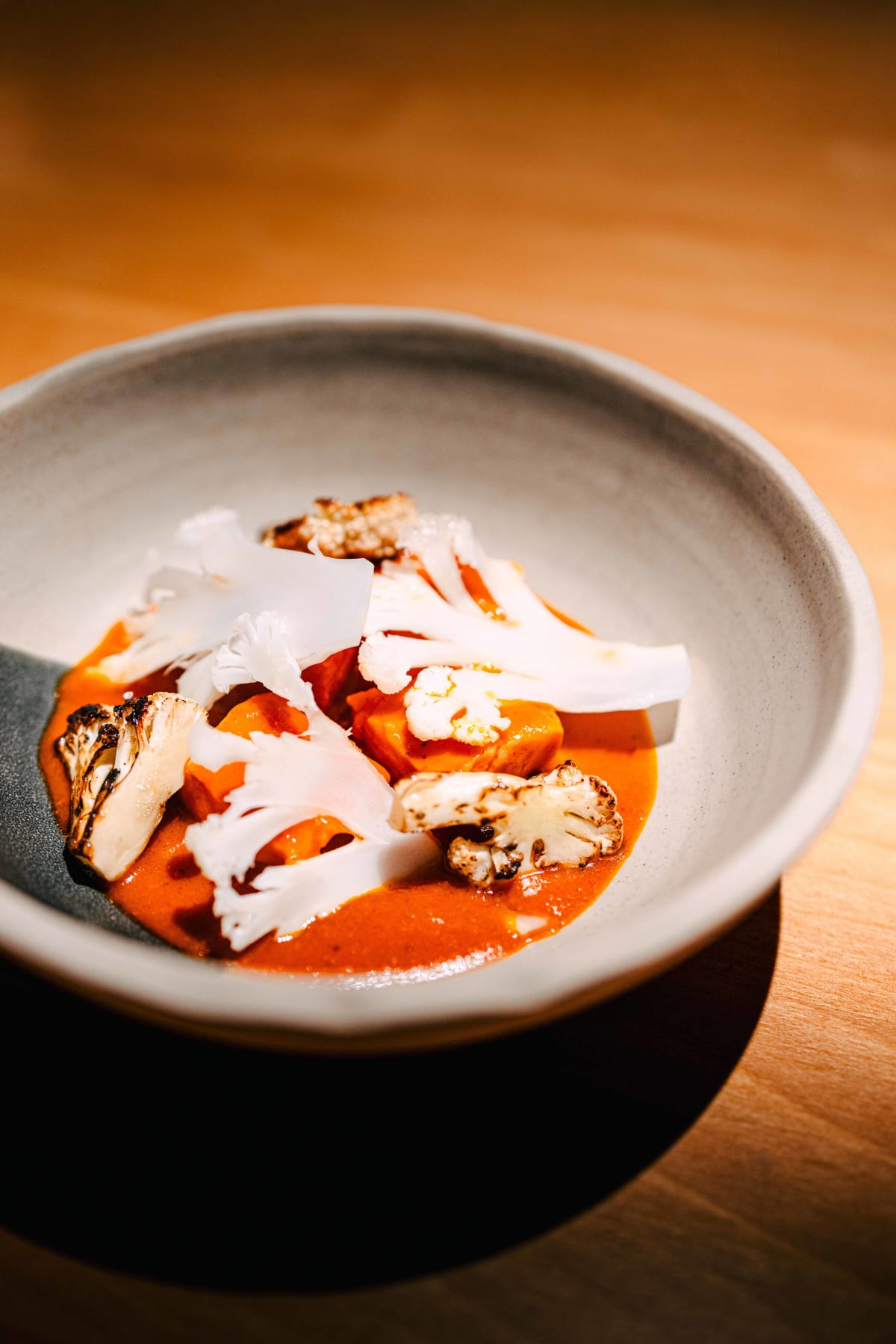
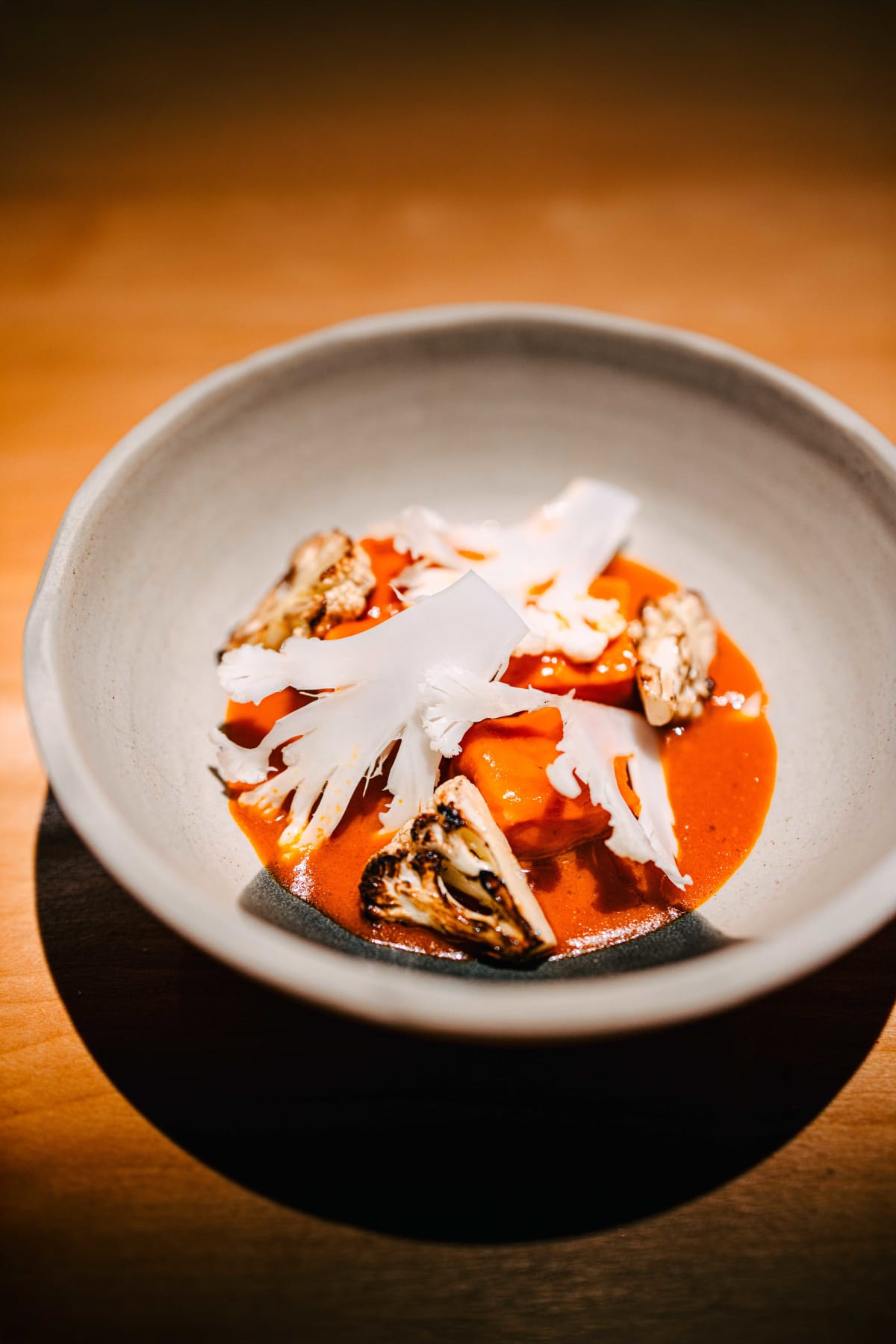
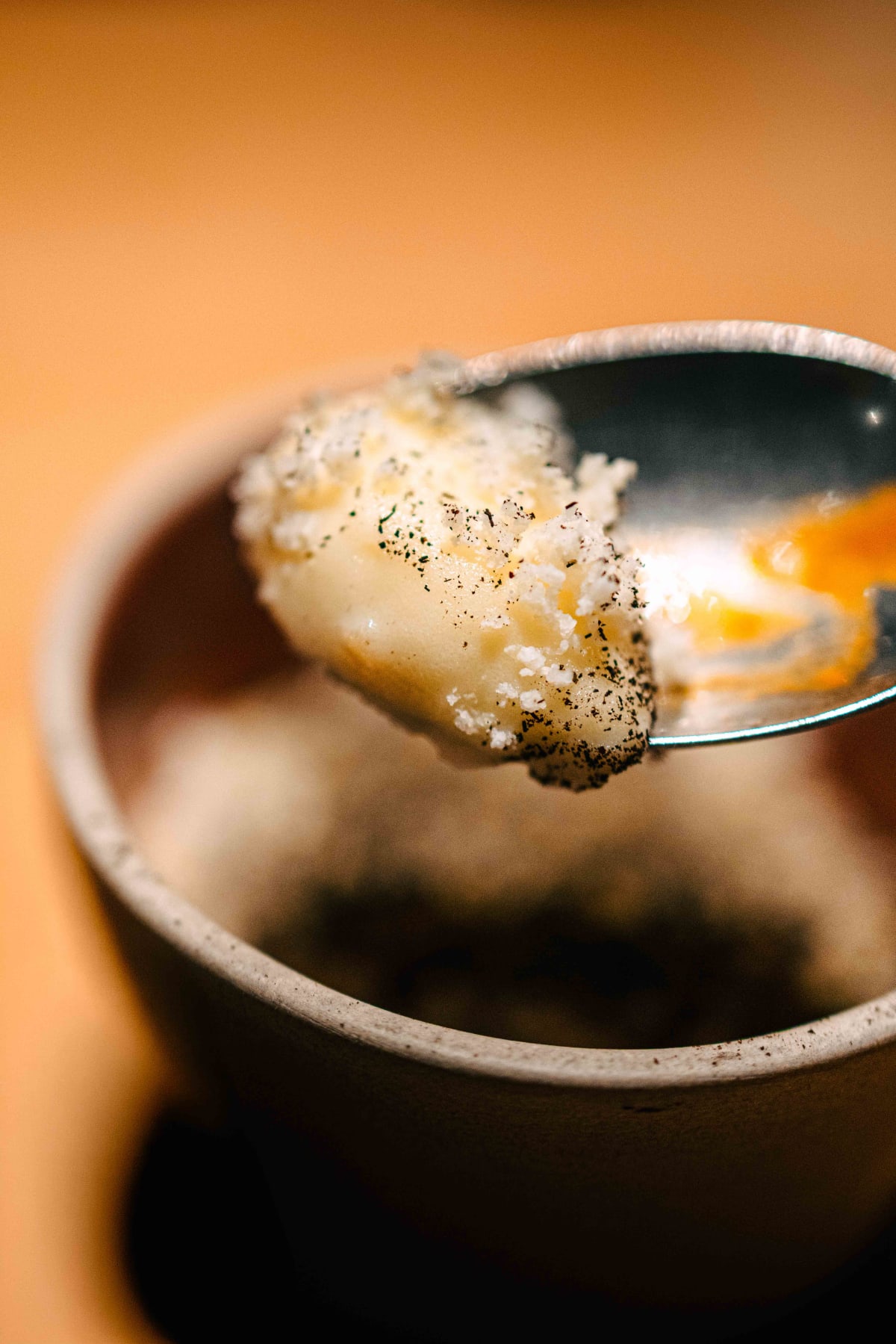
The explanation was that the trout takes on colour and flavour differently through that process. Raw cauliflower and charred cauliflower went on top, and potato purée and cauliflower dusted with ash formed the base.
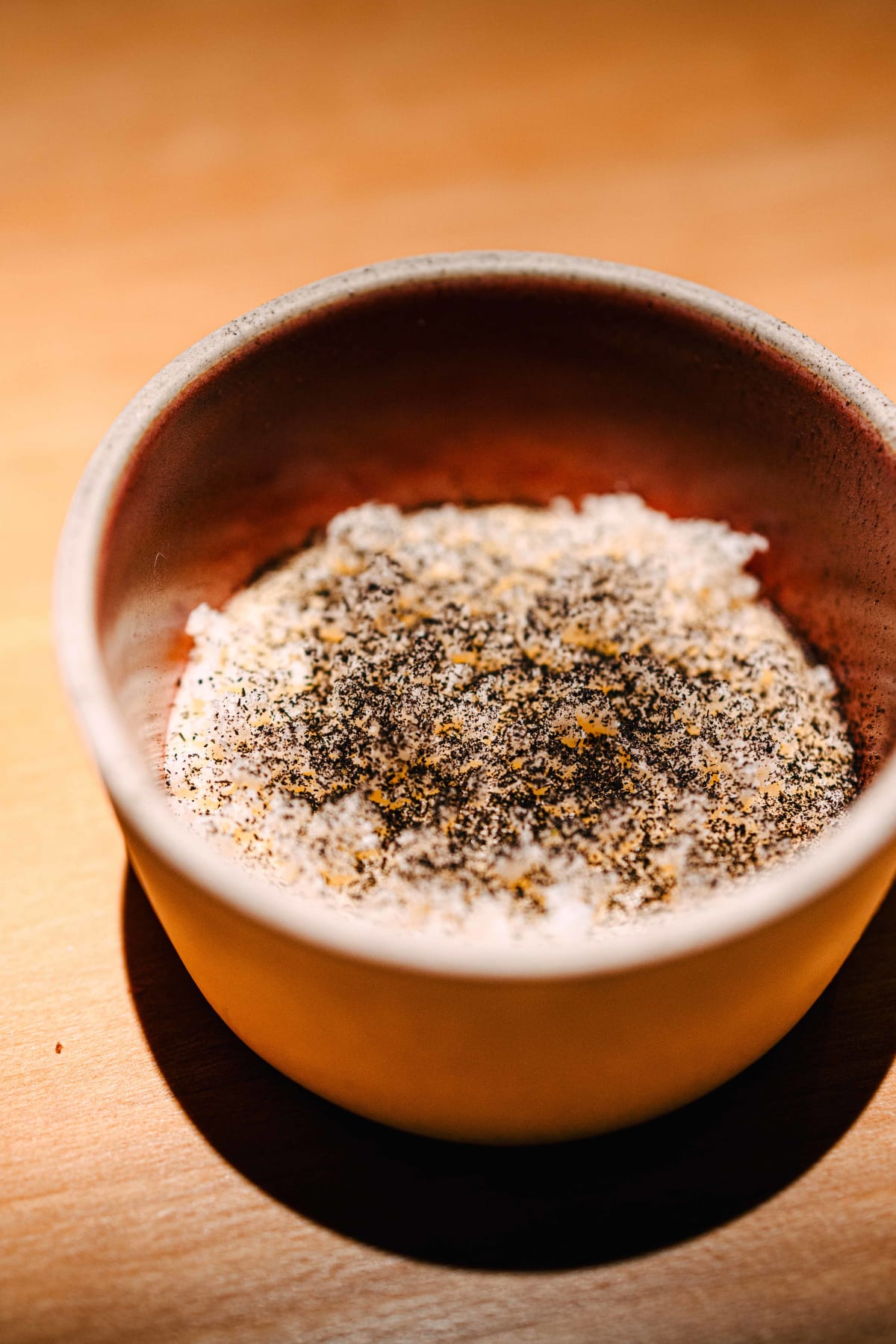
Peruvian food generally carries some acidity and this dish did too. The cooking of the trout was excellent, and grilling the cauliflower crisp to give a contrasting texture was good. Eating it with the buttery potato purée worked well, the huamantanga potato was quite sweet, and the ash on top added several different registers. The sauce led with the chilli.
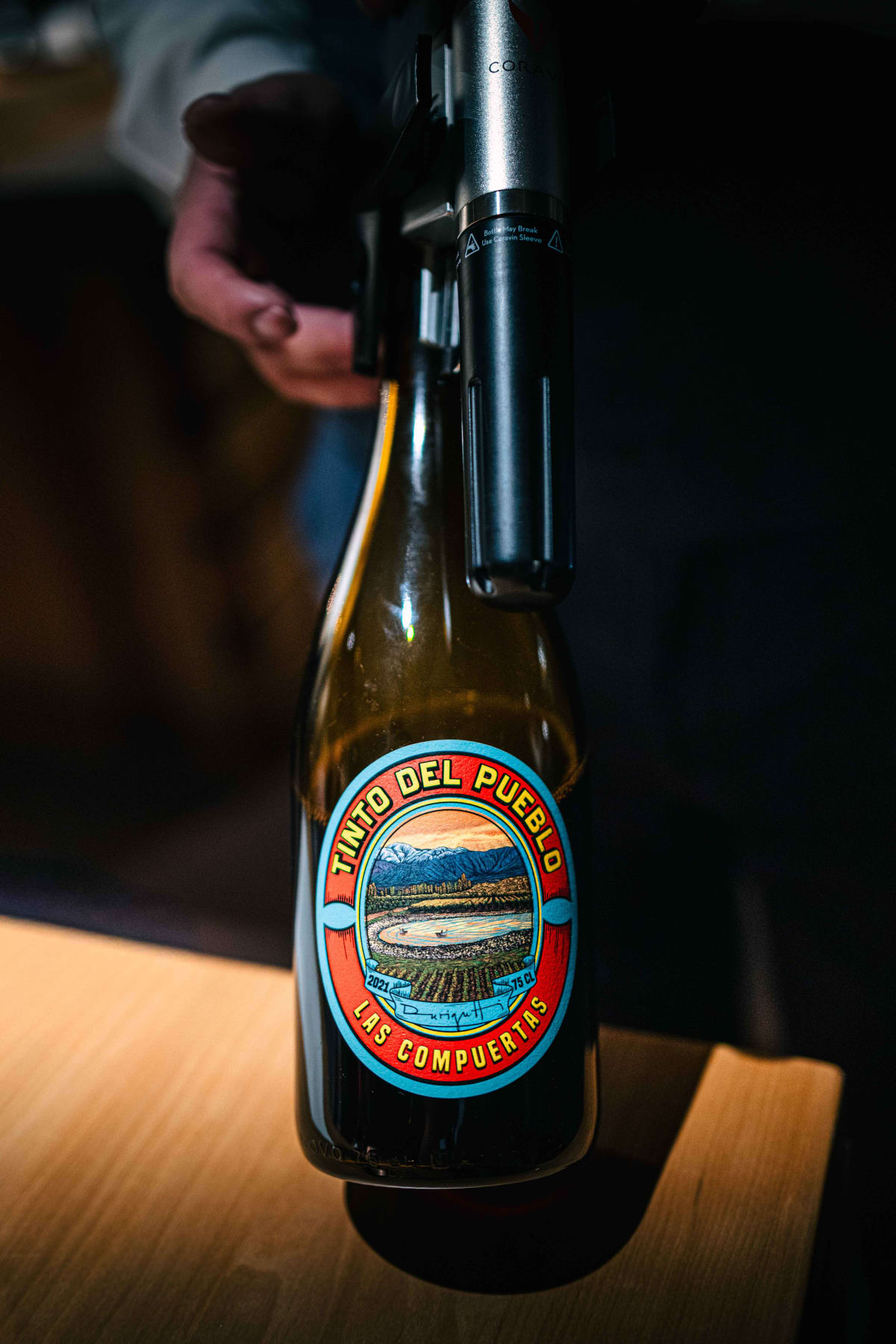
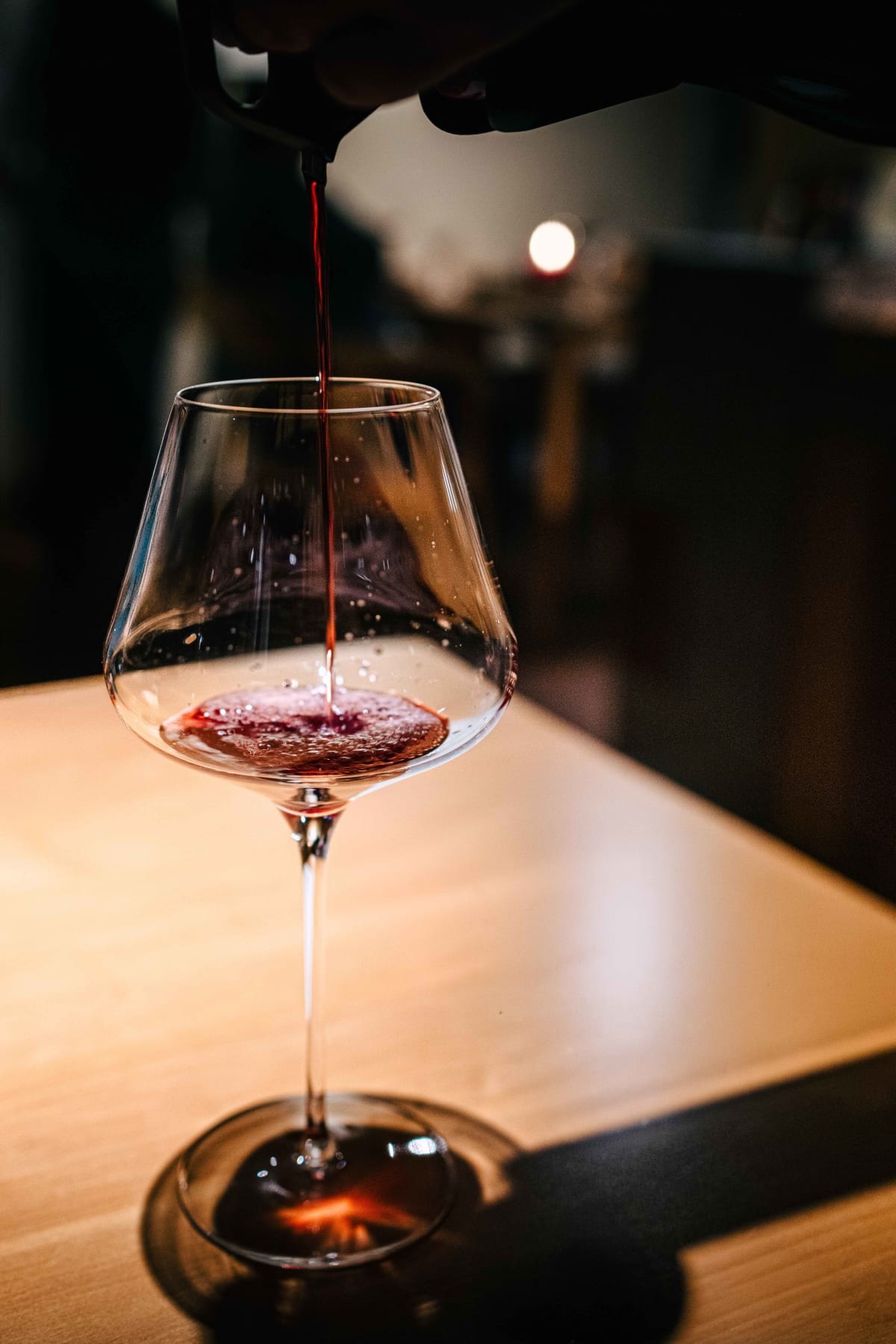
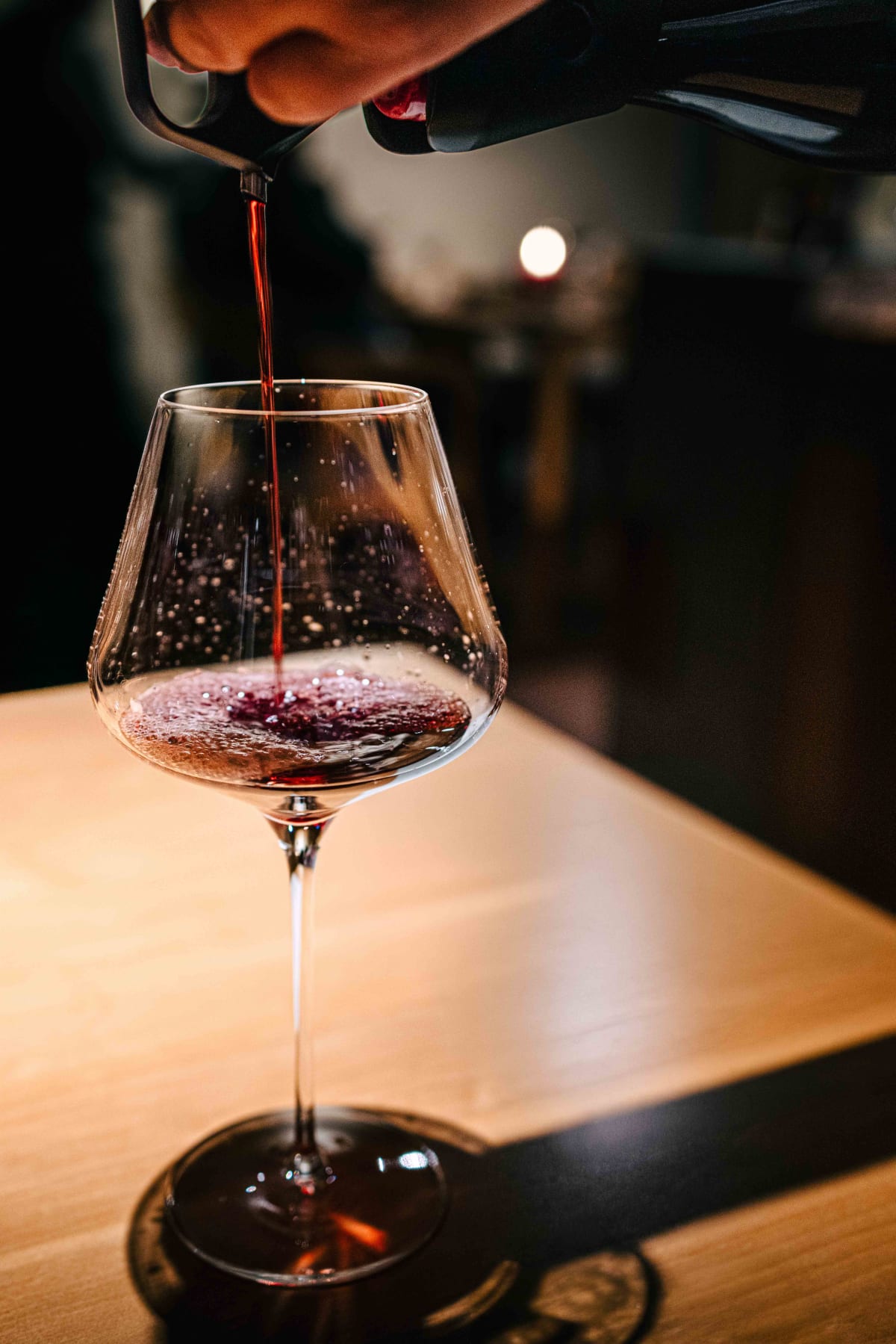
The third pairing wine was Héctor Durigutti Bonarda Tinto del Pueblo 2021 from Luján de Cuyo in Argentina.
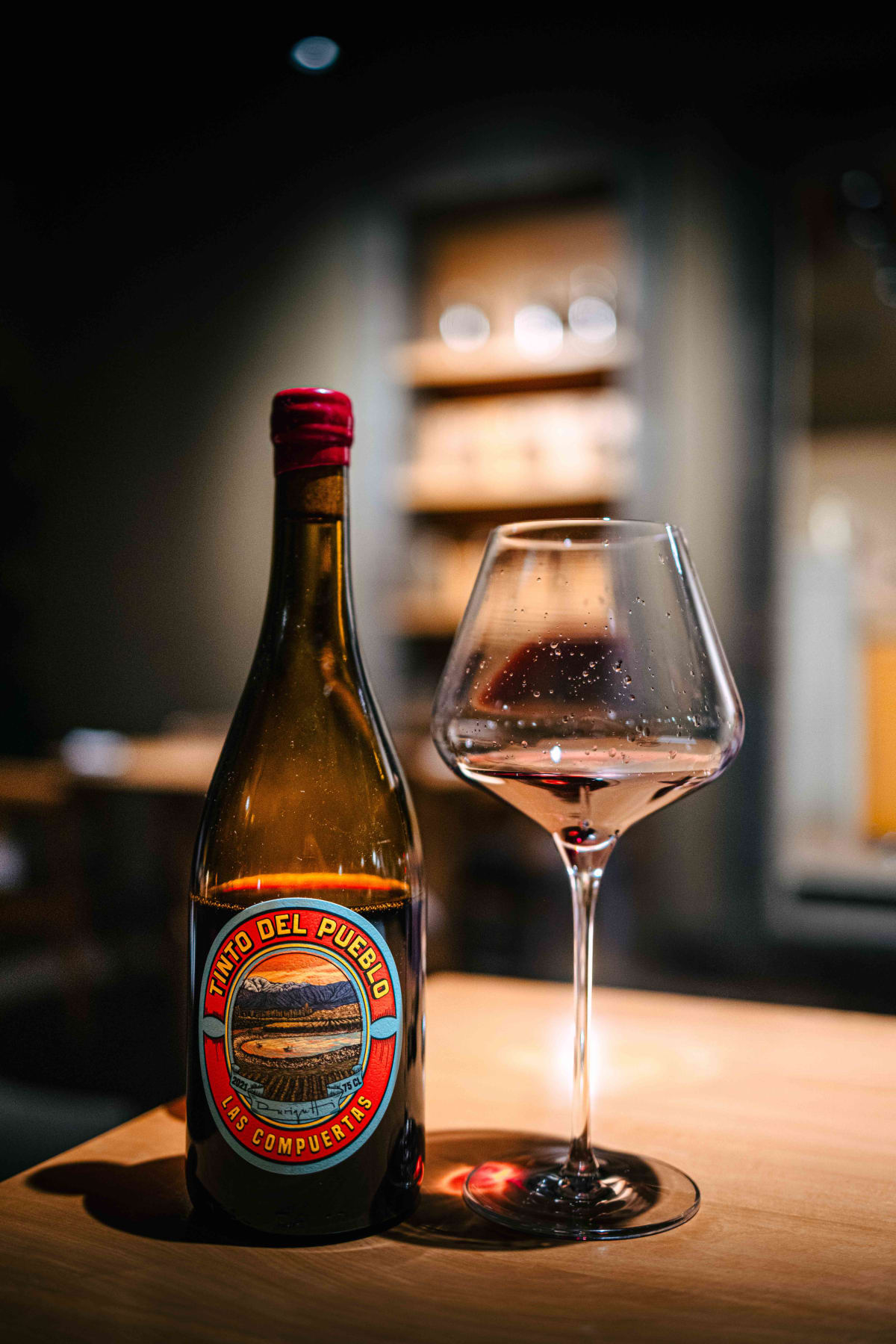
The pairing card listed it as Bonarda and the staff member introduced it as Bonarda with Malbec added. It is made by the brothers of Durigutti Family Winemakers, who take grapes from the plots of several small growers in the village of Las Compuertas, make them into the wine of that year and age it four months in cement tanks. It is a line dedicated to the village and its smallholders.
Section 10·Pork Belly
The fifth course was pork belly confit. Arracacha, maca and quince were listed alongside. The staff member explained that it sits on a sauce similar to the trout sudado before it but slightly different, with a reduction of pork bone added to the chilli and chicha.
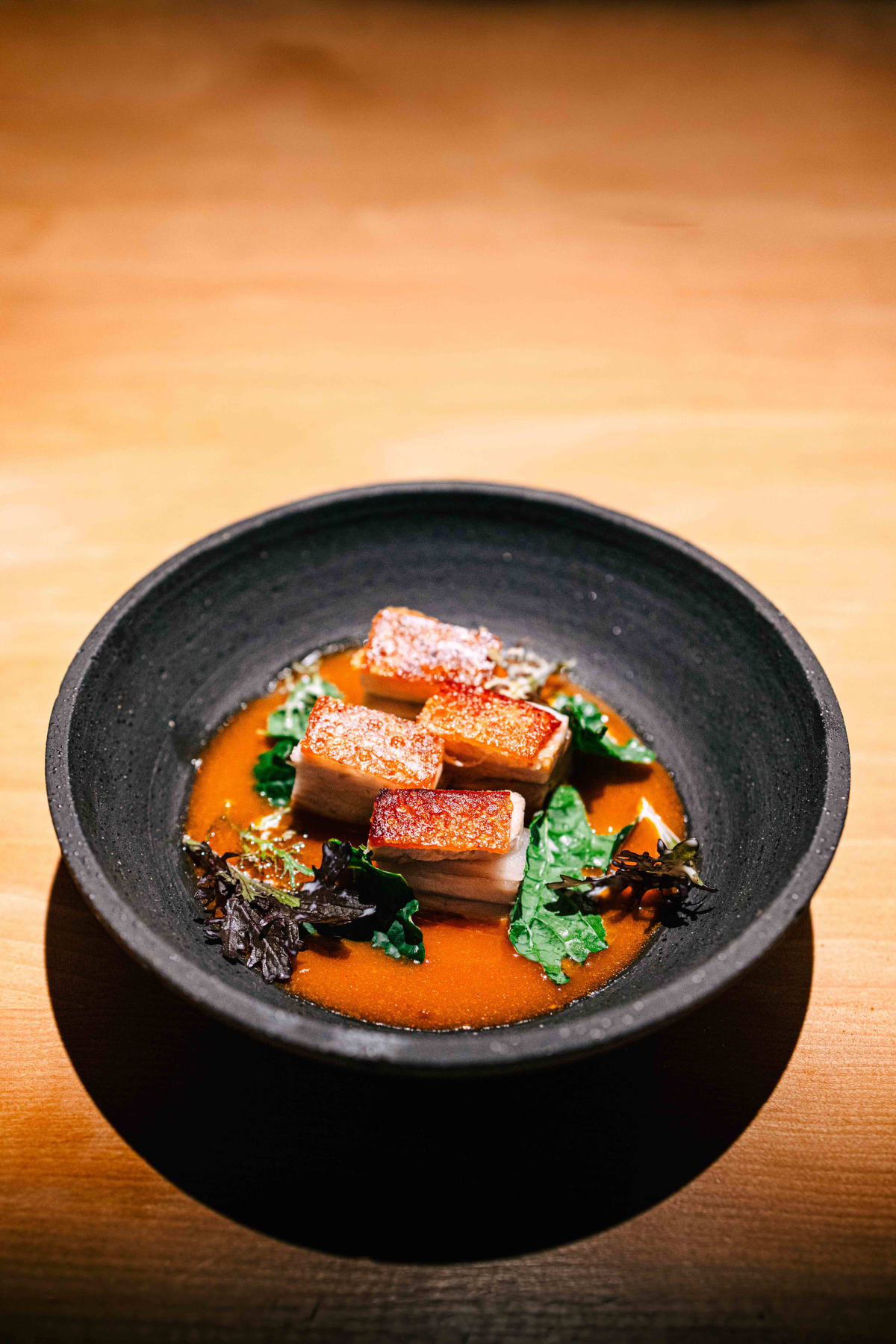
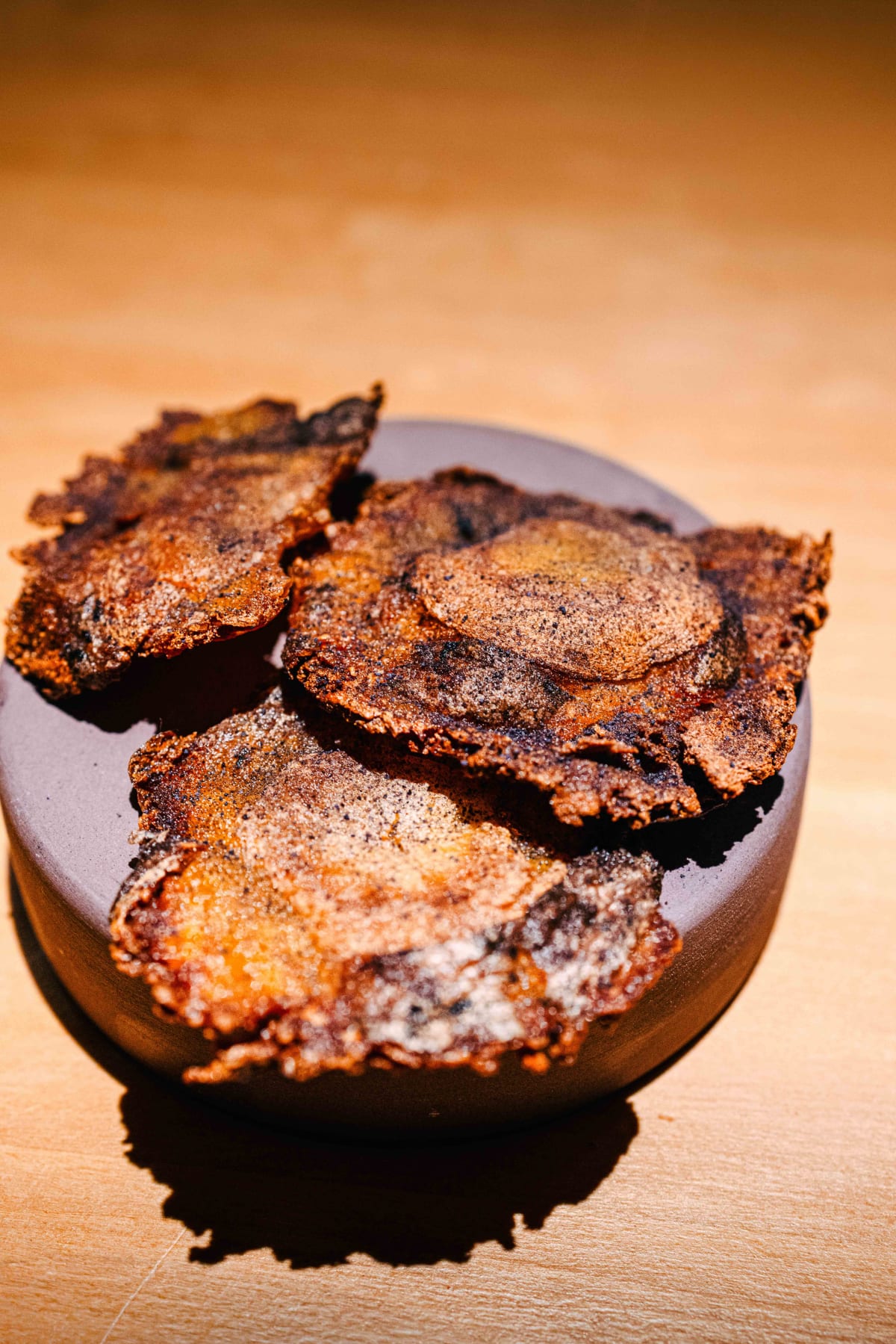
Alongside were roasted squash dressed with an oil made from a sweet fruit from the jungle, and a cracker made from arracacha, an Andean root crop.
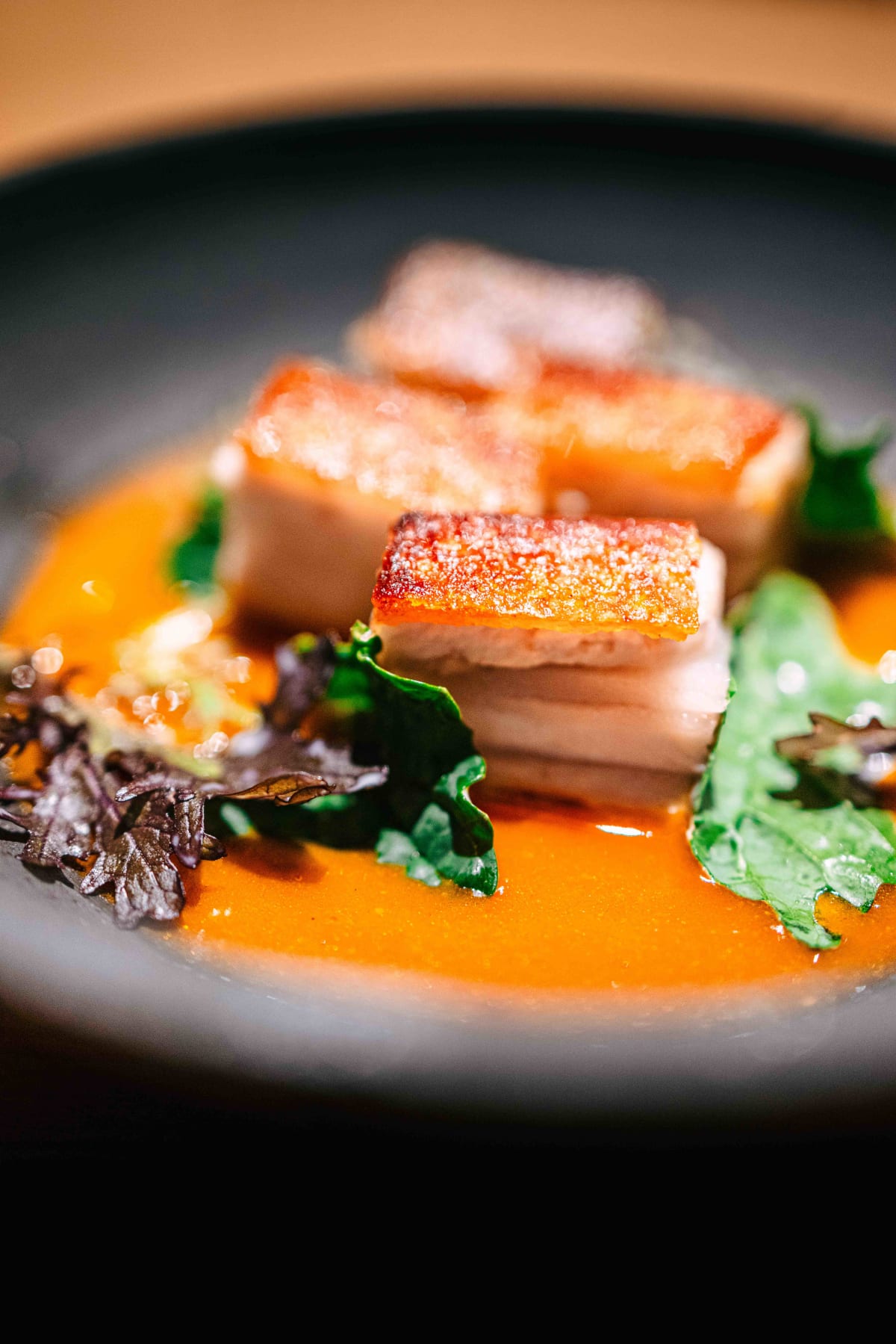
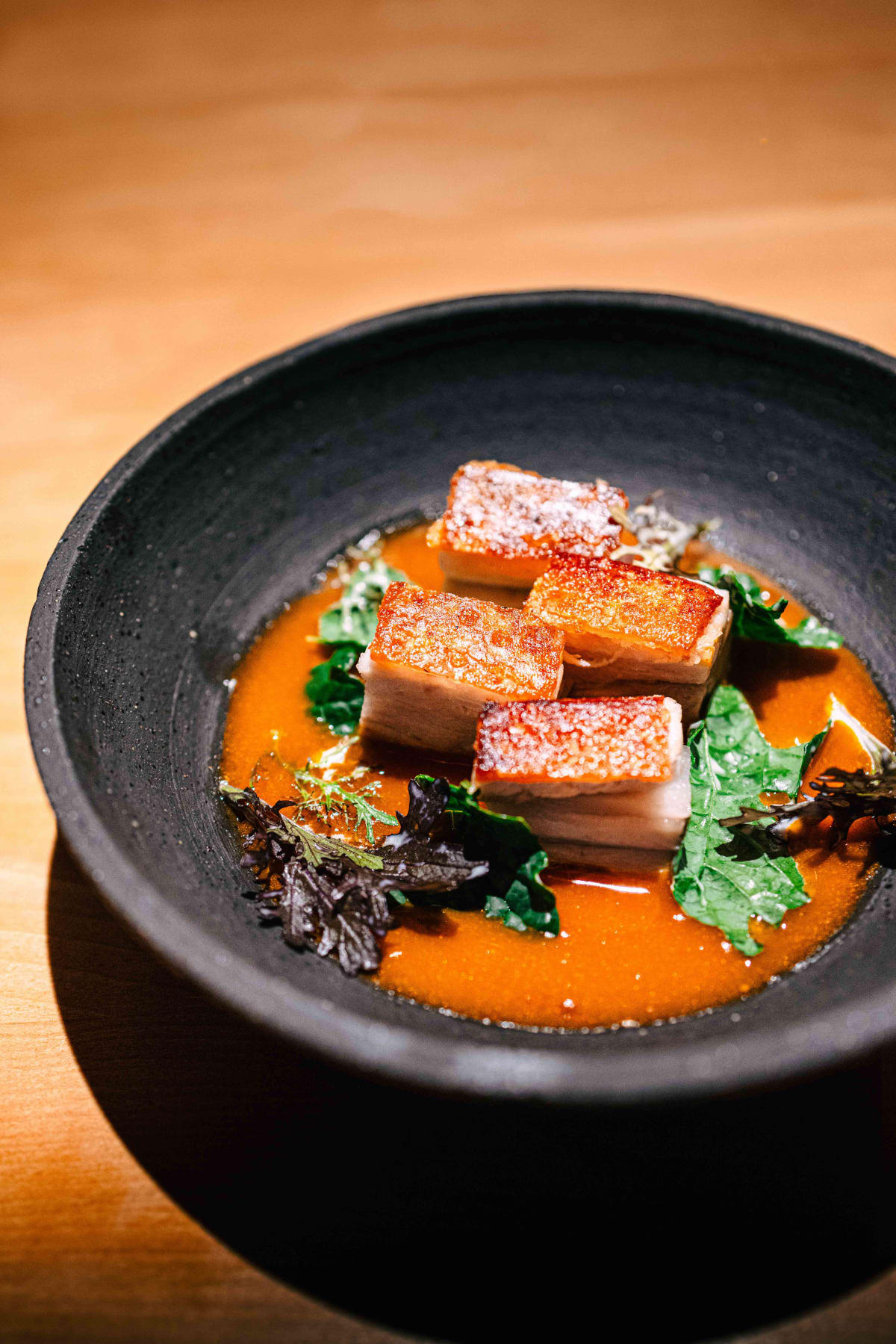
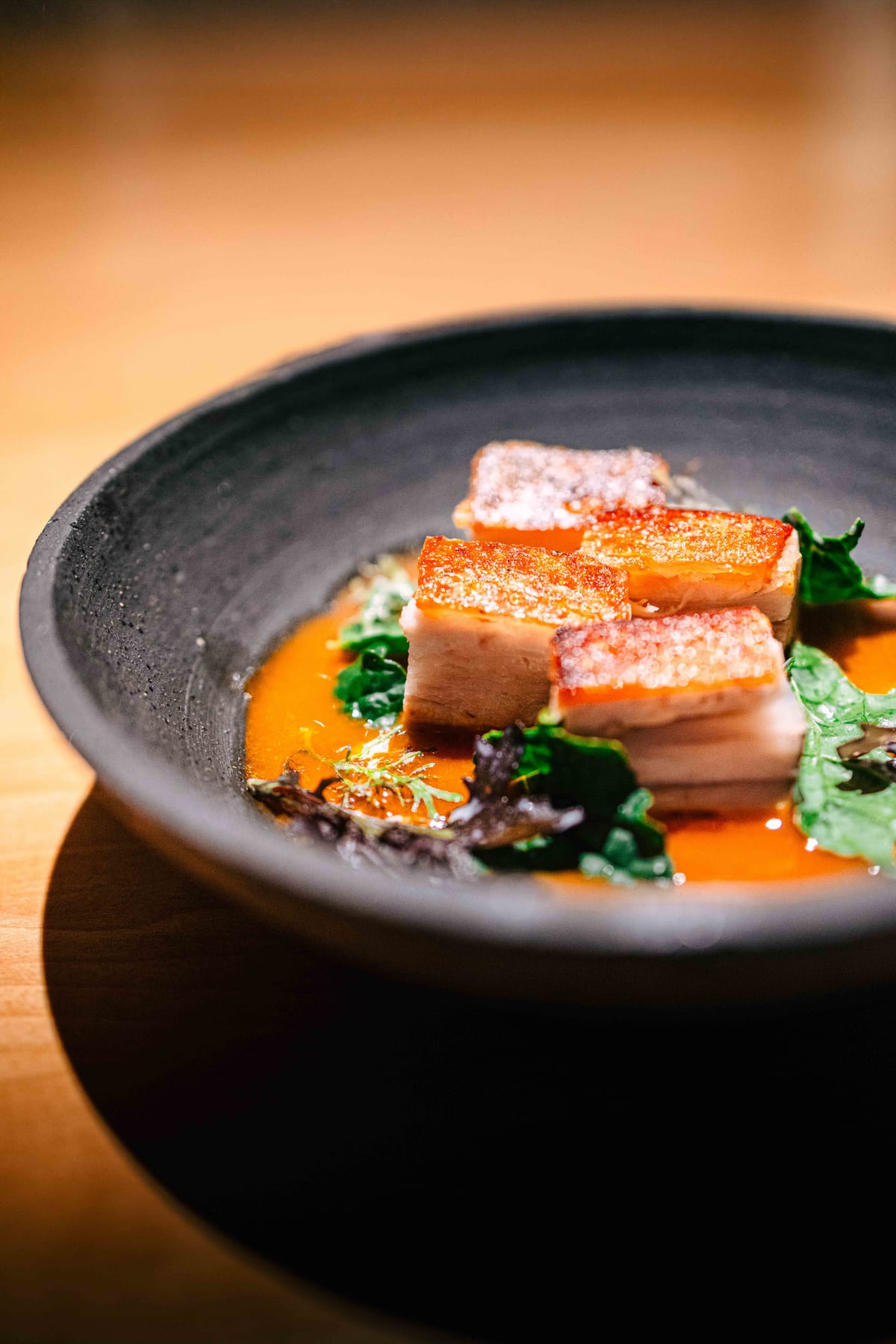
This pork dish was outstanding. The sauce looks like a thin tomato sauce and seems to hold chicha, pork stock and chilli.
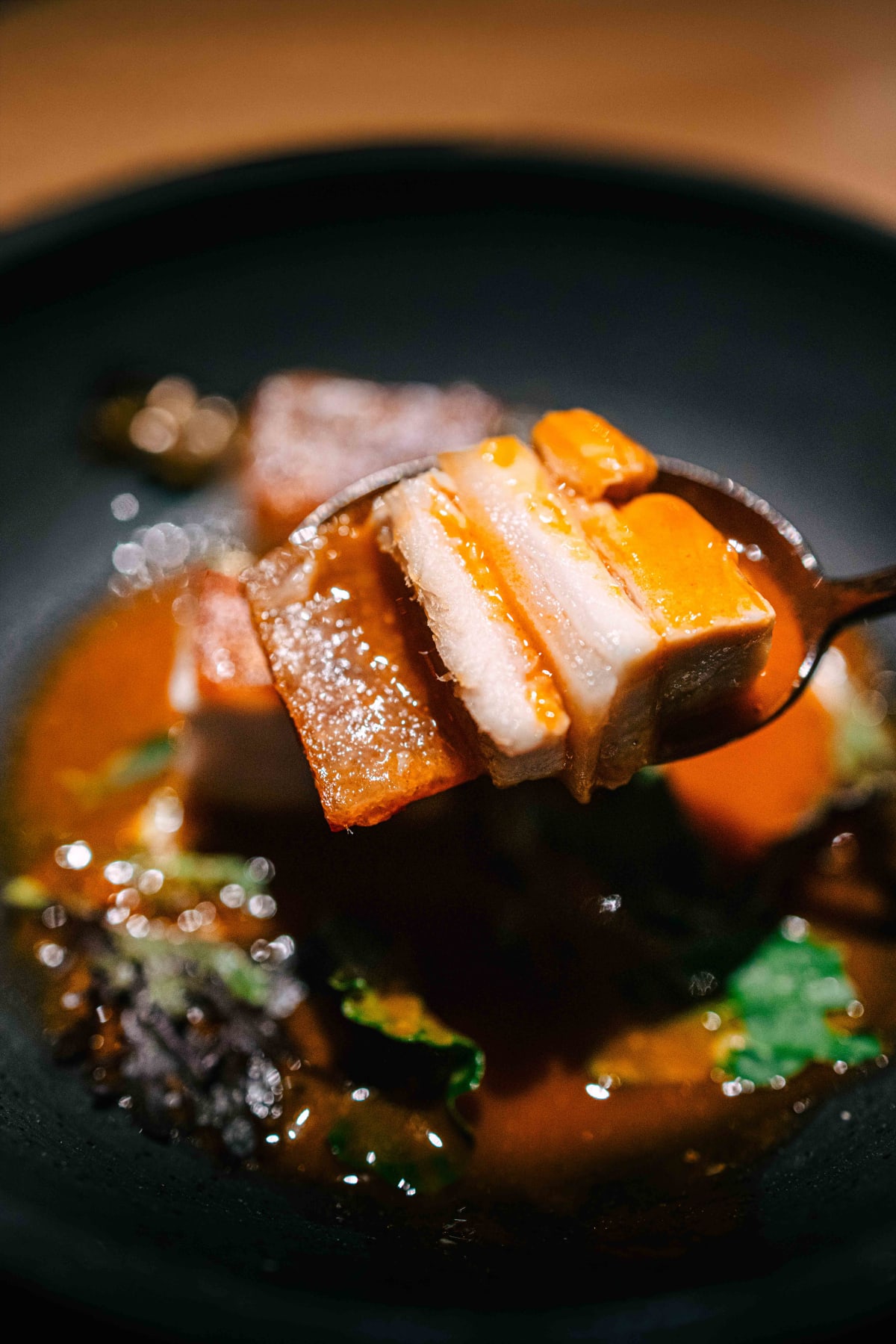
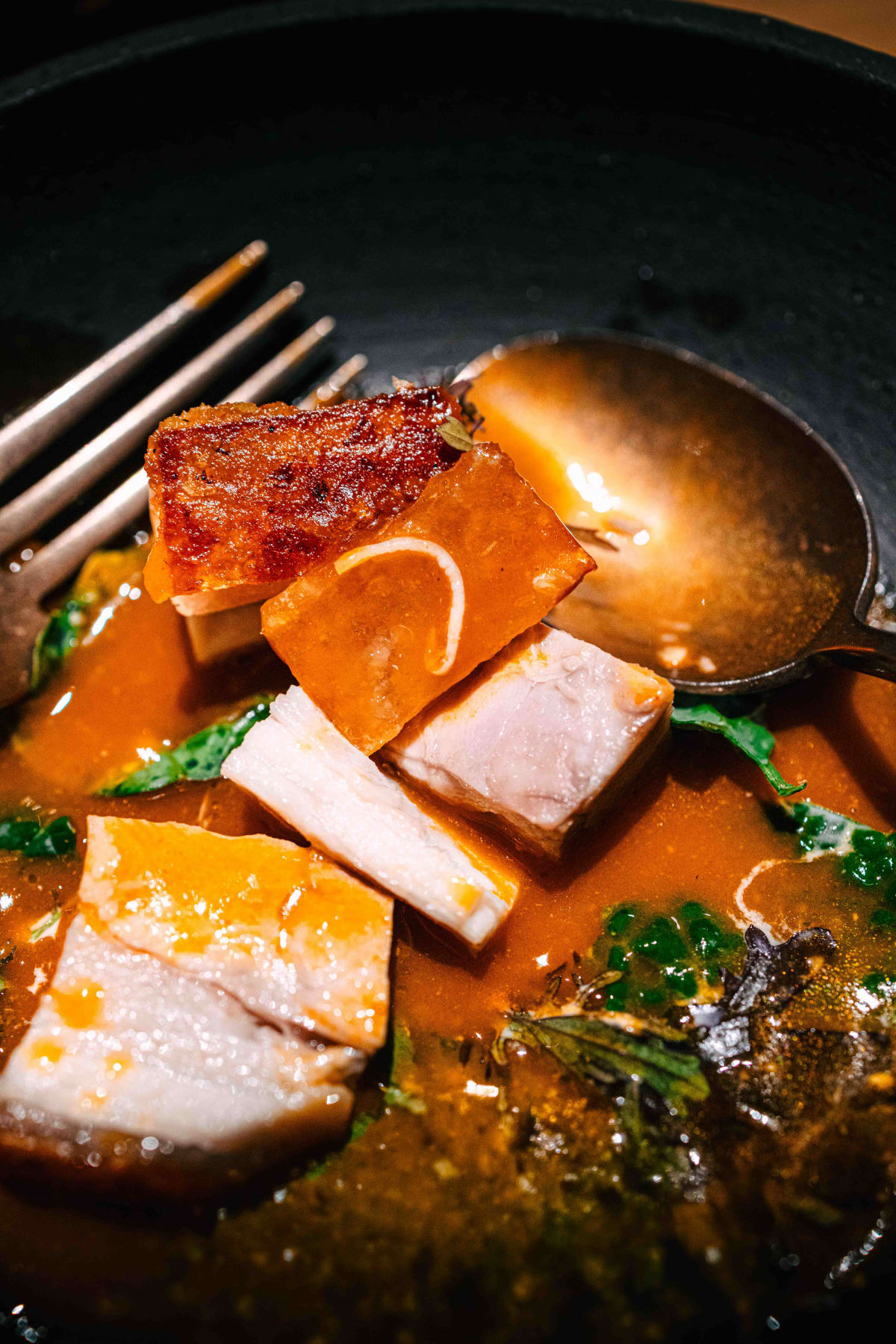
Above all the cooking was the thing. Touch the skin, the fat and the meat with a fork and each separated from the other. I suspect each part was cooked separately at its own best point and then put back together. The skin was very crisp, the meat was tender and the aroma was good.
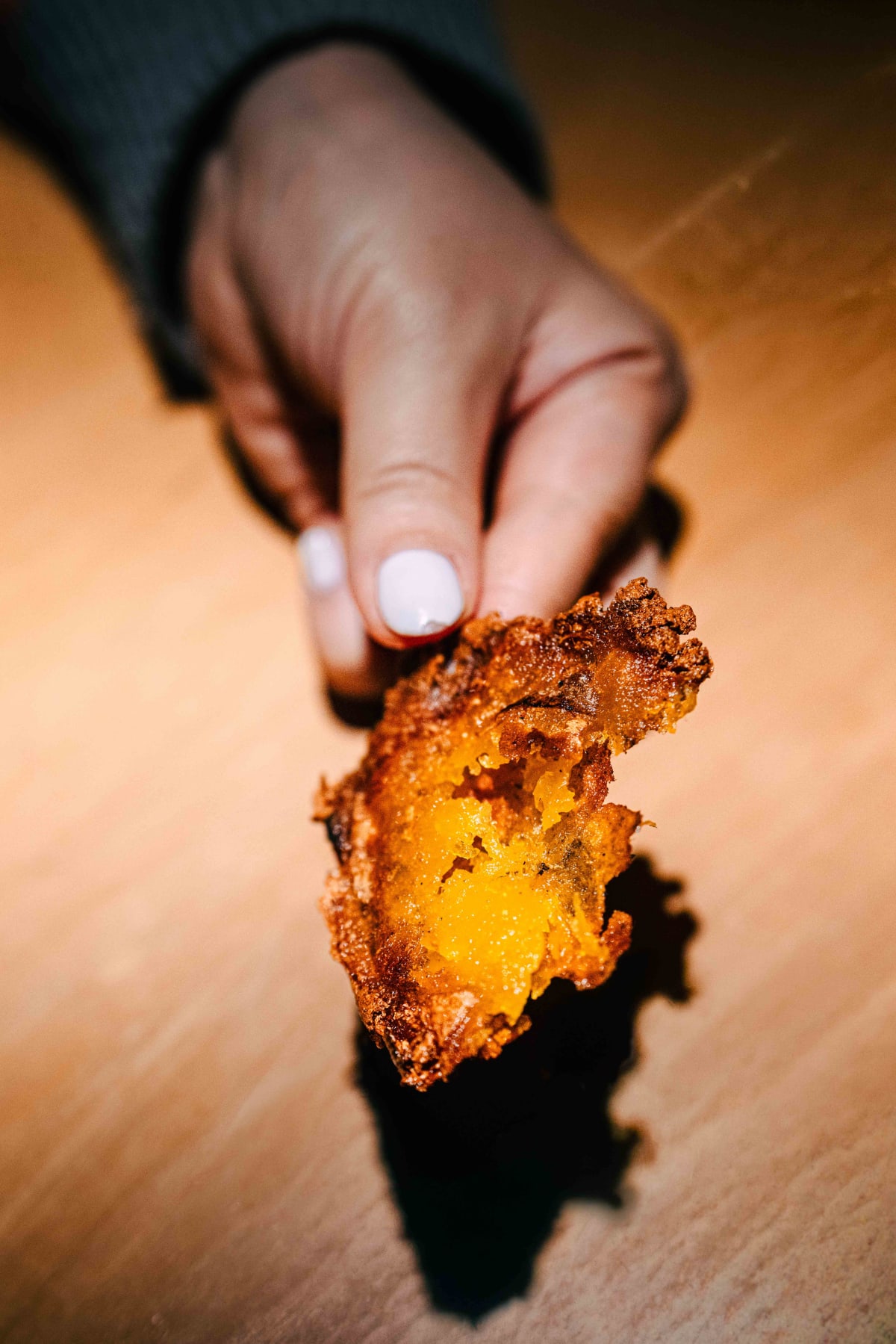
The fried arracacha that came with it was excellent too, sweet like a sweet potato with a crispness that lifted the whole flavour. Pork is the ingredient I ate most in Peru, and among all of it this cooking was close to art.
Section 11·The Lucuma Plate
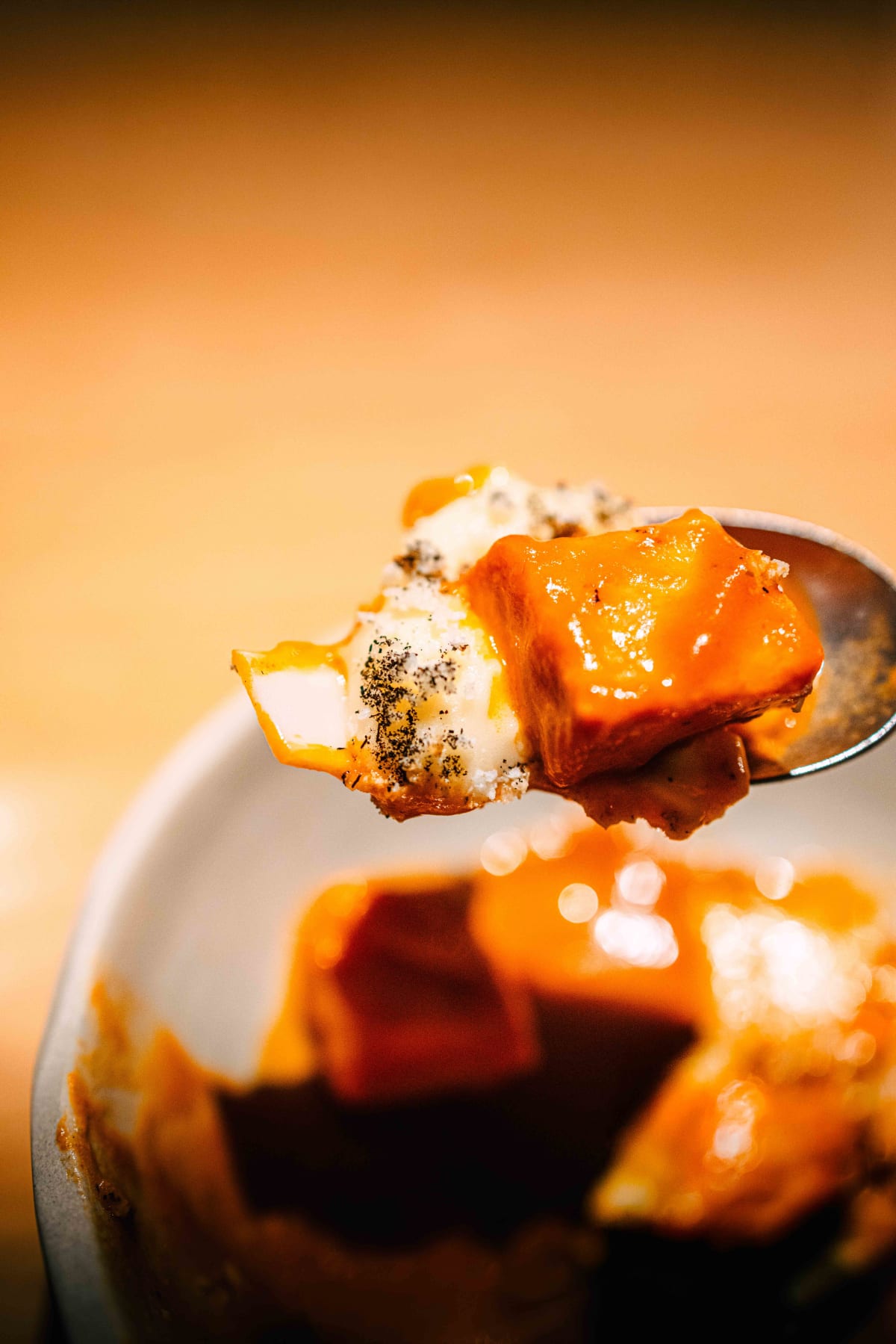
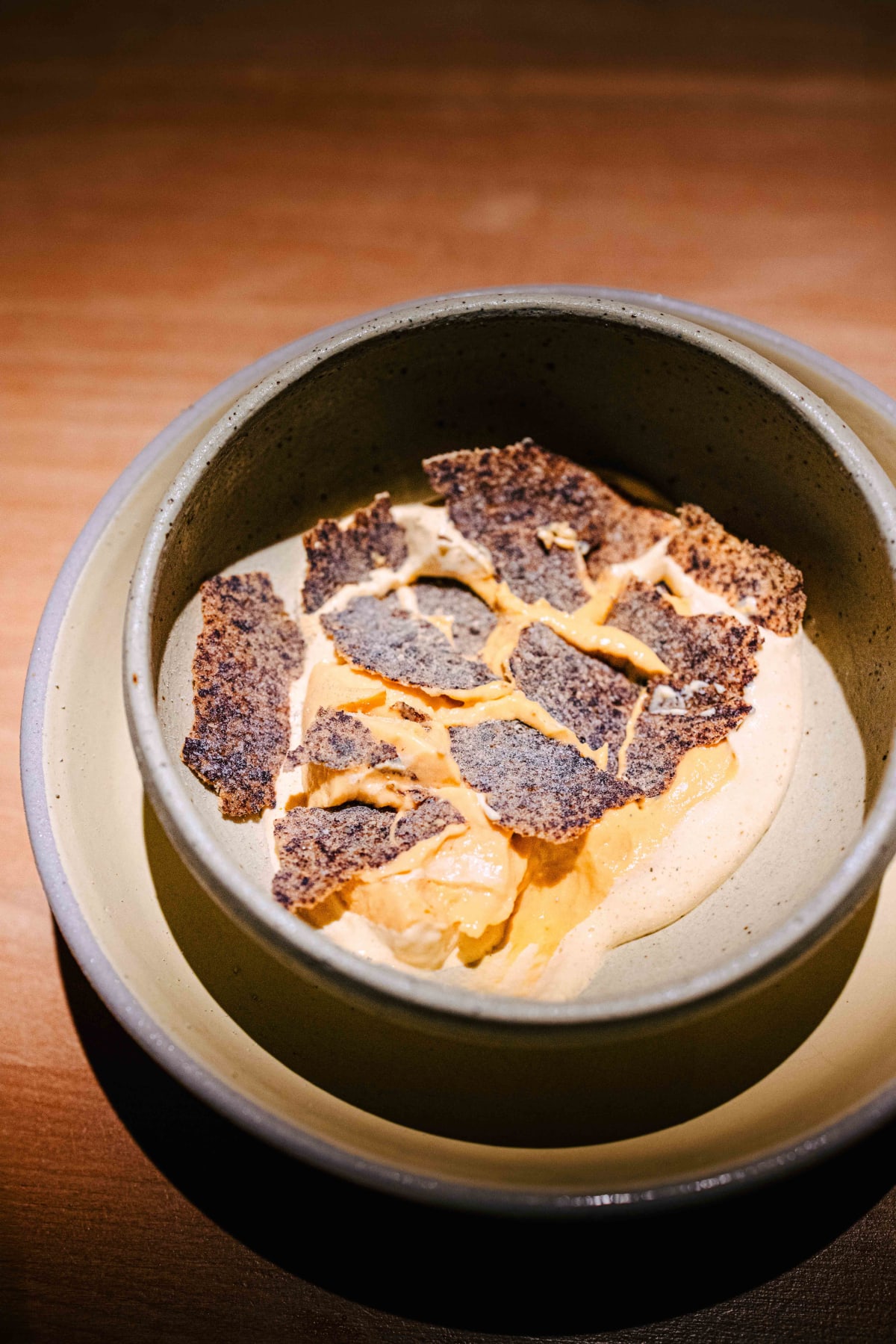
The sixth course and first dessert was lucuma, a plate with Maras salt, coffee and arrayán, the Andean myrtle. The staff member introduced lucuma as a traditional Cusco fruit, green outside and yellow within, a little dry eaten plain but very creamy, with a natural flavour like toffee and caramel.
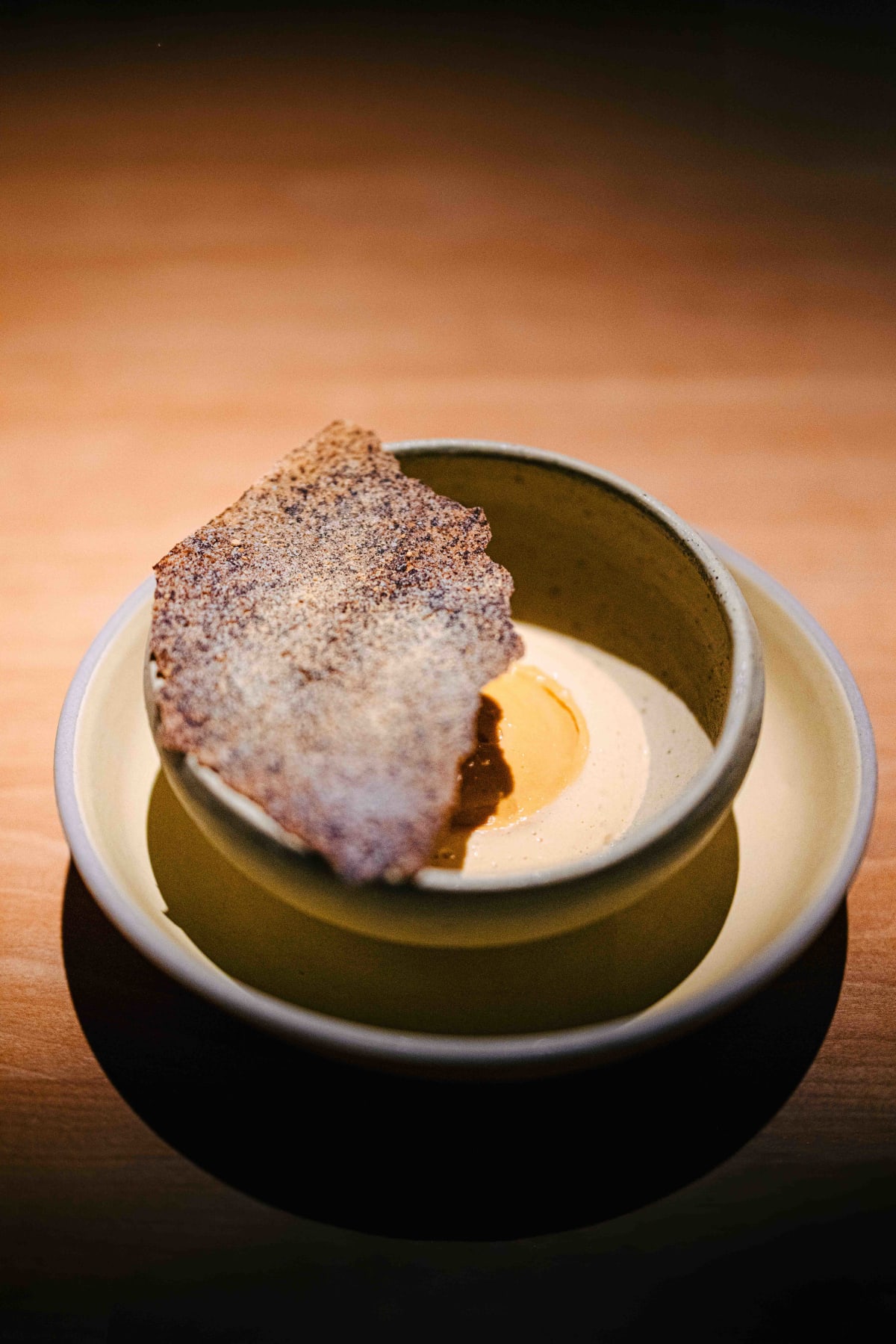
The plate reads the fruit itself in several forms, holding cream and mousse, toffee and ice cream, with a texture laid over the top. Inside that texture were small amounts of the clay we had seen on the Mater table, coffee and Maras salt, and they recommended taking it all up together.
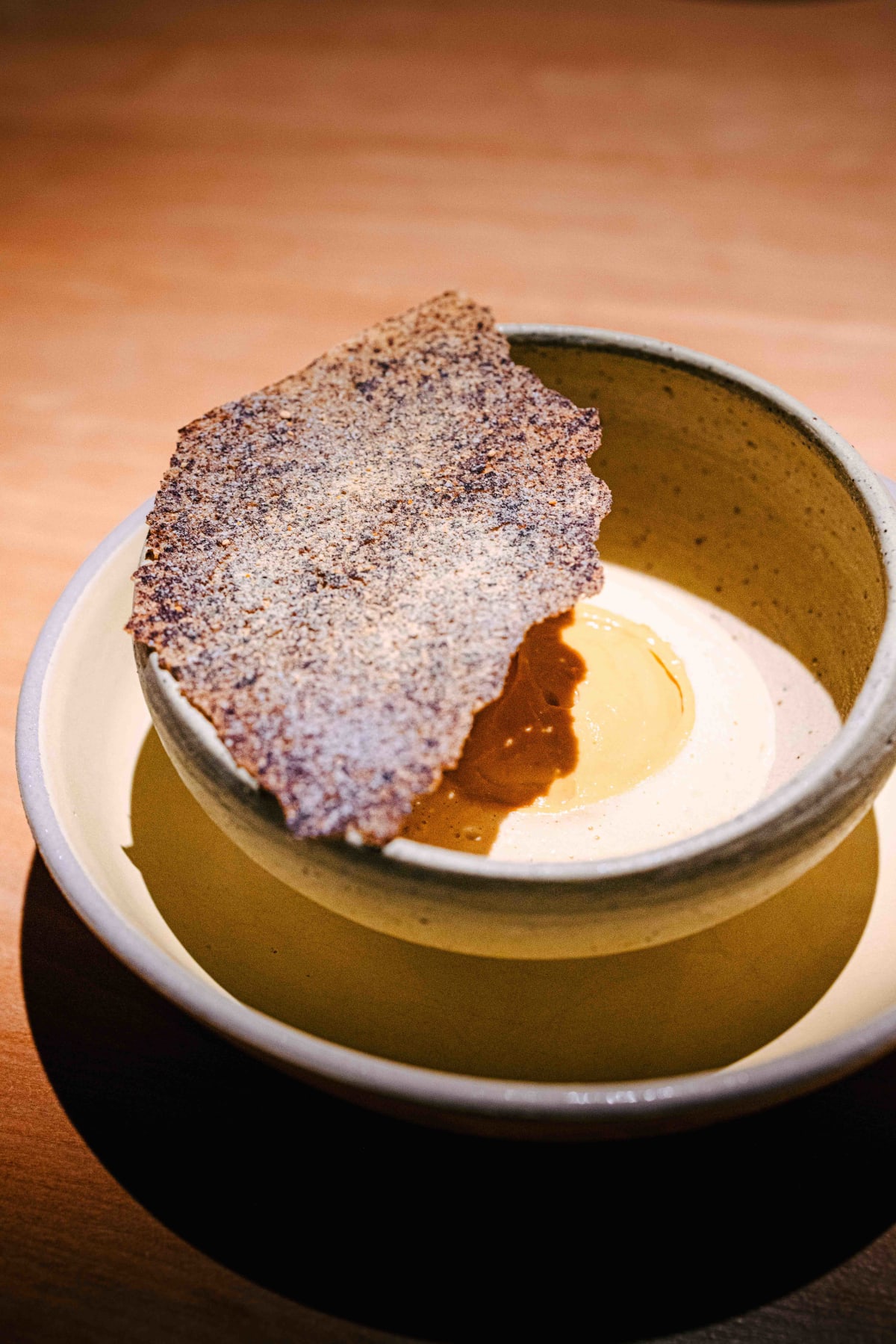
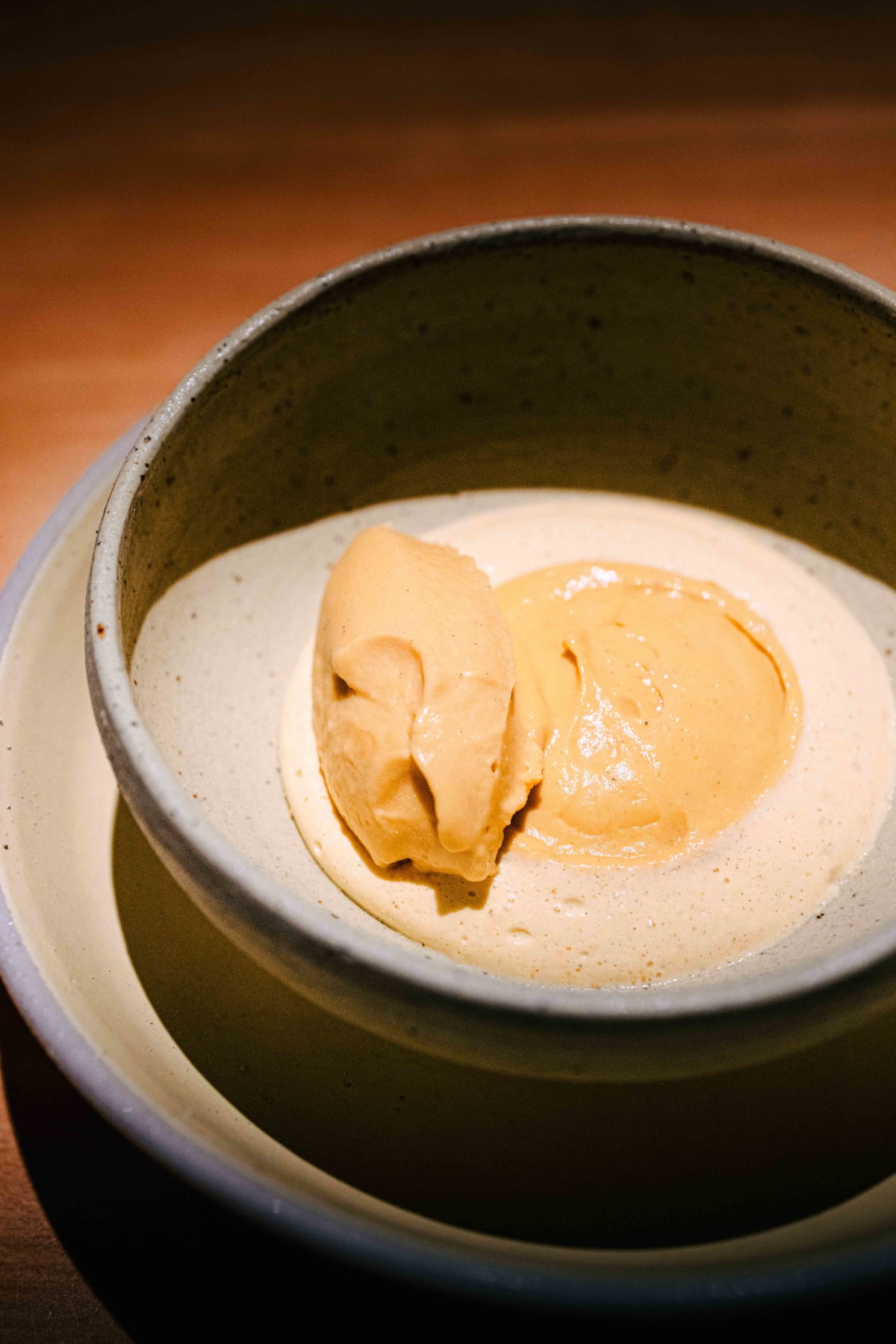
Lucuma is a fruit you meet often in Peruvian dining and the taste is close to sweet potato. Taken all together it was good, the coffee aroma was judged well and there was a little of a dalgona flavour too. It does not complete itself eaten separately. It only becomes good when you take it all at once.
Section 12·Hidromiel And Cabuya
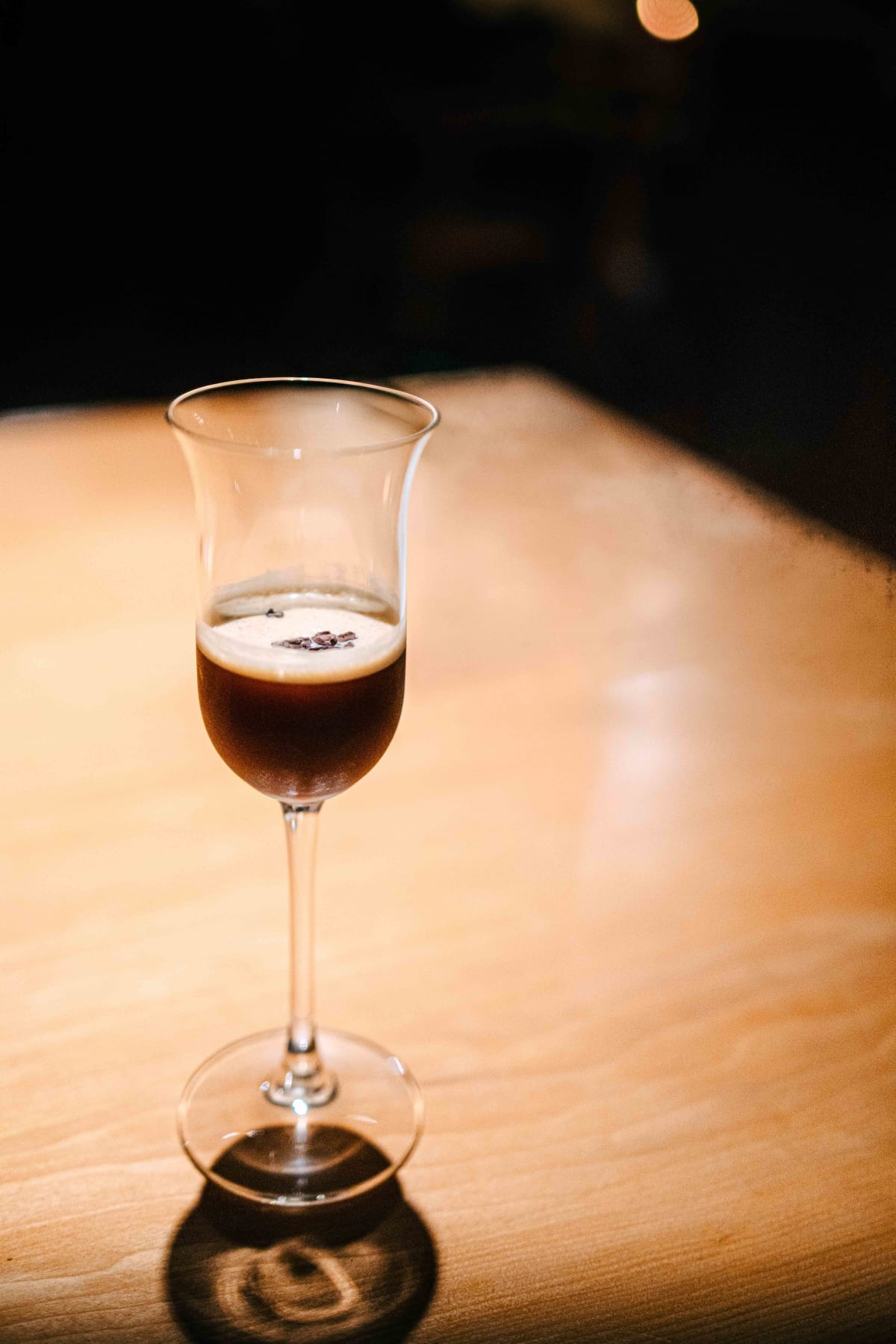
The last pairing drink came, unlike the wine glasses before it, in a small stemmed glass closer to a whisky glass, holding a mouthful of a dark liquid. Its name was Hidromiel & Cabuya.
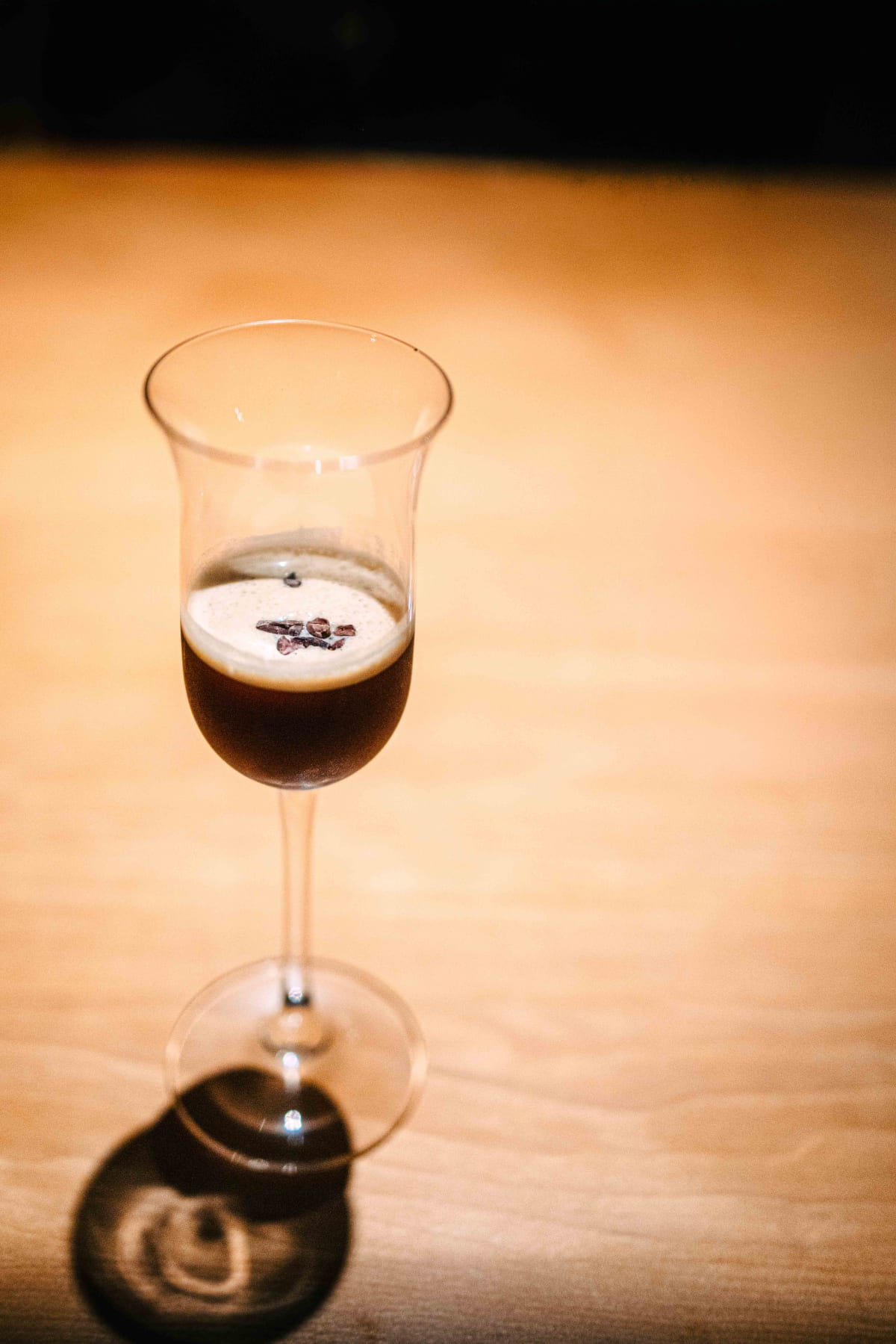
Hidromiel is mead made by fermenting honey, and cabuya is the Peruvian name for the native Andean agave. This drink was unusual. It smells like coffee, and drinking it there is the acidity of a fermented drink and a nuance of liqueur, while the alcohol barely registers. The seeds in it tasted of raisin and chocolate when chewed.
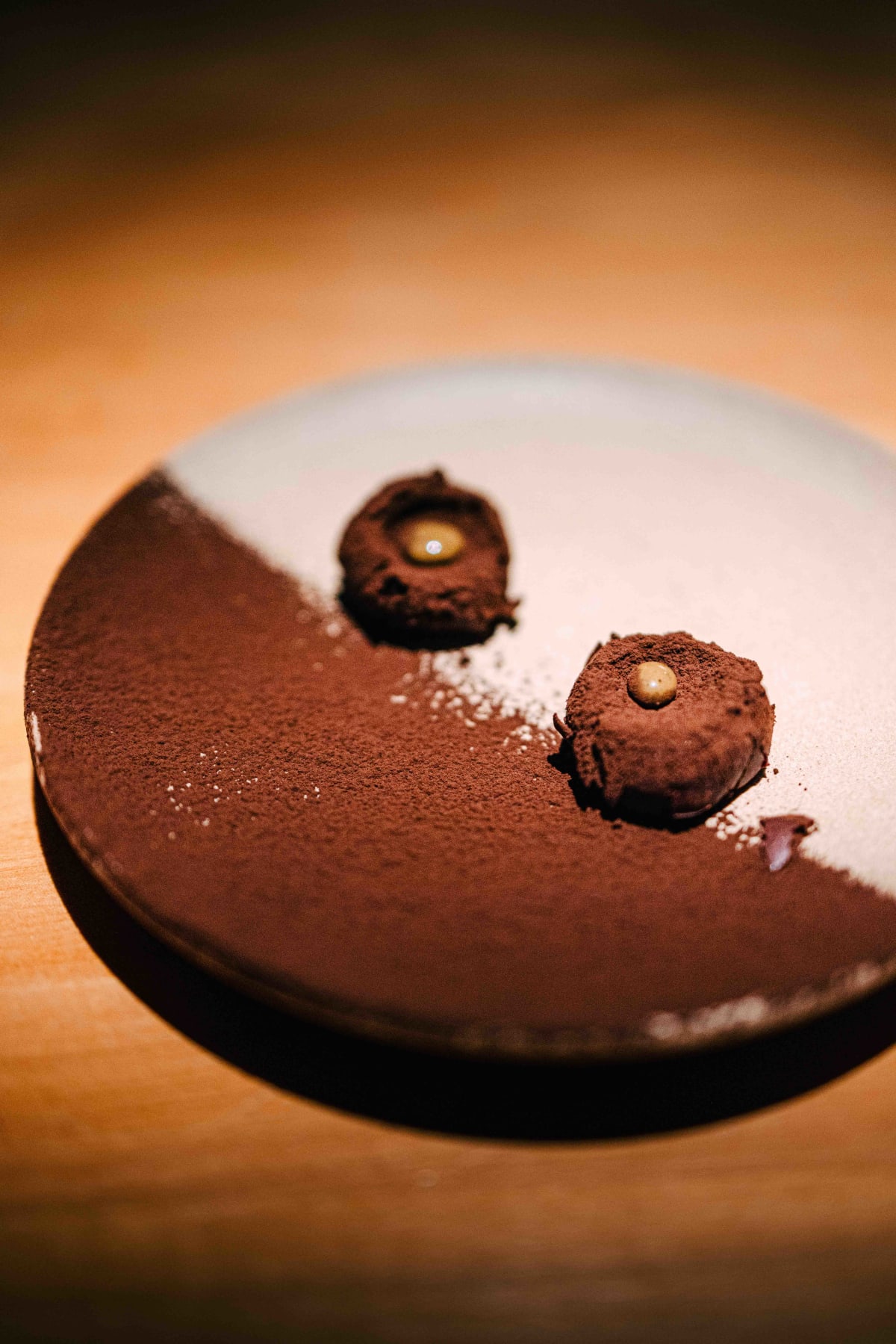
To close came a chocolate in the manner of a petit four. A chocolate under a thick coat of cocoa powder with a single green sphere set on top, and the sticky texture and the refined sweetness were very good.
Section 13·The Service
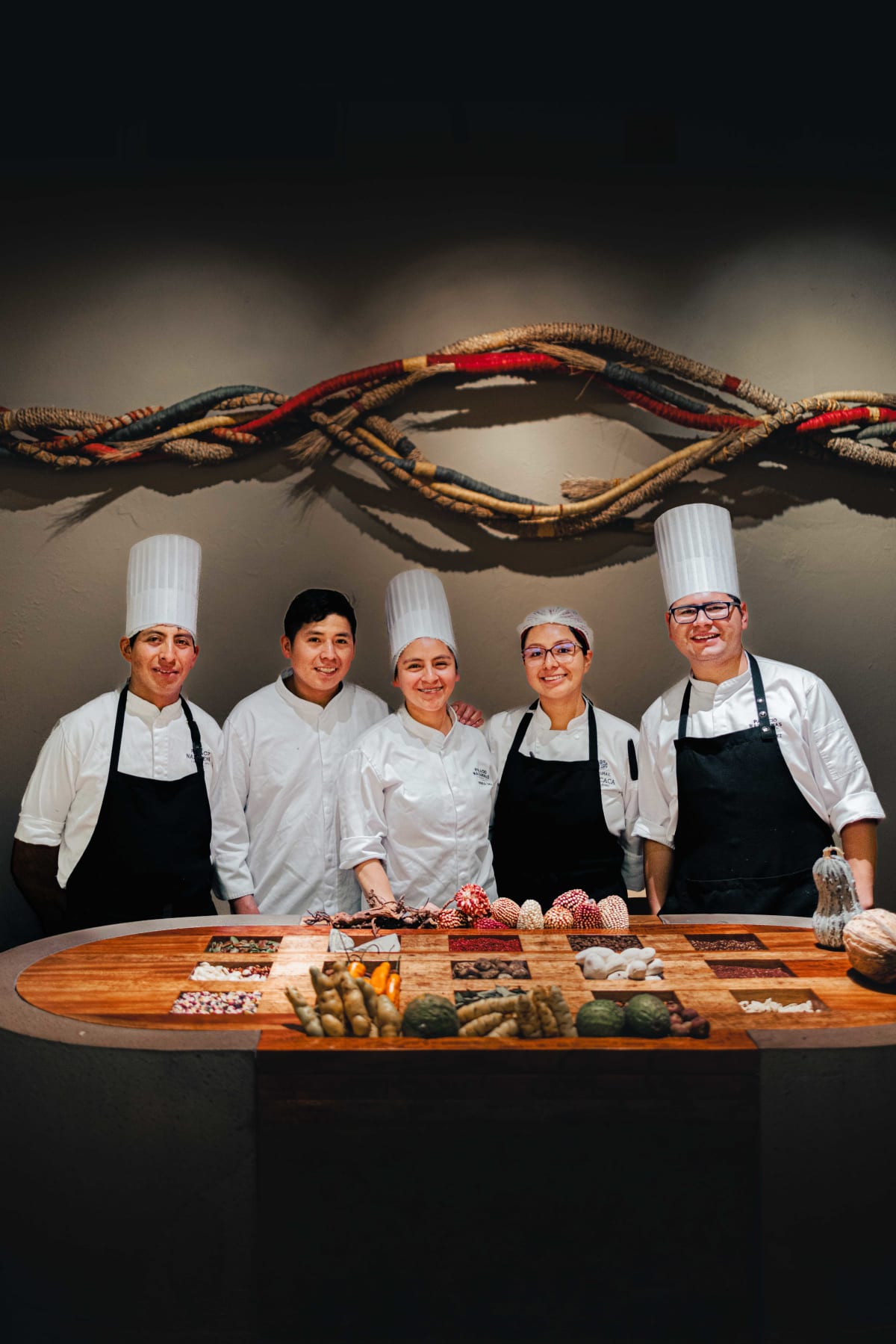
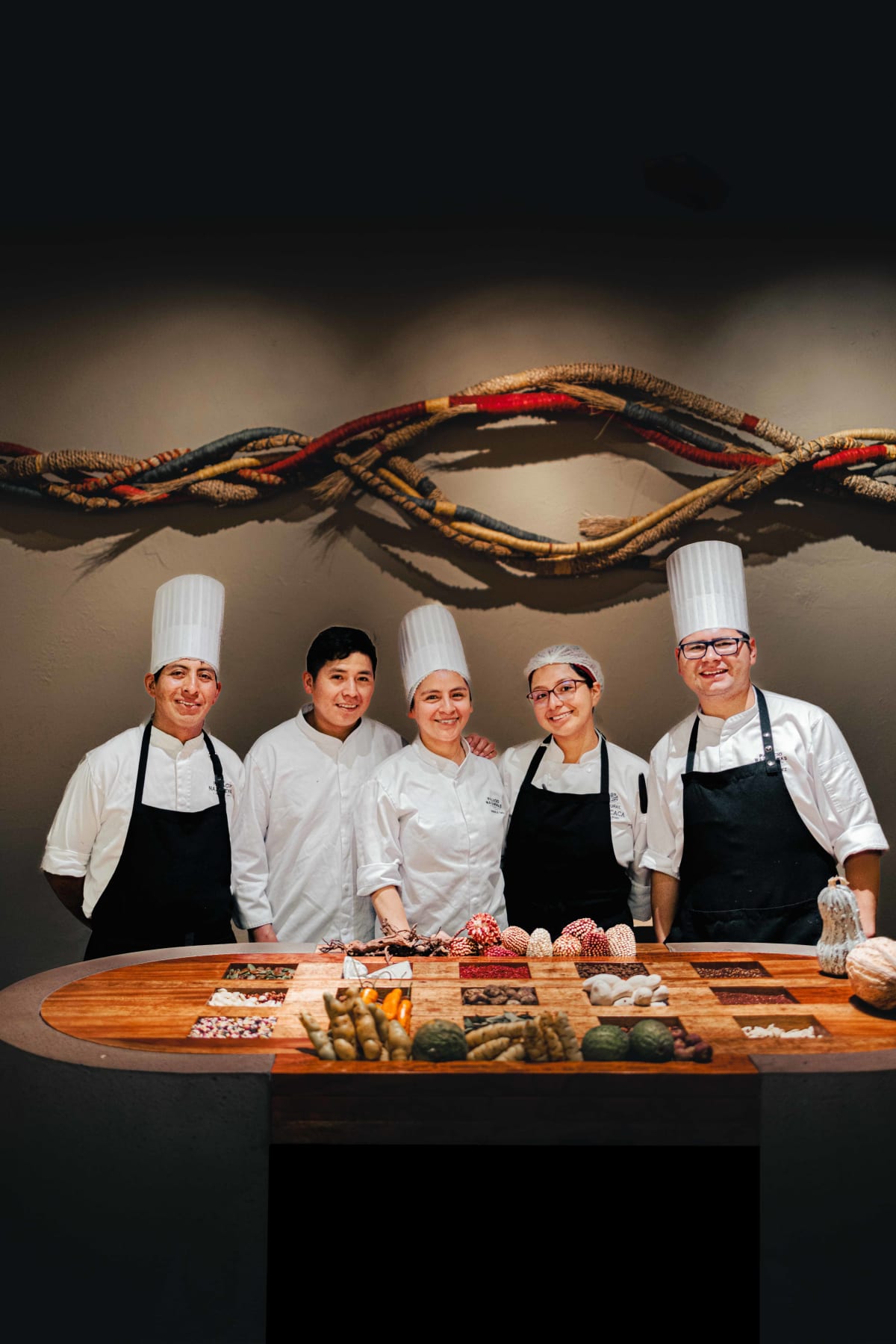
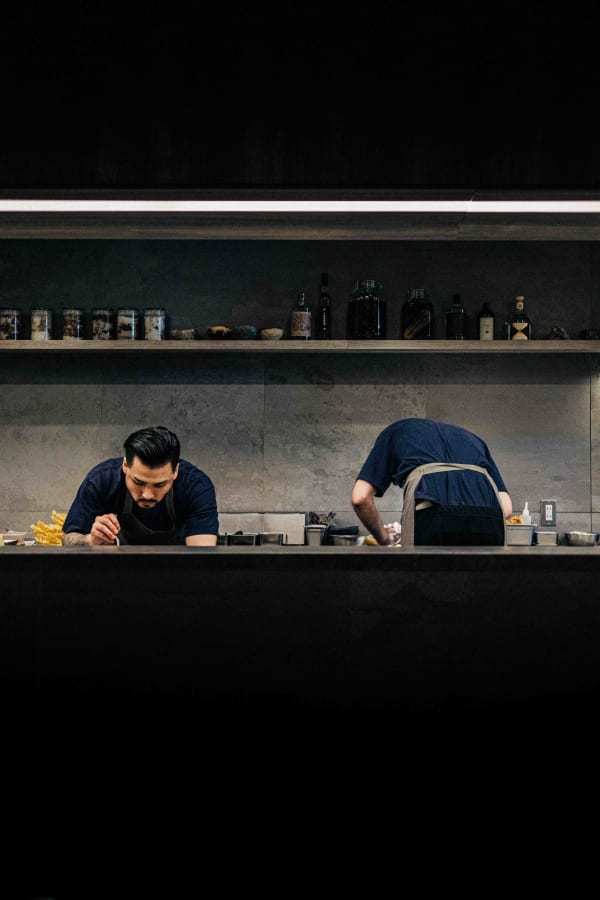
The close of the day turned out to be the service here. The hospitality and the professionalism of the staff were the first I would name among all the Peruvian dining I have experienced. When the meal finished they brought over the pairing menu card with every member of staff signed on it, and the kitchen team came out to take photographs with us. A young team you could call the future of Peruvian food.
Mauka will before long become a destination that food travellers come to on purpose without staying at the hotel. The cost of entry is markedly lower than at Pía León's Lima restaurants or at international tasting rooms, and yet it works native Andean ingredients into modern forms like ceviche and crudo, sudado and confit at a considerable level.
The standing of the service and the hardware were at a level hard to expect at this price.
If you come to Cusco, or if you want to meet the next name to watch in the Peruvian food landscape before it arrives, you should go to Mauka.
The Mater table is not an overture. Every ingredient laid out on it comes back inside a plate later, and the staff point at it again when they reach dessert, which makes the whole course an index of one region. That is the Central grammar, and here it costs a third of what that grammar usually costs. The reason is the hotel. A restaurant this well resourced could not hold this price under a sole operator, and Belmond is carrying the difference. Which means the interesting question is not whether Mauka reaches the lists but how long a room like this can stay this cheap.
Have a question about this restaurant, or want to share your own experience?
Send a message