Fine Dining · Seoul · Korea / April 2025 / Michelin ★★
Mitou
"Korea's spring in Japanese cooking, and a colour of its own that Japan made clearer"
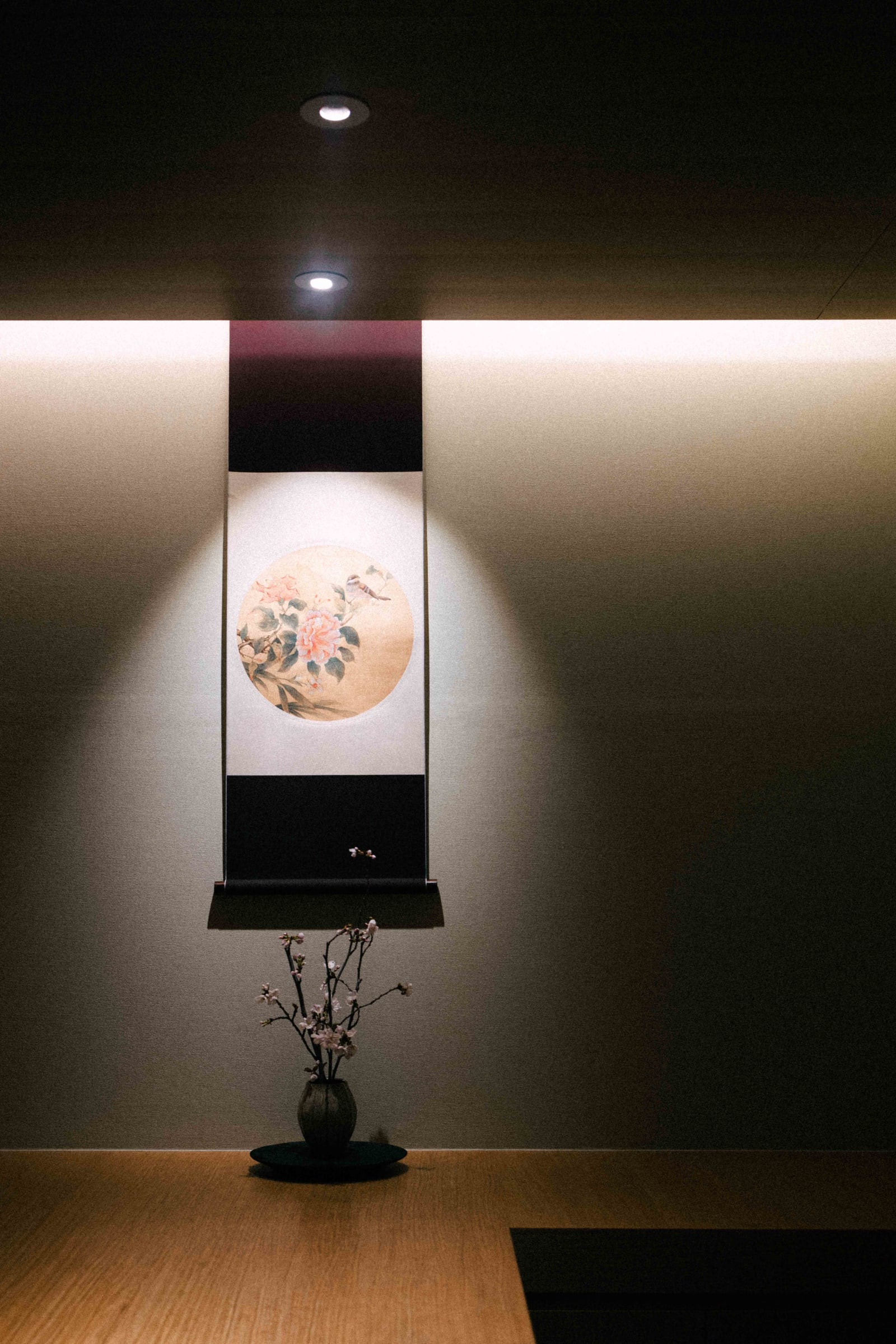
Section 1·Mitou's Own Colour
Mitou in Cheongdam is, by any measure, the finest Japanese restaurant in Korea. I cannot go every season, but good opportunities have brought me there at least once a year. Without my intending it, most of those visits have fallen in summer, but in 2025 I was able to go in April, on a Saturday, in the private room, with the scent and fresh green of spring in the air.
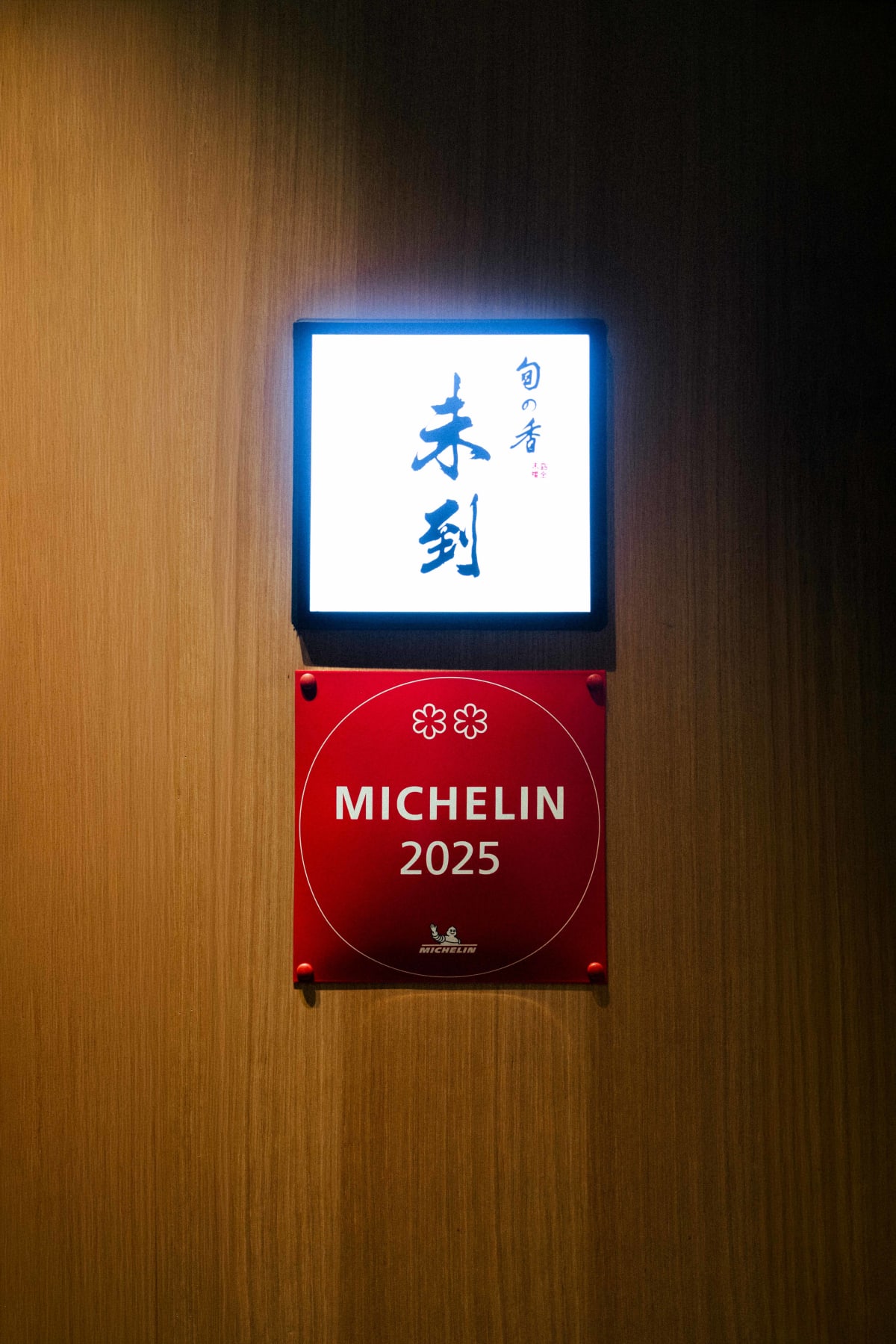
It was my first visit in eight months, since the summer restorative course, or boyangsik, in August 2024. It fell short of the originality and intensity of Mitou's restorative course, and of the Japanese-Chinese course I will write about later, but it was satisfying, as Mitou always is. In particular, around that time I had begun going to a number of well-known Japanese restaurants in Japan itself. If anything, it was after experiencing Japanese cooking on its home ground that I began to see the colour that belongs to Mitou alone. So, flavour aside, it was an interesting and meaningful visit.
If anything, it was after experiencing Japanese cooking on its home ground that I began to see the colour that belongs to Mitou alone.
As I mentioned, I had just begun going to famous Japanese restaurants in Japan around then, and although my experience of Japanese cooking there is not extensive, Seizan (晴山) in Mita, Tokyo, struck me as similar to Mitou. I think the two are alike both in their relative price positioning and in style.
Seizan also holds two Michelin stars, and the Michelin Guide describes it as a place that offers surprising dishes yet stays orthodox in its wanmono, the soup course, and its sashimi, which together are called the flower of Japanese cuisine.
In my own experience, Seizan is excellent, but Mitou is every bit its equal, and when I consider the original colour that Mitou brings to life in Korea, it is, for me, the more worthwhile visit.
The food is one thing, but if I had to name another of Mitou's strengths, for me it would be the wine. The bottles seem to be stored and looked after very well, and the champagne and the Chablis I drank that day were both superb in aroma and flavour.
Section 2·Jjukkumi And Le Mesnil
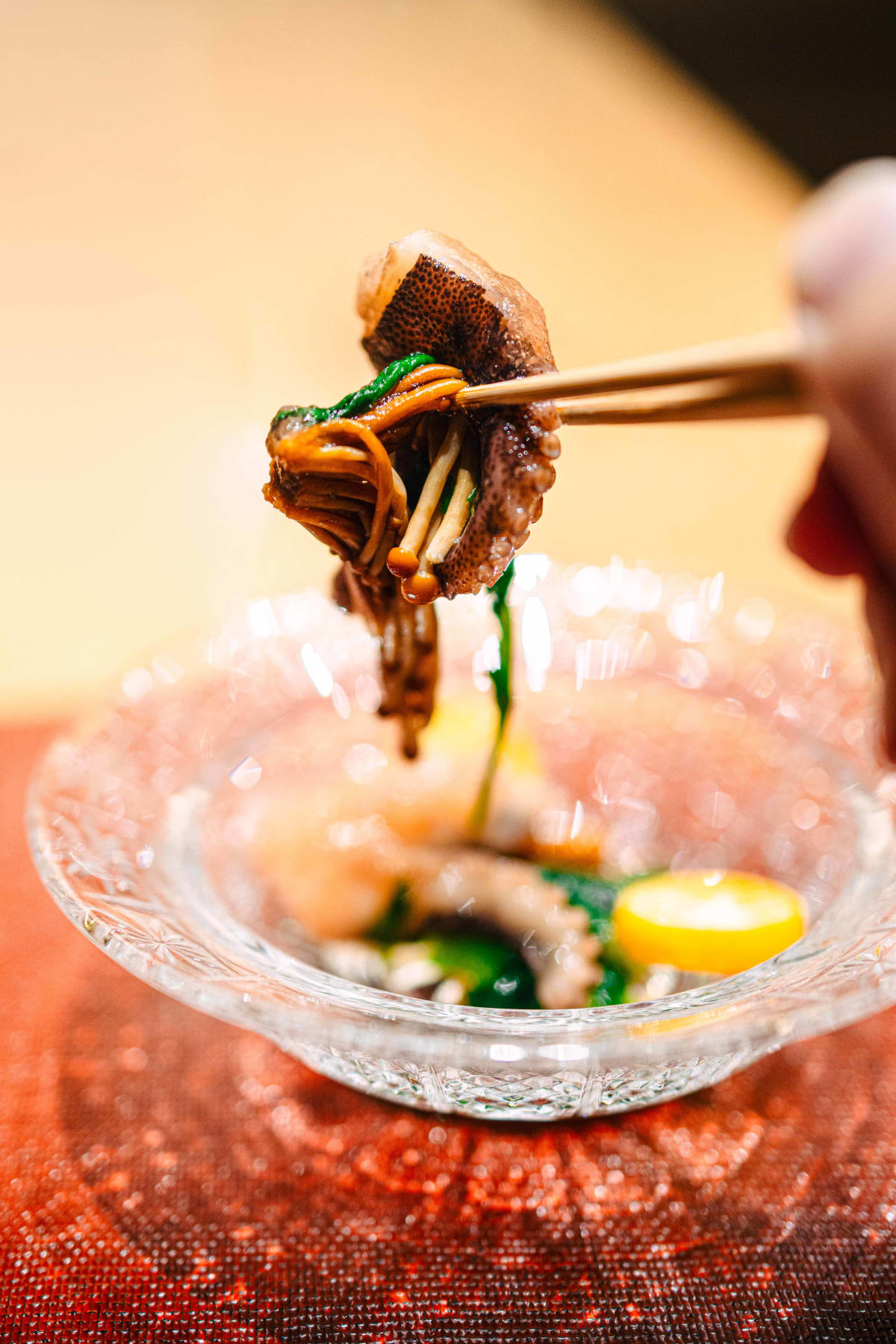
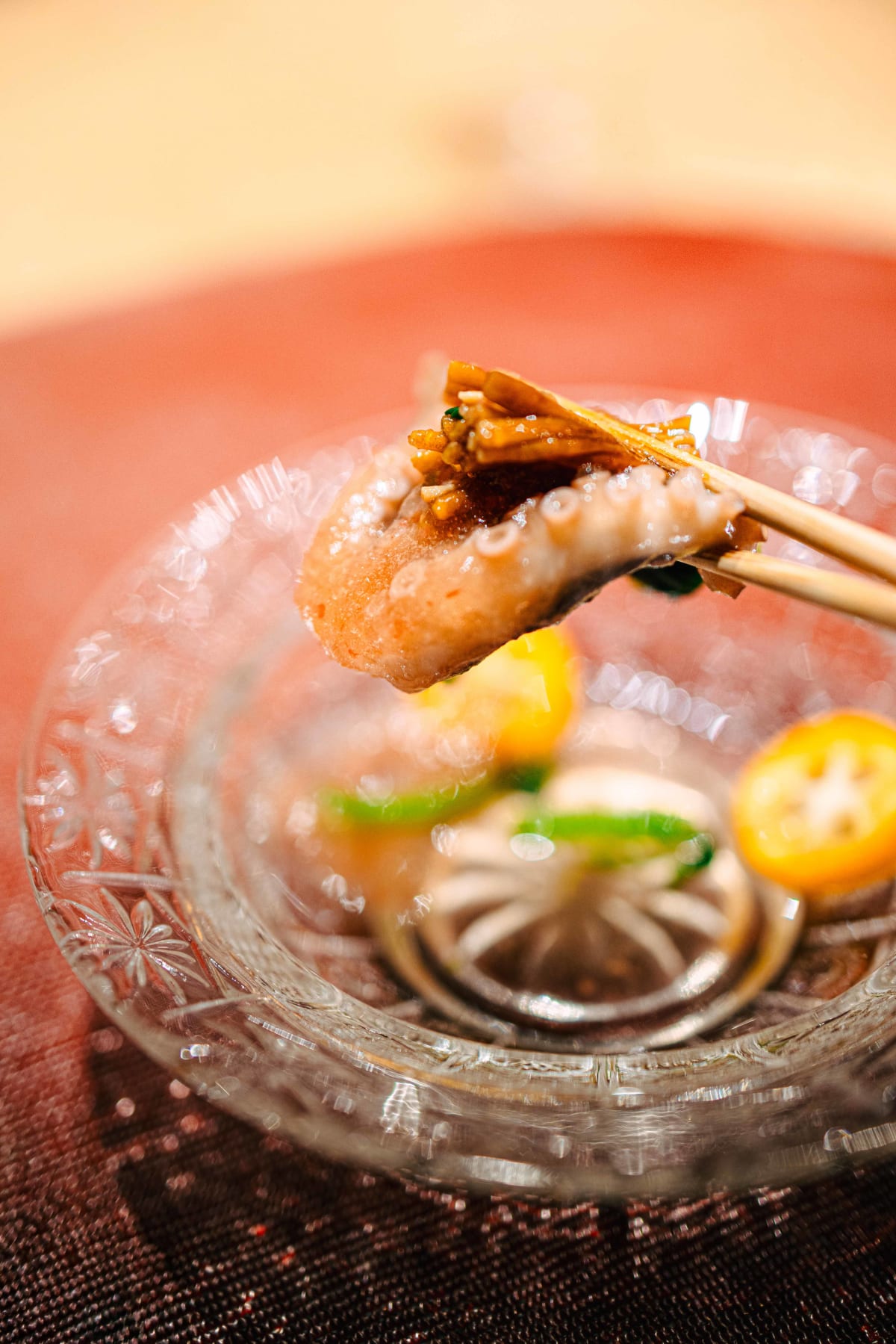
The first dish was jjukkumi, the small webfoot octopus, in season on Korea's west coast.
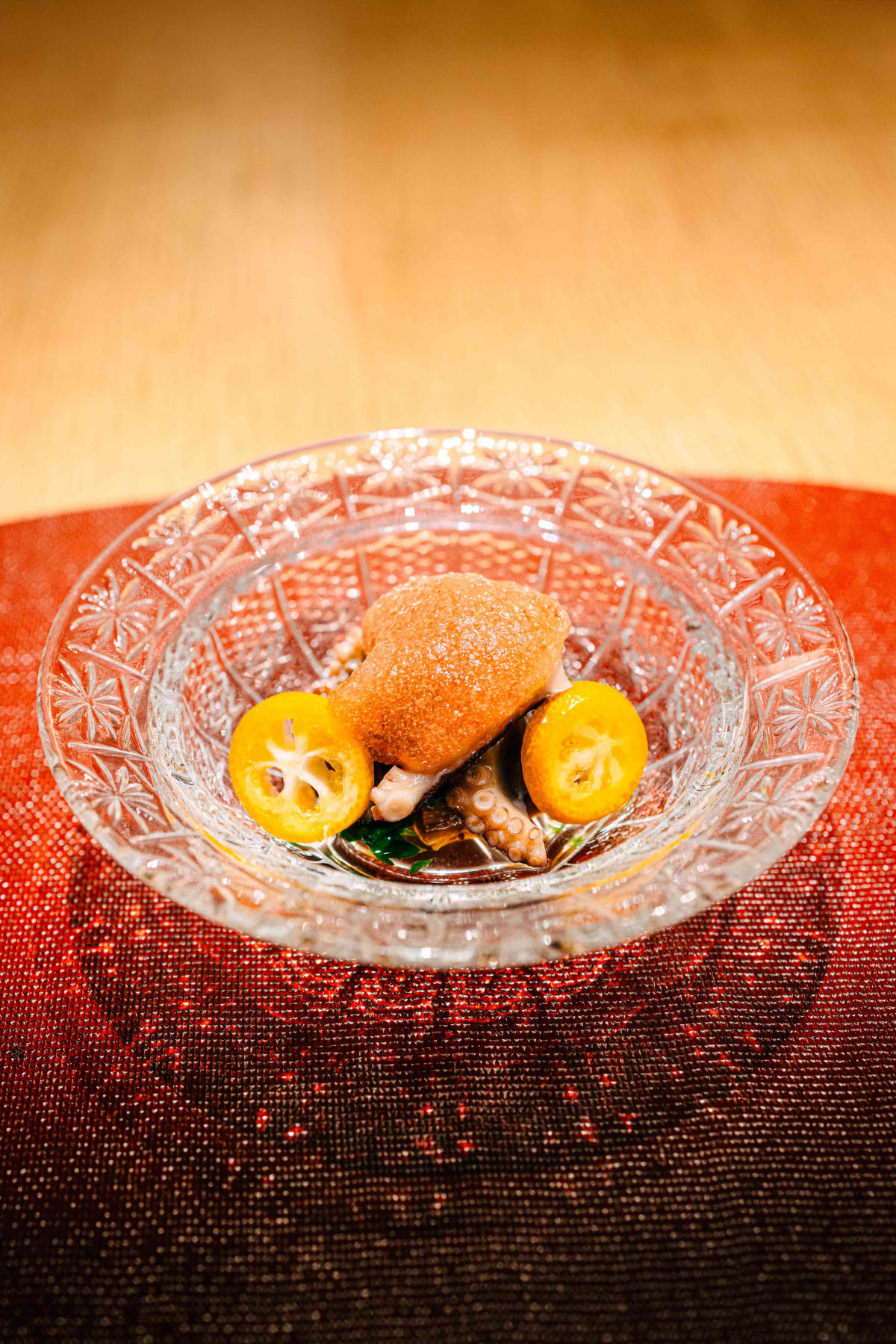
It came with golden enoki, zesty kumquat and umeboshi jelly, and the umeboshi jelly brought a playful note to a dish that could easily have been monotonous.
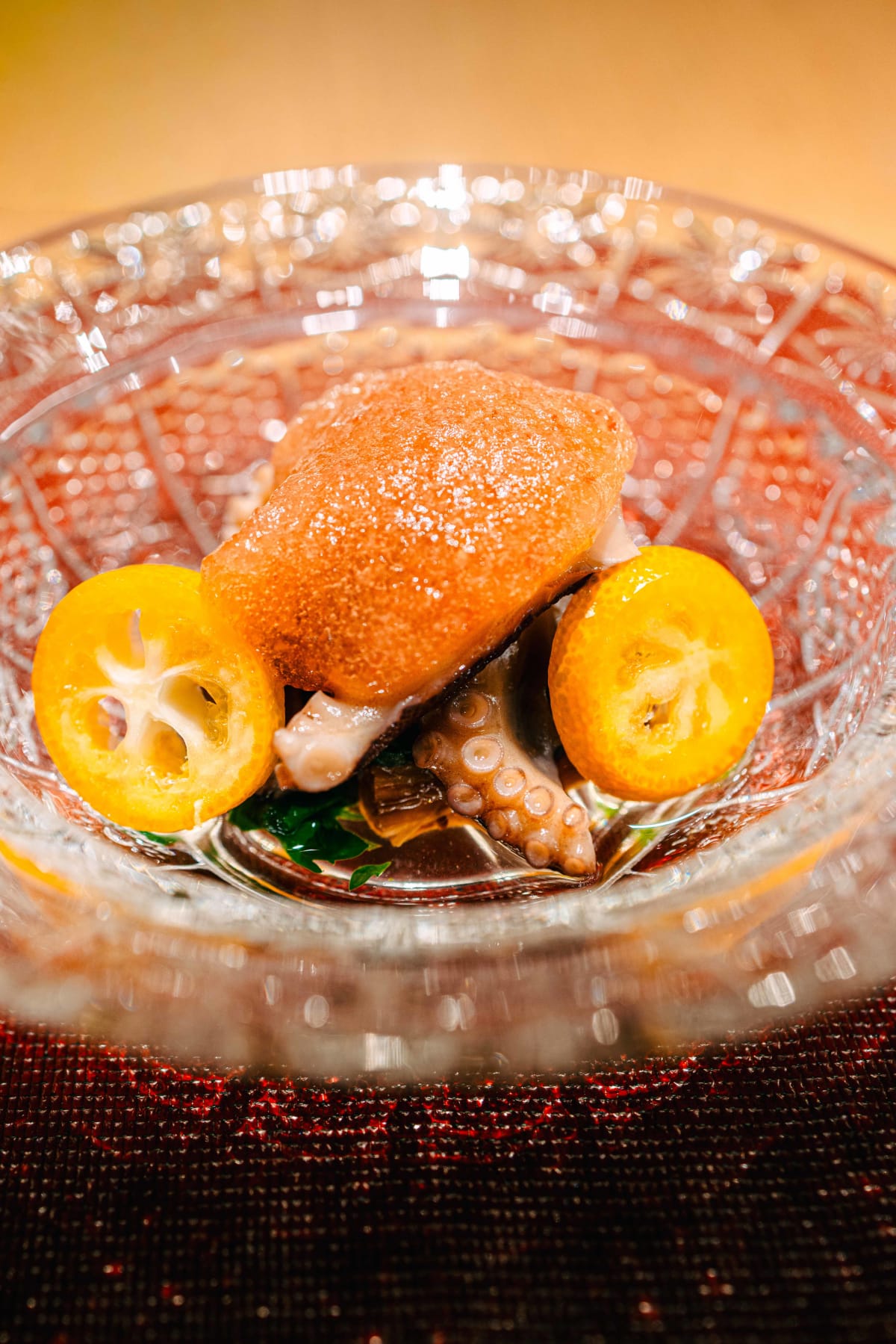
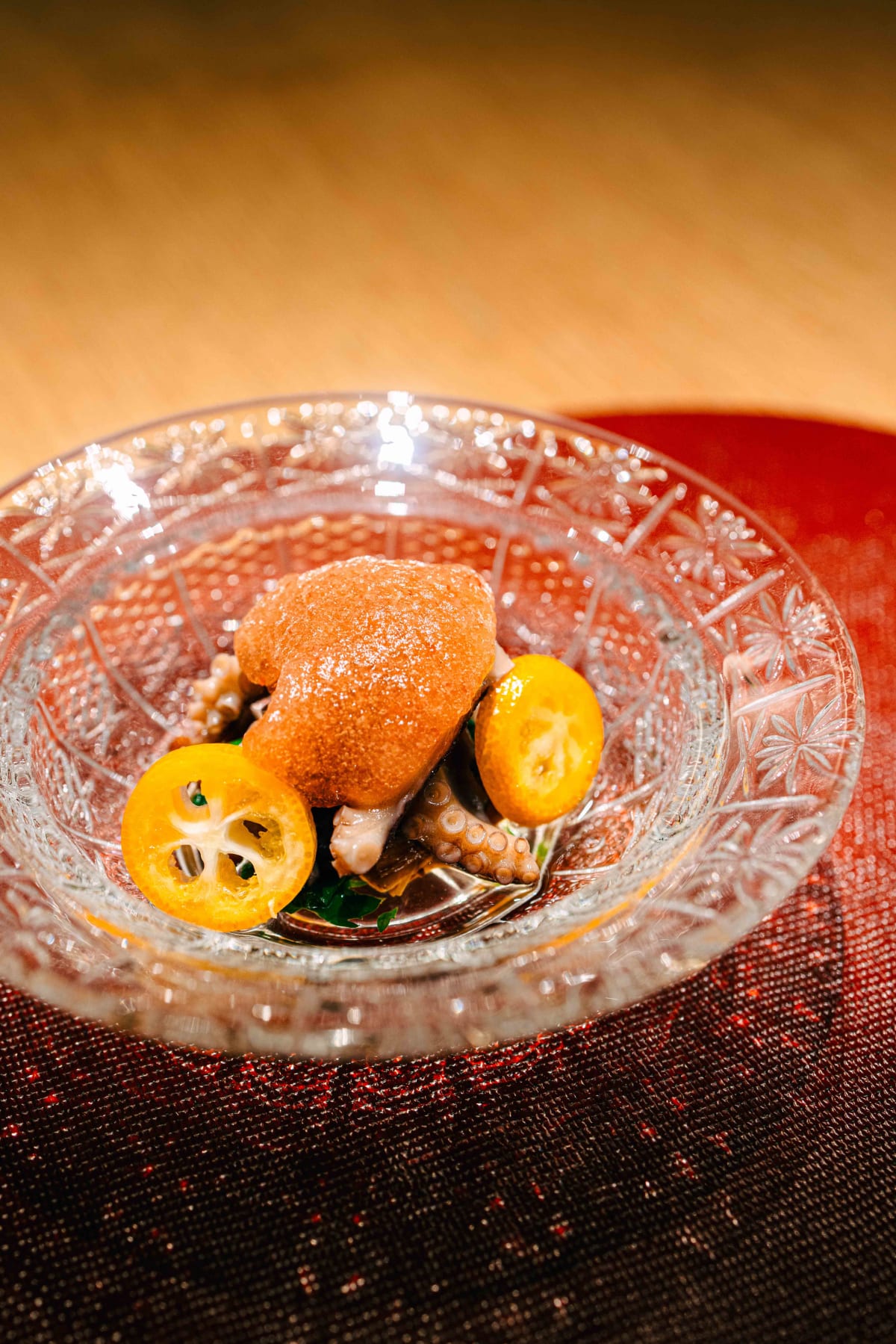
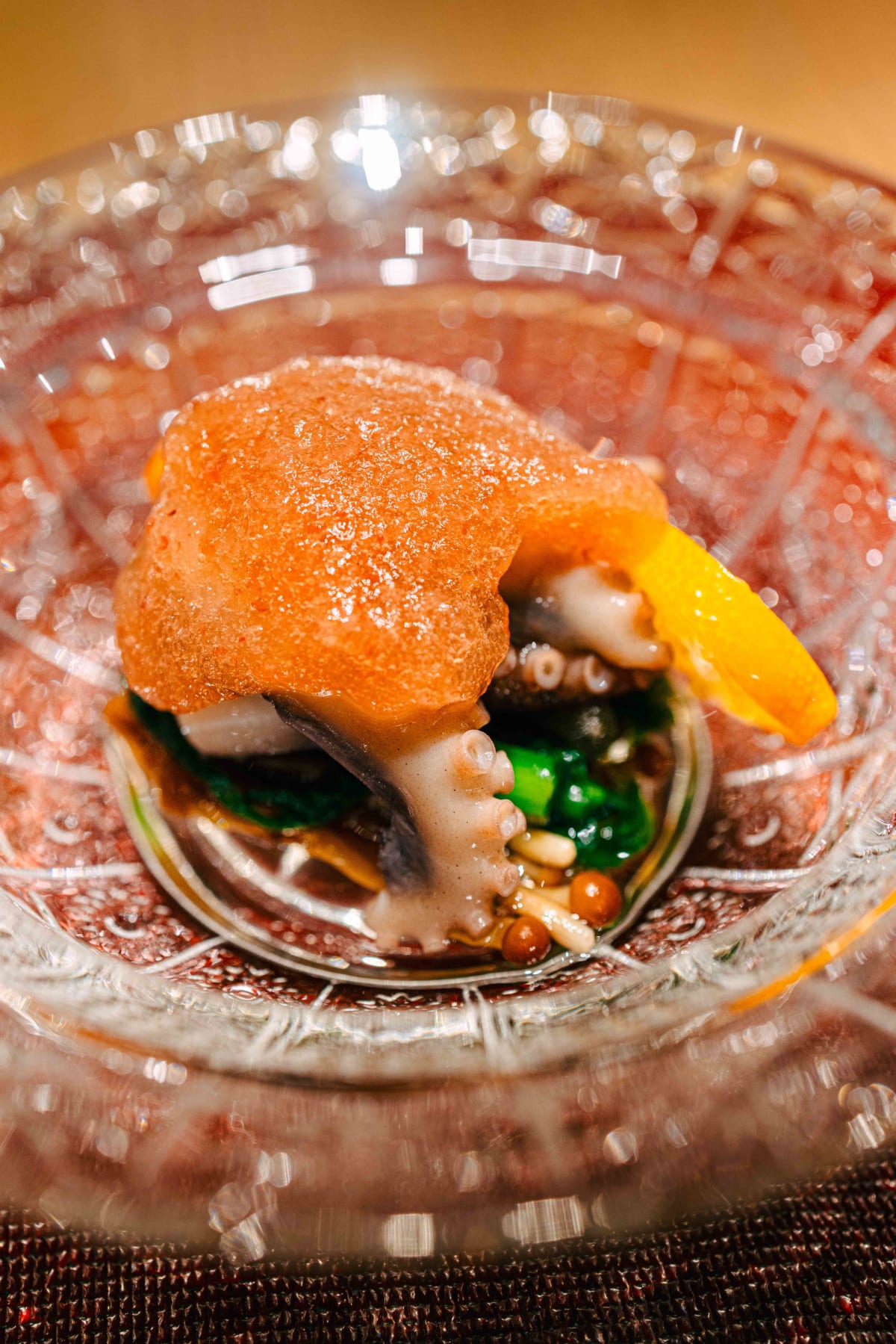
The jjukkumi itself was of fine quality, and delicious.
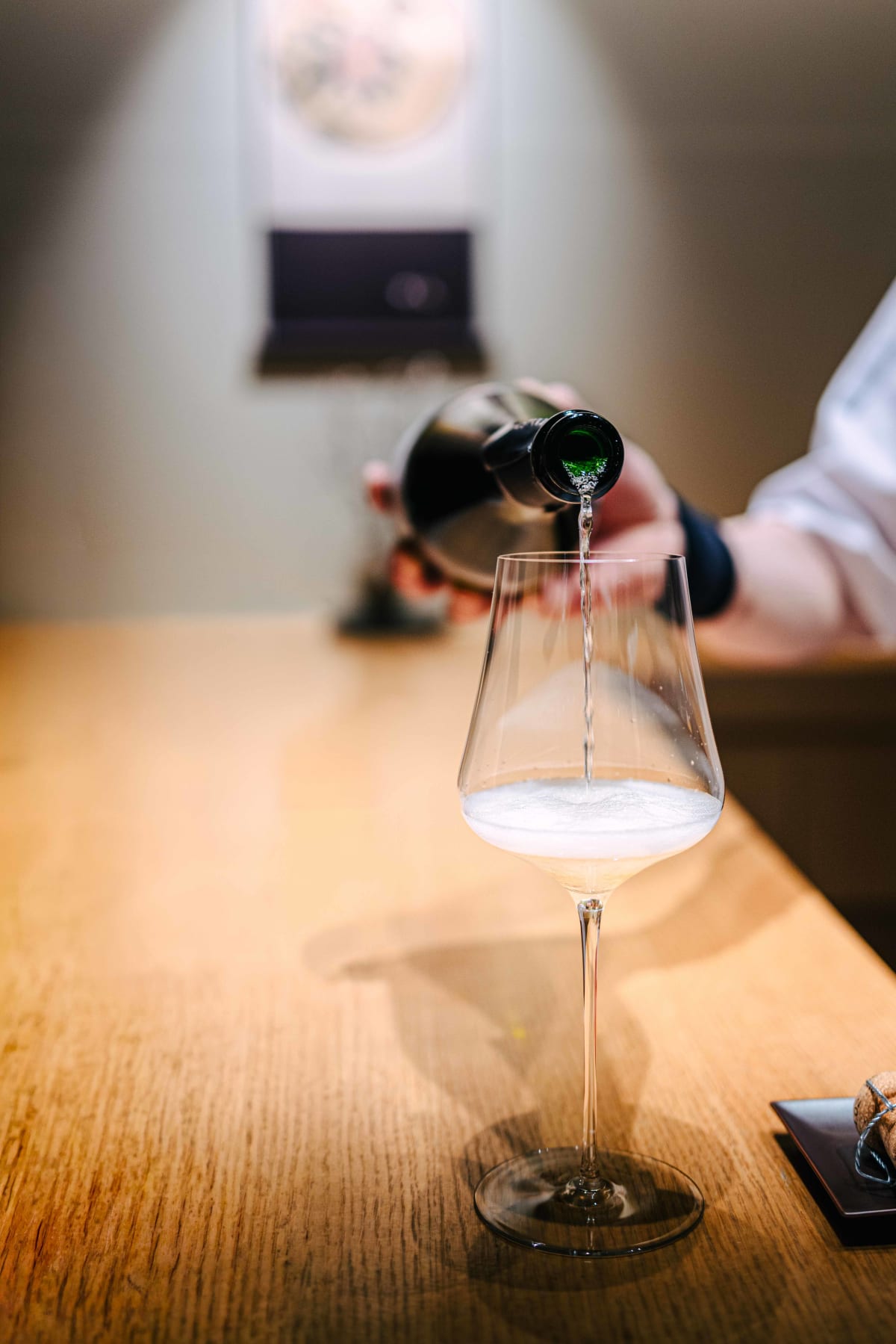
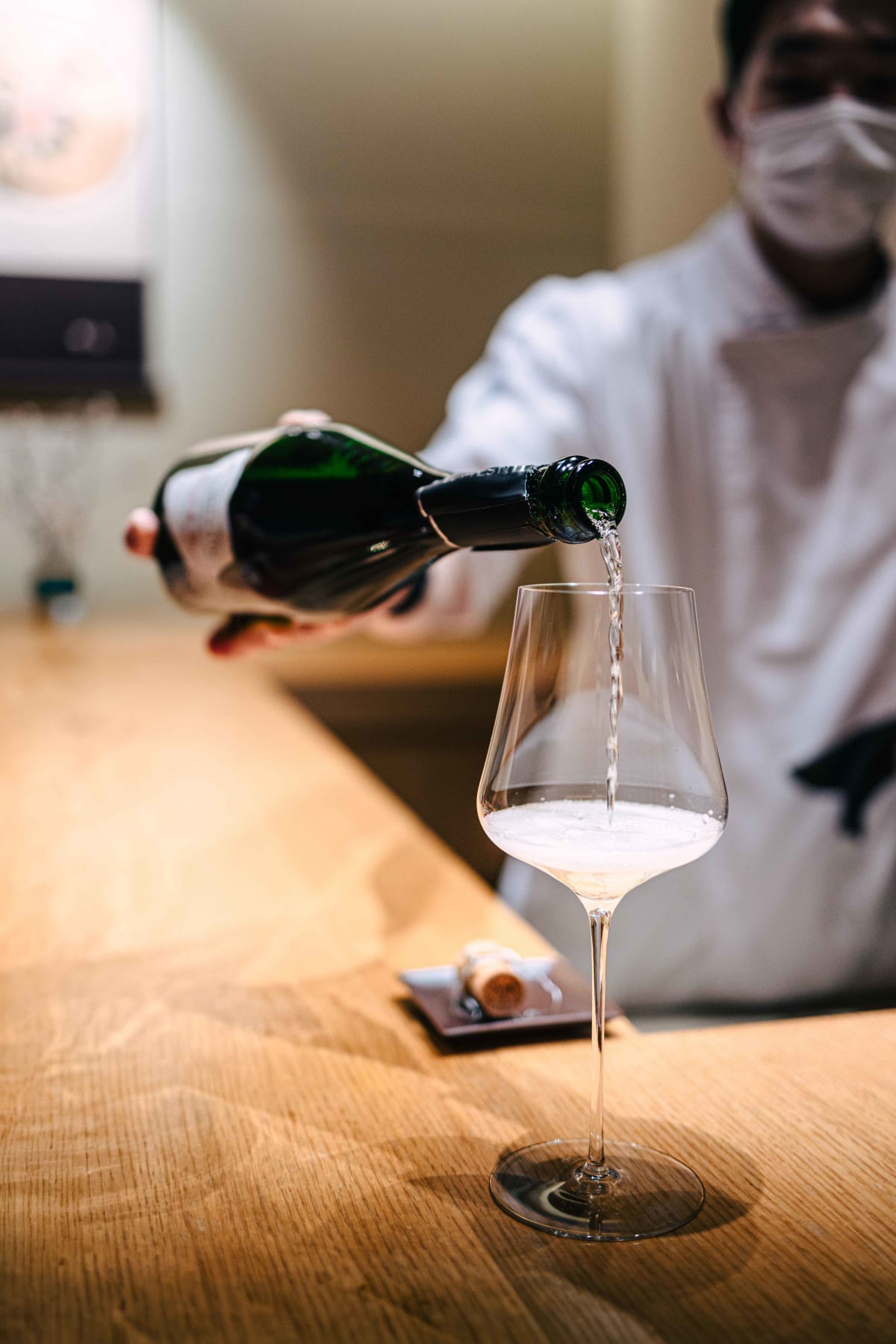
The champagne opened before the monaka was Le Mesnil Coeur de Mesnil 2010. Le Mesnil is a cooperative founded in 1937 in the village of Le Mesnil-sur-Oger. Often called the most famous village in Champagne, it lies in the heart of the Côte des Blancs, and every vineyard in the village is grand cru.
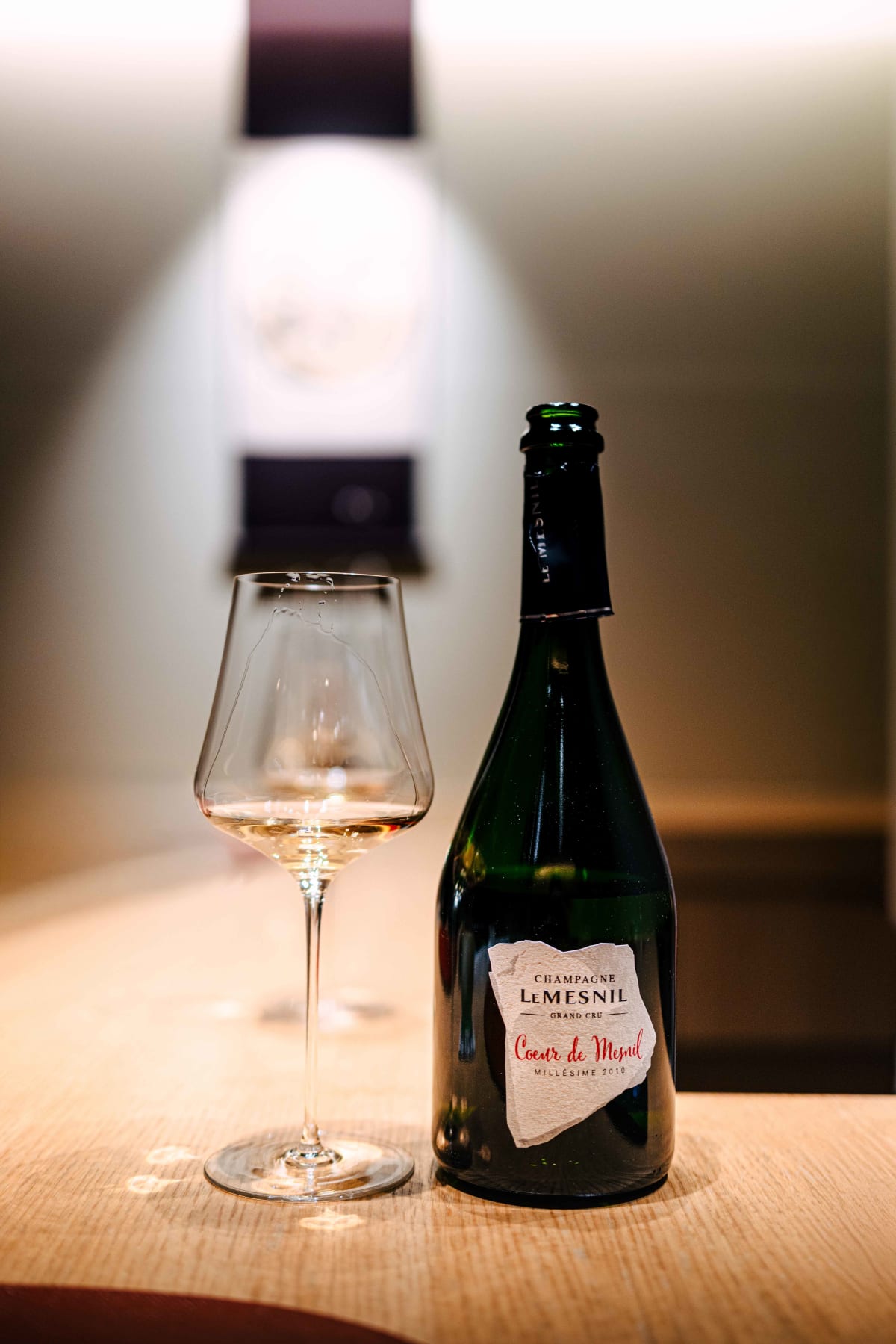
Coeur de Mesnil is a vintage blanc de blancs made from the village's grand cru Chardonnay. On the day, the 2010 had fifteen years behind it, and from the first glass I could tell the wine was in good condition.
Section 3·Matsukaze In A Monaka
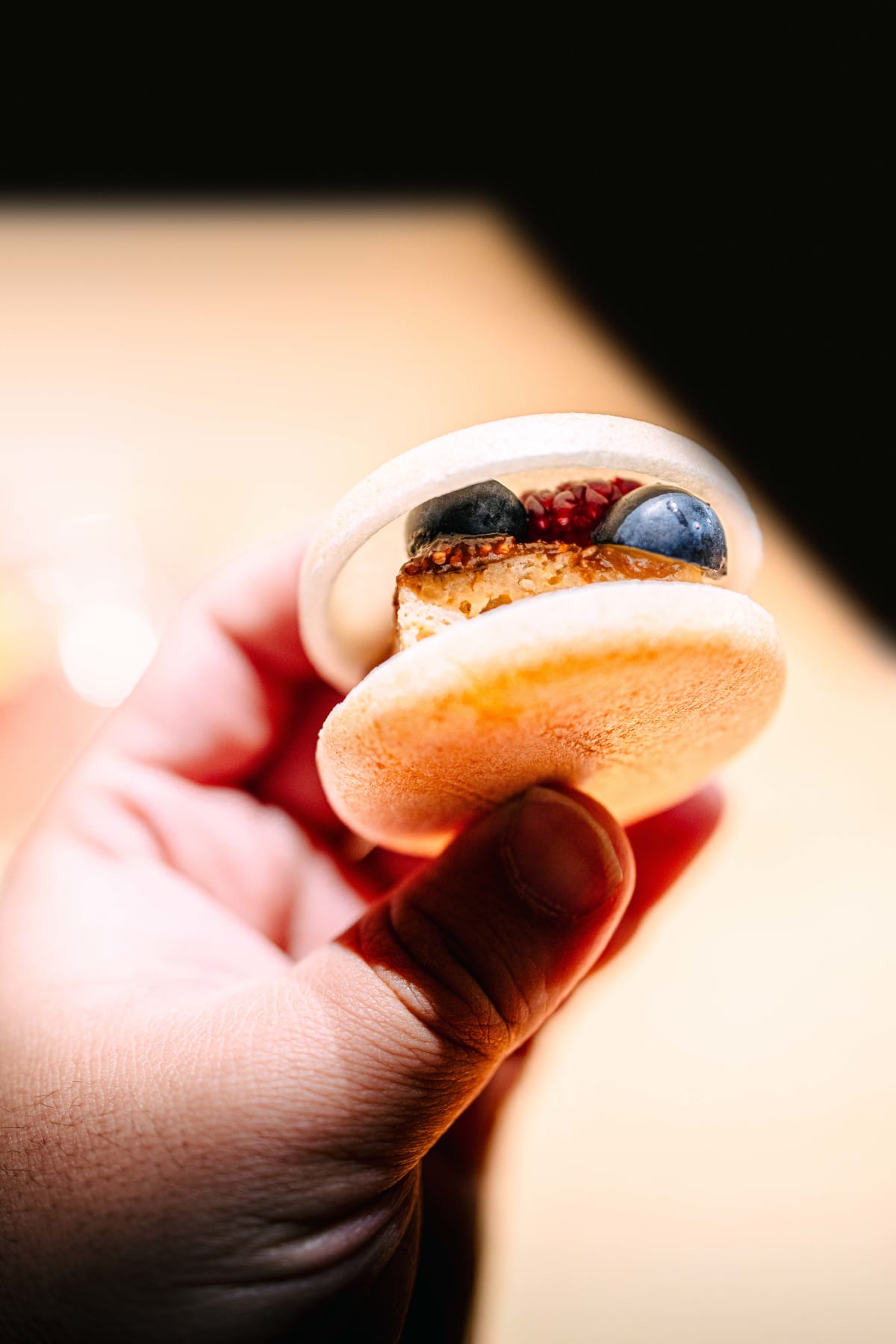
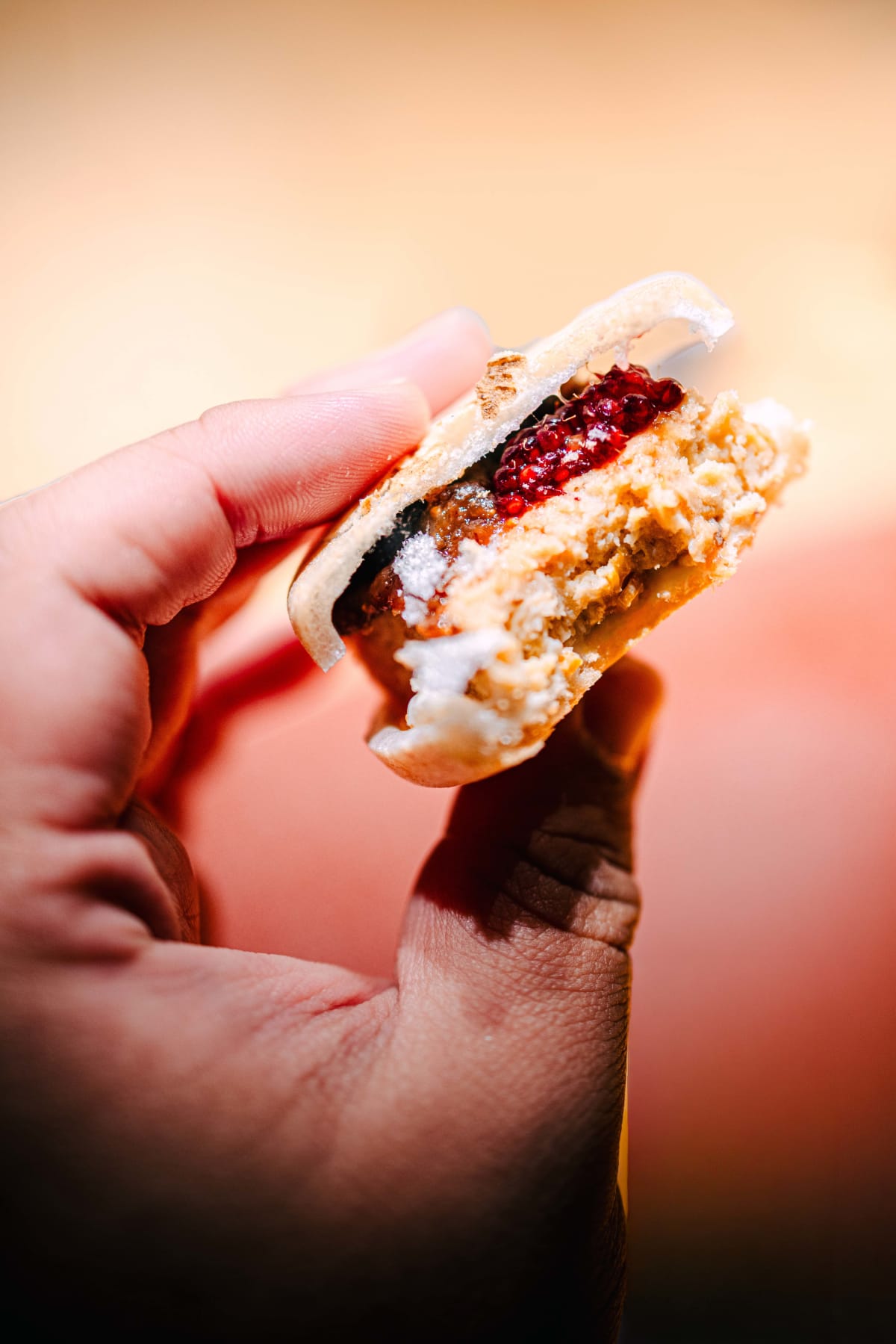
The monaka that followed is something of a Mitou signature.
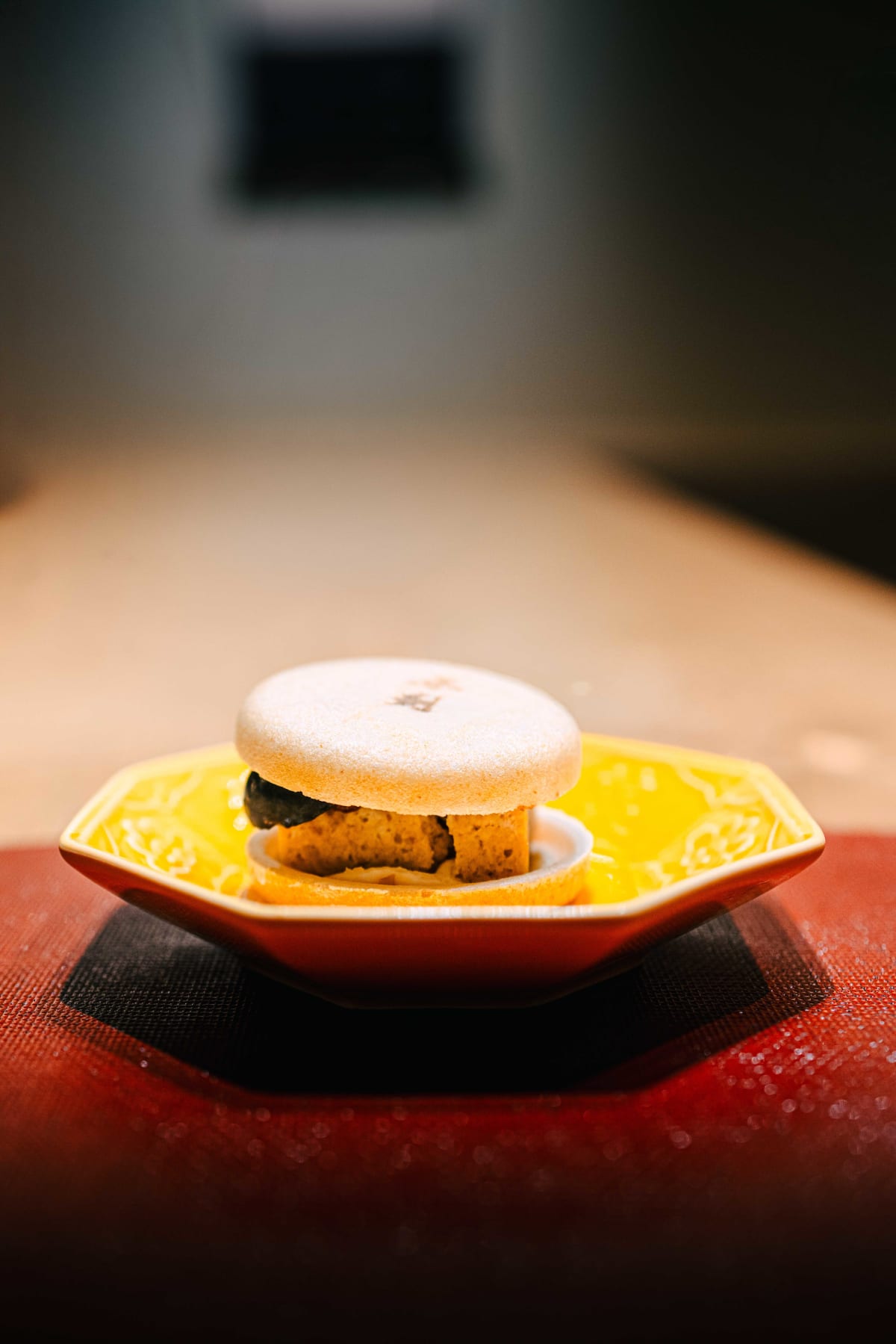
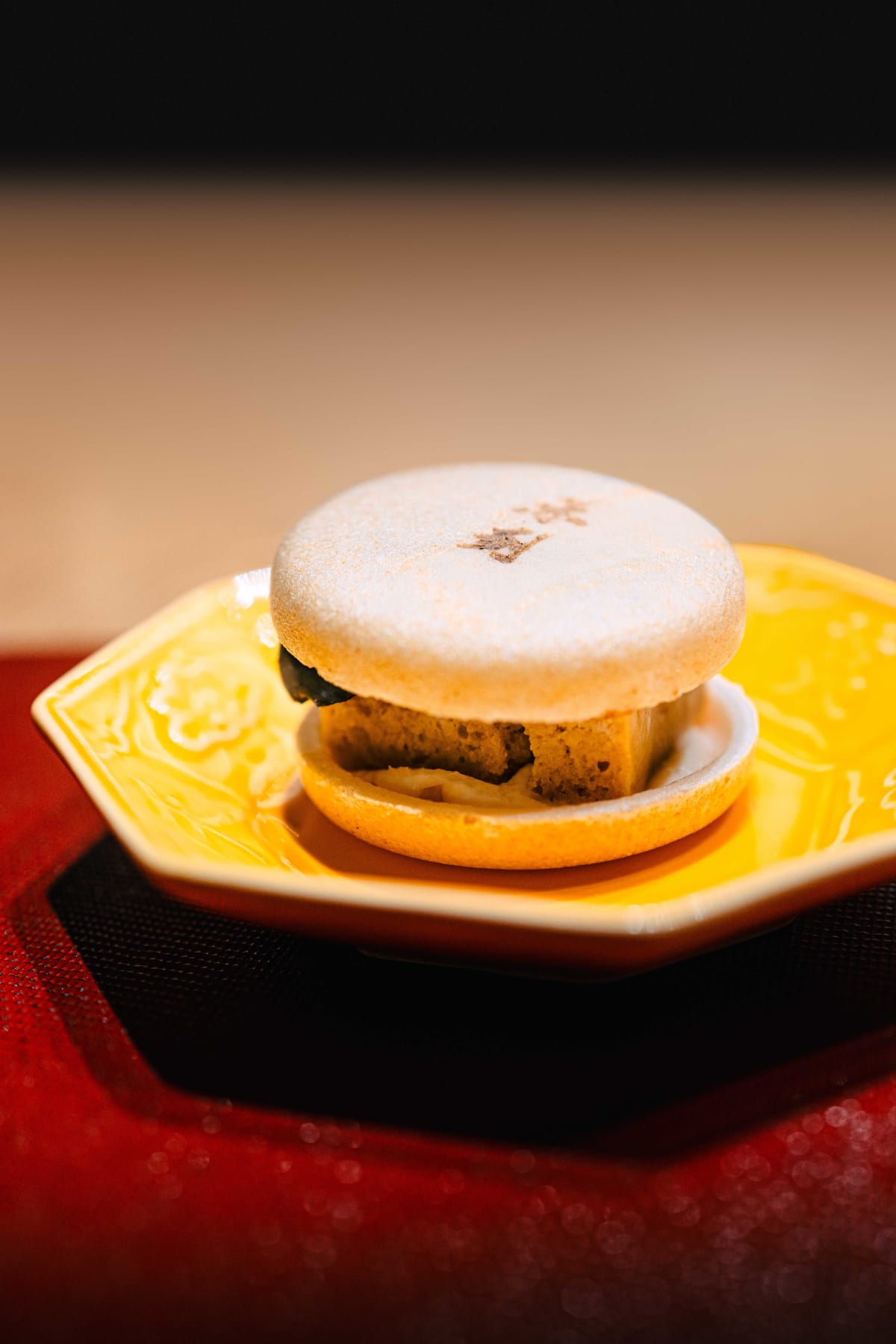
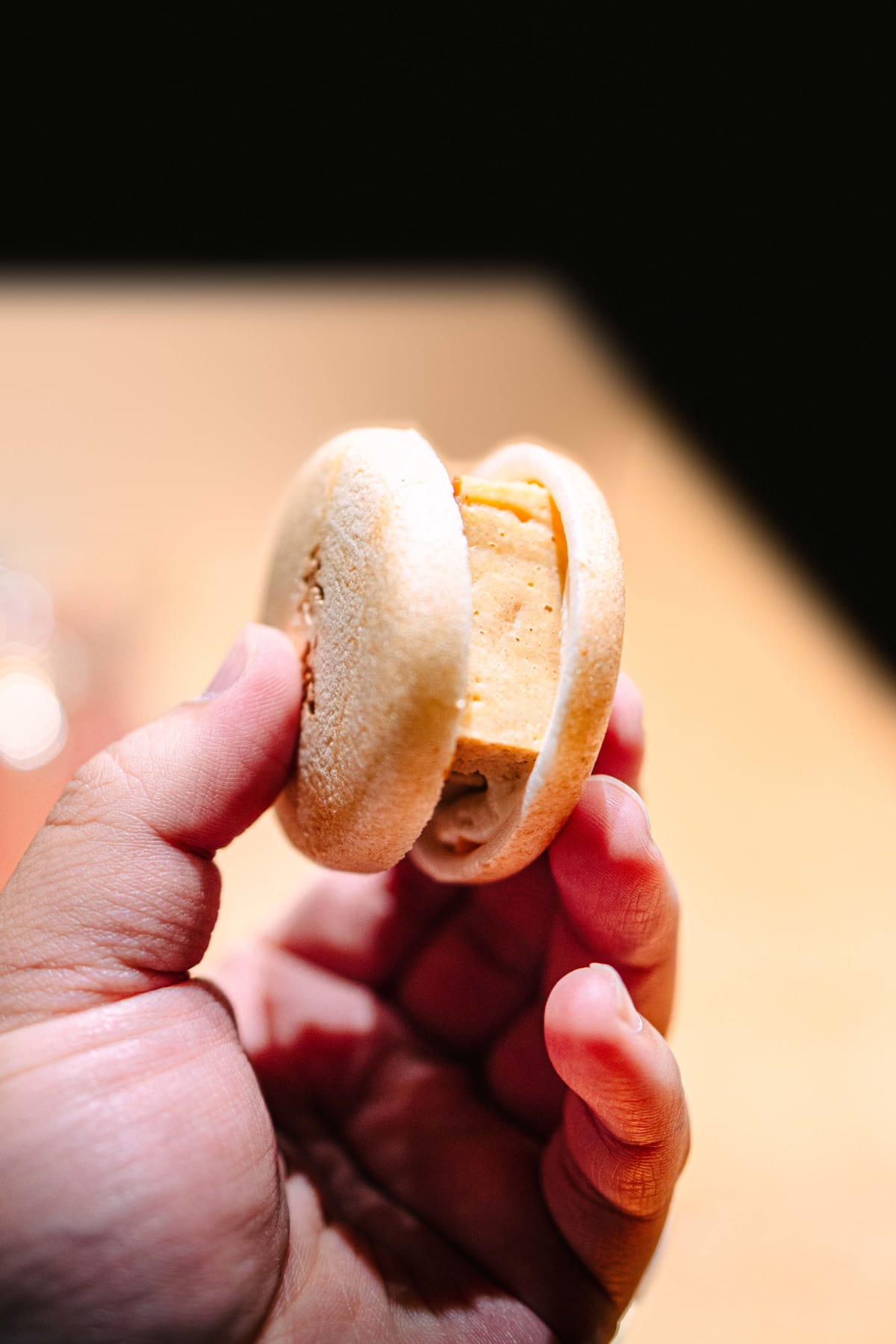
Inside the wafer was a fluffy wagashi called matsukaze (松風), made from chicken tenderloin, with blueberries, raspberries and more tucked inside it.
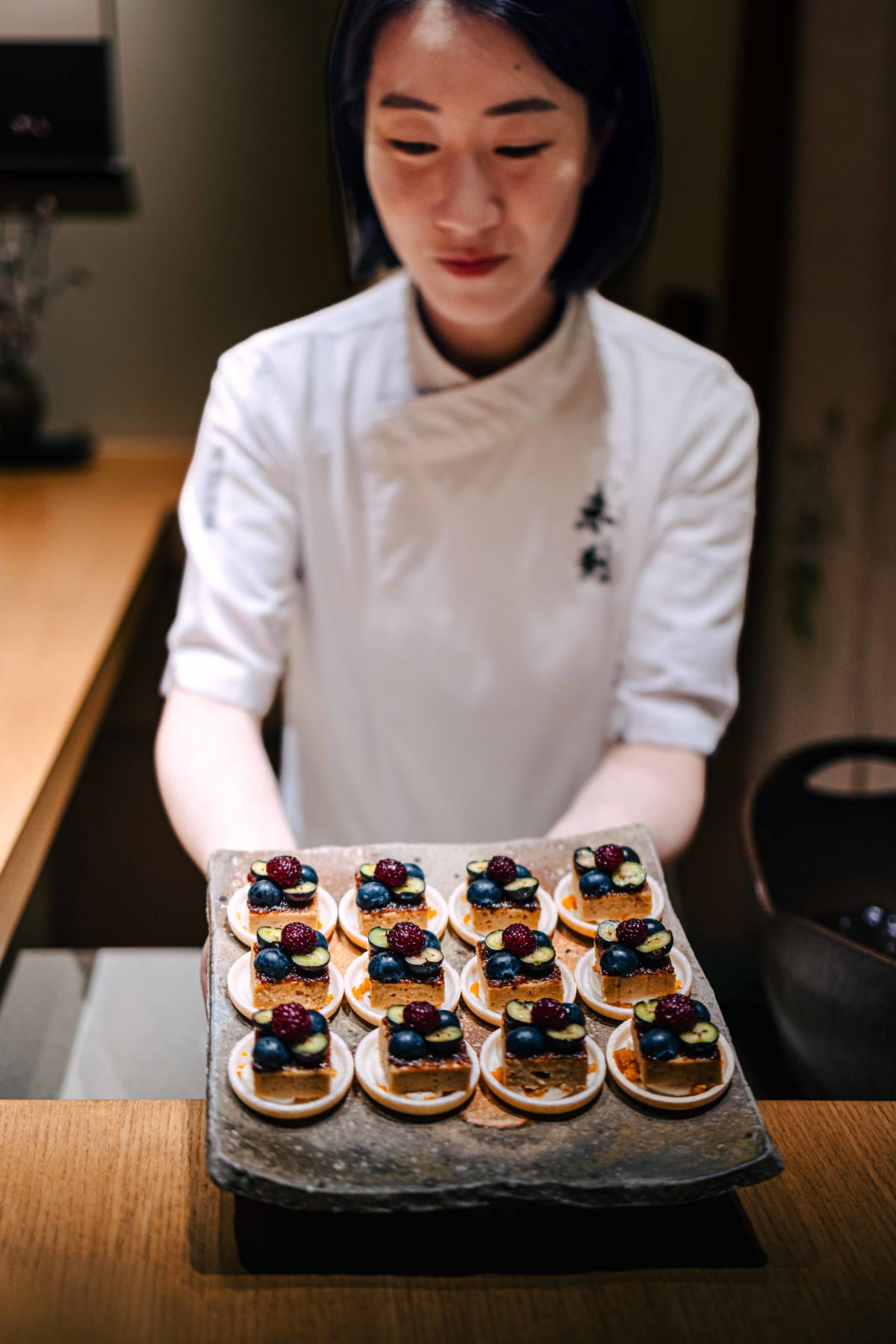
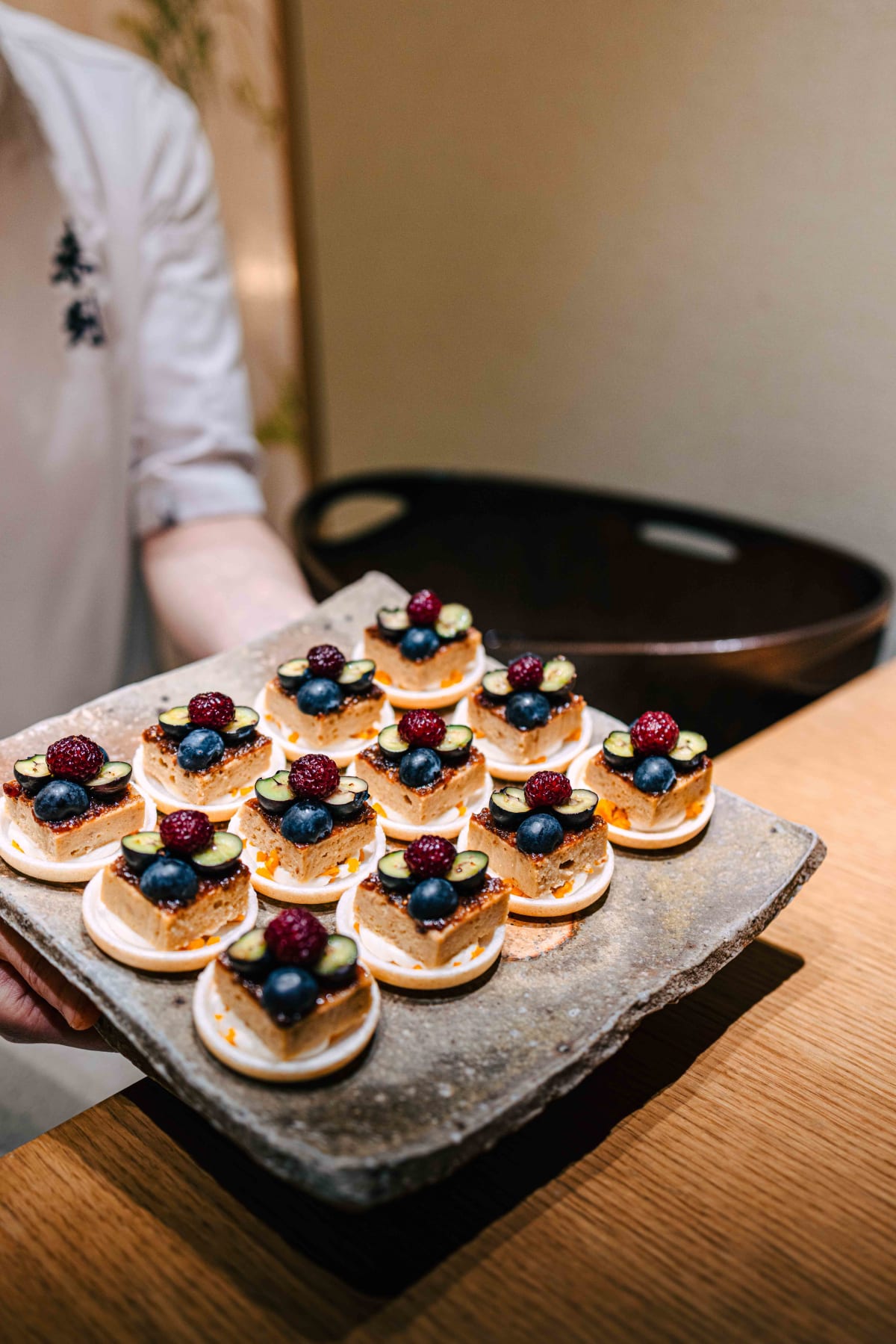
Matsukaze means the wind in the pines. It is the name of a wagashi handed down in Kyoto and Gifu, and also of a dish in osechi, the food of the Japanese New Year. Osechi matsukaze is minced chicken spread flat and baked, with sesame or poppy seeds scattered only on the top and the underside left bare.
Hidden in the name is a Japanese pun.
In Japanese, the back of something is ura (裏), which sounds exactly like ura (浦), a shore. Noh (能), Japan's traditional masked theatre, has a play called Matsukaze, and in it comes a line about a shore left lonely, with nothing but the sound of the wind in the pines. Because the dish's back is bare and lonely, it took the name of that play with its lonely shore: Matsukaze.
And since there is nothing on its back, it is also said to go on the New Year table as a wish to live openly, with nothing to hide. In taste it was less like part of a meal than a bright, fresh dessert. Perhaps because it was my first time, it sat a little apart from the style I like, and for me it was ordinary.
Section 4·Suimono And Sashimi
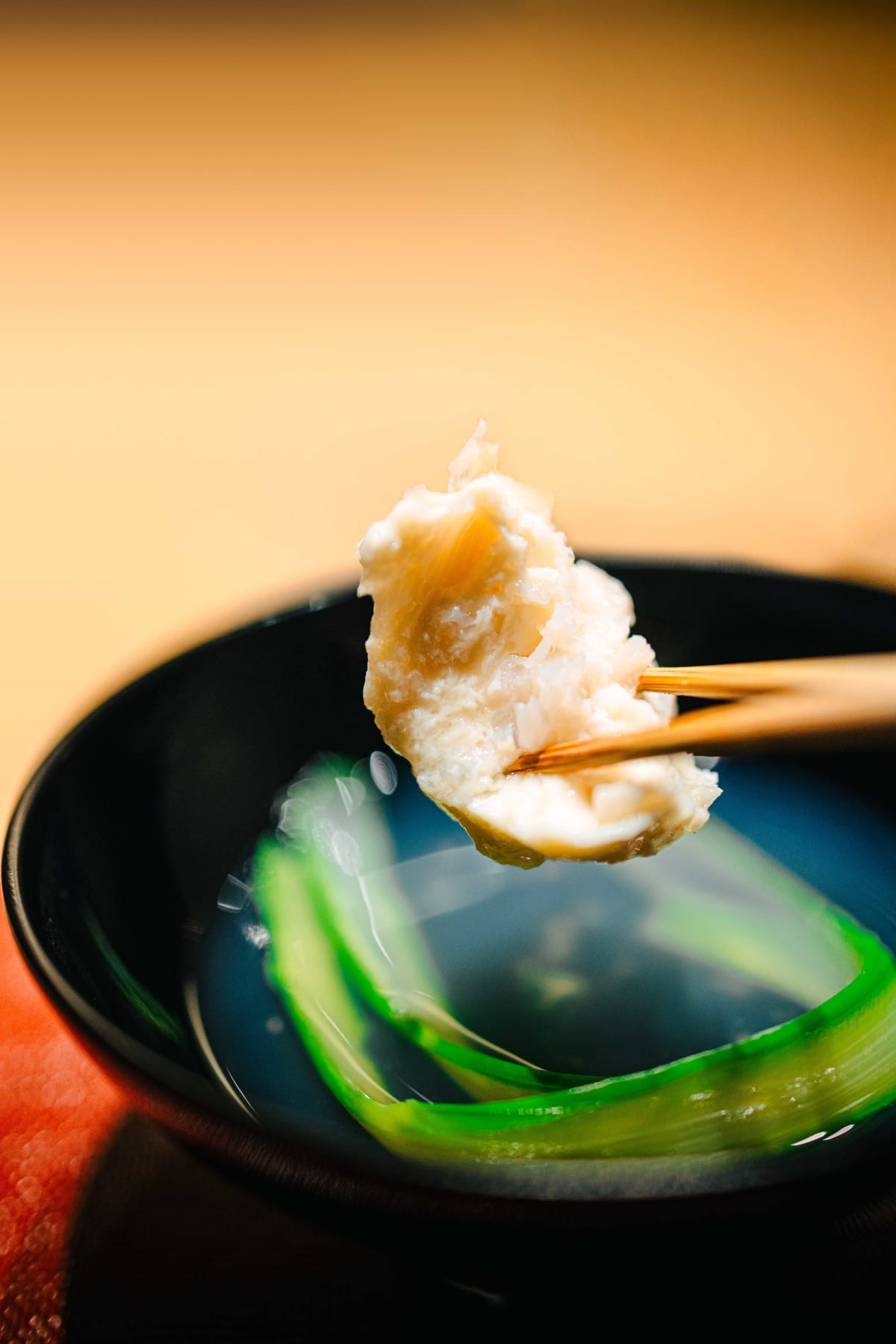
The suimono held a scallop dumpling.
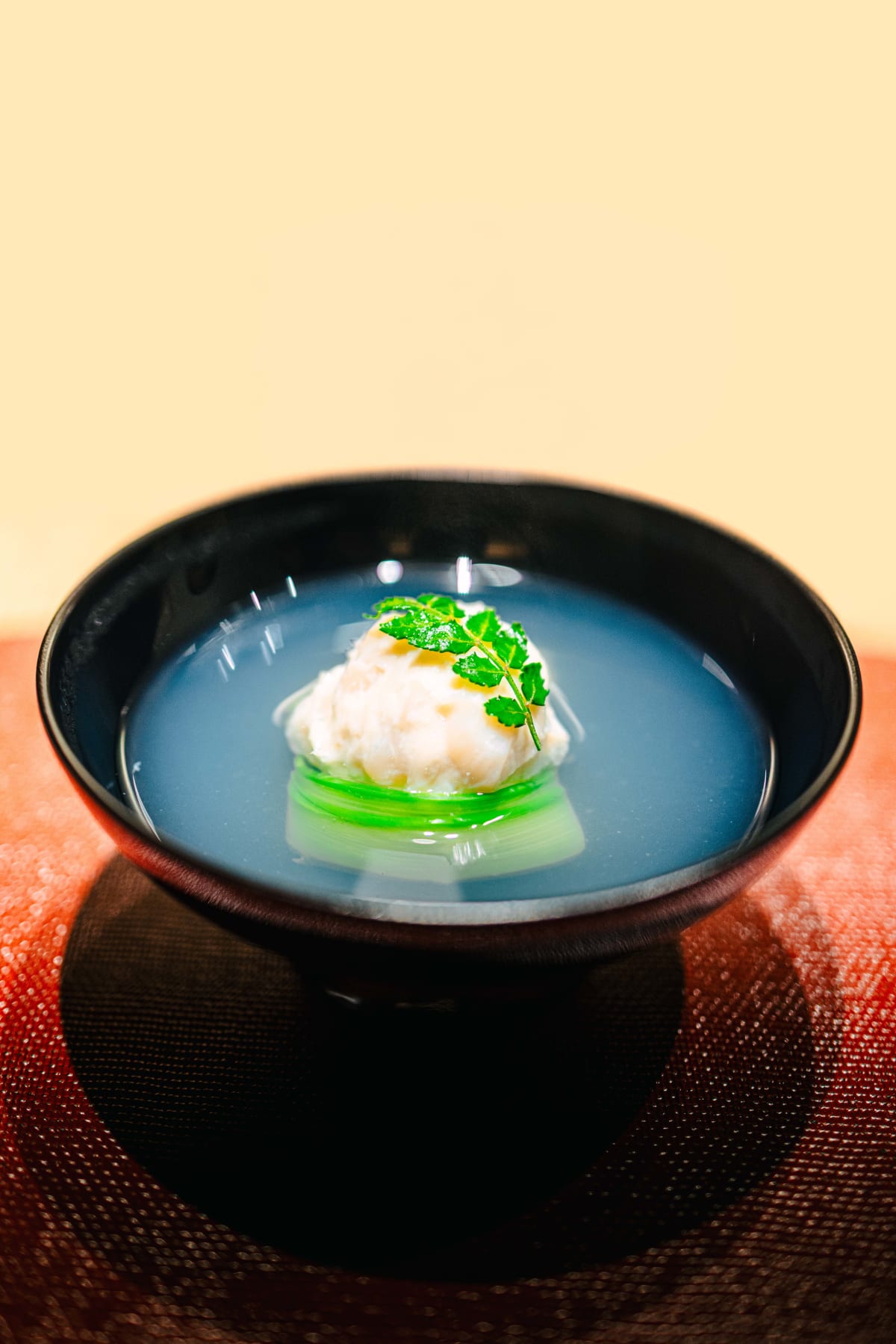
It was simmered with asparagus cut into long lengths and topped with kinome, young sansho leaves, which gave the broth a gentle sansho fragrance.
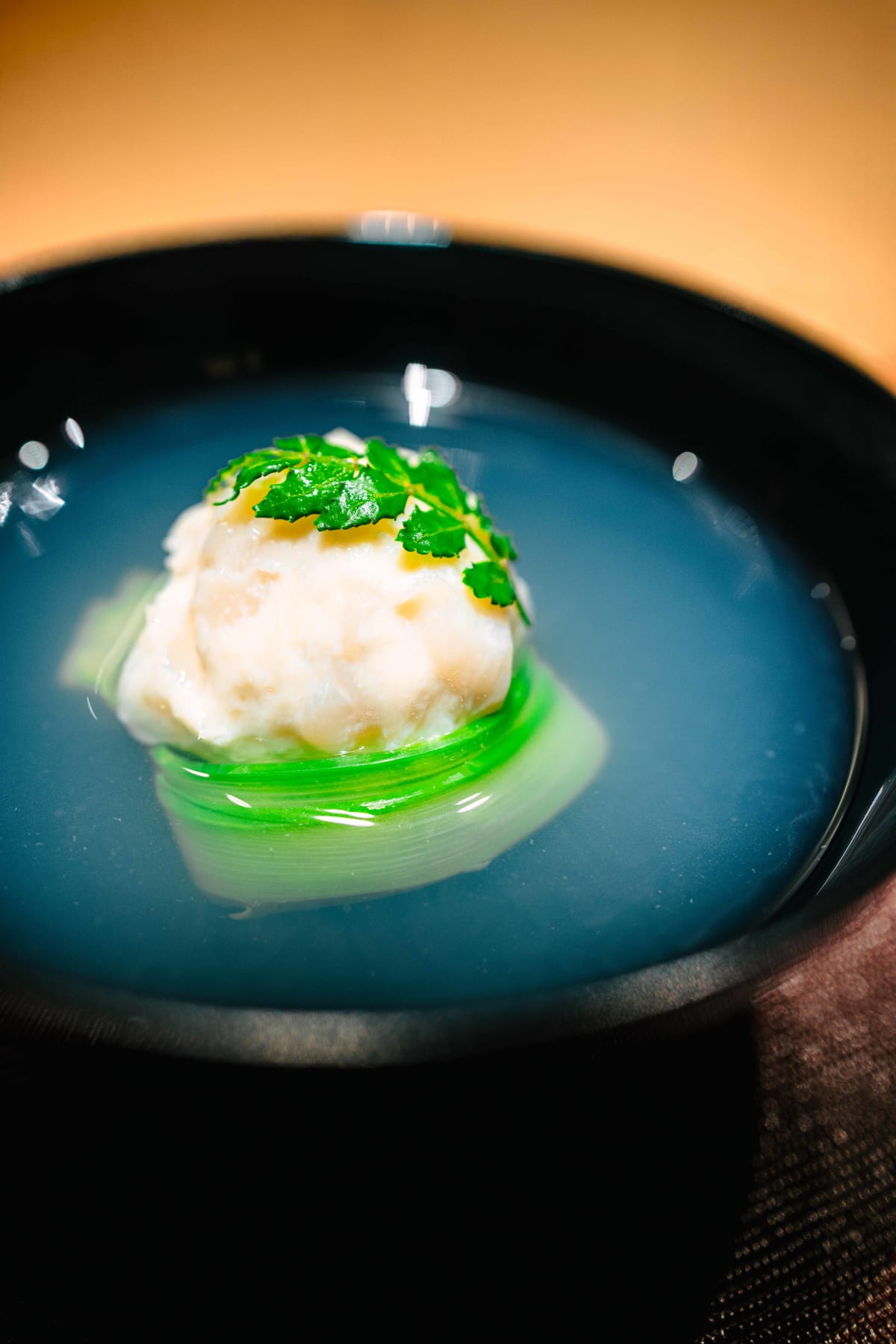
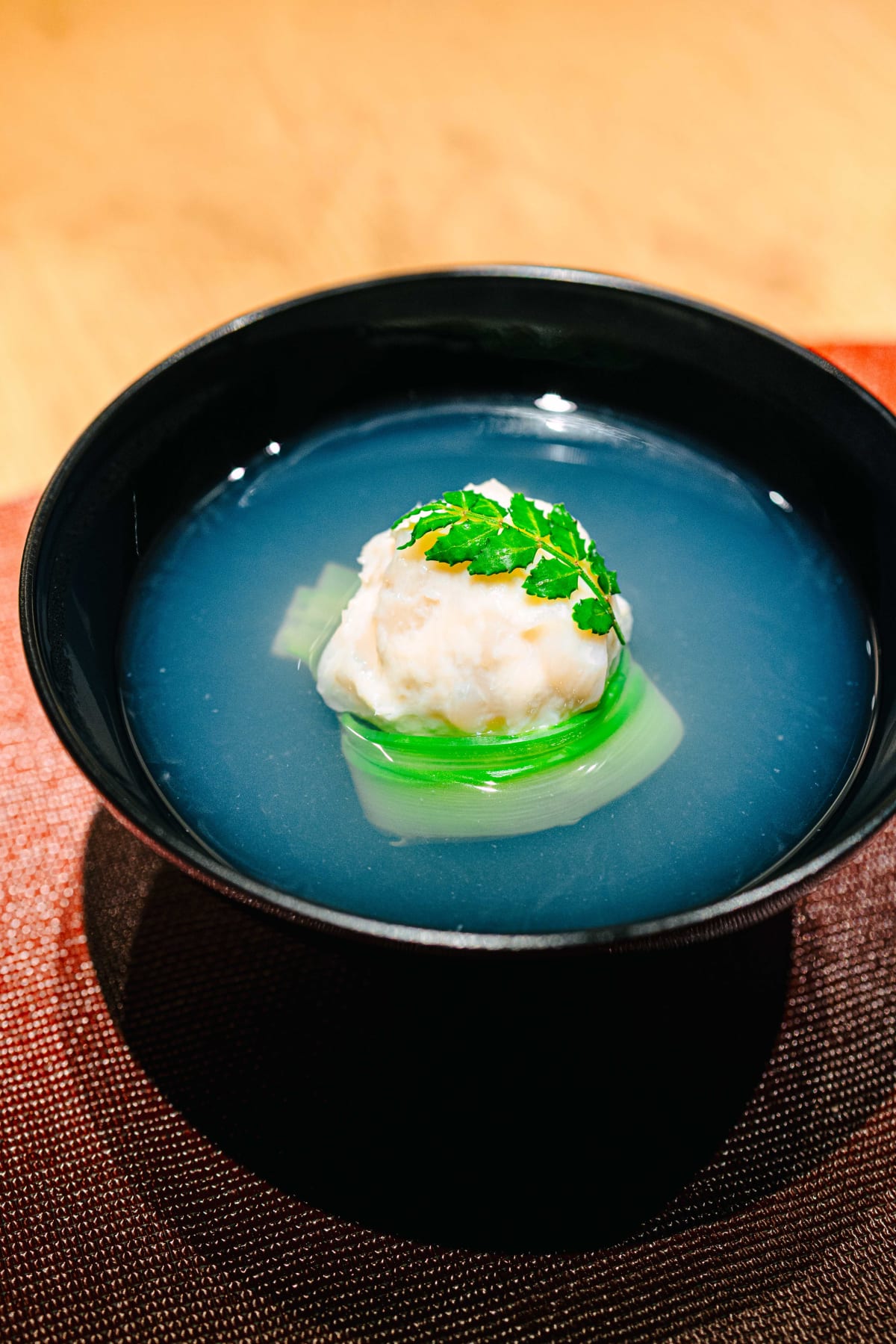
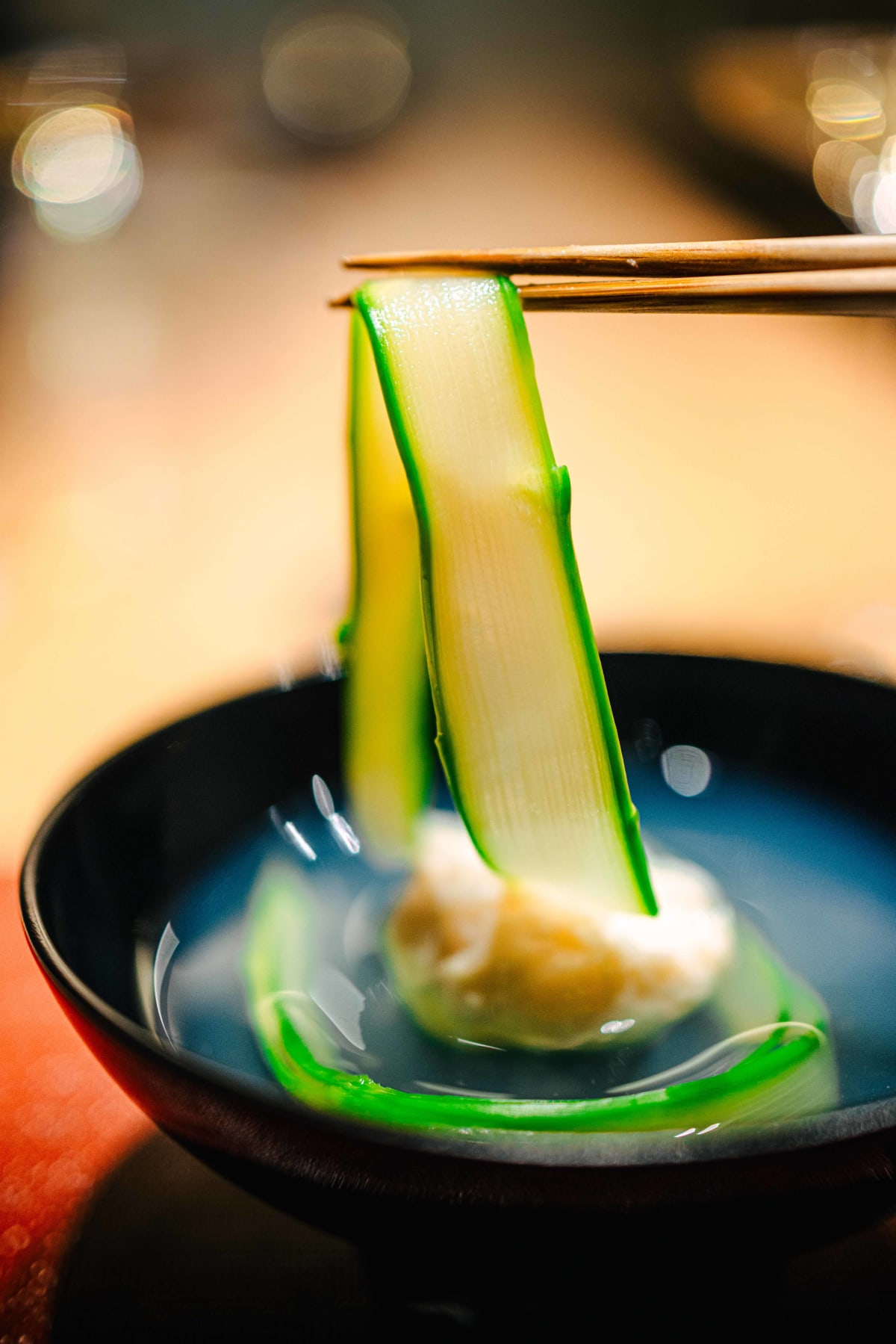
The broth itself was lightly seasoned and delicate, and the dumpling was delicious.
I read that the kombu Mitou uses comes from Gijang Mulsan, which buys it under exclusive contracts with sixteen fishing village cooperatives and their households in Gijang County, Busan, and which was the first in Korea to earn ASC-MSC certification for sustainable seaweed.
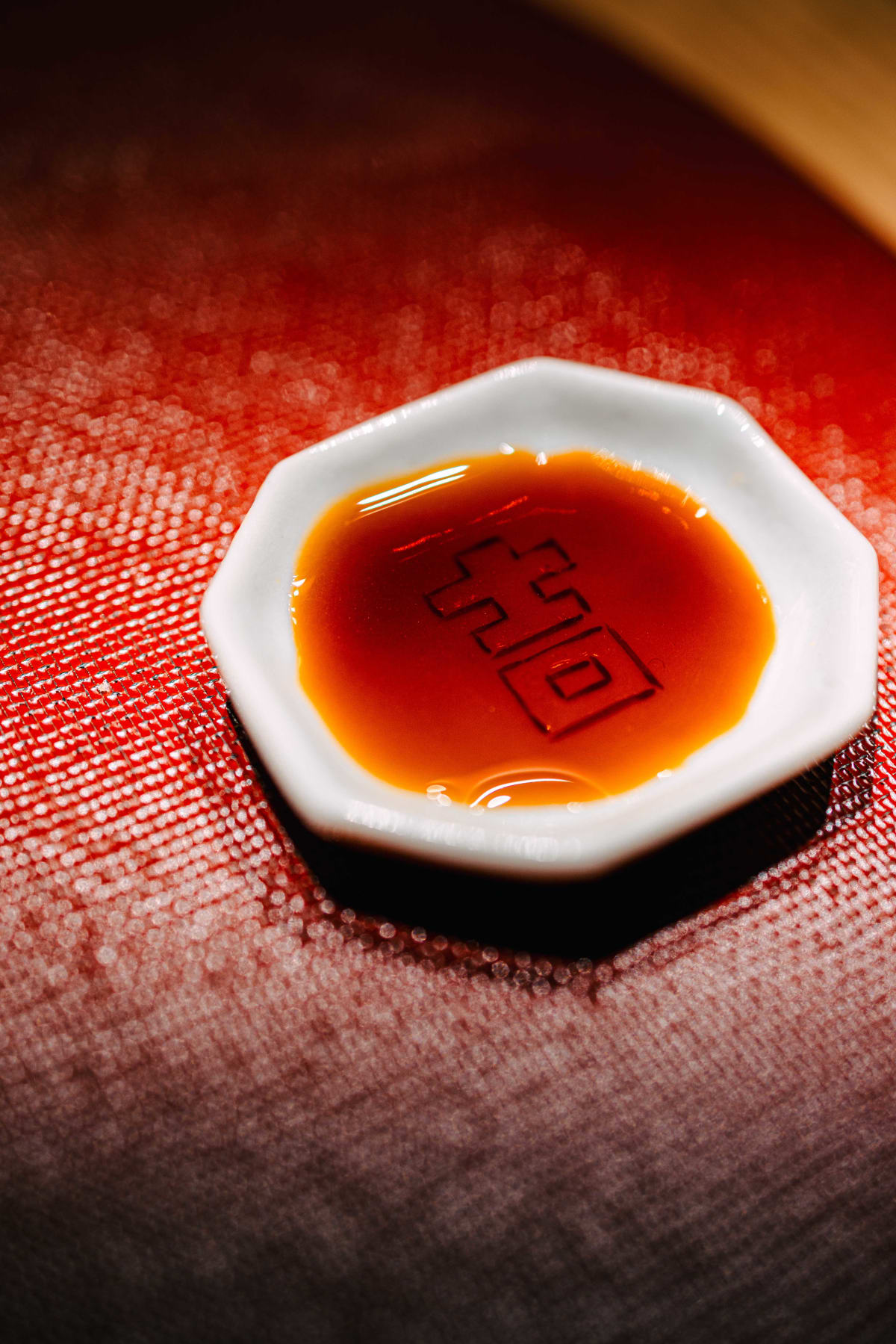
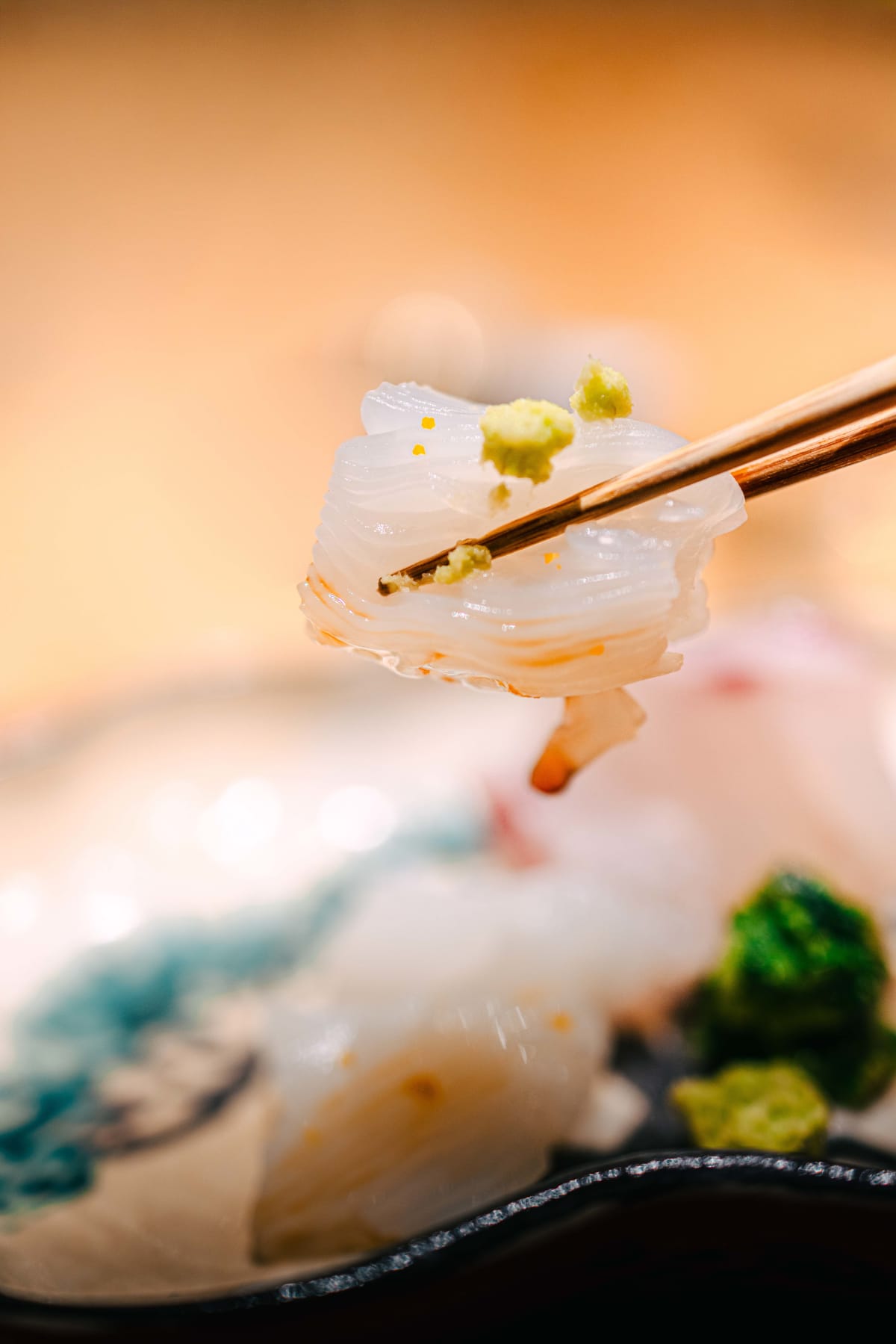
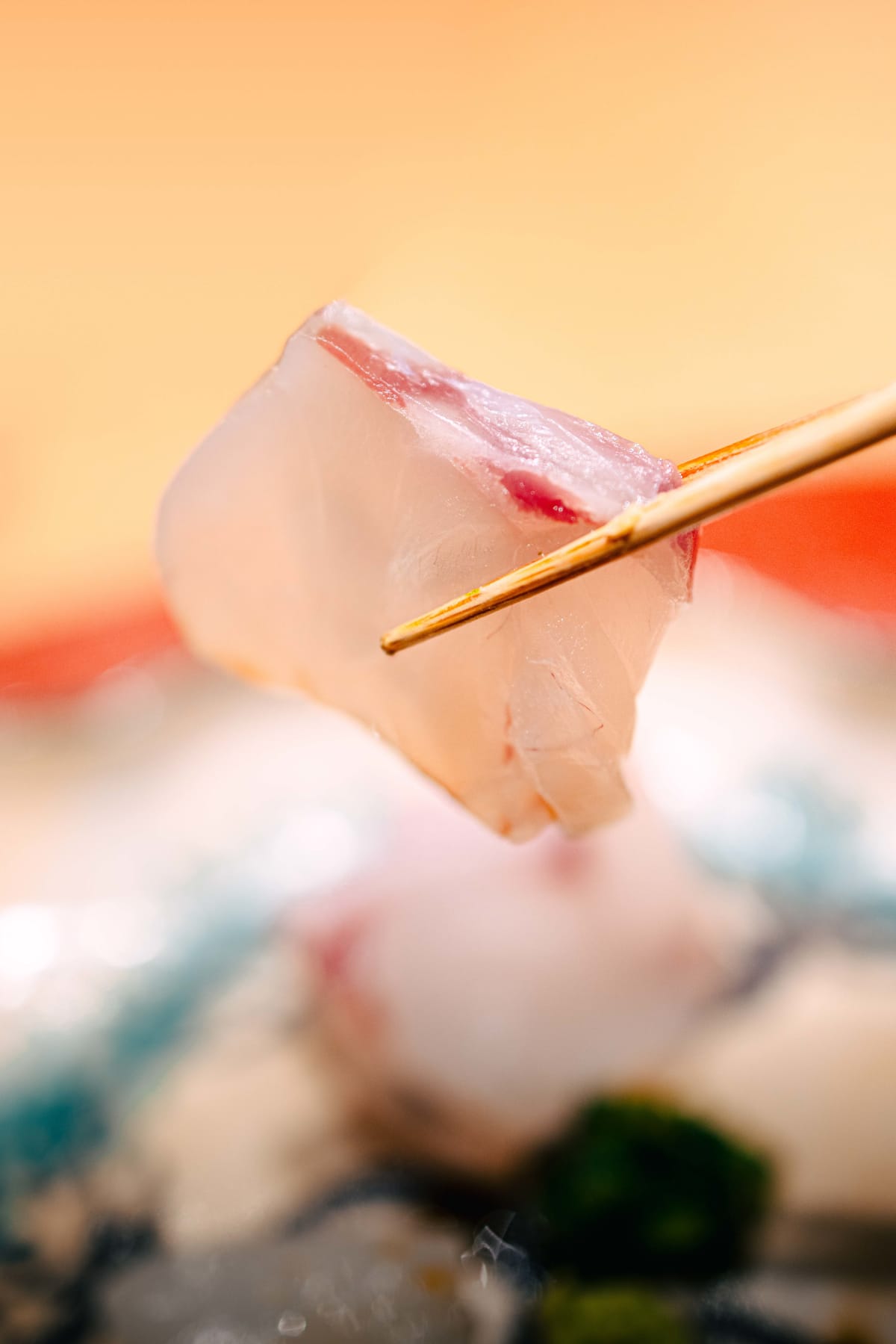
The sashimi was aori-ika, bigfin reef squid, and sevenband grouper.
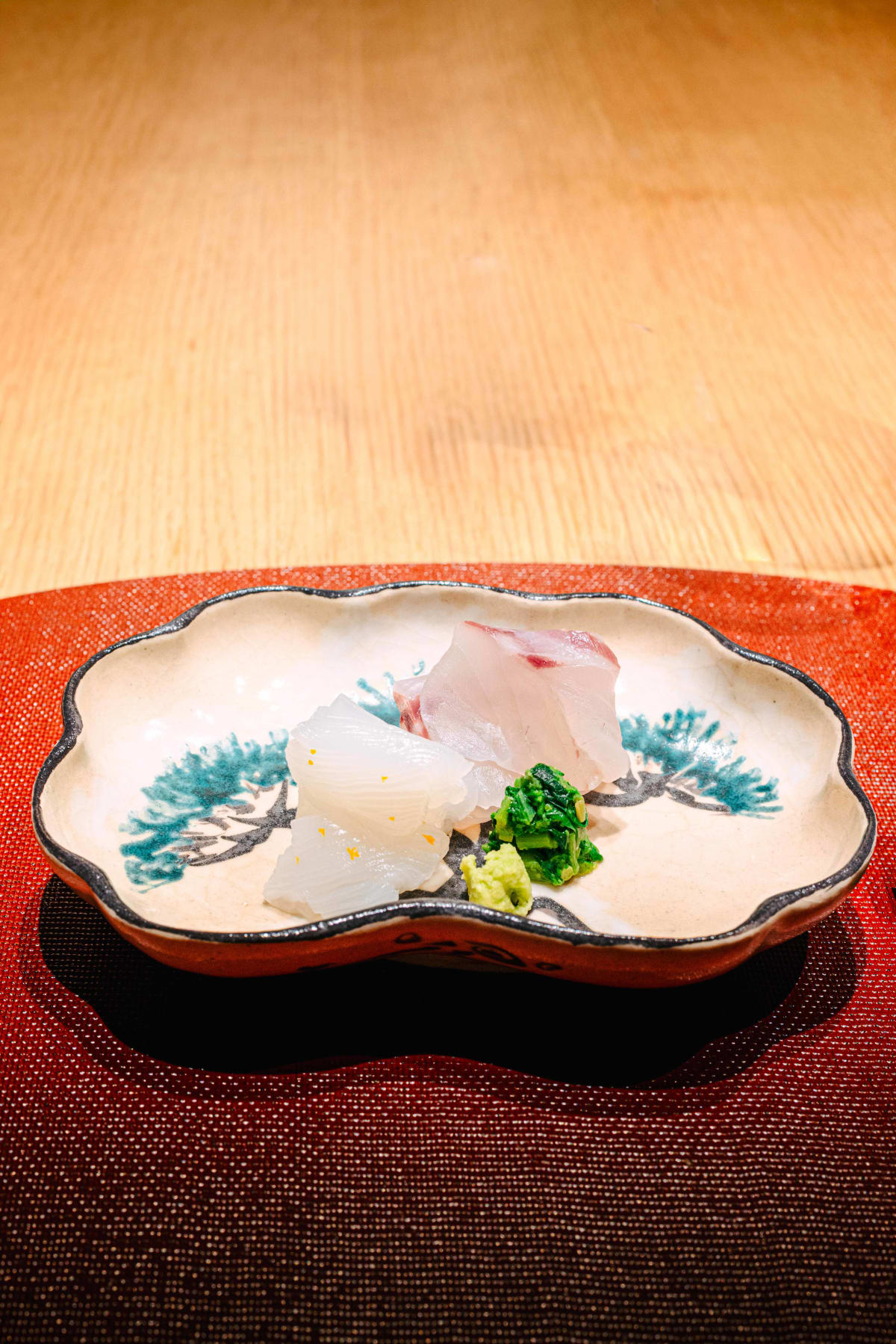
The grouper seems to be a fish Mitou almost never leaves out.
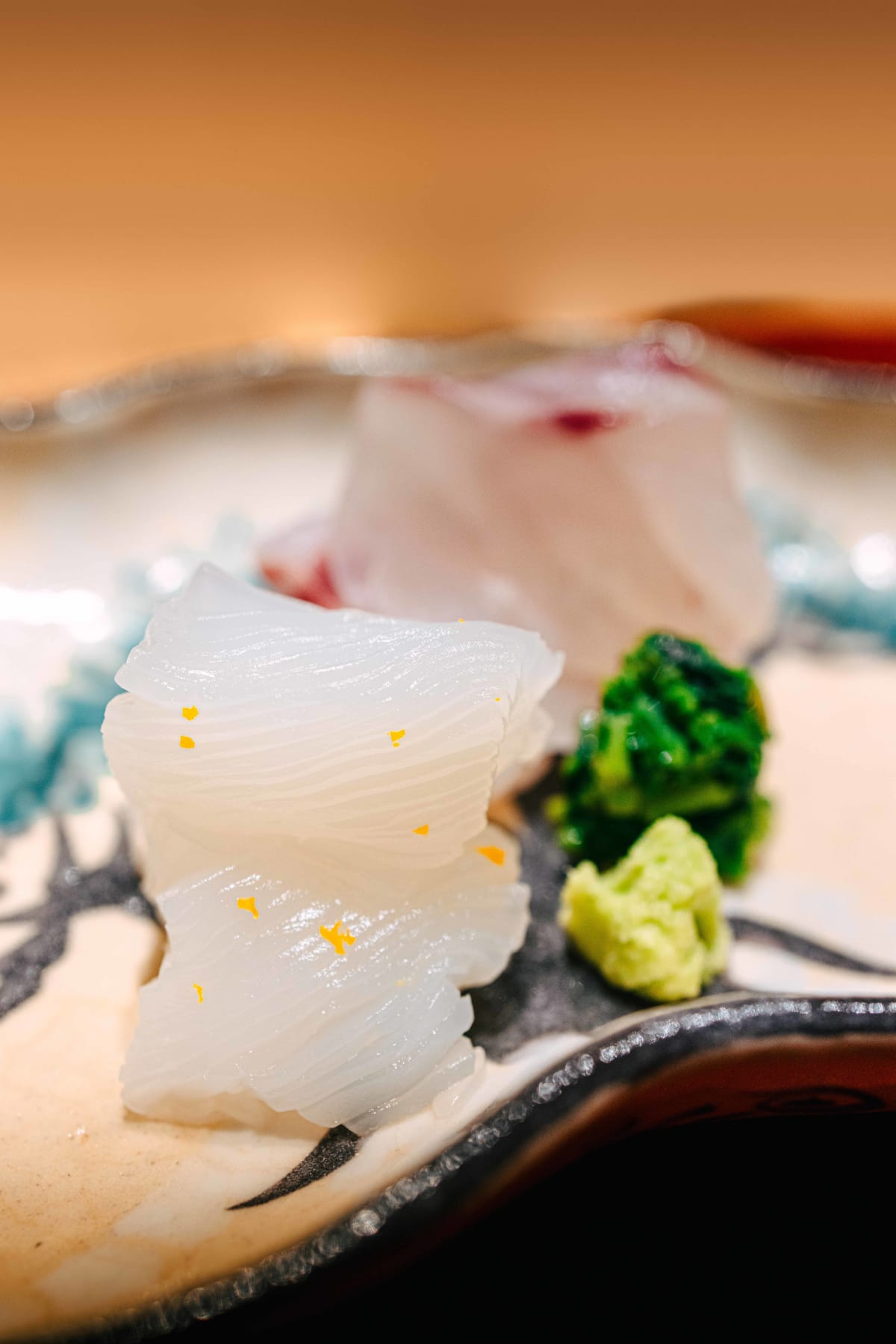
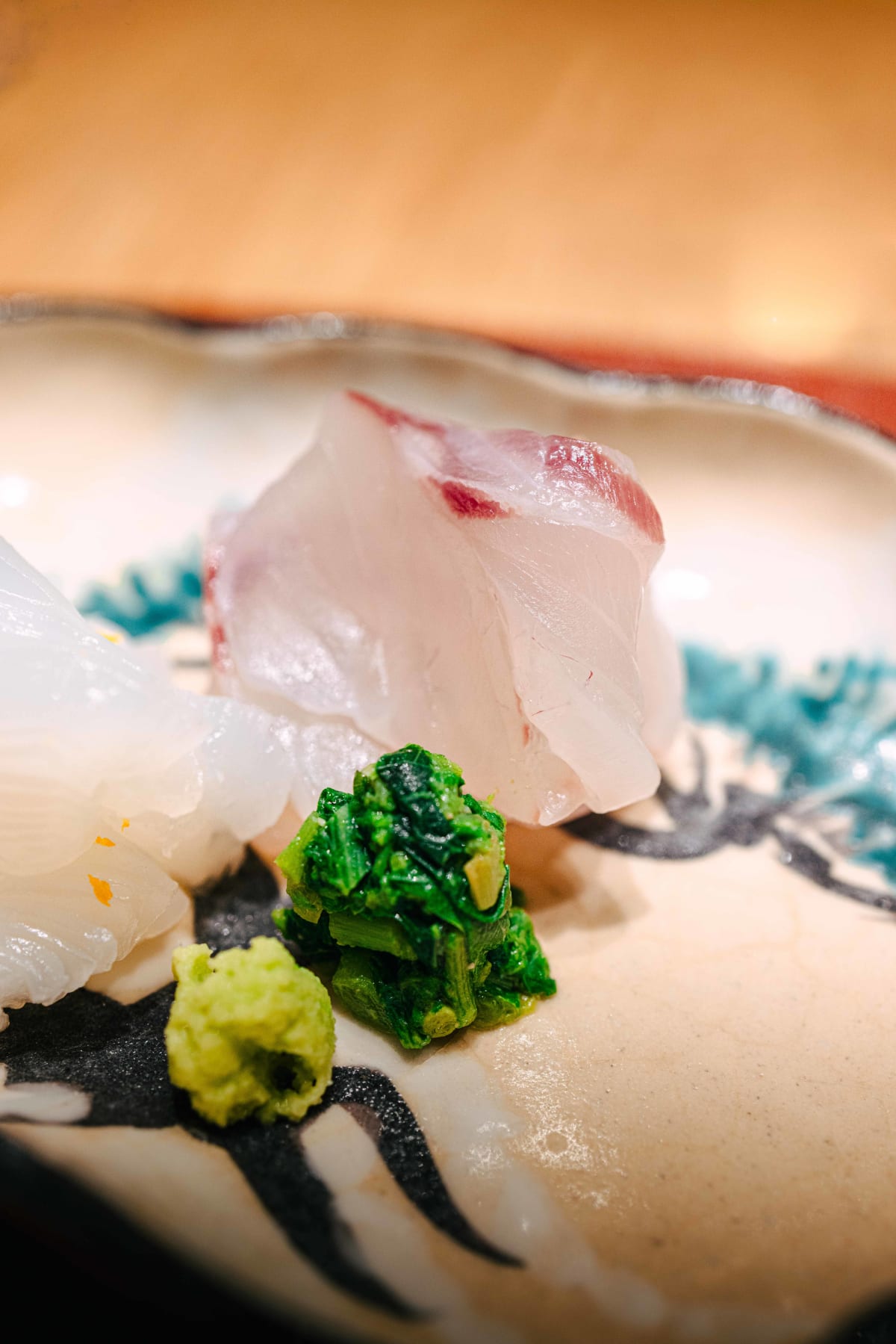
It tasted as good as ever: the squid was chewy and delicious, and the grouper had a fine texture.
Section 5·Shima-aji With A Cochin Yolk
And the sashimi dish that came next... was the best of the day: shima-aji, striped jack, with shari and the yolk of a Nagoya Cochin egg.
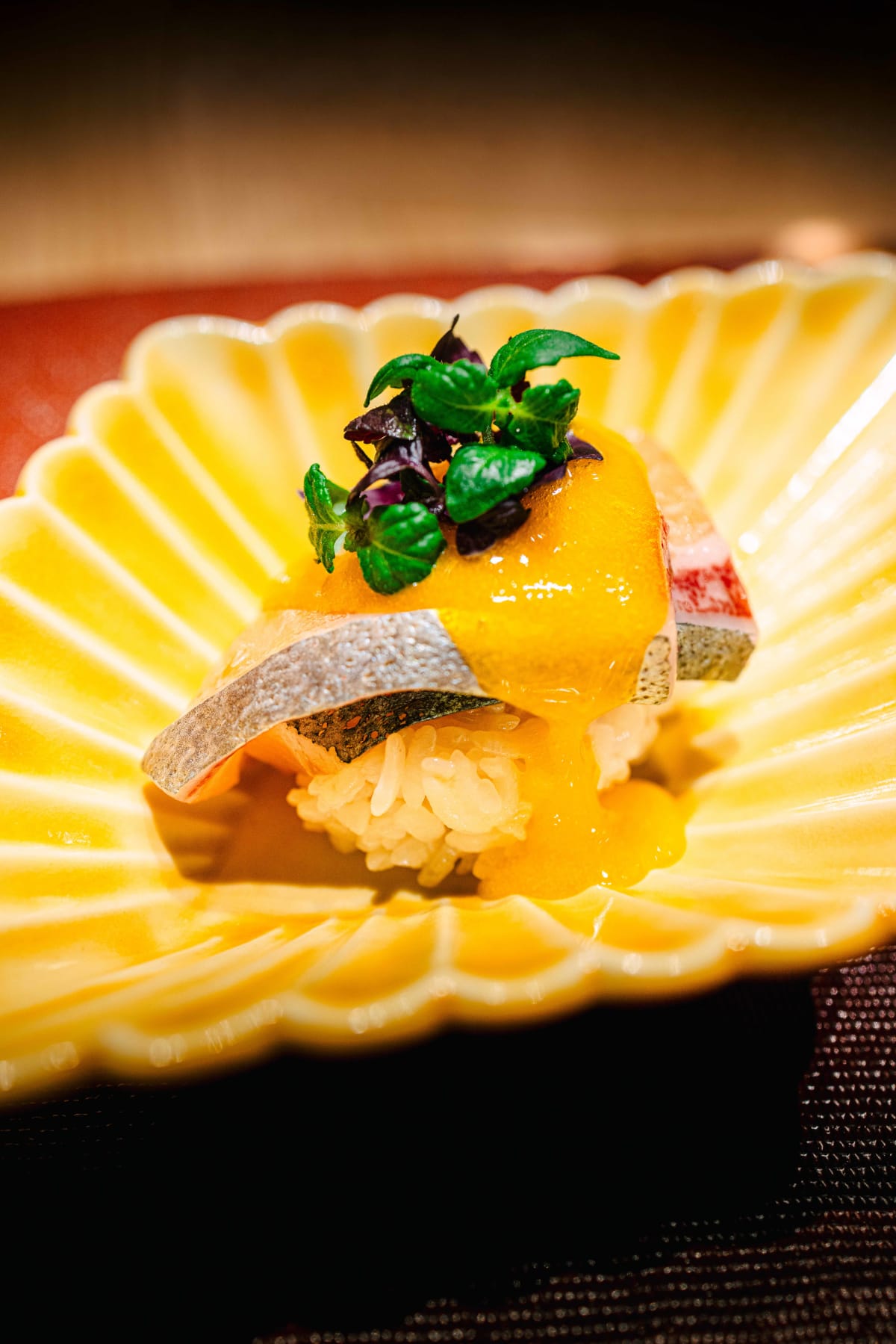
Sashimi and egg yolk? It is an unfamiliar pairing, yet the two went together beautifully. Both had a nutty richness, and with the slightly oily shima-aji and the well-seasoned shari, it all came together superbly.
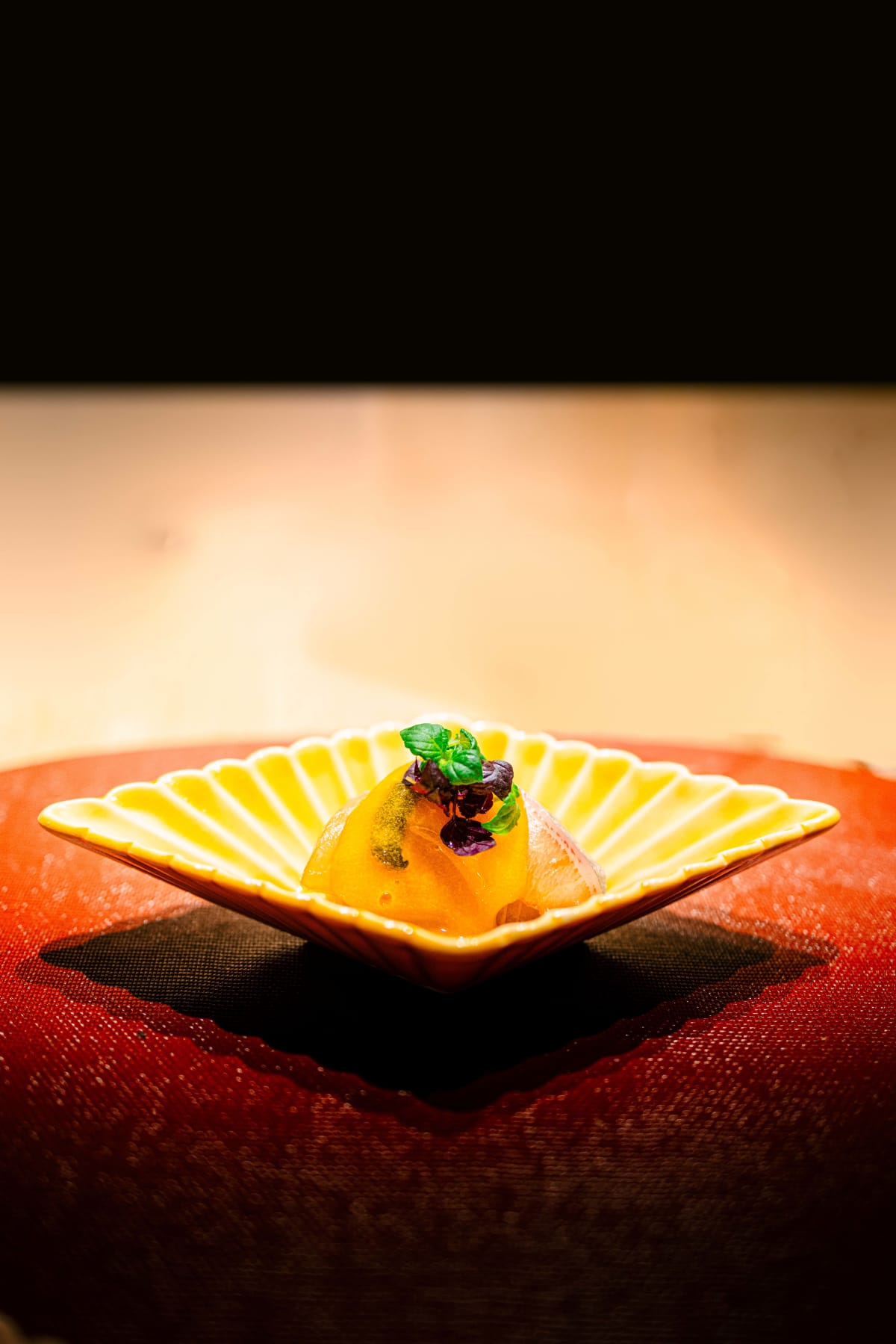
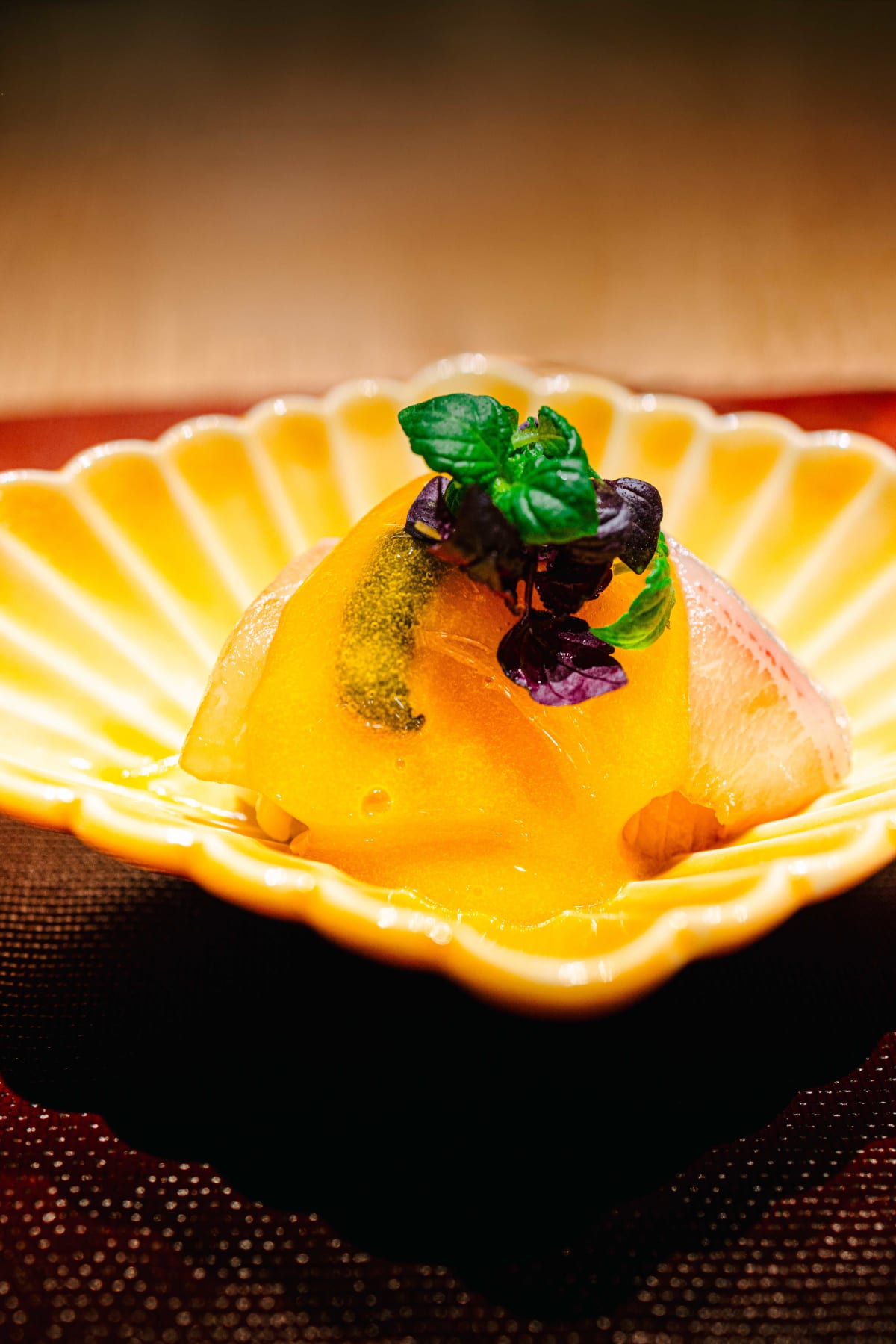
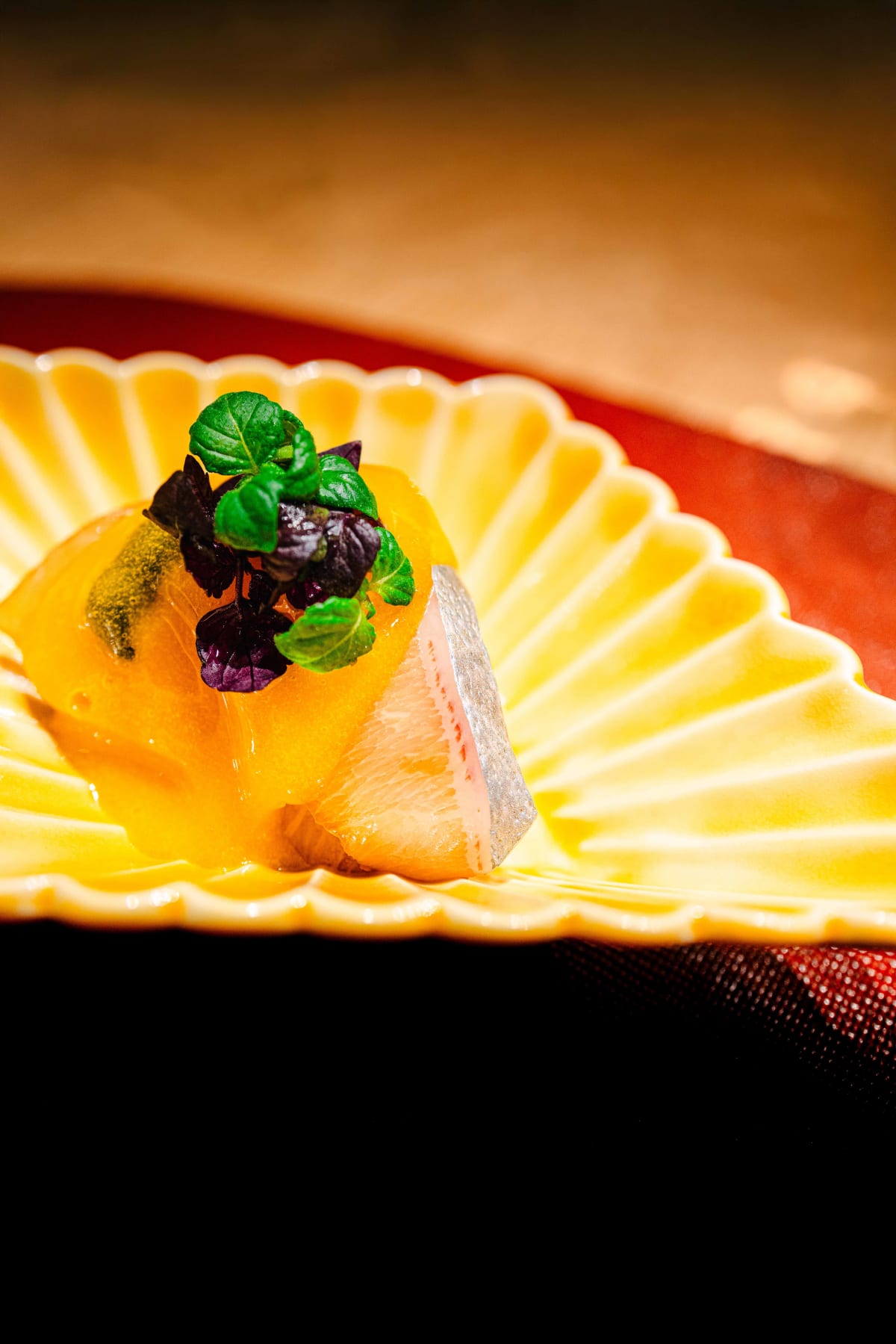
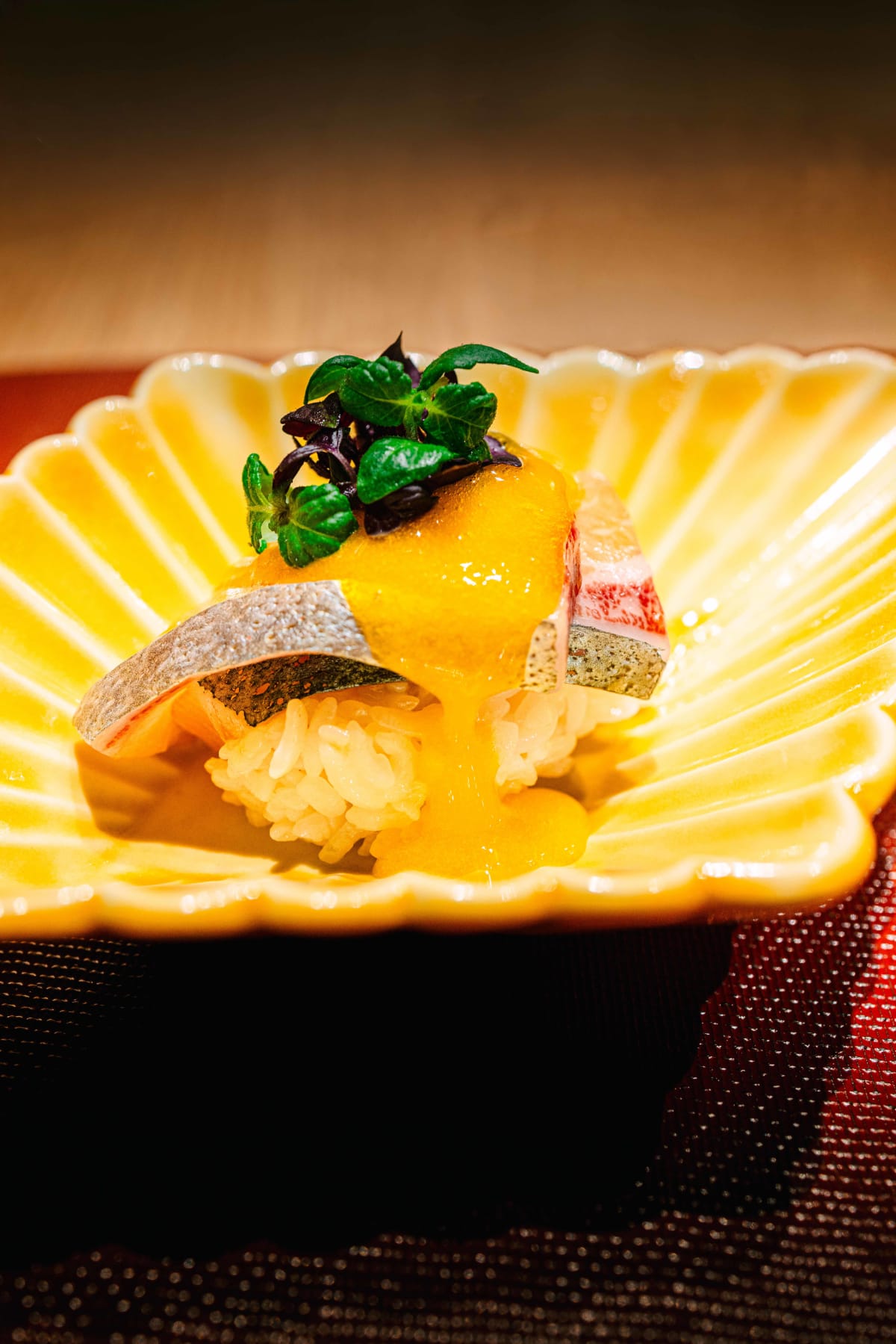
The moment I had eaten it, I thought, I want this again!
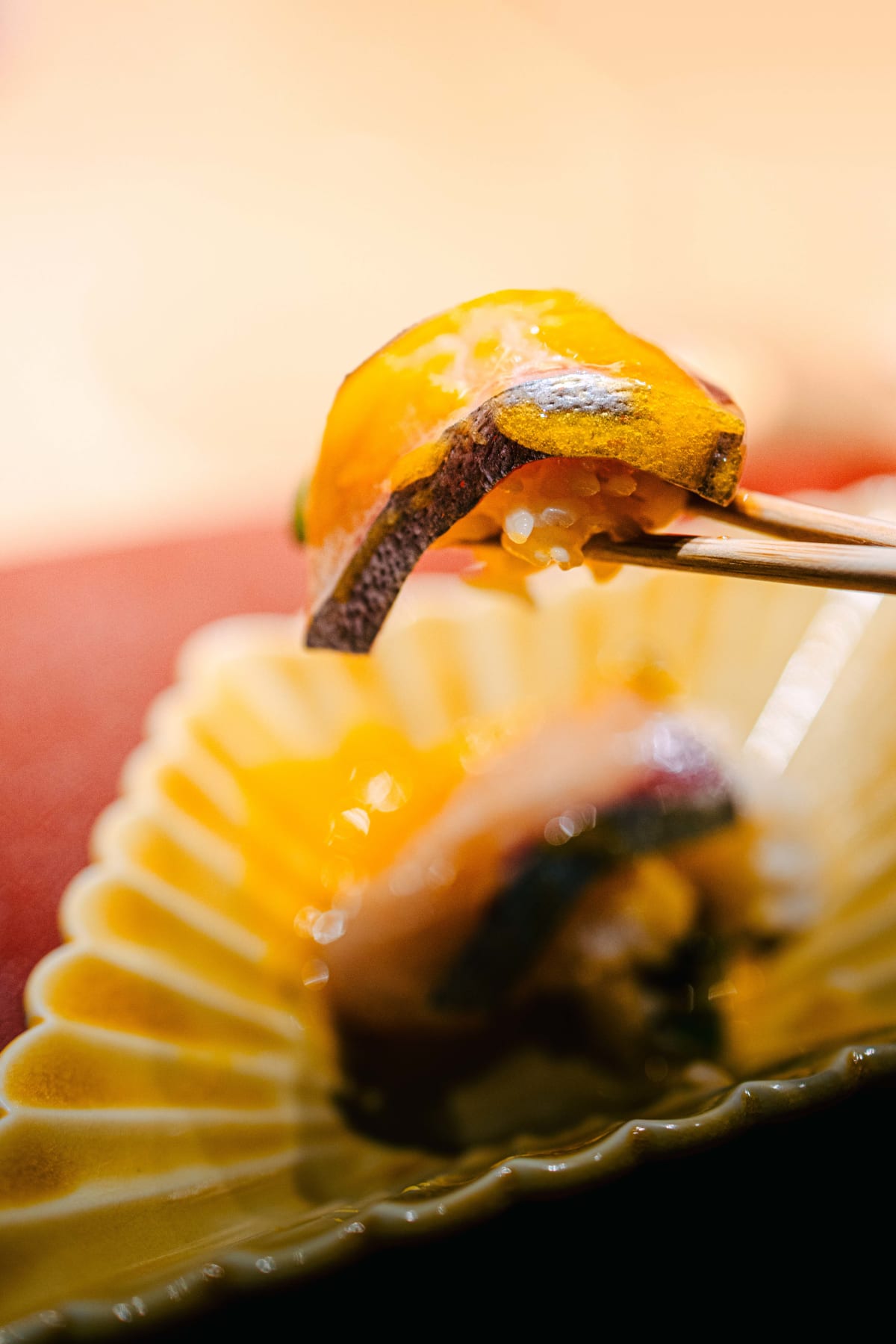
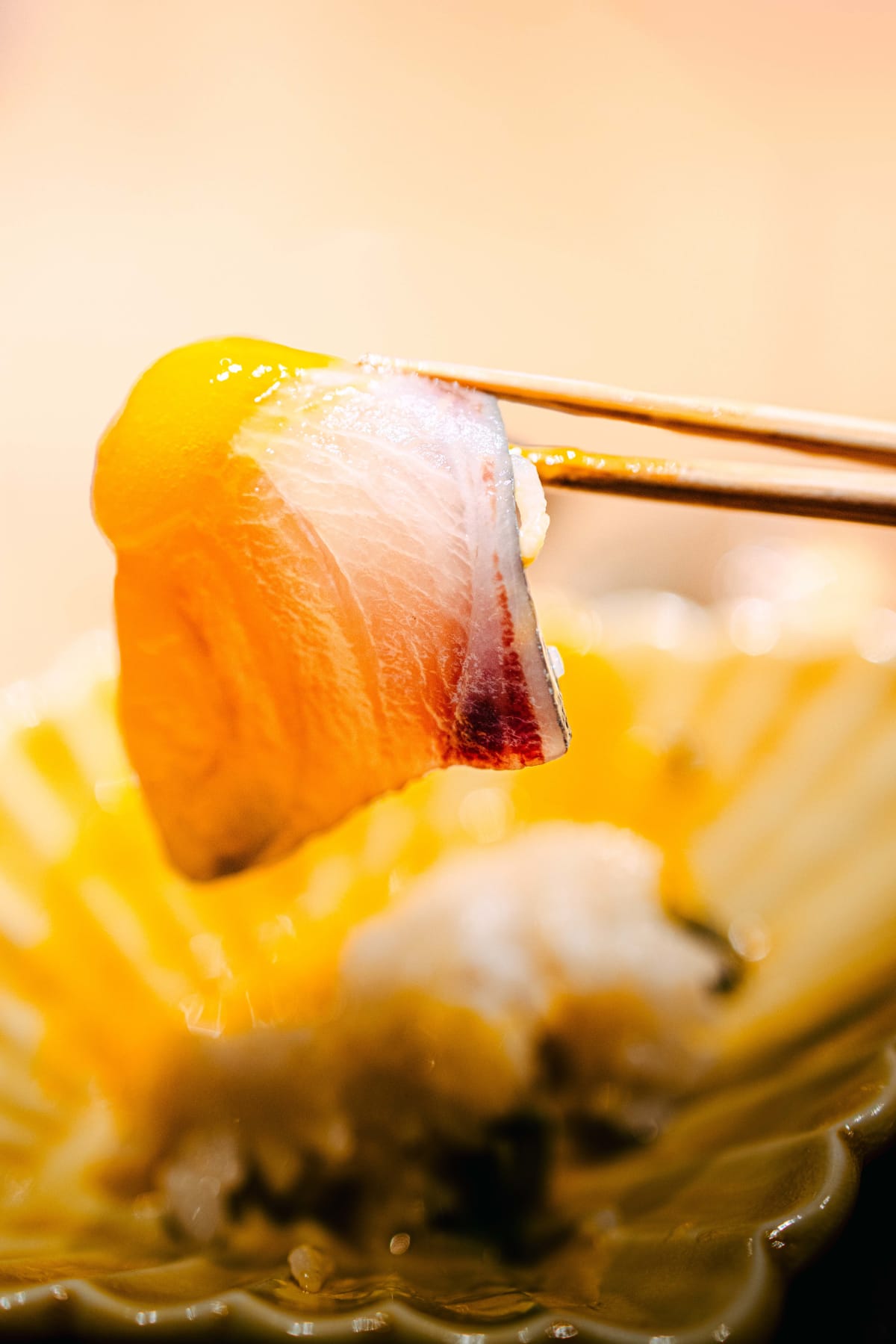
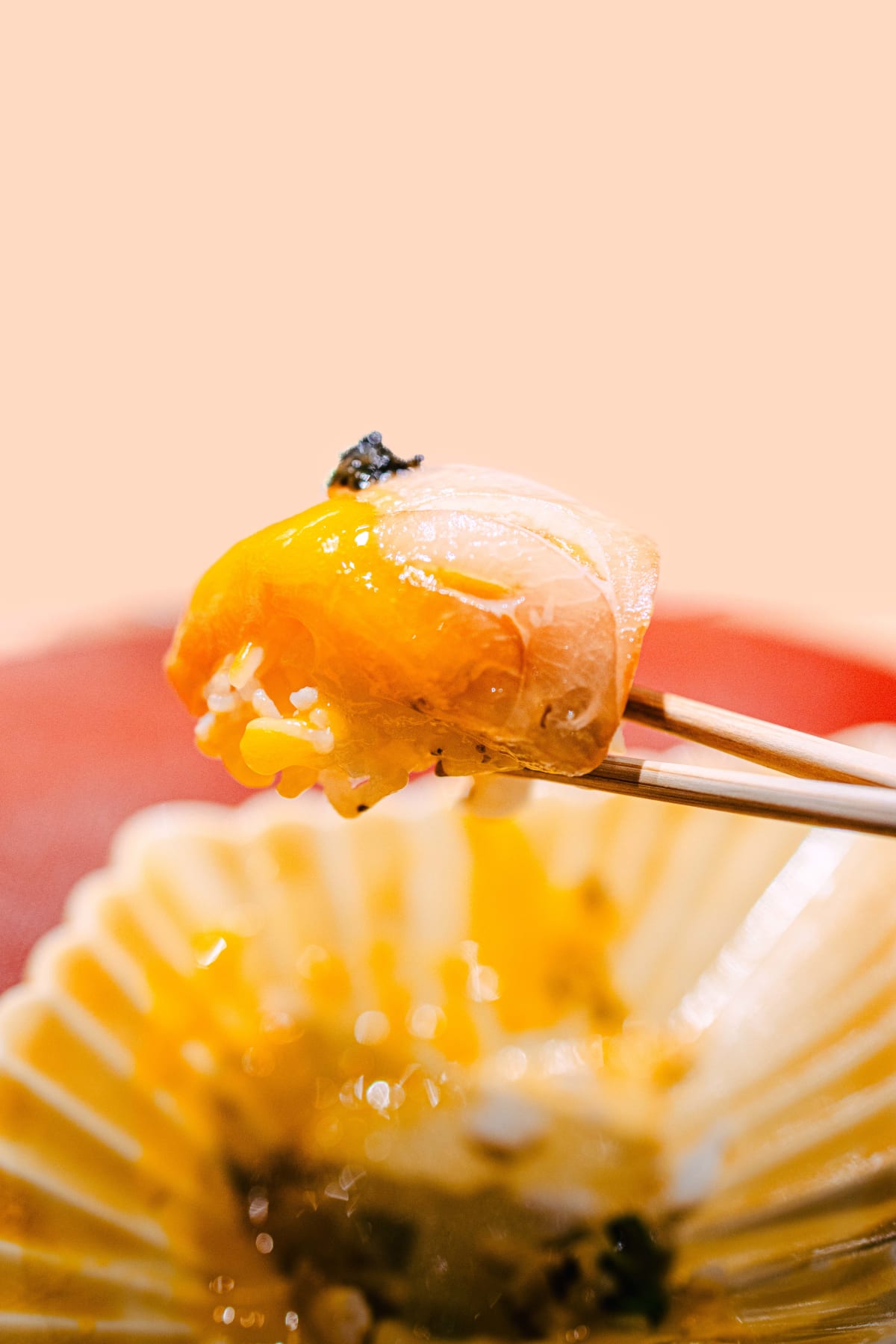
Sashimi and egg yolk? It is an unfamiliar pairing, yet the two went together beautifully.
There is quite a long story behind this yolk. Nagoya Cochin is a breed created in Aichi Prefecture in the Meiji era and counted among Japan's three great jidori (地鶏), and it is famous for eggs with cherry-blossom-coloured shells and rich yolks.
Mitou was opened in 2018 by Kwon Young-woon and Kim Bo-mi, two chefs who met while training, and it raises this chicken itself on the family farm in Cheongju run by Kwon Young-woon's parents. According to the leaflet I was given that day, the farm began with Korean native chickens and Cheonggye, then brought in three Nagoya Cochin. For three years it kept them apart from other chickens so the breed would not mix, got the ratio of hens to roosters right, gave the birds a stress-free environment and hatched the eggs itself again and again, until now it raises nothing but Nagoya Cochin.
Section 6·Unagi And Les Clos
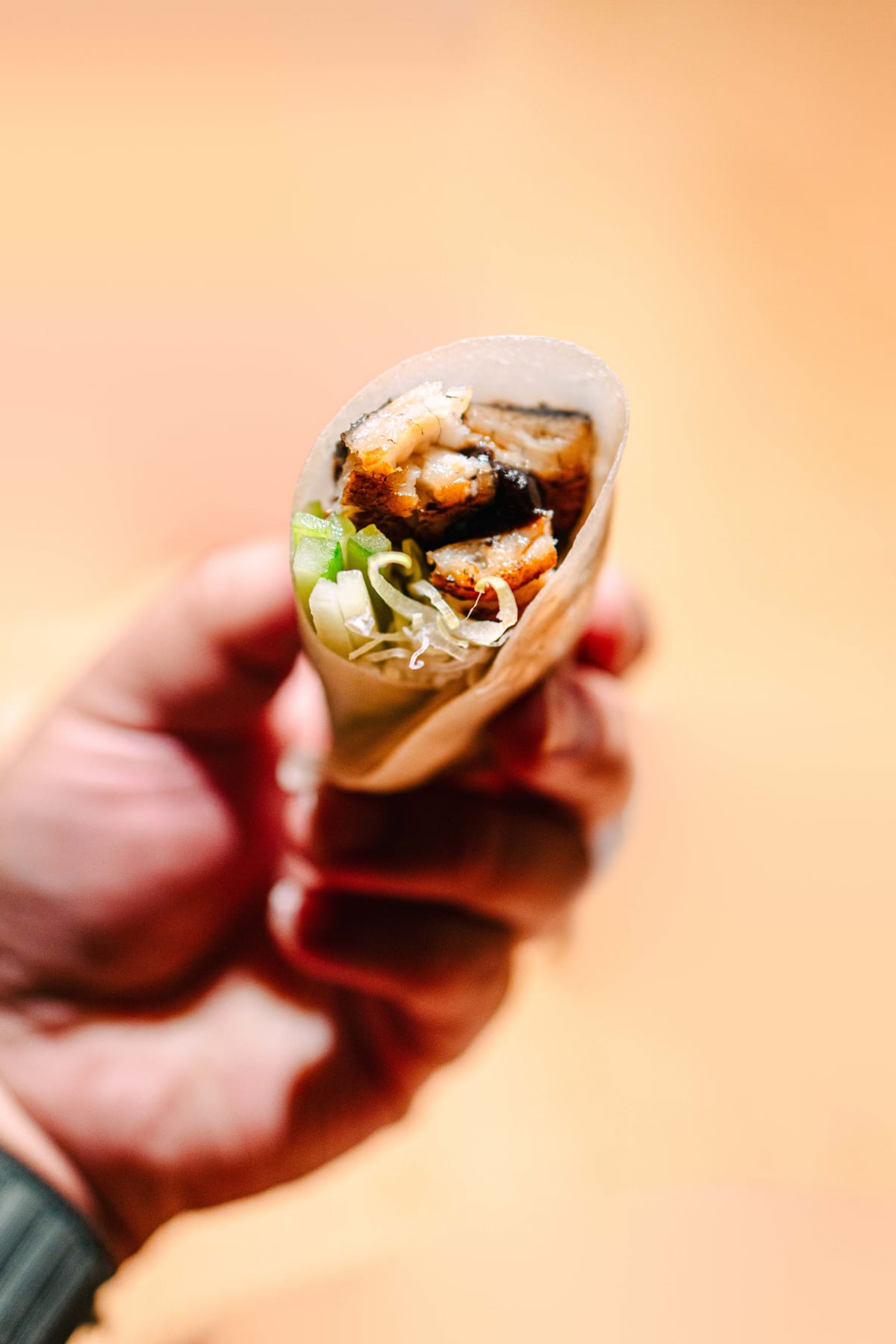
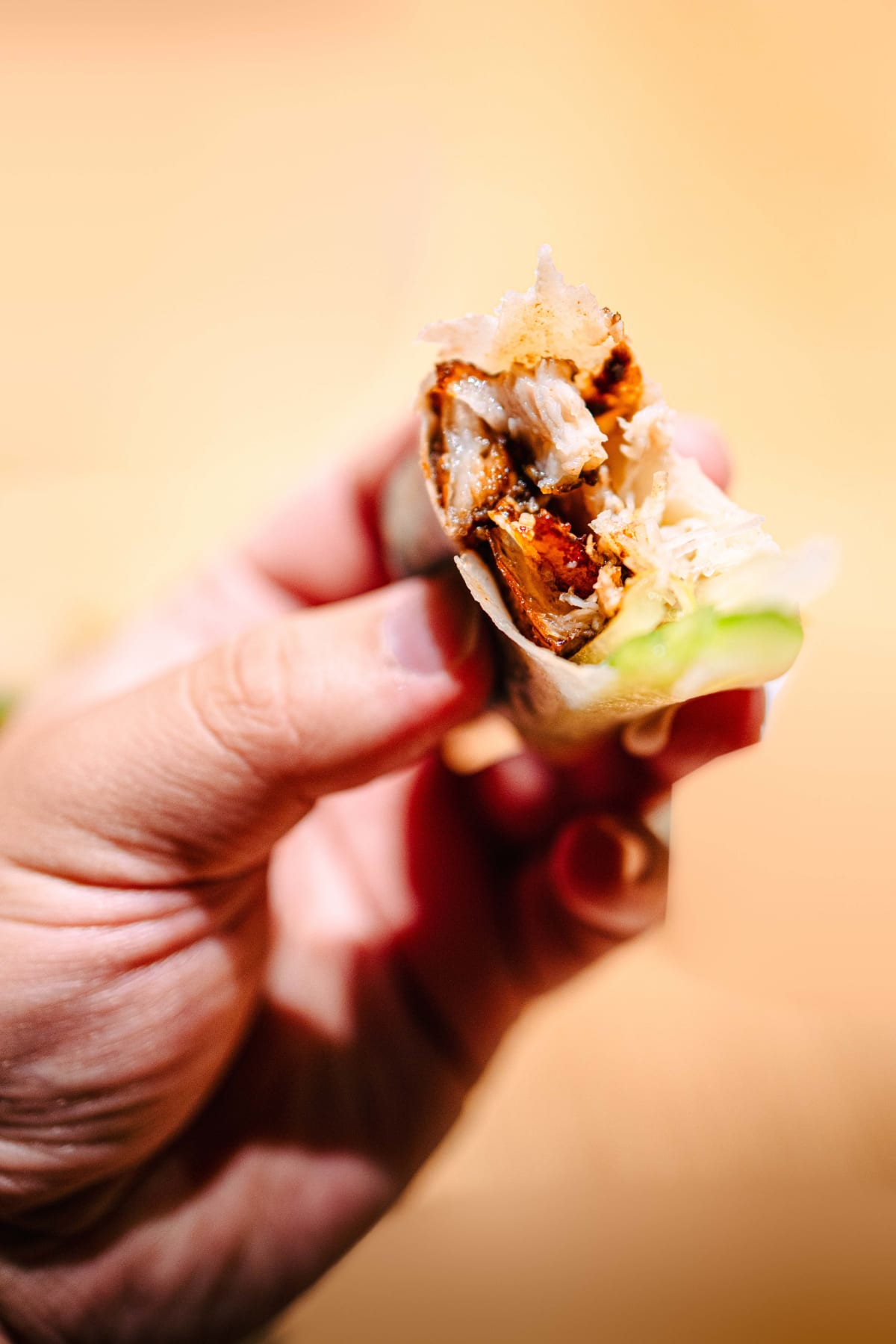
On my first visit to Mitou, the dish that made a deep impression on me was the unagi, wrapped in a thin crêpe and eaten like Peking duck.
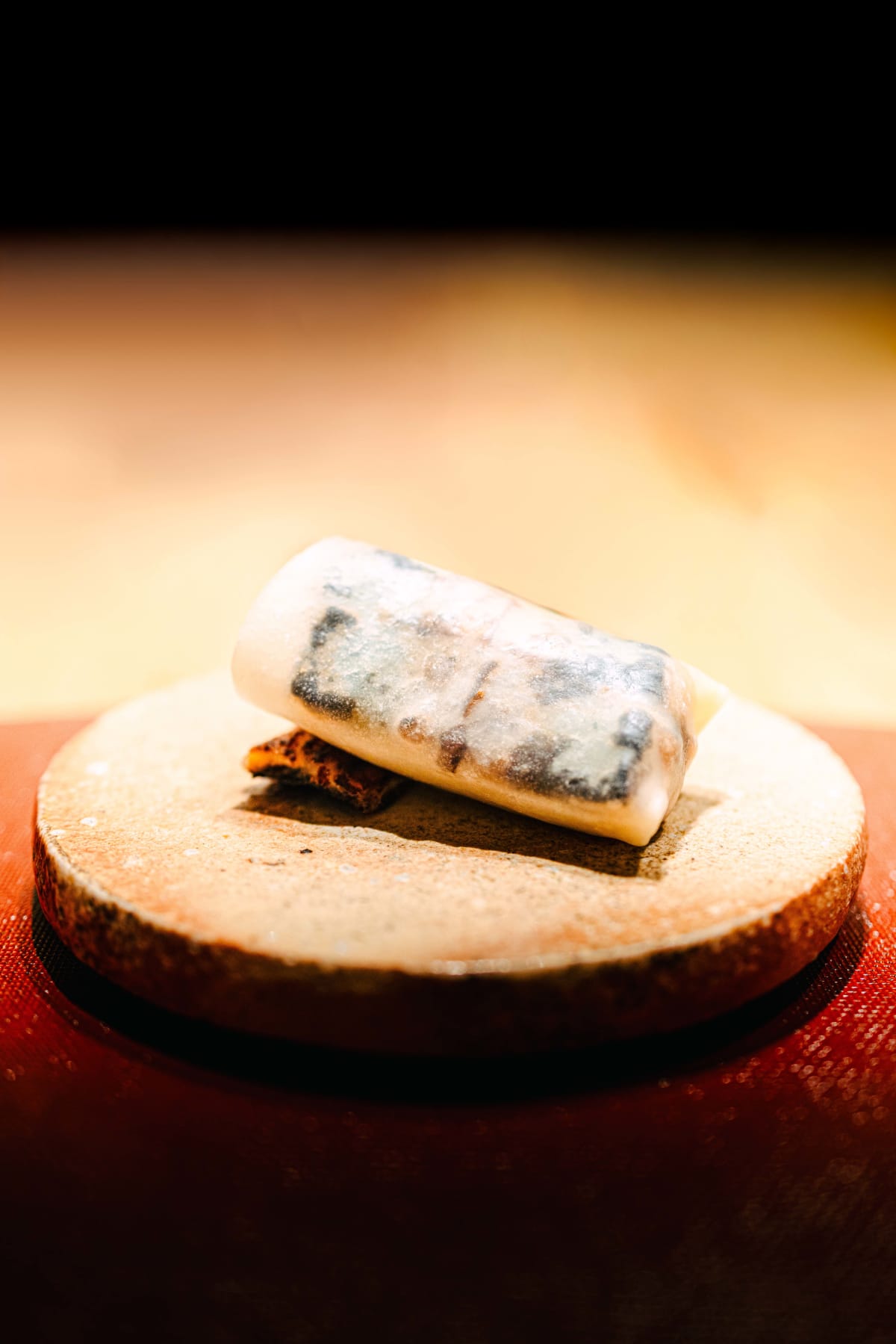
I have been lucky enough to eat it four times, and it has always been delicious.
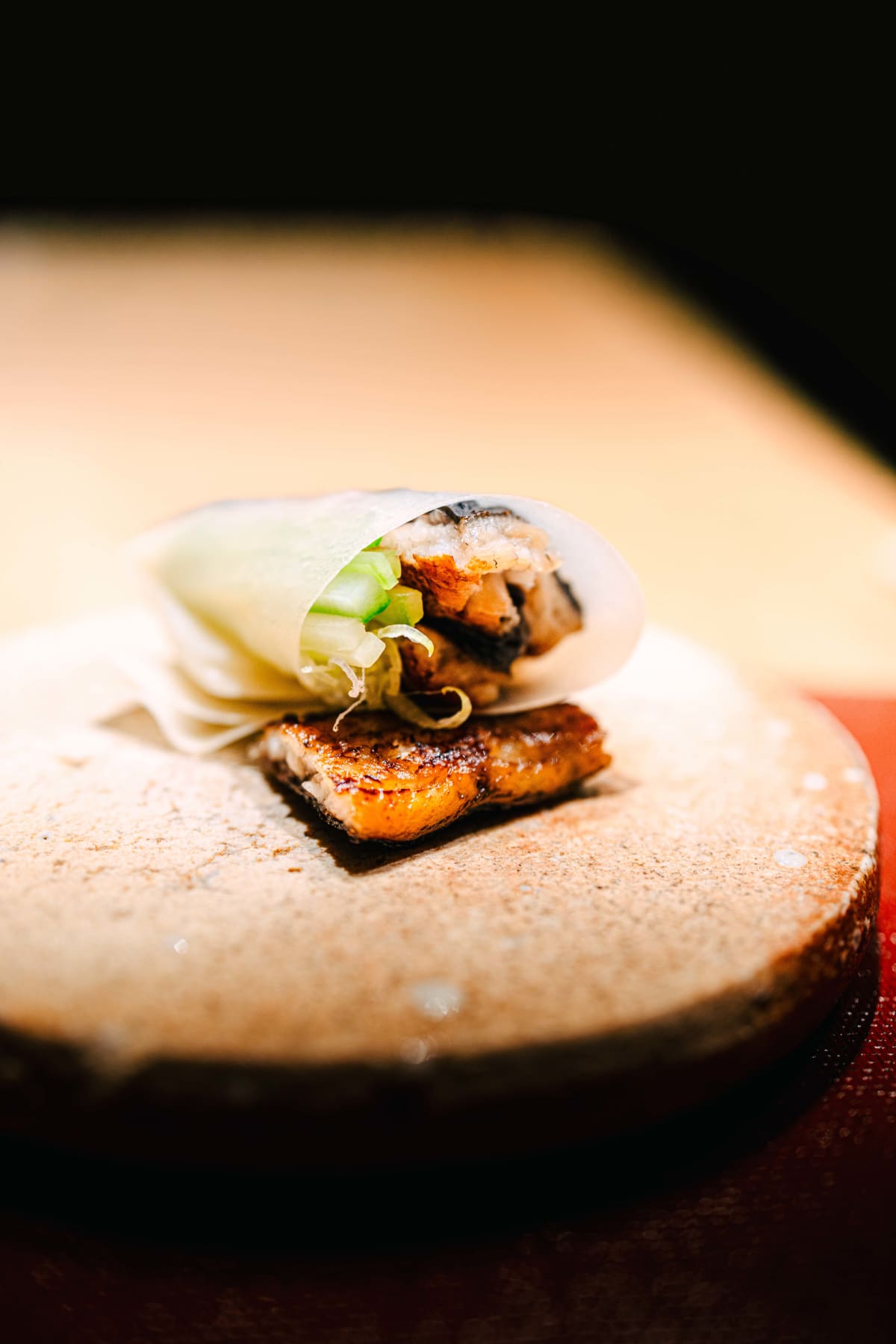
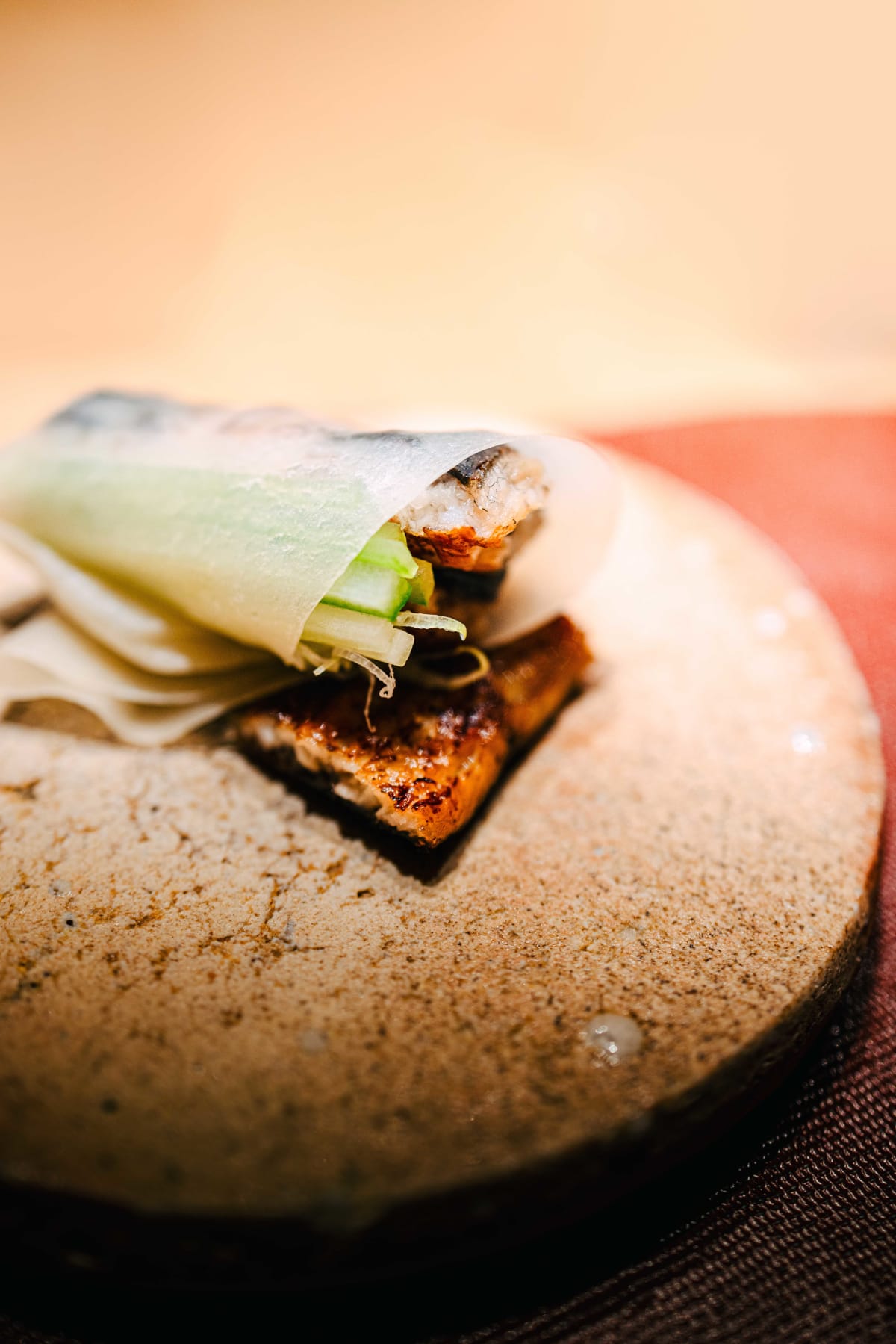
This unagi is not soft and tender in the Japanese style but grilled until crisp, much like Peking duck itself, which I think is why it suits this dish so well.
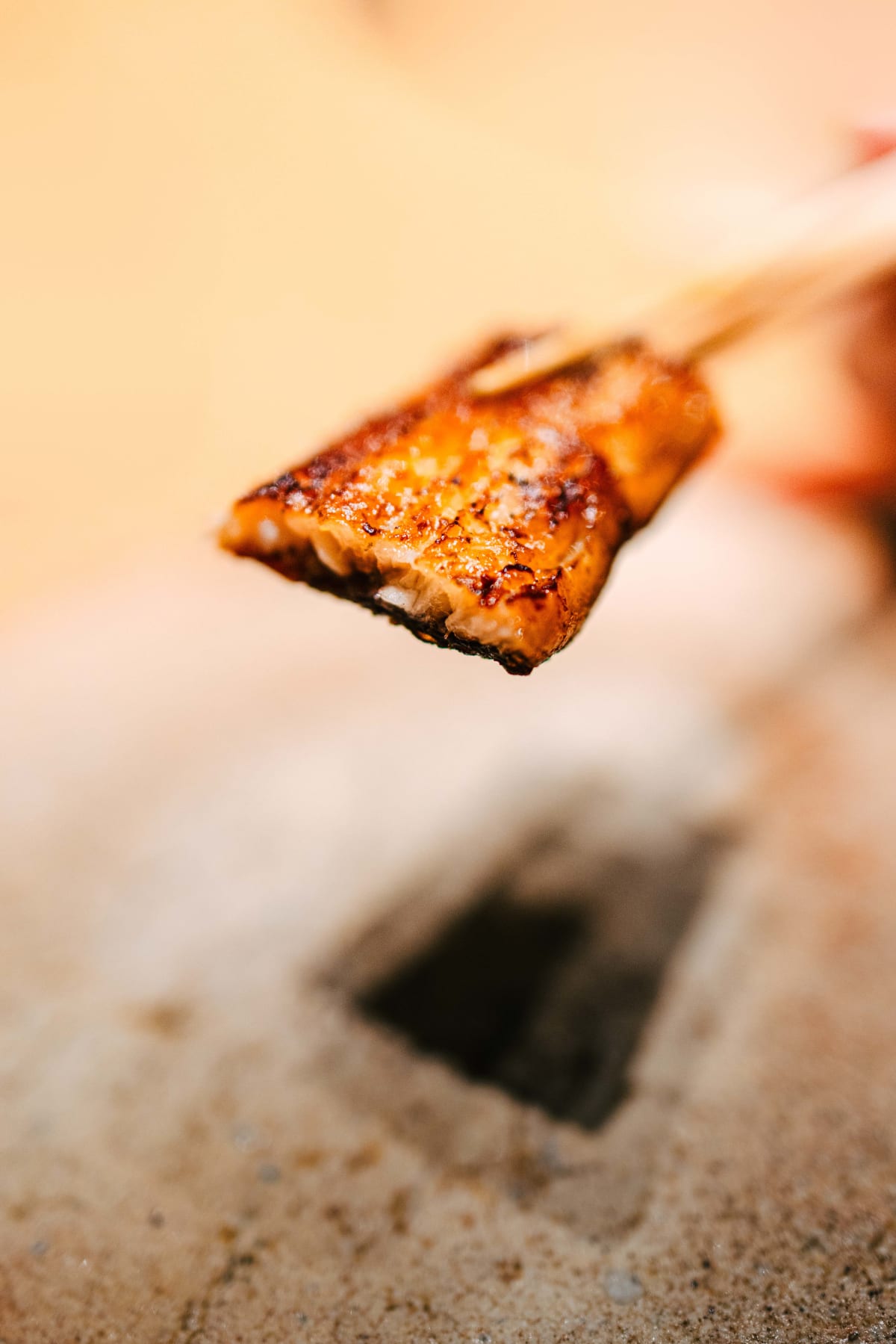
It is a Chinese-style dish.
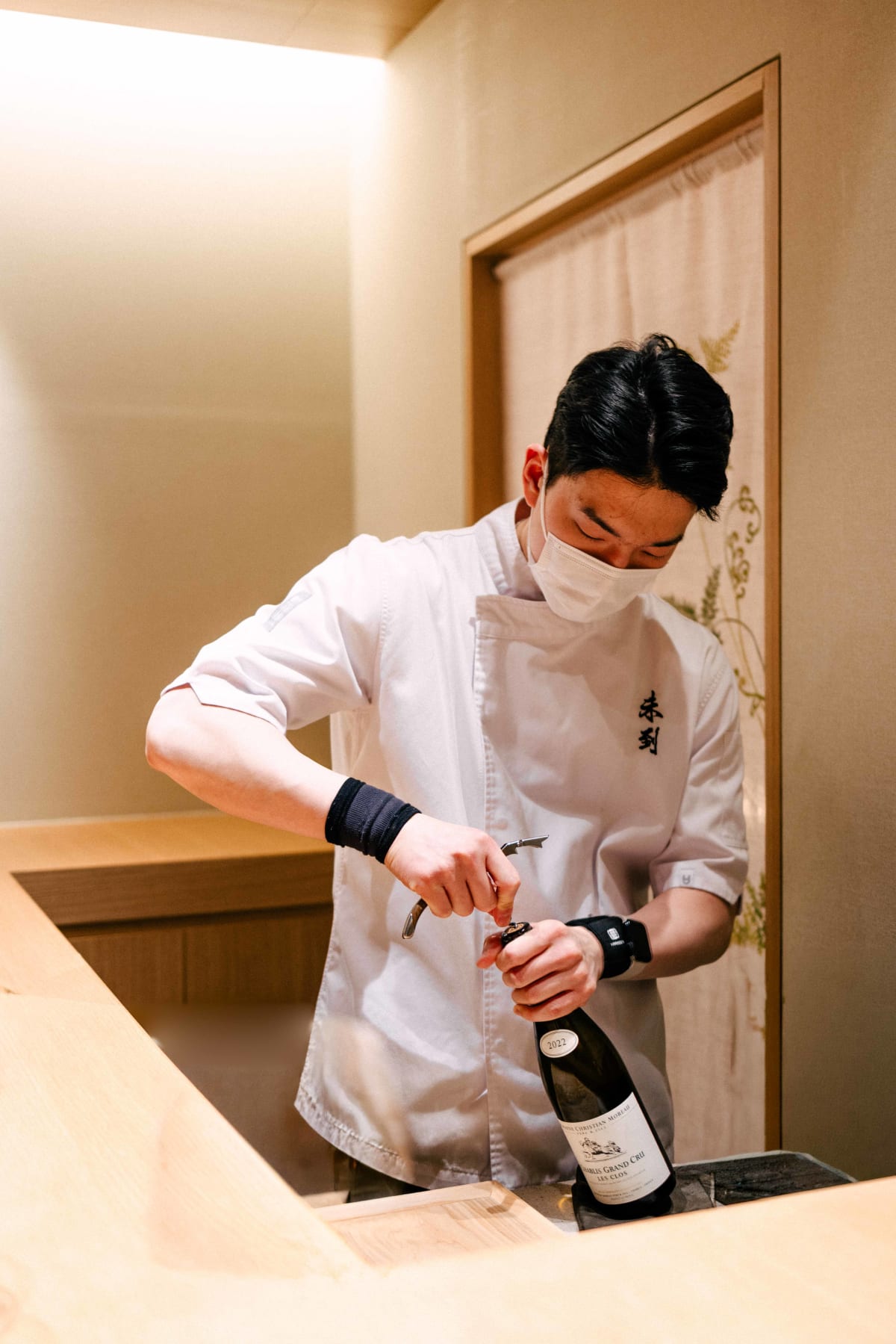
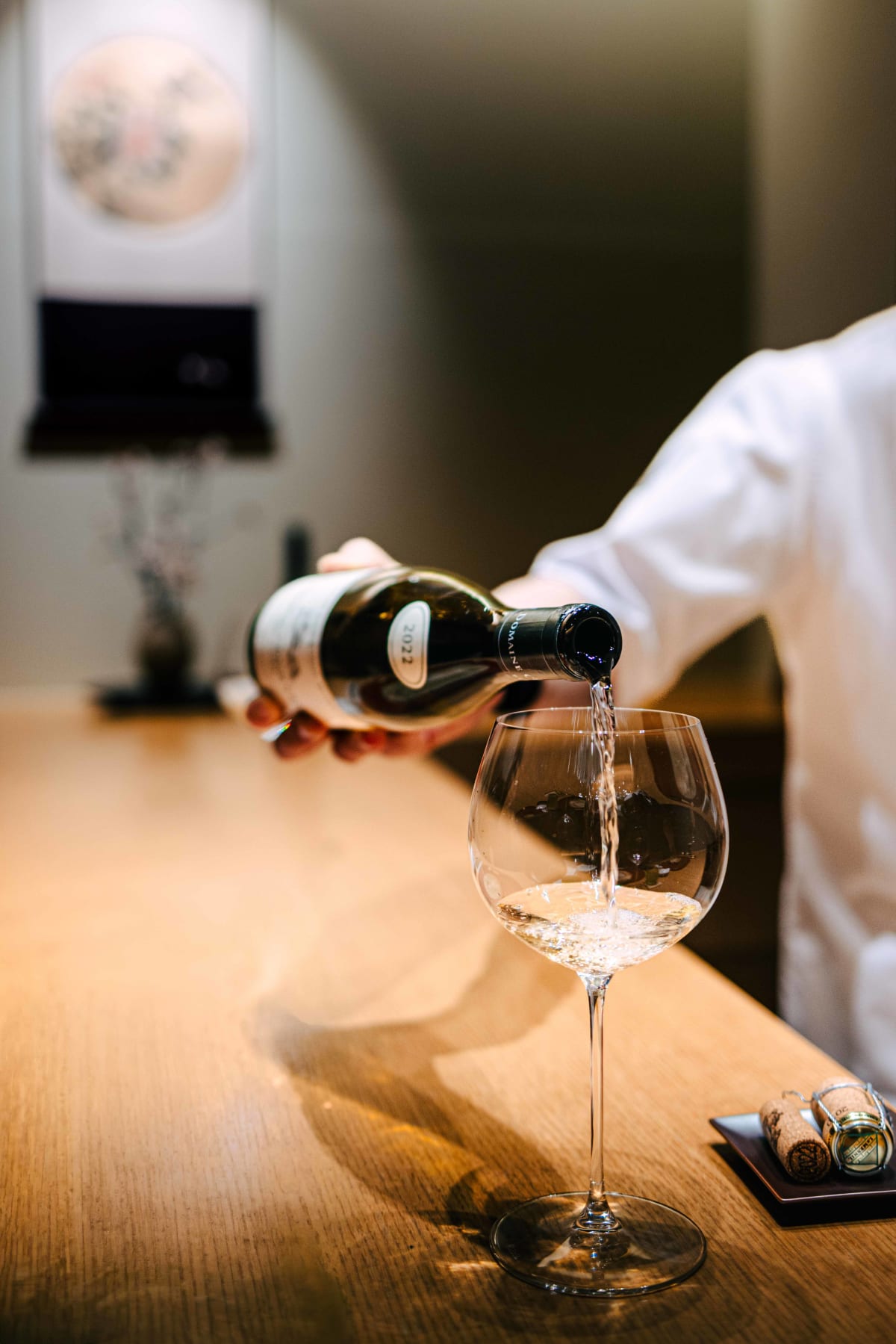
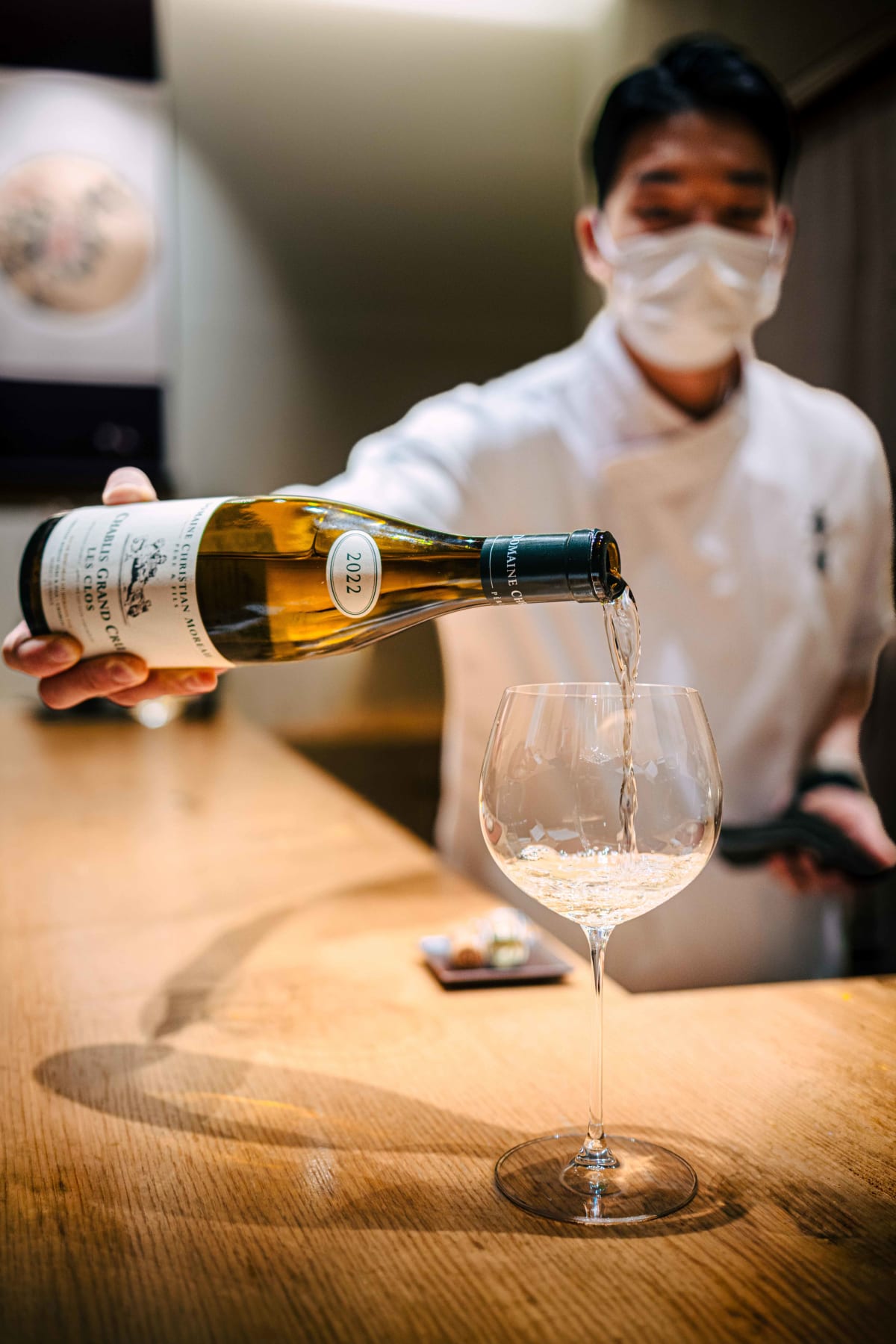
Before the abalone soba I drank a Chablis: Domaine Christian Moreau Père & Fils Chablis Grand Cru Les Clos 2022.
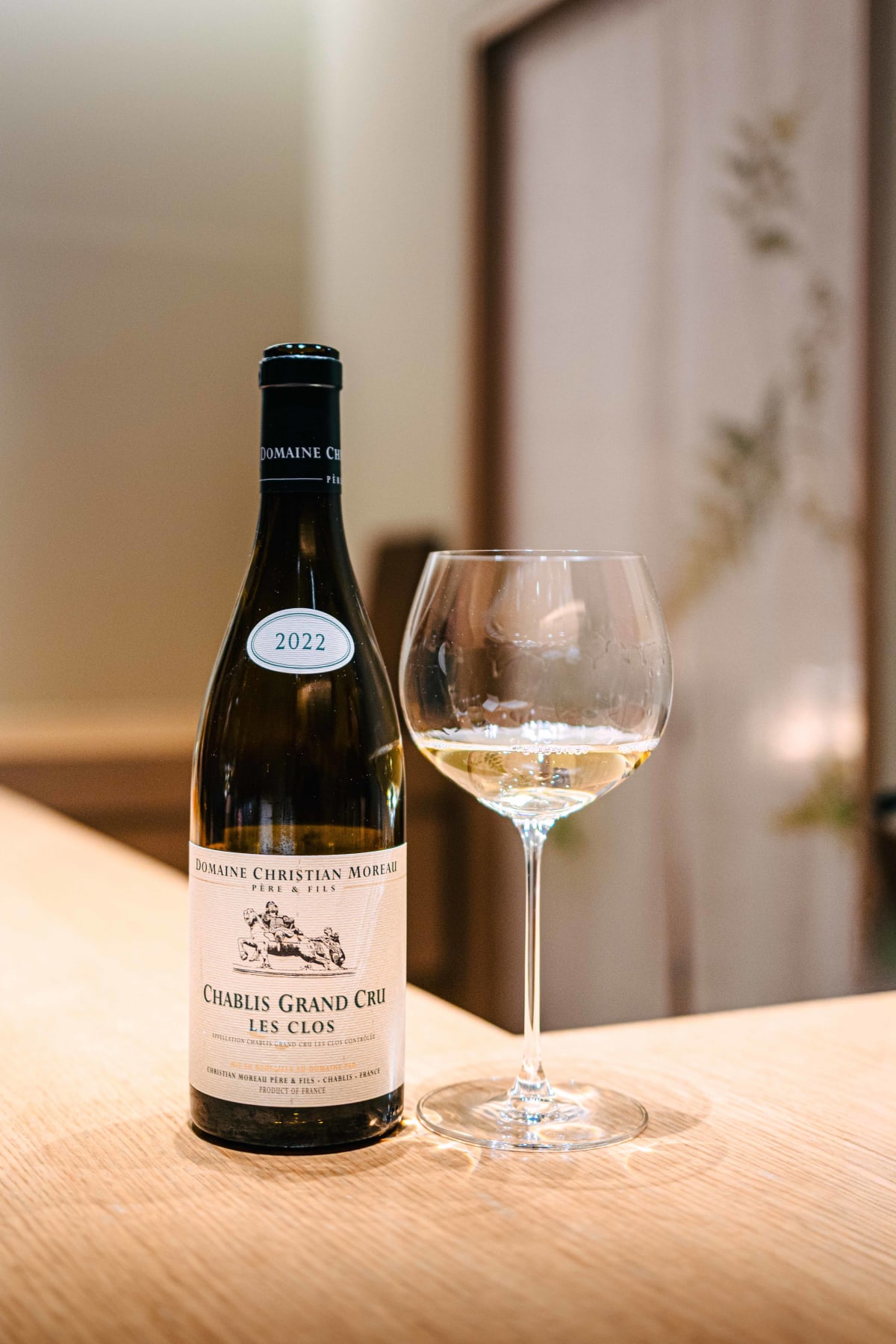
The Moreau family began as wine merchants in Chablis in 1814. Even after the family's négociant business passed to another company, they kept their vineyards, and from the 2002 vintage they began releasing wine under their own name again.
Fabien Moreau, the sixth generation, now makes the wine, and the domaine is certified organic. In Les Clos it owns a single block of a little over three hectares that stretches a long way up and down the slope. Like the champagne before it, this Chablis was excellent on both the nose and the palate.
Section 7·Abalone Soba And Nodoguro
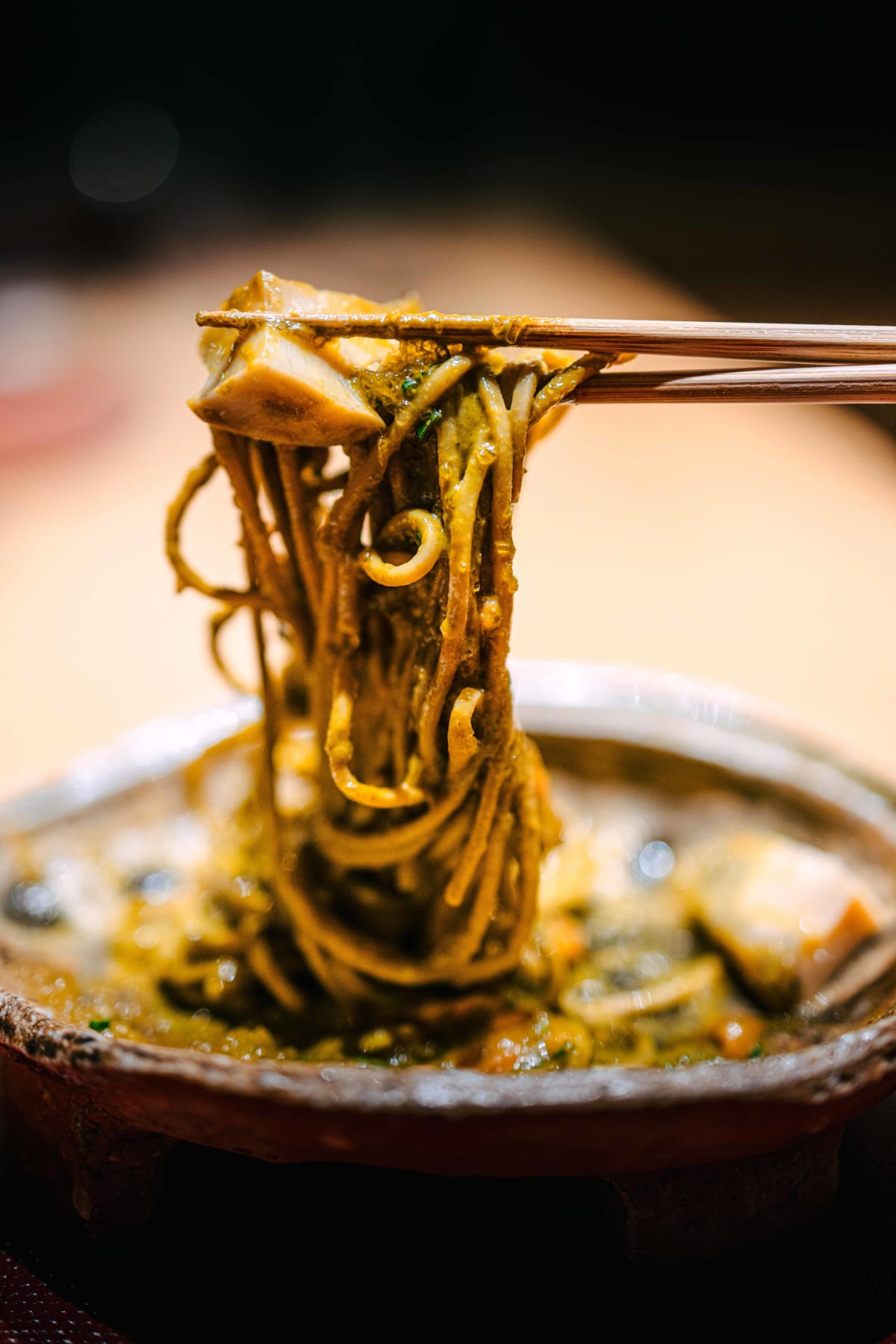
The abalone soba came topped with steamed abalone, a sauce of its liver, Hokkaido uni and katsuobushi jelly, and it was a bomb of sea aromas.
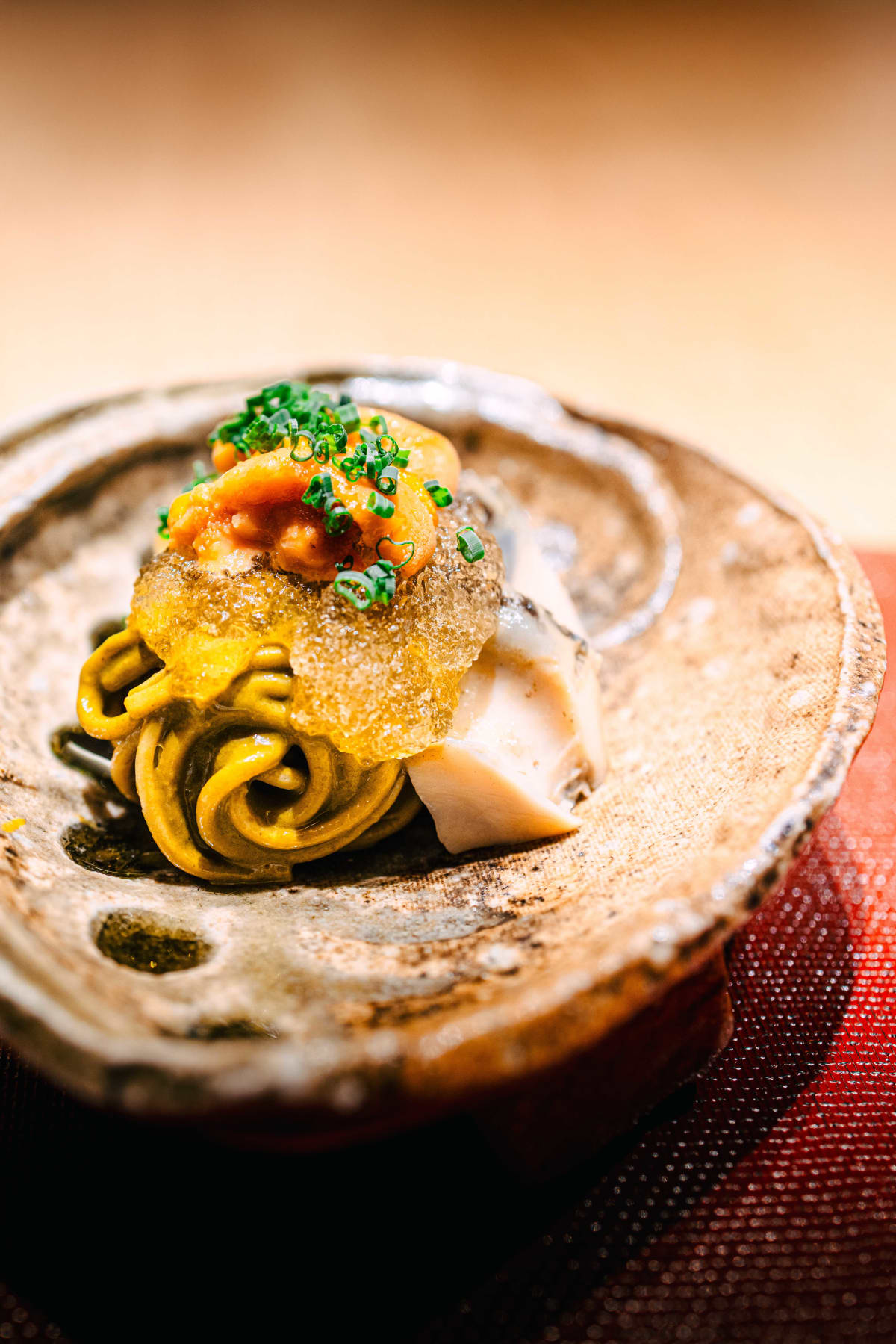
The noodles looked like soba, though I was told the dish originally used a different noodle, closer to somen.
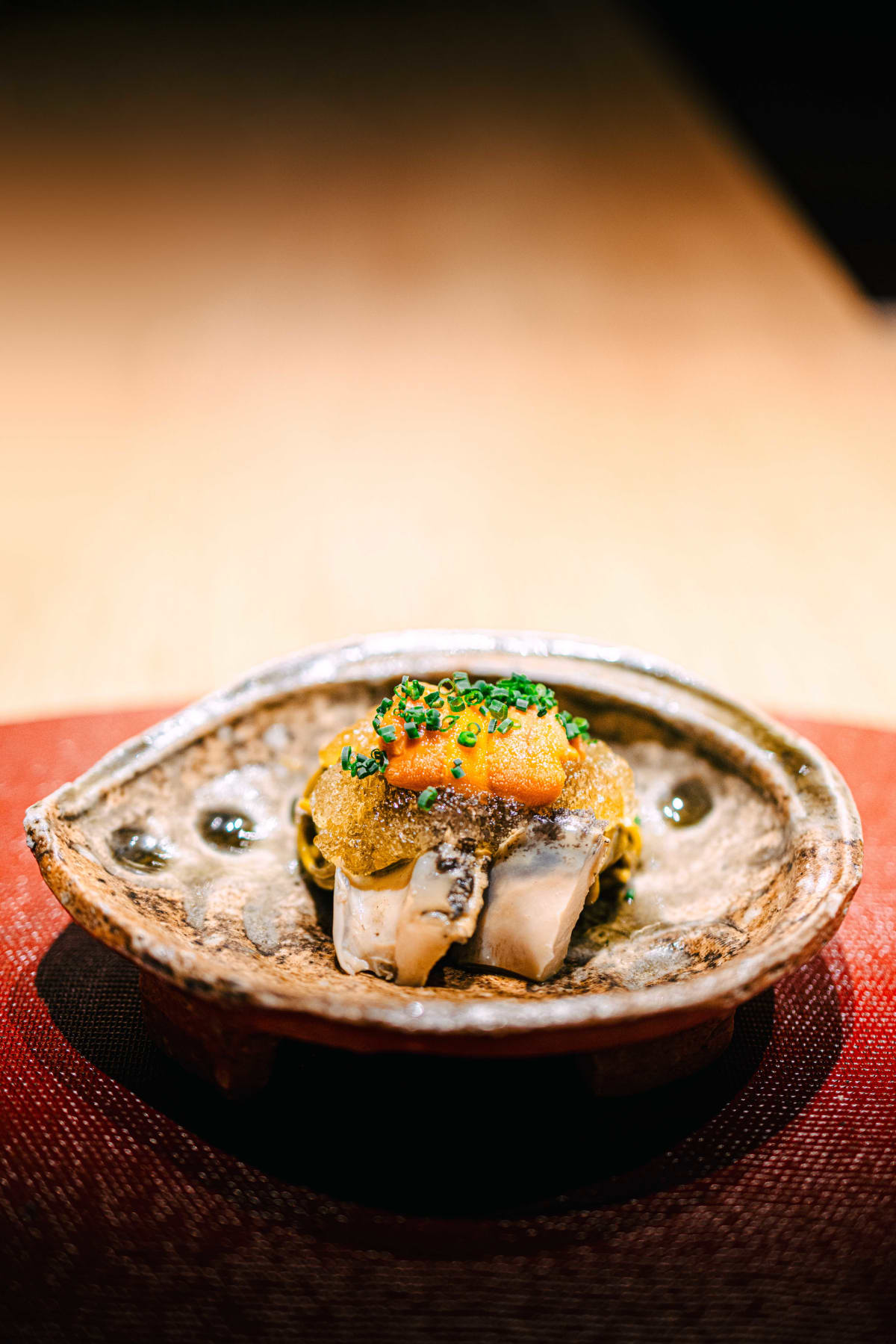
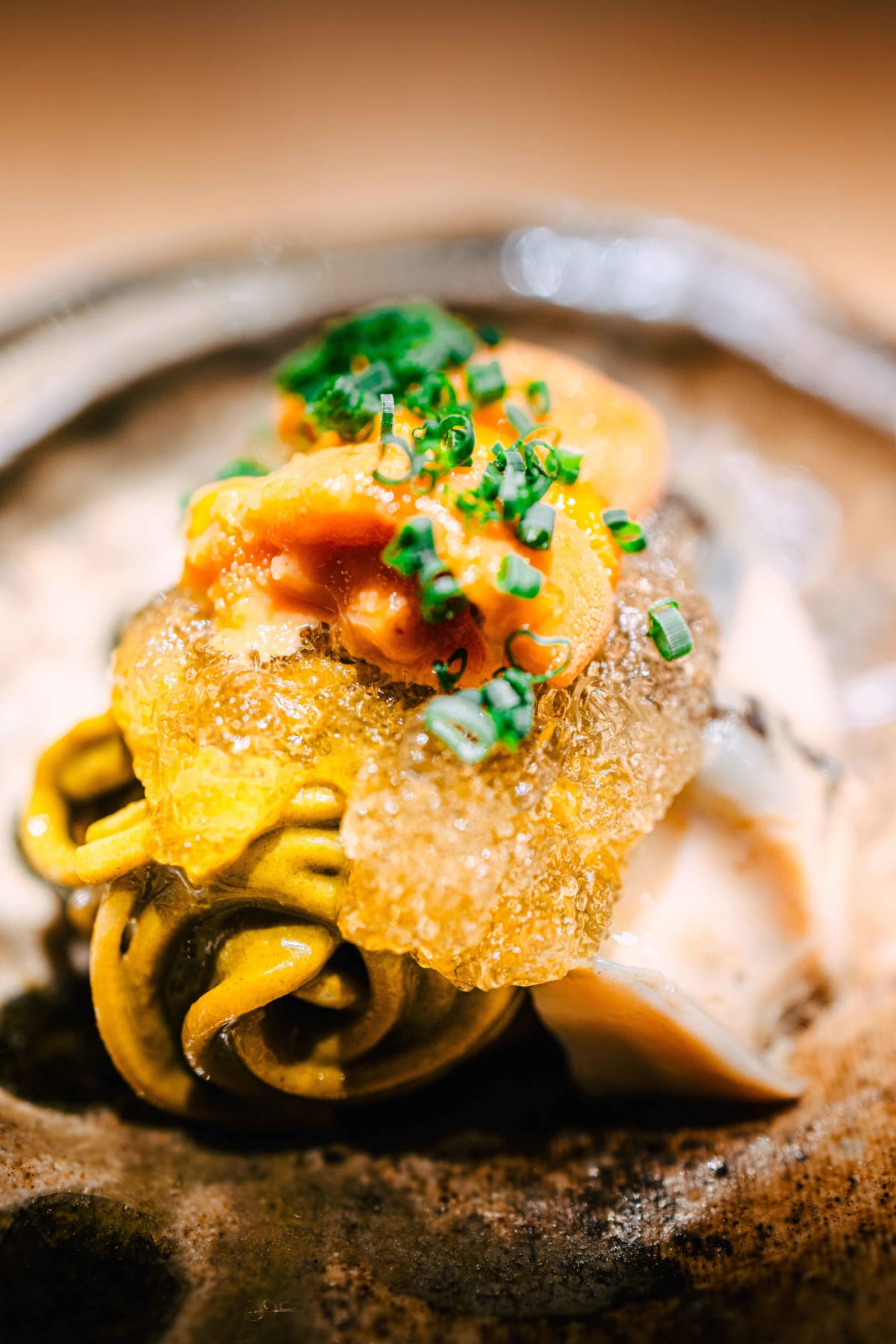
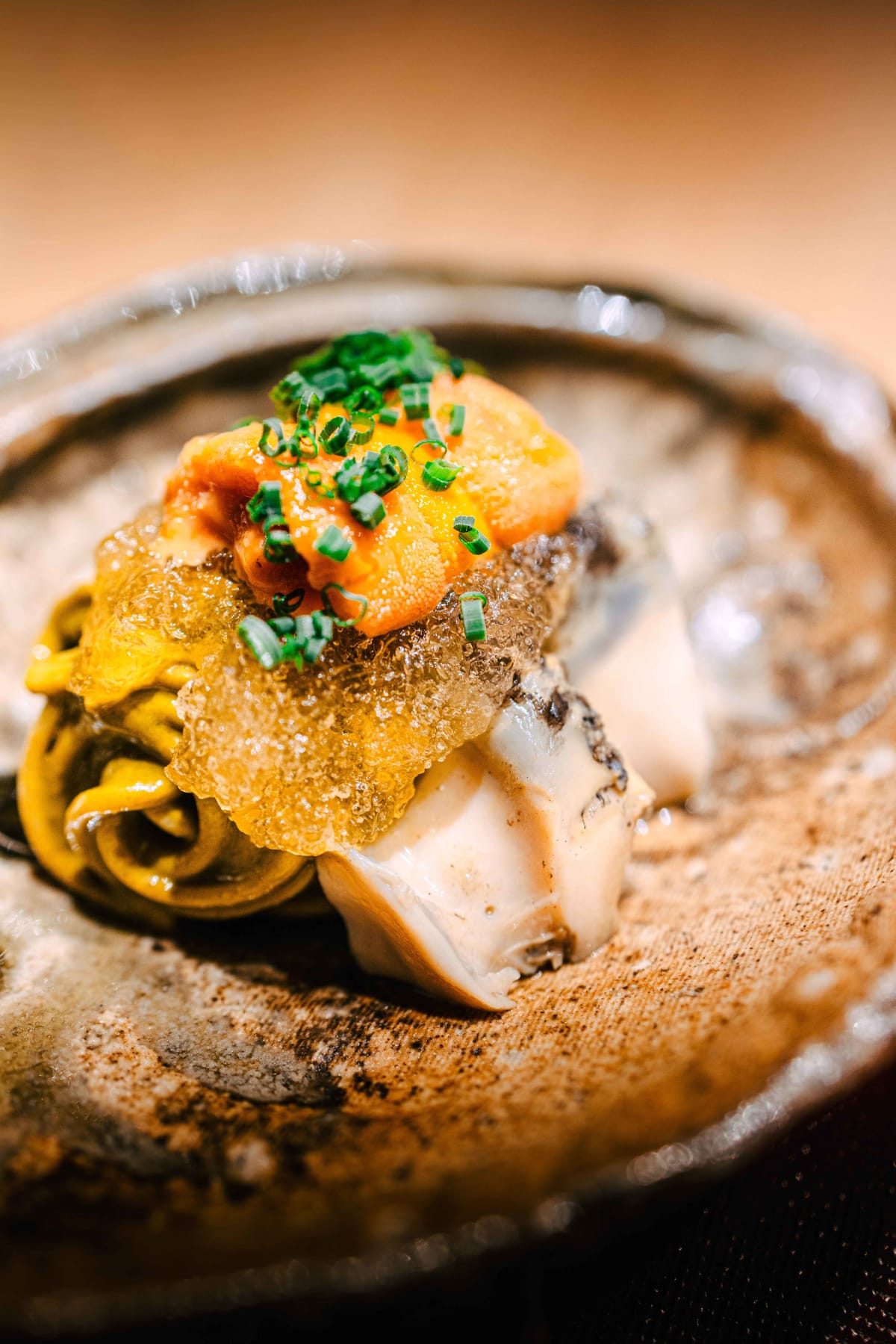
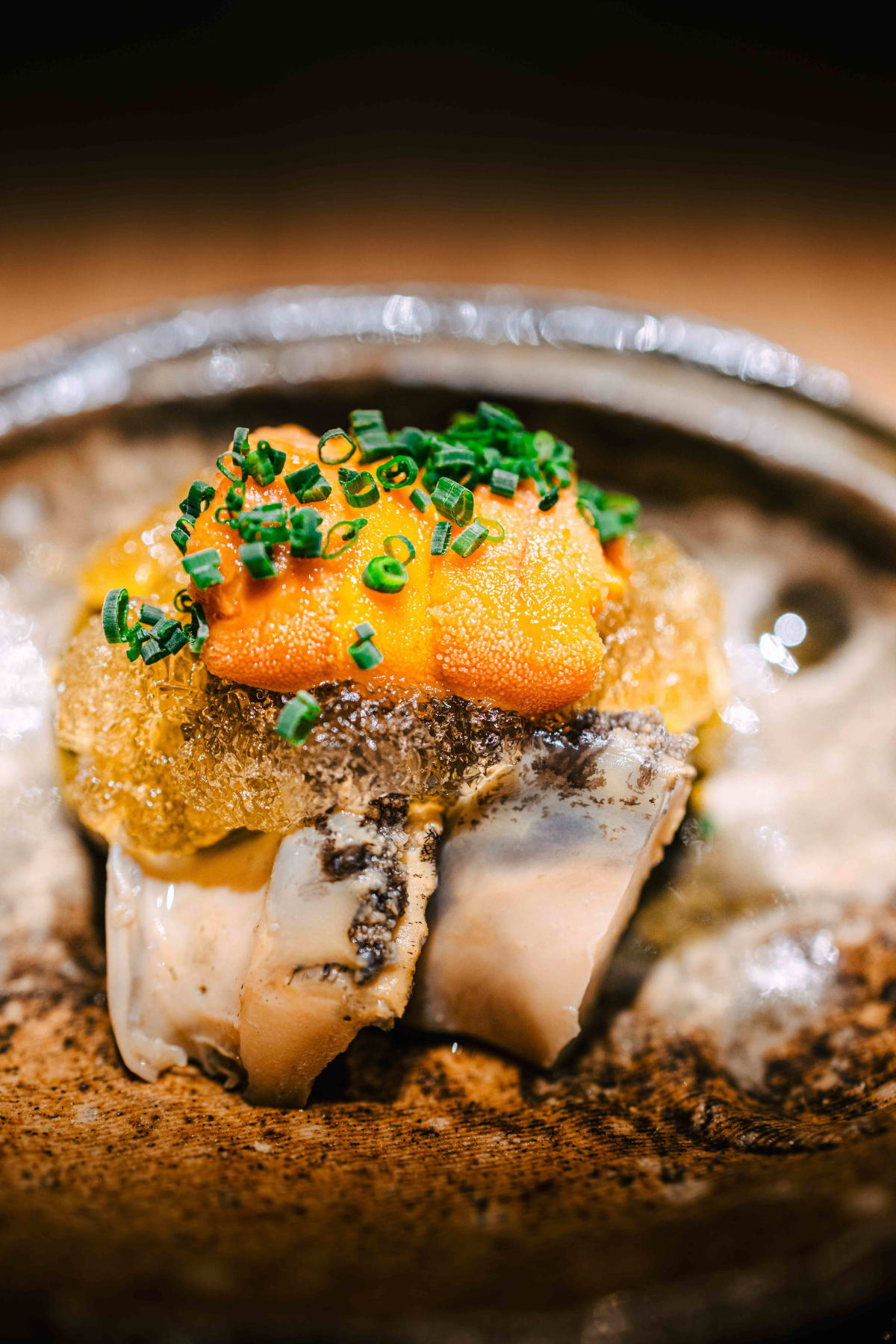
For my part, I liked the texture of these noodles as well.
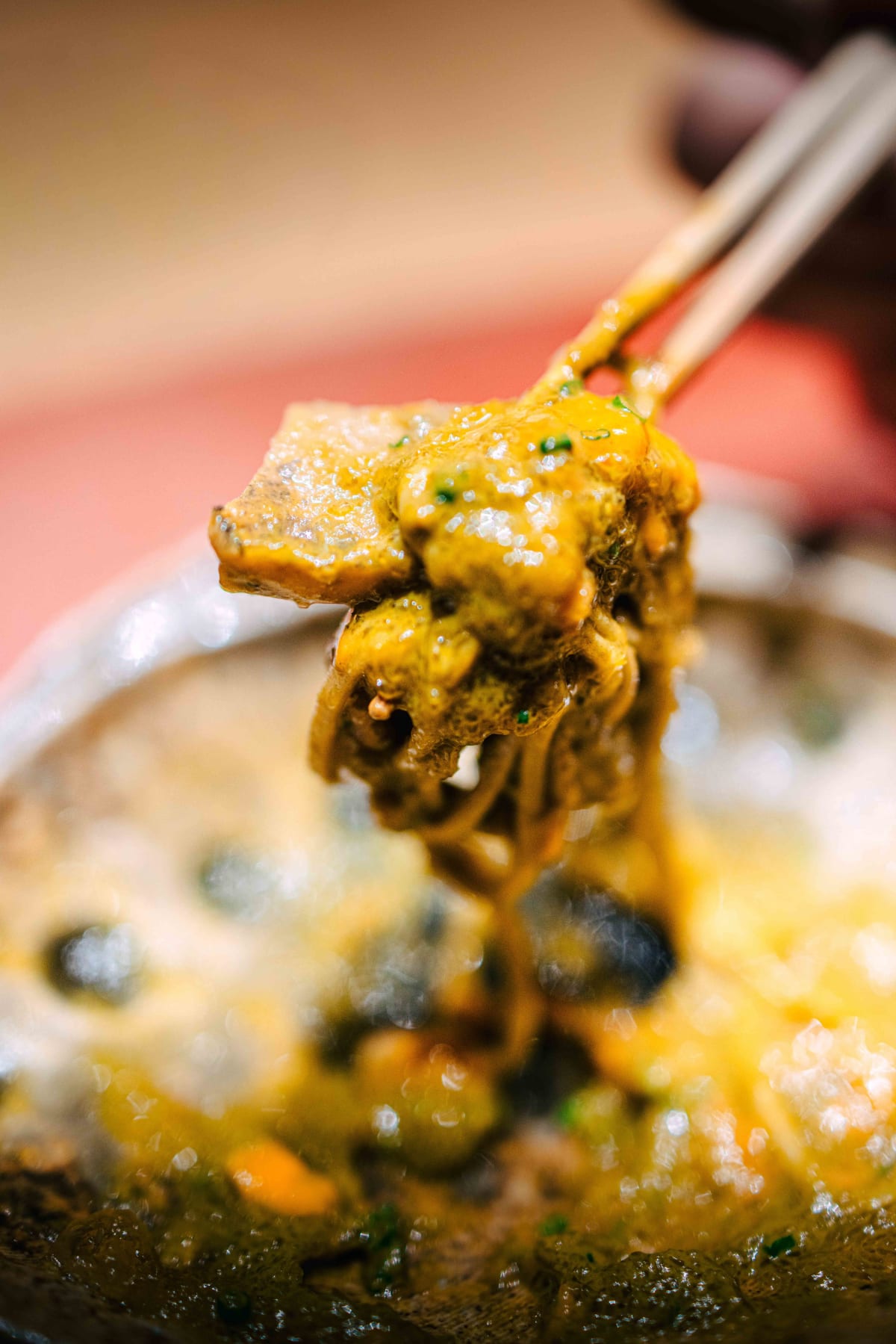
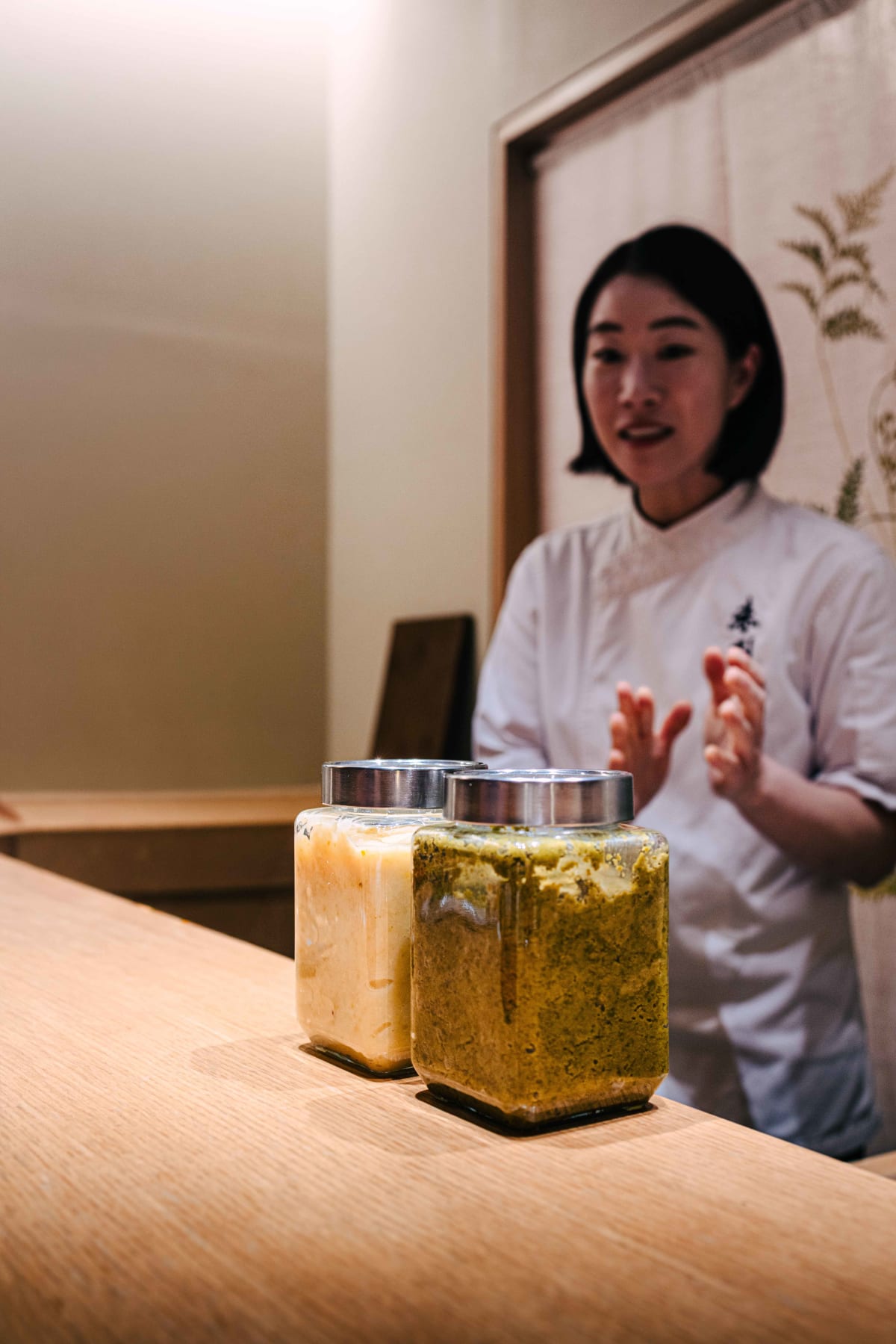
Mitou seems to make active use of ingredients, fermented pastes and sauces it makes itself, and the next dish, nodoguro, the blackthroat seaperch, left a strong impression.
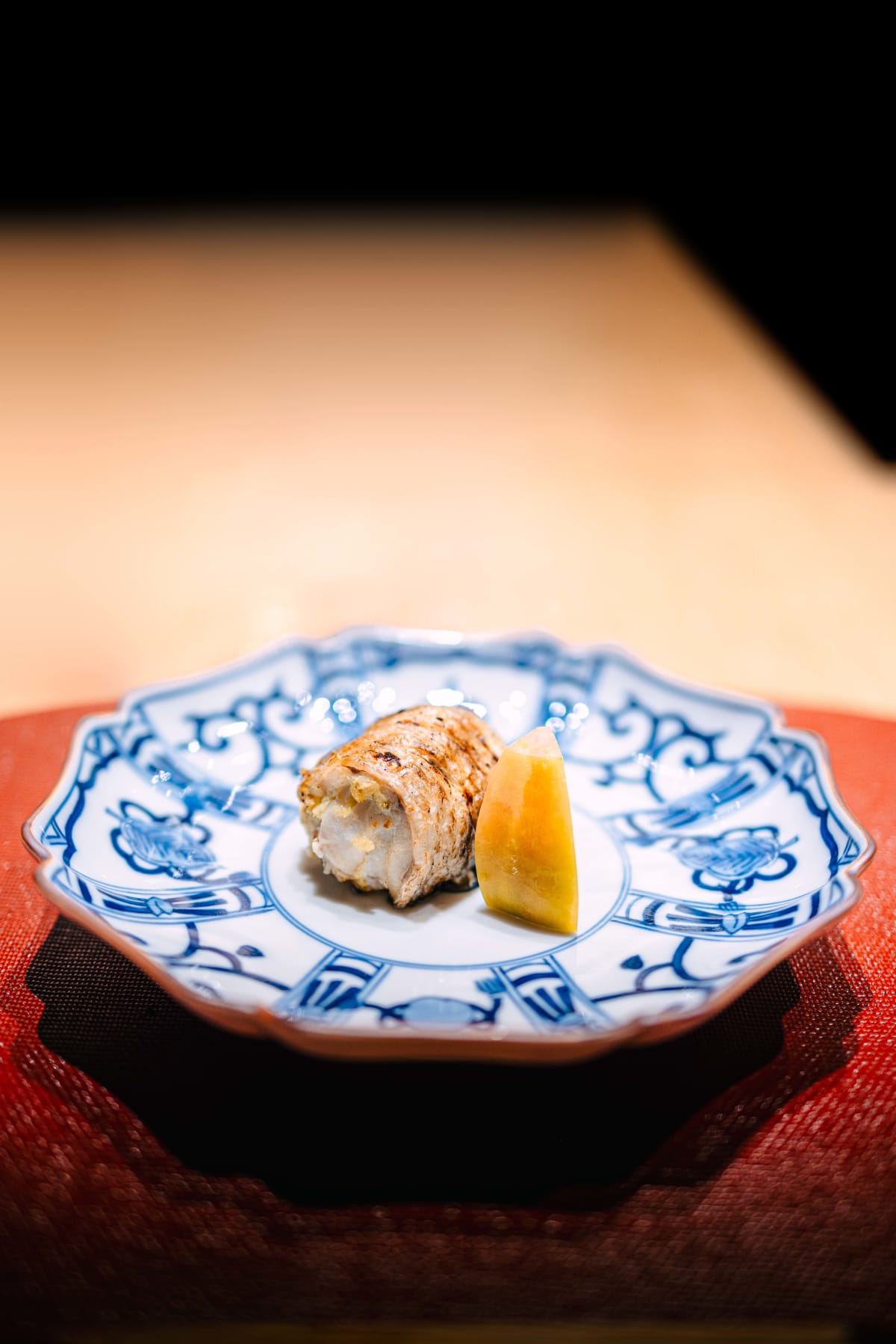
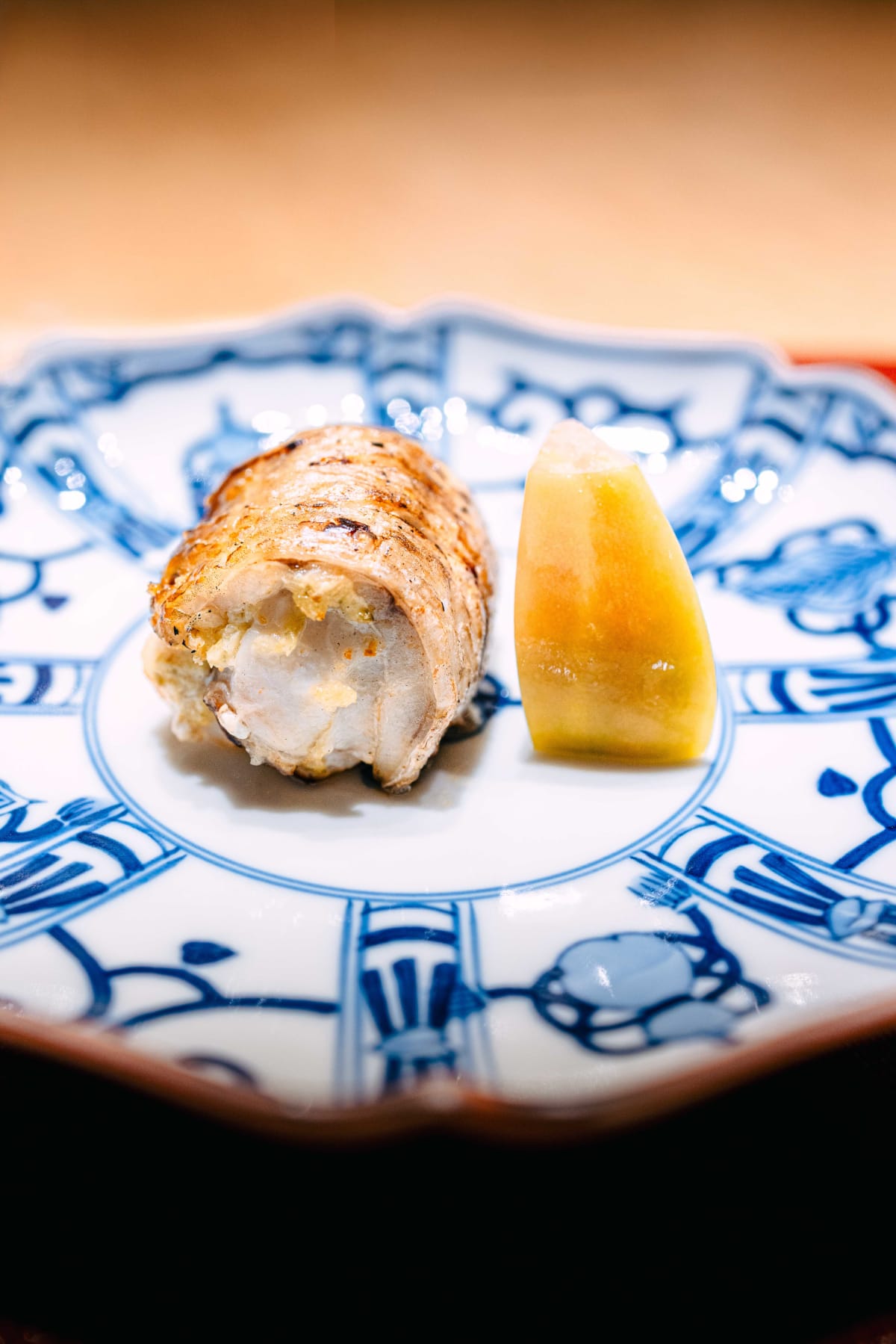
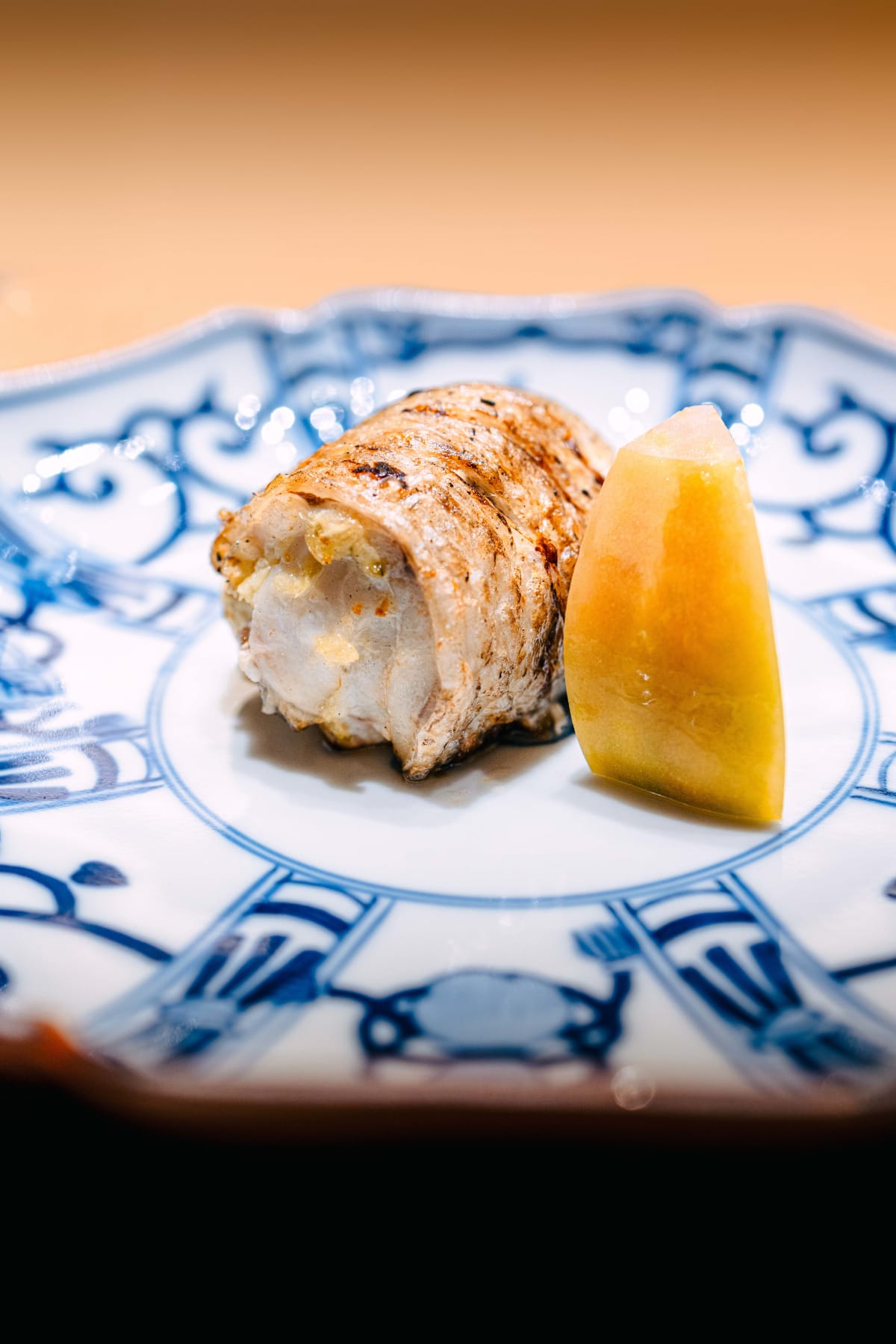
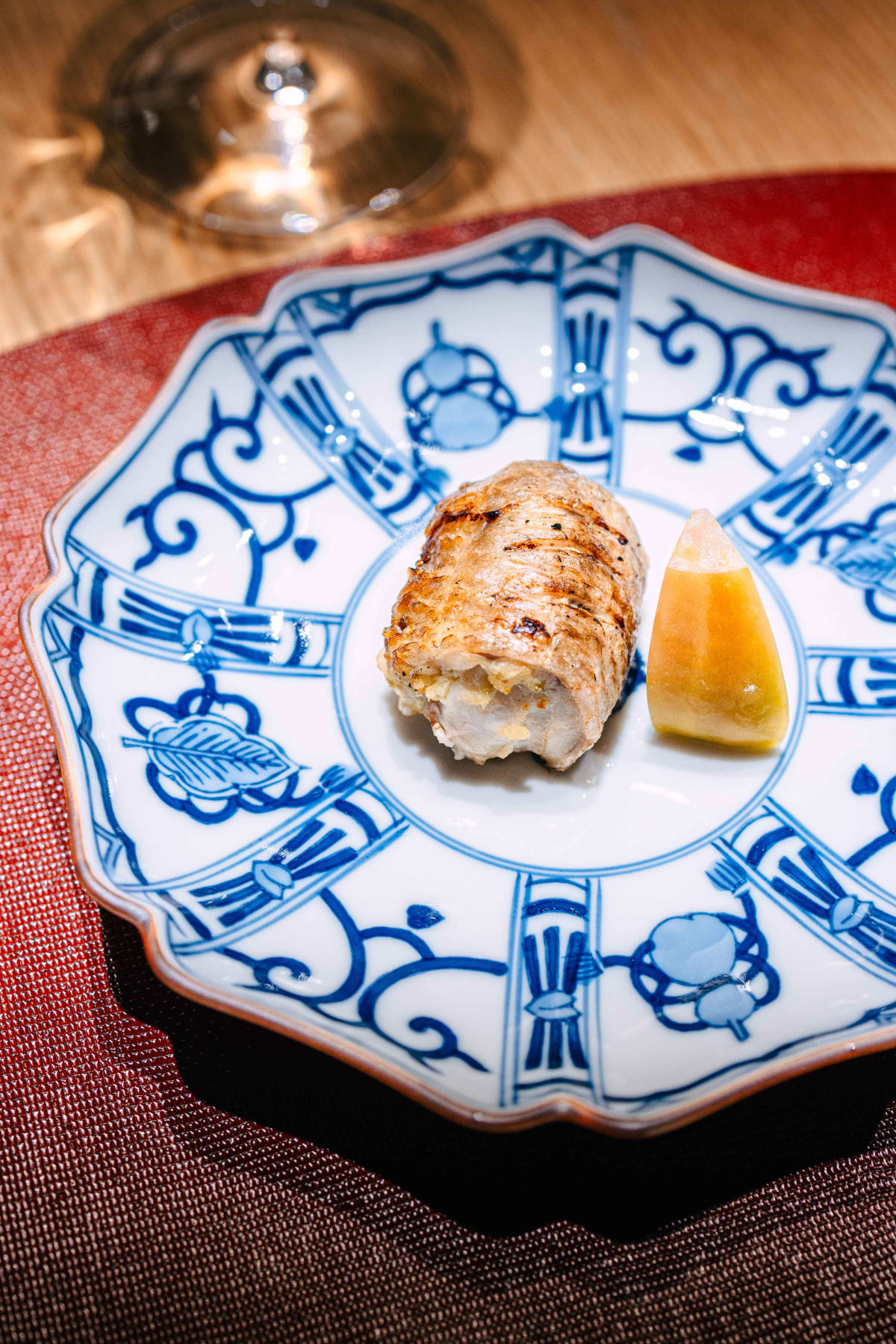
Shio lemon (lemon preserved in salt) and yuzu kosho, both made and fermented in-house, were tucked inside the fish before it was grilled, and they gave the nodoguro, which can easily turn heavy with its fat, just the right freshness and fragrance.
The flesh was moist and delicious too.
It also impressed me that a tomato came alongside, so I could clear my palate at the end. This was a Daejeo tomato, also called jjapjjari, roughly "the salty one", and under Korea's geographical indication system only tomatoes grown in Daejeo-dong, Gangseo District, Busan, may use the name.
Daejeo lies at the mouth of the Nakdong River, close to the sea, so its water is high in salt. Growers, I am told, use rainwater and the like early on, then at the right moment raise the plants on the salty river water, which pushes up their sugar.
Section 8·Dureup And Menchi-katsu
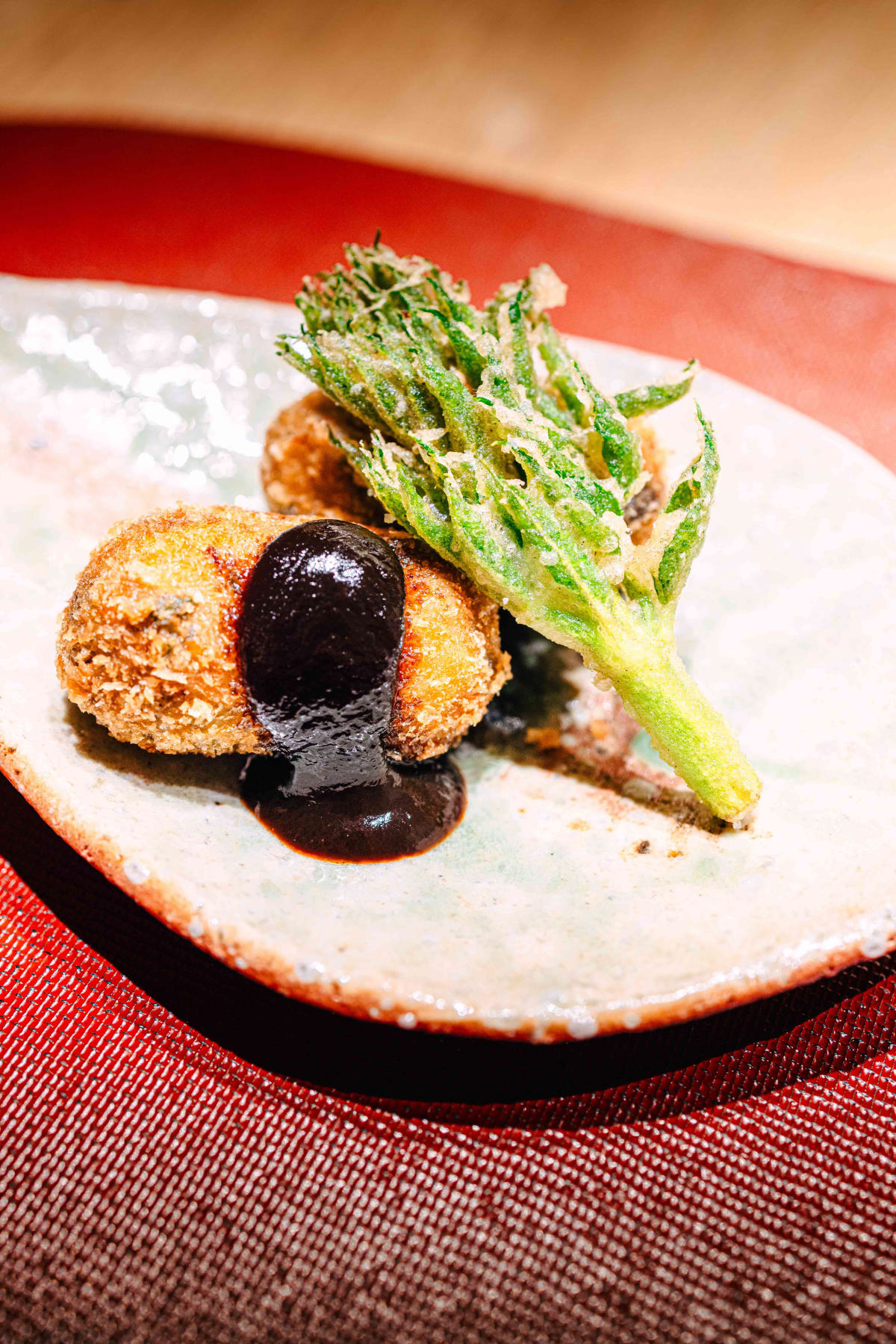
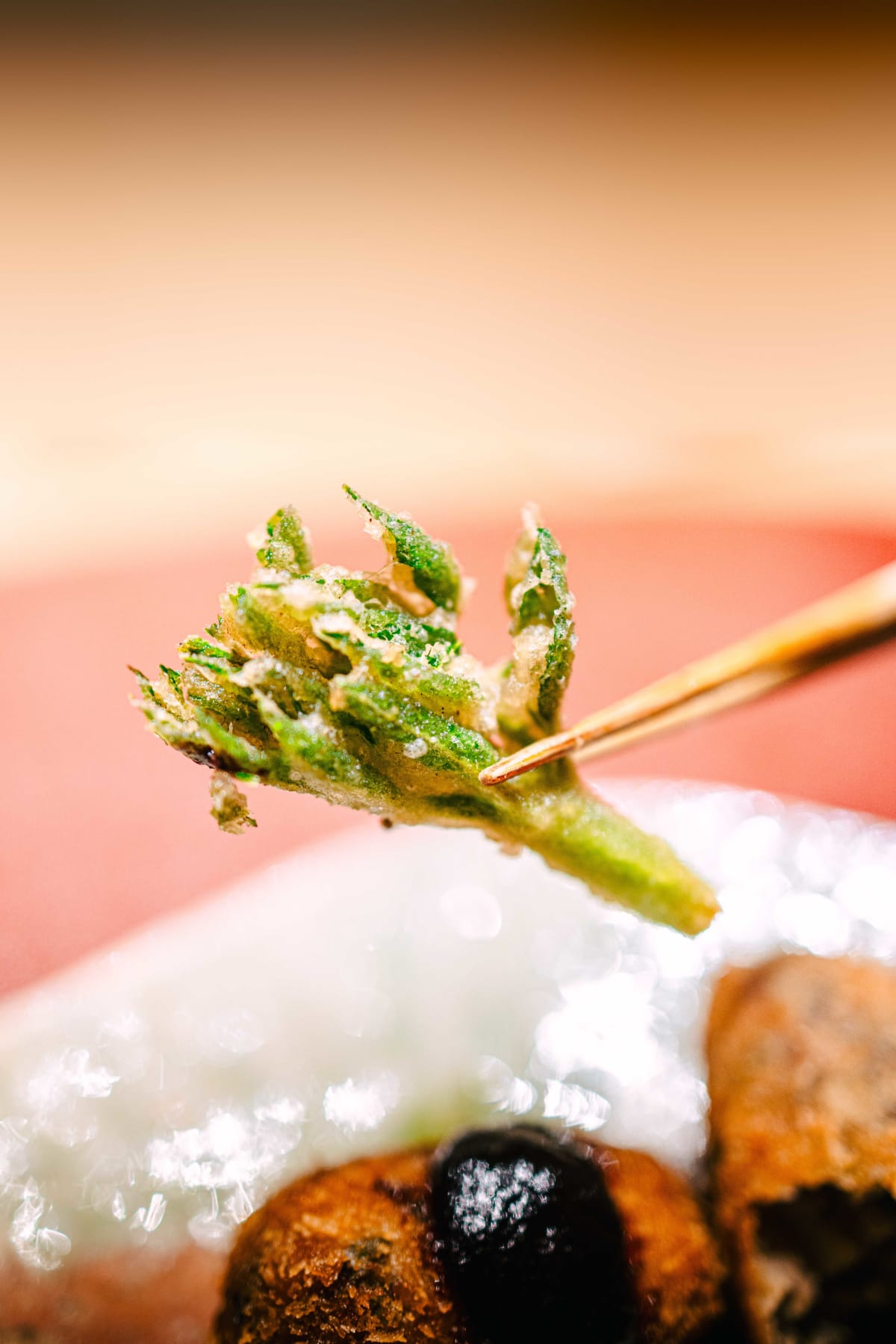
Fried dureup, the young spring shoots of the Japanese angelica tree, came with menchi-katsu, Japan's breaded cutlet of minced meat.
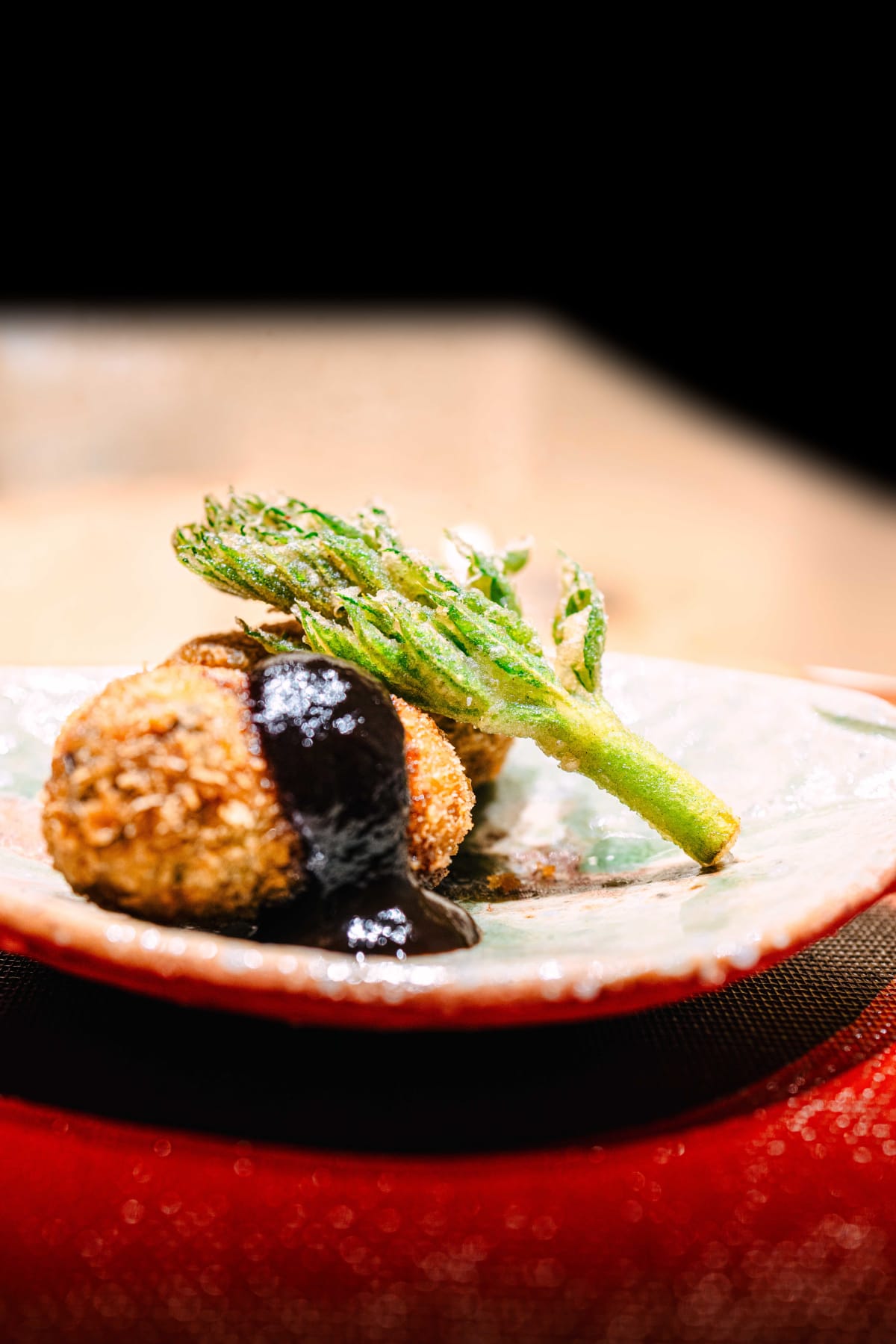
Menchi-katsu, at Mitou? I did a double take, but it turned out to be no ordinary menchi-katsu: inside were bamboo shoots, bracken and ttang-dureup, known in Japan as udo.
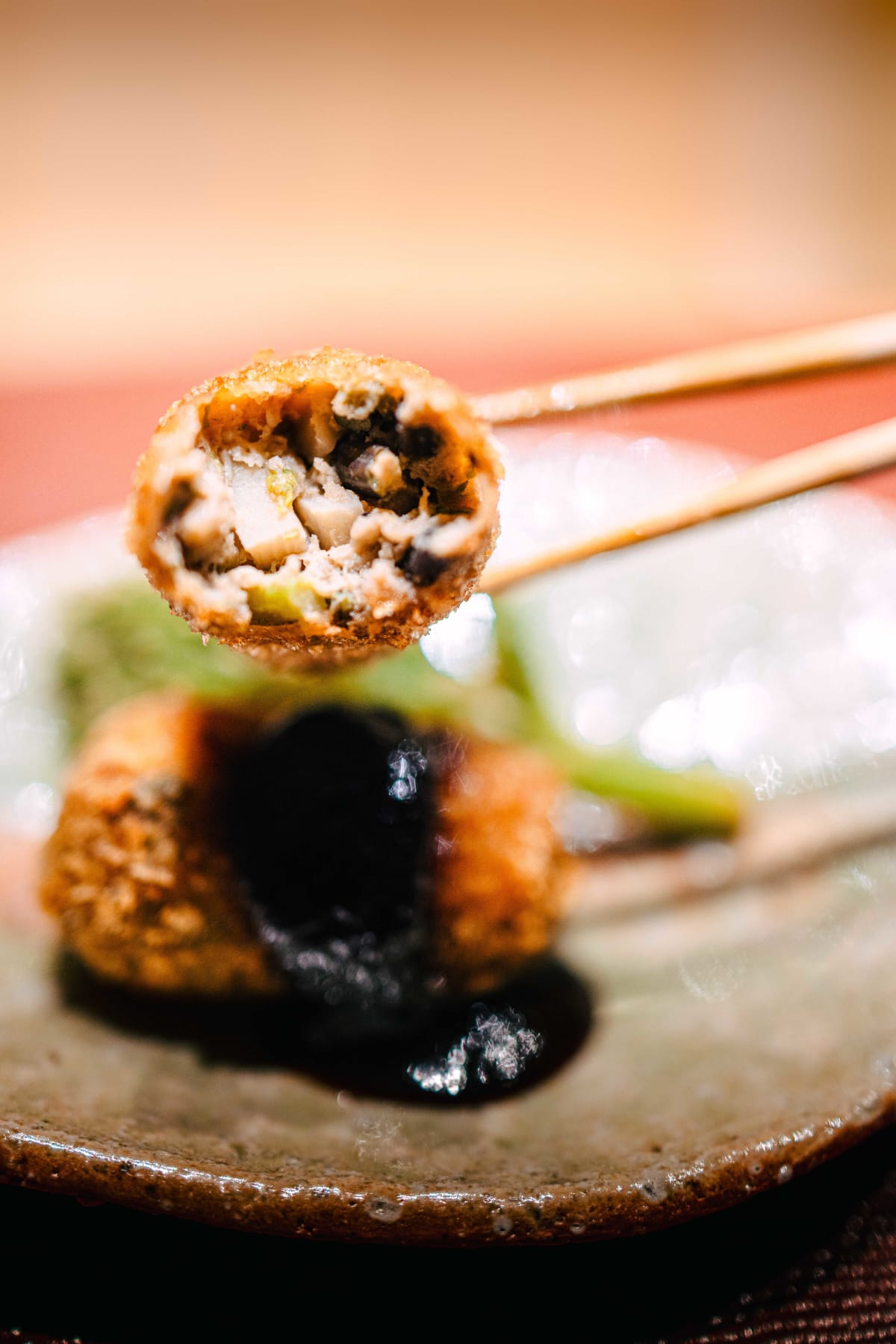
Packed with meat and deep-fried, it made me wonder at first whether it would be greasy, but it was nothing of the kind, and its bite and layered complexity were superb.
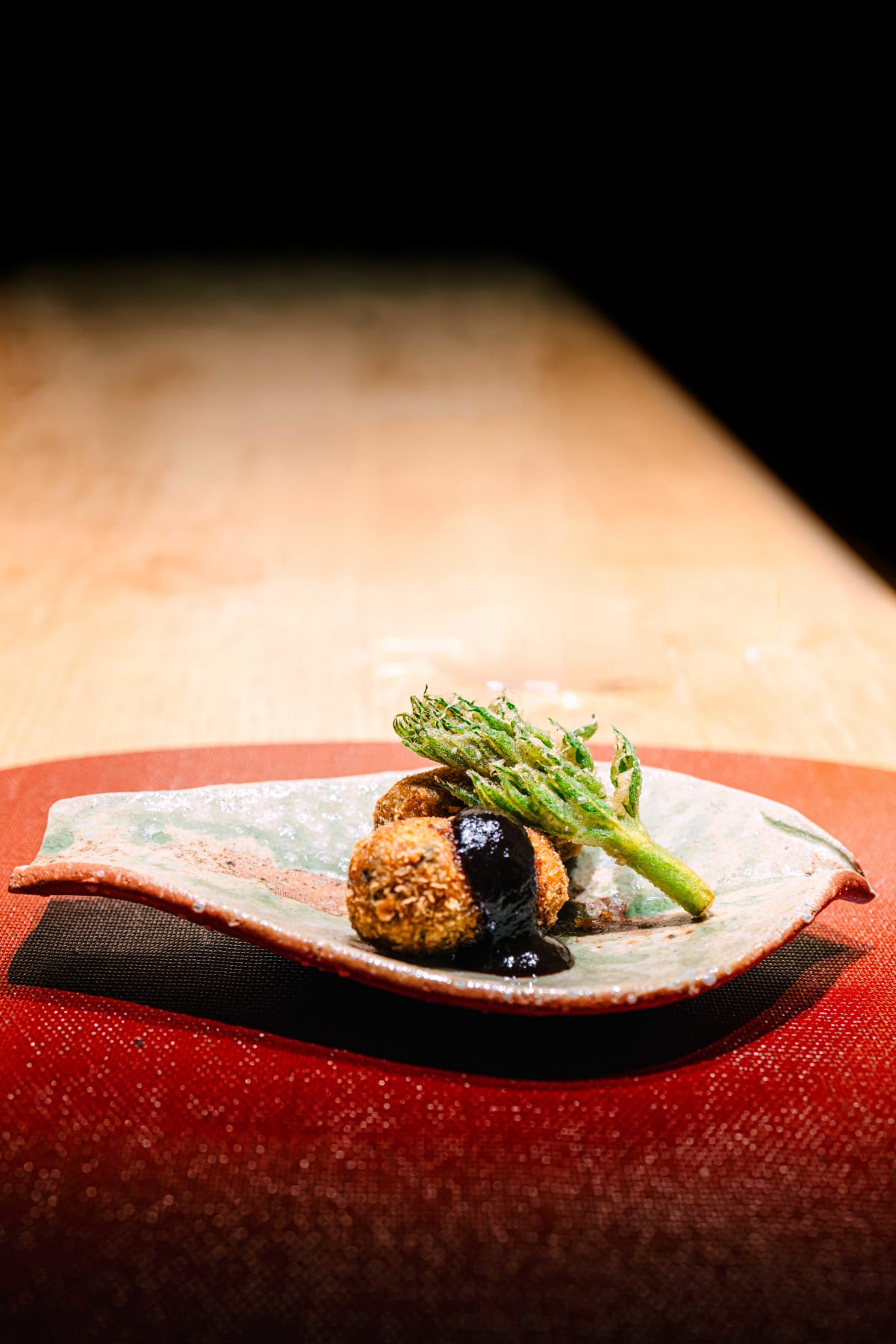
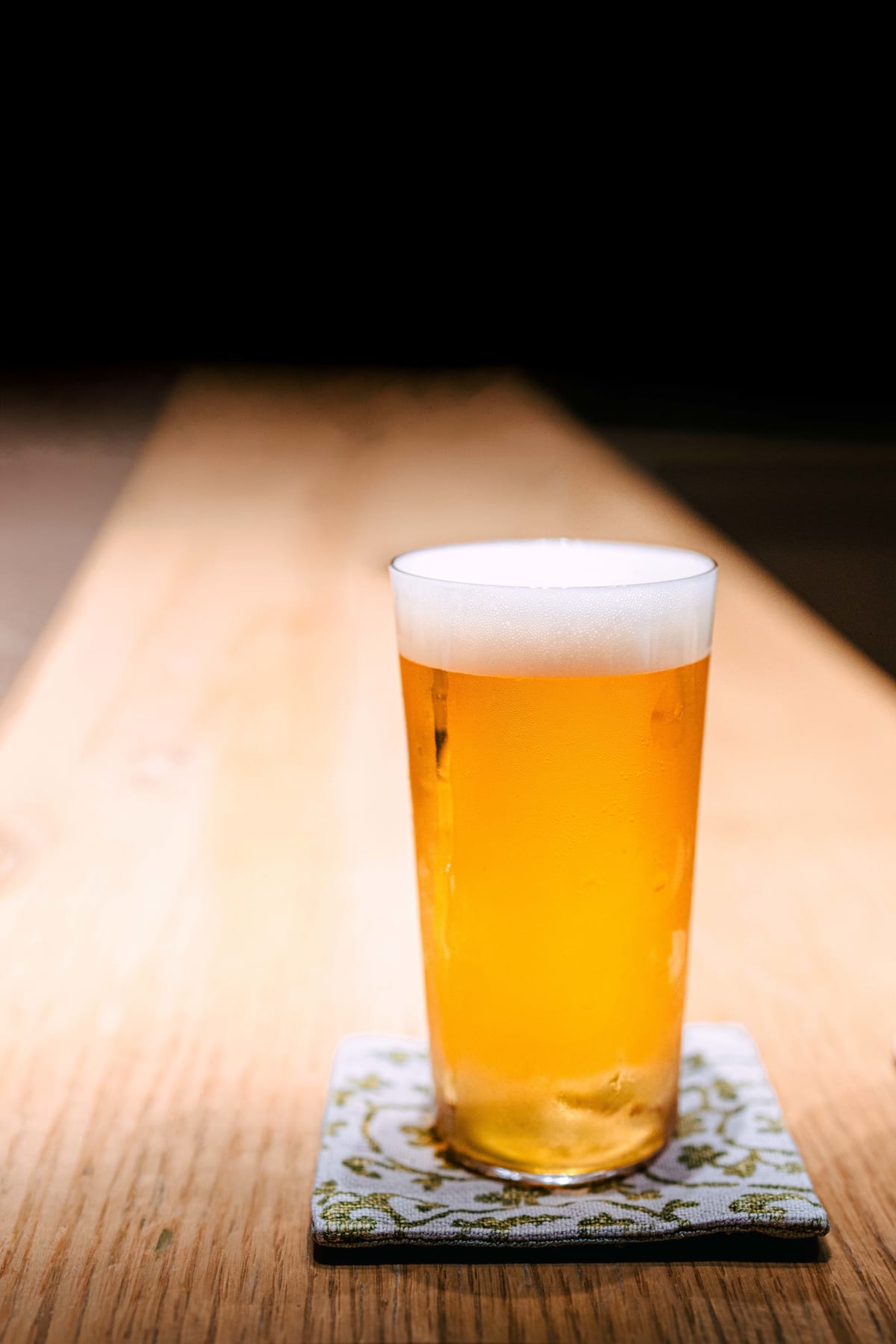
It went especially well with the small beer I had ordered at that point.
Section 9·Rice, Miso And Salt
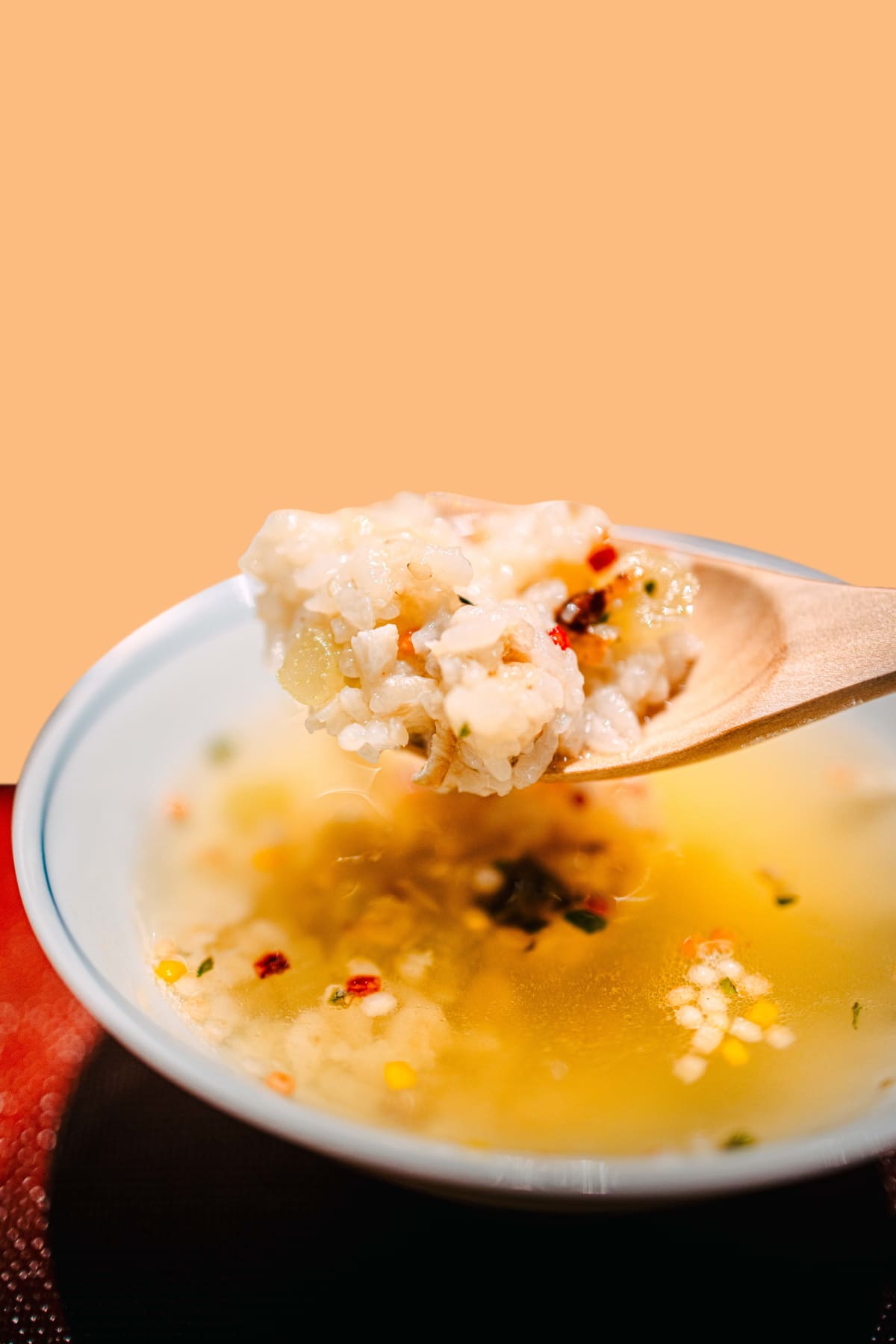
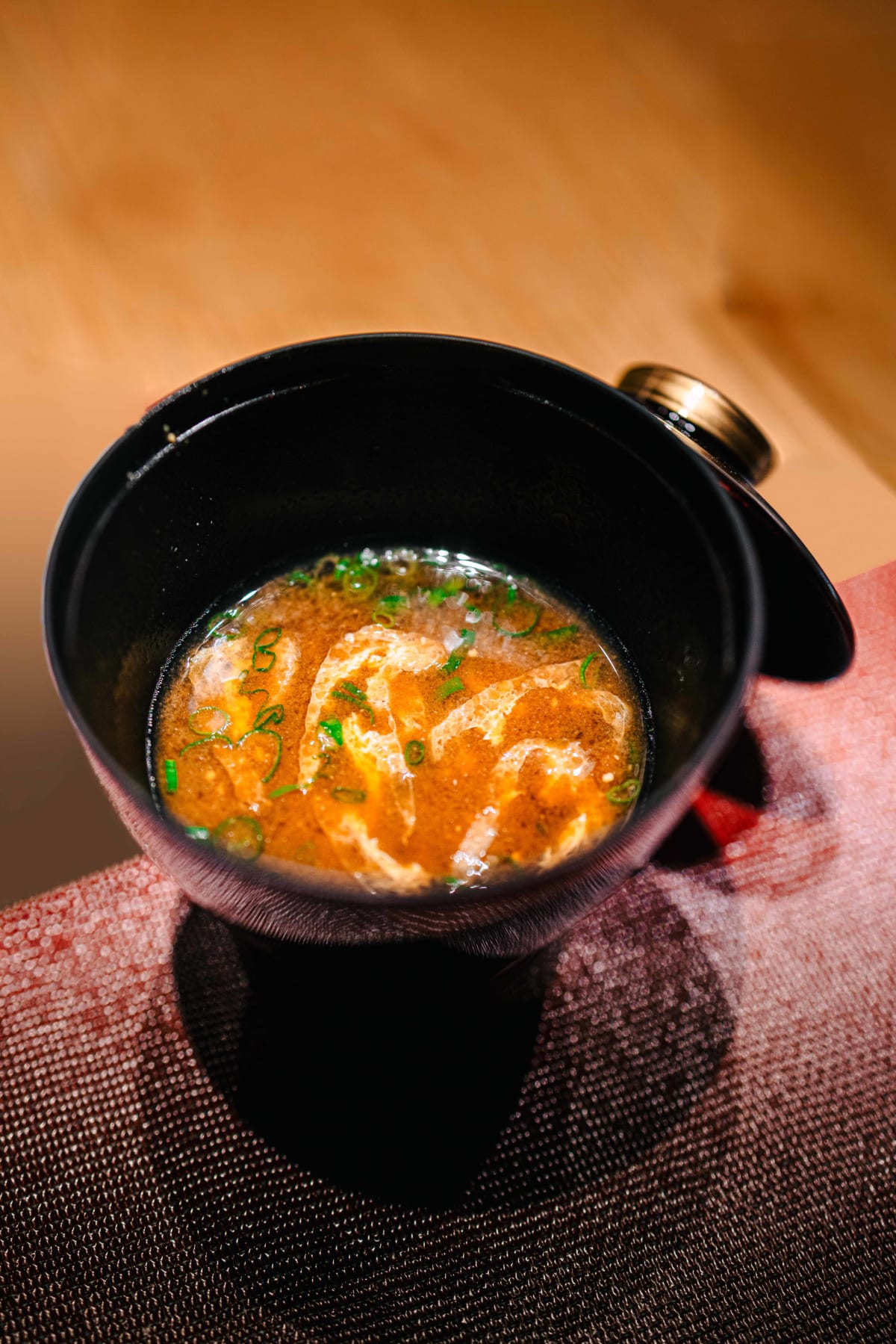
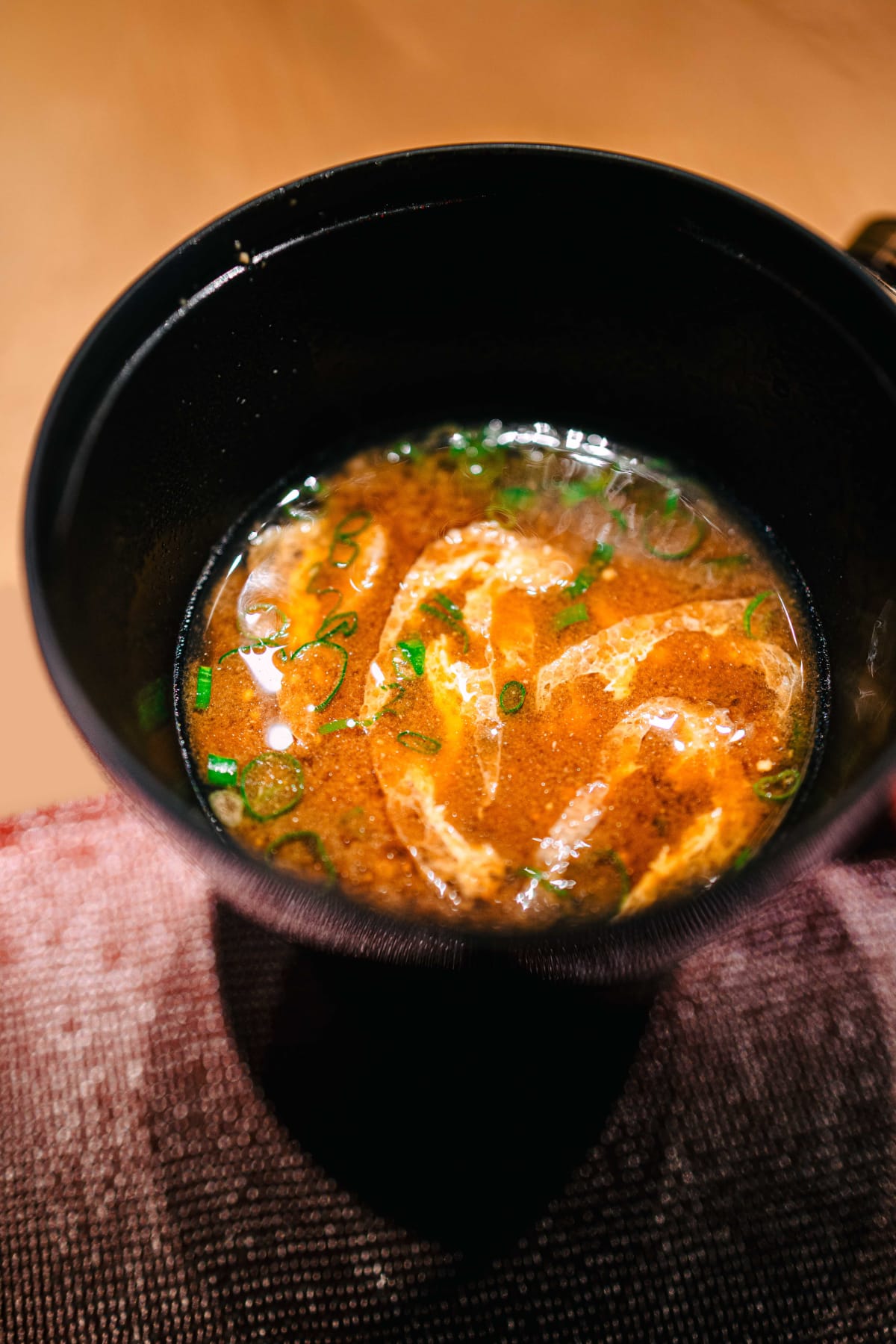
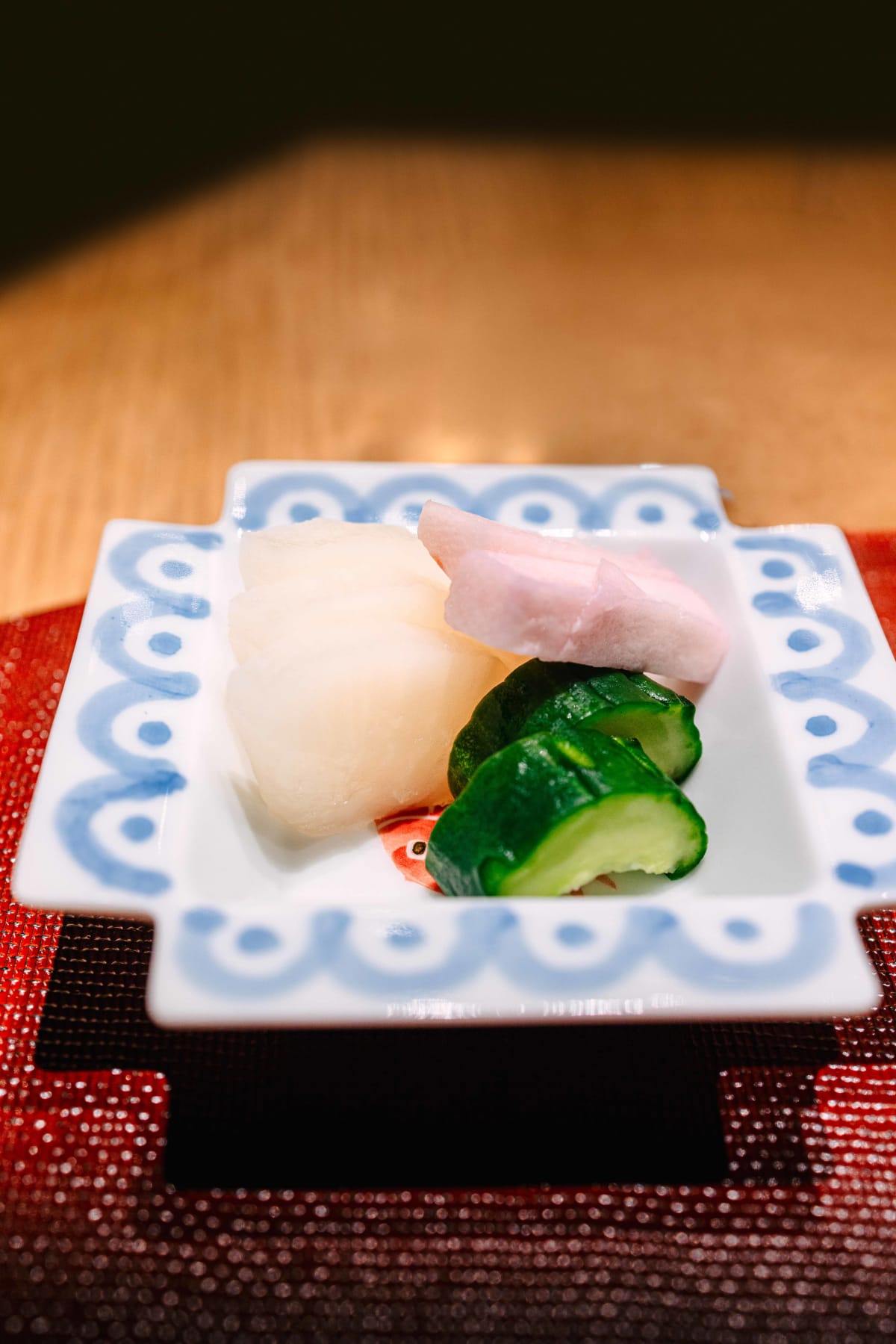
The closing rice course brought miso soup and black cod rice cooked in a pot.
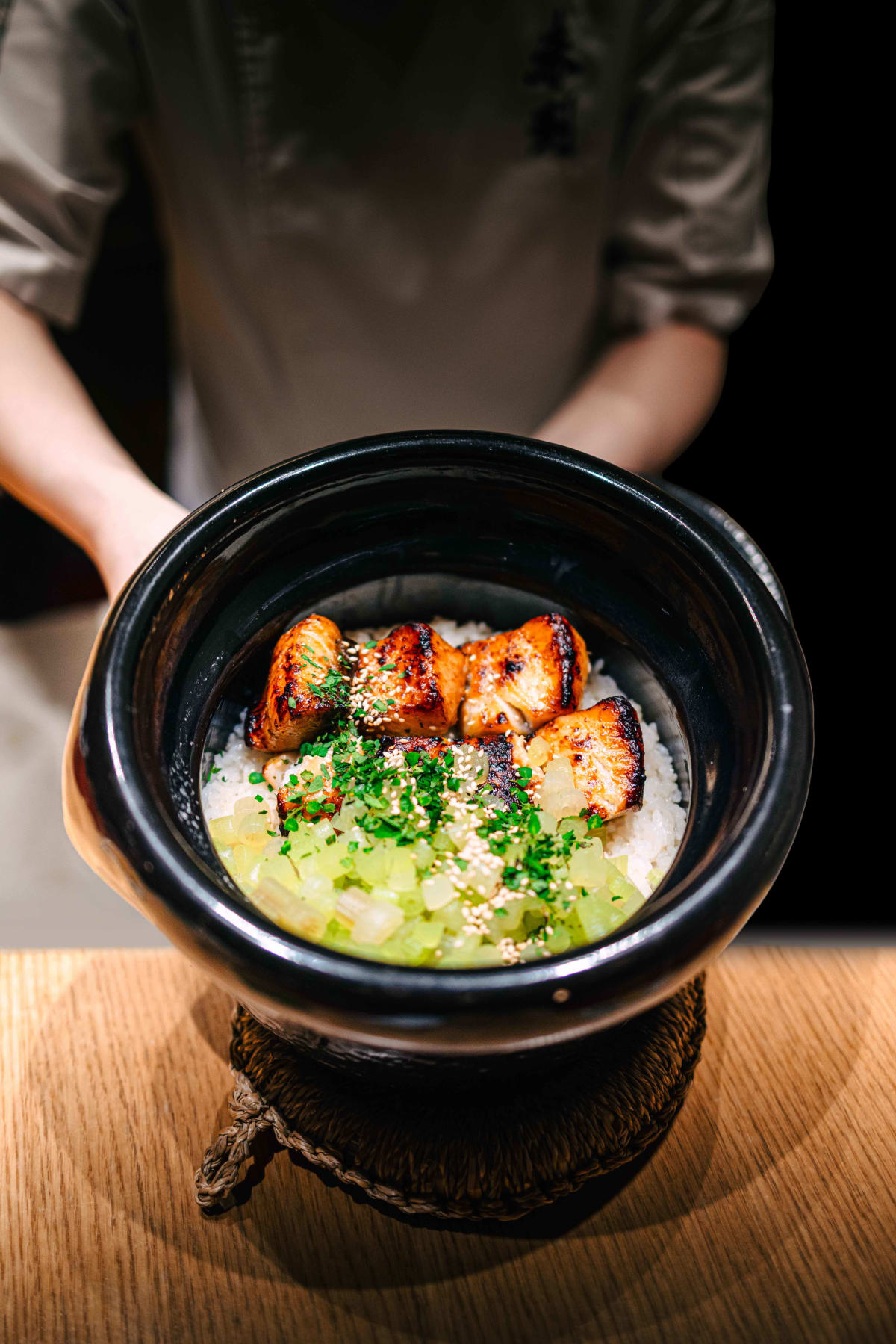
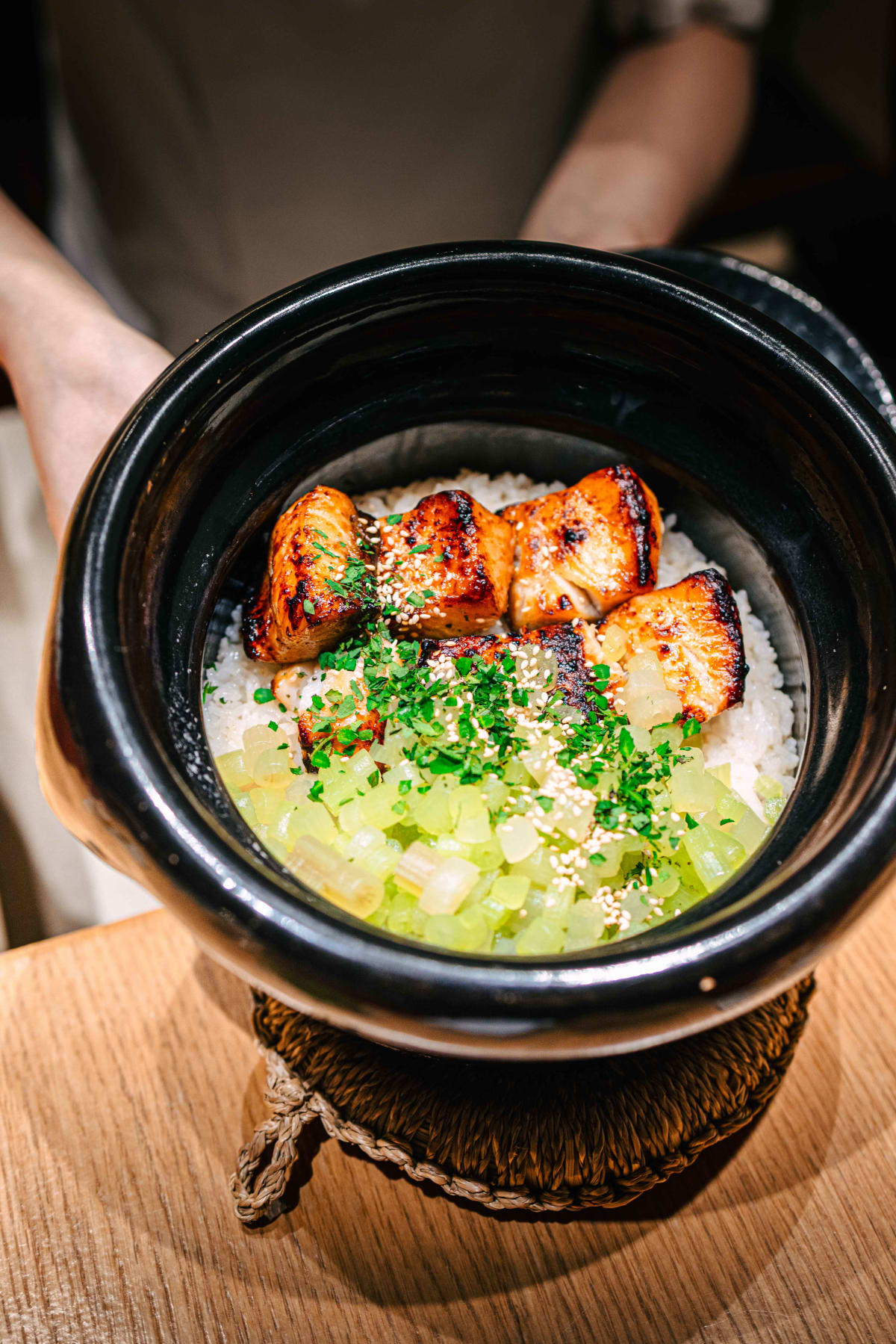
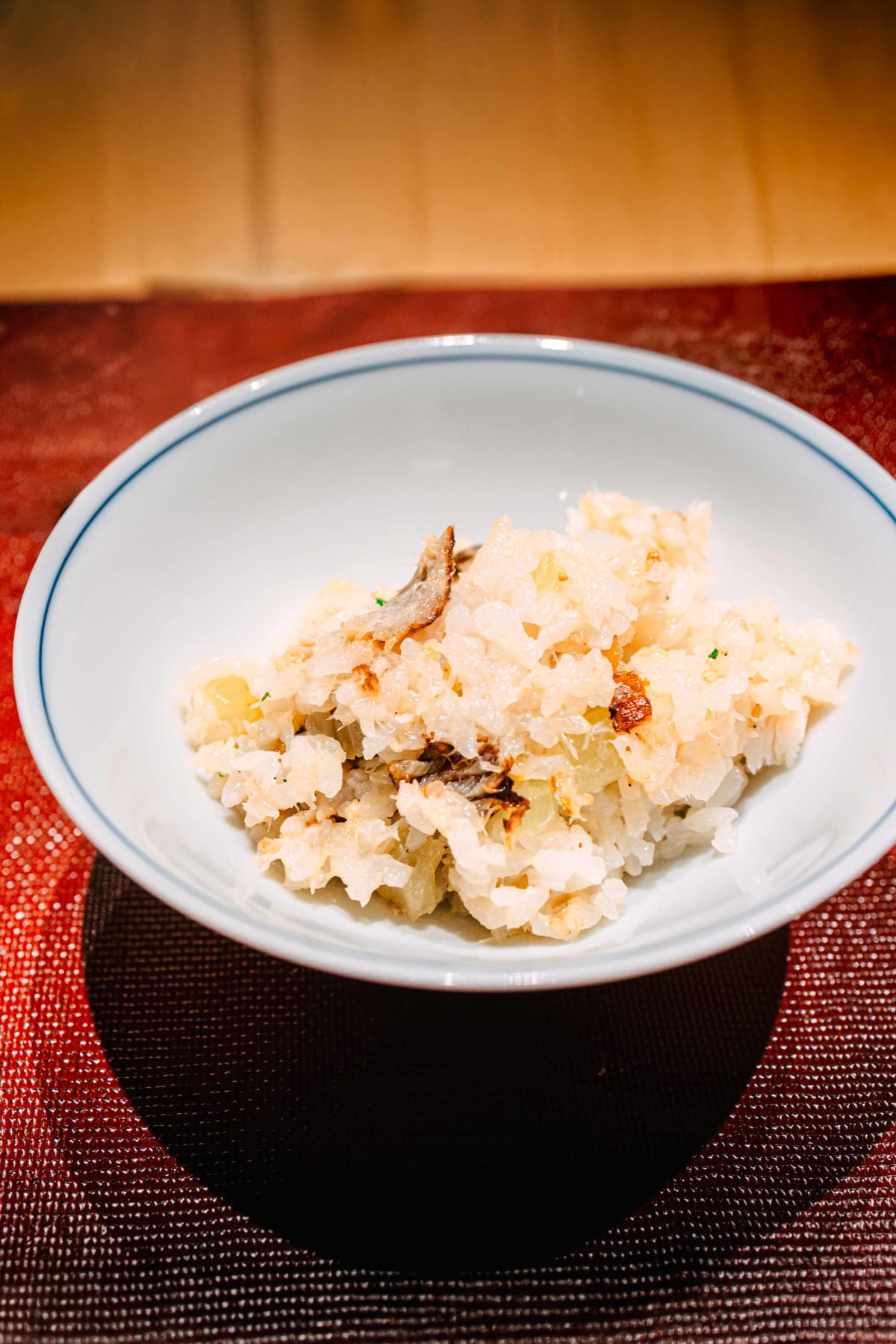
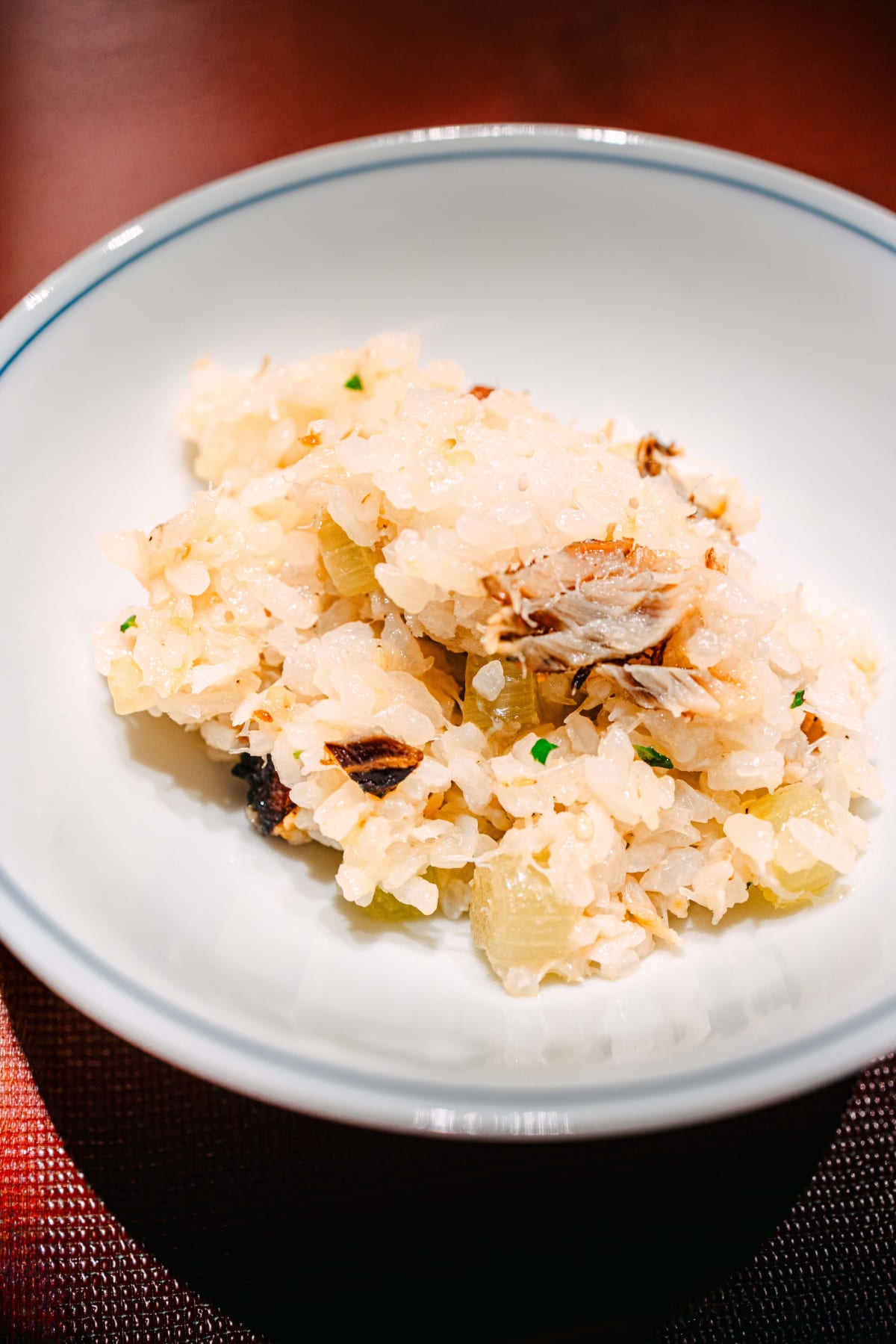
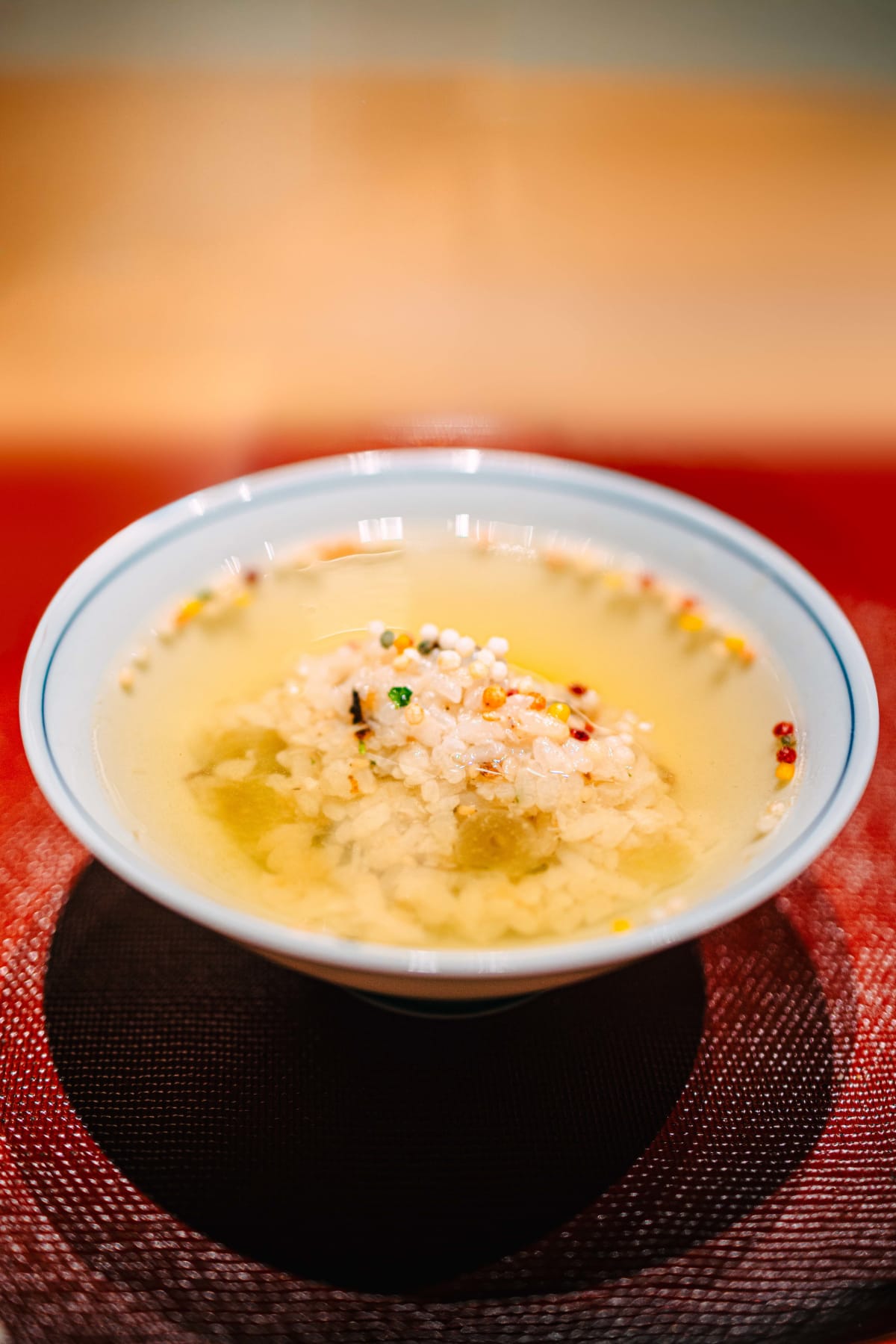
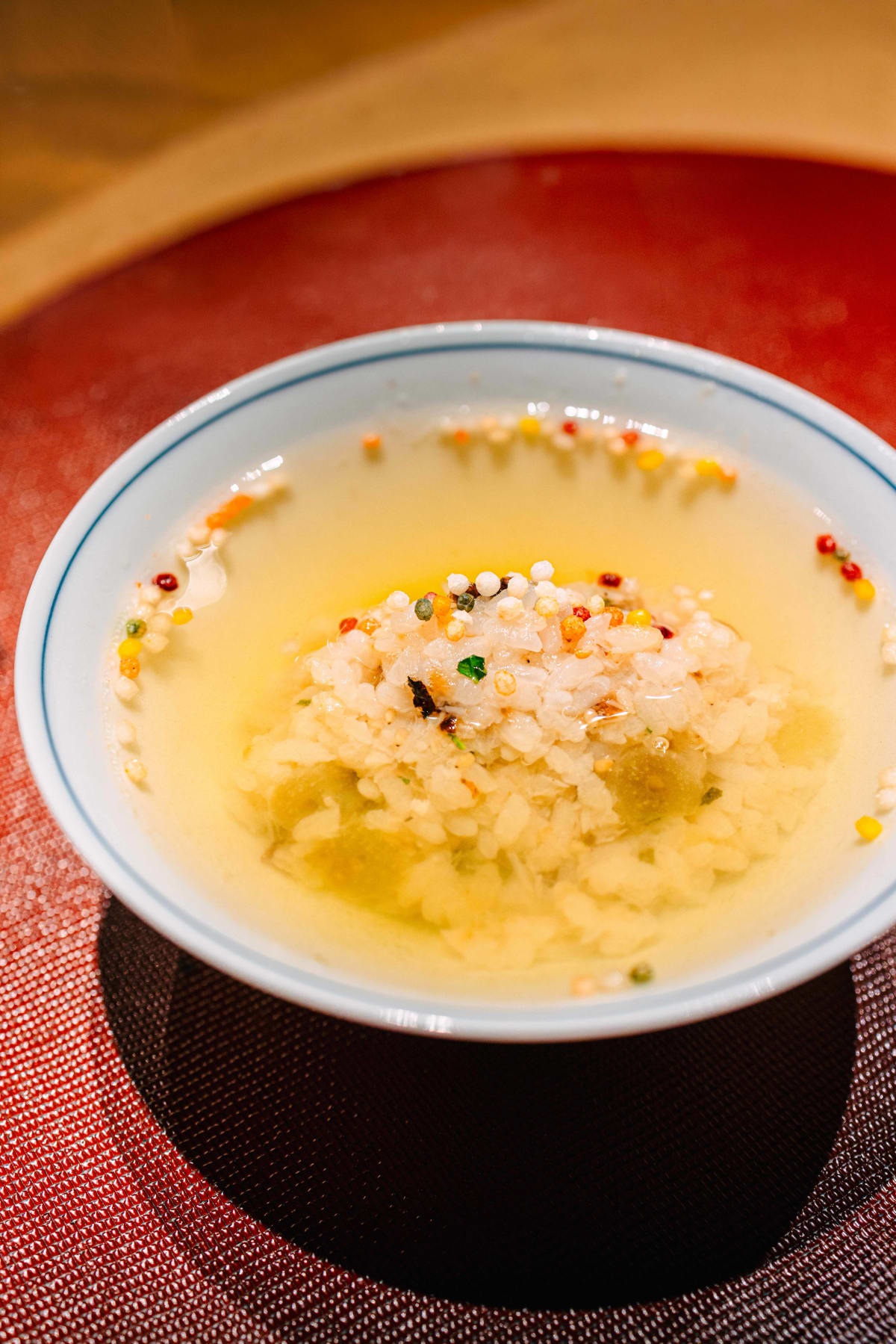
Butterbur stalks and kinome came with the rice, and the range of aromas rising from it was lovely, as were the texture of the butterbur and the ochazuke at the very end.
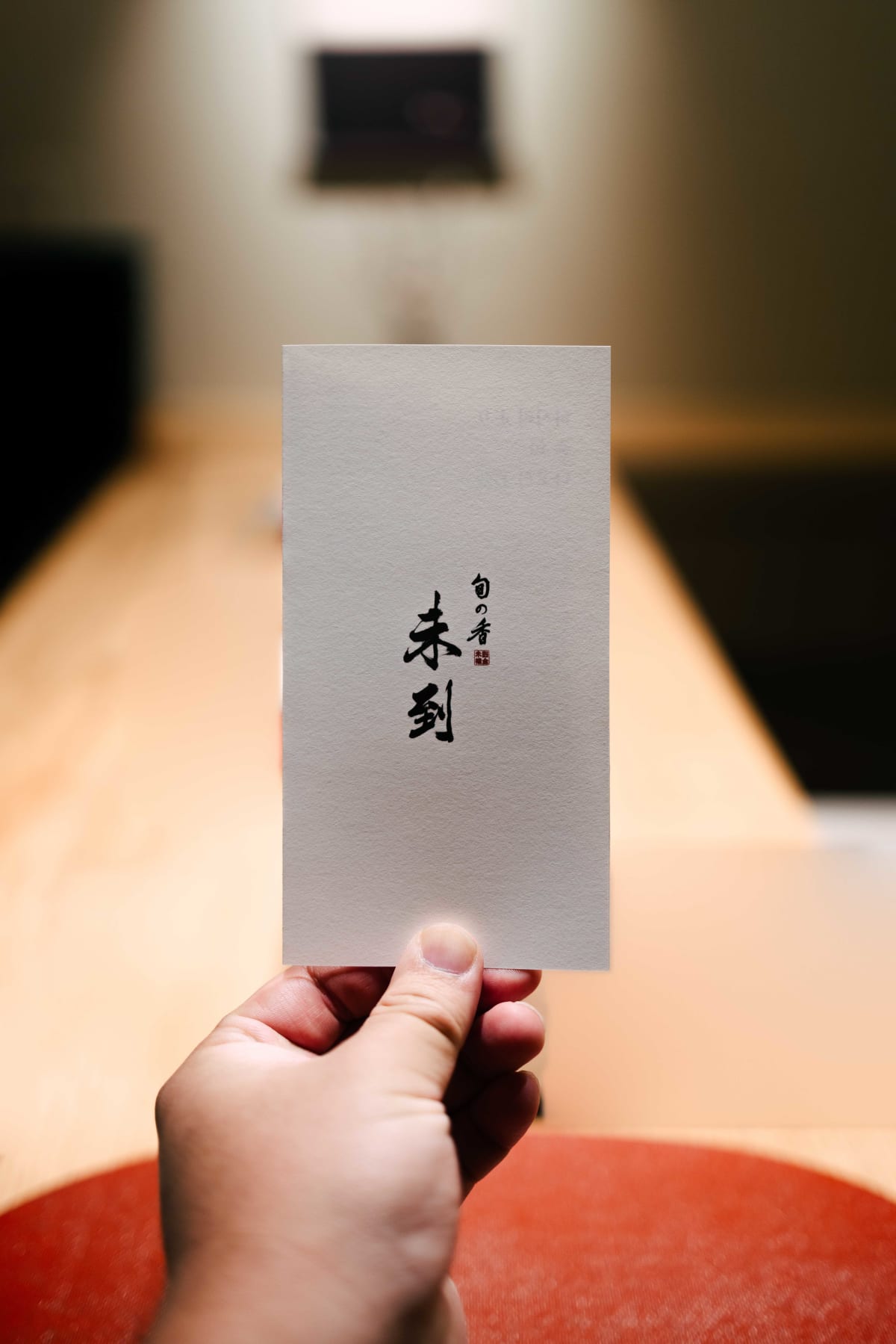
The first page of the leaflet I was given that day set out the three senses of season in Japanese cooking: hashiri (走り), shun (旬) and nagori (名残), words for an ingredient just coming in, one at its peak and one on its way out. Korea and Japan are alike, it said, yet differ in climate, land and culture, so to capture the seasons whole the chefs had to understand Korean ingredients anew, and in this way they are moving step by step towards a Japanese cooking that can be made in Korea, one that is Mitou's own.
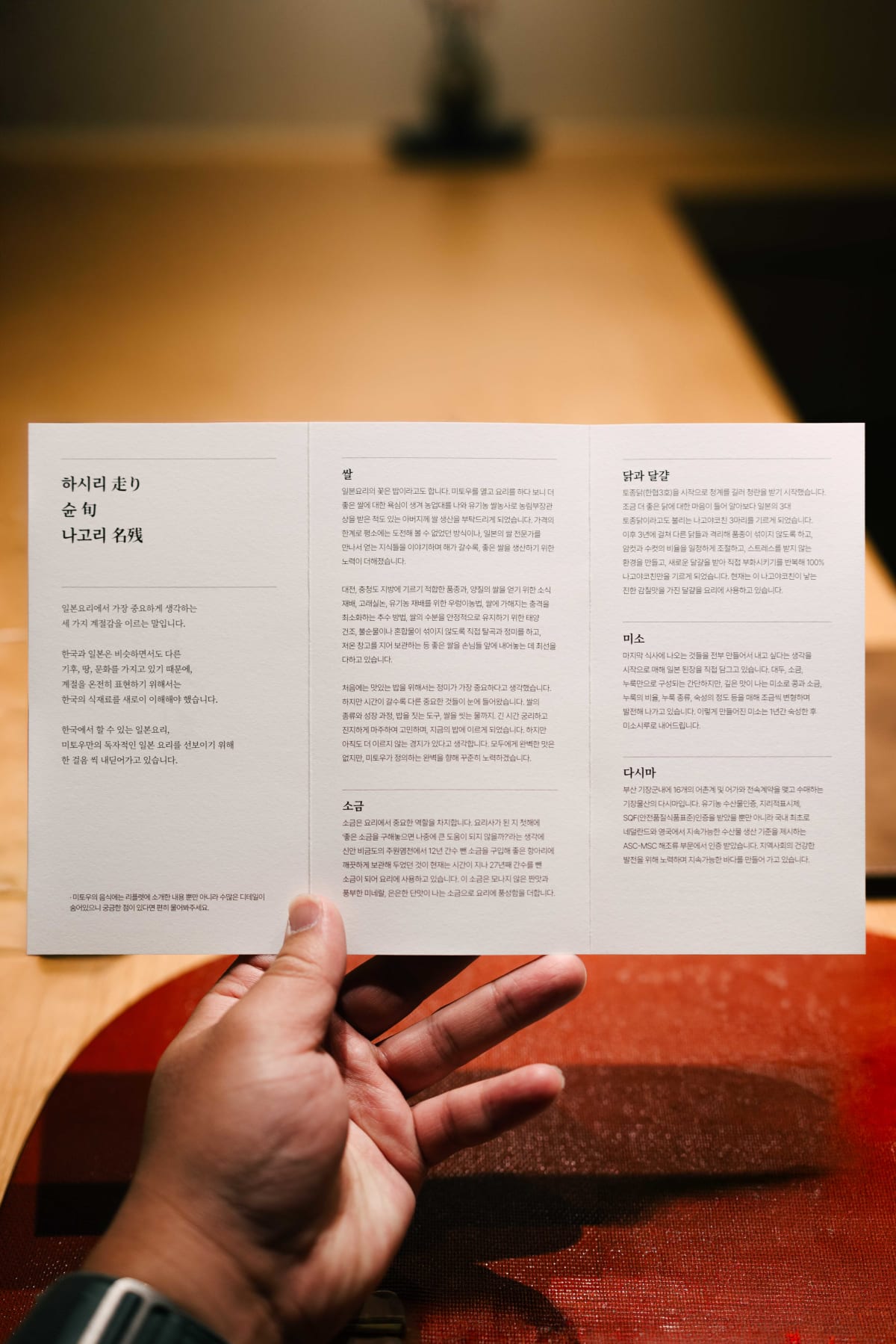
That thinking is set out at greatest length in the story of the rice. It opens with the words that the flower of Japanese cuisine is rice, and goes on to tell how they asked Kwon Young-woon's father, who graduated from an agricultural college and even won a Minister of Agriculture award for organic rice farming, to grow their rice. Varieties suited to Daejeon and the Chungcheong region are chosen and grown with snails that keep the paddies free of weeds, and the rice is dried in the sun, threshed and milled by the family itself, and kept in a cold store built for it.
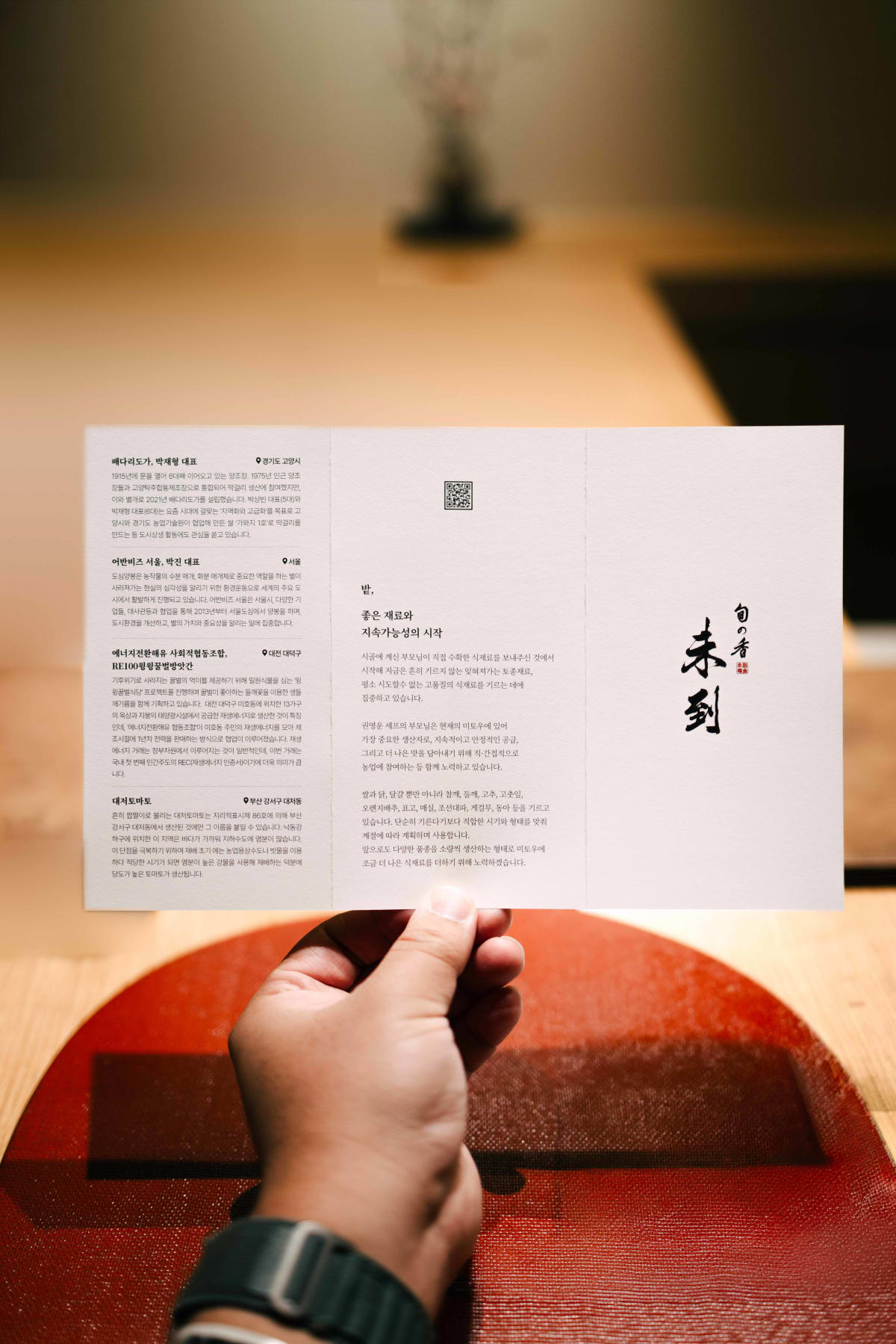
The miso soup is not just any miso soup either. Wanting to make everything in the final rice course themselves, they put up Japanese miso every year from nothing but soybeans, salt and koji, age it for a year and serve it as miso soup.
Another passage that stayed with me told of salt from Bigeumdo in Sinan, bought in the writer's first year as a cook, already drained of its bittern for twelve years, and kept in a jar; that same salt, drained now for twenty-seven years, goes into the cooking today.
The name Mitou (未到) means not yet arrived, and the leaflet, too, admits that while they have arrived at the rice they serve today, there is a level they have yet to reach. That said, from my own experience, the thought also crossed my mind that on the rice itself, the Japanese restaurants of Japan are still half a grade ahead.
Section 10·White Asparagus, Then Tea
Dessert was something quite unusual, creative and daring enough that you could have called the place an innovative French restaurant.
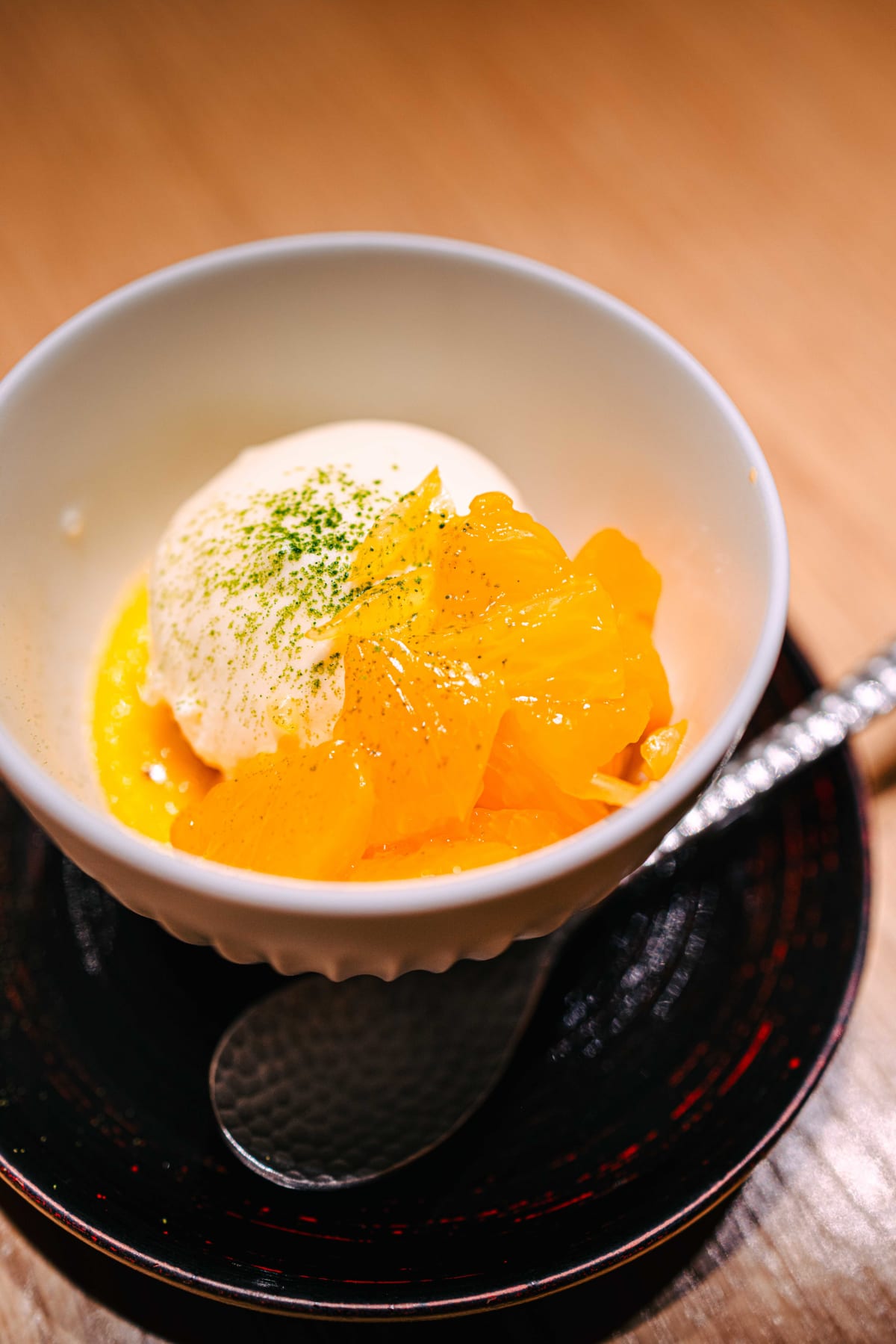
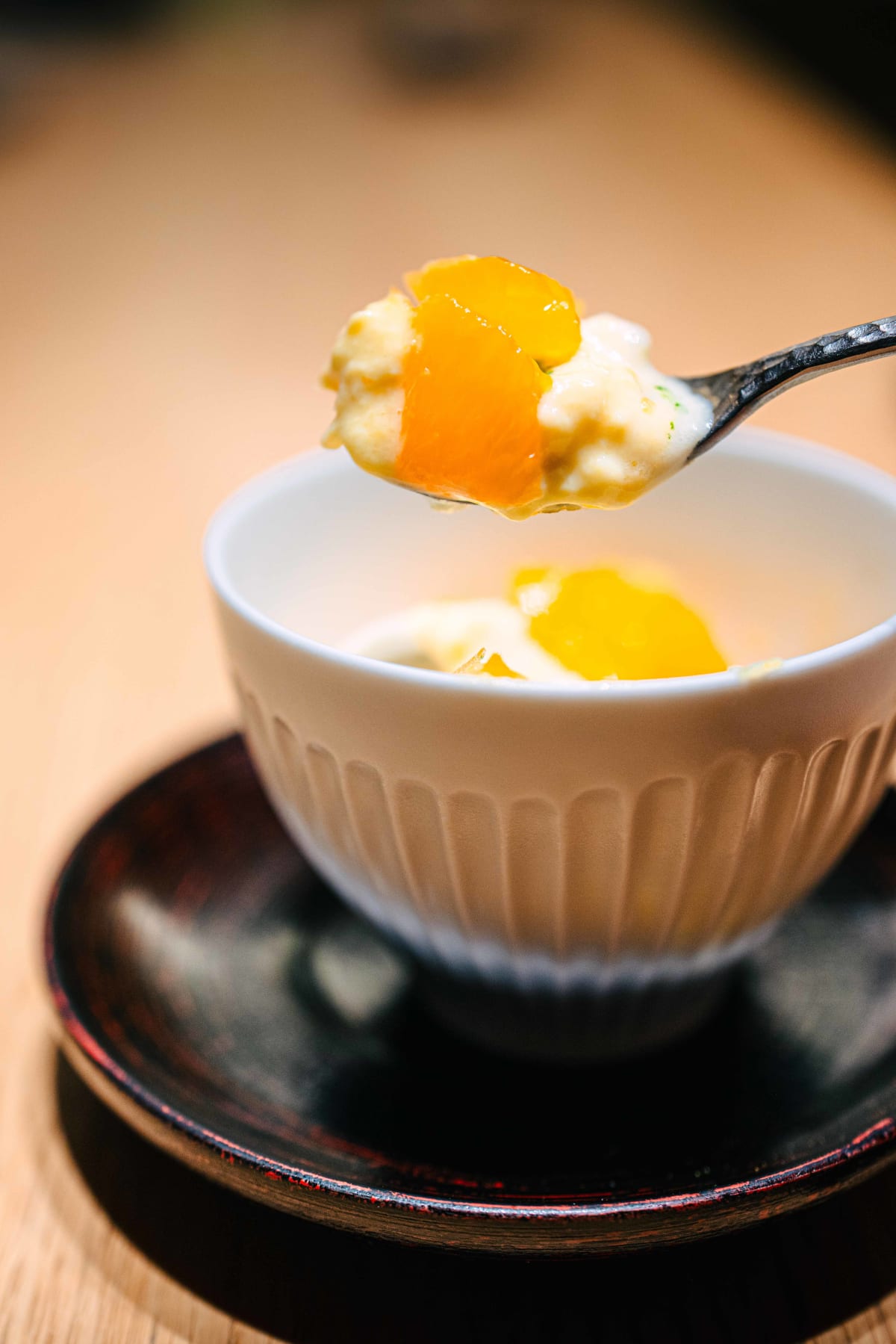
White asparagus had been made into ice cream, with an orange crème brûlée beneath it and two varieties of mandarin on top.
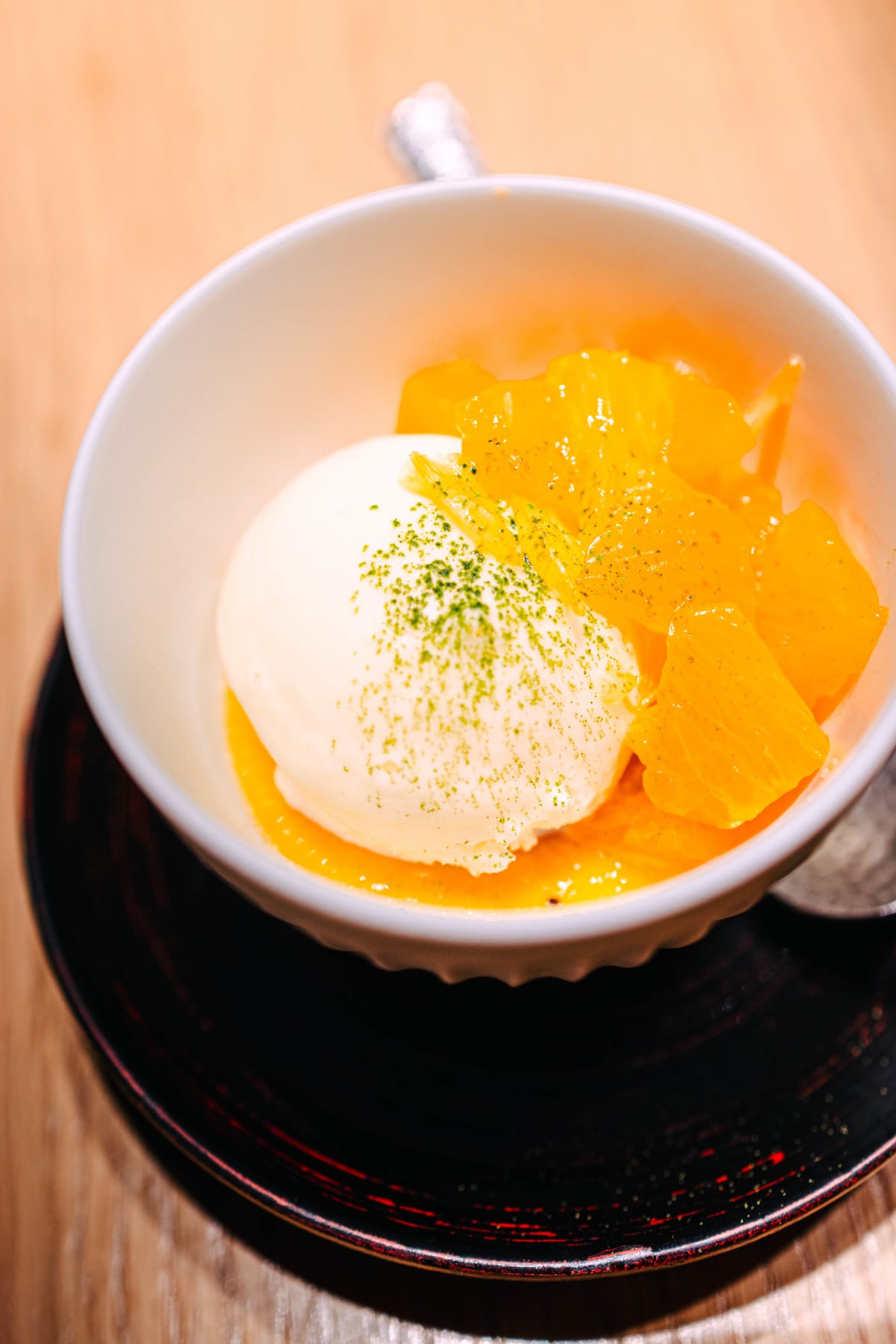
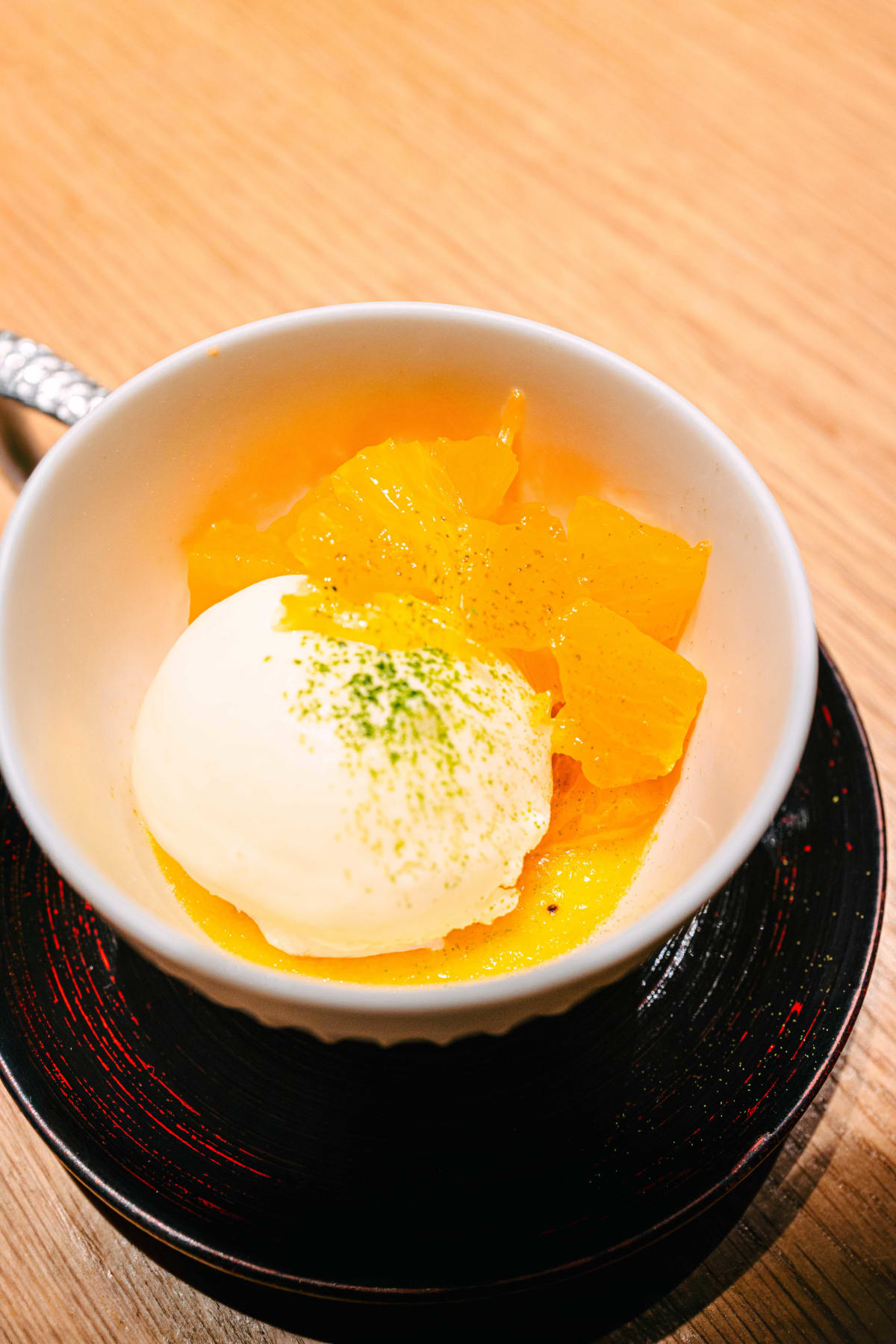
The ice cream really did taste strongly of asparagus, which amazed me. With mandarin and orange together, it was bright and refreshing to eat as well.
To finish came a wagashi made, I was told, from yam and rice flour, wrapped in a leaf of some kind.
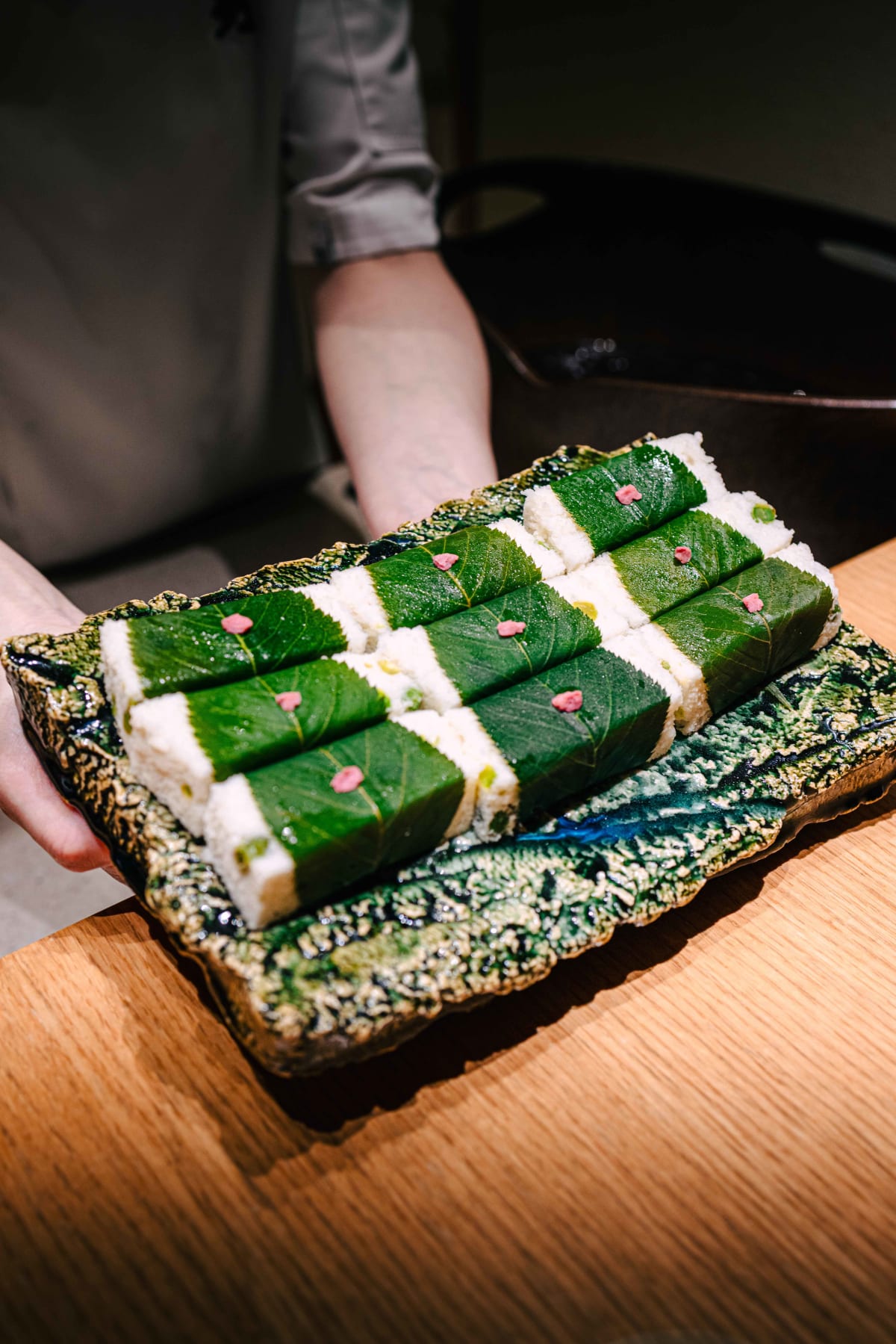
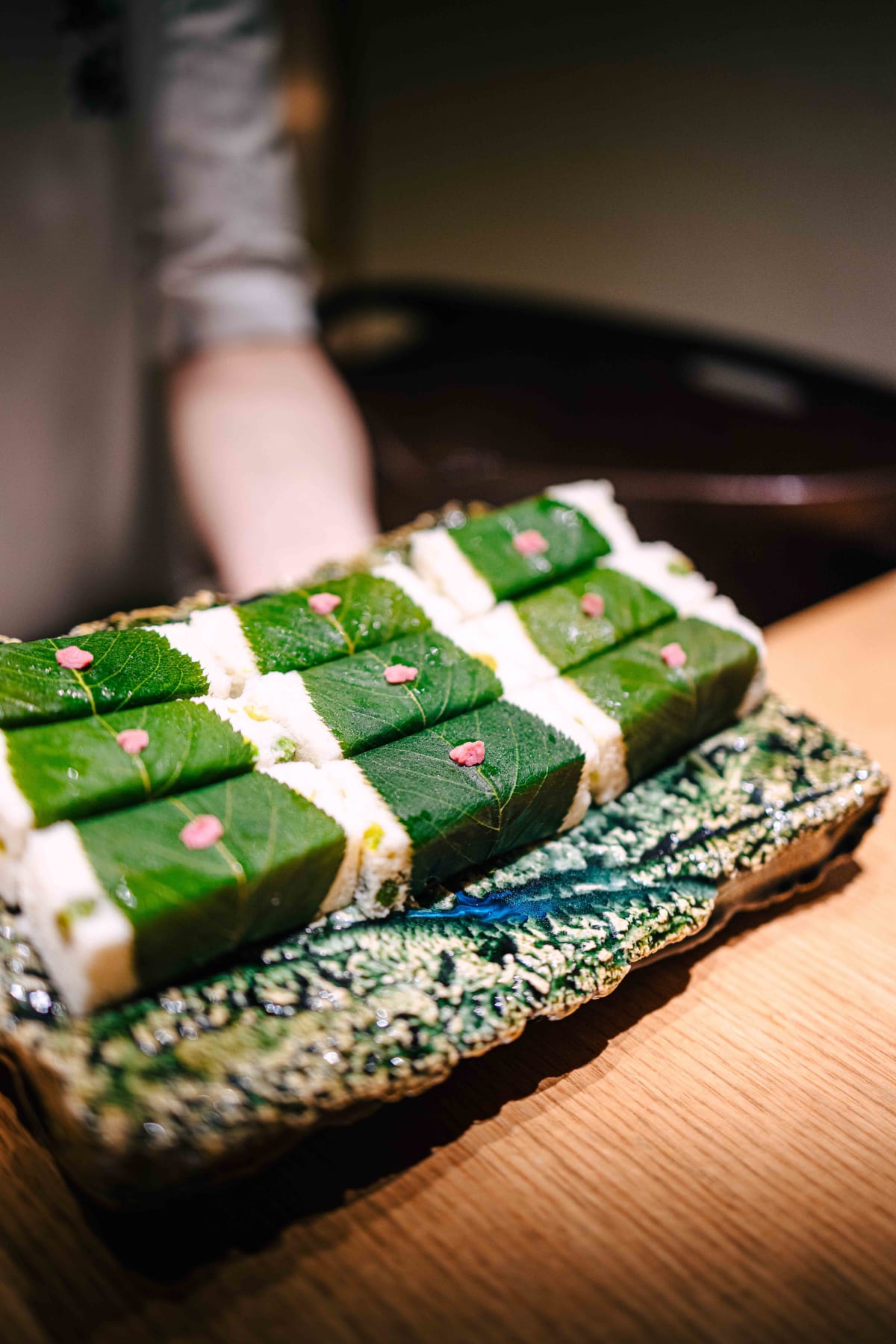
Curiously, it had a salty edge.
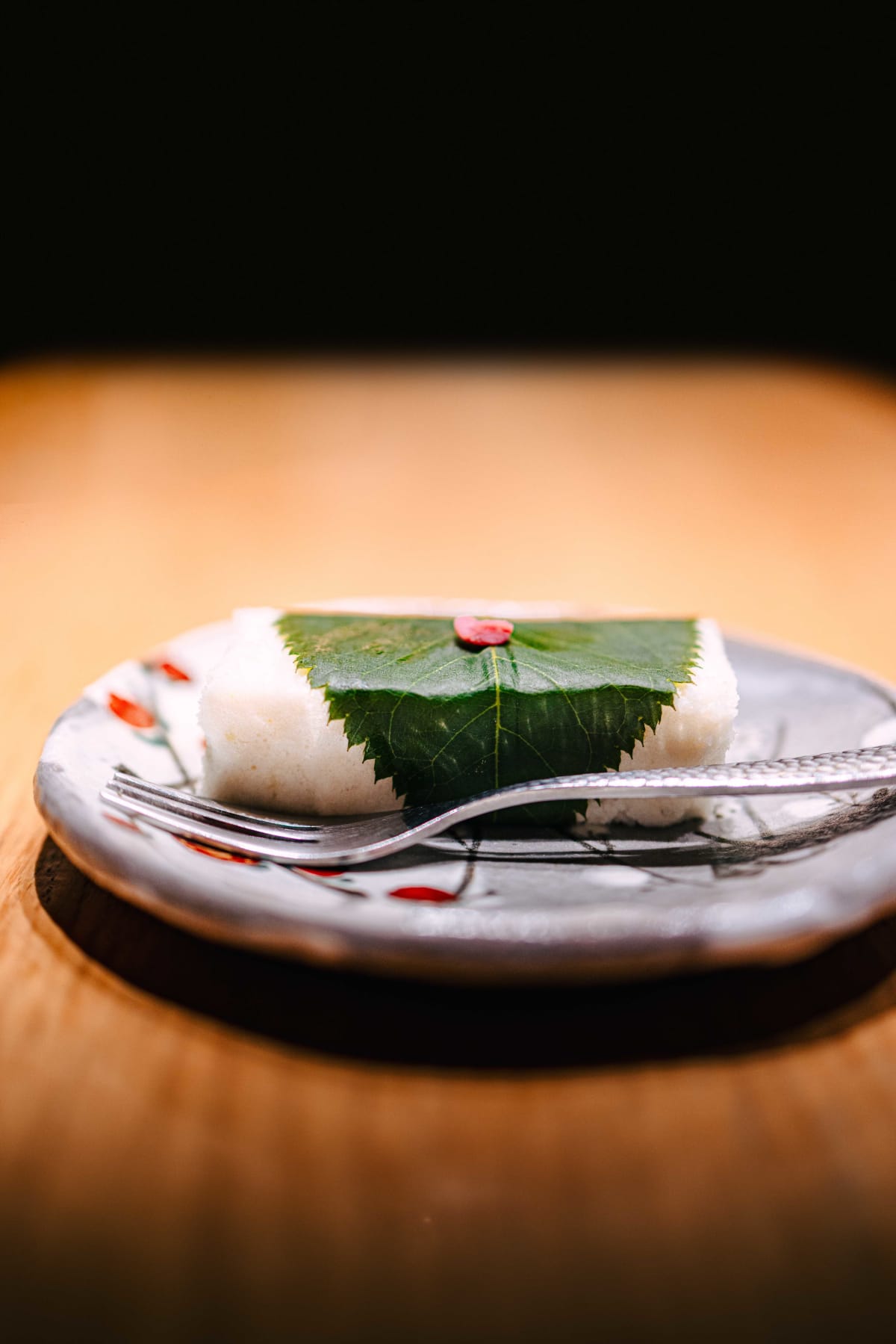
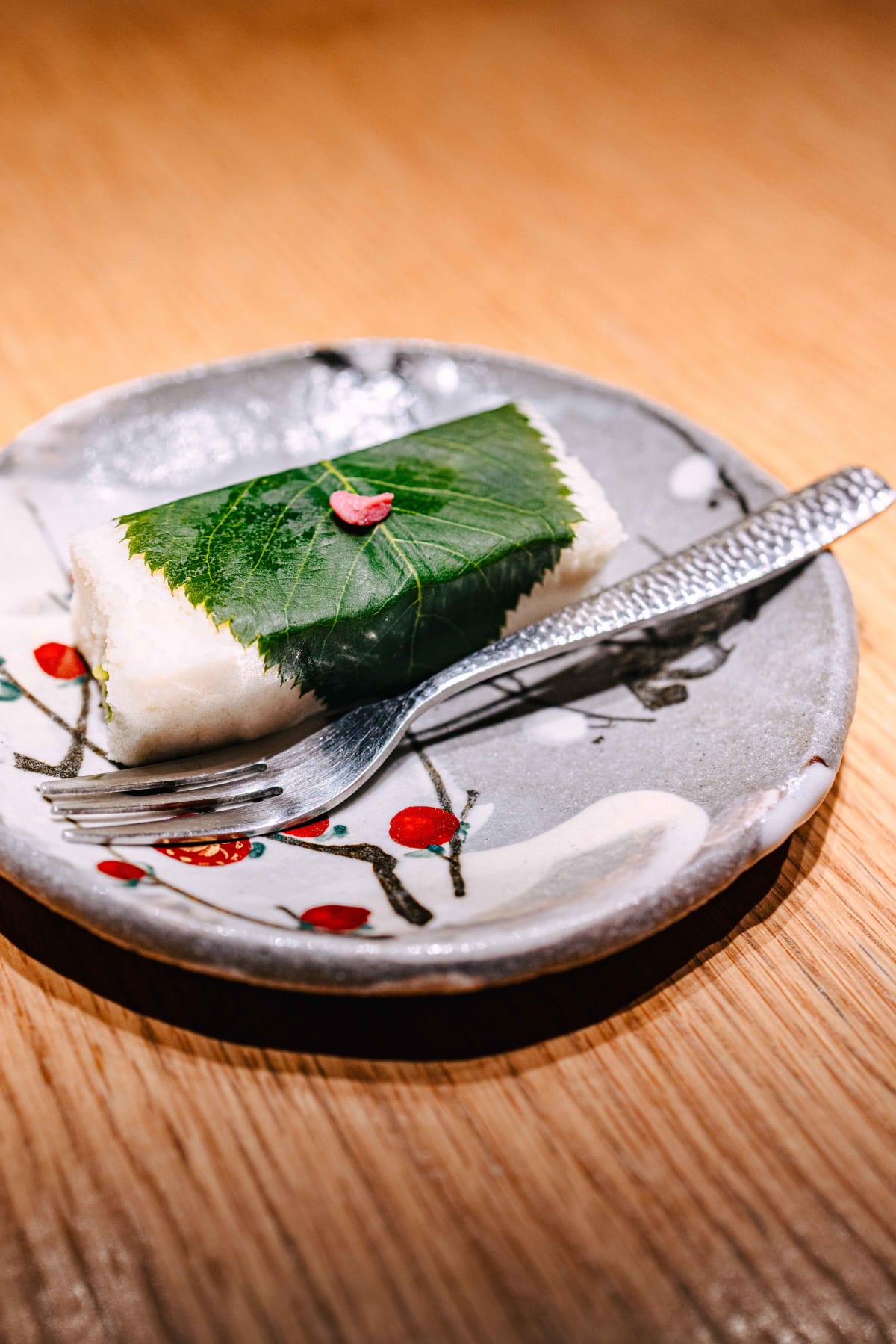
The wagashi was a little unfamiliar to my palate.
A blend of several teas came with it, and this tea was wonderful... a tea that warmed not only my stomach but my heart.
Section 11·The Next Season
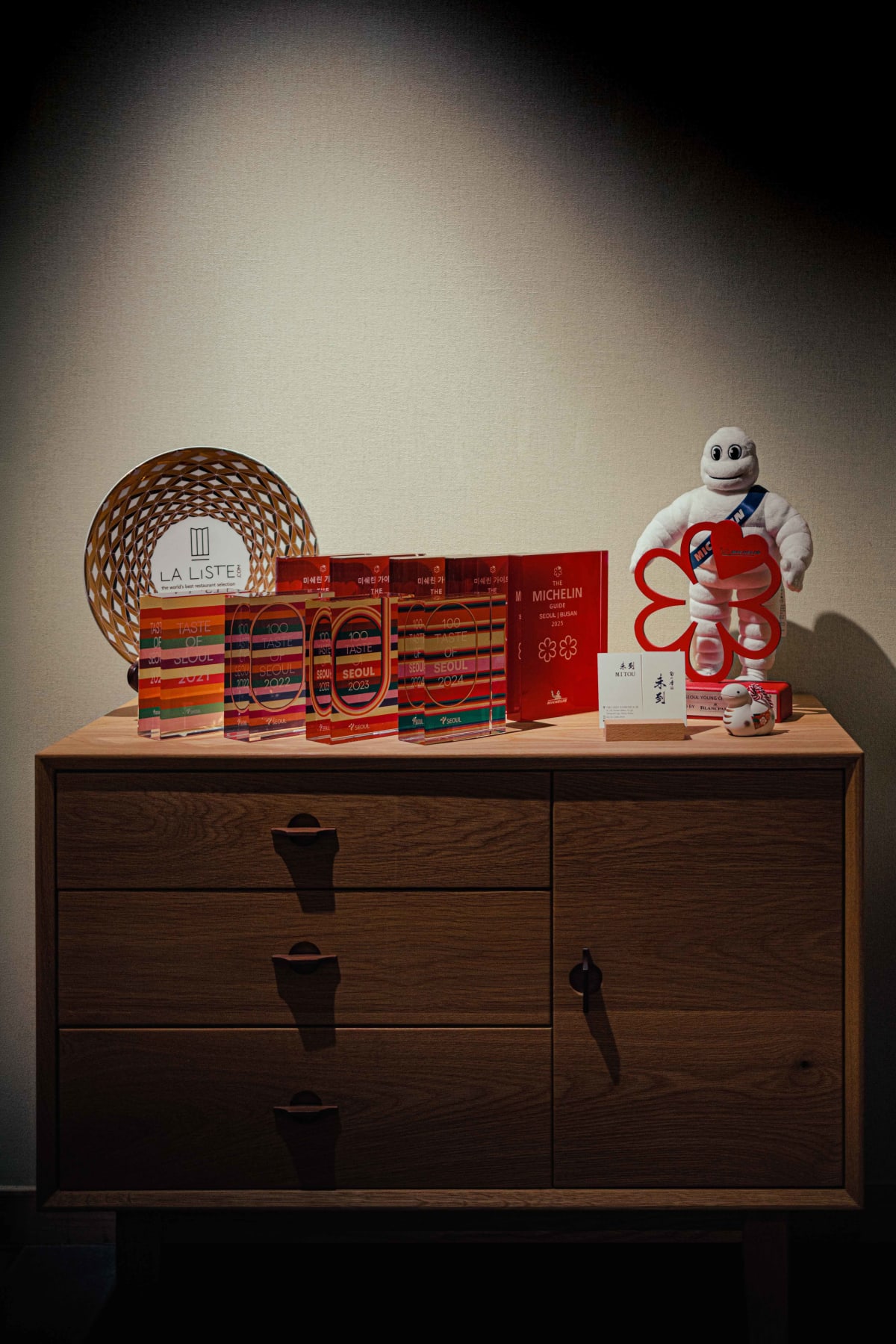
Mitou never fails to satisfy. It received its first star in the Michelin Guide Seoul 2021, rose to two stars in 2024 and has held them ever since. It has also received a Green Star, the guide's award for restaurants practising sustainable gastronomy, and Kim Bo-mi received the Michelin Guide Seoul Young Chef Award in 2022.
That day I heard for the first time that Mitou would be launching a Japanese-Chinese course, the one I went on to experience in the summer of 2025. Hearing that the chefs were putting a great deal of preparation into it, since it was their first, I remember thinking of the unagi wrapped like Peking duck and looking forward to it all the more.
A year has now passed since I last went to Mitou. Soon I will make a first visit in yet another season, and the thought of it already has me excited.
Of Mitou's seasons, spring may be the one where its idea reads most plainly. Korea and Japan eat many of the same plants in spring, so the dureup, ttang-dureup, bracken, butterbur and bamboo shoots on this menu are the taranome, udo, warabi, fuki and takenoko that Japanese cooking waits for each year. At this time of year, the Korean sourcing Mitou has built itself on needs no translation at all. Early to mid April is the window to aim for: the dureup shoots are just up, jjukkumi from the west coast is full of roe, and Daejeo tomatoes are at their peak. The menu turns with the seasons, and Mitou takes reservations itself, by phone, for dinner from Tuesday to Saturday.
Have a question about this restaurant, or want to share your own experience?
Send a message