Local & Essential · Tokyo · Japan / January 2025 / Michelin Bib Gourmand · Tabelog Bistro Hyakumeiten
noura
"Sister to a two-star in old Asakusa, an orthodox French bistro where a bowl of fish soup outshines the address."
Section 1·Asakusa
Tokyo has more Michelin-starred restaurants than any other city in the world. It holds a great many stars not only in Japanese cuisine but in French as well. That said, even a city with this many stars has the same regional unevenness you find elsewhere, and in Tokyo most of them cluster in affluent districts like Roppongi and Ginza. The rest of the city is not empty, though. Asakusa, the part of Tokyo where the old downtown atmosphere lingers most strongly, is home to a two-star French restaurant called Hommage.
Hommage's chef, Noboru Arai, was born and raised in Asakusa. After training in Tokyo, he moved to France and learned the philosophy of French cooking at places like Régis Marcon's Le Clos des Cimes, then a two-star and today the three-star Régis et Jacques Marcon, and the one-star Auberge La Fenière in the south of France. He returned to Tokyo in 2000 and opened Hommage in his home district of Asakusa, earning his first star in 2012 and his second in 2018. True to the name "hommage," the restaurant is built on gratitude: to the nature and the farmers that raise the ingredients, to the colleagues and family at his side, and to the guests who come for his cooking. His credo is "simple and minimal," a refined French expression built on few ingredients and restrained seasoning, even as he trades ideas with chefs around the world to draw on a wide range of influences.
Section 2·noura
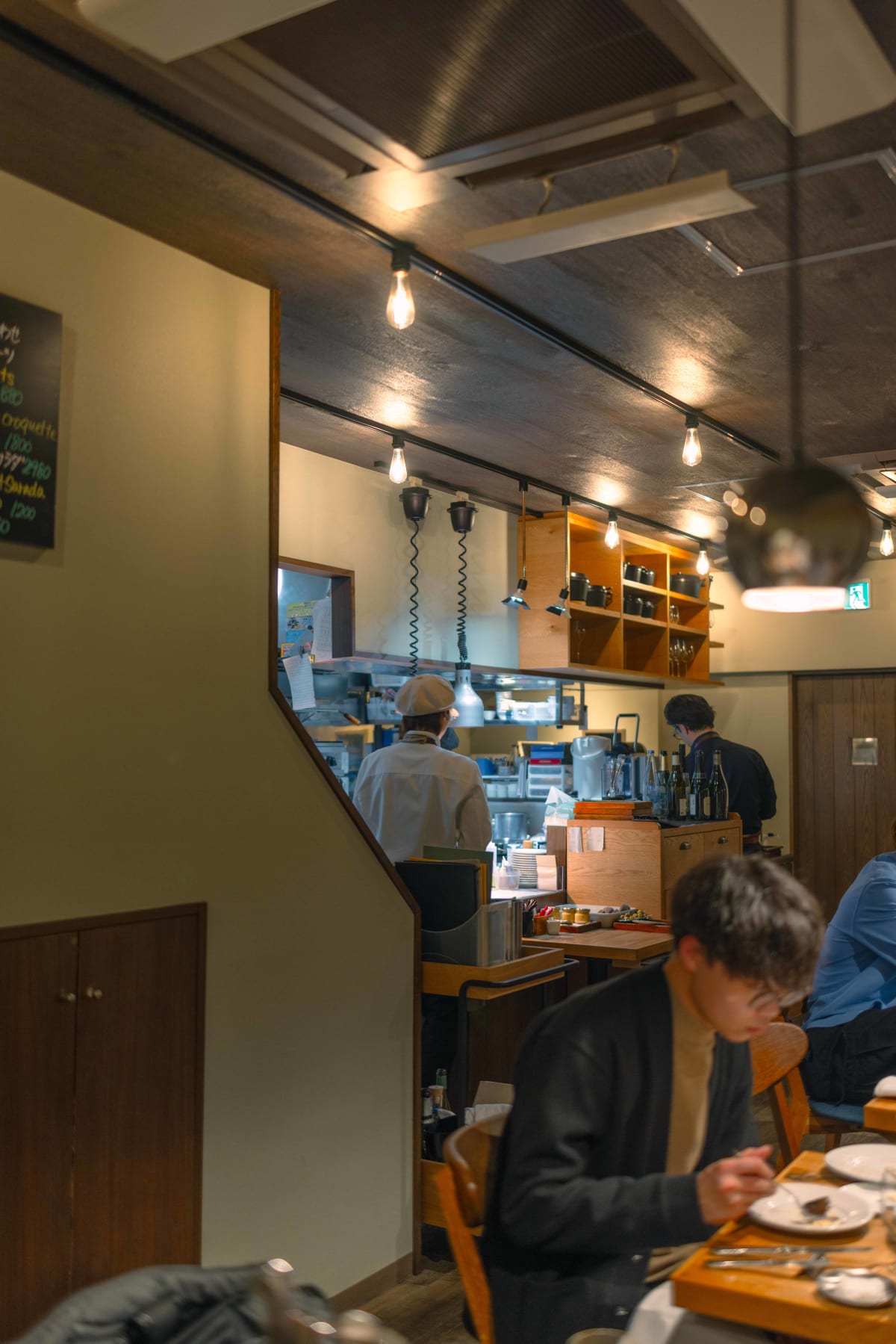
noura is Hommage's sister restaurant and bistro, right next door. I came here for the last meal of a Tokyo trip that ran from the end of 2024 into the start of 2025. Looking into the name, I learned it comes from the idea of "the back of Hommage," after the Japanese の裏 (ura), meaning "the reverse side of." Though it was opened by the same chef, it is not a place that simply leans on the main restaurant's halo. noura has earned a Michelin Bib Gourmand in its own right.
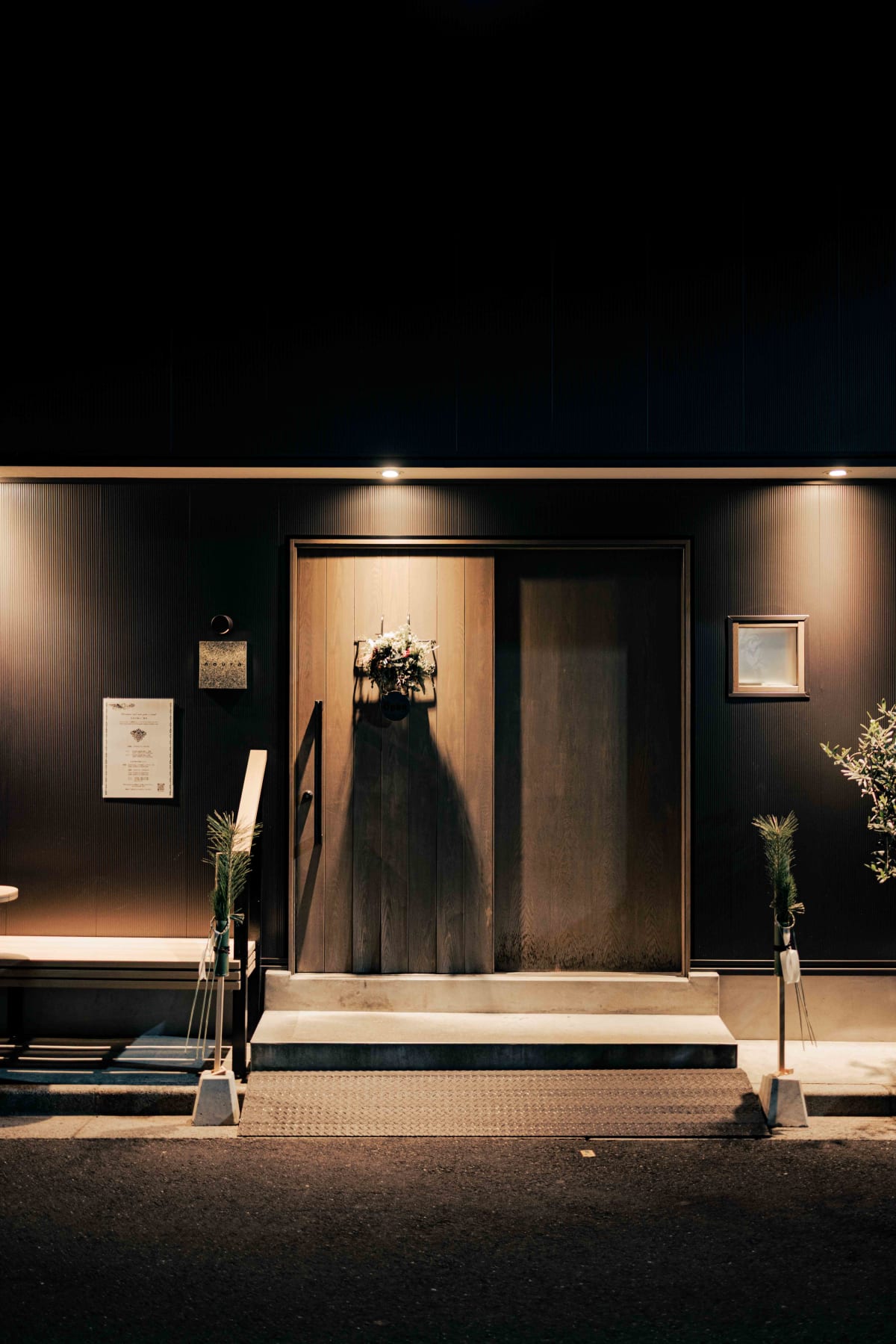
I personally found it deeply impressive and delicious, and a few parts were better than what I have had in France itself. I was curious about Hommage afterward, so I booked it separately and went, and the two turned out to be quite different in style. noura leans toward an orthodox French bistro rather than a Japanese touch, while Hommage, which I will write about next, carried a stronger Japanese touch than I had expected.
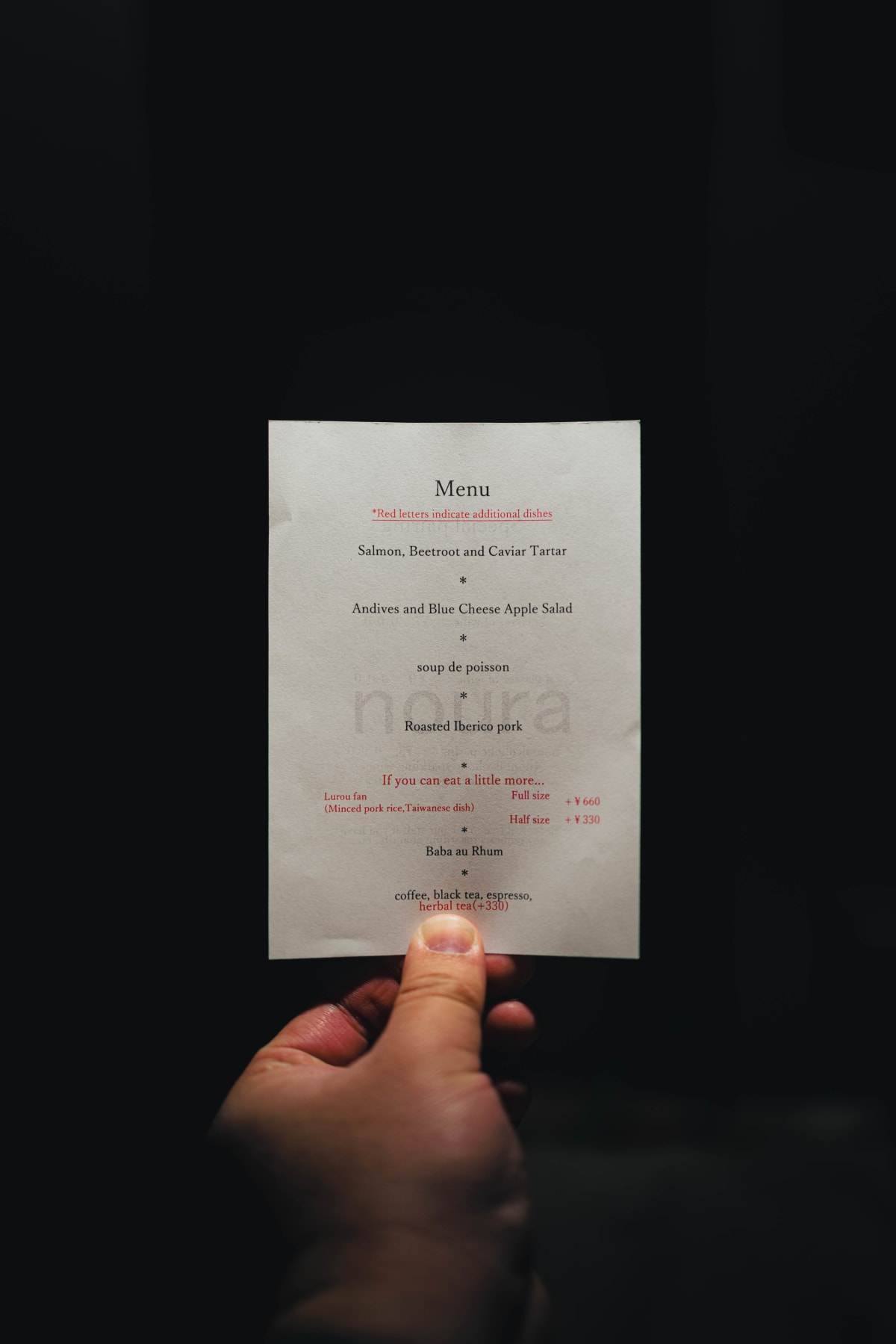
For the New Year, noura was running a course menu alongside its usual à la carte, and I had reserved the course in advance. Most of the other guests seemed to be ordering à la carte, and if I come again I would like to try it that way too.
a few parts were better than what I have had in France itself.
Section 3·The Pairing
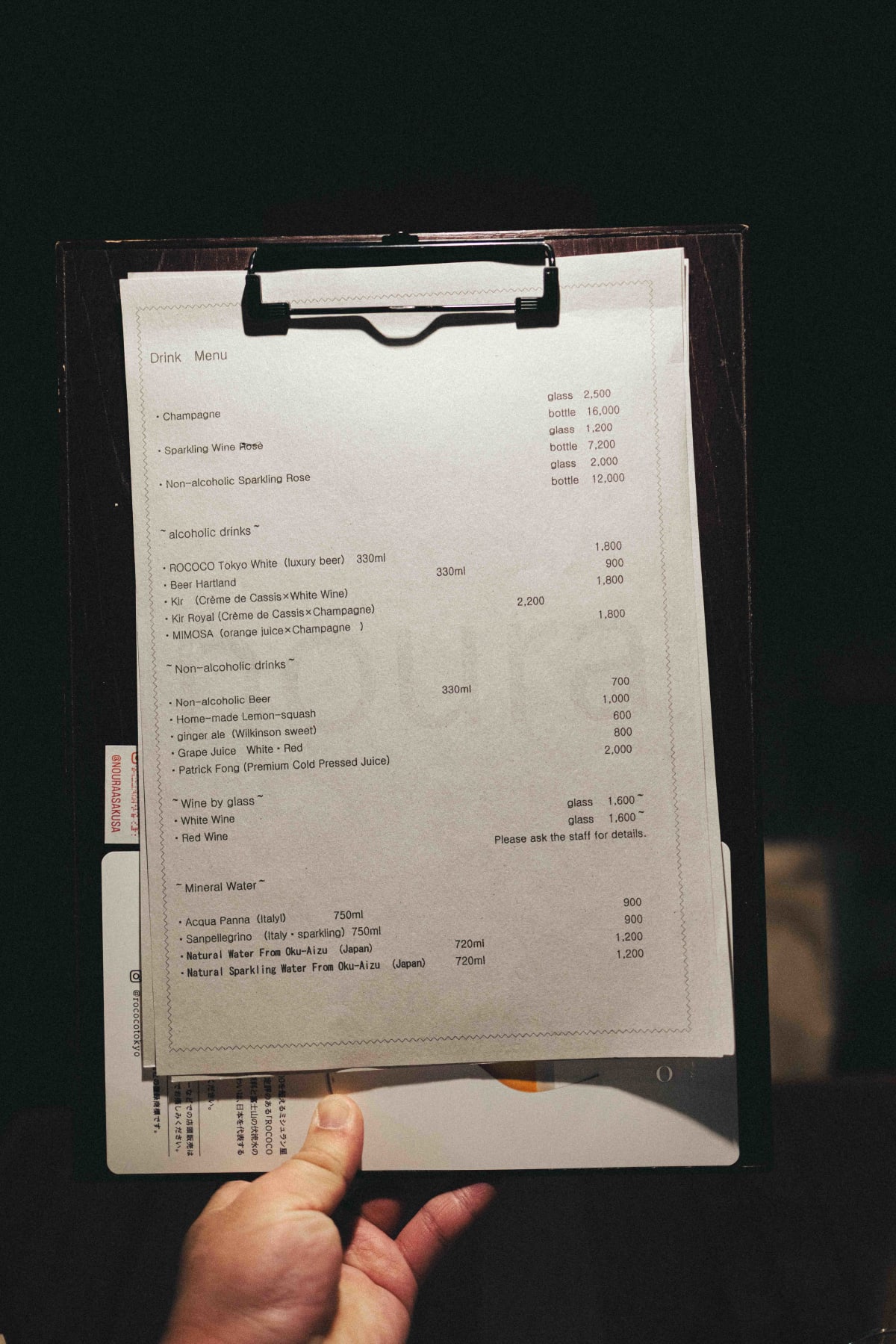
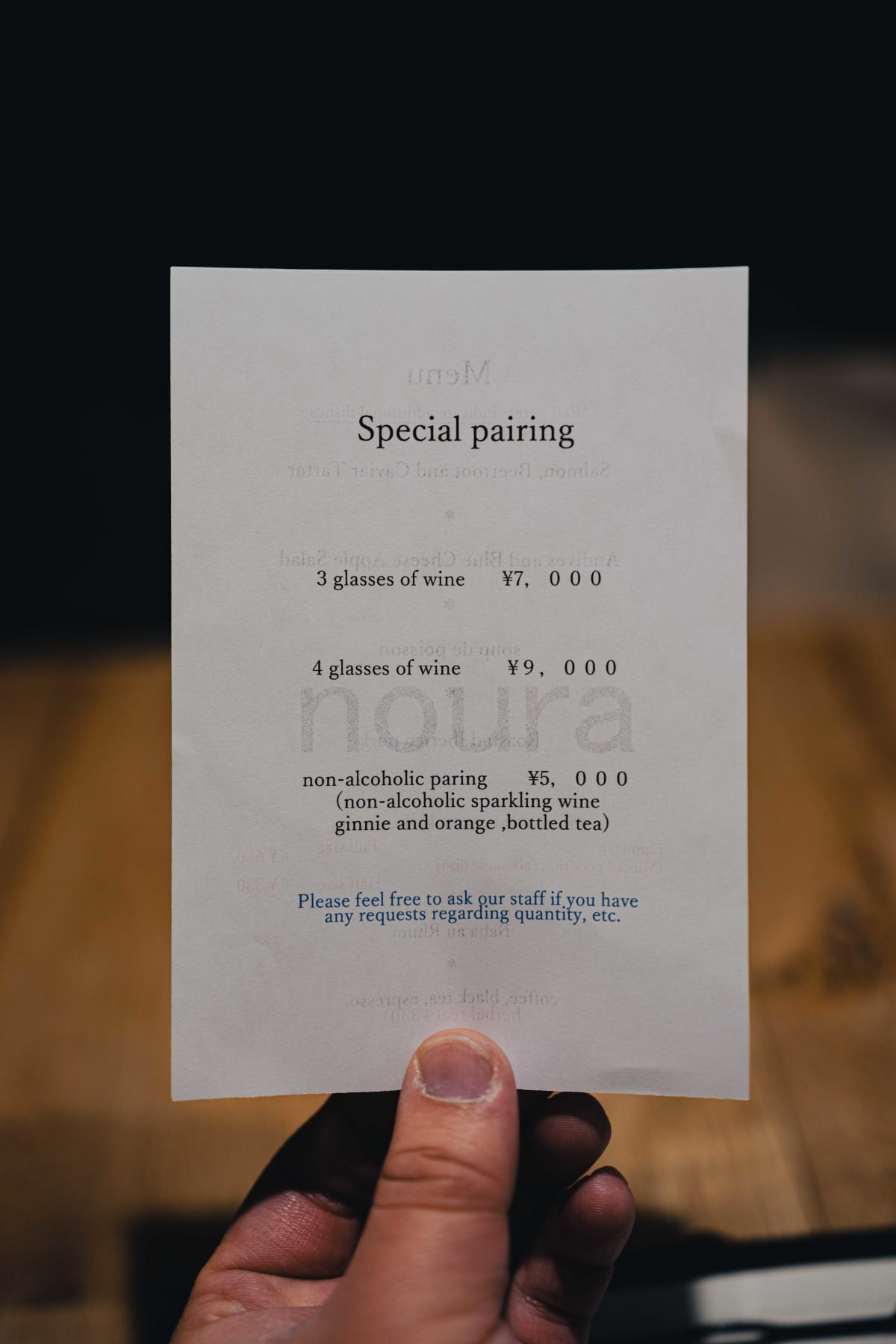
The course was a compact five courses plus one dessert, and I chose the pairing. The pairing was all French wines, reasonably priced at 9,000 yen, and each pour was good. When it comes to whites, France really does suit my palate best among the Old World.
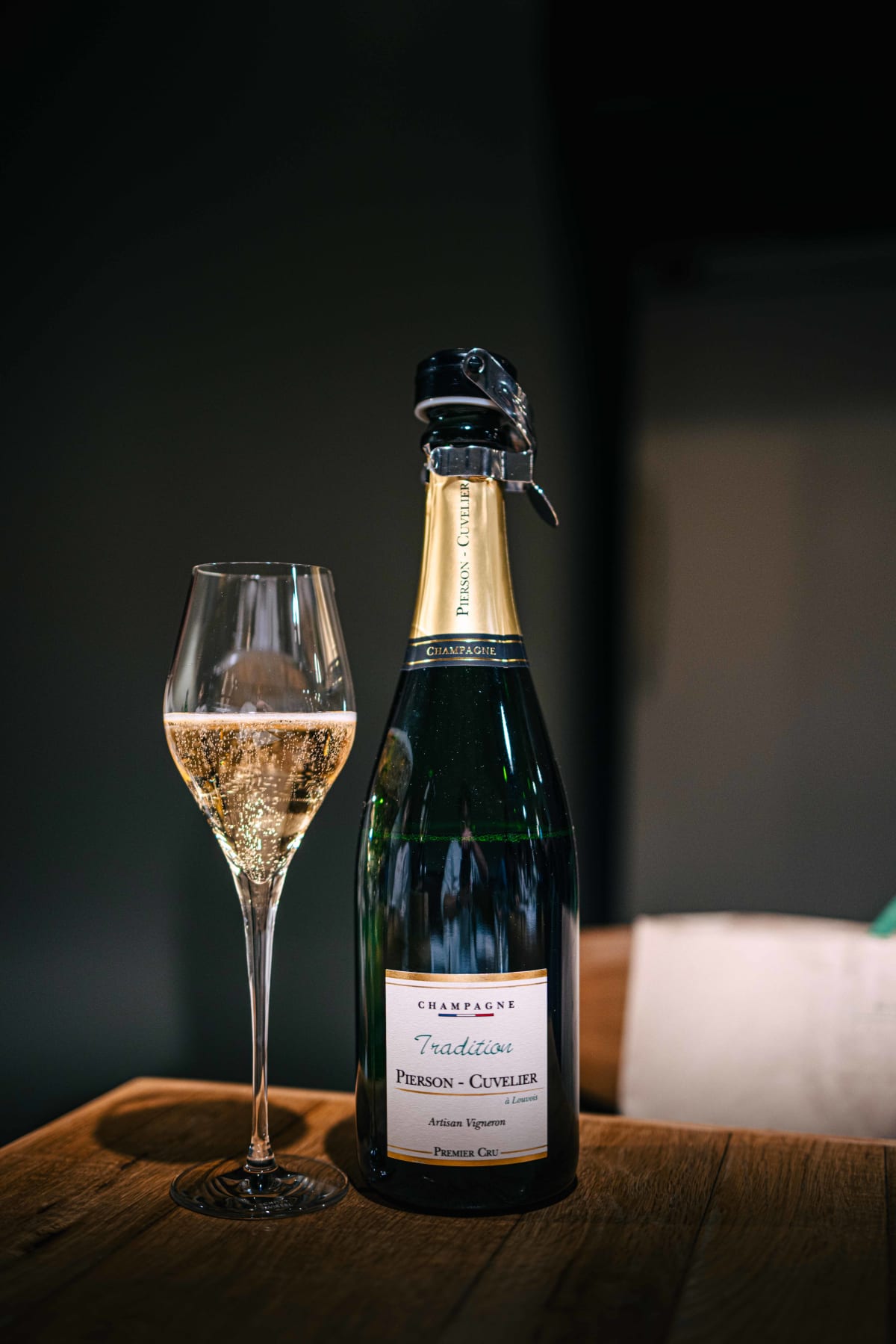
Before the course began, the first glass was a champagne: Pierson-Cuvelier's Tradition Premier Cru. It is a family grower estate dating to 1901, based in the village of Louvois on the Montagne de Reims, with holdings classified entirely as Grand Cru or Premier Cru. Its vines are said to lie between the parcels of Bollinger and Moët & Chandon, which tells you something about the address. Tradition is the cuvée that best represents the house, a blend of Pinot Noir and Chardonnay that carries the power of the one and the finesse of the other. The character and value of a grower champagne, rather than a large house, set the bar nicely for the opening glass.

Section 4·The Openers
The first dish was a Salmon, Beetroot and Caviar Tartar, a well-balanced tartare.
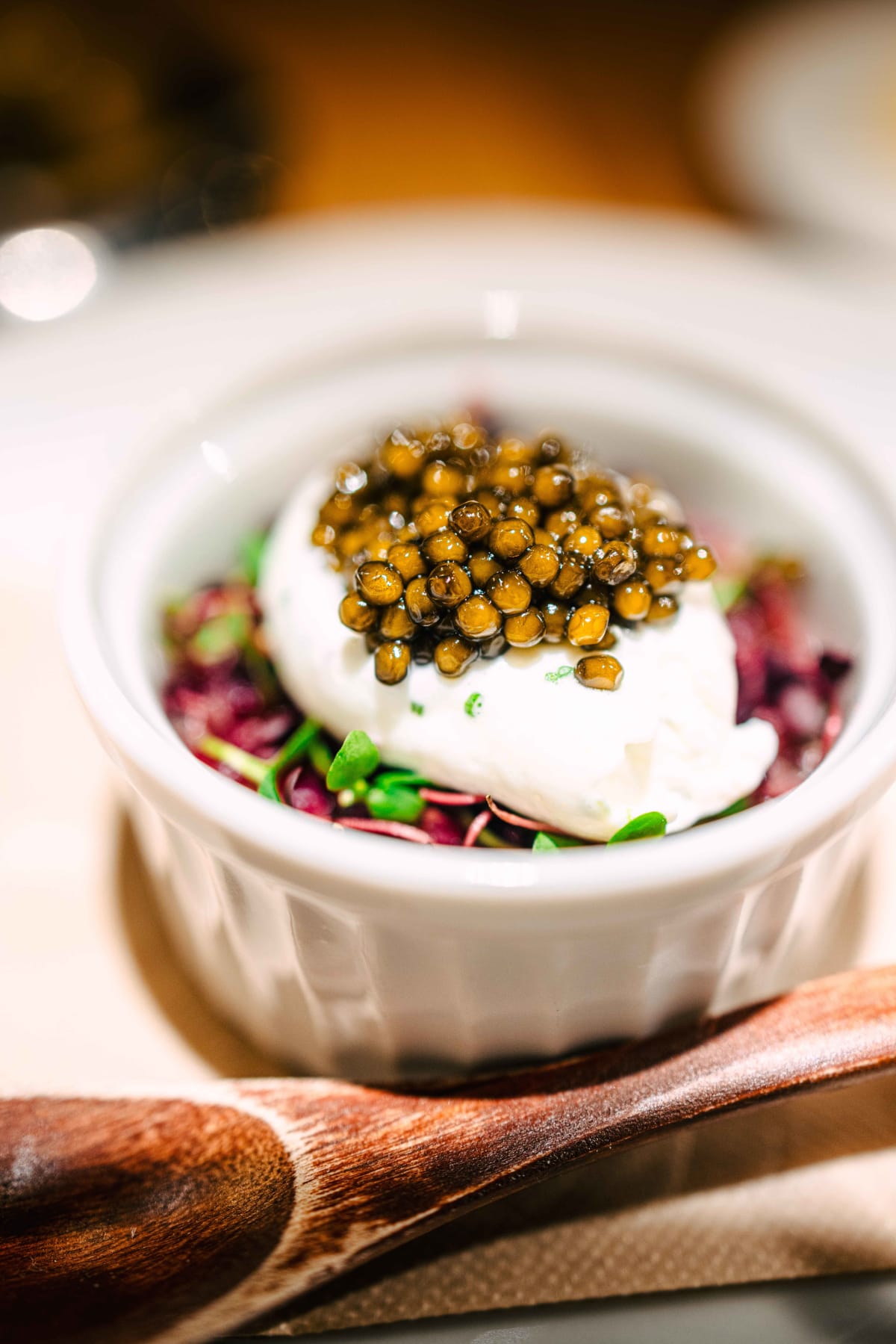
The caviar and salmon went together well, and the salinity did not spike.
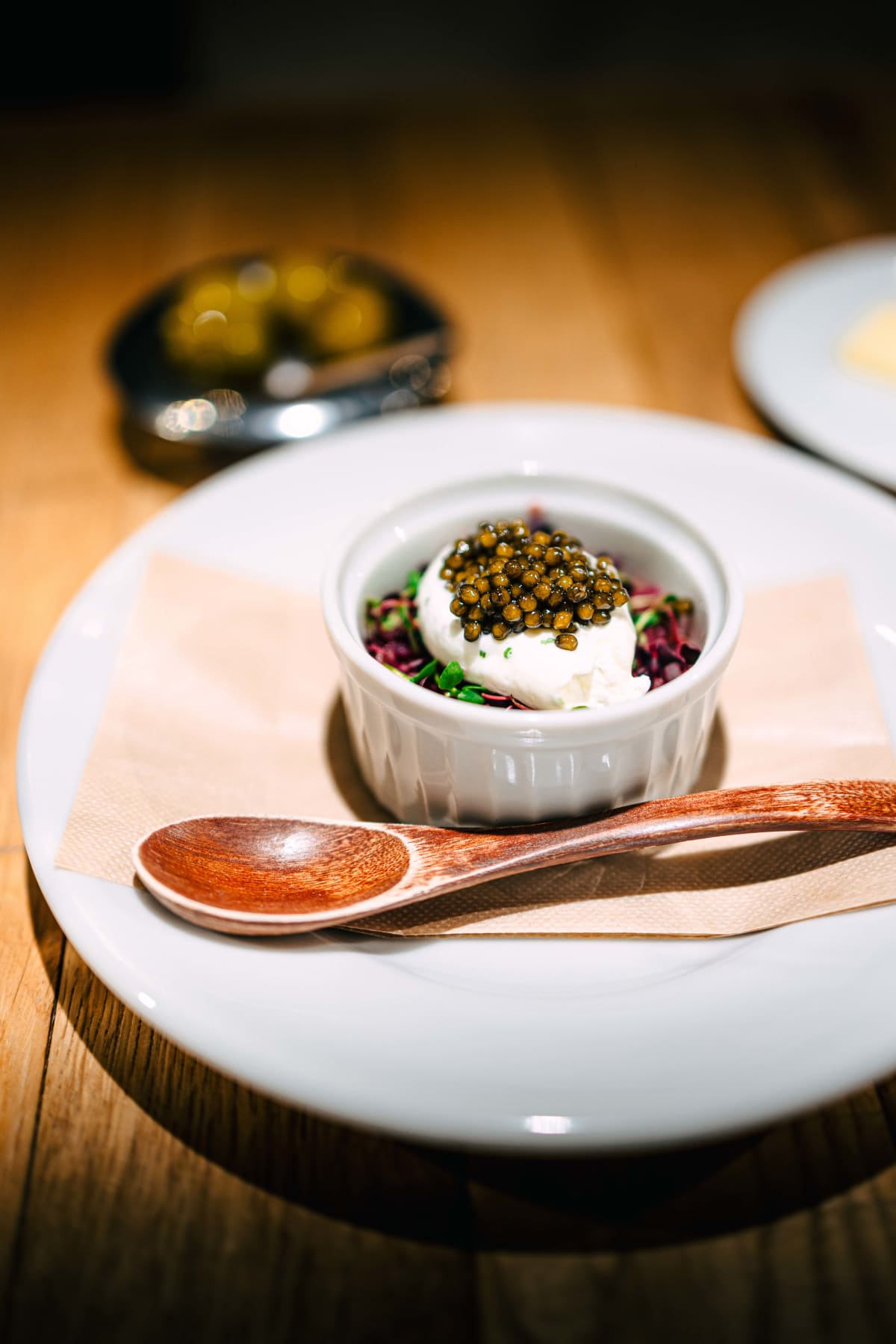
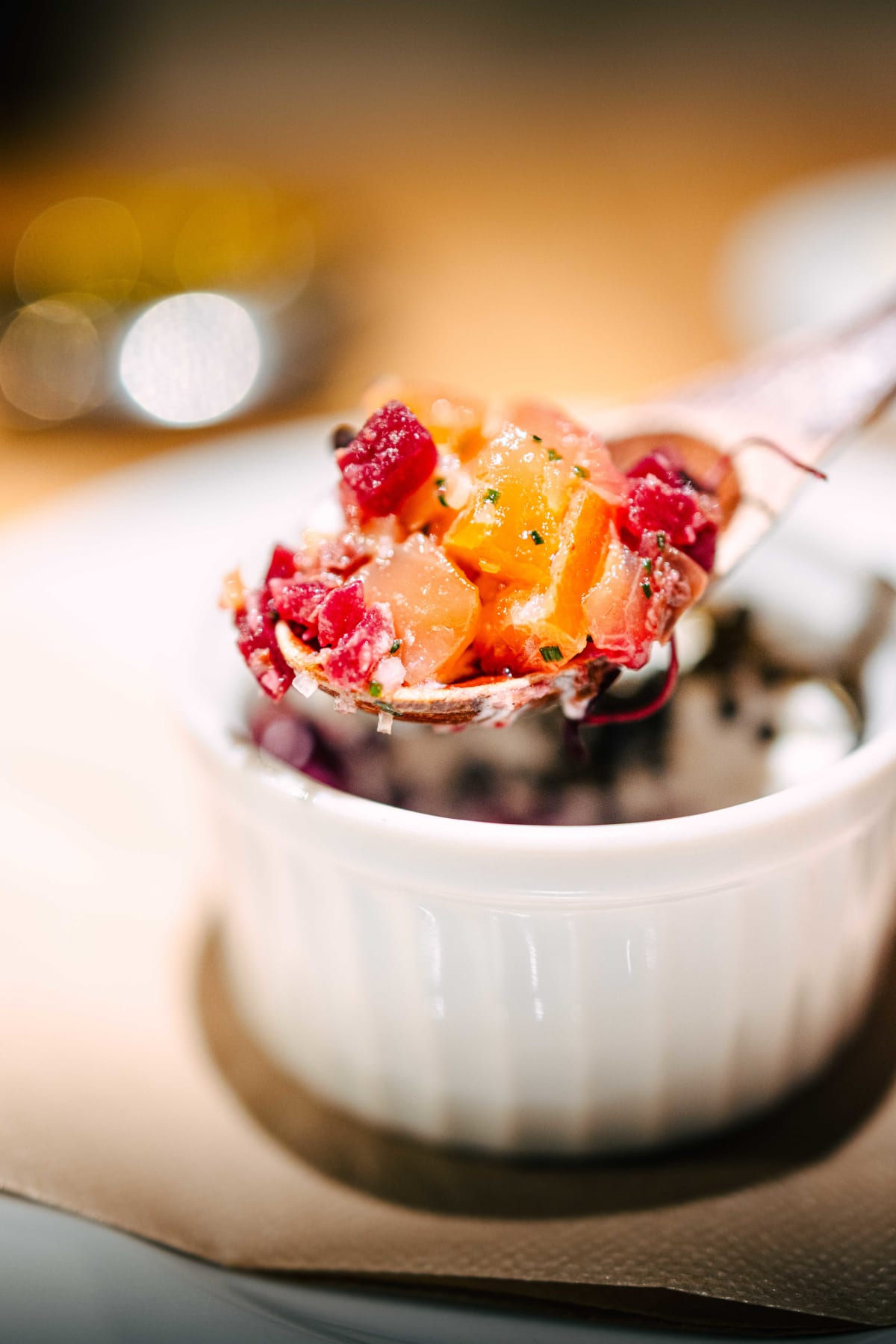
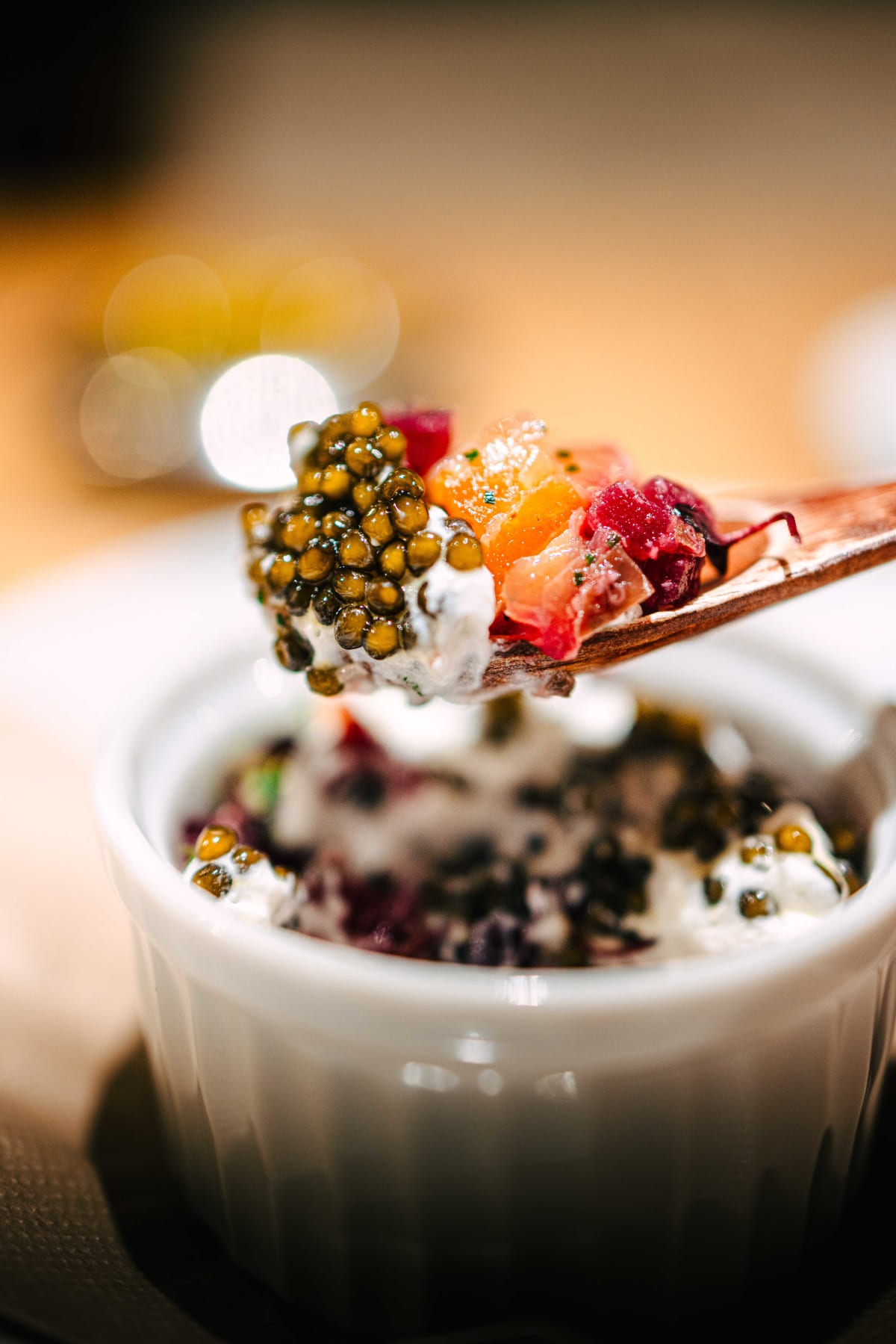
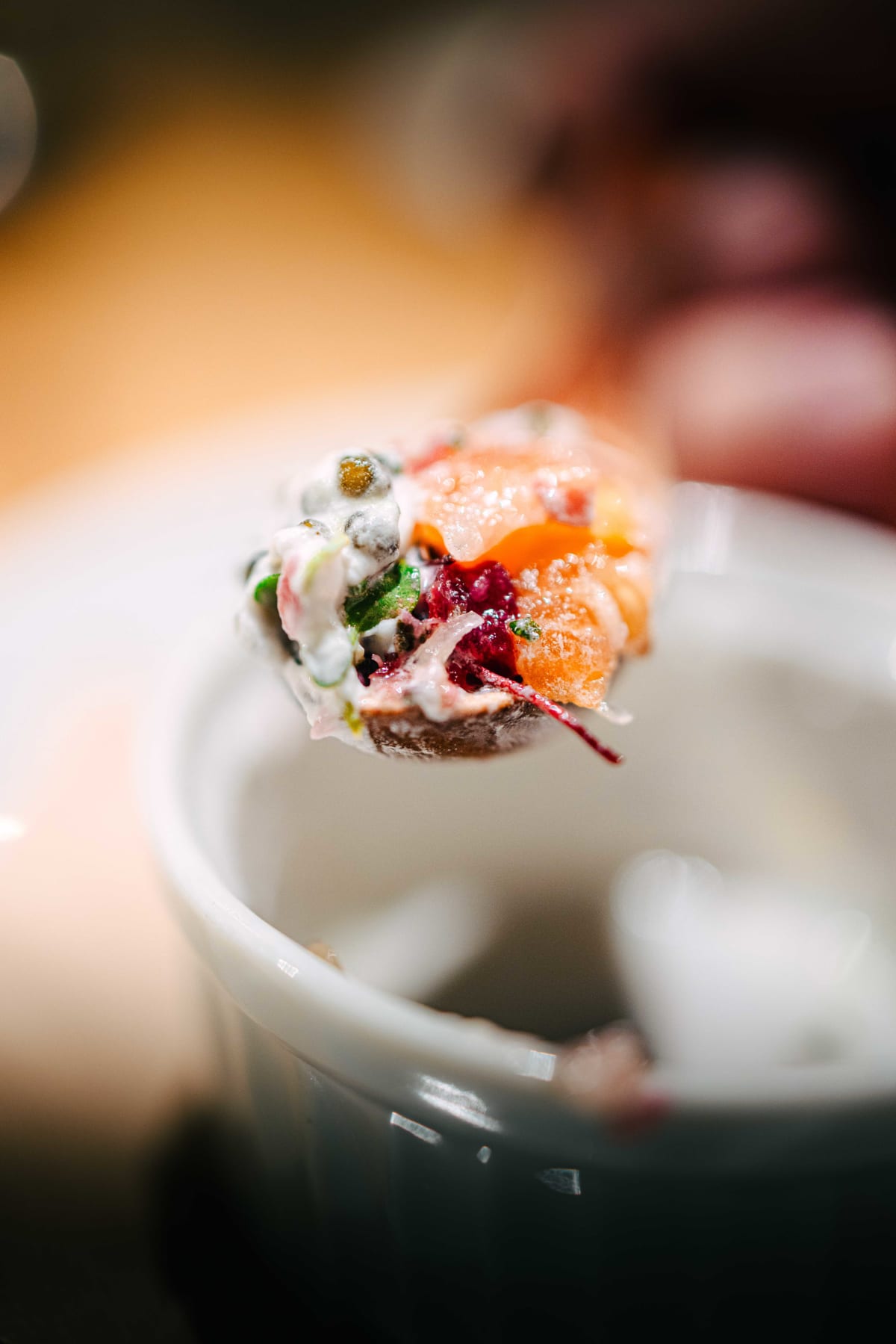
The salmon itself was excellent, and it surprised me that a bistro would open with an amuse of this quality.
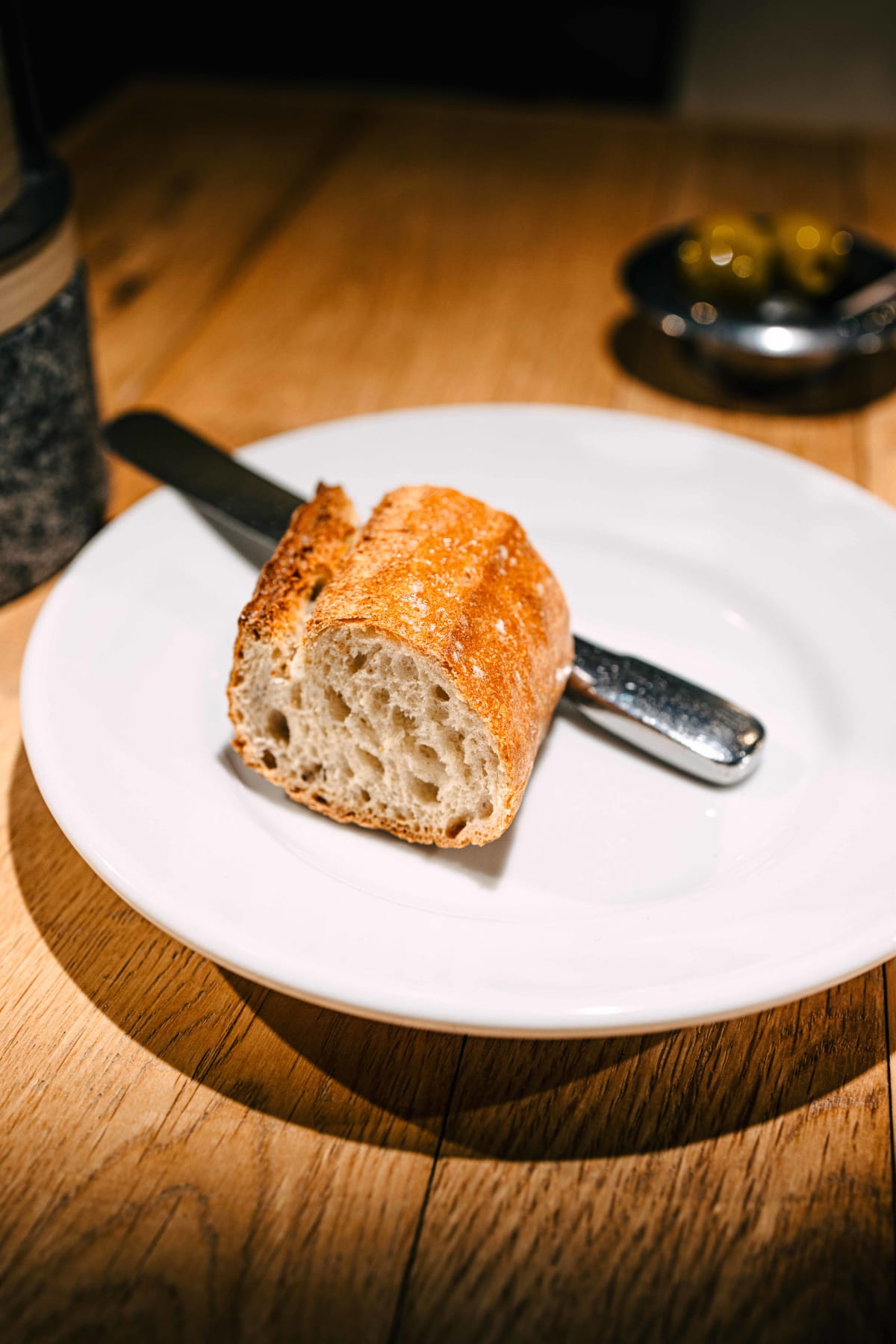
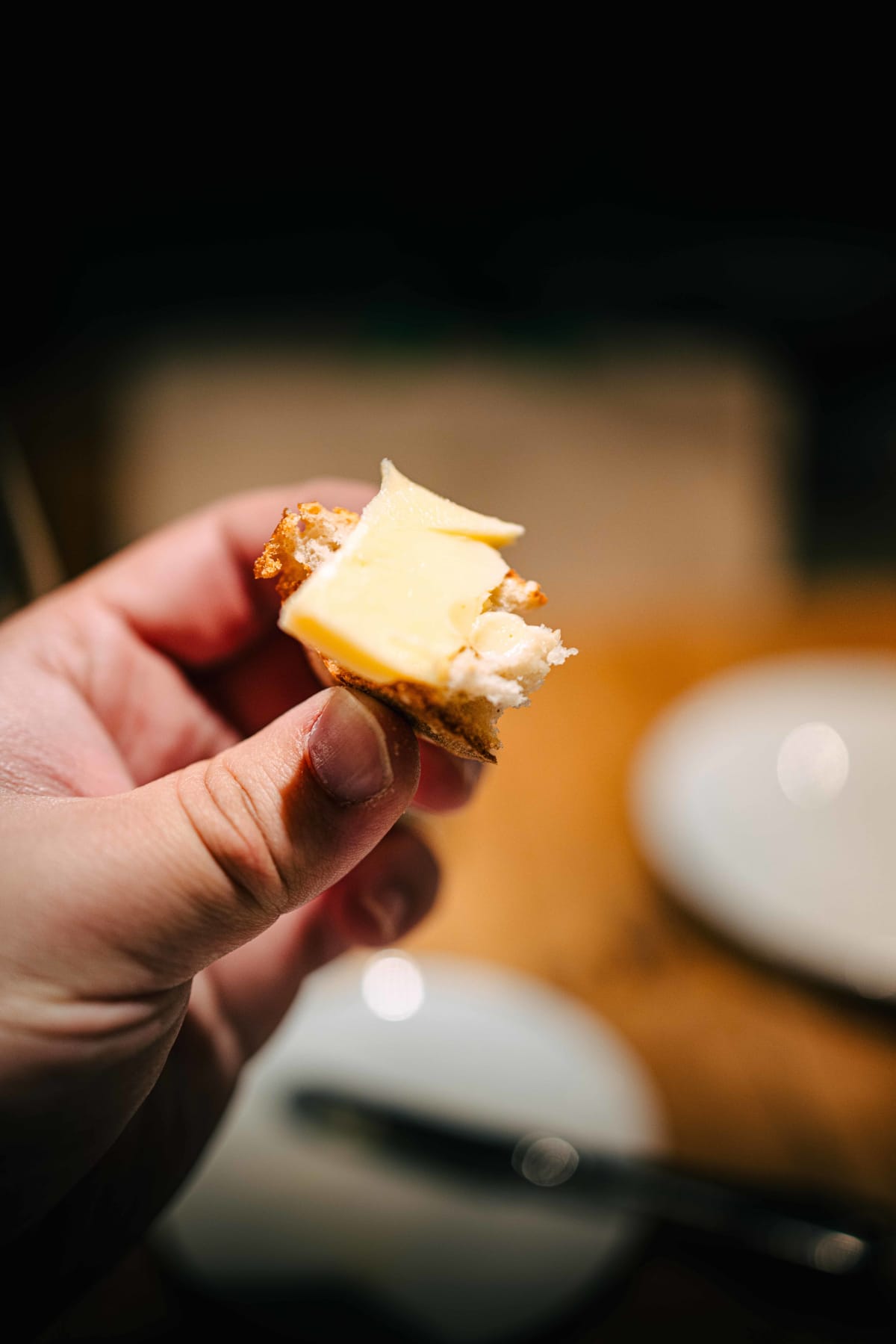
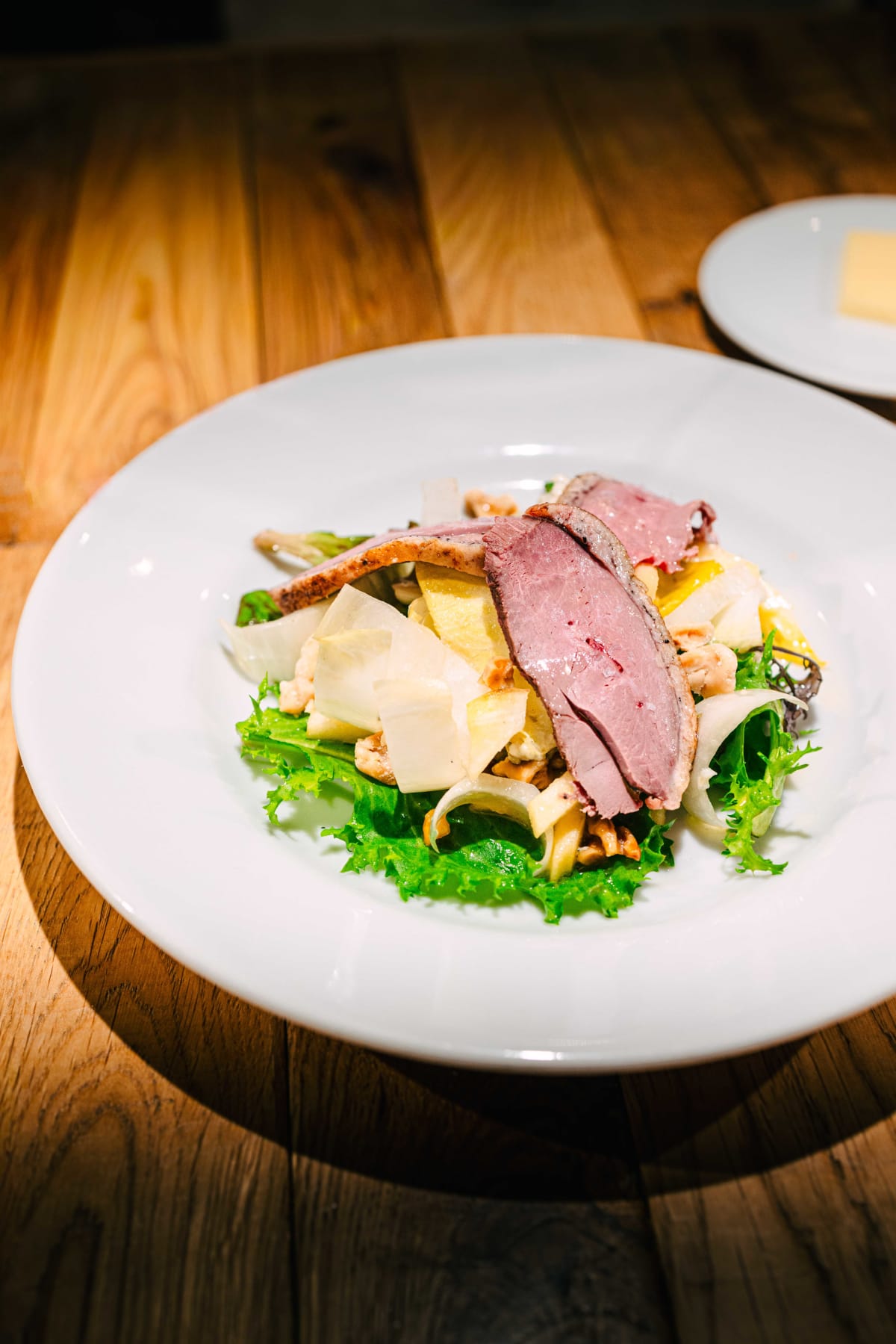
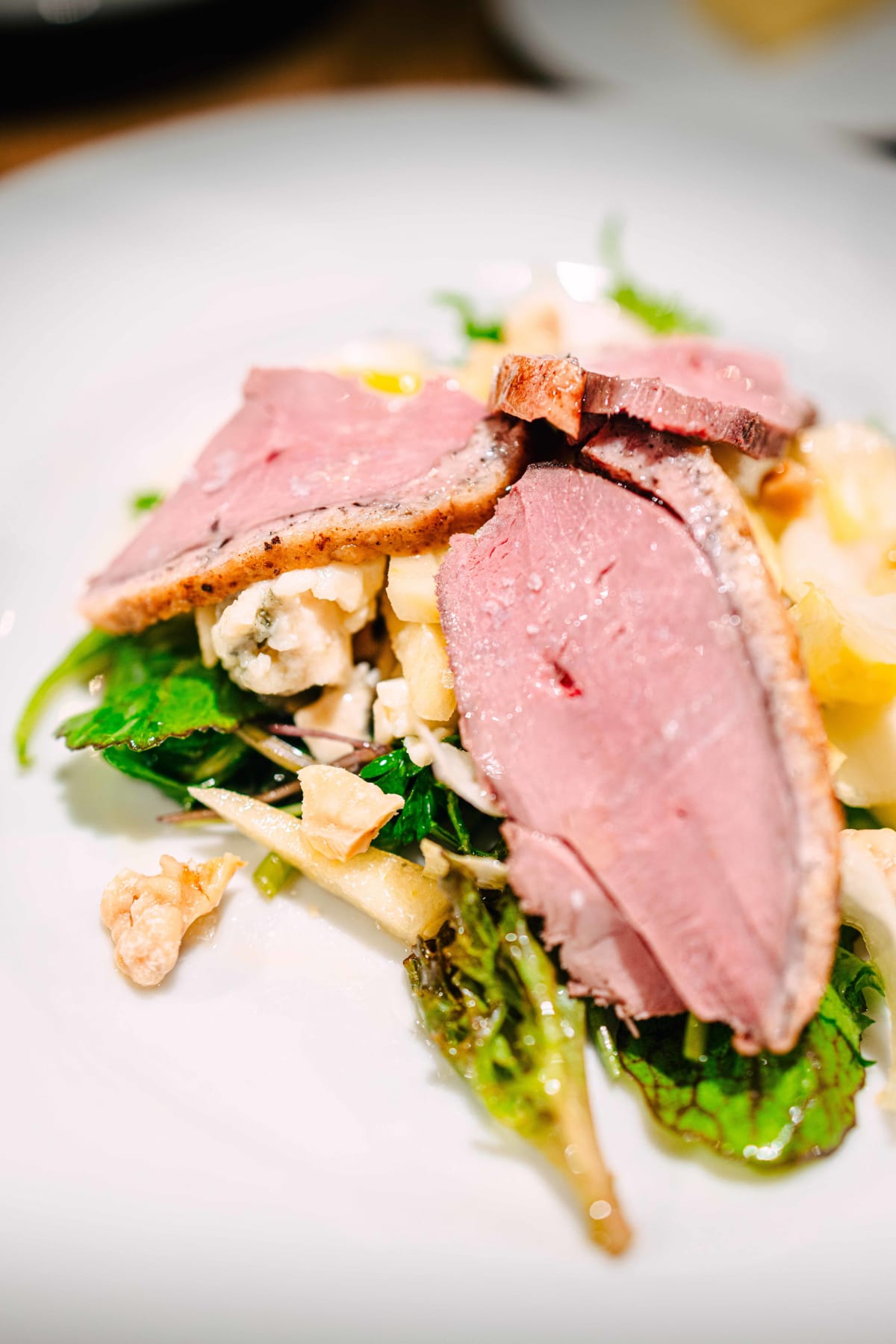
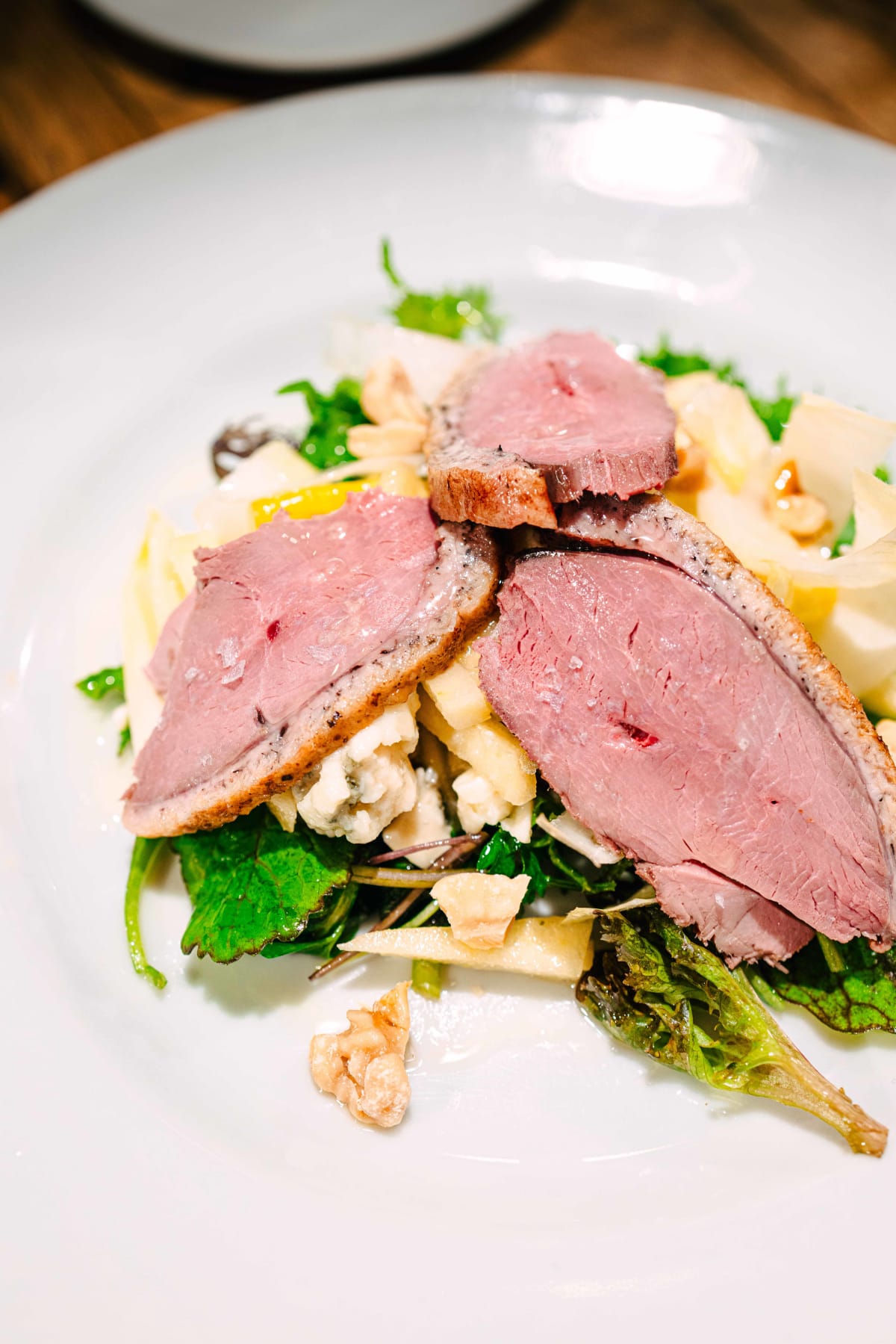
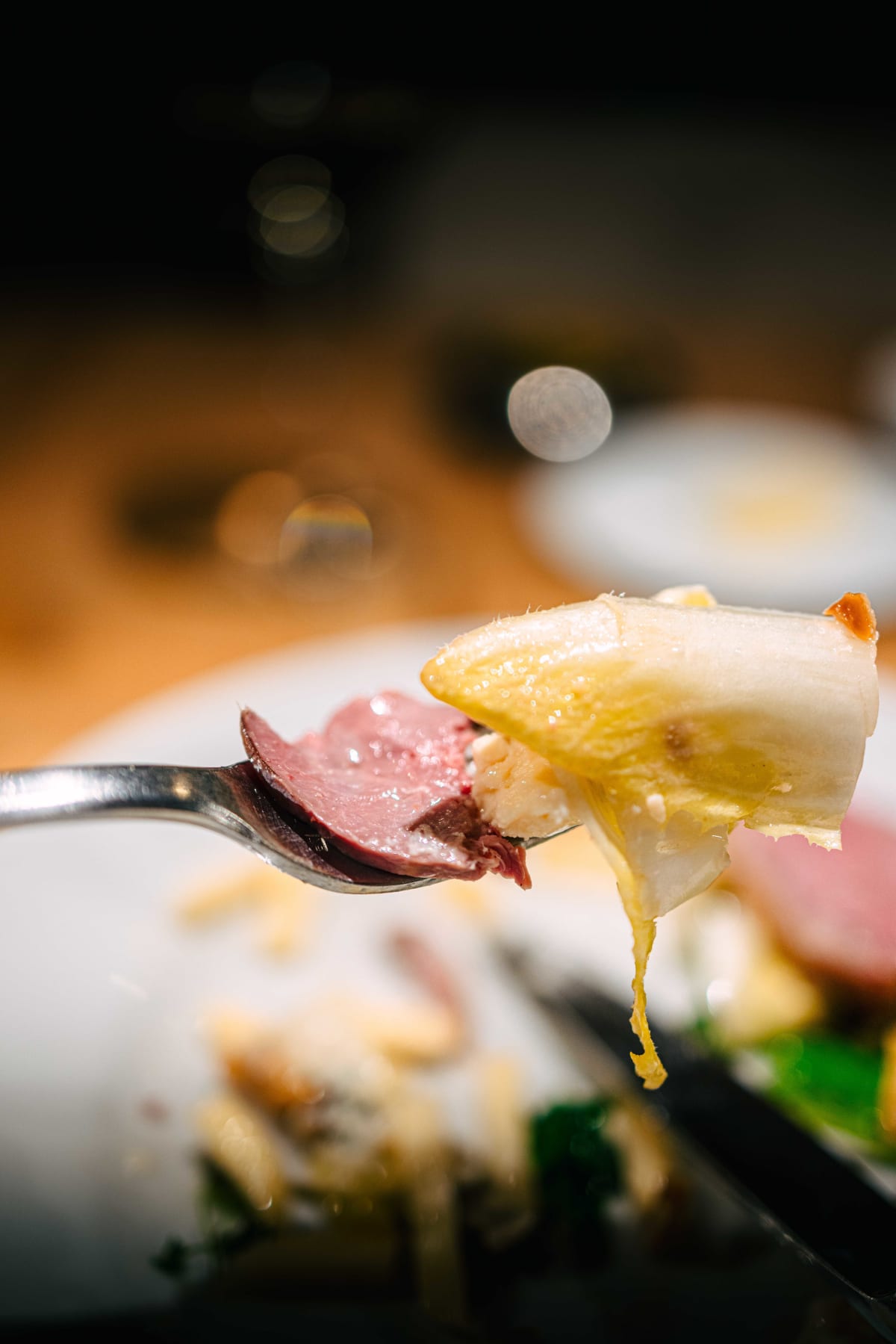
The second was an Andives and Blue Cheese Apple Salad, blue cheese and duck worked into a salad. This too resolved its combination beautifully. It was all delicious, and the duck was clean with no off notes, but what struck me more was the blue cheese. Even at places I had rated well, the cheese had often felt faint and shallow, which left me wanting, yet here the blue cheese had a clear flavour of its own and was put to good use within the salad.
Section 5·The Fish Soup
After a fierce contest with the main, one dish settled in as my personal favourite of the day. It was none other than the fish soup, soupe de poisson.
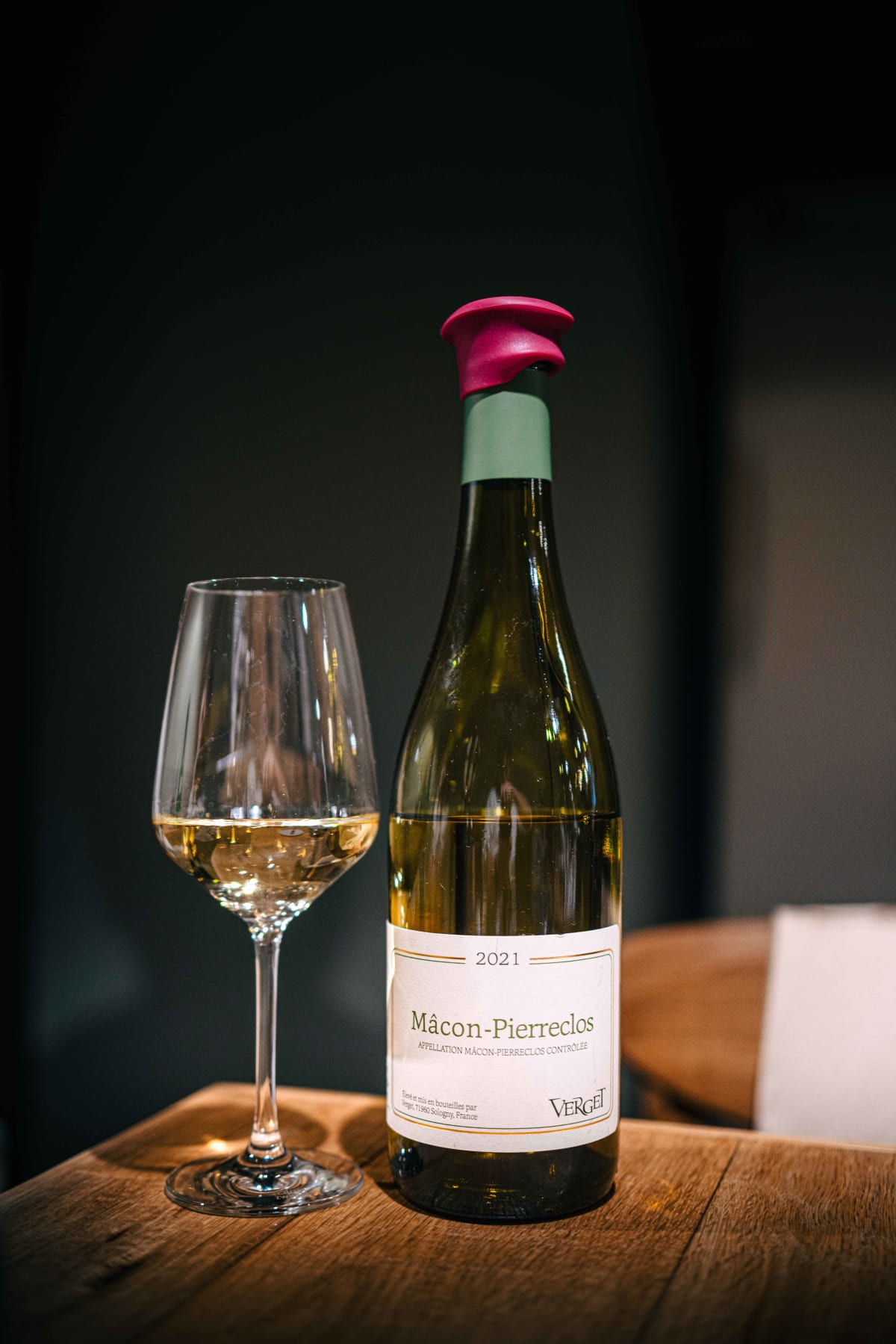
Before this fish soup came a white wine: Verget's Mâcon-Pierreclos 2021. Verget is a négociant house founded in 1990 by the Belgian-born Jean-Marie Guffens, who is also known for the cult Mâconnais estate Guffens-Heynen. He is a winemaker who has long argued, and proven, that great Chardonnay does not have to come only from the Côte de Beaune or carry a Premier or Grand Cru label. Mâcon-Pierreclos is a Chardonnay appellation in the Mâconnais, and with Verget's precise, mineral hand it shows a tension well beyond its price.
This kind of fish soup, famous as a regional specialty of southern France, is, as anyone who has had it knows, a divisive dish for Koreans and Japanese, whose seafood is generally better in quality and distribution than Europe's. The reason is the fishy note that steeps into the soup. Even in France, the better local restaurants serve it with almost no fishiness, but the places tourists tend to go use lower-quality fish, so it can come across as fishy. This soup, though, had almost none of that, and it concentrated the spices and the flavour of the fish beautifully. In a way, it felt like Japan's strength in seafood quality melded neatly into classic French cooking.
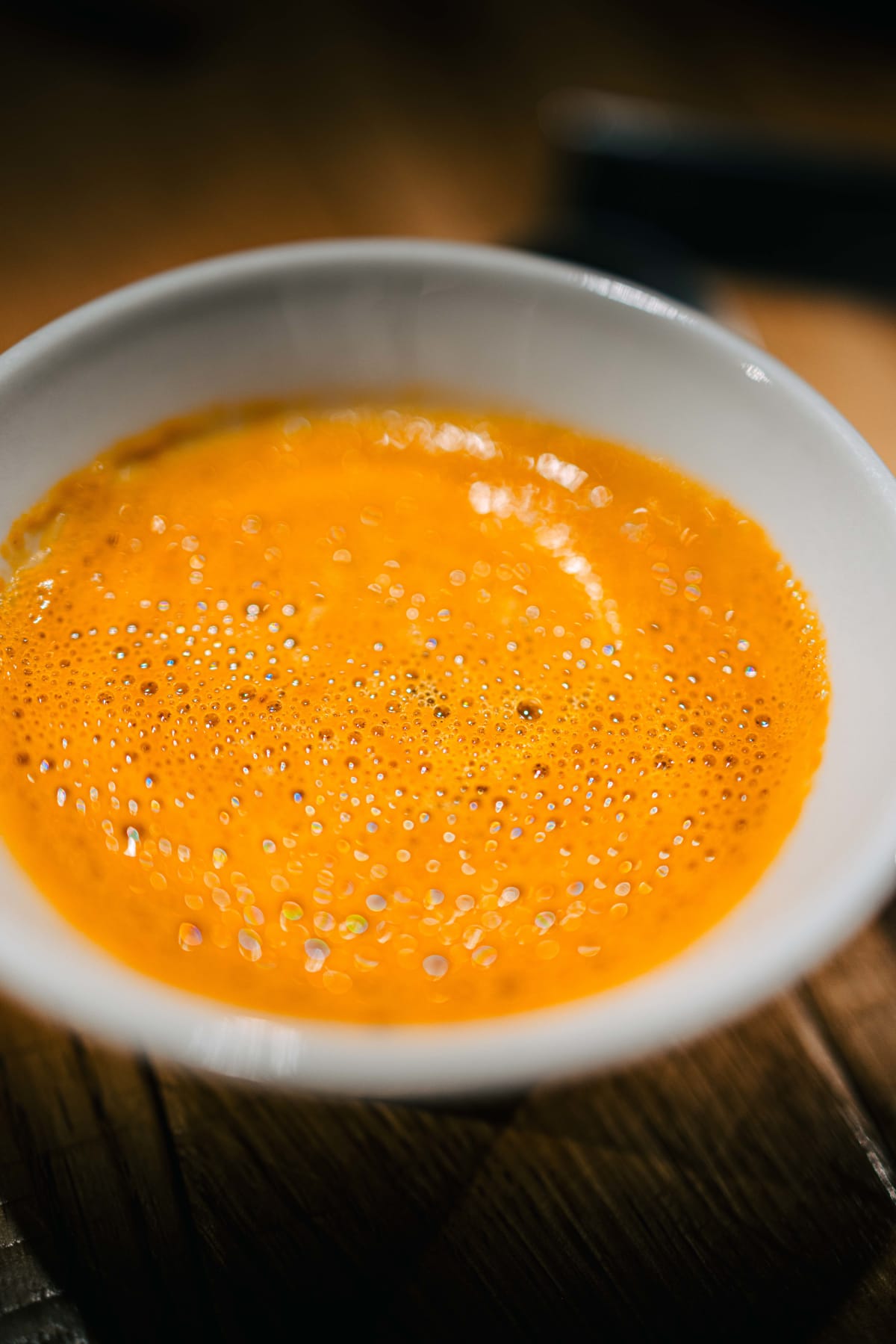
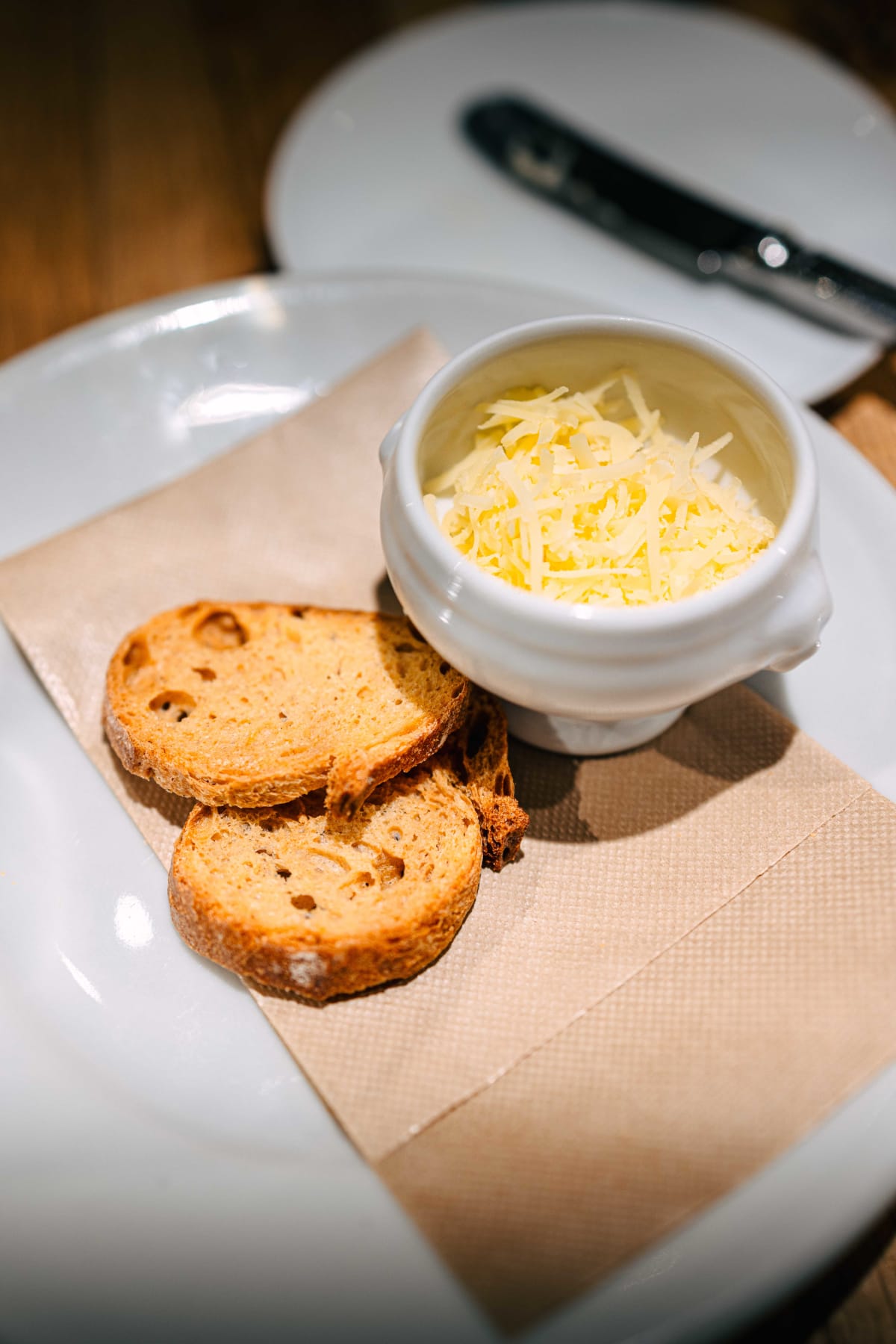

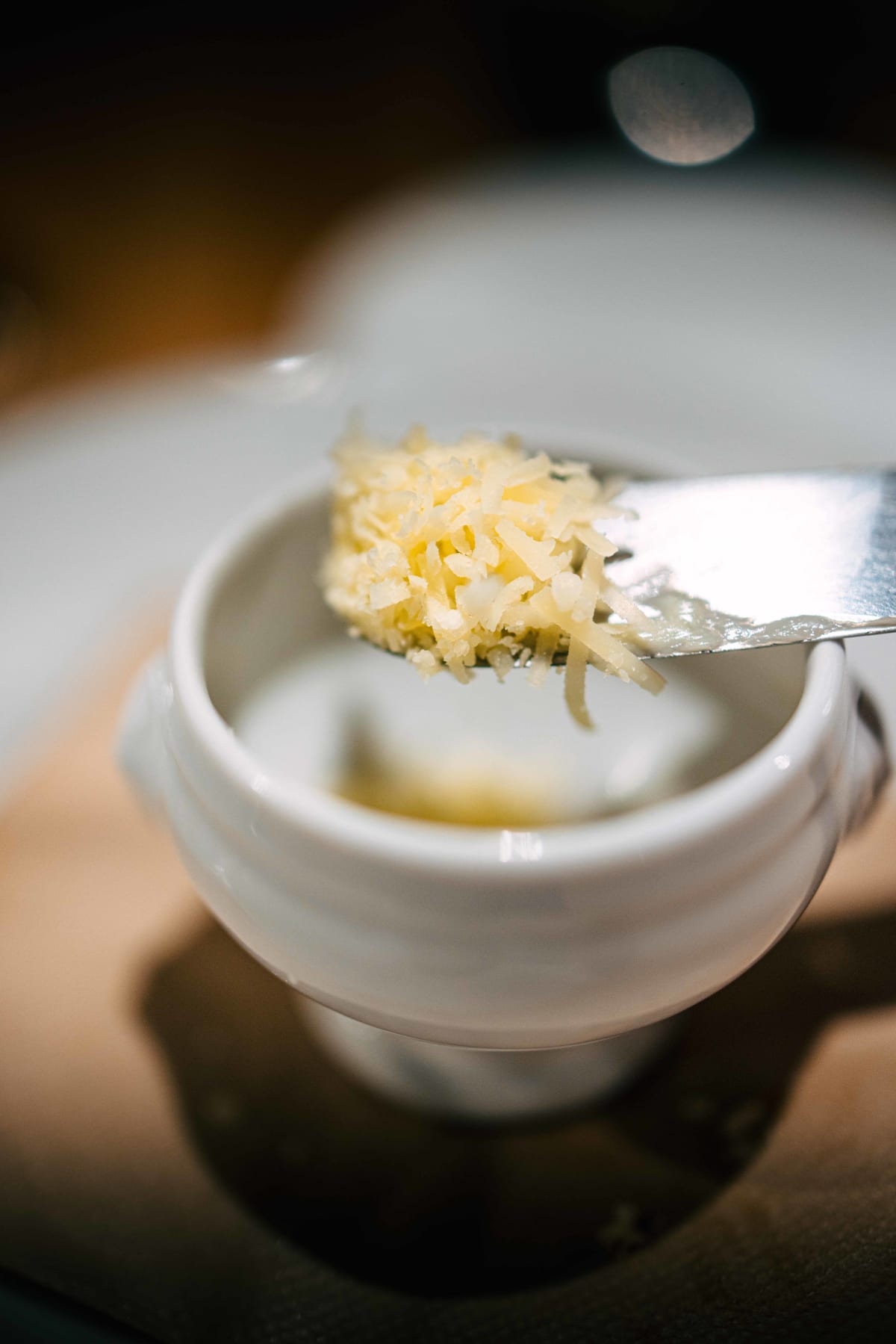
In a way, it felt like Japan's strength in seafood quality melded neatly into classic French cooking.
Section 6·The Main
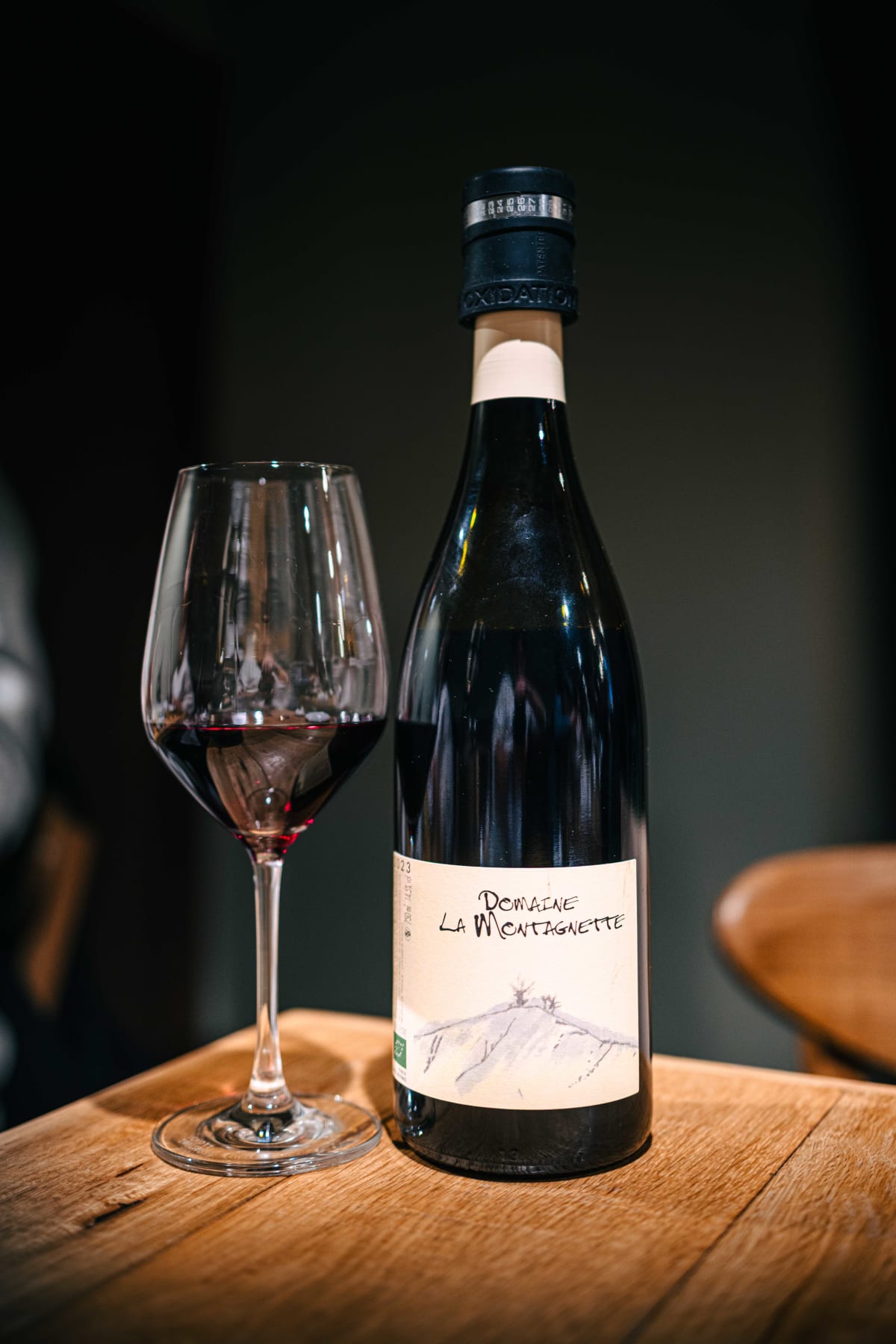
Before the main came a red wine: Domaine La Montagnette's Côtes du Rhône Villages Signargues 2023. It is a wine from Signargues in the Gard, in the southern Rhône, a red-only cru that was granted village status in 2005. It is made at the Les Vignerons d'Estézargues cooperative, an unusual co-op that does not blend everyone's fruit into a bulk product but vinifies and bottles each estate separately. They have farmed organically since 2003 and work with native yeast, minimal sulphur, and no filtering or fining. A blend of Grenache, Syrah, and Mourvèdre, it brings dark fruit, the scent of garrigue, and a measured spice, and for the price it drinks like a far more expensive Rhône.
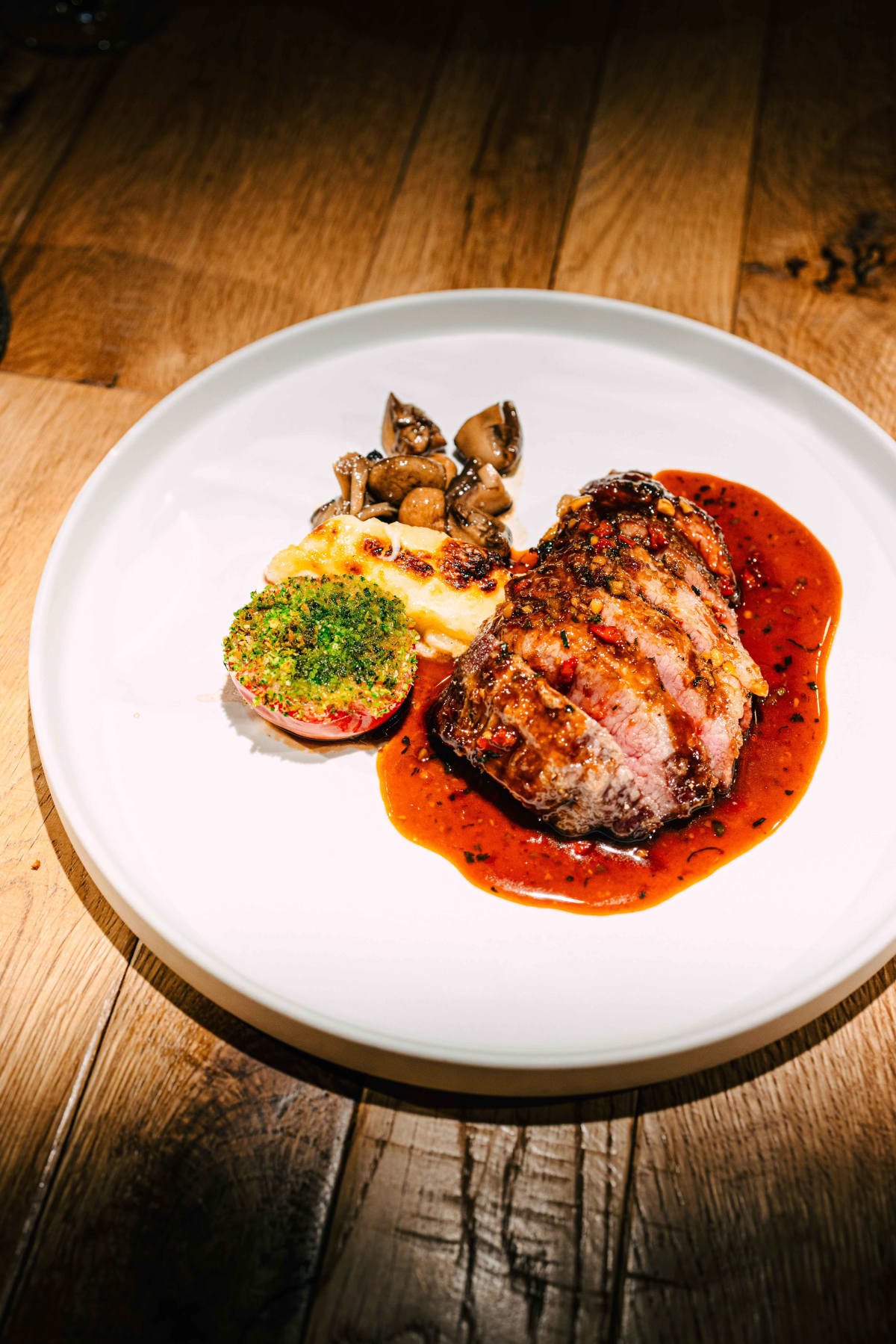
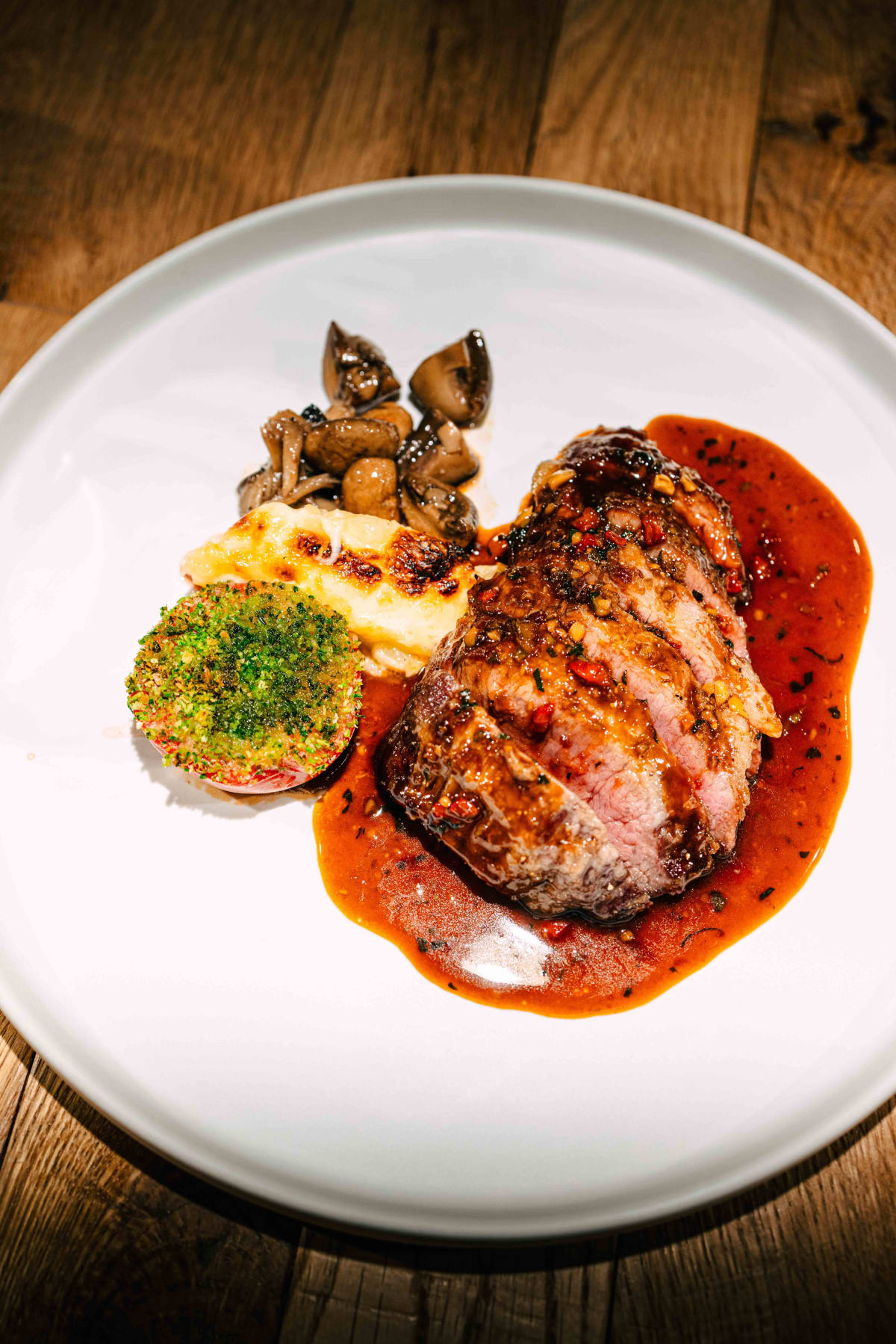
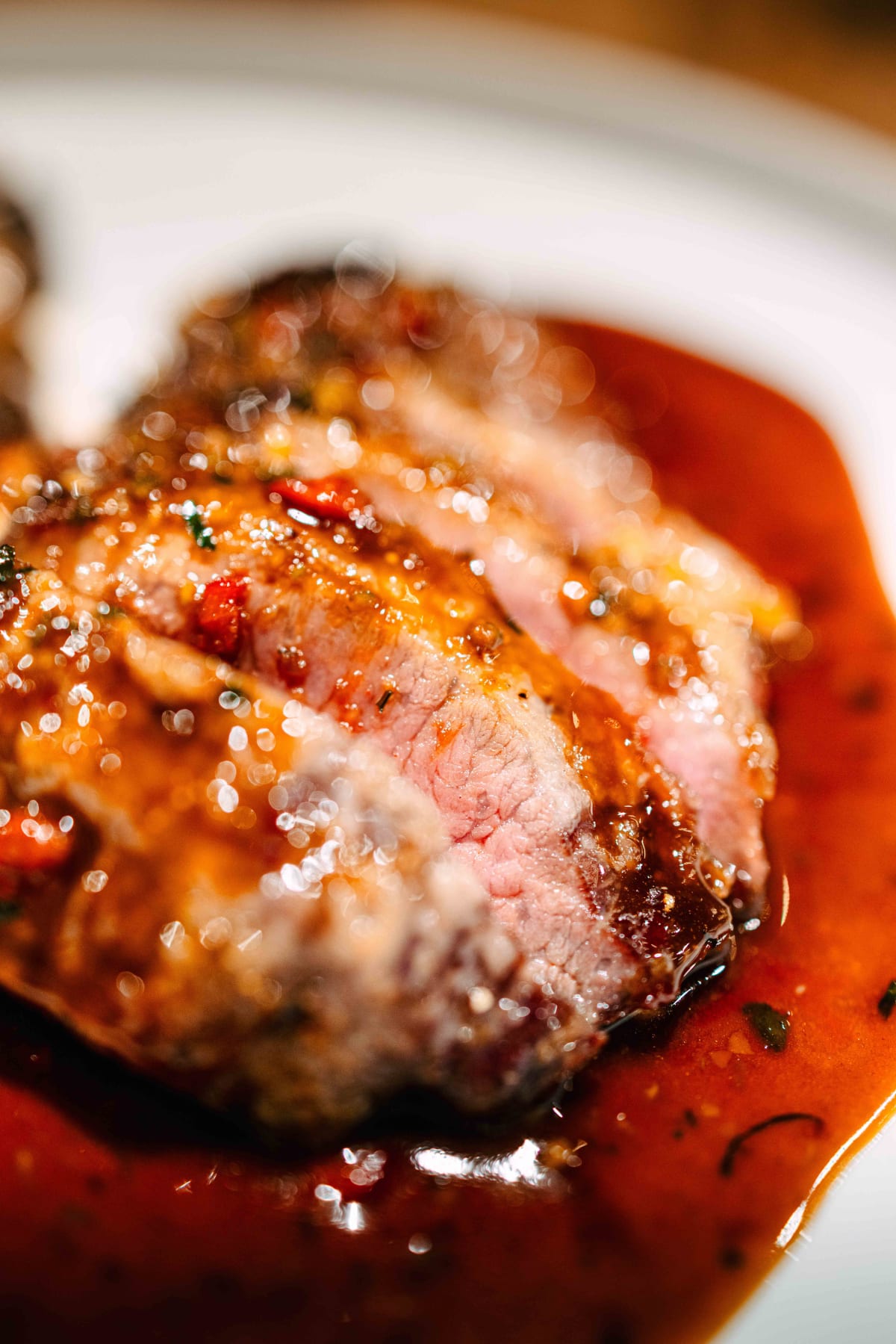
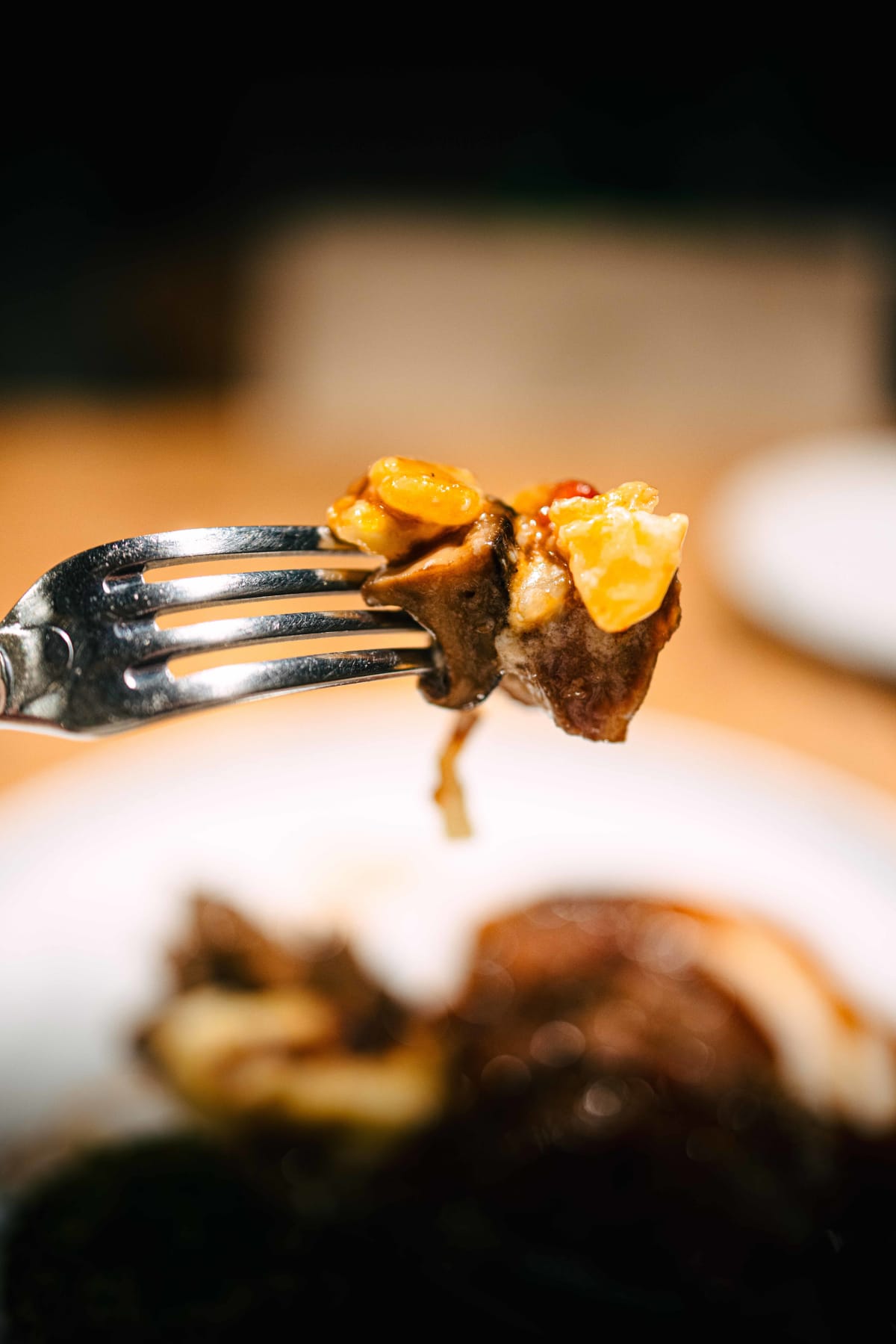
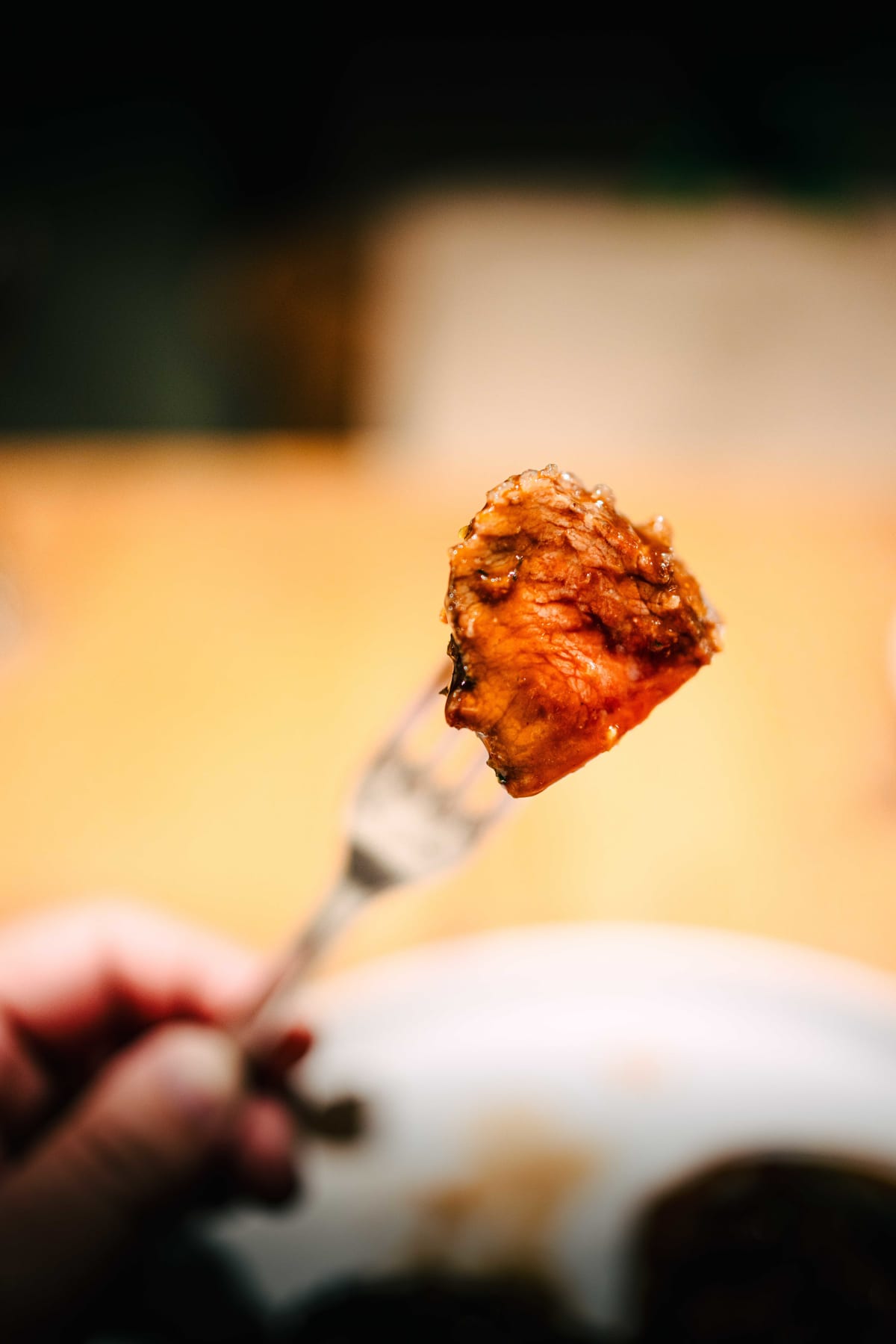
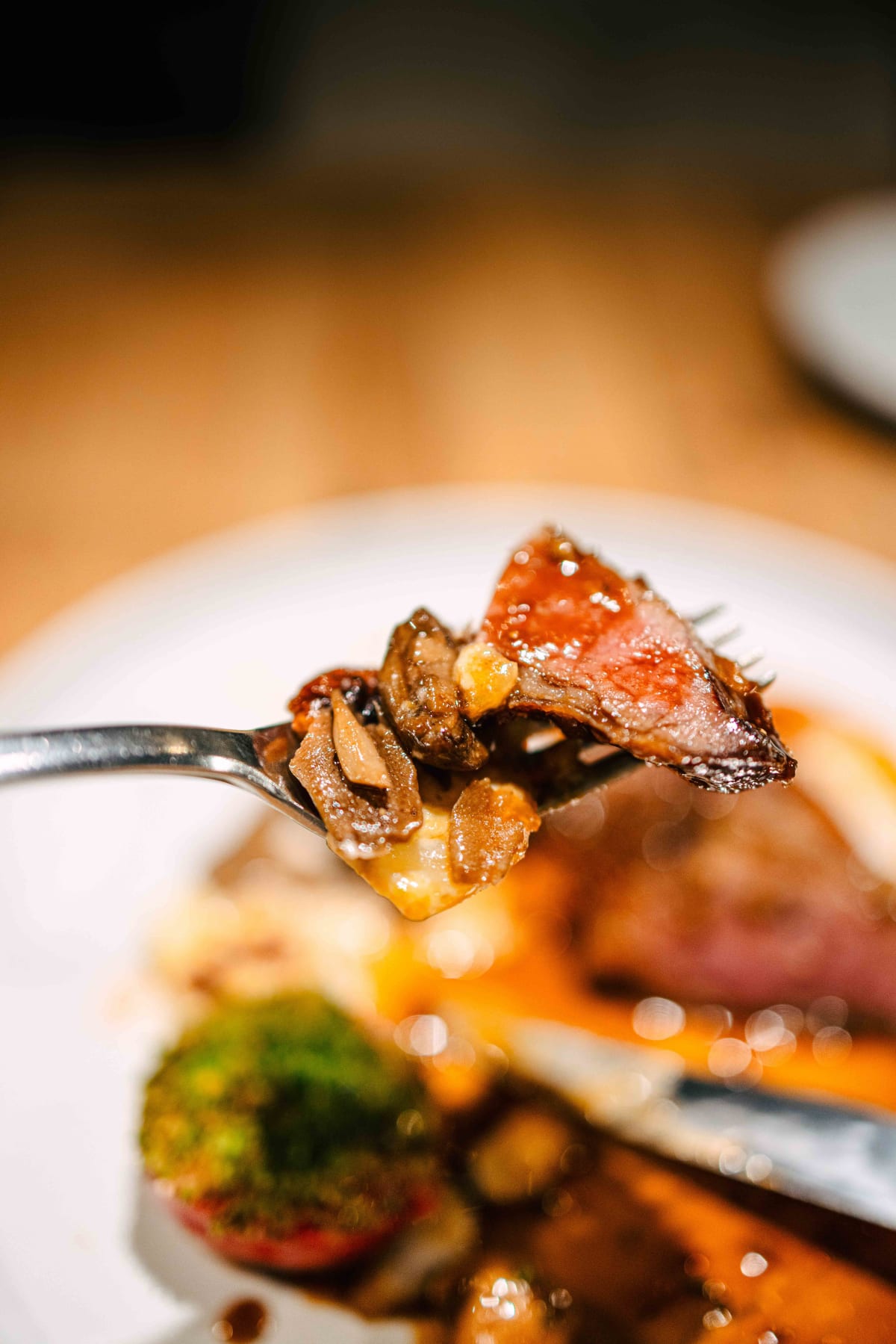
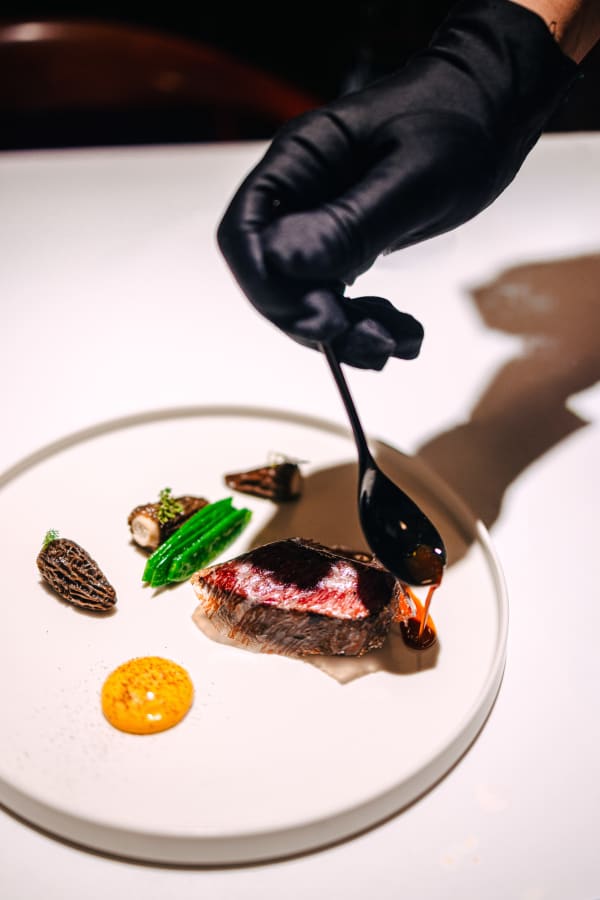
The main was Iberico pork, and this too was nearly the best of the day.
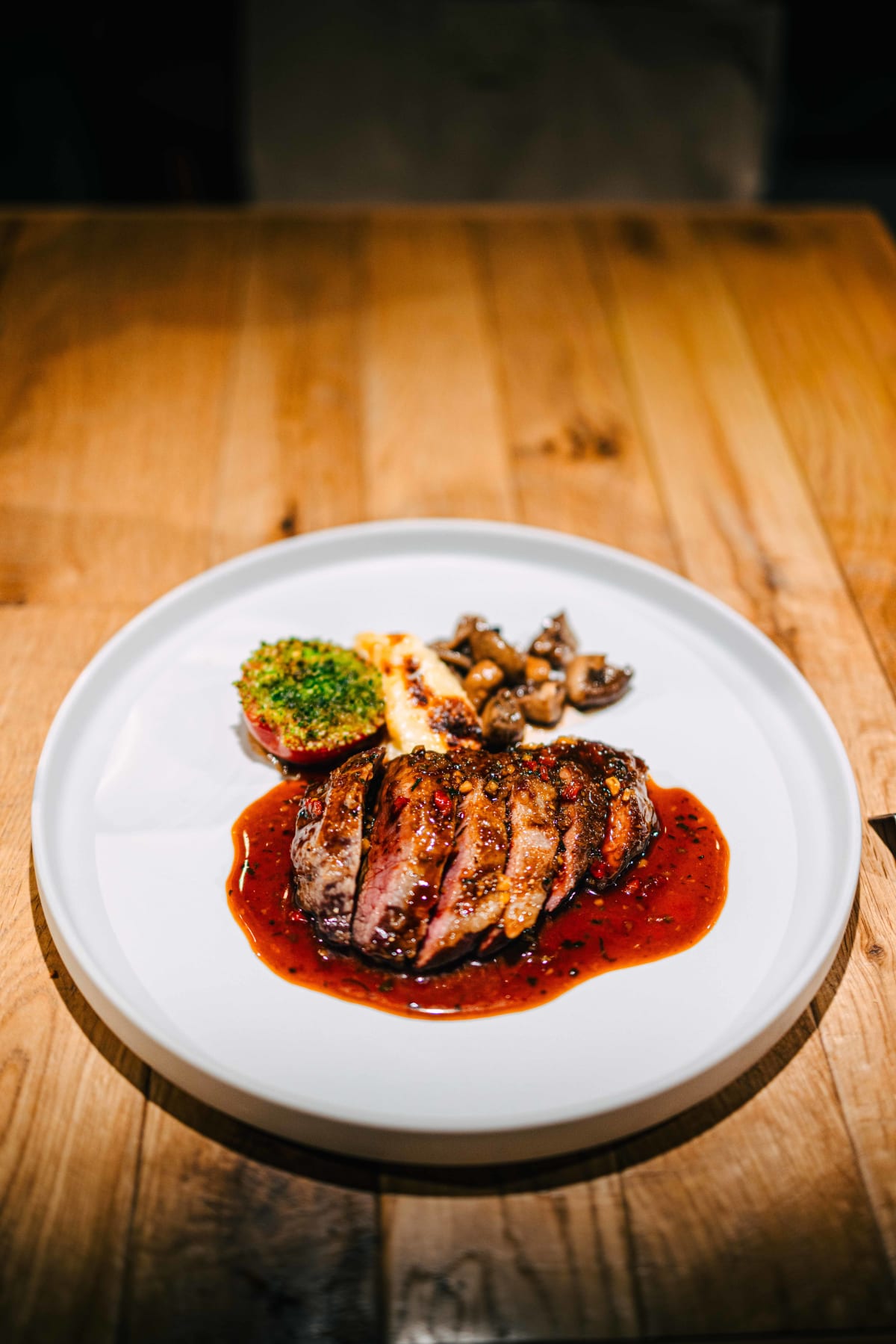
I had heard that French dining rarely serves pork as a main, but perhaps because of the casual mood here, pork it was. And it was very well cooked. It captured the chewy texture that is particular to pork, and the sauce was made with a touch of sweetness, making for an impressive pork main.
Section 7·A Detour
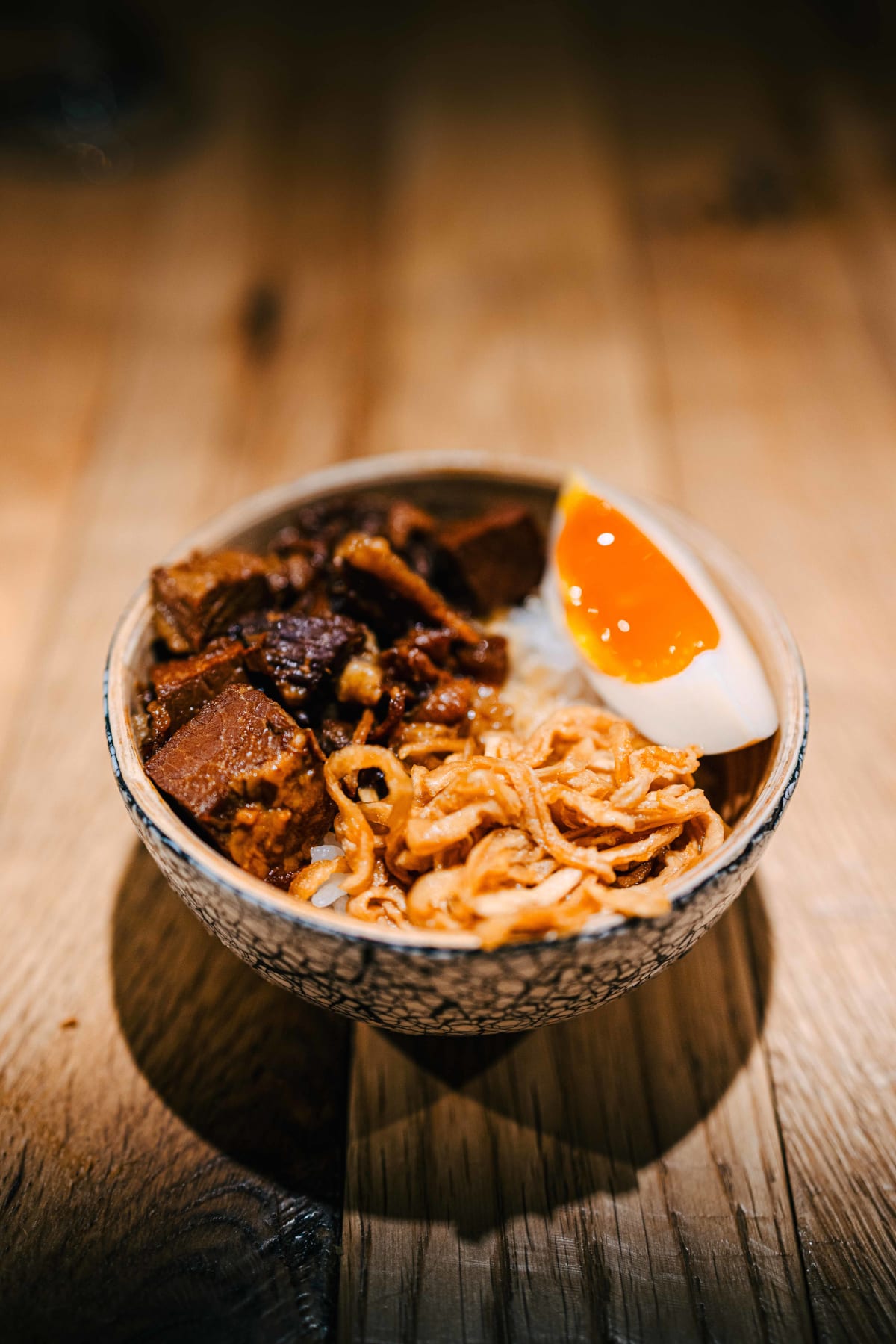
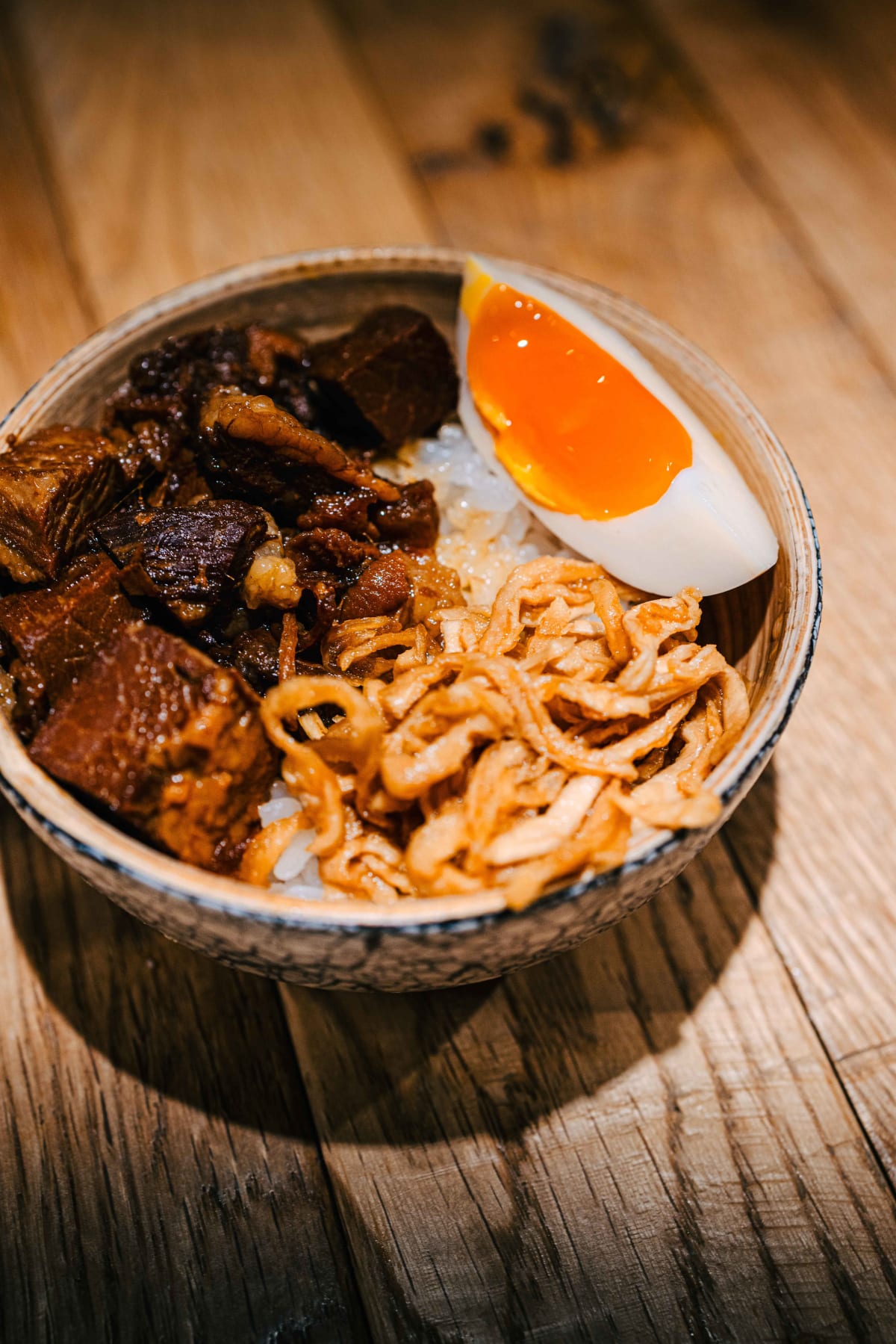
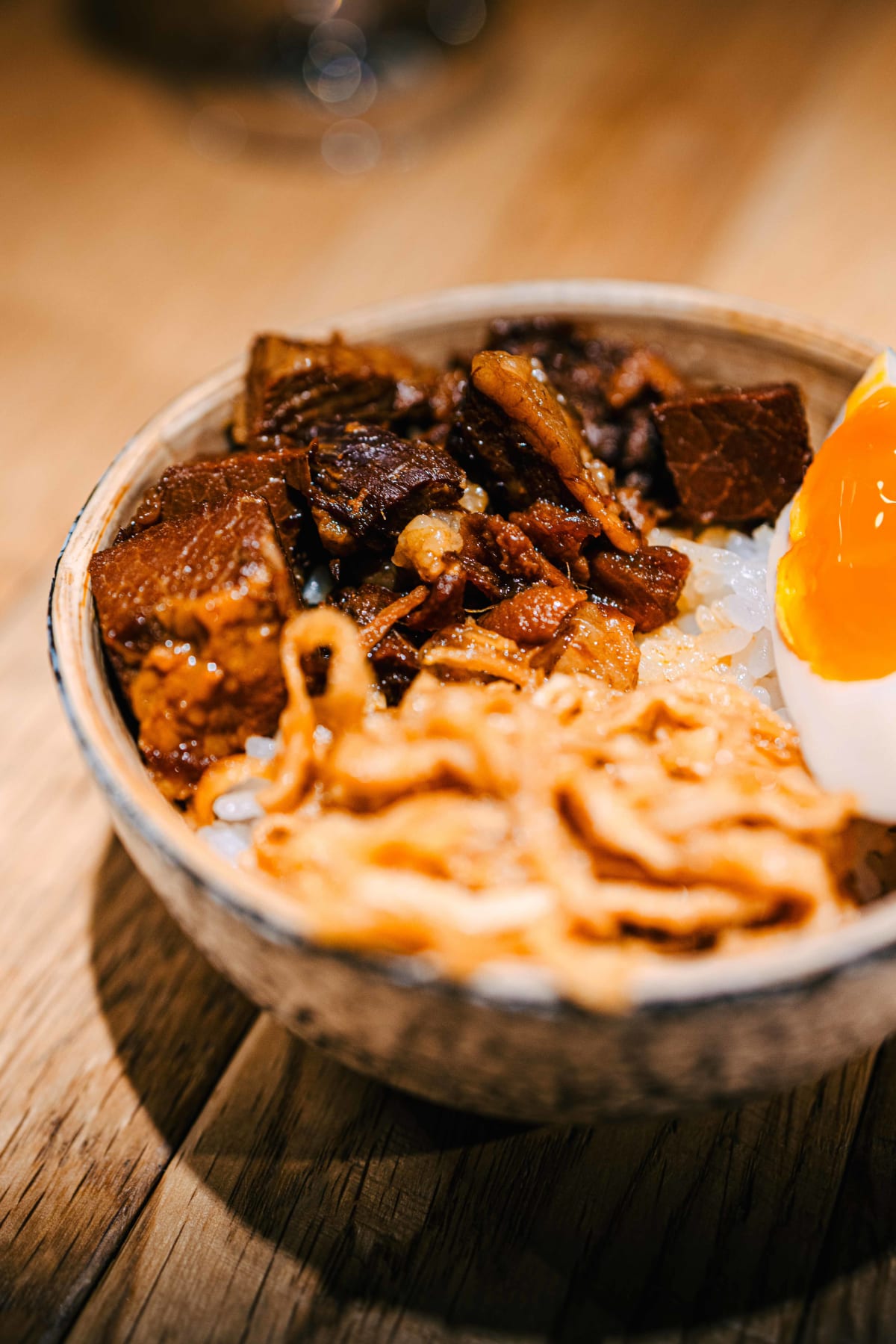
Before dessert, you could add a dish of pork rice called Lurou Fan, said to be Taiwanese in style. I tried it out of curiosity, but this one was a letdown. It was completely at odds with the French context of the rest of the course, and the taste was merely so-so. Even as an add-on, I am left wondering why a Taiwanese rice dish so different in character from the course was included. If the idea was to add a starch, there were surely plenty of other options.
Section 8·Dessert
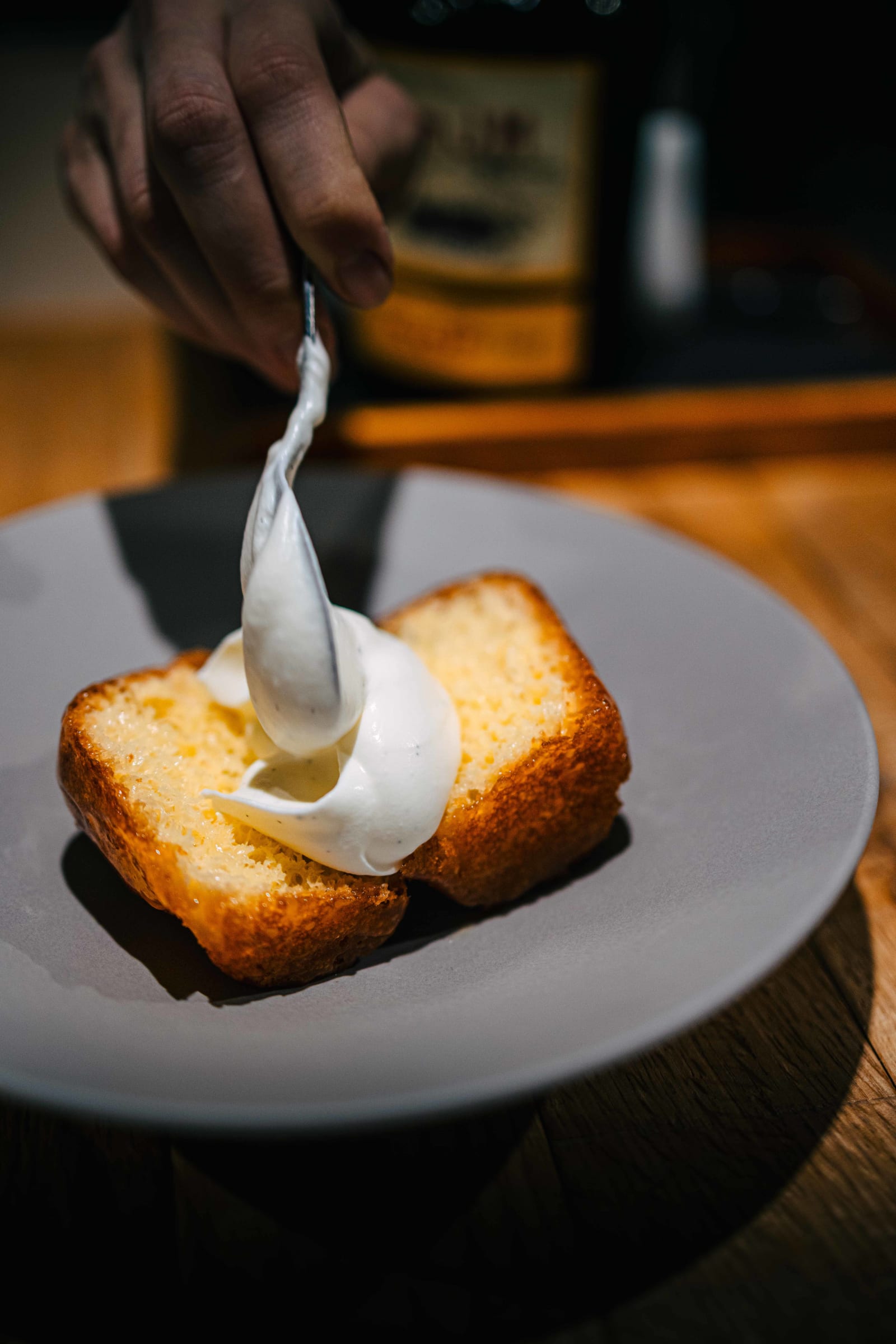
For dessert came a baba au rhum. It was very fluffy, the cream was soft, and the gently heady note of rum came together pleasantly.
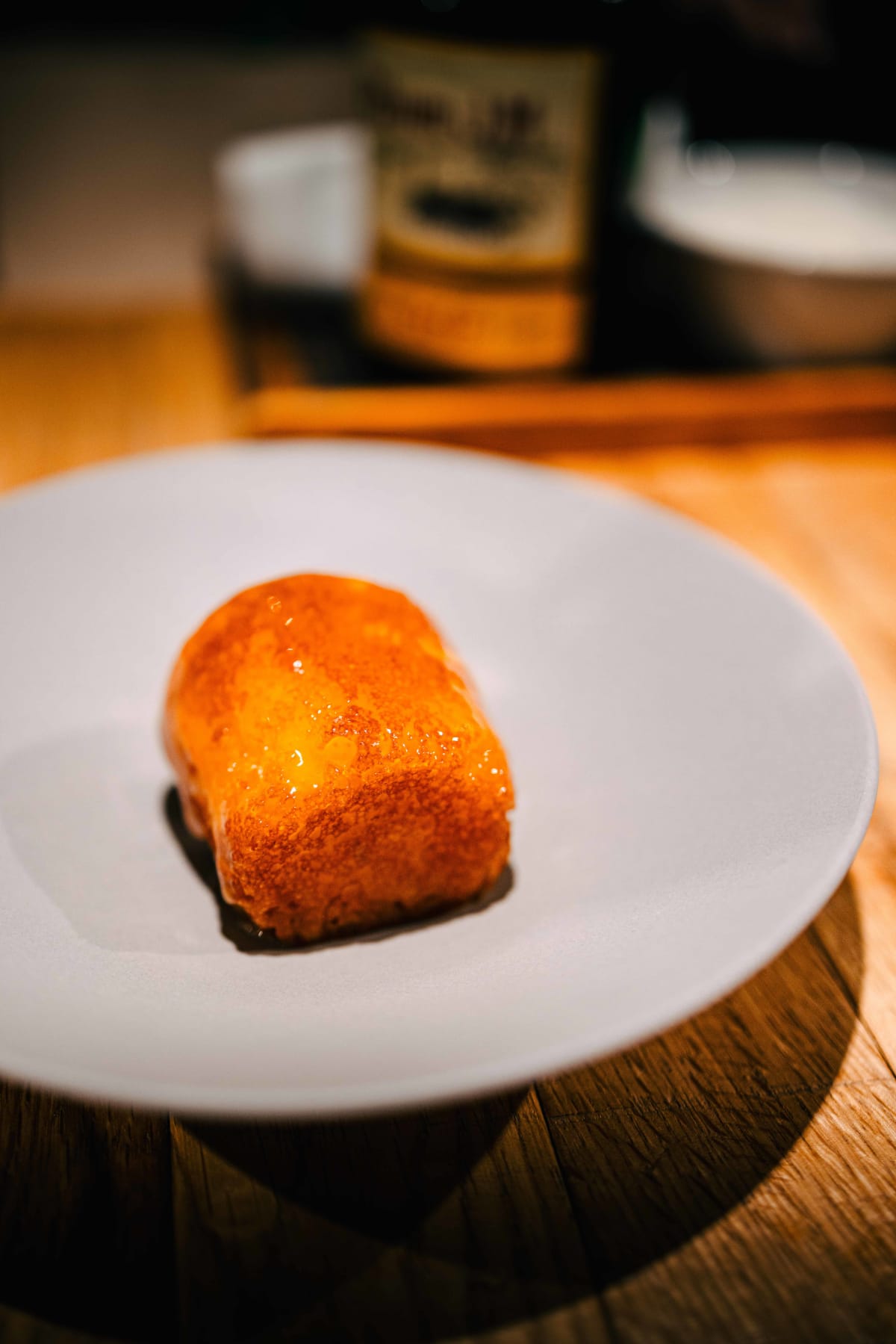
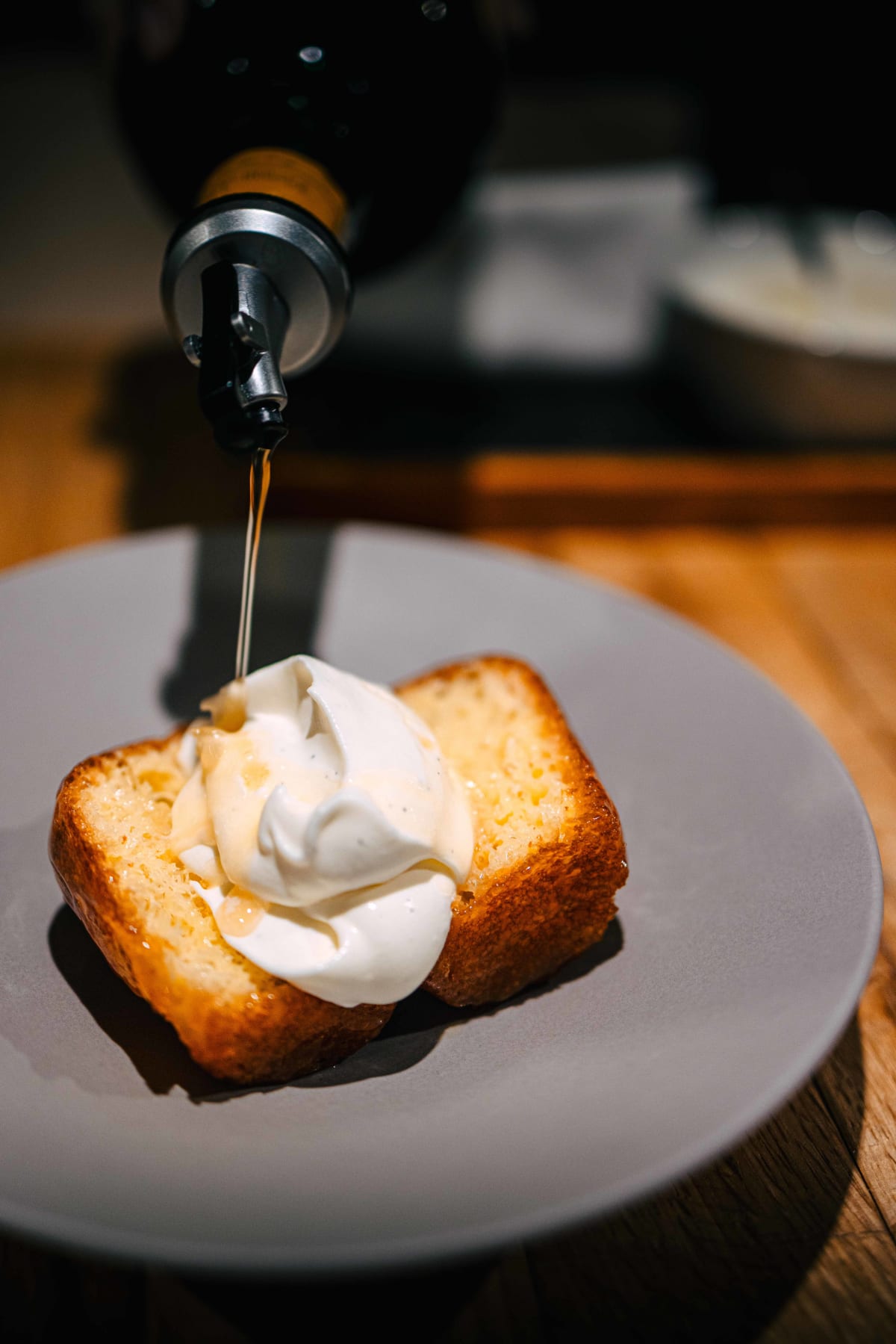
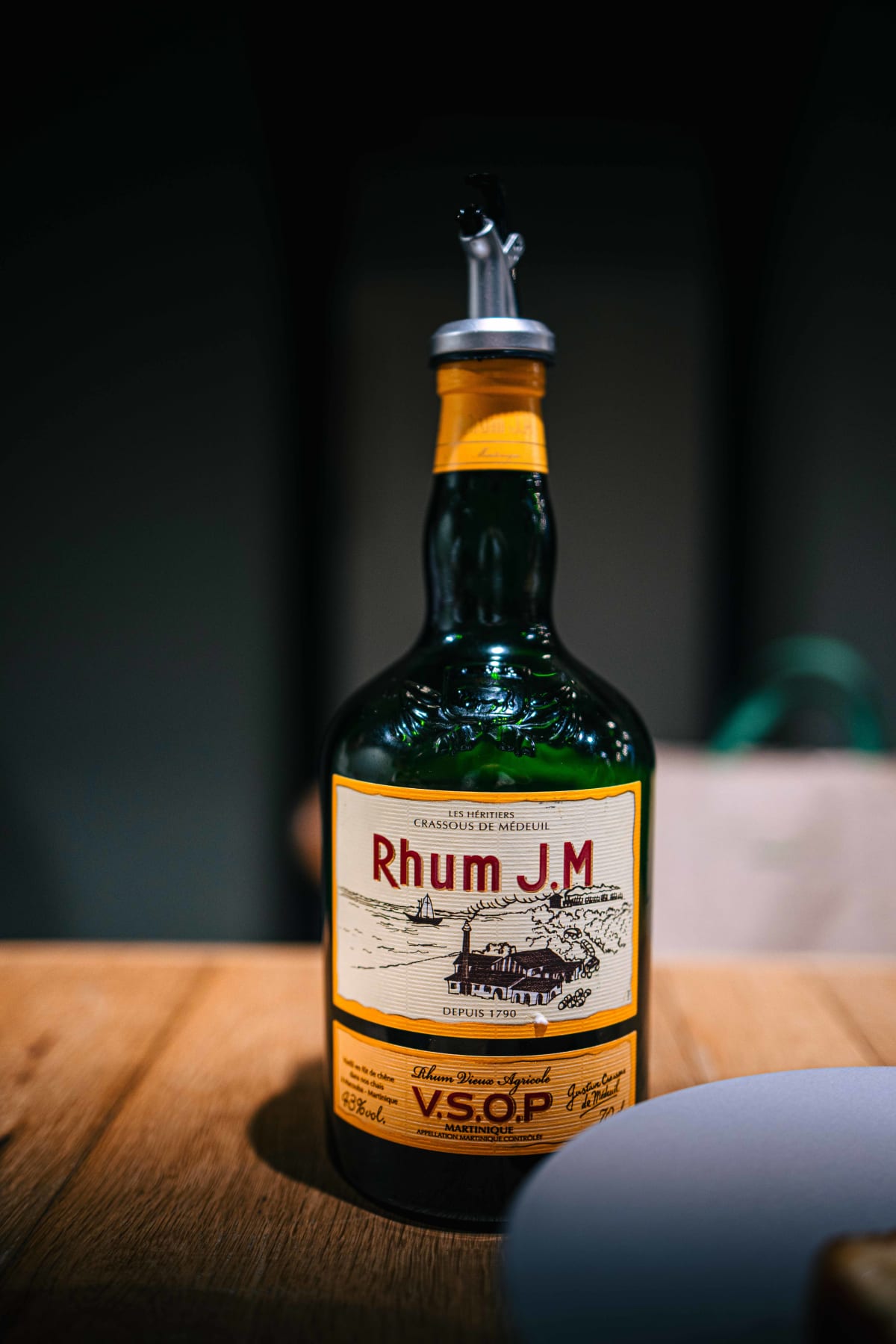
The rum that soaked the baba was Rhum J.M's VSOP, an AOC Martinique rhum vieux agricole made at Macouba in the north of the island, at the foot of the Montagne Pelée volcano, distilled not from molasses but from fresh-pressed sugarcane juice and aged at least four years in oak. Its notes of vanilla, spice, and ripe fruit matched the sweetness of the baba well.
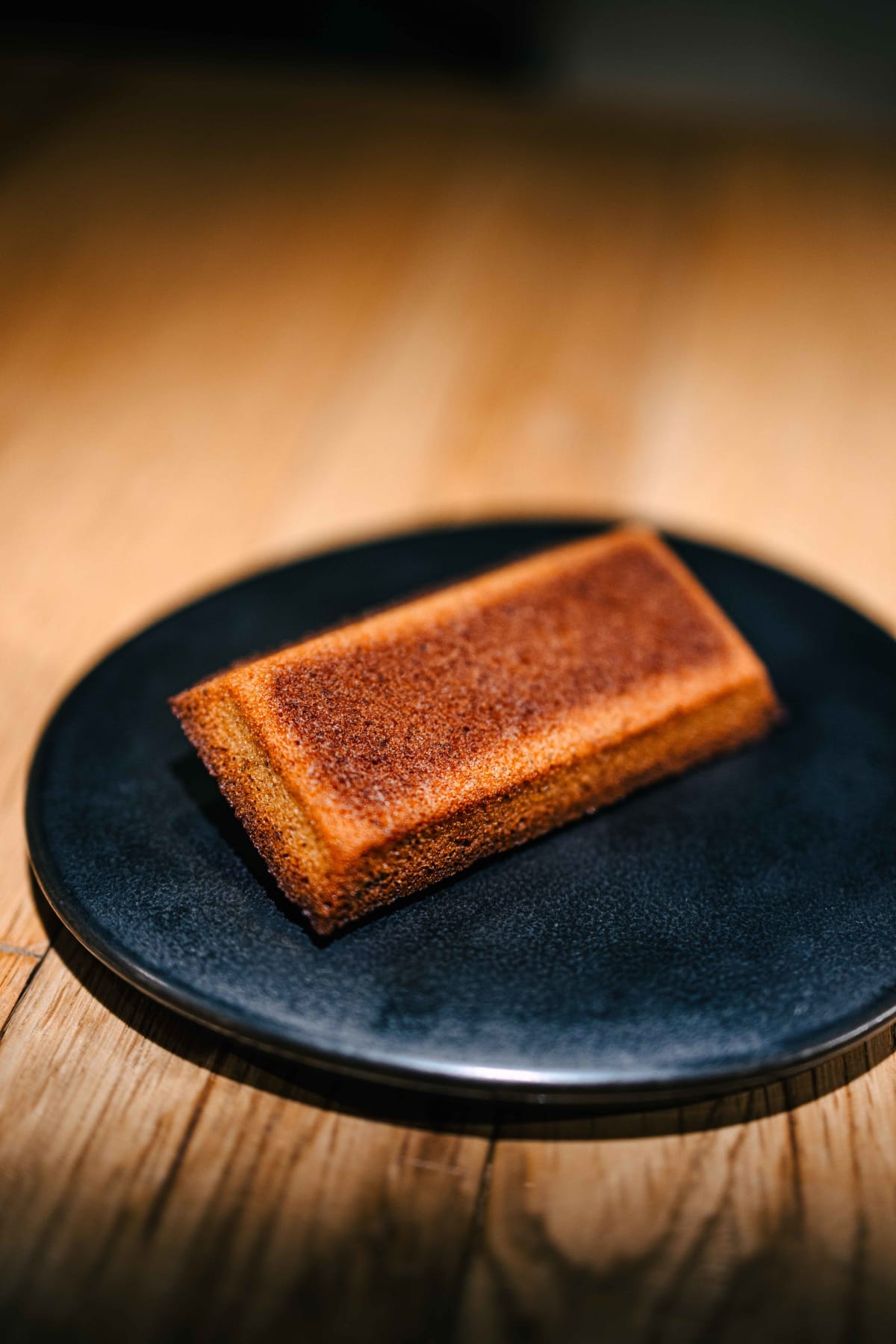
The financier that followed, though, was disappointingly served cold.
Even so, the course as a whole was very satisfying, and I plan to return and order à la carte. And since I was curious about the Michelin restaurant Hommage right next door, I booked it and went, where I found a different style and a distinct charm of its own.
A starred chef's casual second restaurant is usually a brand extension, the prestige without the kitchen behind it. noura is the rarer case where the discipline came along too: the sauce work, the restraint, the sense of balance that earn Hommage its two stars are all here, only without the ceremony. The annex is no dilution of the flagship, just the same hands cooking in a quieter key.
Have a question about this restaurant, or want to share your own experience?
Send a message