Fine Dining · Hamamatsu · Japan / December 2024 / Tabelog Gold (2024)
Seirin
"A Tabelog Gold table in provincial Hamamatsu where the season is the entire menu, and one giant wild fugu becomes the meal."
Section 1·Shizuoka
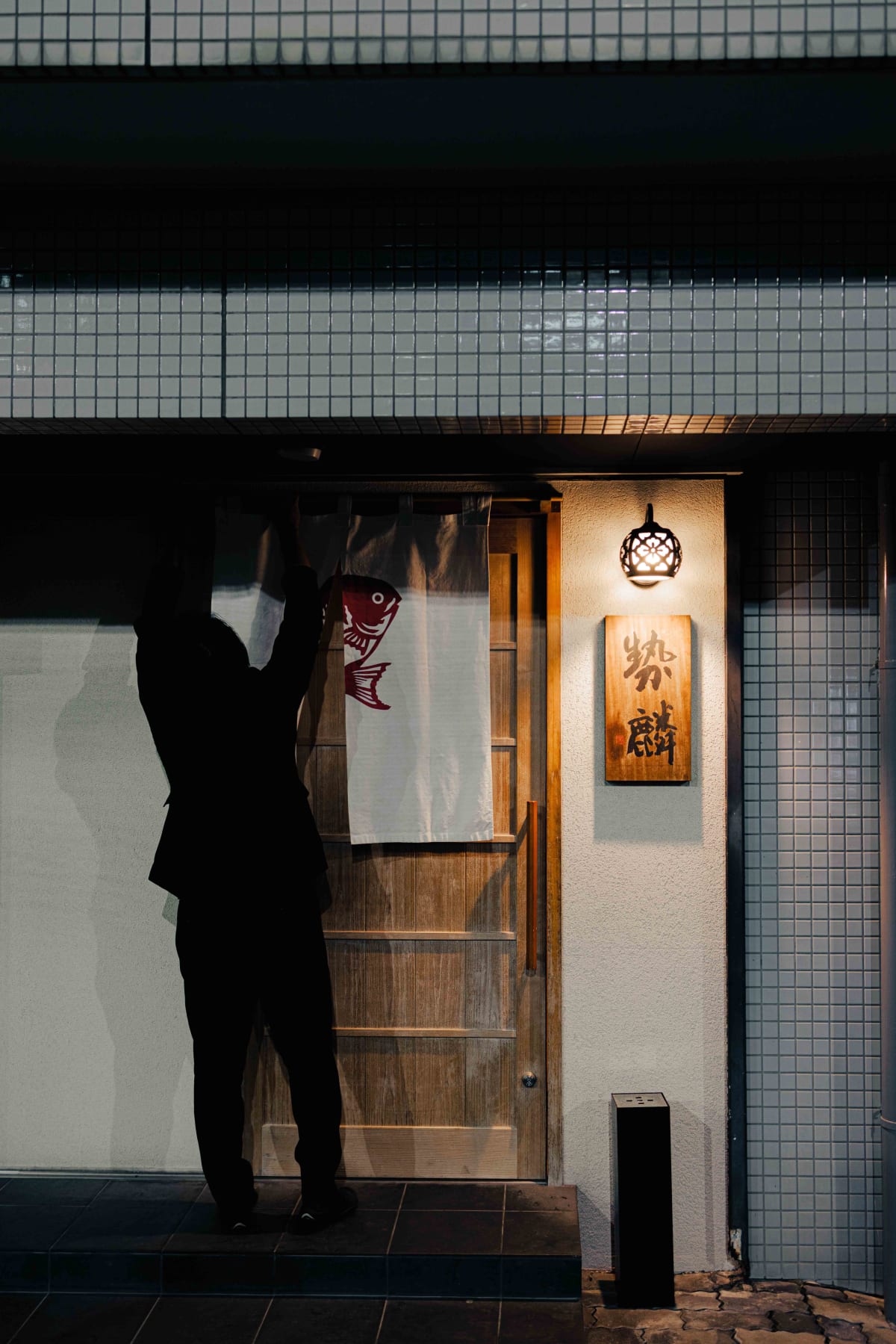
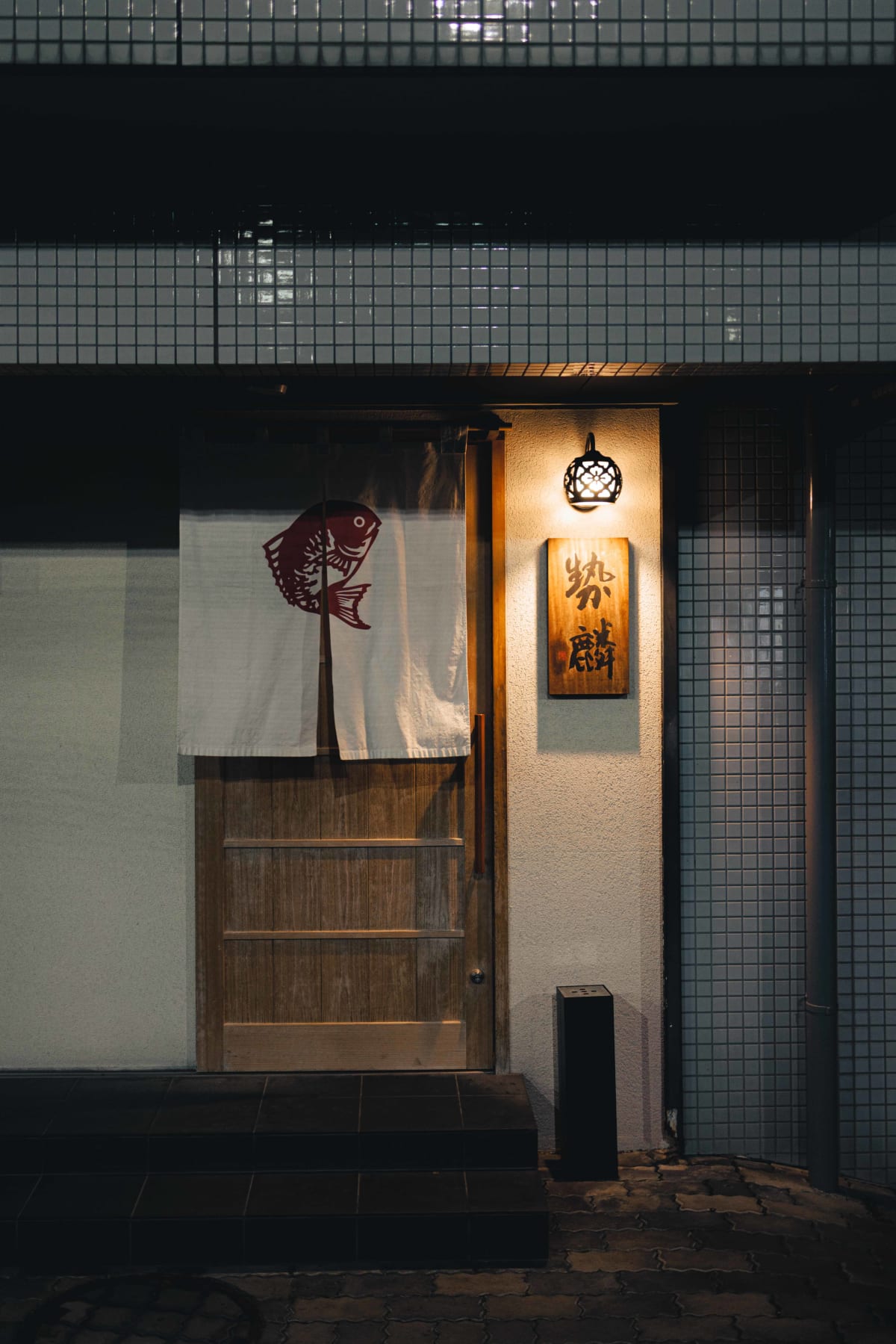
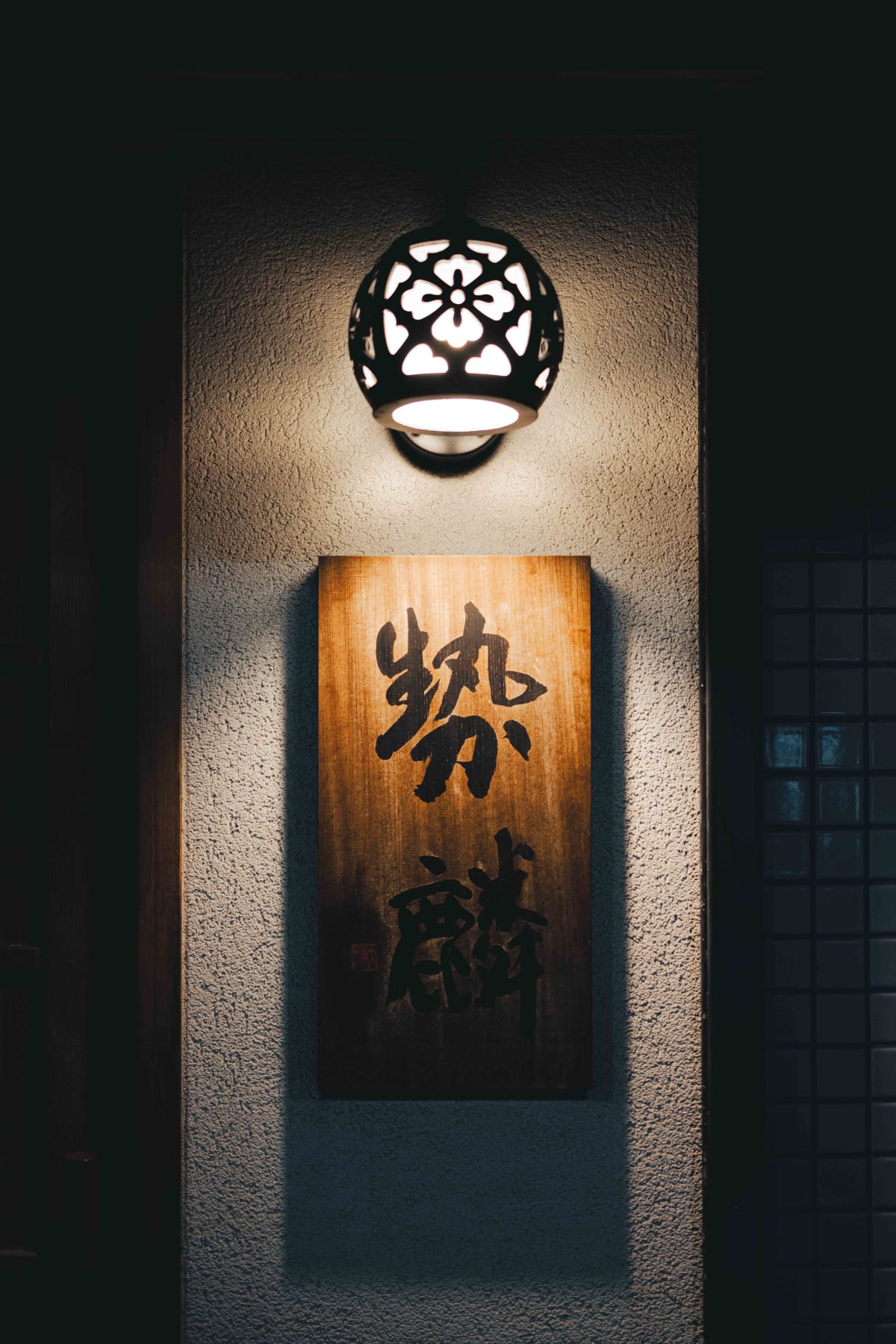
When I travel in Japan for food, I have almost always gone to Tokyo. In December 2024, for the first time, I made a regional trip instead, and it began in Shizuoka Prefecture. The two-day visit was less a planned itinerary than a sudden decision, and the restaurant that prompted the whole thing was this one: Seirin, a Japanese restaurant in Hamamatsu. Through 2024, the year I visited, it held a Tabelog Gold award, and I am told that gourmets travel to Hamamatsu from across the country, not only from the region, just to eat here. I managed to grab a last-minute cancellation and made my way out.
One practical note. I assumed that "Shizuoka Prefecture" meant Shizuoka City, and went there first, but the distance between Shizuoka City and Hamamatsu is considerable. If you are a foreigner unfamiliar with Japanese geography, check the distances and travel times carefully.
Section 2·The Chef
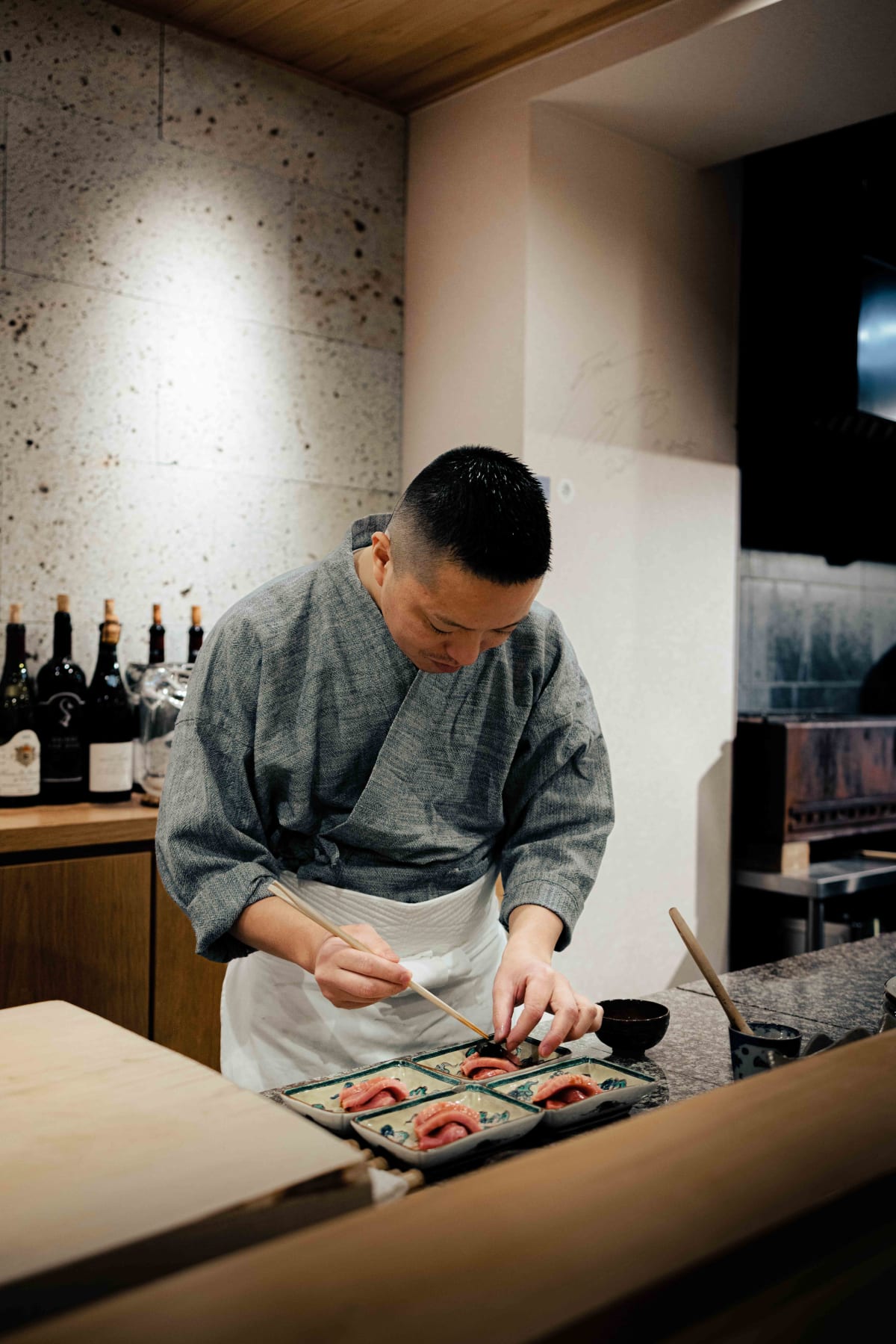
The taisho, Atsunari Hasebe, was born in 1989 and is a Hamamatsu native. After training in Tokyo, he opened Seirin in his hometown on the philosophy that cooking is built around its ingredients. The defining feature of the place is that its central ingredient theme changes about five times a year: mountain vegetables and shellfish in spring, hamo in early summer, wild eel from Lake Hamana in midsummer, matsutake in autumn, and fugu in winter. Each season he cooks with the best of Shizuoka's produce, and the sheer quality of the headline ingredient is genuinely extraordinary.
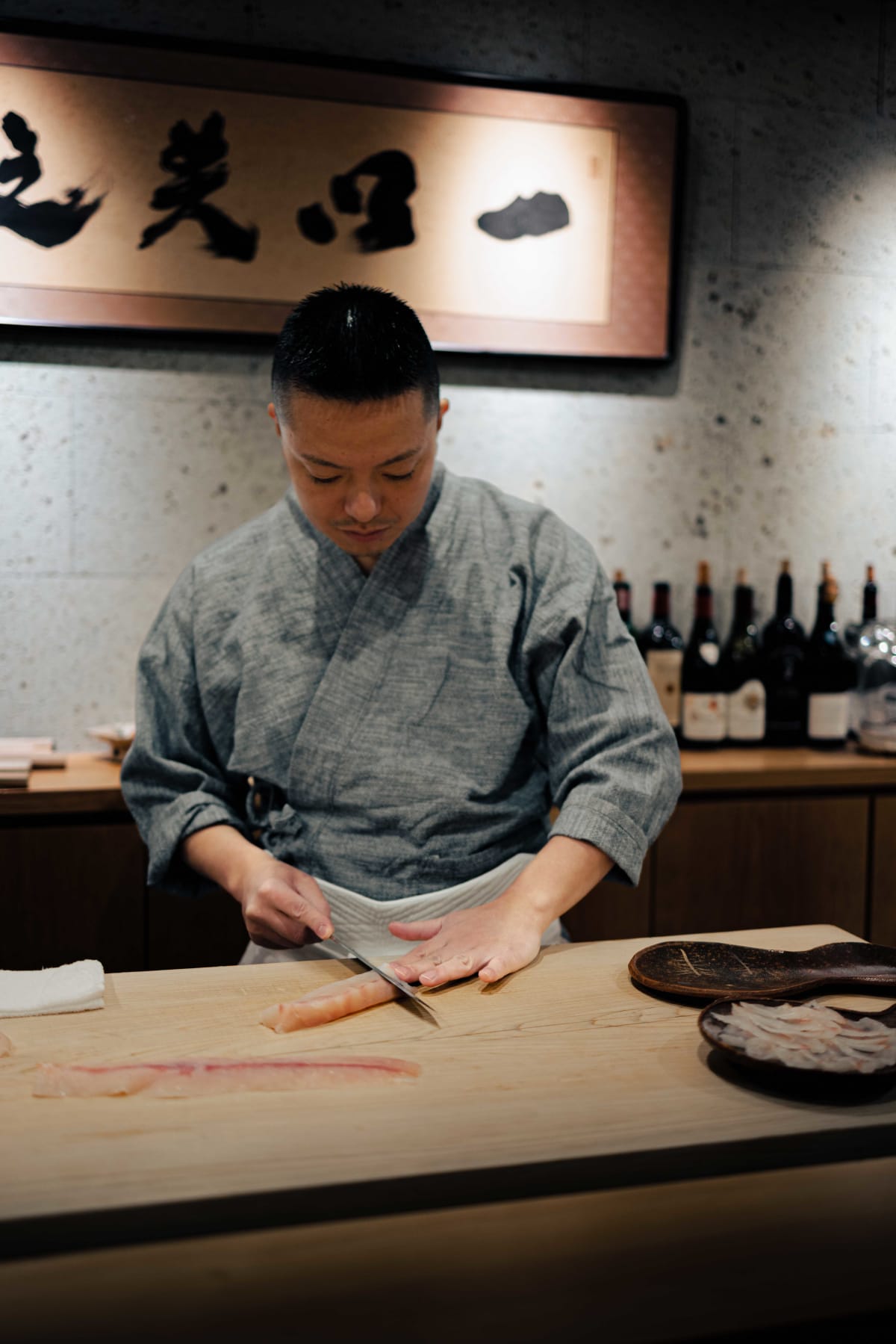
the sheer quality of the headline ingredient is genuinely extraordinary.
Section 3·The Welcome
I came in December 2024, during fugu season, to a Seirin in the depth of a cold winter. I knew it would be a fugu course, of course, but I did not expect it to be quite so single-mindedly fugu. Apart from one serving of maguro sashimi in the middle, everything was fugu, and the fugu itself was superb.
I came with a companion for the second seating, at nine in the evening. The weather that night was bitterly cold, and I walked in shivering, but the taisho greeted us warmly. I had been quite nervous, having heard that restaurants in smaller regional cities can be cool toward foreigners and offer no English at all. Neither my companion nor I speak much Japanese, and I worried about communicating, but it went better than expected and he looked after us attentively. It helped that Hasebe-san is fond enough of Korea to visit several times a year.
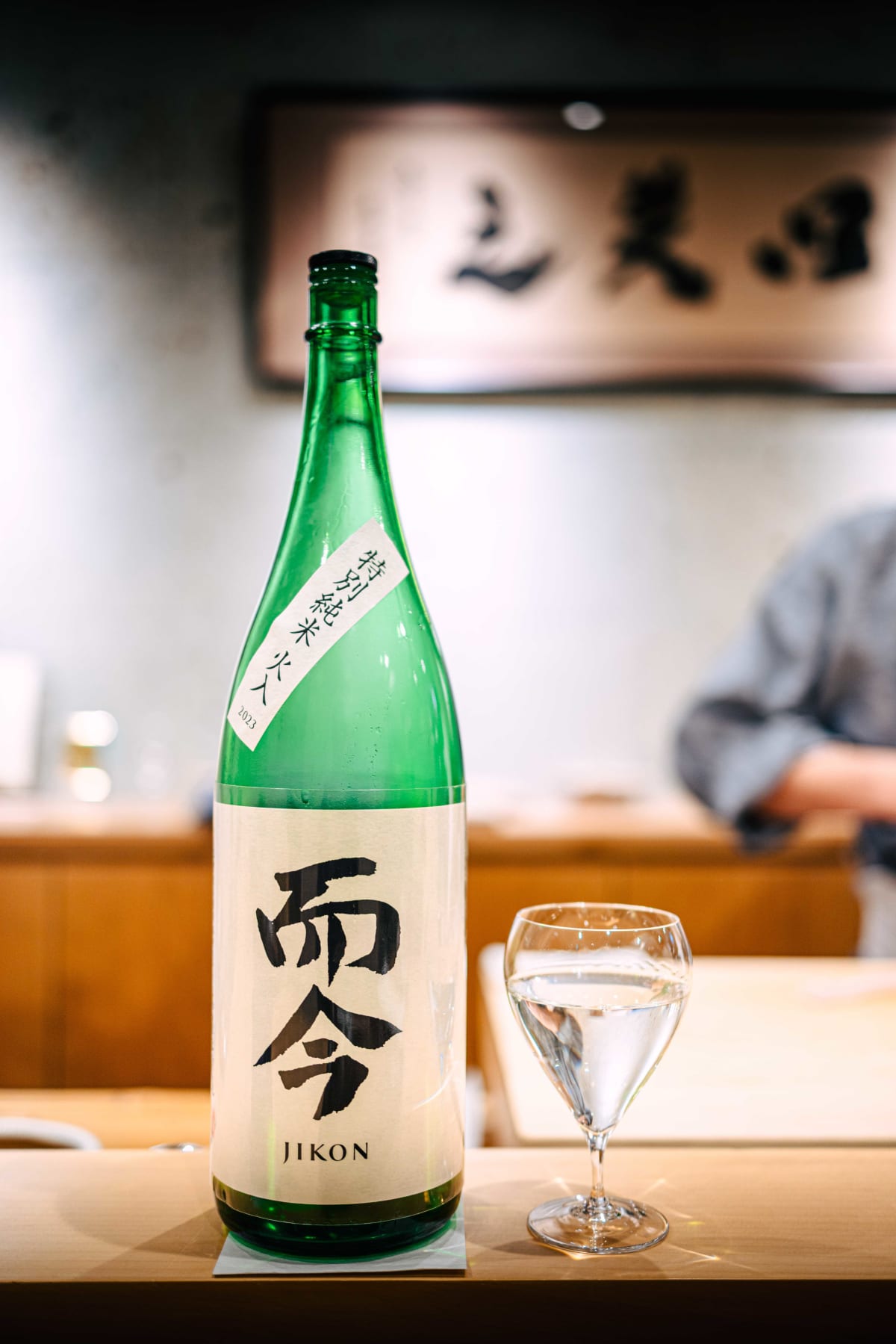
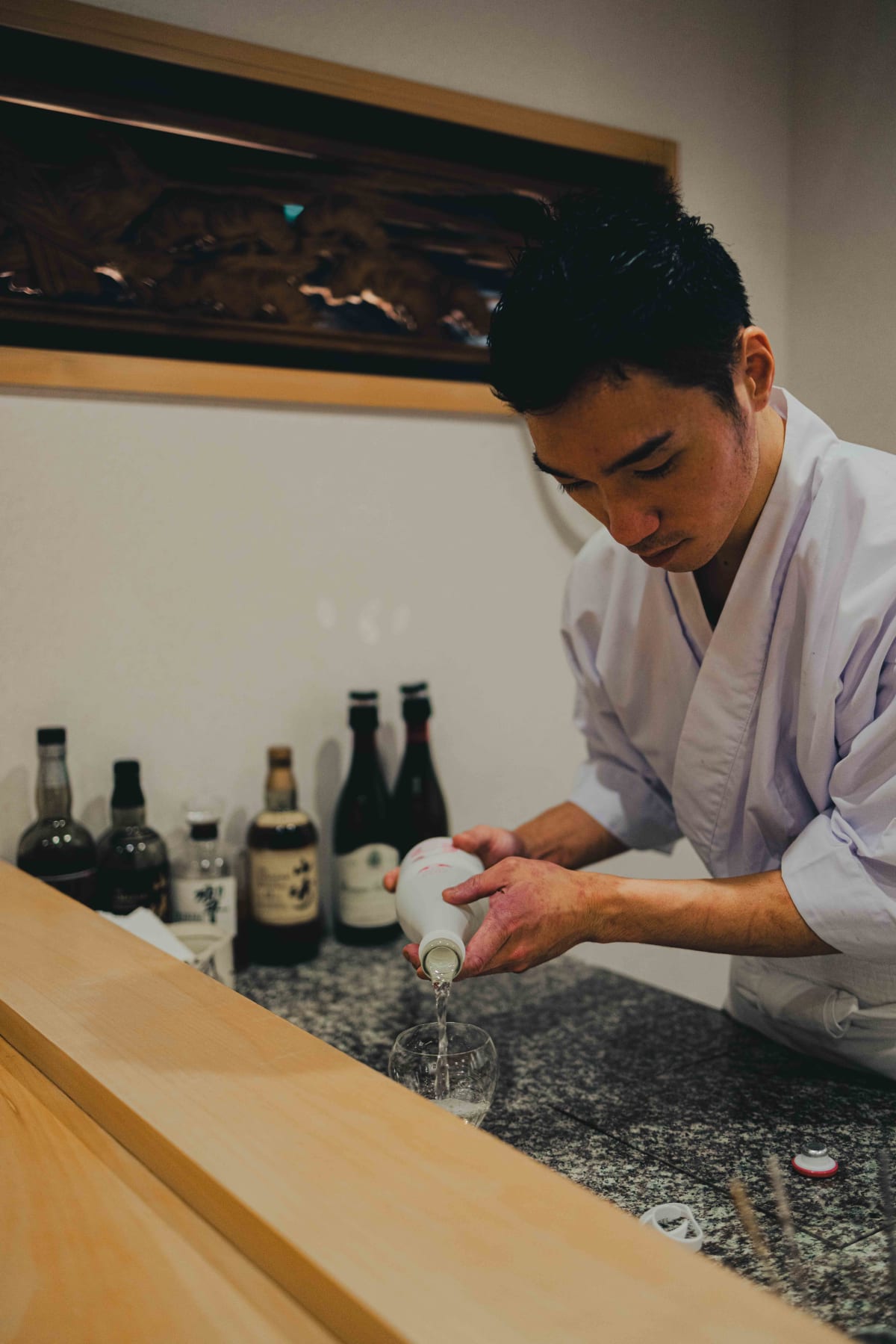
To thaw out before the meal, I ordered sake, and Jikon arrived. Jikon comes from Kiyasho Shuzo, a small brewery in Nabari, Mie Prefecture, relaunched in 2005 by the sixth-generation owner-brewer Tadayoshi Onishi. The name is taken from a Zen koan meaning to live fully in the present, bound by neither past nor future. With its fruity brightness and a fresh, juicy character, it has become a cult bottle that defines modern Japanese sake, and today it is so scarce that even in Japan it is sold mostly by lottery. The pour that night was the Tokubetsu Junmai, pasteurized. Even in neighboring Korea, Jikon is hard to come by, so to have it appear as a simple glass in Japan was a real pleasure.
Section 4·The Chawanmushi
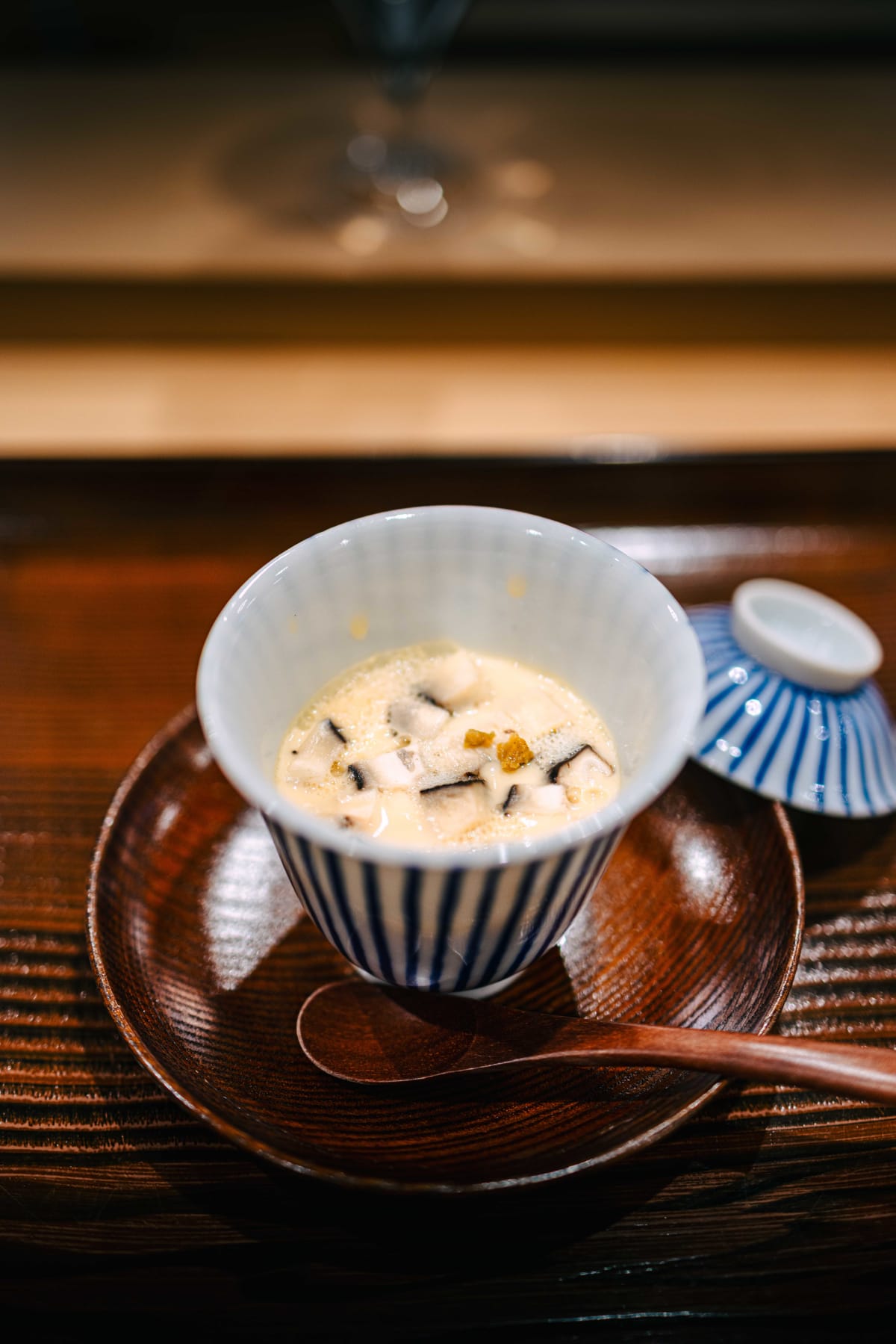
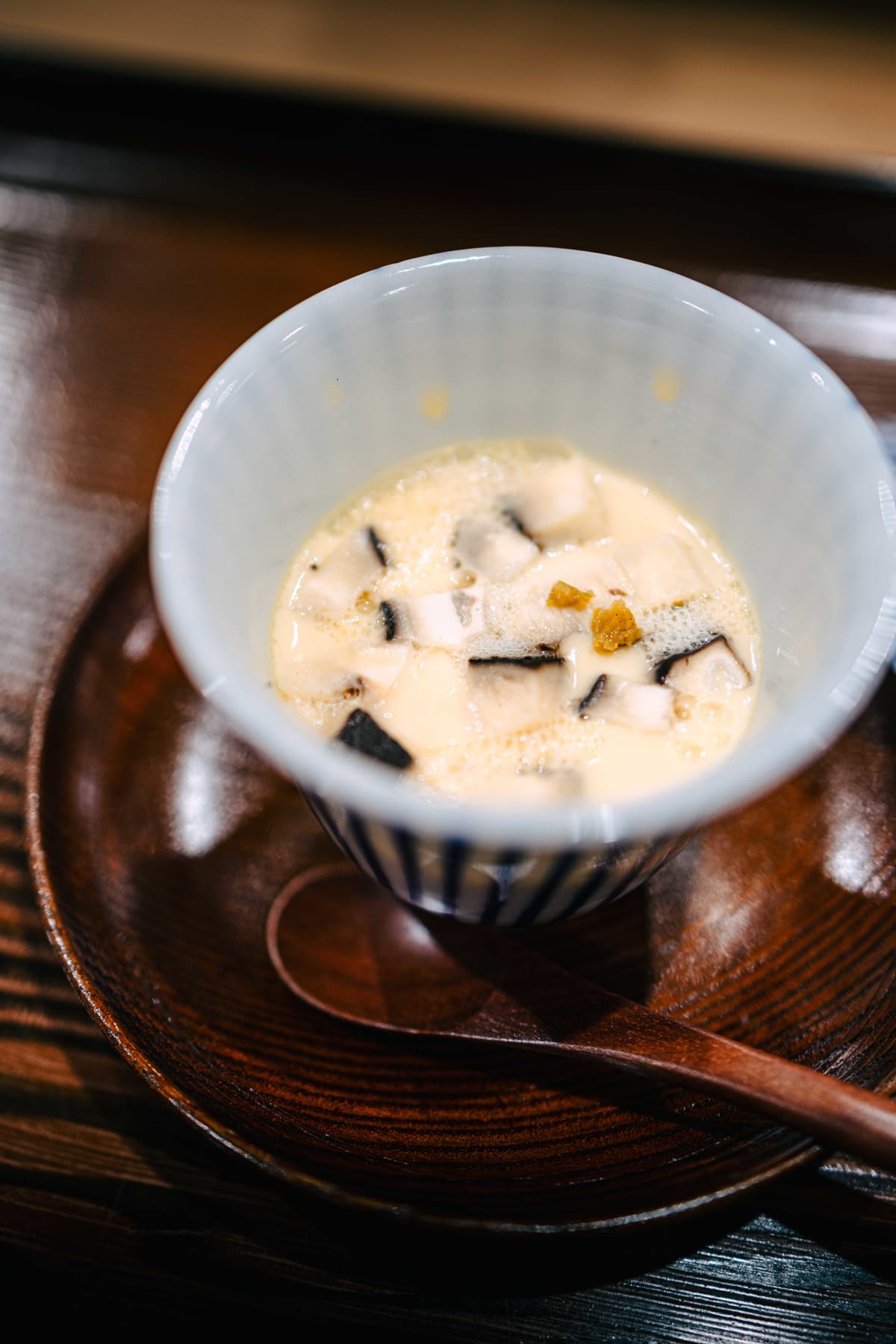
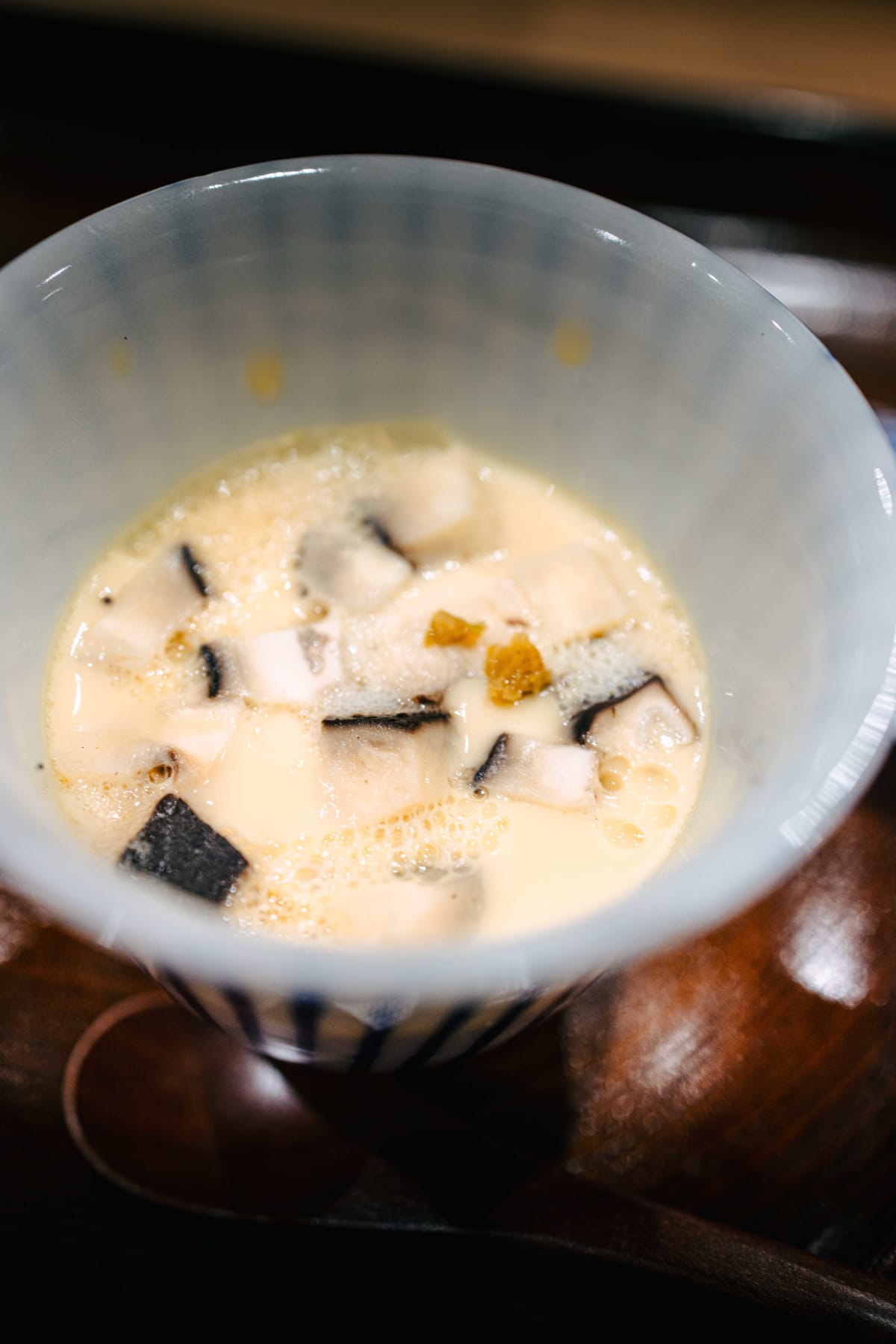
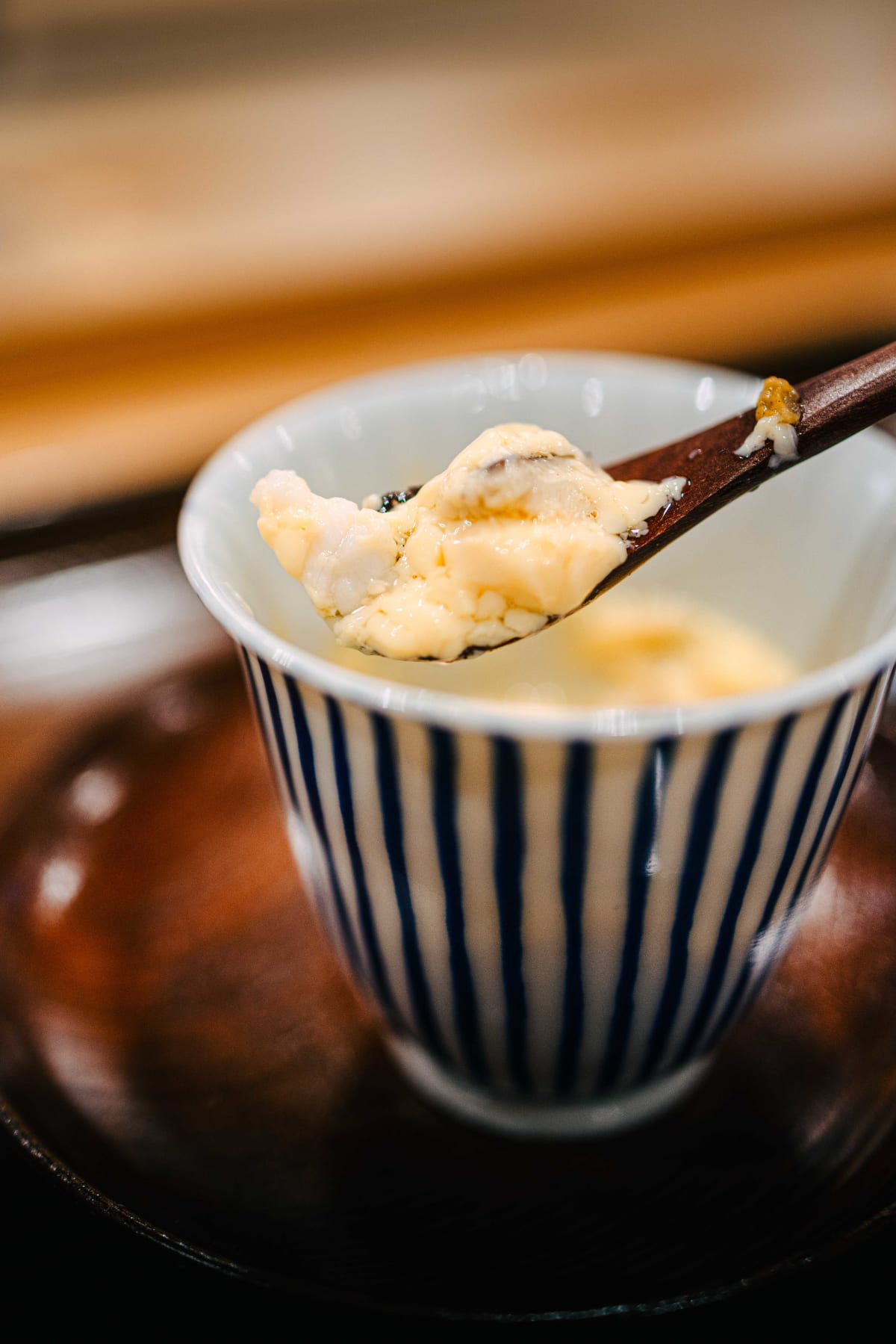
The first dish was a fugu chawanmushi, with shiitake and yuzu kosho, and what seemed to be fugu meat inside. I found nothing particularly distinctive about it; it tasted like a standard chawanmushi.
Section 5·The Fugu
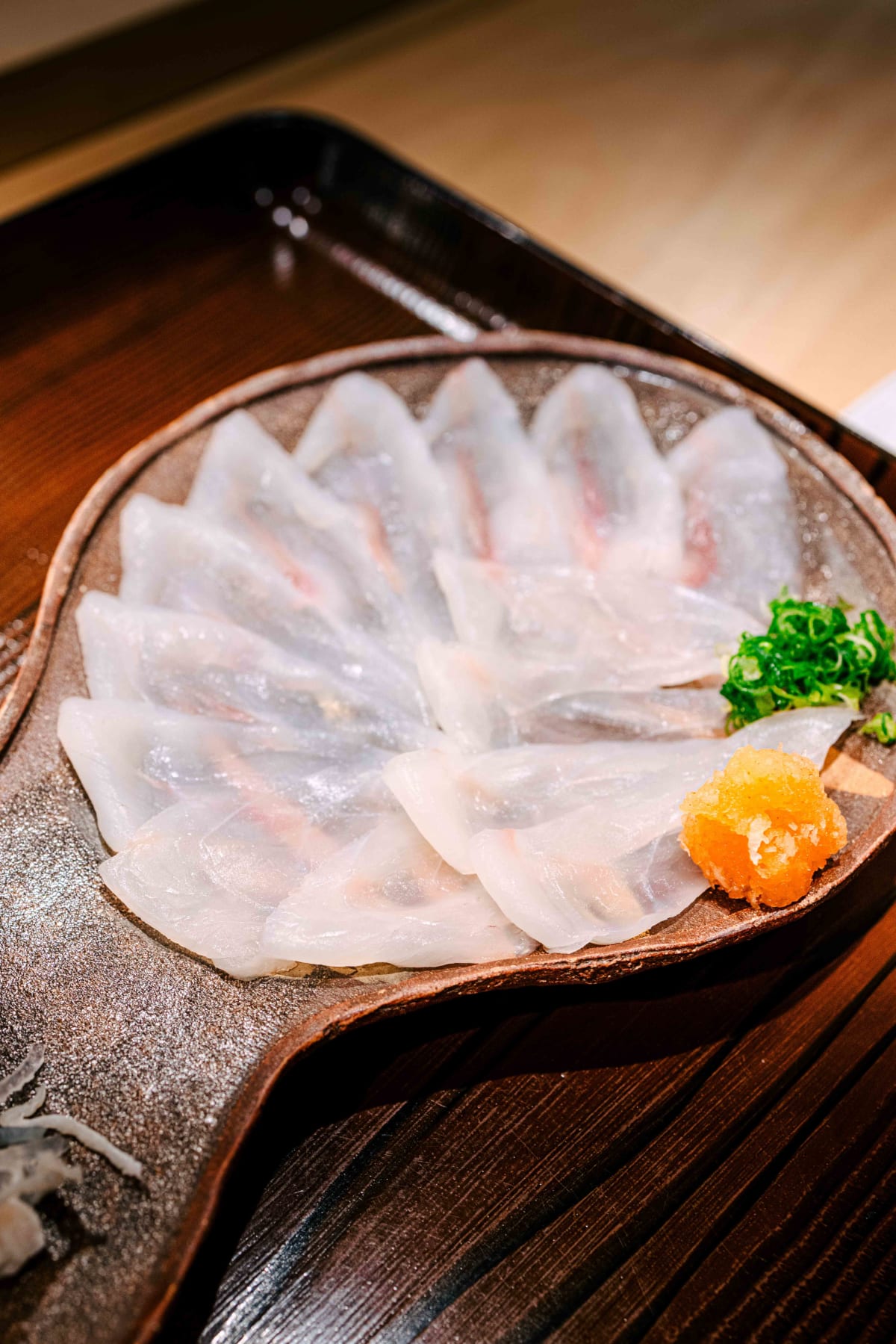
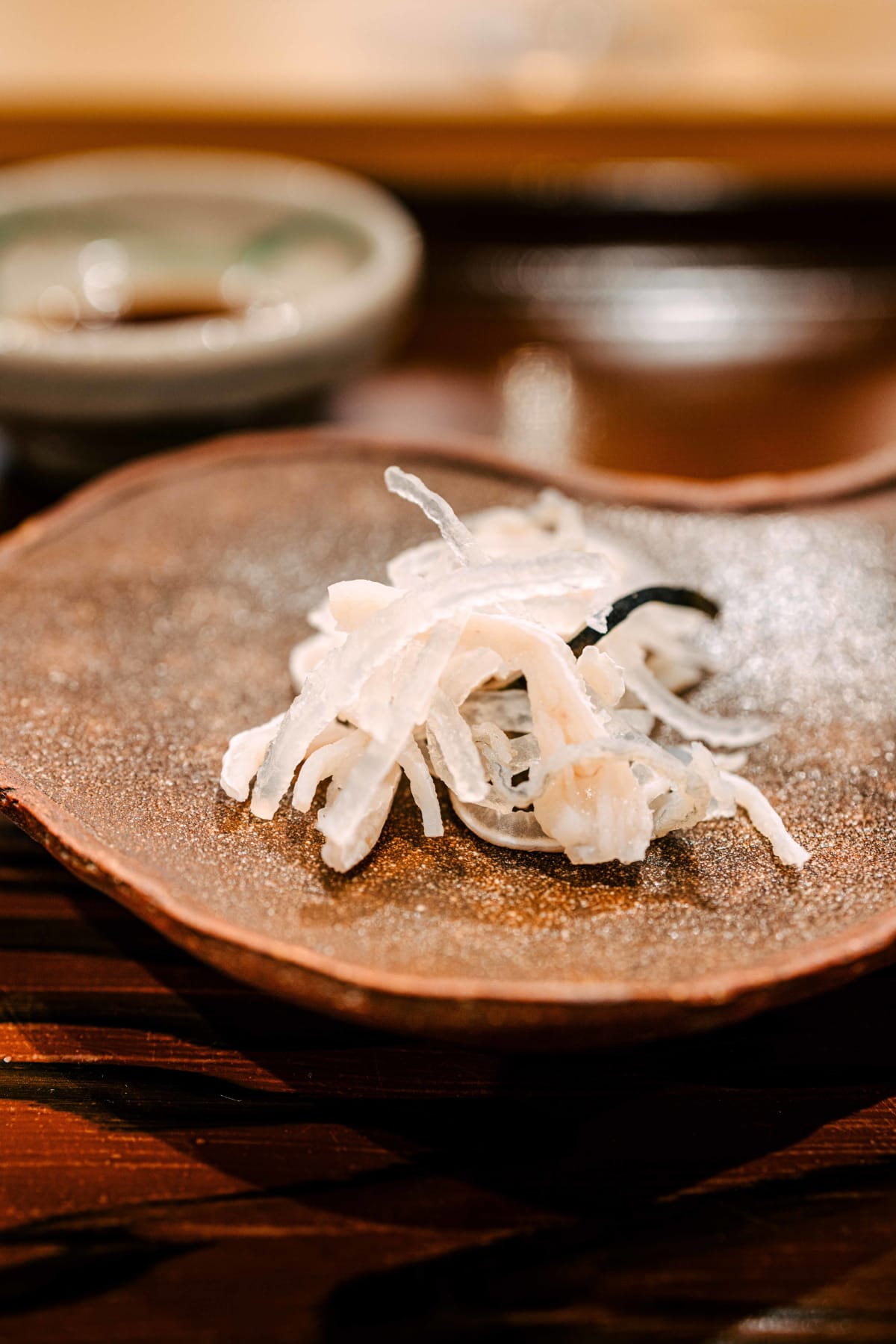
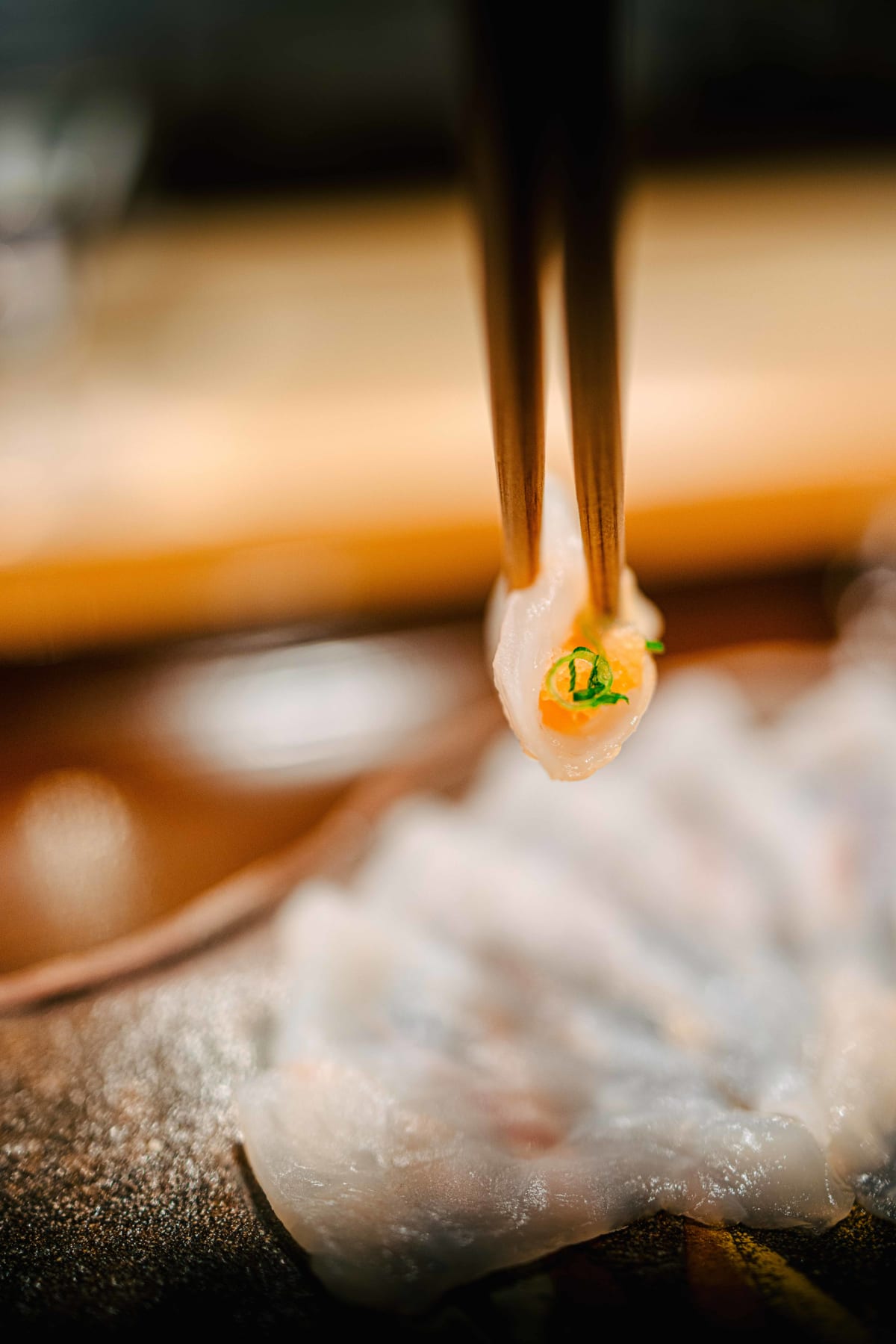
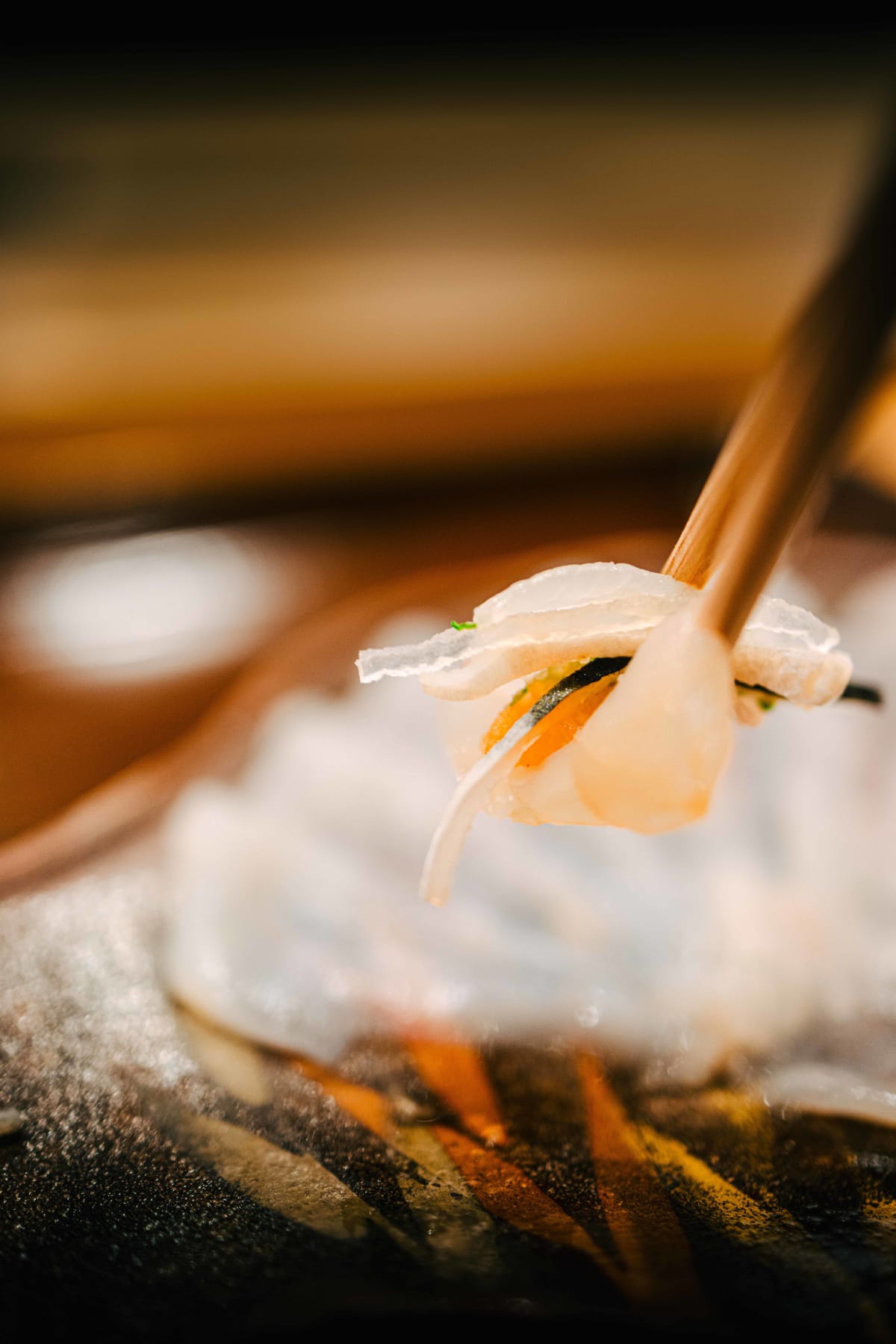
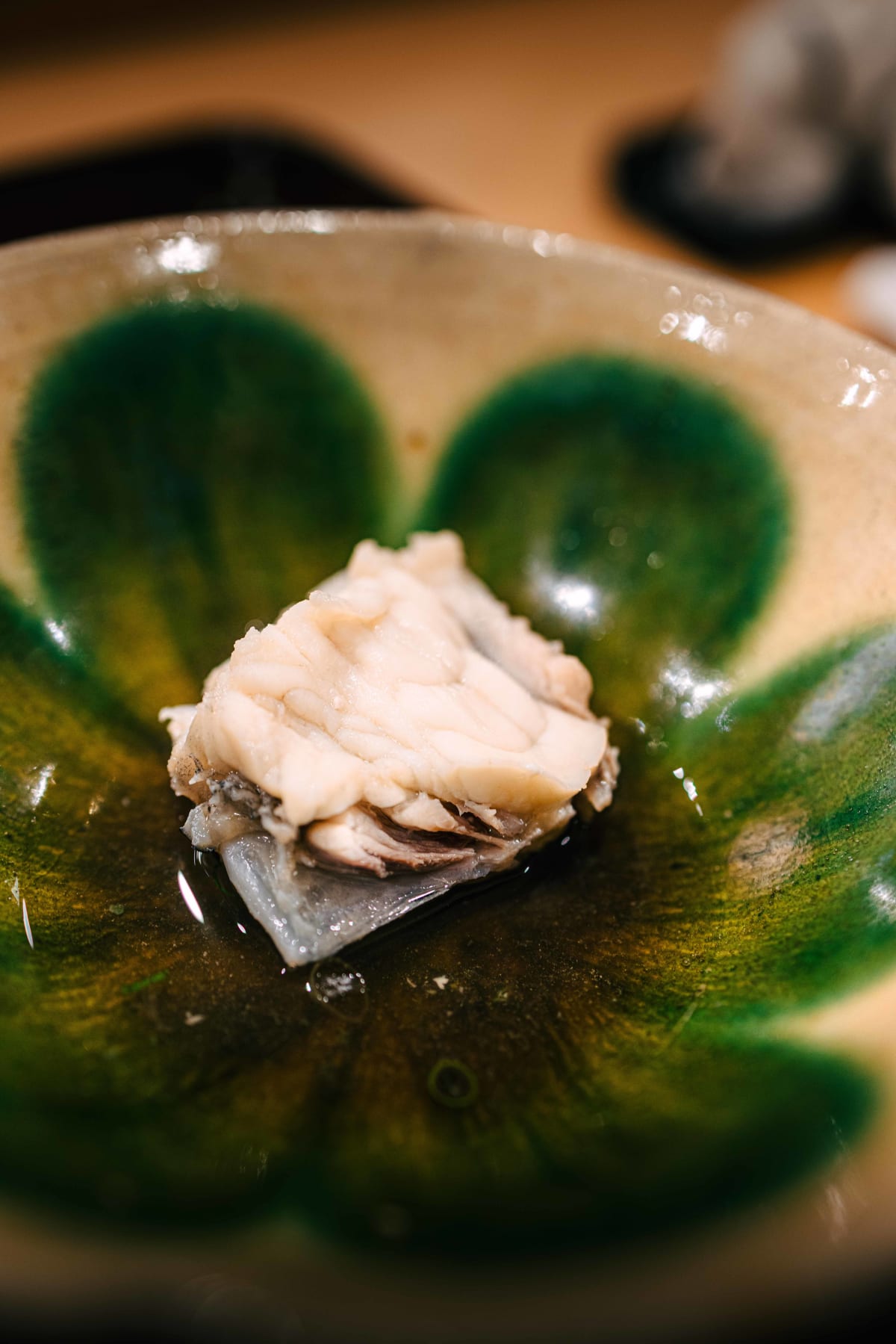
The fugu course proper began with the second course: sashimi and fugu skin. The fish that day, the taisho said, was a nine-kilogram specimen caught off the nearby coast.
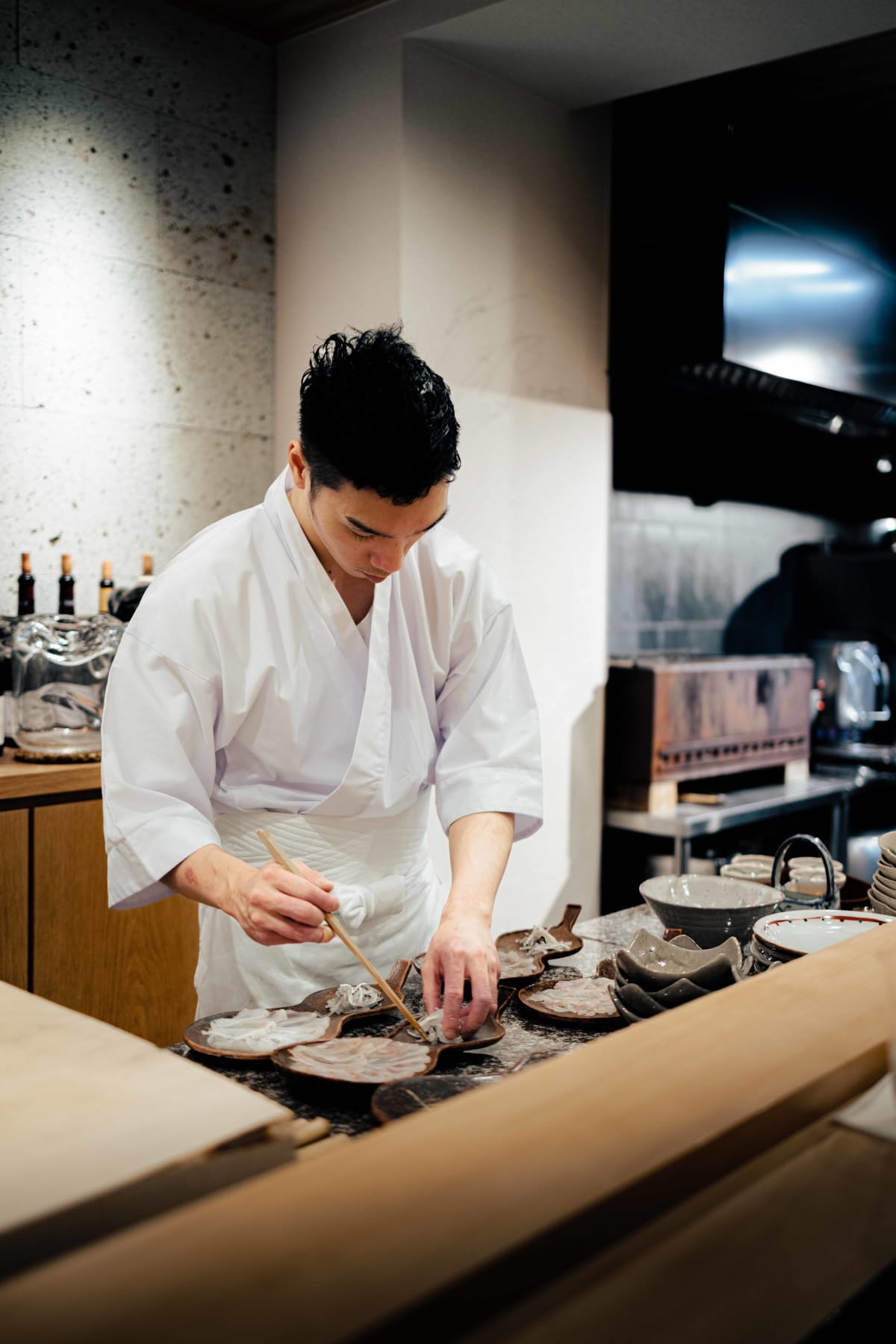
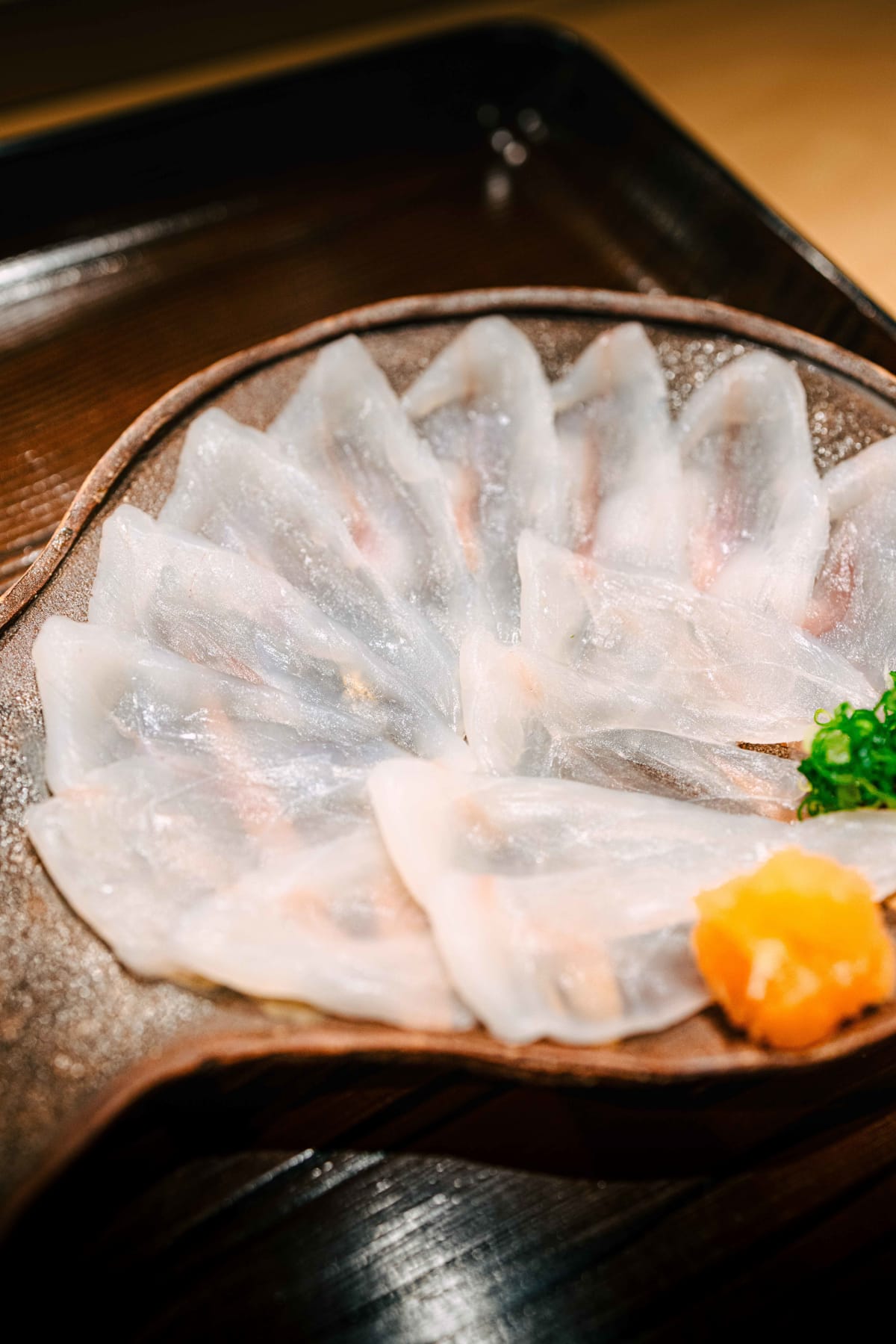
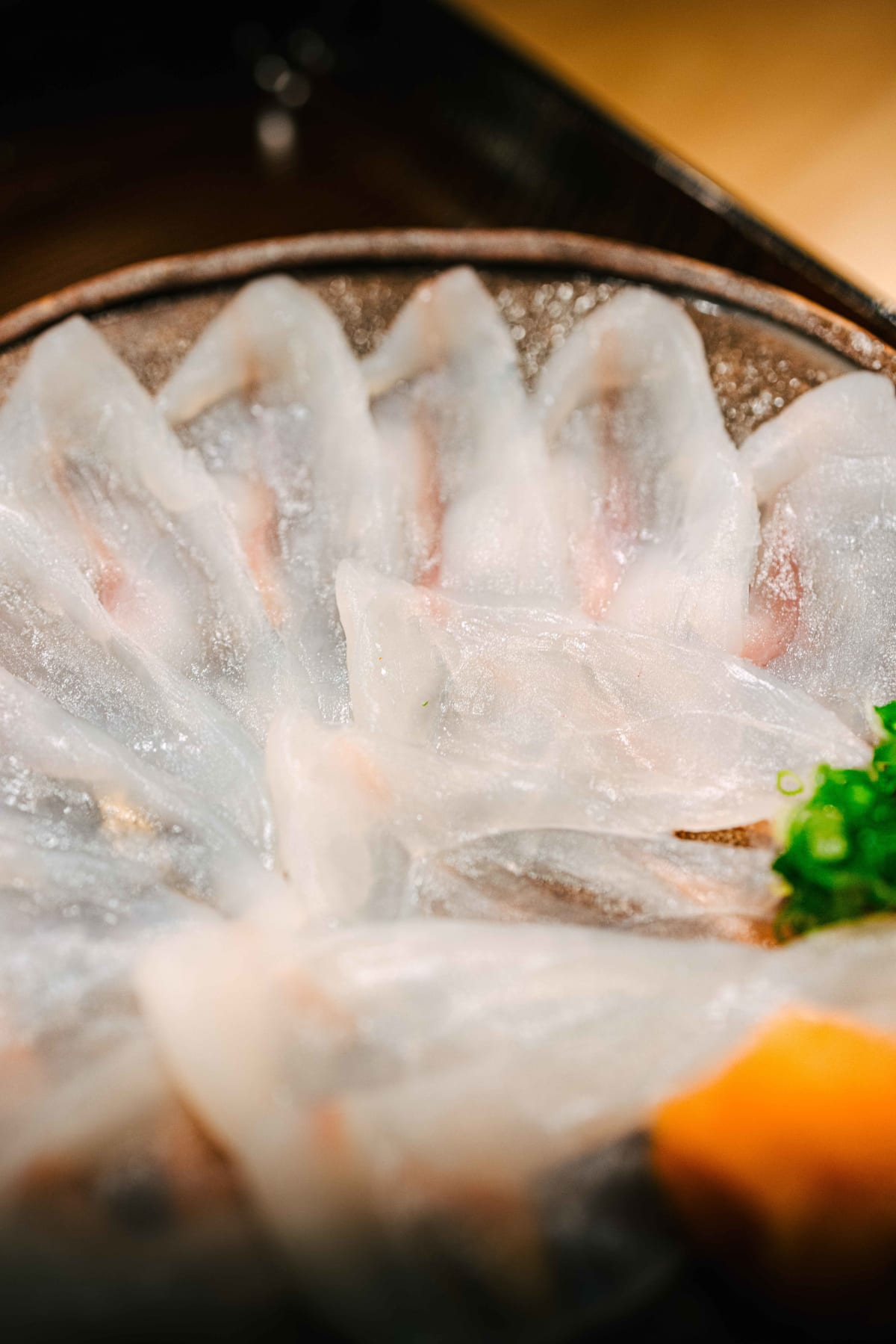
The Japanese guests beside me remarked that fugu of this size is rare even in Japan, and perhaps for that reason it was not the usual translucent style but a remarkable fish, slightly cloudy with a reddish bloodline showing through. Because the fish was so large and yielded so much, the portion was generous for a single course.
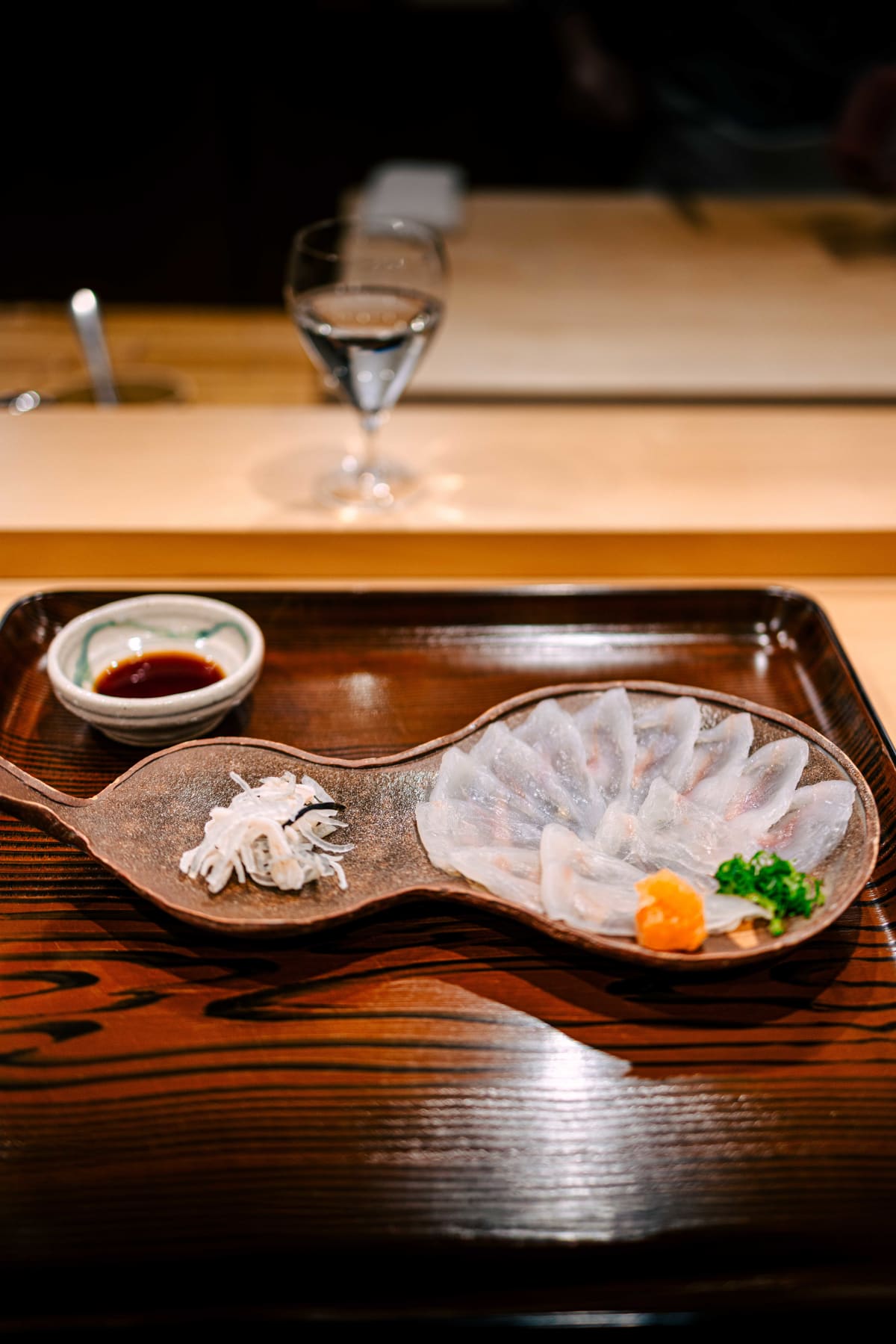
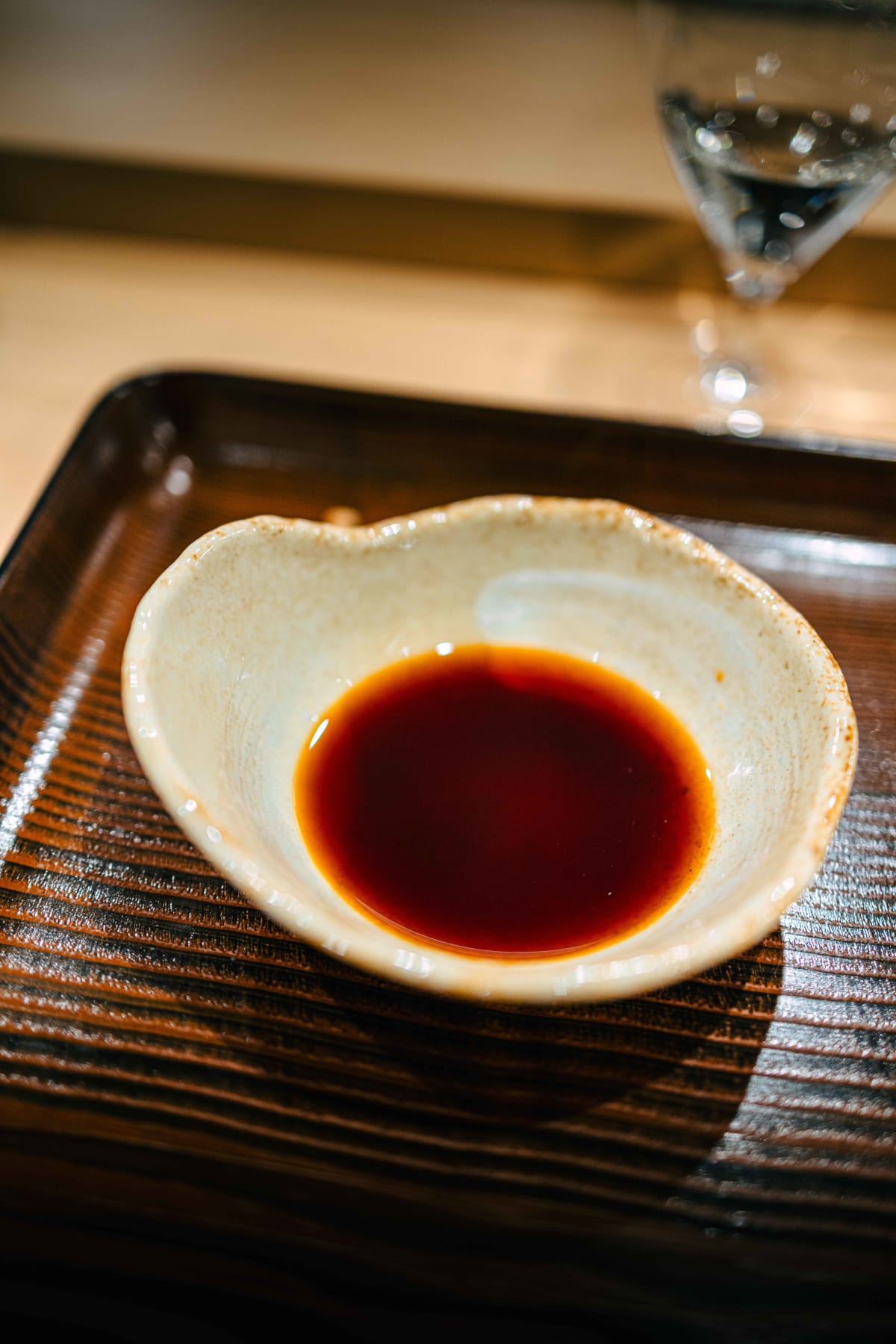
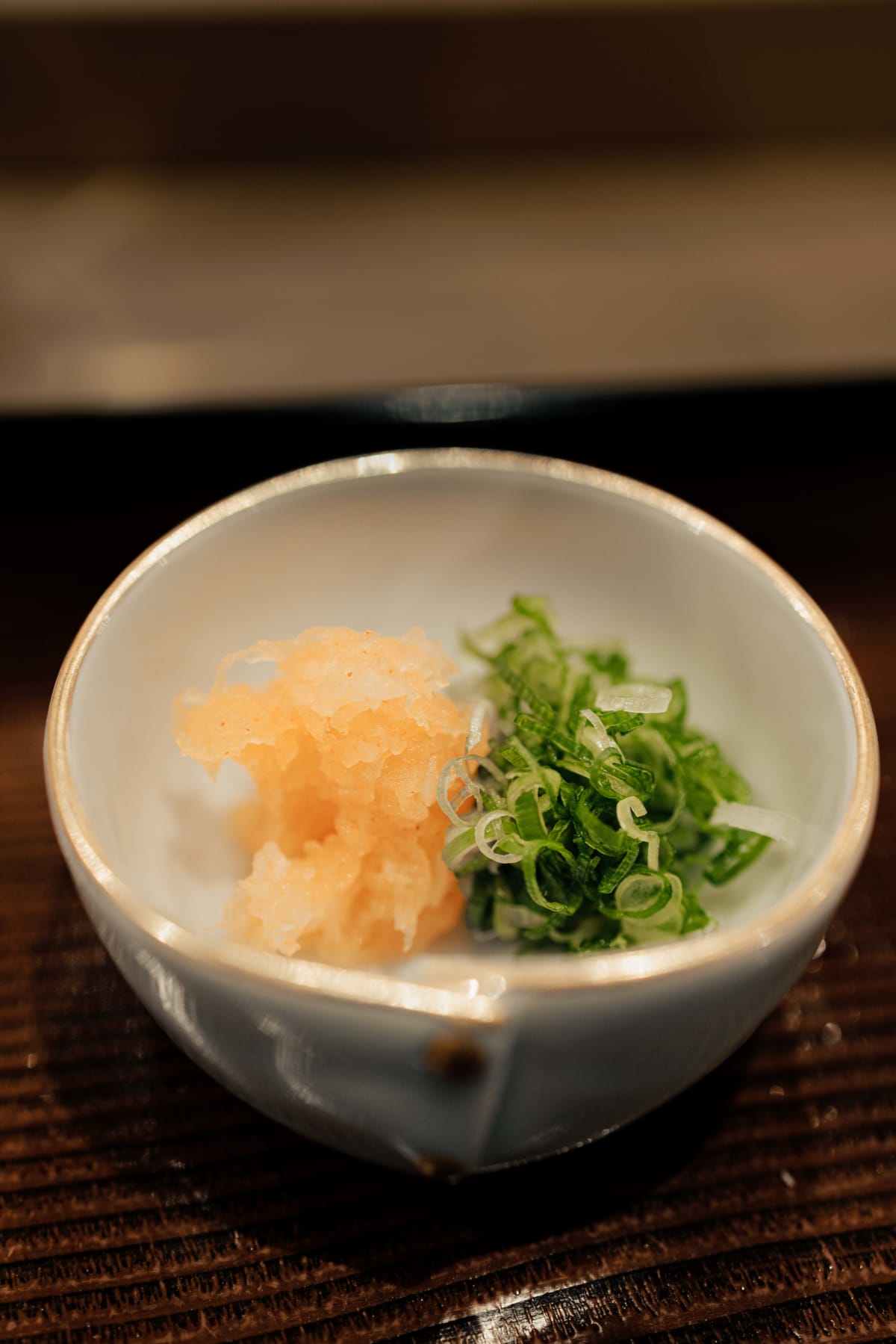
The texture was chewier than the fugu I am used to, and dipping it together with daikon and the skin in ponzu was delicious. I learned later that the thin, translucent fugu slices served at specialist restaurants in Korea are cut that way not for flavour but to make an expensive fish look more abundant; for taste alone, a thicker cut is said to be better.
Section 6·The Maguro
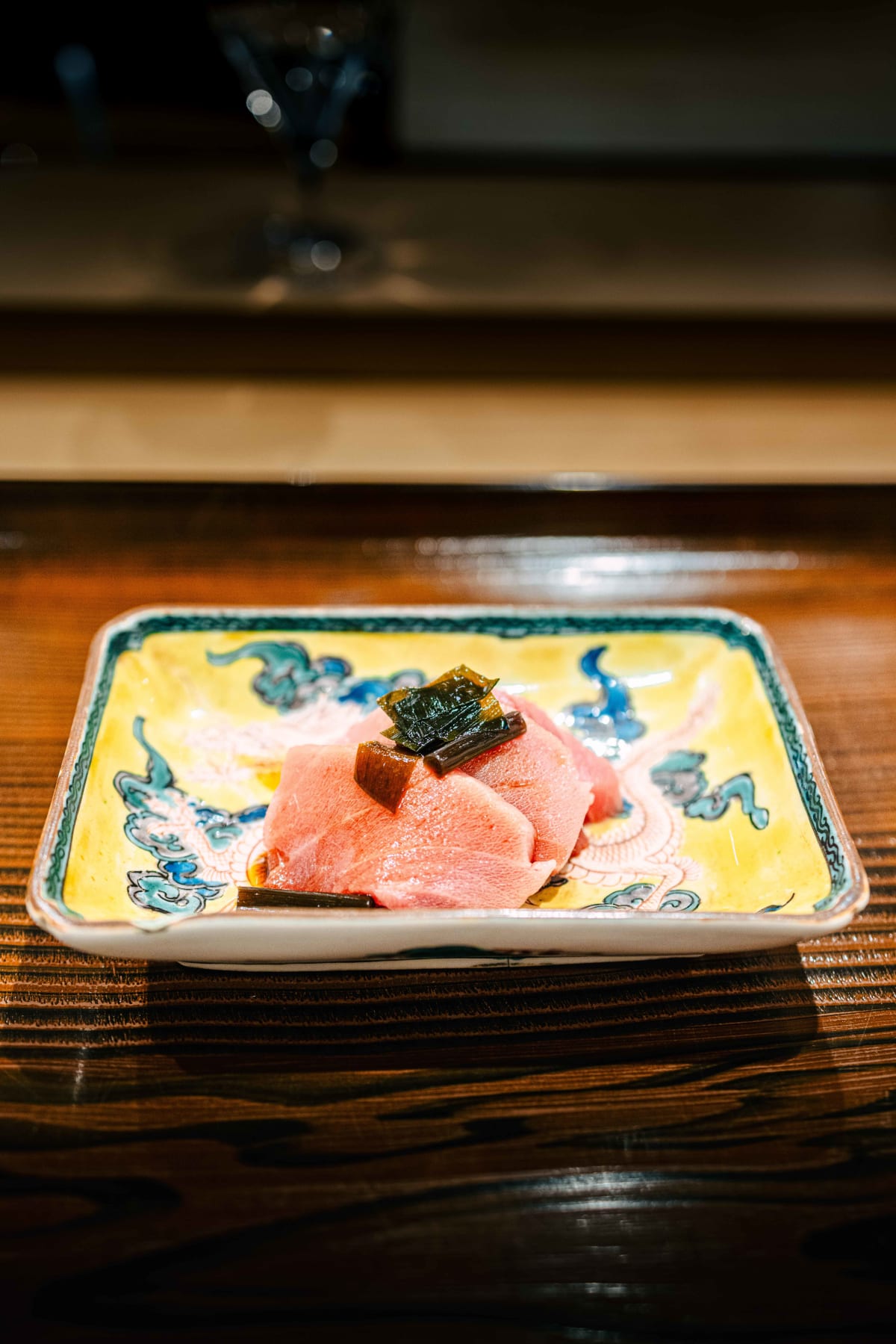
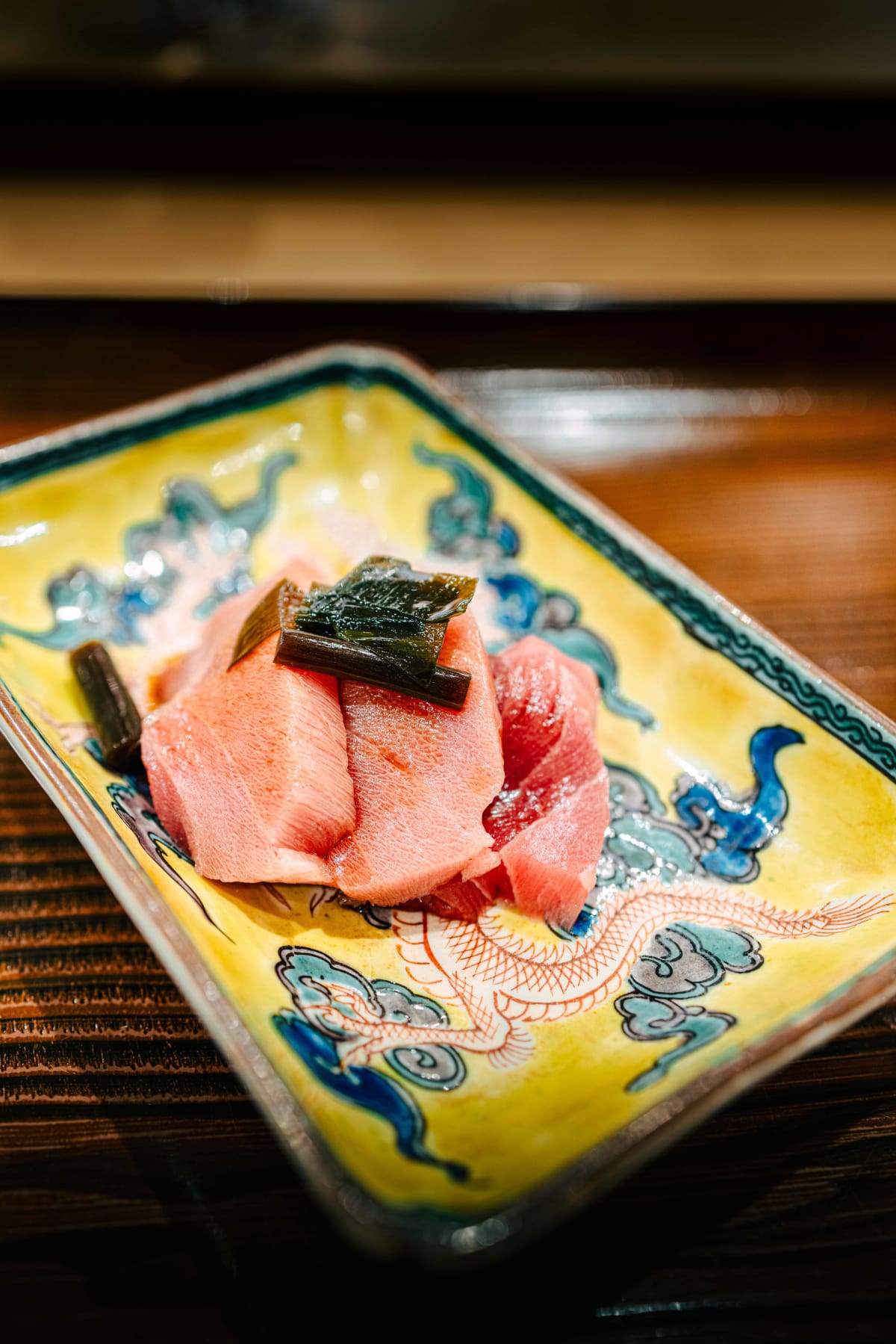
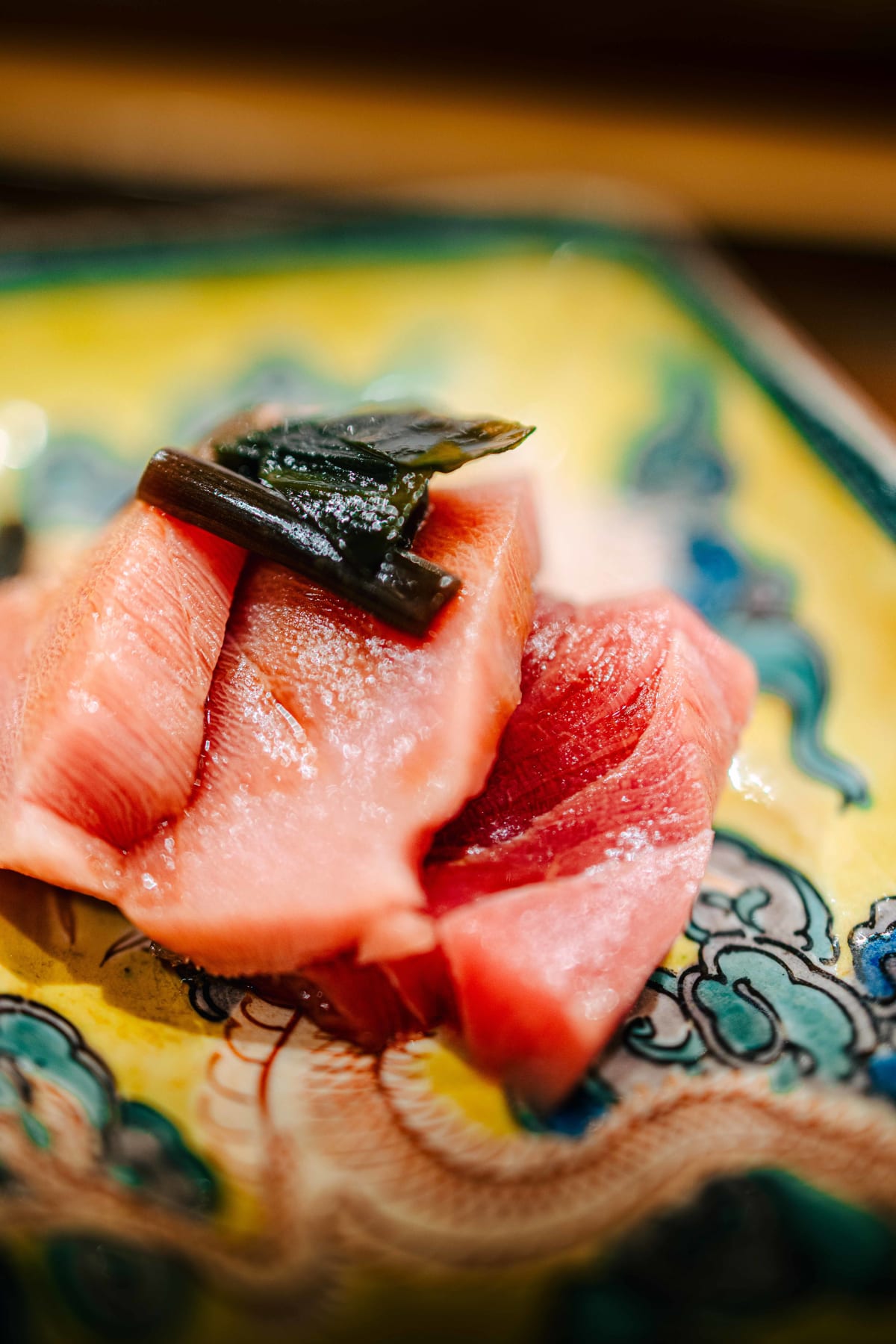
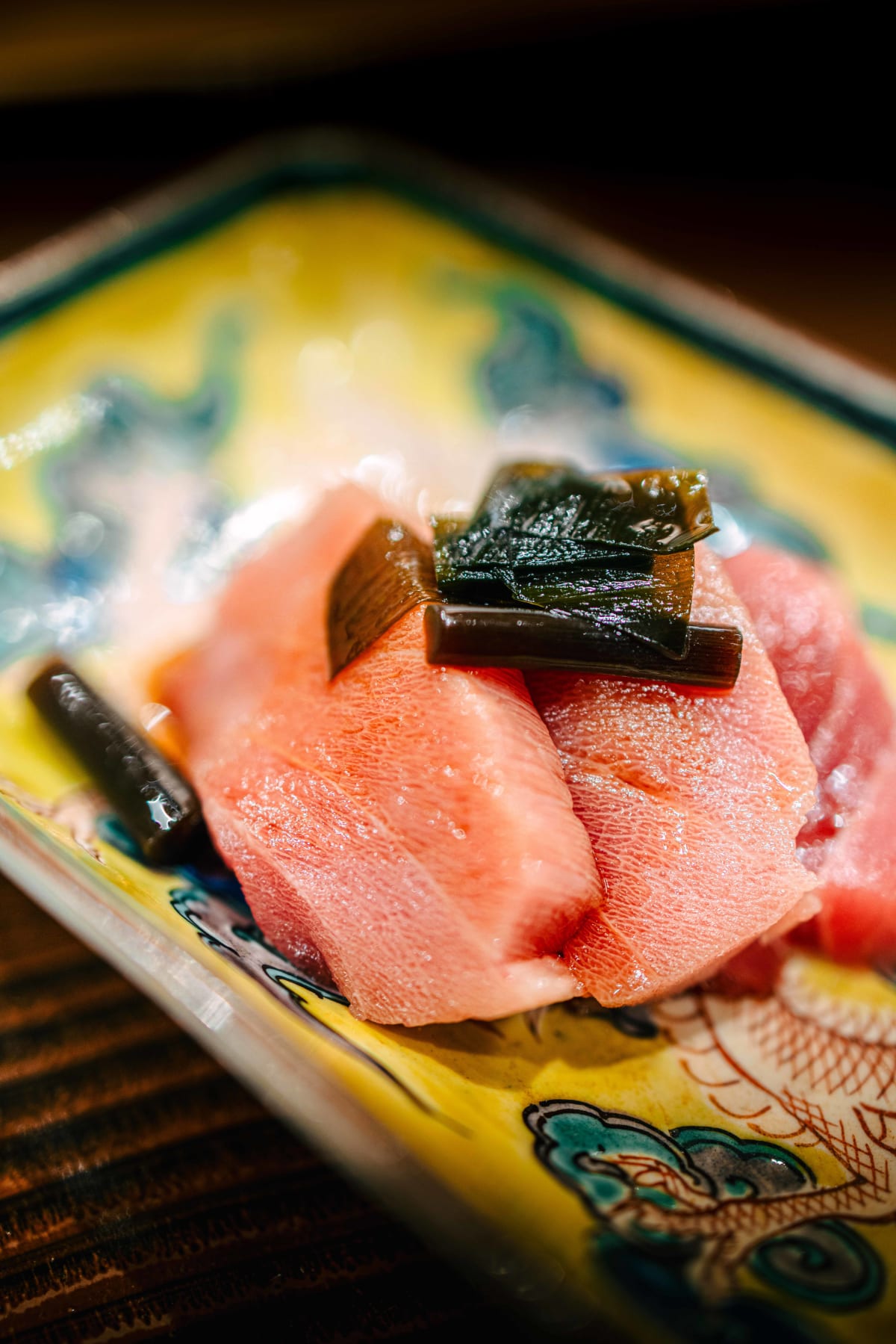
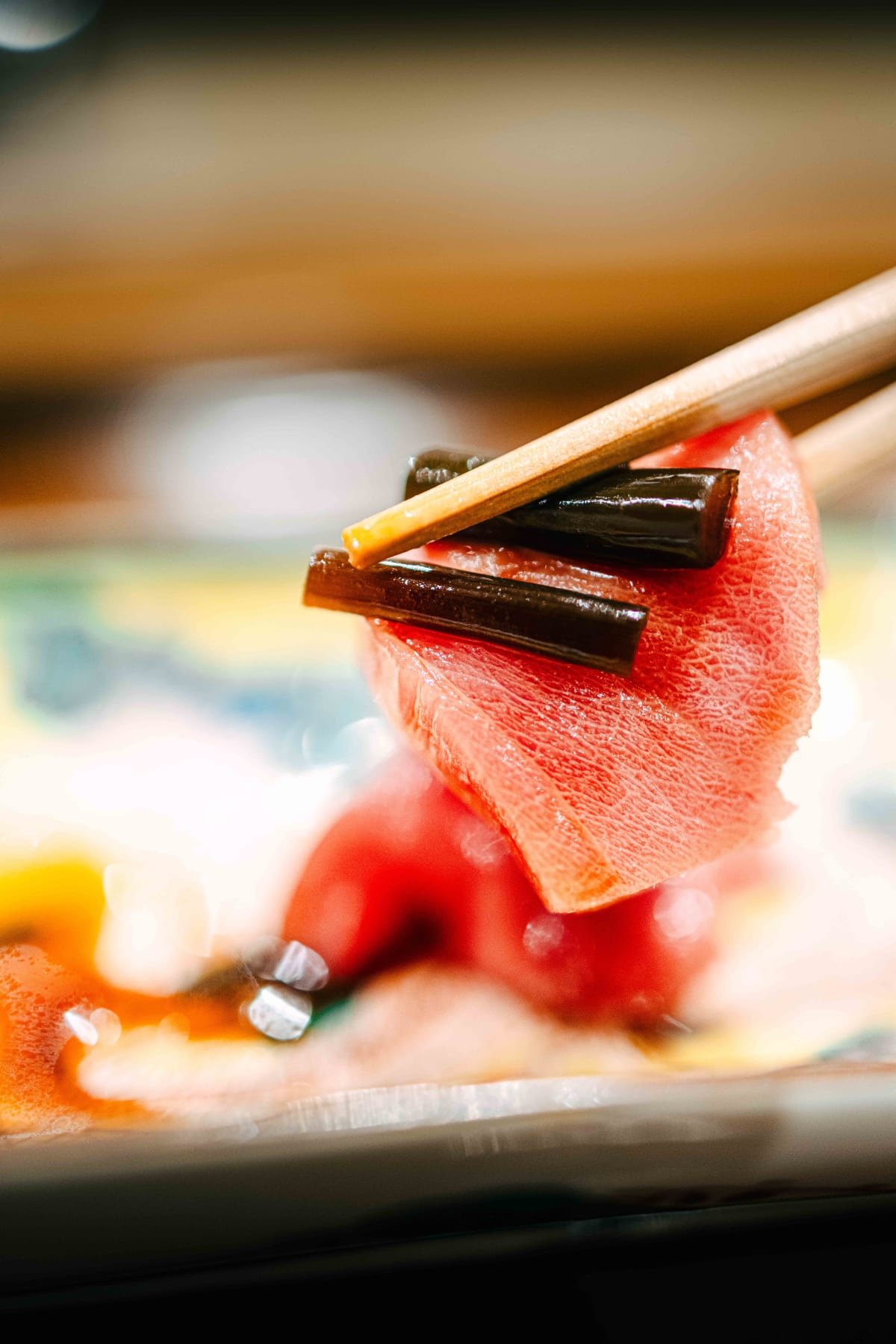
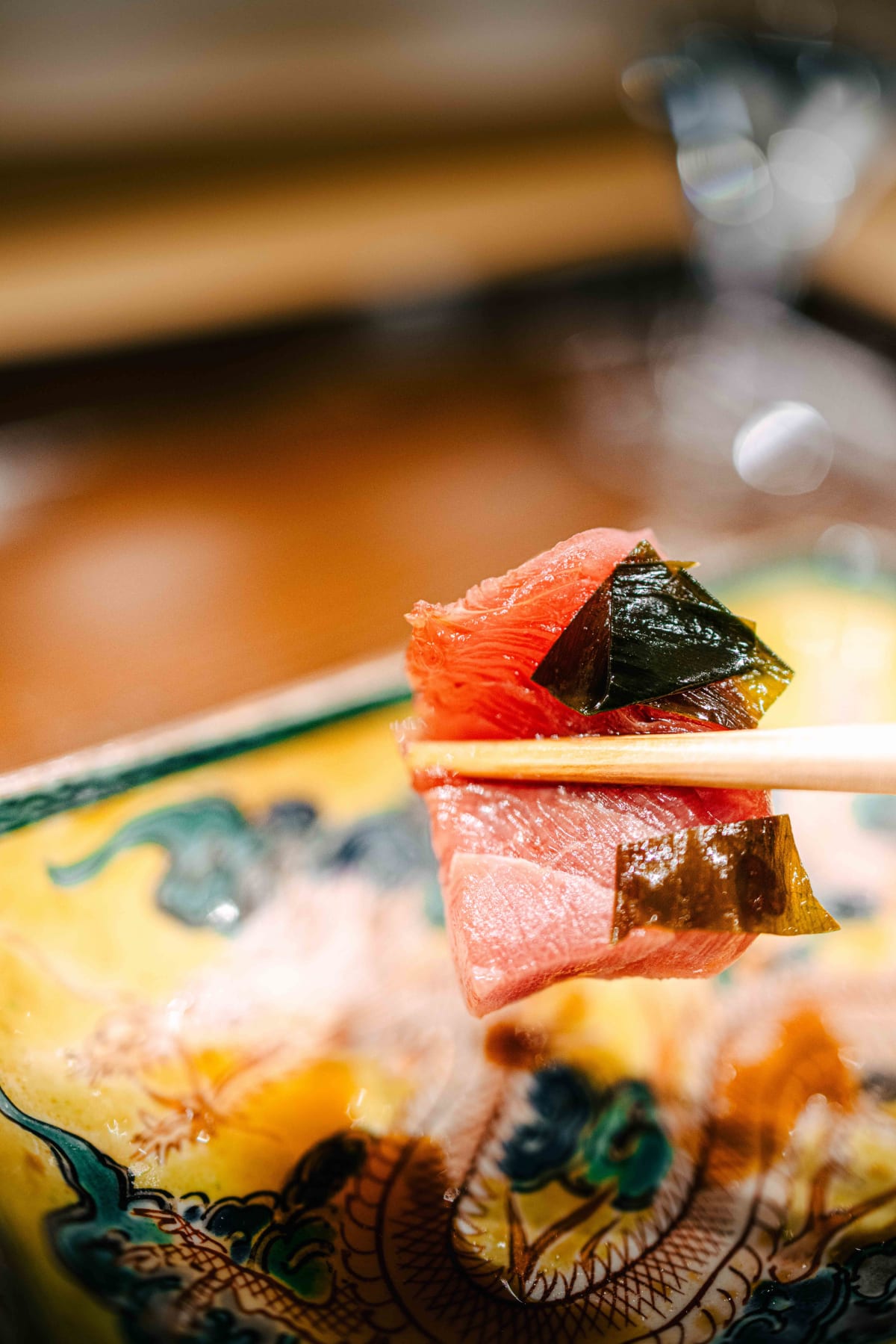
The third course was the only non-fugu dish, maguro sashimi from Aomori, served already dressed with a bright, pickle-like soy.
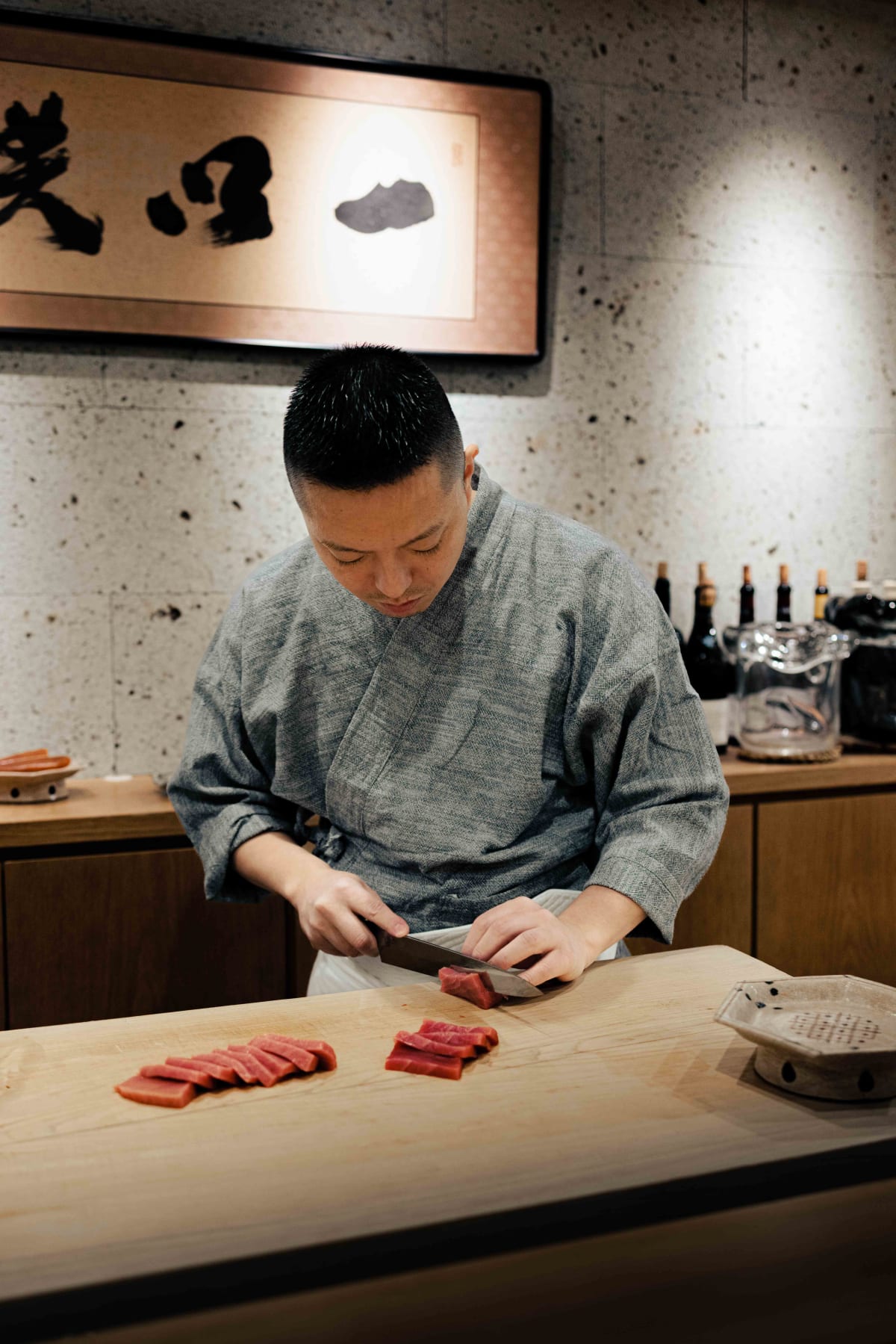
The otoro had a lovely acidity and was excellent; its impact was clearly greater than the chutoro's.
Section 7·Fugu-yaki
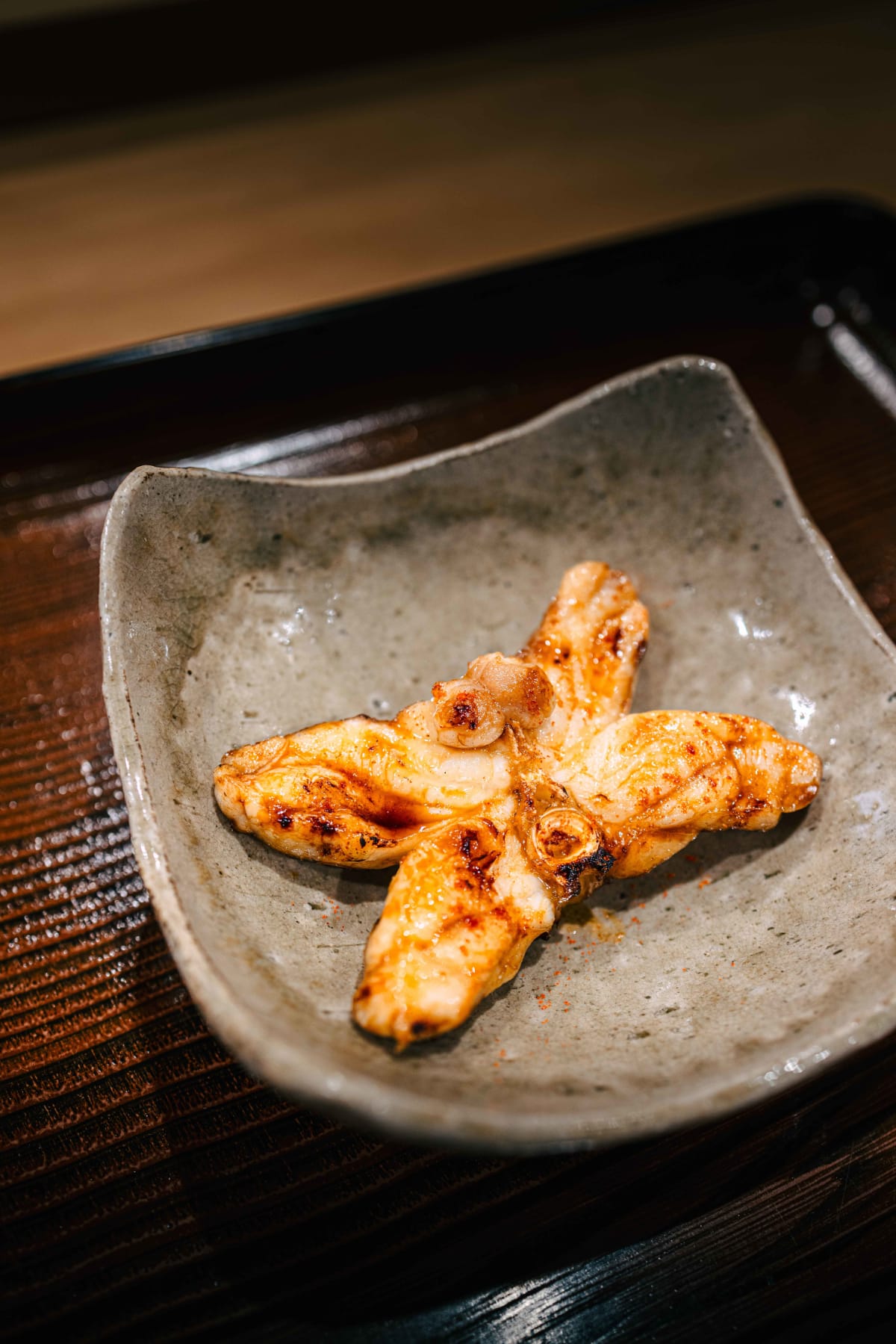
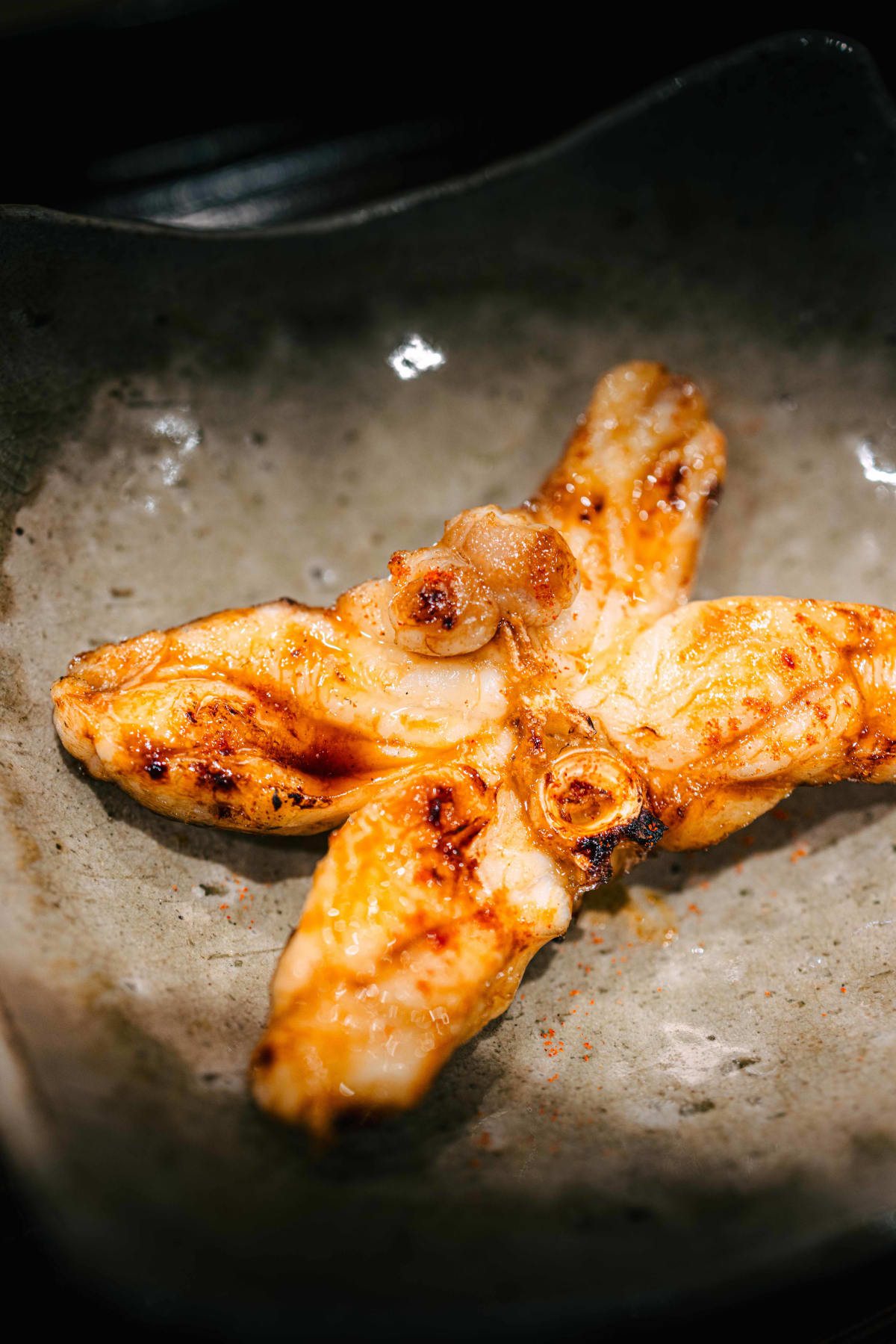
I was wondering what would come next when I saw him grilling fugu in the back. Fugu again: fugu-yaki.
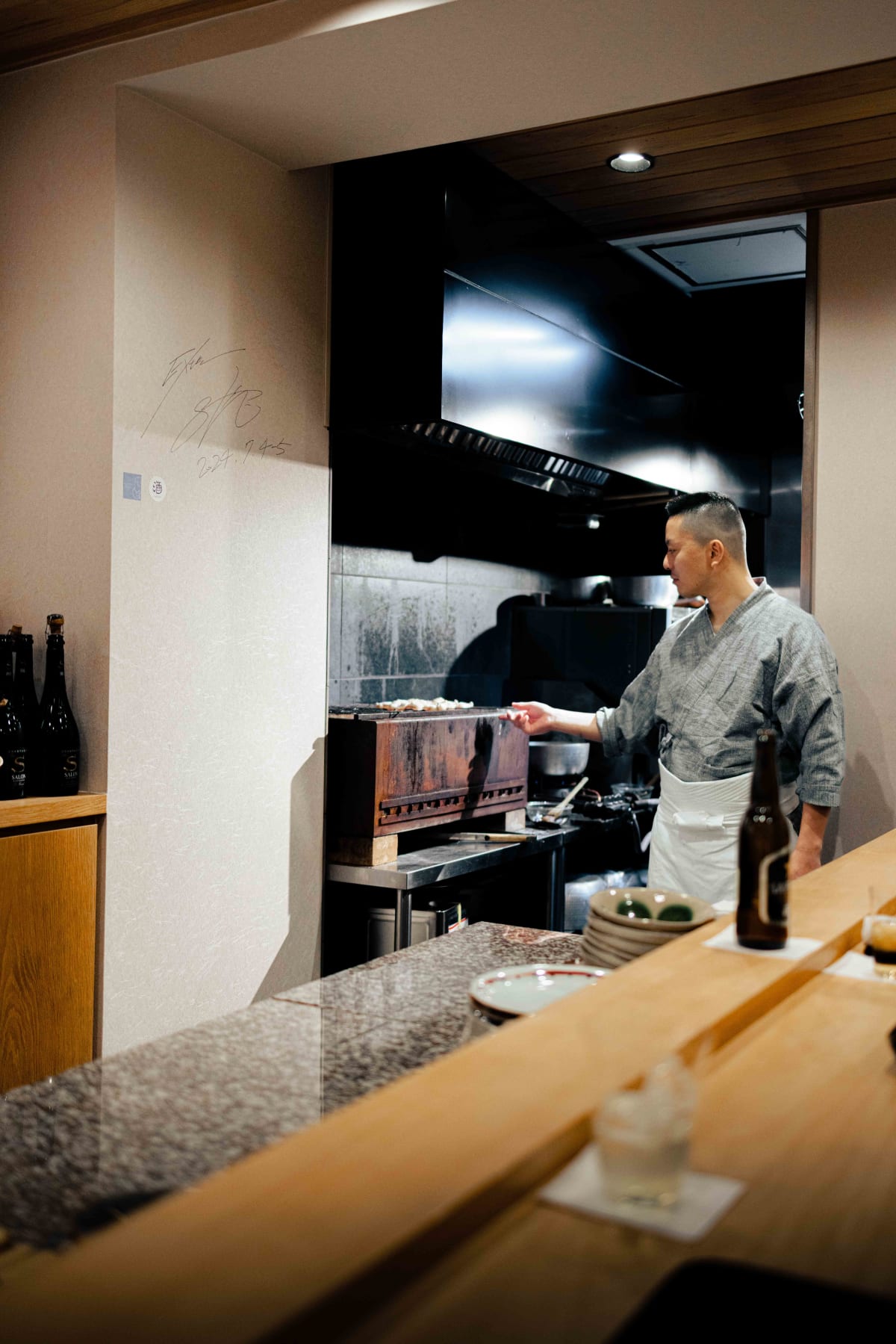
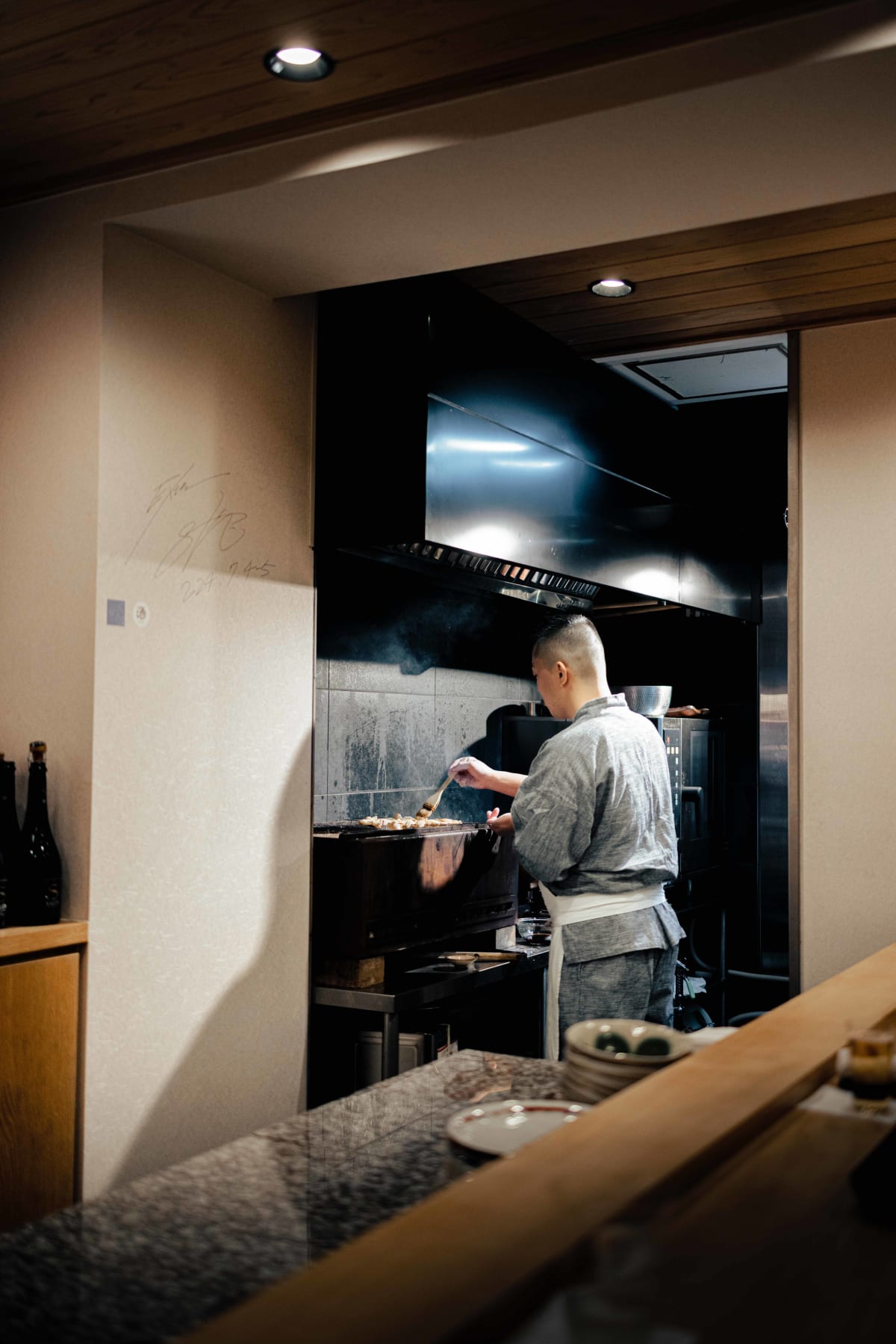
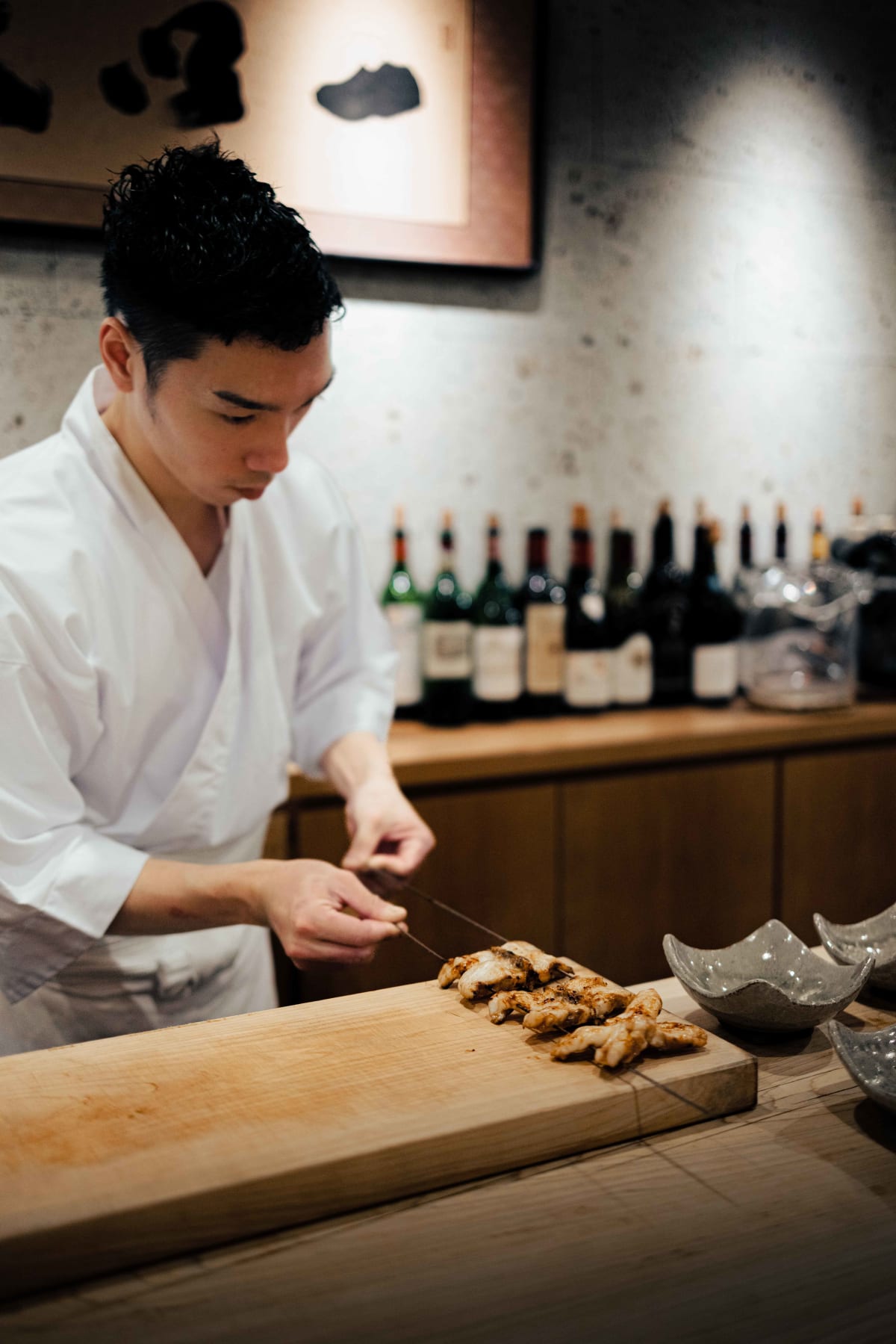
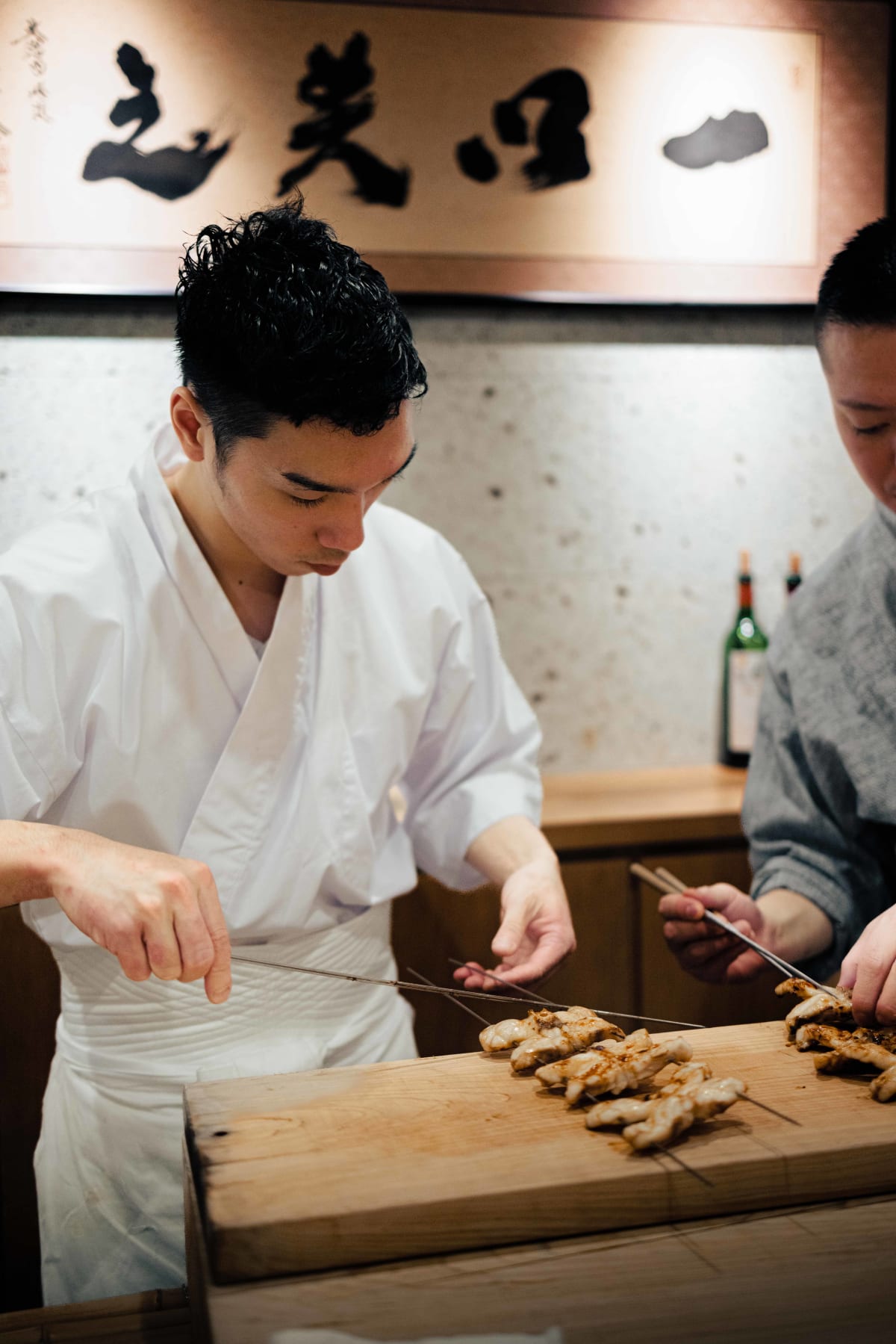
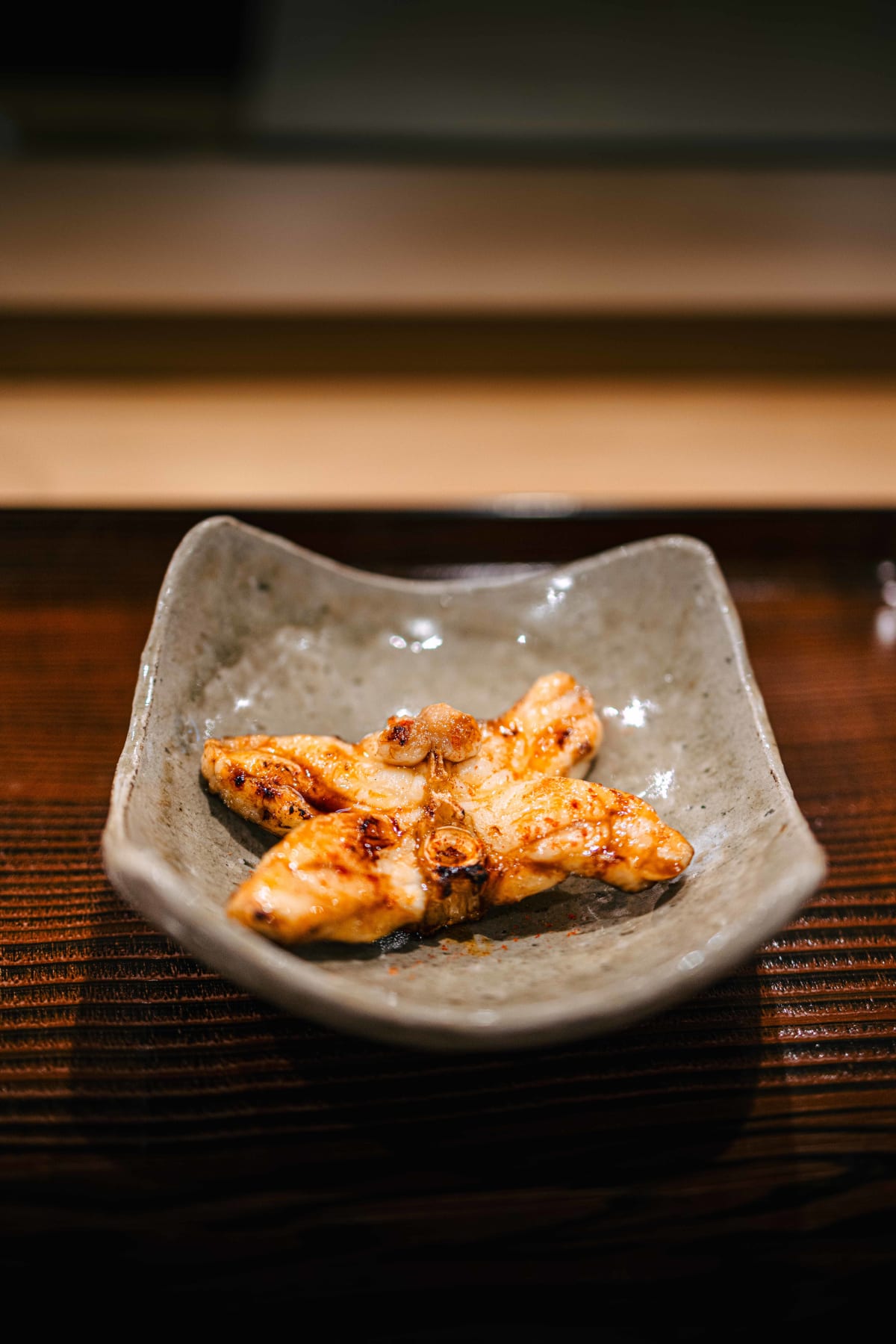
It was tasty, but honestly, fugu is a fish whose appeal lies in texture rather than in any flavour of its own, so the seasoning carries the dish. I found myself wishing it had been grilled with a little more spice, for interest and complexity. From a Korean palate, this fugu-yaki was, for me, a touch plain.
Section 8·The Karasumi
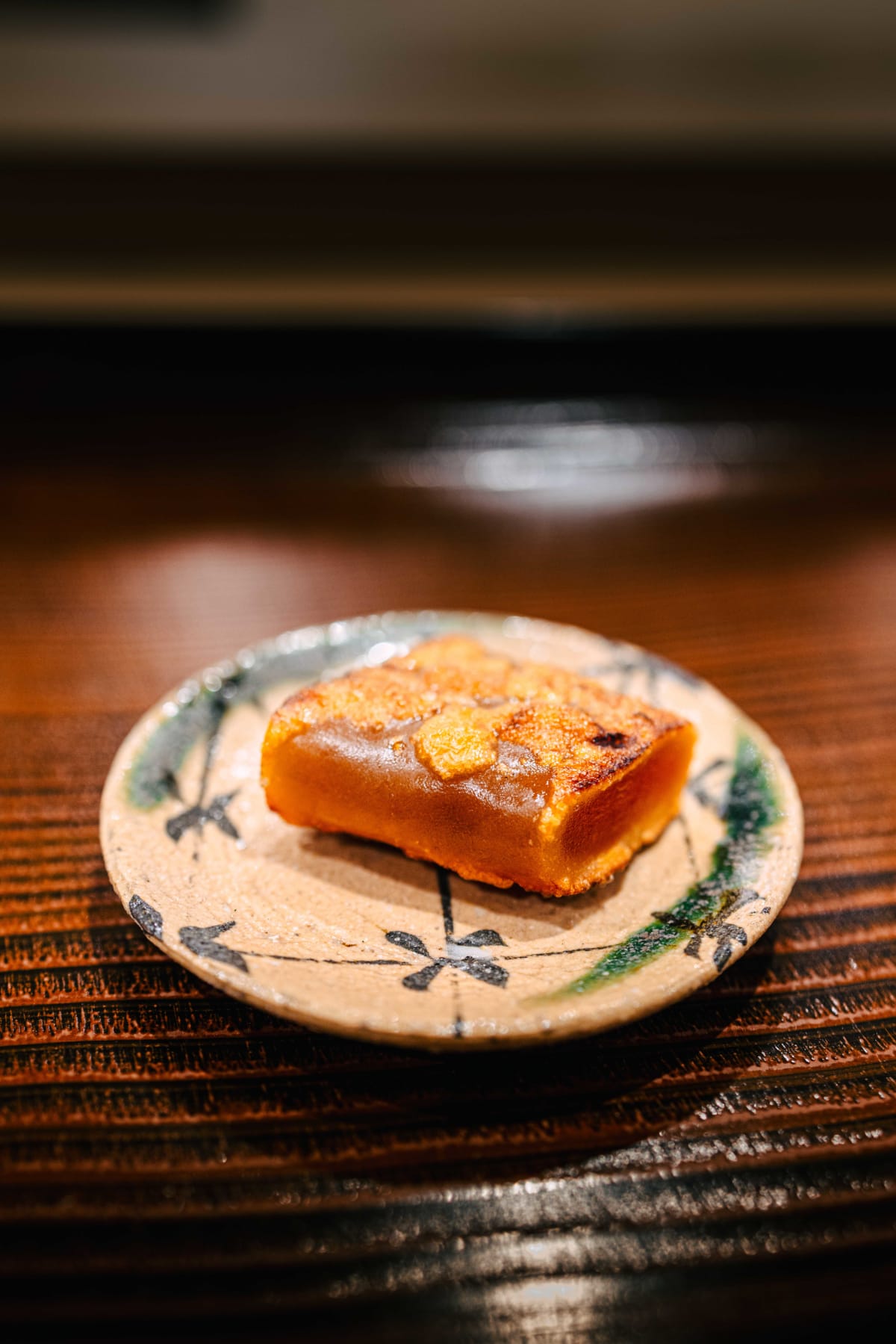
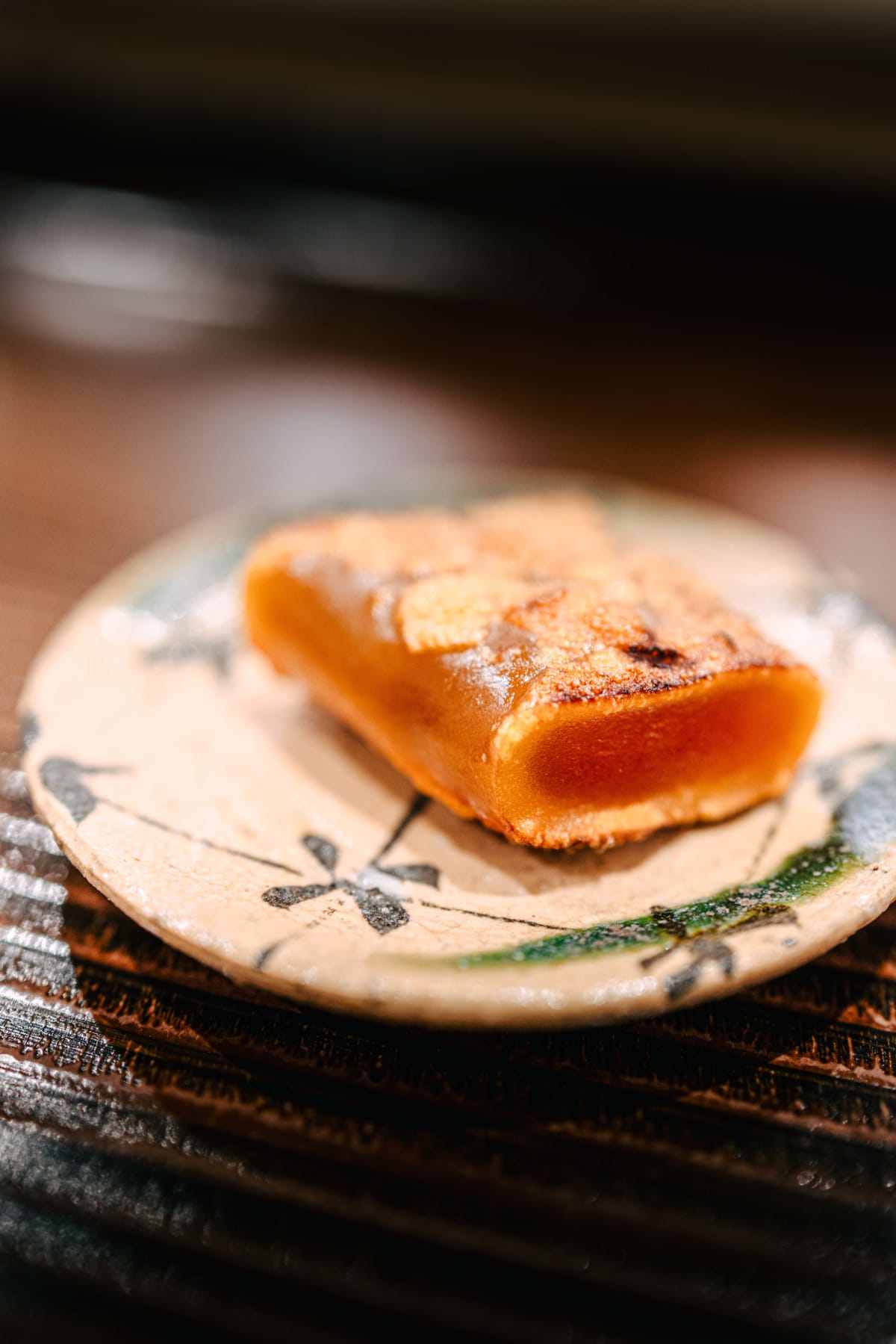
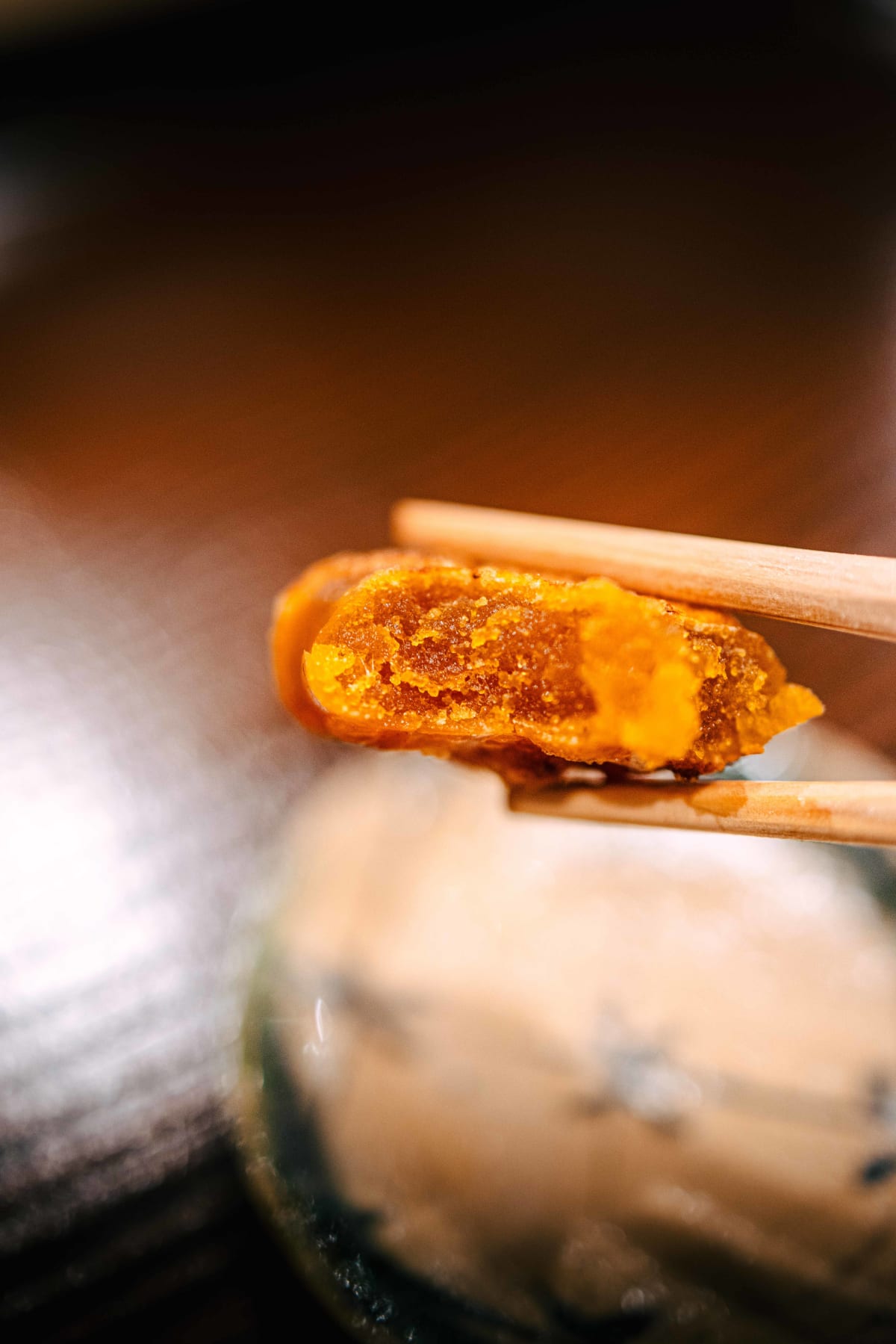
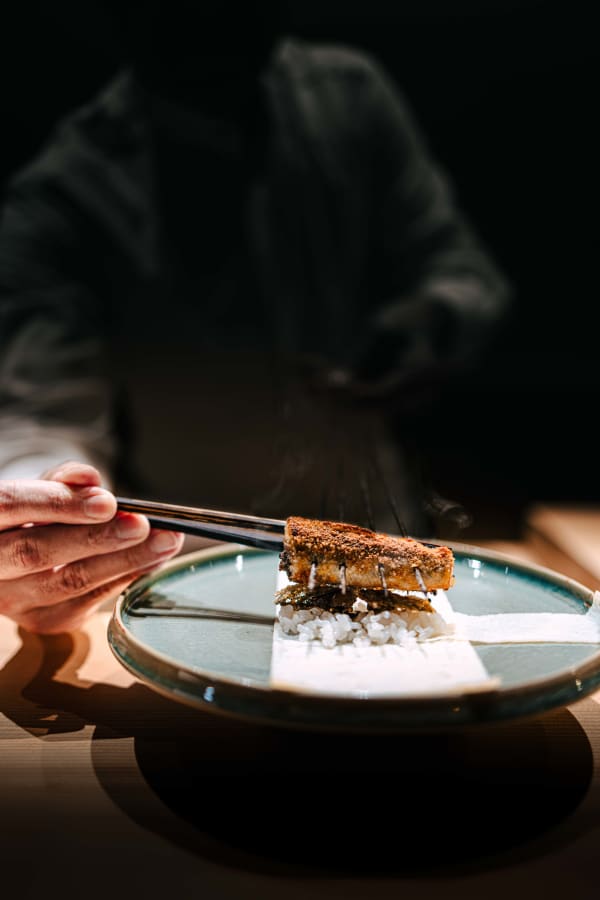
Next, as a drinking snack, he grilled karasumi, and this was a proper one. The grilled-mochi texture was good, and the funky, deep aroma of the cured roe took hold of me completely. It was not too salty, so it lifted the sake as well: the best snack of the night.
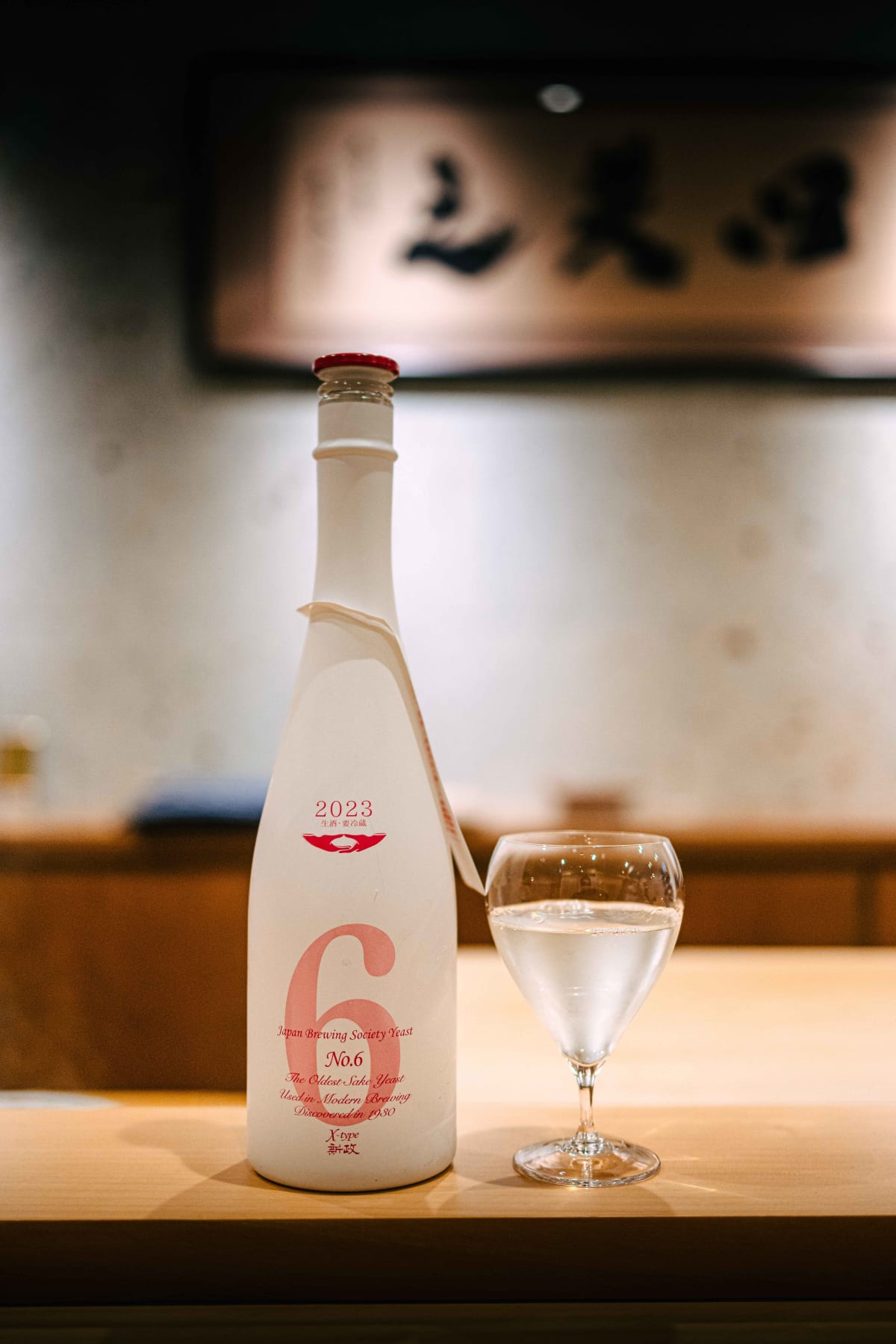
To drink with the karasumi I ordered Aramasa No.6 X-type. Aramasa, founded in Akita in 1852, is the very brewery where Association Yeast No.6, the oldest yeast still used in modern brewing, was isolated in 1930. The No.6 line is brewed to express that yeast as directly as possible, and every bottle in it is unpasteurized namazake. Of these, the X-type, for "eXcellent," is the most highly milled, top-of-the-line flagship, in which the No.6 yeast's clean yet powerful presence shows most vividly. I had meant to hold back on drink orders, since the trip looked likely to run up a large food bill. One sip showed me how foolish that was. To eat wonderful food without enjoying the wonderful drink that belongs with it is a half-measure, worse than not bothering at all.
To eat wonderful food without enjoying the wonderful drink that belongs with it is a half-measure, worse than not bothering at all.
Section 9·The Karaage
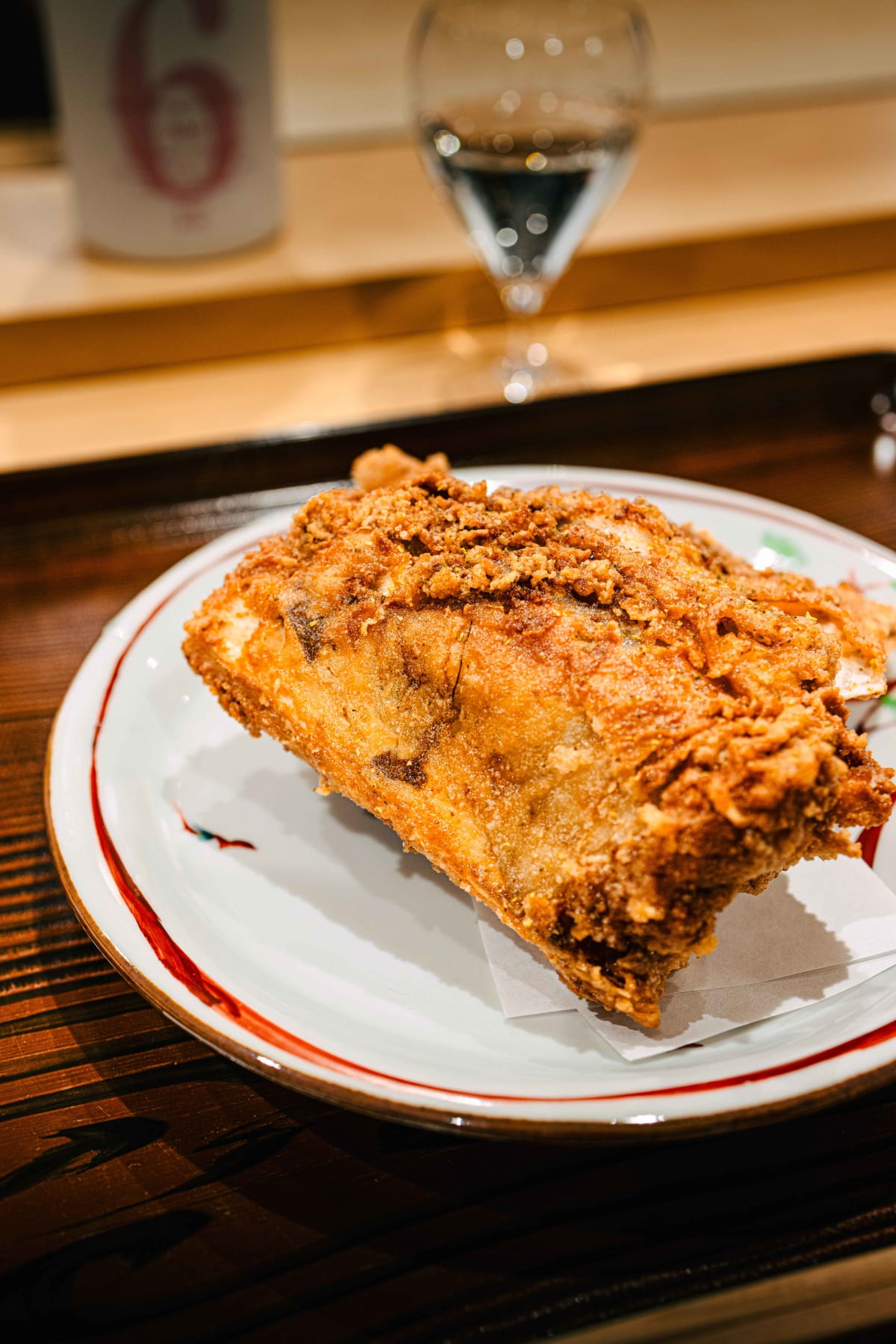
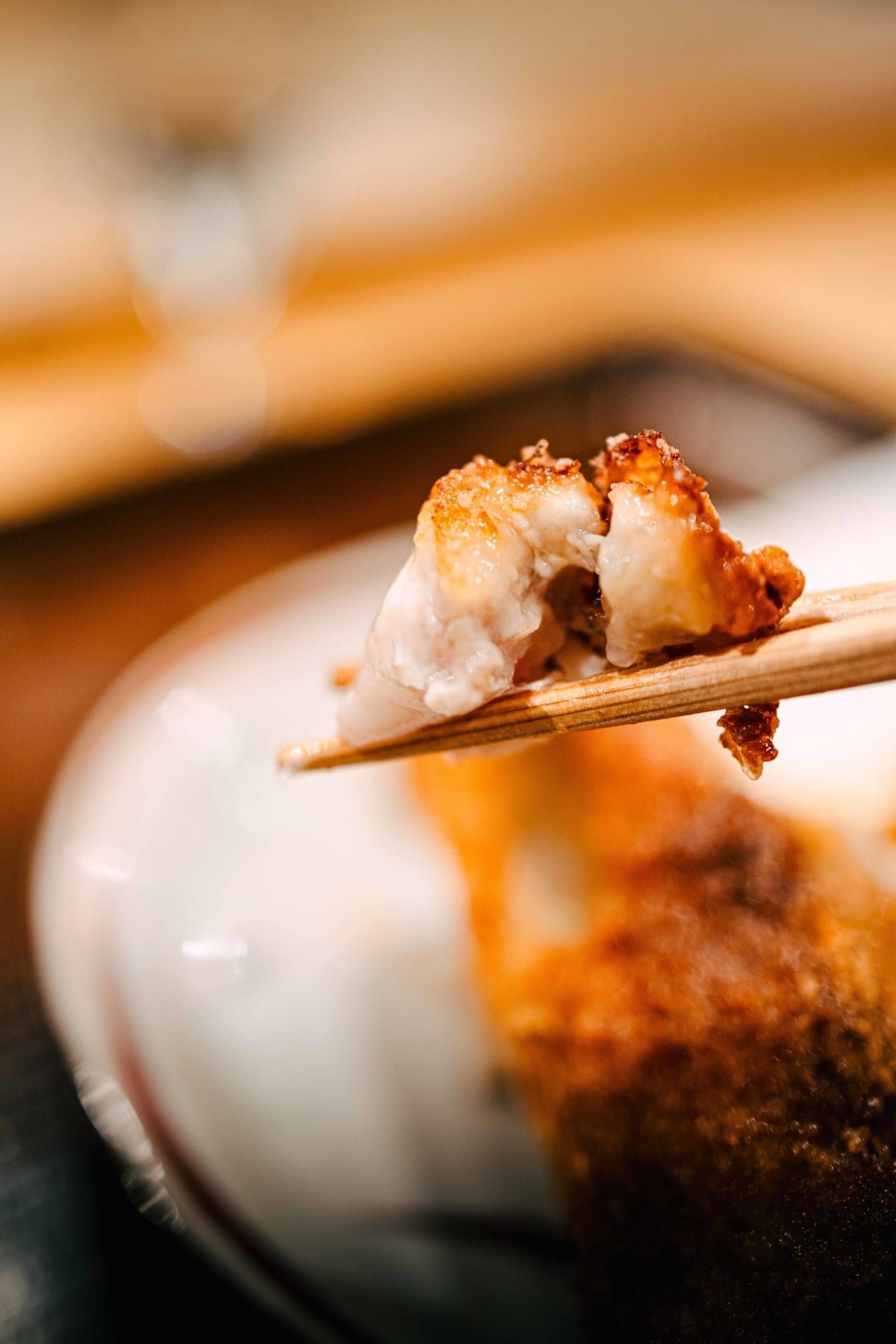
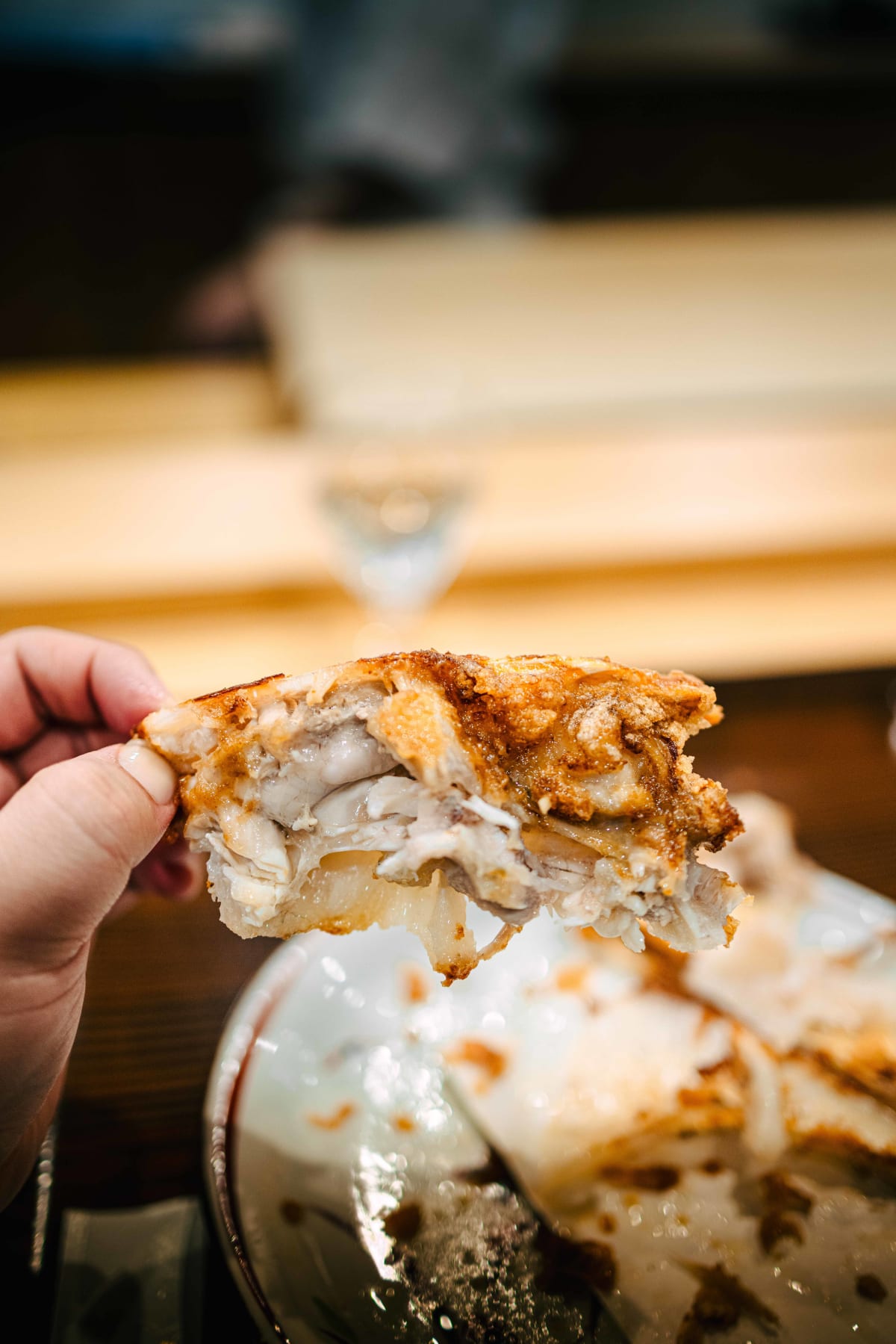
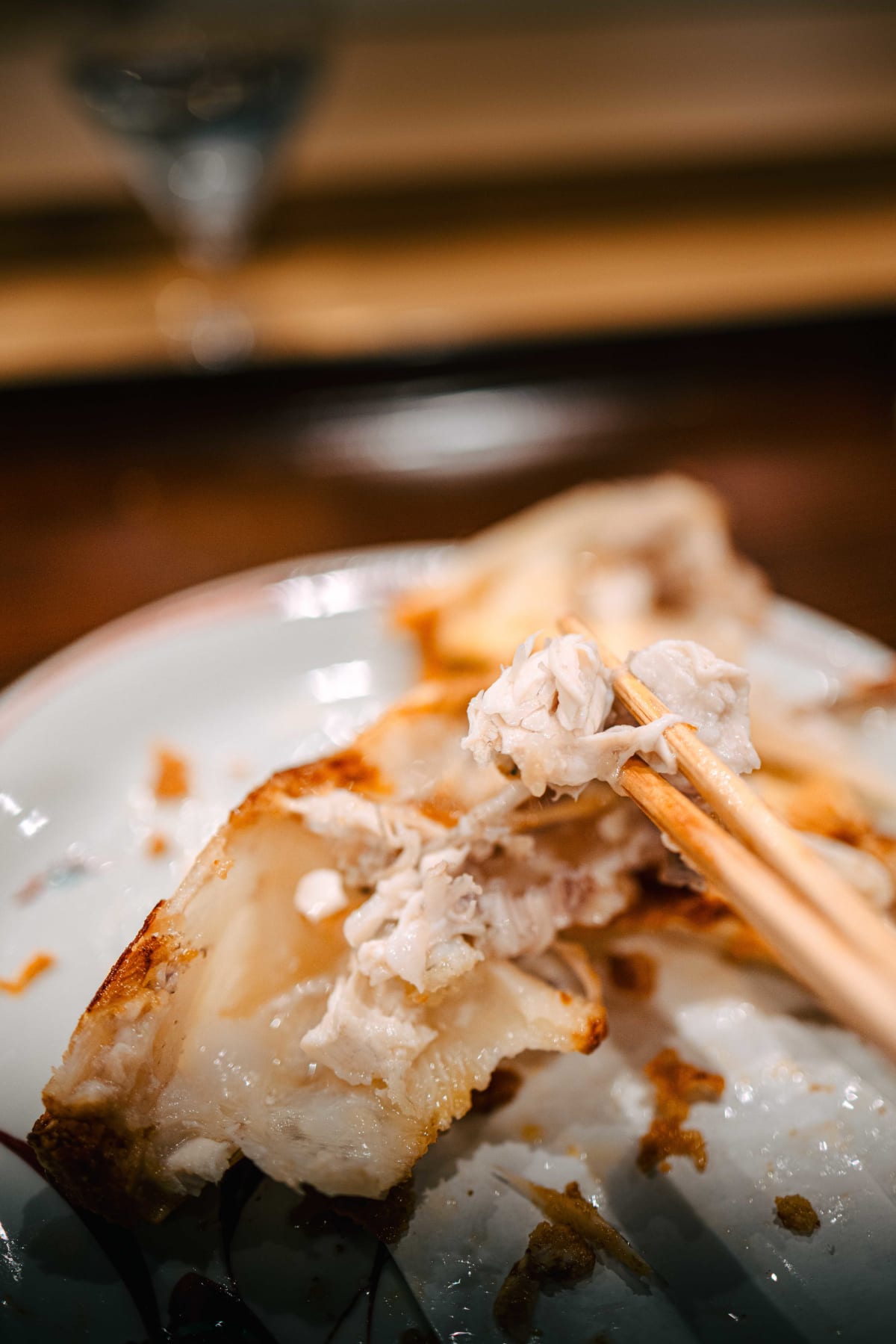
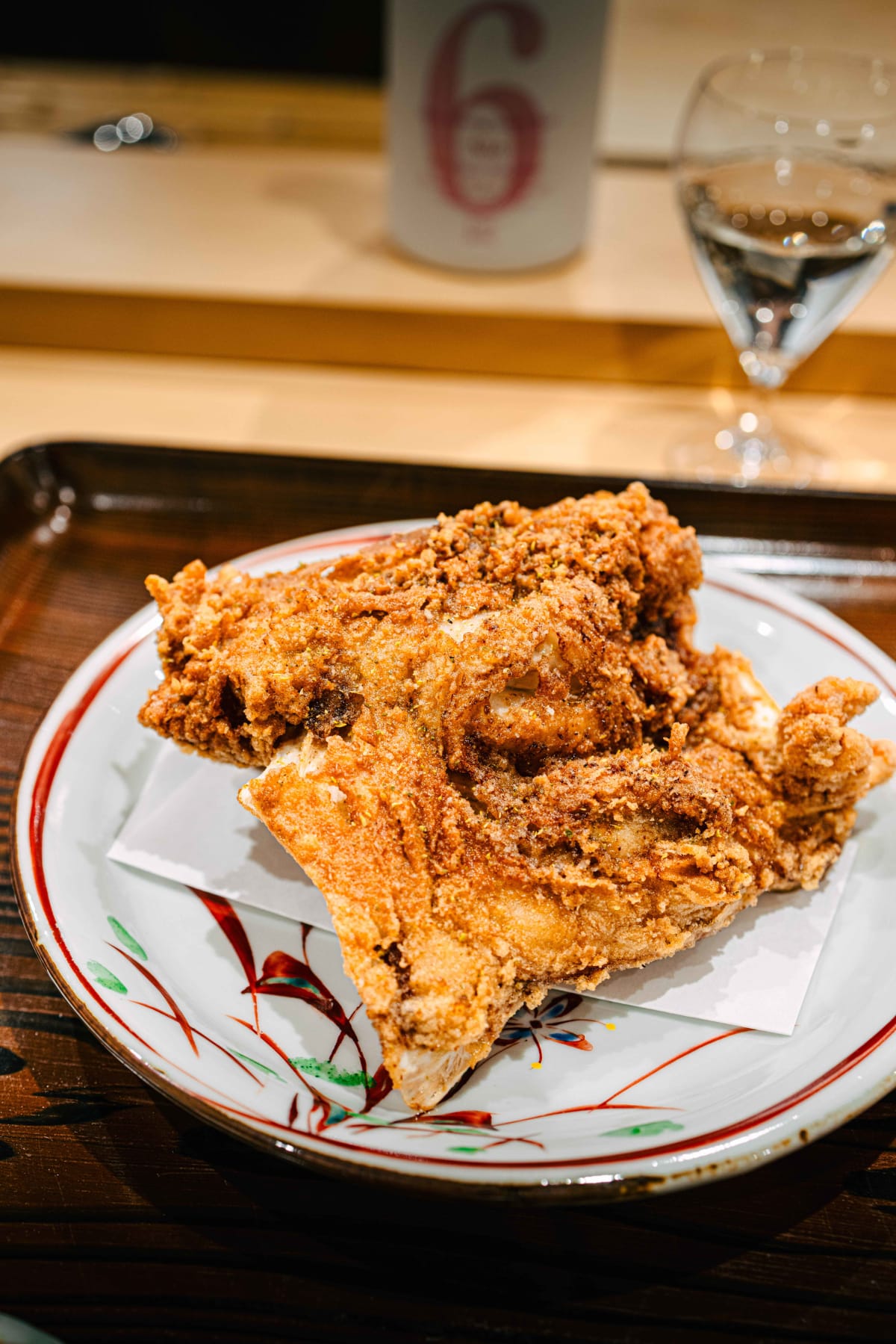
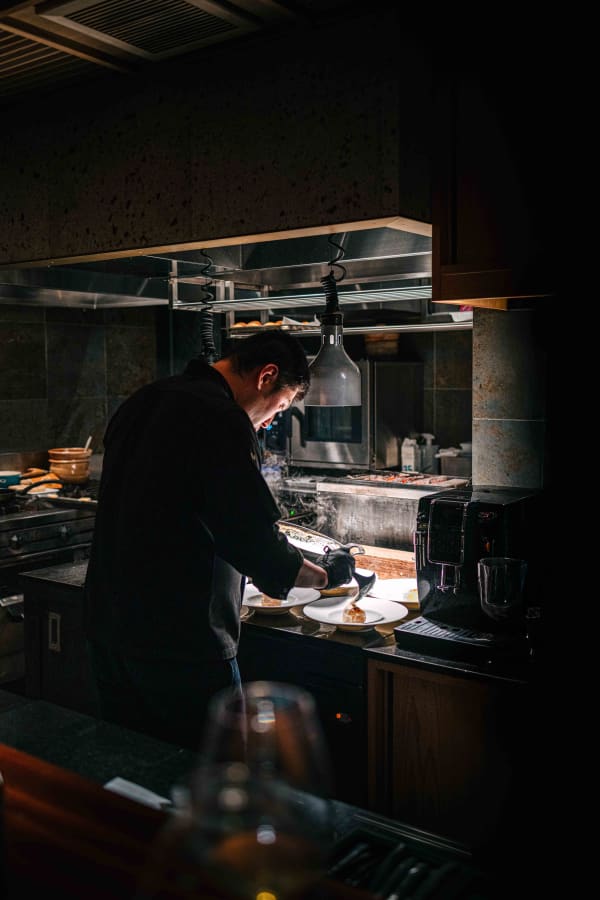
After the karasumi, the taisho went back into the kitchen and kept cooking. I heard the sound of frying, going on longer than I expected. What he finally brought out was fugu karaage, apparently the head, and it made me realize all over again just how large this fish was.
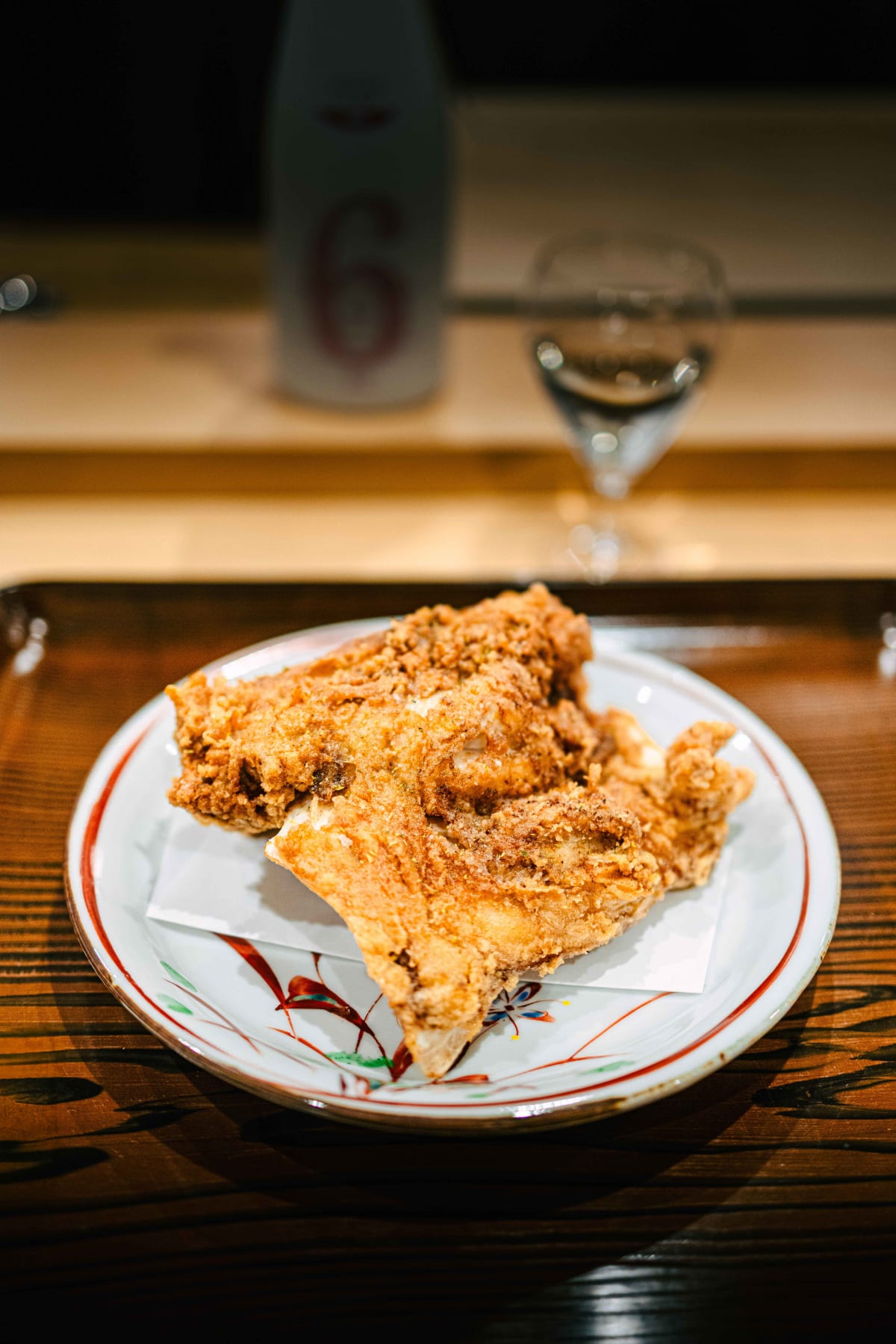
Freshly fried, it could not have been anything but delicious, and the sansho pepper he dusted on after asking first kept the fry from becoming too rich, which I liked. The trouble was that it was full of large, hard bones and difficult to eat, but since it is a dish you rarely get to try, I worked through the bones and picked out the meat with my chopsticks. It was striking in flavour and in appearance both.
Section 10·The Hot Pot
The last dish came sooner than I expected.
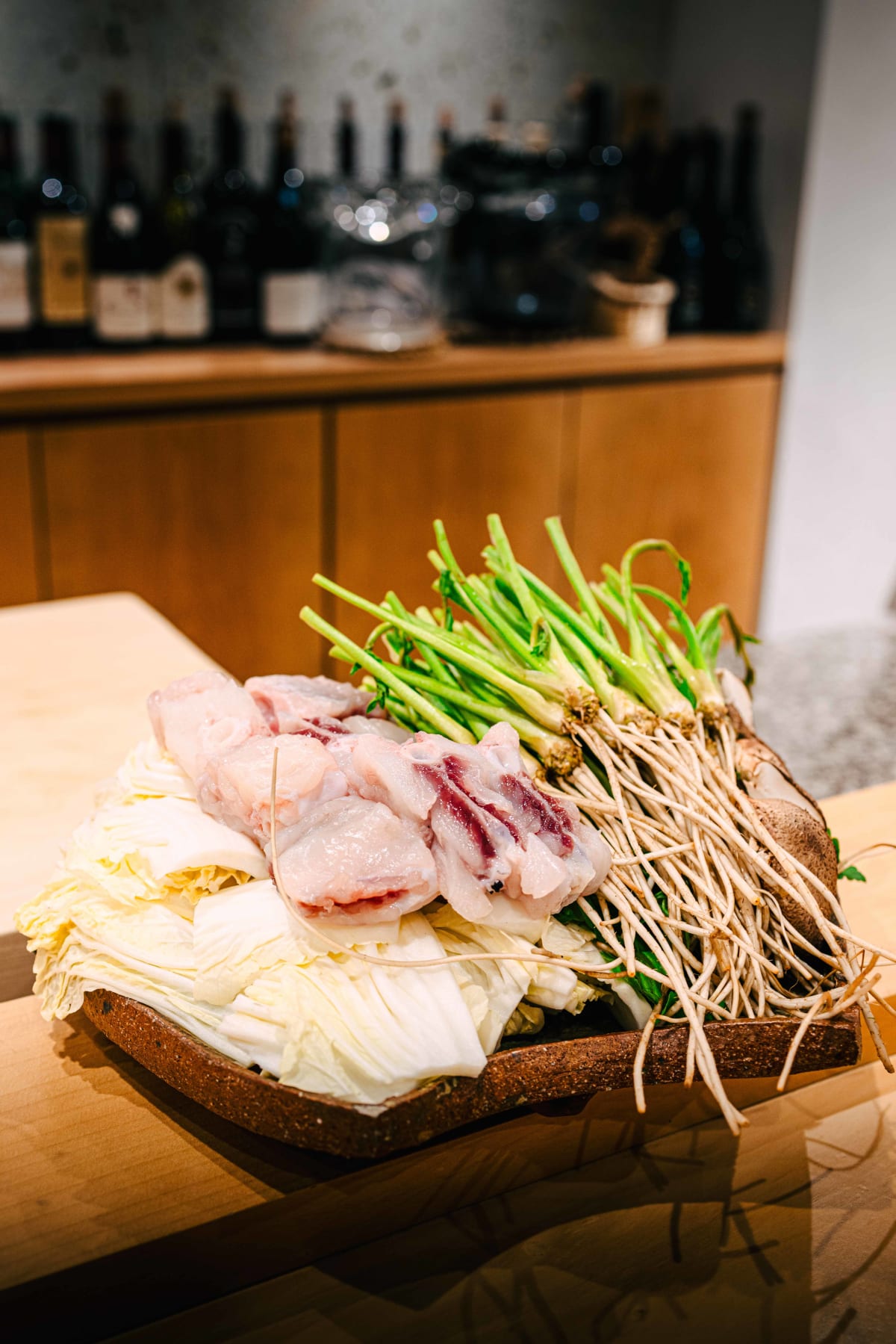
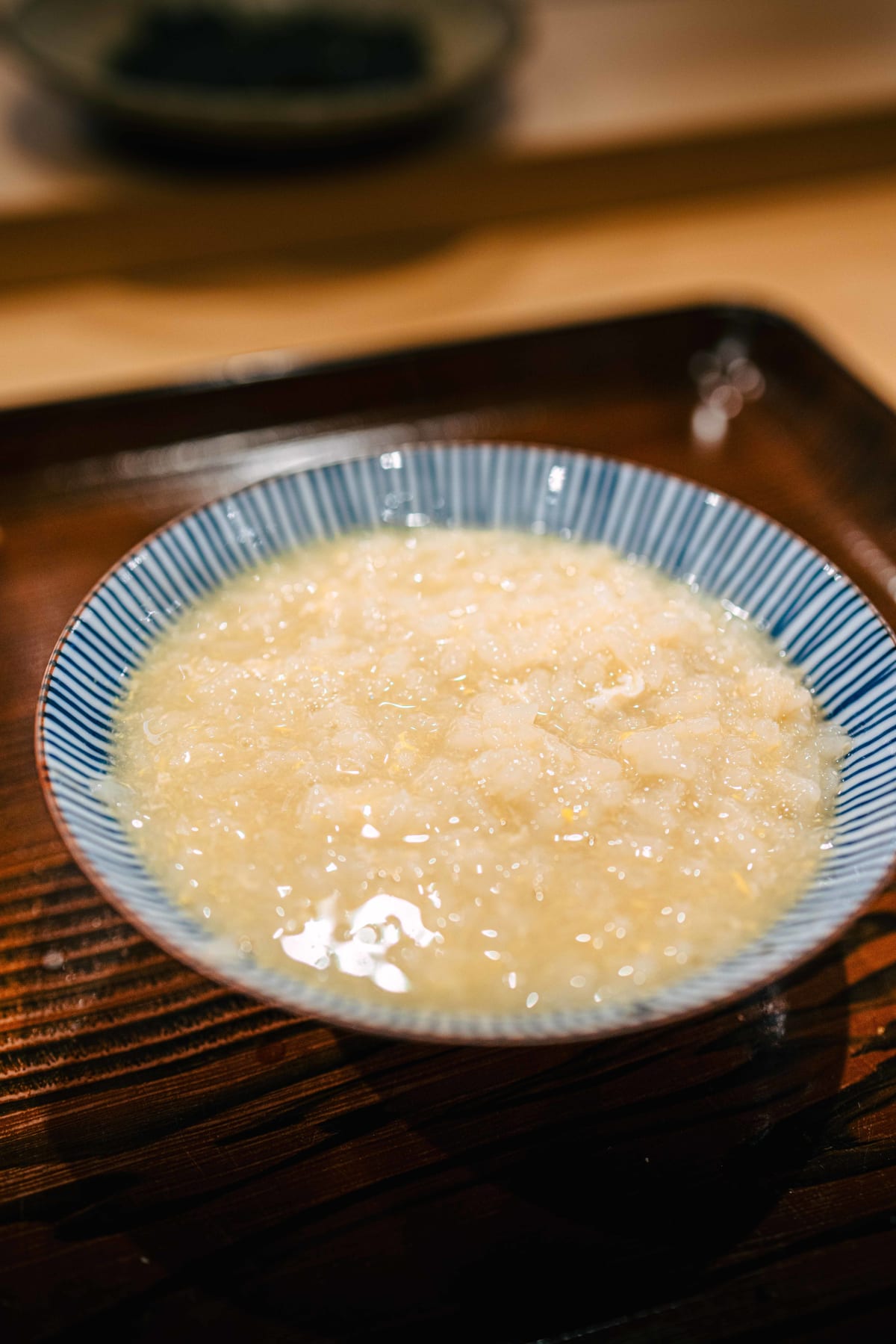
The theme being fugu, fugu it was to the very end: a fugu hot pot and rice porridge closed the course.
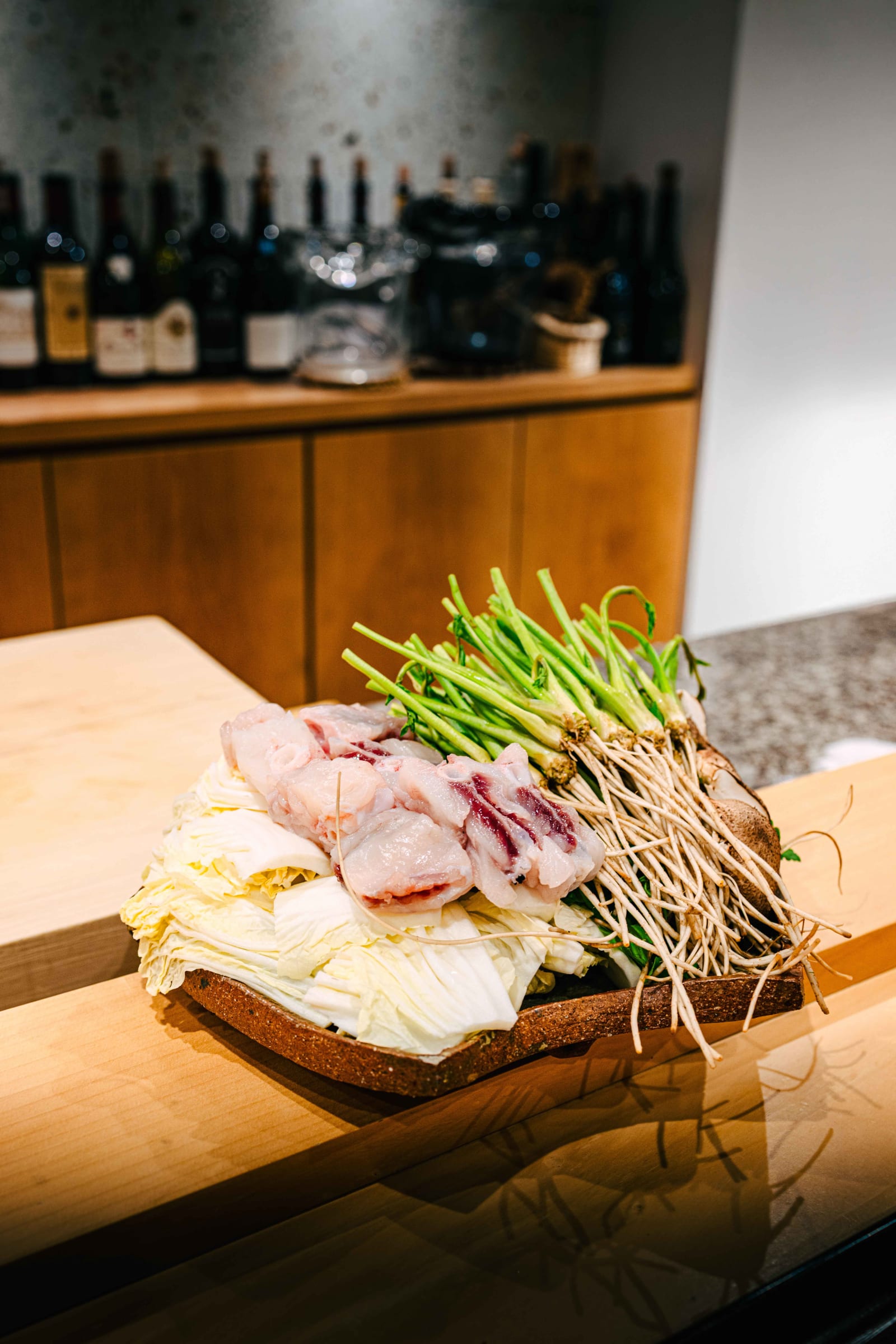
He showed me the ingredients for the pot first, the fugu meat, mushrooms, and assorted vegetables, and it was plainly a generous amount.
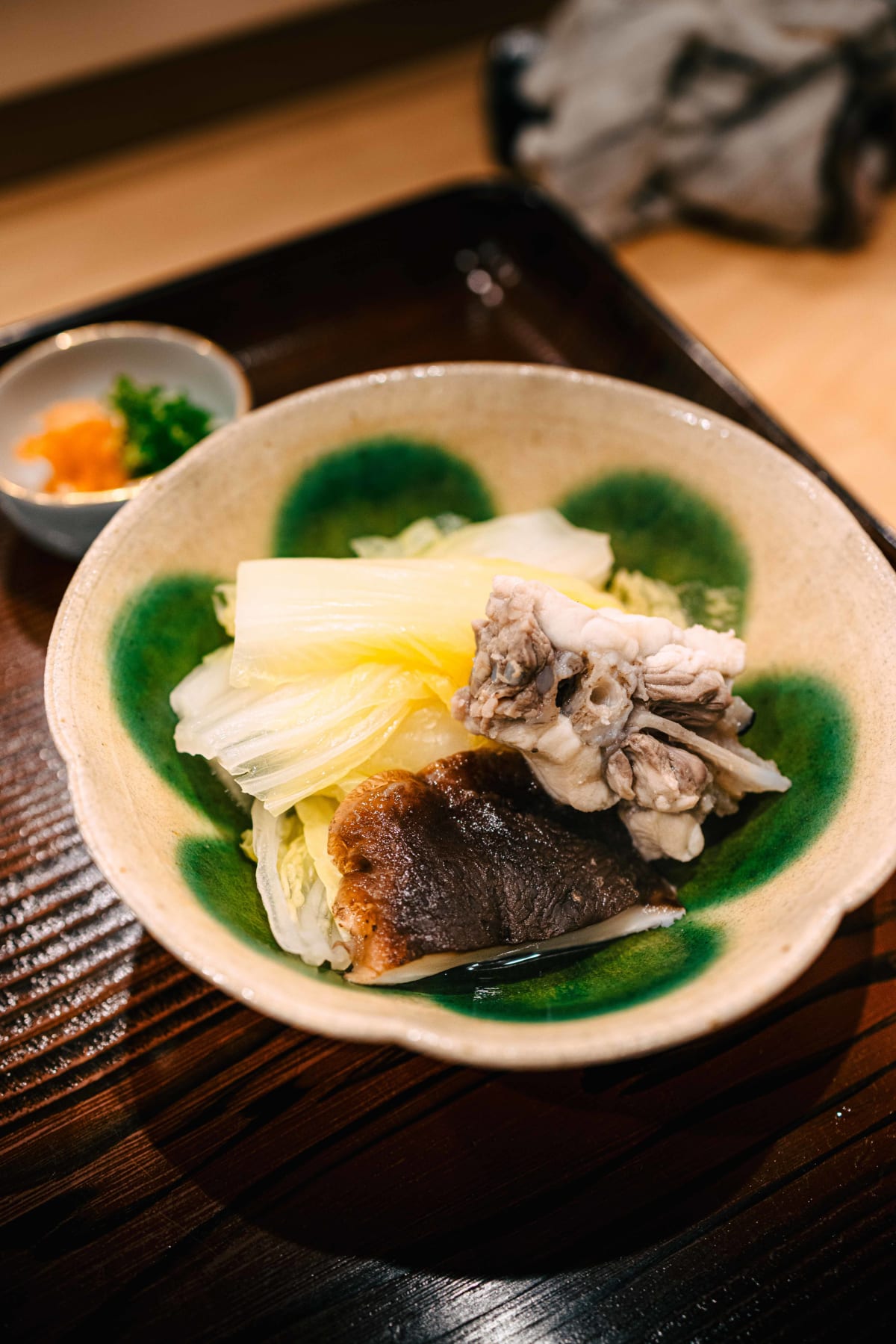
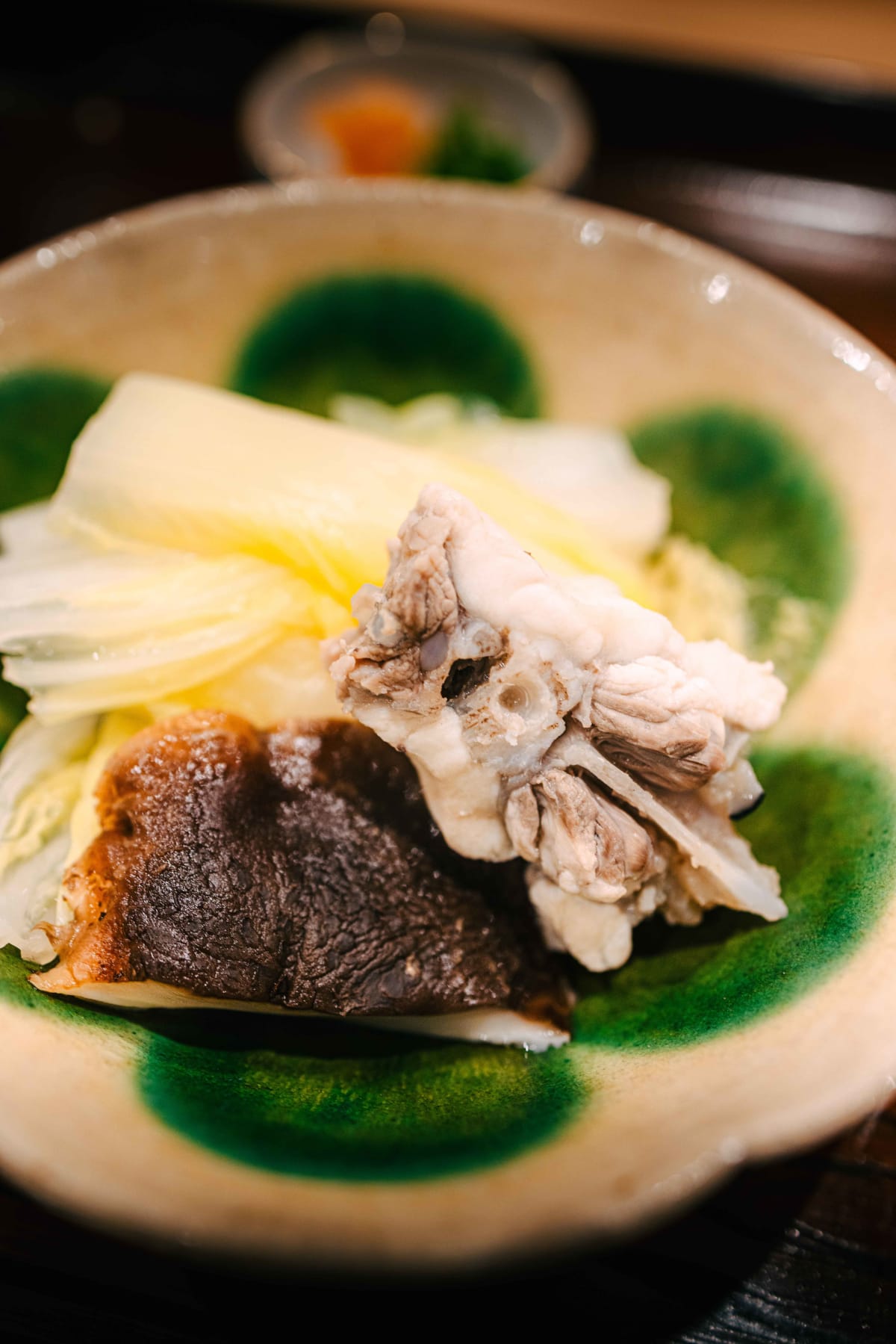
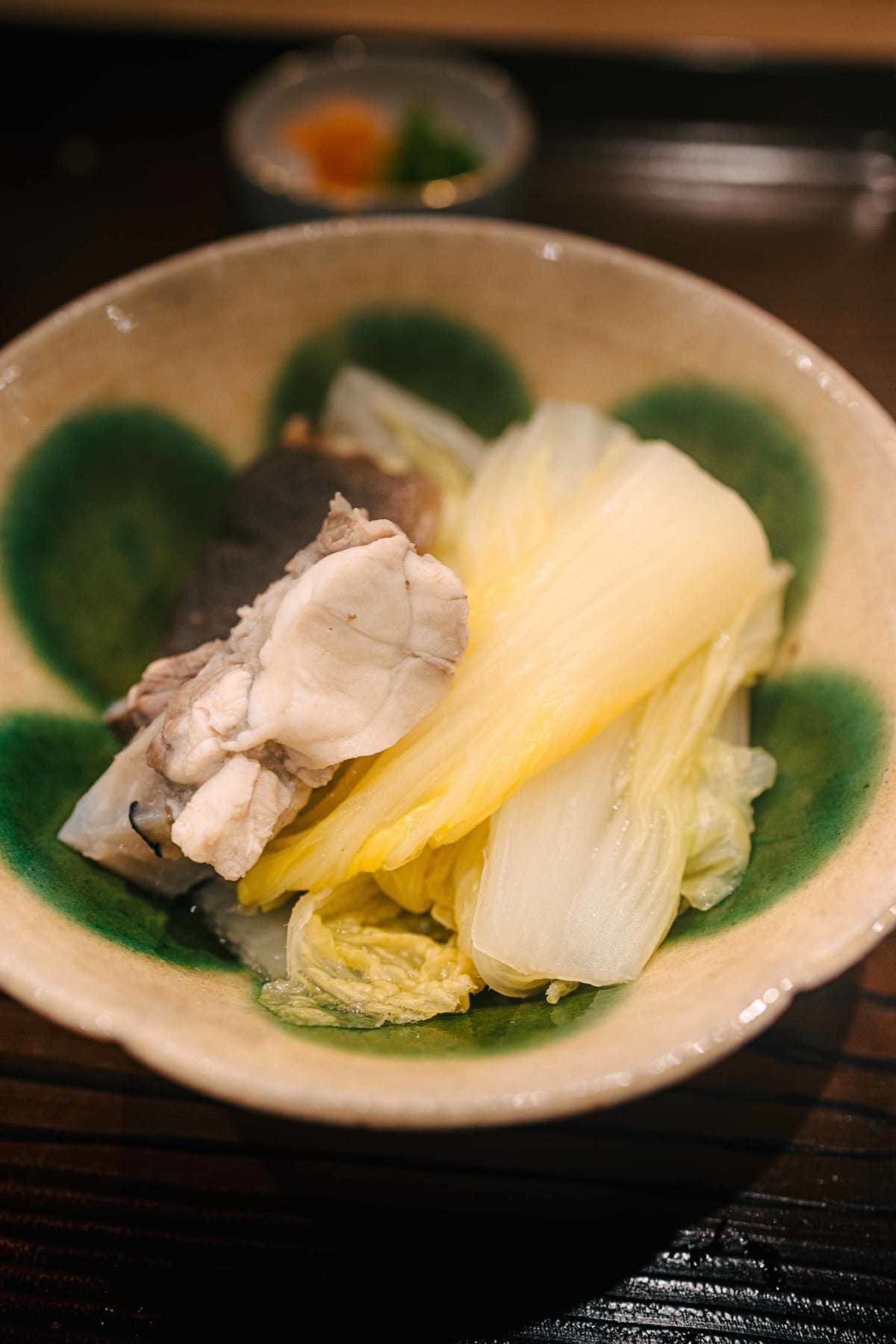
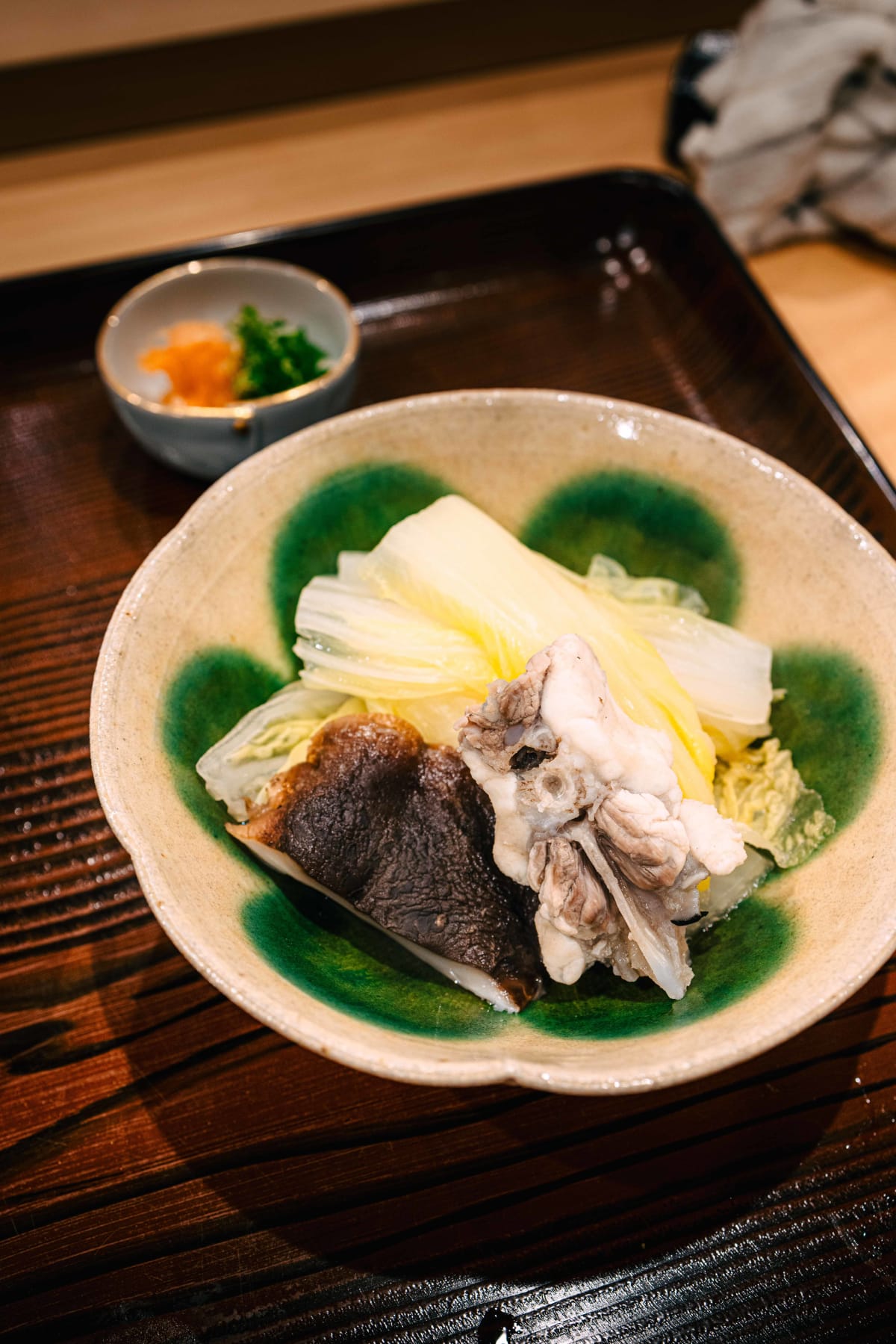
The pot held meat from around the fugu's bones and belly, with napa cabbage and shiitake, and dipped in ponzu it was very good.
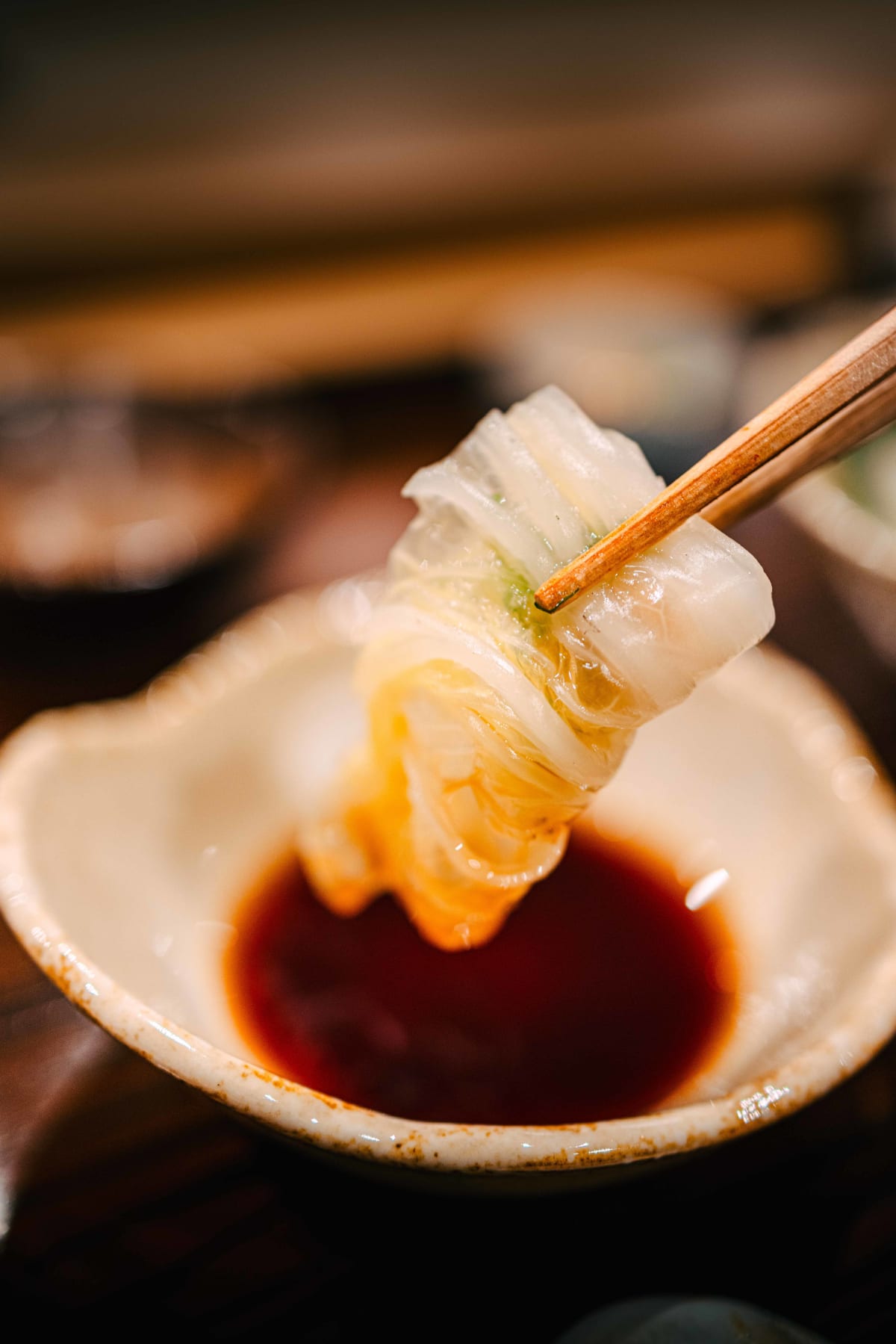
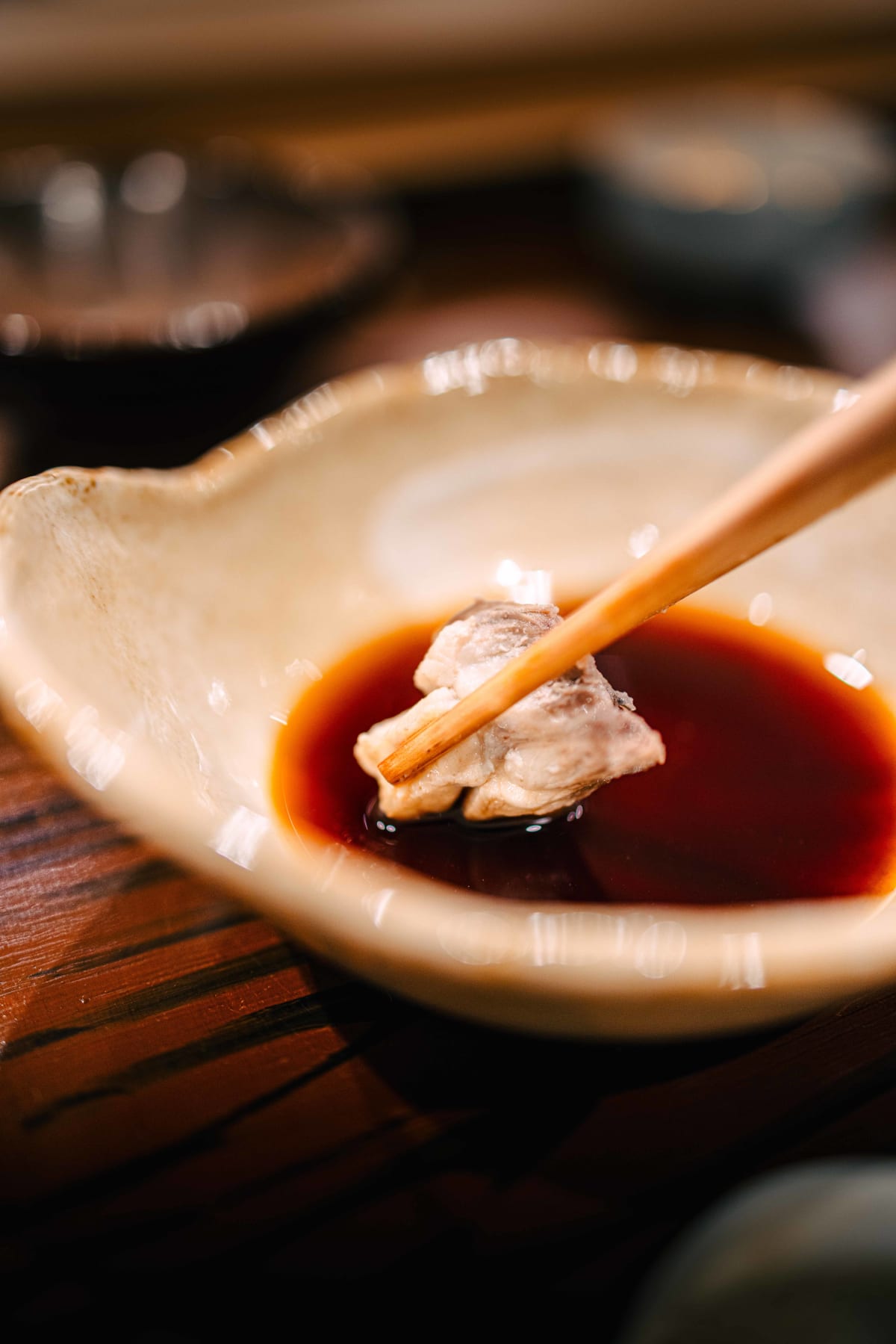
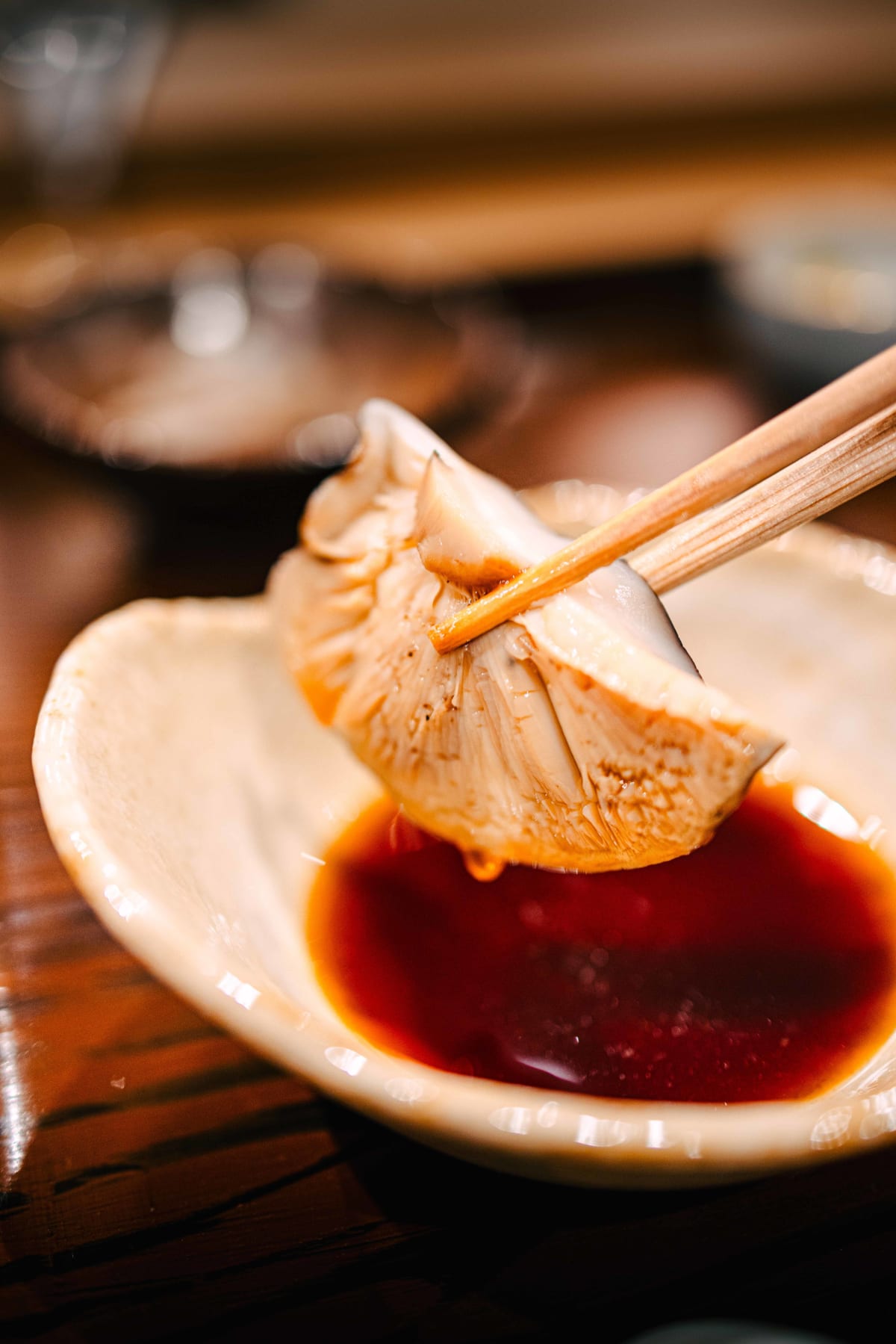
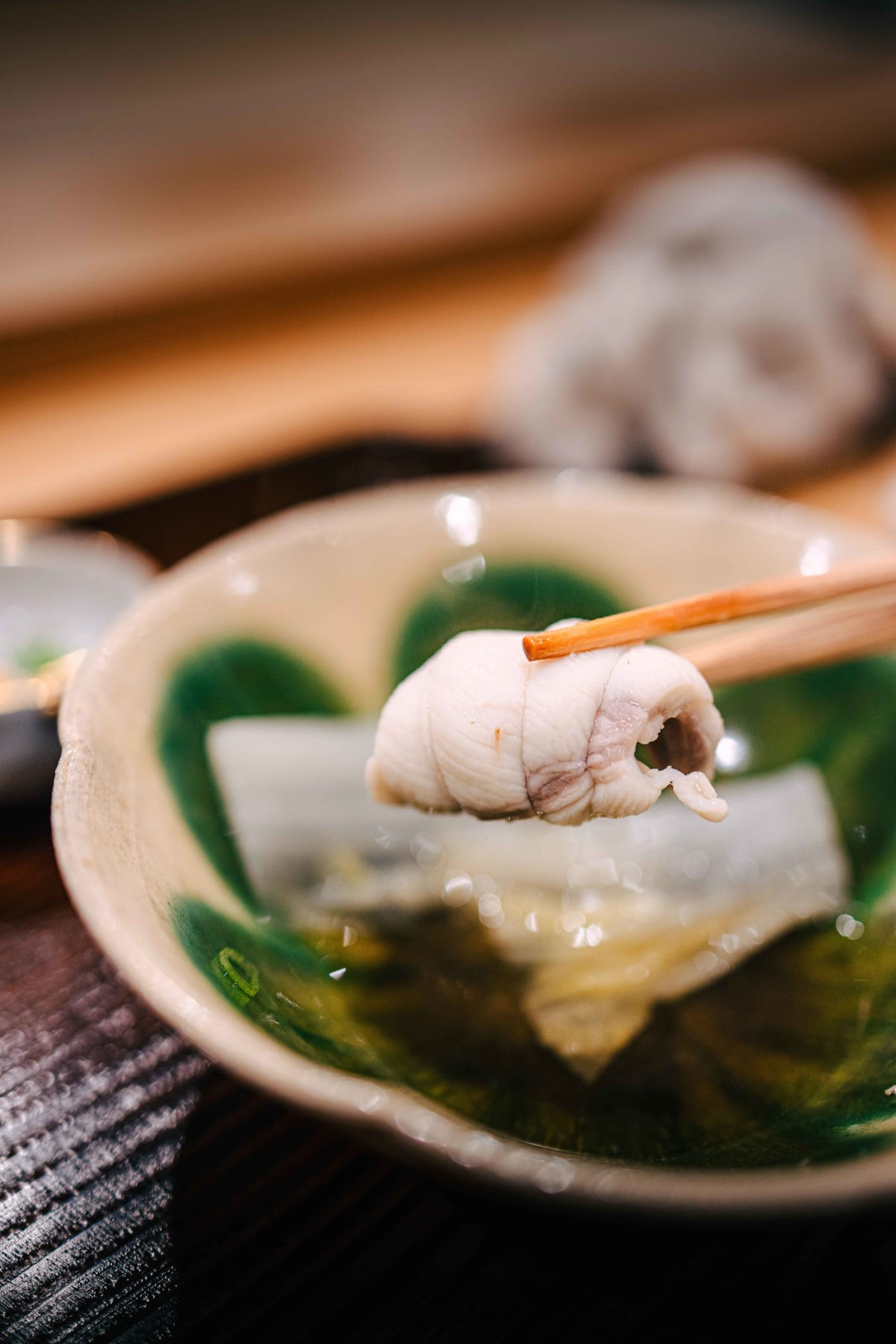
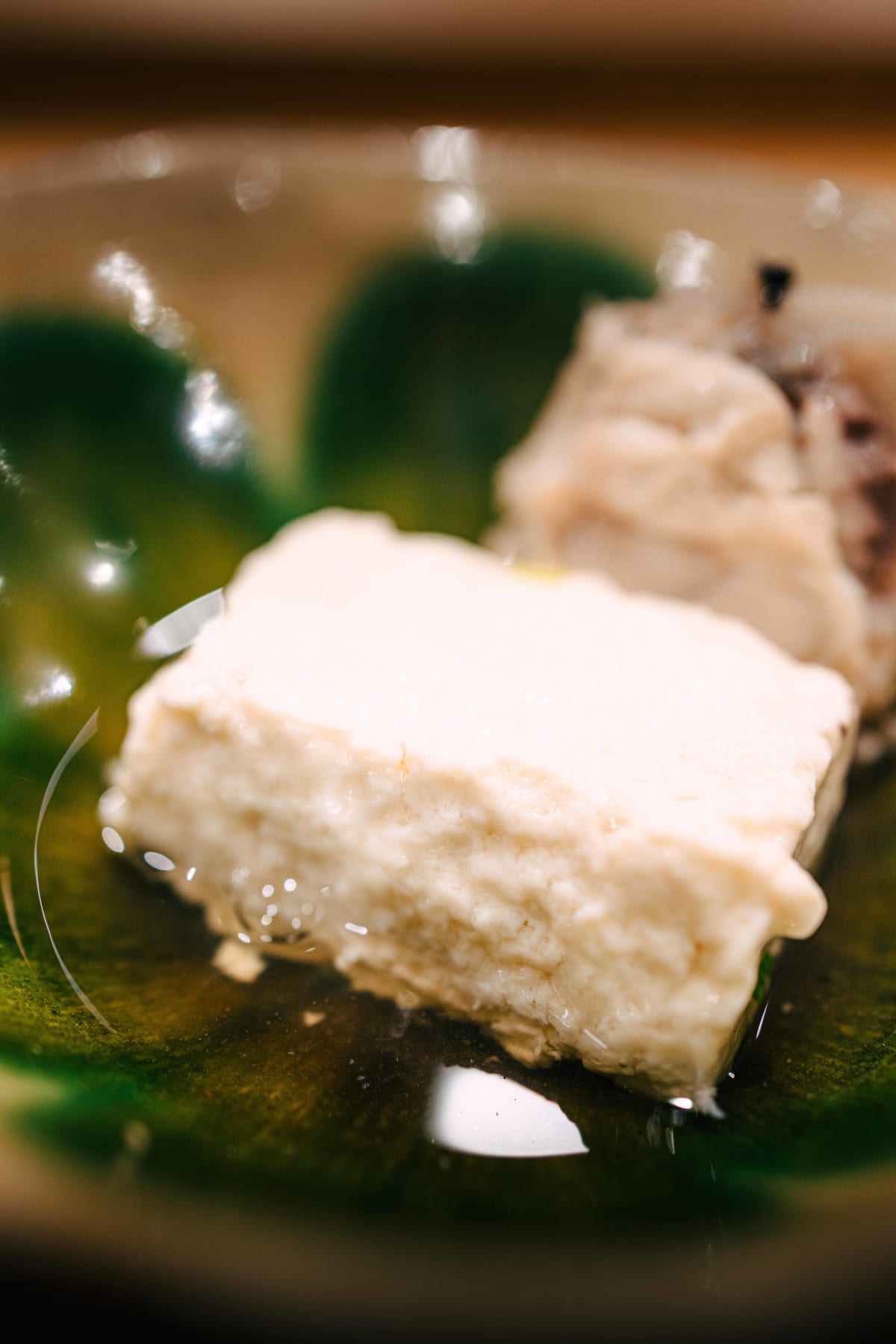
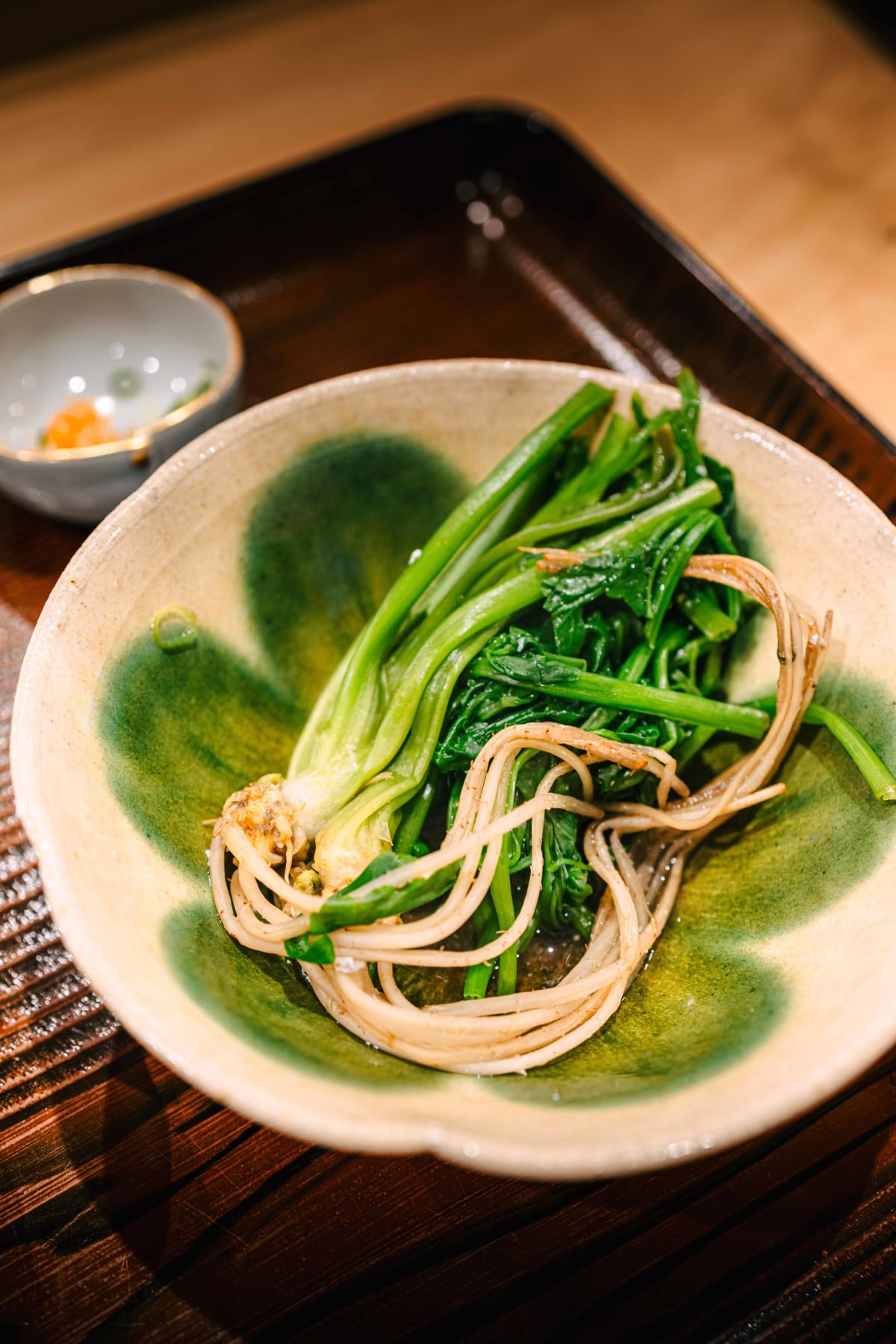
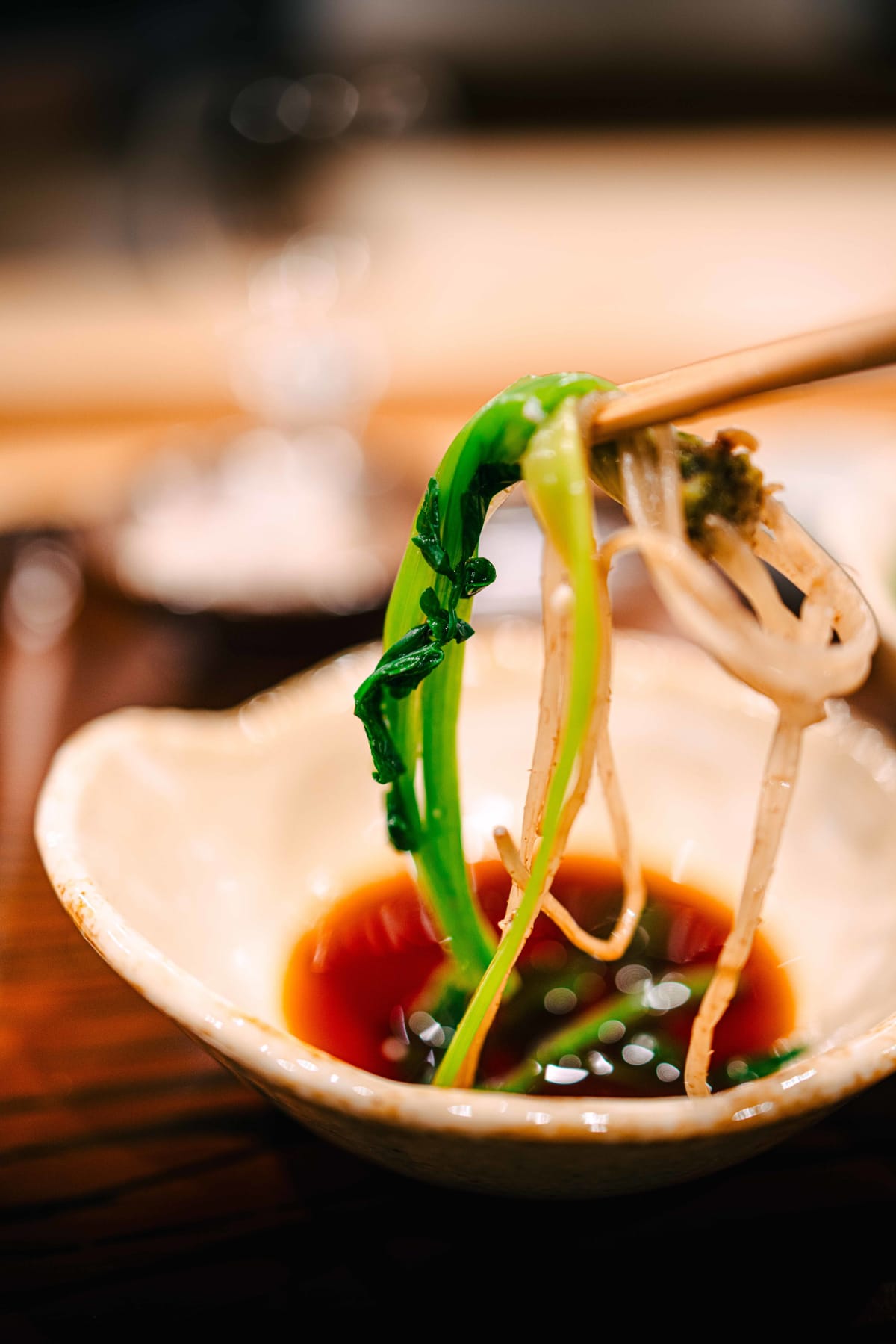
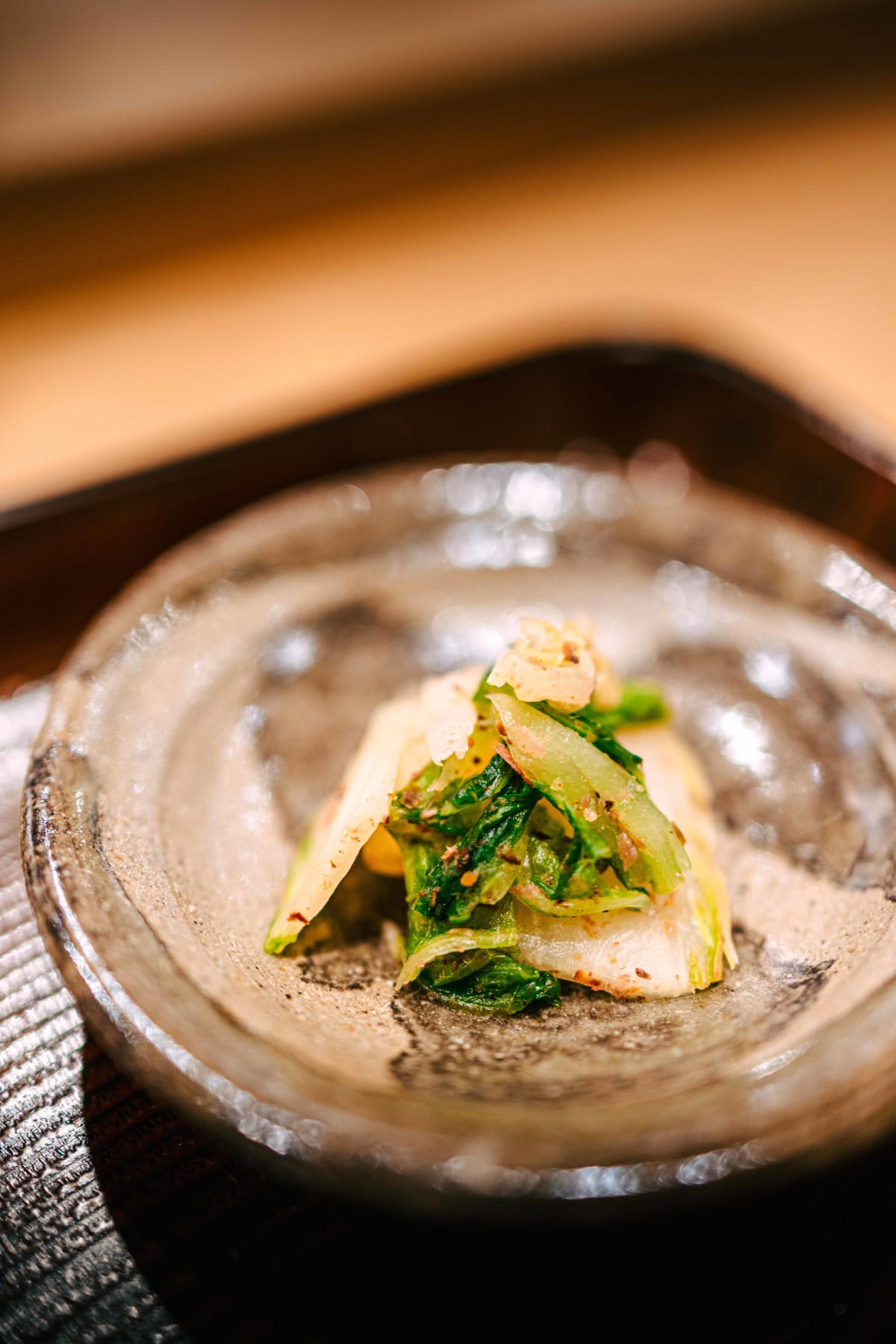
He also gave us seri, water dropwort, with its roots still attached, and it was curious to me that the roots, which in Korea no one would eat even for free, are eaten in Japan.
Section 11·A Taste of Korea
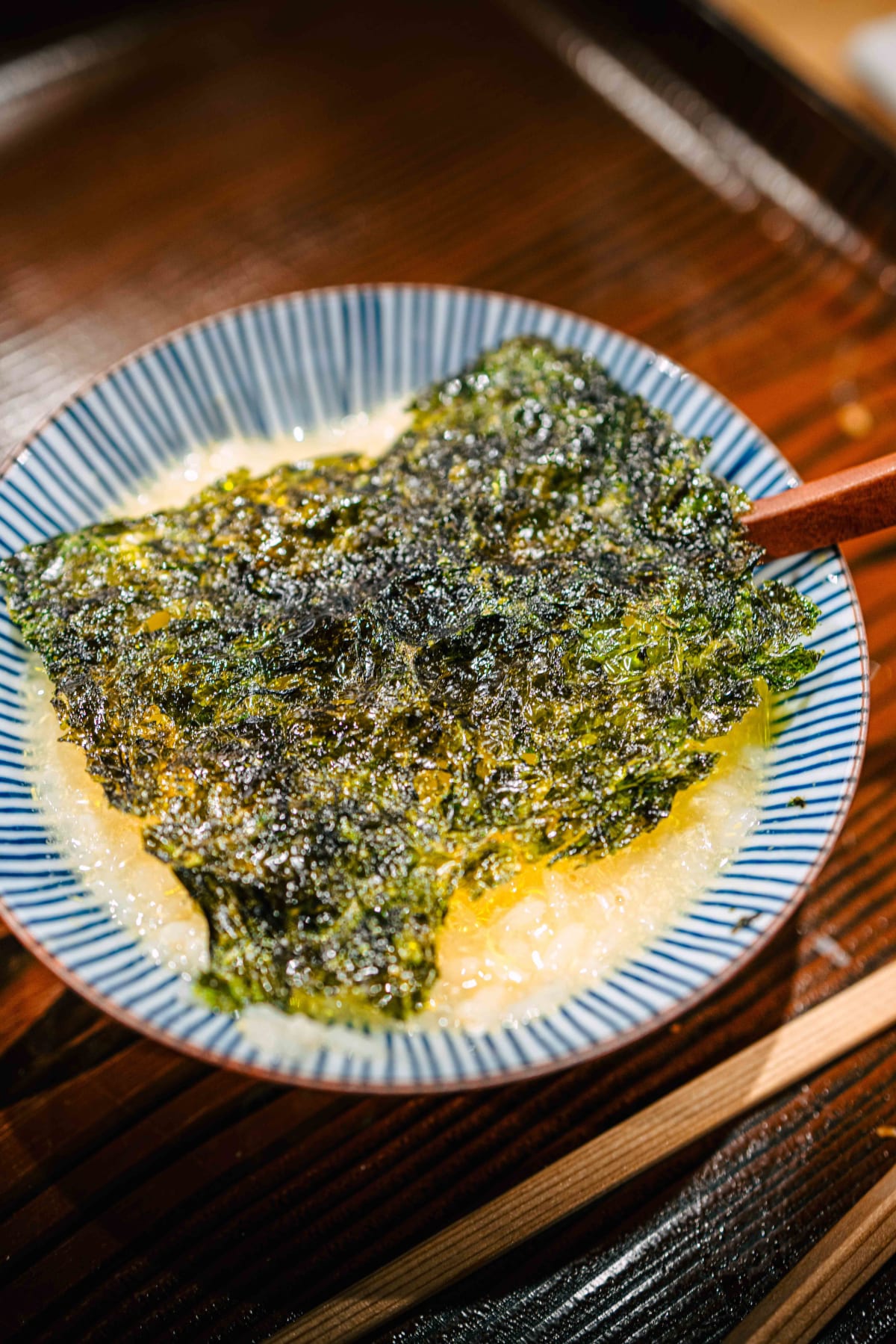
What was charming here was that, on hearing I had come from Korea, the chef expressed his affection for the country freely. He said he visits three or four times a year and likes Korean food, and this was not mere flattery to a guest: while making the pot, he produced something, and it turned out to be Korean roasted seasoned gim.
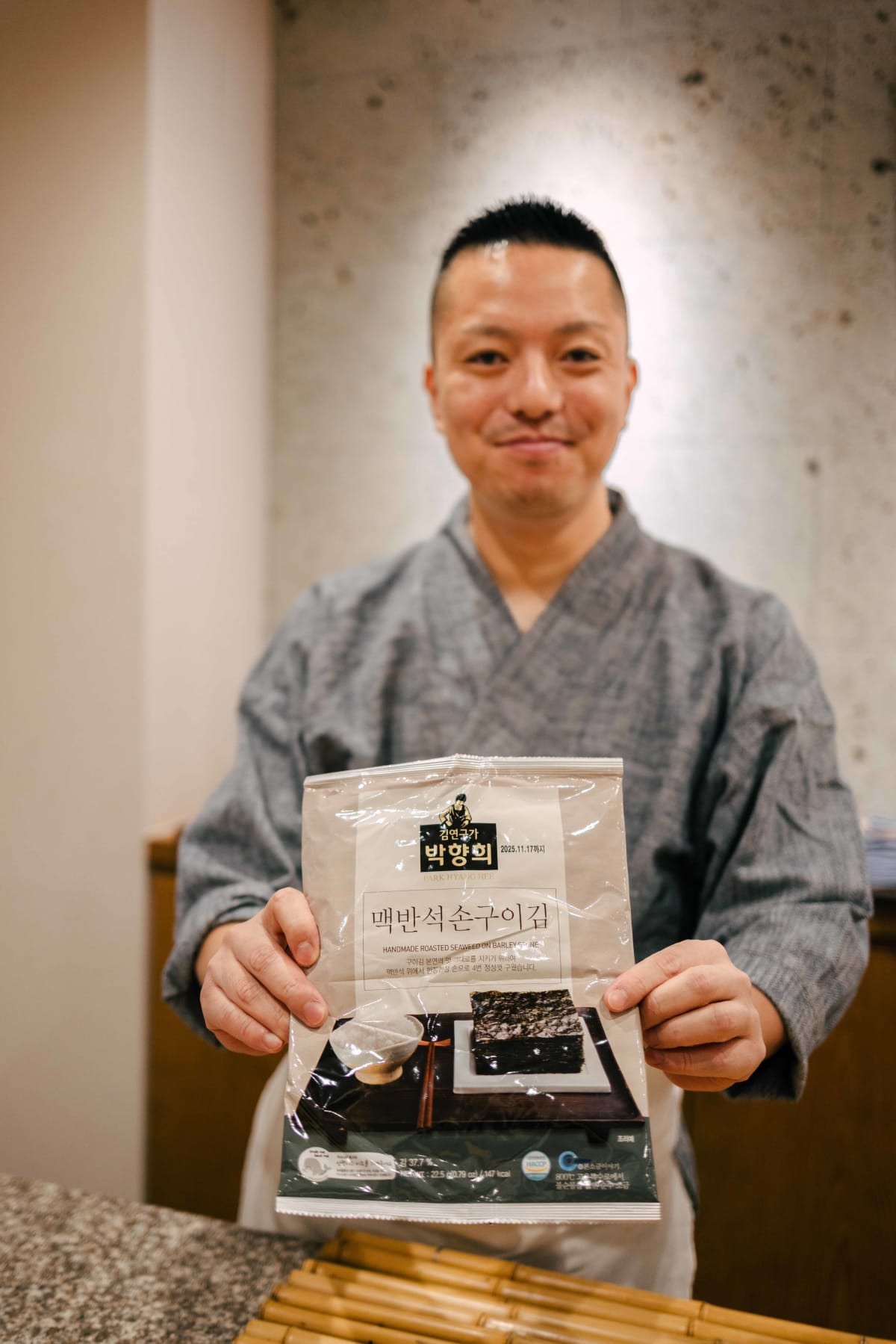
It clearly was not a gift he had simply been storing unused, because the way he folded the bag and cut the seaweed was the practiced hand of someone at home with Korean food.
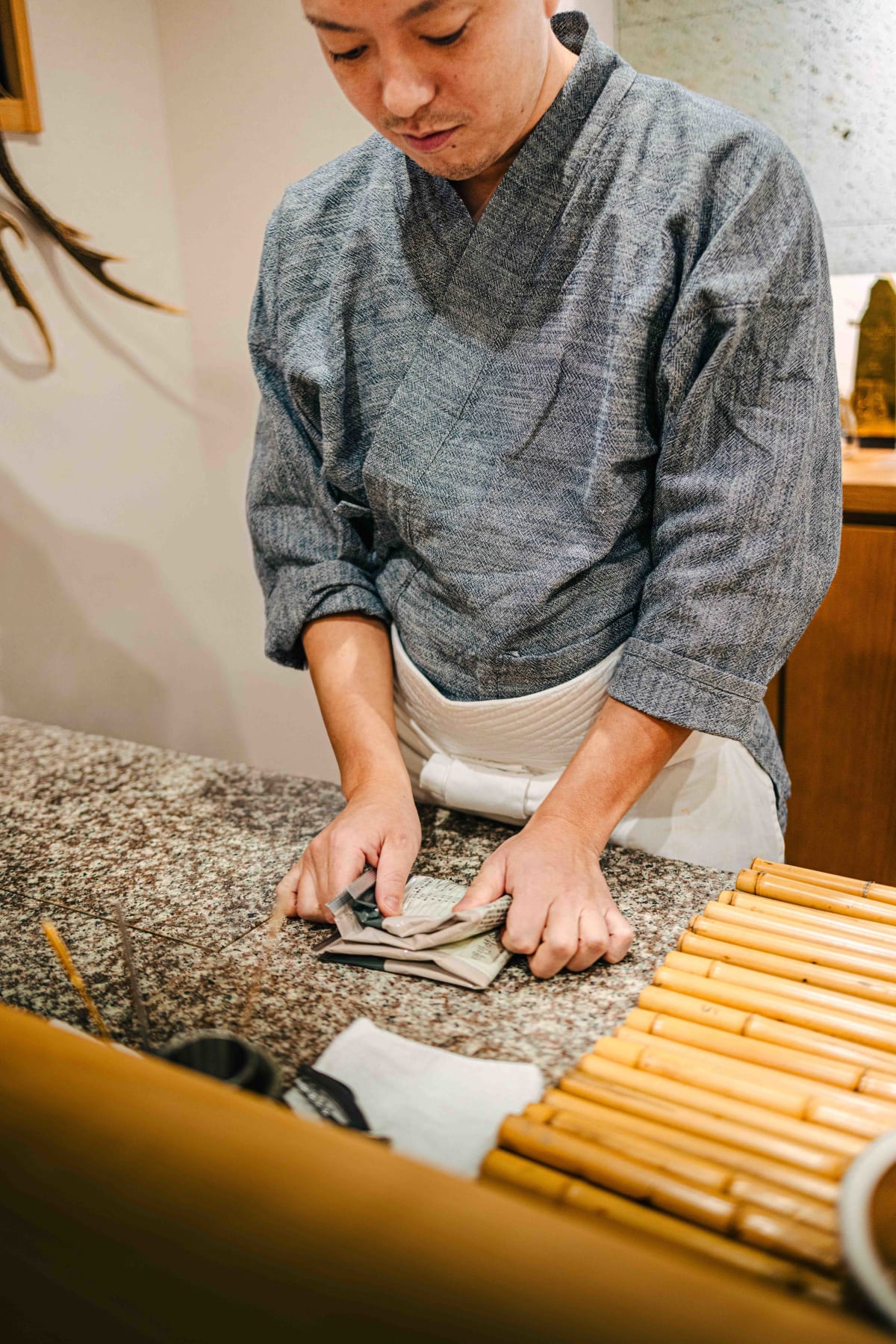
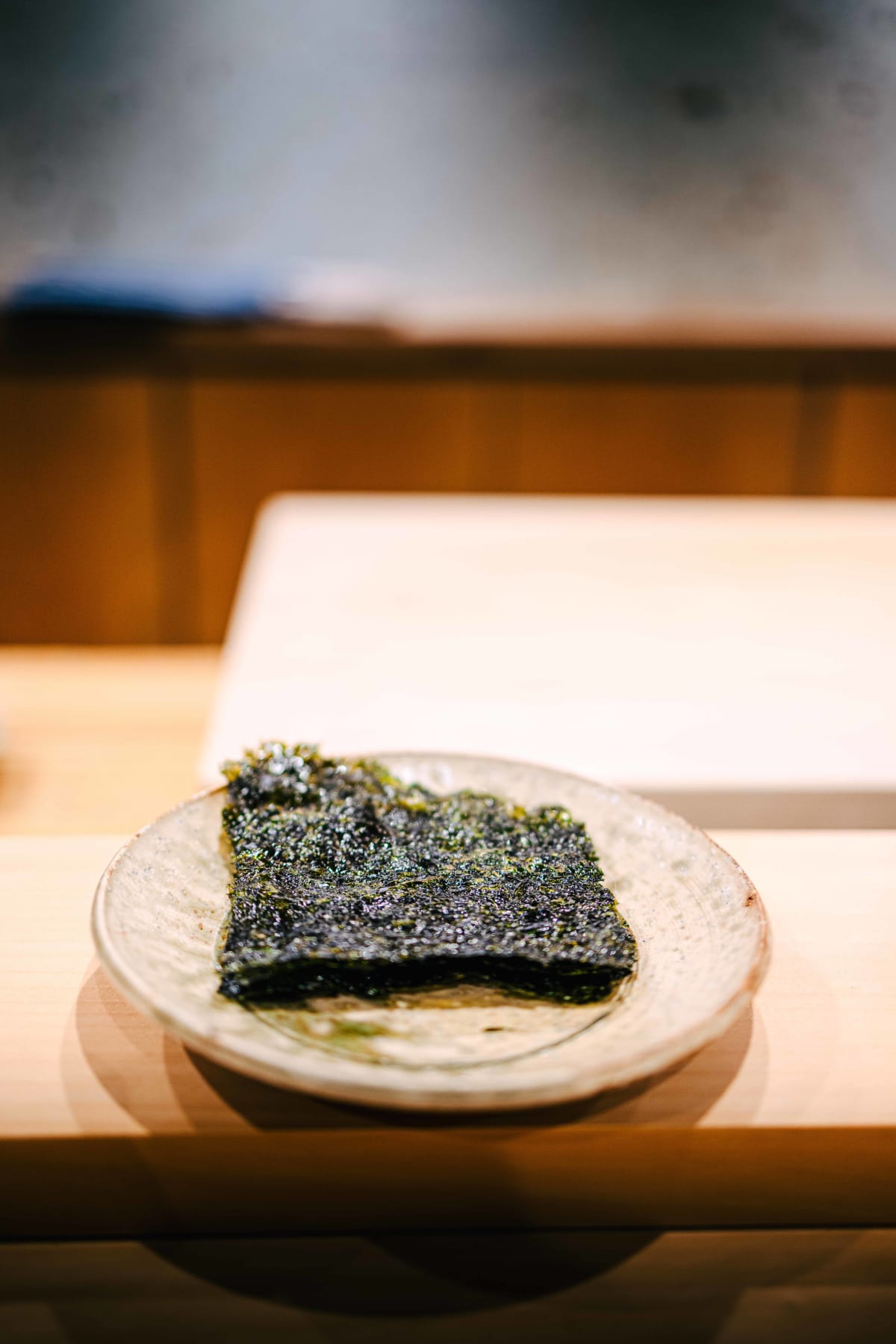
I could not understand why it was there, but added to the porridge it made it better.
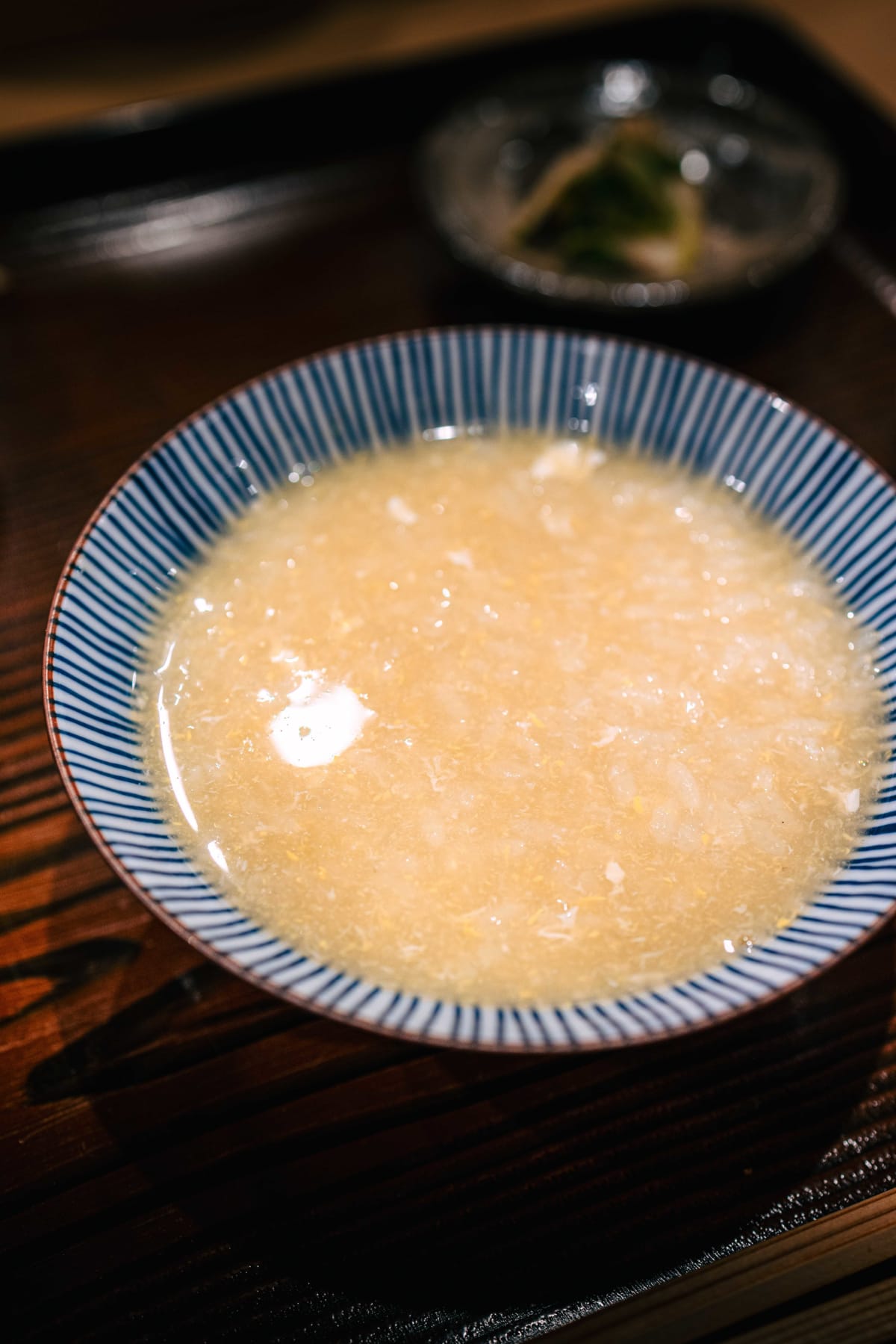
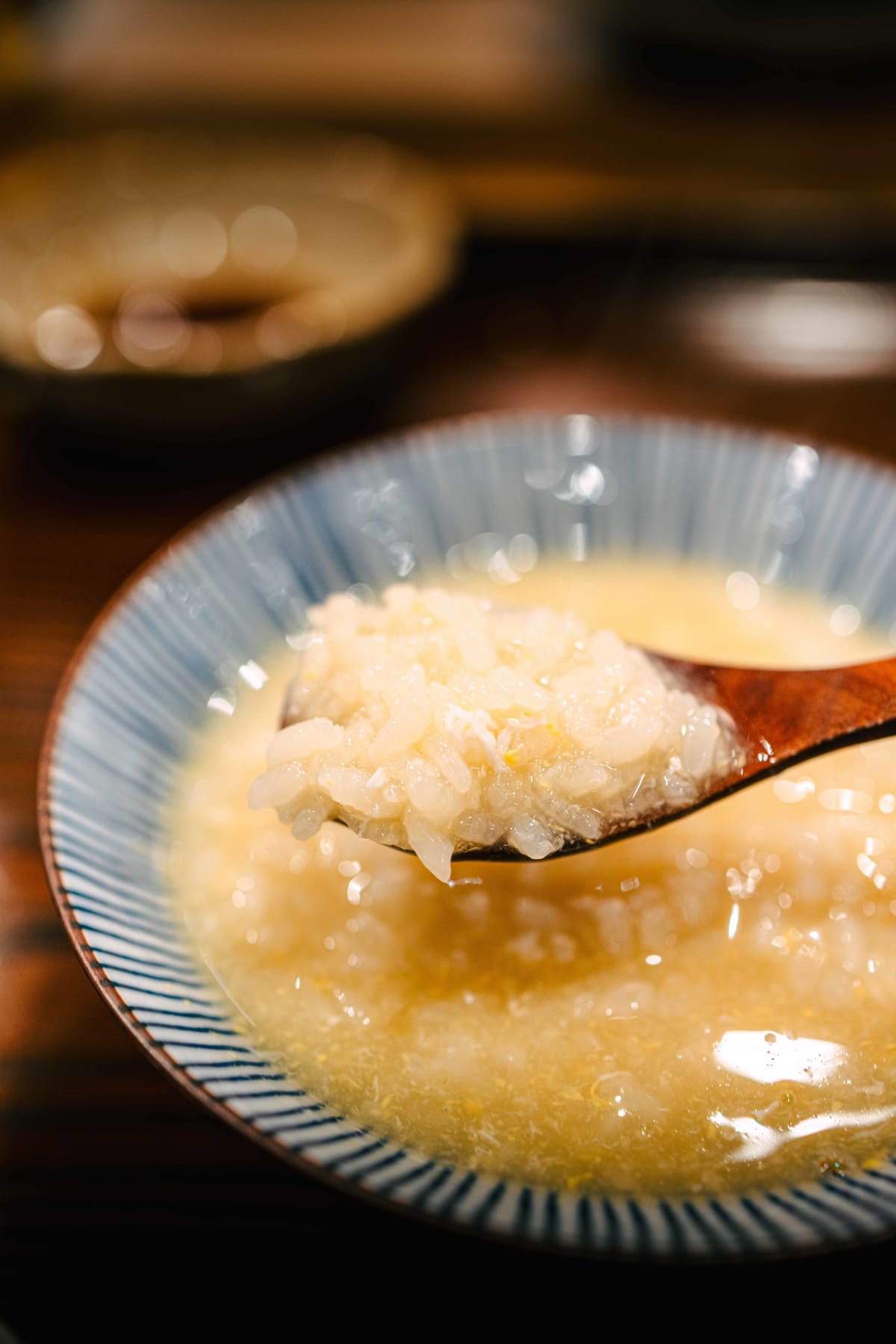
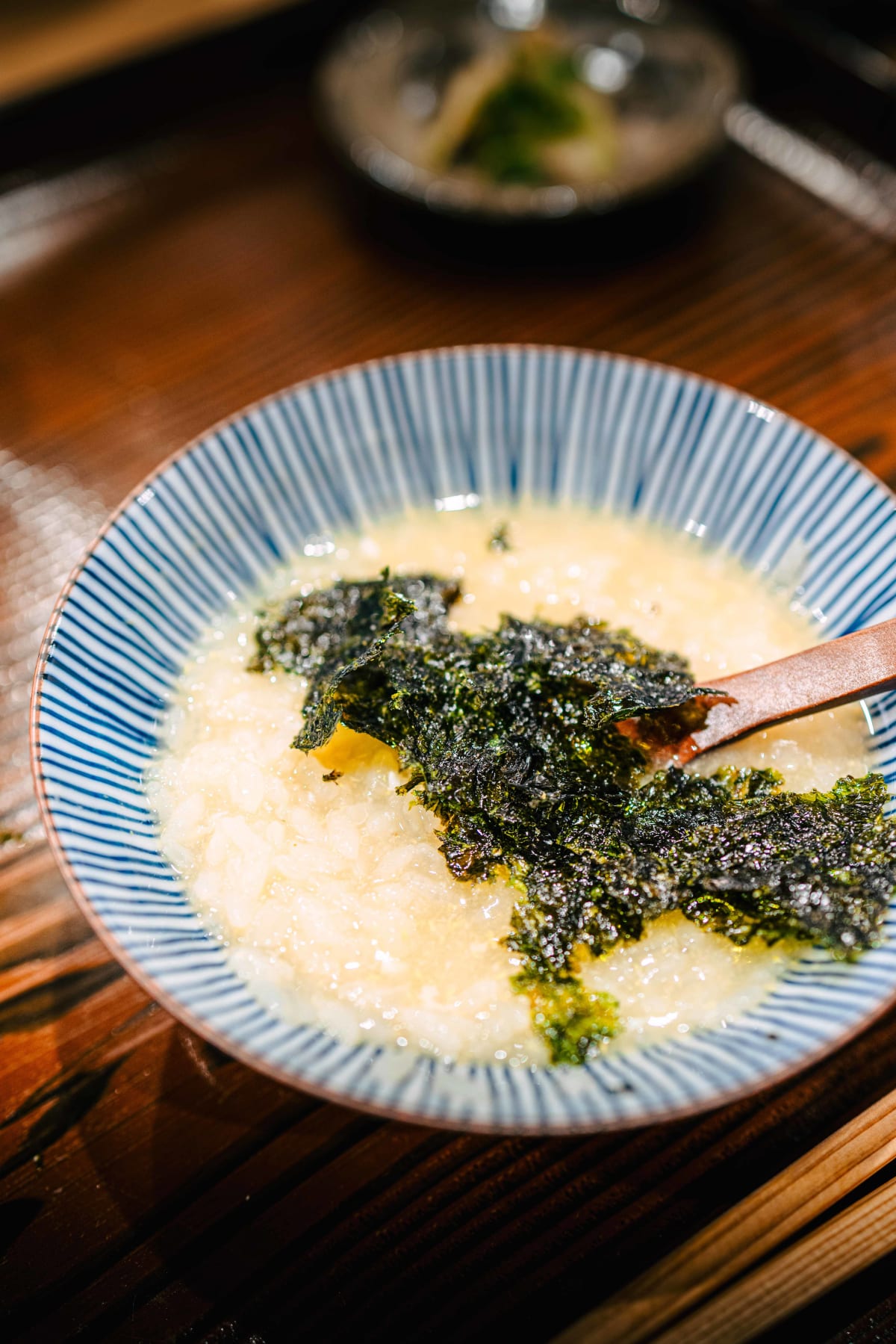
The porridge was lightly seasoned, and the salt and oil of the gim balanced it just right.
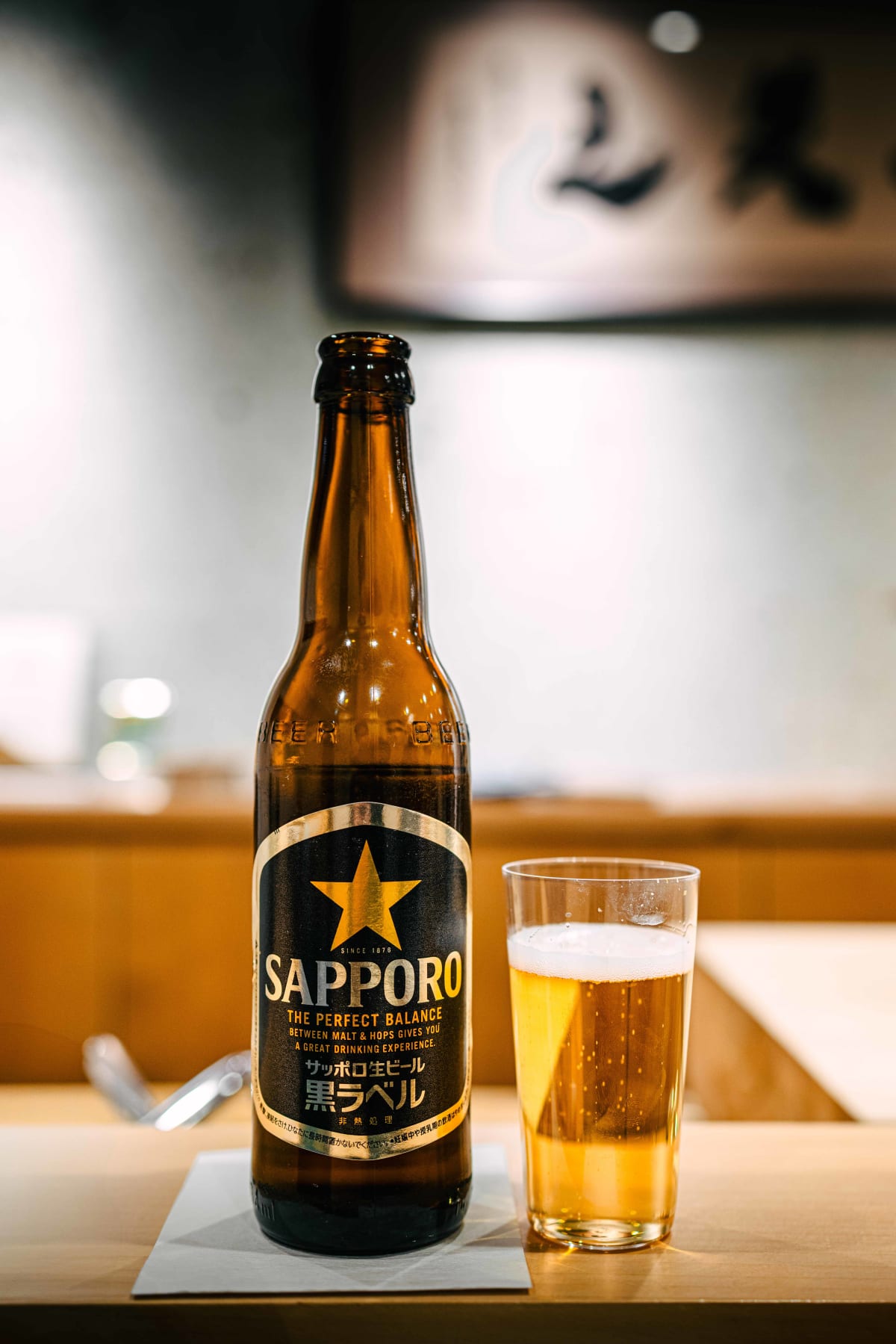
So I finished one bowl, asked for a second, and when the larger second helping came I asked for more gim as well.
Section 12·Dessert and the Bill
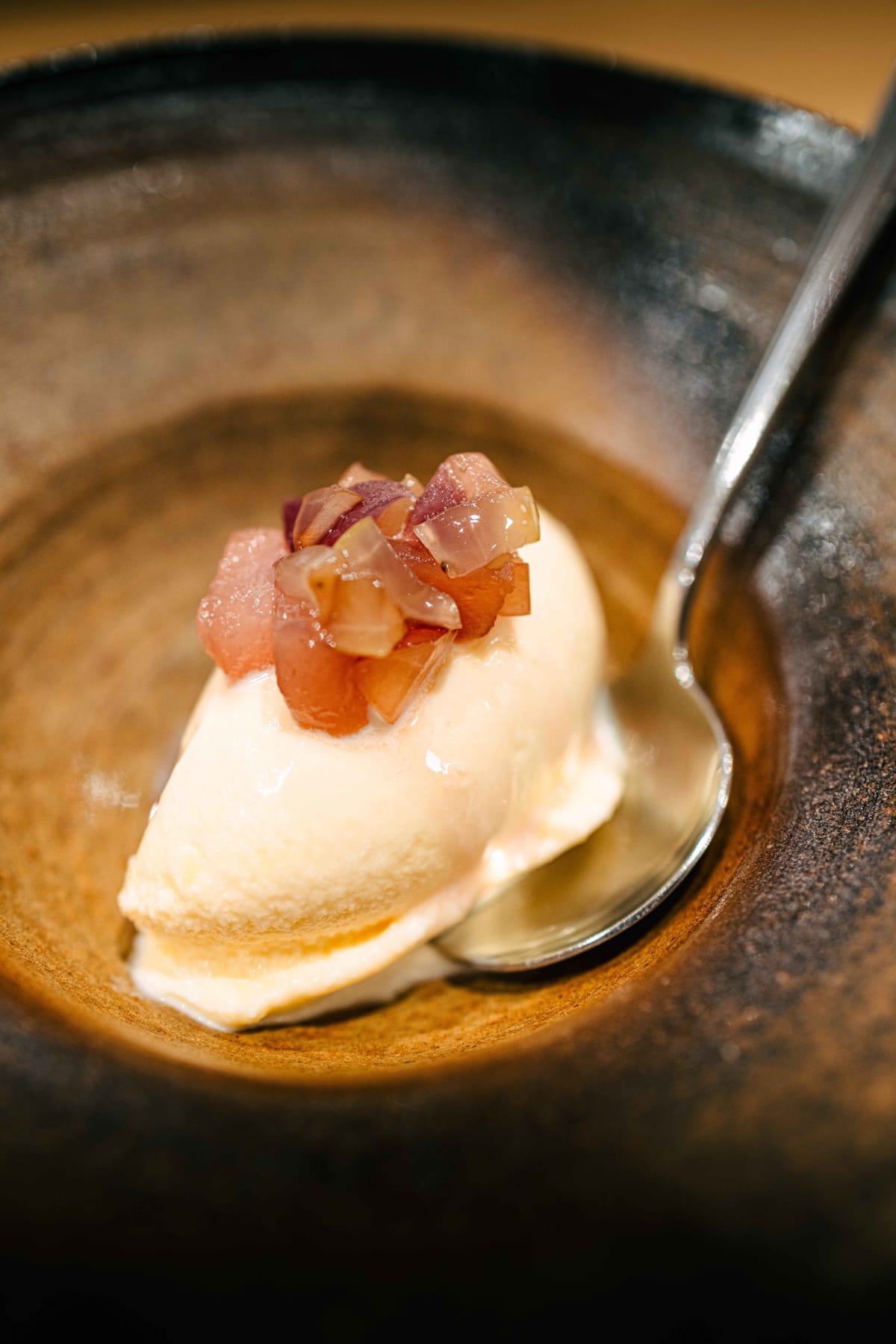
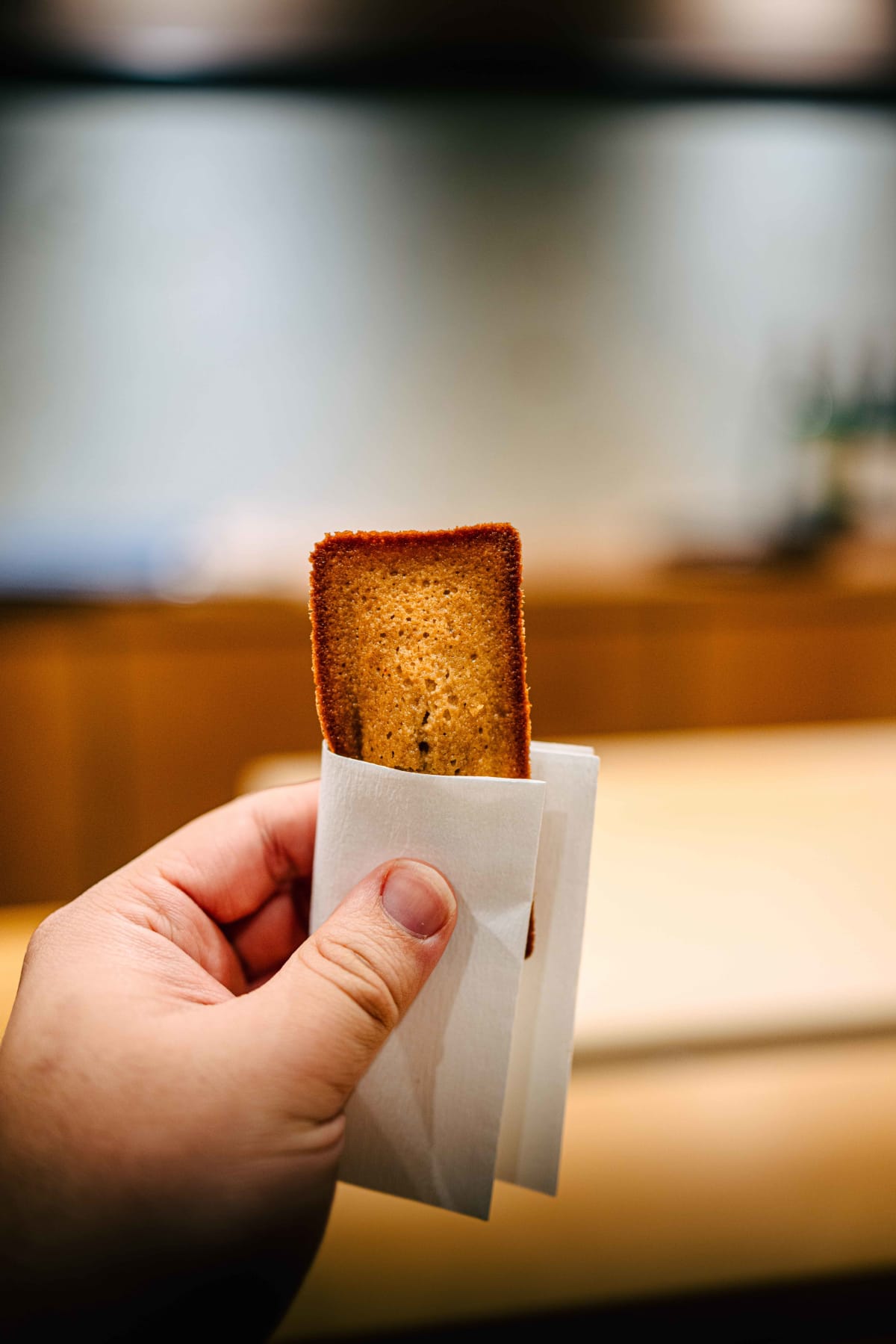
For dessert there was something more Western than Japanese, an ice cream topped with grapes and a financier, and the financier was good.
And the biggest surprise of all came at the very end, when I got the bill. Even with the Jikon and the Aramasa by the glass, it came to 37,000 yen. After the ferocious bills of Tokyo, this one was so reasonable that I was delighted, and I regretted not drinking more.
Section 13·Closing
To my mind, Seirin is less a refined, delicate, technically dazzling orthodox Japanese restaurant than a place that cooks approachable, even casual food from excellent ingredients. The taisho himself, in fact, calls it not a formal ryori-ya but a tabemono-ya, simply a place to eat. So as I left, partly because I had come a long way by train and partly because of the Tabelog Gold reputation, I half felt the course had fallen a little short of my expectations. As time passed, though, the unshowy, casual atmosphere and those approachable dishes, focused on superb ingredients themselves, kept coming back to me. In the cold, the taisho came out of the shop to take photos with us; he was very kind, the service was good, and I left satisfied.
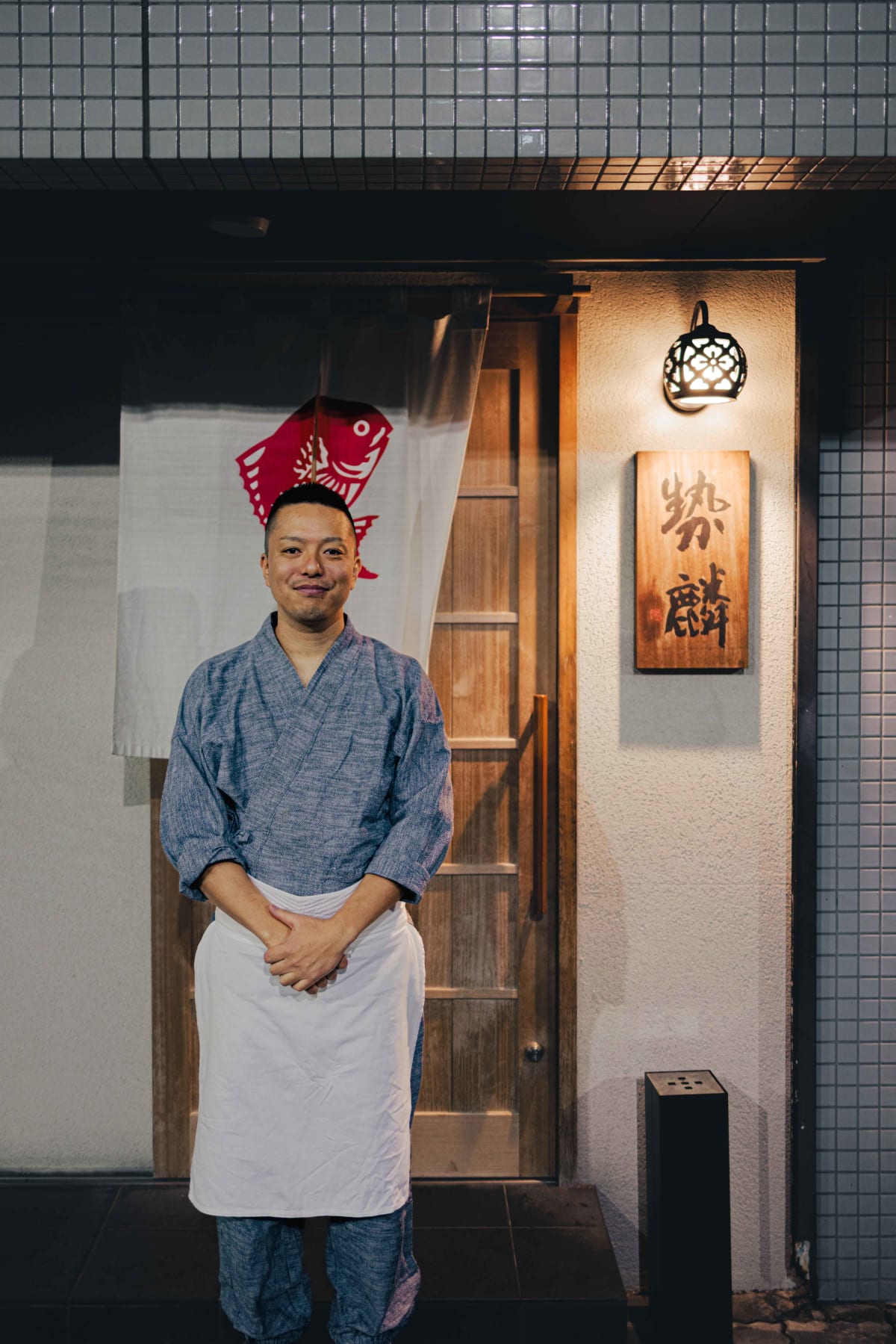
If the chance comes, I would like to return in autumn, in matsutake season, curious to see what he sends out then.
The center of gravity in Japanese fine dining has long sat in Tokyo and Kyoto, but Seirin is the case for going to the source instead. Its model is unusual: rather than a kaiseki that threads many ingredients through one fixed grammar, it rebuilds itself around a single supreme material each season, a fugu specialist in winter, an eel house at the height of summer. The reward is not metropolitan polish but something the big cities increasingly cannot sell, the sense of having eaten a thing at its source and in its season, cooked by the person who went out to find it. That is a different kind of luxury, and a more local one.
Have a question about this restaurant, or want to share your own experience?
Send a message