Fine Dining · Shanghai · China / June 2025 / Michelin ★★★ · Michelin Green Star · Asia's 50 Best #75 (2021)
Taian Table
"Menu No. 50, all eight add-ons between two of us, and a yukhoe that tasted of Seoul"
Section 1·Shanghai's Only Three Stars
Taian Table, the only restaurant in Shanghai that currently holds three Michelin stars. When people spoke of three Michelin stars in Shanghai, the name used to be Ultraviolet by Paul Pairet. Run almost like a members' club, it closed for good in March 2025, thirteen years after it opened, reportedly because of redevelopment in the area where it stood. I had always wanted to go one day, and it is a shame to see it pass into history like this.
Before this trip to Shanghai, I knew little about Taian Table. I went on the simple principle that if a city has a three-star restaurant, it is worth a visit, and I came away thoroughly satisfied.
Formula E was the reason I was in Shanghai in the first place. I had been given the chance to shoot the 2025 Hankook Shanghai E-Prix on a photographer's pass, and I arrived in late May.
At the Emotion Club, the VIP paddock club I had been invited into, a chef from one of Shanghai's well-known Michelin restaurants was hosting a short dining session, and because I had not known about it in advance, I missed it. The chef turned out to be from Taian Table, where I ate a few days later, and at the restaurant I met the chef I had seen in the paddock again and we shared memories of that day.
To start with the food: this is not a Chinese restaurant. Nor is it a place with a strong Chinese accent, the way Mingles in Seoul has a Korean one. The base is modern French, with a thin layer of Asian touches from several countries laid over it. So, taste and satisfaction aside, for anyone who has come all the way to China wanting to focus on Chinese food, it may not be the most efficient choice. That is worth knowing before you go.
The defining feature of the Taian Table course is change. Around the time COVID was starting to spread, Kitchen Oneul in Geumho-dong, Seoul, was a very hard table to book. It was known for its cooking, but just as much for a menu that changed every month, and I had assumed that kind of approach was only possible at a casual restaurant. I had no idea a fine dining restaurant had built itself around it.
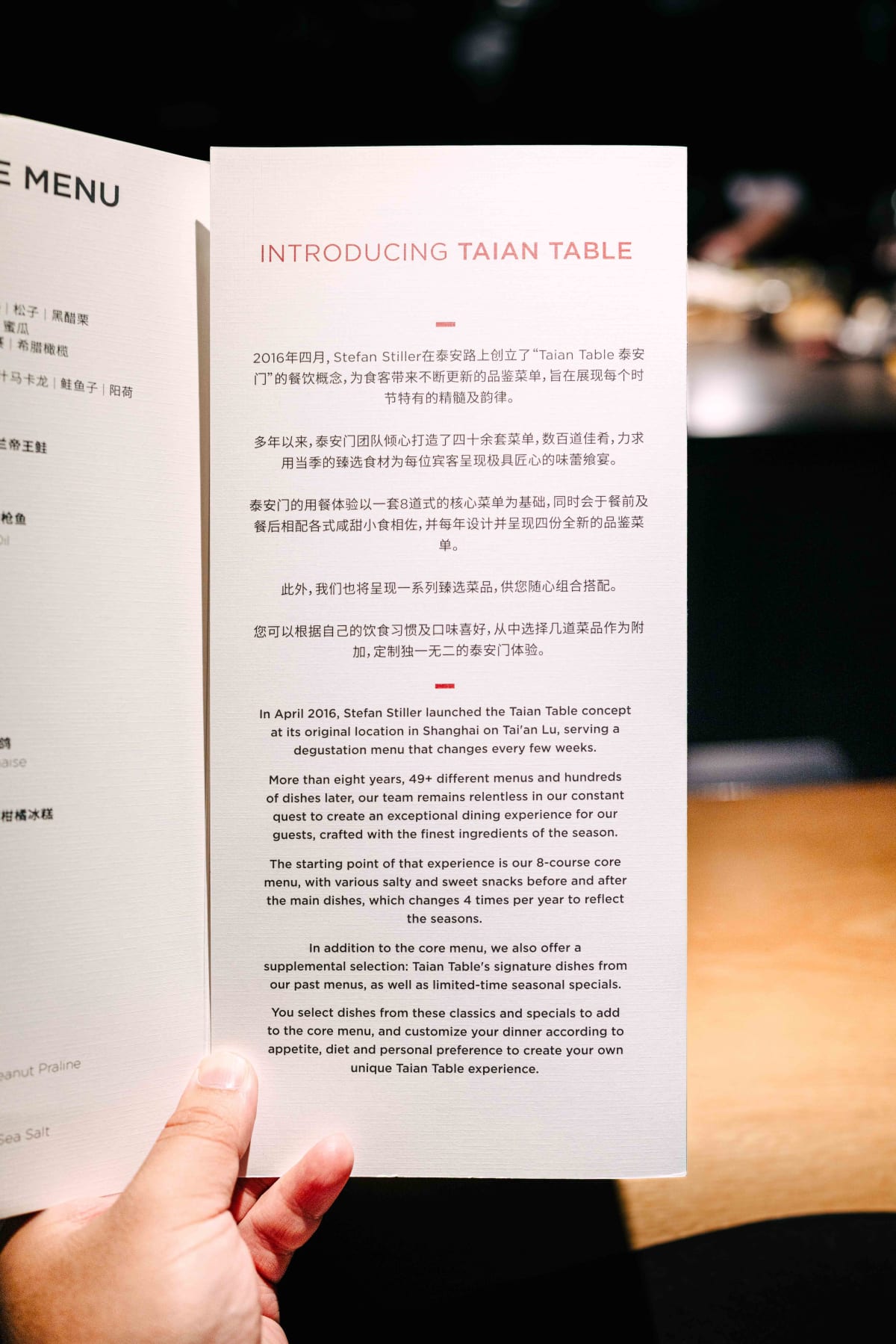
Taian Table is known for replacing its entire menu on a short cycle. The menu card reads No. 50, meaning this is the fiftieth menu. The whole menu used to be replaced every eight weeks, and after the third star, I was told, the cycle was stretched to twelve weeks to push the quality further. Even so, tearing up the entire menu every twelve weeks is remarkable for fine dining. Plenty of three-star restaurants, far from changing with the seasons, have barely touched their courses in years.
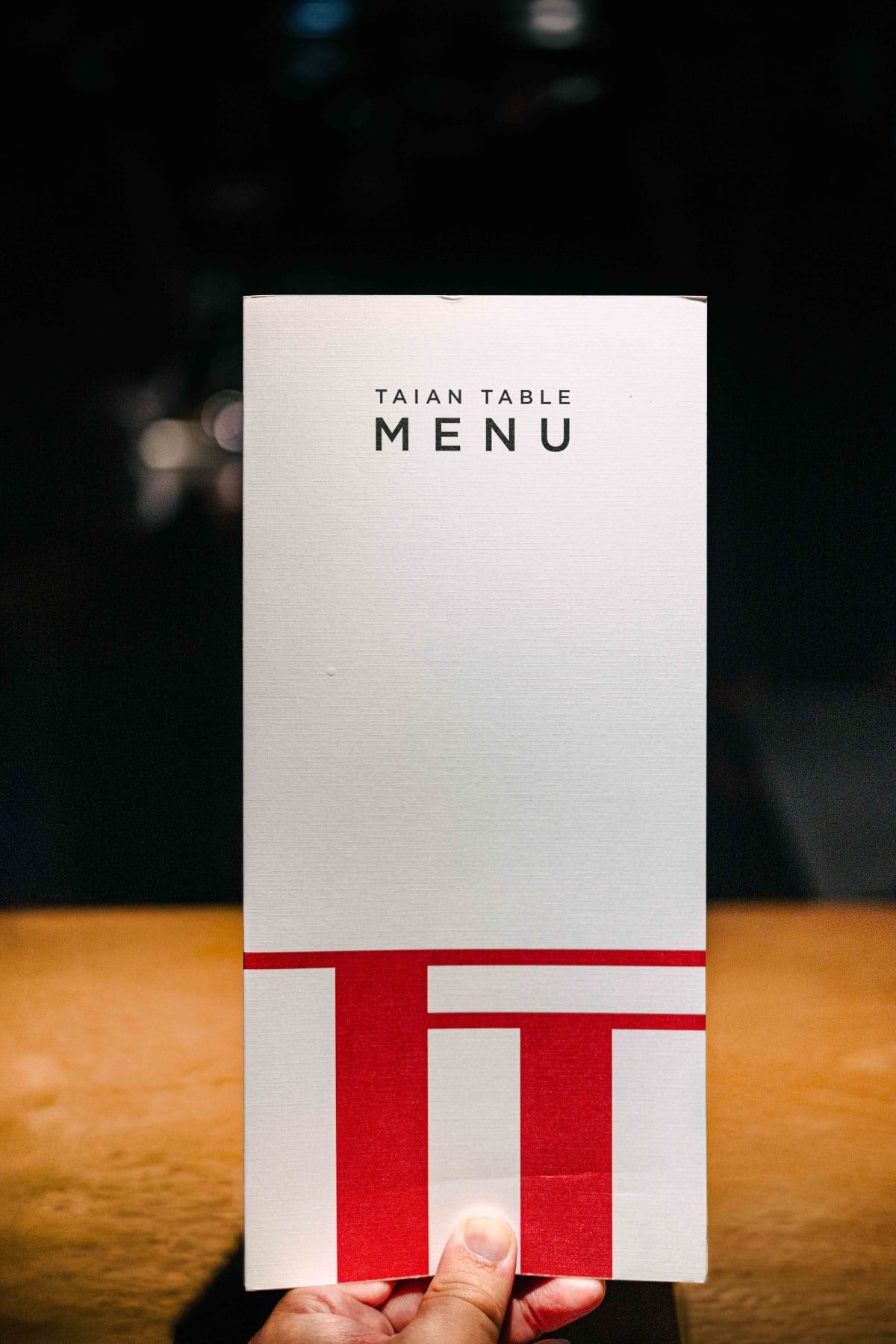
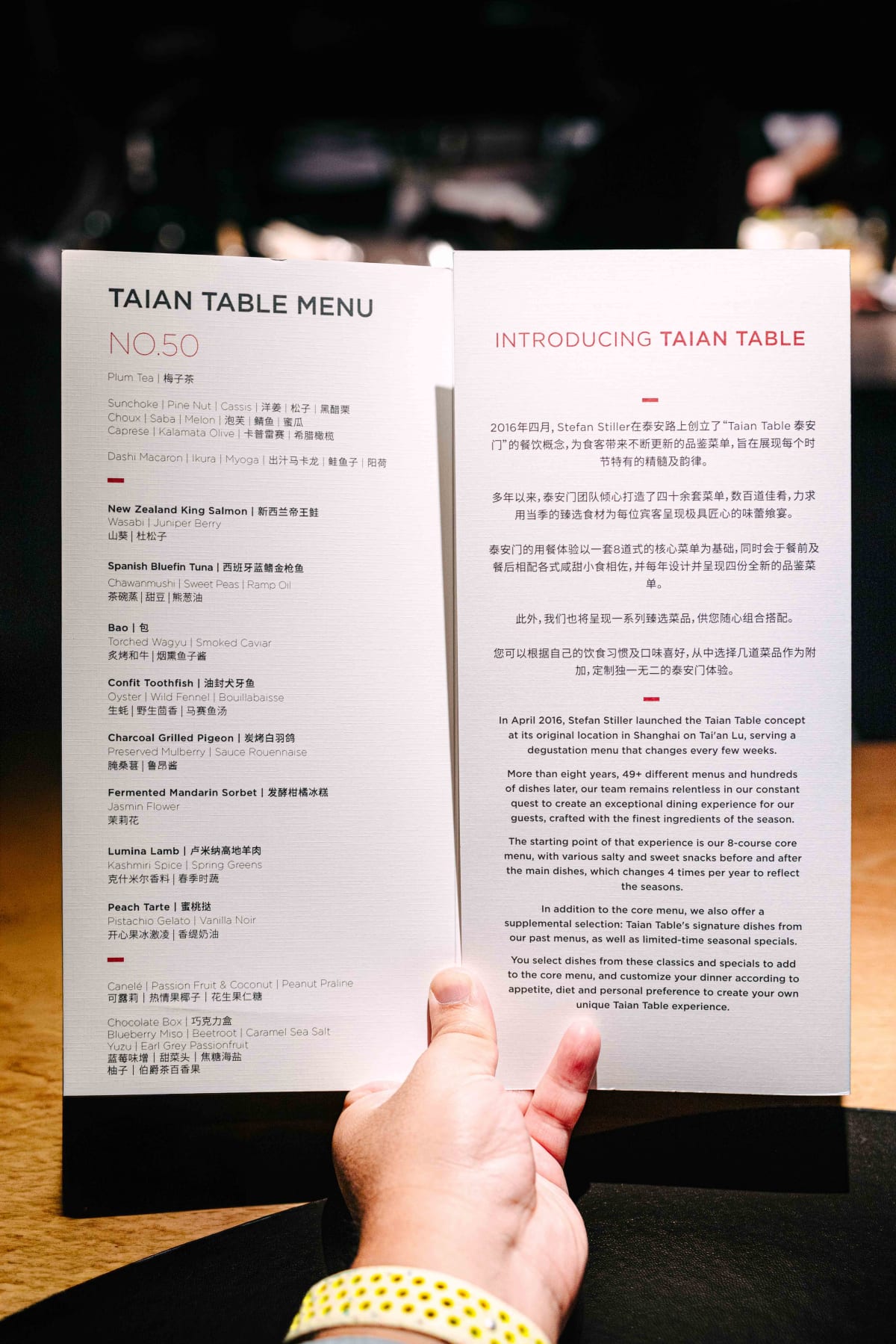
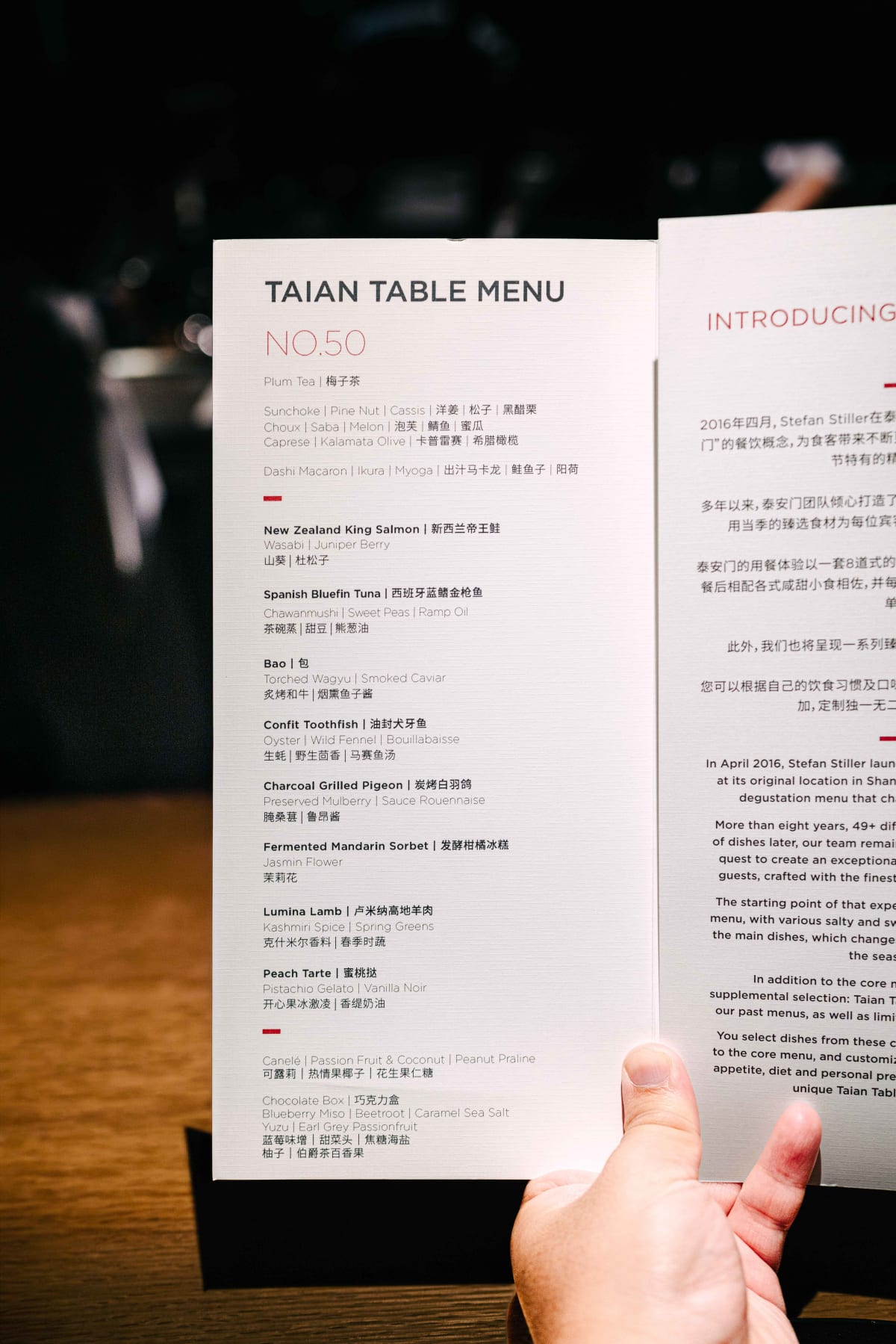
Hearing this, you might reasonably think that since this is not a place you can visit often, you would rather try the signatures than a changing menu. Perhaps that is why the course has a slightly unusual structure. The core course runs to eight: six savoury courses and two desserts. On top of that, on the right-hand side of the menu under OUR ADD-ON DISHES, you choose extras from eight long-loved signatures. Choosing two, the minimum, puts the price at 2,888 yuan; four puts it at 3,188 yuan.
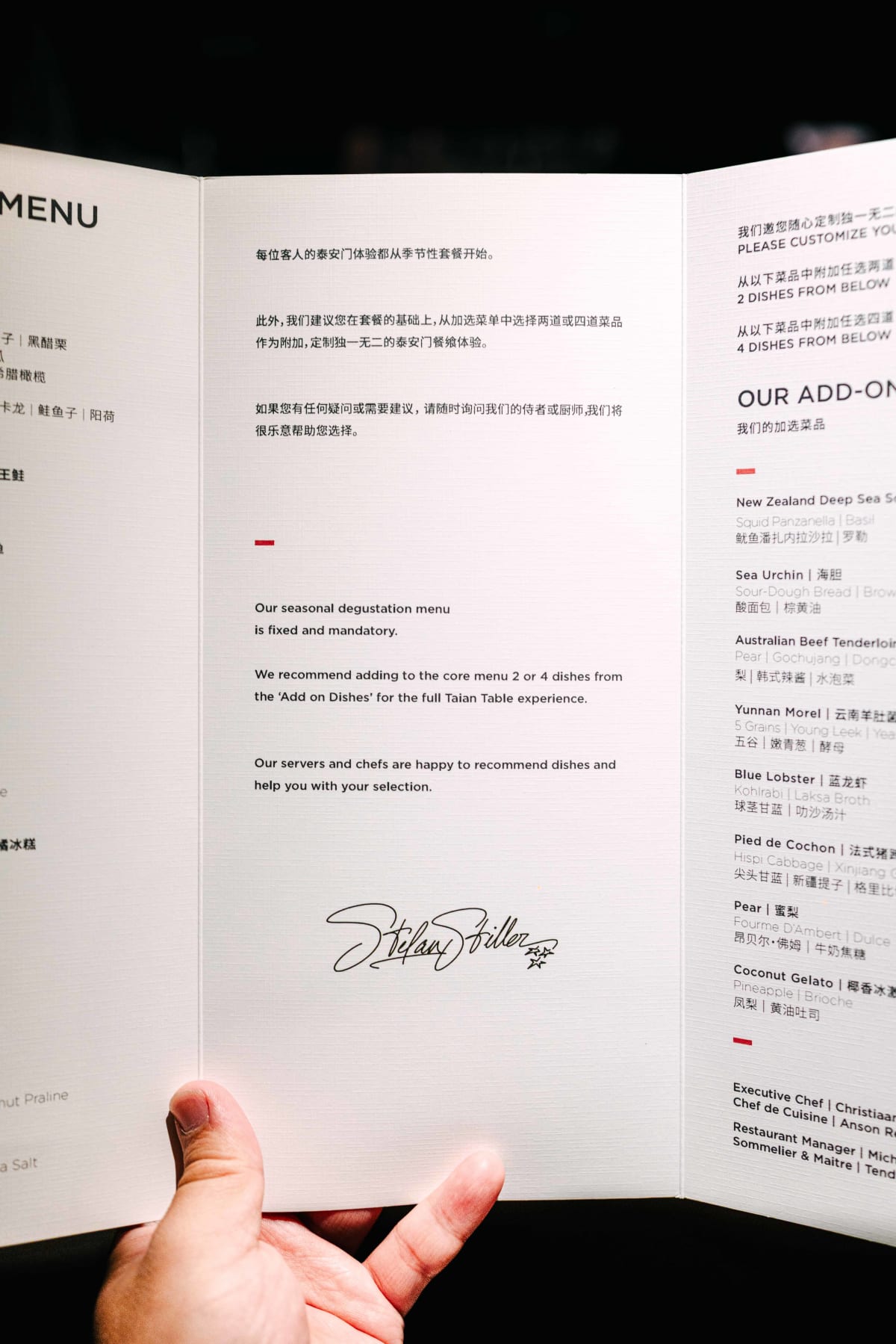
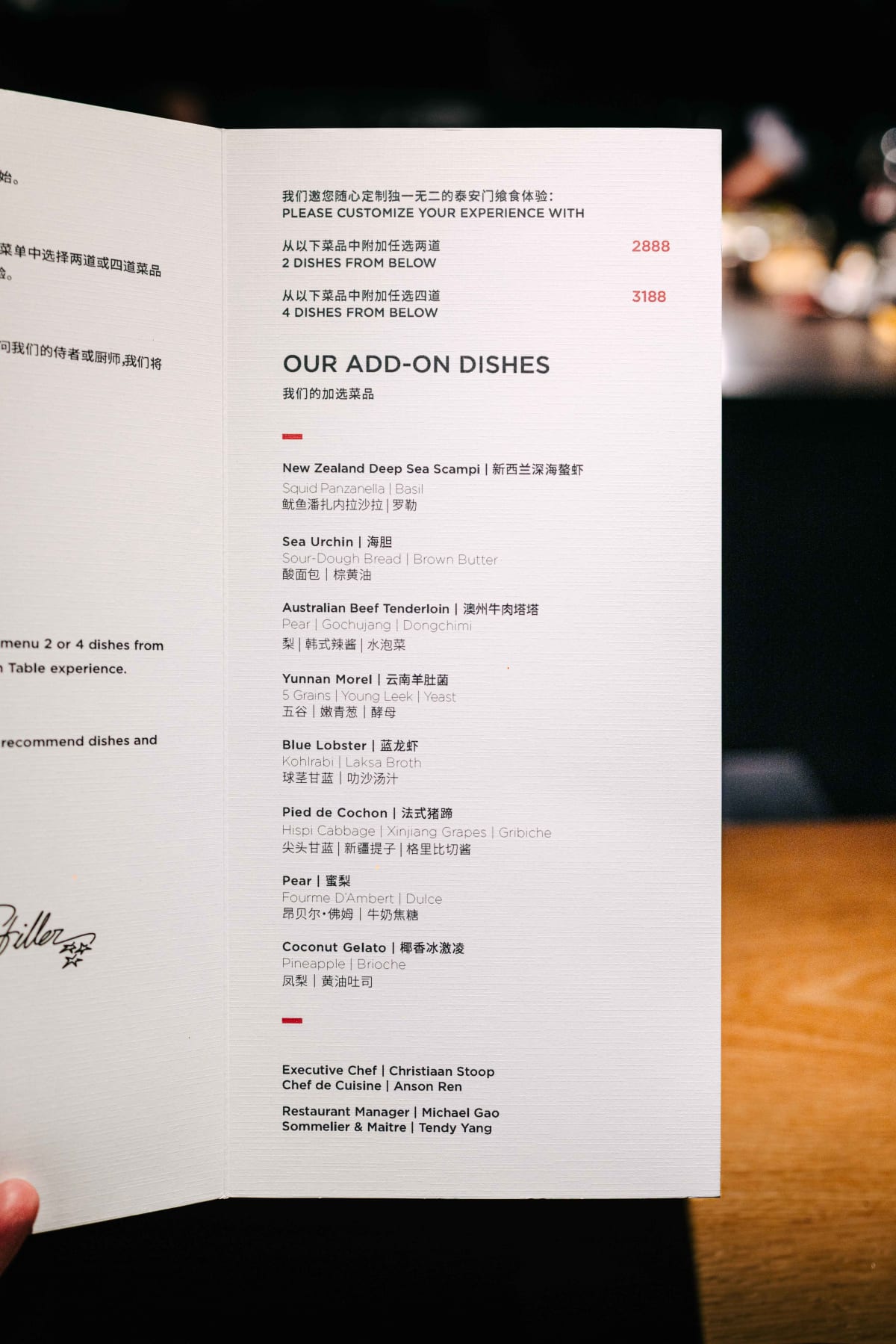
At the exchange rate of the time, that came to roughly USD 400 and USD 440. The exchange rate has since moved a long way against Korean visitors, so the price would be considerable now. Perhaps for that reason, booking was not difficult. Still, however wealthy Shanghai may be by Chinese standards, its average income must be lower than Seoul's, yet the base of diners willing to spend serious money on food felt clearly deeper than in Seoul. I think the wealthy of the Chinese-speaking world have a stronger presence on the global dining scene than anyone else.
There were two of us, and we each chose four. The plan was to split them so we could try all eight add-ons, but some of the dishes we both wanted overlapped, so it did not work out that way. Then the Korean manager had a word with the chef, and in the end the kitchen prepared things so we could taste every single one.
Section 2·Plum Tea And Four Amuses
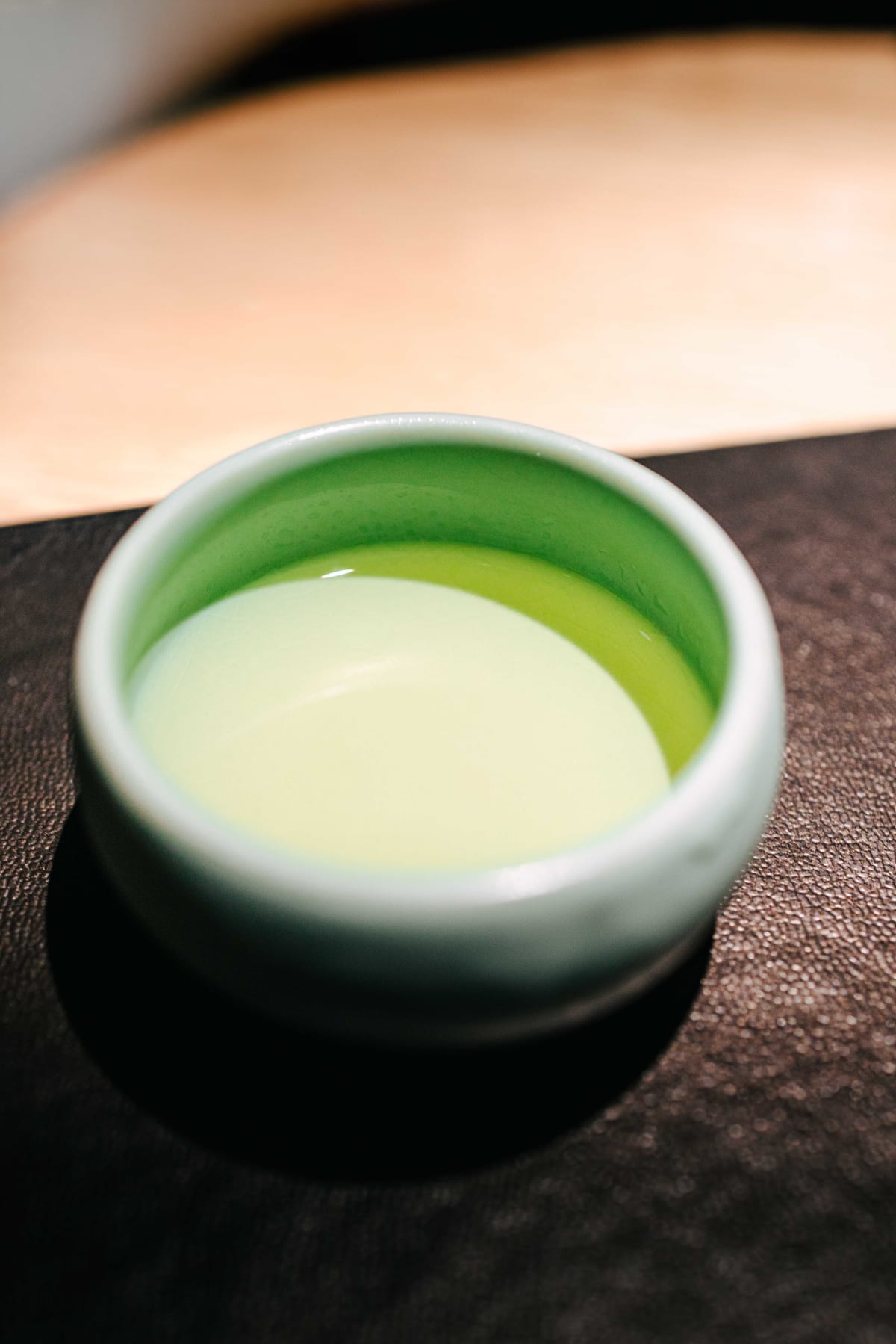
Before the food, a Plum Tea arrives to rinse the palate. It is not simply tea but a fusion of green plum and jasmine tea, with a curious, playful flavour. It is one of the few elements of Chinese culture in the course.
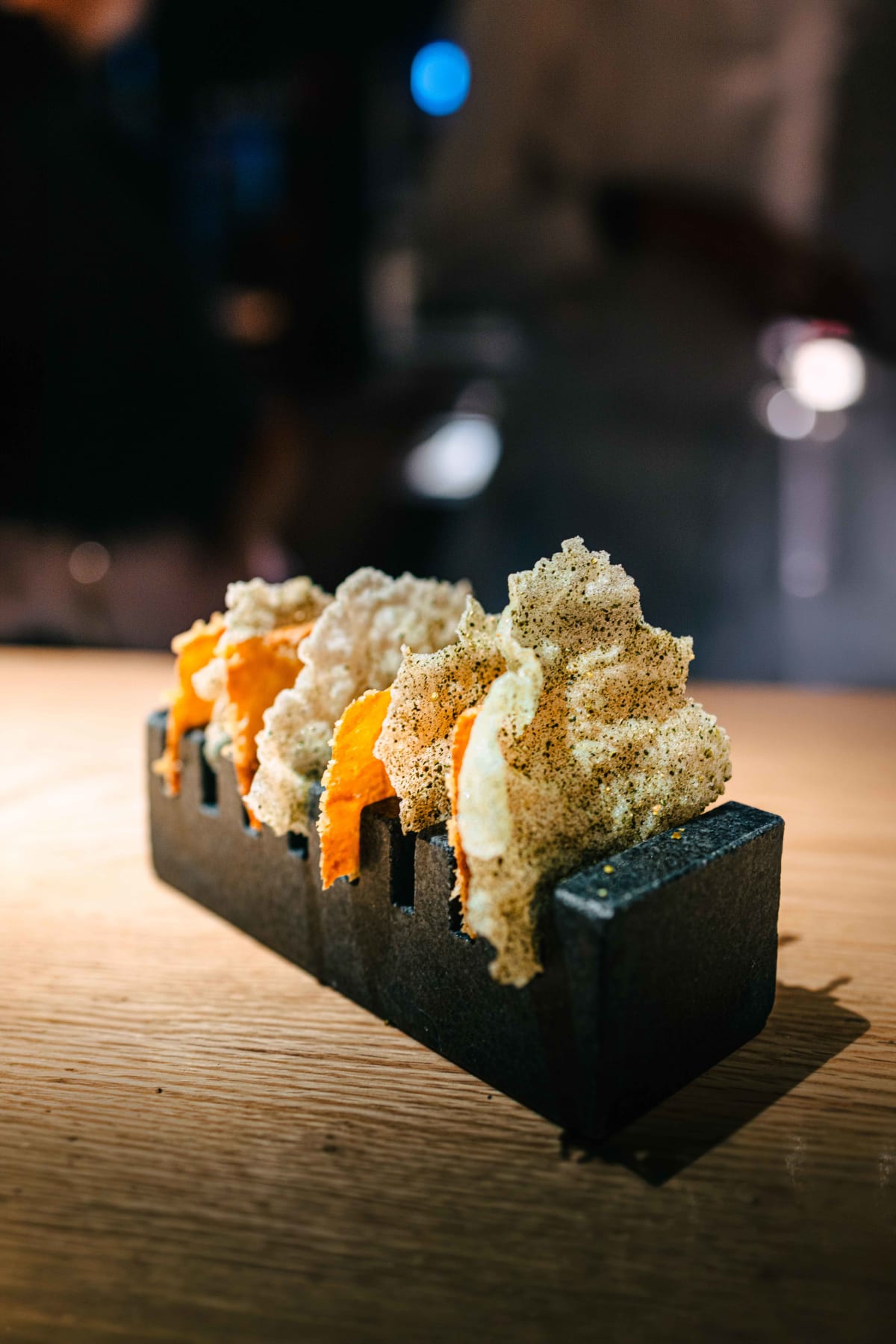
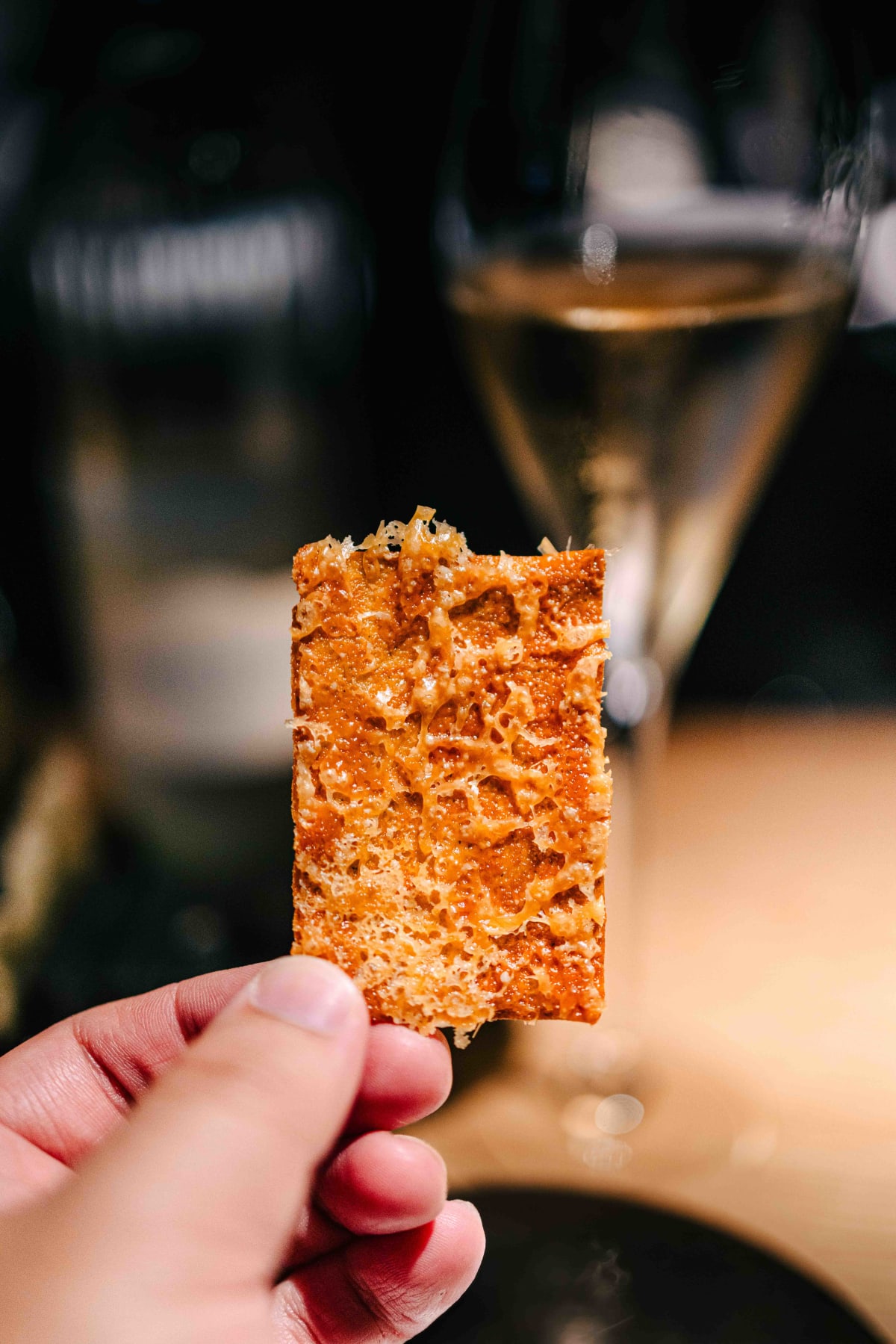
Two cracker-like snacks follow, one flavoured with seaweed and one with cheese. Of the two, the one coated in salty Cheddar was the better.
There were four amuse-bouches before the first course, and three of them came out together first. The line-up differed slightly from the one printed on the menu.
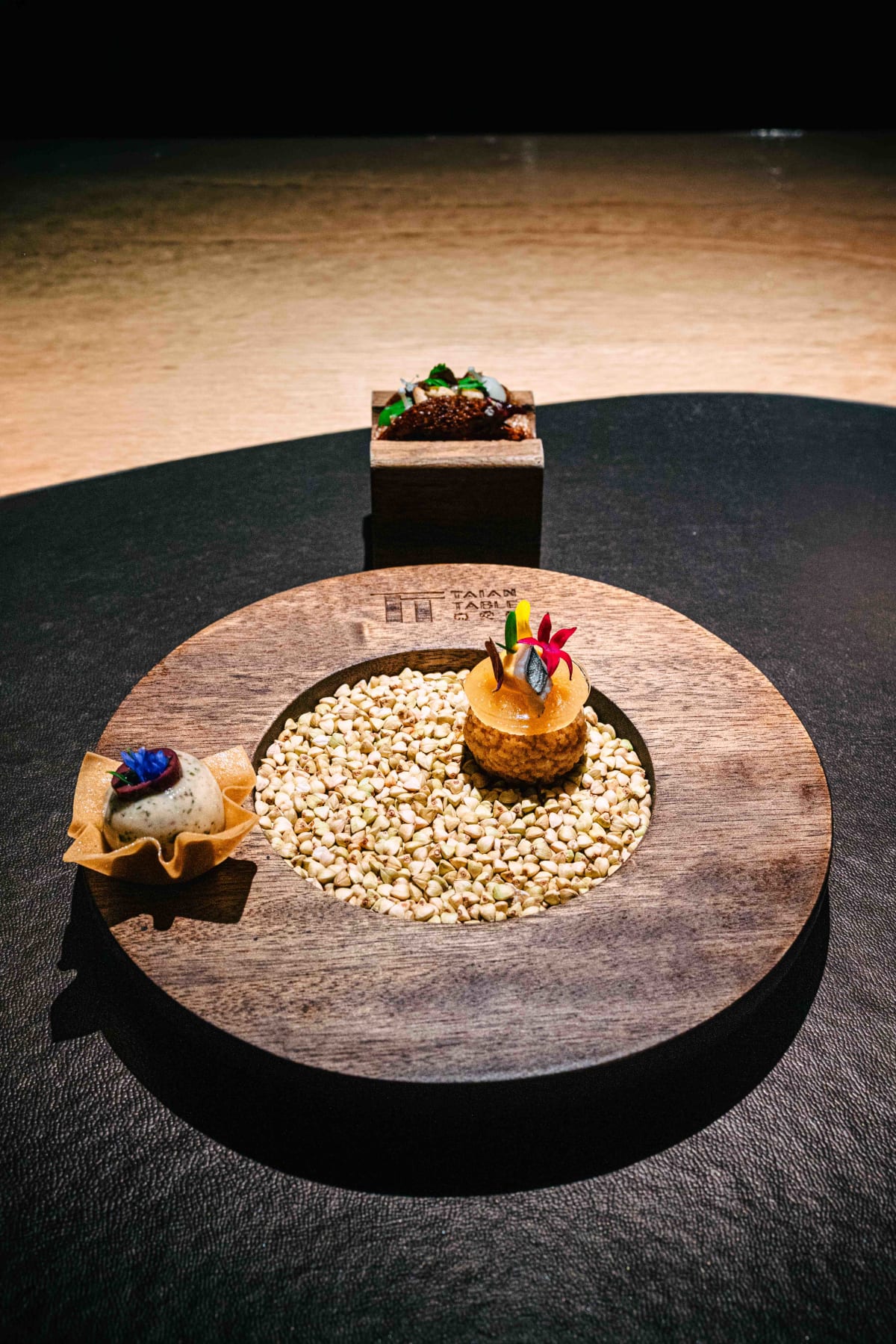
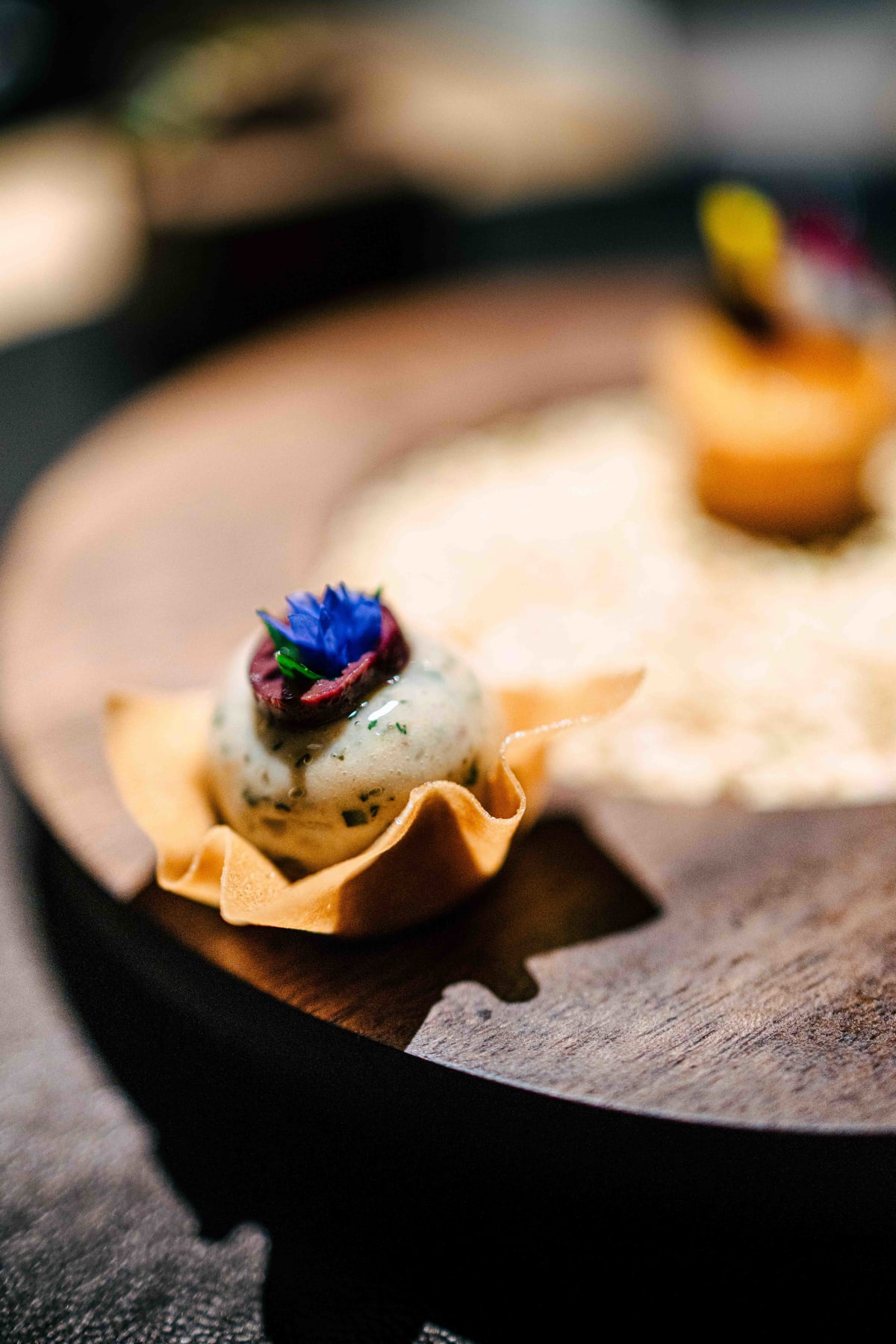
One was a burrata ball filled with basil, olive and sun-dried tomato, set on a fried spring roll sheet.
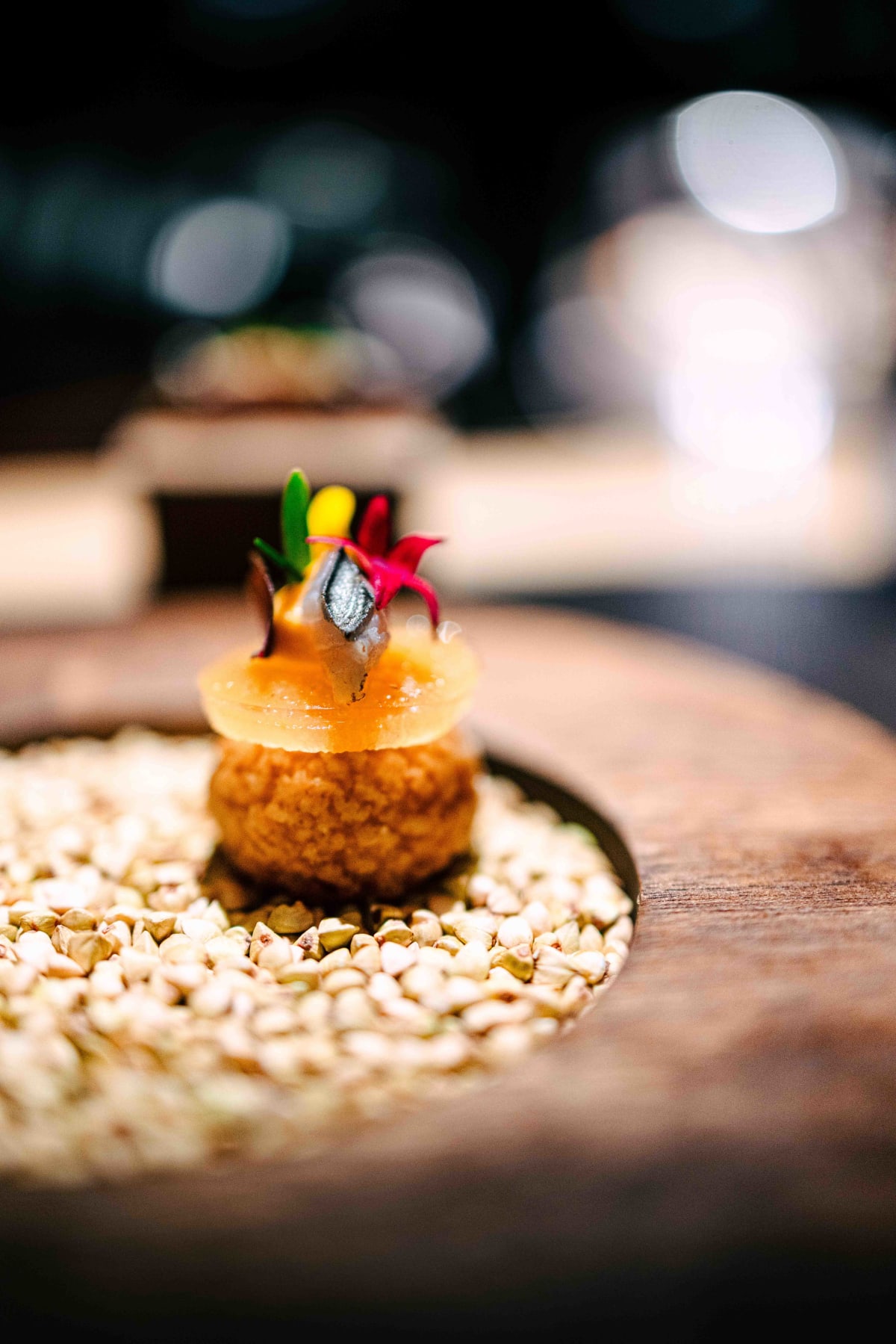
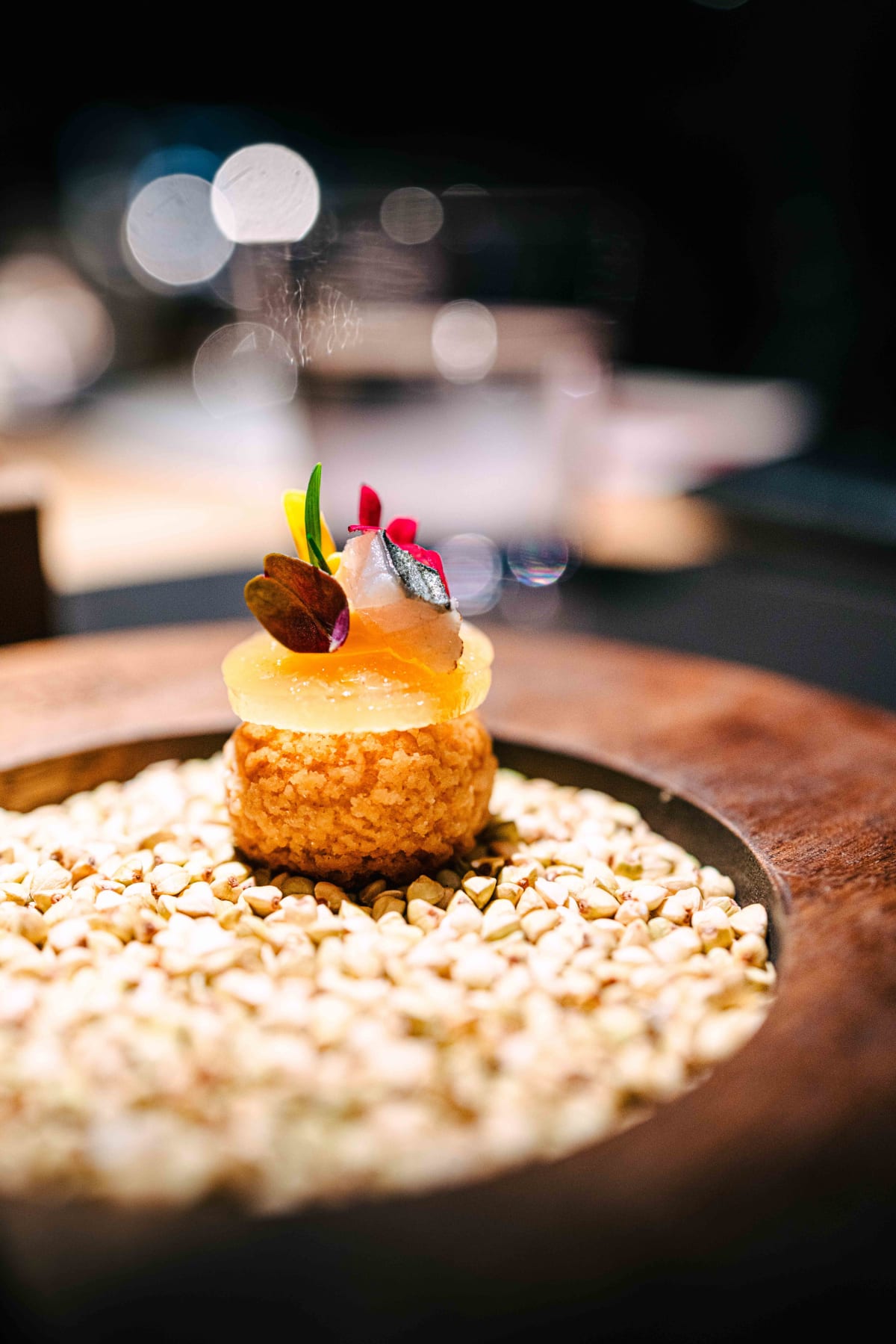
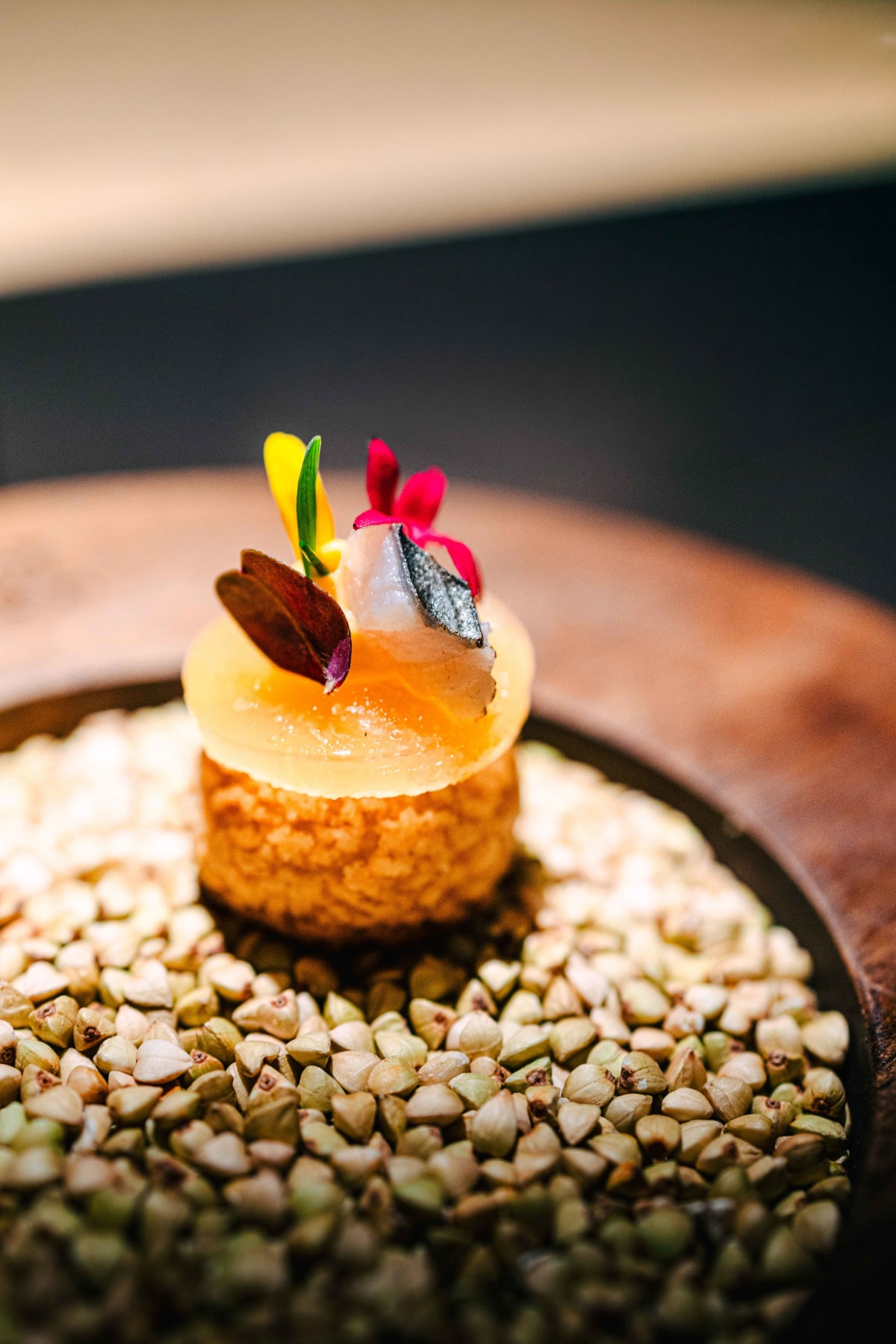
Another was a choux topped with melon and mackerel and finished with a Chardonnay vinaigrette jelly.
The last was a sourdough taco. Inside the little taco were assorted mushrooms, a truffle-scented purée, cassis and pine nuts.
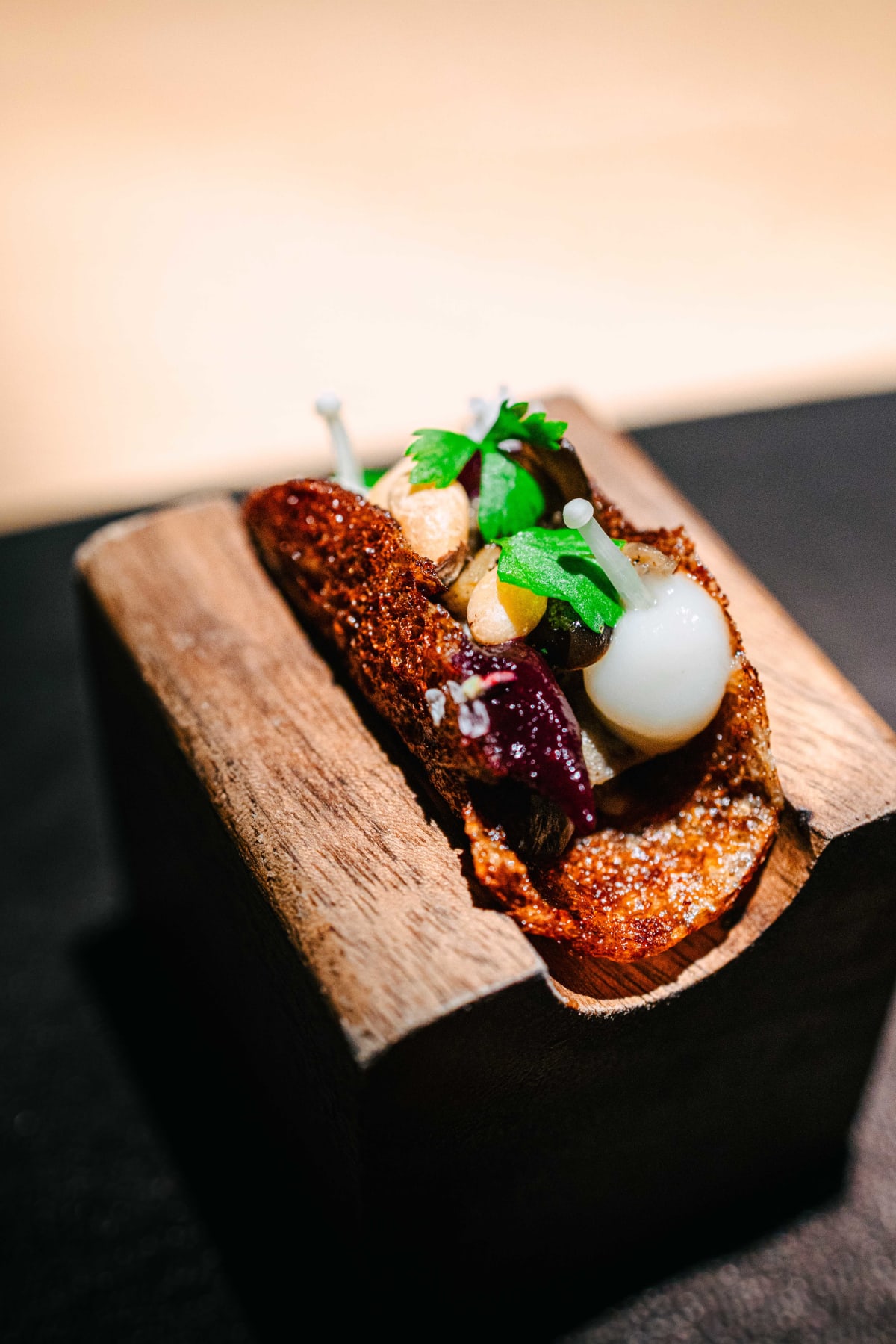
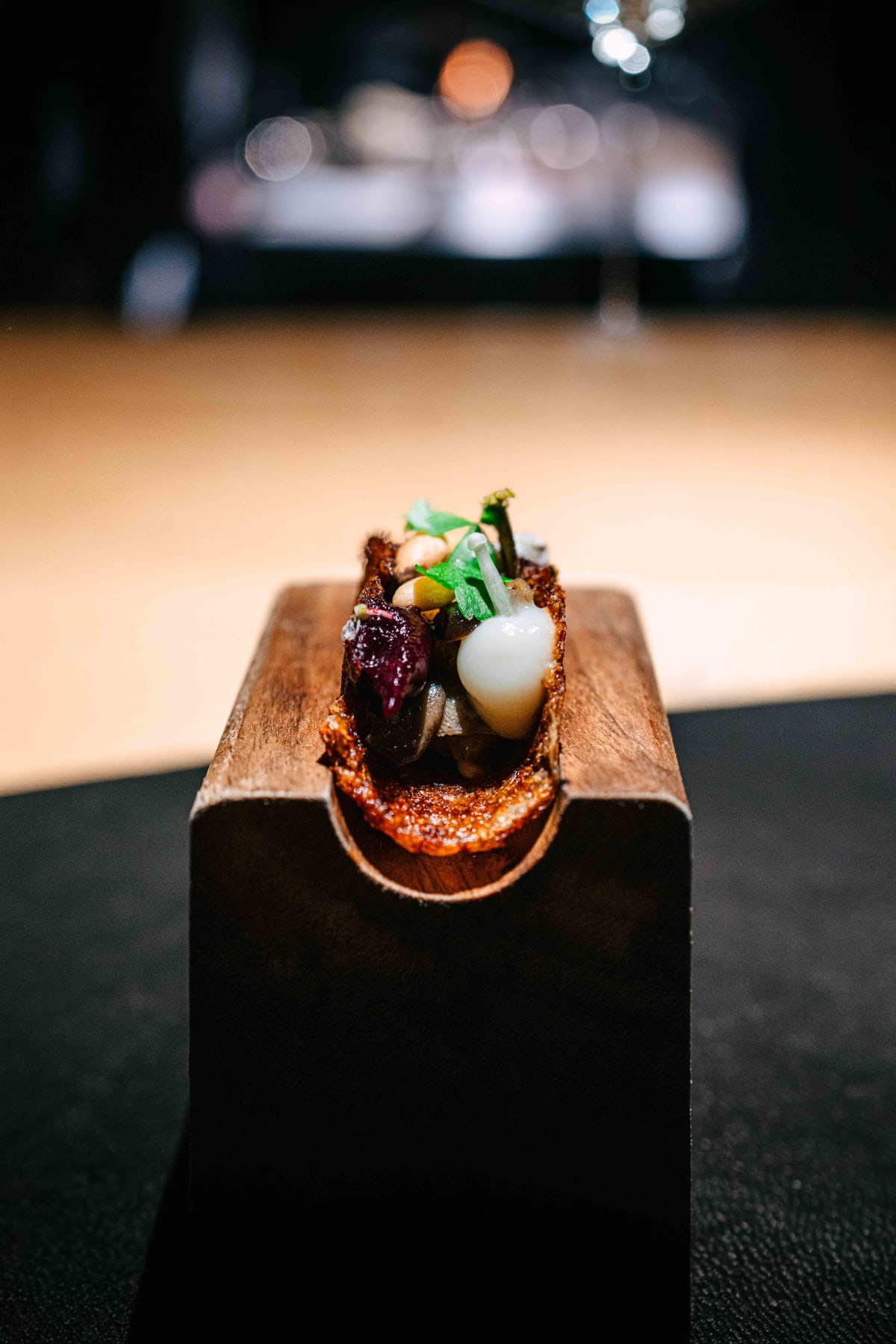
The mackerel choux had a gentle sourness that suggested the fish had been lightly cured, shime-style, and the burrata ball, rich in umami, was simply, intuitively delicious. The sourdough taco worked too, with the mushroom aroma and its several textures coming together.
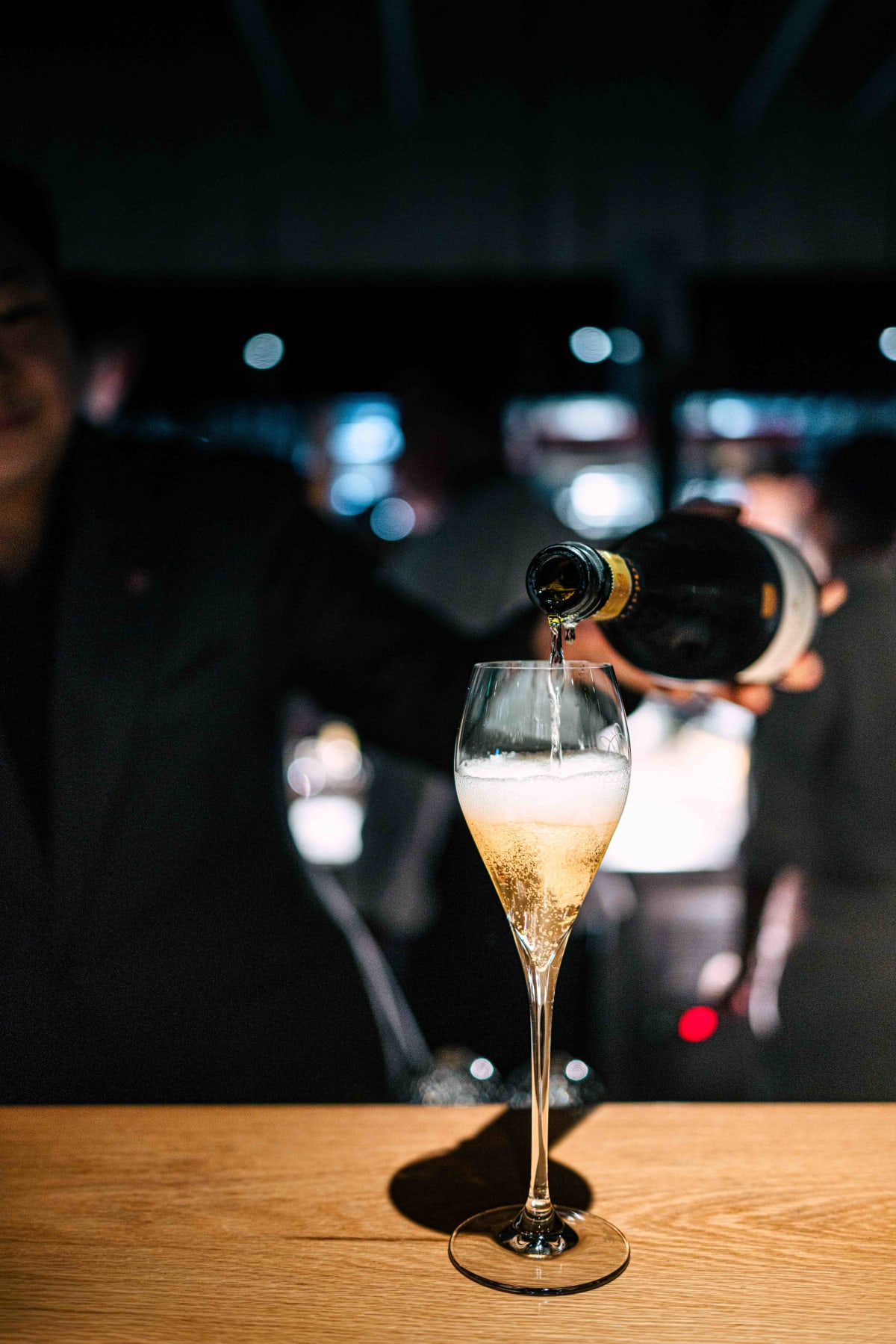
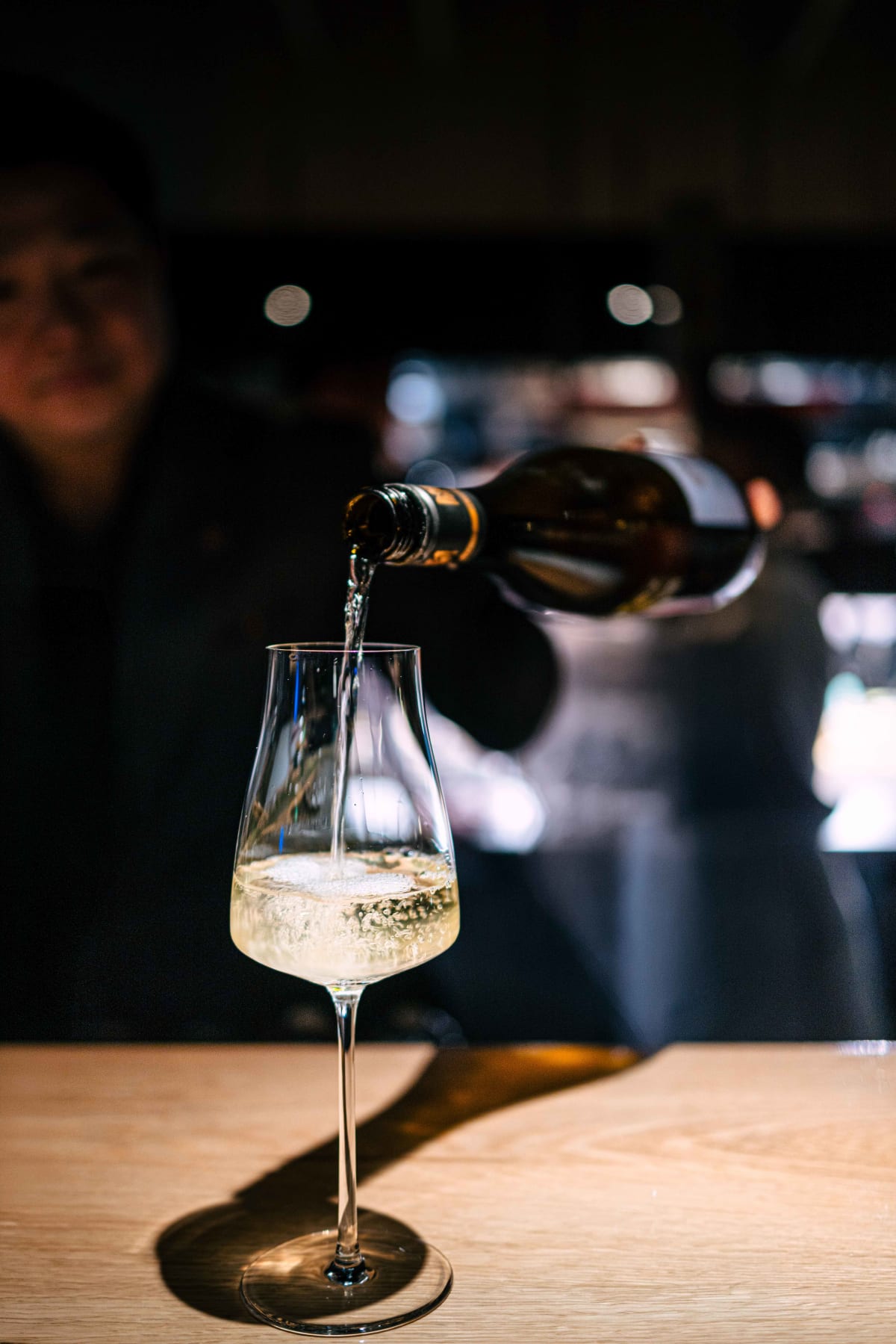
Between the amuse-bouches came the first Champagne, Philipponnat Royale Réserve Brut. The Philipponnat family has grown grapes in Champagne since 1522, which is why the year is set into the crest on the label. The house is famous for Clos des Goisses, an emblem of single-vineyard Champagne, and the Royale Réserve is its entry cuvée.
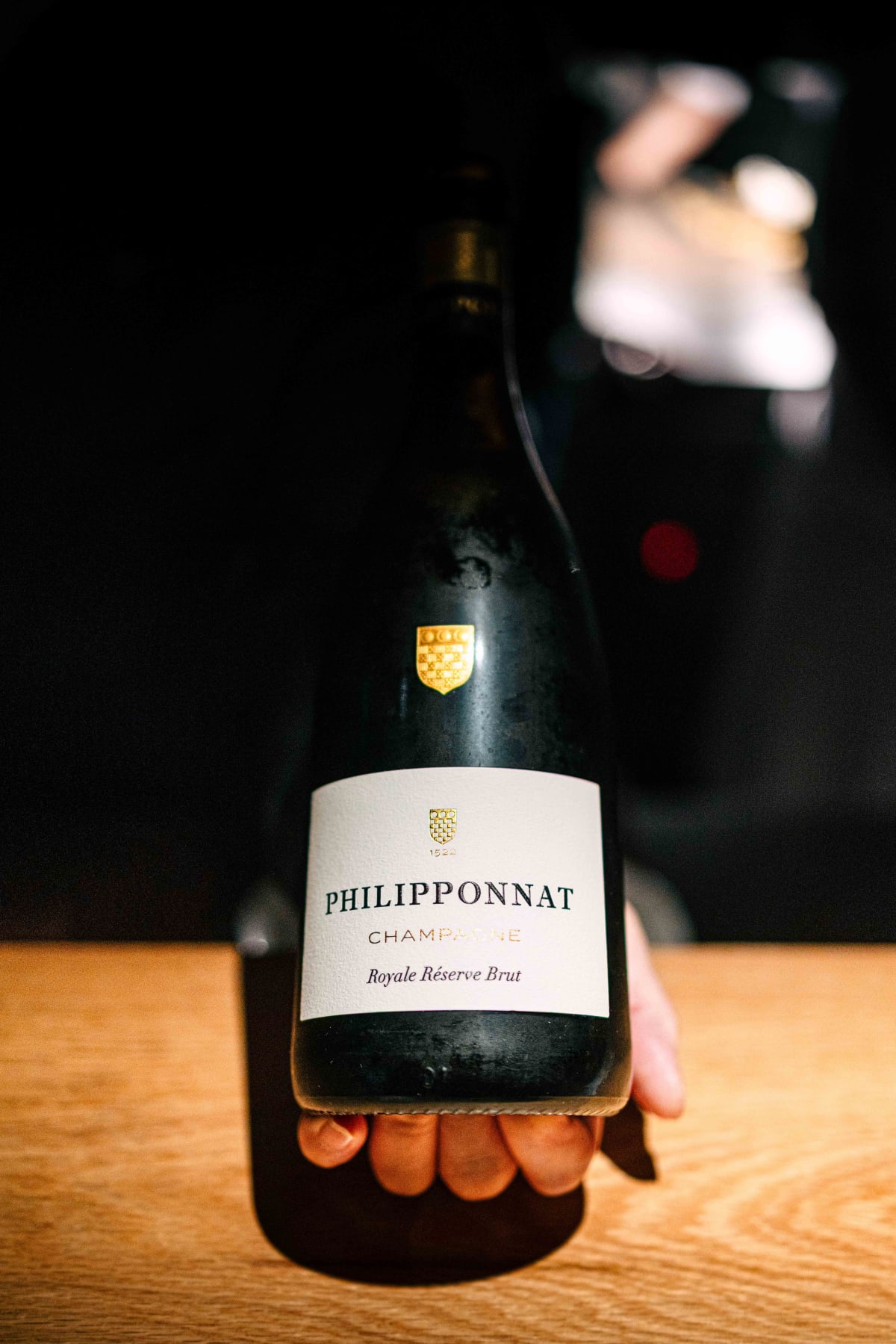
Pinot Noir leads at around 65 per cent, with Chardonnay and a little Meunier. First-pressing juice from grand and premier cru vineyards is blended with reserve wines aged in oak in a solera, and the dosage is set at 8 g/L.
The result is a style where berry fruit and notes of toast and brioche stand out, held up by clear acidity and minerality. It is a character that naturally suits seafood and charcuterie, which may be why it worked so well as an opener.
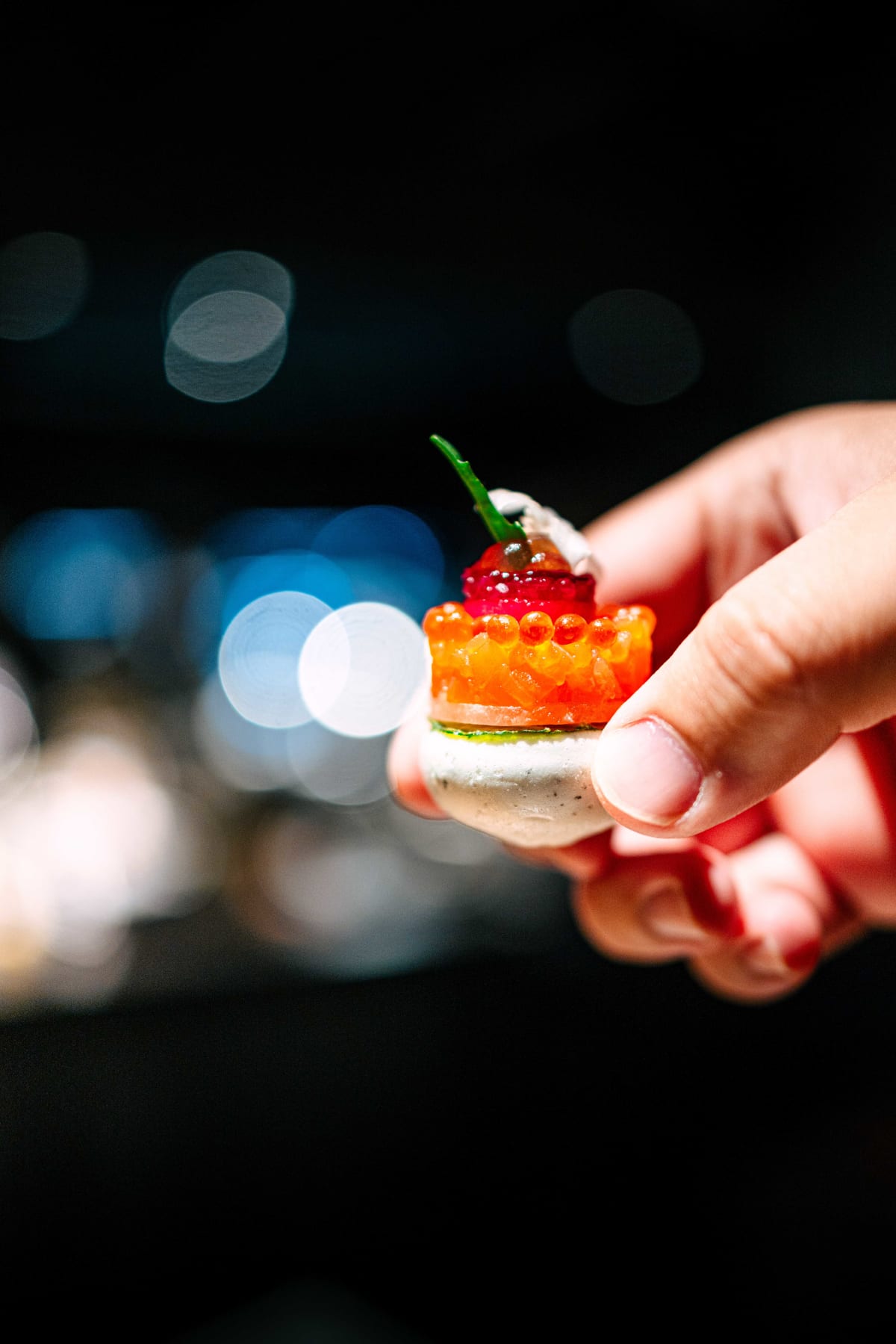
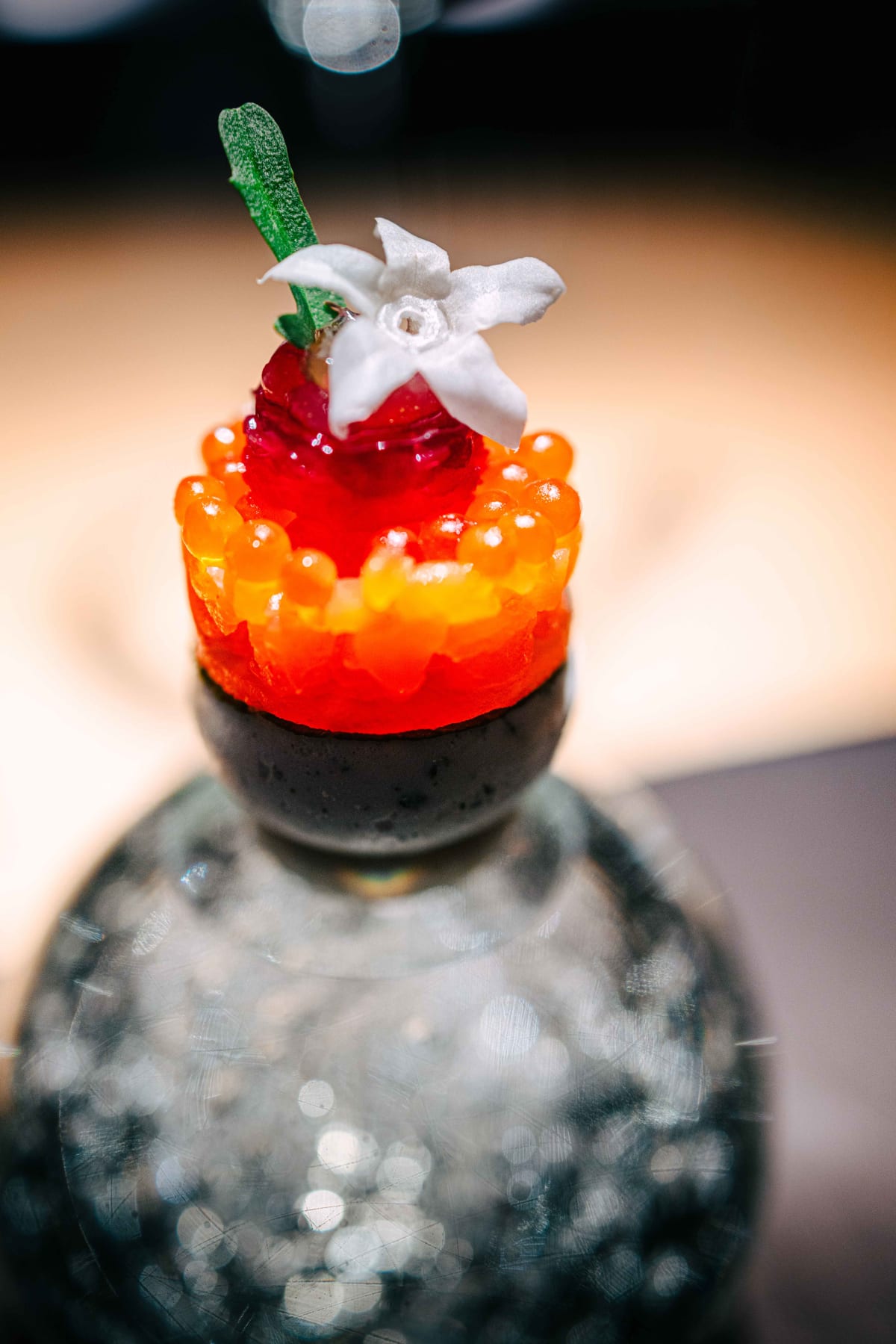
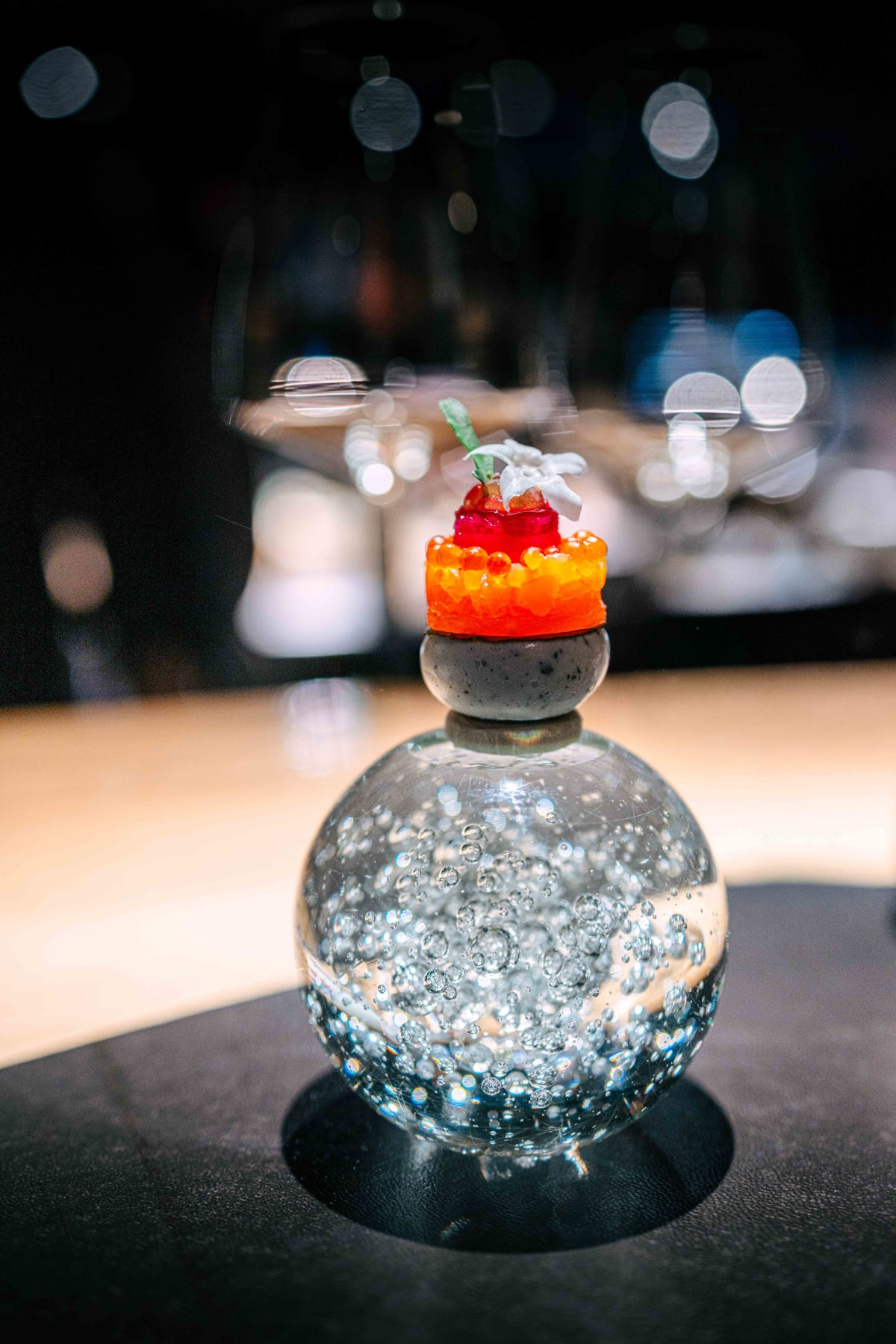
The last amuse-bouche was a Japanese-style bite called Dashi Macaron with King Salmon & Wasabi Mayo, and it was very good indeed.
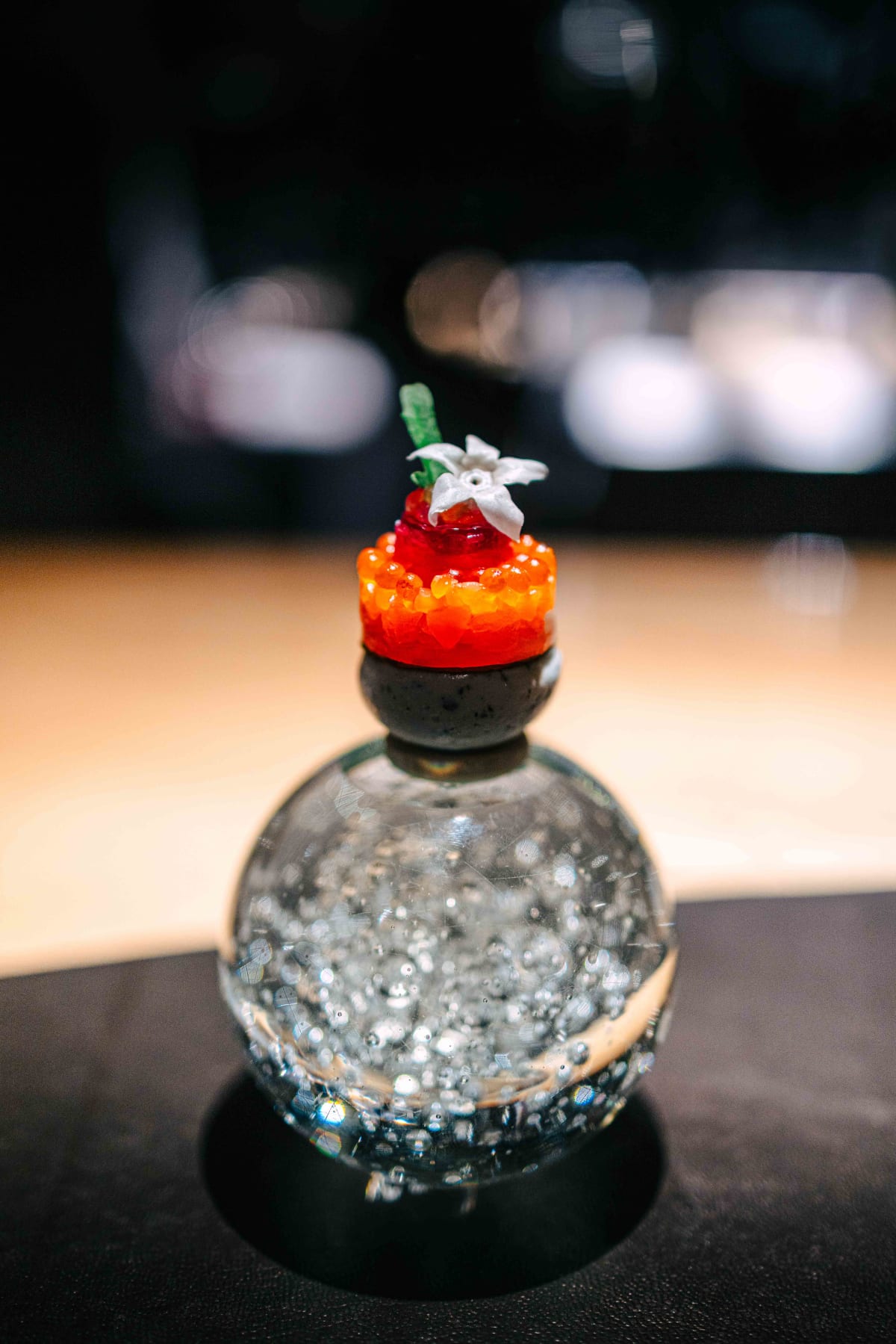
Minced daikon, shiso leaf and aged New Zealand king salmon went underneath, with ikura and myoga on top. Myoga is the flower bud of Japanese ginger. The roe popped against the teeth and the flavour of salmon and roe spread richly across the palate, making it the best of the amuse-bouches.
Section 3·Close Ties To Korea
Taian Table has close ties to Korea. The wife of its German chef, Stefan Stiller, is a German of Korean descent, and that evening she came out in a dress, sharing Champagne and conversation with the guests. Her Korean was not fluent, but it was quite good.
Before he came to Shanghai, Stiller had already earned a Michelin star at his own restaurant in Germany. After passing through great German kitchens such as Schweizer Stuben, he took charge of the kitchen at Schwarzer Hahn in Deidesheim, a wine town in the Pfalz, in 1998, and the following year he opened his own restaurant, Grand Cru, which won a Michelin star.
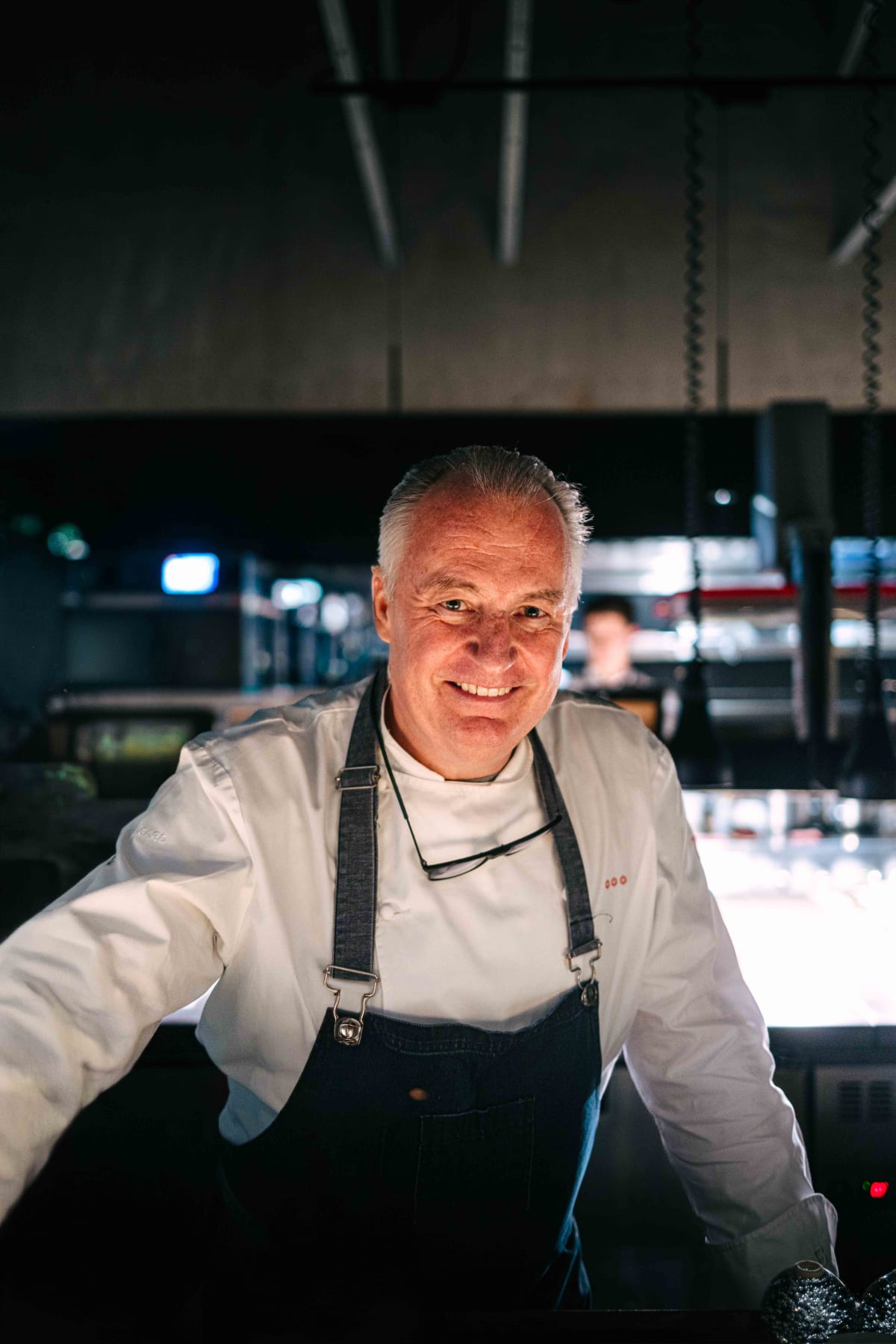
Since moving to Shanghai in 2004, he has been a fixture of the city's dining scene for more than twenty years, and as president of Bocuse d'Or Team China he has brought along a generation of young Chinese chefs.
Taian Table began in April 2016 in a residential building on Tai'an Road (泰安路), which gave it its name. That September, five months after opening, it won a star in the first Michelin Guide Shanghai, only to be forced to close the very next day over its licences. In December it reopened at the end of an alley off Zhenning Road (镇宁路), in a compound converted from an old factory.
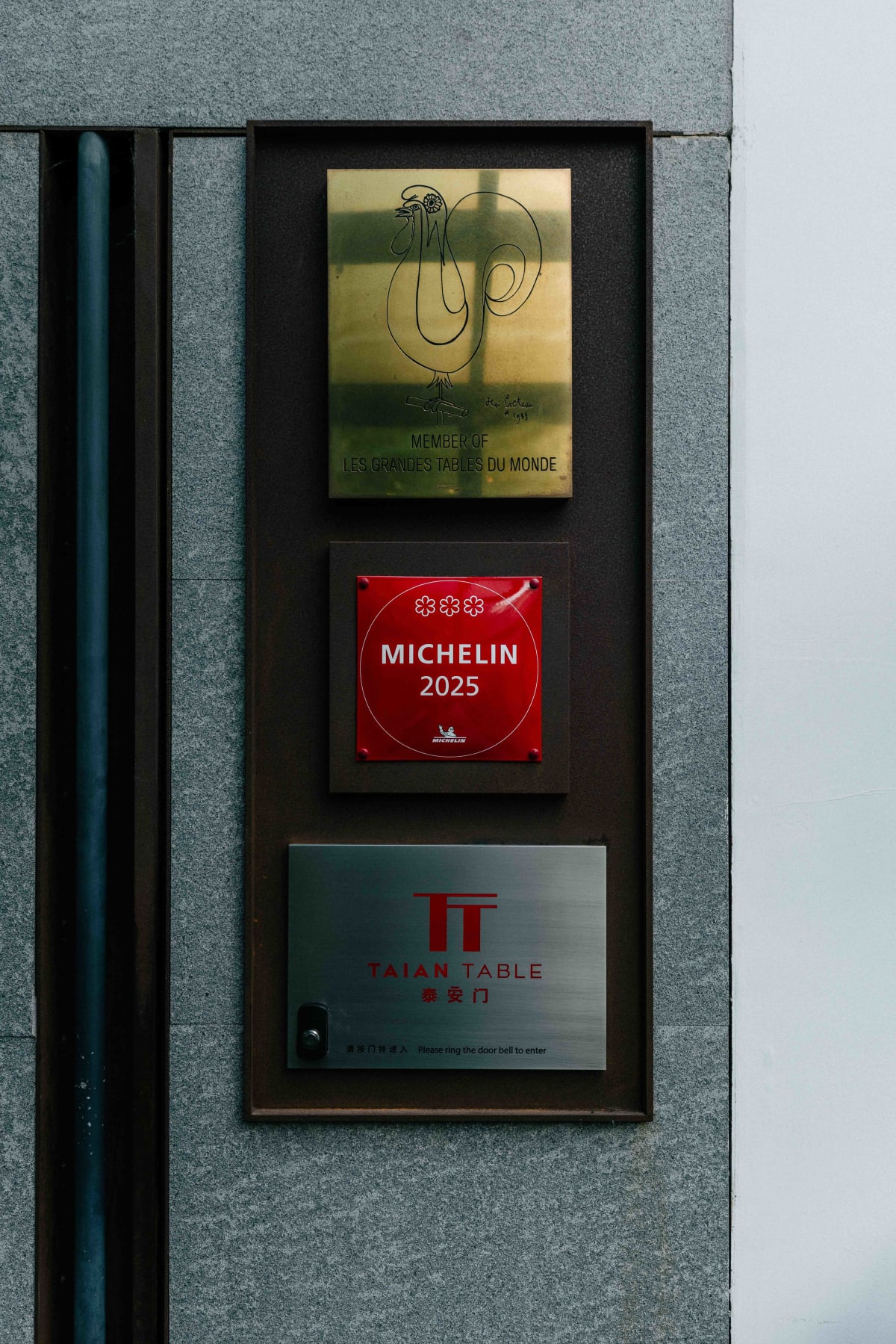
A second star followed in 2019, and in November 2021 it became Shanghai's second three-star restaurant after Ultraviolet. The same announcement brought the city's first Green Star, and it has kept three stars for five consecutive years through the 2026 guide. In 2021 Taian Table also opened in Guangzhou. It has been a member of Les Grandes Tables du Monde since the same year, so the association's plaque hangs beside the Michelin plaque on the wall by the entrance. The door opens only when you ring the bell.
What is interesting is that while Stefan Stiller, the founder, is still the face of Taian Table, the head chef who in practice runs the kitchen today and builds the menus is Christiaan Stoop. The menu that evening listed him as Executive Chef. He worked at Esszimmer in Munich, Moments in Barcelona, The Fat Duck in Bray and The Oberoi in New Delhi, served as sous chef at L'Atelier de Joël Robuchon in Paris, and joined Taian Table in 2022.
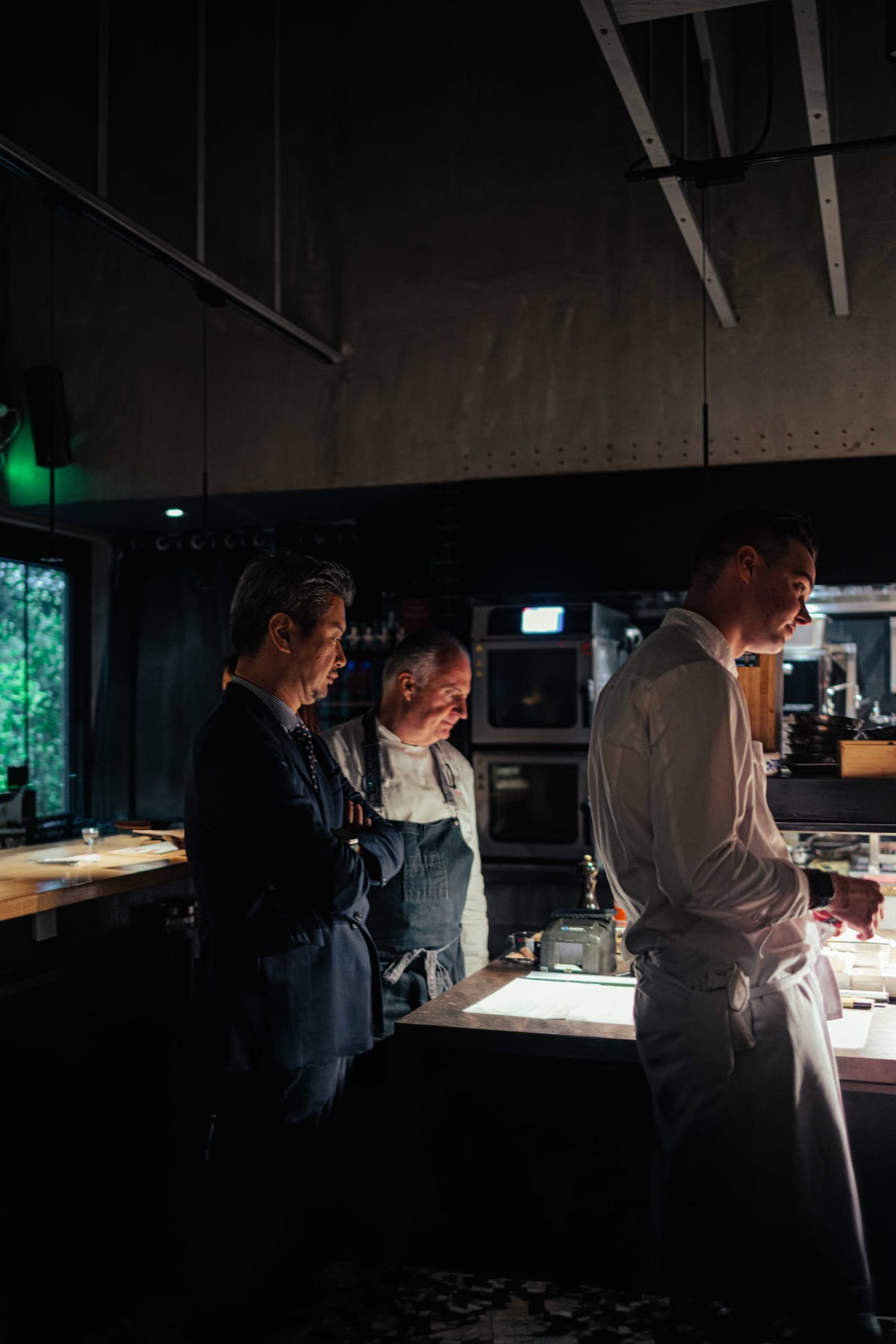
There is also a Korean manager who holds an important position across the Taian Table group's restaurants, and that evening the manager looked after our table, with explanations and care that were attentive in every detail. If you visit, the manager will likely look after you too, and even if not, the staff all speak good English, so language is no concern.
With so many people here connected to Korea, when I said I had come from Korea and loved dining out there too, a great many of them brought up one restaurant.
It was VINHO in Seoul. Everyone asked whether I had been, and they told me they had done pop-ups and collaborations with the VINHO team several times and were close. Some of them knew each other personally, and it reminded me once again how small the world of dining is.
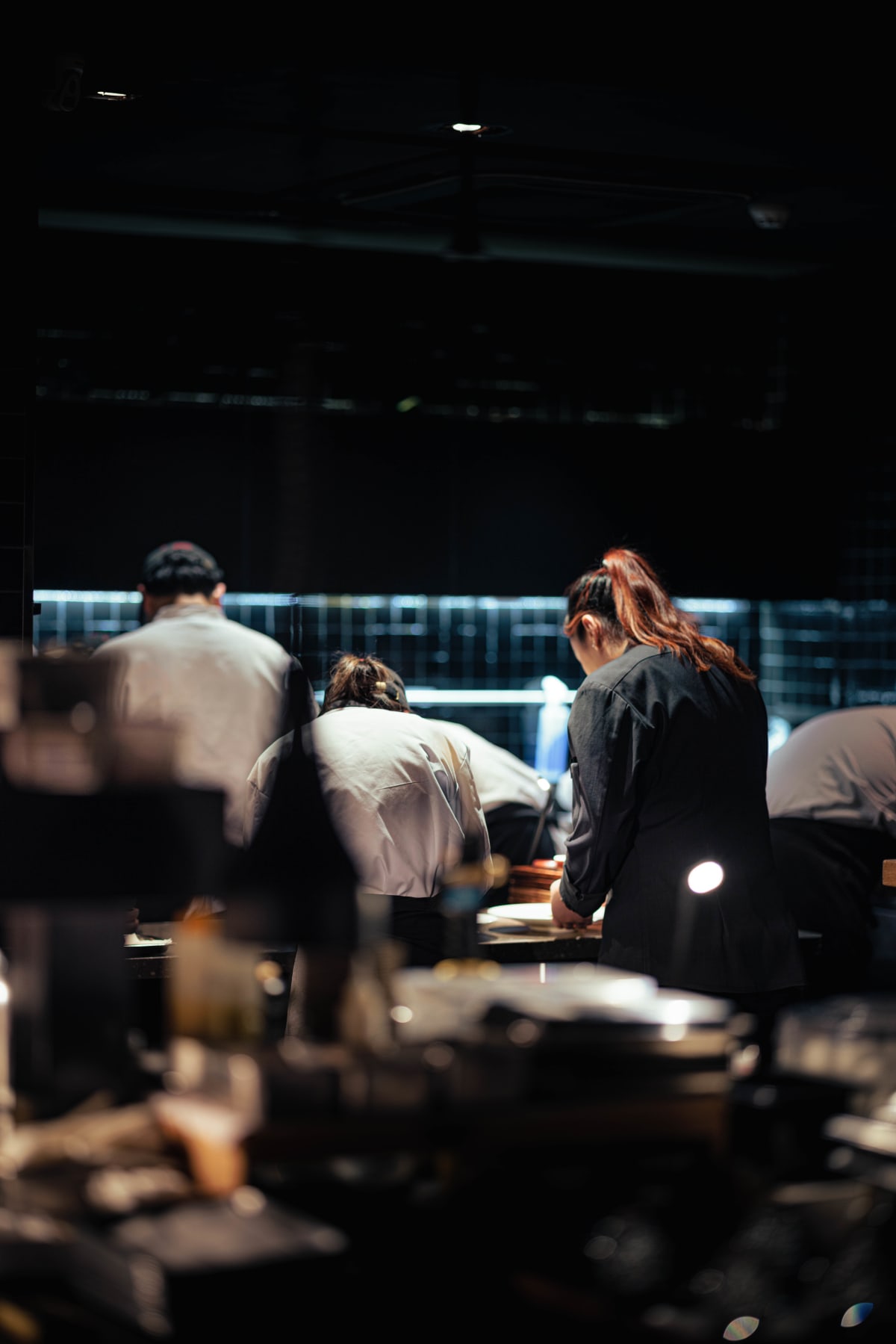
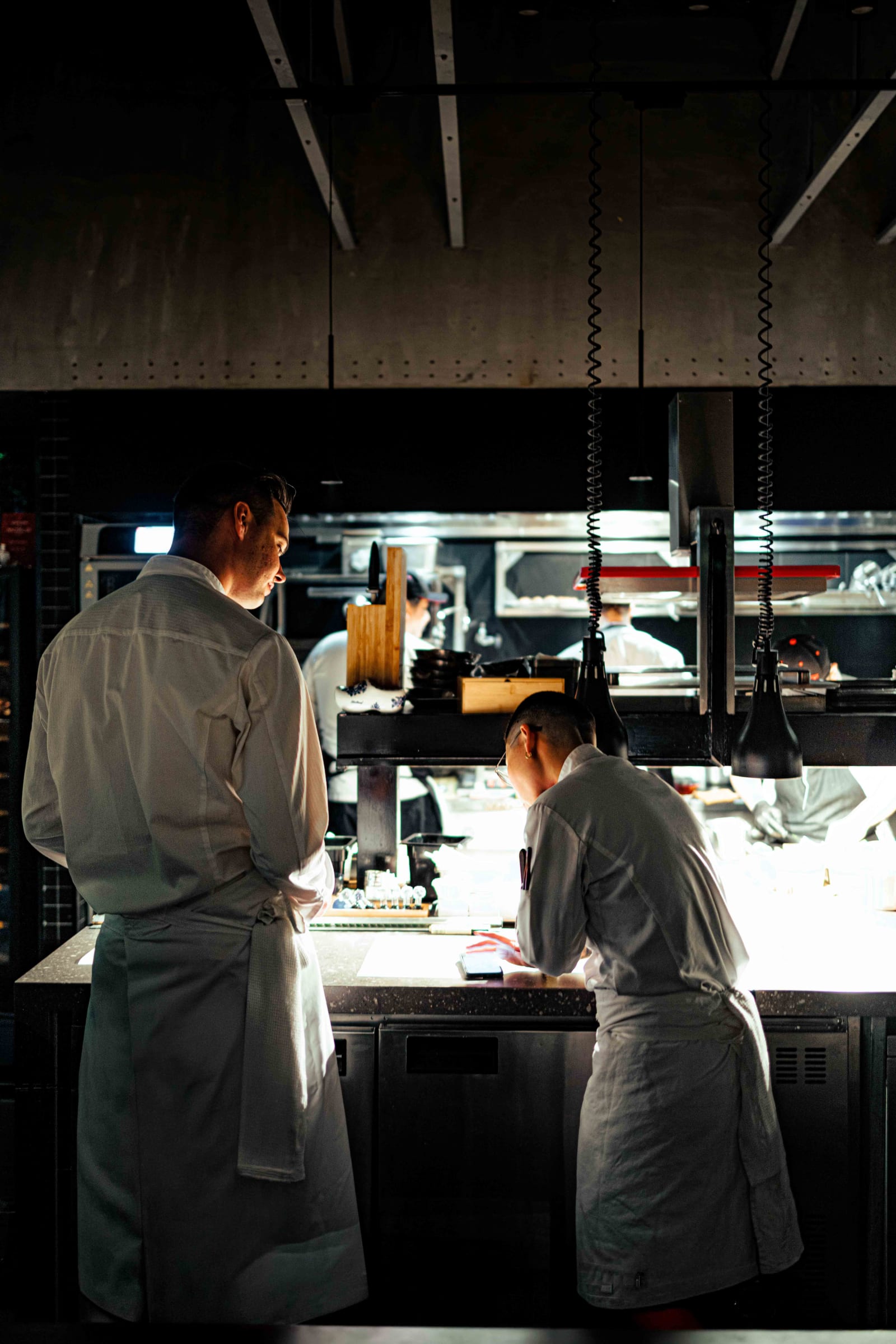
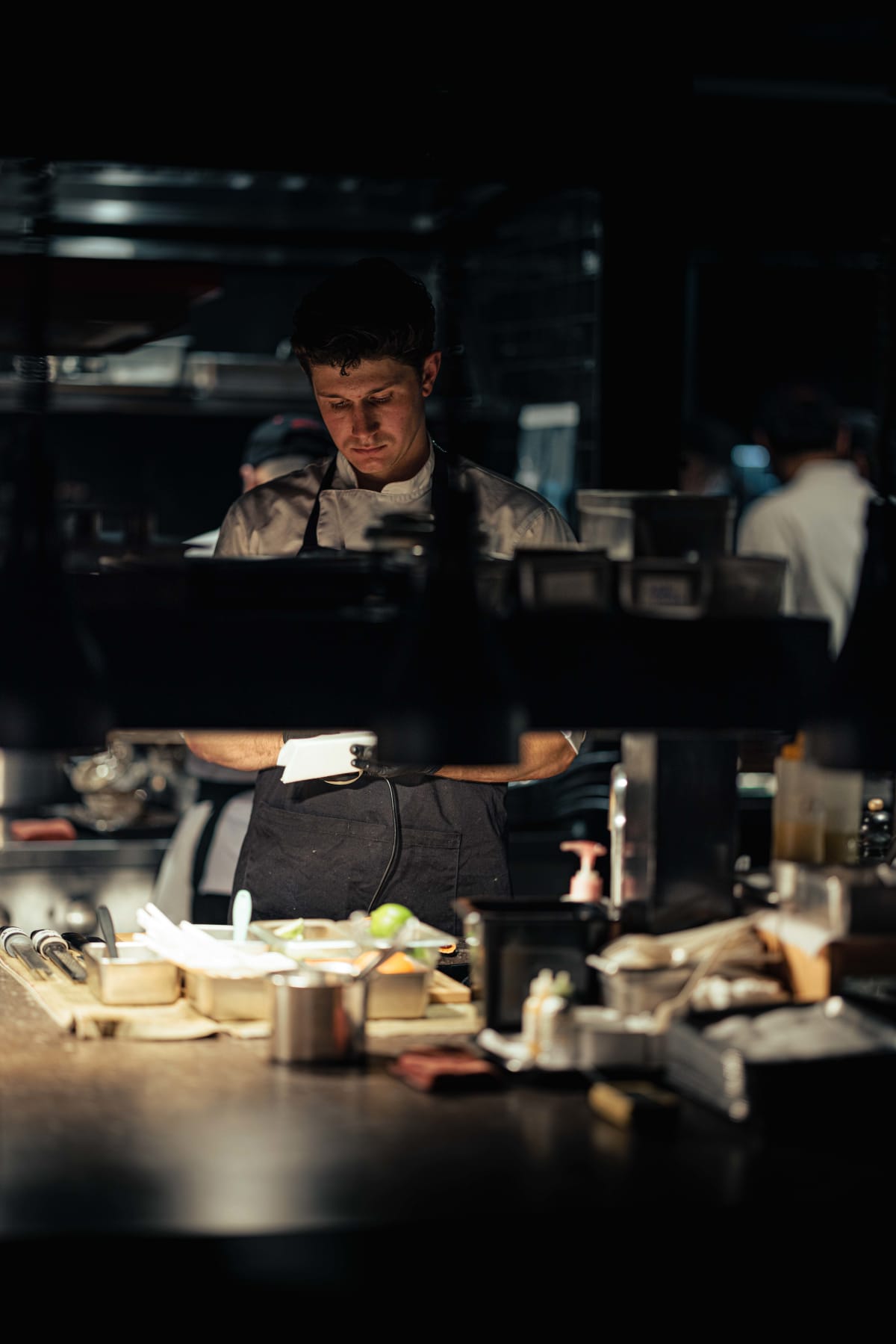
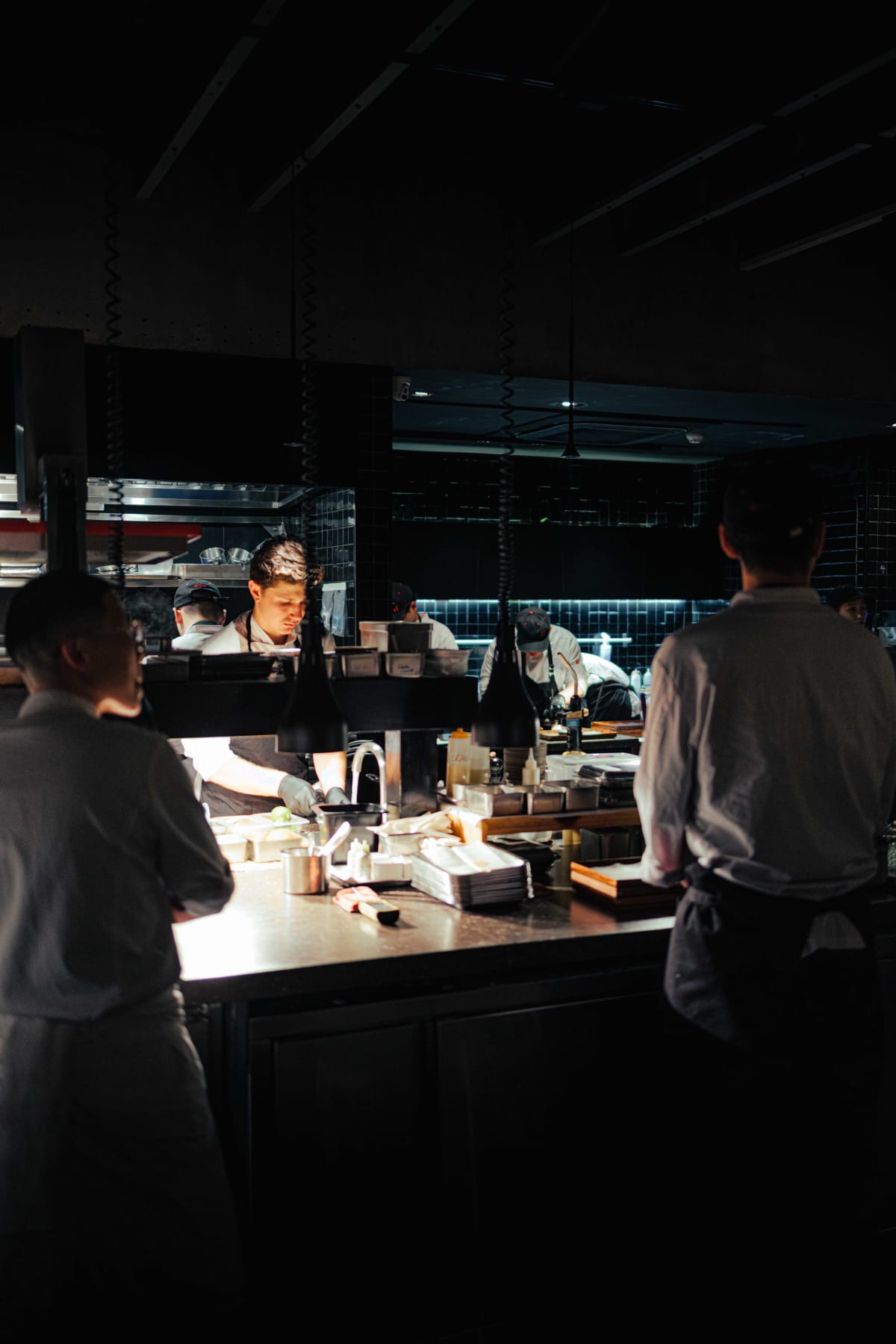
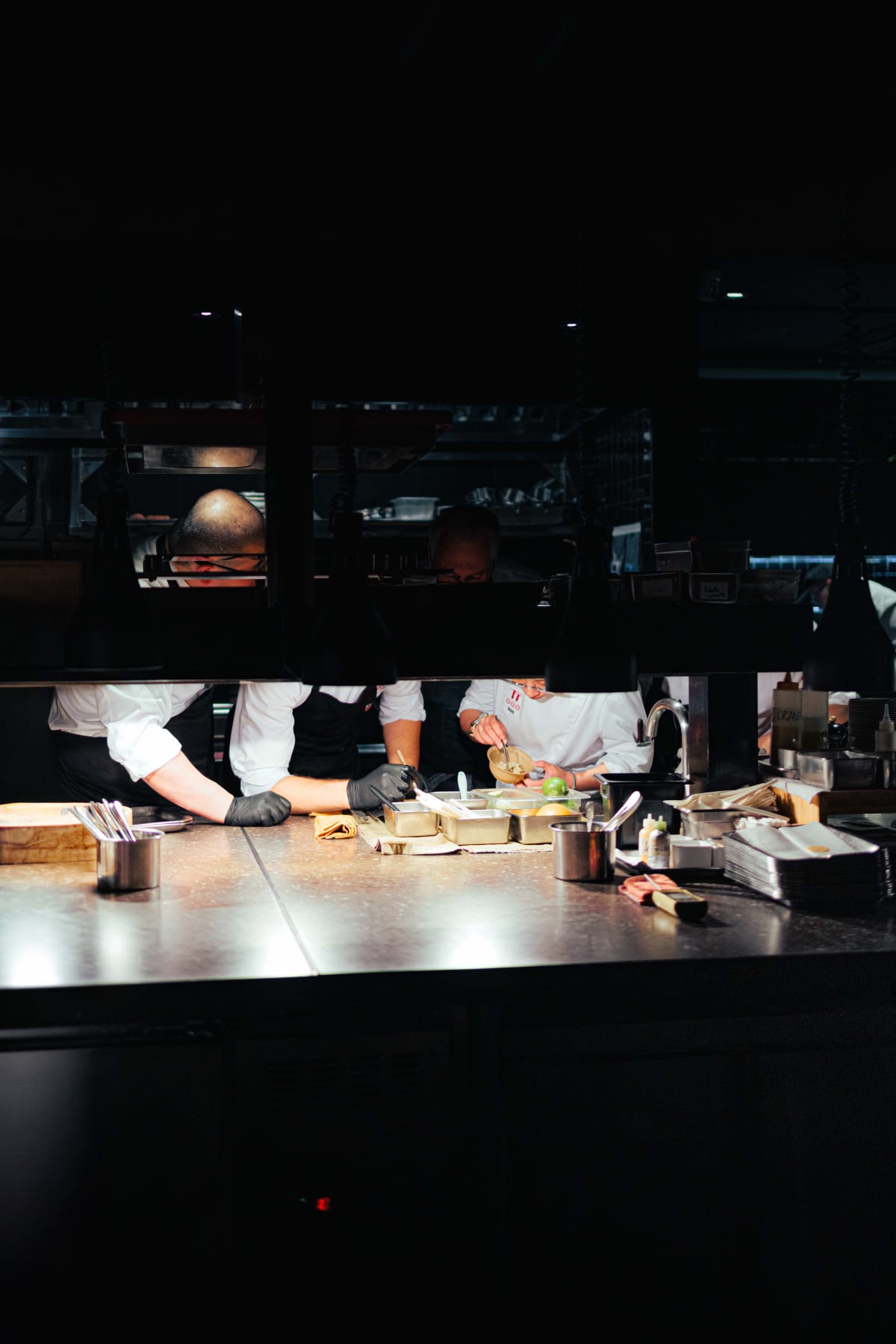
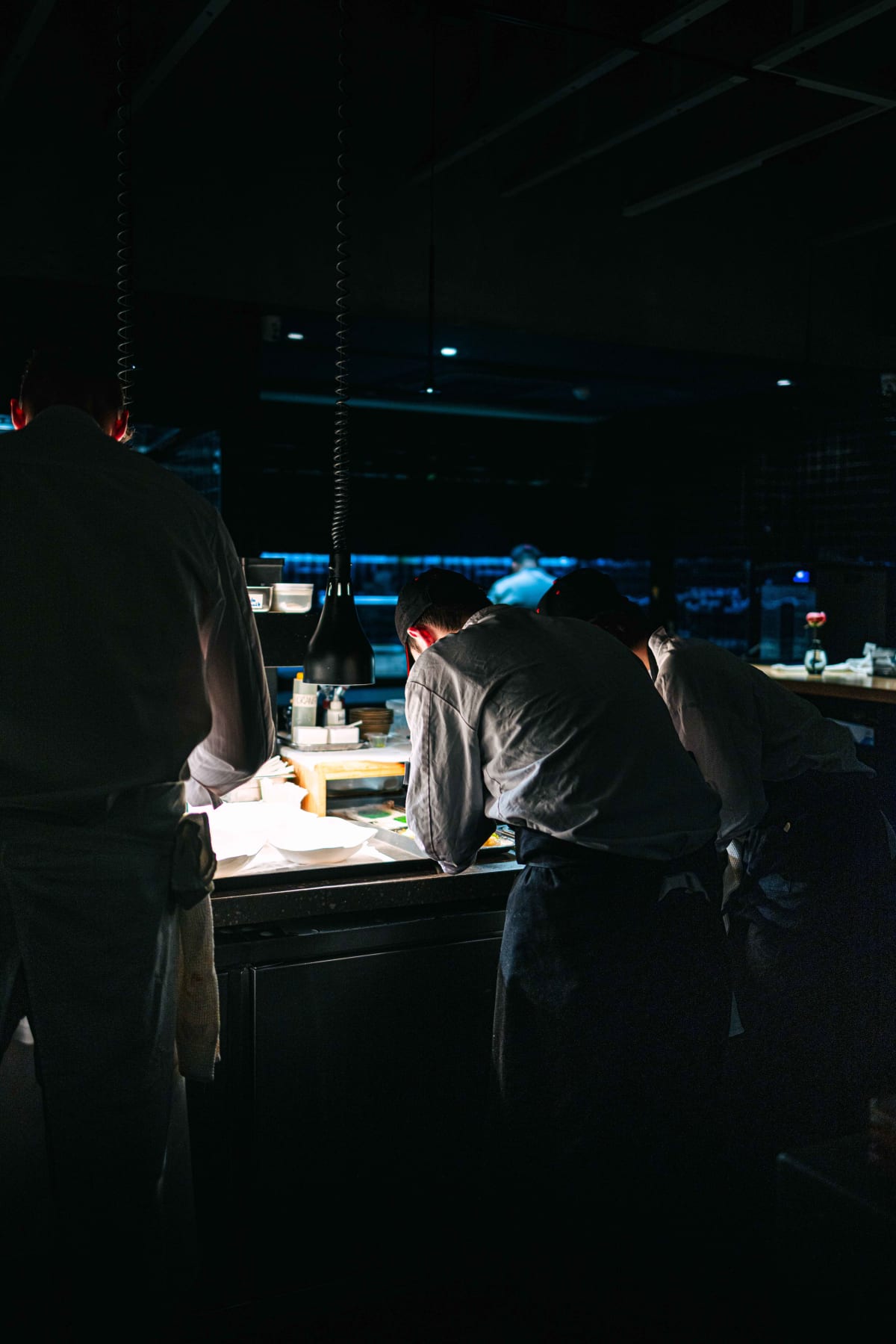
Having been to VINHO since returning to Seoul, I can say with certainty that the two restaurants have a lot in common, in mood, in layout and in the character of the food. The biggest shared feature is the counter wrapped around the open kitchen in a U. In the dark room, bright light falls on the kitchen at the centre like a stage, and with the whole brigade visible as they prepare each dish, there is plenty to watch from your seat even between plates.
Section 4·A Tartare From Gwangjang Market
After the Champagne, the pairing moved on to Weingut Aldinger Sauvignon Blanc Reserve Trocken 2022. As befits a German chef's restaurant, it came from the German Wine Selection. Aldinger is a leading estate in Fellbach, Württemberg, a member of the VDP, Germany's top association of producers, and in 2018 it became the first Württemberg winery to receive Gault&Millau's highest rating.
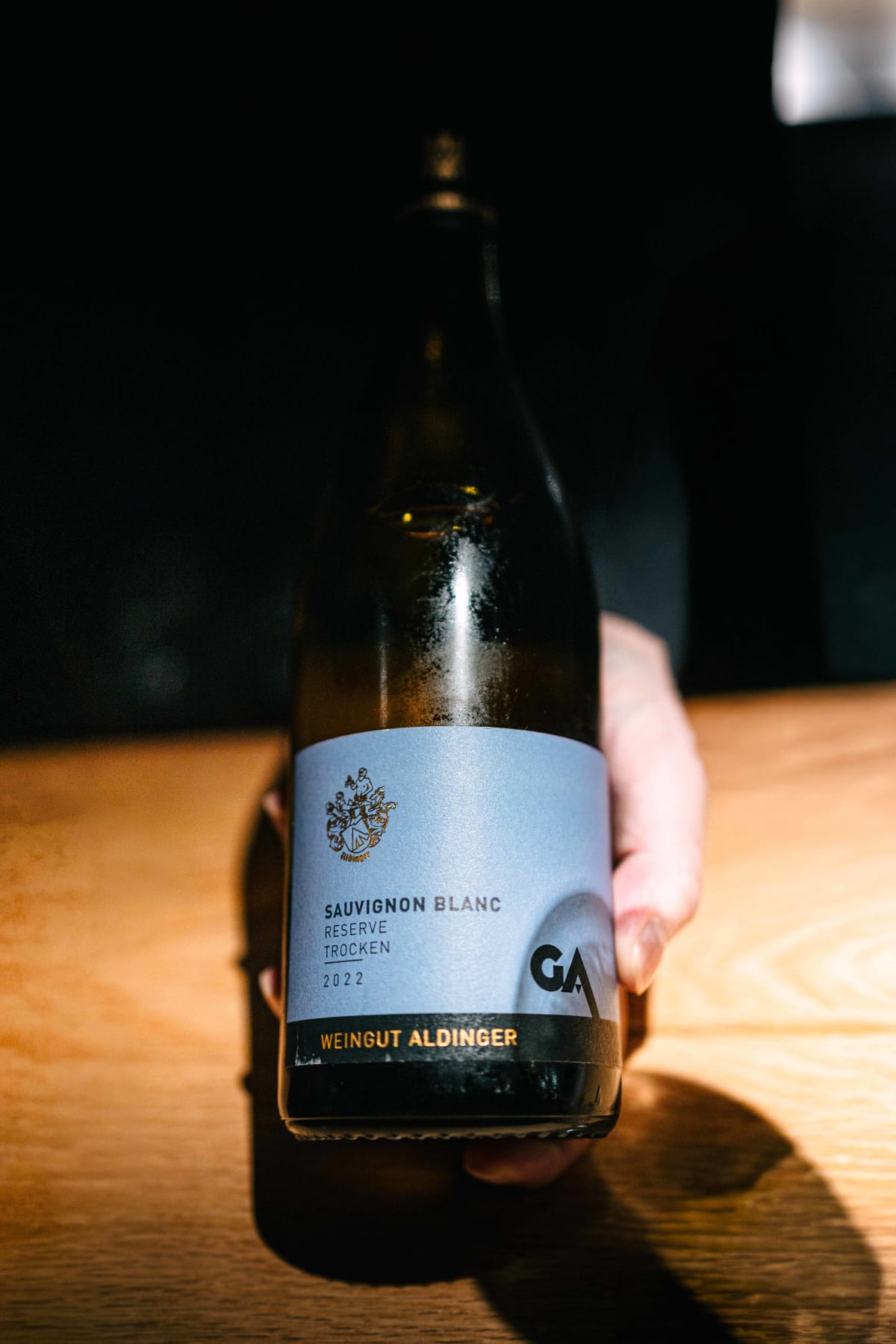
Most of it is fermented reductively in stainless steel, with only a portion aged in oak, giving a style where fruit, spice, clear acidity and minerality come together. Unlike a New Zealand or Loire Sauvignon Blanc, it had more structure and a weightier nose.
New Zealand King Salmon | Wasabi | Juniper Berry
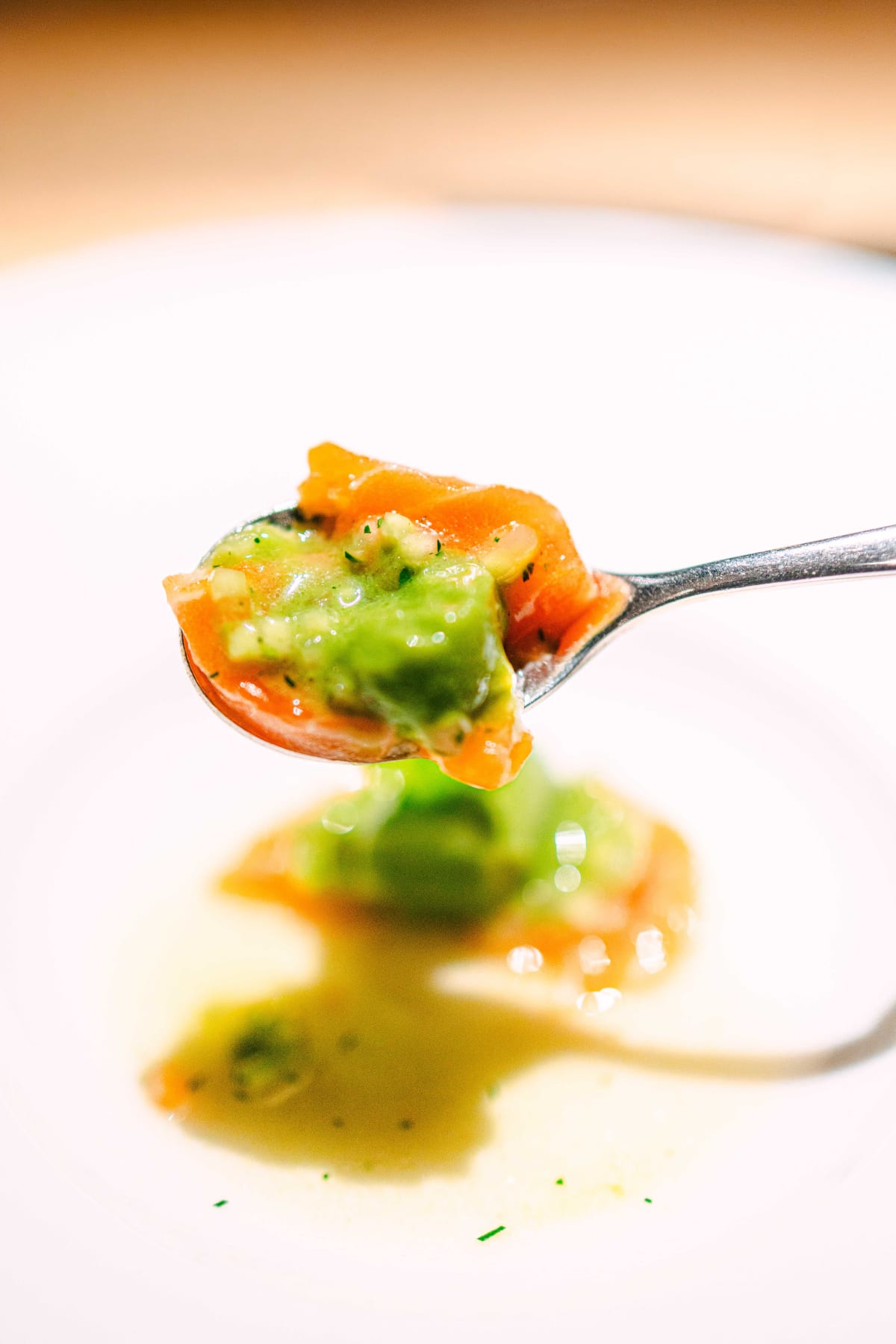
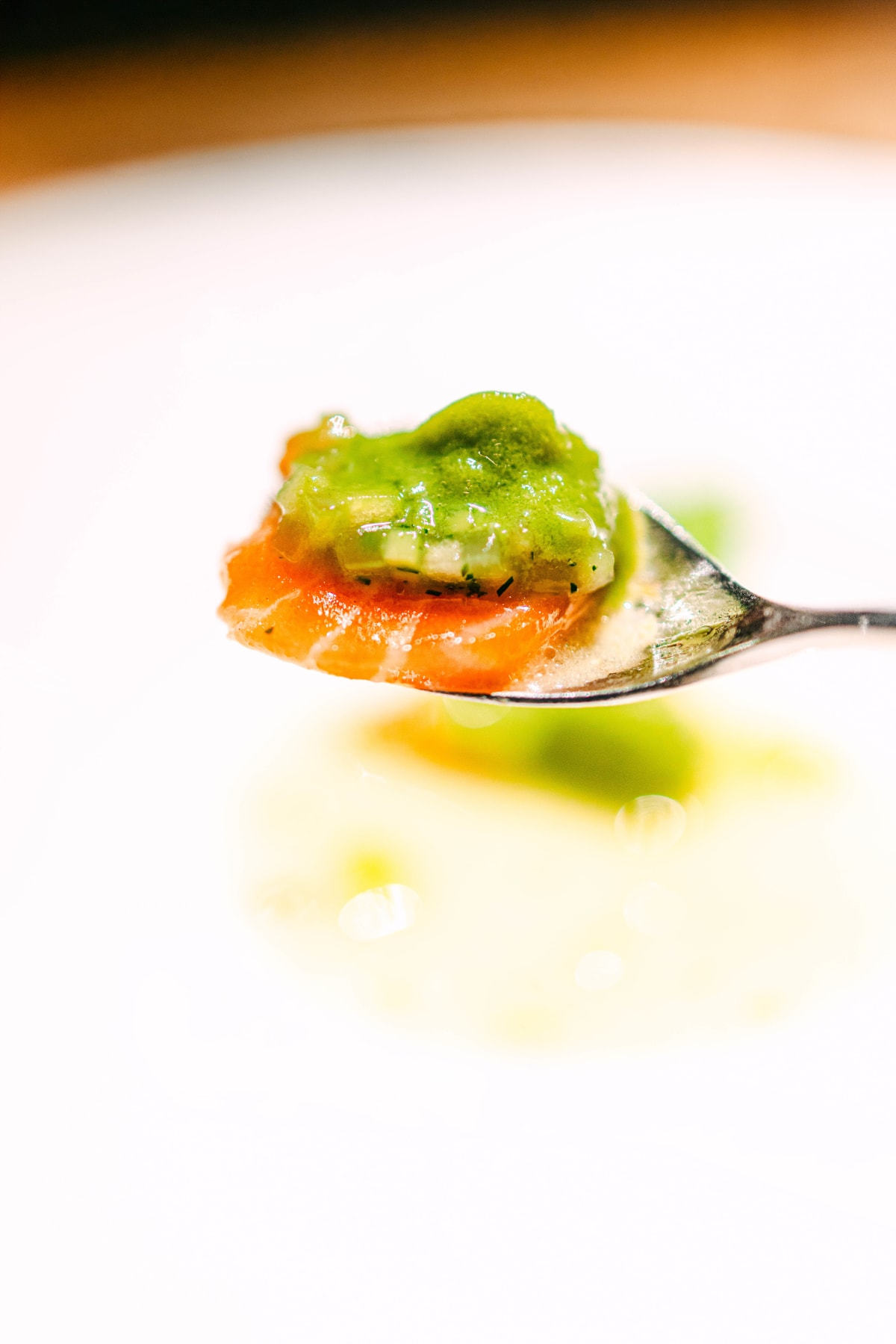
The first course was New Zealand king salmon. The salmon is aged in an unusual way and then cold-smoked, so its colour barely changes. Juniper berry and oyster juice are mixed and poured underneath, and a cucumber and apple salad and wasabi ice cream go on top.
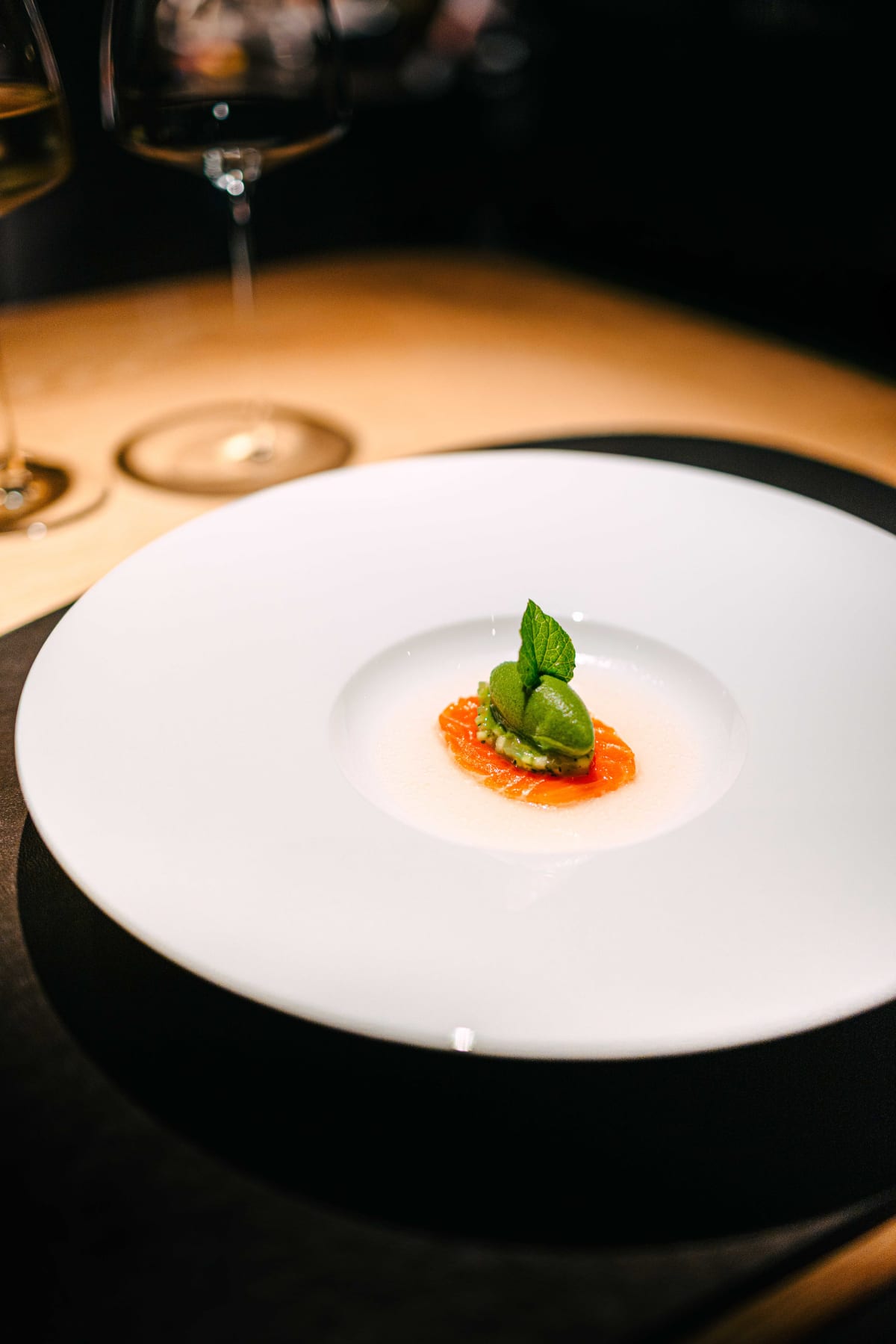
Wasabi must be a fascinating spice to Westerners. Here, as in Europe, whenever a kitchen wants a Japanese touch, wasabi is the ingredient that never fails to appear. The manager warned us that the wasabi was strong and told us to eat everything together, but for anyone who eats Japanese food often, it was not particularly strong.
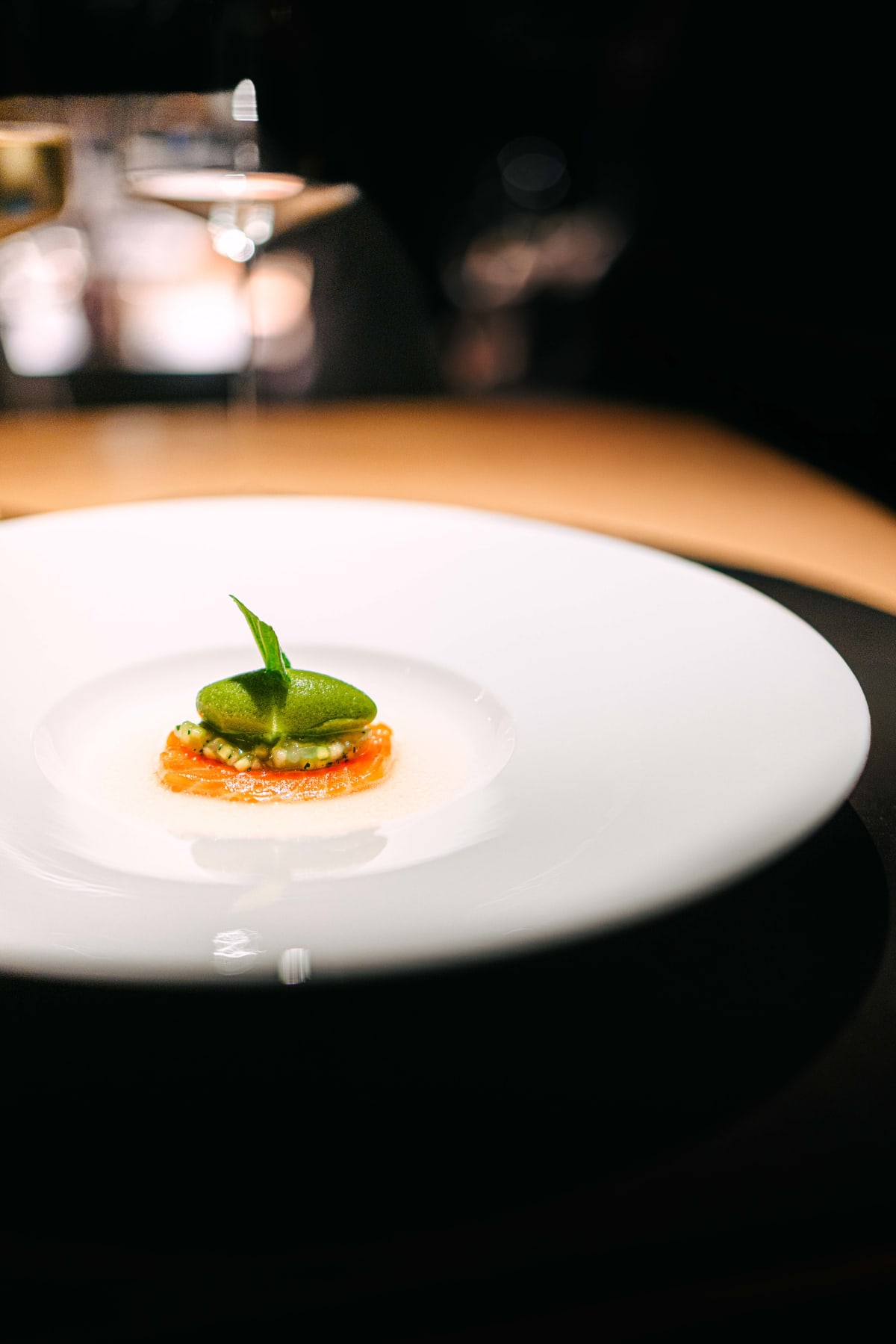
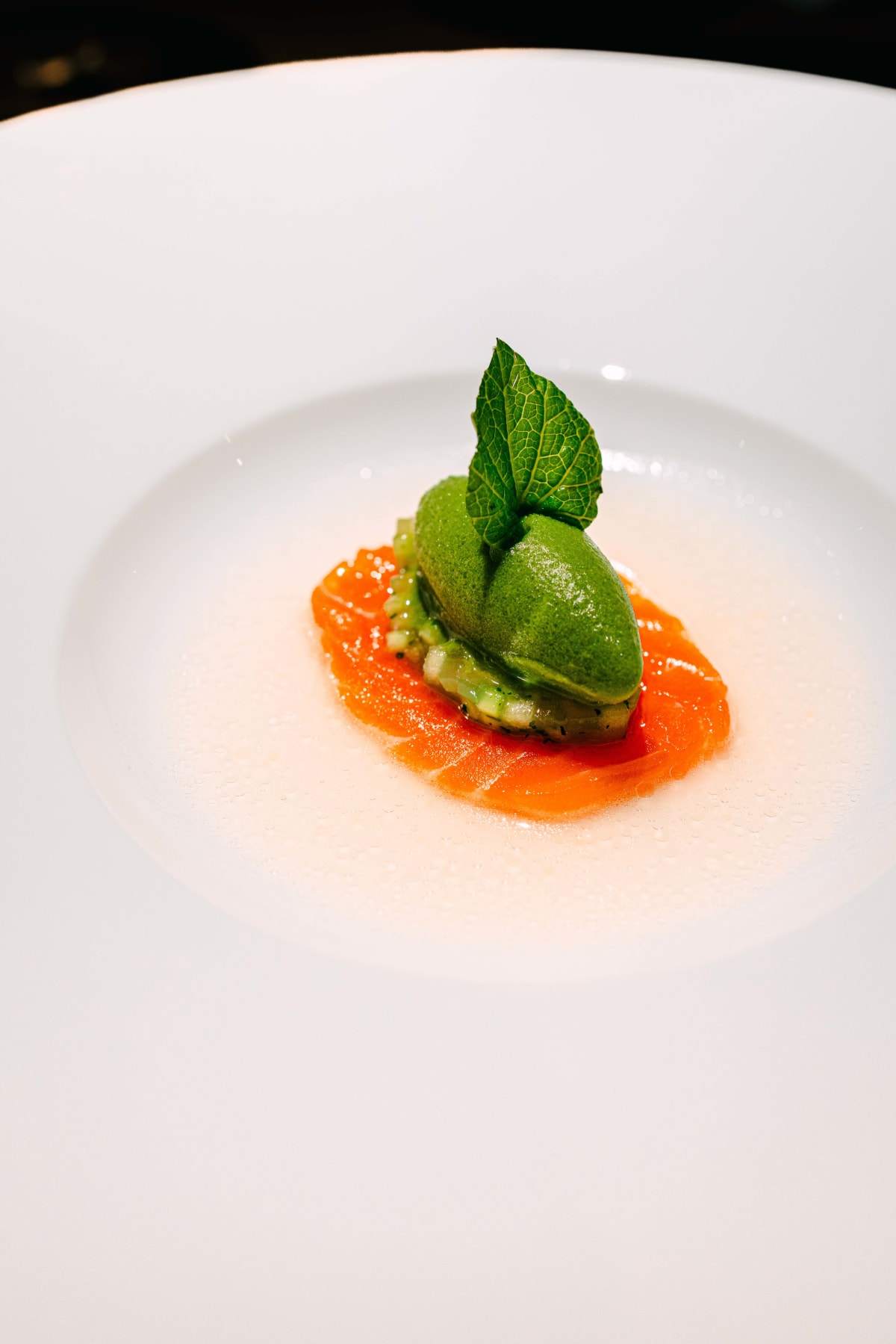
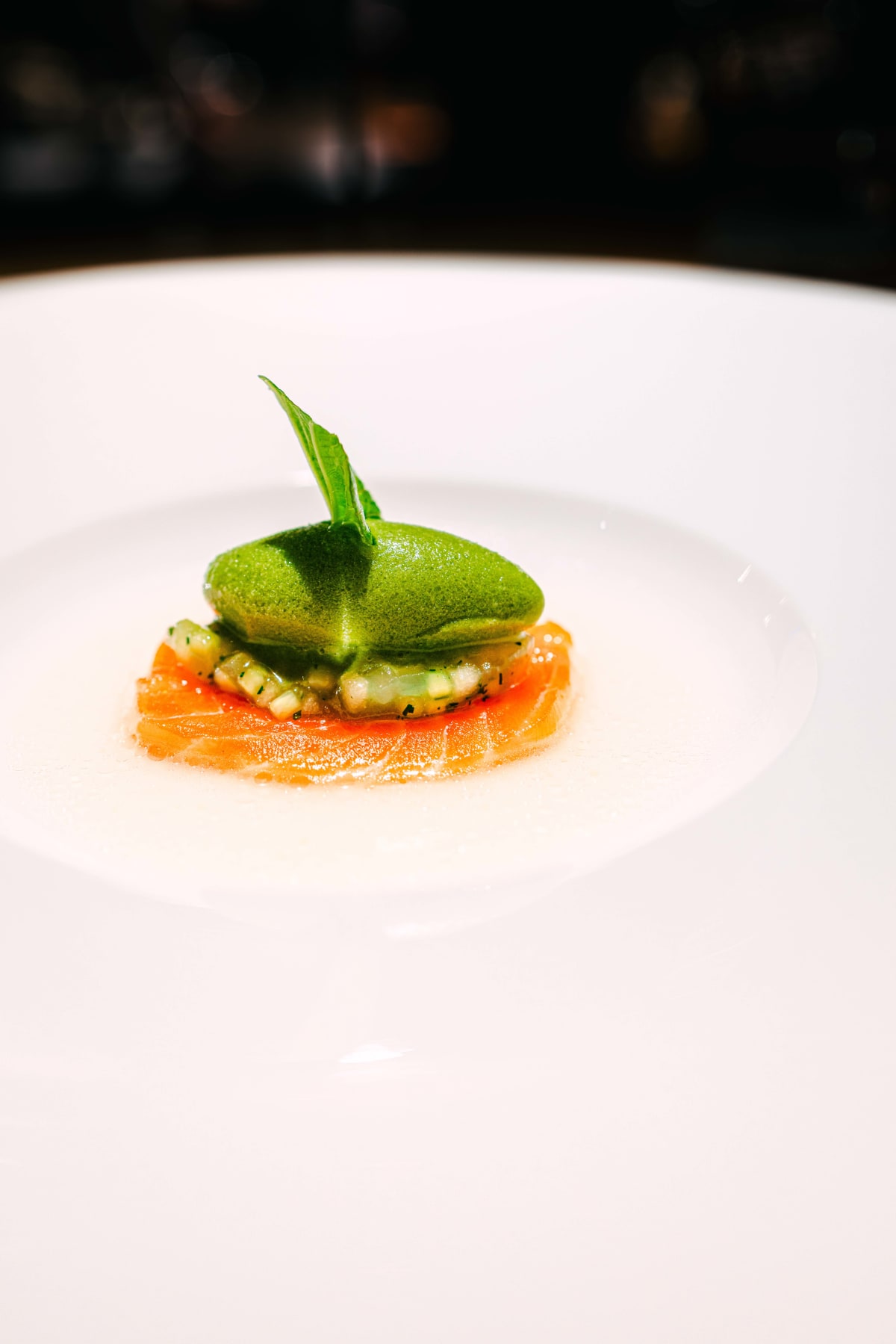
The broth was good, but above all the salmon itself was excellent. The seafood matched the high price. Eaten together, the ice cream and the broth gave a play of temperatures and flavours.
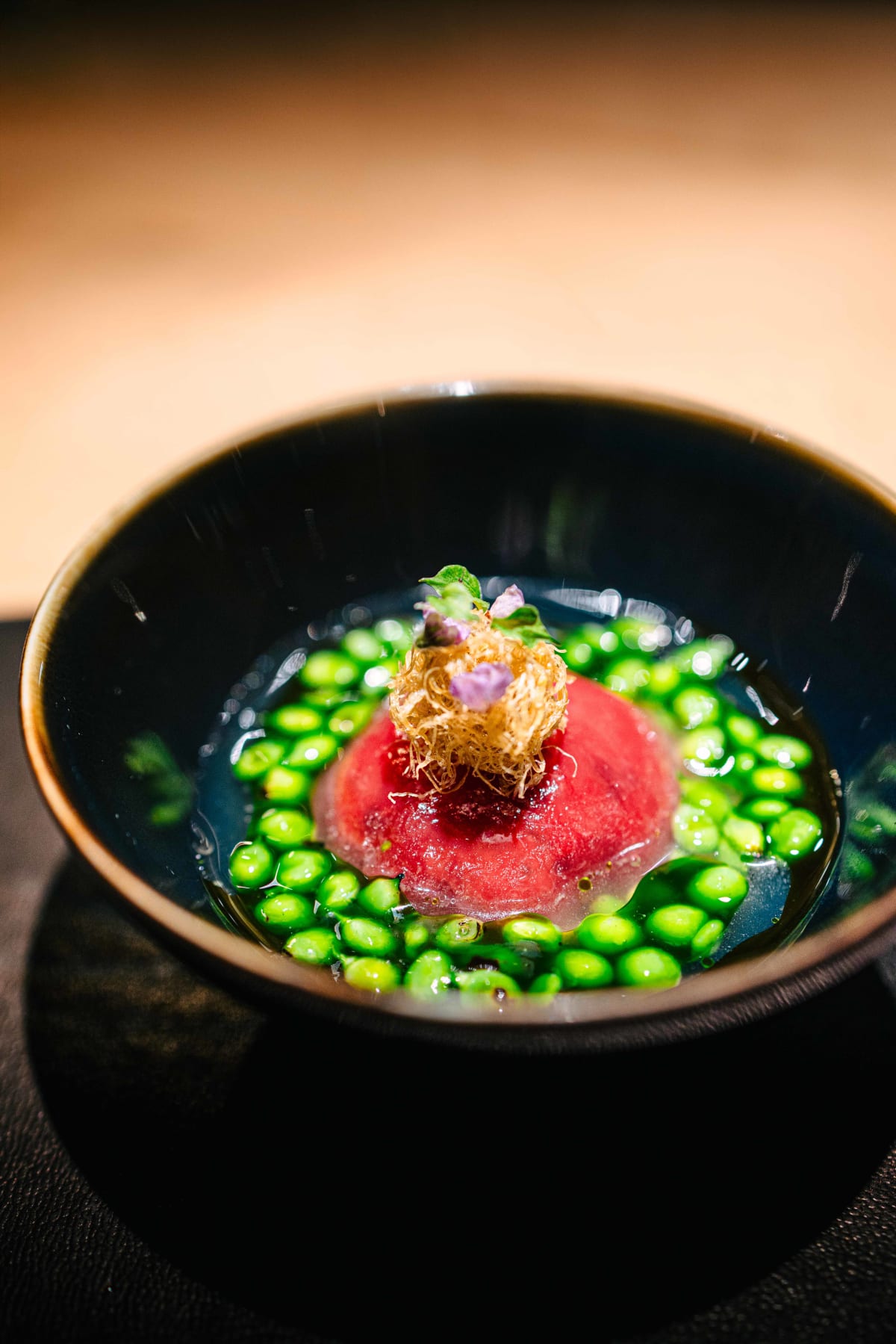
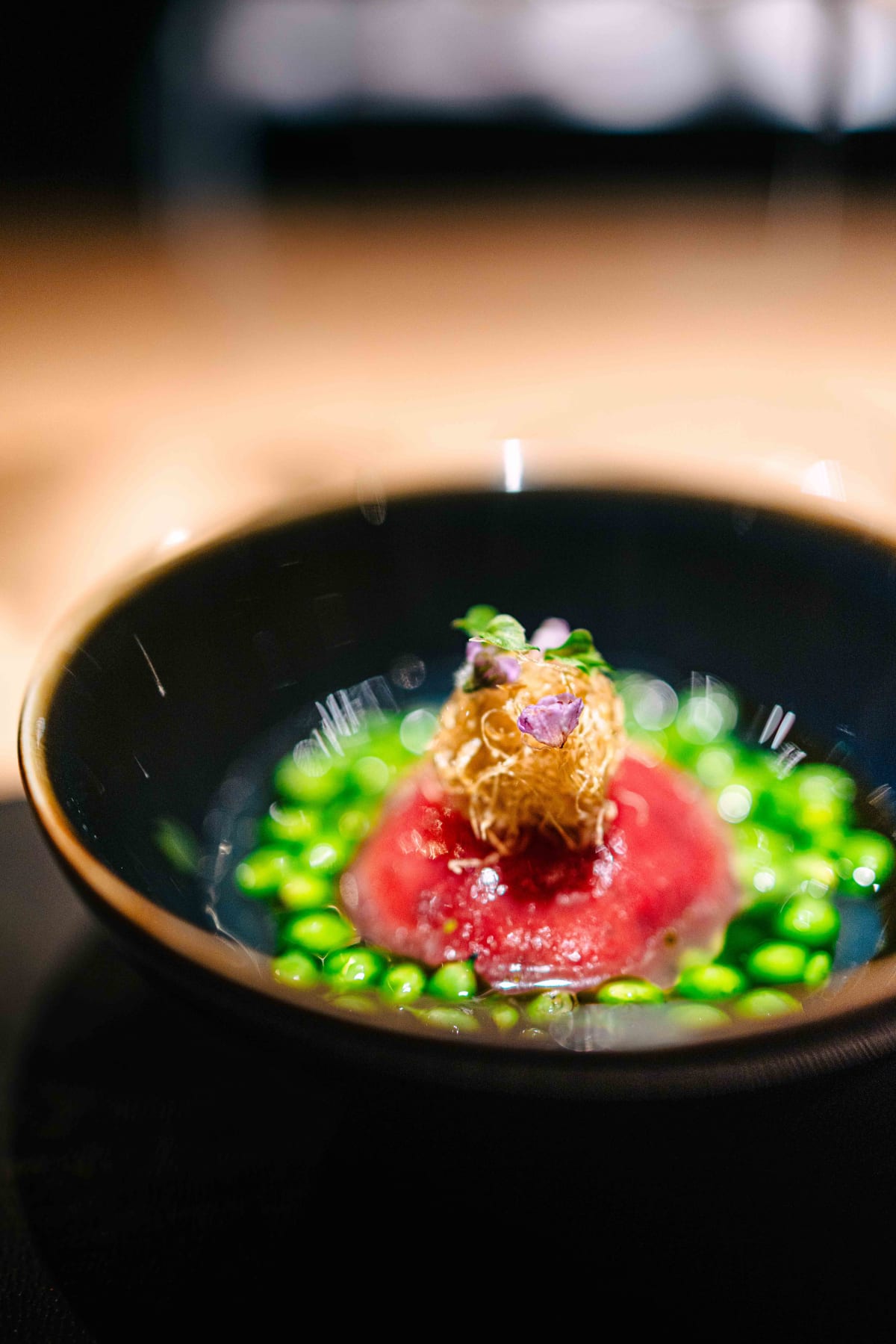
Spanish Bluefin Tuna | Chawanmushi | Sweet Peas | Ramp Oil
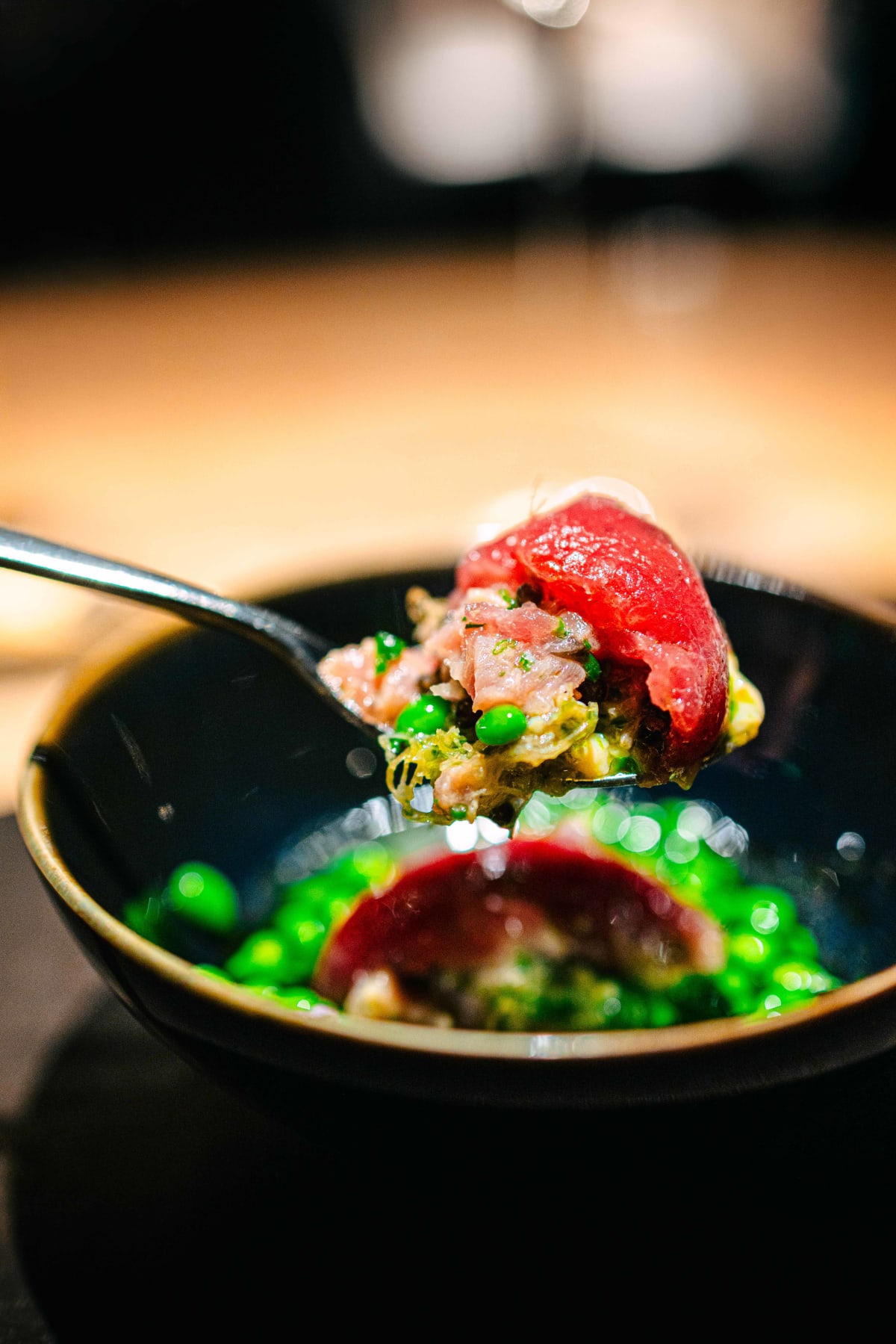
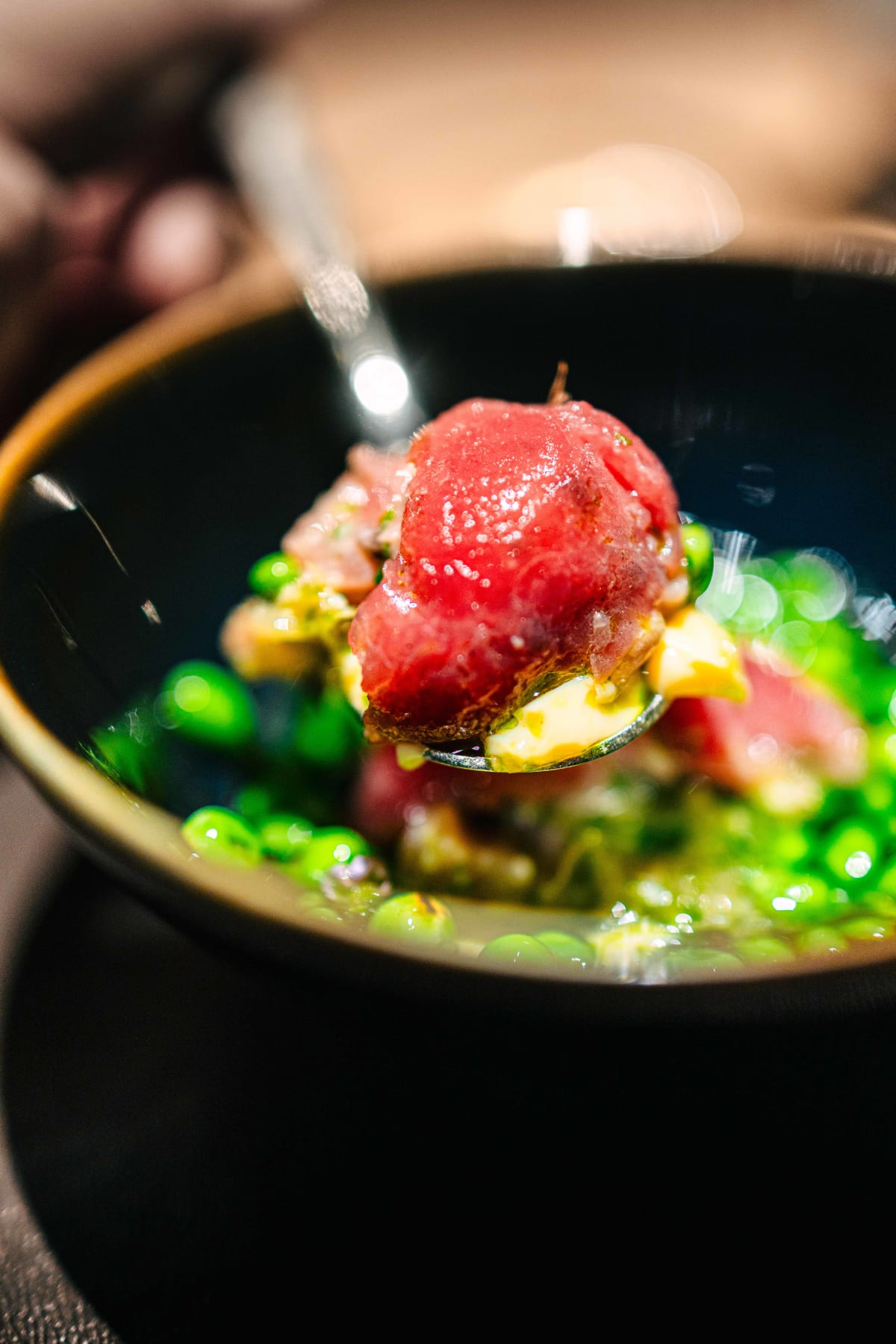
Another Japanese-inspired dish followed. Otoro chopped like a tartare sat on warm chawanmushi, with akami on top of that, and on the akami, a tangle of thinly fried white kombu.
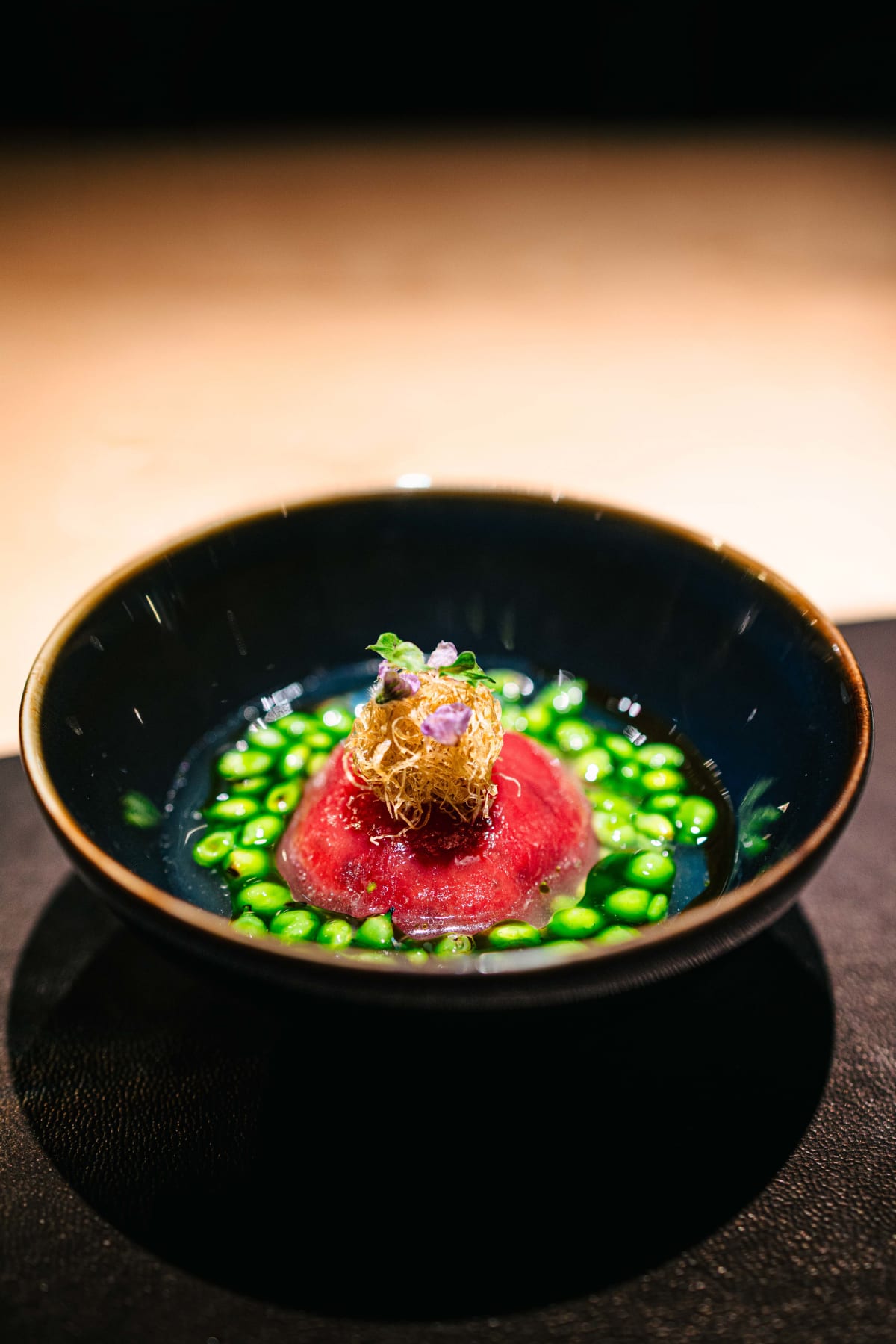
The finish was onion juice and Ramp Oil in the broth. Ramp is a wild onion that grows in America, tasting somewhere between garlic and spring onion, and it added a gentle aroma and a rich, oily depth.
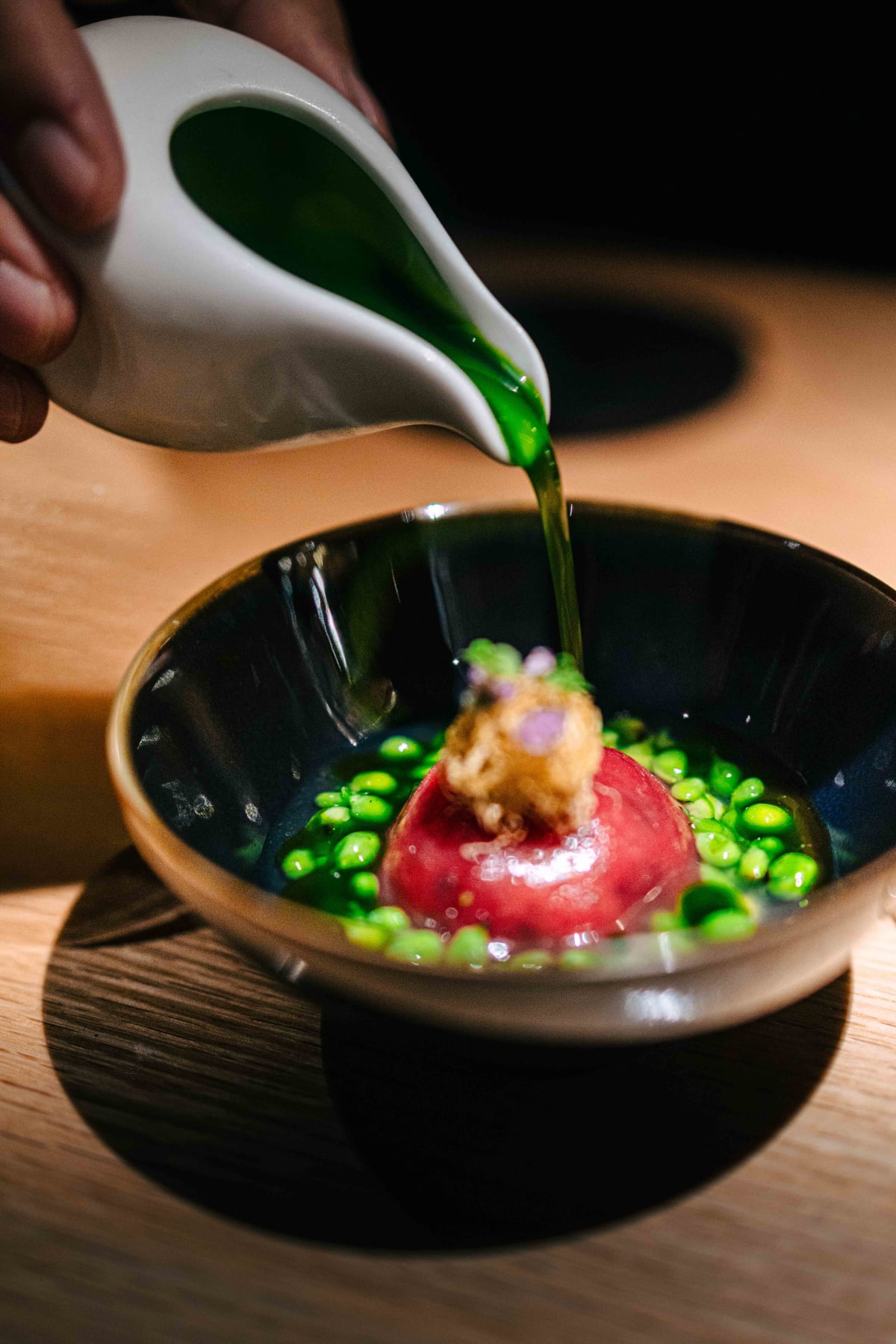
Lightly roasted sweet peas went on top, and those roasted peas were the kicker. They had a lovely bite, and the aroma of roasted pea spread softly. The tuna was better than I expected, too. Not at the level of a high-end sushiya, of course, but the acidity of the akami, the richness of the otoro and the Ramp Oil were in balance. The meeting of cold tuna and warm chawanmushi worked as well, and although at first I wondered what kind of combination this was, I enjoyed it.
New Zealand Deep Sea Scampi | Squid Panzanella | Basil
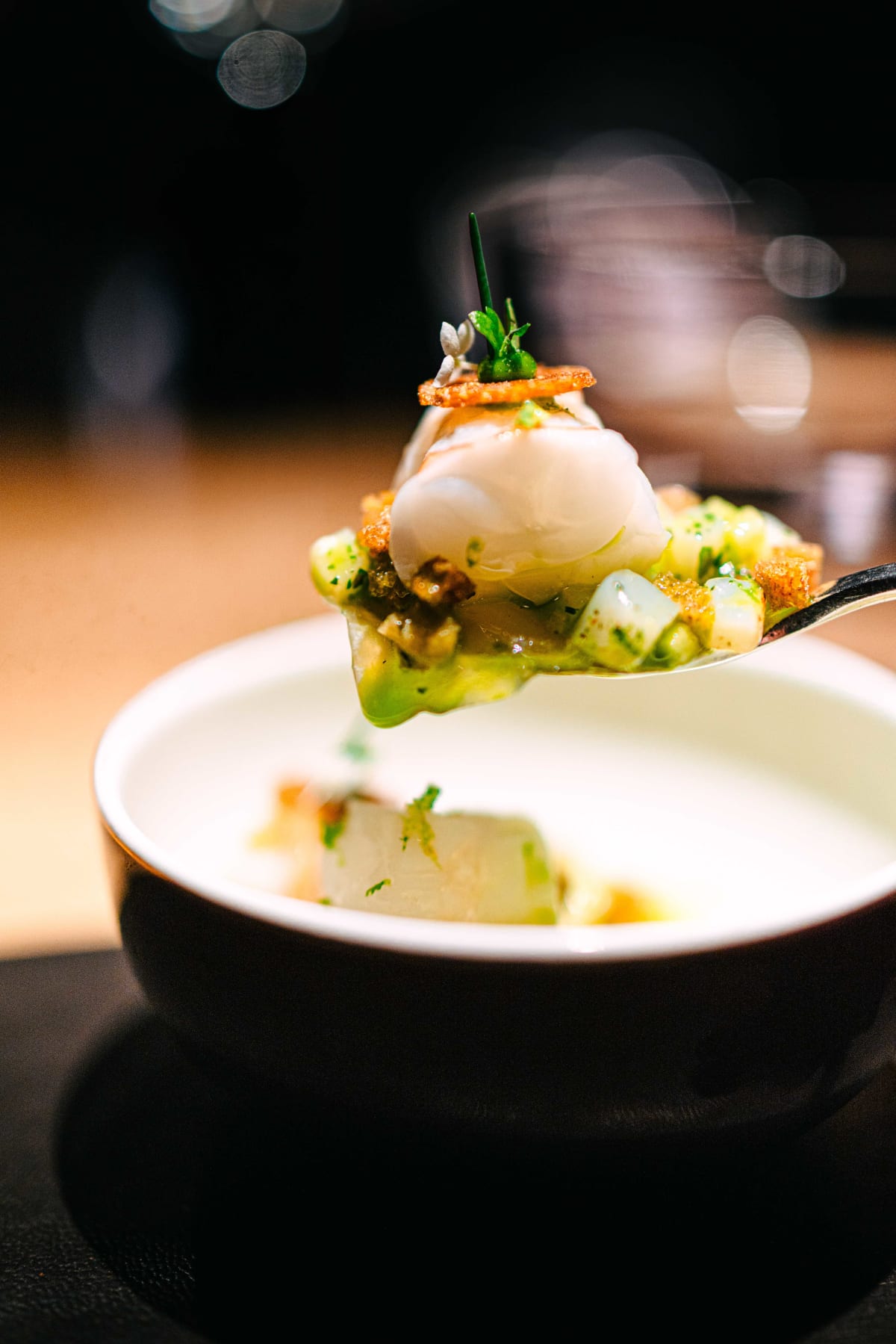
Then the first add-on. Deep-sea scampi from New Zealand came with a smart reinterpretation of panzanella, the Tuscan bread salad, in which chopped squid takes the place of the bread. A basil oil dressing and croutons added crunch, and a jelly drawn from the scampi heads laid a rich, deep aroma over it all.
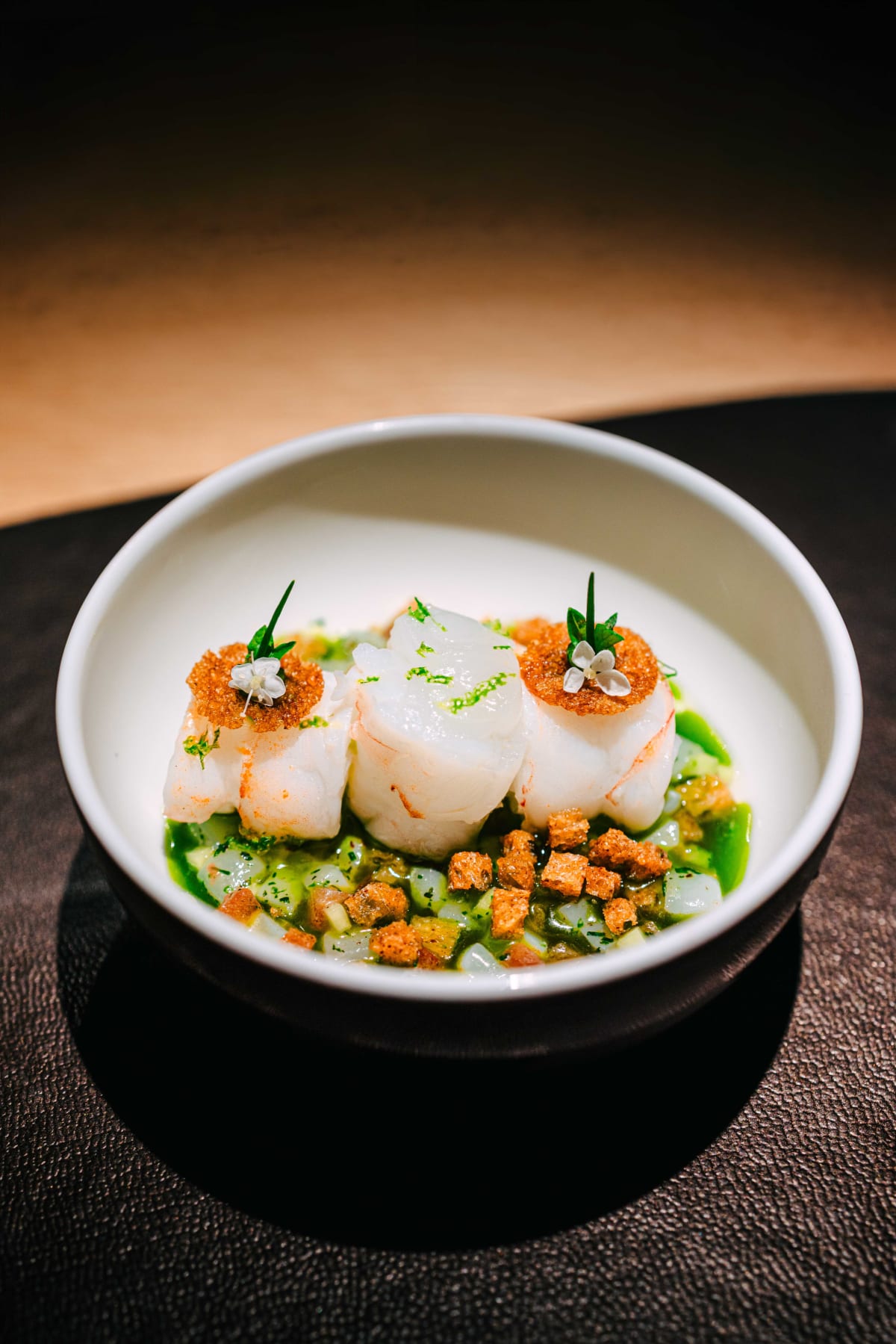
I love raw seafood, and the sauce sounded made for my taste, so until the first bite this was the dish I was most looking forward to.
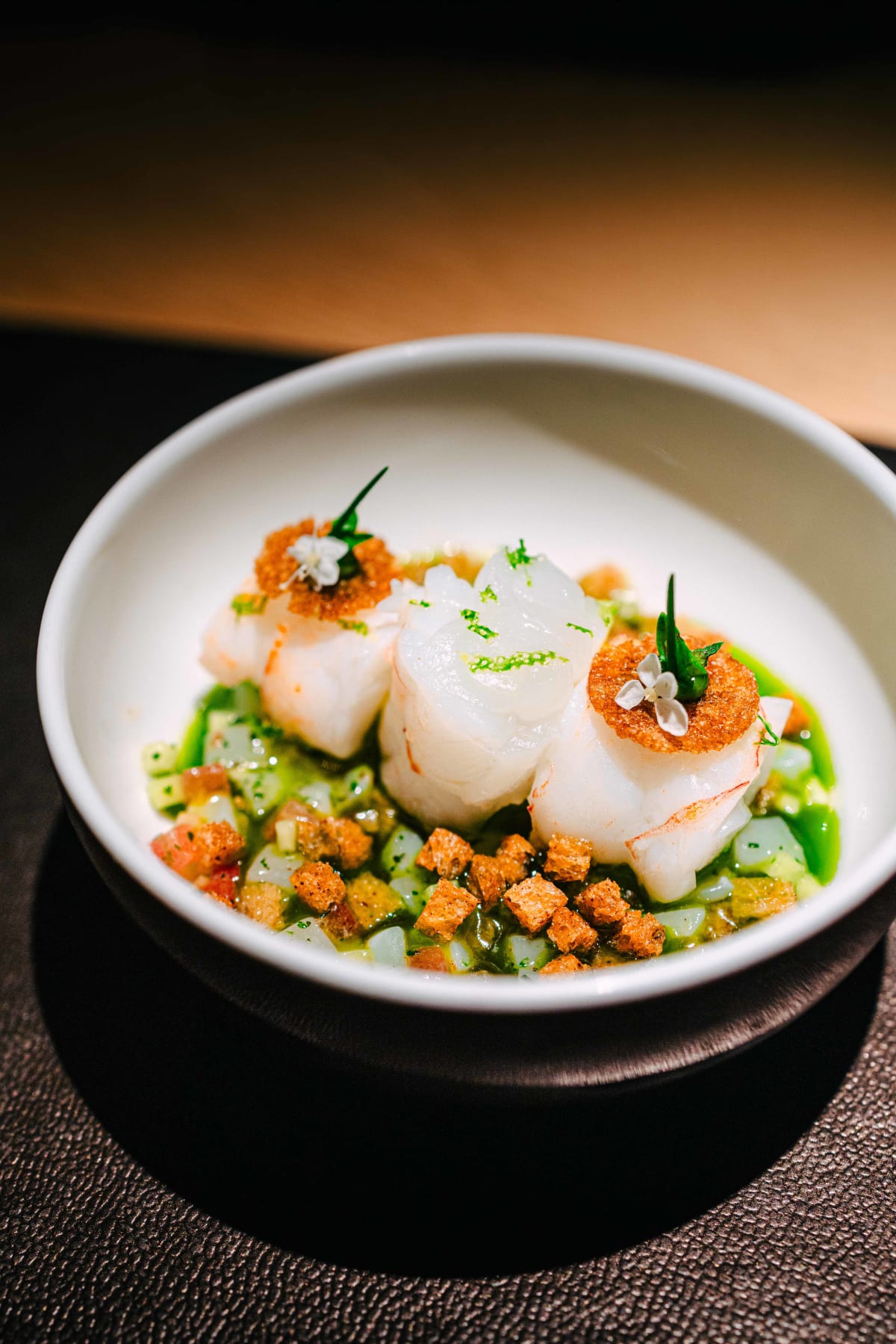
Against those expectations, it fell a little short. The scampi itself, lightly blanched, had a lovely texture and was excellent, but the basil oil salad dressing lacked the punch to pull you in. It felt as if a little aroma and texture had simply been laid over the scampi, and the head jelly made little impression either, leaving a dish that was neither one thing nor the other.
Australian Beef Tenderloin | Pear | Gochujang | Dongchimi
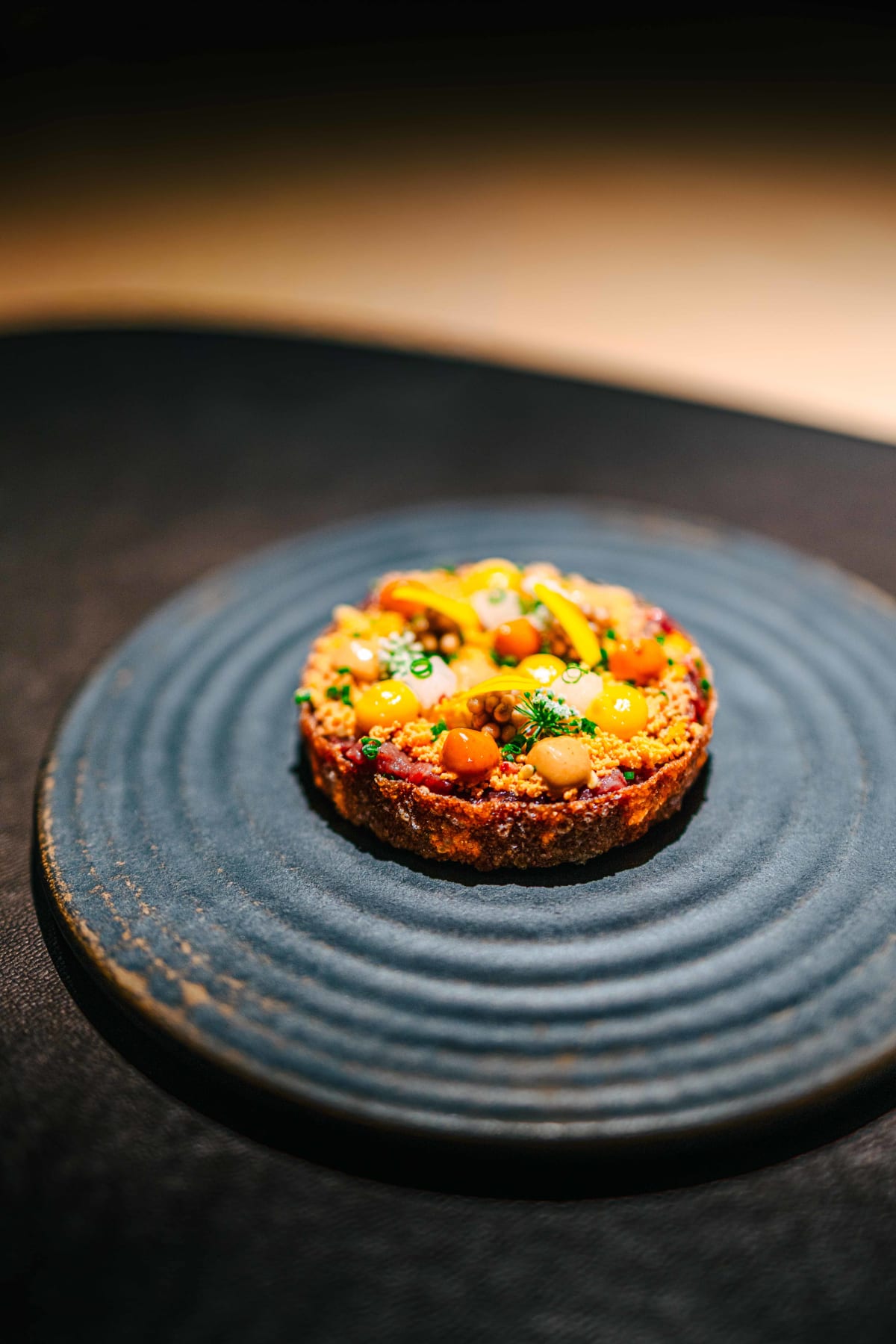
The add-on that arrived with the scampi was a gochujang yukhoe tartare, yukhoe being Korean raw beef. Christiaan, the head chef, came up with it after a trip to Seoul with the Korean manager, when they ate yukhoe bibimbap at Buchon Yukhoe, one of the manager's regular haunts.
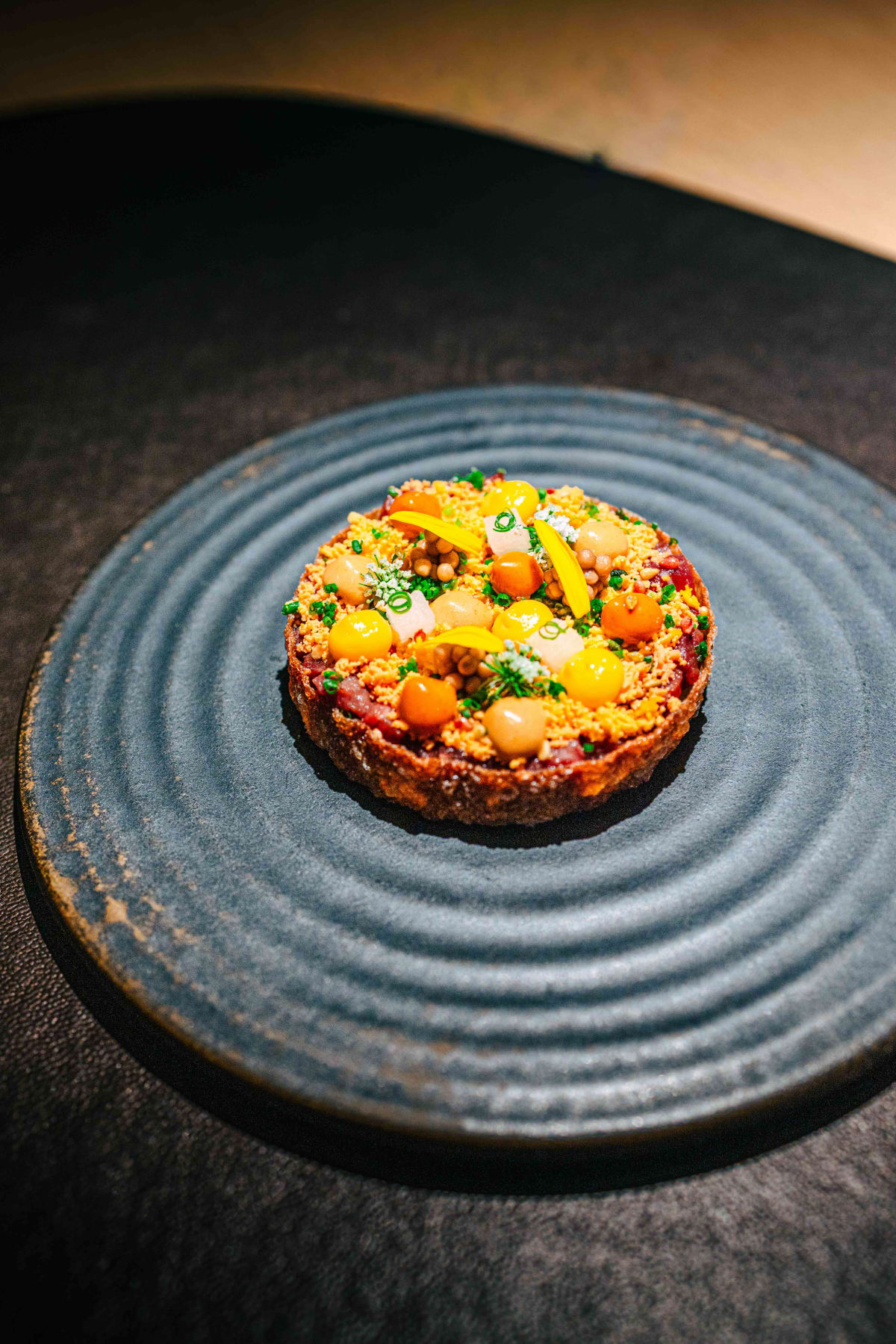
Buchon Yukhoe is an old house in Gwangjang Market that opened in 1965, a yukhoe restaurant that has also been listed as a Michelin Bib Gourmand. The dish has a thin, crisp shell on the outside, with rice laid underneath like bibimbap, pear and radish mixed in, and the beef dressed in gochujang. On top went a smoked egg yolk, a ssamjang yolk cream and mustard, and dongchimi, a cold radish water kimchi, came on the side to cleanse the palate.
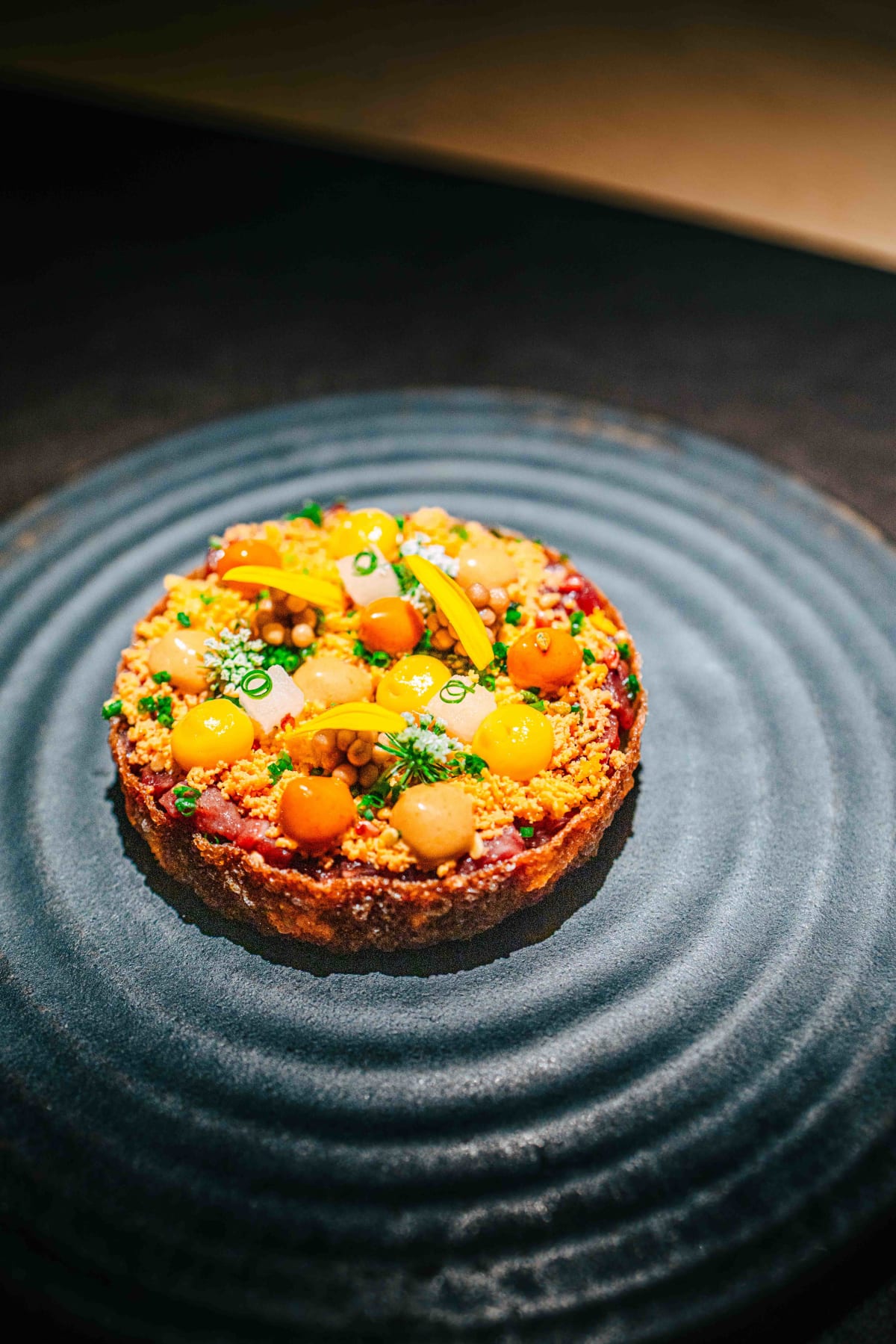
The flavour was built around plain, immediate umami. The gochujang gave it a slight heat, and the rice, beef, pear and radish gave it plenty of texture. It was the first time I had eaten a dish built on Korean food by a foreign chef abroad, and it was accomplished: something foreigners would enjoy, yet with a taste a Korean would recognize as Korean. The dongchimi on the side was simply real dongchimi.
Section 5·Uni On German Sourdough
With the opening bites behind us and the course running on into its middle stretch through mostly seafood dishes, a striking signature arrived.
Sea Urchin | Sour-Dough Bread | Brown Butter
It is a signature add-on that, I was told, has been on the menu ever since the opening whenever the quality of the uni allows. It is also the plate Stiller has named as his favourite creation across his restaurants in Shanghai and Guangzhou.
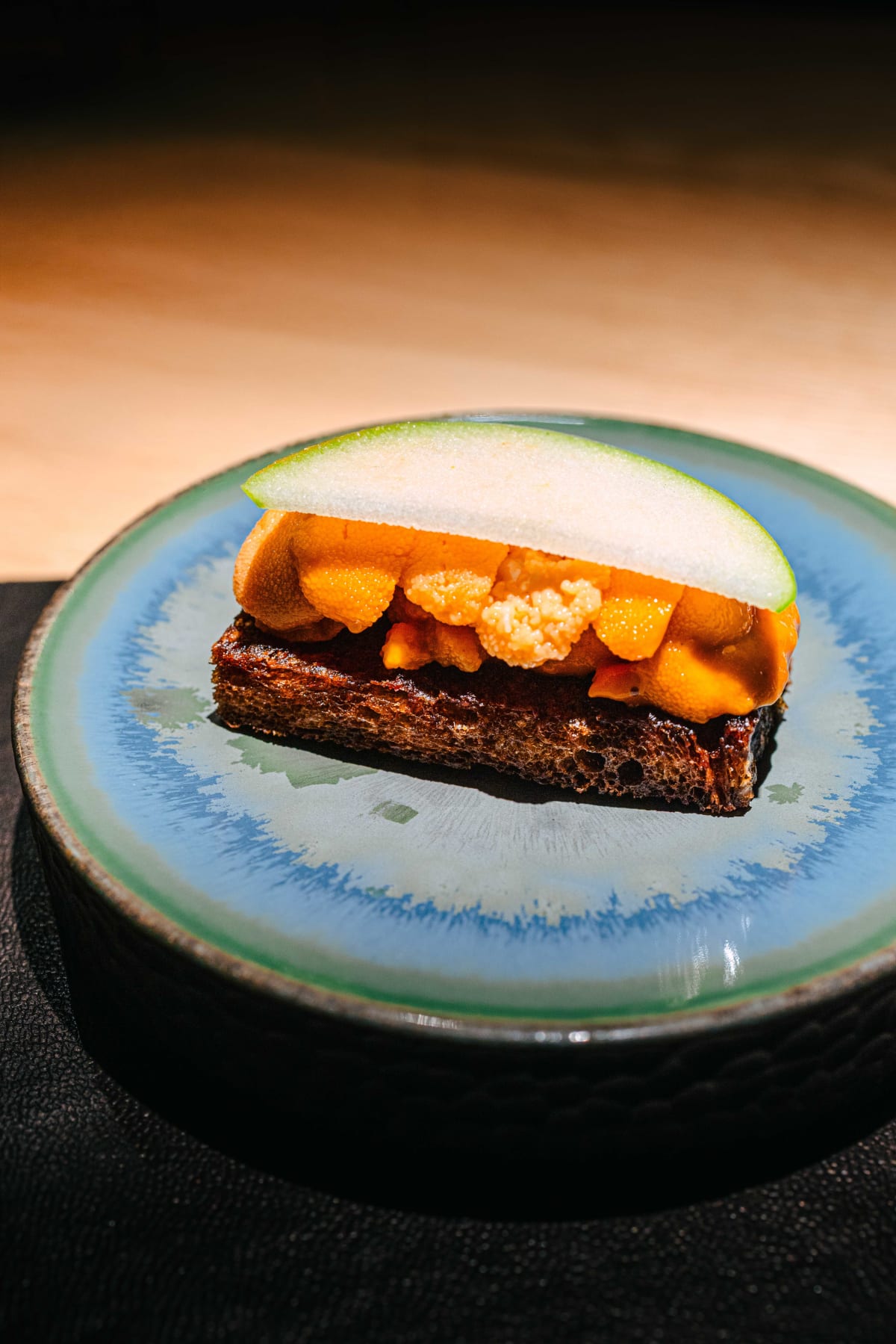
A nutty, German-style sourdough is toasted and, just before serving, dipped briefly into a mixture of brown butter and soy sauce, then topped with uni and finished with apple.
It also comes with an oyster mayonnaise, emulsified with oyster instead of egg yolk: the oysters are drained of their water and then blended while oil is added. That fills it with the umami of the sea. The combination seems mismatched yet fits strangely well, and the taste of the sea bursts out, but above all, the uni was good. I said the tuna earlier fell short of sushiya level, but this uni would have been delicious at a sushiya. Uni and apple were a good match as well.
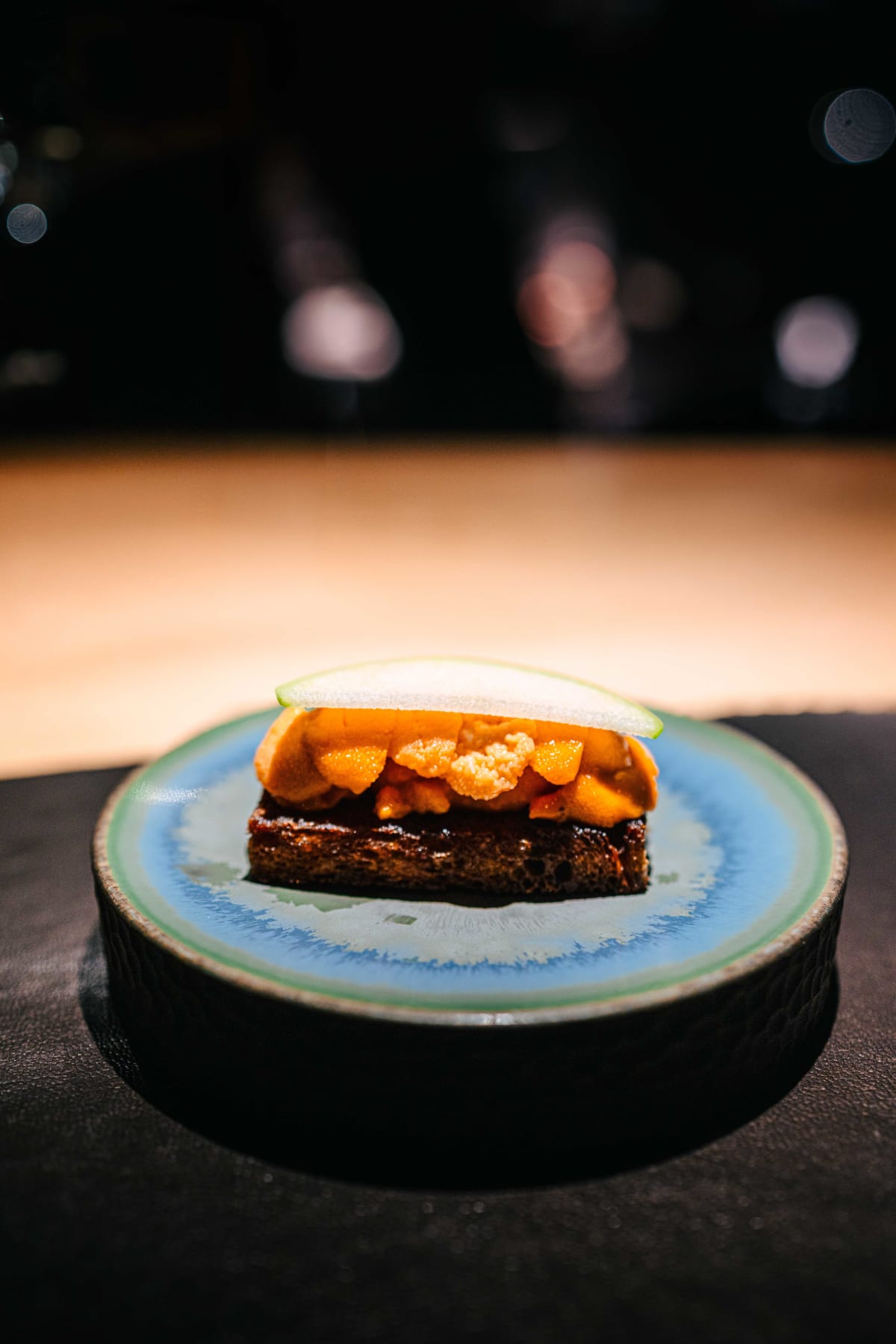
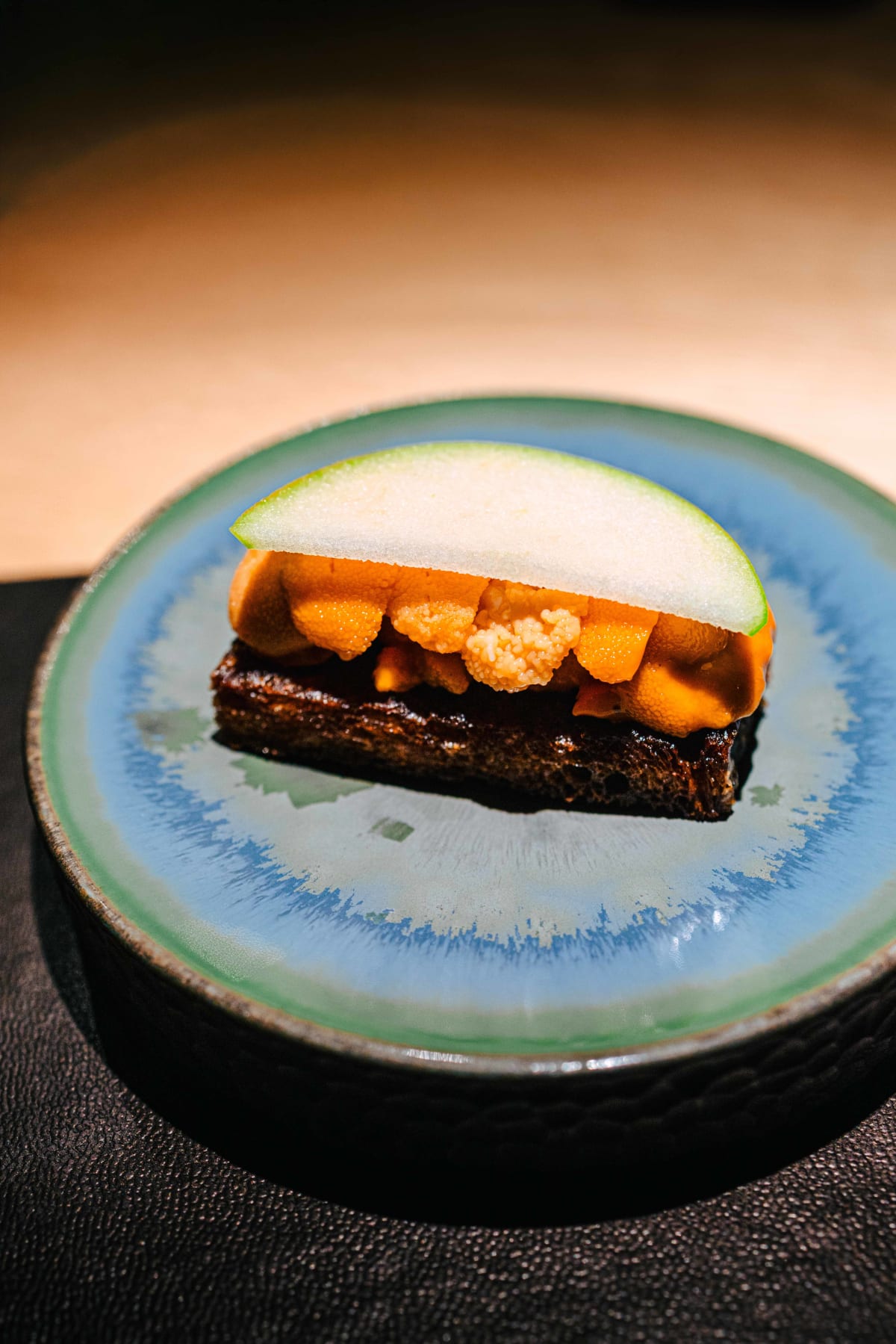
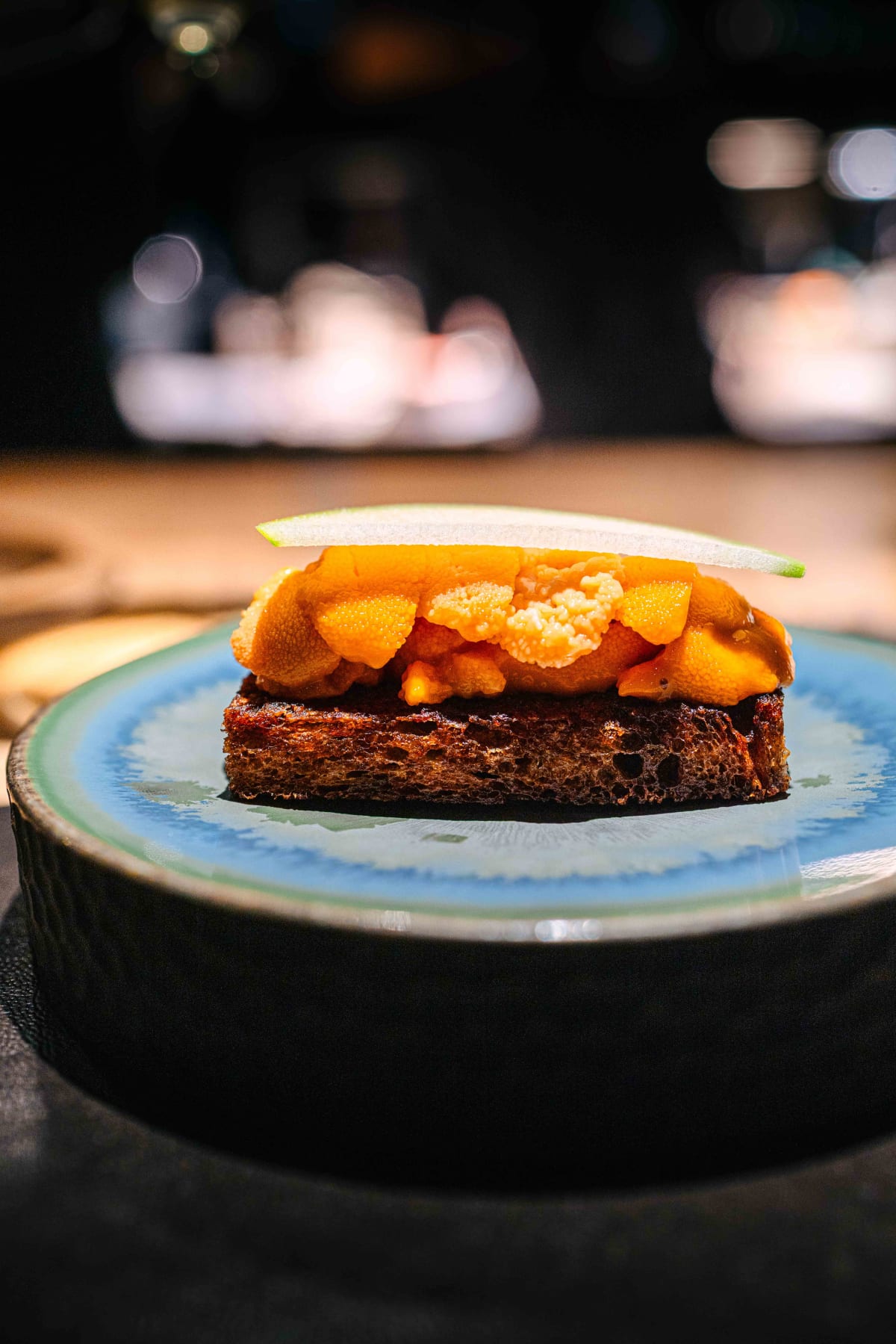
I cannot say whether it was a German bread given a Japanese touch, but the way it used uni was truly original. The originality of the flavour left such an impression that it went beyond simply delicious: a dish I wanted to understand better, and one I would like to eat again someday.
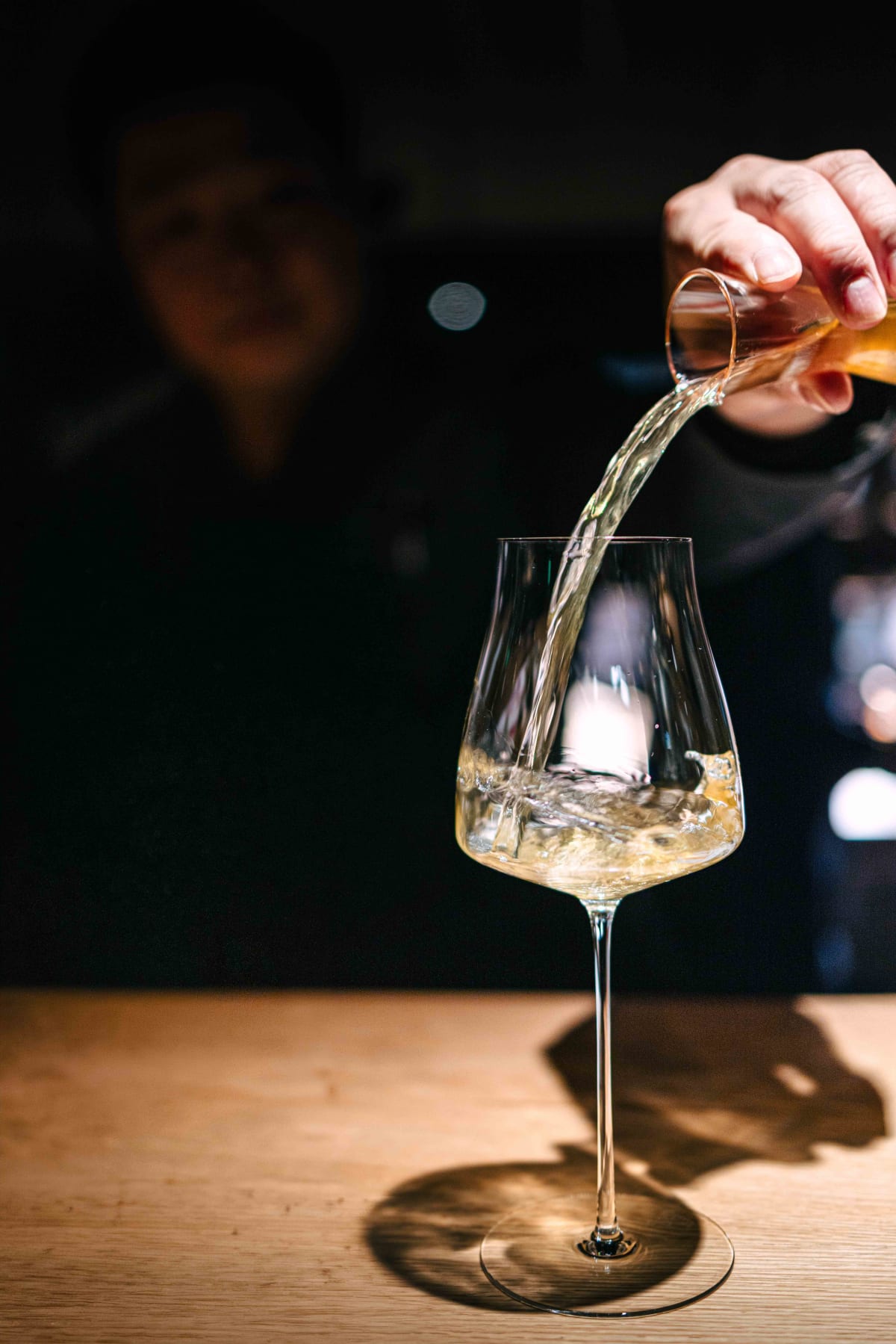
With the uni, the pairing was Van Volxem Altenberg GG Alte Reben 2018. Van Volxem is the great Saar estate that revived the region's nineteenth-century golden age, and this is a dry wine made from old-vine Riesling grown on the steep slate slopes of Kanzemer Altenberg.
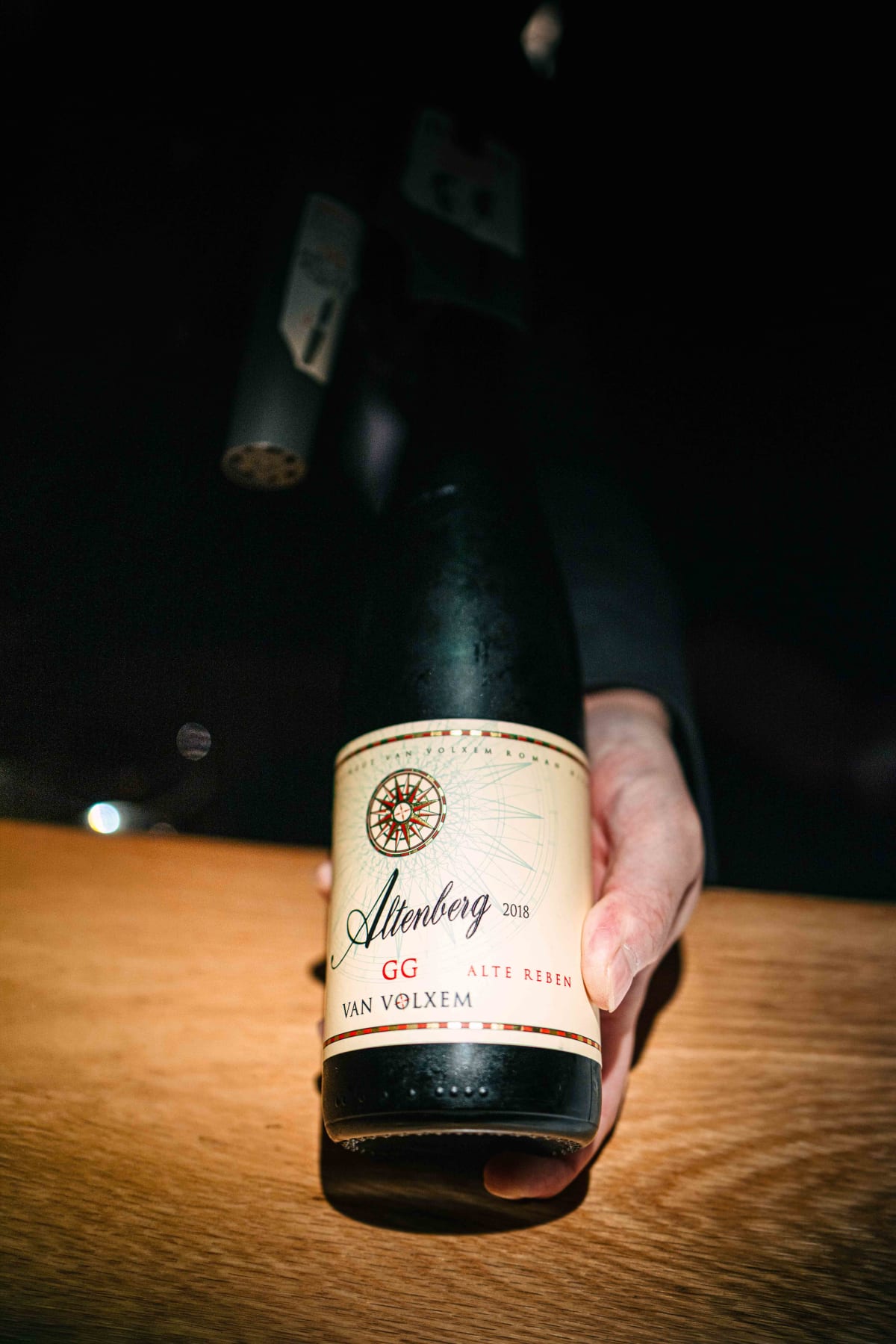
GG stands for Grosses Gewächs, the top single-vineyard tier for dry German wine. Intense enough in minerality and acidity to be called the Montrachet of the Saar, it had ripe peach and a long, smoky, saline finish, and its acidity caught the deep umami of the uni.
Bao | Torched Wagyu | Smoked Caviar
Back on the core course came a bao, the Chinese steamed bun, topped with caviar and torched wagyu. It is the first dish Christiaan, the head chef, learned when, as a boy, he told his father he wanted to learn to cook. It is one of the few plates in the course with a strong Chinese element.
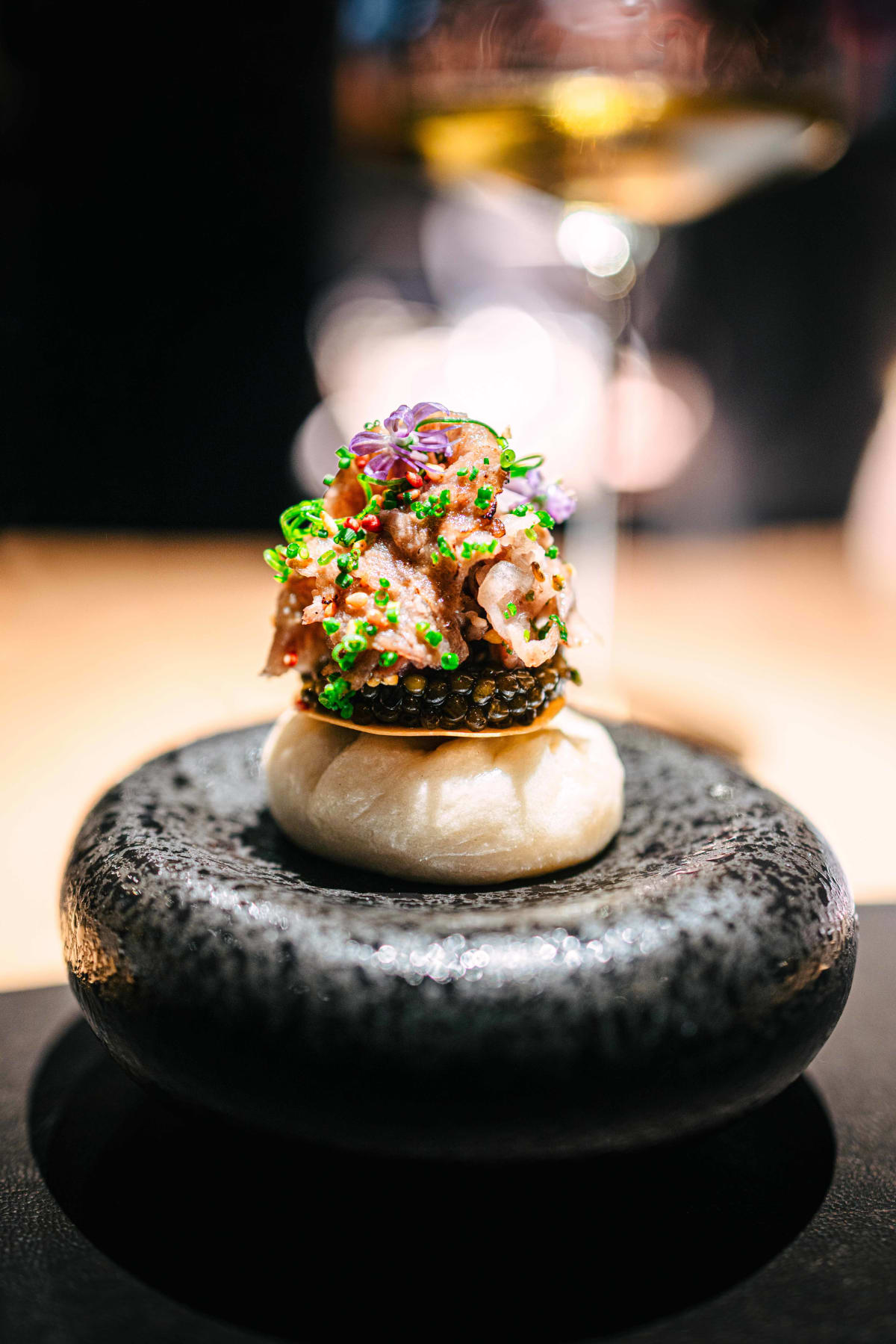
Underneath was a vegetable dumpling. In China, dumplings usually come with vinegar, but here the kitchen wanted a different kind of sourness and used fermented white asparagus as the seasoning.
It came out quite hot. Sweetness and umami explode in the most direct way. A good dumpling with something like bulgogi could hardly taste bad. The caviar tucked in between did not stand out much, but it balanced the sweetness.
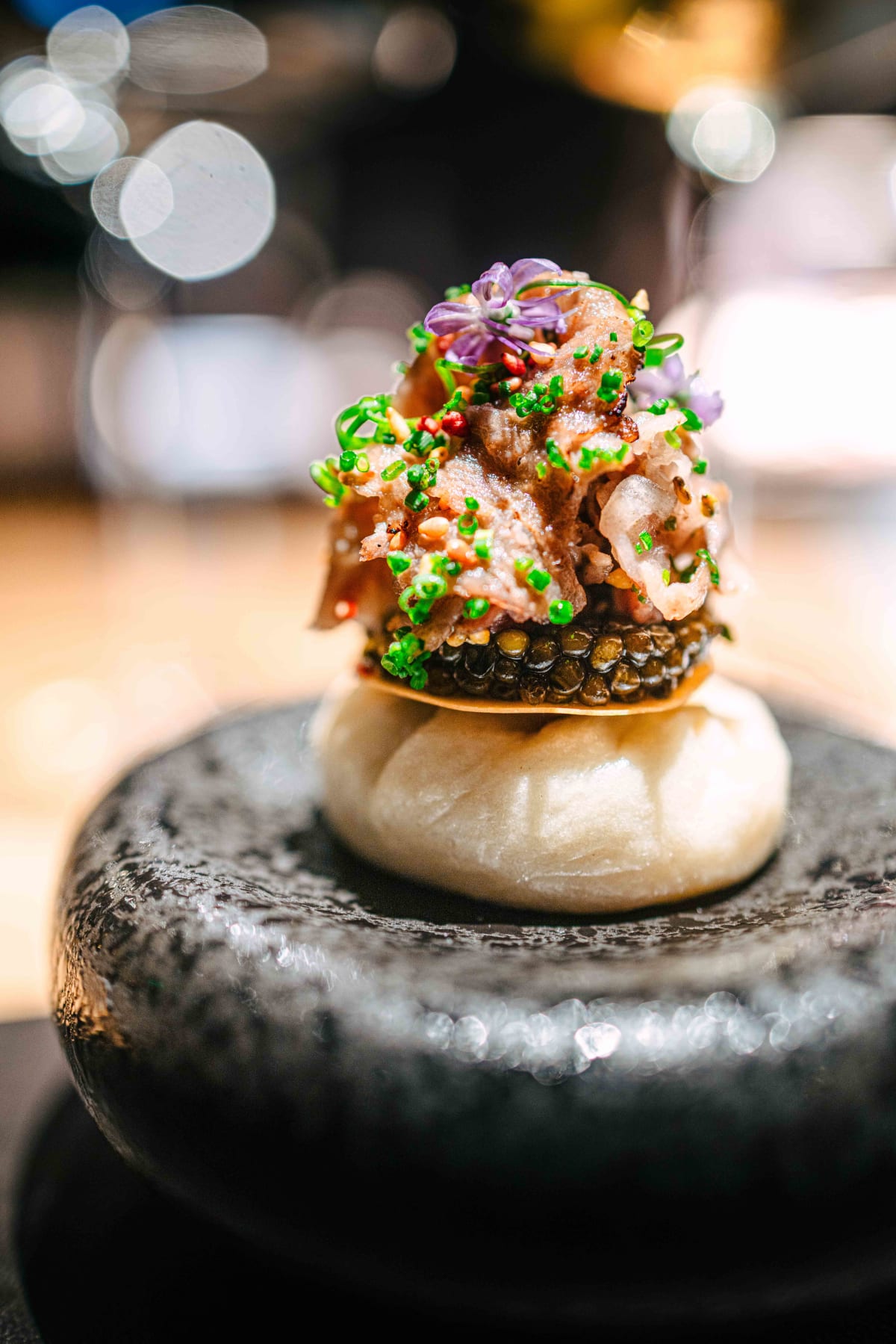
It is not a delicate, refined dish, but there is no denying it is plainly delicious. A whole course of dishes like this would certainly have grown tiresome, but one of them was just right.
Section 6·From Bouillabaisse To Laksa
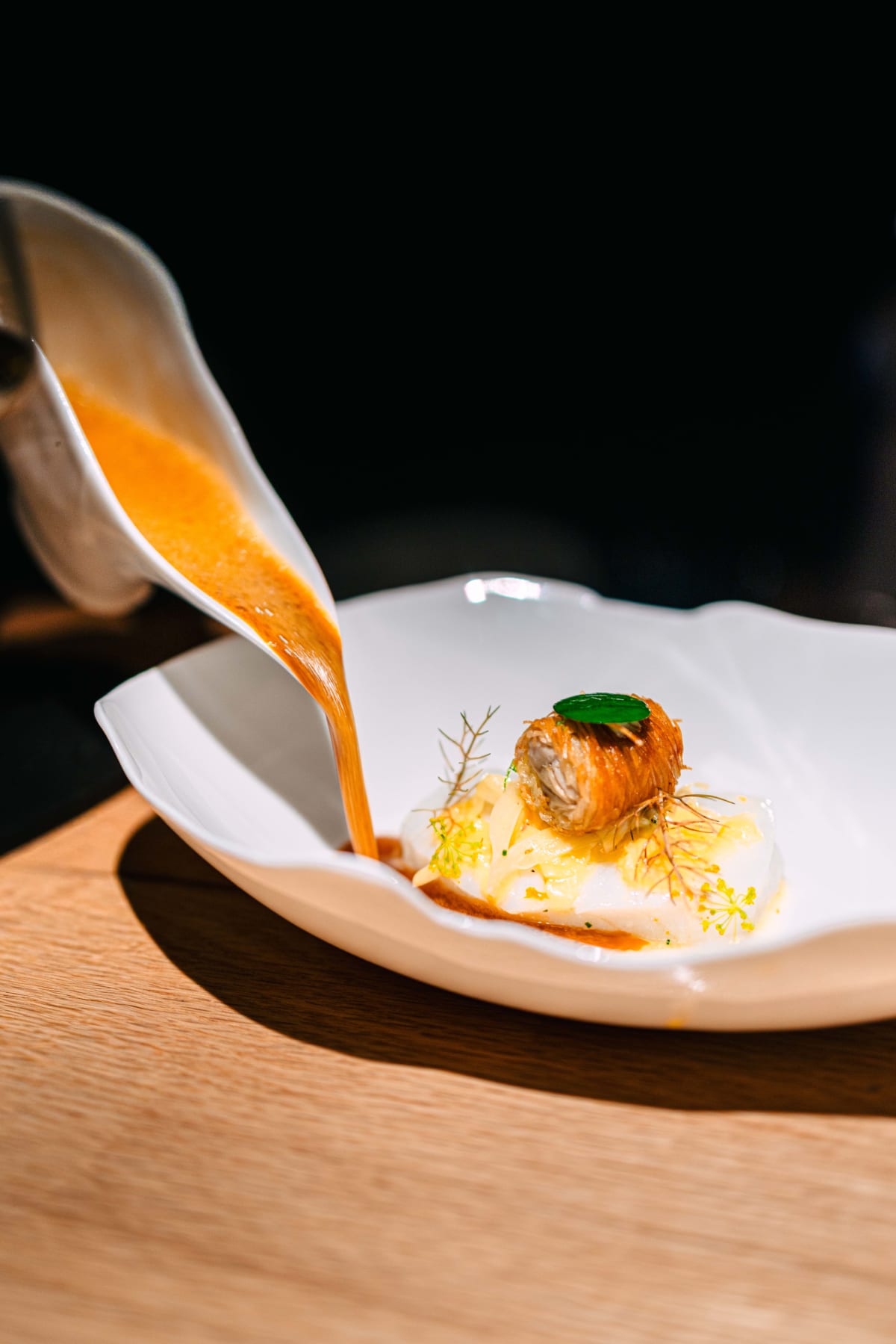
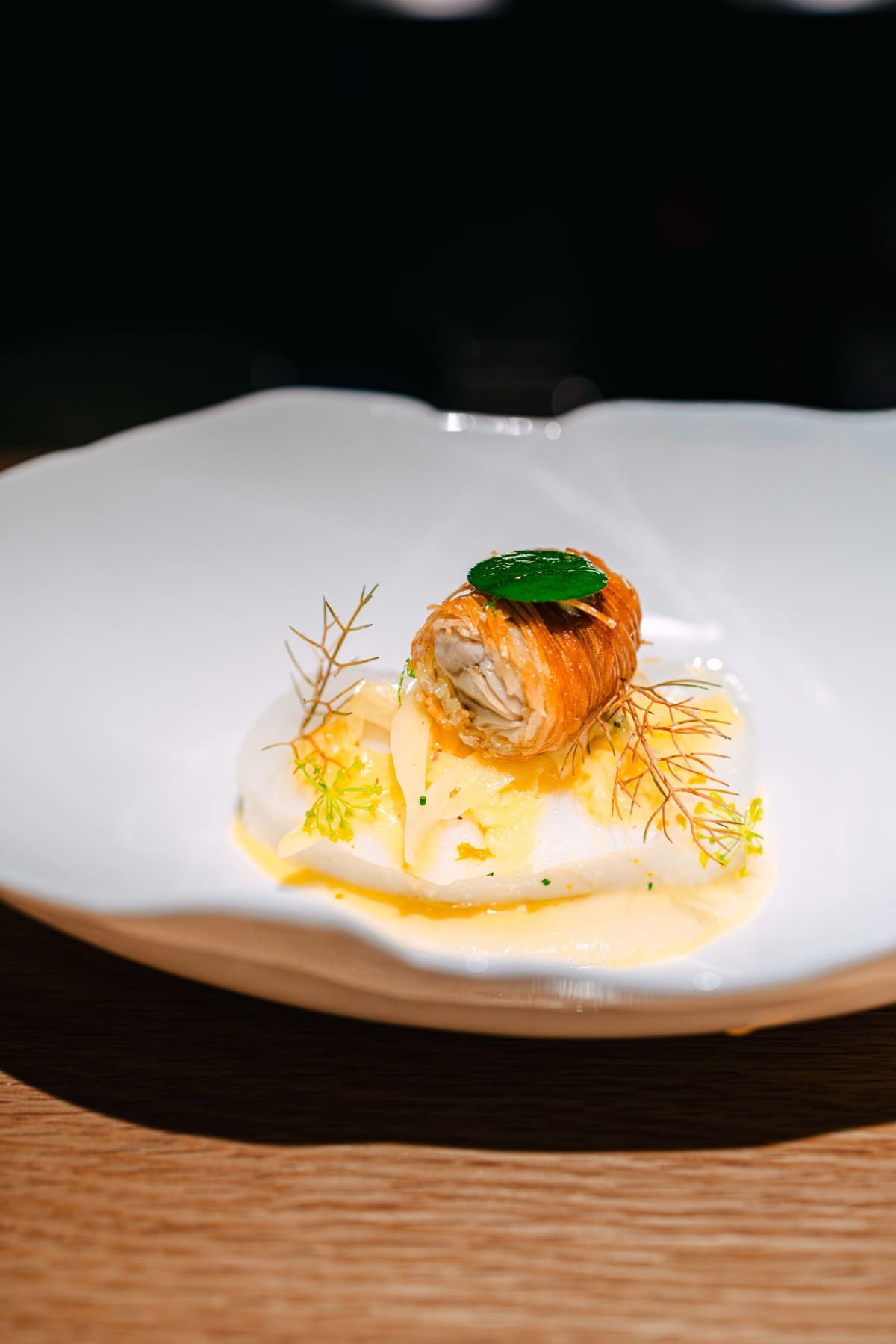
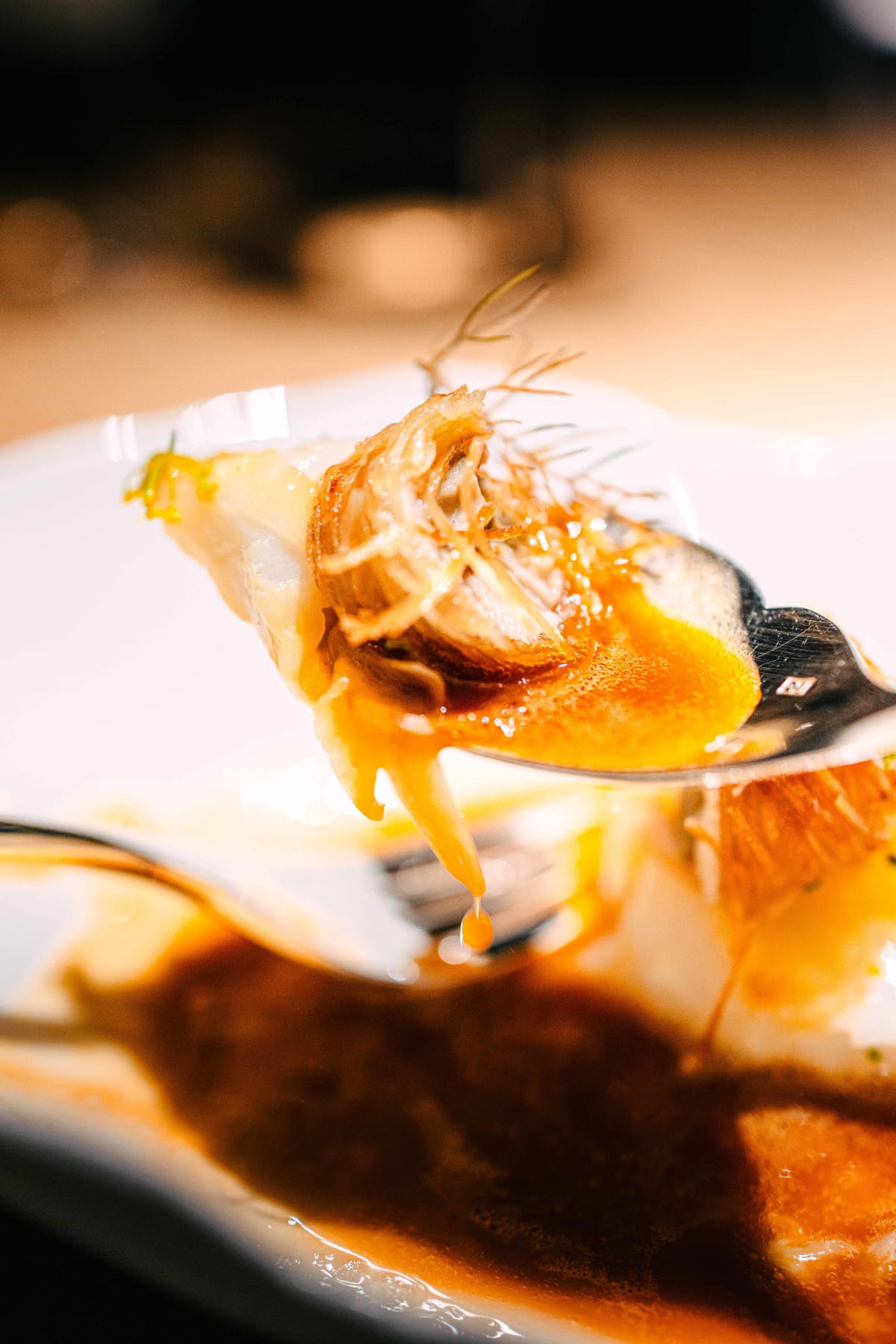
Confit Toothfish | Oyster | Wild Fennel | Bouillabaisse
From here on, the dishes turned properly French and formal, each one weighty and excellent. My notes on this bouillabaisse begin with a single word: insane.
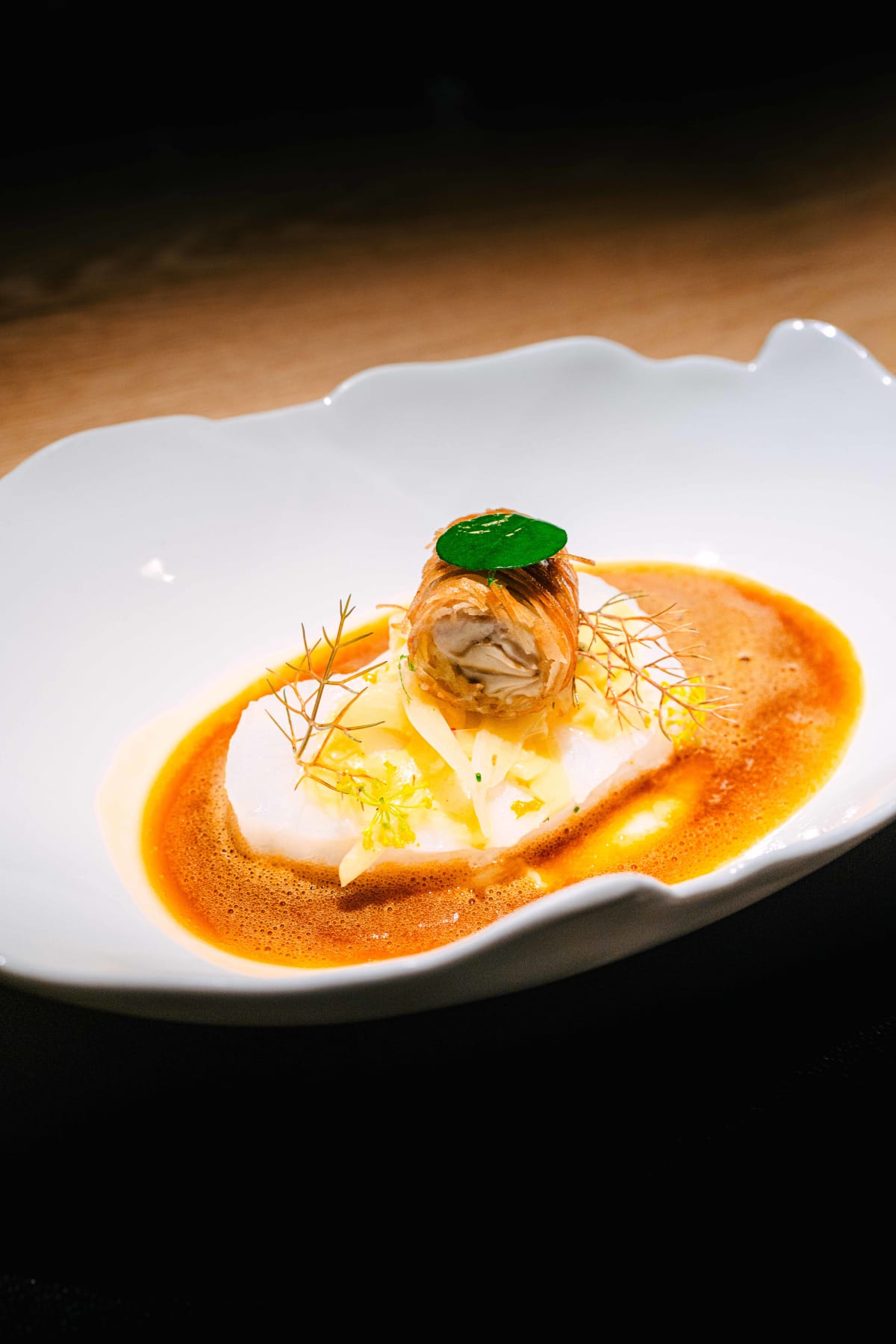
My notes on this bouillabaisse begin with a single word: insane.
Toothfish, the deep-sea fish sold in America as Chilean sea bass, is what Koreans usually call mero, and its texture was rather different from the grilled mero I know. Fennel in a bright, buttery sauce went on top of the gently cooked fish, and the oyster was wrapped in kataifi, the fine, thread-like dough used for desserts in Turkey. Finally, bouillabaisse, the seafood stew of southern France, is poured over.
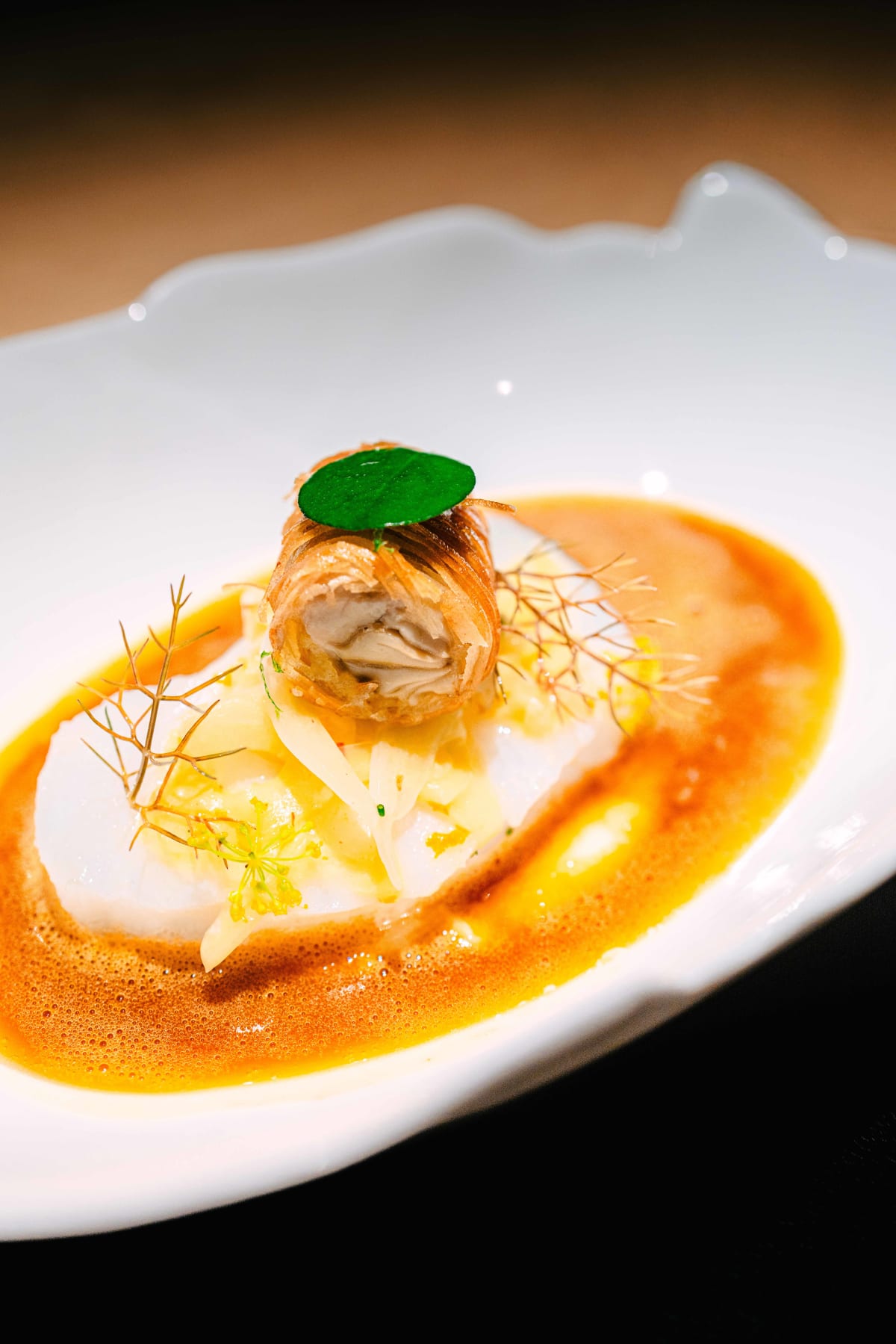
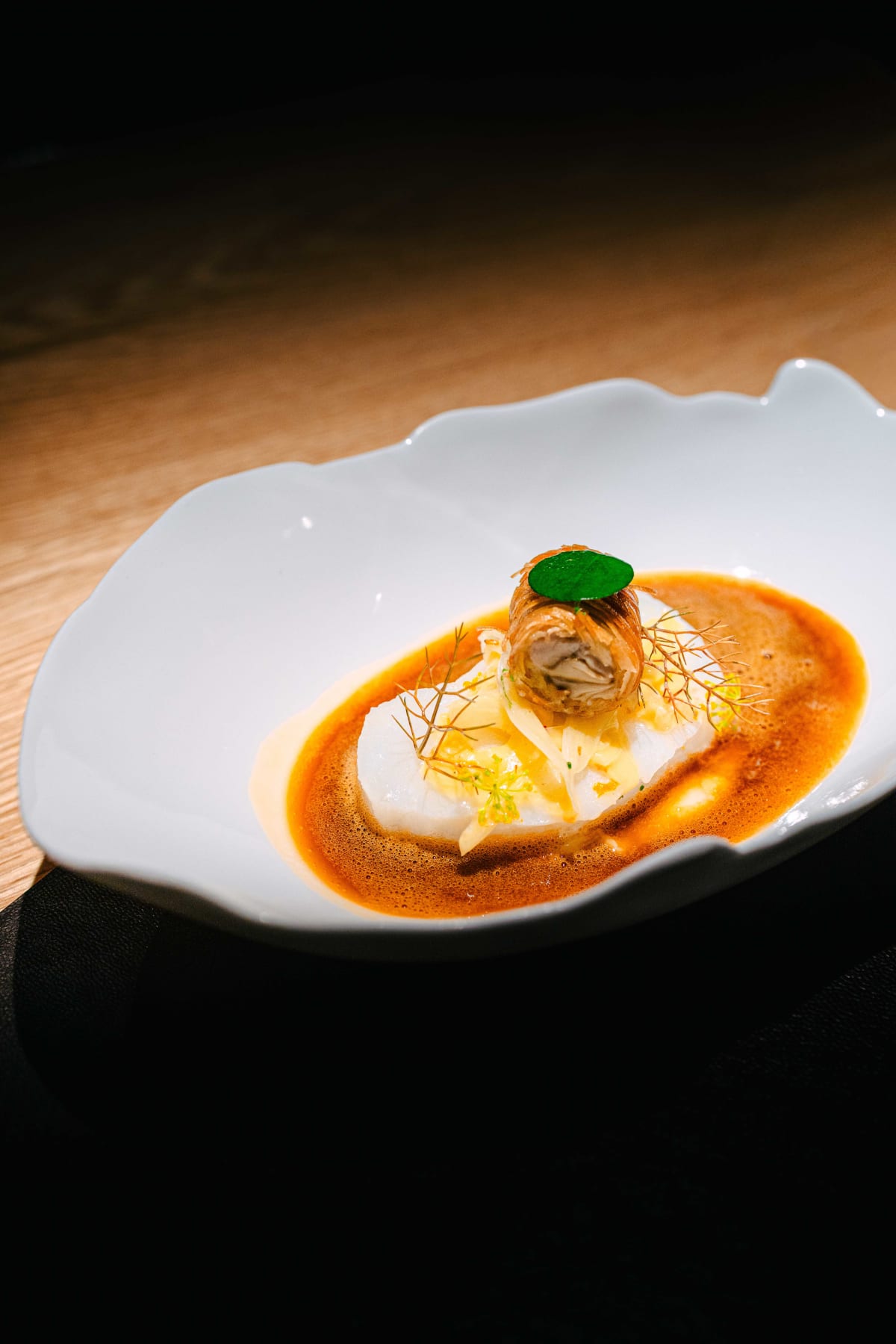
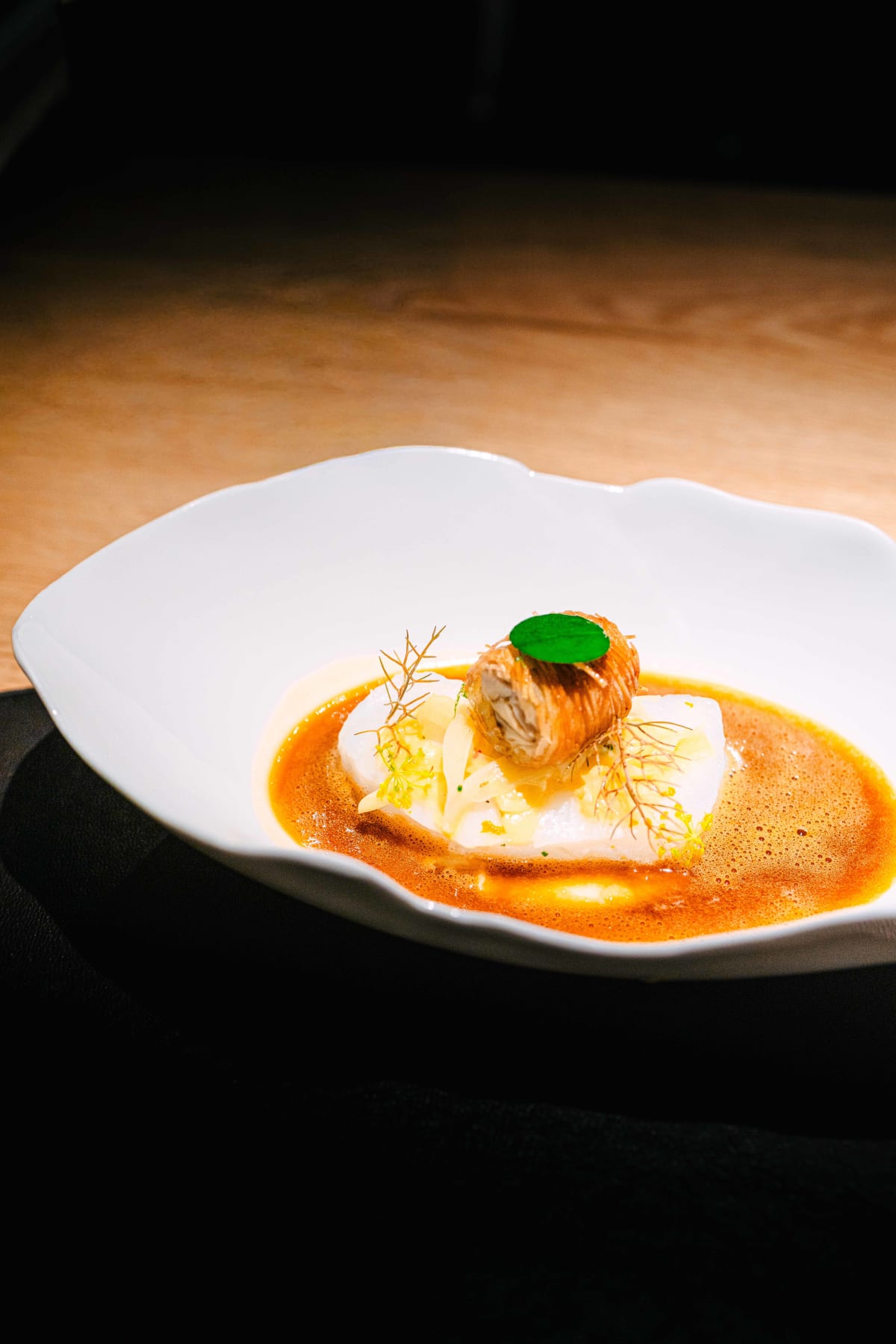
The cuisson of the fish was astonishing, beyond what the word tender can describe, and the bouillabaisse was intense without a trace of fishiness. Perhaps because the fish here is as good as Japan's, its depth of flavour was a cut above. The fennel and the crisp-jacketed oyster were simply perfect with the fish.
Blue Lobster | Kohlrabi | Laksa Broth
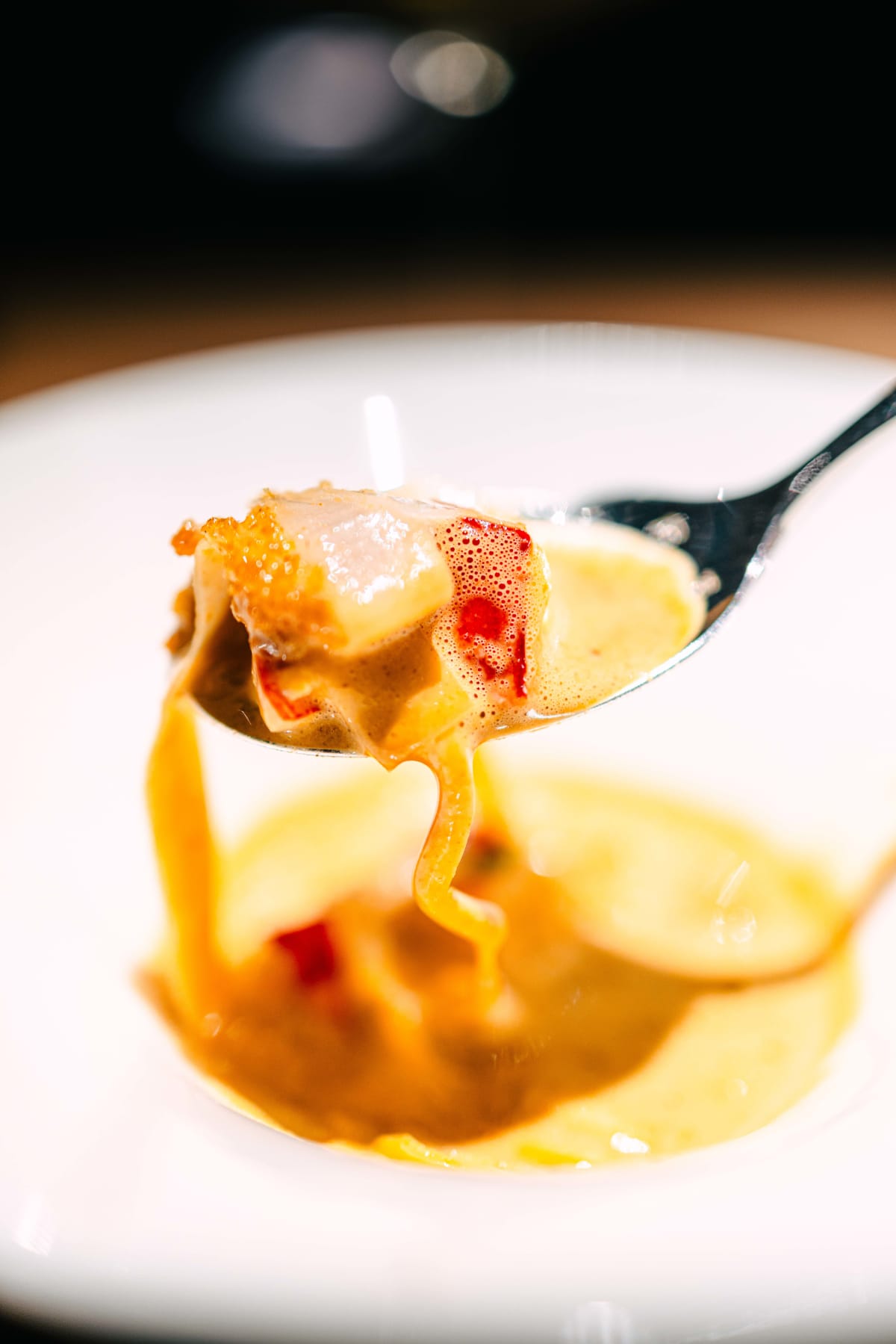
The blue lobster, another add-on, was superb too: a lobster dish that is the last word in flavour.
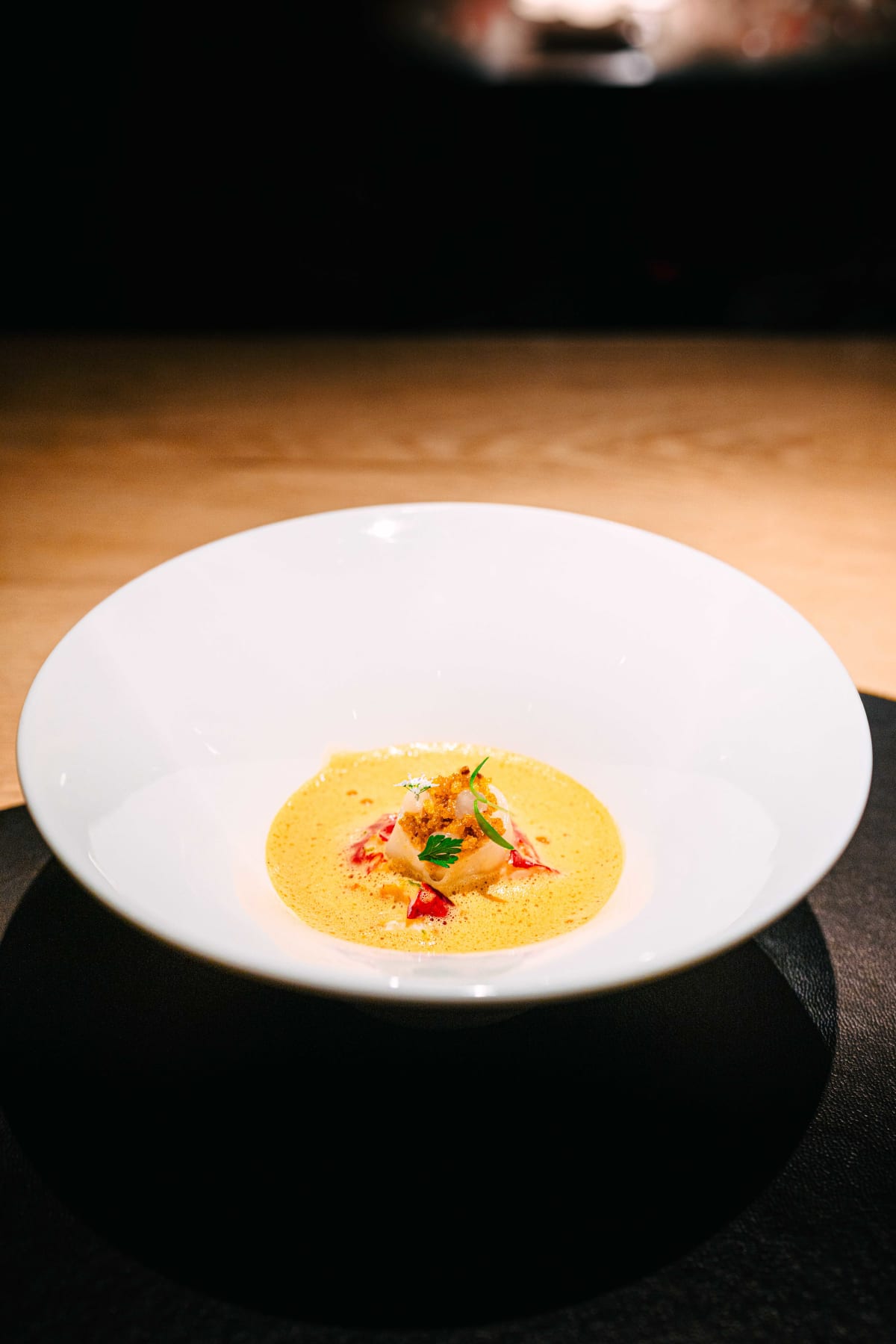
It is not classical French but a fusion inspired by Singaporean laksa broth, with lobster bisque added, and the sauce, deep, with coconut and a gentle heat, was so good that I simply wanted to call it the best.
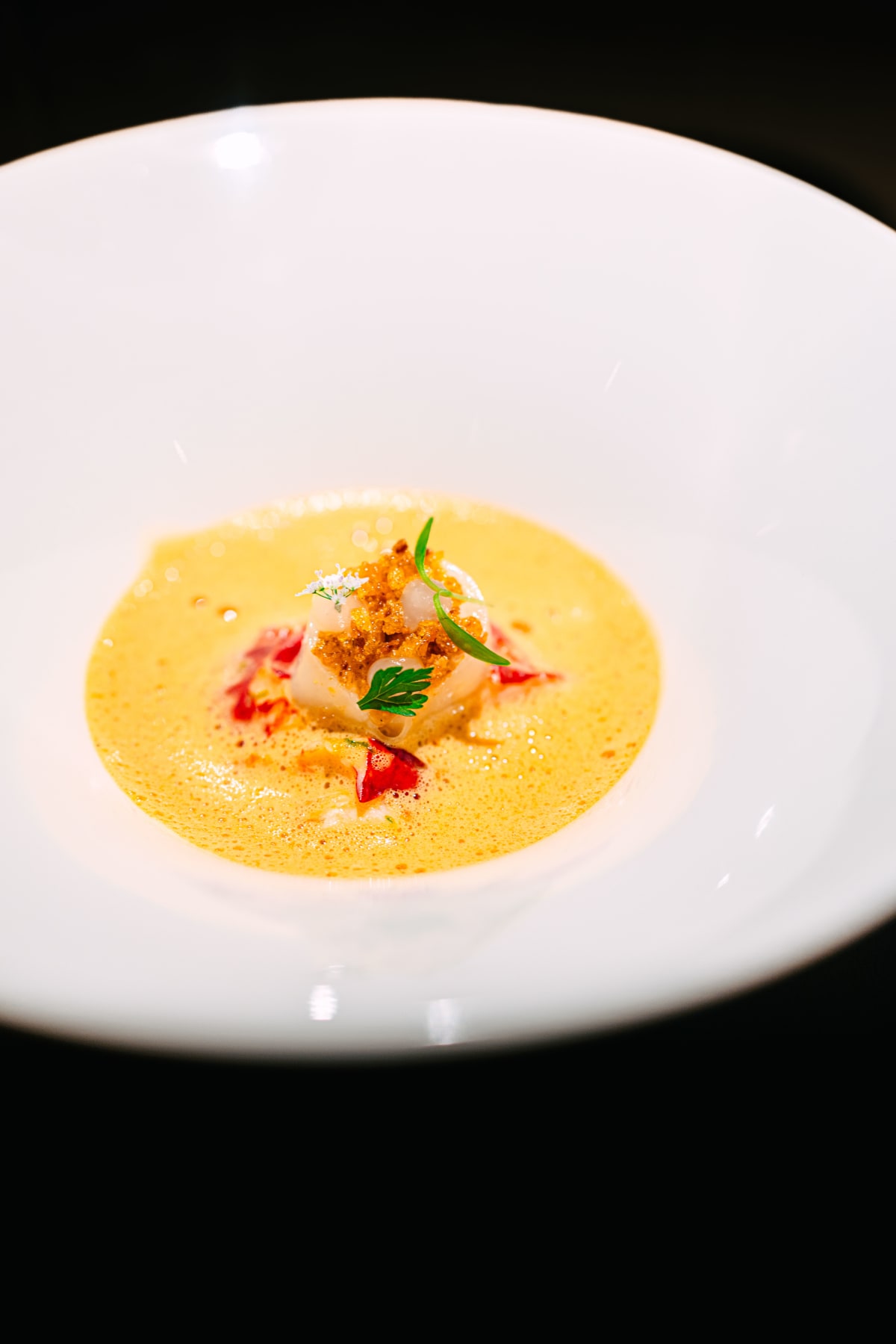
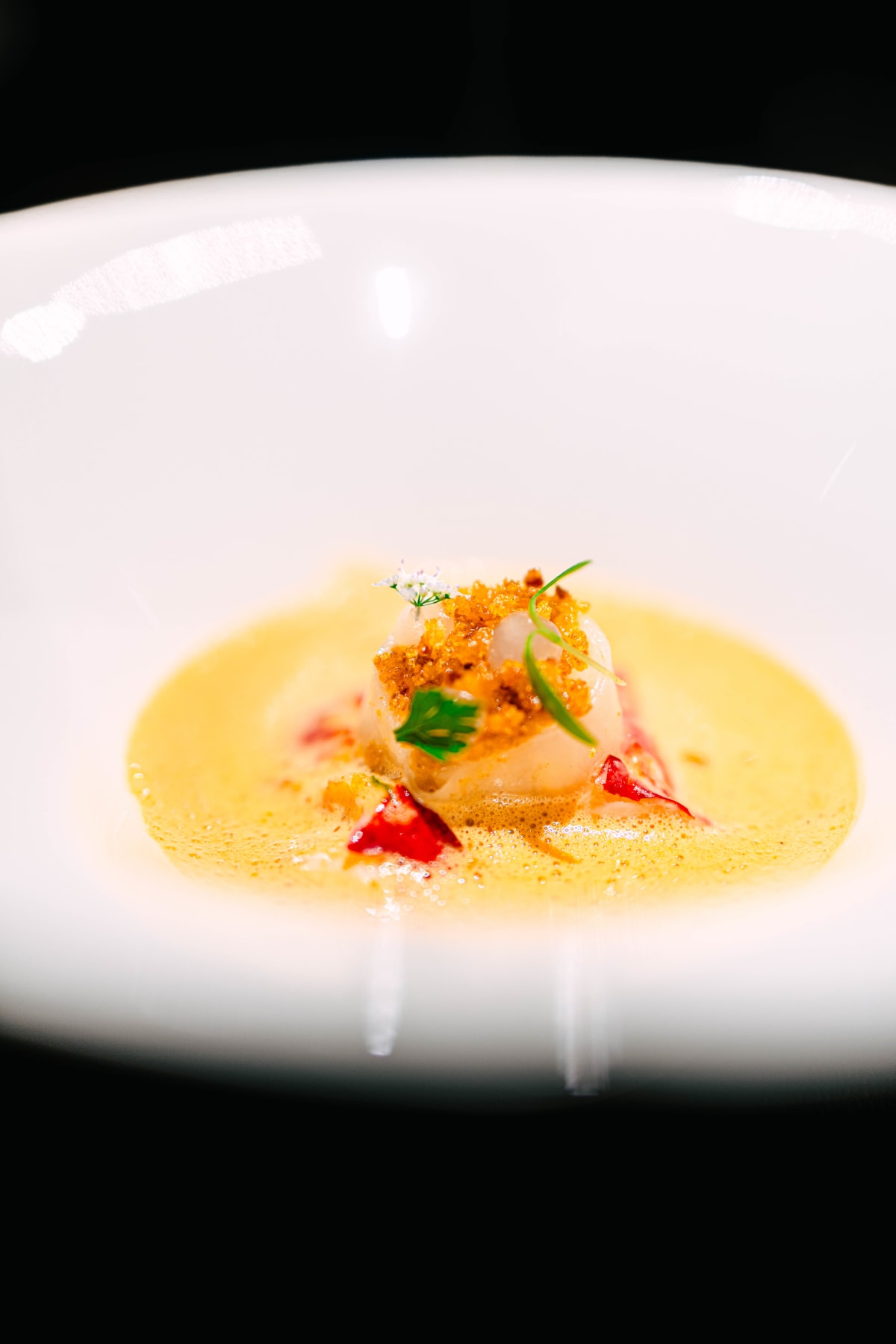
Drawing on the egg and fried onion that are never missing from the cooking of this part of Asia, the kitchen turned egg into noodles, rolled them up and topped them with onion and kohlrabi. The lobster, not overcooked in the least, was excellent, but above all the bisque sauce was overwhelming. The textures of everything on the plate worked beautifully together.
The pairing with the blue lobster was Fritz Waßmer Roter Berg Kenzingen Chardonnay 2021. Fritz Waßmer is an estate in Baden known for its Burgundian style, so much so that its Chardonnay has been credited with changing the game for German Chardonnay.
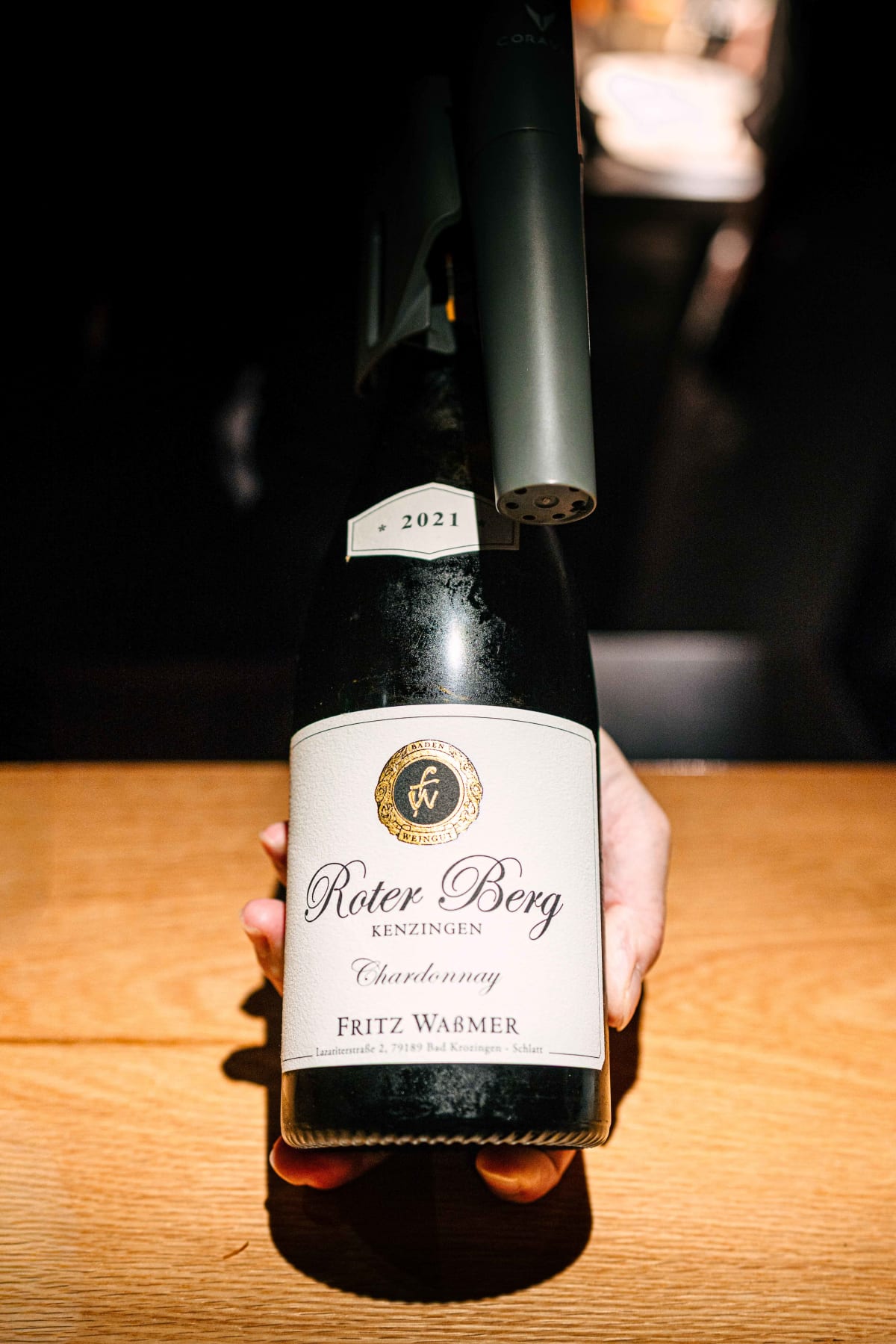
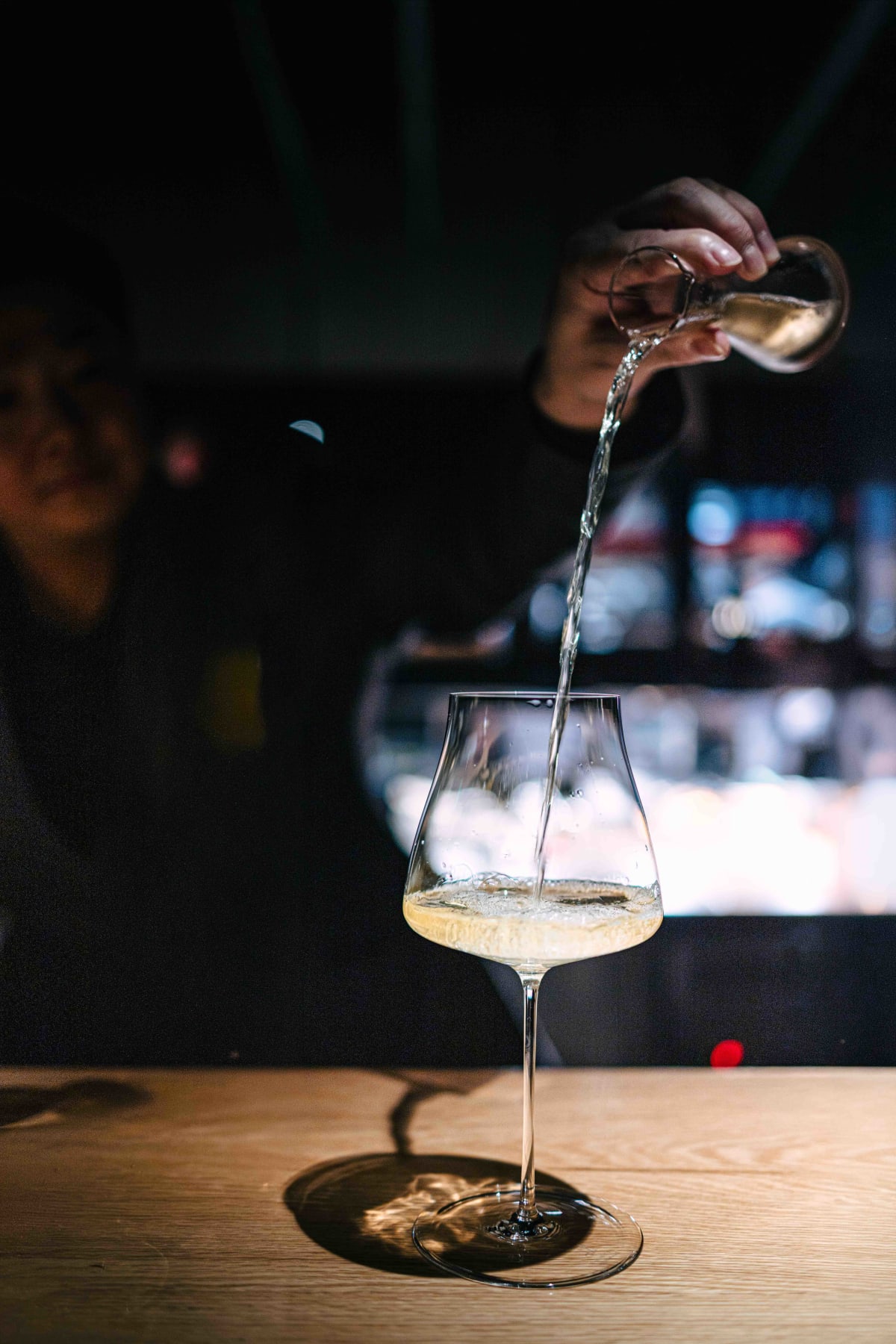
Roter Berg is a historic vineyard that a century ago produced some of Germany's most expensive Pinot Noir, and the wine is a dry, barrique-aged Chardonnay. There is pineapple-like fruit, toasty oak, vanilla, smokiness and acidity. An oaked Chardonnay against a rich coconut lobster sauce: I drank it in big, happy gulps.
Section 7·Morels And A French Trotter
As the meal moved into its later stages, heavier dishes and meat began to arrive. First, two add-ons came out together.
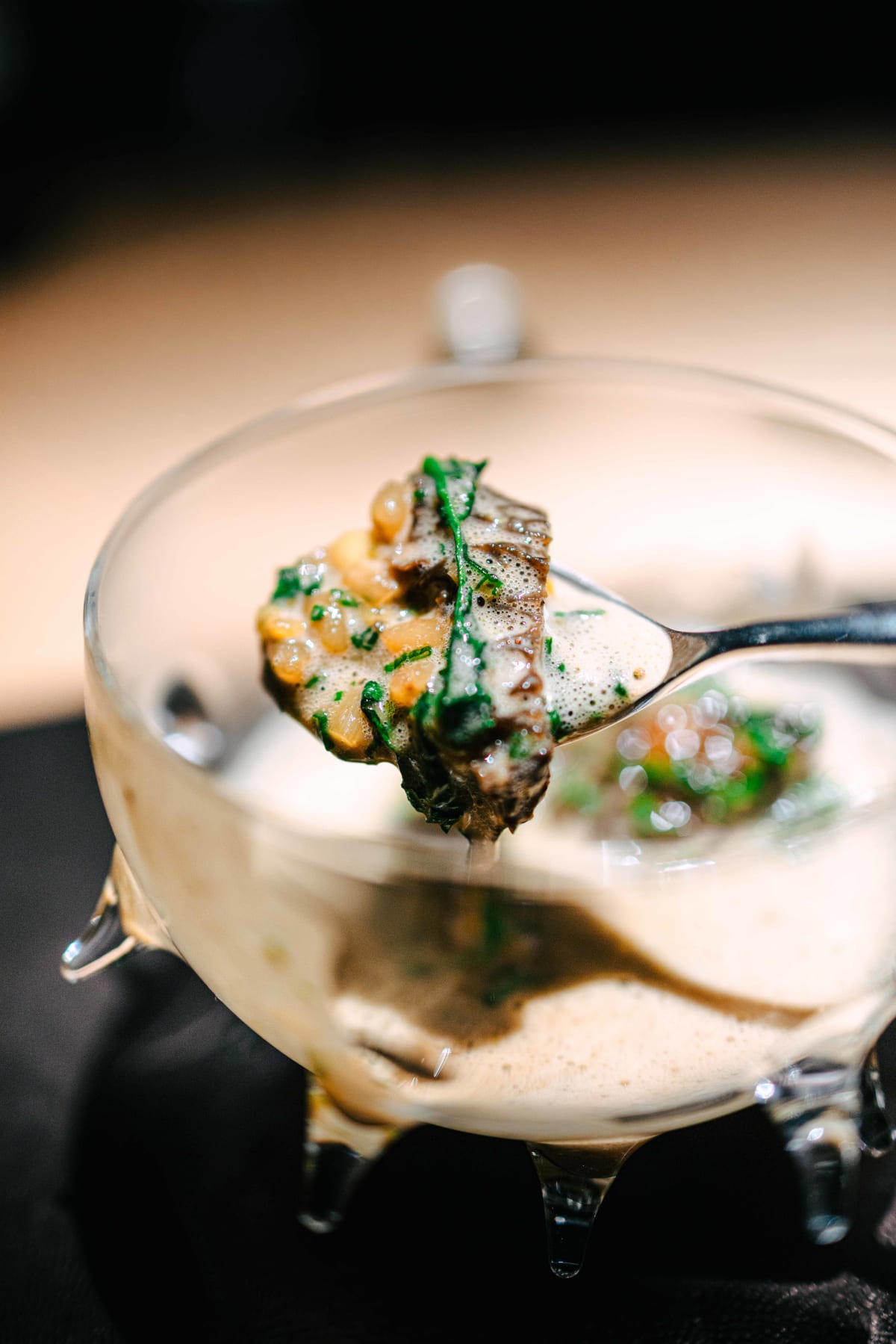
Yunnan Morel | 5 Grains | Young Leek | Yeast
This dish paired morels with French onion soup, over five grains laid down like a risotto. The dish was inspired by the Chinese legend of the god of the five grains, and because each grain cooks at a different temperature and for a different time, they were cooked separately and then combined.
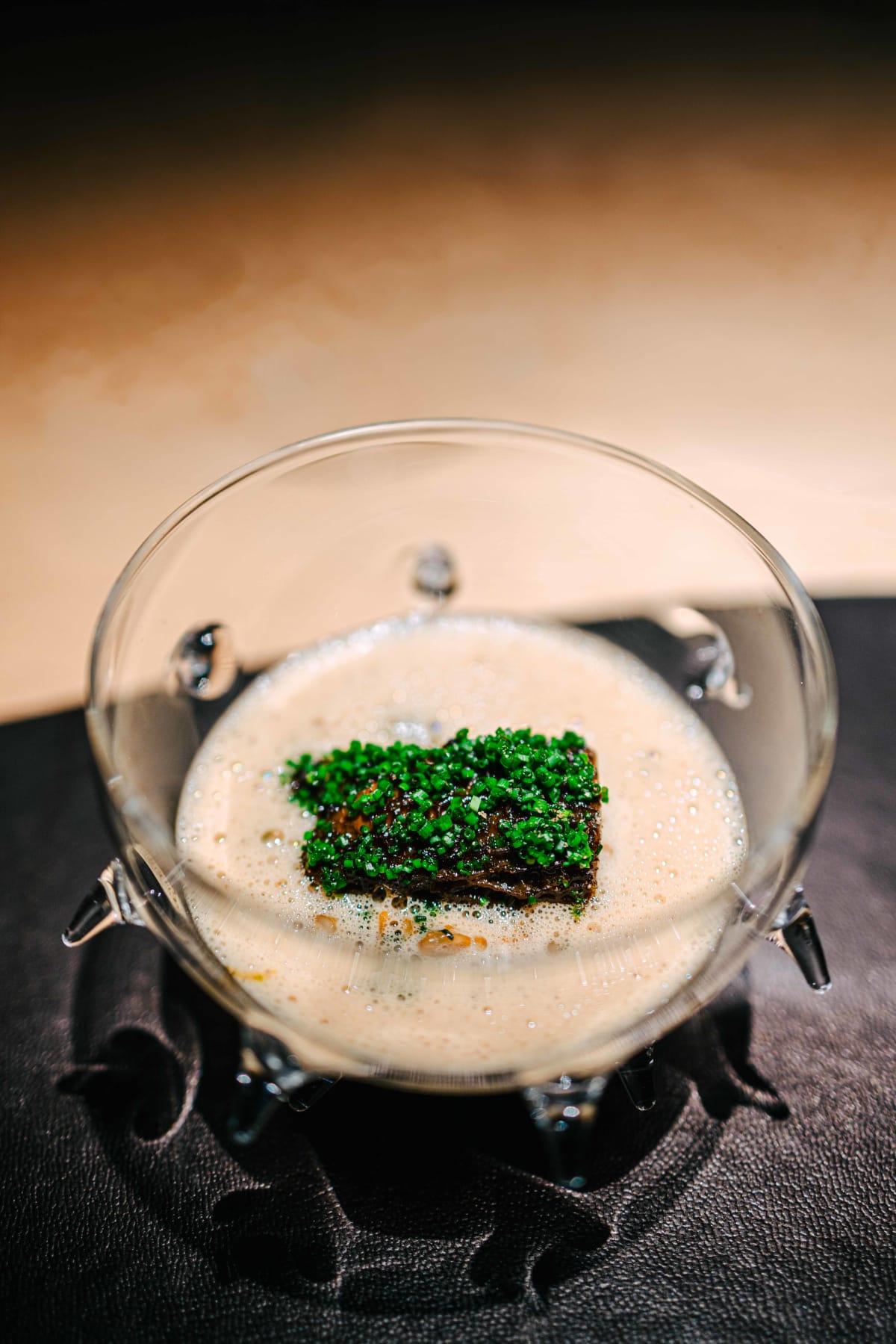
Inside the morels was a filling of chicken, something like a fishcake. At this point the manager told us that morels are very cheap in China and recommended buying some to take home next time. On top went finely chopped young leek.
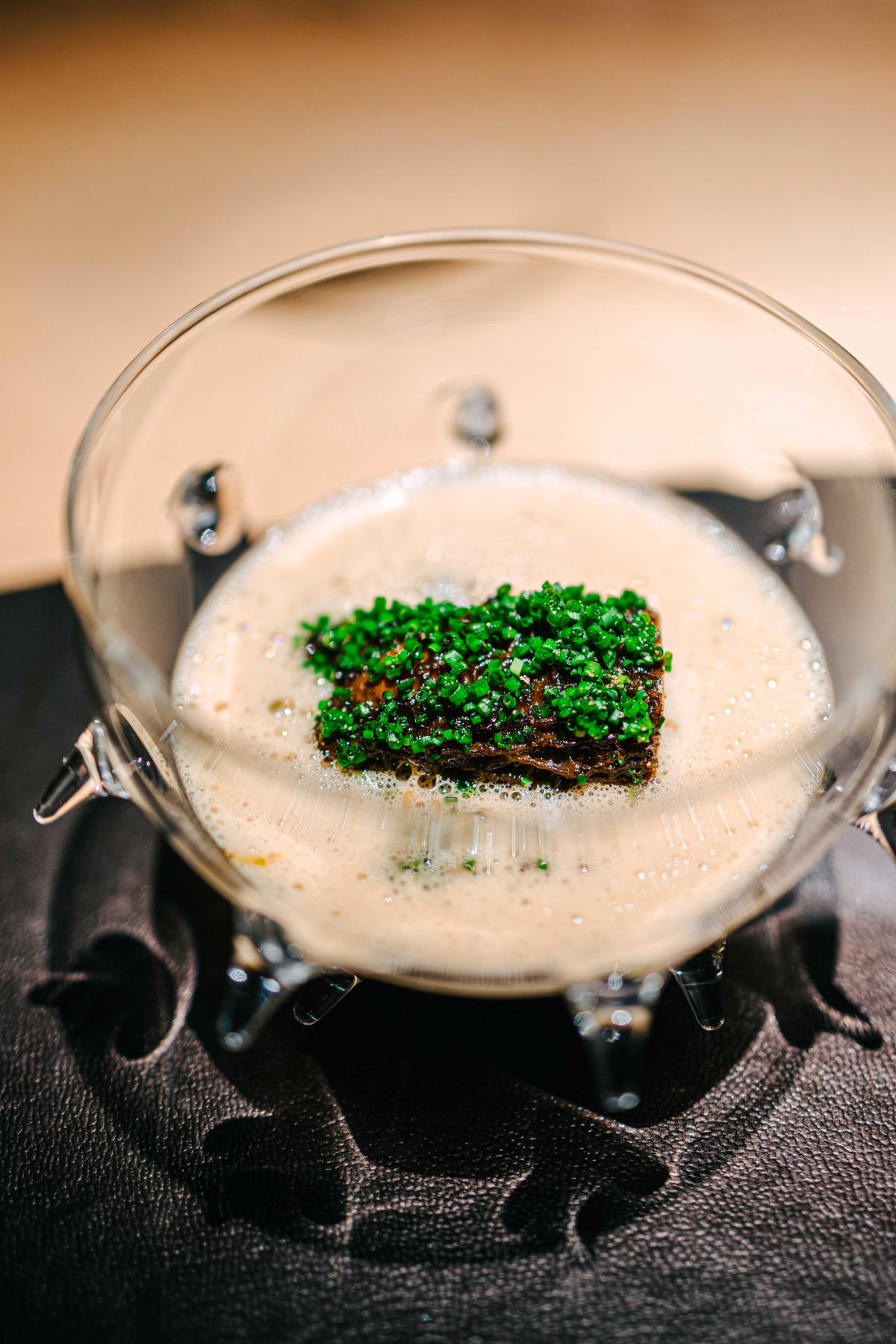
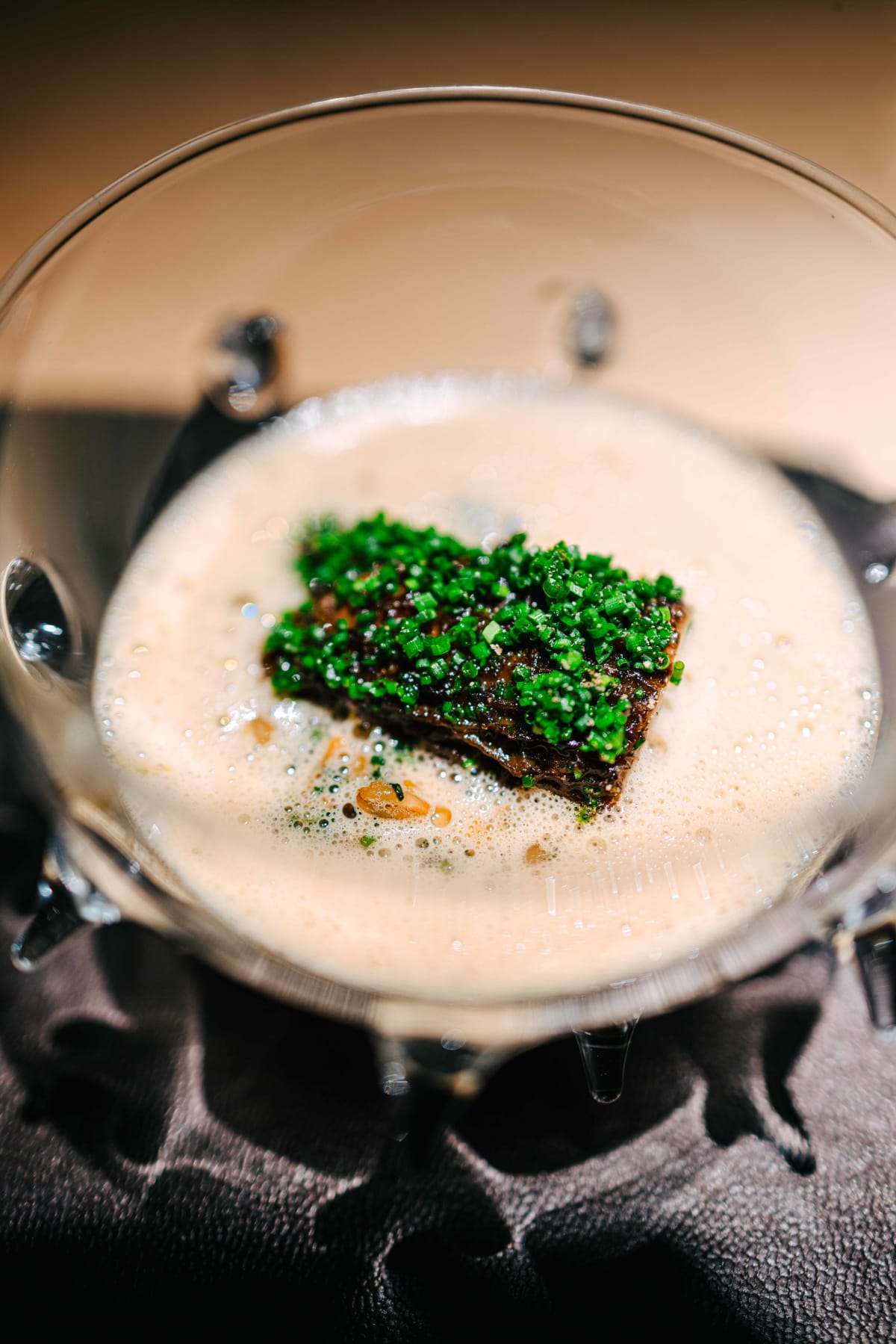
Warm onion soup, risotto-like grains and morel worked well in a single spoonful, and the morels had a lovely texture. The sauce ran along similar lines to the blue lobster before it. Tying together morels, onion soup and five grains struck me as a creative idea.
Pied de Cochon | Hispi Cabbage | Xinjiang Grapes | Gribiche
The other add-on that arrived with the morels was pig's trotter cooked the French way. The skin and meat are separated and then rolled around a filling of sauerkraut, the German pickled cabbage, and gribiche, a French sauce in the tartare family, is shaped into small balls and fried crisp on top. The green jelly is made from hispi, or sweetheart, cabbage.
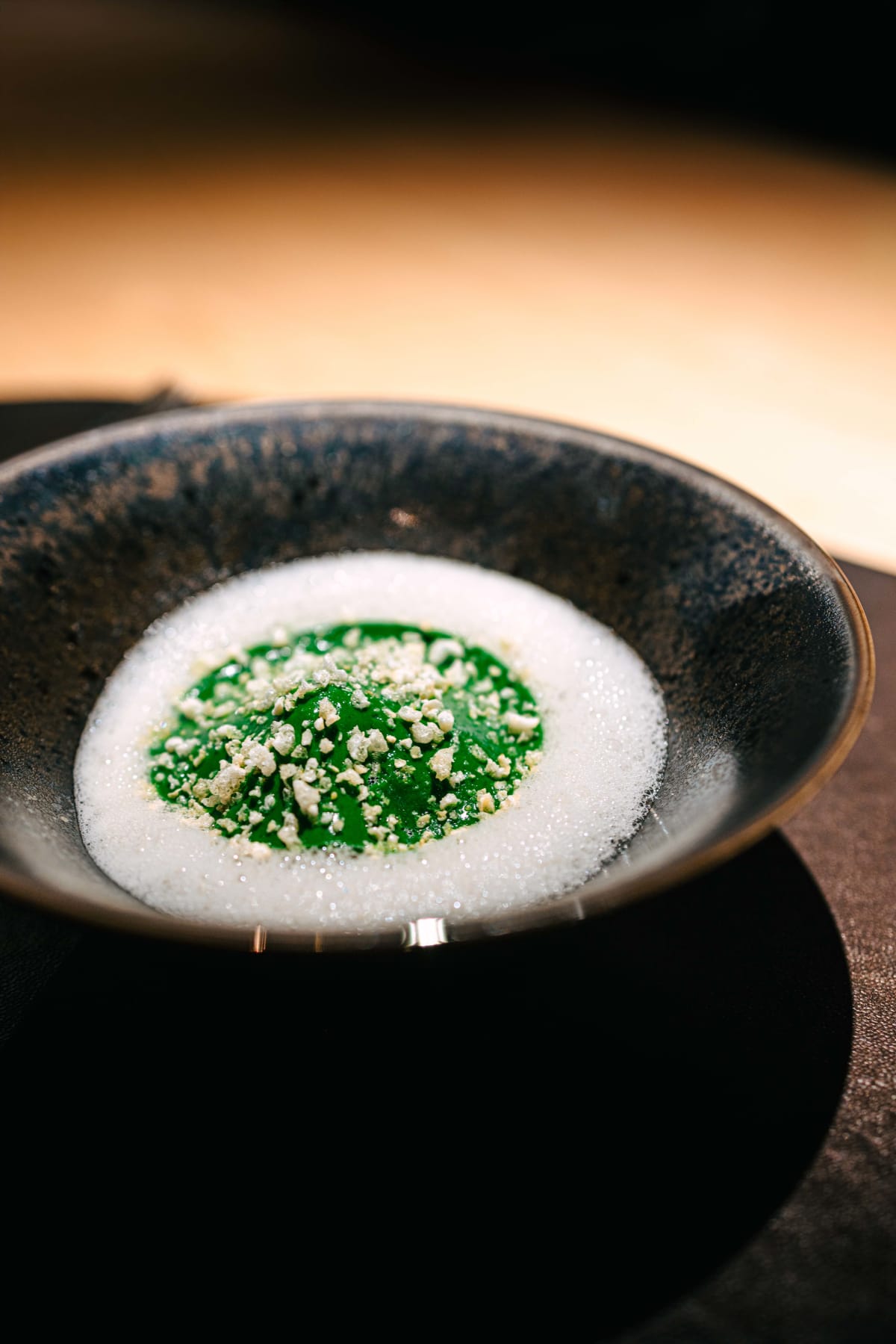
Scoop the trotter out from inside the jelly and the acidity of the sauerkraut comes through, and the trotter itself, seasoned with a sweetish sauce, was delicious. The other components, though, had so little presence and made so faint an impression that I wondered why so much effort had gone into them.
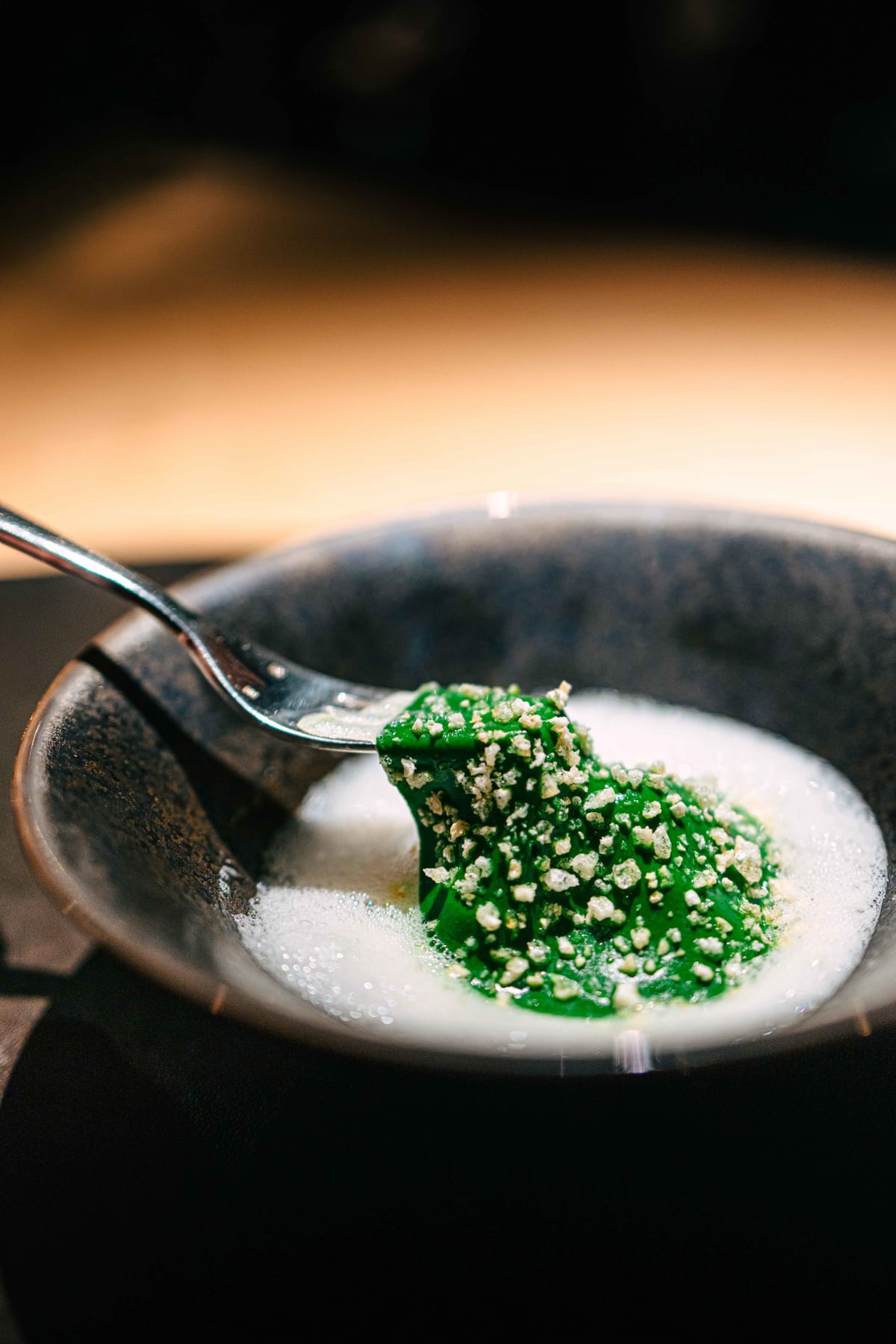
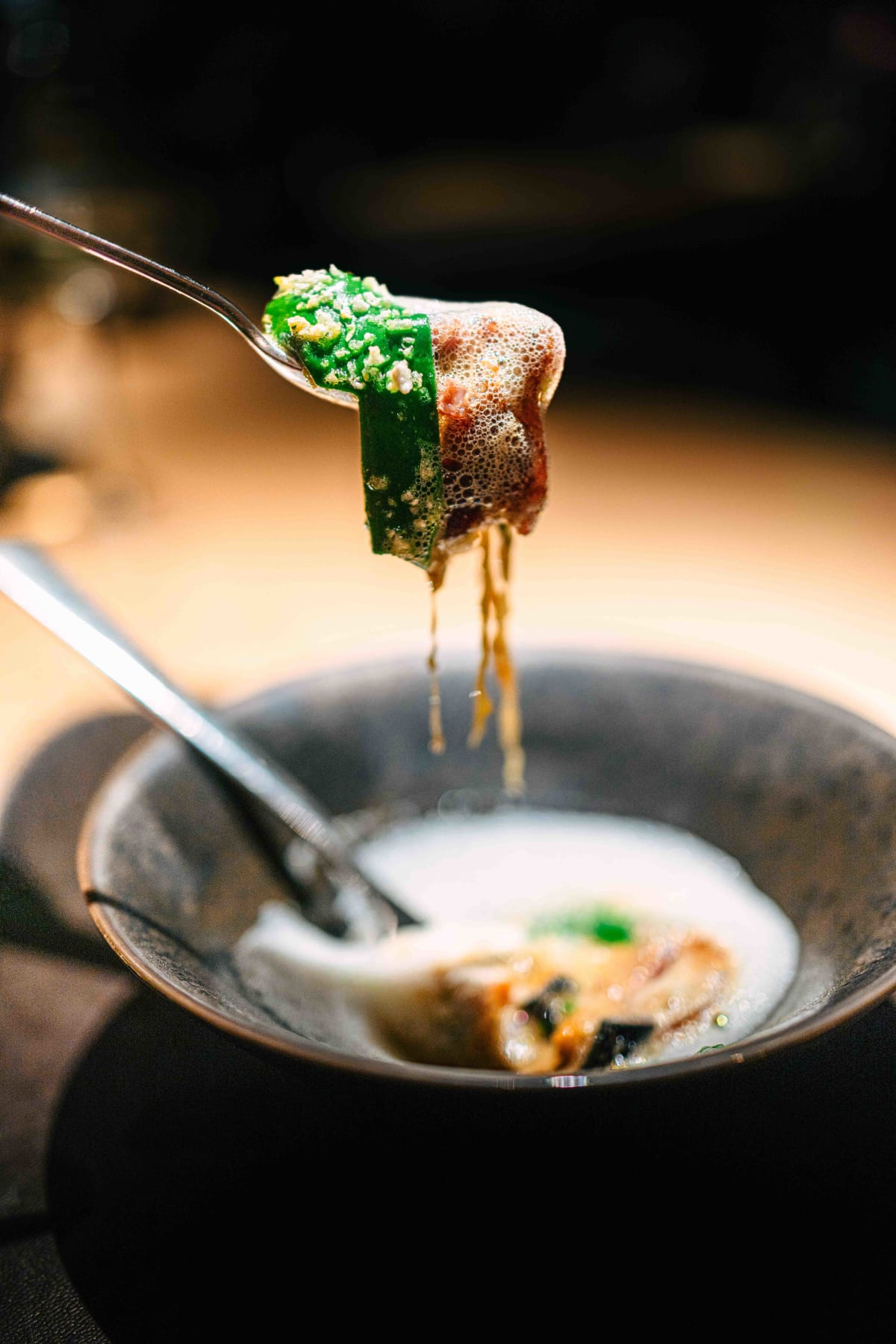
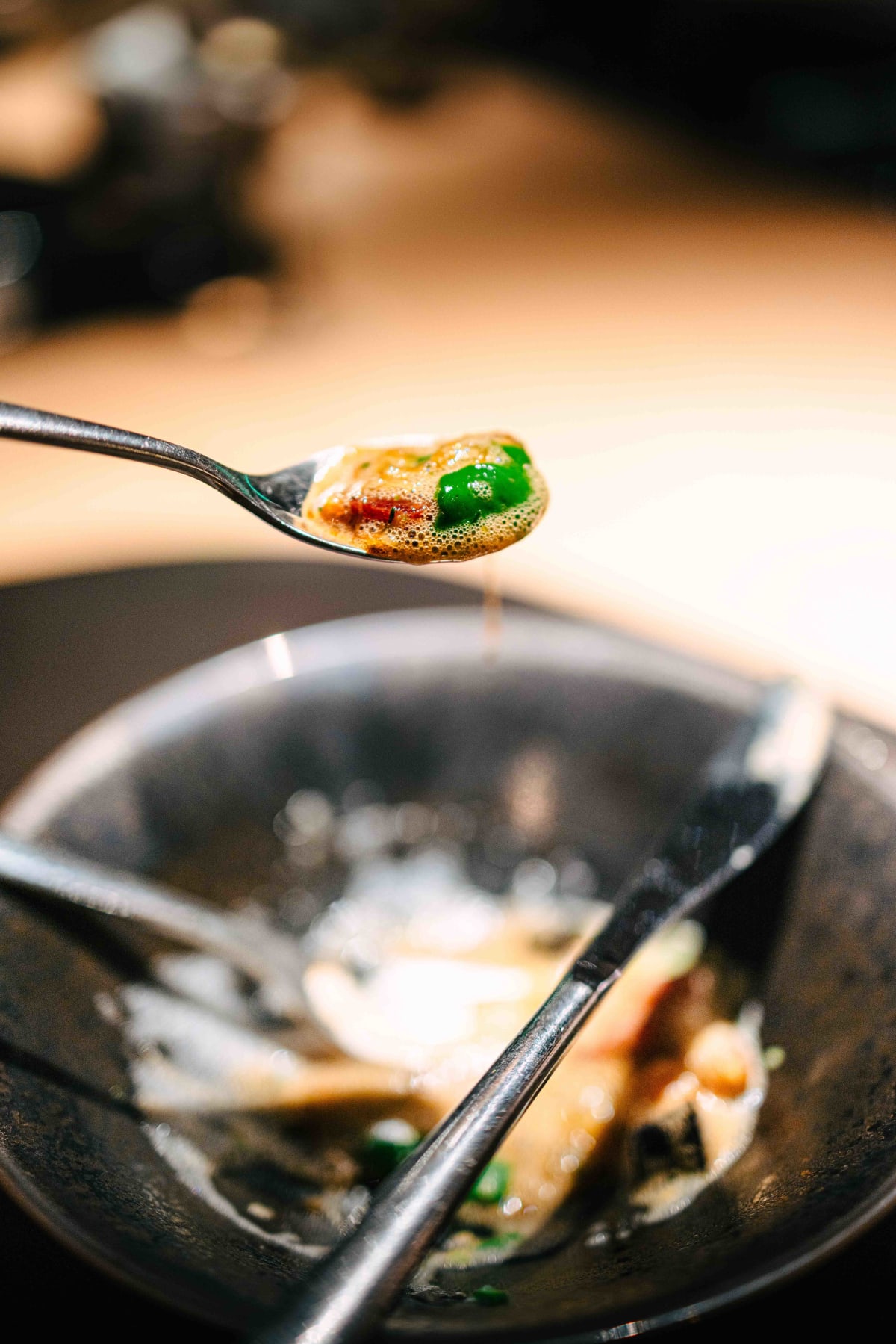
Only the main ingredient stood out and the rest did not, and perhaps because Taian Table's course has so many delicious things on either side of it, this dish does not linger much in my memory.
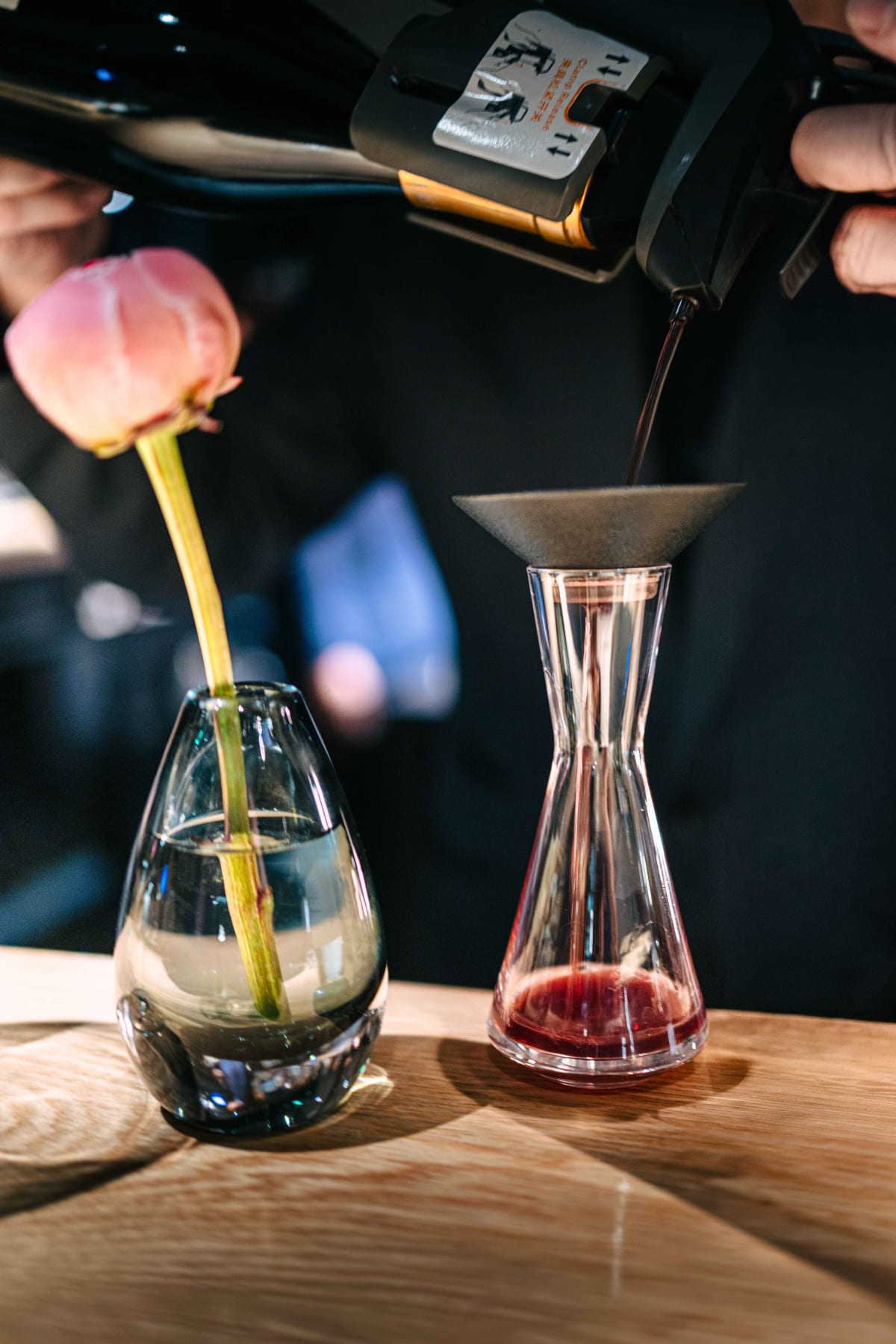
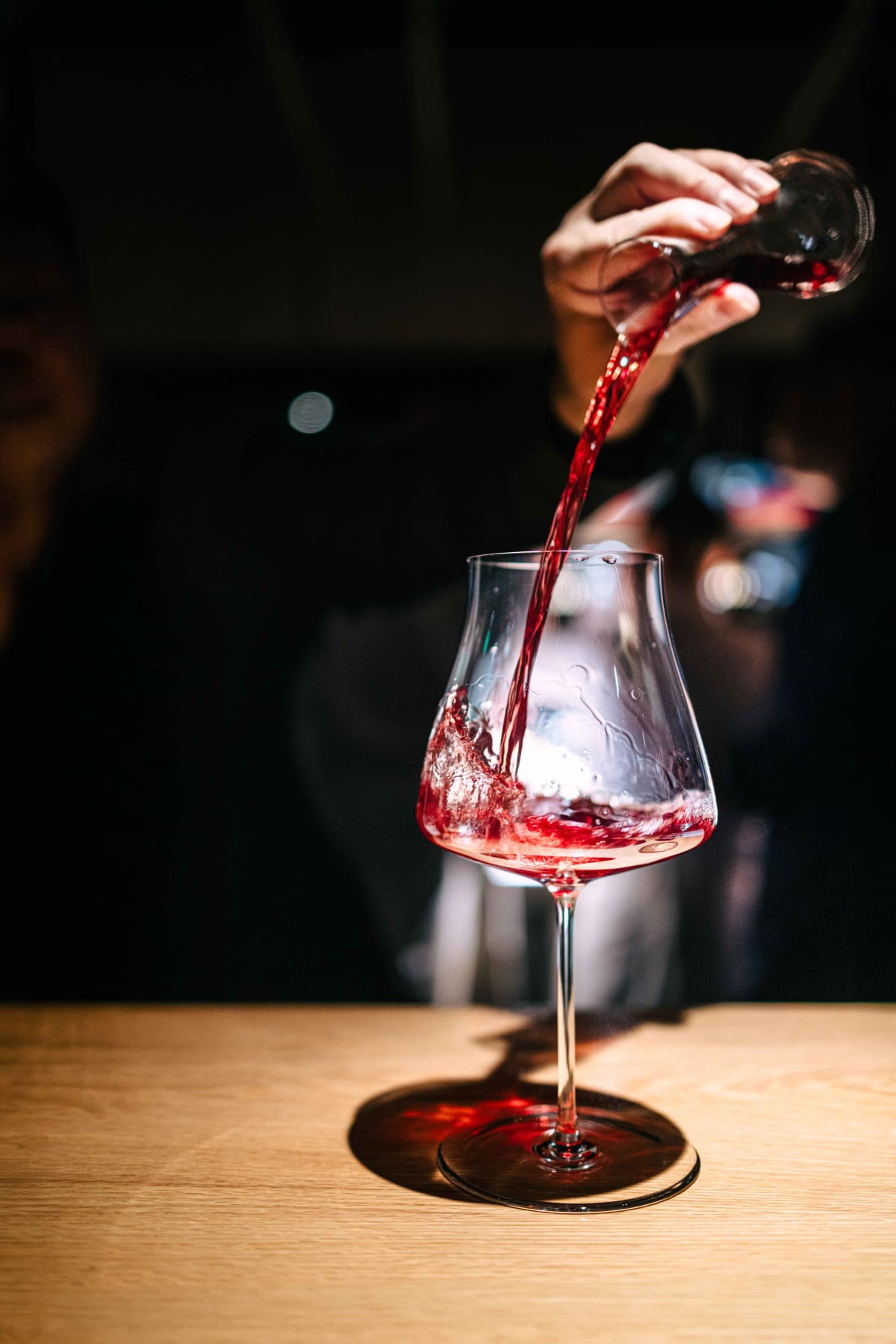
The red in the pairing that followed was SPIESS Hasensprung Pinot Noir 2021. SPIESS is a family winery that has farmed in Bechtheim, Rheinhessen, since 1509, run by two brothers who focus on the white Burgundian varieties, Riesling and Pinot Noir.
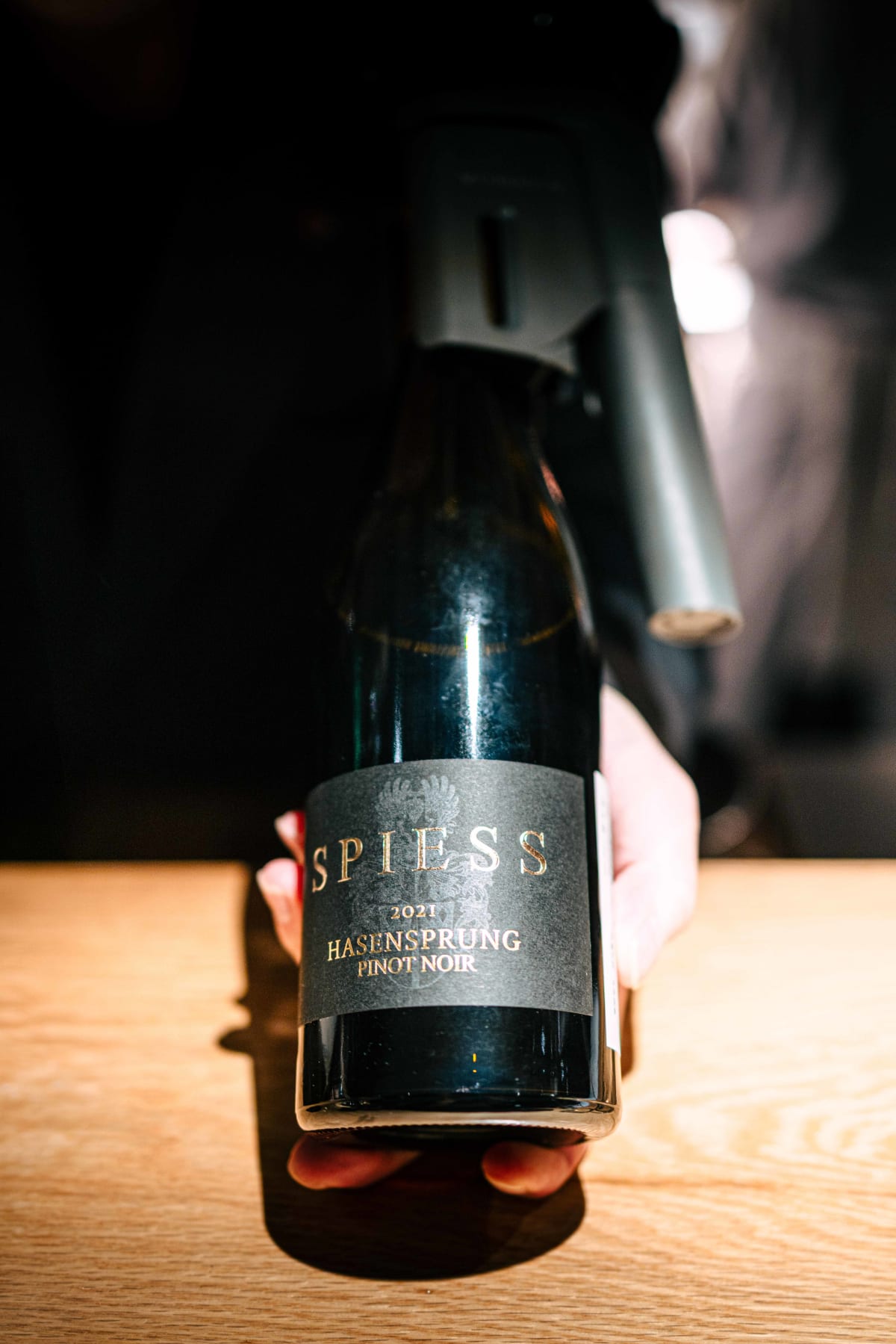
This is the estate's flagship Pinot Noir from the single Hasensprung vineyard, with ripe raspberry, a smoky nose and a subtle spice, and with its power and precision it was a red well suited to the turn towards the main meats.
Section 8·Sauce Like Melted Chocolate
There are two mains, and both made a strong impression.
Charcoal Grilled Pigeon | Preserved Mulberry | Sauce Rouennaise
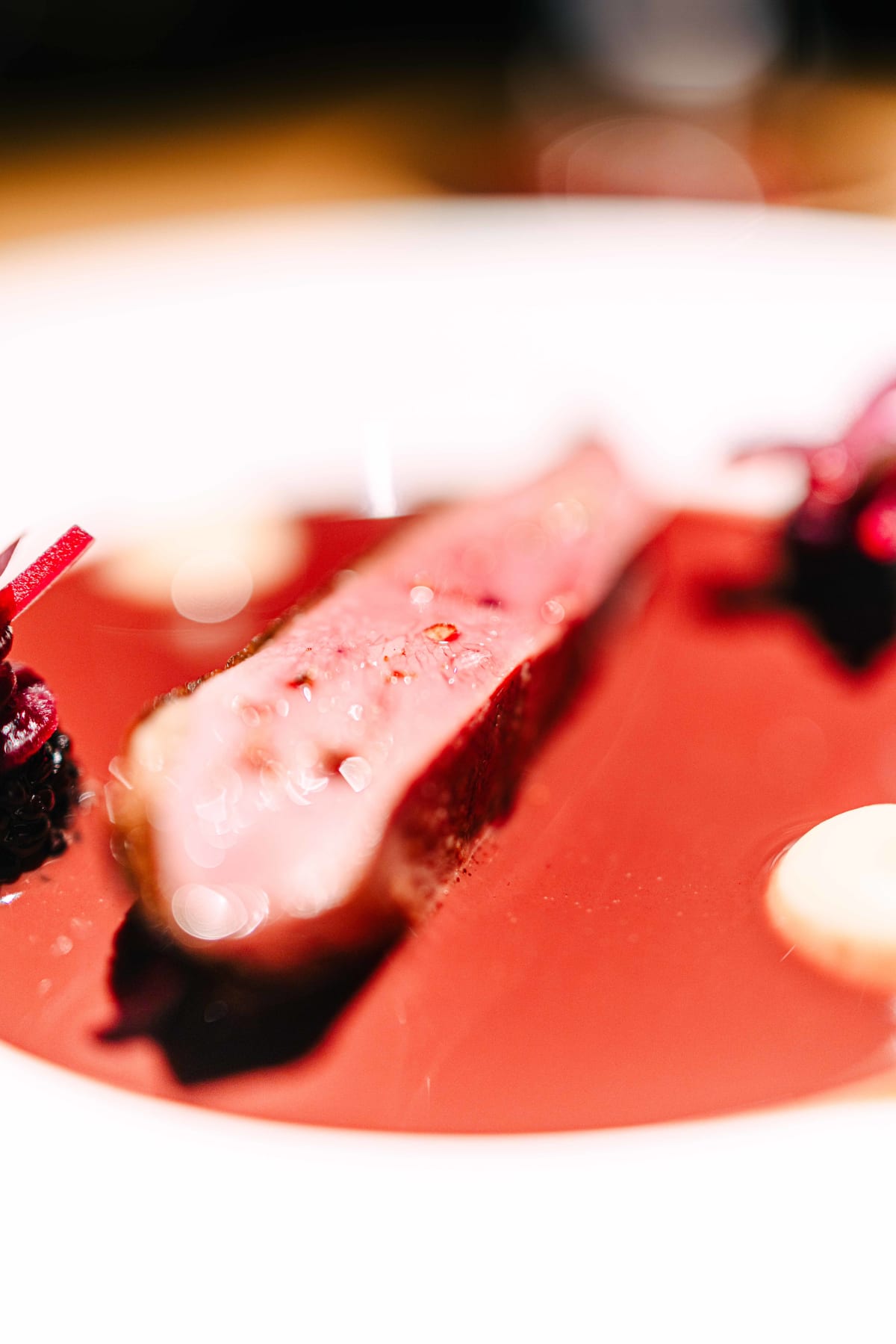
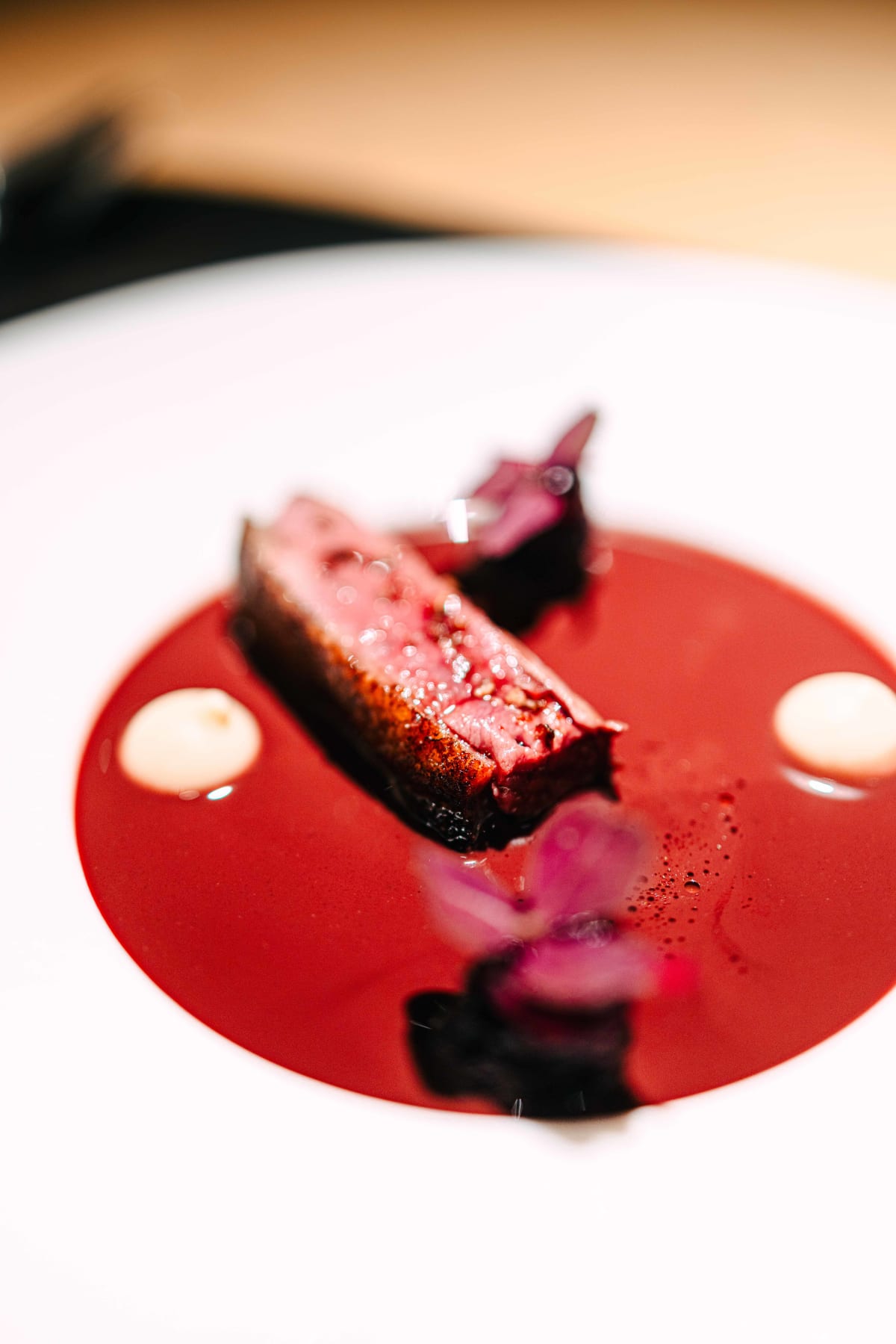
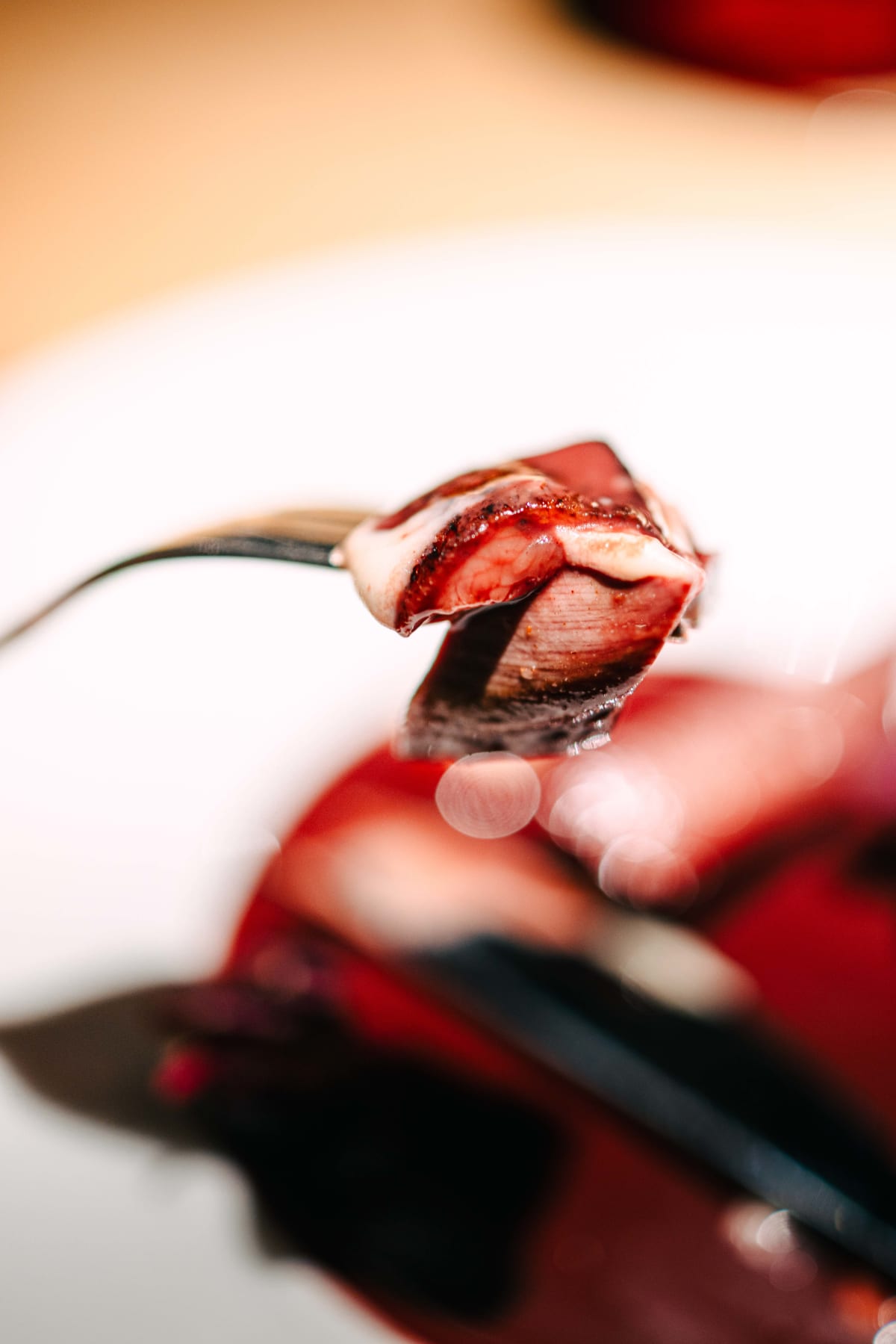
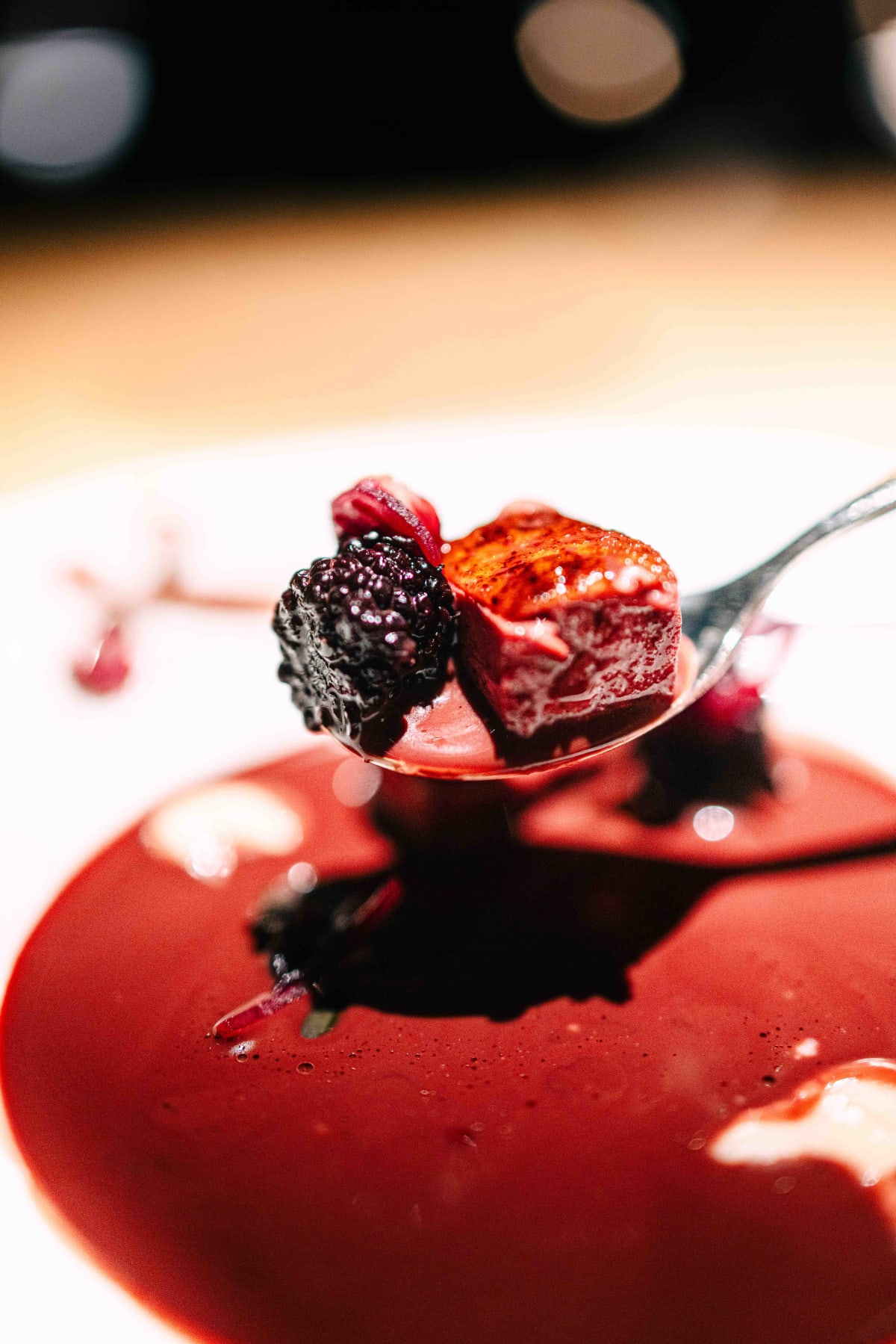
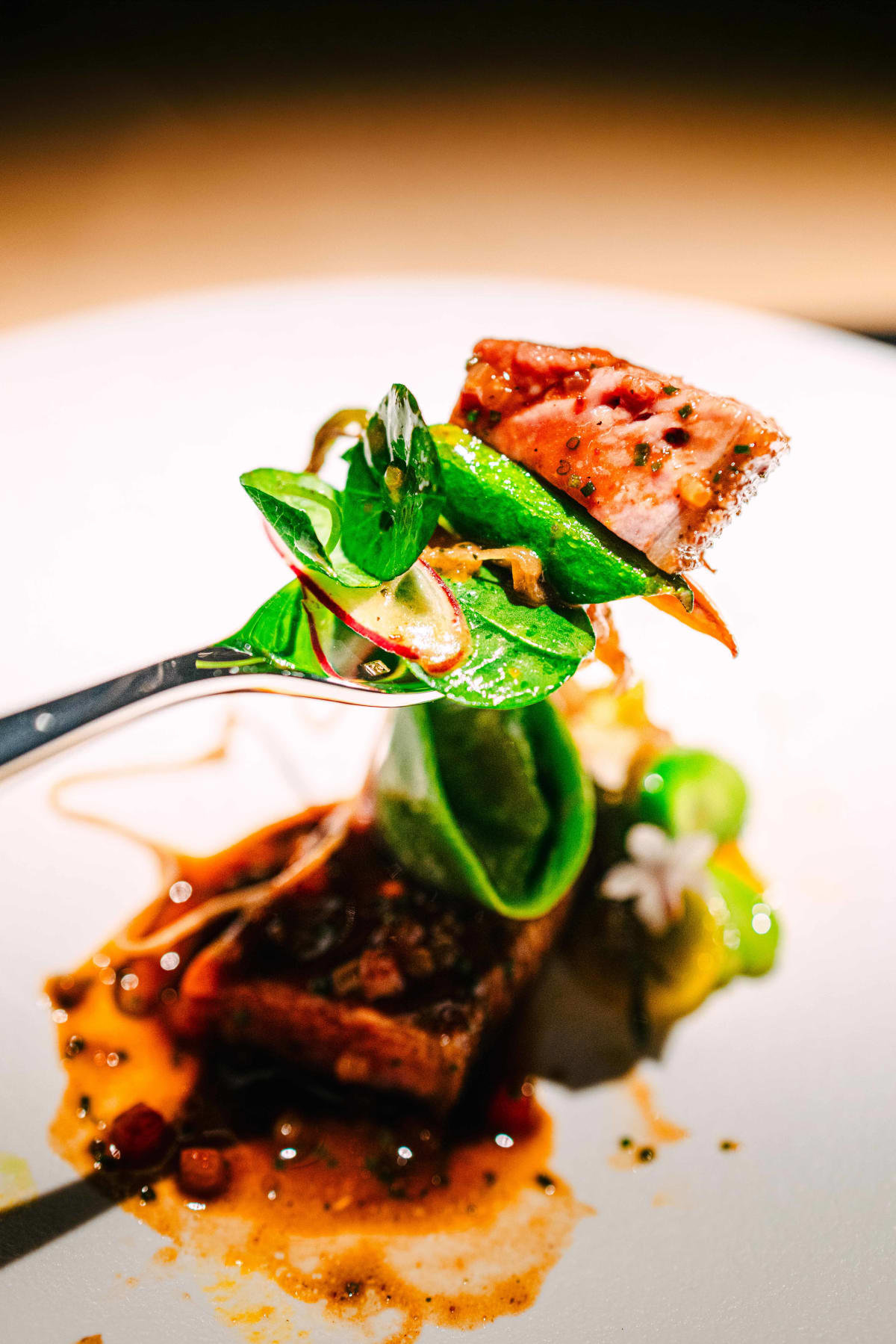
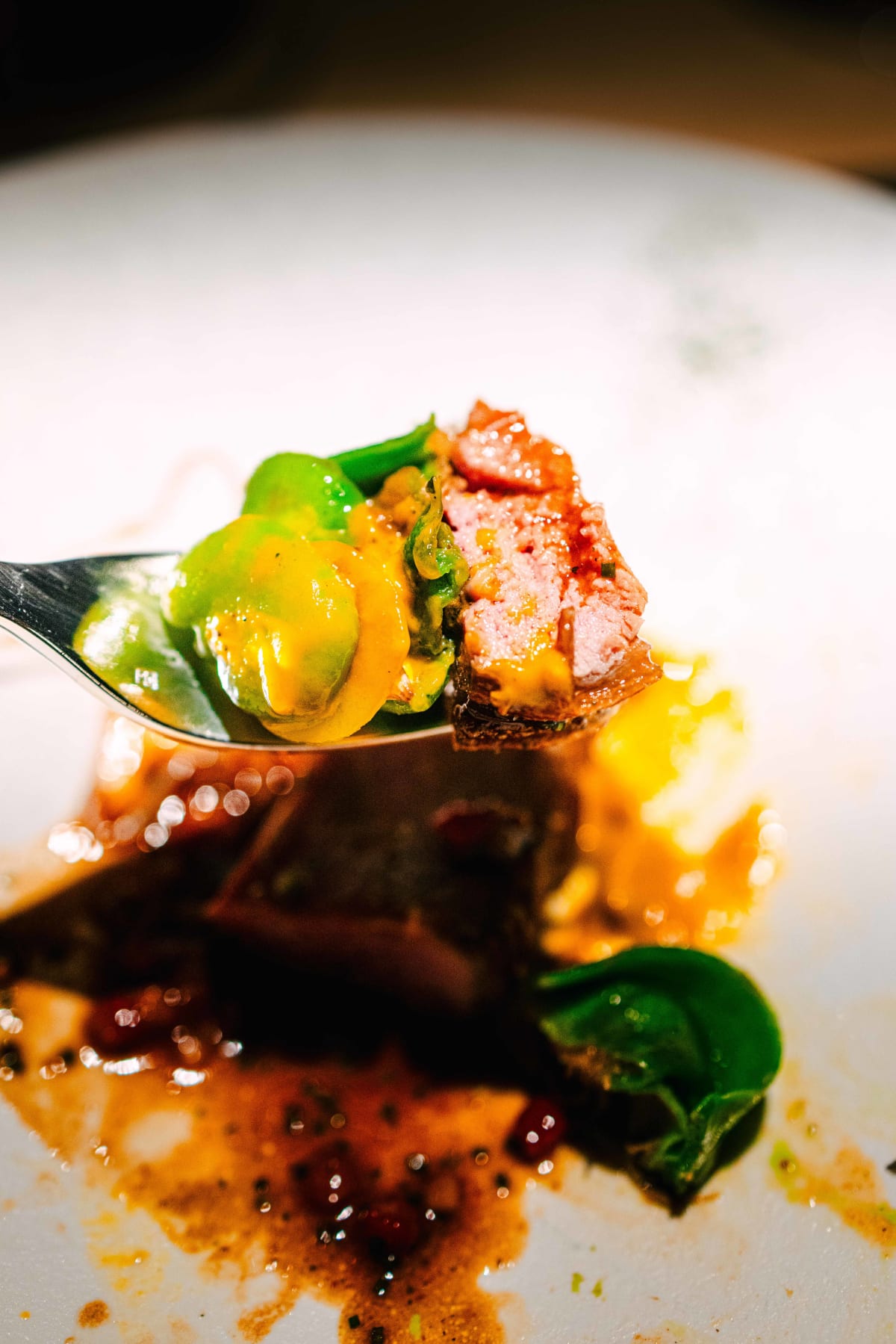
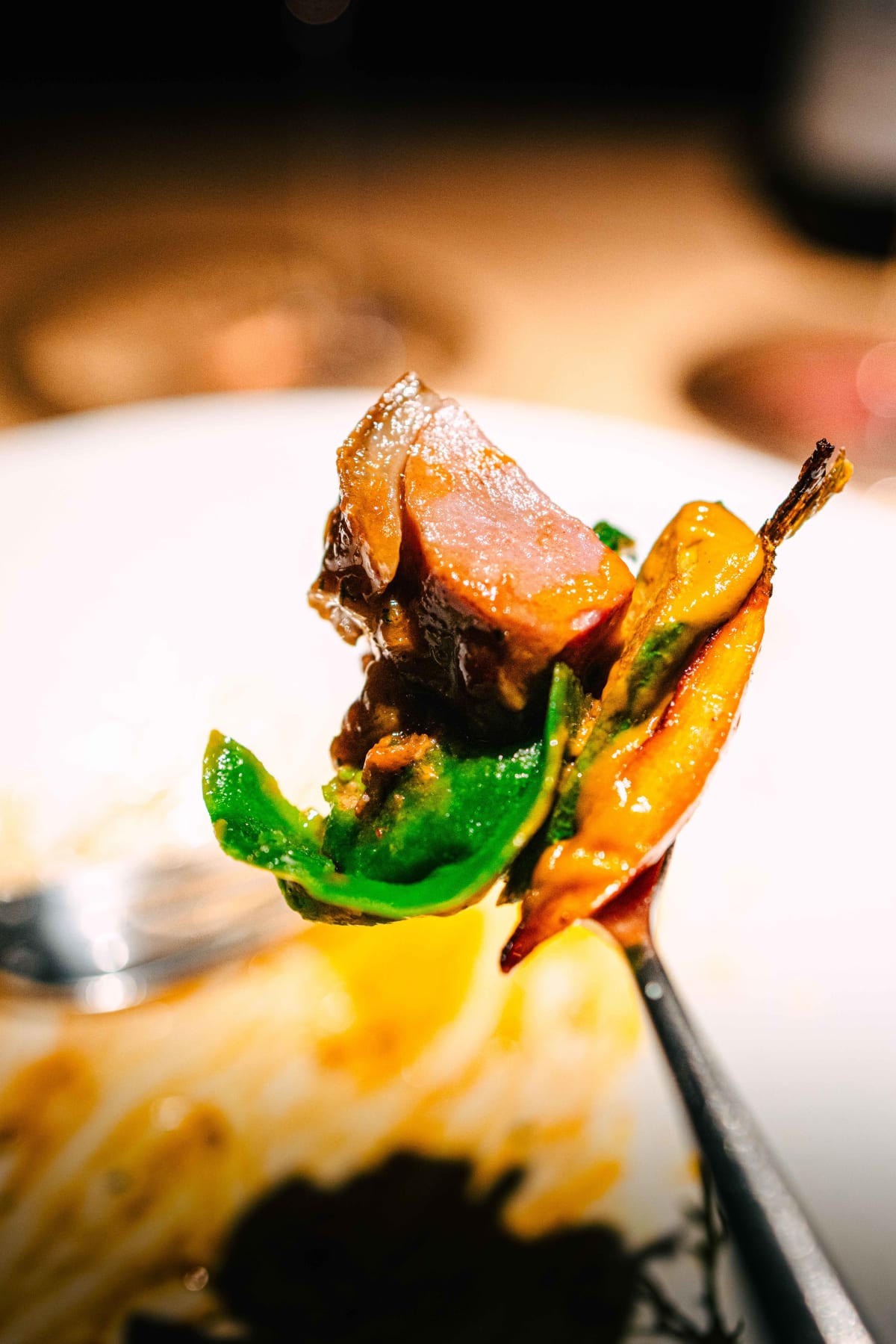
First, the pigeon. It arrived looking very simple, unlike the duck dishes I had seen before, and it tasted different too. Aged for four days after slaughter, it was roasted crisp outside and cooked to medium within, flooded with pink.
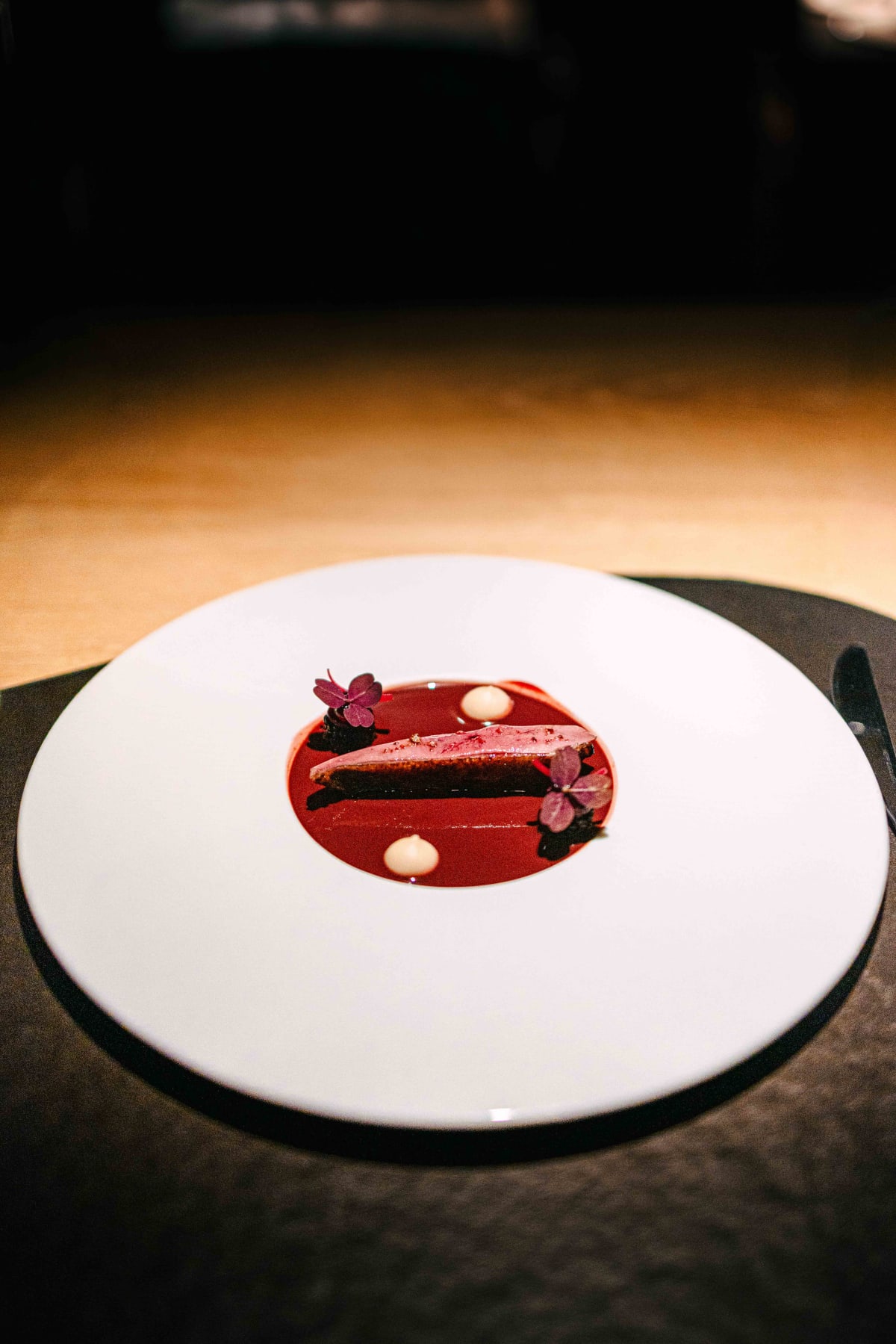
Sauce rouennaise is a traditional sauce from Rouen, normally made with duck blood and liver, and here it had been made in a pigeon version. Mulberries went on the plate with beetroot on top, and the white sauce on either side was a mash of white beans.
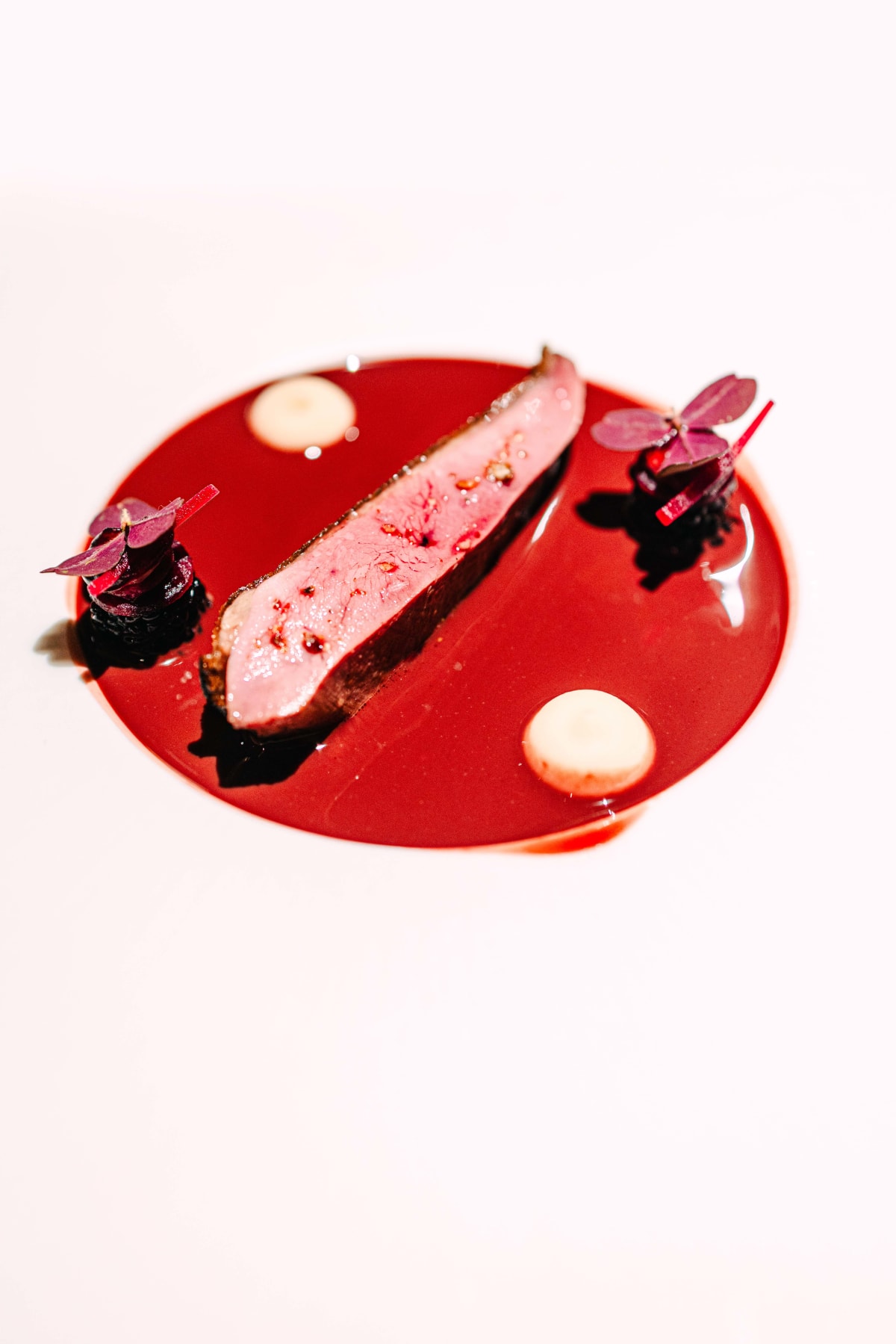
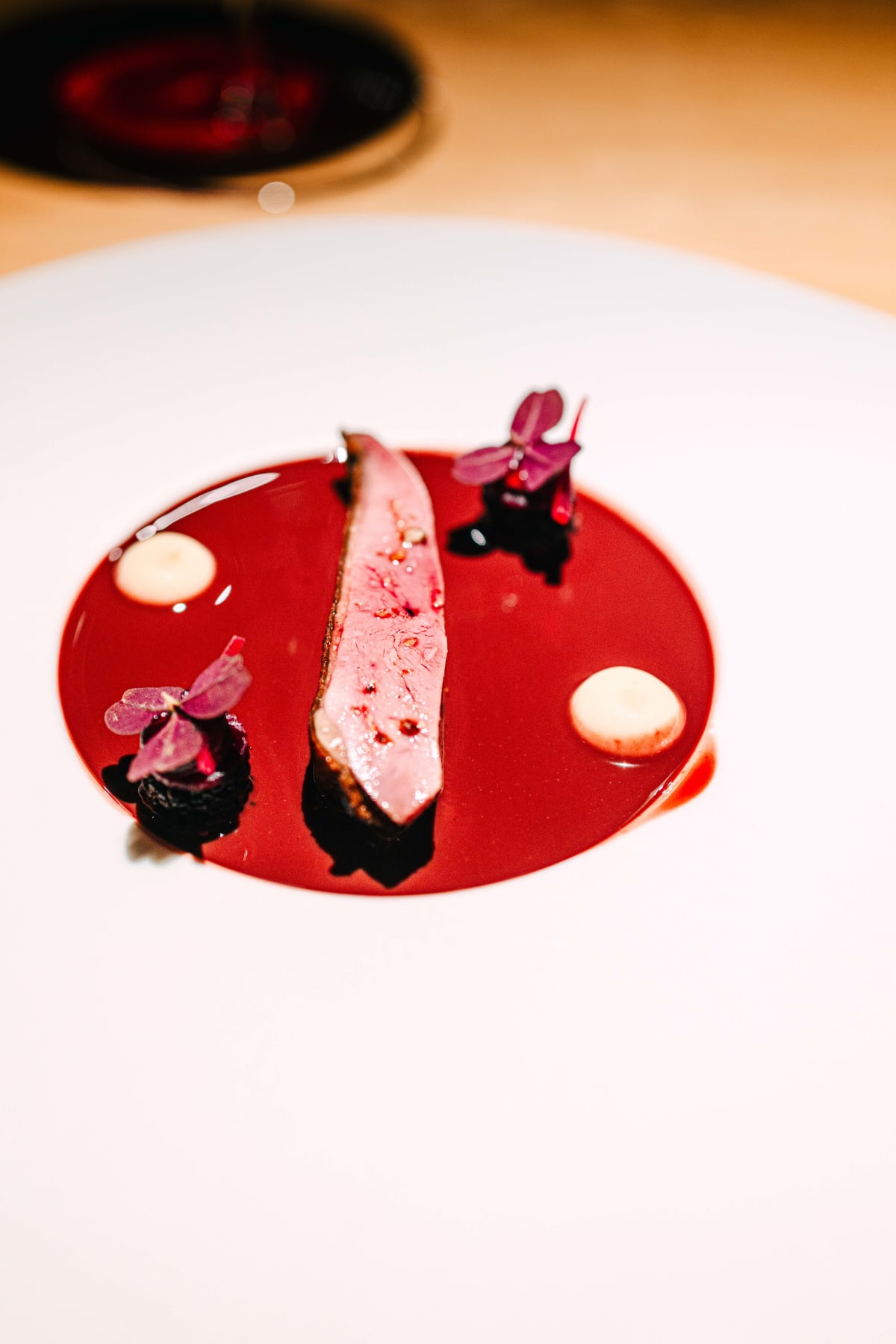
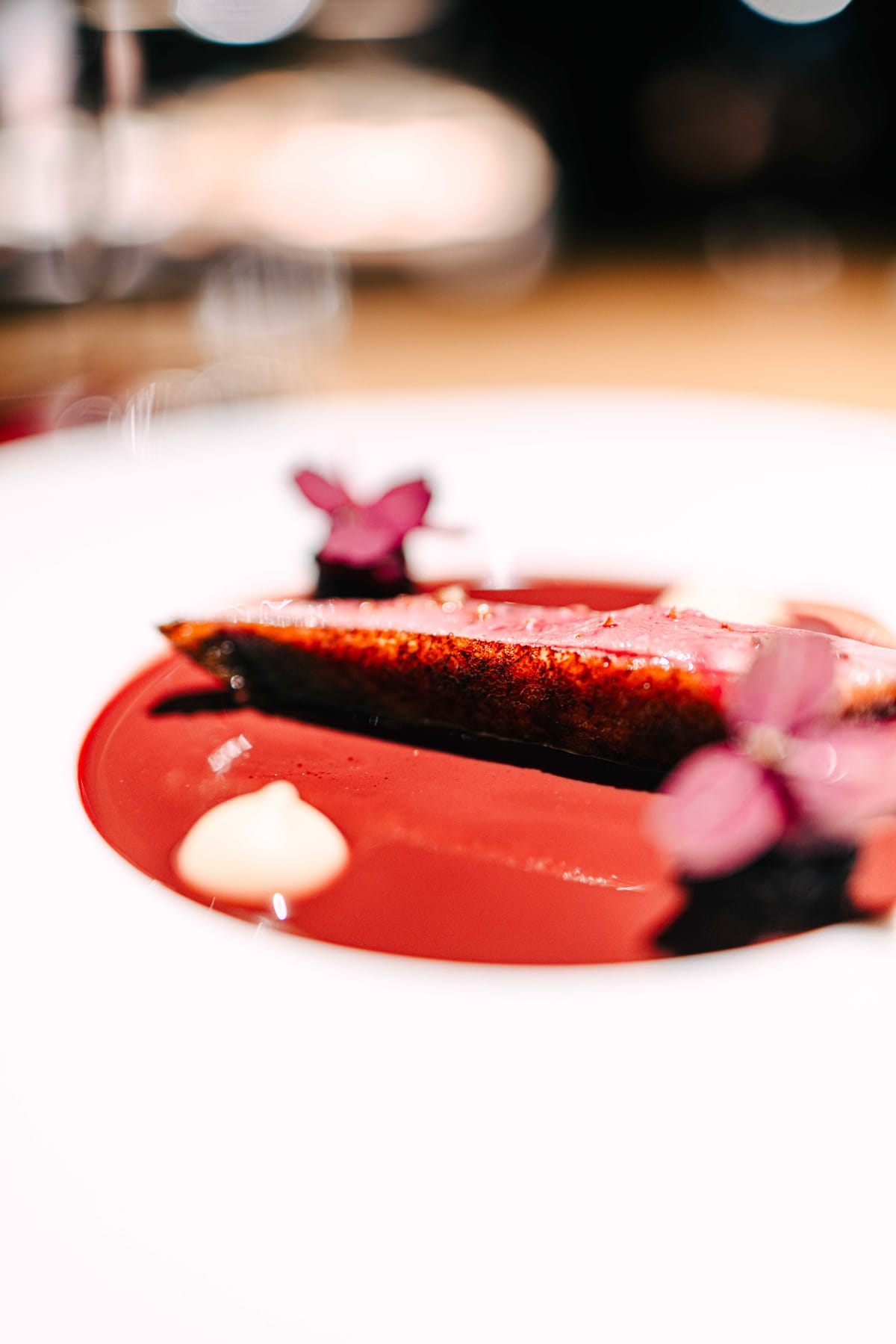
Blood and liver put me off at first, but there was no metallic or gamey edge, and this sauce, with the texture of melted milk chocolate, was the highlight. The cuisson of the pigeon looked perfect the moment the knife went through it, and the meat was cooked beautifully tender. The mulberries and white bean mash brought a fresh balance to the heavy pigeon. I have eaten pigeon many times, but the pigeon here had a singular style I have rarely seen elsewhere.
In between comes a palate cleanser.
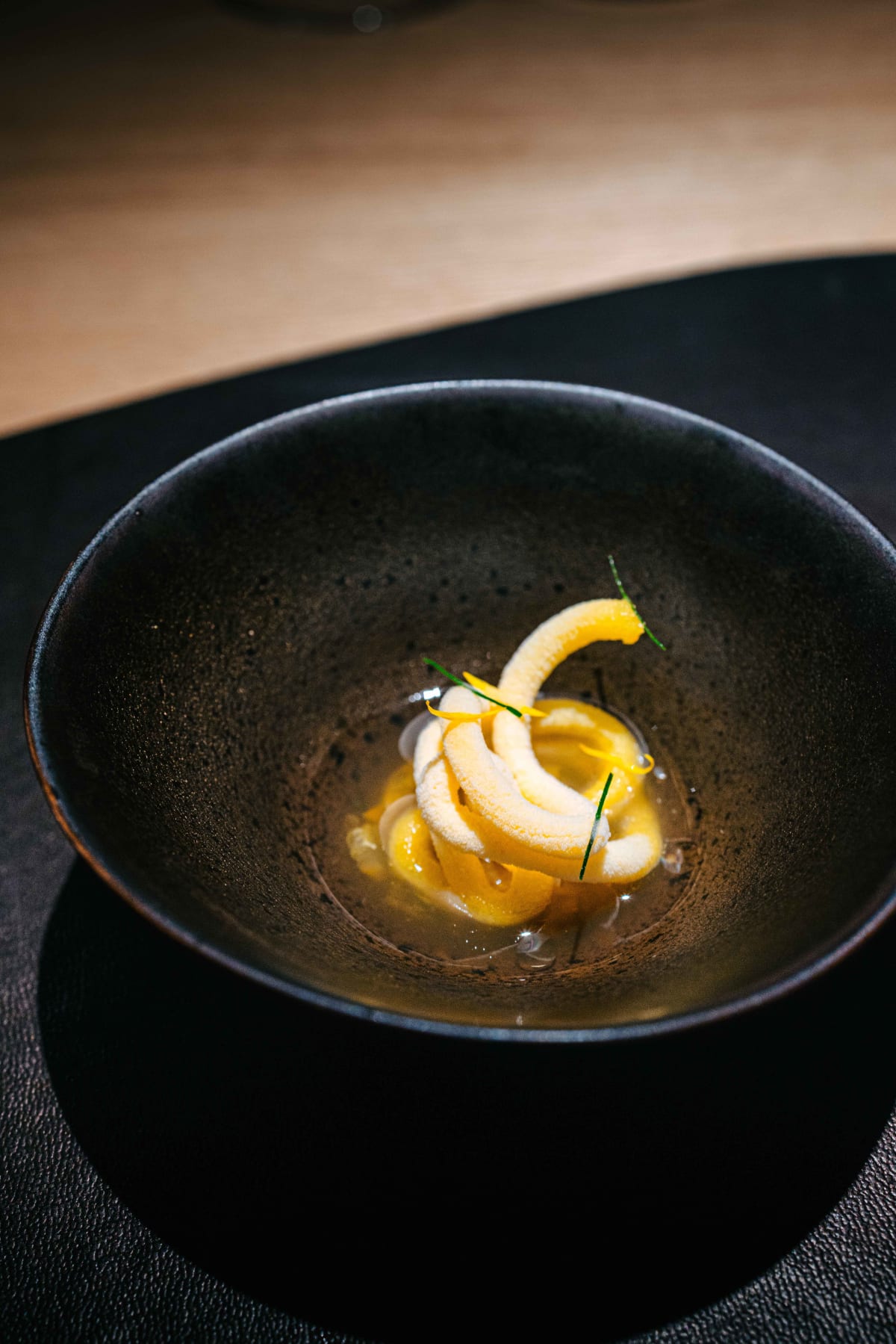
Fermented Mandarin Sorbet | Jasmin Flower
A fermented mandarin sorbet with jasmine tea added, it did its job as a cleanser, yet the tea made it distinctive.
Section 9·Lumina Lamb, Two Bordeaux
The final meat was lamb.
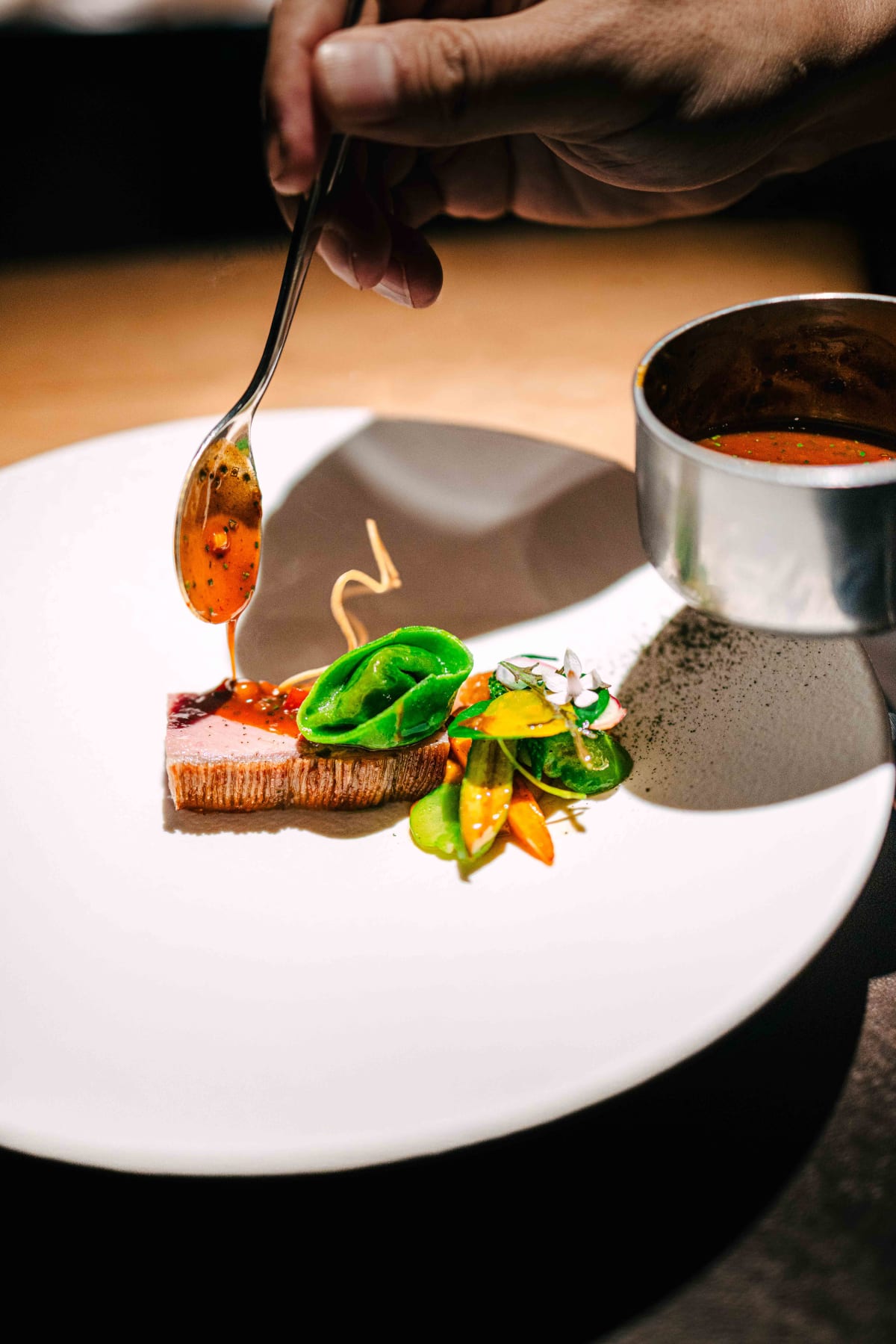
Lumina Lamb | Kashmiri Spice | Spring Greens
Lumina is a premium New Zealand lamb brand, the wagyu of lamb, as it was described to me.
It comes from lambs bred through Headwaters' breeding research in New Zealand and built into a brand together with Alliance Group; before processing, the lambs are finished for at least 35 days on chicory and clover pasture, and the meat is aged for 21 days.
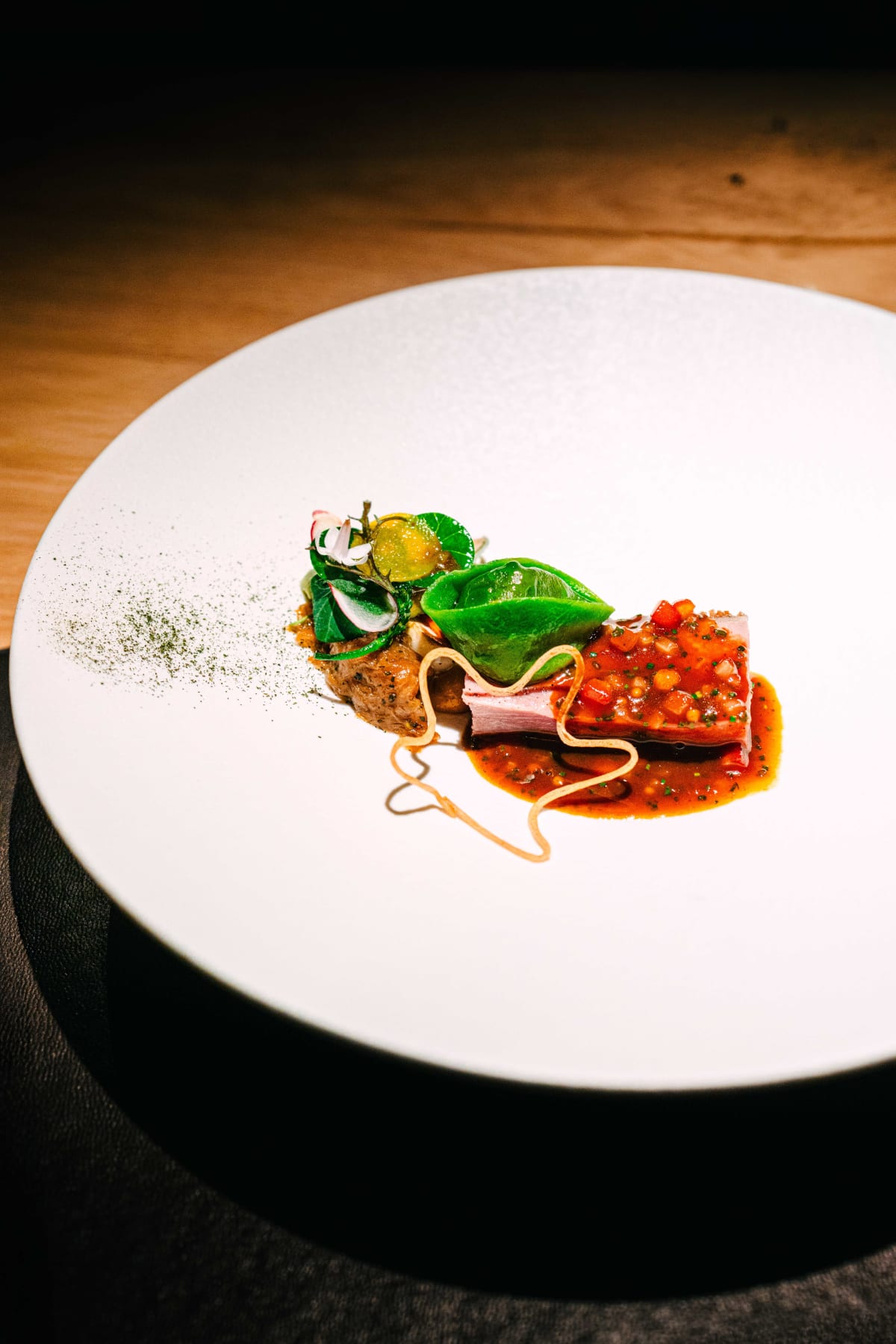
Perhaps that is why it was so good. There was none of the unpleasant gaminess, and the flavour of the meat was clean and gentle.
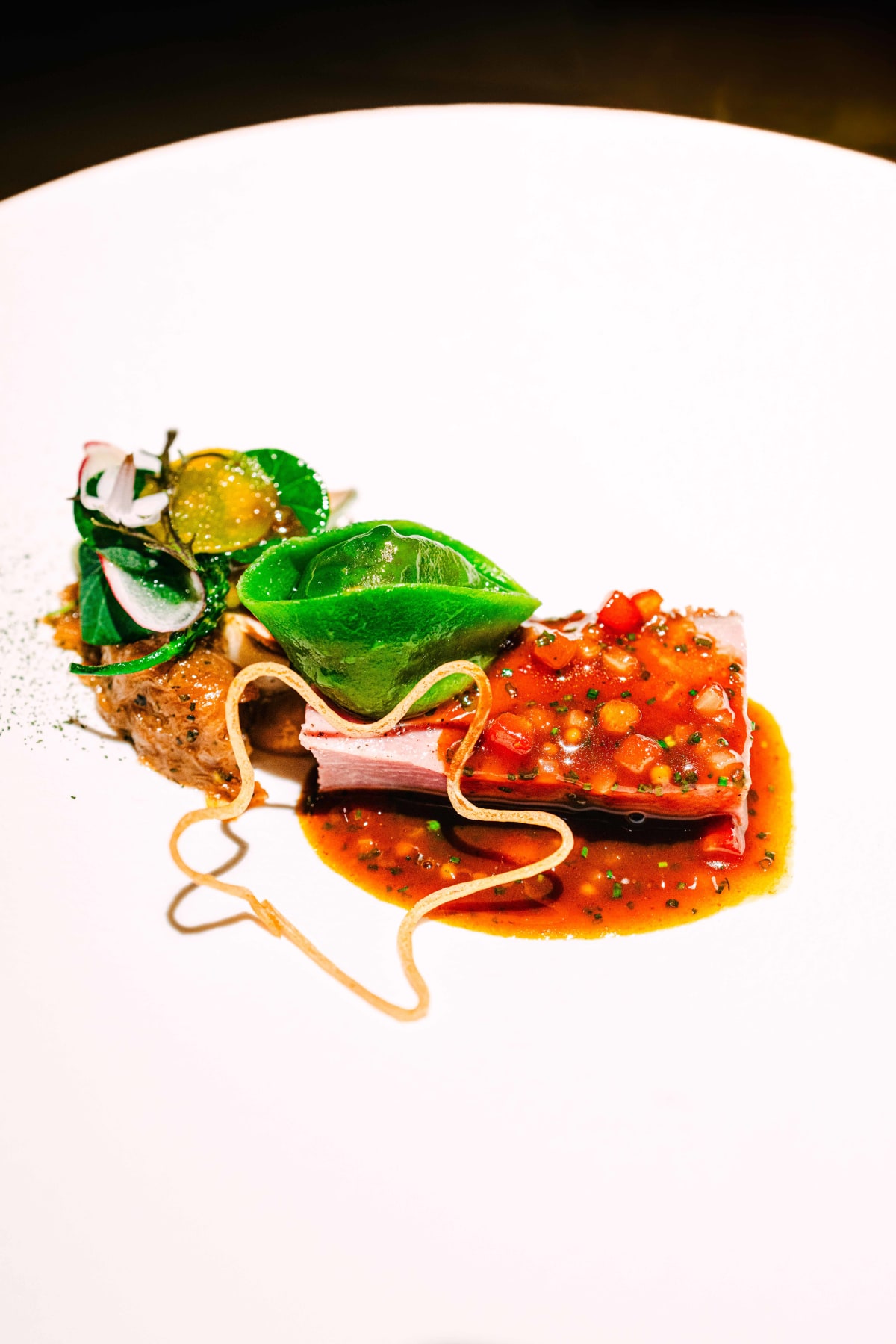
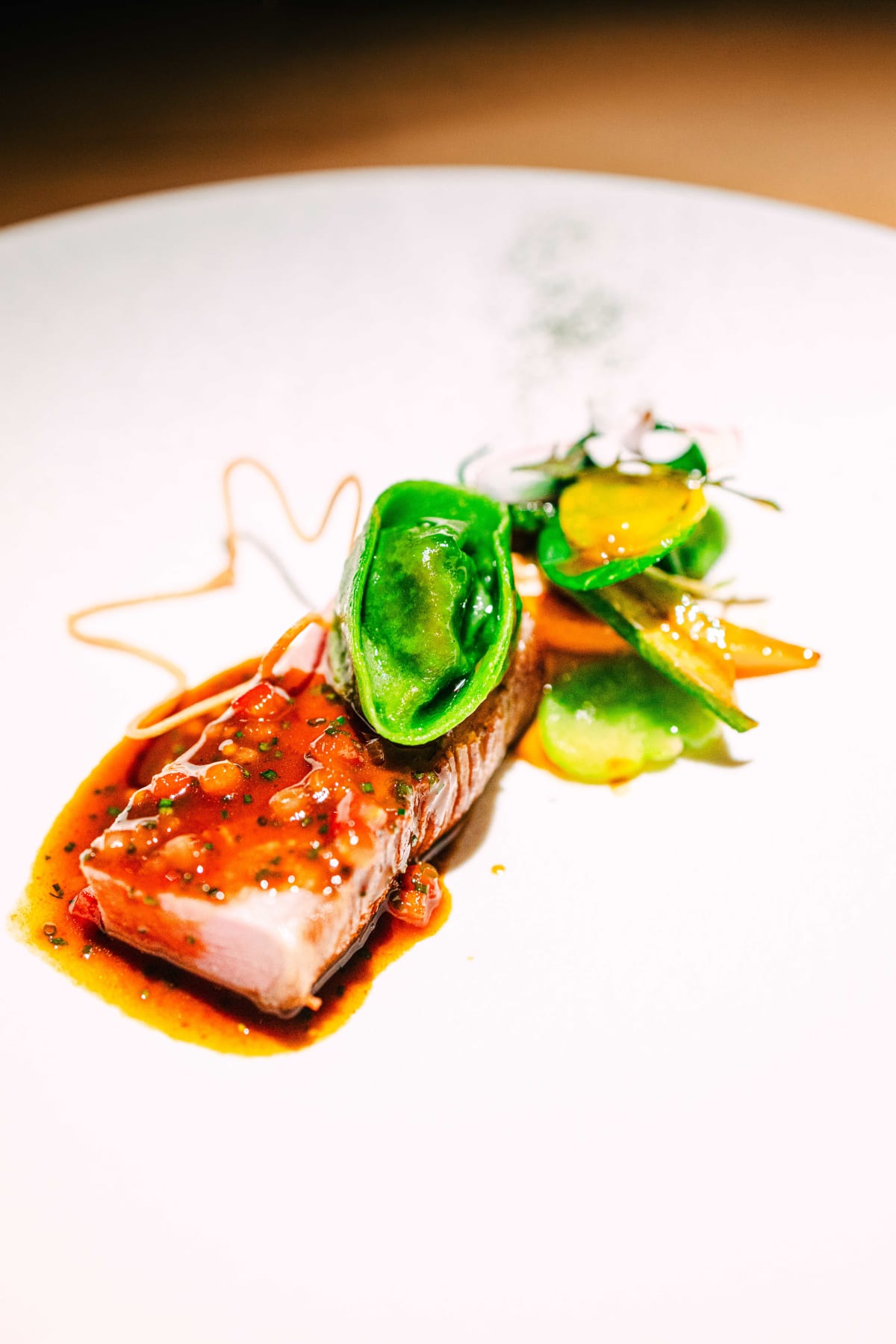
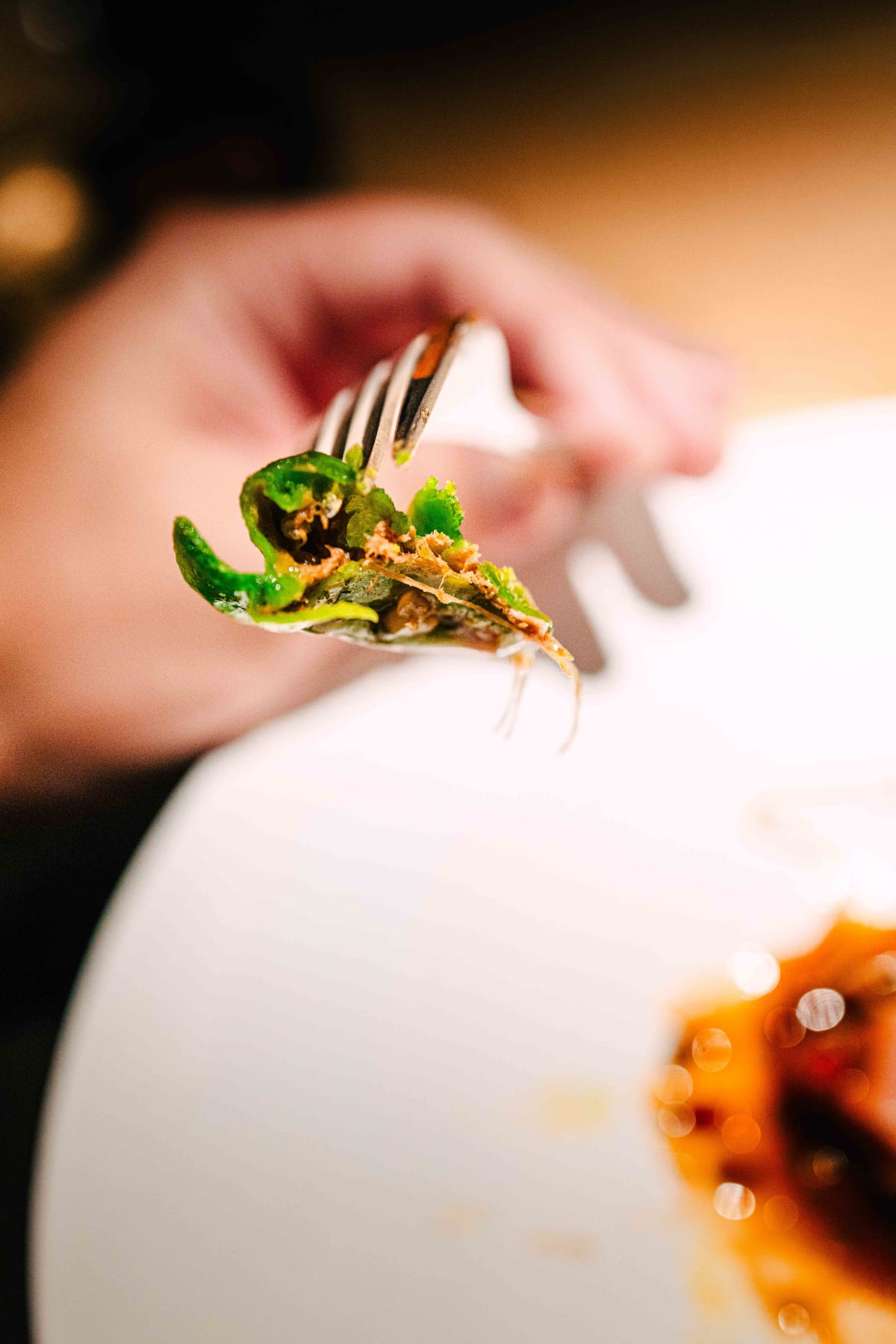
Shoulder and fillet were used, and the sauce is a masala-scented Kashmiri sauce devised by a kitchen chef who had lived in India for two years. There were lamb tortellini too, and a lamb jus poured over.
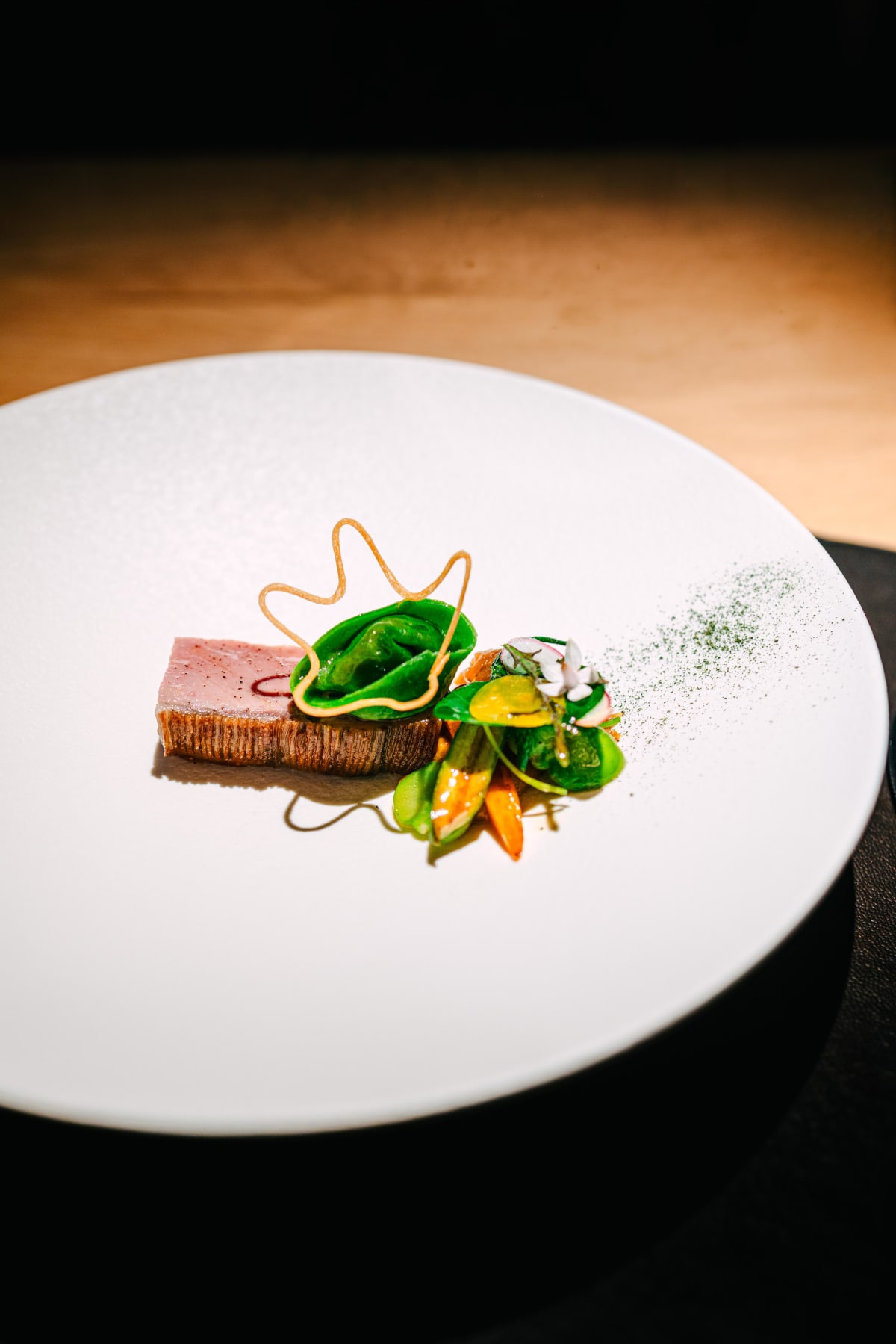
This too was cooked so that a blush of pink ran right through, with the outside finely scored, and it was tender and a good match for the sauce. Apart from the trotter, every meat dish was excellent. There are a lot of dishes, but this is a restaurant with a high hit rate.
There are a lot of dishes, but this is a restaurant with a high hit rate.
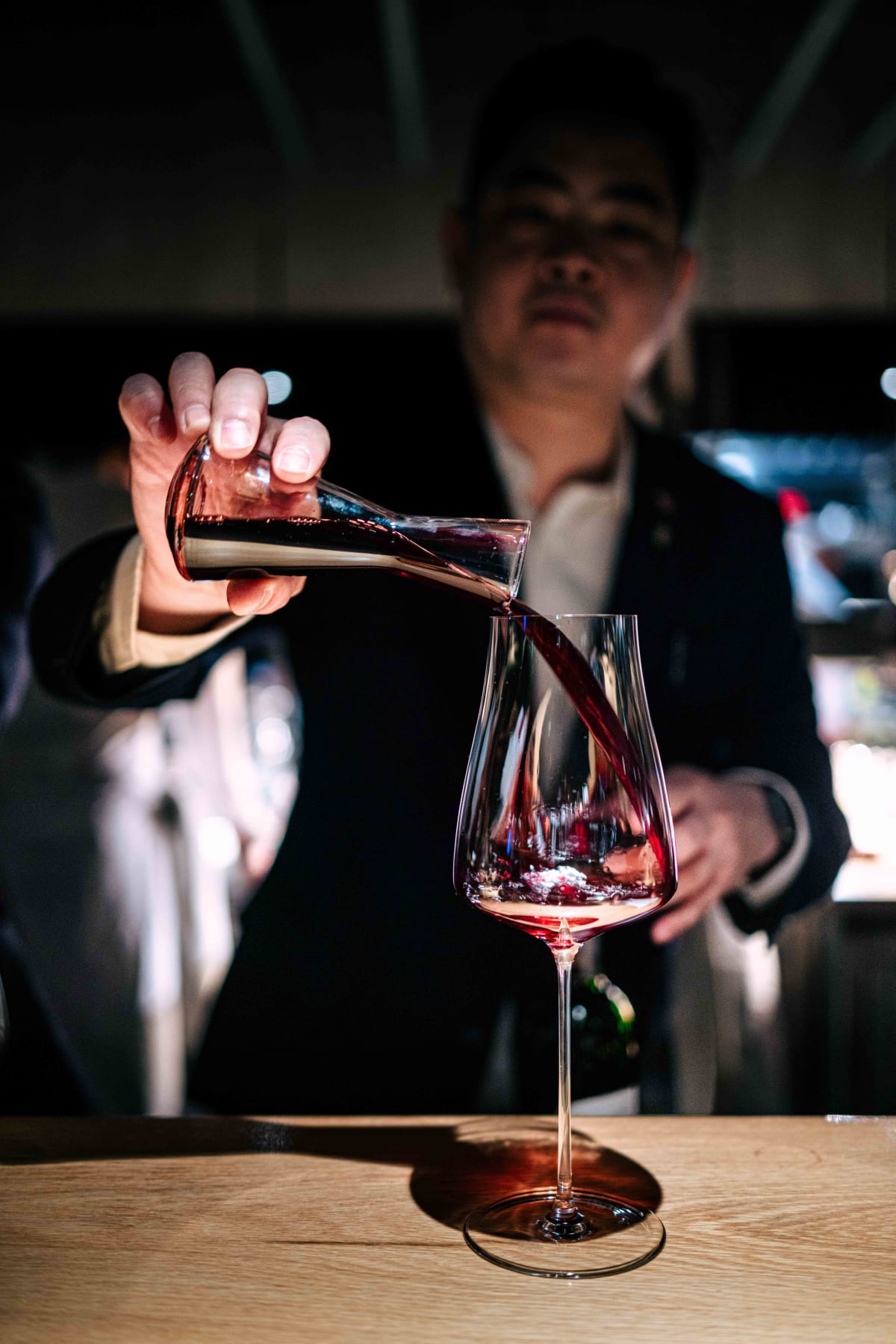
With two mains, besides the pairing red that went with the pigeon, we ordered two glasses of red Bordeaux separately for the lamb and compared them: Château Lascombes 2010 and Château Le Pape 2016.
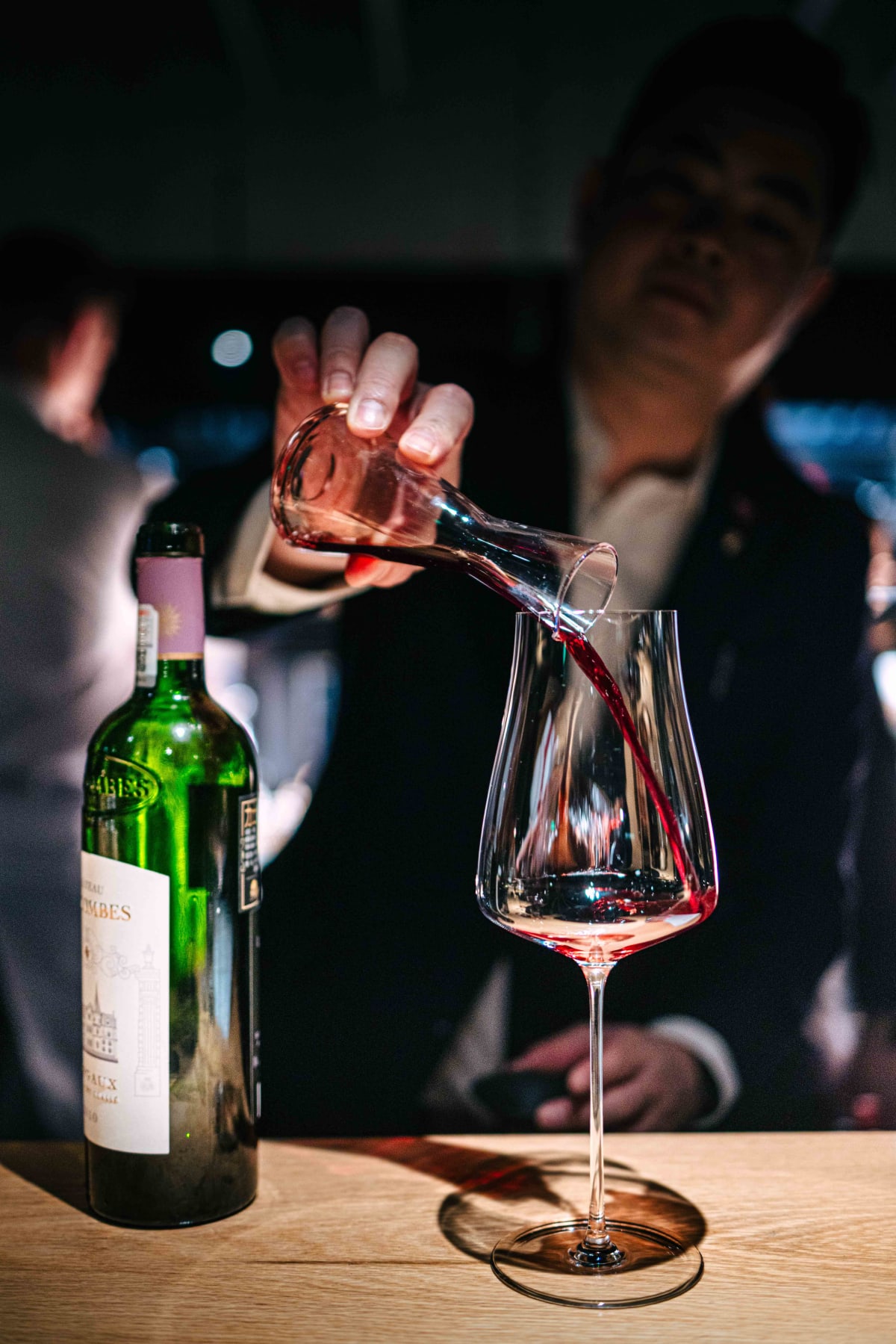
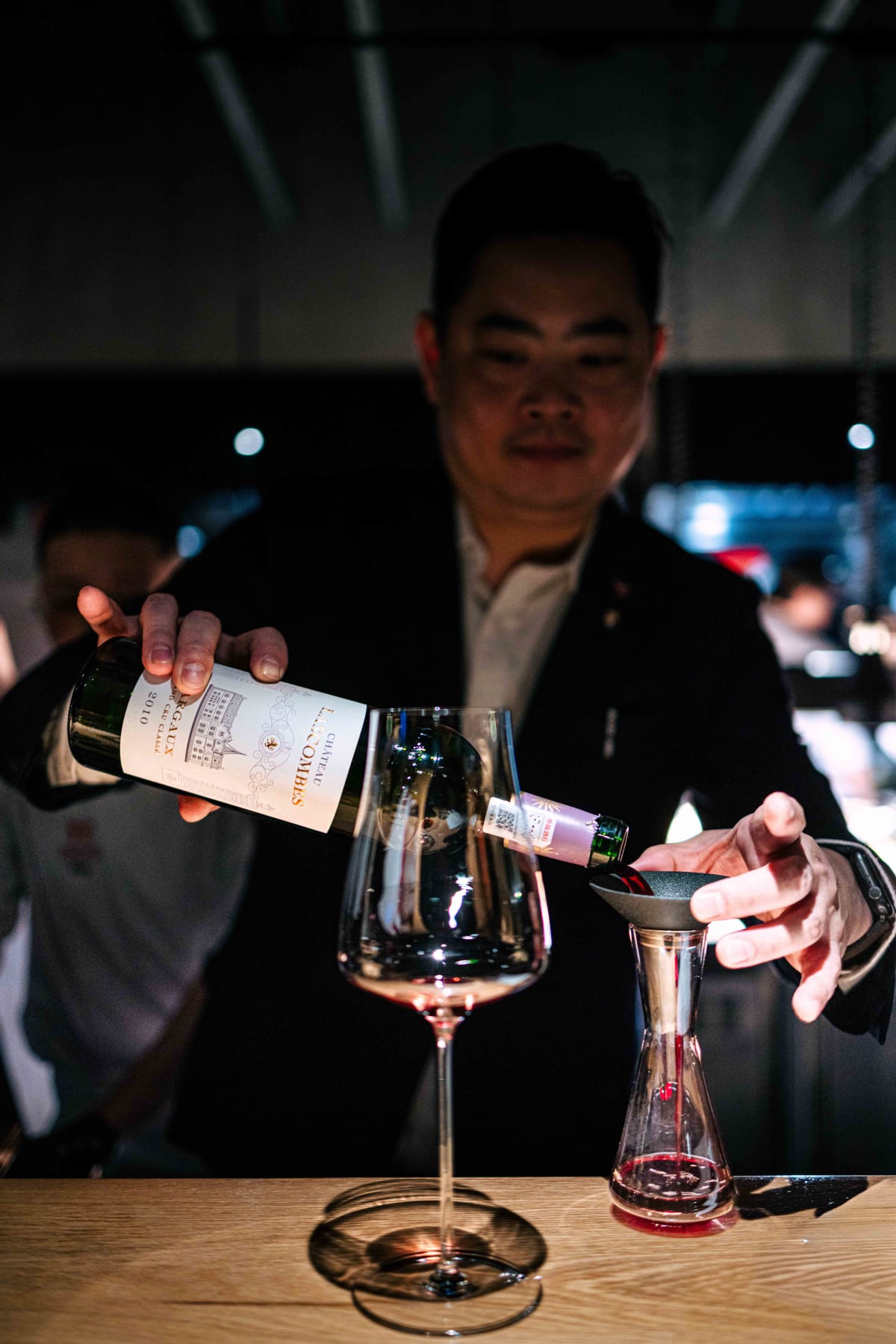
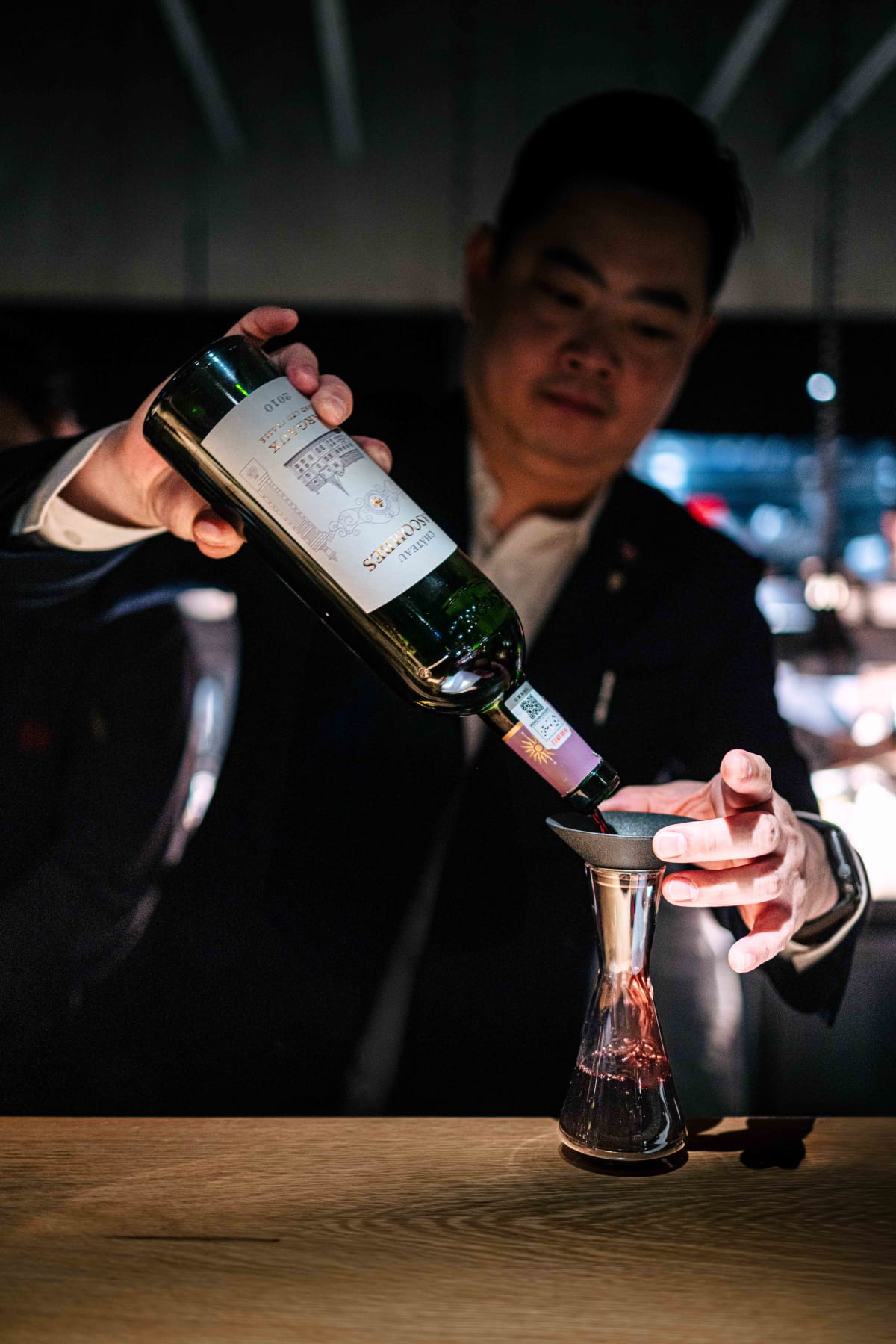
Château Lascombes is a Second Growth, a Deuxième Grand Cru Classé, in Margaux. Long criticized for falling short of its classification, it came back to life after the American investment firm Colony Capital bought it in 2001 and invested heavily, with Dominique Befve, formerly of Lafite Rothschild, and the consultant Michel Rolland leading the winemaking.
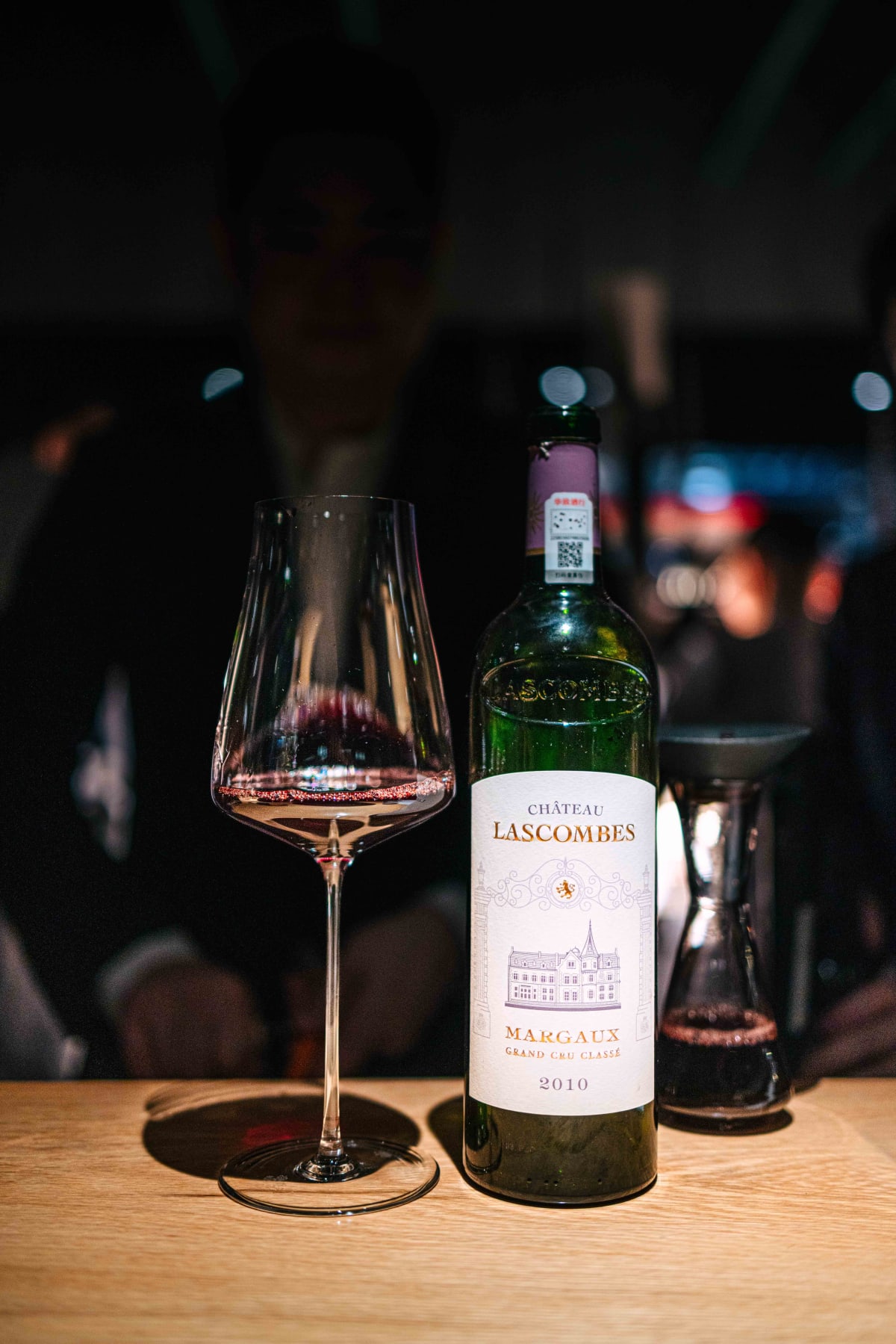
Robert Parker scored the 2010 at 96 points, calling it probably the finest Lascombes made to date, and the following year the estate was sold to the French insurer MACSF for 200 million euros.
Château Le Pape, the one I drank last, is a Pessac-Léognan that the team from its renowned neighbour Haut-Bailly took over in 2012, and its density improved with each vintage. After the 2021 vintage, its vineyard was folded into Haut-Bailly. The 2016, 80 per cent Merlot and 20 per cent Cabernet Sauvignon, showed strawberry-like red fruit, well-integrated oak and supple tannins.
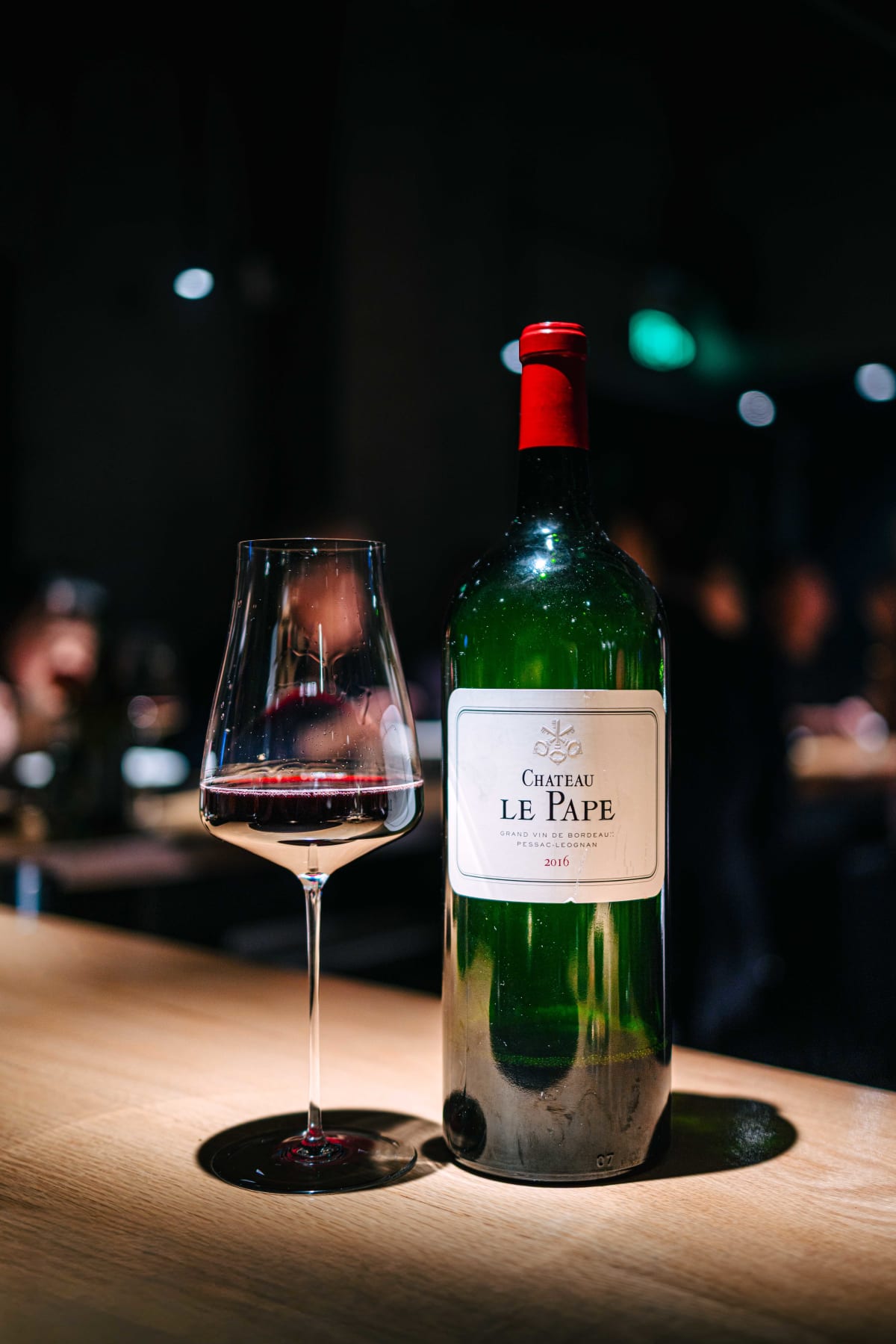
Both glasses were poured generously, and of the two, the more expensive Lascombes was overwhelmingly better. A wine list built to allow a comparison like this impressed me too.
Section 10·Pear Meets Blue Cheese
With the meats all finished, three desserts followed.
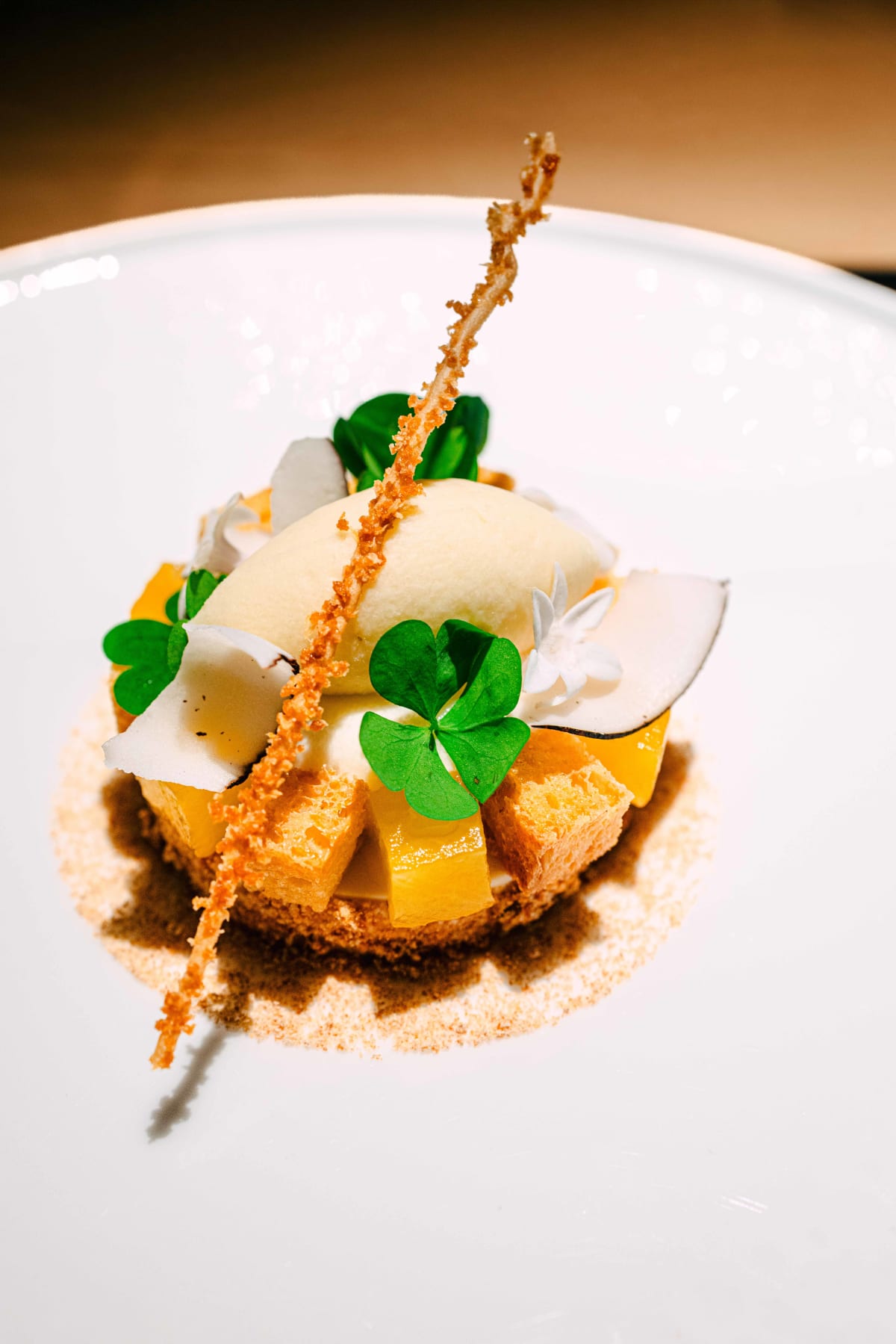
Coconut Gelato | Pineapple | Brioche
First came a coconut dessert, an add-on outside the core course.
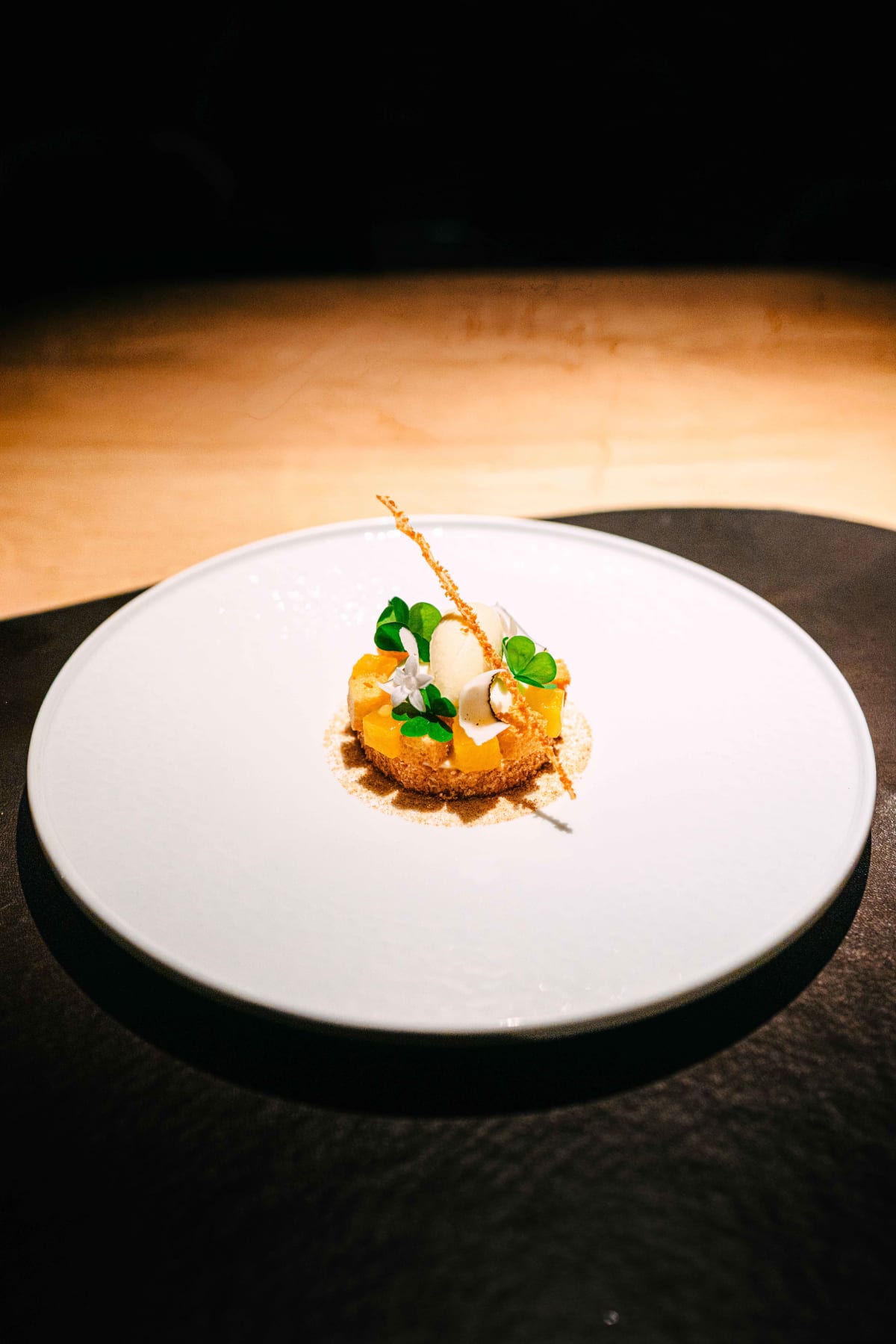
Cubes of pineapple and brioche were stacked beneath slices of coconut, topped with coconut cream and a piña colada, the cocktail, turned into a sorbet. Freshness, butteriness and coolness all sat together; it was good, but not quite excellent.
Pear | Fourme D'Ambert | Dulce
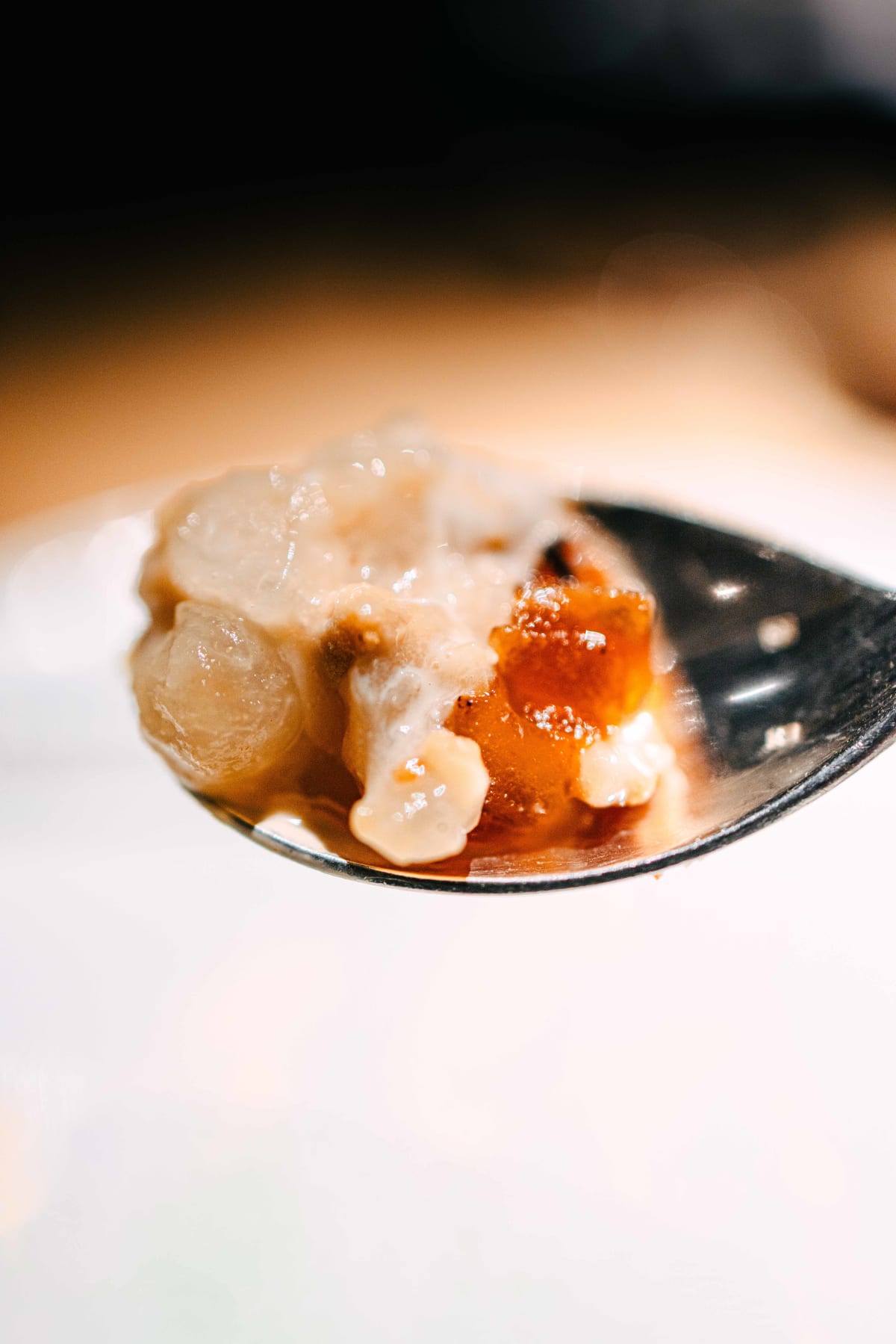
The second, a pear dessert, was also an add-on, and this one was rather remarkable. On the right was a pear sorbet with a panna cotta made from Fourme d'Ambert blue cheese beneath it, and on the left a tart topped with pear in various forms, steamed and raw.
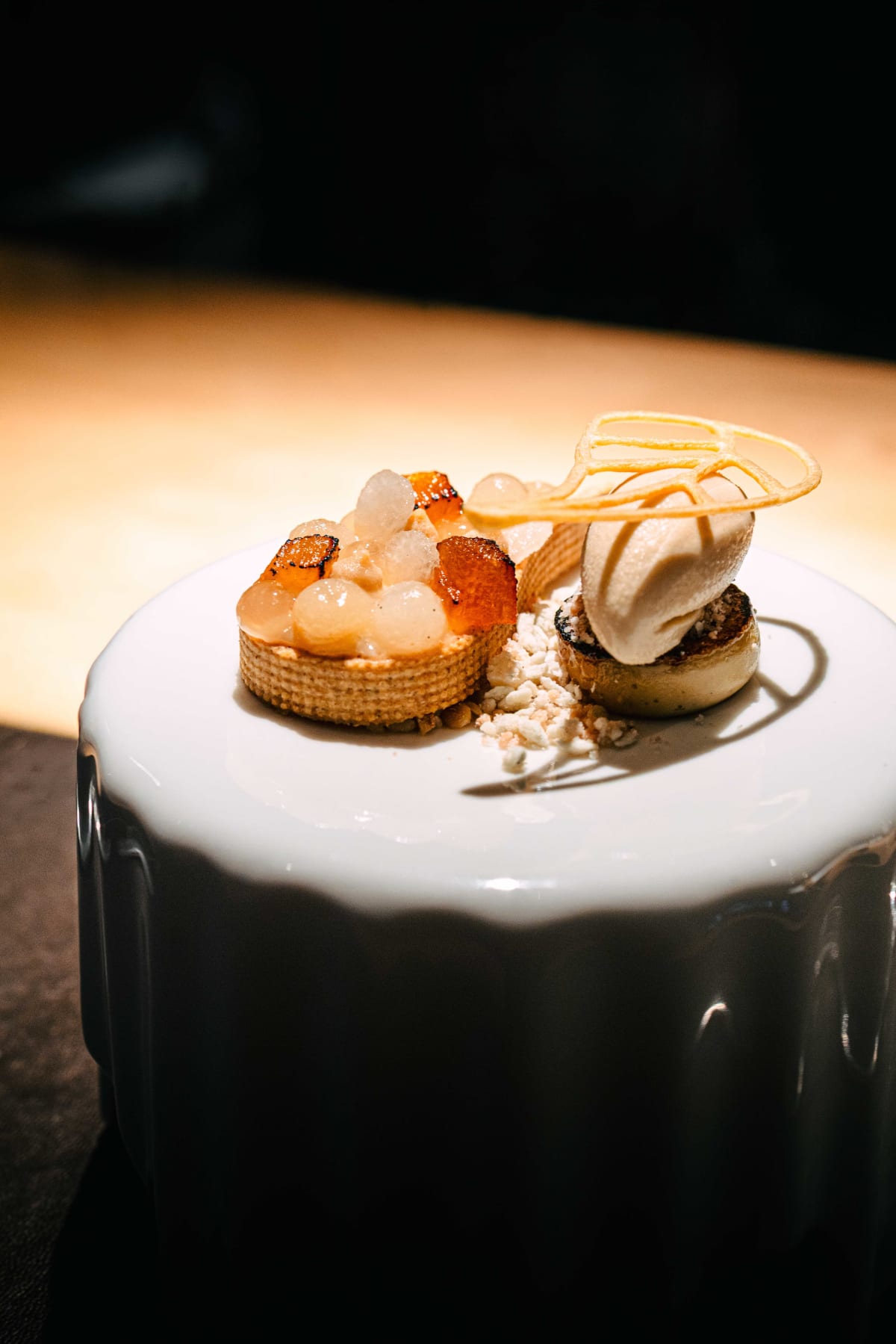
I wondered whether pear and blue cheese could work together, but it was inventive and good. The pears on the tart were delicious too.
Moving into dessert, the pairing was Joh. Jos. Prüm Wehlener Sonnenuhr Spätlese 2023. J.J. Prüm is a legendary Mosel producer, and Wehlener Sonnenuhr is a steep grand cru vineyard of grey slate.
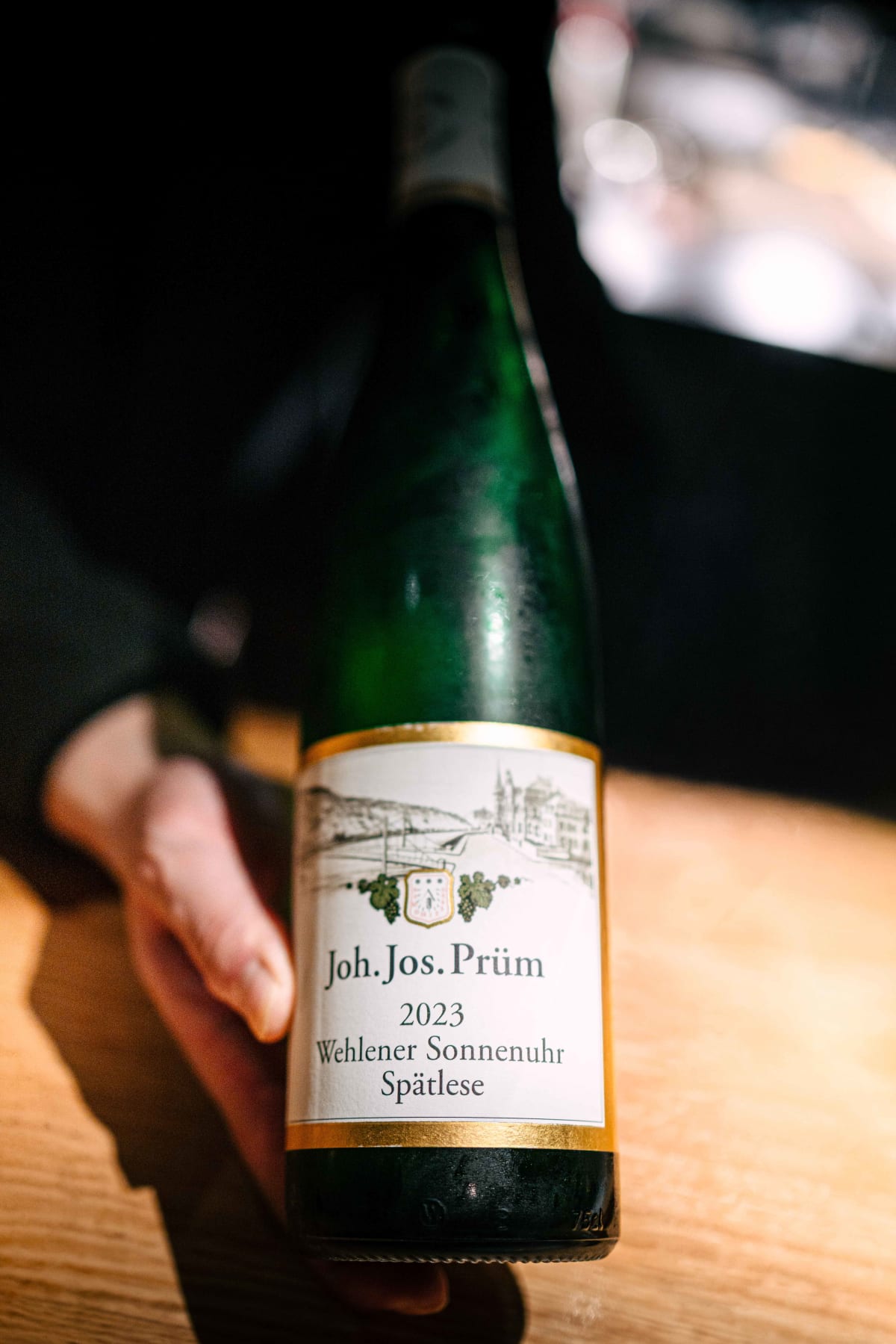
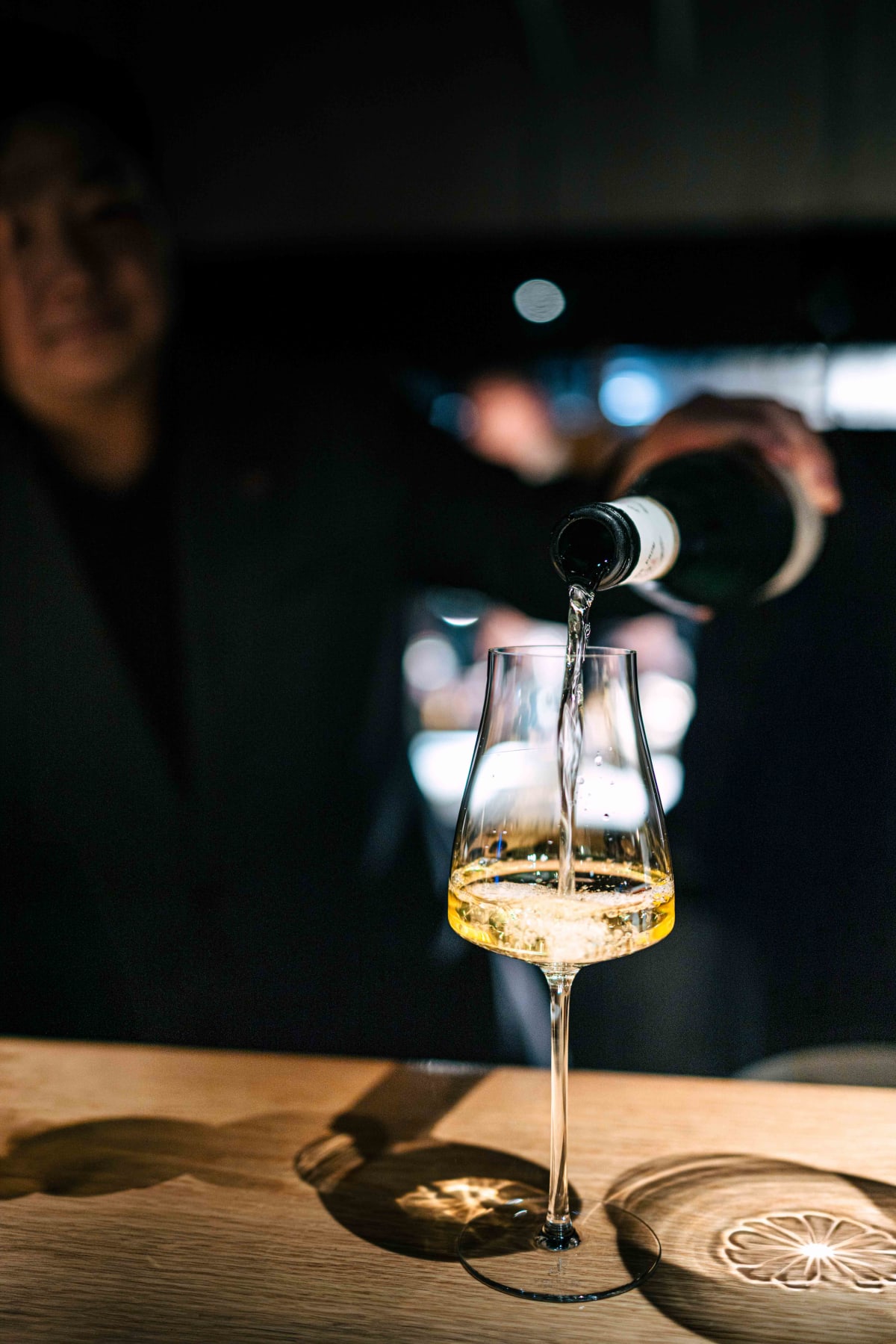
As a Spätlese, a late-harvest Riesling, it has a touch of sweetness, balanced by electric acidity, minerality and salinity, and its low alcohol keeps it light and delicate. Its sweetness and acidity made it a good match for the desserts.
The last dessert was a peach tart.
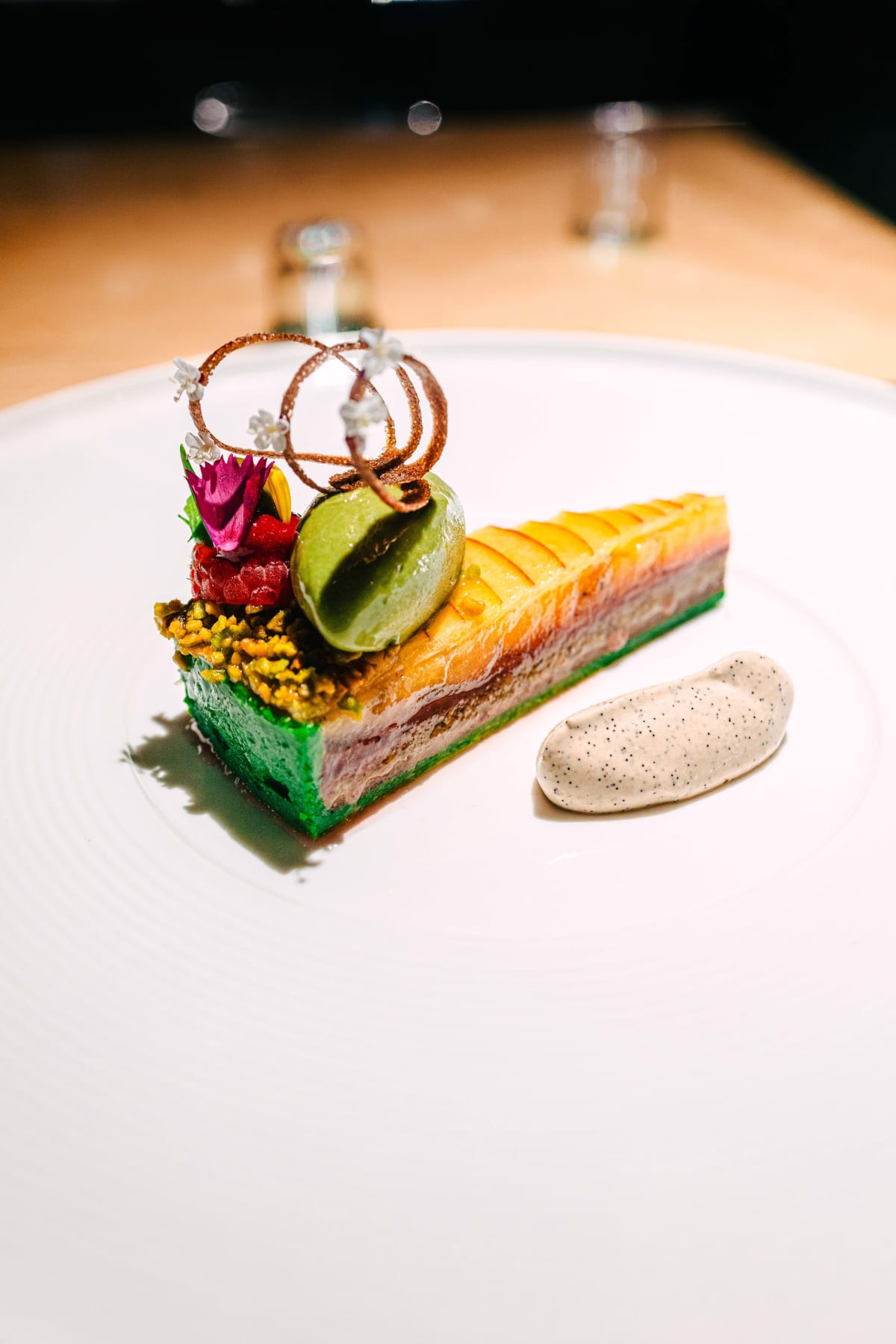
Peach Tarte | Pistachio Gelato | Vanilla Noir
This one also made a deep impression. It is a peach tart, but pistachio matters as much as the peach. The tart shell is made from pistachio, hence its green colour, a pistachio gelato sits on top, and there is pistachio crumble at the back as well.
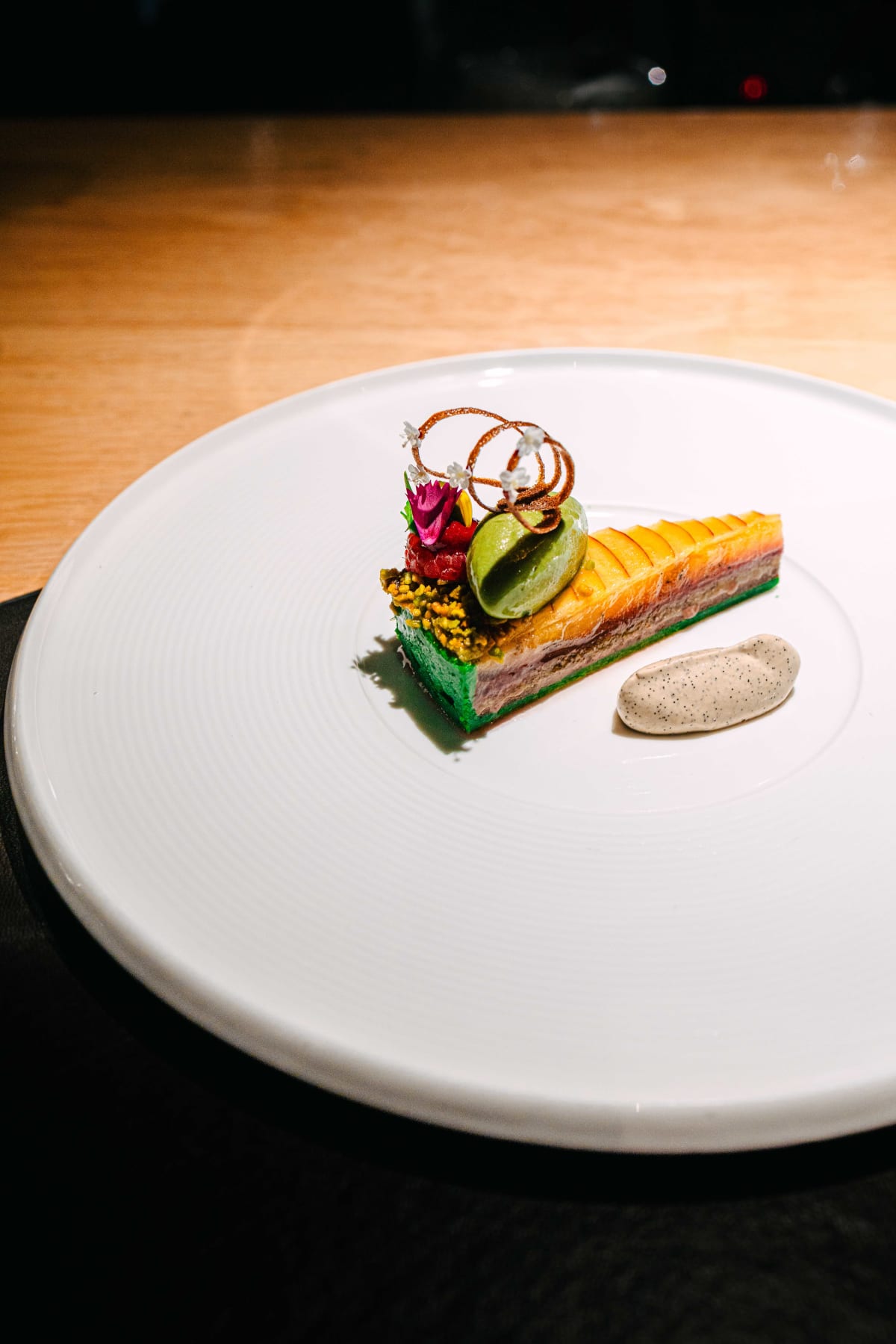
The pistachios are Sicilian, said to be the best in the world, and there was not a hint of bitterness. Raspberry, blanched peach and fresh peach are layered on the tart, and a spoonful of vanilla goes alongside. The vanilla was deeply fragrant too; it comes from Bali, which is known for producing fine vanilla.
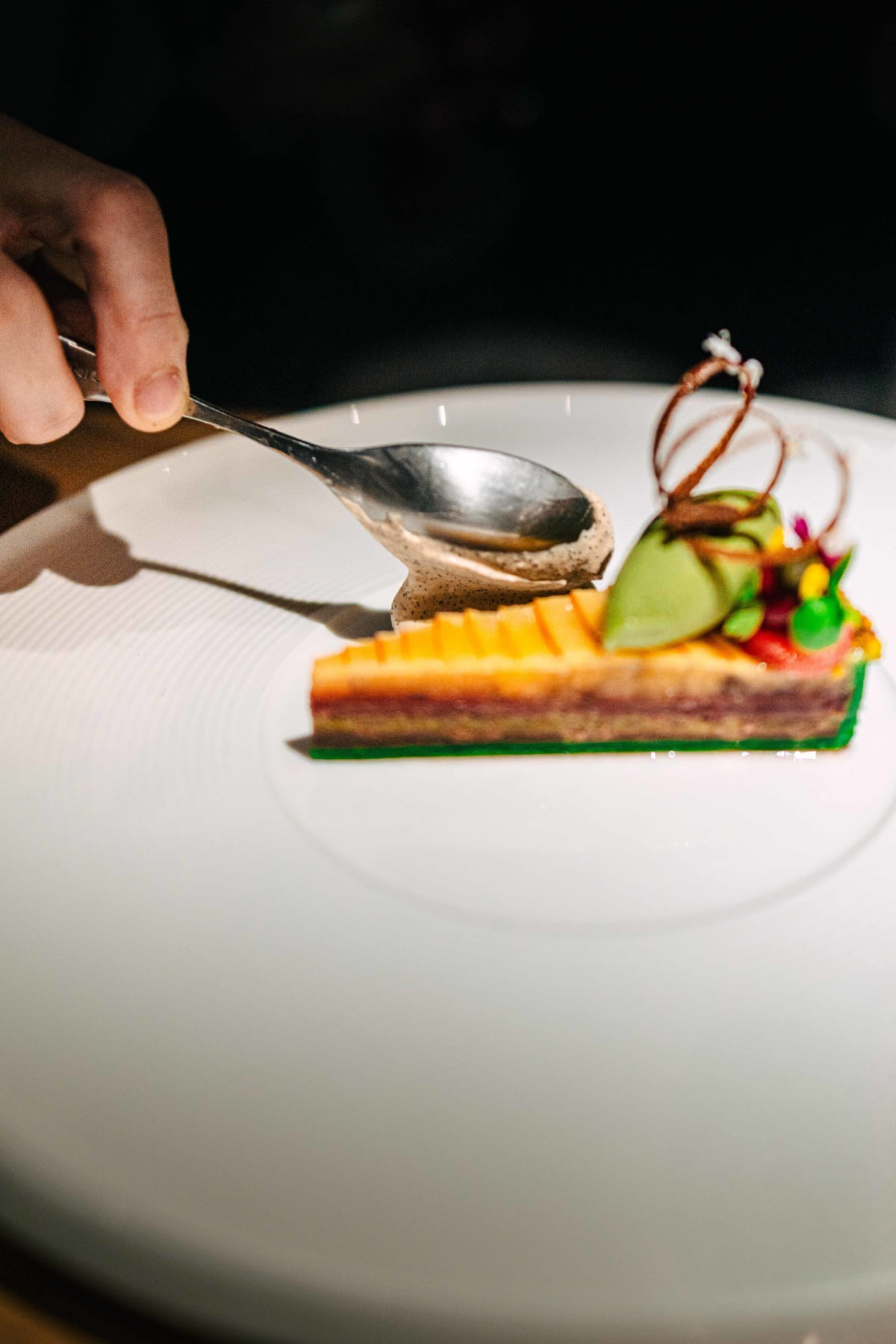
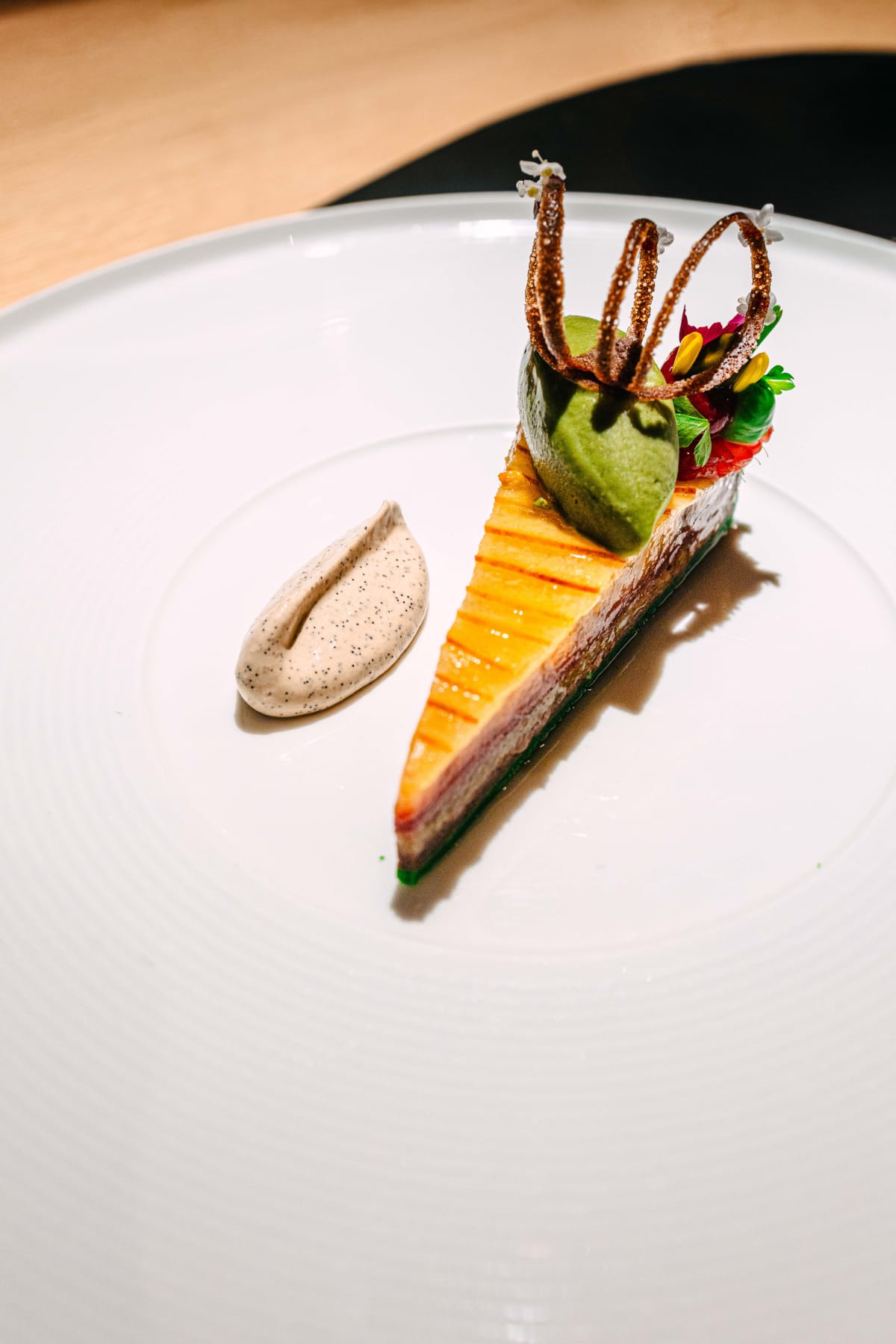
The nuttiness of pistachio, the freshness of peach and the sweetness of vanilla came together in a well-made dessert. One look at the cross-section of the tart tells you how much thought went into this single dessert.
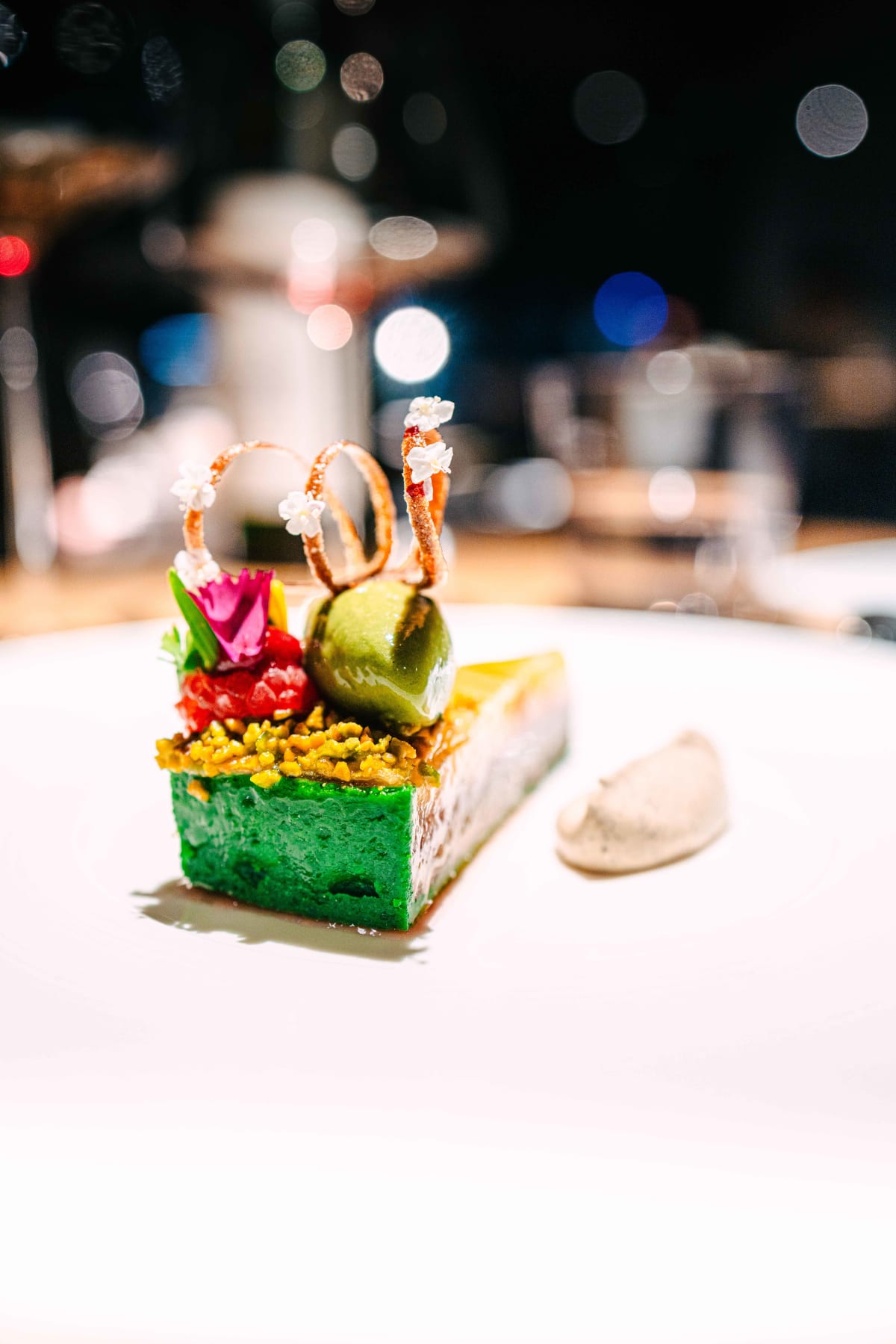
That a counter restaurant of no great size turns out such a variety of high-level desserts impressed me, and it invited many comparisons with restaurants back in Korea. When even the desserts are like this, three Michelin stars seem well deserved, to my mind.
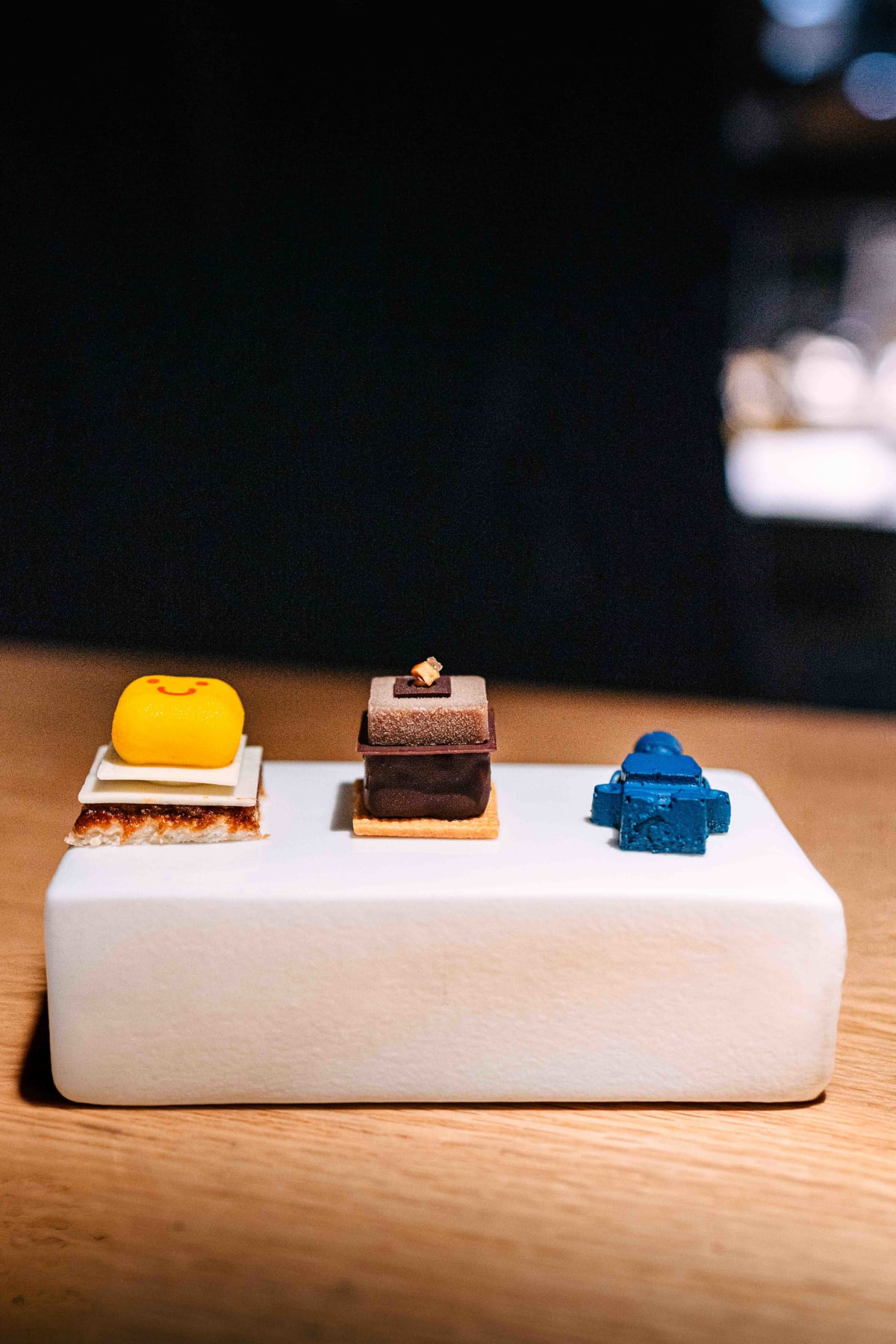
Even after three desserts, petits fours follow. They normally come in three rounds, but since we had a dawn flight to catch, the manager picked out the best ones and plated a little of each. On the left, a smiling face of passion fruit and coconut; in the middle, chocolate; and last, a little blue figure shaped like a Lego man.
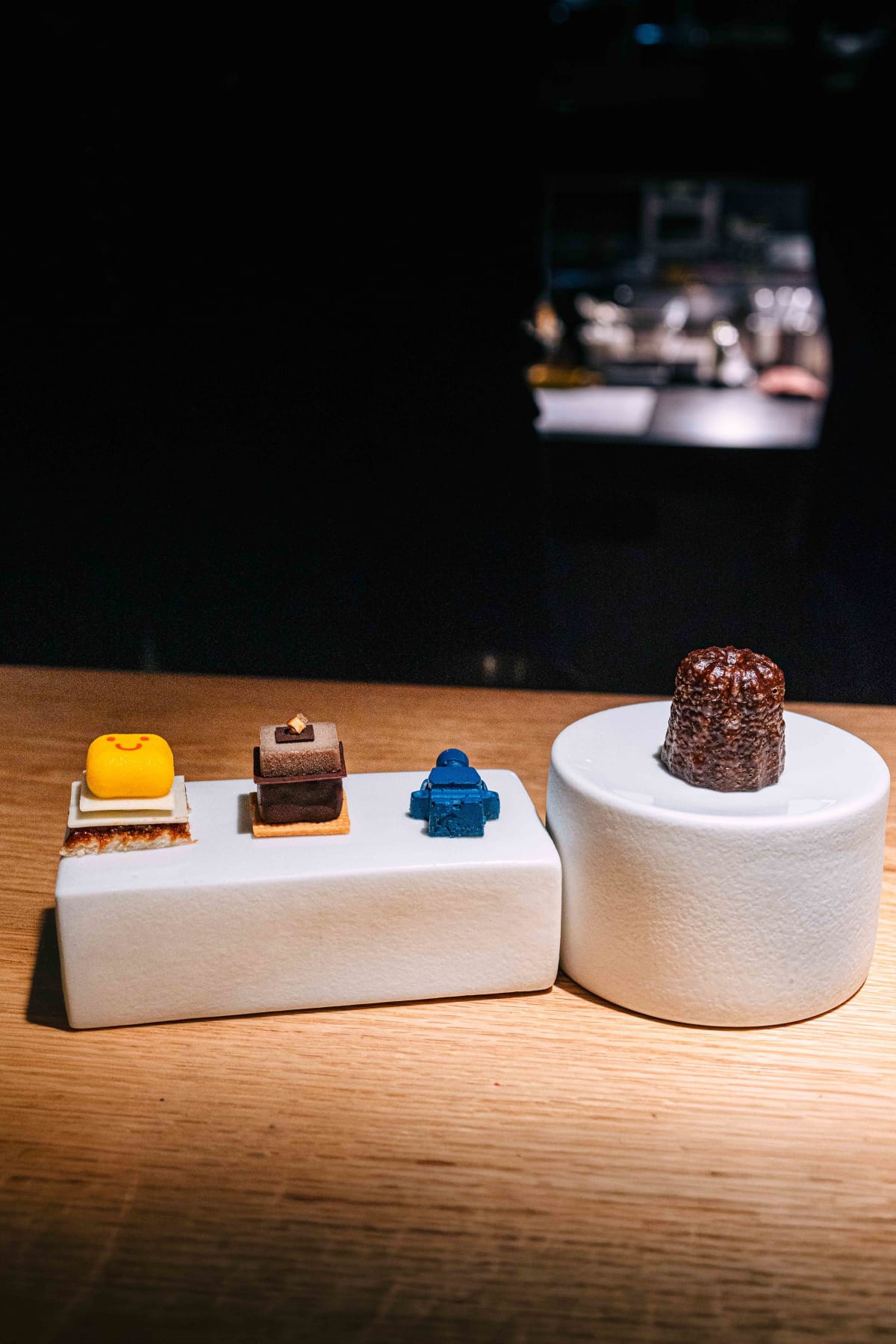
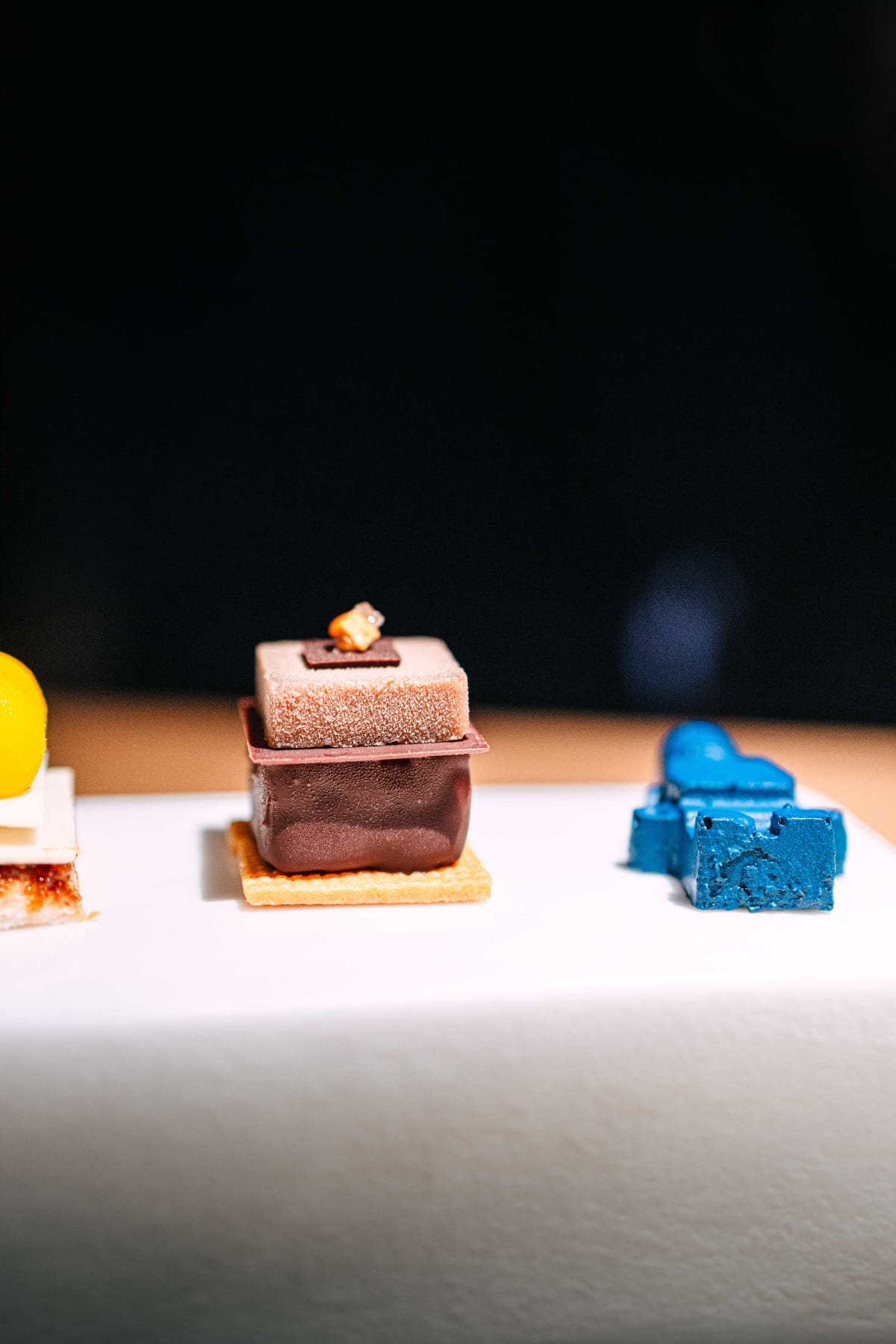
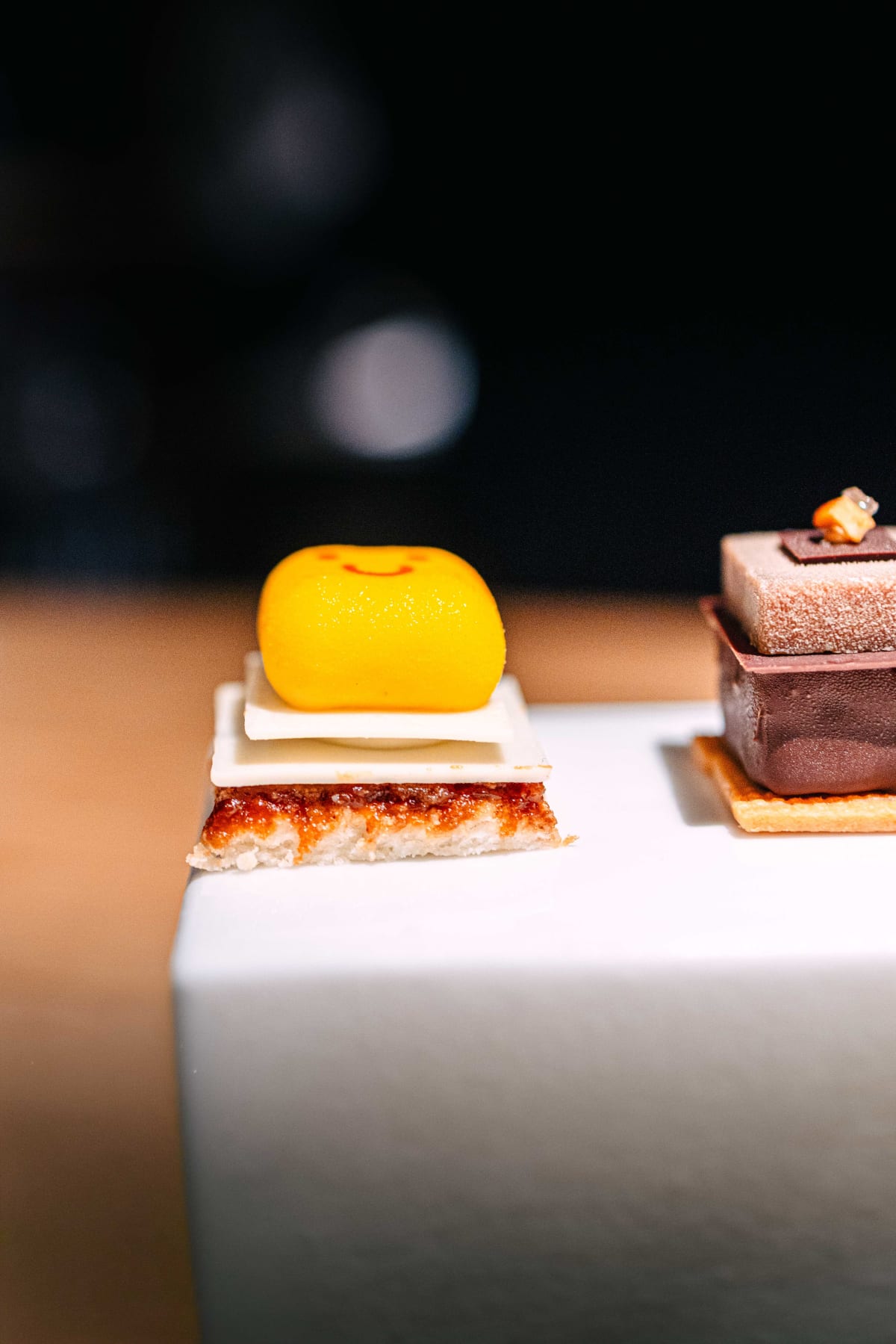
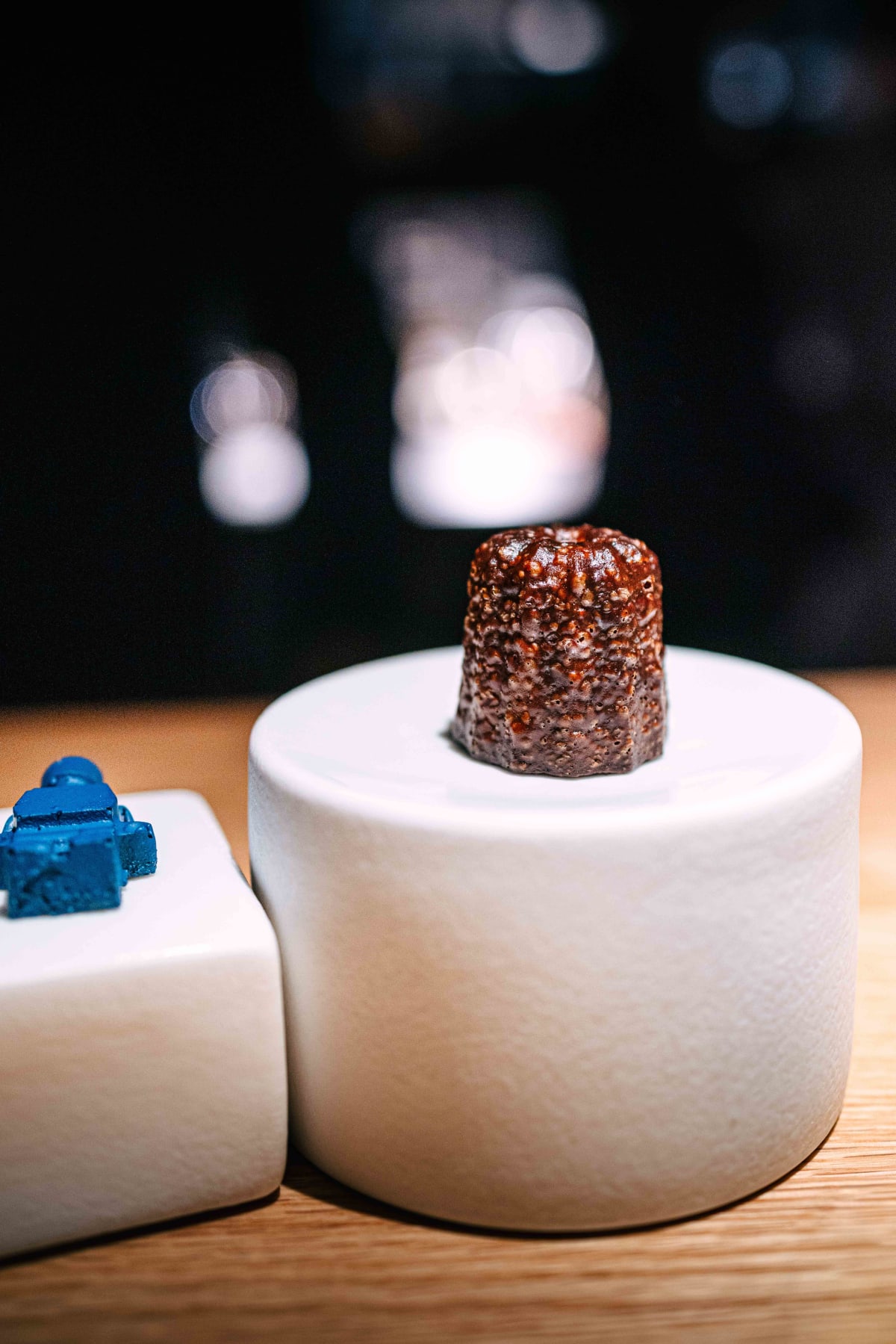
The manager said it would bring back memories and challenged us to guess; one bite, and it was a chocolate that tasted of Shooting Star, the popping-candy ice cream many Koreans grew up with. A canelé also came on its own, on a cylindrical stand.
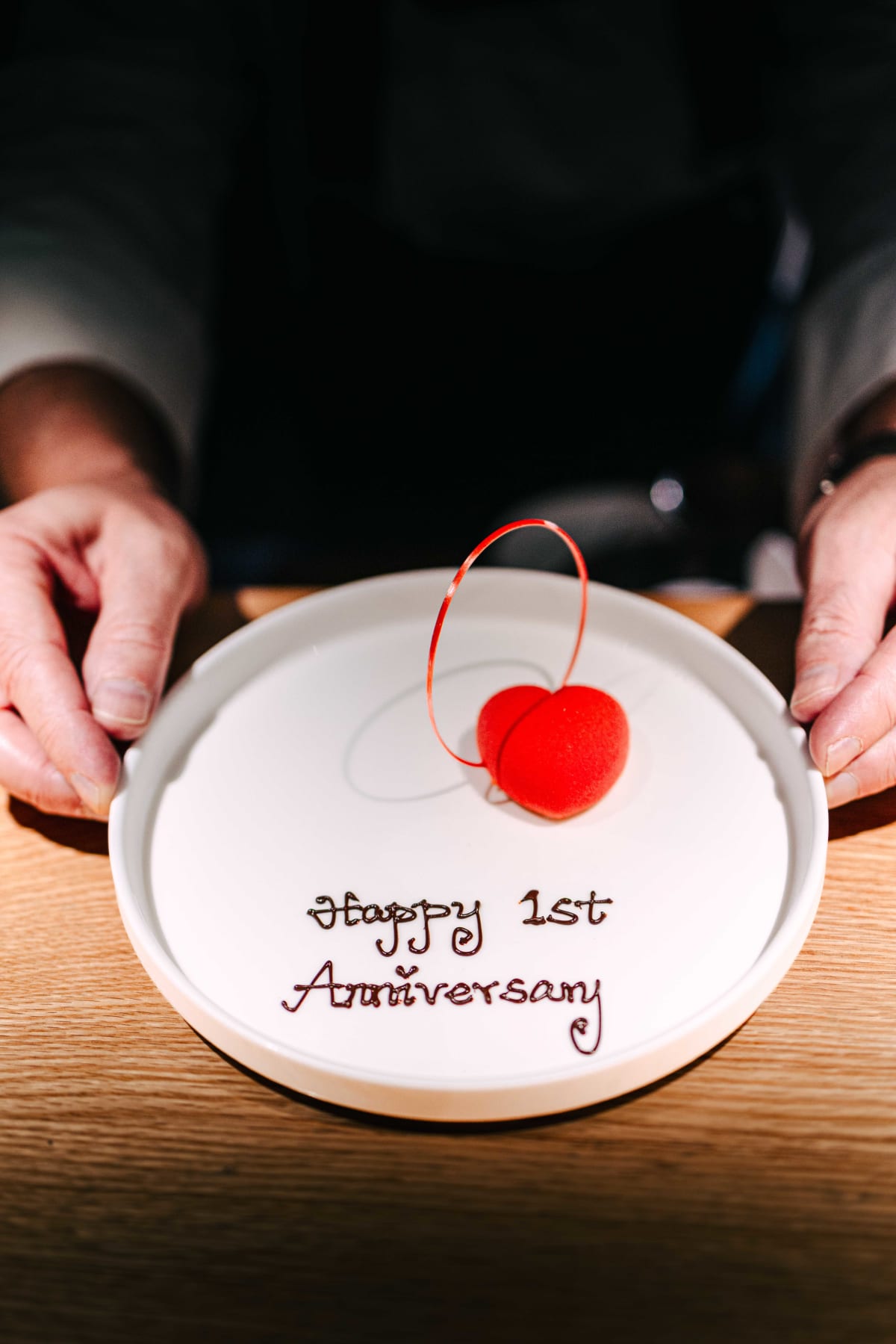
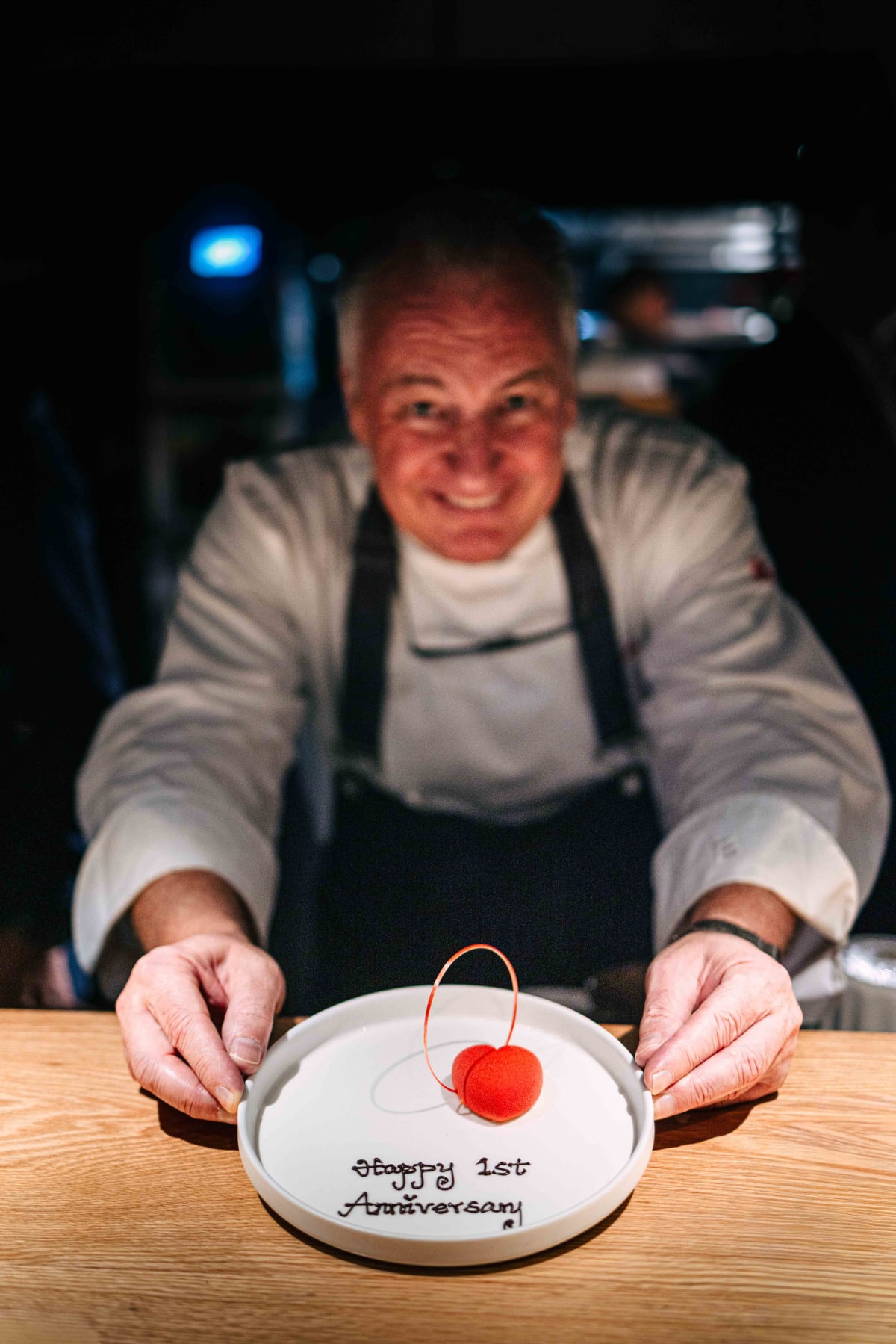
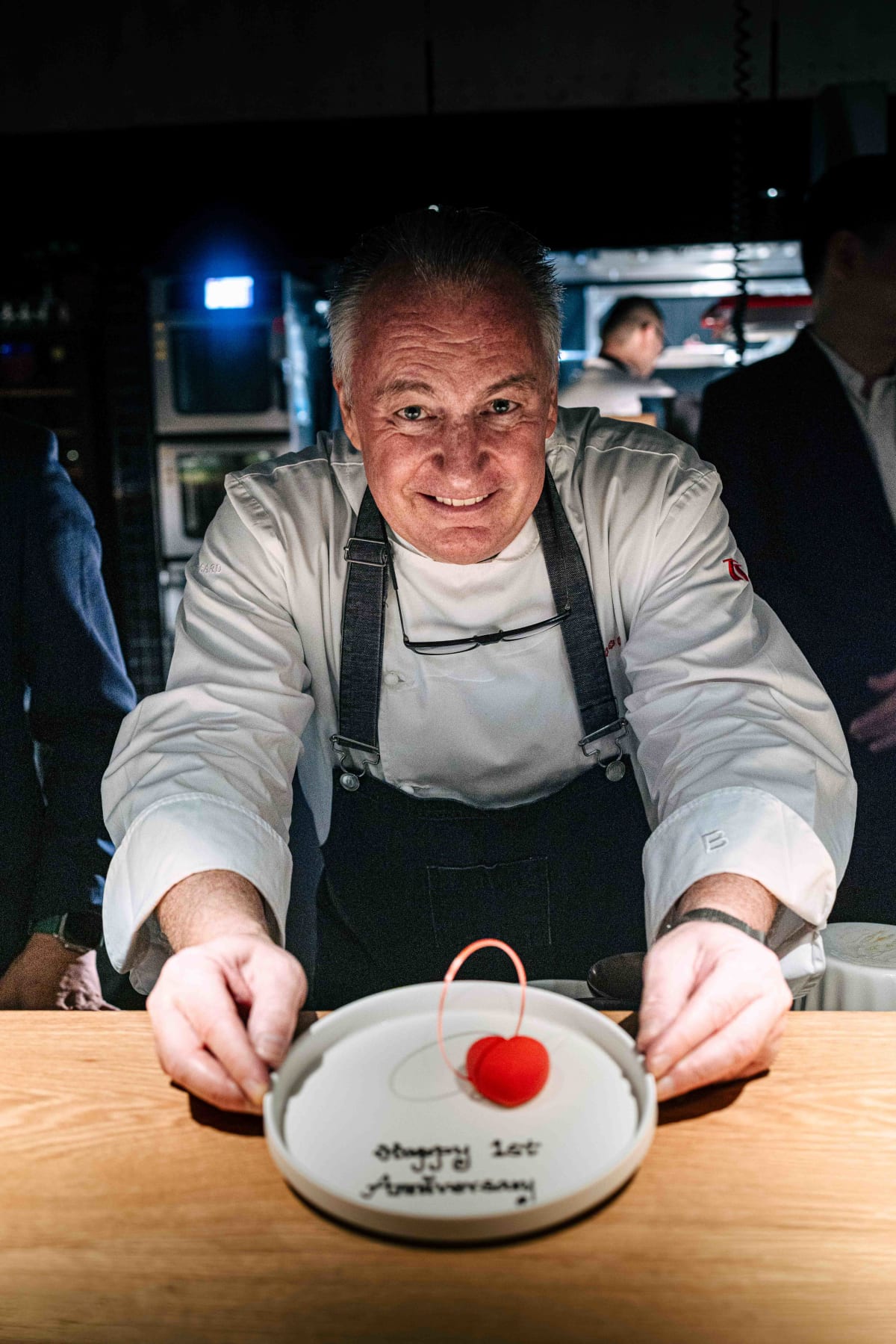
Nothing was ordinary, right to the end. Chef Stiller brought out a celebration cake for us as well, and we finished by taking photos with him and receiving a gift.
Section 11·A Notch Above
Because of the restaurant's closing days, we could only go on our last day, just before heading to the airport. Had we come on another day, we could have drunk more wine and talked with the manager at leisure, so I left satisfied, but with a lingering sense of something unfinished.
There are two pairings: as befits a German chef's restaurant, a German Wine Selection, and a Premium Wine Selection. Perhaps because of China's high taxes on alcohol, wine is very expensive. The German Wine Selection we chose came to nearly USD 220 per person, and the Premium Wine Selection, which tempted me, was too expensive, so I passed. Once you start drinking, going past USD 700 a head including tax is easy.
For anyone who has dined a lot in Europe or Japan, I think the pairing may well feel a little disappointing in terms of value. The wine itself was satisfying. I do not know enough about average wine prices or the level of pairing culture in Shanghai to recommend the wine here one way or the other, but given how high wine prices are across Shanghai, it is hard to call these prices bad either.
Not only the pairings but the whole wine list can be viewed in advance as a PDF on the restaurant's website, which is worth checking before you go. The list is not especially thick, but it runs from Champagne, including a Duval-Leroy collection, to reds and whites by region, at prices from reasonable to stratospheric, and there are sake, gin and whisky lists too.
As for food, atmosphere and service, to me it was so good that it was hard to find fault. I cannot say every dish was excellent, but there were no weak spots, and several were astonishingly delicious.
According to the Korean manager, Shanghai does Western cuisine well, and the advice to visitors is to eat Western food here rather than Chinese. Perhaps that is why the standard here was so high. I had no idea before going to Shanghai, but having experienced it, I felt it was a notch above restaurants in Korea, in the range of its ingredients, its skill, presentation, composition and flavour.
That said, Chinese cuisine does not colour the food strongly here, so whether I would recommend it depends on what kind of cooking you want to eat in Shanghai. I recommend it to anyone who does not need the local colour of the country on the plate and is open to many kinds of cooking.
The format has changed since my visit. The autumn 2026 menu, No. 55, is a fixed ten courses at 2,888 yuan, the June 2025 price of eight courses plus two add-ons, and the add-ons are now priced one by one rather than chosen in twos or fours. All three on that list were on my table: the king salmon at 218 yuan, the pied de cochon and the coconut dessert. The salmon is the one I would add. Bookings open 90 days ahead with a deposit of 2,000 yuan a head, forfeited if cancelled within six days, and the restaurant opens for dinner only, Tuesday to Saturday, so the trip is best planned around it. Corkage is 800 yuan for one bottle per party, against 1,788 yuan a head for the German pairing.
Have a question about this restaurant, or want to share your own experience?
Send a message