Local & Essential · Tokyo · Japan / December 2023 / World's 50 Best Bars No.10 (2020) · Asia's 50 Best Bars No.3 (2021)
The SG Club
"Shingo Gokan's Shibuya original: three bars in one, where a clever idea and serious craft share the glass"
Section 1·Following the Trail
With restaurants, I will sometimes chase a chef's whole trajectory, traveling the world to tick off one room after another. With bars, that almost never happens, but I will make one exception: Shingo Gokan. Following his trail around the world, from The SG Club in Tokyo to Sip & Guzzle in New York to Gokan in Hong Kong, has become a kind of nightlife sideline running alongside my dining life.
The SG Club was the first of them I visited. I love a drink, and whether at home or traveling I tend to seek out a bar or an izakaya once dinner is done. When I began traveling to Japan for food, I was drawn to the fact that Tokyo is also a great bar city, and whenever I asked for a Tokyo bar recommendation, one name came up without fail: The SG Club in Shibuya.
Section 2·Shingo Gokan
Shingo Gokan, born in Kanagawa in 1983, picked up his first shaker at eighteen in a bar in Kawasaki, passed through Ginza, and moved to New York in 2006 at the age of twenty-three. There he spent about a decade as head bartender at Angel's Share, the legendary cocktail bar in Manhattan's East Village, and in 2012 he became global champion of the Bacardi Legacy Cocktail Competition, which made his name overnight. The winning drink, Speak Low, wove together rum, sherry, yuzu zest, and matcha, and that single glass became the starting point for everything that followed. In 2014 he opened a speakeasy of the same name, Speak Low, in Shanghai, shaking up the Asian bar scene, and in 2017 he was named International Bartender of the Year at Tales of the Cocktail, the bar world's equivalent of the Oscars. Then, in 2018, he finally opened The SG Club in his home city of Tokyo.
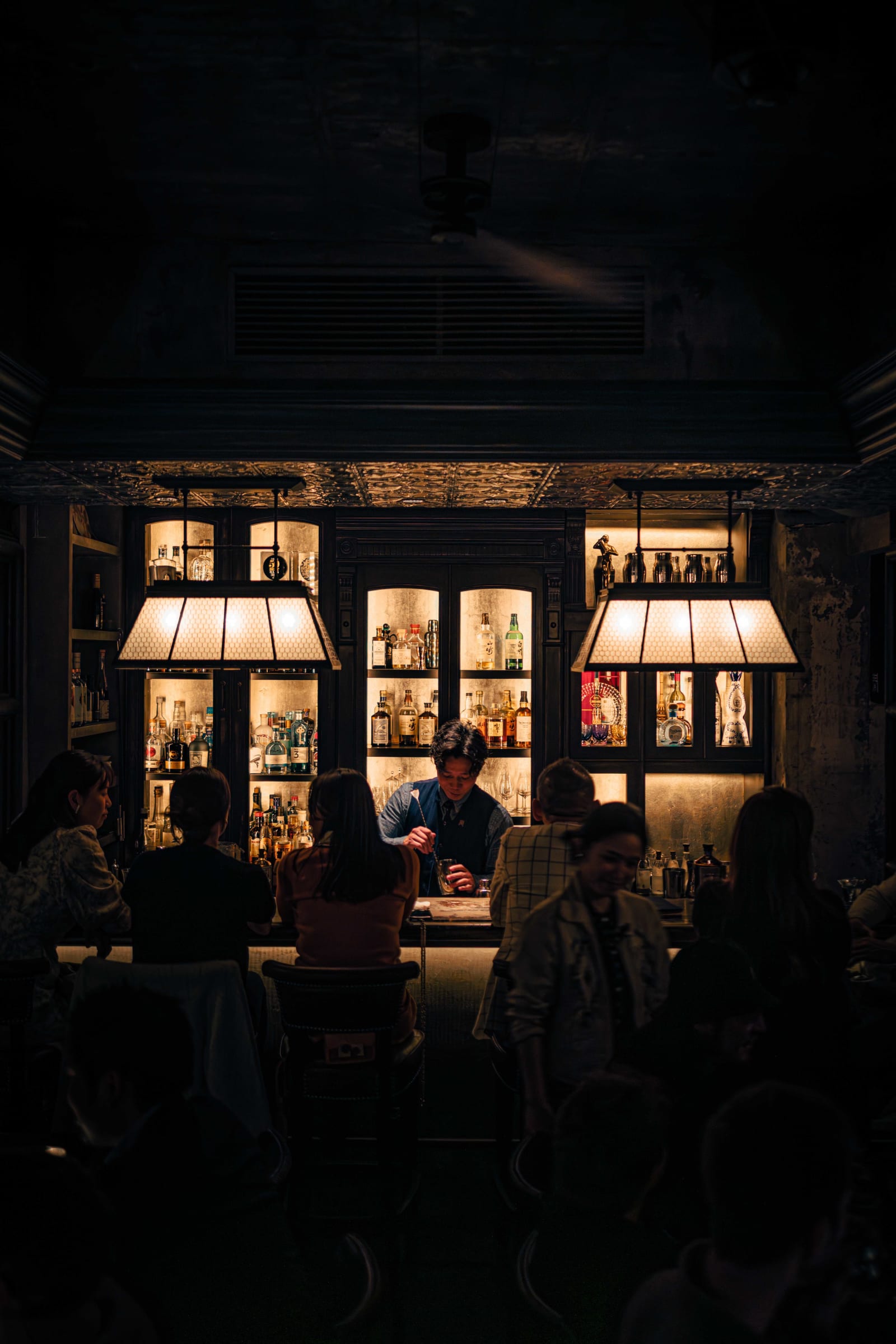
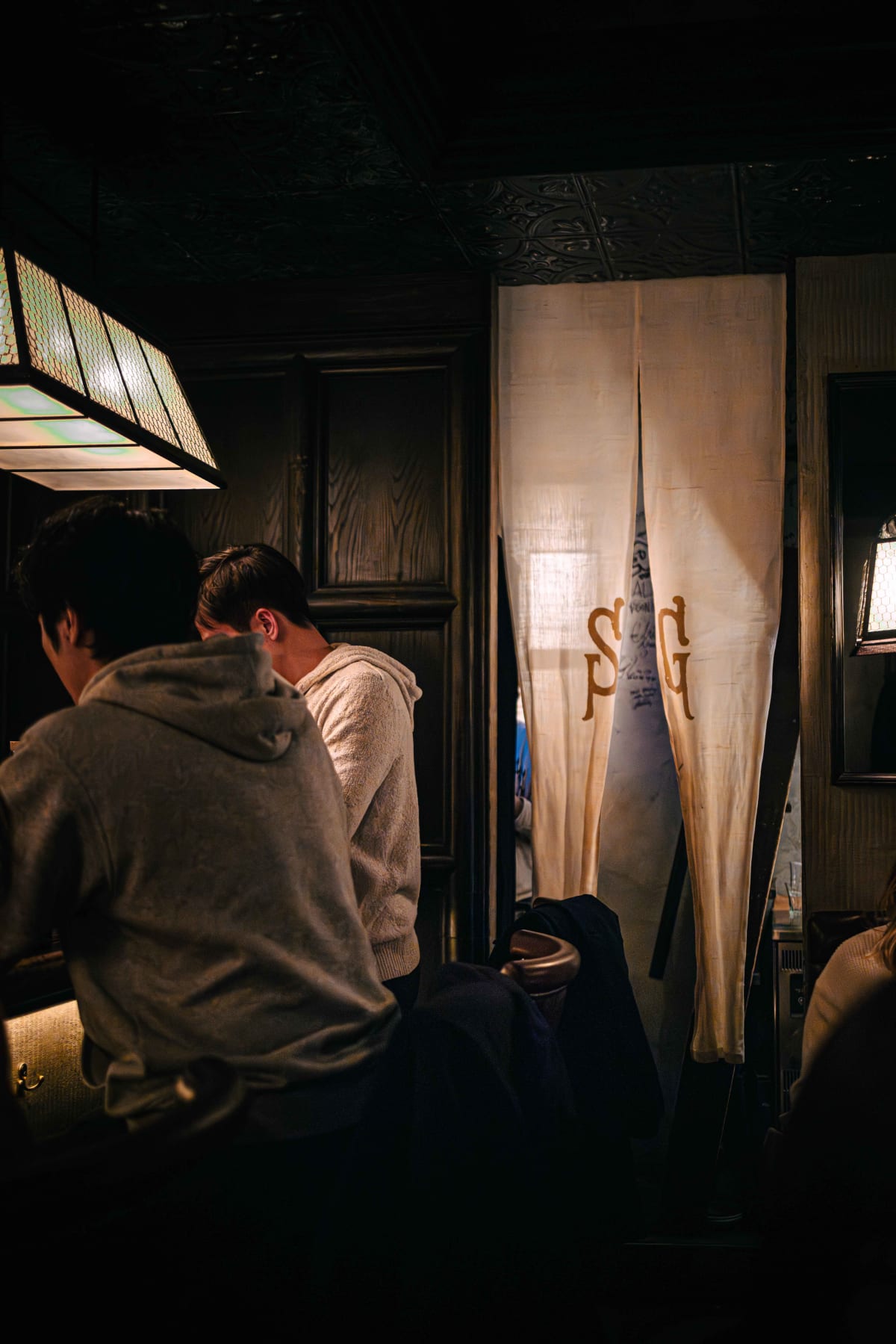
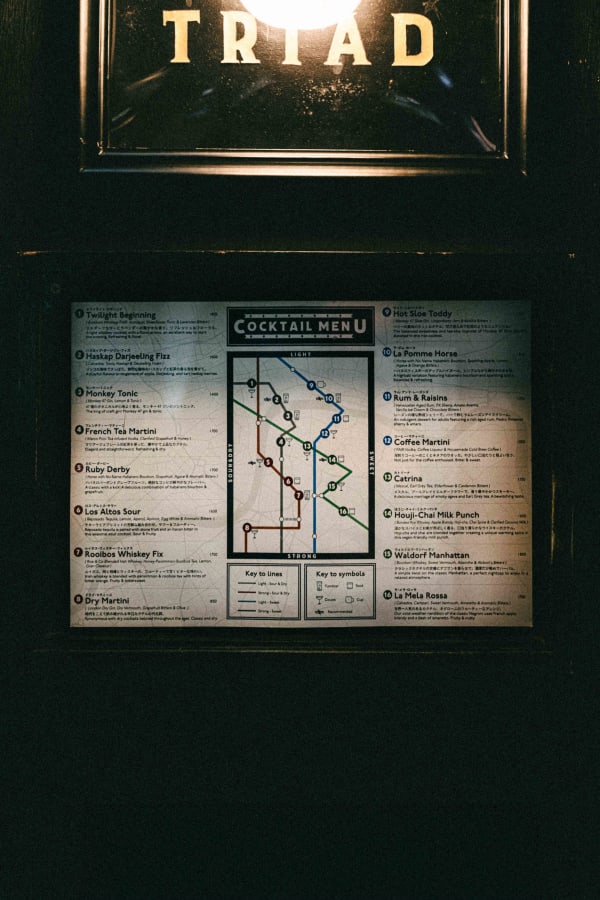
The name SG stands for Sip and Guzzle, the two modes of drinking, the slow and considered against the easy and thirsty, and it is also Gokan's own initials. Fittingly, the place stacks three quite different bars inside one building. On the ground floor is Guzzle, a social room for a casual drink; one floor down is Sip, the dimly lit heart of the place, recalling a 1920s Manhattan speakeasy, where spirit-forward cocktails are served to jazz; and on the second floor is Savor, a members-only lounge for cigar and cocktail pairings. The whole concept draws on the journey of the 1860 Japanese embassy to the United States, the first such mission sent by the Edo shogunate. The interior blends Edo and New York, and the cocktail menu is built around the routes the delegation traveled. That first Japanese crossing of the Pacific to New York, mirrored in Gokan's own path from Kawasaki to New York and back to Tokyo, feels like no accident.
Section 3·A World Stage
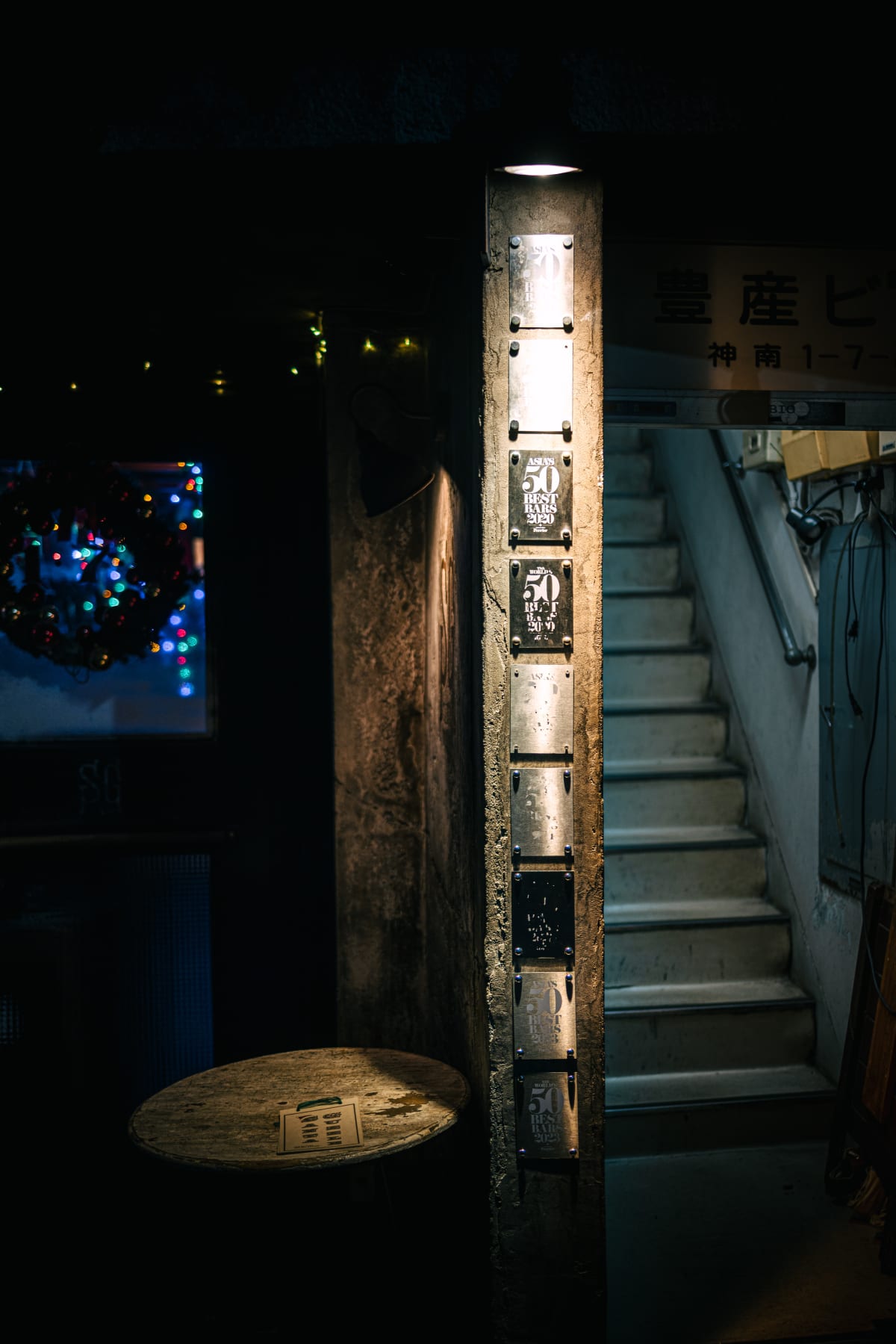
The SG Club reached the summit of the international scene the year after it opened. It placed tenth on The World's 50 Best Bars in 2020, only the second Japanese bar to crack the top ten, and was named the best bar in Japan that year. On Asia's 50 Best Bars it climbed as high as third in 2021, and the bars of the SG Group have appeared on these two lists for nine consecutive years, a record for the most awards by a single bar group.
Validated on the world stage so many times over, it is one of those bars that stays perpetually packed, tourists and dedicated bar-hoppers alike. Tokyo, in truth, sits some distance from the trendy, creative current that Hong Kong and Singapore now drive at the top of The World's 50 Best Bars, leaning more classic; The SG Club, though, pours cocktails that catch both a fun idea and real flavour at once.
pours cocktails that catch both a fun idea and real flavour at once
Around this time, Gokan had just opened Sip & Guzzle in New York, where the three-to-four-hour waits had become the talk of the scene. That only made me want to get to The SG Club more.
Section 4·Down to the Basement
It sits on an alley at the point where Shibuya gives way to Yoyogi. A group of Koreans will, nine times out of ten, be shown to Guzzle on the ground floor, but I had heard in advance that the heart of The SG Club, where you feel what it really is, is Sip in the basement. The ground floor mostly handles tourists, and its menu differs from the one downstairs.
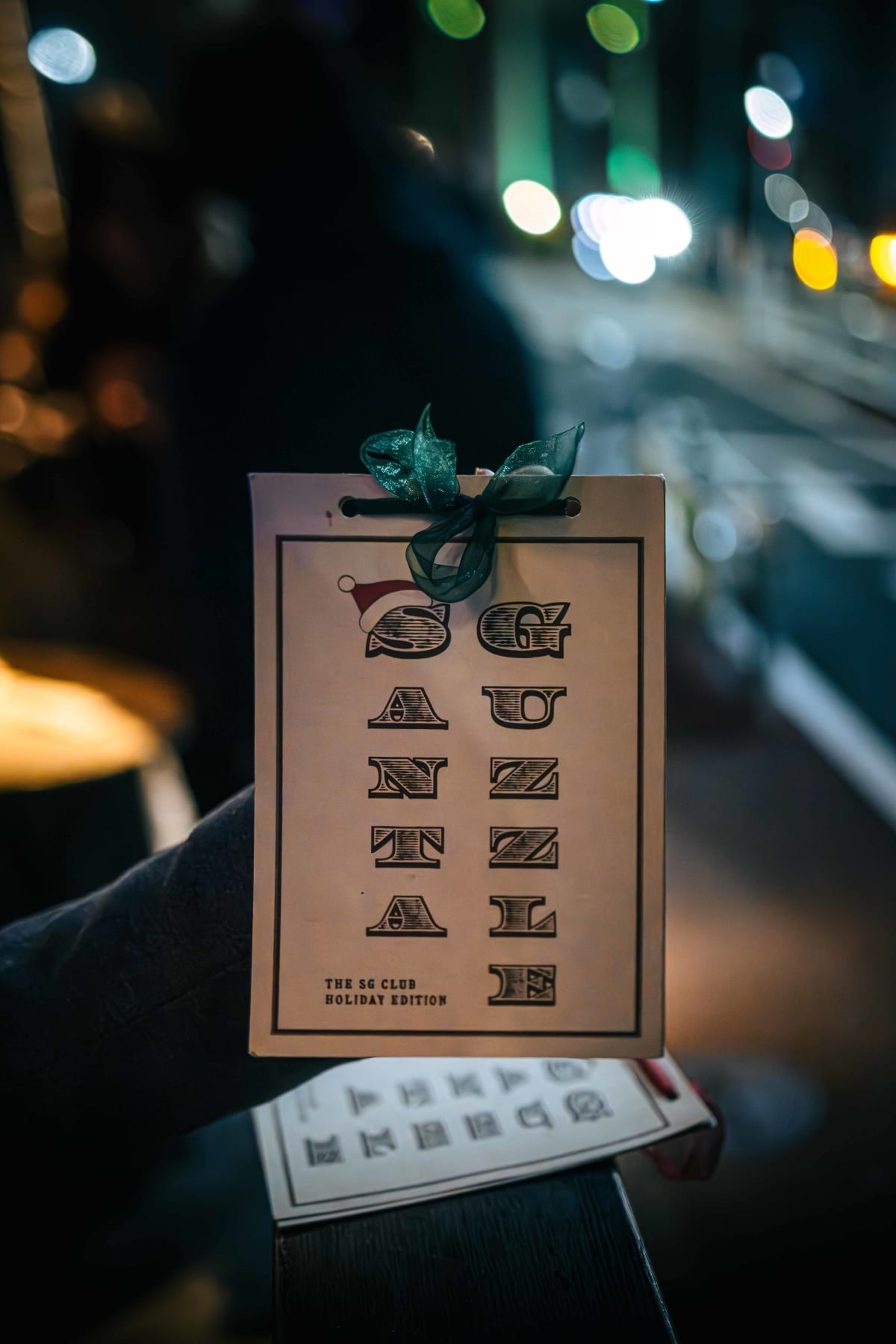
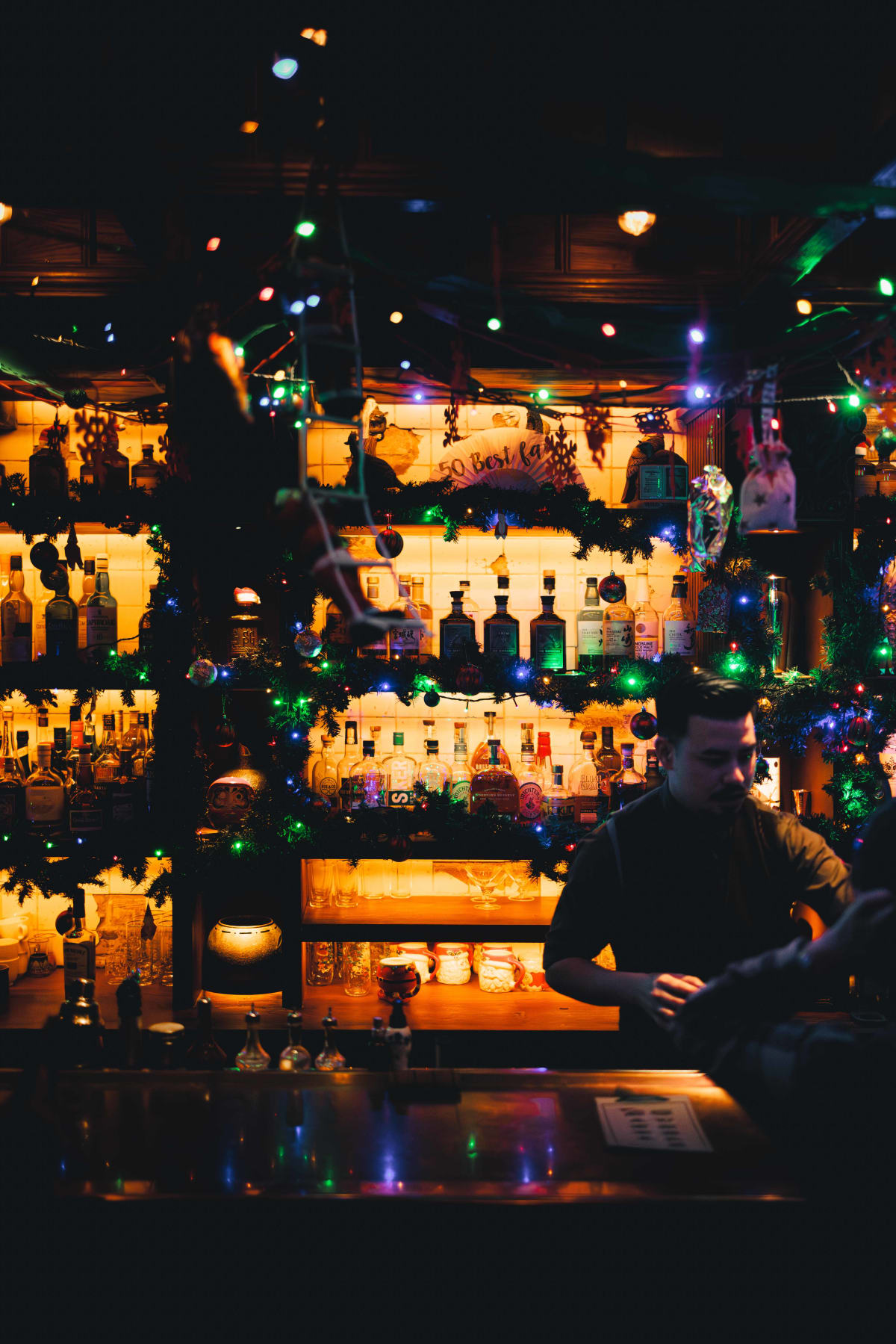
I went with a Japanese friend that night, asked him ahead of time to request the basement, and had a word with the host managing the door, so after a short wait we were soon downstairs in Sip.
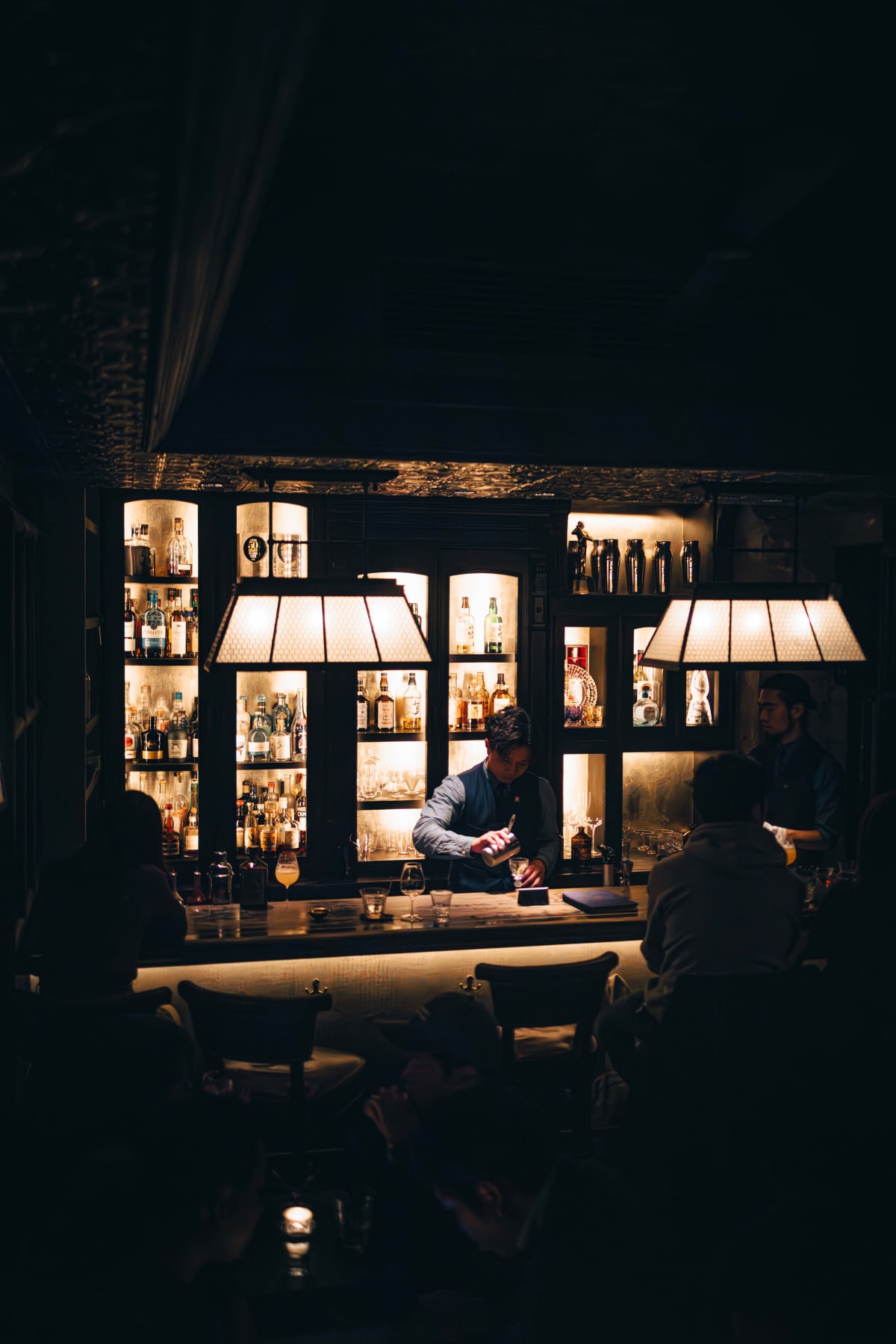
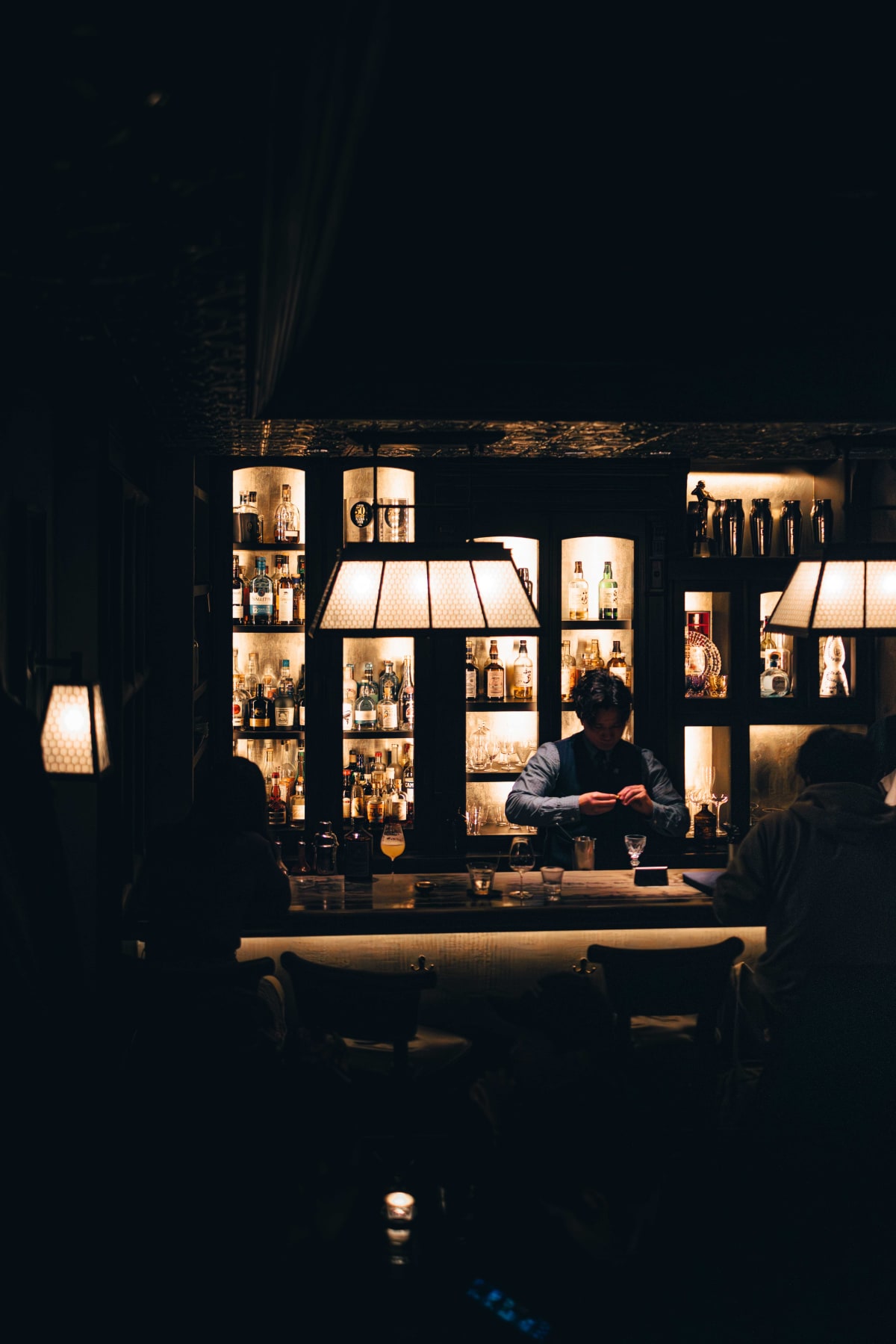
Section 5·The List
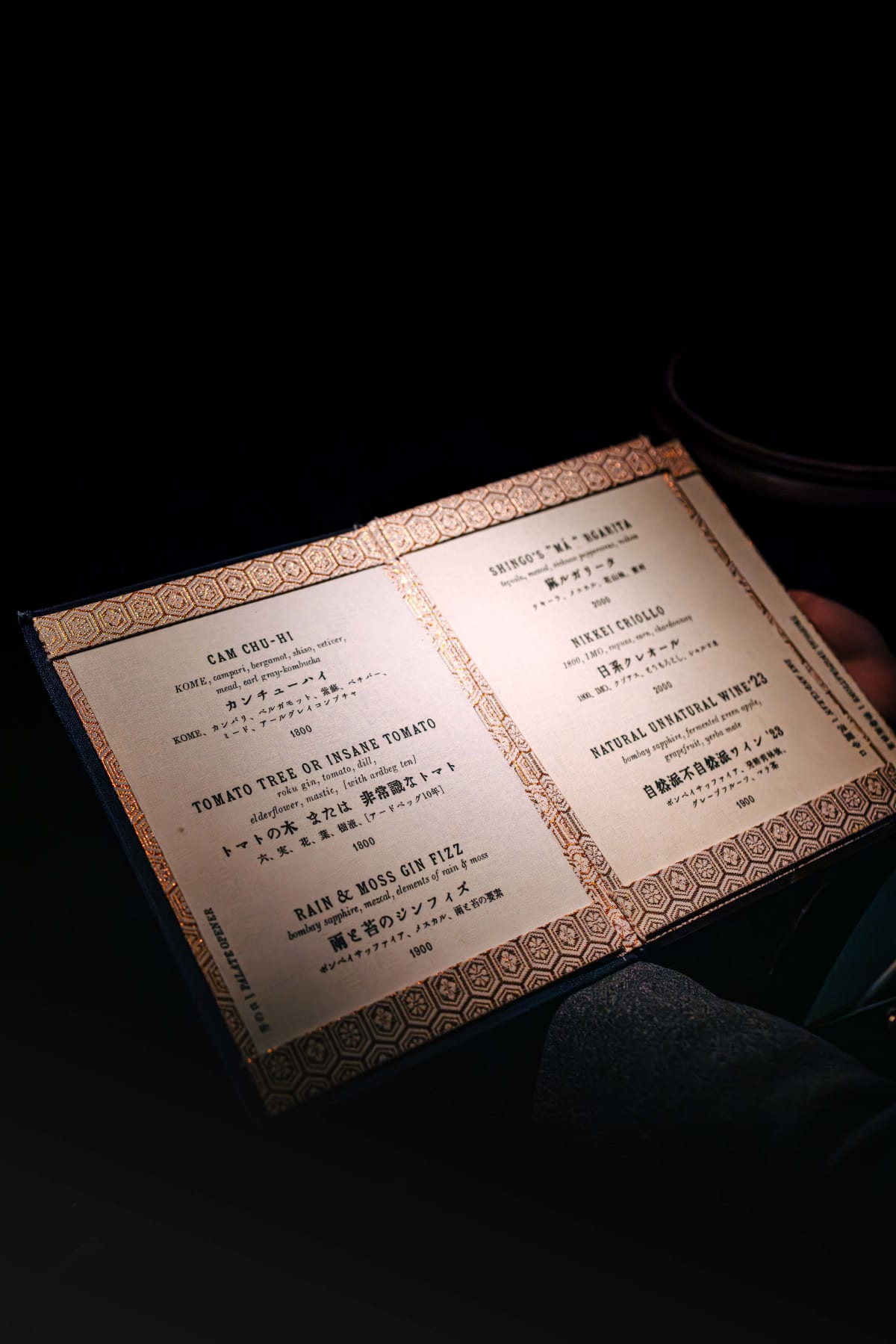
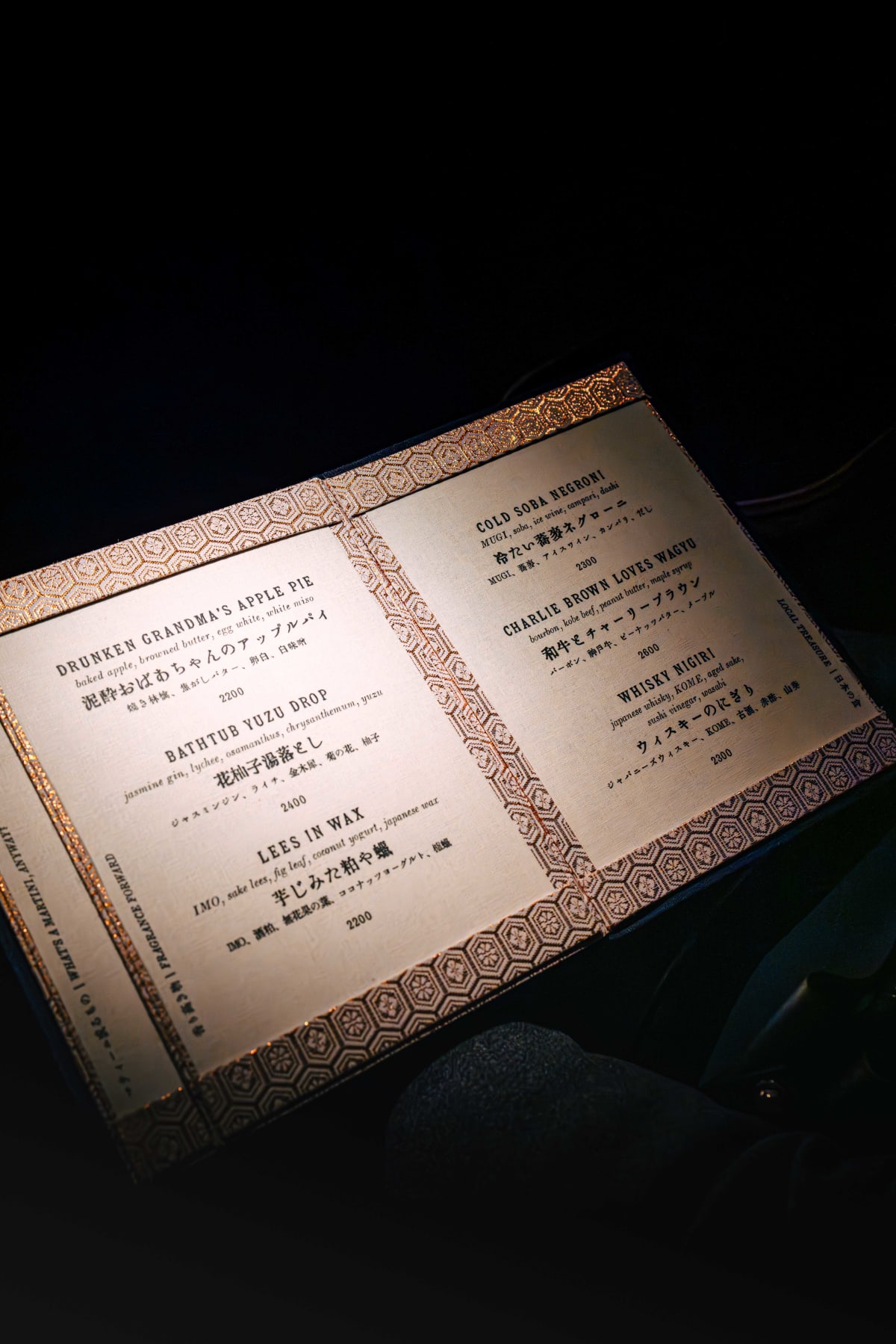
There was a long cocktail list, and between us we ordered and tried about four.
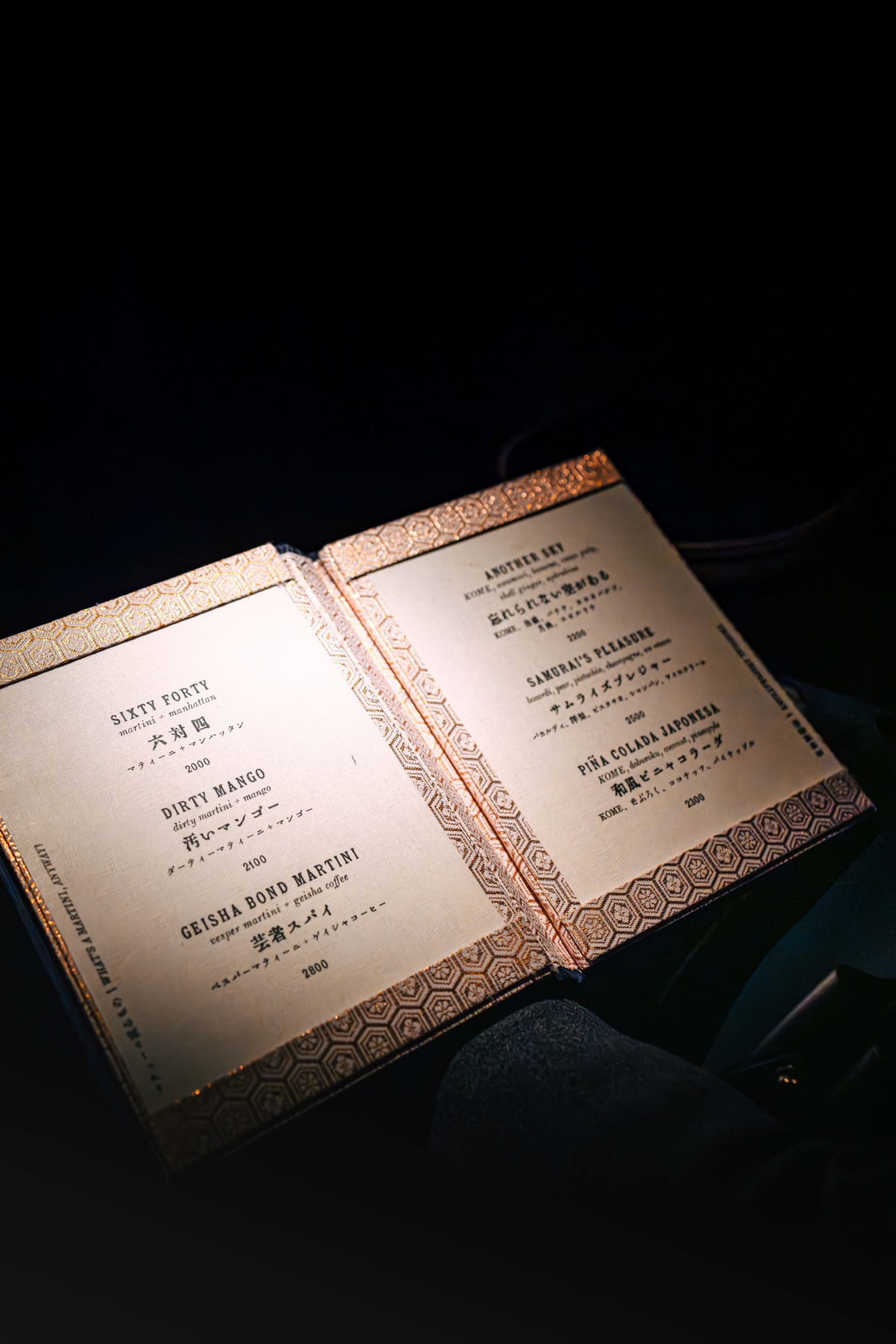
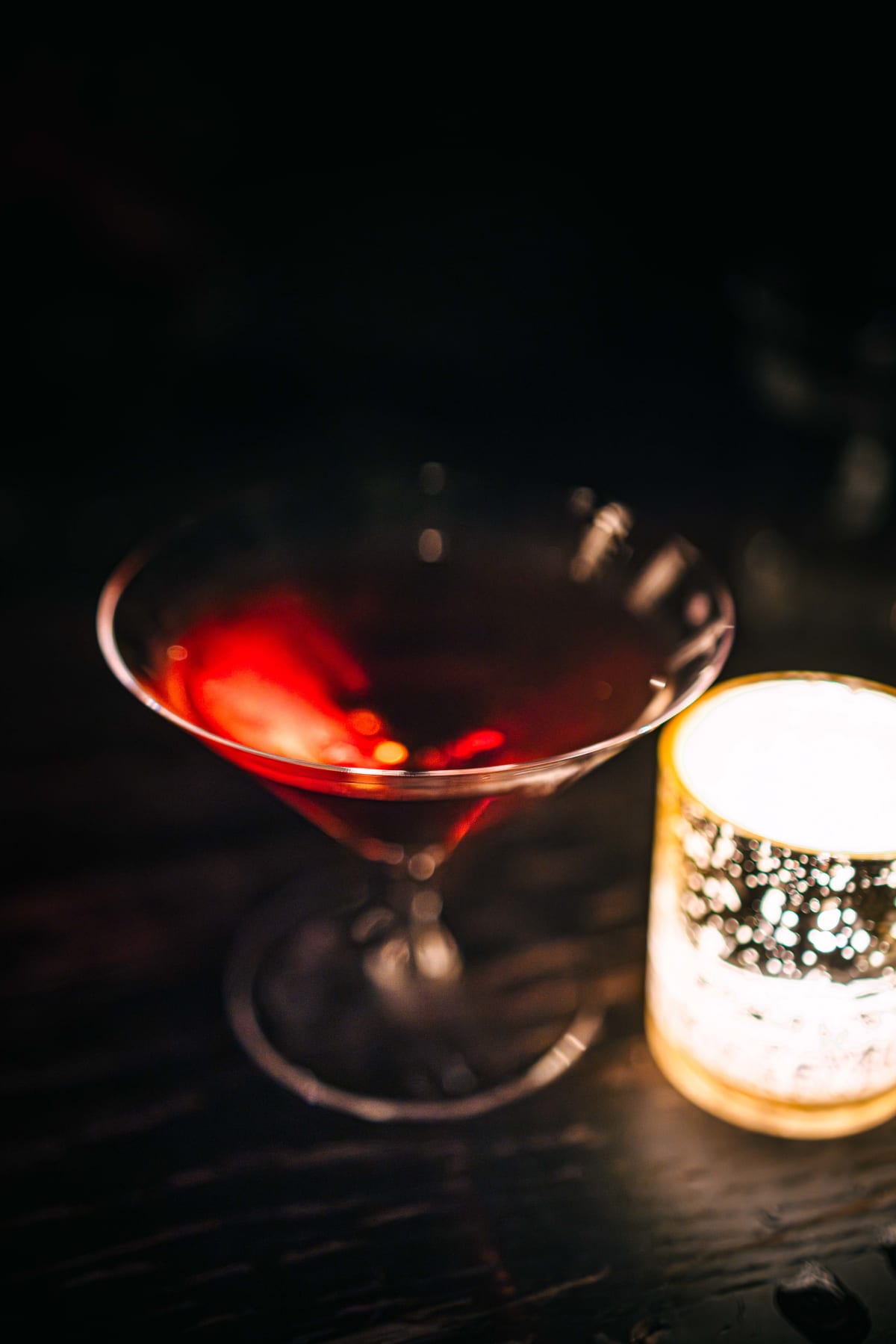
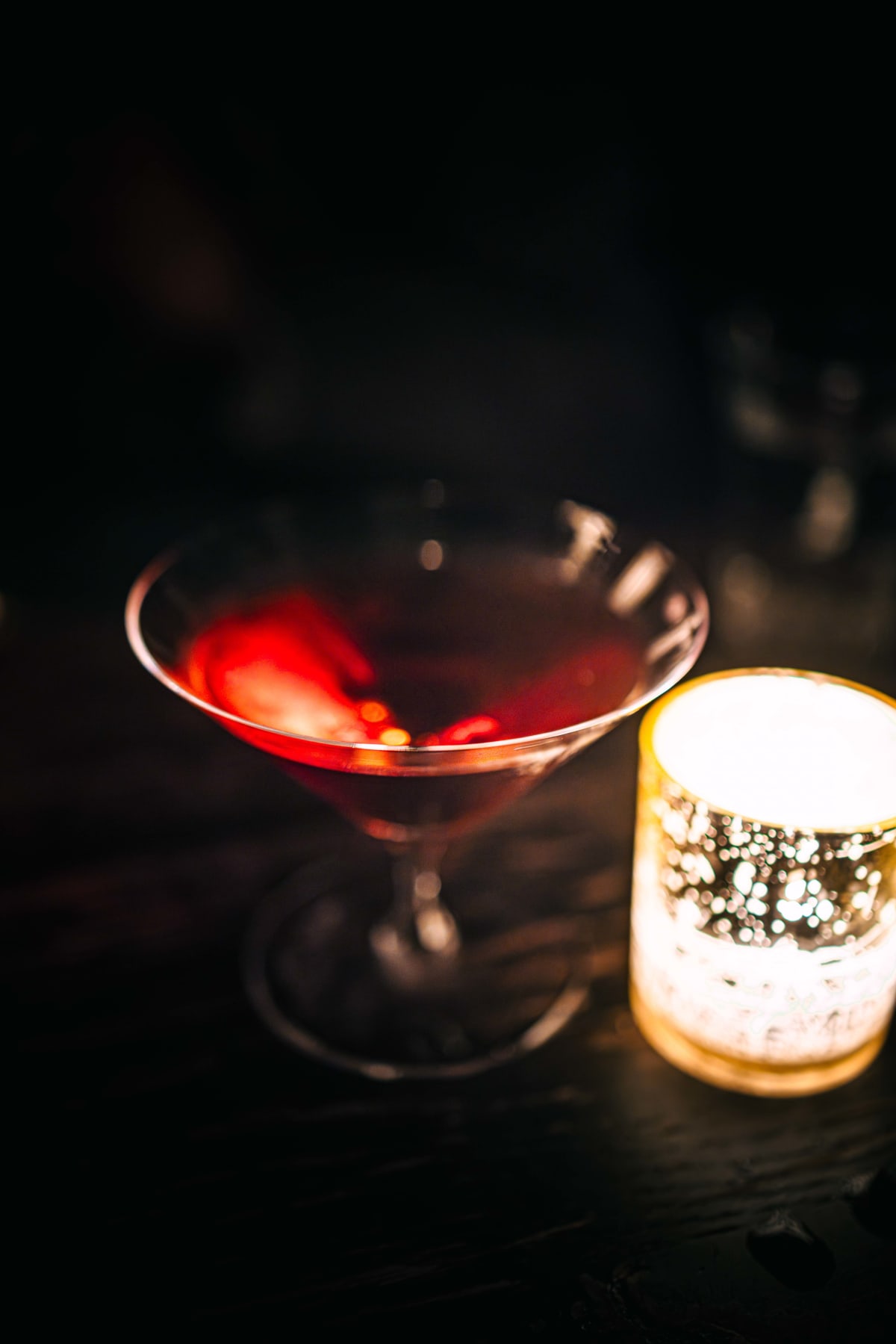
The first was the Sixty Forty. The top sixty percent is a Martini and the bottom forty a Manhattan, hence the name, so the drink shifts as you go, which made it fascinating to drink. When I later visited Sip & Guzzle in New York and found it on the menu there too, it felt like meeting an old friend.
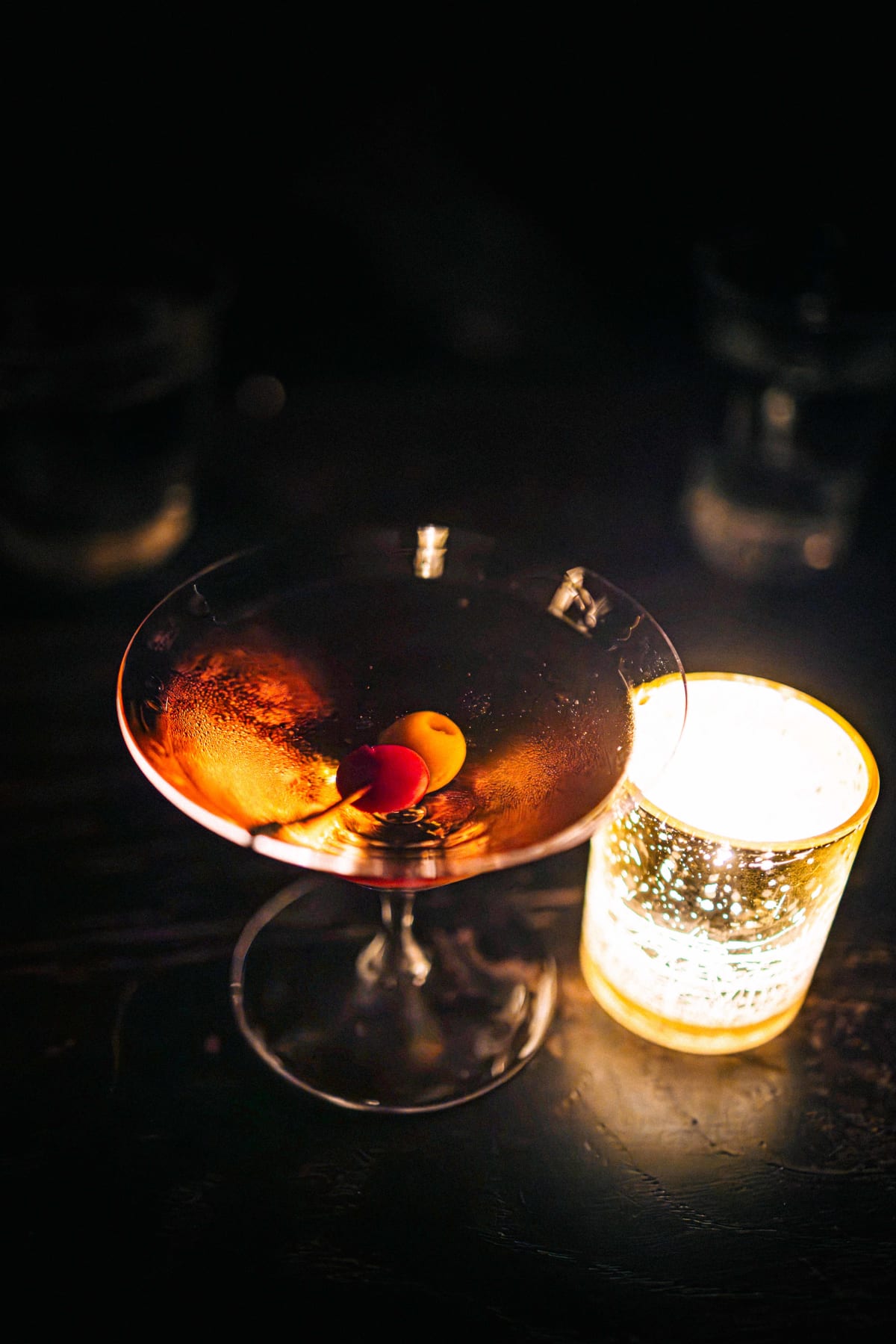
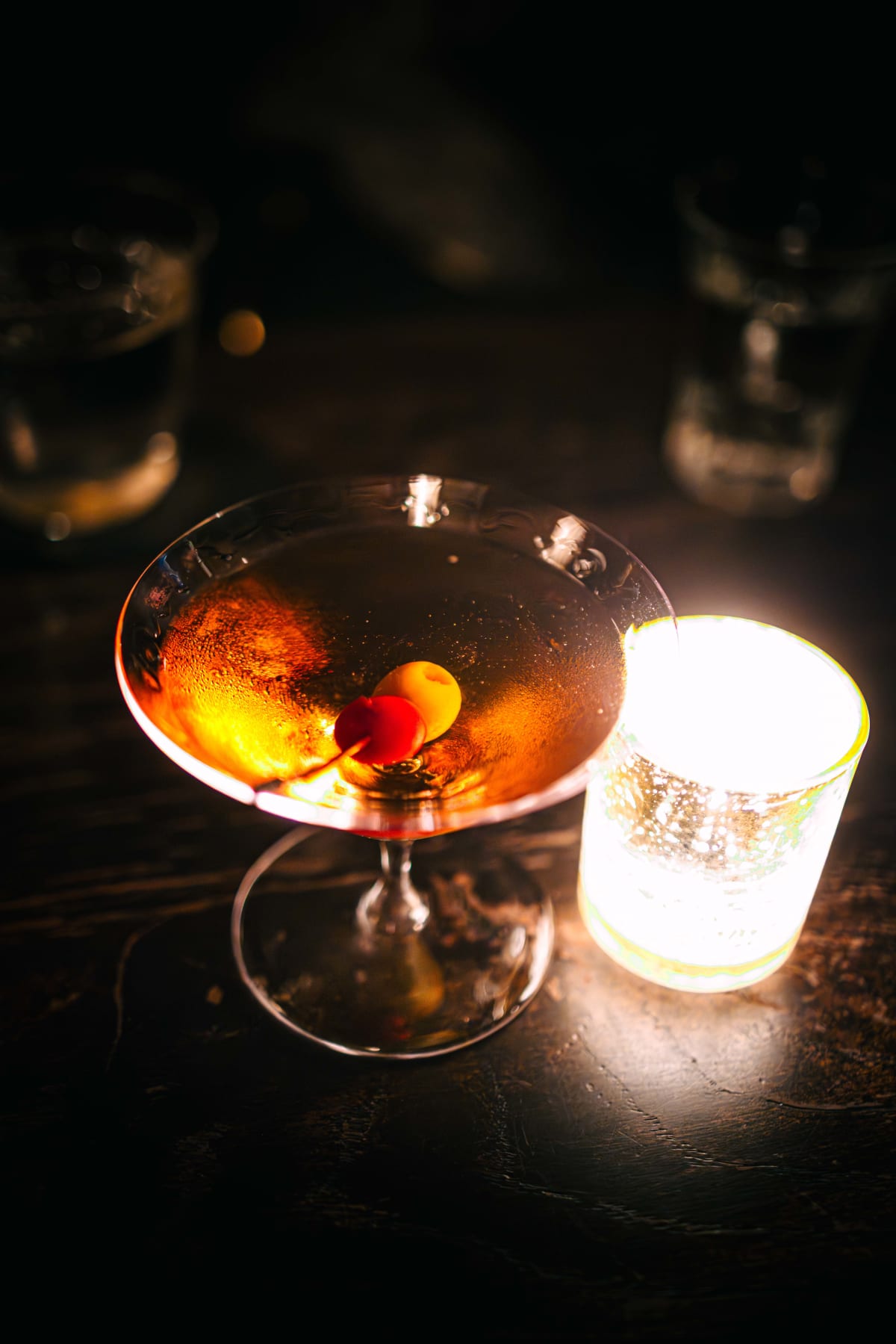
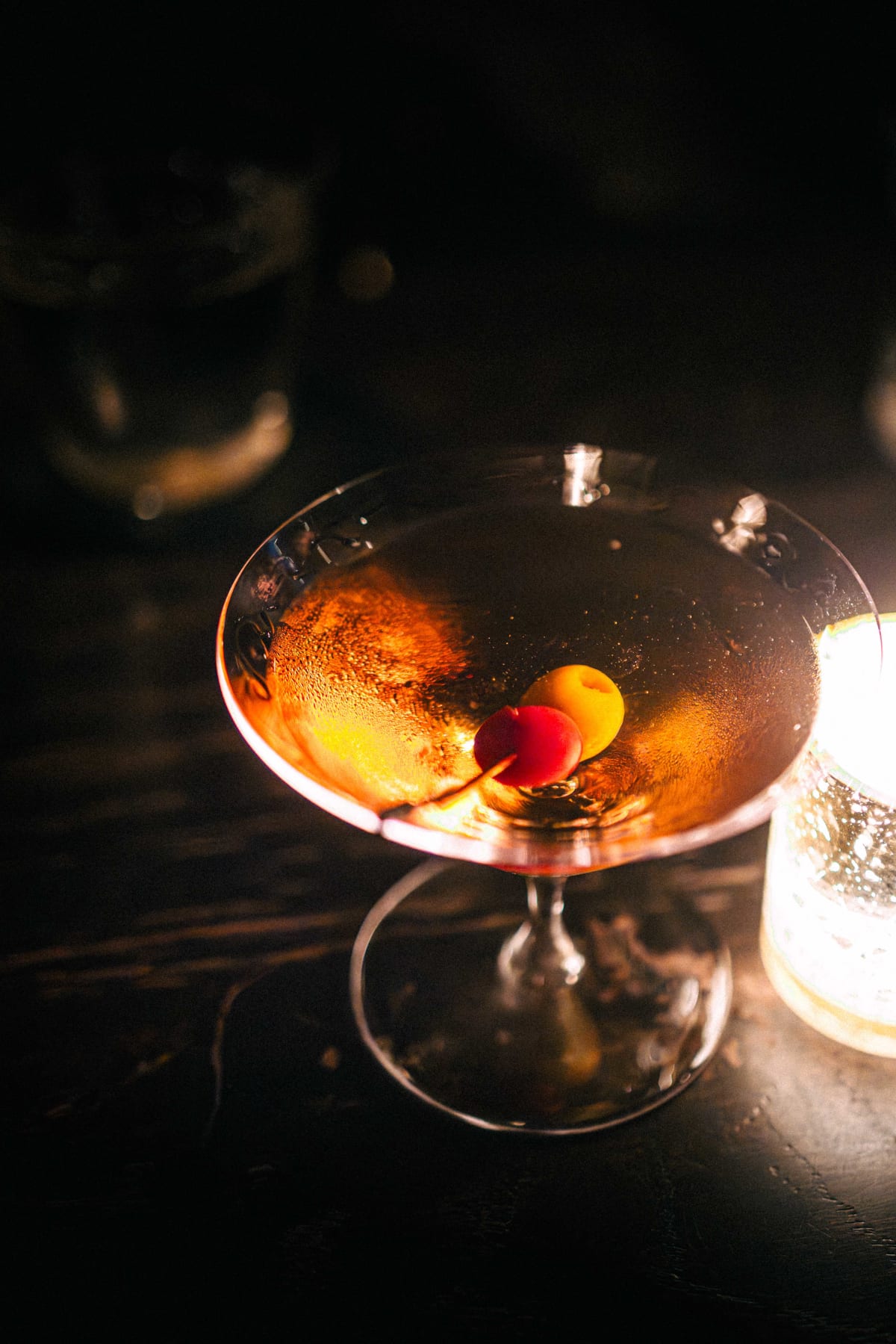
The second was Shingo's 'Ma'rgarita. The listed ingredients are tequila, mezcal, Sichuan peppercorns, and mikan. The Sichuan peppercorns are the huajiao that give mala hotpot its mala character, and mikan is the satsuma mandarin. I suspect the 'Ma' is set off on its own to flag the "ma" of mala, a mala-rita. In the glass, though, I barely caught the huajiao, and what I remember instead is a lovely pine note. Set against the Sixty Forty, this was the one I came down on the side of. When I later saw similar drinks at Sip & Guzzle and Gokan, it struck me that Gokan must love Sichuan cooking, the mala of Sichuan, and folds it neatly into his cocktails.
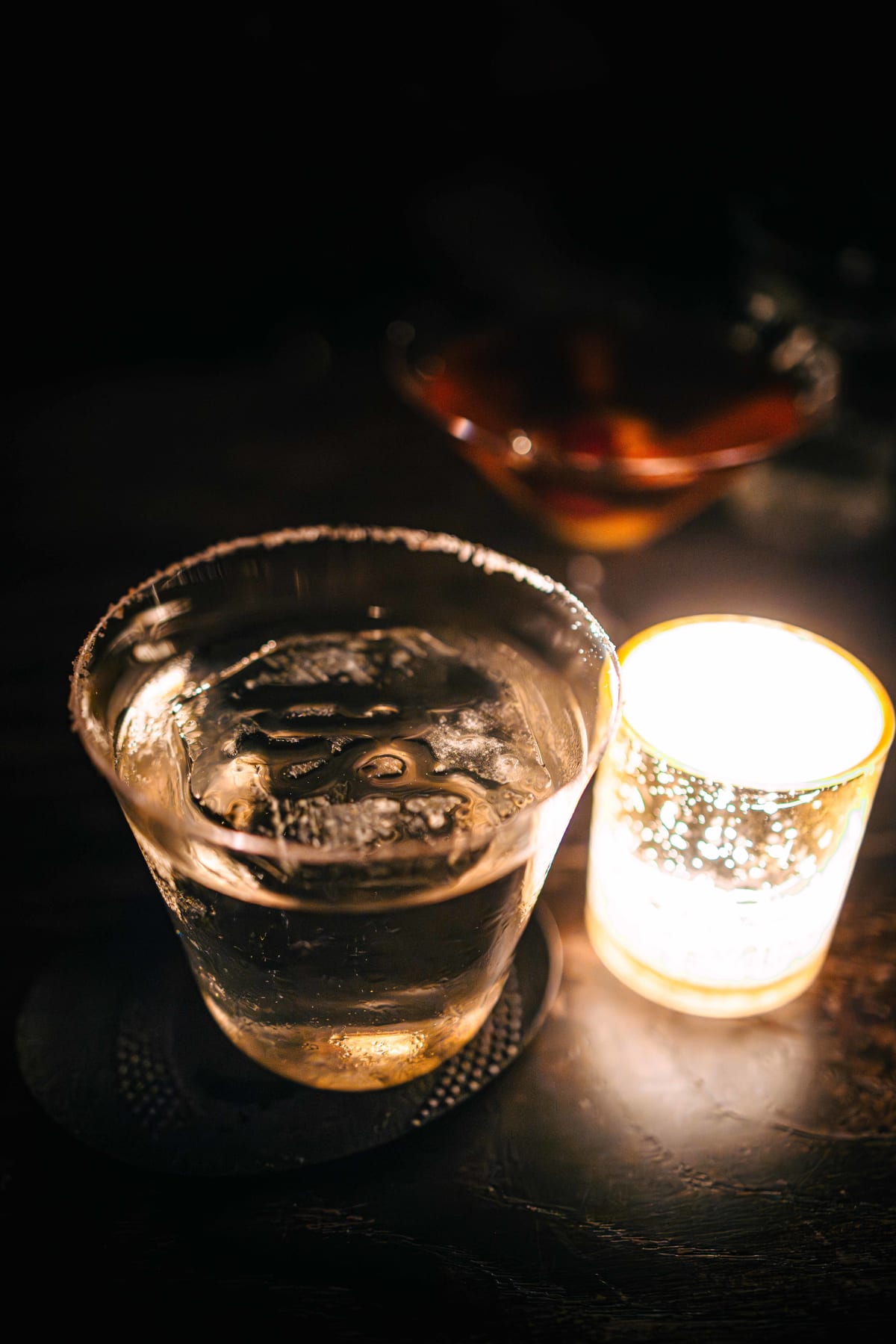
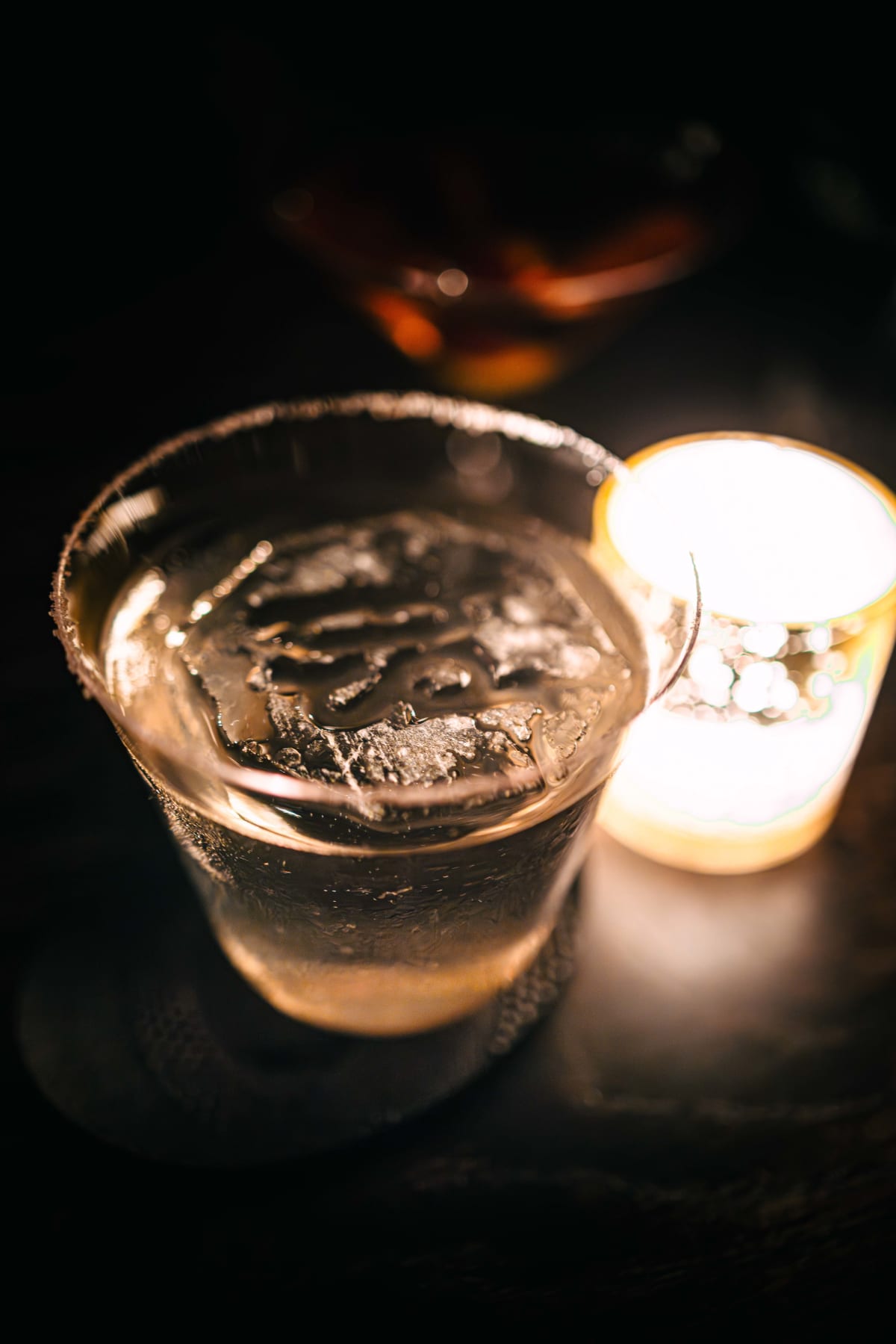
Gokan must love Sichuan cooking, the mala of Sichuan, and folds it neatly into his cocktails
Section 6·Best of the Night
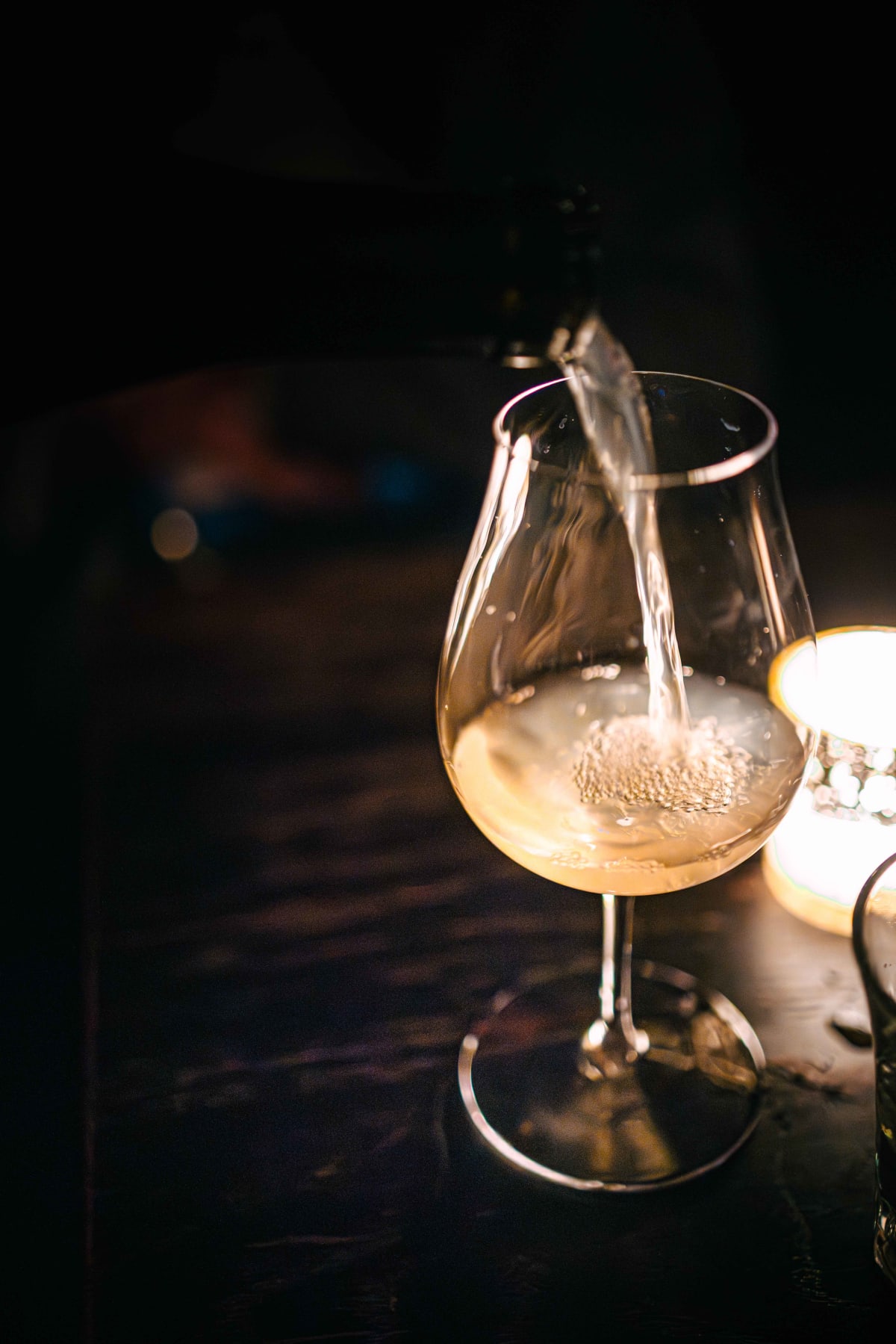
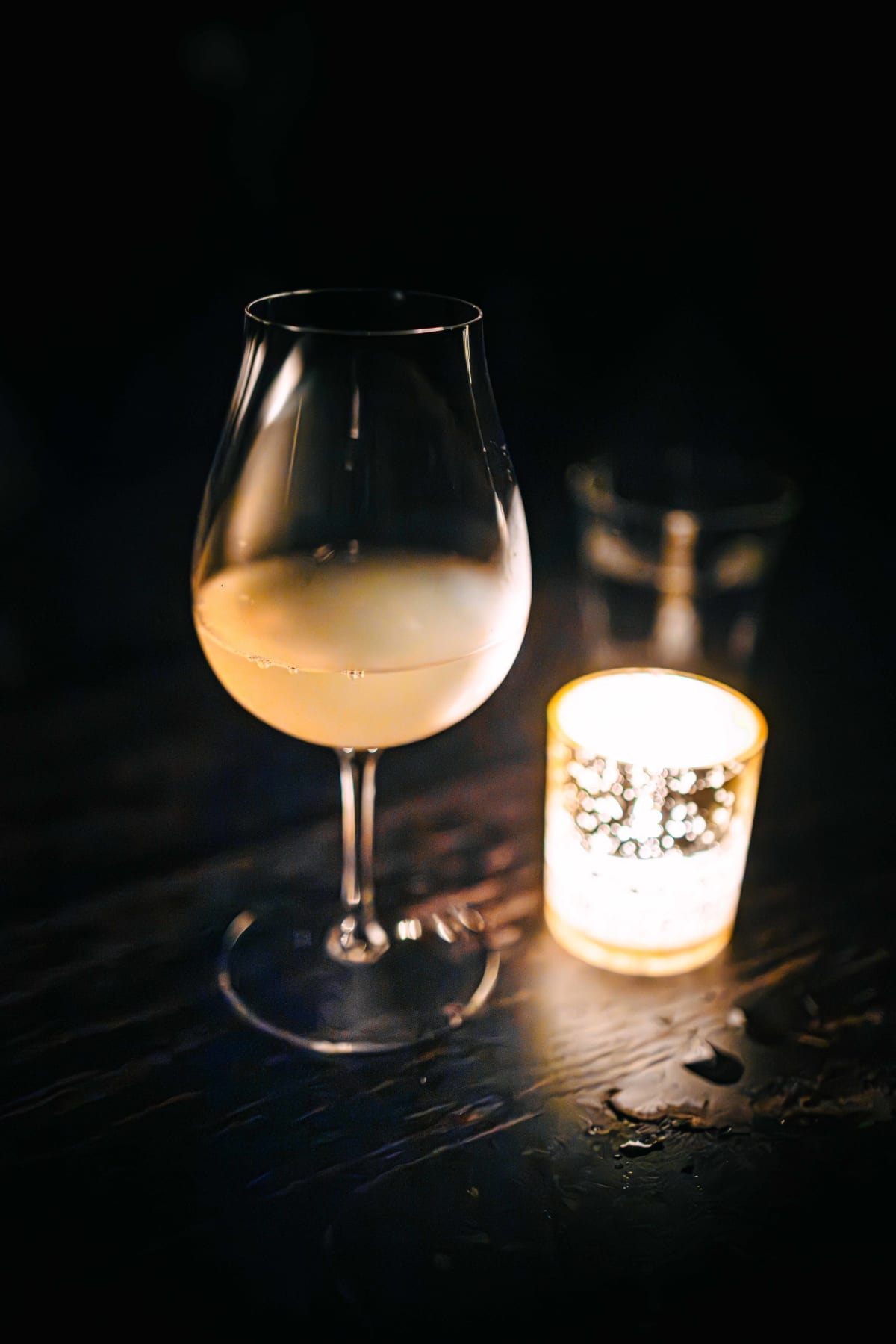
The third was the Natural Unnatural Wine '23, my personal favourite of the night. It tastes, quite literally, like natural wine; hand it to someone as natural wine and they would simply believe you. The reason for the "Unnatural," though, is just as literal: it is not wine. The build is said to be Bombay Sapphire, fermented green apple, grapefruit, and yerba mate, and it came across like a New World white, which I found remarkable. It is the drink I always tell people to try when they visit The SG Club.
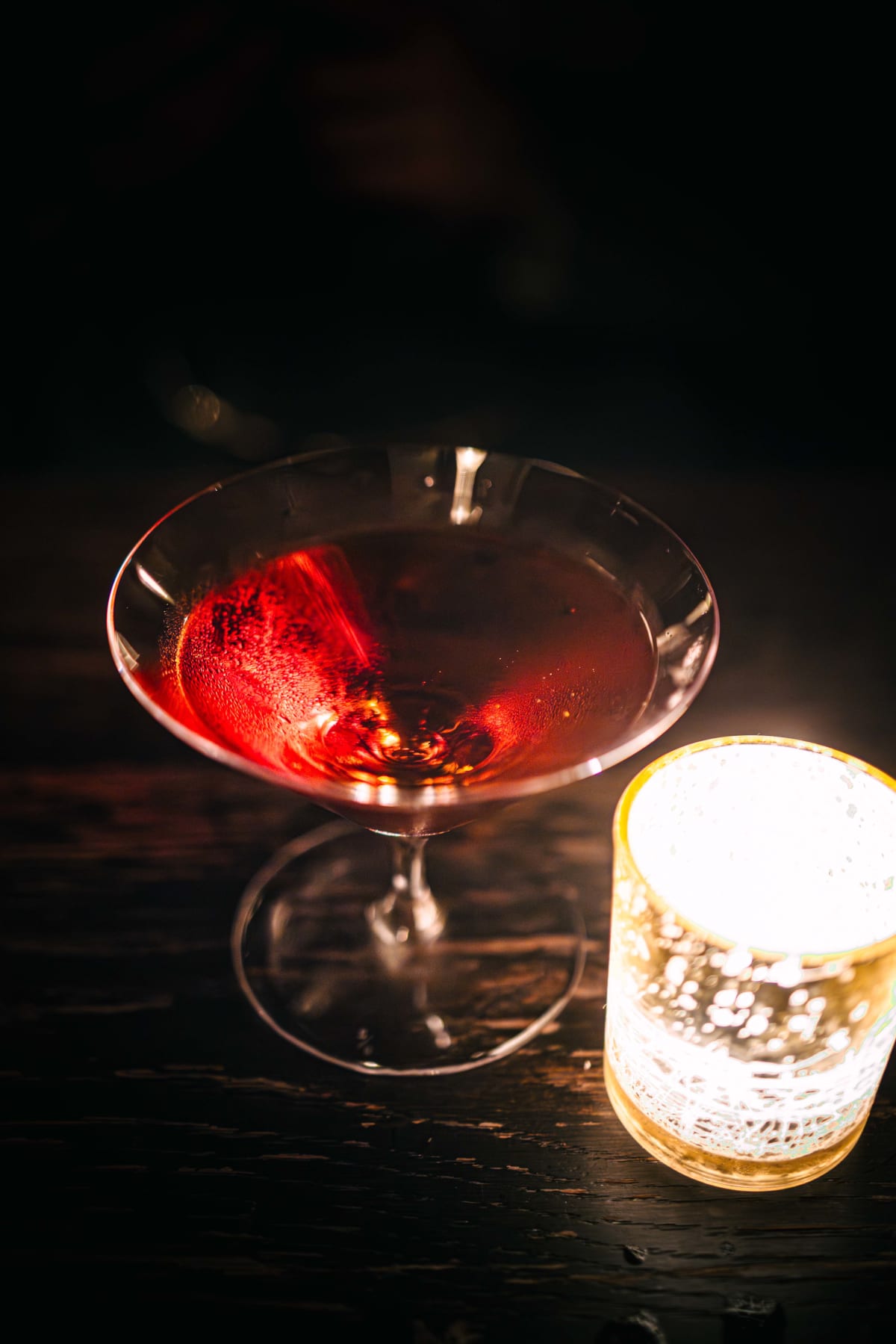
The last was the Geisha Bond Martini, a cocktail spiked with Geisha coffee whose aroma, rising off the glass, was extraordinary.
Section 7·Beyond the Four
Beyond these, the bar's emblematic pours include Guzzle's Consommé Fizz and its three-lemon Lemons Sour, Sip's mango-laced dirty martini and its Cold Soba Negroni built on shochu and dashi, and, up in Savor, the Root 75 (shochu, celeriac, pear, and champagne) served to pair with a cigar. And of course there is Speak Low, the drink that made Gokan a world champion in the first place.
Section 8·A Secret Society
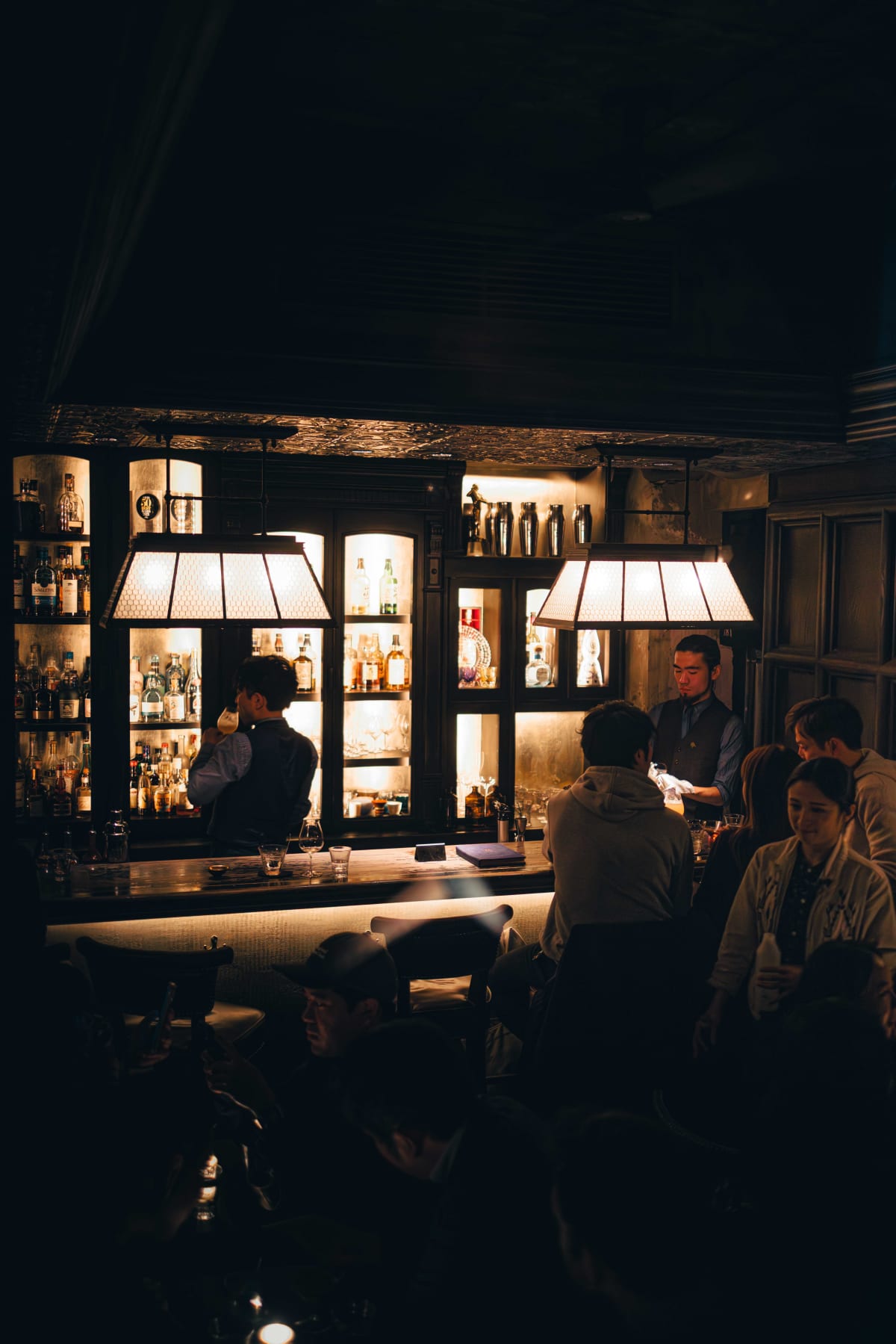
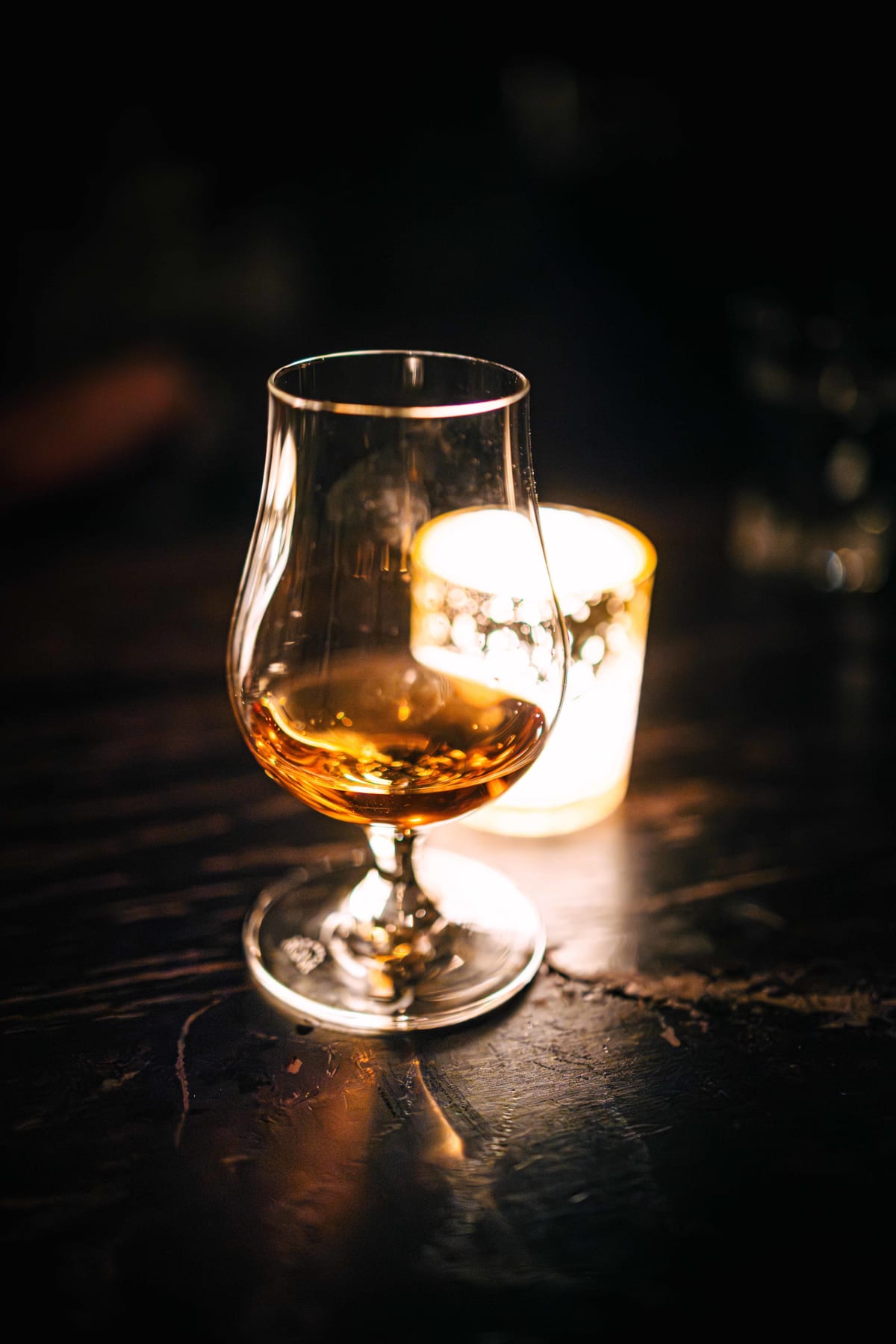
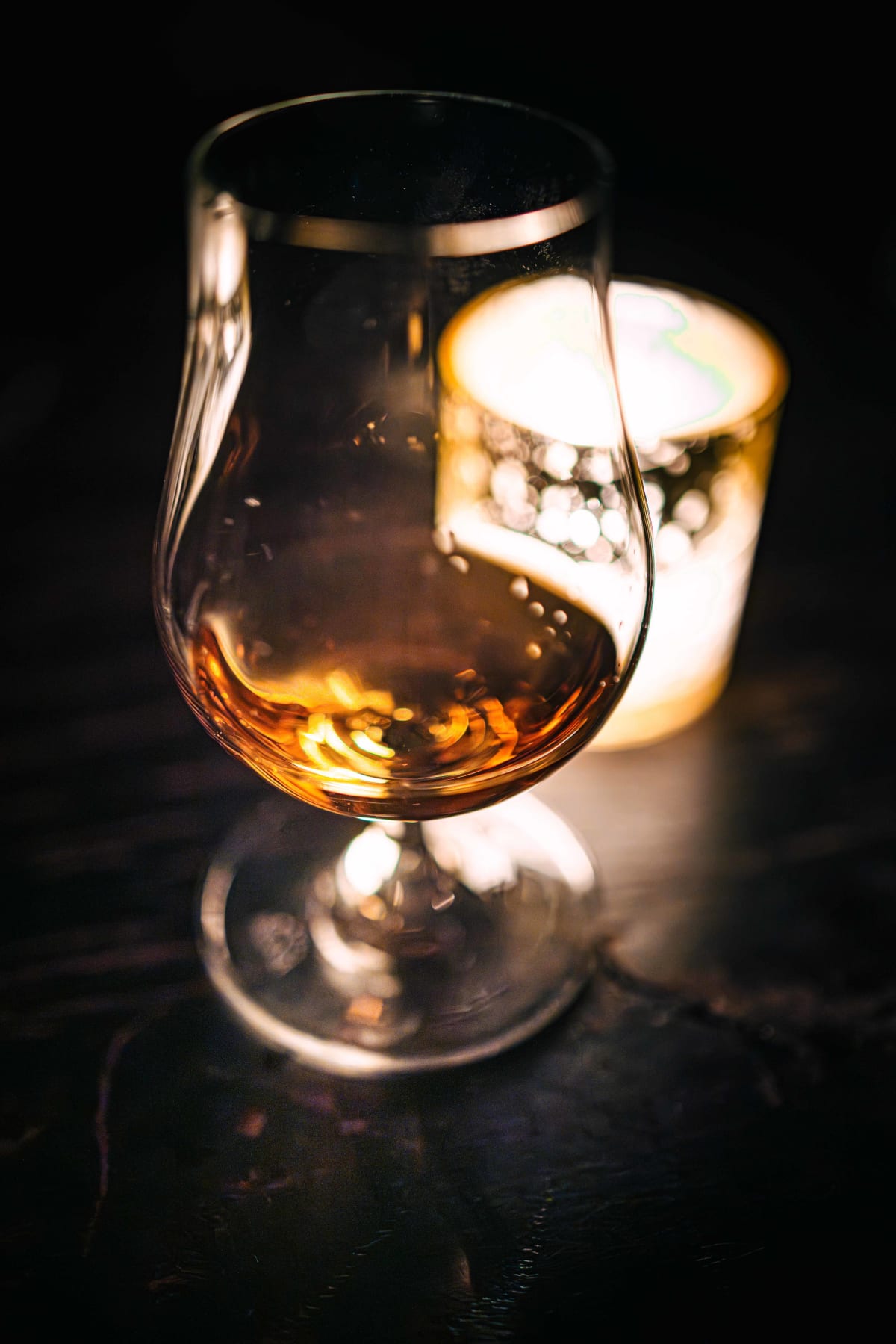
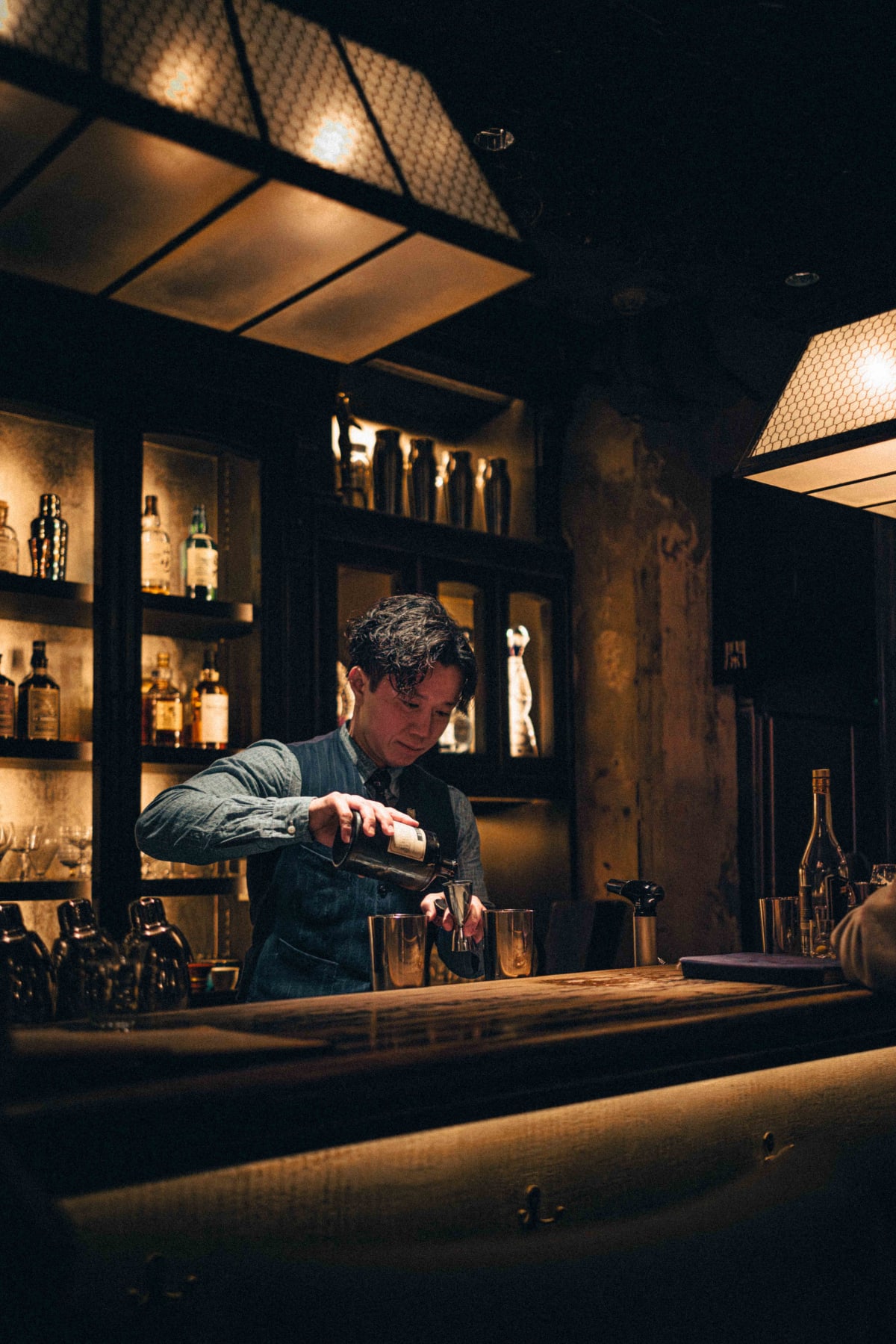
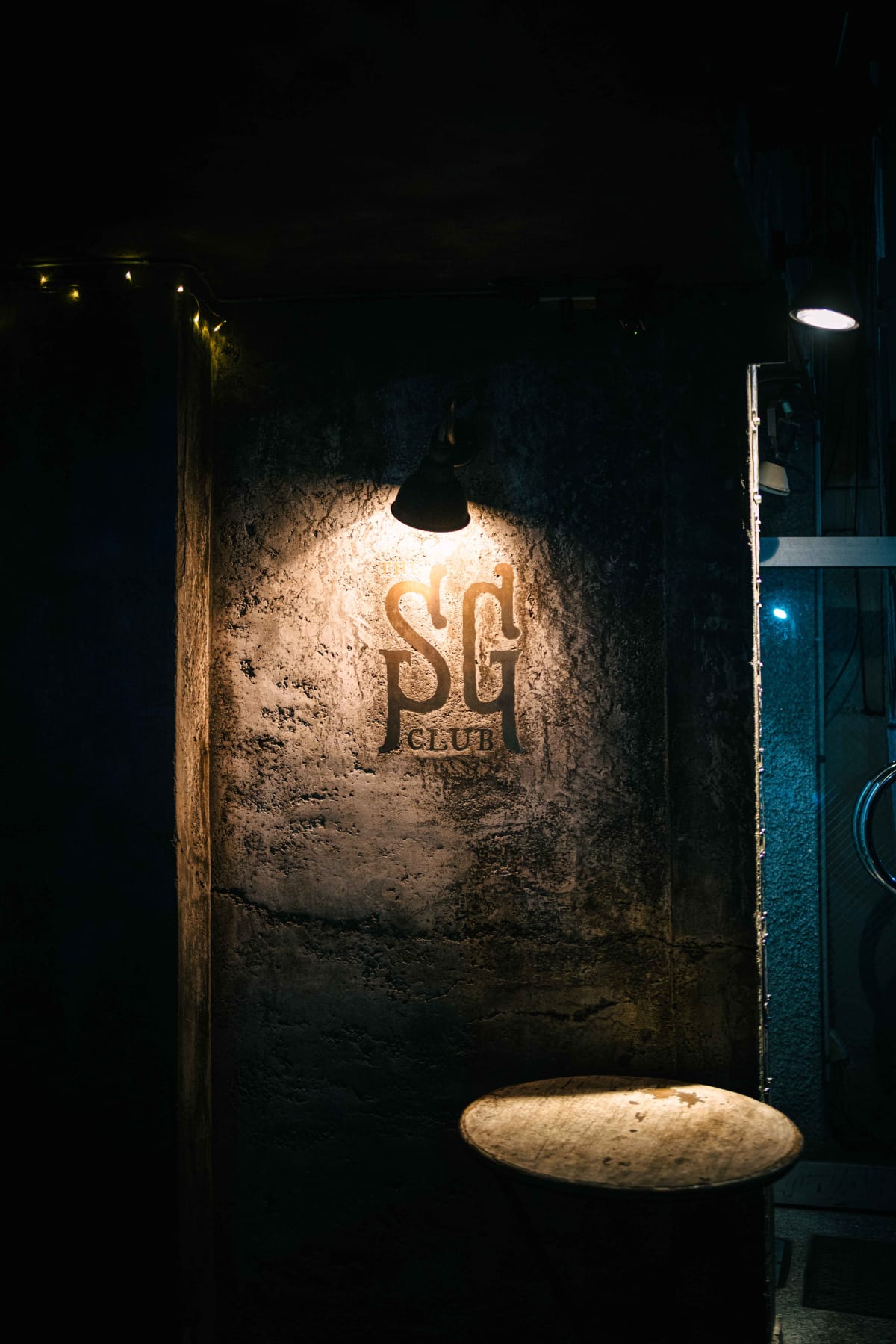
The SG Club sits underground like a secret social club in Shibuya, the room kept very dark.
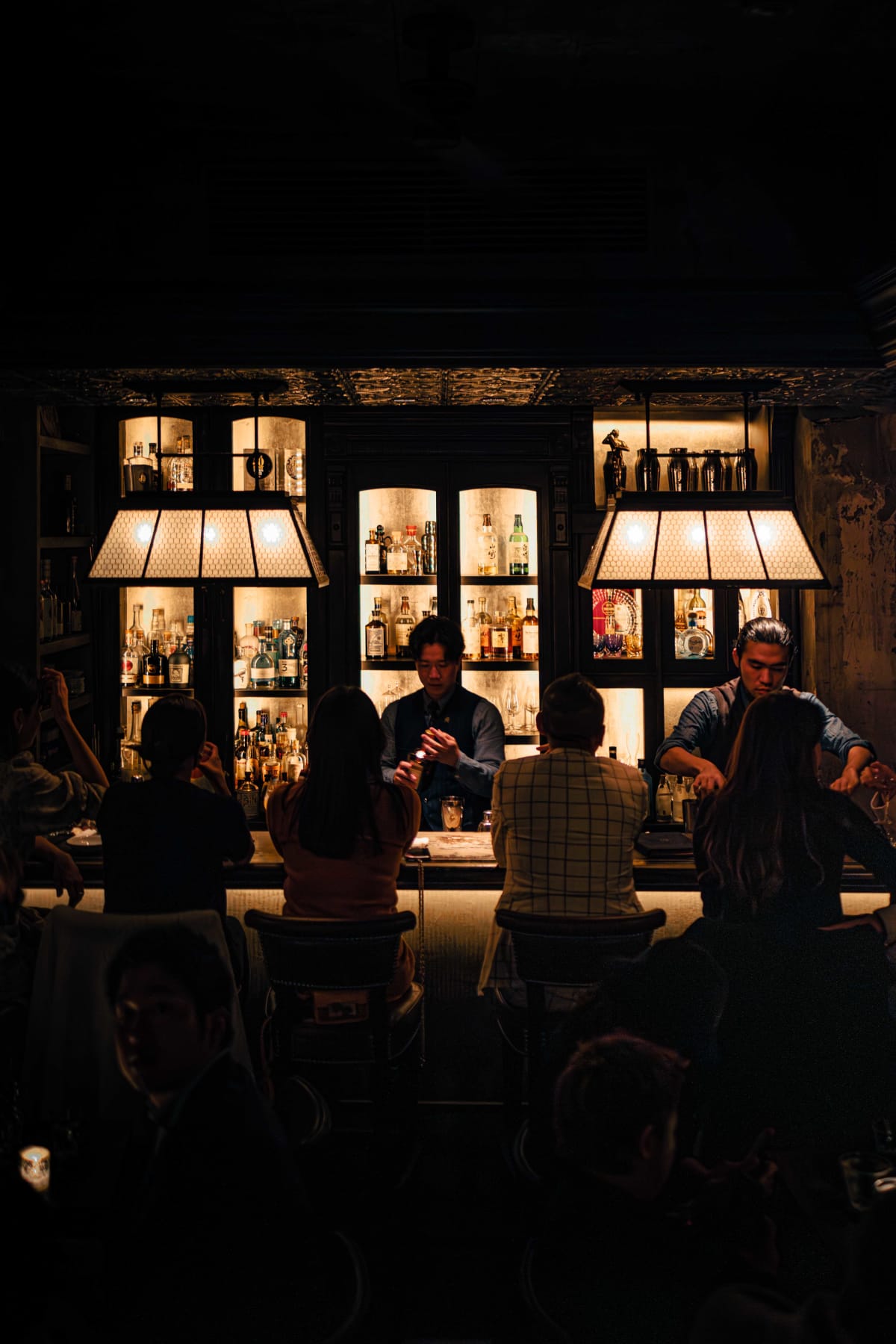
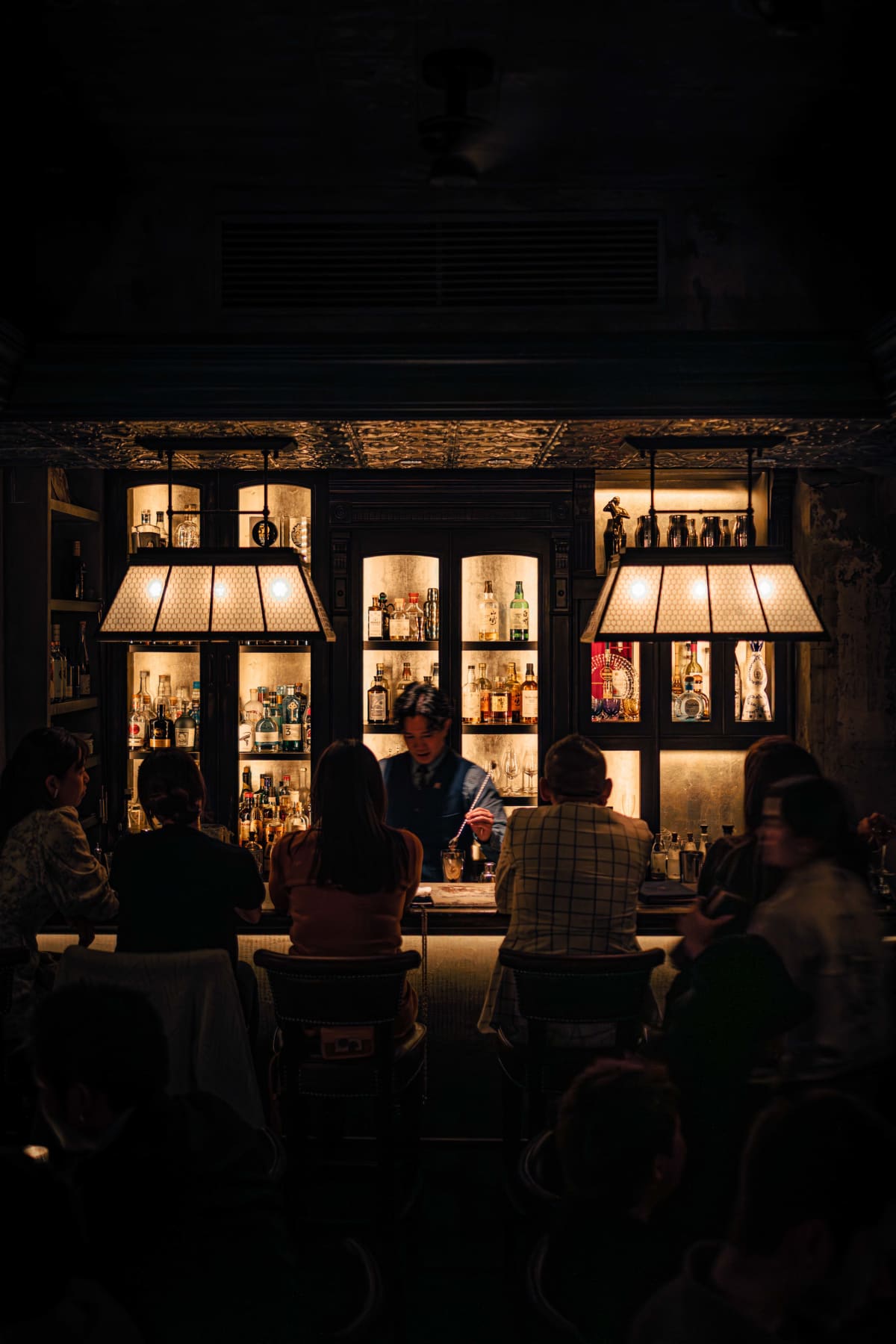
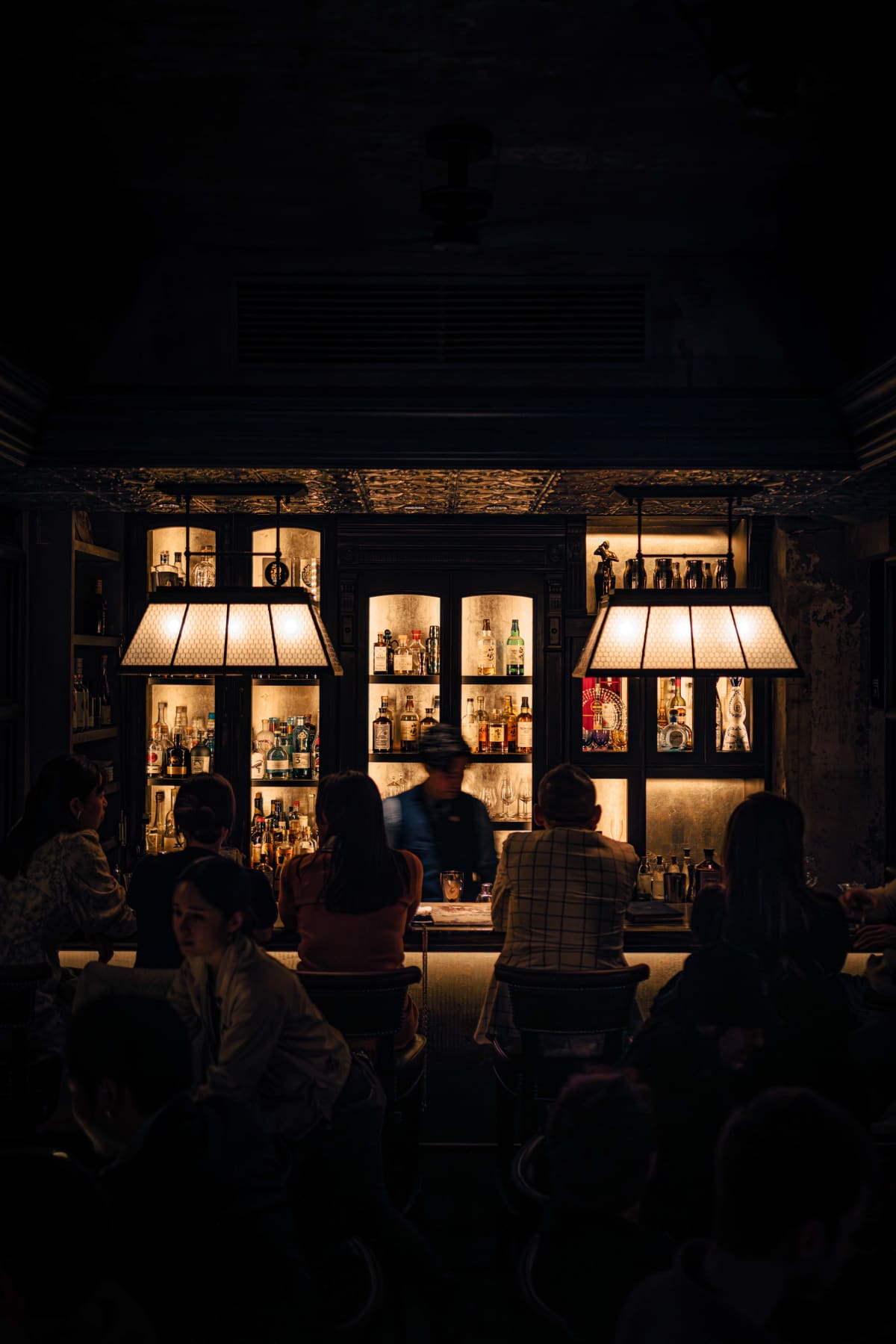
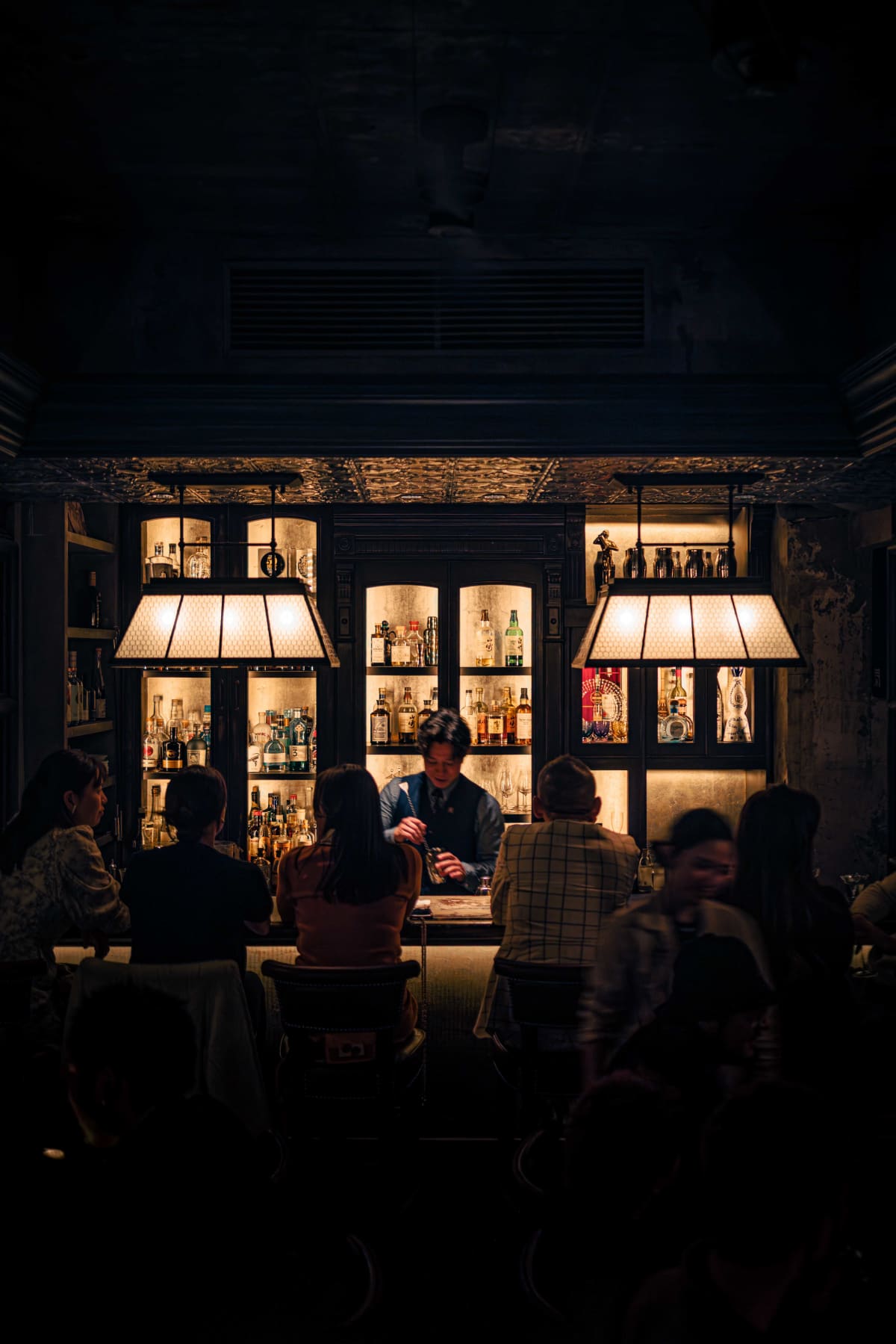
The spot where the bartender stands is lit bright as a stage, and it leaves me wanting to go back for another round of cocktails.
Section 9·His Own Spirit
Gokan also has his own brand of sweet potato shochu, which is said to be very good. In 2020 he released The SG Shochu, an honkaku shochu developed with three distilleries, in rice (Kome), sweet potato (Imo), and barley (Mugi) varieties, designed down to the bottle and the proof to work in a bartender's hands; the following year the rice and sweet potato versions both took Double Gold at the San Francisco World Spirits Competition. The sweet potato shochu he mentions is that Imo.
The basement, Sip, is the room to book; a weeknight gives the bartenders space to walk you through a list this conceptual. And of Gokan's spreading constellation of bars, his Tokyo original remains the one to choose if you have only a single night to give it.
Have a question about this restaurant, or want to share your own experience?
Send a message