Local & Essential · Seoul · Korea / February 2024
Antica Trattoria
"A tiny Seocho trattoria, now closed, that for a brief while held some of the most uncompromisingly Italian cooking in Seoul."
Section 1·The Scene
After COVID-19 broke out in 2020, Korea, paradoxically, entered a period of growth in high-end dining. The most representative genre was sushi, and on the European side it was Italian food, and within that, pasta, that grew the most in sheer visibility. I will be covering many places in my reviews, but the restaurants that led the growth of Seoul's pasta scene in the early 2020s were not so much authentic Italian as the counter-style, Asian-touched Japanese-Italian places, or the New York American-Italian lineage.
Among them were places that, little by little, stirred up a wind of authentic Italian cooking, and one that drew a brief popularity in Seoul was Antica Trattoria.

If I think back on the places that made me happy with pasta in Seoul in 2024, I can name about two, and one of them is this Antica Trattoria, which stood in Seocho. The truth is, I half wonder whether it should be written only as a review that turns over old memories, because after May 2024 it went into a long hiatus, reopened, and finally closed for good. Even so, the short presence that its authentic Italian pasta held in a city like Seoul is impossible to ignore, so I set it down as a record.
the short presence that its authentic Italian pasta held in a city like Seoul is impossible to ignore
Section 2·A Hidden Trattoria
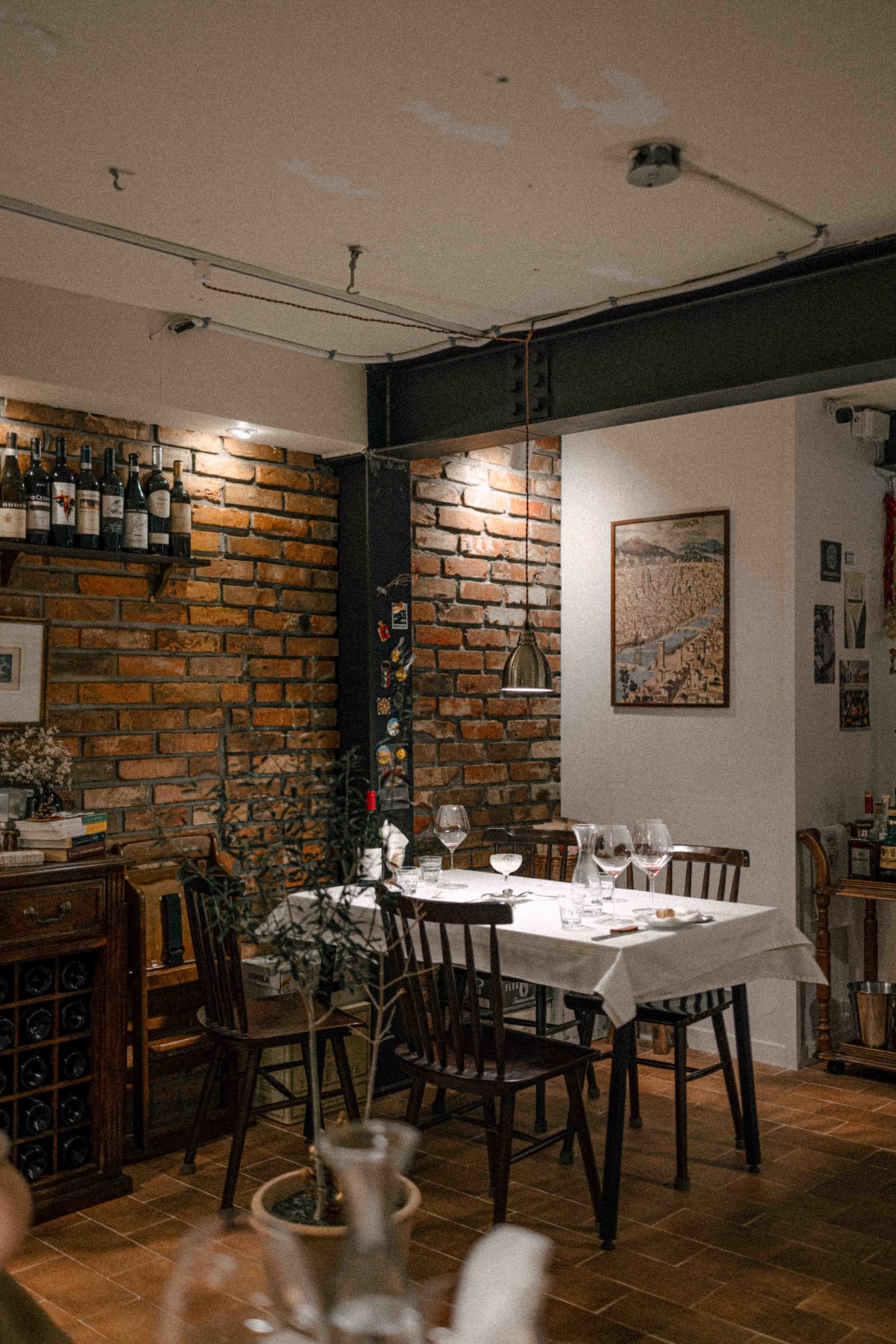
Antica Trattoria was a small place tucked into a quiet alley on Hyoryeong-ro 40-gil in Seocho, between Bangbae Station and Nambu Terminal. Hidden in a calm neighborhood within the orbit of the Seoul Arts Center, it was a homeland-minded trattoria built around fresh pasta and wine. The form of the trattoria itself, in fact, explains the place's identity well. In Italy a trattoria means a neighborhood eatery, more relaxed than a formal ristorante and more focused on the meal than the drink-centered osteria, with regional cooking, simple preparation, wine, and a family feeling at its heart. Antica was less a polished date-night Italian than a place that fit that definition exactly.

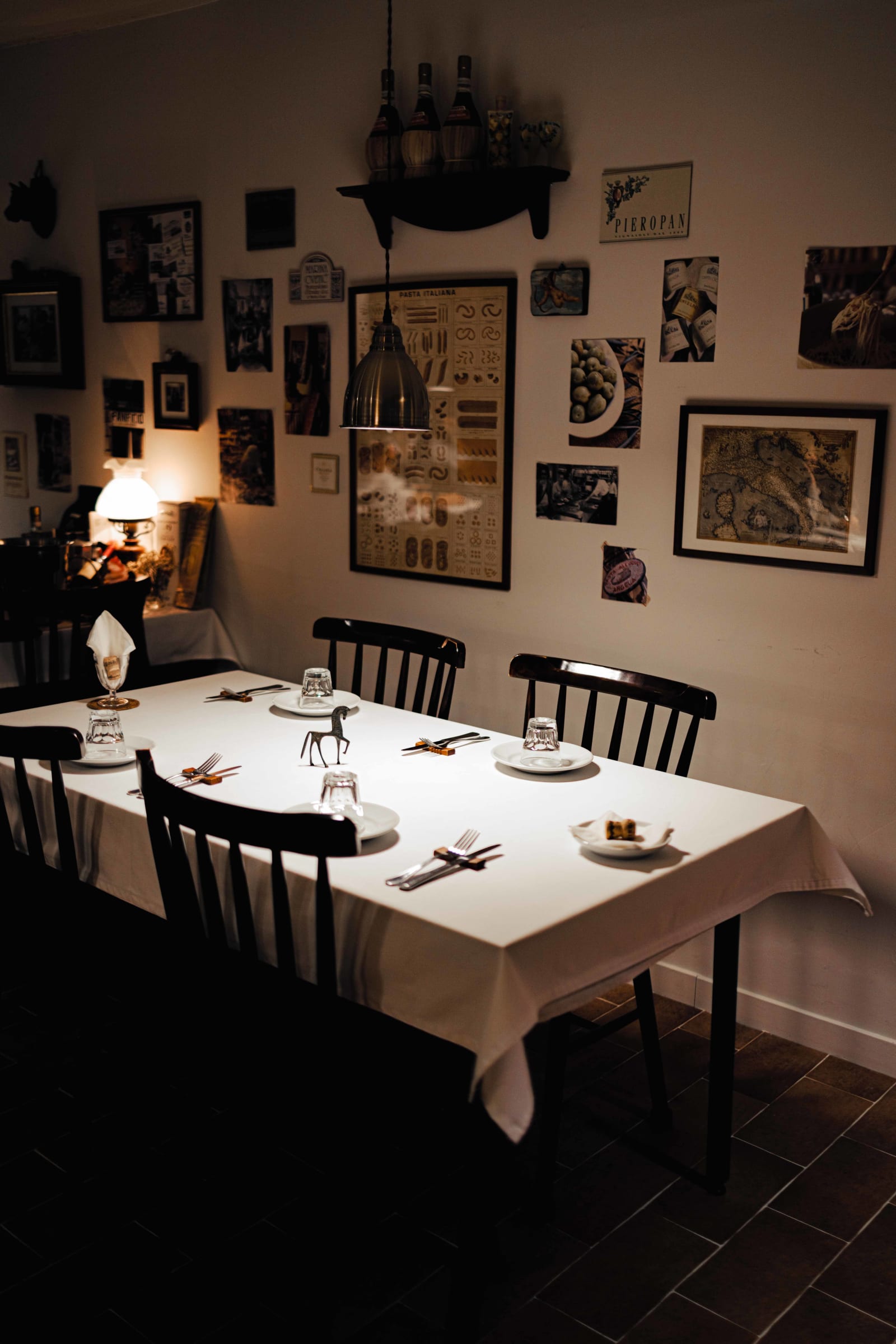
The owner-chef had learned pasta in Italy, and he genuinely cooked it in the homeland style. What I liked most of all was the interior, which felt like coming on a brief trip to Italy. Down to the detail of every prop, chair, and table, it made you feel as though you had stepped into a trattoria in some Italian town.


I went for the seven o'clock seating that day, and the other tables were already eating by then, so I kept eating long after all of them had left. The chef, who had stayed in the kitchen, came out alone, told me all sorts of stories, and talked with me, and it was a cozy, lovely stretch of time.
The menu ran to about five antipasti, six pastas, and one steak, and among the pastas were three made with fresh pasta. These fresh pastas all had to be ordered in advance, and I had booked ahead.
Section 3·The Antipasti
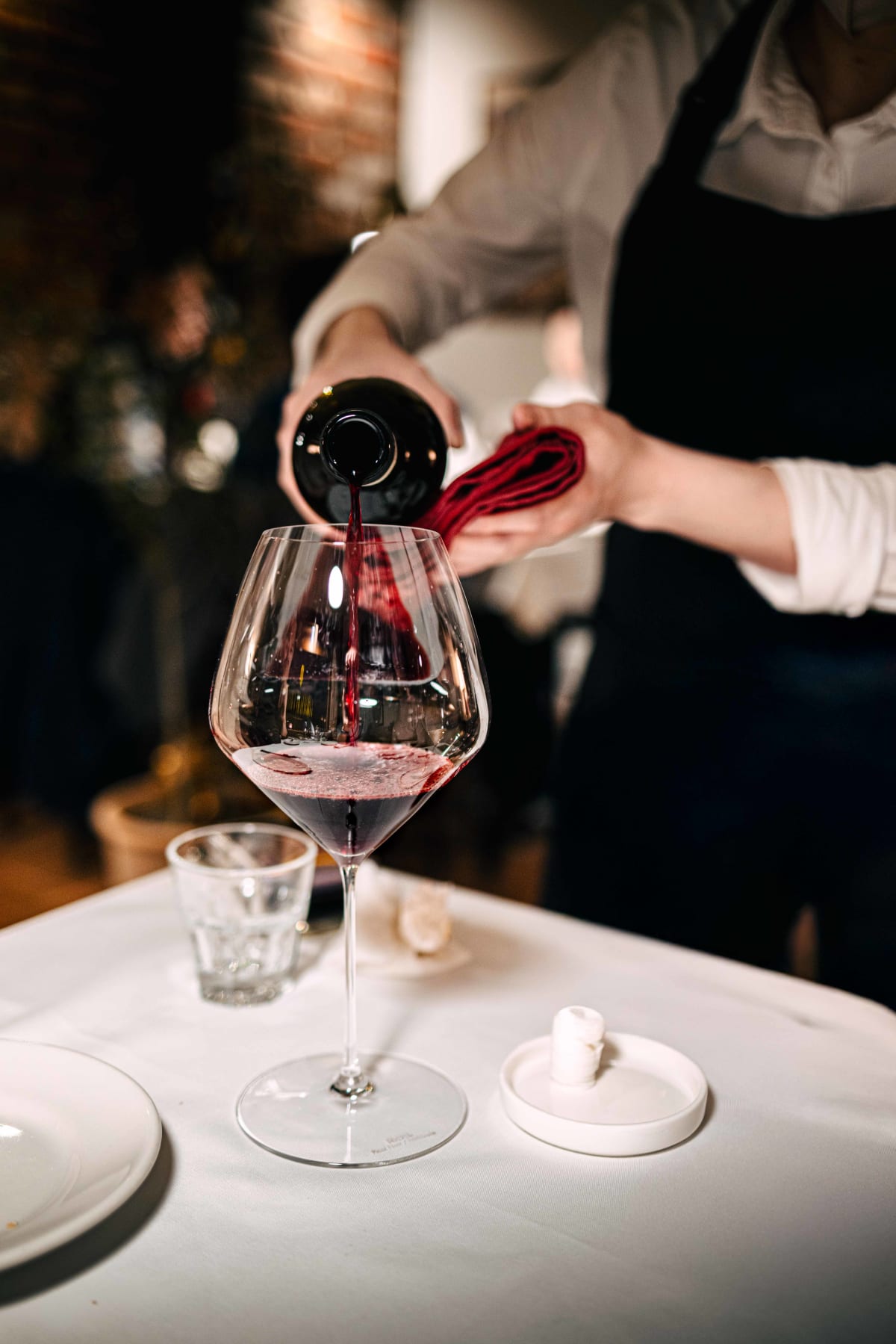
To open the antipasti, the first wine we poured was Rémi Leroy's Blanc de Noirs Champagne. Rémi Leroy is a grower-producer who works around nine hectares of family vineyards in the village of Meurville, in the Côte des Bar of the Aube, the southernmost reach of Champagne. The family once sold all its grapes to the large houses, but he now vinifies a part himself, and on the Kimmeridgian limestone soils that run down from Chablis he makes Champagnes built mostly on Pinot Noir, with almost no dosage, in a vinous, weighty style closer to still wine. The Blanc de Noirs is one hundred percent Pinot Noir, fresh yet carrying minerality and a touch of salinity on the finish.


Among the antipasti, the standout was olives stuffed with a meat filling and fried. This was olive all'ascolana, which comes from Ascoli Piceno in Marche, a traditional antipasto of large Ascolana olives stuffed with seasoned meat, breaded, and fried. It paired so well with the Champagne I had started with that it was salty and delicious all at once.


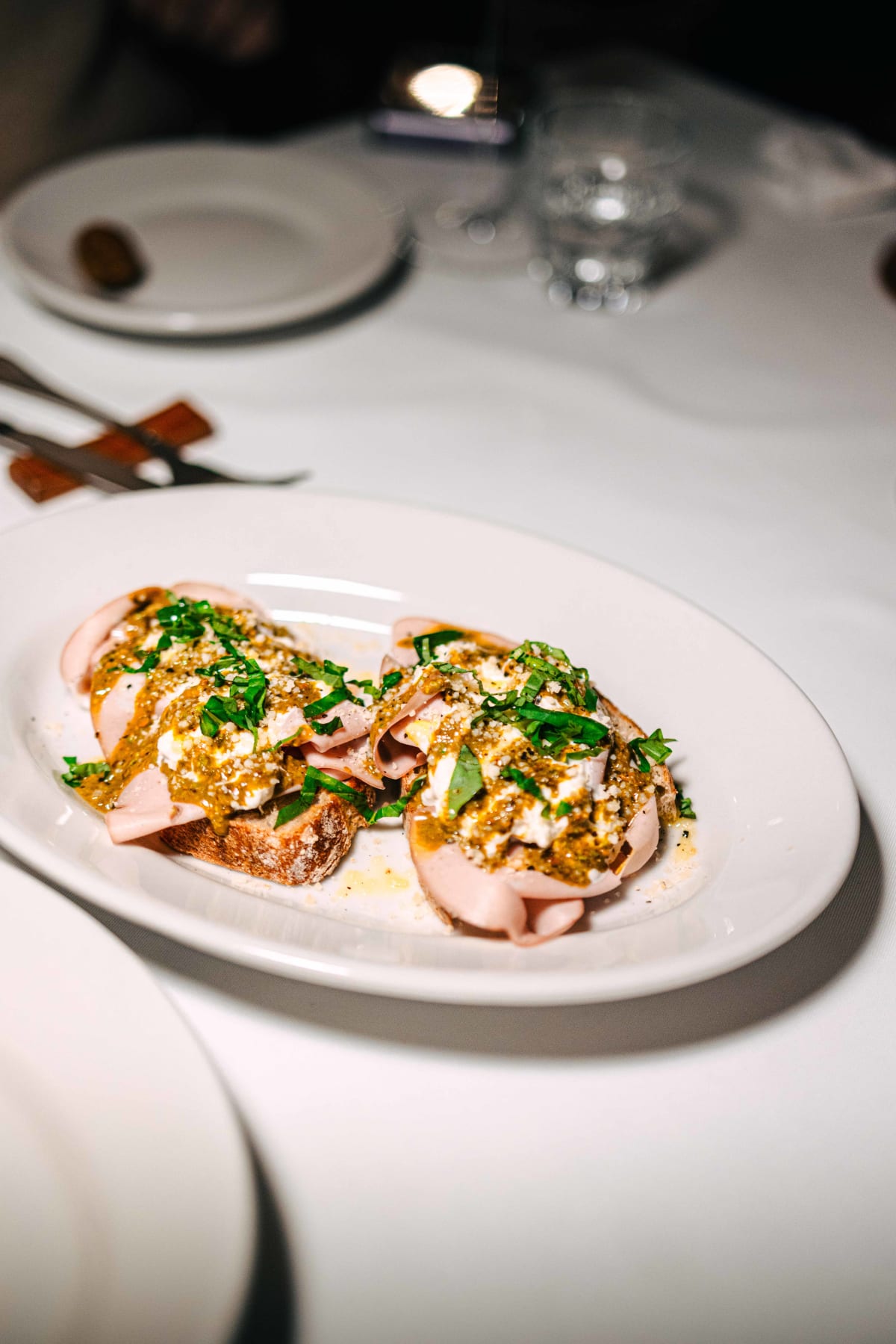
For the bruschetta you could choose between two, and I picked the one topped with mortadella and burrata, and this too was good. Mortadella is the large cooked ham that stands for Bologna, made from finely ground pork studded with fat and pistachios, and it is the original behind the American "bologna" sausage. Burrata is a fresh cheese born in Andria in Puglia, a pouch of mozzarella filled with stracciatella and cream. On the grilled bread, the salty mortadella and the soft burrata came together nicely.

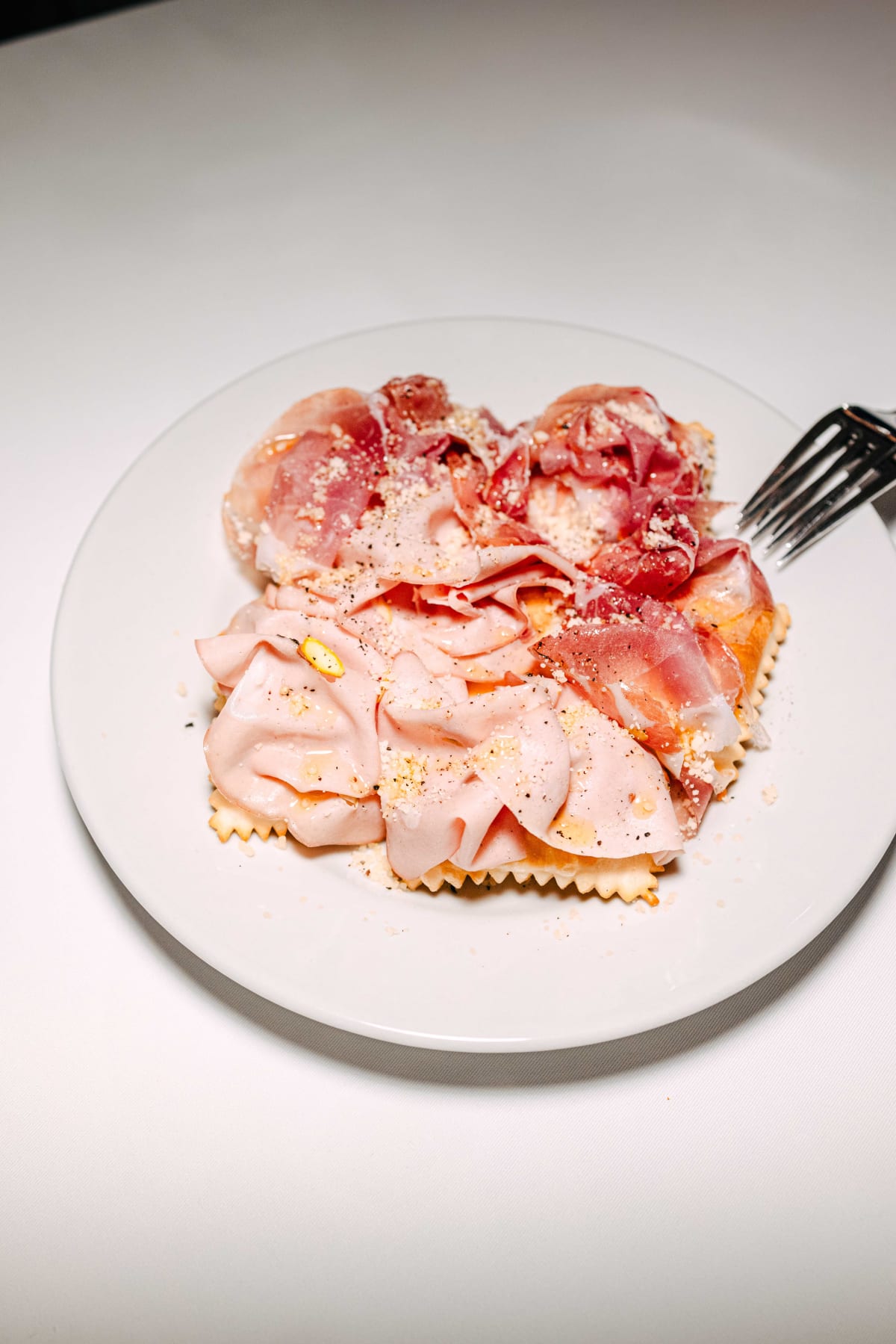
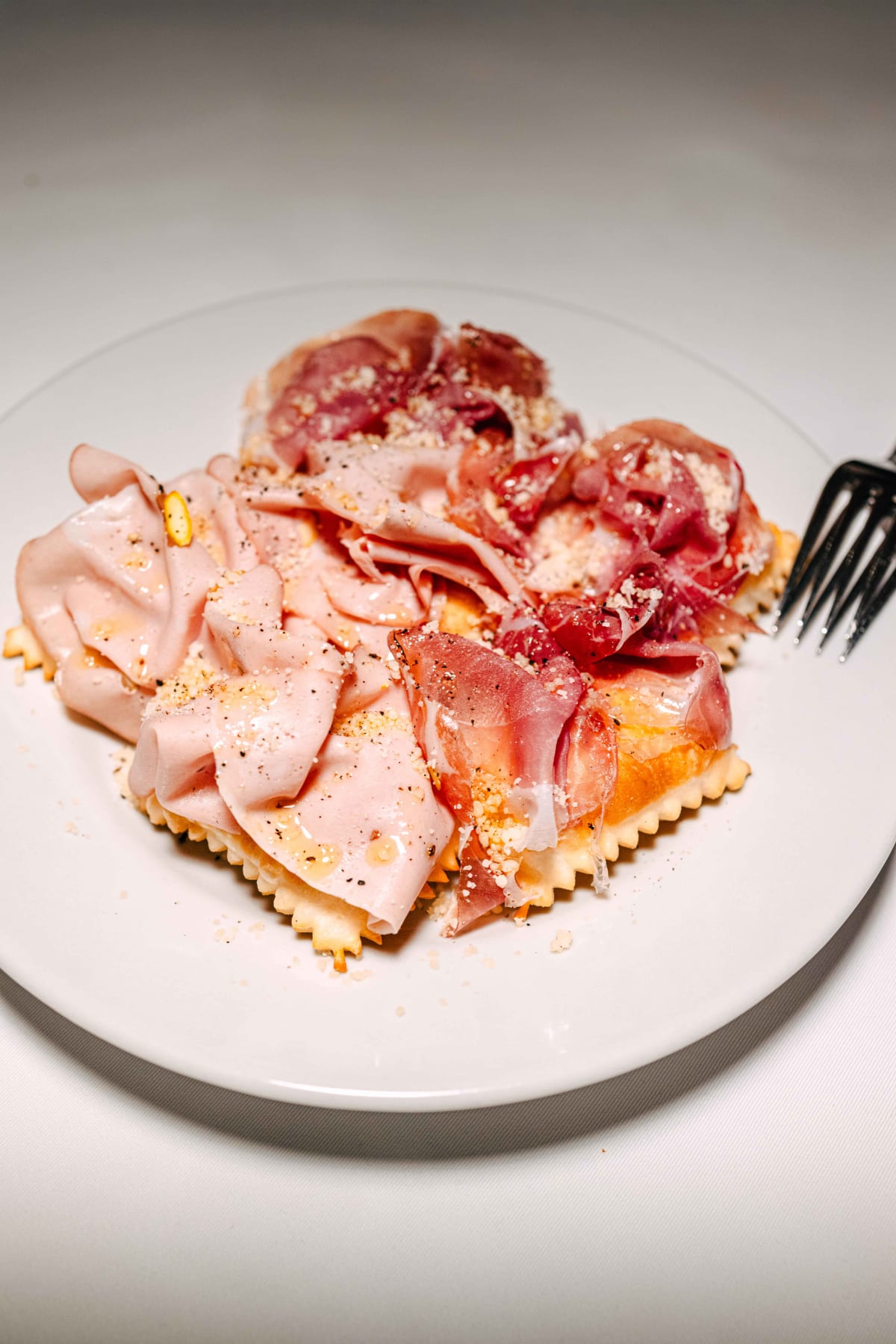
The last antipasto was a fried dough called gnocco fritto, topped with prosciutto and mortadella. Gnocco fritto is a fried bread enjoyed in Emilia-Romagna, especially around Modena, Reggio, and Parma, where a leavened dough is fried in lard and served alongside cured meats like prosciutto or salami. Prosciutto here refers to the dry-cured hams of Parma or San Daniele. I love cured ham, and the combination of the olive oil and grated cheese sprinkled over the top was wonderful. That said, even though I handle salty food well, this dish ran high in salt, and I thought that point could divide opinion.
Section 4·The Fresh Pasta
The fresh pastas came in three kinds, all needing a pre-order.

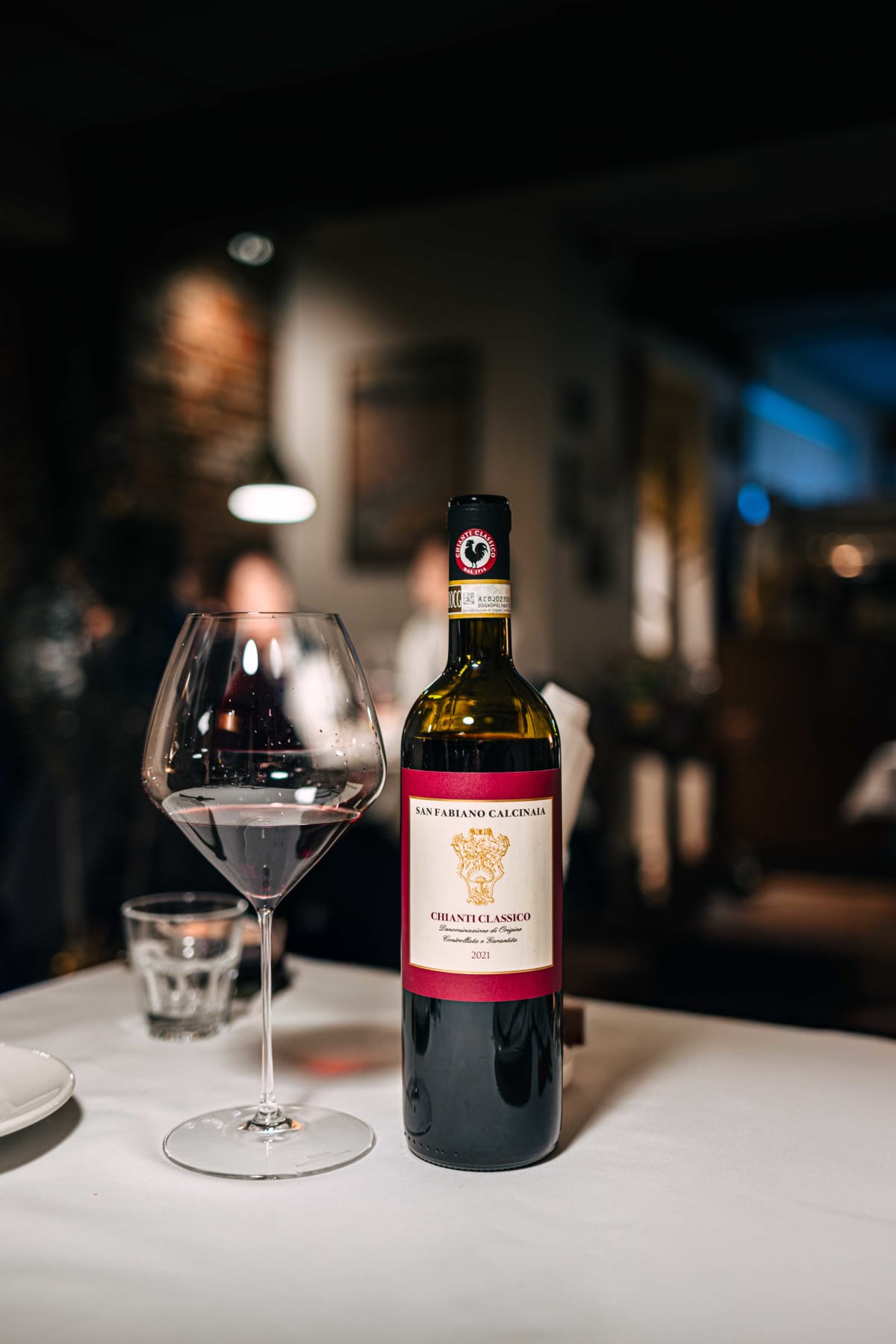
As we were finishing the antipasti, ahead of the first pasta we opened a bottle of red, the Chianti Classico from San Fabiano Calcinaia. It is a storied winery in Castellina in Chianti, the heart of Chianti Classico between Florence and Siena, taken over and built up by the Serio couple in 1983. It converted to organic farming in 2009, and its Classico, made from around ninety percent Sangiovese, shows the firm, age-worthy character of Castellina. On the neck was the symbol of Chianti Classico, the Gallo Nero, the black rooster.
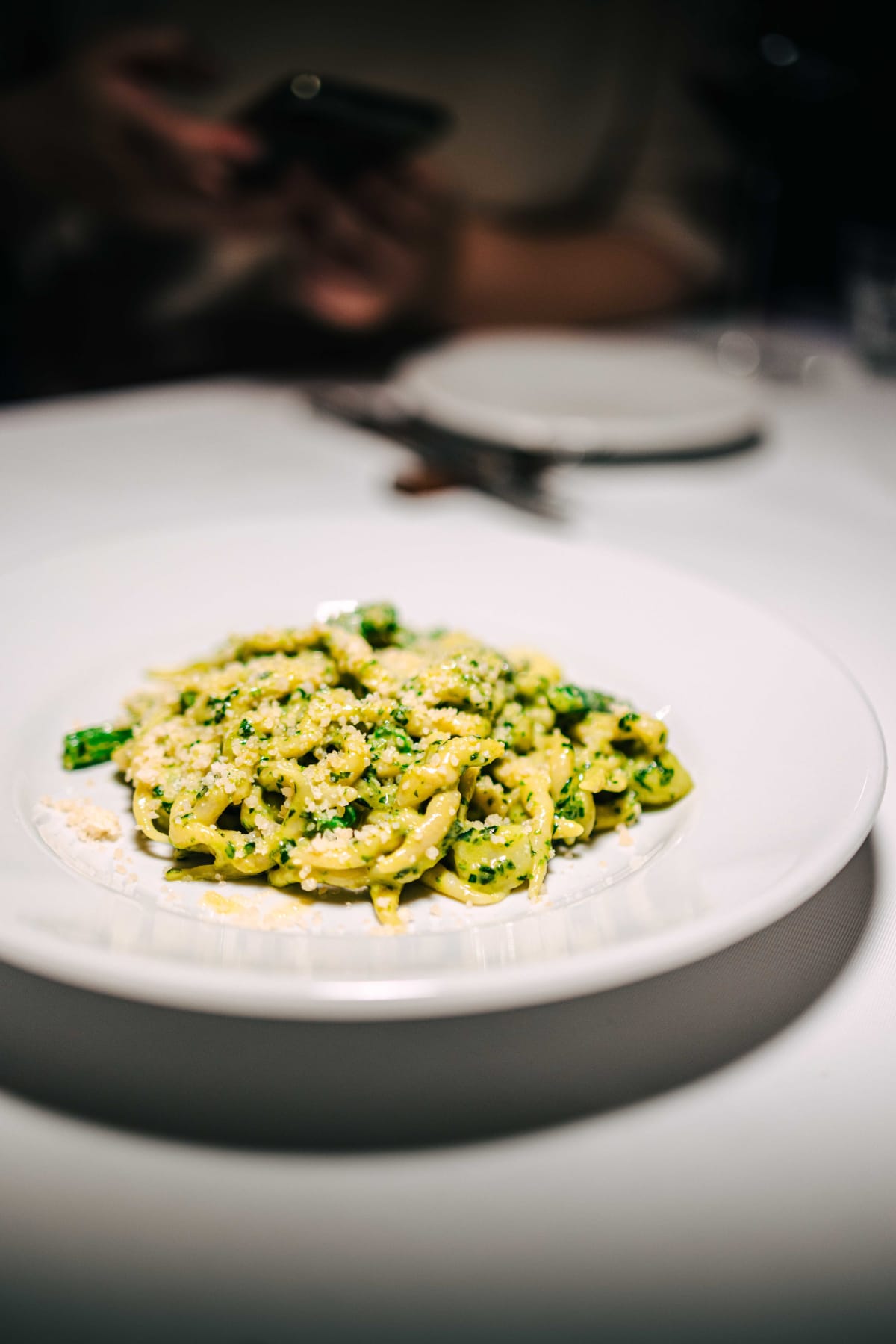
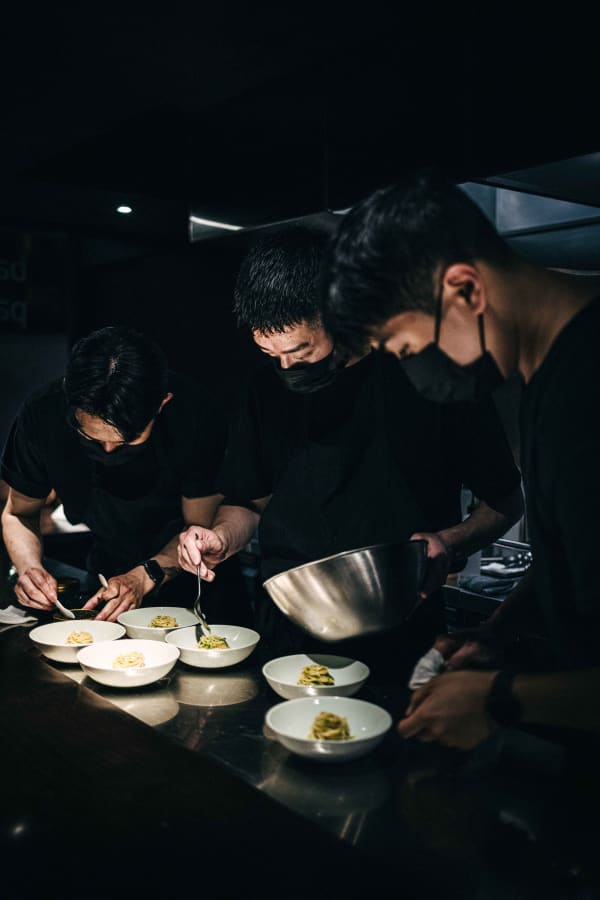
The fresh pastas I had pre-ordered arrived, the first trofie with basil pesto and the second strozzapreti with clams. Trofie is the short, twisted pasta of Liguria, a classic paired with the pesto genovese of Genoa in that same Liguria.


Strozzapreti, whose playful name means "priest-stranglers," is a pasta of Emilia-Romagna and central Italy.

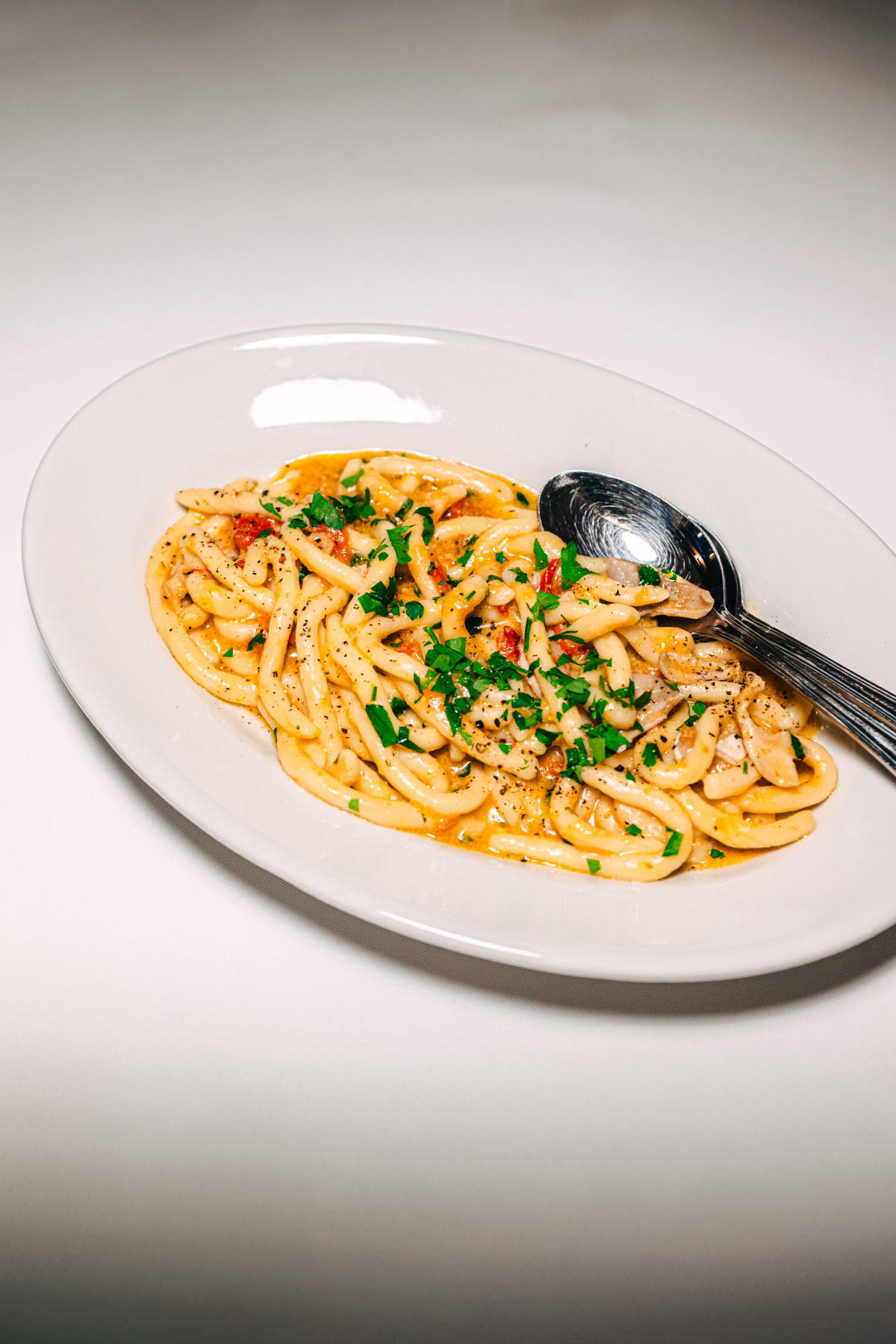
Overall the pasta here had good sauces, but to my mind what was truly excellent was the texture of the noodles. Perhaps because they were thick, I marveled at how chewy the strands were, and they sat beautifully with the sauces.


Section 5·By Hand
After the course, I talked with the chef, who had come out alone, and he told me fresh pasta is mostly made one of two ways, extruded by machine or made by hand.

But with a machine, he said, the texture and quality vary greatly with the motor's output, and a high-output machine is too expensive for a small shop like his to run. Then, with a broad smile, he said he wears down his own wrist to make the fresh pasta himself. It really was a taste with the chef's labor in it. He also makes the basil pesto by pounding it in a mortar himself, exactly the way pesto genovese is meant to be made. I found myself wondering, belatedly, whether the reason the restaurant could not last was the chef's wrist, or his health.
It really was a taste with the chef's labor in it.
Section 6·The Lasagna
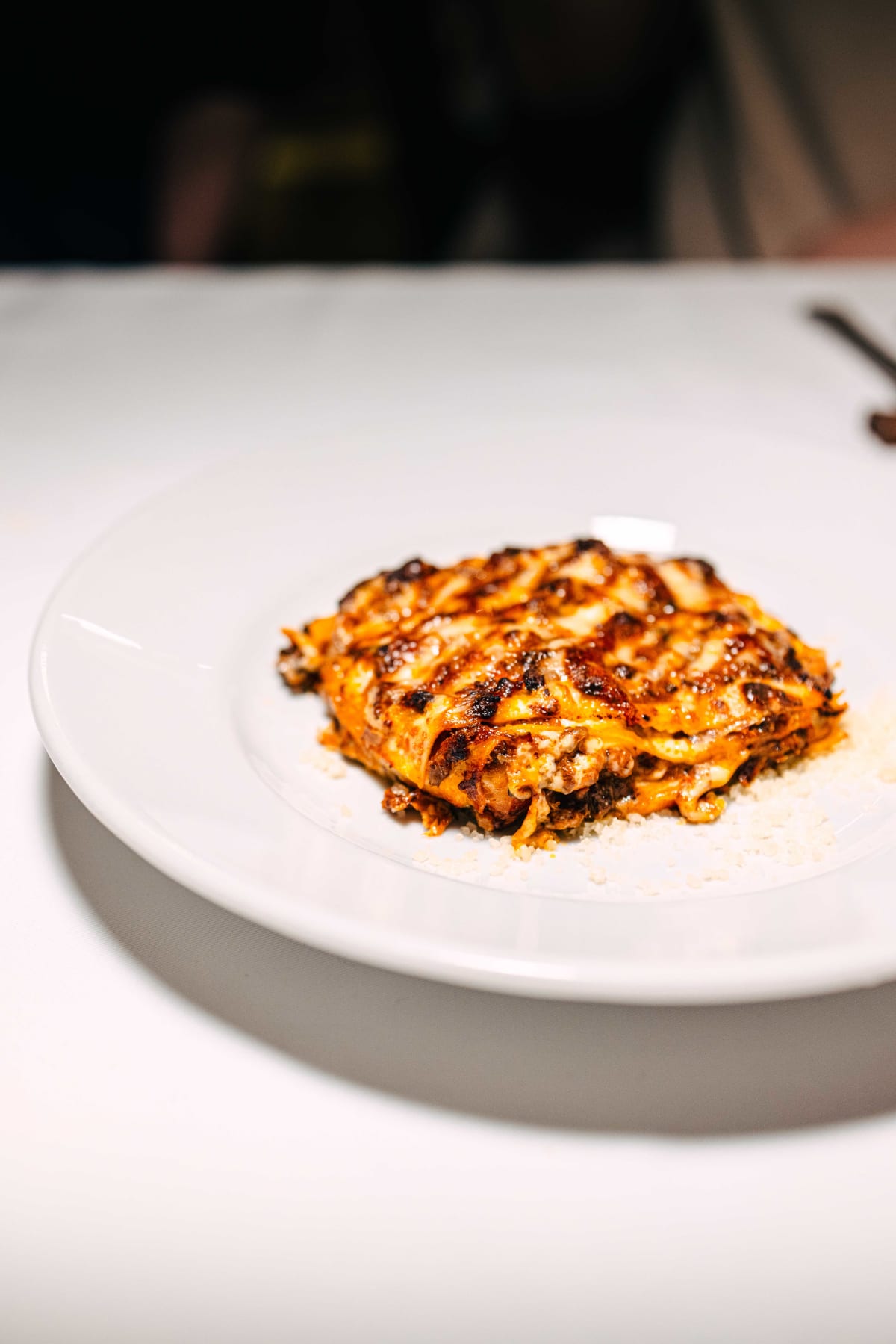
Next came a ragù lasagna, and it was my best of the day. The moment it hit my mouth I let out a gasp, and the cheese on top and the depth of the ragù were so good that I wondered whether I had ever eaten a lasagna this fine. Lasagna, or lasagne alla bolognese, is a classic of Emilia-Romagna, built by stacking layers of ragù, besciamella, and spinach-laced fresh pasta sheets. In a style different from Perigee, the New York Italian that led the early-2020s Seoul pasta craze, this one seemed to be made by spreading the pasta wide and stacking it, with a classic, soft texture rather than a crisp surface.


Section 7·More Pasta
Having finished the three fresh pastas, everyone cried out as one that we absolutely had to order more, and the chef came over to recommend carbonara and amatriciana bucatini, which we ordered. Carbonara is the Roman classic finished with guanciale, egg, pecorino romano, and pepper, while amatriciana, which originated in the small town of Amatrice in Lazio, uses guanciale, tomato, and pecorino. Being dried pasta, I expected thin strands, but they turned out surprisingly thick. They were not as springy and chewy as the fresh pasta, but the dried noodles had a good bite too, and both sauces were thickened well so that they clung to the strands.
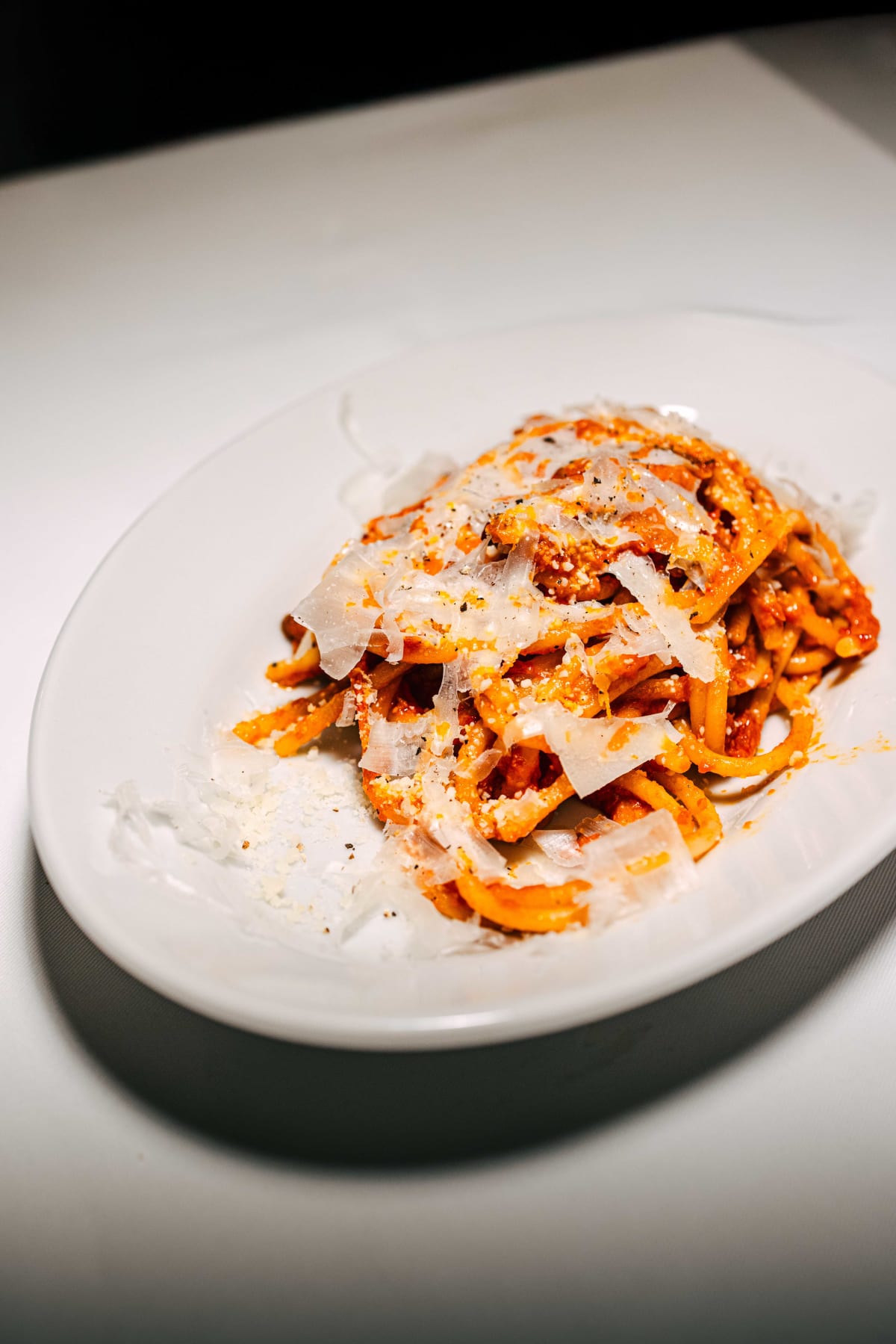

Personally I enjoyed the carbonara more than the amatriciana that day. At first there was a faint funk particular to a classic carbonara, but I adjusted quickly, and rolling a piece of guanciale up with the noodles, taking it in, and following it with a sip of red wine was the icing on the cake.
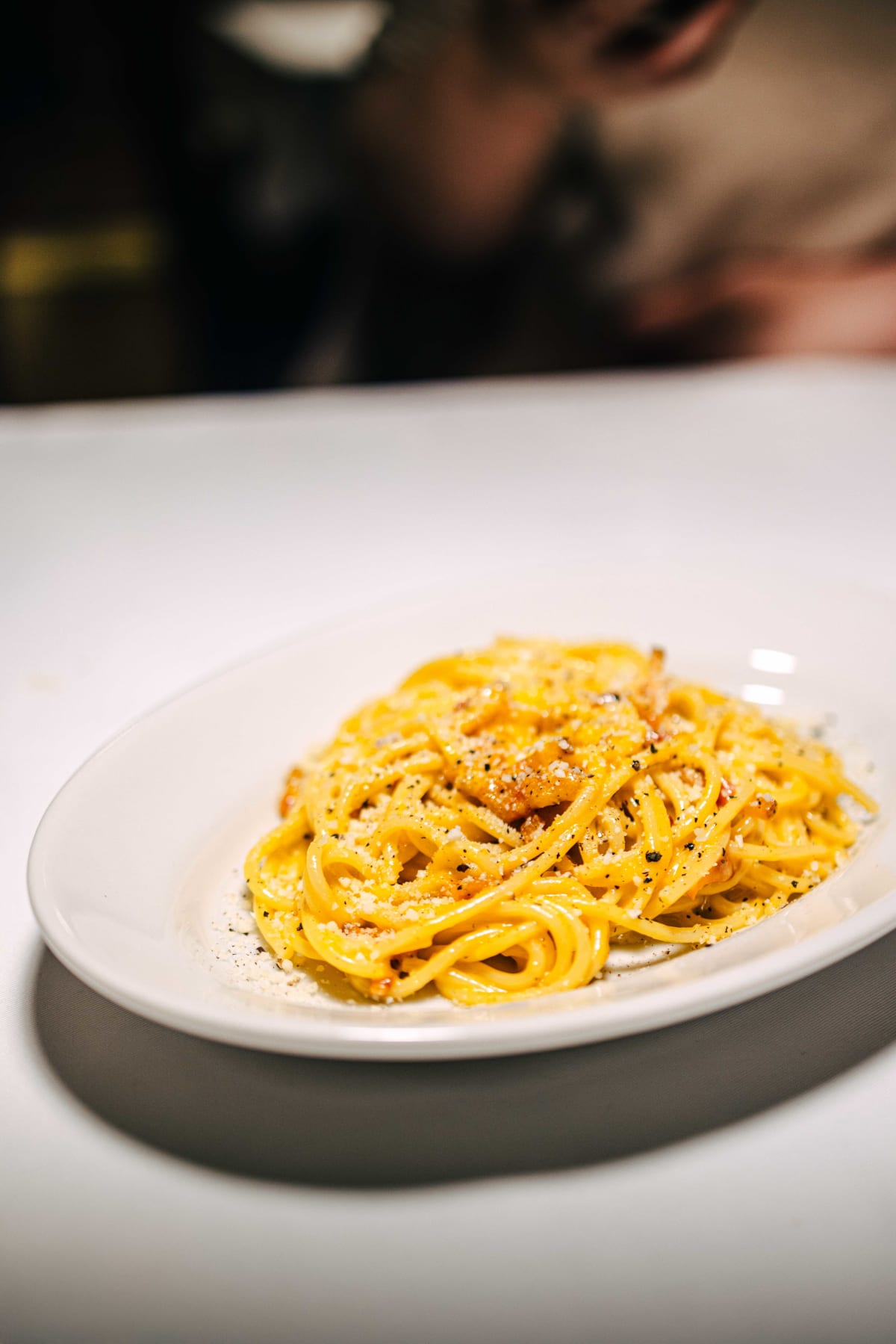


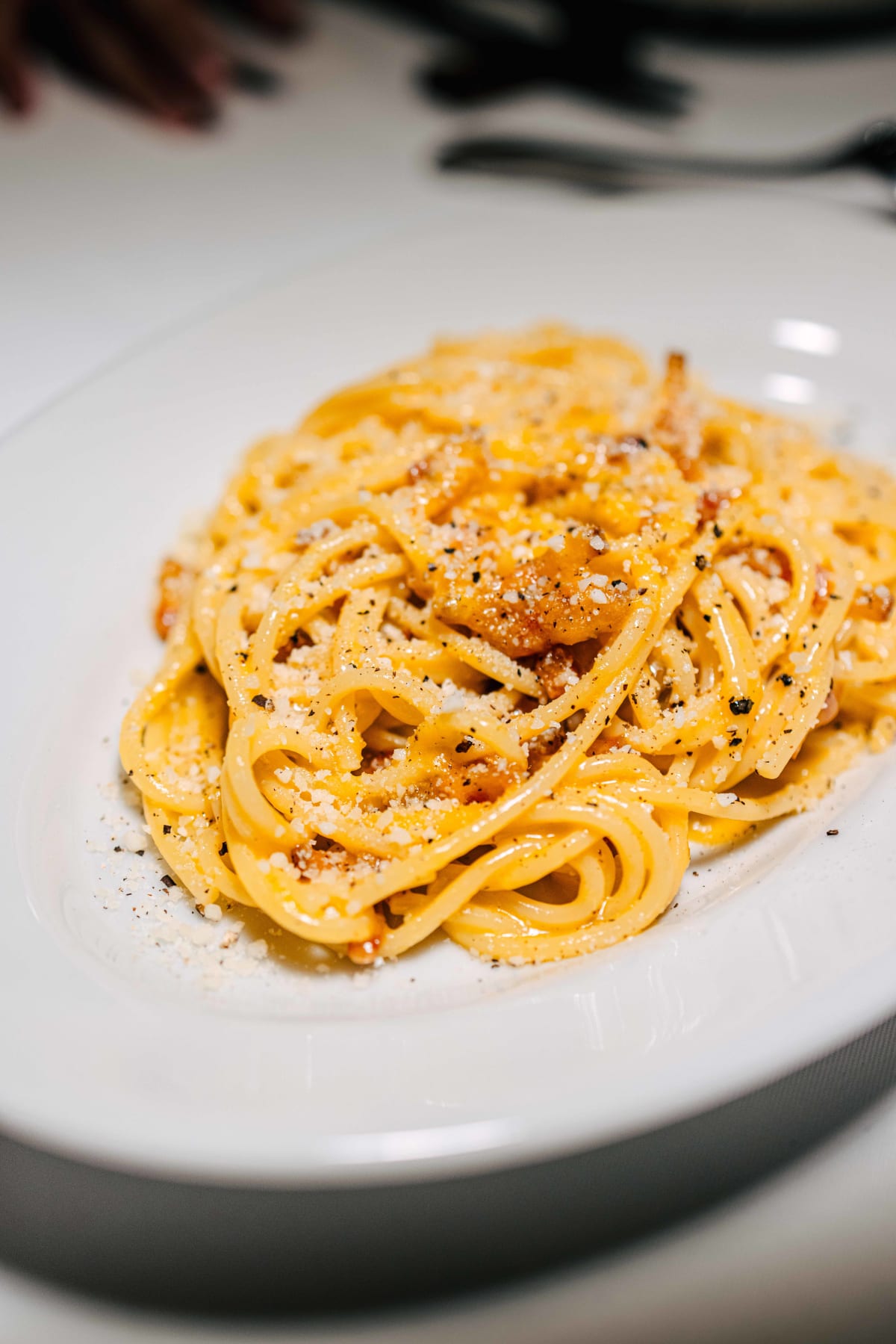
The chef said he uses the Rustichella d'Abruzzo brand for his dried pasta, an artisanal Abruzzese maker that extrudes its noodles through bronze dies and dries them slowly. My companion that day spotted the brand at a department store the next day and bought some.
Section 8·Dessert
After finishing the pasta, I ordered a pistachio gelato for dessert. Pistachio though it was, it carried something that reminded me of injeolmi rice-cake ice cream, which I found unusual.

This was February, and a month earlier, in January, I had been to the Seoul pop-up of Tokyo's SUGALABO, where I had heard about the quality of the gelato machine and of the gelato itself. The flavour changes greatly with the equipment, they say, so making gelato this good in a small establishment is itself an impressive feat.
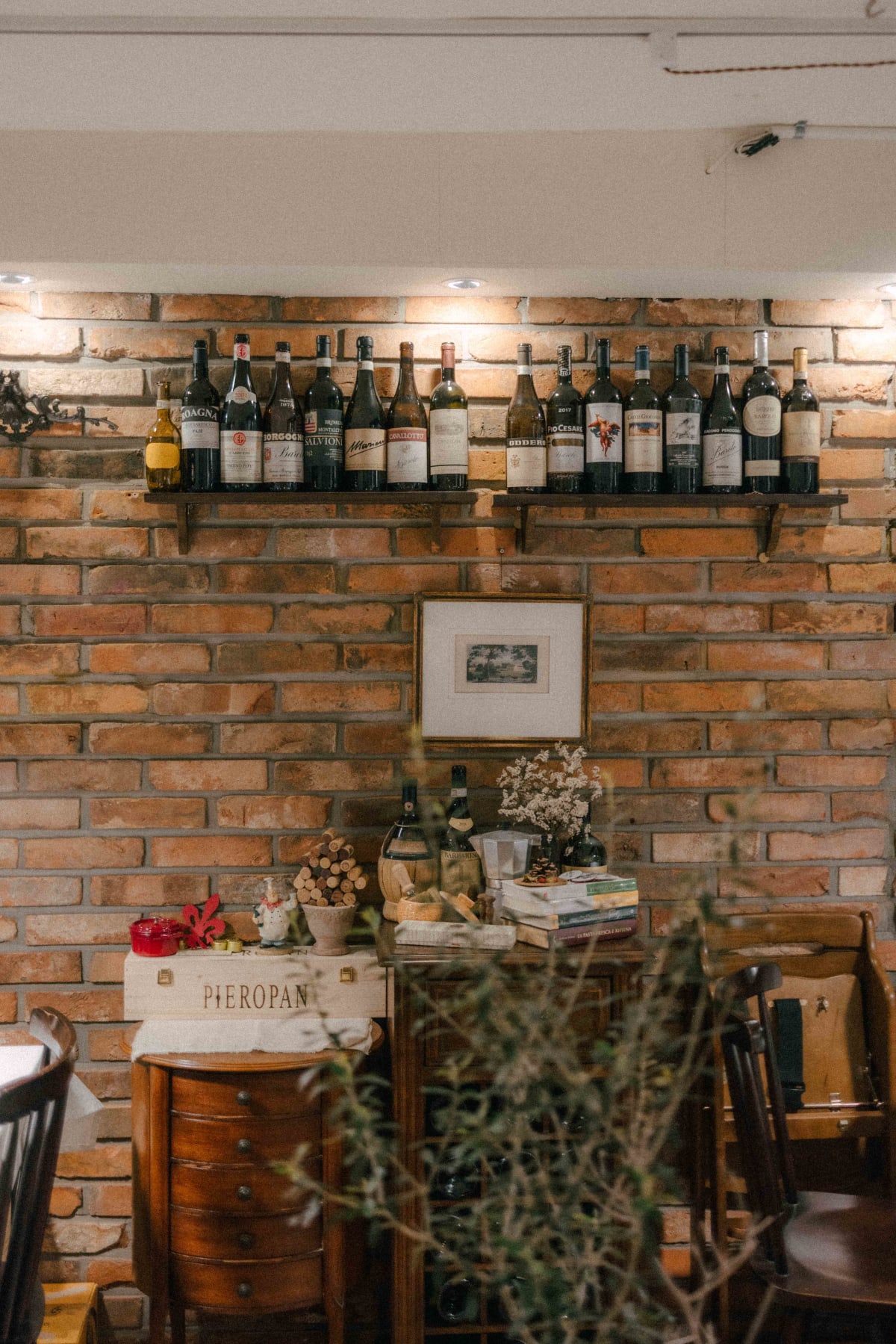
The final dessert was a few cookies and a glass of wine, a sweet wine from northern Italy, Pieropan's Recioto di Soave "Le Colombare."


Pieropan is a house that stands for Soave in the Veneto, and Le Colombare is a traditional passito dessert wine made by drying one hundred percent Garganega on bamboo racks until late winter. The name "recioto" comes from the topmost, ripest part of the grape bunch, the berries called "recie," or ears, in the Veronese dialect, and it is made only in good vintages. The dessert was to plunge the cookie into the wine and eat it, and in fact dipping dry cookies into sweet wine is the Tuscan tradition of cantucci and vin santo, with Recioto standing in here for the vin santo.
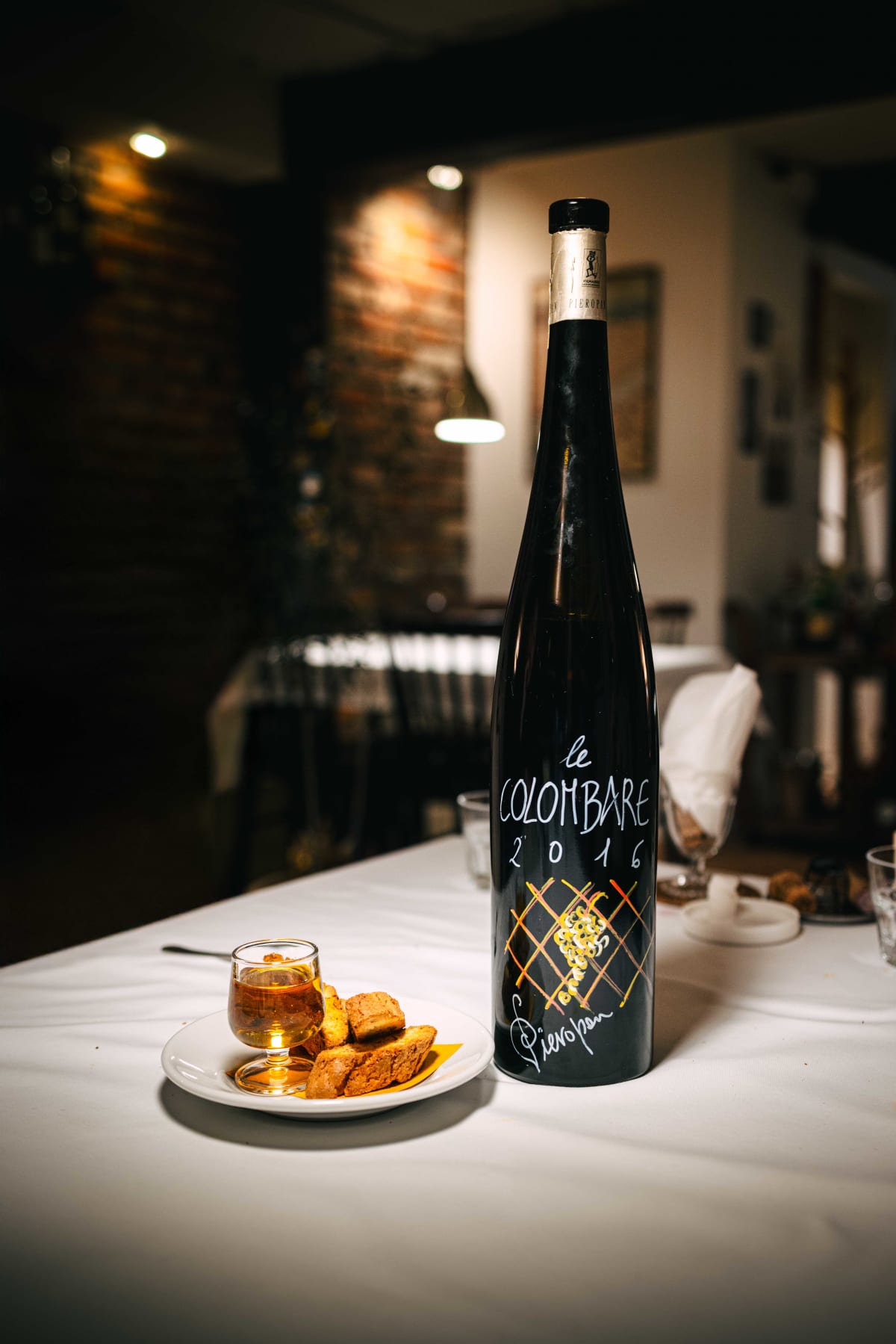


It was a way of eating I had not tried before. Dunking the cookie and pulling it out, the alcohol leapt up a little, but the sweetness and nuttiness of the cookie merging with the alcohol offered an alluring, new flavour. I thought that if you drank a lot of wine through dinner and then had this dessert, the alcohol, being far from light, could hit you all at once.
Section 9·Leaving
It made me feel as though I had come to a local restaurant in some Italian town, and I want to believe that somewhere the chef is preparing a new Italian restaurant.

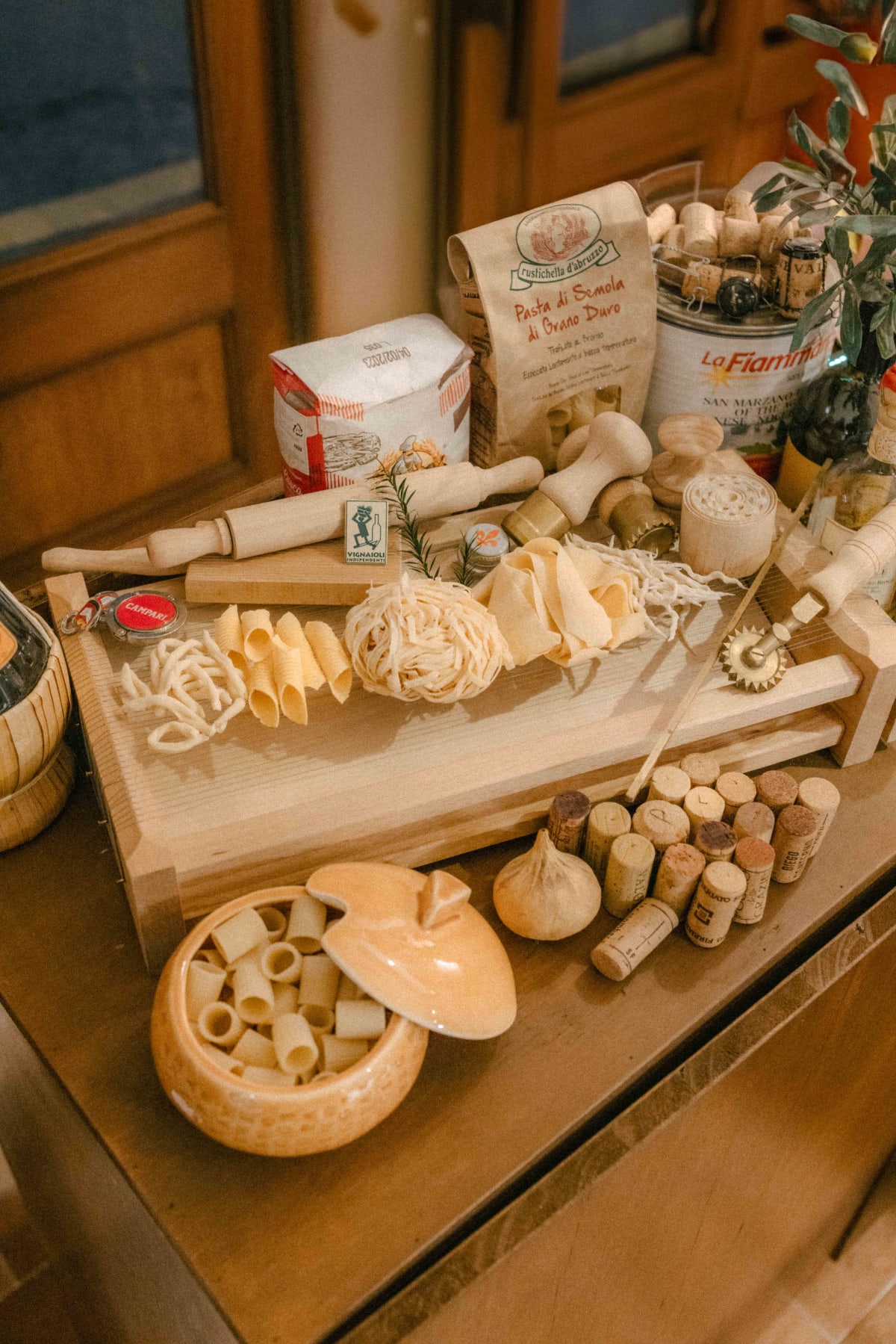


It was Antica Trattoria, a kind of "Roman Holiday" that existed for a brief while in Seoul.
What set Antica apart was never polish or ambition, but how uncompromisingly Italian it was willing to be. In a city where most Italian cooking is smoothed out for local palates and built to scale, a small room serving fresh pasta shaped by hand and seasoned the way it is in Italy was a genuine rarity. Cooking like that asks something of a diner and repays it in full. It is the kind of place that reminds you what the food can taste like at its source, and the kind worth going out of your way for whenever one appears.
Have a question about this restaurant, or want to share your own experience?
Send a message