Local & Essential · Seoul · Korea / May 2023
bawi pastabar
"The now-closed Seongsu original that started Korea's fresh-pasta-bar craze, where a Japanese touch and Japanese precision met Italian form at the counter."
Section 1·The Scene
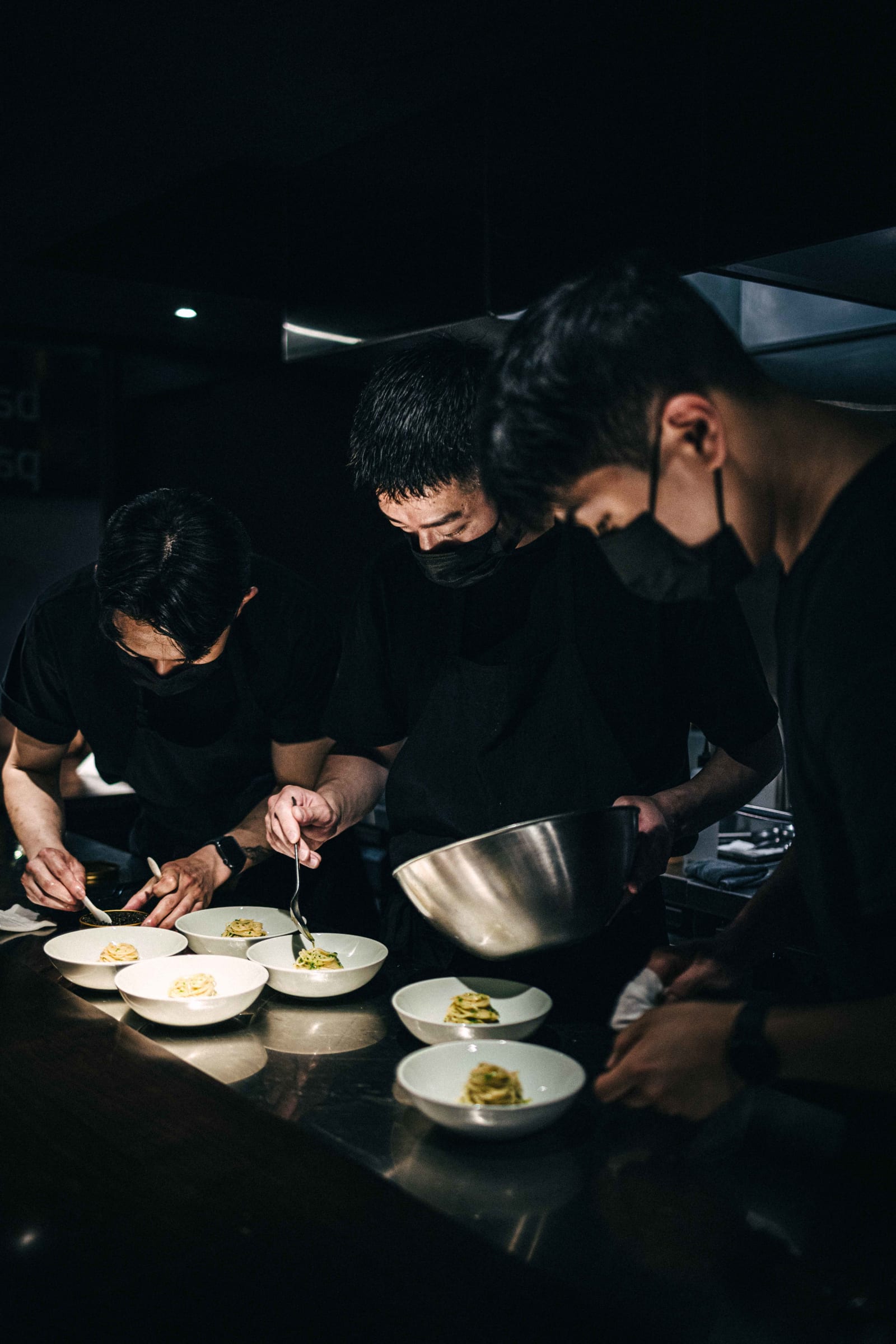
When COVID-19 hit in 2020, Korea, paradoxically, entered a boom in high-end dining. If sushi was the most emblematic genre, then on the European side it was Italian, and pasta in particular, that grew the most visibly. The places that led the growth of Seoul's early-2020s pasta scene, though, were less authentically Italian than they were Japanese-Italian counters with an Asian touch, or New York-style American-Italian spots. If I had to name one symbolic place among them, it would be this one in Seongsu, Bawi Pastabar.
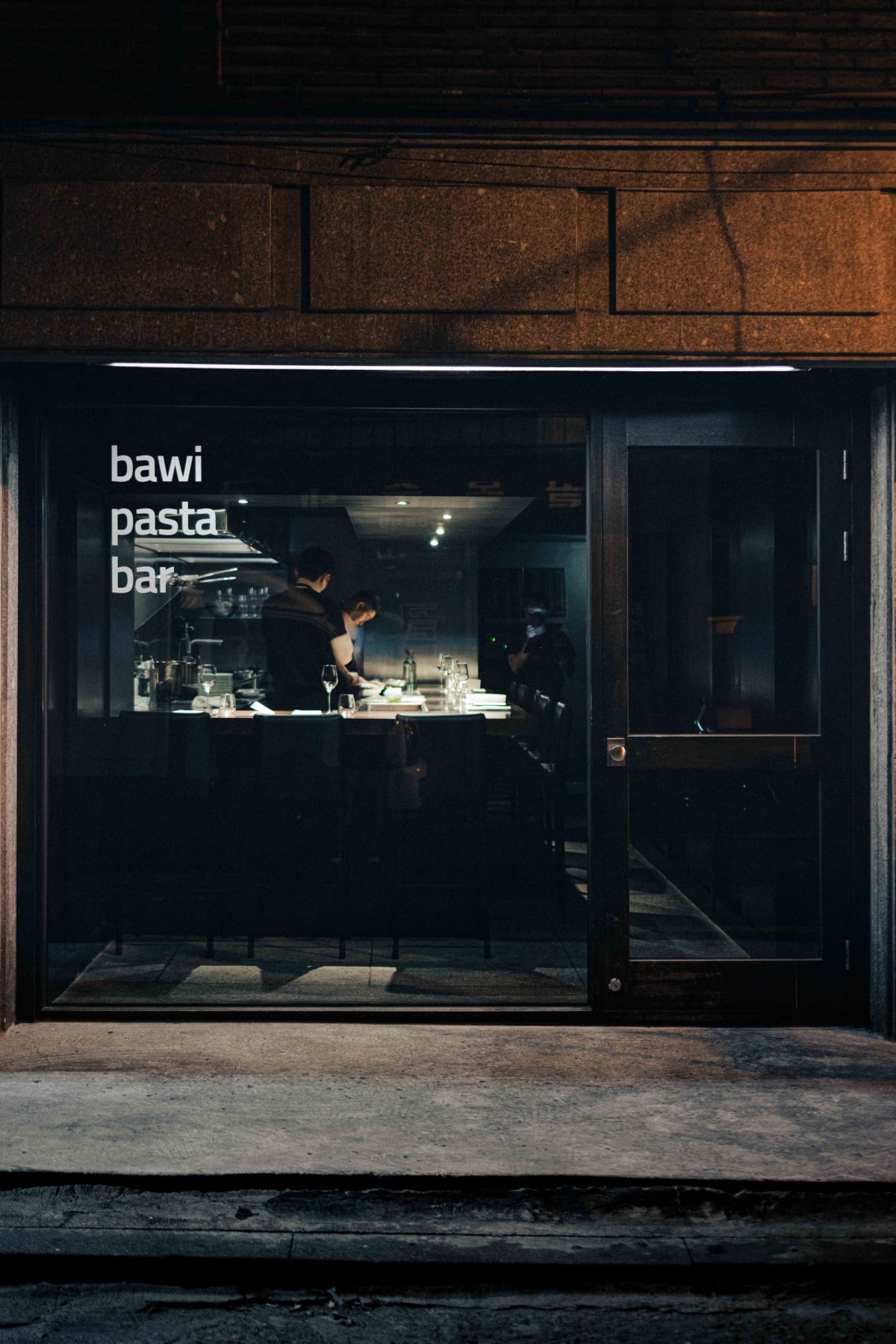
During the pandemic, as spending shifted toward dining and high-end eating, a handful of restaurants became genuinely hard to book between 2020 and the middle of the decade. On the pasta side, Bawi Pastabar in Seongsu was the hardest of them all. It is widely regarded as the root of Korea's fresh-pasta-bar wave, the so-called "pasta omakase" trend, and it is led by chef Kim Hyun-jung. Even after that initial craze cooled, the Seongsu original held its popularity, and I think that was precisely because its skill and fundamentals ran so deep.
There is a reason I am writing this opening in a somewhat past tense. Bawi Pastabar now runs several branches around Seoul, including one inside House of Shinsegae in Gangnam and another in Banpo (Jamwon), but the Seongsu location where it all began has since closed. Even so, it is impossible to leave Bawi Pastabar Seongsu out of any account of Italian cooking, and of pasta-bar culture, in a city like Seoul, so I am setting it down as a record.
it is impossible to leave Bawi Pastabar Seongsu out of any account of Italian cooking, and of pasta-bar culture, in a city like Seoul
Section 2·A First Visit
I started taking food seriously, eating with real enthusiasm, around the summer of 2020, and as I remember it, Bawi's craze began around then too. I had a few chances to go, but it was only three years later, in May 2023, that I finally made my first visit.
In the early days I understand it ran mostly à la carte with a short course, but by the time I visited in 2023 the format had changed to two seatings, at 6:00 and 8:45. The two seatings had slightly different menus then. The later one dropped a few of the pastas from the first, cost a little less, and was built to be enjoyed somewhat lightly alongside wine. So even though I had Korean barbecue beforehand that day, it never felt heavy or like too much.
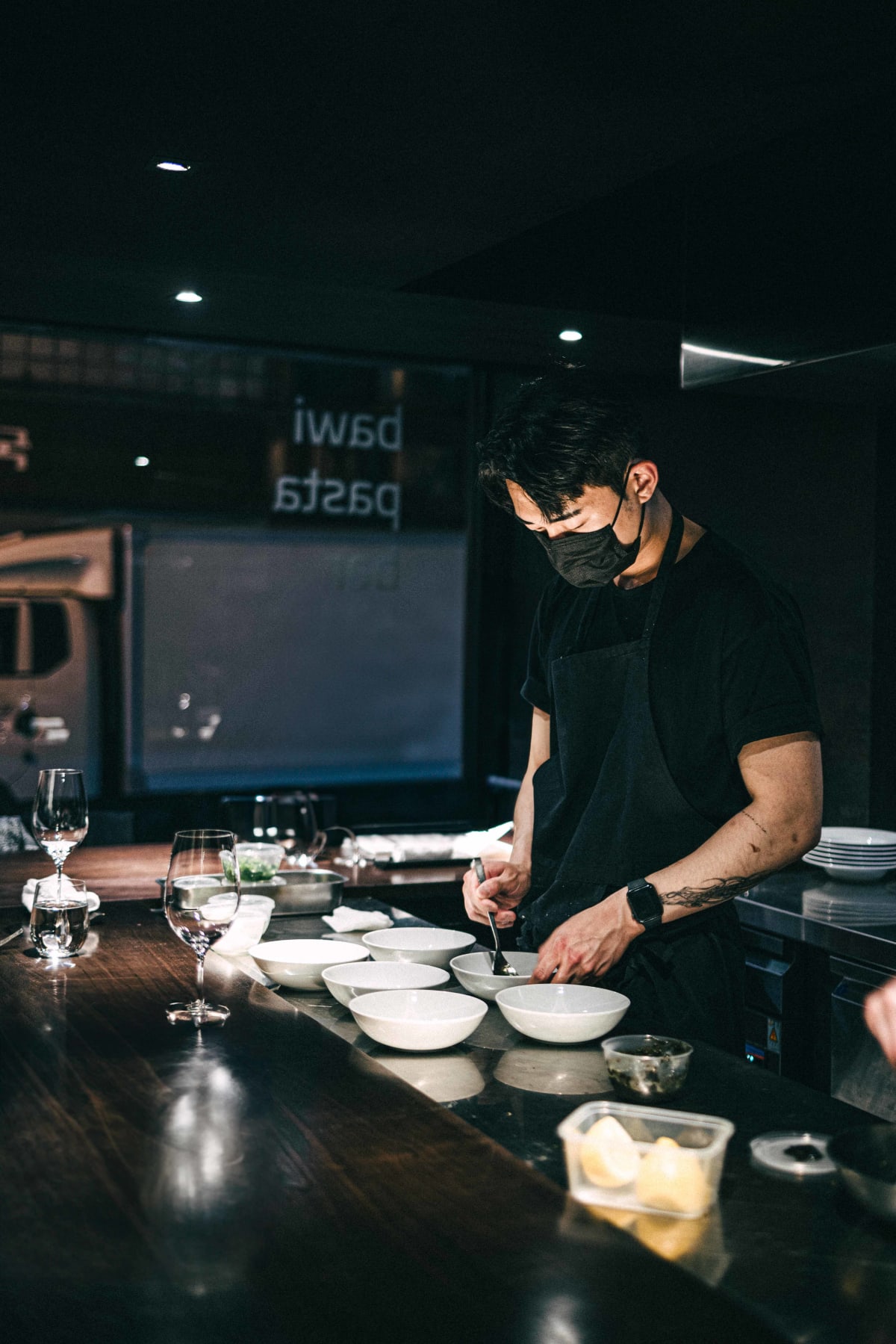
That day I went to Bawi Pastabar with a foodie friend from abroad whom I had just been introduced to. It was my first time there too, and since this friend had been to so many excellent restaurants overseas, I genuinely could not guess how they would react. But they seemed to really enjoy it, which left me, on my own first visit, quietly proud.
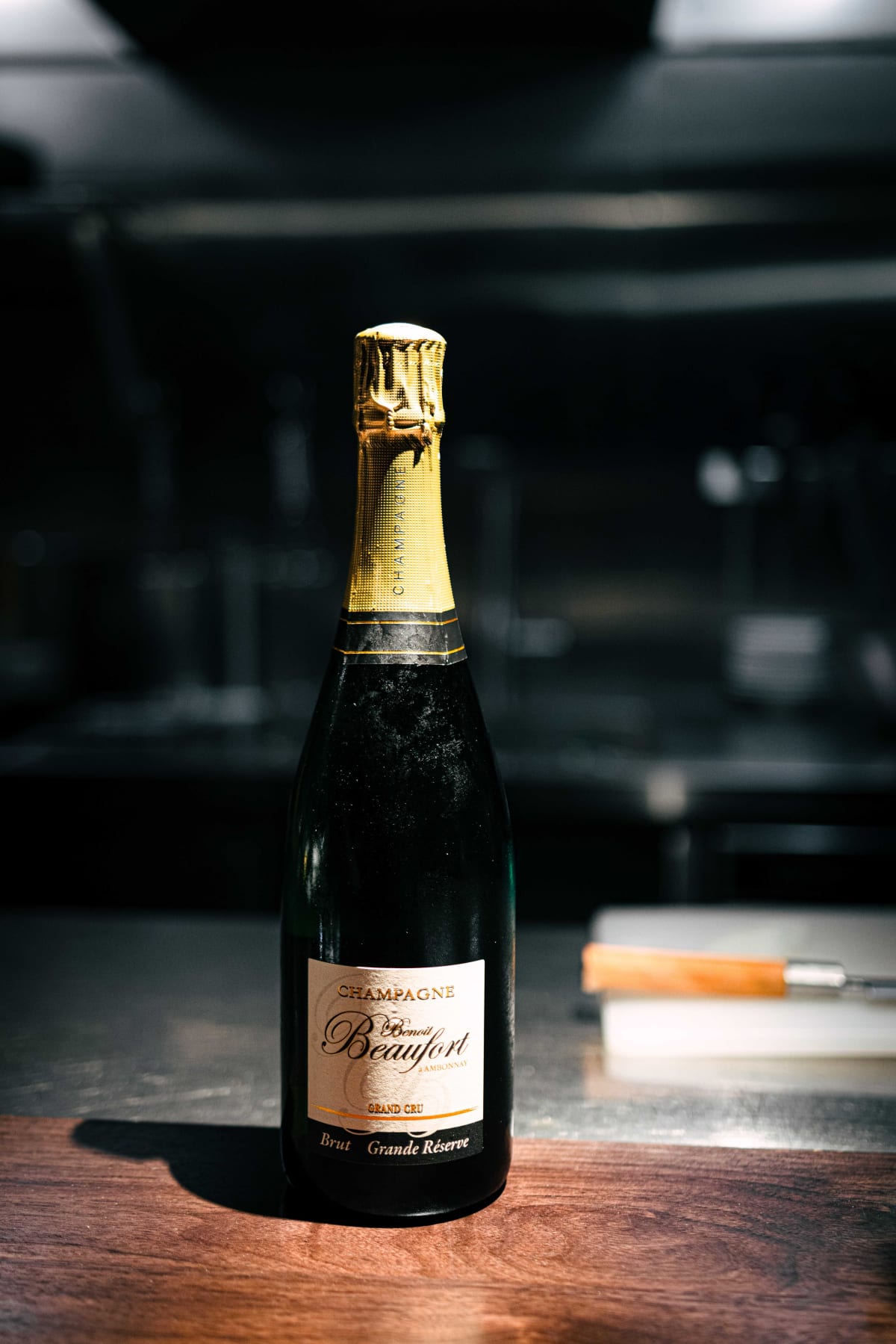
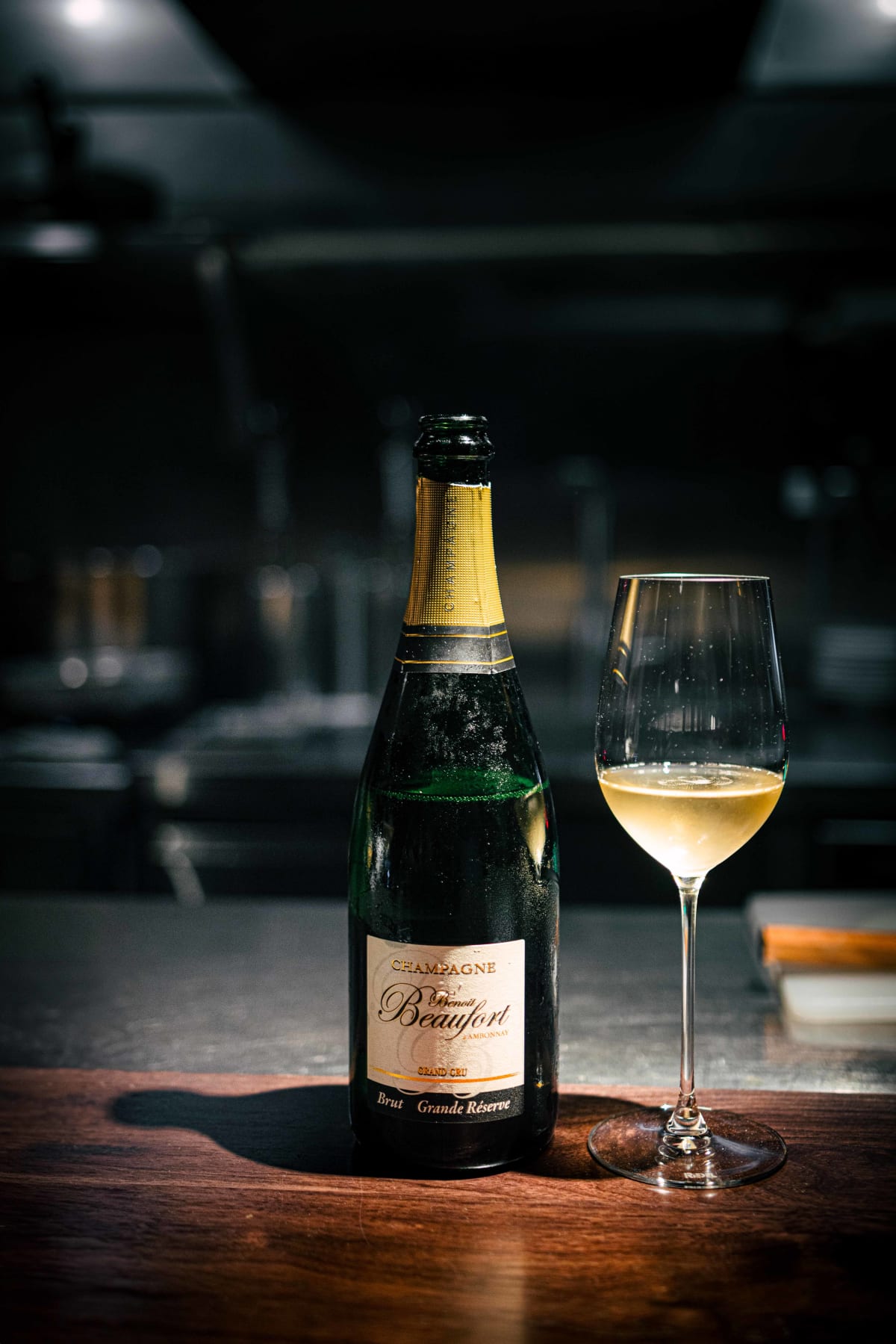
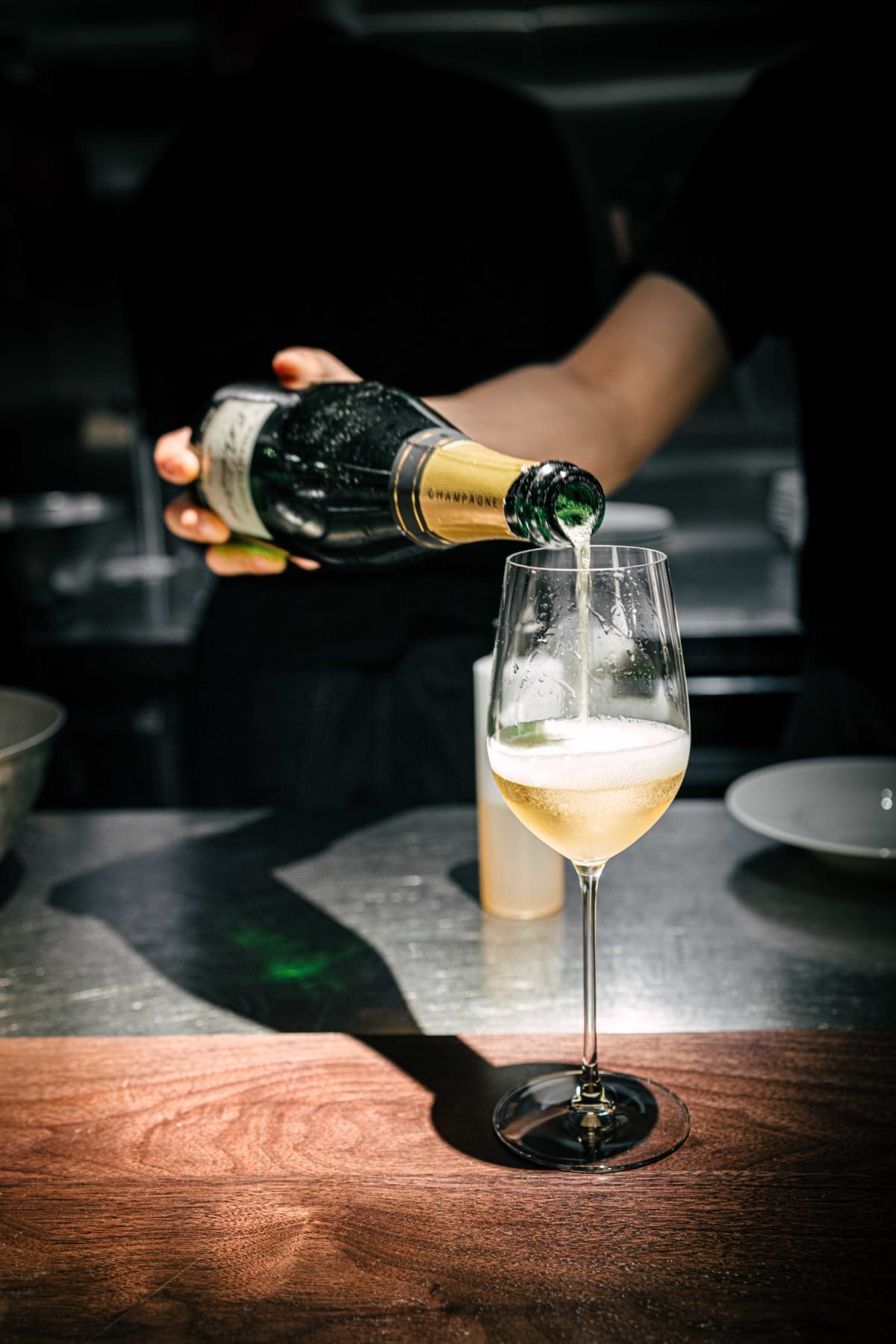
Bawi's drinks policy is an important part of the experience. Because it is not simply a restaurant but a pasta bar, wine was required, at least one bottle per two people. Thinking we would just have something reasonable, I ordered a bottle of Benoît Beaufort "Ambonnay" Grand Cru Grande Réserve, and it turned out to be far better than expected. Whether because it had been chilled so well, the aromatics were rich and it simply tasted good. Benoît Beaufort is not a large house but a grower (récoltant) Champagne, six generations deep and run by Benoît and Isabelle Beaufort. Its home, Ambonnay, is one of only seventeen Grand Cru villages among Champagne's 319, and a prime site for Pinot Noir. As I recall, the overseas cellar price was somewhere around fifty to sixty thousand won, which made it a tremendous value in Champagne.
Section 3·The Openers
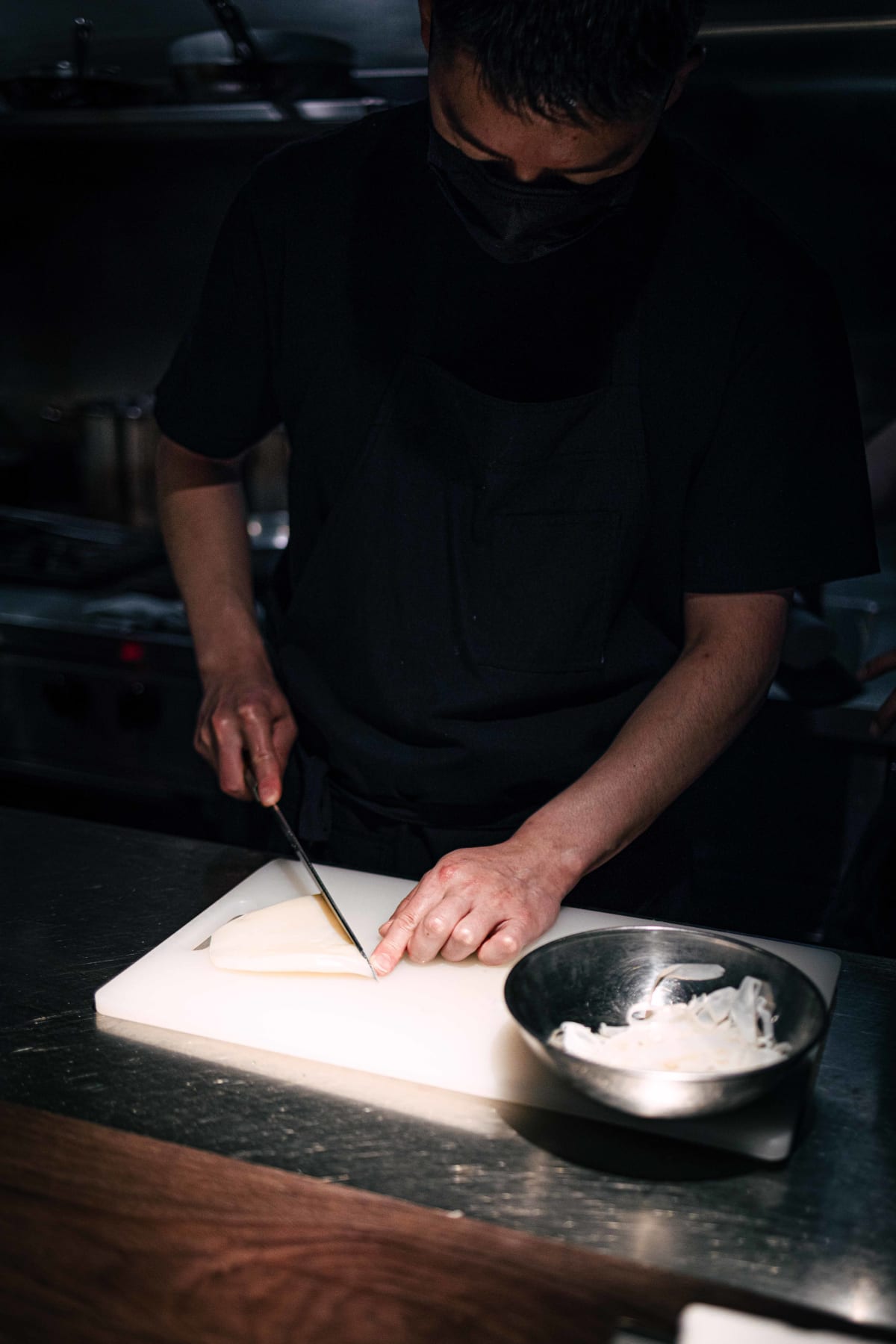
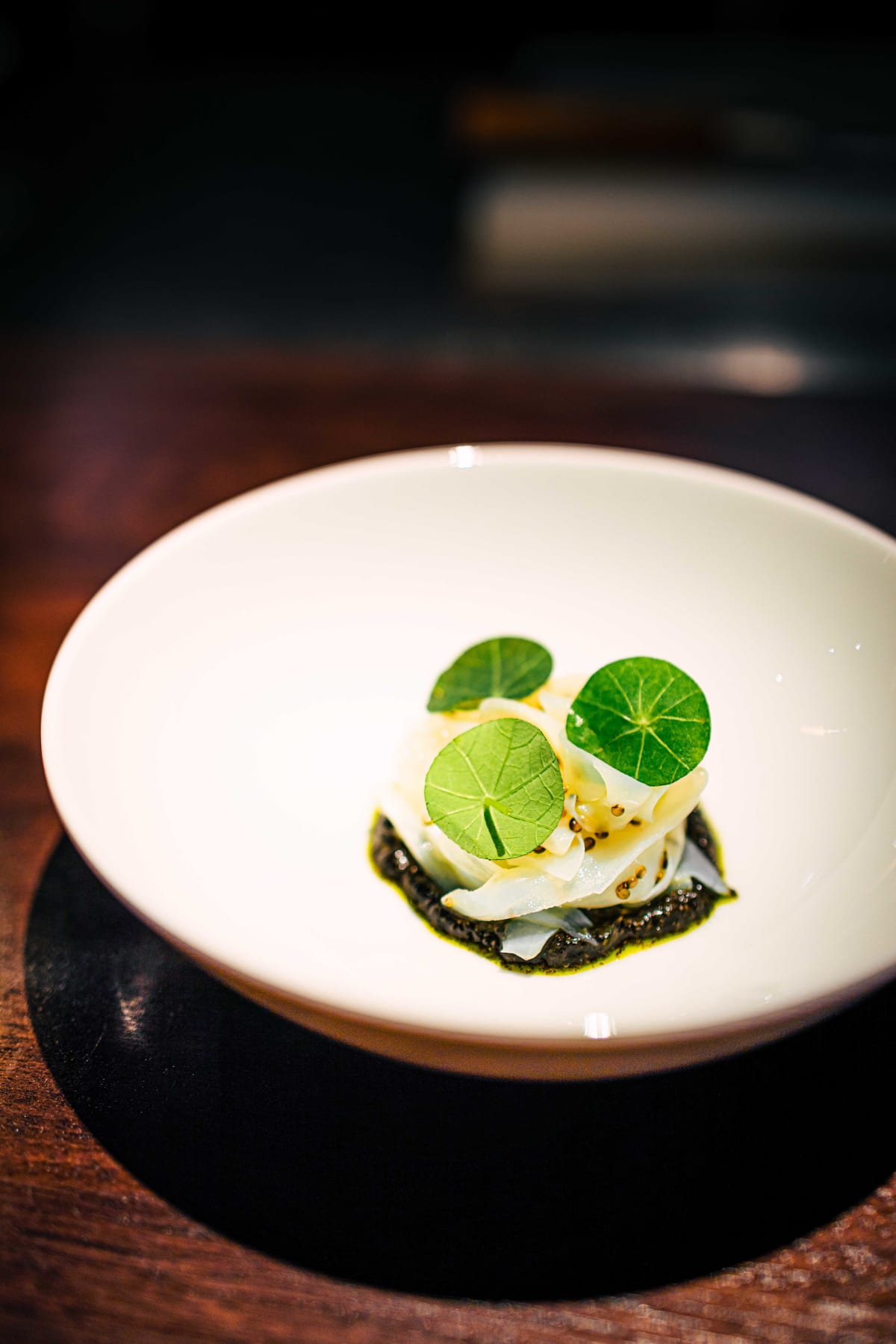
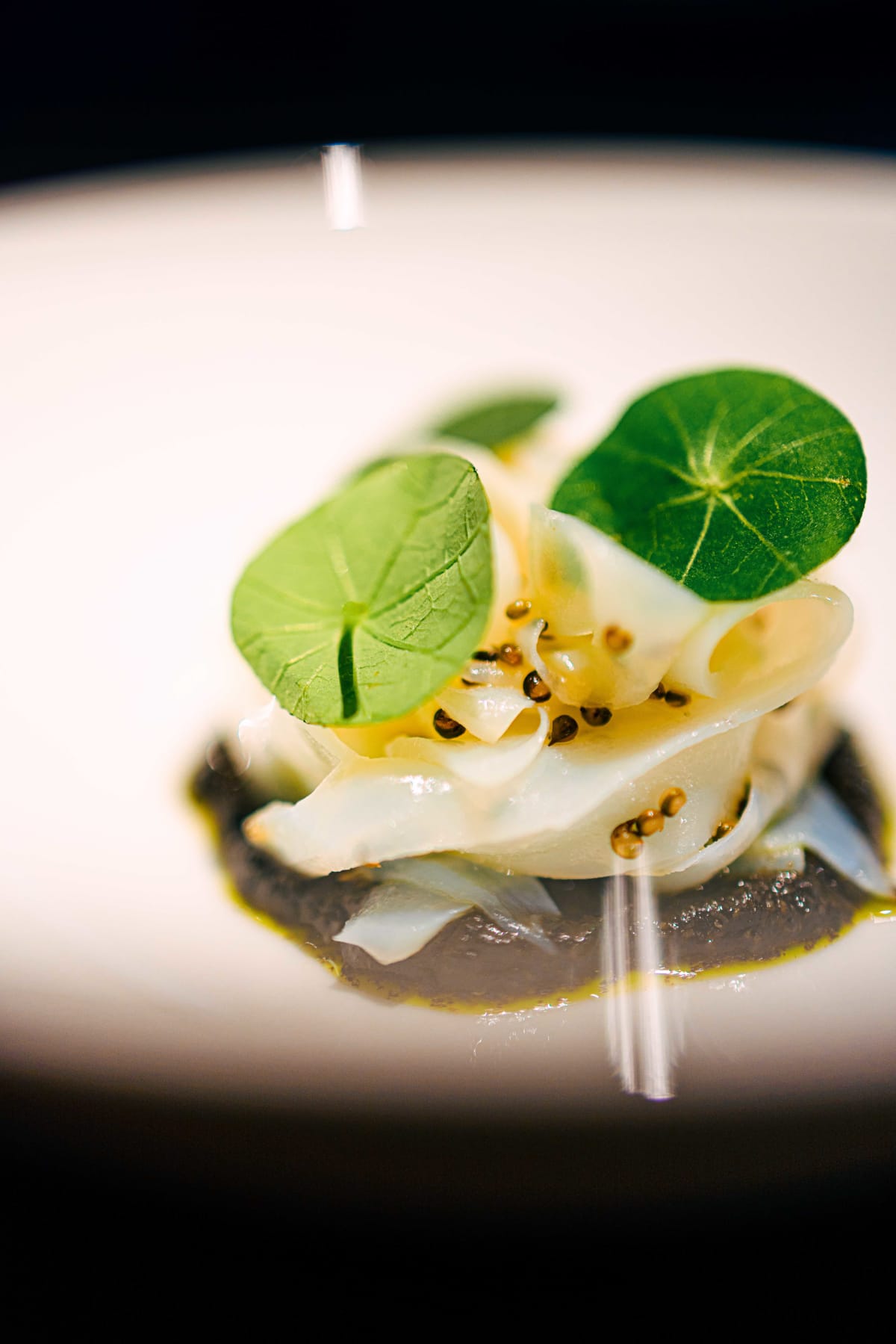
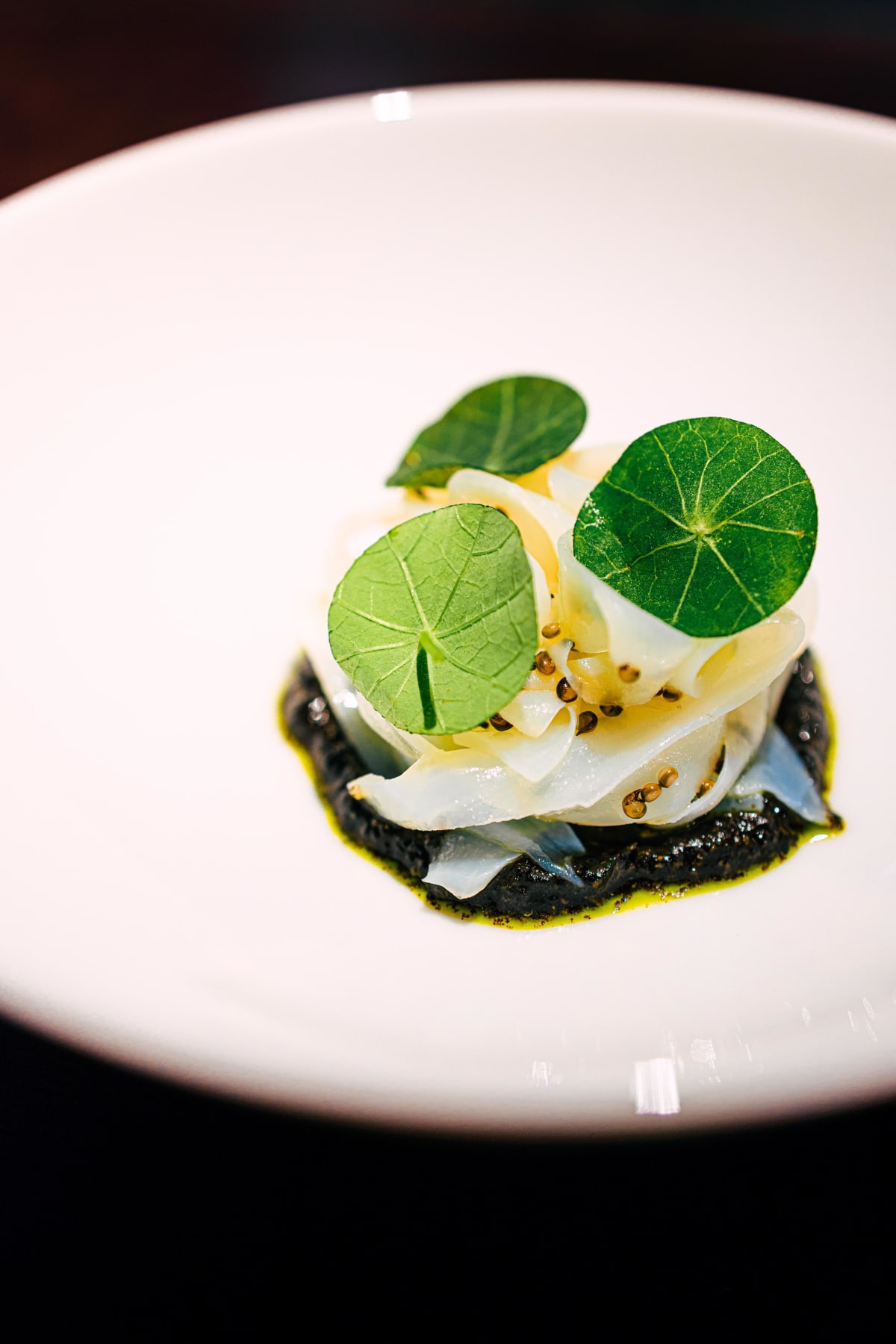
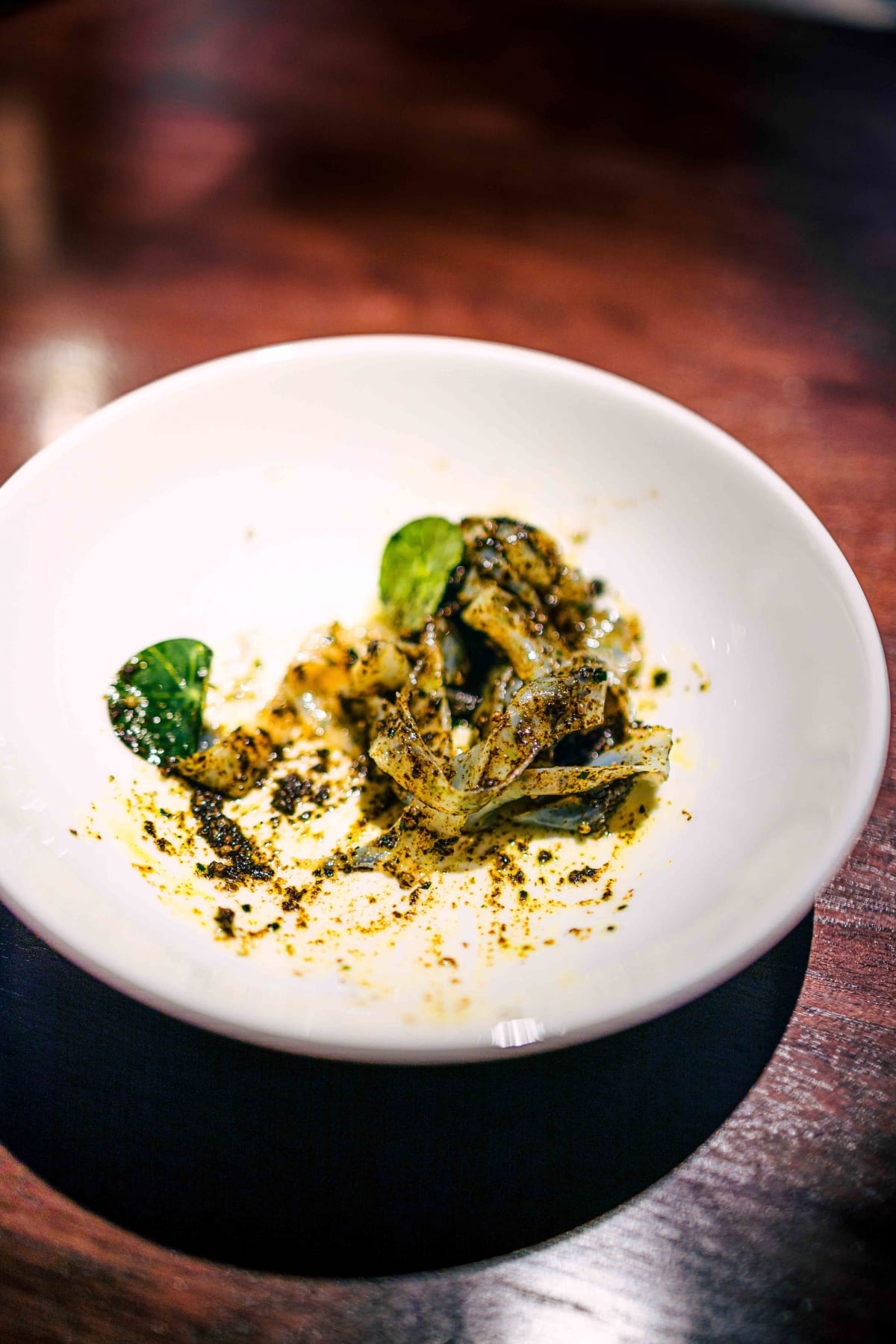
Before the pasta began, three dishes came out as a kind of opening. From the moment I tasted them, I felt the truth of it, that places which stay beloved for a long time tend to have a reason. First came an early dish of squid, sliced thin and eaten like pasta with a seaweed sauce.
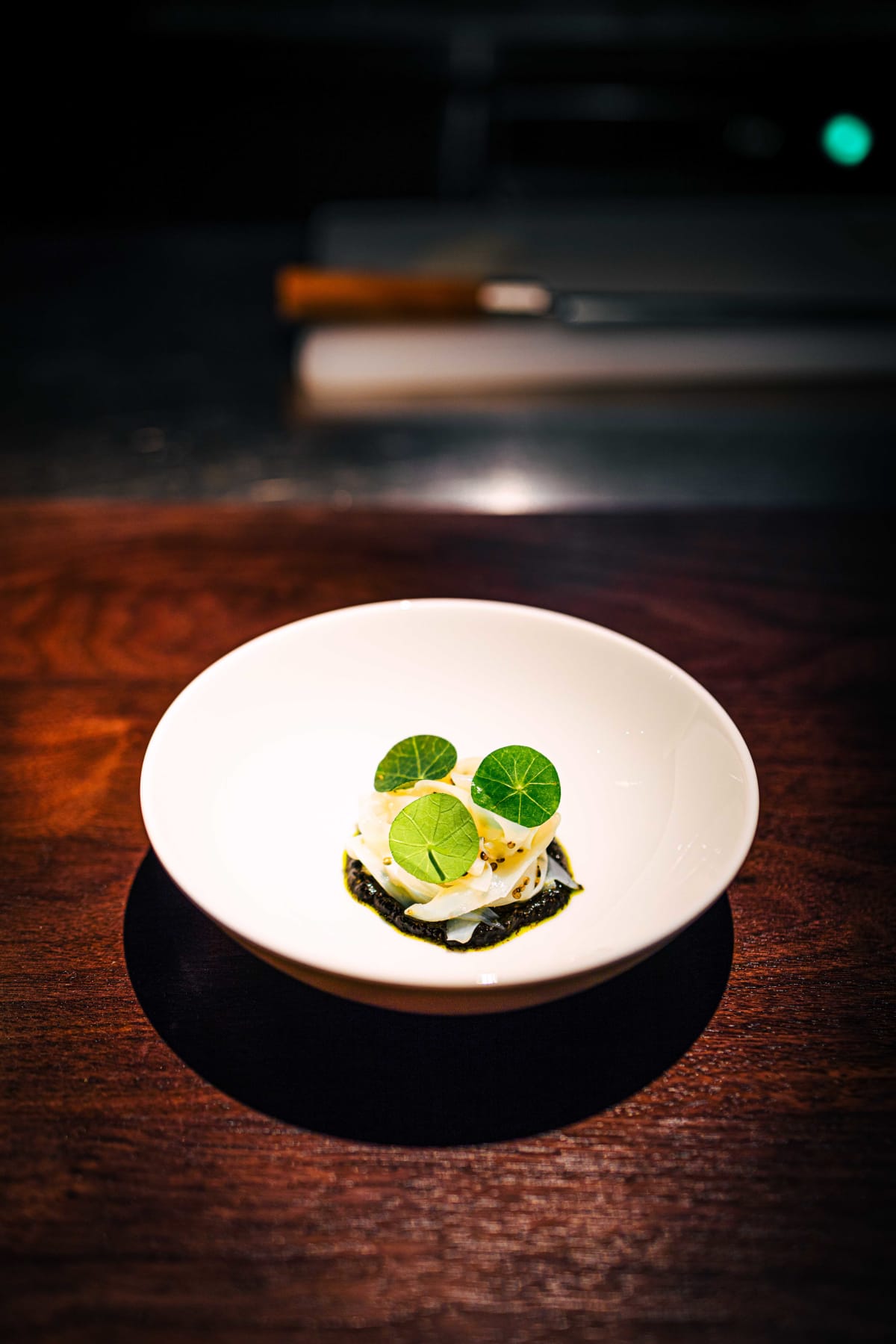
It was very good.
Next came a chawanmushi-style egg dish.
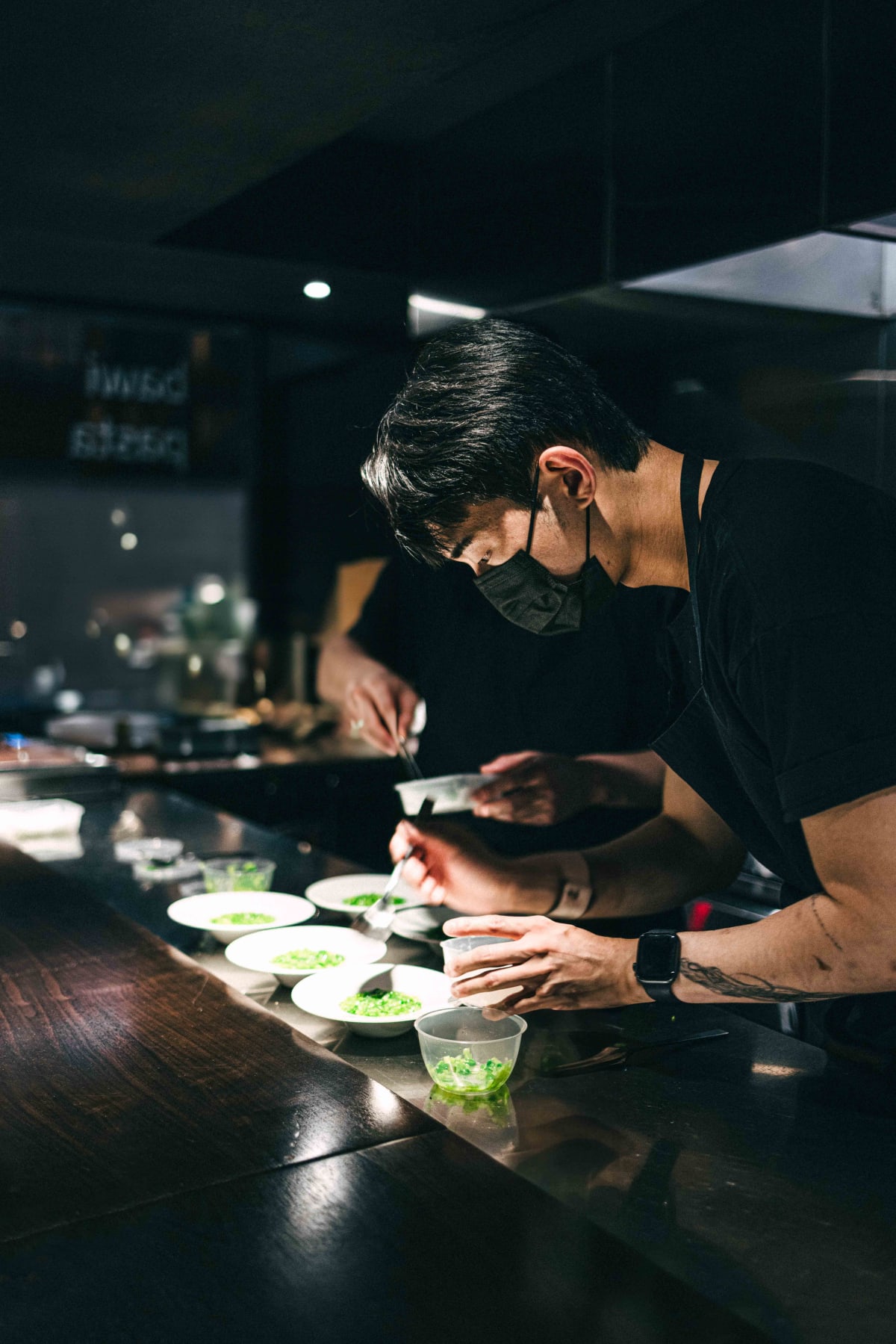
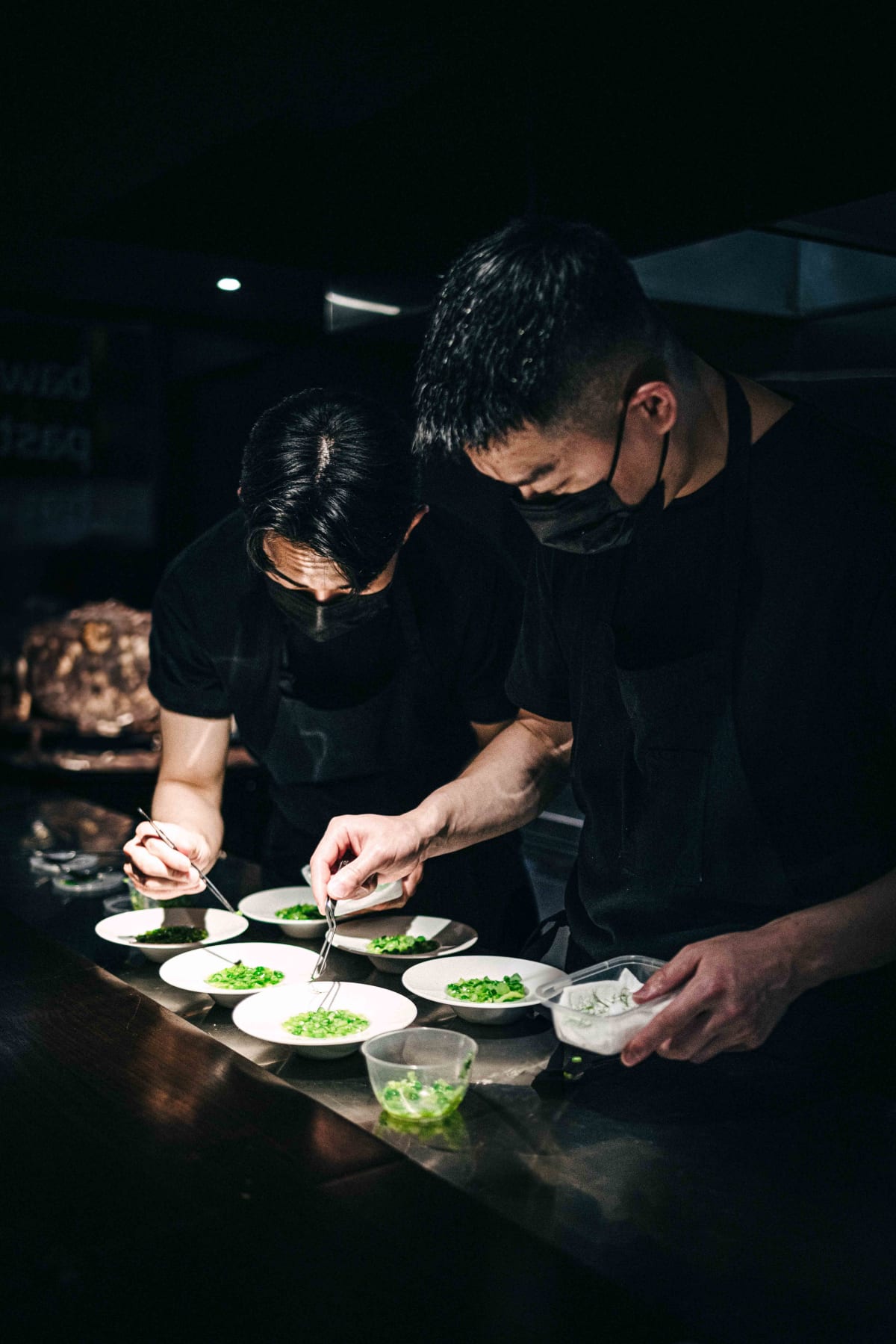
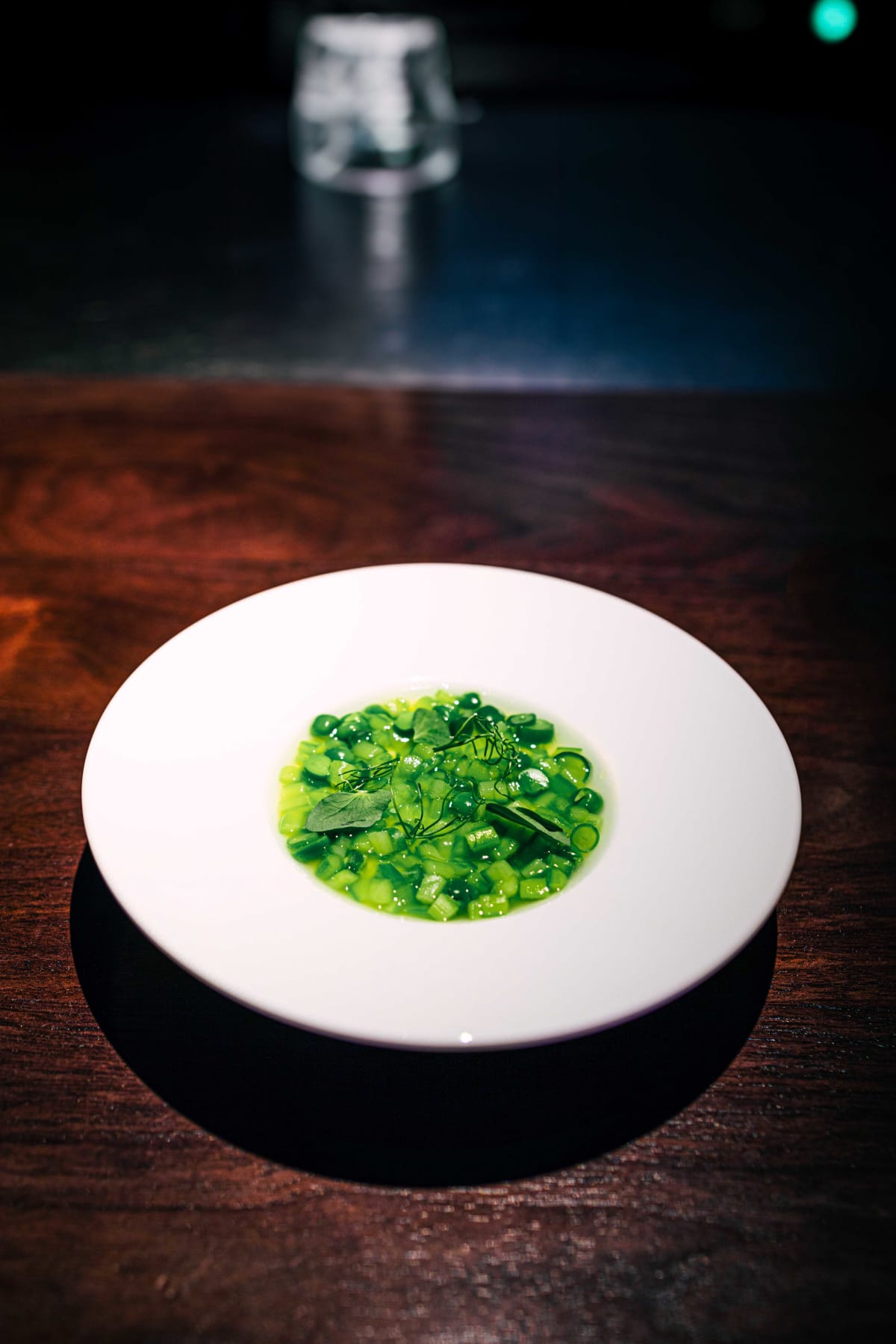
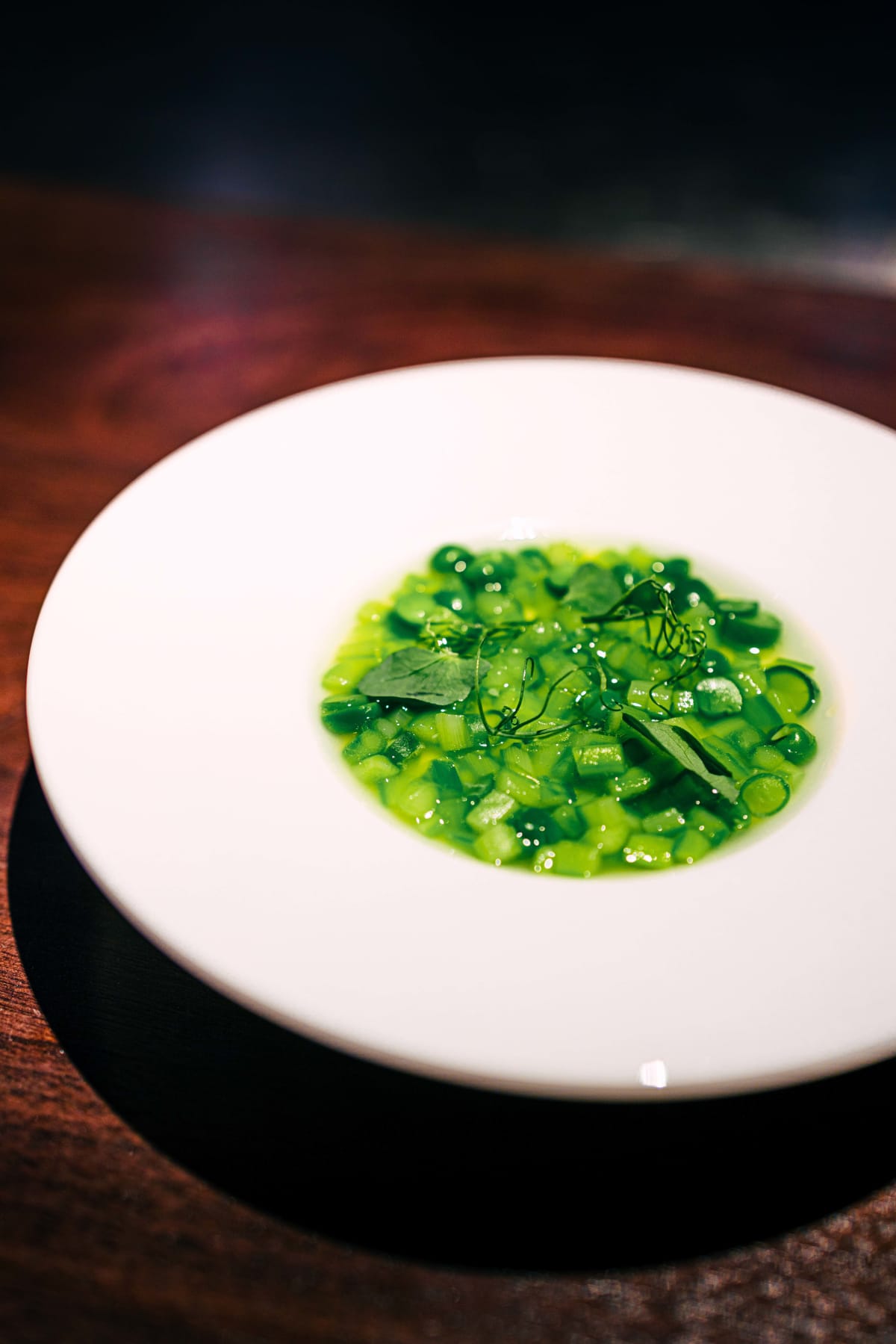
Over a soft, custardy base of free-range egg and twenty-four-month-aged Parmigiano Reggiano, asparagus and green peas were cut small and scattered on top for a crisp bite. A gentle Parmigiano aroma came through, and more than anything I loved the interplay of the soft egg against that crisp texture. It was an excellent Japanese touch, there to be felt from the appetizer stage.
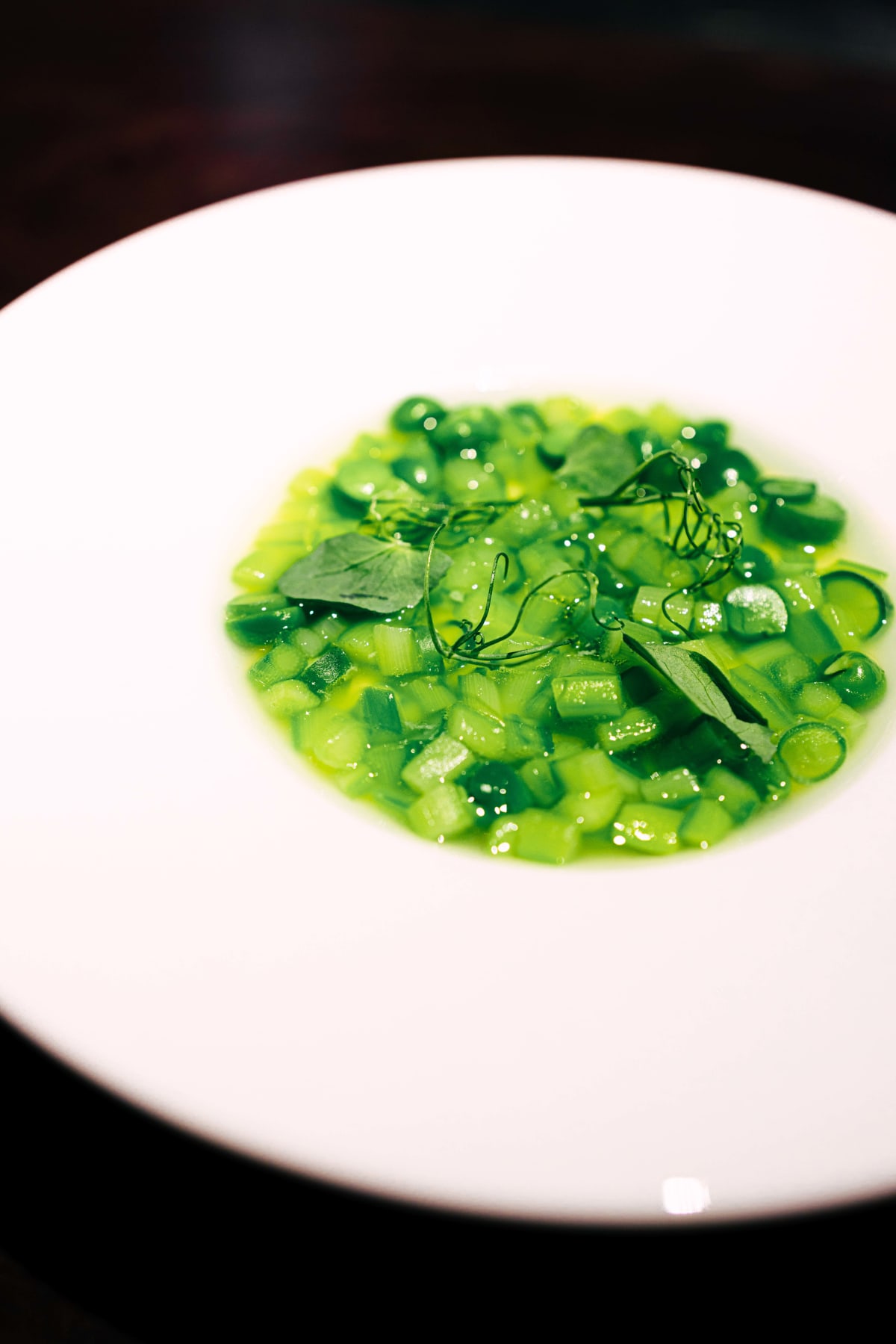
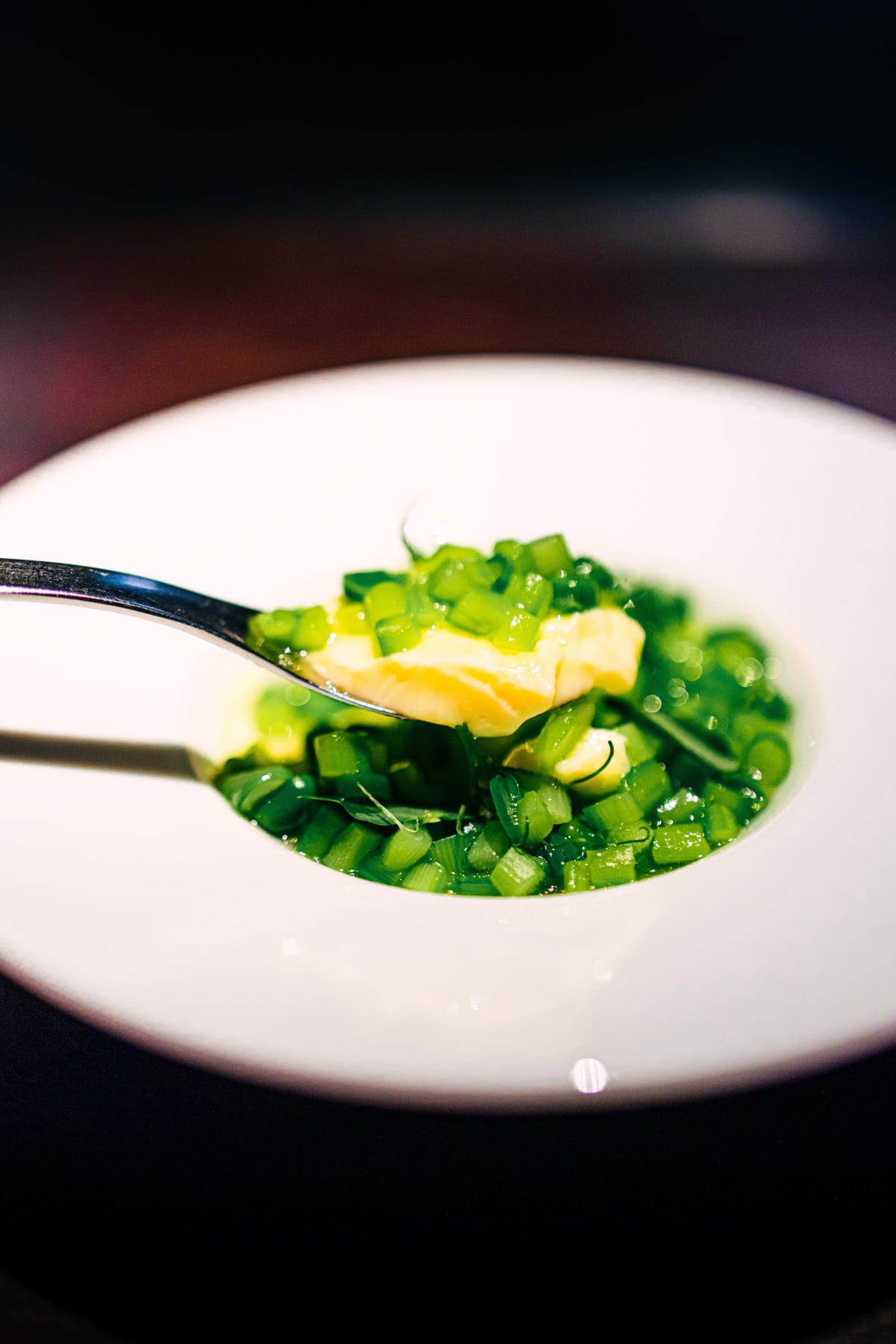
Of the three, the shima-aji stood out the most.
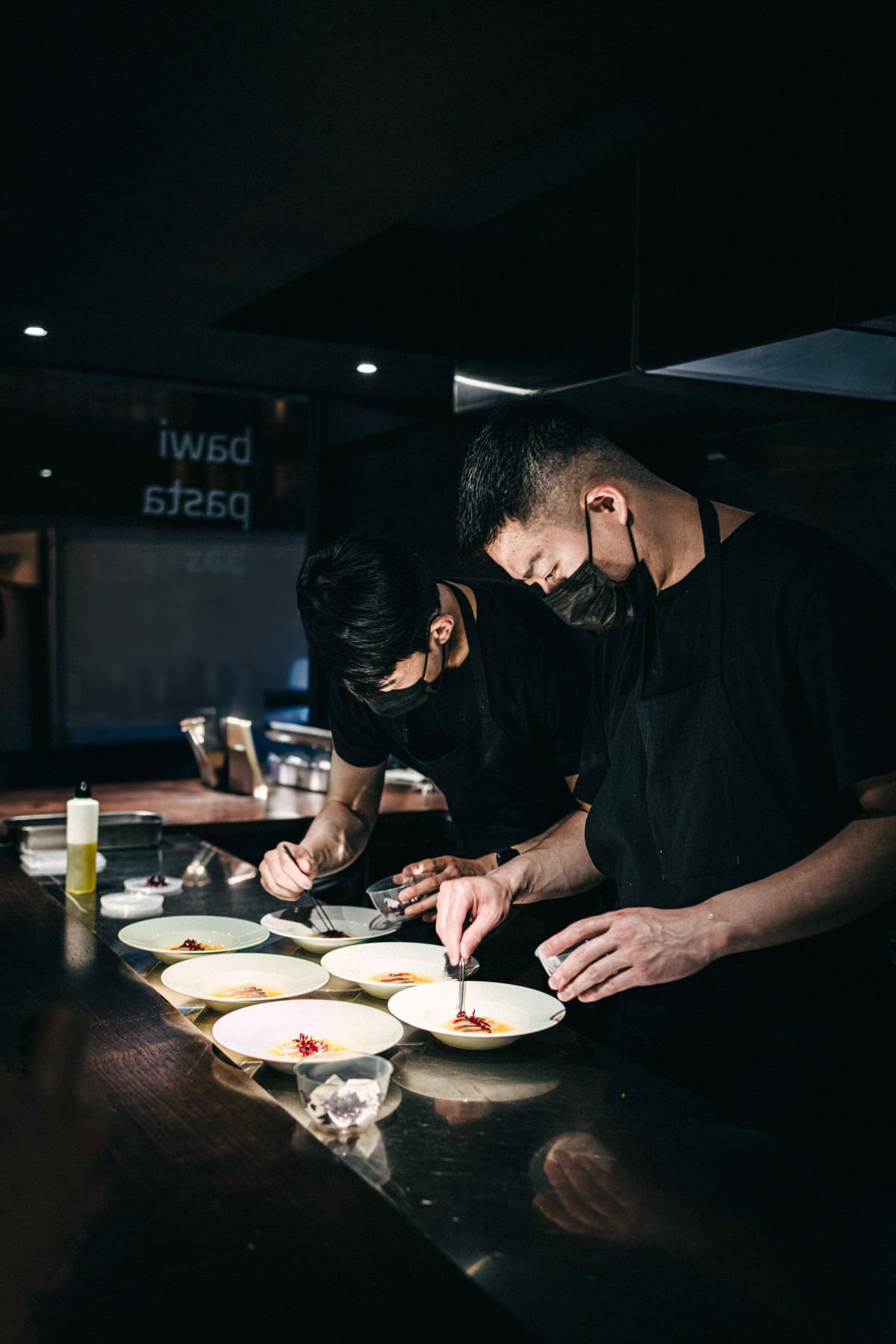
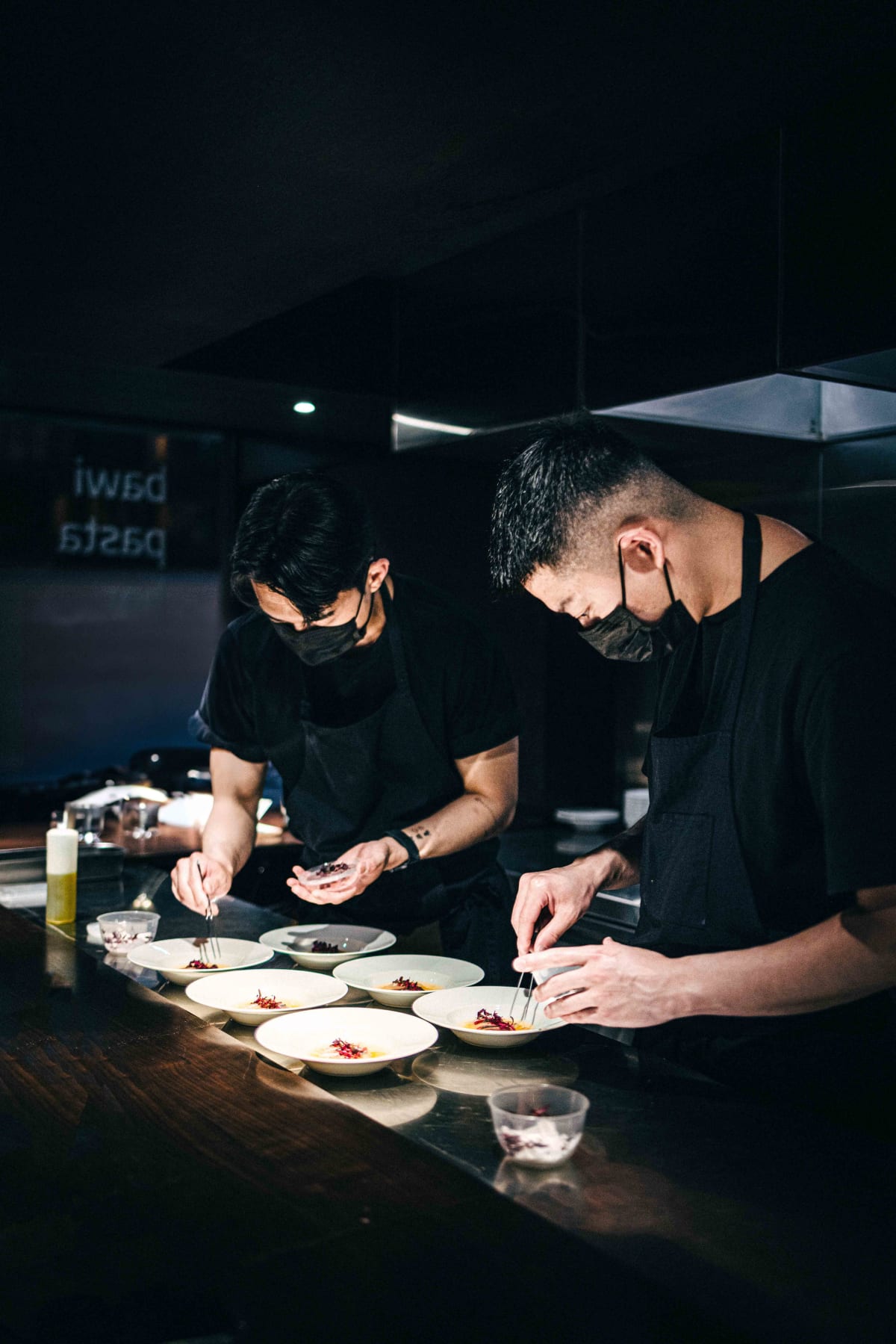
It was one of the best raw-fish dishes I had ever had at an Italian restaurant or a wine bar of that sort.
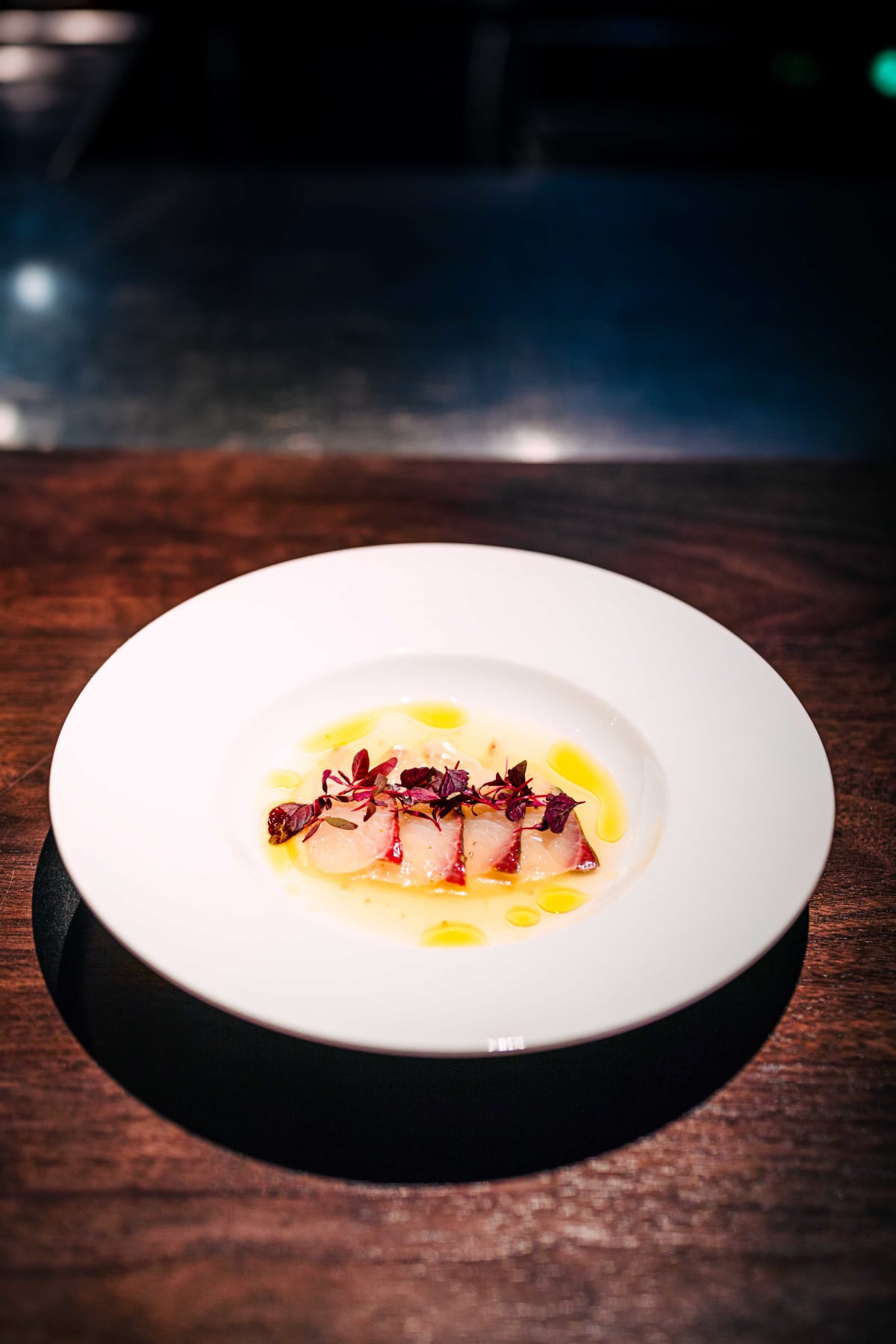
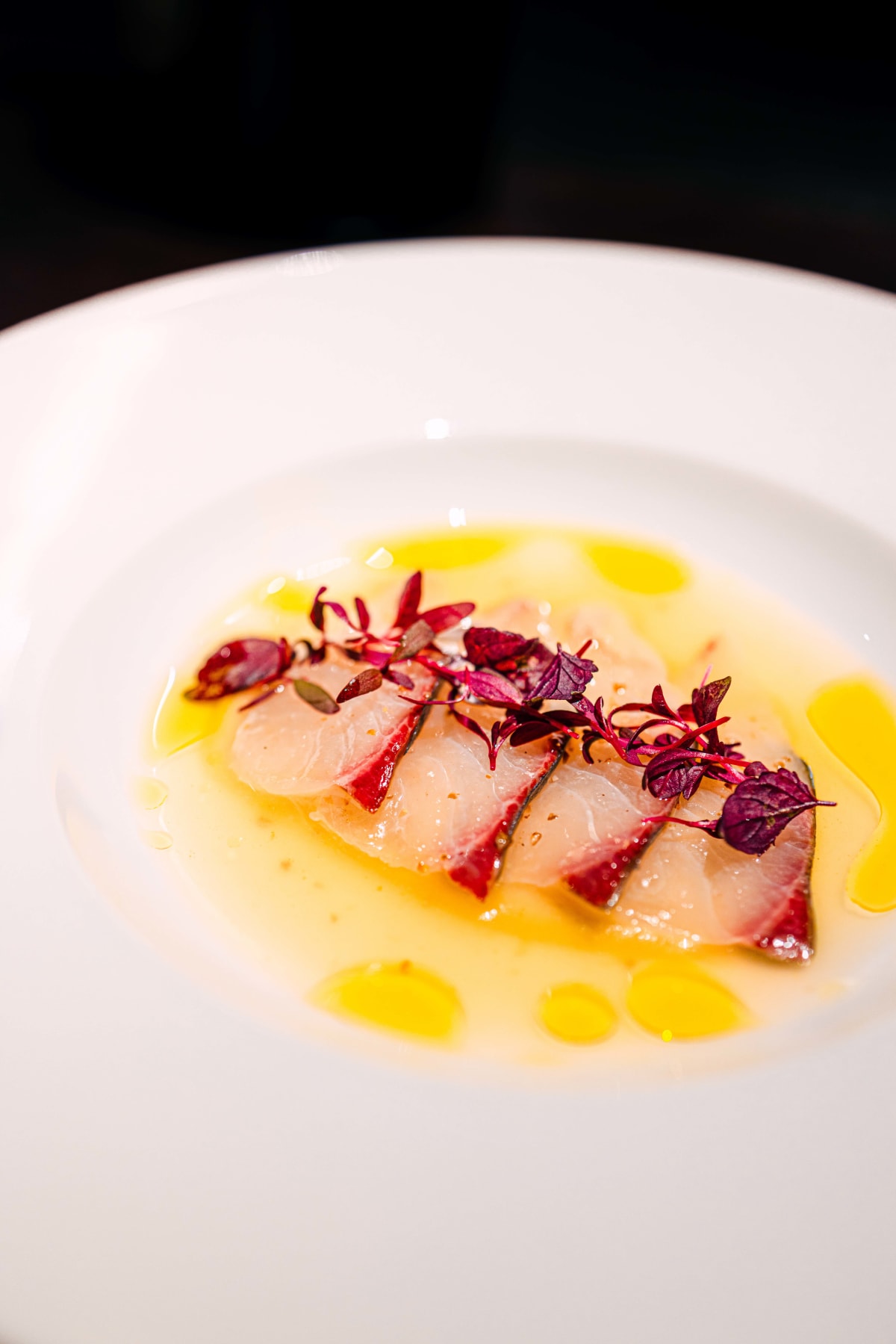
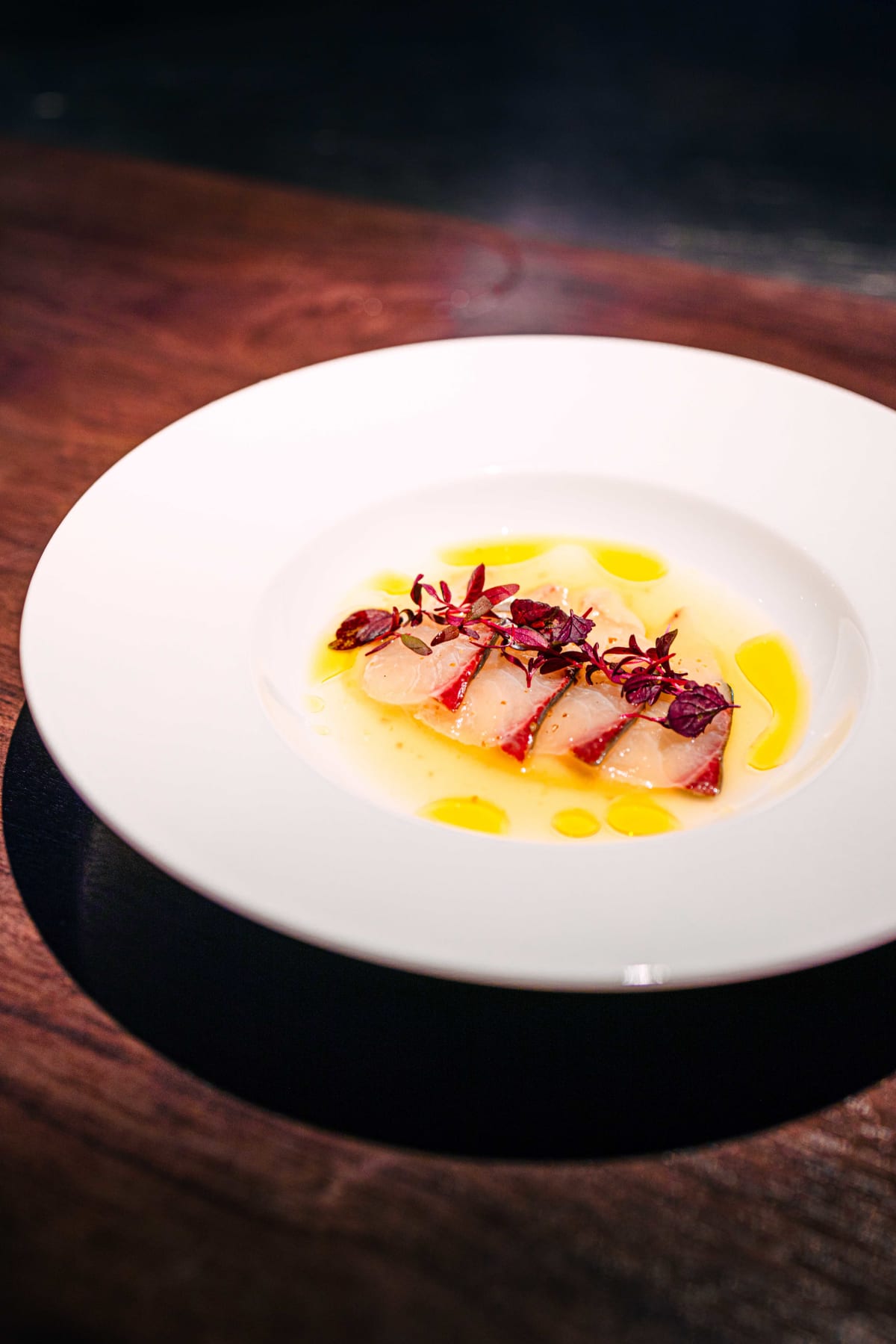
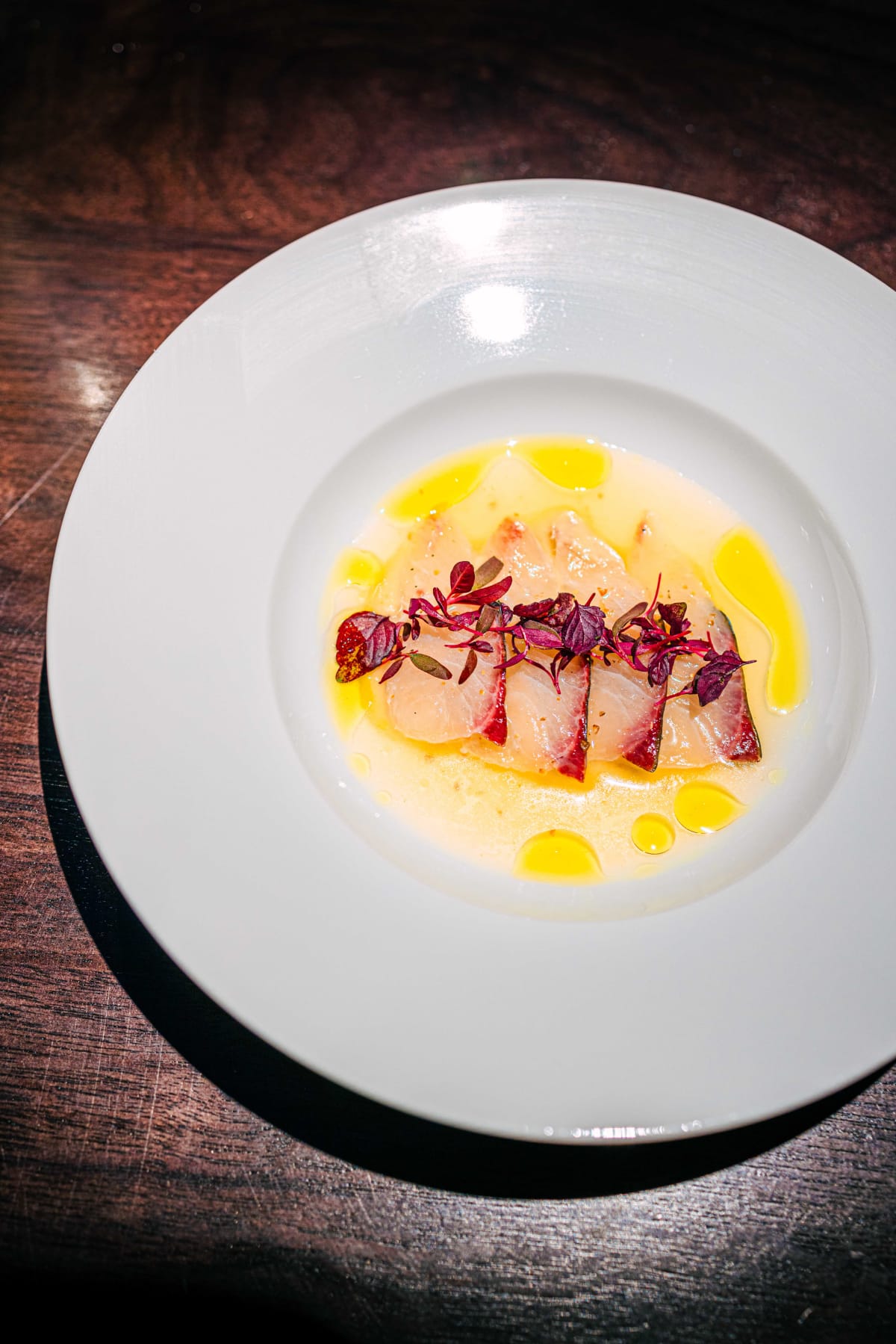
I began traveling through Europe for food in earnest from the middle of 2022. Until then I had carried a considerable fantasy about European dining, and experiencing it firsthand was satisfying and at times superior, but there were also disappointments. Raw fish was the clearest of them. Having already done a fair amount of eating in Korea and Japan by that point, I found the raw-fish dishes underwhelming in Europe, where the distribution and quality of fish lag behind Korea and Japan. In the end, it is hard to come away more impressed than when high-quality fish meets a refined Italian touch.
Section 4·Watching the Pasta
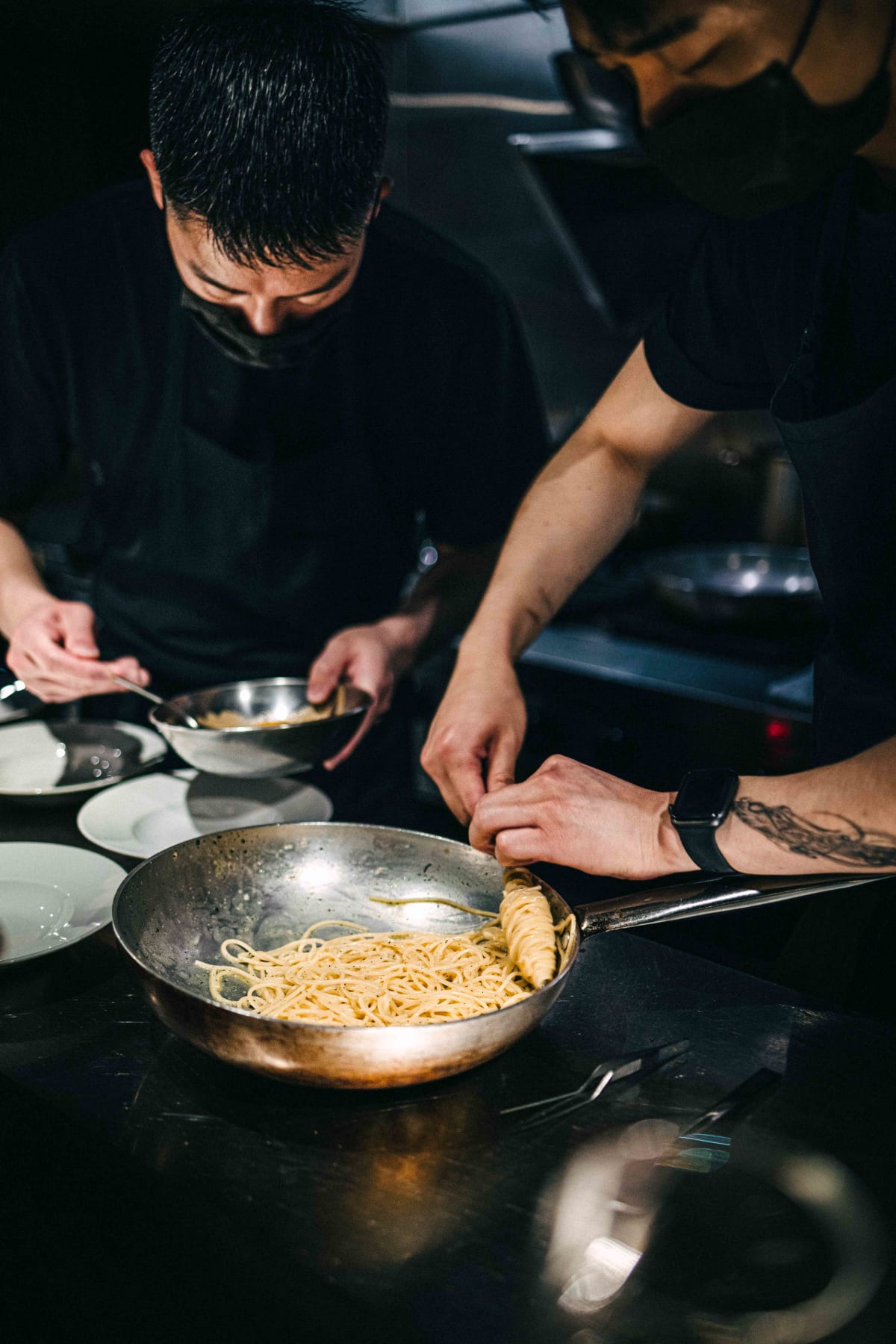
A small aside about Bawi Pastabar Seongsu. The food aside, what really won me over was the lighting. It deserved to be called "Bawi Pasta Making Studio," a place that produced beautiful food photographs with hardly any editing. It was one of the best restaurants for taking pictures I have ever been to, and I remember capturing plenty of striking shots of the chefs making pasta.
The first of the pastas proper was a cold one, thin almost-spaghetti noodles tossed in a savory, lightly oily sauce with minced garlic chives.
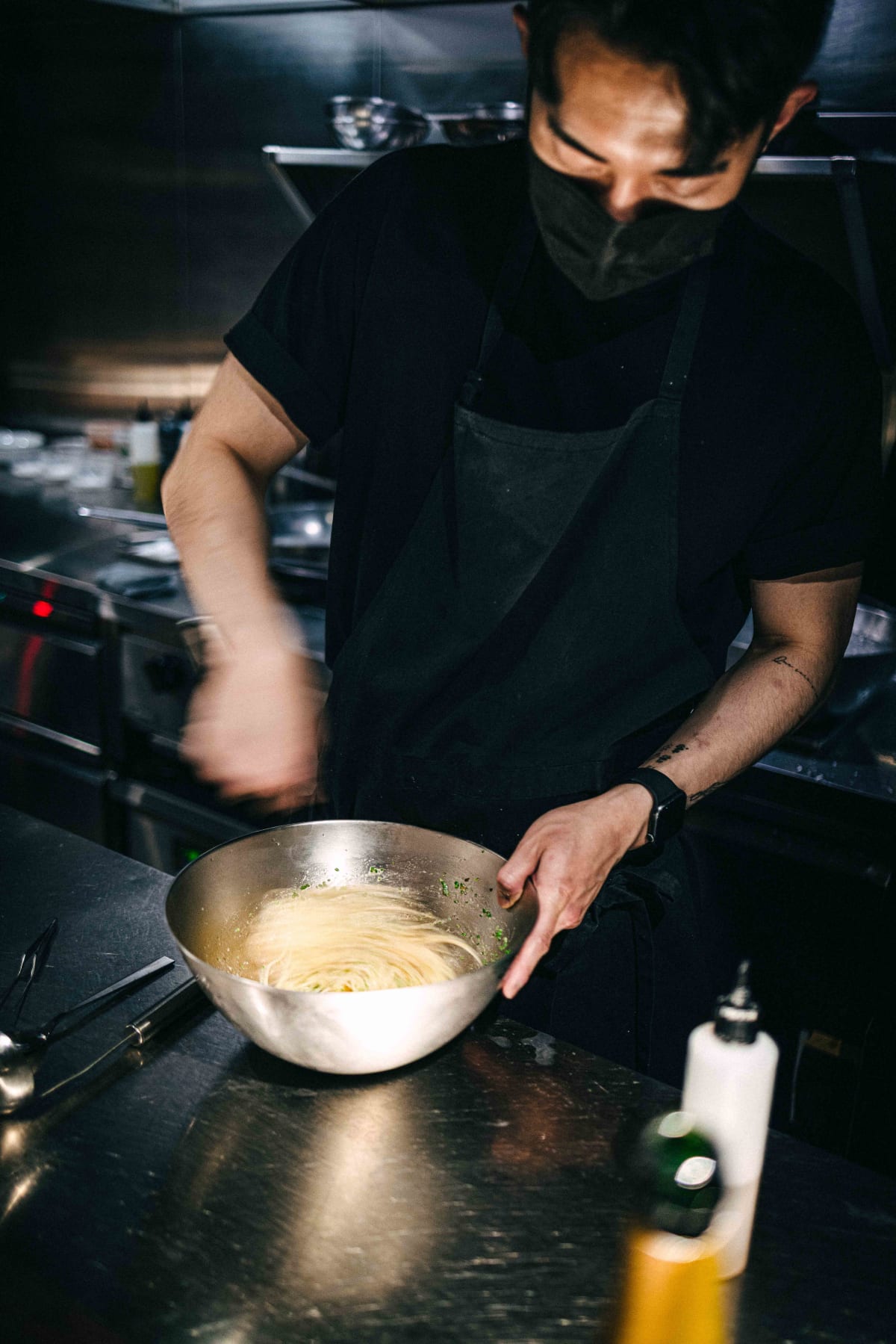
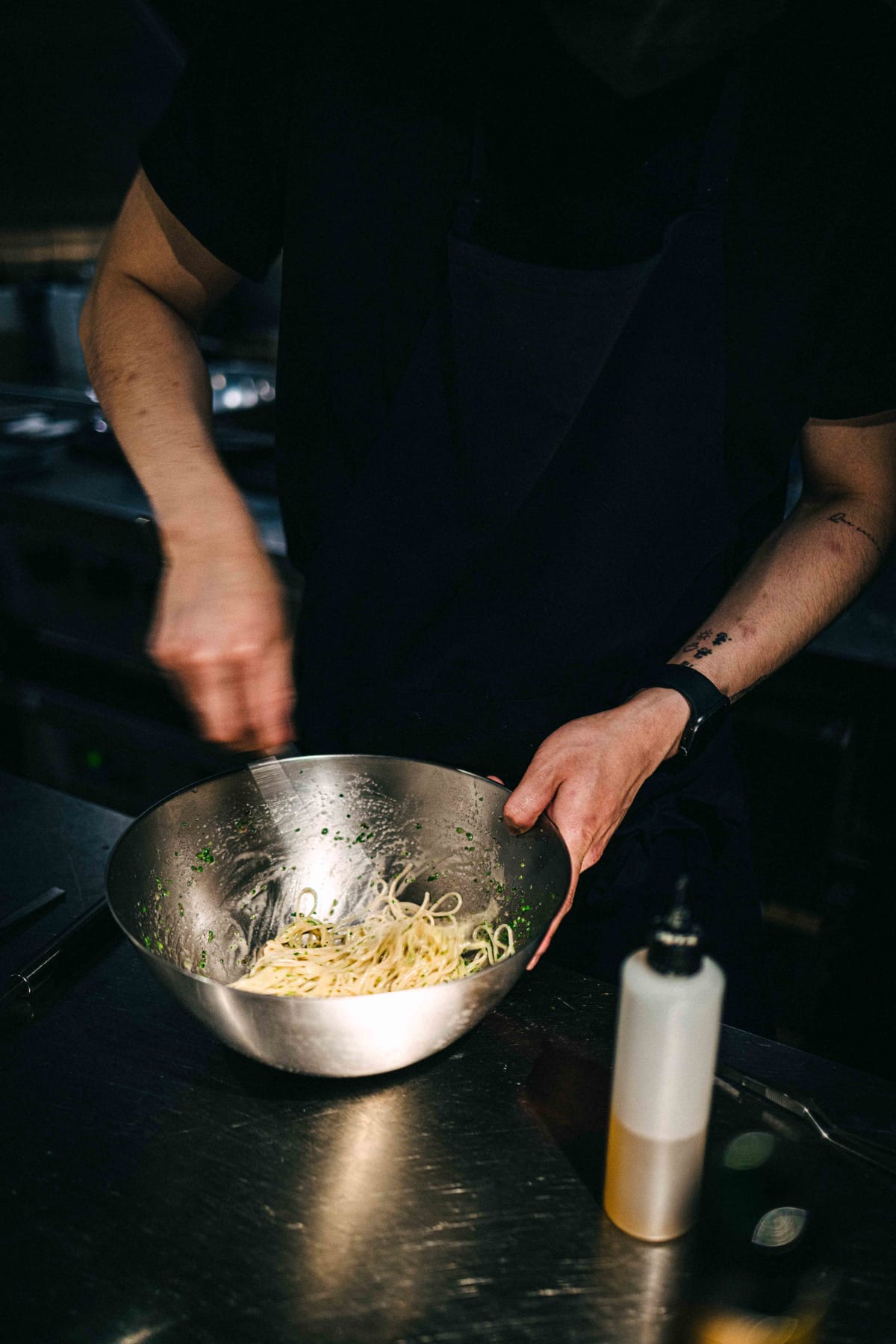
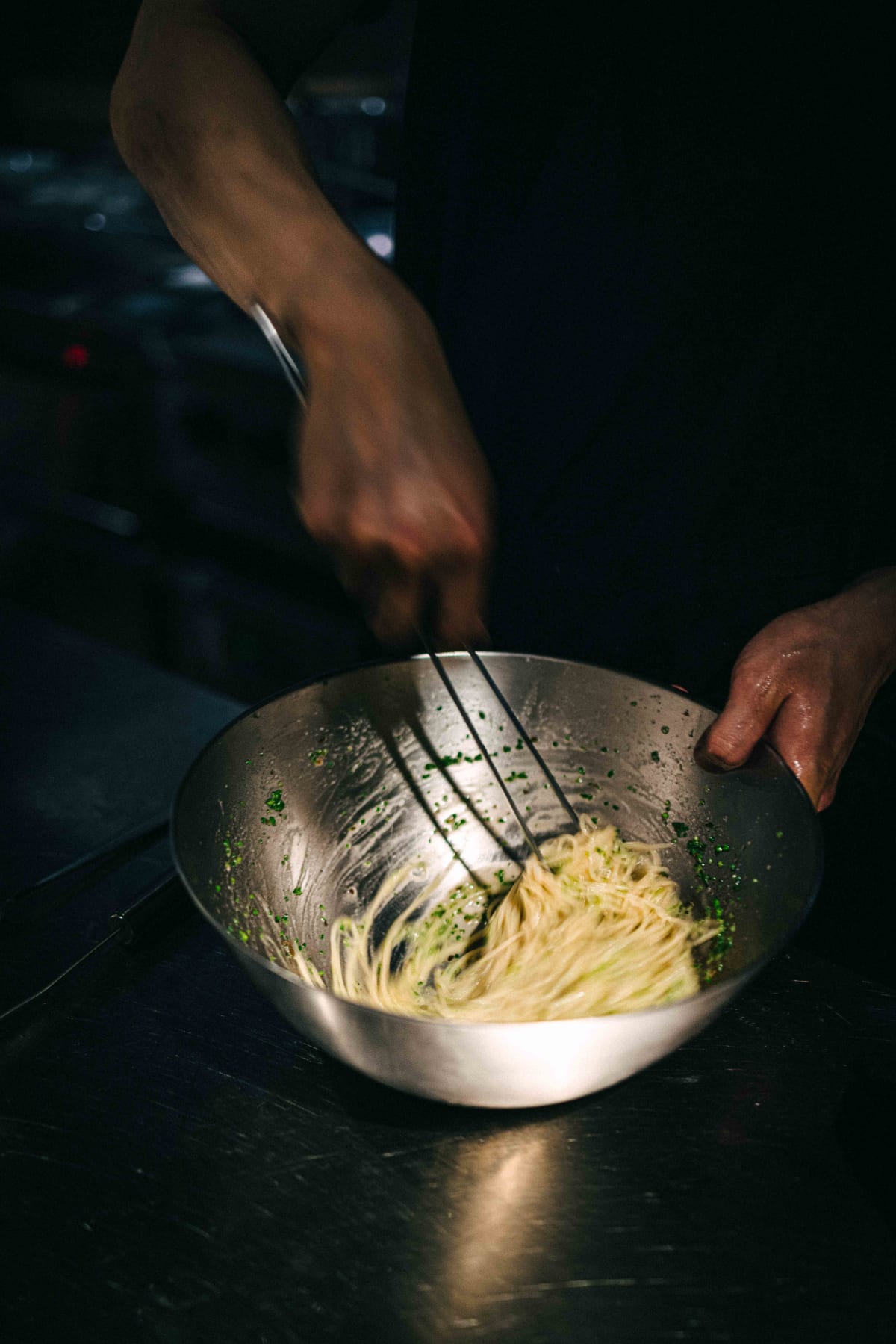
The chefs cooked the noodles, portioned them into single servings, and finished each plate with a generous mound of caviar.
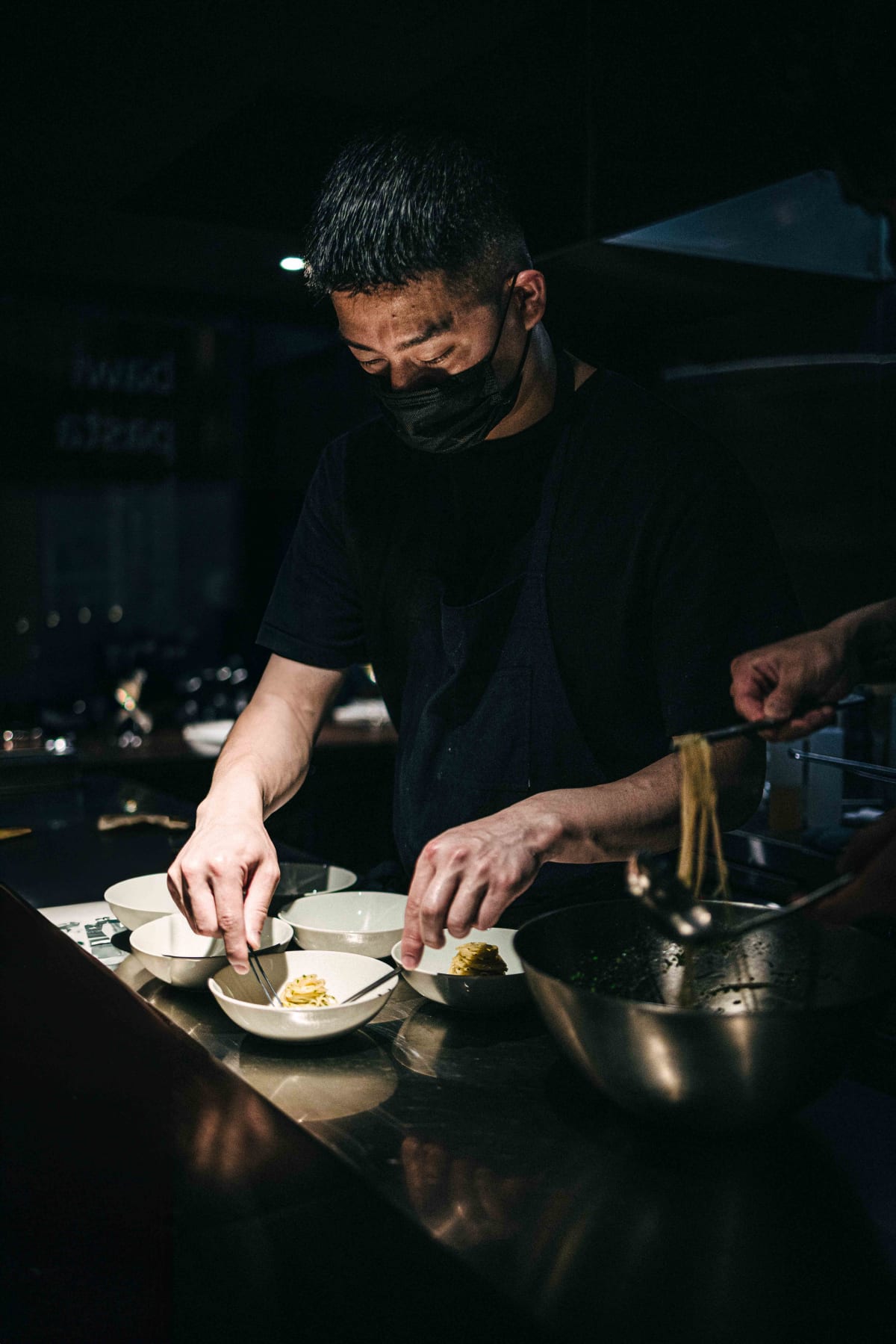
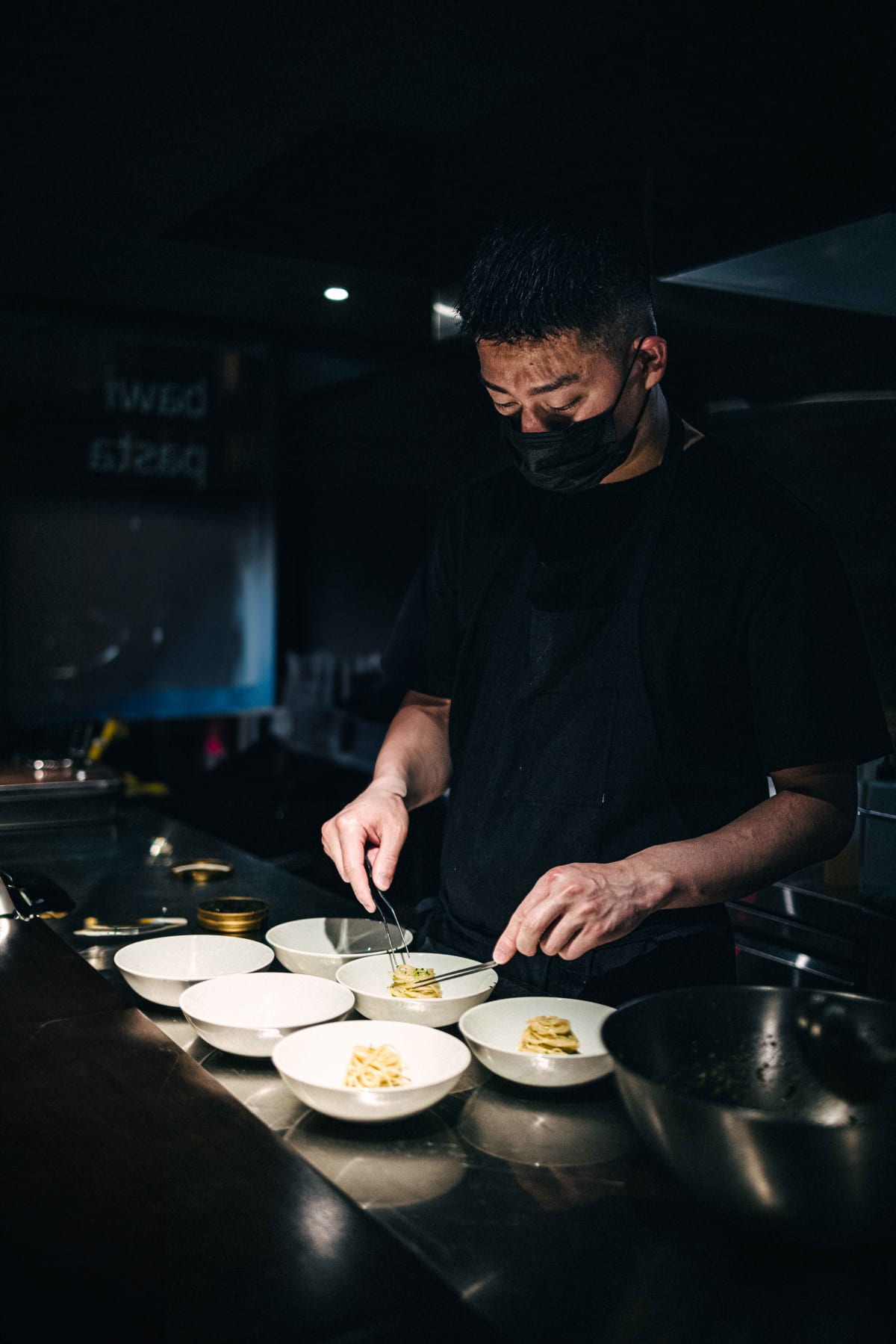
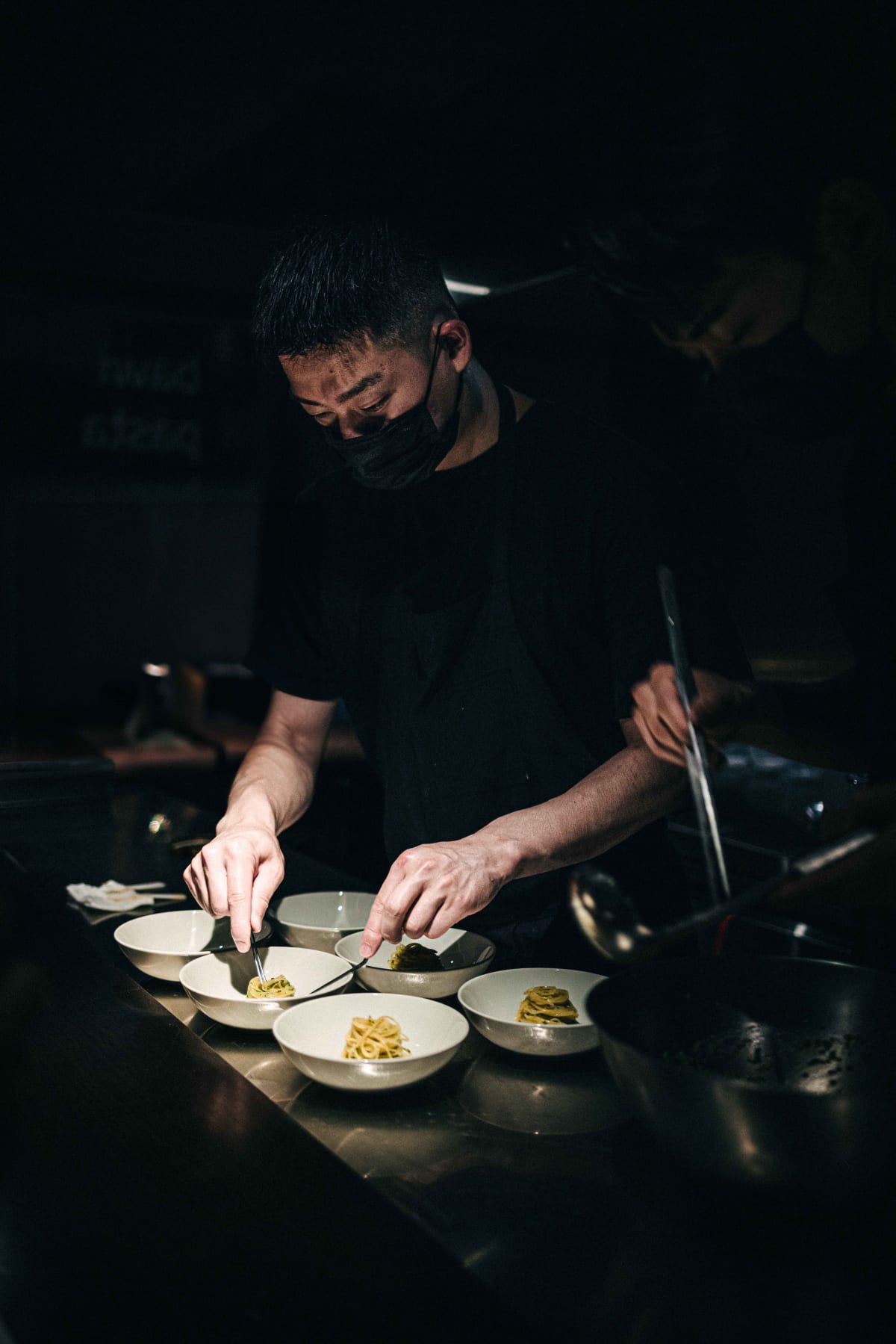
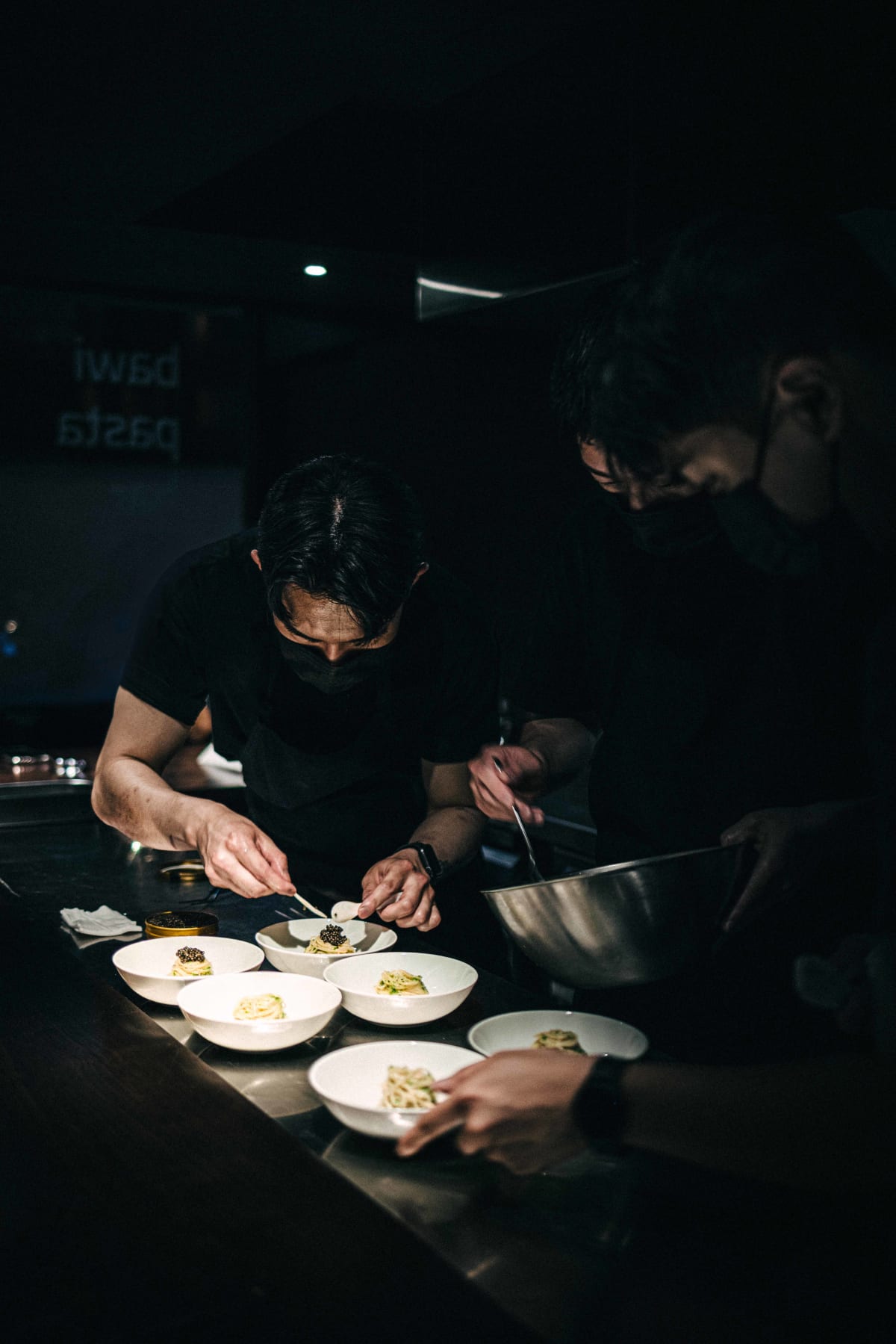
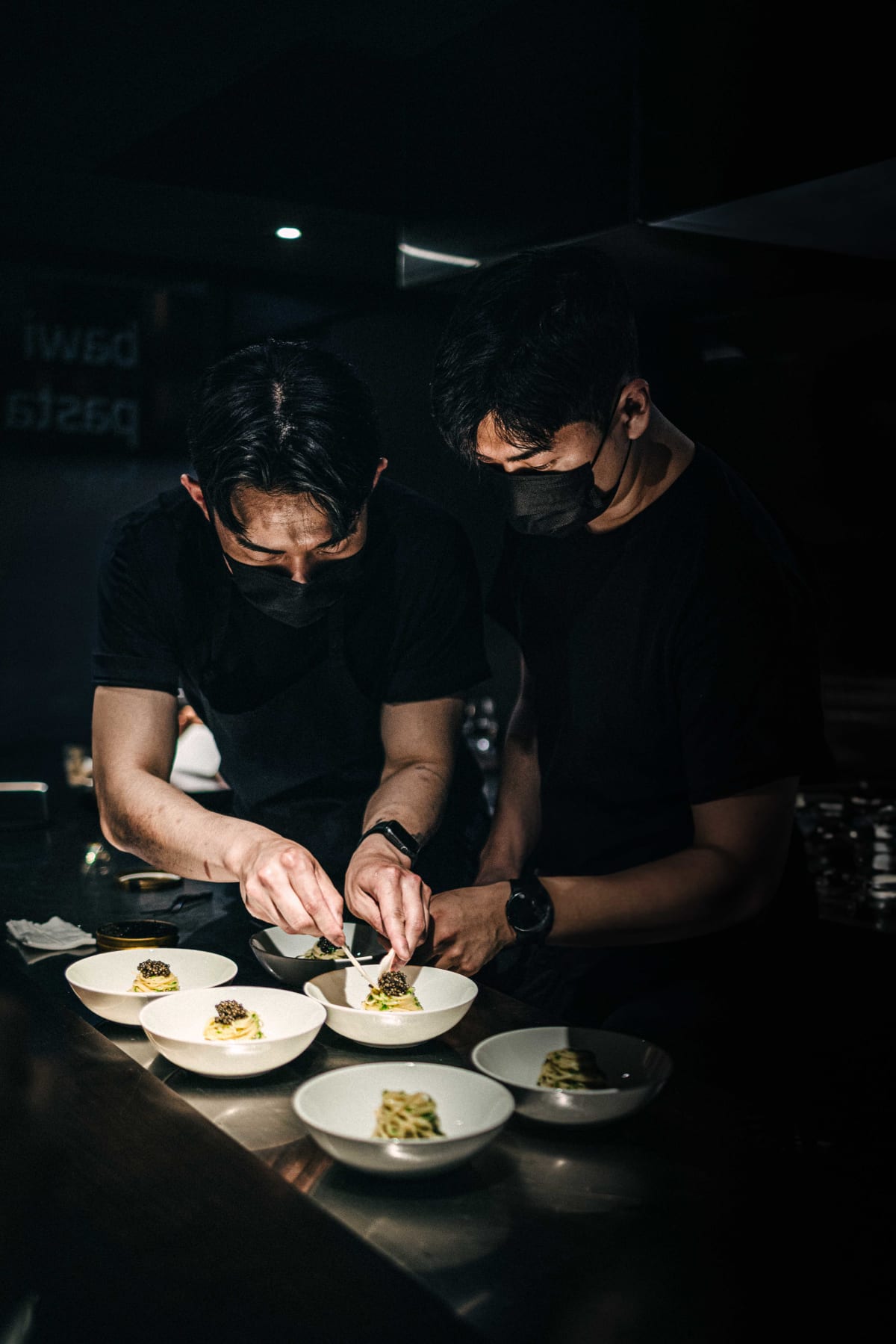
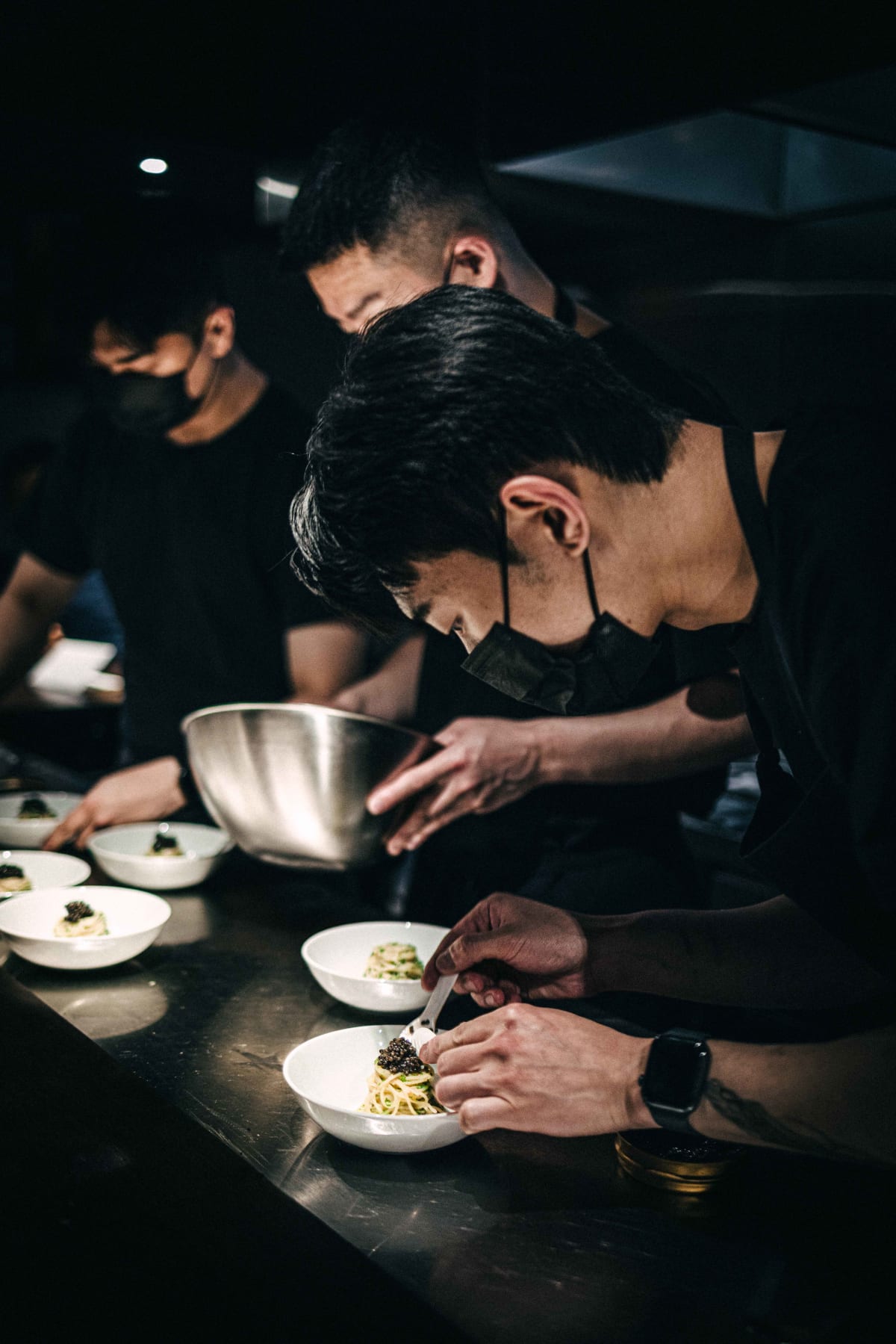
The noodles had a lovely al dente bite and good savory depth, and the caviar was generous.
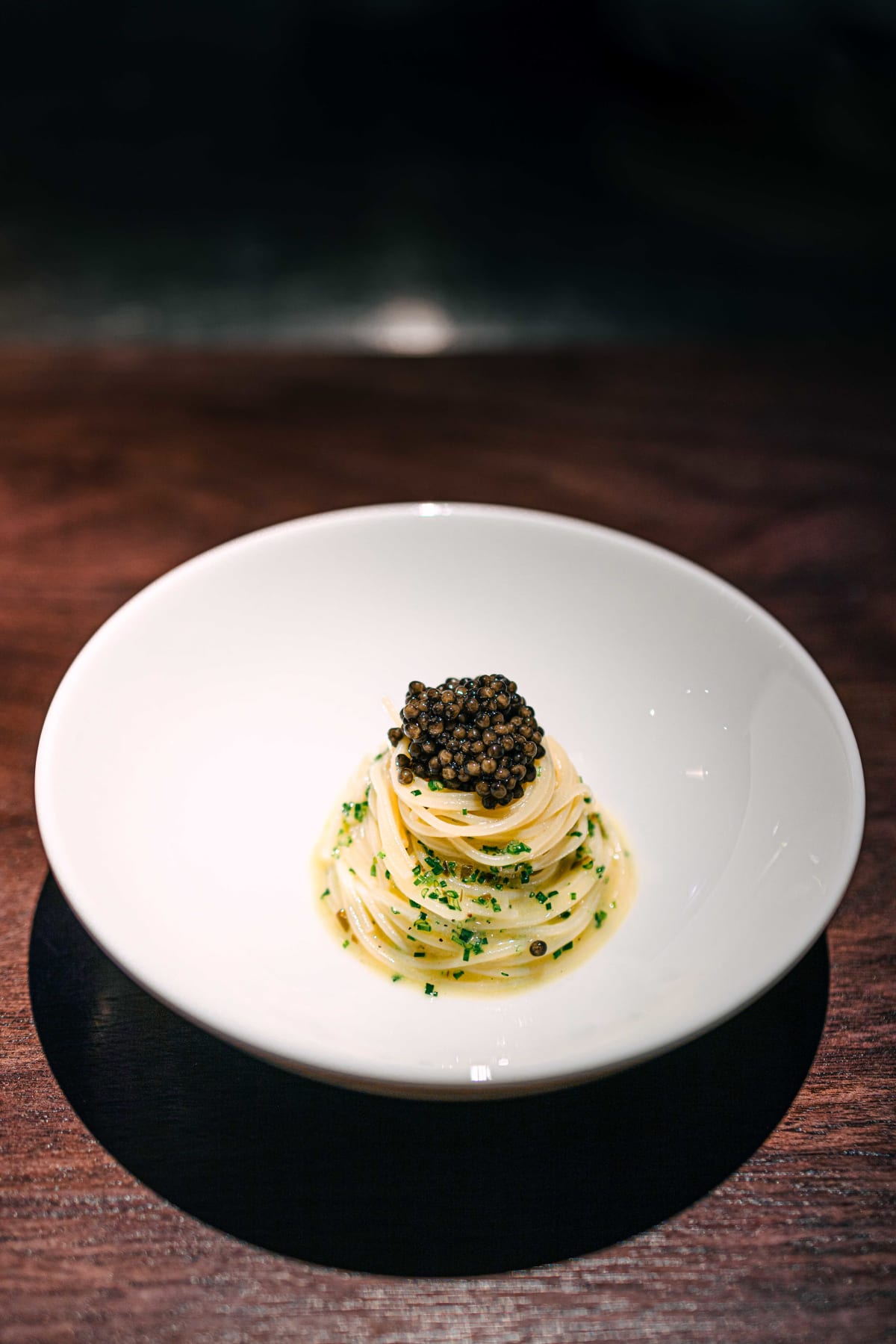
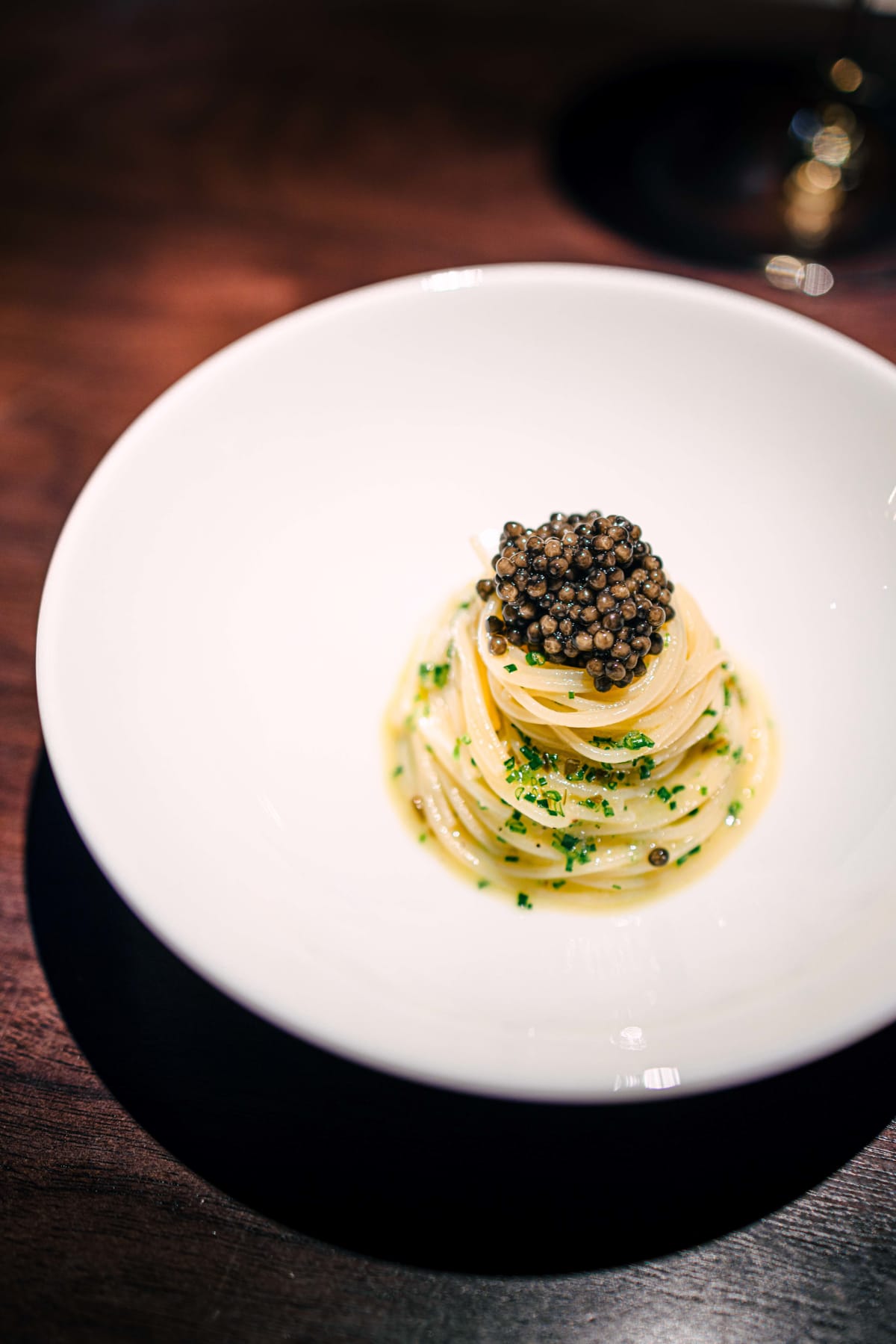
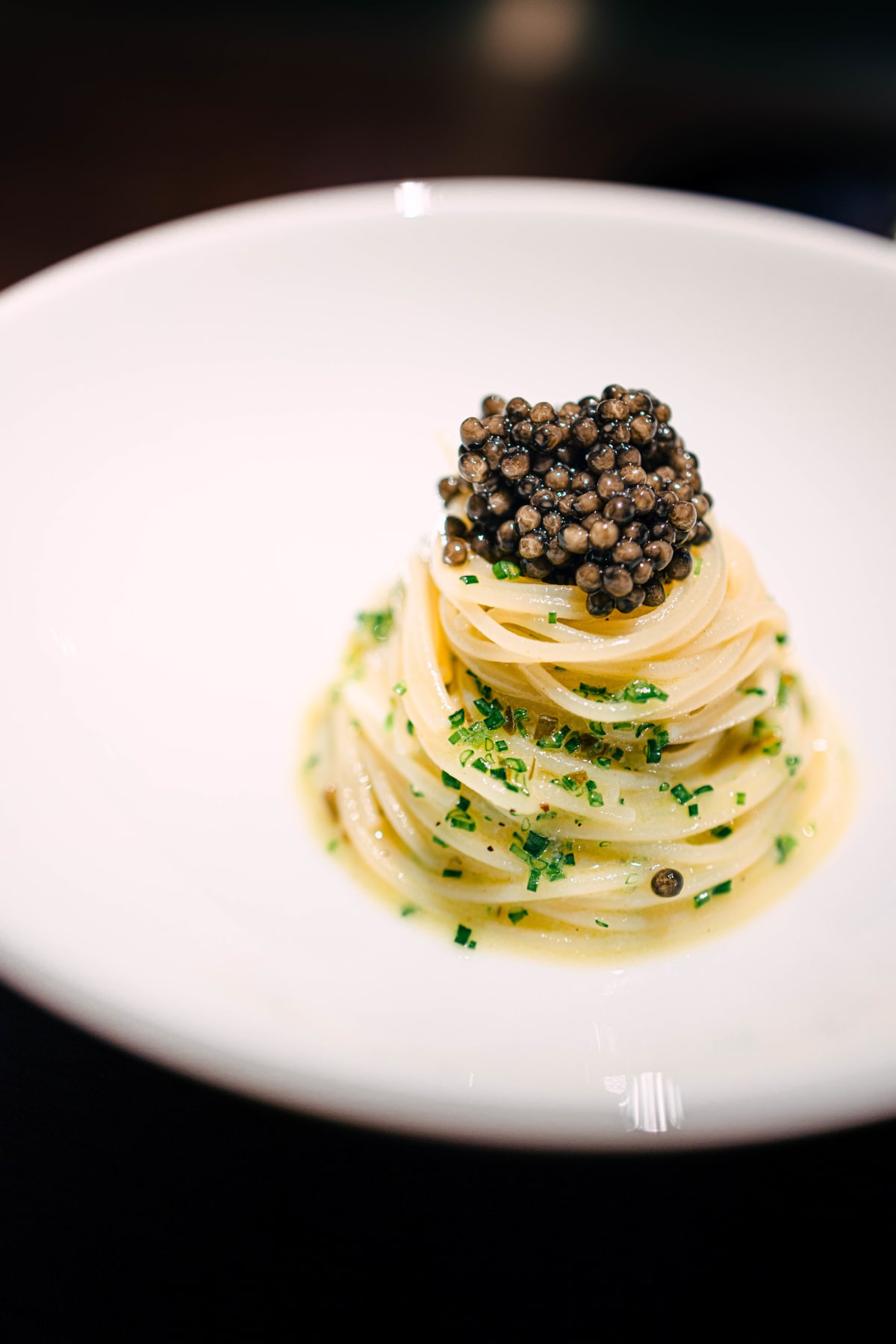
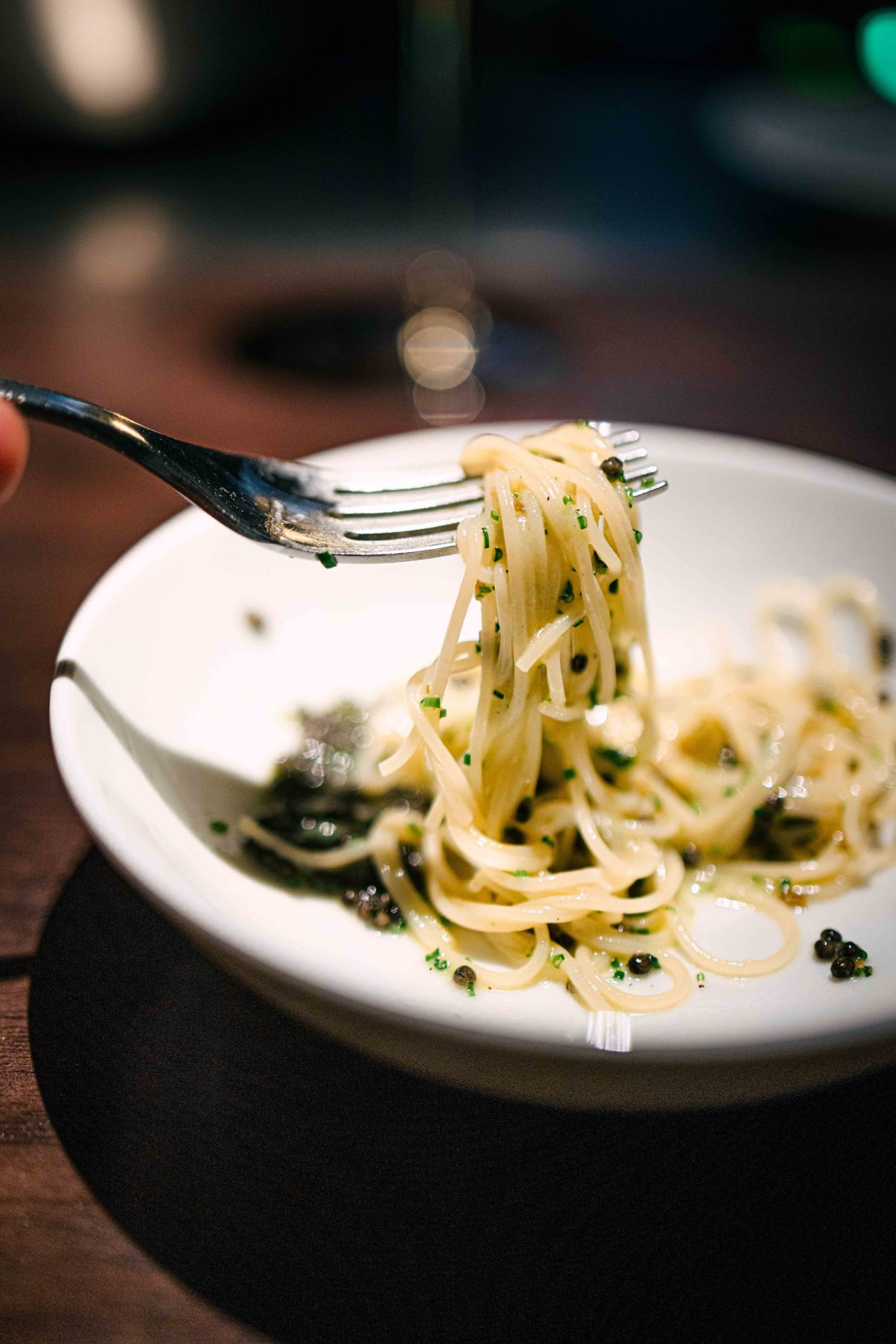
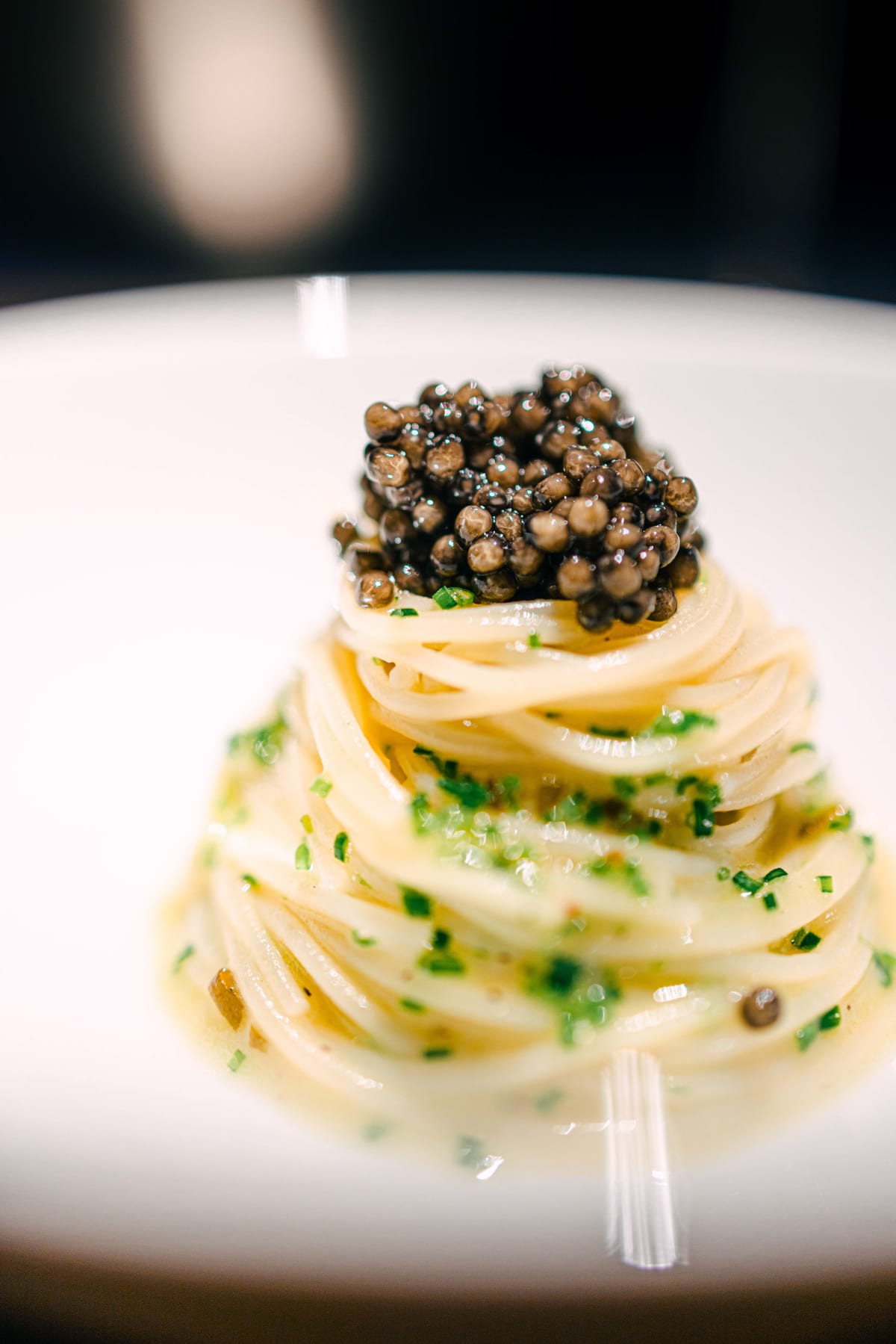
Because the base sauce was not too intense, the caviar's presence came through clearly.
Section 5·Sea and Shell
My favourite pasta that day used sea cucumber entrails, konowata, as a sauce.
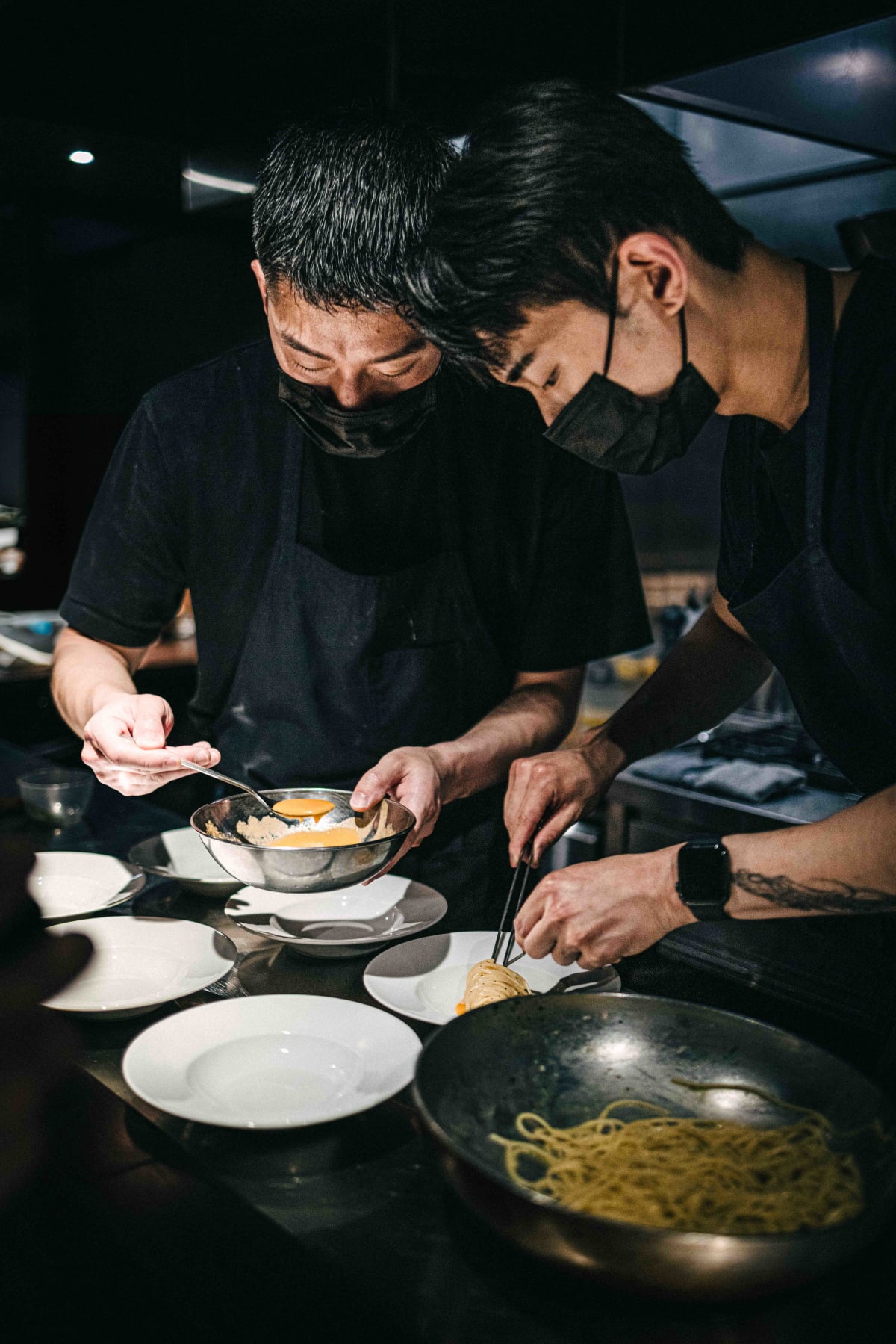
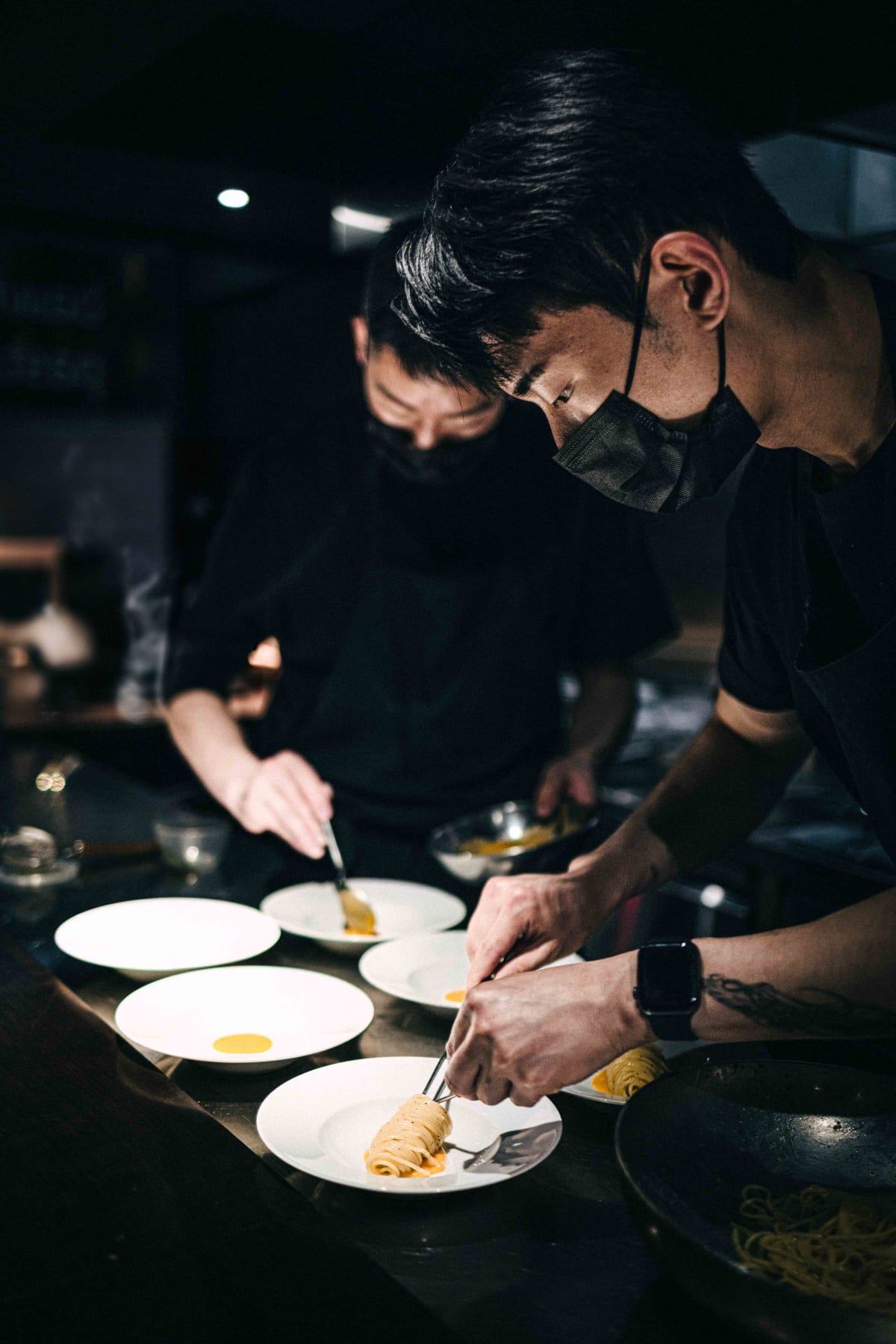
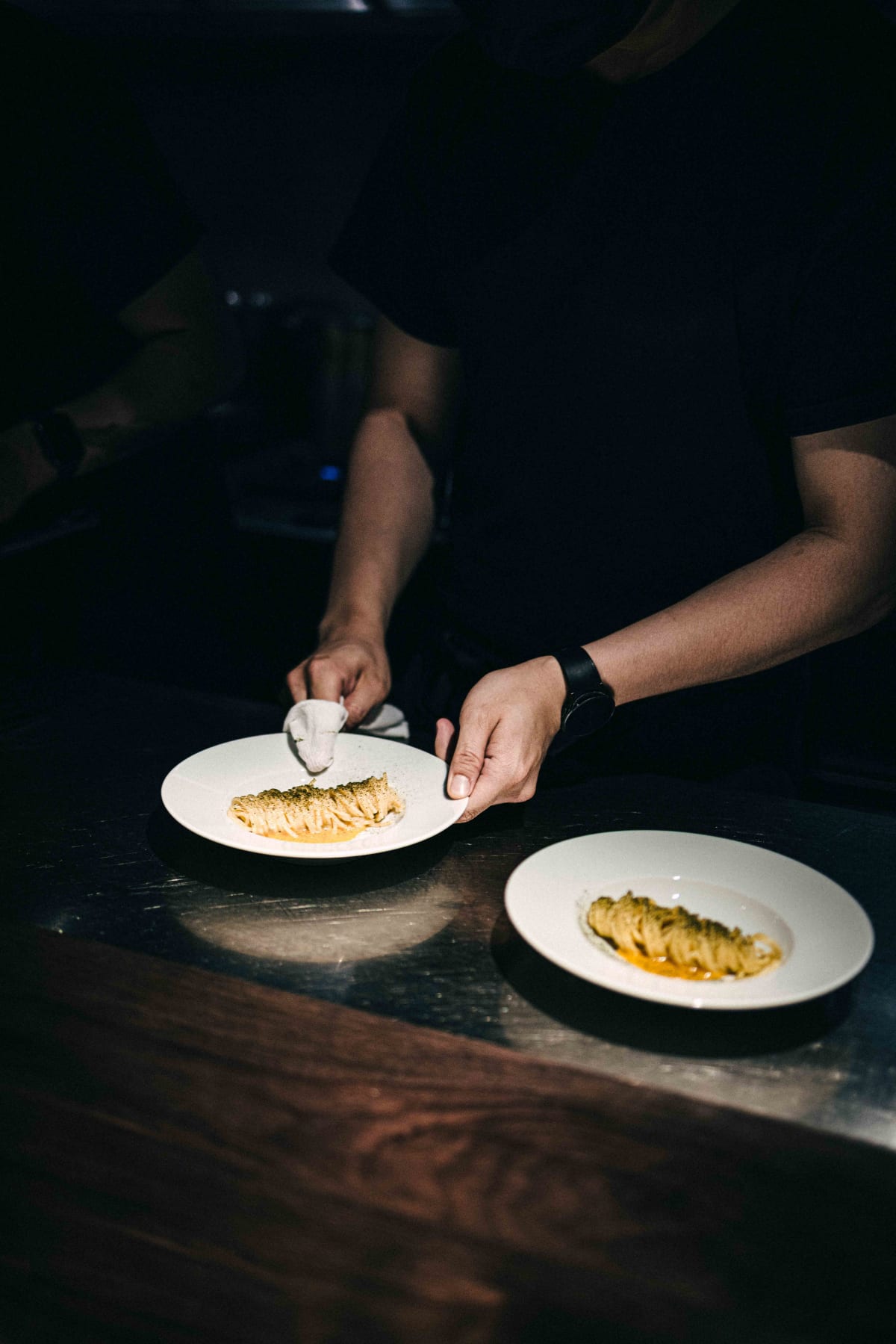
Konowata is counted, alongside karasumi and uni, as one of Japan's three great delicacies, and it was astonishing how completely its distinctive flavour had been folded into the pasta.
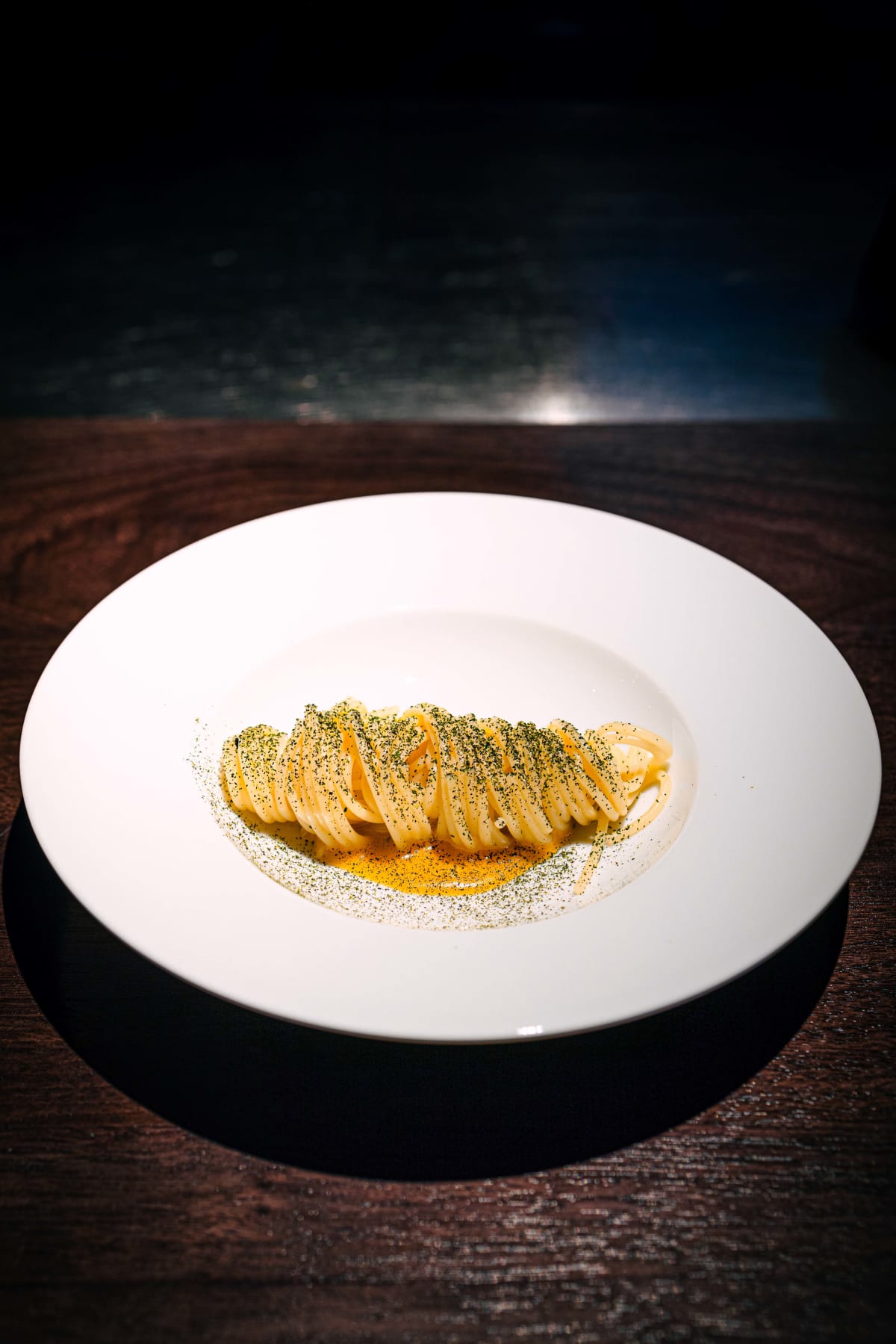
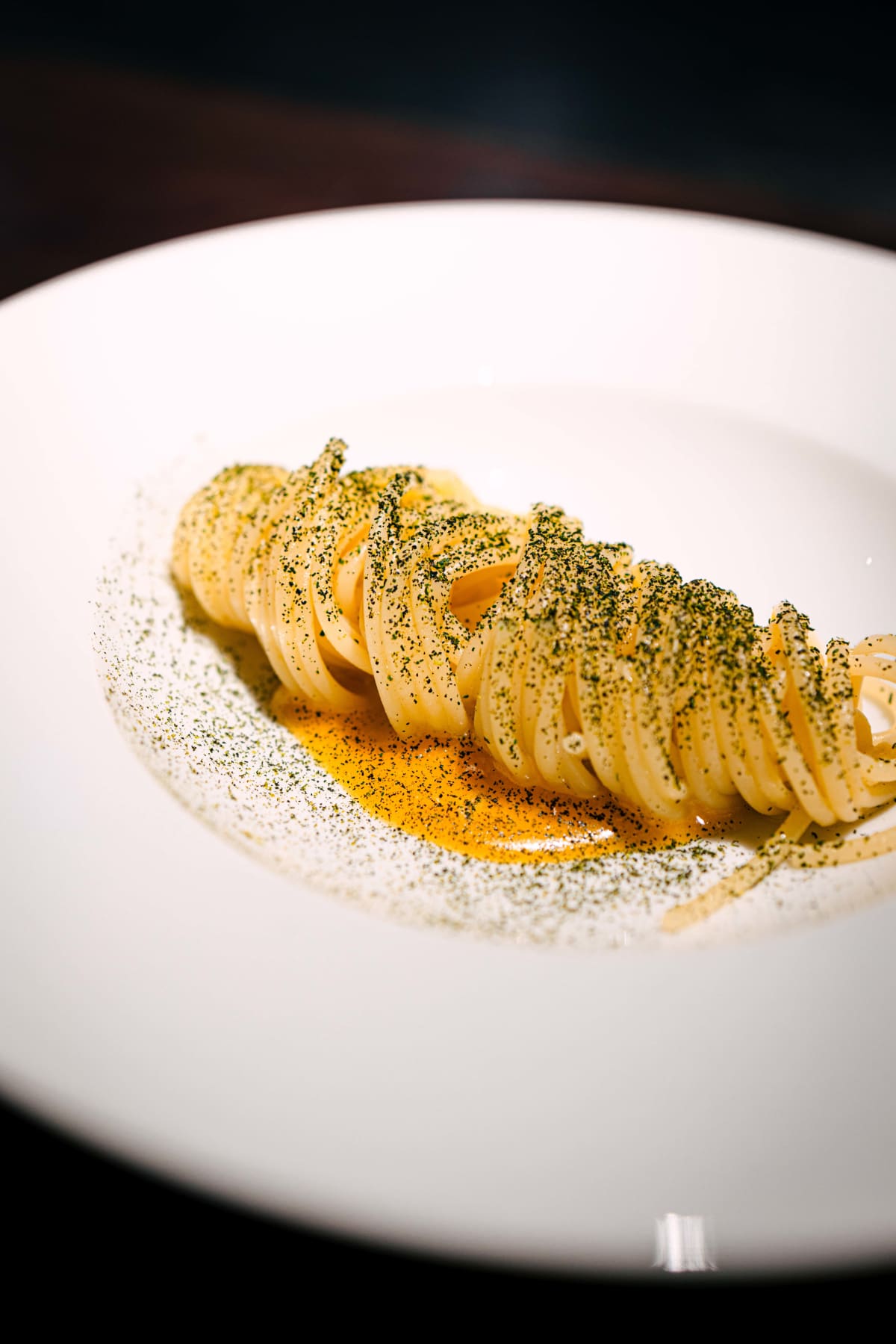
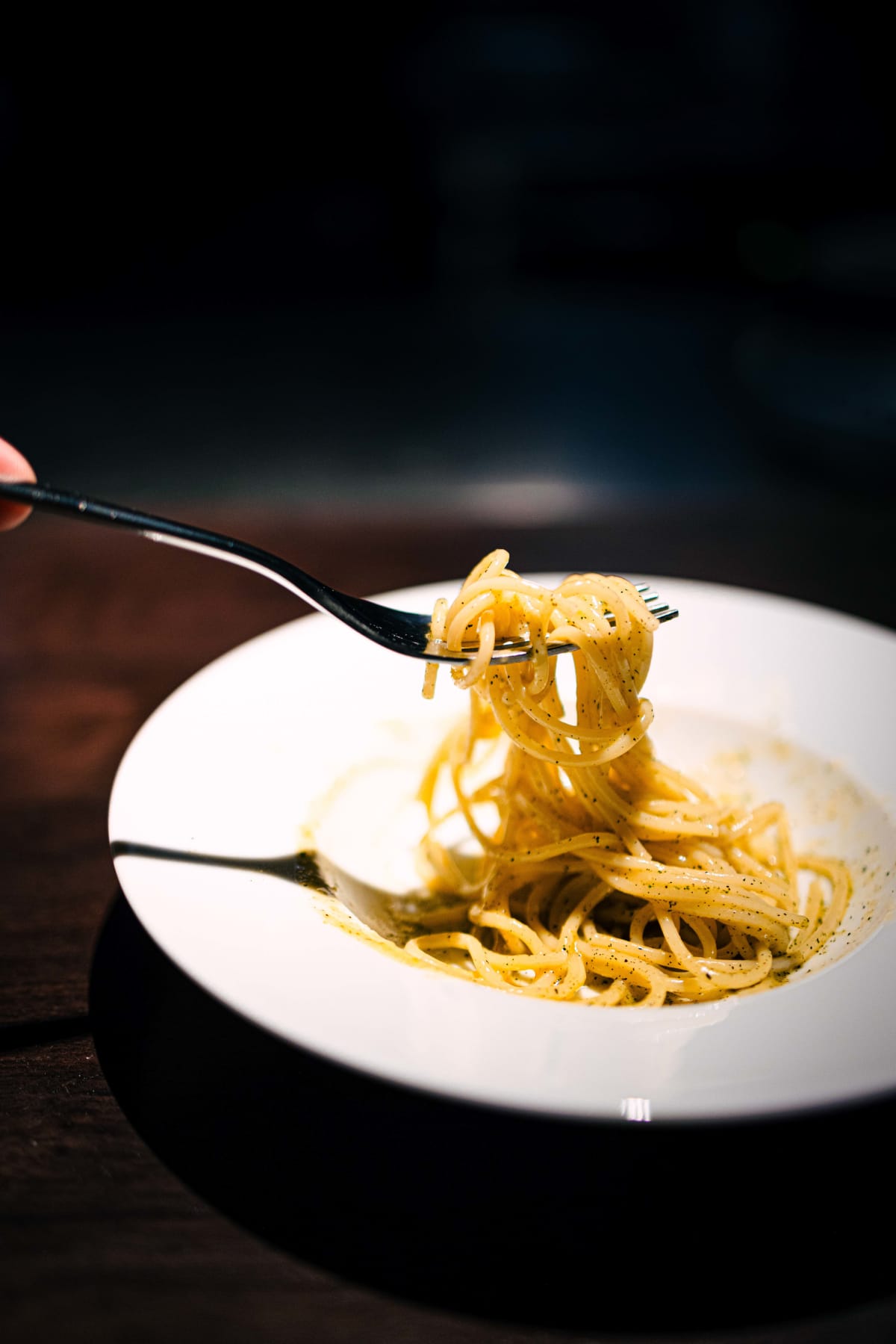
There was almost no fishiness, and the texture of the noodles was good. The style here was less classic Italian than it was creative pasta with a light Japanese touch. It went beyond mere fusion to strike the core flavour of the Japanese ingredient while running precisely through the fundamentals of Italian cooking.
It went beyond mere fusion to strike the core flavour of the Japanese ingredient while running precisely through the fundamentals of Italian cooking.
After that came a vongole with abalone, clams, and aralia shoots.
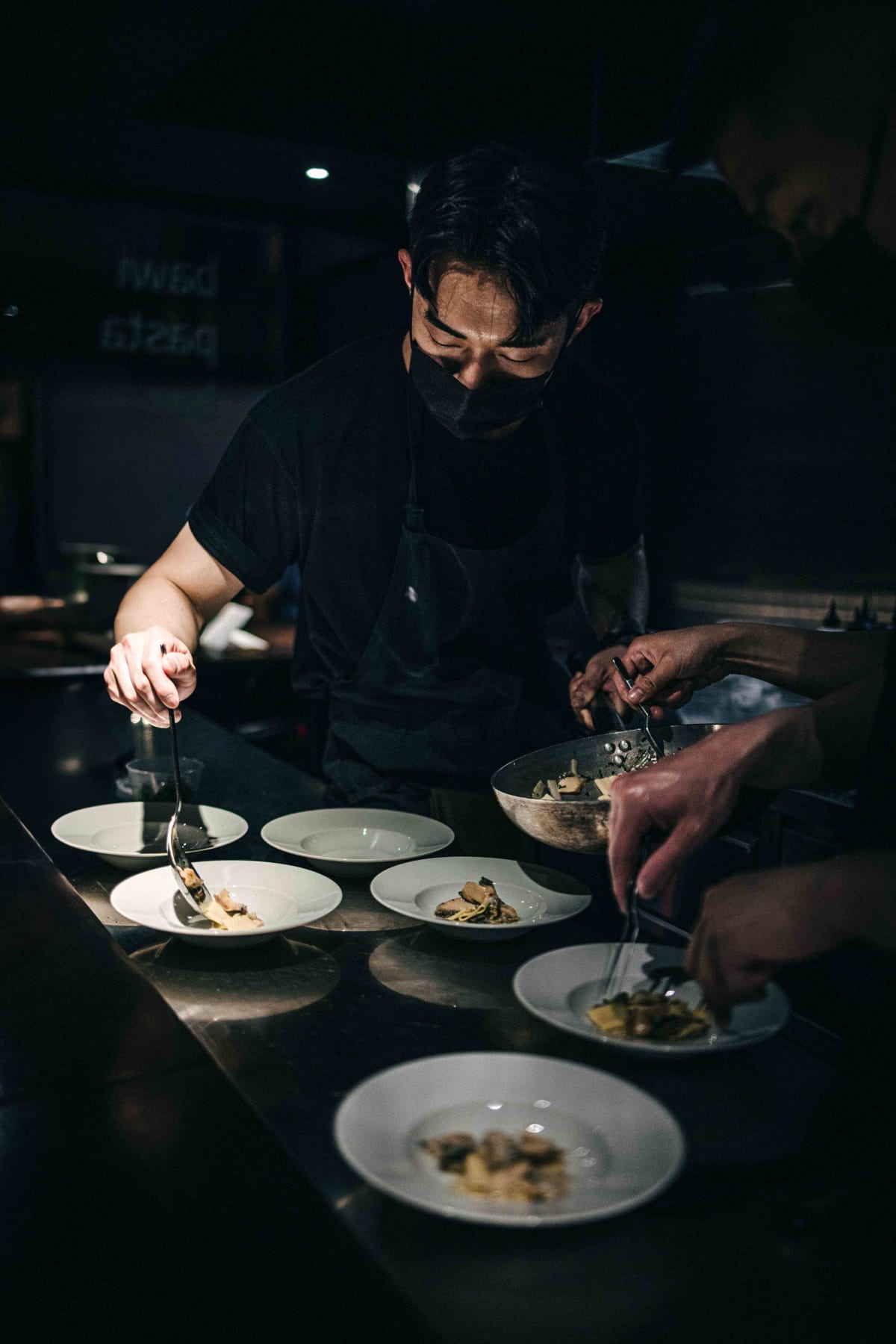
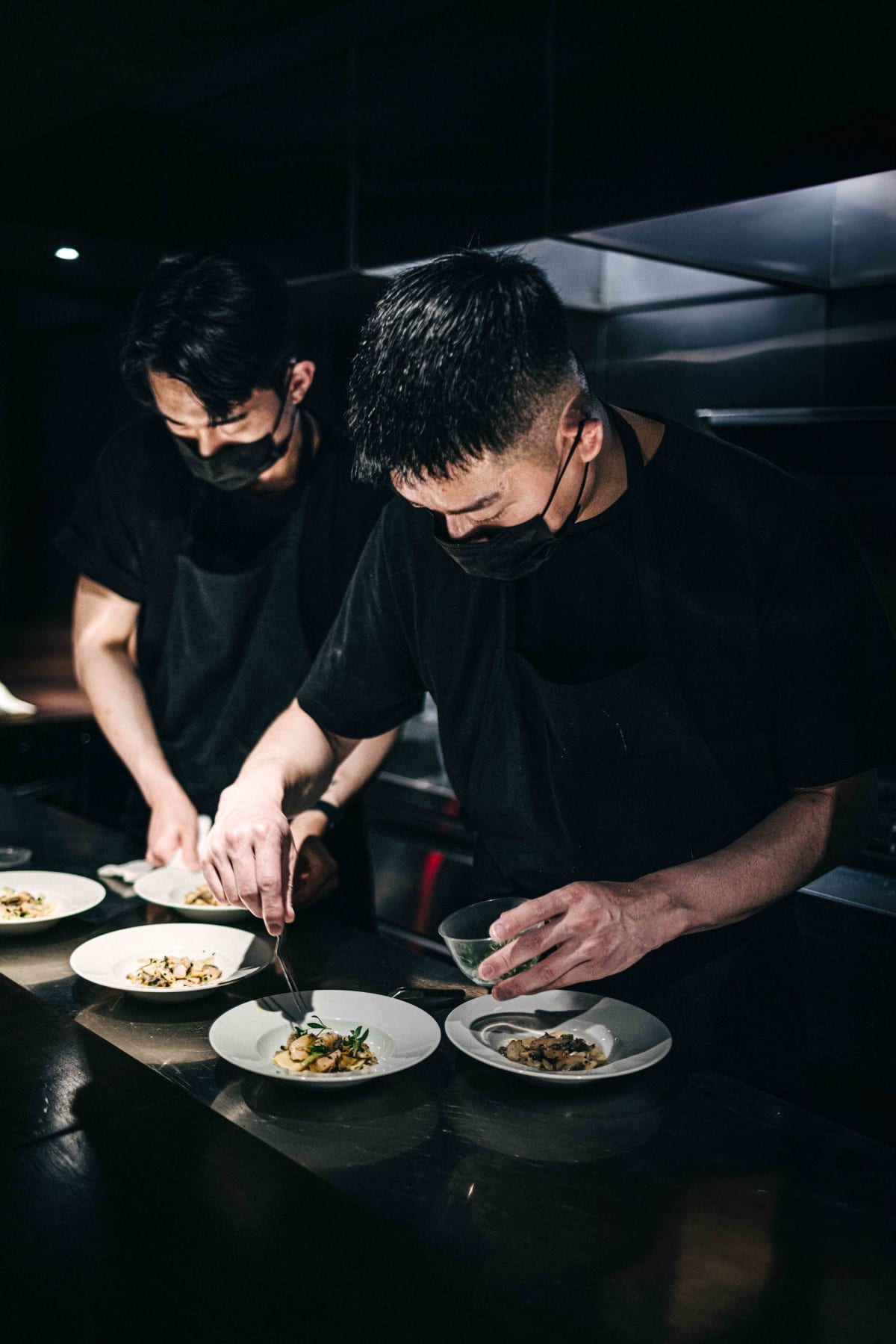
Perhaps because the konowata pasta before it had made such an impression, this one was unexpectedly ordinary.
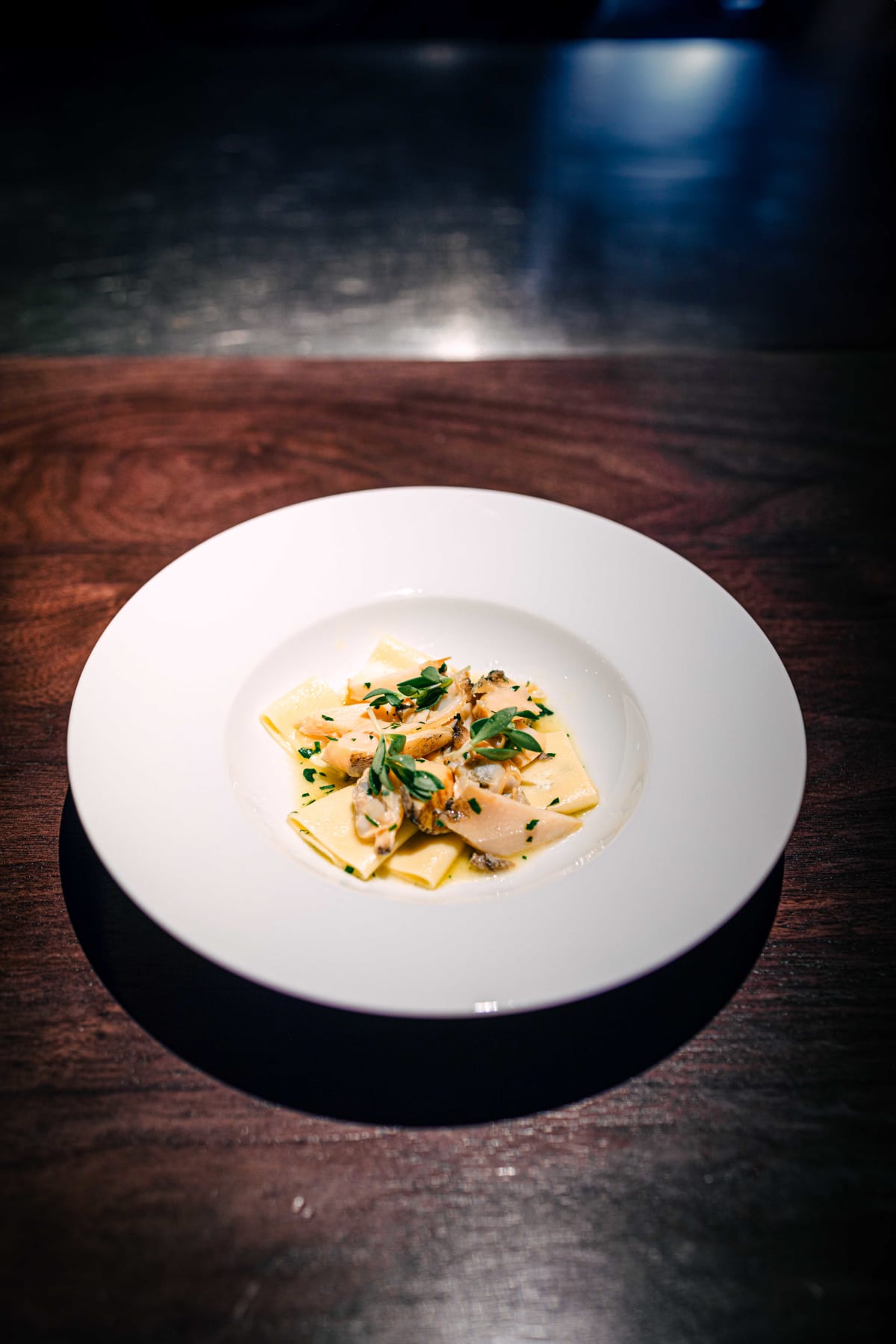
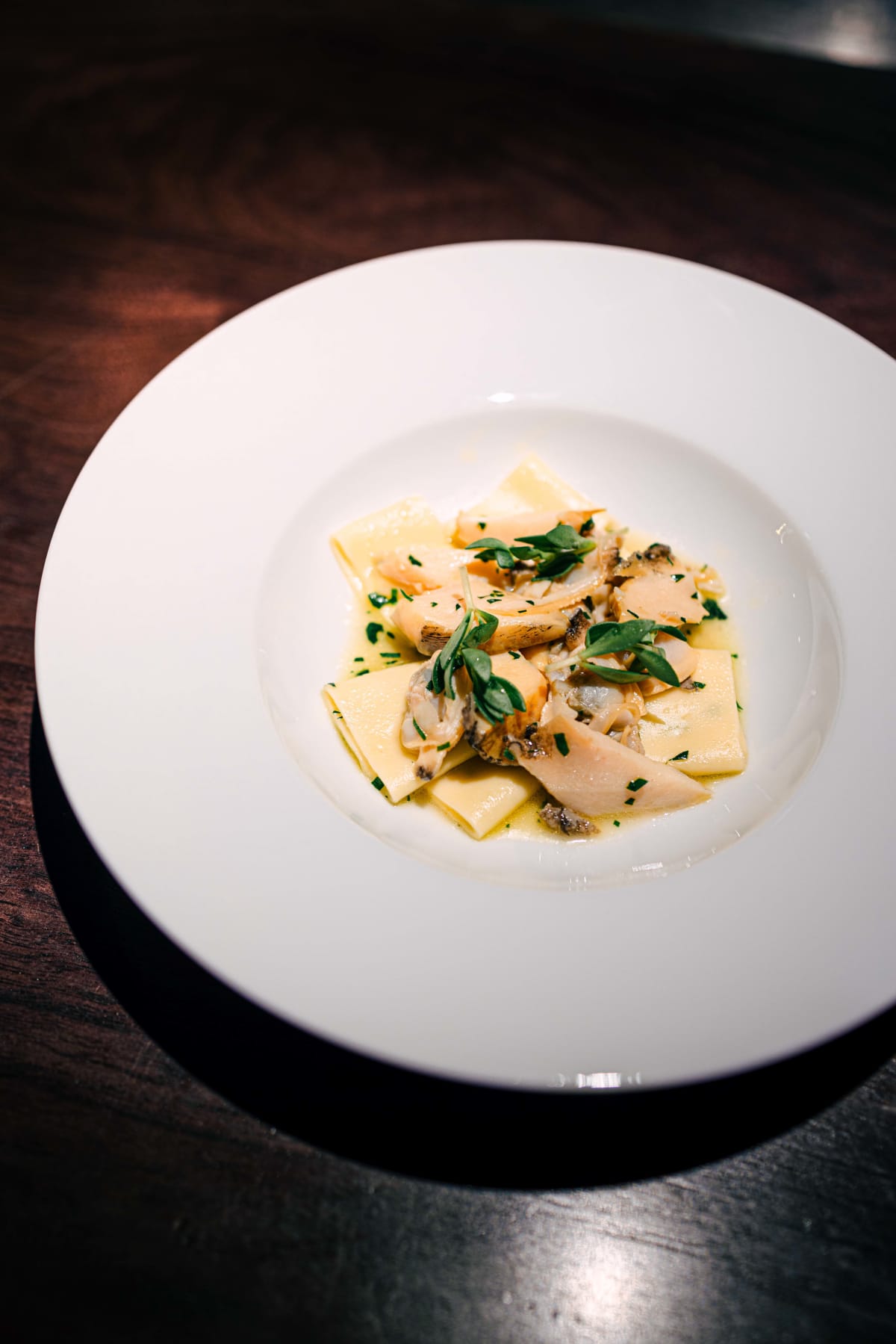
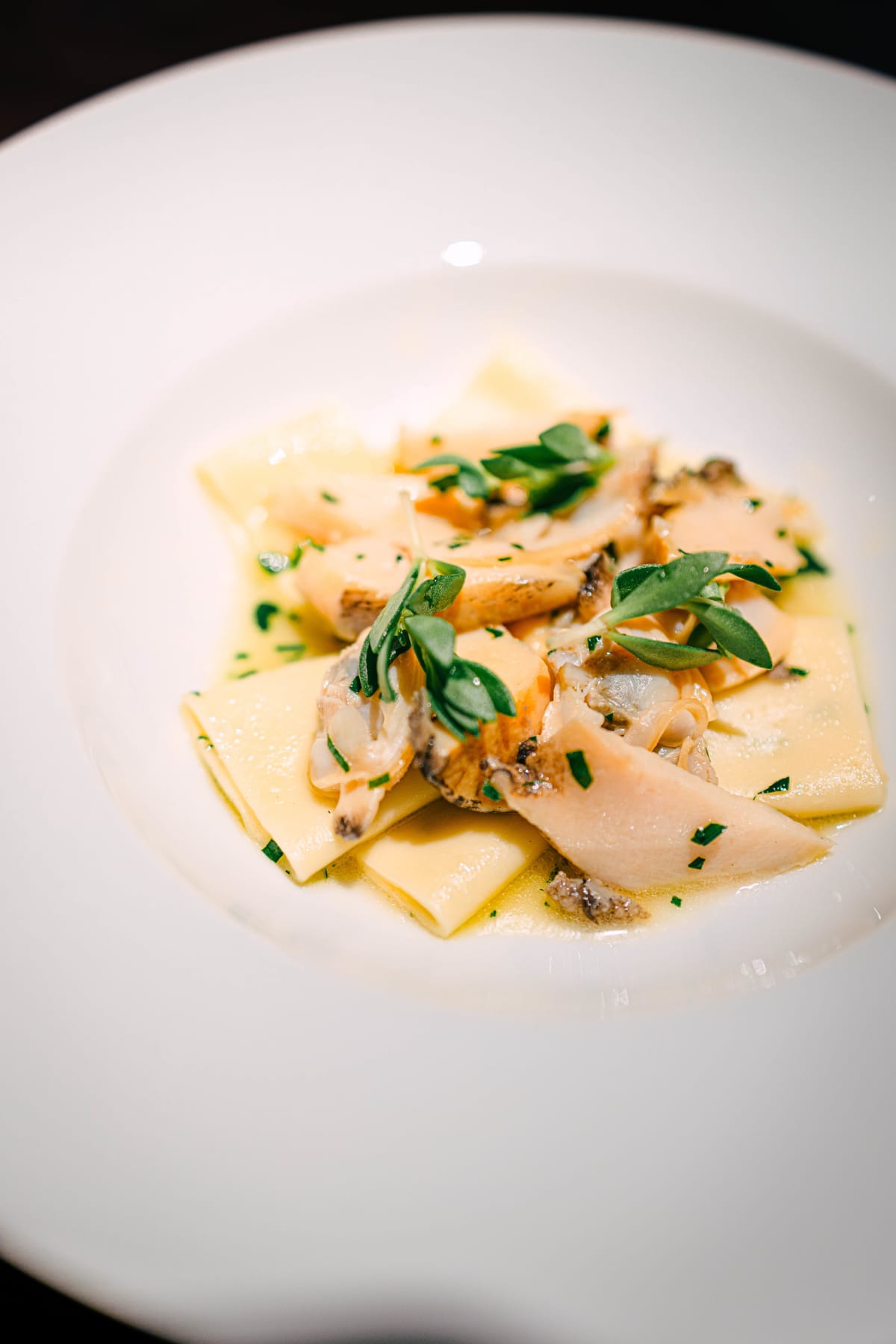
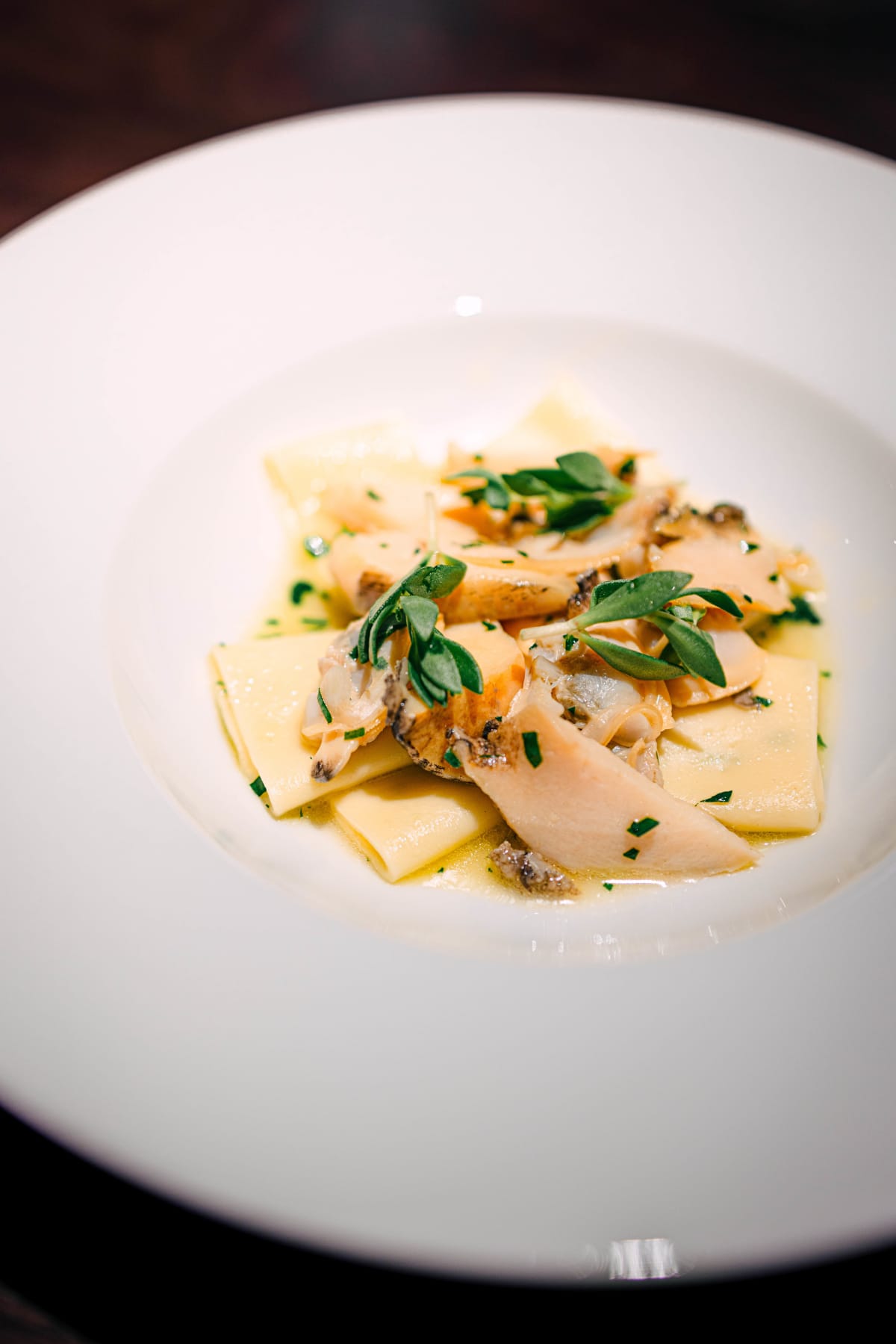
As someone who loves seafood, I felt it did not draw out the strengths of the shellfish as well as it might have.
Section 6·Broth and Truffle
Midway through, a cup of broth arrived, and at first I wondered if it was some kind of tea. It turned out to be tortellini, the Italian-style dumpling, served in a broth simmered from beef brisket.
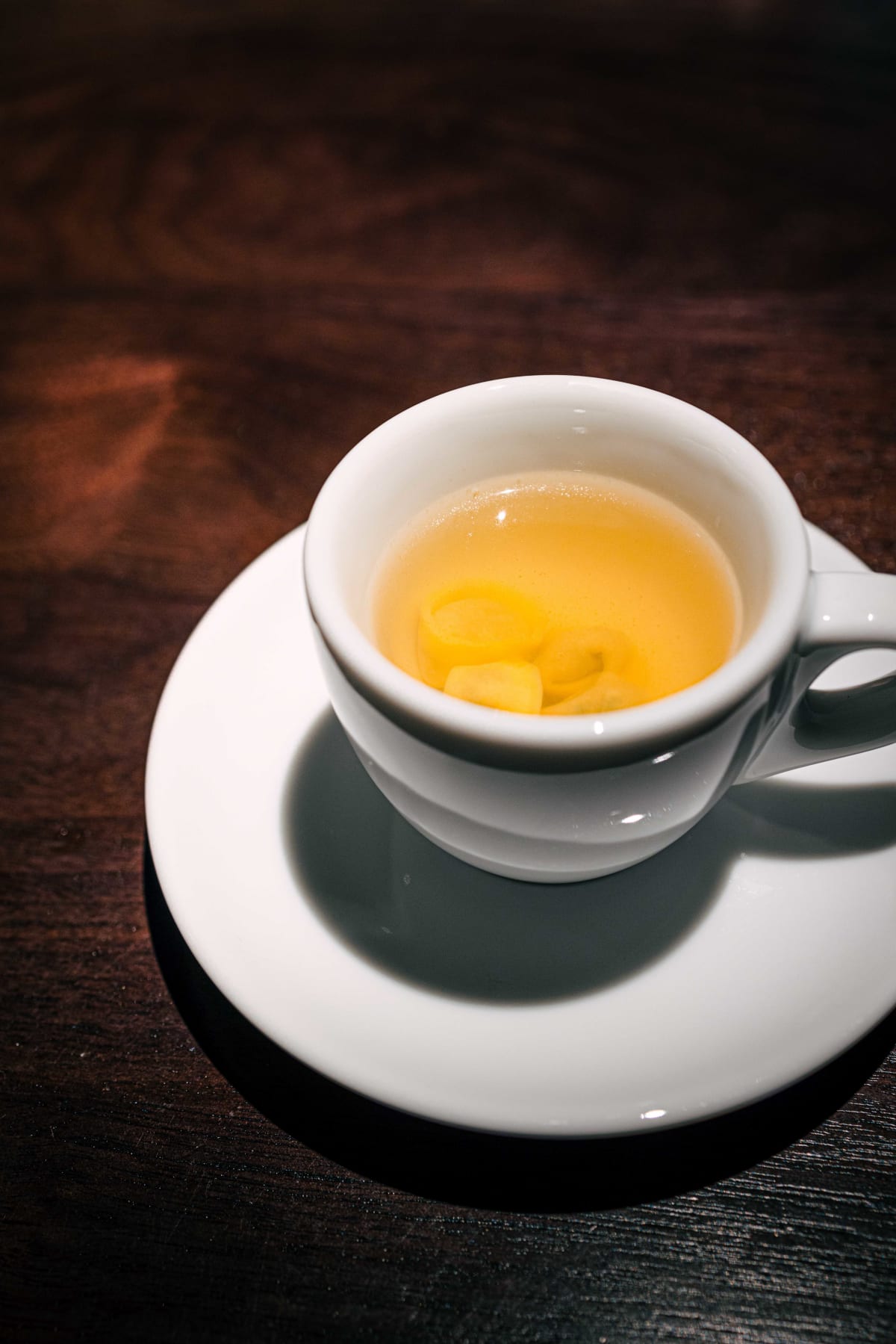
Tortellini is originally a pasta of Emilia-Romagna, traditionally served just like this, in a clear broth, in brodo. Beyond the pleasure of the chew, the thirty-month-aged Parmigiano Reggiano tucked inside gave the cheese a powerful presence. The broth, too, was like drinking a clear, well-made gomtang. It was a soup dish that struck an exquisite balance between the intensity the cheese stood for and the clarity that called gomtang to mind.
Last came a tajarin-style pasta with forty-month-aged Parmigiano Reggiano, finished with summer truffle shaved on top.
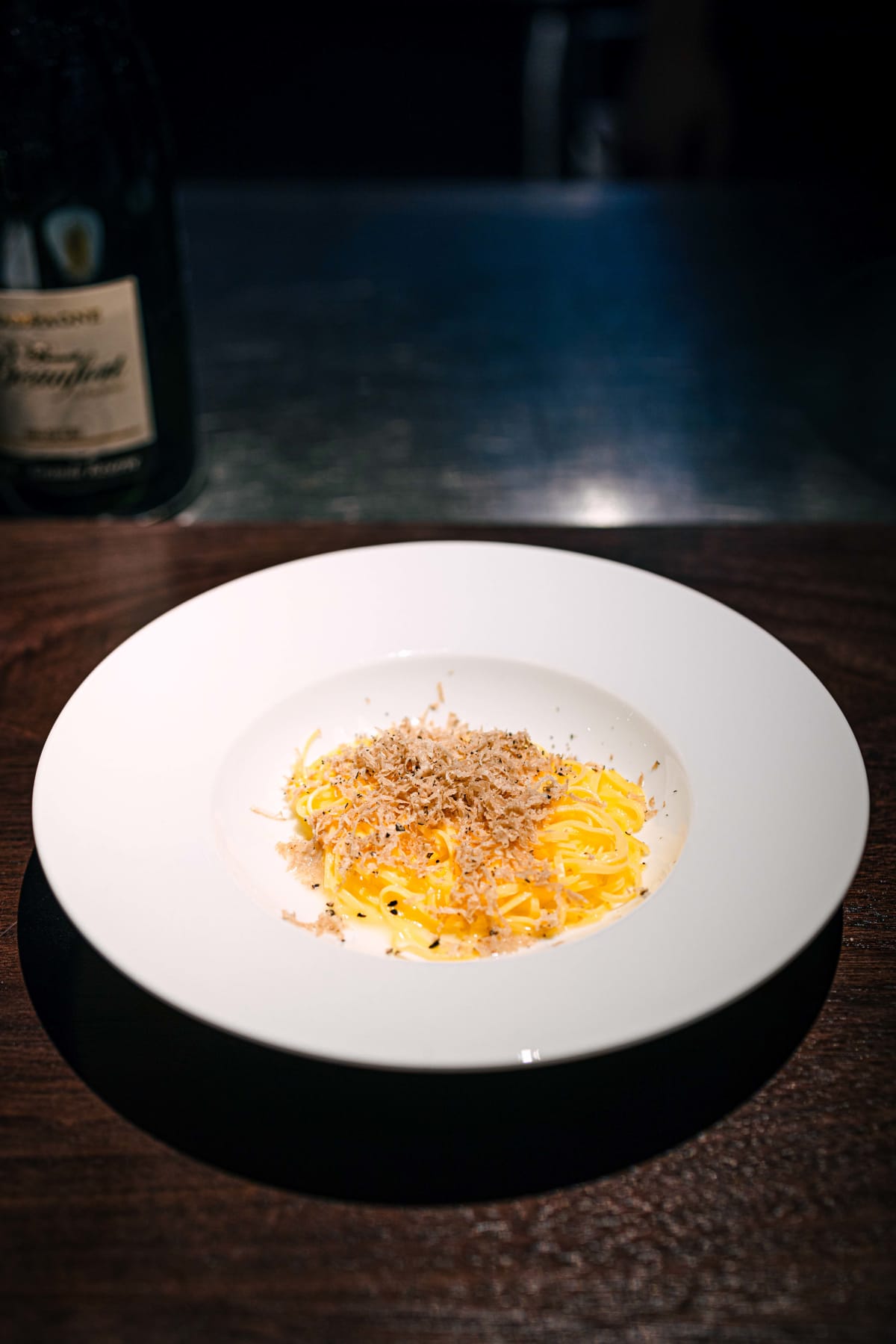
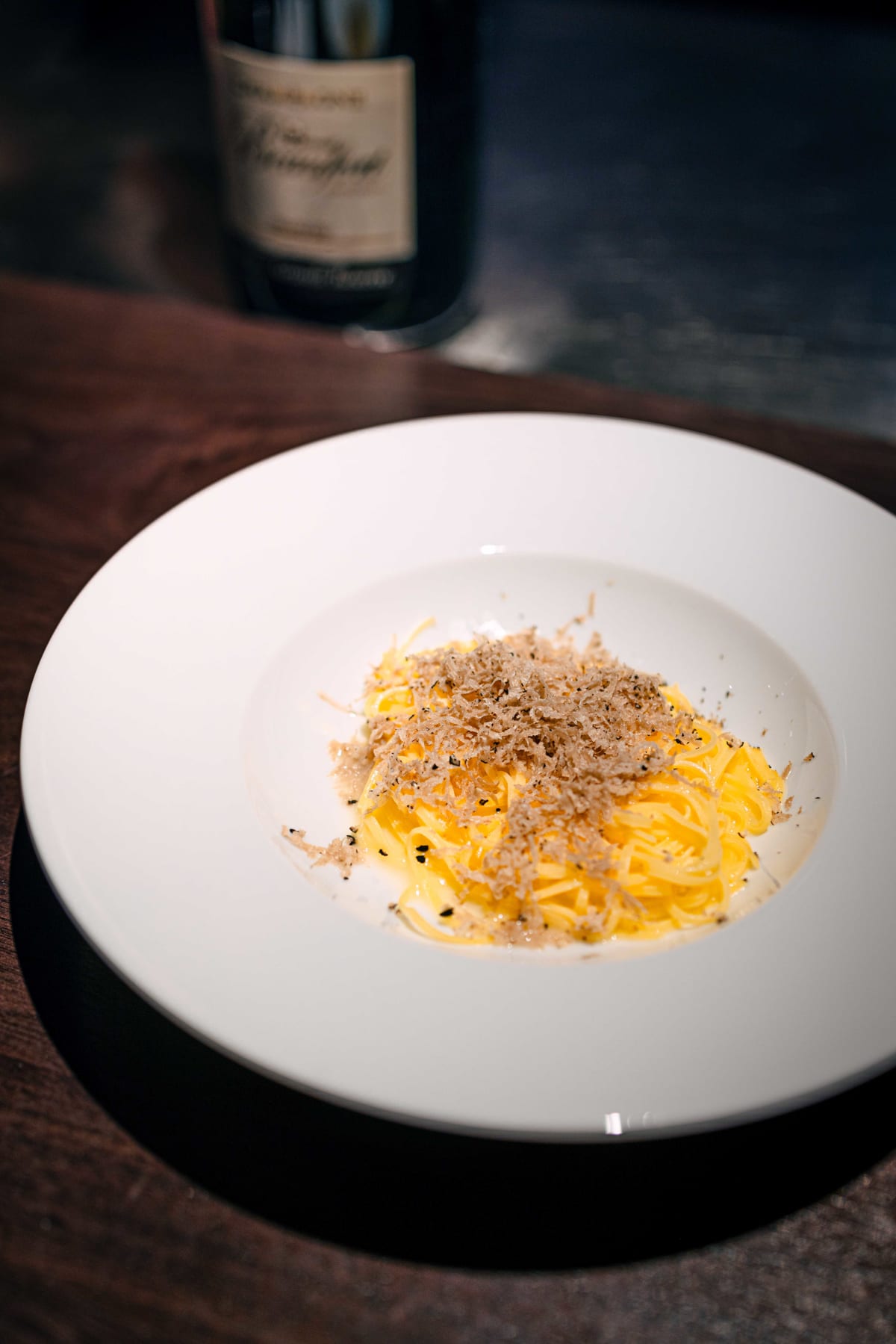
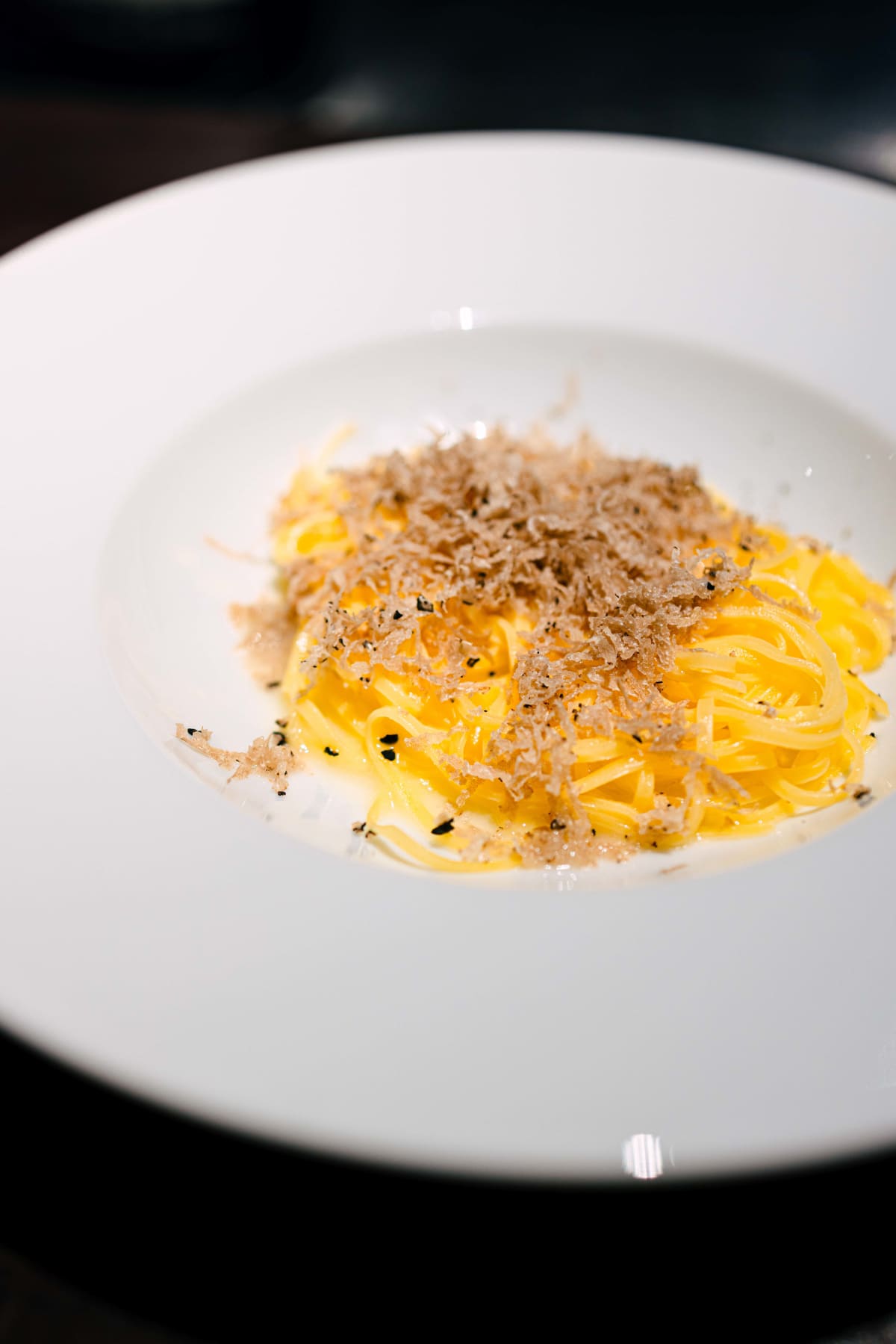
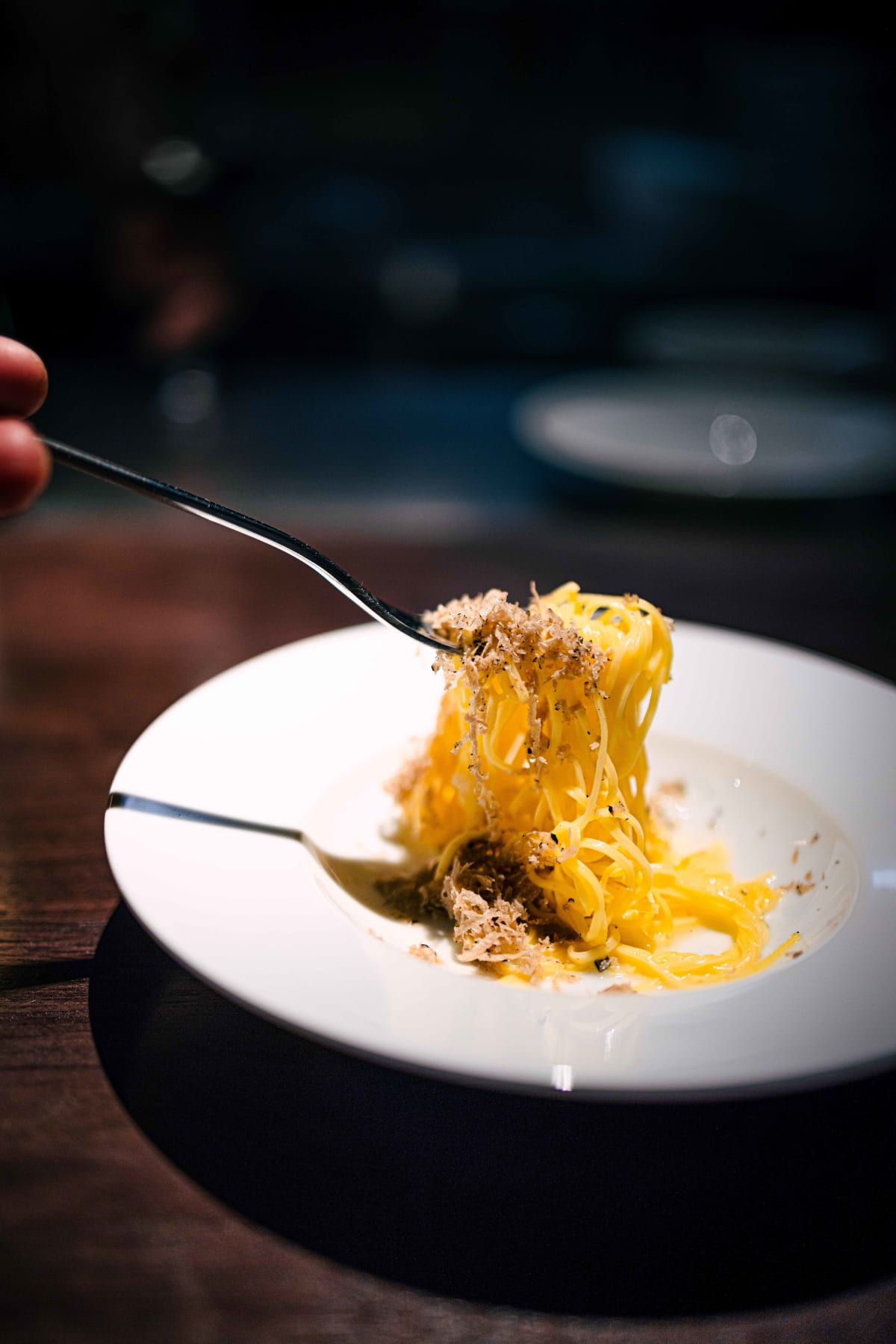
Tajarin is originally a thin, egg-yolk-rich pasta from Piedmont, traditionally served with the truffles of Alba. The chef kept lamenting that the summer truffle's aroma was weak, and I remember being told that from June, with truffles arriving from Australia in the opposite season, the winter truffle would make it better. The forty months of aging gave the cheese a fine flavour, one that could divide opinion, and imagining it with a more fragrant truffle on top only made me look forward to the next visit.
Section 7·Dessert
The meal closed with dessert and, with it, a dessert wine. The friend I was with ordered the wine and sent a glass to everyone in the room, an unfamiliar one, Ratafia Champenois by Chavost.
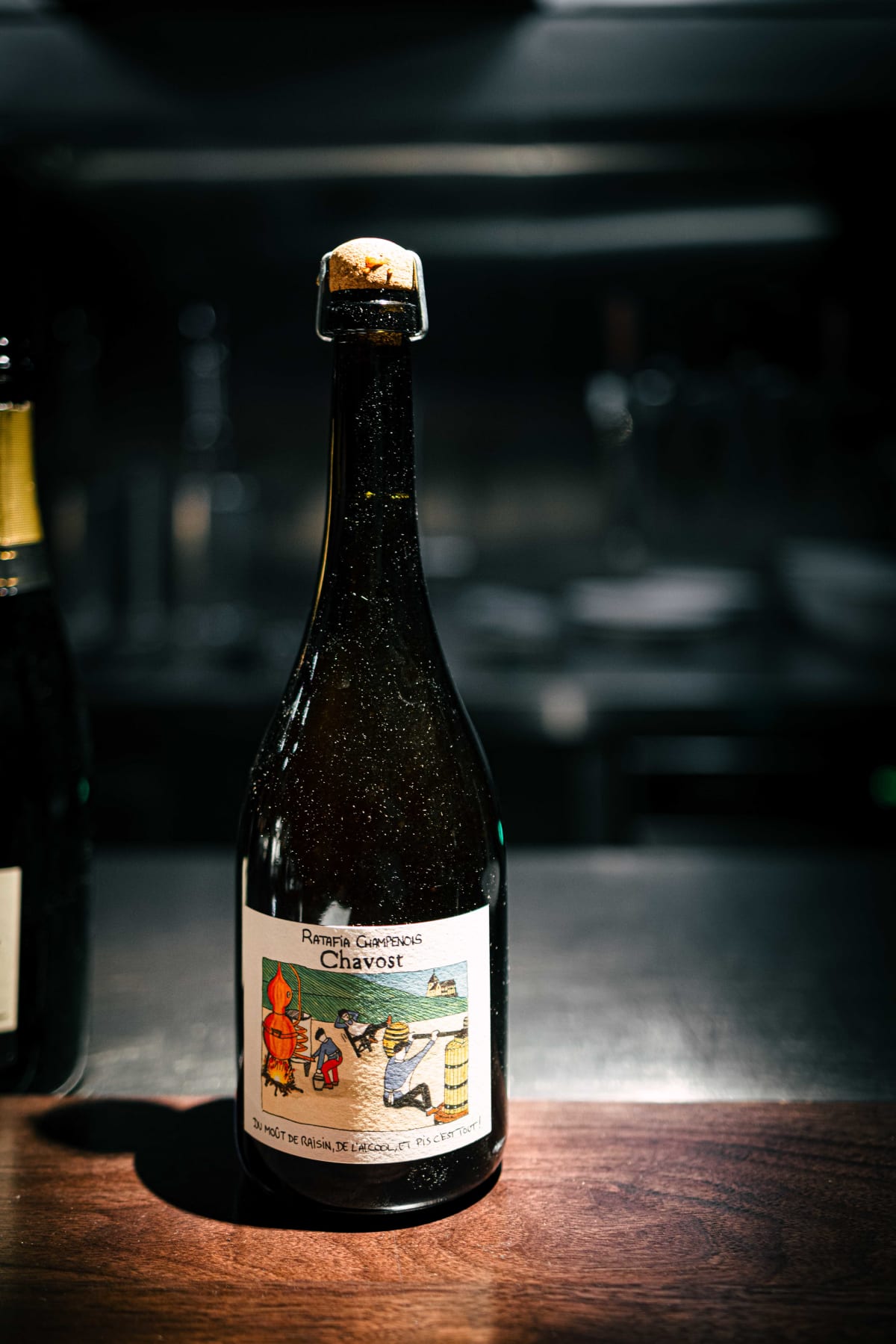
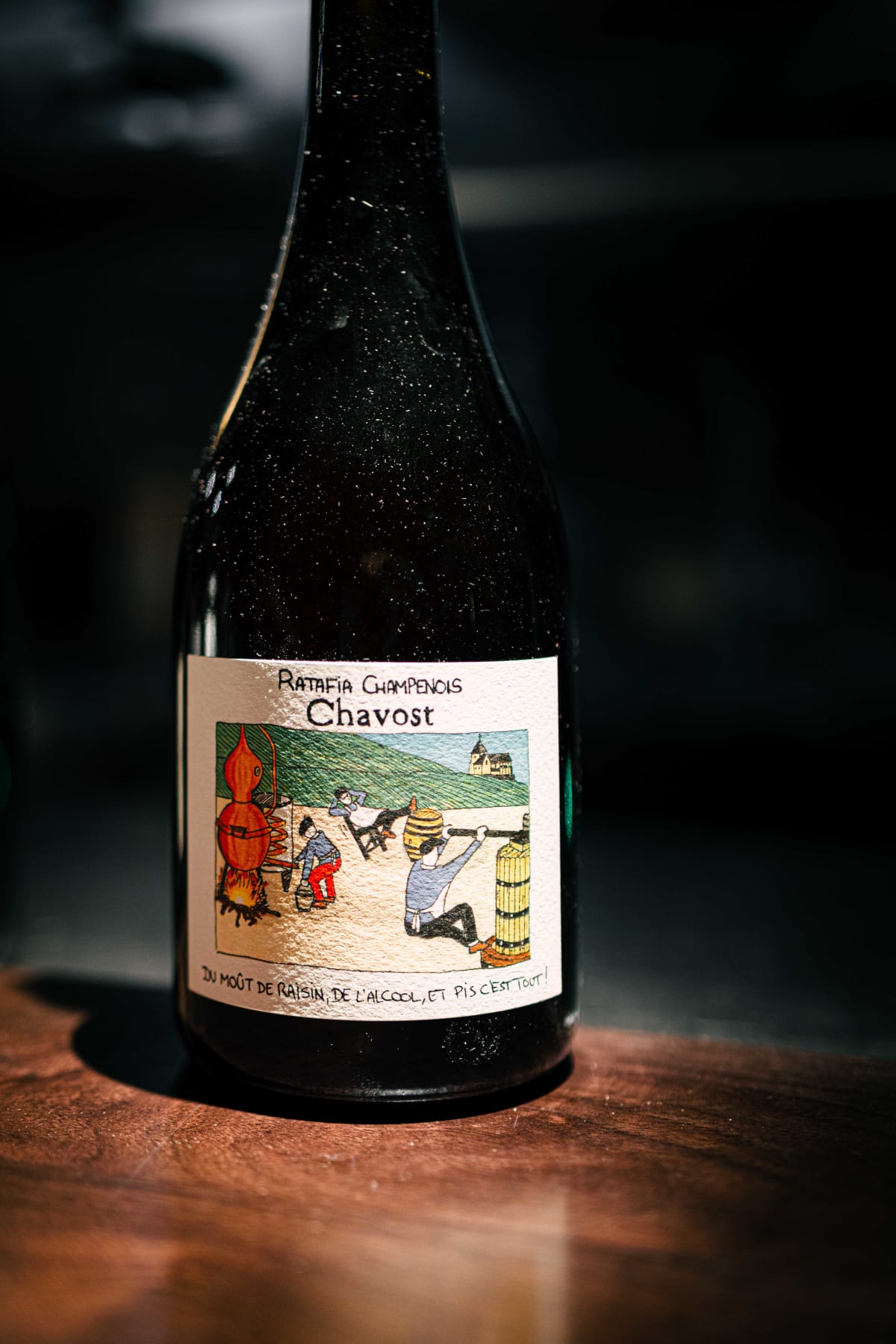
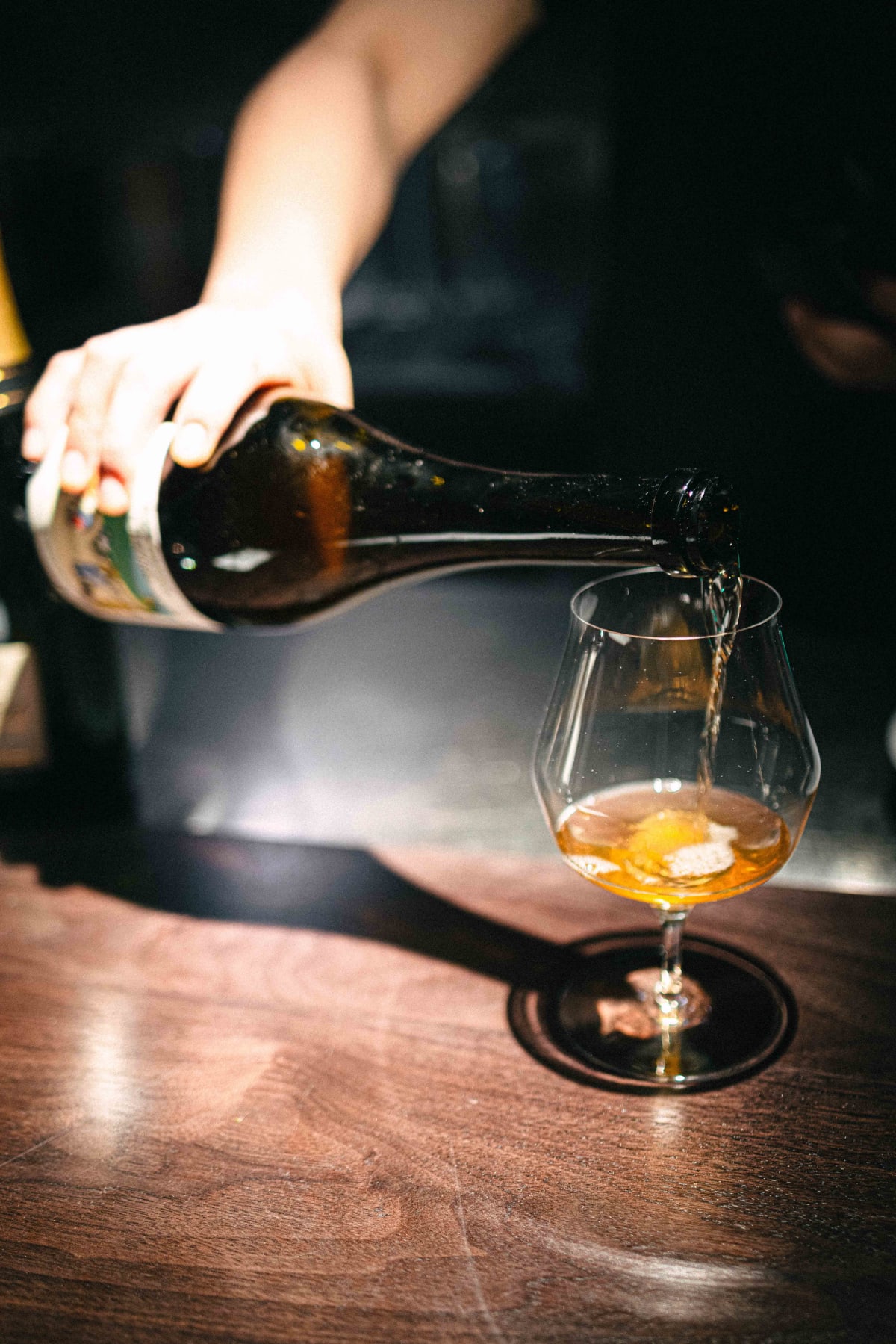
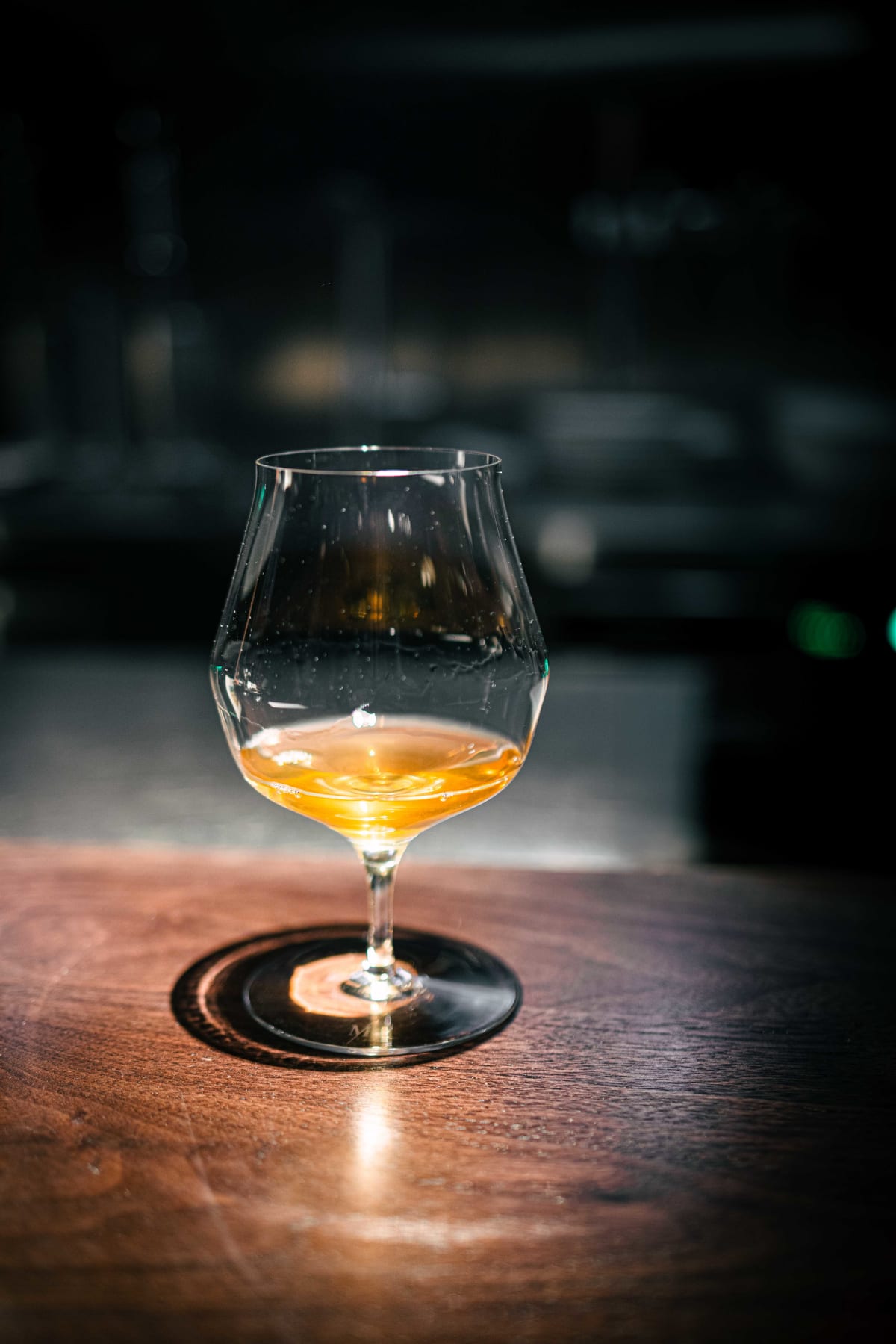
Ratafia Champenois is the dessert wine of Champagne, the region that makes Champagne, and traditionally it is a fortified wine in which grape must not destined for sparkling production has its fermentation stopped to leave residual sugar, then is sweetened with a brandy called Marc.
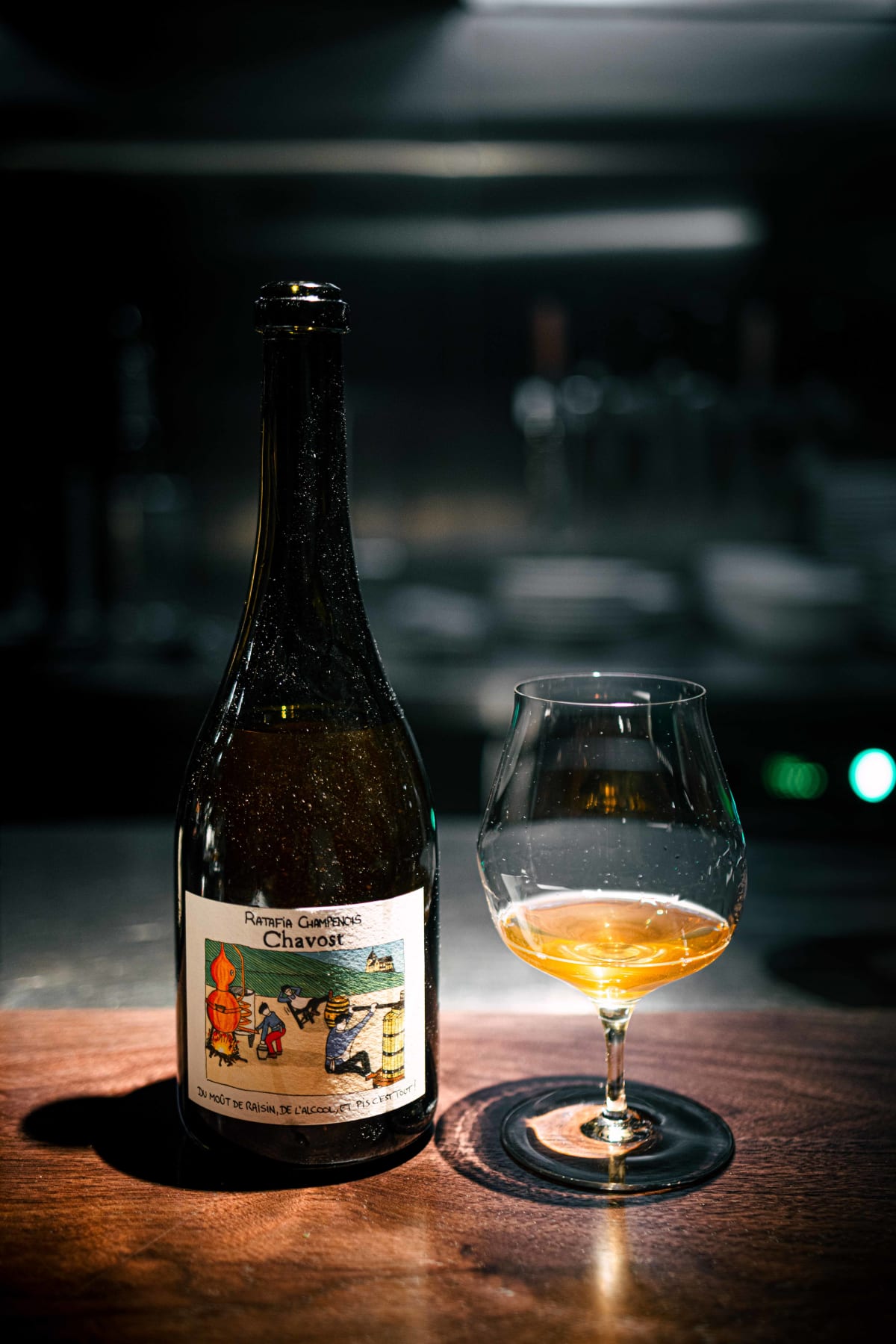
Chavost is a cooperative that began in 1946 in the village of Chavot-Courcourt, and since 2019 the oenologist Fabian Daviaux has led it in an additive-free, no-sulfite, natural style. This ratafia uses Chardonnay and Meunier in equal parts, aged in old oak barrels and bottled without added sulfur. Perhaps because it is a dessert wine made in Champagne, the acidity was livelier than I expected, with nutty, toasty aromas rising alongside it. It felt different from the dessert wines I was used to, and as I kept drinking it out of curiosity, the glass vanished in no time.
The dessert itself was an orange-colored fruit, which I took to be tangerine, set over a milk pudding.
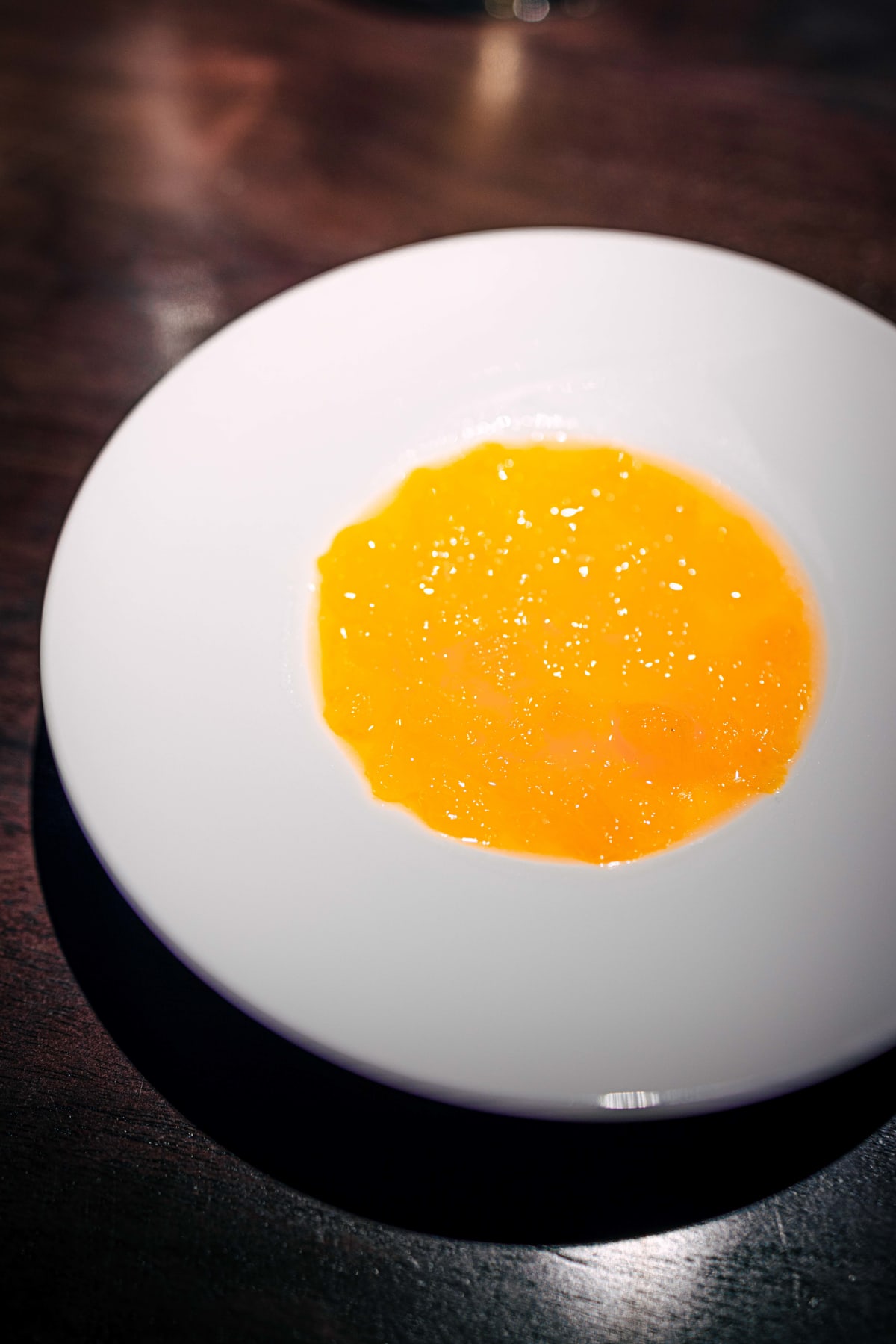
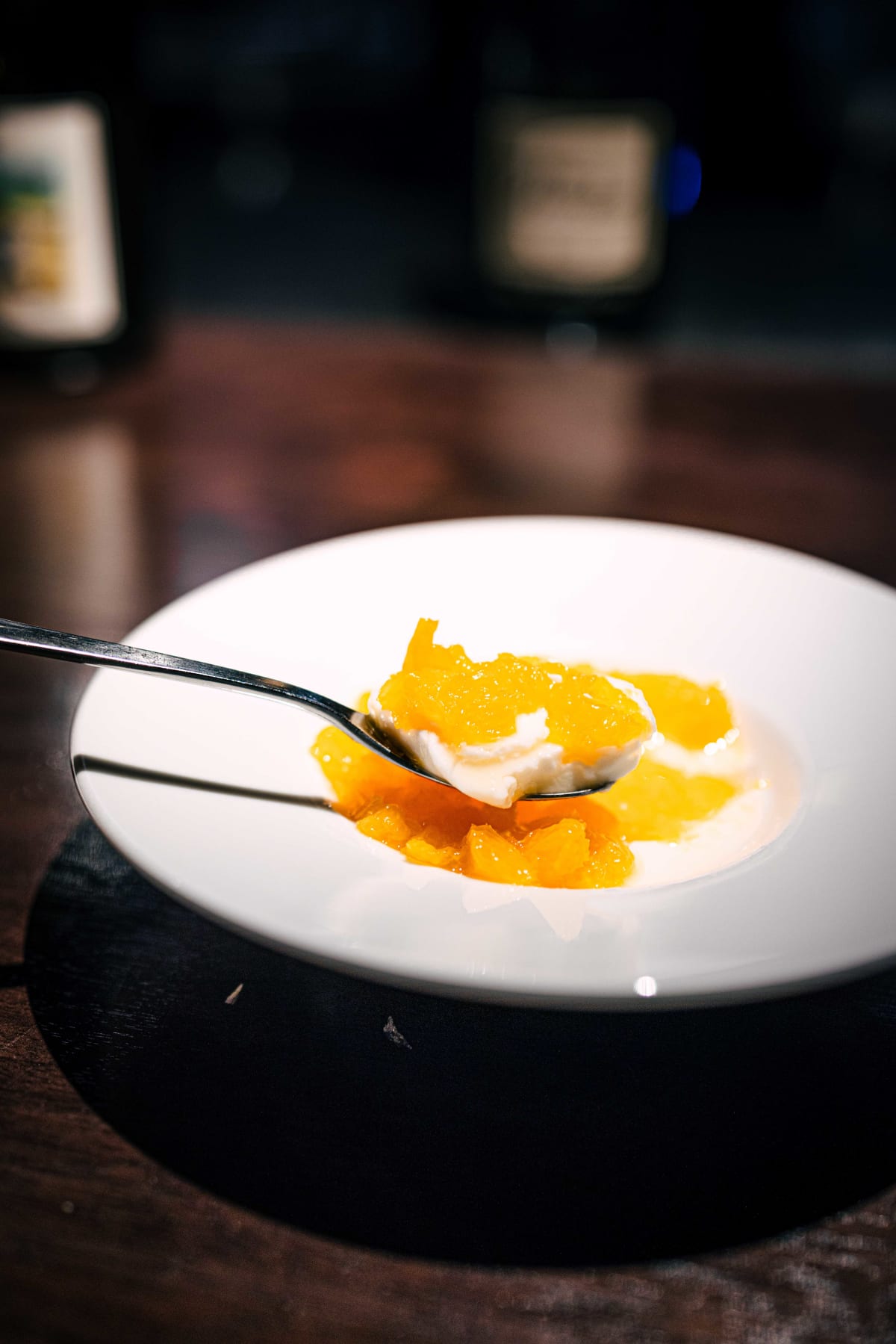
Rather than leaning on sweetness, it was a fresh, light thing, good for cleansing the palate.
Section 8·Leaving
Booking was so difficult back then that it was never a place I could visit whenever I wanted, but hearing that the menu changed regularly, I was curious what other pastas Bawi might show next, and I ended up going several times. Writing this review now, three years on, I feel as though I have been carried back once more to that astonishing little pasta-bar space in Seongsu.
What Bawi really started was less a restaurant than a template. The fresh-pasta bar it defined, a counter where a Japanese touch and Japanese precision are folded into Italian form and served course by course, has since grown into a genre of its own in Seoul. That a format this particular could take root and multiply says something about how confidently Korean dining now borrows and recombines on its own terms. The Seongsu room is gone, but the idea it set down has outlasted it, which may be the truest measure of how good the original was.

Have a question about this restaurant, or want to share your own experience?
Send a message