Fine Dining · Tokyo · Japan / January 2025
Aramaki
"A roomy Tokyo yakitori counter with the polish of a ryotei"
Section 1·The Counter
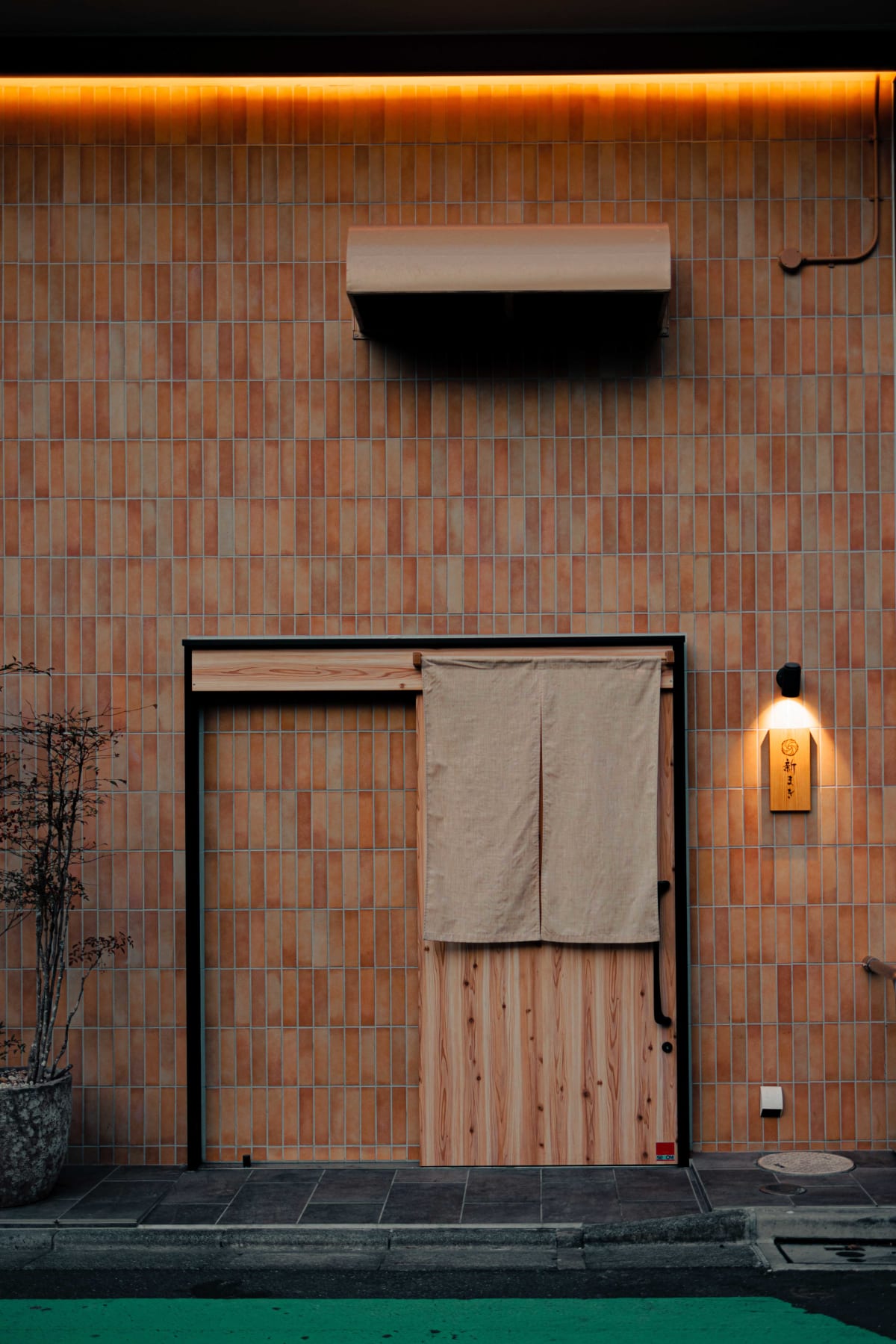
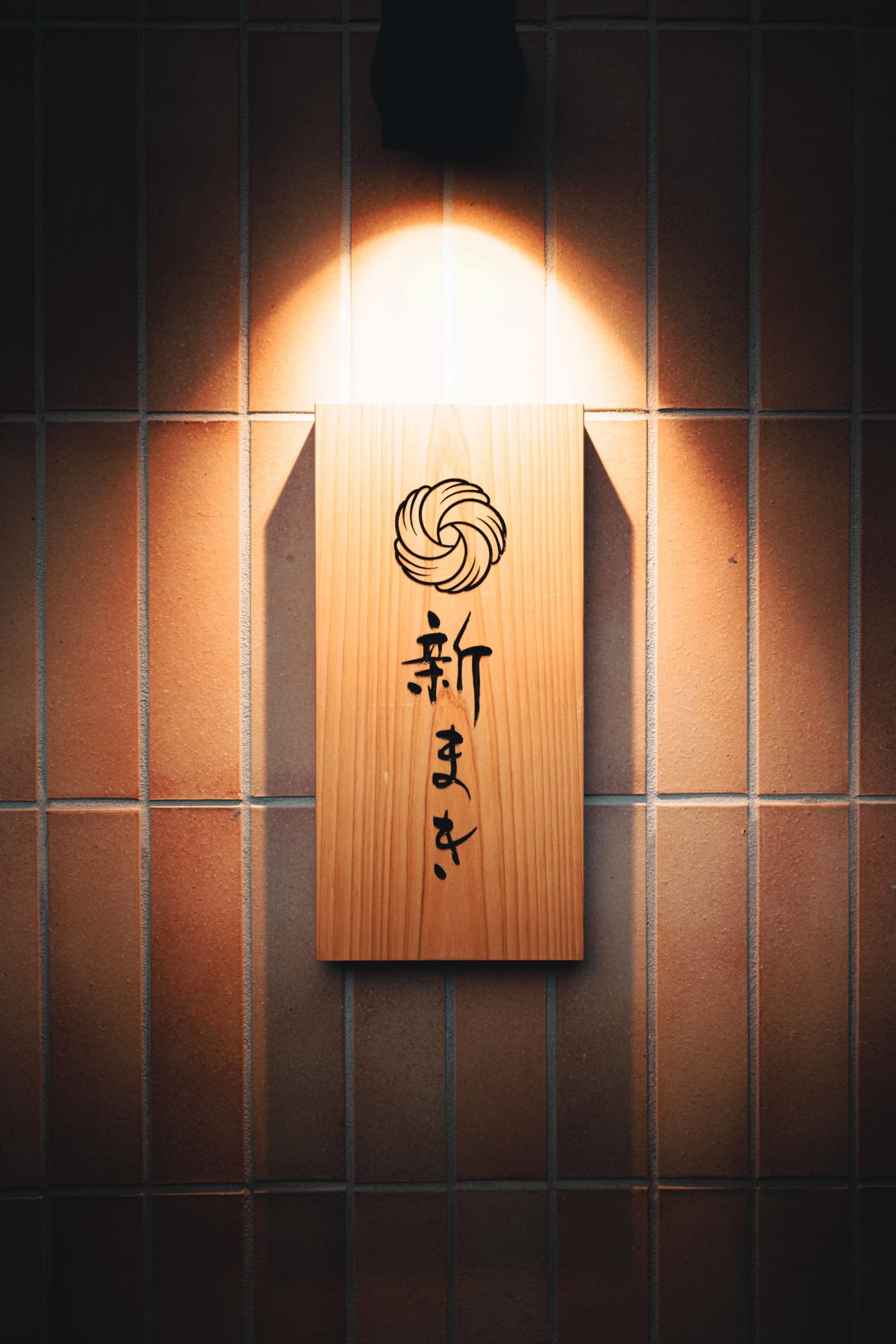
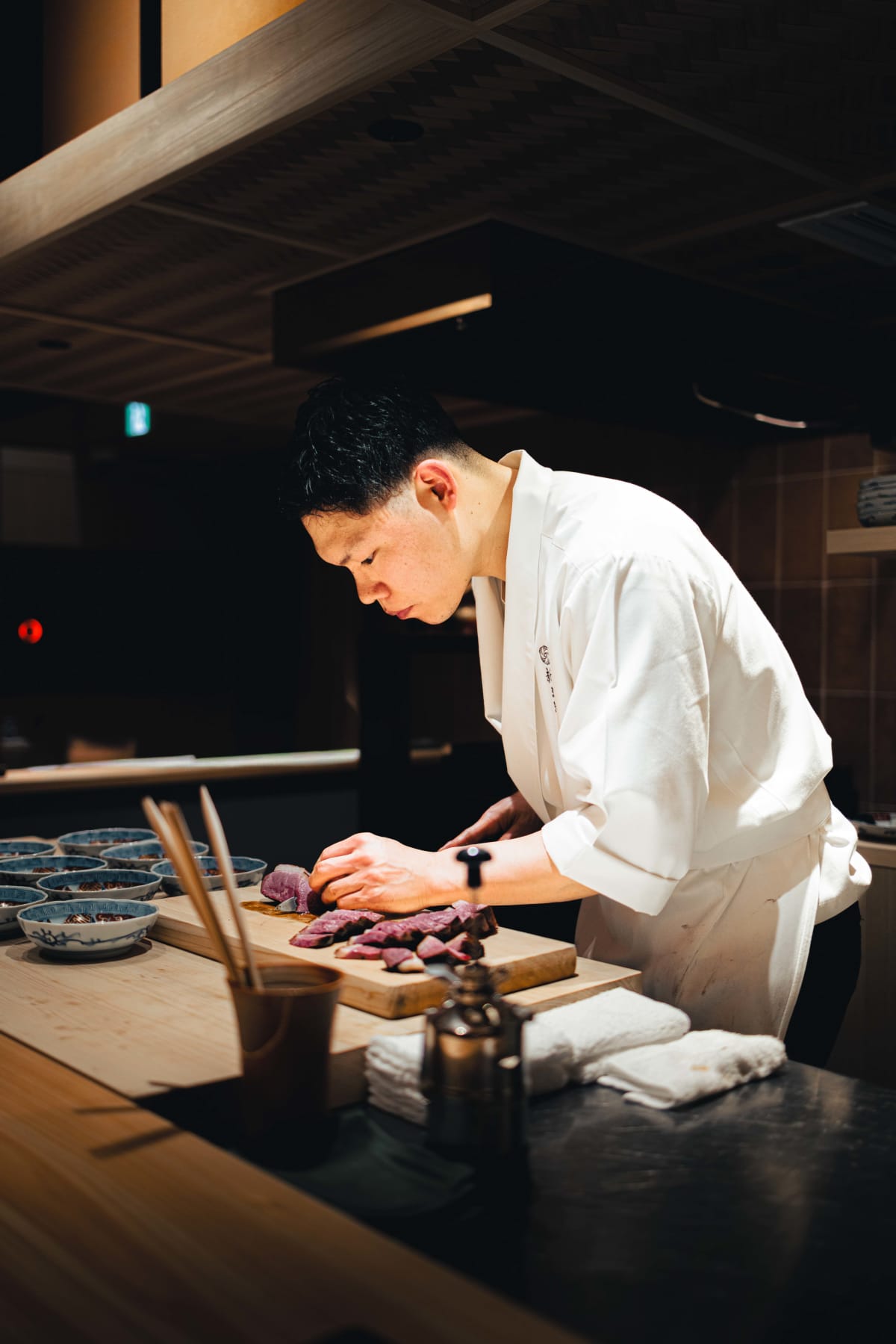
Ask around about what to eat in Japan, or in Tokyo specifically, and the recommendations lean toward yakitori more often than sushi. The quality of Japanese chicken, far better on the grill than what we get back home, makes an enormous difference, and the prices are gentler than sushi. I try to work a yakitori meal into every trip to Japan when I can. One name that comes up often in those recommendations is Aramaki (新まき), a rising yakitori house that opened in July 2024. The owner-chef, Aramaki Masashi, began at the esteemed yakitori house Torishige (鳥繁), trained for more than three years at the celebrated Ginza Japanese-cuisine restaurant Ginza Kojyu (銀座 小十), ran the cooking rather than the grill at Kamiyacho Omino (神谷町 おみ乃), and passed through the innovative restaurant Hotel's. He is, in other words, a chef equally versed in yakitori and in Japanese cuisine. Compared with Omino Tsubaki, which I had been to a month before this visit and which is not the same place the chef trained at, Aramaki was incomparably more satisfying.
He is, in other words, a chef equally versed in yakitori and in Japanese cuisine.
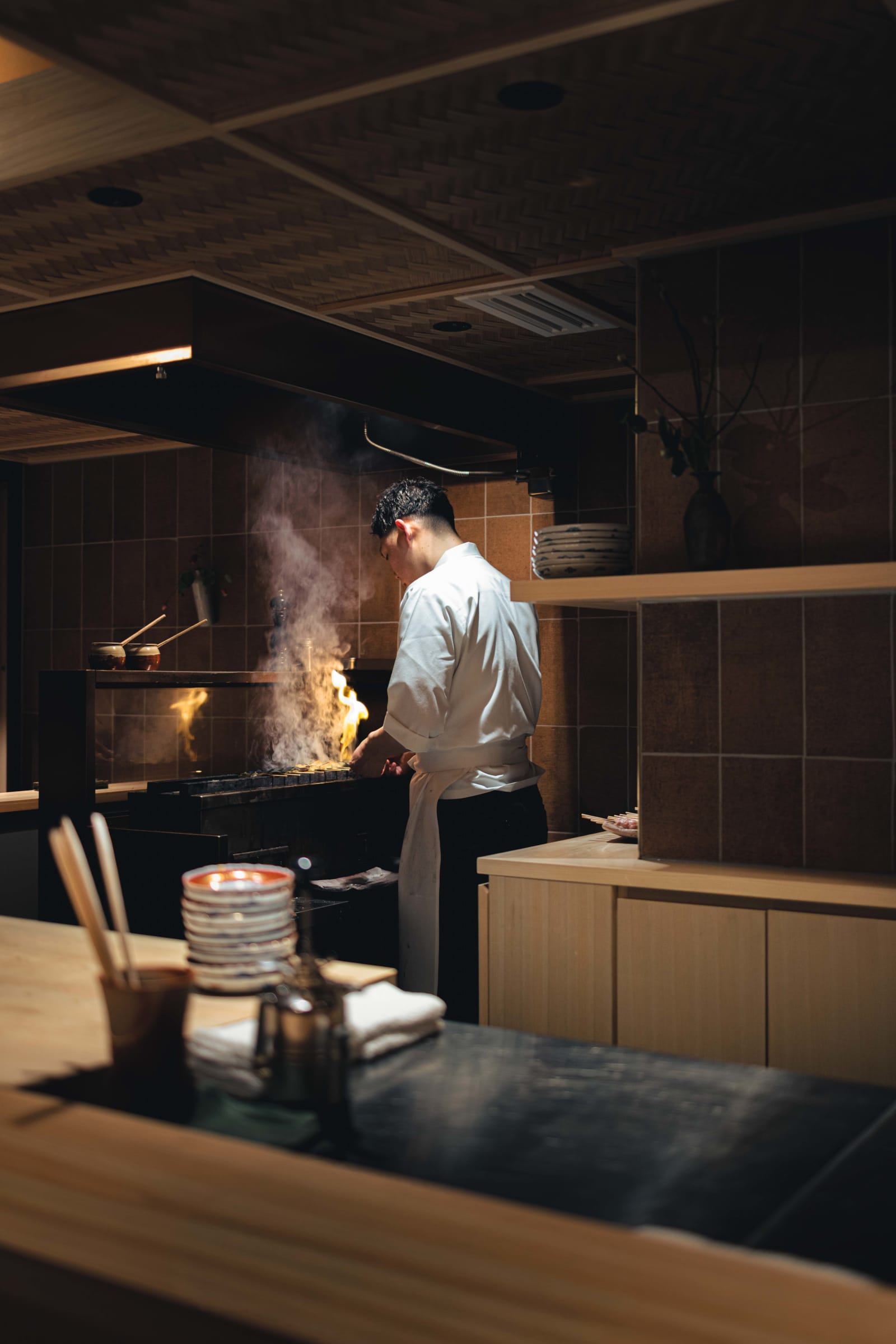
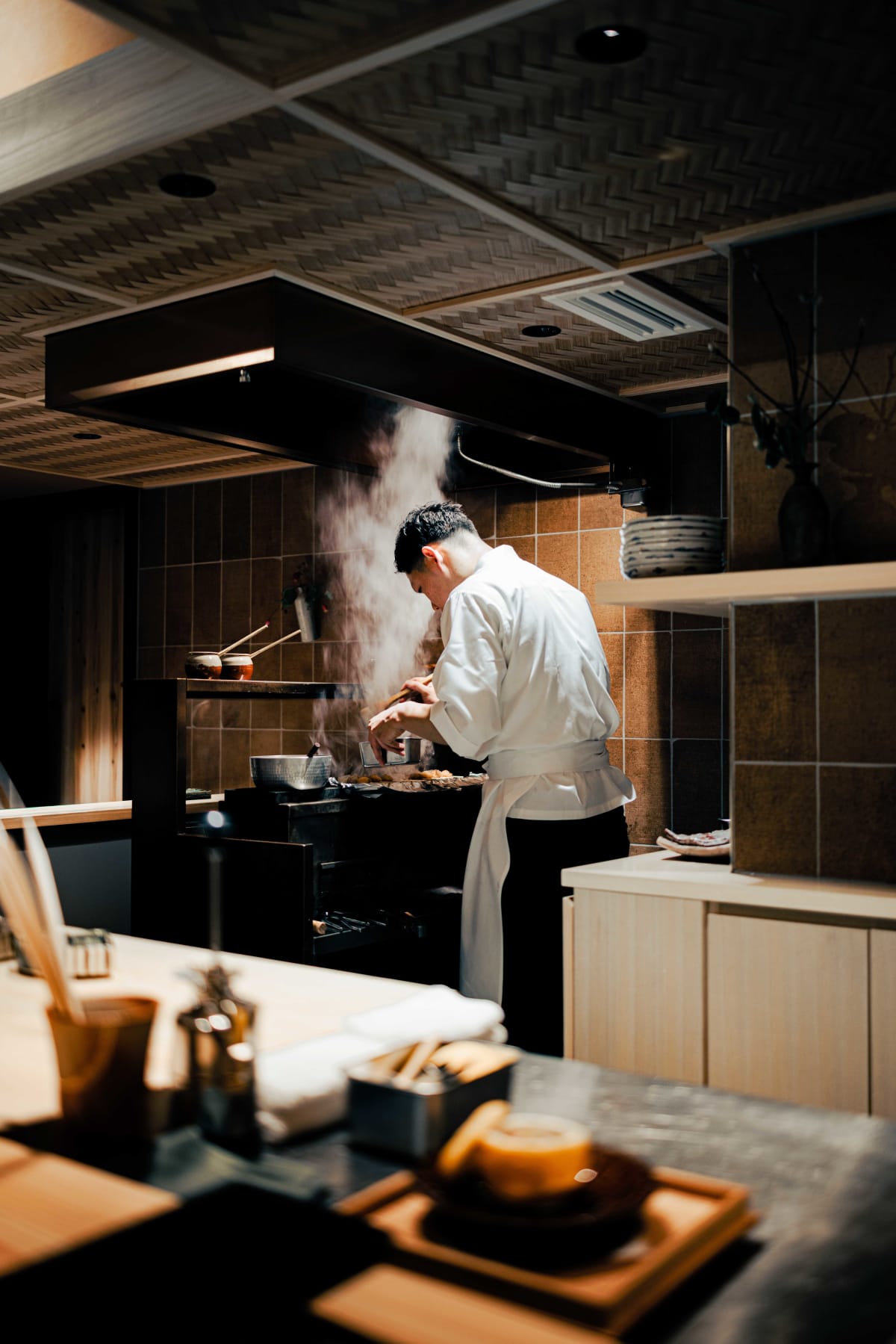
It sits a one-minute walk from the Nakanohashi exit of Akabanebashi station, within view of Tokyo Tower, between the restaurant-dense Azabu-Juban and the newly ascendant Azabudai, right next to the well-known pizzeria PST. There are eight counter seats and a single omakase course. One thing I appreciated the moment I walked in was how much room there is. Ramen is where Japan takes small spaces furthest, but counter dining of every kind, sushi and yakitori included, often runs cramped, and a few places are tight enough to detract from the meal itself. Here, a calm, refined atmosphere that recalls a Japanese ryotei comes with genuine space, and it was a real pleasure to sit in. I also liked that the custom grill has a transparent front, so you can watch the chef's hands at work.
Section 2·The Opening
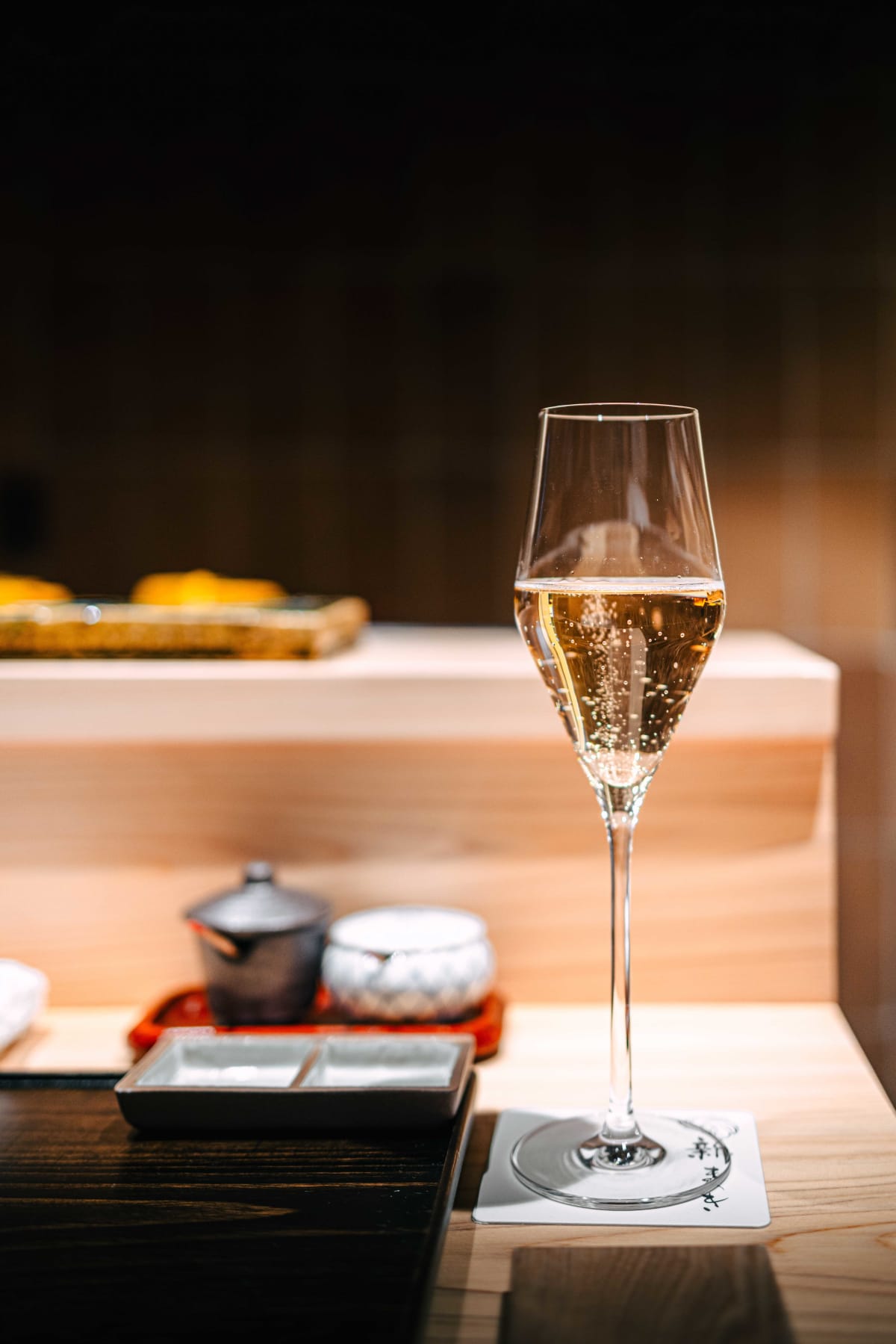
I had come alone and taken a seat at the end of the counter, opening with a glass of champagne before the meal began.
The course starts, ryotei-style, with a hassun-like spread of small bites.
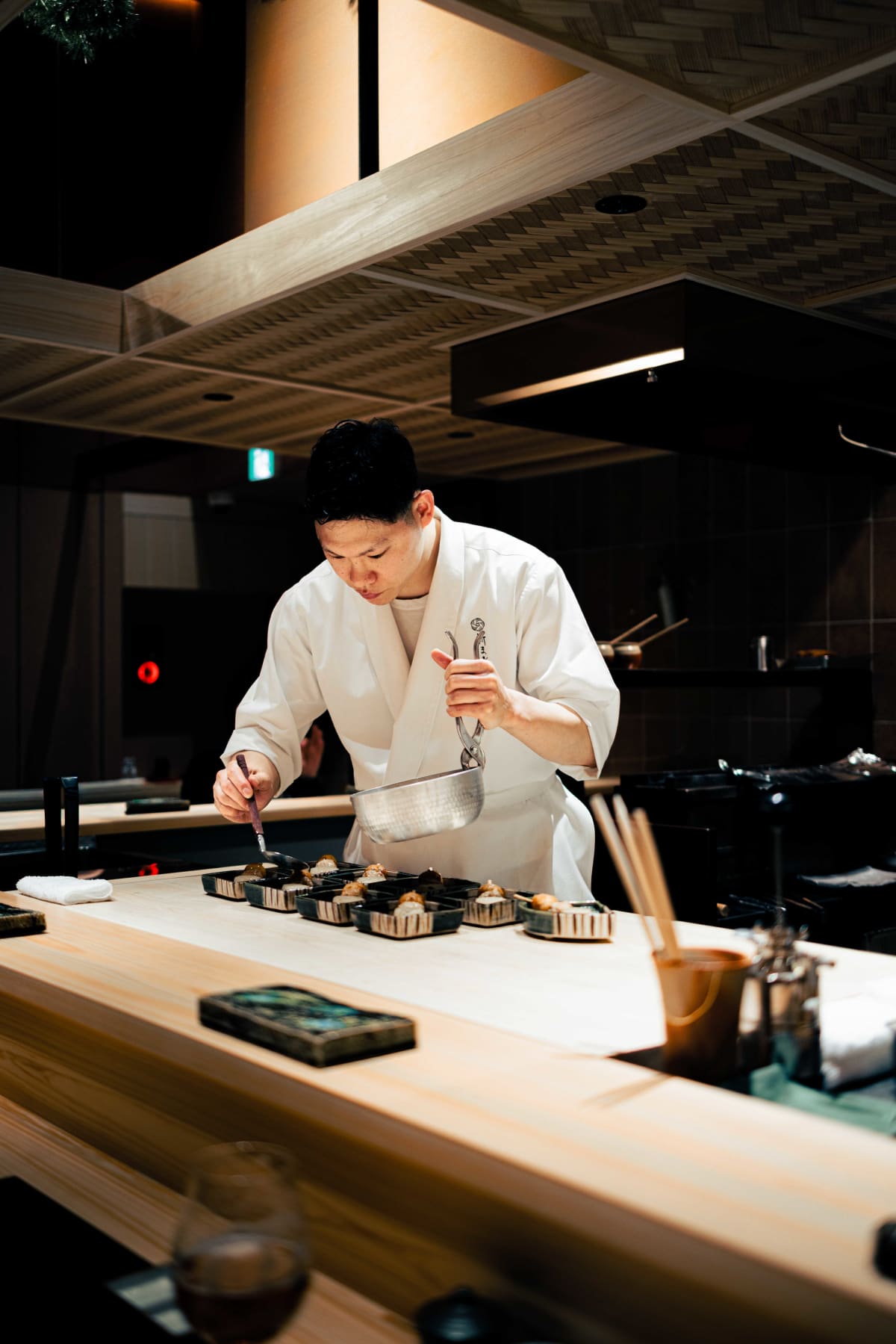
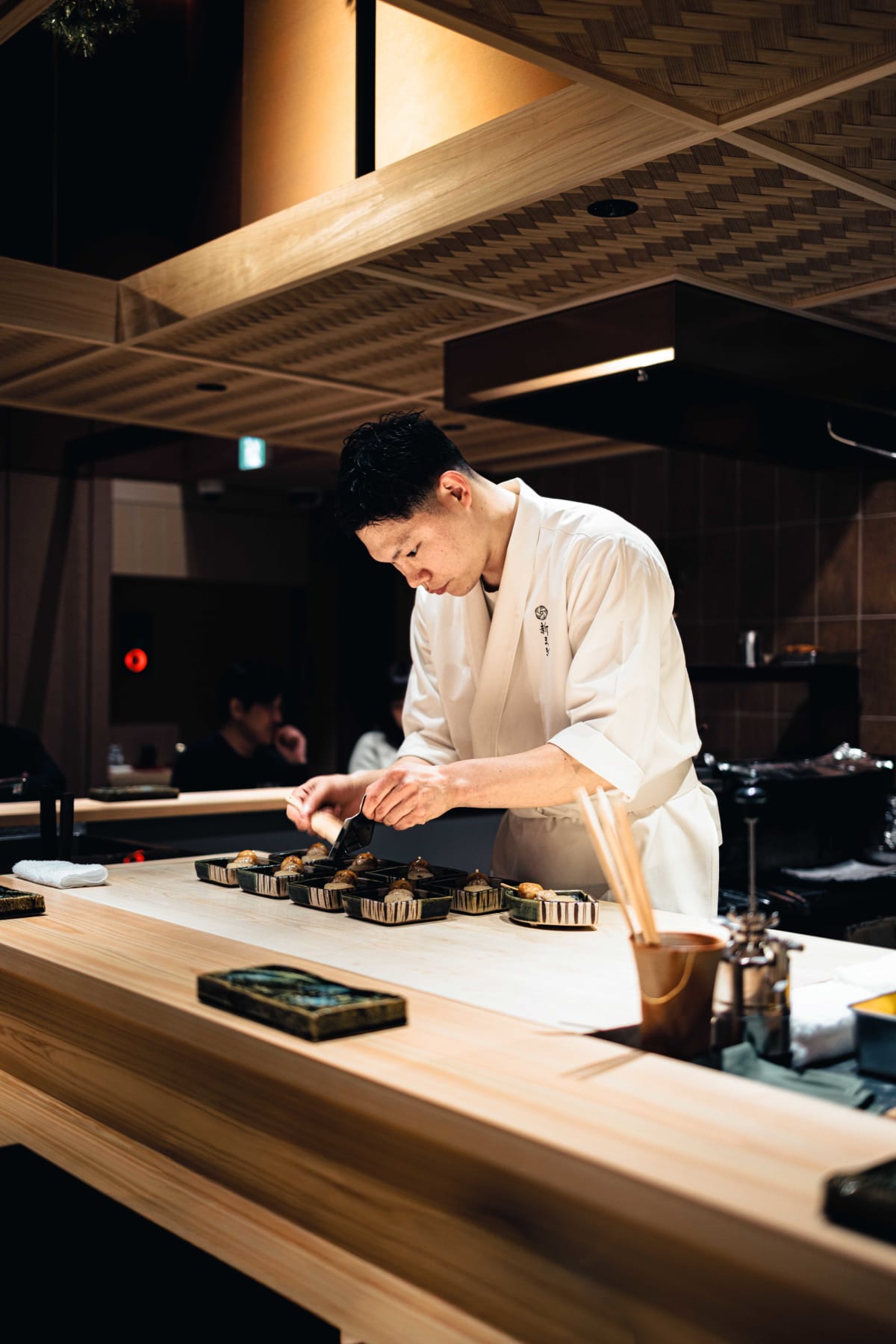
First came a dressed chicken-breast dish, then daikon, tsukune, and satsumaage, a plate that brought oden to mind.
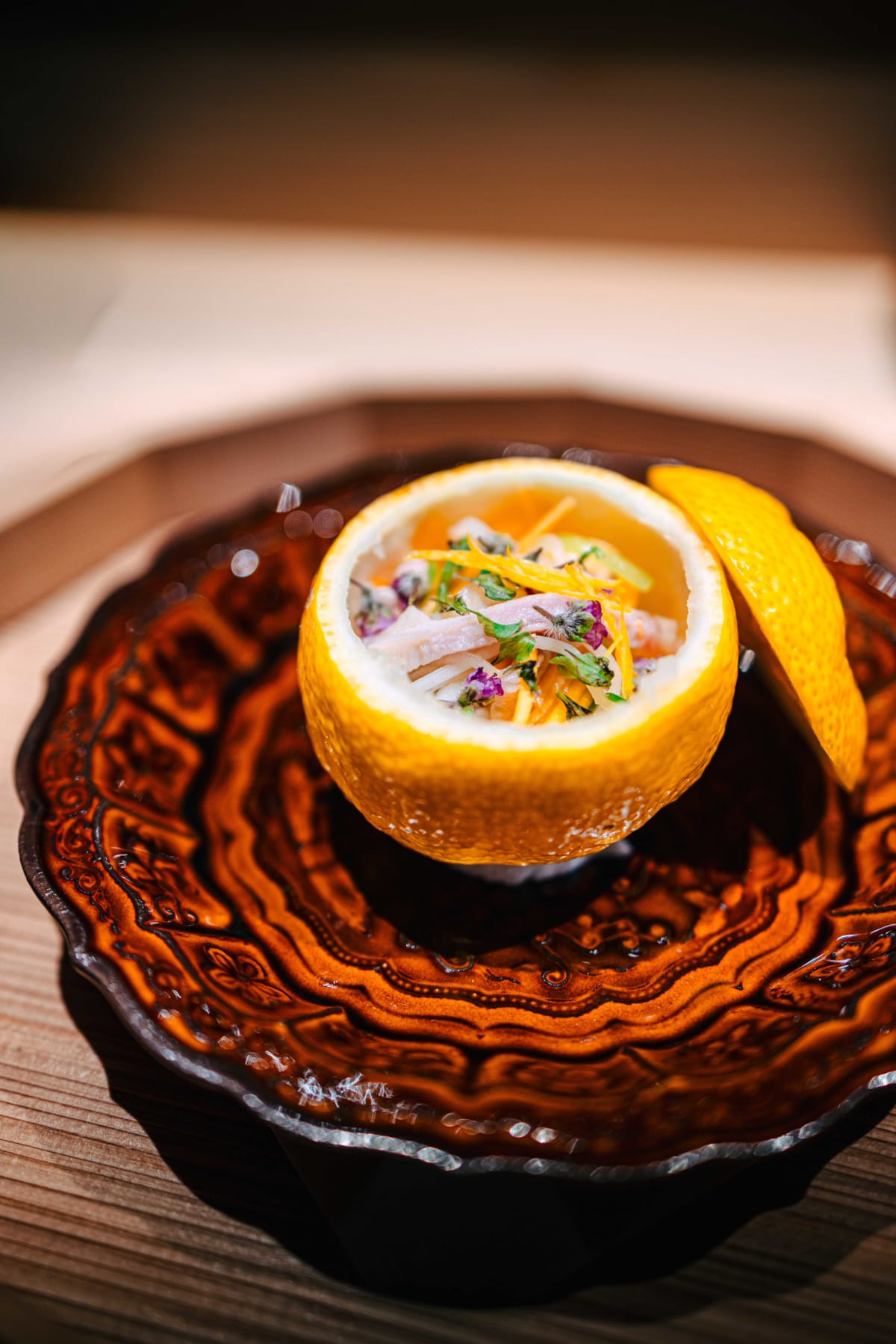
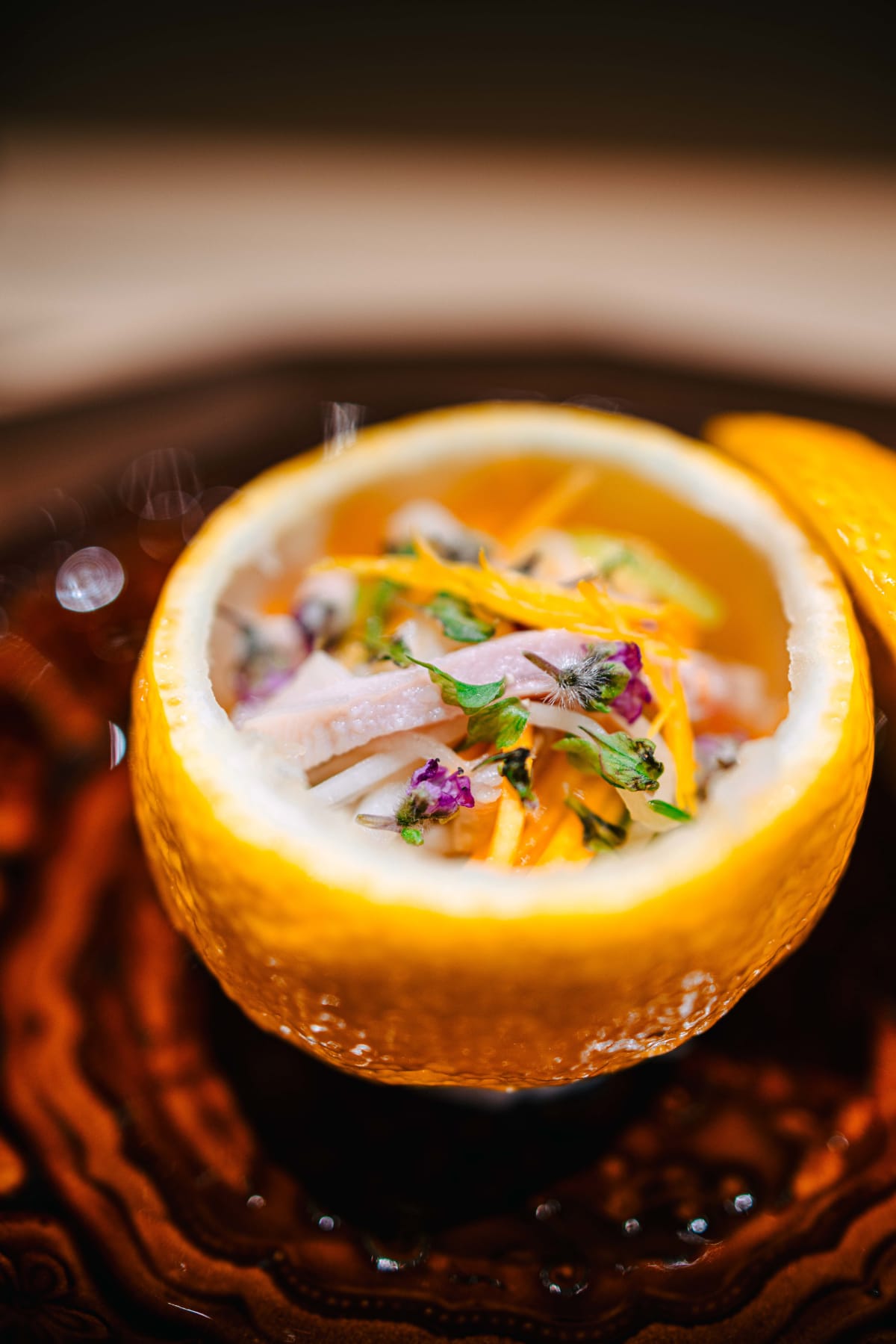
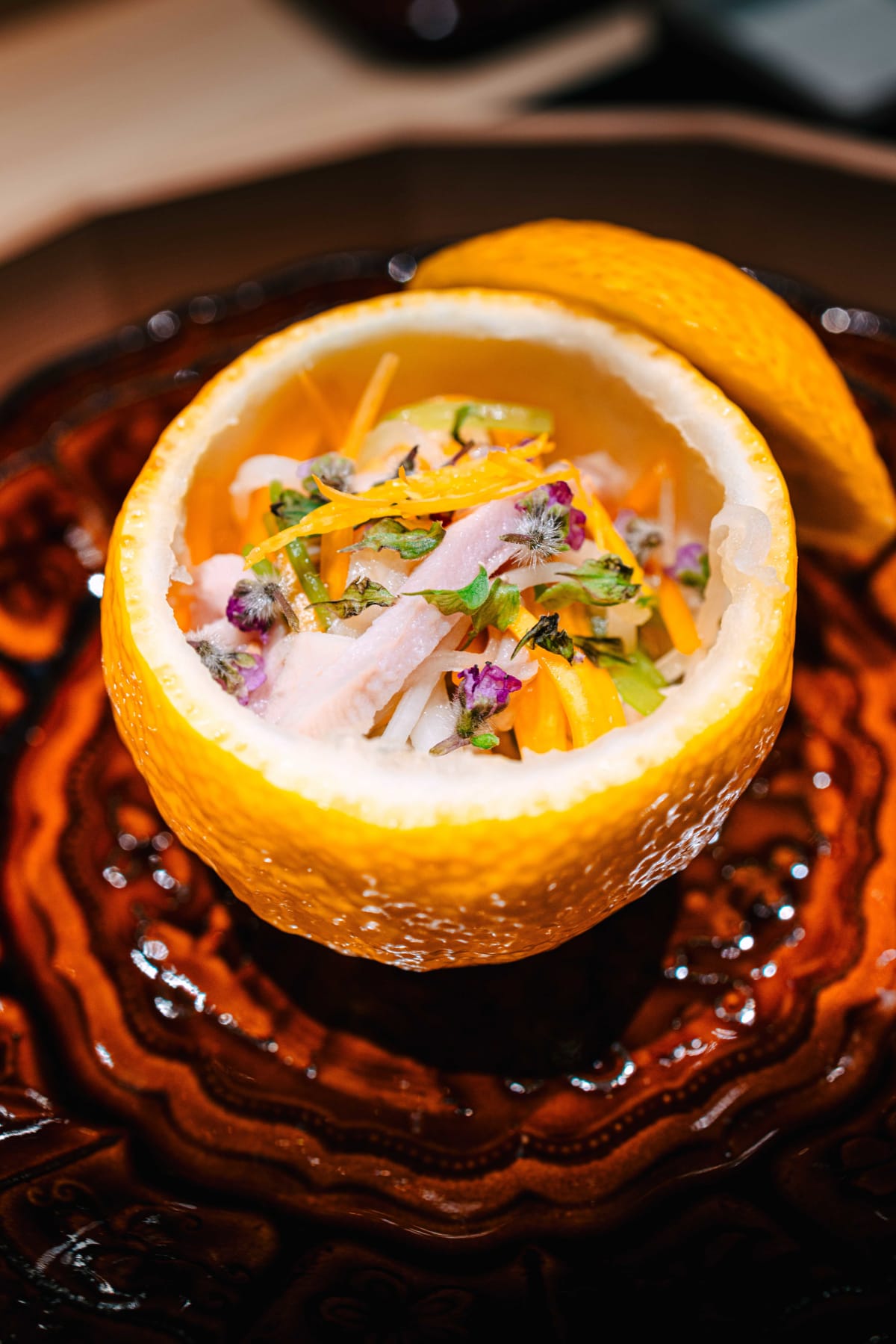
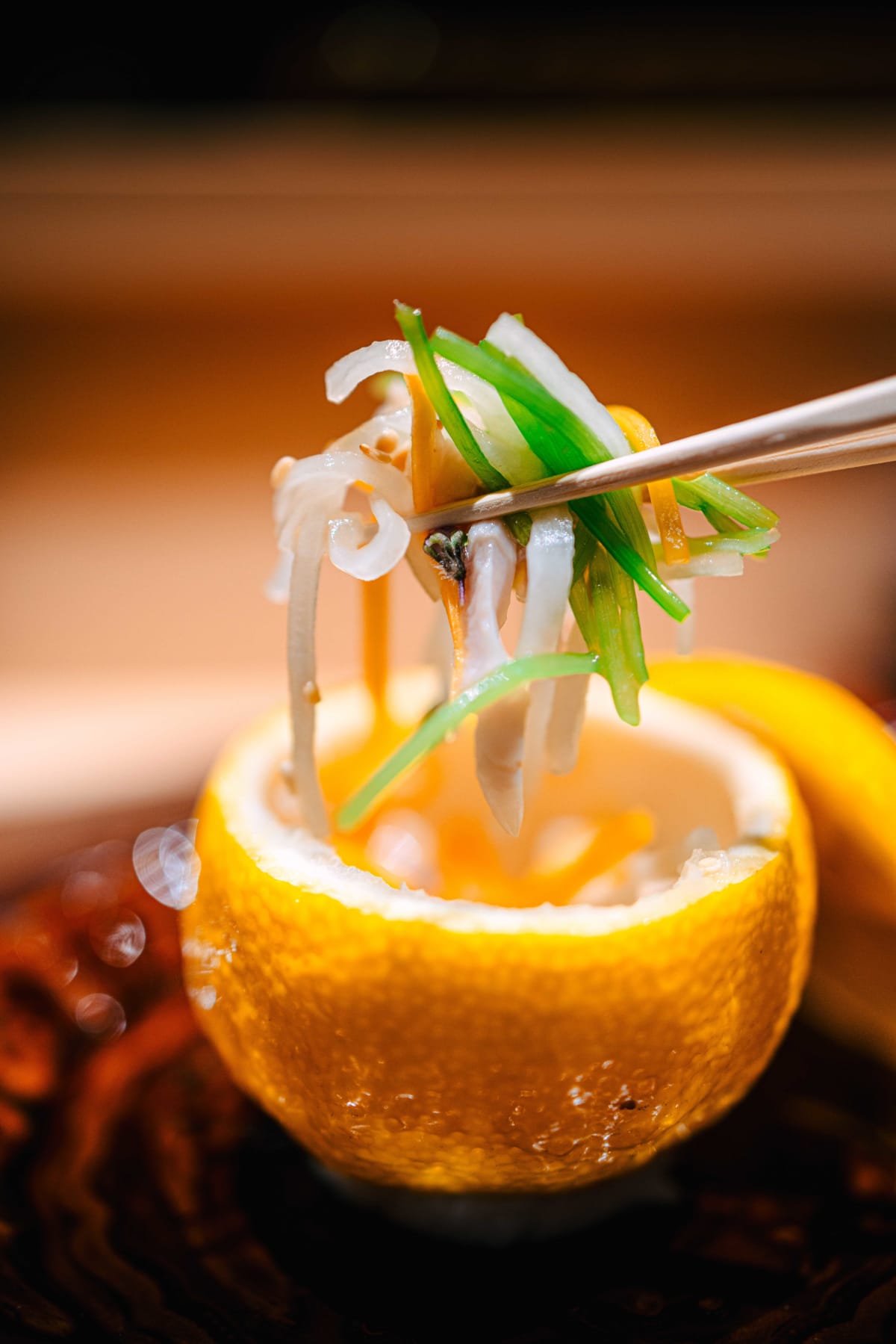
The satsumaage seemed to be studded with lily bulb.

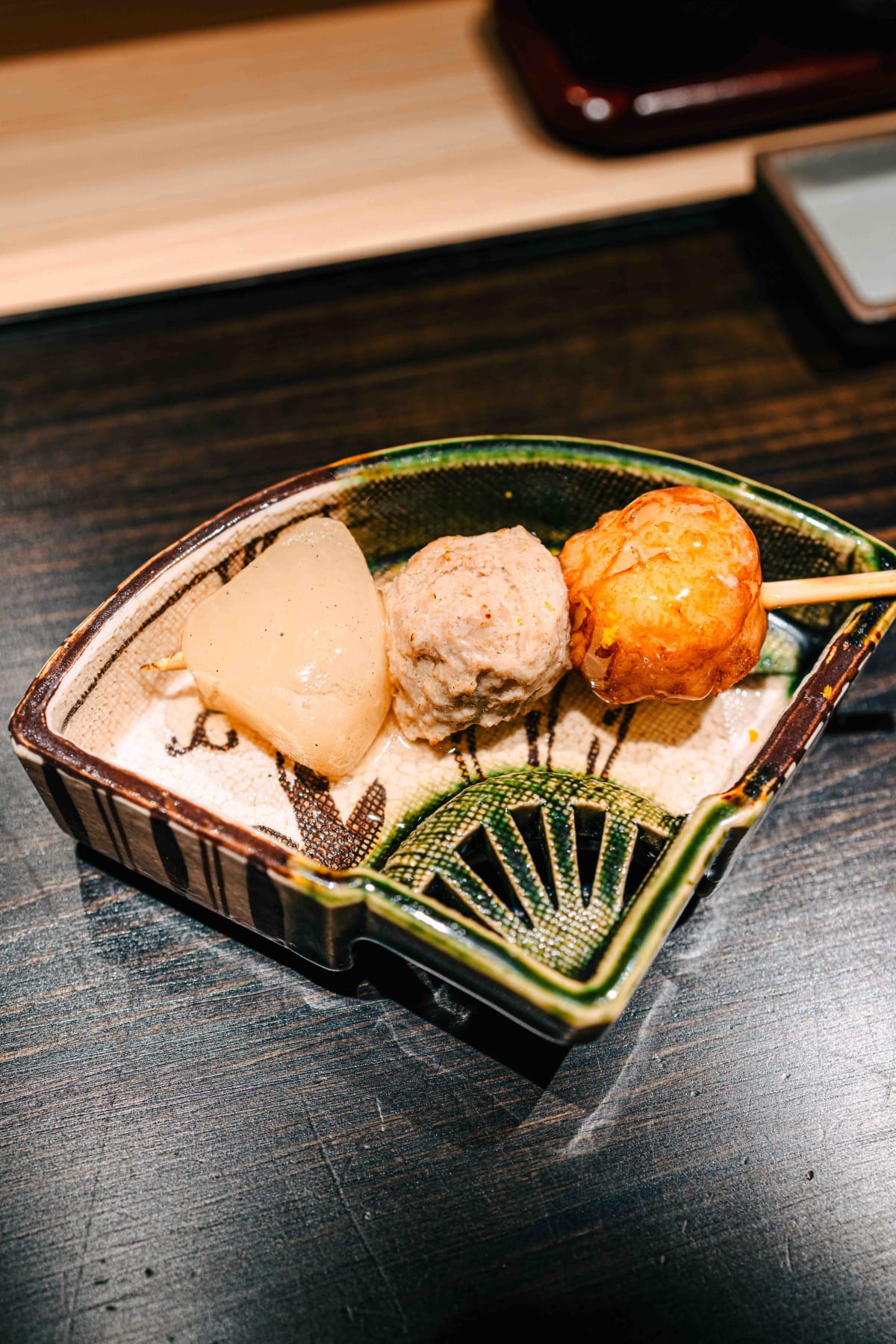
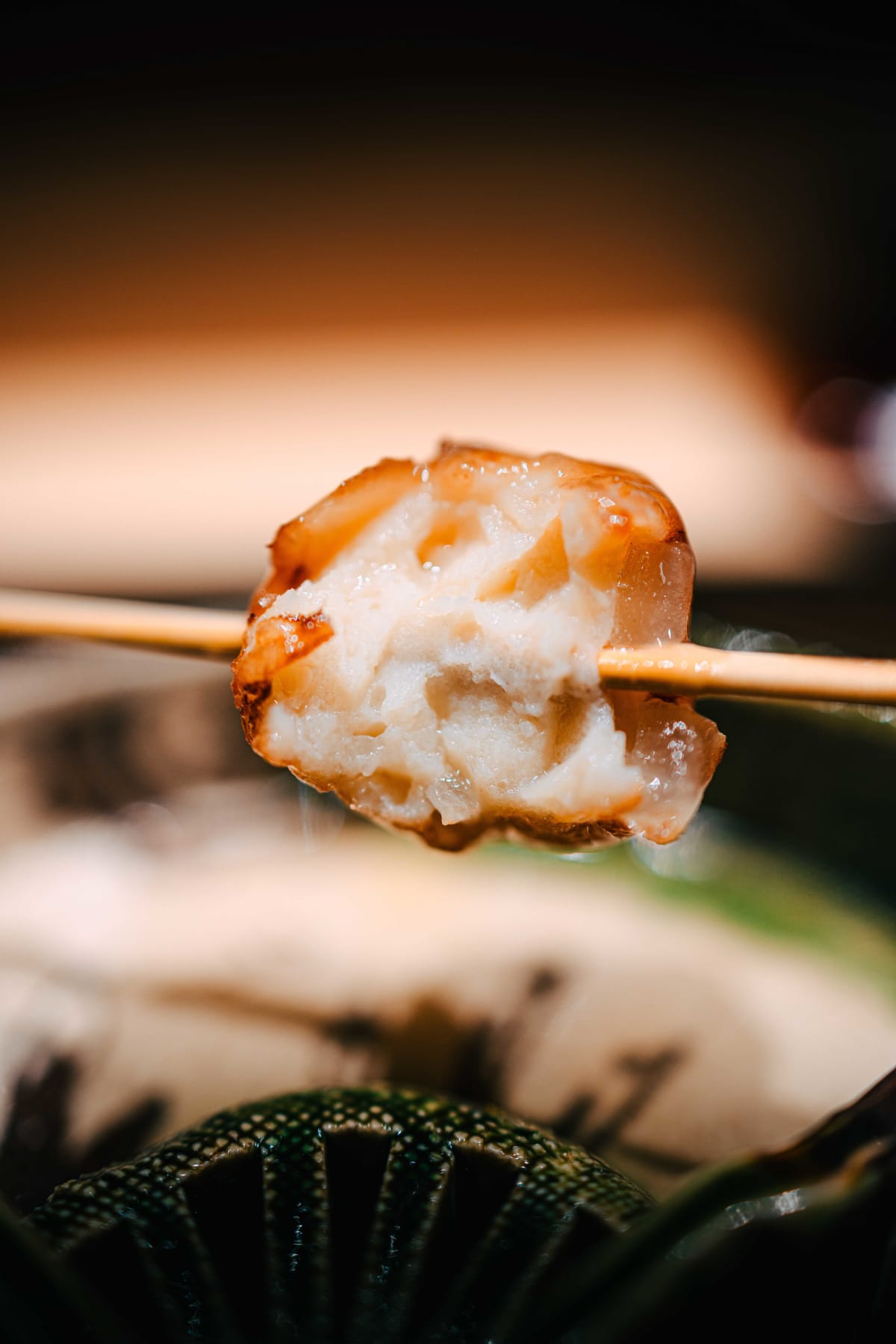
The range of textures was lovely, and it made a fine start alongside the champagne.
Section 3·The First Skewers
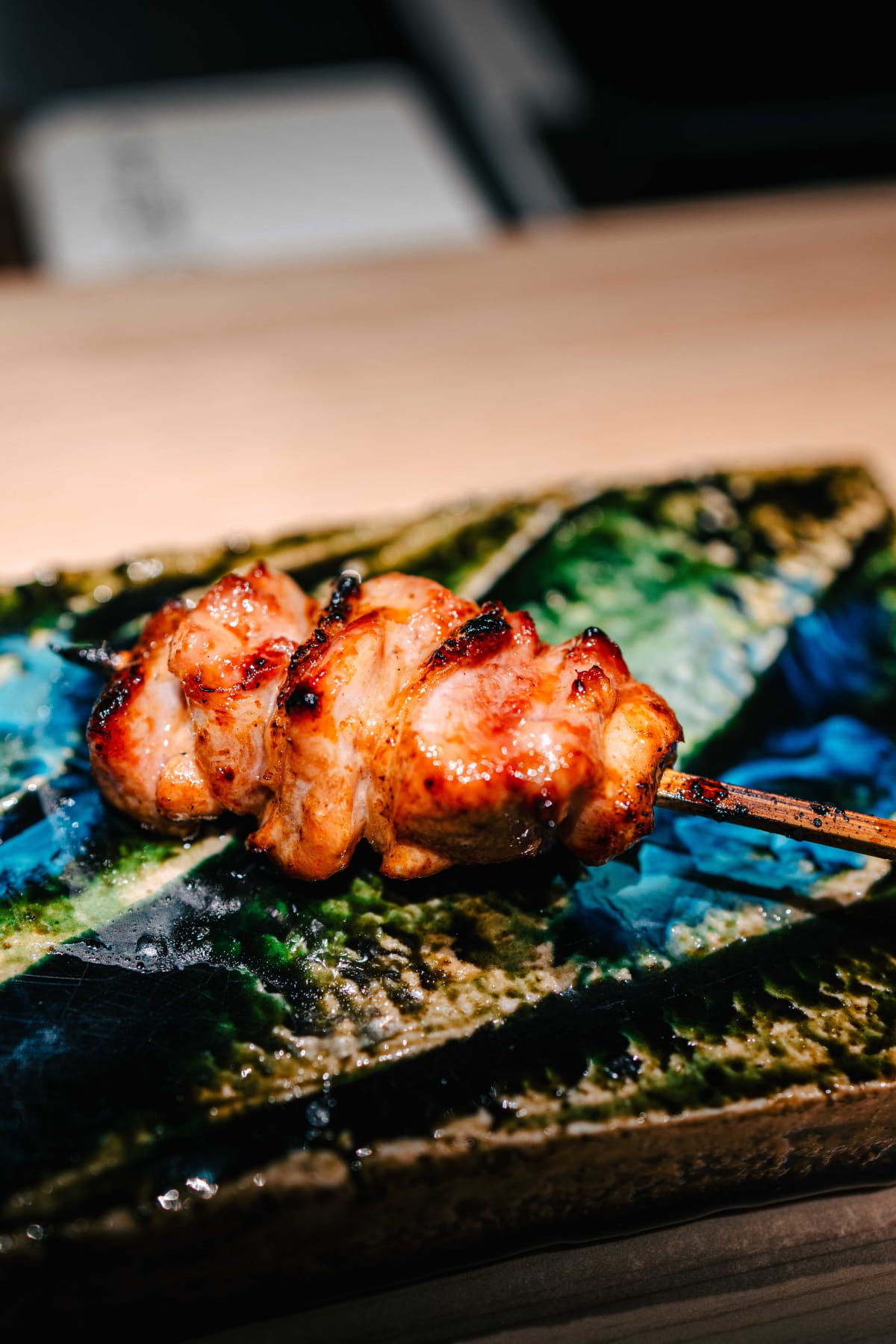
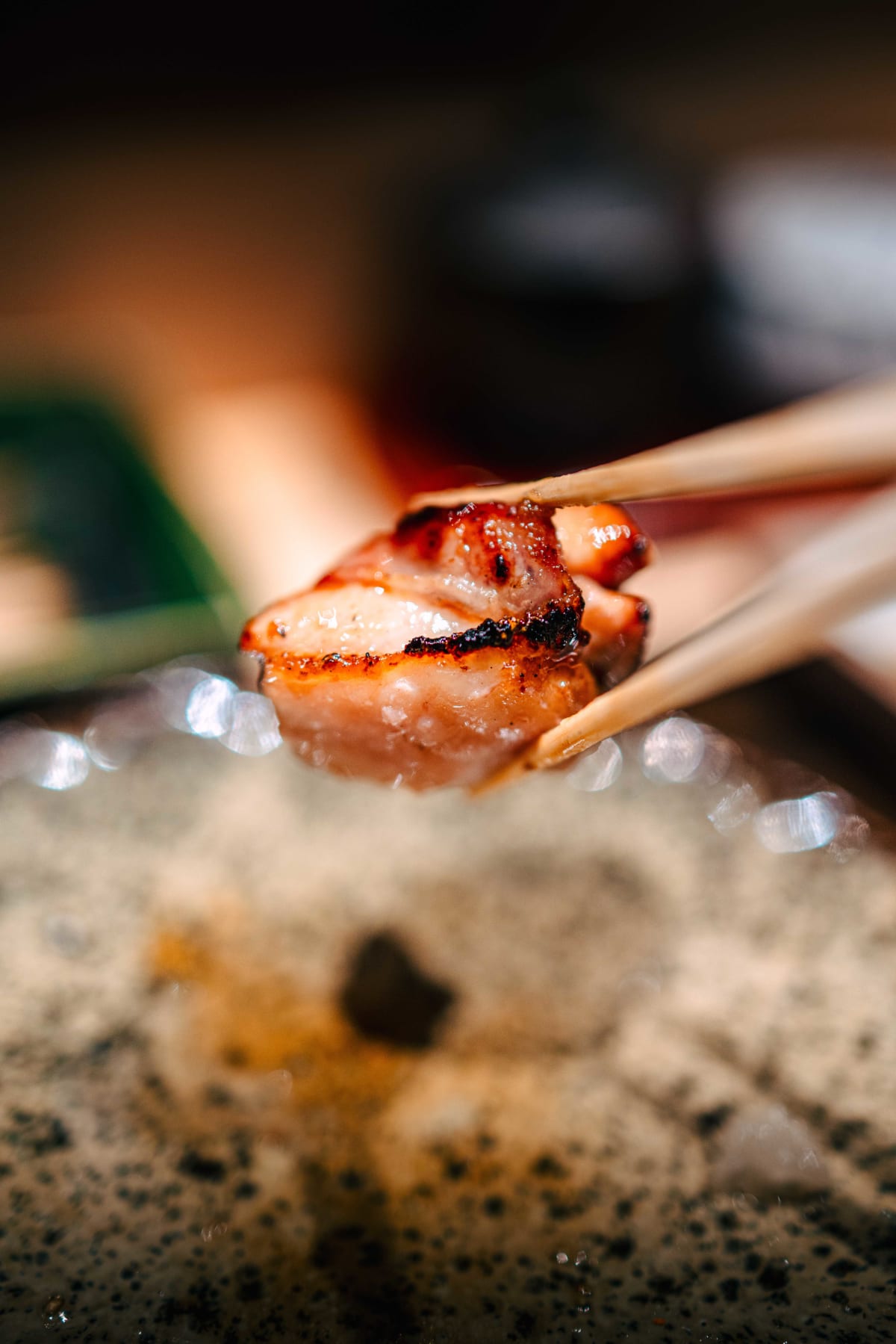
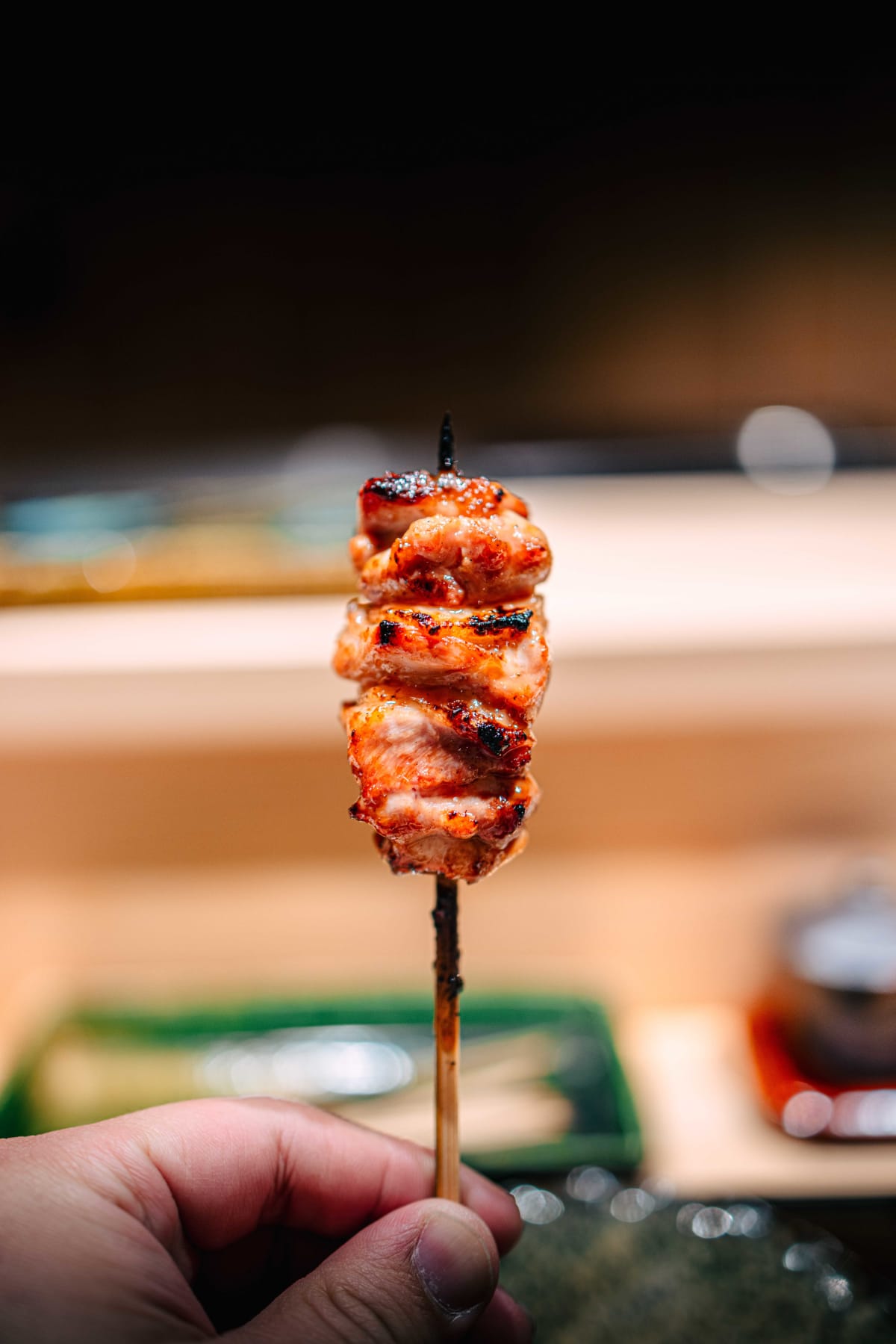
Then the yakitori began in earnest, starting with shoulder and thigh (momo).
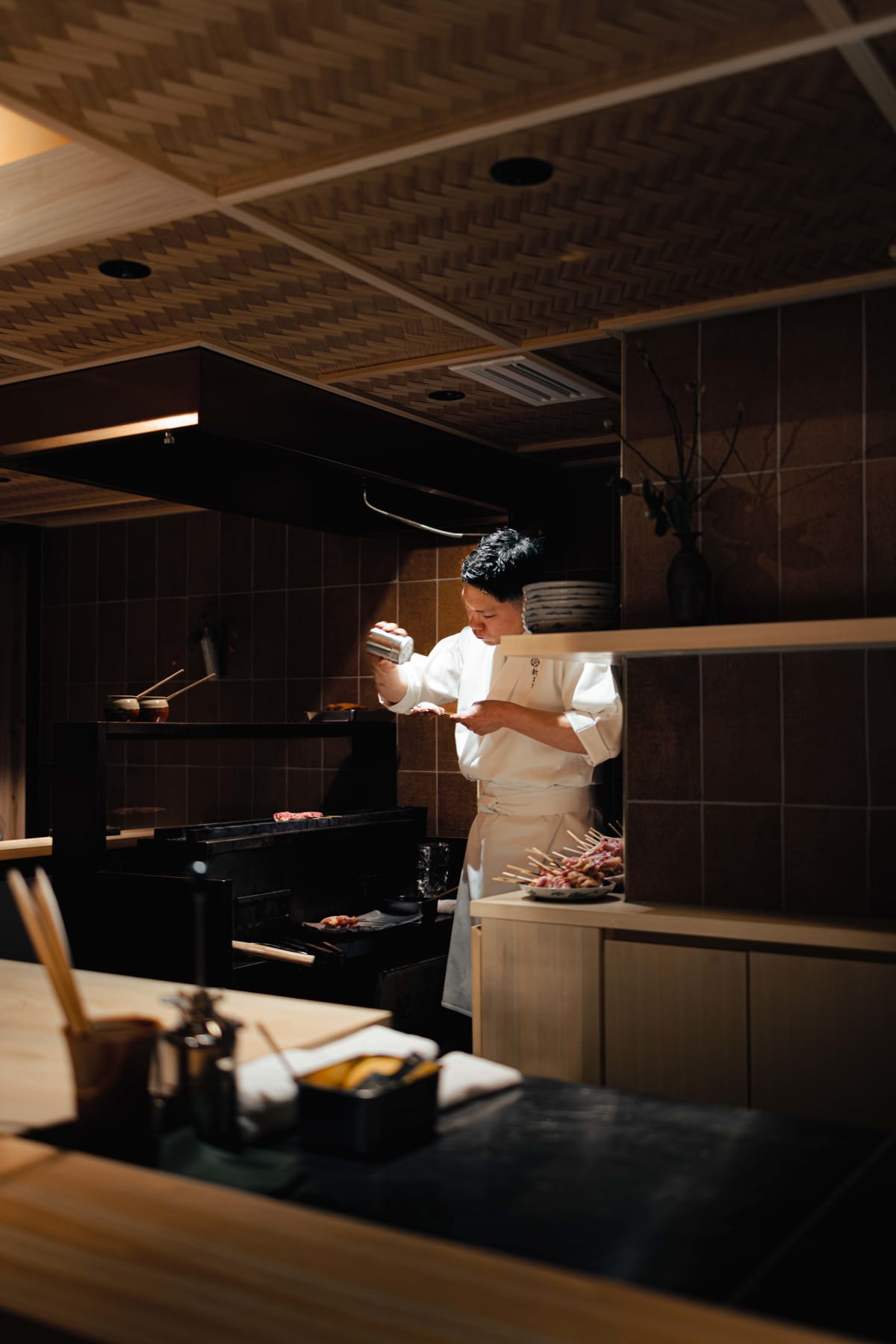
The chicken is Mikawa aka-dori from Aichi, grilled over binchotan charcoal.
The first bites were juicy and pleasantly springy.
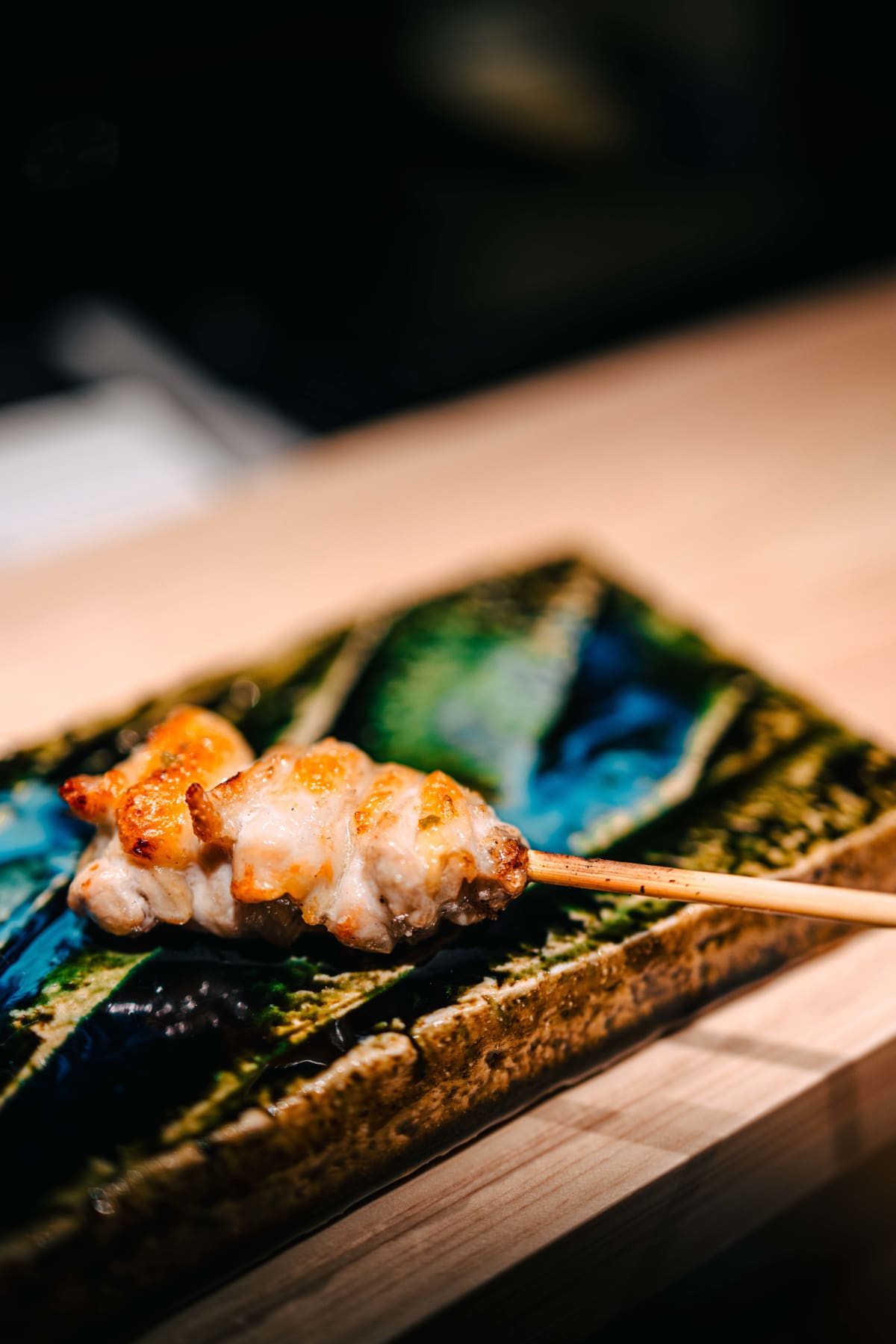
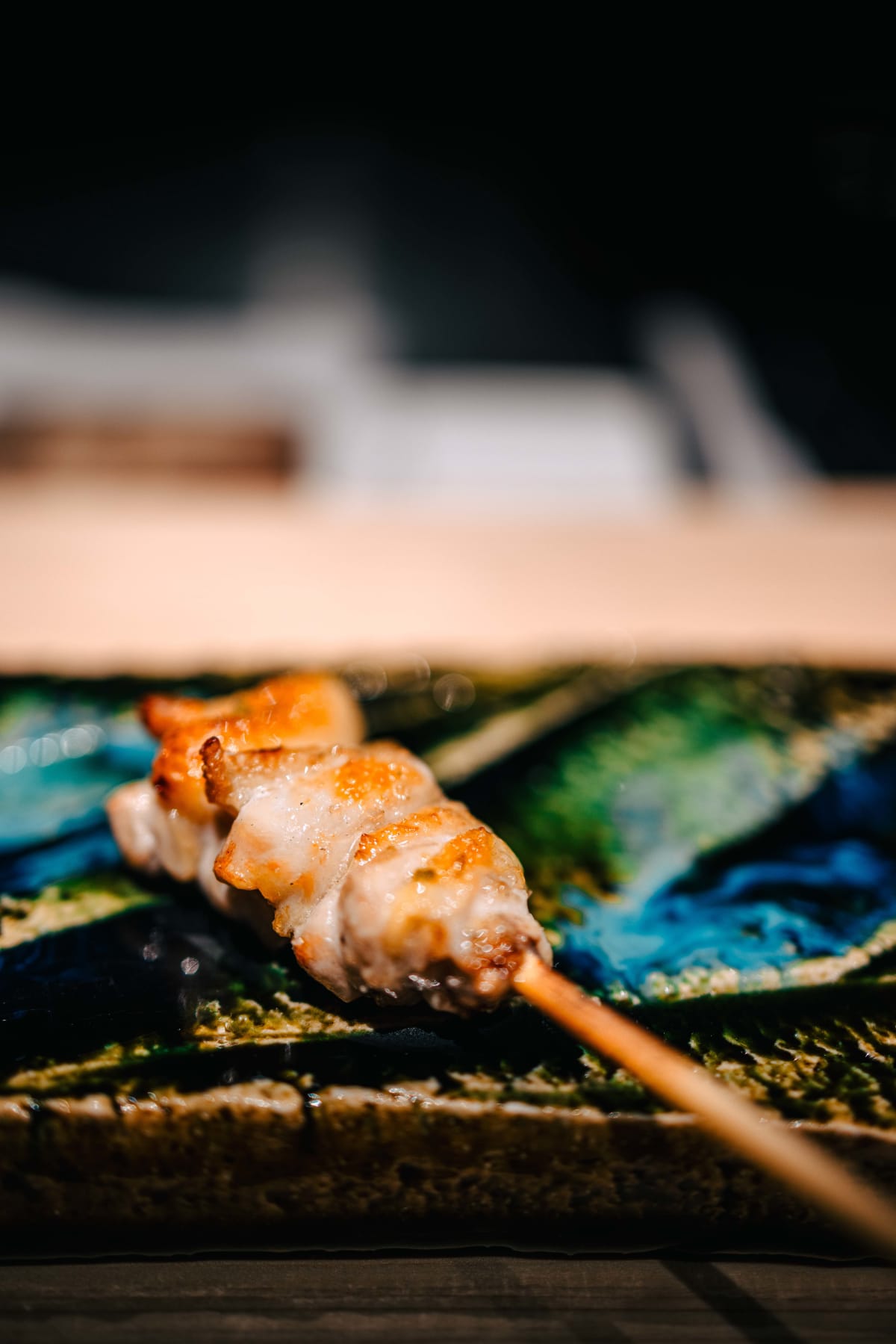
I do not yet have enough yakitori under my belt to name a top five, but among everything I had eaten up to that point, this struck me as really delicious.
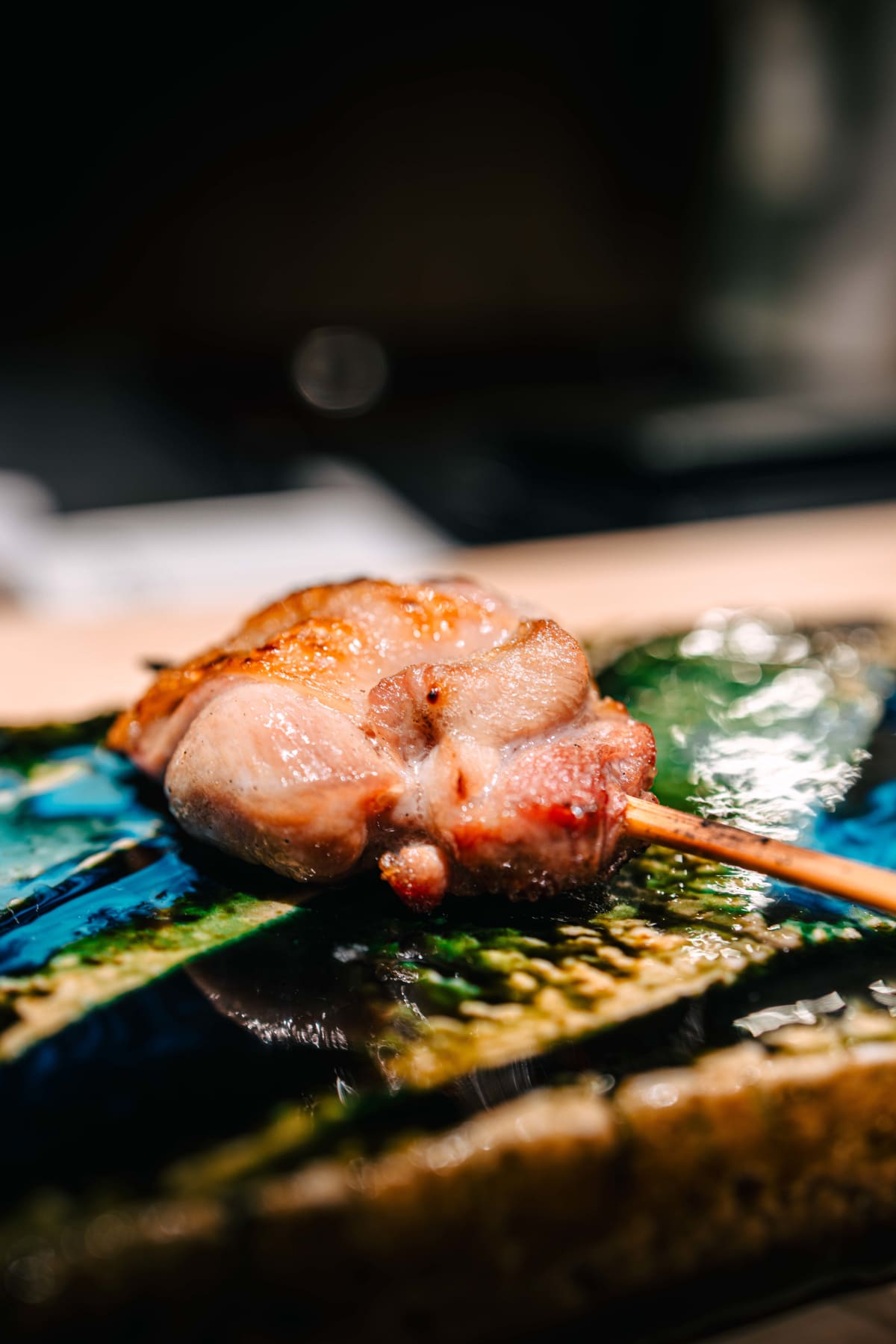
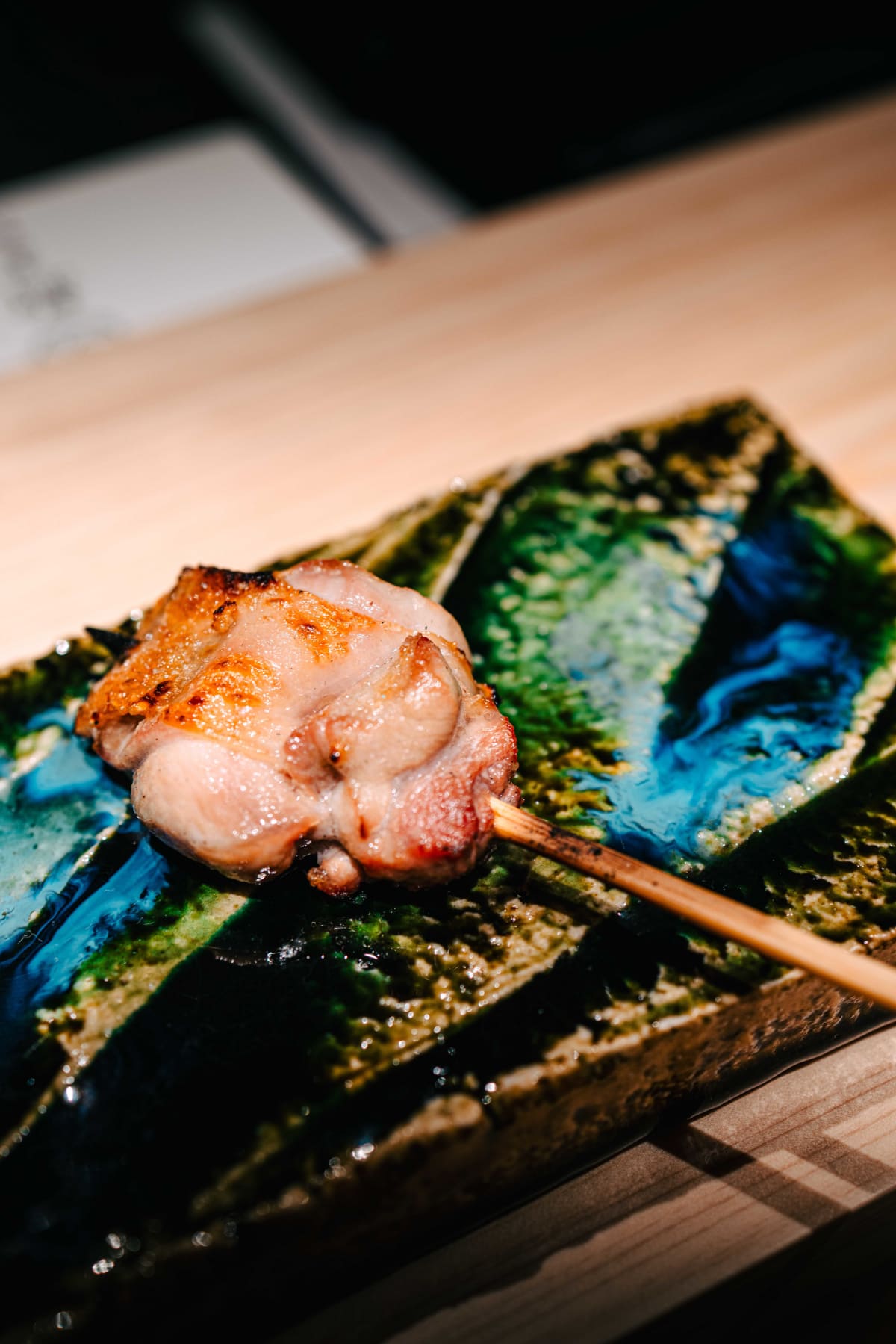
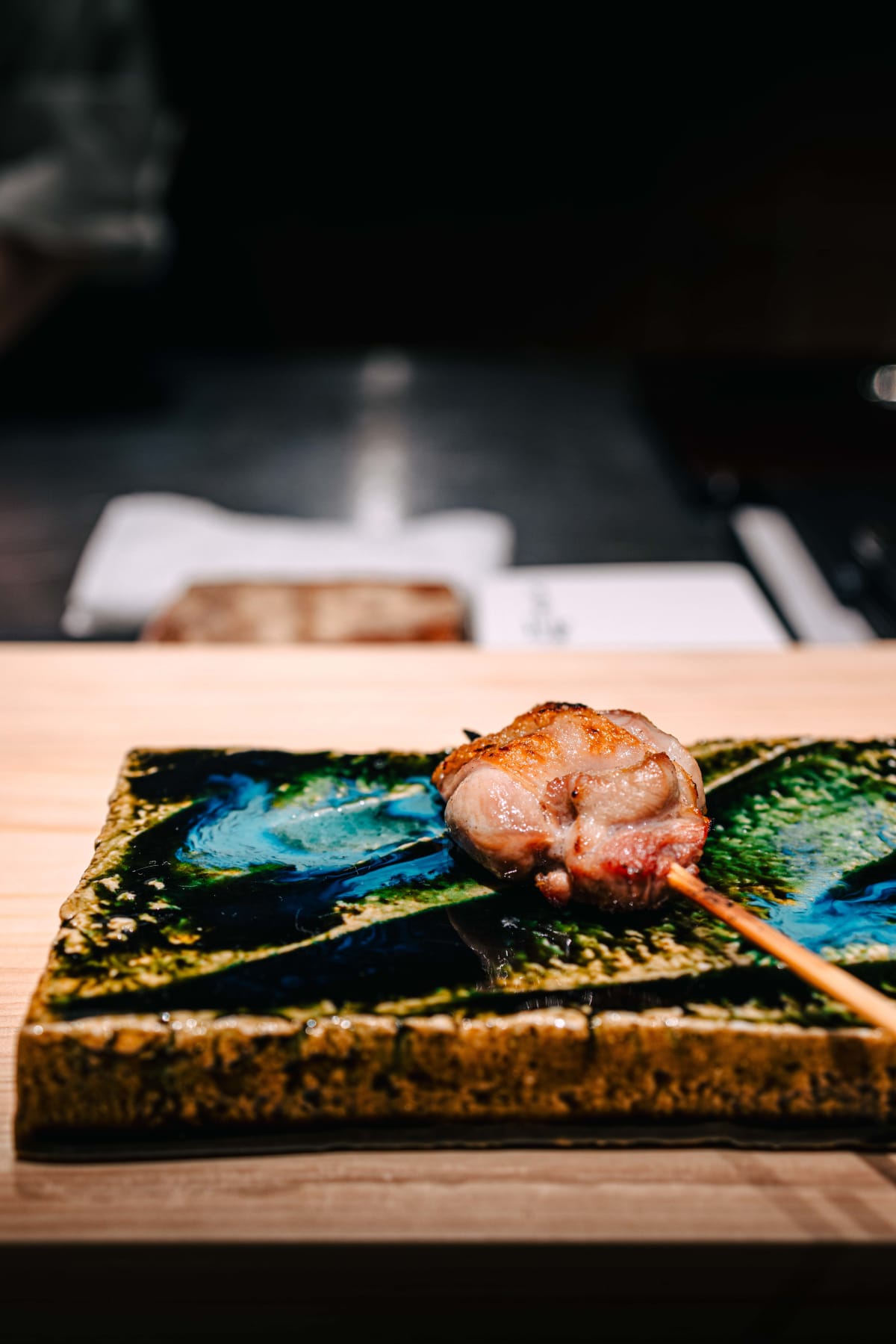
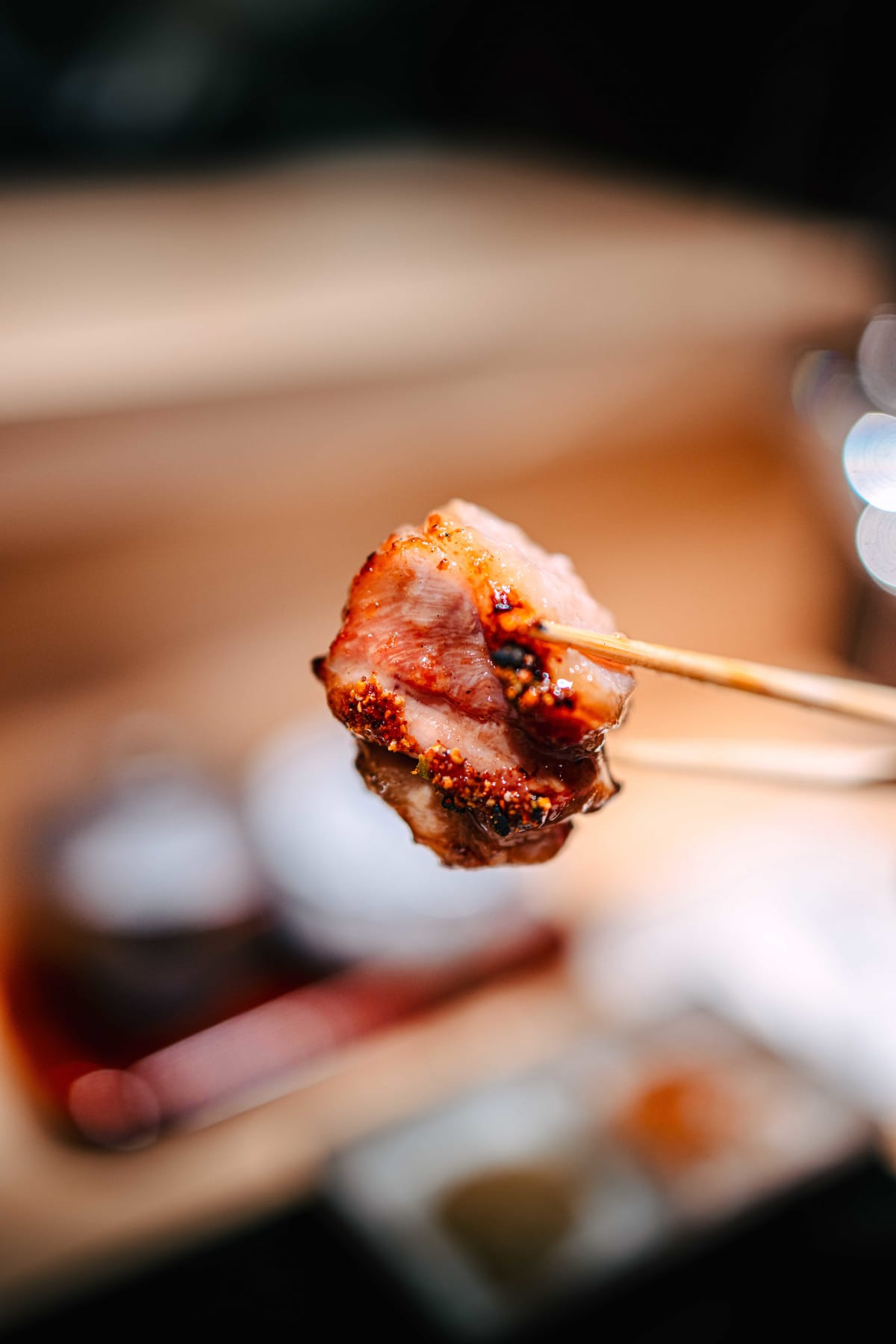
Next came seseri (neck) and nankotsu (cartilage), both of which I ate with real pleasure.
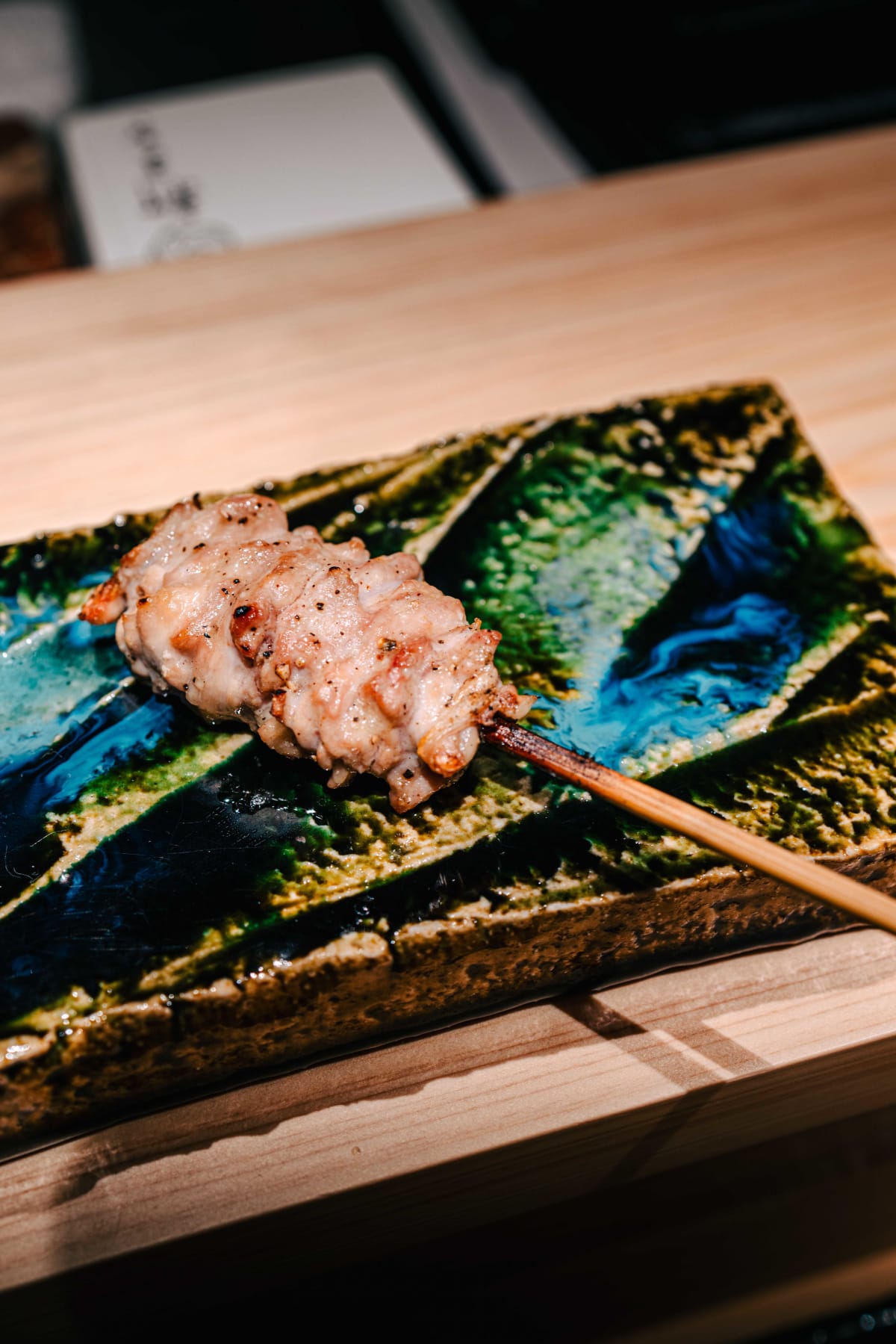
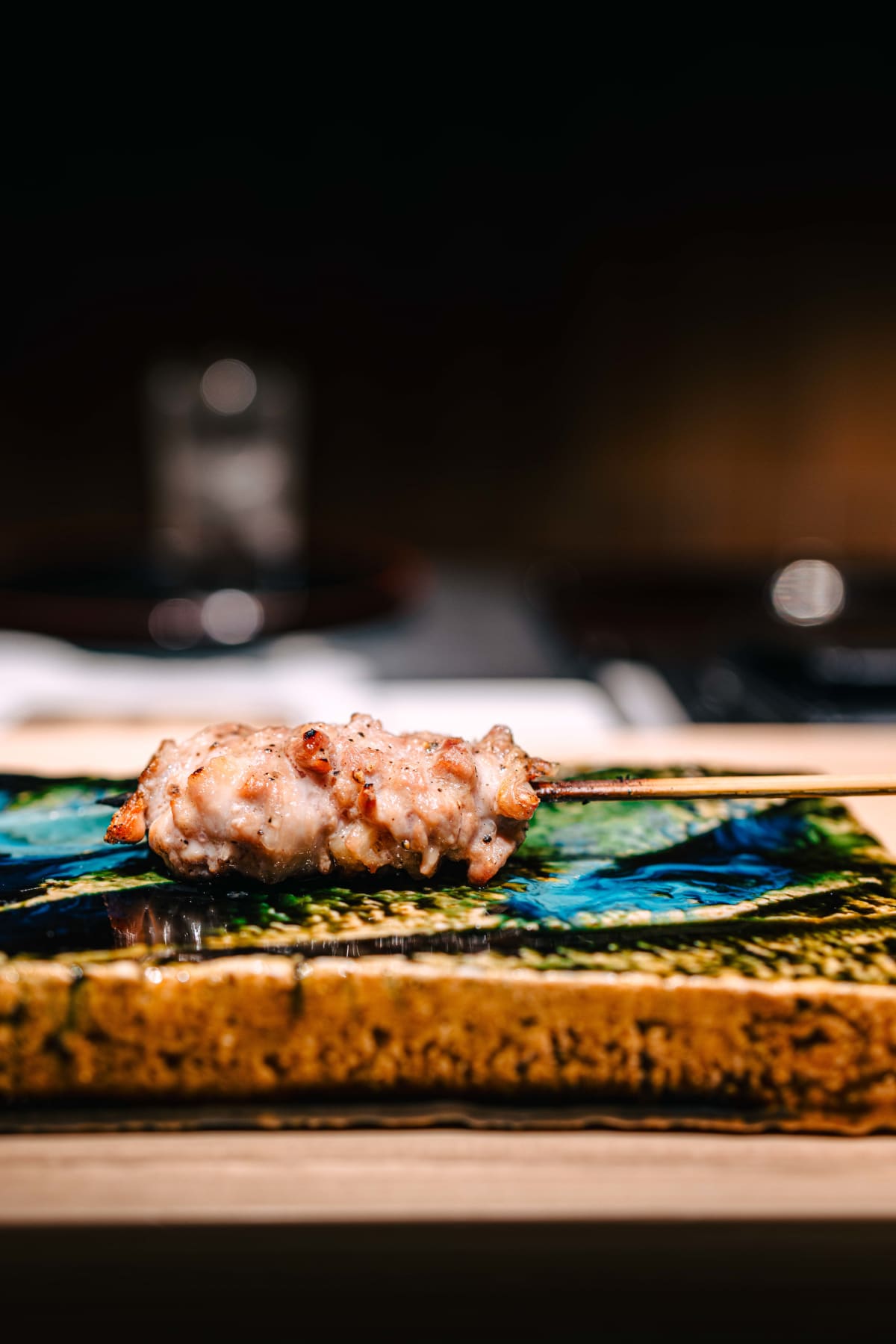
The seseri in particular, made here with Kinsou-dori, was very juicy, springy and delicious, and the nankotsu was excellent too. The layered texture was the real pleasure of it, the crunch of cartilage against the give of the meat.
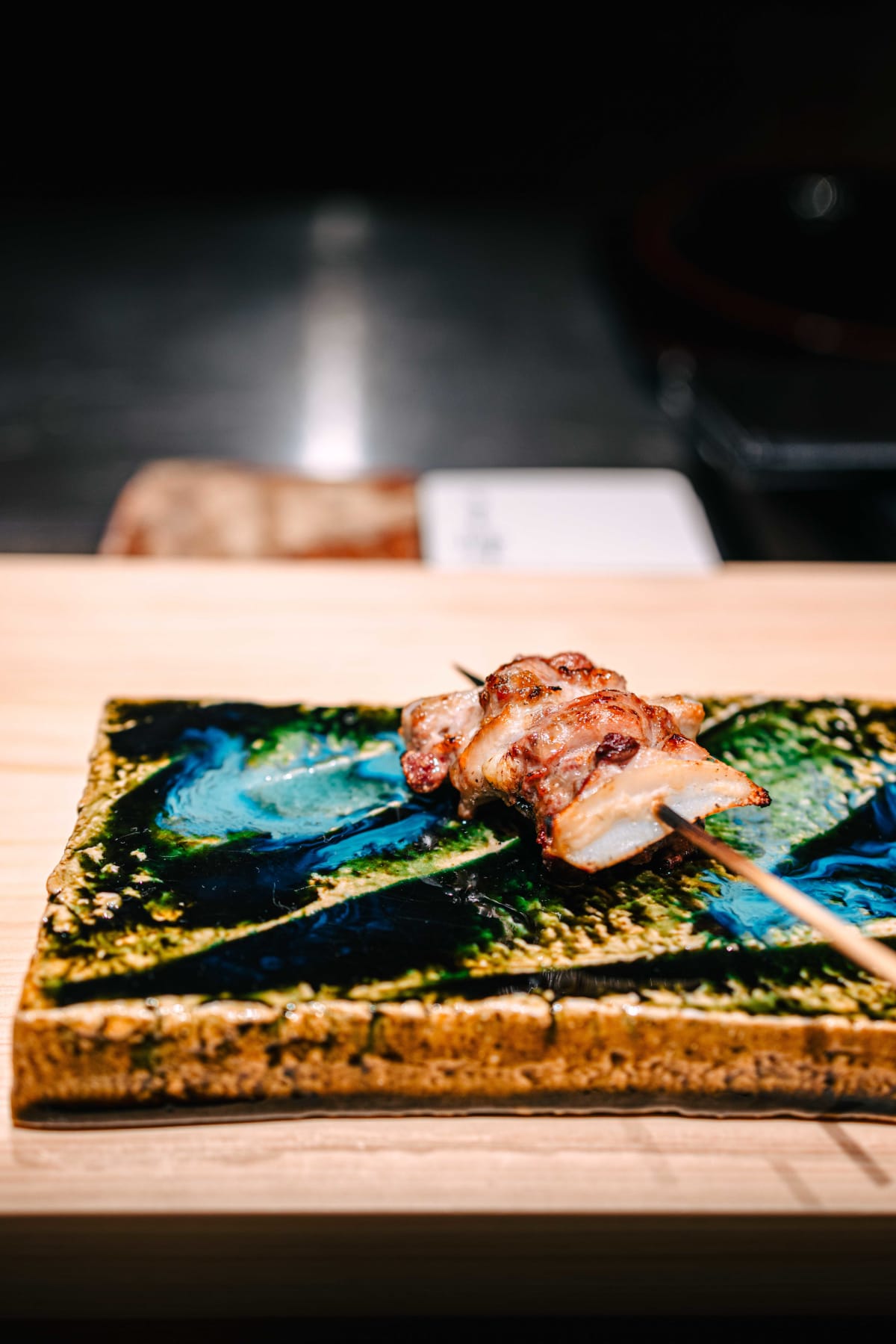
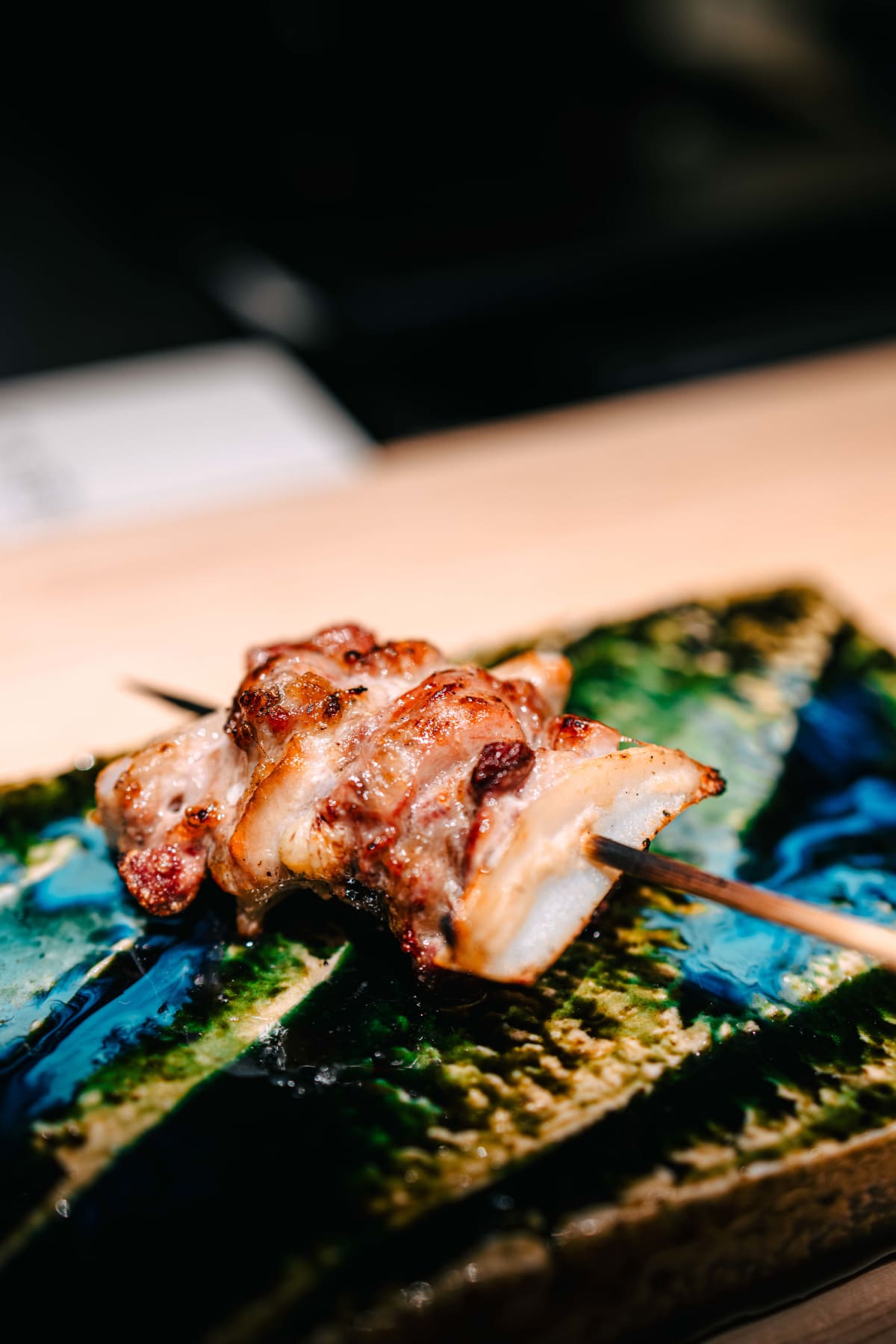
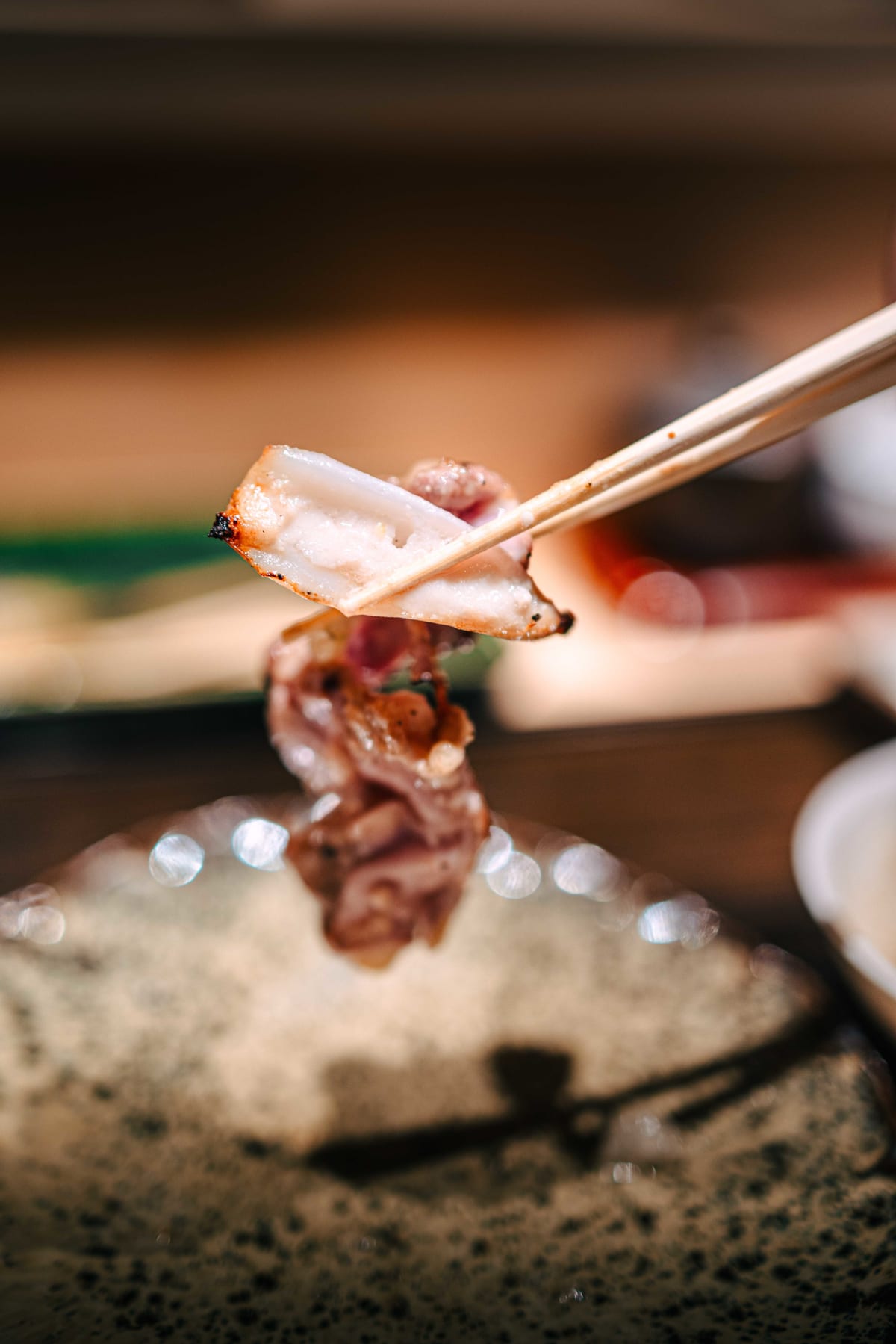
Ever since, I have made a point of checking whether nankotsu is on offer whenever I visit a yakitori-ya.
Section 4·Vegetable and Offal
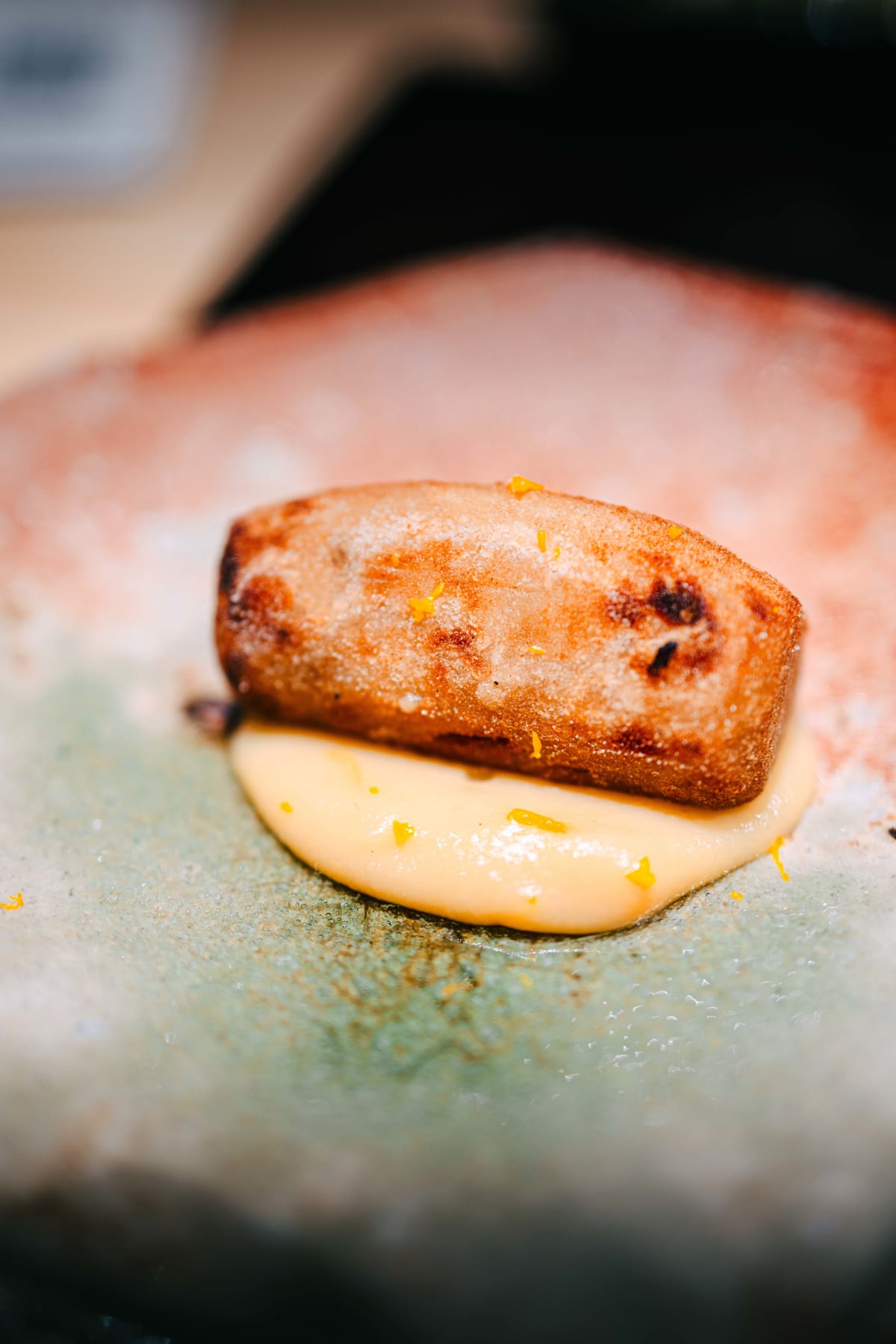
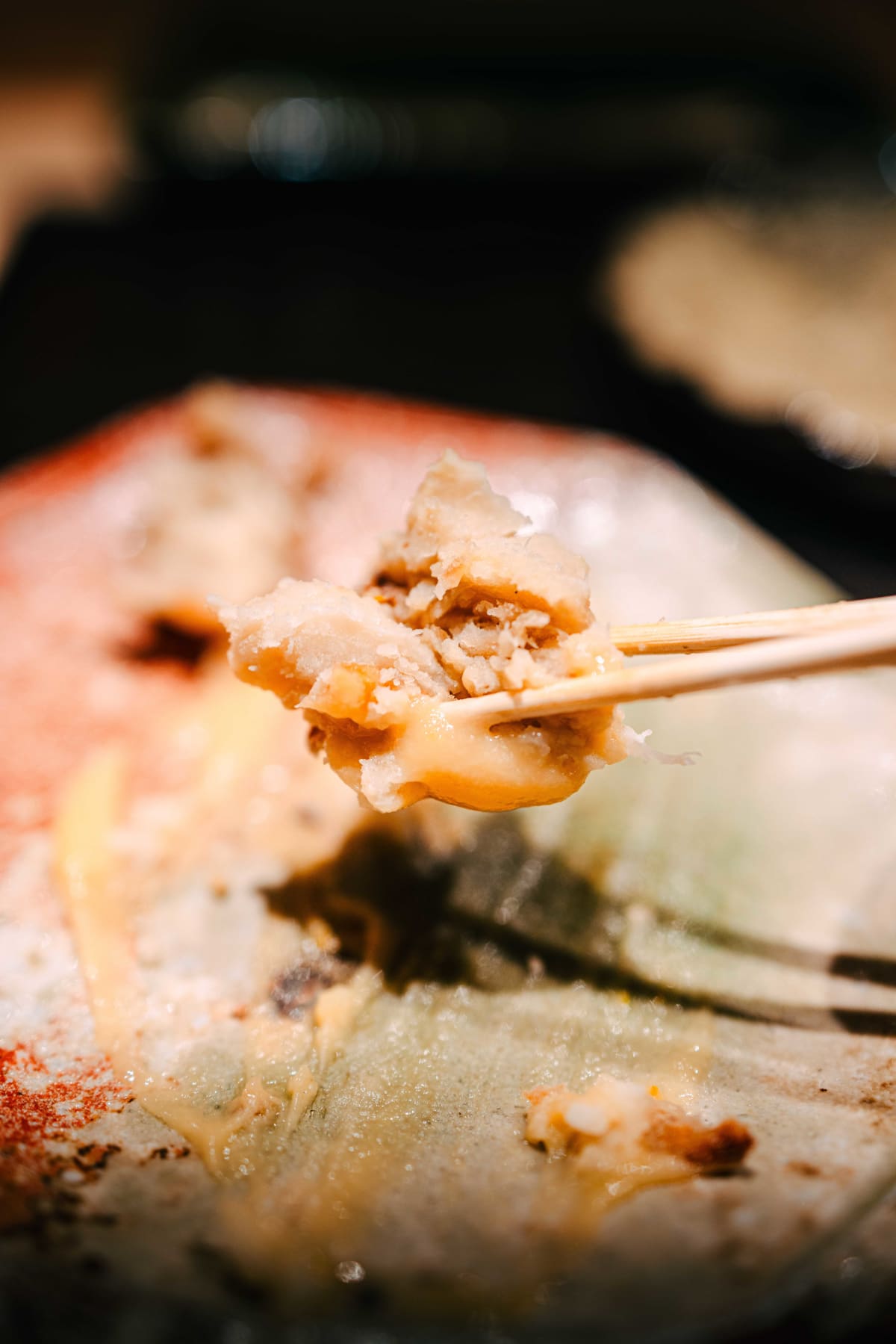
After the excellent nankotsu came ebi-imo. Ebi-imo (海老芋) is a Kyoto heirloom vegetable, a type of taro grown by hilling soil over it again and again until it curves into a shrimp-like shape with matching stripes, which is where the name comes from. The flesh is fine-grained and densely creamy, and because it holds together through long simmering it is a prized ingredient in ryotei braises, at its best in the depths of winter from November to January. It is also a vegetable I had eaten to the point of weariness over the course of that winter in Japan, and perhaps for that reason this one was only so-so.
Momoriku followed. It had been seasoned, and it was ordinary.
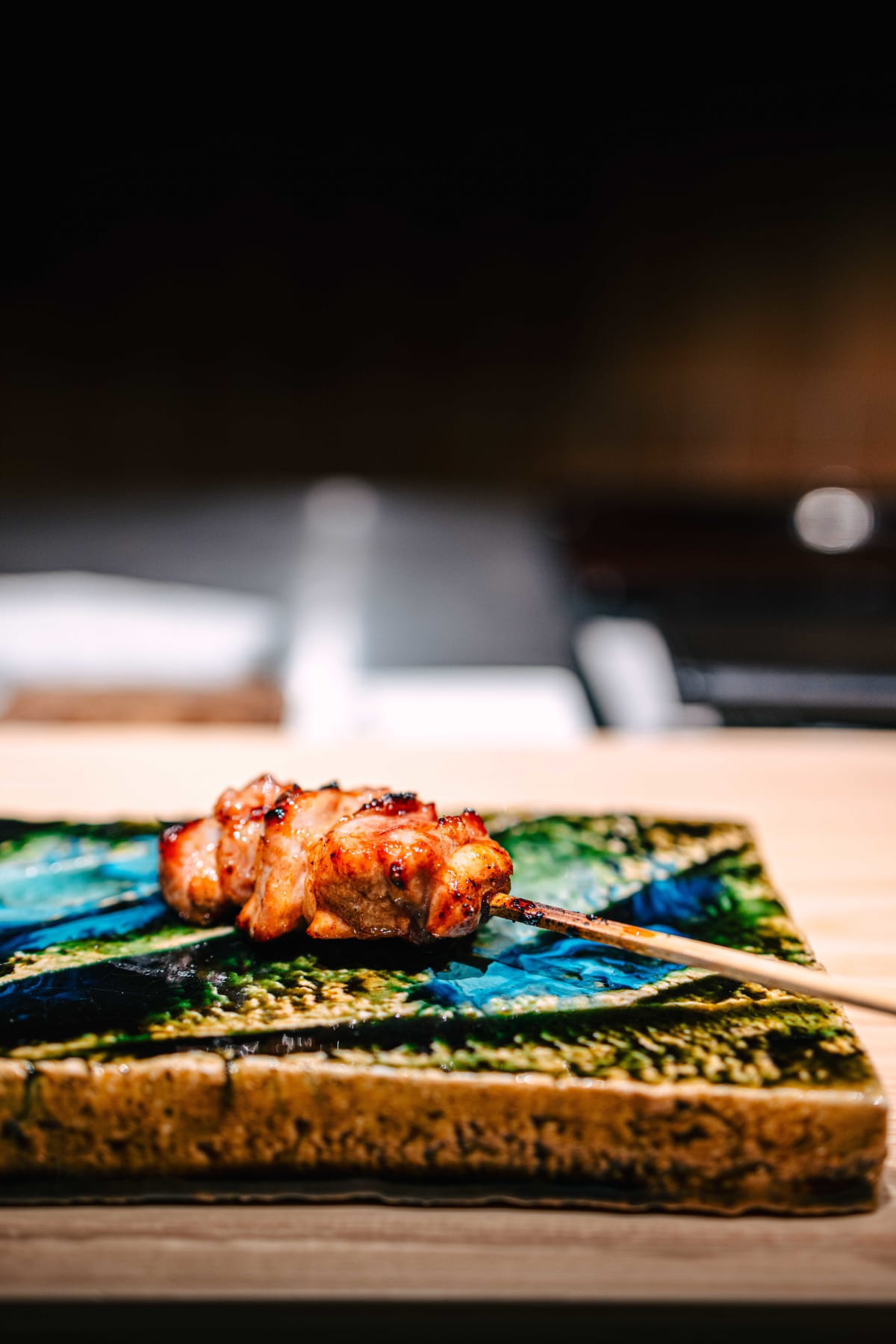
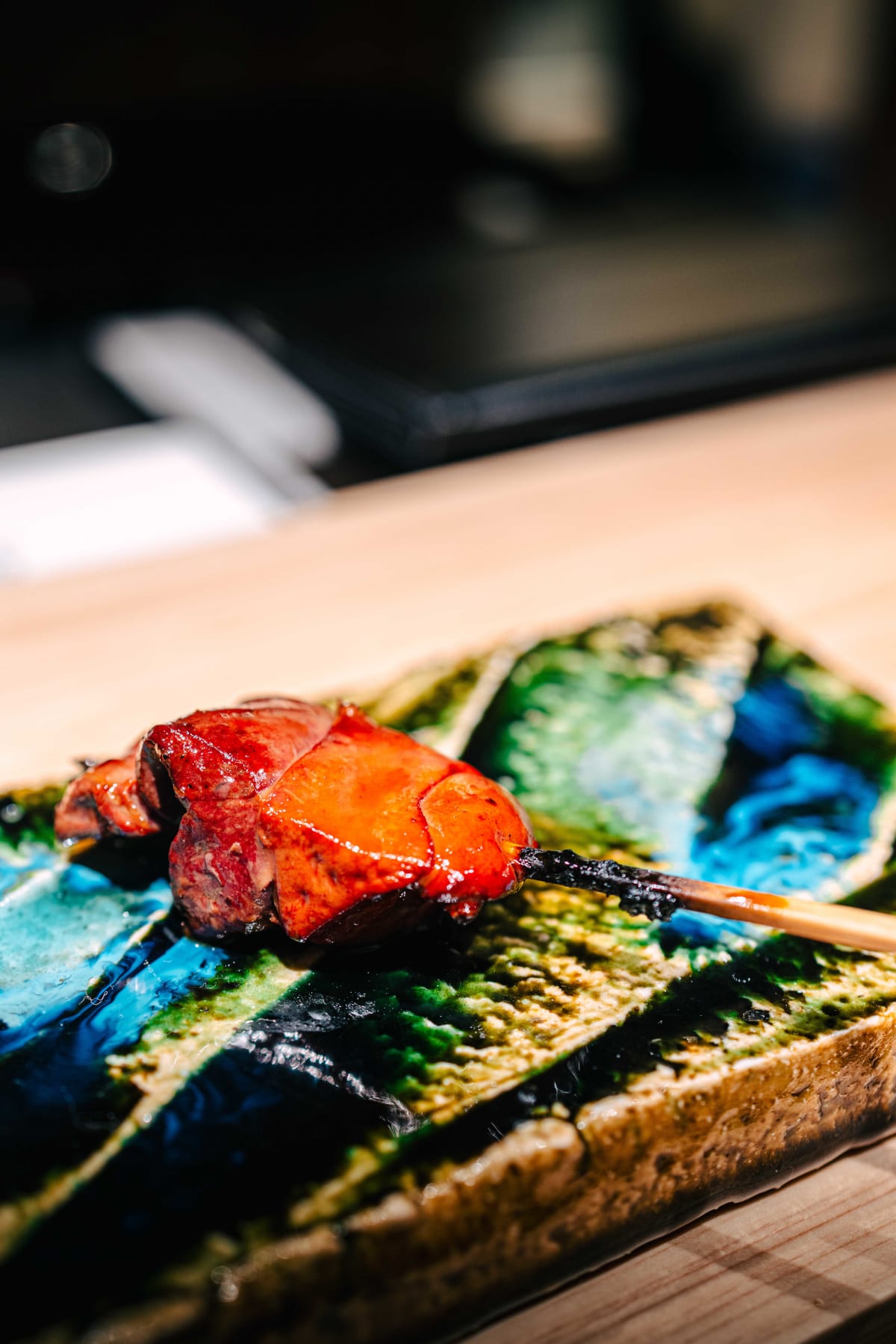
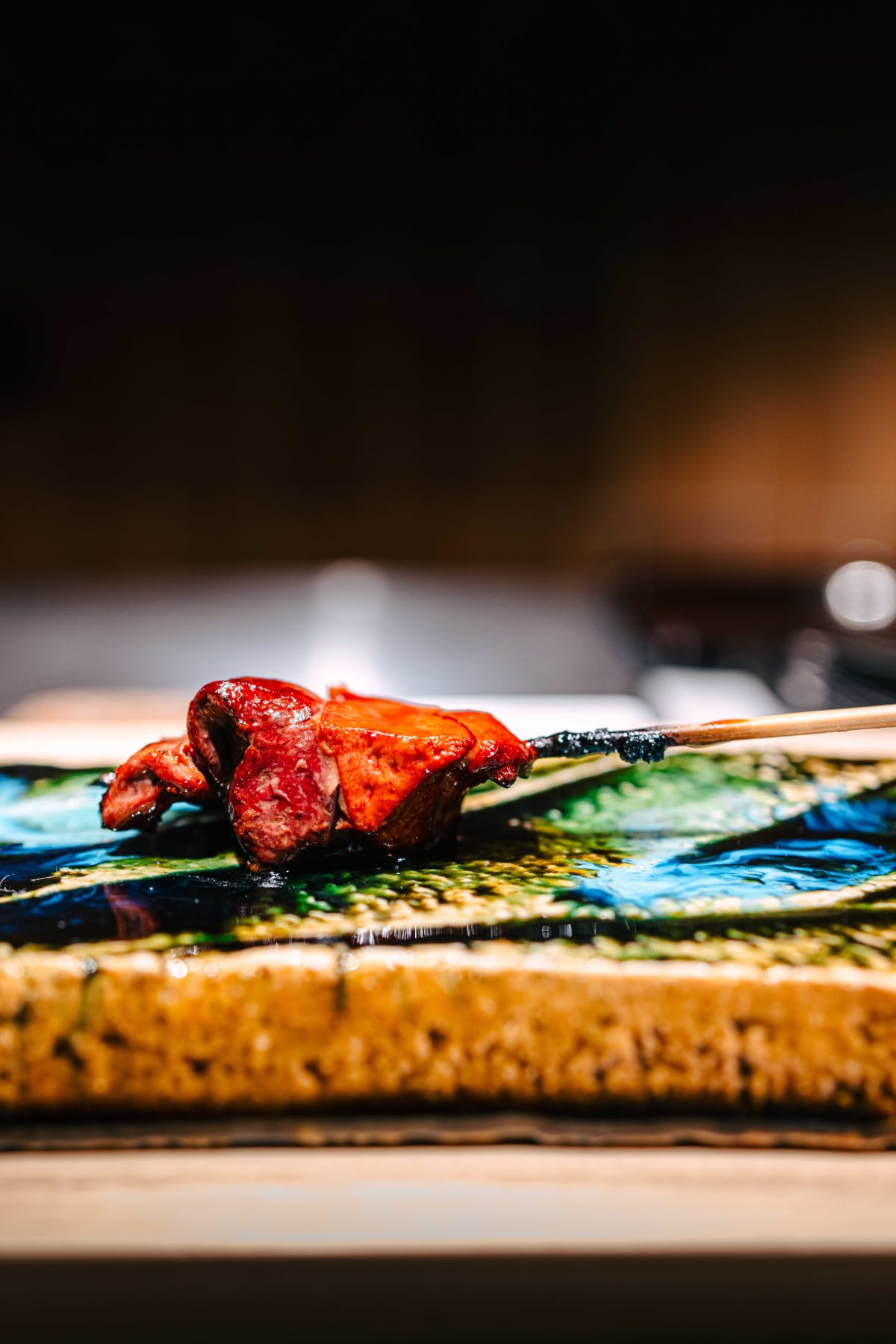
I am a great lover of specialty cuts and offal, and the first of the offal was leba (liver). The surface felt a touch dry, but the inside was rich and soft, almost like a dense cheese in texture, and what I liked was that there was no unpleasant odour.
Section 5·The Duck
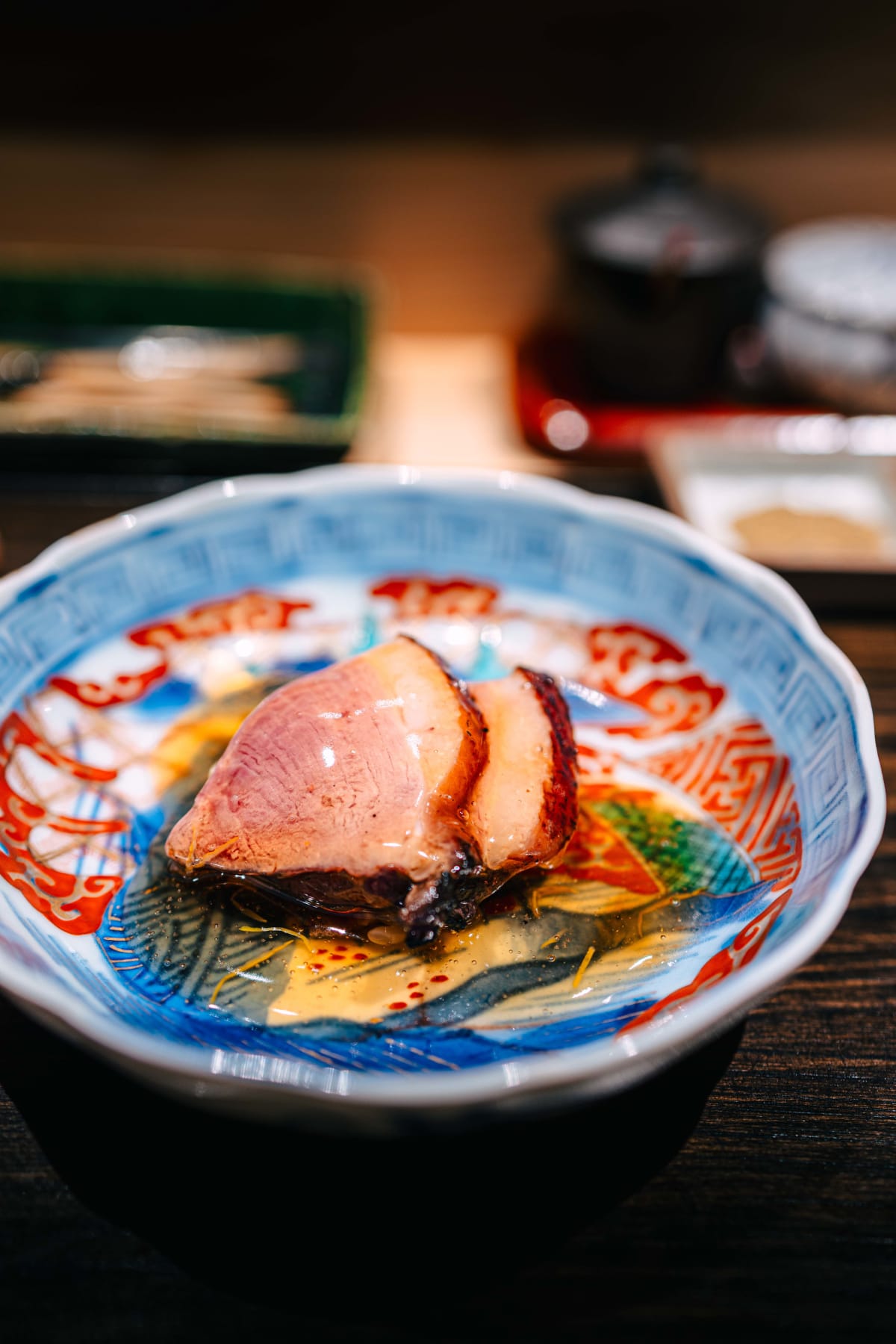
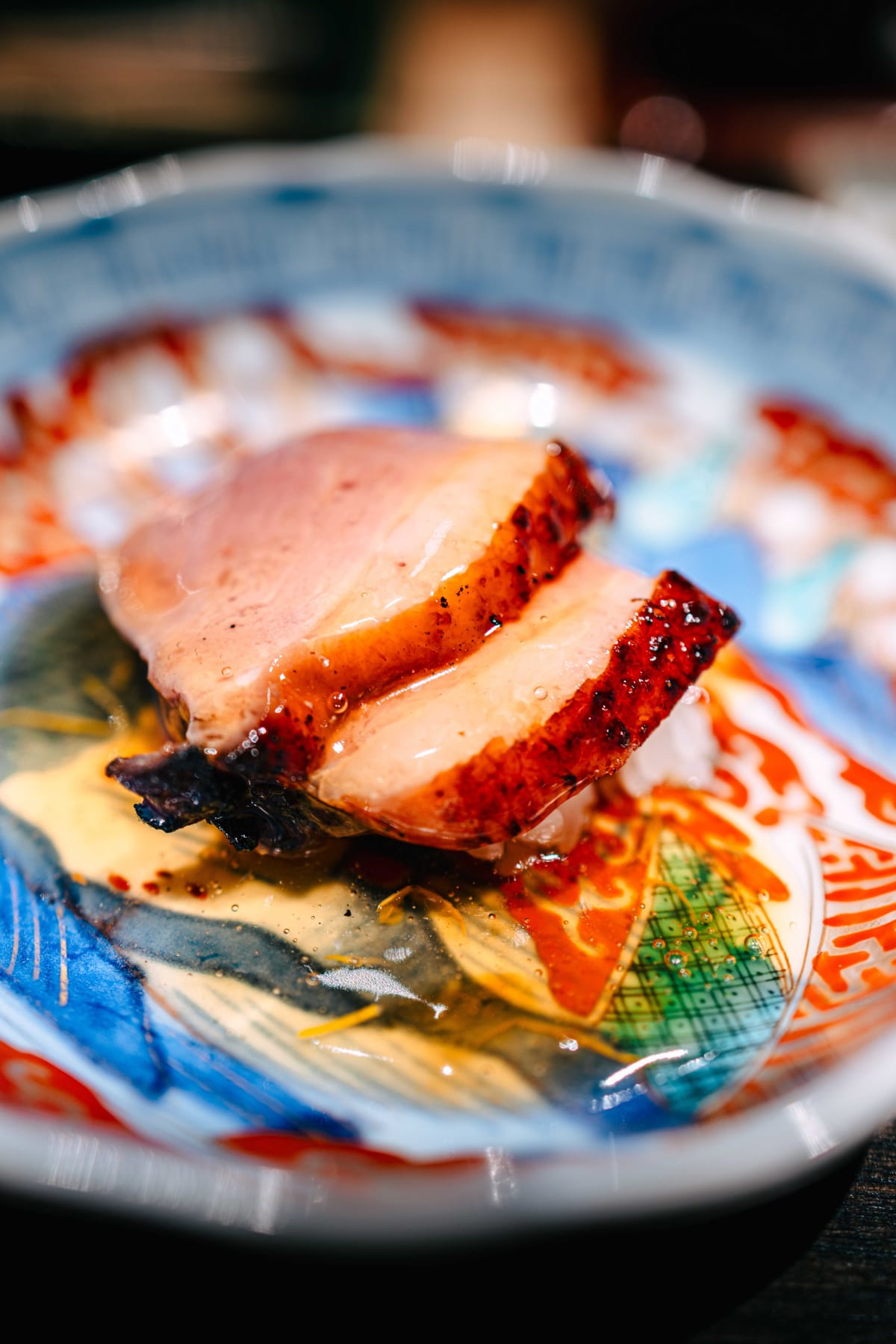
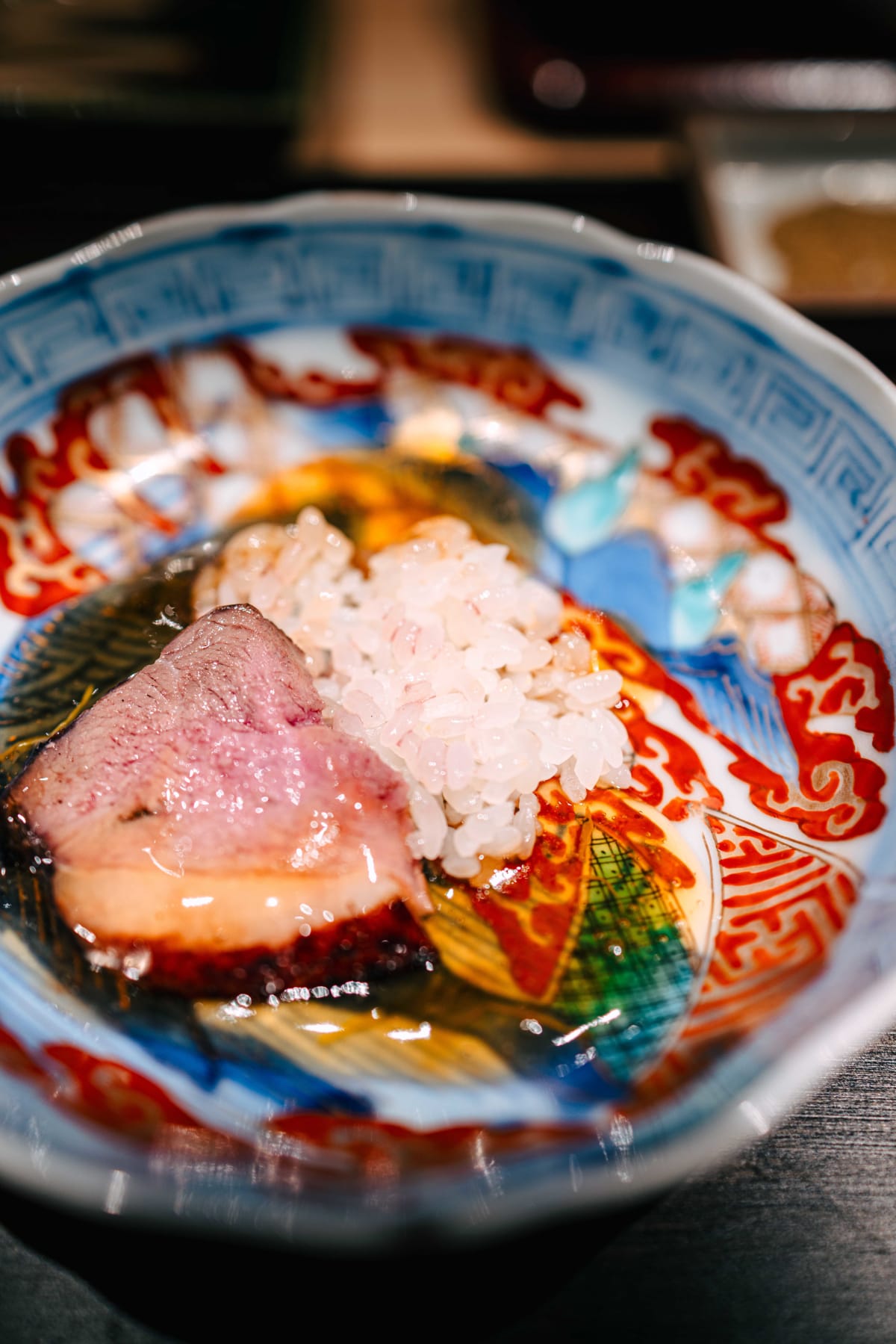
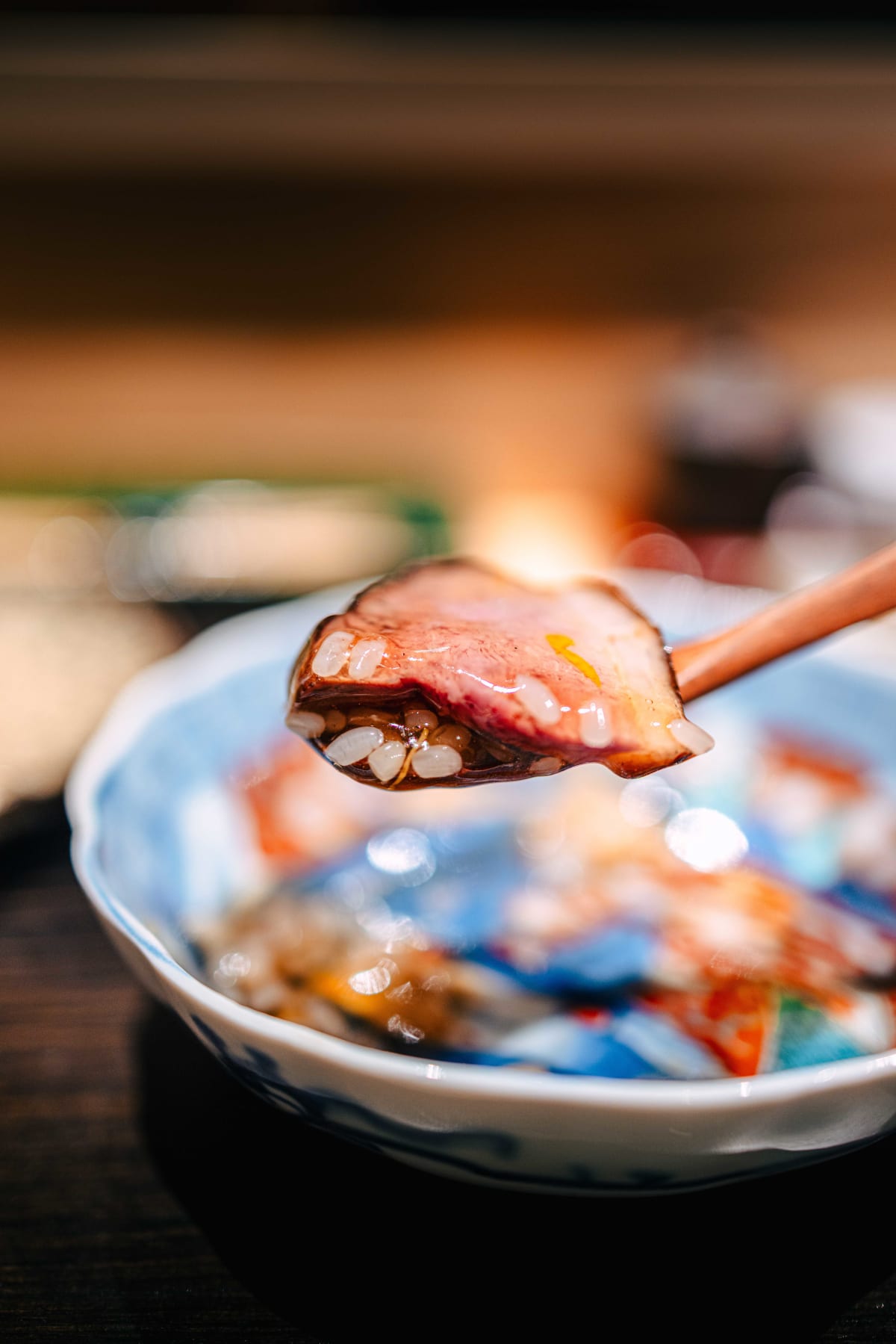
Of the cooked dishes, duck (kamo) arrived with yuzu and a betkon sauce over a bed of rice.
The duck's texture was very good, and so was the grilling. What disappointed me slightly was that the smokiness I had enjoyed in the other dishes and in the yakitori did not come through in this duck, and the sauce seemed to bury the flavour a little.
Section 6·Eggplant and Tsukune
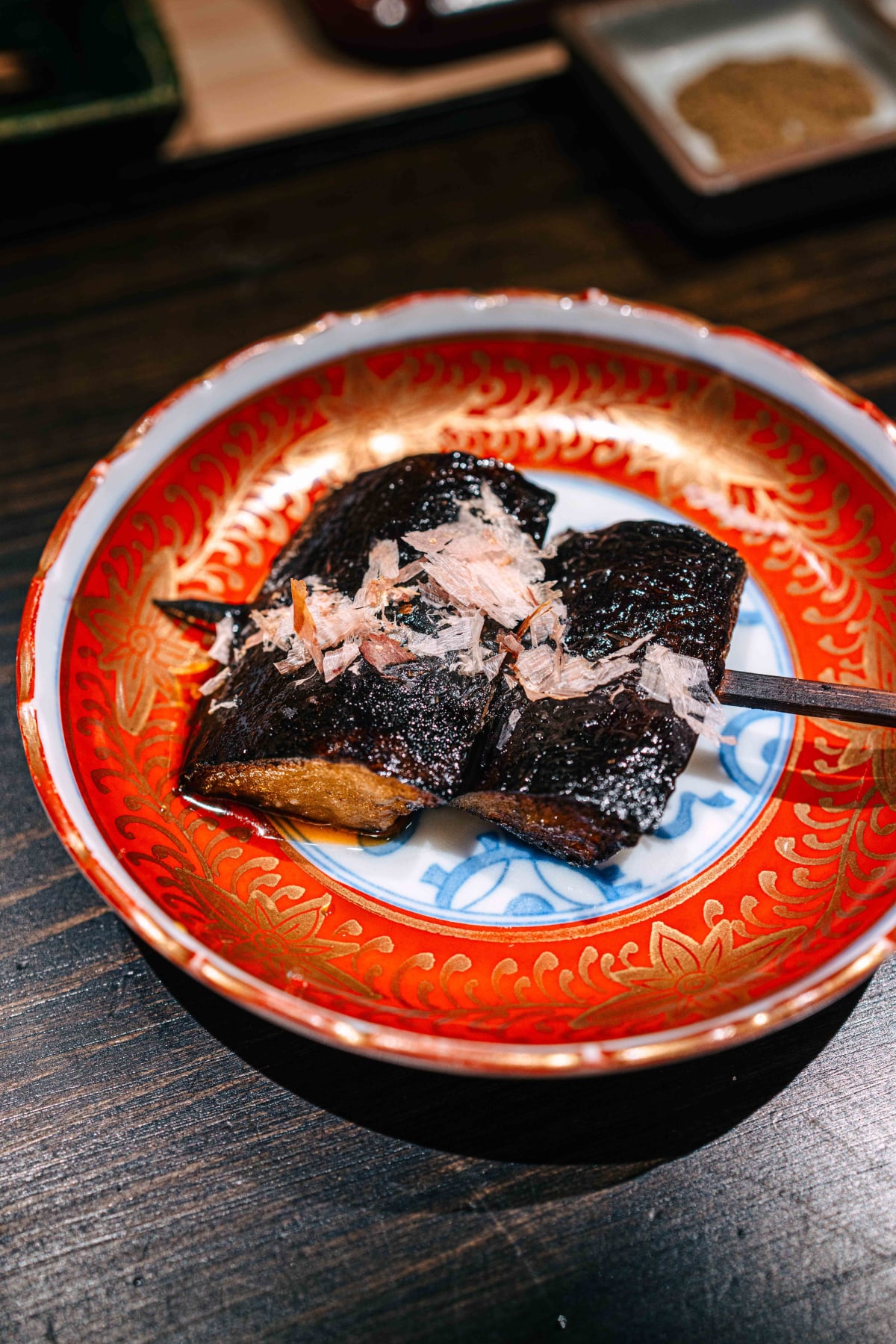
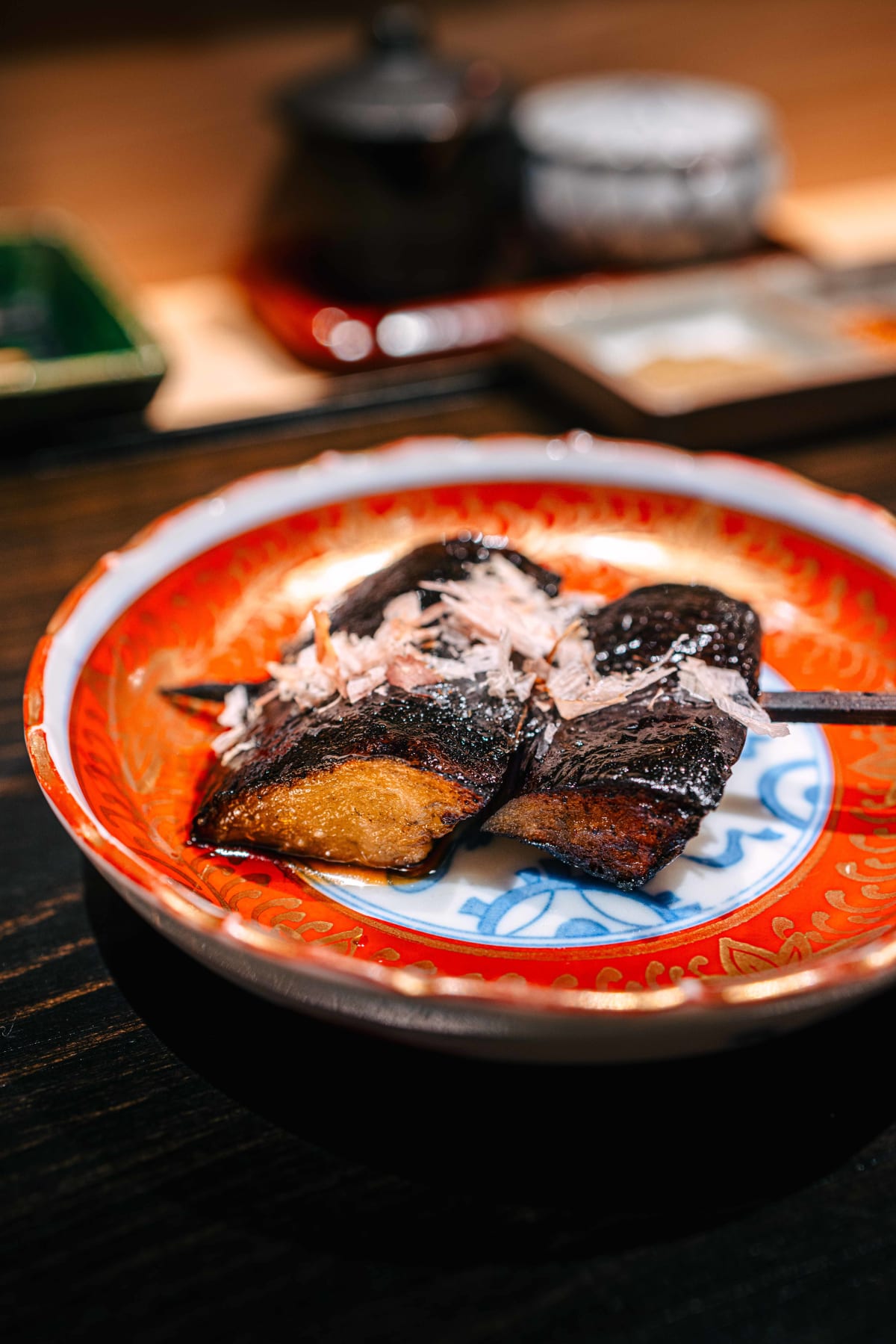
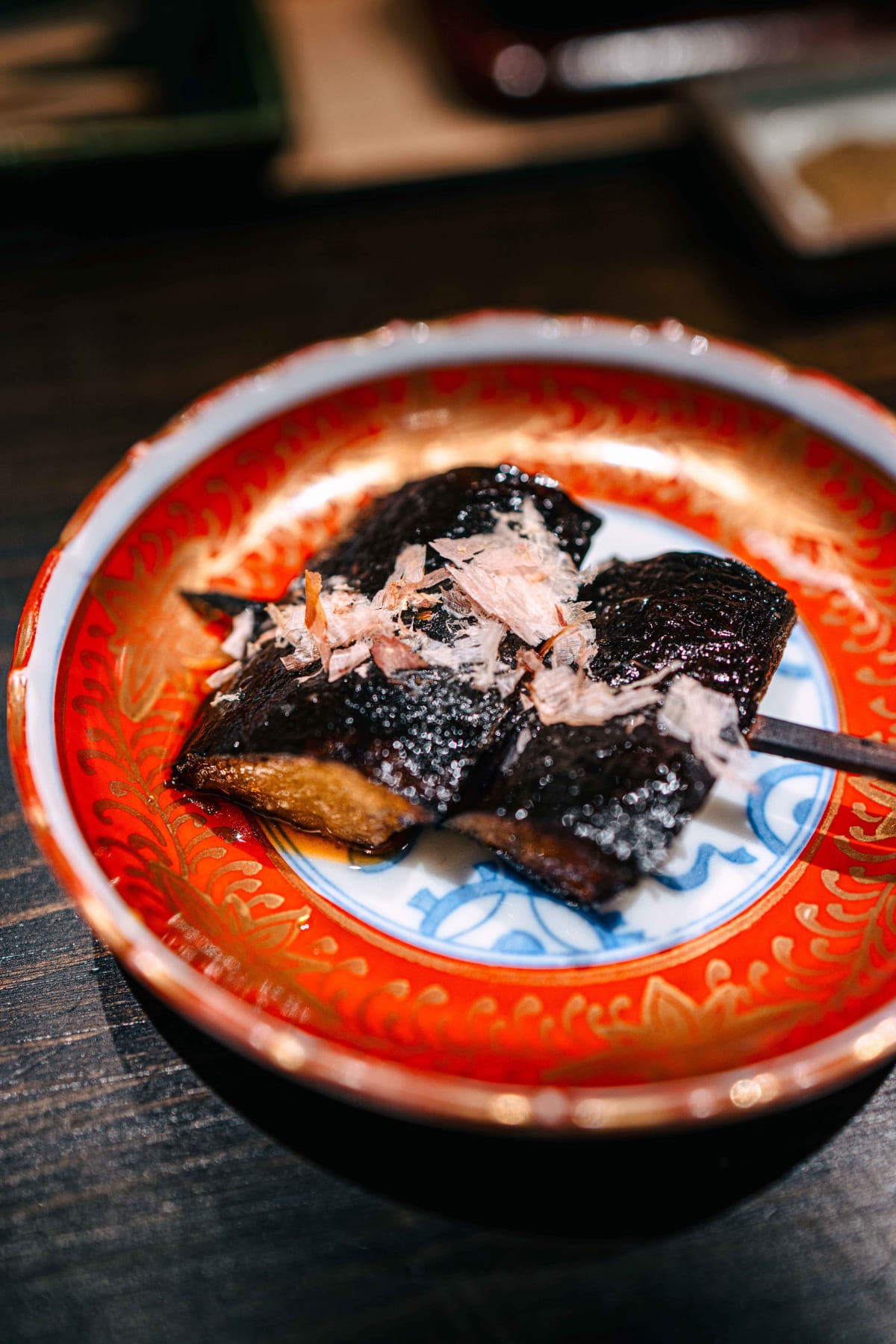
The Kagoshima eggplant that came next, in particular, carried such a lovely smokiness in its skin that it made me wish the duck had been given a little more smoke of its own.
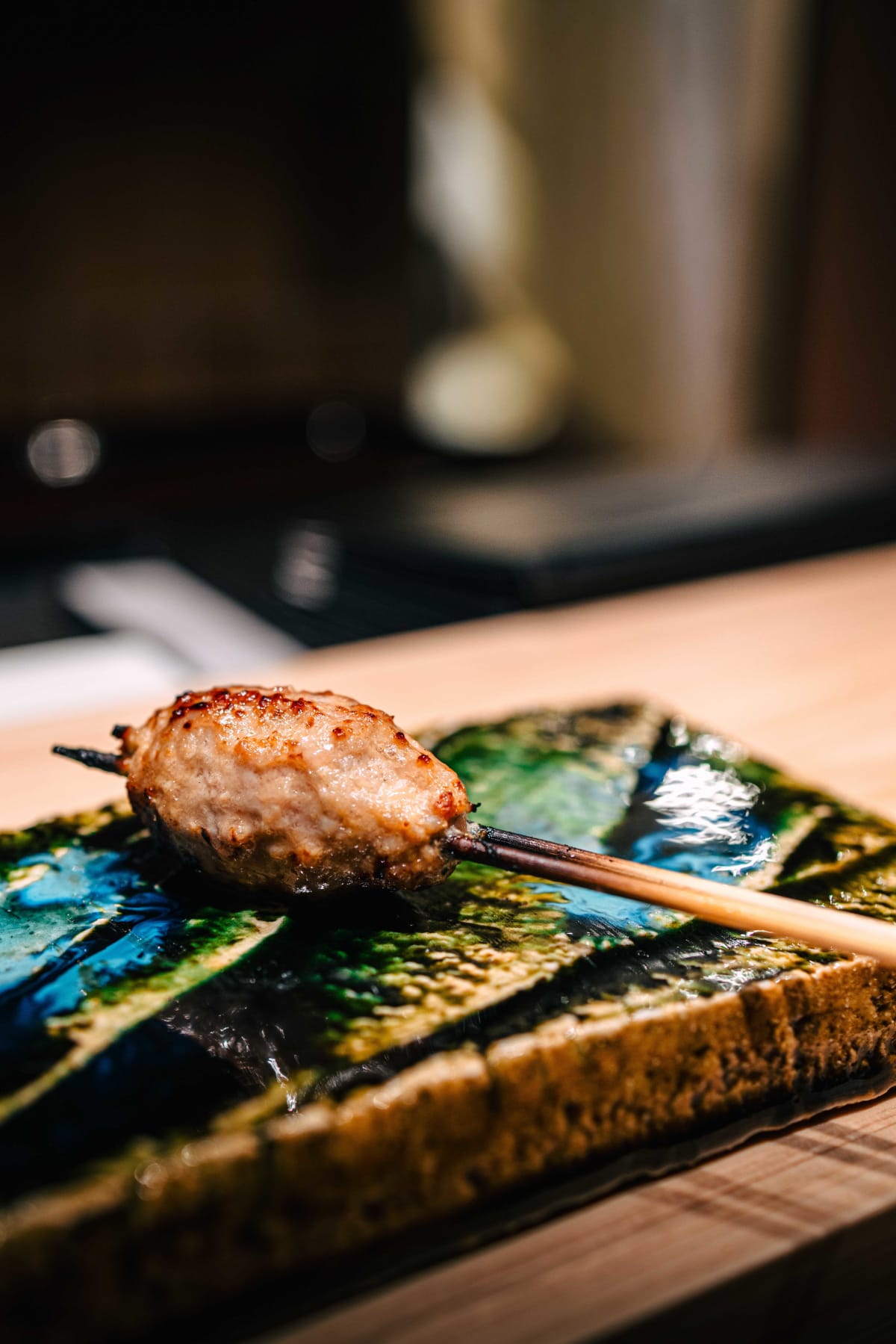
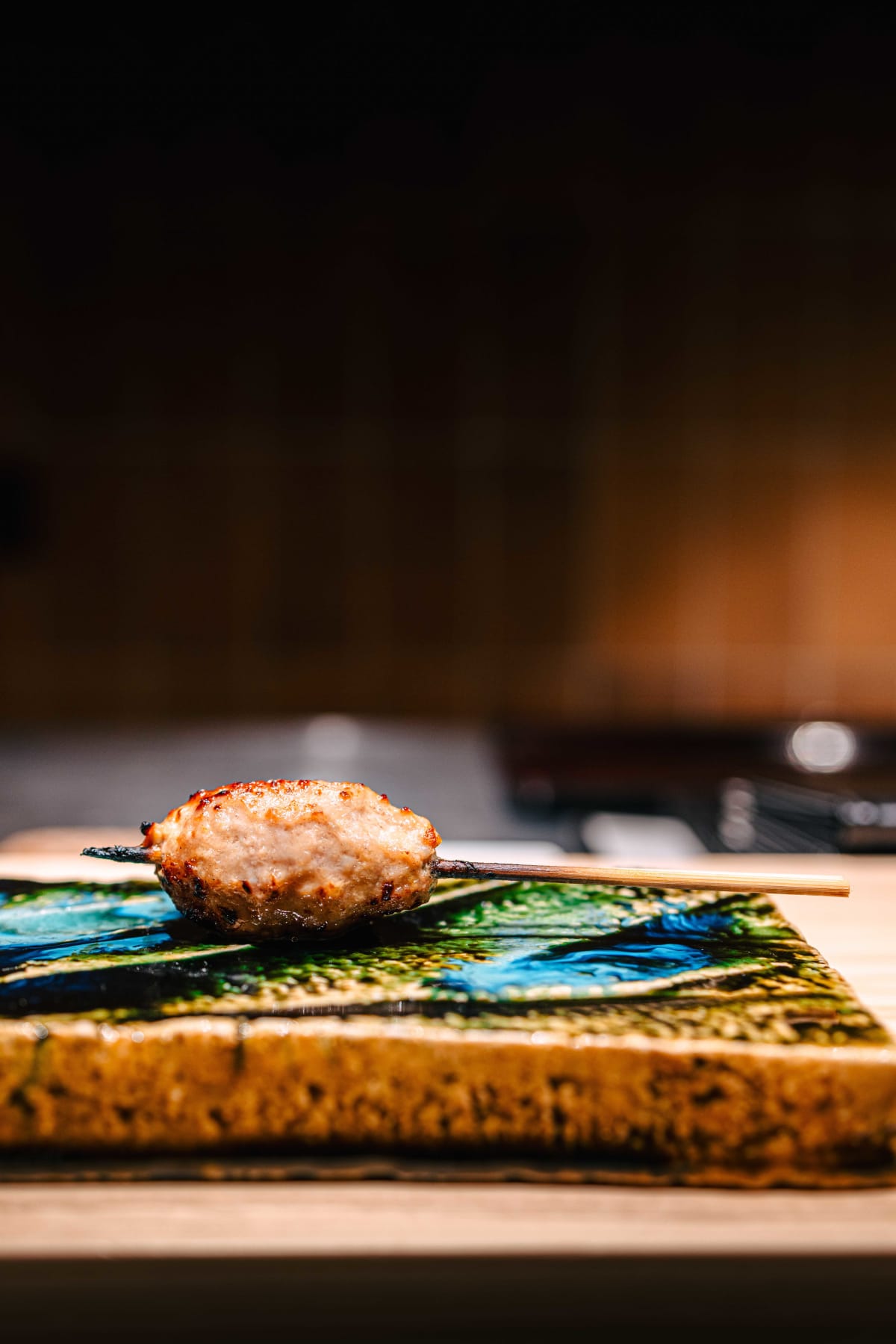
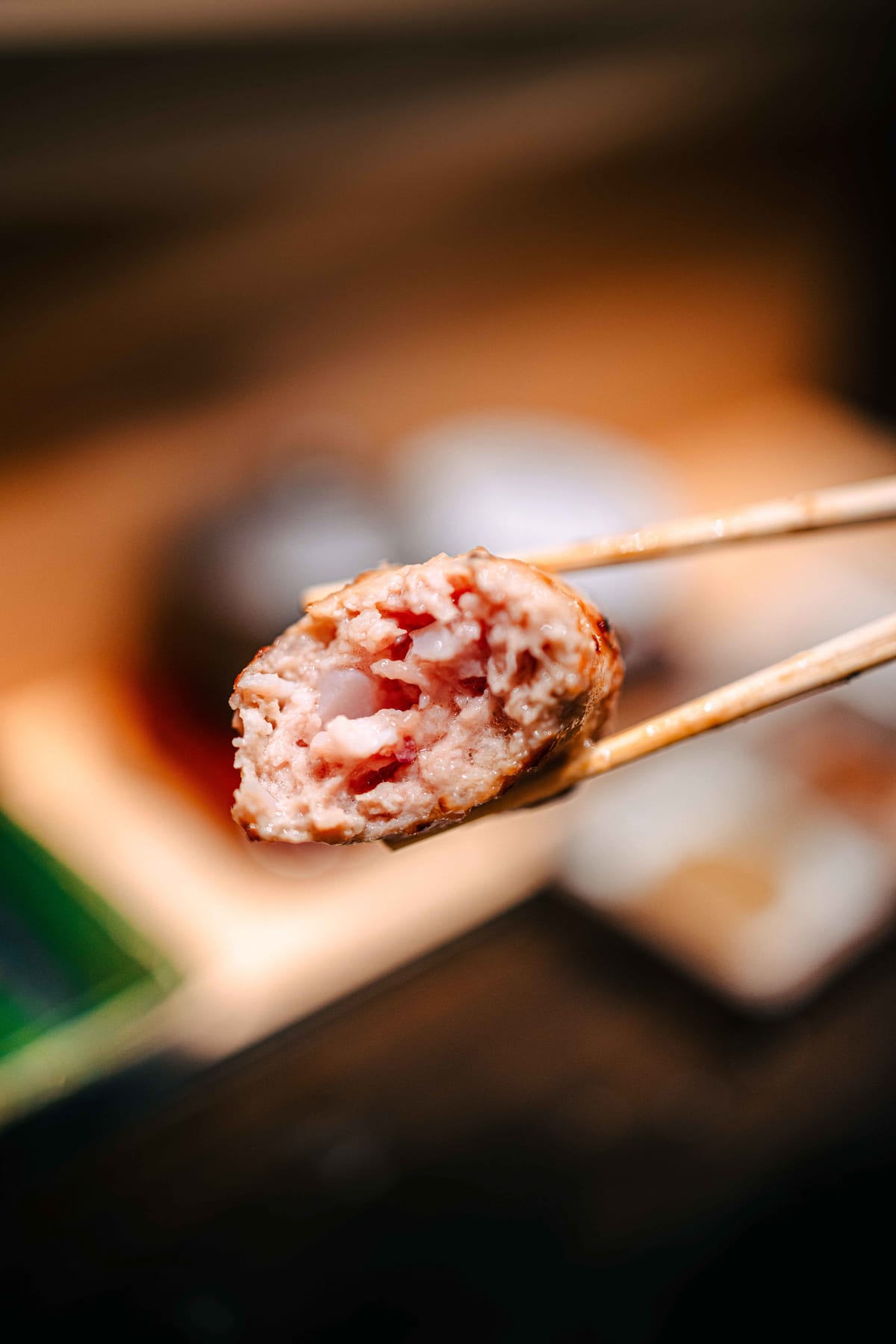
Later in the course came the house's signature tsukune, which was also delicious. Its centre was left fairly rare, a so-called raw tsukune, which made it soft and very good.
Section 7·Mushroom and Wing
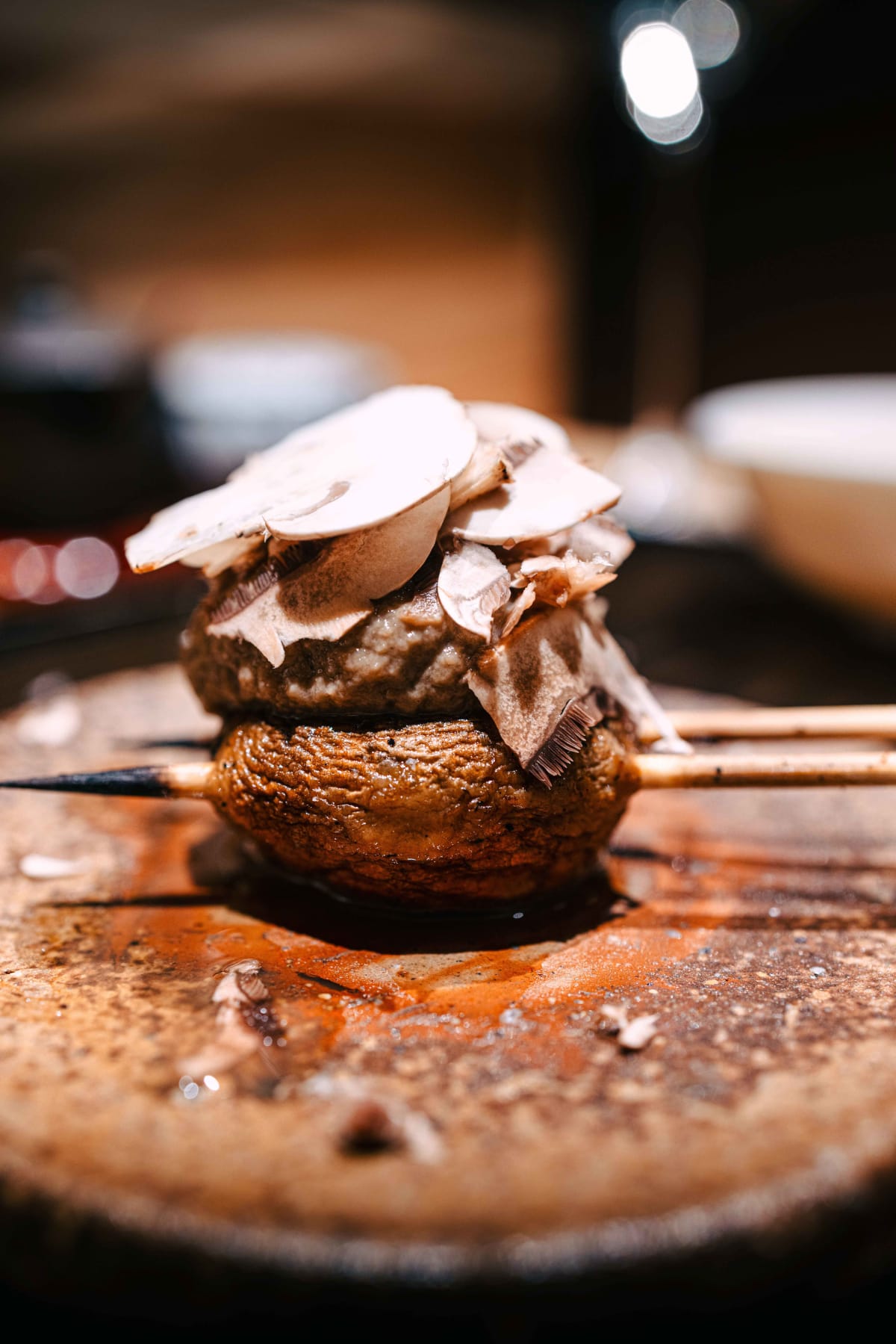
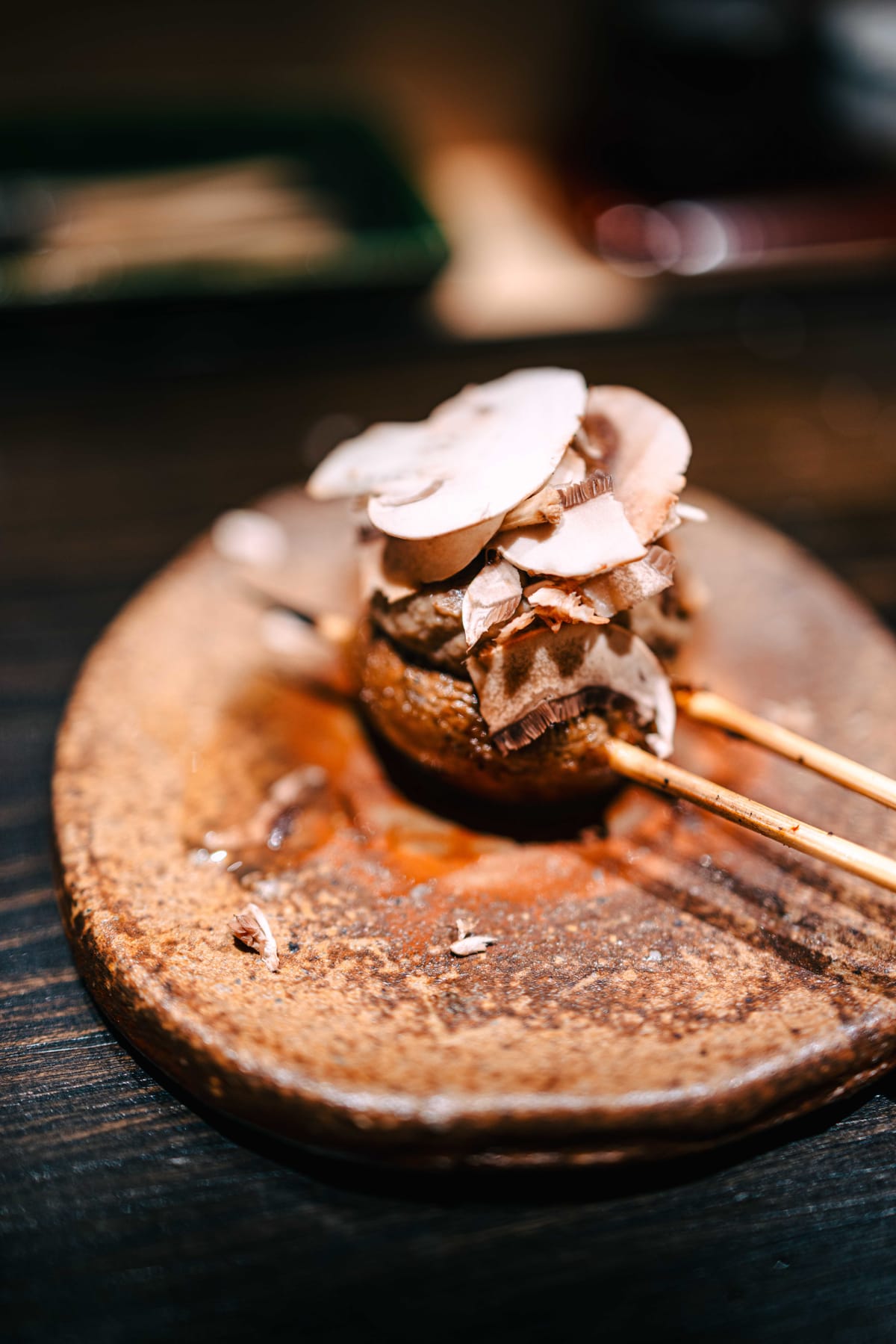
After that, a grilled button mushroom was topped with what amounted to a thick reduction of mushroom soup, then finished with raw mushroom grated over the top.
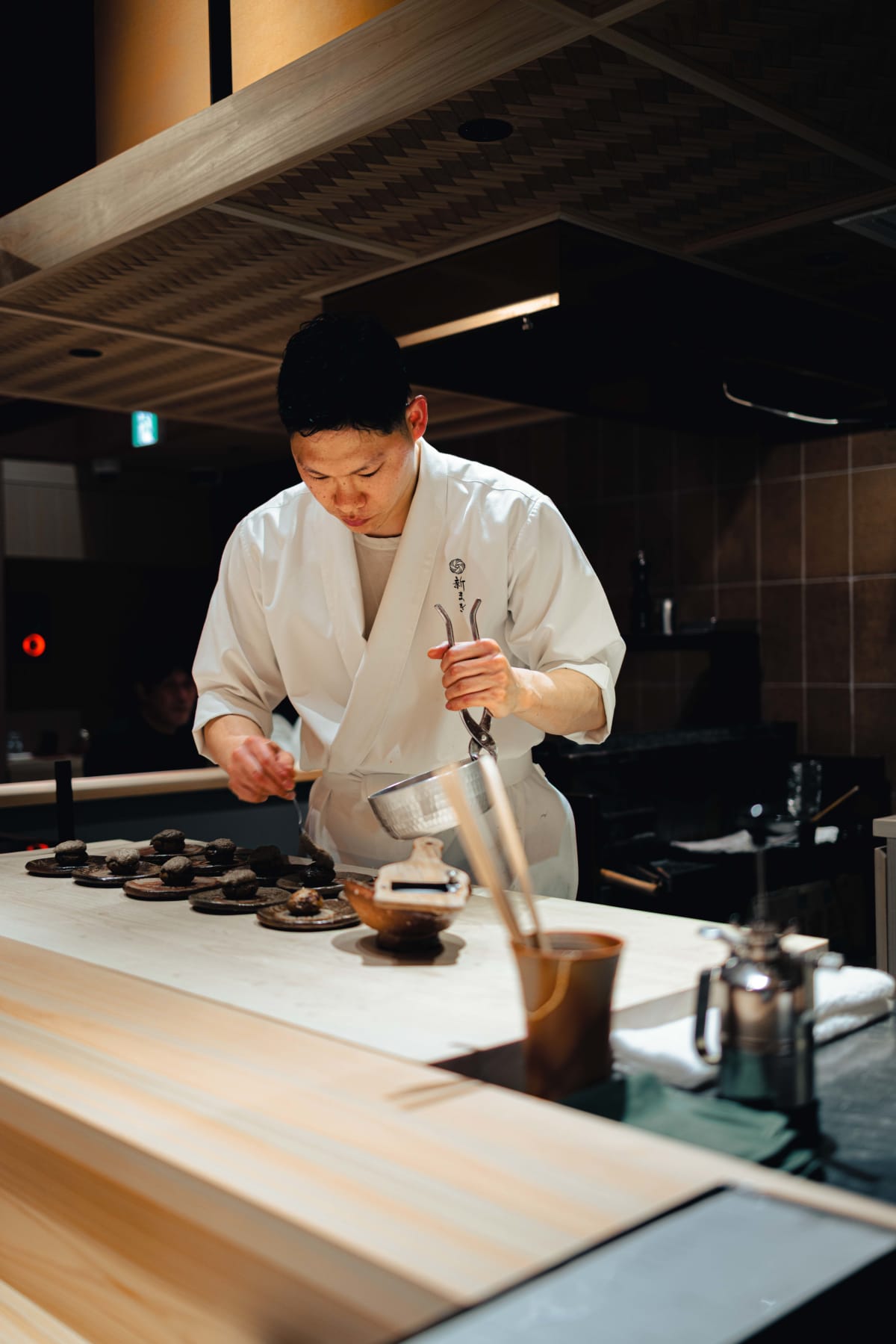
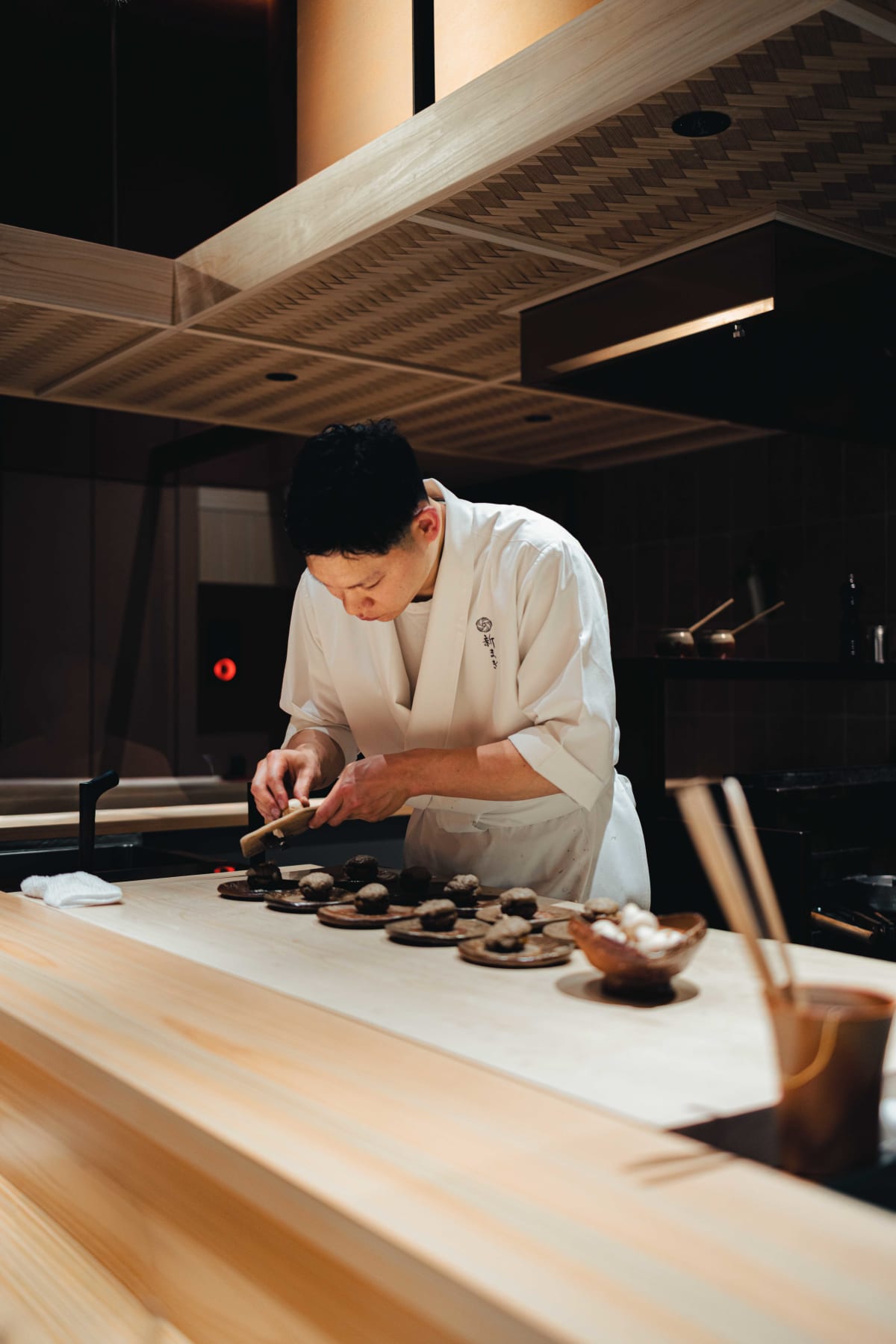
A combination of the same ingredient in different guises, it was direct in flavour and layered in texture, and I liked it.
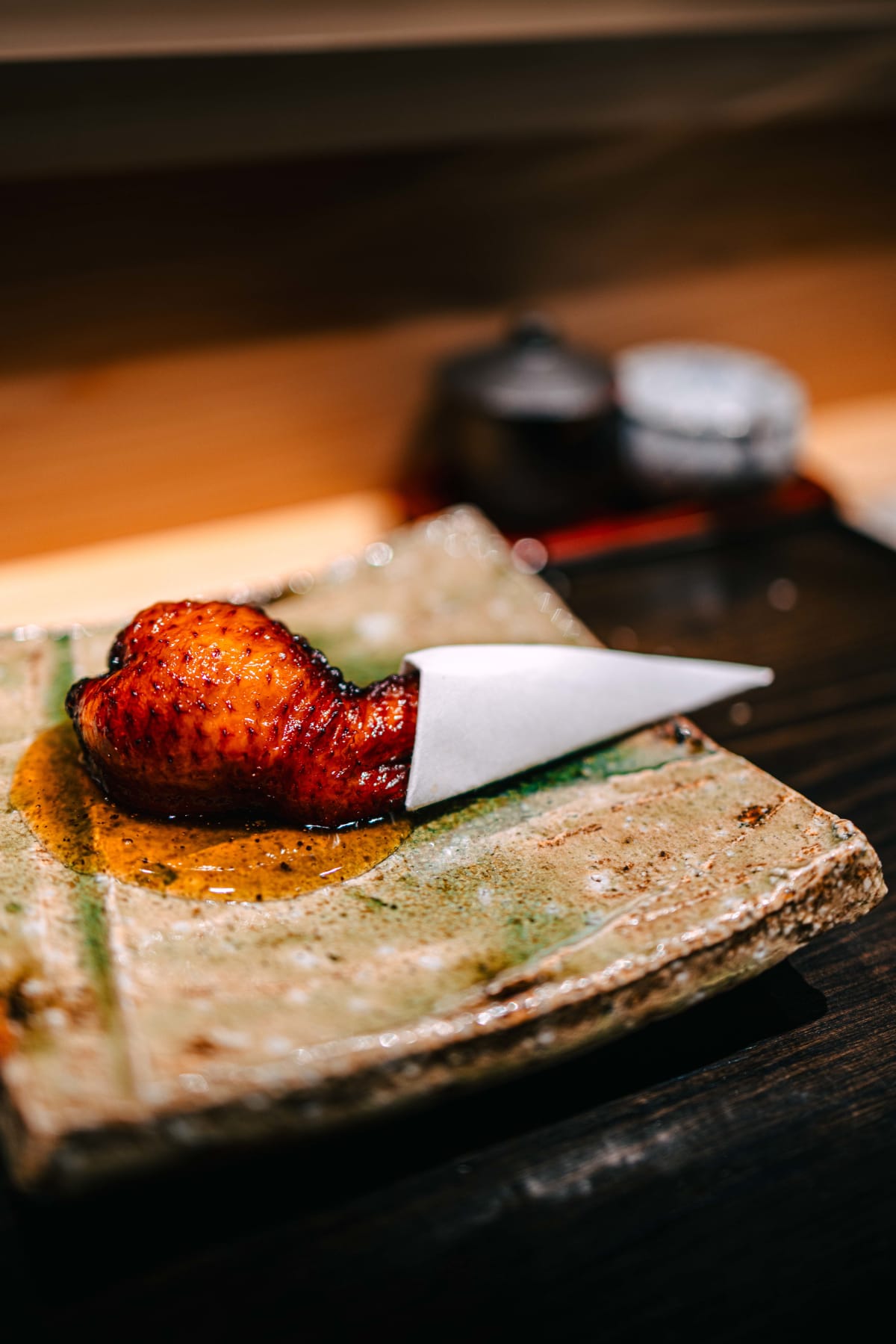
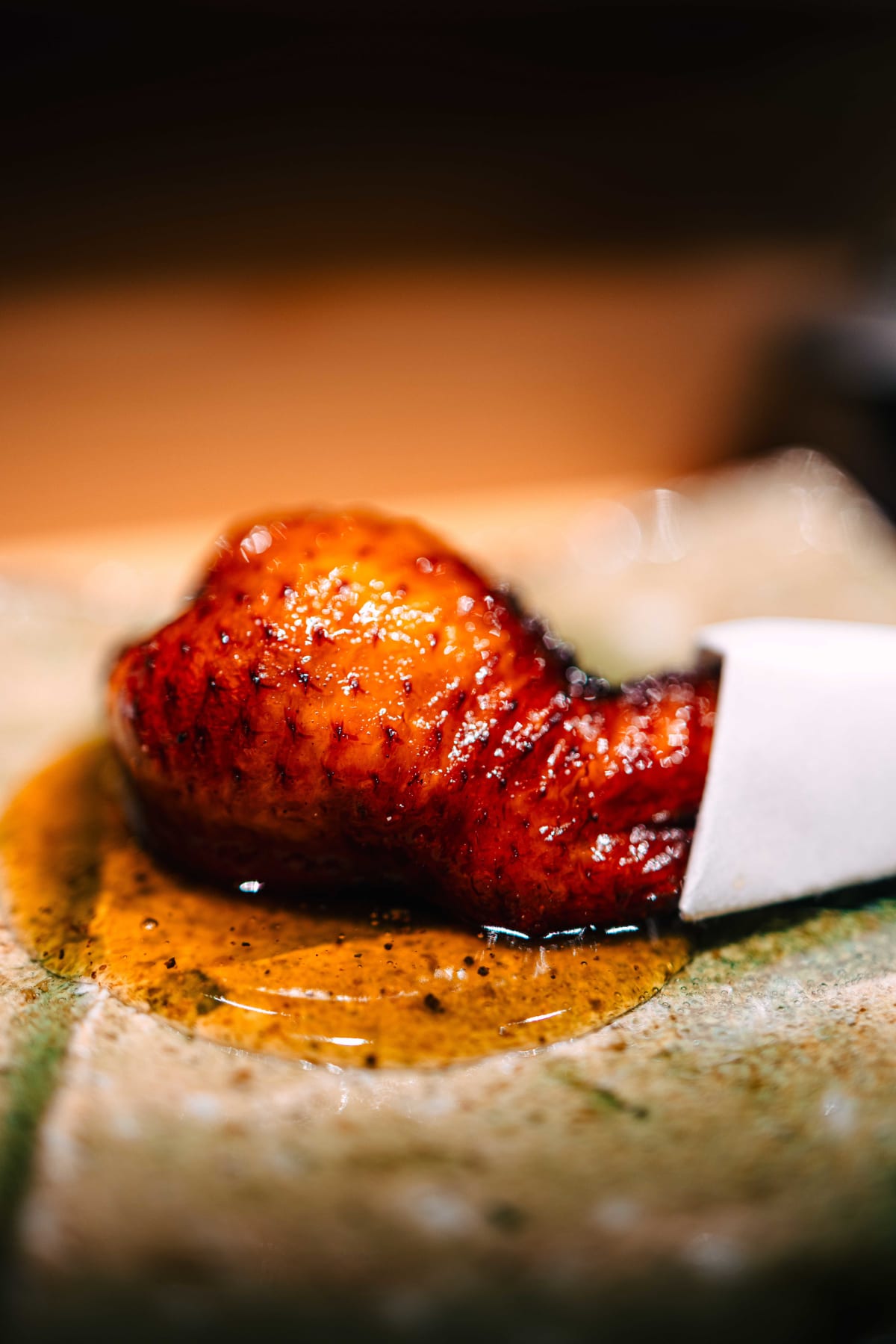
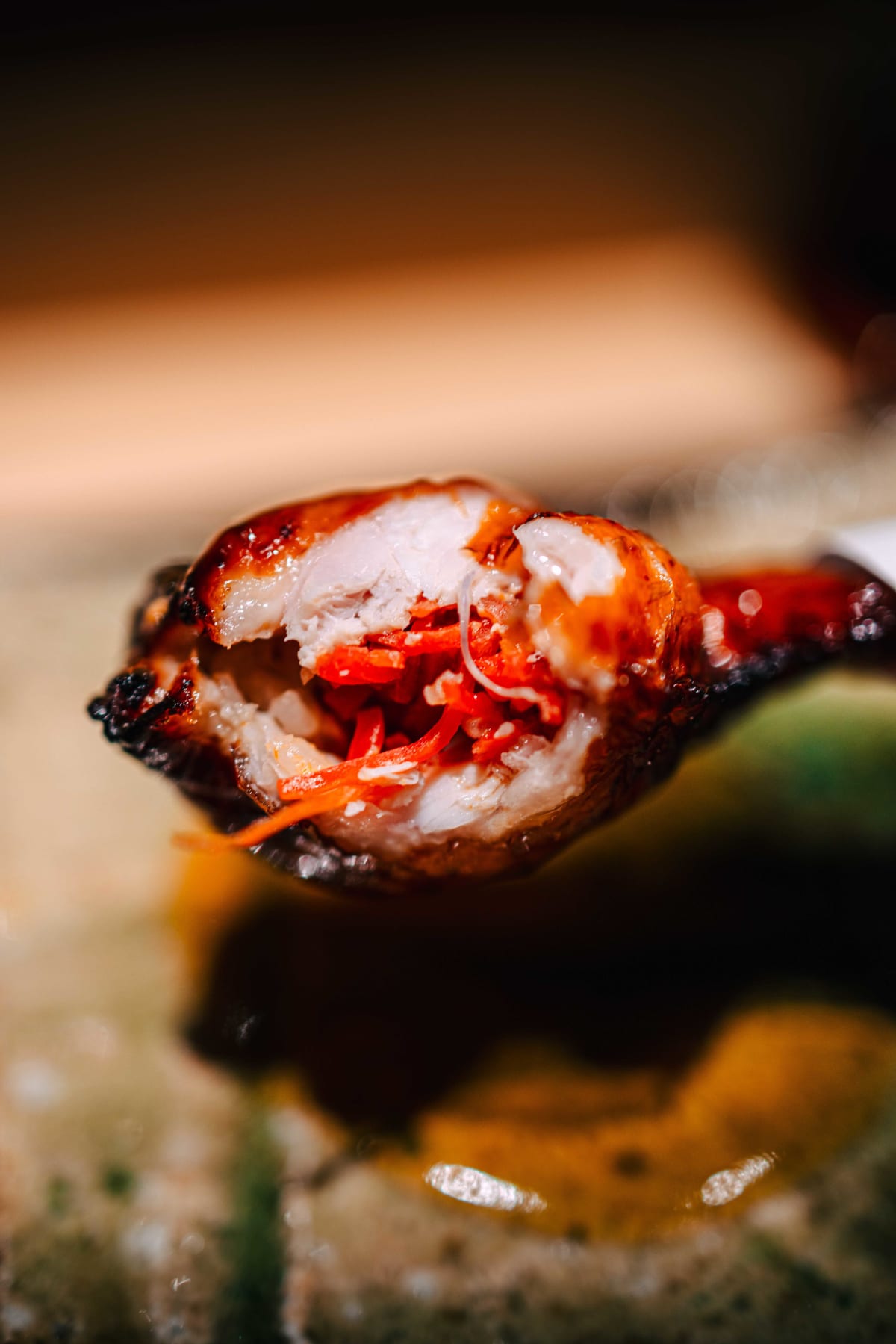
Last came the house's signature tebasaki (chicken wing), stuffed with carrot. By this point, though, I had eaten so many excellent things that this take on tebasaki left less of an impression than I had expected.
Section 8·The Clay Pot
I half expected to be asked about additional orders at this stage, but the meal moved straight to the clay-pot rice and ended.
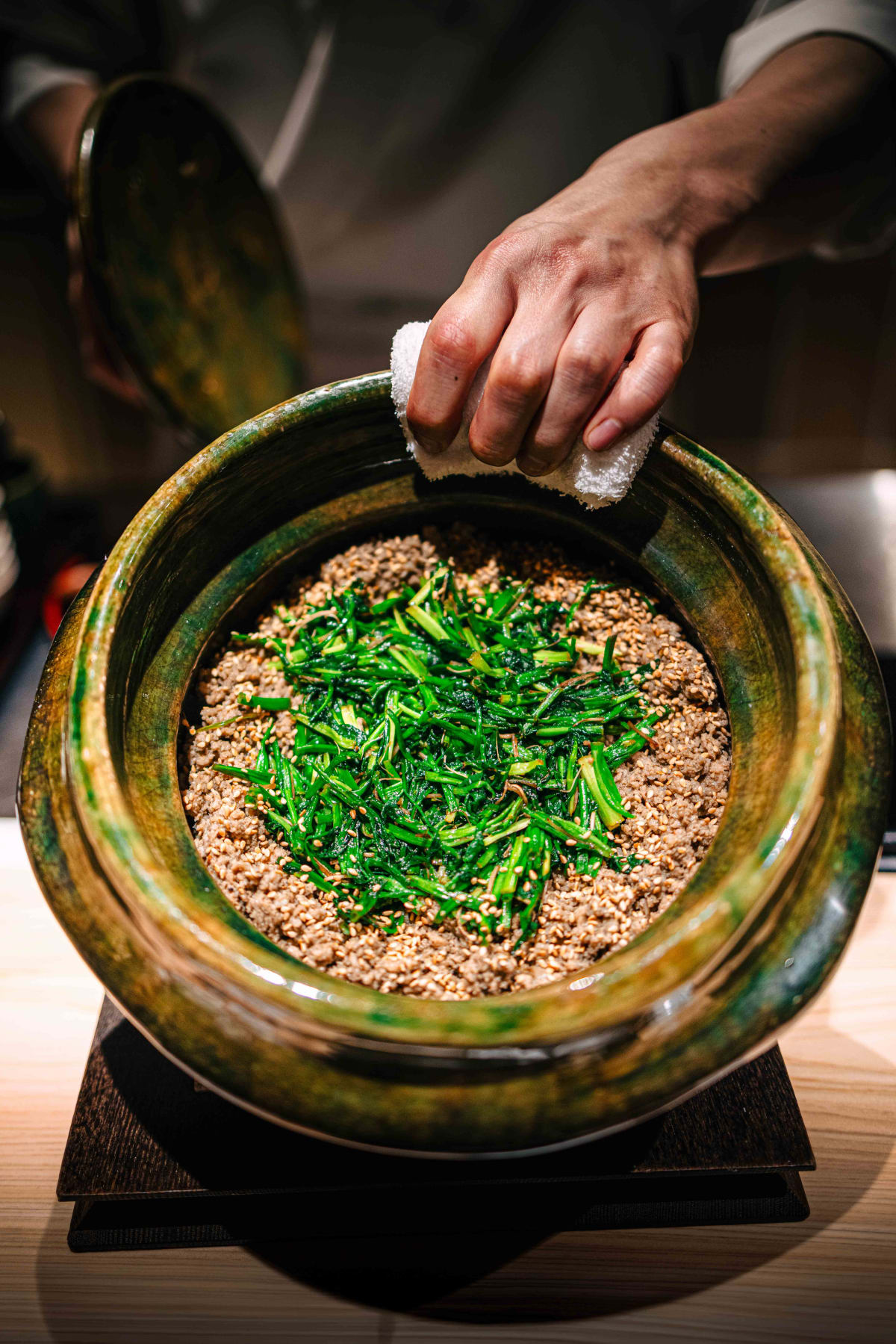
No further offal appeared, and while the yakitori was delicious, this left me wanting. The composition felt a little monotonous, and the range did not seem especially wide.
The clay-pot rice, a seseri version, did not move me much, though it was tasty.
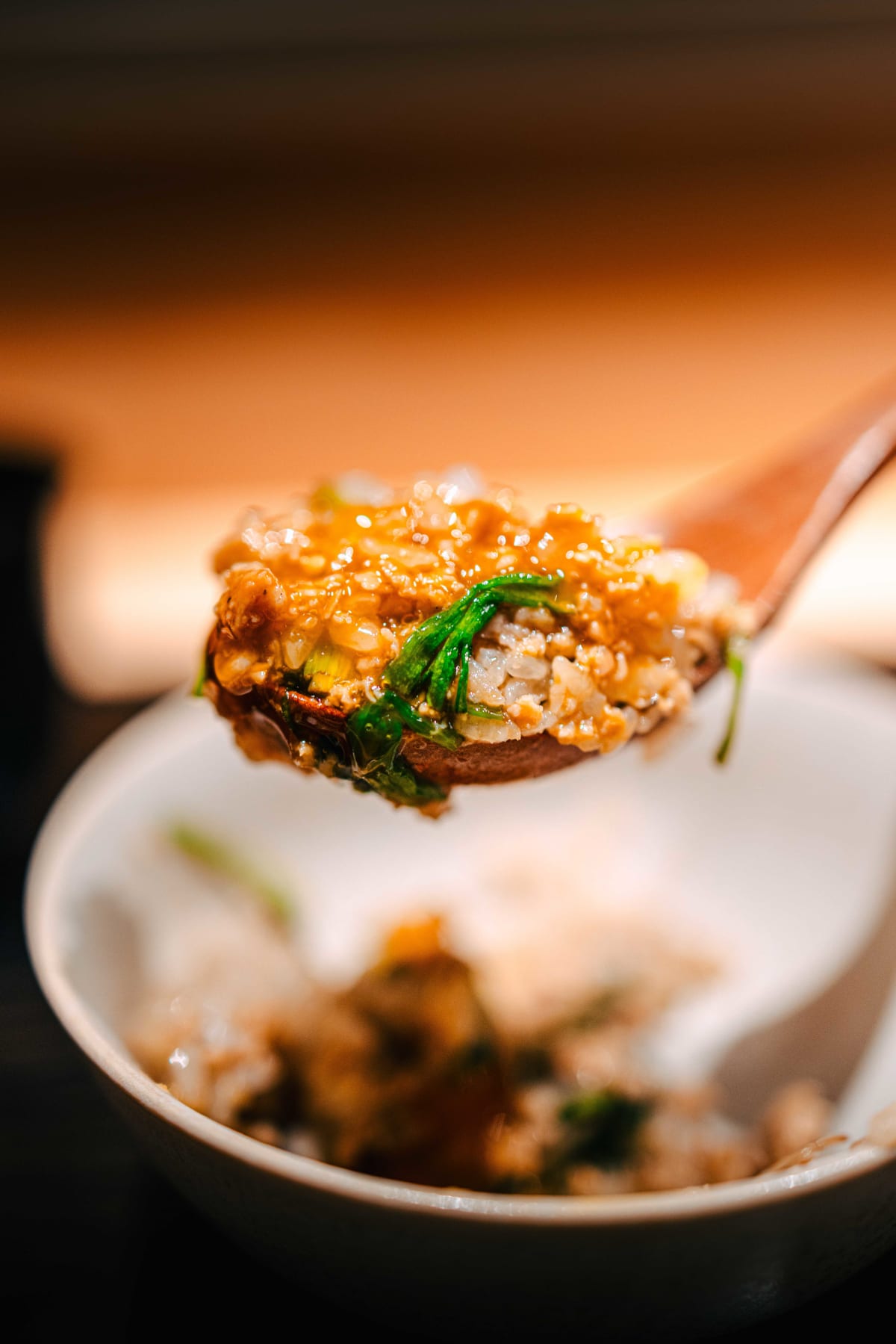
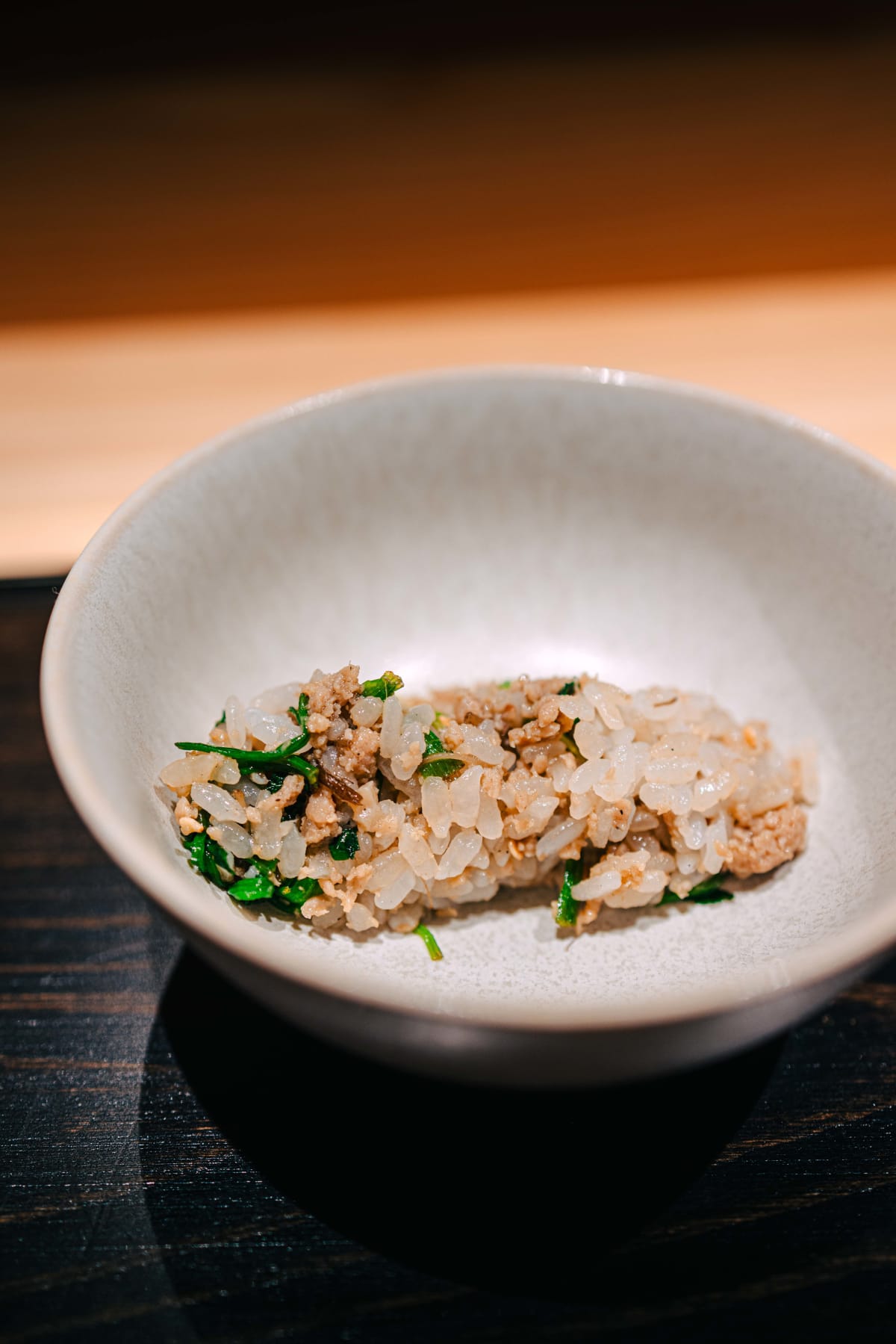
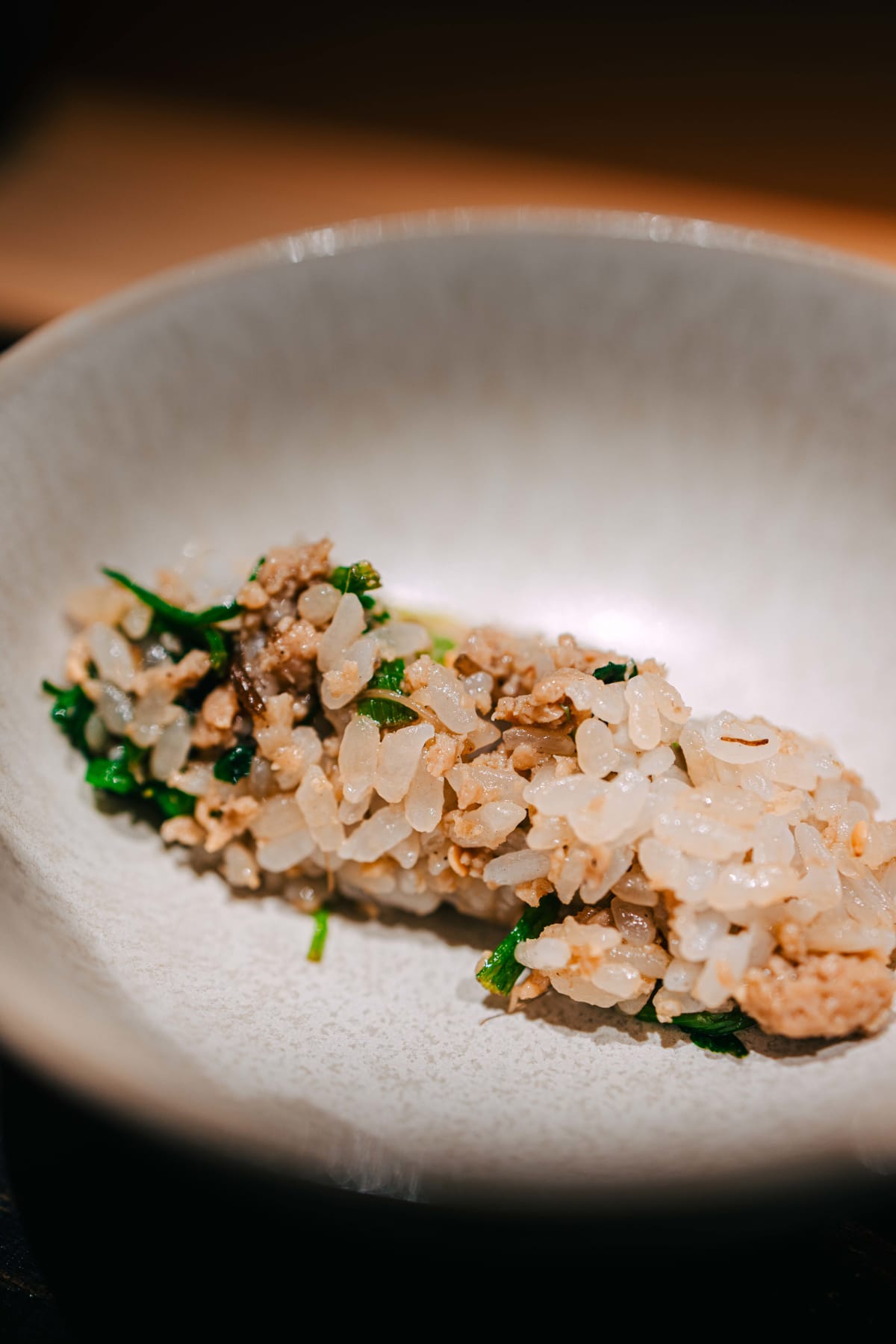
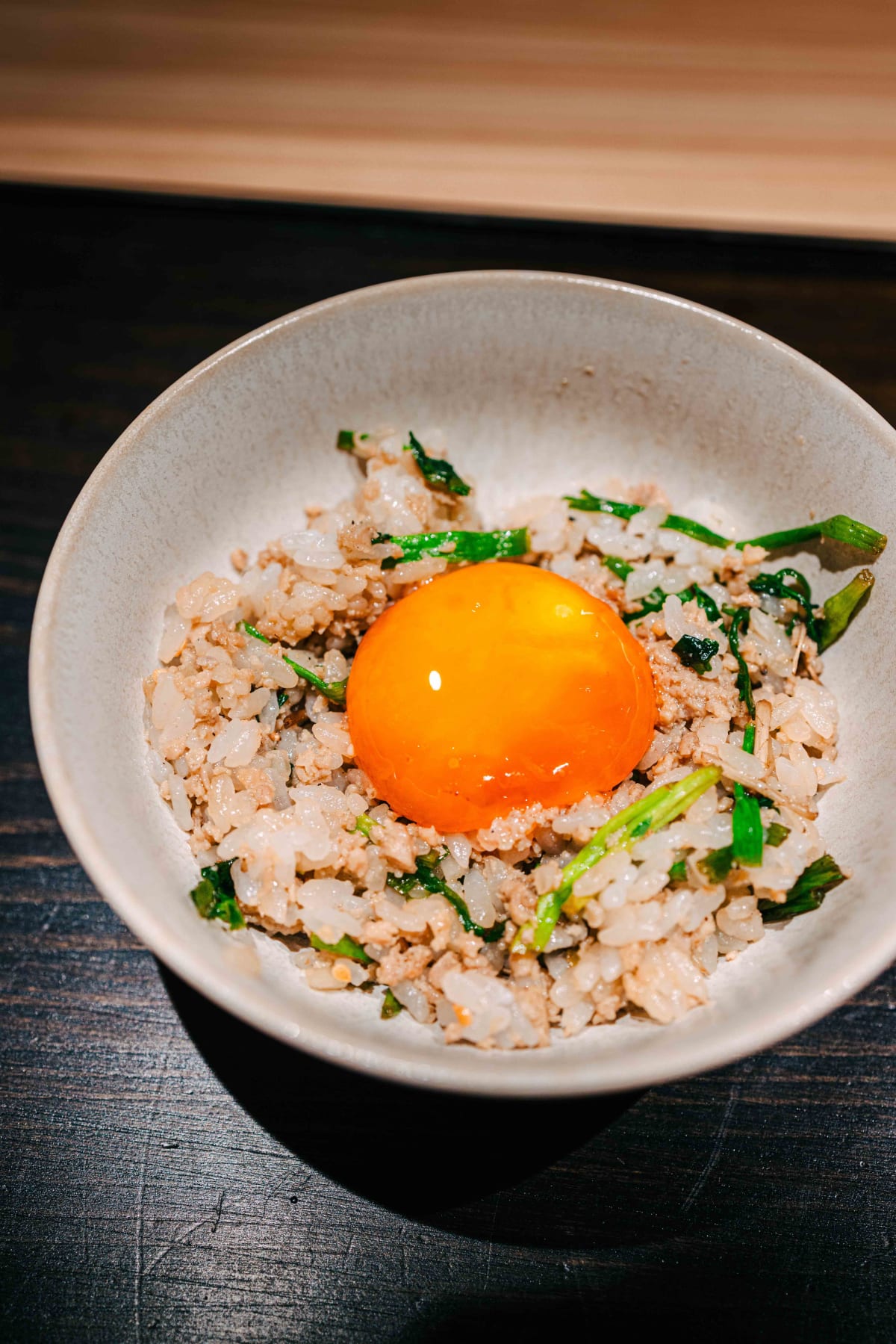
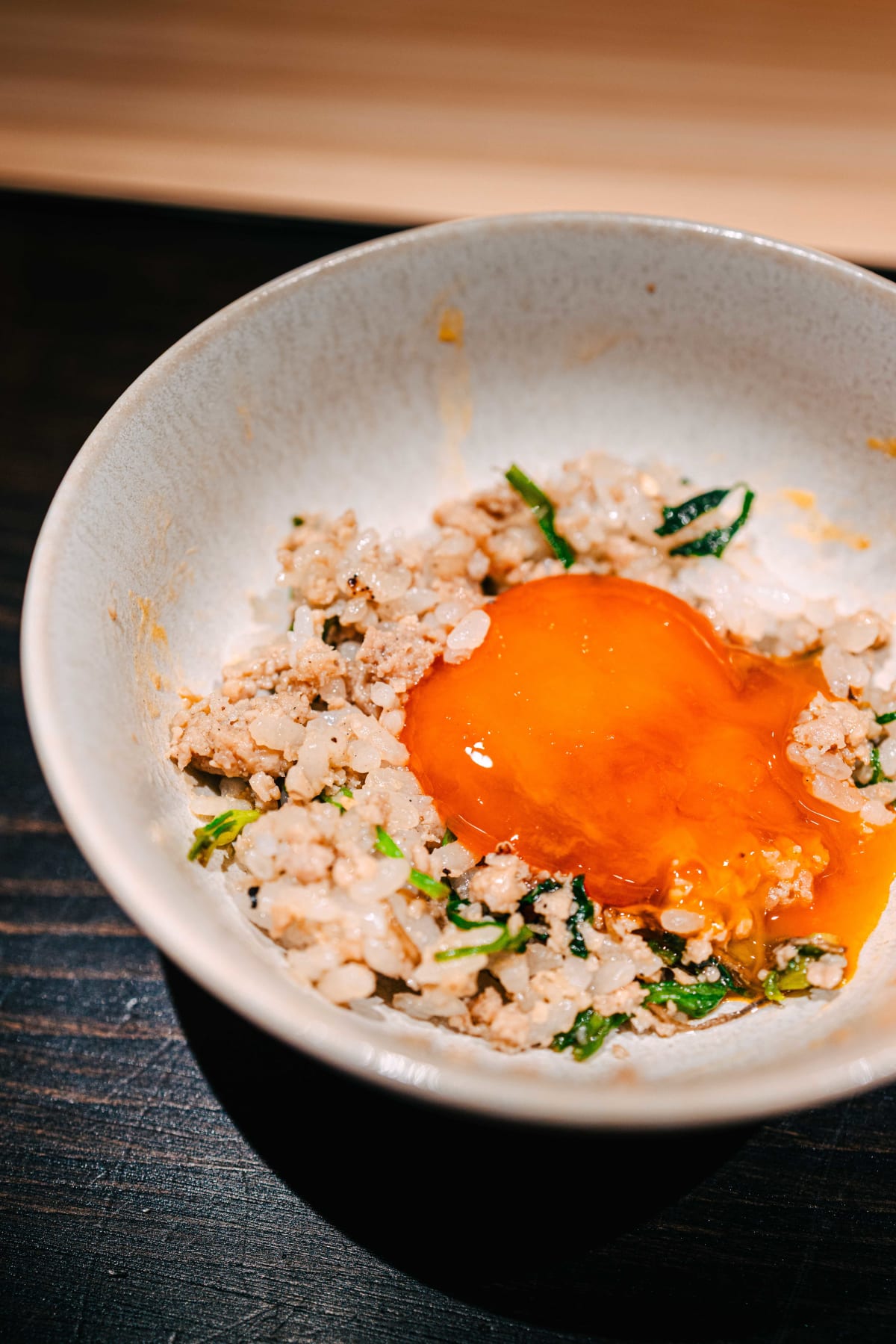
From the second bowl on, a raw egg was added on top, which I enjoyed.
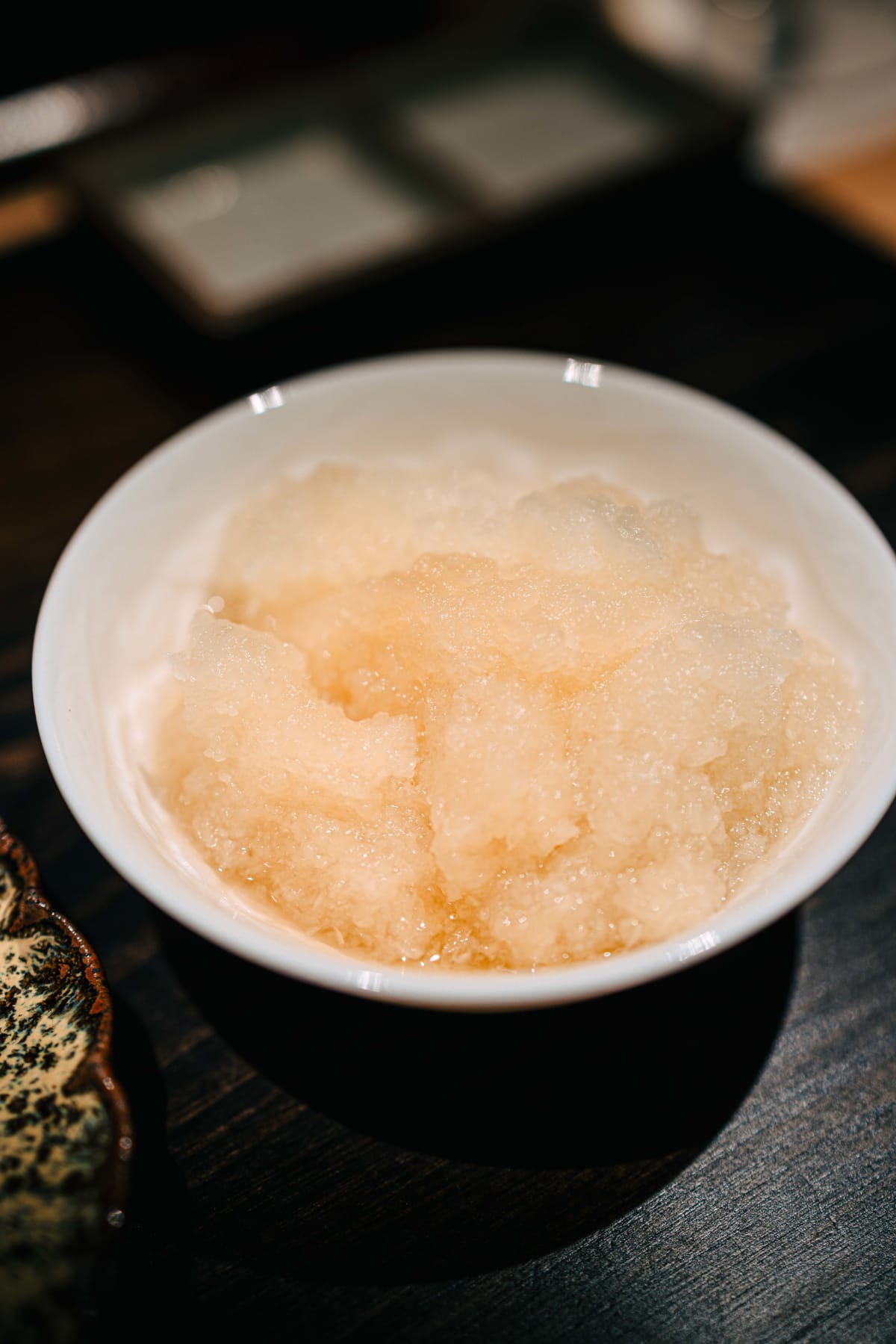
For dessert, the sauce of mitarashi dango had been turned into a powder and served with ice cream. On its own, the powder tasted like Chapagetti, the well-known Korean instant noodle.
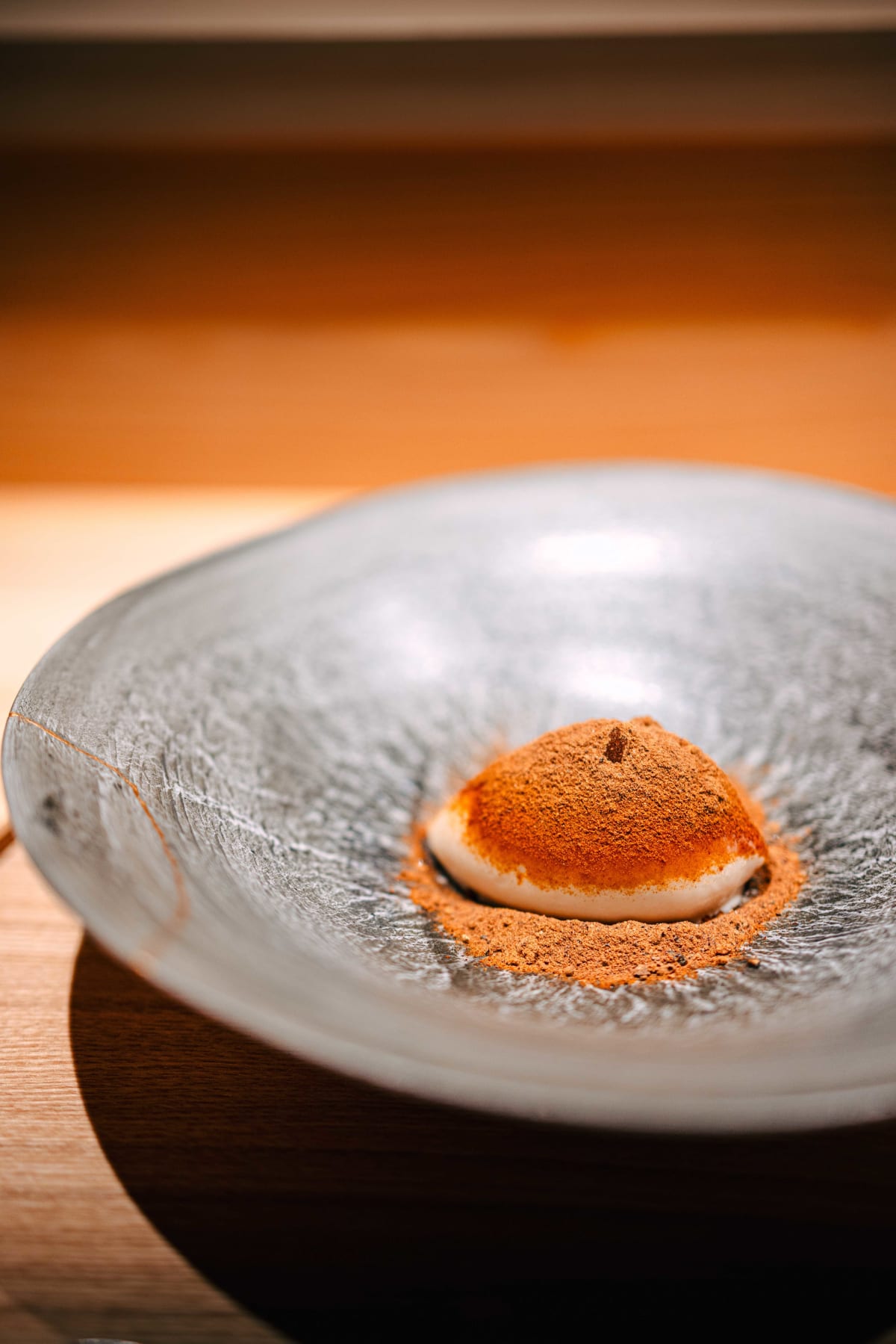
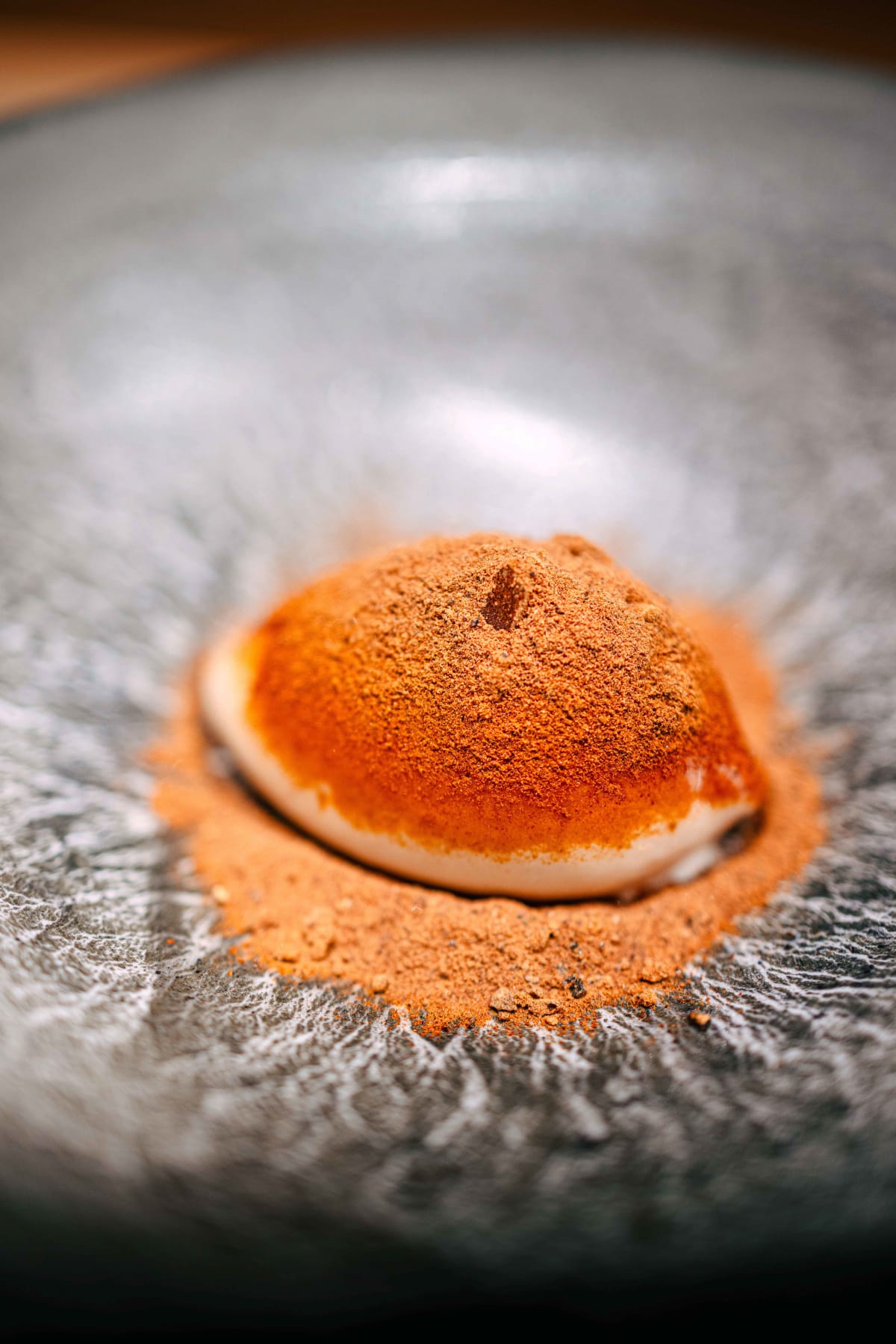
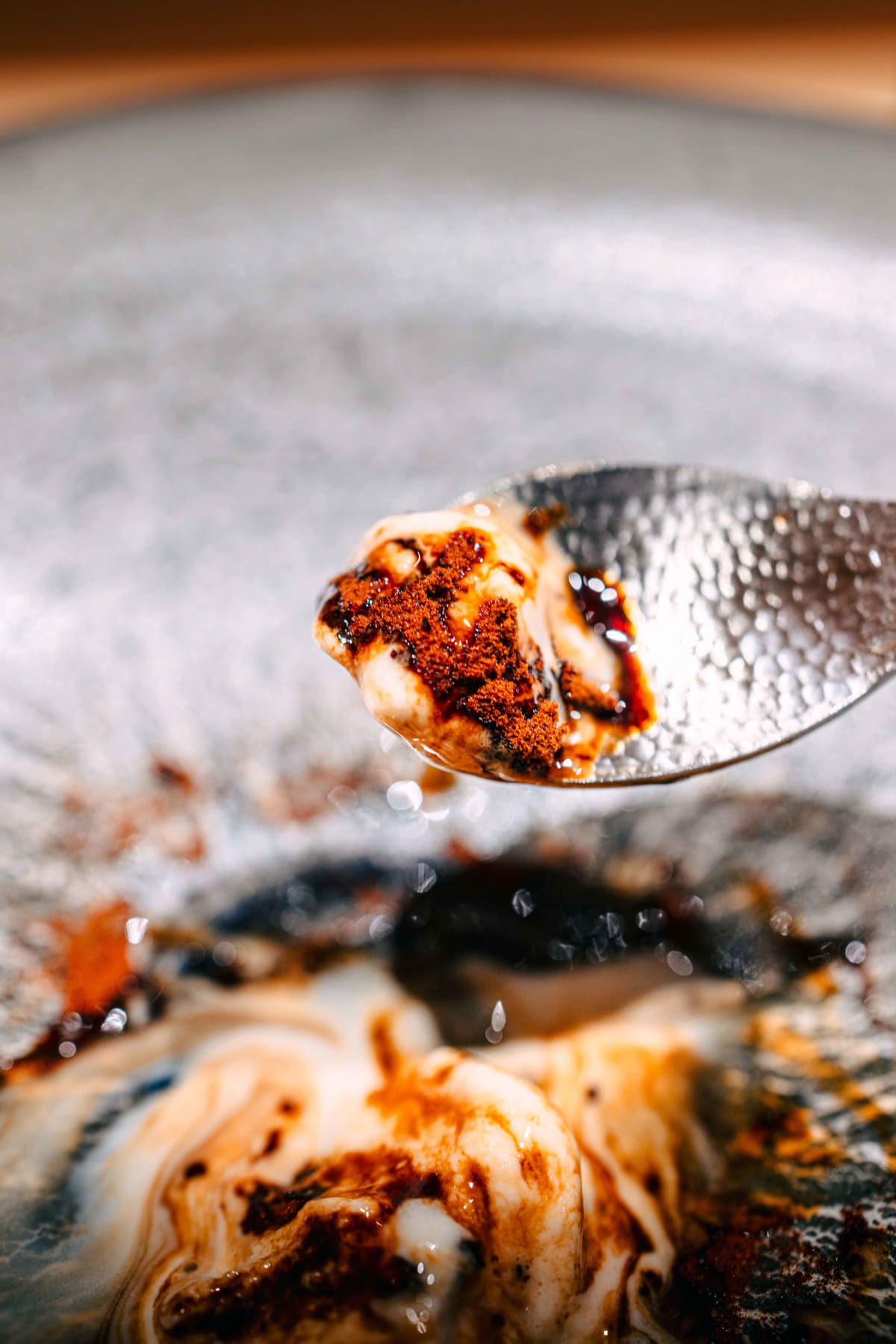
I wondered why, and I suspect it comes down to a similar flavour structure. Eaten together with the ice cream, the resemblance was a curious thing.
Section 9·Drinking Well
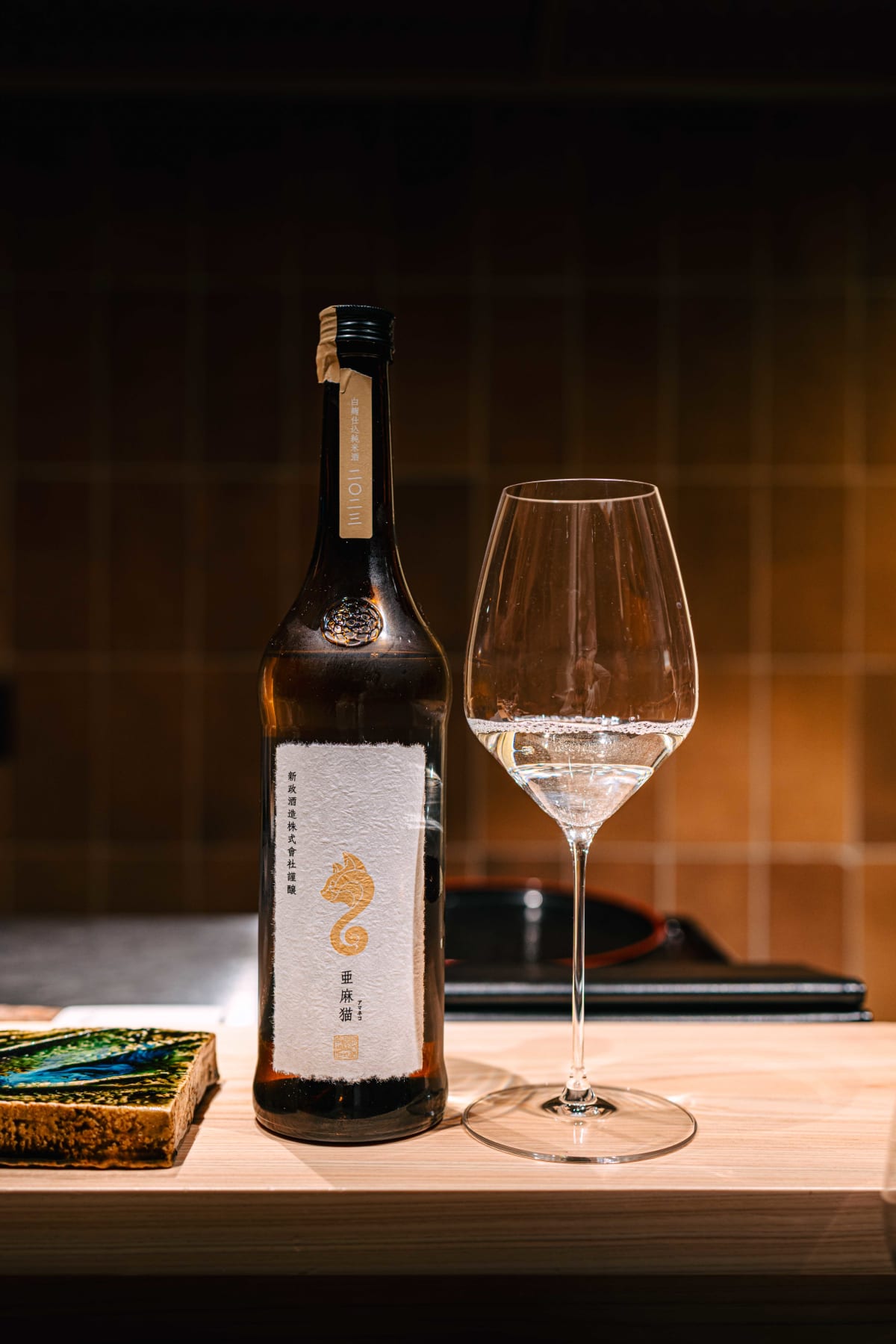
One of Aramaki's strengths is that it is a good place to drink. I started with a glass of champagne, then had a glass each of Amaneko (亜麻猫) and Colors (カラーズ) from Akita's Aramasa (新政). Amaneko is one of Aramasa's experimental bottlings: alongside the usual yellow koji for sake, it uses the white koji of shochu, which gives it a citric, distinctly un-sake-like acidity. Brewed from Sake Komachi rice in wooden vats with the No. 6 yeast, it weaves aromas of citrus, apple, and honey through a grapefruit-peel sharpness and a herbal bitterness.
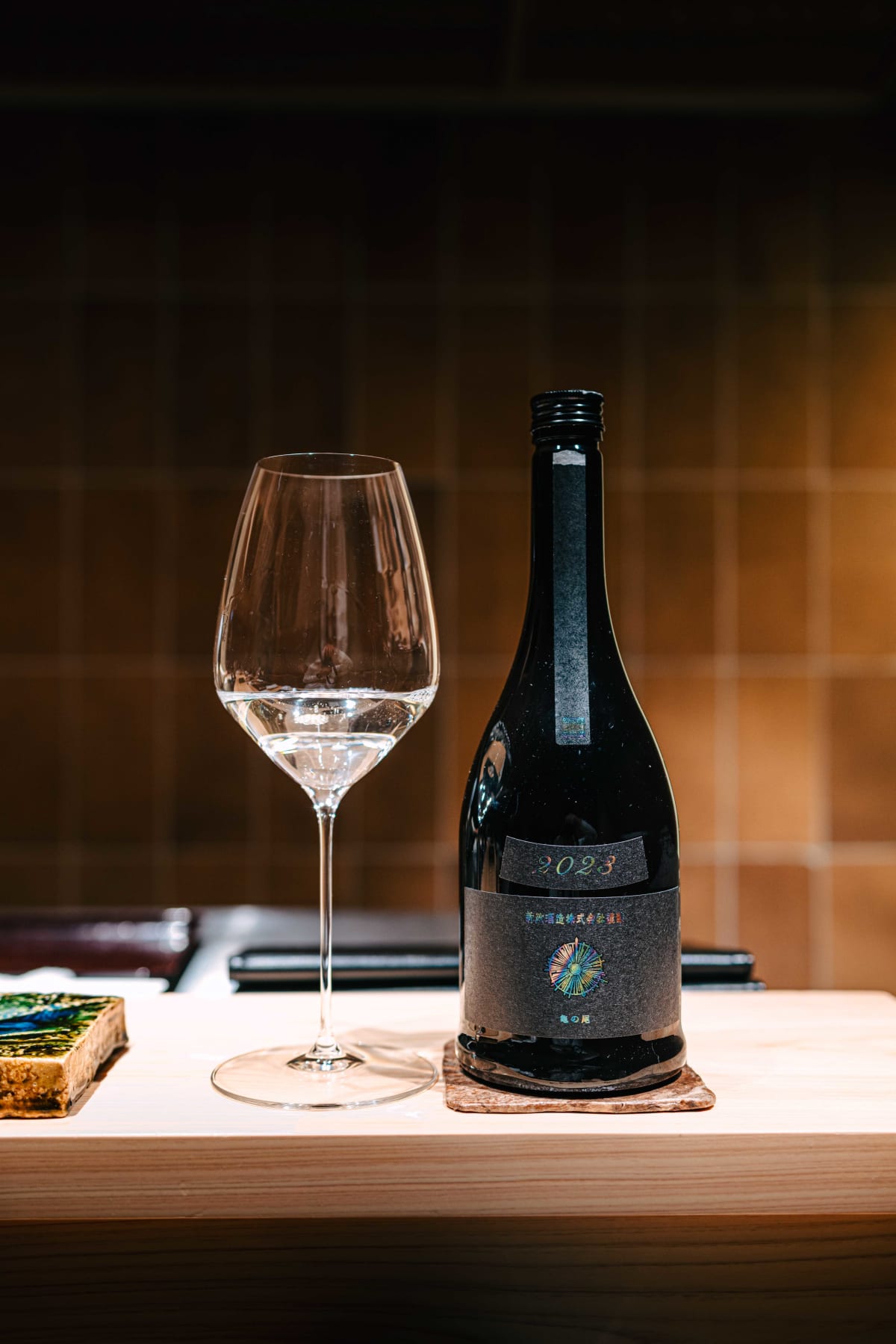
Colors is the pasteurised line, built to capture the character of a single rice variety, and the one I had this evening was the Ash (アッシュ, 水墨), its label reading 2023 and Kame no O (亀の尾). Kame no O is a legendary heirloom rice, selected in the Shonai region of Yamagata in the Meiji era and a genetic ancestor of many rice varieties in eastern Japan.
I finished with Juyondai (十四代), and the bill came to 22,000 yen in all. Given what sushi and fine dining cost these days, I find yakitori remarkably good value. With a good range of sake, wine, and whisky on hand, it was easy to drink well alongside the skewers.
Of the sakes, Juyondai Bessen Morohaku (十四代 別撰諸白) was the most delicious. It is a junmai daiginjo brewed by Takagi Shuzo in Yamagata, milling Banshu special-A Yamada Nishiki down to 45 percent, with an elegant nose that recalls La France pear, lychee, and flowers, and a fine balance of sweetness, acidity, and umami. Juyondai takes its name from the fact that the head of the house is the fourteenth generation of the Takagi family, and it is a hard-to-find premium label.
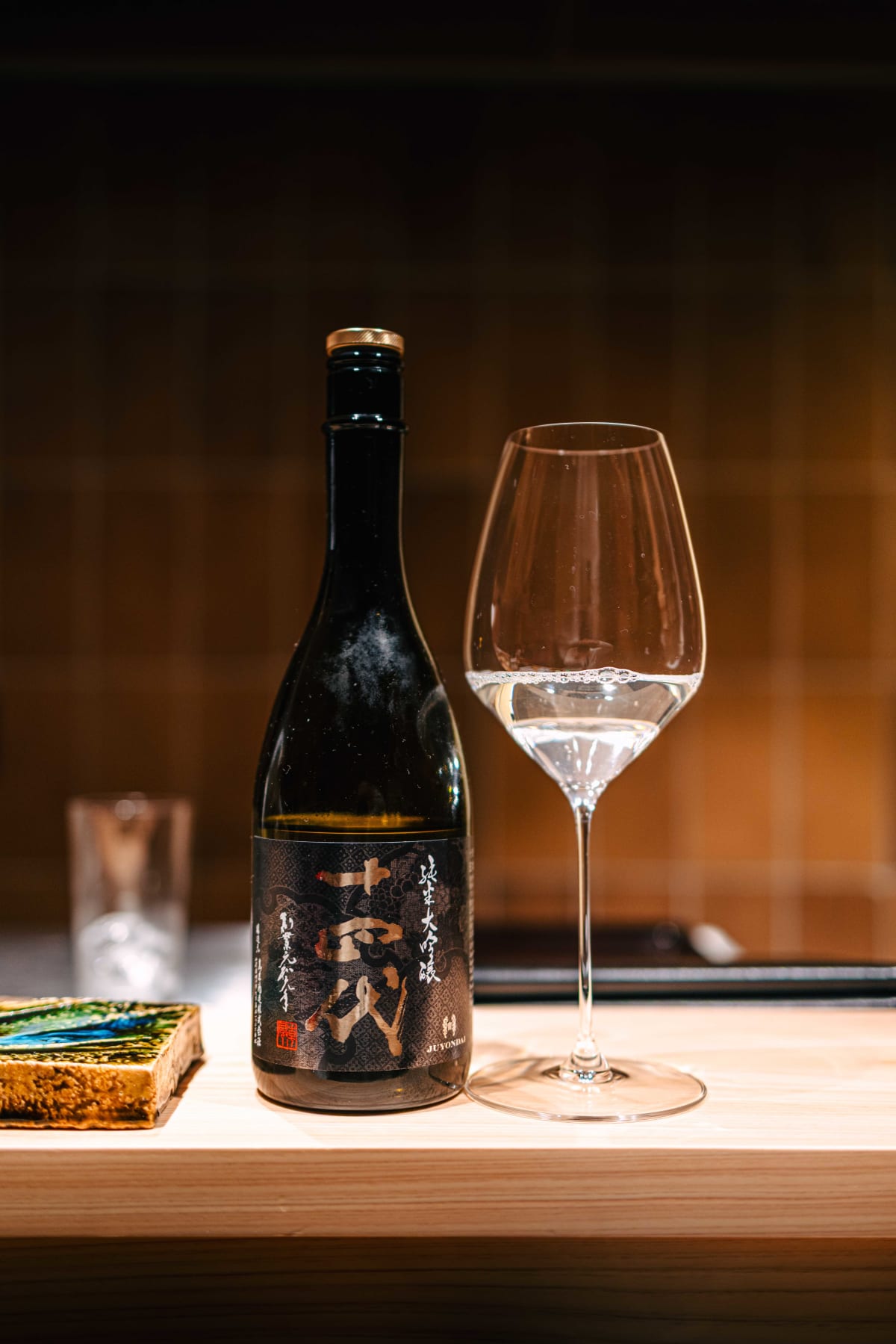
Looking into it, this is a fairly high-end line, and a glass was somewhere around 2,000 to 3,000 yen, which I think is fair. This is just my own view, but with yakitori I find highballs and sours pair best, and after those, red wine works better than sake.
This is just my own view, but with yakitori I find highballs and sours pair best, and after those, red wine works better than sake.
Section 10·The Close
My one reservation is that the cooked dishes felt a little weak. The course is 12,000 yen, which is not high, so that has to be taken into account, but the yakitori was far more delicious than the cooked dishes. Of the places I have been, Torisho Ishii Hina (鳥匠いし井 ひな) is the one whose cooked dishes left the strongest impression.
Japan's counter restaurants make the reservation difficulty of other countries look almost quaint. Many of those hardest-to-book places are indeed delicious, but there are also plenty that are easy to get into and still excellent. When it comes to yakitori, I think Aramaki is one of those cases. Even if you are not yet deep into Japan's reservation systems and networks, if you want a delicious yakitori meal, I would encourage you to consider this one.
The real lesson of a meal like this is that Japan's most rewarding tables are not always its hardest to enter. Aramaki opened only in 2024, yet on the strength of its grill alone, the springy aka-dori, the juice-heavy seseri, the cartilage that turned me into a nankotsu hunter, it is already worth the trip, and it asks none of the reservation theatre that guards the temples. What holds it back from the very top is the distance between that superb skewer work and the composed dishes around it, which still read as a young kitchen reaching for the range its chef's broader Japanese-cuisine training promises rather than fully holding it. At 12,000 yen, in a room with a calm and a spaciousness that counter dining so rarely affords, that gap feels less like a flaw than like a house caught mid-ascent, and worth catching now.
Have a question about this restaurant, or want to share your own experience?
Send a message