Fine Dining · Tokyo · Japan / June 2026 / Tabelog Gold (2026)
Kasahara
"Tabelog's number-one yakitori in Tokyo, where a single bespoke chicken is the entire show"
Section 1·Why Yakitori
A note before we begin: this restaurant strictly prohibits photography inside, so there are no food photos.
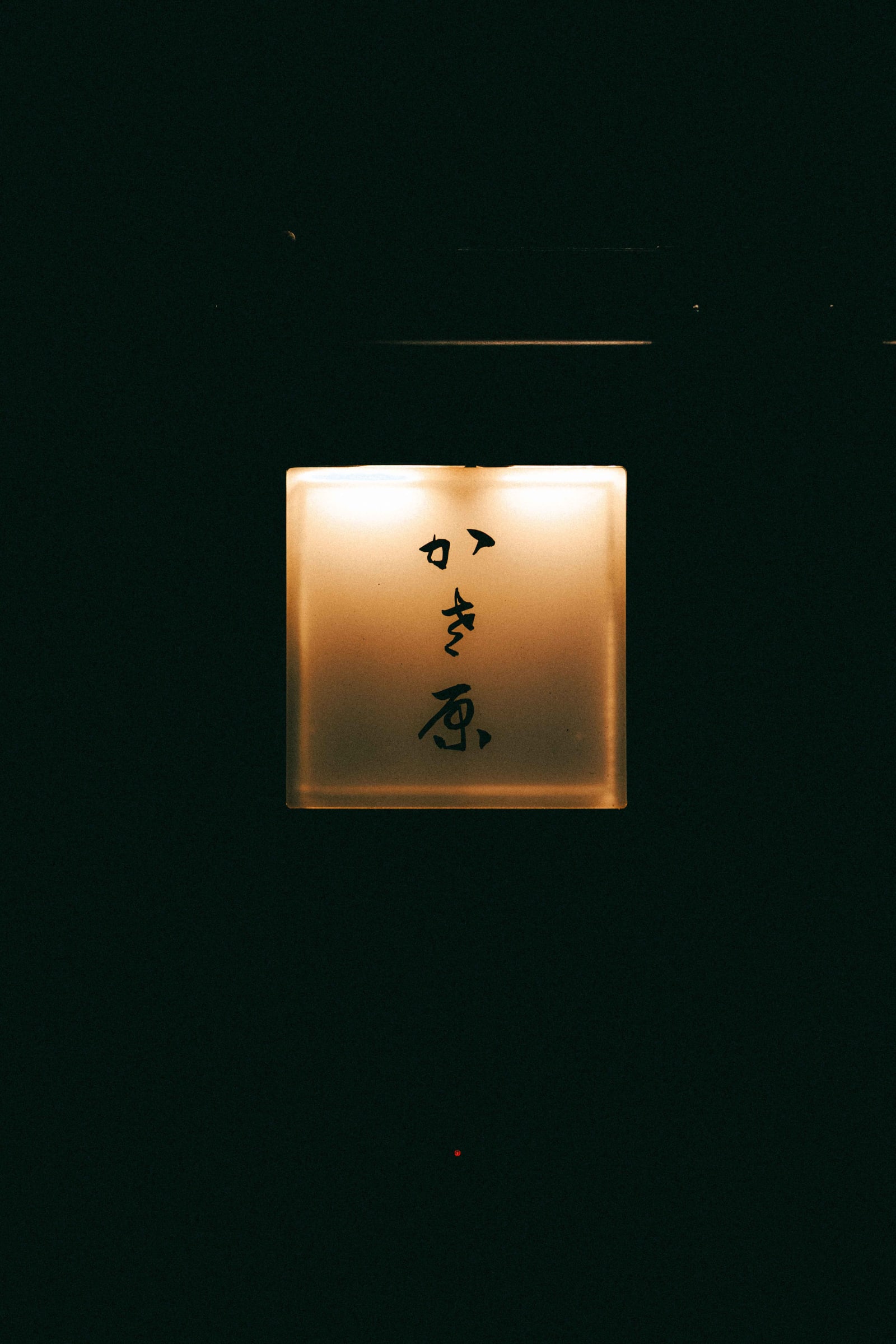
I visit Japan four or five times a year, so friends around me ask me for restaurant recommendations all the time. In many cases those friends are hoping for a sushi tip, but I usually defy that expectation and steer them toward yakitori instead. Sushi, after all, is Japan's flagship high-end gastronomic genre: Japanese chefs have gone abroad in large numbers, and foreign chefs have studied extensively in Japan and returned home to open excellent sushi counters. Yakitori, however, has not shown that trend to nearly the same degree, and the single biggest reason is Japan's countless jidori. Jidori (地鶏) refers to premium heritage or regional chickens that carry more than 50 percent native Japanese bloodline and are raised free-range at low density for a set period. Meat is far harder to import and export than seafood, and this jidori makes an enormous difference. So I always say the same thing: if you really want to feel the wide gap between Japan and Korea, experience yakitori. These days Korea too has some seriously good yakitori places, plenty of high-level spots. Korea is also developing quite good chickens, native breeds among them, so I had thought yakitori might be one genre where Korea could draw closer to Japan. But then I had an experience that flattened that optimism of mine all over again, and here it is: かさ原, Kasahara, which I visited in June 2026.
if you really want to feel the wide gap between Japan and Korea, experience yakitori
To put the conclusion first, this is the yakitori of my life. Torisawa 22-2, which I visited in April 2025, had been my best yakitori until now, and this place overwrote that ranking. It felt like a full class apart. If Torisawa 22-2's strength was juiciness, Kasahara's strength seems to be texture and balance.
Section 2·Precision and Balance
How precisely it drew out the textural point of every single cut was remarkable, and especially with the cuts that still had skin attached, the finesse of coaxing distinct textures from the skin, the fat, and the lean meat was truly excellent.
The other thing worth noting was the salt balance. Not every cut was a hundred out of a hundred, but there was not a single one I felt was excessive or out of tune. Consistency at this level is not common. When I listen to accounts from people who had visited Kasahara before me, the word I heard most was "delicacy," so I sat down with that impression filed away in my head. And yet what came through was more wild and smoky than delicate, more than I had expected. When I raised this with my companion over the meal, he said it differed from his earlier visit. Then, interestingly, the yakitori served as add-on orders turned much more delicate than the ones on the standard course. Whether that was deliberate, or whether the cuts that appear as add-ons happen to call for more delicate grilling, or whether it still needs more refinement, I cannot say for sure myself.
The one drawback, amusing as it was, and the only one for me, was the skewers. Around 70 percent of the yakitori arrived threaded on metal skewers, and a few of them were so hot that I nearly burned the hand that gripped them, which startled me. The food was so excellent that, set against the taste, it is a trivial complaint.
On the drinks: this is also known as a place for pairing high-end wine and Champagne, but after a single glass of Champagne I drank highballs and lemon sour. There was no pressure to order wine at all, and drinking mostly highballs felt perfectly fine. Above all, I think that with yakitori a highball or a sour is the more gastronomically excellent choice than wine. The highball I ordered midway had a pronounced vanilla nuance, which suited the smokiness of the chicken.
Section 3·The Taisho
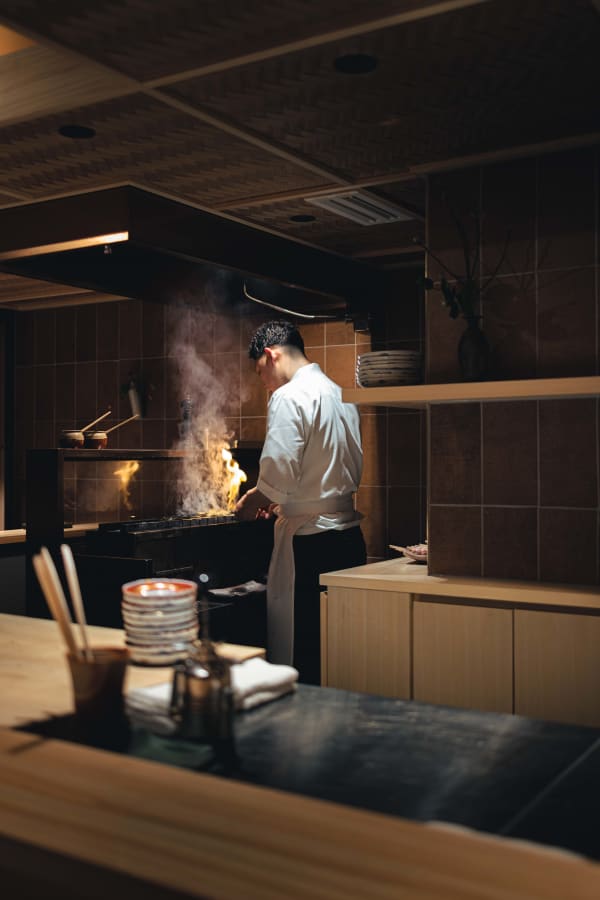
The taisho looks formidable on the surface, a little intimidating even, but talking with him later in the meal, he turned out to be a warm, kind man who cracks jokes easily.
Kasahara is led by chef Kasahara Yujin (笠原悠仁), born in Kobe in 1980, who has walked the single path of yakitori since he was twenty. After being involved in several restaurant openings and honing his craft for some years, he opened Kasahara on his own in Sannomiya, Kobe, in 2016, and it soon became a hard-to-book destination drawing guests from across the country. In 2021 he moved to Kagurazaka in Tokyo, realizing his entry into the capital. What is interesting is that he is not at all the type to present himself as a star chef; in interviews he has said, in effect, that "the star is the chicken," taking the stance that the chicken as an ingredient is the lead and his own role is to keep supporting that ingredient so it shows at its best.
the star is the chicken
Section 4·Gold and the Bird
Back in his Kobe days Kasahara had already won The Tabelog Award four years running, and after moving to Tokyo he took both Gold and Best New Entry in 2024. It also made the national Gold list at The Tabelog Award 2026; that said, because this is an award based on Tabelog user voting, it carries the flavor of a popularity poll within the Japanese gourmet community, so a place can draw overwhelming support, and even among Gold winners there have been some I found rather disappointing. Even so, after eating here I understood in an instant why this place holds the standing of Tabelog's number-one yakitori nationwide.
The chicken Kasahara uses is the famous brand Takasaka-dori (高坂鶏), which any serious eater knows. It is raised by the poultry farmer Takasaka Hideki (高坂英樹) in Tamba-Sasayama, Hyogo Prefecture, and is said to be a high-value brand chicken that began in 2003 from a project to study, in Japan, the French Bresse chicken often called "the most delicious chicken in the world." According to the account, they regulate the blood components flowing to the liver so as to bring that liver to its finest state, make possible an aging that is difficult with ordinary chicken through special feed and hygiene management, and design the feed with a focus on phospholipids to strengthen the cell membranes so the meat does not shrink even when grilled and delivers superb texture. What is especially interesting is that the Takasaka-dori for Kasahara's Tokyo branch is not a mere off-the-shelf supply but a specification designed separately to match the restaurant's average check, its clientele, and its concept of binchotan white charcoal and chicken. It seems to go beyond grilling one good jidori well, toward a form in which producer and cook search together for the ideal of a single chicken in line with the restaurant's philosophy. In car terms, it is a chicken like a bespoke engine developed to a dedicated specification.
Section 5·The Hidden Door
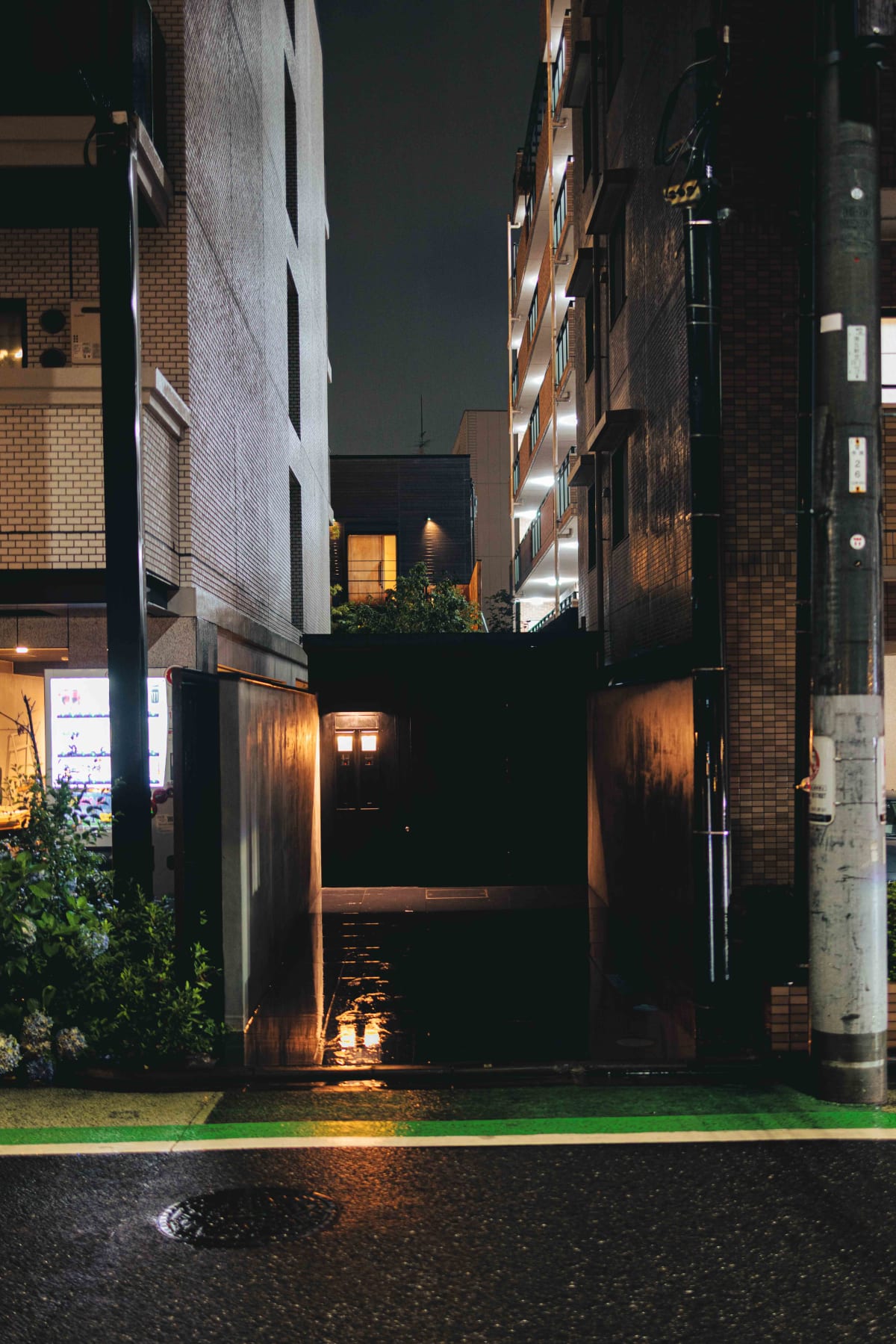
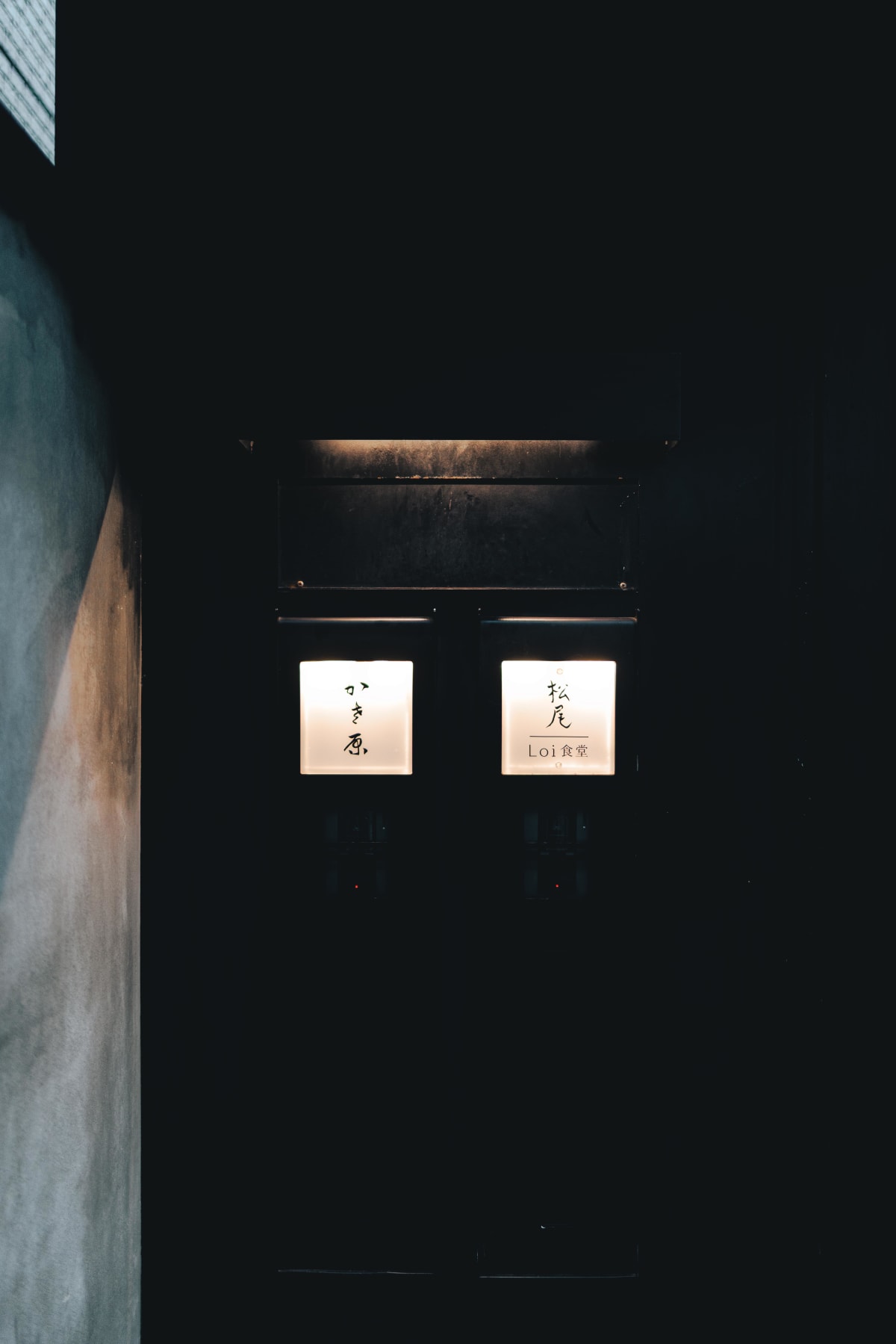
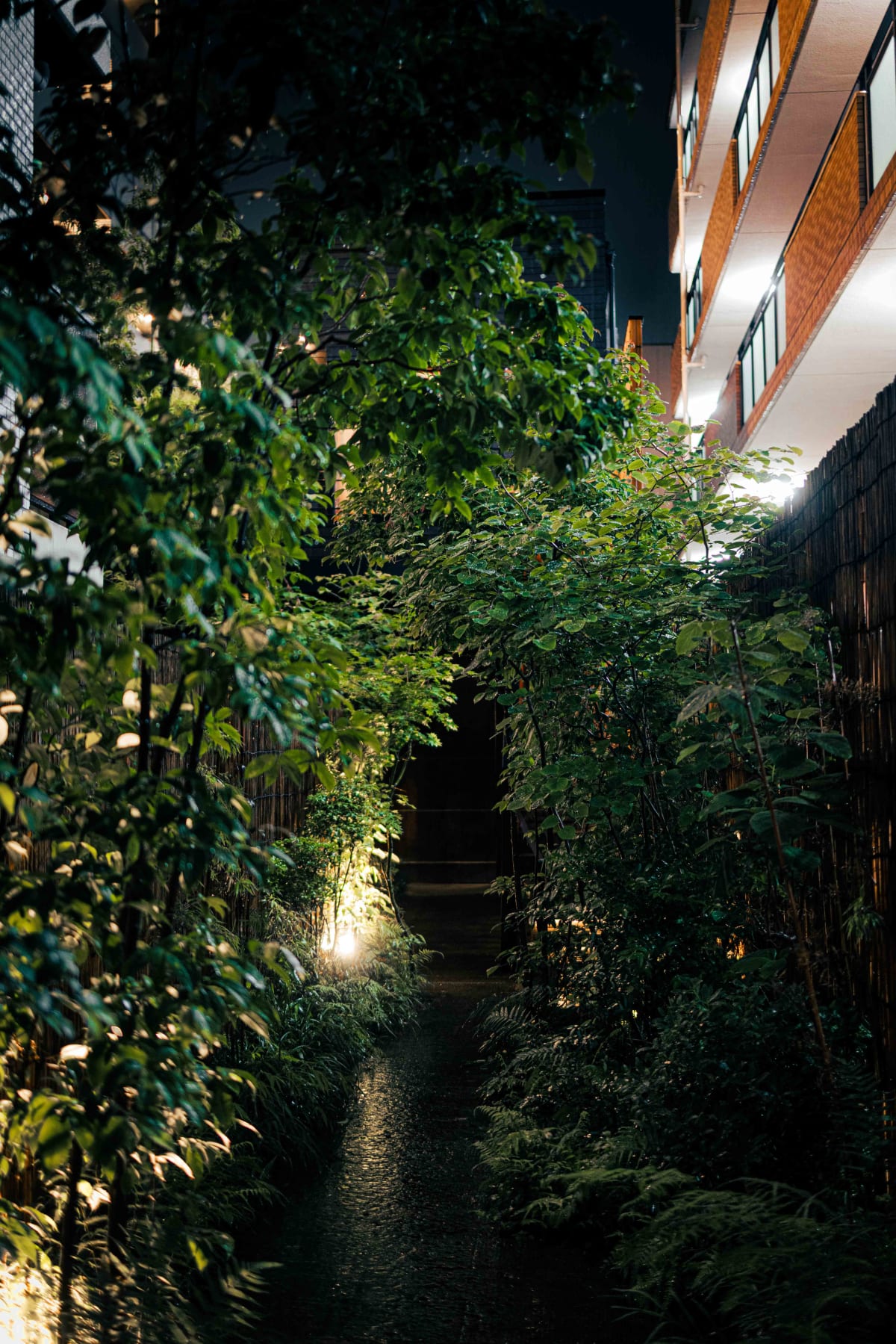
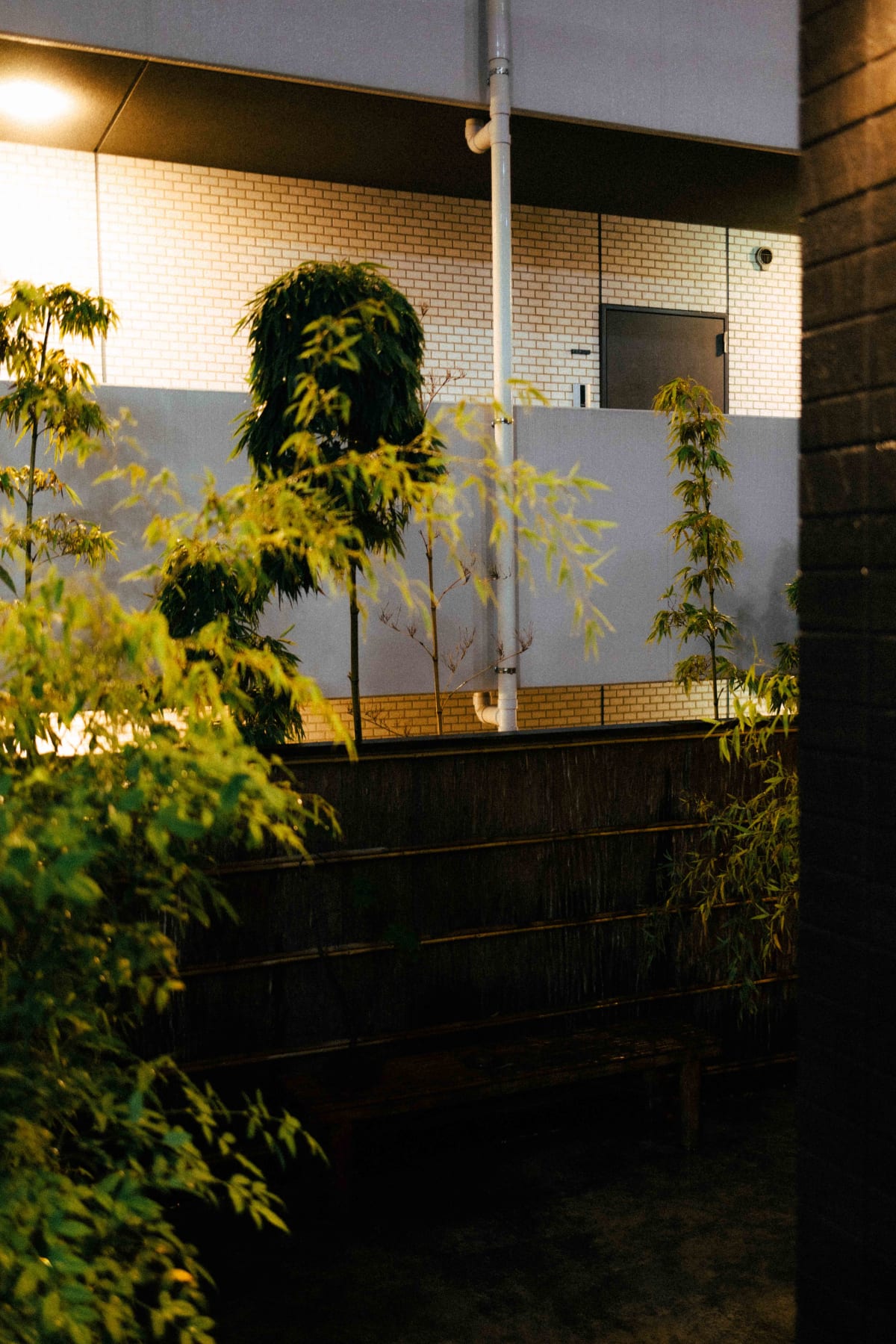
The space is not to be left out either. It is a hidden yakitori you reach by opening a black door between the residential buildings in a quiet pocket of Kagurazaka and climbing a stone path, and I was lucky to run into my Japanese-speaking companion right as I got out of the taxi, so it was fine, but had I been alone I think even getting in, having to talk through the intercom, would have been hard. The counter seats about ten, and on this day two seats were left empty. Photography is banned entirely, from the interior on. Frankly, when I see places that ban photos, regulars are usually allowed to shoot everything on the condition that they do not post, so I had some expectation, but here they truly would not let us shoot at all.
Section 6·Sashimi to Start
The course begins with tsumami, small starters. The first tsumami was a single bite of soft tofu topped with an edamame sauce; the tofu flavor was very clear, cool, and clean. That said, the edamame's character or distinct presence was rather faint. It was a bite that opened things calmly.
The second was muneniku (胸肉), a chicken breast sashimi. From here it was insane right away: the acidity was good, and the texture was springy in an almost squishy way, enough to trick me into thinking I was eating amberjack or an oily fish. The scallion-oil sauce laid on top added umami, giving complexity to a sashimi that could otherwise fall flat. It was really good.
The third, the liver sashimi (reba), was one of the most memorable bites of the day. It had almost none of the usual character of chicken liver and was like foie gras, and a very clean foie gras at that. The texture was soft and melting, close to shirako (milt). Is this what the quality of Takasaka-dori's liver is like? It was a bite that finally made real for me a claim I had only ever heard as this place's strength, one I could not tell was true or exaggerated.
Section 7·The Skewers Begin
From here the yakitori proper begins. The first skewer, negima, chicken thigh threaded alternately with scallion, was crisp on the outside with good acidity in the meat and a very refined smoky aroma. The scallion was moist and sweet, too. Next, kashiwa, was chewy in texture with both umami and acidity in good order, though it also showed a slightly wild side. Kashiwa, when I looked it up, is said to mean chicken thigh, but I had known chicken thigh usually as momo (もも). Digging a little further, momo is the anatomical name for the thigh, while kashiwa (かしわ) is an old Kansai and Kyushu word that originally referred to chicken itself.
Furisode, from the shoulder area, had insane texture. It was extremely chewy, and the combination of the rich, weighty fattiness from the subcutaneous fat, the flavor, and the smoky aroma even gave the feeling of eating samgyeopsal, Korean pork-belly barbecue, and the touch of truffle paste alongside was very apt. That said, it was not the extremely juicy sort but rather a well-balanced direction. It was really impressive.
The quail egg that came next was insane, too. The inside was very creamy, its nutty flavor the highlight, and the salt backed it up just right, so the flavor was really good. The liver that followed was clean in taste with an appropriately sweet tare on the surface, but here the texture was a little disappointing. It was not the milky style but a cooked-through style with a graininess to it.
If anything, the direction I had wanted from the liver was in the nikudango (肉団子), a minced-chicken meatball style, that came next. It was very juicy and moist yet raw inside, so it was delicate and tasted good. This was the feeling I had wanted from the liver, and conversely from the nikudango I wanted something closer to the liver's style, a more wild direction even if cooked a bit more. I thought that swapping the two directions would be just right for my taste.
Section 8·Vegetable and Wing
Midway a soup dish arrived, kamo nasu (賀茂なす) served in chicken broth. Kamo nasu is a traditional Kyoto vegetable, a round, large eggplant variety; its dense flesh turns meltingly soft when heated and holds little oil, so it is called "the queen of eggplants." Its season runs from mid-May to late September, so a late-June visit was right in season. The eggplant was really sweet, and the chicken broth had quite good flavor with a good salt balance too. It was slightly hot at first, and a faint yuzu nuance came through; delicate and good.
Bonjiri, the tail cut, was very fatty. So it was full of oily flavor and the texture was on the crisp side; if the bonjiri at Miyu, a yakitori place that impressed me in Korea, leans chewy like pork jowl, this one leans springy and crisp, so it is less a matter of which is better than of preference.
Next came a simple grilled corn, and this one blew me away. There was a slightly sweet tare note on the outside, and the kernels were quite sweet with a crisp texture that was a real kick. The truth is that although I have traveled often for food in Japan, I dislike humid heat so much that I had never come between May and September. So I do not know Japanese summer ingredients well, but this corn was truly astonishing. Simple, and overwhelming as the ingredient itself.
The chicken tenderloin, sasami, was very good. It tasted like eating lean maguro akami with wasabi, and the meat was weighty and tender. It was a truly impressive bite that captured both texture and tenderness at once. Around here I ordered a highball, which had a pronounced vanilla nuance.
The last of the main course, the chicken wing, tebasaki, was truly insane. This thing must have been hitting the gym: its springiness was out of this world. Really, even biting down and tugging, it barely tore, as if someone were pulling from the other end. It had plenty of juice and a ridiculous texture. The seasoning felt very slightly weaker than the others.
Section 9·The Add-ons
From here are the skewers I ordered as add-ons. The gizzard, sunagimo, had insane crunch; to exaggerate a little, a crunch like biting an apple or a radish, with a very good salt balance too. The skin, kawa, was crisp like a cracker and then the chewiness of the fat burst alongside it, releasing a weighty, nutty flavor. It was not entirely cracker-crisp; overall the salt balance was insane. It was so good.
Hatsu had a sweet tare brushed on the surface, and it was really chewy with an appropriate surface sweetness, and that sweetness was truly delicate. This hatsu was the height of delicacy. Harami, the diaphragm or skirt cut, was somewhat tough and chewy while the taste was very mild and delicate, though the impact was slightly weak. Segimo (背肝), the chicken kidney, felt creamy with the nuttiness of offal coming through, and it was less sweet than its look suggested, so it tasted good. Hatsumoto (ハツ元), said to be the aorta below the heart, was similar to harami but without the toughness, with a melting aftertaste at the end. Its flavor direction was similar to harami and again delicate. Seseri, the chicken neck, was also chewy with a firm, tendon-like feel, and its flavor direction was similar to harami and hatsumoto.
Among the add-ons there were many cuts with a delicate, chewy, slightly rubbery texture, so they were all tasty, but toward the end of the add-ons there was, not entirely absent, a slightly monotonous and flat feeling.
Then came uchimomo (内もも), said to be the inner thigh, which again differed from momo. It was chewy yet followed by a creamy, raw texture behind it, with its characteristic oily nuttiness, and here the touch of salt was uniquely direct and pronounced. The last cut, sorires (ソリレス), the meat on the inside of the lower back, was best in the melting sensation that followed the crackle of the skin, with good springiness and good seasoning. It was not quite top-tier impact, but satisfying; sorires is a cut that many other places also do quite well, and part of it is probably that I had been taking impact after impact all along. Even so, there was no salty or out-of-tune sense of salt at all.
Section 10·The Close
From here I ordered the closing meal, and the thing is, the meal here is delicious too. In fact, even Torisawa 22-2 from last April, which had been the yakitori of my life until now, in truth did not impress me much on the closing meal, and I had never taken a big impact from the closing meal at other yakitori places either. Kasahara's meal is a choice among three: yaki onigiri chazuke (焼きおにぎり茶漬け), oyakodon (親子丼), and ramen, and I chose the ramen and the yaki onigiri chazuke.
The ramen was a tori-shio, chicken-salt, style ramen; the noodle texture was very firm and the broth was superb. I thought I was drinking a chicken baeksuk broth, the Korean poached-chicken soup. There was a slightly one-directional side to it, but the salt was appropriate. The yaki onigiri chazuke was a grilled rice ball with broth poured over it; a savory aroma had soaked into the broth, which gave it character. It felt a bit like drinking nurungji, scorched-rice, broth, though the chicken-broth nuance was quite weak. Grilling the rice ball to bring out a crisp exterior was a nice touch. Between the two, the ramen had a narrow edge.
To sum up, Kasahara was a place that showed how far a single ingredient, chicken, can be pushed with nothing but binchotan and skewers. The precision of texture cut by cut, the unwavering salt balance, and the unexpectedly excellent closing meal: it was a place where I understood in one go why it is Tabelog's number-one yakitori nationwide. If the chance comes, I very much want to visit again. It was a truly remarkable place.
Kasahara sits at the top of Japan's domestic yakitori consensus, a Tabelog Gold winner, and after a single sitting that ranking reads as fact rather than hype. What earns it is less the grilling, remarkable as it is, than the obsession behind the fire. The Takasaka-dori is not pulled off a supplier's list but spec'd to this room, co-engineered by farmer and cook down to liver quality and cell structure, and the binchotan is made to order by a dedicated charcoal artisan. That is why a single ingredient can carry an entire tasting. Photography is banned outright, so come to eat rather than to document. The drinks list rewards a wine lover, though a highball or a sour serves the chicken just as well. What this room offers is not spectacle but consistency, held at a level that explains why Japanese chicken sets the global ceiling.
Have a question about this restaurant, or want to share your own experience?
Send a message