Fine Dining · Axpe · Spain / October 2025 / Michelin ★ · World's 50 Best #2 (2025)
Asador Etxebarri
"Second in the world with a single Michelin star, and after lunch both made sense"

Section 1·The Lead Role
On a food trip there is often one restaurant that plays the lead role, and sometimes the whole trip is planned around that restaurant alone. The European trip I began in September 2025 ran to nearly three weeks, so it had several leads rather than one, and one of them was Asador Etxebarri, the legend of Basque gastronomy.
This is the restaurant that took the asador, a primal grill house cooking over a single fire and about as local as a genre can be, raised it into the realm of modern gastronomy and spread it around the world. Second only to El Bulli, which put Spain among the great food nations, it may be the restaurant that has influenced the world most. And with word that the creator of this living myth might one day become a legend passed down only through photographs and writing, I felt all the more that I had to go.
Etxebarri means "new house" in Basque. The bill I was handed at the end of the meal had two words printed side by side across the top, ERRETEGIA and ASADOR, and erretegia is simply Basque for asador, a house that cooks over fire. In 2020 the BBC traced the roots of this grill culture to the Basque sailors and fishermen of the 15th and 16th centuries, who grilled their catch over wood at sea and brought the habit back to land with them.

Section 2·Witches' Race Day
On 5 October 2025 the sky over Bilbao, where I was staying, was grey, and a fine drizzle was falling. At Txispa the day before, I had been overwhelmed by the scenery under a clear sky, and only a day later I was seeing the exact opposite weather. It crossed my mind that the two days might mirror the futures these two restaurants will face.


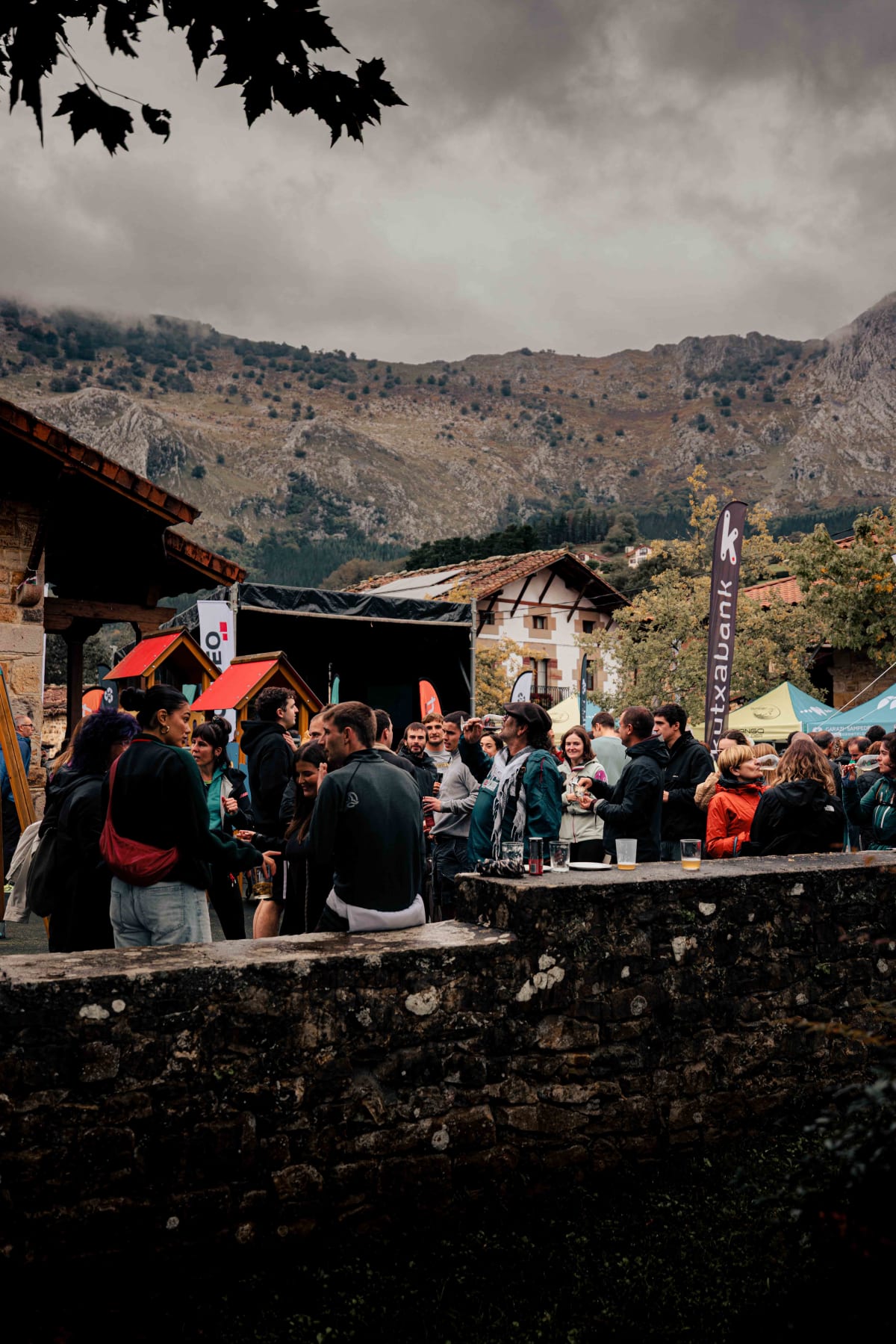
About thirty minutes from Bilbao by rental car, you reach Axpe, a village with a population of barely 250. That day, though, Axpe was packed, as if 250 people had gathered in the square alone, and it turned out the village was hosting XVIII. Sorginen Lasterketa, a large mountain trail race.
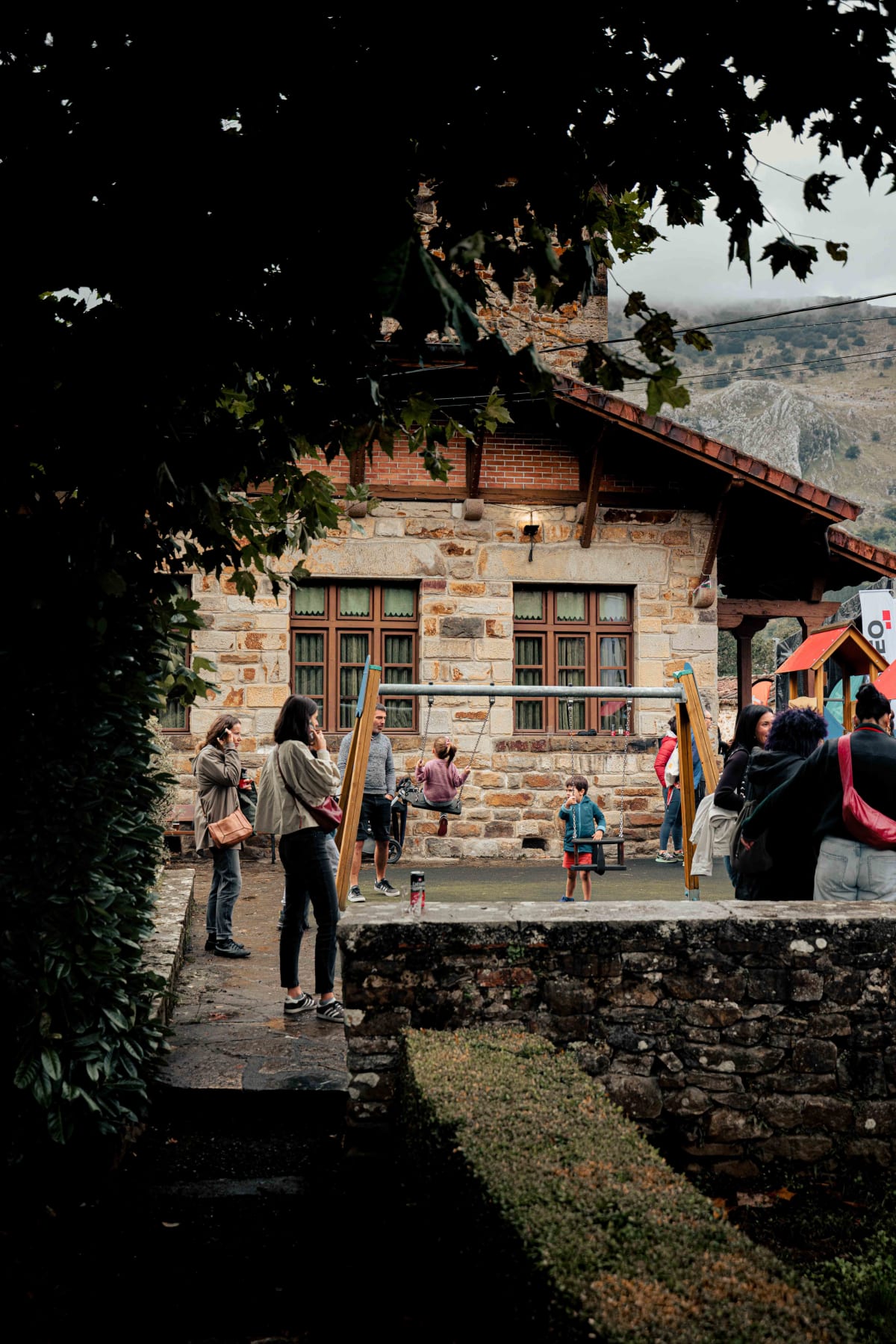
Sorginen Lasterketa translates from Basque roughly as the Witches' Race, and the 2025 race was apparently its eighteenth edition, hence the XVIII.
So when I pulled into the car park in front of the restaurant and got out, instead of going straight inside I went to photograph the race going on around me. I might never get another chance to come here, and if that one day happens to fall on the eighteenth running of a race held once a year, surely that means something.


Whenever I raised my camera, a great many people caught on at once, sharp-eyed as they were, and smiled and waved. What friendly people the Basques are, I thought, and inside I shouted the Basque for thank you.
Eskerrik asko!

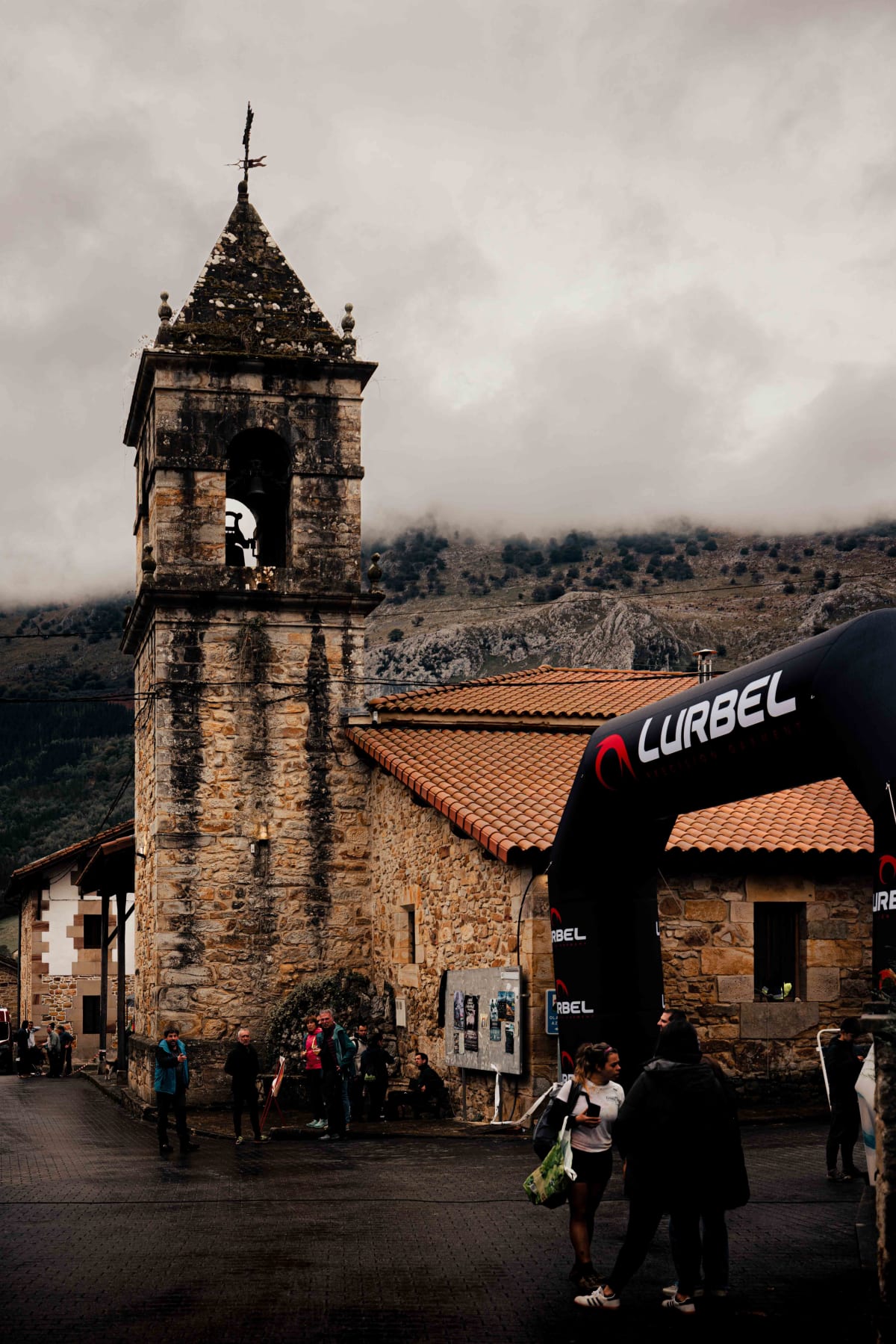
Asador Etxebarri stands at San Juan Plaza 1. As you are about to arrive for the first time, a large stone bell tower comes into view behind it. So this is the grandeur of Asador Etxebarri, you think, and then you get out of the car and find that the tower belongs not to the restaurant but to the church behind it.
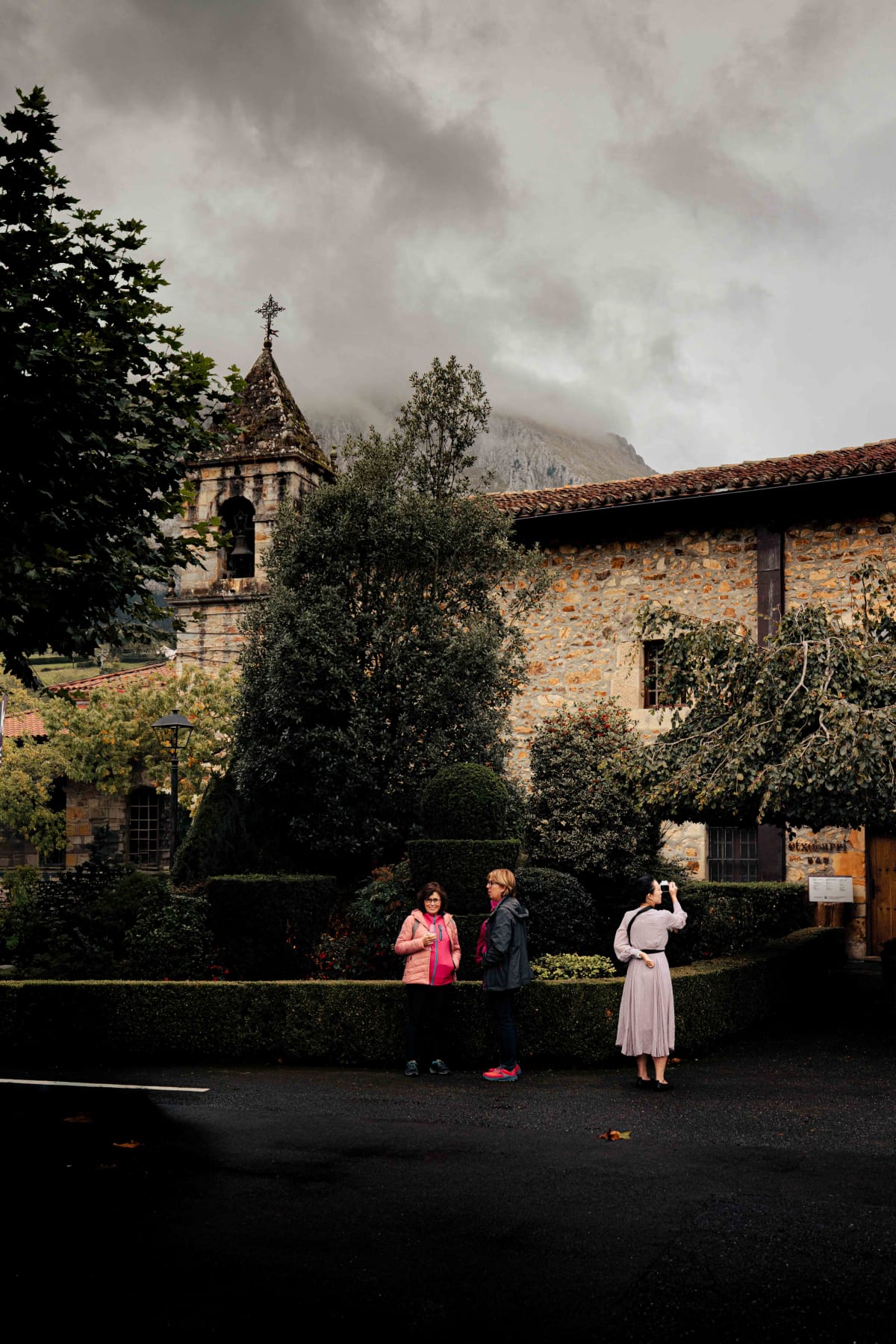
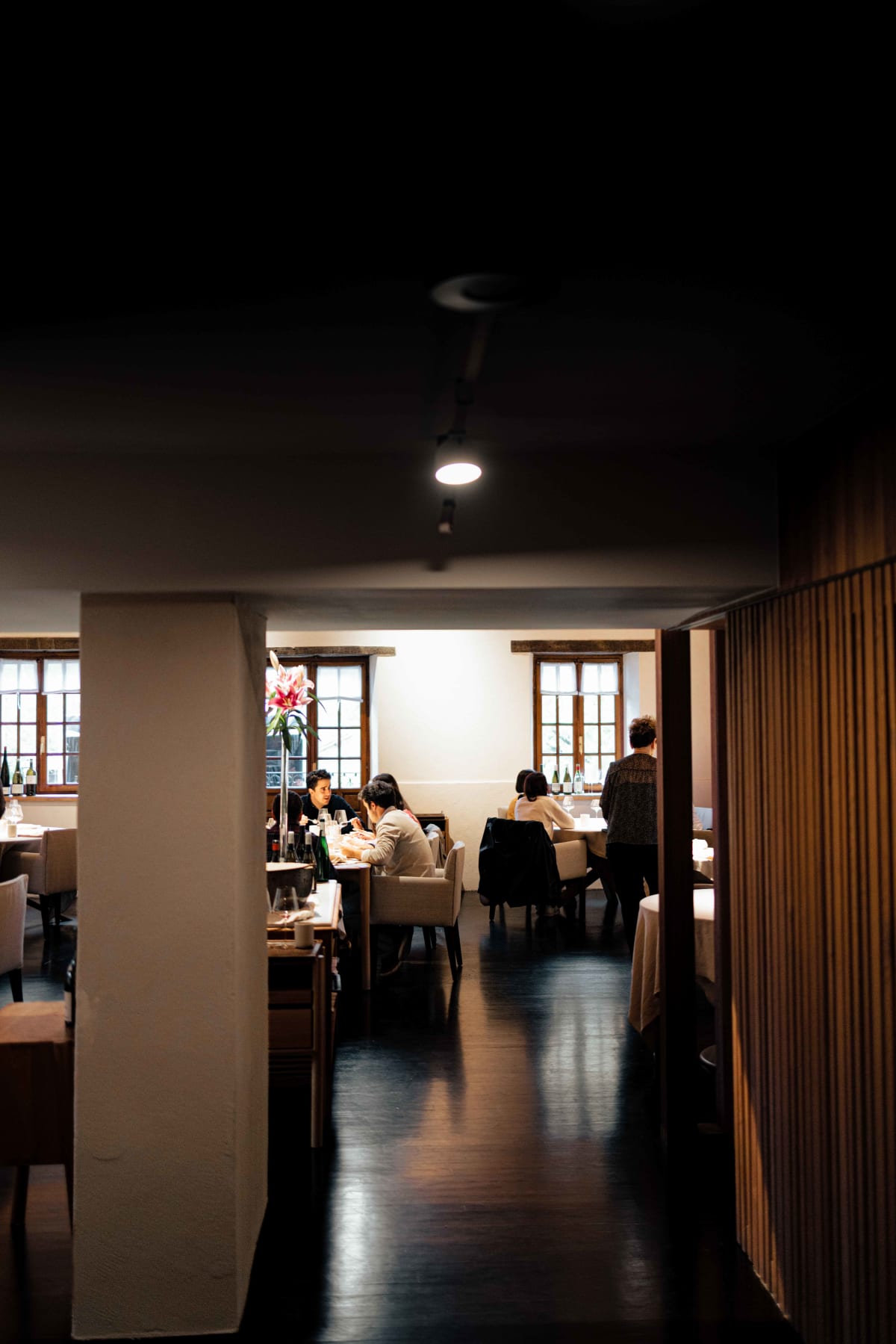
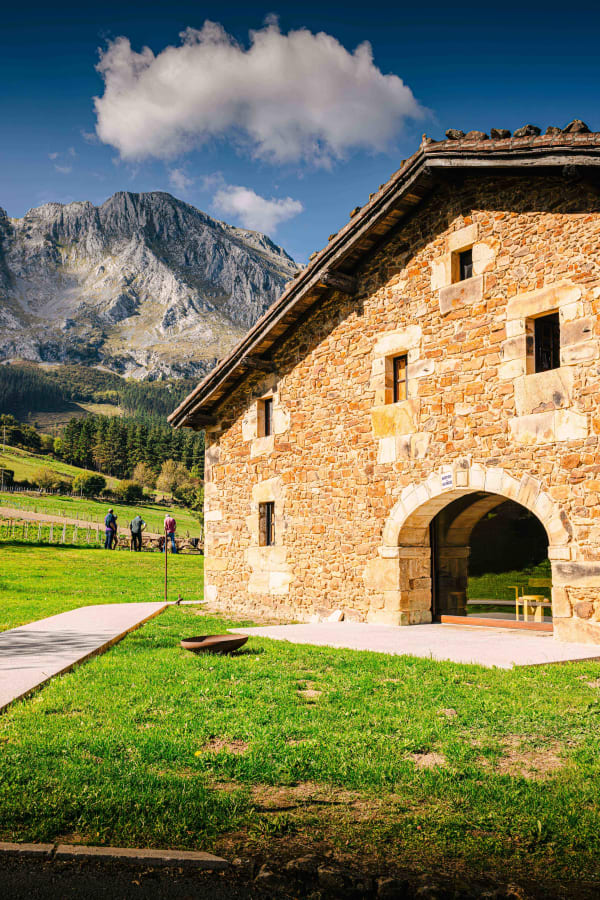
Asador Etxebarri itself looks like any other stone building in the village. It has two storeys, the exterior is plain, and if it has a distinguishing feature, it is the large car park. But walk up to all this plainness, see the wall of ivy and the two words written beside it, and the heart of every food lover in the world begins to flutter.
etxebarri / JATETXEA

At last, the shrine I had spent a year preparing for and travelled ten thousand kilometres to reach stood in front of me.
At last, the shrine I had spent a year preparing for and travelled ten thousand kilometres to reach stood in front of me.
Section 3·The Self-Taught Griller
The man who wrote the legend behind this shrine is chef Bittor Arginzoniz (Víctor Arguinzoniz in Spanish spelling, and Bittor from here on). He was born here in Atxondo in 1960, and he neither went to culinary school nor trained in another restaurant. He was working in a cellulose factory when he taught himself to handle fire. In a 2021 interview with World's 50 Best, he said there was no electricity in his childhood home, so everything, cooking and keeping warm alike, revolved around the fire. The smell of the firewood lit every morning and the stews his grandmother and mother made, as he tells it, stayed with him. "I don't come from the culinary profession, I started from scratch," he said.

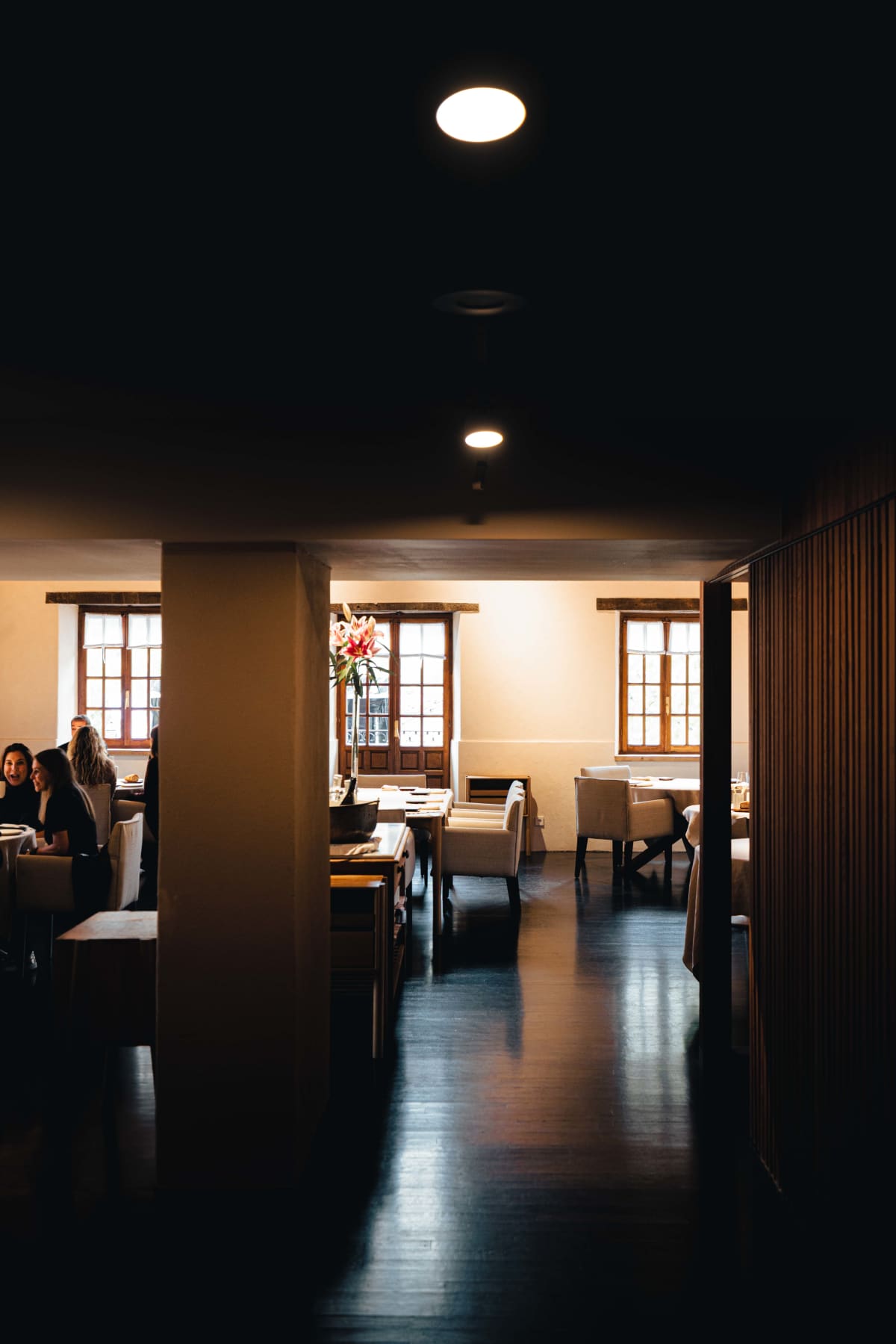
In 1989 he bought the village's old bar, a 200-year-old building on the square in Axpe: an 18th-century Basque farmhouse, a caserío, standing below Mount Anboto. After restoring it, he opened it as a traditional asador on 27 April 1990. The ground floor is still a bar where people from the village come and go, and the dining room is upstairs.

As word spread among food lovers around the world, Etxebarri entered The World's 50 Best Restaurants for the first time in 2008, at 44th. From 2016 it has not once fallen out of the top ten in any year the list was published, and after third place in 2019 and 2021 it was second in both 2024 and 2025. In 2025 it was also named The Best Restaurant in Europe. In 2021 Bittor received the Chefs' Choice Award, voted for by his fellow chefs. That is how Etxebarri became a place of pilgrimage for food lovers everywhere.
Asador Etxebarri was a place I had long wanted to visit too. In March 2025 I went to Firedoor in Sydney, the restaurant of Lennox Hastie, the best known of Bittor's direct disciples, and on the day before Etxebarri I went to Tetsuro Maeda's Txispa. I wanted to close this small, year-long journey at the original, Asador Etxebarri itself. And I did. Over one year, I walked in the footsteps of two disciples and their master.

What lifted Asador Etxebarri to a place this singular is Bittor's stubbornness and his philosophy of fire.

At Etxebarri, only Bittor puts ingredients over the fire. Guía Repsol wrote in 2017 that "nobody touches the embers at Asador Etxebarri... except its award-winning owner", and Bittor himself, in a 2022 interview with the Spanish food magazine Origen, said "there is no one here I can hand what I do over to" and "if I cannot be here, the doors of Etxebarri do not open". The rest of the kitchen handles preparation and assistance, and on days when Bittor is away, the restaurant closes. In my own experience, this is the kind of craftsmanship (call it pig-headedness) that you rarely meet outside Japan.

In the El Bulli era, when technology and technique were the frenzied engine of Spanish gastronomy, Bittor showed the world the opposite kind of cooking. Reportedly, he pared back sauce and garnish and drove flavour as far as it would go with fire, salt and oil alone. In 2020 the BBC wrote of a self-taught chef who "tinkers away in his rural hideout", taking the centuries-old Basque tradition of the asador, the wood-fired grill, and pushing it "to an astonishing new level". He also raised the quality of his ingredients by producing as many as he could himself, from the vegetable gardens, the farm and the livestock around the restaurant.
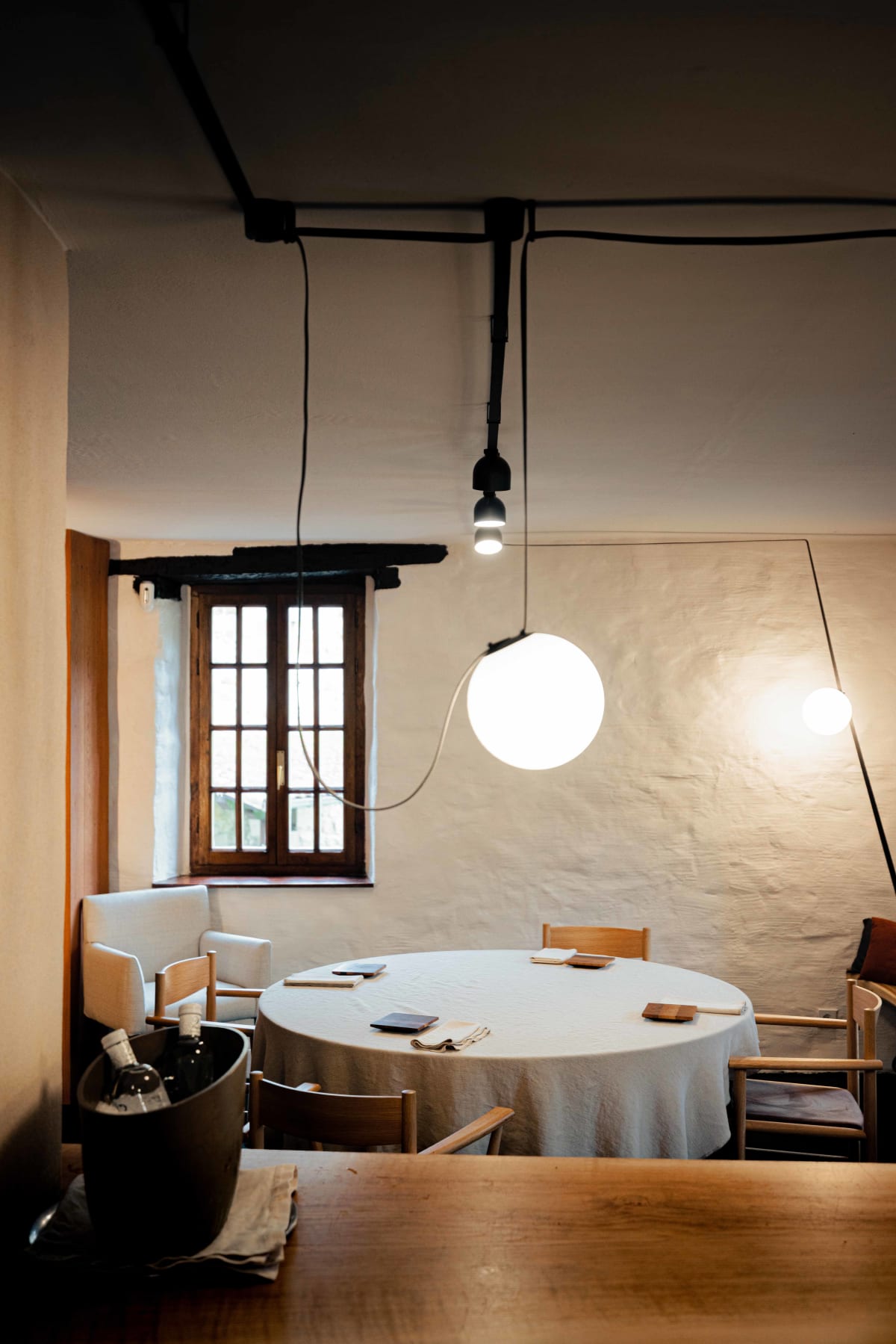
For hardware and service, this is a very ordinary local restaurant. Do not go expecting Michelin-level service.
In videos by well-known food YouTubers and influencers you see them taking photos with Bittor and touring the kitchen, but most guests simply eat their course and leave. The explanations of the dishes are brief too, so getting any depth of information was not easy.
Section 4·The First Plates
The first bite was grissini. They are usually rather bland, but these had a lovely buttery flavour and a toasty nuttiness.
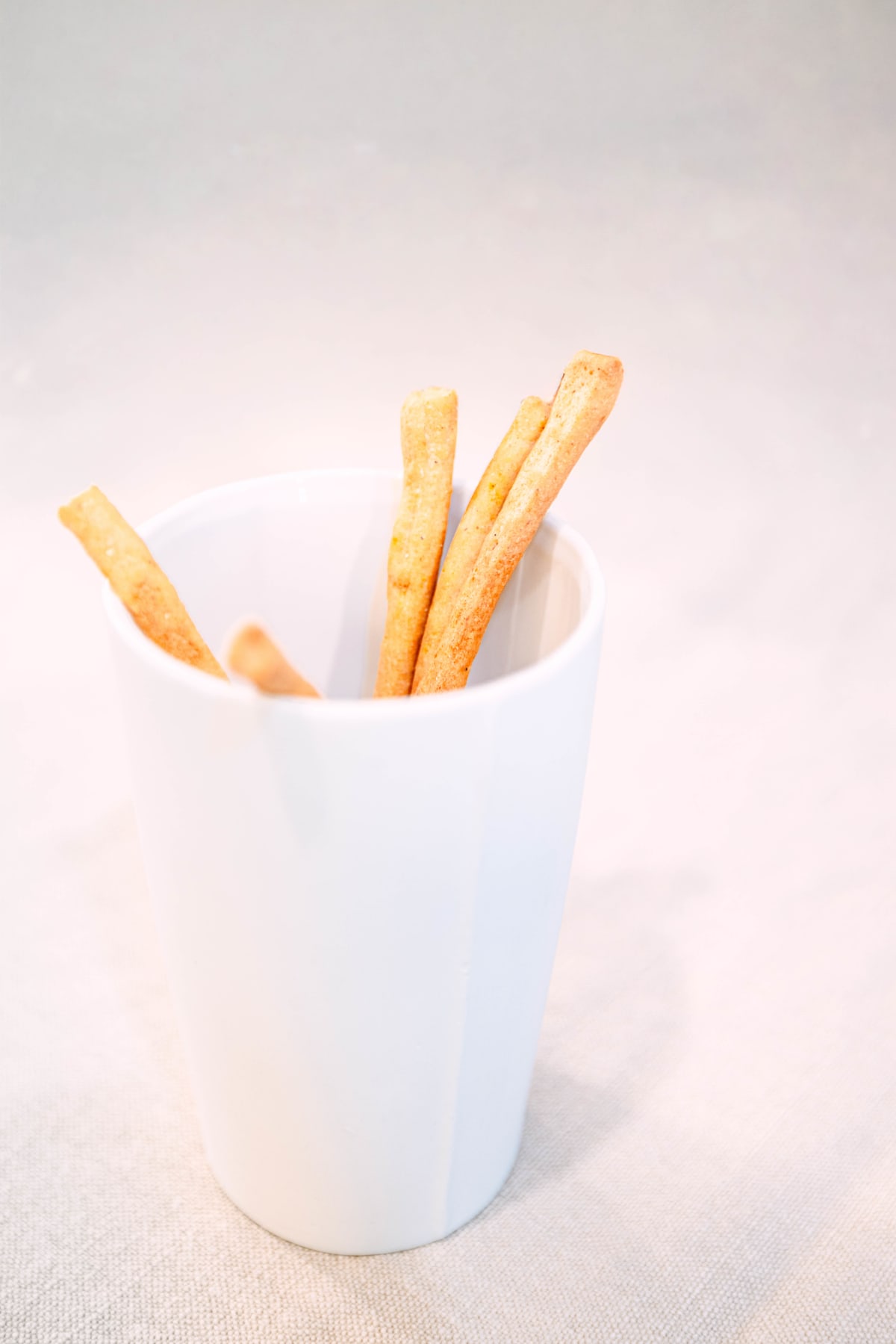
They were served with a mushroom and chicken consommé. At restaurants built around fire, even a soup like this often gets a shot of smoke, but not here. To me, as a Korean, it tasted more like unseasoned naengmyeon broth, the base of Korea's cold noodles.

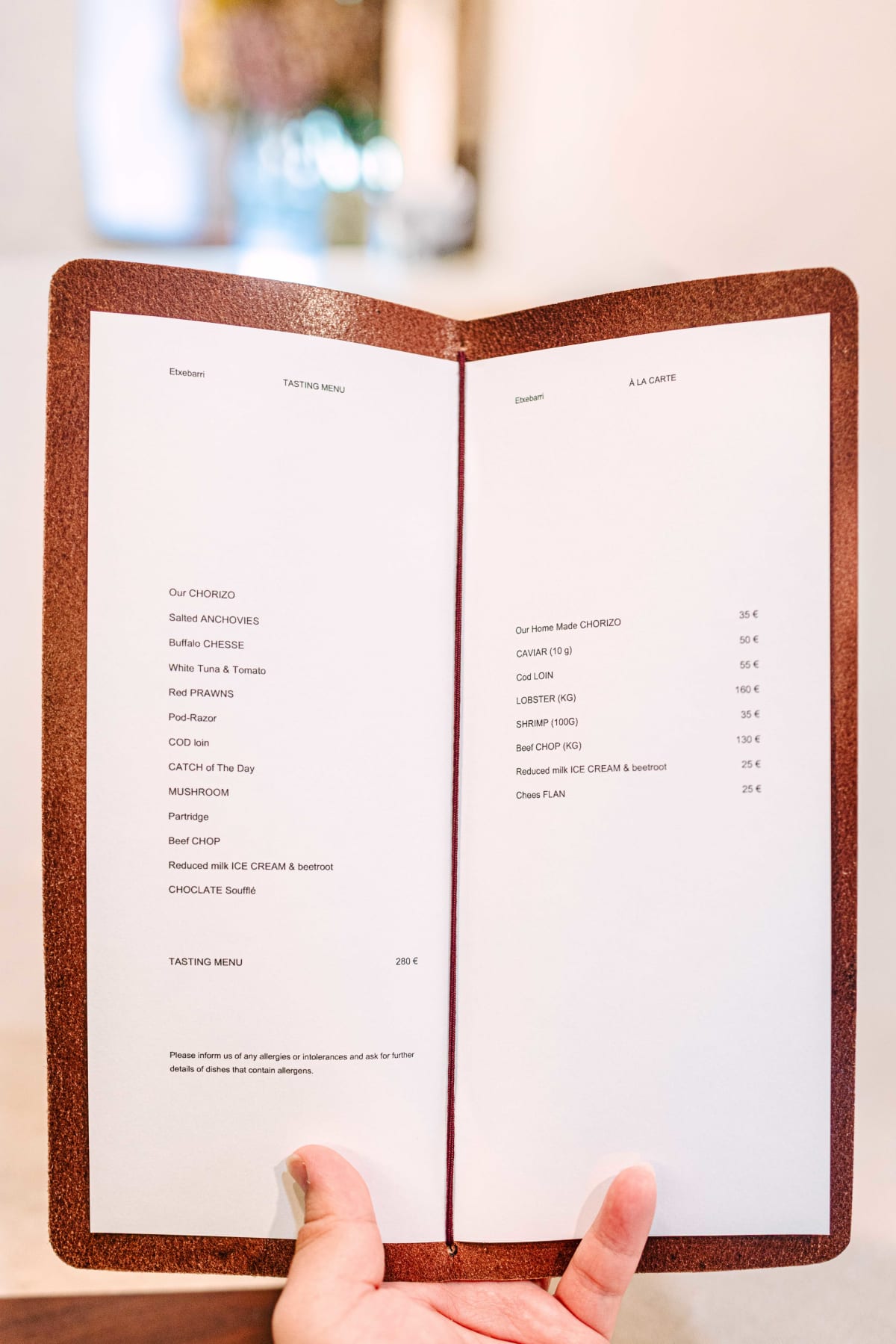
The cooking here is built on a tasting course, with extra dishes you can order on top. The menu lists thirteen courses at 280 euros, squarely in the bracket of around 300 euros where Spain's top fine dining sits.
The bread had a firmer, chewier crust than the baguette you get in French dining rooms, if that is the way to put it. It was not the crackly kind; the crumb was soft, with a little acidity.

The butter that followed was no ordinary butter but goat's milk butter dressed in smoke.

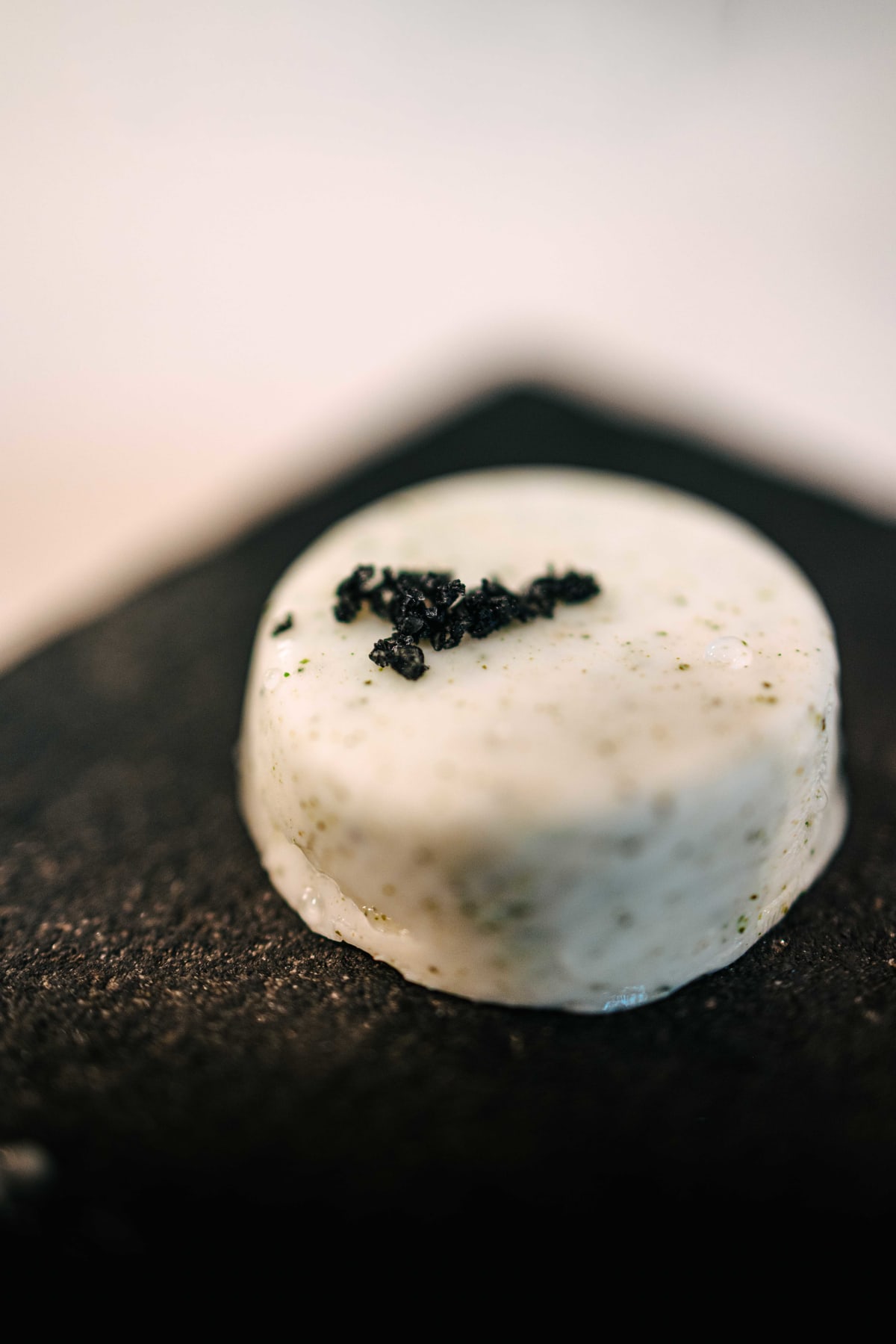
It was good with the bread. A butter of very strong character: it was as if Etxebarri's character, late to the meal, had finally opened the dining room door and walked in.

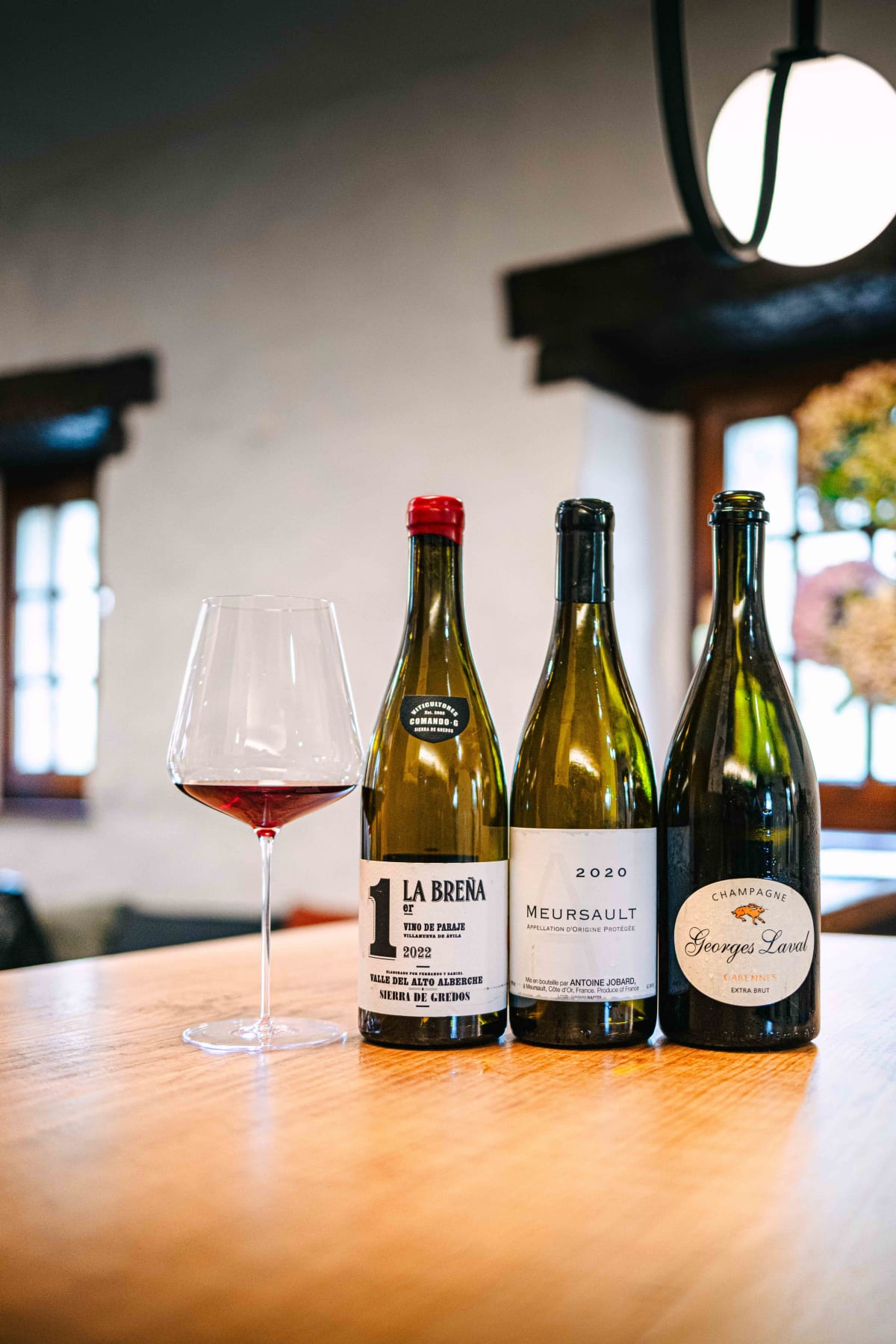
For wine that day we ordered Antoine Jobard's Meursault 2020. Everyone at the table drank it very happily, and it was a white of excellent value.

The reductive-style oak aroma that rose from the glass from the very first pour seemed to me better than that of the Coche-Dury Puligny-Montrachet Les Enseignères 2019 I had drunk at Lucas Carton in Paris at the start of this trip. It is a wine I would buy on sight.

Antoine Jobard is a Meursault grower who took over the domaine of his father, François Jobard. His whites see only 20 per cent new oak and age in barrel for 20 to 23 months without the lees being stirred, which is why they are known for being tightly wound when young. From the 2020 vintage, his village Meursault has been a blend of seven lieux-dits, among them Les Chaumes de Narvaux, Sous la Velle and En la Barre. Les Enseignères, the point of comparison, is a village vineyard lying directly below the grand cru Bienvenues-Bâtard-Montrachet, and Coche-Dury acquired a parcel of it in the mid-1990s.
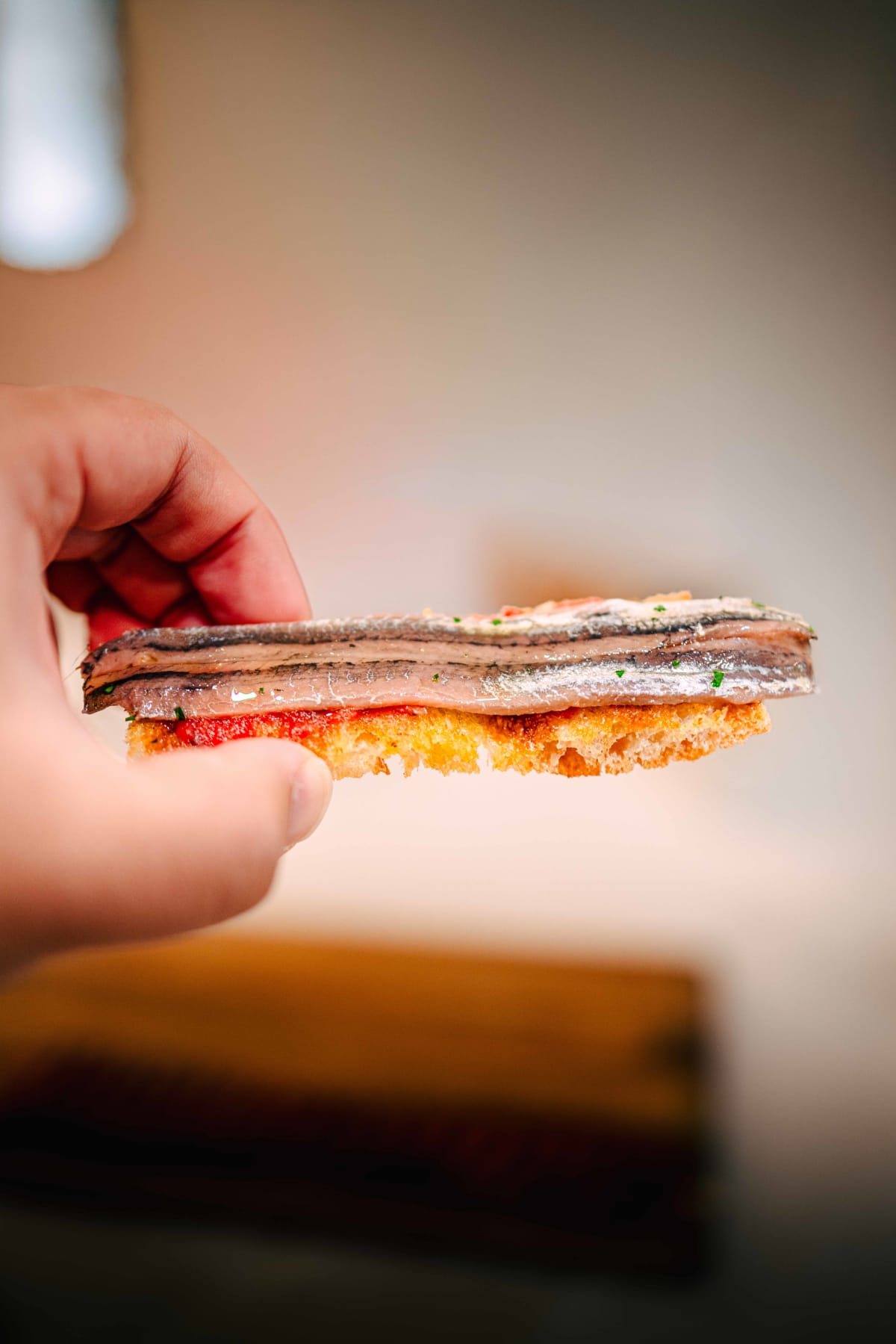
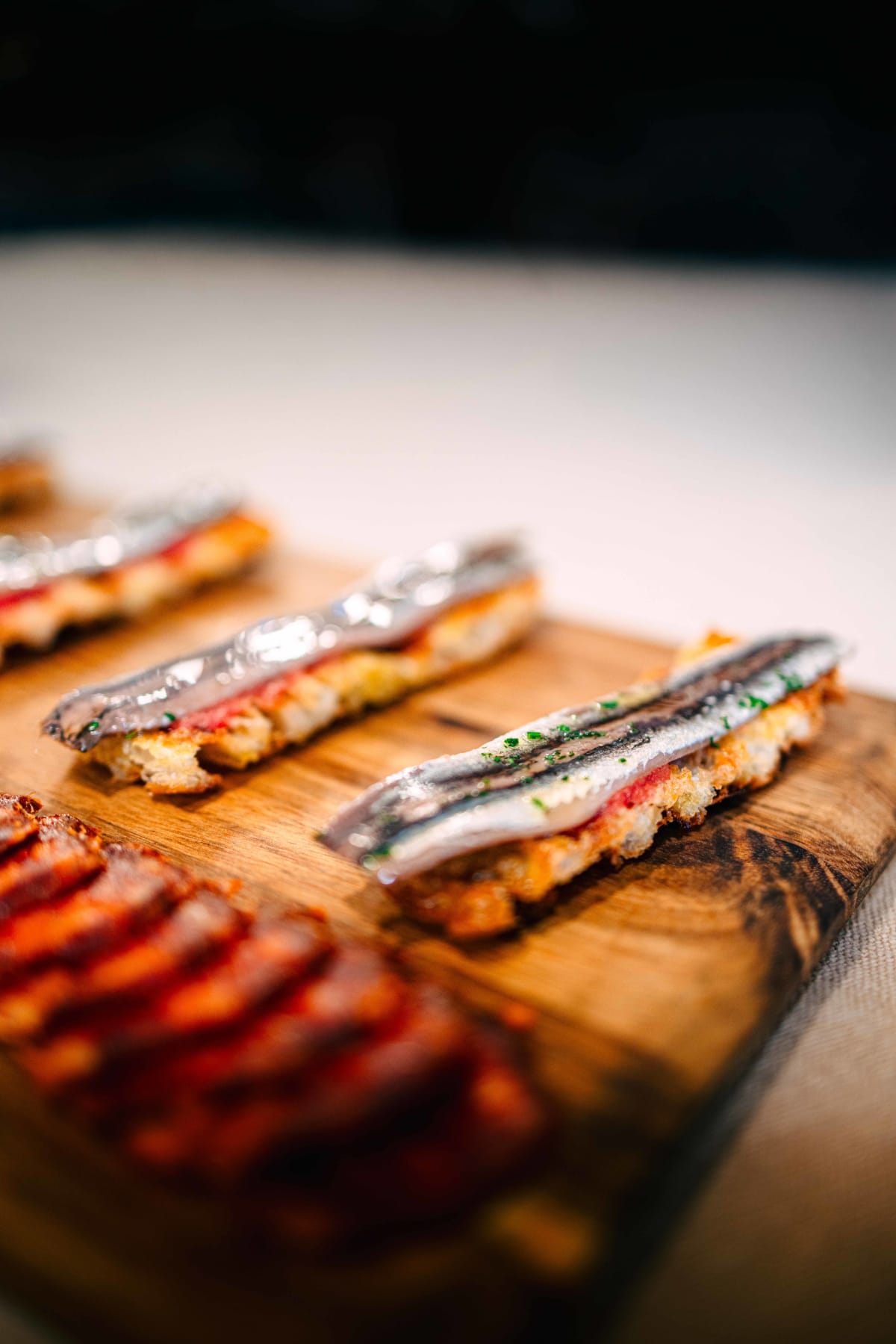
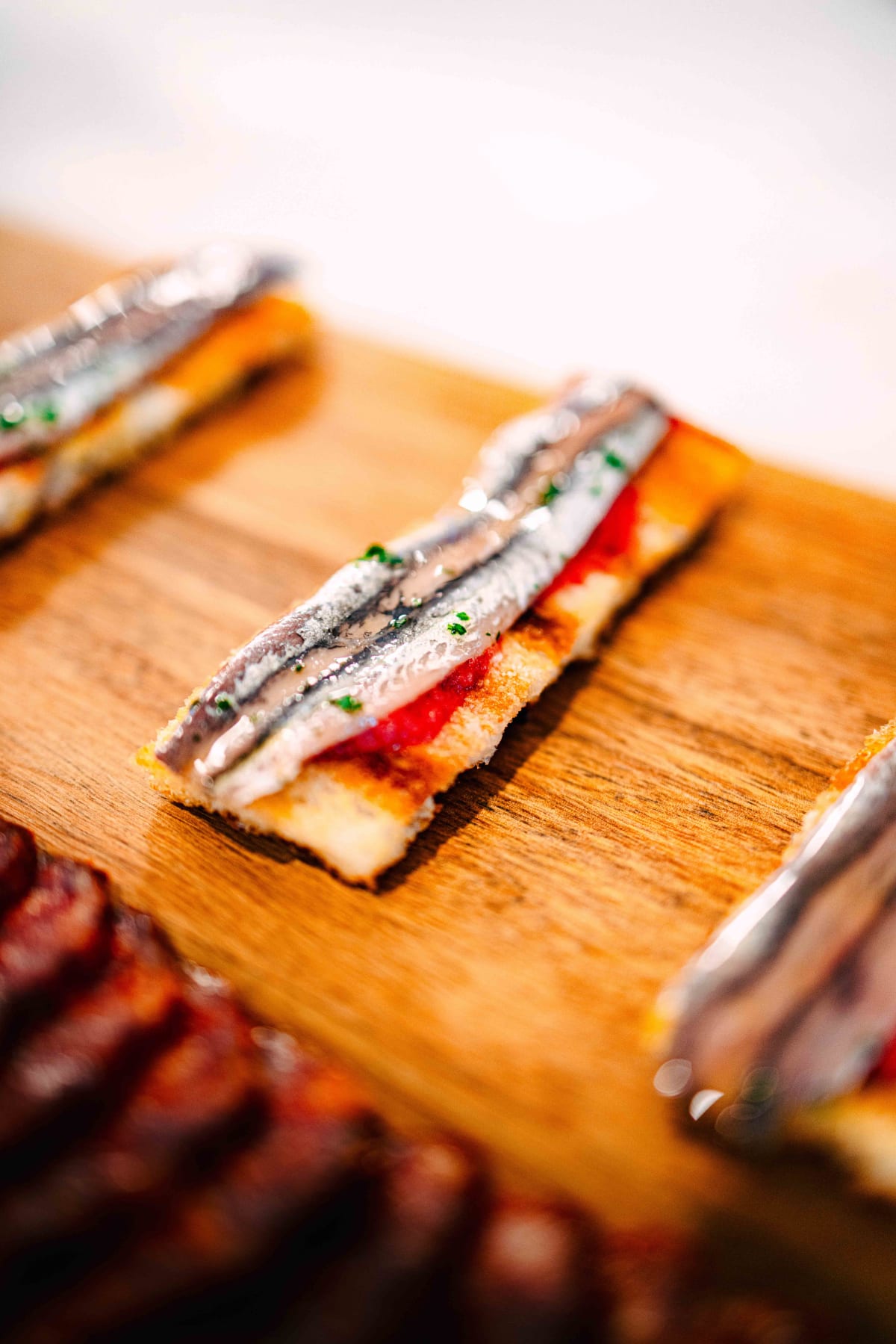
The first course was Our Chorizo and Salted Anchovies. Several arrive at once on the kind of board you would see in a wine bar, and from here on you can tell the place keeps some distance from fine dining. In flavour, though, they beat any chorizo and anchovies I have had in a wine bar or at a fine dining table.

The chorizo was wonderfully soft and nutty. The chorizo I had eaten in Korea until then was not chorizo.


Later, at Lana, an Argentine grill in Madrid, I had another outstanding chorizo, and it was in chorizo rather than jamón that I felt how wide the gap between Korea and Spain is. Etxebarri makes this chorizo itself. According to Gastroeconomy in 2021, Bittor uses the presa, secreto and pluma cuts from Joselito, the house renowned for its Ibérico pork, with choricero peppers he grows in his own garden.


The anchovies were not as salty as the ones I used to eat in Korea, either. Nothing much to them, and yet on the bread they were rich, nutty and delicious. The house salts its own anchovies too.
Section 5·Buffalo And Bonito
Second was the buffalo cheese, or to be exact, fresh mozzarella made from the milk of buffalo that Bittor raises himself. Tomato sauce and oil lay underneath, and the cheese was wonderfully bouncy.

Perhaps because freshness matters so much with this cheese, eaten here, where it is made, it was springiness itself. The star of the dish, the cheese, was delicious.


When Guía Repsol reported on the house, there were fifteen buffalo, and the five to eight litres of milk they gave a day went into small mozzarellas that were even lightly smoked. Perhaps because the smoking is so light? When I ate it, I could not pick up much smoke in the cheese.

The third plate, White Tuna & Tomato, came with courgette that seemed lightly pickled in vinegar, with a little olive oil over it, and the dish as a whole was well balanced.

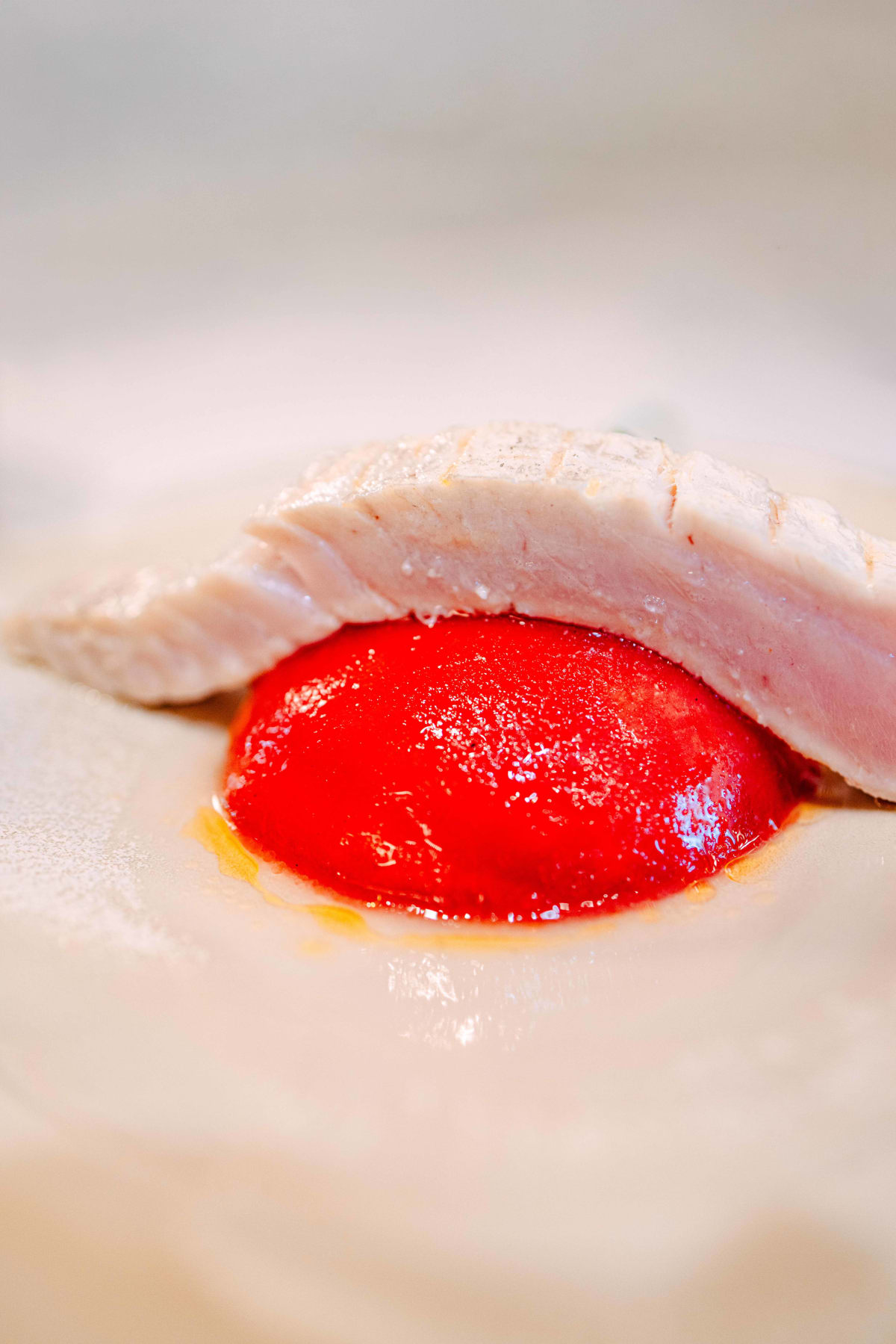
The tuna carried a gentle smokiness, and I liked that the tomato's acidity did not jump out. And when I ate it all together, the vinegar-cured courgette included, the three lifted one another.

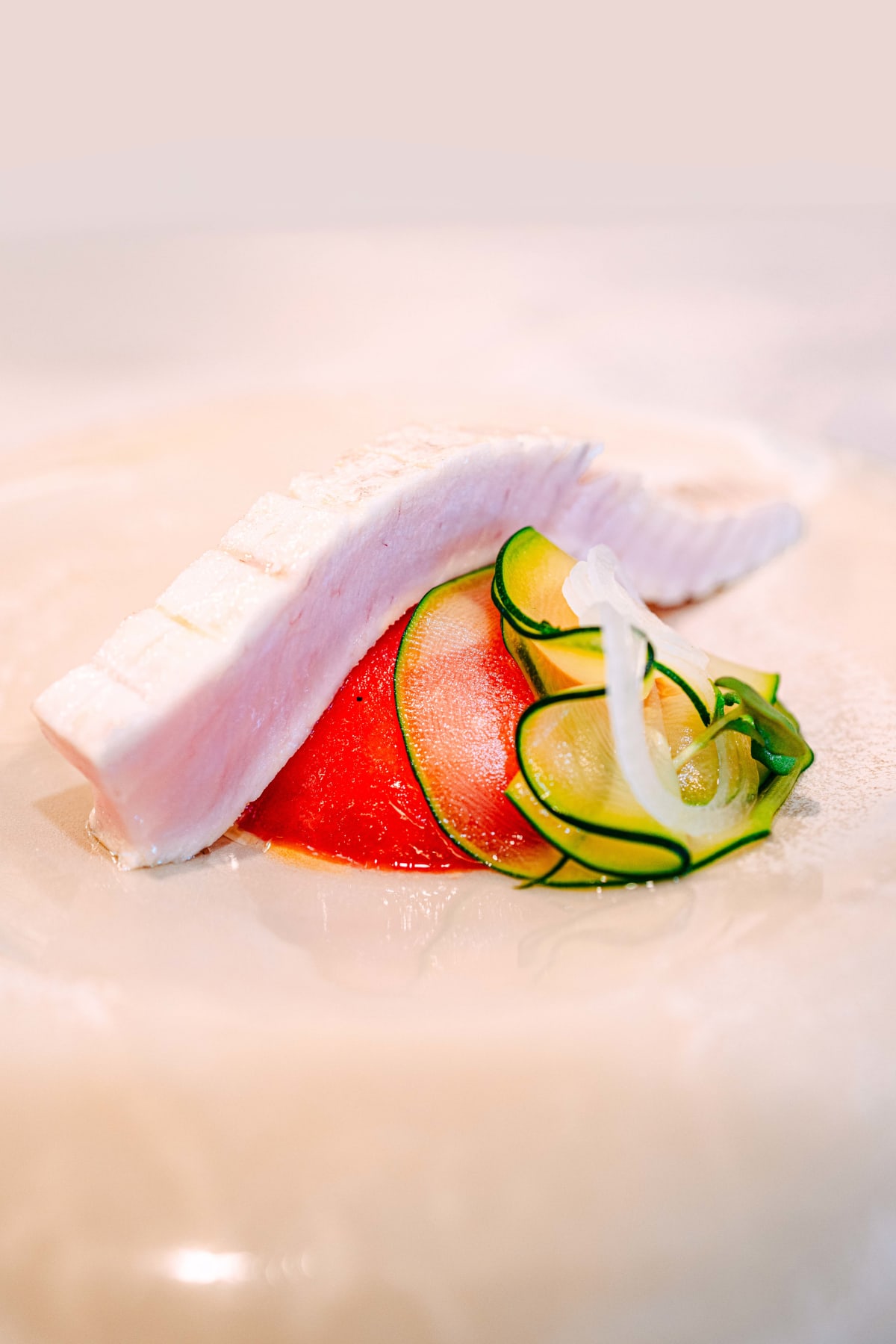

The cross-section of the white tuna looked like a cut of very fatty pork, and the tomato and courgette kept that richness in balance.

White tuna is the albacore of the Cantabrian Sea, bonito del norte. The bonito season in this sea, where the fish are caught one at a time on rod and line, runs from mid-July to the end of October, so early October is close to the tail end.


Section 6·The Common Story
Just as a myth from some place long ago spreads around the world by word of mouth, this myth of fire spread through people. Lennox Hastie worked here for five years before opening Firedoor in Sydney in 2015, and became that city's own myth of fire.
Dave Pynt of Burnt Ends in Singapore also passed through, in 2010. In a 2019 article the Michelin Guide described that time as "perhaps his most formative cooking experience". A Burnt Ends book sits on the shelf in Etxebarri's dining room, at the top of a stack of wine books.
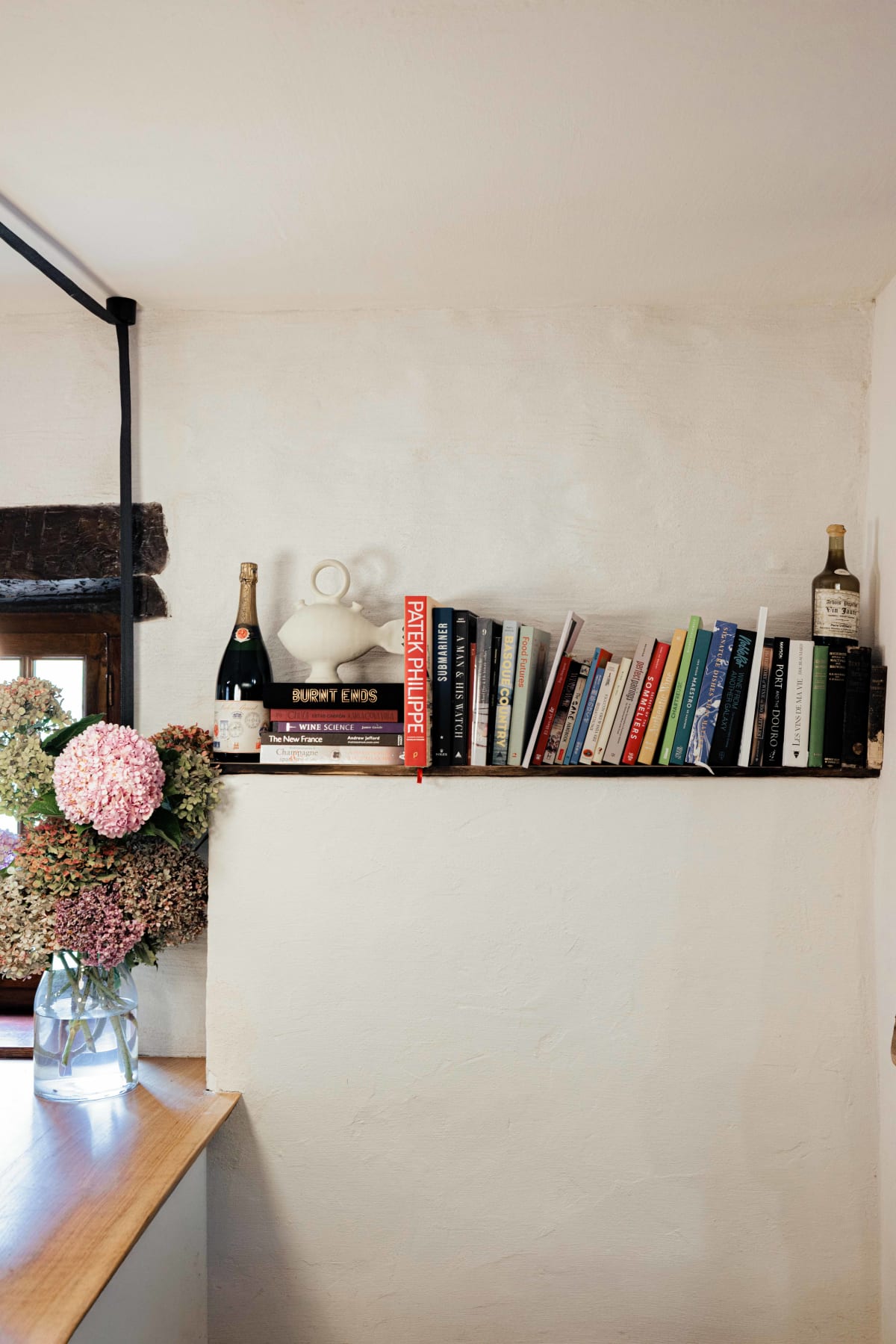
Tetsuro Maeda, from Japan, worked here for ten years, opened Txispa within walking distance and won a Michelin star in a remarkably short time, and Txispa is now the place people pair with any pilgrimage to Etxebarri.
Myths that are handed down and spread have a common story. If I had to pick the one common story in the myth that began at Etxebarri, it would be caviar. Firedoor and Txispa, the restaurants of Etxebarri's two most famous disciples, both of which I visited that same year, each served a smoked caviar. Having eaten those two, I was set on trying it at Etxebarri as well.

I took it for granted that Etxebarri would serve it too, but when I looked, it was not on the regular course and could only be ordered as an extra, at 50 euros for 10 grams. I argued hard for it, and we ordered 20 grams.
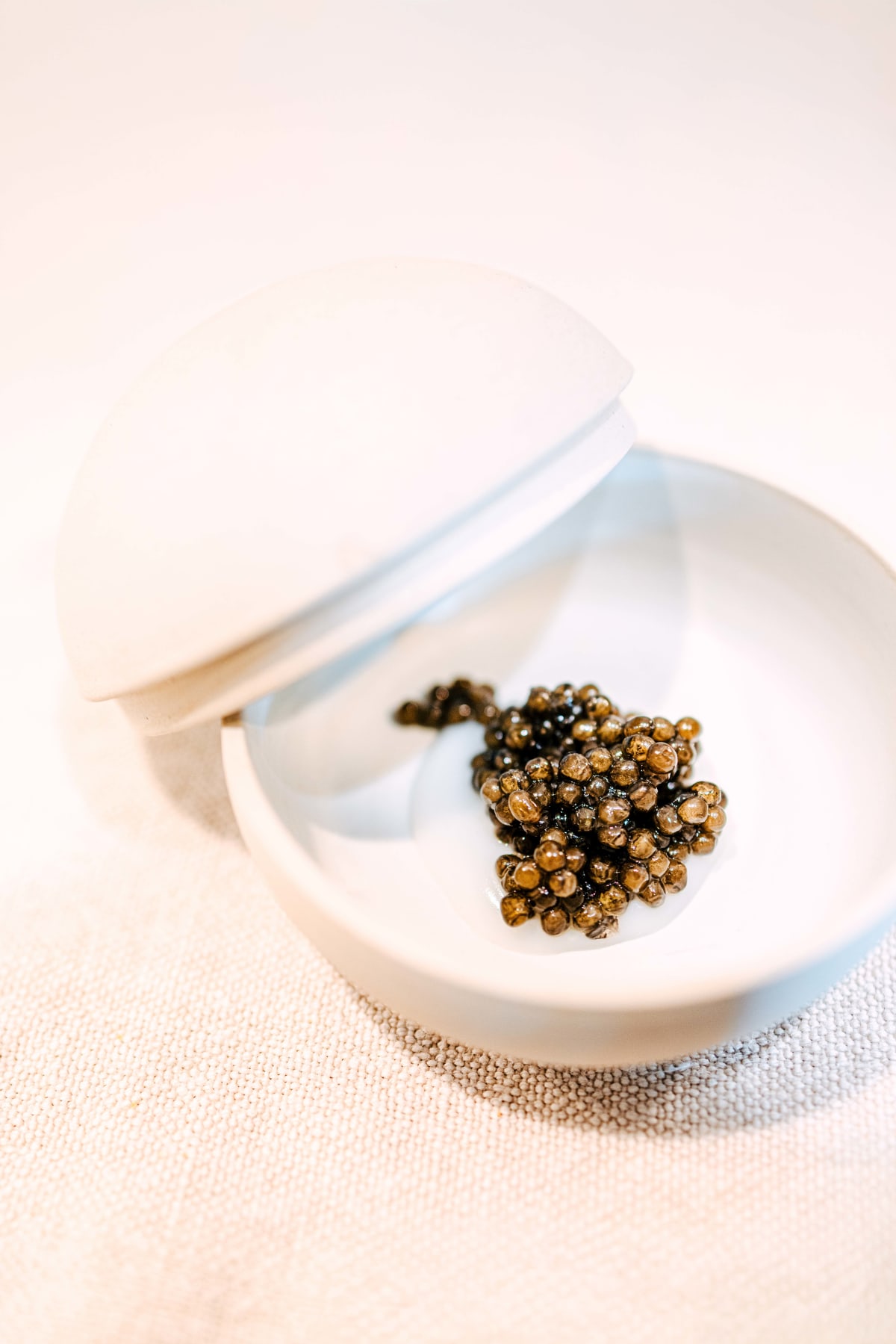
Everyone with me was pleased and agreed we had been right to order it, and, the original being the original, it was the best of the three.
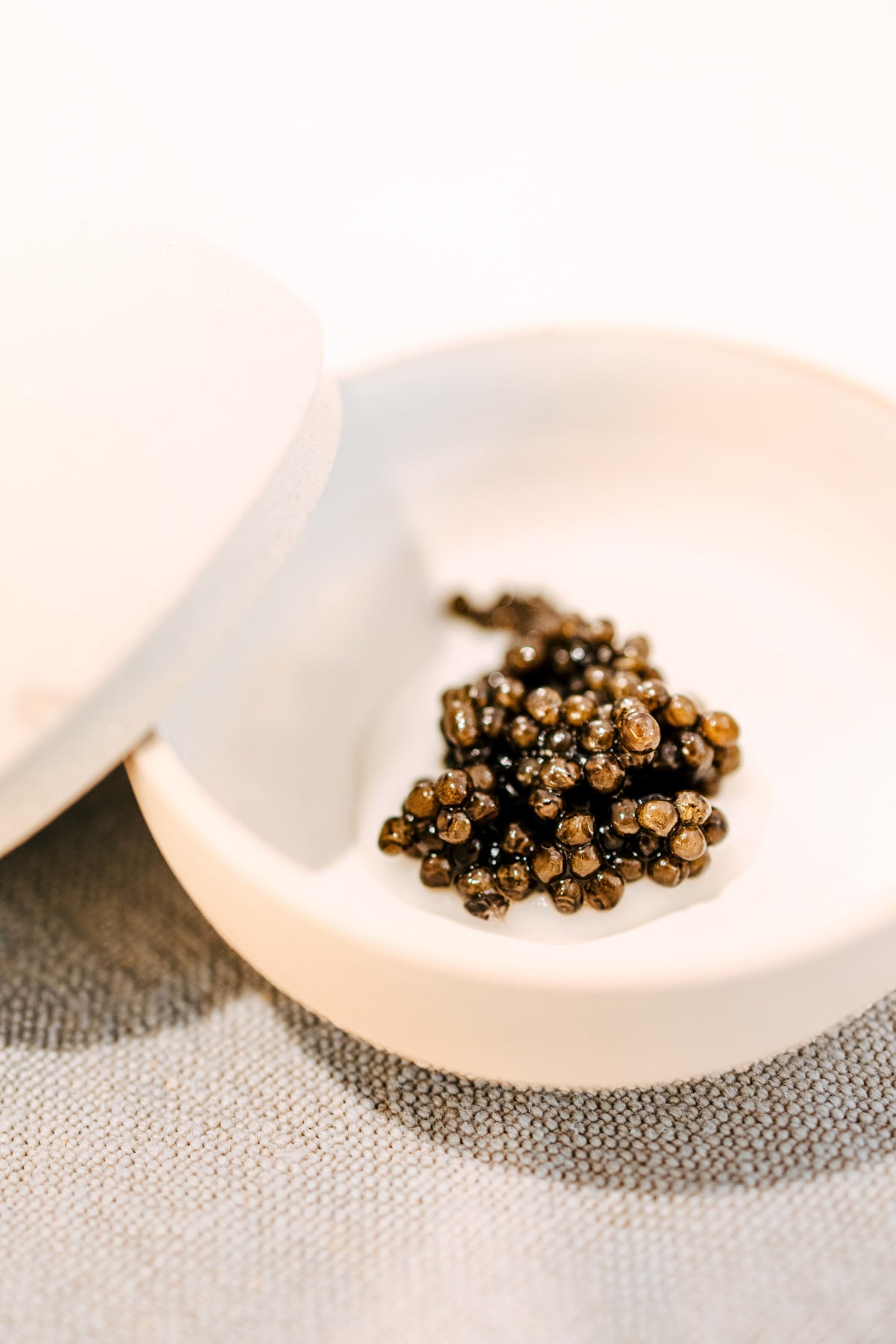
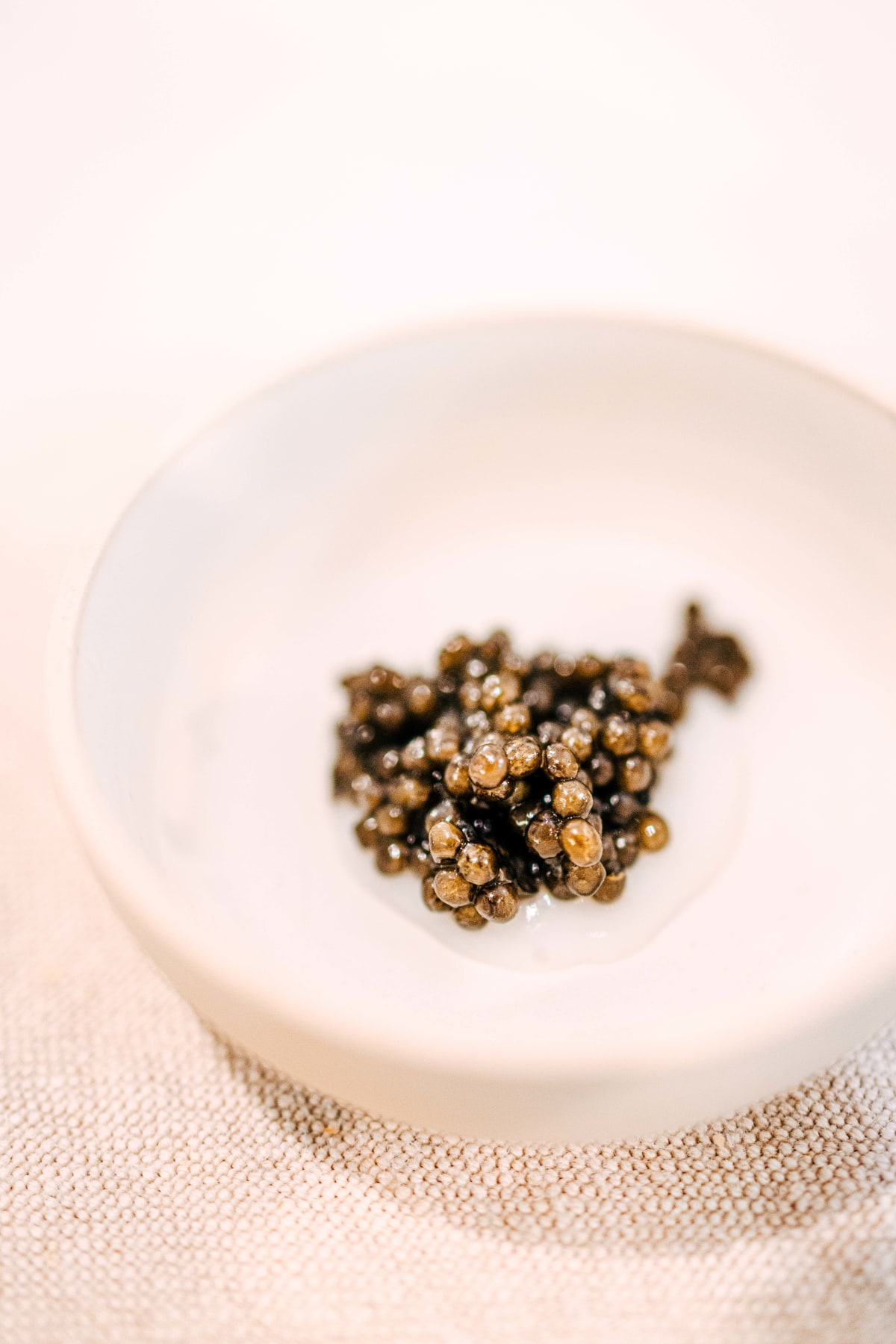

All three places smoke the caviar over a bed of kombu, but here it was served simply with pork lard.

The pork lard suited it well. The very delicate smokiness of the caviar was not buried under the lard but came through clearly, and the weight of the fat sat in good harmony with the salinity of the caviar.
Putting caviar over the fire is an old technique of this house. A 2007 TIME article already describes a mesh-bottomed pan for grilling caviar and the tiniest baby squid, and in 2021 Gastroeconomy described this dish as caviar perfumed with wood smoke and set on fat from the pork chop, the chuletero. It was on another level entirely from the two disciples' caviar I had tasted before it.
Section 7·Best And Worst
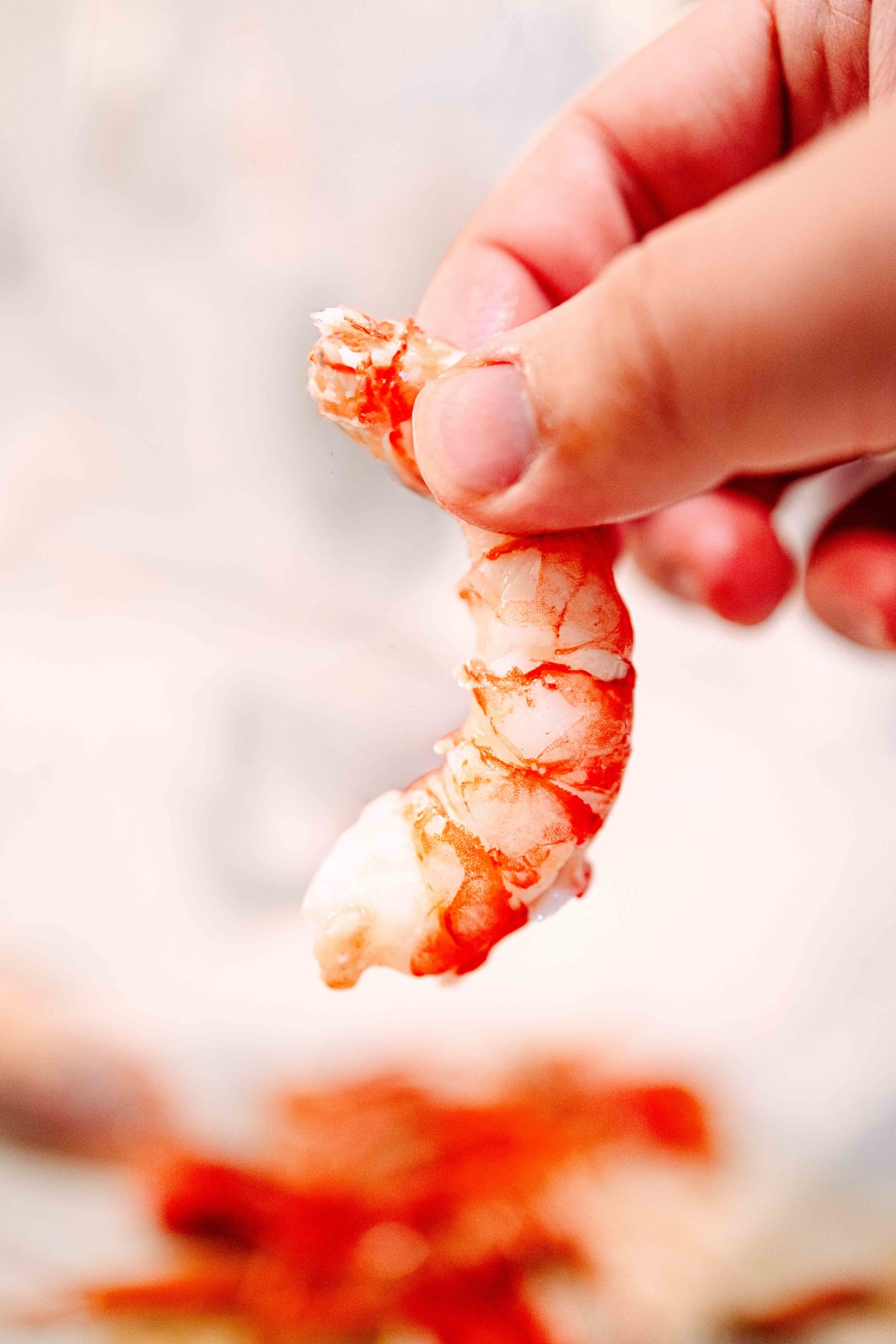
The best of the day was the Palamós prawn. I had been hoping for carabinero, but we were told there is no carabinero in early October. There are apparently times of year when you can have both, so check when you go.
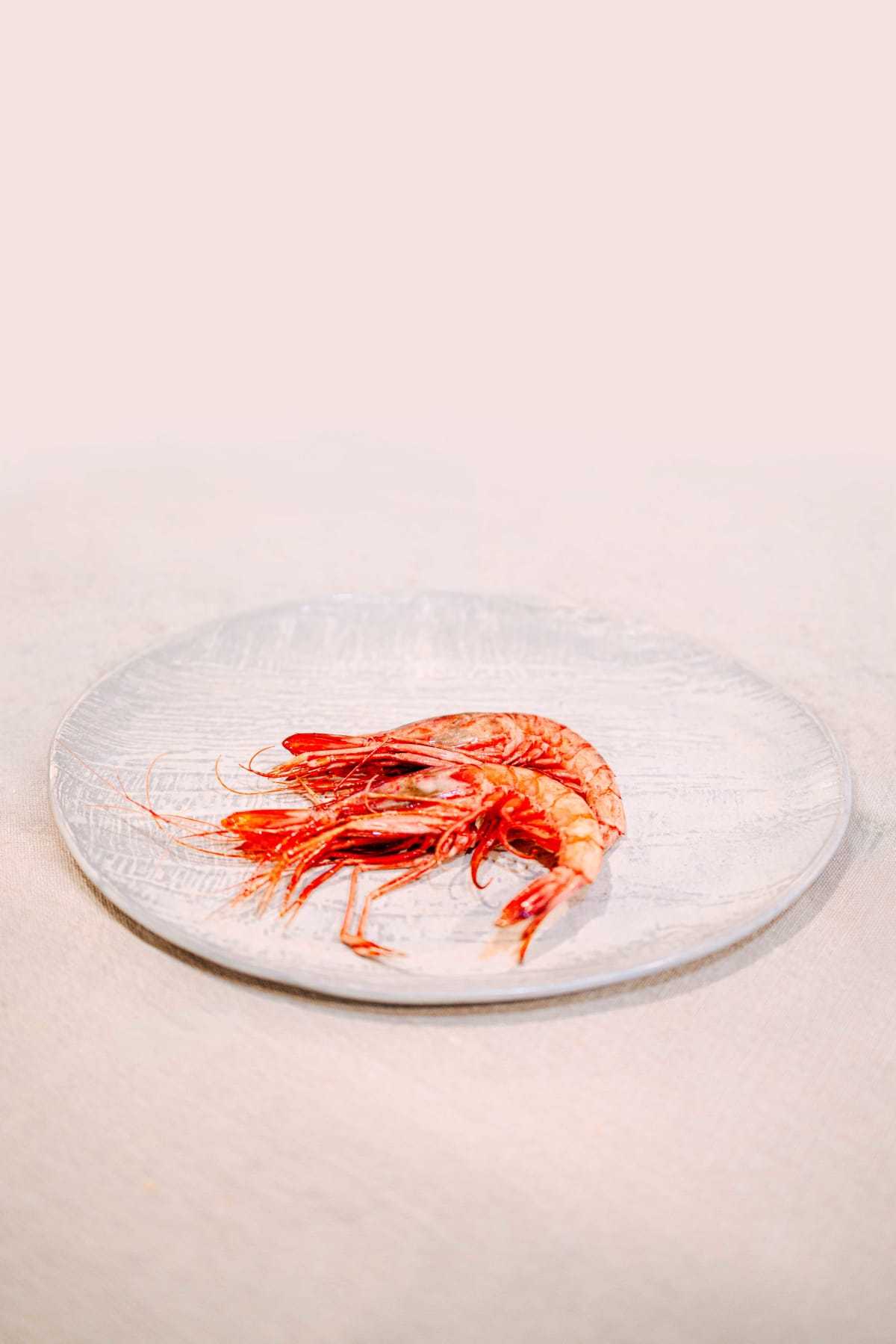
The Palamós prawn was extraordinary, the prawn of my life, with a flavour that made me wonder whether it could be had anywhere else in the world.
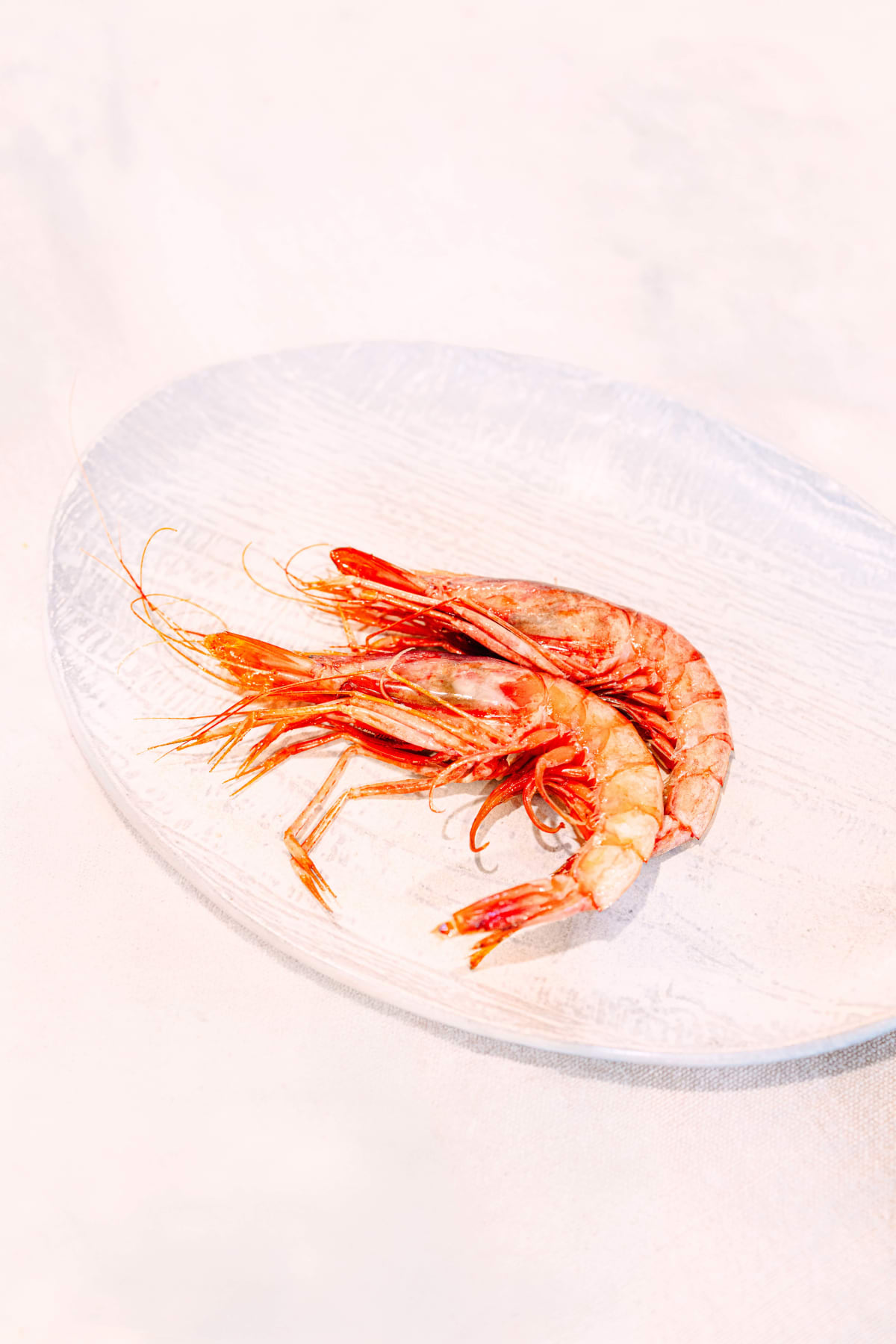

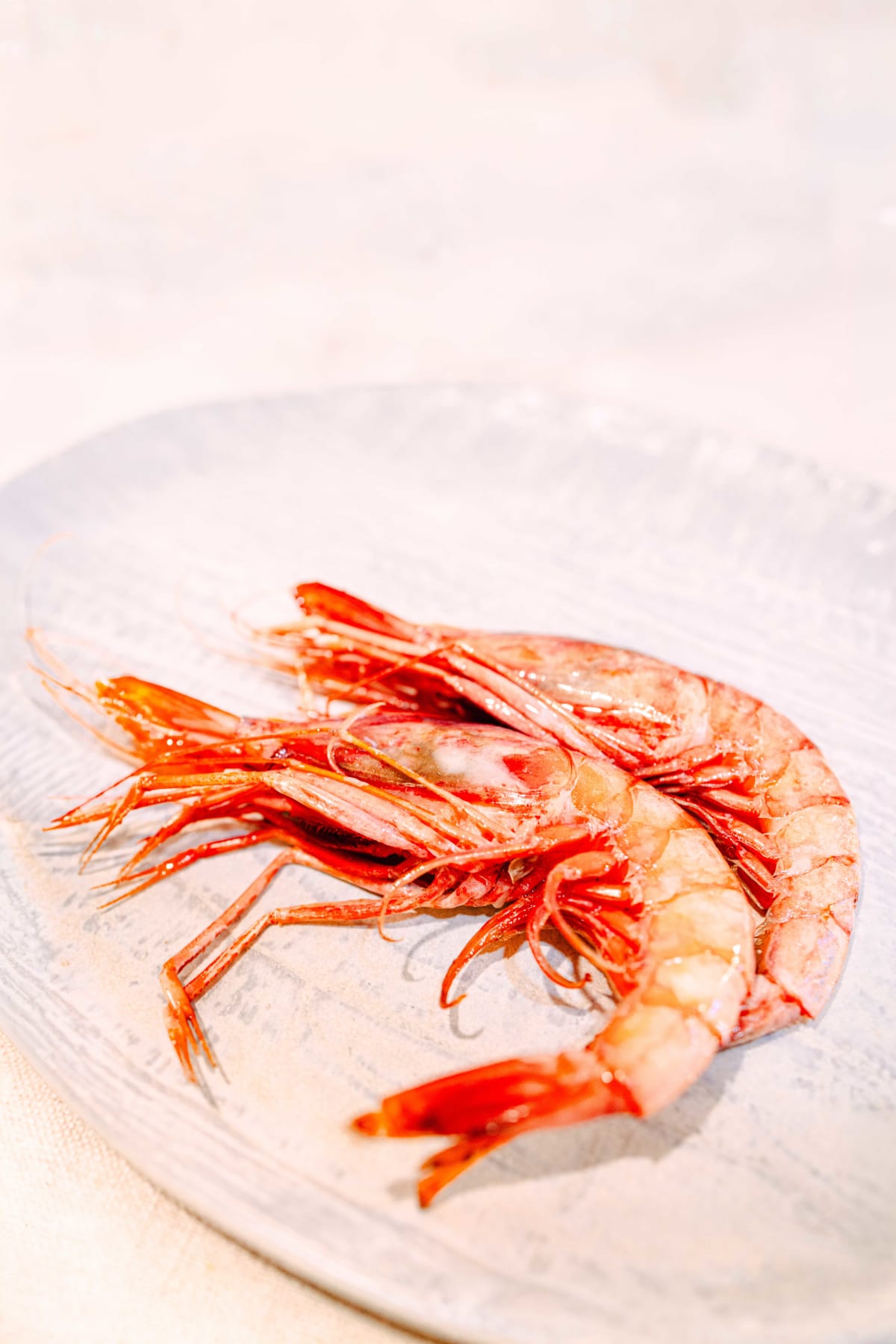
The innards in the head carried a flavour far deeper and better than in the prawns I had eaten in Asia.
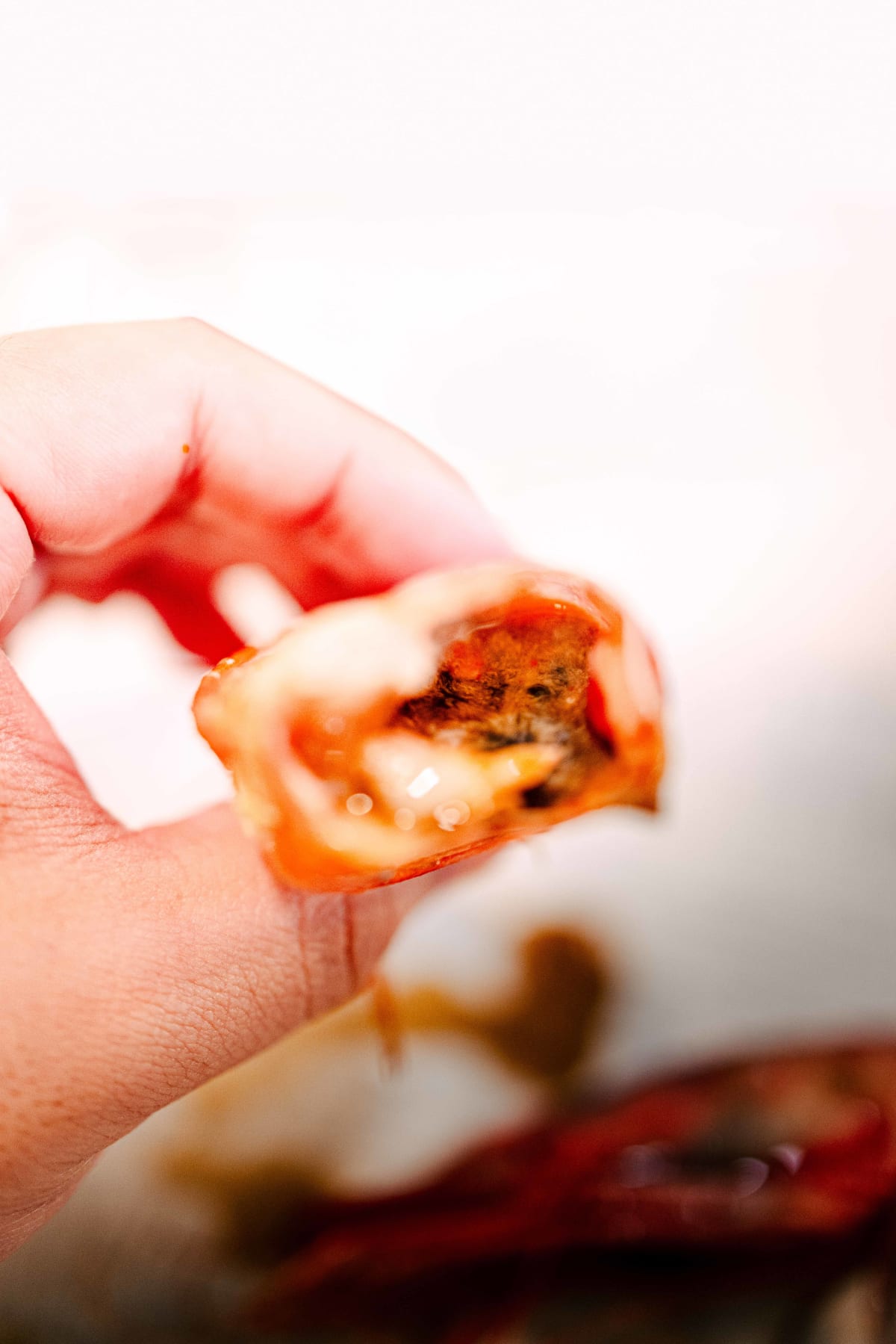
The flesh had a good texture too, not the very sticky, elastic feel of a raw prawn but a little more cooked than that.
The Palamós prawn is the Mediterranean red prawn, Aristeus antennatus, and only those caught off Palamós in Catalonia carry the Marca de Garantía quality mark, which governs everything from the catch and the sorting to cold distribution between 0 and 4°C.

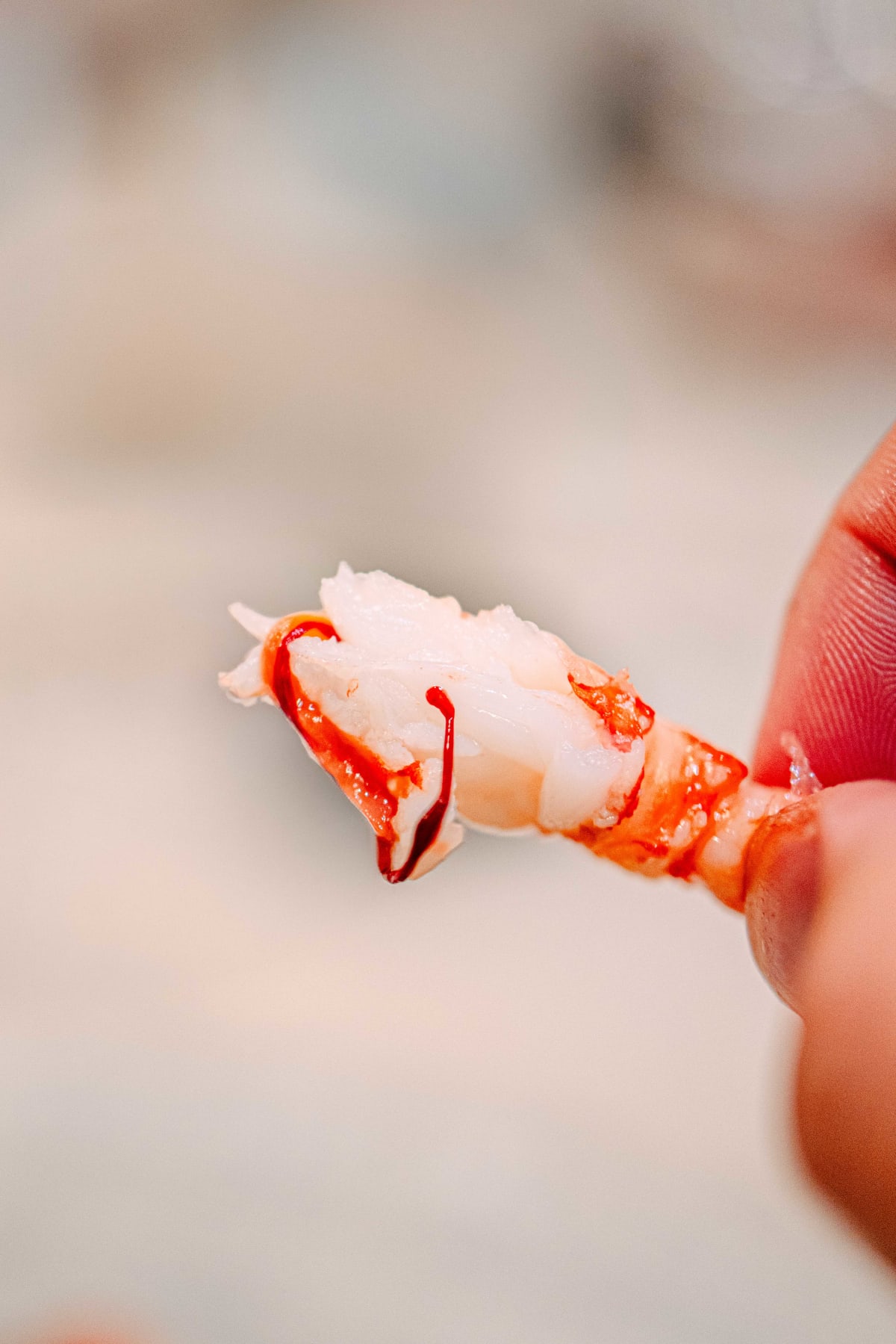
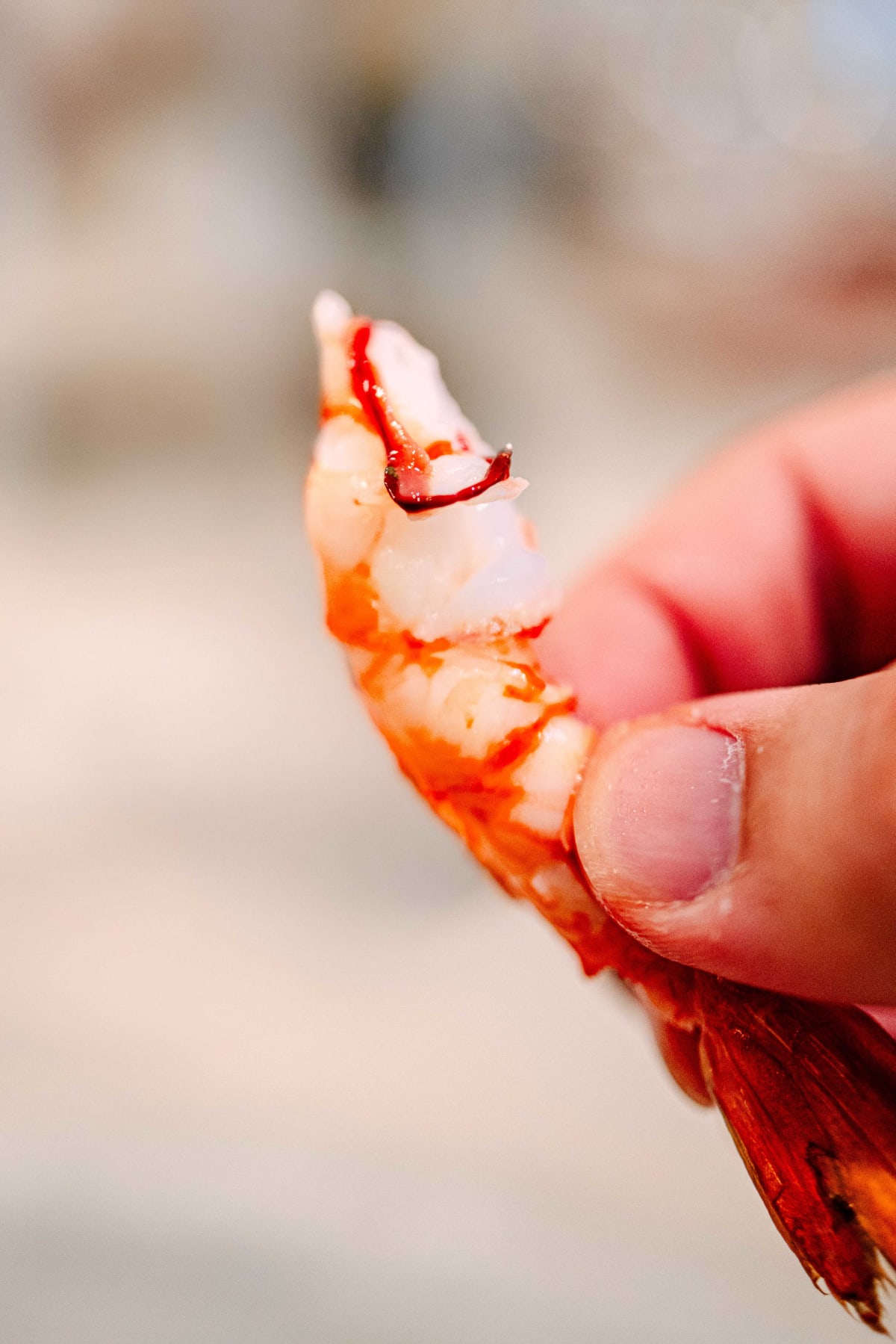
Compared with Txispa the day before, this prawn showed there is still something of a gap in the grilling. In texture and in smokiness, Etxebarri was ahead.
With it we each had a glass of Georges Laval's Garennes, which at 15 euros a glass was especially good value.


Georges Laval is a small grower in Cumières that has farmed organically since 1971 and is now run by Georges's son, Vincent Laval. Garennes is the house's most widely available cuvée, a blend of Pinot Meunier, Pinot Noir and Chardonnay from four villages, Chambrecy, Damery, Cumières and Hautvillers, and as an Extra Brut it carries a dosage of around one gram per litre.

After the best came the worst, so disappointing that I wondered whether it had been placed there on purpose to make the best shine. Pod-Razor, the razor clam.
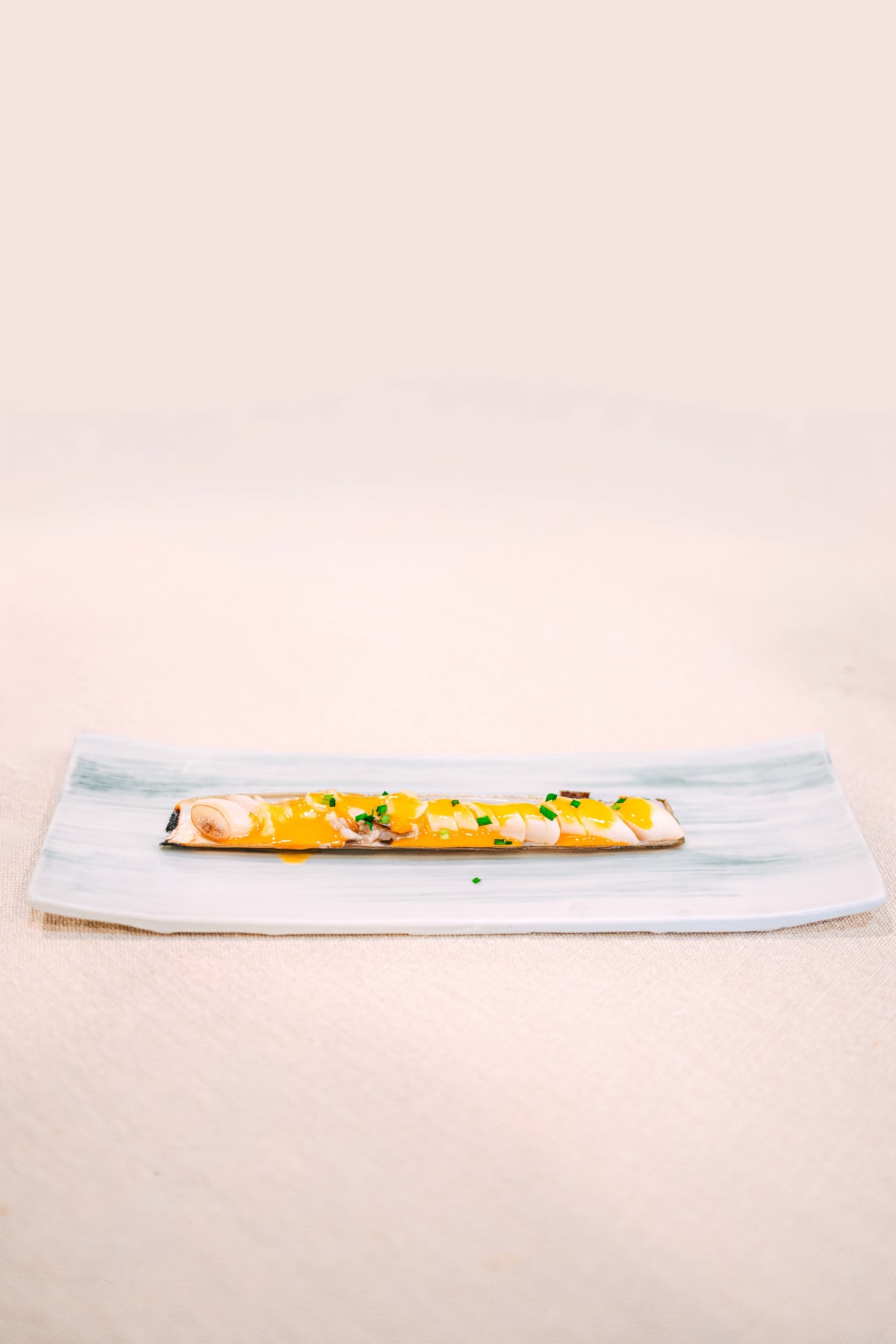
It was dressed in a sauce I guessed was made from egg yolk, and the clam left a strong fishy taste behind. The texture was far from fresh, the sauce on top had no flavour of its own to speak of, and the smoke surfaced only faintly at the end.
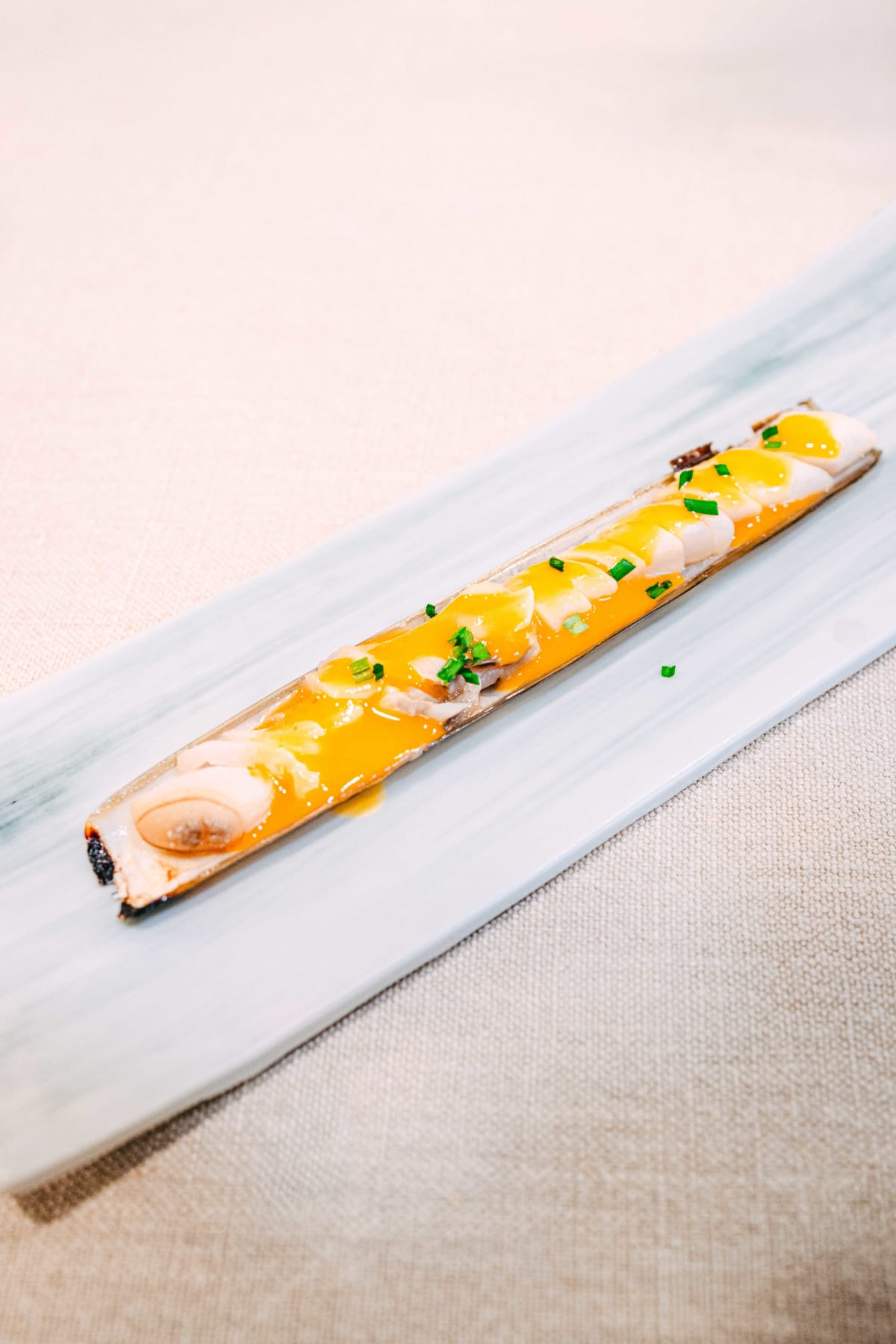
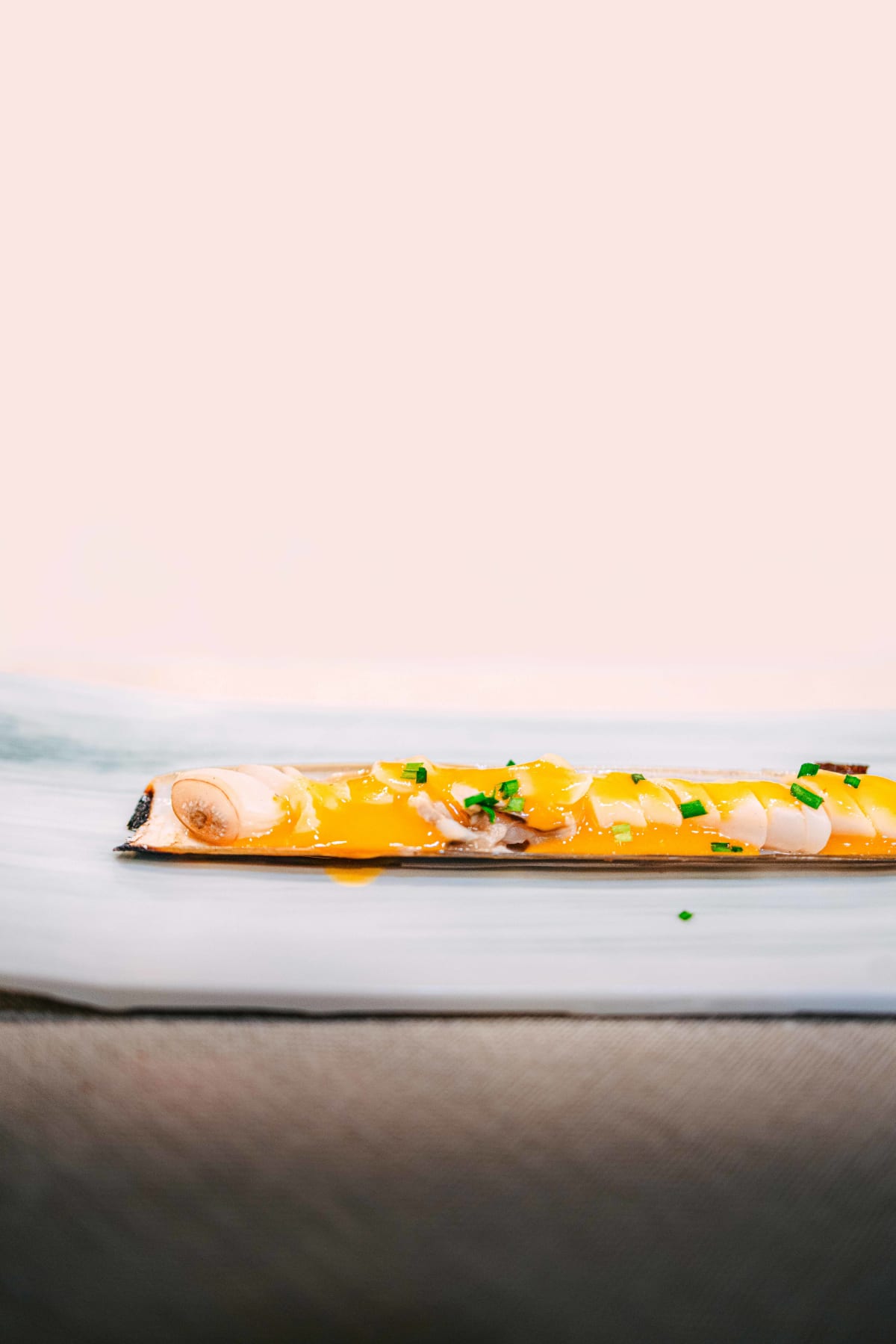
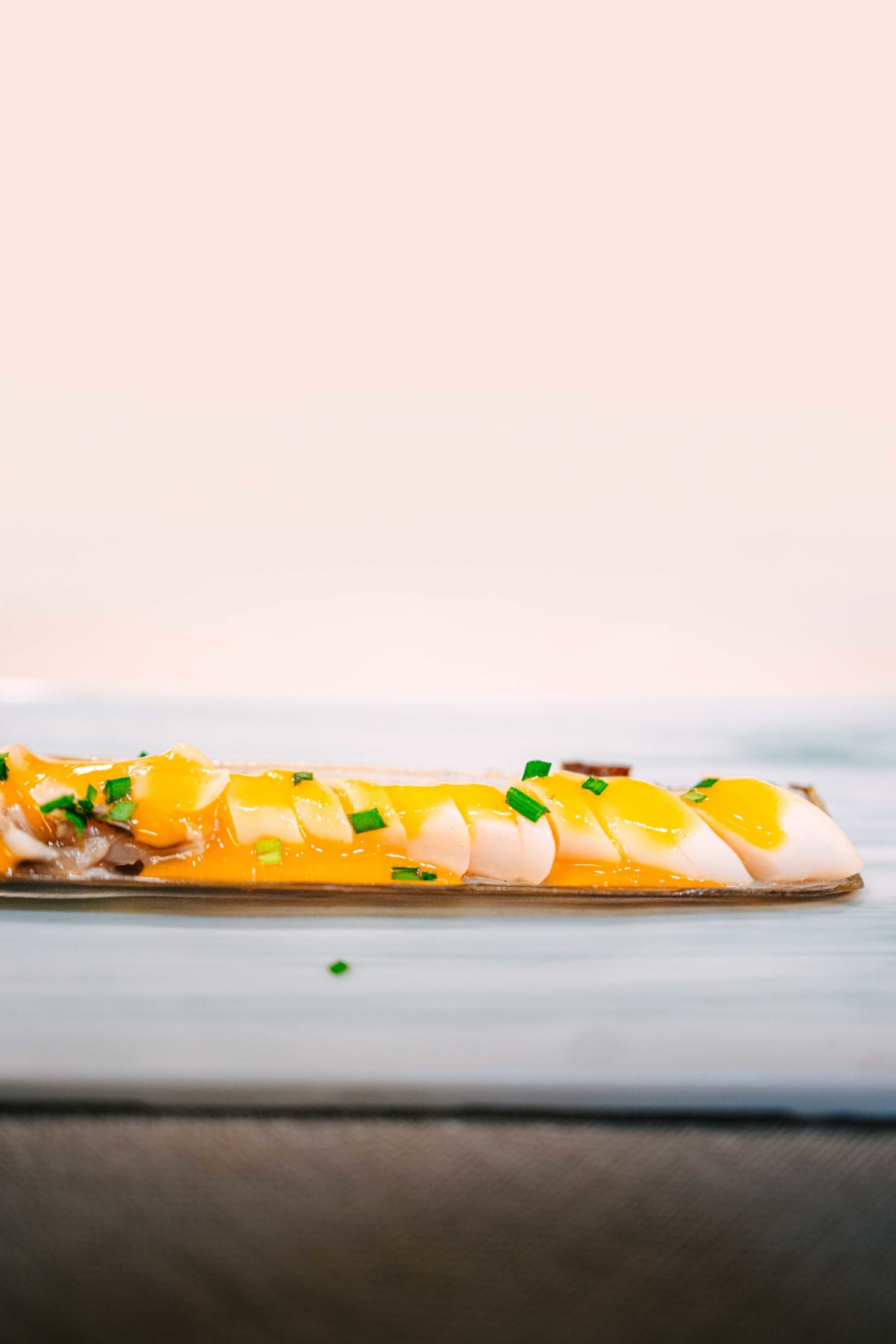
To Michelin, which values sauces and a complexity that plays across all the senses, this is perhaps exactly the kind of thing that comes across as a weakness, I found myself thinking.

A small fish course followed, a plate that showed a little of the fine dining side. Cod loin was served on a sauce built from paprika, chilli powder and the like: Spain's flavours, translated into a sauce.
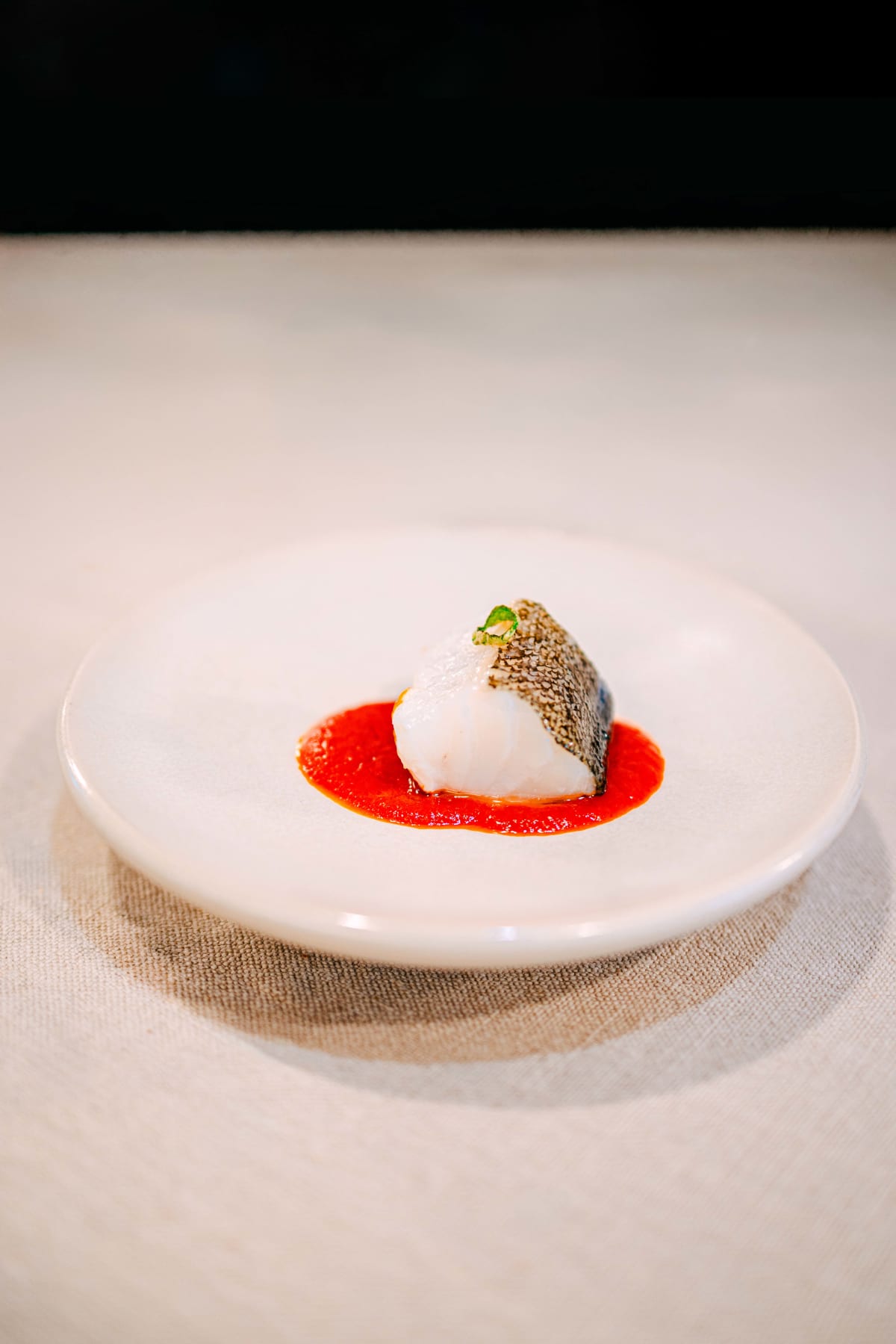

And the cooking of the cod in this dish was astonishing. Is it possible to feel a pudding-like texture in cod? It was so tender it seemed about to crumble.
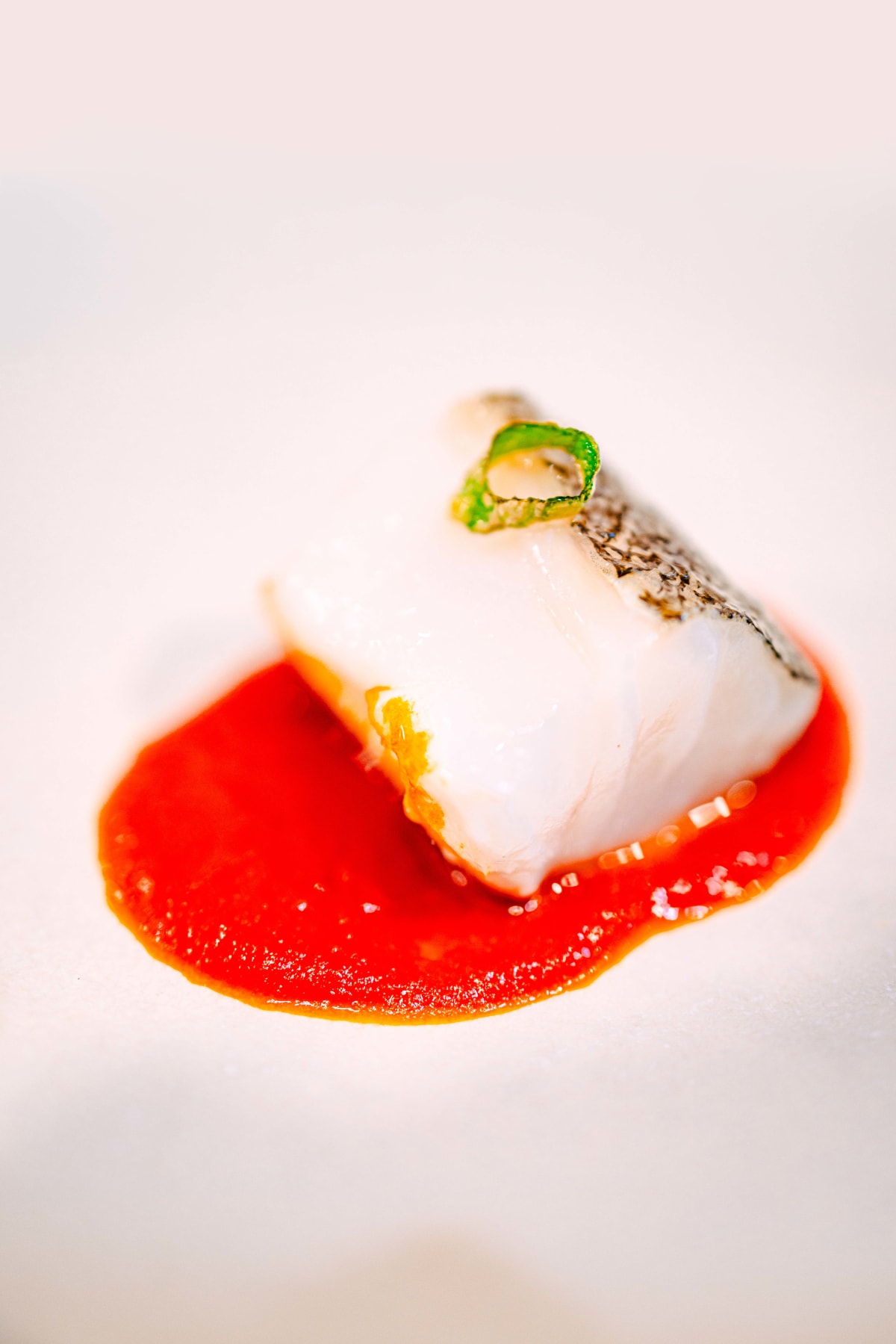

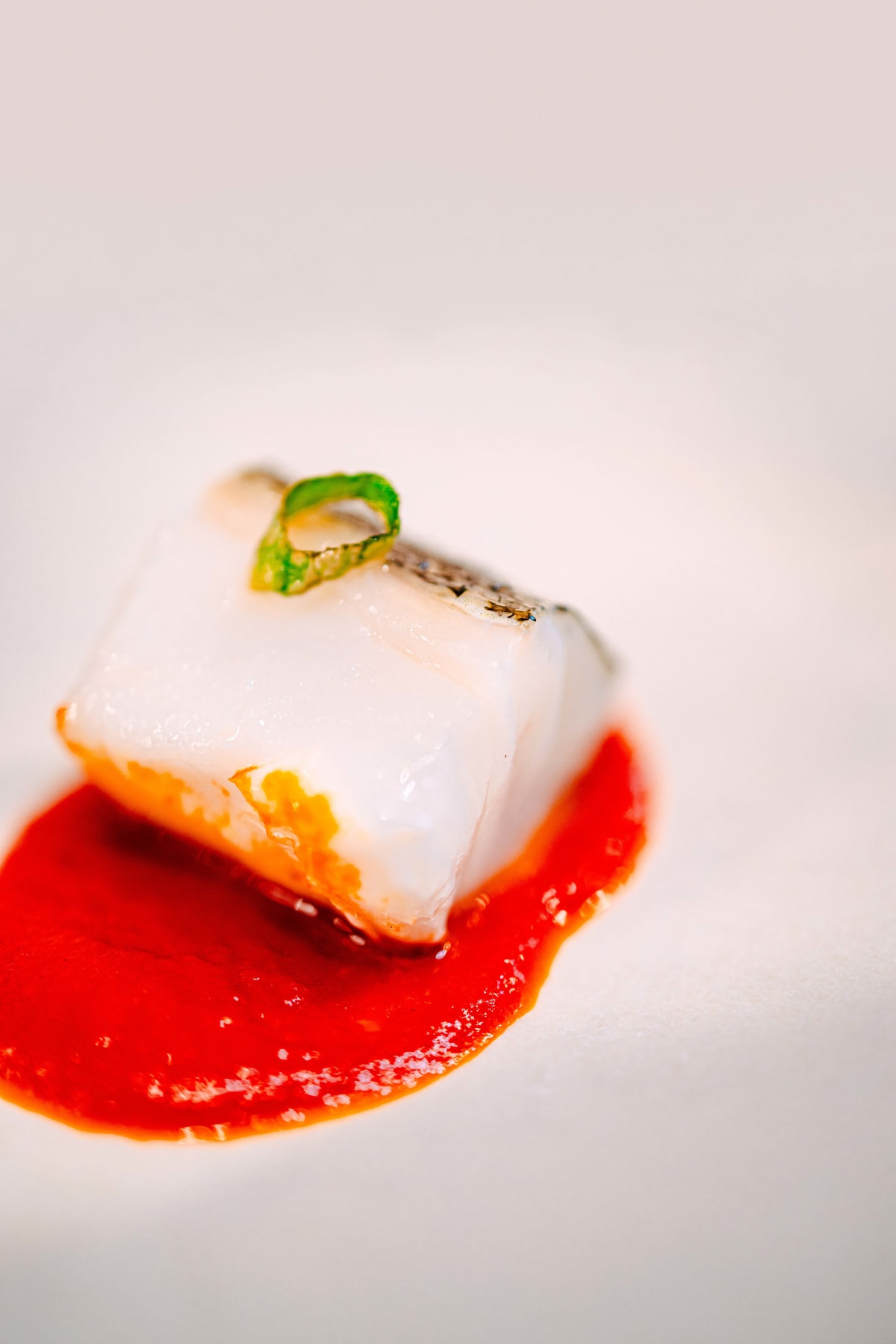
The sauce worked too. It was unfamiliar, unlike the butter and wine sauces I am used to, but the combination was good.


Section 8·The Long Middle
Beyond the caviar, what I most wanted from the extras was a wider range of seafood, so we ordered the Shrimps. We asked for 200 grams, and the bill listed them as Camaron.

In Korea and Japan, one word covers both prawn and shrimp, saeu in Korean and ebi in Japanese, but in the West the name changes with size. These were small shrimp of the kind we eat dried in Korea, grilled and then brought out drenched in olive oil.
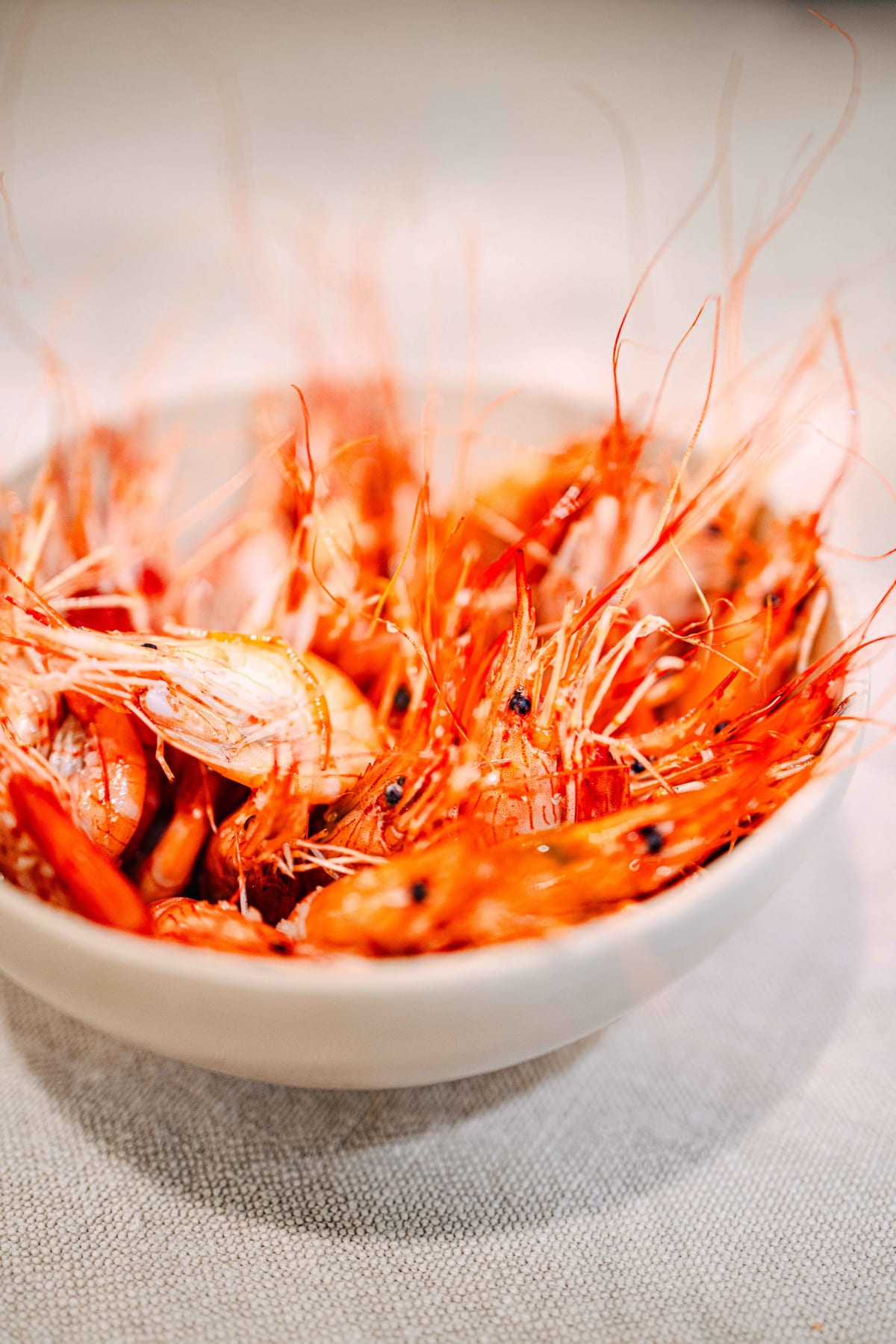


I peeled the little shrimp, sucked out the innards and ate the flesh, which was sweet and pleasant. They were too small to talk about texture, but they made a good snack with wine.

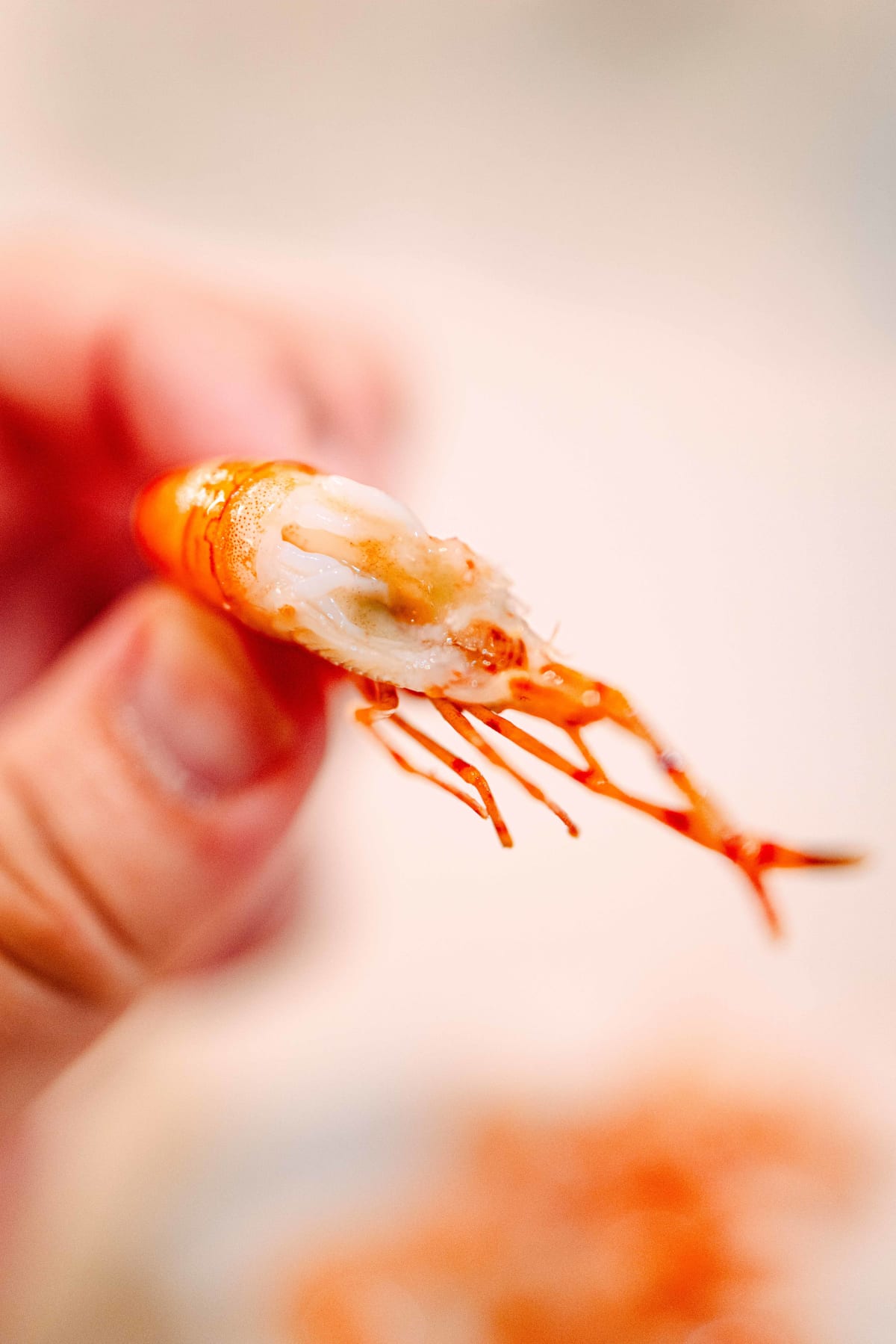
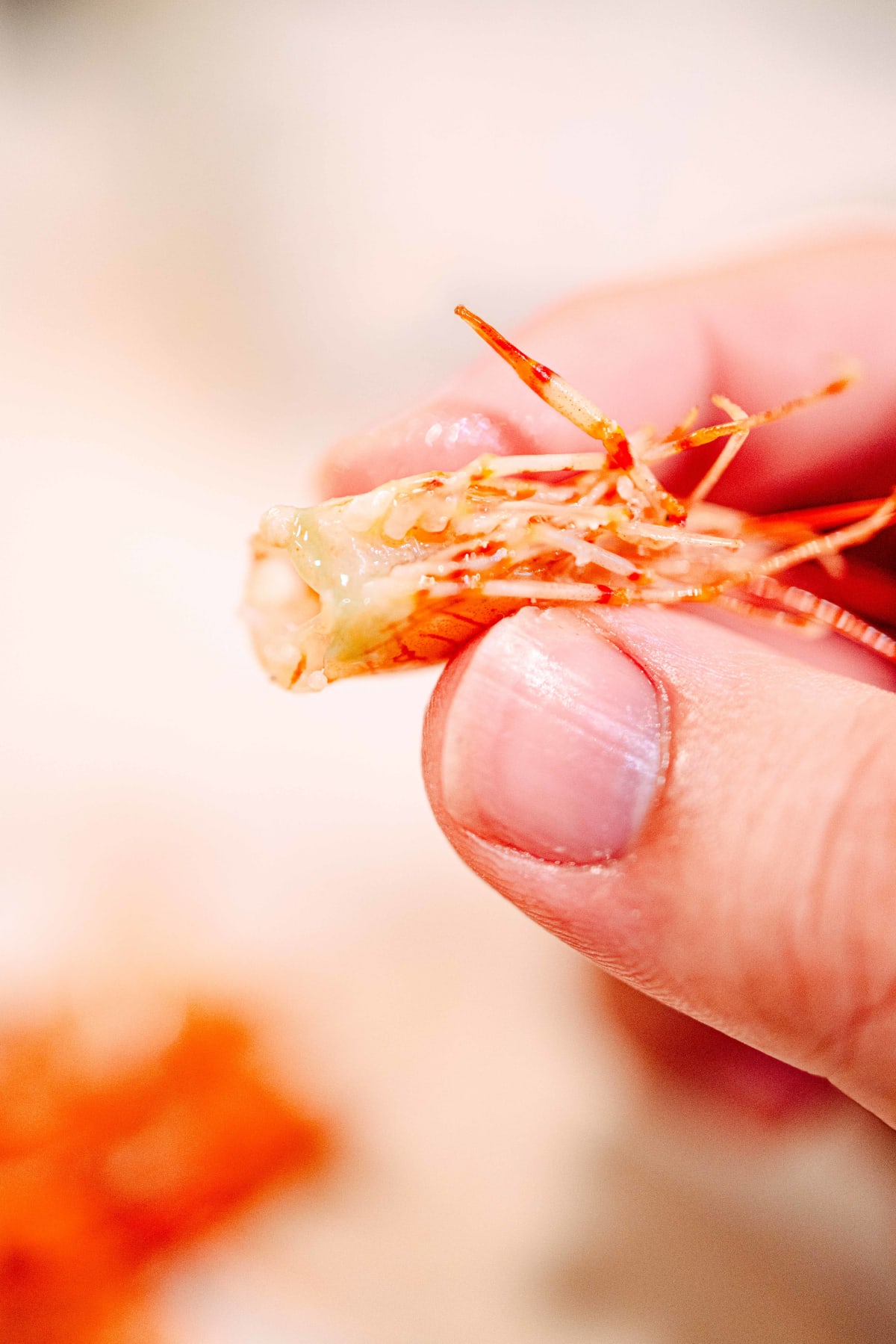

Once they were gone, the salt that had seasoned the shrimp had dissolved into the olive oil underneath, leaving a bowl full of salty, deeply flavoured oil. Best of all was dipping bread into it.


The large fish was Sea Bream, the fish we know in Korea as domi, with a rich, thick pil-pil sauce. On the menu it is Catch of the Day, the slot for whatever fish came in that day.
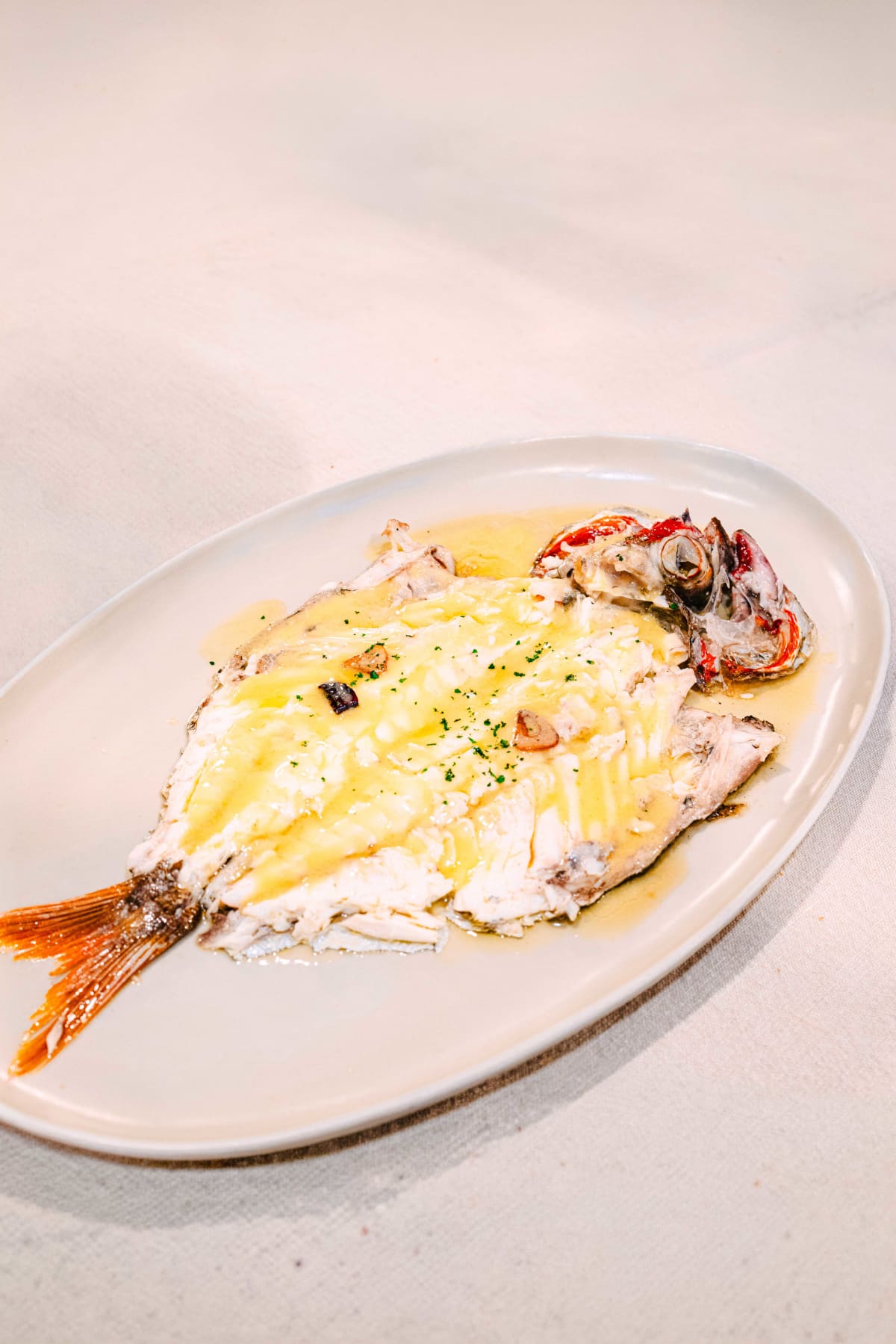
It is filleted at the back and brought out as four portions, one for each of us.

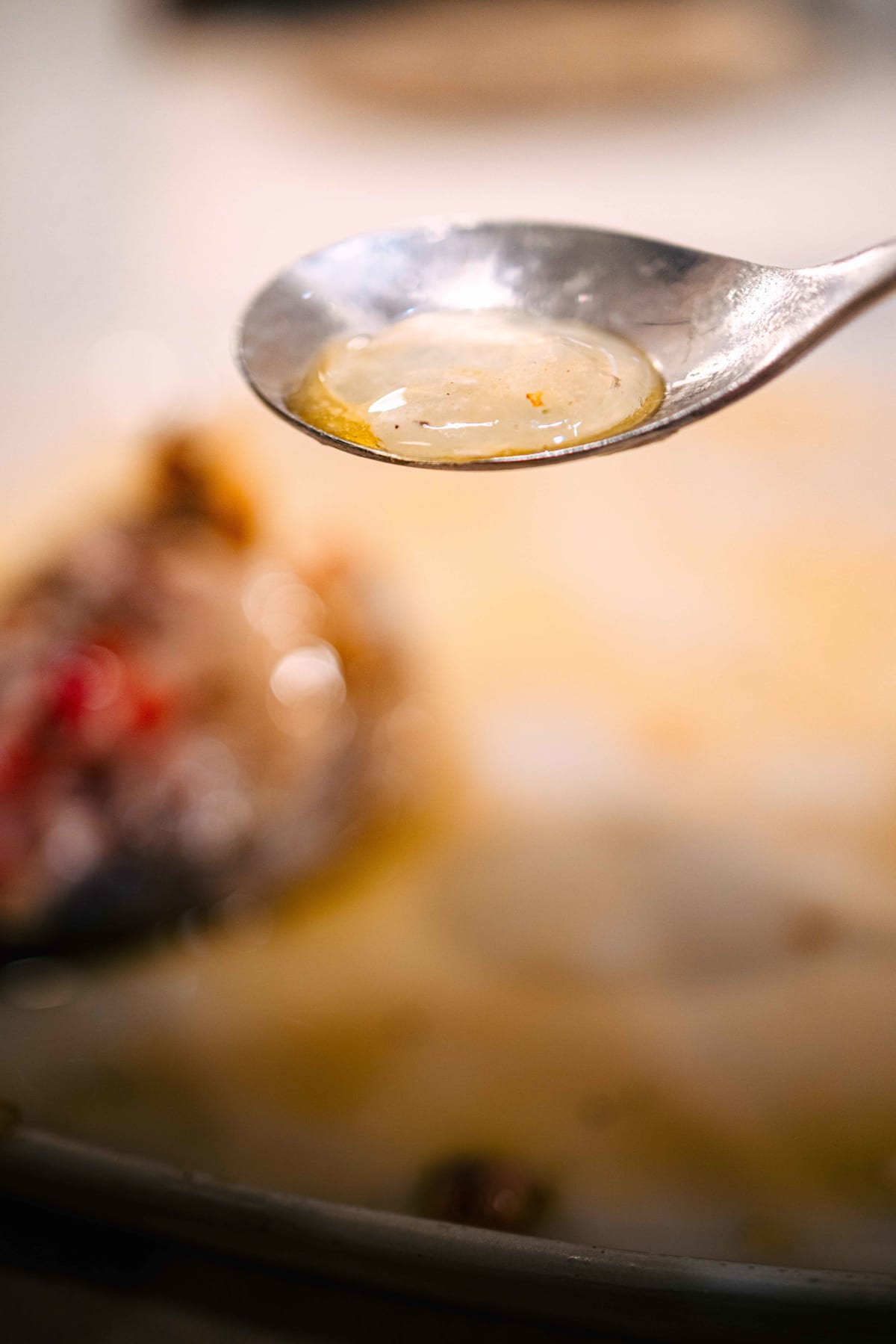
The pil-pil was delicious, full of flavour and with a wonderful savoury depth. It is a sauce made for fish, but I am not sure sea bream is a fish that shines when grilled.
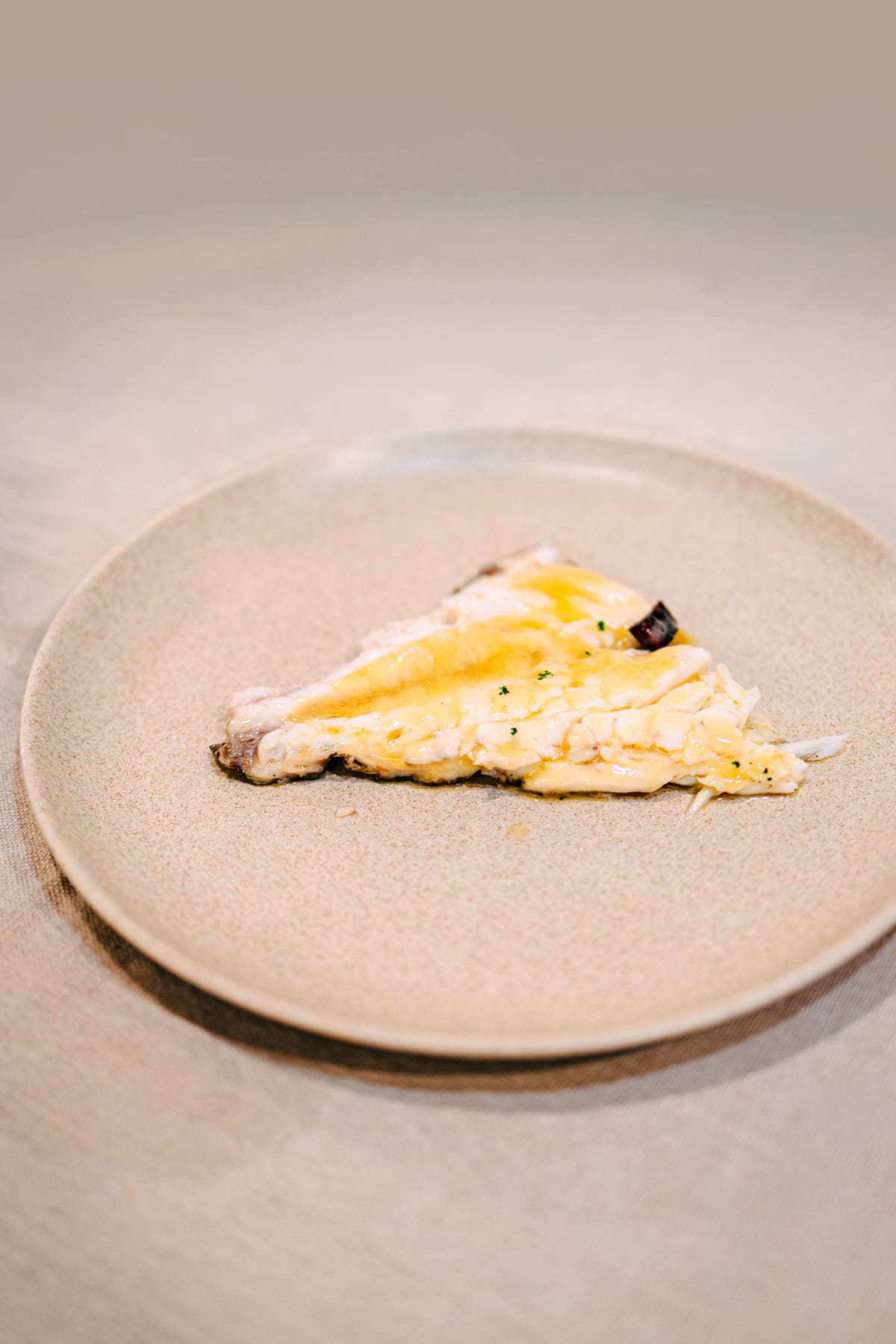
To me, sea bream came across as a fish with limits. The turbot at Elkano in Getaria, which the Michelin Guide calls "the legendary turbot", and the sole I once had at Casa Urola in San Sebastián were better.
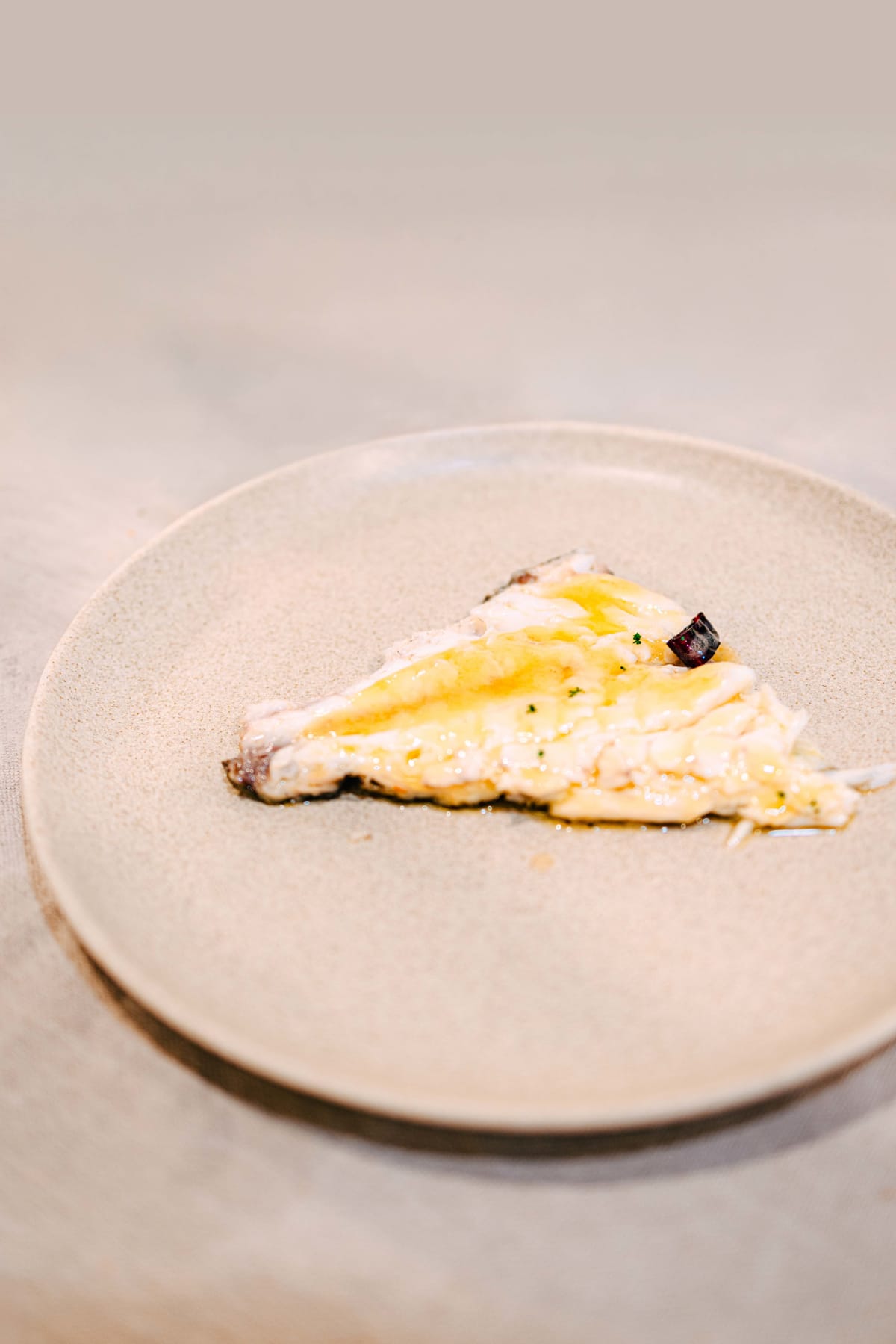

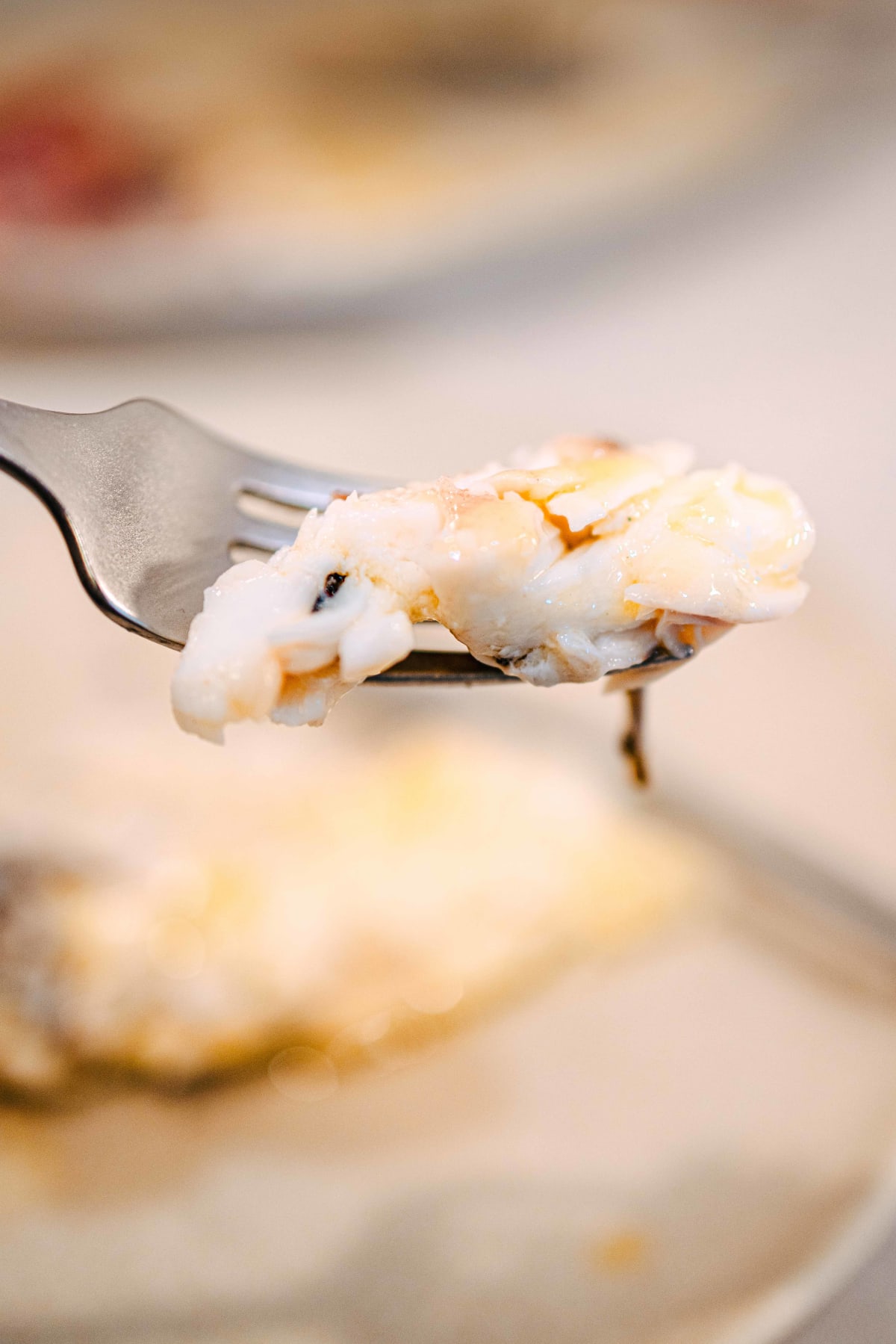
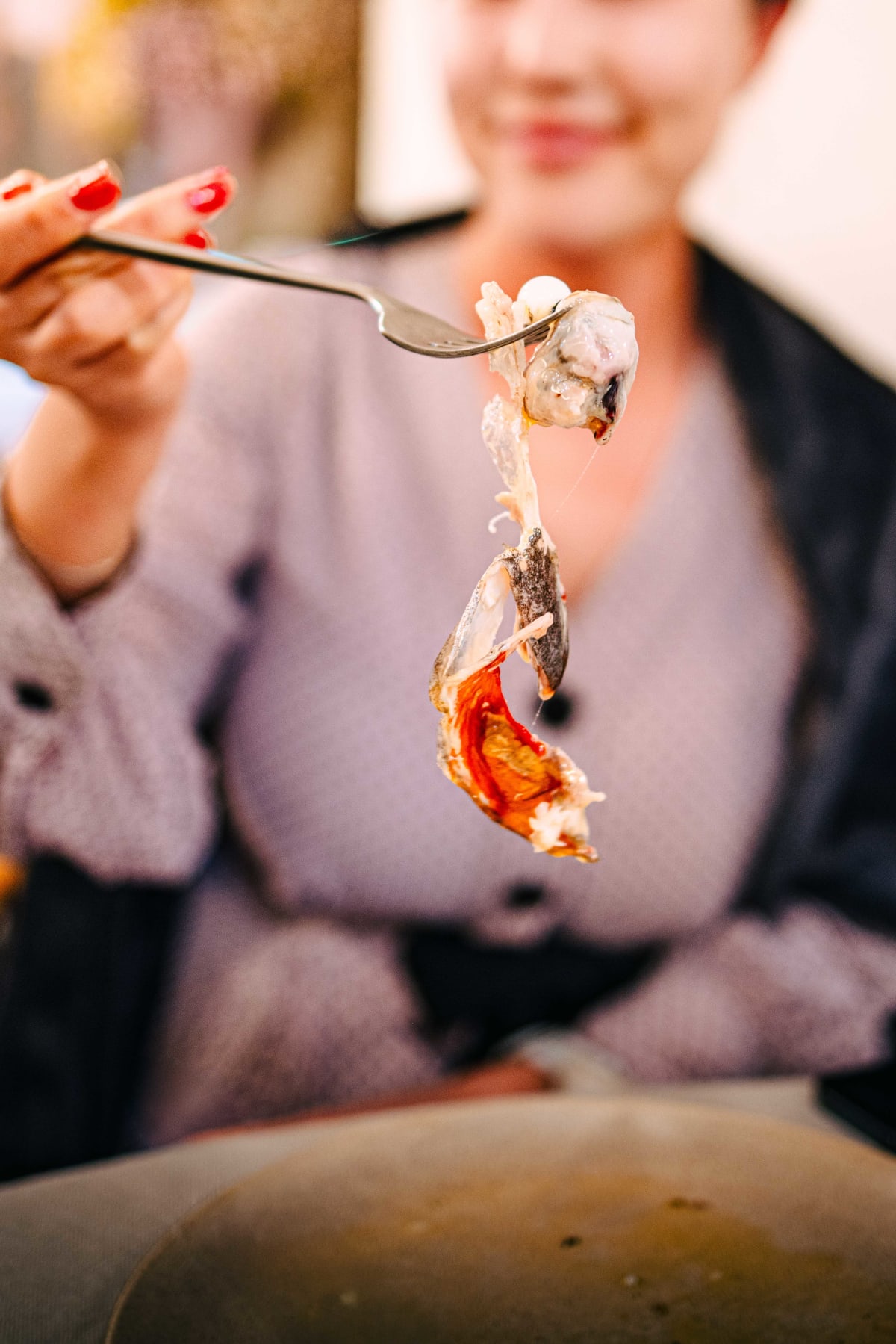
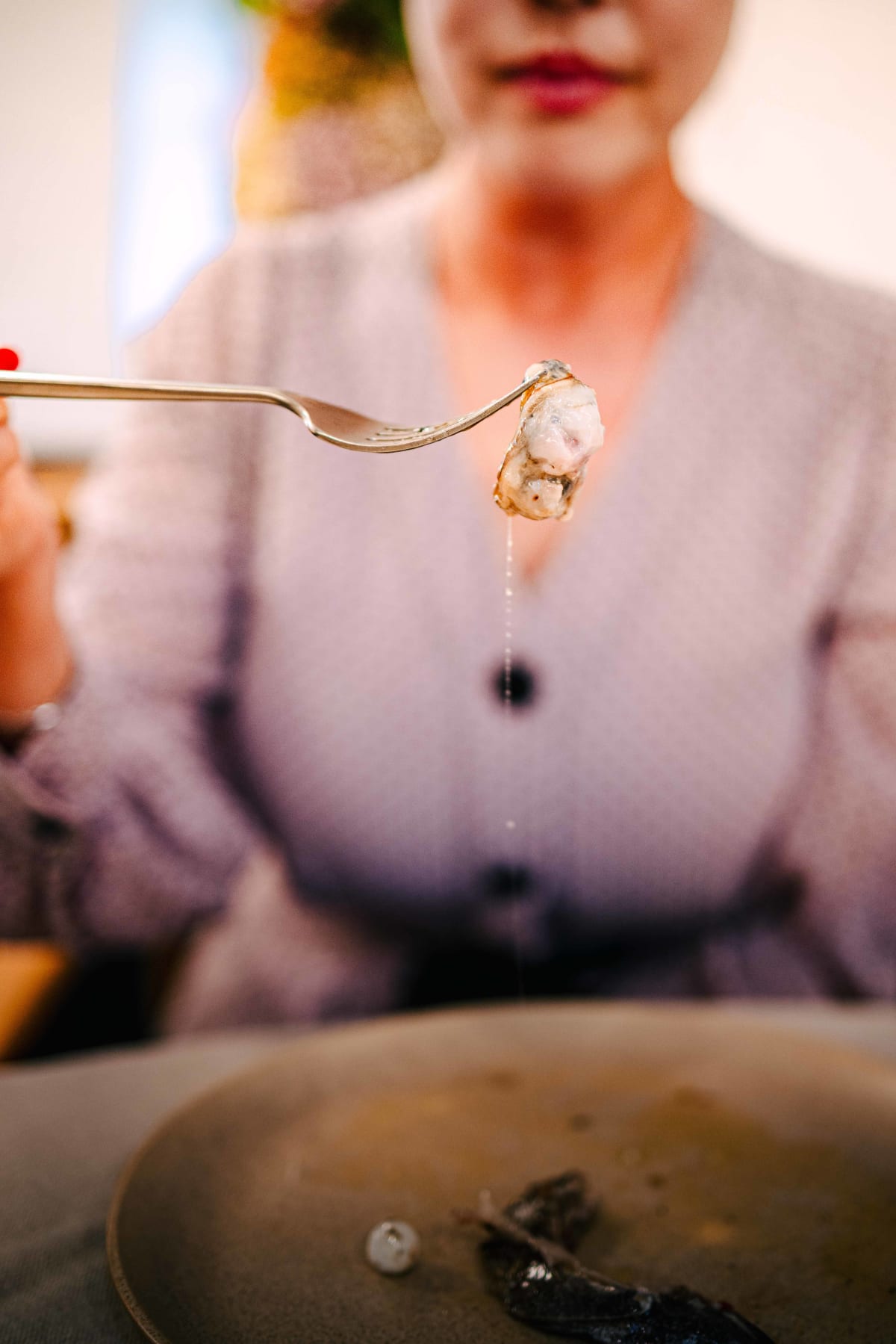
There was plenty of flesh left on the head and around the gills, so I picked that off and ate it too.

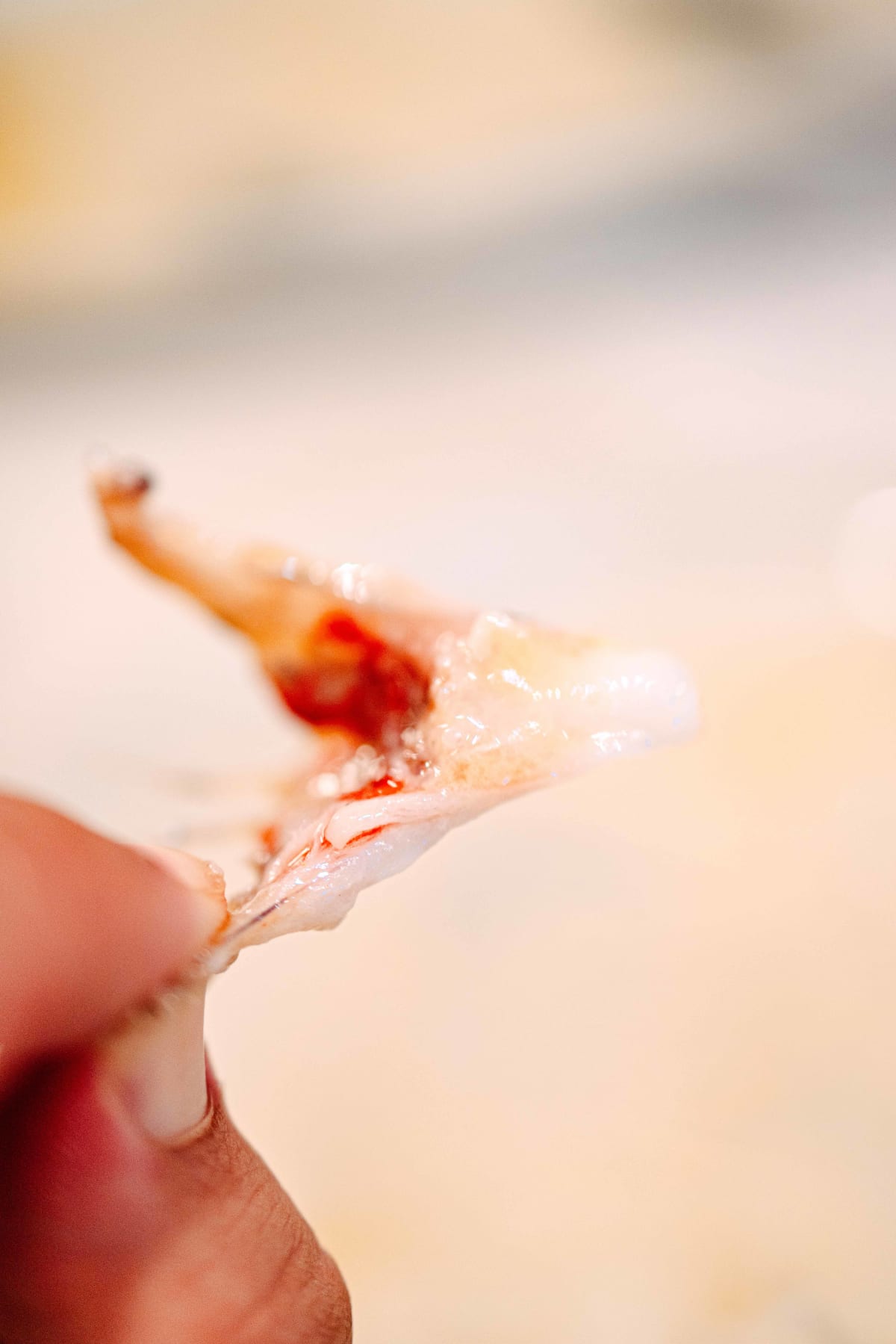
Near the head there was also a curious part, wobbly and slime-like, so I tried that as well. The eyes, though, I could not bring myself to eat.

For red wine, Spanish bottles outweigh French here too. When I asked the head sommelier whether he could recommend a good Spanish wine, he brought a bottle of red without a moment's hesitation: La Breña 1er from Comando G in the Sierra de Gredos, the 2022 vintage, 100 per cent Garnacha.

At first there was little on the nose, plus a slightly off, natural-wine sort of smell, so I was a bit disappointed.
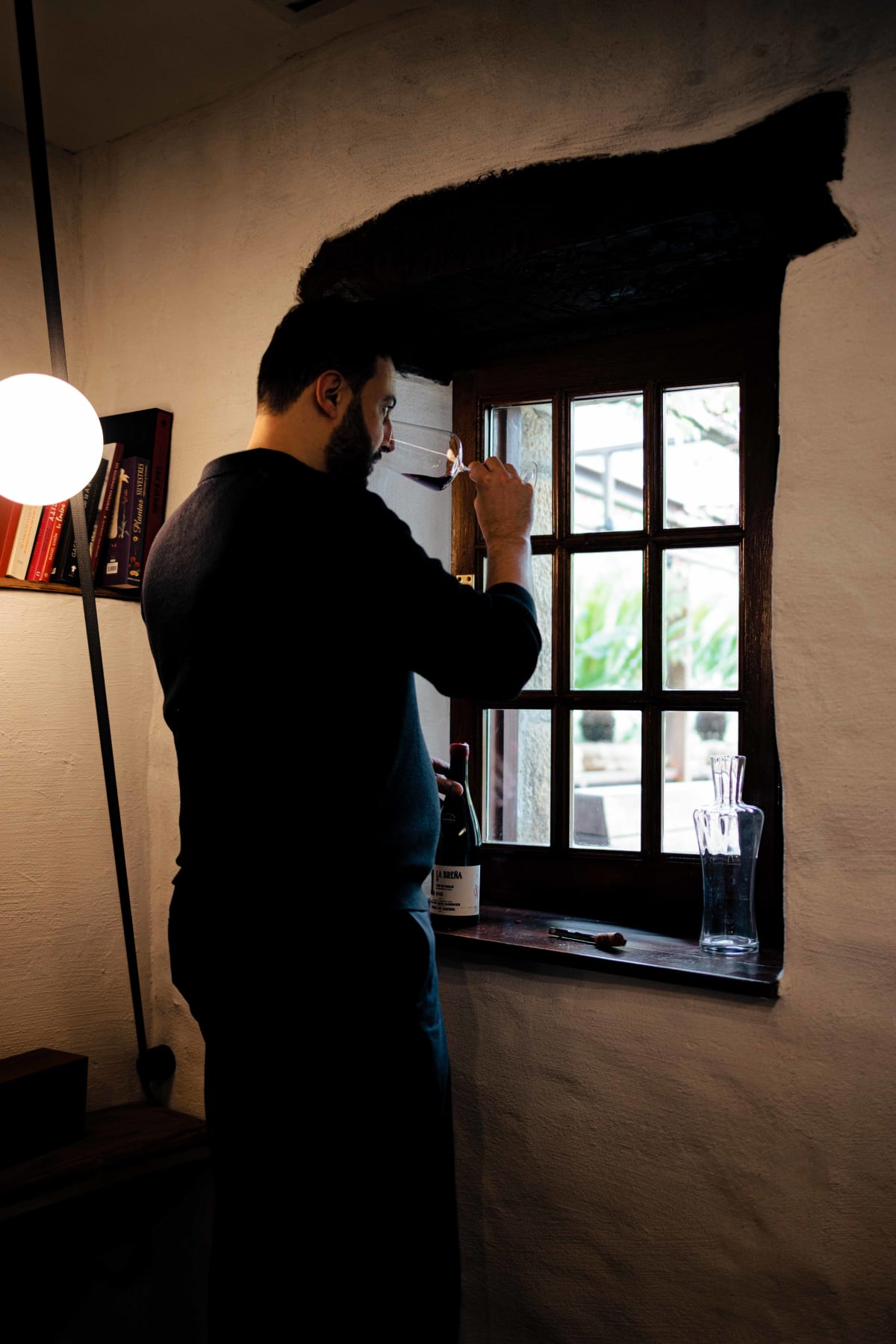
But as we kept it open and waited, the off notes blew away and it became a fine wine, with elegant floral and fruit aromas like a Pinot Noir and a delicate acidity.

Comando G is a Gredos producer founded in 2008 by Fernando García and Daniel Landi, and the label even carries the words Elaborado por Fernando y Daniel, made by Fernando and Daniel. La Breña is a single-site wine, a vino de paraje, made only from grapes grown on a high, windswept granite plot just outside the village of Villanueva de Ávila in the Alto Alberche valley. It is fermented in whole bunches and raised in old wood, and the 2022 vintage was bottled in May 2024, just 3,568 bottles.

The wine at Etxebarri is in the hands of Mohamed Benabdallah, head sommelier and manager since he joined at the end of 2017. Born in Algeria, he moved to Switzerland at eleven and built his career at Quique Dacosta and Mugaritz.

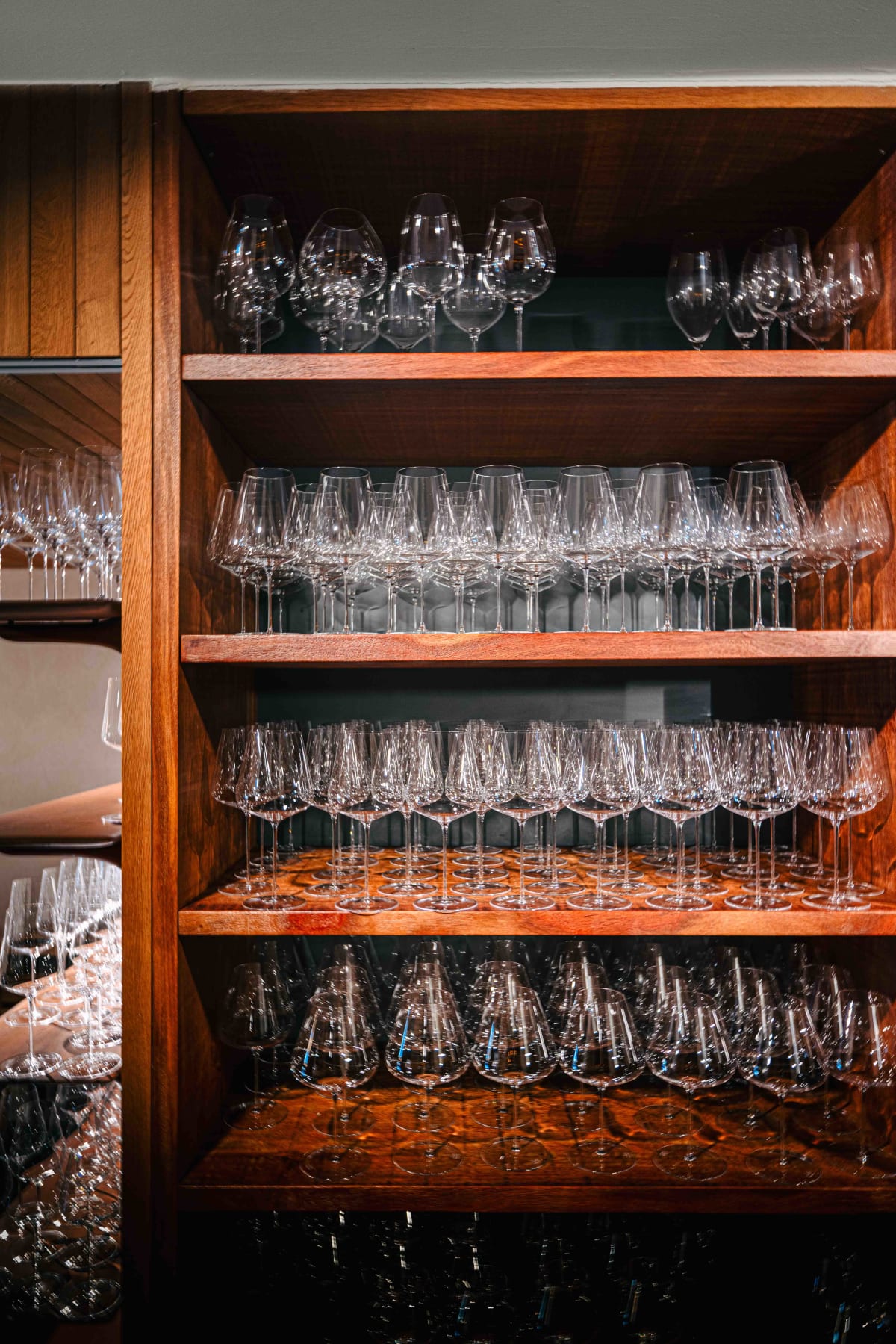
The list runs to more than 400 wines, and he received the World's Best Sommelier Award from World's 50 Best in 2025, followed in 2026 by the prize for best sommelier at Spain's National Gastronomy Awards. Bottles of Domaine de la Romanée-Conti stand in a row along the top of the wine cabinets in the dining room.


Mohamed was also the sommelier looking after us that day. His service is a long way from the suited, dignified, utterly formal wine service you find at a Michelin three-star. He wears an ordinary casual shirt, and his style is to deal quickly and precisely with the wine a guest wants to drink, or with the recommendation they have asked for. You might feel his hospitality falls a little short of what a World's Best title suggests, but his expertise is beyond question. If you are not sure which wine will suit, do not hesitate to ask him.
By the way, it was Mohamed who filleted our fish, and filleted it well.
As we reached the later part of the course, the hard march began. The food simply did not come. Lunch took about five and a half hours. Length is fine if the tempo holds steady, but the dishes arrived at an uneven pace across the early, middle and late stretches, and that was hard going. At times the dishes were quick to arrive, while in this stretch I think nothing appeared for almost thirty minutes.
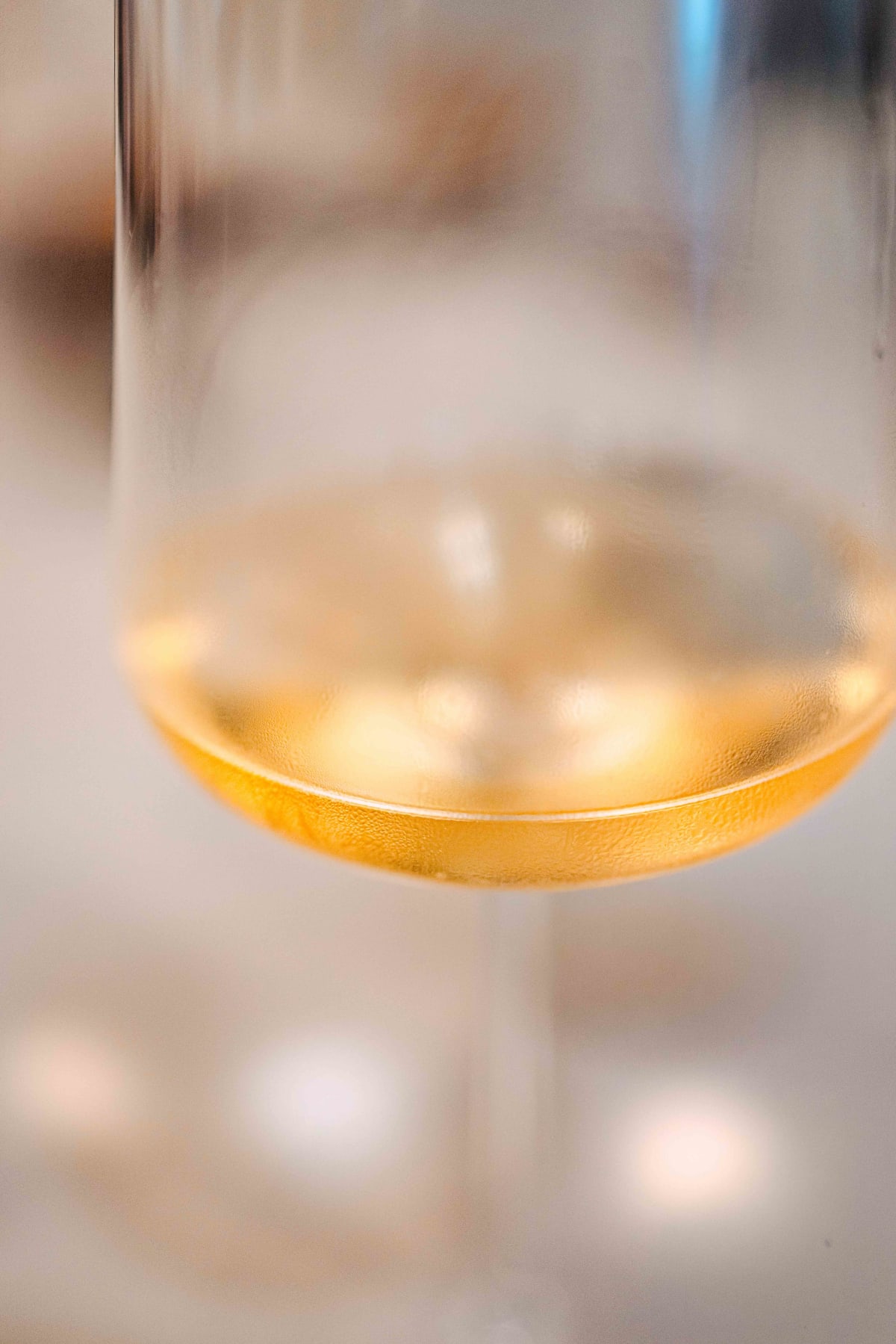
With the wine in me I grew sleepy, and there was some nodding off among my companions. So, partly to wet my whistle, I ordered a glass of champagne for myself before the mushroom course: Jacques Lassaigne's La Colline Inspirée.
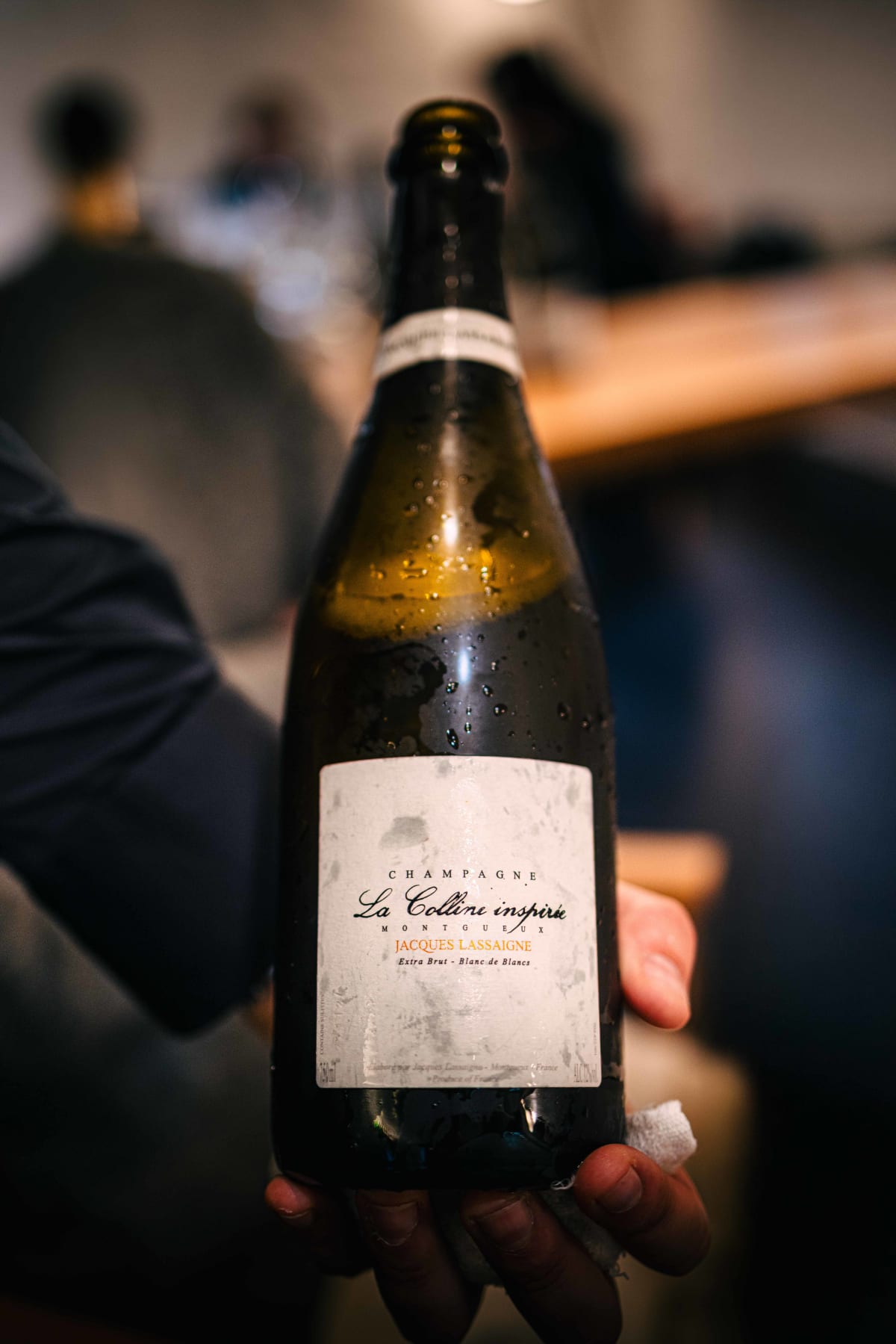
Jacques Lassaigne is a producer on Montgueux, a chalk hill near Troyes. La Colline Inspirée is a blanc de blancs made from Chardonnay vines over forty years old, fermented in oak barrels with native yeasts and built on a perpetual reserve that layers one vintage over another.

After the long wait, the mushroom course arrived. It looked like grilled mushrooms and aubergine served with a broth and olive oil.

The mushrooms were tender, and above all the aubergine had taken on the smoke so well that, eaten together, they gave off a wonderful aroma, as I remember it. What made the mushroom itself distinctive, though, I could not say.


Section 9·Partridge And Chop
Next was partridge. I had never eaten it in Korea, and even abroad it is an ingredient I have come across only rarely.

In its early years after opening, the story goes, Etxebarri centred on typical Basque grilling, chuleta, whole grilled sea bream and hake heads, and only began to make its name as it gradually brought premium ingredients onto the fire. In 2017 the Spanish food business outlet Gastroeconomy summed up his innovations as having taken place mainly between 2000 and 2007. In those years the range of ingredients on his grill widened to take in goose barnacles and hake cocochas, baby squid and tuna belly, sea cucumber, Palamós red prawns, peas and mushrooms, Galician beef, rice, caviar and baby eels, the angulas.


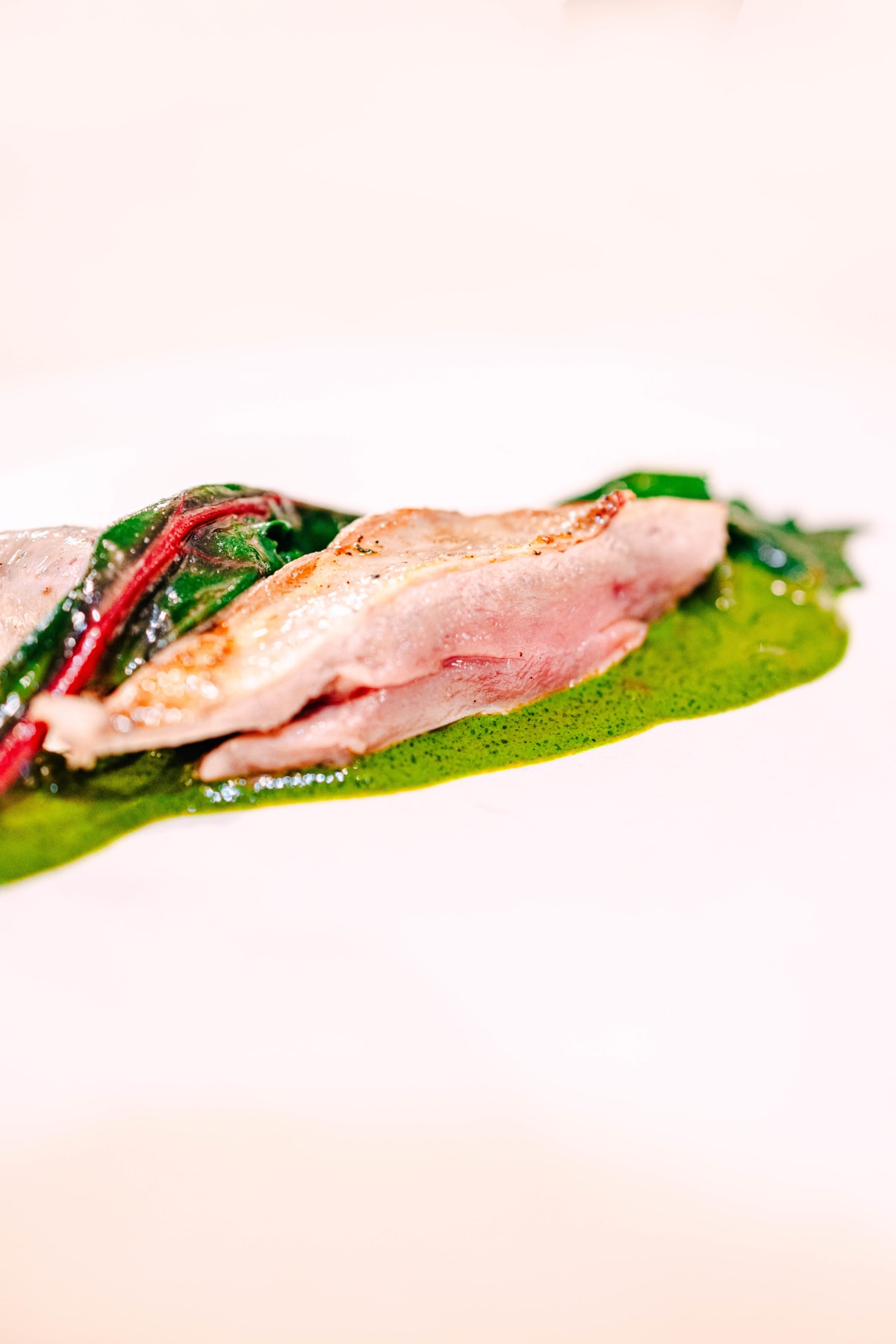
Etxebarri's partridge itself was close to rare, and when I tore into the leg in particular, it was only a little more cooked than raw.

Thankfully the meat had no gaminess and was good. The sauce made from green leaves carried some smoke, and eaten all together the combination worked.
The leaves had a bitter edge, so taking too much of them at once made the bite harsh; I had to cut them down to size and eat them with the meat.
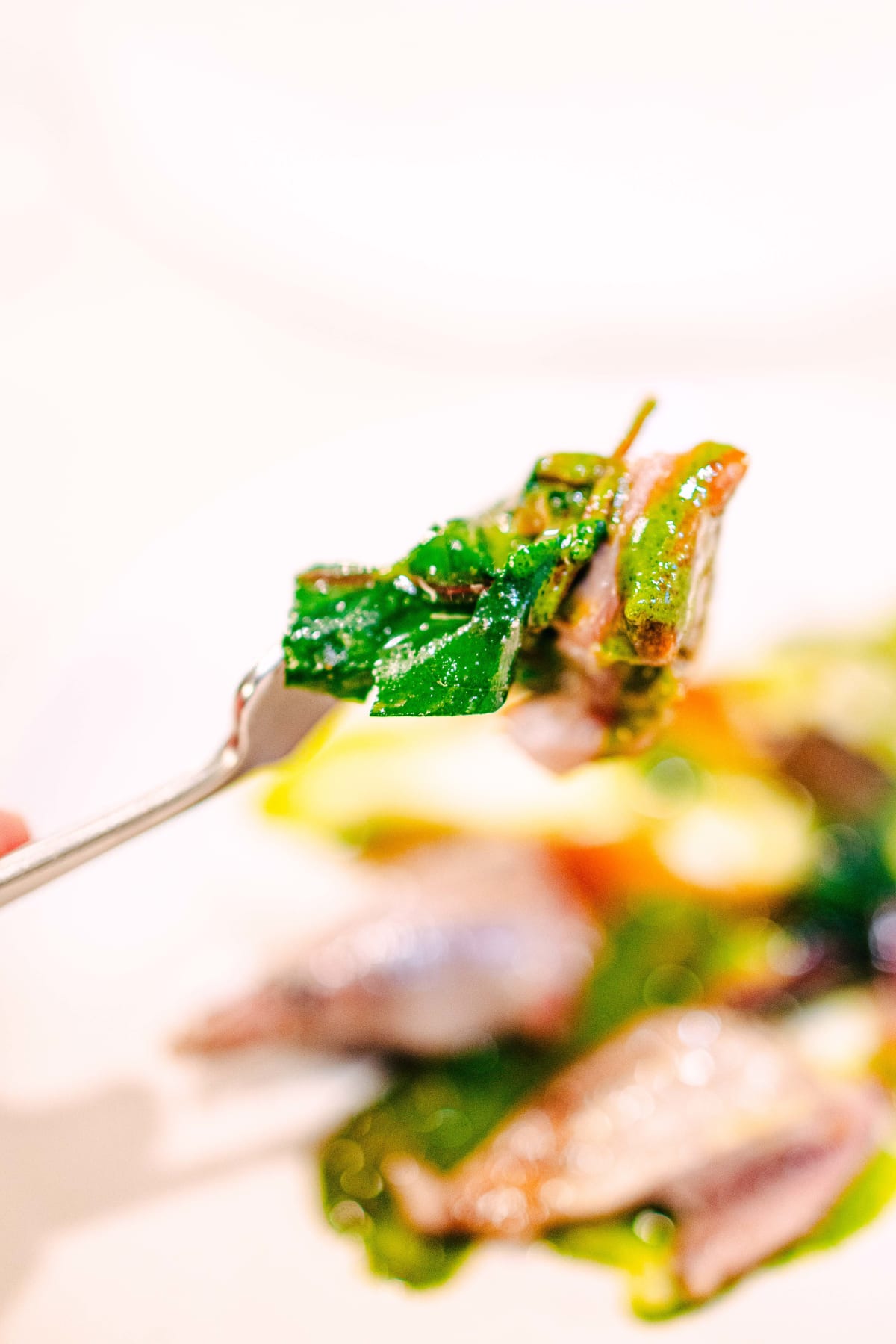


Etxebarri is superb at giving food the aroma of fire and at cooking it to the right point, but in combining an ingredient with others, in building a plate into one finished composition, I did not find it top tier. Here I could see why, for all its World's 50 Best reputation, it has stopped at one Michelin star.
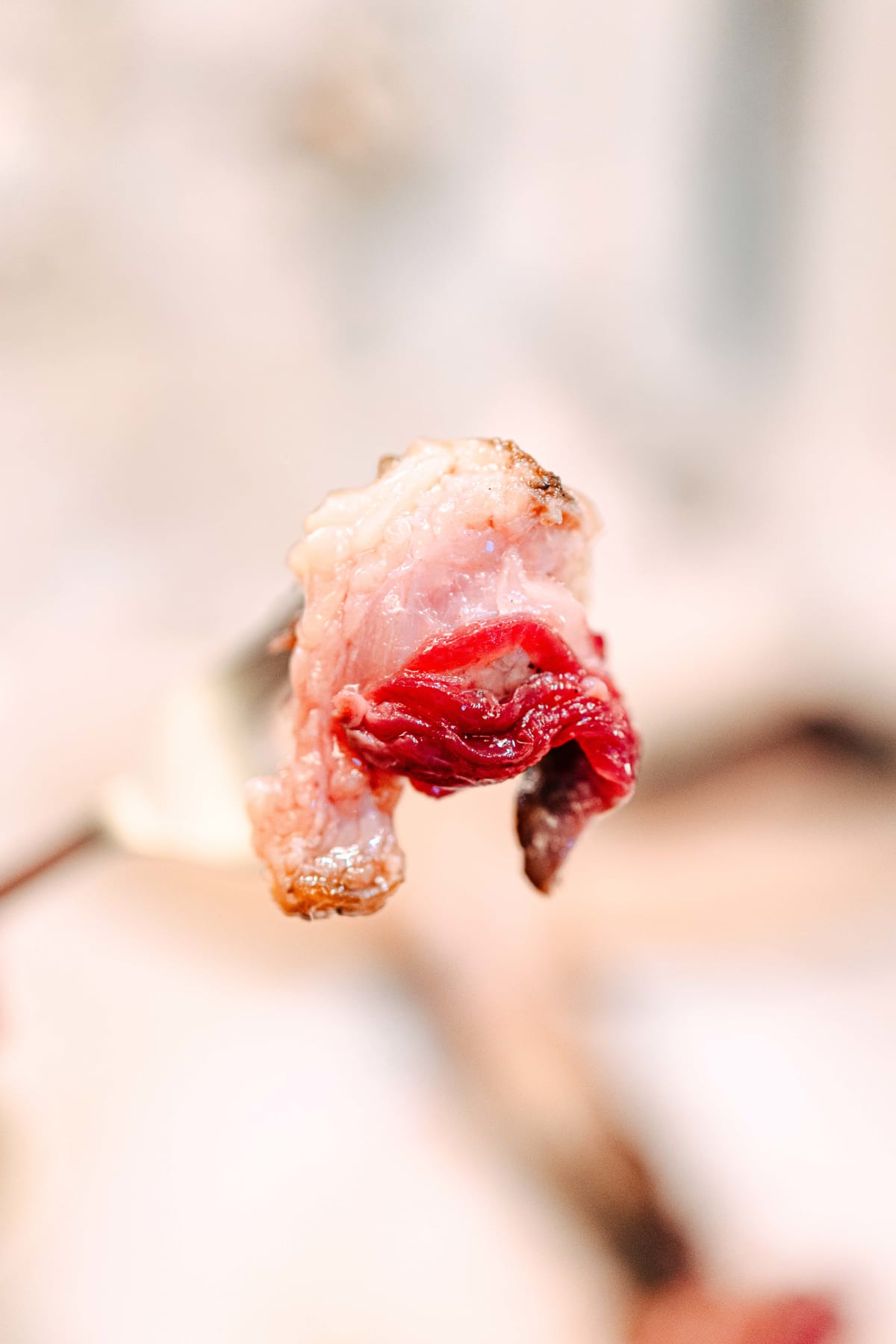
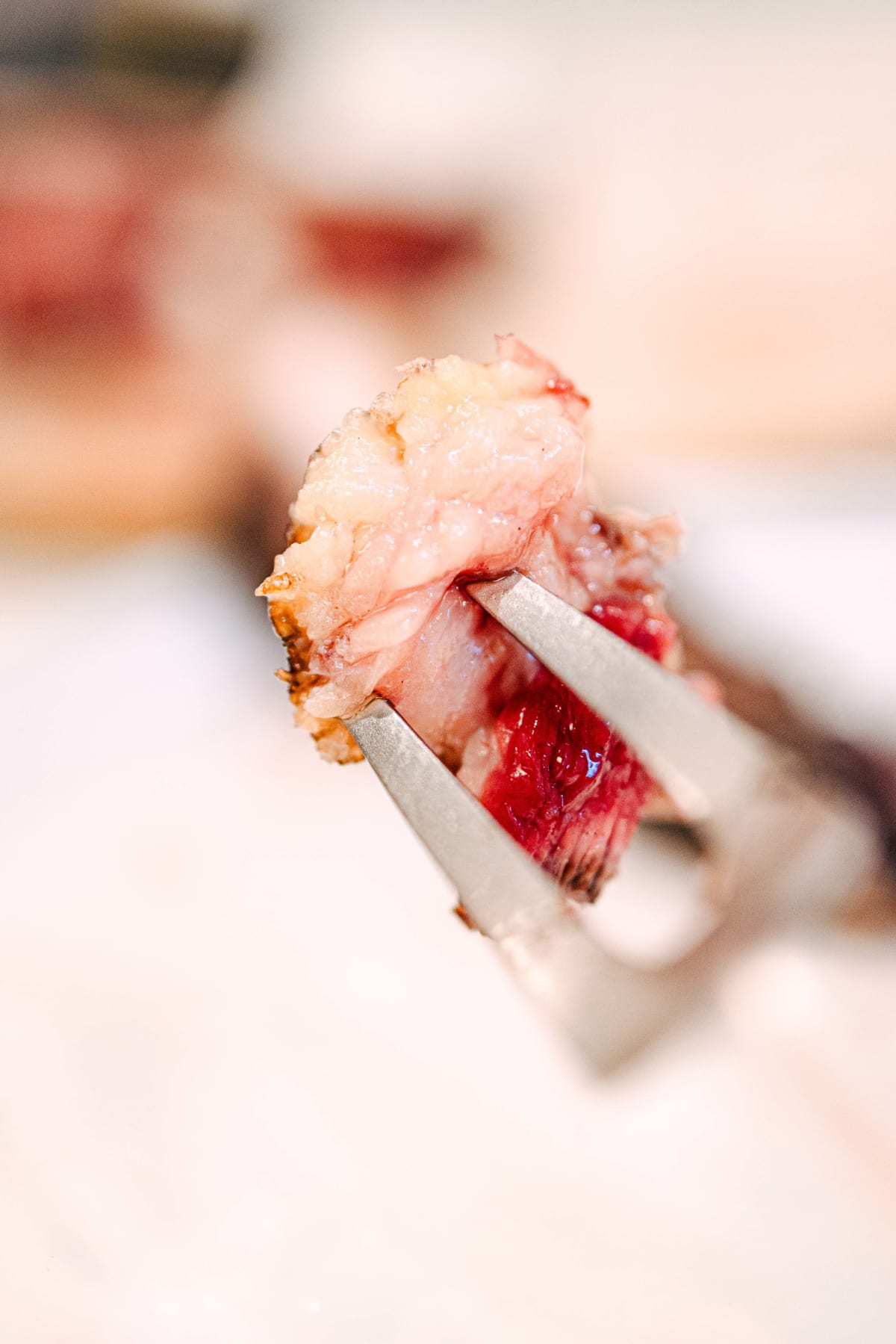
The chuleta closed the savoury courses. It was very thick, so it put me in mind of Elkano more than of Txispa. As there, the outside was properly seared and the inside close to raw.
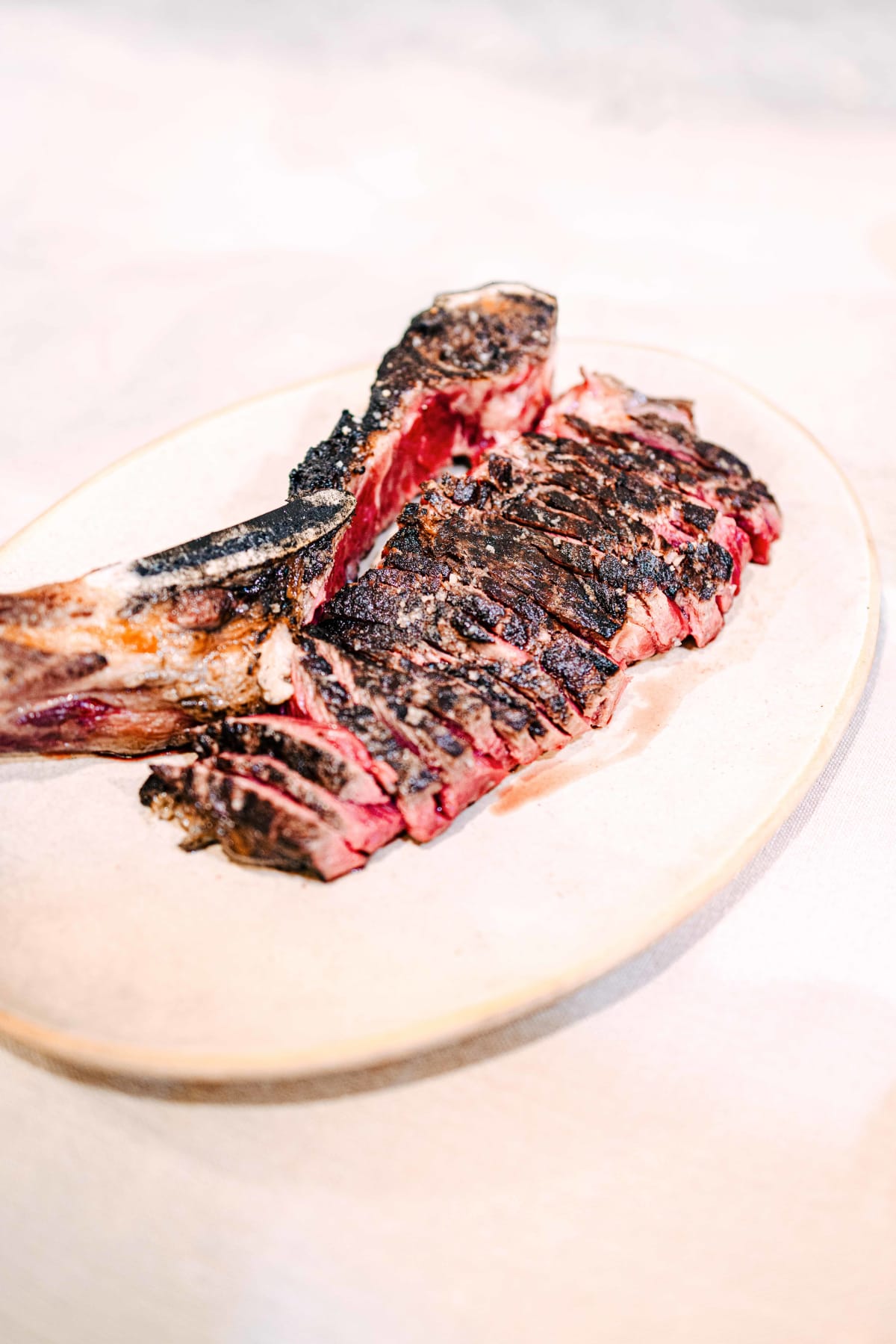
Where it differed from Elkano was that the outer fat and the membrane-like sinew had all been trimmed away, so nothing caught in the teeth or felt tough. In exchange, it lost some of the flavour of the fat.

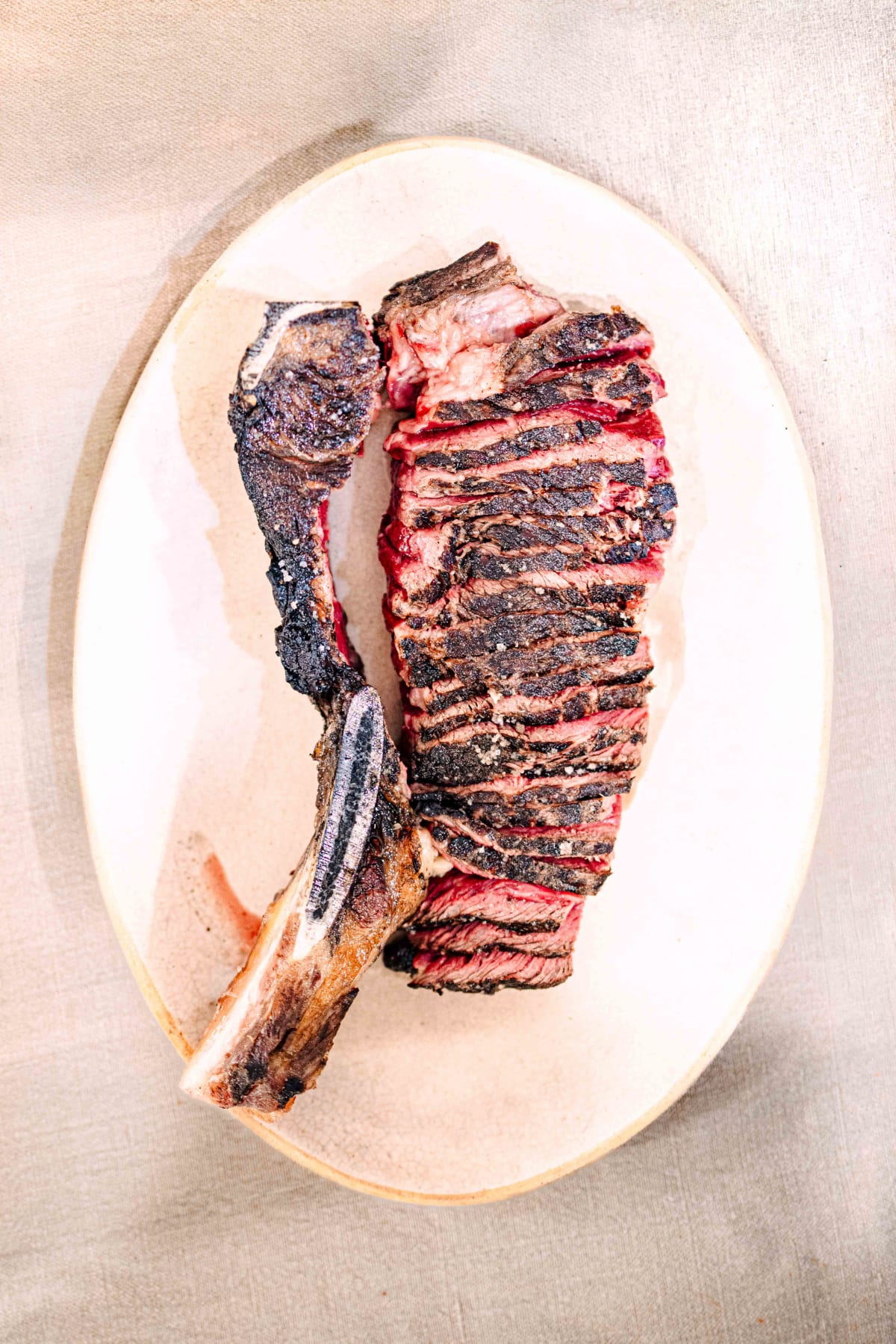

We were told the chuleta here comes from Galician cattle of about nine years, a long life for an animal raised for eating, and is hung for around a month. The Basque tourism board, too, lists the old-cow chop, chuleta de vaca vieja, as a signature of the house. There was little of the blue-cheese aroma of Txispa's 180-day aged beef.
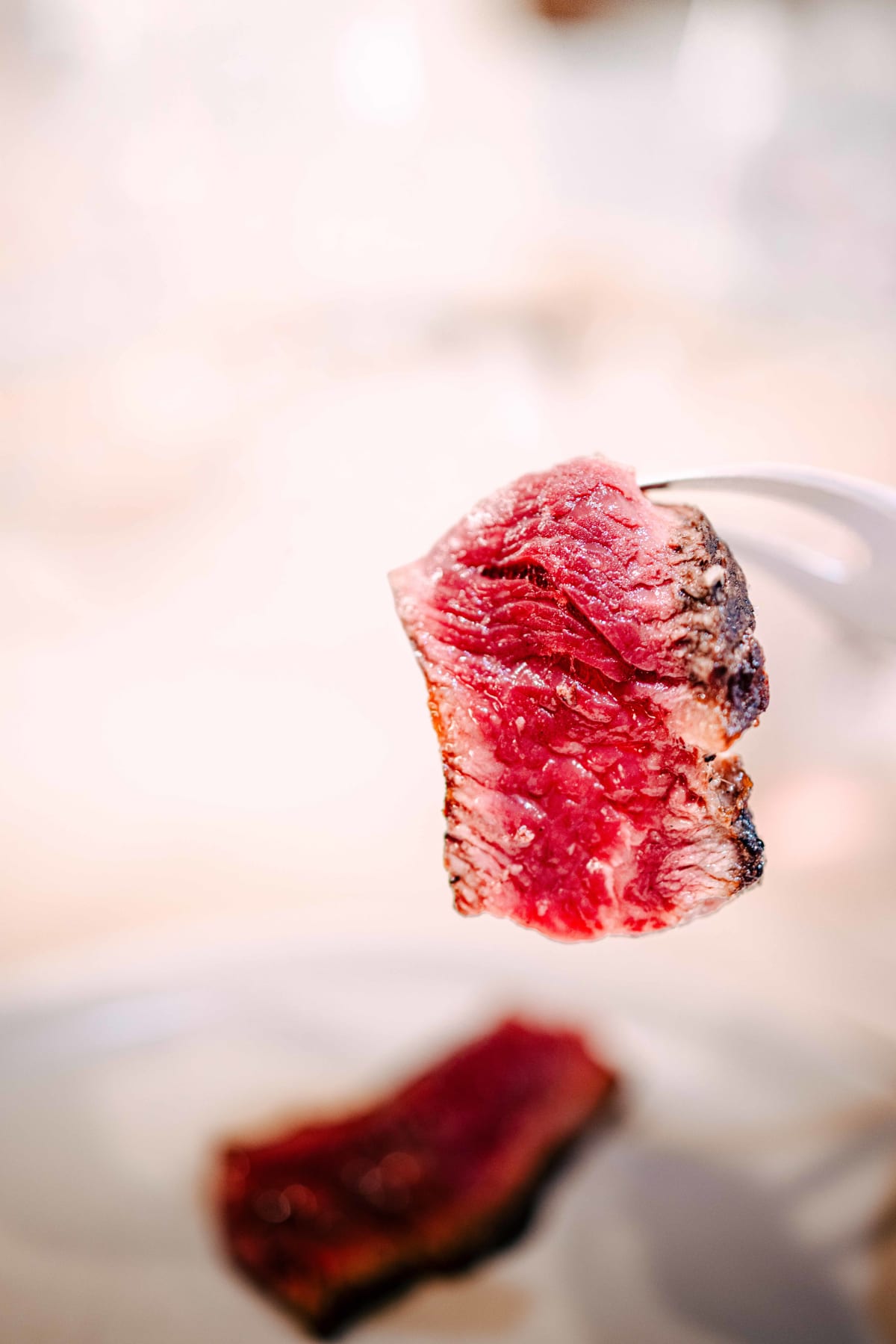


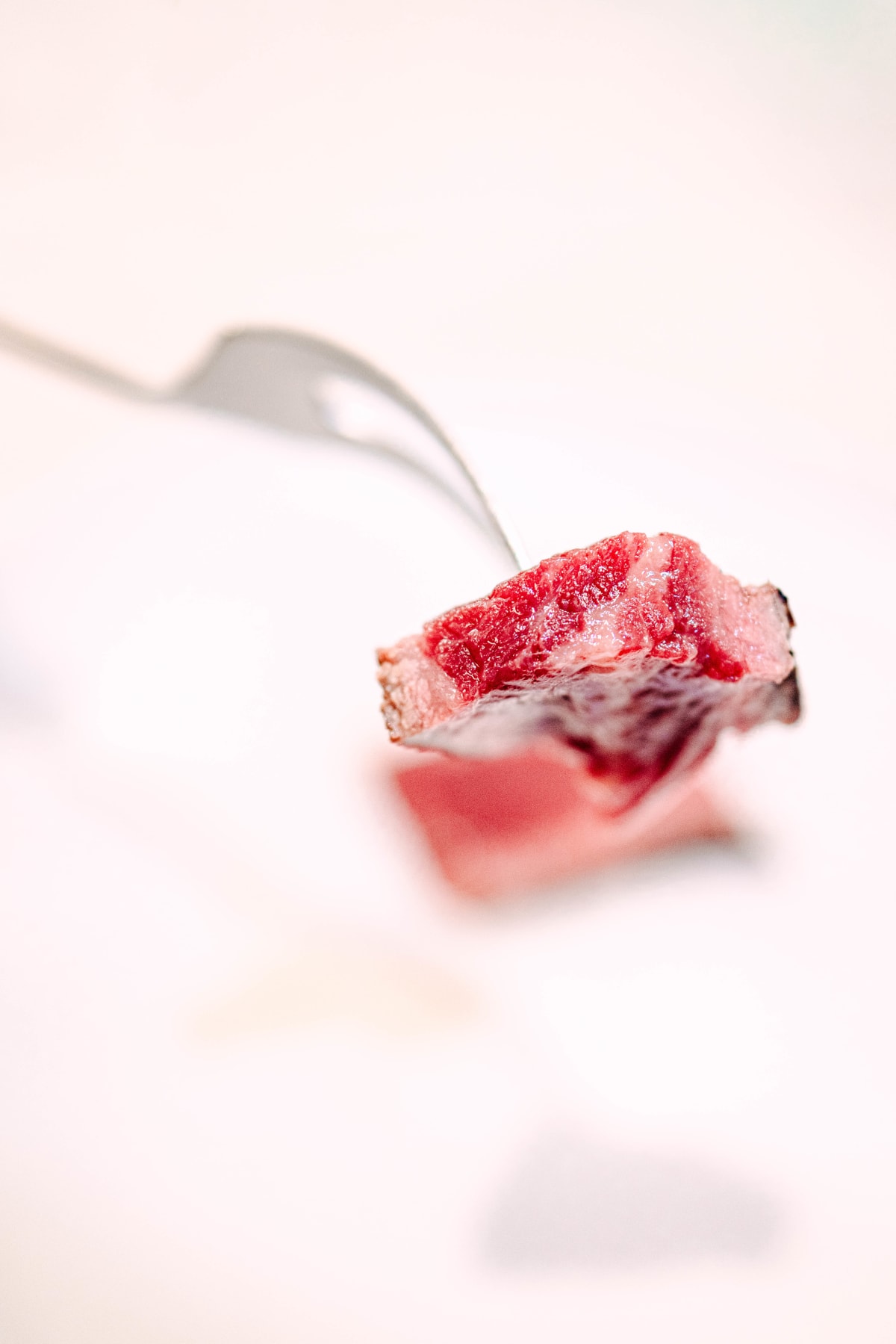

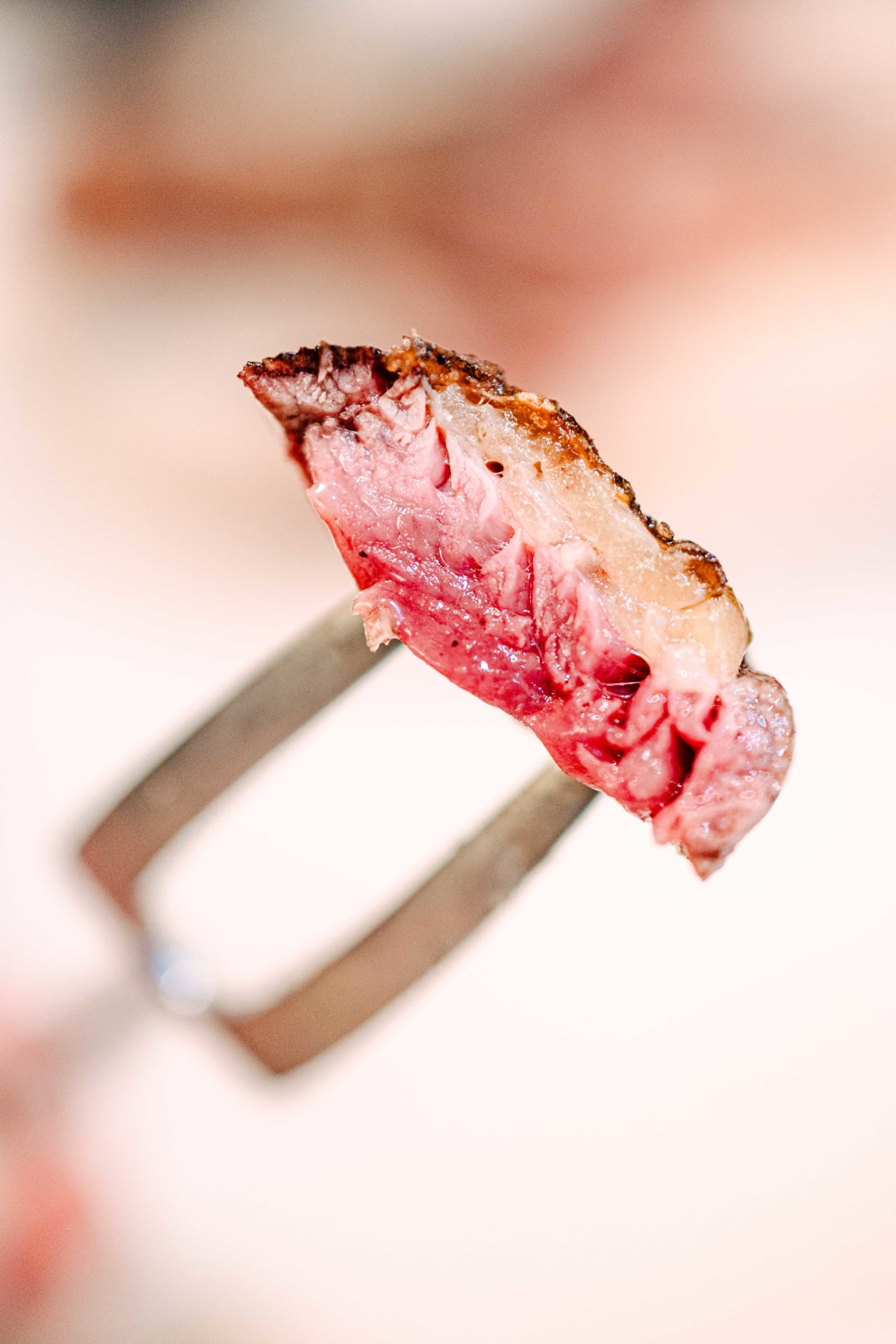
It carried a little more fat than Elkano's, so it was more tender than tough. To my mind it fell short of Elkano in savoury depth and texture and short of Txispa in flavour, which makes it, across my whole trip, a steak right in the middle. Looking back, Etxebarri's chuleta is a hard one to place.


Just as you cannot speak of Poseidon without his trident, you cannot leave the grill out of this myth of fire. The grill here is extremely precise. It is the kind of raising and lowering grill that comes to mind with any asador, adjusting the distance between ingredient and fire in fine steps so that each one is grilled exactly. The Michelin Guide describes it as "an unusual system of pulleys that enables him to control the cooking process".
He also made bespoke tools for particular ingredients, so that even delicate ones like egg yolks and caviar could be handled over the fire. A 2016 Zester Daily article describes tools such as a latticed basket for egg yolks and a mesh pan for baby eels that he designed with a stainless-steel manufacturer.
The fire is not shop-bought charcoal but embers. Logs are first burned in an oven, and once the flames have died and the wood has become glowing red embers, those are moved to the grill. In the 2021 World's 50 Best interview, Bittor said charcoal gives off aggressive aromas that mask much of an ingredient's own flavour, and explained that the embers have to be made in a separate oven so they can be controlled at all times.
The wood, too, reportedly changes with the ingredient: woods that give a clean, soft smoke for fish and seafood, and woods with a more intense smoke for meat. According to a 2011 Washington Post article, most things went over old, slow-burning oak from the mountains, some red meats over vine cuttings for their fierce heat, and salmon over citrus wood.
This is not simply smoking. Like dressing a model in clothes that suit them, it is dressing each ingredient in the aroma that suits it.
This is not simply smoking. Like dressing a model in clothes that suit them, it is dressing each ingredient in the aroma that suits it.
Section 10·The Dessert House
With the long march nearly over, I had relaxed and wanted nothing more than to get back to where I was staying, and then the desserts took me by surprise. This is a dessert house. The first was ice cream with a beetroot sauce, and its impact was tremendous.
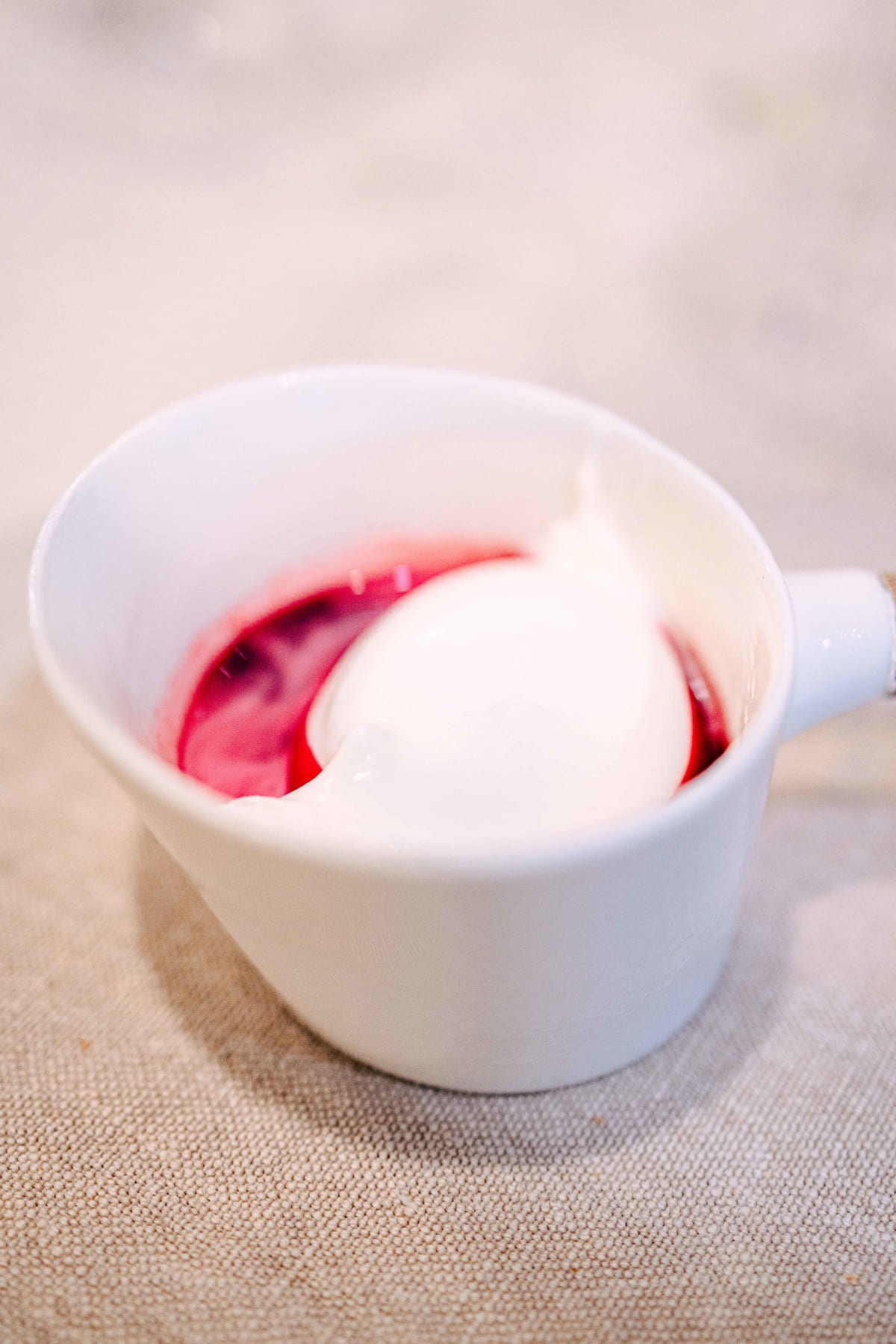
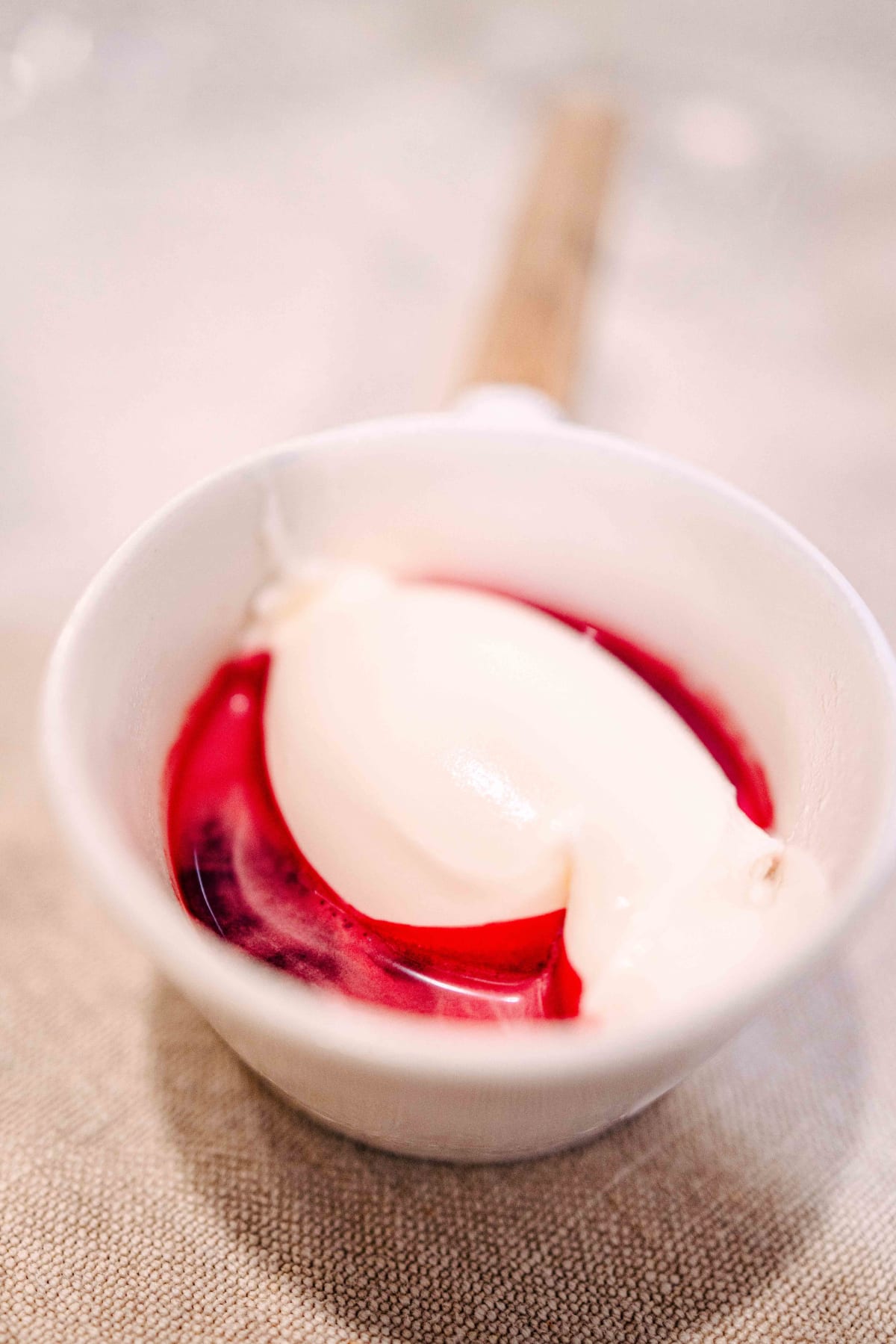
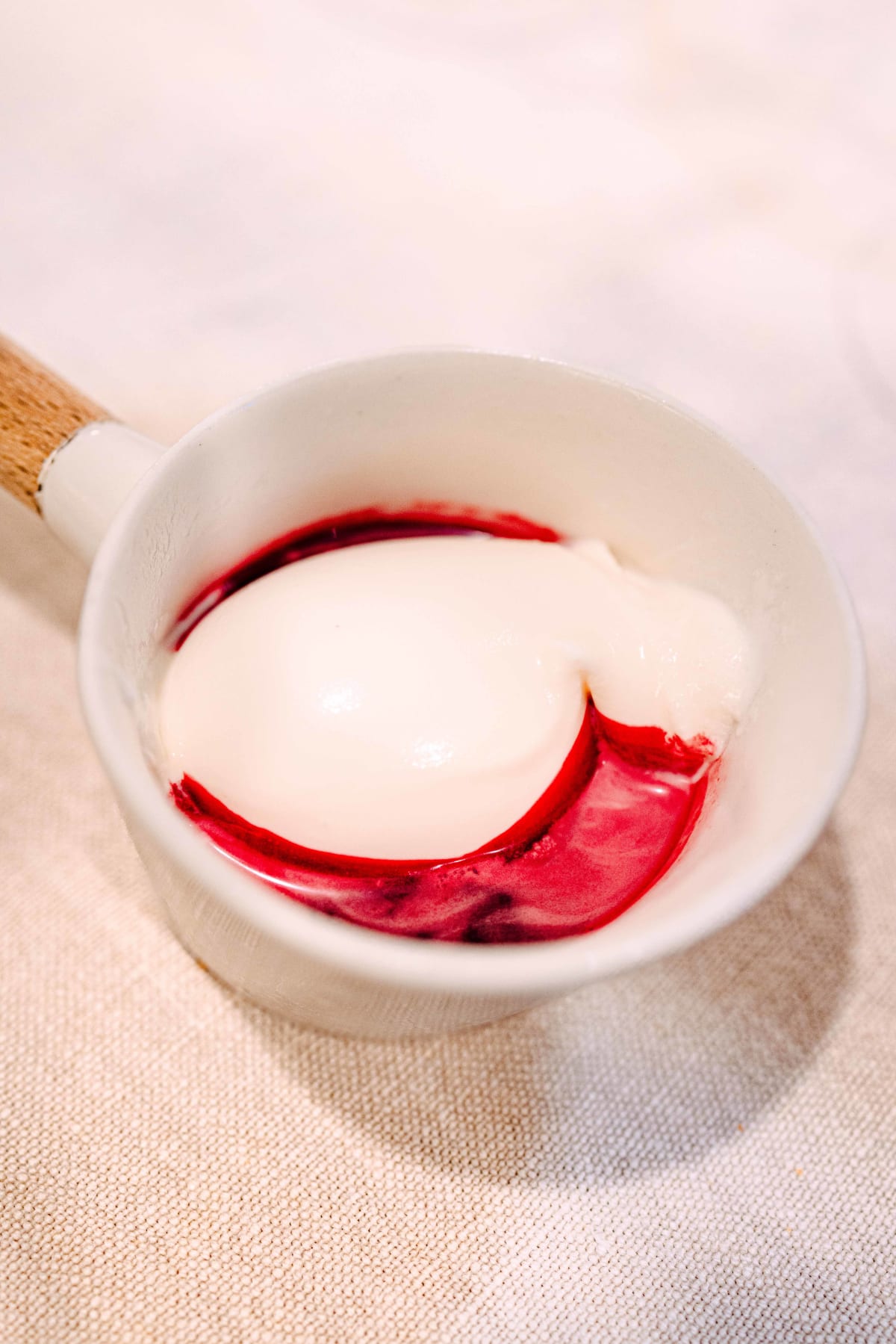
The smokiness of the ice cream and the taste of the beetroot together gave a flavour like ham and cheese. Everyone at the table said it was delicious.

On the menu it is Reduced milk Ice Cream & Beetroot, an ice cream made from reduced milk. The Michelin Guide, too, singles out "the unequalled reduced milk ice cream with beetroot juice" as a signature of the house.
The second, a chocolate soufflé, was excellent too. It was very fluffy, almost like foam, with a good chocolate flavour, and for all its richness it was not too sweet in the mouth.
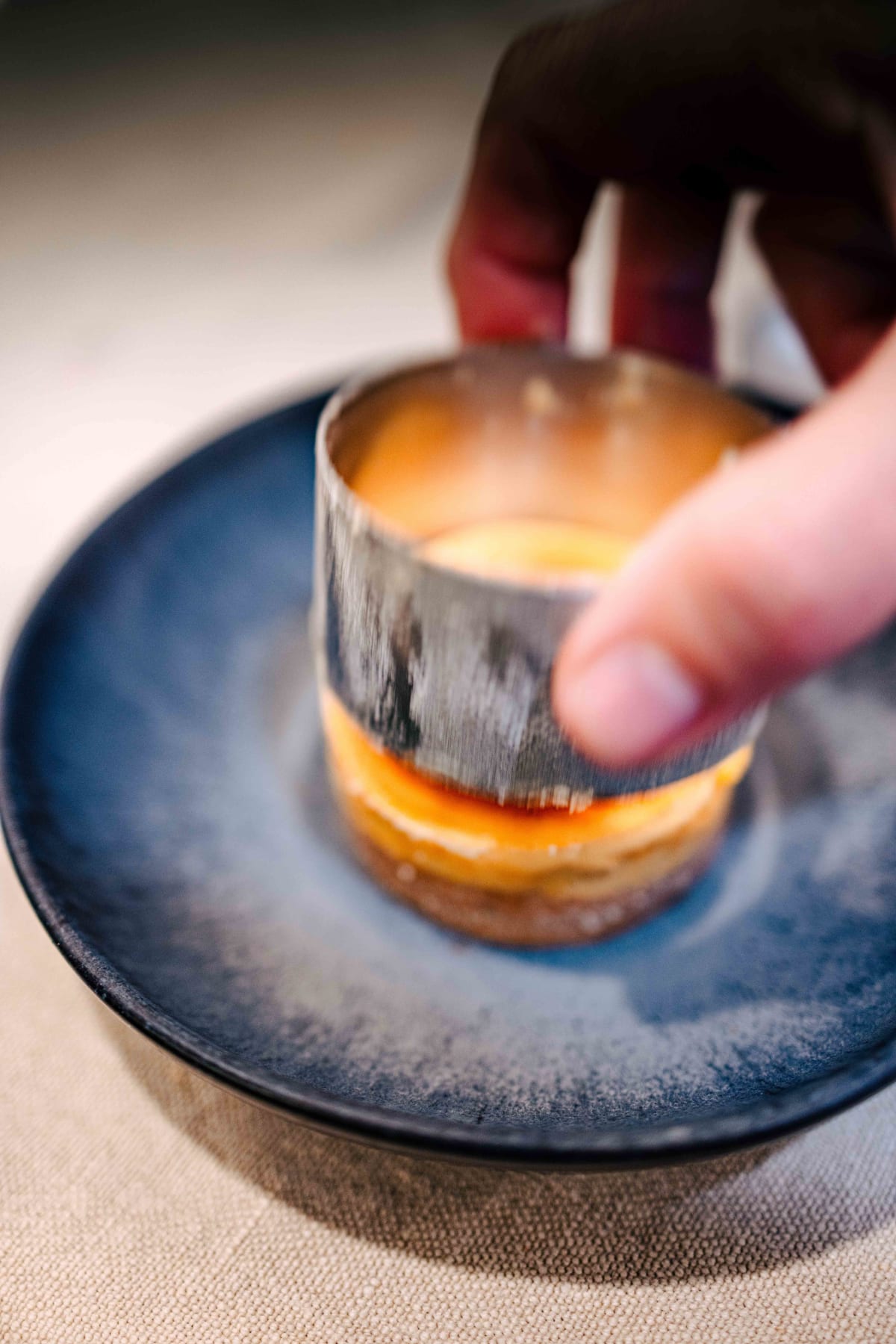


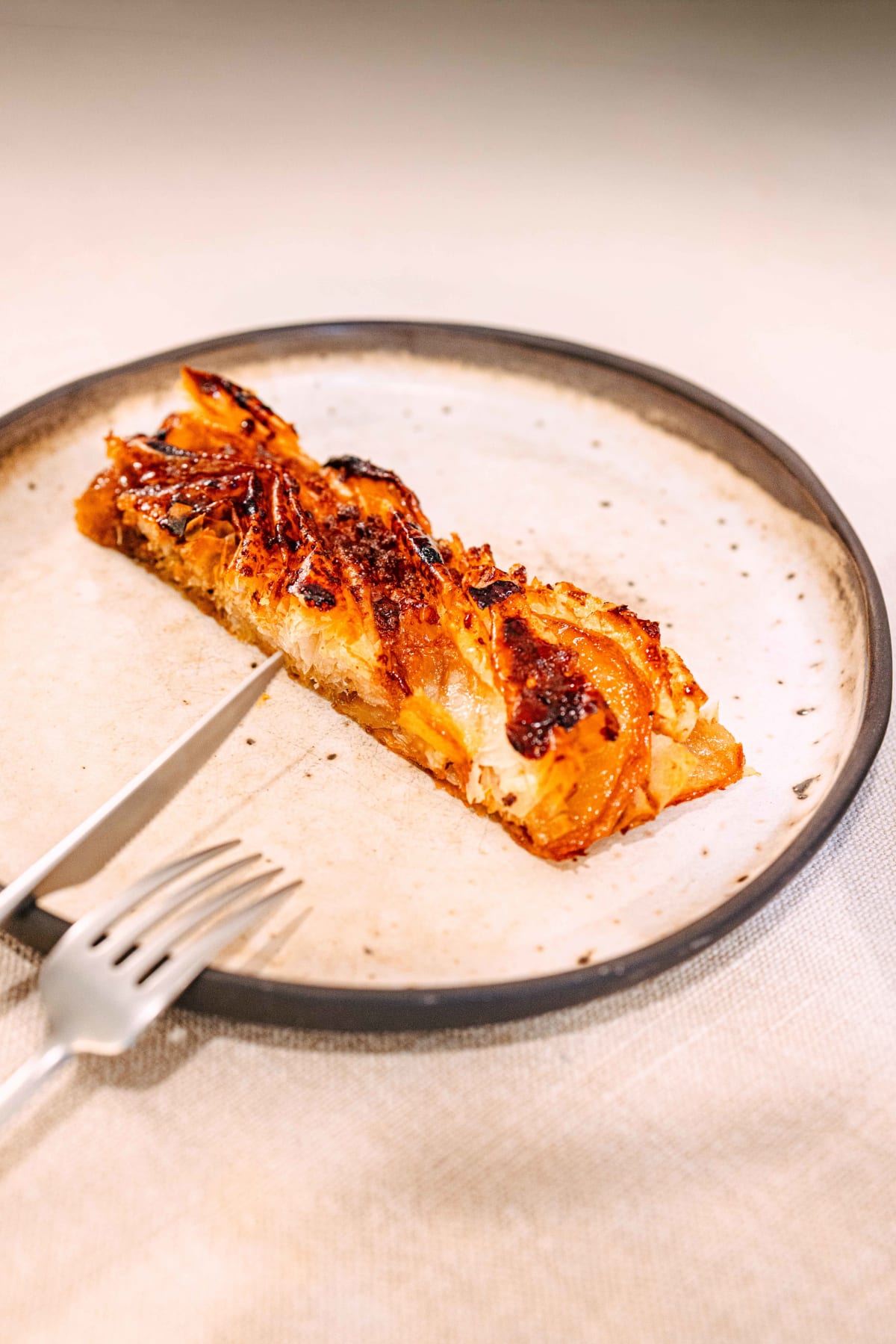
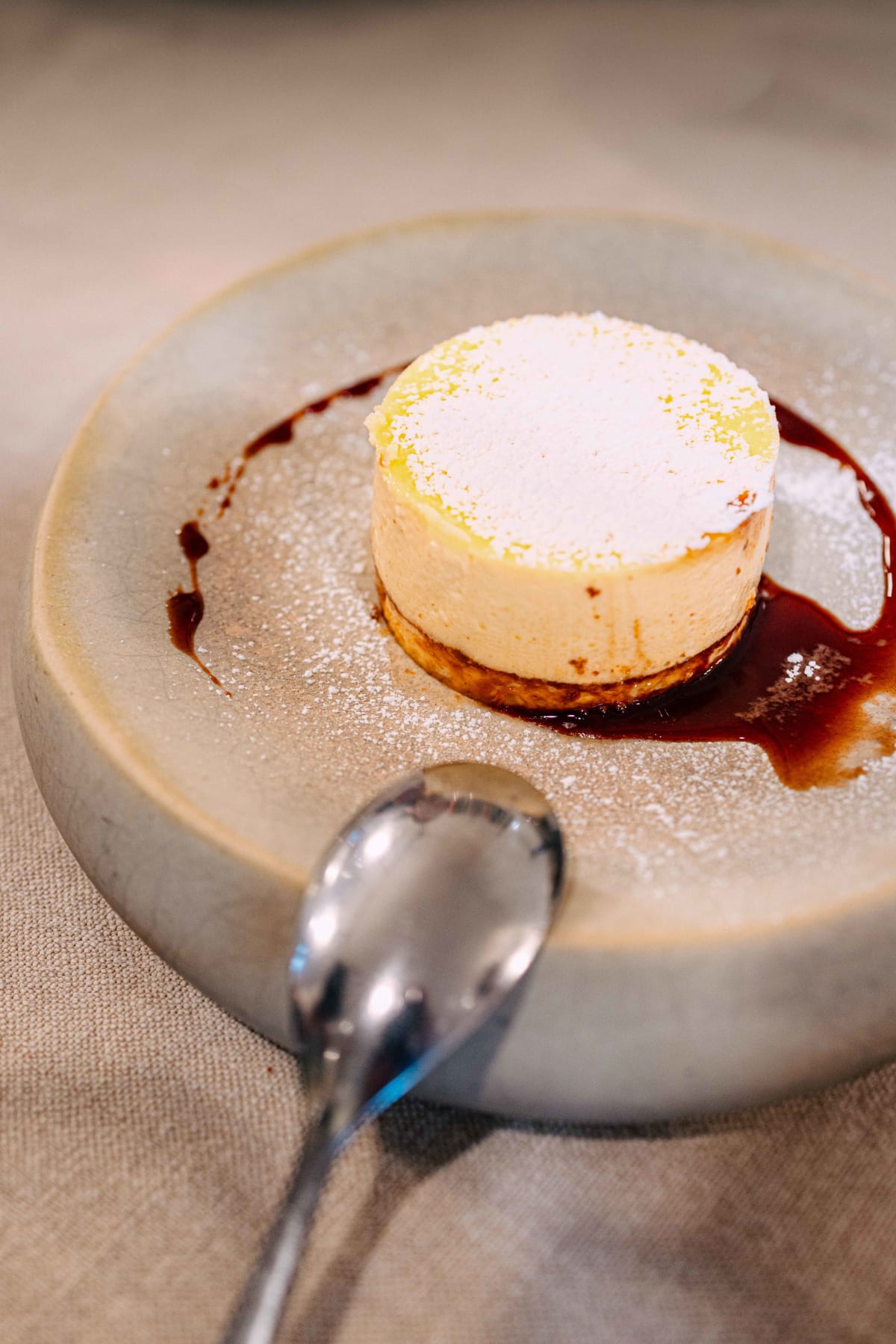
The third and last plates were a cheese flan and an apple tart. They were good, but ordinary next to the first two. The tart did not taste of much.


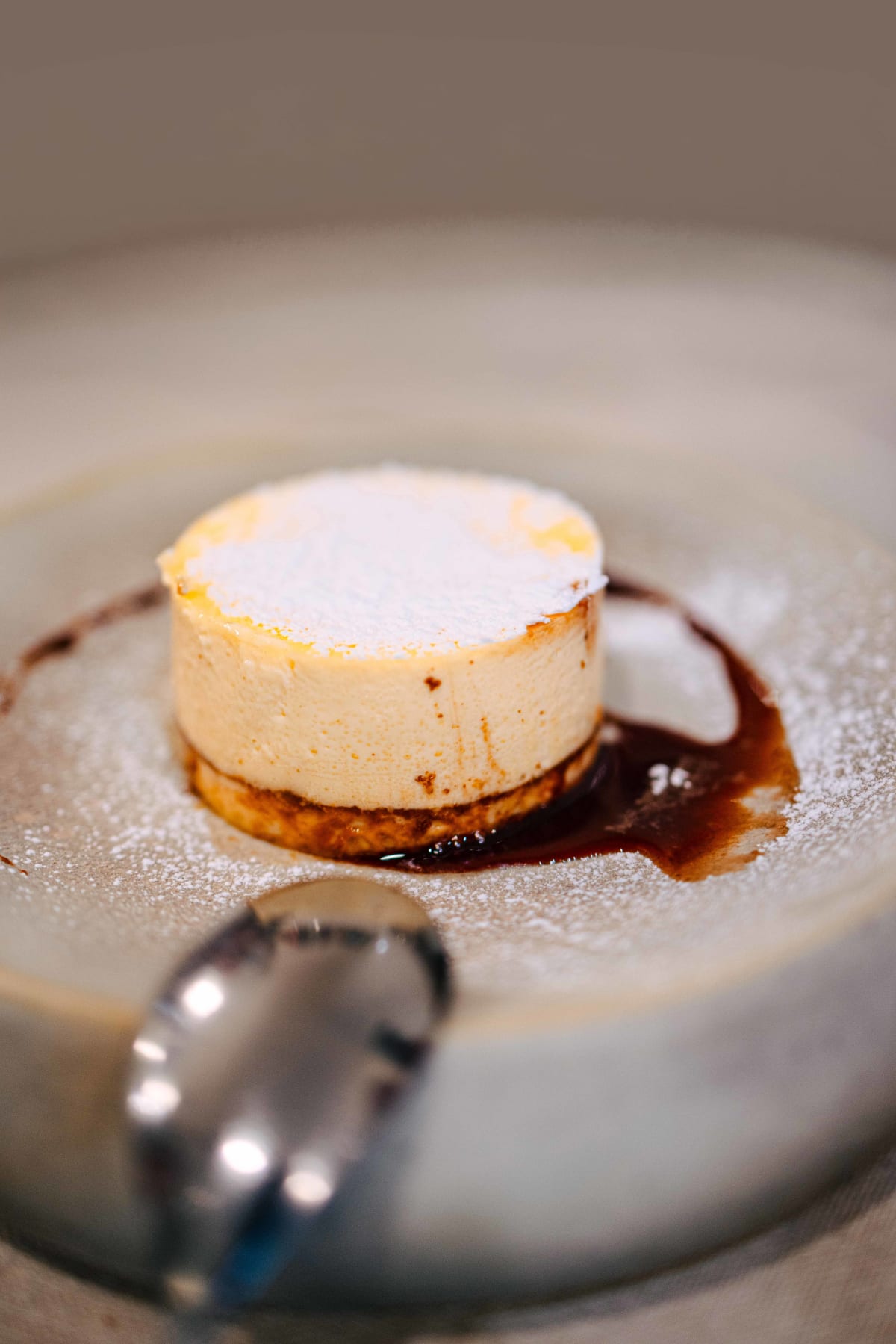
The flan had a deep cheese flavour, but Txispa's sakura flan was richer and more my style.

The coffee at the very end came iced, in a paper cup.

Not every dish hit the mark, but it was a satisfying meal, and the simple dishes that went intuitively to the heart of things were delicious.
Section 11·Why One Star
Asador Etxebarri ranks this high on the World's 50 Best, yet for its reputation its Michelin standing is not that high, at one star. It received its first star in the 2010 guide, announced at the end of 2009, and has stayed there ever since.


Before I went, I wondered why a pilgrimage everyone wants to make had only one star, and I was hoping Etxebarri would land a punch on the haughty French at Michelin, whom I follow fervently and still want to rebel against. Unexpectedly, having been, I found I could accept it, and to a considerable degree.
Etxebarri has focused on a pure essence, bringing out the flavour of an ingredient with the grill, and that is what made it famous. I too loved the plates where I could feel that essence undiluted. But in sauce and garnish, the grammar of modern cuisine and of fine dining, and in the complex layers you feel within a single plate, I found it wanting.
Had the course ignored all that and served only dishes focused on a single ingredient from start to finish, I might feel differently. But that was not the case either. Some dishes did pay real attention to complexity, and those were the ones that satisfied less. Ah, so that is why it has one star. It made sense. In this respect, and because it has also shored up the guest experience and the hardware, Txispa looked to me to have the greater potential.
That is by no means to say it is not worth experiencing. The flavour of an ingredient grilled by instinct and pushed to its limit was truly remarkable.


Bittor was 65 when I visited. In the 2022 Origen interview he said, "All cycles begin and end, and when I end, this will end." Nobody knows how much longer a man who says there is no one to hand his work to will stand before this fire.
I hope you go at least once, before it is too late. It is a pilgrimage worth the journey to Spain.
Second in the world and one Michelin star are not a contradiction; they answer different questions. The World's 50 Best has no checklist: over 1,100 critics, chefs and well-travelled diners each vote for ten restaurants they have eaten in during the last 18 months. Michelin judges only the cooking, and one of its five criteria is consistency across the entire menu, which is where a lunch swinging from the prawn of a lifetime to the day's worst razor clam gives ground. Neither measures what Etxebarri is: the source a whole school of wood-fire cooking is read against. Eat accordingly, building the meal around single ingredients and adding caviar by the ten grams or the beef chop by the kilo. It serves lunch only, books by request with full prepayment, and the tasting menu is now 300 euros.

Have a question about this restaurant, or want to share your own experience?
Send a message