Local & Essential · San Sebastián · Spain / September 2023
Bodegón Alejandro
"The basement eating house in the old town where Martín Berasategui took the first Michelin star of his life"
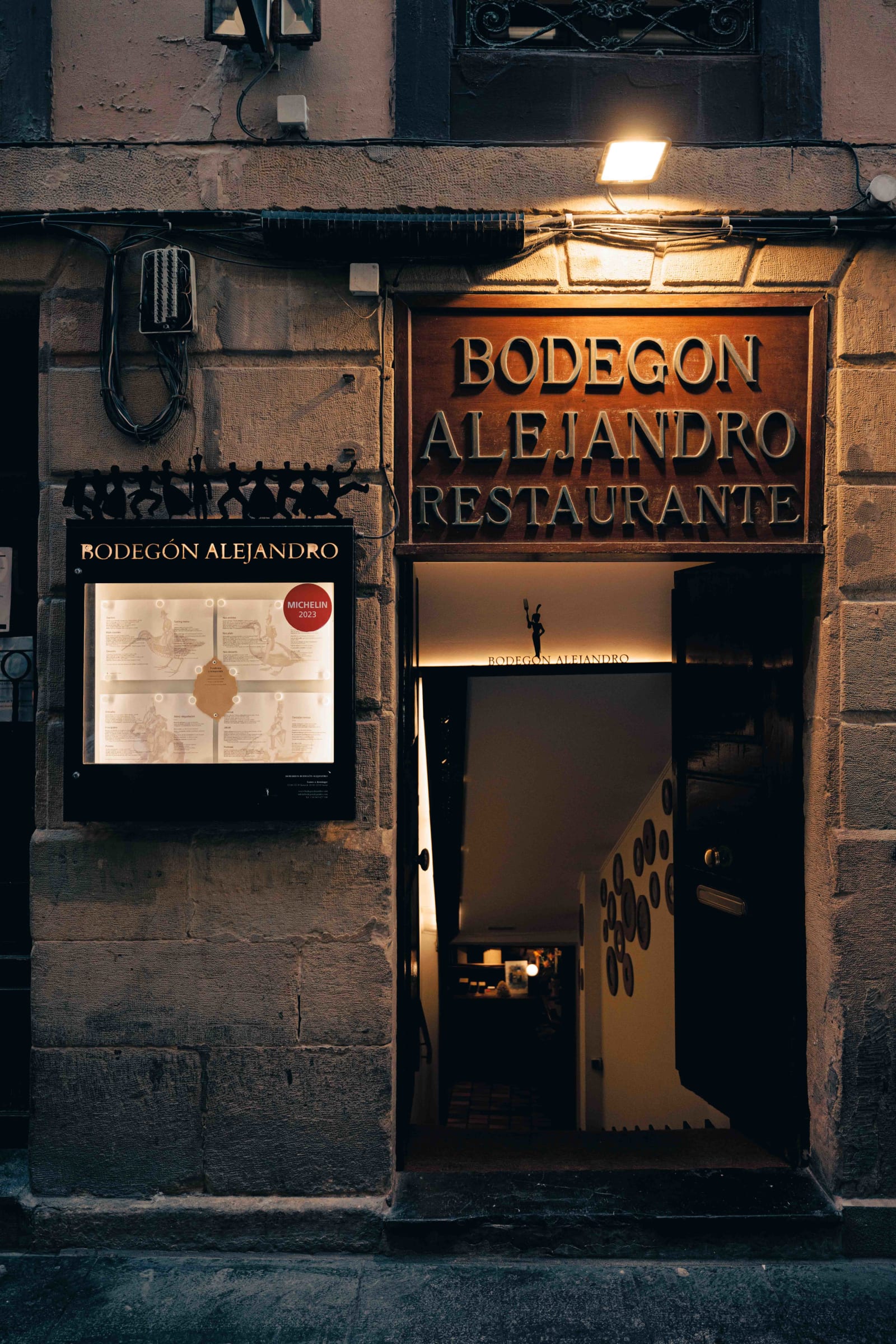
Section 1·A Bodegón
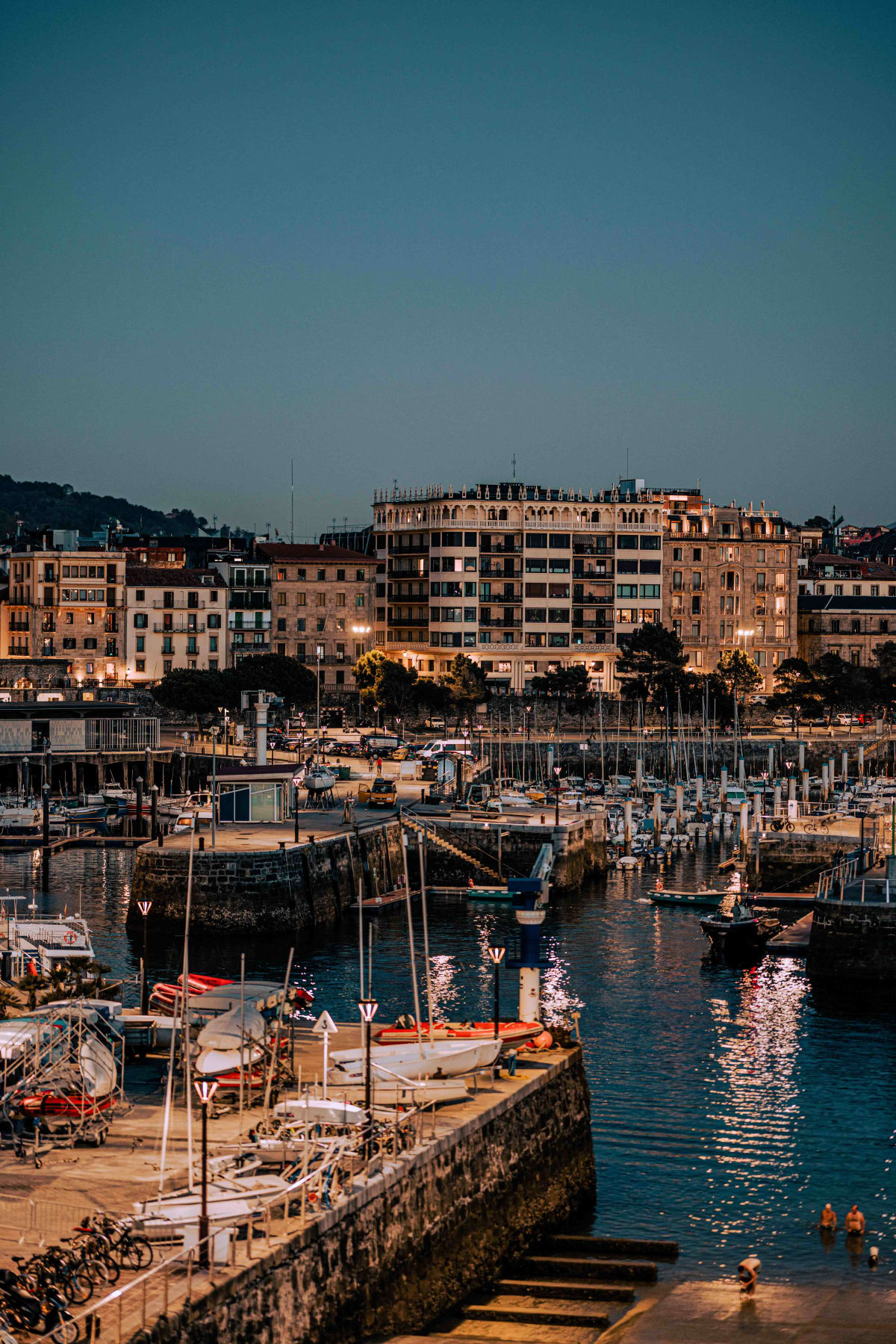
Bodegón Alejandro, a casual restaurant in the old town of San Sebastián. I went looking for somewhere decent for dinner, not at Michelin star level, and this is what I found. It is listed in the Michelin Guide without a star, and it is known for a tasting menu at a reasonable fifty-eight euros a head.
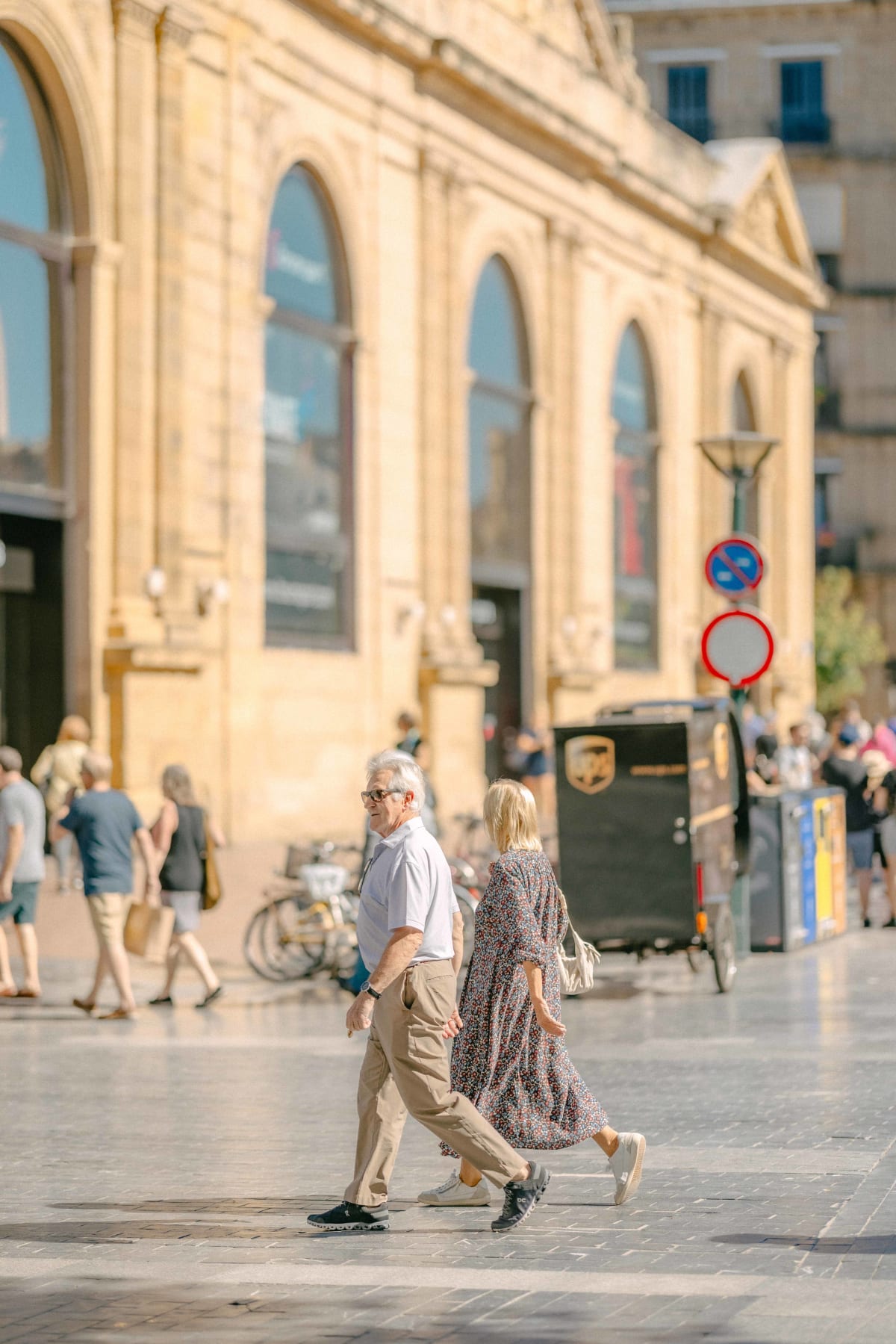
The name gives away the character of the house. Bodegón in Spanish originally means a plain tavern or eating house that sells drink and food. So it was never a place that set out to be fine dining; the name carries the identity of a casa de comidas, a neighbourhood place where people gather to eat and drink. It is still listed in the Michelin Guide as traditional cuisine, without a star.
Section 2·Where the First Star Was
But it is not that this house never had one. In 1986 it won a Michelin star. And the person who won it was Martín Berasategui. The first Michelin star of his life came out of this basement restaurant.
Berasategui was born in San Sebastián in 1960, and the restaurant was already open when he was born. His parents and his aunt ran it, and before that the family had a butcher's shop just nearby at the La Bretxa market. His father, Martín senior, was a butcher and handled the grill in the restaurant, while the centre of the kitchen was his mother Gabriela Olazábal and his aunt María. He names these two women repeatedly as his first teachers.
His account of his childhood is fairly specific. After school he came not home but to the restaurant, and twenty-three steps down into the basement was a kitchen running on a coal range. Around the age of seventeen he lived here to the point of putting a bed under the stairs. He later called this restaurant his university.
Section 3·France on Days Off
What he learned, though, was not only the Basque home cooking of his mother and his aunt. From fifteen to twenty-seven, on his days off, he crossed the border into France. He studied pastry with Jean Paul Heinard in Bayonne and again with André Mandion in Anglet, learned charcuterie from François Brouchican in Ustaritz, came into contact with haute cuisine through Didier Oudill, who had come from Michel Guérard's Les Prés d'Eugénie, and later reached Alain Ducasse at Le Louis XV in Monaco.
In 1981, at twenty-one, he took charge of this kitchen. There is a story attached. He needed a loan to renovate the place, but the bank would not give one without his parents standing as guarantors, and since he did not want to drag them into it he was refused. A shepherd who supplied the restaurant with vegetables and sheep's milk heard about the situation and offered to guarantee it himself, taking him by the hand to the bank branch. With the renovation done, three years later, in 1986, this house won a Michelin star.
Section 4·A Training Ground
Where Bodegón Alejandro today holds almost strictly to traditional Basque cooking, the atmosphere in the 1980s and 90s under Berasategui appears to have been rather different. David de Jorge later recalled visiting at seventeen while at culinary school, saying that the house already had its star and was doing cooking nobody else was doing, cooking that looked to him almost like science fiction. Berasategui saw that eagerness and invited him to come into the kitchen at weekends. So this was not simply a traditional restaurant but a testing ground where Basque recipes met modern technique picked up in France.
For that reason this kitchen also served as a training ground for Spanish cooks through the 1980s and 90s. David de Jorge started here, Iñigo Urrechu began under Berasategui at seventeen and later rose to be his head chef, and Nandu Jubany, after passing through Arzak, writes in his official profile that he worked here with Berasategui and learned what a gastronomic restaurant is.
Section 5·Two Days Before Lasarte
That background was, in truth, half the reason I chose this place for dinner. Two days later I had a reservation at the three-star Martín Berasategui in Lasarte-Oria. So the order became: eat first at the basement eating house where the Spanish chef with more Michelin stars than any other won his first, then go two days later to where he stands now.
So the order became: eat first at the basement eating house where the Spanish chef with more Michelin stars than any other won his first, then go two days later to where he stands now.
One thing to be clear about is that Berasategui has no connection to this restaurant now. In 1993 he opened a restaurant under his own name in Lasarte-Oria with his wife Oneka Arregui, and from 1996 to 2009 he was involved, through a group, in this house and several other businesses. But in 2009, when Andoni Luis Aduriz and the businessman Bixente Arrieta acquired part of that group, ownership of Mugaritz and Bodegón Alejandro passed to IXO Grupo. Which is to say the people running this house now are the Mugaritz side. Two lineages that between them represent modern Basque cooking run through the history of a single restaurant, and an eating house with that kind of structure is rare. The kitchen has been led by Iñaki Salvador since around 2019, and he was in charge on my visit in September 2023, as he still is now.
Section 6·À la Carte
That day I had been up very early to travel from Barcelona to San Sebastián, and the check-in at the accommodation took a long time, so I was not in great shape. Above all a late lunch had not gone down yet. Frankly, I did not expect anything spectacular from the course here, so I decided to order à la carte rather than the tasting menu.
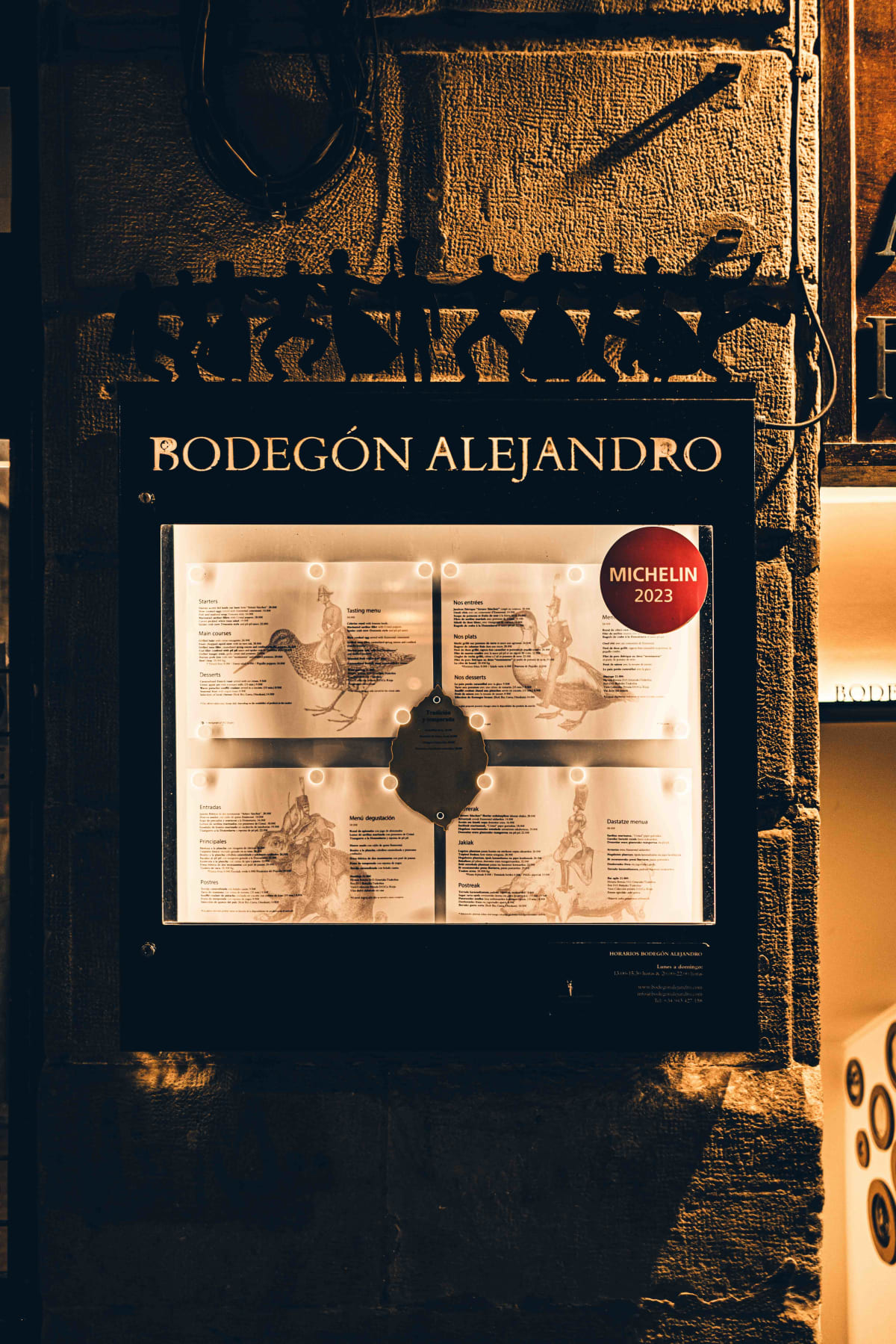
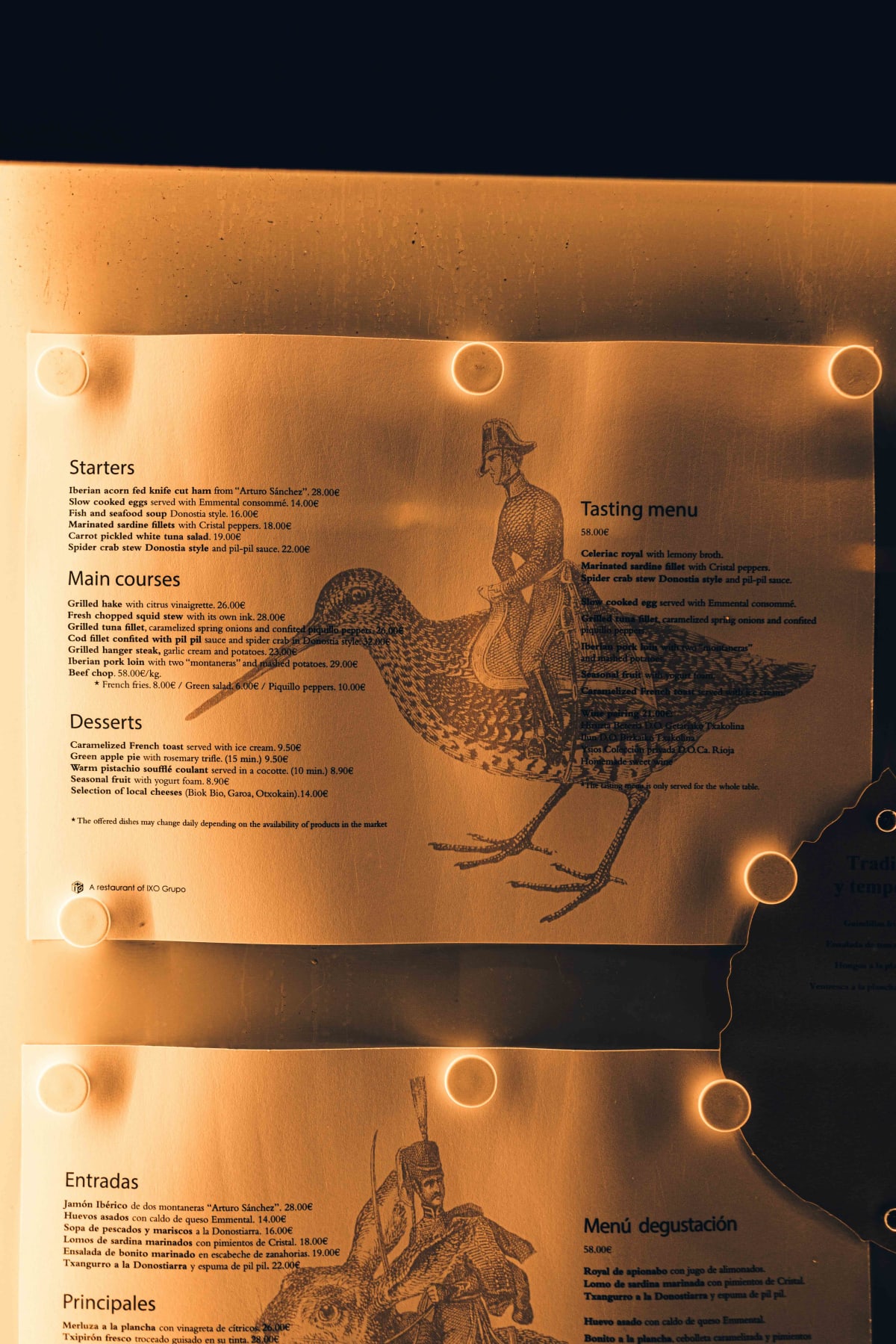
The carte came in three parts: starters, mains and a seasonal special. For the starter I ordered Spider Crab stew Donostian Style and for the main a Grilled hanger Steak, one each, and since there was a Donostia mushroom dish among the seasonal specials at a decent price, I ordered that too.
Section 7·Mushrooms in September
I found out only later, at a Korean restaurant in Madrid. When I mentioned I had been to Donostia, the Korean owner told me it was the part of Spain famous for good mushrooms. So that is why there was a mushroom dish here, I thought, and ever since I have tried to seek out good mushroom dishes each time I visit San Sebastián.
That is also why mushrooms were in the seasonal column. In almost every official description of itself, this place emphasizes local seasonal produce, with anchovies and bonito, squid and tomato and green chilli at the centre in summer, and artichoke and wild mushrooms, truffle from Álava and game in winter. Rather than a house that repeats a signature all year round, the market and the season come first and the menu follows. September, when I visited, fell somewhere on that border.
The first thing I ordered once seated was a sparkling wine. Sumarroca Brut 2021, a cava from Penedès. I had come up from Barcelona that morning, so my first glass turned out to be a wine from just outside the Barcelona I had left. Sumarroca sits in Subirats, south of Barcelona, on poor limestone soils scattered with gravel where the Garraf mountains strip the moisture out of the sea breeze, and the whole estate is farmed organically now.
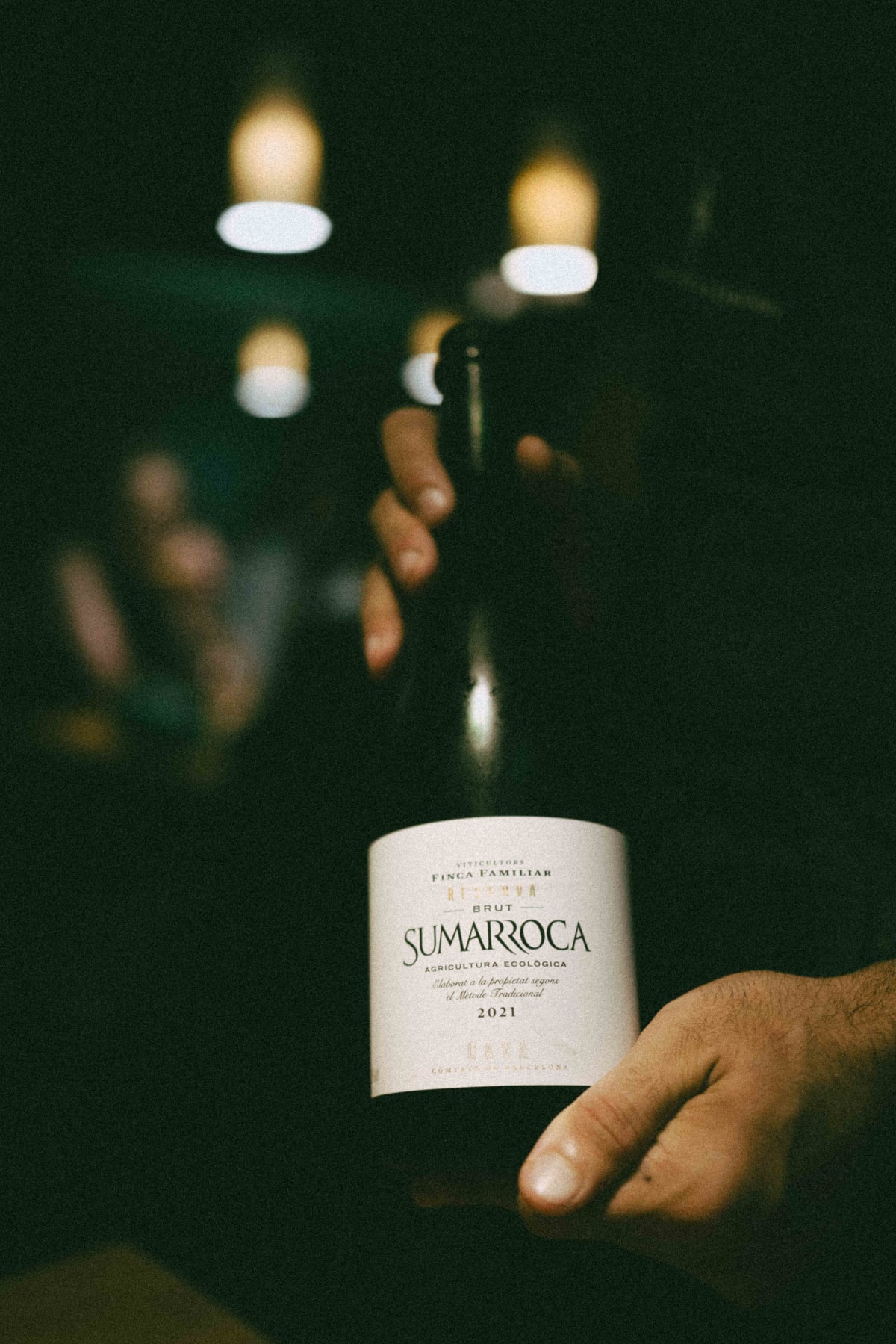
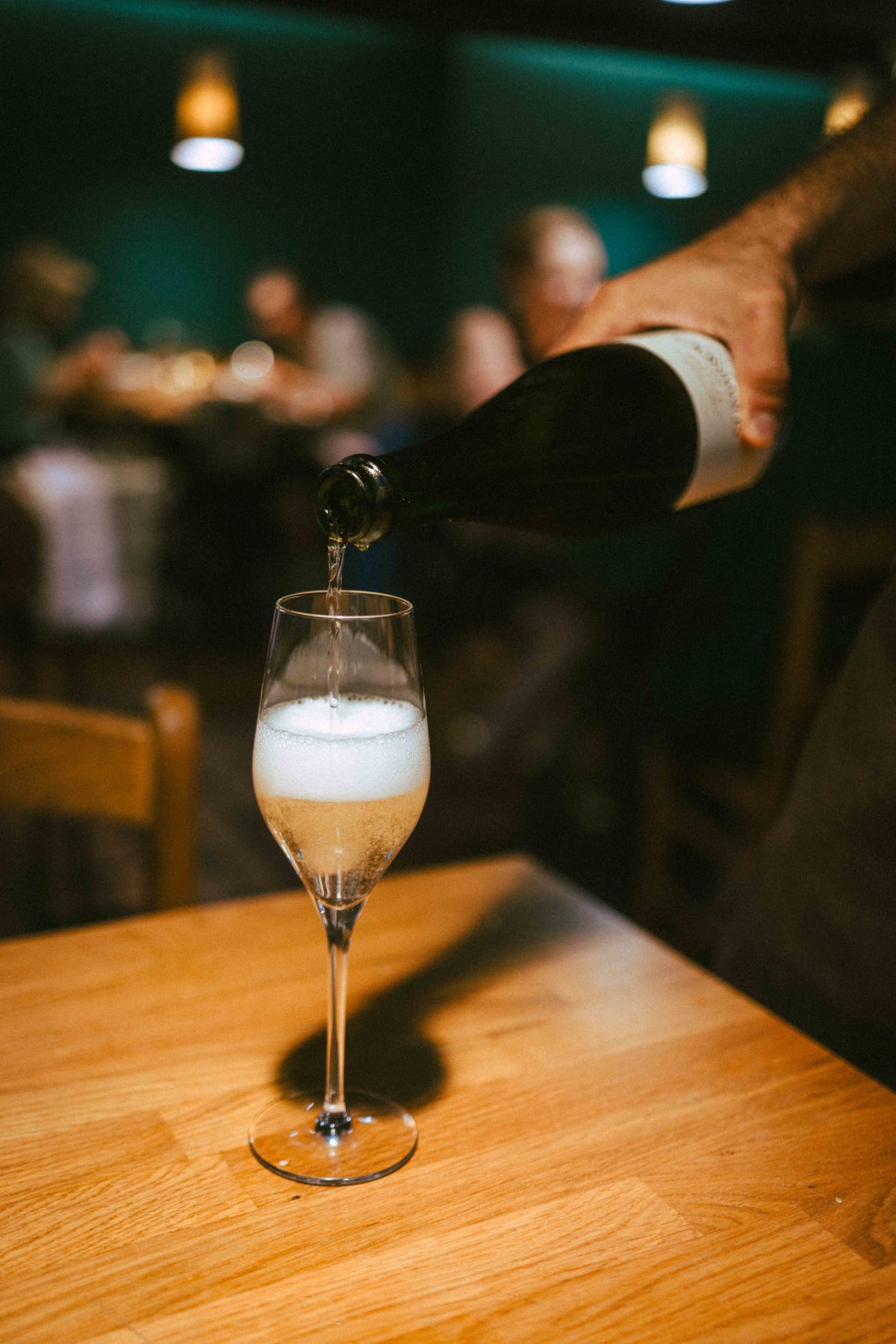
The Brut Reserva puts a little Chardonnay, under seven percent, over cava's indigenous trio of Macabeo, Xarel·lo and Parellada, and rests at least twenty months on the lees. Cava as a drink began in 1872, when Josep Raventós came back from Champagne and made the first second fermentation in the bottle in Penedès, so the method is the same as champagne and only the grapes are Catalan.
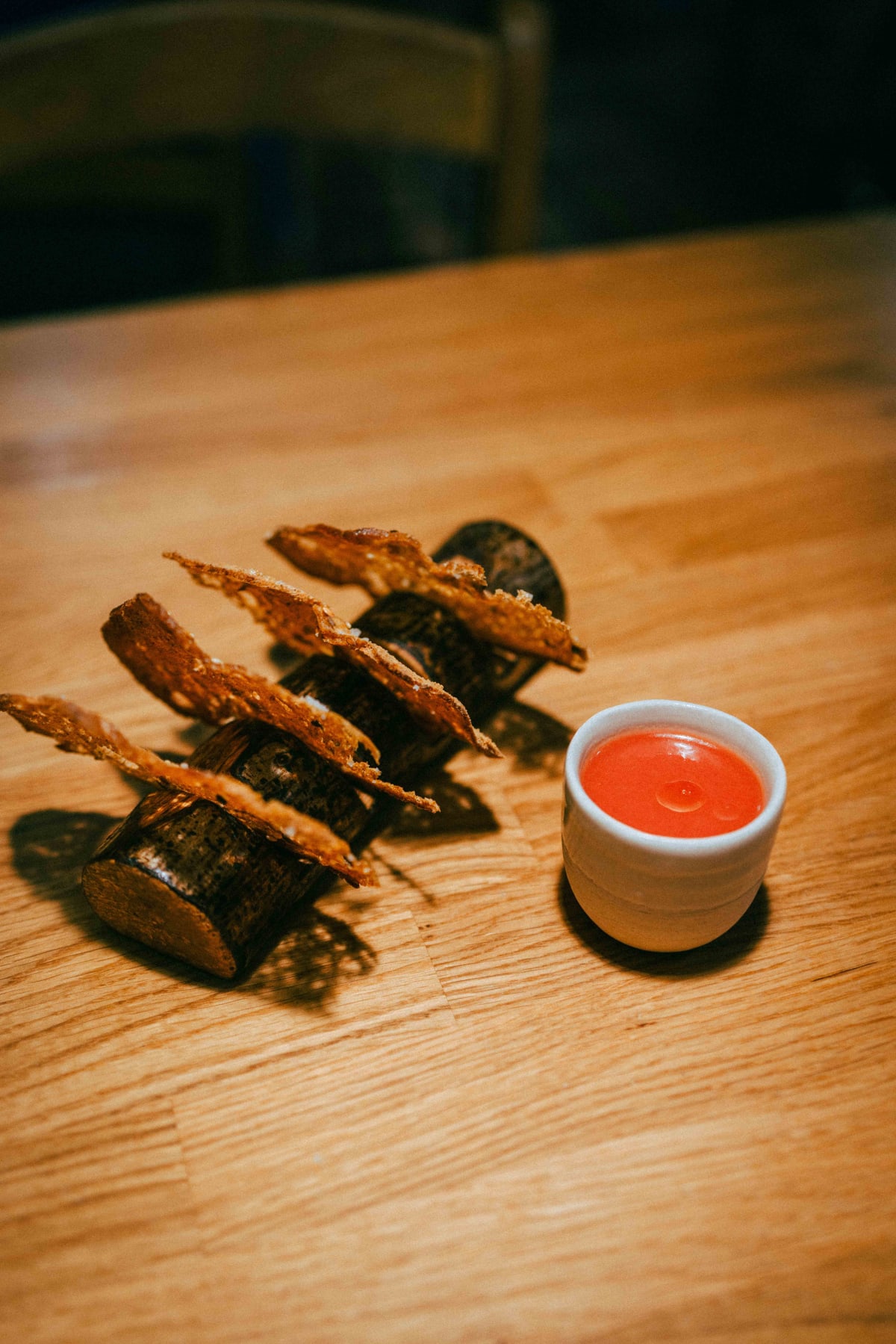
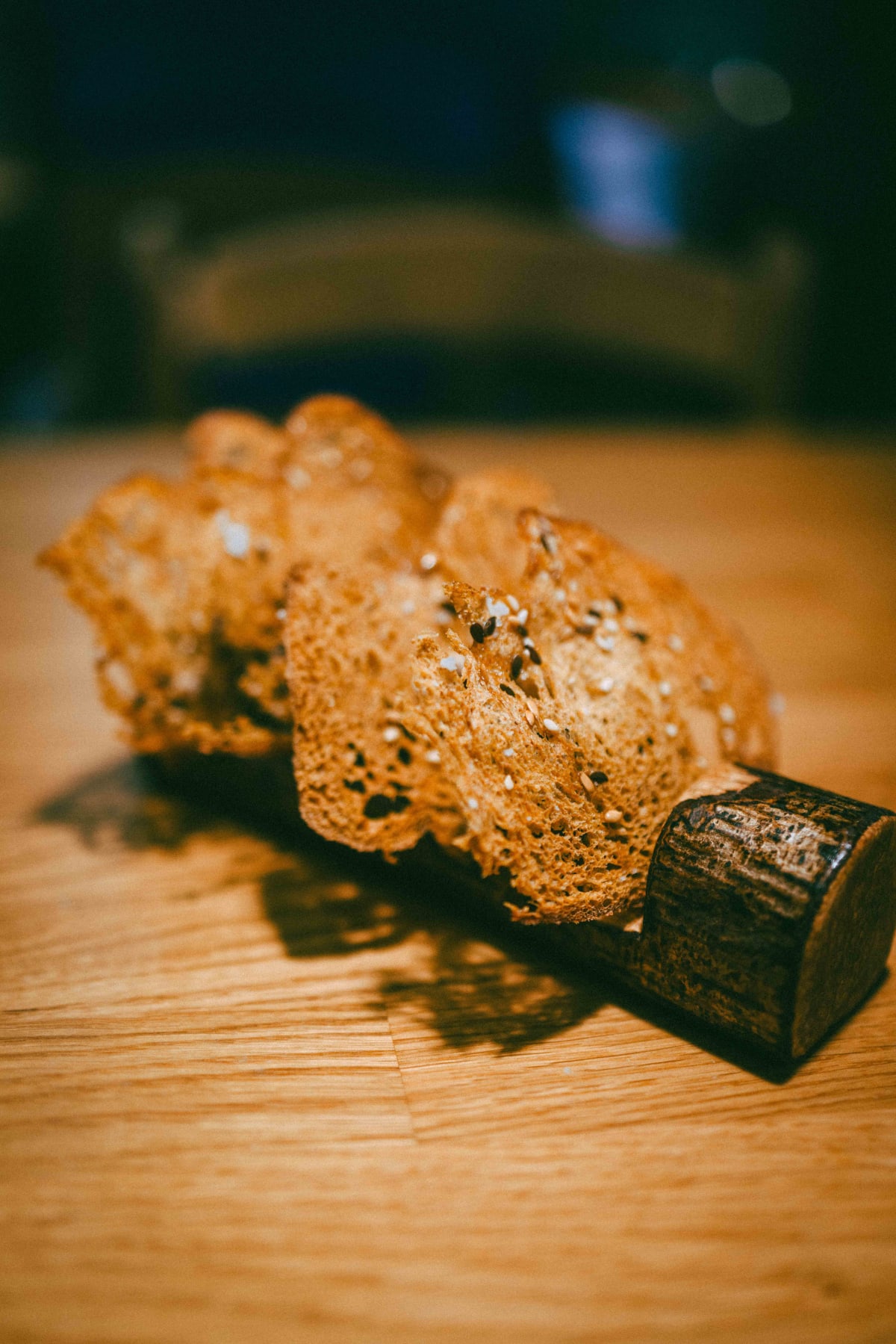
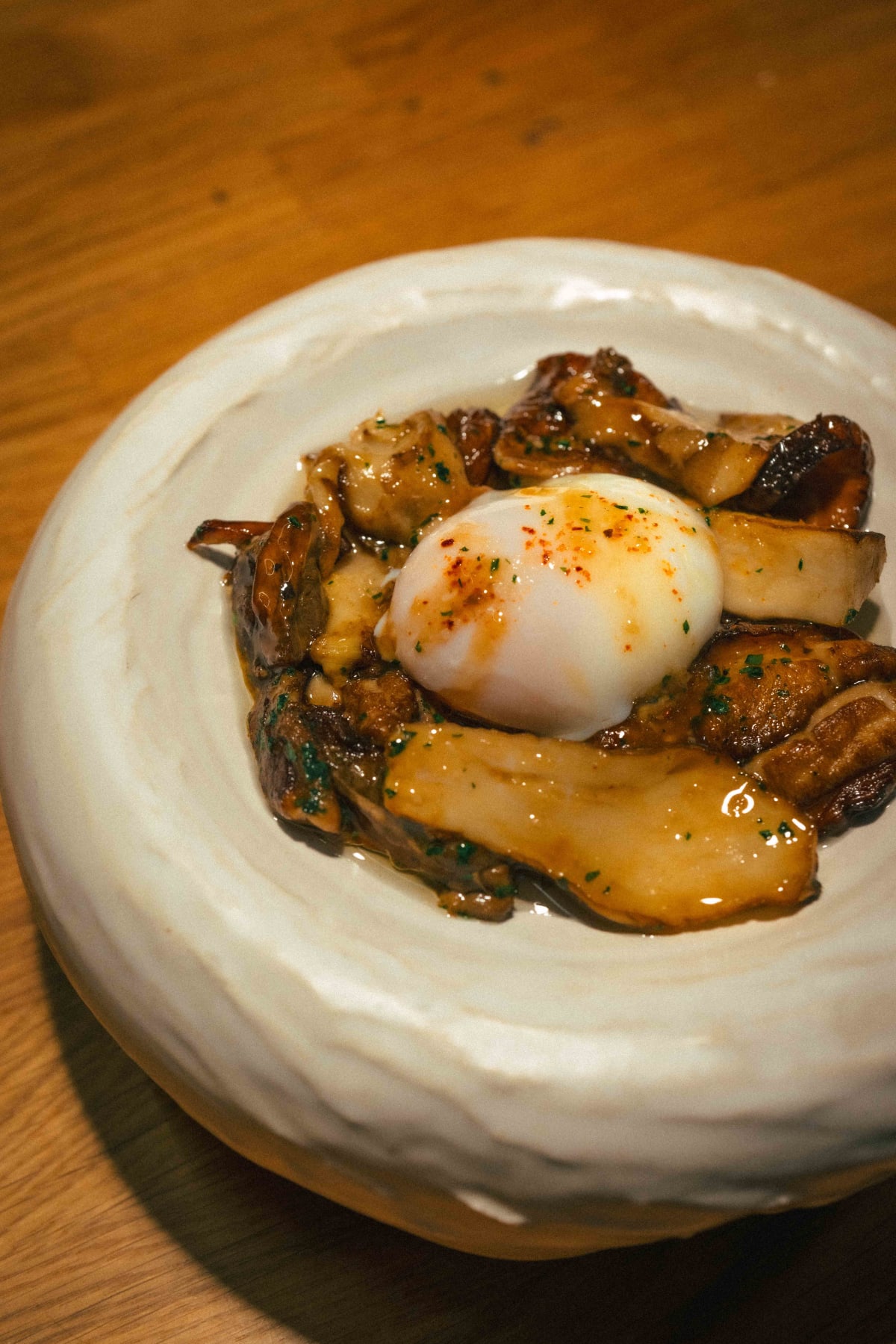
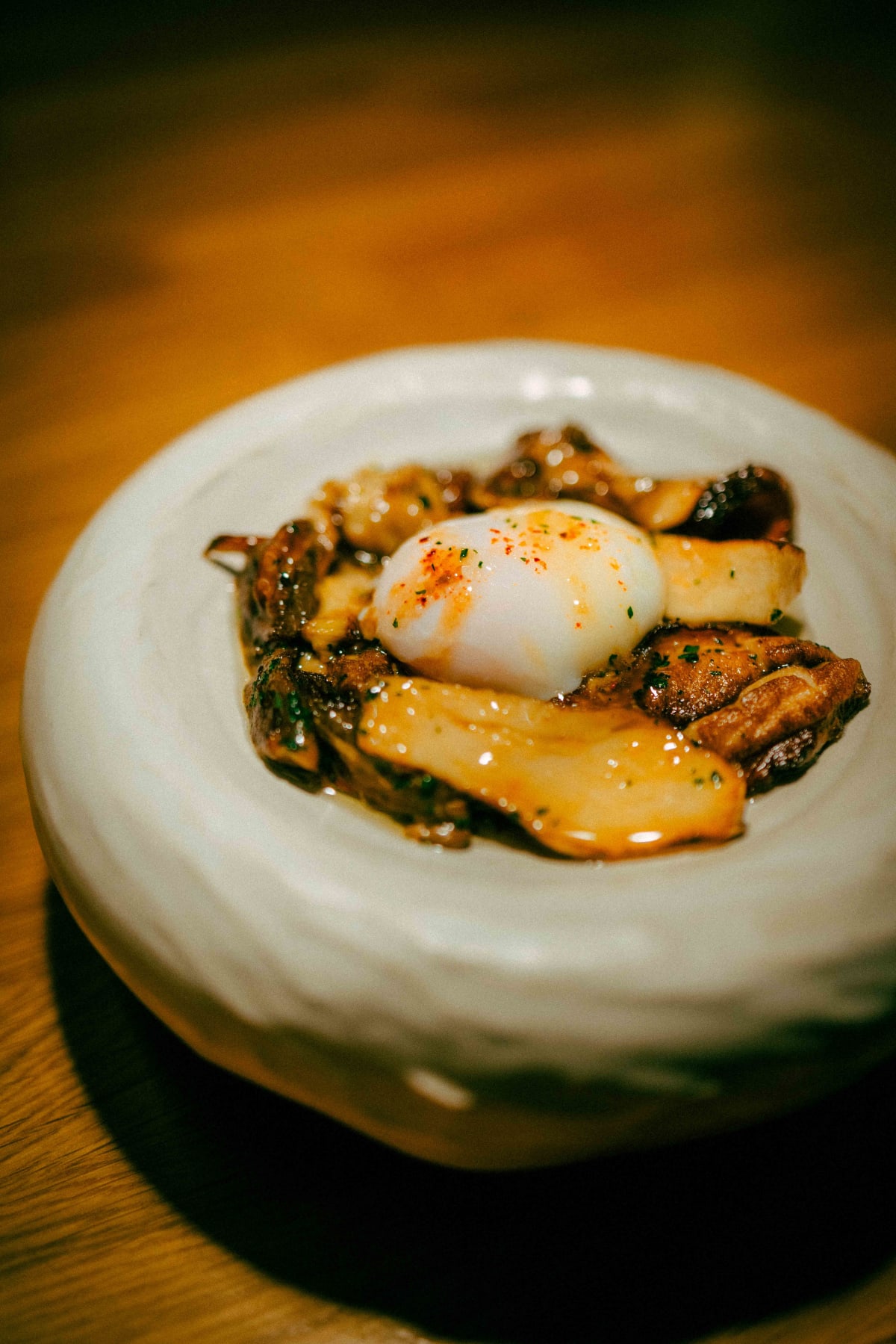
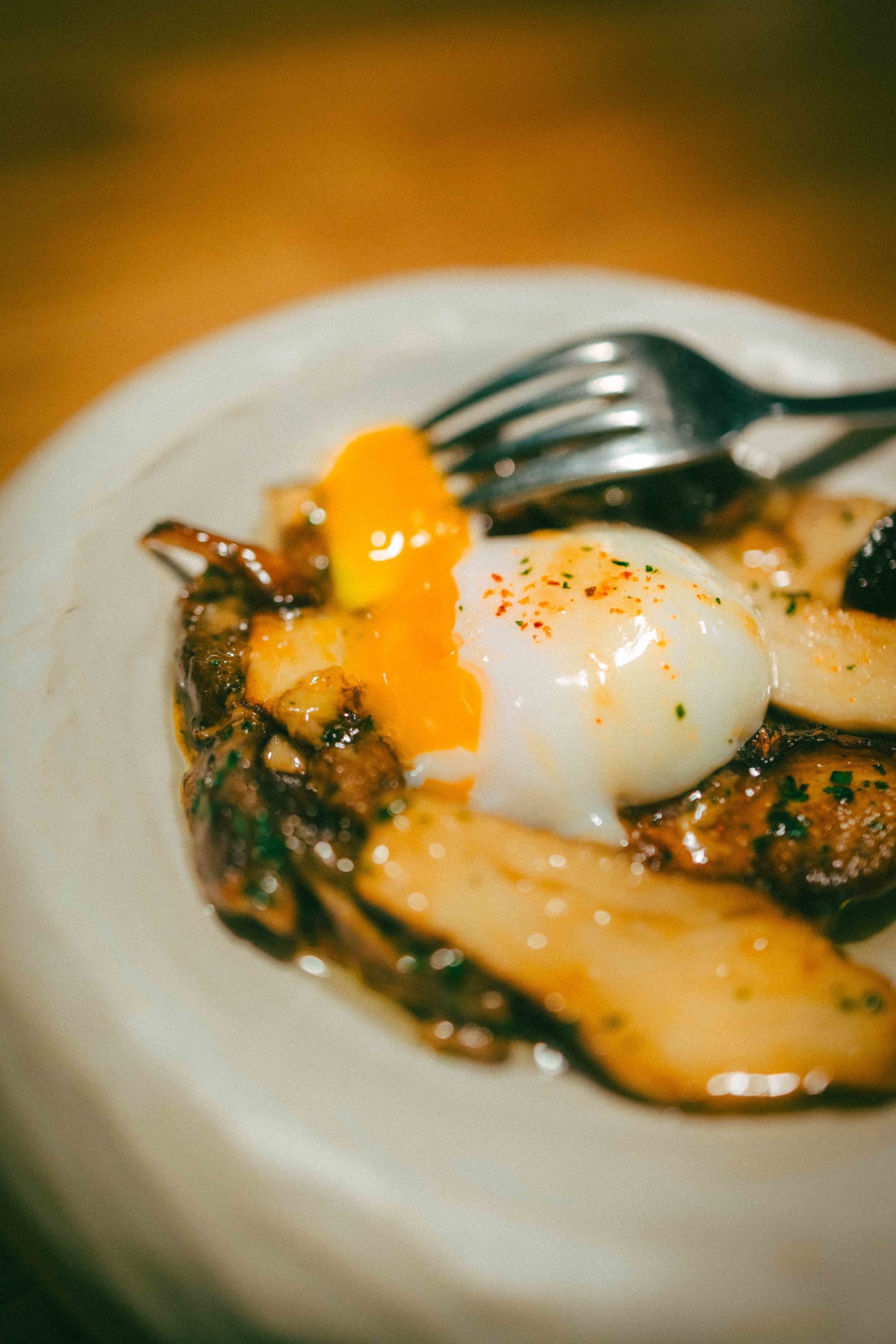
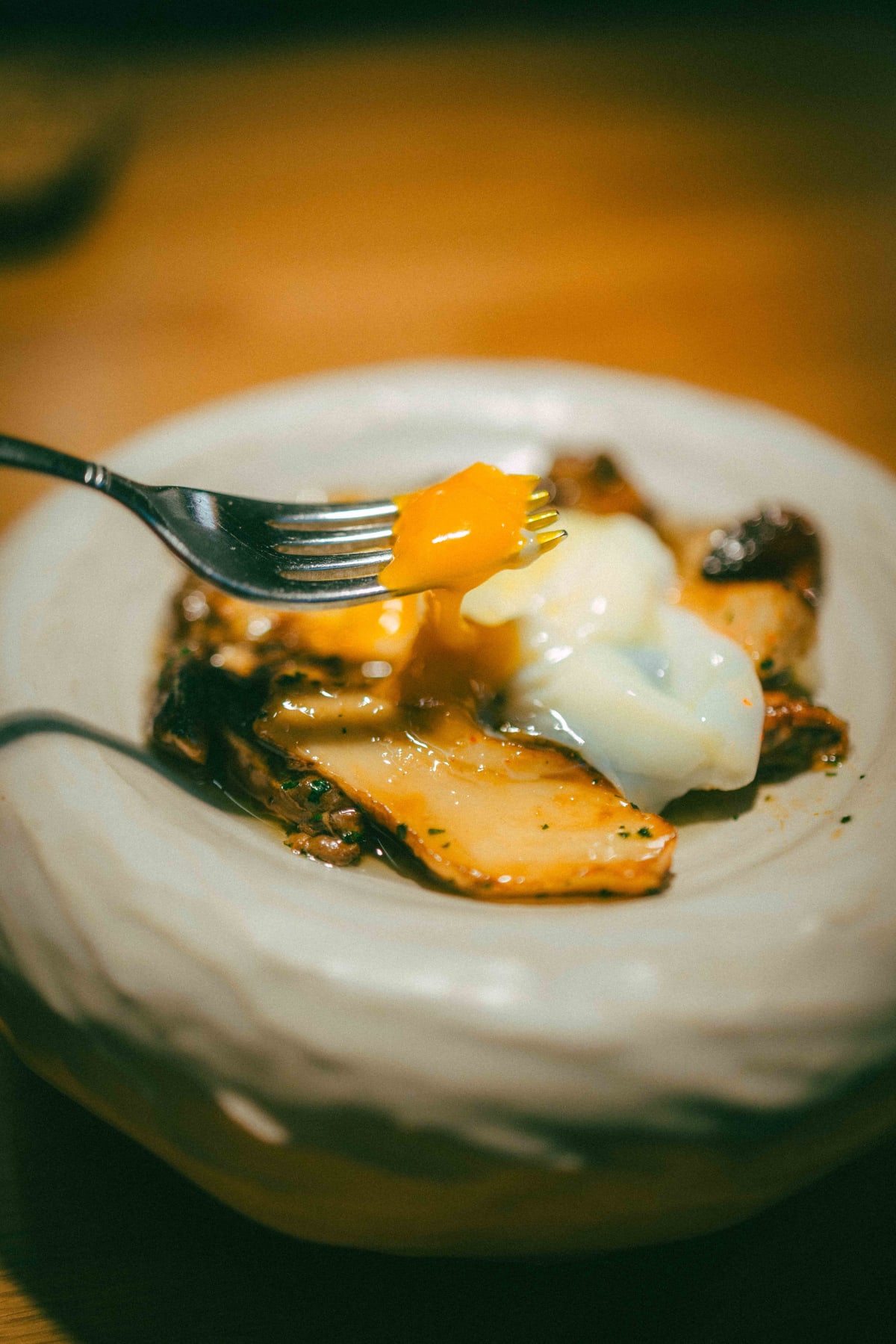
The mushroom dish arrived first, various roasted mushrooms with a soft-boiled egg on top. I broke the egg and ate it with the sautéed mushrooms, and the mushrooms were strongly aromatic, with a good texture too. It was not a 'wow, I have never tasted anything like this' moment, though. It tasted like something you could make well enough with Korean mushrooms.
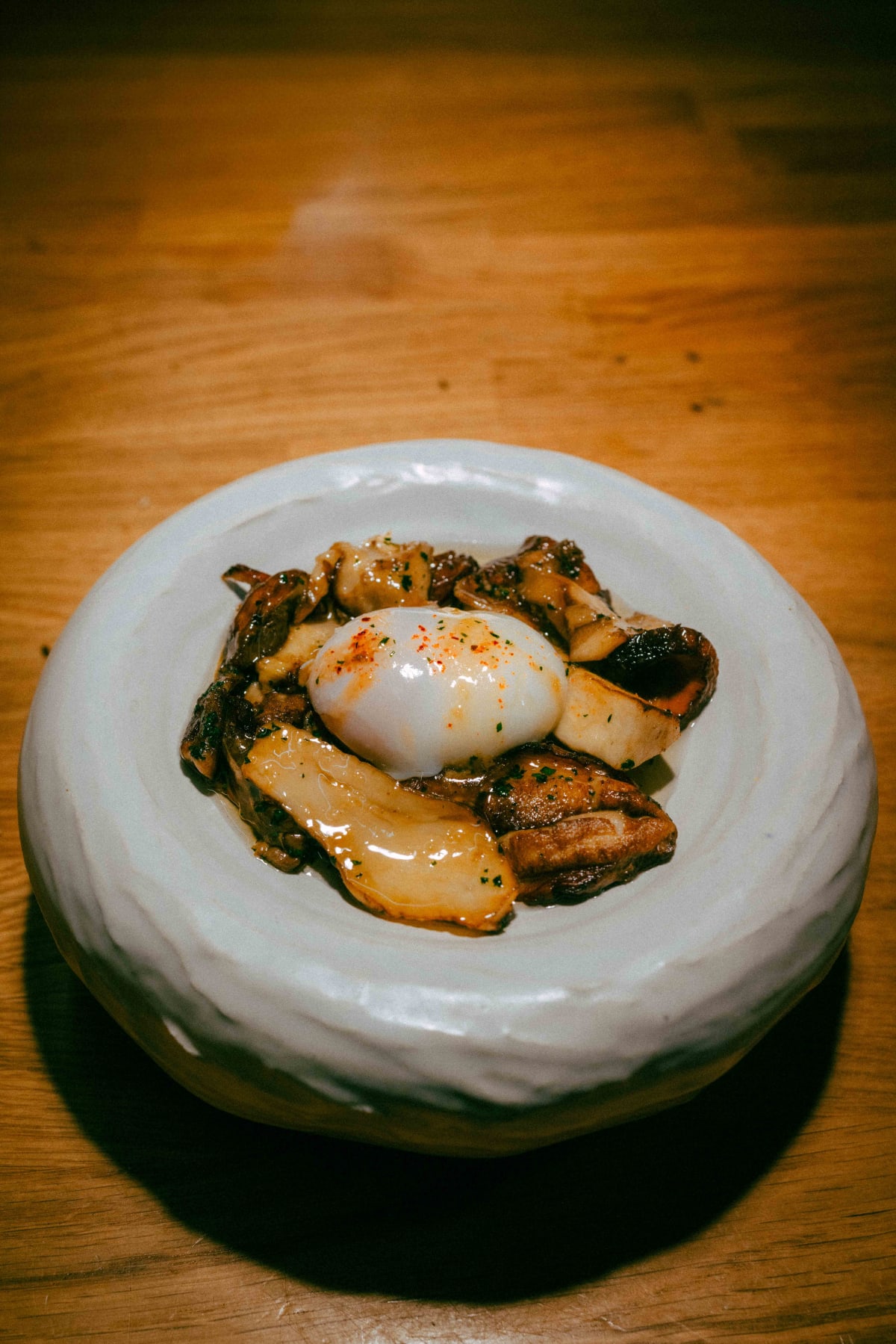
The egg sat over the top rather than beside it.
Section 8·Txangurro
While waiting for the crab after the mushrooms I ordered a glass of white. Valserrano Blanco 2022. It is made by Viñedos y Bodegas de la Marquesa in Villabuena de Álava in Rioja Alavesa, a house founded during the period when French négociants fleeing phylloxera poured into Rioja in the late nineteenth century. The starting point was the Marquis of Solana, Francisco Javier Solano y Eulate, who began making Médoc style wines on the advice of the French winemaker Jean Pinaud, and the same family runs it today, led by his great-grandson Juan Pablo de Simón.
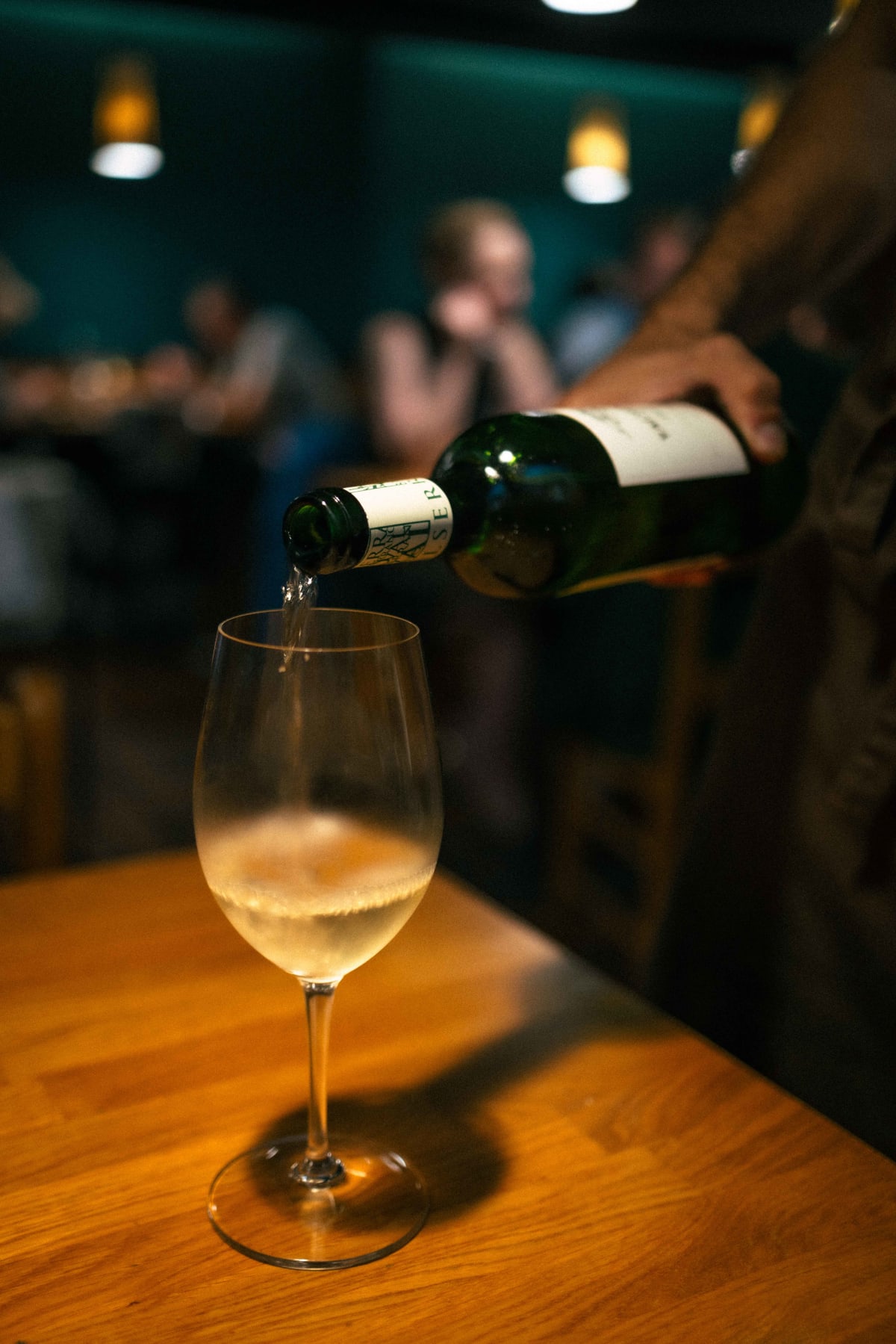
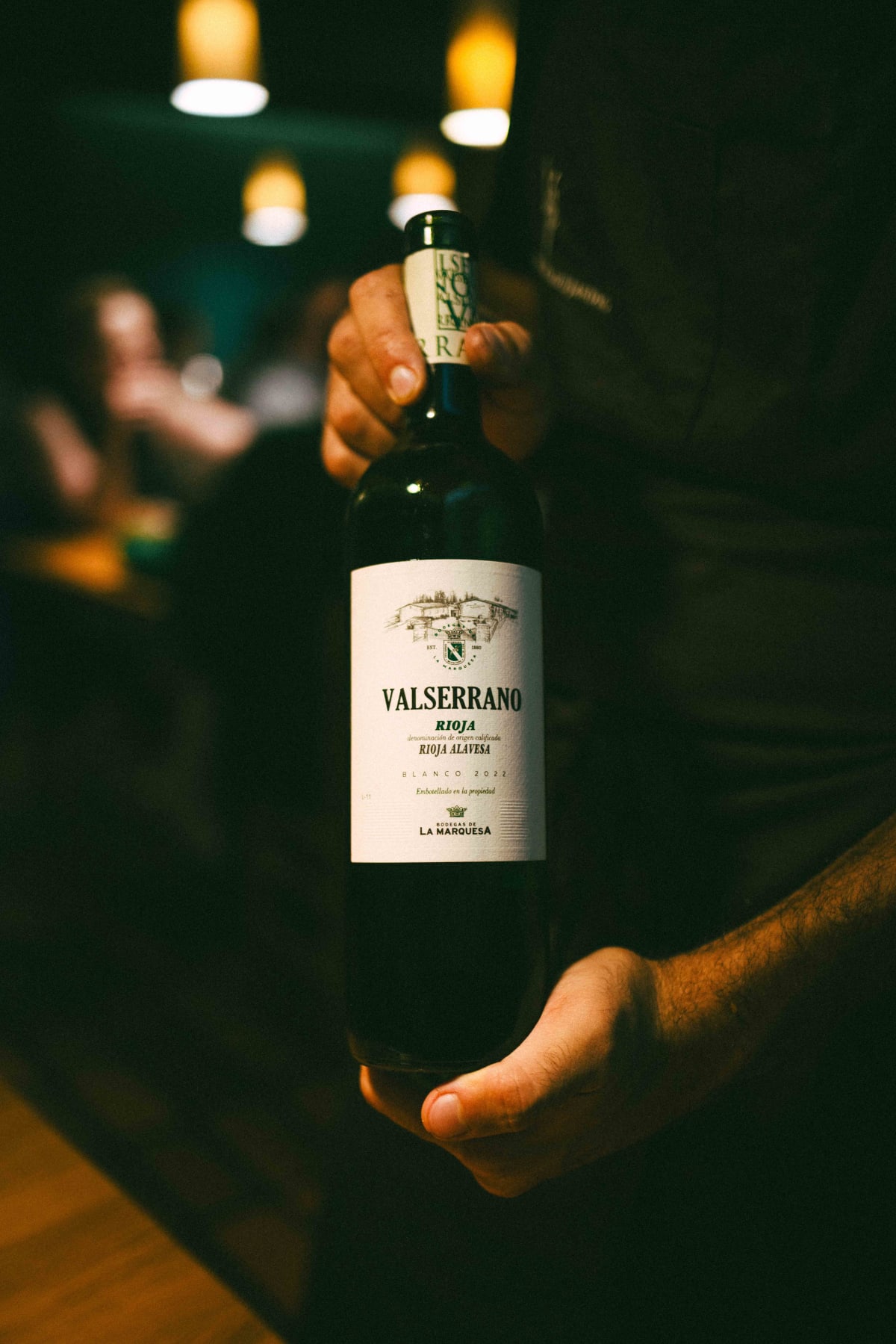
They make around four hundred thousand bottles from a little over seventy hectares in family ownership. The Blanco uses Viura, the backbone of white Rioja, and the 2022 was pale gold with clear aromas of fennel and basil and new-mown hay. It only occurred to me afterwards, but Álava is one of the three Basque provinces, so I had drunk the Basque side of Rioja in a Basque restaurant.
Then the Spider Crab Stew arrived. Not a real crab shell but a shell-shaped vessel, inside it a sauce made from the meat and the innards, with cream cooked into a foam on top. This one was good. What I especially liked was that the crab meat was already picked and sitting there ready, and the sauce tasted fine too. The one pity was the cream foam. Did it add anything to the taste at all? Even so, eating crab someone else had picked for me at a European restaurant at a not unreasonable price made this a satisfying dish.
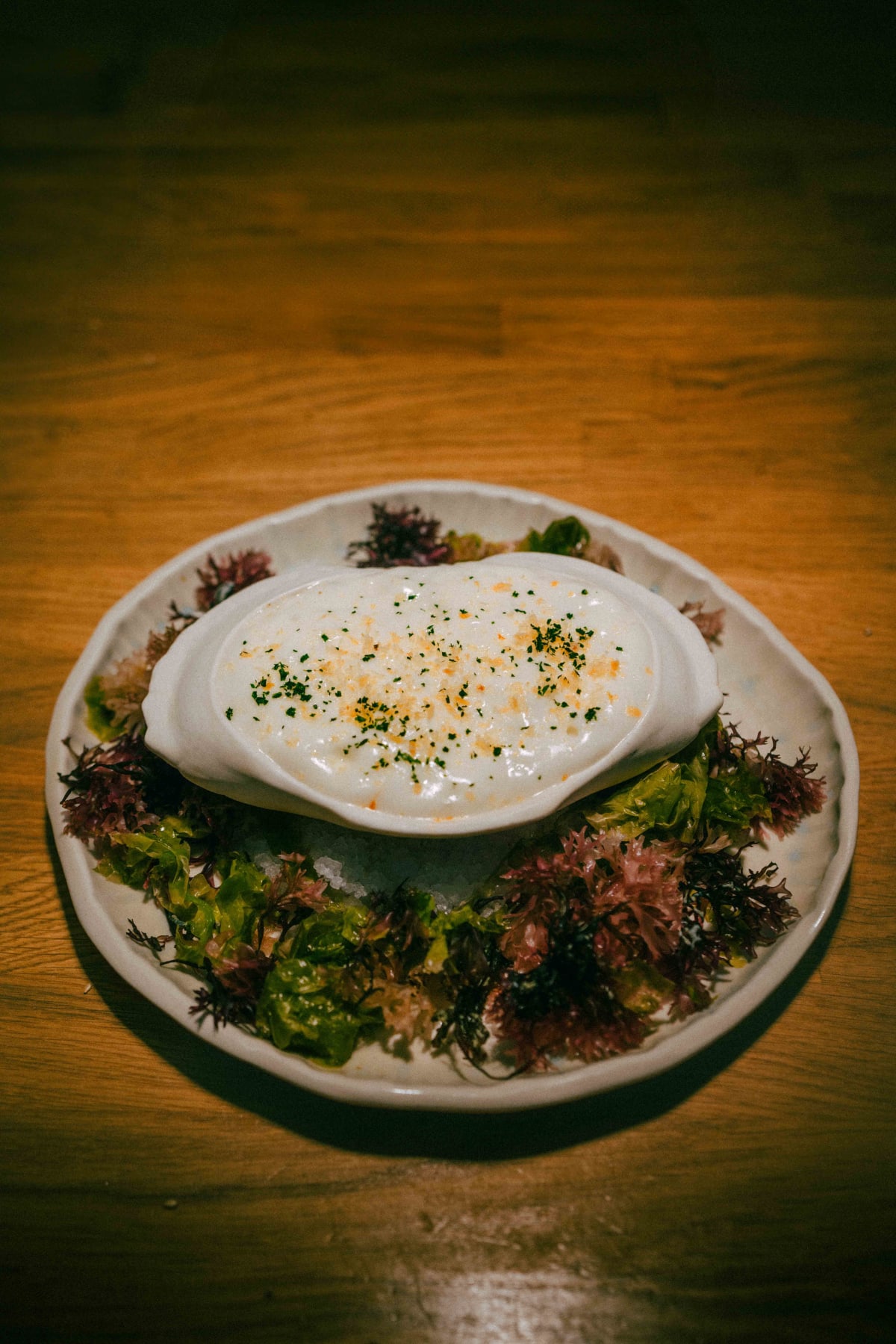
I looked the dish up afterwards. The words Donostian Style on the menu are not a decorative epithet. Txangurro a la donostiarra is one of the classic dishes that represent San Sebastián, and the traditional method is to pick the meat of the spider crab, cook it with the flavours of onion and tomato, then return it to the shell. What I had liked, the picked meat sitting in a shell-shaped vessel, was the original form of this dish all along.
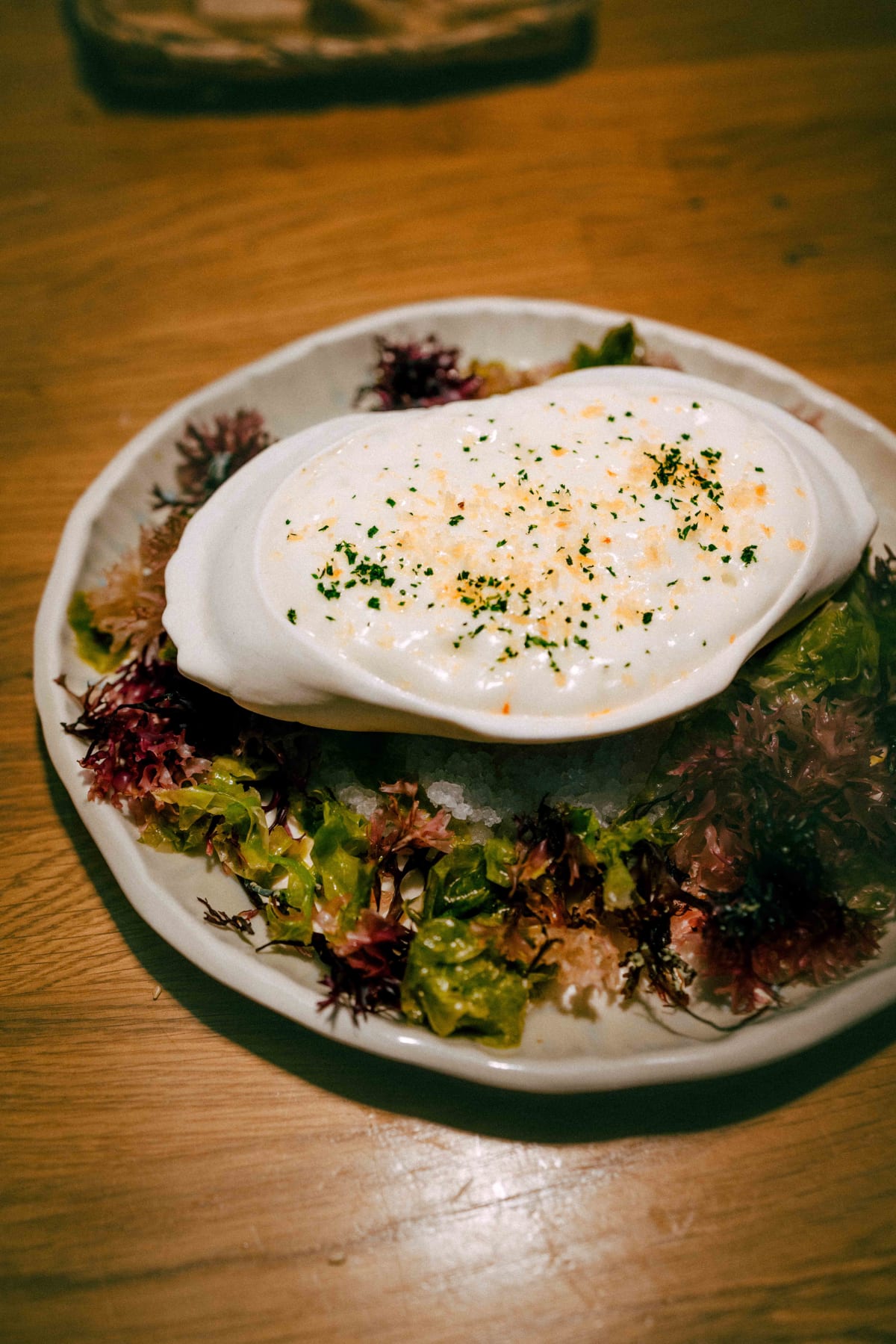
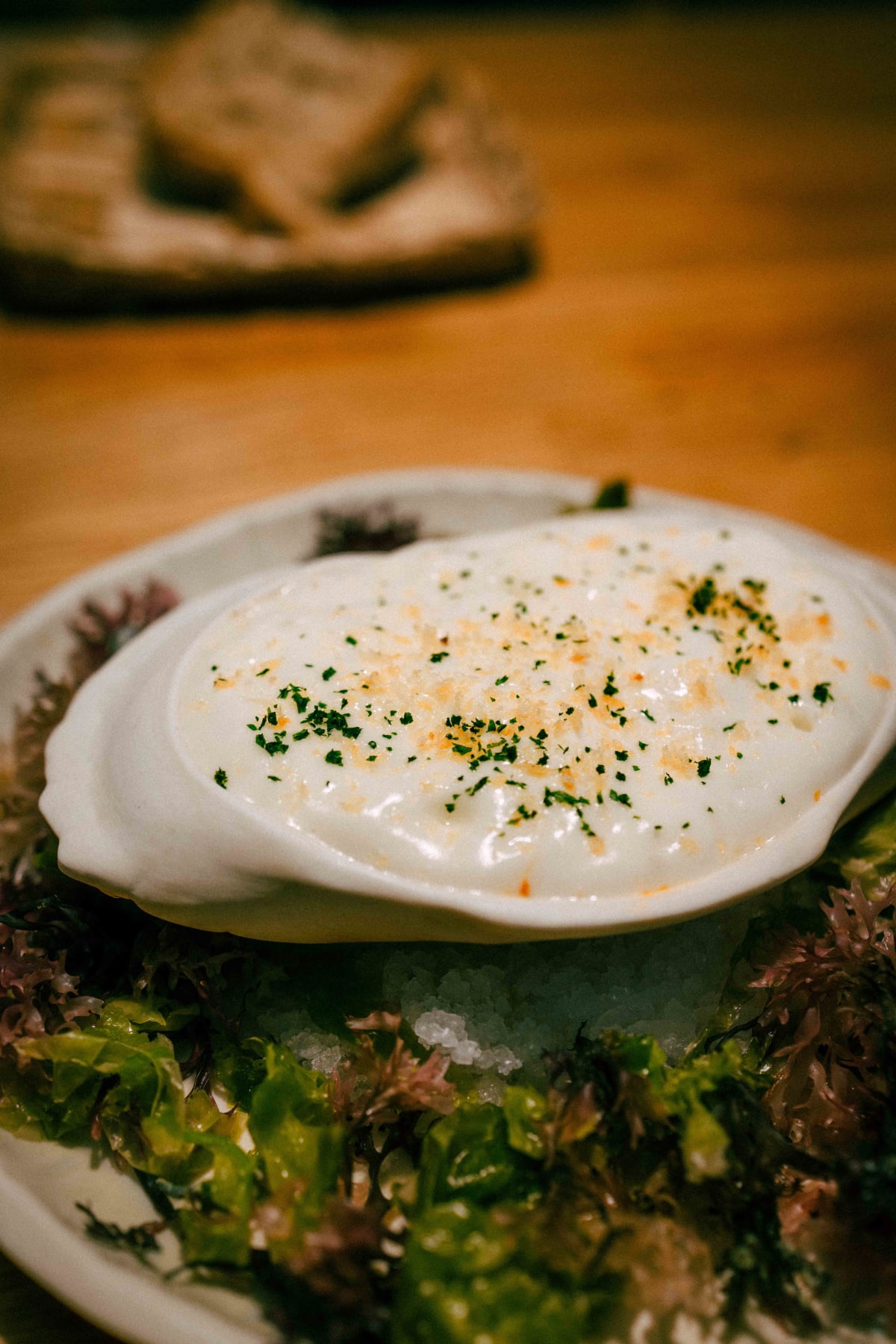
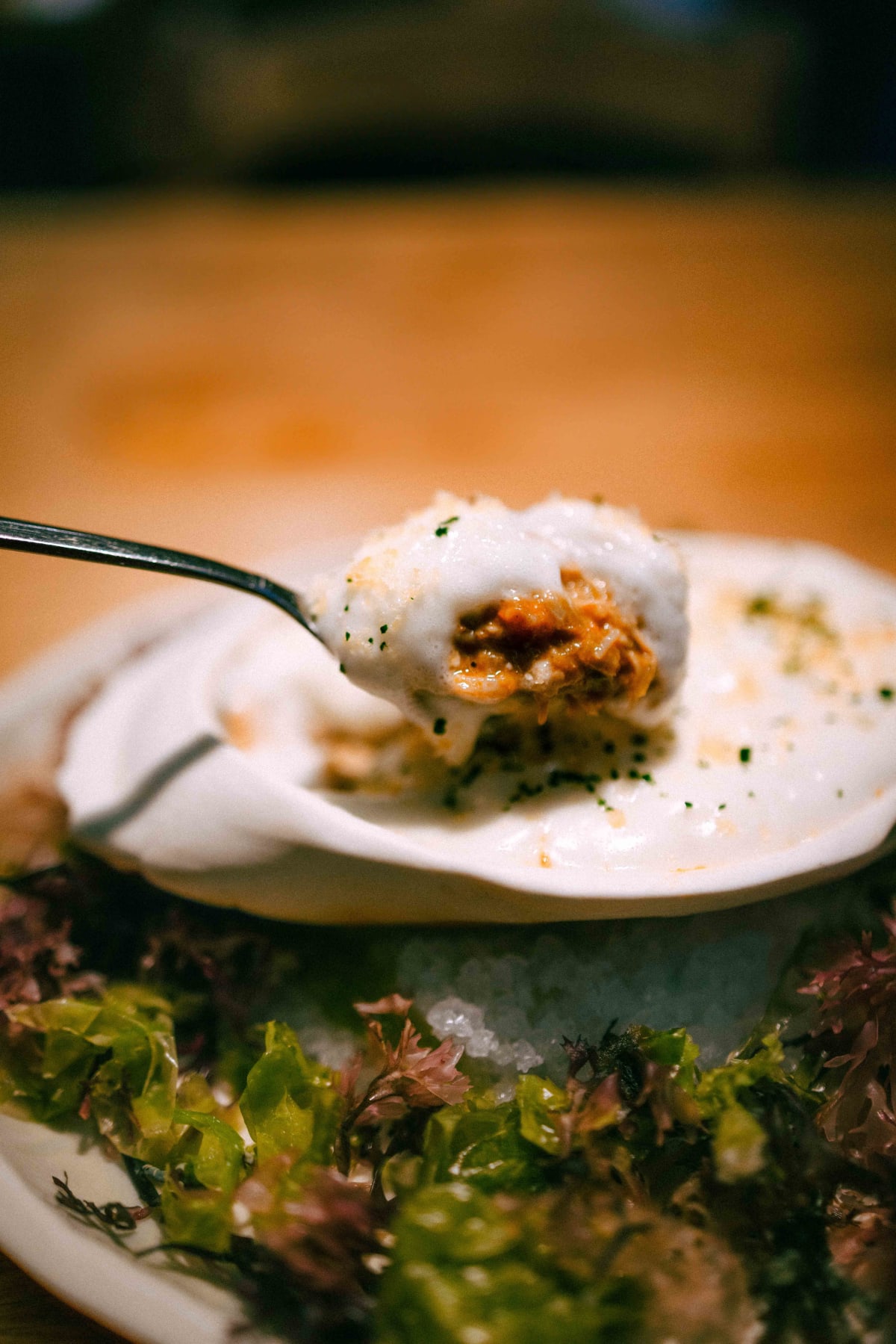
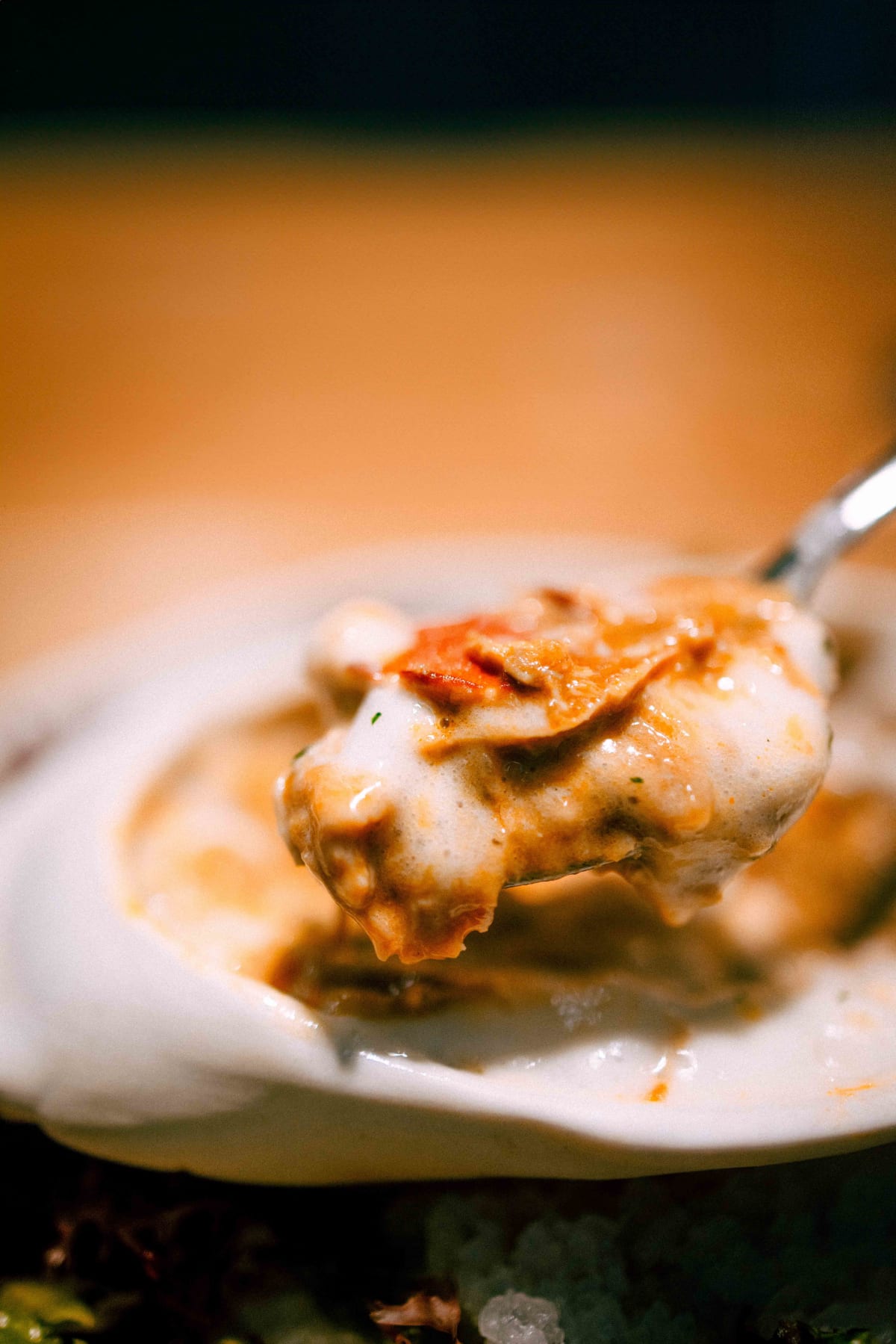
And the cream foam on top was most likely a pil-pil foam. Pil-pil is a sauce emblematic of Basque cooking, made by emulsifying olive oil with the gelatine that comes out of salt-cured cod, and this house modernizes the traditional txangurro slightly by laying that pil-pil over it as a foam. So the foam I wondered about turned out to be the single point where this house had laid a hand on the traditional dish.
So the foam I wondered about turned out to be the single point where this house had laid a hand on the traditional dish.
Section 9·Onglet
Last came the Hanger Steak. What is a hanger steak, I wondered. Looking it up, I took it to be named after the good steak cuts butchers hang up in their shops, and to be what the British call skirt steak and Koreans call chimasal.
To set the cut down more precisely, hanger steak is what the French call onglet, the muscle that hangs from the diaphragm of the animal. The hanger in the name comes not from meat hung in a butcher's shop but from hanging off the diaphragm. Only five to seven hundred grams come off a single animal, so butchers used to keep it rather than sell it, which is where the nickname butcher's steak came from.
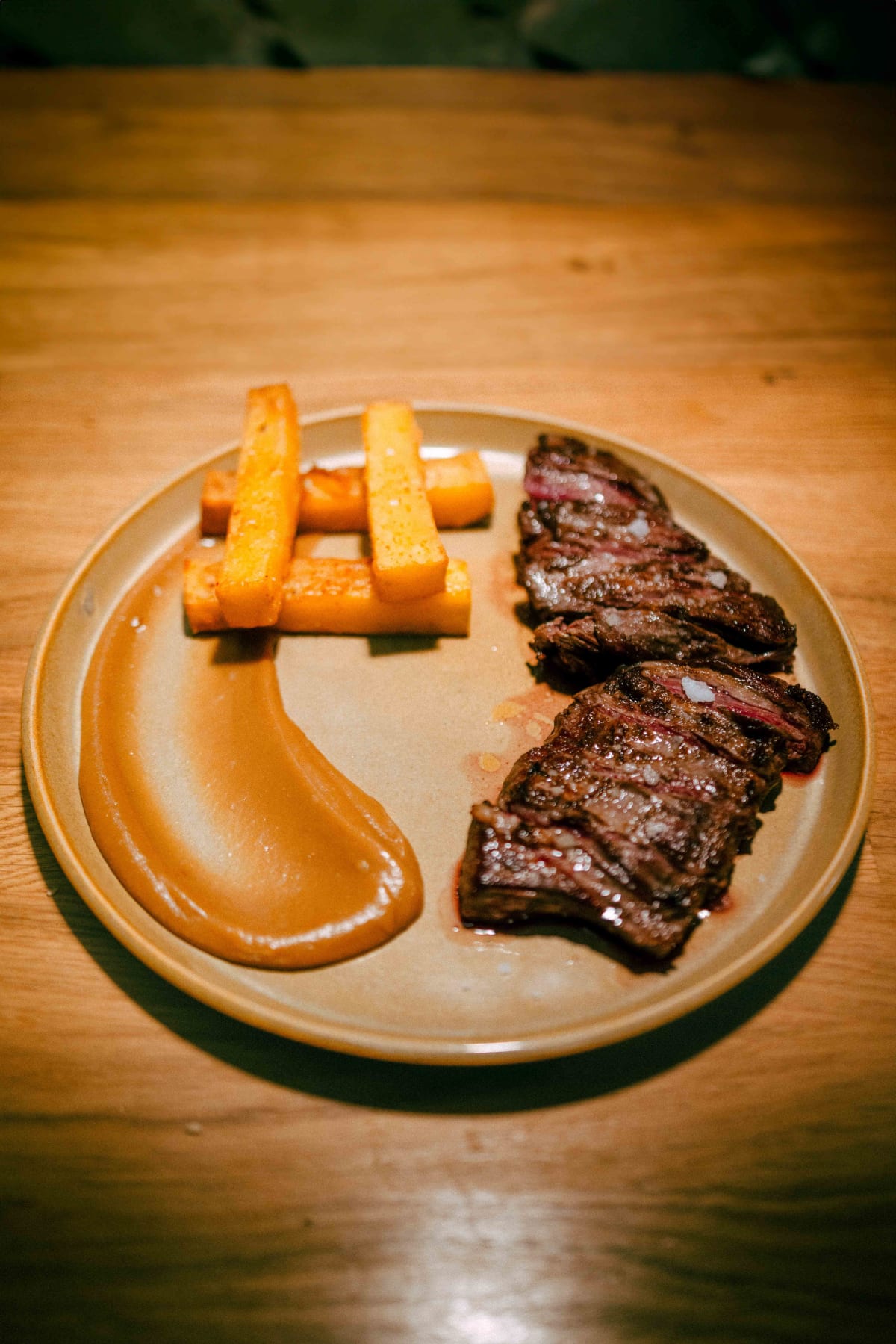
In Britain the cut is indeed called skirt, but in Korean butchery terms it is closer to tosisal. The grain is coarse and it has spring to it, so the meat aroma comes up strongly, and what I felt as chewy with the juices bursting out is exactly the character of this cut.
Personally this was among the best beef I have eaten. The tosisal was chewy while the juices burst out of it, and it was so good. I do not know how it was cooked but the outside was browned beautifully. The seasoning was right, and if I had to name a fault the garlic sauce that came with it did not seem to suit it well. This steak alone was good enough to deserve a Michelin star.
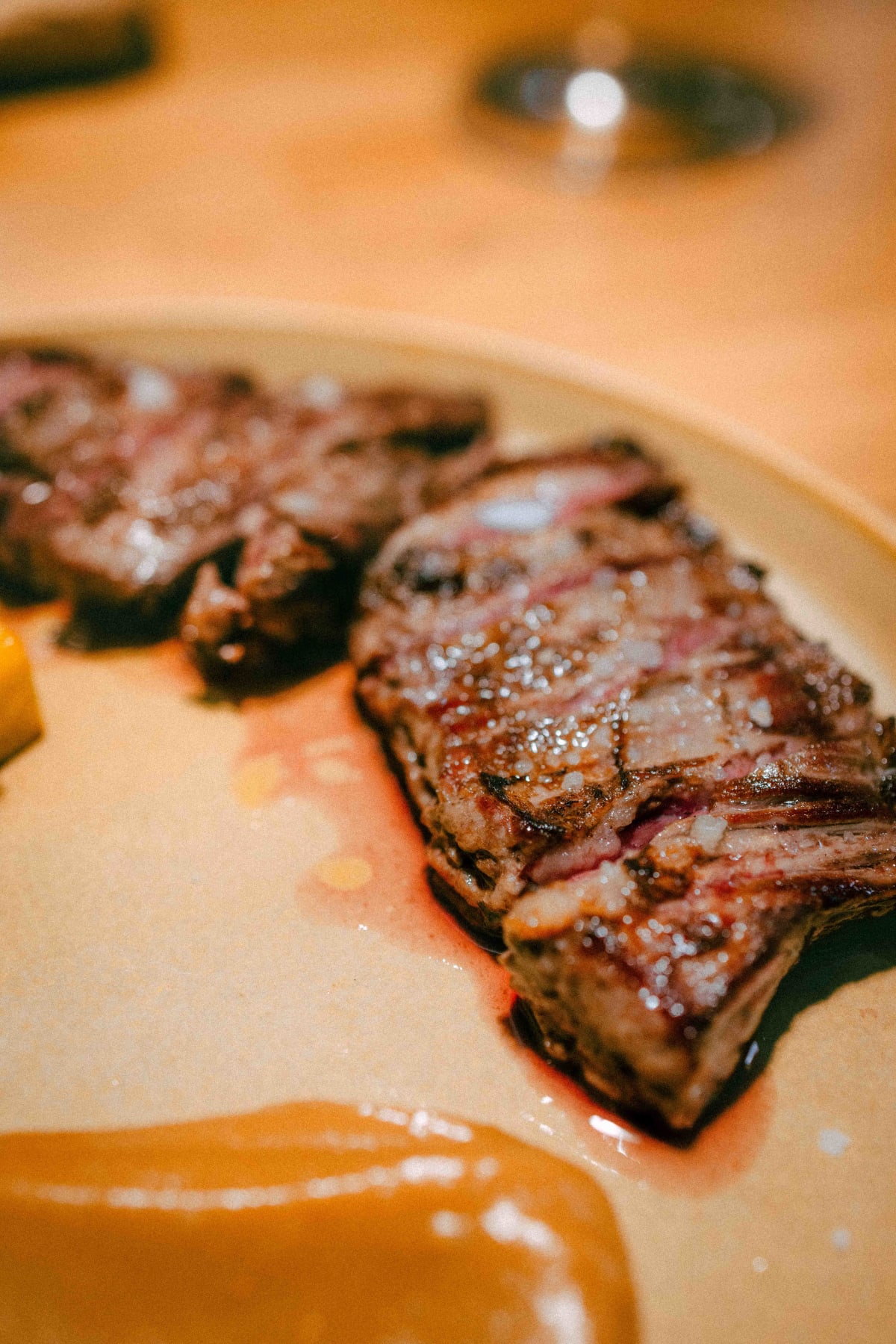
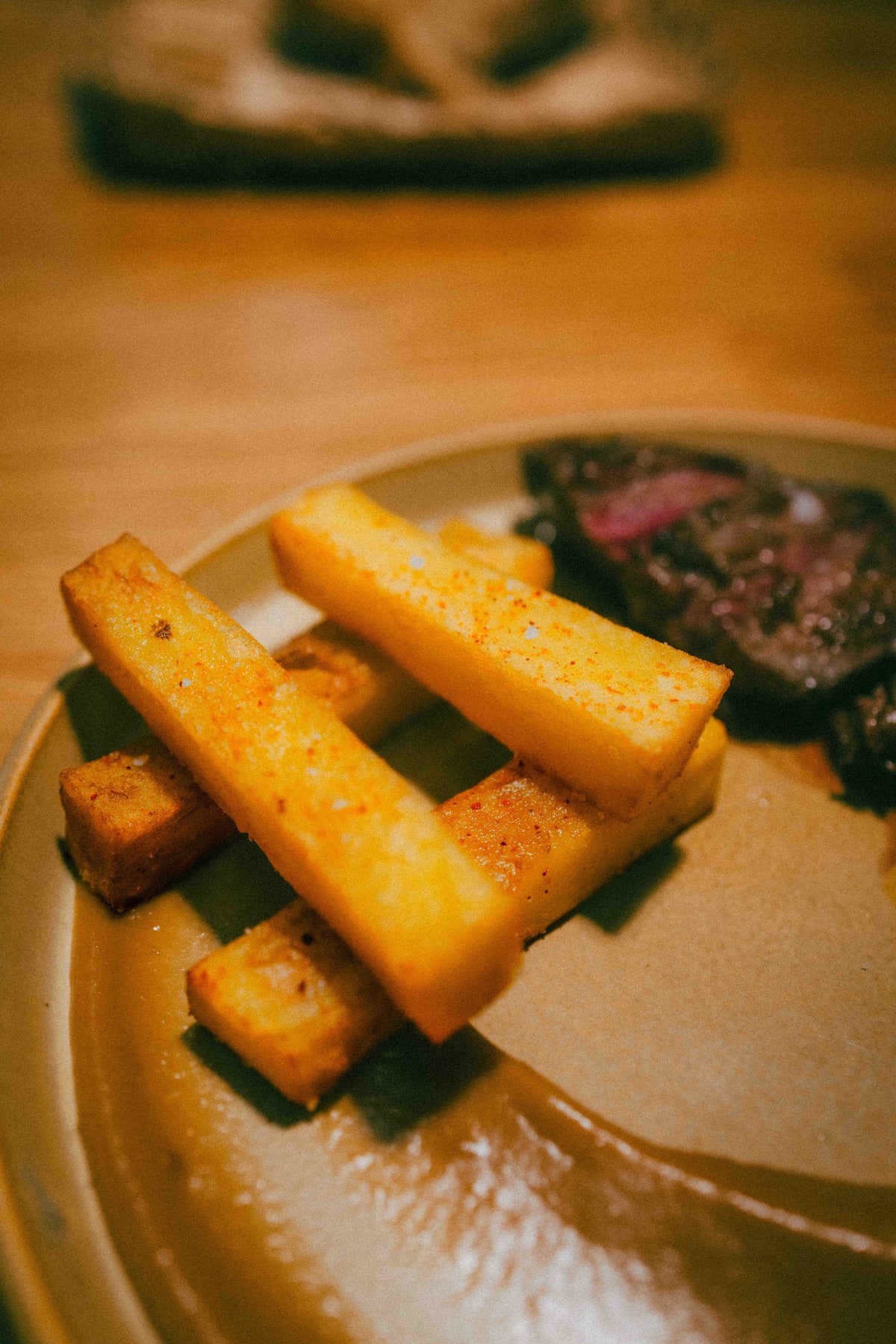
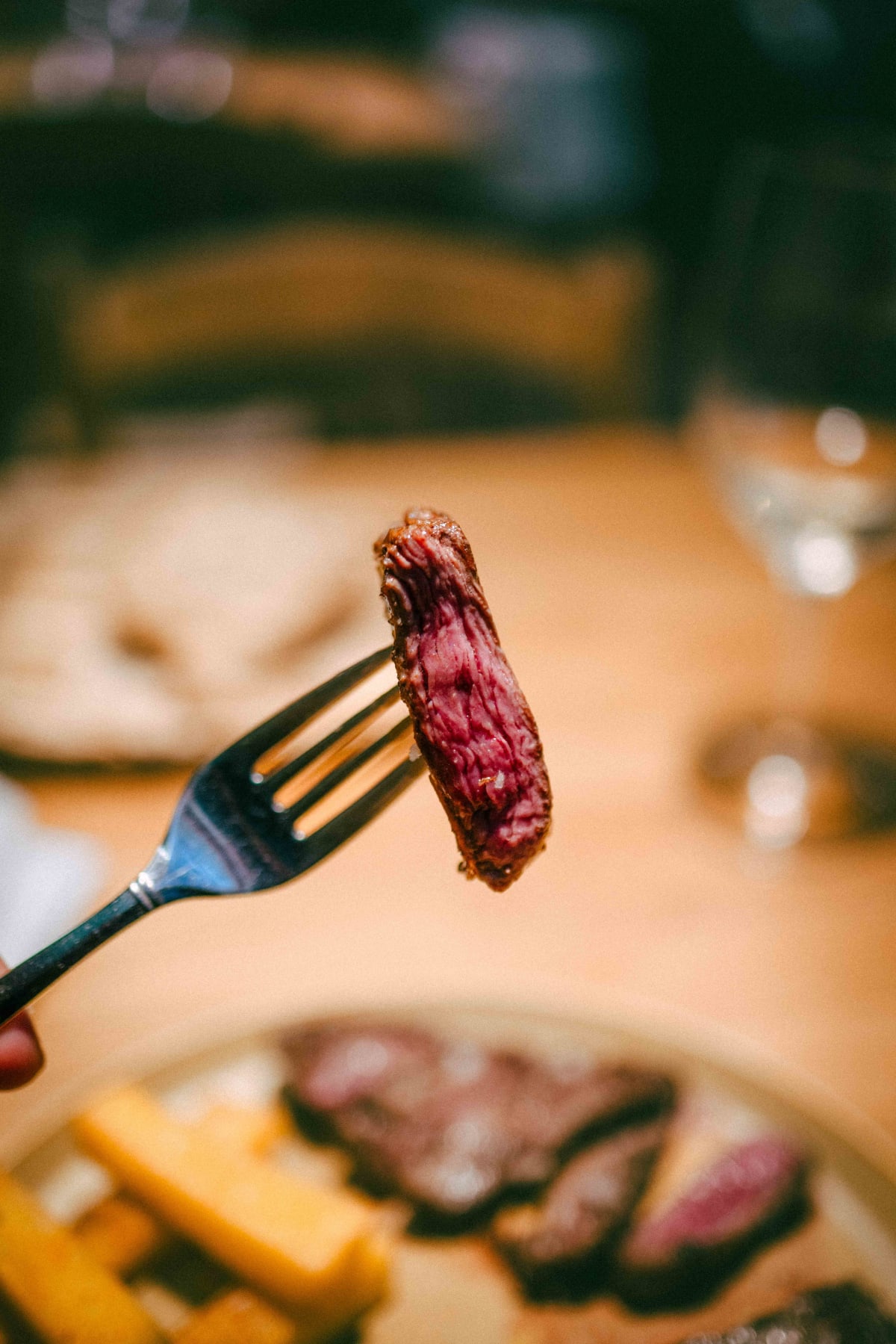
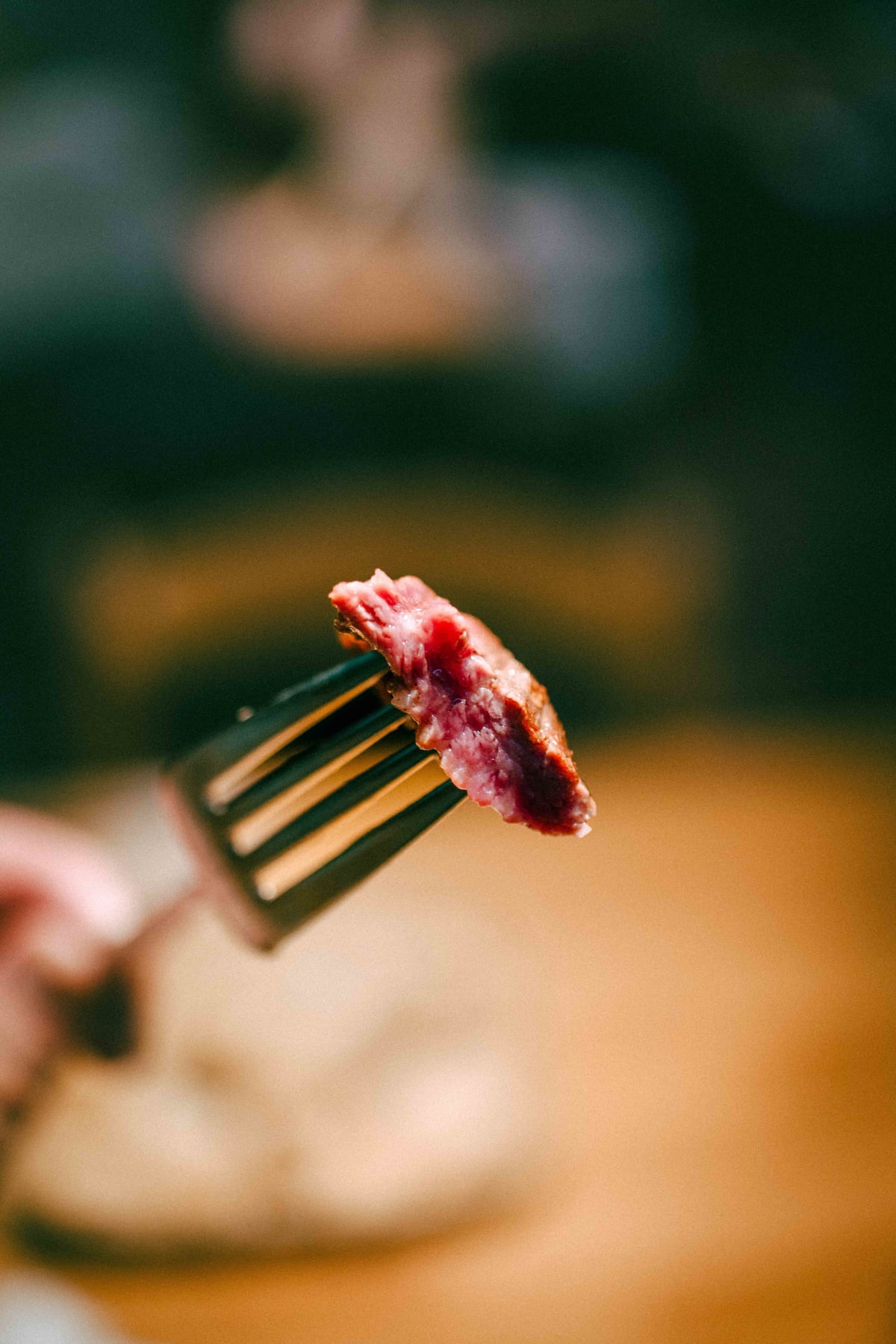
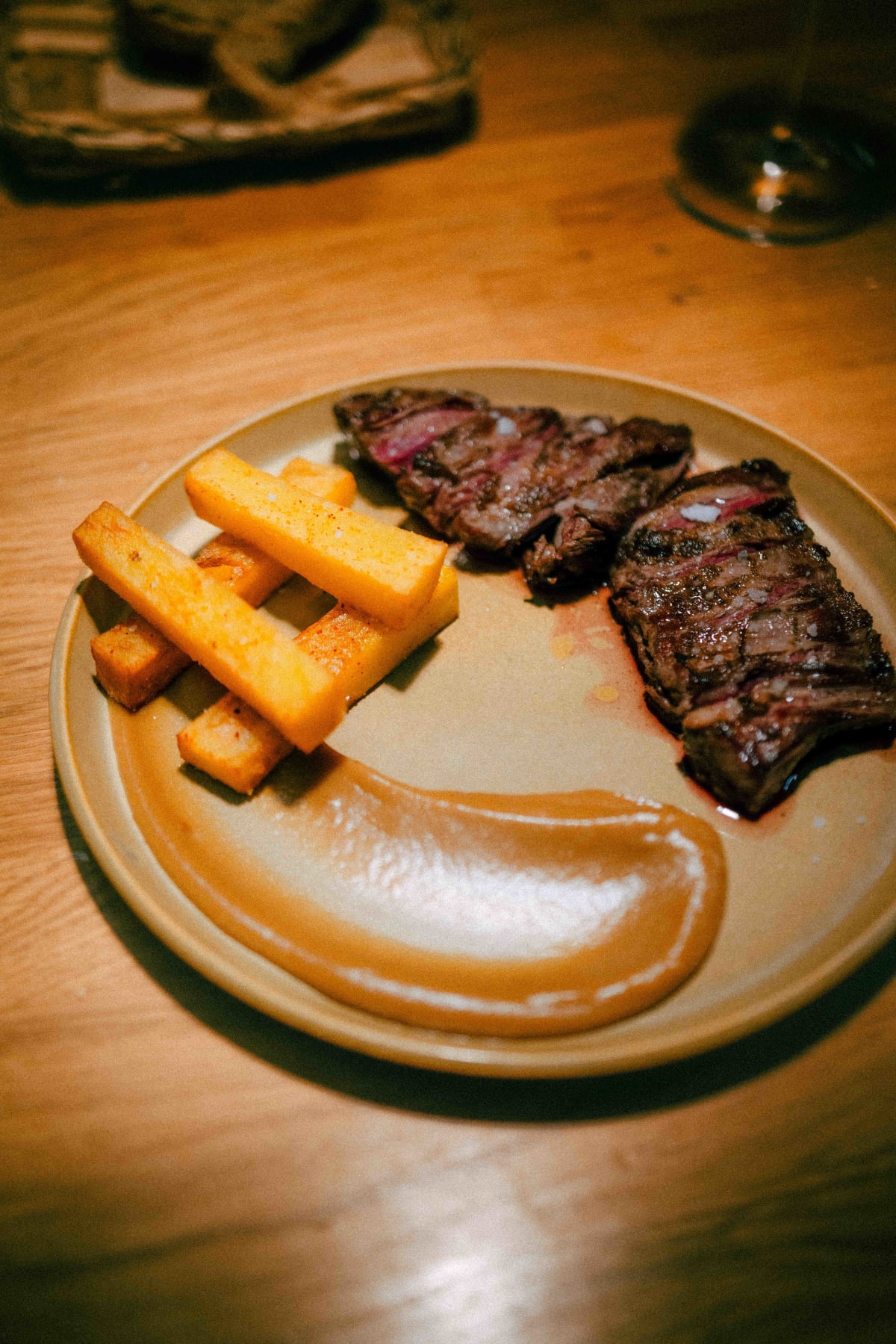
Looking back, it may be no accident that the grilled meat was the best thing here. What the family did before opening this restaurant was run a butcher's shop, and Berasategui's father, a butcher, handled the grill in this kitchen. The owner and the chef have both changed since, but the fact that grilling meat sits at the origin of this house has not.
Section 10·Cola in San Sebastián
Was it from about this point that I went around Spain drinking five cans of cola a day? I was tired that day, and after eating a steak I was suddenly hit by a greasy heaviness and thirst. Do they even sell cola at a dining restaurant like this, I wondered, and asked, and they said they did, so I ordered one. Perhaps because it was a restaurant, even the cola came nicely served. So I ordered another on the way out, two in all, and from that point I think I was drinking five to ten cans of cola a day. Spanish cooking uses a lot of olive oil, and to me it felt oily.
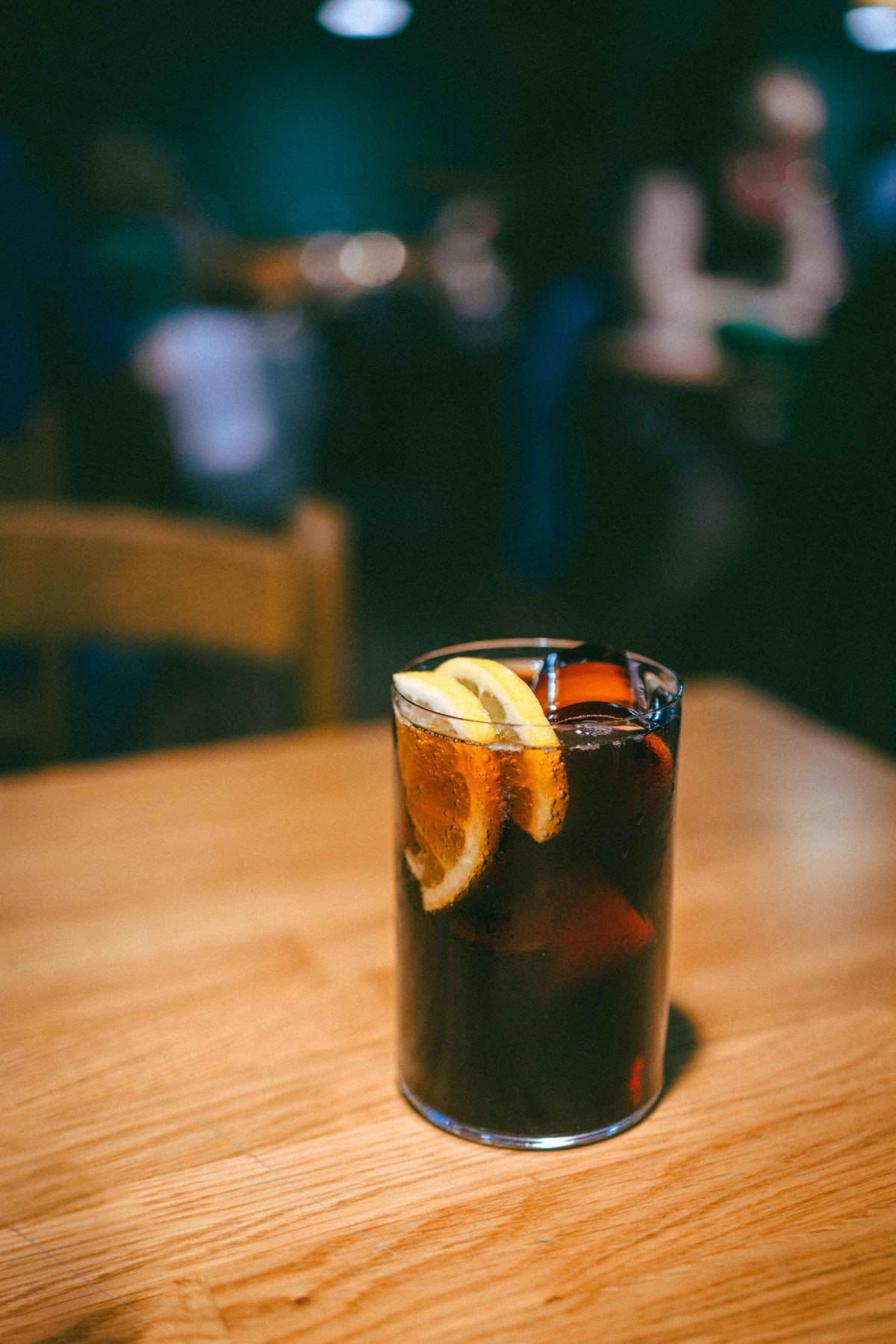
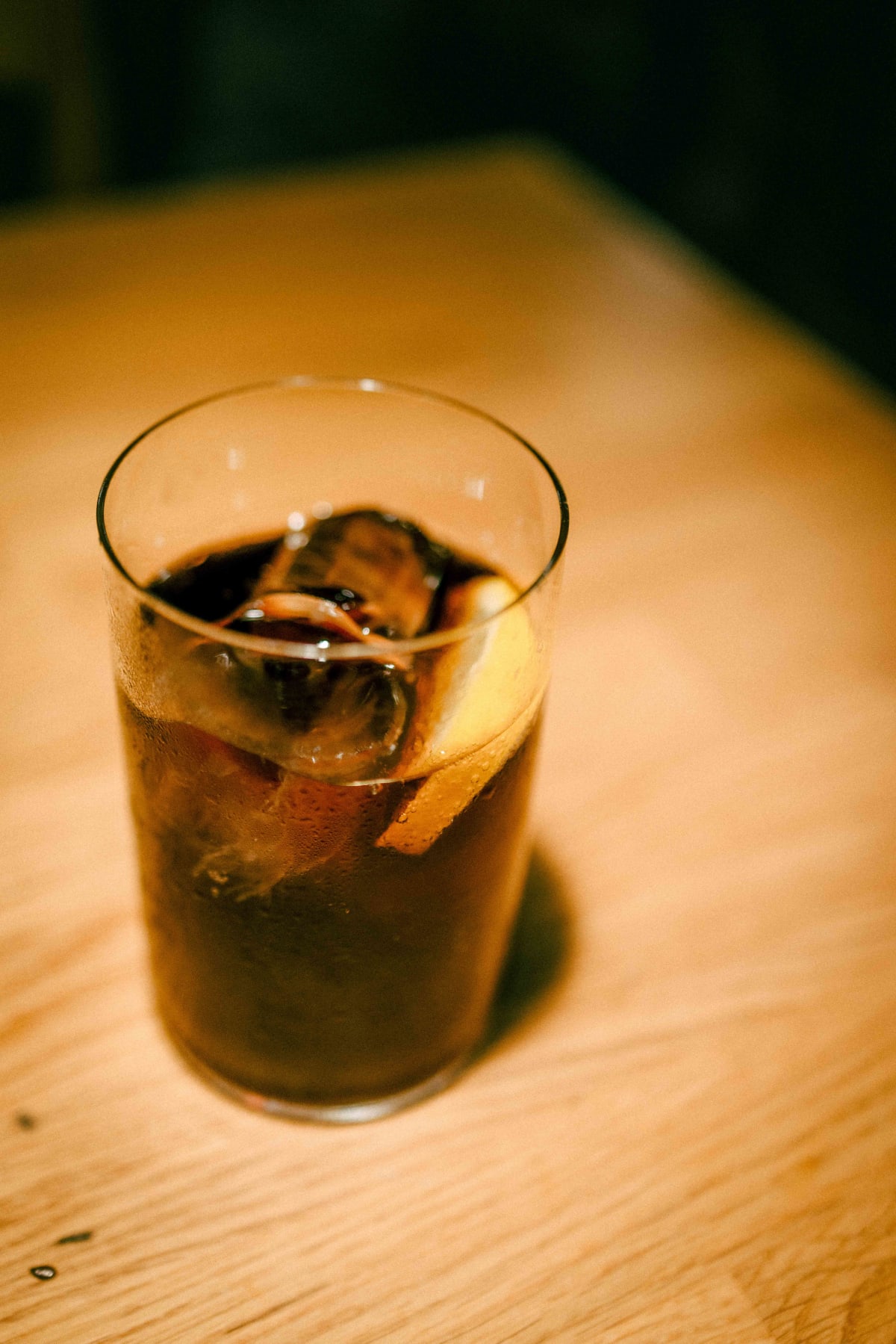
The good news is that once I was back in Korea, I returned to drinking it only occasionally, as before. I think it was the weight of all that oiliness, growing heavier as I went on from San Sebastián to southern Spain and hotter places.
Section 11·The Old Town
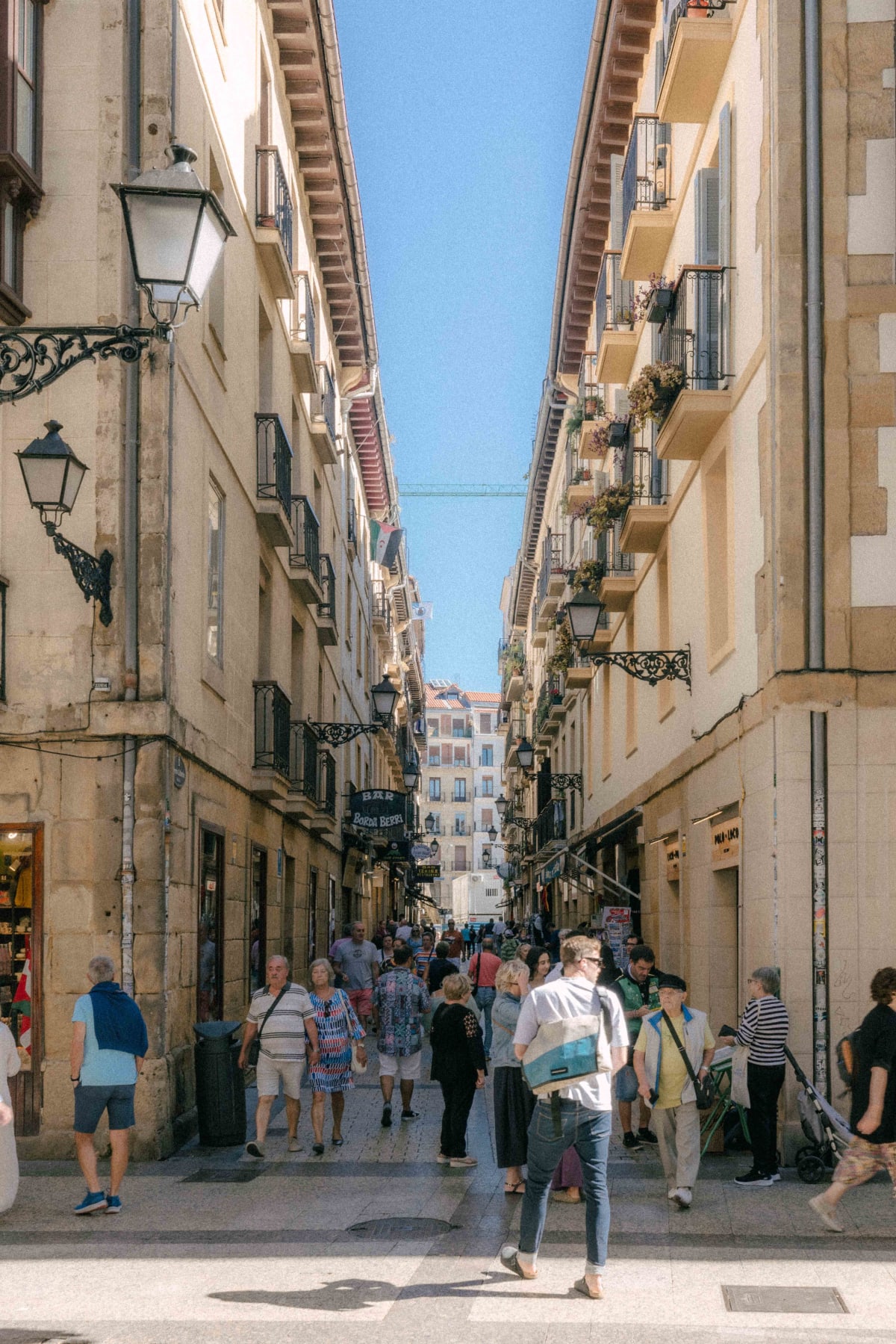
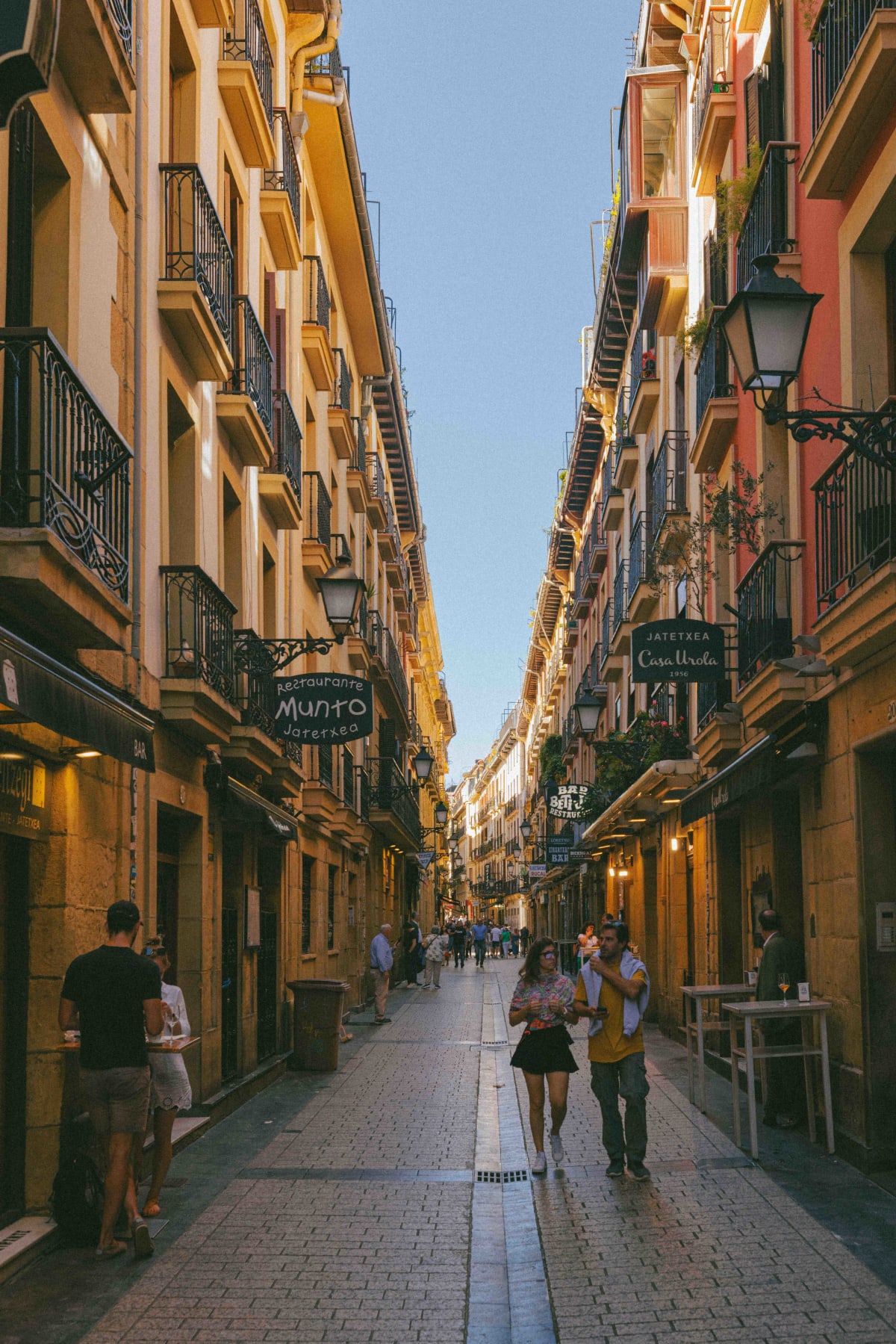
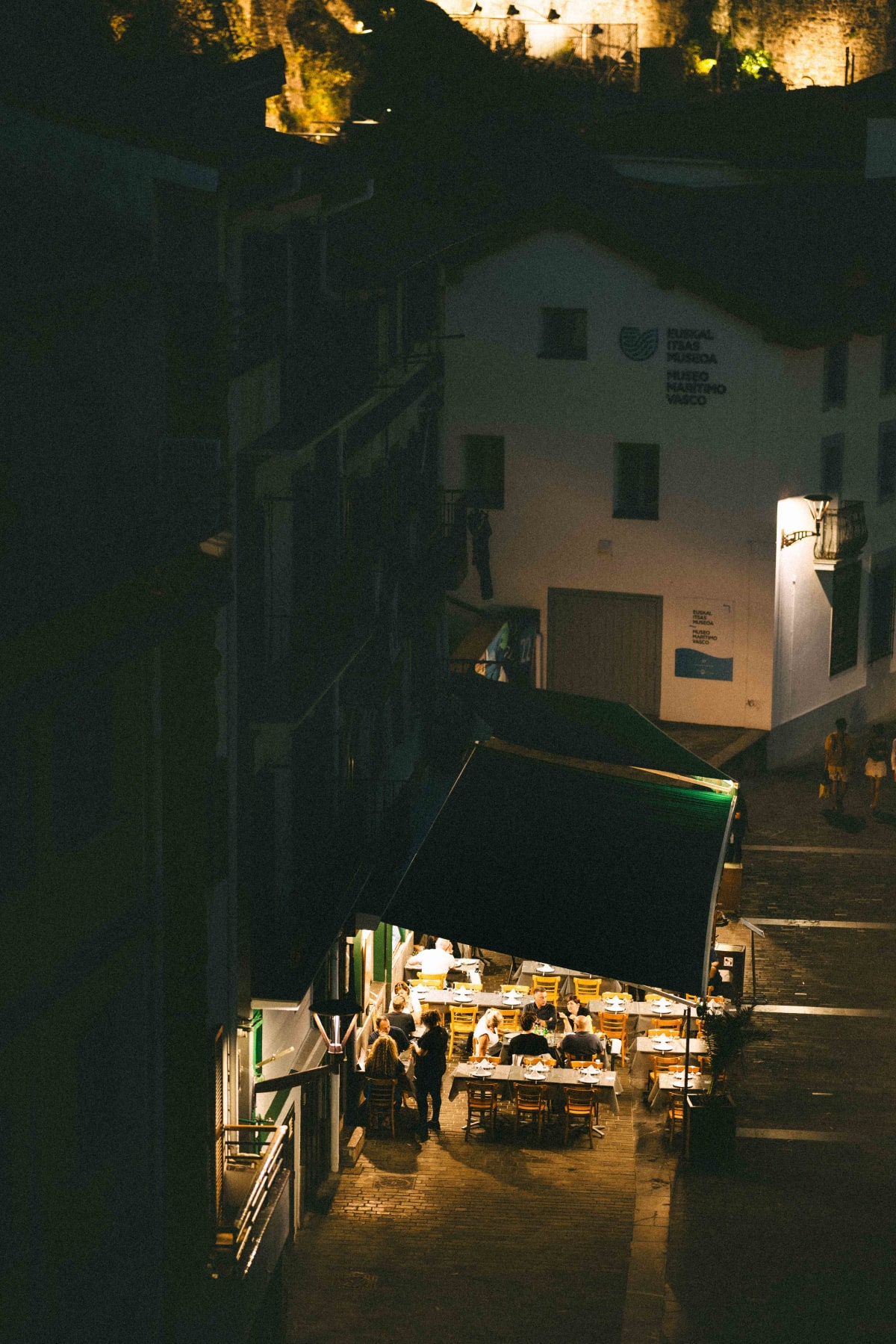
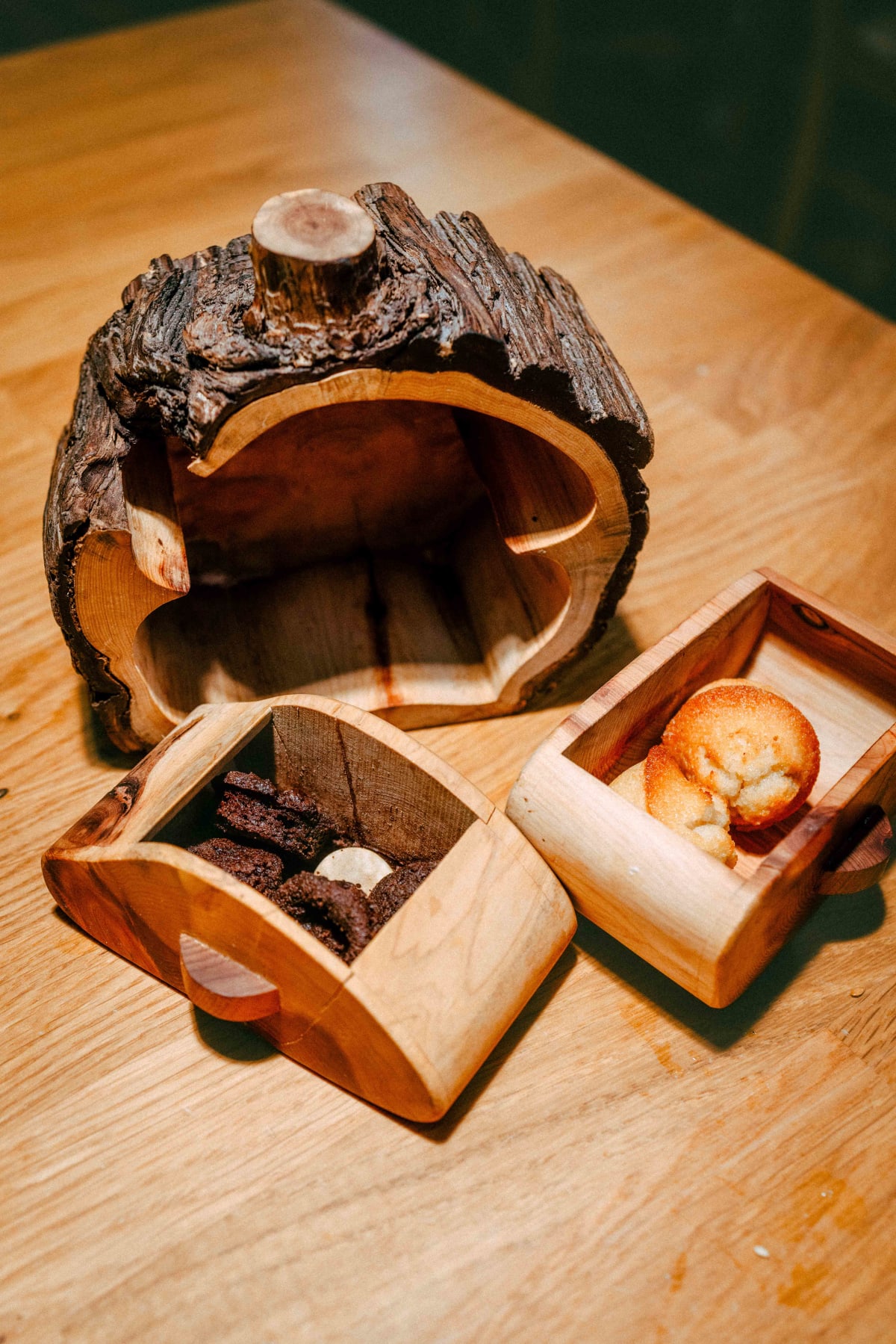
At the end they give you a charming little wooden barrel, and when you open it there are cookies and madeleines in two compartments, which was lovely. It was a restaurant with little touches of its own. In San Sebastián, the centre and the concentration of famous pintxo bars are in the old town, while the famous Michelin-starred restaurants are out on the edges. Since you cannot eat only at pintxo bars in the old town, this seems a good place to have a course or a decent à la carte dish at a reasonable price.
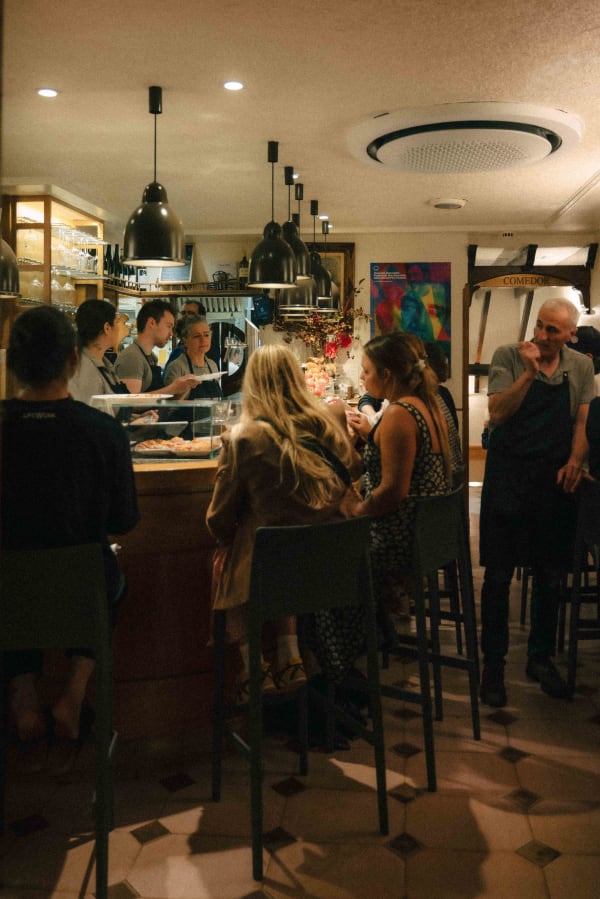
I should add that the restaurant still keeps its basement space as it is, and has quite deliberately brought the city of Donostia into its interior. Bertsolaris who sing improvised verse, the drummers of the San Sebastián Tamborrada, fishermen and Basque stone-lifting athletes appear as decorative motifs. And on the wall is the history of the city burning in 1813. On 31 August that year, British and Portuguese allied forces attacked a San Sebastián held by the French, and much of the city was destroyed by fire afterwards; the street called the 31st of August in today's old town takes its name from that.
That they went to the trouble of putting this story on the wall is, I suspect, because they want to define their cooking not simply as Basque food but as food tied to the memory of this city.
Most people come for the tasting menu, and the carte is the better route. This was a casa de comidas before it was anything else, and its history sits in the grill rather than in a run of small plates. The family were butchers before they ran a dining room, the father worked that grill, and a house whose first star came out of it still cooks meat better than anything else. The old town is pintxo territory, so this works as the one evening you are not eating standing up. Take it early in a trip rather than late, since the starred houses outside town flatten whatever follows them.
Have a question about this restaurant, or want to share your own experience?
Send a message