Local & Essential · San Sebastián · Spain / September 2023
Ganbara
"The counter where the produce is the display"
Section 1·A Place Of Pilgrimage
Every country known for its food culture has somewhere that gets called a place of culinary pilgrimage. Spain has several candidates, but San Sebastián in the north is invariably among them.
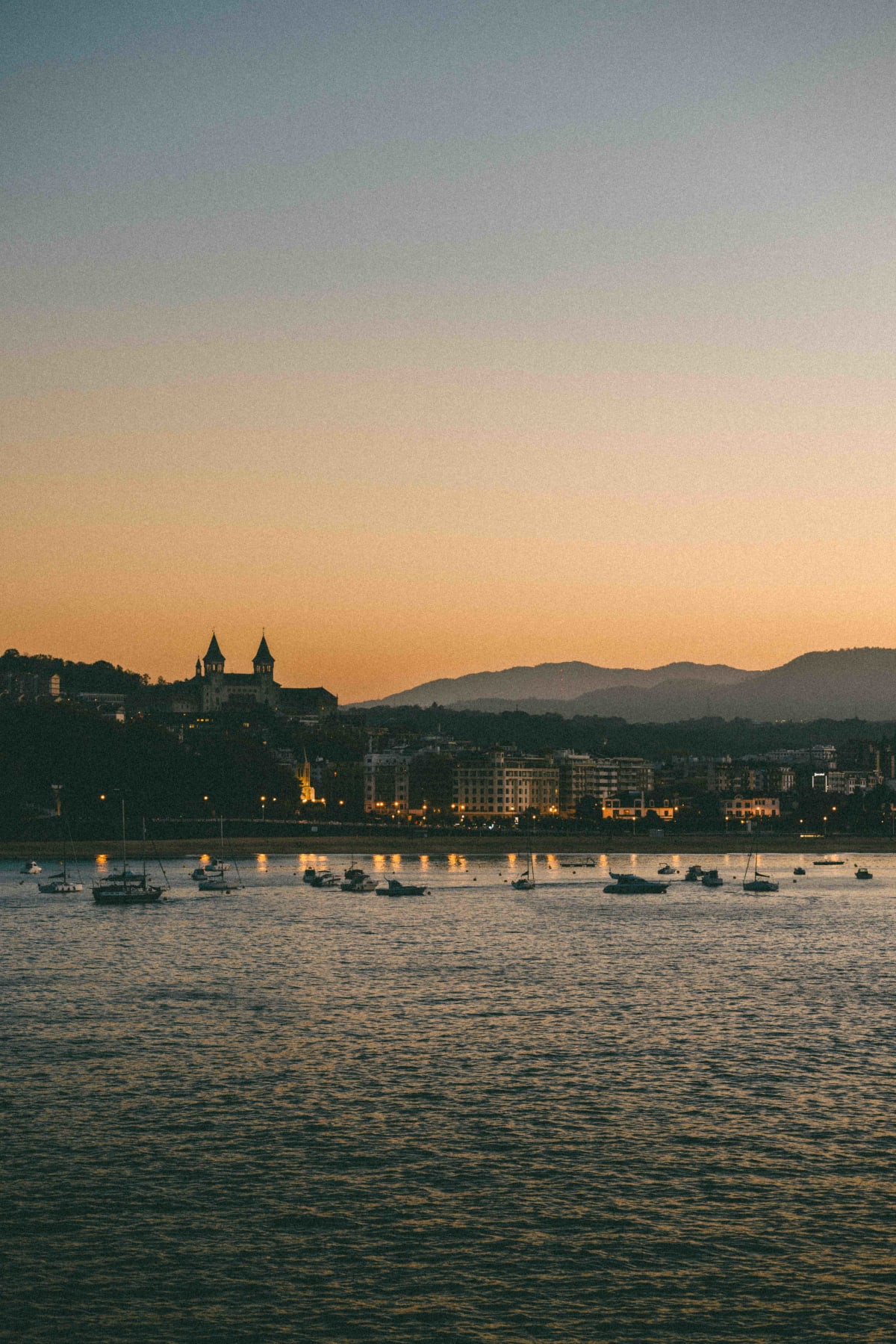
This was the last evening of the San Sebastián leg of my first gastronomic trip to Spain after the pandemic, in 2023. The sunset was so beautiful that I stood watching it for a long time, and by the time I had shopped and sorted myself out it was nine in the evening, and I headed for the old town.
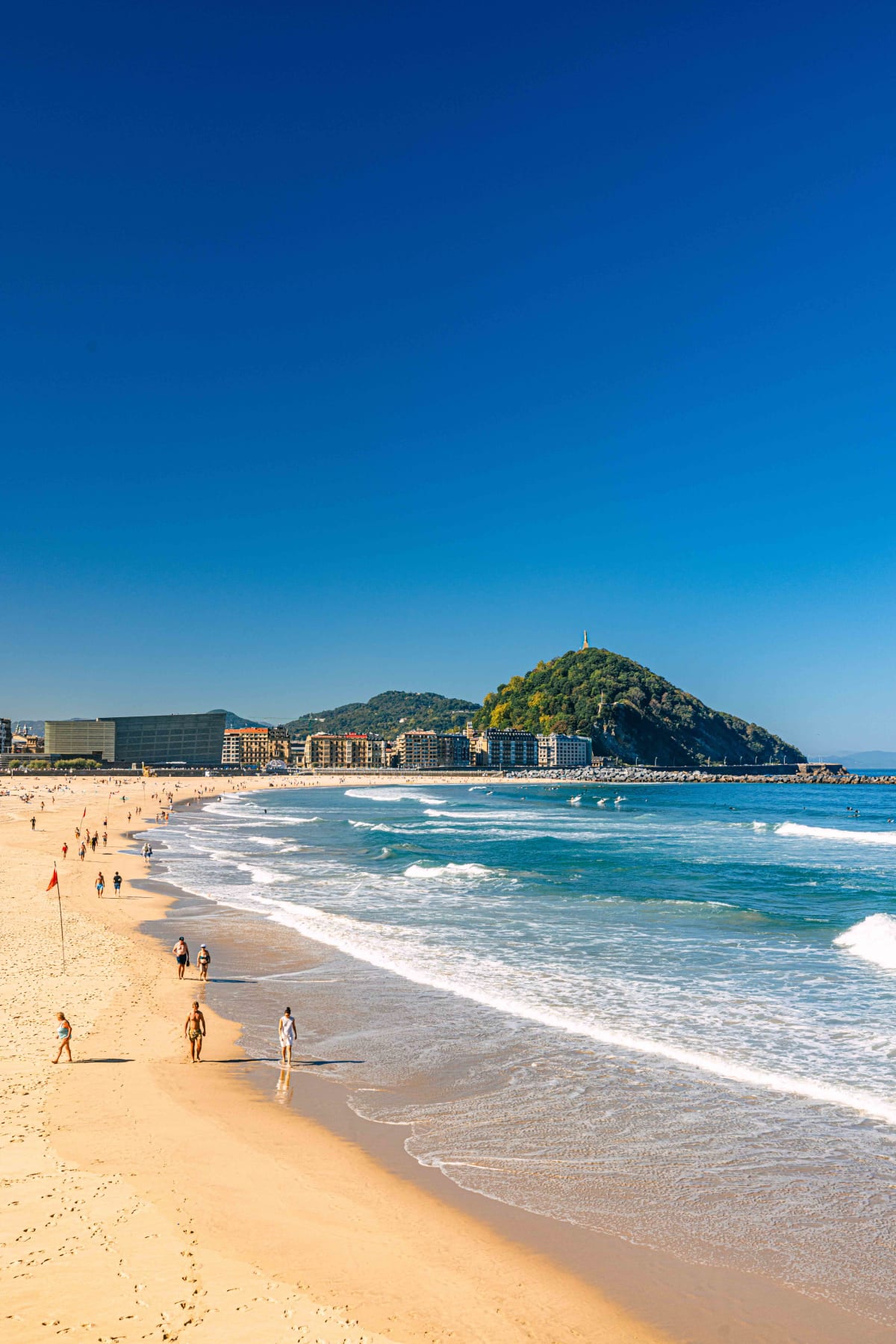
You cannot go to San Sebastián without the pintxo bars. Pintxo means skewer in Spanish, and walk into a pintxo bar and every kind of skewer is laid out waiting for hungry locals and visitors.
Section 2·Pintxos And Tapas
Tapas means food served on a small plate, so a tapas bar is a bar where you casually order a few small plates. But it is hard to draw a clear line between a pintxo bar and a tapas bar, because most pintxo bars sell tapas too.
So the two are hard to separate and they are usually just called Bar something. The menu often lists the tapas you can order, and you can also tell the owner what you want from what is available that day, and they cook it and bring it over.
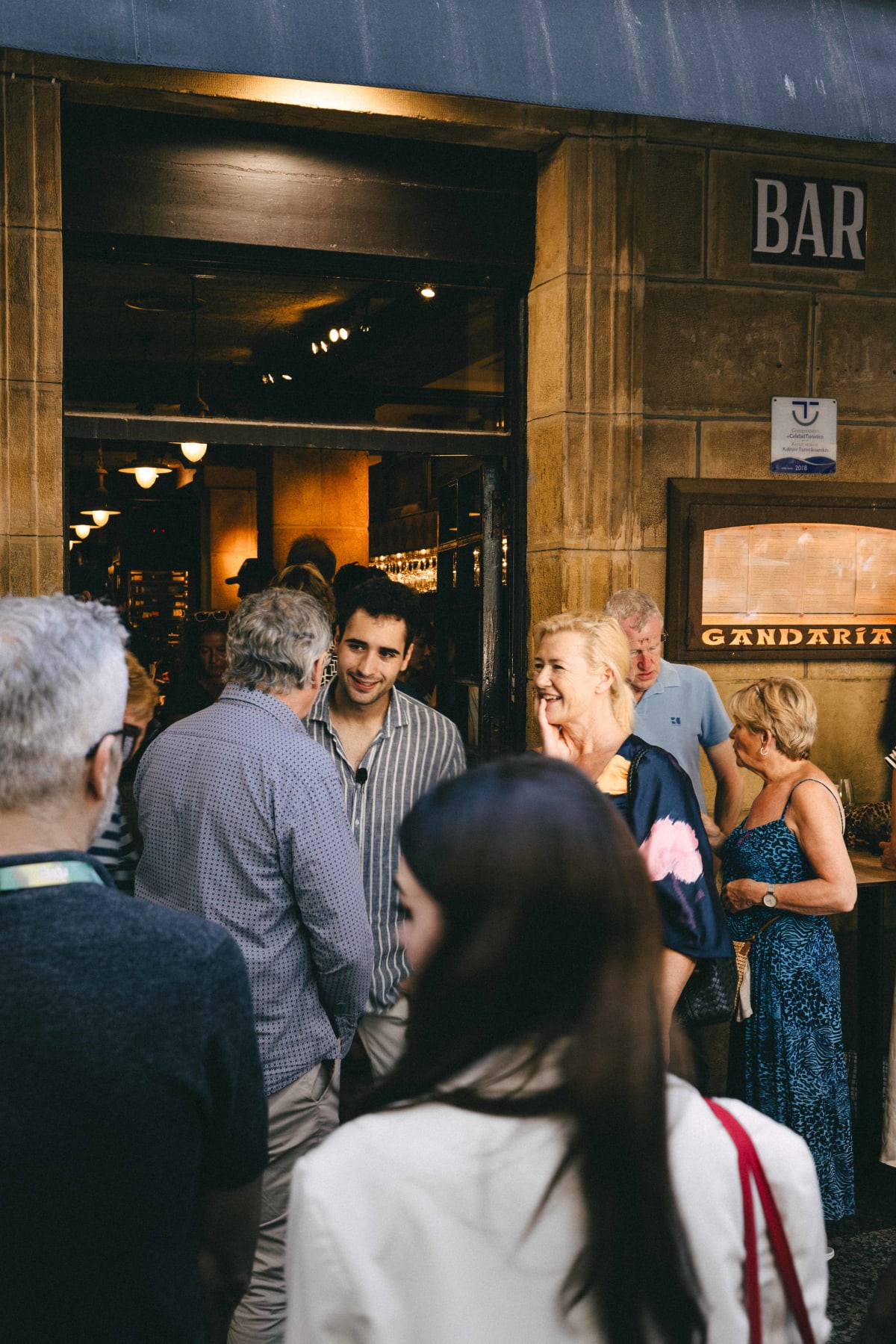
A lot of pintxo bars are concentrated in the old town of San Sebastián and many of them double as restaurants. Usually the pintxo bar is at street level with the restaurant in the basement or upstairs or deep inside the ground floor. Ganbara, the one here, works that way too. So when the website of a pintxo bar shows bookings closed, that means the restaurant is booked out, not the bar.
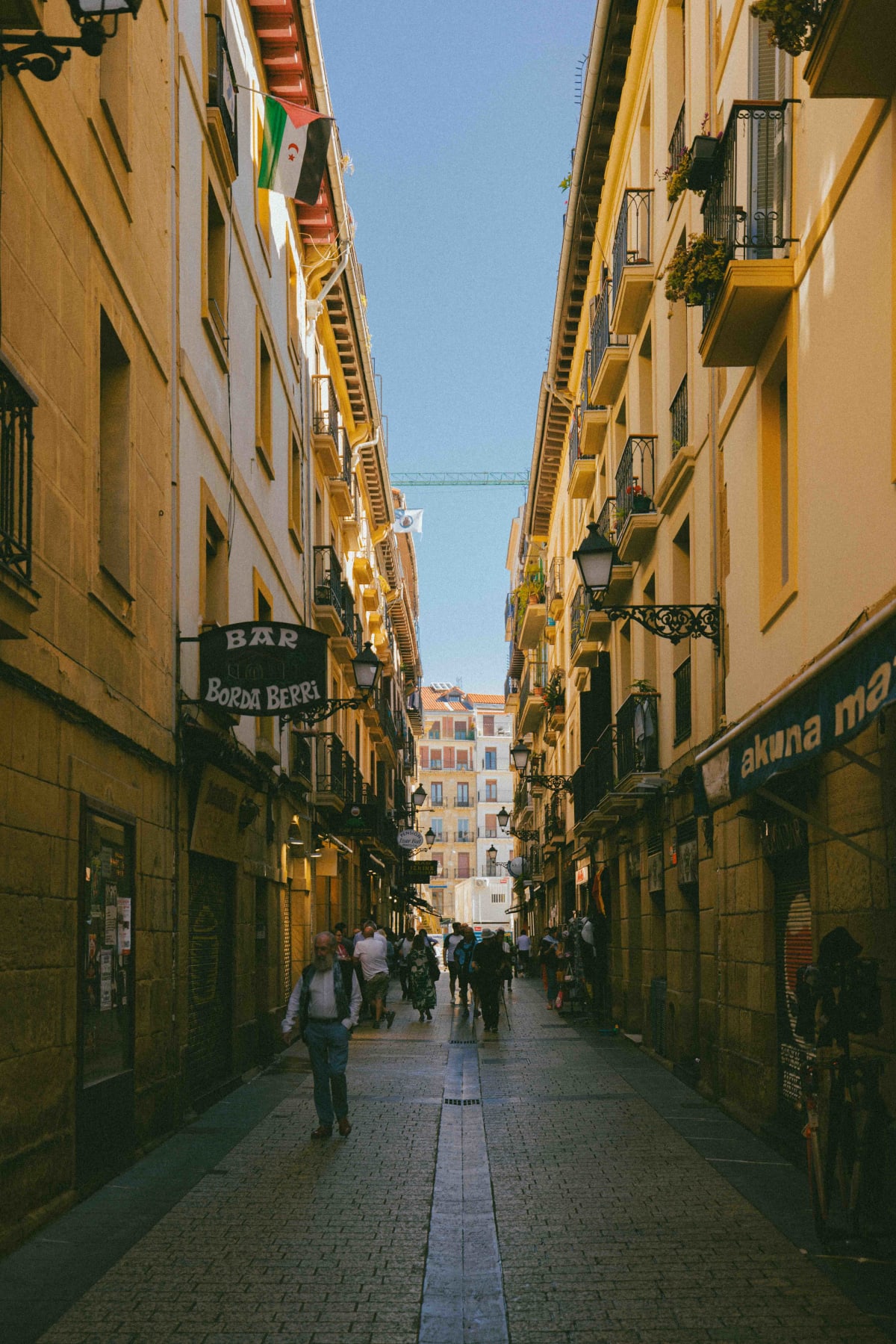
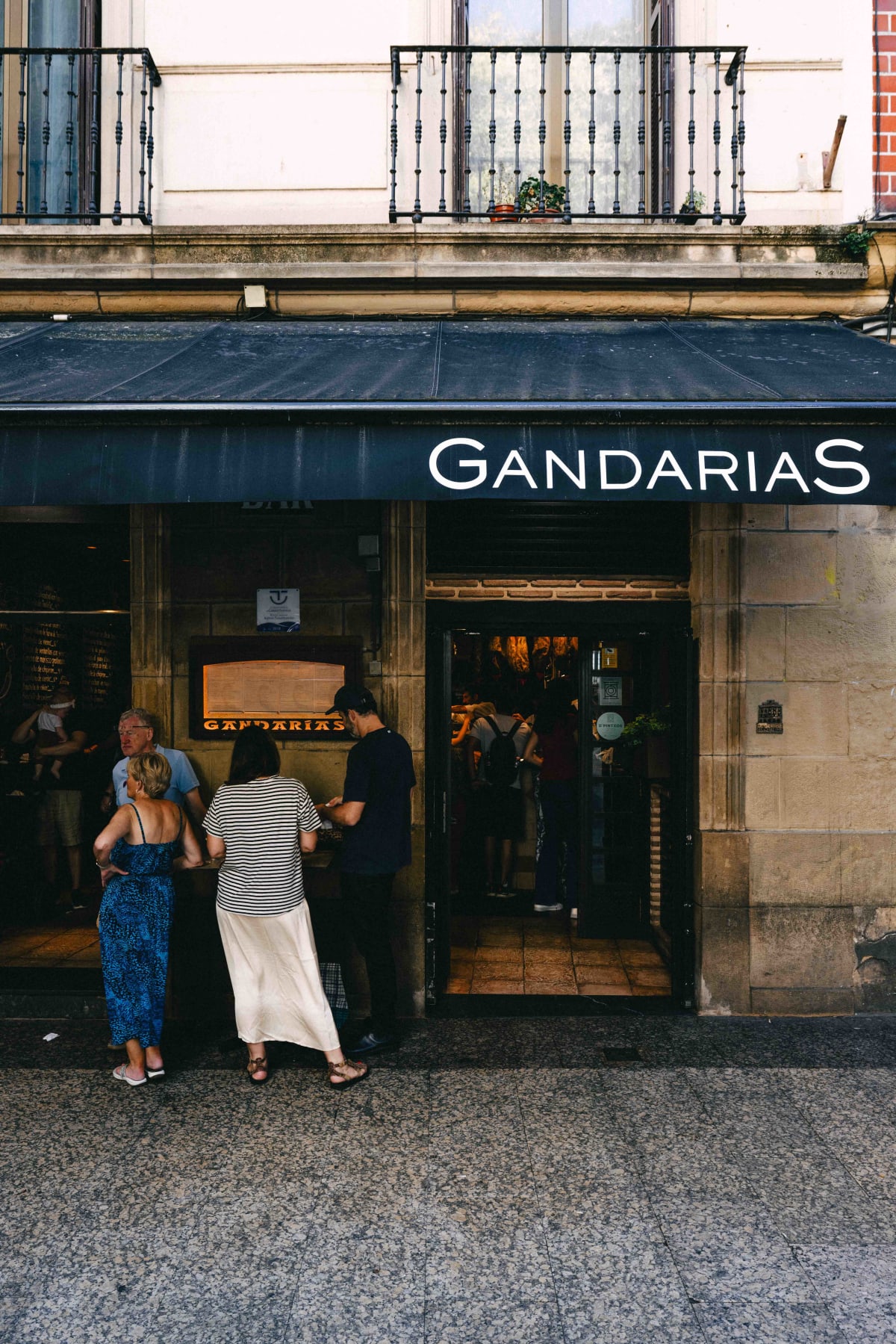
Pintxo bars do not take reservations. They are places you walk past and step into for something quick, so go into whichever one you like. The popular ones do mean queueing. Among the better known are Gandarias, Ganbara, Casa Urola which I visited on the same trip, and Borda Berri, founded by chefs out of elBulli and Martín Berasategui.
Section 3·The Door I Wanted
Of these, Ganbara was the pintxo bar and restaurant I most wanted to visit. I had tried to book the restaurant well in advance, but September is the San Sebastián International Film Festival and the city was truly packed. Everything was gone because of the festival, I put my name on the waiting list, and no word came right up to the day.
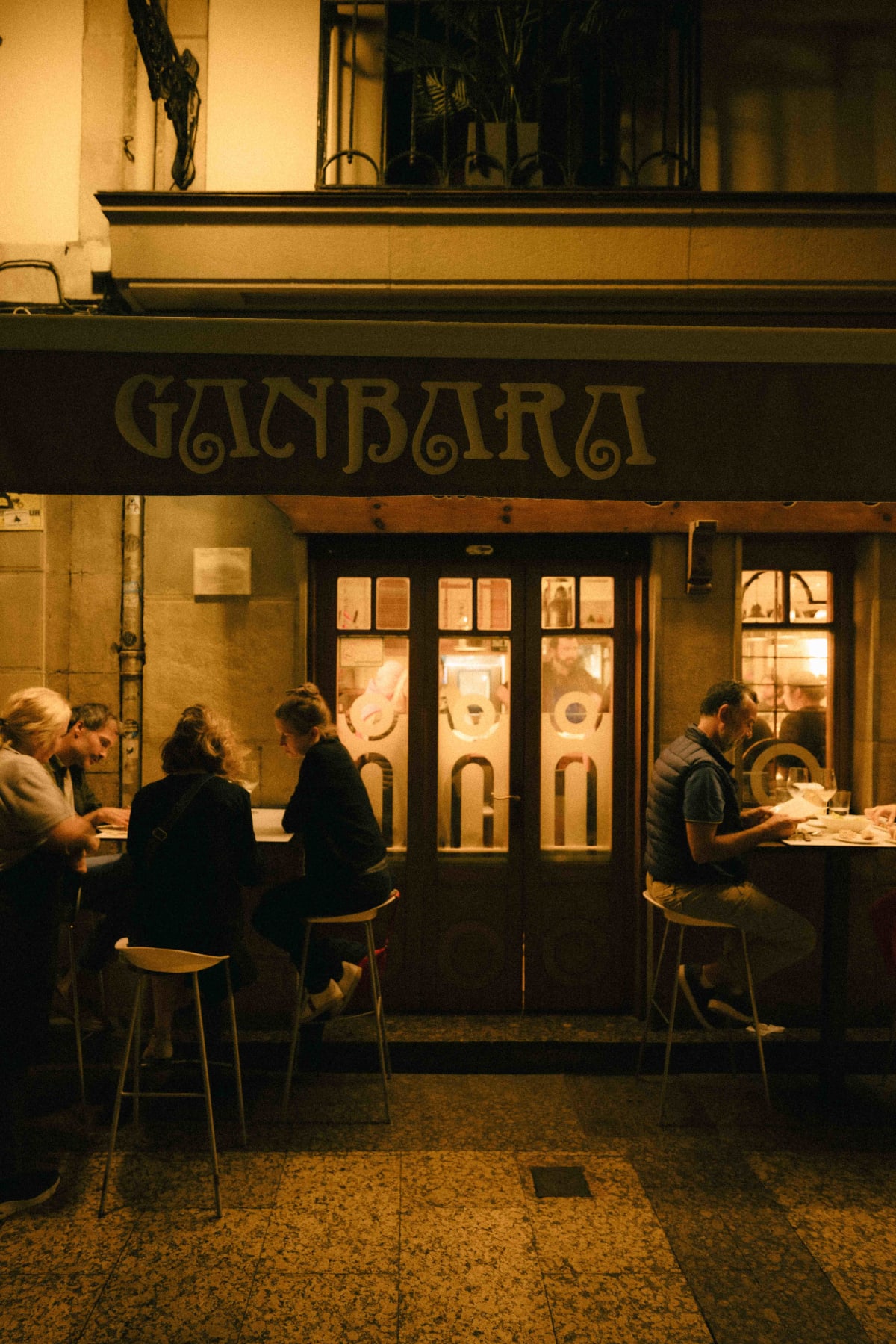
Even so I could not give up. It was getting on for half past nine and the queue was still long, but I waited it out and got one seat at the bar just before closing.
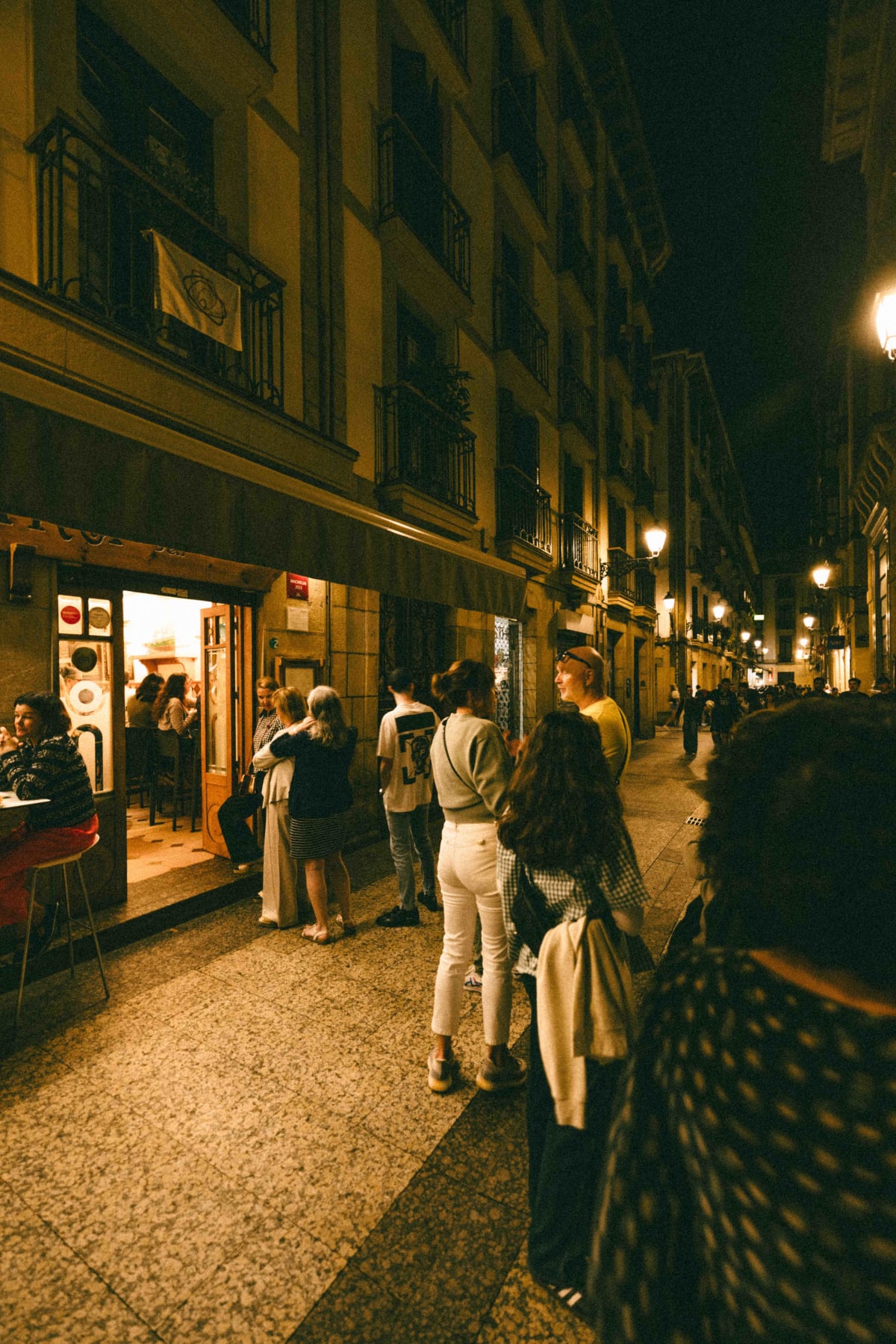
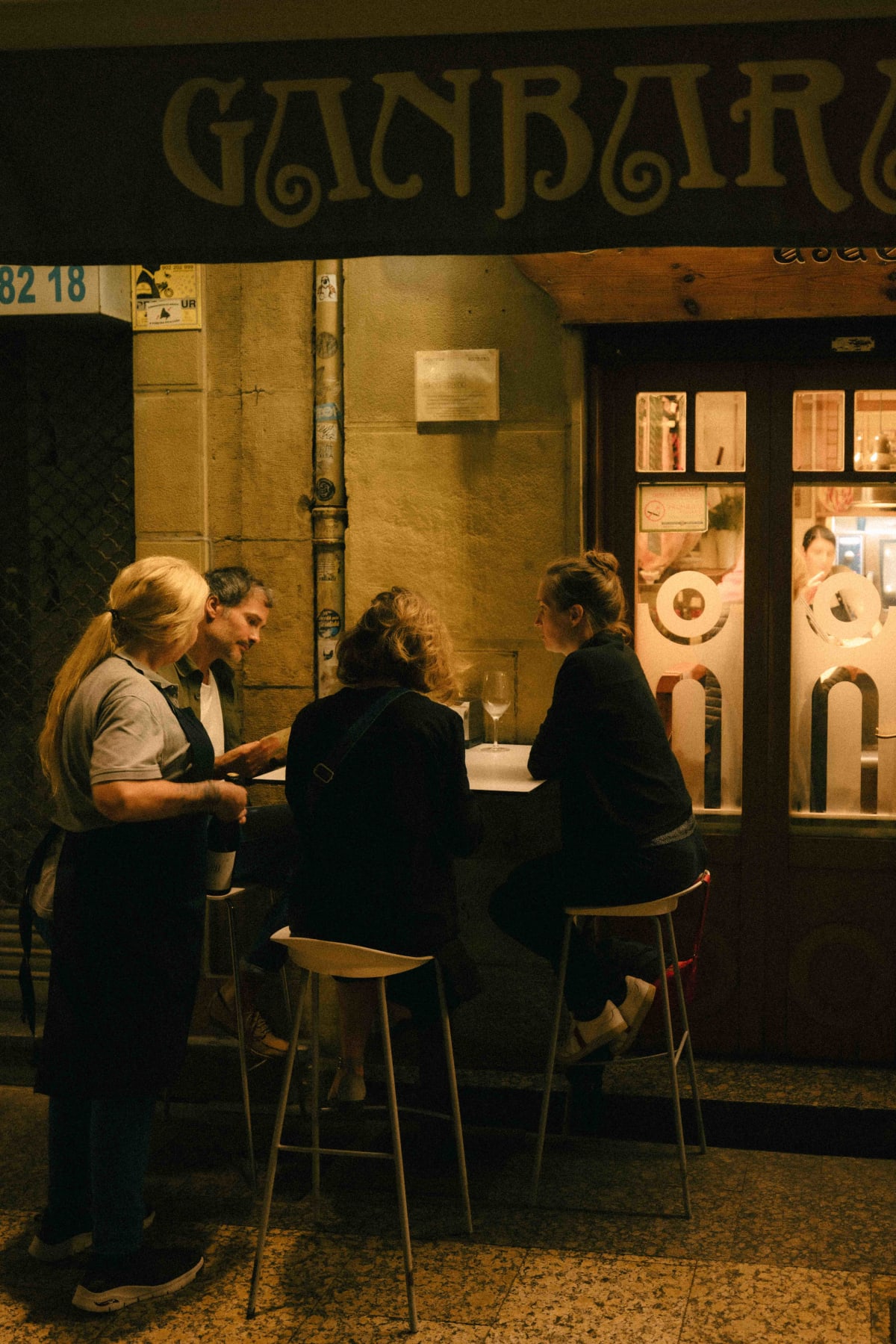
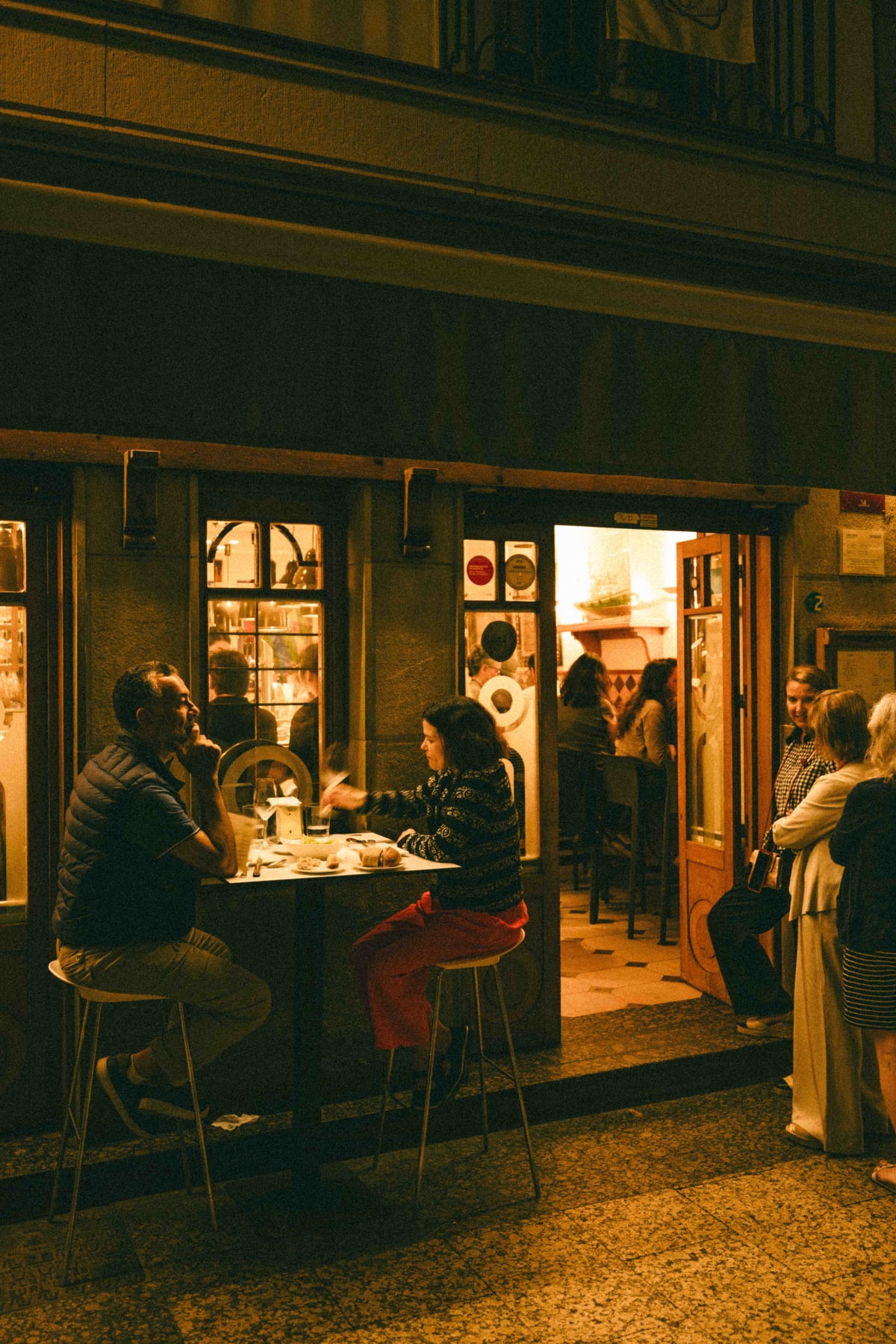
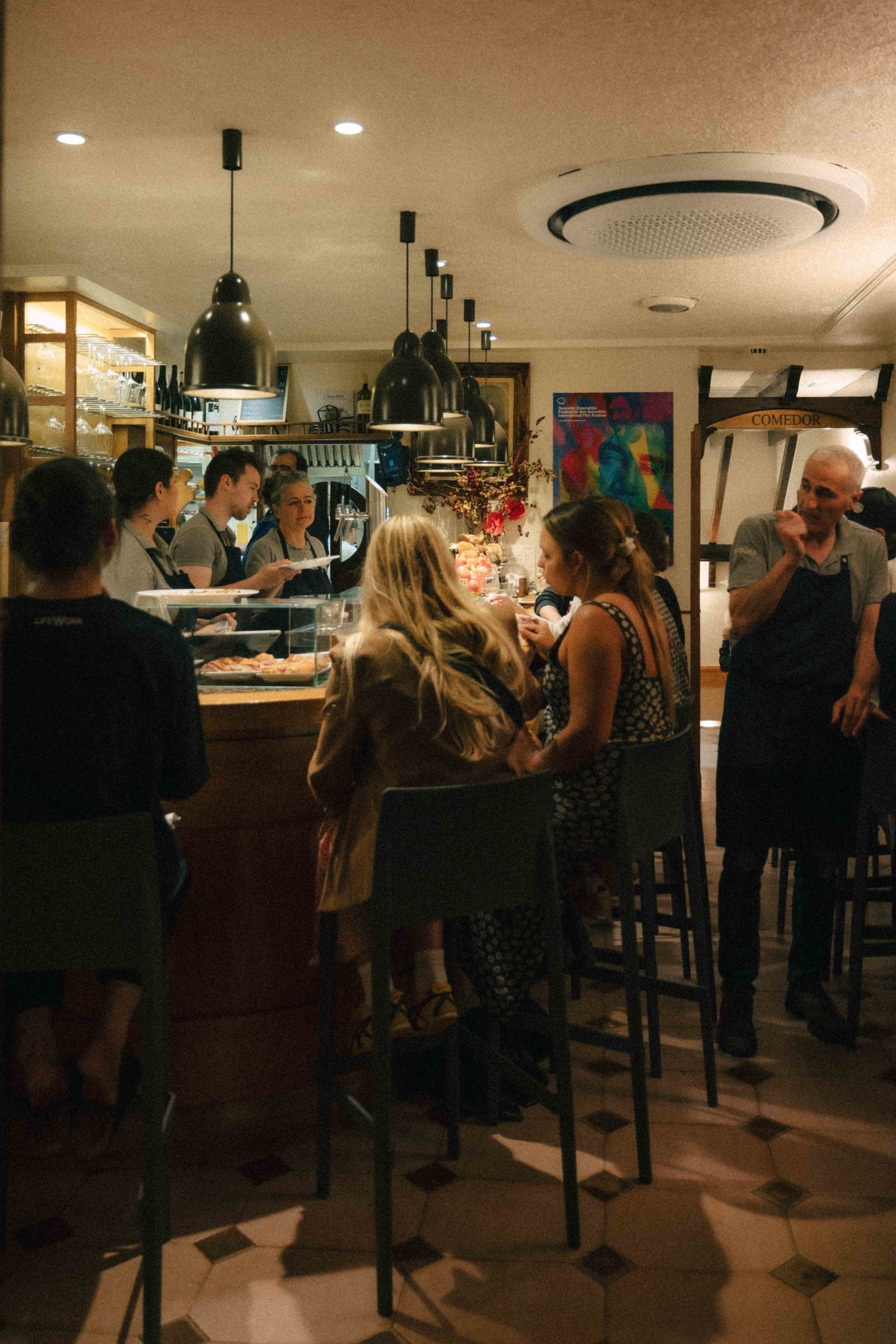
The street level and basement structure I described is especially clear at Ganbara. The ground floor connected to the street is the pintxo bar, the basement down the stairs is the dining room that takes bookings, and the official site states flatly that reservations are for the dining room only and not for the bar. So this was not a meal at a restaurant called Ganbara but closer to an evening at the counter that made Ganbara's name.
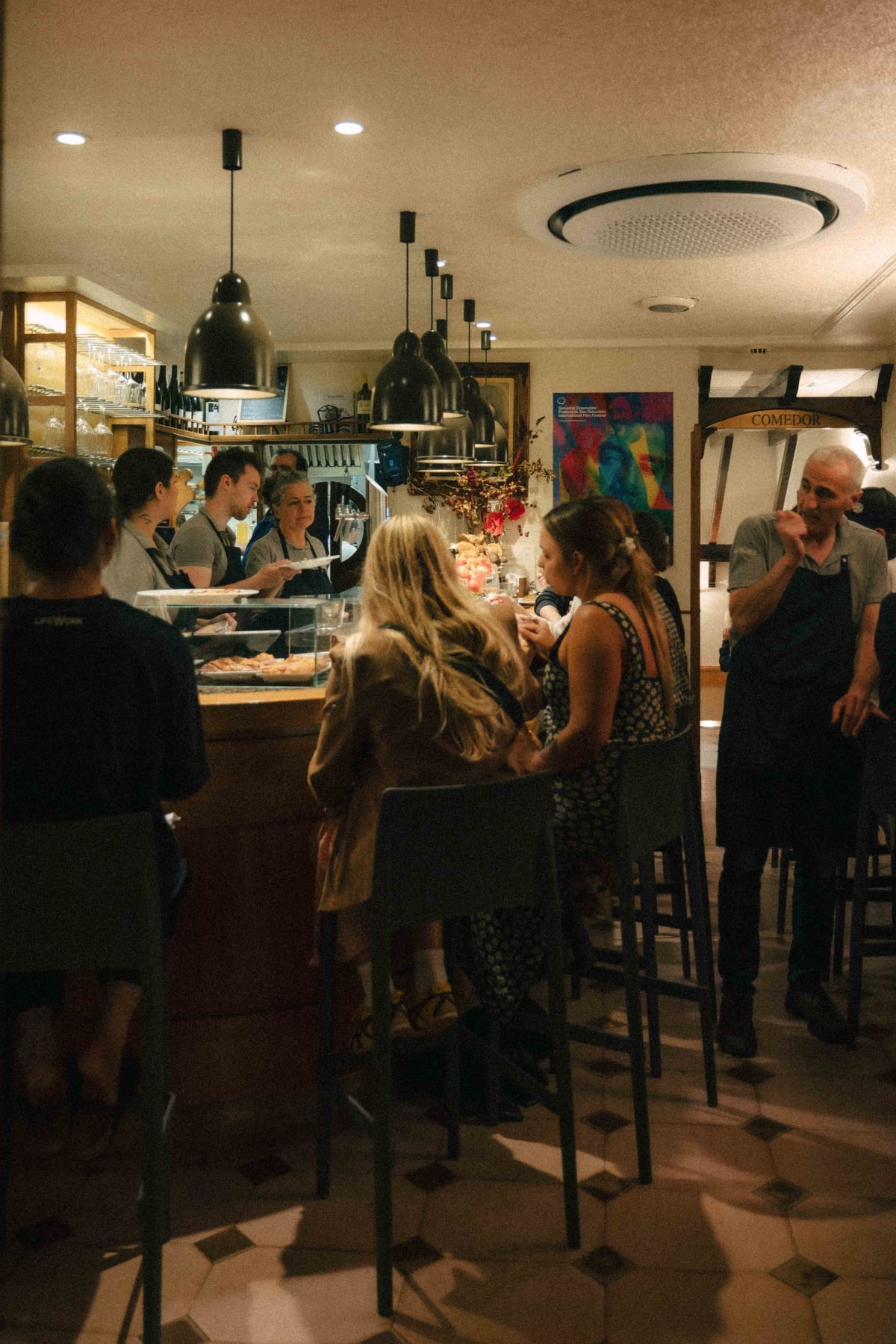
I should add that I came back to the basement dining room in early October 2025. Same kitchen and same produce, but a different format: a seated meal built around fish and charcoal grilled dishes. That side will have its own piece.
Section 4·The Counter
I went into Ganbara and read the names on the menu, but I had no idea what any of it would arrive as, so I spoke to the man behind the bar and he did not have much English. I had just made up my mind to resort to gestures when I caught sight of the enormous carabinero displayed on the counter.
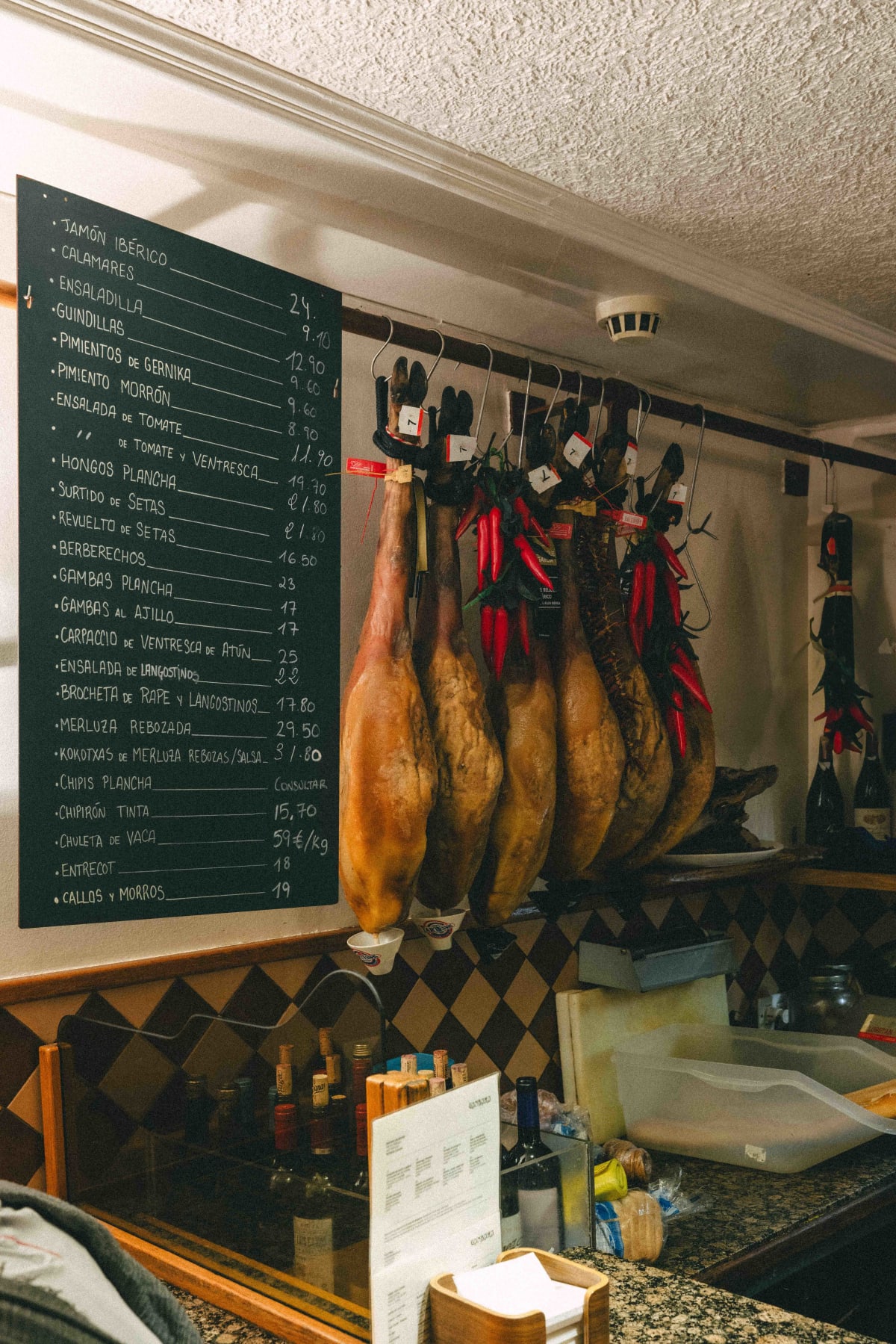
Ganbara's counter is a little different from the usual pintxo display. Rather than finished pintxos laid out in rows, the ingredients themselves are piled up like a market stall, boletus and every kind of mushroom, seasonal vegetables, peppers, artichokes. Less a place where you pick up things made in advance than one where good seasonal produce is cooked to order on the spot and served in small portions.
And because of exactly this, if I were told to visit one pintxo bar in the old town of San Sebastián, I would quietly and deliberately walk a companion who wanted to try here and there as far as Ganbara's door, and stop there. After two or three of them the pintxo bars of San Sebastián start to feel the same, and this is one of the few counters that still gives you a freshness the others do not, the immediacy of the Basque land and sea, and a reason for having come this far on the strength of the city's name.
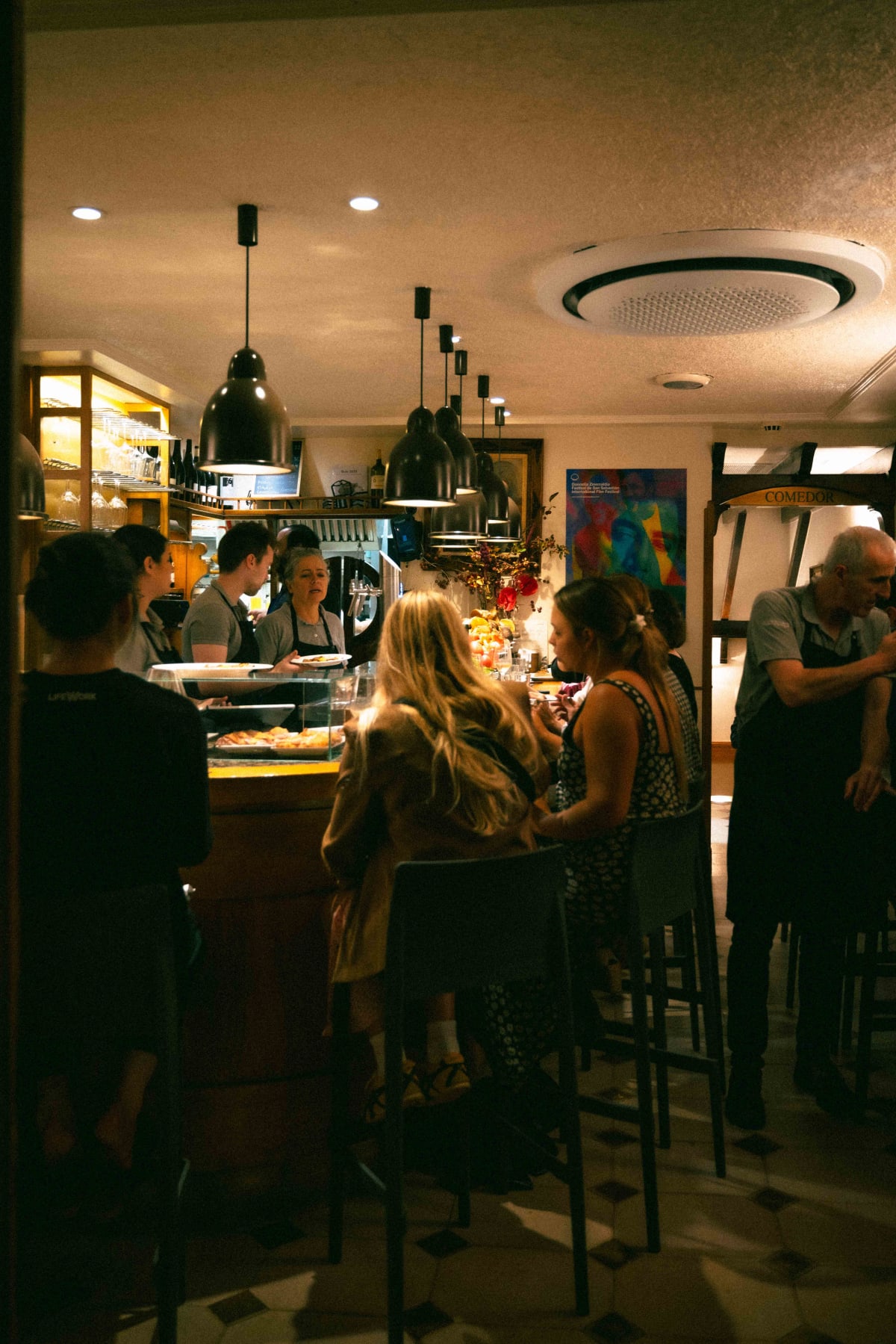
Feeling as though I had finally arrived at the site I had only pictured in my head, I thought, right, you come to a place like this and you eat the carabinero, the shellfish that stands for Spain. I naturally pointed to the carabinero and the man behind the bar looked slightly startled.
He said that one was a bit expensive. I said it was fine and ordered it.
Section 5·One Pintxo First
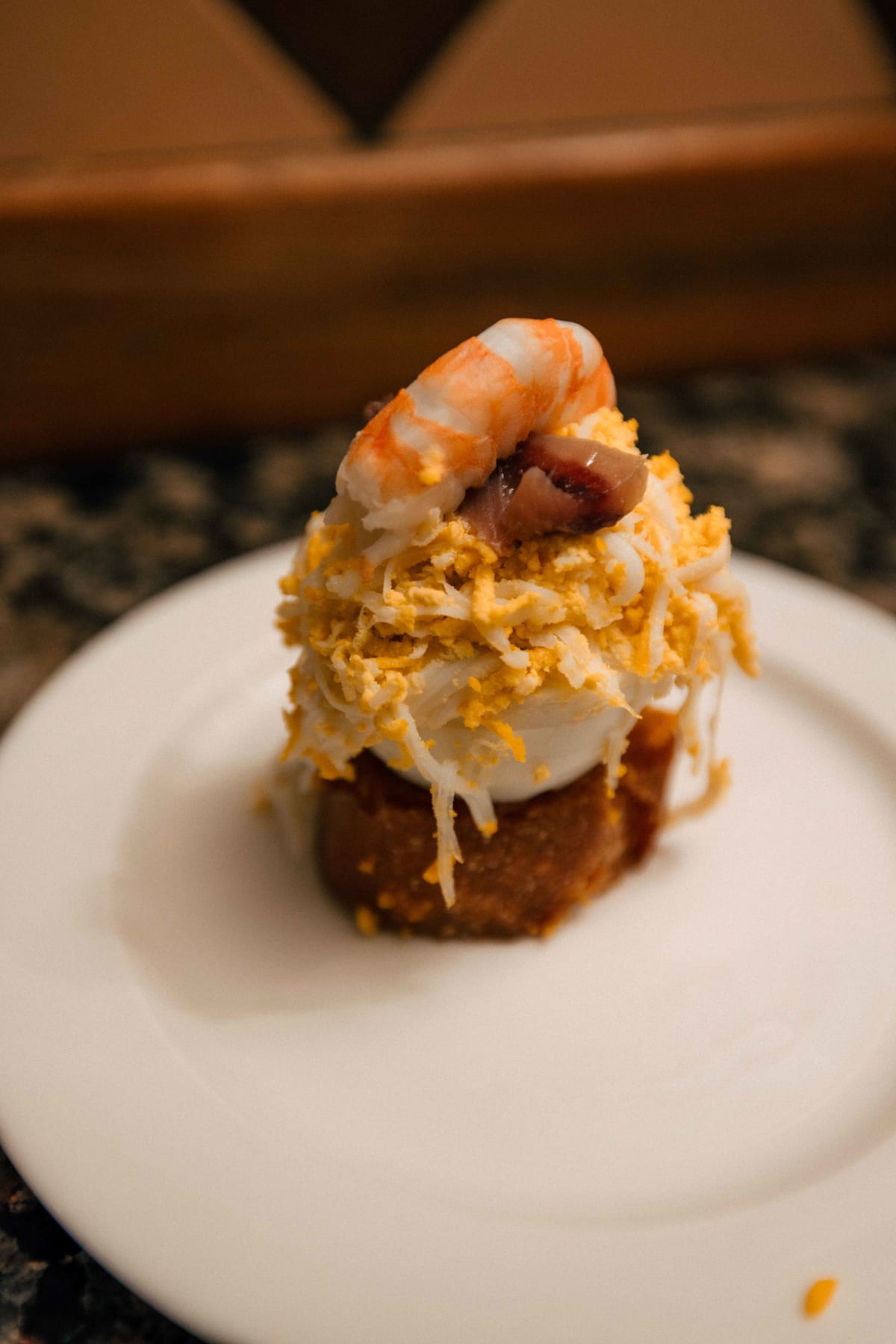
I took a pintxo while waiting for the carabinero. It was Huevo antxoa, half a boiled egg on a slice of baguette with finely chopped egg over it, finished with anchovy and a cooked prawn.
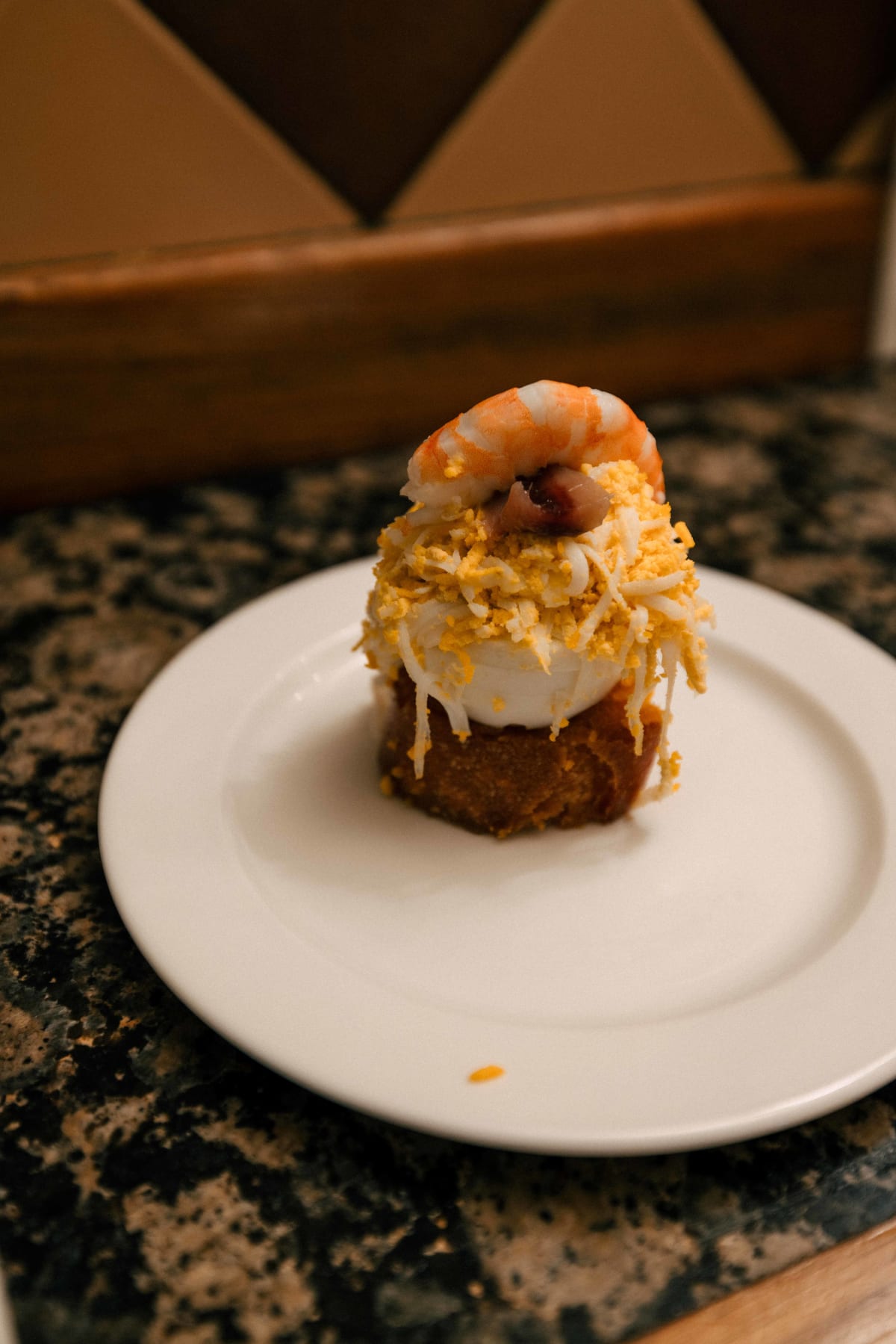
Most of the eating through San Sebastián was good, but if I have to name one disappointment it is the pintxos. Social media and the press hold them up as the representative food culture of San Sebastián, but a pintxo has usually been sitting there a while and has been made in bulk, and cheaply, so nothing about it is going to startle you.
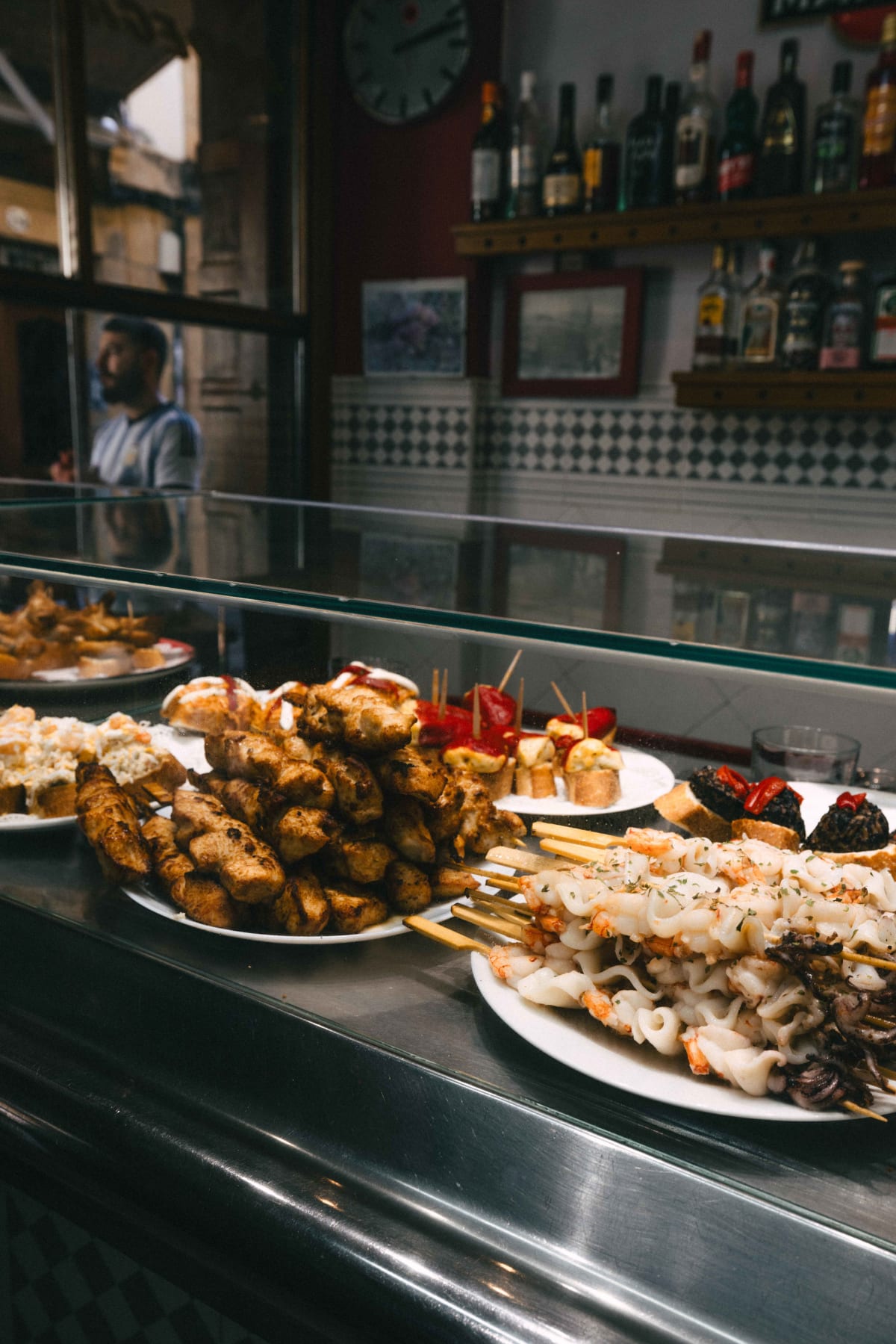
Think of them as skewers to have with a beer and you have it about right, and the range is much the same from shop to shop. If anything the popular places are so crowded inside that eating at leisure is hard.
No pilgrimage site shows you only good things, and Ganbara's pintxos were no exception. No different from the other pintxos I had eaten. It reminded me that there is no need to eat pintxos at one place after another.
Section 6·Cocina De Producto
Amaiur, the son who now carries on the family business, calls Ganbara's cooking cocina de producto, cooking built on the produce itself, and says a large share of the budget goes on the ingredients themselves. He has also said it was a family principle never to switch from a good supplier just to save money.
Less a place where you pick up things made in advance than one where good seasonal produce is cooked to order on the spot and served in small portions.
The reason he gives for chefs rating Ganbara so highly is interesting too. They know how hard it is to cook simple food to order, every time, at this volume, and keep it consistent.
So if you had to pick what to eat here it is not the cold pintxos on the display but the things cooked to order. When Michelin starred chefs of Gipuzkoa were asked to name Ganbara's own, three came up: hongo a la plancha con yema de huevo, which is grilled seasonal mushrooms with an egg yolk over them, gambas rebozadas, and tartaleta de txangurro.
The last is spider crab meat set on a small puff pastry and lightly baked, and the San Sebastián tourist board describes it as having been born at Ganbara before spreading into modern pintxo culture.
Section 7·The Carabinero
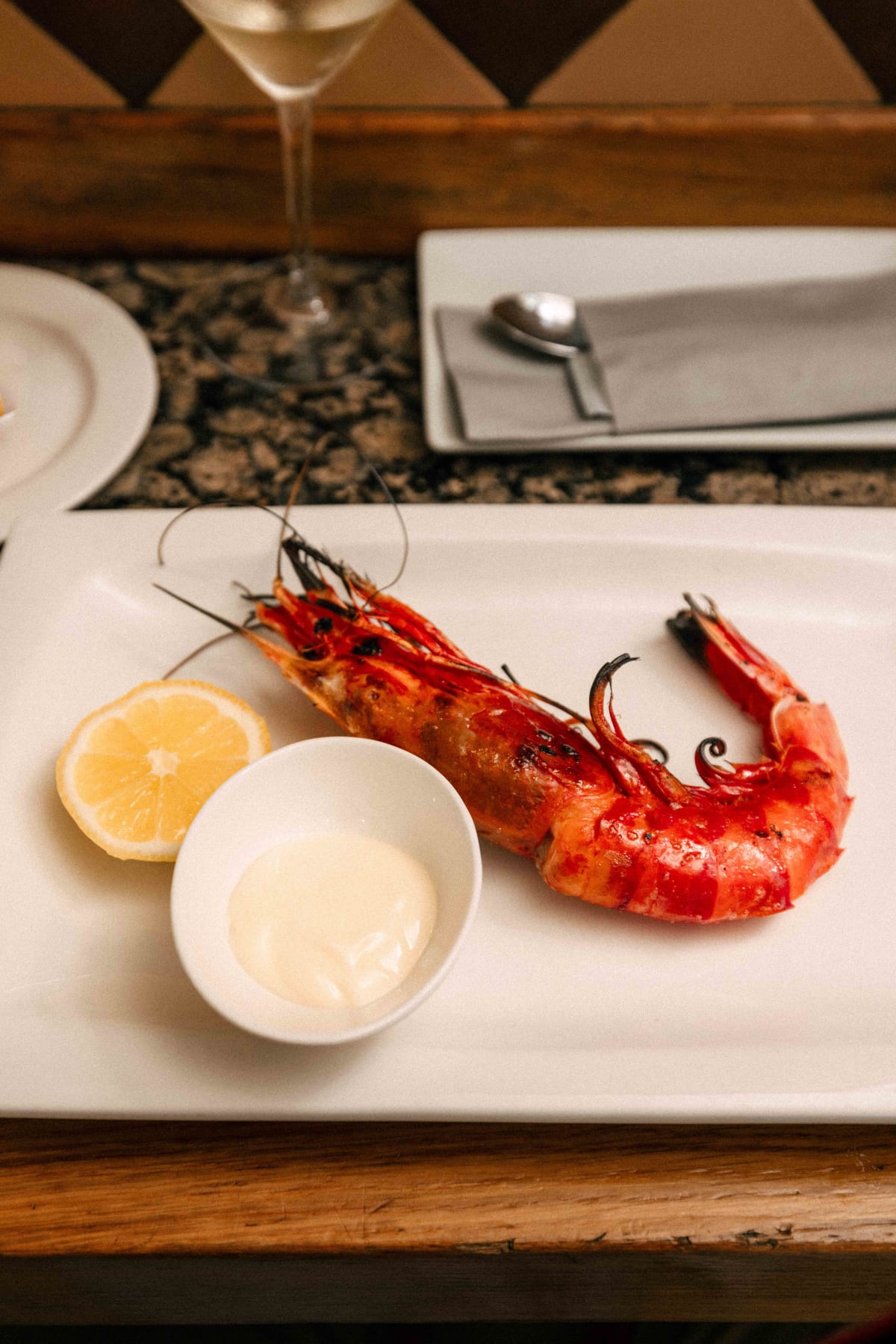
When the grilled carabinero arrived, it was enormous.
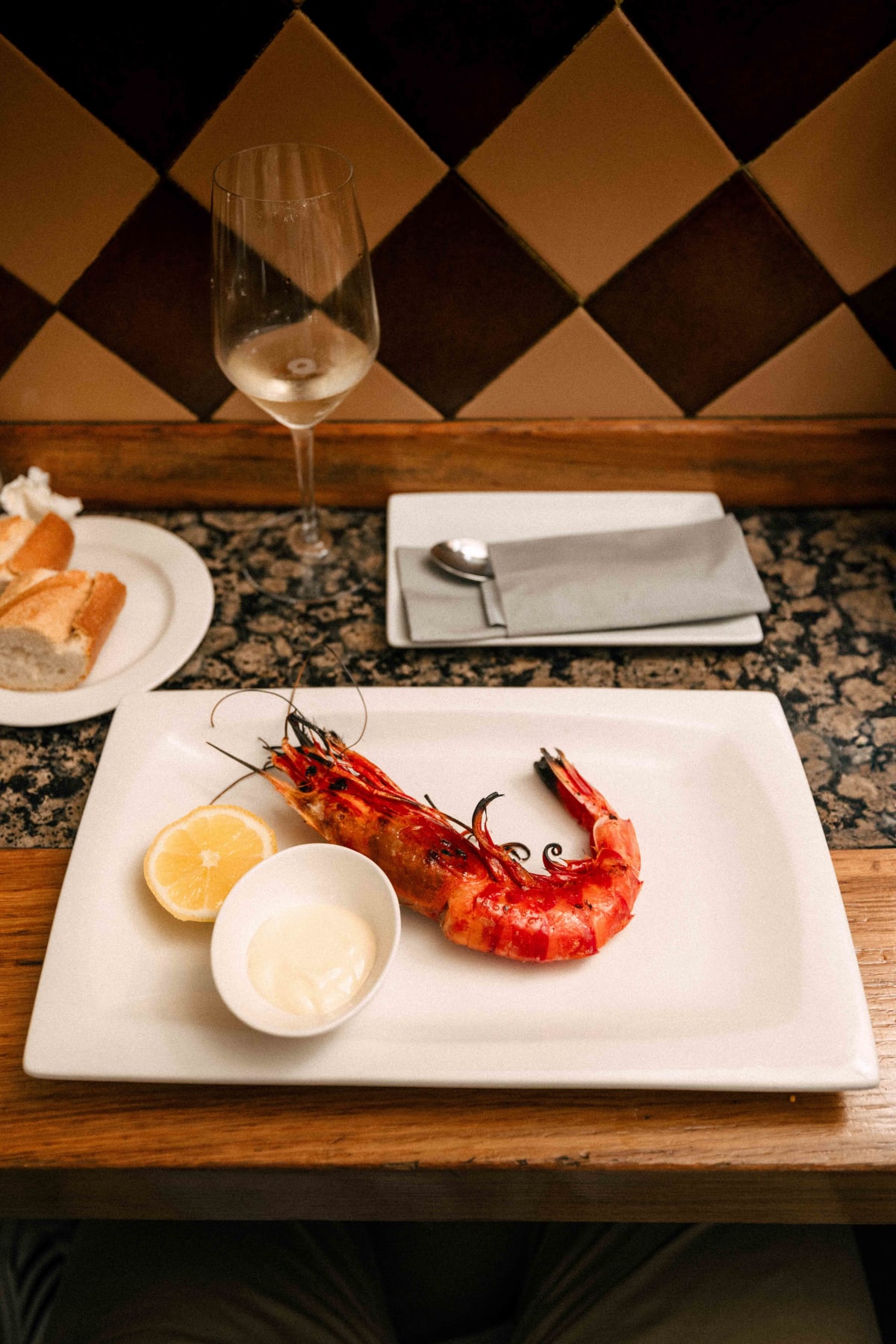
Set against my modest hand, which looks like a pig's trotter, it did not lose out. It was the first carabinero I had properly eaten on the trip.
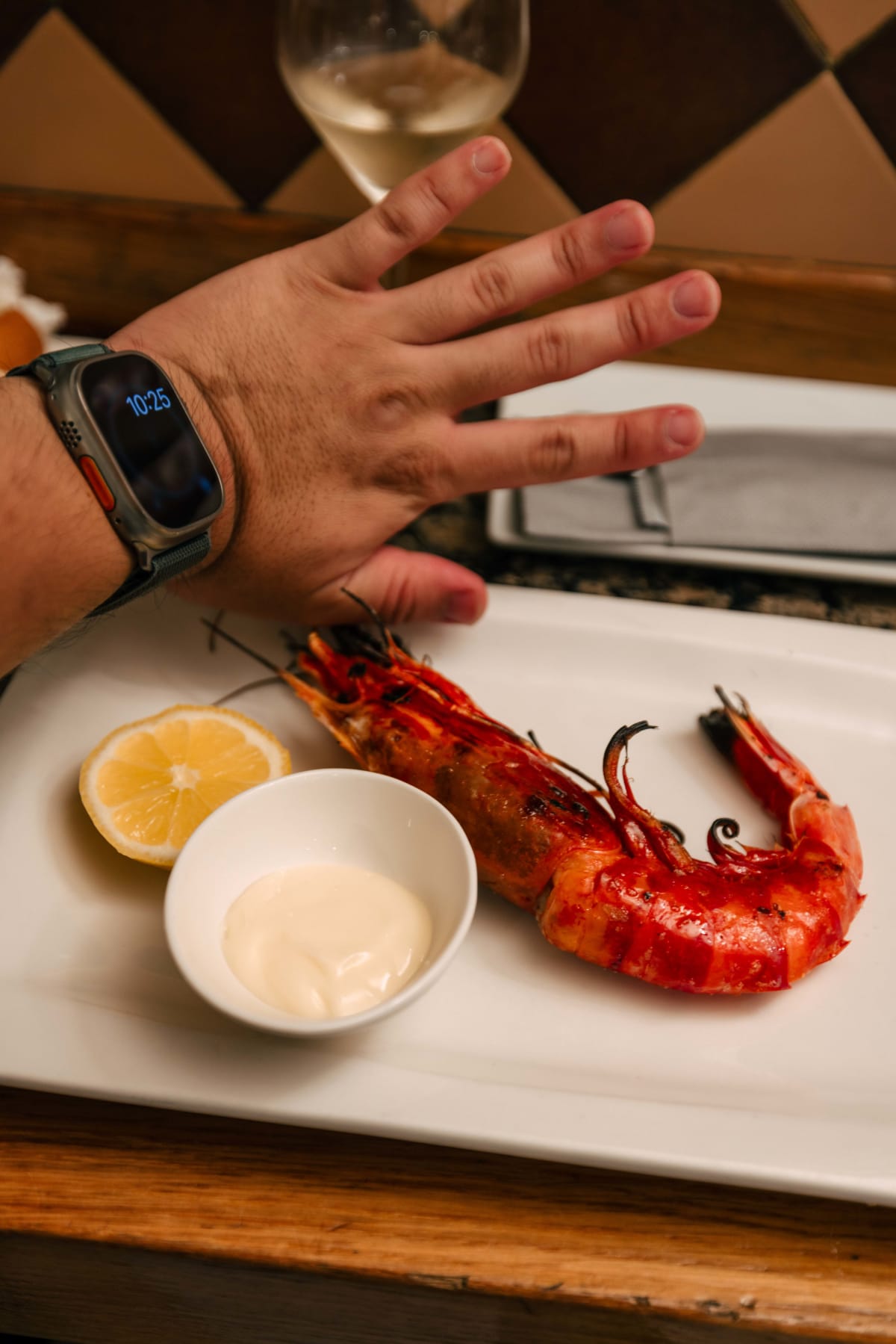
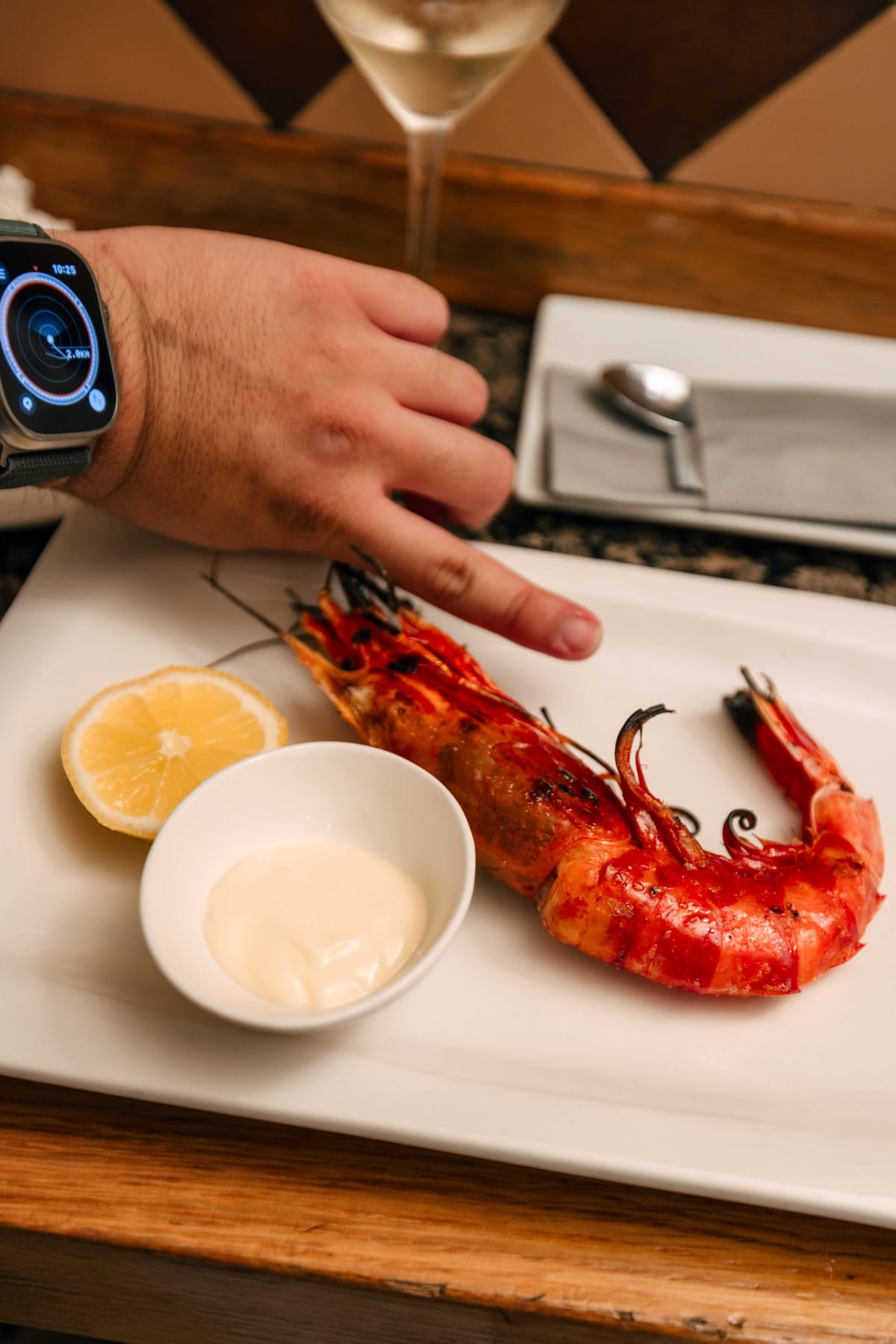
The head is big and the shell was thicker than I expected so it took a while to get into.
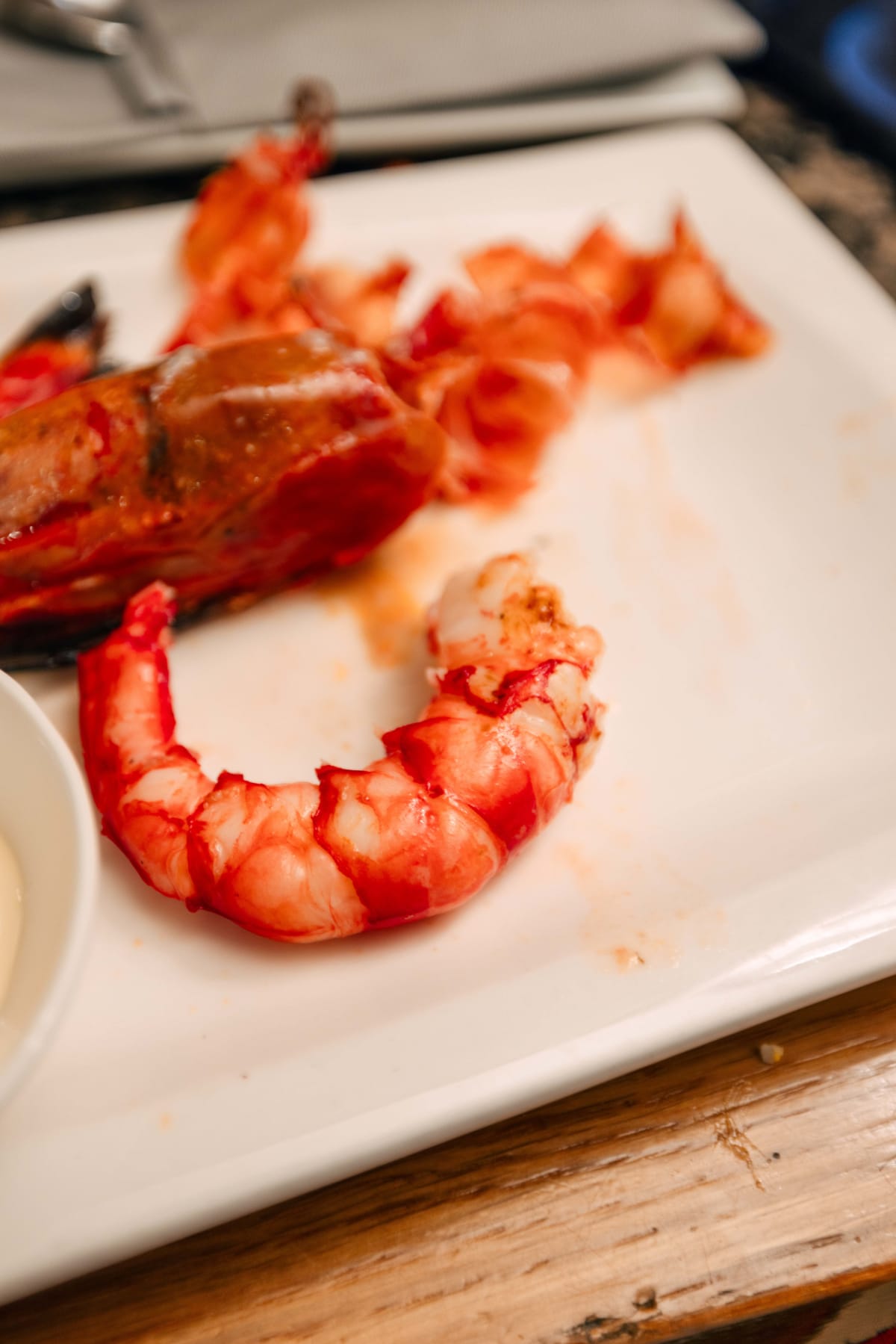
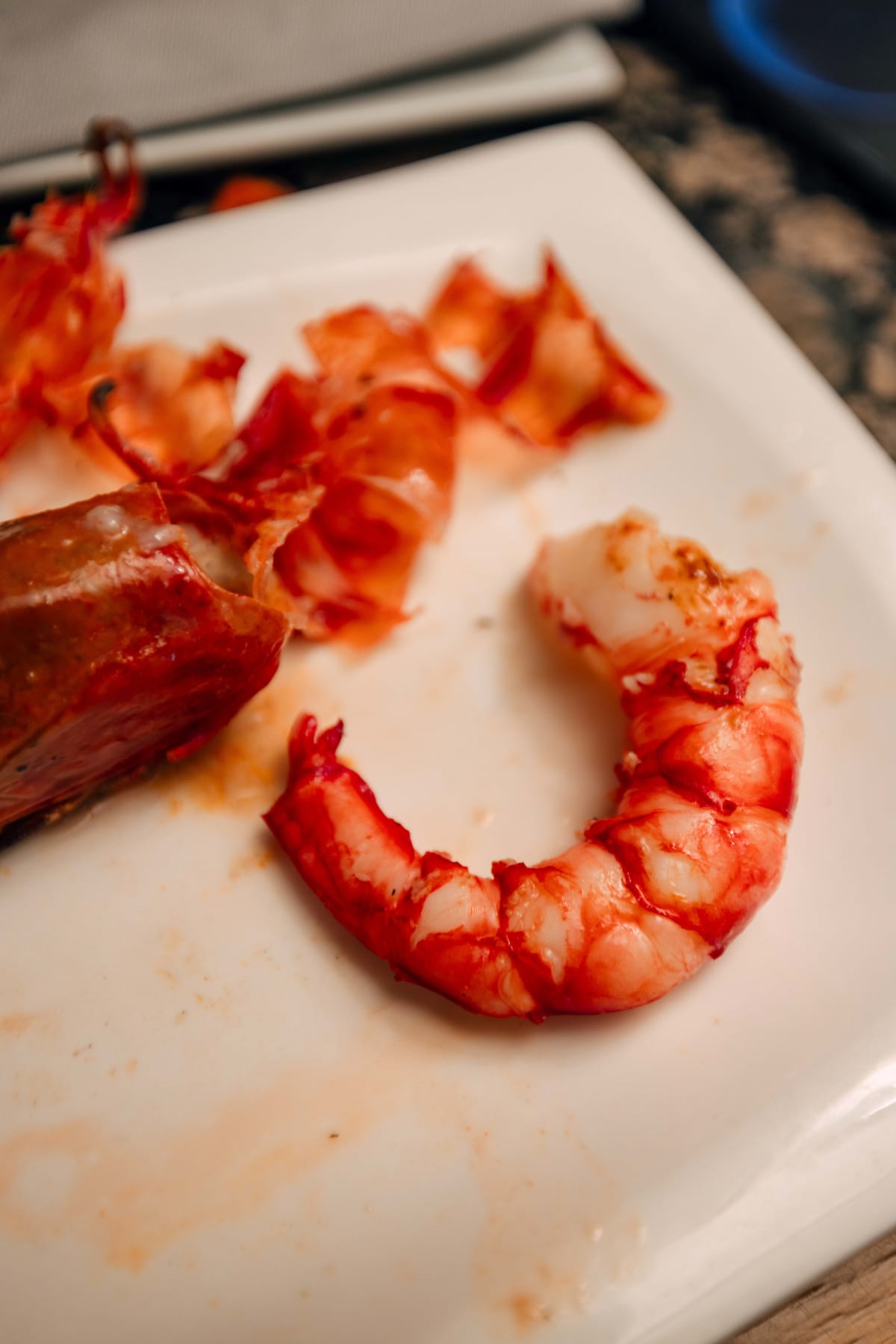
Then I cut off a piece of the meat and put it in my mouth, and every prawn I had eaten before that was child's play by comparison, the flesh was that firm. A remarkable thing to eat.
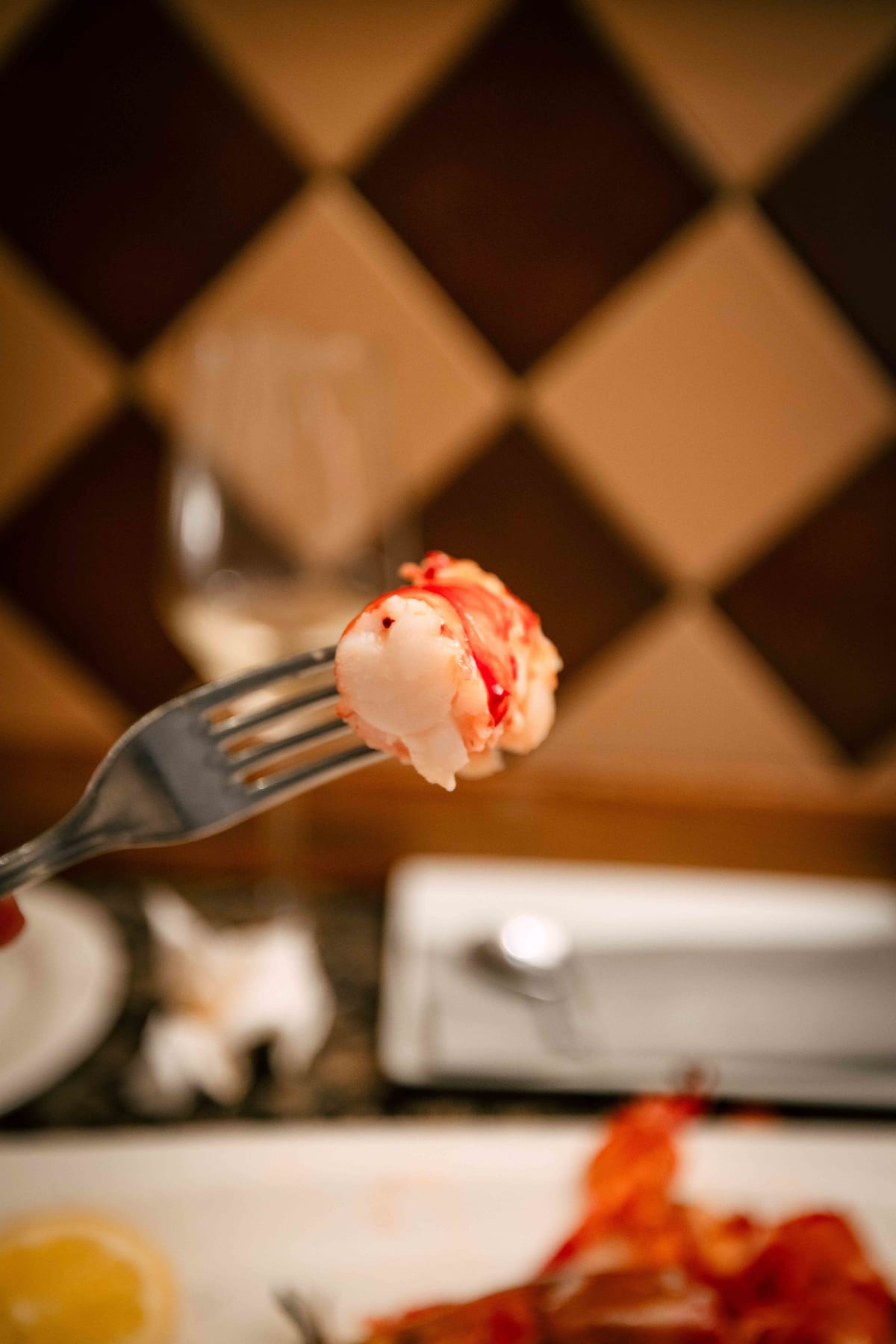
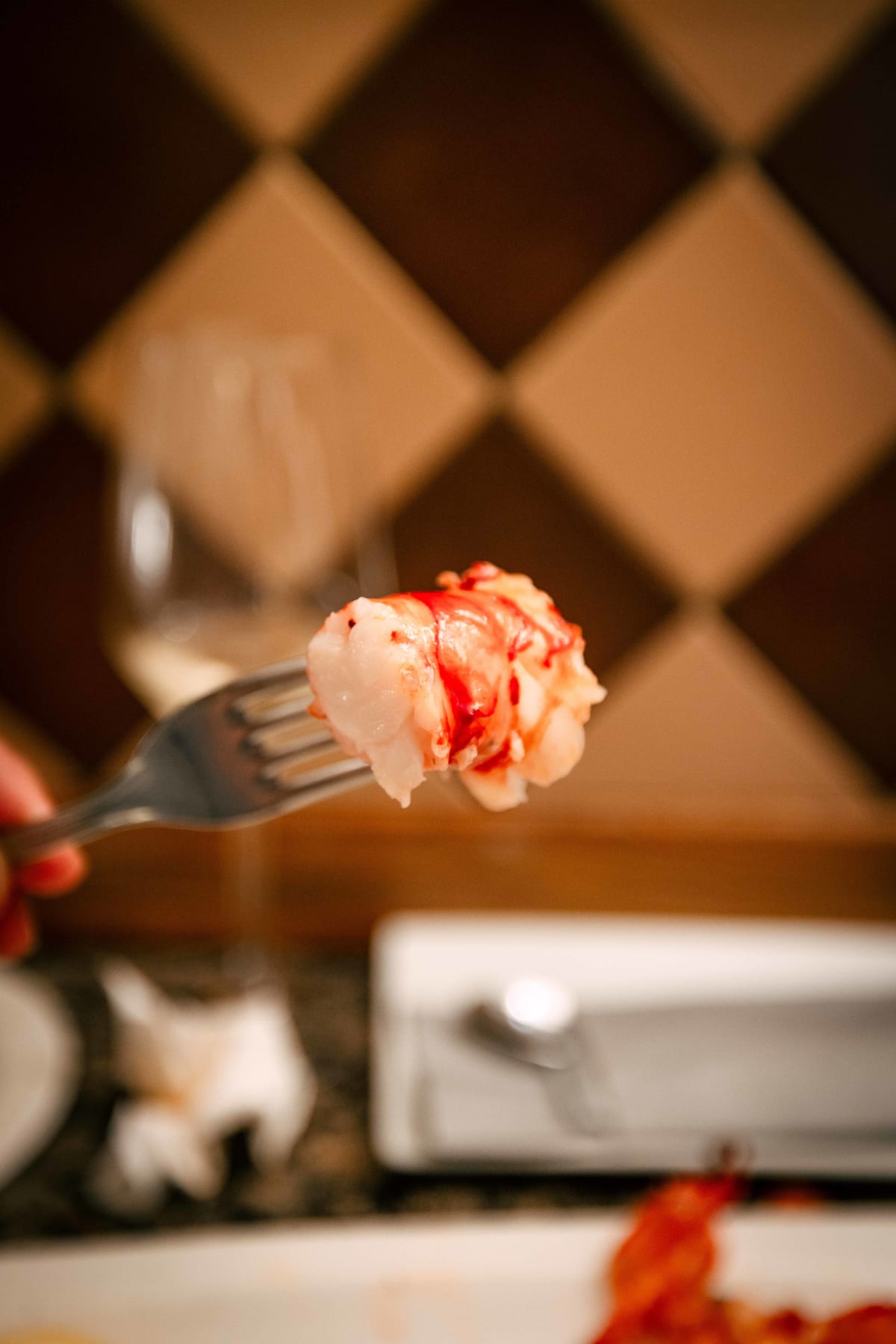
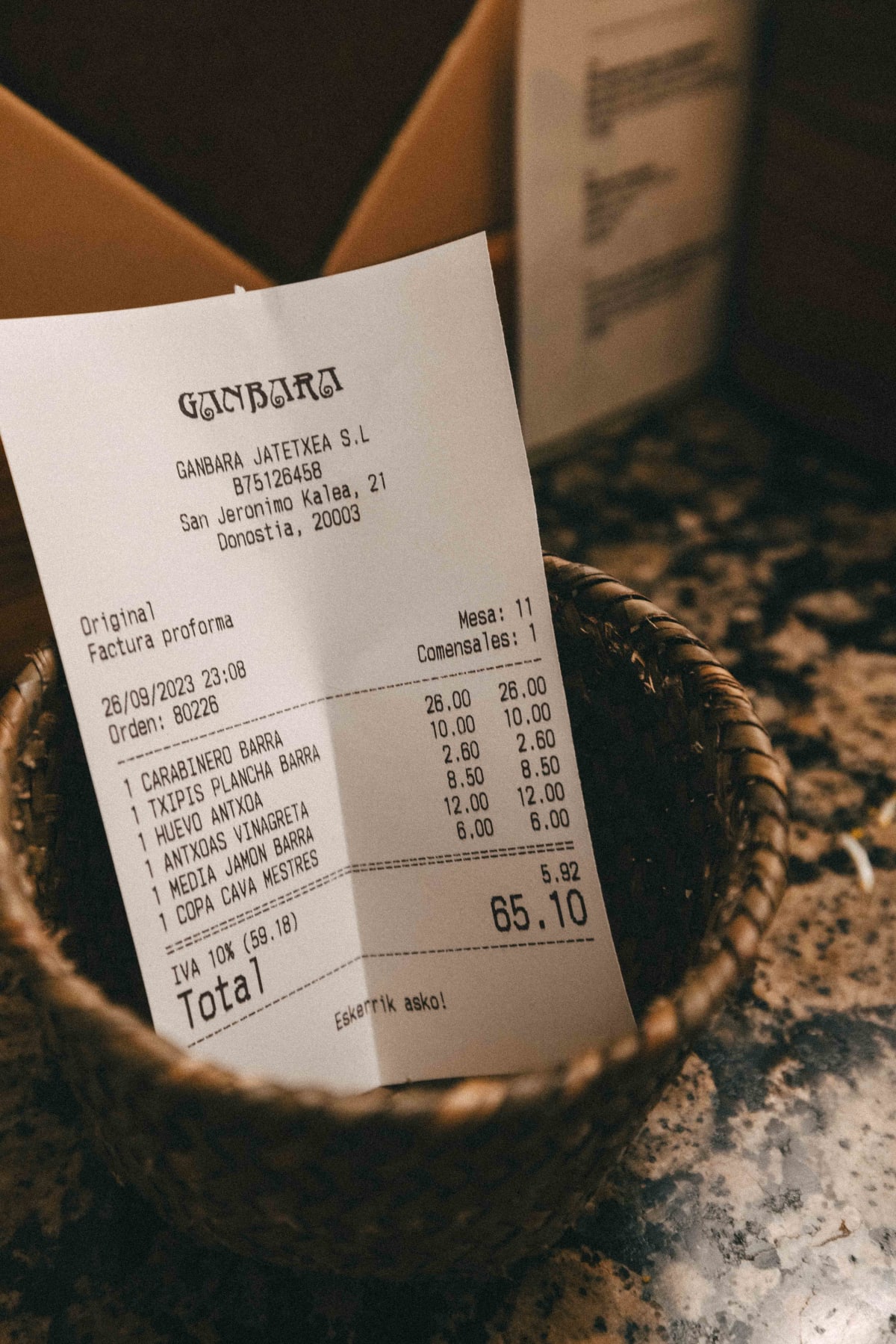
Even better than the meat was what filled the head. I dropped any pretence of dignity, put the end of the head in my mouth and sucked at it with an embarrassingly high-pitched slurp, and the dense flavour of the prawn's insides was the best of it. Twenty six euros for one, which can feel heavy if you are used to Asian prawn prices, but I hope people order it once and taste it.
Section 8·Not From Here
This I learned afterwards. A number of famous Basque restaurants take the carabinero as a signature ingredient and present it as a grilled dish that is visually striking and tastes excellent, but the carabinero is not an ingredient that stands for the Basque Country or San Sebastián. Its main home is Andalusia in the south of Spain.
The scientific name is Aristaeopsis edwardsiana and the English name is scarlet shrimp. It is a deep water prawn living down the continental slope, caught on mud and sand bottoms generally somewhere between a few hundred metres and around a thousand, with seven hundred or so being common. Body length usually runs ten to twenty centimetres, with large individuals reaching around thirty.
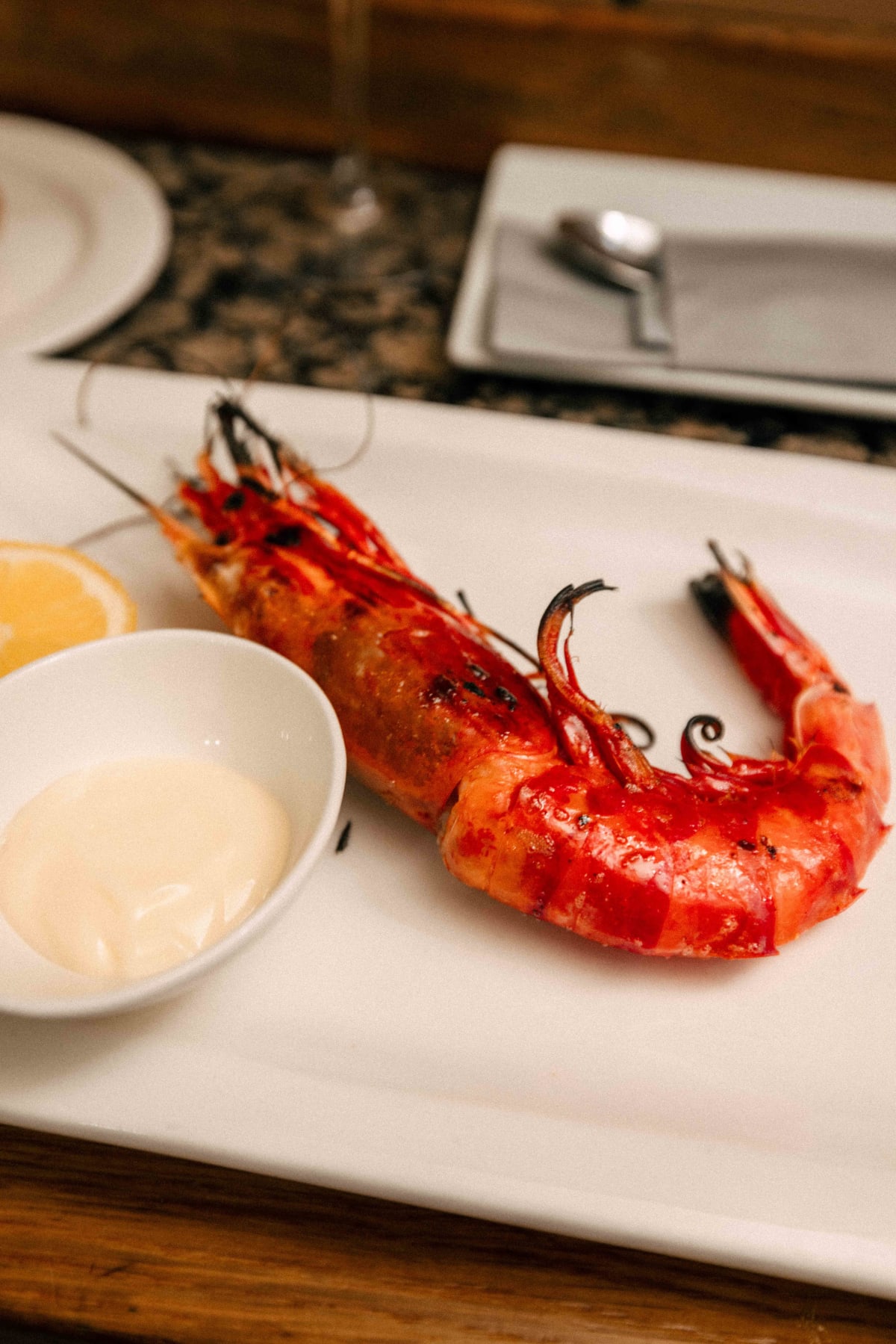
In Spain the carabinero is most strongly associated with the south, both in the commercial catch and in its image. The main Andalusian ports named are Huelva, Málaga and Motril. A considerable share of what circulates in the Spanish market is also caught in northwest African waters off Morocco and Mauritania and comes in frozen. If a menu says only carabinero, there is no way to know whether it is from Huelva, from Cádiz or from Morocco.
The Spanish government's list of regional commercial names registers separate local names for the carabinero in Andalusia, the Canaries and Galicia, and none in the Basque Country.
The reason it was expensive was not that it is a San Sebastián speciality either. It is a large deep water species, the catch is relatively limited, and the larger the individual the higher the price.
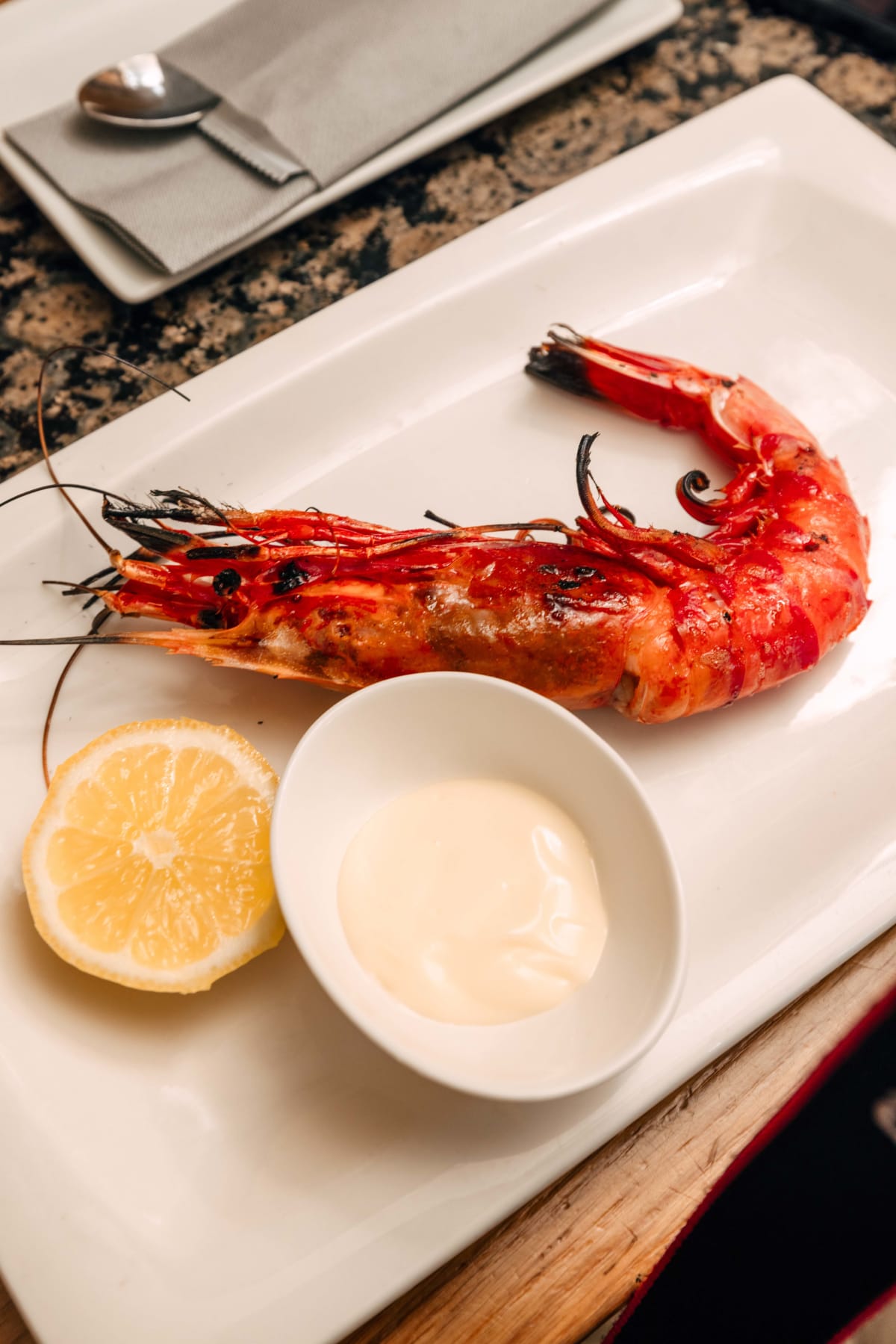
So I had thought I was buying a precious local Basque crustacean because an expensive prawn was being sold in San Sebastián, when in fact the carabinero is a deep water prawn traded at high prices across all of Spain and its main fishing grounds are closer to southern Spain and northwest Africa. Finding that out felt like learning that a song you had wept over, by a singer you were mad about, was a cover. A private sort of embarrassment.
One more thing. The carabinero and the gamba roja, the famous Spanish red prawn, are not the same animal. The gamba roja known from Denia, Garrucha and Palamós is Aristeus antennatus, a different species. Two years later, in 2025, I made another gastronomic trip through Spain and ate a lot of gamba roja. I will write those up in time.
Finding that out felt like learning that a song you had wept over, by a singer you were mad about, was a cover.
Section 9·Anchovy And Cava
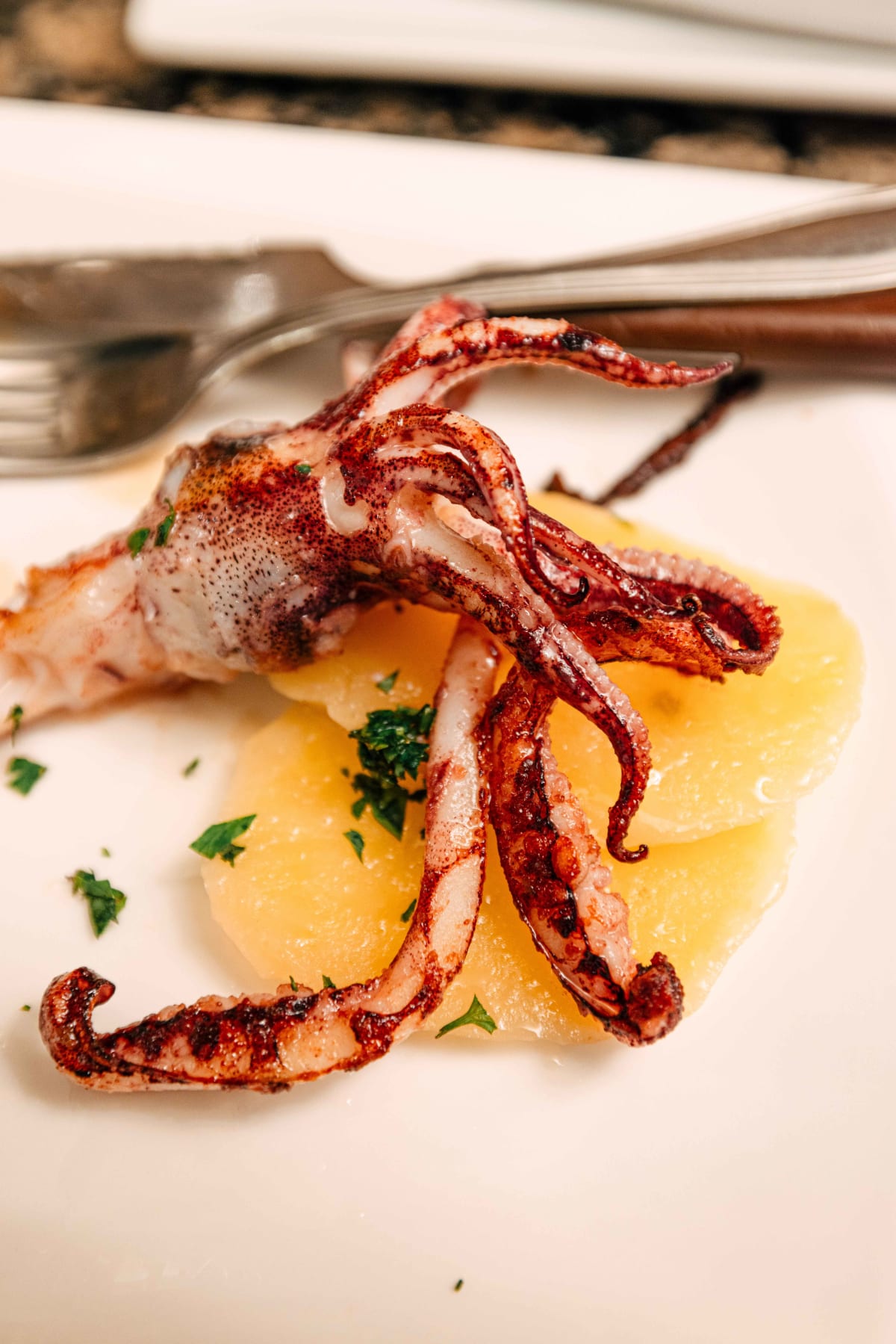
Not ready to go home on the last evening, I ordered one anchovy tapa from the display and the local squid called txipis. Anchovies are in every tapas bar and pintxo bar in Spain and this was the first time I ate them, and they were better than I expected.
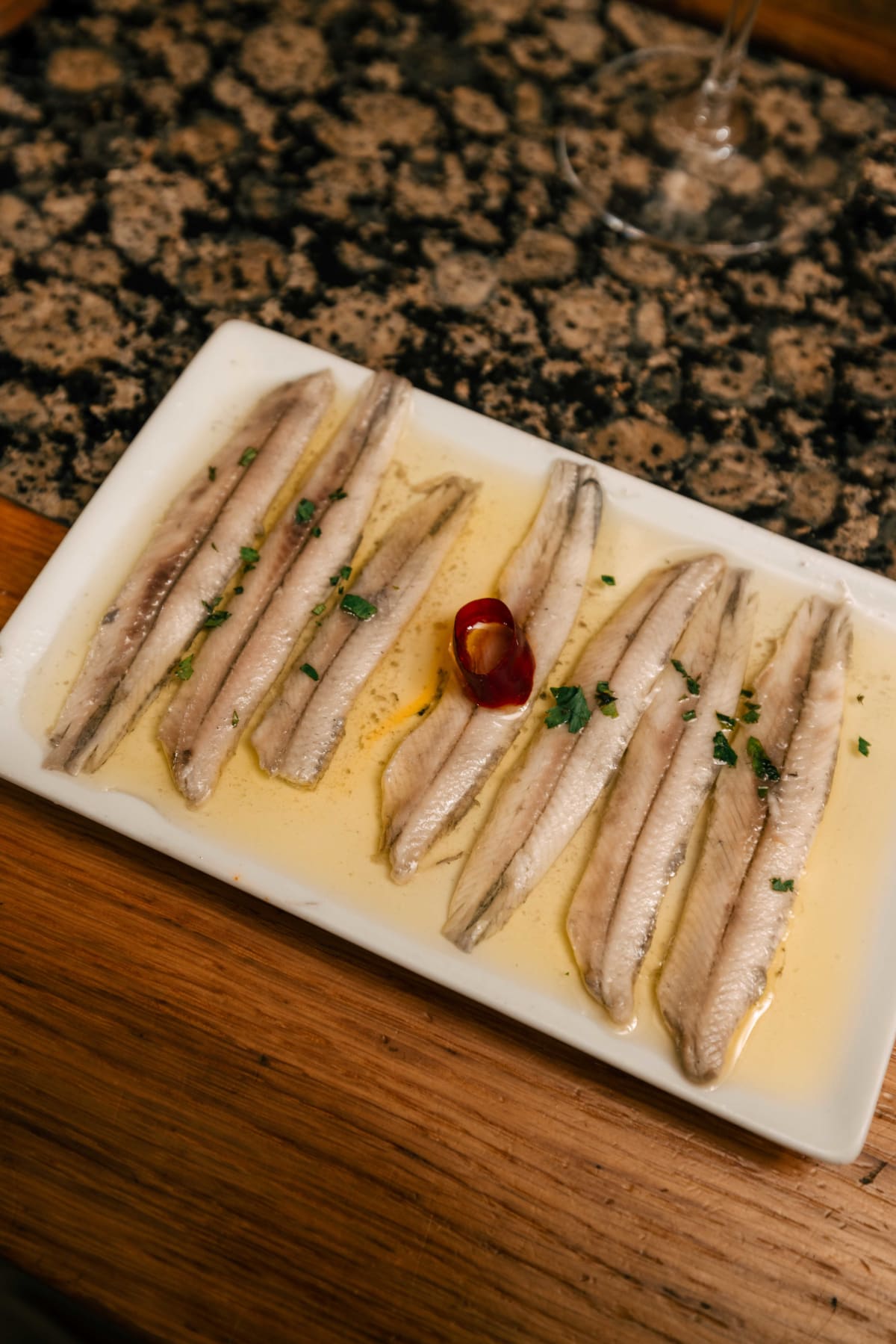
There is the oily fish smell you get from something like gwamegi, our own cured oily fish, but the richness of the olive oil and the acidity around it hold it in check well.
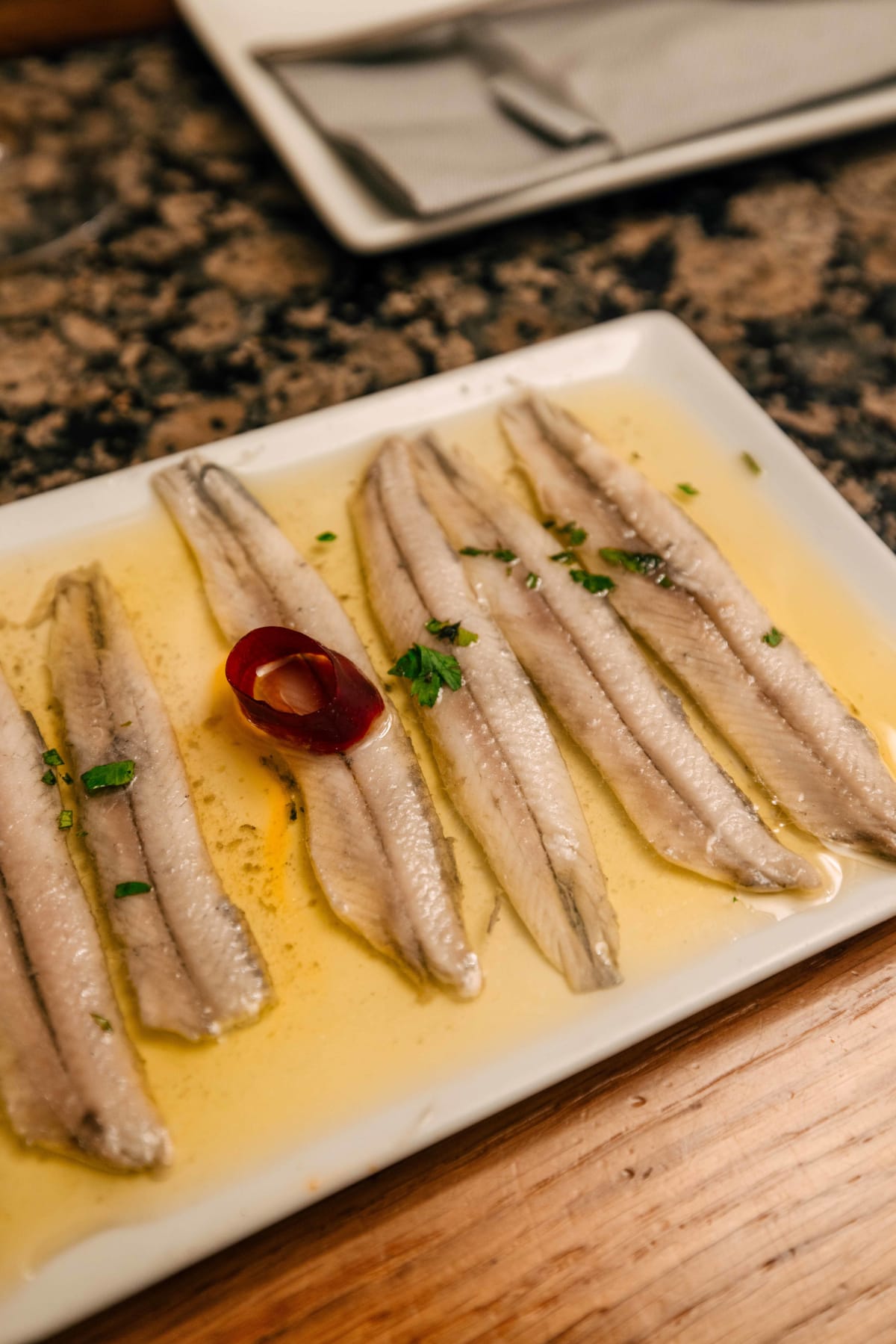
Personally this was the best thing on the counter to drink cava with.
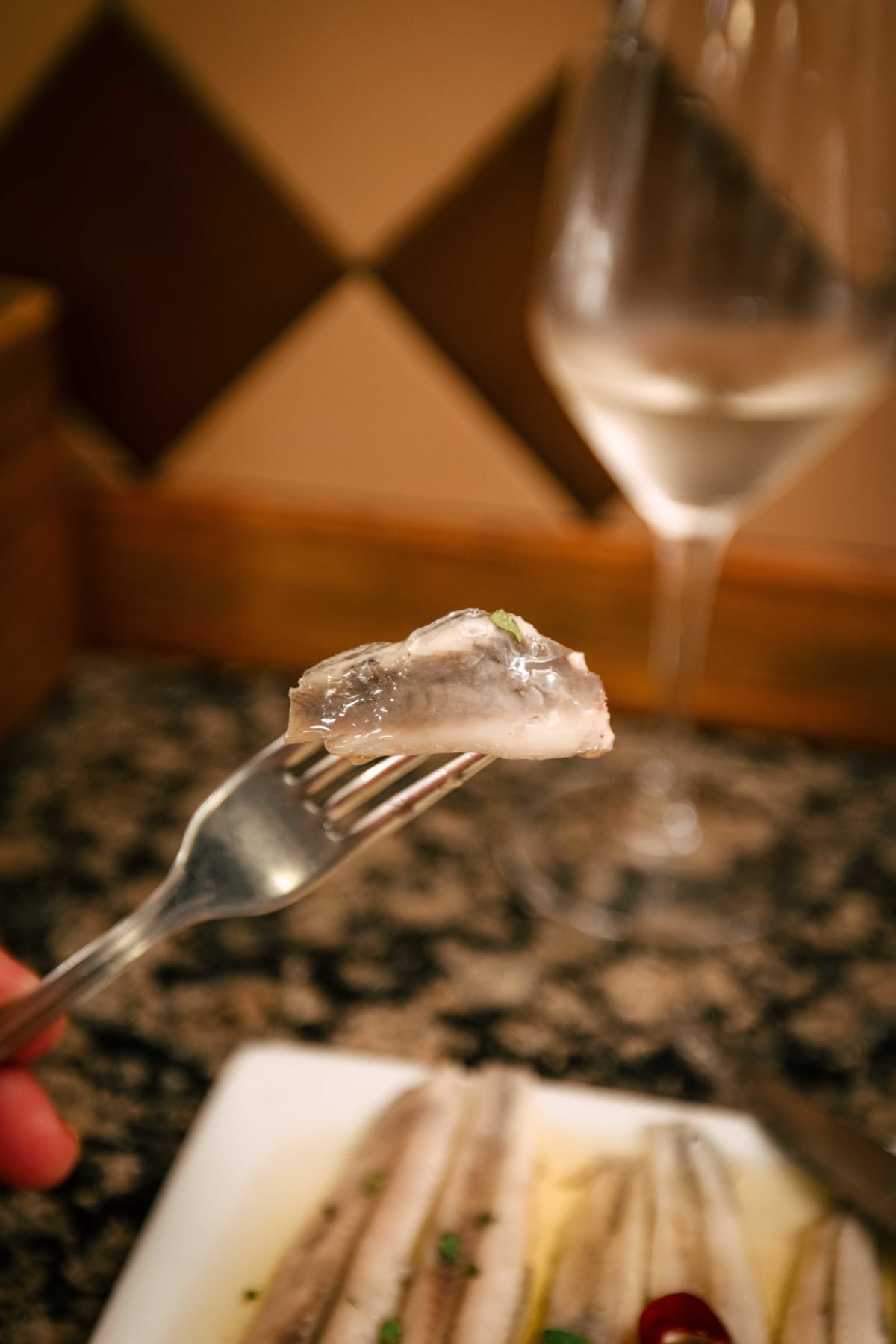
What I drank at Ganbara, keeping the faith through this act of gastronomic devotion, was cava Mestres. The house is in Sant Sadurní d'Anoia, which gets called the capital of cava, and the family appears in documents from 1312 as owners of vineyards in the village and traders in grain and wine. The winery still sits inside a listed historic building on the town hall square.
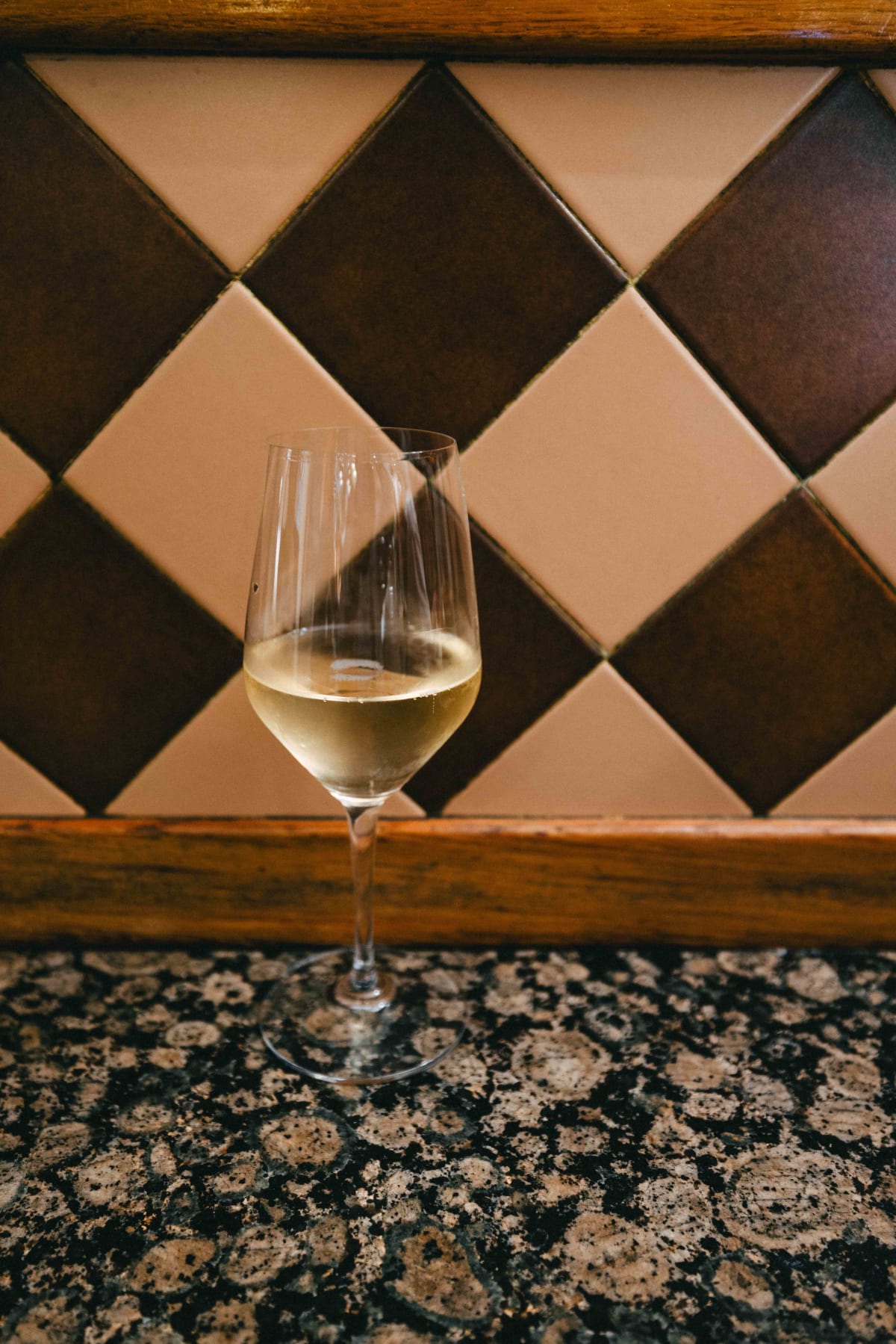
This producer left two things behind. In 1945 Visol, with no sugar added after disgorgement, became the first brut nature in history, and in the 1950s they pushed the word cava to the front until it was made official in 1960. The bottles still rest for four to forty years and disgorgement is still done one bottle at a time by hand. A long history for something that arrives by the glass at six euros on a pintxo bar counter.
Section 10·The Squid
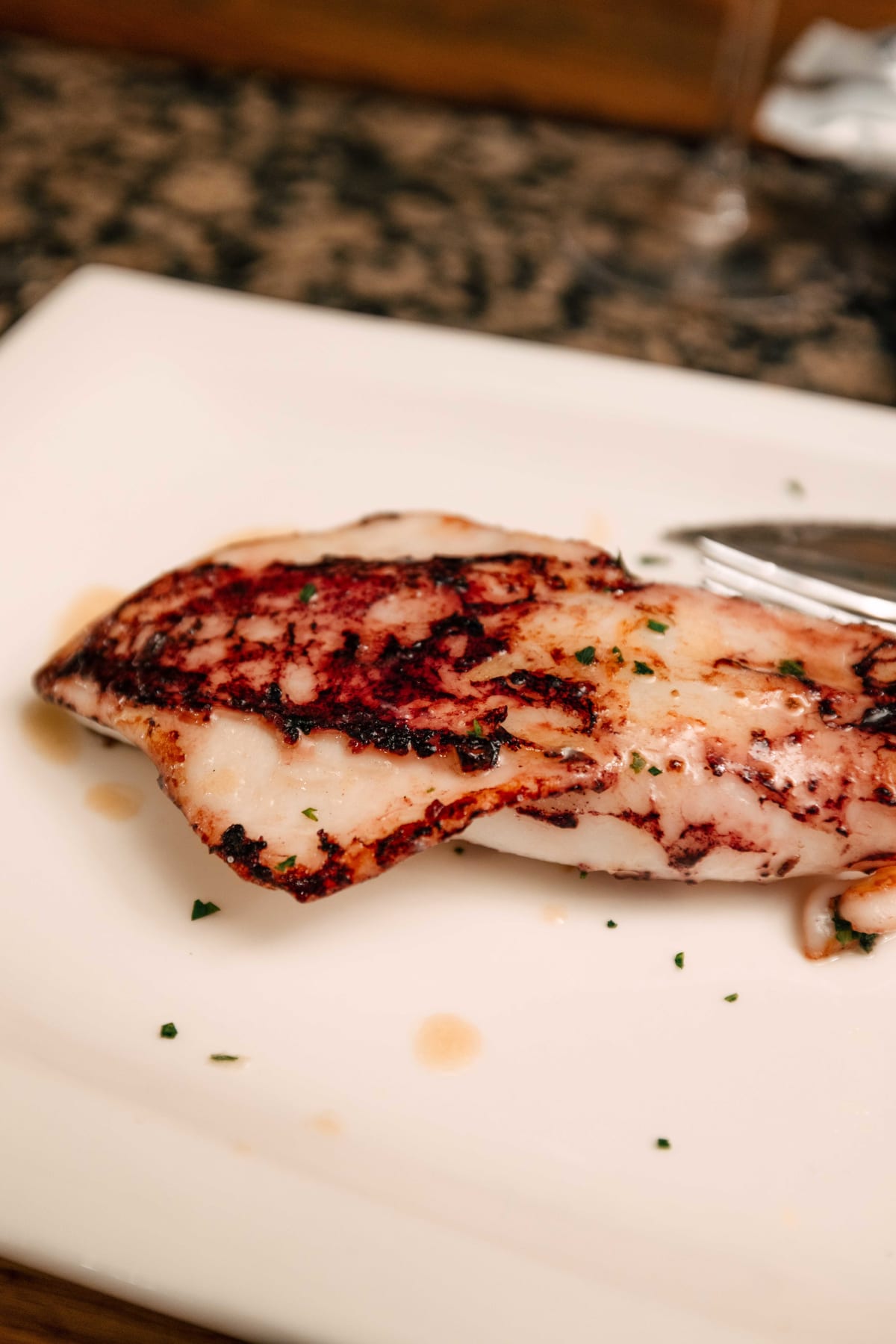
Txipis plancha barra, the local squid, came simply grilled with its constant partner, potato. From the first meal after landing in Spain, at the tapas bar Ultramarinos Marín, I have felt that squid is not worth going out of your way to order in Spain.
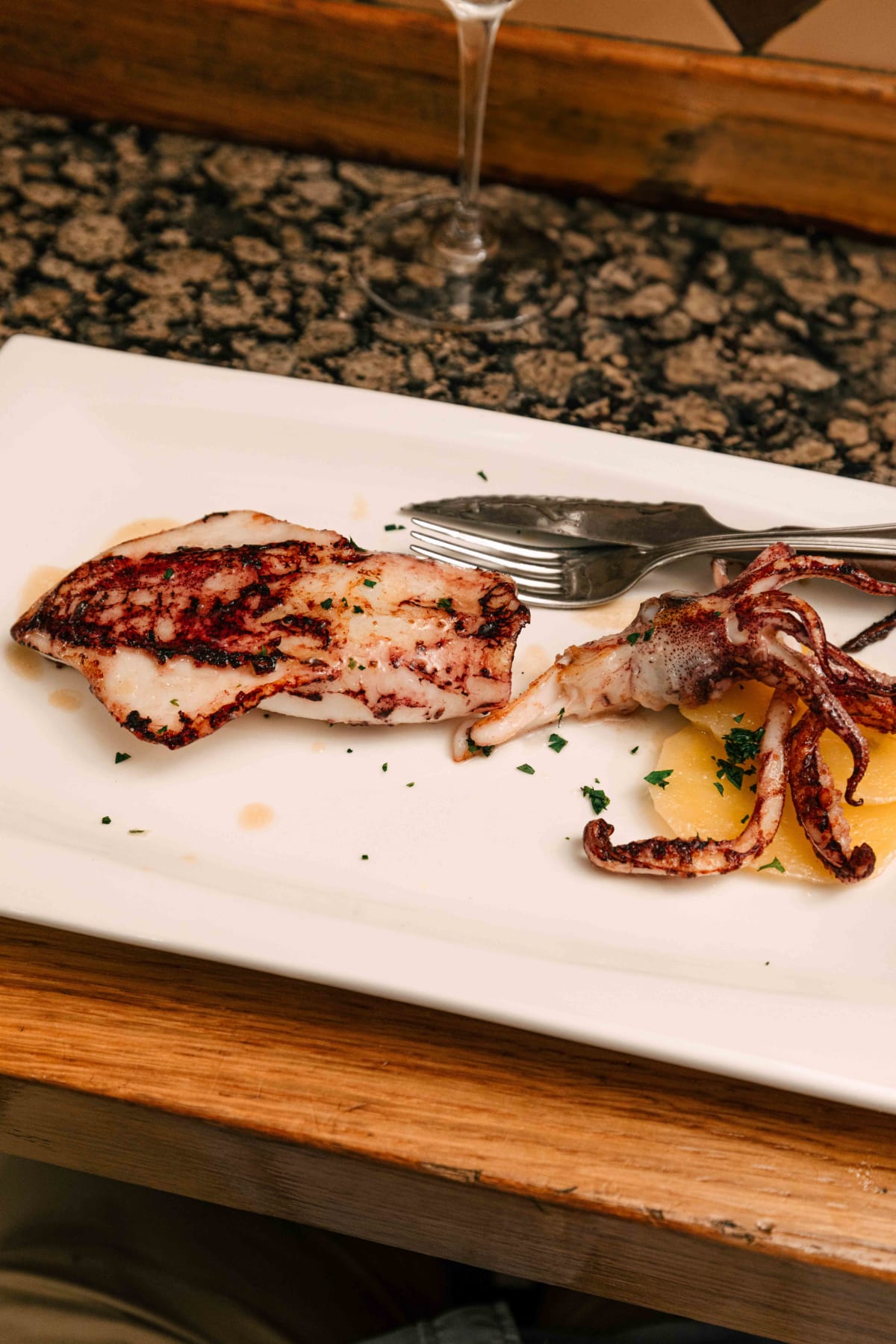
With squid, Japan goes without saying and the whole steamed squid at an ordinary Korean raw fish restaurant tastes better. Unlike prawns, there is no advantage to eating squid in Europe. And once you factor in the higher European prices, I feel a little sorry for having kept asking the owner of the place near my house for more on the house.
Section 11·Media Jamon Barra
I thought about stopping there and going back to the hostel to sleep, but thinking about when I might come back to San Sebastián and to a bar like this, I could not quite bring myself to get out of the chair. Then the man behind the bar said he was taking last orders, so I thought why not and ordered jamón.
Then came his two words. Too Much. He said I had eaten far too much on my own, and for a moment I wondered whether my mother had shaved her head and learned Spanish. I said it was fine, the way I always do at home. In the end he too offered to do a half order and brought over half a plate.
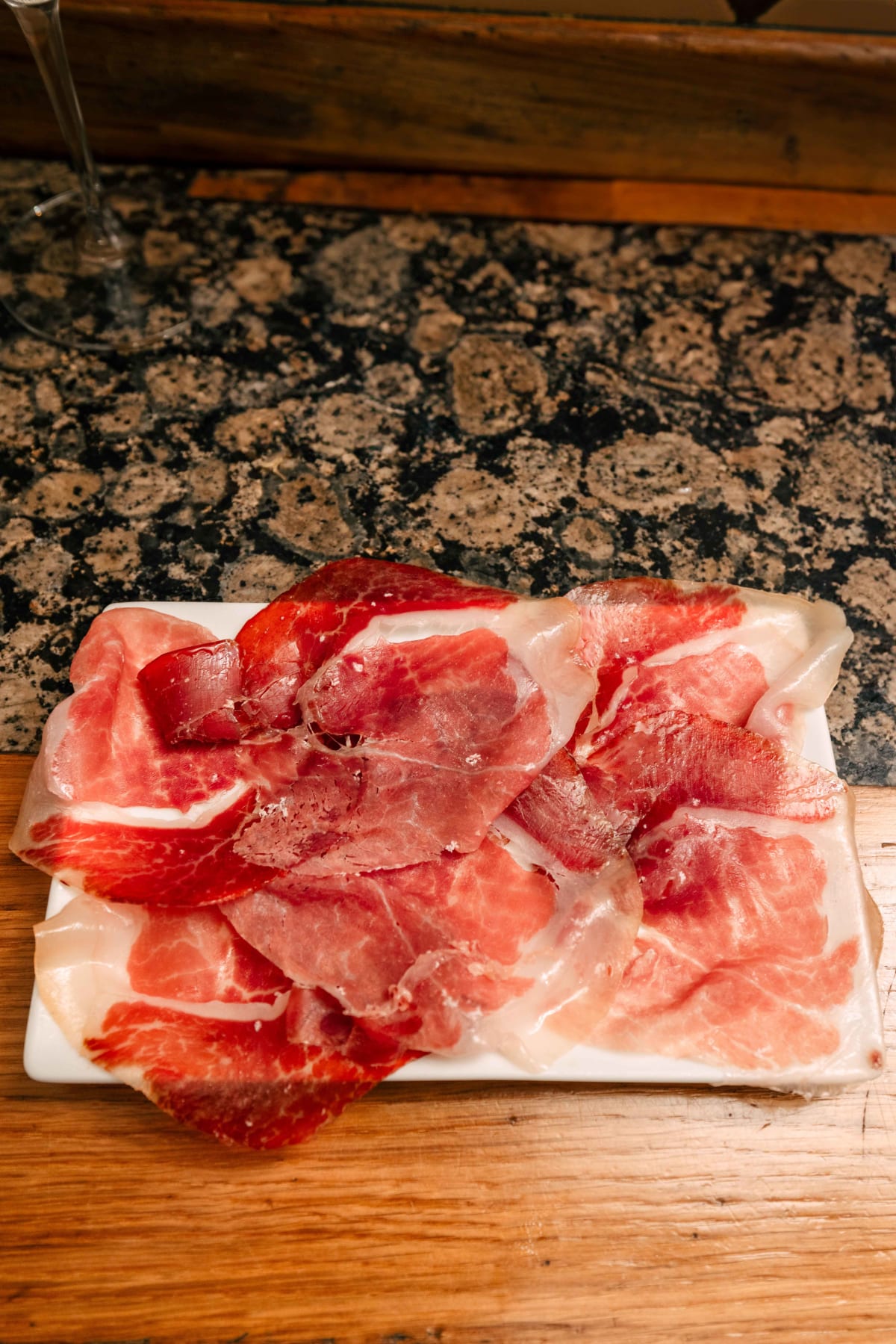
The proper menu name is Media jamón barra. Judging by the colour it did not look like a long aged style and the fat looked about right.
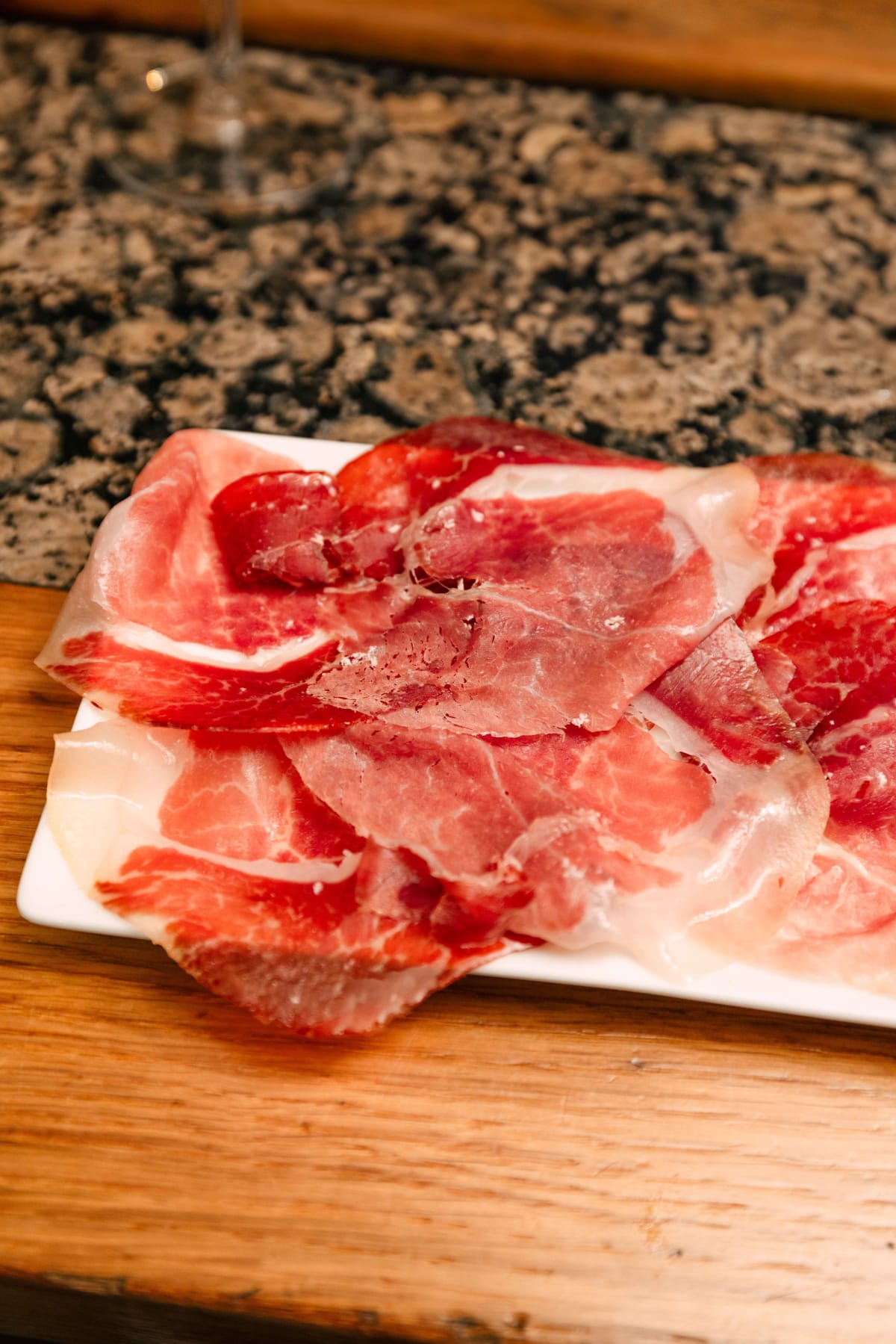
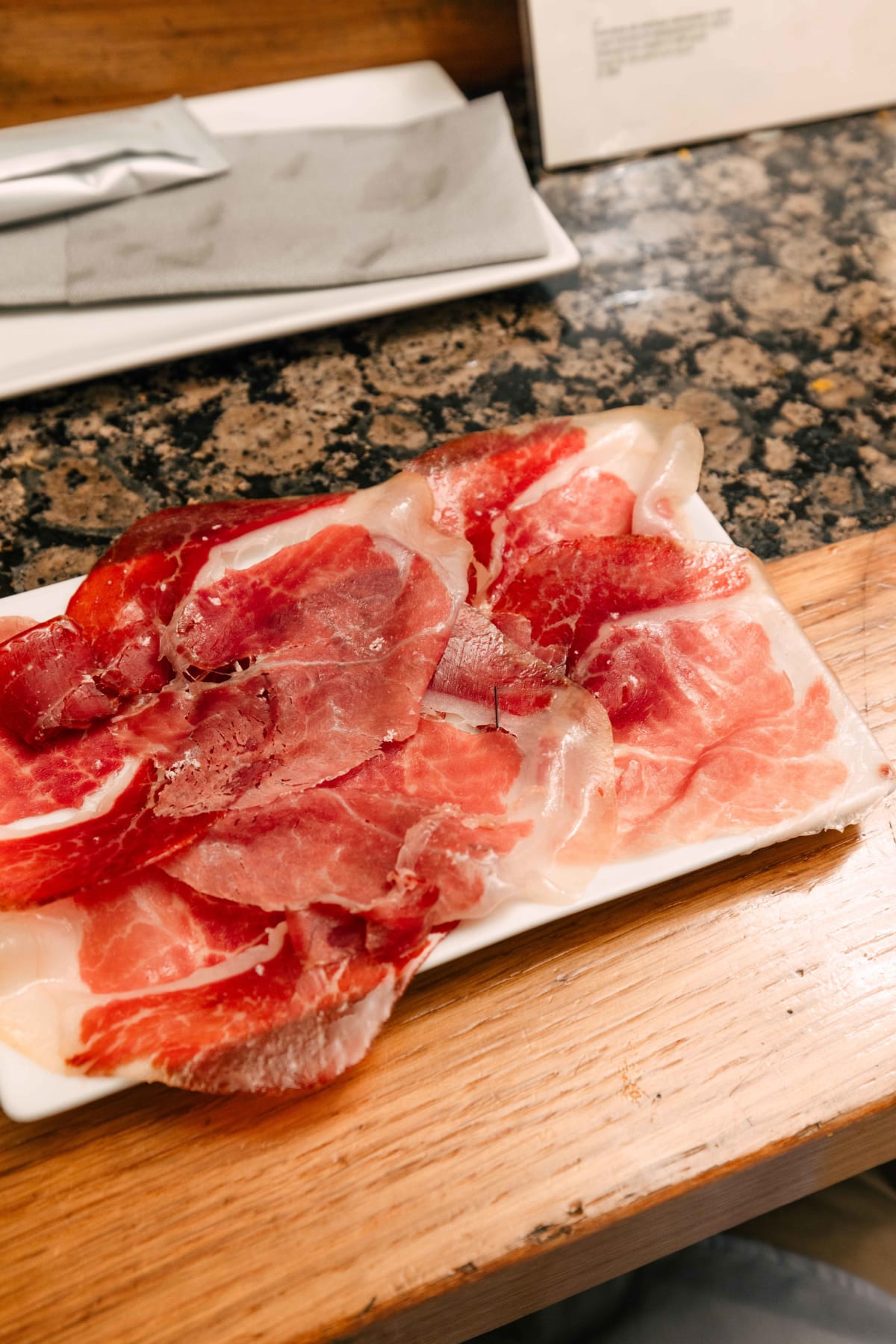
At first, because of that nutty flavour, I looked only for long aged jamón and assumed most people liked it long aged. But not everyone does. The flavour differs by cut and by year of ageing and so does what people prefer.
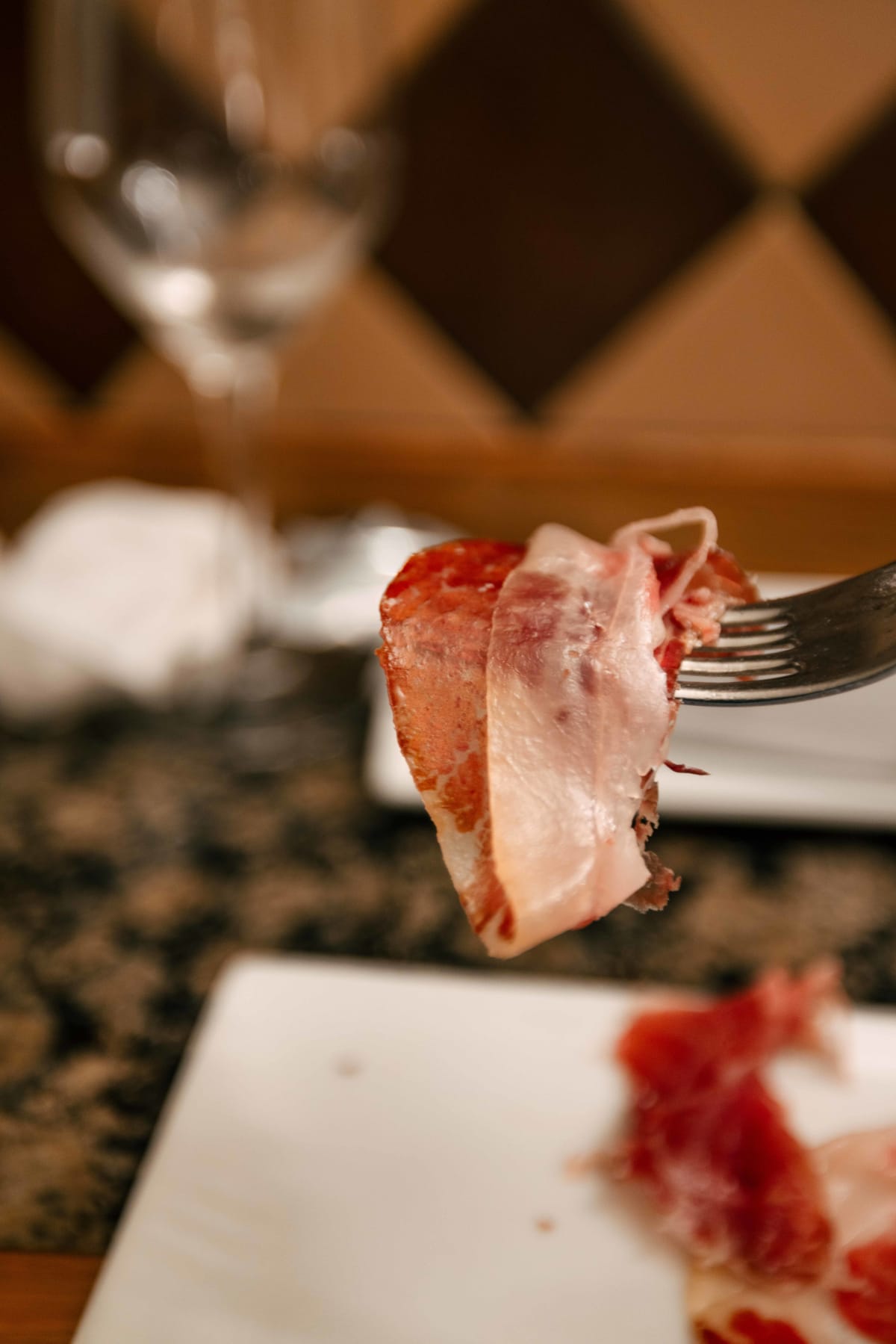
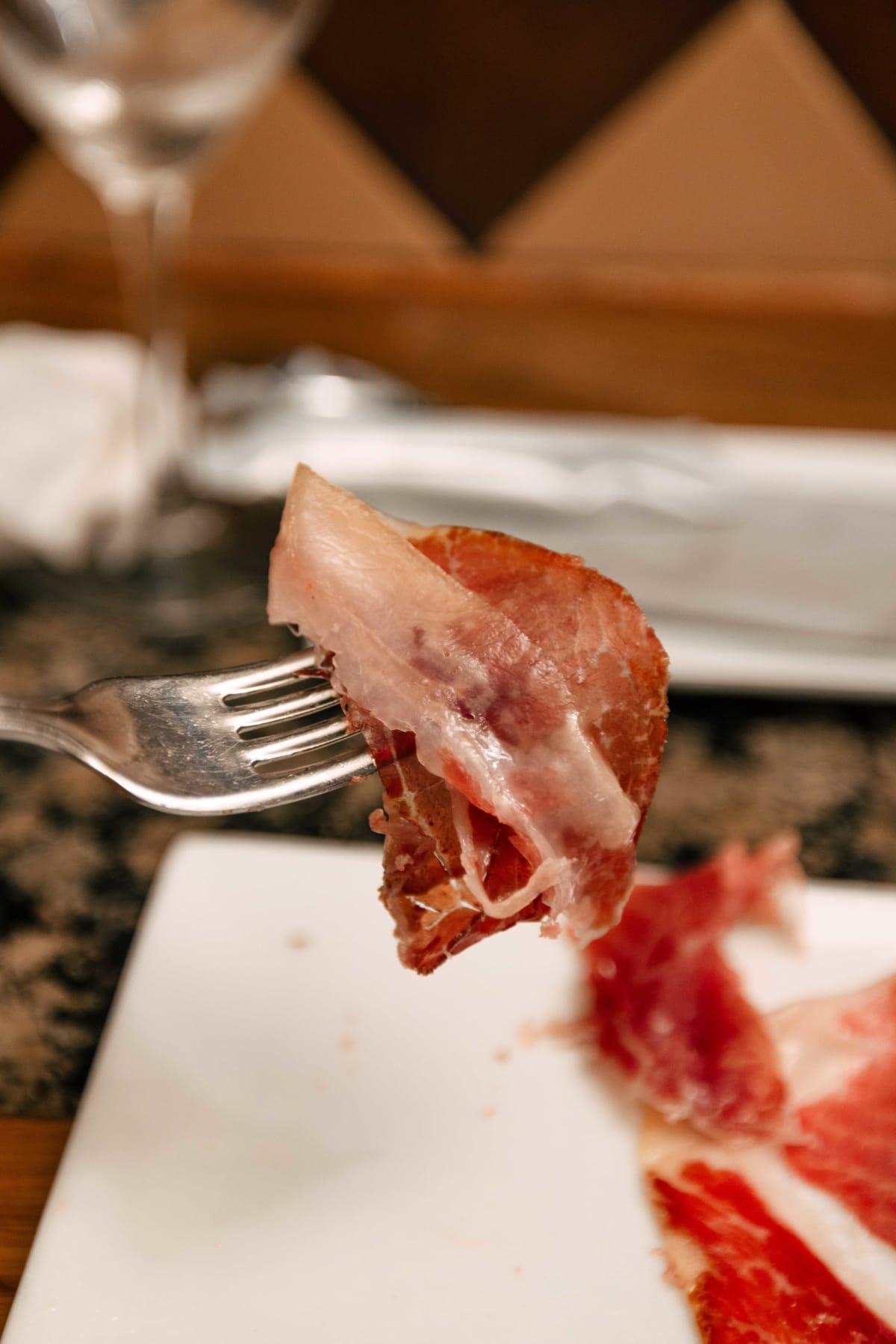
At the time I wondered why it was a paler red than the jamón I had seen before, whether that was a bad sign. Coming back from the trip and tasting more jamón since, I see it differently now. And above all it tasted good.
Section 12·A Family Bar
Ganbara is at 21 San Jerónimo in the old town. José Ignacio Martínez and Amaia Ortuzar opened it as a couple in 1984, and the husband's side had already been running pintxo bars in the old town for a long time.
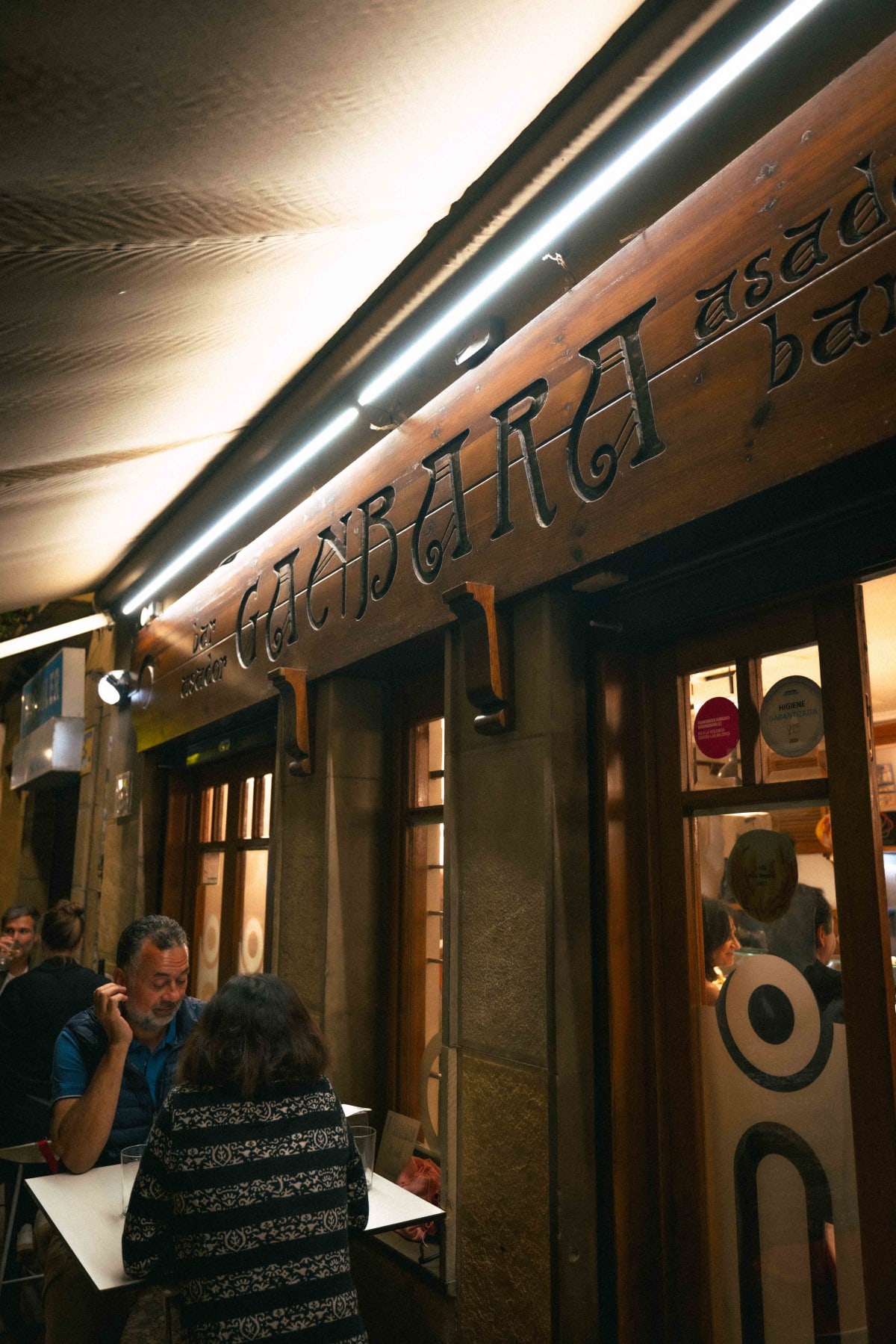
His parents opened a family bar on Agosto street and José Ignacio worked there for about fifteen years. His wife Amaia came from the well known Asador Trapos nearby. What the two of them built out of those separate careers is Ganbara.
In 1998 the daughter Nagore joined and brought in the third generation, and the son Amaiur and the daughter Iulene both studied and worked elsewhere before returning to the family business. This is not a traditional looking room put together by an outside group. It is, quite literally, a family bar passed down through generations.
Section 13·Eskerrik Asko
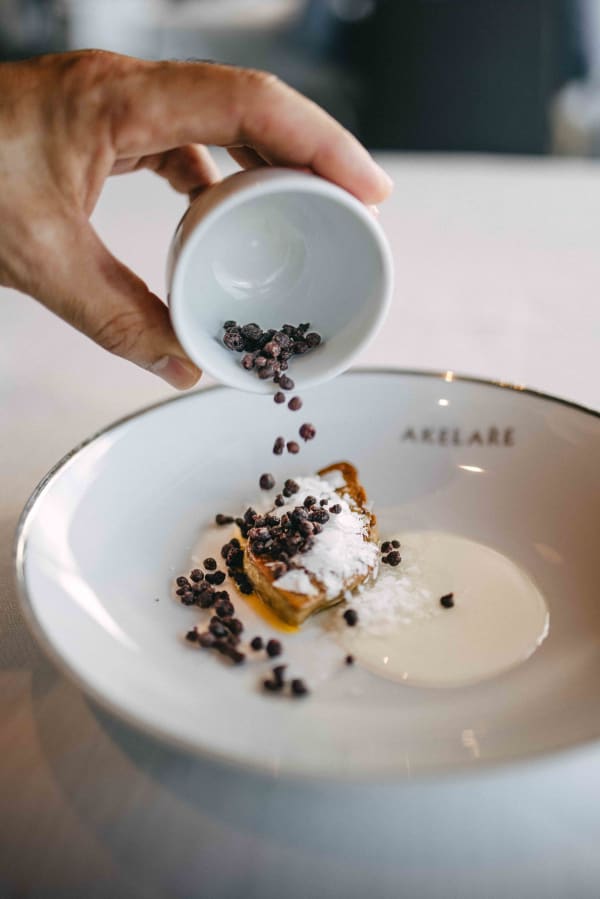
San Sebastián is in the Basque Country, which has its own language, and thank you is Eskerrik asko. A waiter at Akelarre taught me, and after that I said Eskerrik asko instead of Gracias and people loved it and answered me smiling.
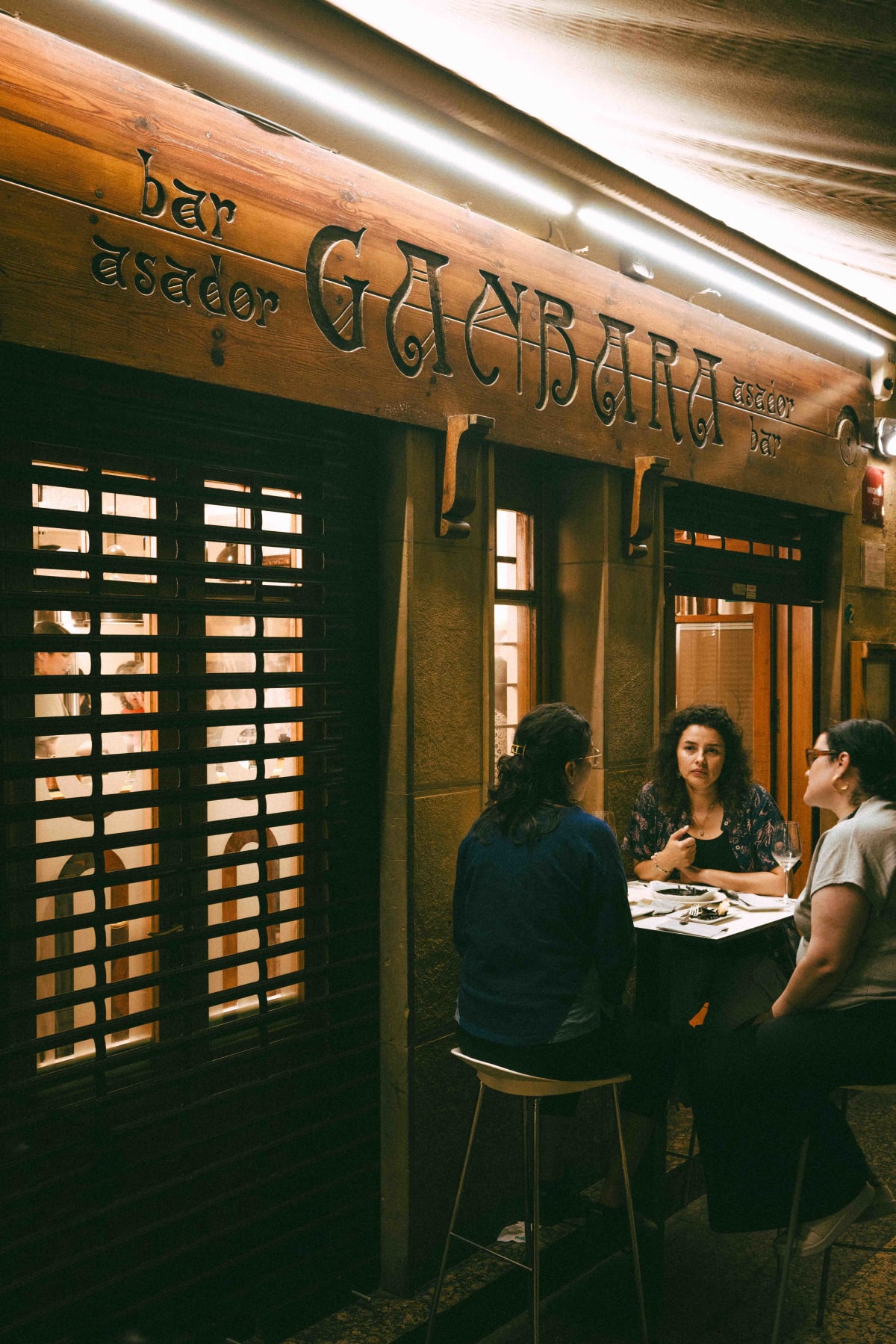
The man working here was blunt and unsmiling at first because there were so many people, but as I kept thanking him in Basque he gradually warmed up and smiled, and at the end he kept speaking to me, asking whether the food was good and how it was. If you go to San Sebastián, try greeting people and thanking them in Basque rather than Spanish.
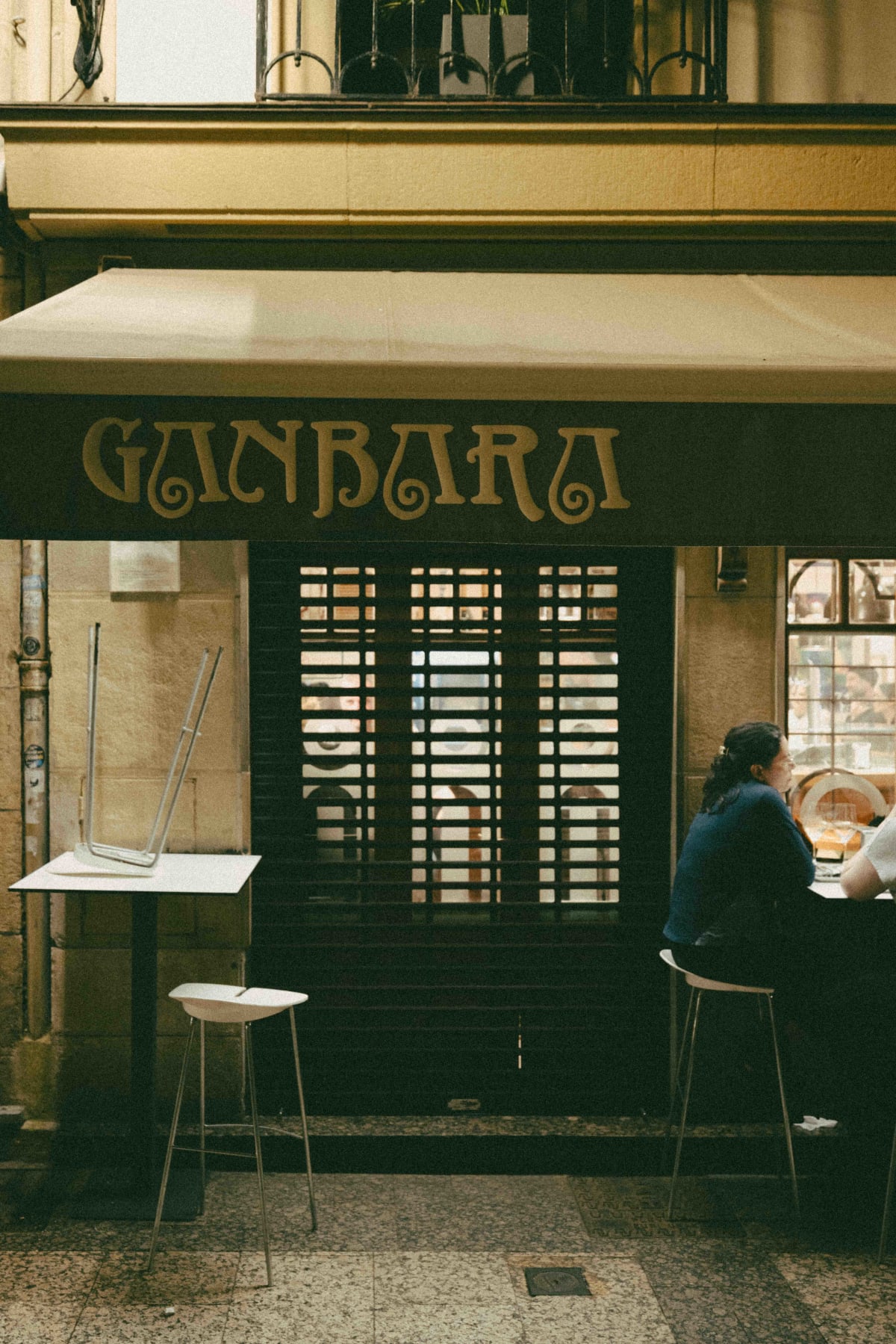
Most pintxo bars in the old town blur together after two or three, because a pintxo is something made in bulk hours earlier and this room's cold ones are no exception. What separates Ganbara is what sits beside them. The counter is stacked with the raw material itself, mushrooms and peppers and artichokes, and that is not decoration but the menu. Order what gets cooked and the place justifies the distance travelled. Order what has been sitting there and it does not. The carabinero, for the record, is a southern Spanish shrimp that happens to be sold here.
Have a question about this restaurant, or want to share your own experience?
Send a message