Local & Essential · Tokyo · Japan / April 2023 / Tabelog Hamburger Hyakumeiten (2022)
Burger Police
"The casual wagyu-burger bistro from the chef behind Michelin-starred TACUBO, beside the Himonya police station and once Tabelog's top-ranked burger in Japan."
Section 1·The Debate
When international travel began to reopen after COVID-19, a particular argument started circulating in Korea's dining circles: that Japan had overtaken America at the hamburger, in both level and flavour. The reasoning came down to a single word, wagyu. Japanese beef is prized the world over, and the claim was that a patty built on wagyu, rather than the leaner American beef the market tends to value below it, simply made the better burger. I had heard it often enough to grow curious, and the place I chose to test it was Burger Police.
Section 2·A Michelin Sister
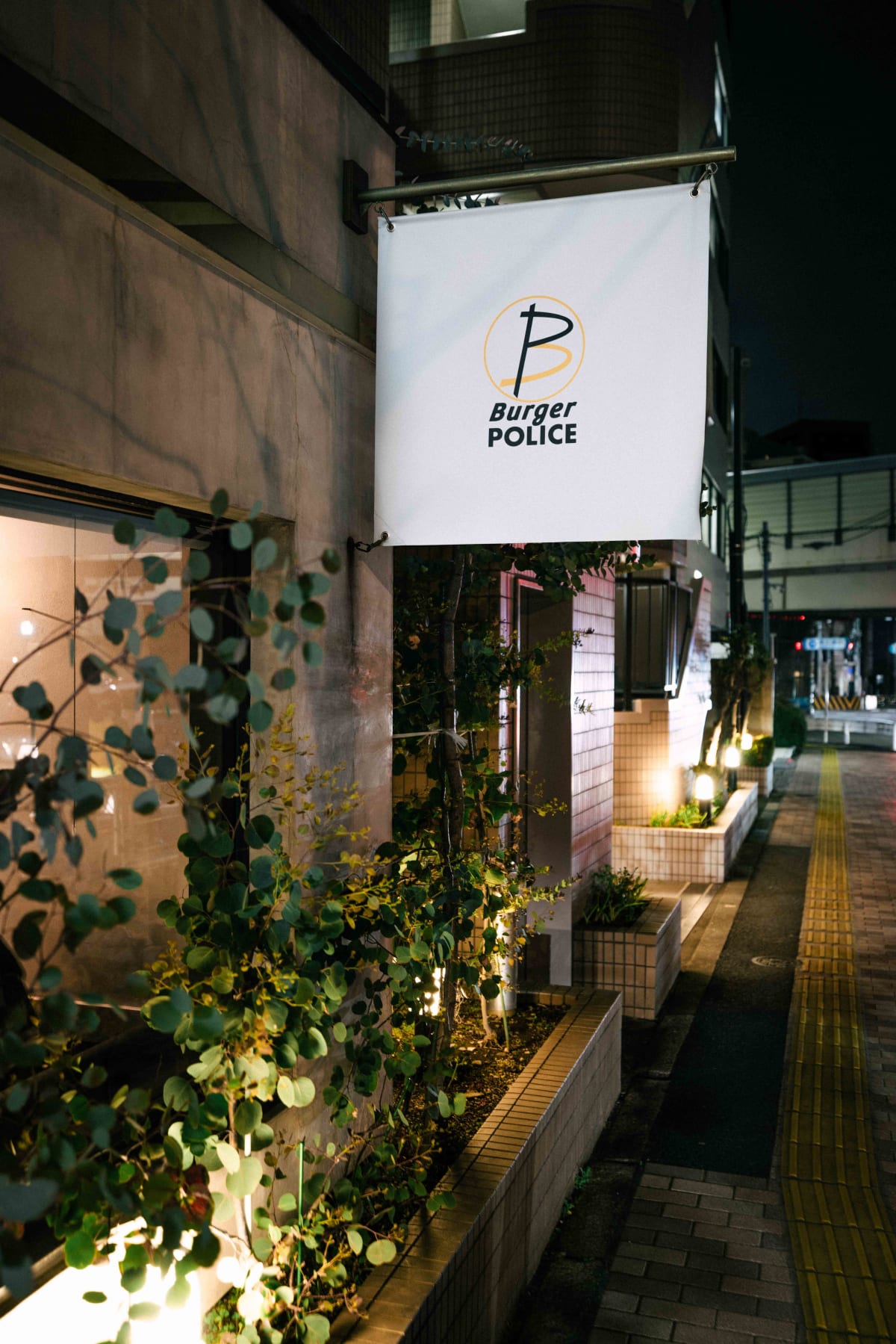
Burger Police is the casual sister to TACUBO, the Michelin-starred Italian in Daikanyama, and it carries that kitchen's hand on its menu. The owner is TACUBO's own chef, Tacubo Daisuke, who opened it in 2021; the name is a small local joke, since the shop sits next to the Himonya police station. TACUBO has held its star for years on the strength of wood-fired premium beef, so a wagyu burger is less of a detour for this chef than it might first sound. Burger Police sits in Himonya, a quiet residential corner of Meguro well off the tourist circuit, and it had been named to Tabelog's hundred-best list for hamburgers. By the time I went, it had climbed to number one in the country for the genre, and that, more than anything, is why I chose it.
a wagyu burger is less of a detour for this chef than it might first sound
Section 3·The Room
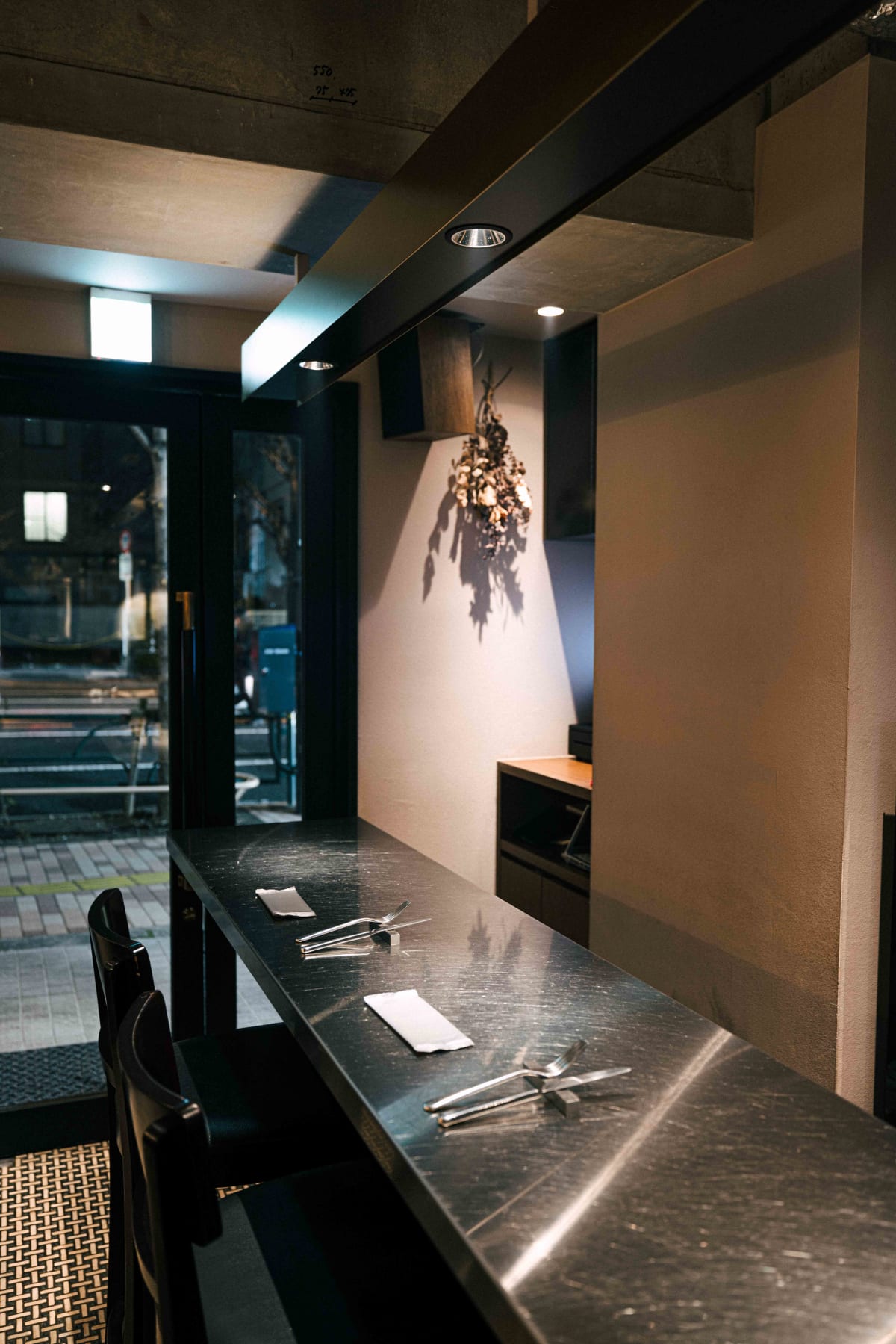
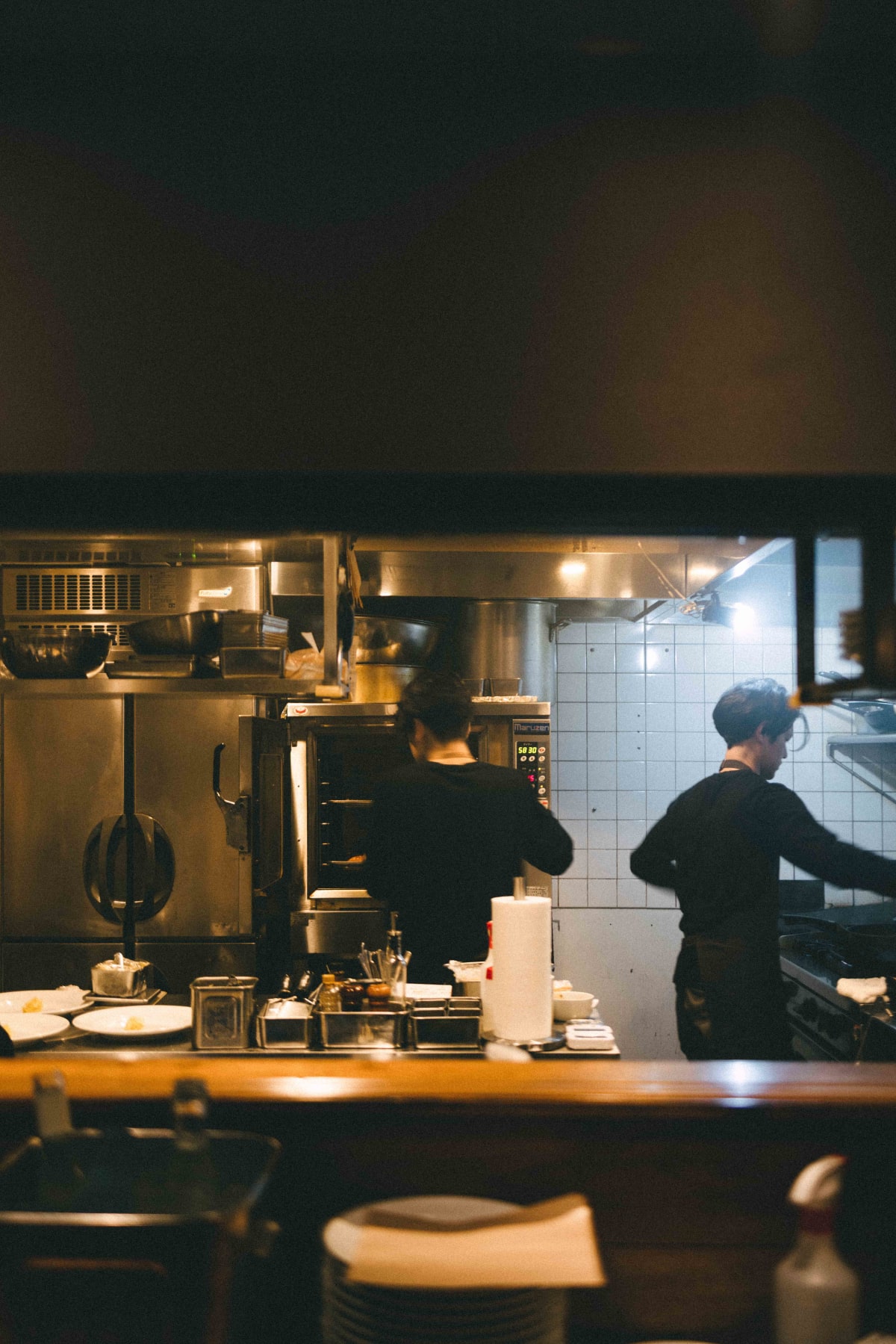
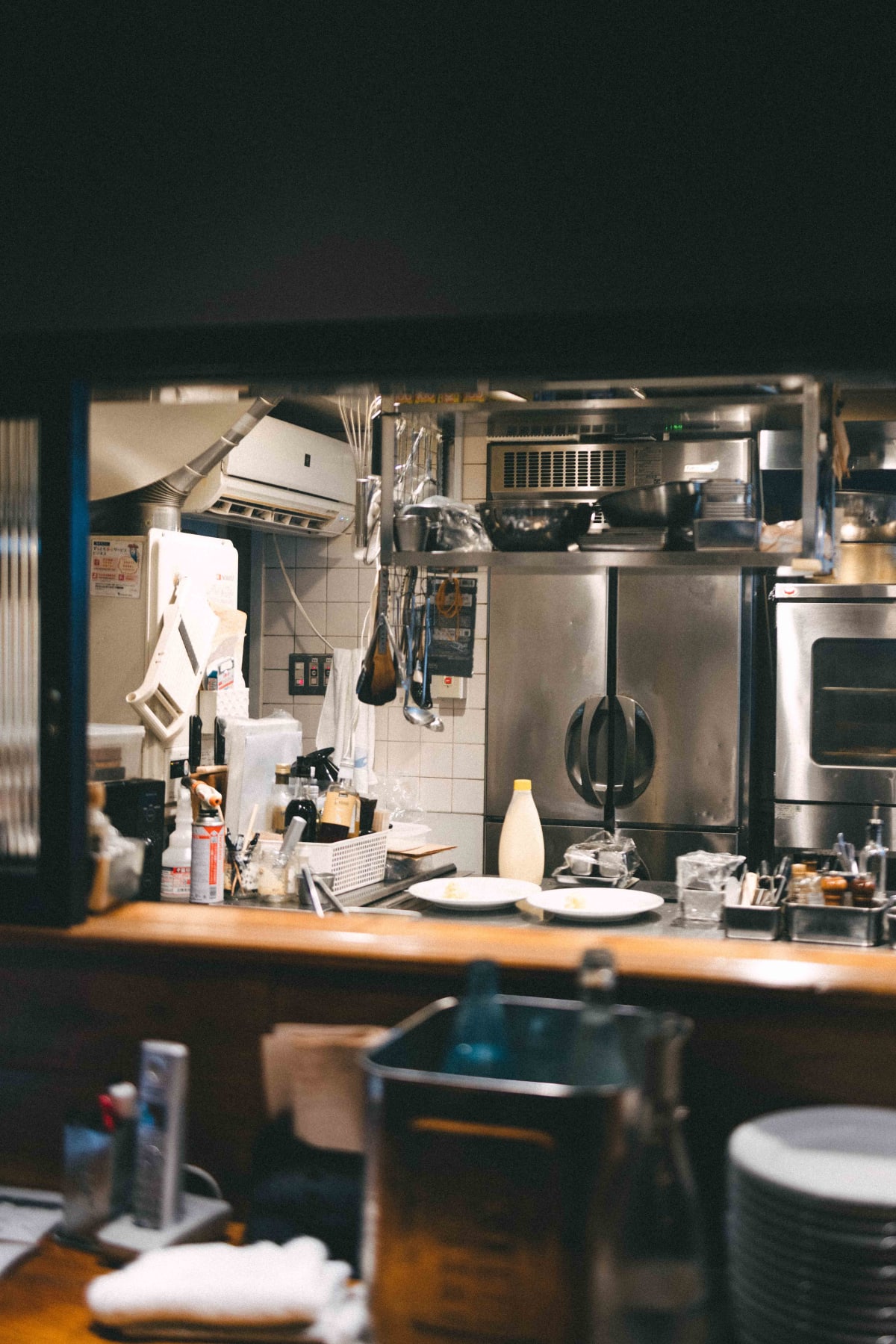
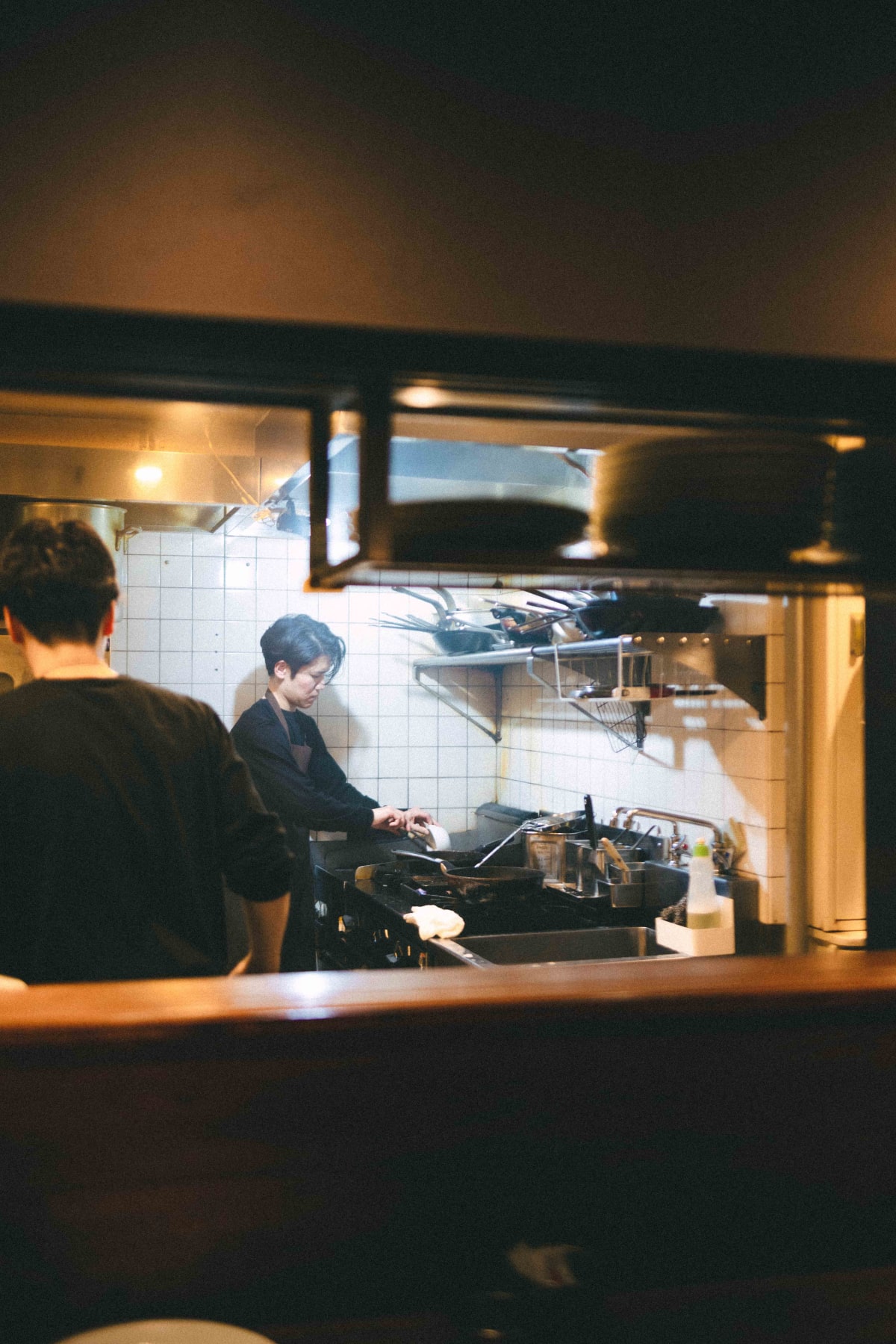
The room is small and unfussy. It occupies the ground floor of a building on the Himonya main road: six or so counter seats, three tables, the whole space cozy rather than grand. I came alone and sat at the counter, one side of which opens onto the kitchen, so I could watch the burgers and the rest of the menu come together.
The lineup at the time ran to about six burgers and a column of appetizers.
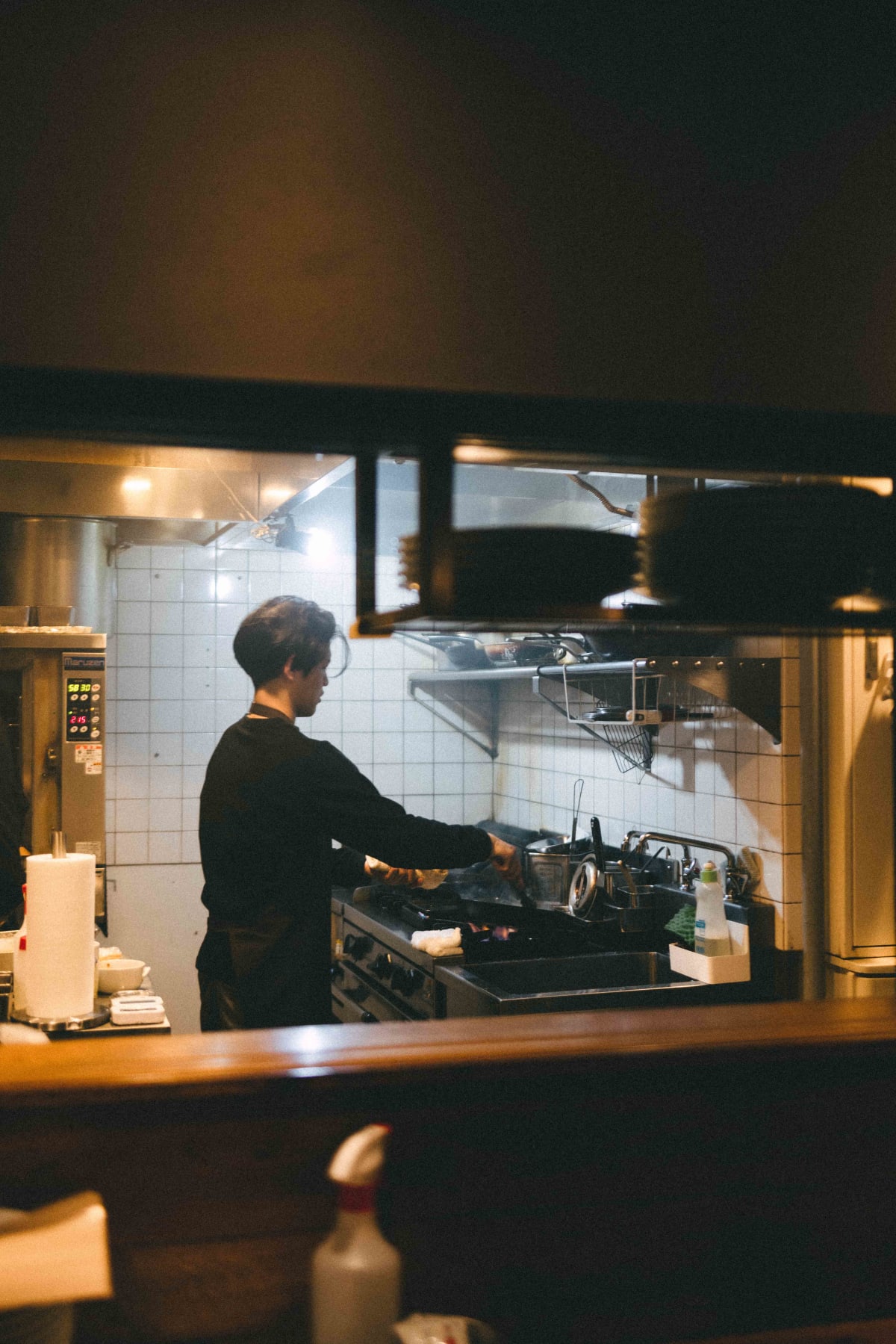
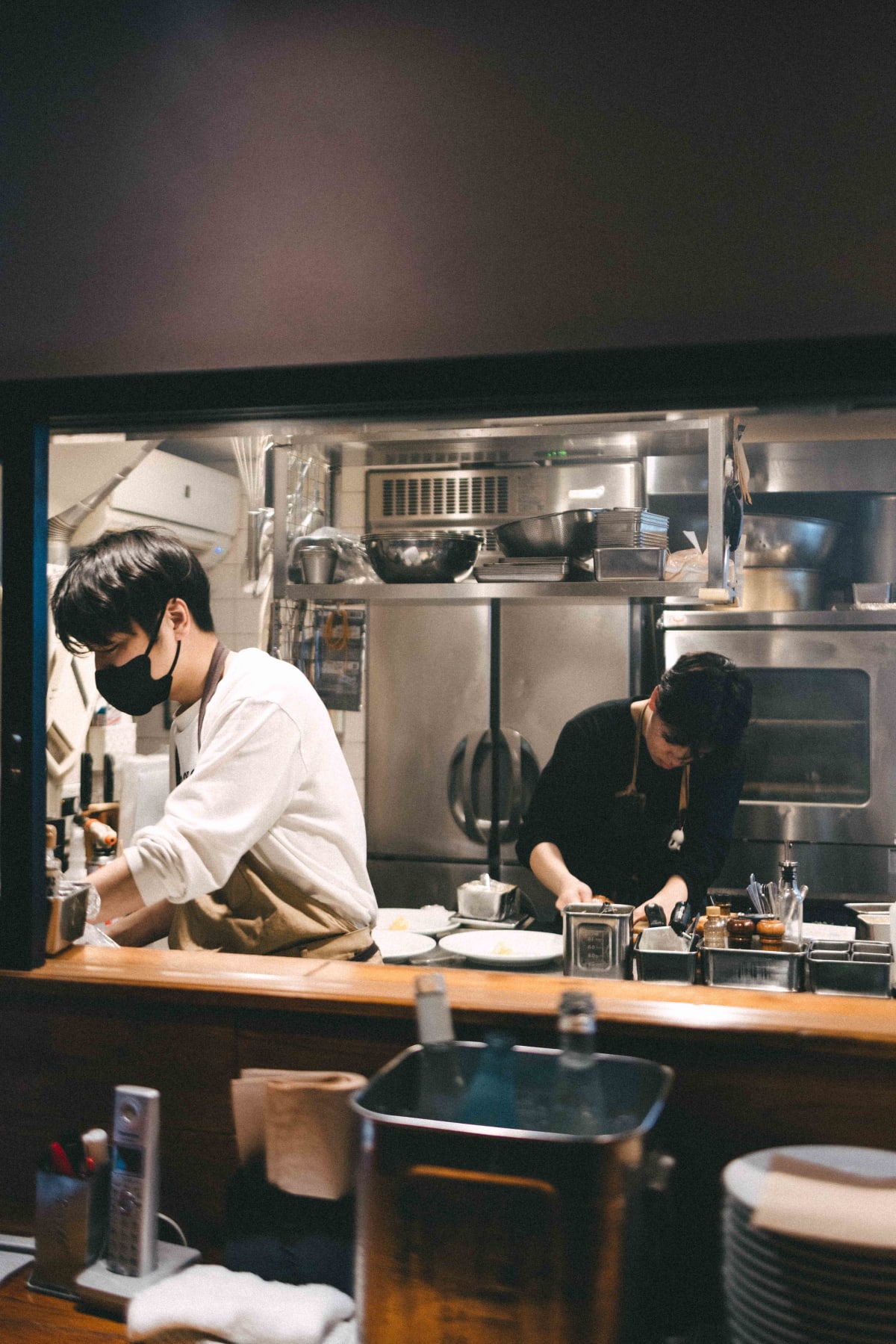
The house emblem is the salt burger, a patty of pure kuroge wagyu, the Japanese Black breed, seasoned with nothing but salt and butter, no sauce and no vegetables, the idea being to let the beef carry the whole thing. I went instead for the other signature, called simply The Burger, or "za baga" as it comes out in Japanese.
Section 4·An Appetizer Destination
I opened, as it happened, with a glass of sparkling: a Château de Montfort Confidence, a Crémant de Loire.
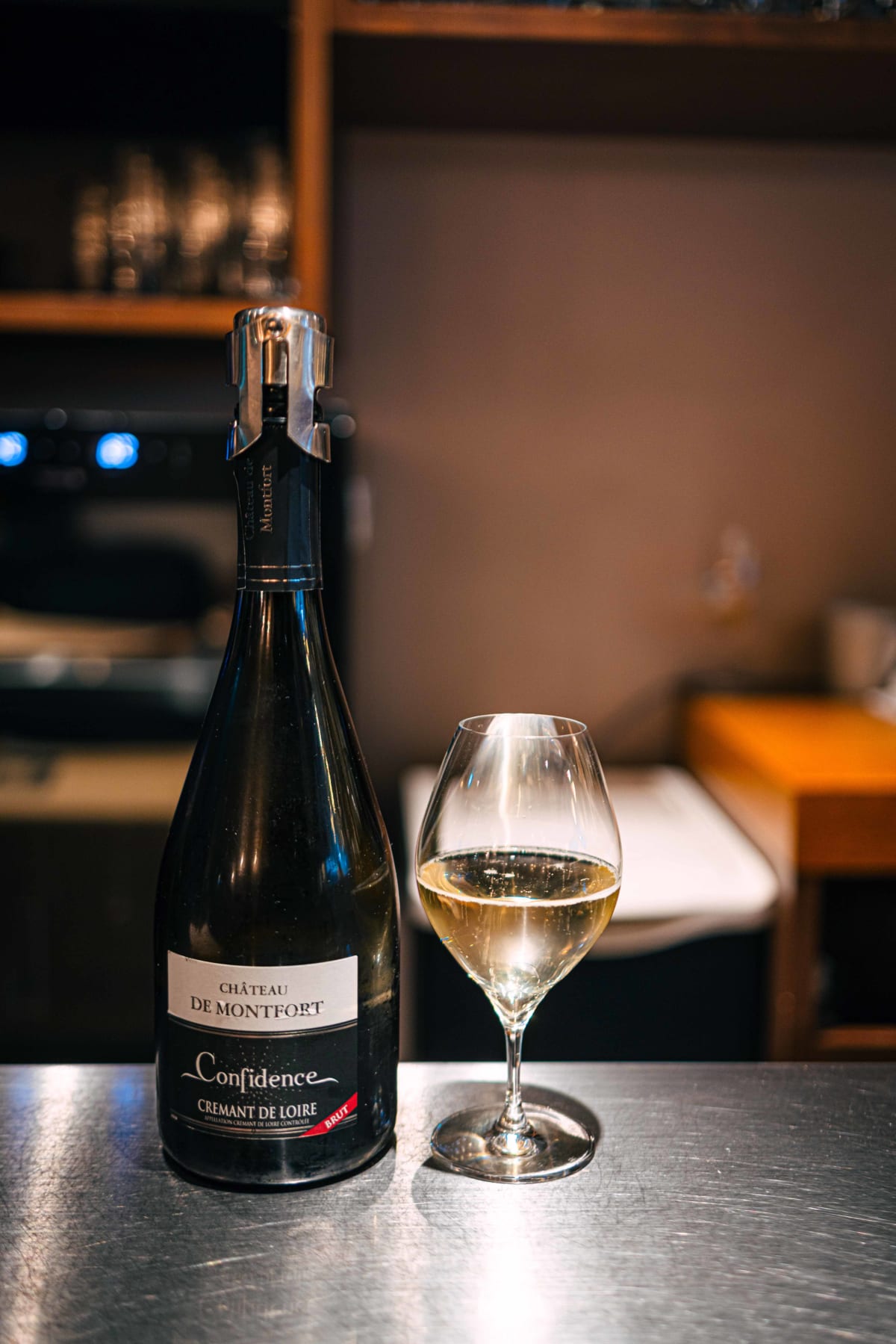
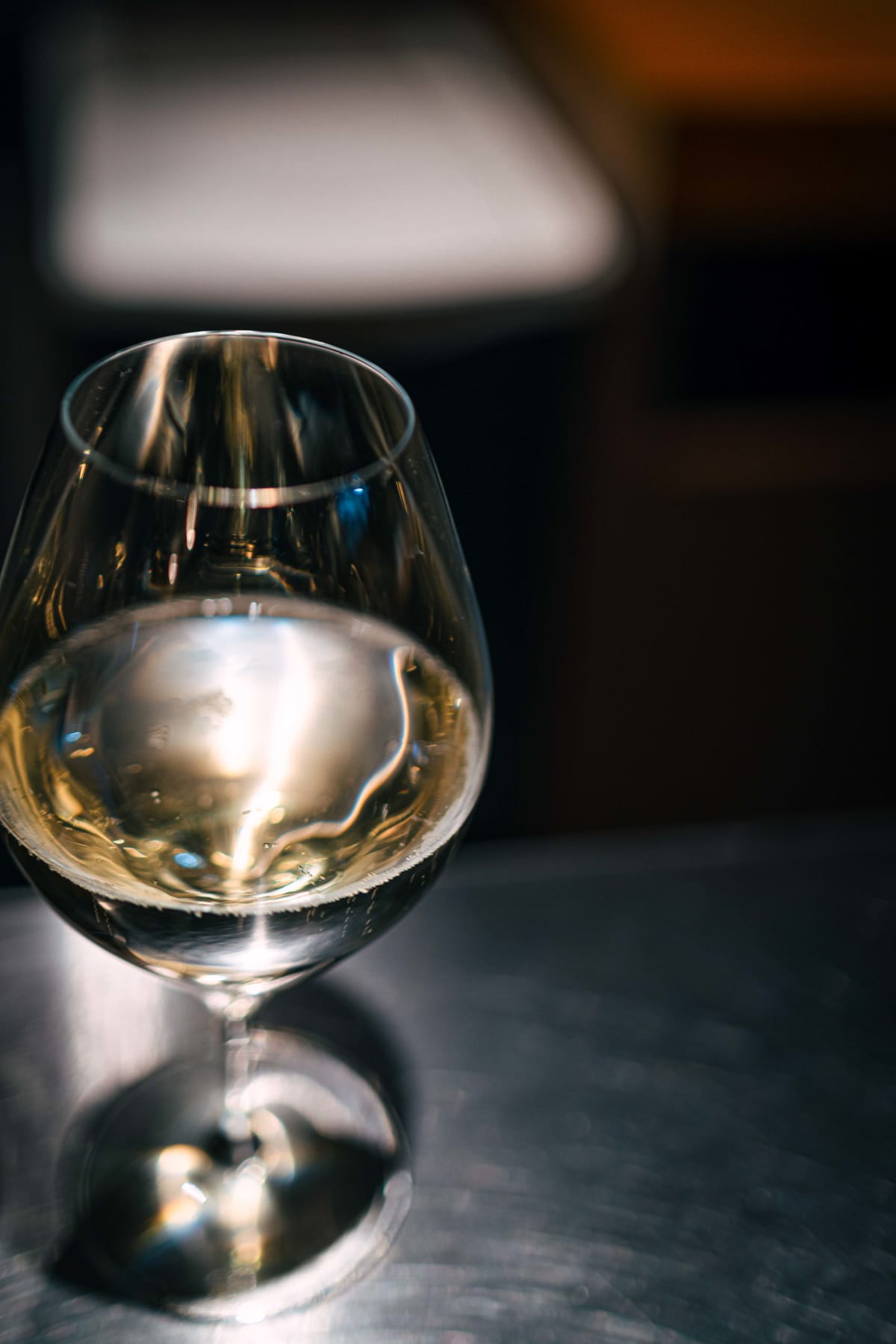
Crémant de Loire is the Loire Valley's traditional-method sparkling, made the same way as Champagne, and this cuvée blends Chardonnay with Chenin Blanc, the Loire's signature white grape, into something fine-beaded and gently brioche-scented. It made a clean, easy opening alongside the first appetizer.
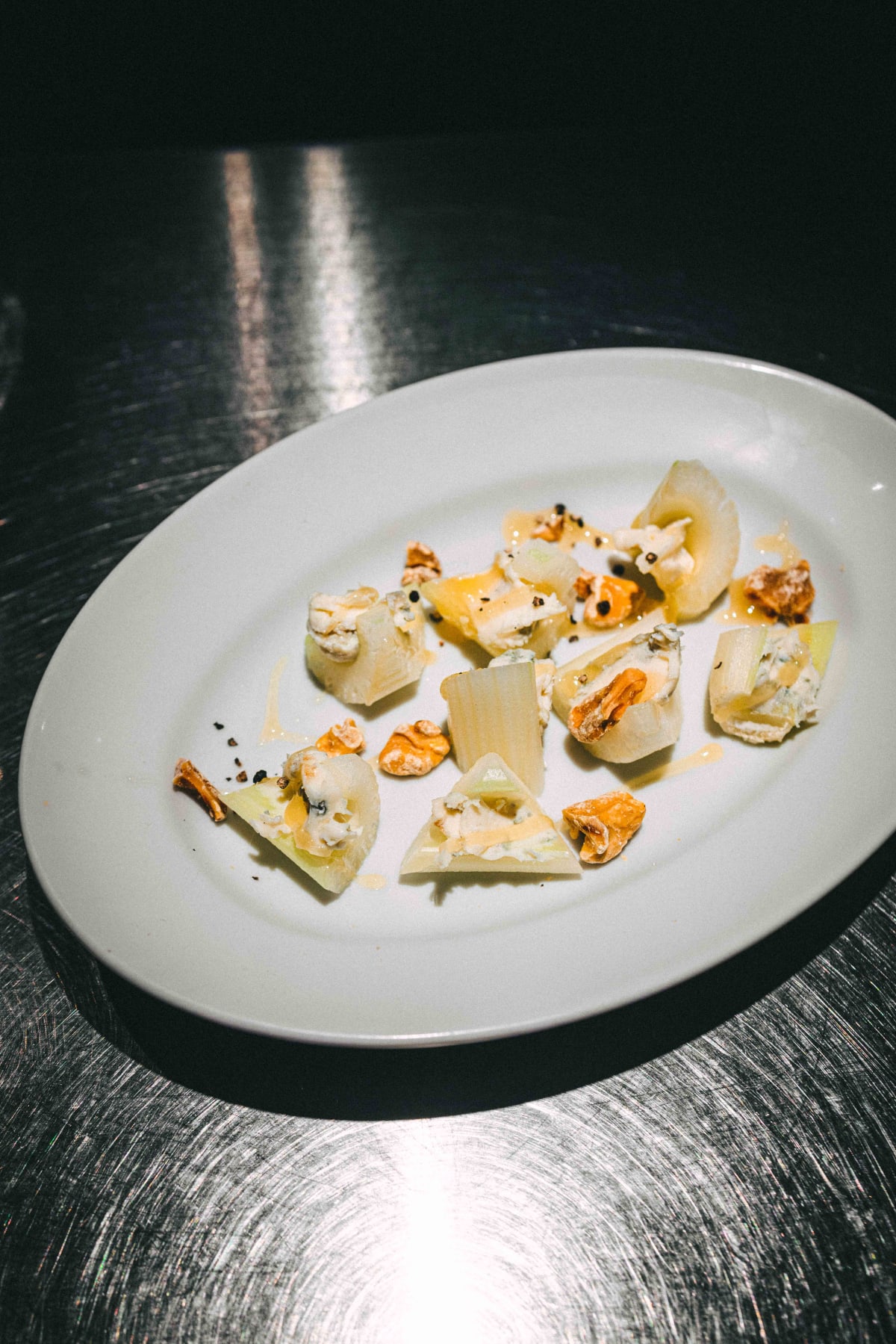
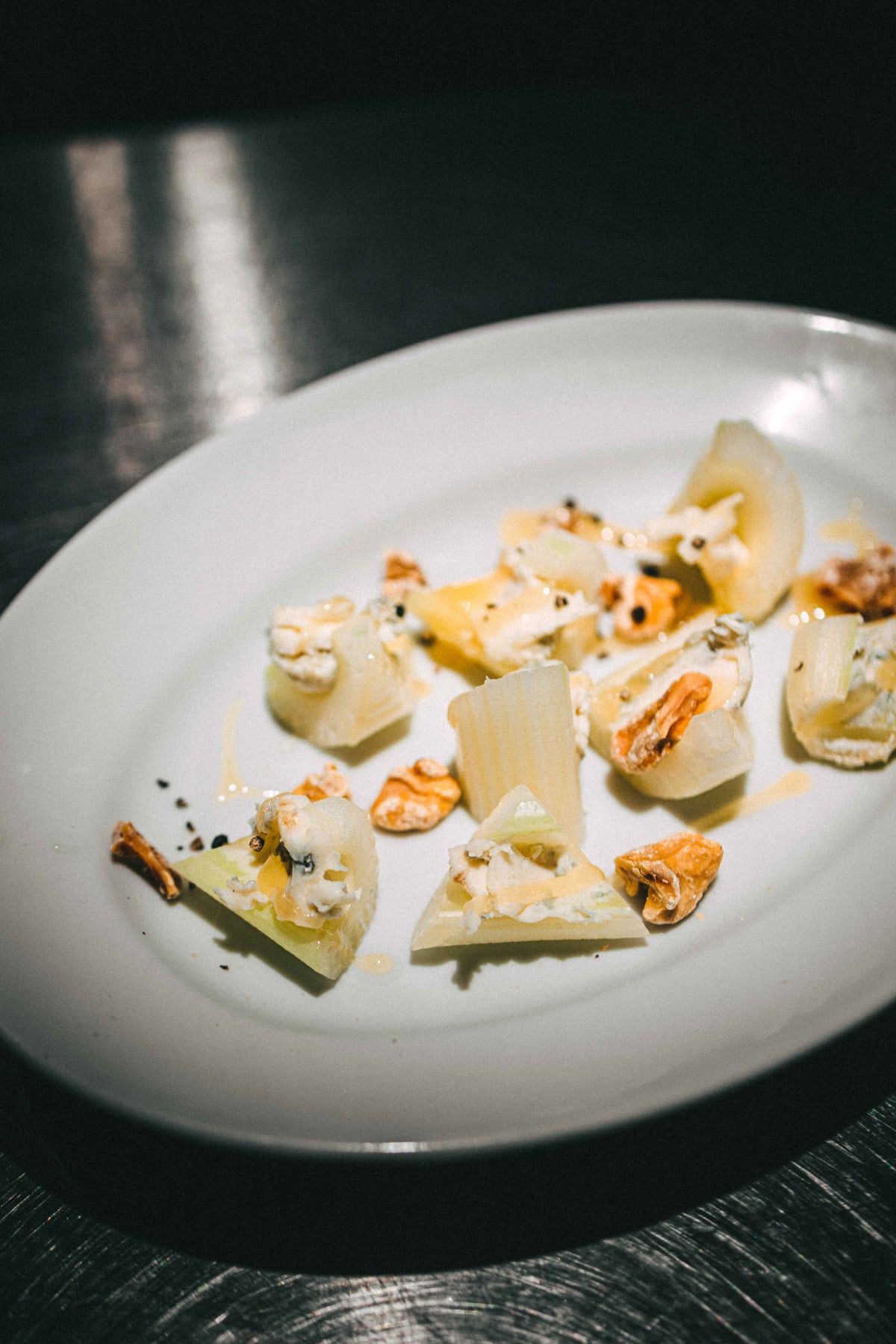
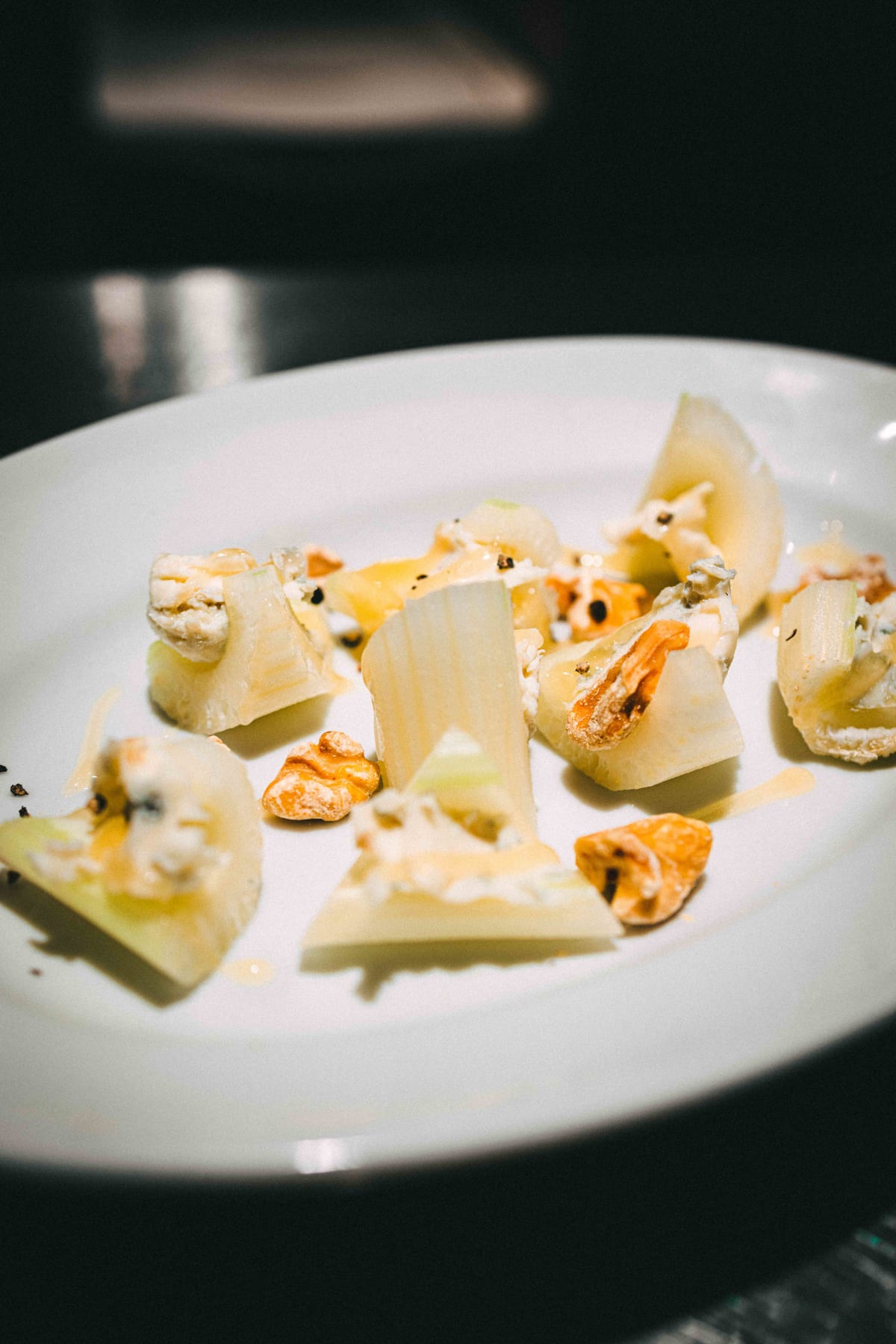
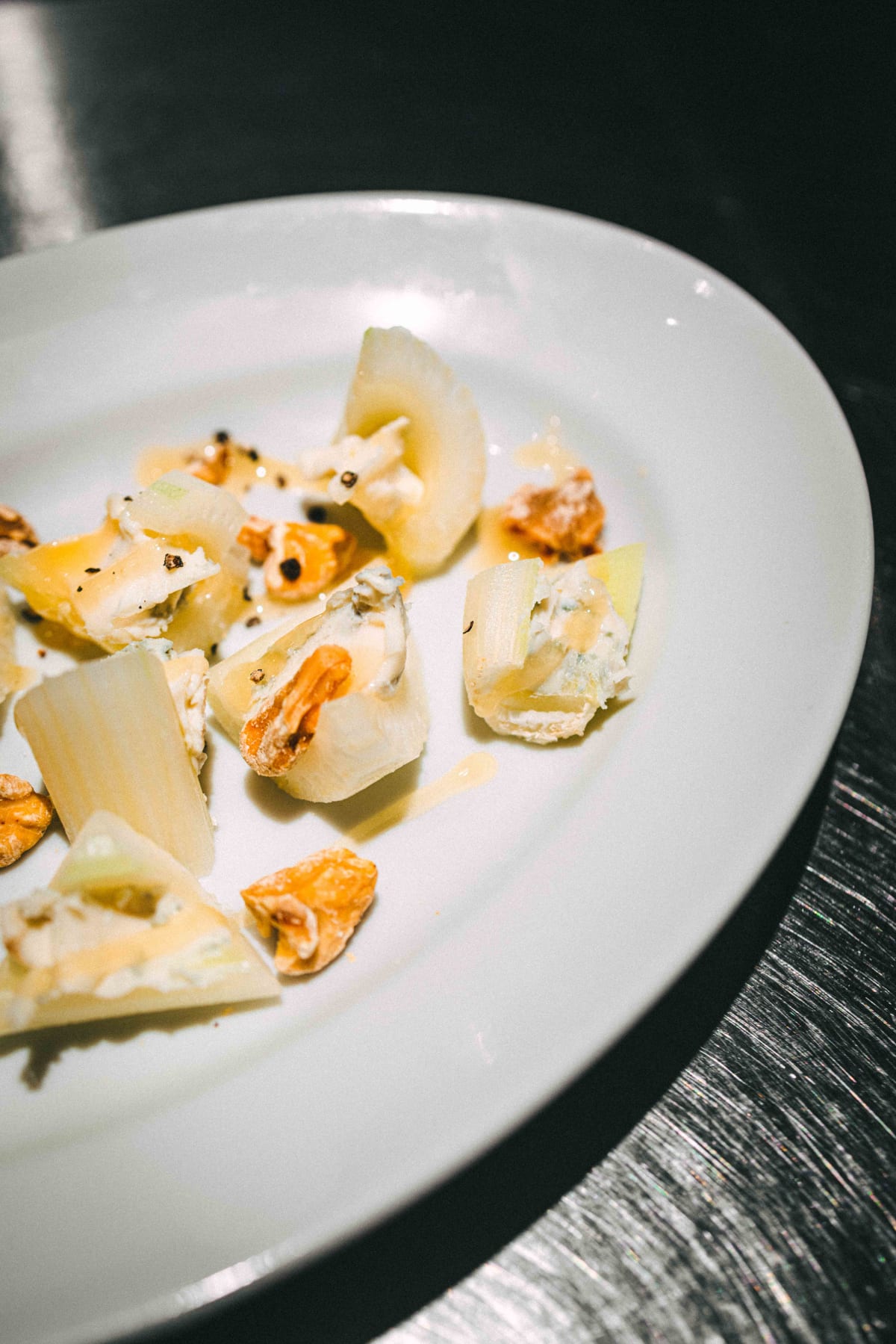
And the first appetizer is where Burger Police surprised me. My first thought, sitting there, was less "good burger joint" than "wait, this is an appetizer destination." I had ordered a gorgonzola celery dish with no particular expectations, and it turned out to be the thing I remember most vividly from that first visit. The celery was crisp and full of water, the gorgonzola intense and unmistakable, and I would not have bet on the pairing working, a watery vegetable against a cheese that strong and singular. But a thread of nuttiness from the nuts tied them together, and the balance was far better than it had any right to be.
Section 5·The Burger
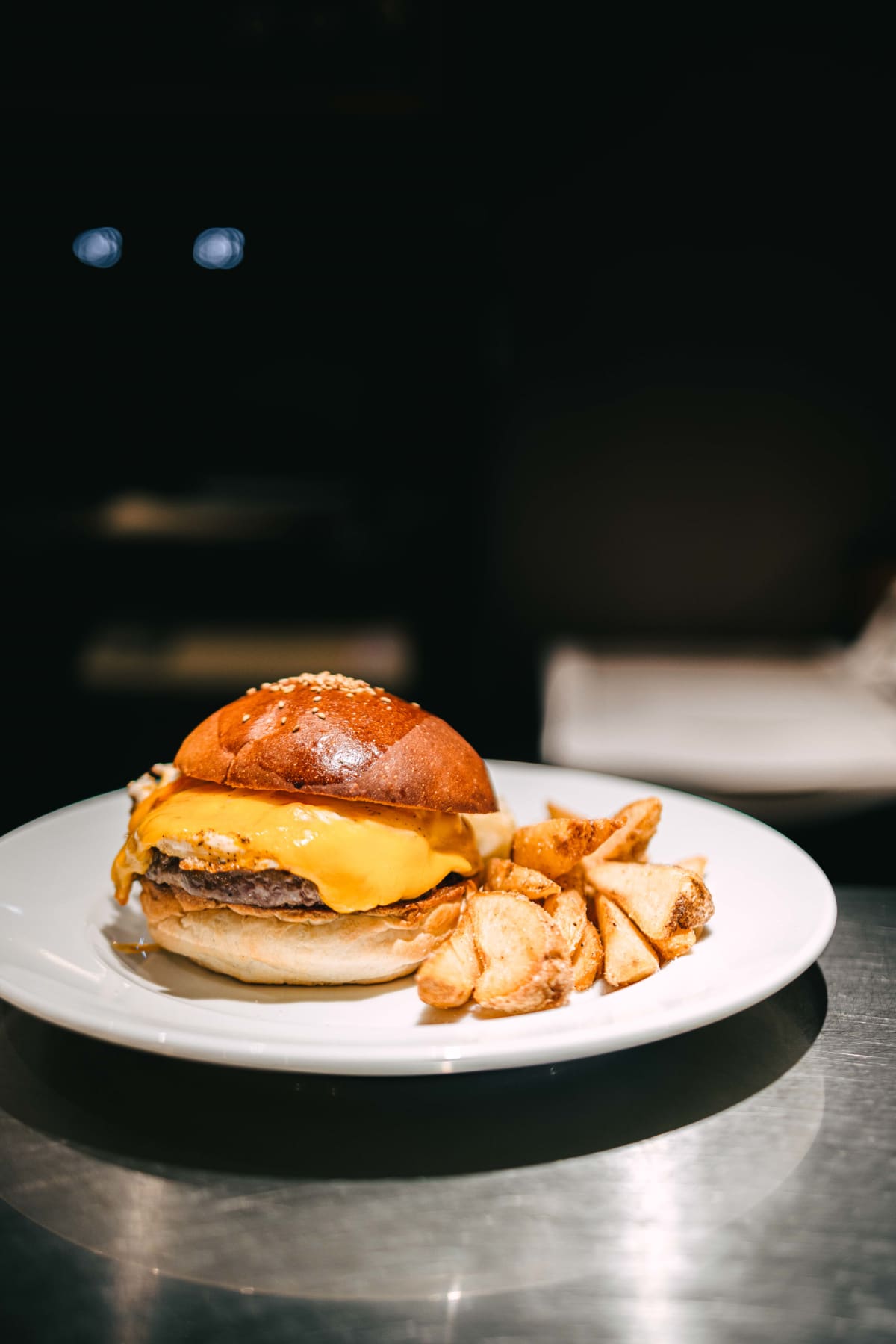
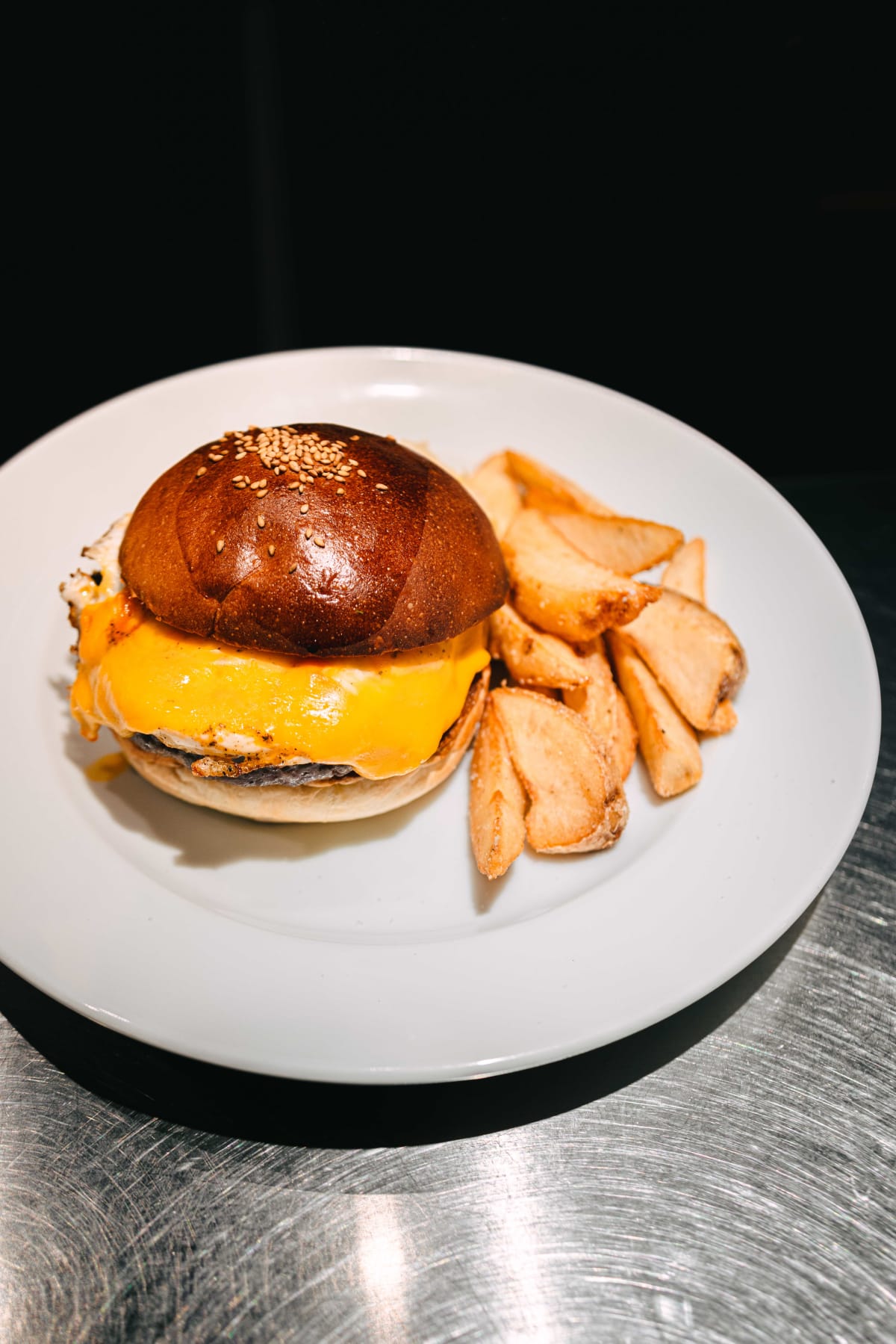
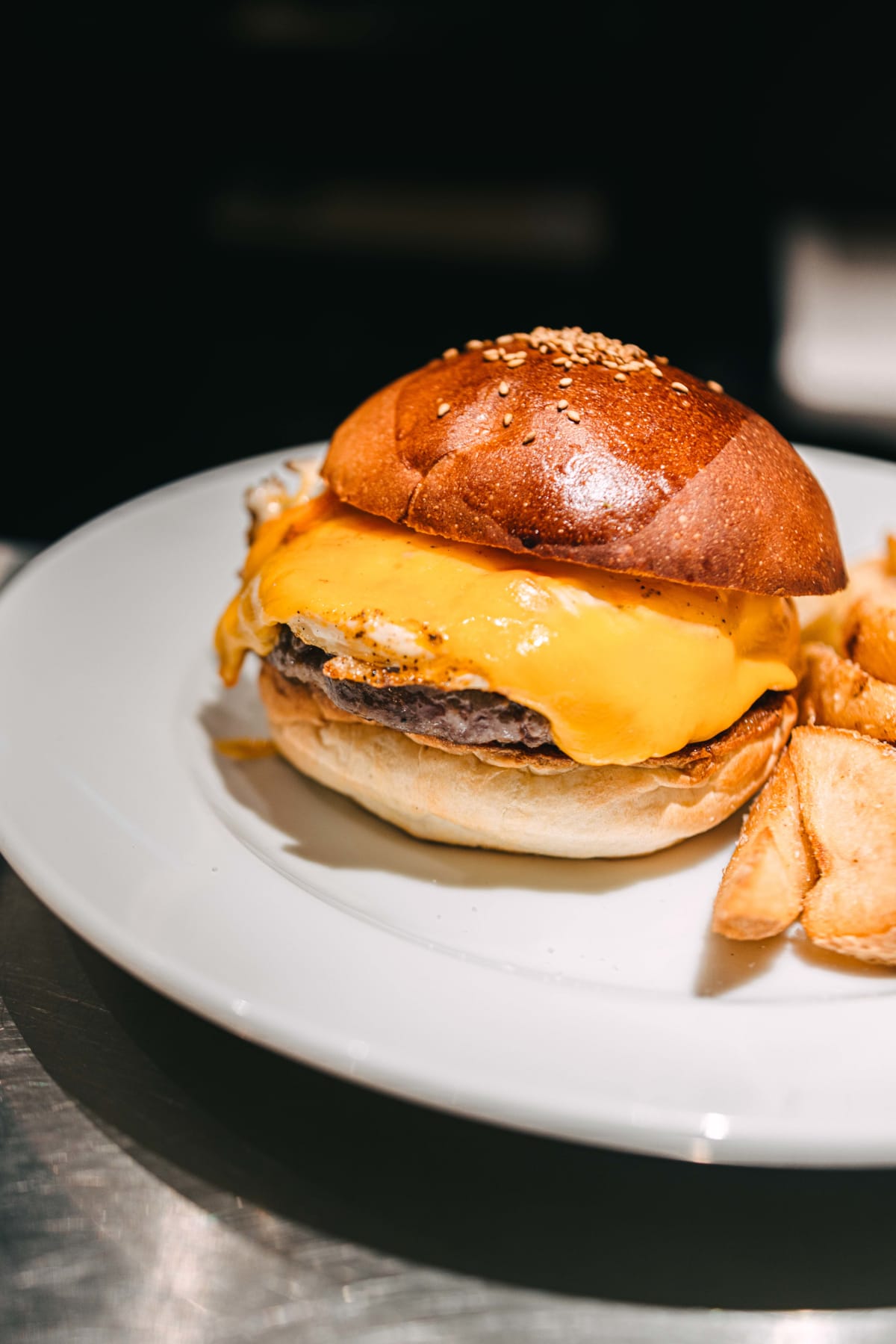
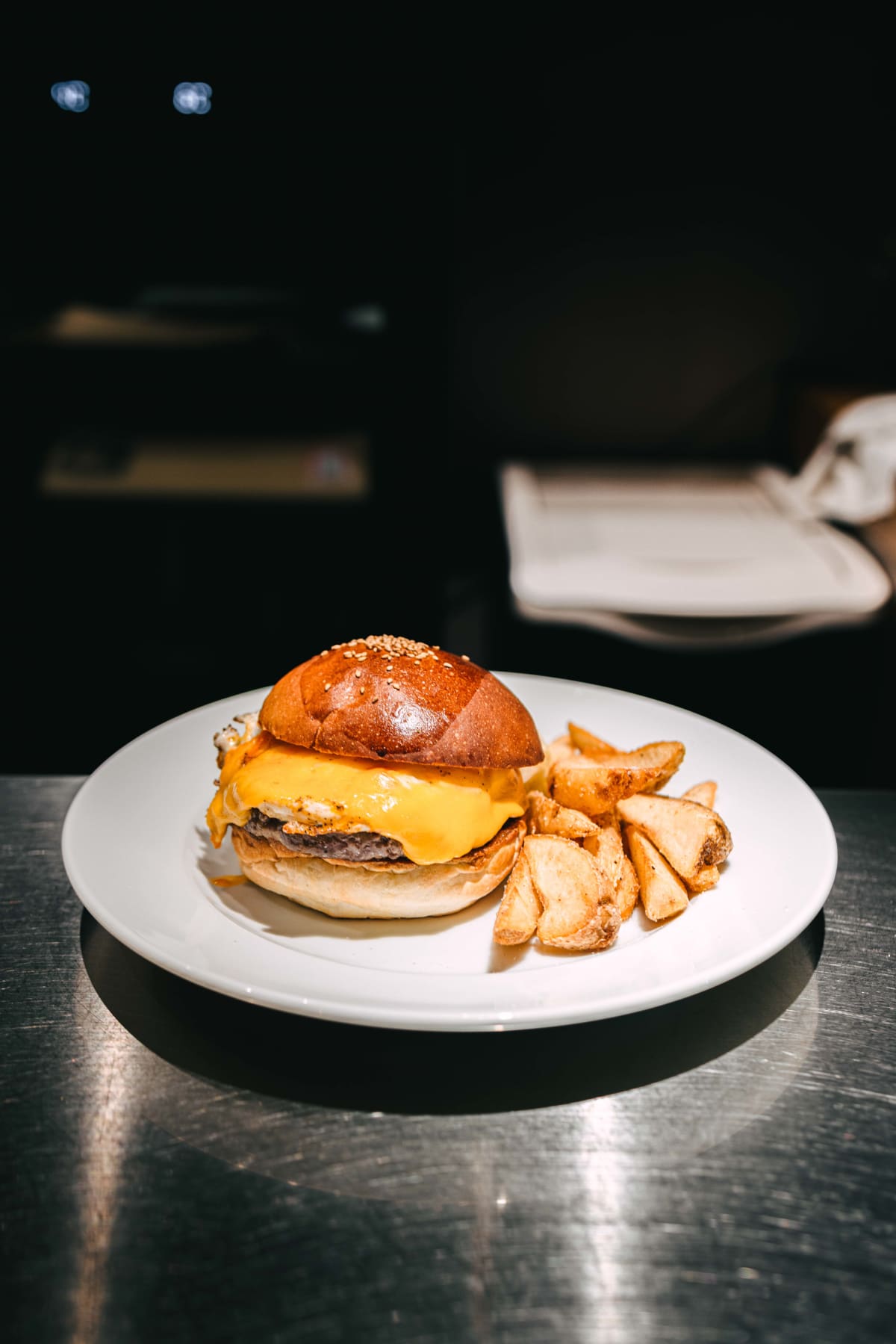
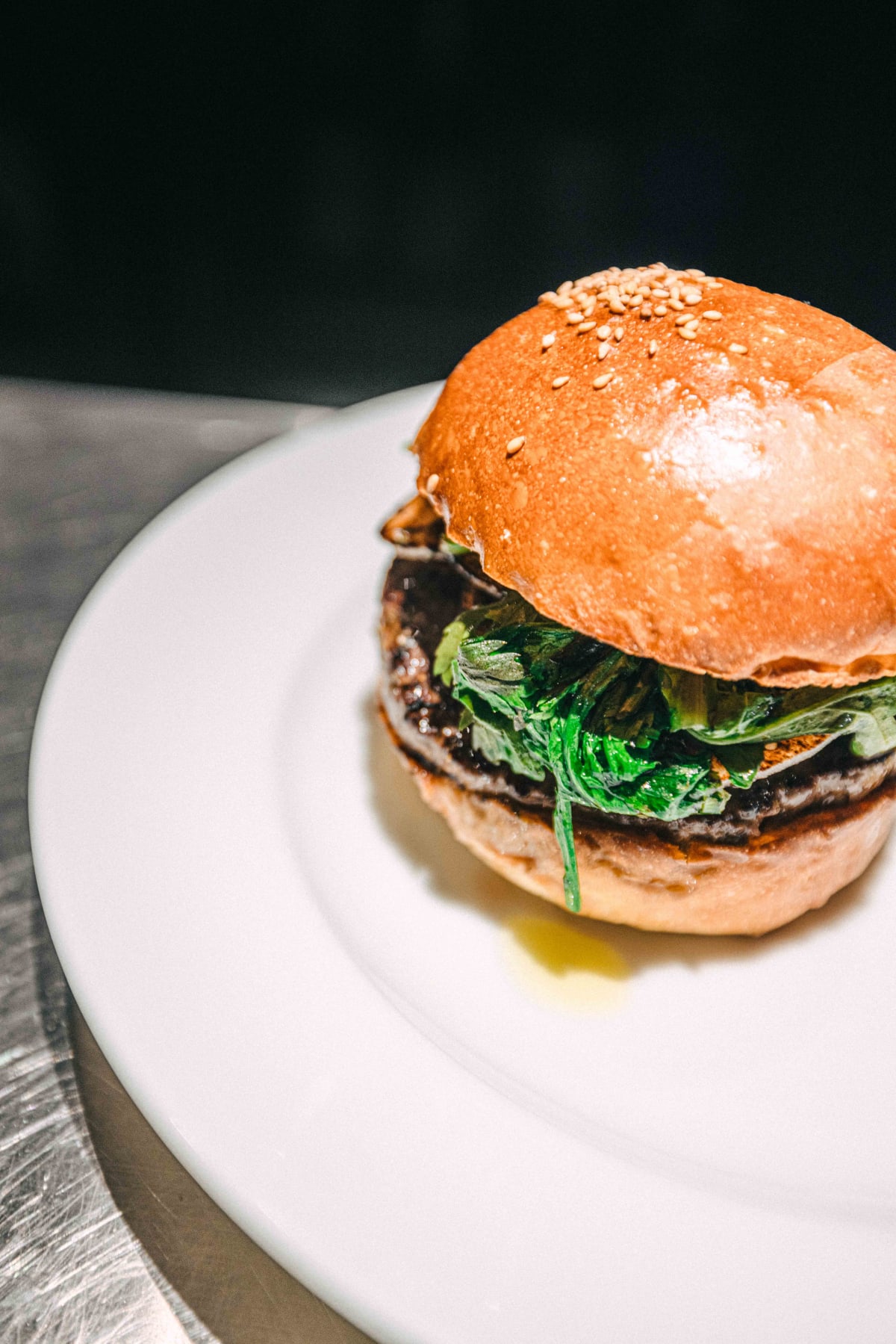
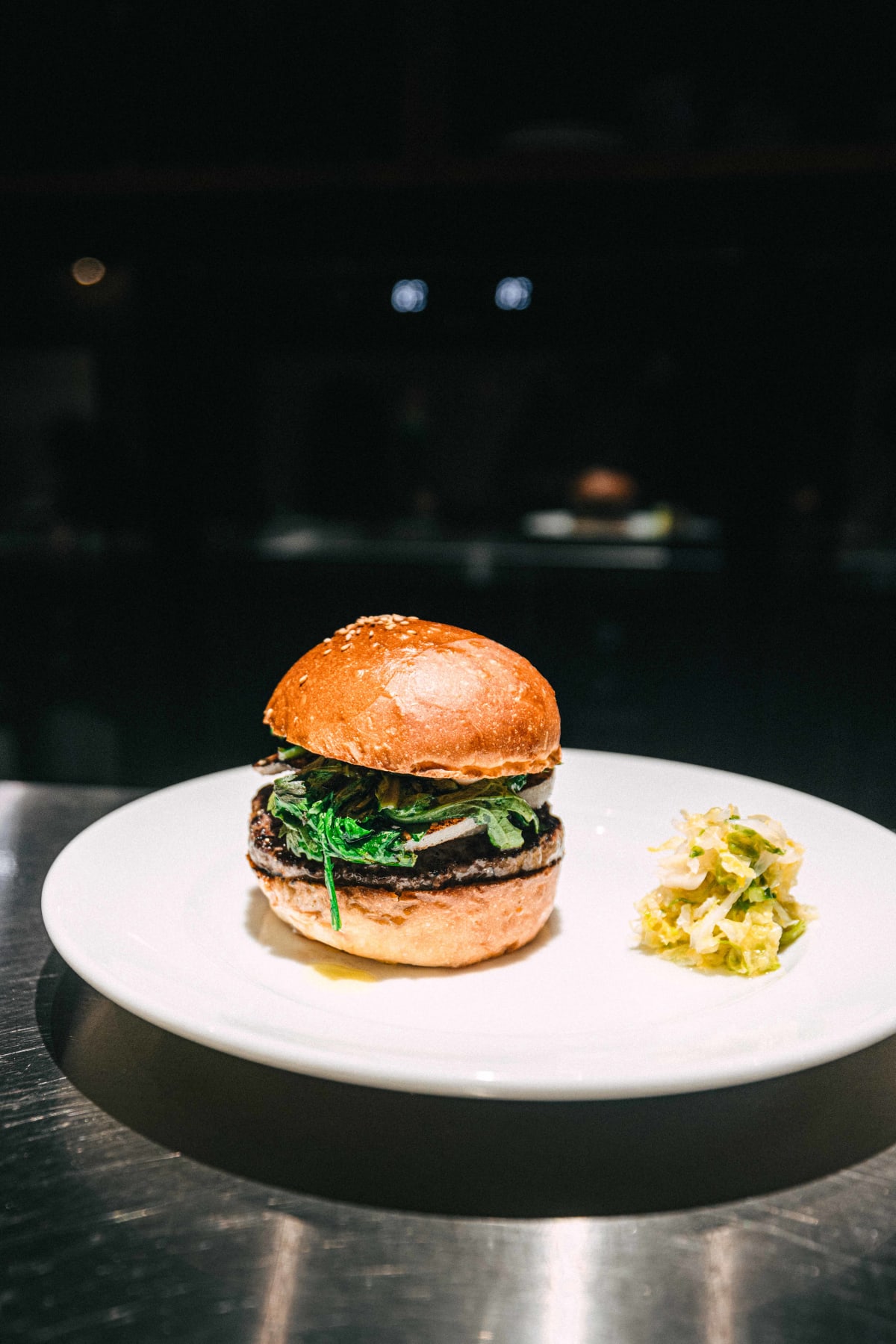
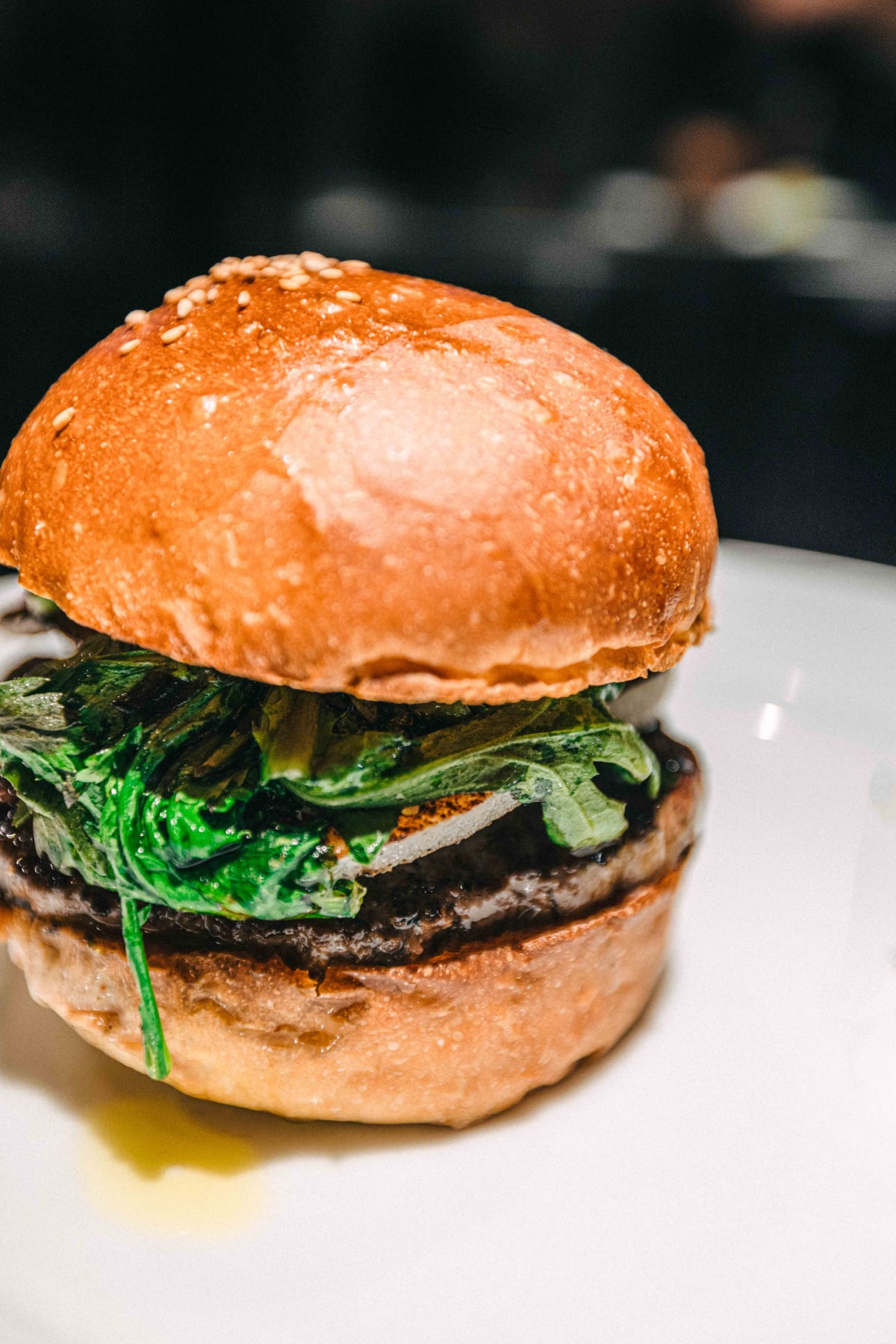
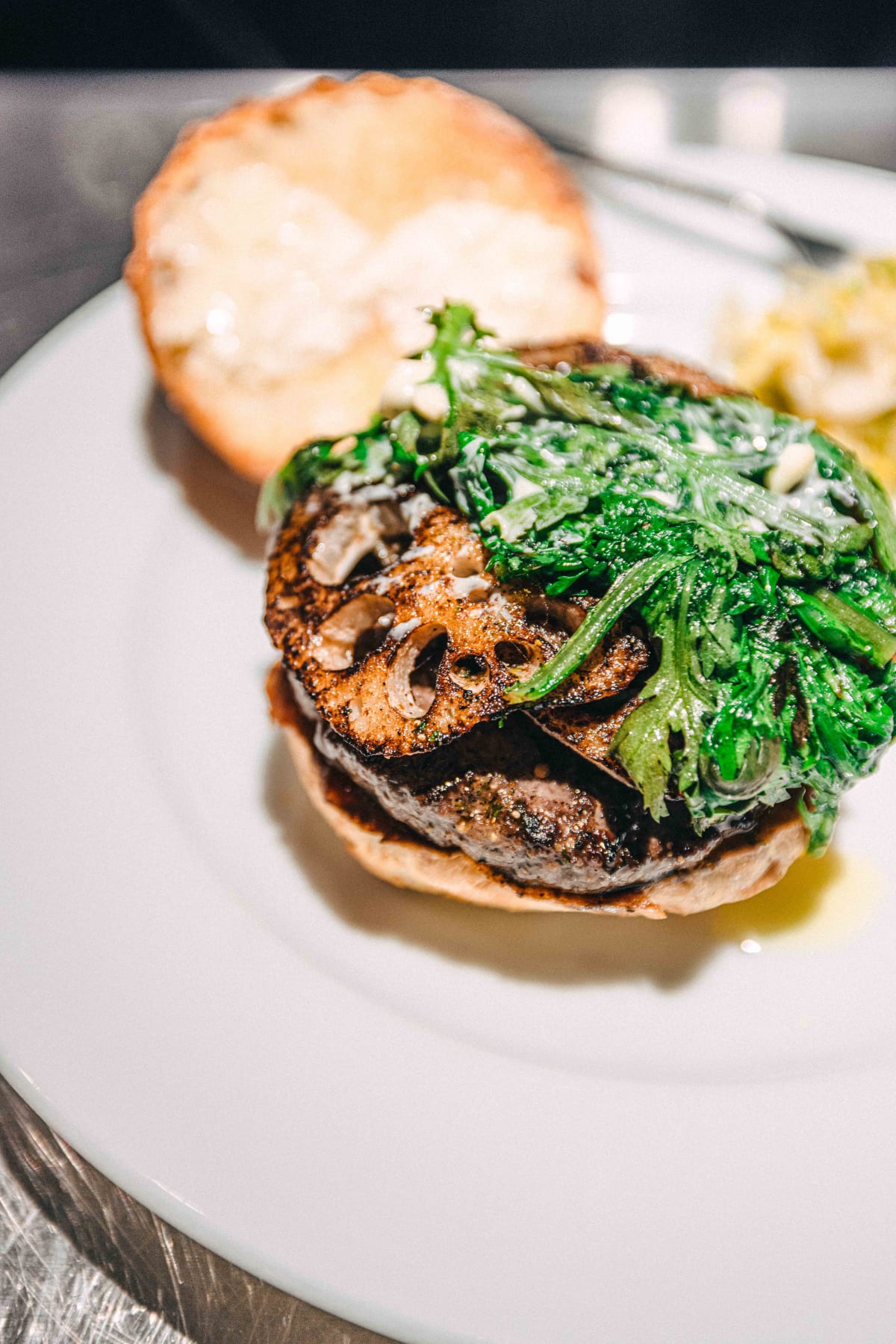
The Burger itself is a relatively simple build: a thick beef patty, egg, cheese, and a house-made bolognese.
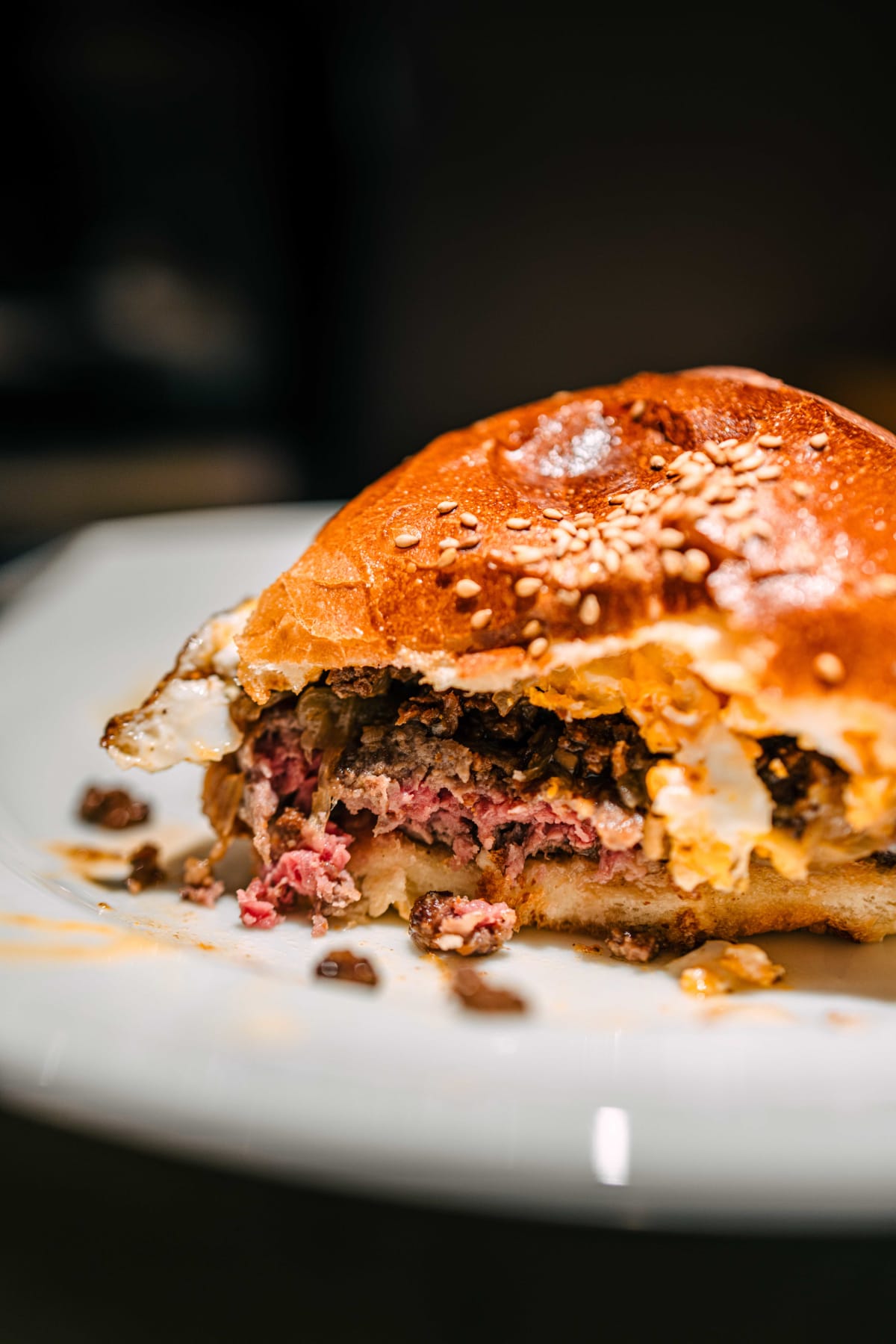
I happen to think a burger should not be too tall or too busy, so the restraint suited me. The beef is wagyu shank, juicier and more flavourful than I expected, cooked to a nice pink in the center.
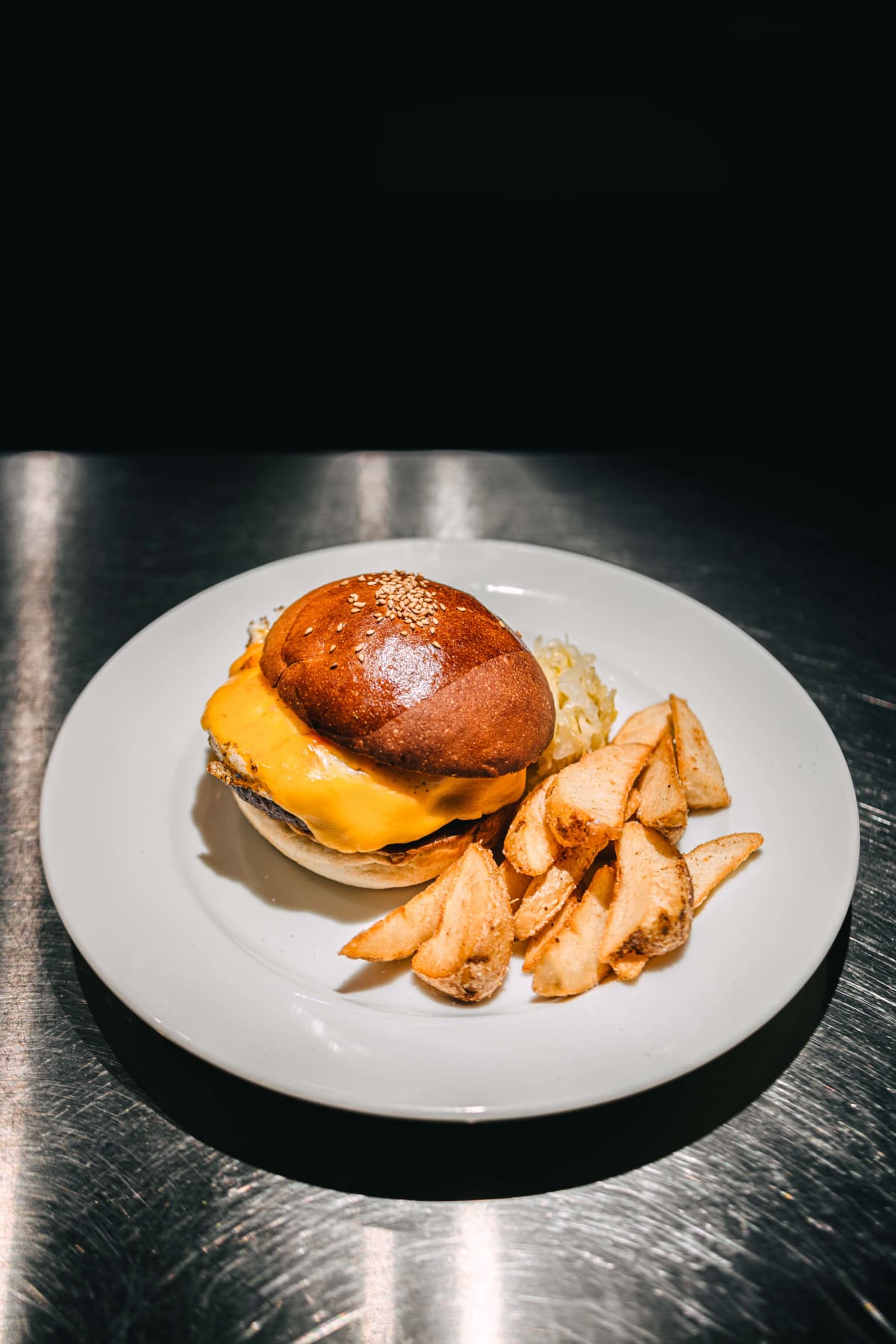
Nothing in the egg, cheese, and sauce reached out to dominate the rest. I had once been irritated, at a certain burger place back in Korea, by a fried egg cooked hard and dry; there was none of that here.
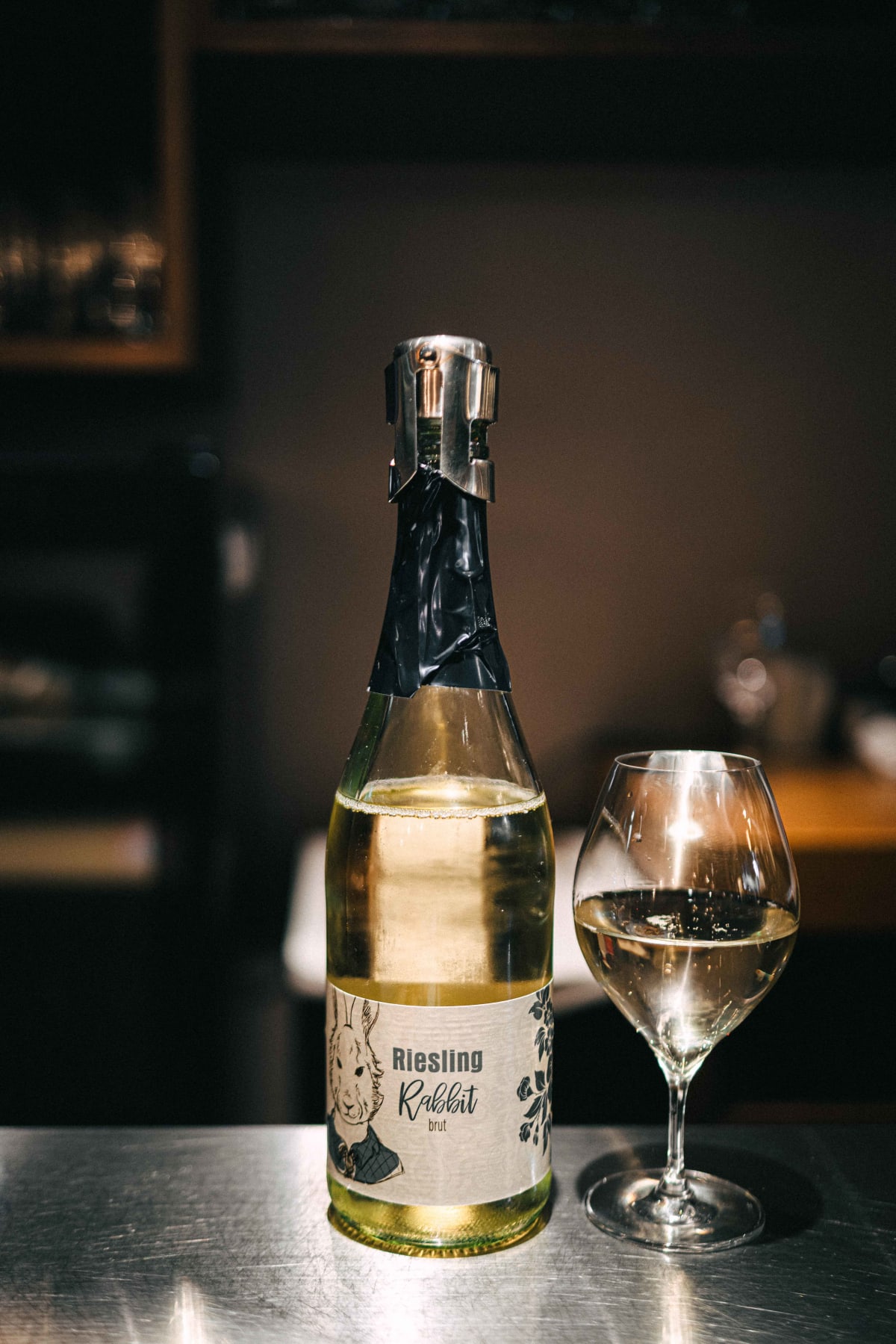
After the burger I moved to a second glass, a brut sparkling Riesling labelled "Rabbit." Riesling is Germany's signature grape, all bright acidity and citrus, and in a dry sparkling form it stays crisp and refreshing, a clean foil to the richness of what I had just eaten.
Section 6·A Week Later
That first lunch was good enough that I came back at the very end of the trip, a week later, to work through more of the menu.
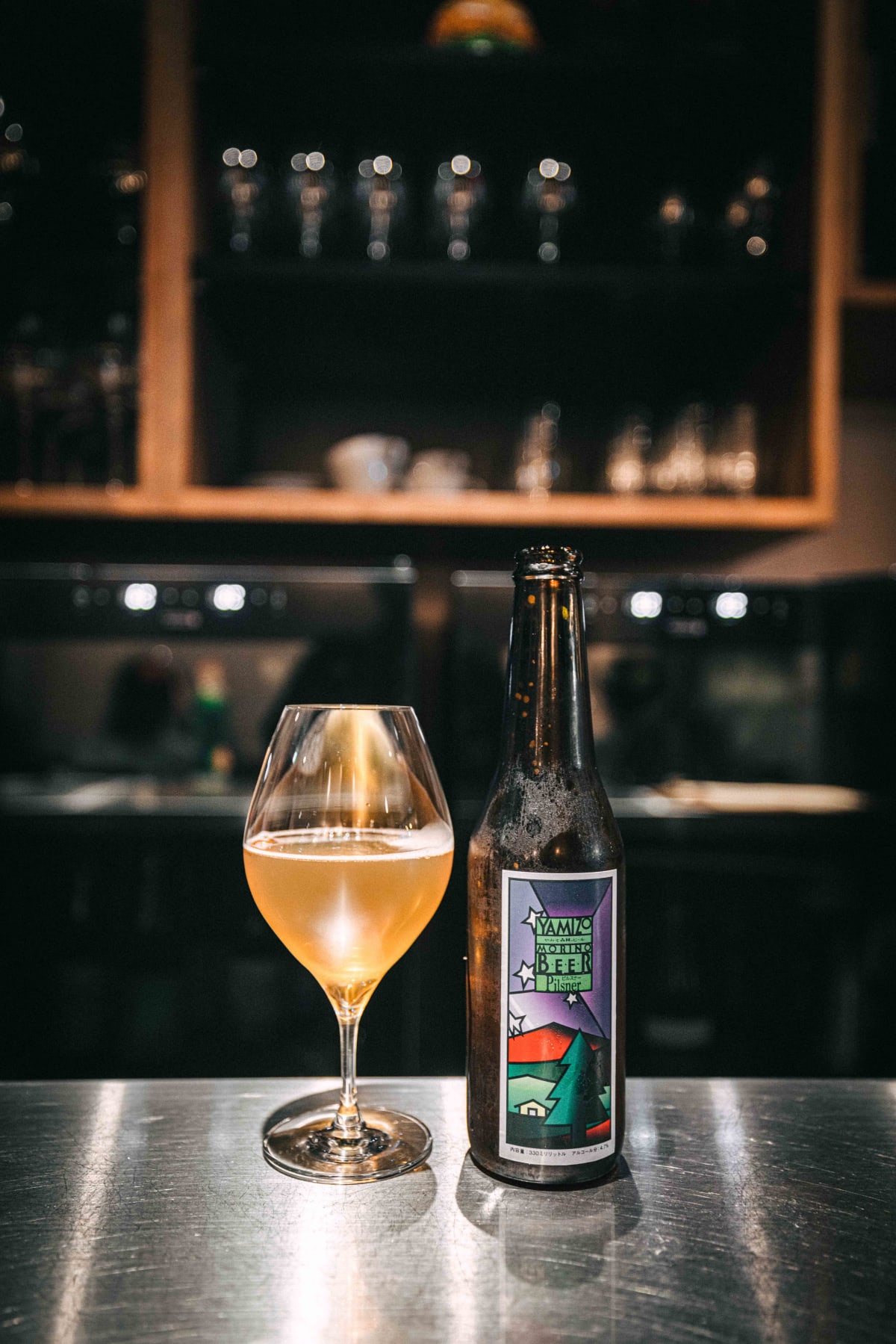
On the second visit I started with a beer instead, the Yamizo Morino pilsner, a craft lager from Daigo Brewery up in Daigo, Ibaraki, an operation that imports its brewmaster, its plant, and its malt, hops, and yeast from Germany and brews in a strictly German idiom. The pilsner is a clean, light, bottom-fermented lager, the kind of crisp pour that sits naturally beside a burger.
Section 7·The Second Round
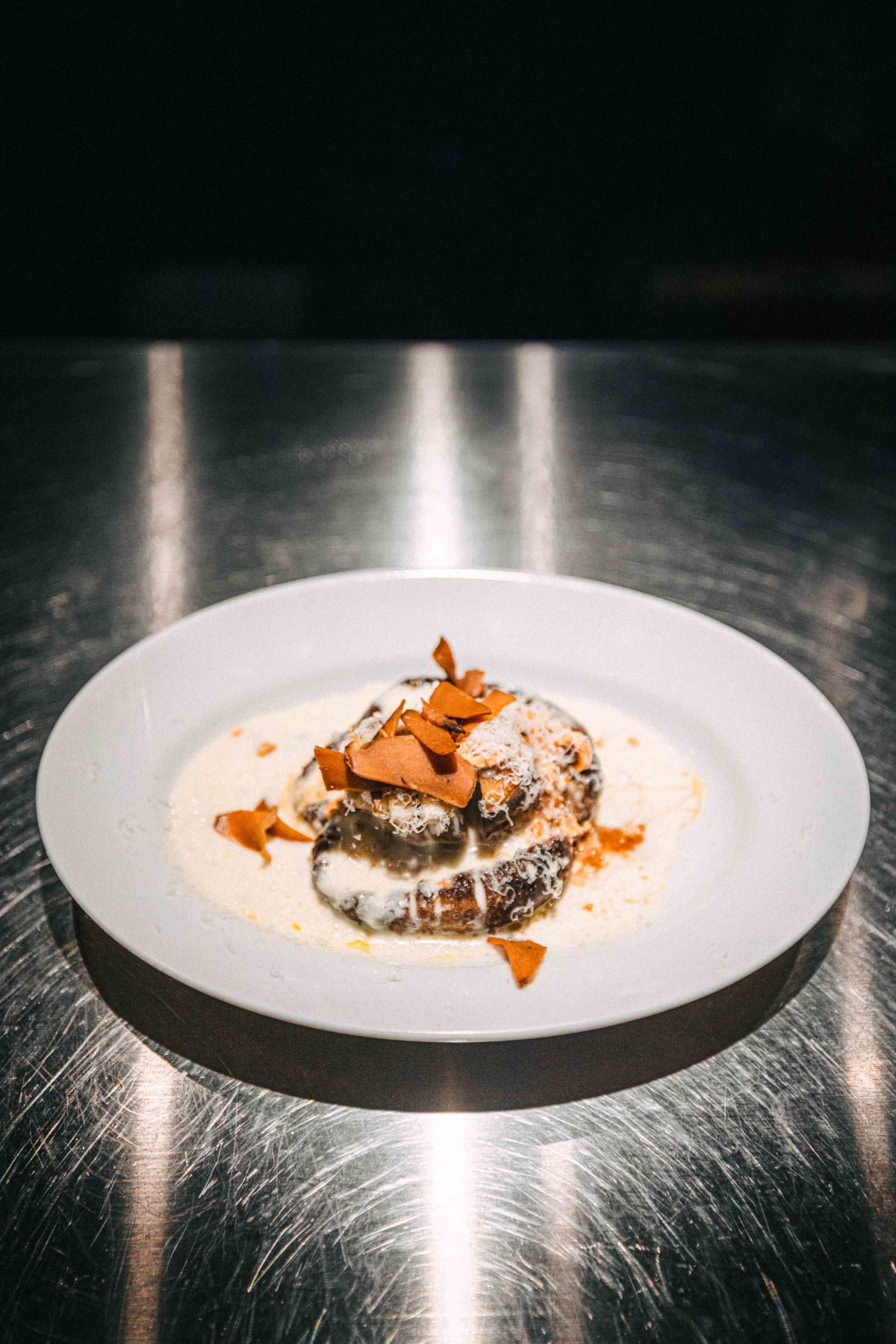
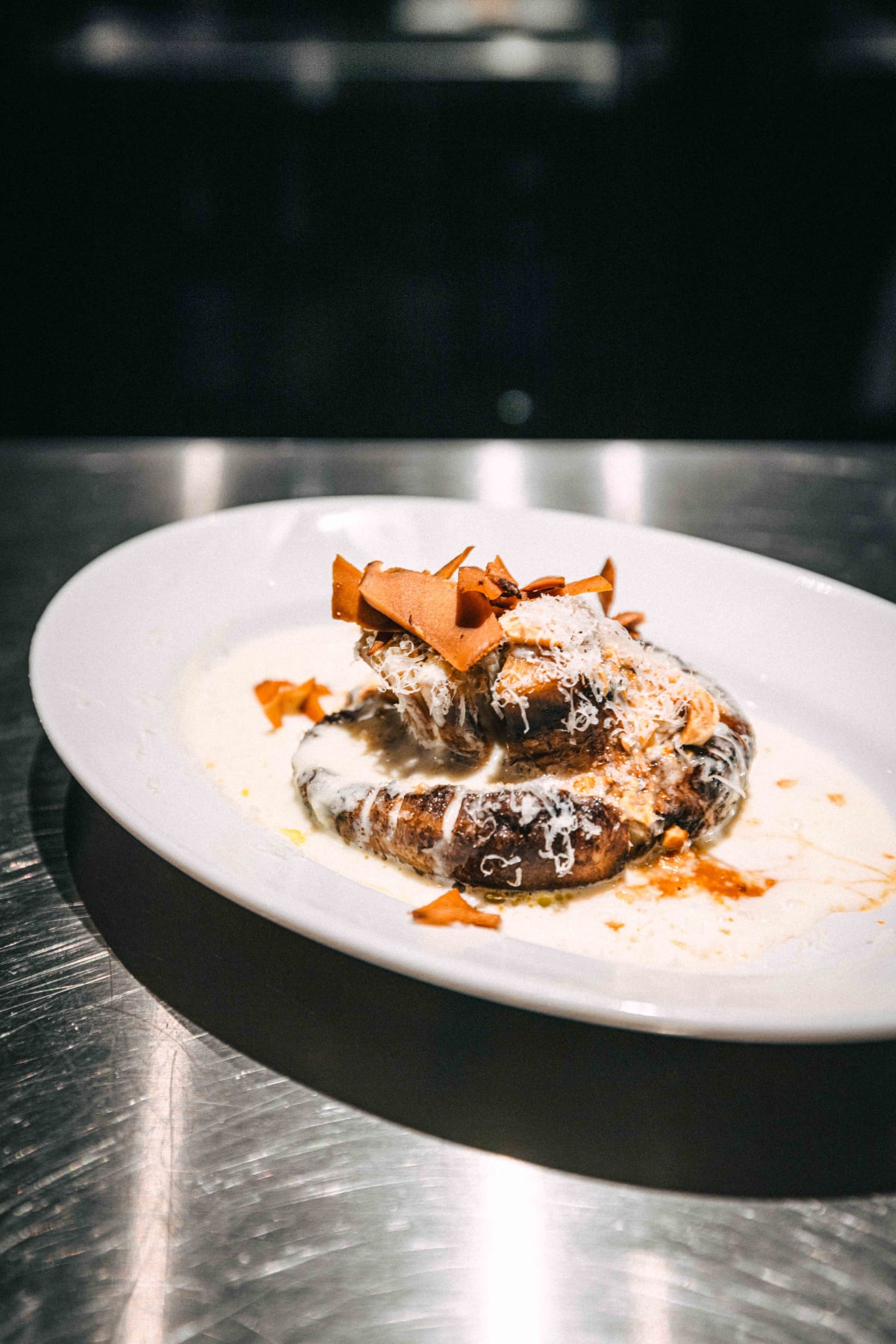
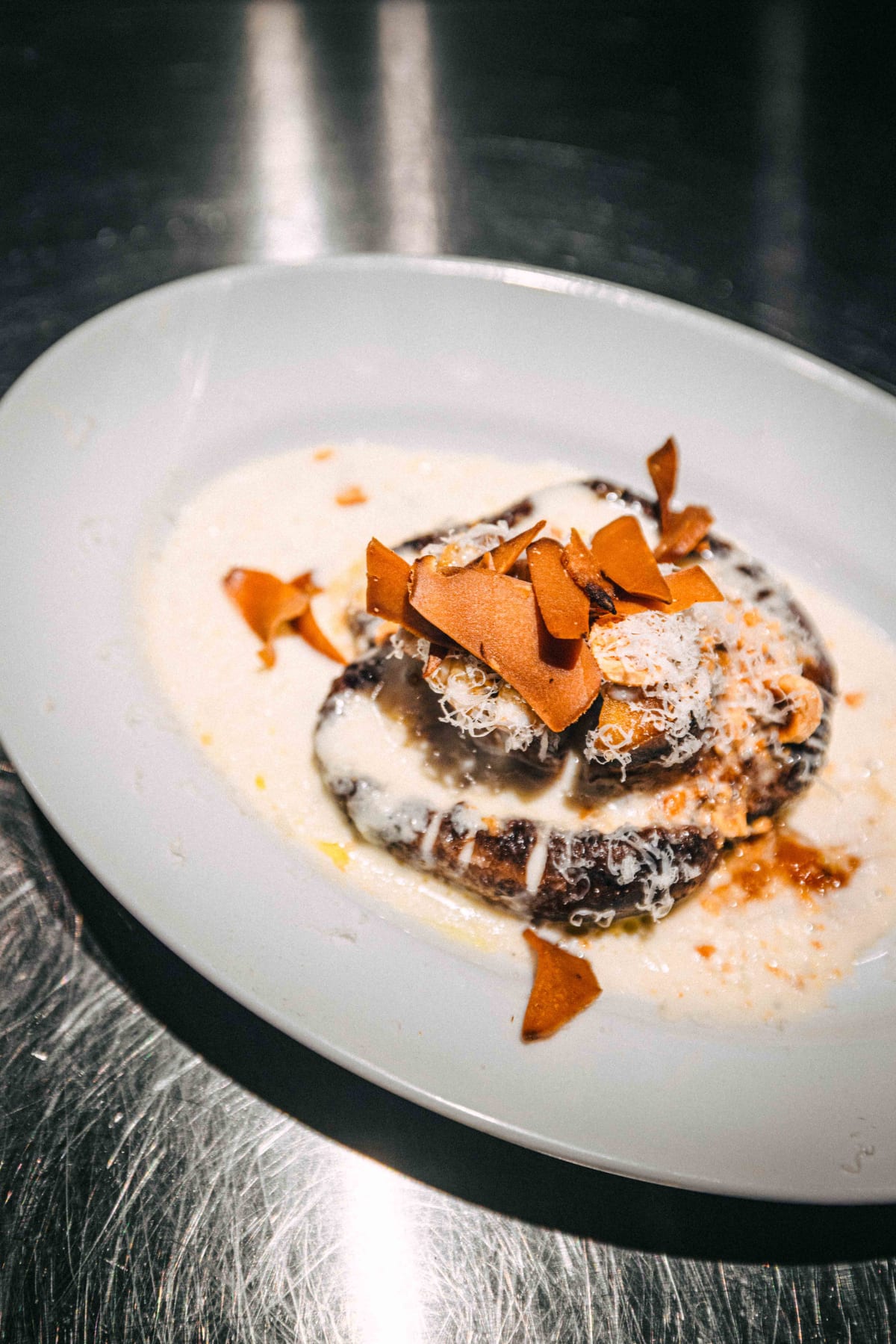
I used the second visit to chase the appetizers and the other burgers. The standout among the new plates was a grilled king shiitake topped with cheese. I had pictured the fist-sized mushrooms I was used to; what arrived was enormous. Eaten with the cheese, the shiitake's woodsy aroma never turned aggressive, and the whole thing sat in easy harmony.
There is a burger built around this same mushroom, and I would order it on a return. I also tried an appetizer with raw fish, bright and refreshing, a different register from the fat-rich burgers and the cheesier plates. It was not high cooking in any absolute sense, but if you want something light to reset the palate, it does the job.
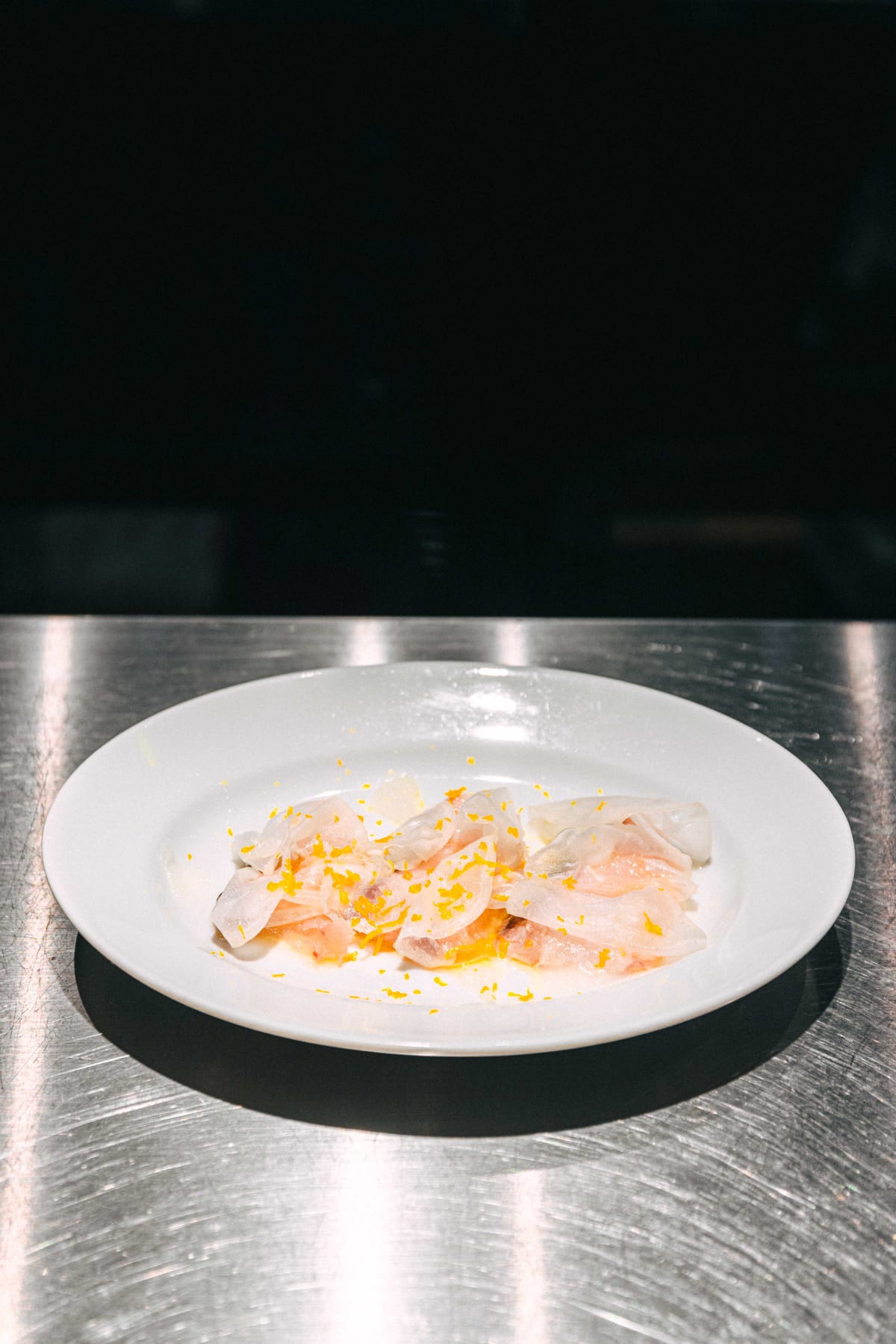
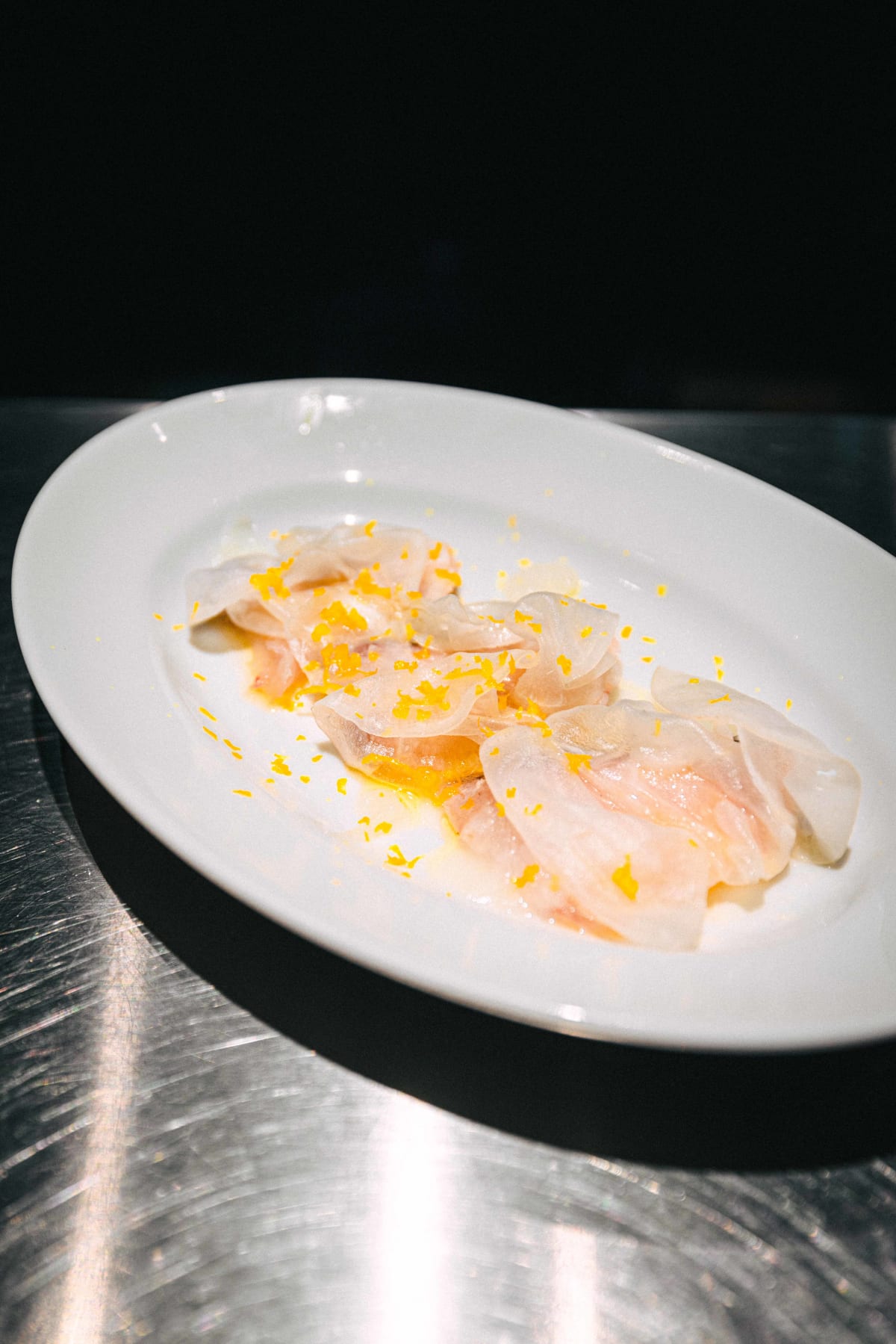
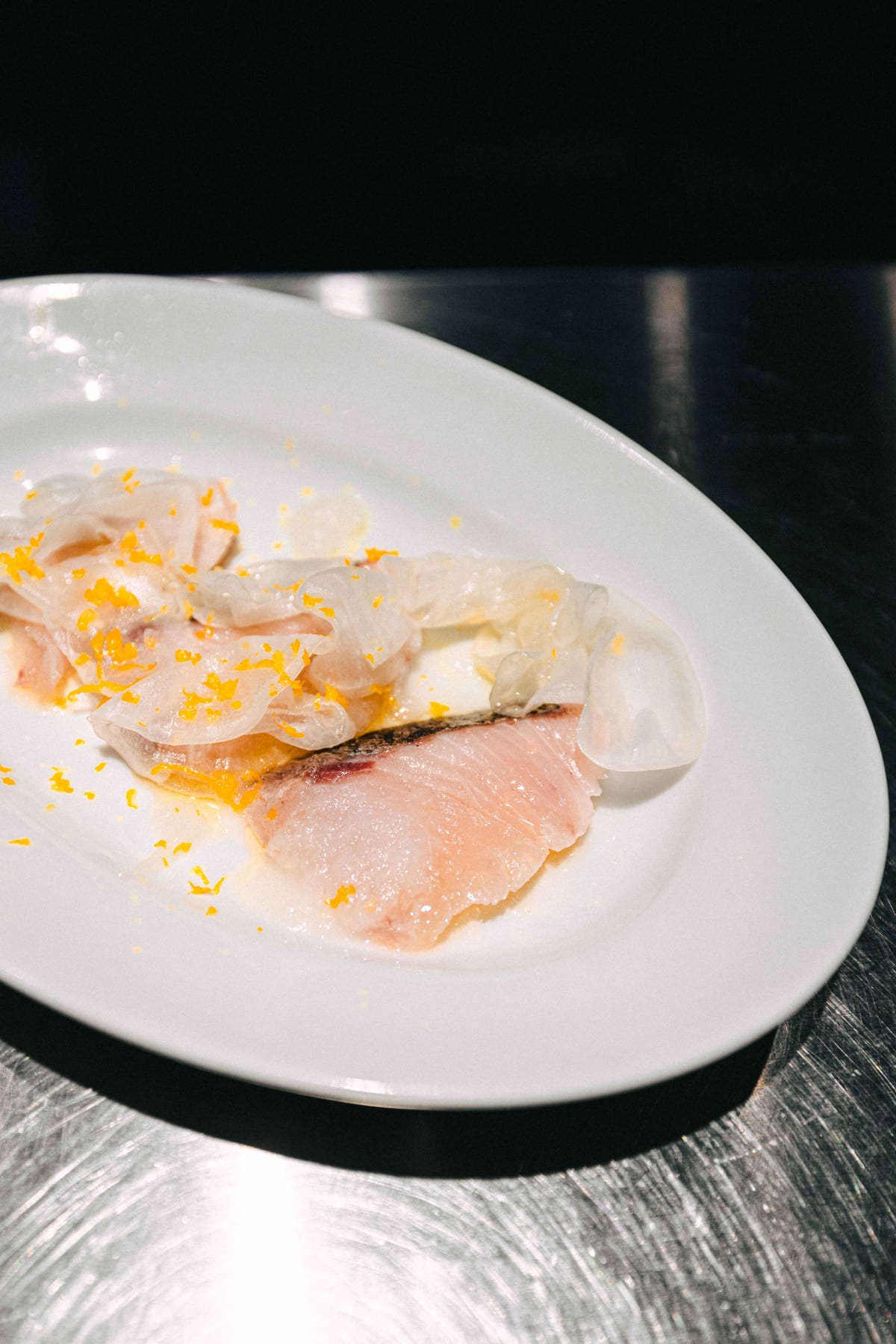
For a burger, though, I came back to the conclusion that the beef patty is king. On the second visit I ordered the lamb Sunrise burger; the lamb had a fitting gaminess and was cooked well enough, but a lamb patty is harder to bring into harmony with the other components than beef is.
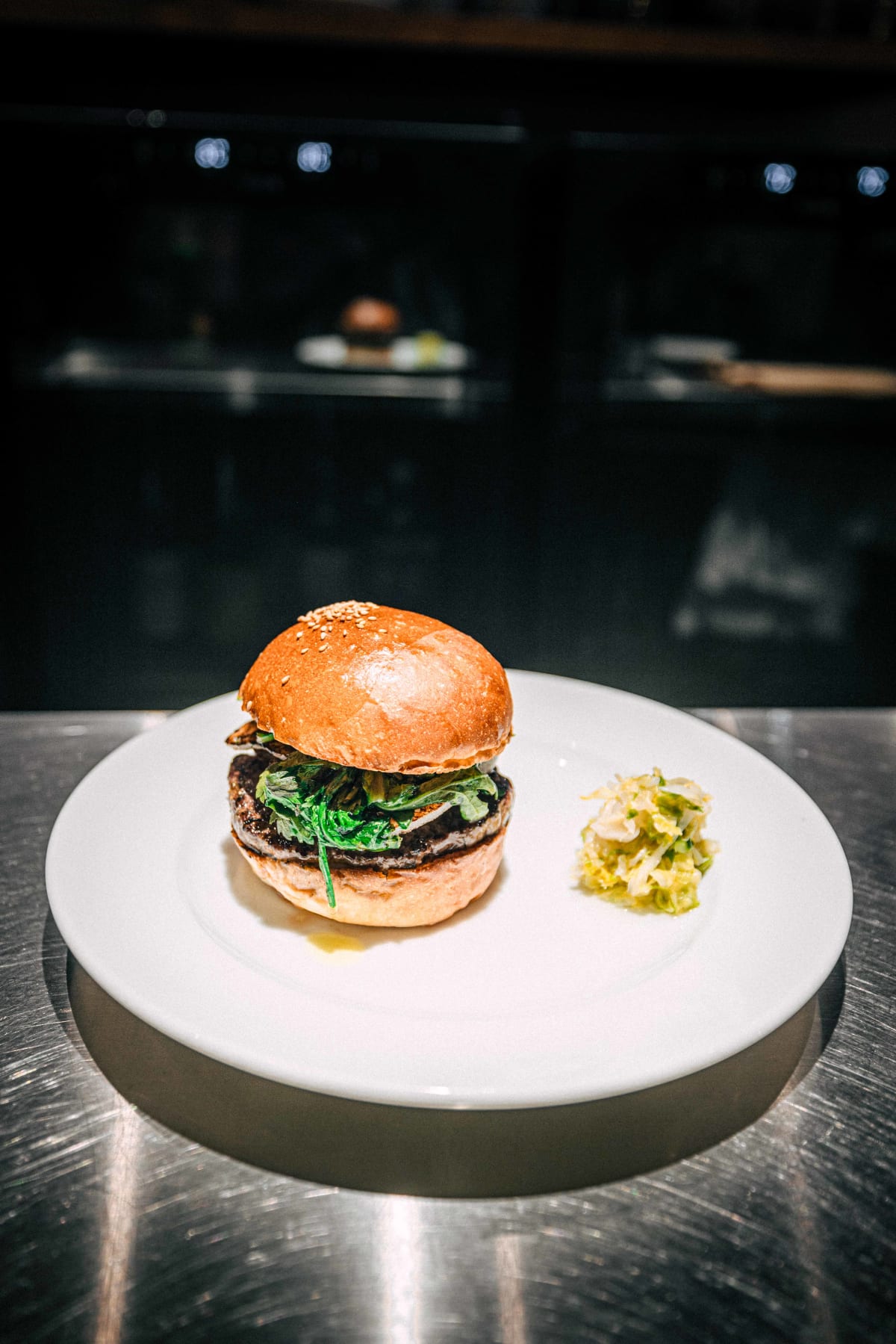
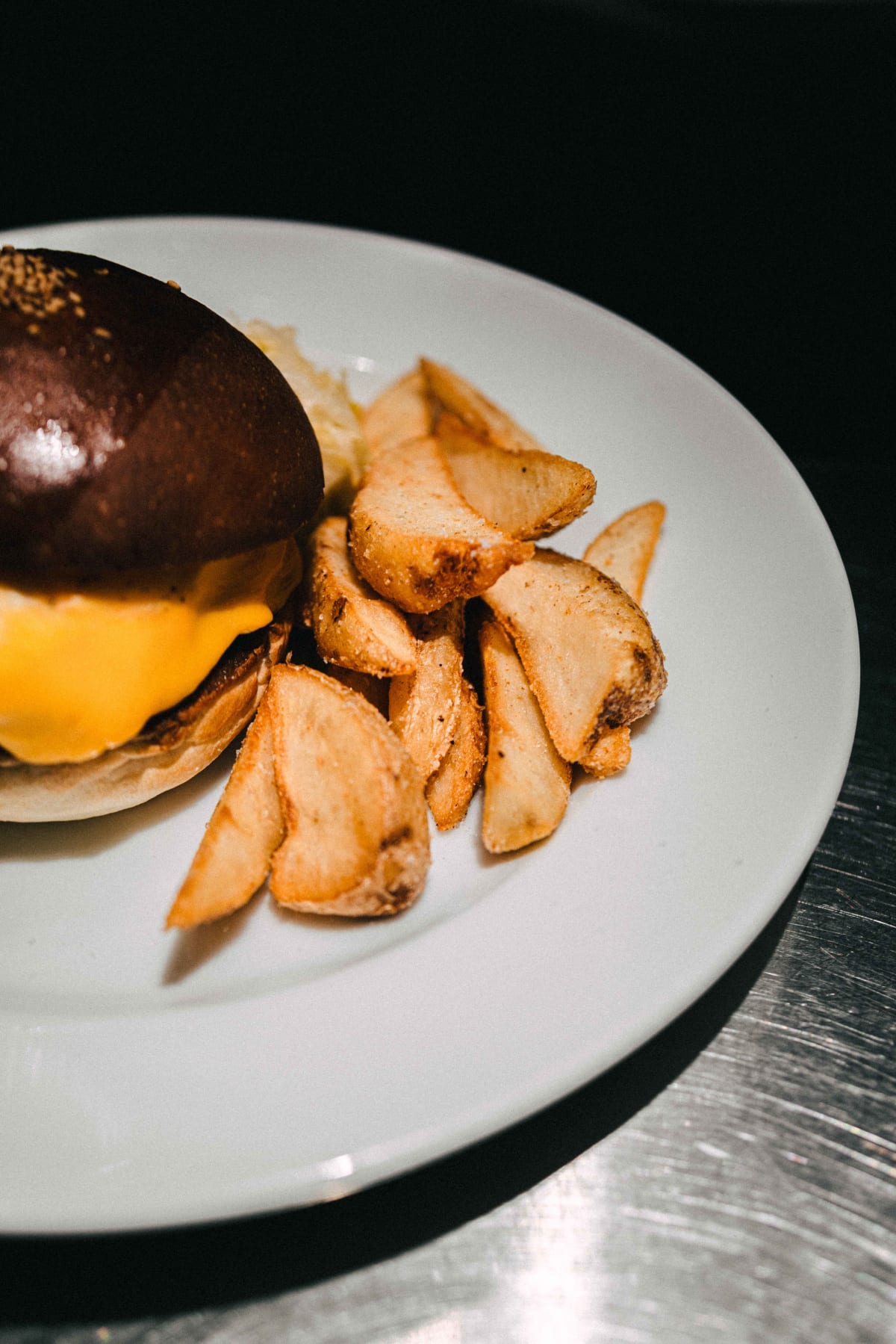
Unless you mean to taste two, I would steer you to the beef-pattied burgers. And add the fries: I ordered them without much thought, and they were excellent.
Section 8·An Italian Lean
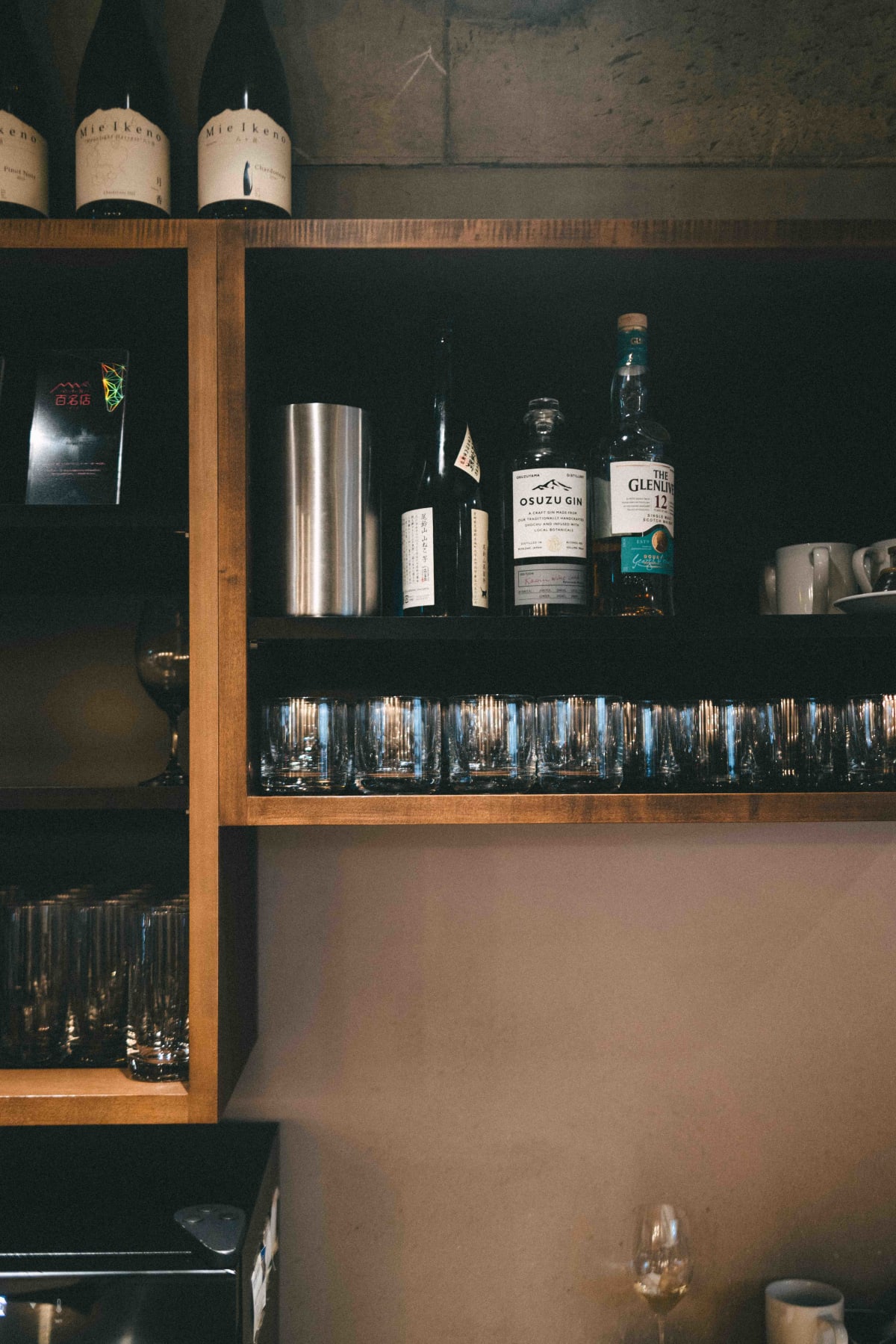
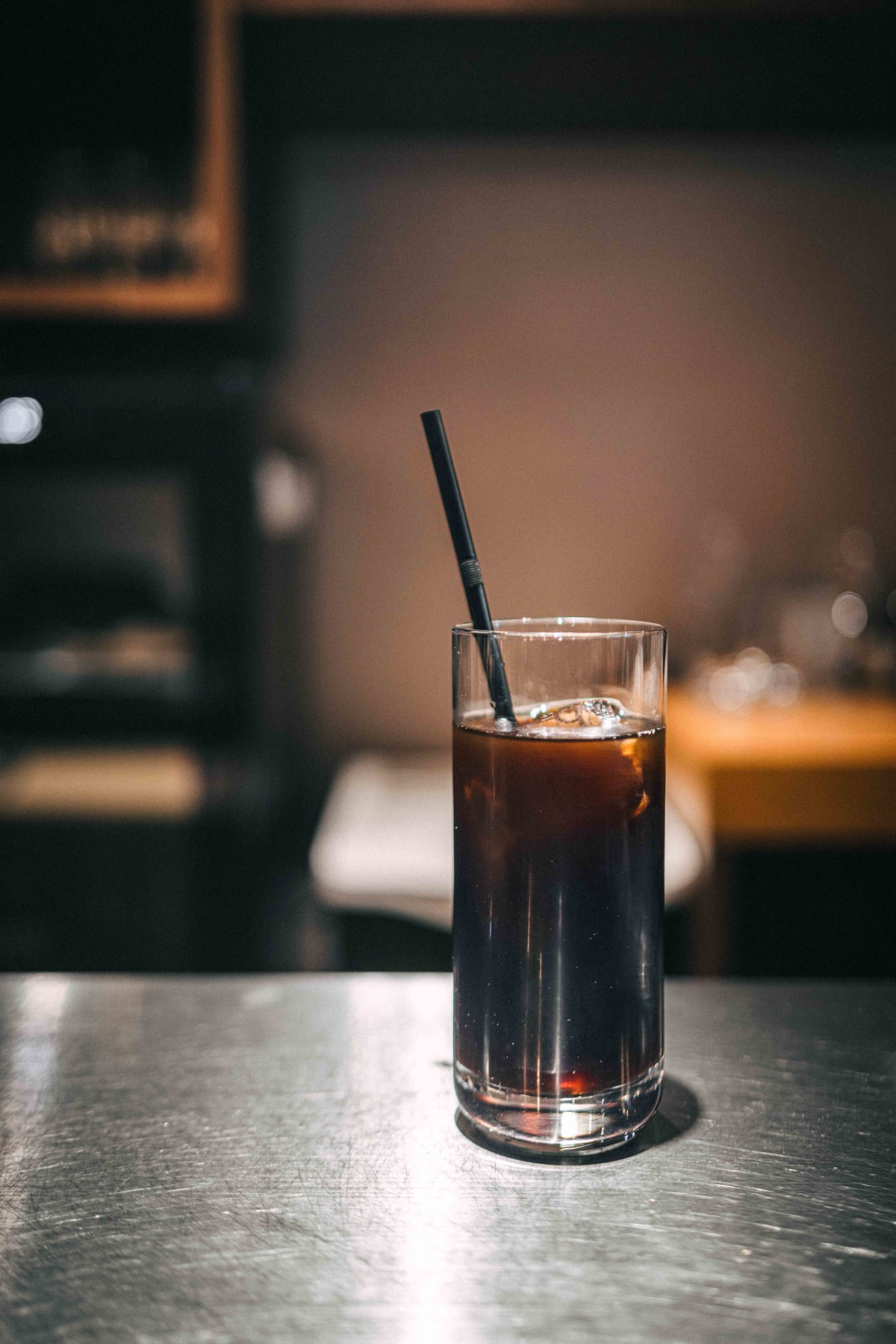
The drinks list, fittingly for a kitchen with Italian roots, leans Italian, and I leaned into it. I tried the house Cola Baladin, the artisanal cola from Baladin, the Piedmont brewery that Teo Musso built into the pioneer of Italian craft beer out of Piozzo, a village in the Langhe.
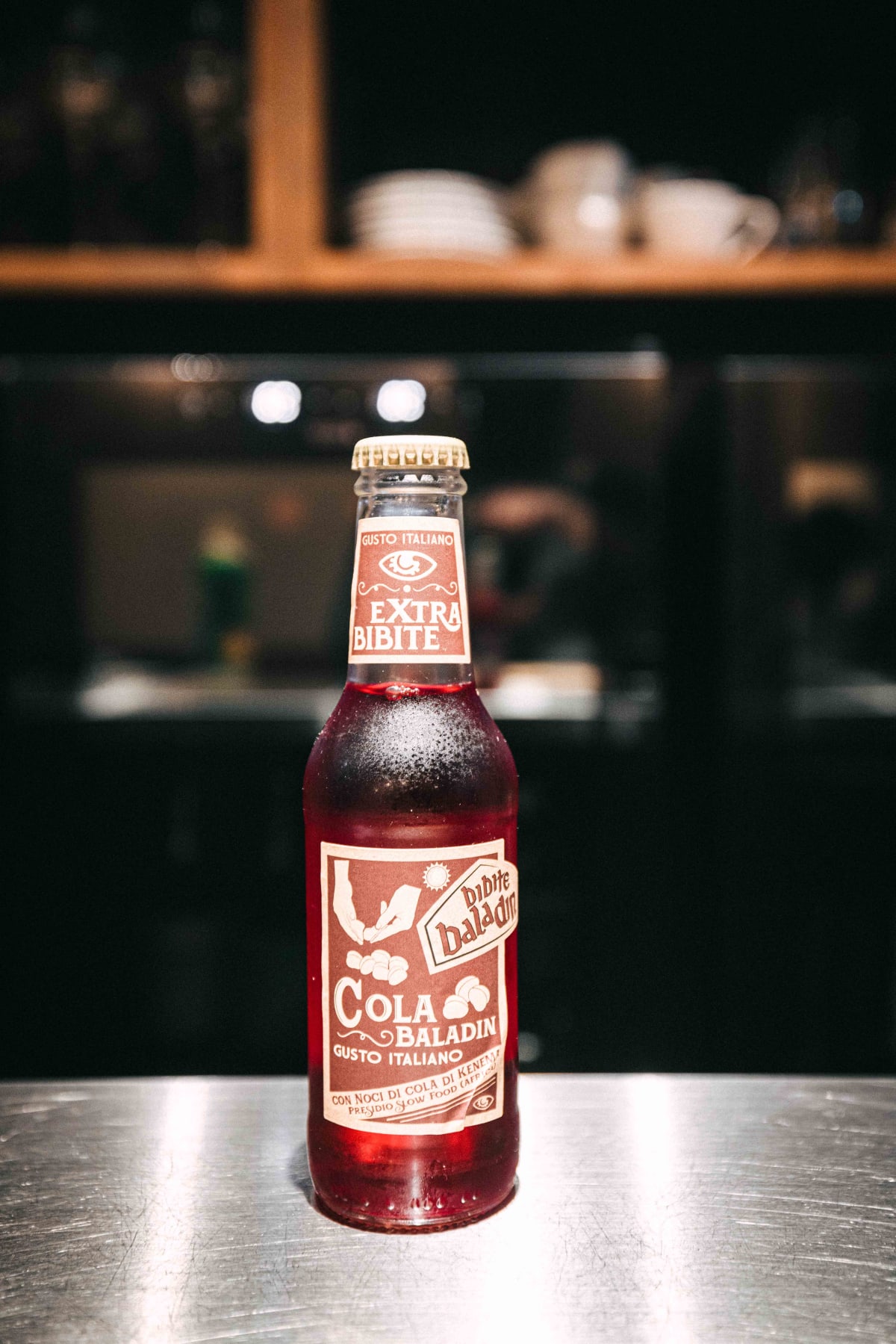
It is made with cola nuts from a Slow Food Presidium, a craft soda rather than anything industrial. Alongside it I had a bottle of Baladin's Rock'n'Roll, an Italian craft pale ale from the same house, deep gold and lightly spiced, with a peppery lift on the nose.
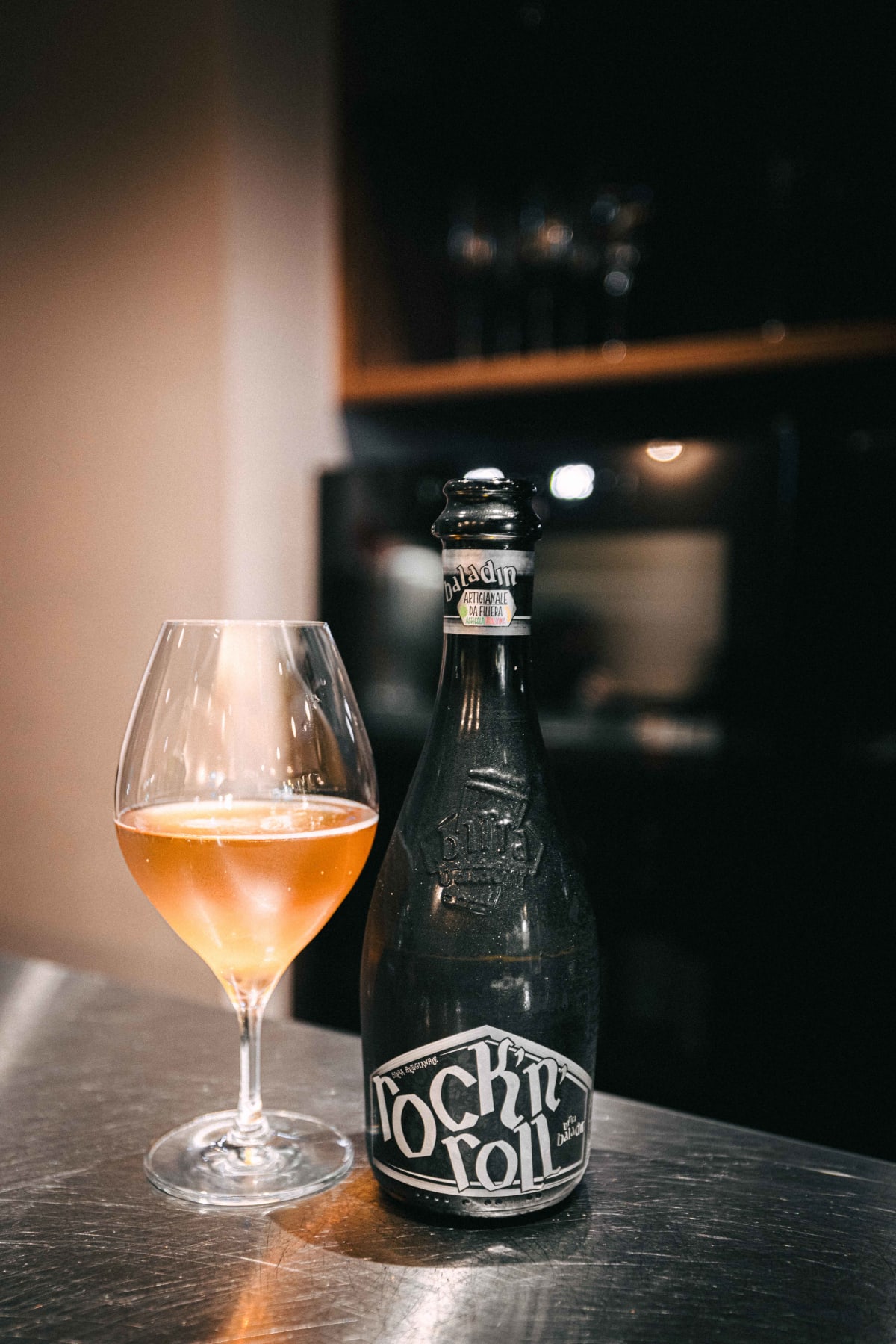
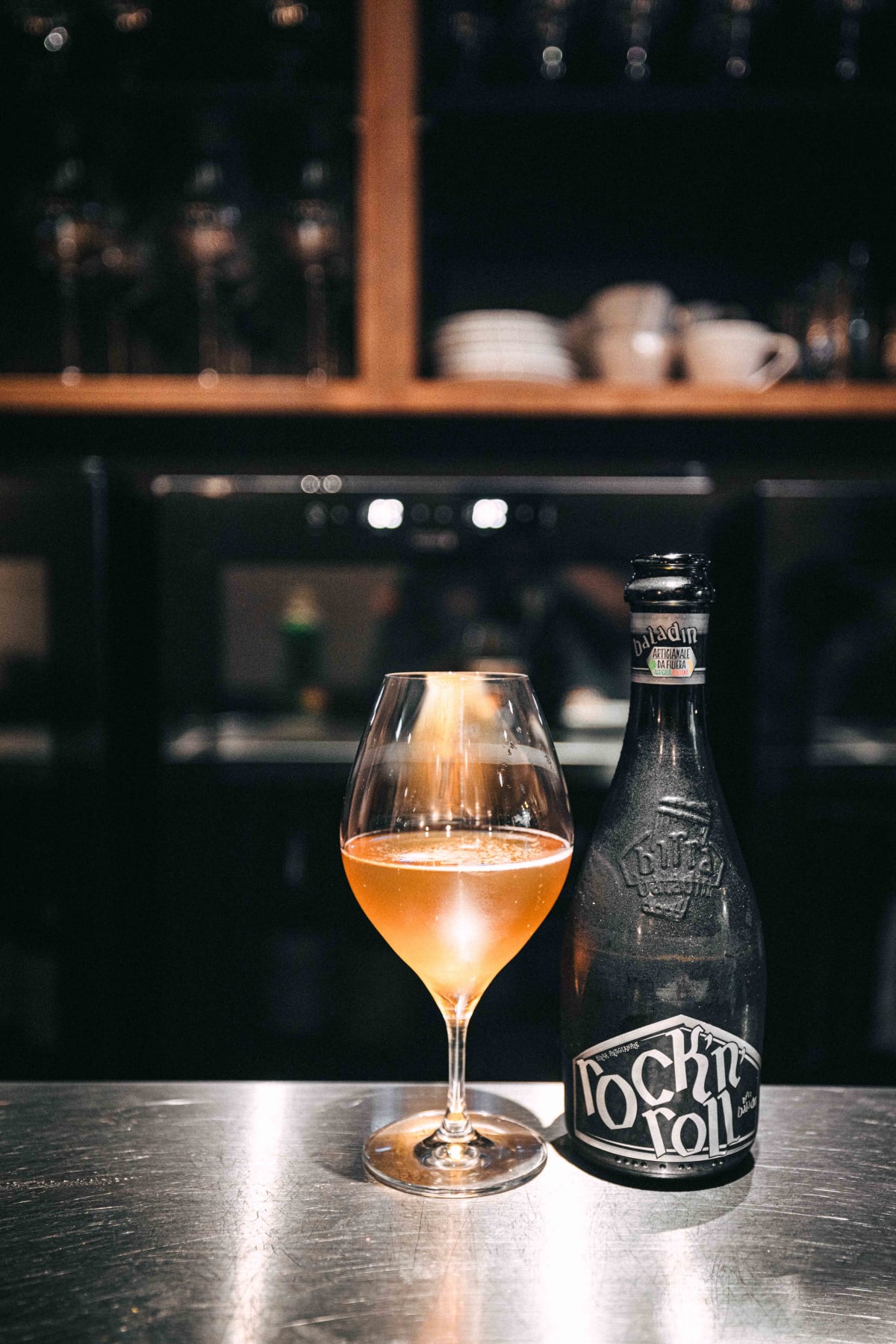
Seeing Baladin, of all breweries, on a burger list in Meguro was its own quiet pleasure.
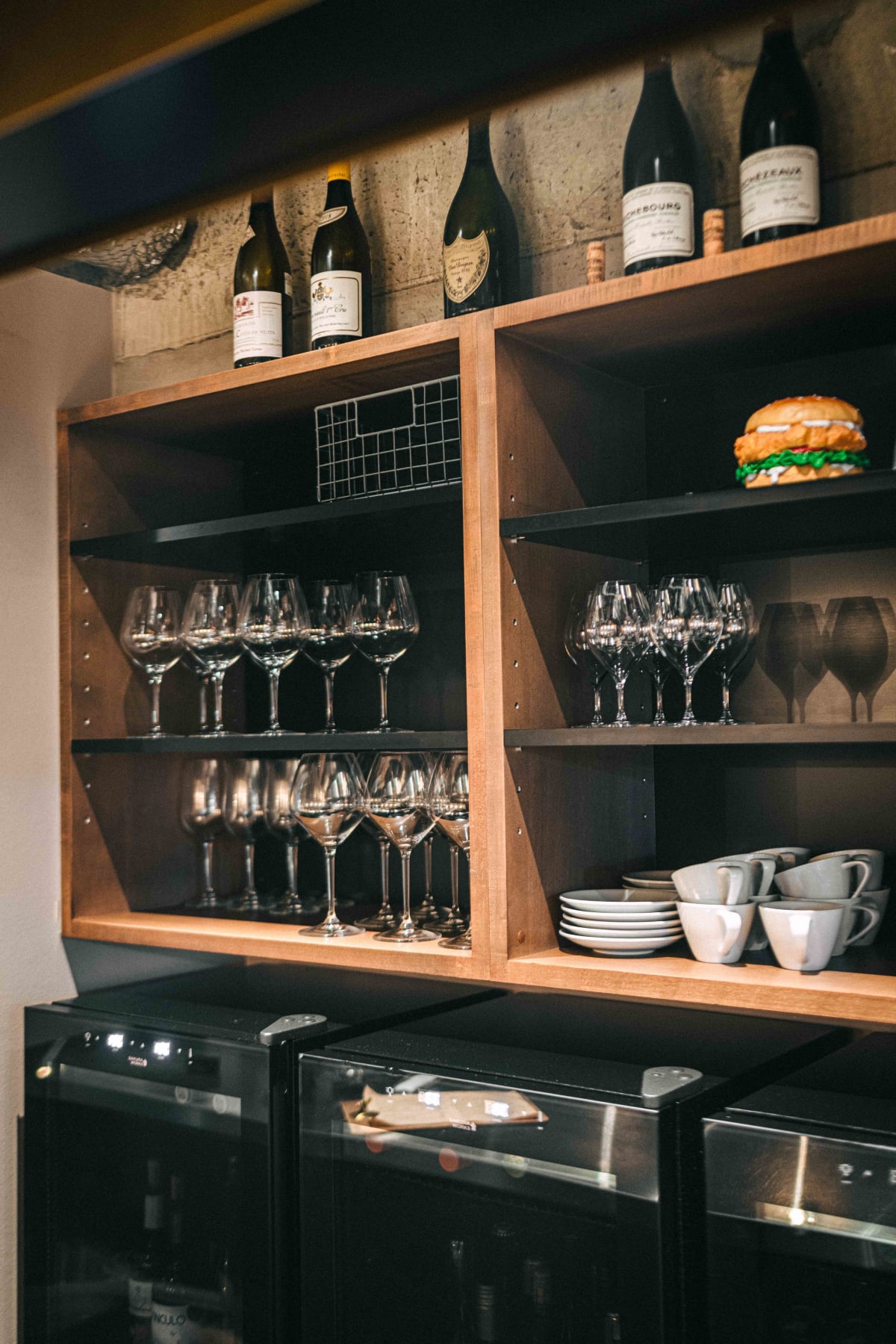
Two visits in, with a fair spread of drinks, burgers, and plates behind me, the truest description of Burger Police is a bistro that happens to keep the burger at its center, its appetizers carrying enough of the TACUBO kitchen's polish to explain why they outclass the usual burger-shop starters.
a bistro that happens to keep the burger at its center
Section 9·The Bill and the Welcome
One thing that may matter only to me: the price. Going in, on the strength of the backstory and the room, I had assumed the burgers would run past twenty or thirty thousand won. In fact, everything but The Burger was 1,980 yen, and The Burger itself came in just under 3,000. Whether Japan is cheap or Korea is expensive I cannot say, but it did make me wonder whether burger places back home overload their burgers and overcharge for the privilege. Burger Police felt, unexpectedly, like fair value. A caveat: Japan has seen real inflation since, so check the prices before you go.
The one real drawback I would flag is ventilation. The smoke from the cooking does not seem to clear the room well, so give some thought to what you wear.
I will end on the staff, who were lovely. The language barrier was real, but they kept asking, kept checking in, and made the meal a pleasure. When I showed them a photo of a dish a previous guest had eaten, something not on the menu that day, they went and asked the chef and arranged it anyway.
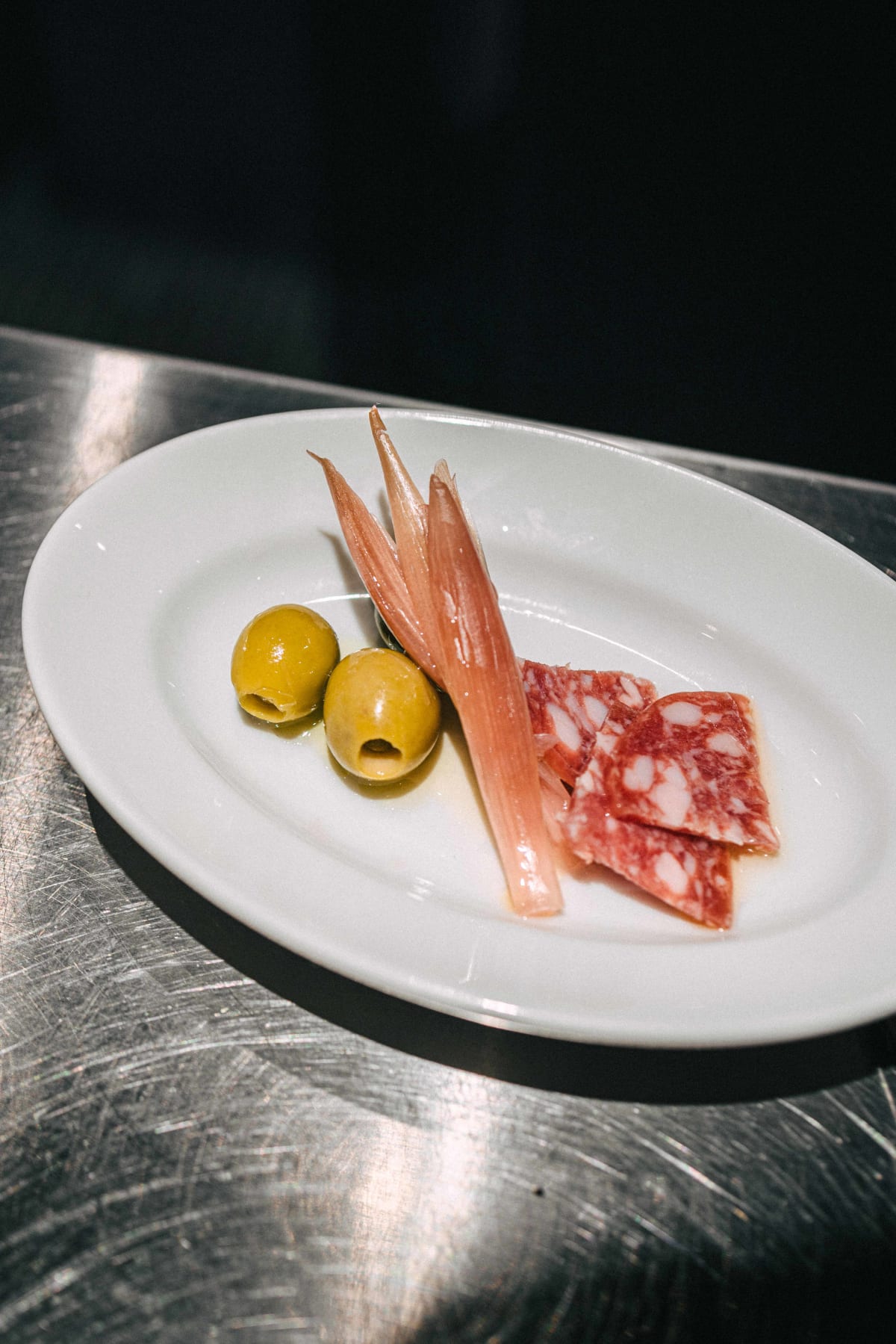
A place you want to return to is never decided by taste alone. I want to go back for the appetizers I missed, and for the burger made with Yamayuki tuna, from one of Toyosu's most respected tuna purveyors.
What Burger Police really represents is a particular Tokyo move: a chef from the fine-dining world taking a humble, foreign form and rebuilding it from the ingredient up. The wagyu burger here is less American comfort food translated than a Japanese argument about beef, the same conviction that earns the parent kitchen its star, put into something you eat with your hands. That a cook with that pedigree chose to make the case in a burger, for everyone, rather than reserve it for a tasting menu, is what stays with me.
Have a question about this restaurant, or want to share your own experience?
Send a message