Fine Dining · Central · Hong Kong / September 2024 / Michelin ★★ · Asia's 50 Best #9 (2014)
Lung King Heen
"The first Chinese restaurant in the world to hold three Michelin stars, eaten the way it is meant to be eaten: a dim sum lunch over Victoria Harbour"
Section 1·Dim Sum in Hong Kong
When you talk about Hong Kong and Cantonese cooking, dim sum is the thing you cannot leave out. It runs the whole range, from the cheapest restaurants in the city to Michelin starred rooms, and I wanted to eat it at least once on this trip. Many restaurants are famous for dim sum, but among the starred ones the best known is Lung King Heen, the two Michelin star restaurant inside the Four Seasons Hotel Hong Kong.
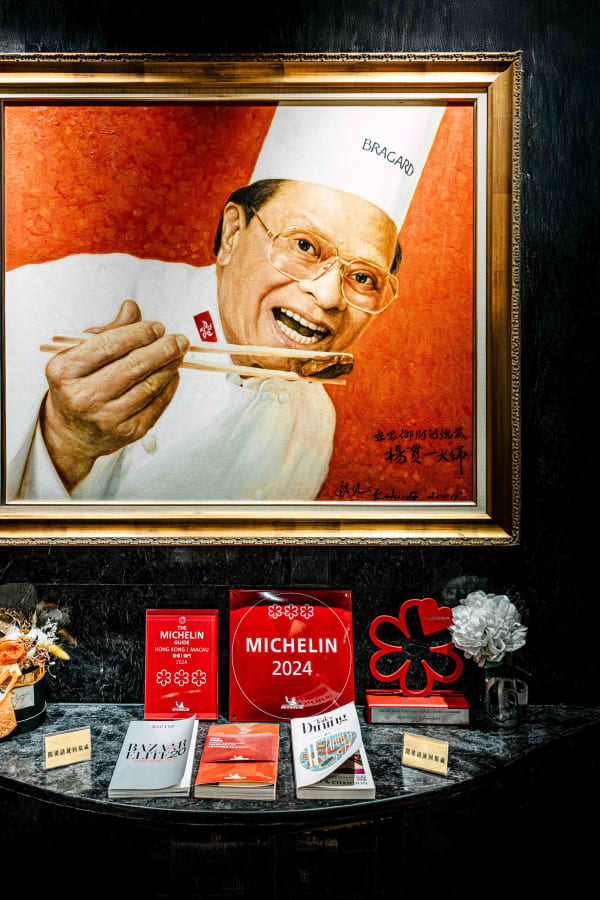
Lung King Heen became, in 2009, the first Chinese restaurant in the world to receive three Michelin stars, held that standing for fourteen years, and was moved down to two stars in 2023. Even so, together with chef Chan Yan-tak, it remains a landmark that stands for Hong Kong's Michelin history and for Cantonese cooking itself.
Section 2·The First Three Stars
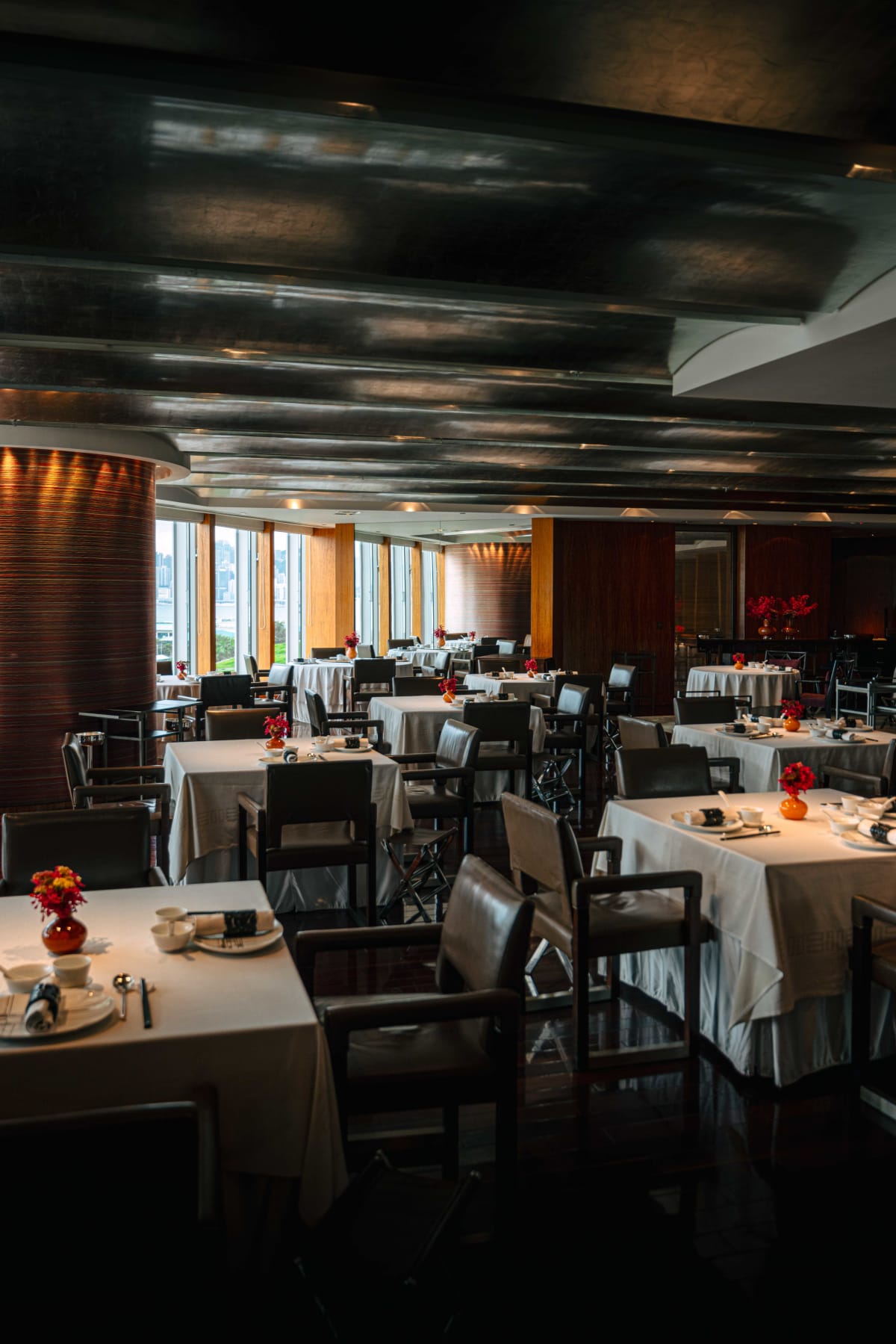
The restaurant sits on the fourth floor of the Four Seasons Hong Kong at 8 Finance Street in Central, inside the International Finance Centre. The hotel opened in September 2005 and Lung King Heen opened with it. The name 龍景軒 is usually rendered as something like a pavilion with a view of the dragon, and through the full height windows you do look straight across at Victoria Harbour and Kowloon.
To say a little more about the Michelin part: the first edition of the Hong Kong and Macau guide appeared in 2009. Lung King Heen took three stars in that inaugural edition, and it was the first time anywhere in the world that a Chinese restaurant had been given three. Chan Yan-tak became the first Chinese chef to hold them. His first star was not a first star at all; it was three, straight away. The restaurant then held those three stars for fourteen consecutive editions through 2022, and came down to two in the 2023 guide.
What made those three stars matter is that they were not the result of applying French technique to Chinese ingredients. The grammar of traditional Cantonese banquet cooking was itself recognized at the guide's highest rank: dim sum and roasting, steaming, double-boiled soups, dried seafood, braised abalone. So Lung King Heen is less a contemporary restaurant that turned Chinese food into Western fine dining than one that proved the division of labour and the accumulated skill of a Cantonese kitchen inside a global fine dining context.
The grammar of traditional Cantonese banquet cooking was itself recognized at the guide's highest rank: dim sum and roasting, steaming, double-boiled soups, dried seafood, braised abalone.
Section 3·Chan Yan-tak
The chef's career matters here too. Chan Yan-tak was born in Kowloon and has spent his whole life in Hong Kong, without culinary school and without a training stint abroad. Because of his family's circumstances he started work around the age of thirteen at a Cantonese restaurant called Dai Sam Yuen (大三元), learning from prep and cleaning, and later moved to Fook Lam Moon (福臨門), long a byword for the highest end of Cantonese cooking in the city. In 1984 he joined Lai Ching Heen (麗晶軒) at the Regent Hong Kong as sous chef, became executive chef within about a year, and led that kitchen for some fifteen years.
When his wife died in 2000 he left the kitchen to raise his young children. The person who drew him back was Alan Tsui, the general manager and a colleague from his Regent days, and in 2002 Chan reversed his retirement to help build the Cantonese restaurant of the new Four Seasons Hong Kong. More than forty veterans of the old Regent joined him for the hotel's opening. He still says there is no secret to it. Ingredients he picks himself, teamwork, and more than a century of accumulated experience are the whole of it.
One more thing worth adding: the guide taking a star away did not send every assessment down with it. In La Liste's Top 1000, which aggregates guides and press coverage from around the world, Lung King Heen scored 99.5 in both 2024 and 2025, tied for first place globally, and it was the only restaurant of Chinese cuisine at that top rank.
Section 4·A Harbour Table
My party and I came at lunch to focus on the dim sum, and we were lucky enough to be seated at an ocean view table looking onto Victoria Harbour. The weather was a little overcast, which was a shame, but the view outside still opened up wide and it was good to have through the whole meal.
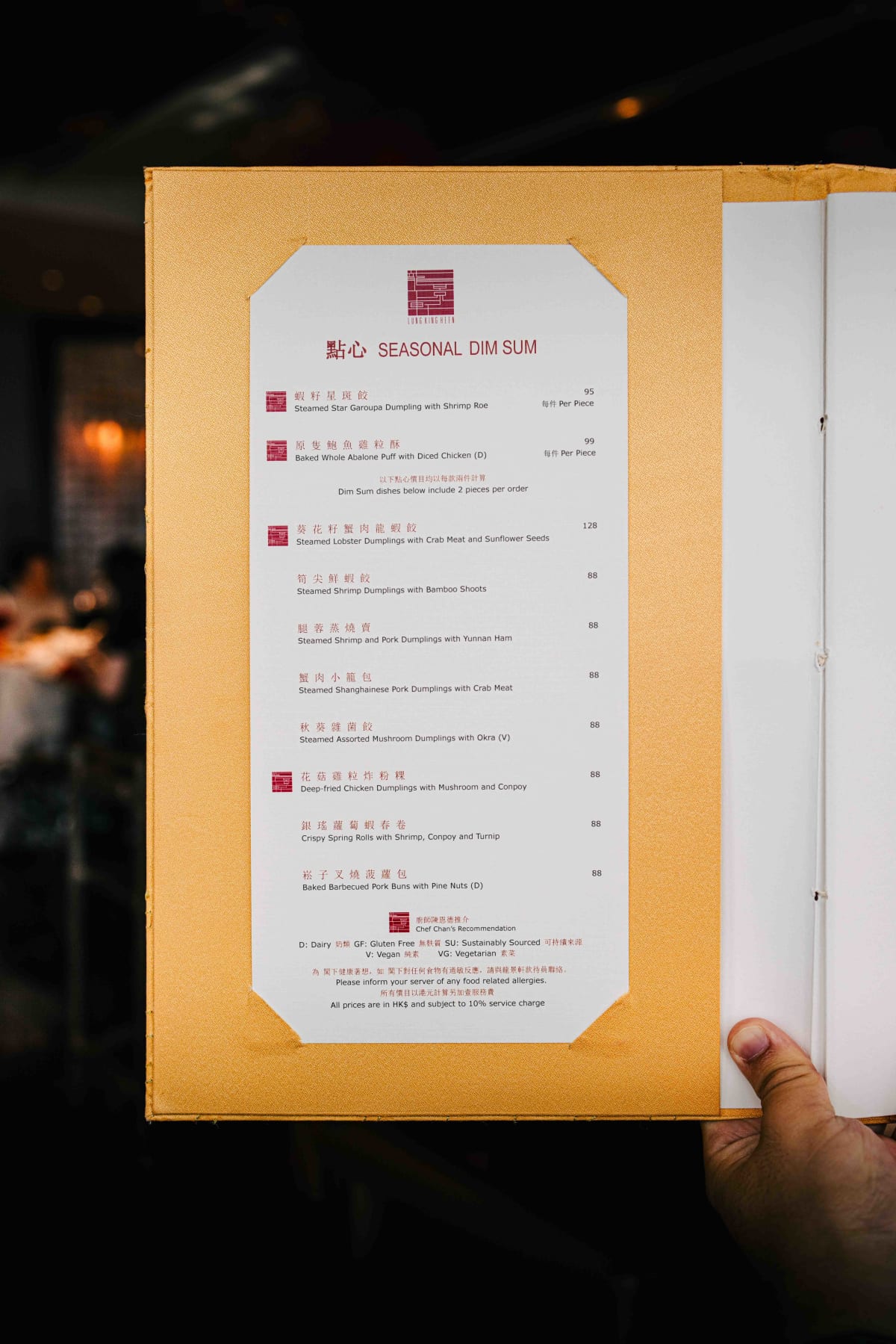
The dim sum menu holds about ten items, and looking at the card, the seasonal dim sum (點心 Seasonal Dim Sum) came to exactly ten. Four carried the Chef Chan's Recommendation mark (廚師陳恩德推介), and the pricing ran on two tracks.
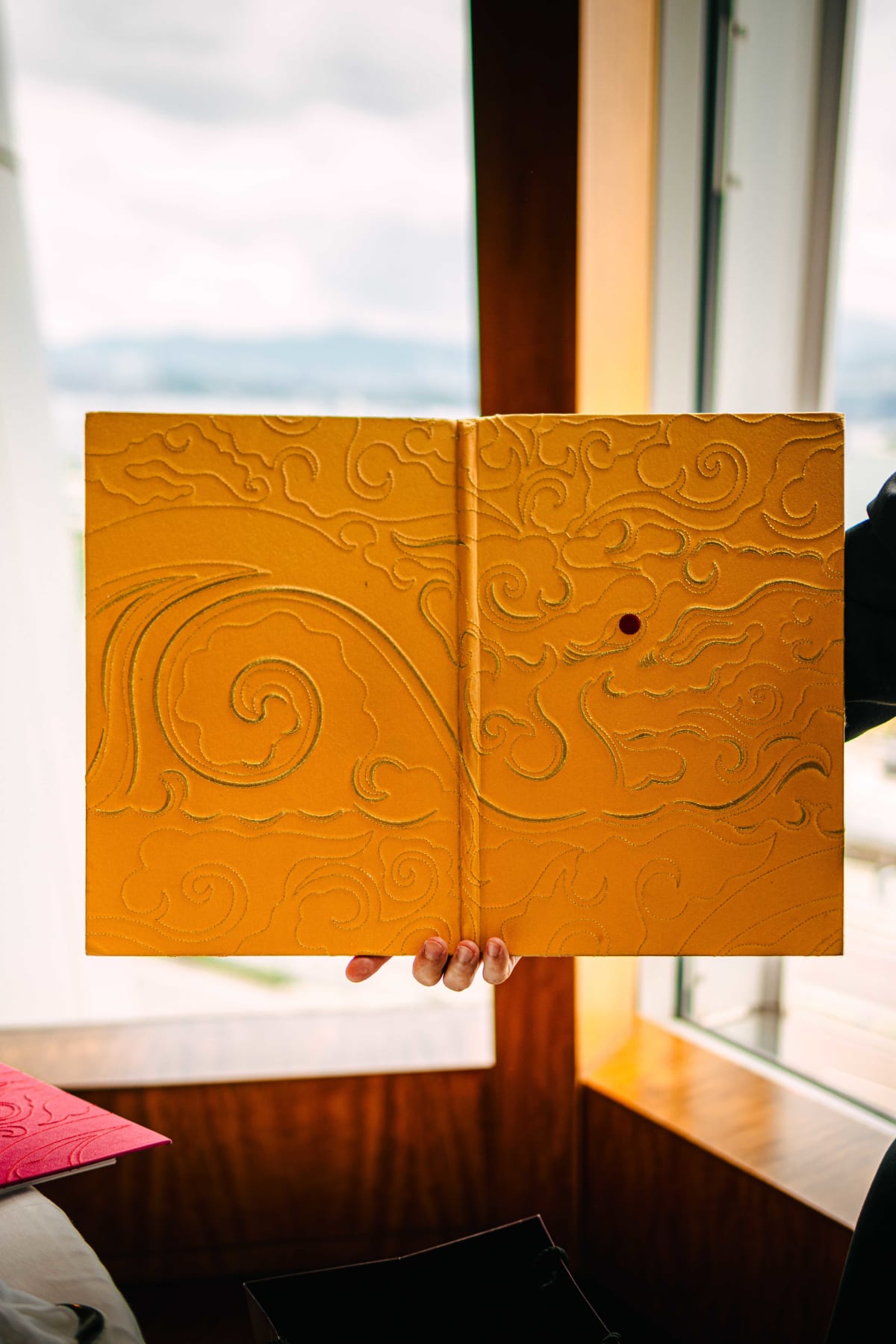
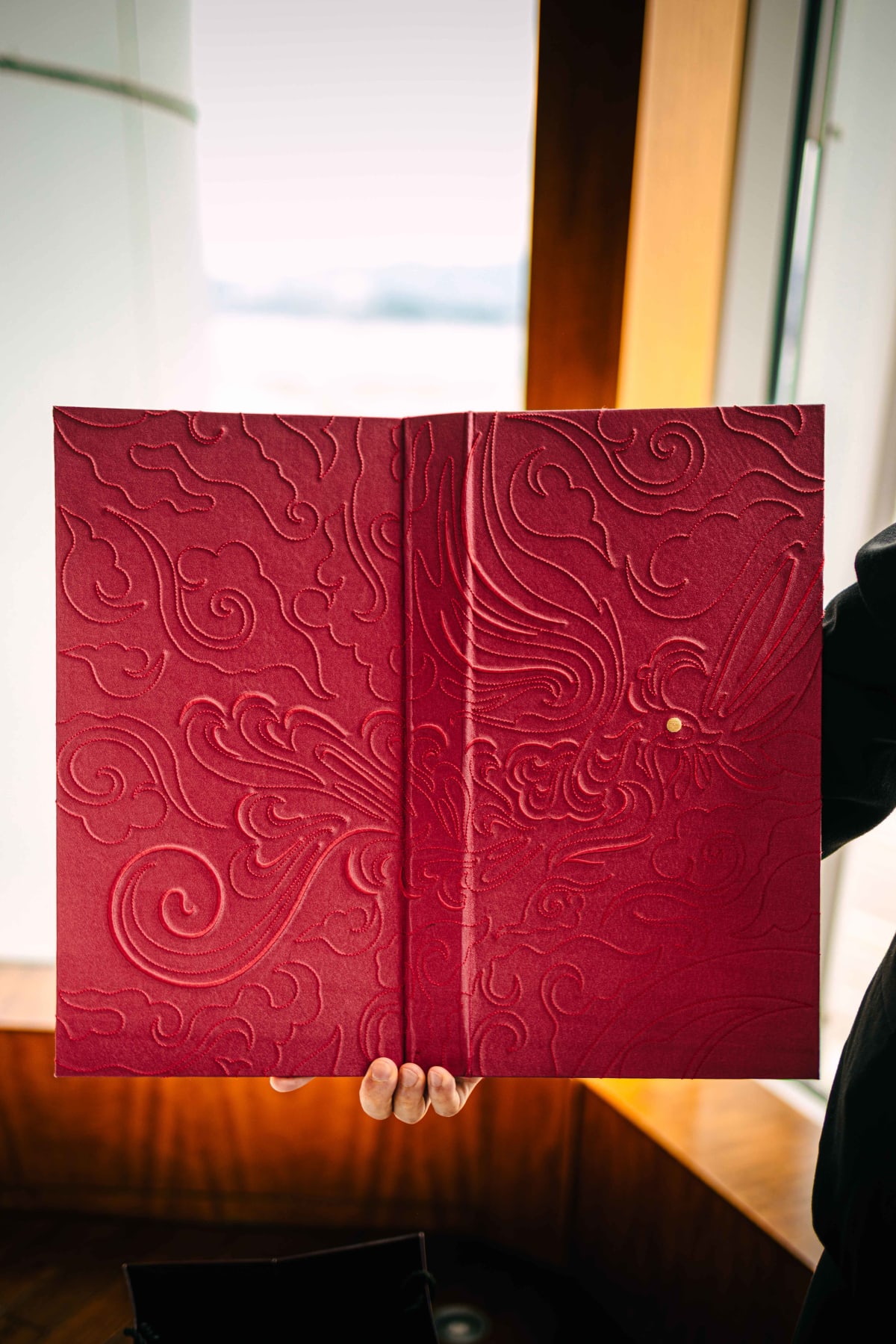
The 蝦籽星斑餃 and the 原隻鮑魚雞粒酥 were priced by the piece at HKD 95 and HKD 99. The other eight came two to a plate at HKD 88, except the lobster one, 葵花籽蟹肉龍蝦餃, at HKD 128.
I had no idea what to order, and since there were four of us, we decided to order all of it. In won the expensive ones ran to about seventeen thousand each and an ordinary dim sum about eight thousand, which by the standard of a two Michelin star restaurant does not look expensive, though thinking about how everyday a dish dim sum is within Hong Kong's food culture, it also feels like it might be.
Section 5·The Champagne
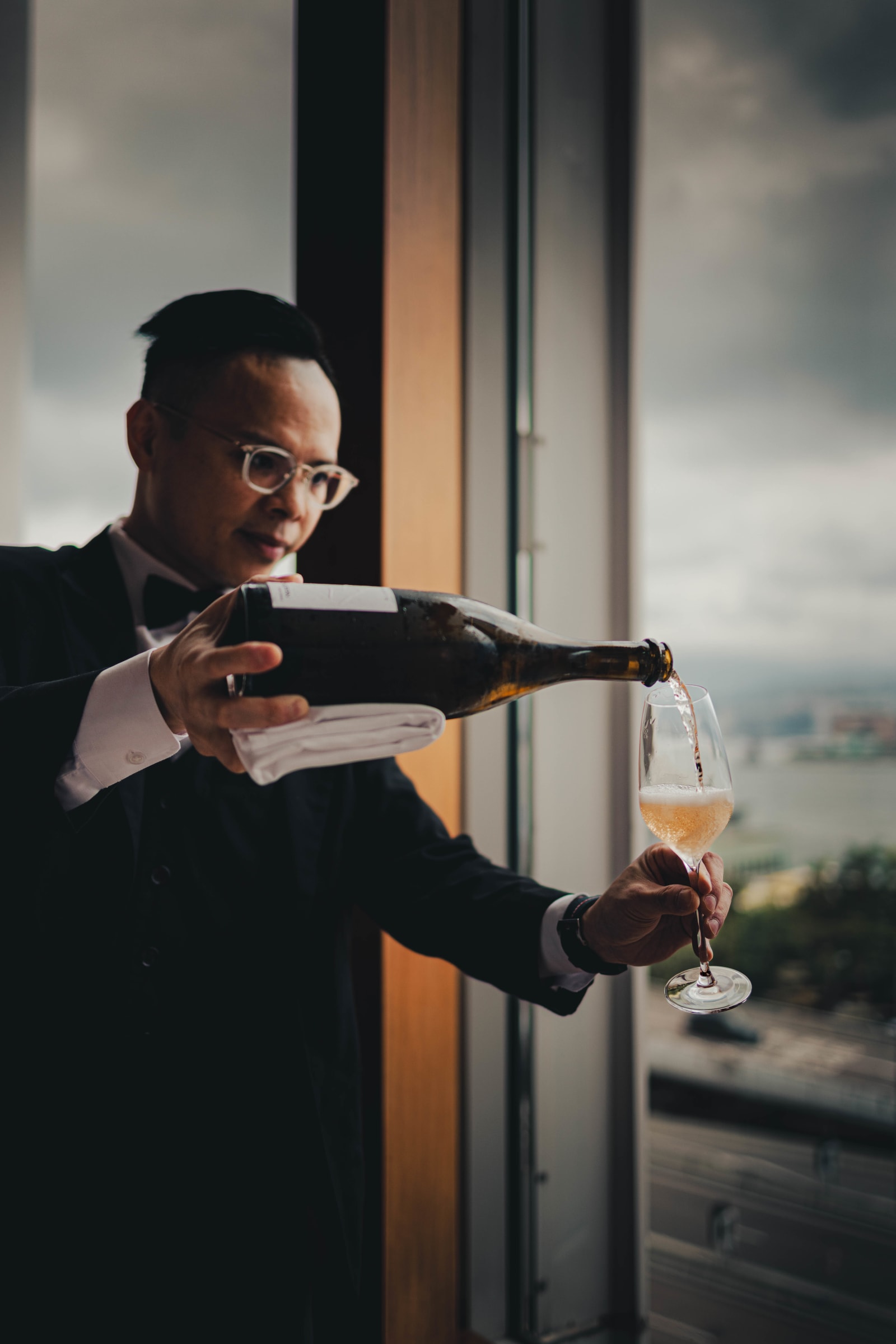
If I had to name what is good here outside the food, the view of the sea and the harbour is the obvious one, but I remember the service being good as well. The sommelier who poured the champagne did it beautifully, and there was a member of staff that day who spoke excellent Korean and looked after us carefully through the meal, which made it an enjoyable one.
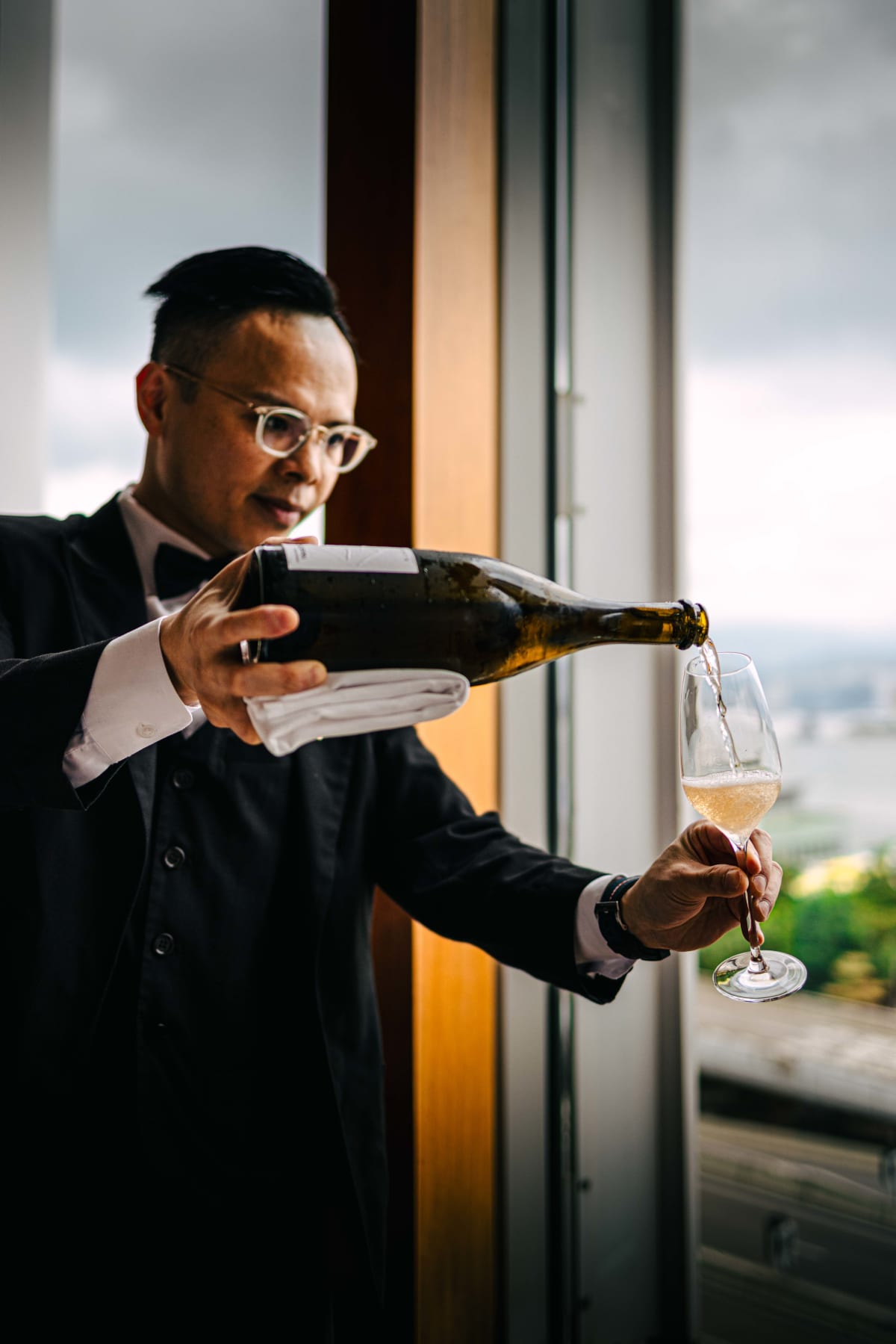
The champagne we drank was Les Arpents from Maurice Choppin. It is a seventh generation family estate in Damery, a few kilometres from Épernay in the Vallée de la Marne, now led by Benjamin Choppin, Maurice's son. The blend is eighty-five percent Pinot Meunier with ten percent Chardonnay and five percent Pinot Noir, from clay and limestone plots around Damery, Saint-Martin-d'Ablois and Vinay, a Meunier-led composition of the kind the valley is known for.
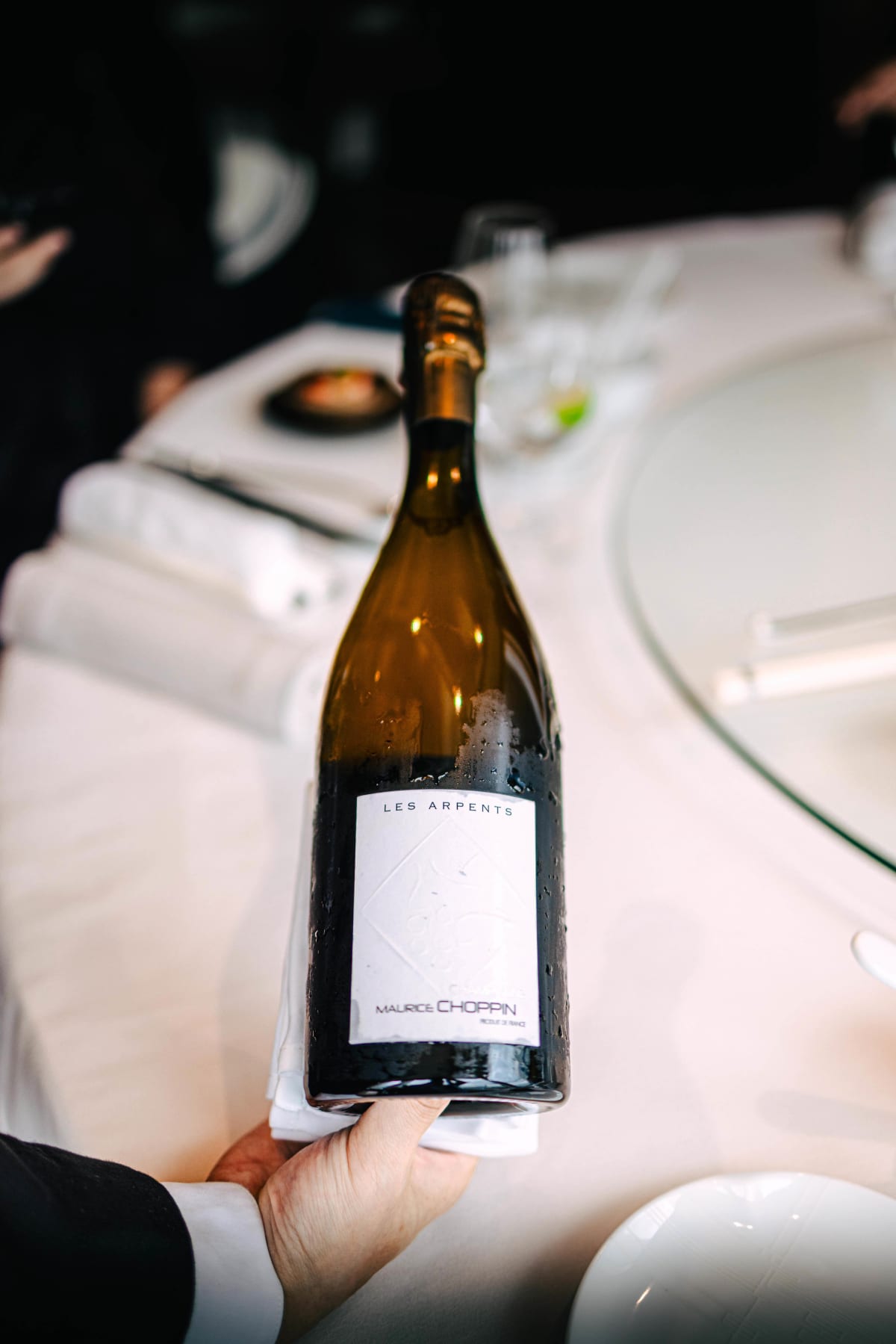
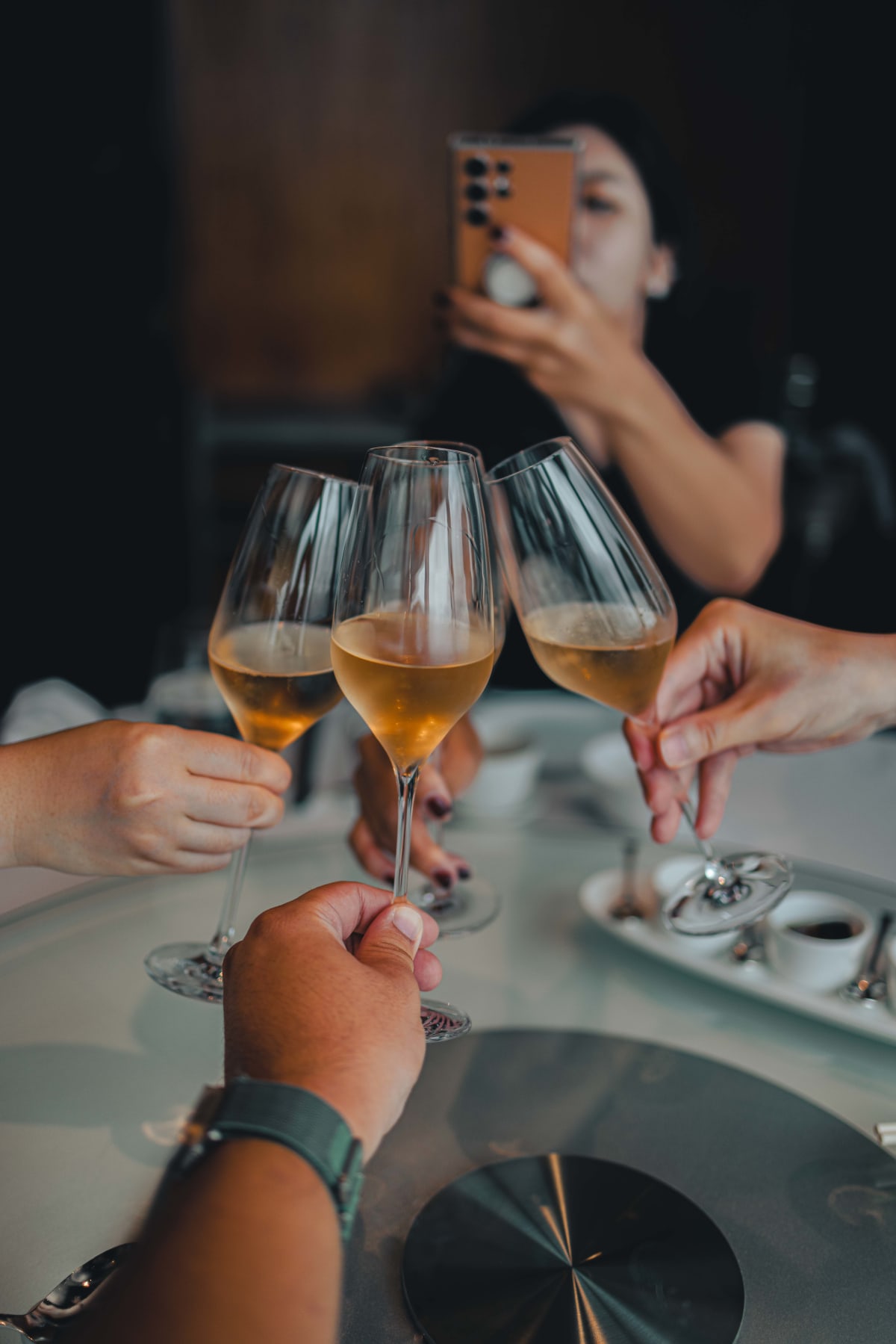
Reserve wines are fermented and aged in oak, fermentation runs on indigenous yeasts, and the wine is left unfiltered and unfined, with dosage held down to the extra brut range of one to two grams per litre.
Section 6·The First Dumplings
The dim sum, which is the thing that matters most, was delicious. You could feel that good ingredients had gone in, and the skins were crisp where they should be crisp and springy where they should be springy. Among the ten there were some you can also eat in Korea, but there were others built from combinations I had never come across, and that made them fun to eat.
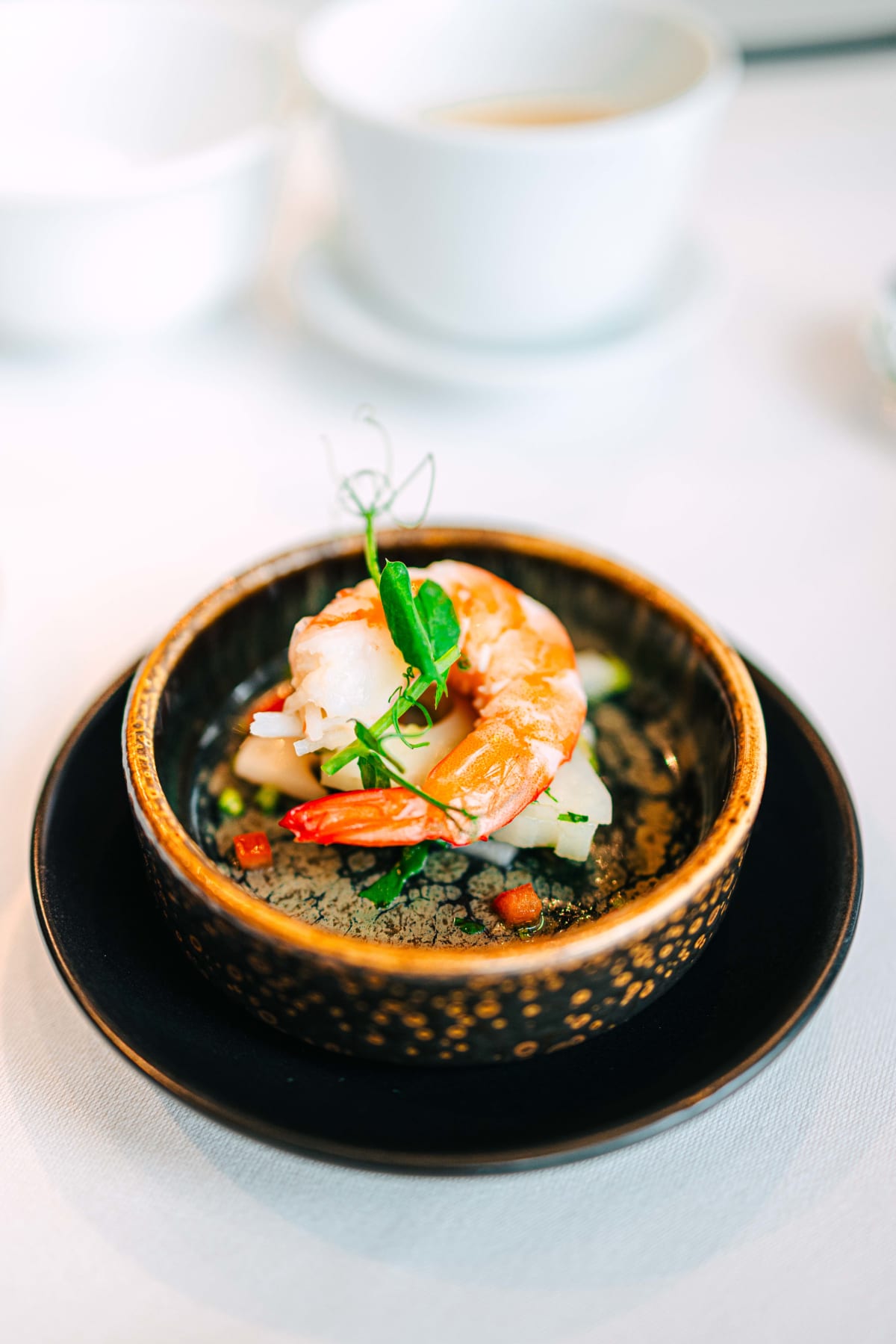
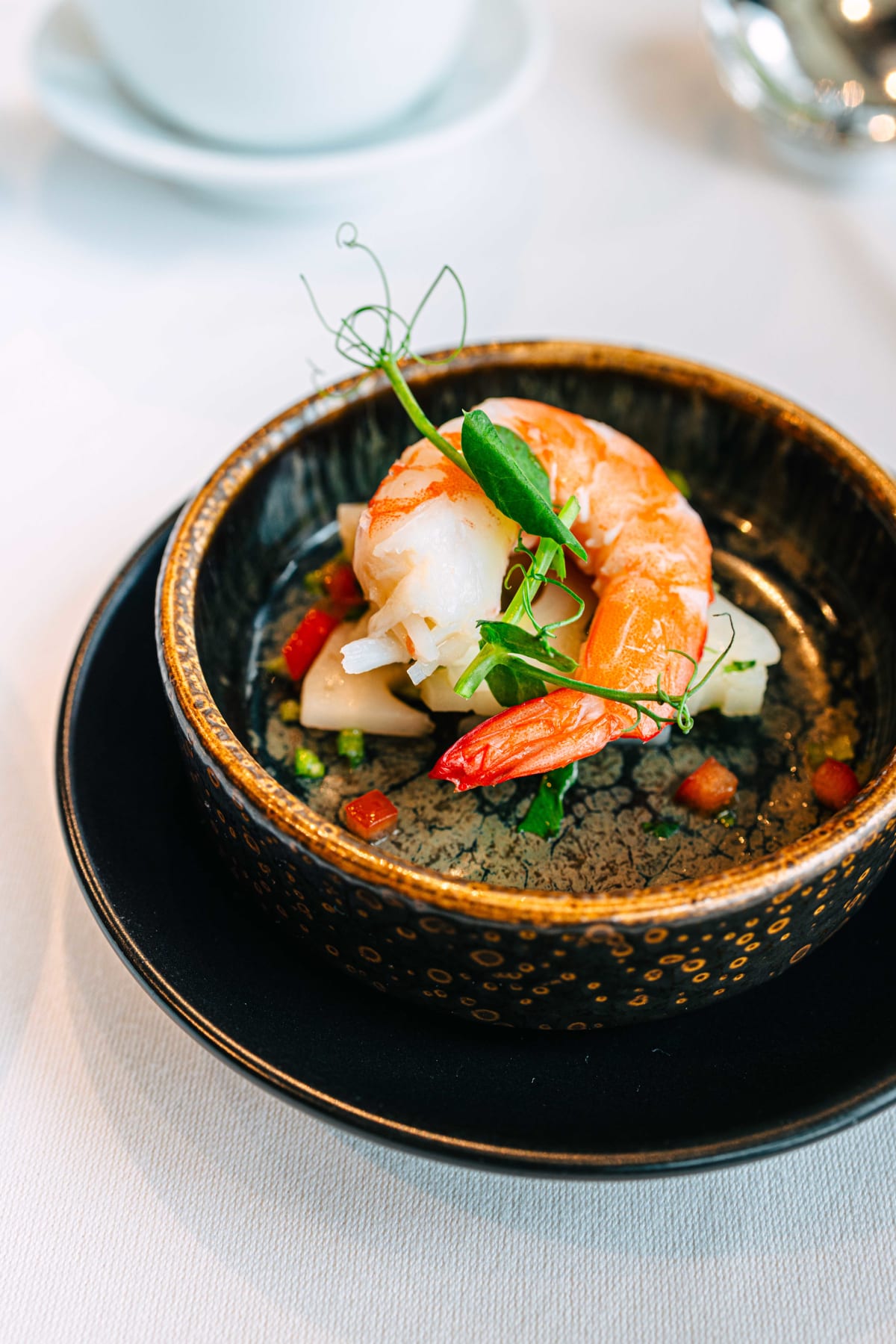
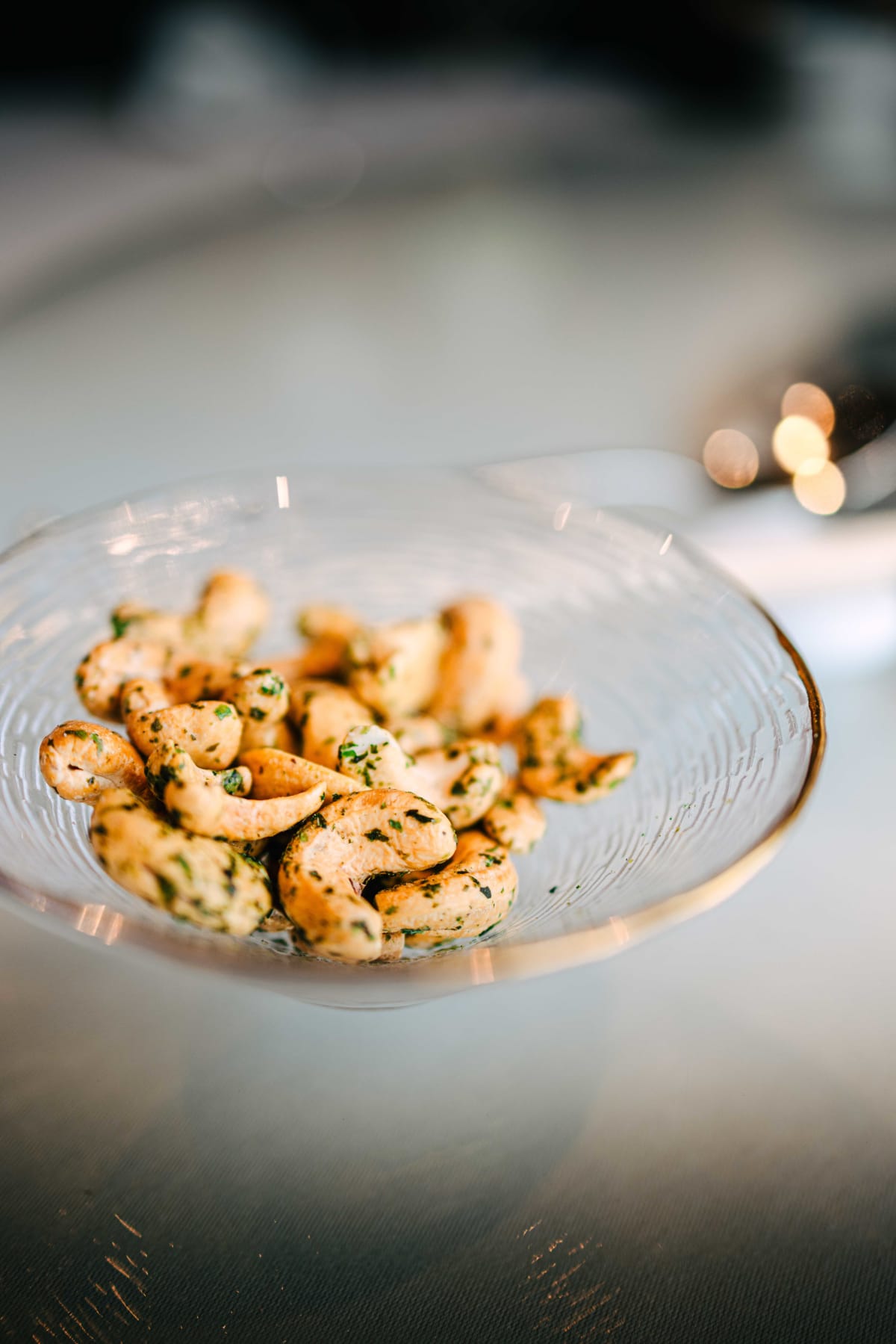
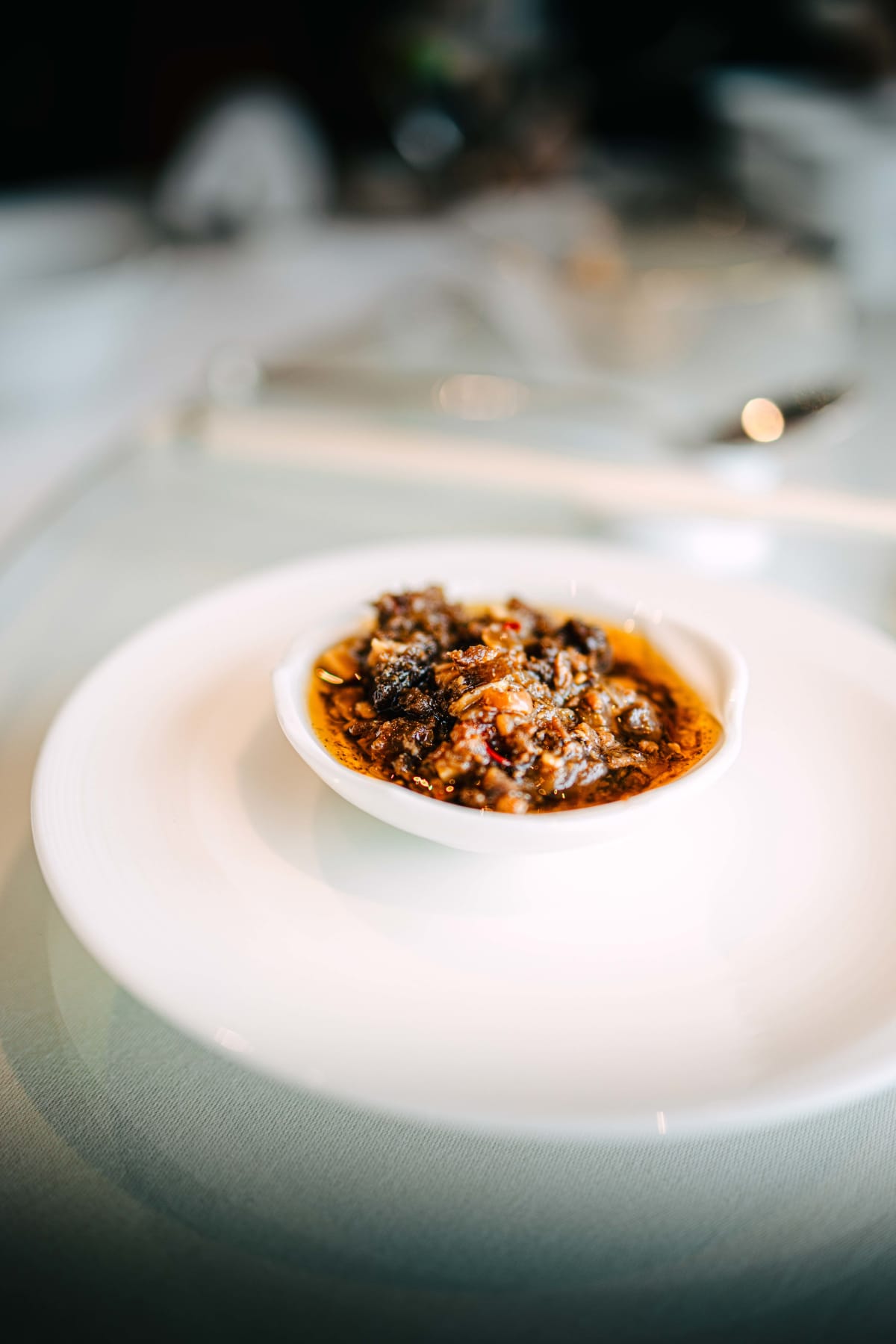
Simple appetizers and some nuts came first, the sort of thing you would nibble with a drink, and they were ordinary.
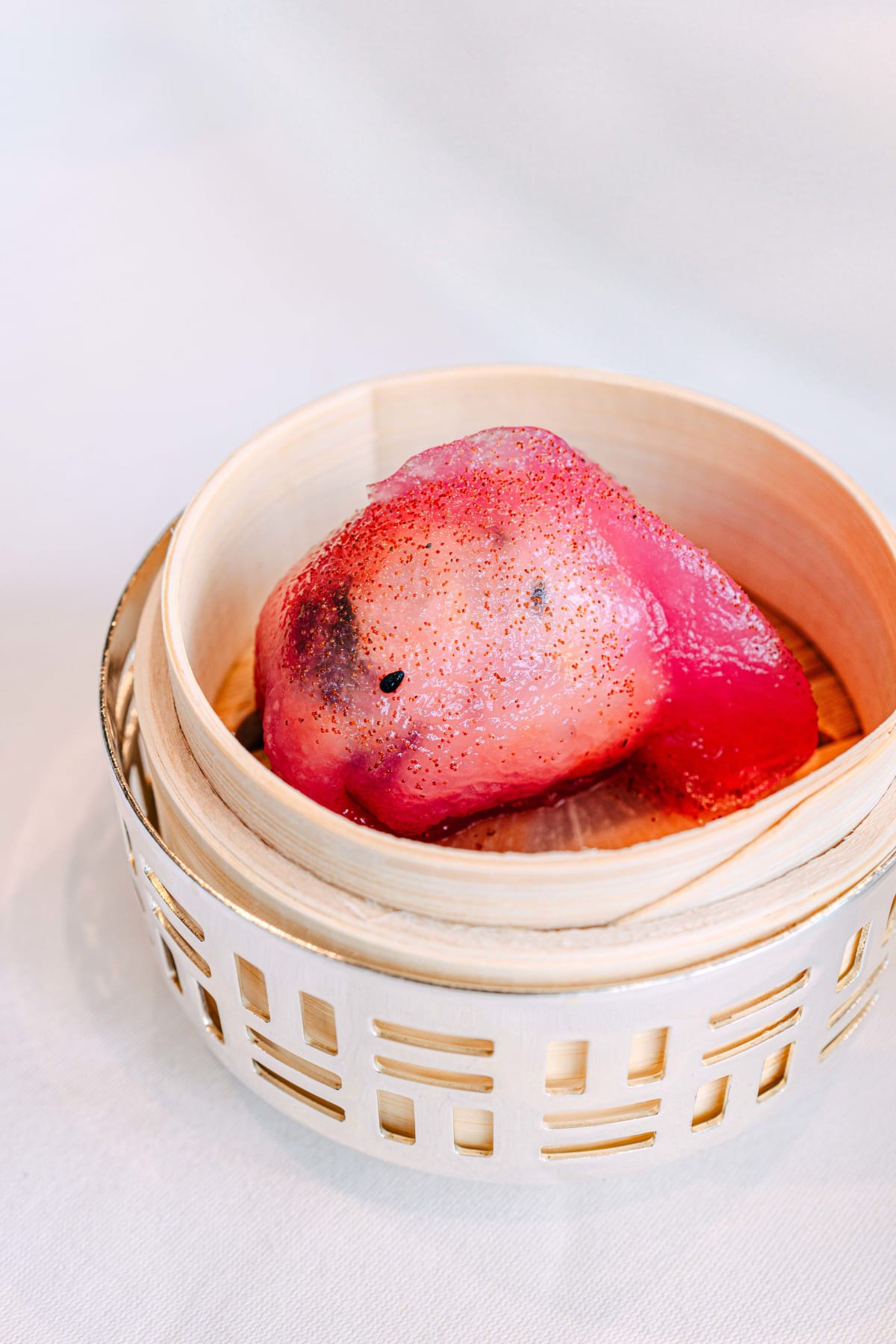
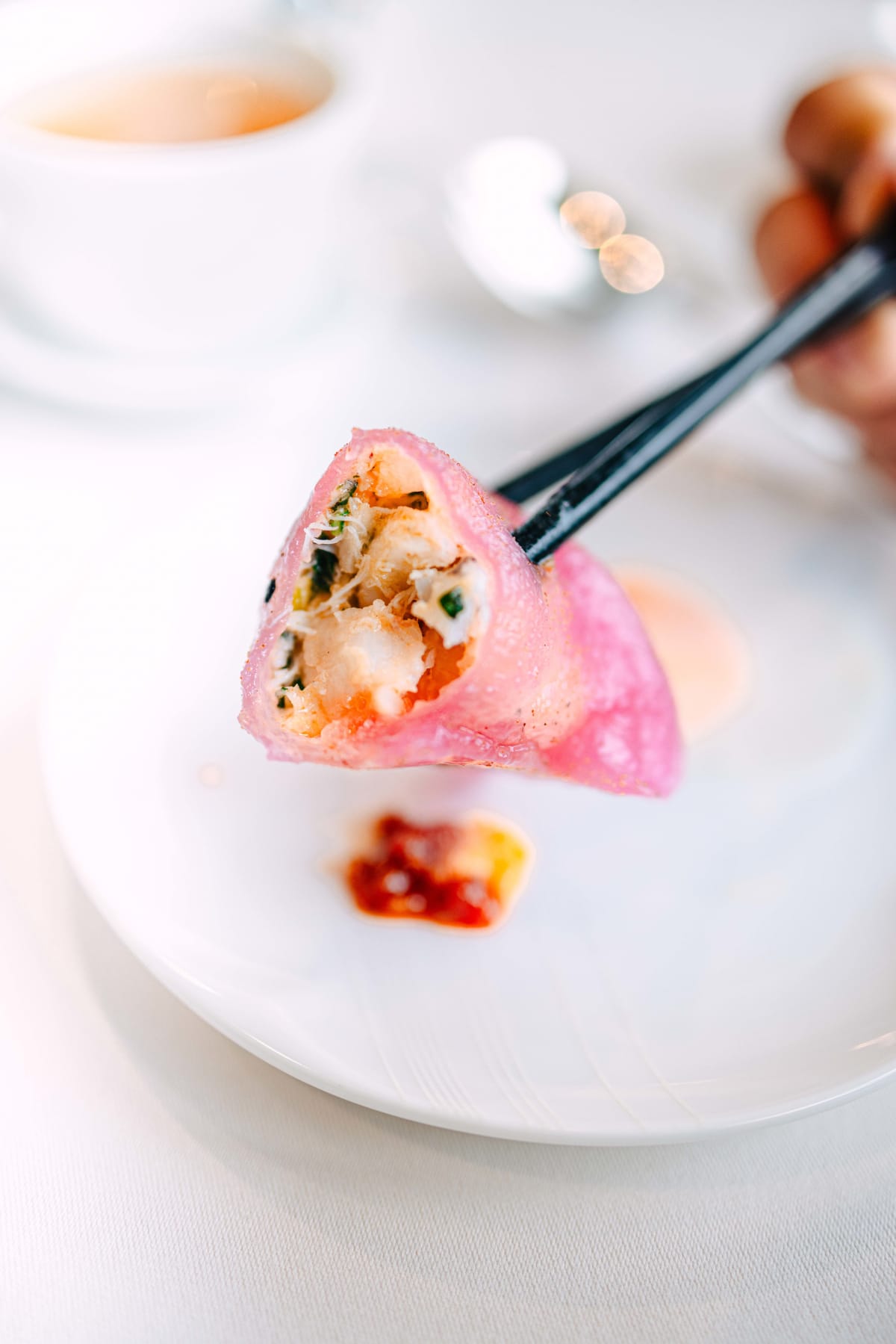
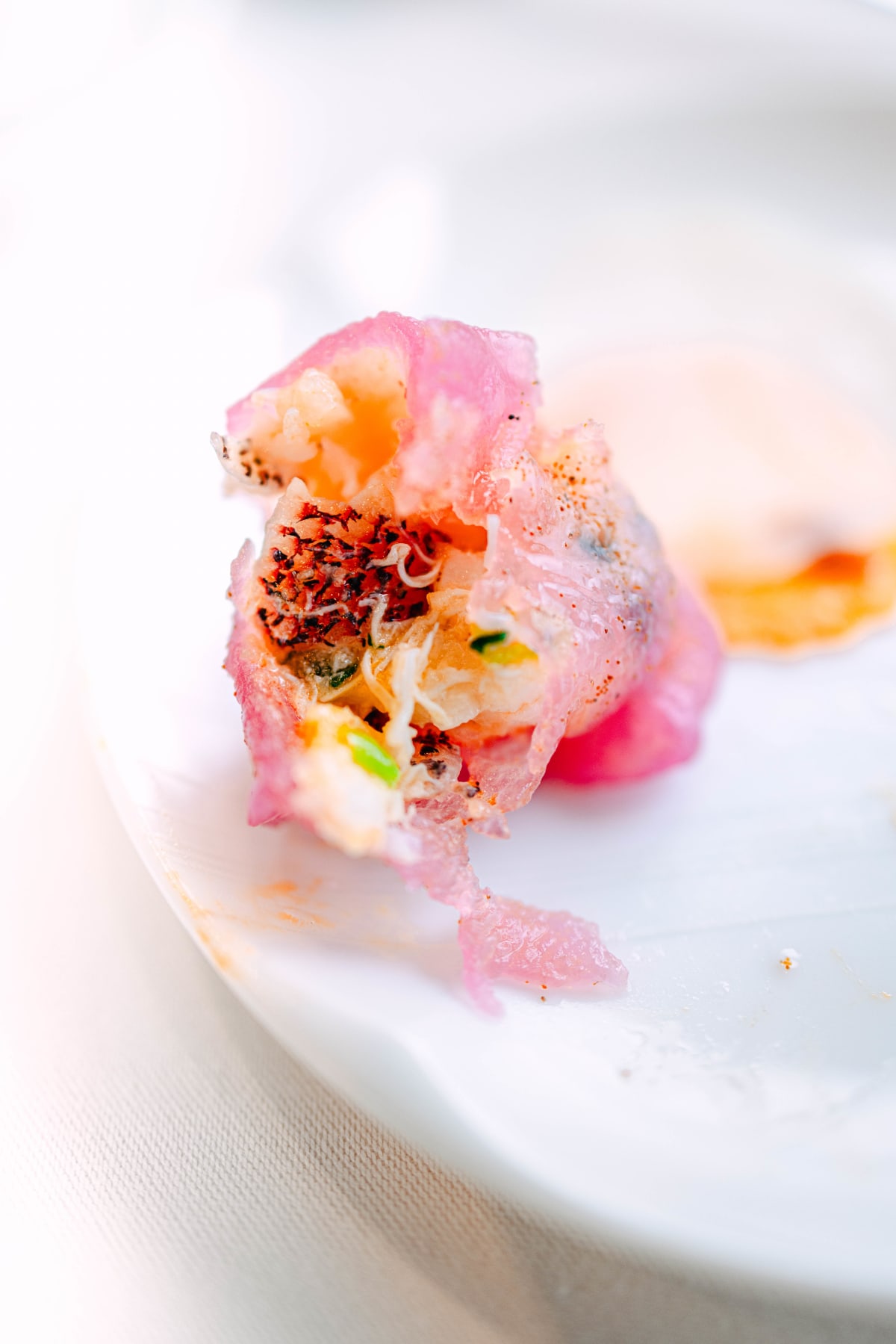
The first dim sum to arrive were 葵花籽蟹肉龍蝦餃 (Steamed Lobster Dumplings with Crab Meat and Sunflower Seeds) and 蝦籽星斑餃 (Steamed Star Garoupa Dumpling with Shrimp Roe), the star garoupa being a fish of the grouper family. Both carried the Chef Chan's Recommendation mark.
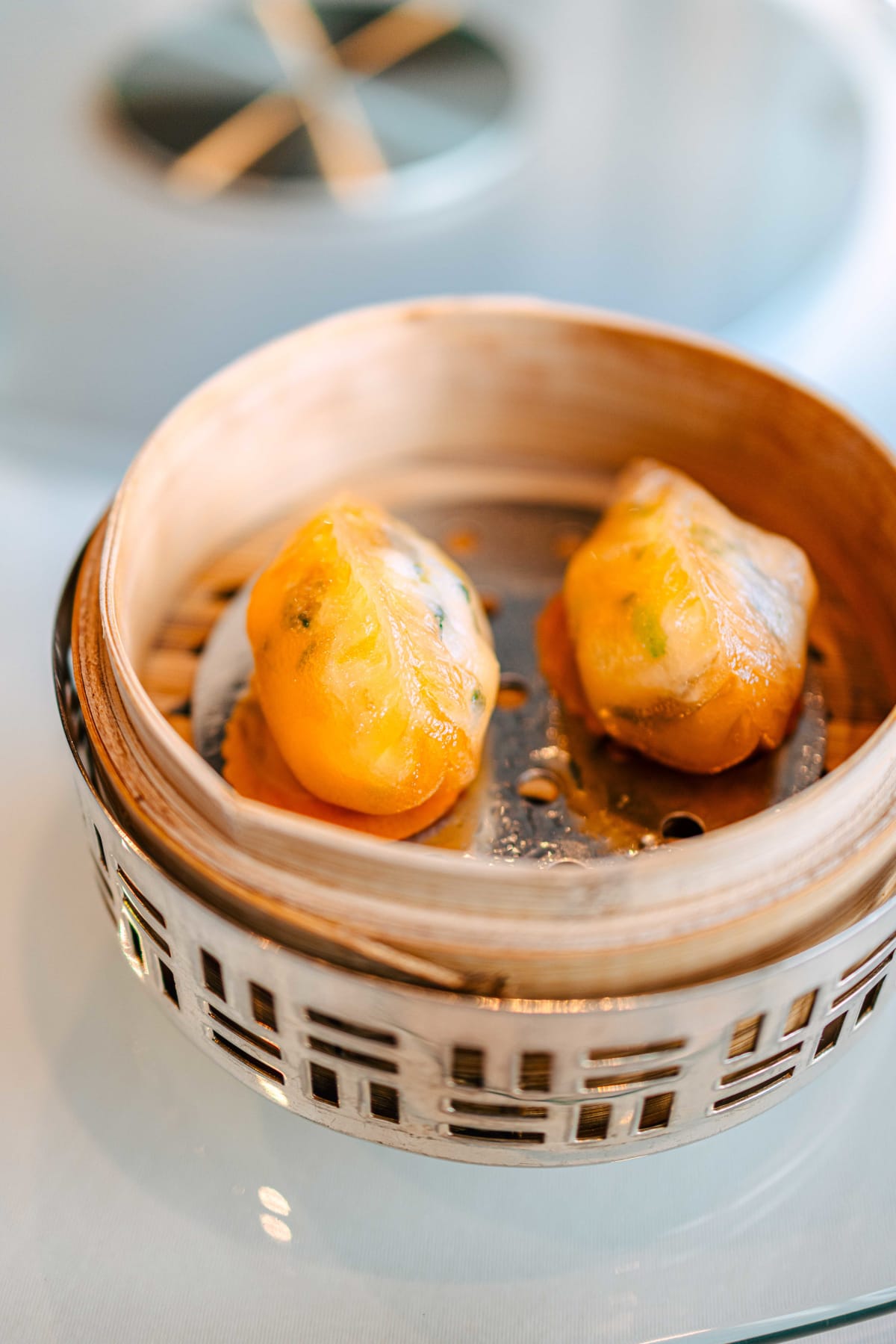
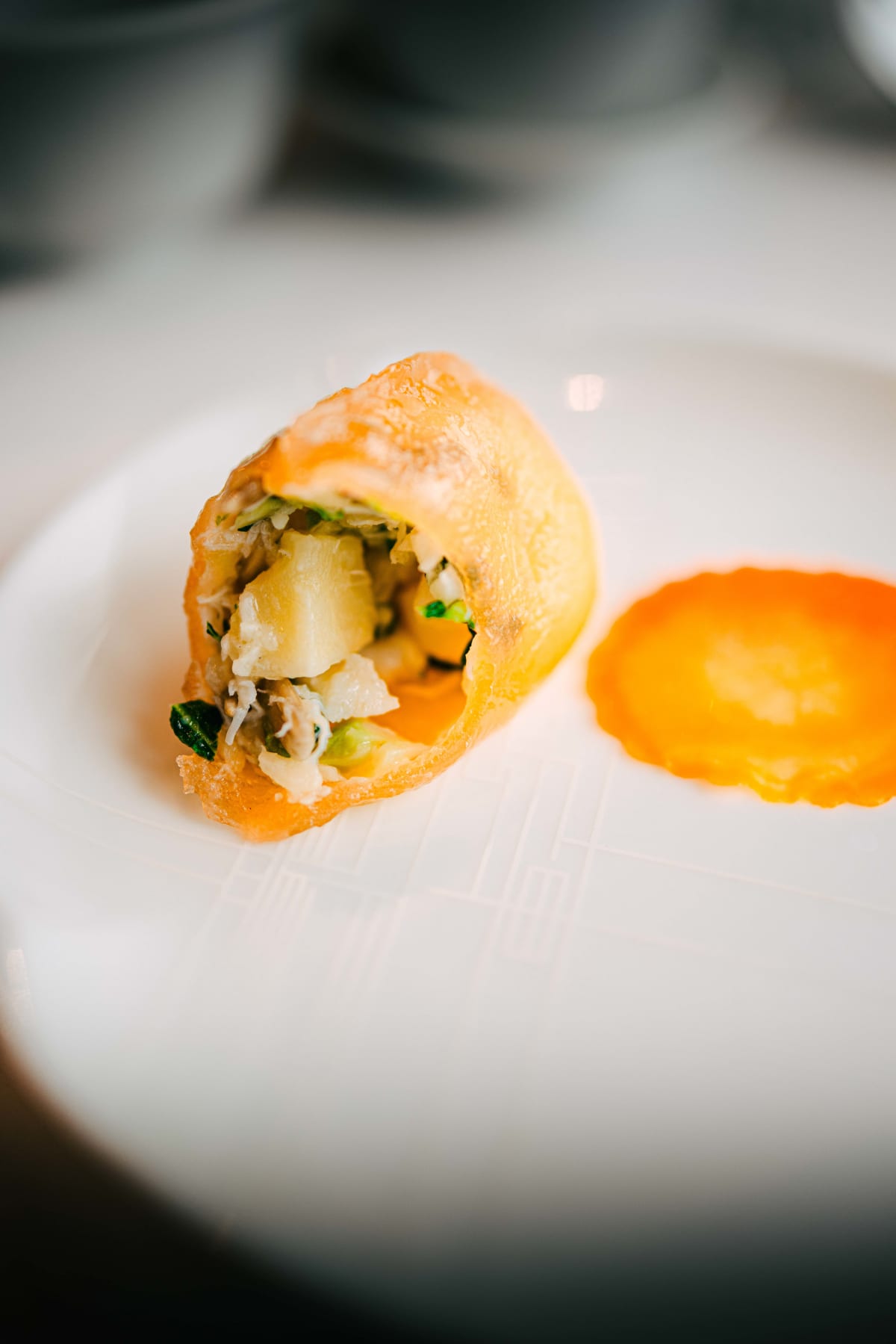
Of the two, the fish one was a dumpling I had never met before in either appearance or taste, and I remember it as curious and enjoyable. Both tasted good.
Next came 原隻鮑魚雞粒酥 (Baked Whole Abalone Puff with Diced Chicken), a dim sum that looked like abalone served as a tart, and I was told it is a signature here. When I think of dim sum I think of steamed dim sum, which is what I had always eaten, so I found myself wondering whether baked dim sum like this existed at all. It tasted good, though for a dim sum beginner like me the steamed ones still suit my palate better.
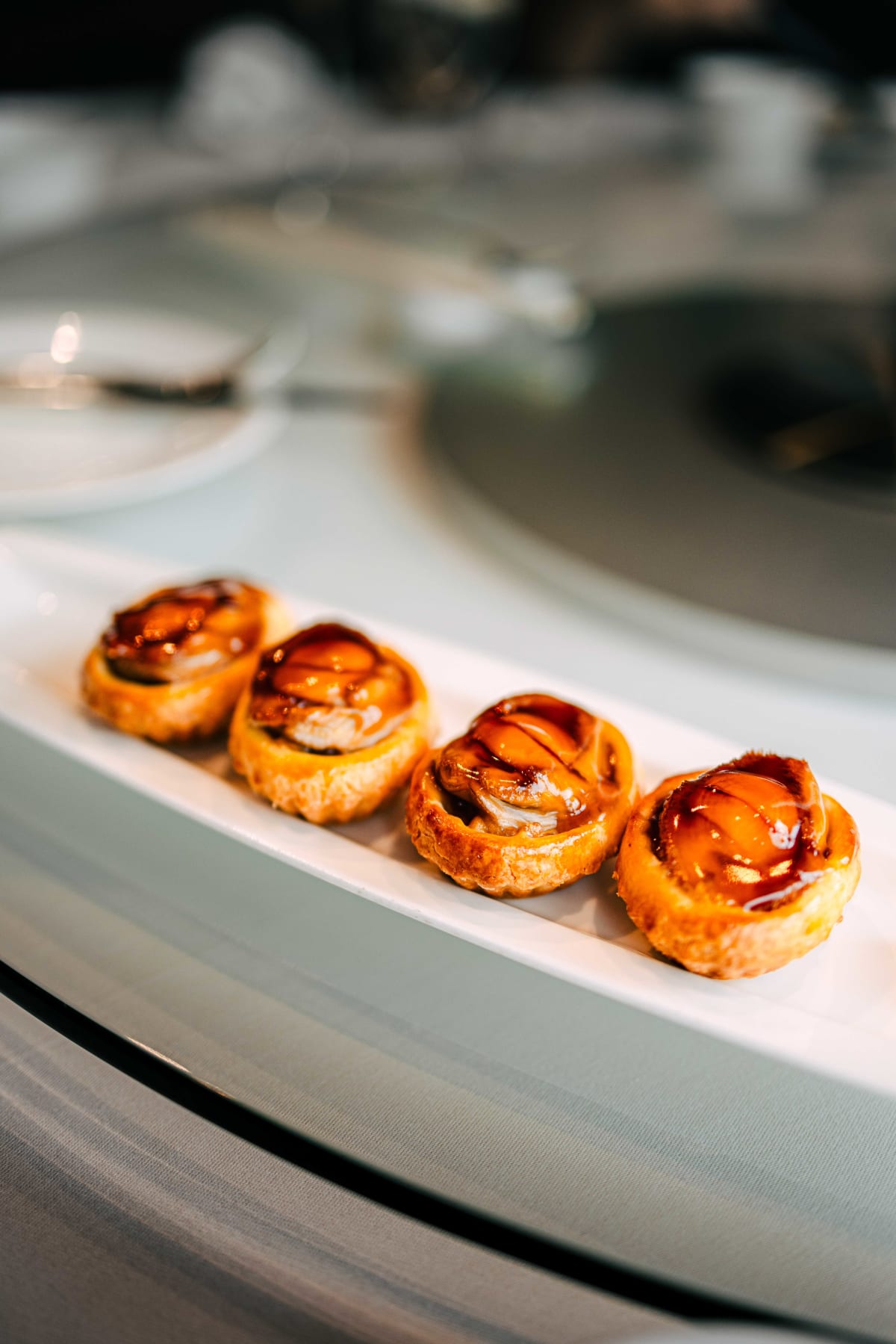
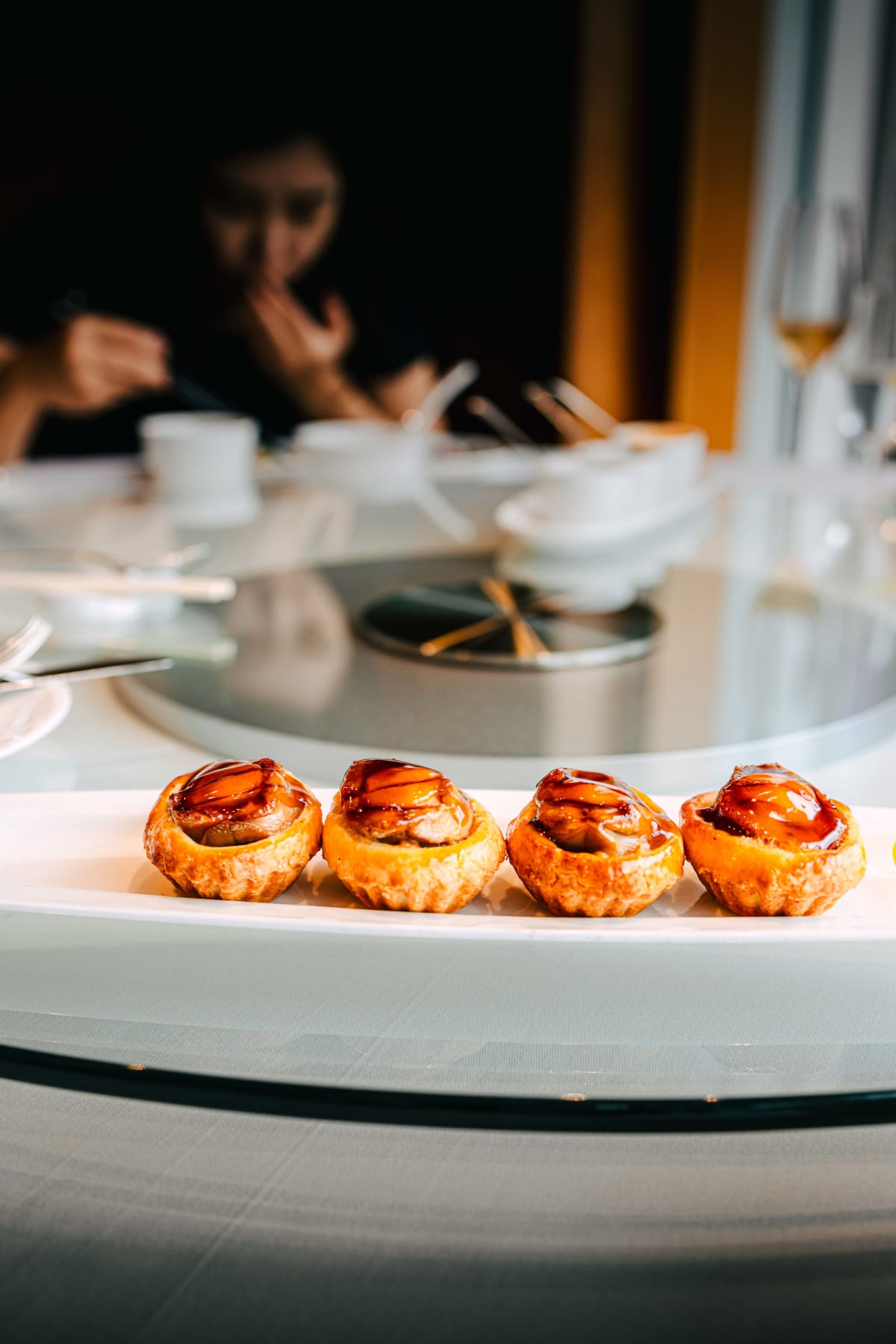
There is a background to the word signature. Cantonese abalone puffs were traditionally shaped to look like abalone without often containing any, and Chan rebuilt the dish by setting a whole abalone on top of a pastry adapted from Chinese wedding confectionery. A dim sum that had been closer to decoration became a signature built around a luxury ingredient.
Section 7·The Familiar Ones
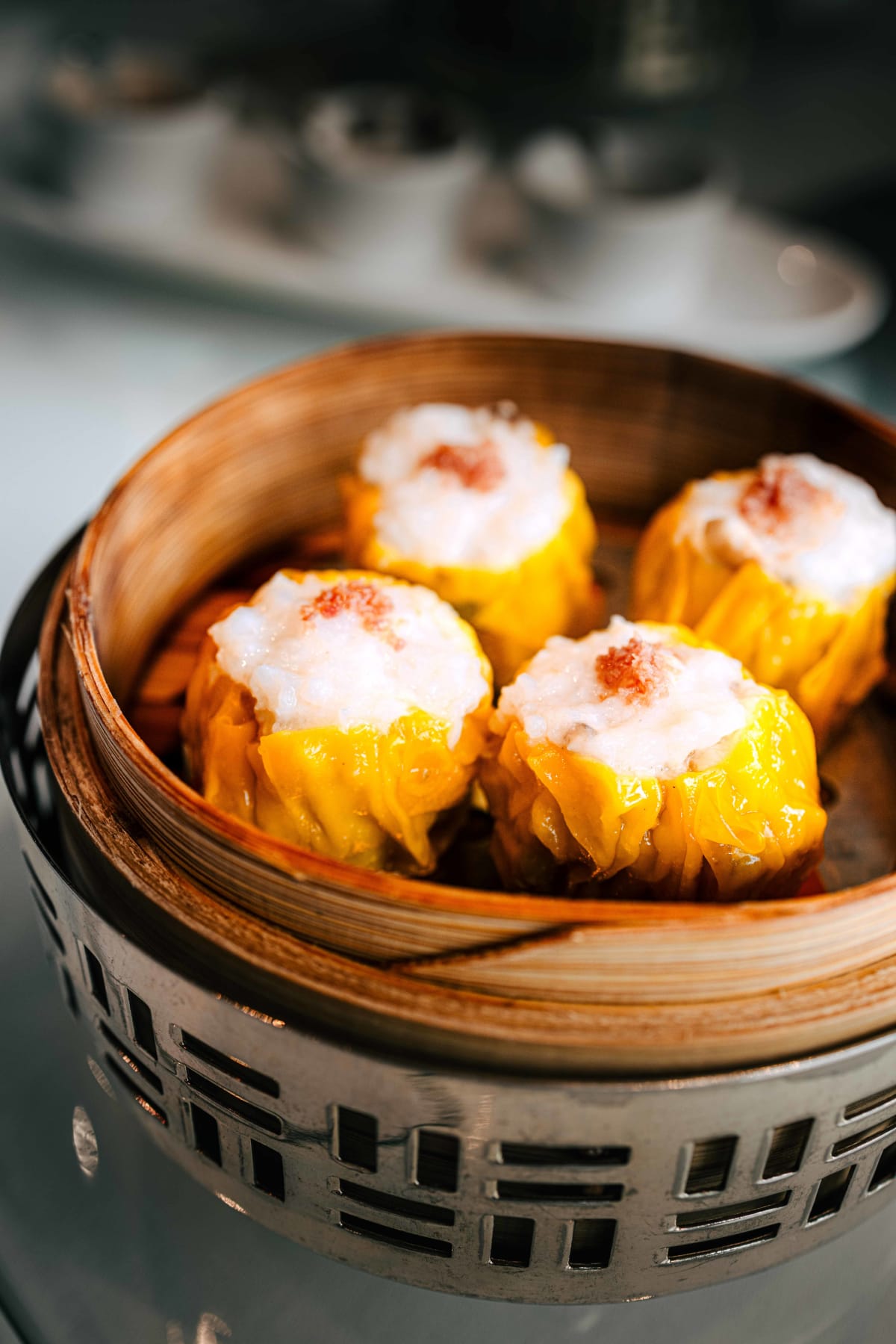
Then came 筍尖鮮蝦餃 (Steamed Shrimp Dumplings with Bamboo Shoots), the har gow, and 腿蓉蒸燒賣 (Steamed Shrimp and Pork Dumplings with Yunnan Ham), the dumpling commonly called siu mai. Both are dim sum you can also eat in Korea, but the taste was several steps above.
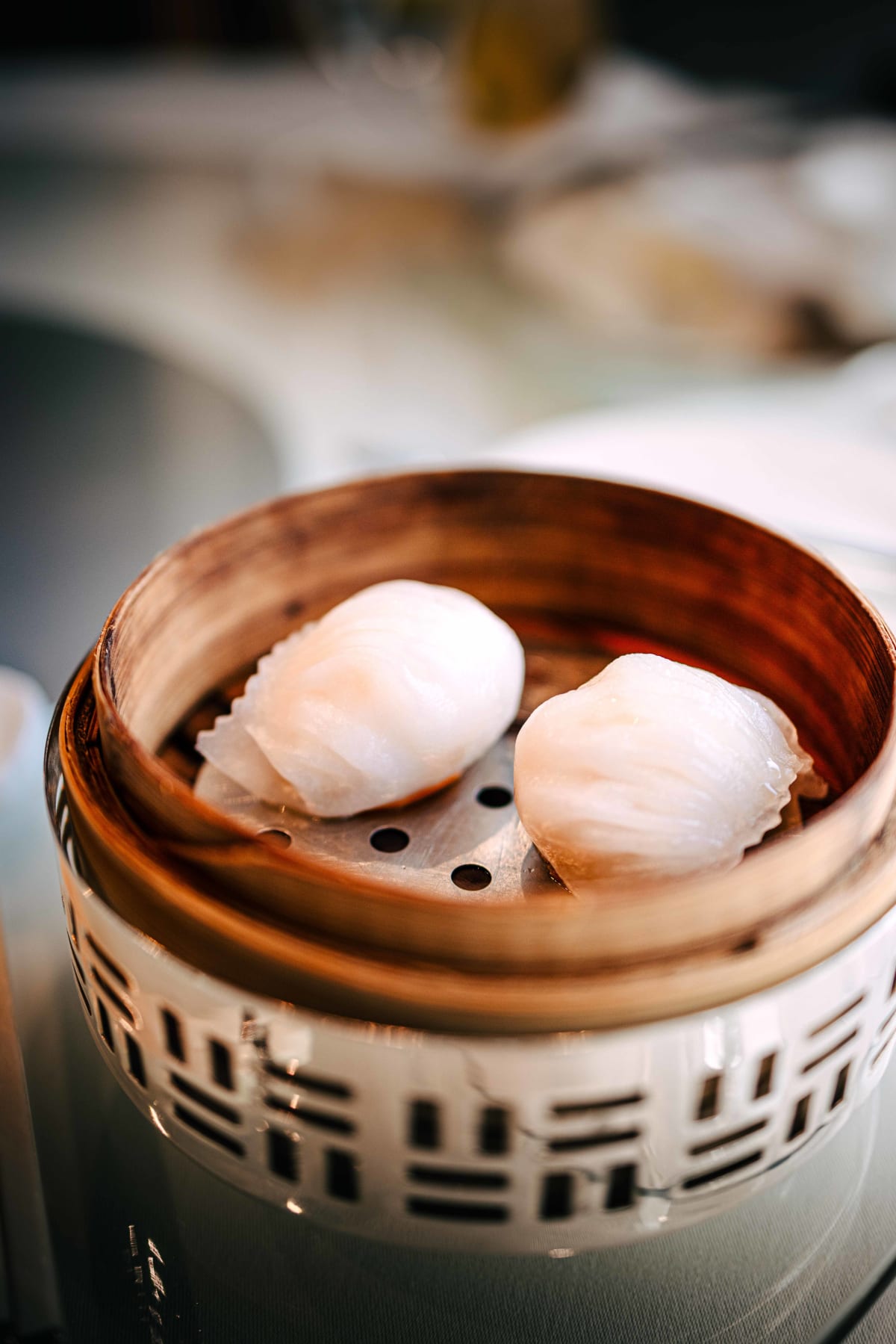
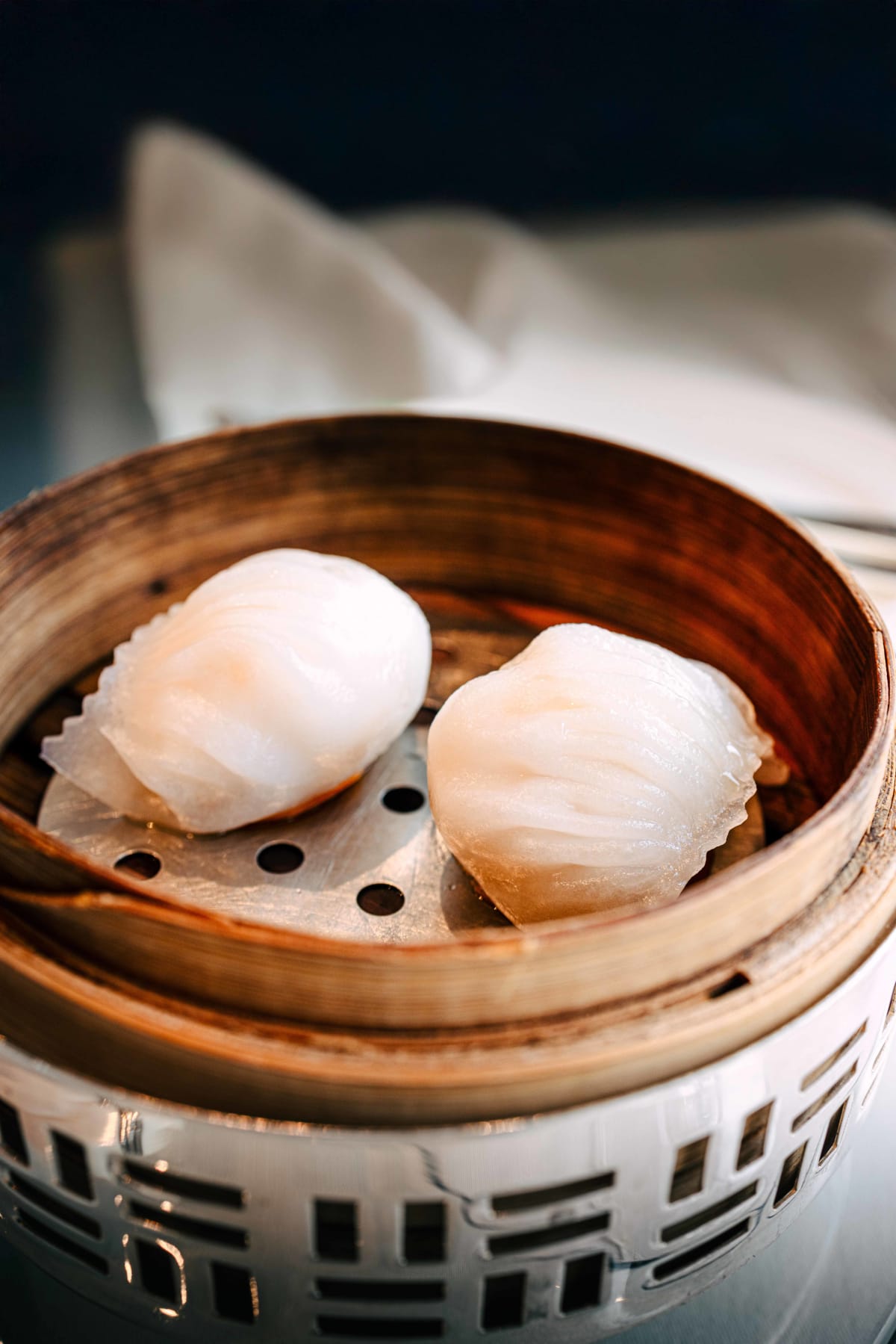
Even these two familiar ones had an extra layer folded in, bamboo shoot in one and Yunnan ham in the other.
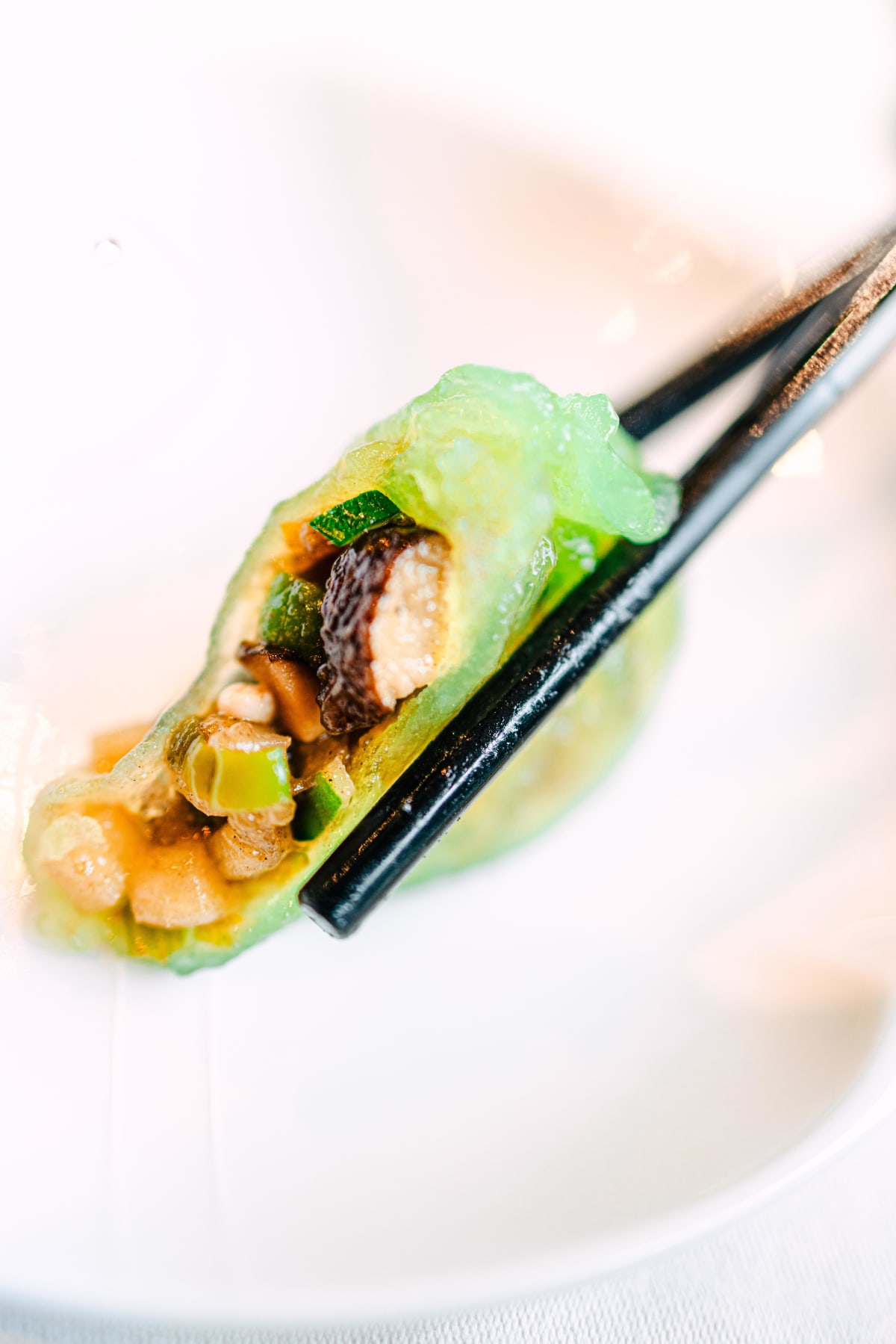
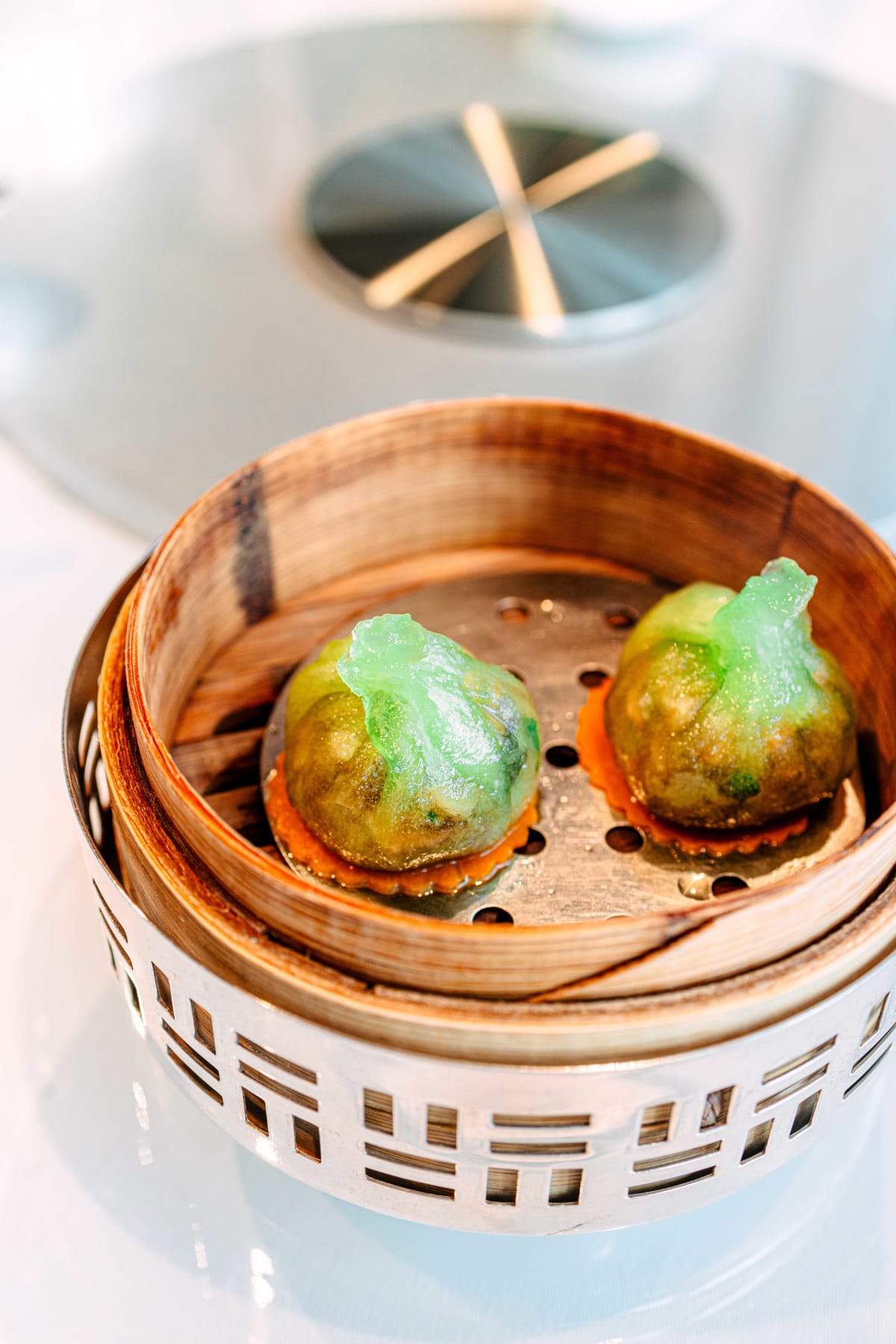
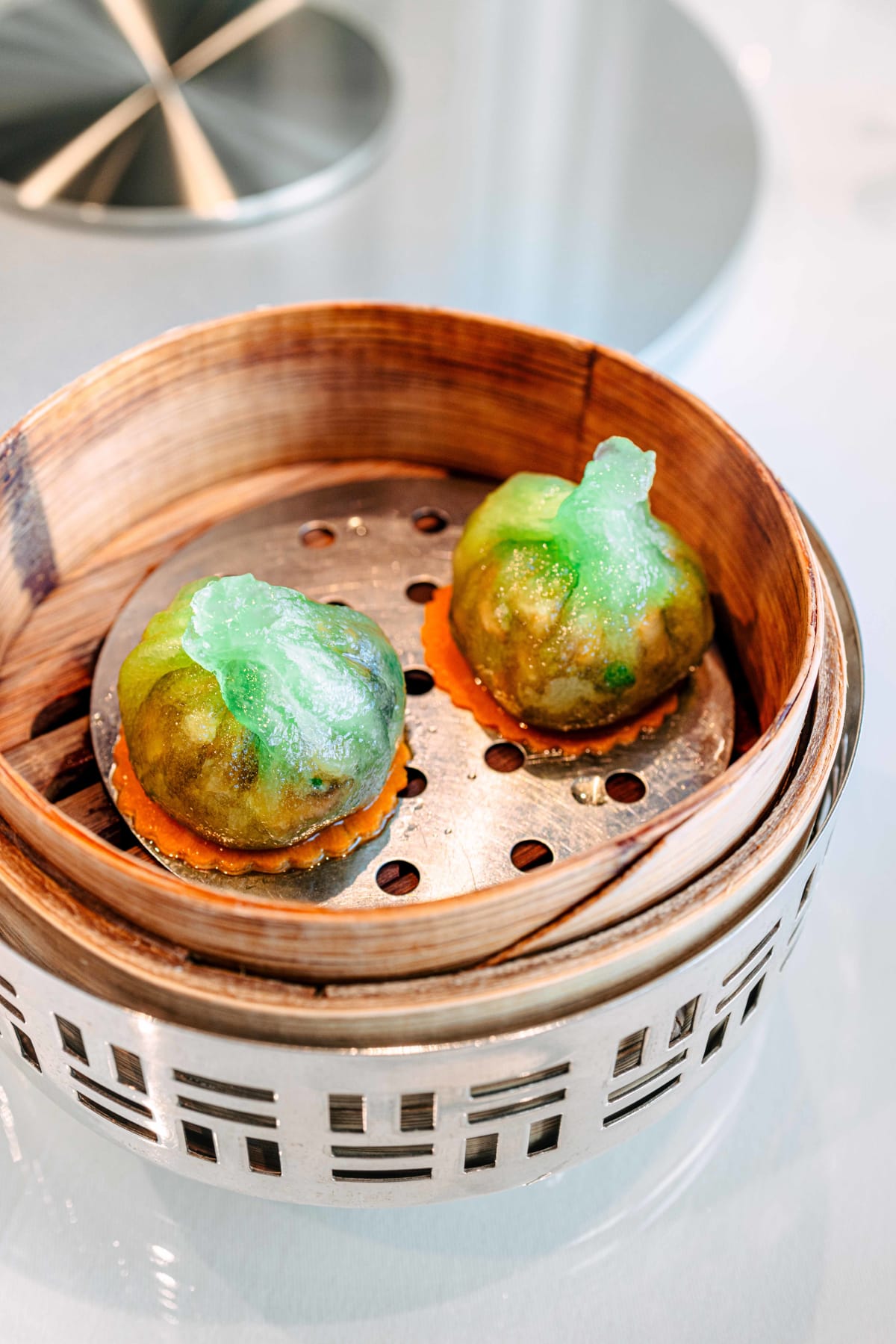
Of the ten dim sum that day there was exactly one vegan item, 秋葵雜菌餃 (Steamed Assorted Mushroom Dumplings with Okra), a green dumpling. Inside were mushrooms and assorted vegetables along with a plant called okra, and against the image a vegan dim sum carries, the savour of seafood and meat was missing but the flavour and texture of the mushrooms stood in for it. More than the taste, what stays with me is the texture of the skin, chewy and holding together without falling apart when picked up with chopsticks.
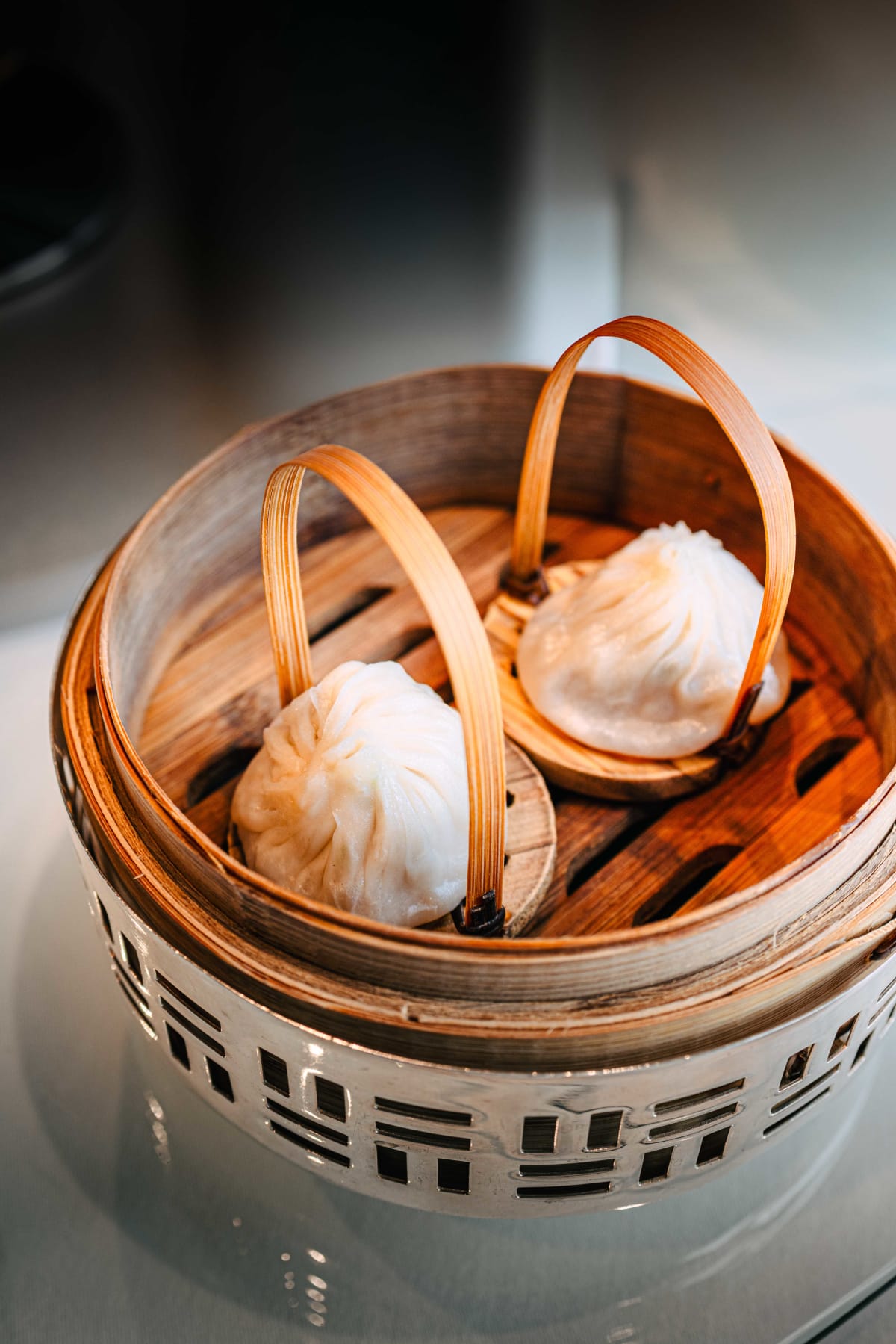
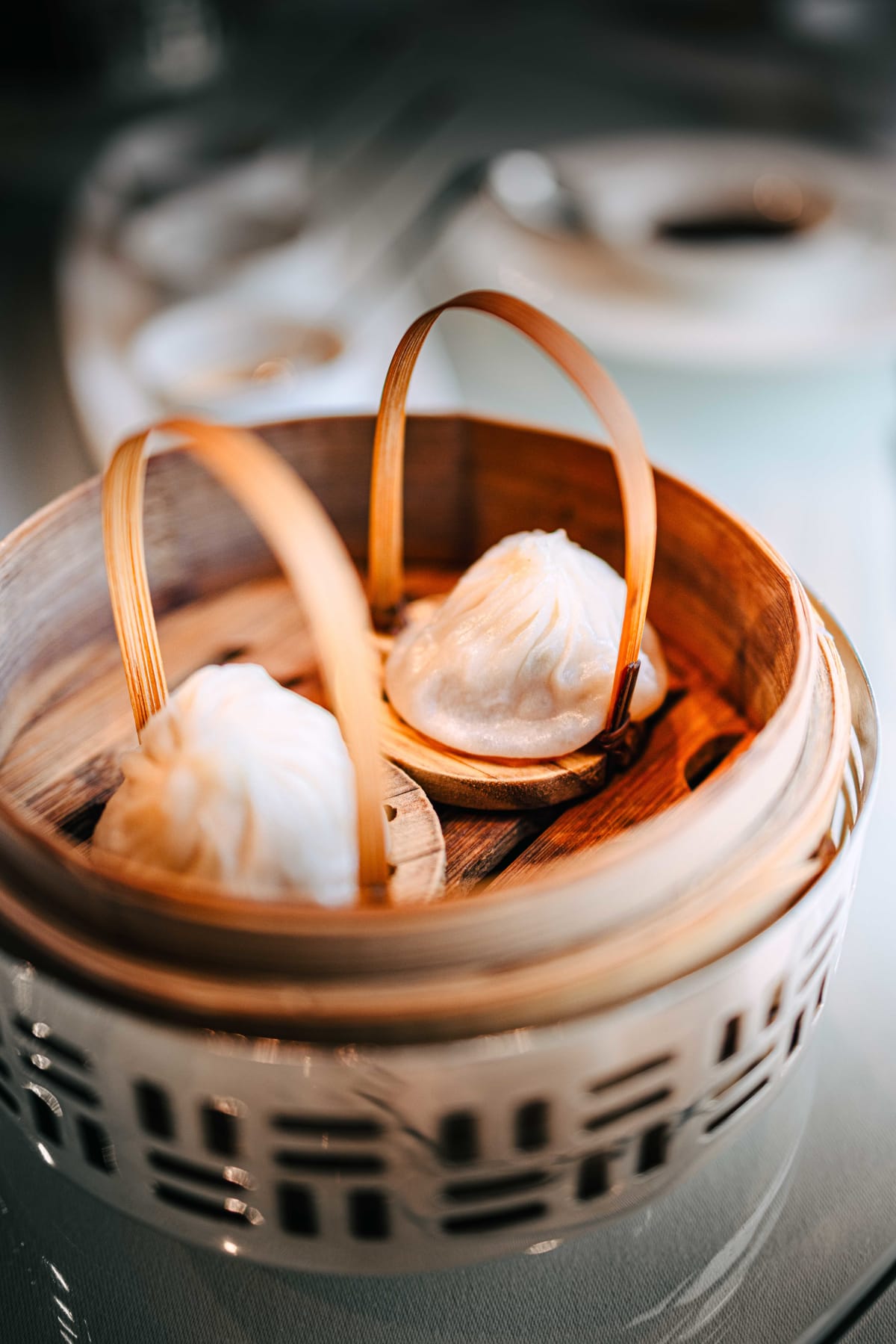
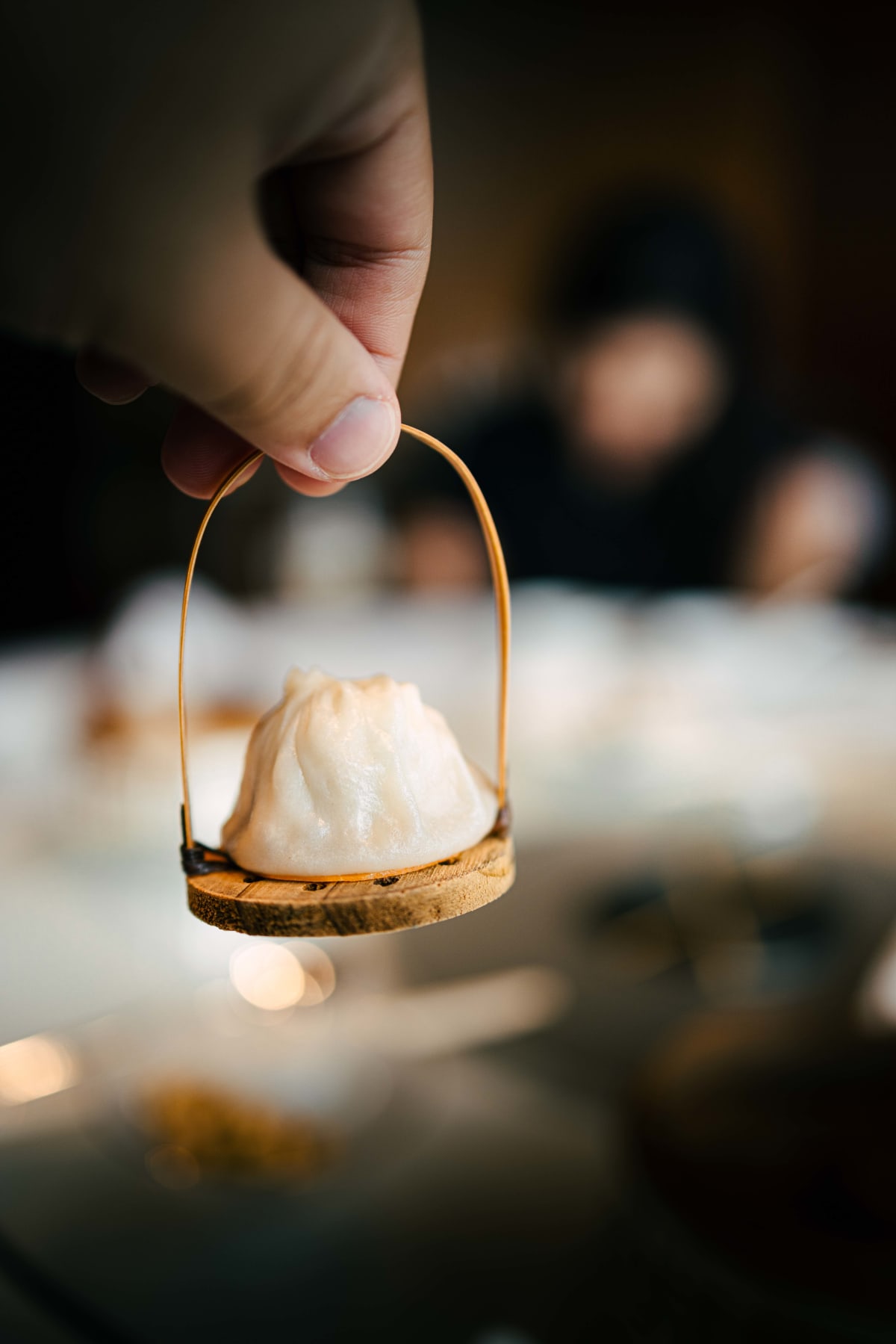
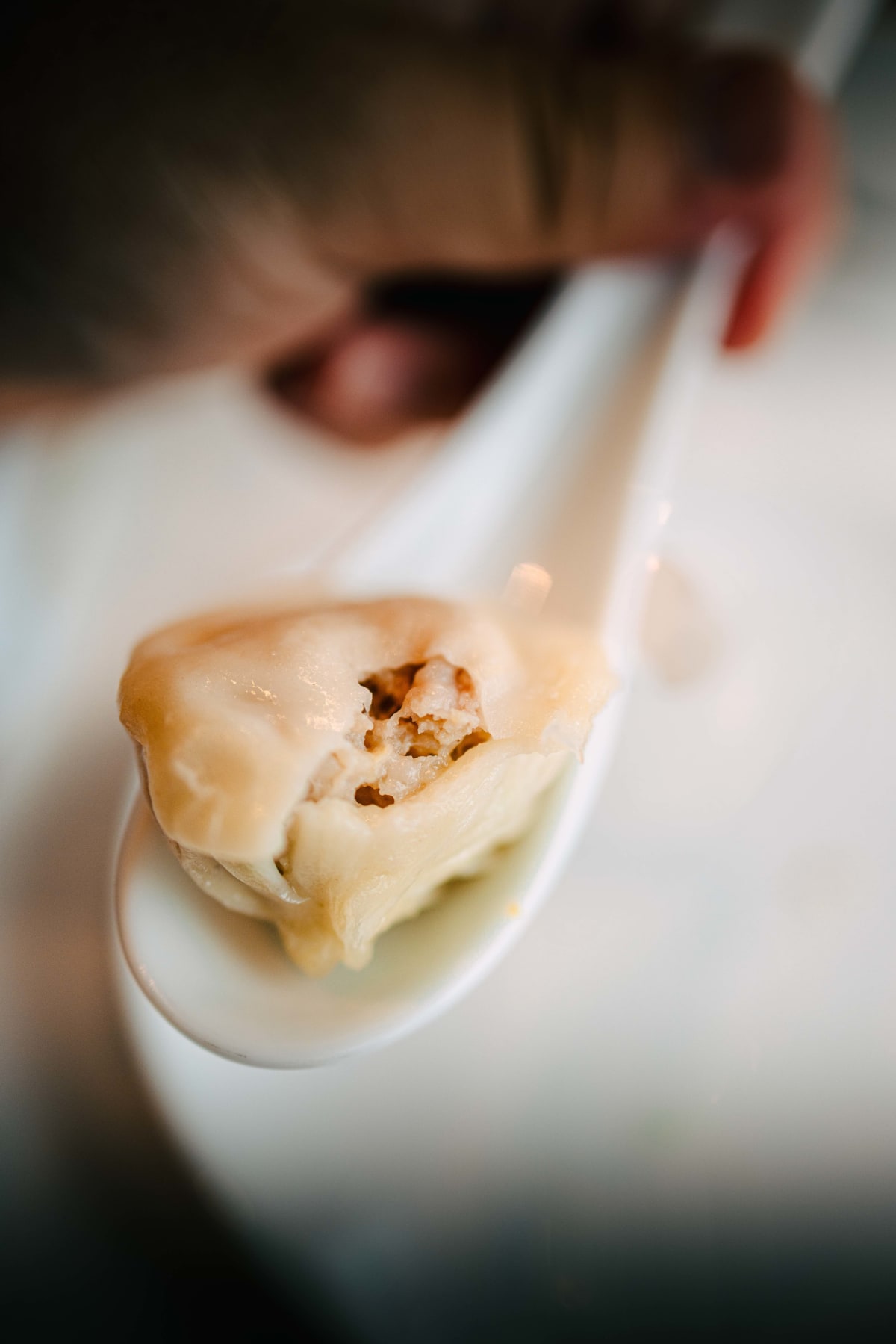
There were plenty of dim sum here you rarely see in Korea, of course, but among the signature items some were fairly familiar. One was 蟹肉小籠包 (Steamed Shanghainese Pork Dumplings with Crab Meat), the dumpling we call xiao long bao. This one held pork and crab meat, and there was juice and broth inside, so tearing the skin and drinking it was delicious. It is what I tend to order at dim sum places in Korea too. Among ten Cantonese dim sum, one place at the table goes to something from the Shanghainese line.
Section 8·The Pineapple Bun
There was also 松子叉燒菠蘿包 (Baked Barbecued Pork Buns with Pine Nuts), what we usually call the pineapple bun, with char siu and pork inside. I once ate something similar at the Tim Ho Wan that opened at Yongsan Station, and frankly there is no comparison. They say Hong Kongers do not go to Tim Ho Wan all that often, and I still do not understand why I went to a Tim Ho Wan at Yongsan Station rather than in Hong Kong.
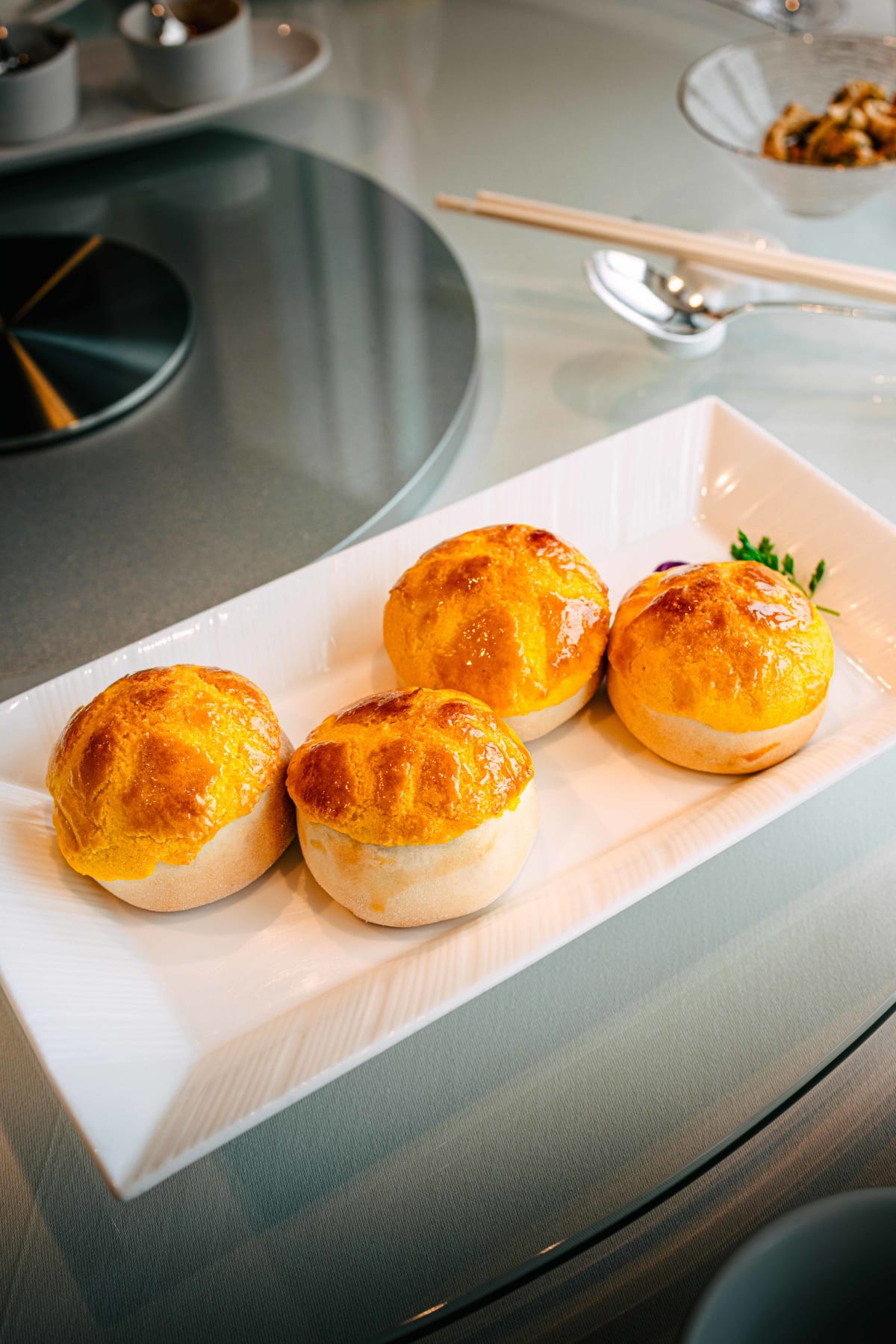
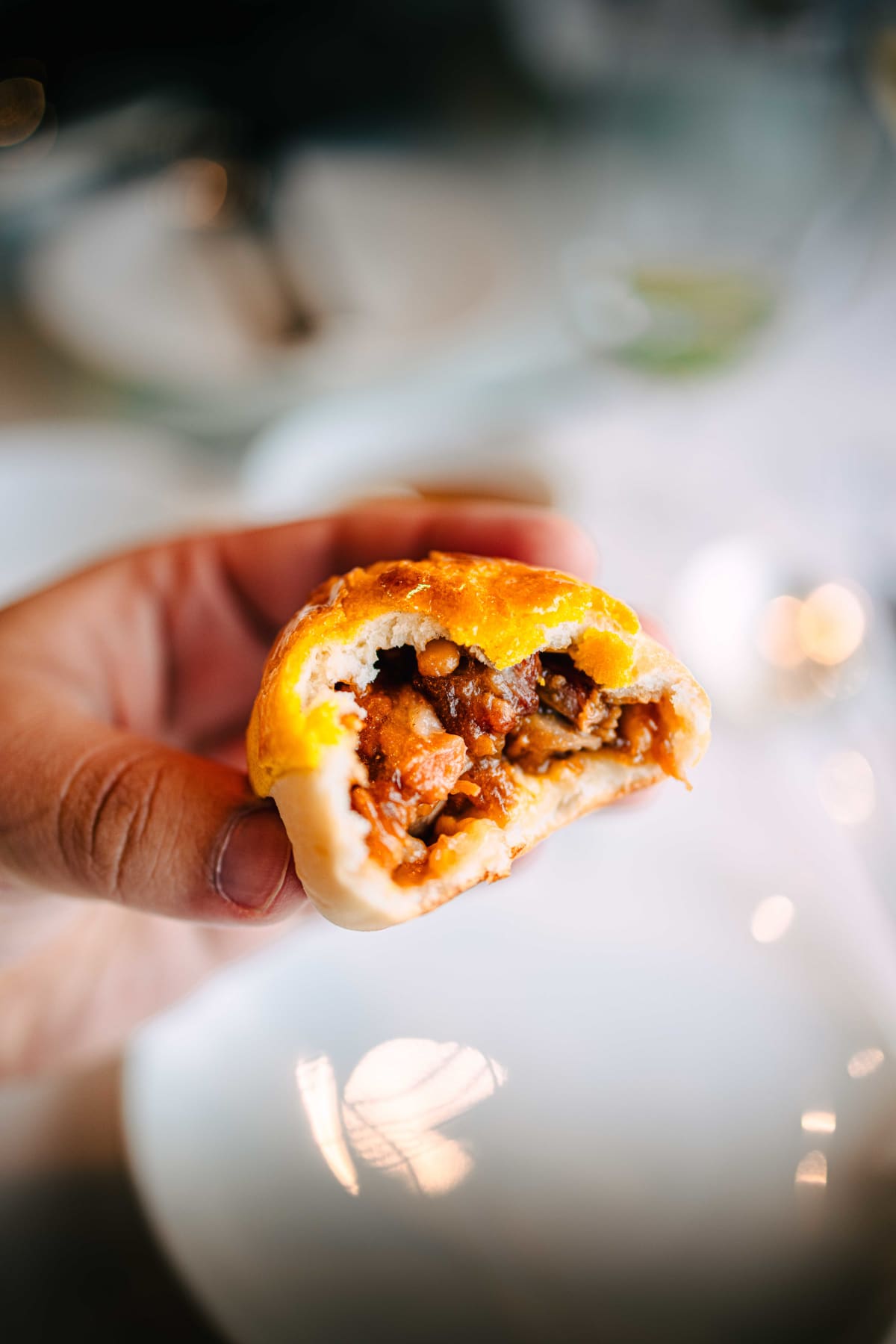
For the record, the name pineapple bun comes not from any fruit in it but from the cracked crust on top, which looks like the skin of a pineapple, and Lung King Heen refines Hong Kong's everyday bread and its char siu bao into a luxury dim sum by working in barbecued pork and pine nuts.
And since Tim Ho Wan has come up, there is something to add. Mak Kwai Pui (麥桂培), the chef who founded Tim Ho Wan, came out of this very dim sum kitchen at Lung King Heen. He left the Four Seasons in 2009 and opened a twenty seat shop in Mong Kok with chef Leung Fai Keung (梁輝強), and the following year, in 2010, it took a Michelin star and came to be called the cheapest starred restaurant in the world. If Lung King Heen showed the summit of Cantonese dim sum inside a luxury hotel, Tim Ho Wan moved the technique learned in that same kitchen into a far more public price and space.
So the pineapple bun I ate at Yongsan Station, disappointing as it was, still started in the kitchen of this house when you trace the line back.
So the pineapple bun I ate at Yongsan Station, disappointing as it was, still started in the kitchen of this house when you trace the line back.
Section 9·Conpoy
The last two dim sum were 花菇雞粒炸粉粿 (Deep-fried Chicken Dumplings with Mushroom and Conpoy) and 銀瑤蘿蔔蝦春卷 (Crispy Spring Rolls with Shrimp, Conpoy and Turnip), and the same item went into both. That was conpoy, dried scallop.
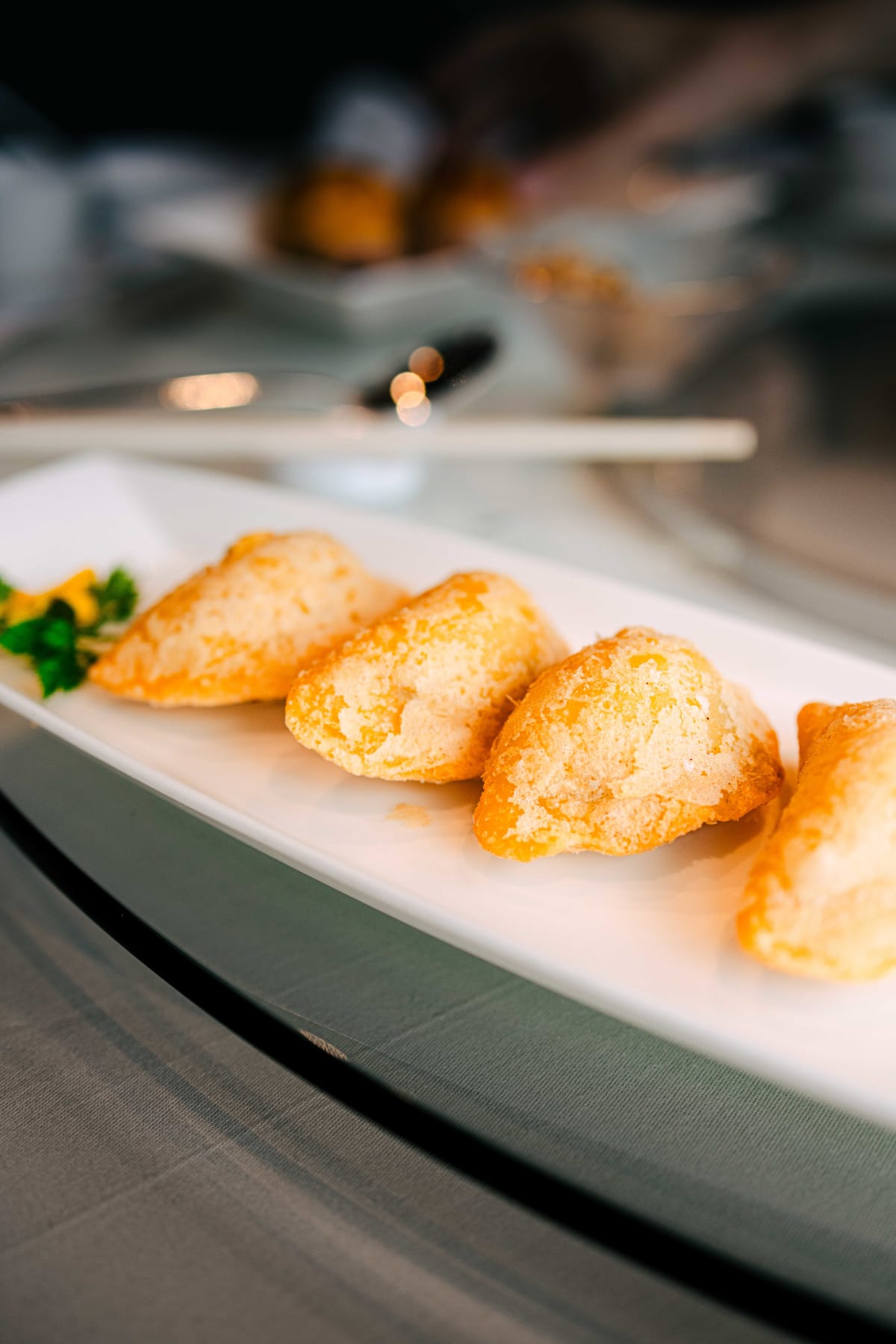
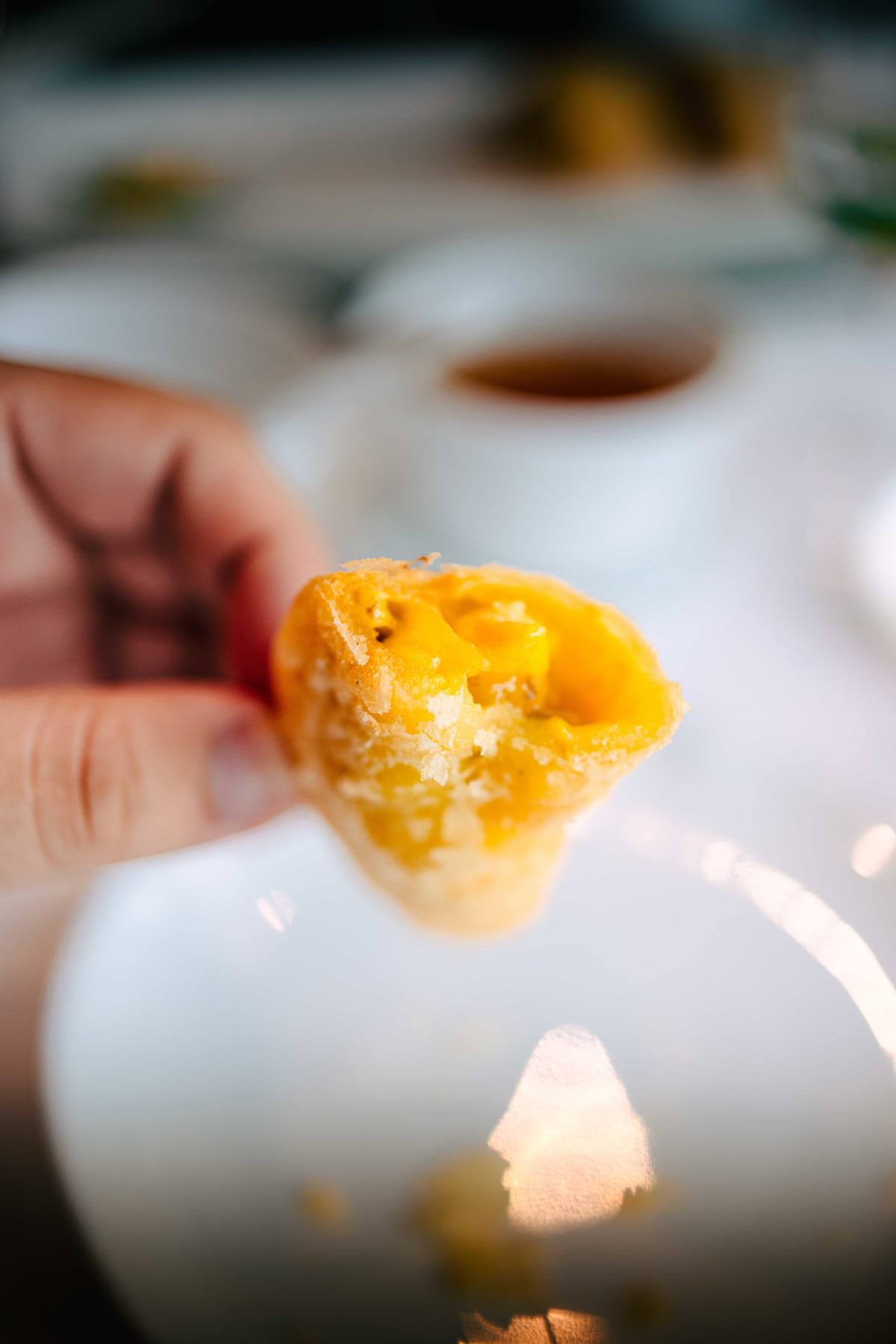
Dried scallop is said to be one of the most important ingredients for savour in Cantonese cooking, used especially in high end dishes to add depth of flavour. In fact I had no idea scallop was in there while eating, and only learned it later by looking at the menu and reading up.
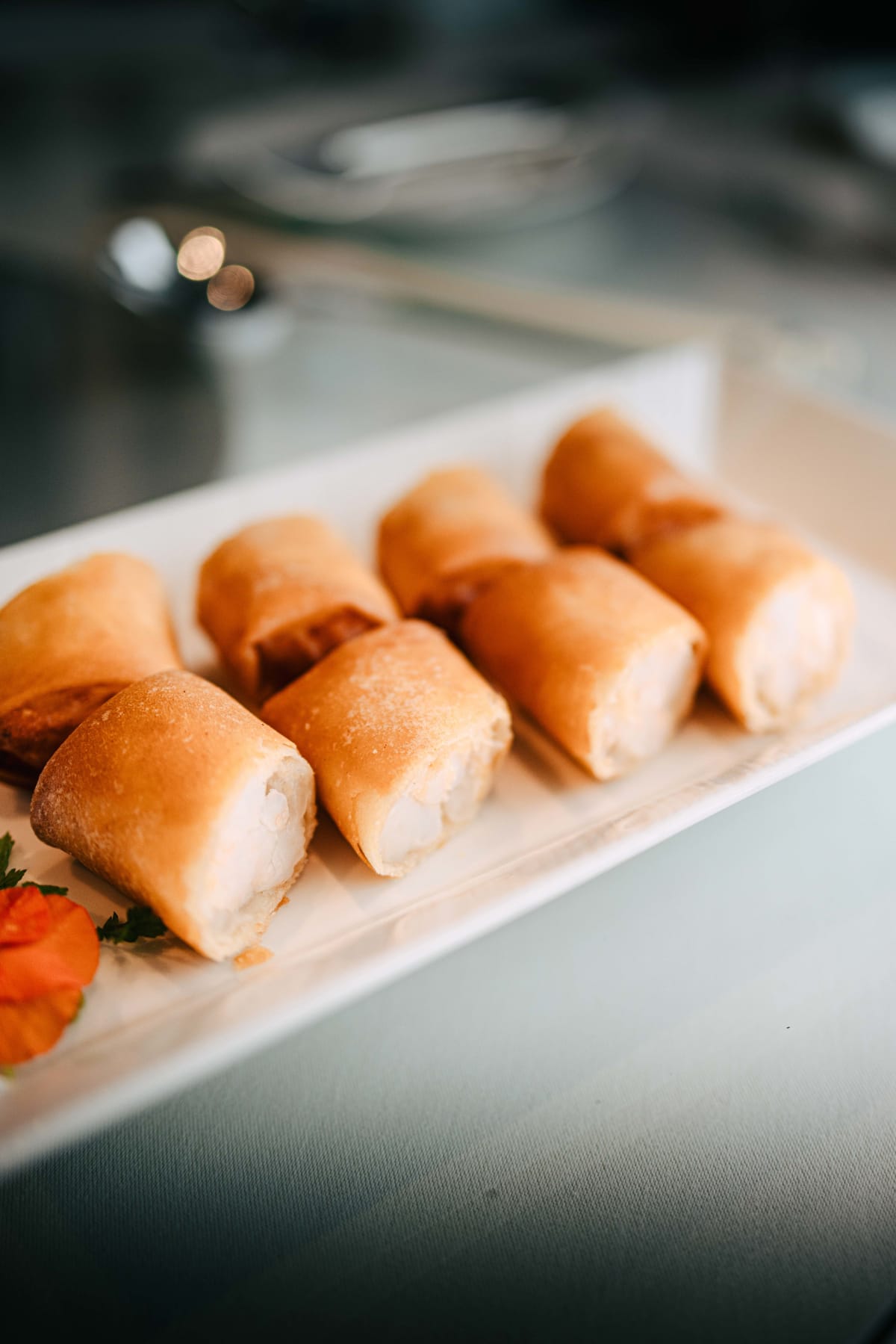
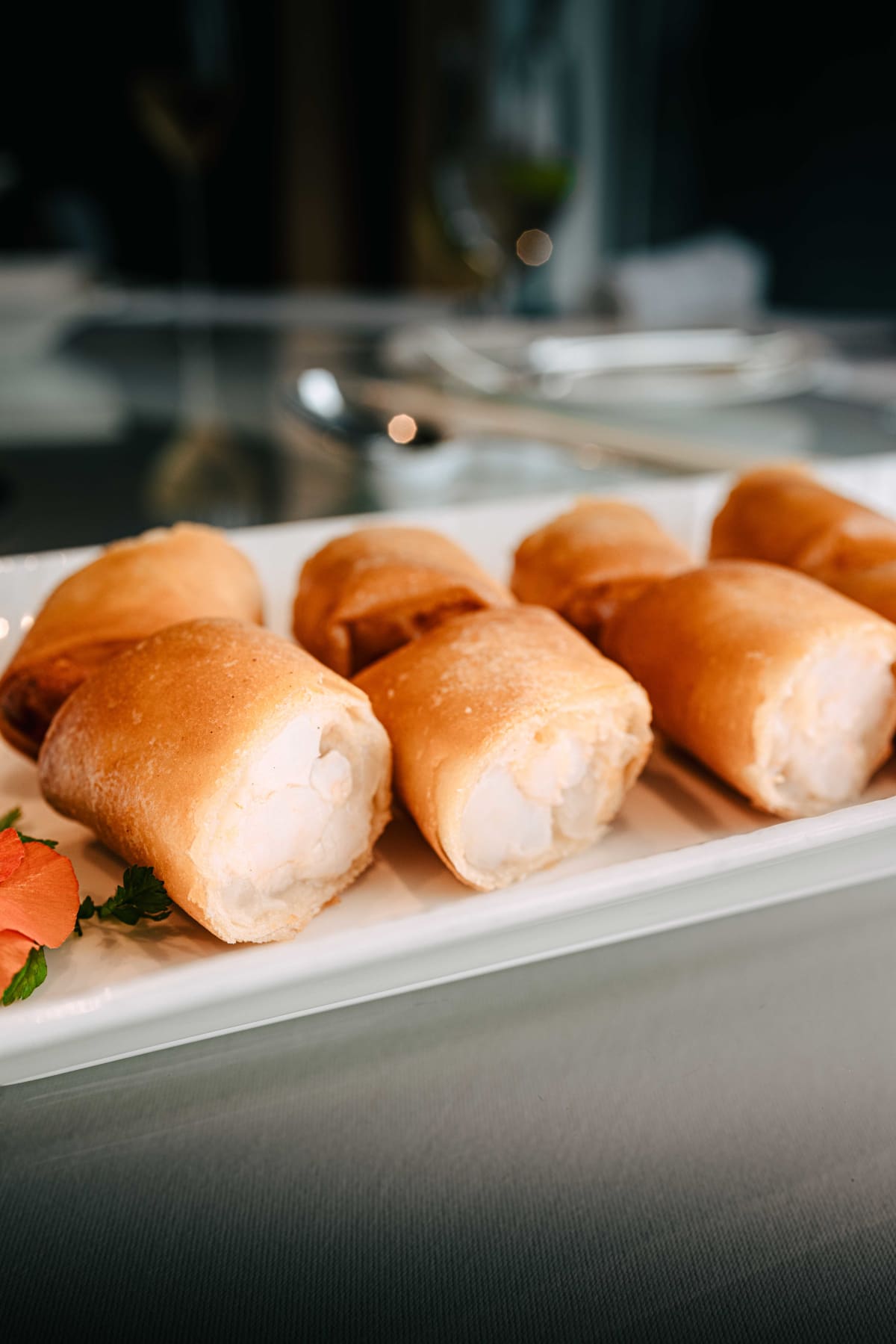
To my mind it is an ingredient that plays something like the bass in music.
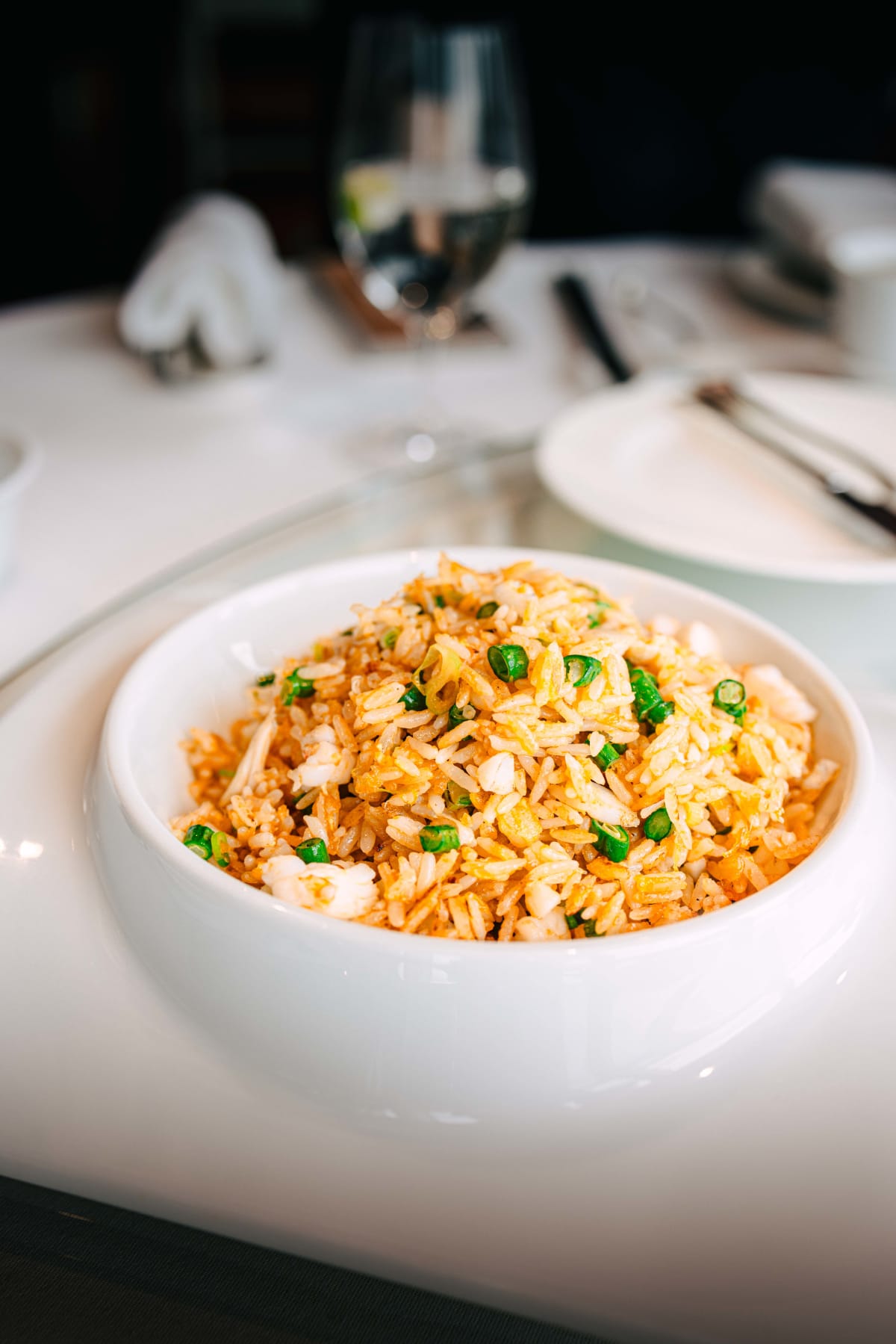
Having eaten all ten dim sum to this point it still felt a little short, so we ordered fried noodles and rice.
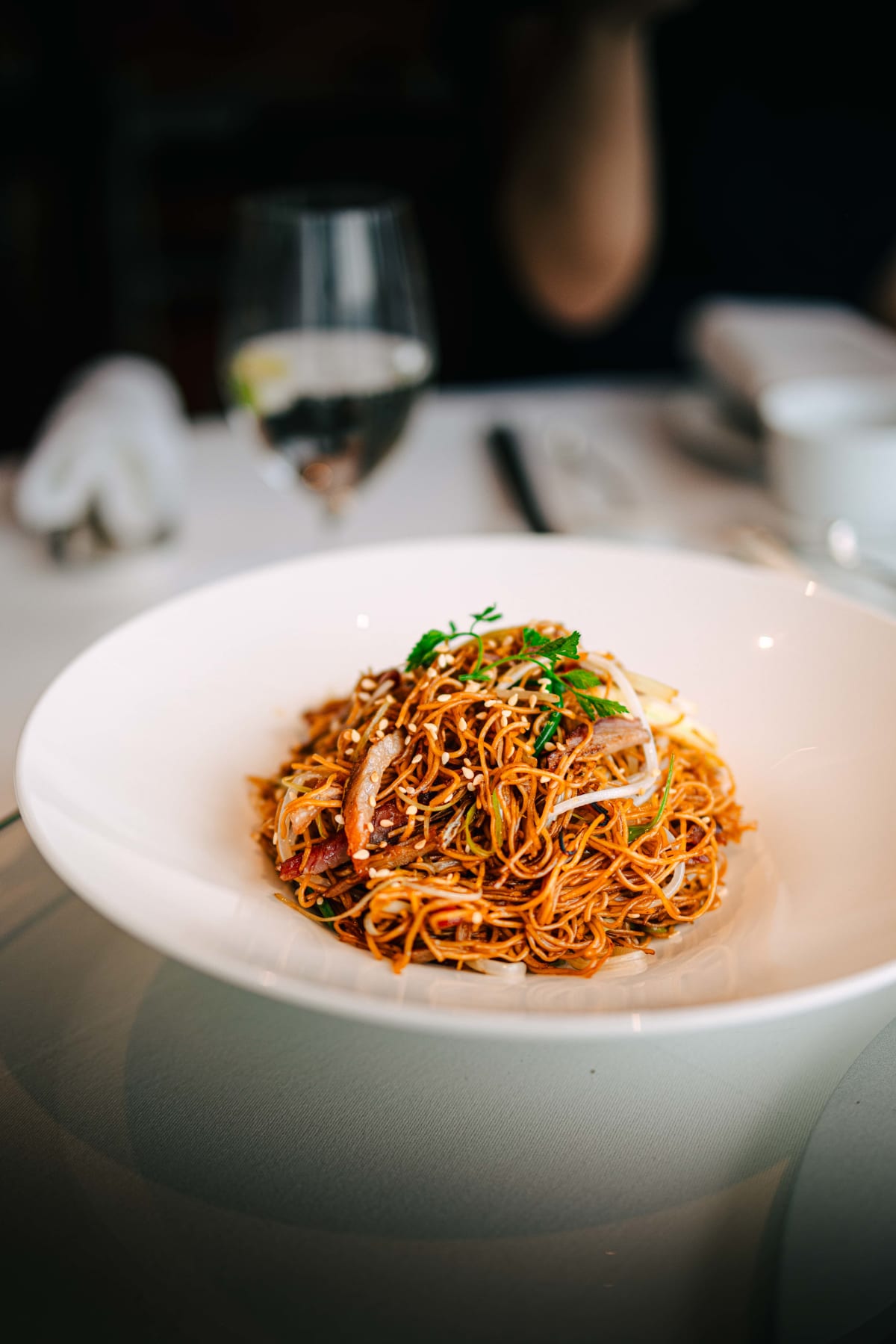
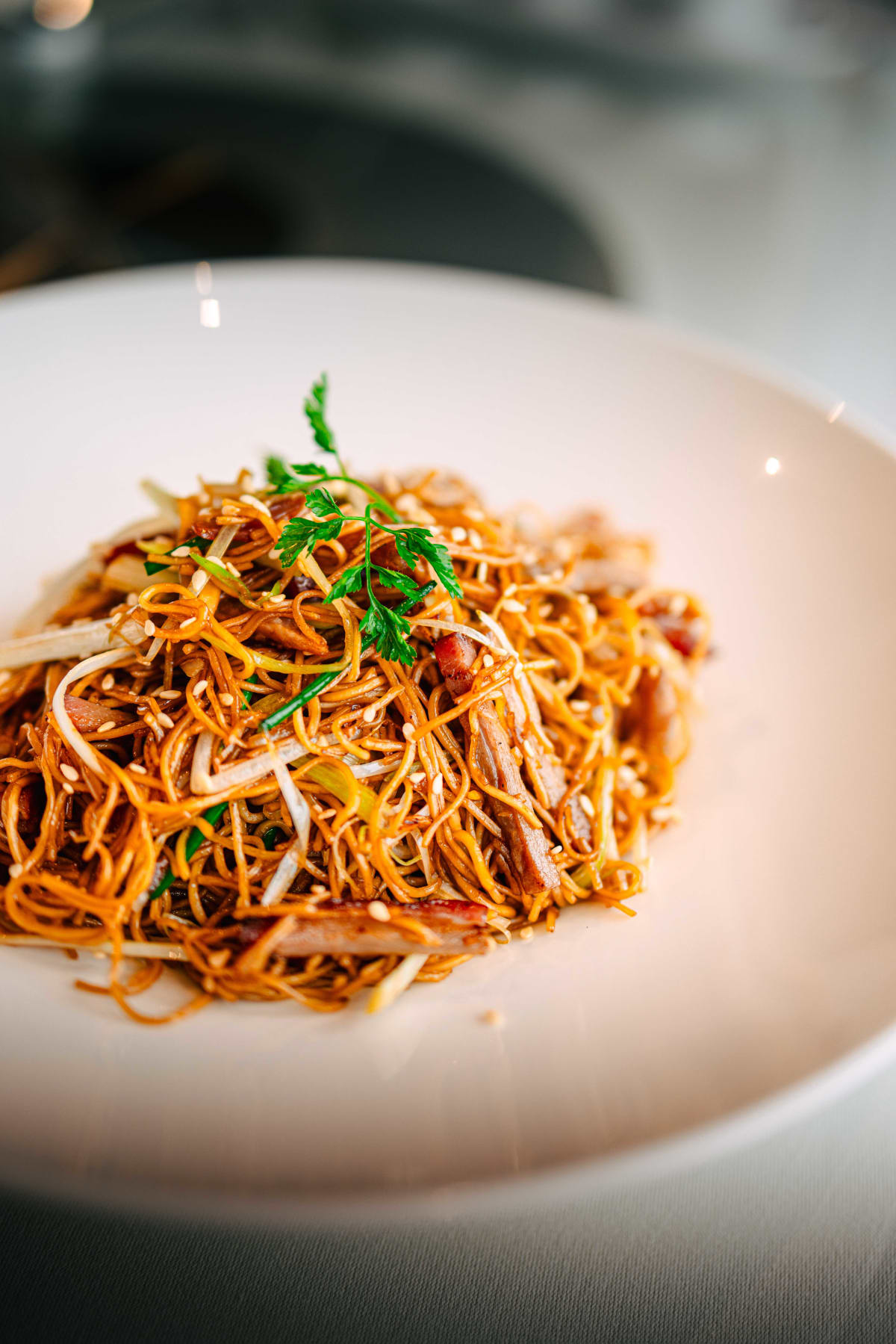
A kind server portioned both out for us.
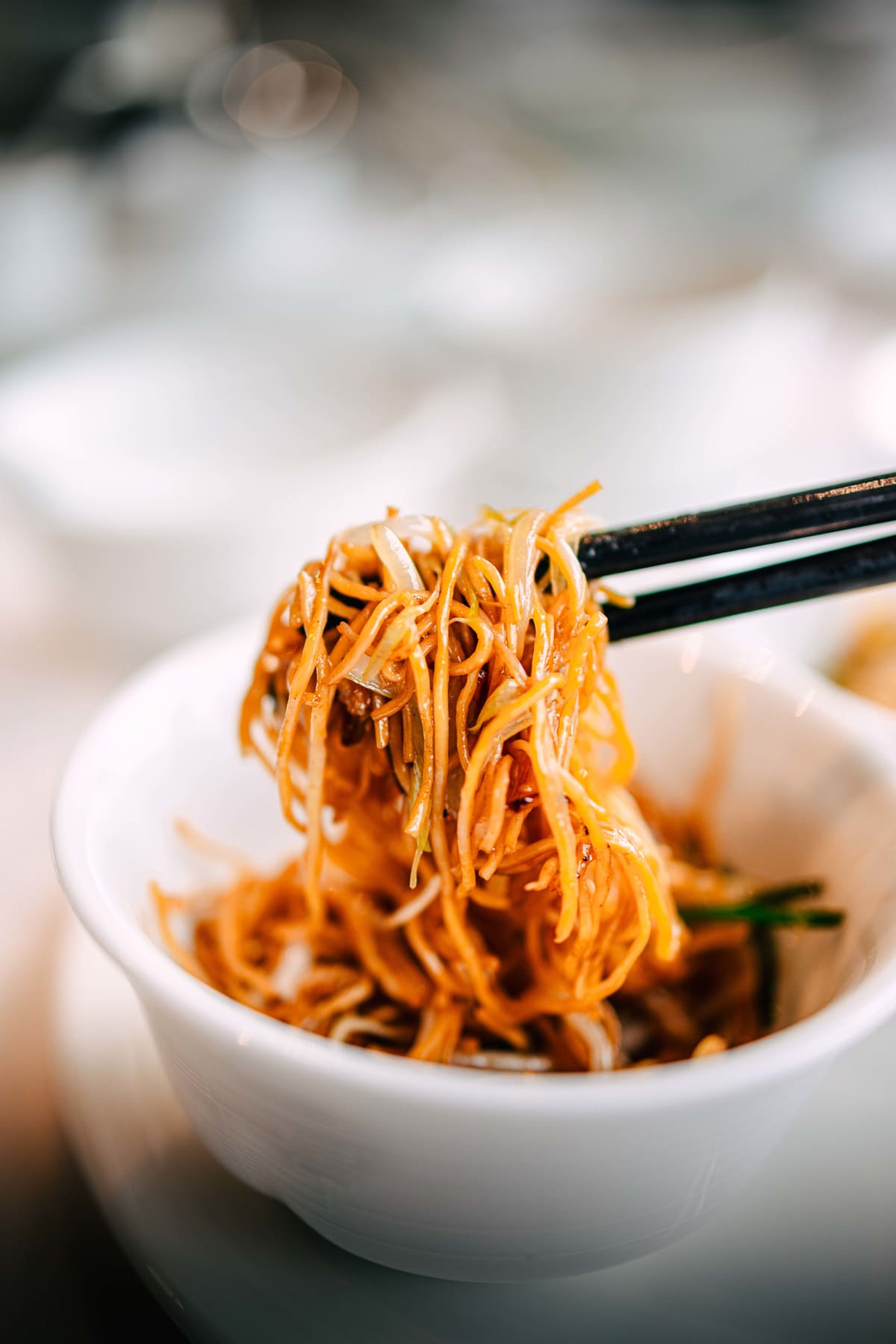
The noodle struck me as a style you rarely see in Chinese restaurants in Korea. It was a thin egg noodle, served with a sweet sauce and pork.
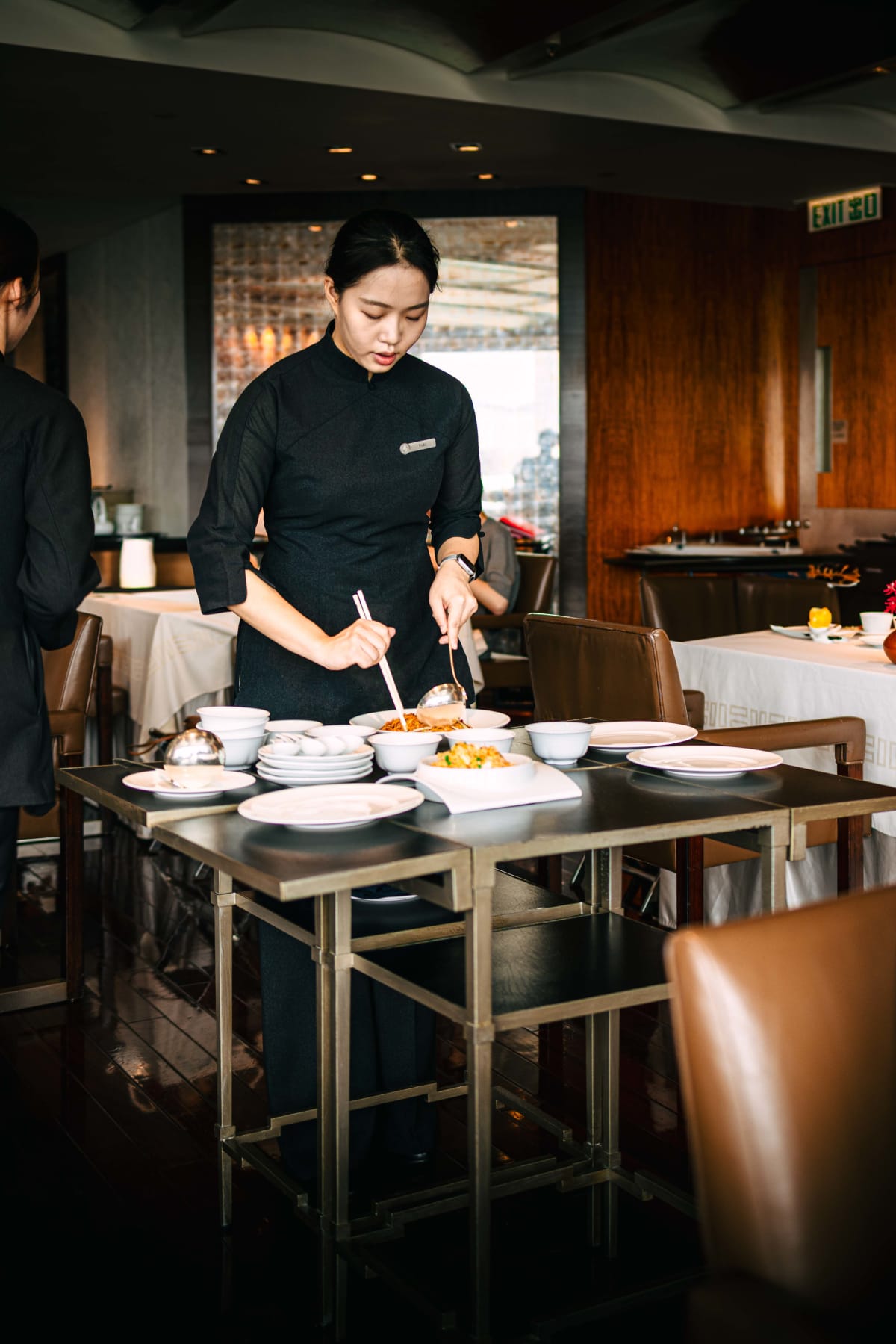
It tasted good, though I think tastes would divide between this and the Chinese noodles we have at home.
Section 10·The Desserts
Then it was time for the last course, dessert, and frankly the newer experience, and the bigger shock that came with it, was here rather than in the dim sum.
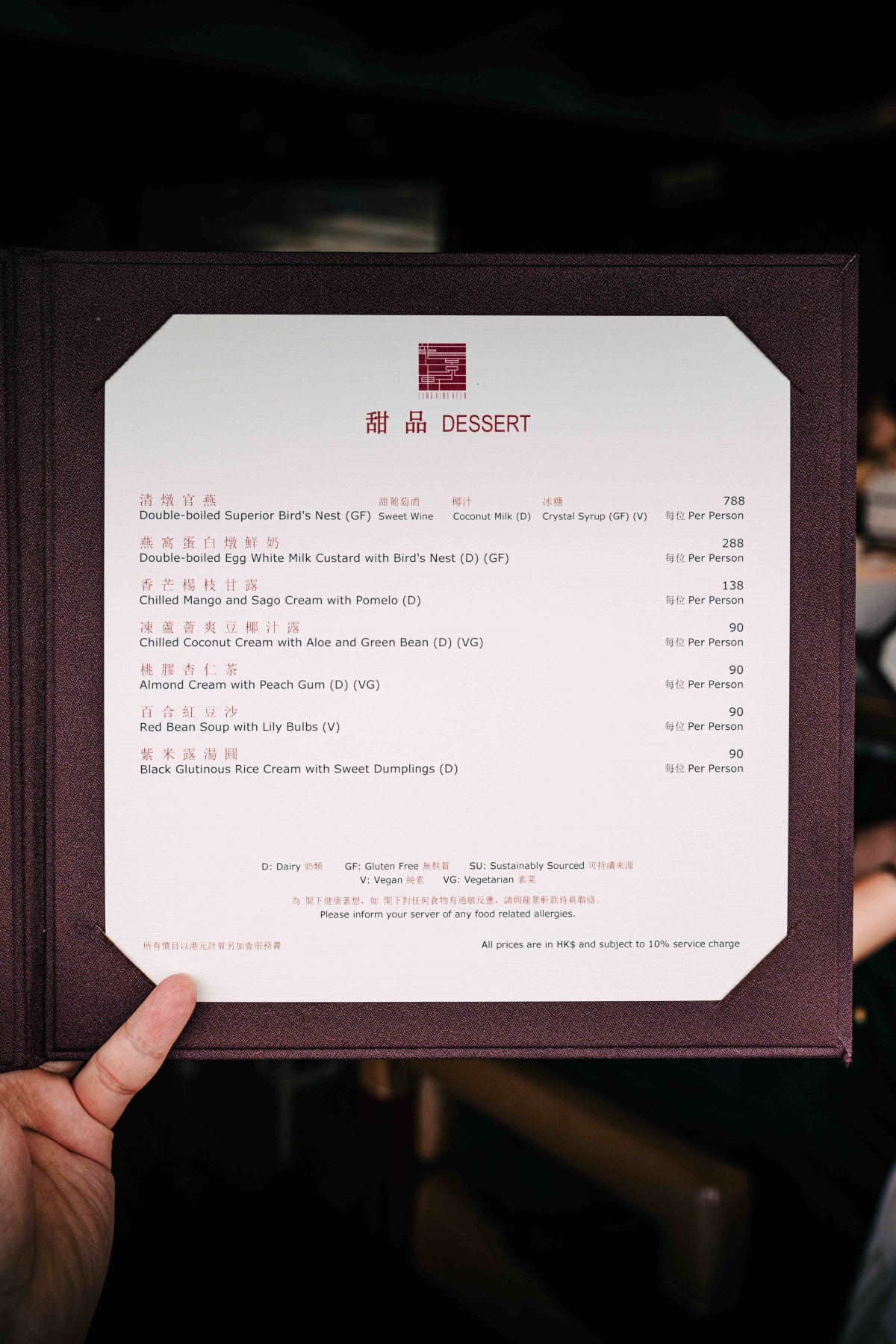
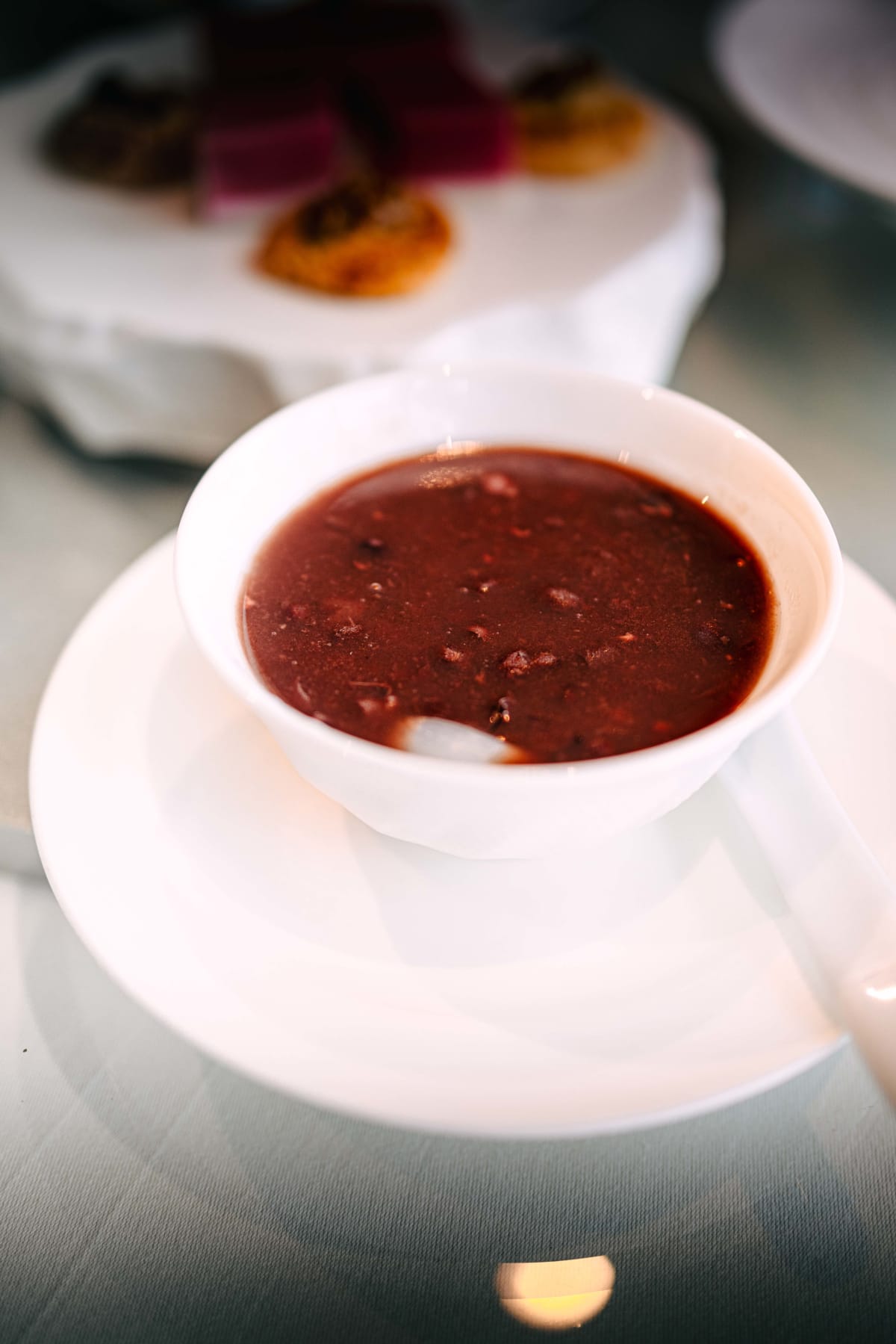
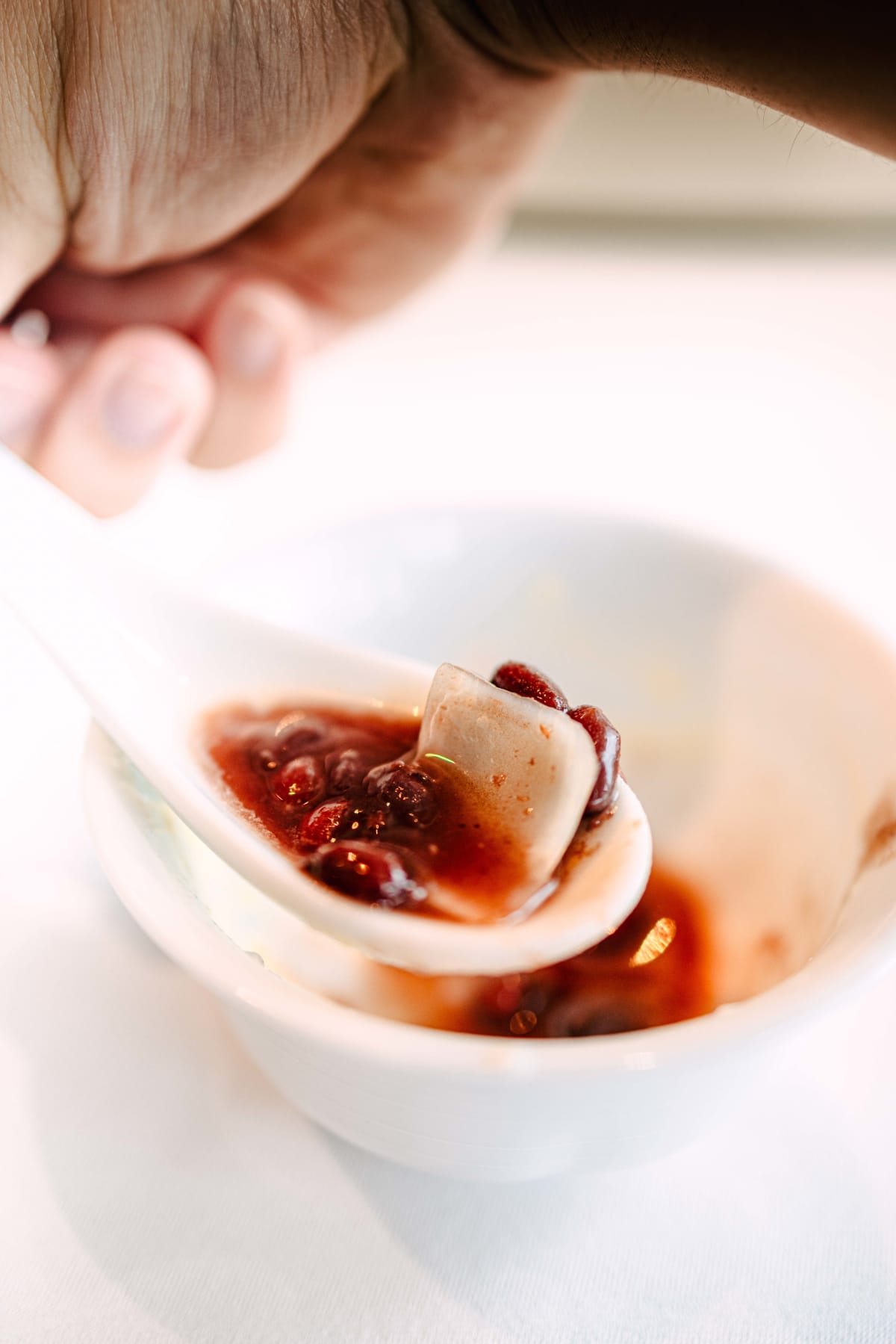
We ordered four: the bird's nest dessert 燕窩蛋白燉鮮奶 (Double-boiled Egg White Milk Custard with Bird's Nest), the mango dessert 香芒楊枝甘露 (Chilled Mango and Sago Cream with Pomelo), 百合紅豆沙 (Red Bean Soup with Lily Bulbs) made with red bean and lily, and 凍蘆薈爽豆椰汁露 (Chilled Coconut Cream with Aloe and Green Bean), said to use green bean and aloe.
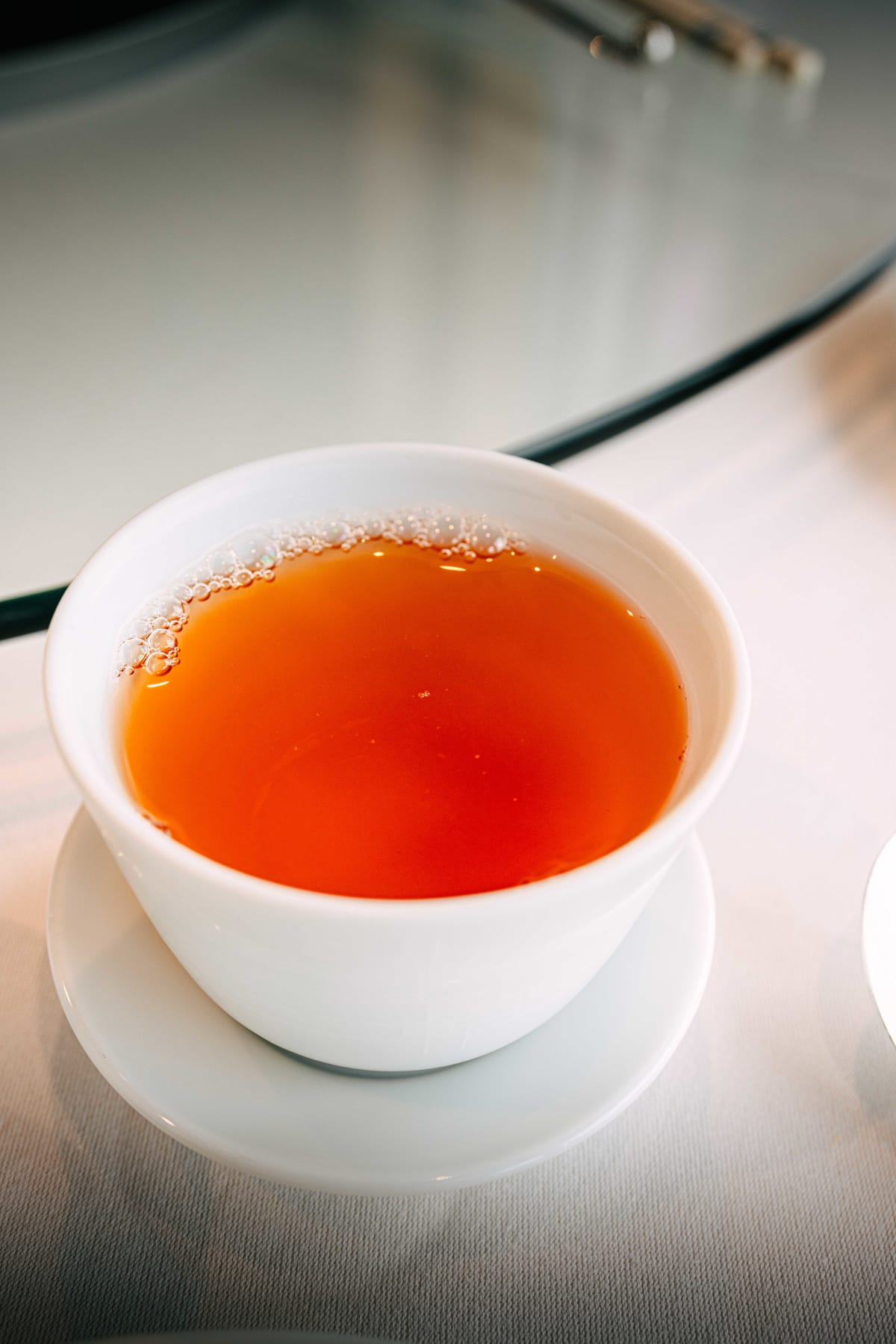
Not one of them is a dessert I had ever come across in a neighbourhood Chinese restaurant in Korea, or a high end one, or even a hotel Chinese restaurant.
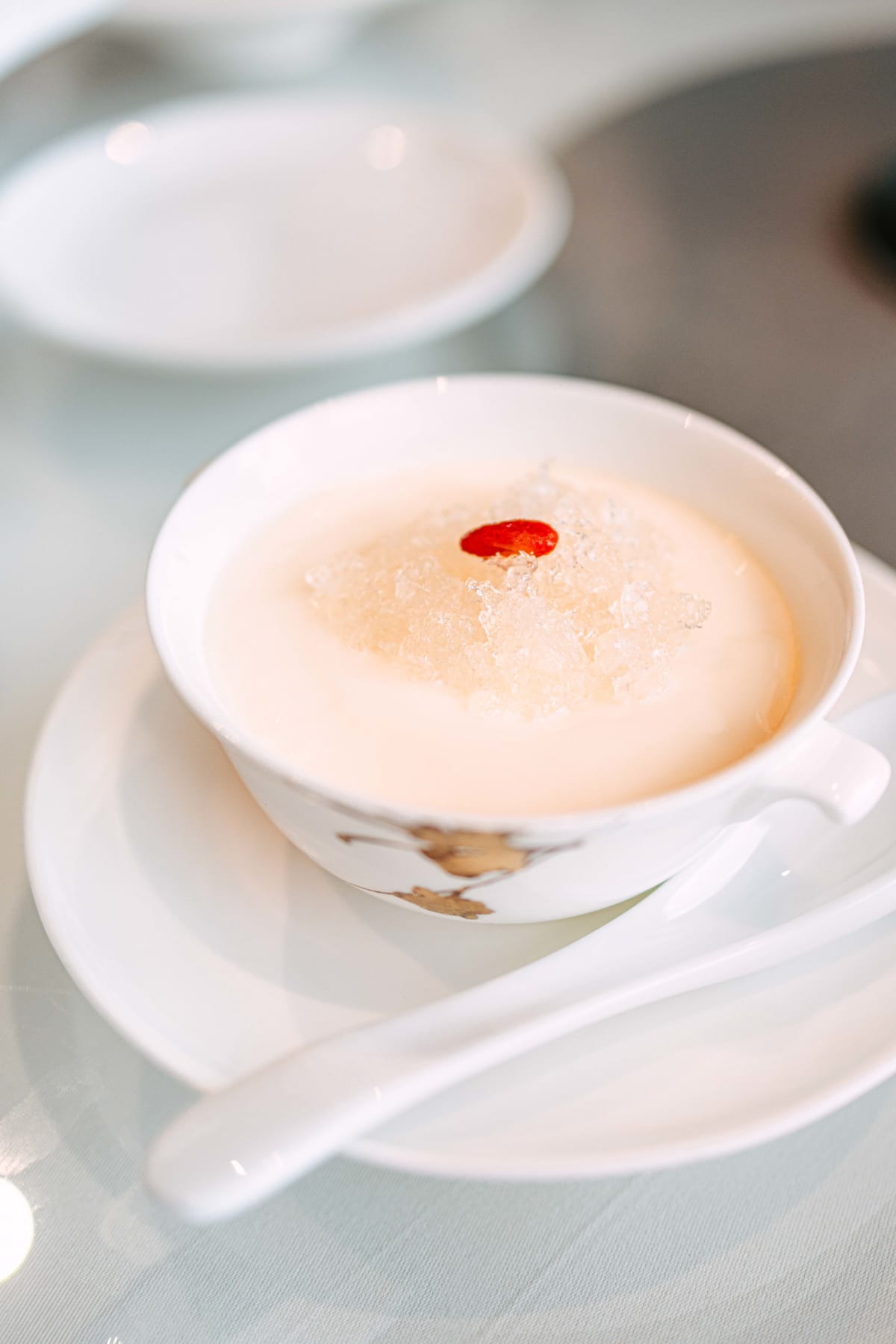
I have eaten plenty of annin tofu (杏仁豆腐) in Japan, but there you mostly enjoy the thing itself, whereas the desserts at Lung King Heen are eaten together with other ingredients, and those ingredients were very new to me.
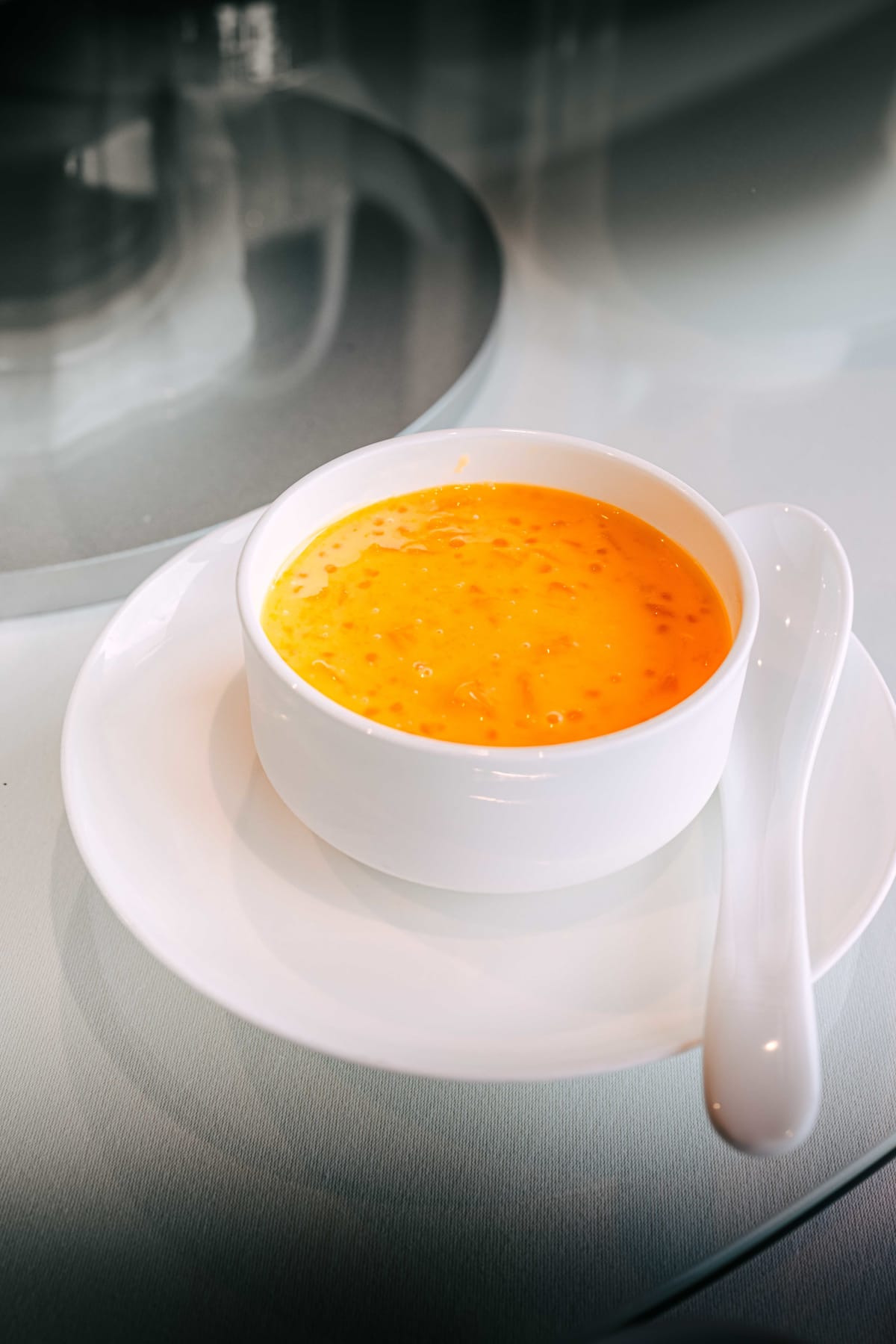
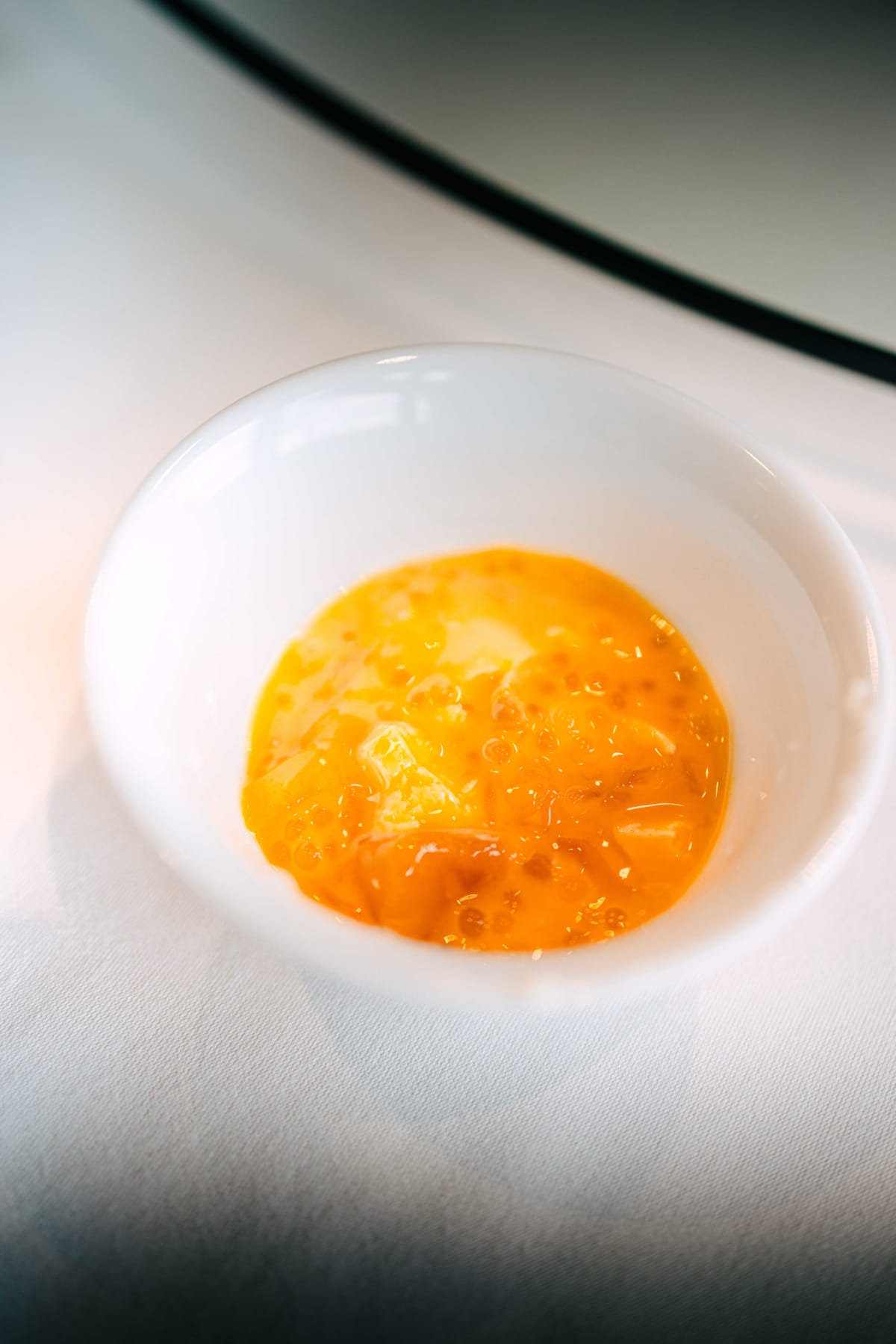
For the record, the most expensive item on that menu was 淸燉官燕 (Double-boiled Superior Bird's Nest) at HKD 788 per person, where the sweetening is a choice between sweet wine, coconut milk and crystal syrup.
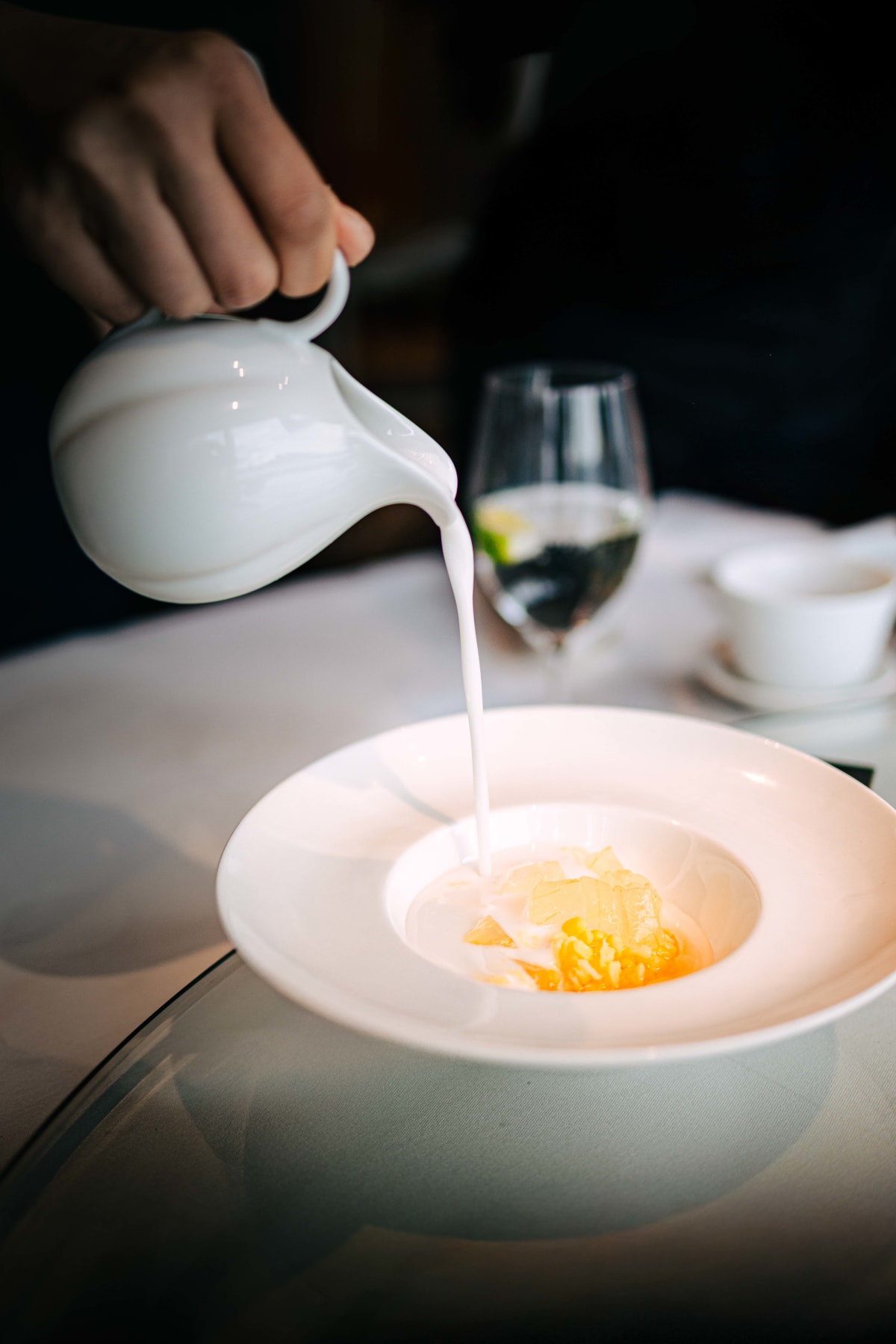
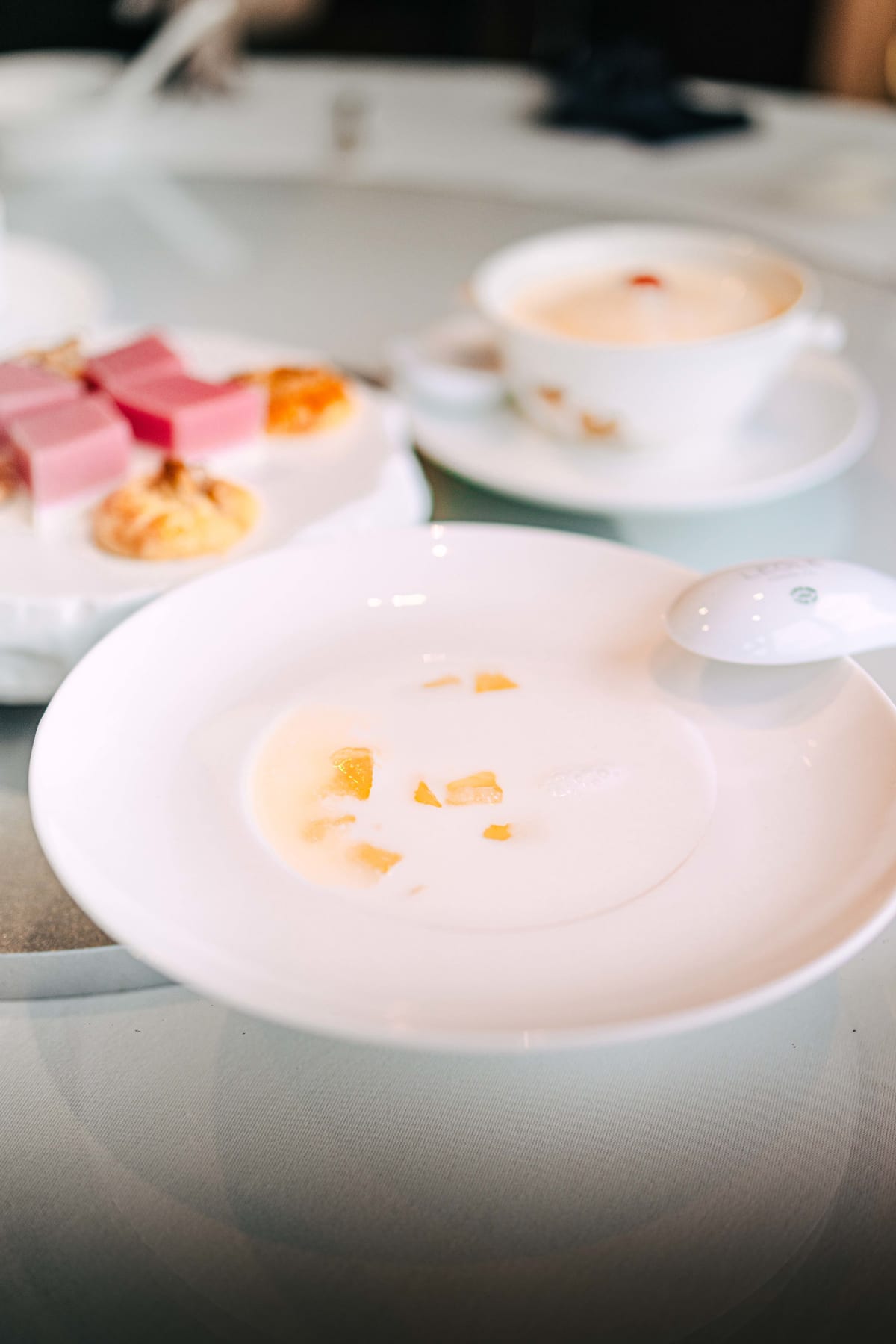
Of the desserts the one that tasted good in the most immediate way was the mango, 香芒楊枝甘露, and the one that was new and inventive and addictive enough to keep pulling my chopsticks back was the bird's nest, 燕窩蛋白燉鮮奶. And the one I have to say was disappointing was 百合紅豆沙, the red bean and lily. In Cantonese cooking a red bean dessert like this usually has chenpi, dried mandarin peel, worked into it, and at the time, with little experience of Cantonese food behind me, I think the taste of chenpi was a bit much for me.
It has been close to two years since I went, and unlike my memory of the dim sum, which has faded a good deal, my sense of the desserts and how they landed is comparatively vivid.
Section 11·In Sum
We ate and drank that day and the bill came to somewhere in the mid two hundred thousand won per person, I think. If you only ate dim sum, or six or seven dim sum plus a dish or two, I think you could have lunch here in the one hundred thousands. Expensive for dim sum, certainly, but thinking of it as lunch at a two Michelin star restaurant looking out at the sea, I think the price is good.
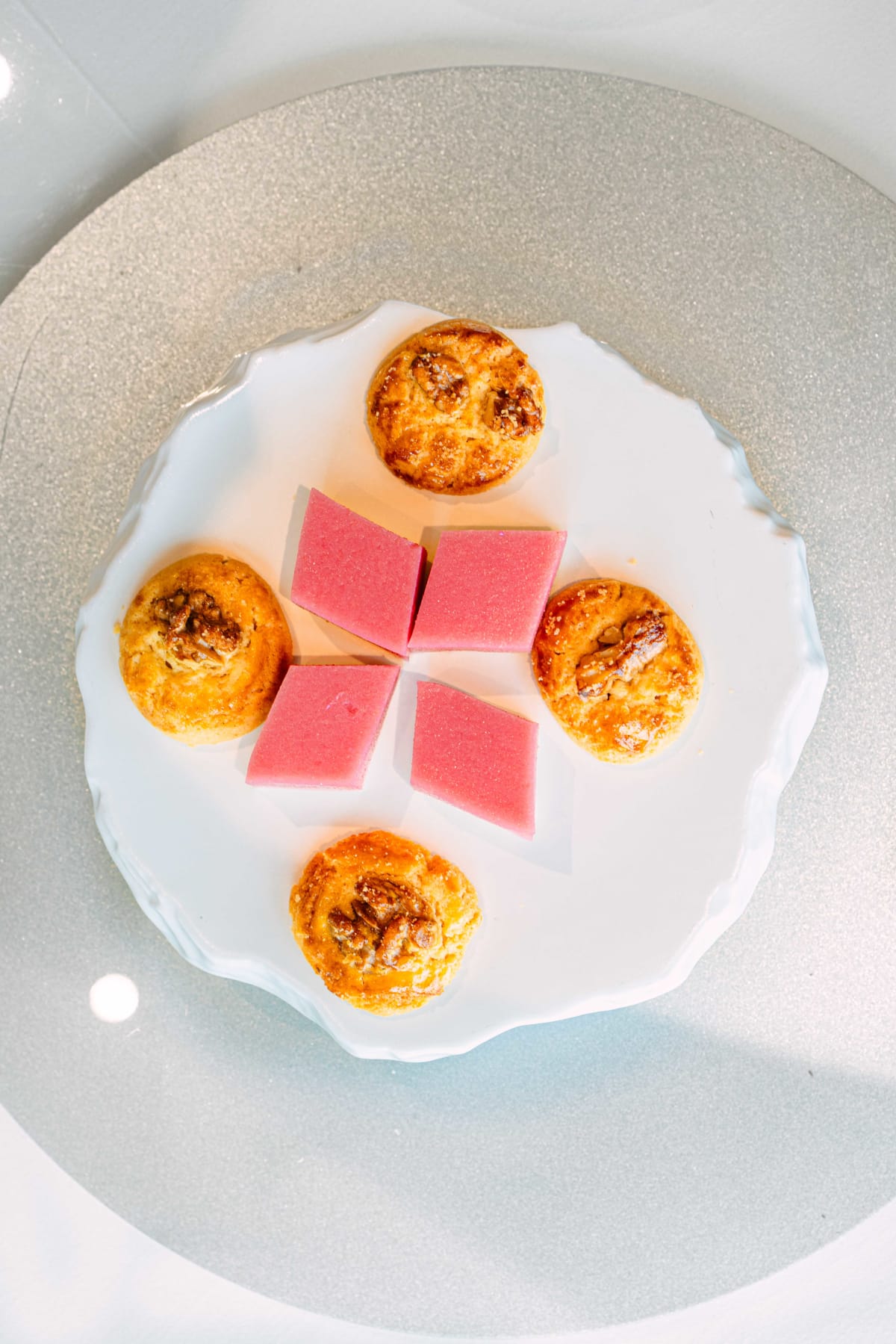
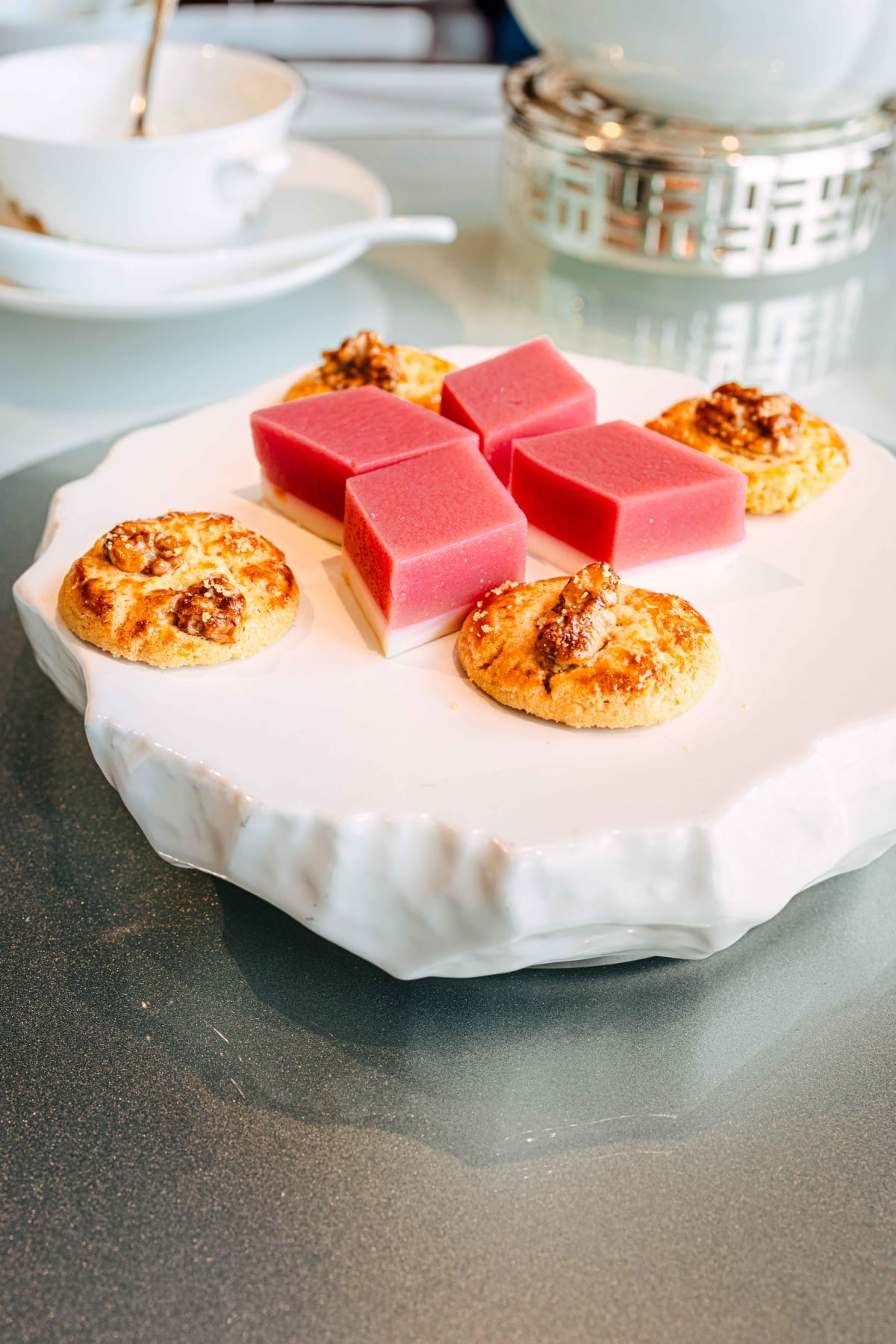
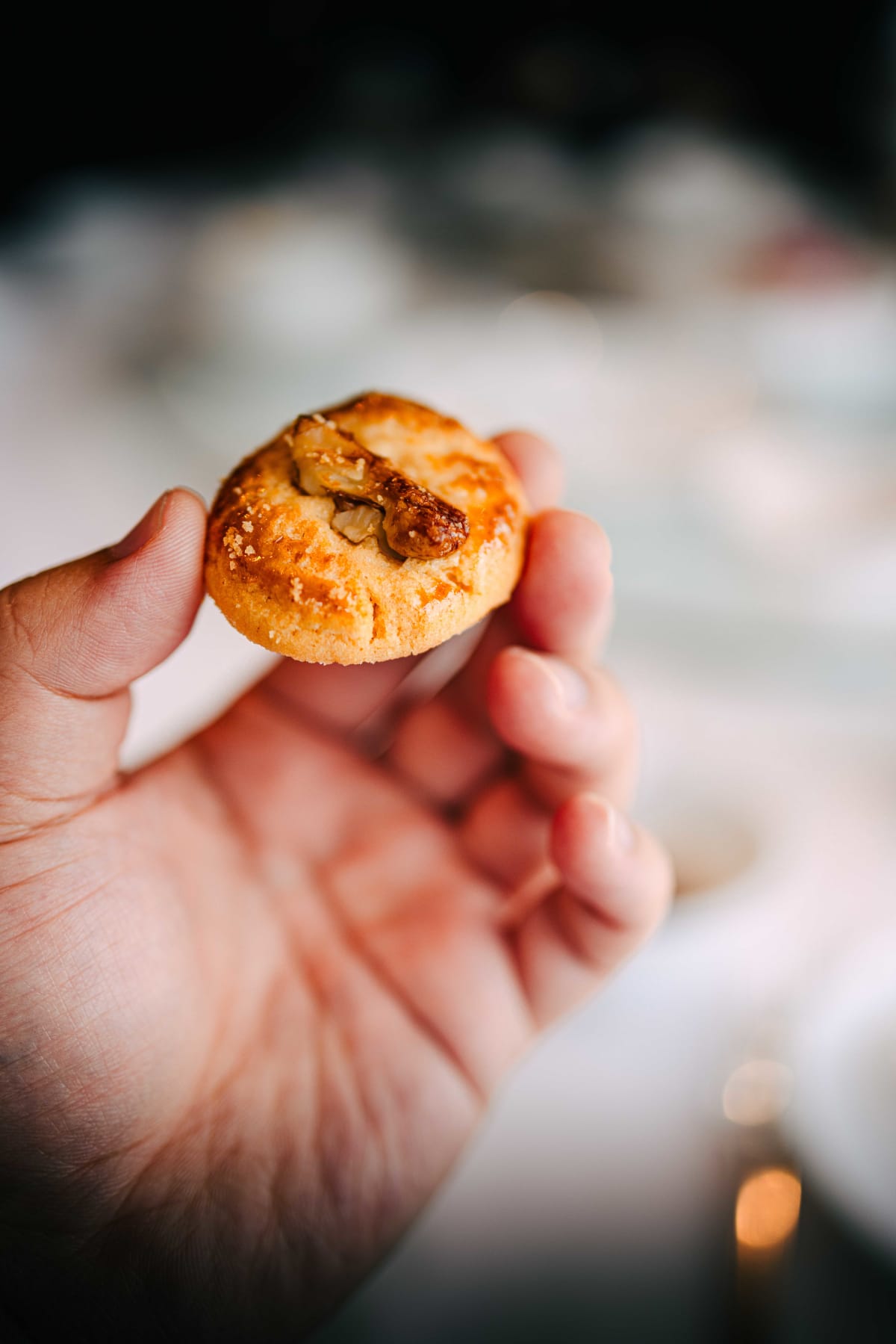
The ocean view, of course, has to be claimed by arriving early.
I did a lot of searching while writing this review, and the dim sum menu has changed a great deal, with plenty among the things I did not eat that look delicious. The next time I am in Hong Kong and eating dim sum at lunch, I will come back to Lung King Heen.
Lunch and dinner here are close to two different restaurants. The dim sum lunch is the version most visitors come for; dinner moves into banquet territory, the double-boiled soups and dried seafood braises the guide singles out alongside the dim sum, at several times the price. A dim sum lunch is a real visit to this house, and a partial one. The lunch format suits a group, since the dim sum is ordered à la carte and shared, and it asks nothing of you in advance, which makes it an unusually easy two star to walk into. A per-person minimum spend now applies, and the harbour side is the point of the room, so the window table is worth asking for at the time of booking rather than on arrival.
Have a question about this restaurant, or want to share your own experience?
Send a message