Fine Dining · Causeway Bay · Hong Kong / September 2024 / Michelin ★★★
Forum Restaurant,
富臨飯店
"The Causeway Bay institution where an 'abalone king' built a three-Michelin-star name out of a single dried-abalone dish"
Section 1·A Solo Detour
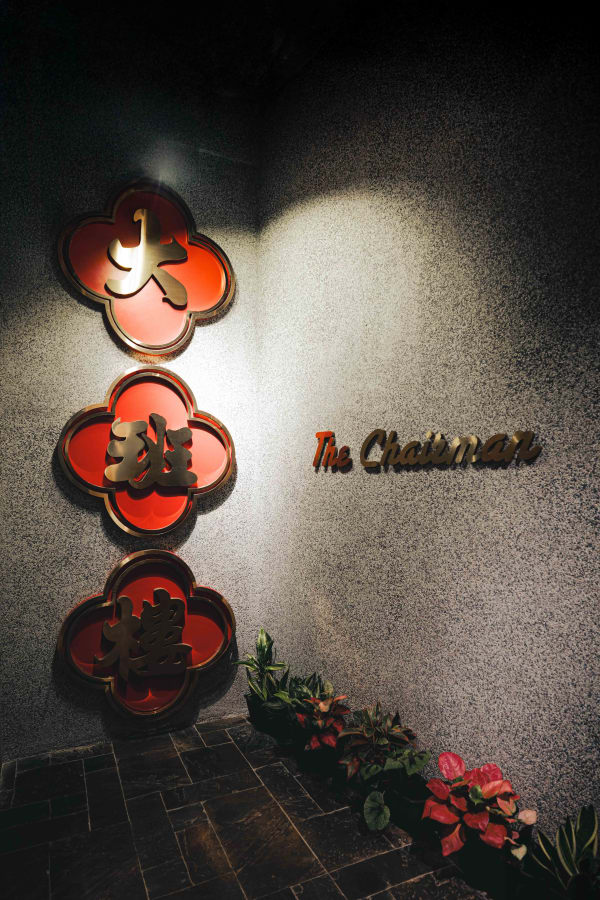
Hong Kong is, by any measure, one of the world's great food cities: it has seven three-Michelin-star restaurants, more than New York or Barcelona. The main purpose of my trip to a sweltering Hong Kong in September 2024 was less the three-star restaurants than the various hard-to-book places that rank well on the World's 50 Best, such as The Chairman, WING, and VEA.
On the first evening, though, I had time to myself, and I wanted to see for once what a Hong Kong three-star is like. Since I was in Hong Kong I wanted Cantonese food, and so the place I booked was this one, Forum Restaurant.
Section 2·The House
Unlike most of Hong Kong's high-end restaurants, which cluster in Central, Forum Restaurant sits in a mall in Causeway Bay, Sino Plaza (1/F, 255-257 Gloucester Road).

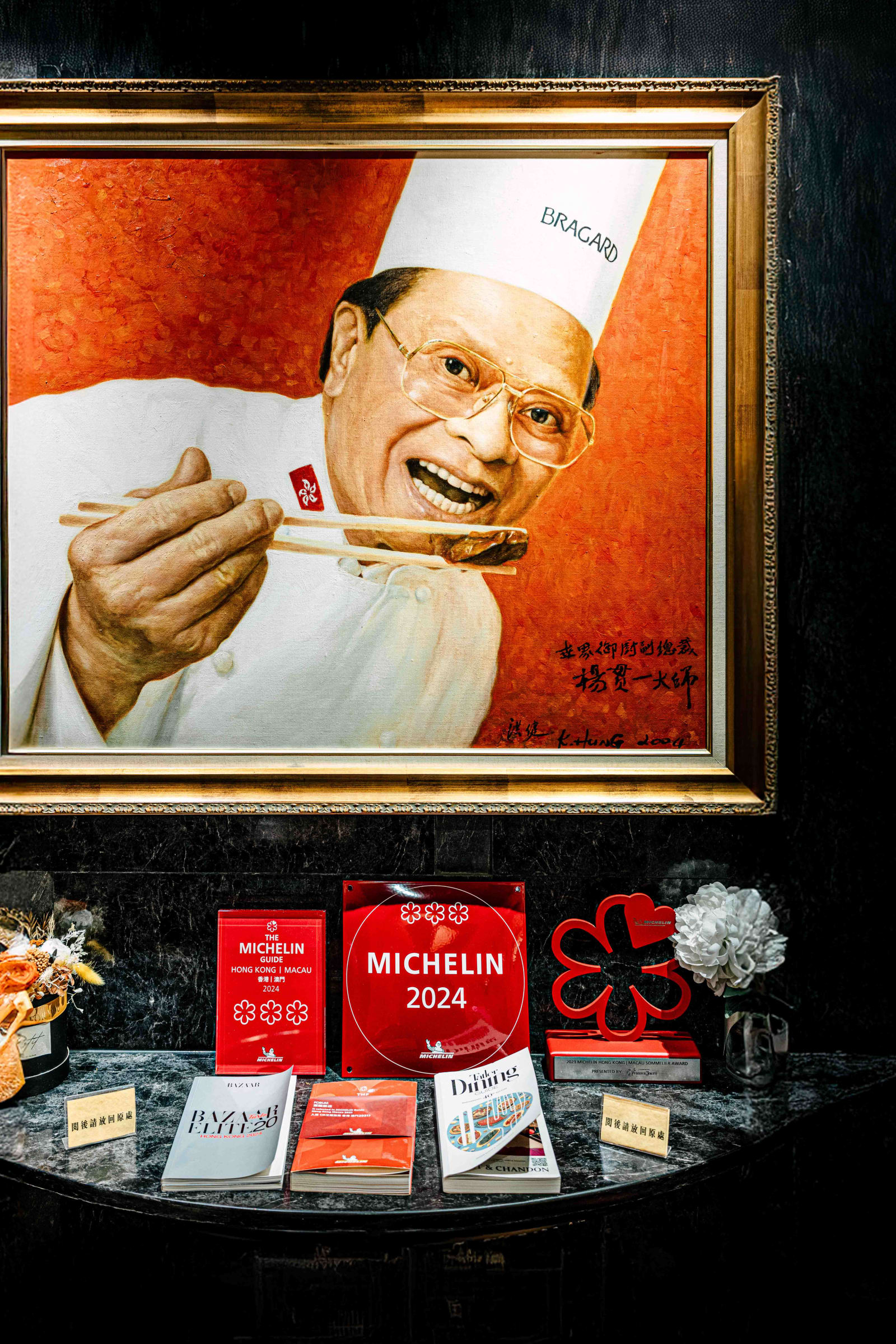
It is a restaurant that opened in the 1970s, with a deep history, and its stature was easy to read from the entrance alone: a wall of awards, features in foreign newspapers, a portrait of the founding chef.

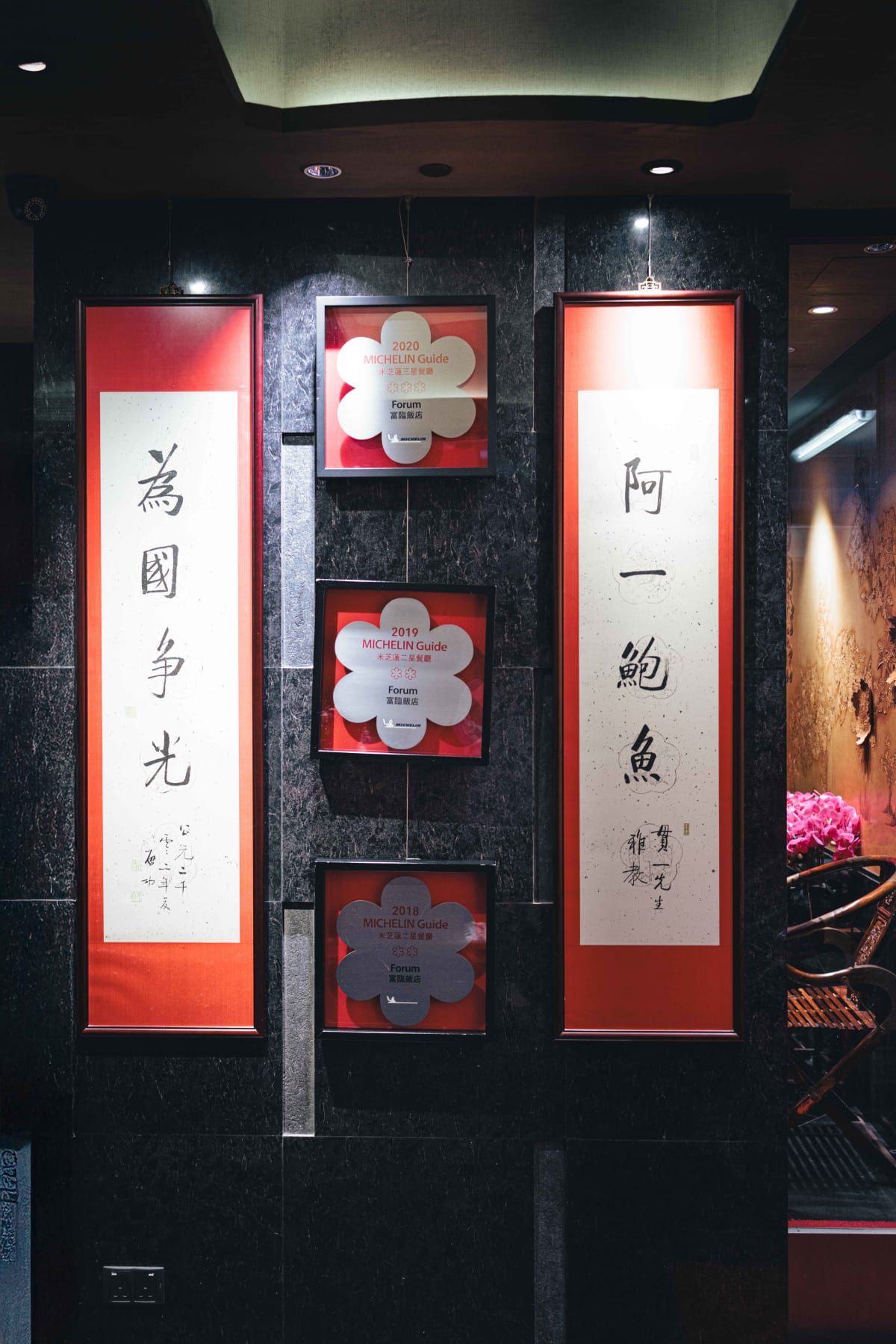
Forum's history is a little unusual. It opened in 1974 (the "1977" in its name refers to the year its corporate and ownership structure was formalized), an independent Cantonese old-timer that had already built its reputation decades before Michelin arrived in Hong Kong. Its Michelin stars came in stages: one star in the inaugural 2009 Hong Kong and Macau guide, a second in 2018, a third in 2020, and it has held three stars ever since. The first three-star Chinese restaurant in Hong Kong was Lung King Heen, in 2009, but Forum's significance lies in the reverse of the usual story: not a famous restaurant whose dish became famous, but the opposite. When the restaurant was in crisis, its founder staked everything on a single dish, and that dish ended up making the identity and the global fame of the whole restaurant.
When the restaurant was in crisis, its founder staked everything on a single dish, and that dish ended up making the identity and the global fame of the whole restaurant.
Section 3·The Abalone King
You cannot really explain this place without the story of that dish and its founder. Yeung Koon-yat (楊貫一), the founder, came from Zhongshan in Guangdong and crossed to Hong Kong alone at around sixteen. He was not a chef who had climbed a formal kitchen elite track; he started with odd jobs and front-of-house service at upscale restaurants, spent nearly twenty years learning the trade on the floor, and opened Forum in 1974. Around fifty, the single signature dish he chose to make the restaurant memorable was dried abalone, then a symbol of wealth and authority. He poured a sum that could have bought a house in Hong Kong into Japanese dried abalone, and after three years of experimenting late into the night at a charcoal brazier once service was over, he completed the dish he named after himself, 阿一鮑魚 (Ah Yat Abalone). In the mid-1980s he cooked abalone for Deng Xiaoping and other senior figures, which cemented his standing as the "abalone king," and in 2021 he received the Order of the Rising Sun from the Japanese government for his long use of Japanese dried abalone (from Yoshihama in Iwate, Oma in Aomori, and elsewhere). He passed away in July 2023 at the age of ninety.
Yeung is gone, but the kitchen is carried on by disciples who worked alongside him from the 1980s and 1990s, among them executive chef Wong Lung To (黃隆滔), who learned abalone selection and cooking directly from him from 1992. That the restaurant has held three stars even after the founder's death means Michelin is not rewarding a legendary name but continuing to judge a present-day team that reproduces his system in practice.
It is worth first noting what kind of three-star Forum is. This is not a restaurant built around a modern, one-plate-per-person tasting course. The menu is organized into à la carte, sets, banquets, and dim sum, and the space centers on round tables, private rooms, and a banquet hall seating more than a hundred. In other words, rather than the Western fine-dining model of course-by-course invention, it is a place that put the highest form of Cantonese banquet cuisine onto Michelin's international scale, and the judgment seems to rest not on plating but on the grade of ingredients, the concentration, the heat, the texture, and the ability to finish large dishes to the same level every time.

So my first impression was that, unlike an ordinary three-star and much as a Chinese restaurant would be, the menu here really was varied. You can see it on their website too: à la carte, course menus, dim sum menus, and so on. Going alone that day, I had little choice but to order from the course menu, and the courses themselves are split into solo courses and group courses, with some requiring advance ordering.
And the à la carte menu was so vast it was almost the size of a decent French restaurant's wine list, with numeric codes assigned to items and some dishes available only by pre-order. Which is why, everywhere I go in the Chinese-speaking world, I feel a Chinese restaurant is best appreciated with a group. I had heard this is one of Hong Kong's finest dim sum houses, so I am thinking of coming back for dim sum next time.
Section 4·The Room
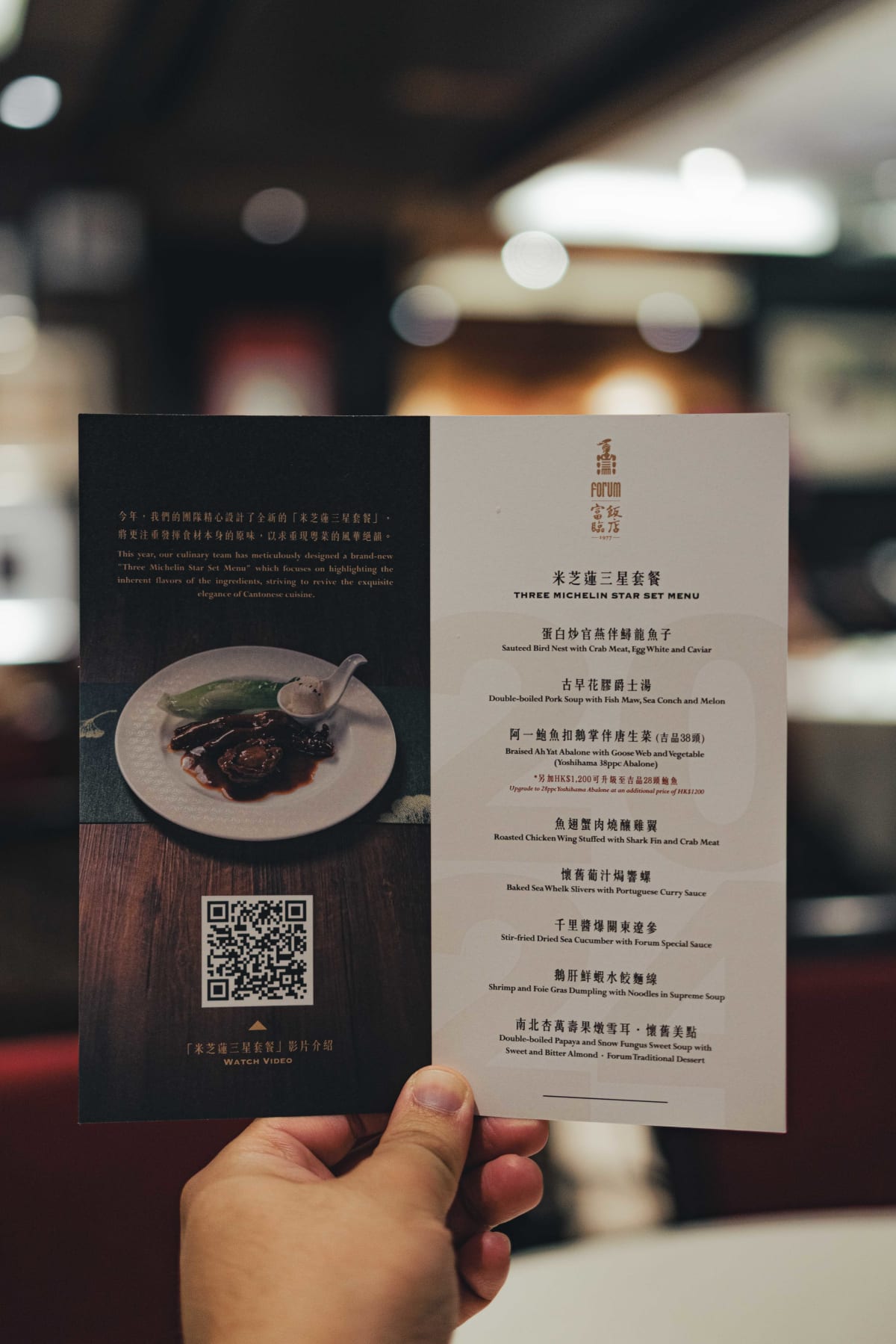
Of these I had the signature course called the Michelin 3 Stars course, made up of seven dishes and one dessert. The wine list, fitting a three-star, was well stocked with fine wines and also had a good range by the glass, and the sommelier's service was good and gracious.
At first there was something slightly disorienting about the casual atmosphere, built around four-top tables like a neighborhood Chinese restaurant, unlike other three-stars. Maybe because of that, although I often dine solo, I felt a touch out of place here. And looking around, people seemed to be ordering the signature à la carte dishes rather than the course.


The first dish to arrive was Sauteed Bird Nest with Crab Meat, Egg White and Caviar (蛋白炒官燕伴鱘龍魚子), a porridge-like sauté of bird's nest, crab meat, and egg, served with caviar.
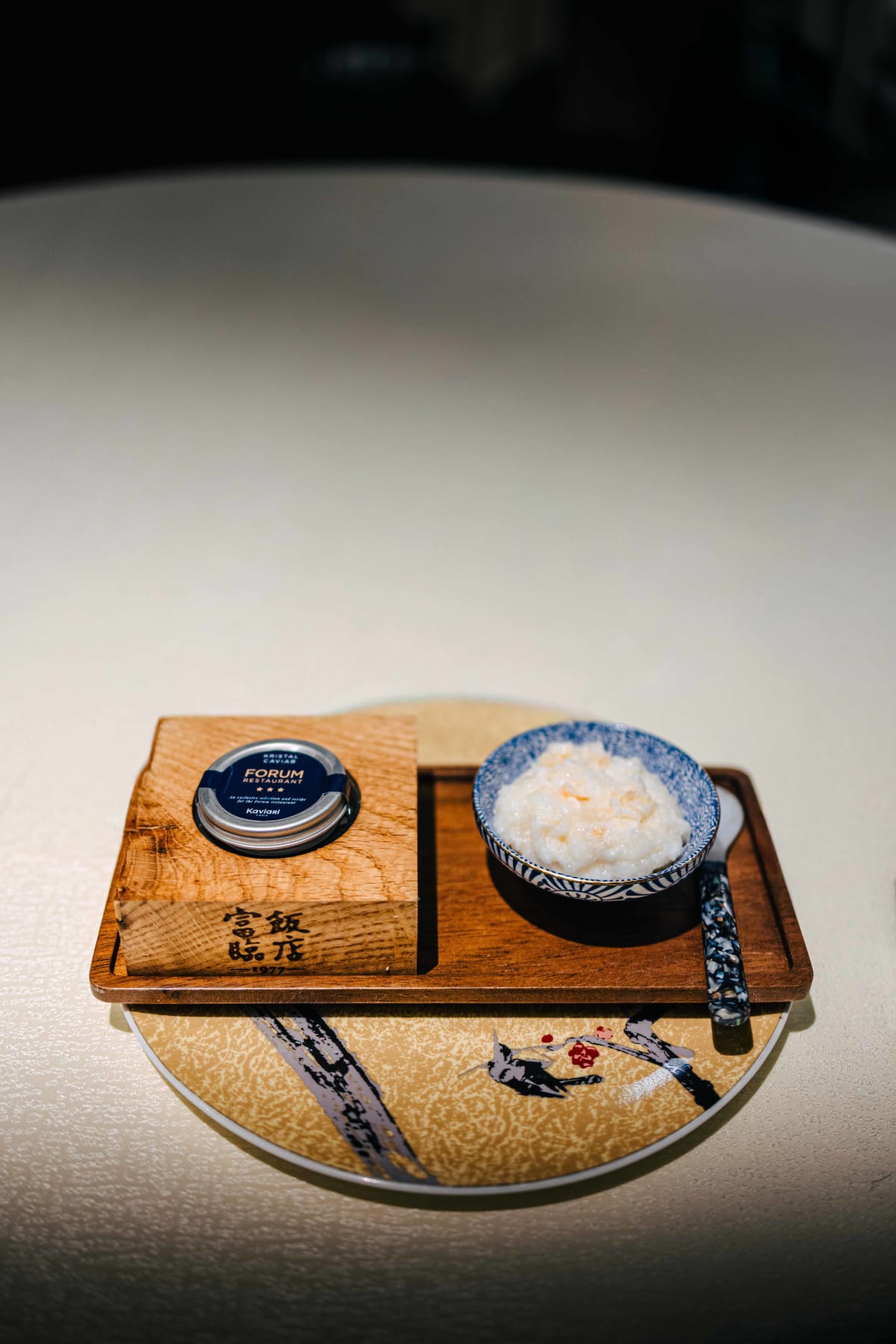
It came cold. On its own it was underseasoned and did not leave much impression, but eaten together with the caviar the seasoning fell into place and the balance was just right, so I enjoyed it.


This dish felt like eating a Chinese-touched version that closely followed a French formula, and it made me think, so this is what earns three Michelin stars.
Section 5·Into the Meal
With expectations high, the next dish arrived: Double-boiled Pork Soup with Fish Maw, Sea Conch and Melon (古早花膠爵士湯), pork offal, fish maw, and conch served as a soup, in the manner of Buddha Jumps Over the Wall. It came set over a candle to keep it from cooling, and it looked good, so I ate it expecting the taste of buldojang, but the broth, against expectation, was far too sweet. Good ingredients had gone in, but because of the broth I felt it did not suit my palate.

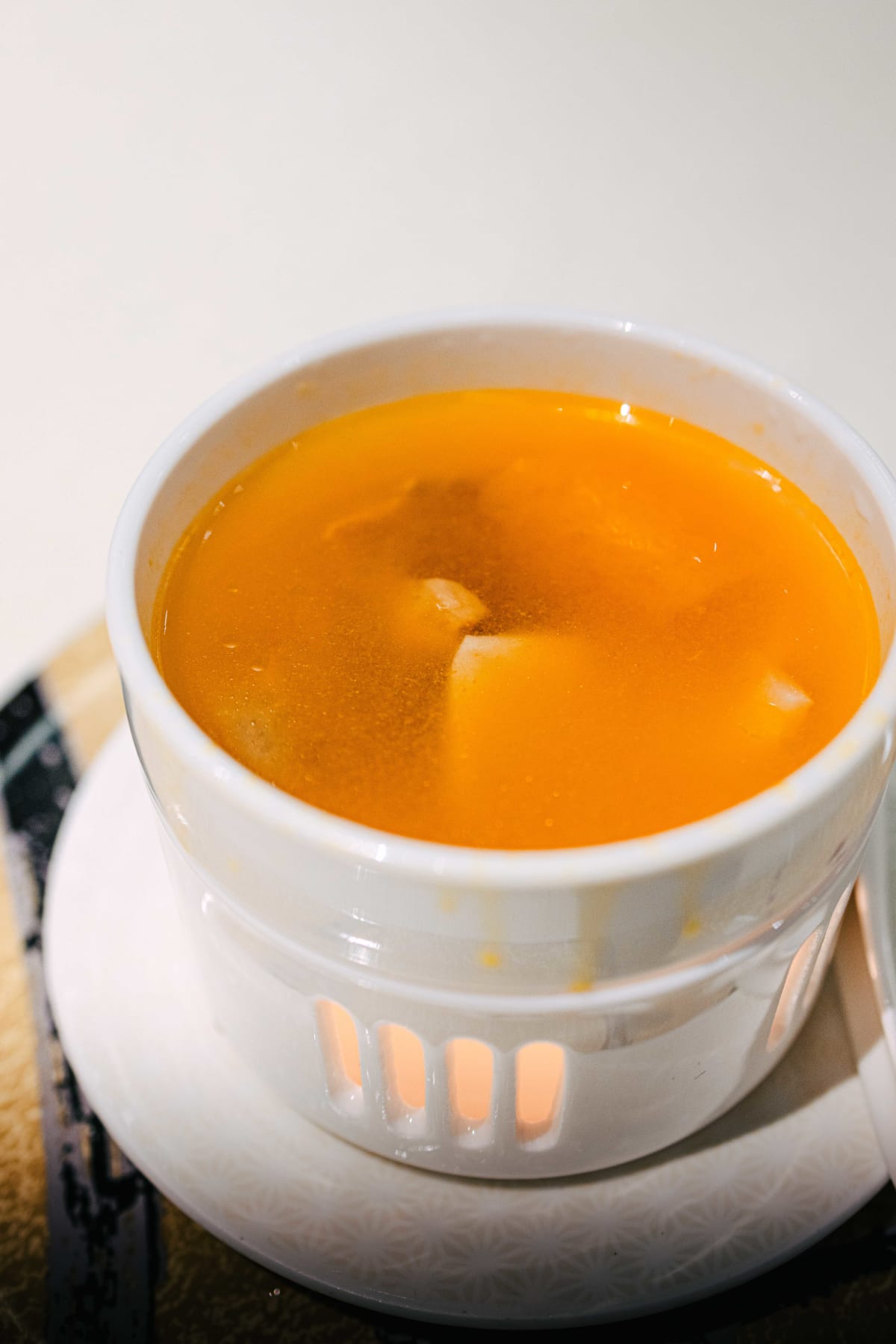
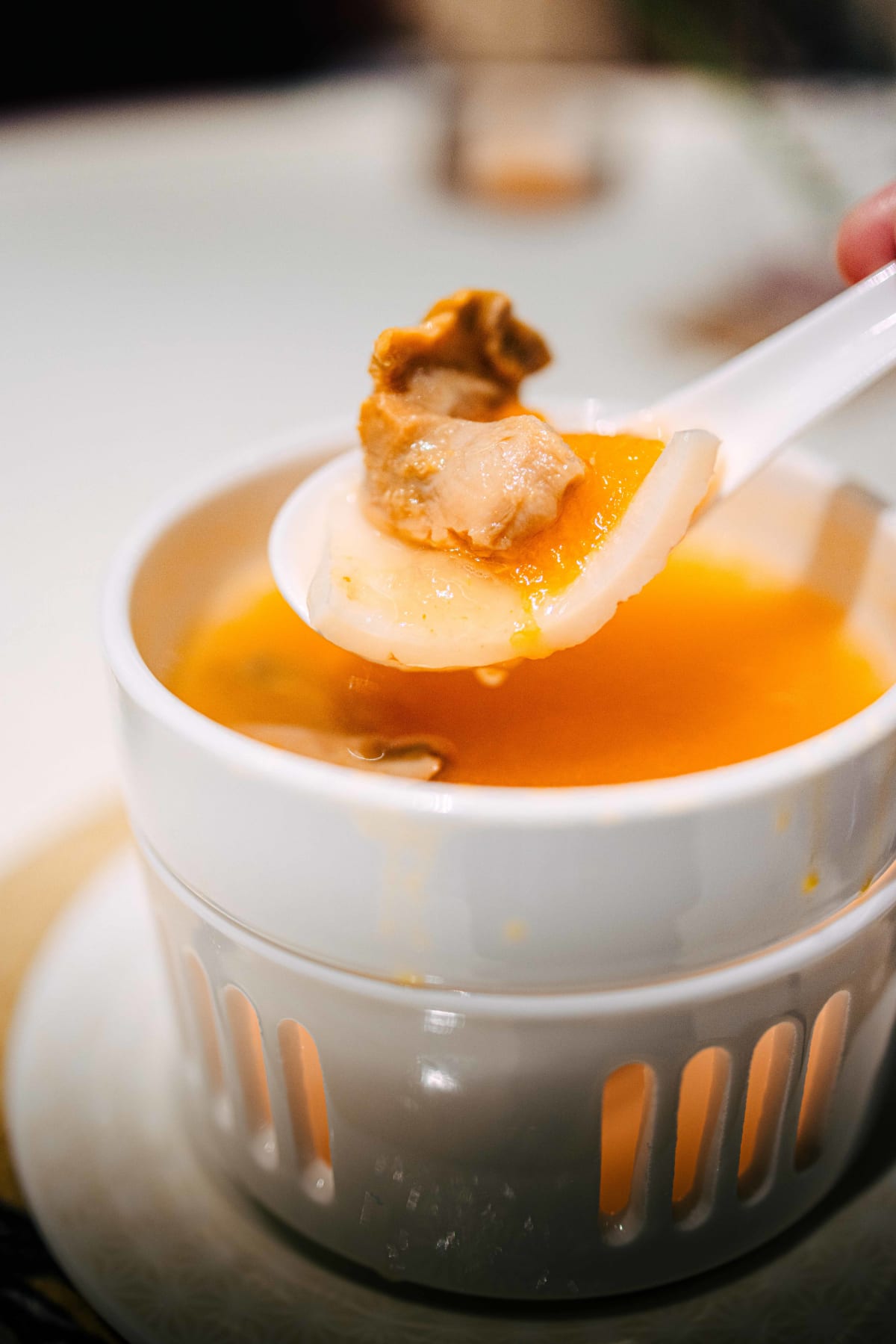
Looking back, that sweetness probably came from the melon in the dish.
The house's signature dish came next: Braised Ah Yat Abalone with Goose Web and Vegetable (Yoshihama 38ppc Abalone) (阿一鮑魚扣鵝掌伴唐生菜), dried abalone and goose web, with the option to upgrade to a larger Japanese Yoshihama abalone for an extra 1,200 Hong Kong dollars. Since it was my first time with the dish I did not add the upgrade, and I enjoyed it. The sauce was pleasantly savory, and eaten with the dried abalone its distinctive aroma harmonized well. The goose web was a first for me too; think of it as a large chicken foot. It was pleasantly springy, so I picked it up with my hands and worked every bit off the bone. The small spoonful of rice and the bok choy served alongside, though, did not leave much impression.
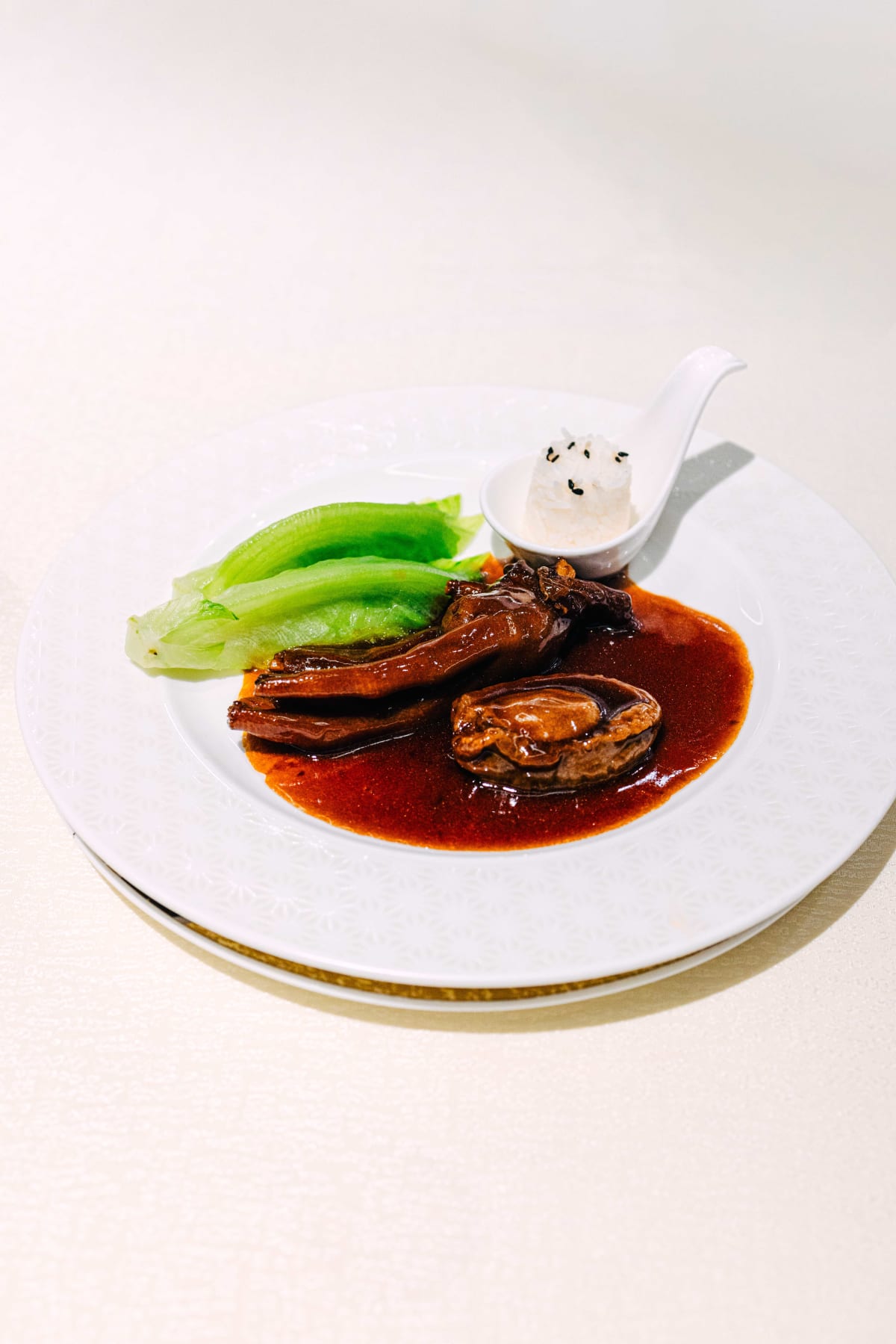
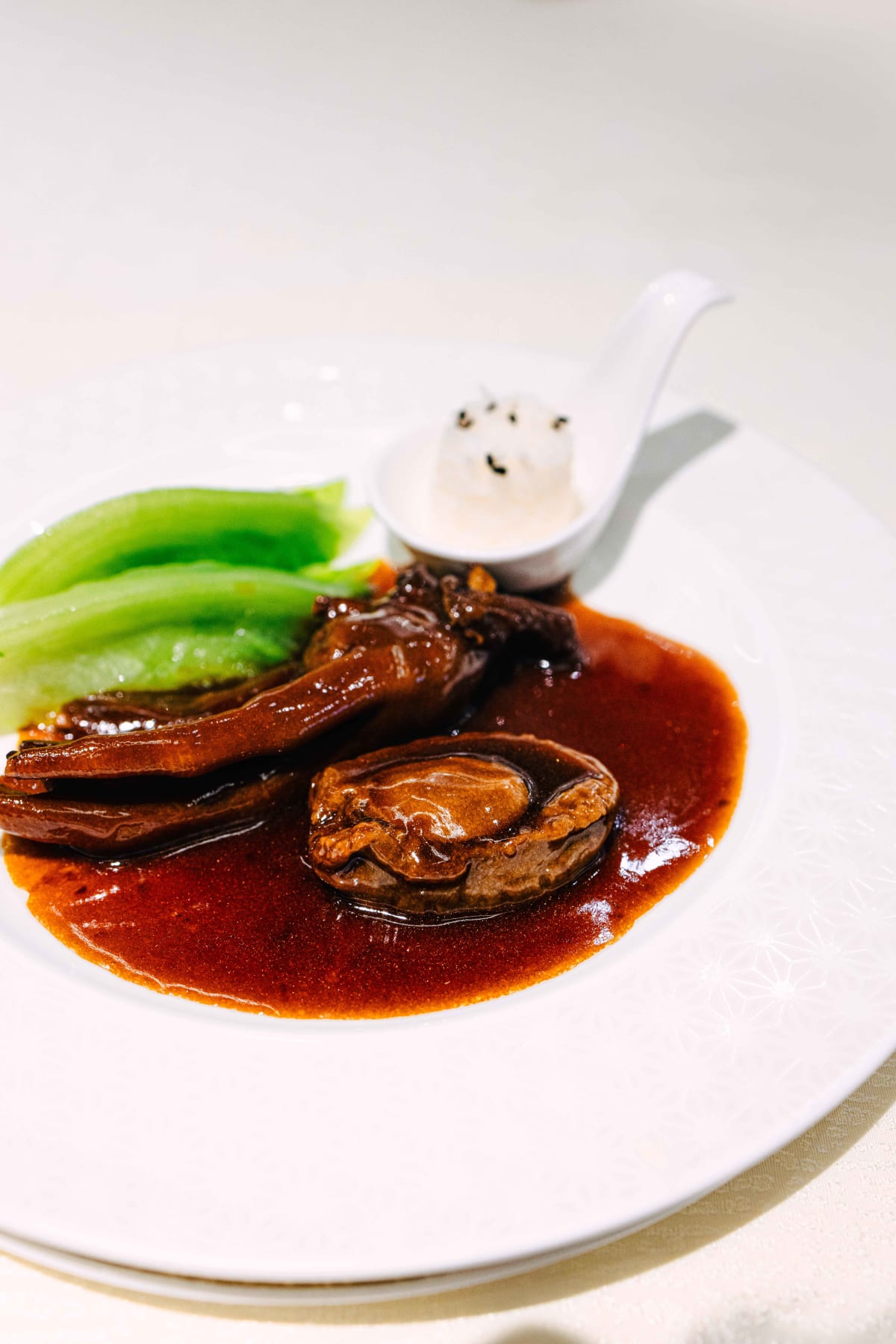

One thing worth noting here is that this abalone is a completely different dish from the fresh or steamed abalone we usually eat. Cantonese dried abalone is dried and aged to concentrate its flavor, then rehydrated and simmered for a long time in a rich superior stock made from chicken, pork, and Jinhua ham. The better the dried abalone, the less its surface collapses; as you chew, the center unwinds into a deep amber, viscous state (this is called 溏心, tong sam), and the umami of the stock has to have soaked all the way into the tissue. The value of Ah Yat abalone lies not in one or two secret ingredients but in the accumulated experience of choosing good dried abalone and reproducing the rehydration, the stock blend, the heat, and the resting times to the same standard every single time.
The value of Ah Yat abalone lies not in one or two secret ingredients but in the accumulated experience of choosing good dried abalone and reproducing the rehydration, the stock blend, the heat, and the resting times to the same standard every single time.
Section 6·The Chicken Wing
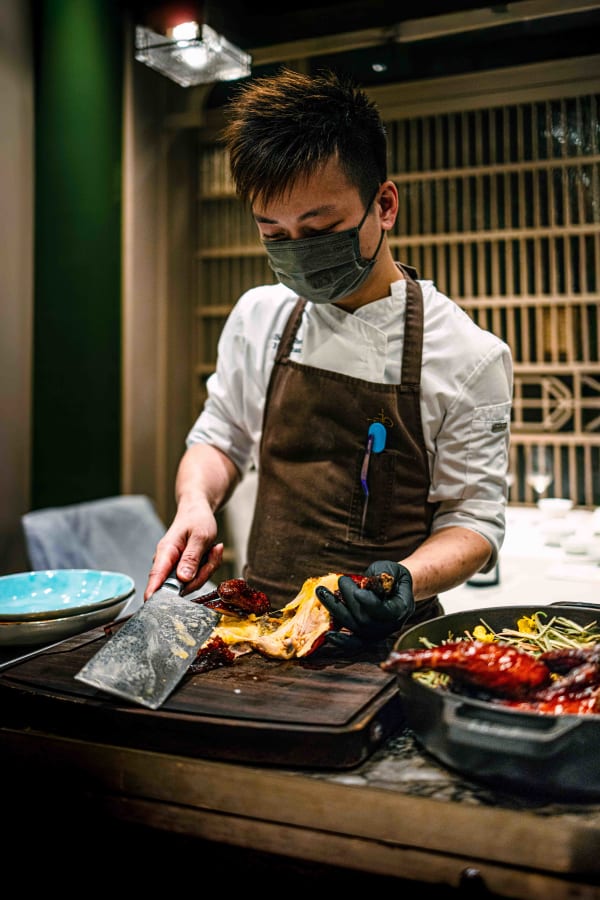
The next dish, Roasted Chicken Wing Stuffed with Shark Fin and Crab Meat (魚翅蟹肉燒釀雞翼), a single golden-roasted piece wrapped in foil at the tip, a small portion, was a knockout.
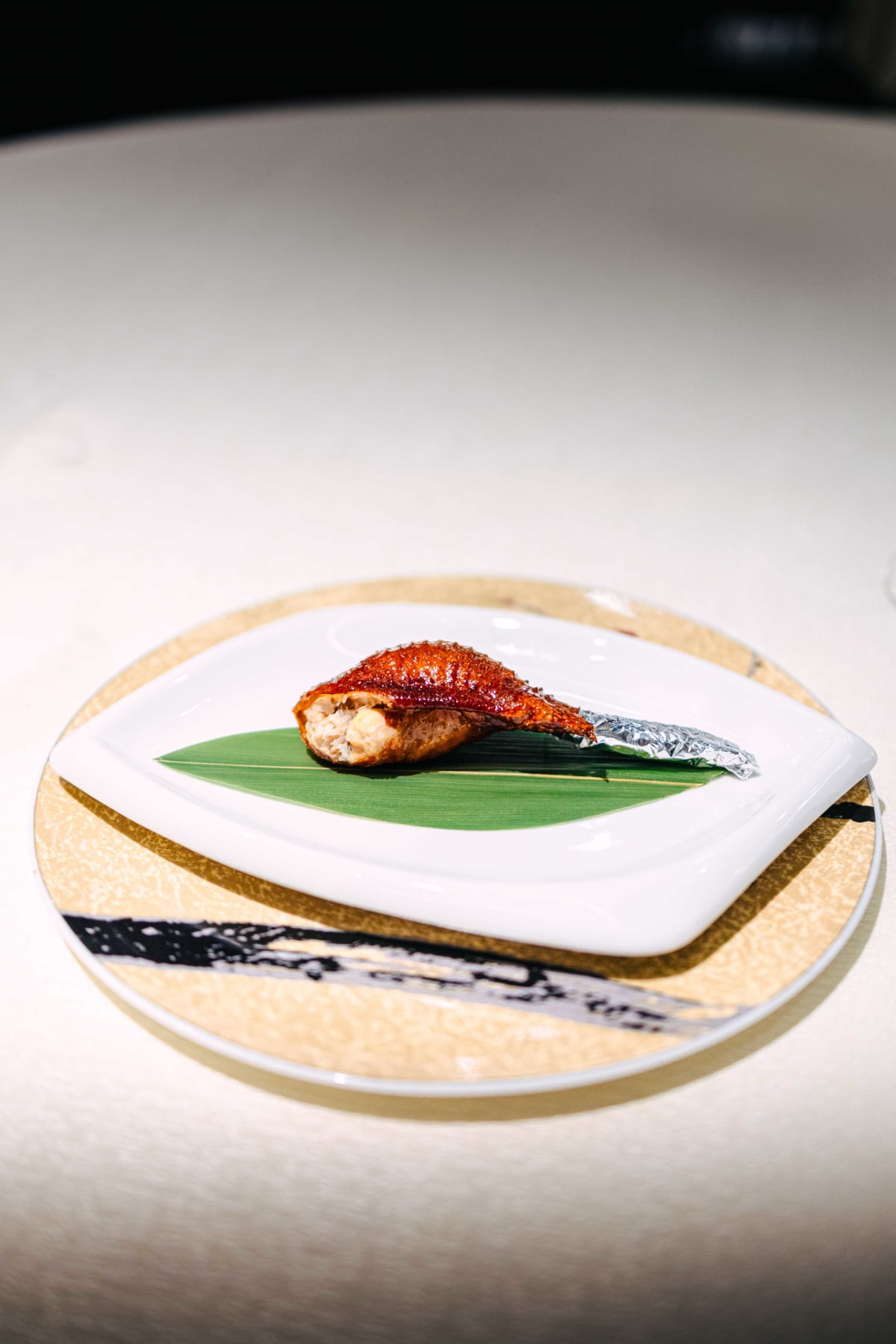


Among all the poultry dishes that impressed me on this Hong Kong trip, and there were many, this was the first and the strongest impression. It was easily the best of the day, and when I ask myself whether I have ever had chicken this good in Korea, nothing comes to mind.
It was one of those yellow-oil chickens you find in Hong Kong, and the sensation of that very first bite was unforgettable. The crispness was good and the chicken's own texture and flavor were good, but above all the textural harmony with the shark fin and crab meat inside was the finest part. The springy chicken and the soft, hard-to-describe shark fin together leave me with nothing to say except: go taste it yourself.
Section 7·The Wine Service
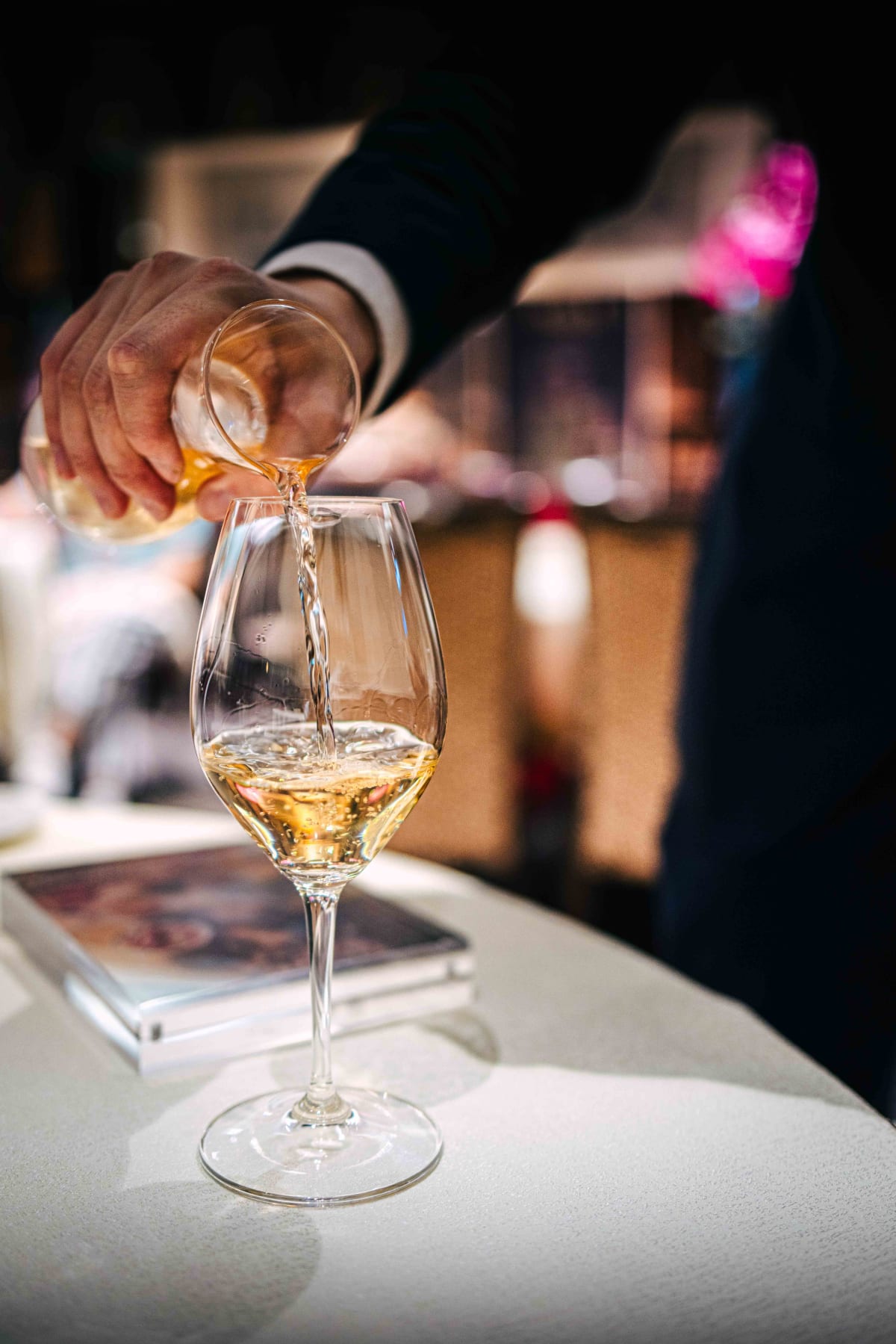
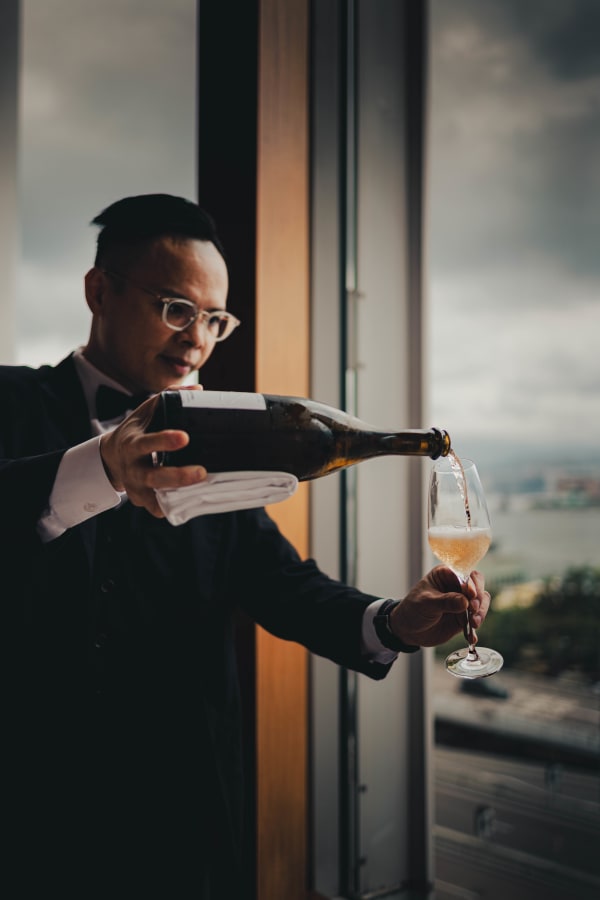
Before I get to the food, one thing that impressed me at this restaurant was the wine service. I drank three glasses, a champagne, a red, and a sweet white at the end, and the sommelier was gracious and kind. In the case of the champagne, the Egly-Ouriet I ordered seemed to have no pour left, so they simply opened a new bottle for me, and the red and white were served by Coravin, which made for easy drinking.
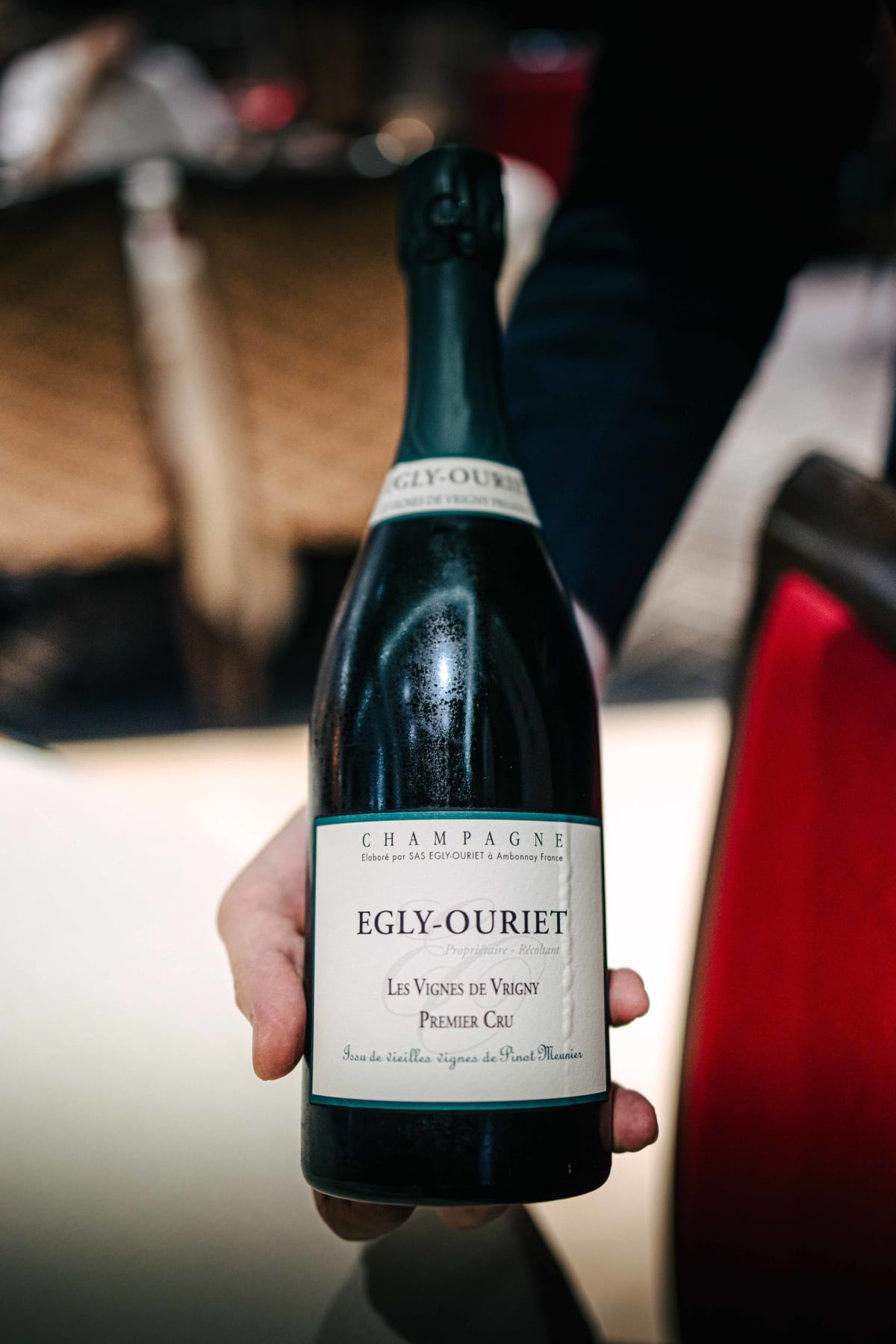


The champagne I had, Egly-Ouriet "Les Vignes de Vrigny" 1er Cru, is a cuvée made by the celebrated grower house Egly-Ouriet, based in Ambonnay, from 100 percent old-vine Pinot Meunier in the premier cru of Vrigny. It is a bottle that shows how even Meunier alone, usually treated as a supporting player, can yield a champagne this deep and firm, and it is especially well regarded among grower-champagne lovers. It was more than worthy as an opening glass.
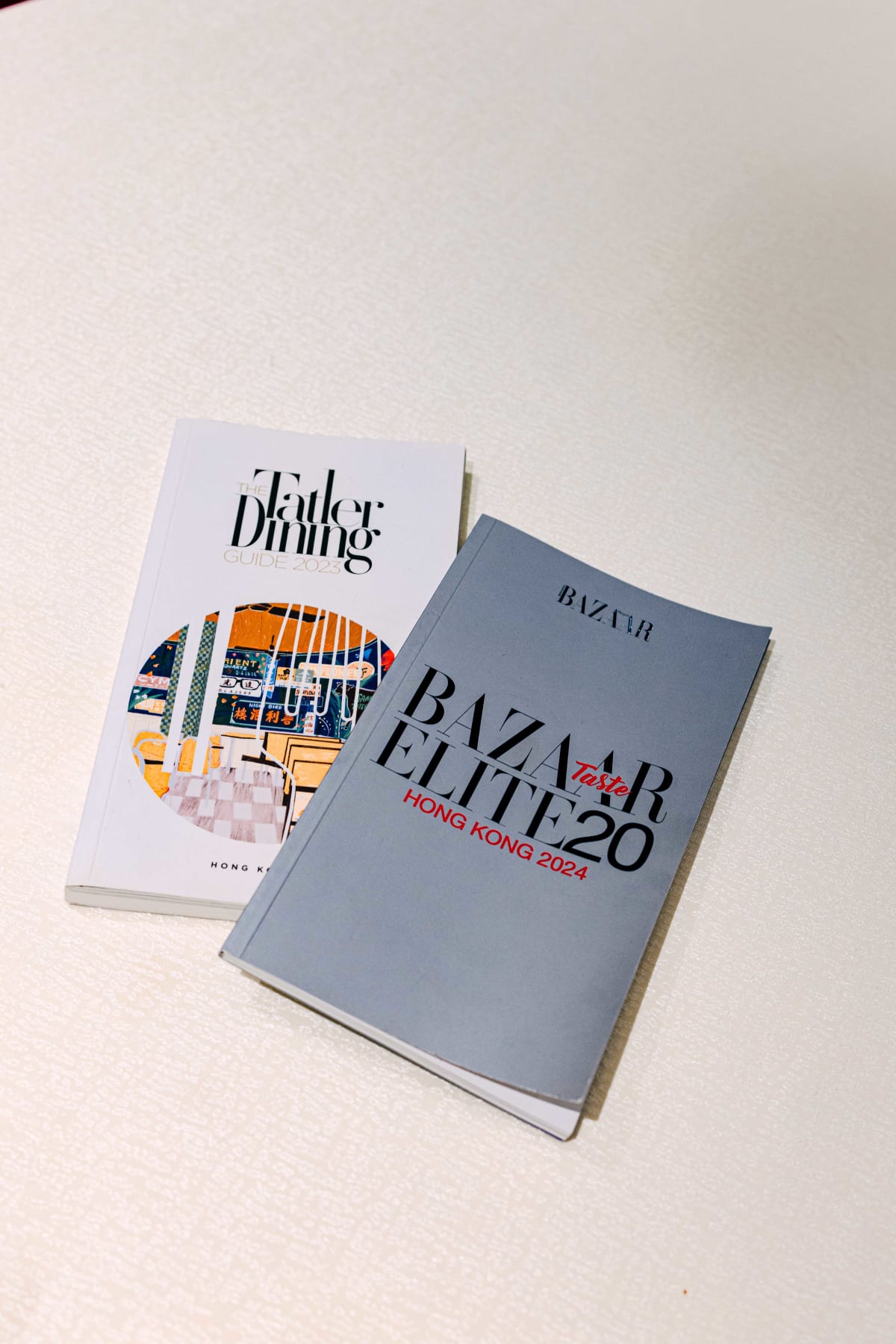
When you dine alone, in the gaps between courses there is often nothing to do but look at your phone. Here, the sommelier, perhaps seeing that I looked bored, brought two Hong Kong dining guidebooks to the table for me to look through. In all the restaurants I have been to, this was a first, and I was quite moved; that kind of thoughtful service felt beyond three stars, more like four or five.
Section 8·The Middle Dishes
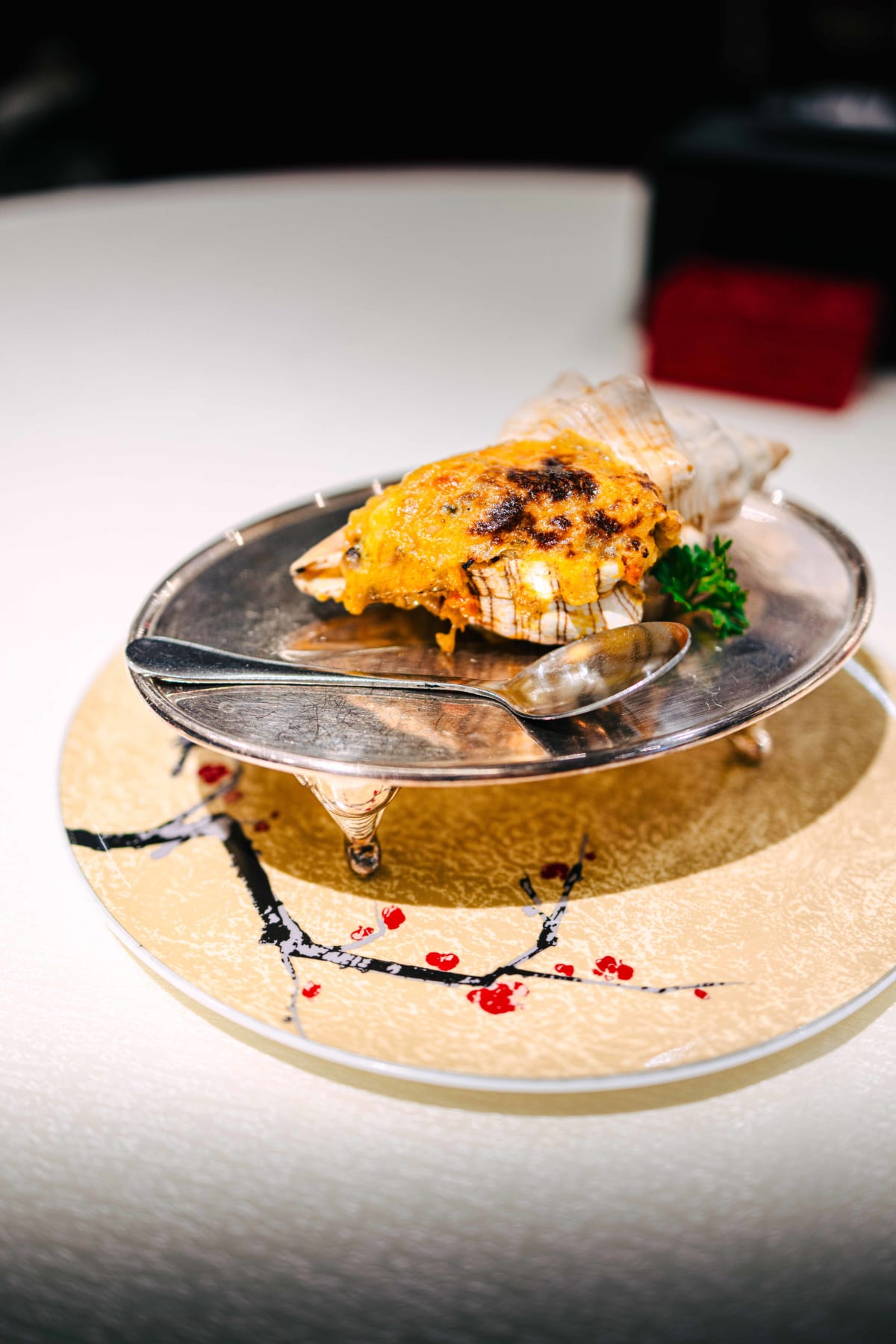
The dish after the chicken wing I had enjoyed so much was Baked Sea Whelk Slivers with Portuguese Curry Sauce (懷舊葡汁焗響螺), and this one, unfortunately, was a bit of a letdown. The taste was just so-so, and I wondered why they had made this dish out of good whelk and curry.


Next came Stir-fried Dried Sea Cucumber with Forum Special Sauce (千里醬爆關東遼參), a sea cucumber dish in a classic, typically Chinese form. It came stir-fried with vegetables, and the sauce was on the sweet side; I enjoyed it as I ate, but since I went on to have excellent sea cucumber dishes at several other restaurants in Hong Kong, it does not leave much of an impression in hindsight.


Among the wines by the glass I ordered a red, La Rioja Alta, 904, Gran Reserva Rioja, Spain, Tempranillo 2011, and they served it from a magnum. It was delicious. I do not seek out wine especially deeply, nor do I make wine a deciding factor when choosing a restaurant, and I do not have much experience, but it was good enough that it may be the best Spanish wine I had had up to that point.


La Rioja Alta's "Gran Reserva 904" is the iconic gran reserva made by La Rioja Alta, a distinguished Rioja house founded in 1890. Tempranillo blended with Graciano, aged about four years in American oak and then rested a long time in bottle, it is a wine like the essence of elegant, classic, traditionalist Rioja. That they poured the 2011 vintage from a magnum, and by the glass via Coravin at that, itself shows the depth of this house's wine program.
Section 9·The Close
The last savory course was already arriving: Shrimp and Foie Gras Dumpling with Noodles in Supreme Soup (鵝肝鮮蝦水餃麵線), a wonton noodle served in a bowl. The look of it, and the first spoonful of broth, left me unsure. The broth was not as deeply aromatic as a Korean soup, and it was on the saltier side.
There were seven dishes, but the portions were not large, so I did not feel especially full.
Then I picked up the wonton, the most important part, and, ah, here I was knocked flat again. First, the springy texture of the shrimp inside the wonton was insane, and then the aroma and flavor that followed brought a fresh surprise. It was foie gras.


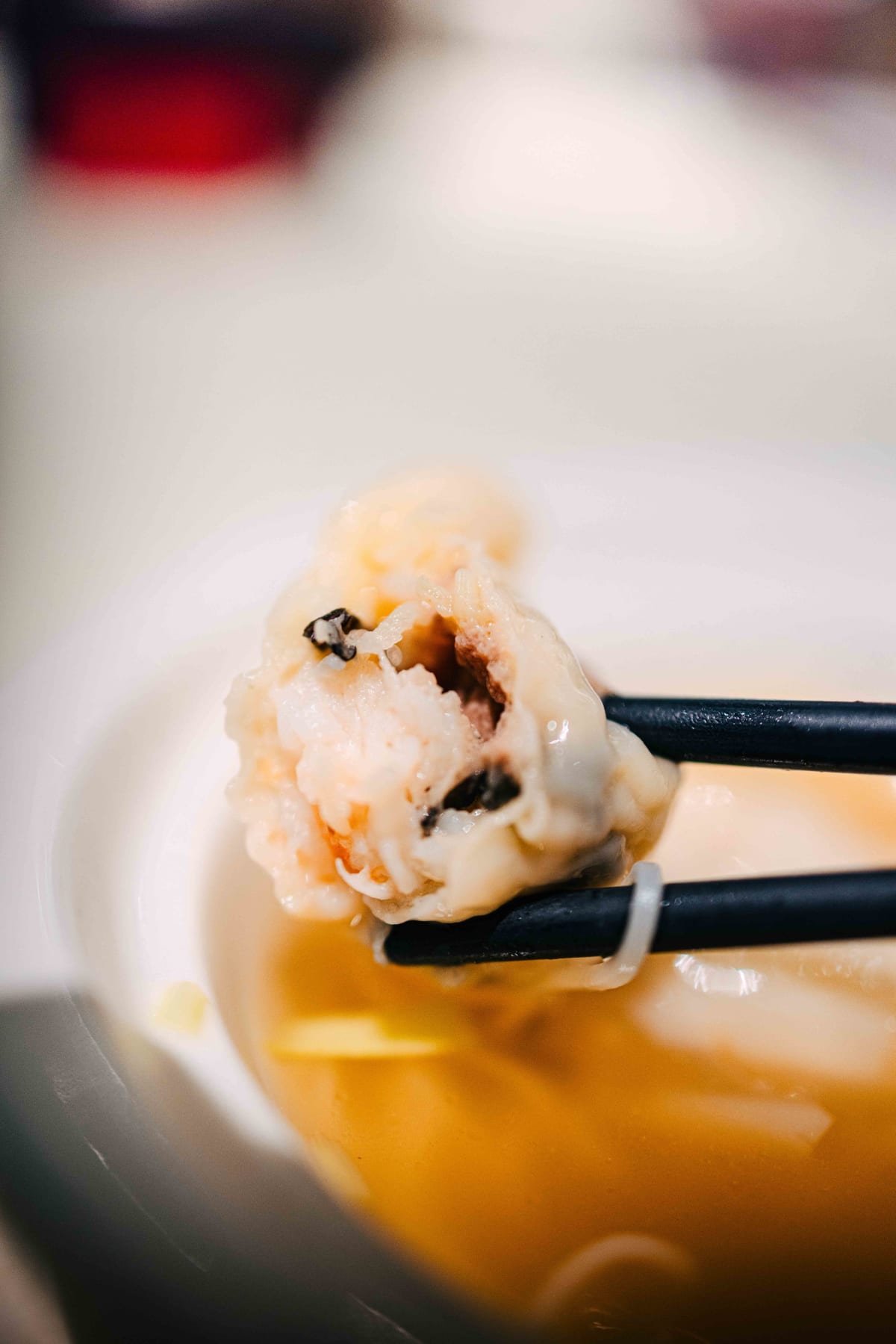

The menu description had told me, so I knew, but the amount was more than I expected, the aroma was deep, and the harmony of flavors was excellent. Only when I ate the wonton together with the broth did the whole thing finally assemble like a puzzle and come into its own. Personally, while this place serves Cantonese food, I thought a degree of French calculation had gone into building this course, and I wondered whether that is why it earns Michelin's favor.
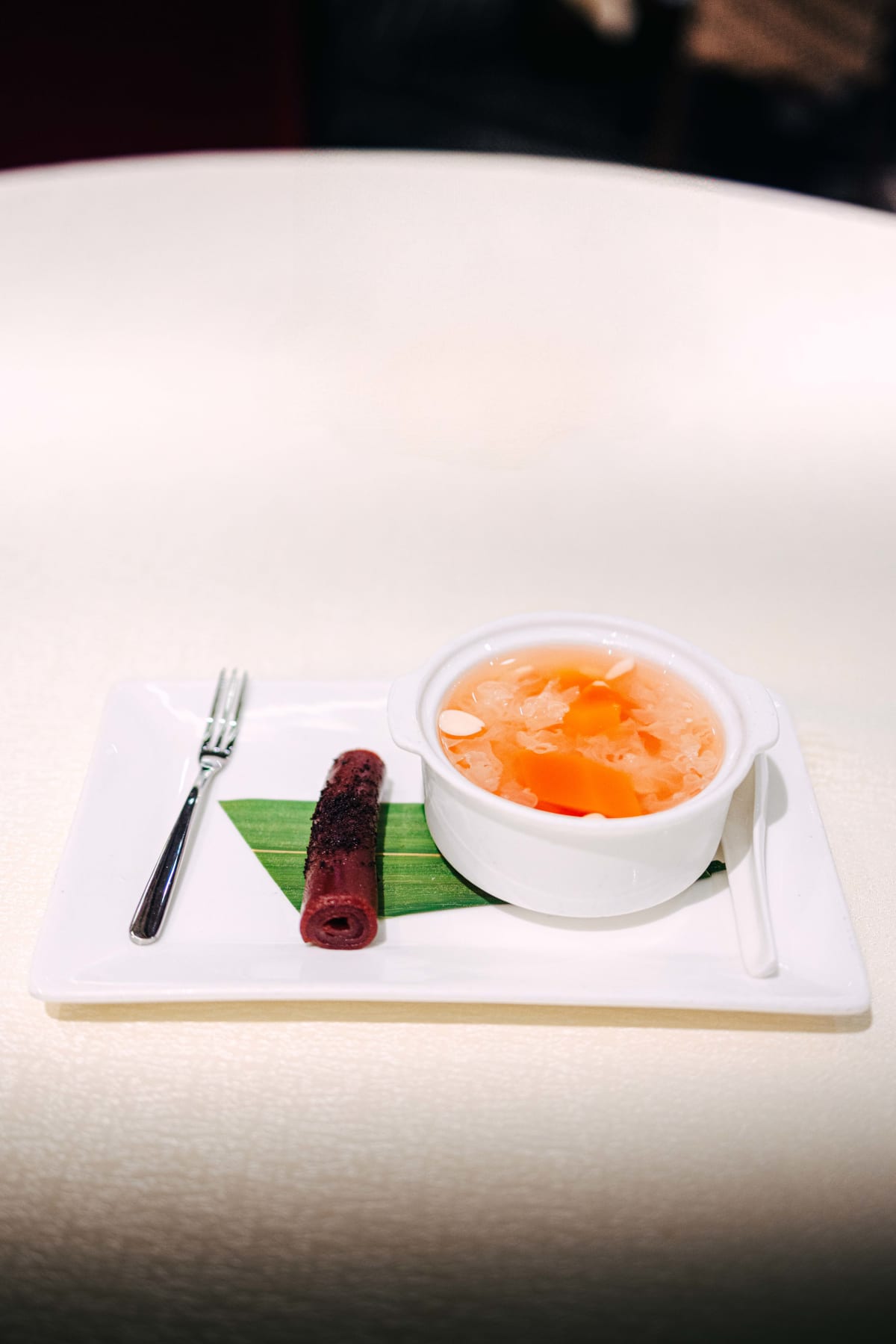
For dessert, Double-boiled Papaya and Snow Fungus Sweet Soup with Sweet and Bitter Almond, Forum Traditional Dessert (南北杏萬壽果燉雪耳•懷舊美點), a cool fruit soup and a chewy rolled sweet, and the dessert did not suit my palate. As a rule, Chinese restaurants seem to have desserts that do not sit well with me.


The sweet white poured as the last glass alongside this dessert was Domaine Huet "Le Haut-Lieu" Demi-Sec 2022. An off-dry white made from Chenin Blanc by Domaine Huet, the benchmark house of Vouvray, its sweetness, like honey, apple, and quince, is underpinned by the taut acidity characteristic of Chenin, so it went with even a sweet dessert without feeling heavy. It was the glass that let me finish, with some pleasure, a dessert that had not suited me.



Section 10·In Sum
This is clearly a place with real skill, but judging by the Michelin three-star course I had, the dishes within the course seemed to vary in how good they were. And I did find myself thinking the price was a touch high for the composition and the quantity.
Since dim sum has come up, I will add that the next day a staff member at WING also told me the dim sum here is excellent.
I had heard the dim sum here is famously good, and looking at that wonton, it seems true. If you come with a group, I think it would be good to choose the à la carte dishes and dim sum they do well. Even so, as an experience of a Hong Kong three-star Michelin restaurant, it seems to have been a satisfying visit.


Forum is best understood not as a modern tasting-menu three-star but as the highest form of Cantonese banquet cooking, a house that reached Michelin's top tier on the strength of a single dish. Come for the dried abalone, whose value is accumulated craft rather than luxury, and for the two dishes that justify the trip: the shark-fin-and-crab chicken wing and the foie gras wonton. The set course is uneven and priced high for its portions, so the smarter play is a group ordering the signature a la carte and the celebrated dim sum. The wine service, poured by Coravin, is a rare strength for a Chinese restaurant. Come for banquet cooking and a real wine list, not plated invention; with the abalone king gone since 2023, the kitchen he trained holds the three stars.
Have a question about this restaurant, or want to share your own experience?
Send a message