Fine Dining · Sydney · Australia / March 2025 / Good Food Guide 3 Hats (2025) · World's 50 Best #66 (2025)
Saint Peter
"The kitchen that treats a fish the way a butcher treats a cow"
Section 1·Only Seafood
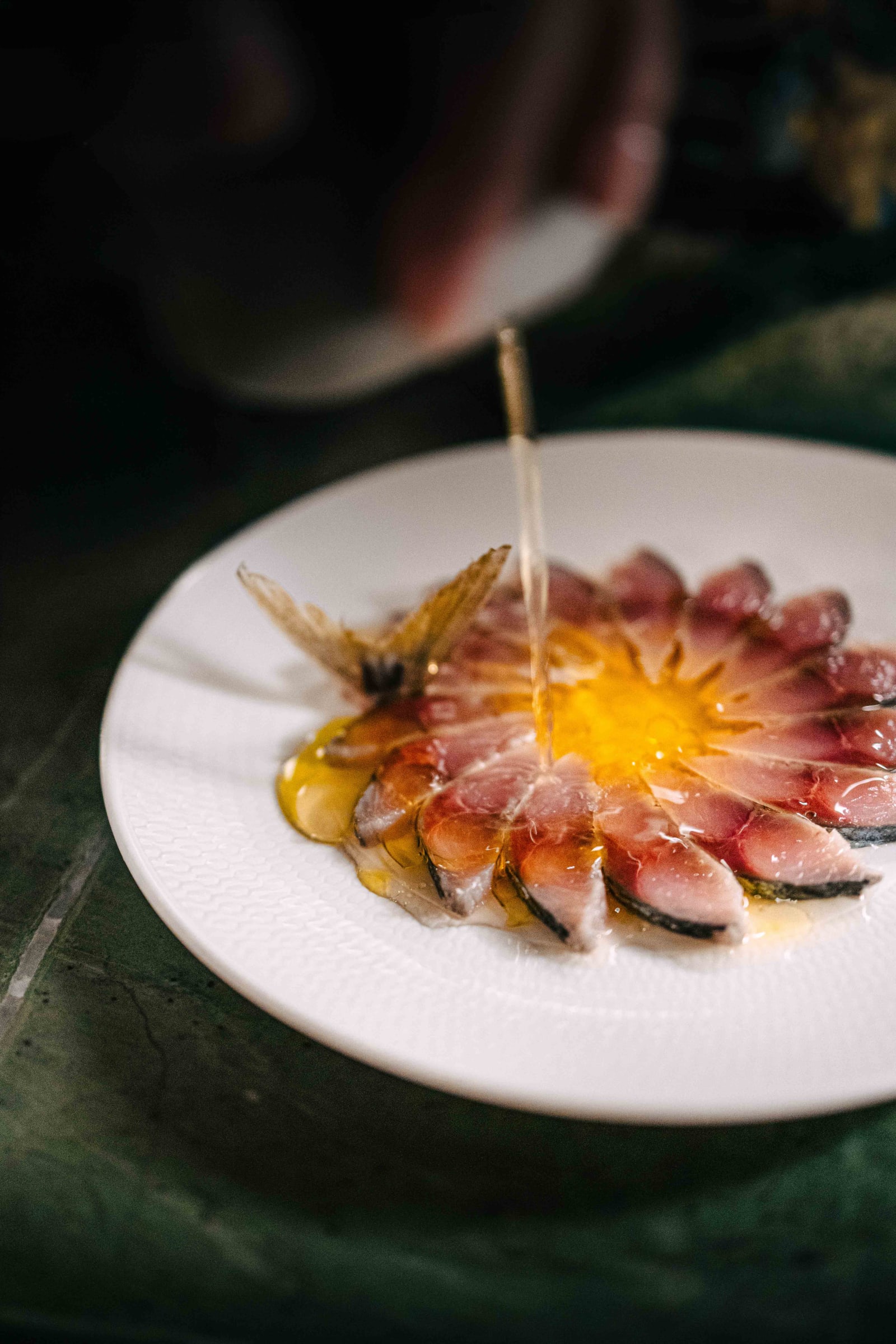
Saint Peter was the second dining room I visited on this Australian trip. Like Attica in Melbourne, it is one of the few restaurants in a country without Michelin to have appeared on the World's 50 Best Restaurants list, and the chef, Josh Niland, is known in Australia and internationally for the idea of fish butchery.
So what marks this restaurant out is that it handles only seafood. There is no meat anywhere in the mains. I wondered whether dessert might be seafood too, and thankfully it was not.
Section 2·The Other Sixty Percent
Saint Peter began in September 2016 when Josh Niland and his wife Julie opened at 362 Oxford Street in Paddington, Sydney. It was a small room of about thirty four seats. The name comes from Saint Peter, the patron saint of fishermen, and from the day it opened the subject was Australian fish and seafood alone.
What is interesting is that the whole fish philosophy did not begin as a grand environmental position. Not long after opening, Niland came under serious commercial pressure from the high cost of fish and low yields. In a normal restaurant, when you buy a whole fish, the part you can sell at a price, the fillet, is about forty percent, and the rest goes out as bone, head, offal and skin. The question he asked was simple. Then what is the other sixty percent?
That question became the identity of this house.
The question he asked was simple. Then what is the other sixty percent?
Niland grew up in Maitland in New South Wales. In his late teens he moved to Sydney and passed through Luke Mangan's kitchen, then learned under Peter Doyle and Stephen Hodges, where he began to take an interest in fish butchery and in yield management at fish restaurants. In England he also worked in Heston Blumenthal's development kitchen.
There is a story often told about his ageing philosophy. Working under Hodges, he left a fish uncovered in the fridge overnight by mistake, and grilling it the next day the skin cooked far crisper because the surface had dried out. He did not throw it away but kept it as a clue. From there he began to doubt the standard practice of keeping fish in constant contact with ice and water. His innovation did not start from a new sauce or a change of plating but from asking why fish is not handled the way meat is.
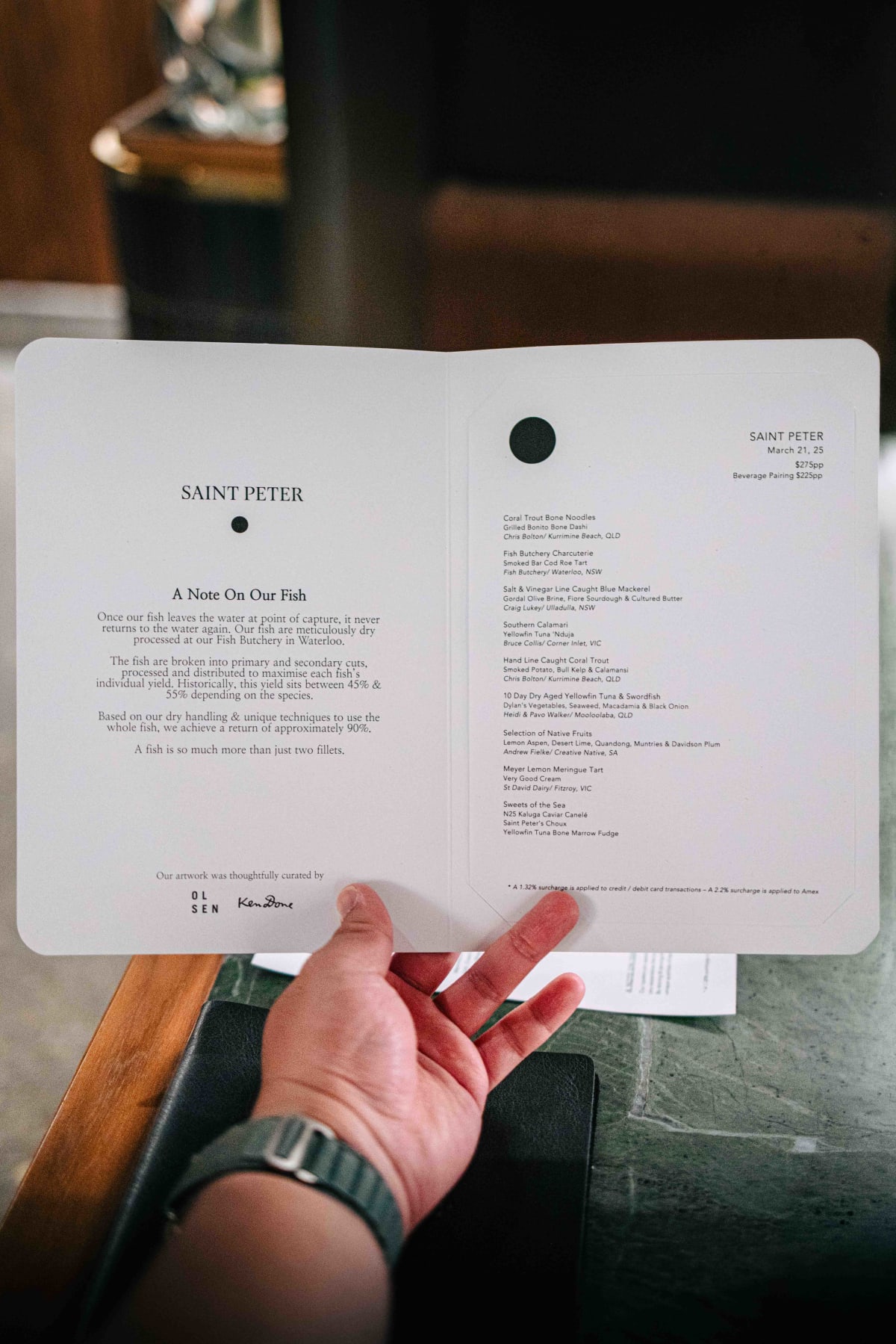
The phrases Niland favours are whole fish cookery and scale to tail. It is effectively the same idea as nose to tail in meat. In most Western restaurants the value concentrates in the fillet or the loin, but here a fish is treated as a complete animal in the way a cow or a pig is. Cheek, collar, ribs, belly, liver, roe, stomach, fat, eyes, scales and bones are separated out as different ingredients. One fish divides into twenty to forty parts, and by this method he says around ninety percent of a fish is used as food.
So the menu here carries the language of charcuterie straight over to fish: pâté, mortadella, 'nduja, sausage, schnitzel, Wellington, bacon. Rather than writing that they use the discarded parts for sustainability, it is closer to the truth of this place to write that they give the parts formerly treated as byproduct the same gastronomic value as the fillet.
Section 3·Fish Butchery
The name Fish Butchery comes from a separate space opened in 2018. It started as somewhere to store and break down fish because the cold space at Saint Peter was too small, but it soon became an idea of its own. The thought was to run it not as a fishmonger but as a butcher shop that breaks down fish. The restaurant's fish also arrives whole here, to be broken down, aged and processed into parts.
The point he argues most controversially is the assumption that fish is best straight out of the water. He weighs how a fish was handled after the catch above freshness. Here some fish is kept as dry as possible rather than washed or left long on ice, and in the early Fish Butchery fish was hung in a static refrigerator between zero and two degrees. As moisture leaves, the flavour concentrates and the skin cooks better, is the explanation.
That said, several food cultures including Japan have long traditions of ageing and drying fish, and some of his claims about the effect of water and ice on quality are empirical theory. When Australian broadcasting covered the subject, a CSIRO researcher said there was not enough research directly comparing wet and dry handling.
His real contribution is not the invention of ageing but building the dry ageing of fish, the butchery of fish, offal cookery and charcuterie into a single system inside Western fine dining and spreading it internationally.
Section 4·The Grand National
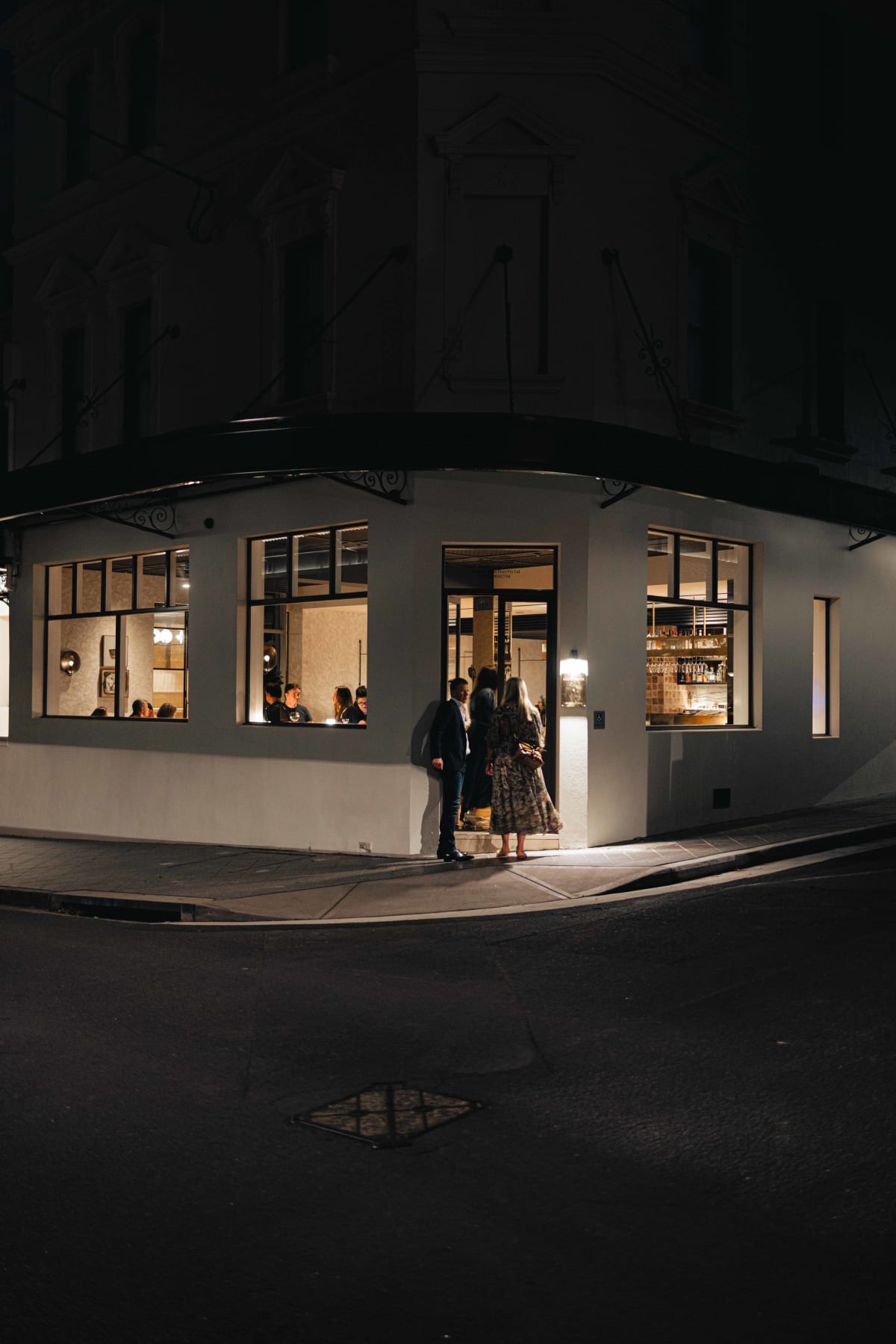
Saint Peter is not in central Sydney but in a suburb called Paddington, inside The Grand National Hotel. Unlike Circular Quay or Darling Harbour the neighbourhood has a small scale charm, so it is worth a look around while you are there.
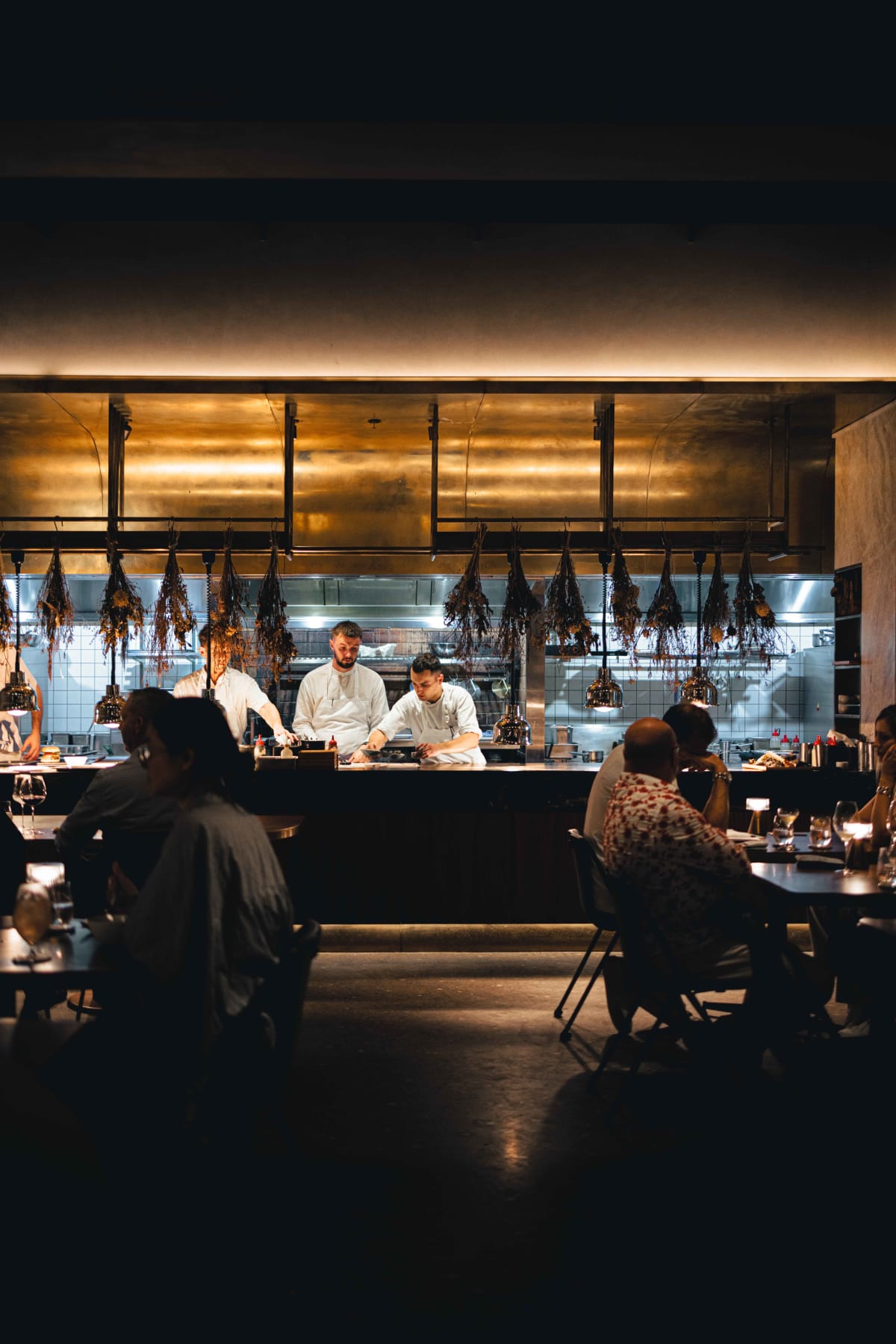
The Grand National Hotel was built in 1890, a late Victorian hotel and a representative example of the large corner hotels then appearing in the suburbs, with much of a facade mixing Classical Revival and Italianate elements still intact. The current structure is a forty seat restaurant with a thirty seat bar, a private dining room of about fifteen, a six seat chef's table facing the kitchen, and fourteen hotel rooms upstairs.
The Nilands describe it less as a restaurant inside a hotel than as a restaurant with rooms.
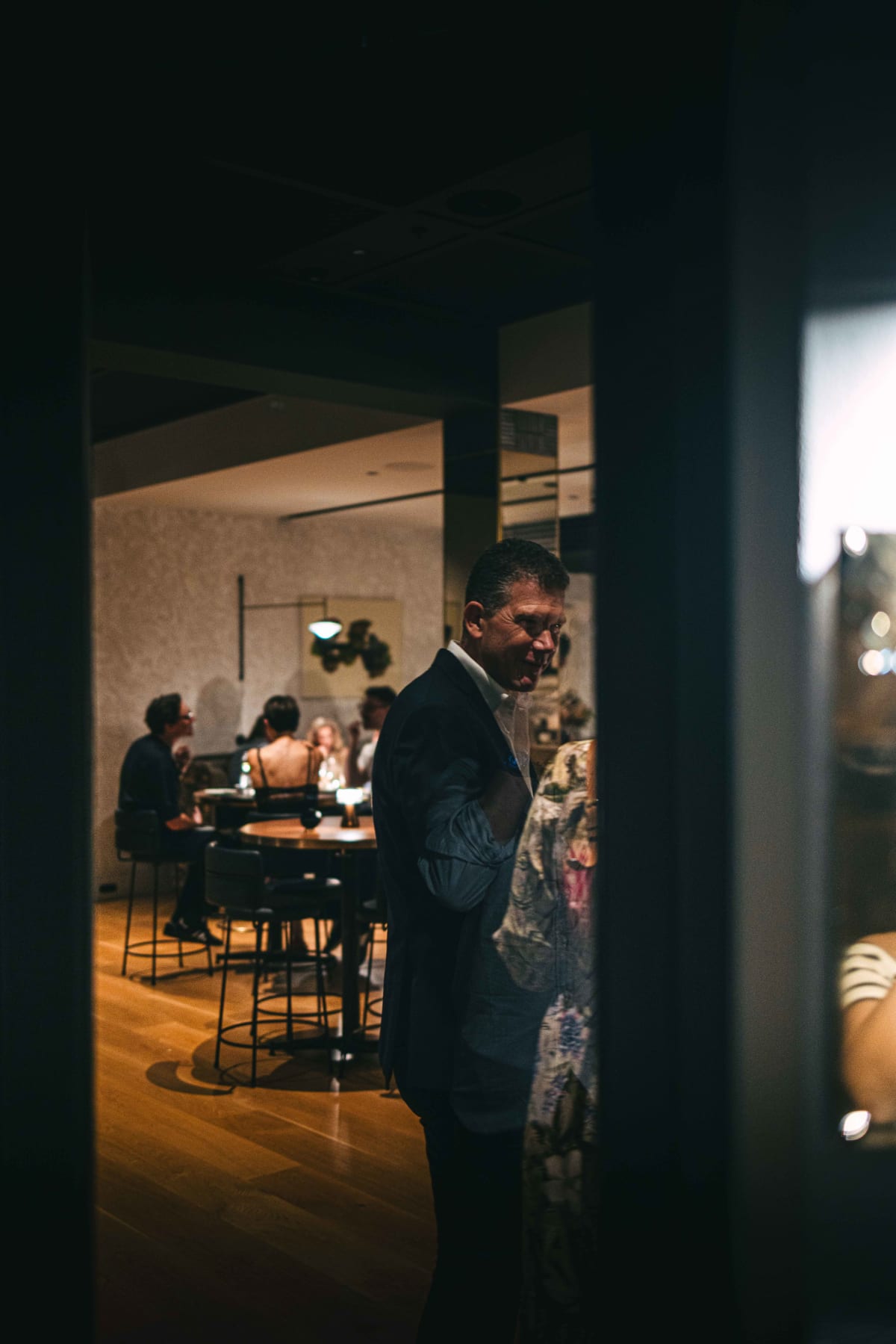
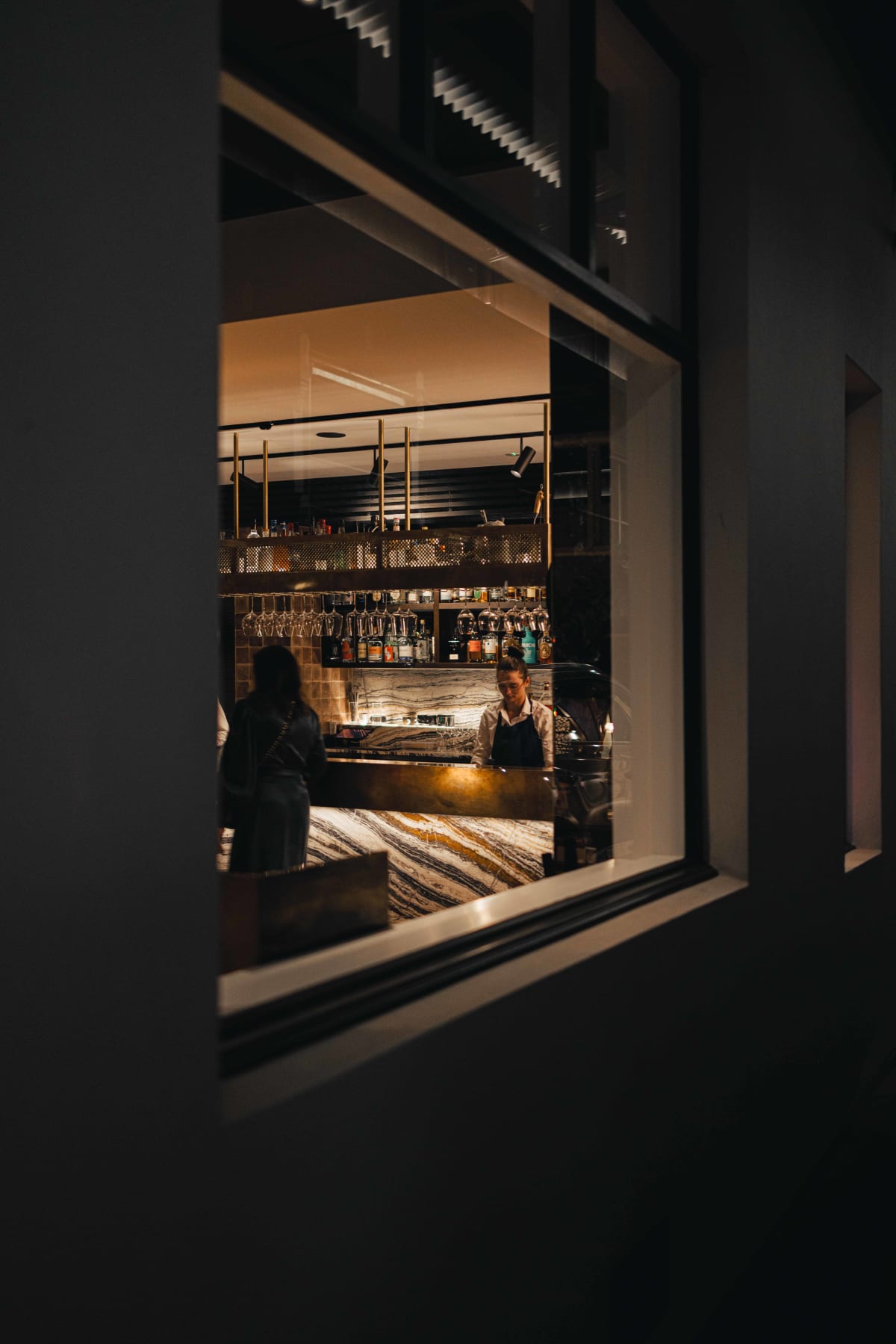
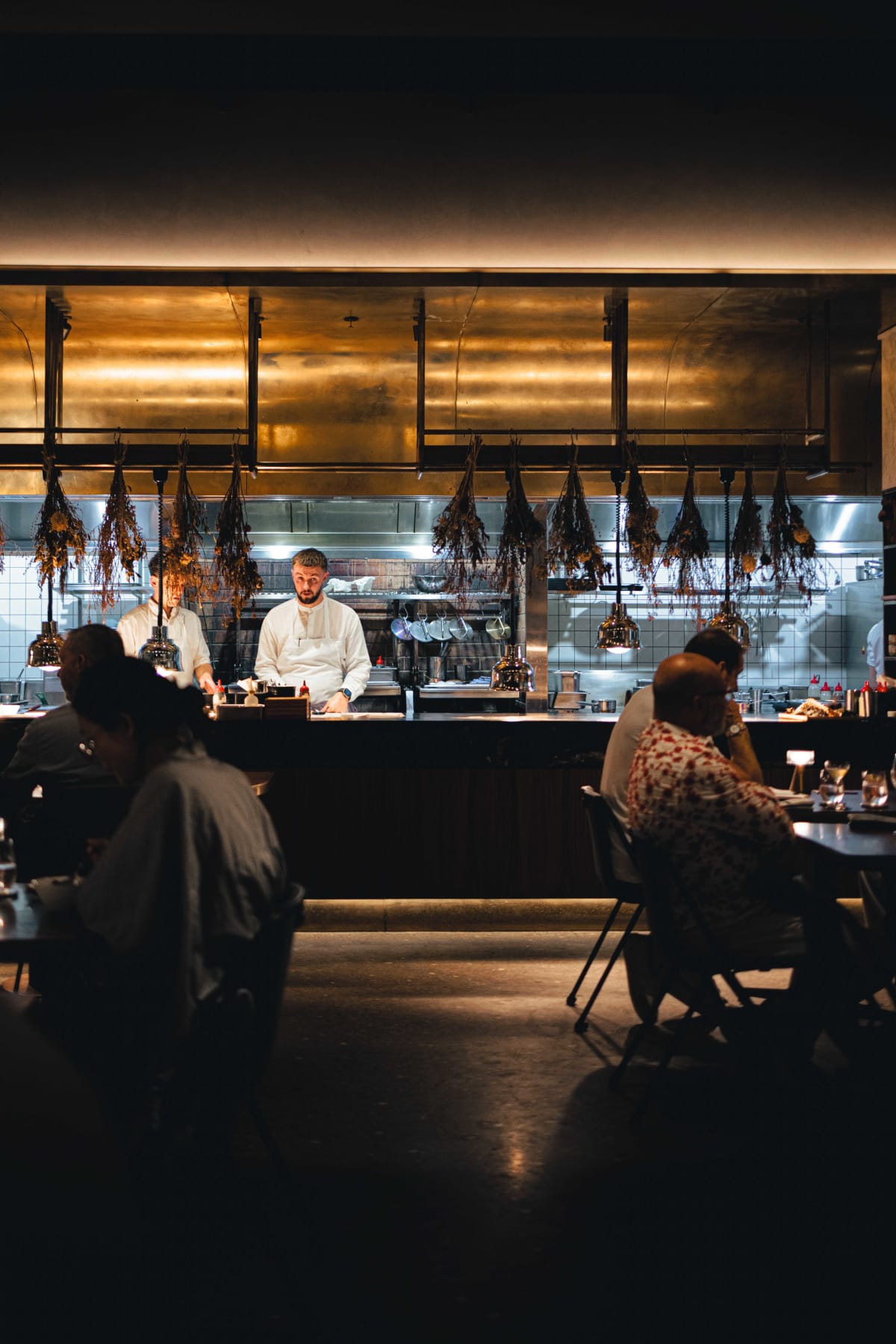
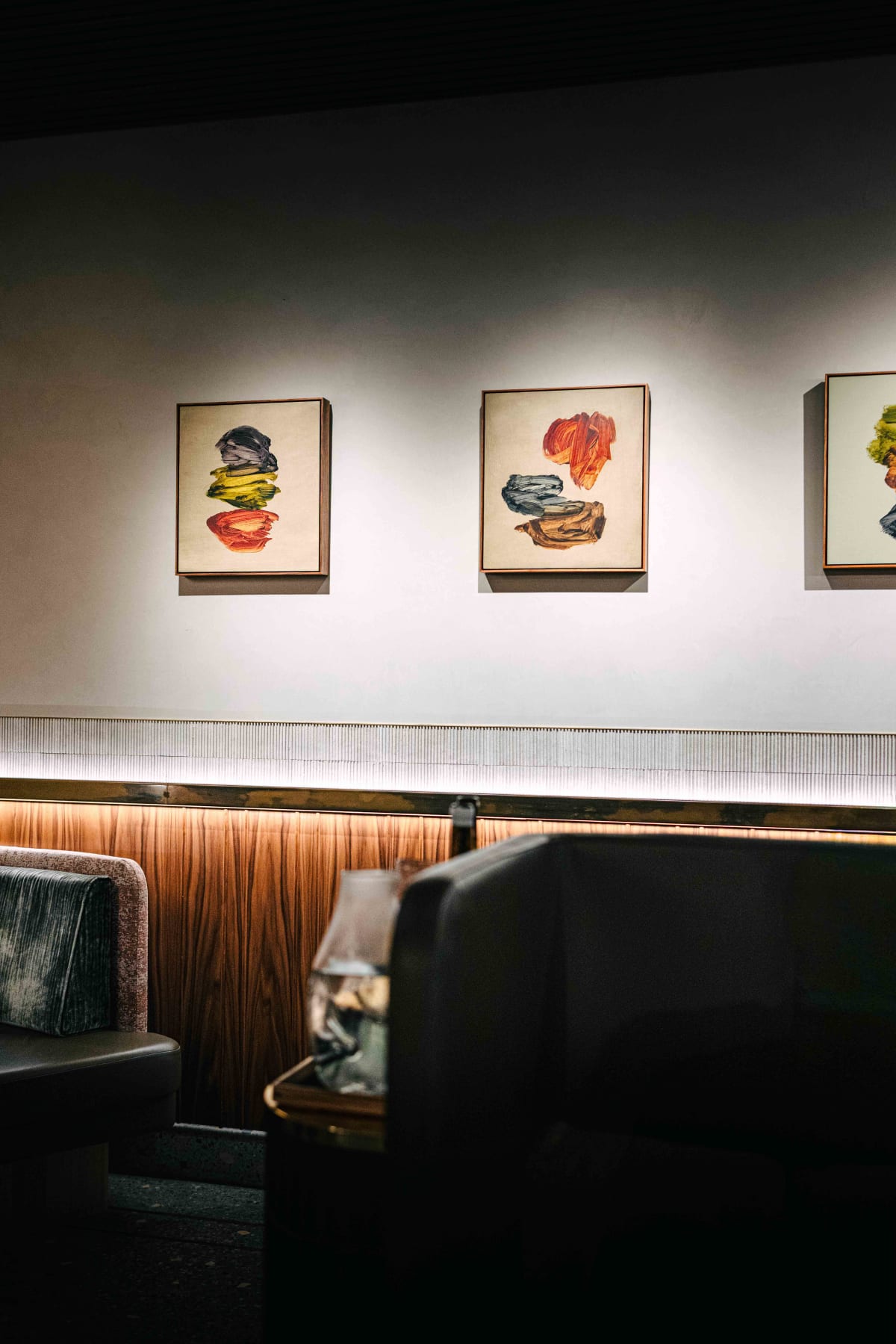
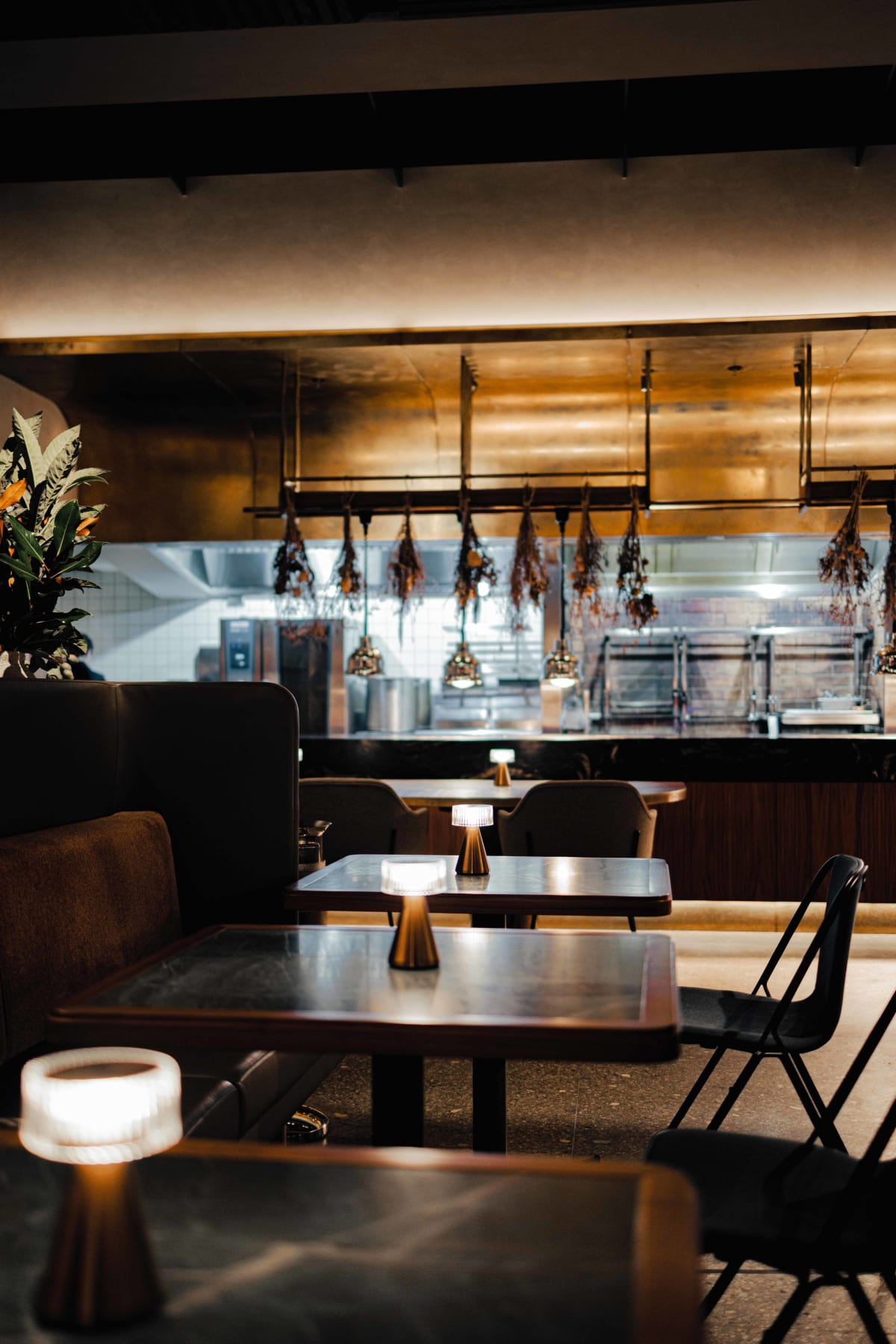
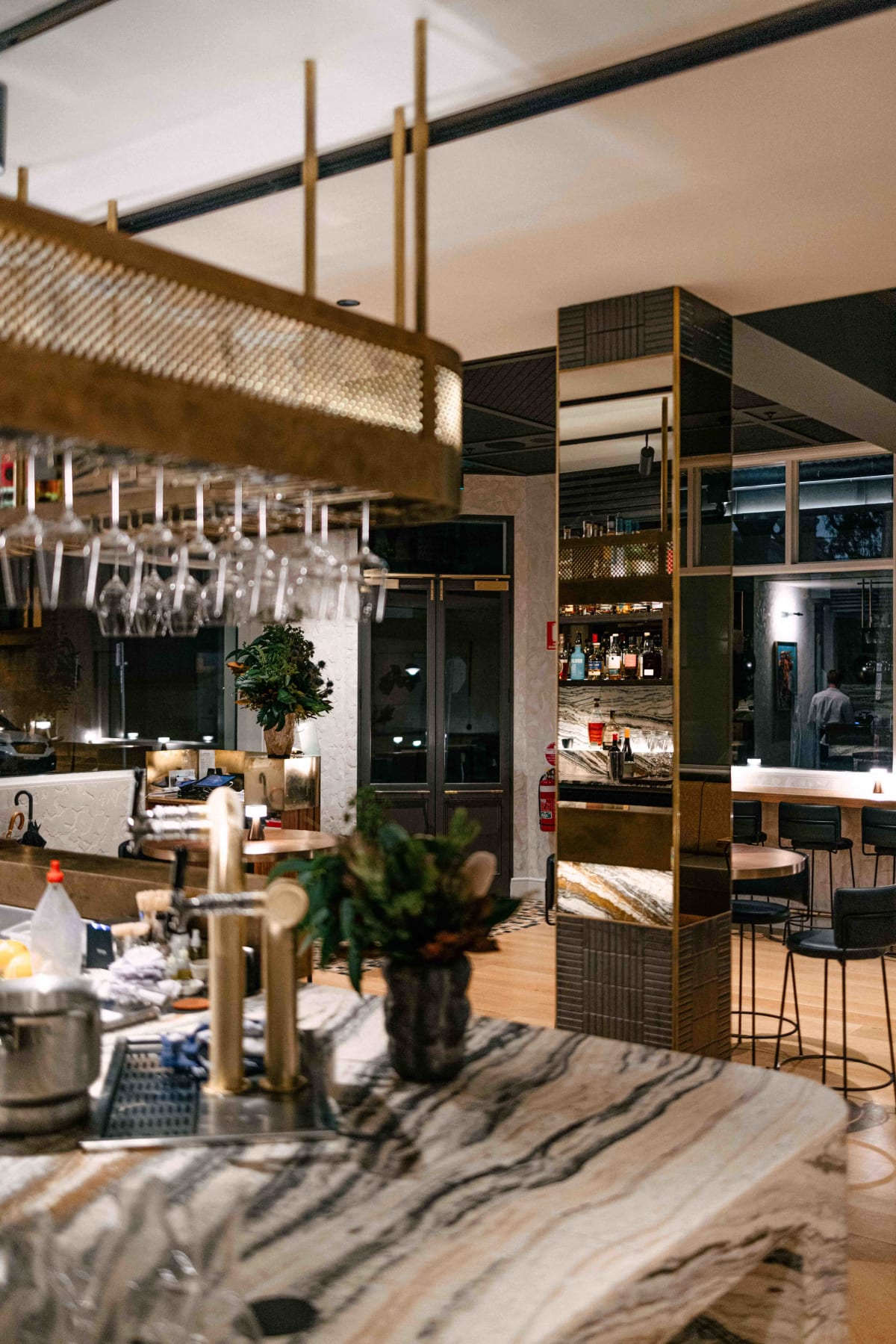
Away from the food what struck me was the interior. More refined and more expensive looking than any restaurant I have been to in Australia. Walking in the door and through to the dining room was striking enough that it felt like arriving at a three star house. The dining room also has an open kitchen at the front, like Restaurant San, so you can watch the cooking from time to time.
The interior was done by Studio Aquilo of Sydney. Rather than simply making it look expensive, they planted the fish philosophy of this house into the space as metaphor. Walls textured to suggest oyster colonies, veined stone recalling the grain of fish flesh, ribbed tile like scales, and an enormous pendant light that looks like a fish spine. The open kitchen has a wood fired grill and you can see kelp hung up to dry. The subject of a single fish repeats not only on the plate but through the architecture, the lighting and the furniture.
One drawback comes attached to that expensive space. The tables sit as close together as a neighbourhood cafe. It looks as though tables were pushed in to take more guests, and you can hear the breathing at the next table, which is a shame at this level of dining. I am a foreigner speaking Korean, so it bothered me less than it might have.
Section 5·Three Oysters
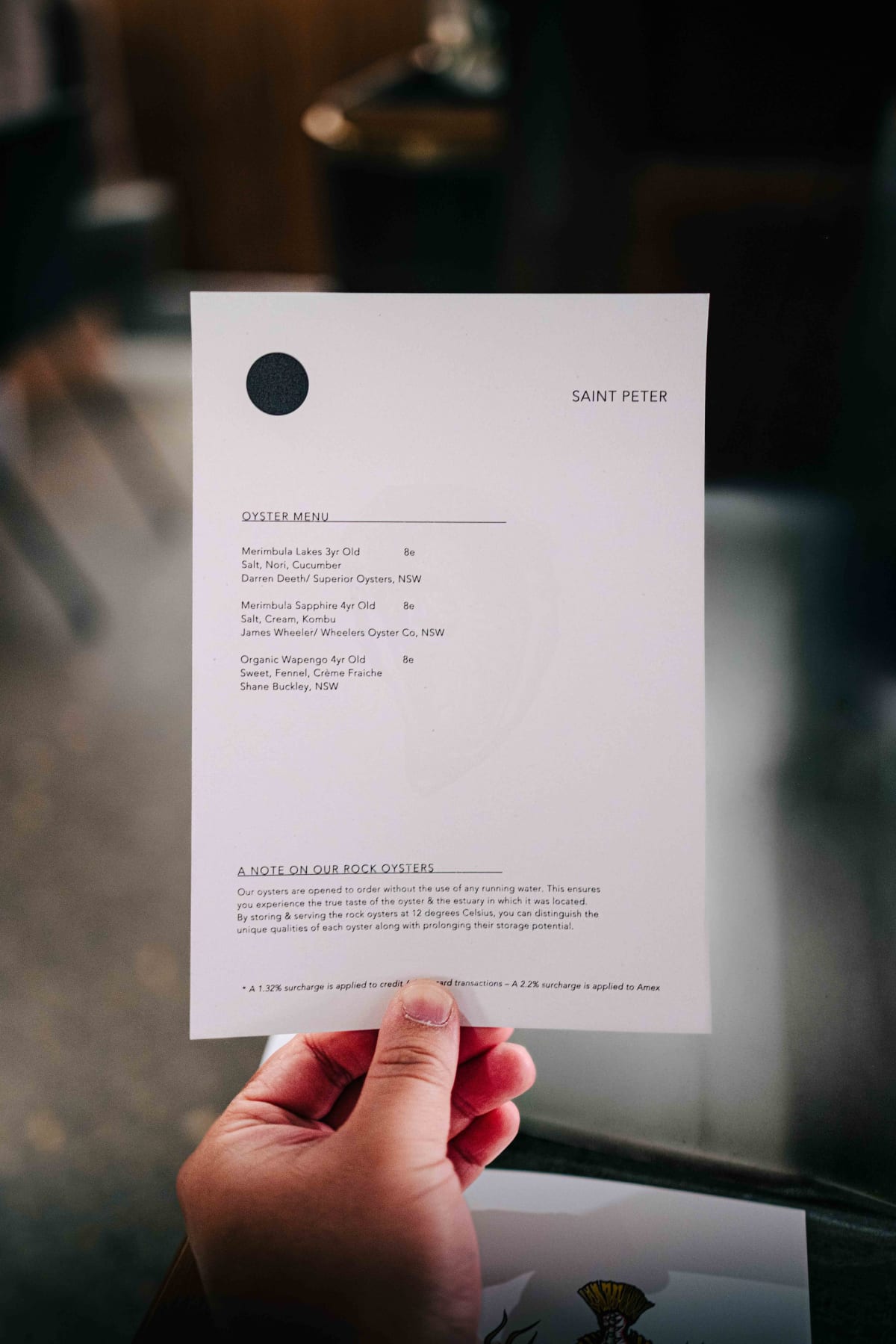
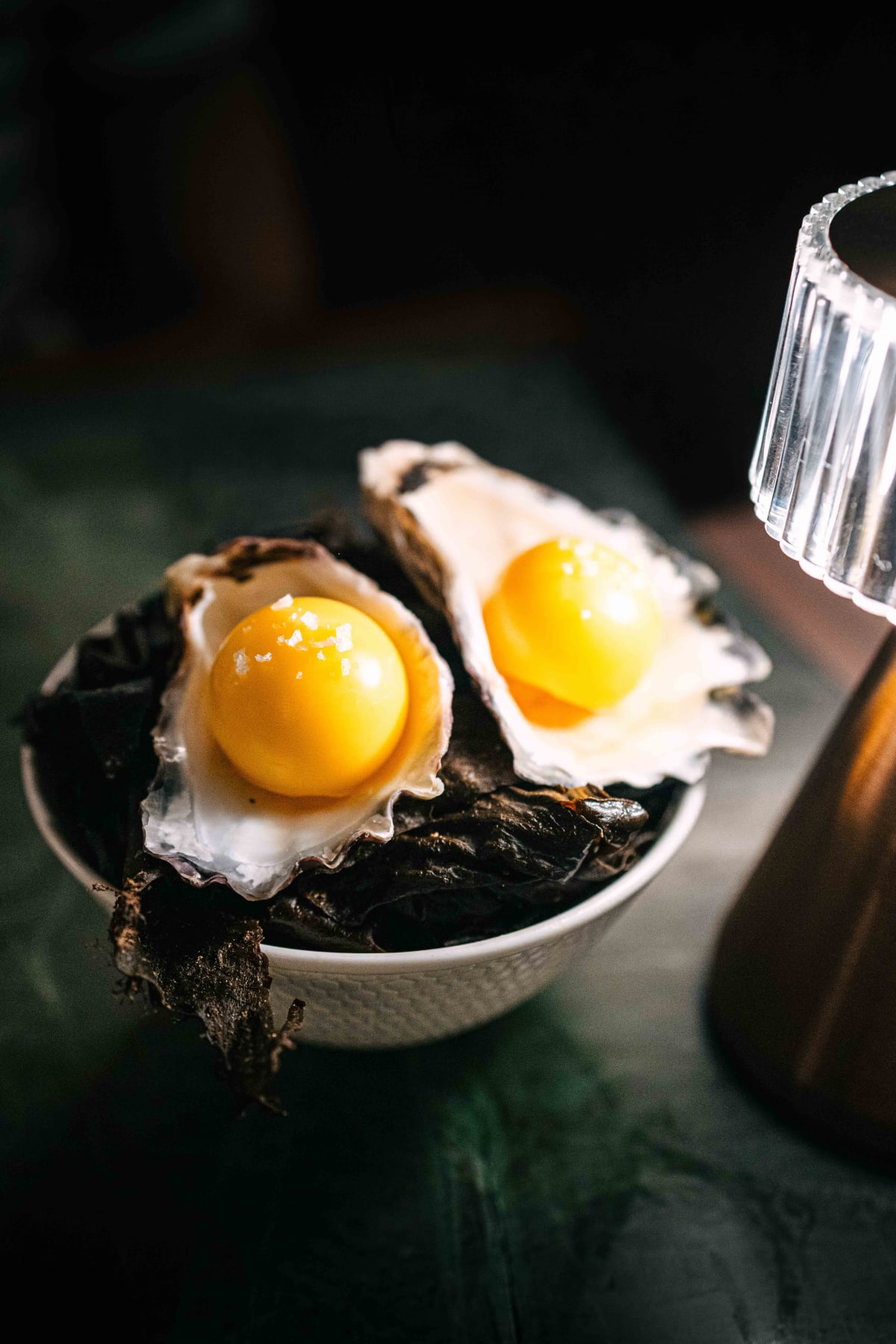
Before the tasting proper you could choose an oyster platter. There were three kinds: Merimbula Lakes 3yr Old Oyster, Sapphire 4yr Old Oyster and Organic Wapengo 4yr Old Oyster. The years are how long they were farmed, and all three were grown in lakes where seawater moves in and out.
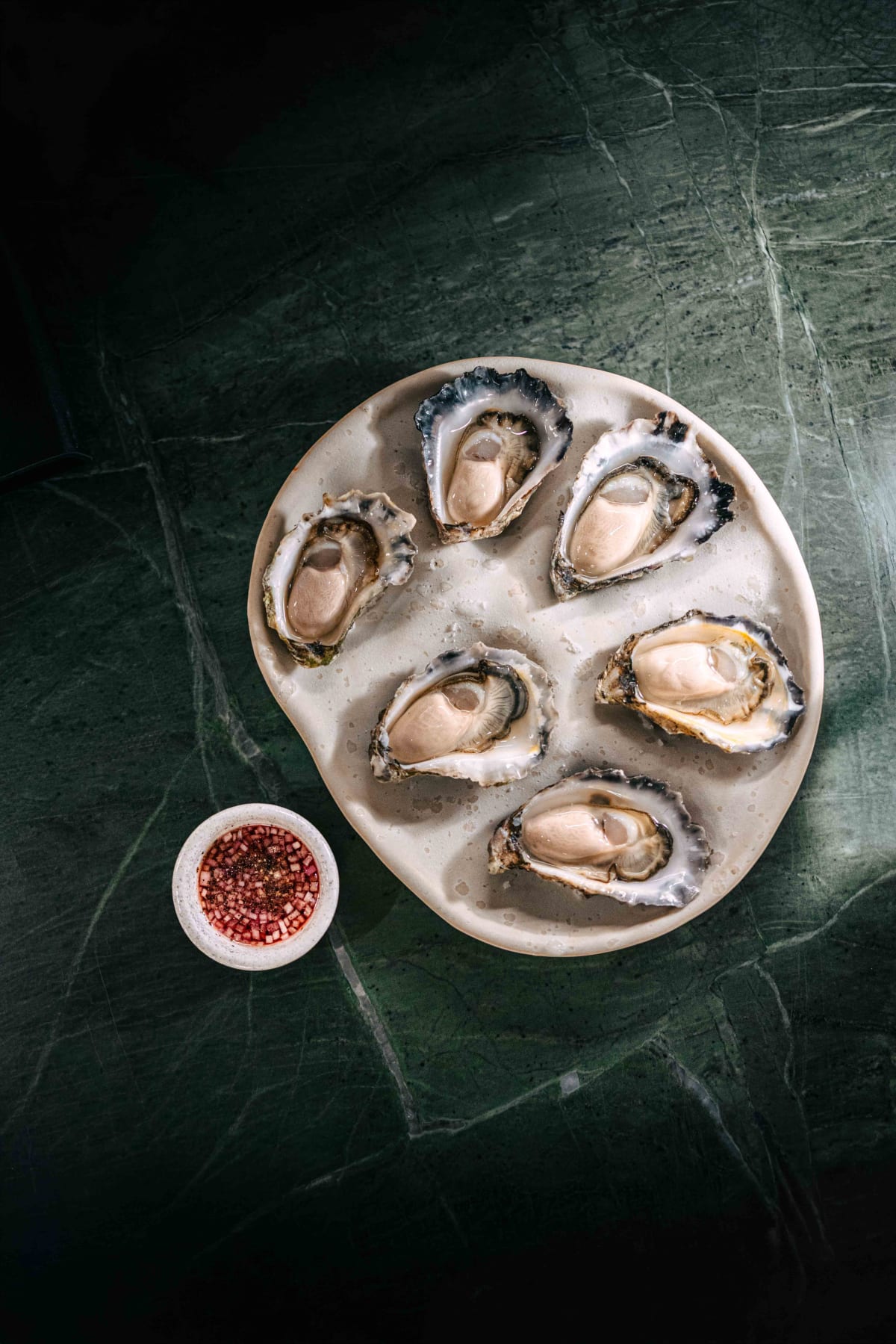
Each oyster came with a note on its character, salt, sweet, nori, kombu, fennel and so on, and to be plain about it I can tell sweet from salty but the finer differences in taste and aroma are beyond me for now, whether because my experience with oysters is still short.
The oysters I ate across Australia in March were generally creamy with a deep aroma rising through the nose, and there were times that became unpleasant in the mouth. The minerality that stimulates the salivary glands and grips the palate is good and the finish runs long, but sometimes it was too much and left the mouth heavy and stinging. At Saint Peter that quality was pronounced. The texture, the sea aroma reaching the nose, the depth were all good, but the mouth had a hard time of it.
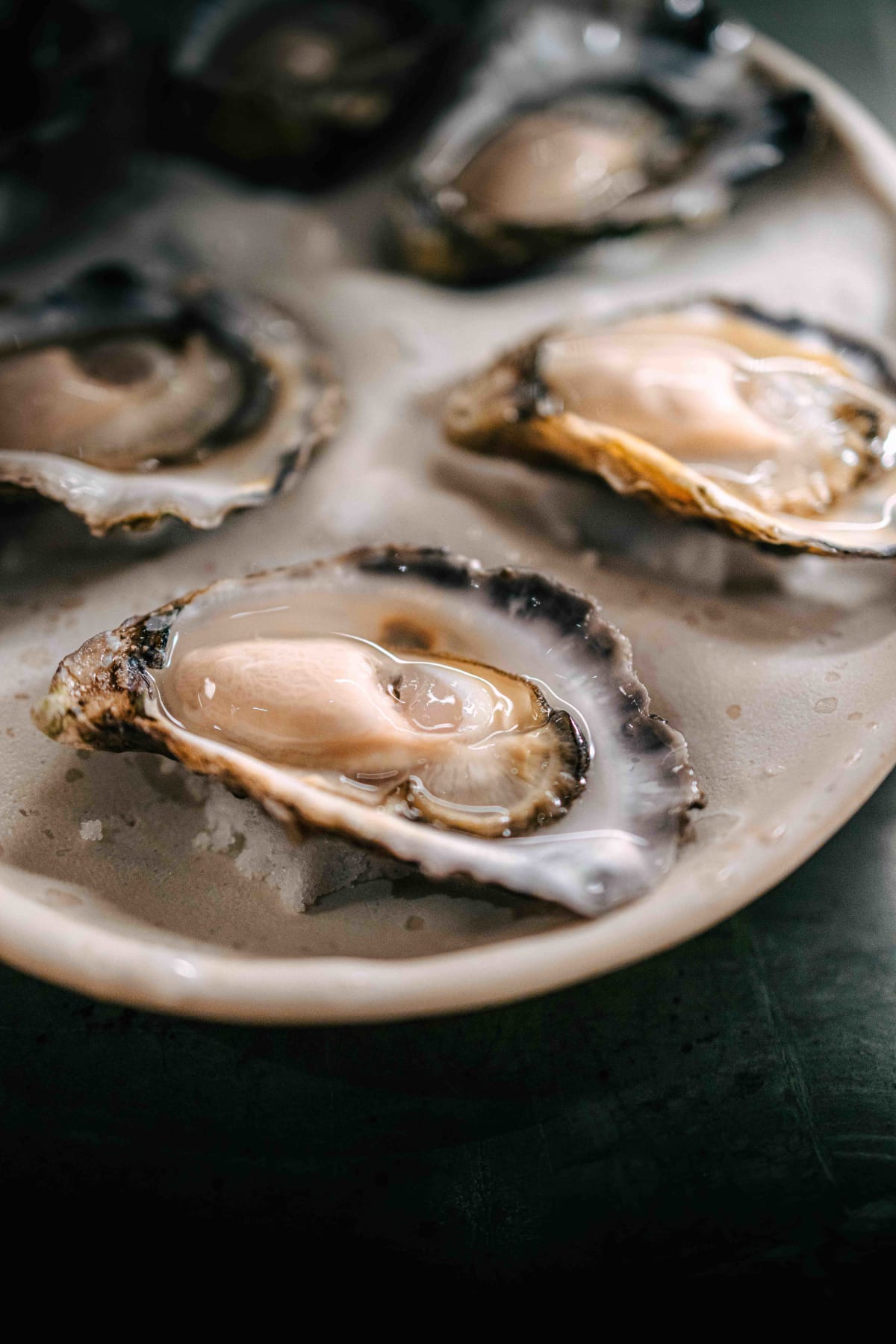
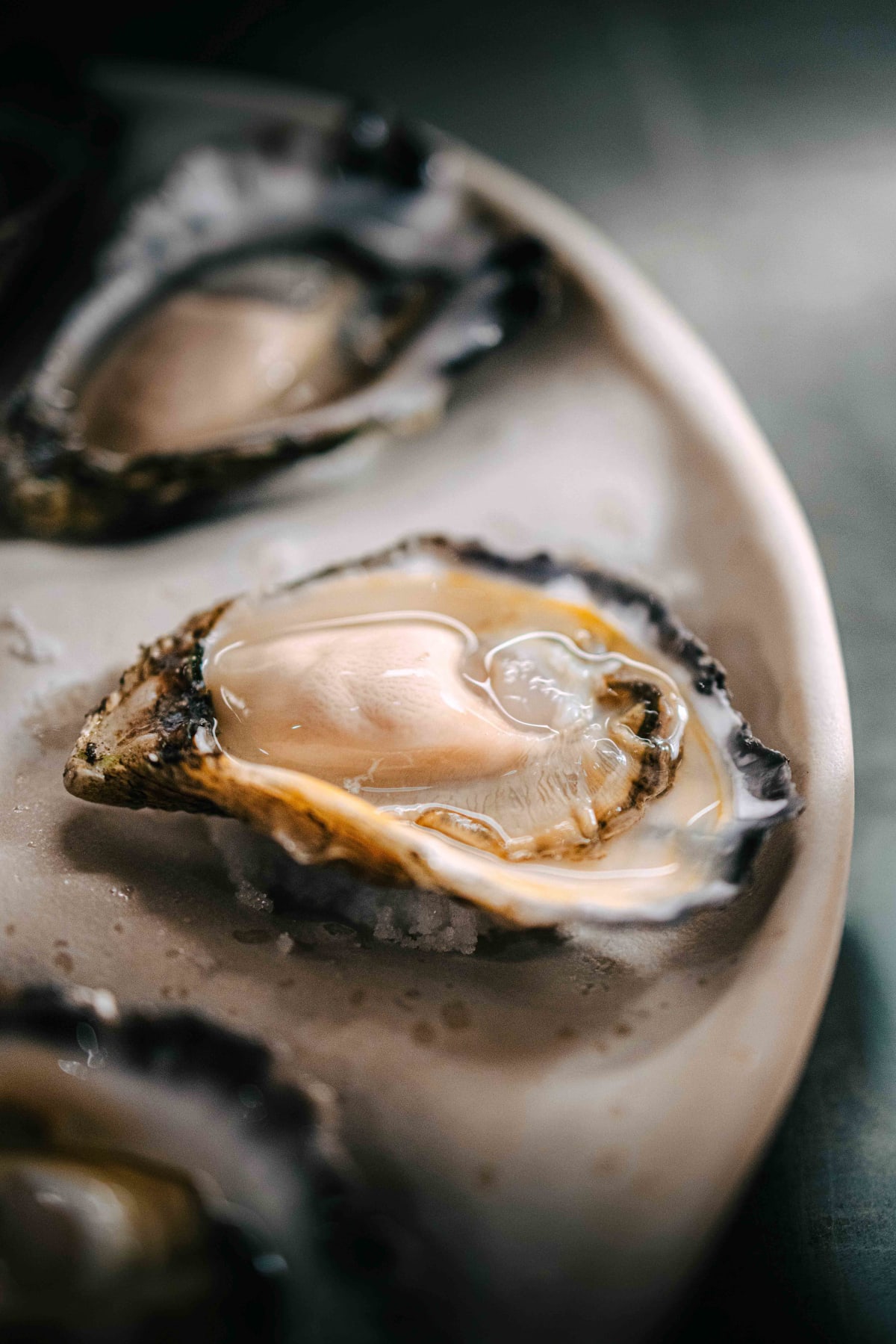
Looking into why, an oyster absorbs the salinity and mineral composition of the water it grows in. Oysters grown in high salinity waters above thirty two parts per thousand, the west coast of Ireland, the open sea off Brittany, parts of southern Australia, concentrate not only sodium but trace minerals like magnesium, calcium, iodine, copper and zinc, and this presents as a metallic sensation that grips the sides of the tongue and the inside of the gums.
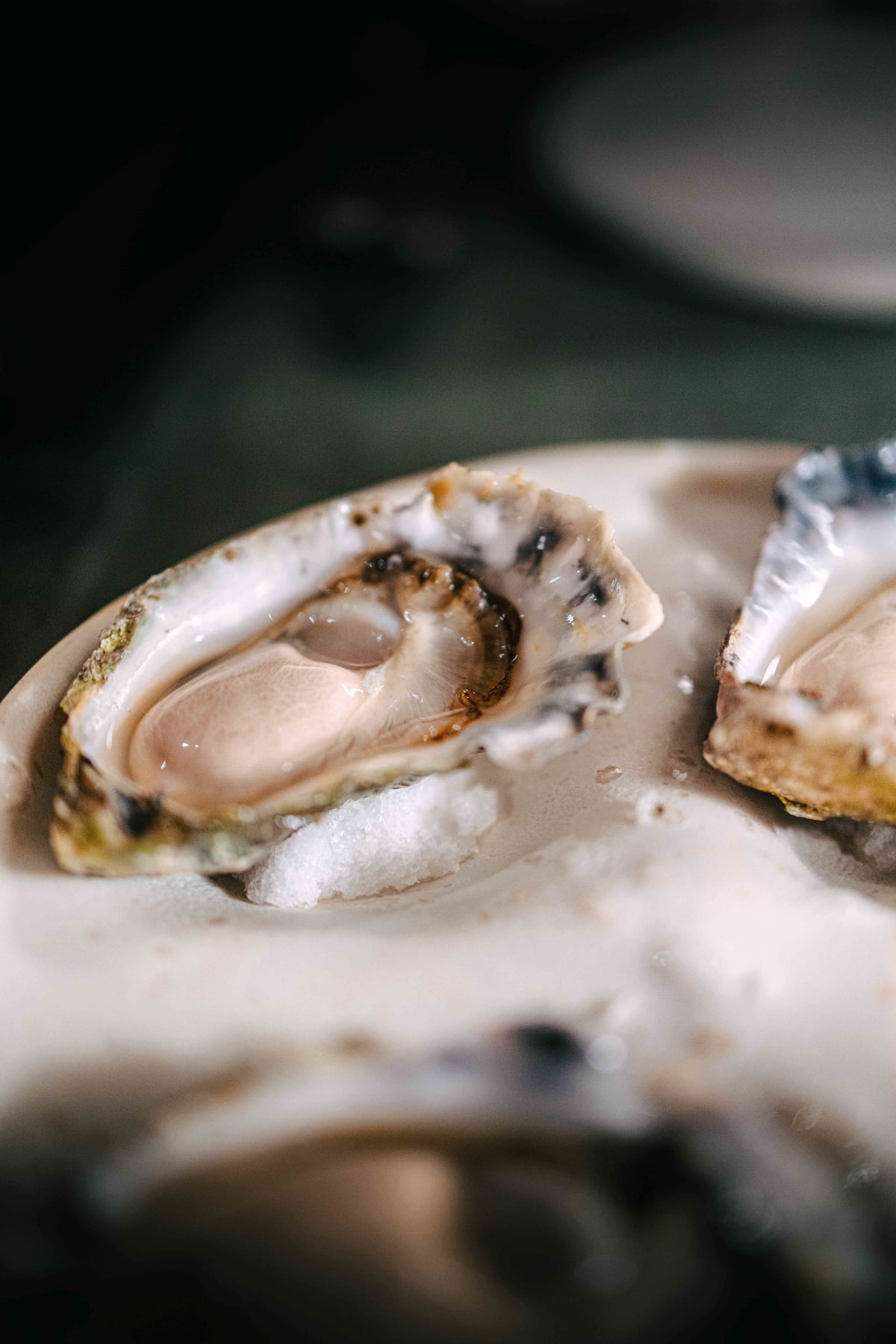
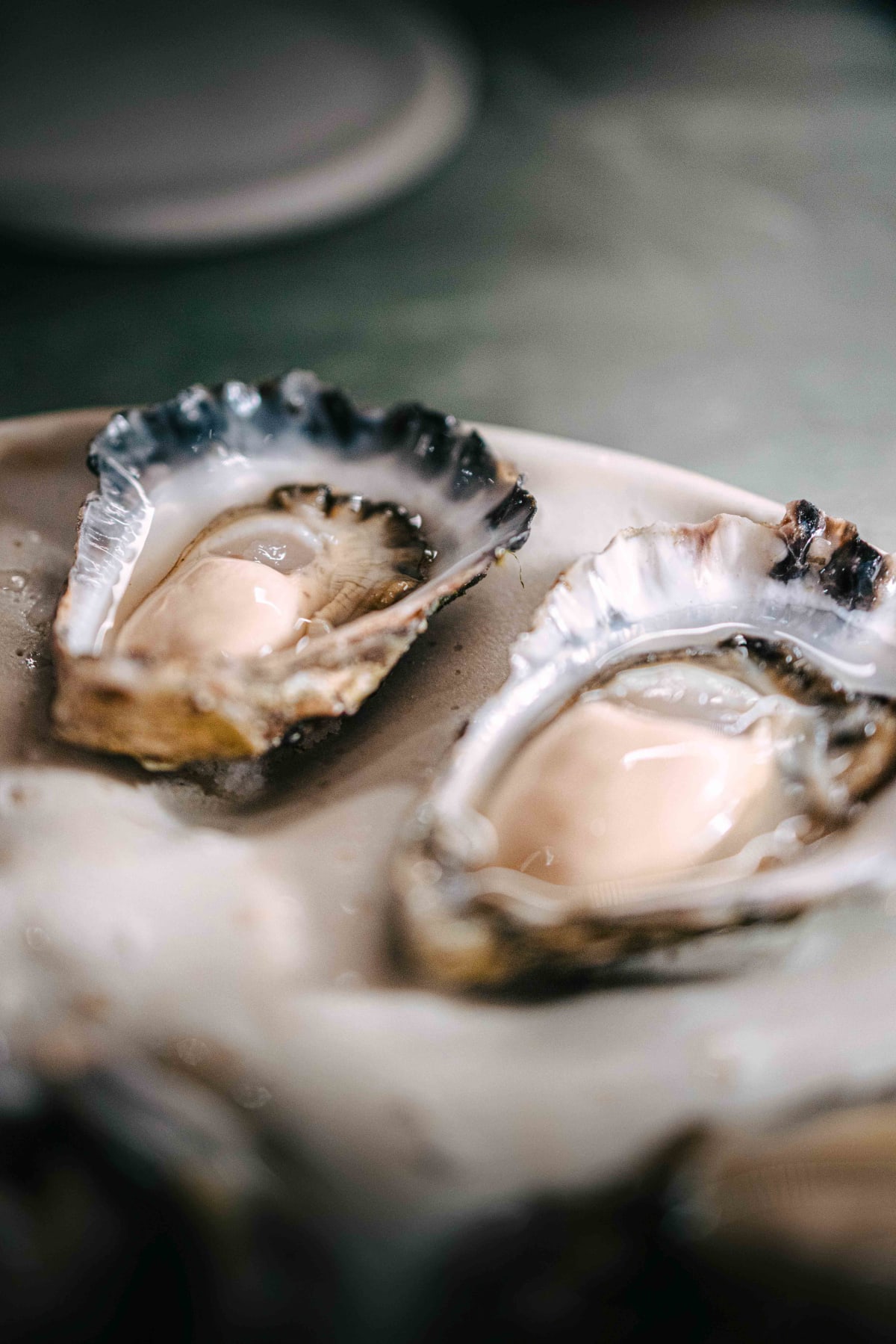
In France they call this strongly iodé, in Britain and Ireland sharp minerality. It is not a fault but the identity of a particular origin, though there is personal variation in how close to pain some people find it.
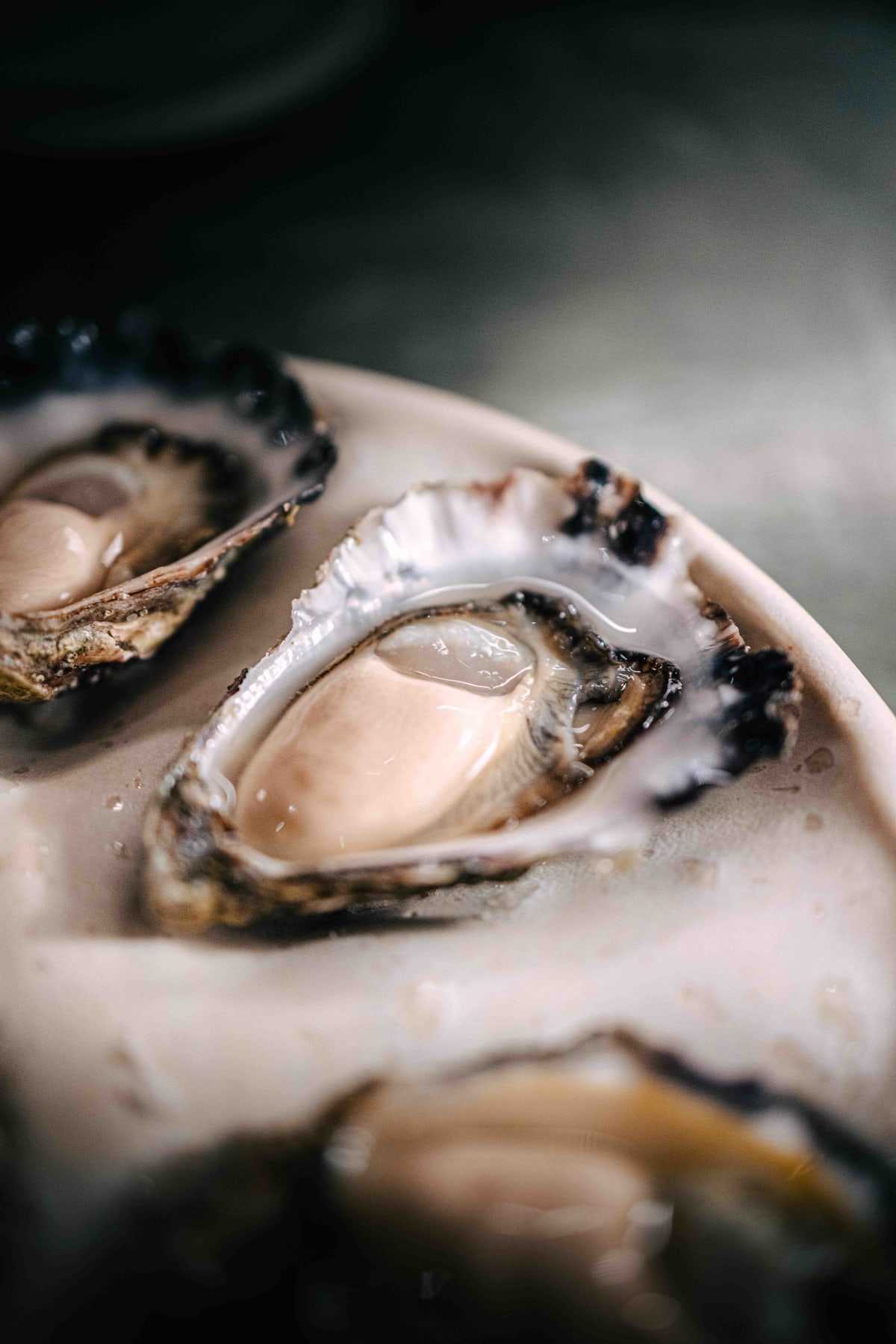
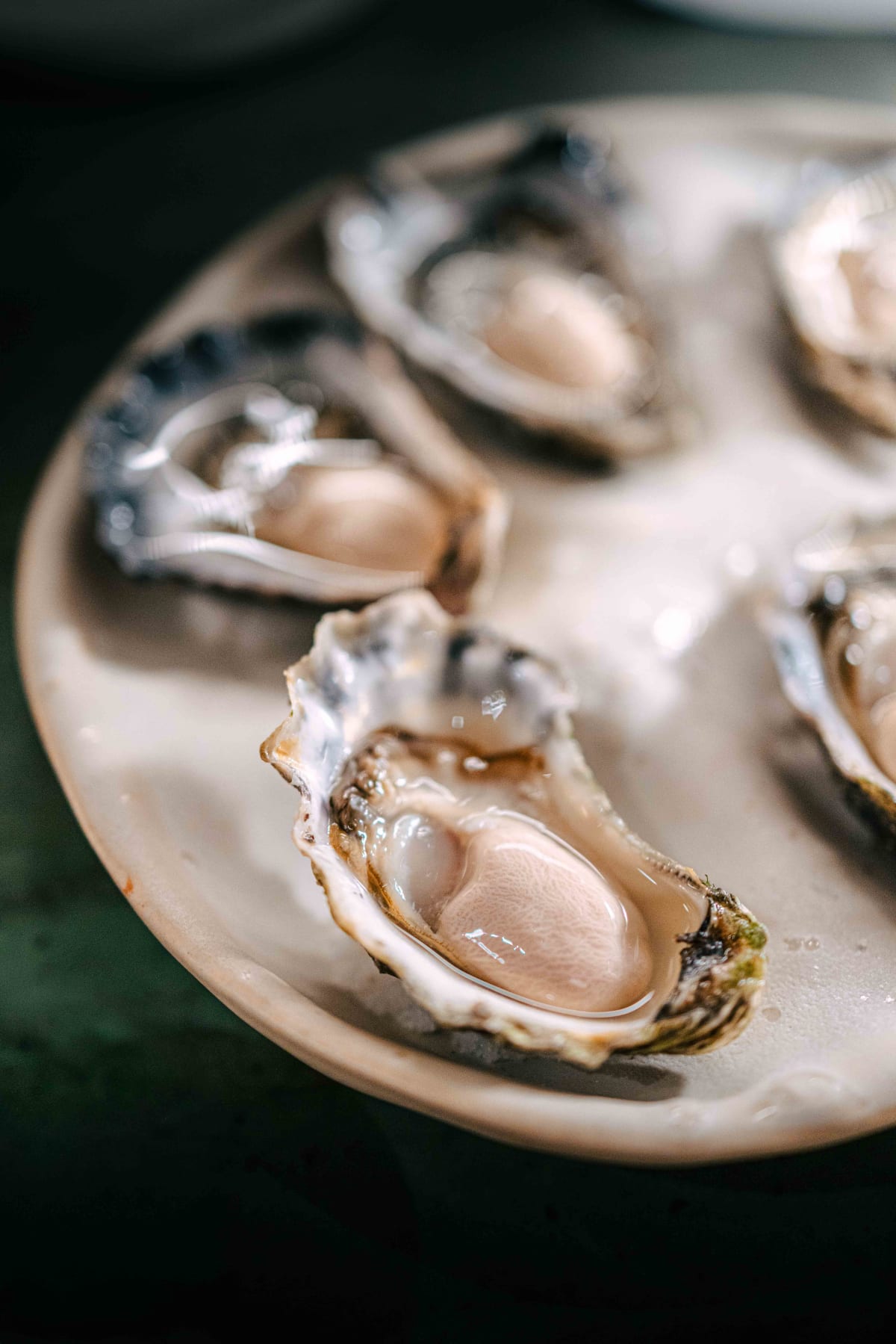
Another reason is that when an oyster enters spawning it consumes its glycogen and the gonad swells, so the flesh turns milky and creamy, and the amino acid balance breaks down and bitter, metallic and stinging notes strengthen.
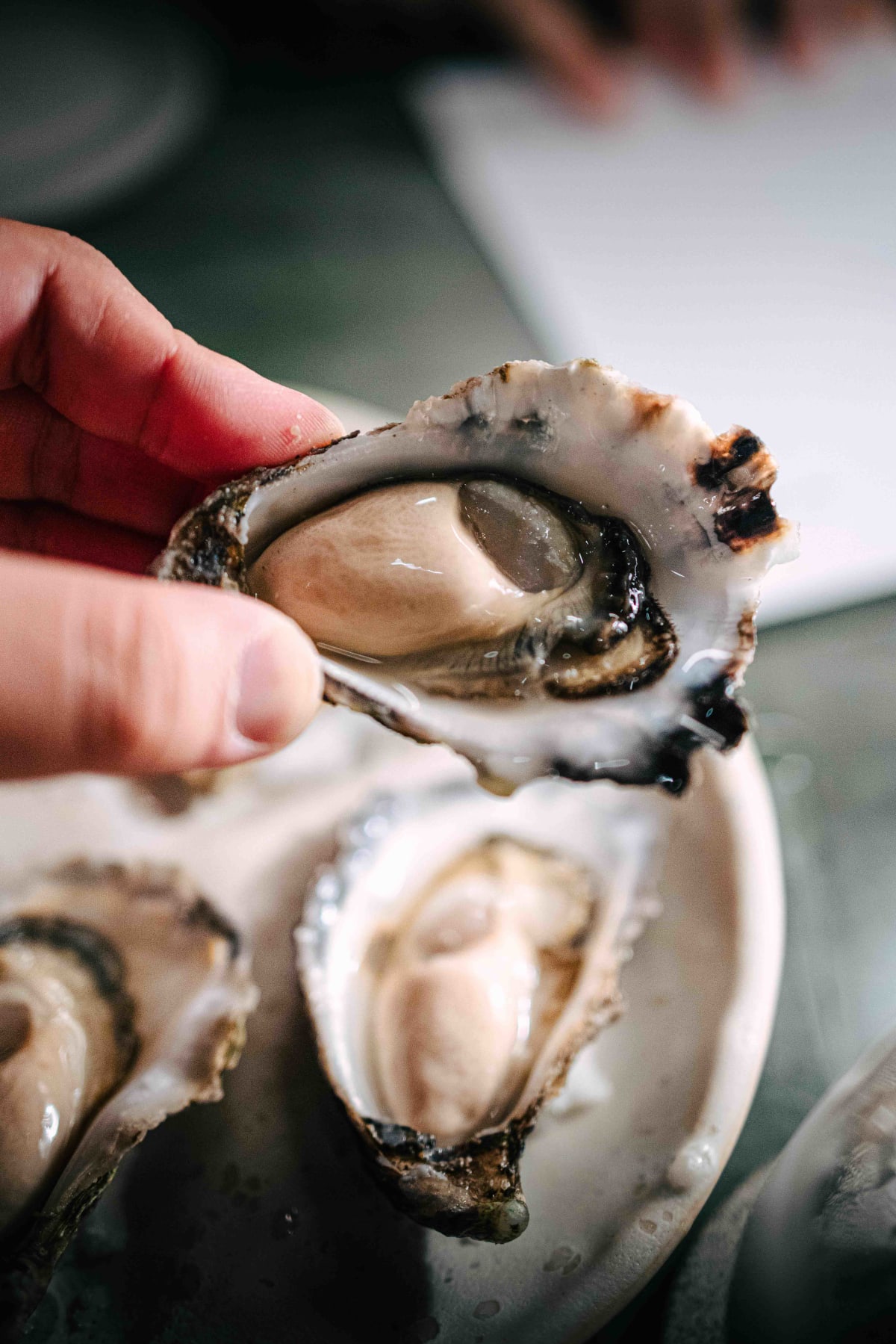
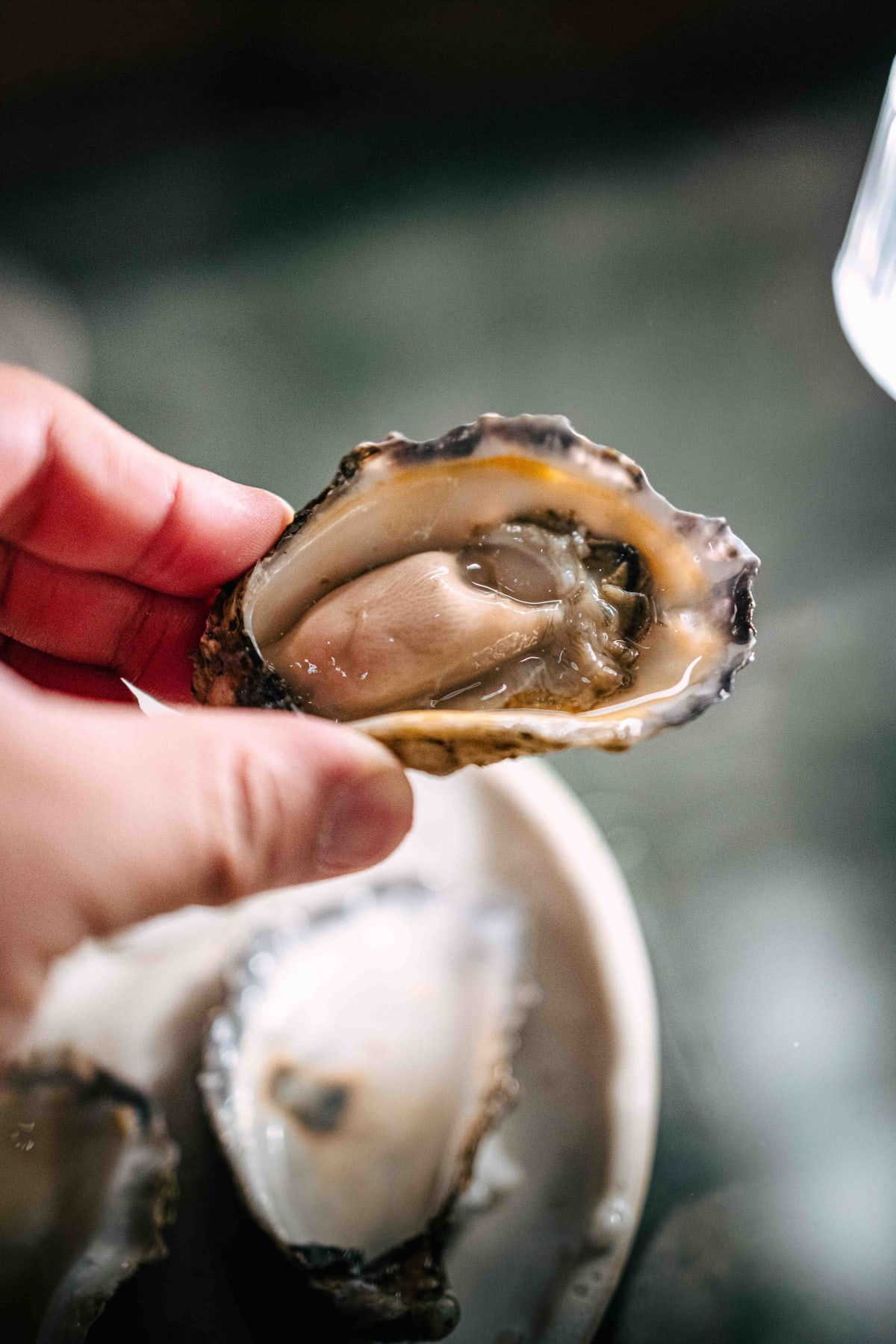
Ammonia compounds and free amino acids like taurine and glutamine shift sharply in concentration and irritate the mouth, and the old European rule about not eating oysters in months without an R, May through August, came from this gastronomic reason as well as from hygiene. Triploid oysters do not spawn so they can be eaten year round now, but wild oysters still have this problem.
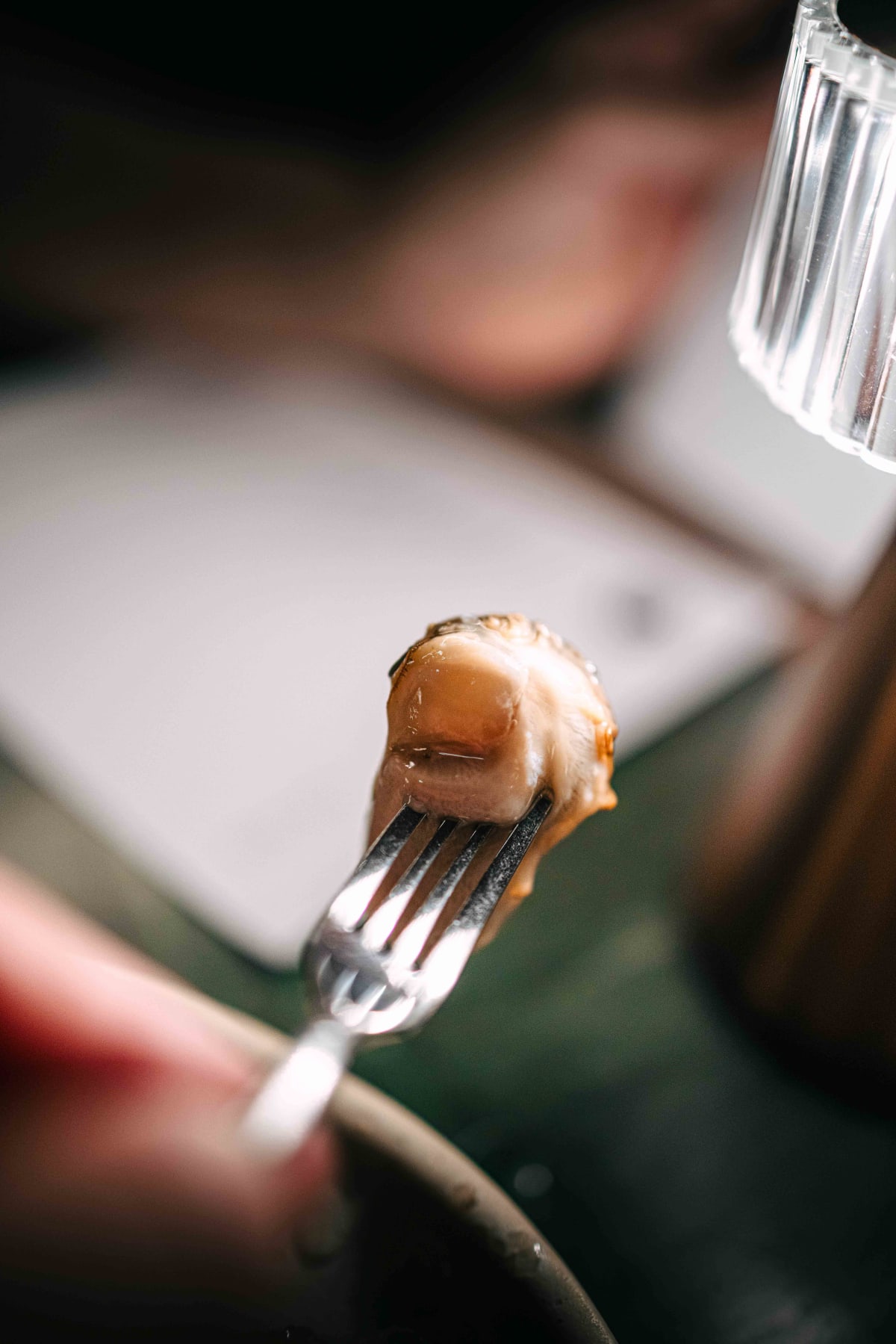
If you are sensitive to and dislike the minerality and the metallic edge particular to oysters, I recommend choosing by origin and season. In Australia this quality is said to be strong.
Section 6·Bone Broth
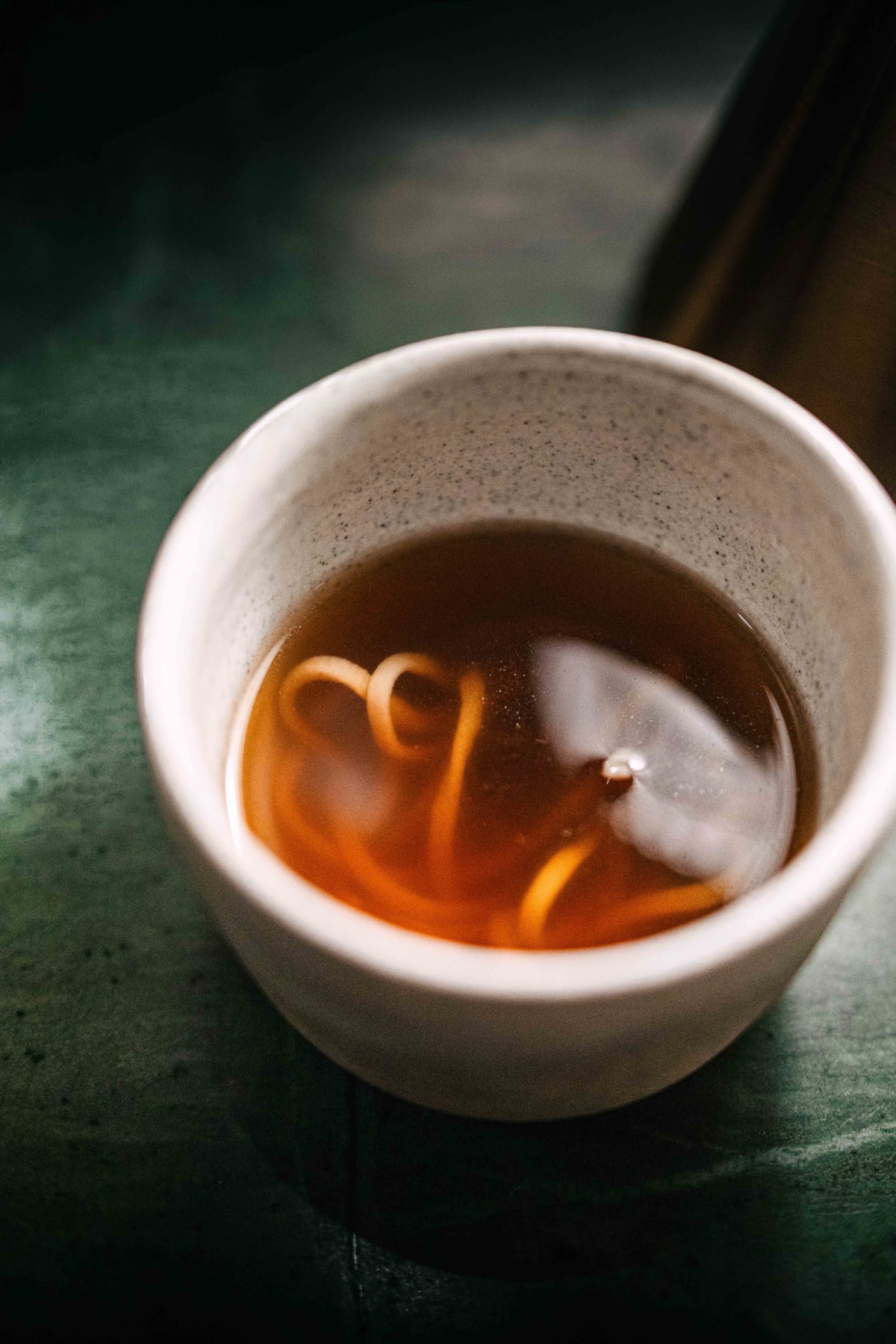
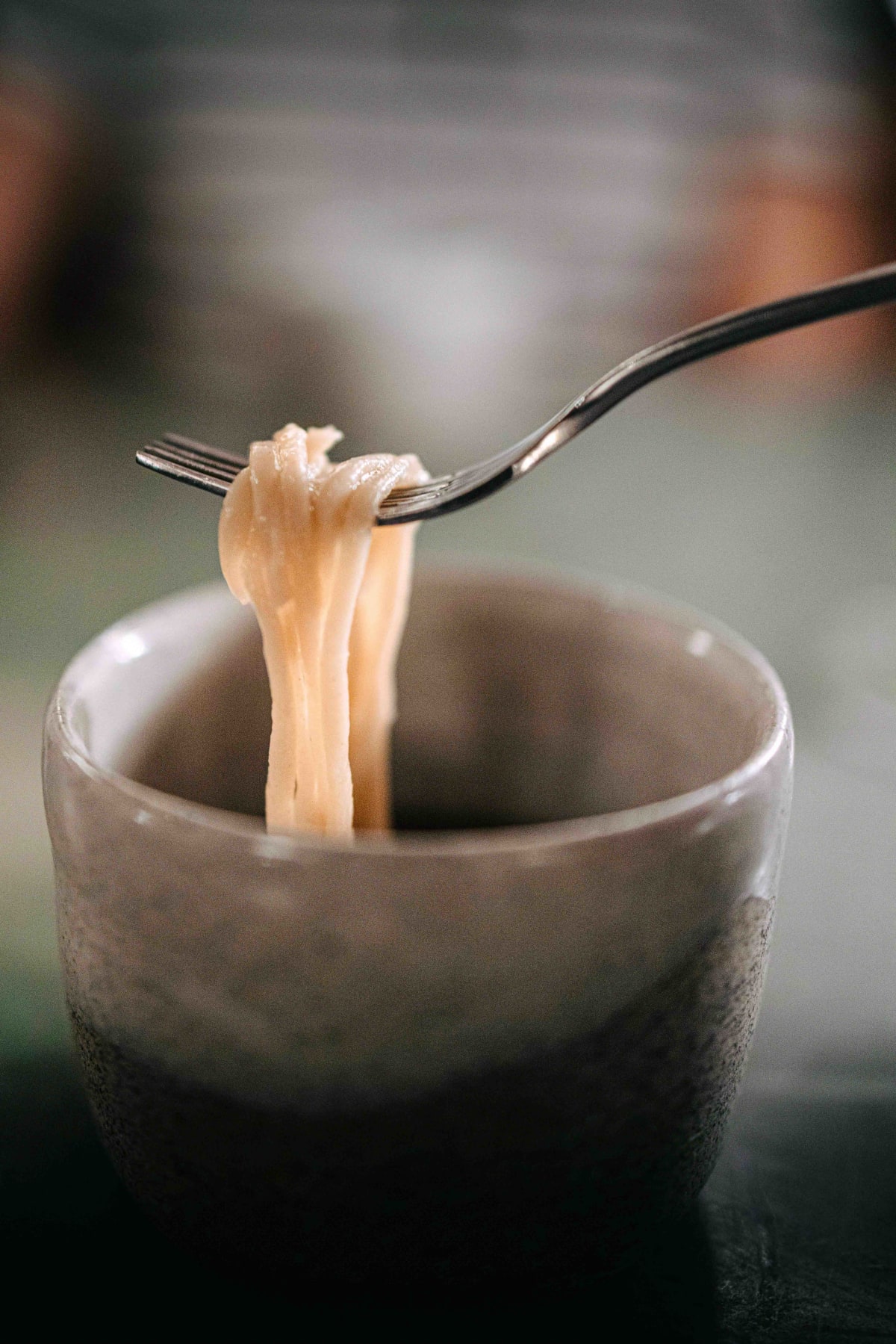
After the oysters the first dish arrived, Coral Trout Bone Noodles, a broth from coral trout bones cooked long at low temperature with buckwheat noodles in it.
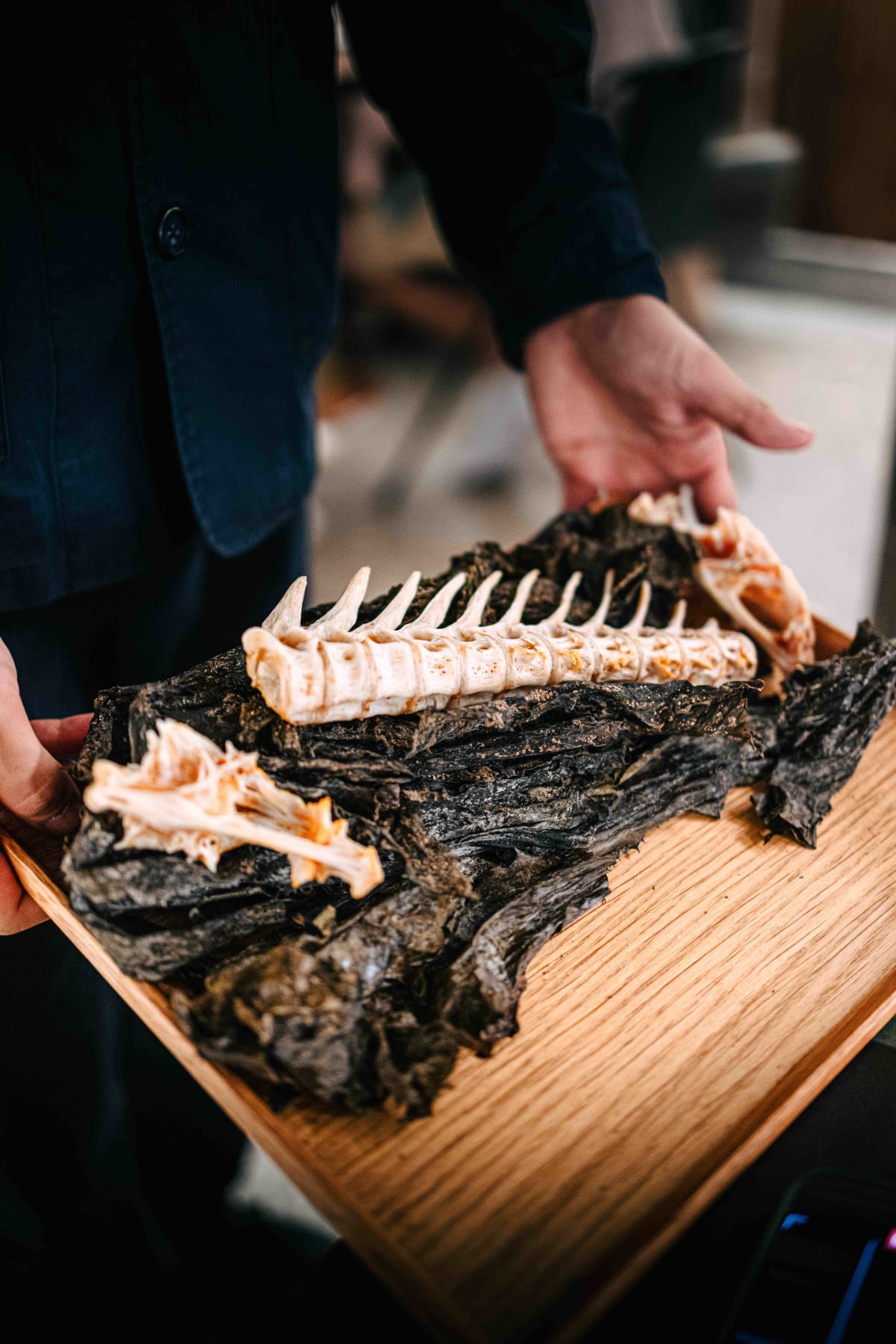
I took it for a soup borrowing a Japanese idiom. The taste is close to the katsuobushi stock we all know, but it was quite salty. A soup is awkward to pair with wine to begin with, and this was salty enough that I only got through half.
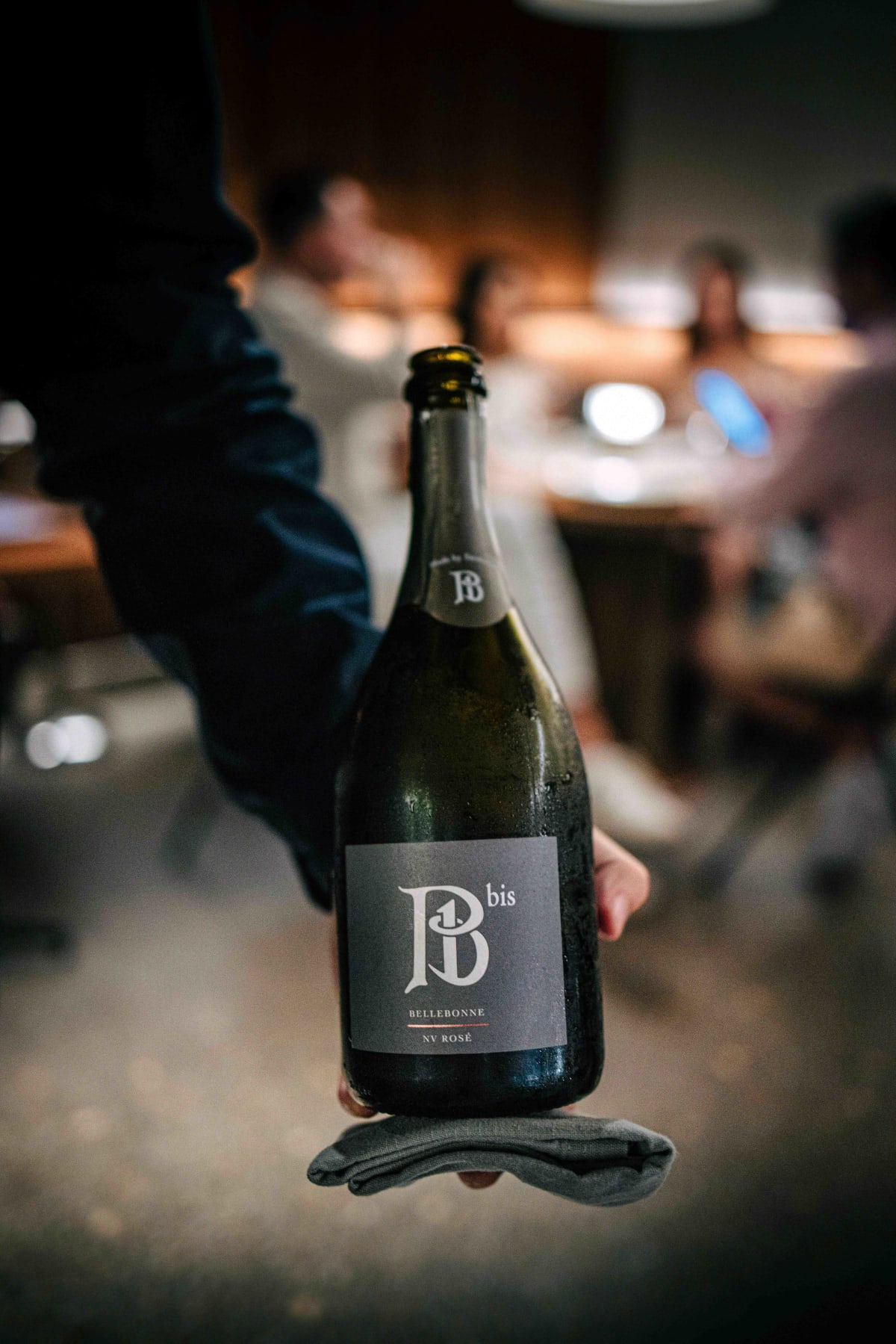
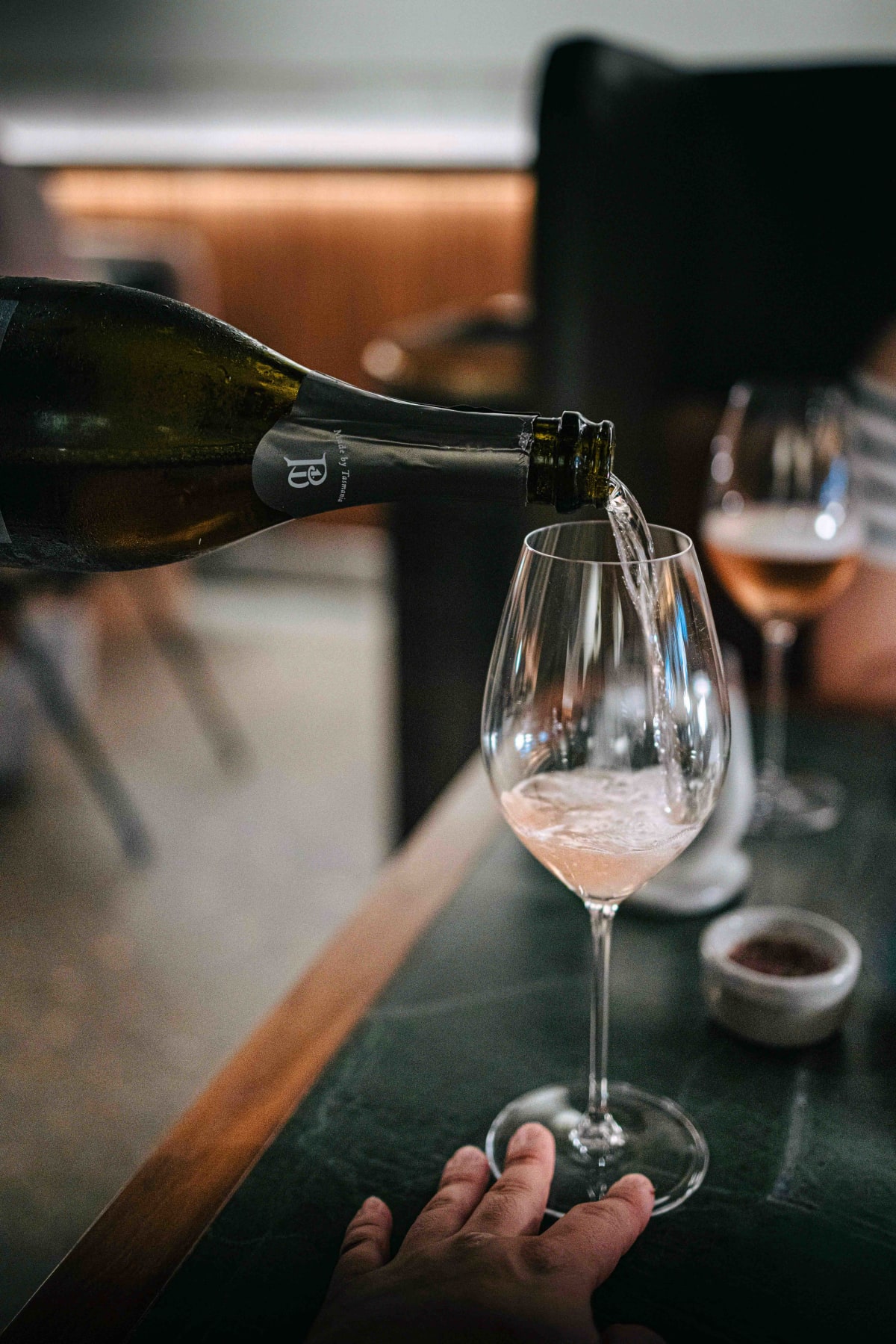
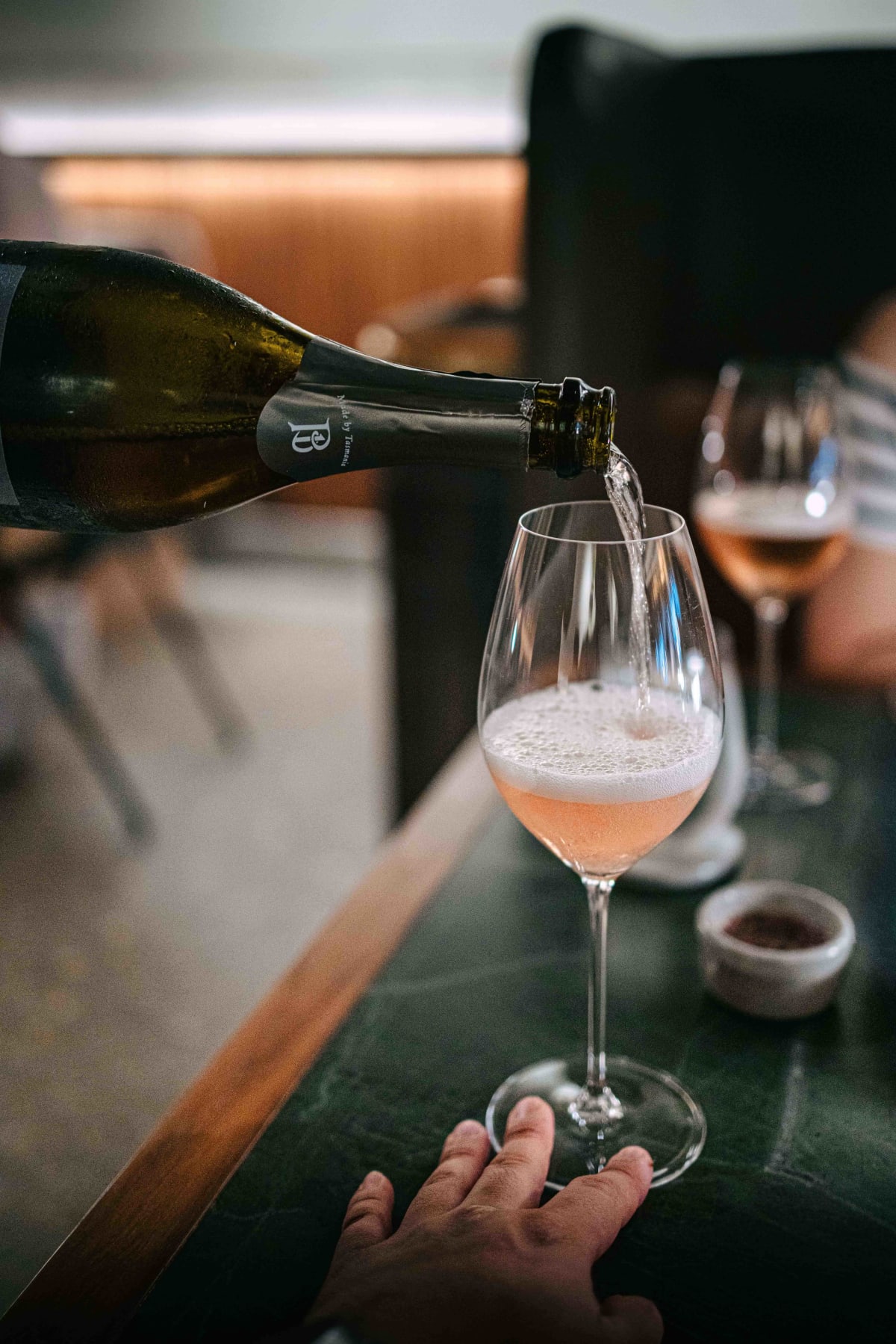
The first glass, served with this broth, was Bellebonne's Bis NV Rosé. A traditional method sparkling from fruit in Pipers River and the Tamar Valley in Tasmania, made by Natalie Fryar. She spent fourteen years as chief winemaker at Jansz, was called Australia's sparkling queen, and in 2015 started this project under her own name. The story goes that to finance her first vintage she sold a house, worked waiting tables, and drove her cleaner's old car down to Tasmania. Bis is French for the space in between.
Section 7·Fish Charcuterie
The second dish was Fish Butchery Charcuterie with a Smoked Bar Cod Roe Tart. Fish made into charcuterie the way meat is. A platter built from every part of the fish except the fillet, with offal, fat, fascia and even bone processed into part of the plate. The attempt itself was startling, and this dish divided opinion enormously. I found it memorable and liked it a great deal.
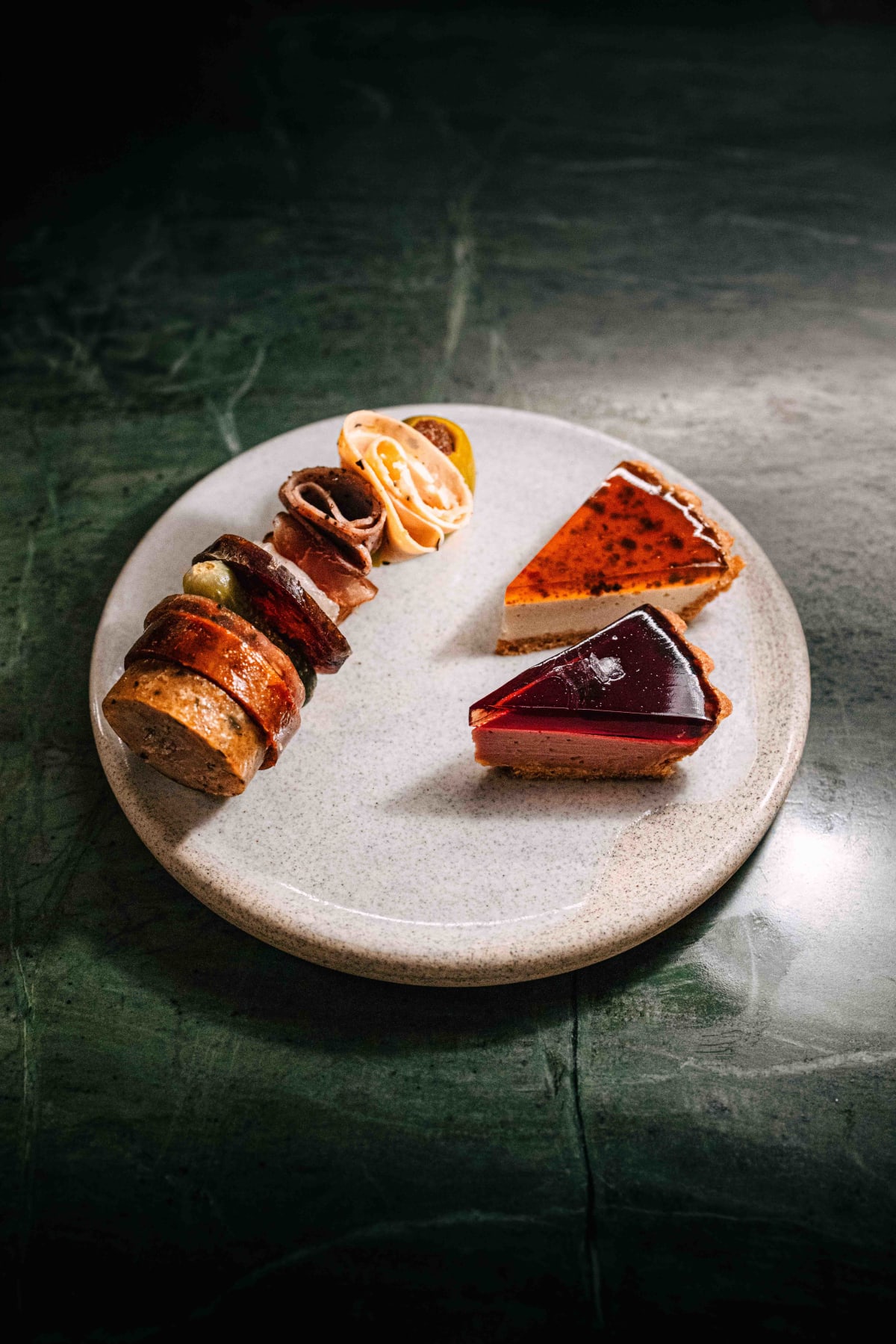
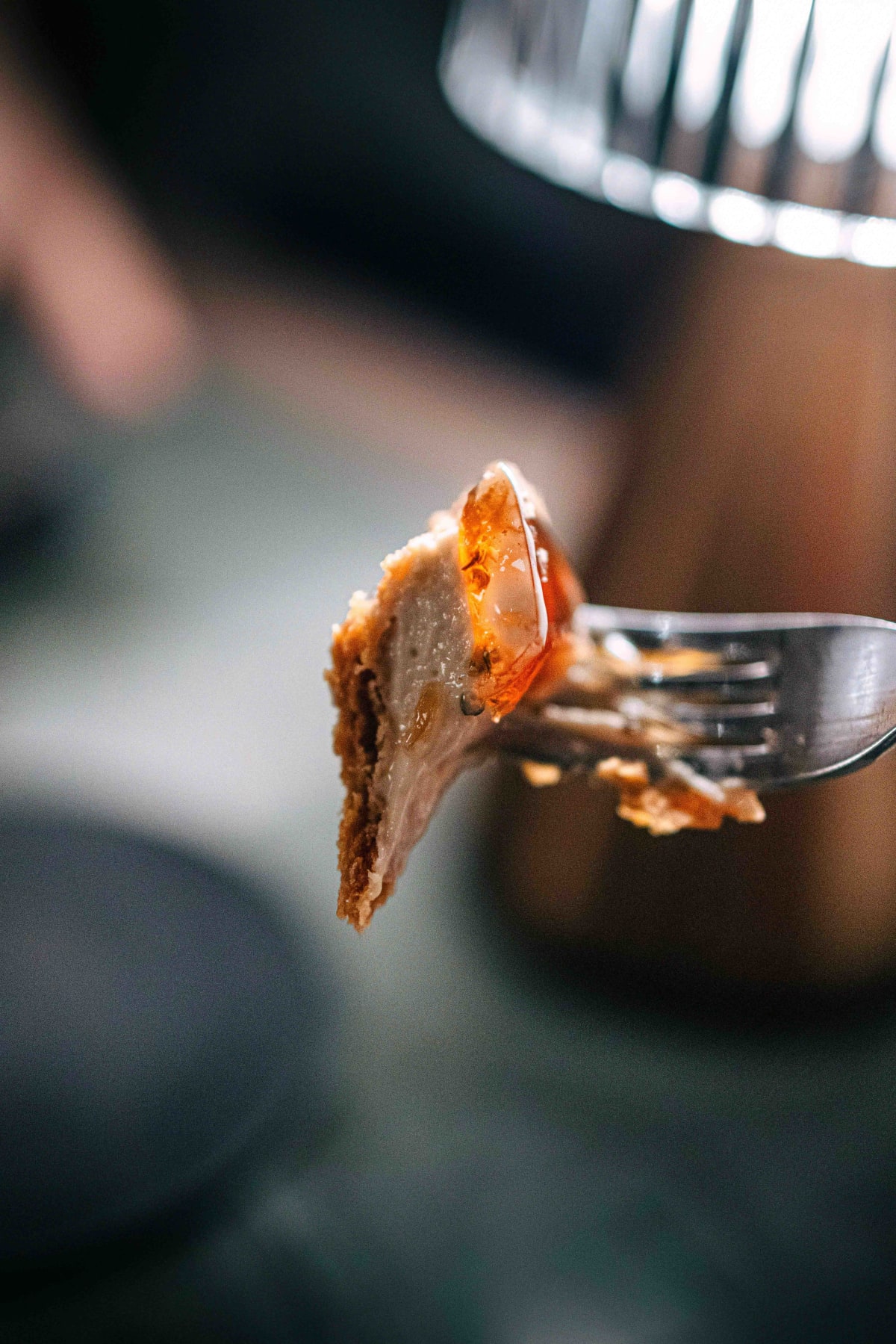
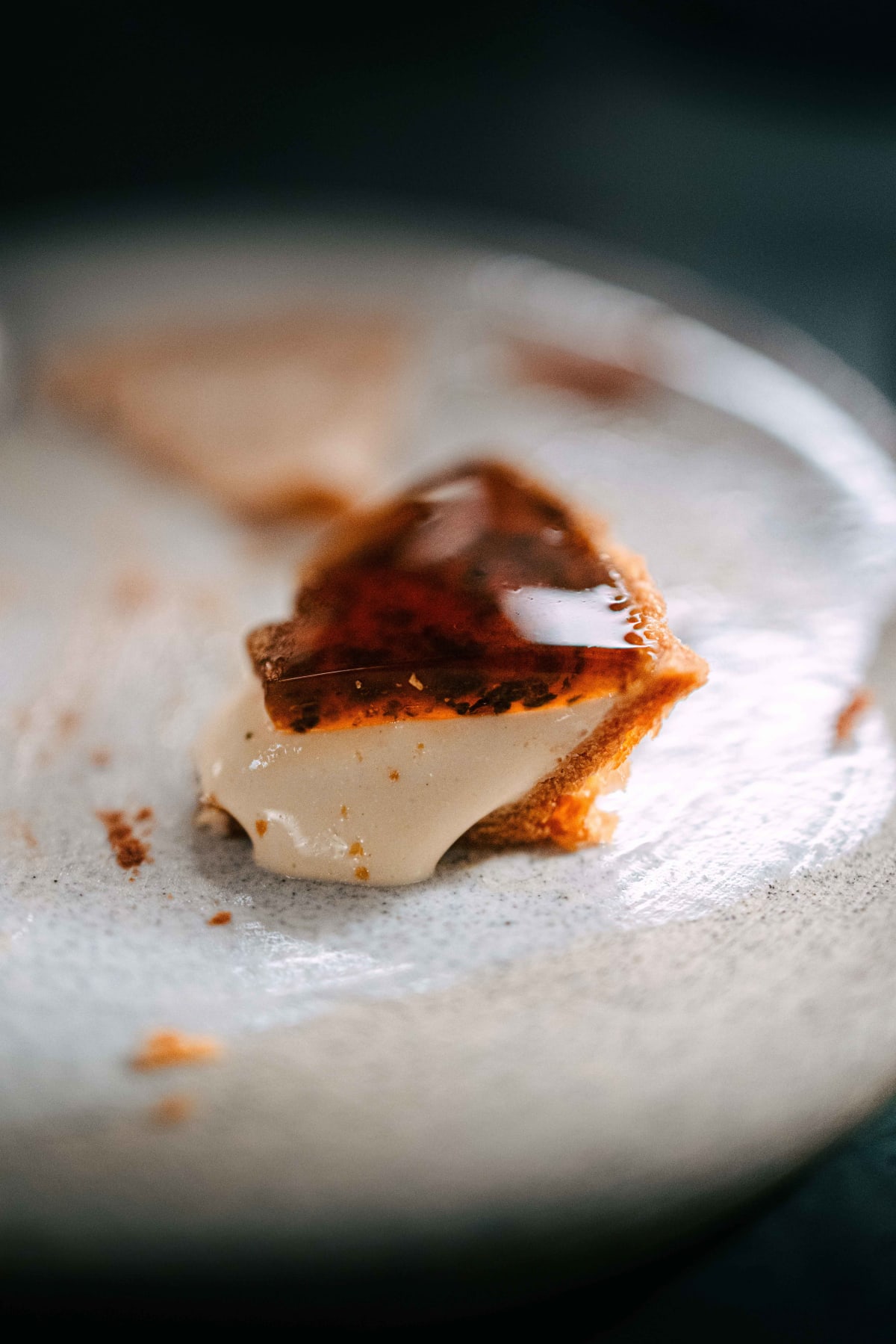
Looking at the charcuterie closely, two pâtés sat to the side. John Dory Liver Pâté & Port Jelly Tart, and Smoked Bar Cod Roe & Celeriac Consommé Jelly Tart. One takes the liver of a John Dory and makes it like a pâté with port set as jelly on top, the other whips smoked roe with a celeriac consommé jelly laid over it.
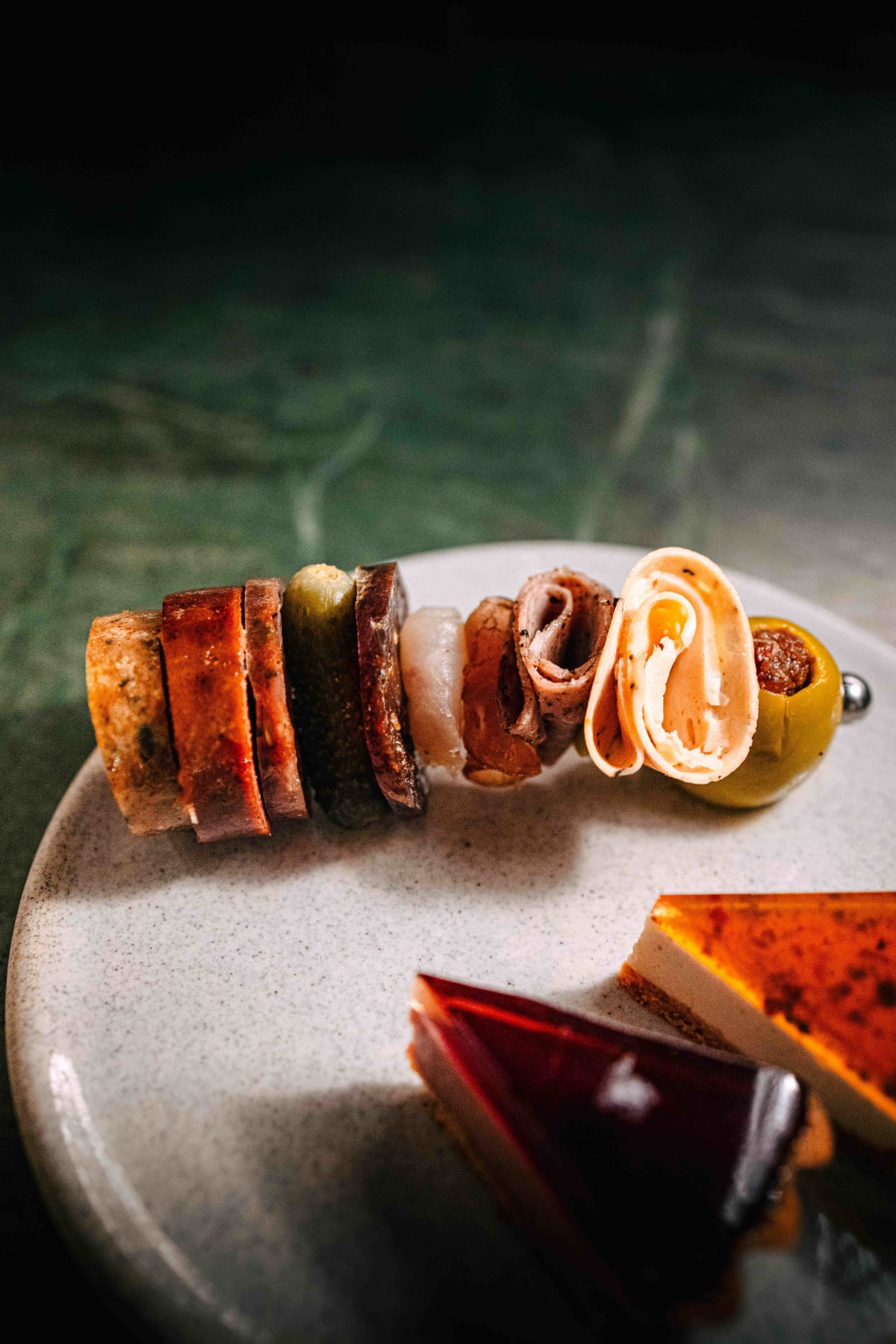
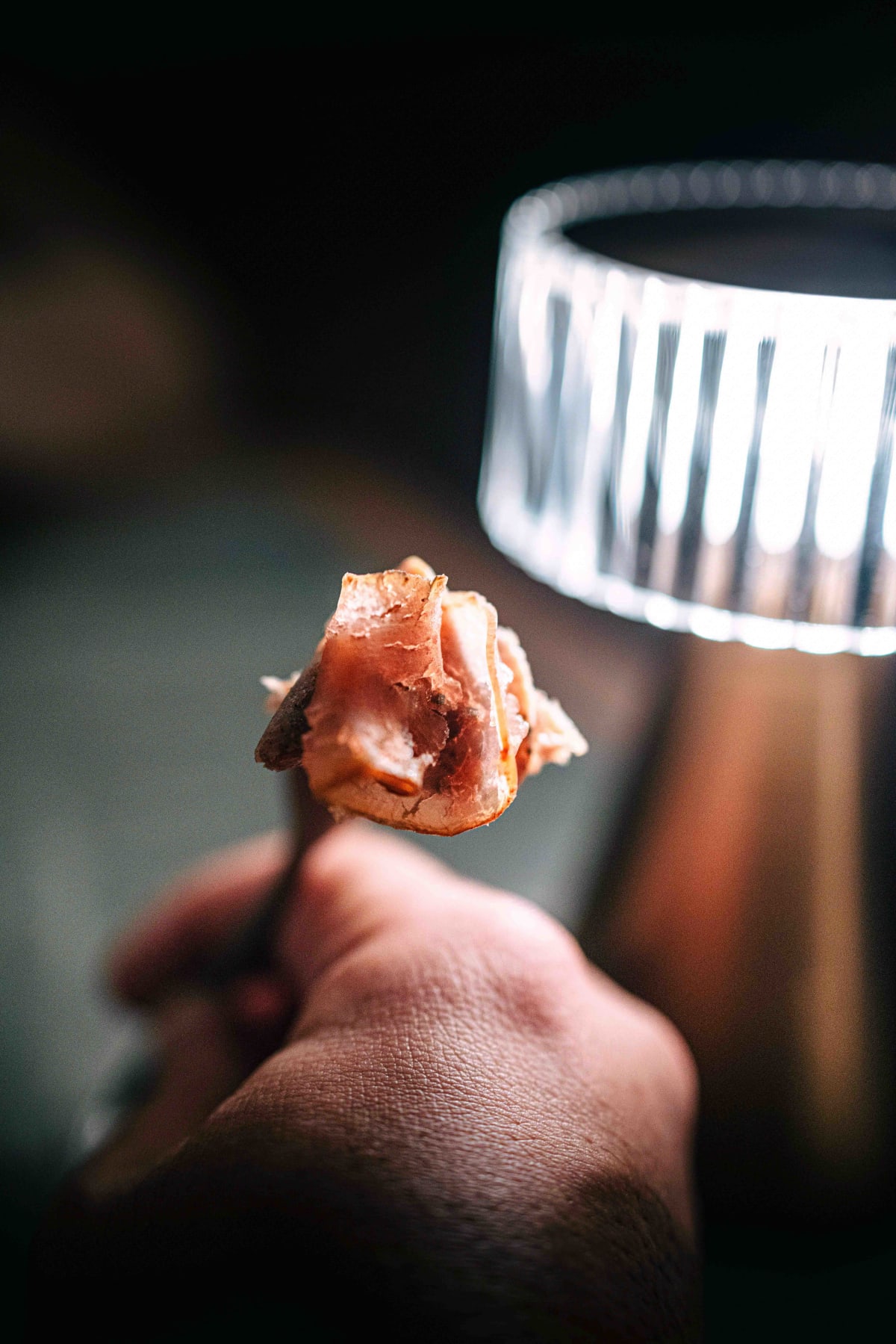
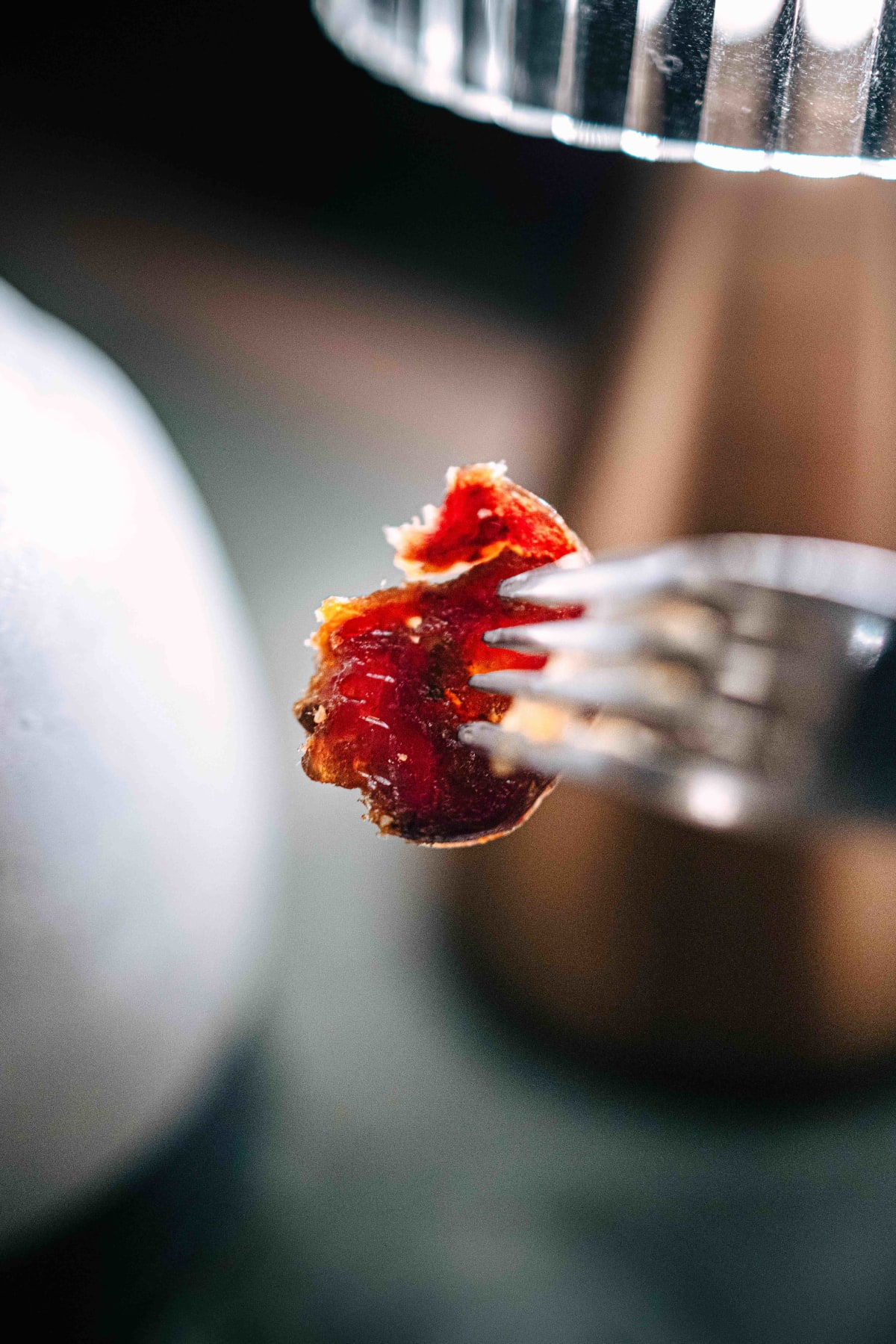
Beside them, fish made into cured meats were pinned in a row: Olive & Yellowfin Tuna 'Nduja, Rock Flathead Mortadella, Yellowfin Tuna Sujuk, Striped Marlin Ham, Swordfish Belly Bacon, Spicy Yellowfin Tuna Salami, Yellowfin Tuna Loukaniko, Murray Cod Toulouse and Chorizo.
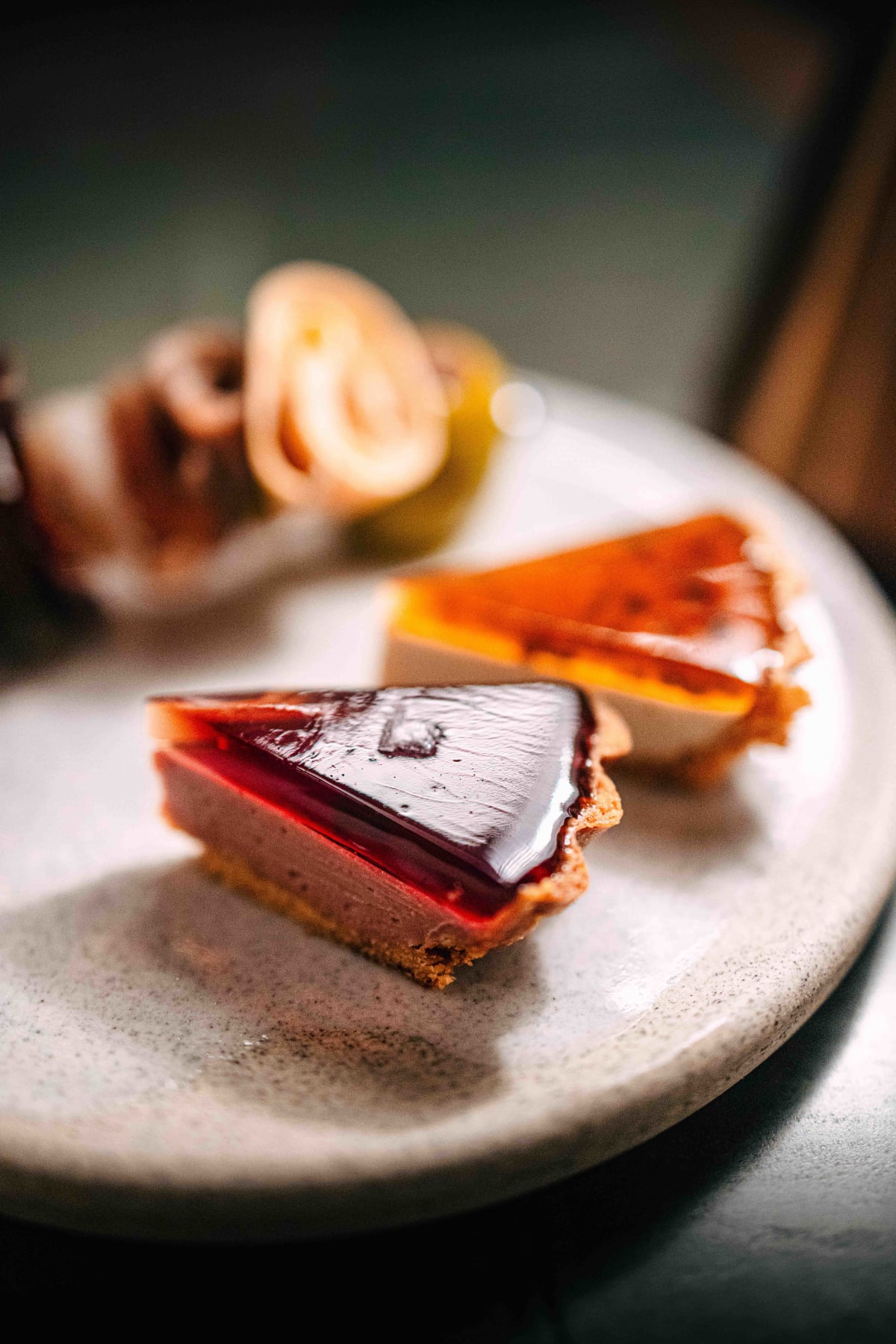
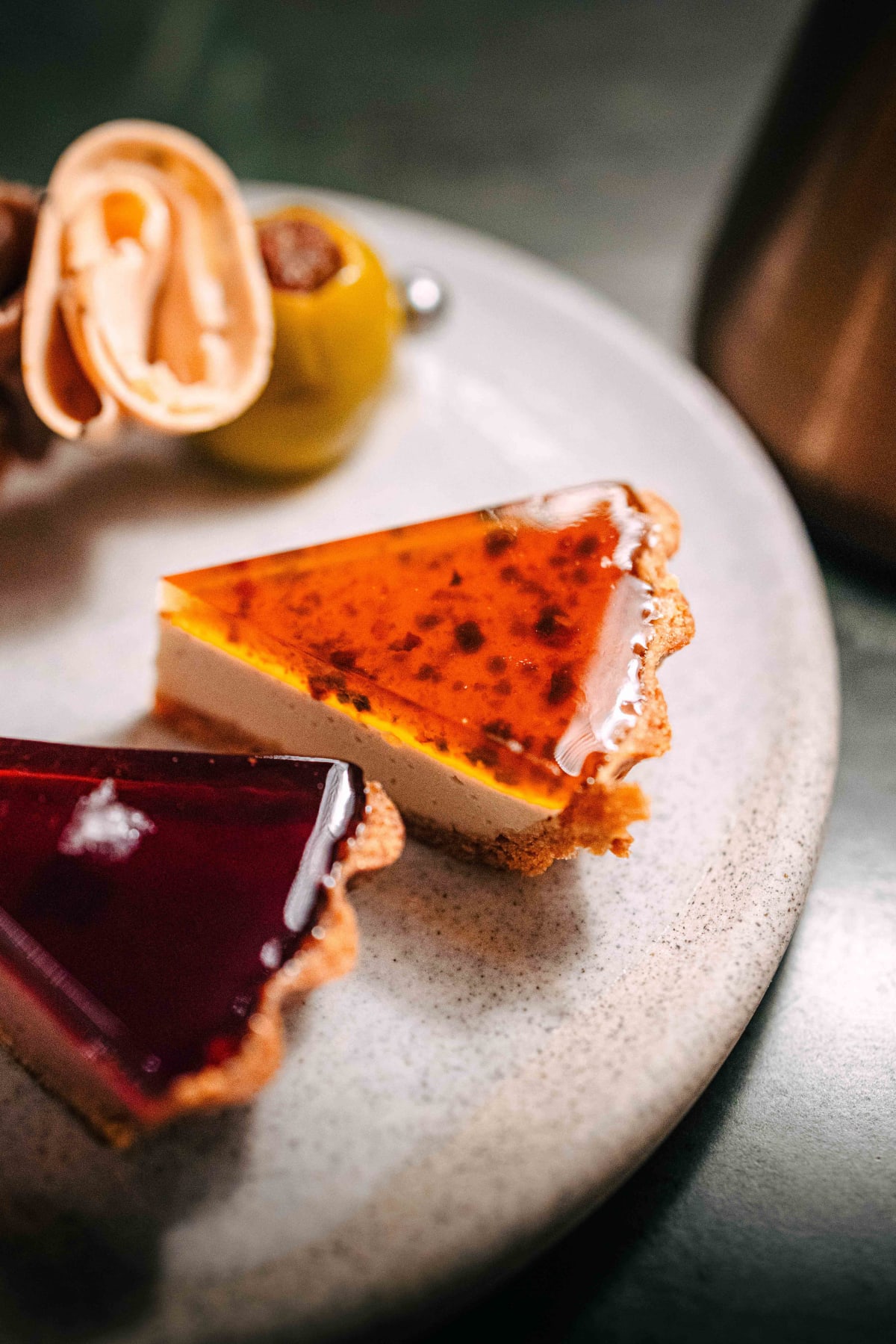
I started with the pinned pieces and the fact that they were made from fish showed less clearly than I expected. The spicy salami and sausage in particular had that diluted by the heat, so they tasted quite like eating an ordinary cured meat. With the ham and the bacon, though, it was clear this was fish. What really stayed with me were the fish liver pâté and the roe tart beside them. A tart with the aroma particular to fish roe and dried fish concentrated into it, and I wondered how a pâté and a tart like this could be built from roe and liver.
The darker one is the liver and port jelly tart, the paler one the bar cod roe with celeriac consommé jelly, and the paler tart was deeply aromatic and delicious. The flavour of aged mackerel came through strongly. My partner took one bite, said they could not eat it, and gave me the rest, which told me how sharply this one divides.
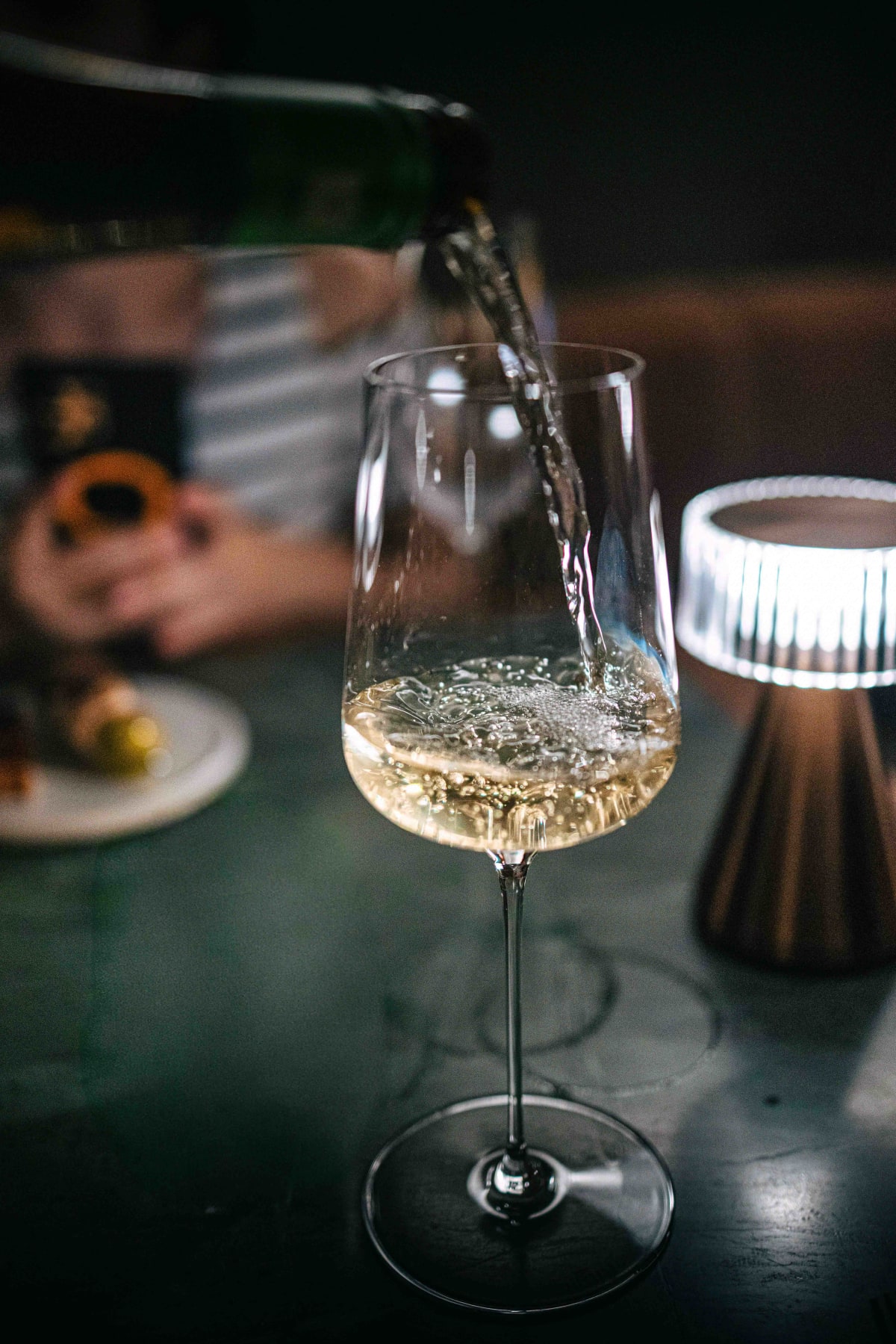
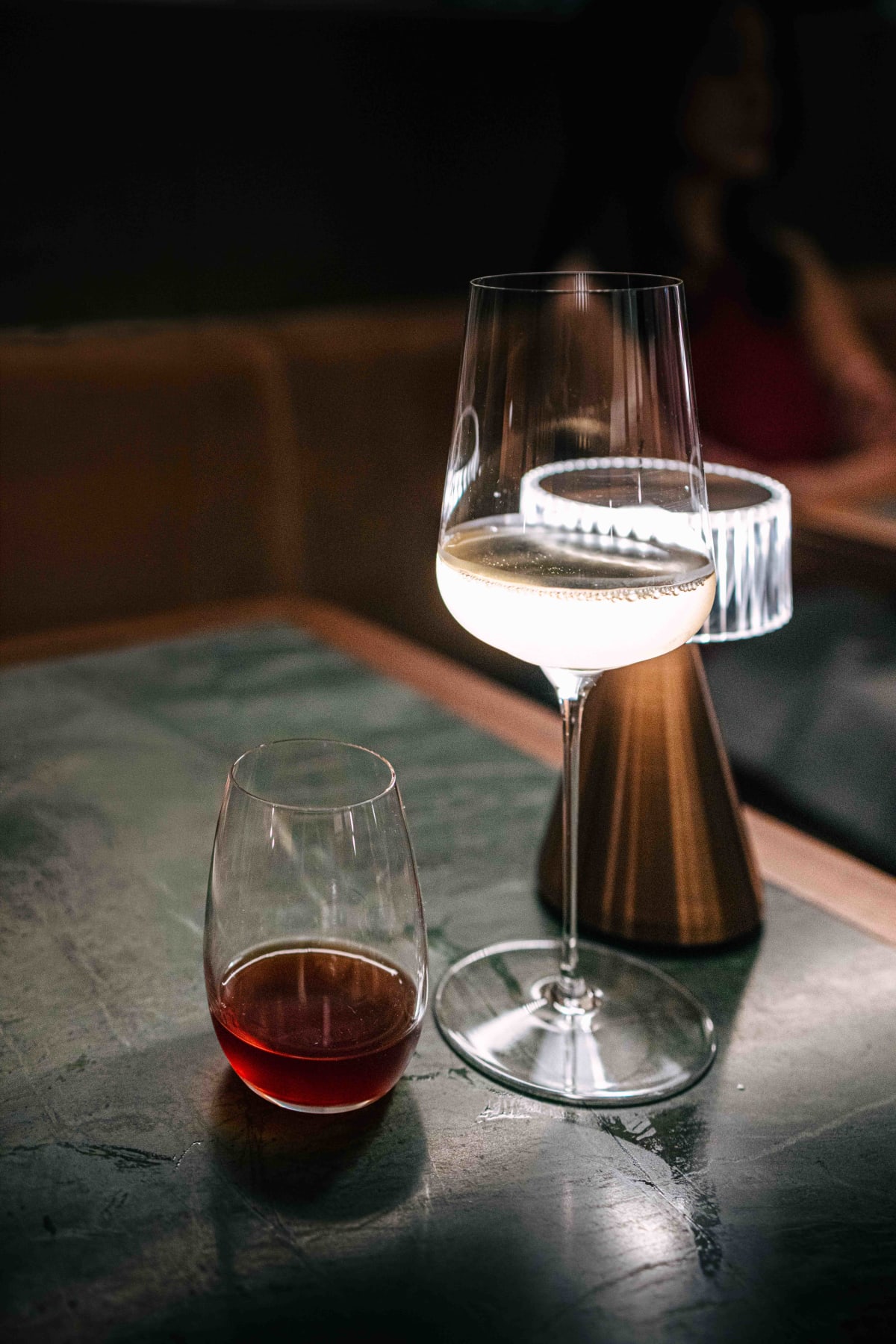
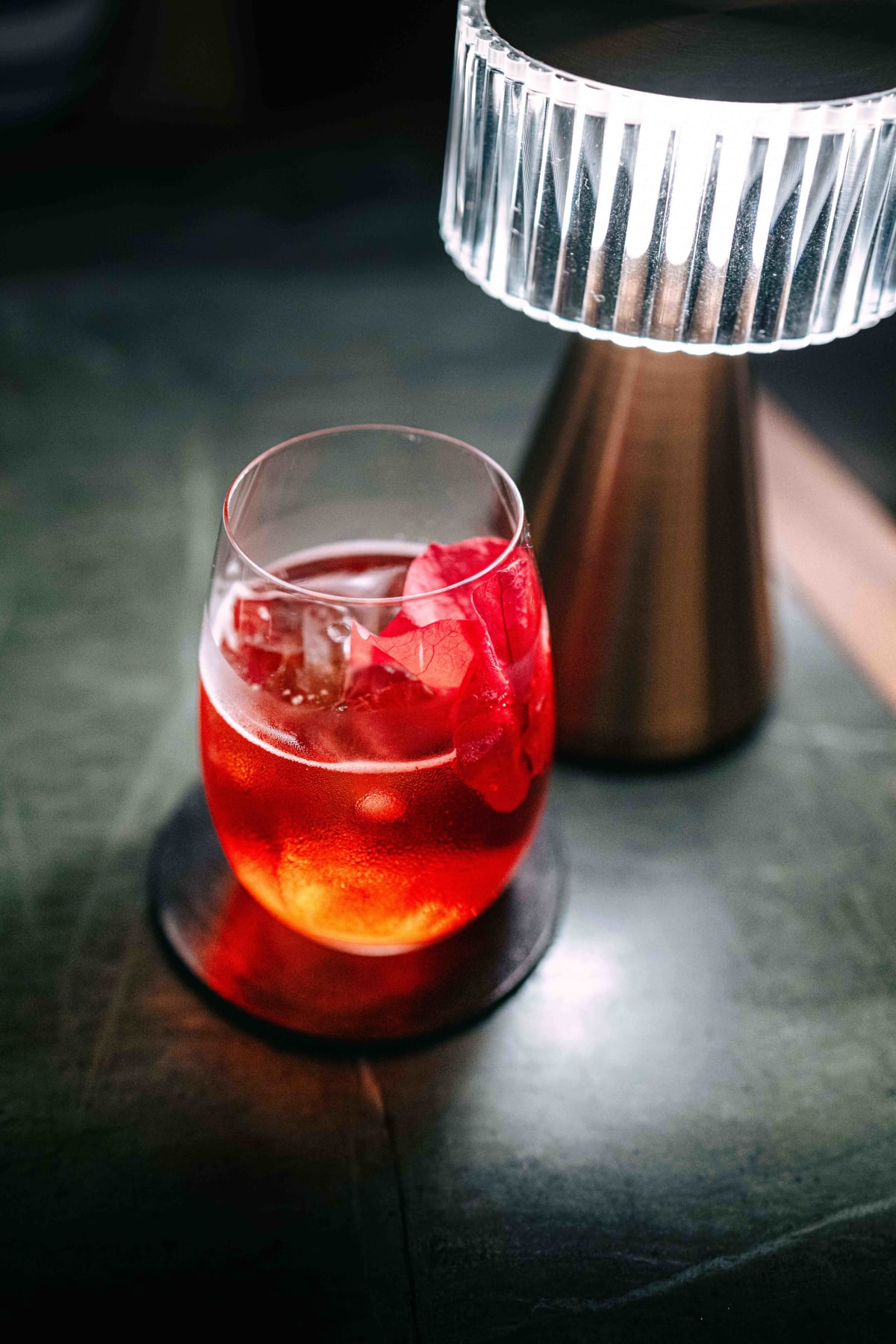
The pairing that came with it was memorable too. Two glasses. With the cured fish, a white from the Pfalz in southern Germany, and with the intensely flavoured tart, a red vermouth made in Melbourne.
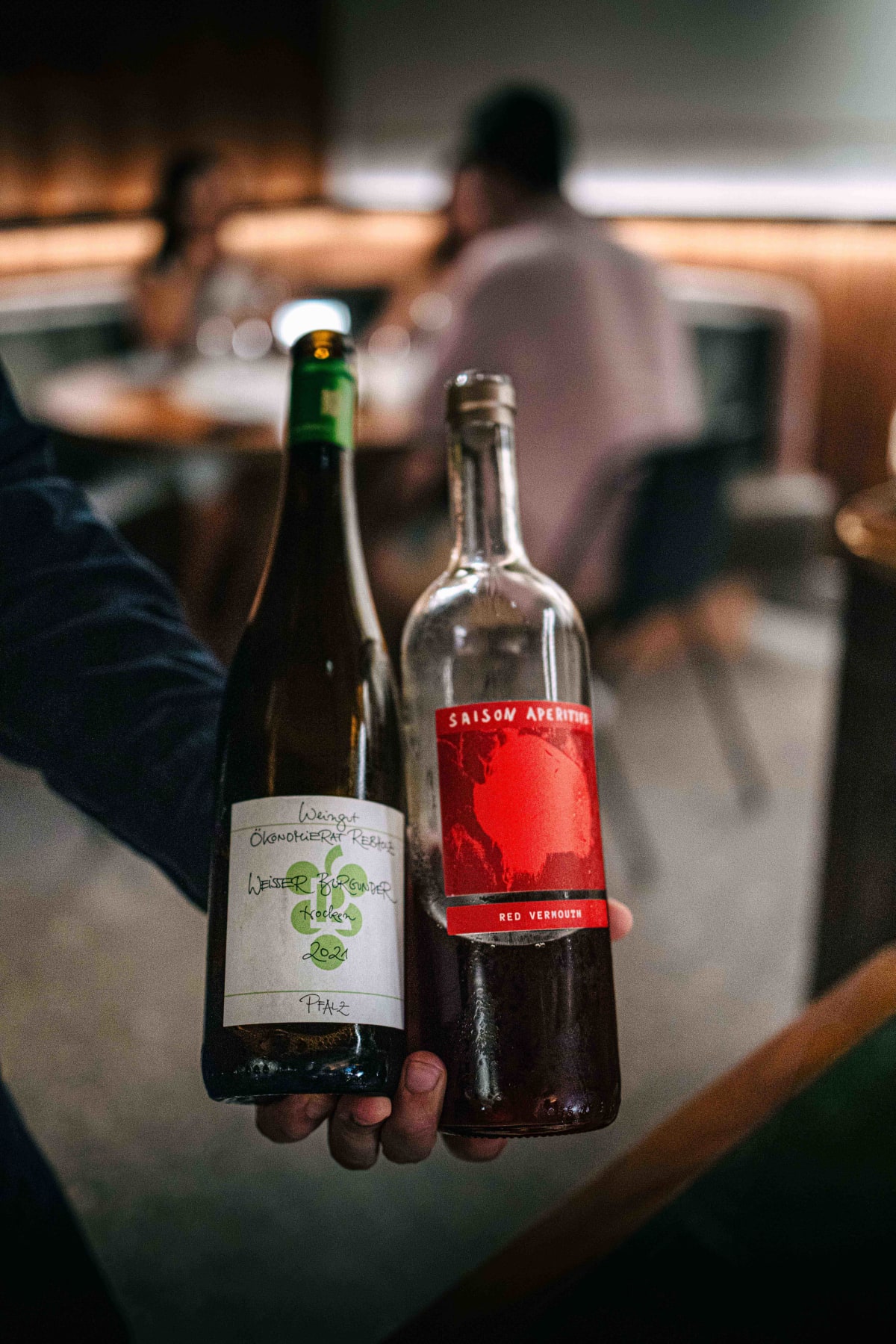
To set down what those two were. The white is Ökonomierat Rebholz's Weisser Burgunder trocken 2021, Pinot Blanc from the Pfalz. The Rebholz family has grown grapes in Siebeldingen since 1632, and the person who made the character of this house was Eduard Rebholz, born 1889. Against the German wine of his day, artificially sweetened, he argued in the 1940s and 50s for wine as it comes, and the honorary title Ökonomierat he received for that work still sits in the estate's name. Organic from 2005, biodynamic from 2006, with no chaptalisation and no acidification.
The red vermouth matched to the tart is from Saison Aperitifs and made in Melbourne. Putting a fortified aperitif carrying sweetness and bitterness against the concentrated flavour of fish roe and liver, and this combination was the high point of the pairing that evening.
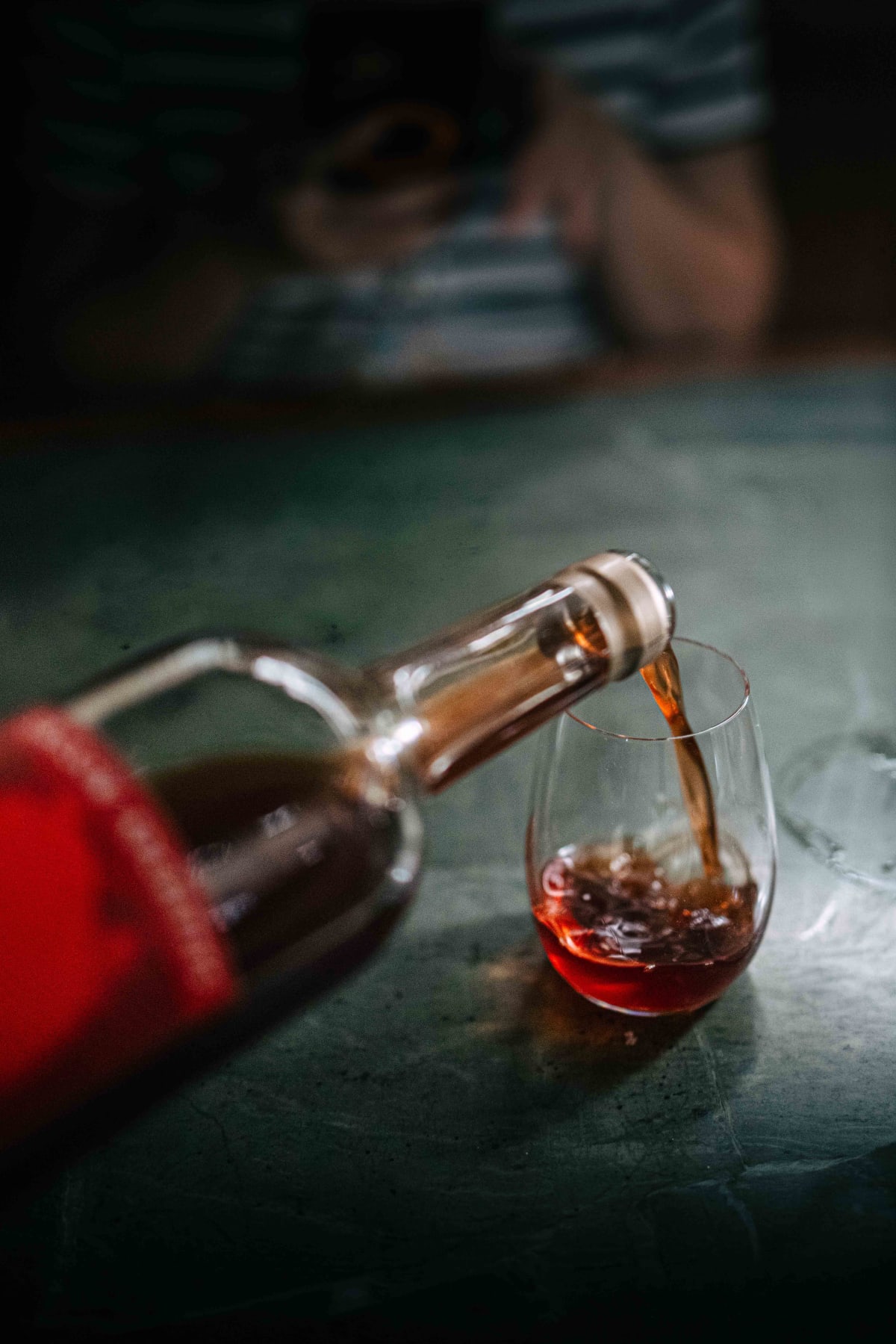
Both were good, but the sweet, aromatically complex red vermouth against the tart was extraordinary. A properly excellent pairing. Neither lost its character, and the sweetness, the bitterness and the deep flavour of fish roe and liver came together well.
Section 8·Salt And Vinegar
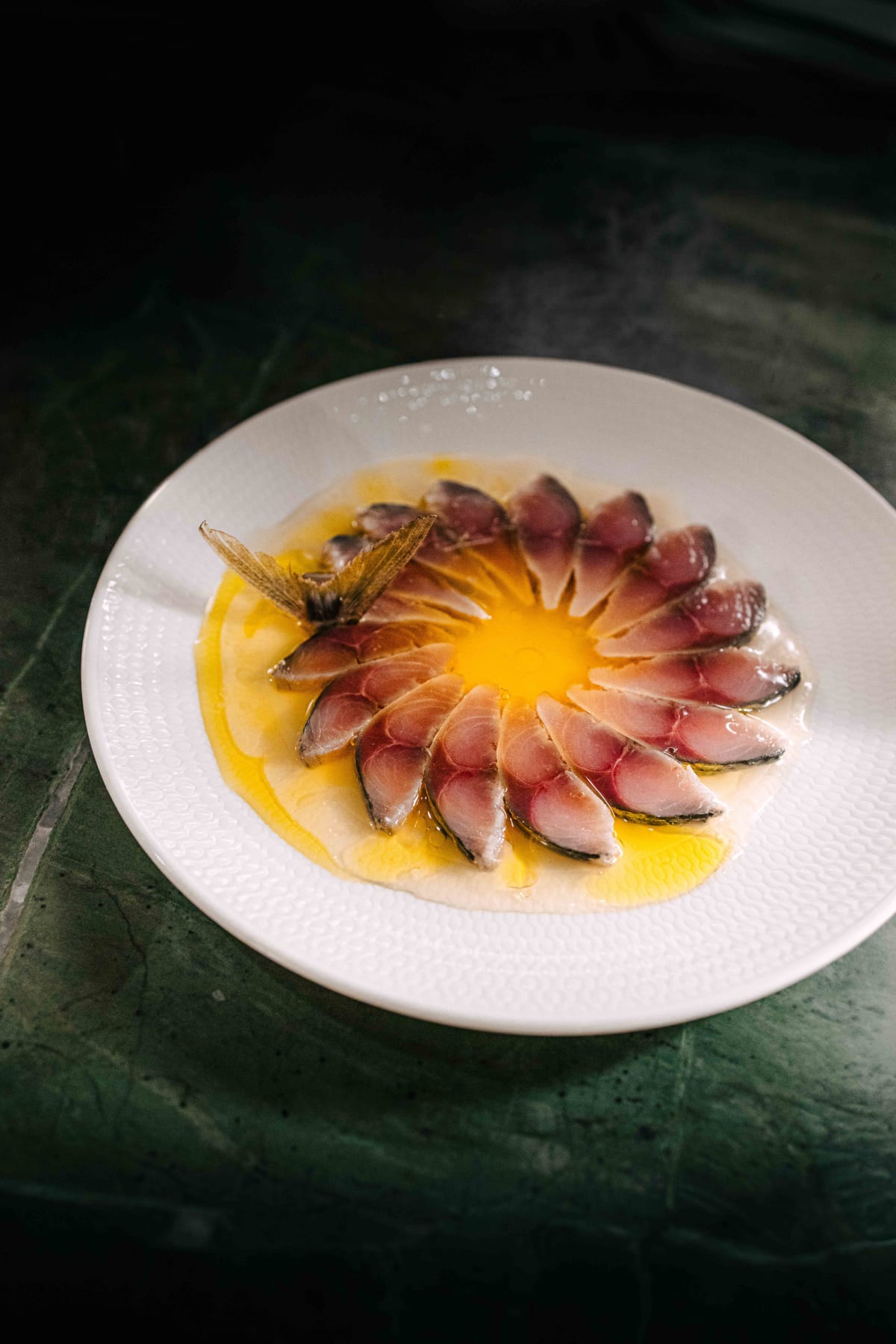
The third was Salt & Vinegar Line-Caught Blue Mackerel, line caught blue mackerel cured in salt, champagne vinegar and olive oil.
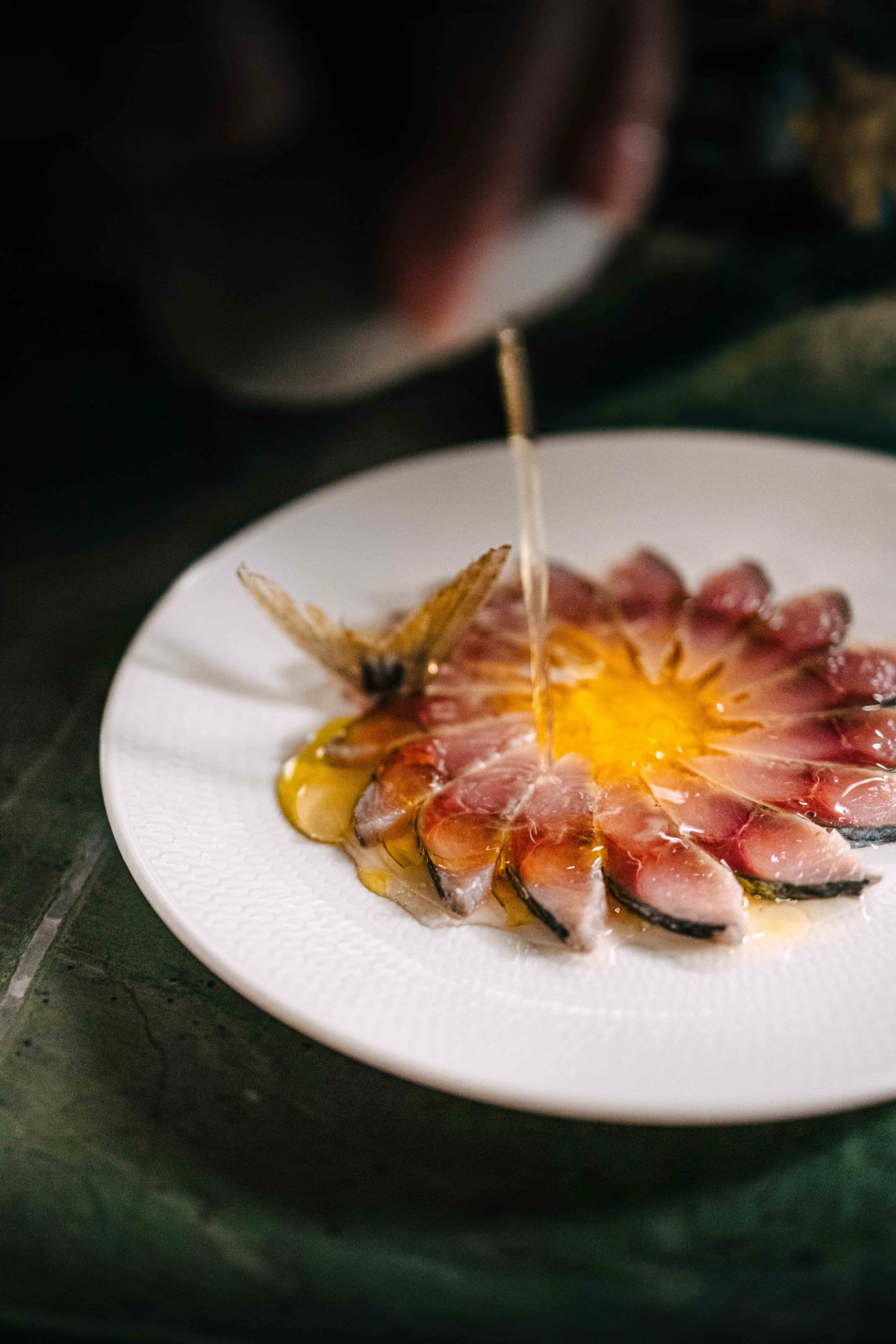
Sourdough is dipped in olive oil and the mackerel and butter go on top to eat together, and this is the dish I would pick as the best of the day.
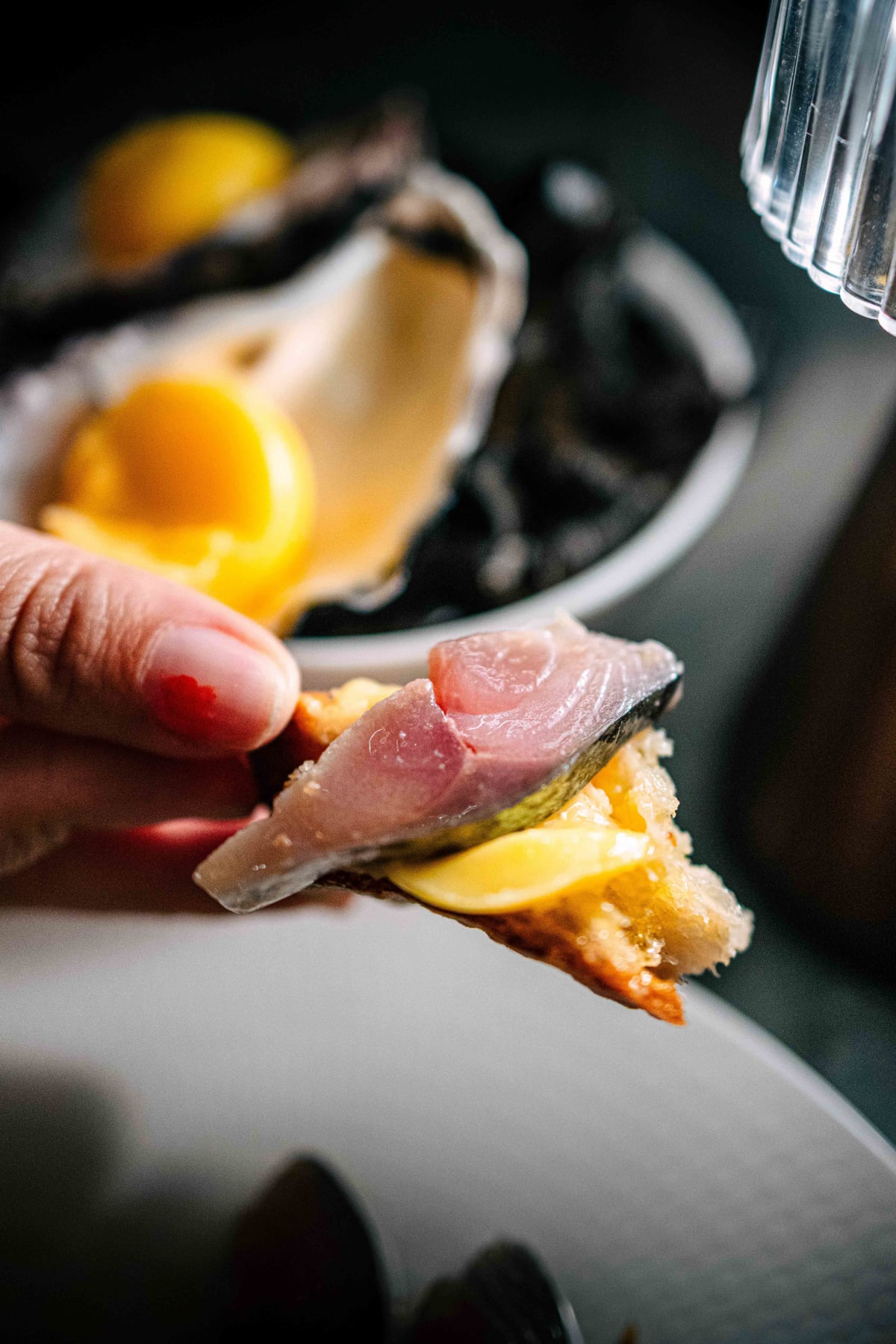
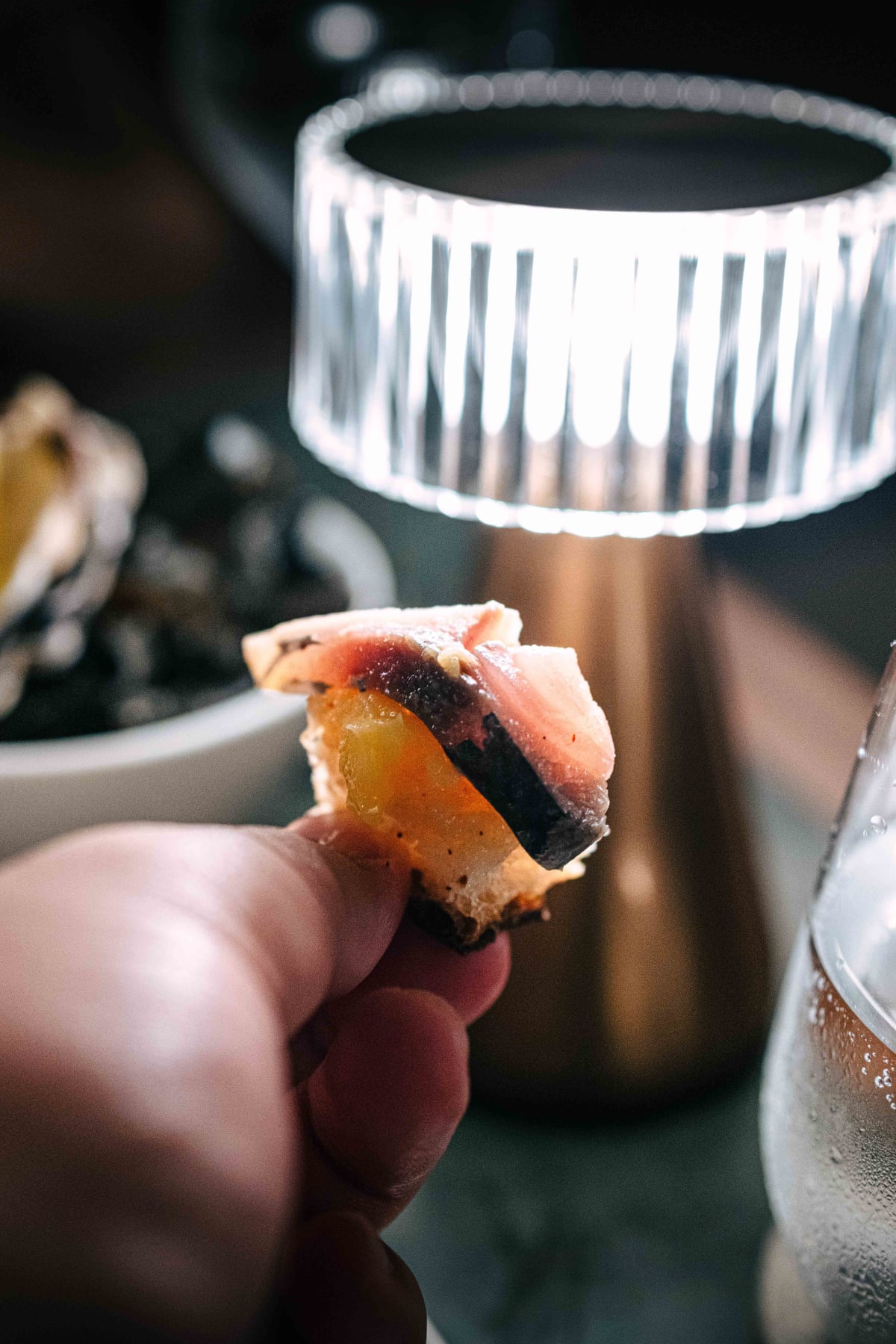
It was very, very good. The quality of the mackerel was excellent and there was none of what you could call fishiness, but a deep aged flavour like the tart before it, and eating that with olive oil and butter was an explosion of nuttiness and savour. This combination was unfamiliar and a first for me, and I had no idea it would be this good.
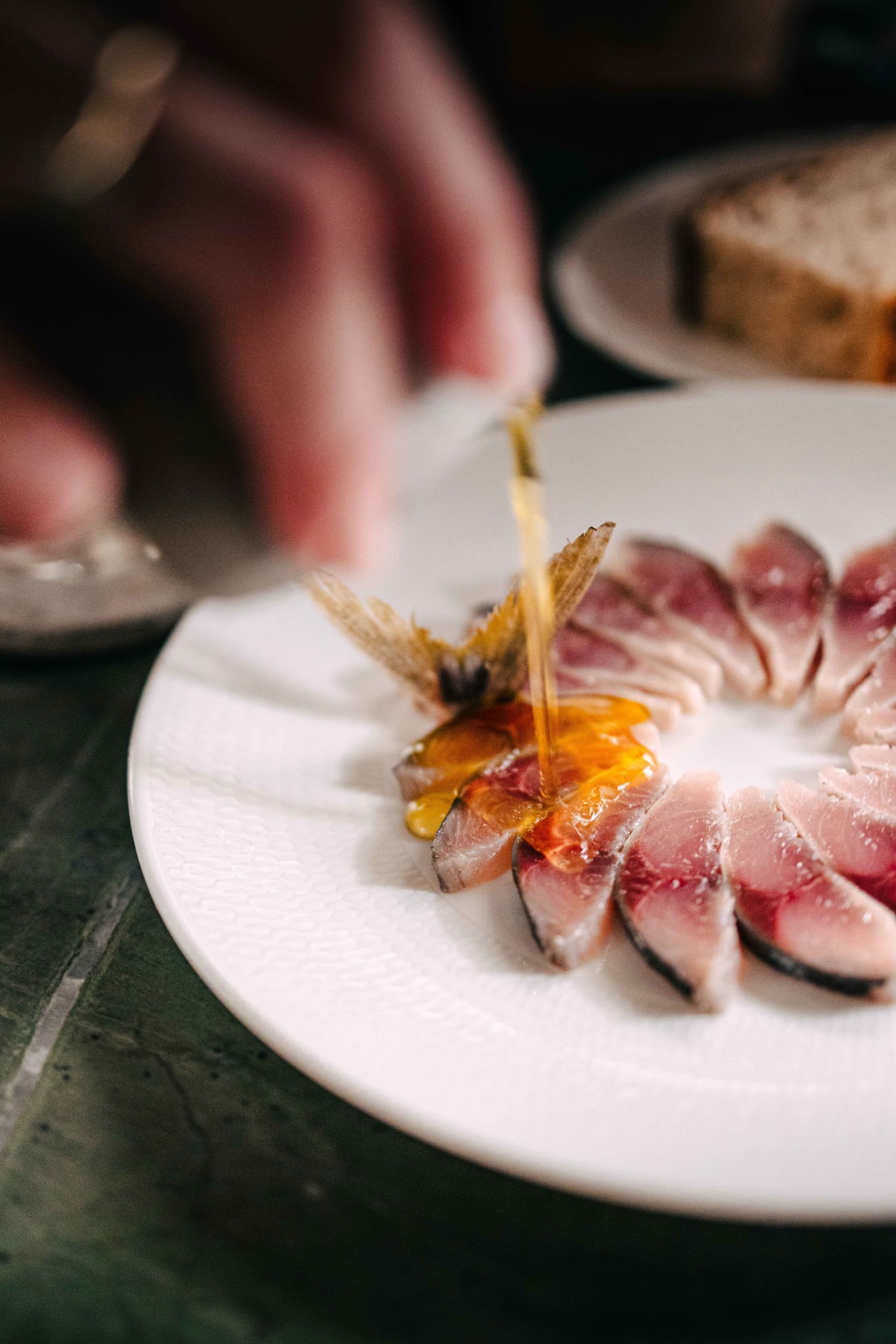
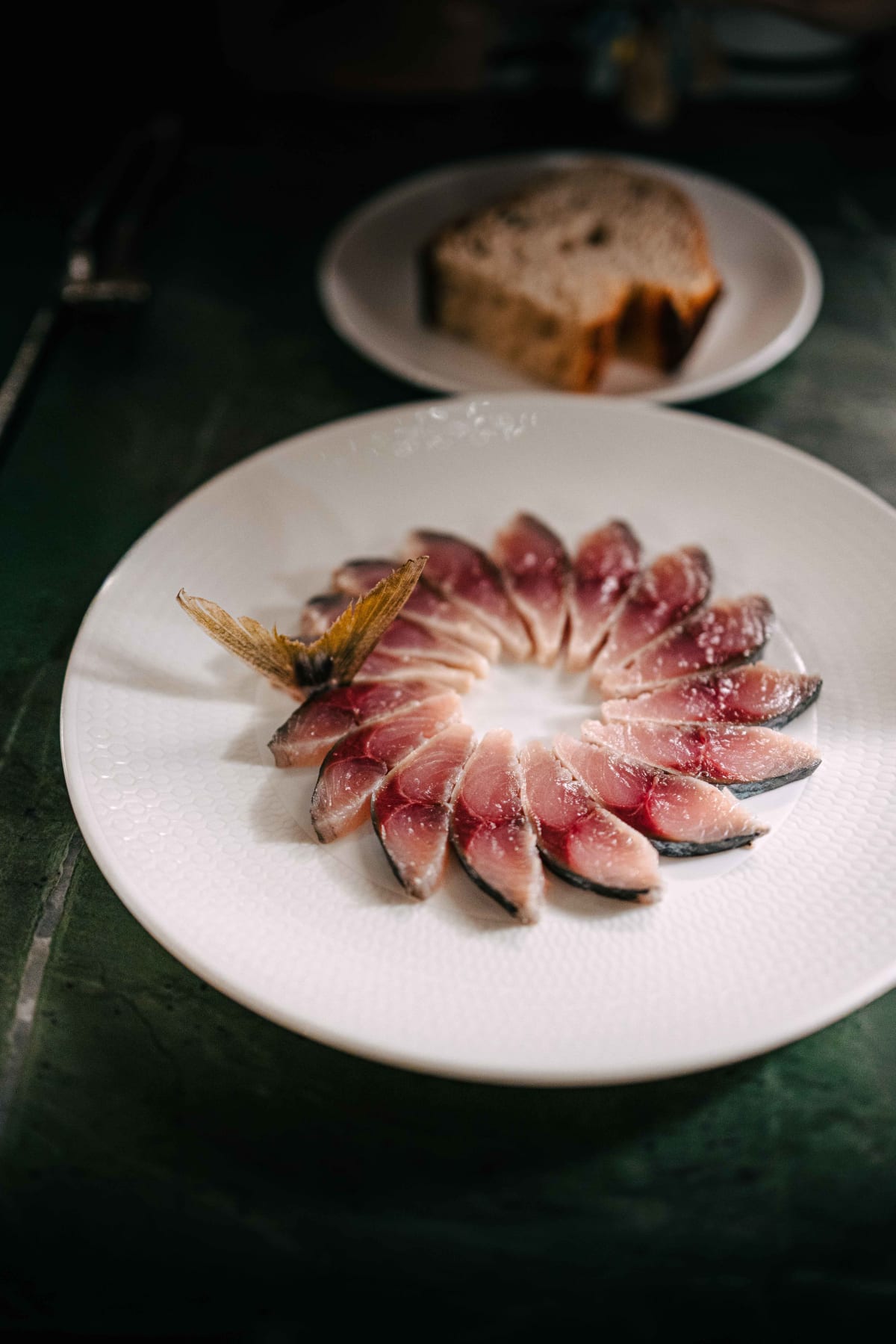
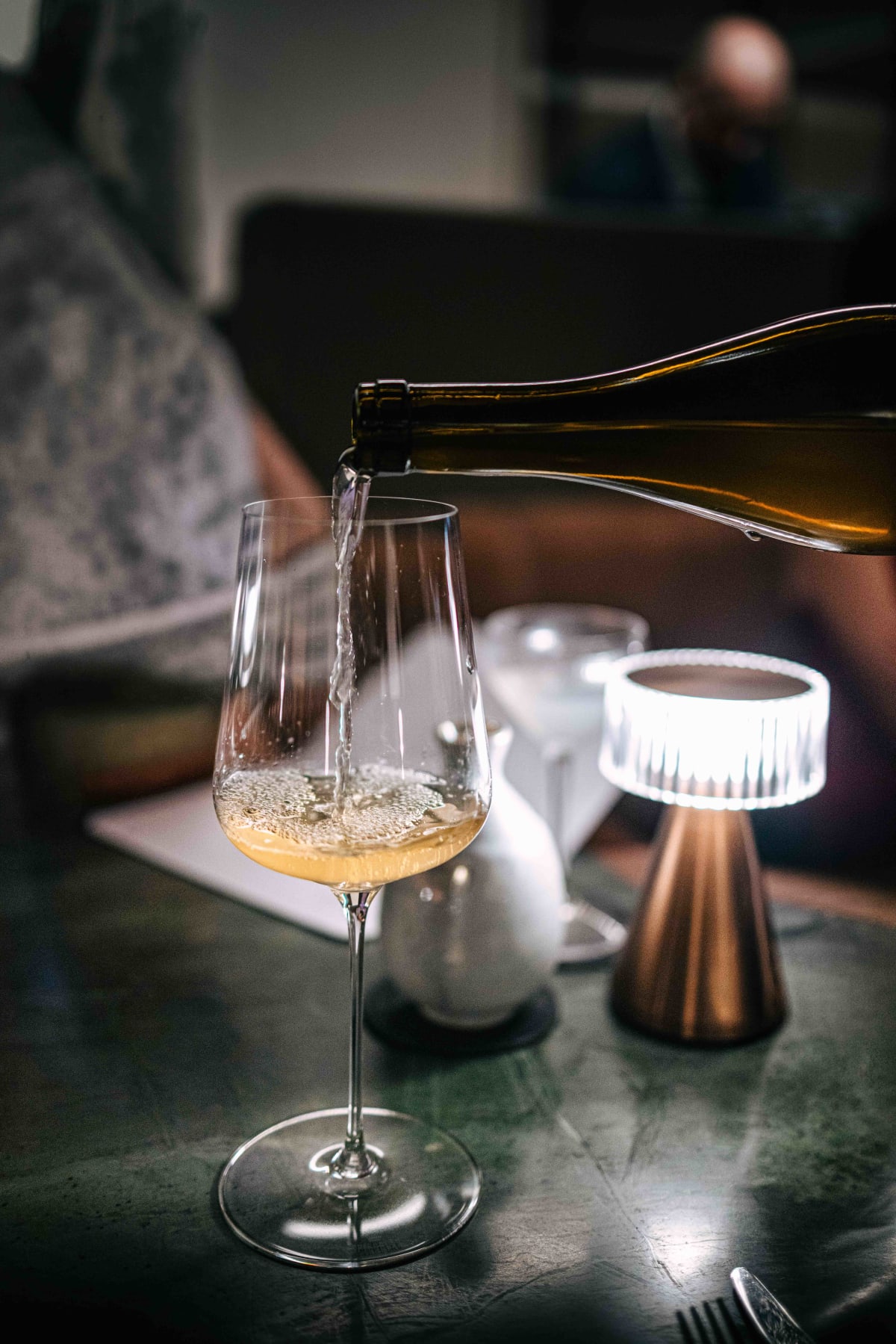
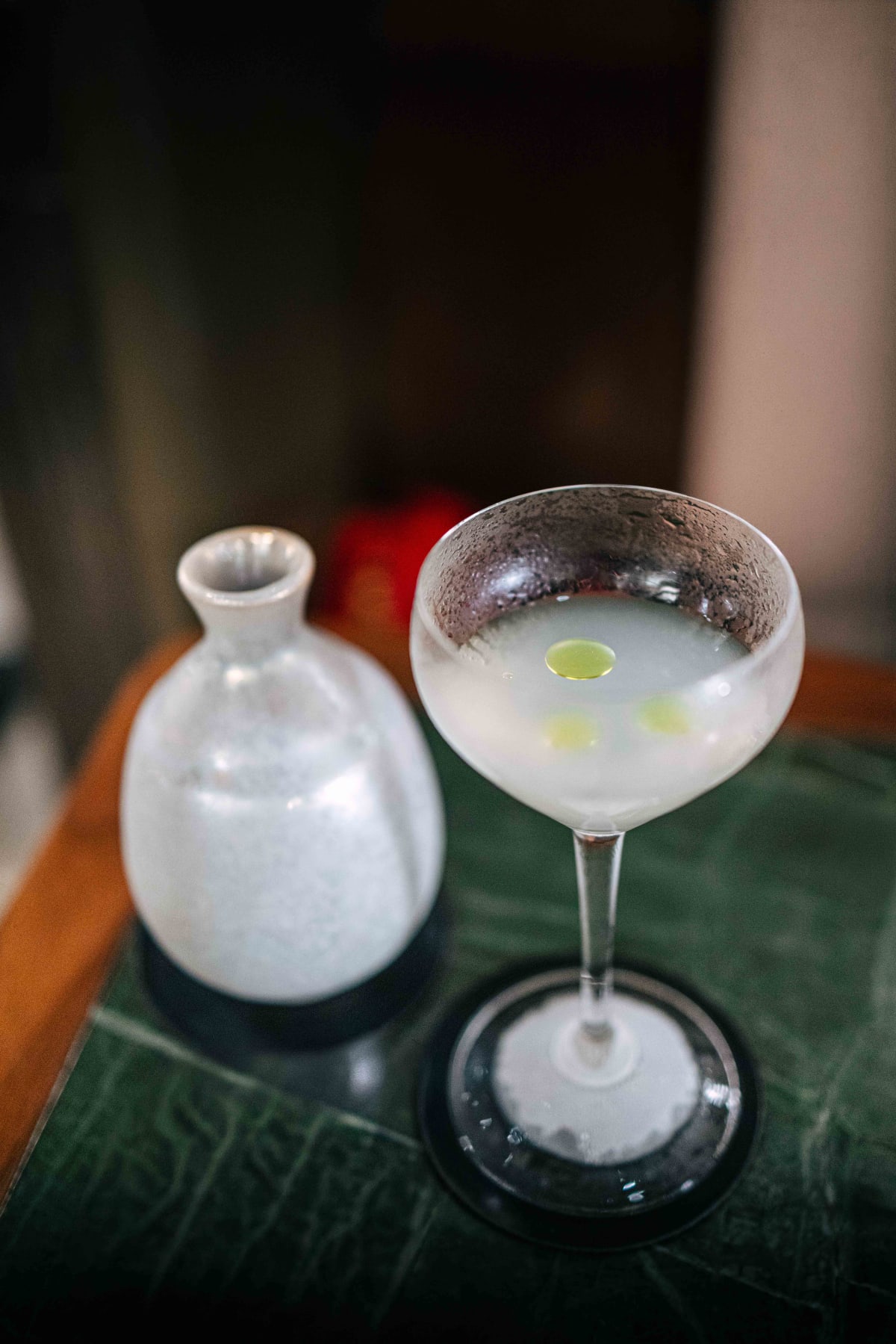
The glass matched to this mackerel was Defialy's Pale Blue Eyes Savagnin 2023. Defialy is the personal project of Micah Hewitt, based in the Macedon Ranges in Victoria, and the name is an acronym of the sentence don't forget I'll always love you.
He came to growing grapes and making wine from butchery, and while he takes regenerative and sustainable farming seriously, he barely touches anything in the cellar.
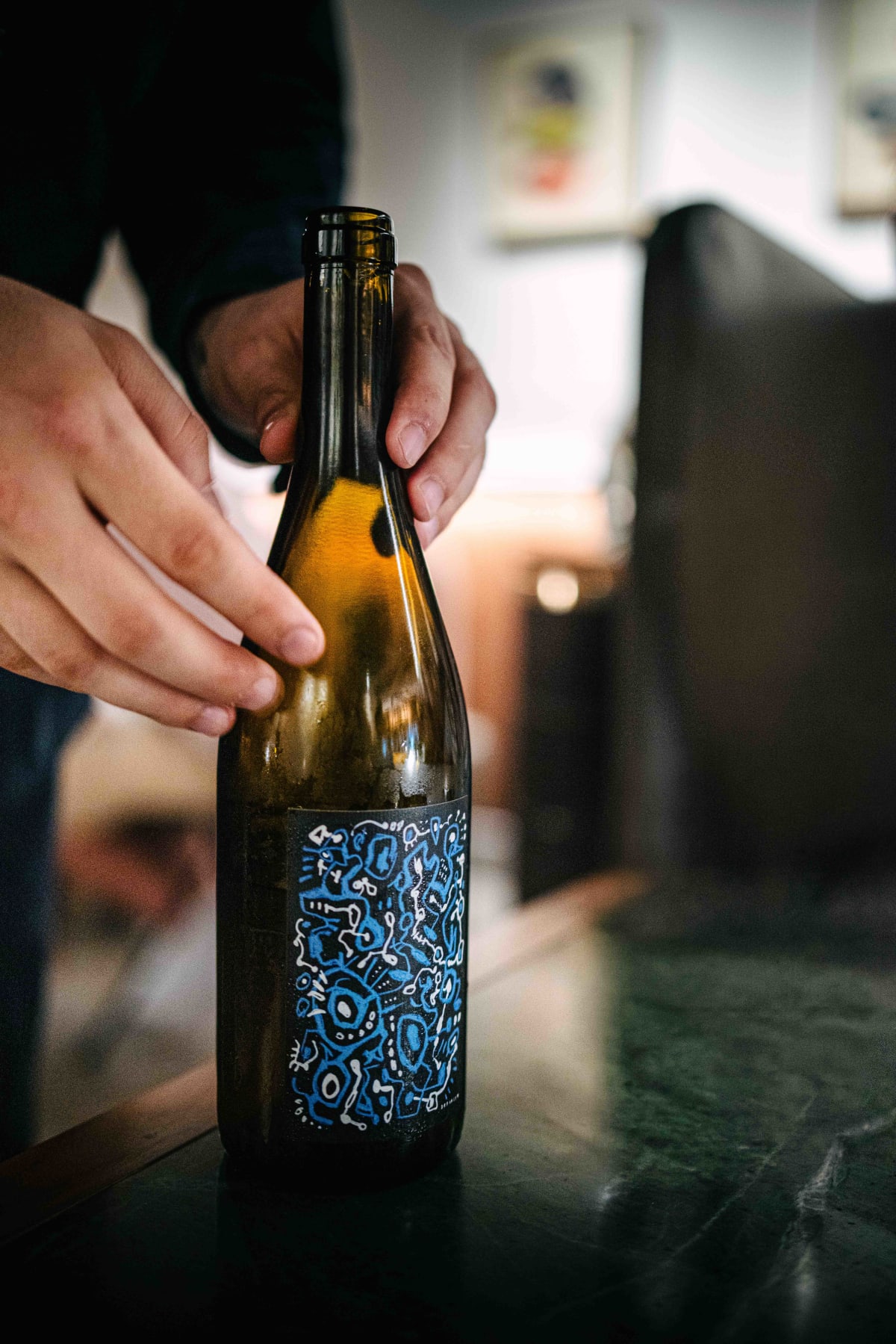
The variety, Savagnin, is the Jura grape. Harvested in the King Valley, direct pressed, aged oxidatively in old oak for twelve months, then a month in stainless before bottling with no filtration and no fining. Nuts, preserved lemon and umami lead, and it attaches to aged oily fish by the same logic that Jura Savagnin attaches to Comté. Matching that oxidative nuance to the aged flavour of the mackerel was the most reasoned choice of the pairing that evening.
I also remember a good conversation with the server over this dish. When I said I had come to Australia for the Formula One, he laughed and said Sebastian Vettel, the four time champion, had been in recently, then brought his phone over to show me a photograph of them together. We talked about all sorts of things after that and had a very good time.
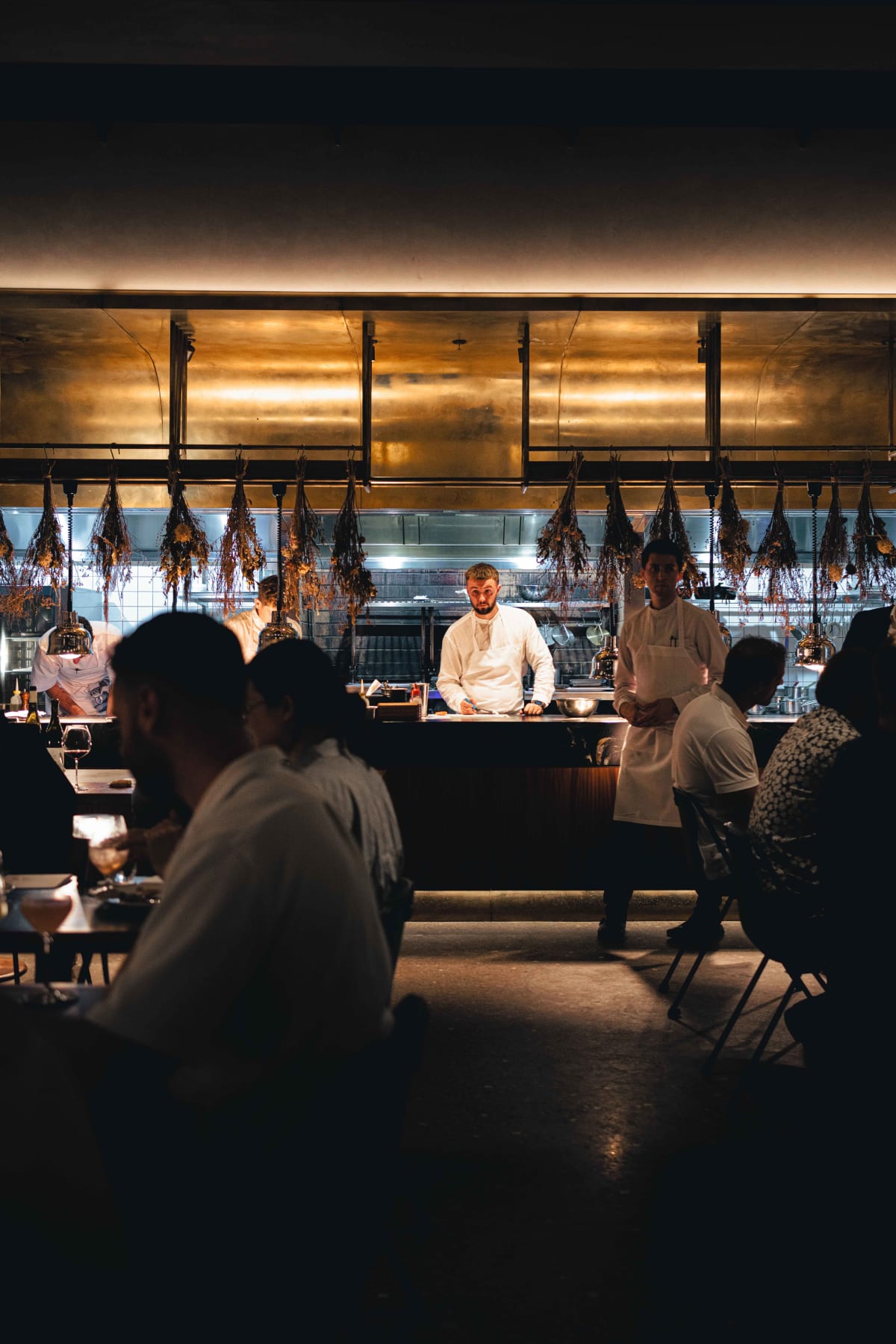
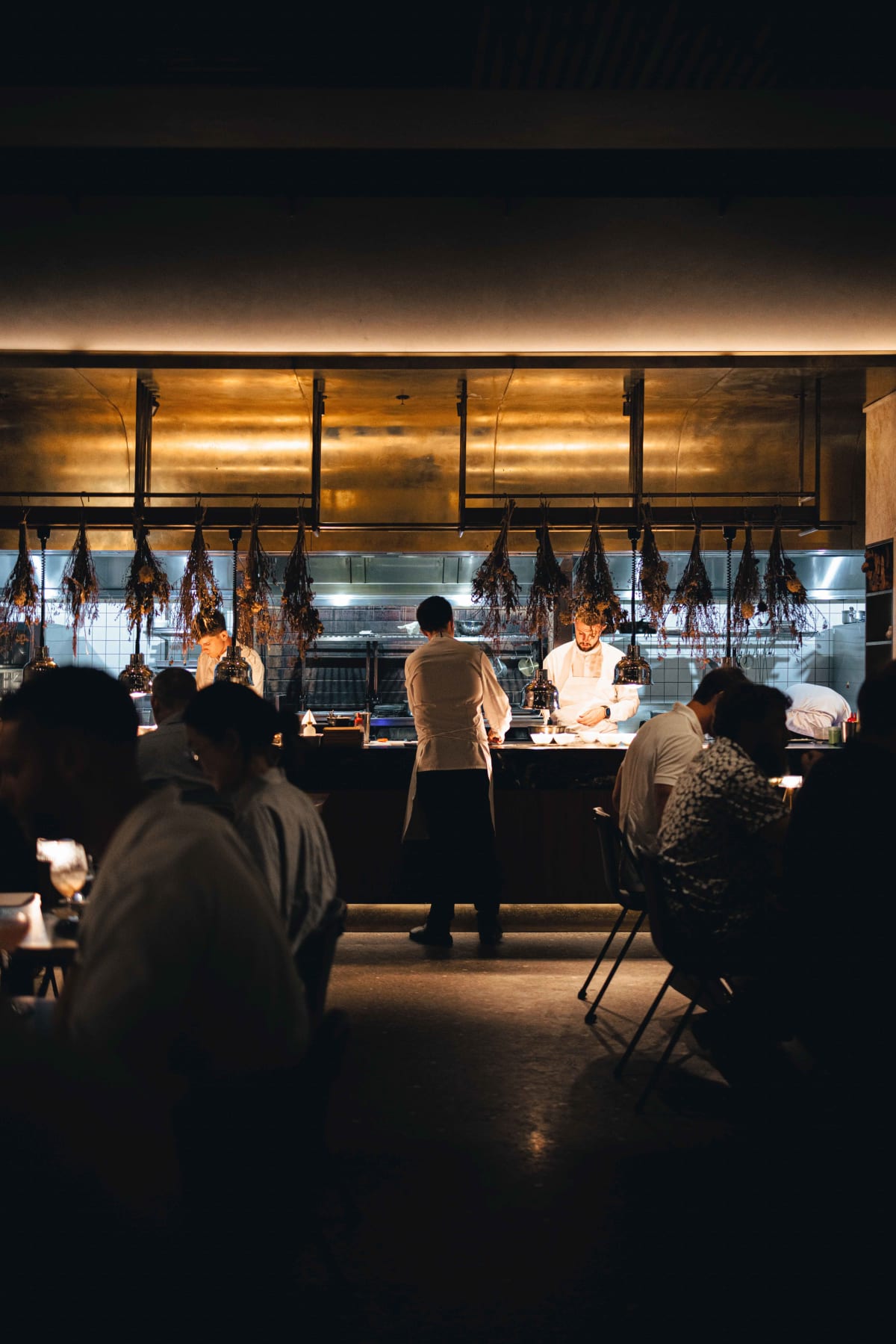
Hospitality in Australia seems to run at a high level generally, and the servers here were knowledgeable and kind in particular, so on service this was a place I was very satisfied with.
Section 9·Nduja And Salt
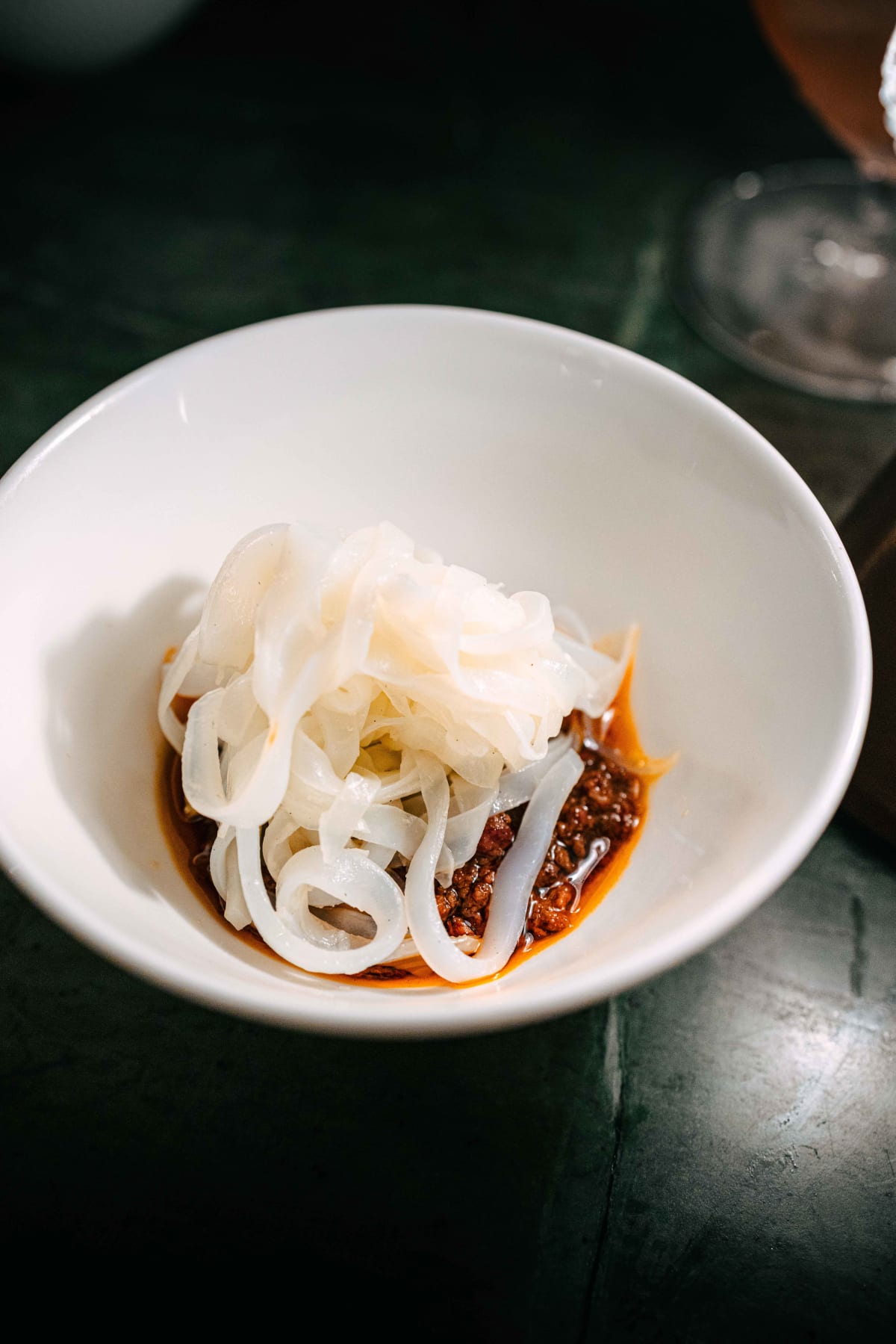
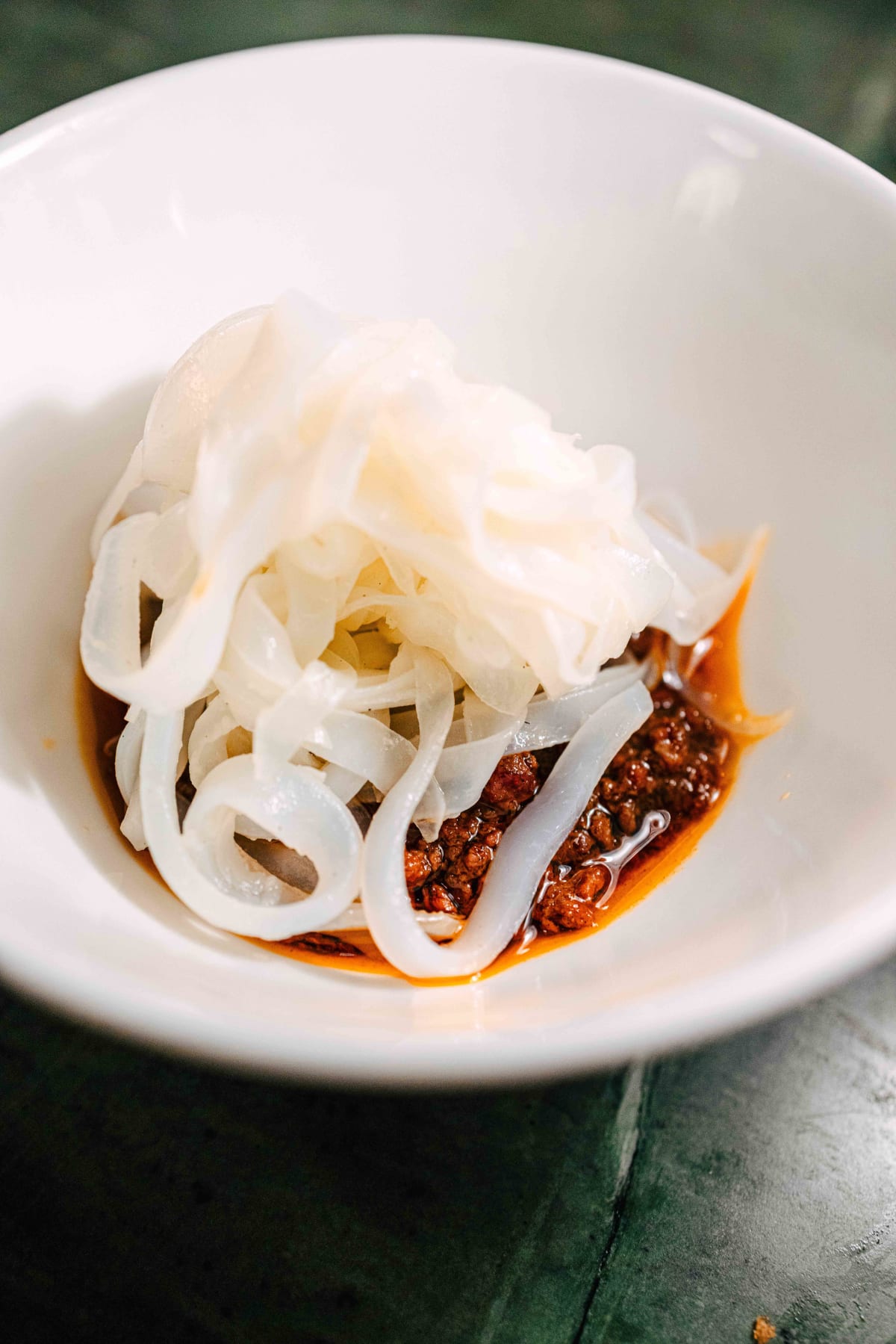
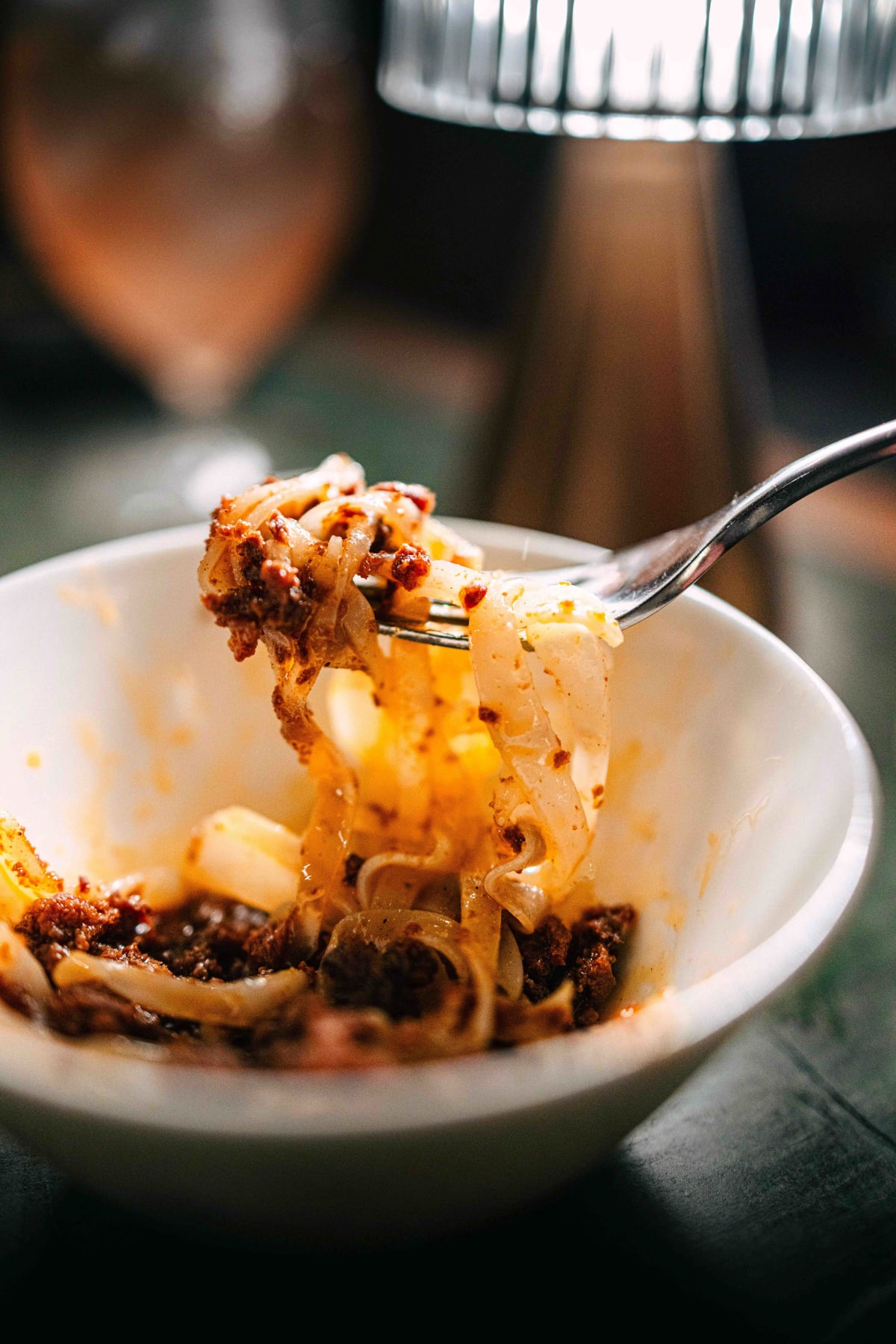
The fourth dish was Charcoal Grilled Calamari with Tuna & Dill 'Nduja. Calamari grilled over charcoal then sliced thin into noodles, with a sauce of 'nduja made from tuna and dill.
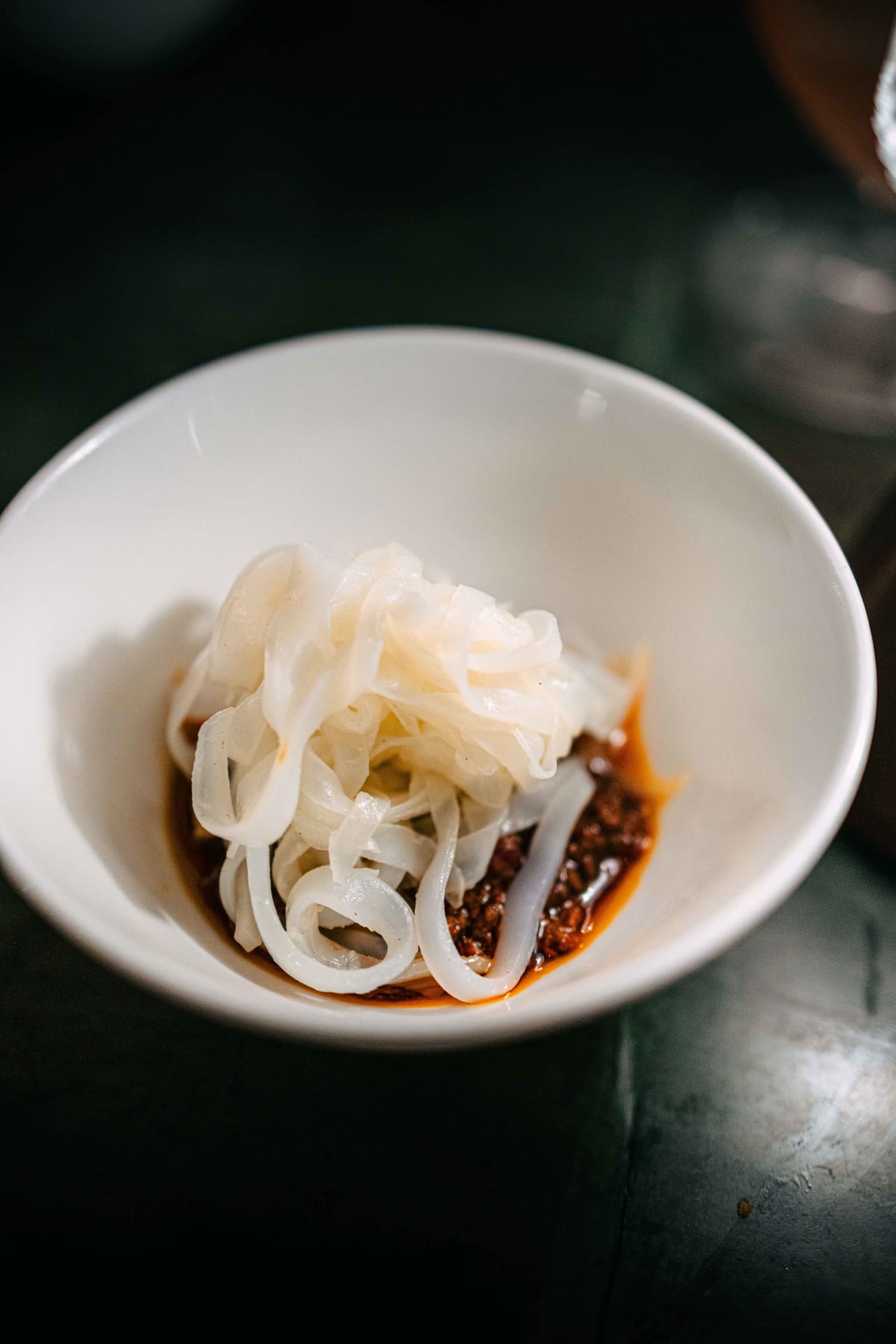
This is where the weaknesses of Saint Peter began to show. The salt level was high. The 'nduja sauce was salty and seasoned hard enough that it was difficult to eat without wine, and with the oil in it there was a richness by the end. This is something I feel repeatedly in Australian dining, that some dishes are excessively salty. In a country that takes many European immigrants they presumably raise the salt somewhat for the sake of wine, but a foodie friend who lived in Australia a long time says the same thing, so I suspect there is also an element of pushing drinks orders. The charcoal character of the calamari itself was good, but the sauce was too much.
The glass paired to this plate was Les Fruits' Gonzo Cinsault Grenache 2023. Tim Stock makes it in a shed in Basket Range in the Adelaide Hills, having started as a sommelier, moved through wine distribution, and begun his own project after working with small producers in France.
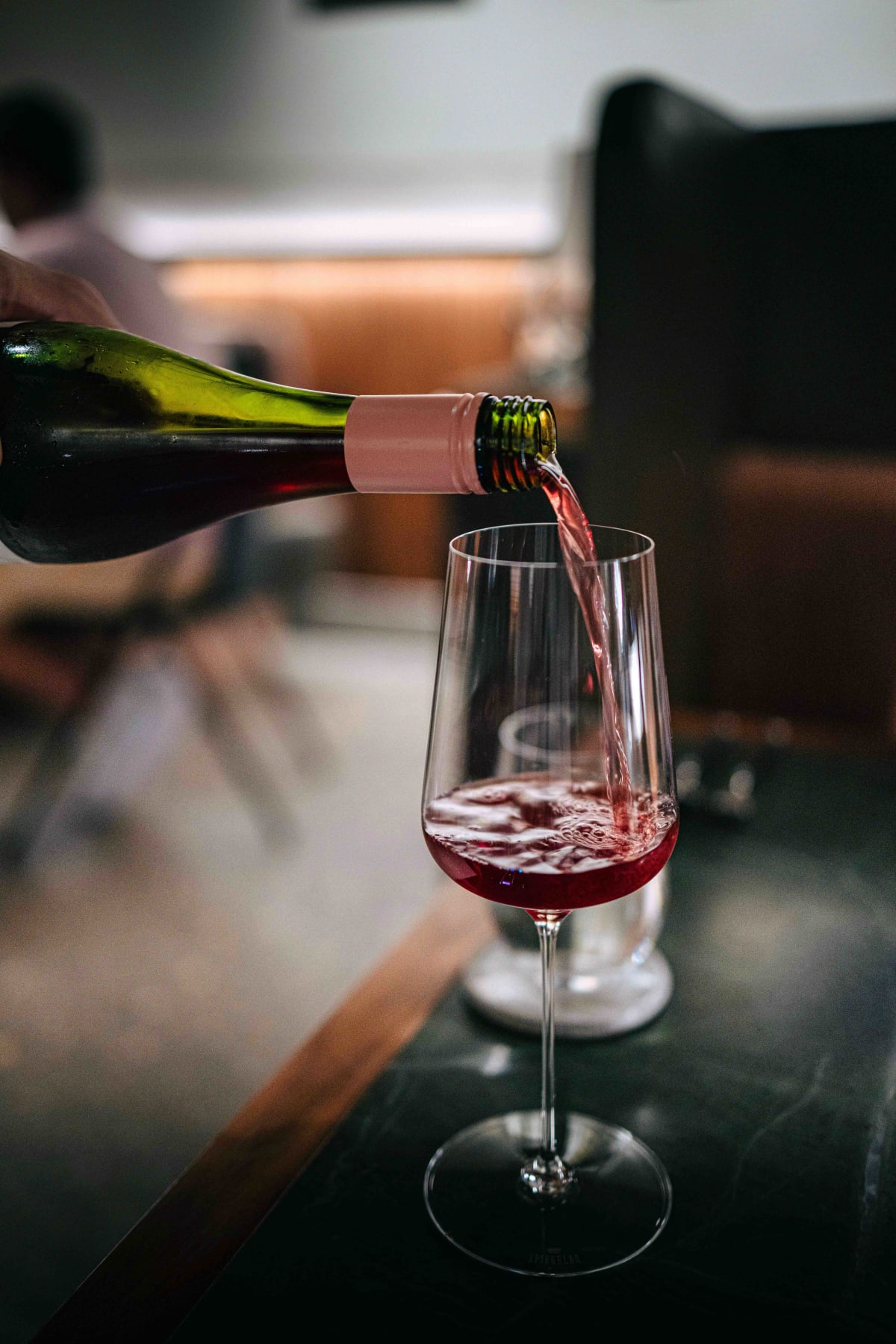
He takes in organically and biodynamically farmed fruit, gives it two to three weeks of carbonic maceration, rests it in old French oak and bottles without filtration or fining. Red berries, watermelon and a Campari like bitterness lead in a light red, and it is best served chilled.
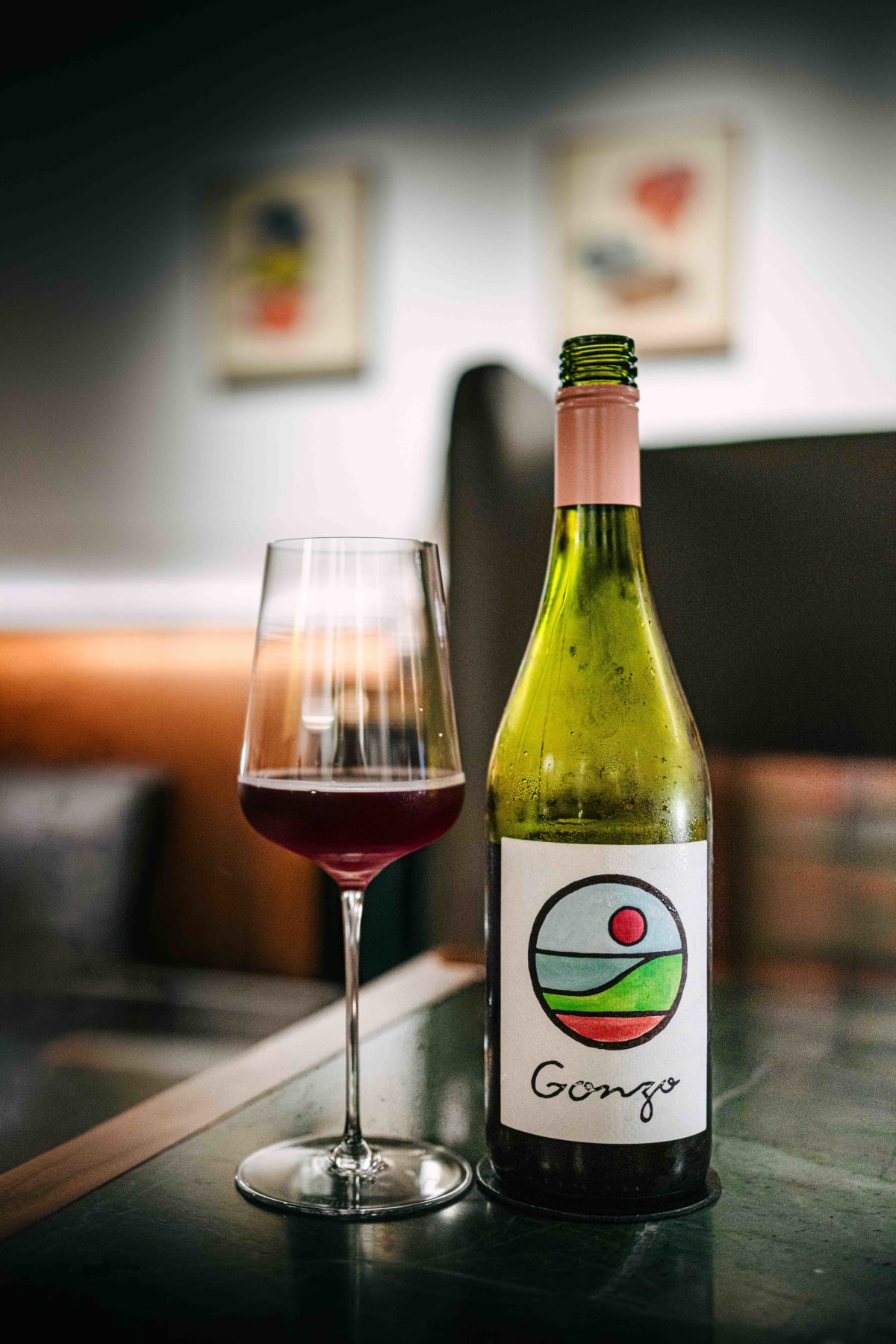
Putting a wine with this much acidity and almost no tannin against a salty 'nduja sauce was an understandable choice, but it also means the plate did not stand up without the drink.
Section 10·Coral Trout
The fifth, served before the main, was Hand Line Caught Coral Trout, a fairly typical French seafood dish.
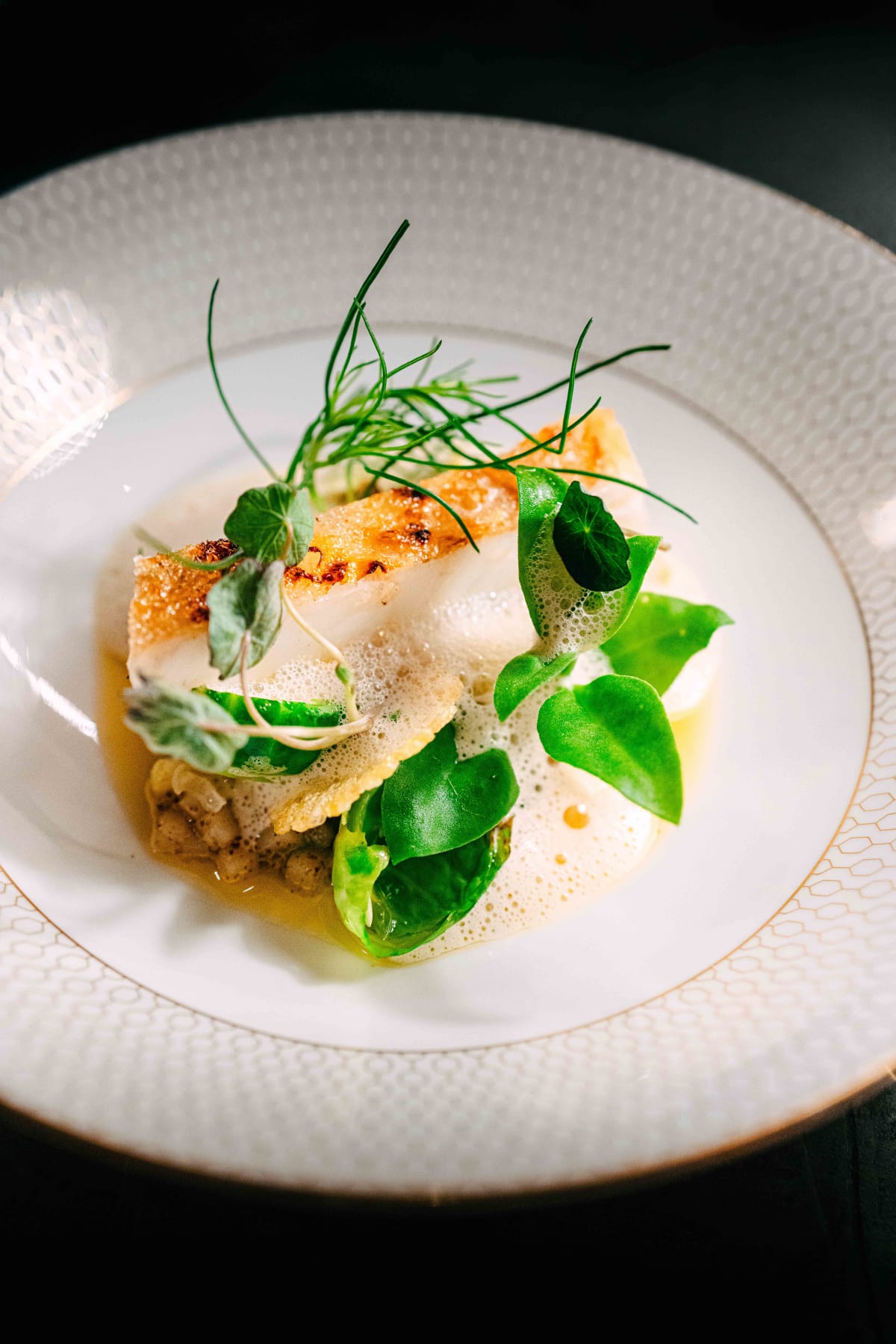
The coral trout that had arrived as broth earlier was grilled this time, crisp outside and moist within, with smoked potato chopped underneath. Broccoli and a seaweed purée, a smoked butter sauce and a calamansi vinaigrette finish it.
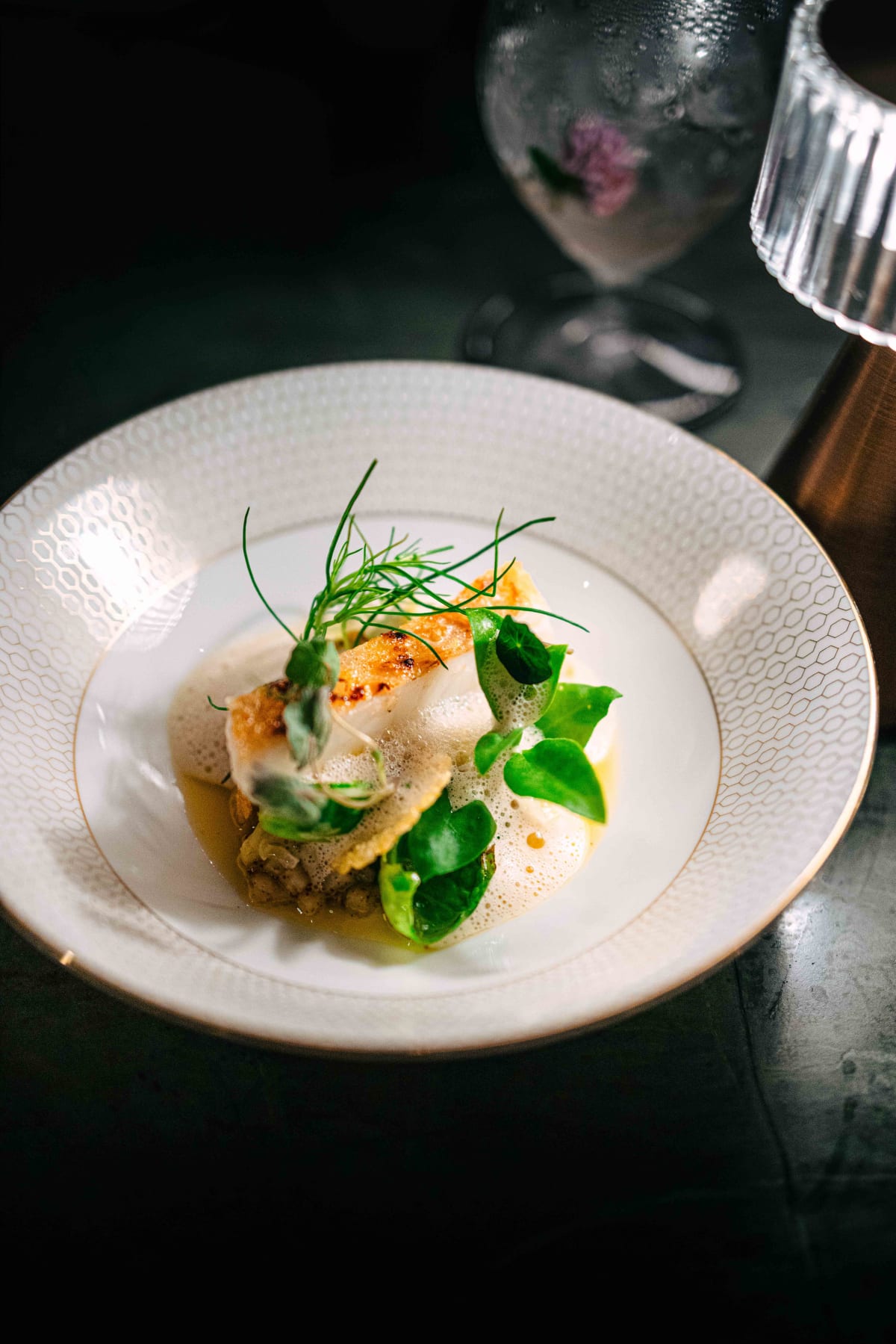
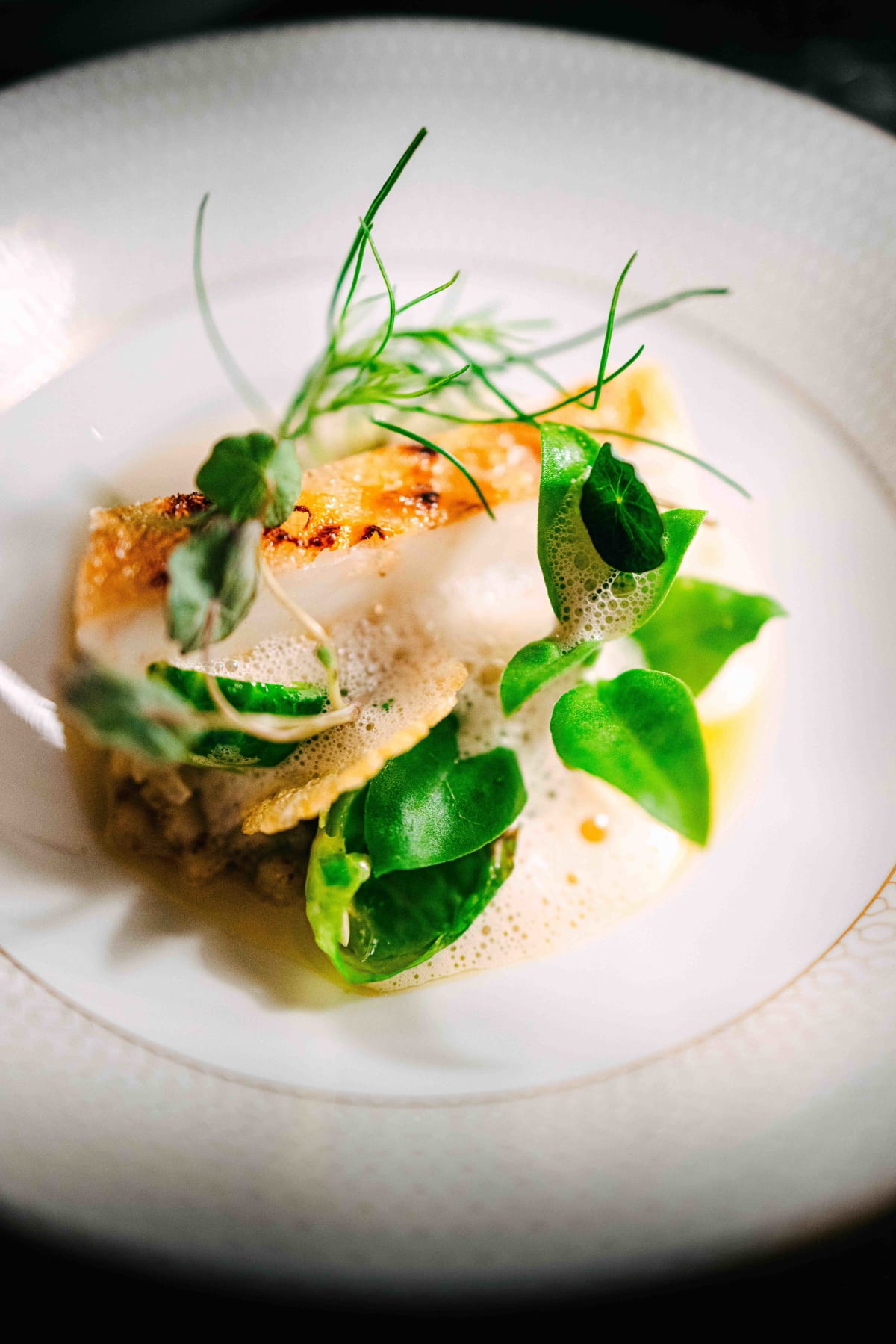
What struck me visually was how much greenery there was. Gretti, nasturtium leaf and various other plants came with it. The taste was ordinary, to be plain about it. A grilled fish dish of the kind you can eat at any French restaurant, though the plants and the sauces held a balance of bitterness, acidity and varied aroma.
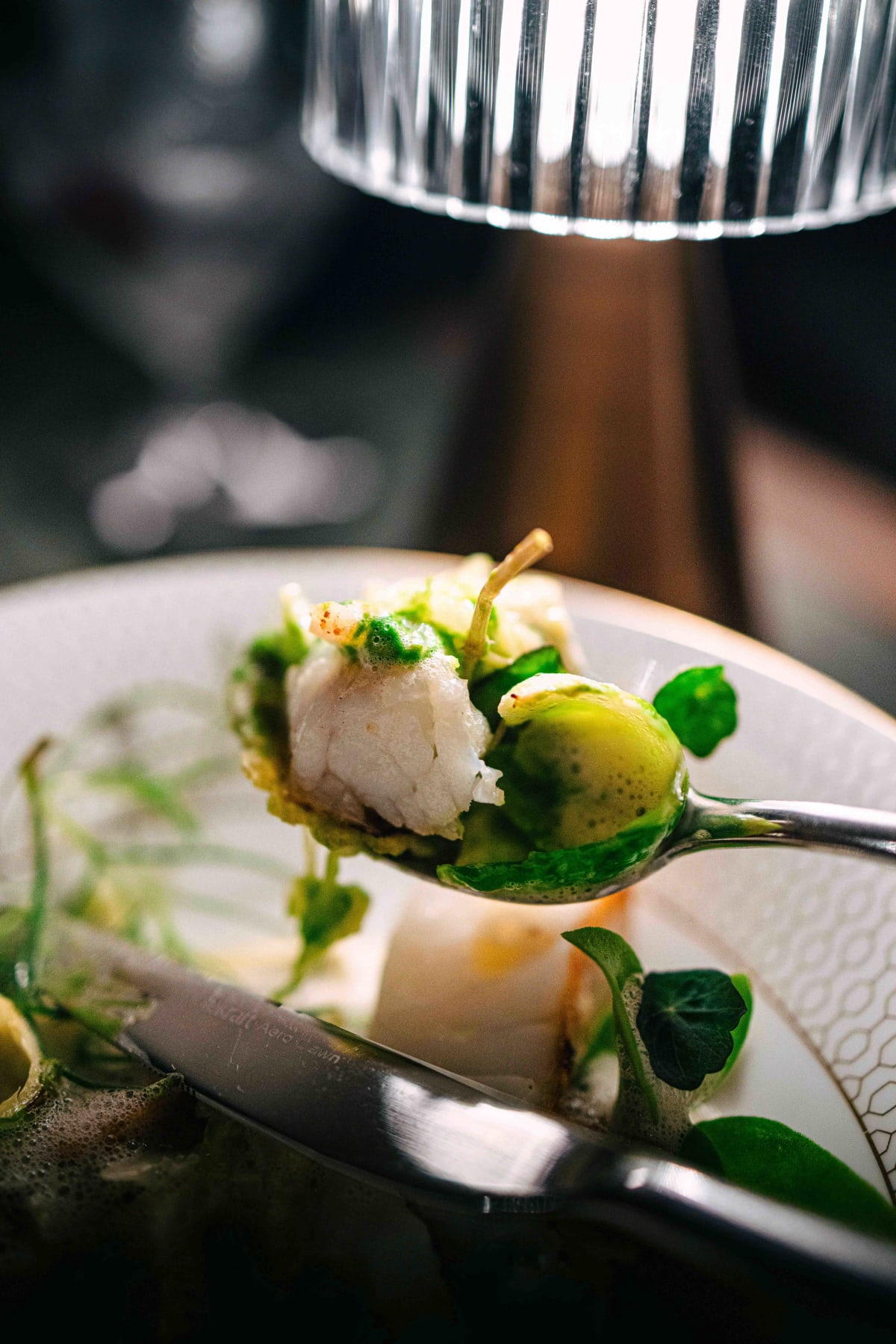
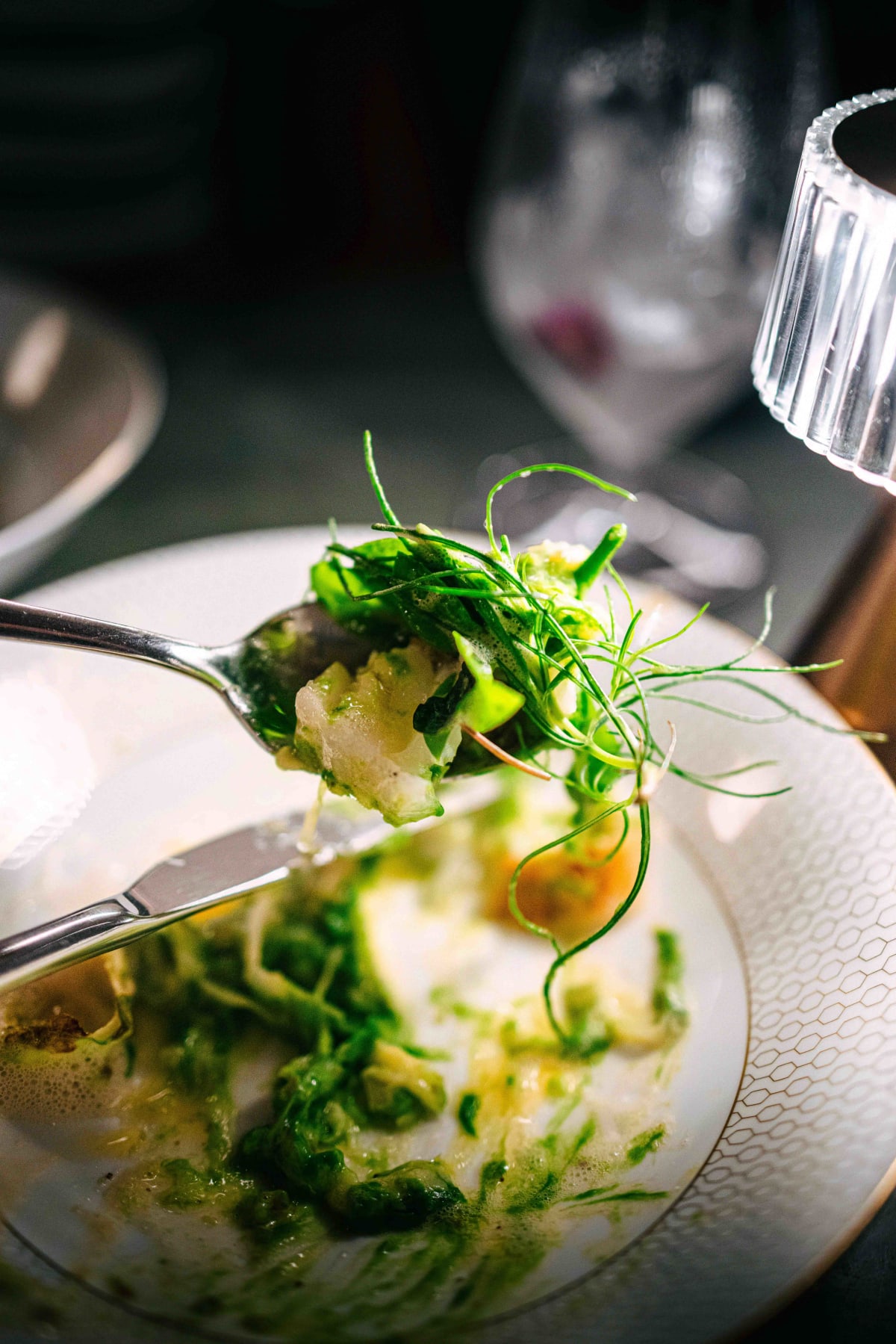
The white paired to this grilled fish was Bründlmayer's Ried Käferberg 1ÖTW Grüner Veltliner 2020. A house in Langenlois in the Kamptal in Austria, seventy kilometres west of Vienna, and a reference producer for Austrian white.
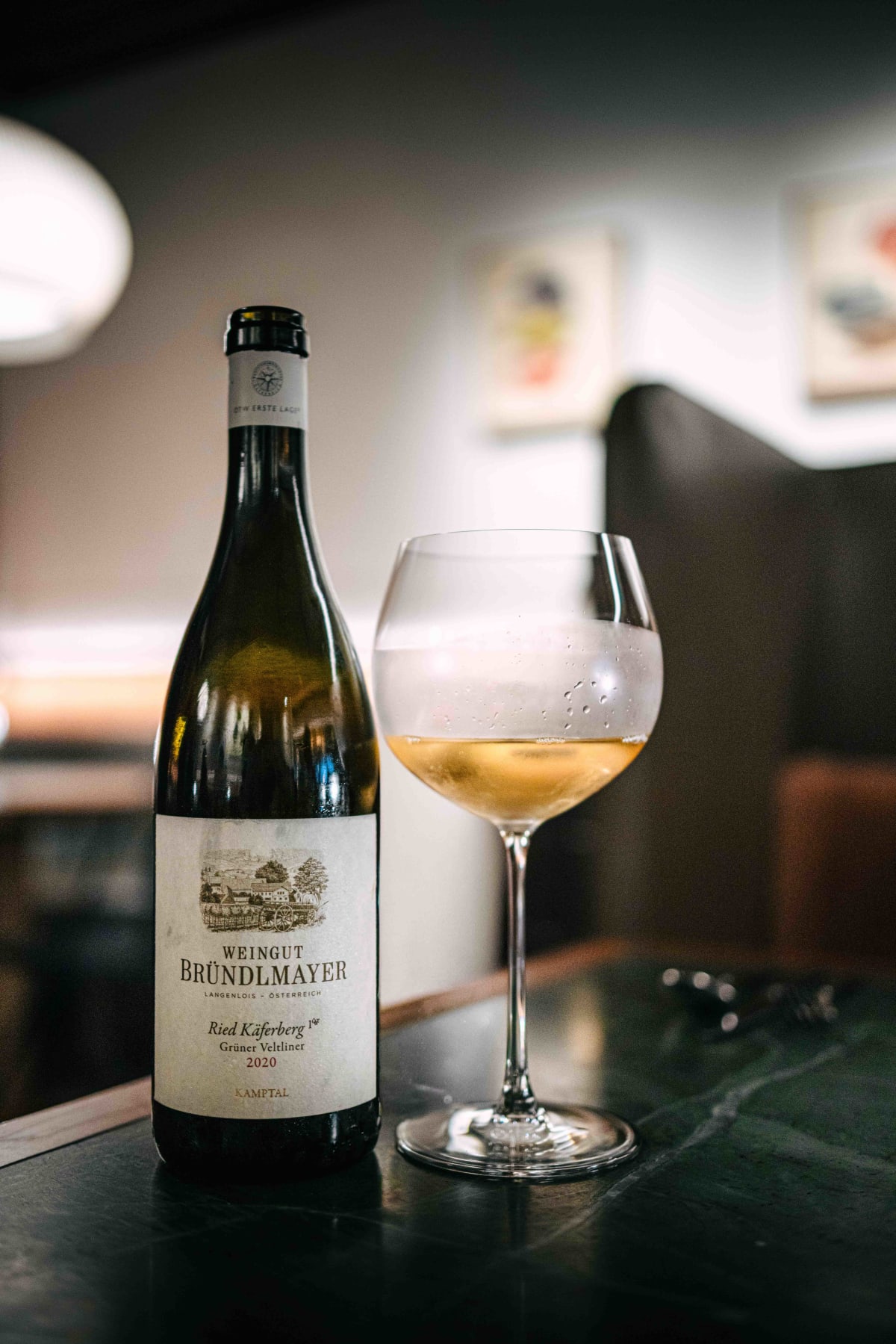
Käferberg is a warm, wind sheltered site between three hundred and ten and three hundred and forty five metres, facing south and southeast, and its name appears in records as early as 1317. Marine clay deposits lie over the bedrock, which gives the wine density, and the old Grüner Veltliner here produces exceptional fullness and concentration. 1ÖTW is the top vineyard classification set by the Austrian Traditional Wine Estates.
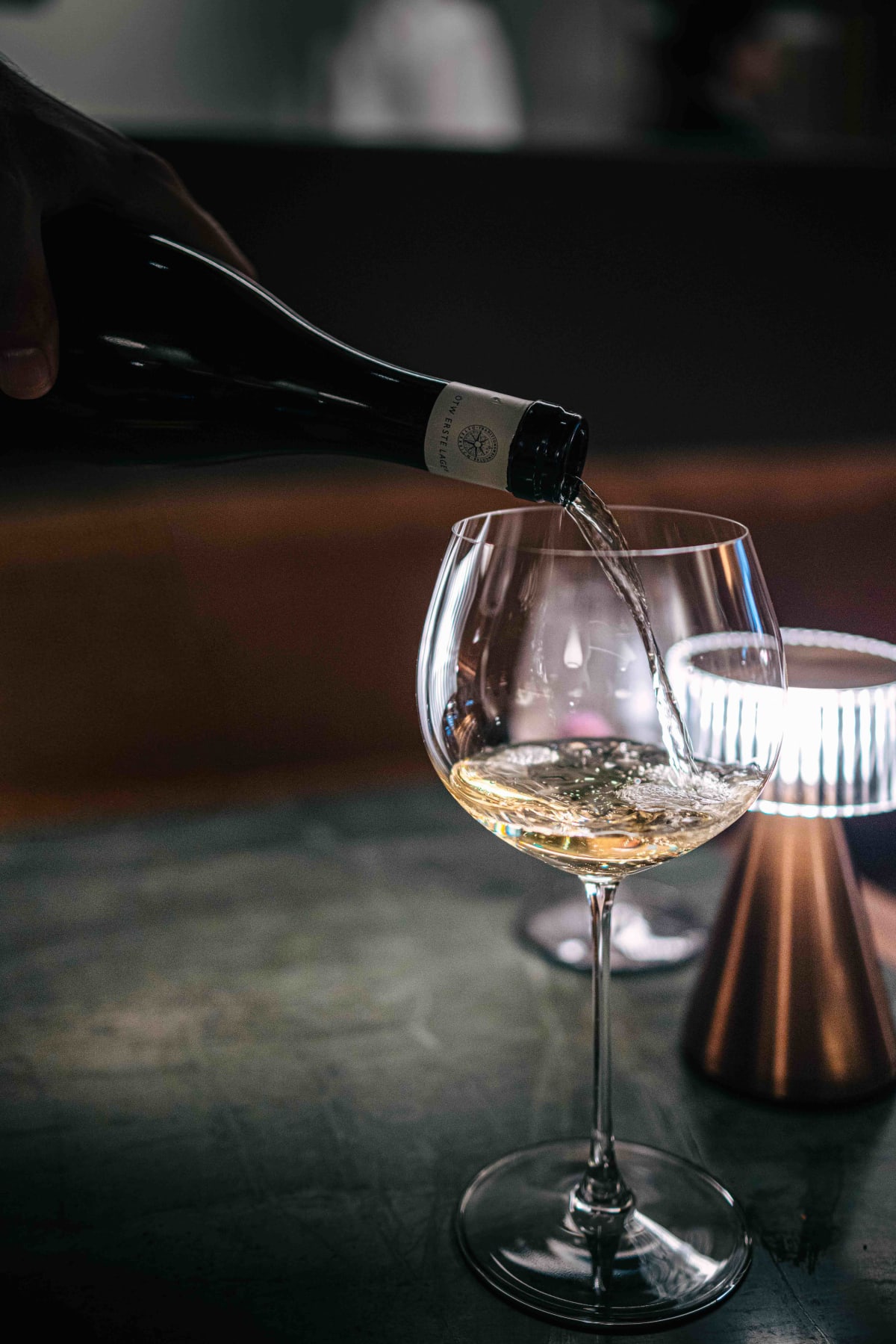
There is one thing I want to raise here. Eating through this course, I had the impression that the direction, the style and the rhythm of the food jumped around. This is personal speculation, but I wondered whether, because Australia has no style you could call Australian cooking of its own, the attempt is to fold the cooking styles of various countries into one course alongside Australian ingredients.
A Japanese leaning broth comes first, then charcuterie in a French and Italian register, then Italian again with the 'nduja sauce, then back to a typical French grilled fish.
So at times I was enjoying French complexity and quiet depth and at others met a flavour that hit the tongue hard, which left a jumbled feeling and moments where I could not find a settled identity. Of course if the balance were held I think the advantages would outweigh the drawback.
So at times I was enjoying French complexity and quiet depth and at others met a flavour that hit the tongue hard, which left a jumbled feeling and moments where I could not find a settled identity.
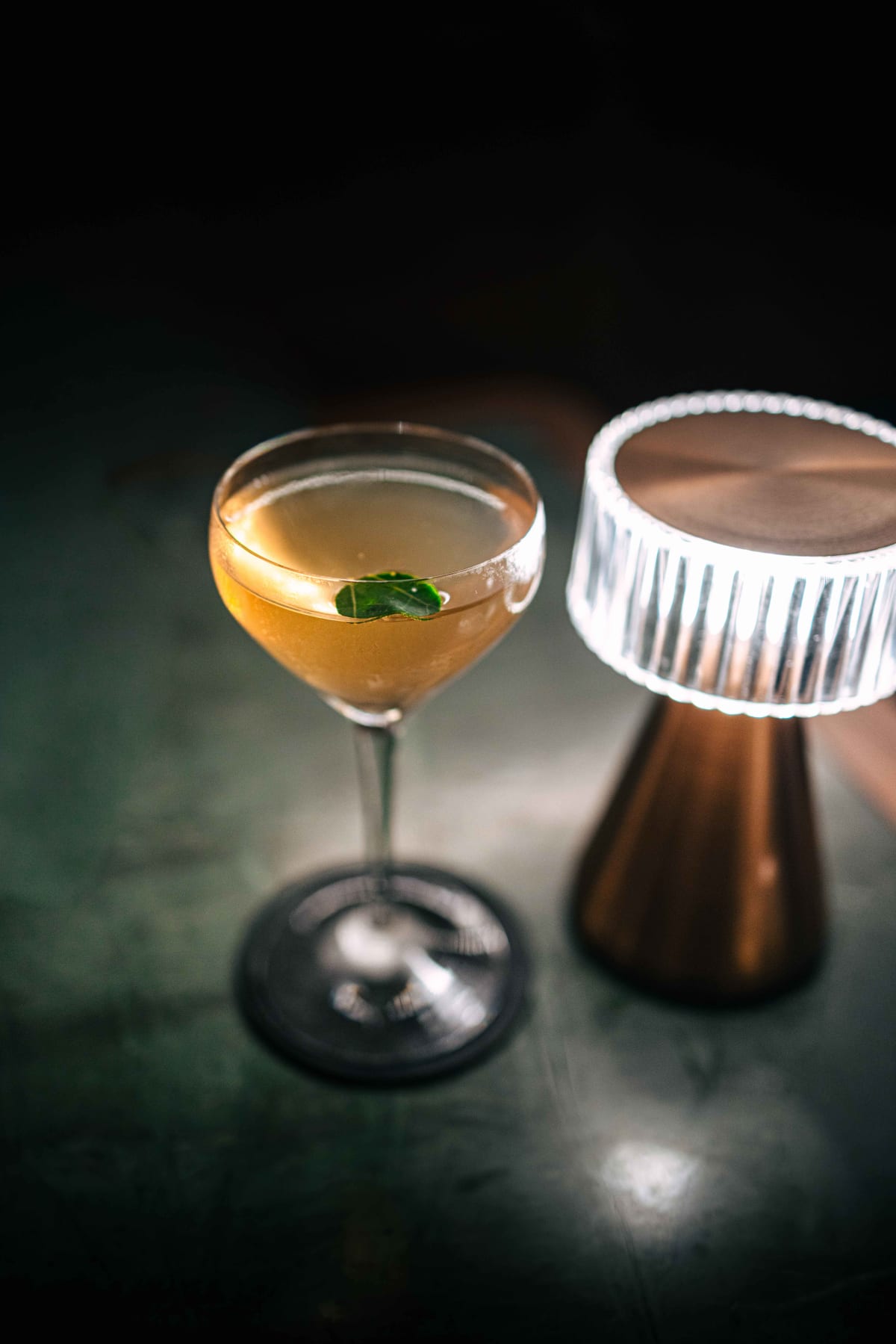
Section 11·Tuna And Swordfish
The last main was 10 Day Dry Aged Yellowfin Tuna & Swordfish.
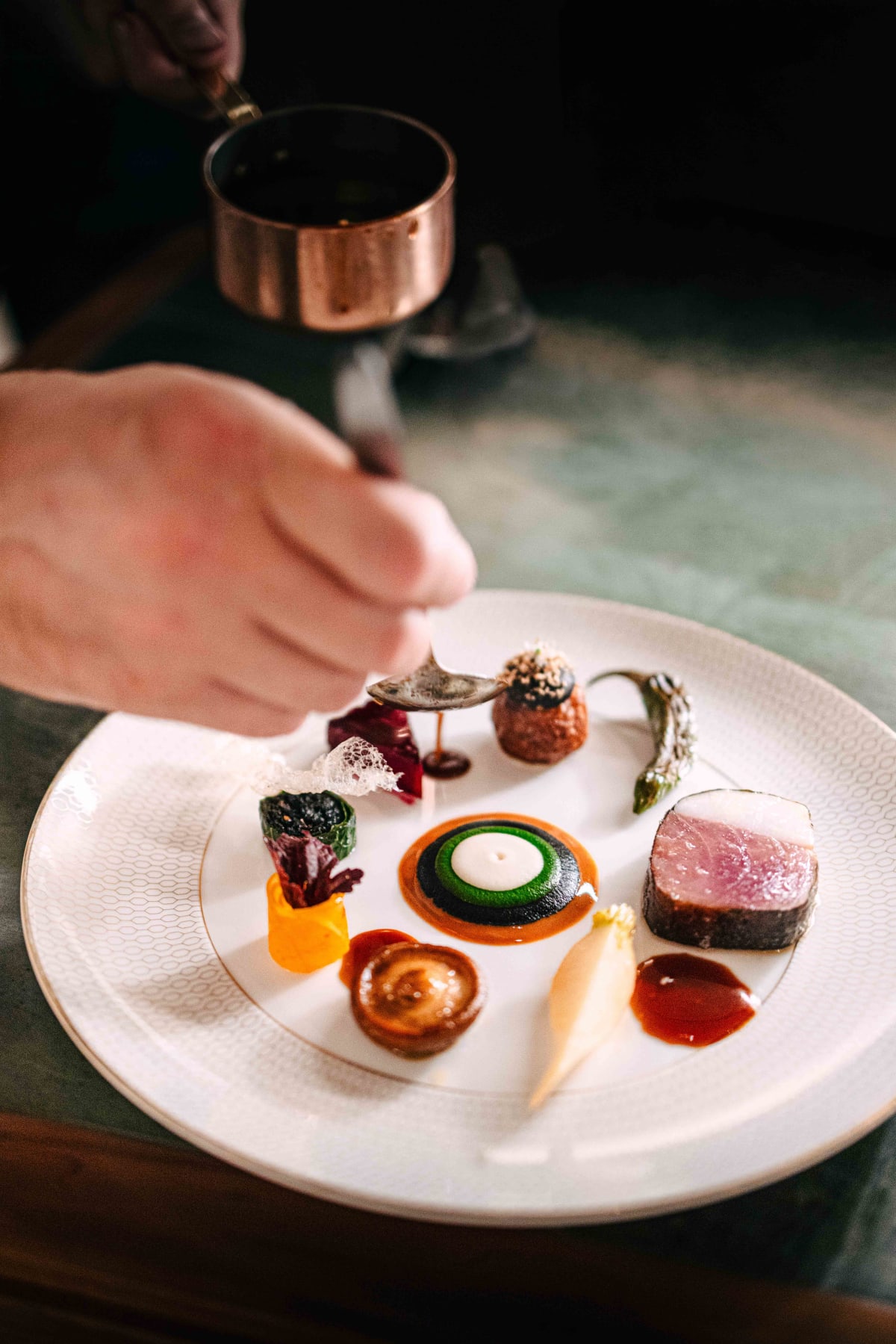
The belly of the tuna and the swordfish were gathered and wrapped in nori, looking rather like a rack of lamb. Three sauces came with it: macadamia tahini, onion purée, and a kale and turnip purée.
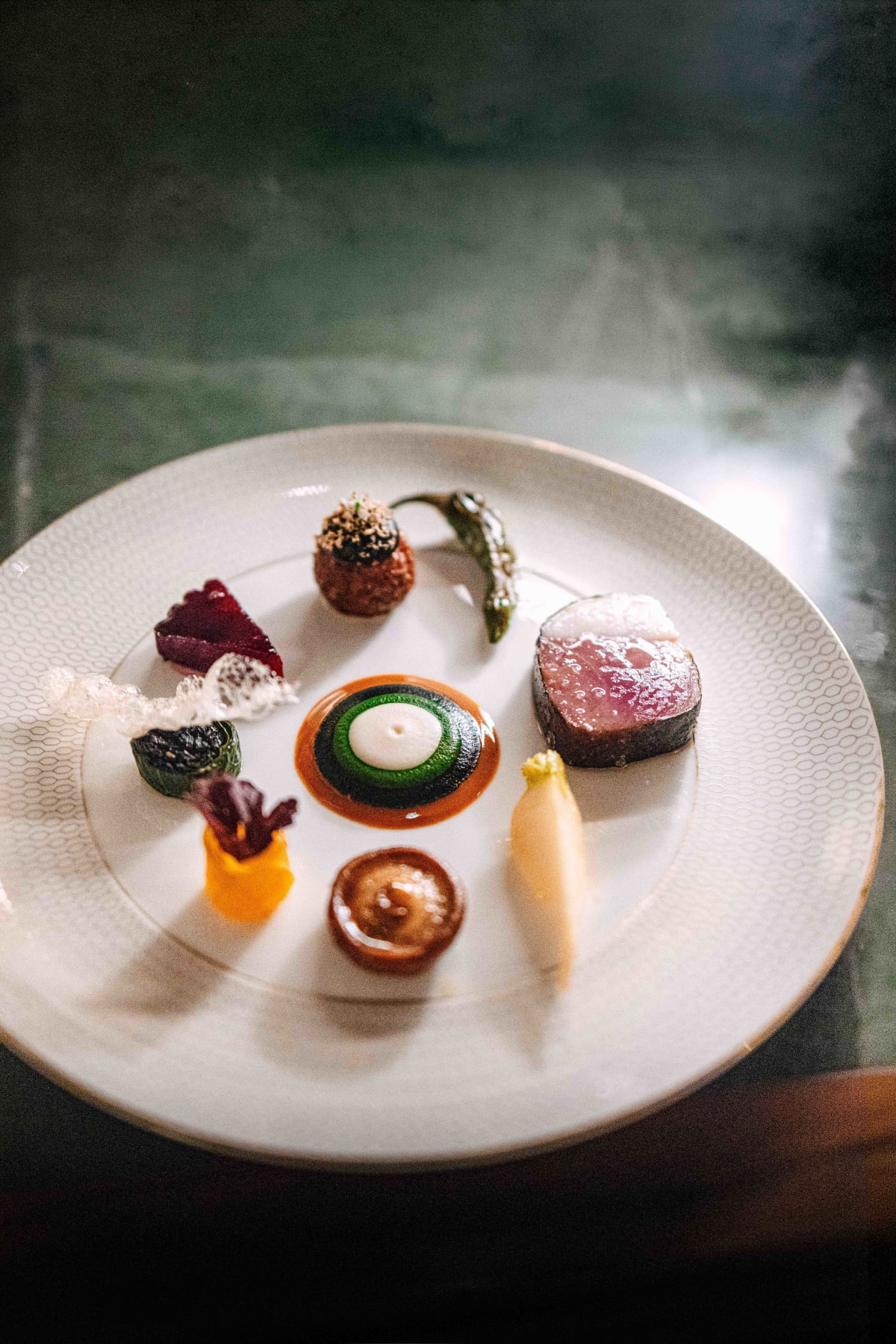
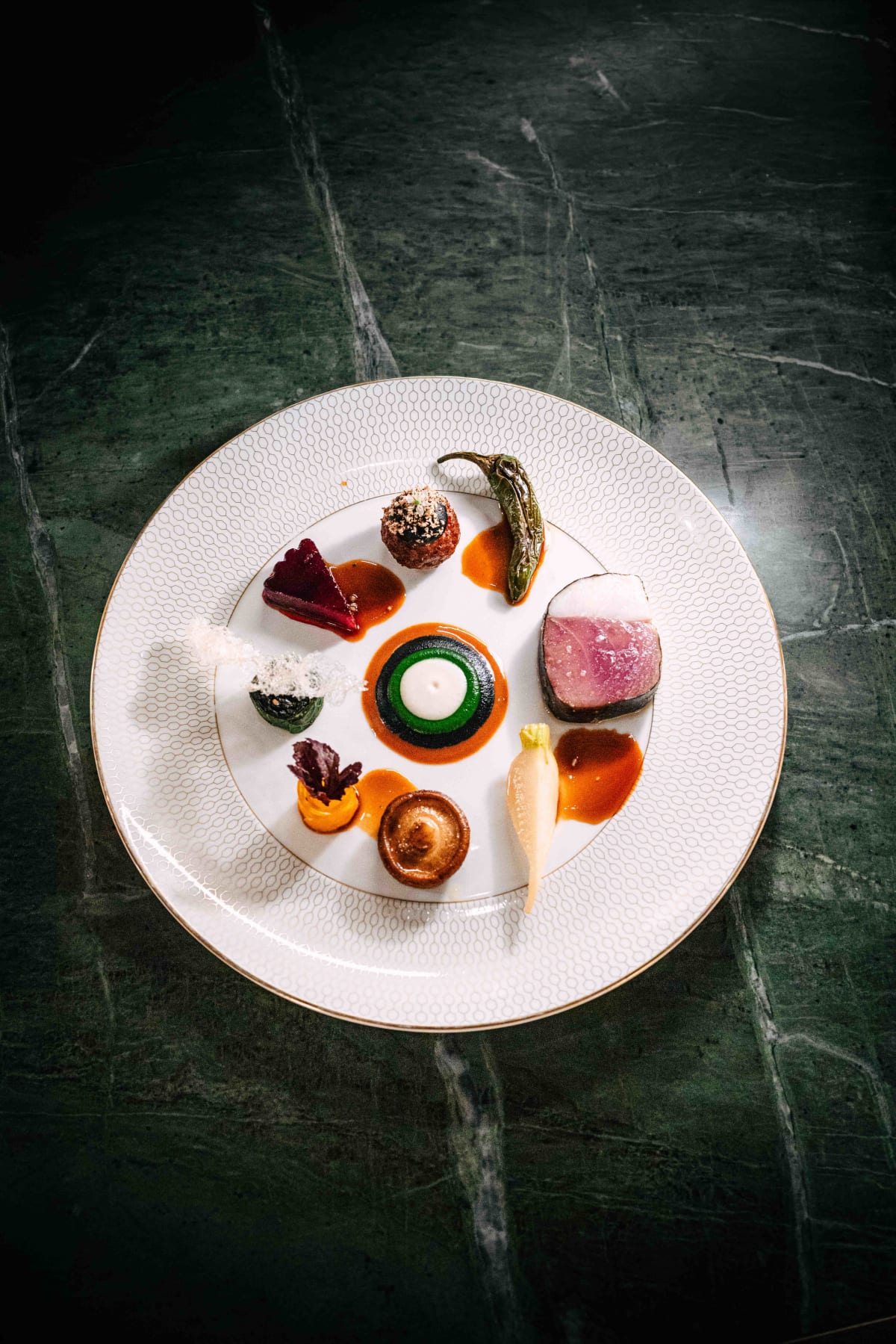
My own disappointment with this dish was that there were far too many garnishes. This is not watchmaking, and yet out came turnip cooked round in butter, shiitake confited in brown butter and rosemary, persimmon, black cod and fried swim bladder, beetroot, an artichoke crumb with charred apple and black garlic purée, and murasaki chilli.
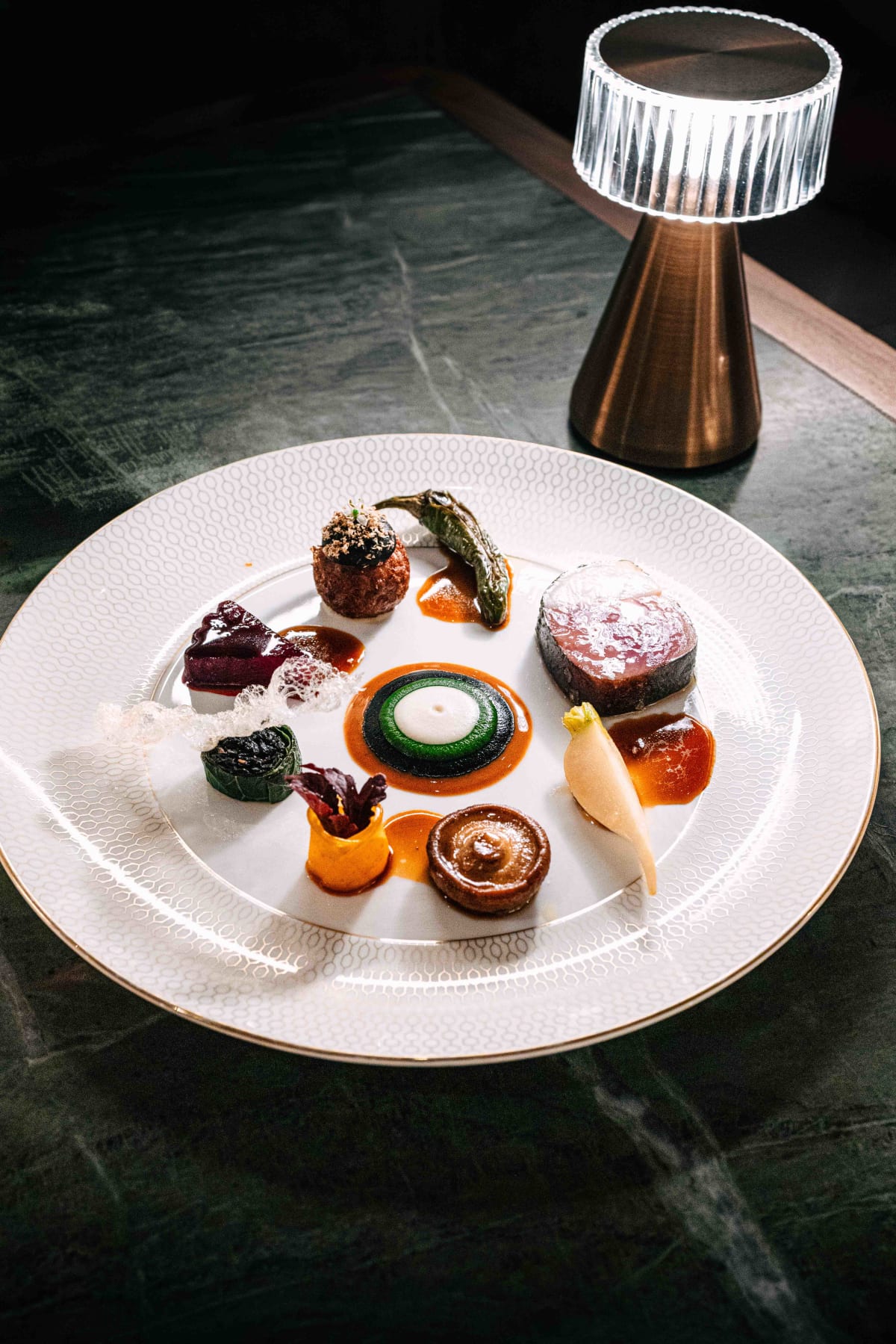
Wrapping tuna and swordfish together in nori to present them like a rack of lamb was great fun. They said that in grilling it they put the swordfish underneath to melt its fat. The harmony and contrast between the texture of the dry aged tuna and the texture of the swordfish were excellent and it was good to chew and eat.
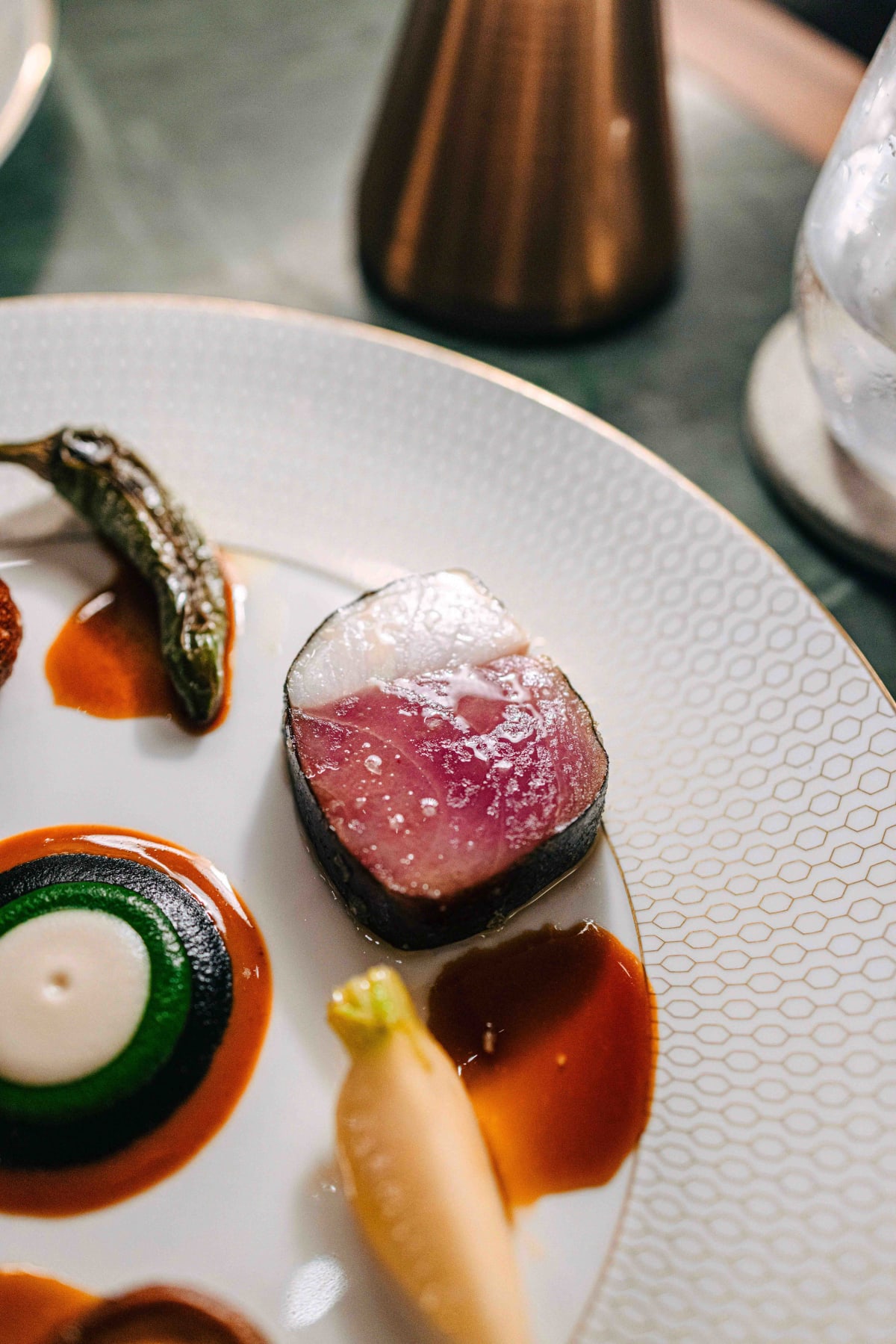
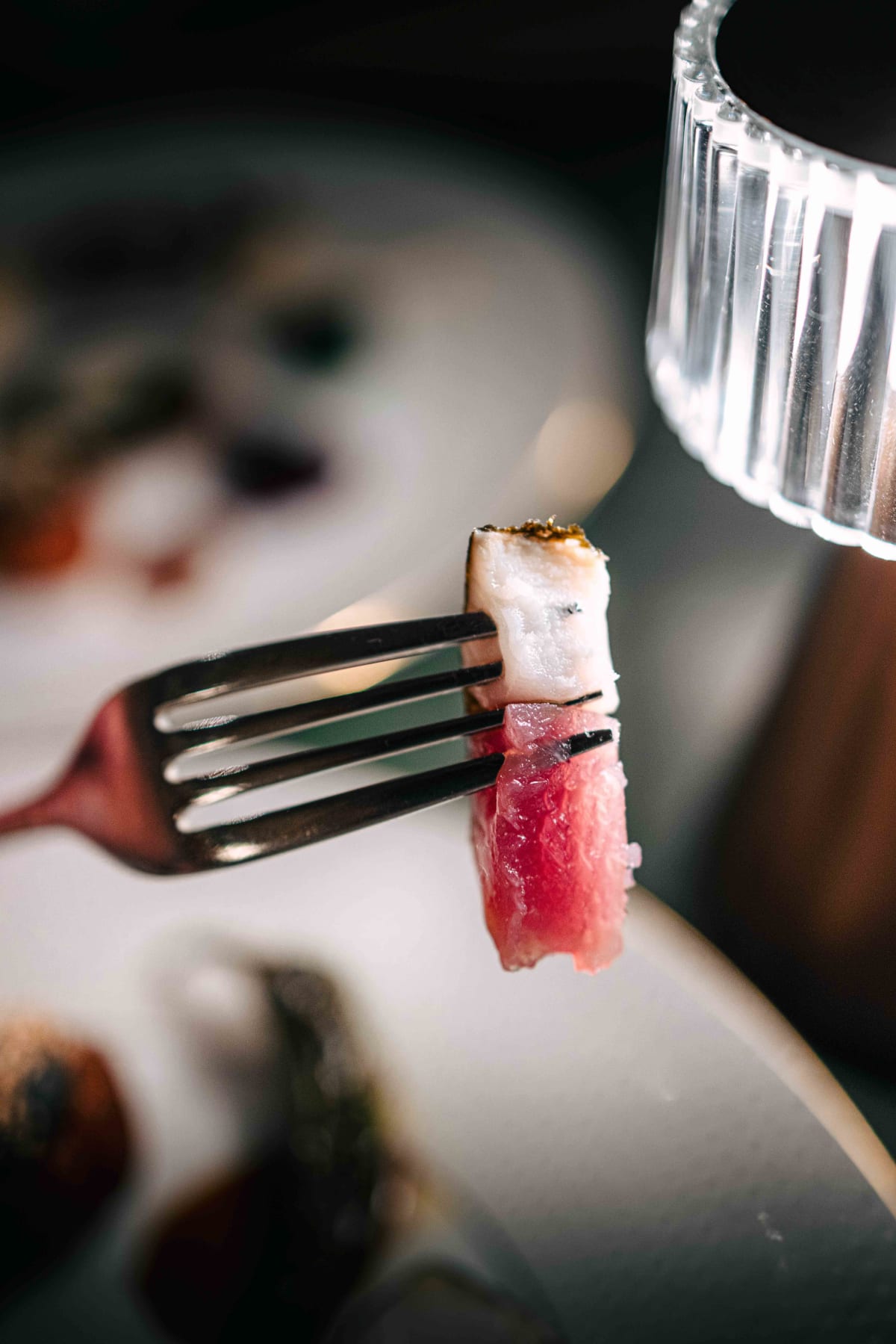
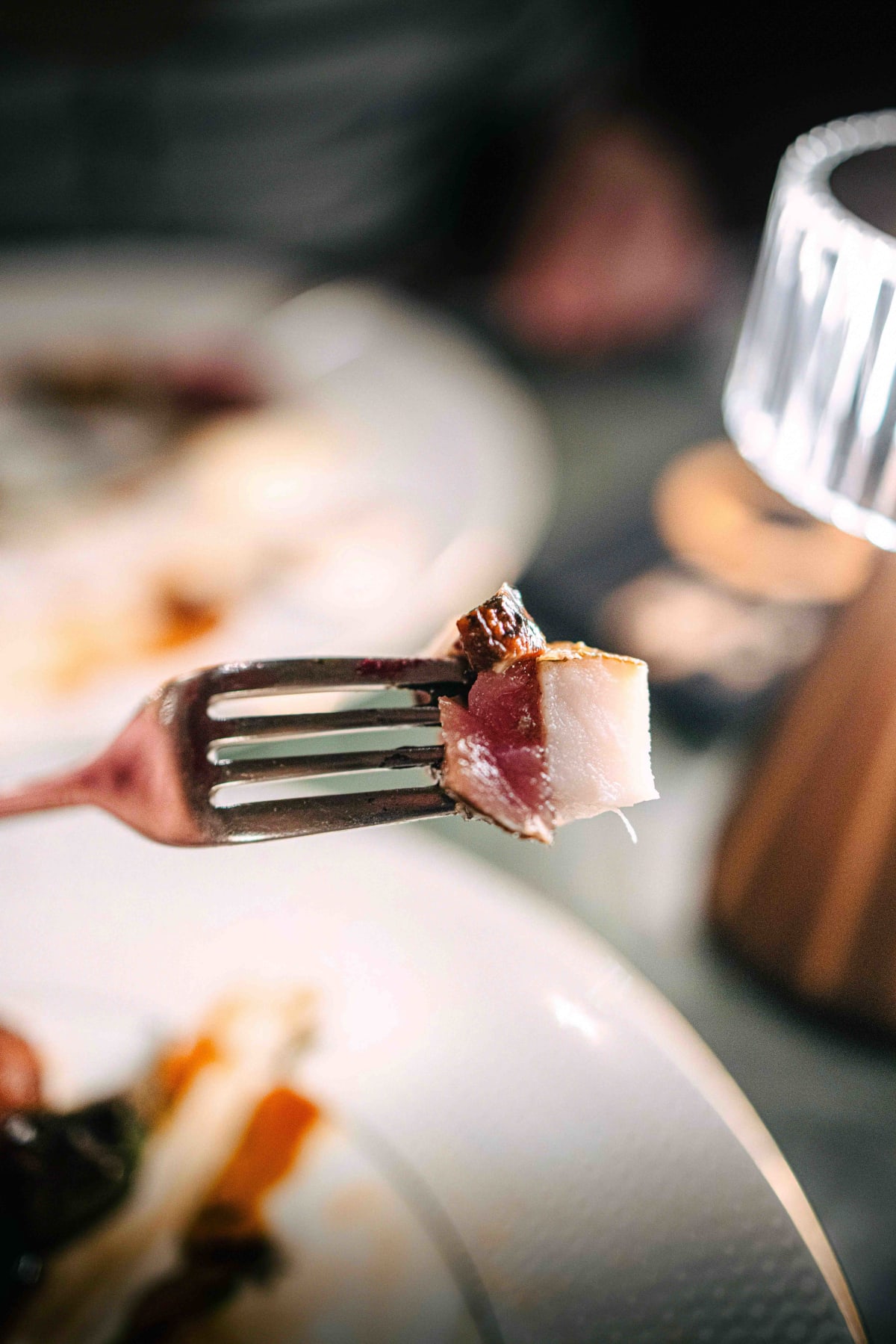
That said, since tuna has little fat to begin with, I do not think I felt much difference in taste or flavour coming from the dry ageing. What was best in this dish was the sauce. Eating the three together, the balance of nuttiness, char and the bitterness that holds the weight down was excellent and the taste itself was very good. The disappointment is the garnish again. There were so many that I was distracted the whole way through. You have to try them all, so you eat this then that, and it was hard to concentrate on any one flavour properly.
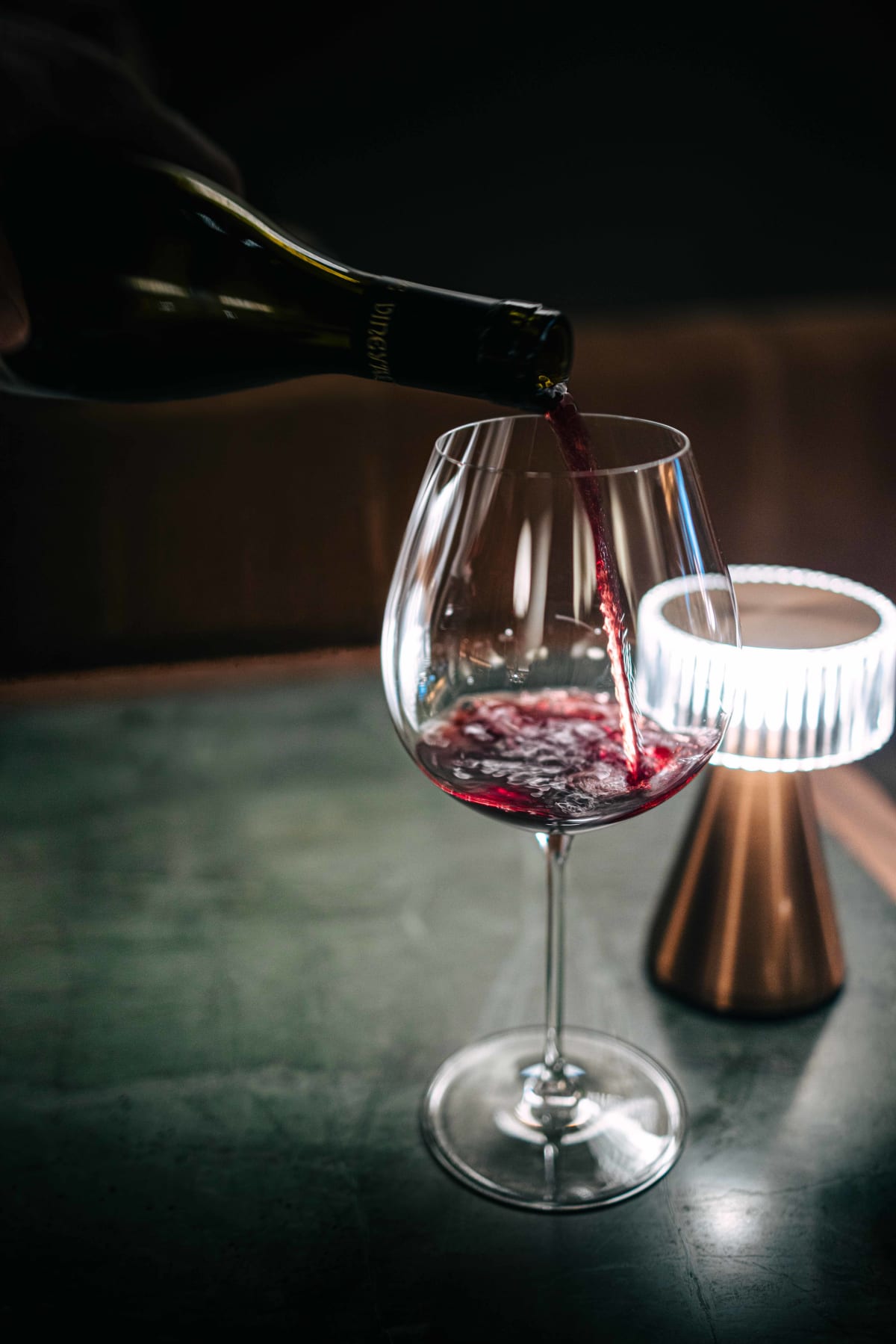
The red paired to this main was Burn Cottage Vineyard Pinot Noir 2020. A twenty four hectare farm at Lowburn in Central Otago, New Zealand, in the foothills of the Pisa Range. The Americans Marquis and Dianne Sauvage bought unplanted land where sheep had grazed in 2002, and went to Ted Lemon of Littorai in California to have the vineyard planted. Lemon proposed that the whole thing go biodynamic from the first vine in the ground, and planting began that way in 2003.
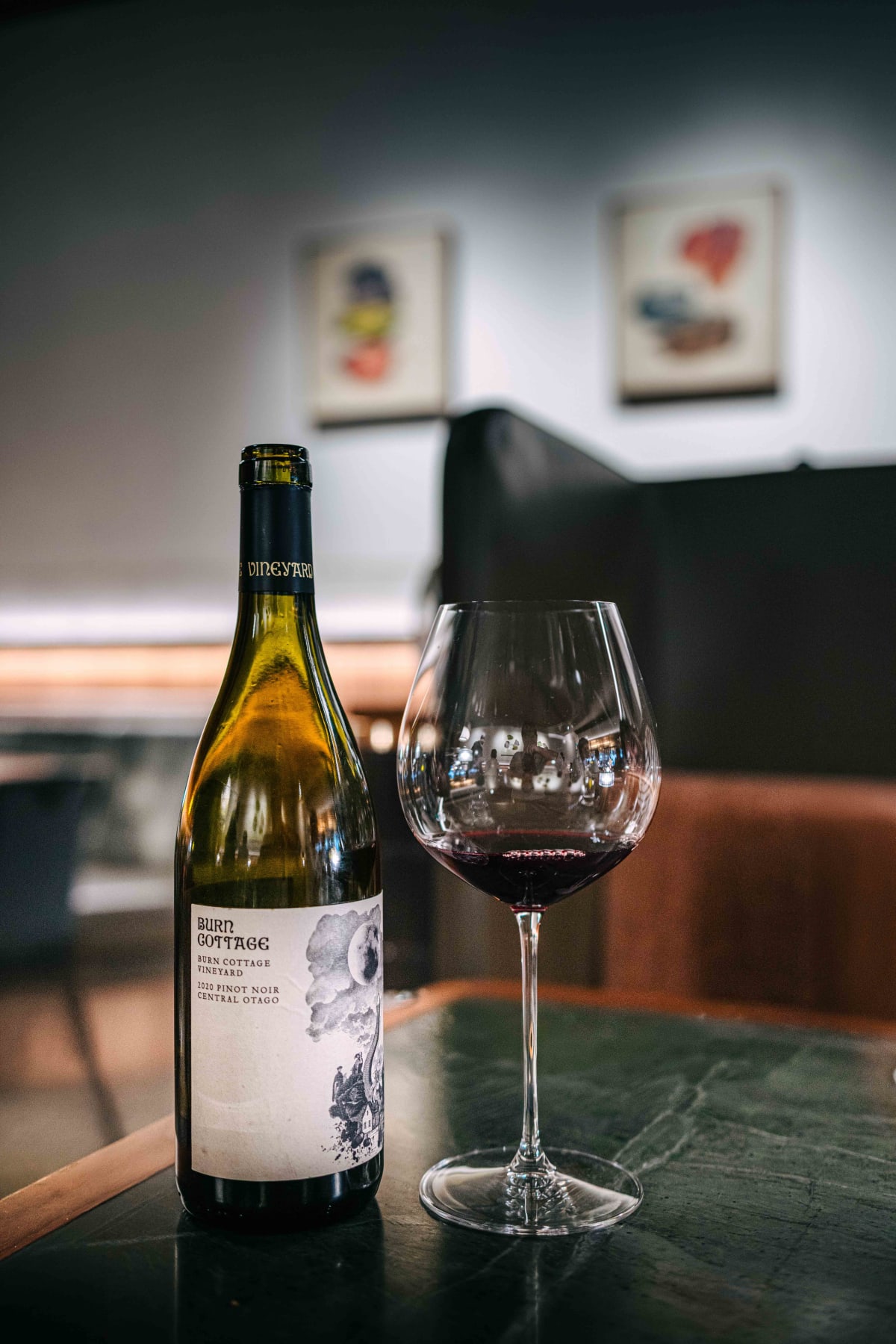
At the time it was almost unheard of anywhere in the world for a new vineyard to start biodynamic from inception. It was the first site in Central Otago developed from bare land that way, and Demeter certification followed in 2011. Ten hectares or so are under vine and the rest of the land carries cattle, chickens, beehives, olive groves and native plants, with the biodynamic preparations made on site.
Section 12·Native Fruits
With the course finished, dessert began, and for whatever reason Australia does seem to do dessert properly. Here too the desserts came out varied and good.
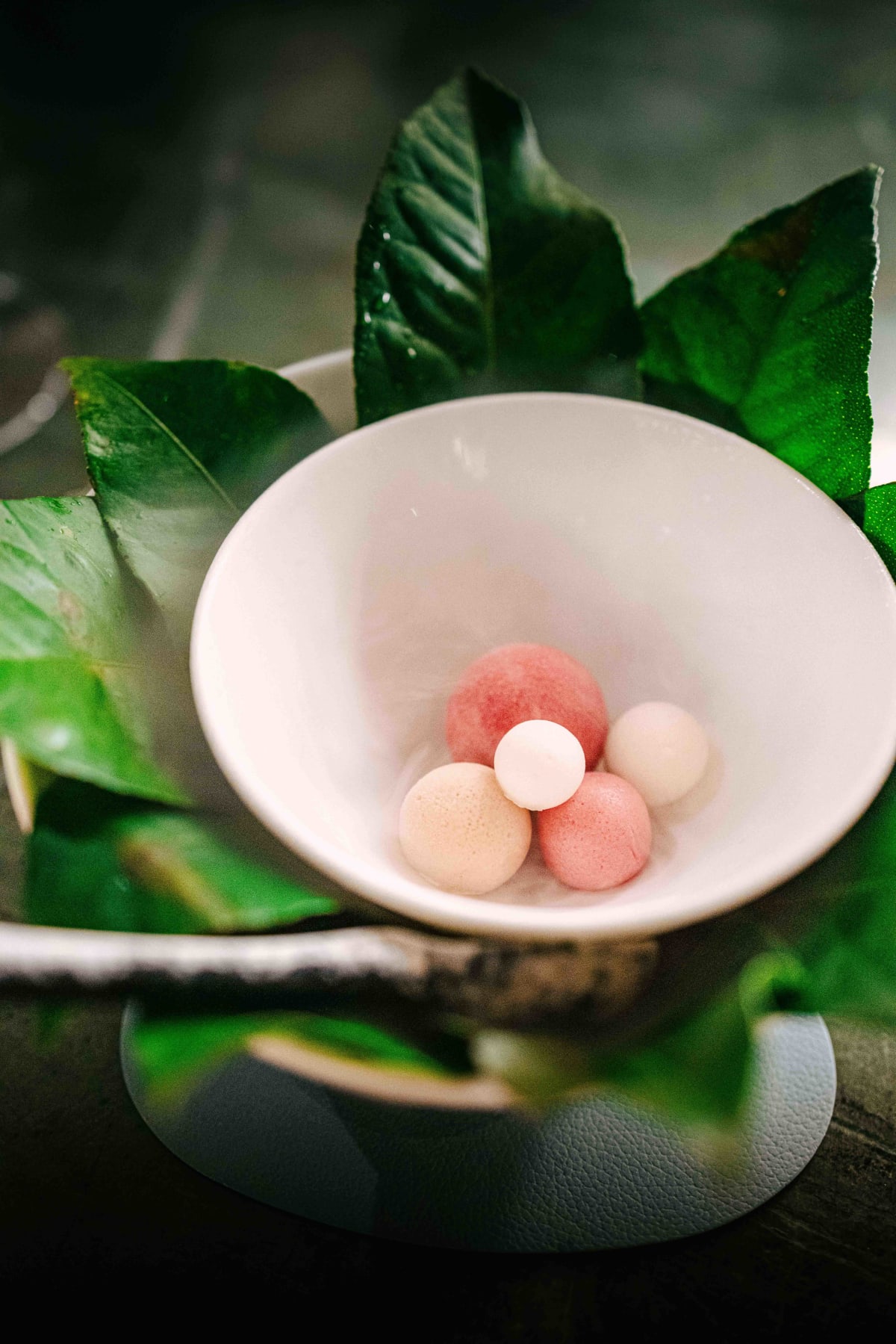
The first dessert was a fun and delicious fruit sorbet. The server first brought over a range of fruit to show us, different Australian fruits, native peach varieties called Quandong, Muntries, Davidson's Plum, Lemon Aspen and Desert Lime.
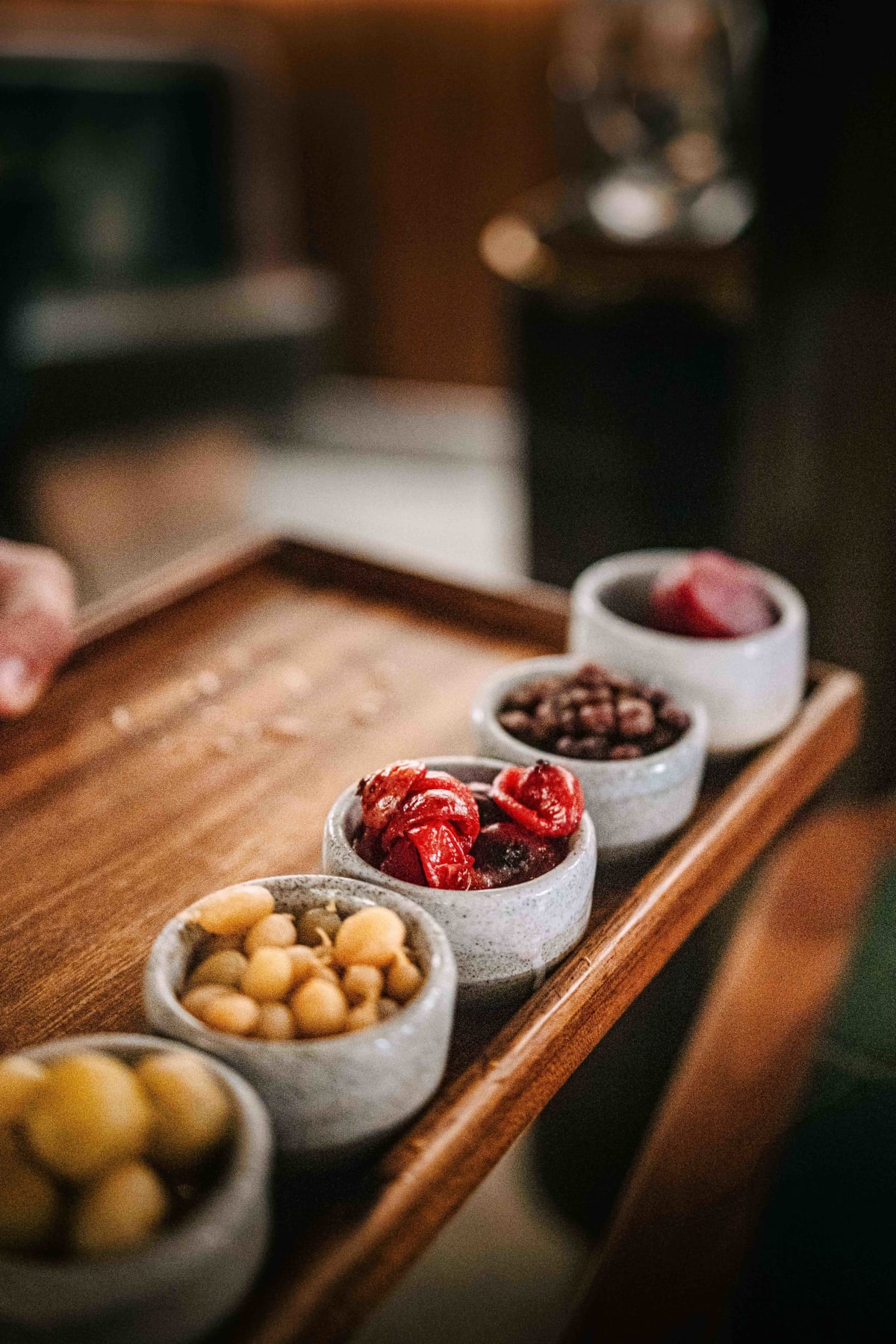
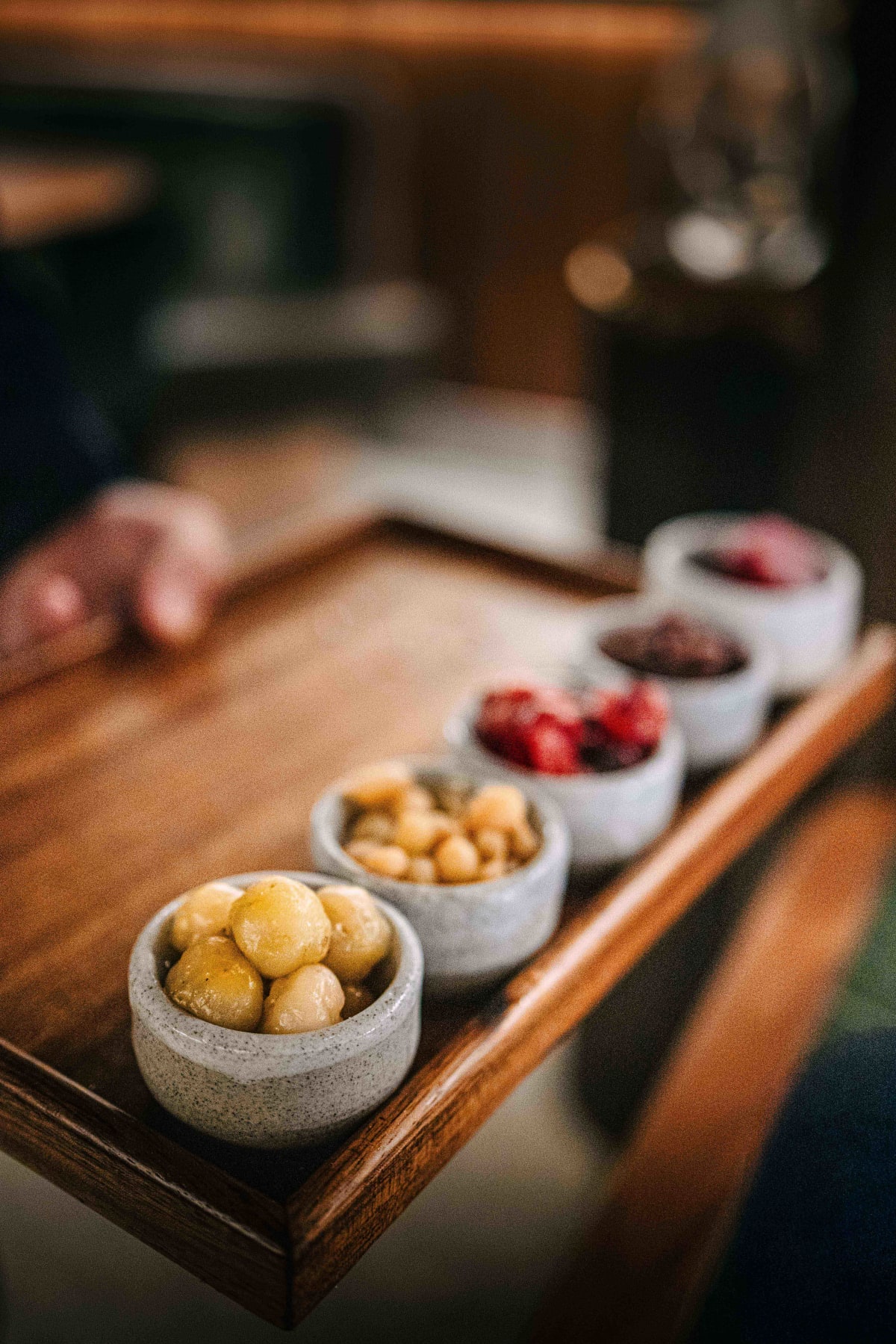
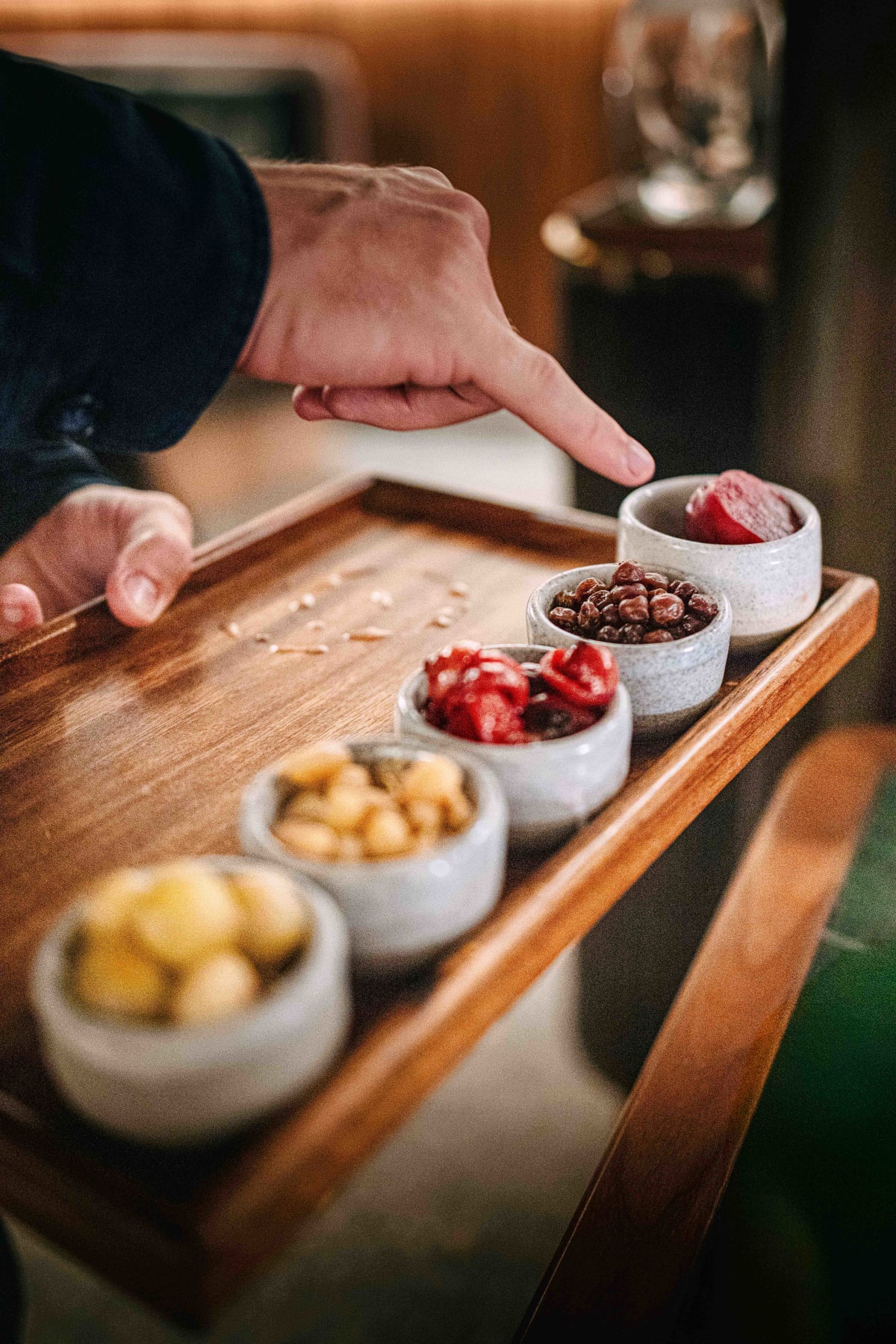
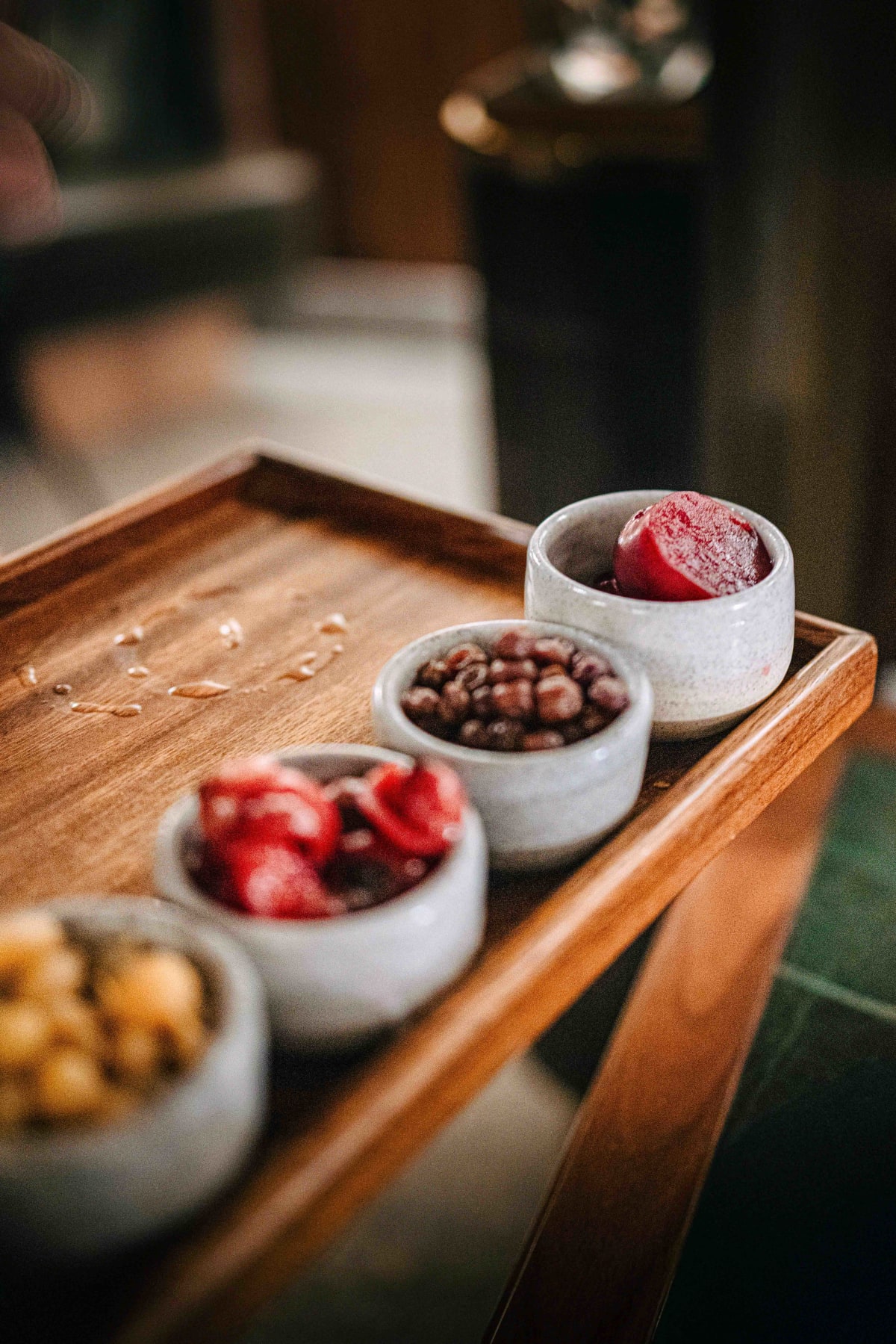
All five are Australian, and of them Lemon Aspen and Desert Lime are citrus but low in acidity and rather sweeter.
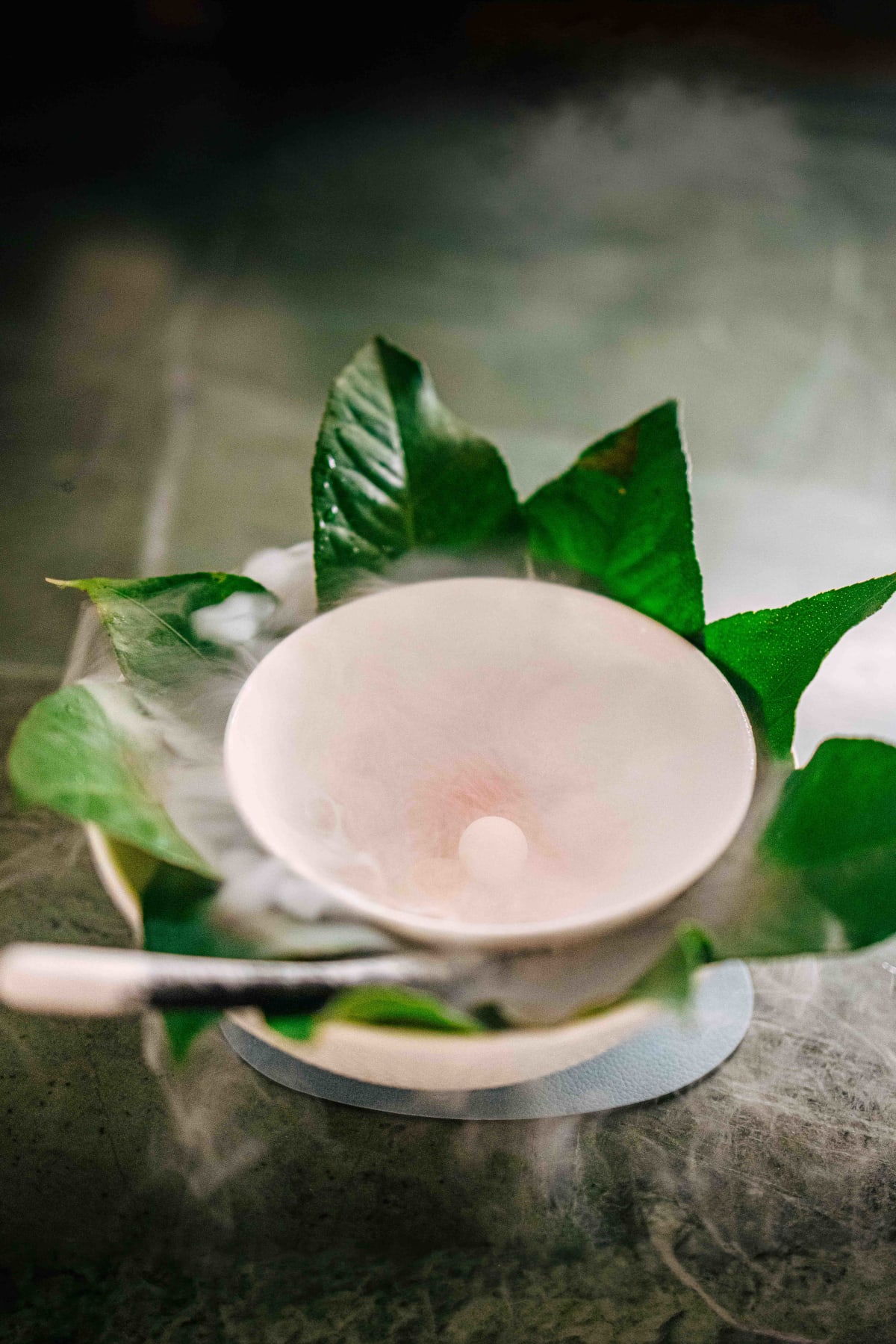
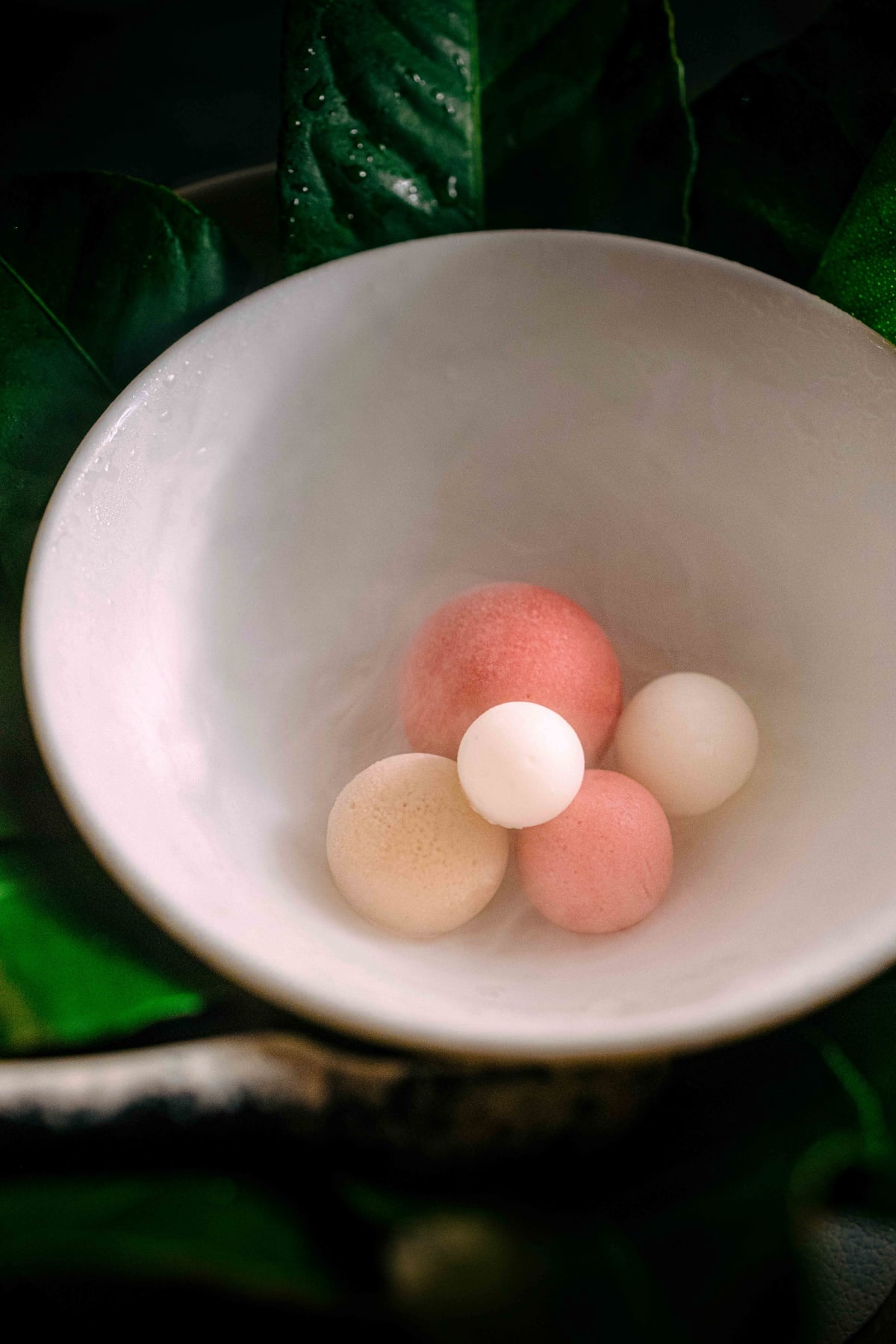
The sorbets made from the five fruits are served together on one plate, and the taste is close to the peach or raspberry sorbet you would normally eat. Muntries tasted like green apple. A cool, clean, good sorbet.
Section 13·Charred Meringue
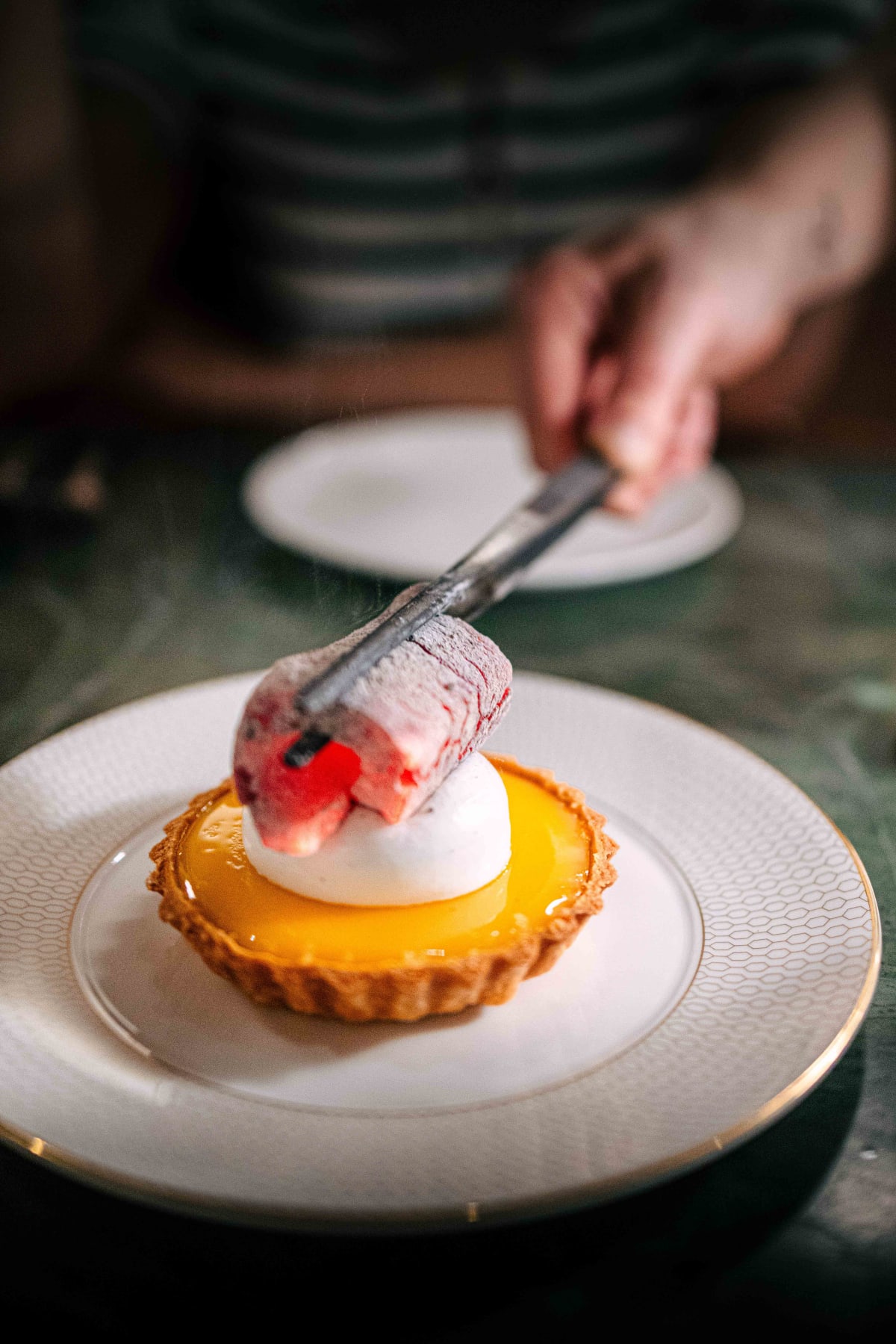
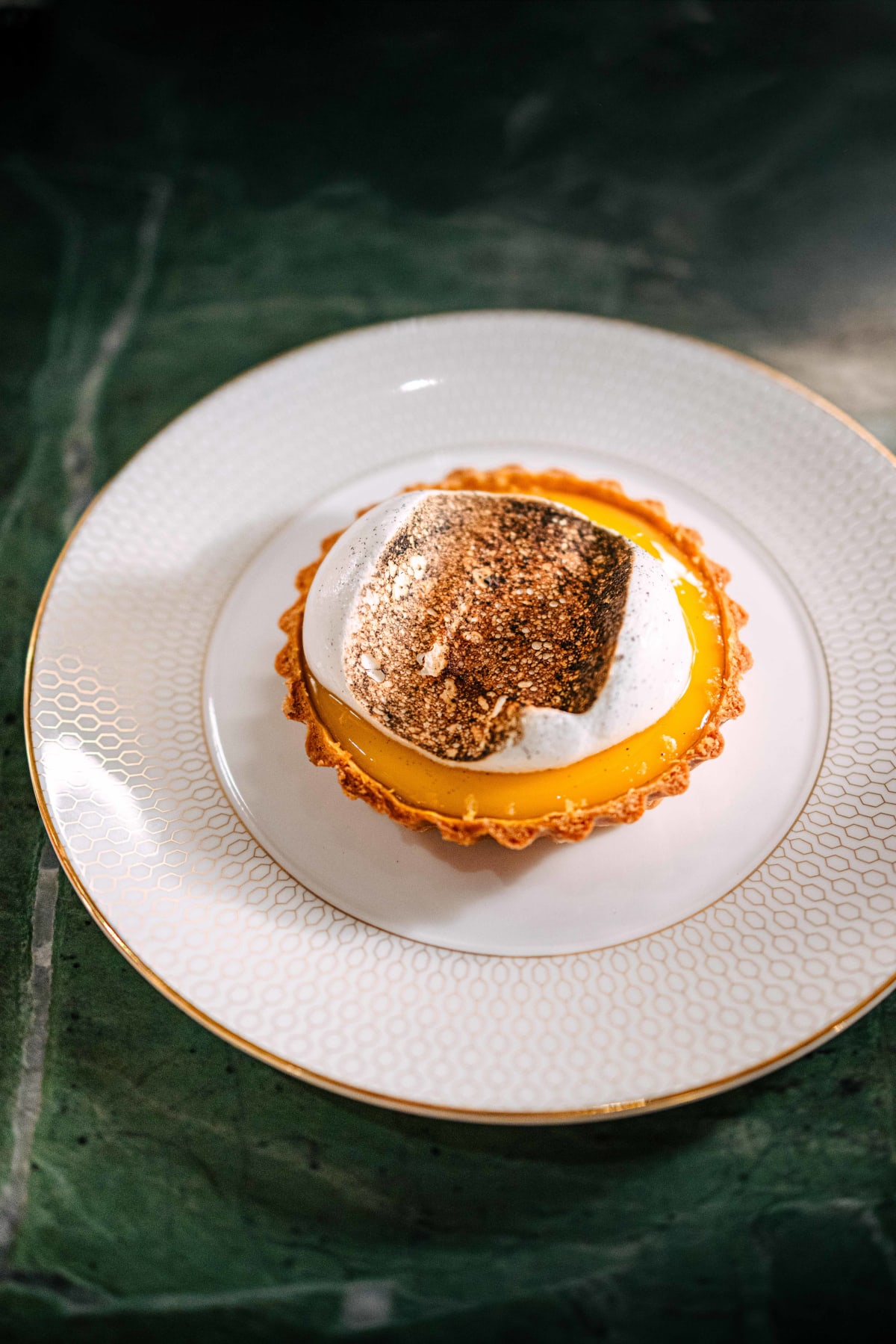
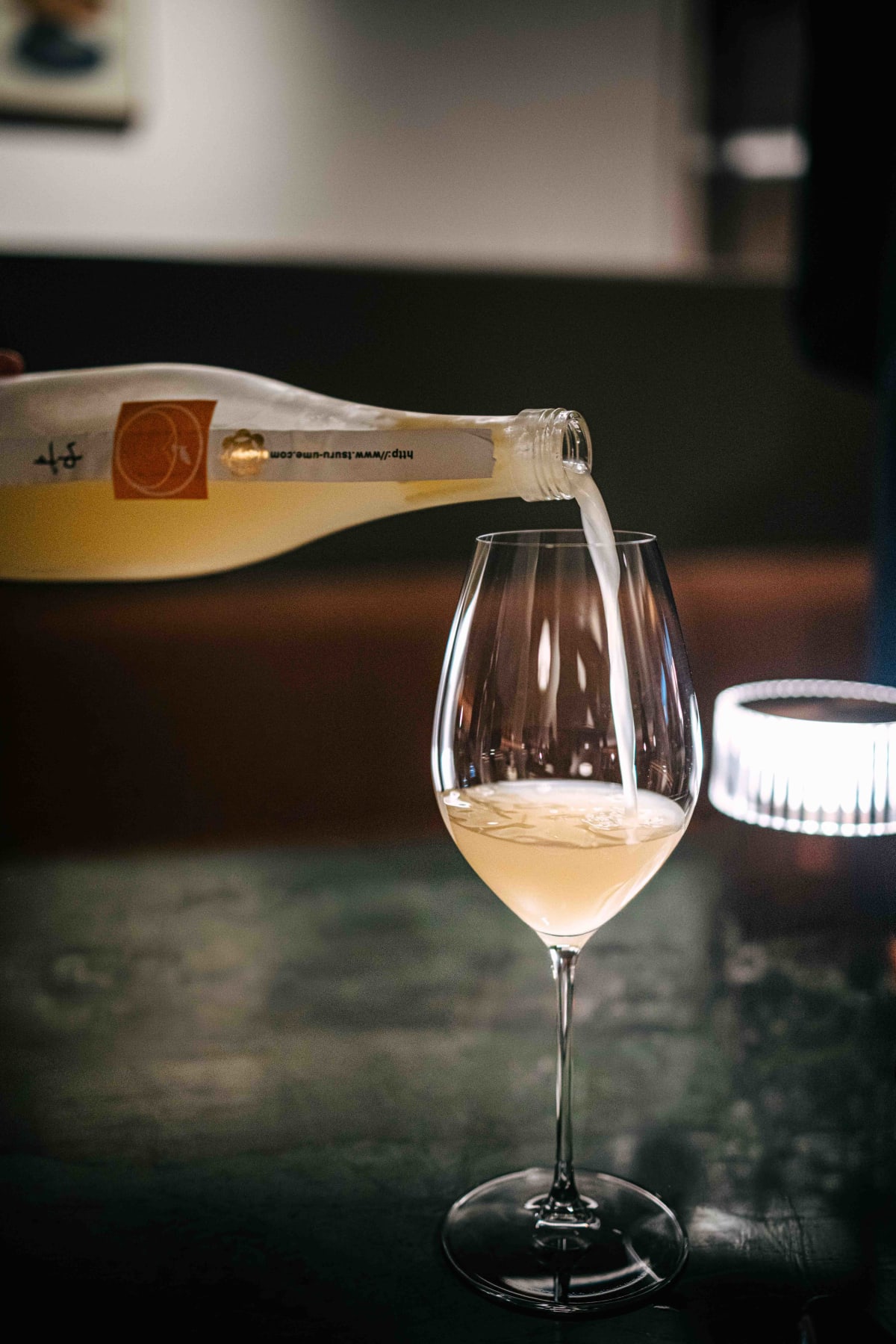
Next was a Meyer Lemon Meringue Tart, a lemon tart with cream on top. What was really unusual is that the chef brought over a piece of charcoal heated right through and gave the meringue a going over with it. So it came out like a marshmallow at a campfire.
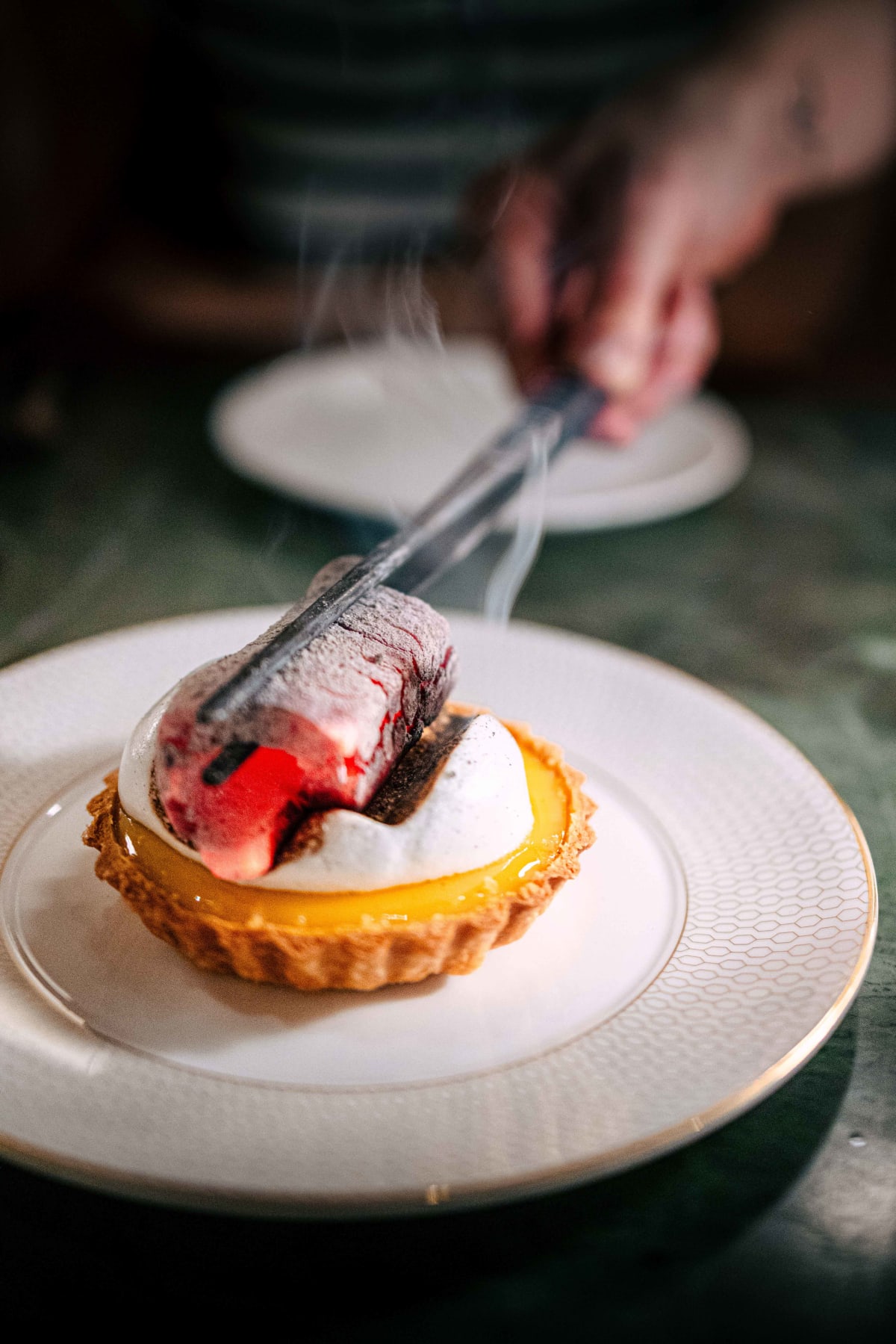
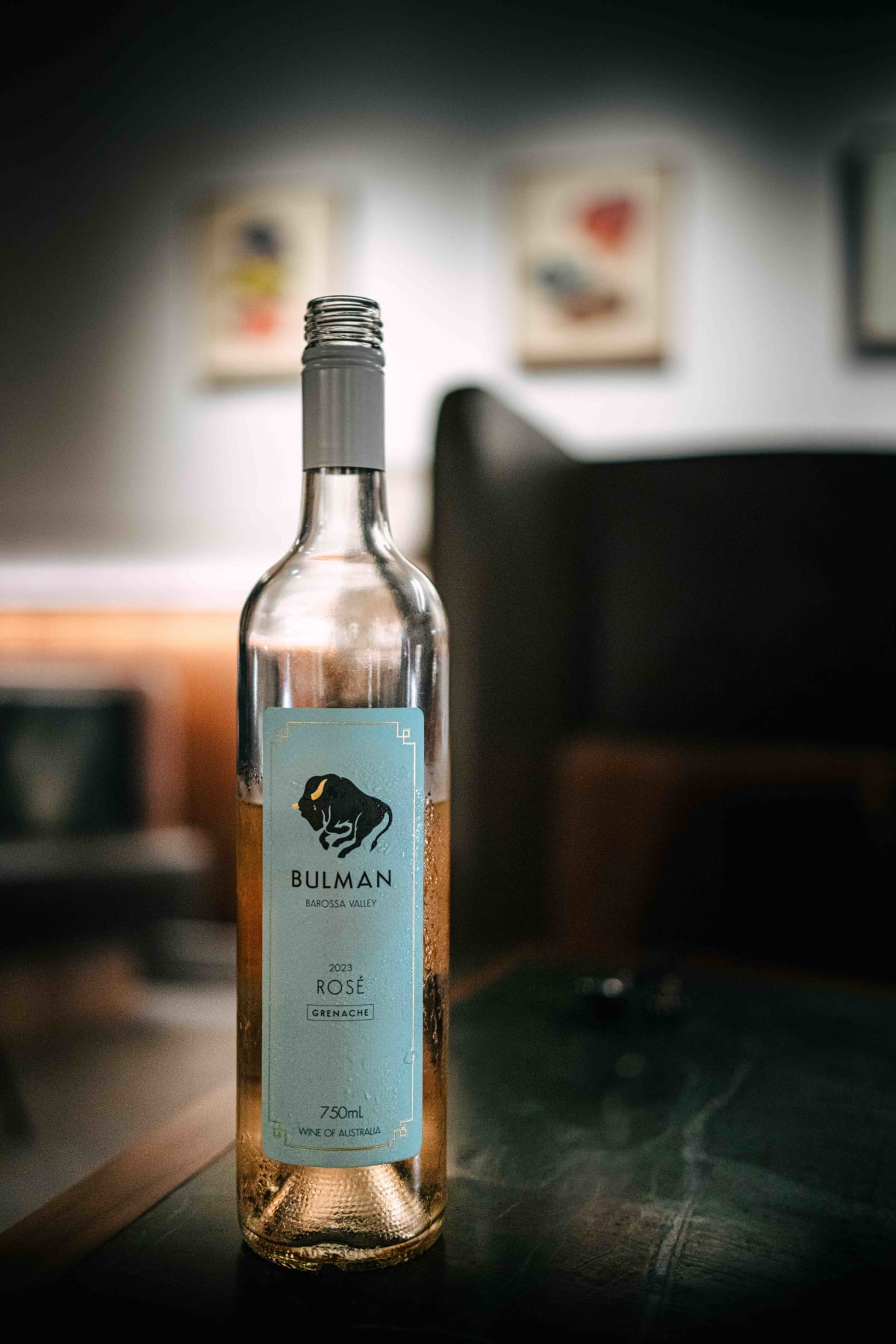
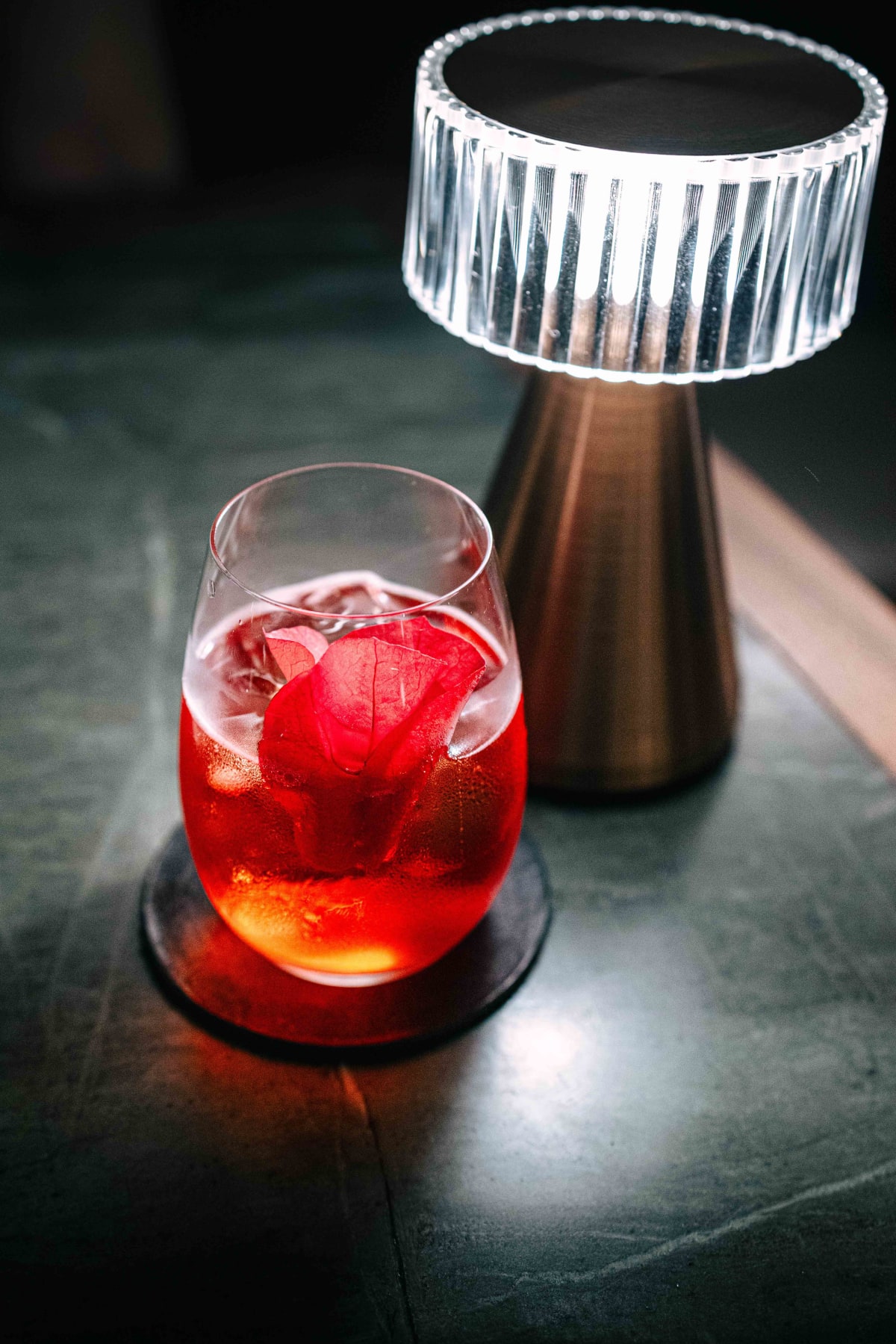
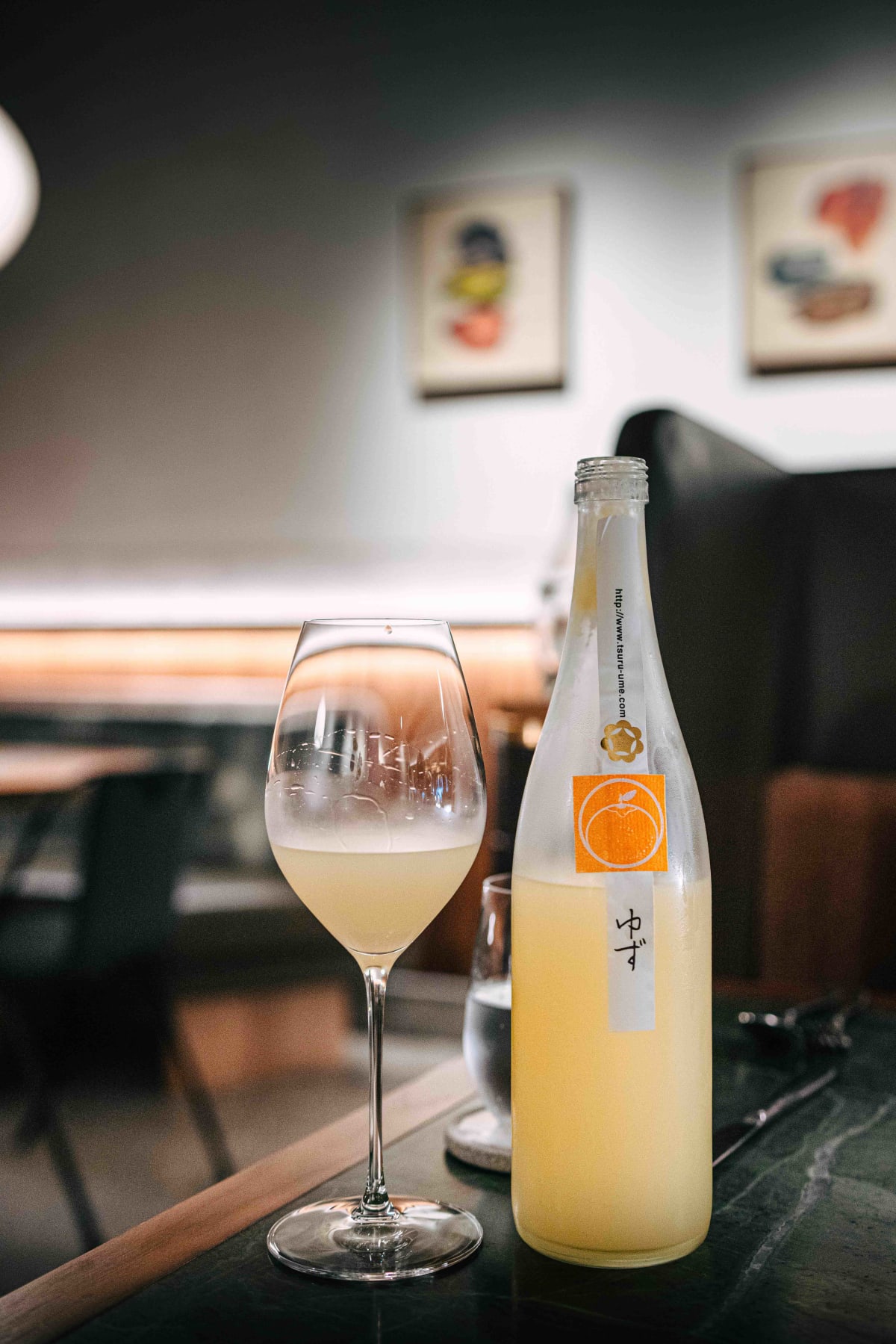
This lemon tart was properly delicious. The shell was good, the char and the caramelised quality where the meringue had been burned were excellent, and before any of that performance the lemon tart itself was made extremely well. It beat the tarts I have eaten at most dessert cafes. Being a lemon tart the brightness was very good, and a yuzu liqueur came as the pairing. Eating them together, bright on bright, it worked.
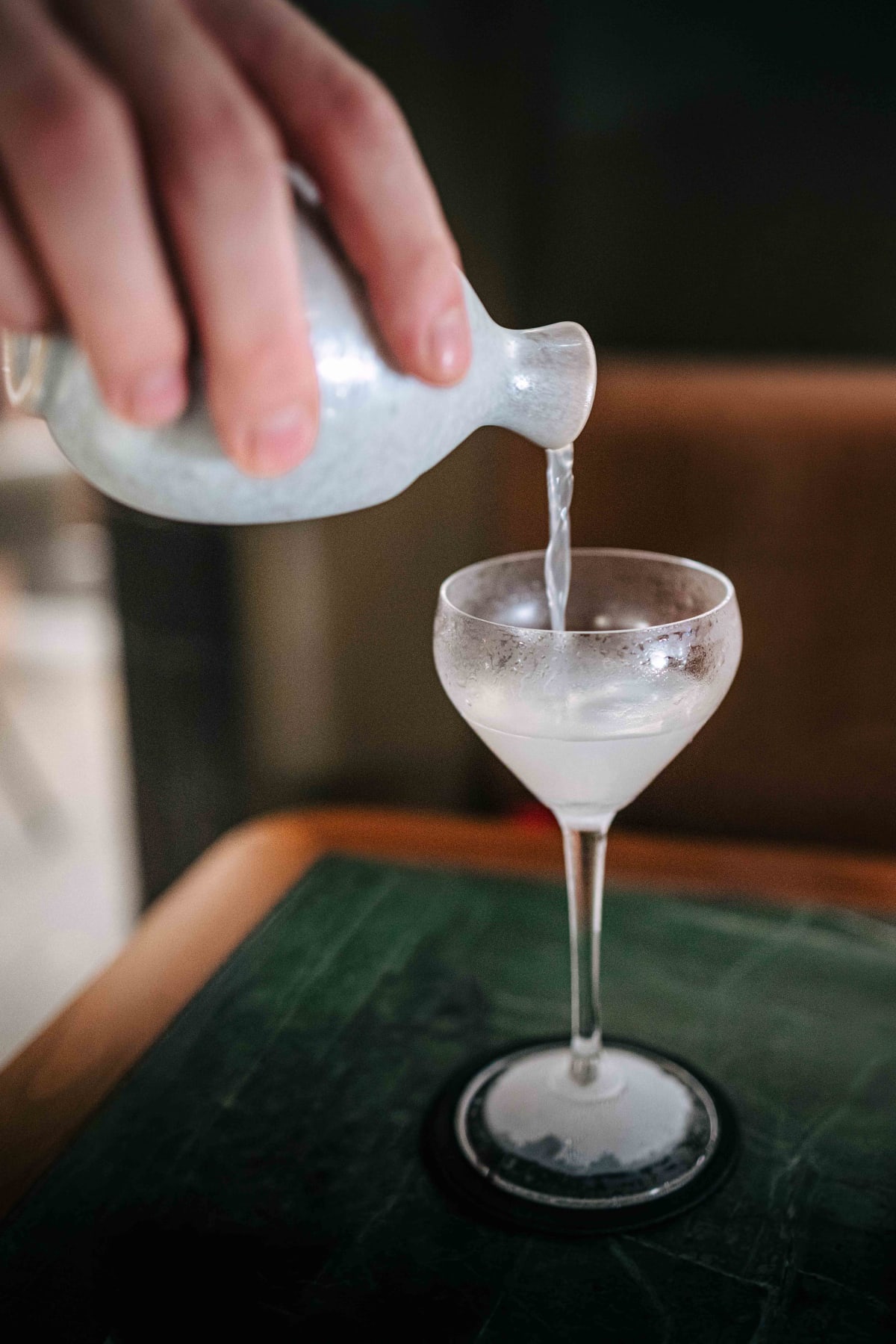
The yuzu liqueur is Tsuru-Ume Yuzu from Heiwa Shuzo in Wakayama. The crane in the name comes from the symbol carried in the brewery's own name, which means peace, and the plum from the region's fame for ume. The proportion of yuzu juice is high so the acidity leads with sweetness behind it, which means it does not cut against a dessert like a lemon tart where acidity comes first.
Section 14·Sweets Of The Sea
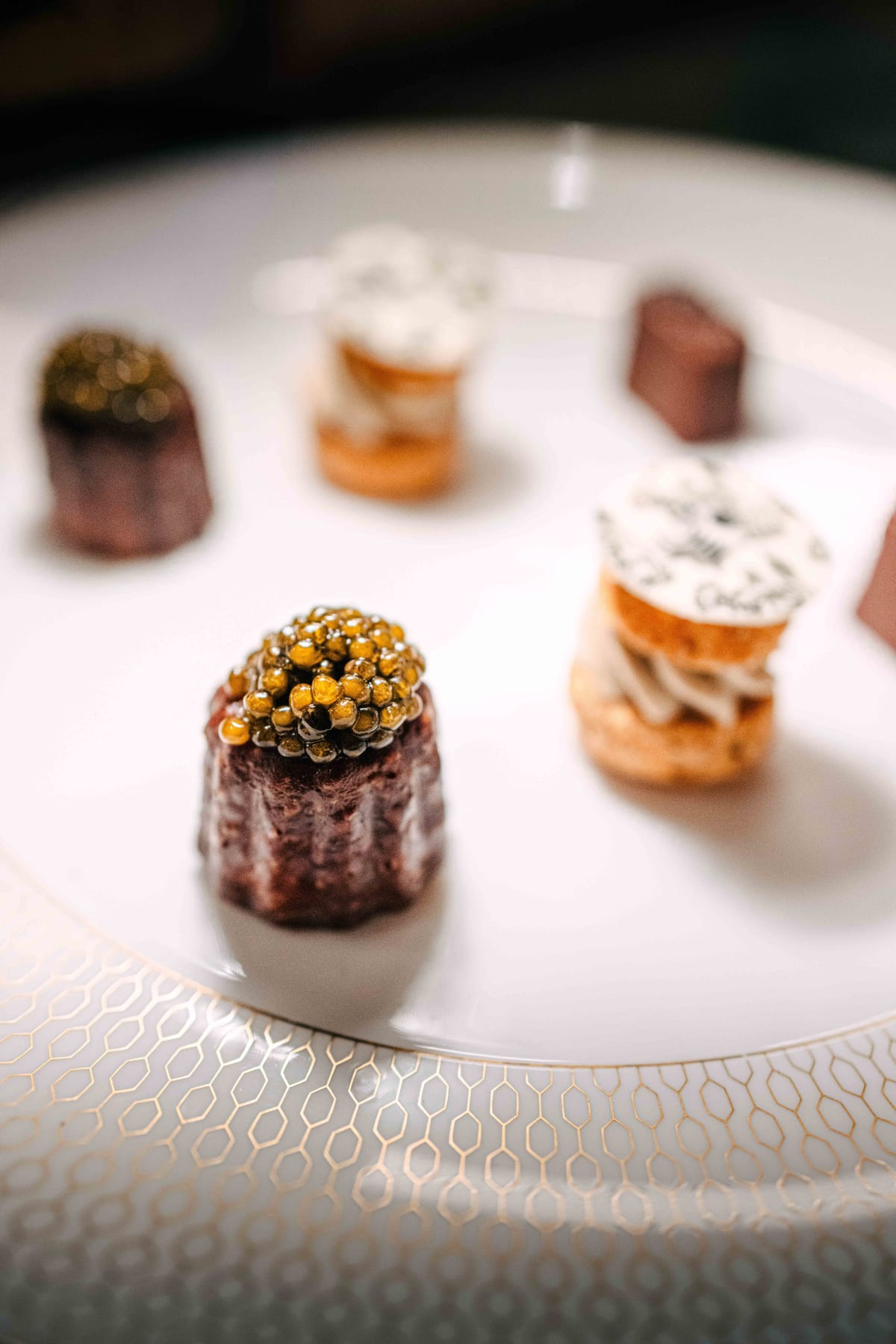
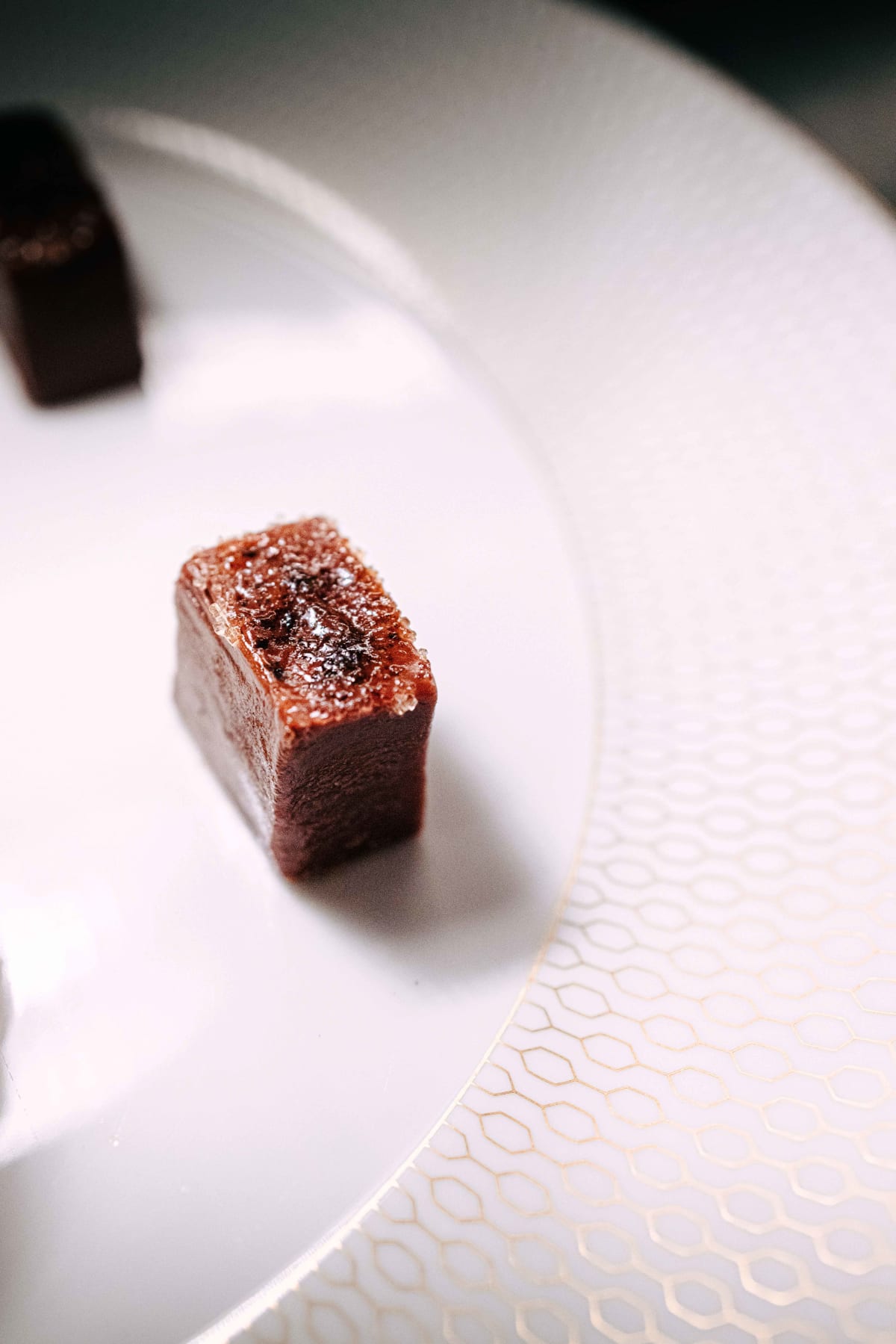
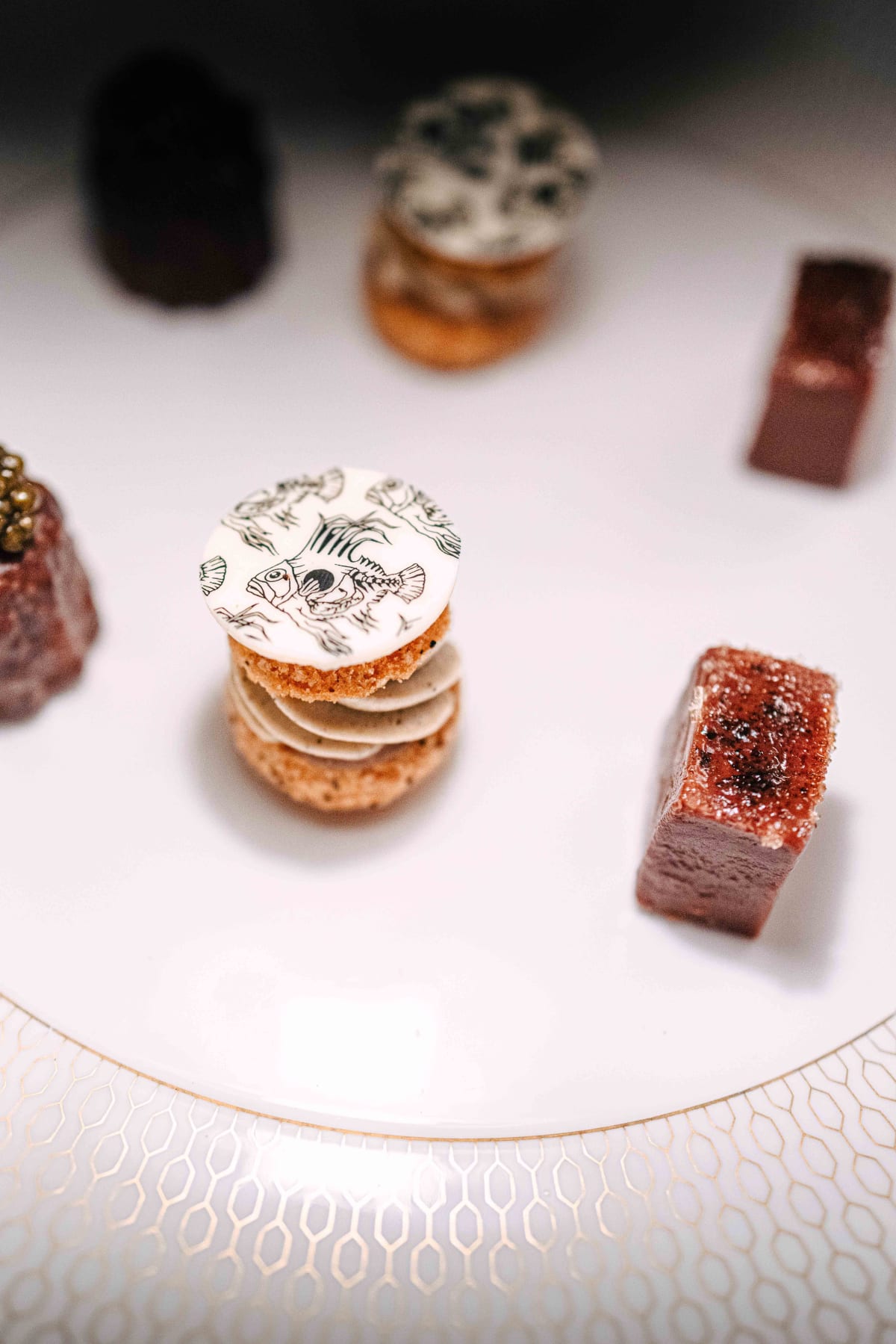
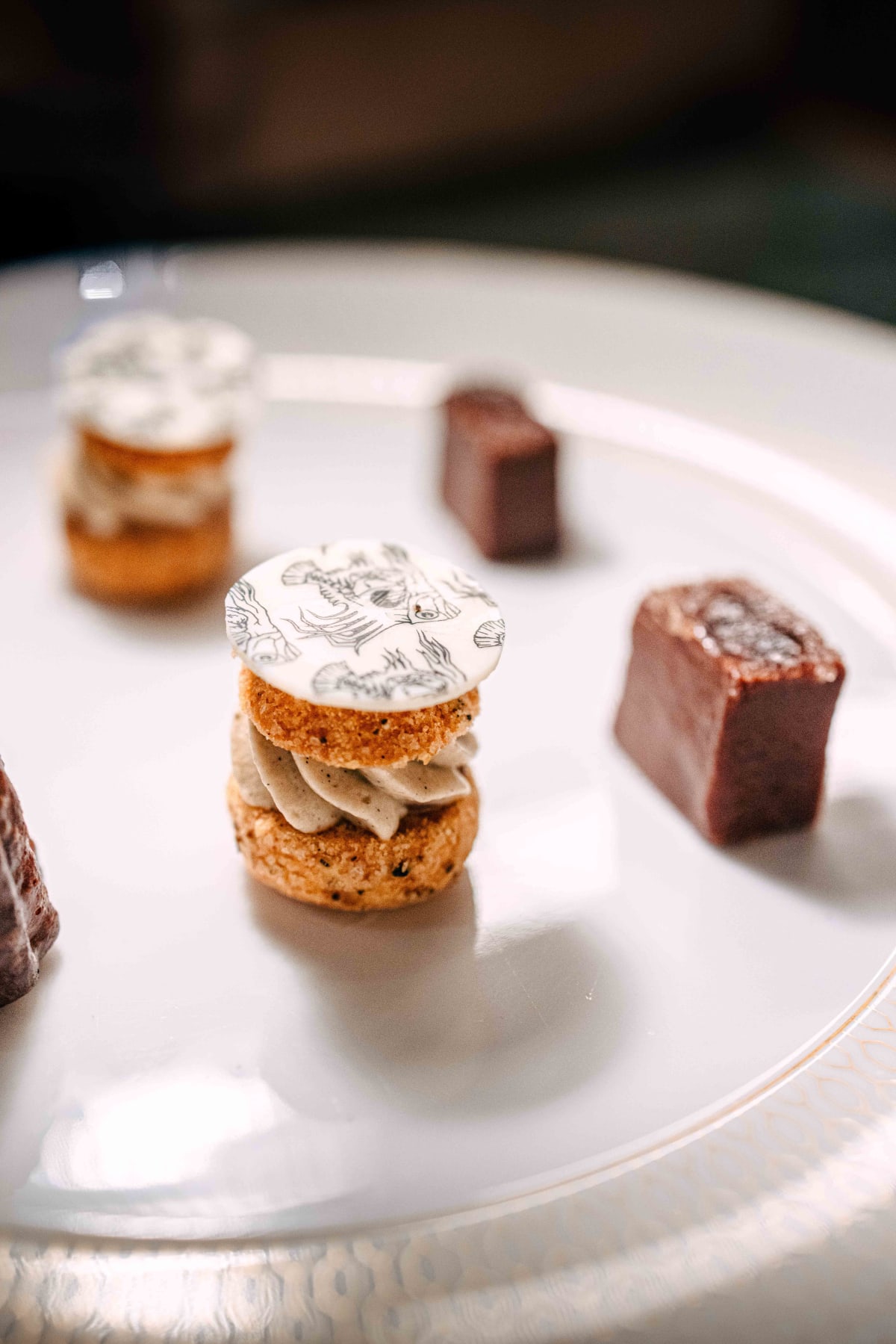
Last came petit fours called Sweets of the Sea, and they were of a very high standard. One was a canelé with caviar on top. I have never seen caviar placed on a final petit four. The canelé and caviar combination I could not quite make sense of.
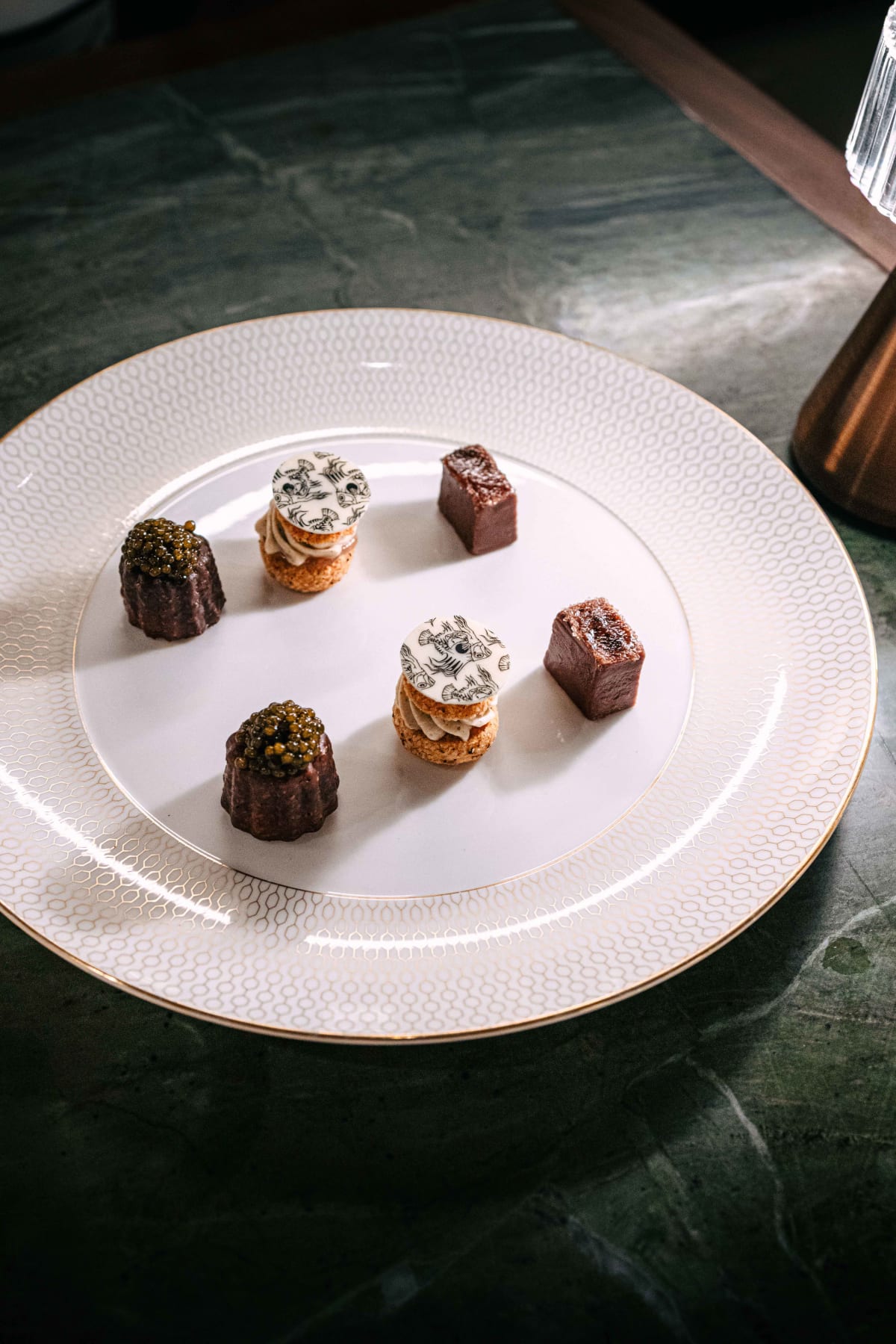
Of the other two, one was a choux with a fish eye drawn on it holding custard and fig jam, and the other was a truly unusual dessert, a dark chocolate using tuna bone marrow. It was described as a formidable chocolate, though I did not feel the character of the material as much as I expected. All three were faultless and good.
And so the course at Saint Peter closed.
For anyone who loves seafood as much as I do and wants to taste a range of attempts, this is a restaurant worth coming to once. Unlike Attica, which disappointed me on flavour, this kept the character of the seafood while also landing some direct pleasure, and I came away satisfied.
That said, some dishes carry the funky fish aroma you get from gwamegi, so anyone who struggles with gwamegi or aged oily fish may find it hard going.
Still, for anyone who feels they should get a bit of meat between their teeth, or who says novelty is not the point and they just want something that tastes good first, it could be a challenging experience.
Section 15·What Changed
But if you want to taste the novelty of realising how far fish can be pushed, it is worth crossing over to Paddington for a day on a Sydney trip.
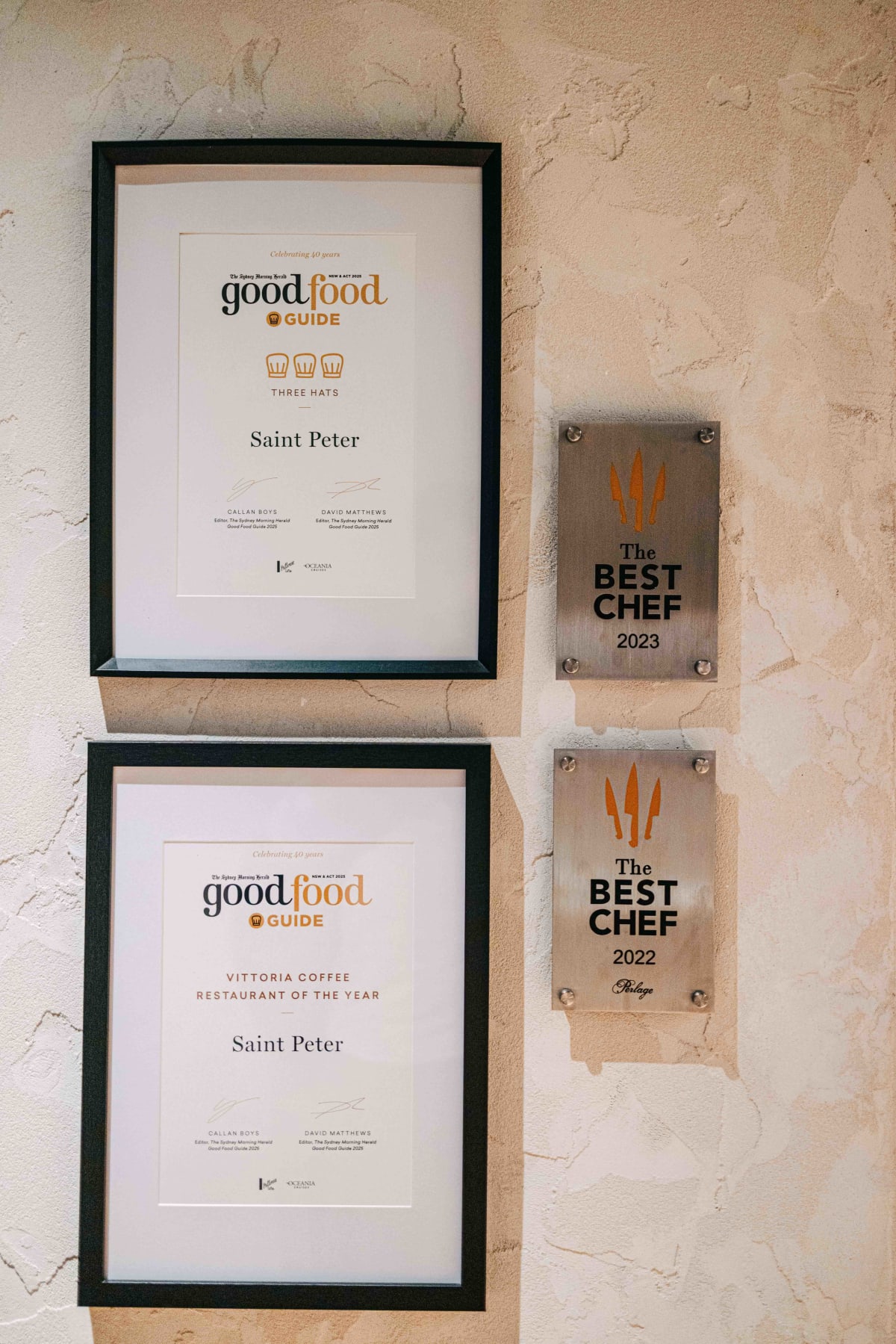
To finish, the current standing of this house. On the World's 50 Best Restaurants list it entered the top hundred for the first time at ninety eight in 2024 and rose to sixty six in 2025. 50 Best described Saint Peter as a restaurant leading an actual movement. At home, Gourmet Traveller named it Restaurant of the Year for 2025 along with the New South Wales state award, and in the Sydney Morning Herald Good Food Guide 2026 it holds the top rank of three hats. Michelin has not come to Australia, so the hat is the working standard.
Niland published The Whole Fish Cookbook in 2019, opening his philosophy and his system to the profession, and it took both Book of the Year and the Restaurant and Professional category at the James Beard Foundation in 2020. Take One Fish and Fish Butchery extended the theory afterwards. Saint Peter matters internationally not because it is a good seafood restaurant. It is because it replaced the standard thinking, buy a good fish and cook it perfectly, with buy the whole animal, store and age it, break it down, find the character of each part, apply a different method to each. The core of this house is not that it reduced what gets thrown away but that it tried to turn what got thrown away into something delicious, and to build economic value out of it.
Sort the plates by what carried them and the pattern is clear. Everything that divided the table was a byproduct promoted to the headline: the liver pâté, the roe tart, the cured fish pinned in a row. Everything that read as merely competent was a fillet in the middle of a plate. This room is most itself exactly where it is hardest to like, which is a strange thing for a restaurant to be. The uneven rhythm is the bill for that. A menu assembled from twenty to forty parts of one animal cannot hold a single register, and the salt that pushed the calamari past its wine is the same instinct that made the roe tart the best thing on the table.

Have a question about this restaurant, or want to share your own experience?
Send a message