Fine Dining · Paris · France / August 2022 / Michelin ★ · World's 50 Best #15 (2019)
Septime
"The bistronomie landmark of eastern Paris, where technique and natural wine matter more than formality"
Section 1·A Delayed Review
A few days ago, a piece of news reached me that brought shock and grief and, at the same time, a memory from roughly four years back. Bertrand Grébaut, the chef of Septime in Paris, had died after a long battle with cancer. Septime is impossible to leave out of any account of the Paris dining scene, but in my own personal history with food it is even harder to omit, and so I am finally setting down this much-delayed review. My serious interest in food arrived in 2020, but COVID-19 kept my eating mostly domestic. By around the summer of 2022, as conditions eased and distancing rules lifted, international travel became possible again, and I took the first trip of my life devoted solely to food, to Europe. The destination was Paris, the home and mecca of Michelin. Among the many legendary and trendy restaurants I deliberated over where to go, and I chose Septime as the first stop: for a first-time visitor it felt a little lighter while still being unquestionably worth the trip. It was a name I had known even before I cared about food, and from the moment I booked the flights I had resolved to secure a reservation.
Section 2·The Reservation
The reservation was the problem. Paris's famous restaurants are, on the whole, not as hard to book as their counterparts in Korea or Japan, but Septime is a distinct exception. Seats vanish within seconds. Bookings open each day at 10 a.m. for three weeks out, which is 4 p.m. Korean time, or 5 p.m. during daylight saving. The odd part is that it does not open on the hour but with a random delay of five to ten minutes. In the end, calculating the time difference and running two rehearsals, I barely managed to land a dinner seat. Full of anticipation, I got through that day's lunch on only a few desserts and a coffee and arrived hungry. This is how my first French, and first European, Michelin-starred restaurant visit began, with Septime.
Section 3·A New Grammar
To understand Septime properly you have to start with the movement it belongs to: bistronomie, or the néo-bistrot. The word joins bistro and gastronomie, and the idea is to deliver fine-dining-level technique and top-grade produce not in a formal, large restaurant but in a relaxed bistro setting at a far more reasonable price. The usual starting point is 1992, the year the chef Yves Camdeborde walked out of the kitchen of the two-star Hôtel de Crillon and opened a small bistro, La Régalade, in the 14th arrondissement. The word bistronomie itself was coined only around 2004, by the food journalist Sébastien Demorand. Stripping out the cost of running a lavish dining room and pouring that money entirely into ingredients and technique, and promoting vegetables from a supporting role to the lead, is the heart of the movement. And it reshaped the very geography of Paris dining. High-end dining in Paris had centered on the classic large restaurants of the west, but as these young, free-minded chefs' places spread through the east, and the 11th arrondissement in particular, the center of gravity shifted eastward.
Within this movement, Le Chateaubriand came before Septime. Opened in 2006 by Iñaki Aizpitarte and Fred Peneau, also in the 11th, it is regarded as the first of what would come to be called the néo-bistrot. A single menu that changed daily, natural wine, the practice of naming producers directly, and service closer to sincerity than to formality all took hold here as a new grammar. Septime is the most important arrival of the generation after Chateaubriand. Grébaut and his partner have said, in fact, that the place they dreamed of was something like Chateaubriand: somewhere you could go easily with friends, eat high-level plates, and drink natural wine while keeping the mood loose. The character is a little different, though. Where Chateaubriand shook up the order of Paris dining in a rough, improvisational way, Septime is closer to a finished form, connecting that freedom to restrained taste, product-centricity, sustainability, service polish, and even a global ranking. Le Monde too described Septime as a place that binds the looseness of the bistro to the rigor of gastronomie, and judged that within fifteen years of opening it had become one of the most influential symbols of modern French cooking.
Where Chateaubriand shook up the order of Paris dining in a rough, improvisational way, Septime is closer to a finished form, connecting that freedom to restrained taste, product-centricity, sustainability, service polish, and even a global ranking.
Section 4·The Chef
Chef Bertrand Grébaut's career is unusual from the start. Born in Paris in 1981, he was absorbed in graffiti as a teenager and worked as a graphic designer. In his early twenties he overturned his life, entered the prestigious Paris cooking school Ferrandi, and graduated at the top of his class in 2006. He then passed through Marius et Janette and La Table de Joël Robuchon before reaching Alain Passard's L'Arpège, where the roots of his cooking, its emphasis on vegetables, season, and intuition, were formed. Next, as chef at L'Agapé in the 17th, he received a Michelin star in 2009, before he had turned thirty, one of the youngest starred chefs in France at the time. Then, after a trip through Asia, he opened the present Septime in 2011 with his partner Théophile Pourriat.
The name Septime has a slightly funny origin. It is taken from the restaurant in the Louis de Funès comedy Le Grand Restaurant, chosen for a feeling that was classic yet somehow slightly off, a little unfamiliar. Septime is more accurately seen not as Grébaut's work alone but as the work of the Grébaut-Pourriat duo. Pourriat, a school friend and former economist, took charge of the dining room and the wine selection. He is the one who organized the space, the service, the natural-wine list, and a hospitality that never tipped into excess. Septime grew beyond a simple chef's restaurant into a cultural space, and for a time its record was glittering too. After entering the World's 50 Best in 2013, it received a Michelin star the following year, in 2014, climbed as high as number fifteen in the world in 2019, and settled at number forty in 2025.
Section 5·Product and Nature
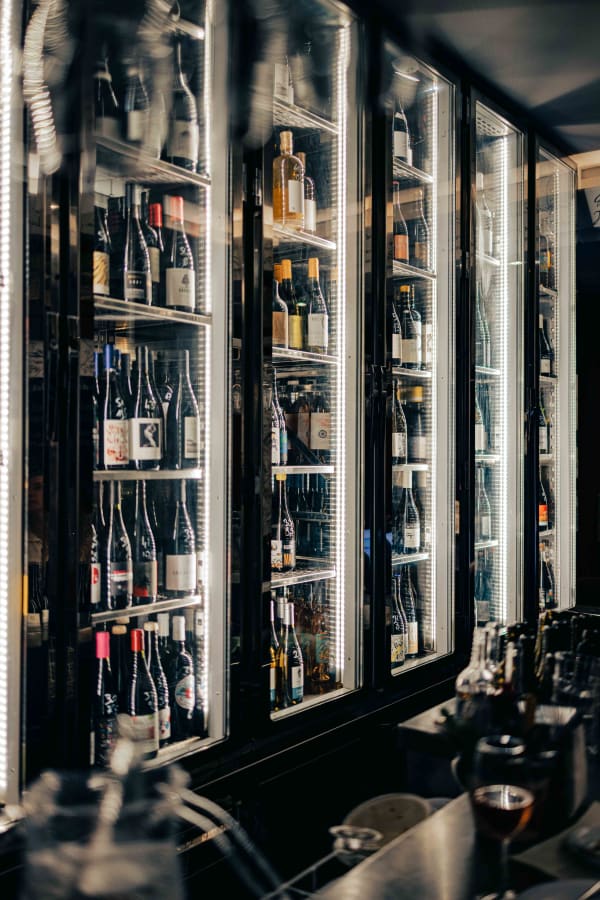
Septime is notable on sustainability as well. Ninety-nine percent of its ingredients are French; because of environmental burden and sourcing standards it takes seafood only from sustainable fishing on boats under twelve meters; and it pays attention to gender balance, with roughly half its kitchen staff women. The wine likewise expresses the identity of this movement: Septime's list carries symbolic natural-wine producers such as Ganevat and Overnoy-Houillon in numbers. And all of this expanded into a single ecosystem. Beginning with Septime in 2011, it extended to the natural-wine bar Septime La Cave and the seafood-focused Clamato in 2013, the Normandy guesthouse D'une Île in 2018, and the patisserie Tapisserie in 2021. The grain of the cooking can be summed up as seasonality, product-centricity, restrained creativity, and a plant-forward sensibility. Grébaut once explained, in an interview, that the menu is built according to the vegetables available now and that the plate speaks to the present state of nature. It was not purely improvisational, though; within the course he kept a structure that alternated reassuring plates with surprising ones.
The menu is built according to the vegetables available now, and the plate speaks to the present state of nature.
Section 6·The Room
The location is the 11th arrondissement, in Paris's northeast. I had not been to Paris much at the time, so I cannot say precisely, but it felt like a Yeonnam-dong or Mangwon sort of neighborhood.
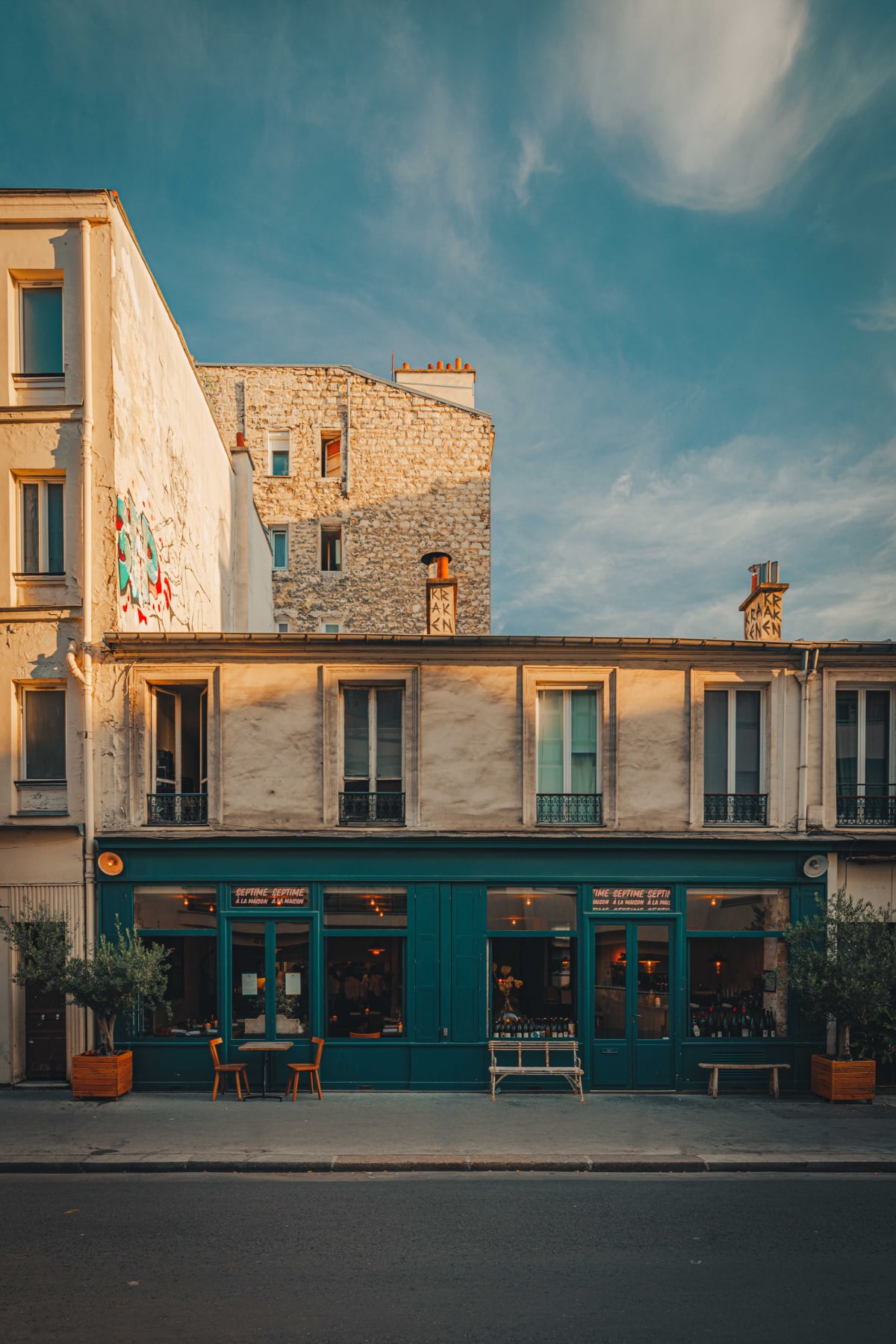
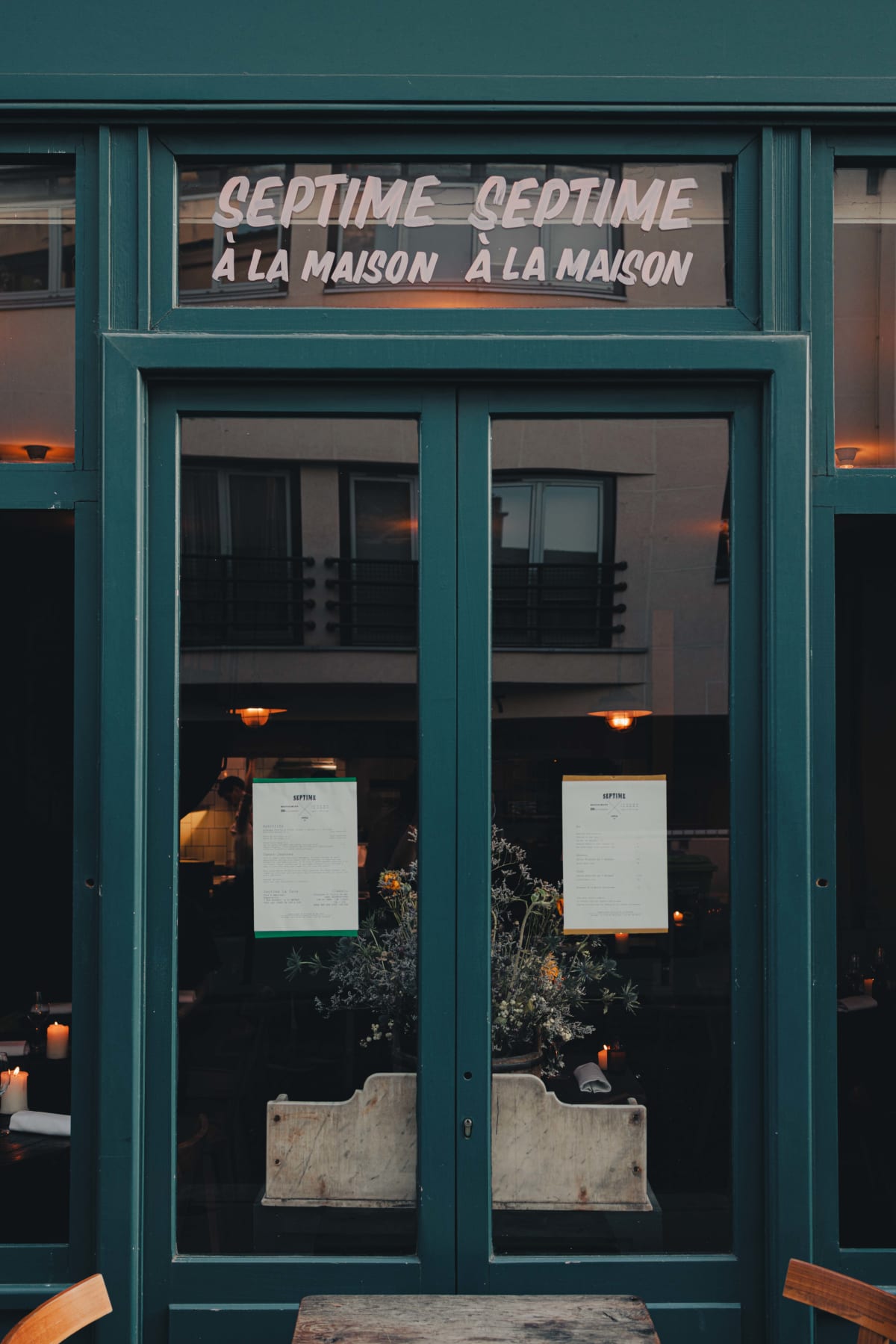
It is a typical Paris side-street shop: a deep teal wooden facade with "SEPTIME SEPTIME / À LA MAISON" in handwriting, olive trees in pots on either side of the entrance, that day's menu posted on the glass door, and, through the window, a bunch of wildflowers and a candle.
Inside, exposed concrete meets untreated wood-toned solid tables, iron industrial pendant lights, and an iron-framed glass partition dividing the open kitchen from the dining room, and I really liked this comfortable wood-toned atmosphere.
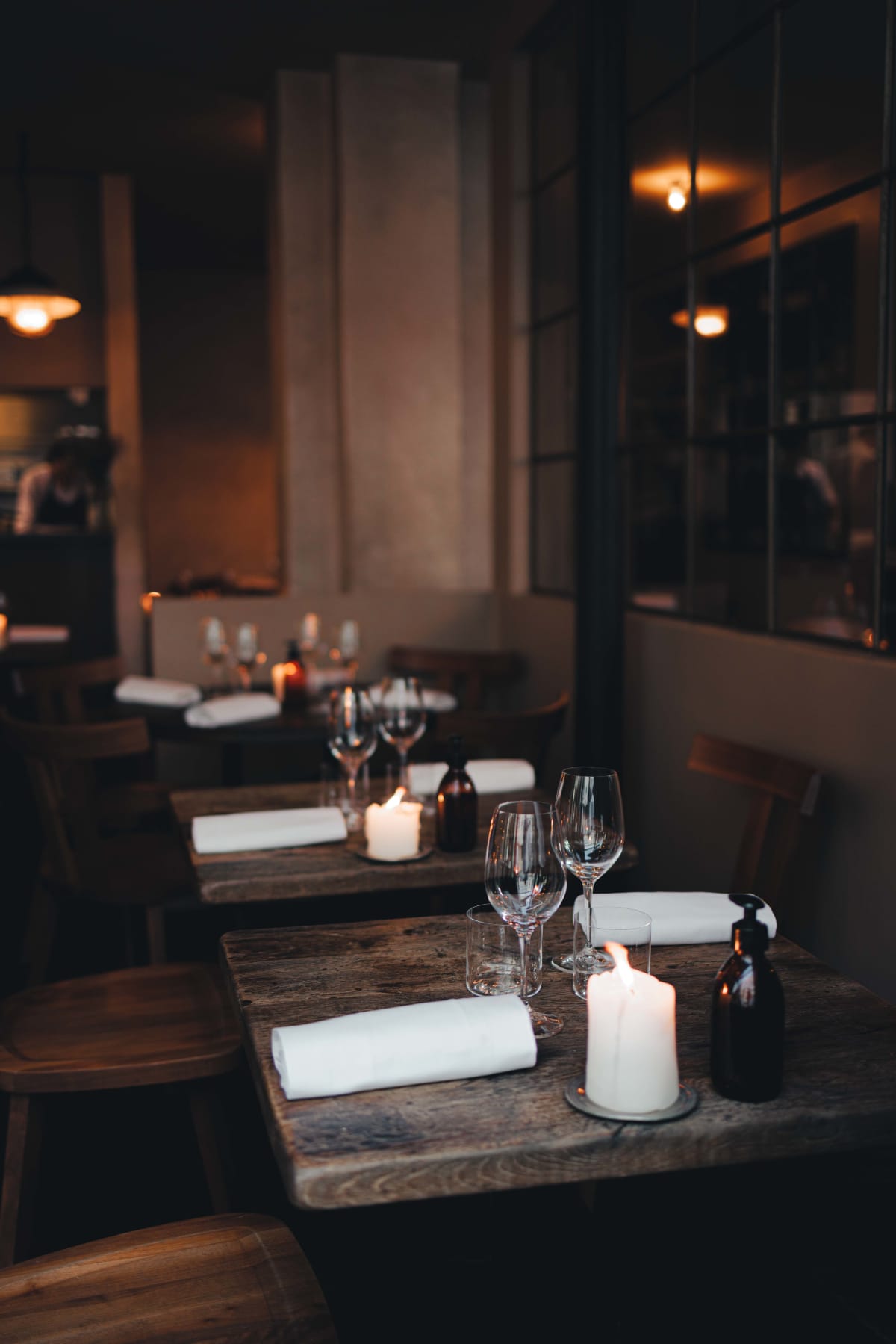
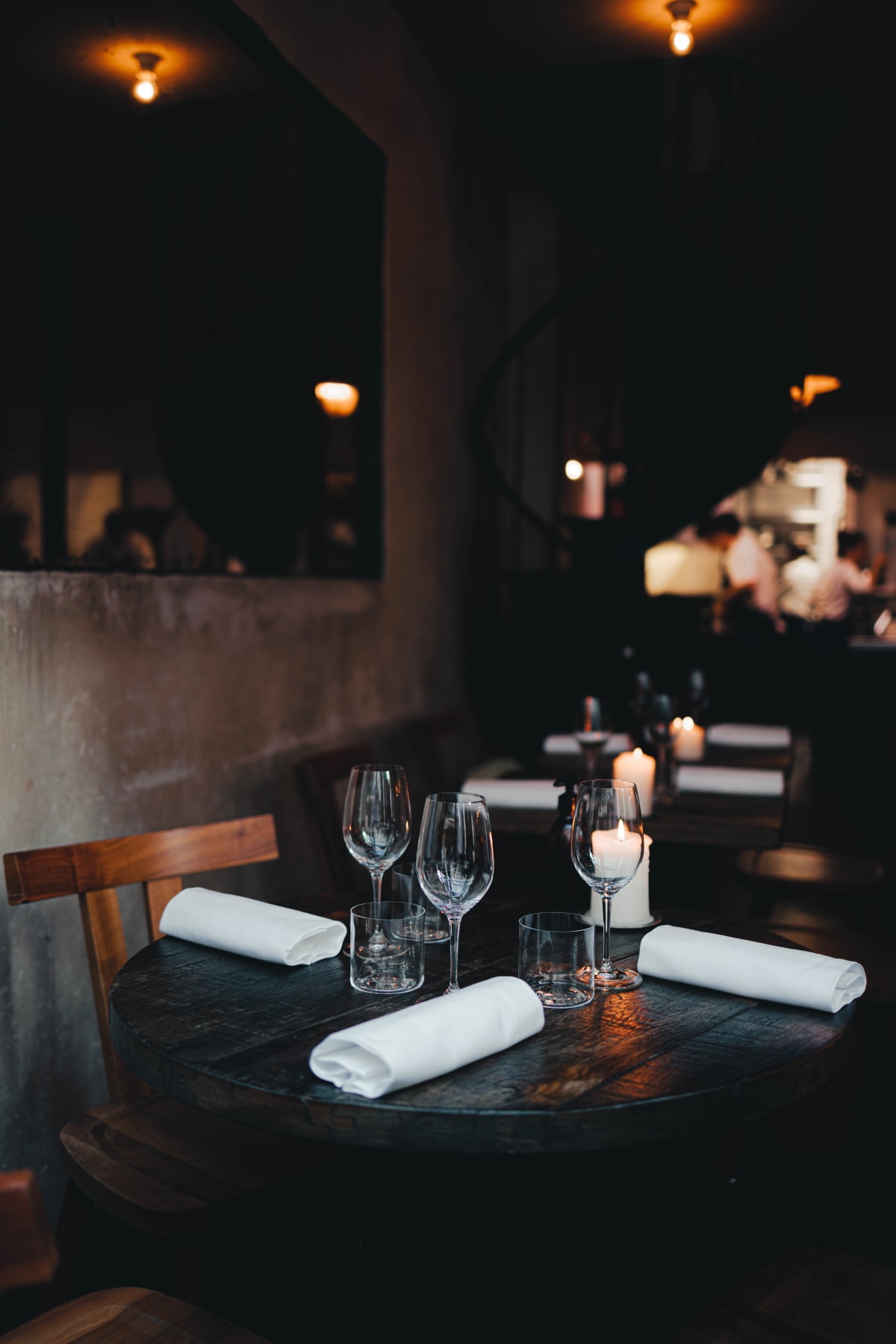
Each table held a brown glass bottle (olive oil and water), a candle, and a white napkin.
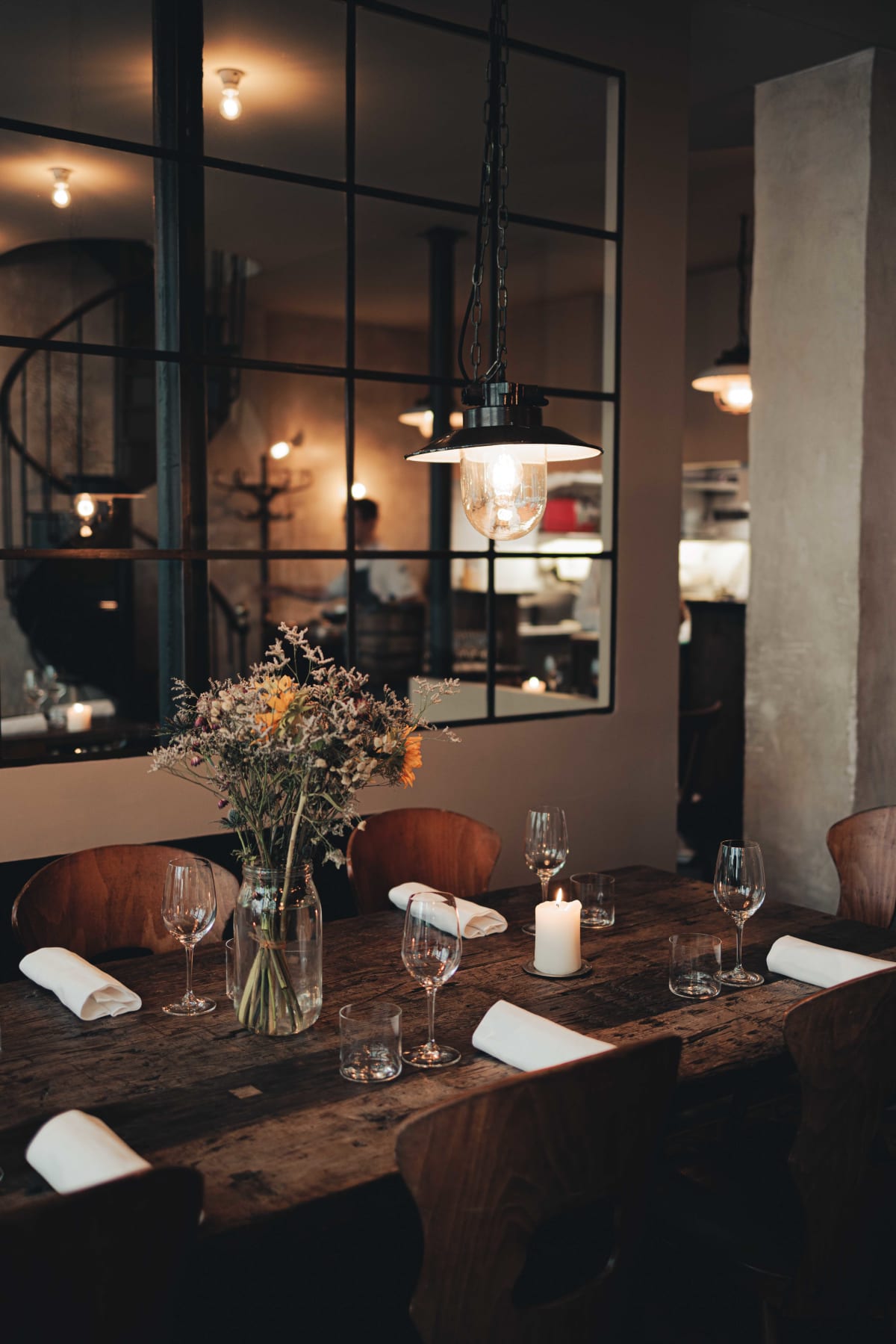
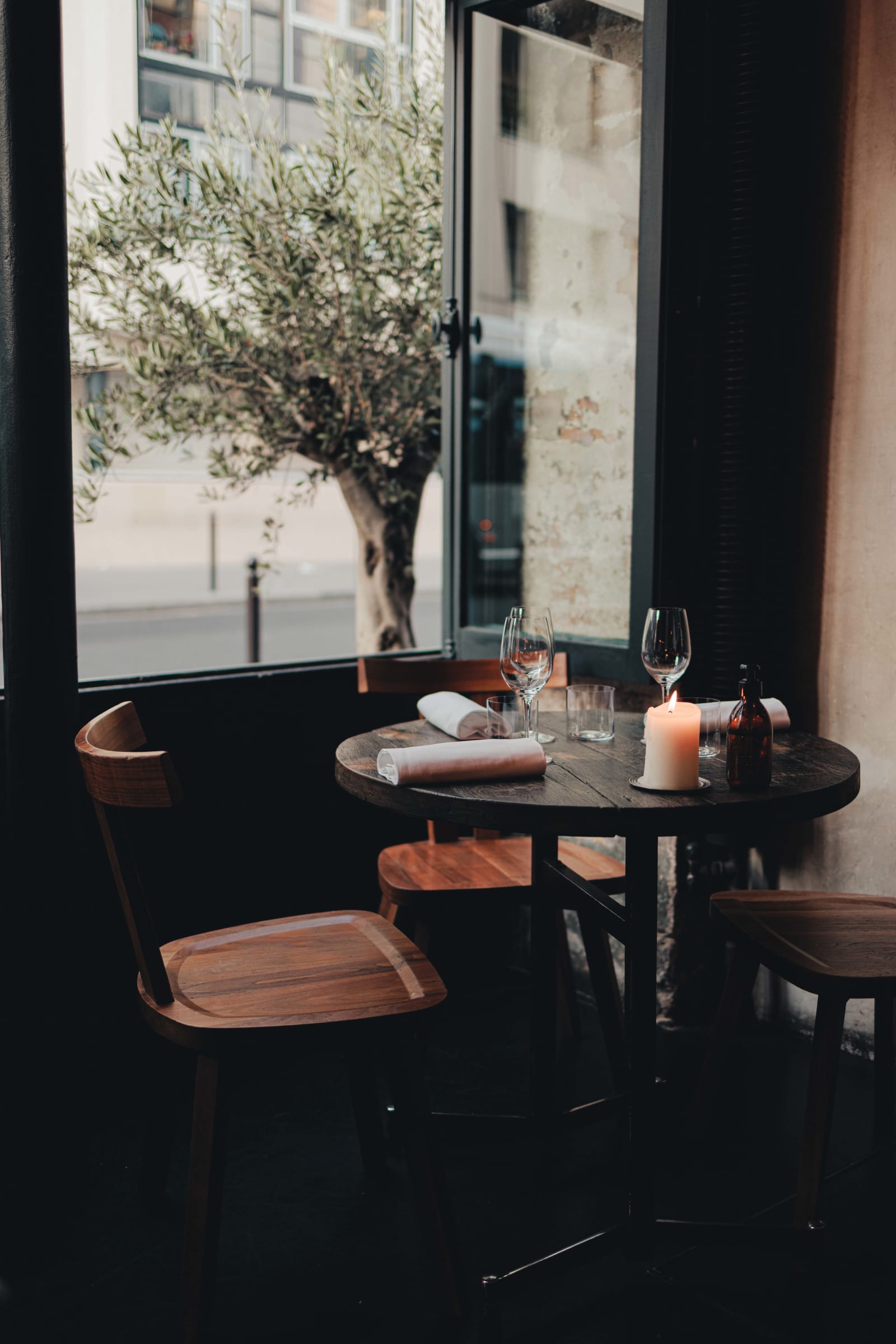
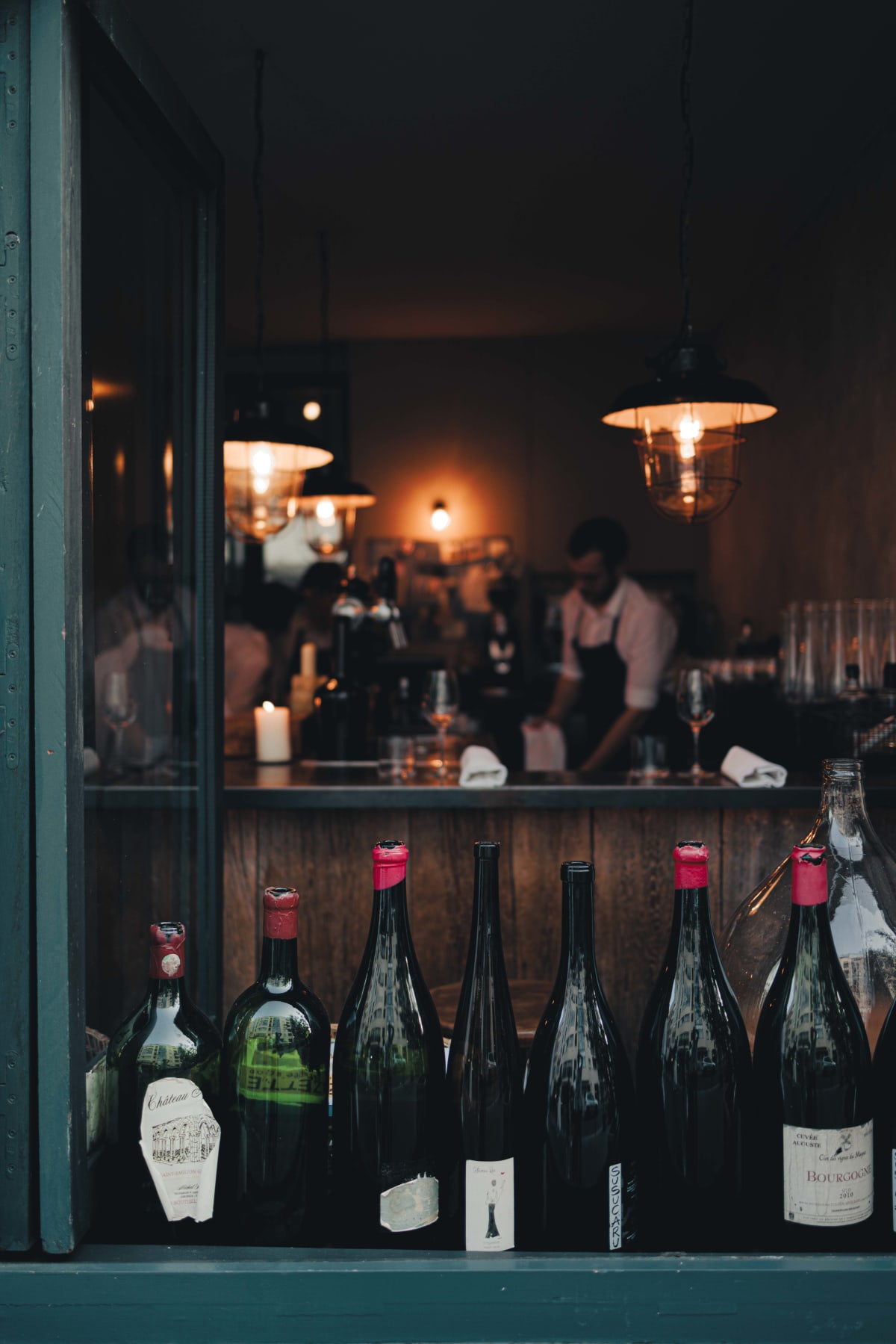
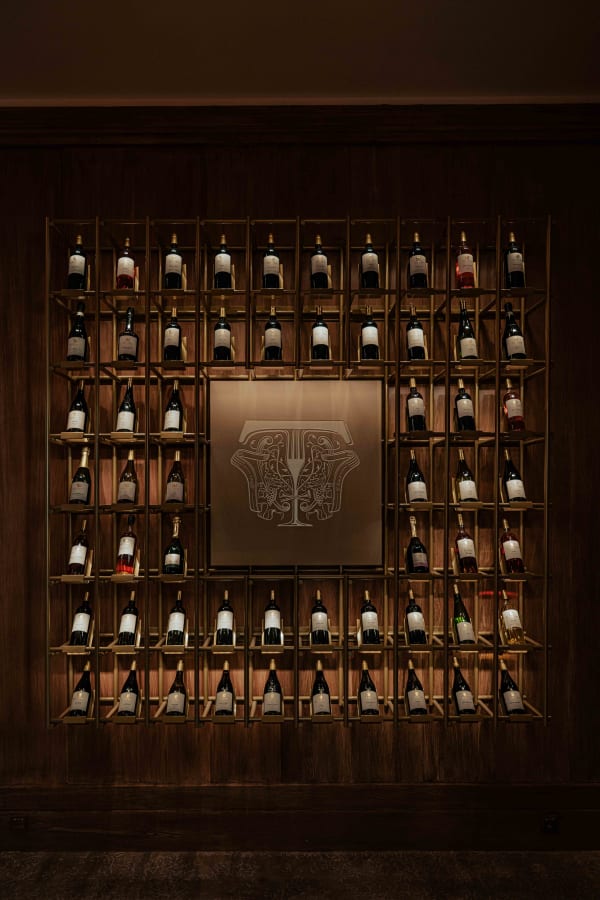
I arrived a little early and photographed the window seat, where the view of the street through the olive trees was especially lovely. On the window shelf stood large-format natural-wine bottles at magnum and jeroboam scale, among them one like the SUSUCARU from Sicily's Occhipinti.
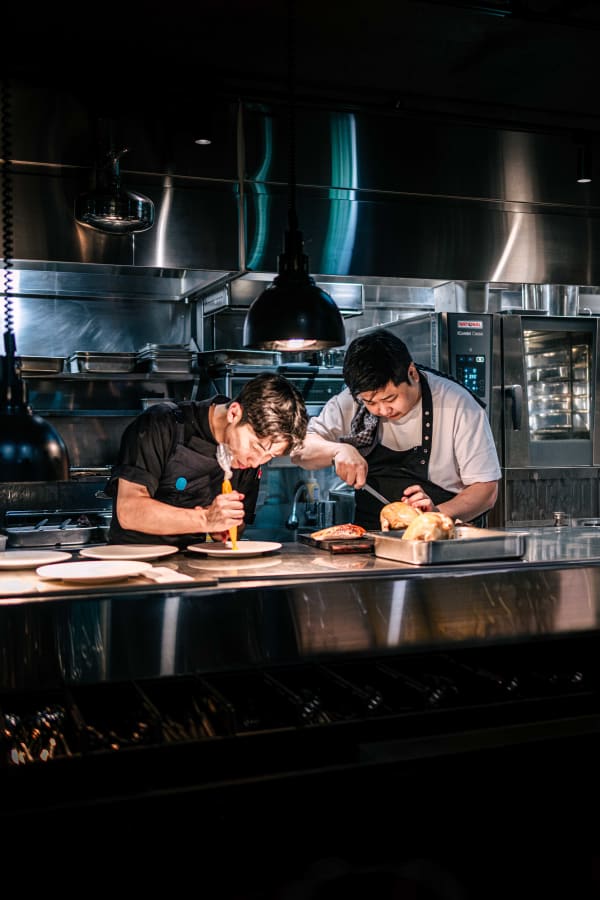
In the open kitchen the cooks moved busily, and there was an Asian cook among them.
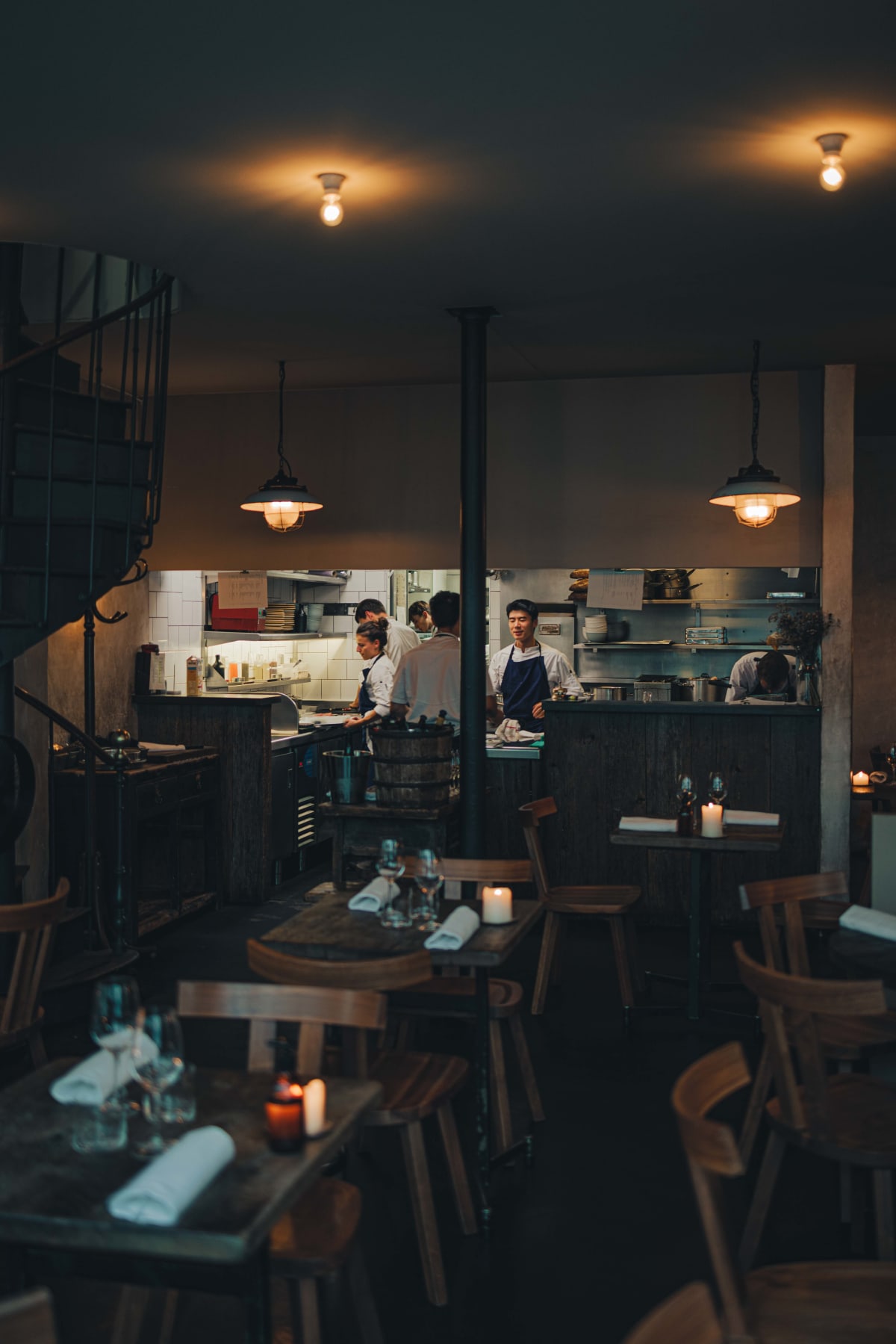
There were about ten tables, nearly all two-tops, so a party of three or more looked quite hard to book. The mood is unfussy and casual, and the food too leaned somewhat experimental with an Asian touch. Once seated, the menu was set for us as an evening course, and both my companion and I took the wine pairing. As it happened my companion that day was a researcher at the Sorbonne, so there was no trouble following the French explanations; if anything, having the servers explain in French left me the pleasure of reasoning out the dishes for myself.
Section 7·The Openings
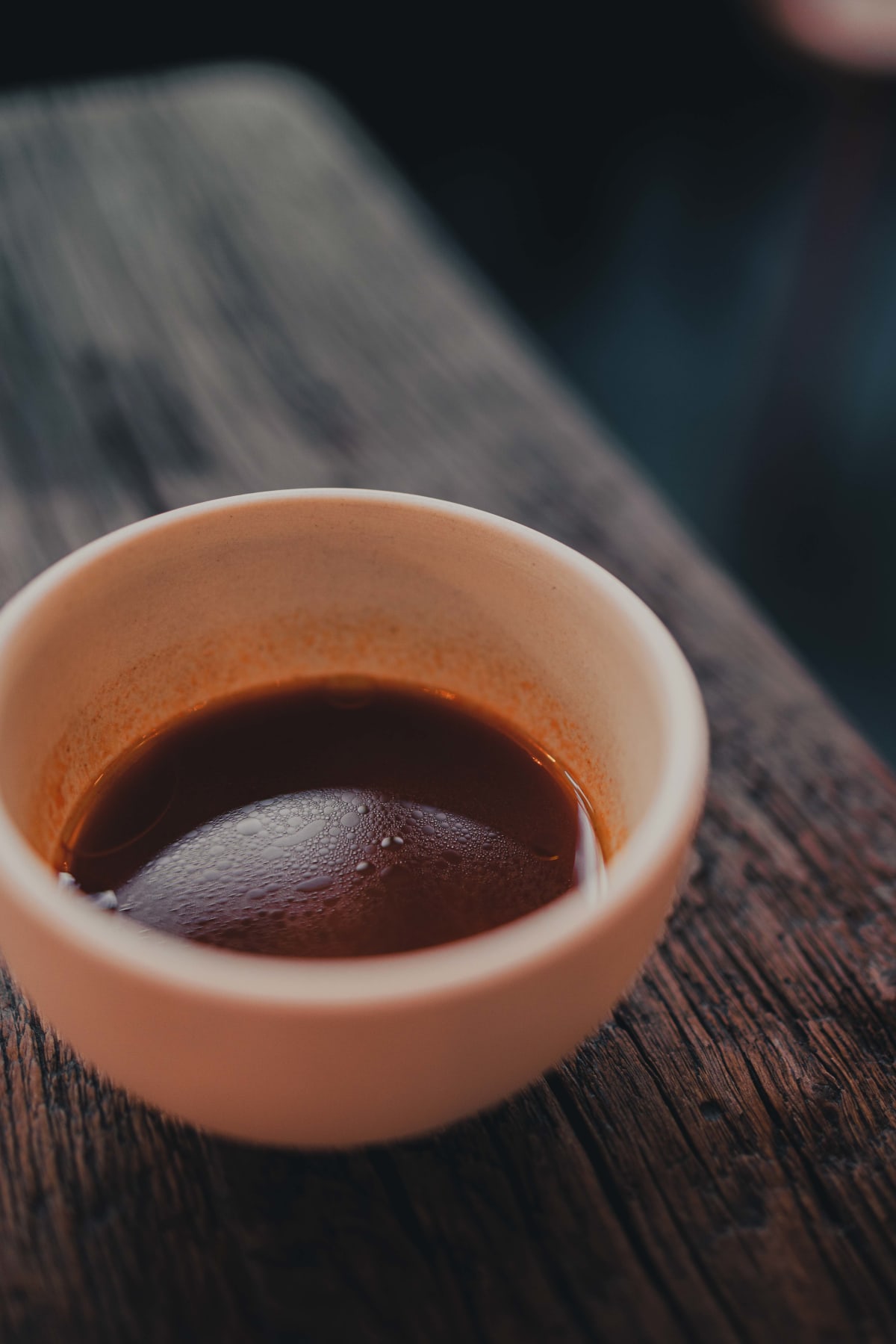
The opening was a consommé, red-tinged like a maeuntang broth. It came in a pale glass and seemed to taste of tomato. To my own palate, awkward as the comparison is, a maeuntang broth, the Korean spicy fish stew, suited me better.
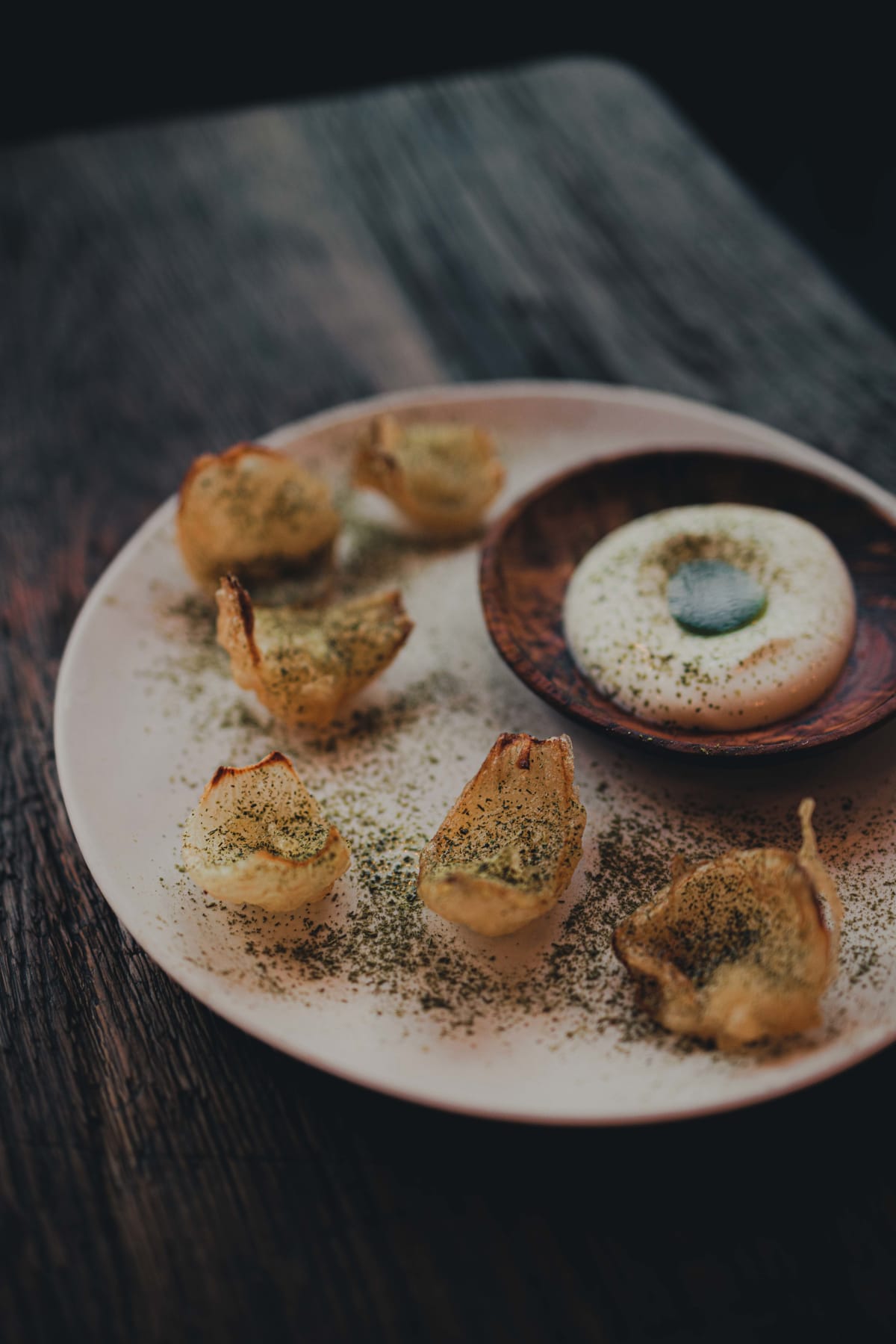
The course proper began with onion tempura.
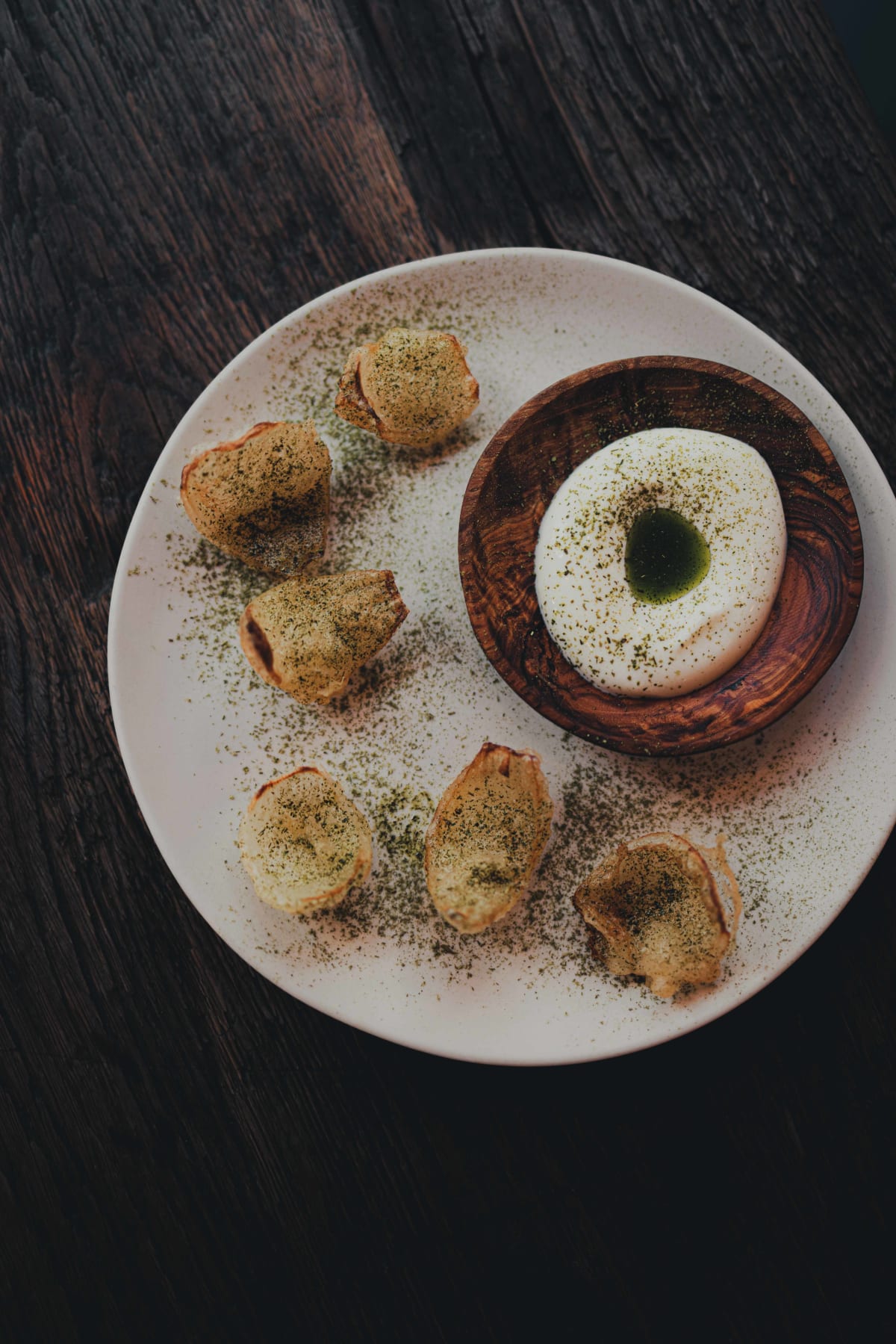
Thin slices of onion fried crisp and arranged in a ring on the plate, with a quenelle of yogurt sauce topped with green oil to one side. The sauce seemed to be yogurt, and the frying was good enough that I enjoyed it.
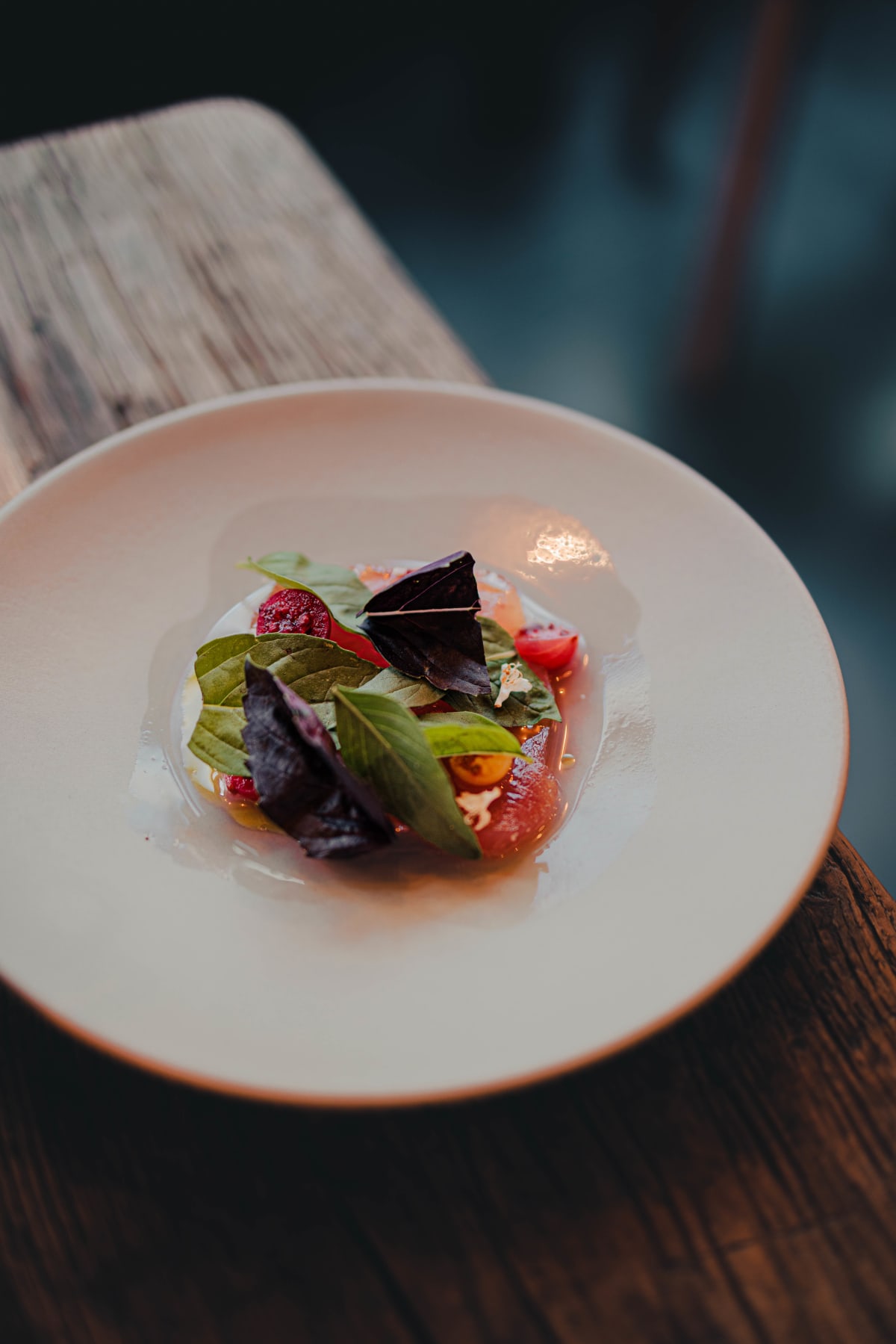
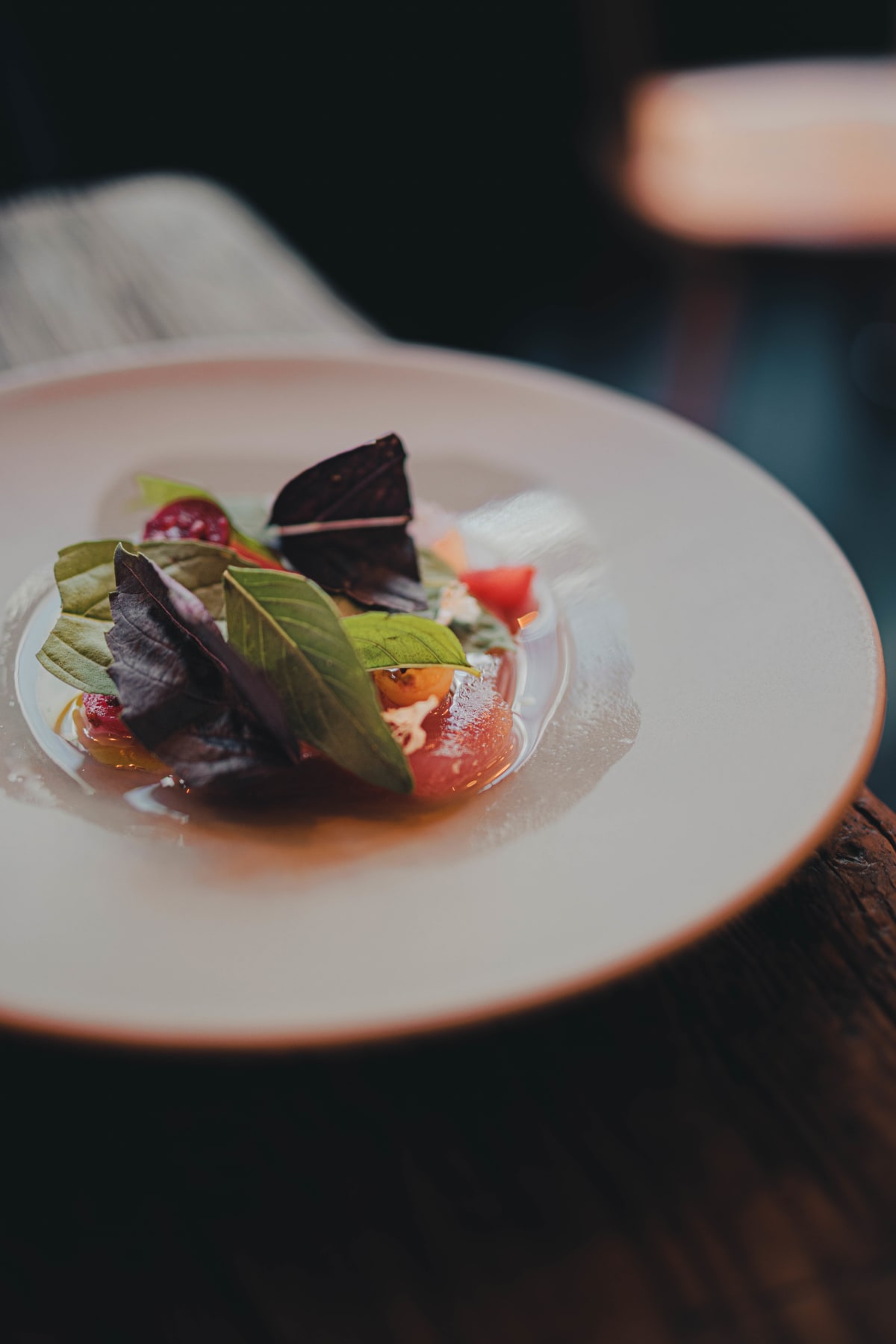
The second dish was a fish crudo with fruit, vegetables, and a bright sauce: green and purple basil leaves, cherry tomatoes, and a glistening dressing. My companion, whose French is conversational, listened to the explanation and told me it was salmon. To my eye it looked less like salmon than like an amberjack or a similar jack of the kind found in East Asia, but since the servers explained in French I could not confirm it exactly. In any case I enjoyed it, and the texture was a little firmer than the fish I usually eat.
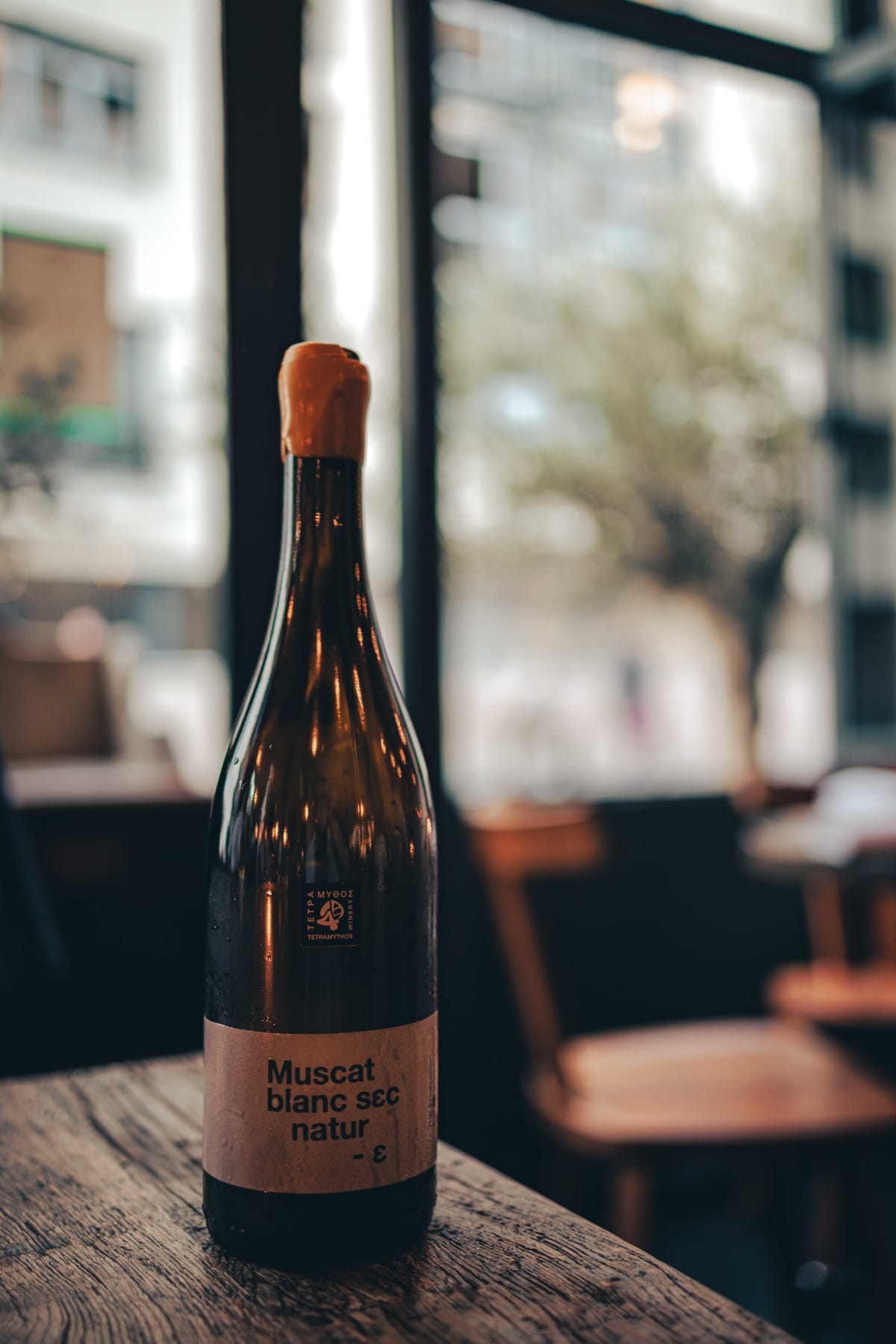
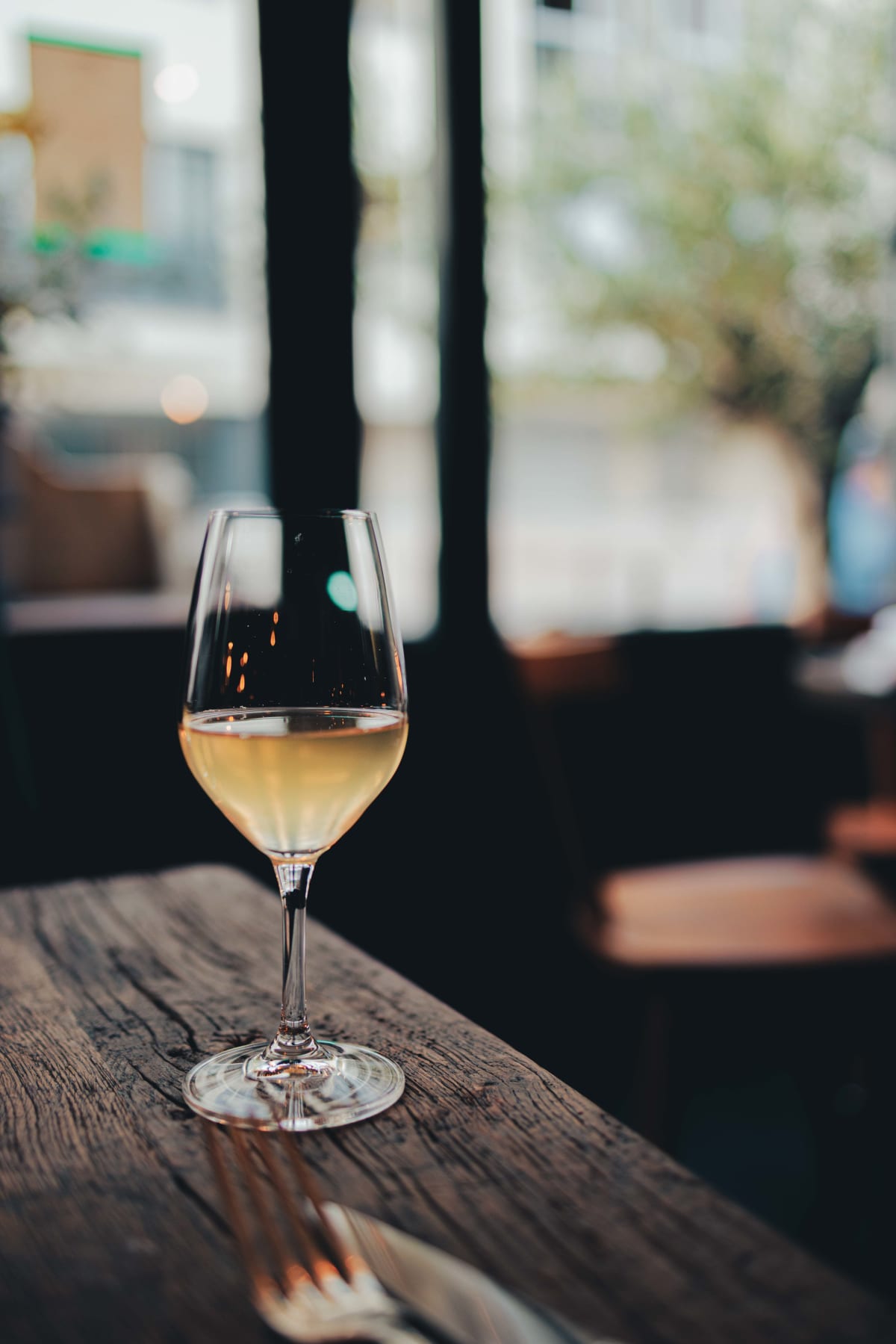
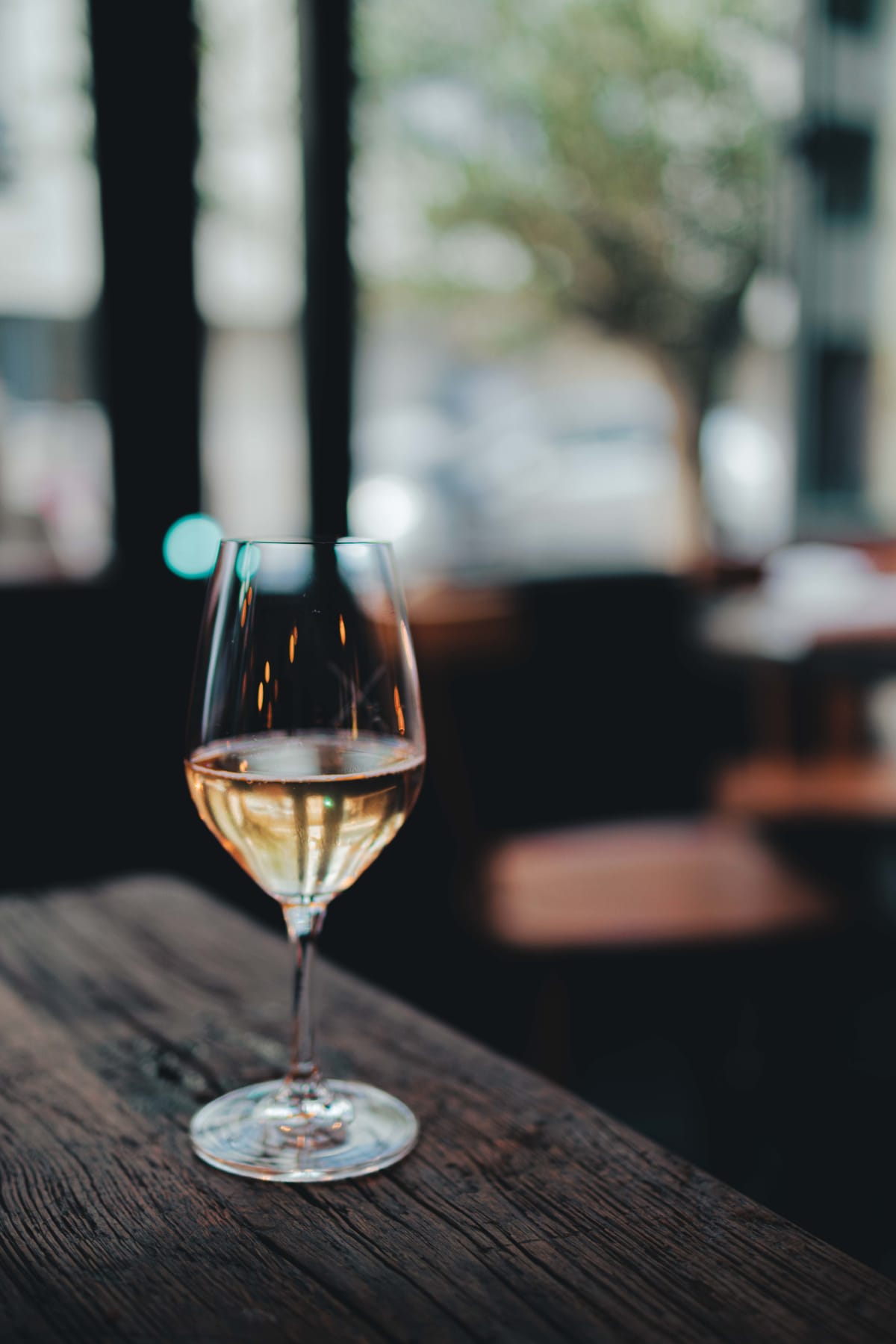
The evening's first wine arrived here, and the list seemed set almost entirely toward natural wine. The first glass was Tetramythos Muscat Blanc Sec Nature, from the Peloponnese in Greece: a natural white made from Muscat à petits grains grown organically at around 900 meters of altitude in the Kalavryta mountains, fermented with native yeasts and bottled without fining or filtration. Contrary to the assumption that Muscat is always sweet, its taut high-altitude acidity, minerality, and crystalline fruit were the character, and it went well with the bright early dishes. Privately on my Instagram story I compared it to getting a music playlist from a friend at the terminal stage of hipsterism and finding, against expectation, that all of it held up. The pairings here ran through producers, and regions, that one rarely sees. A high-altitude Greek natural Muscat as the opening glass of a Paris pairing is proof of that in itself. If you want an experience built on conventional French grand cru, an old, traditional Michelin address would serve you better.
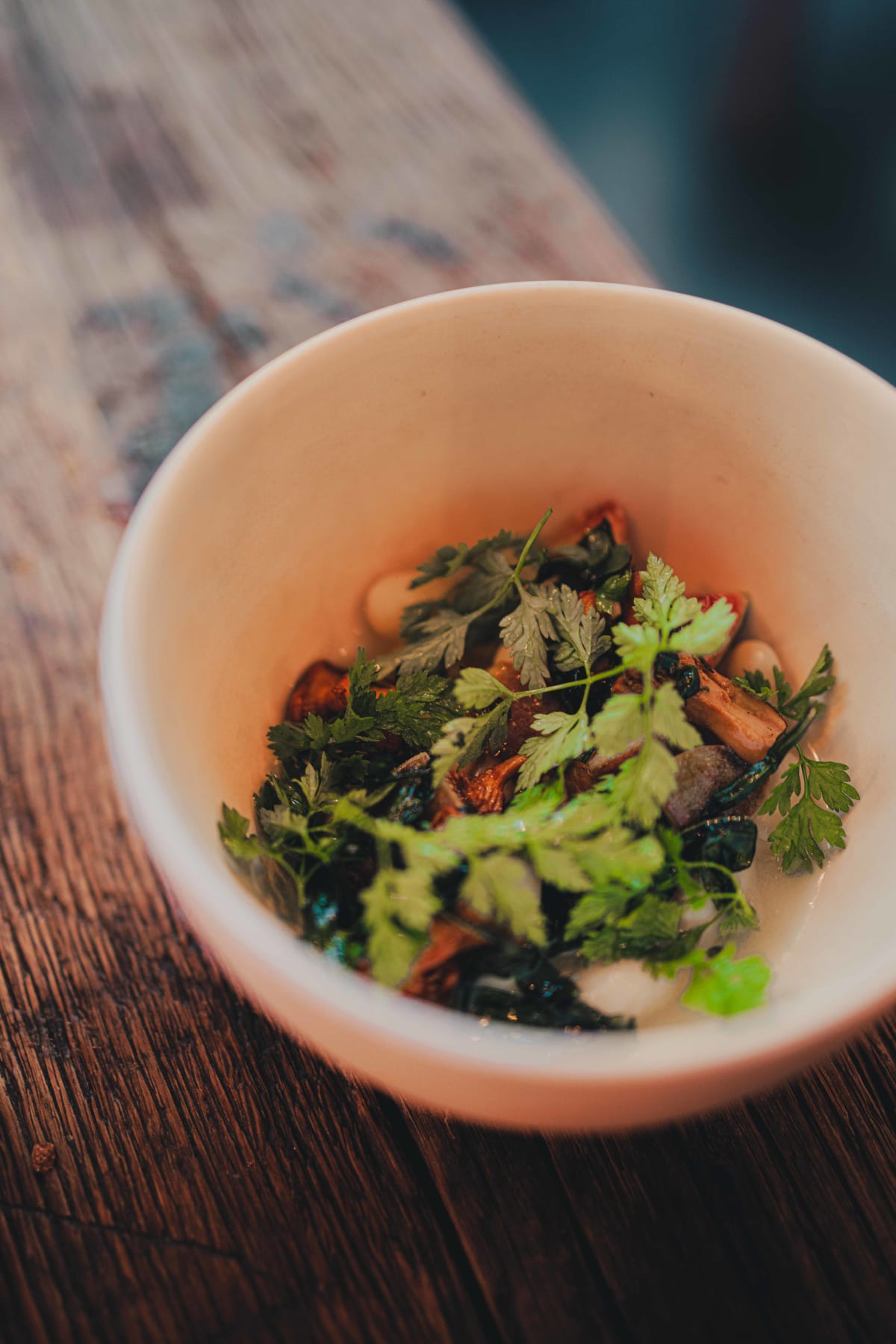
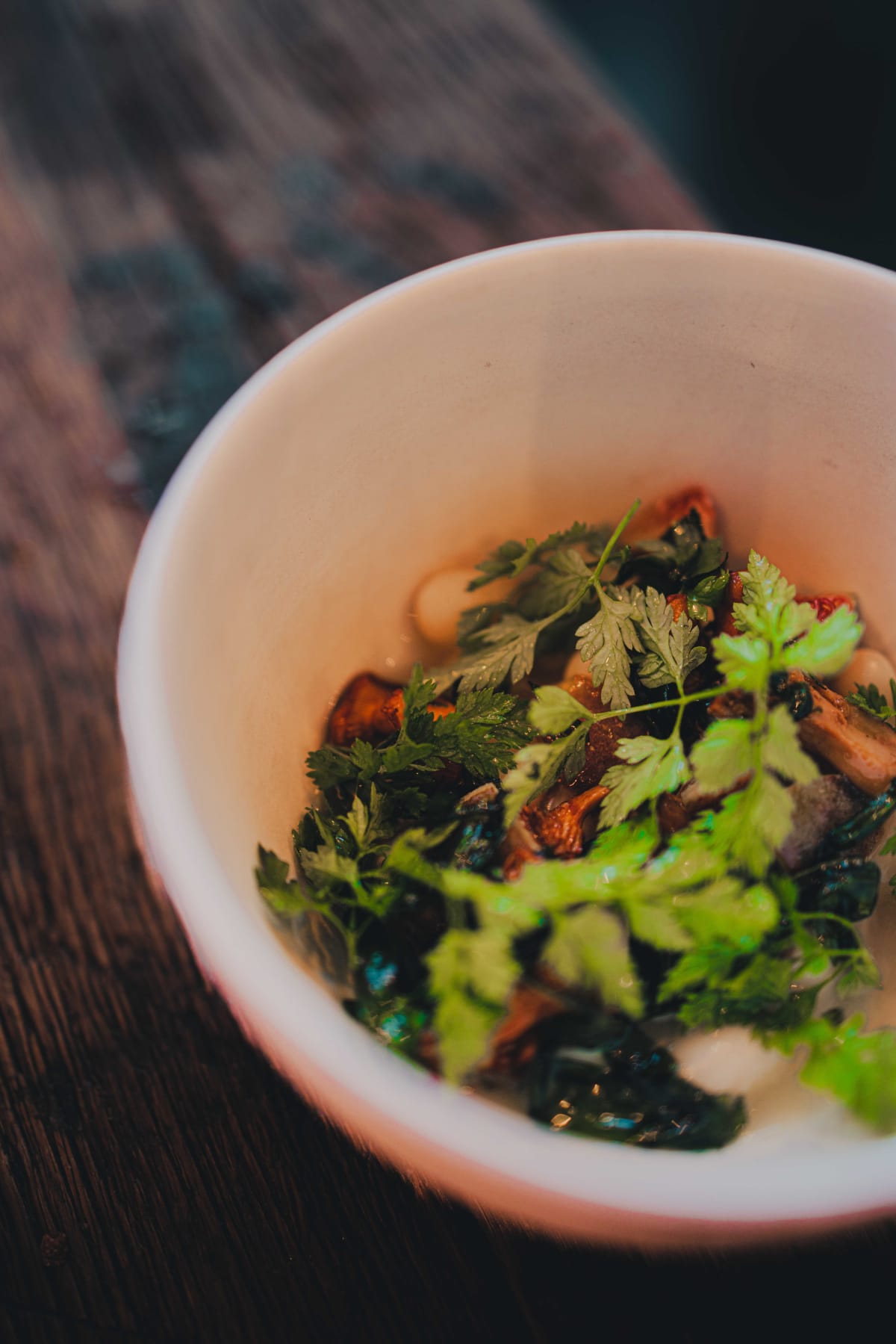
Next came a dish of long-simmered broth, like a beef gomtang, with beans, mushrooms, and other elements. It was built to offer a range of textures, but the other ingredients already supplied enough textural variety, and I wondered whether the beans could have been left out. They seemed to serve as the protein, but the texture of the beans did feel, at points, more like an obstruction.
Section 8·Into Red
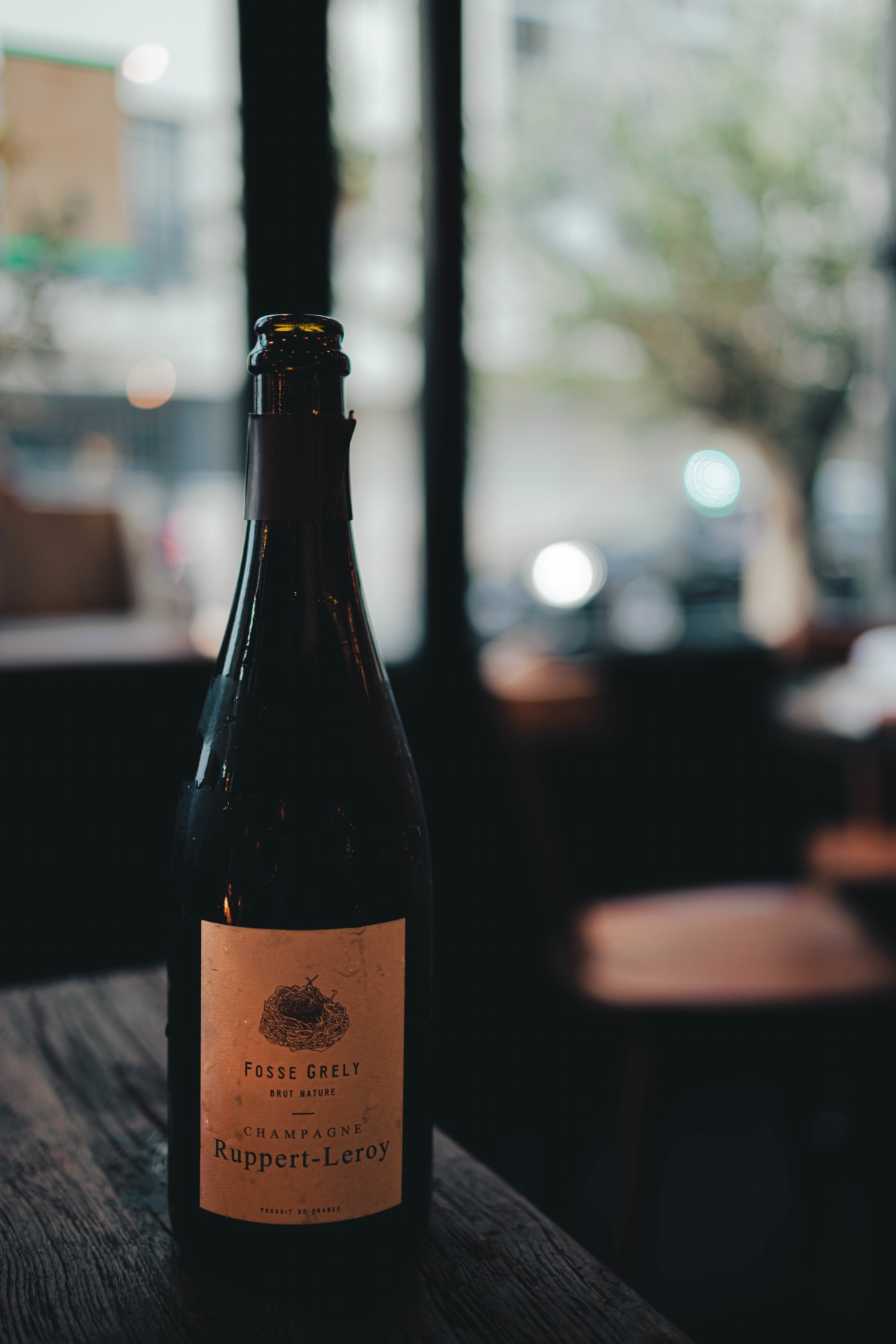
The second pairing was Champagne: Ruppert-Leroy's Fosse-Grély Brut Nature, a grower Champagne from the Aube (Côte des Bar). In the village of Essoyes, Bénédicte and Emmanuel Leroy farm biodynamically, and Bénédicte is said to have learned from Bertrand Gautherot of Vouette & Sorbée and from Pierre Overnoy in the Jura, which overlaps exactly with Septime's producer list mentioned earlier. Pinot Noir and Chardonnay in roughly equal parts, bottled with no dosage (brut nature), it has a salinity and vertical tension whose mineral structure recalls grand Chablis more than classic Champagne. It was a choice that lightened the heavy, long-simmered broth dish, and I drank it with pleasure.
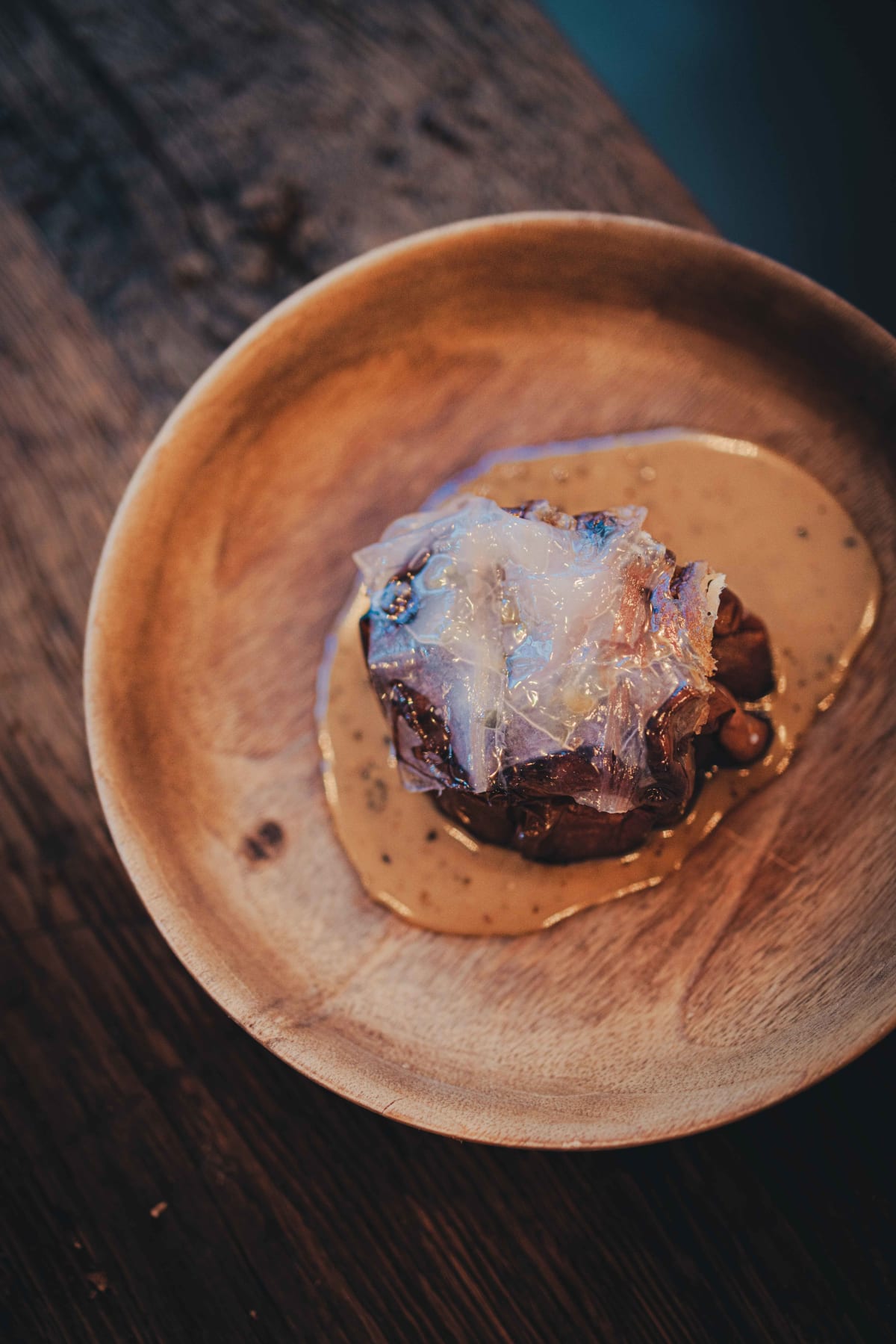
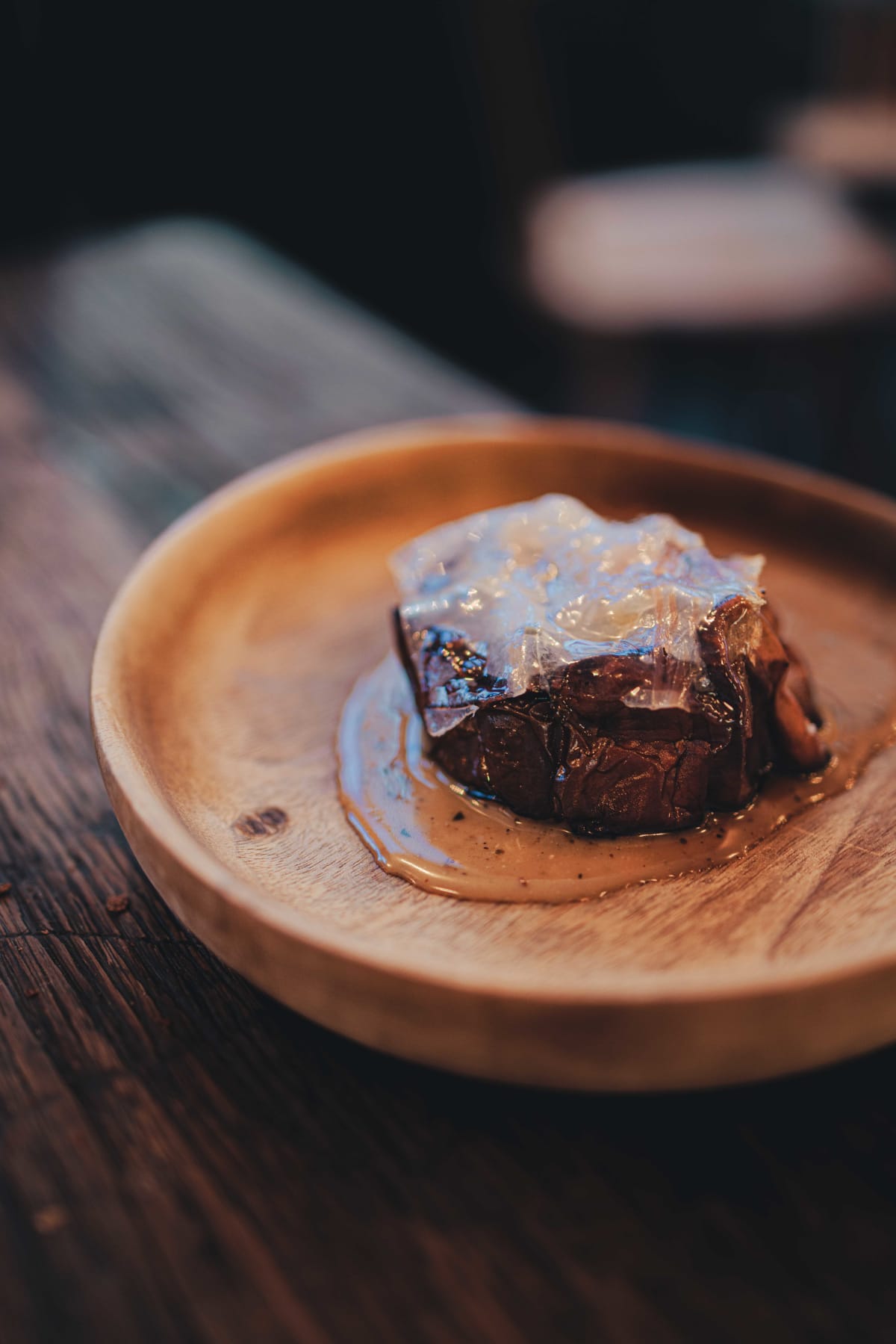
The dish that followed was eggplant, one of the things I enjoyed most that day. Darkly braised eggplant under what looked like a transparent jelly sheet, with a light sauce beneath, and inside the eggplant a rich, delicious sauce. It was an inventive dish that made me marvel: how do you cook eggplant like this?
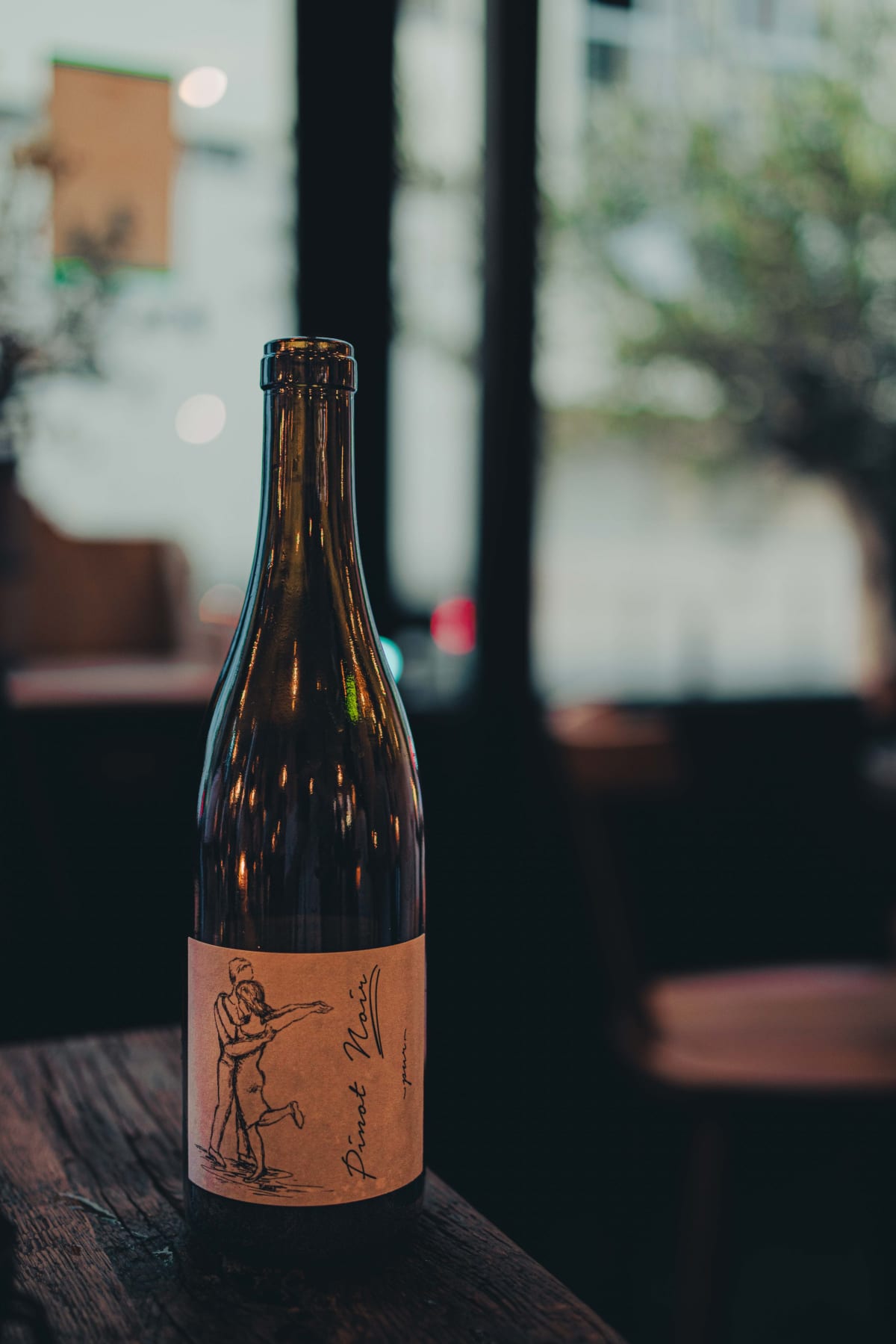
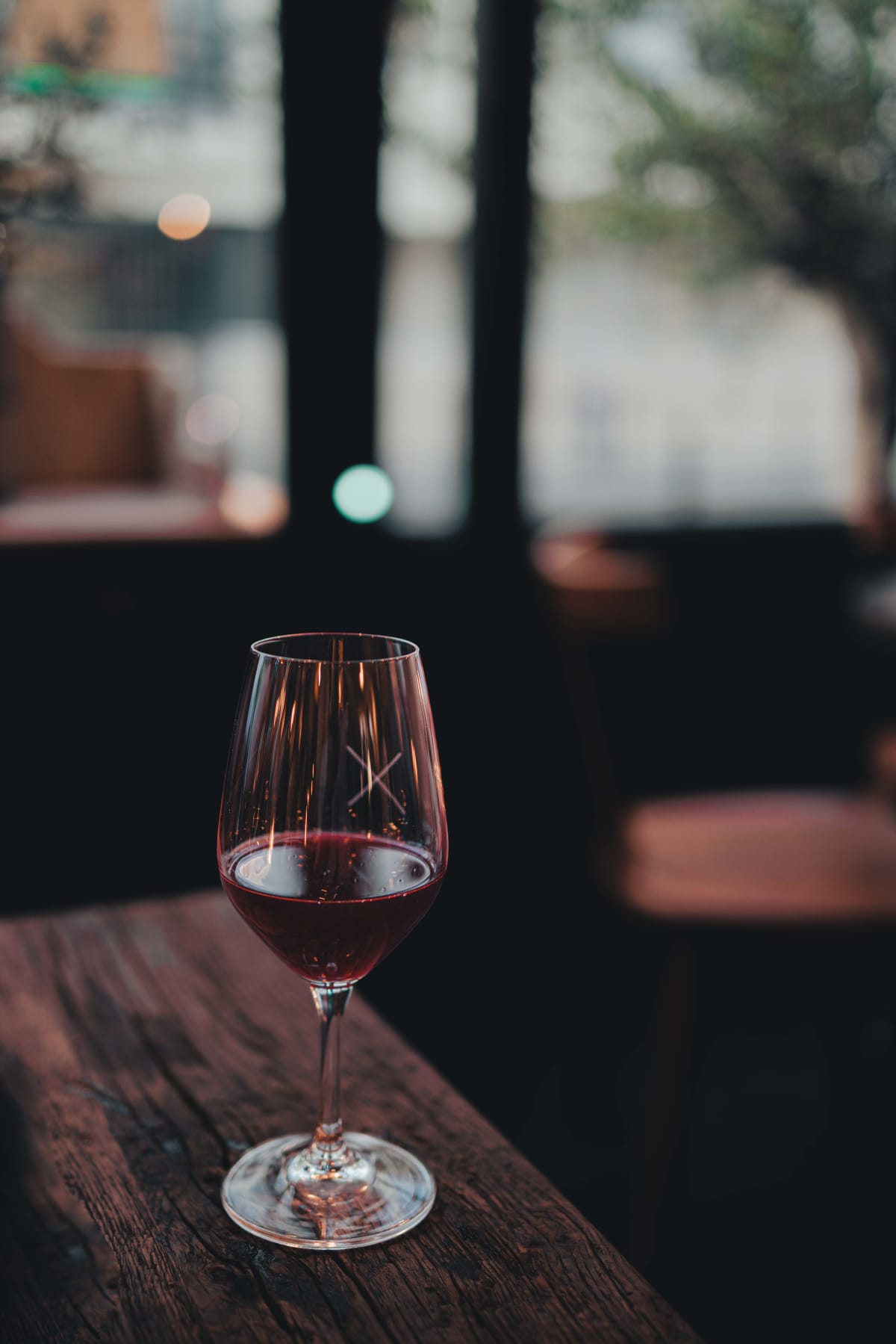
Now the pairing moved to red, and a German wine from the Pfalz arrived. It was the Pinot Noir Pur made by the Brand brothers (Daniel and Jonas) in Bockenheim, at the northern edge of the Pfalz. A leading producer of the New German Wave, who began a no-sulfur Pur line in 2014, they ferment 40-year-old organic Pinot Noir from cool limestone hills with the skins, age it in used barrels, and bottle without fining, filtration, or sulfur. Germany is best known for Riesling, but this Pfalz red, with red fruit and herbs and a nuance recalling the Jura, was good too. As the meal moved into its middle stretch, the dishes grew more intense in flavor and aroma, or heavier in weight.
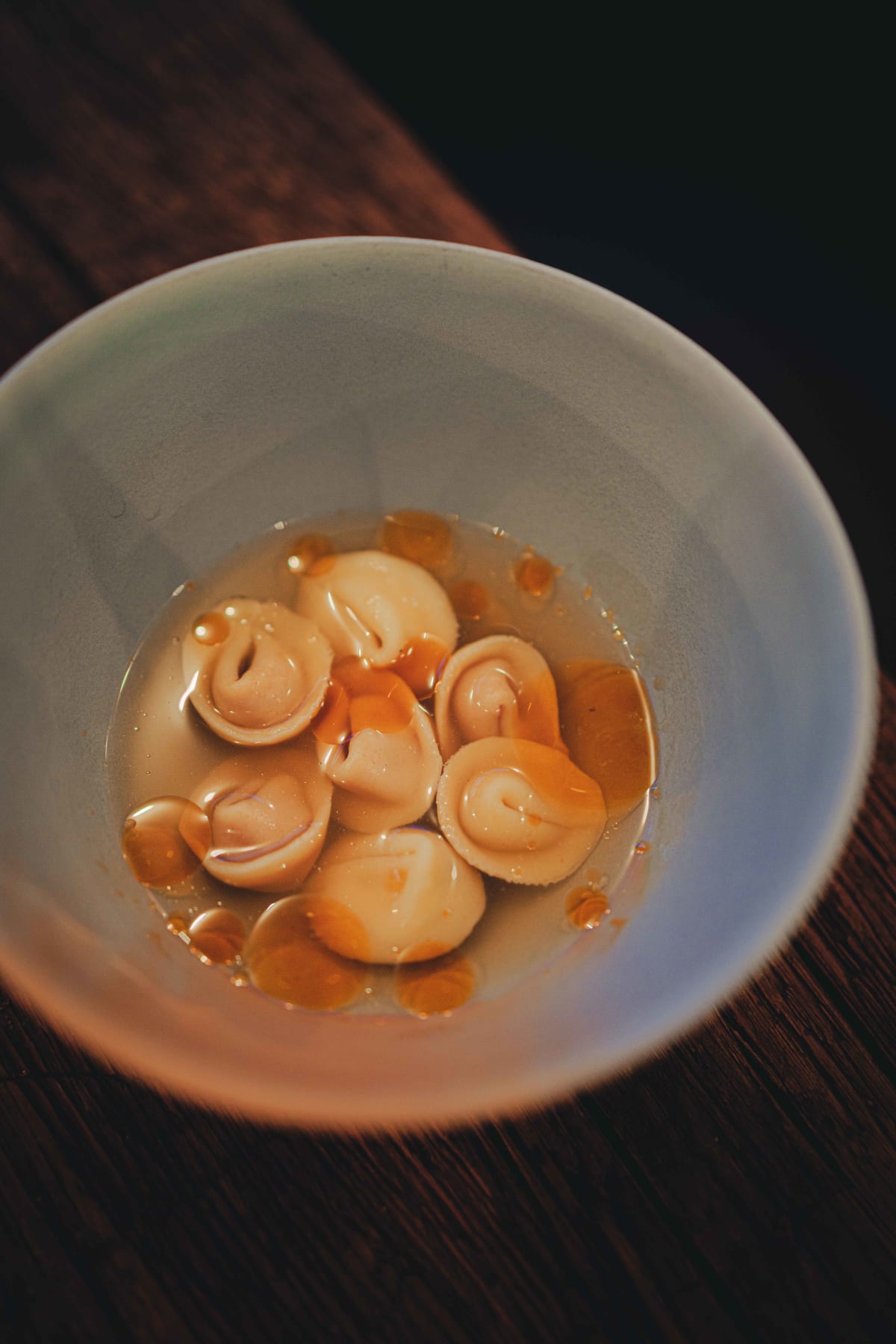
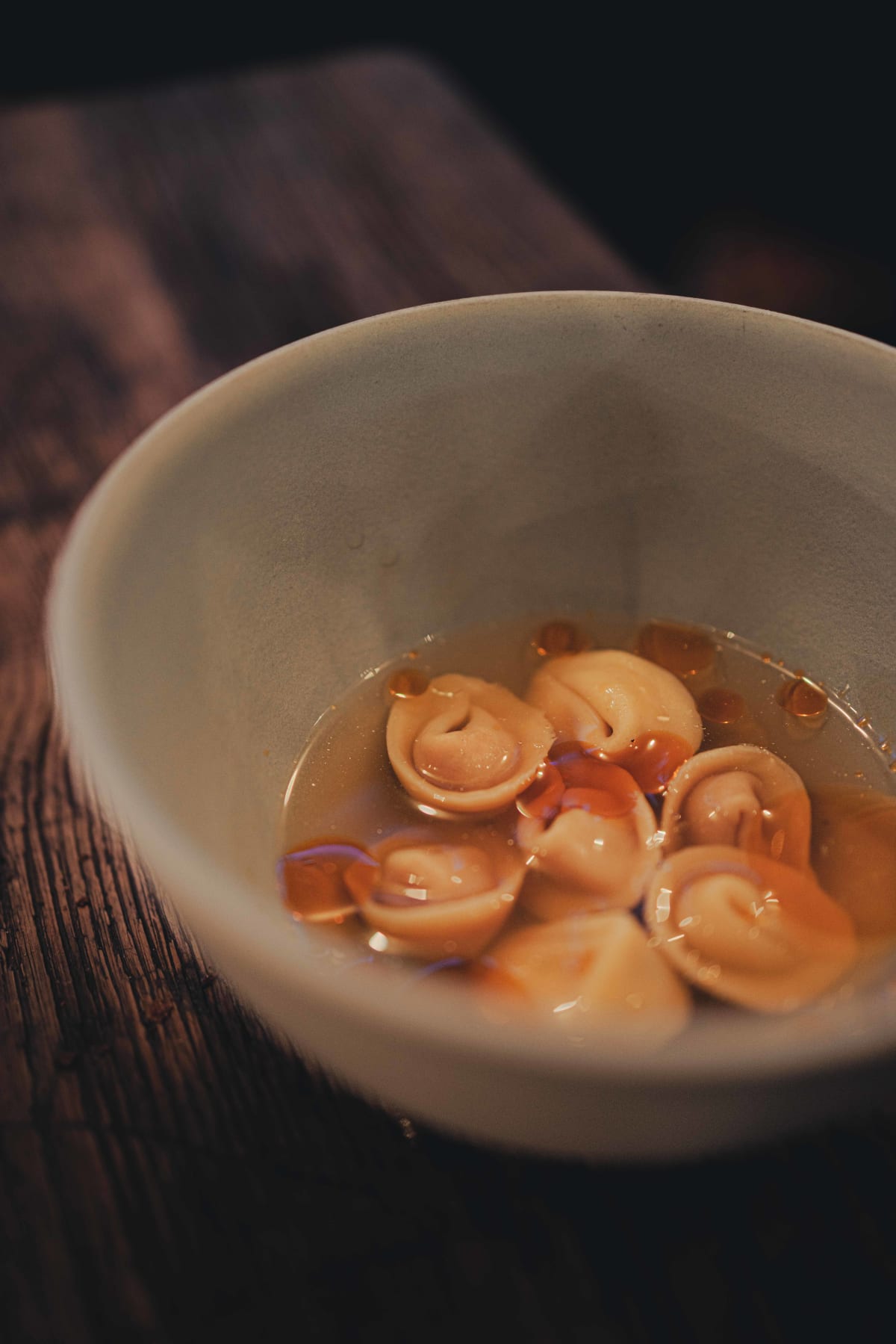
Next was a ravioli filled with goat cheese. The ravioli had good texture and the cheese inside was nutty, but it was not a dish with much impact.
Section 9·The Main
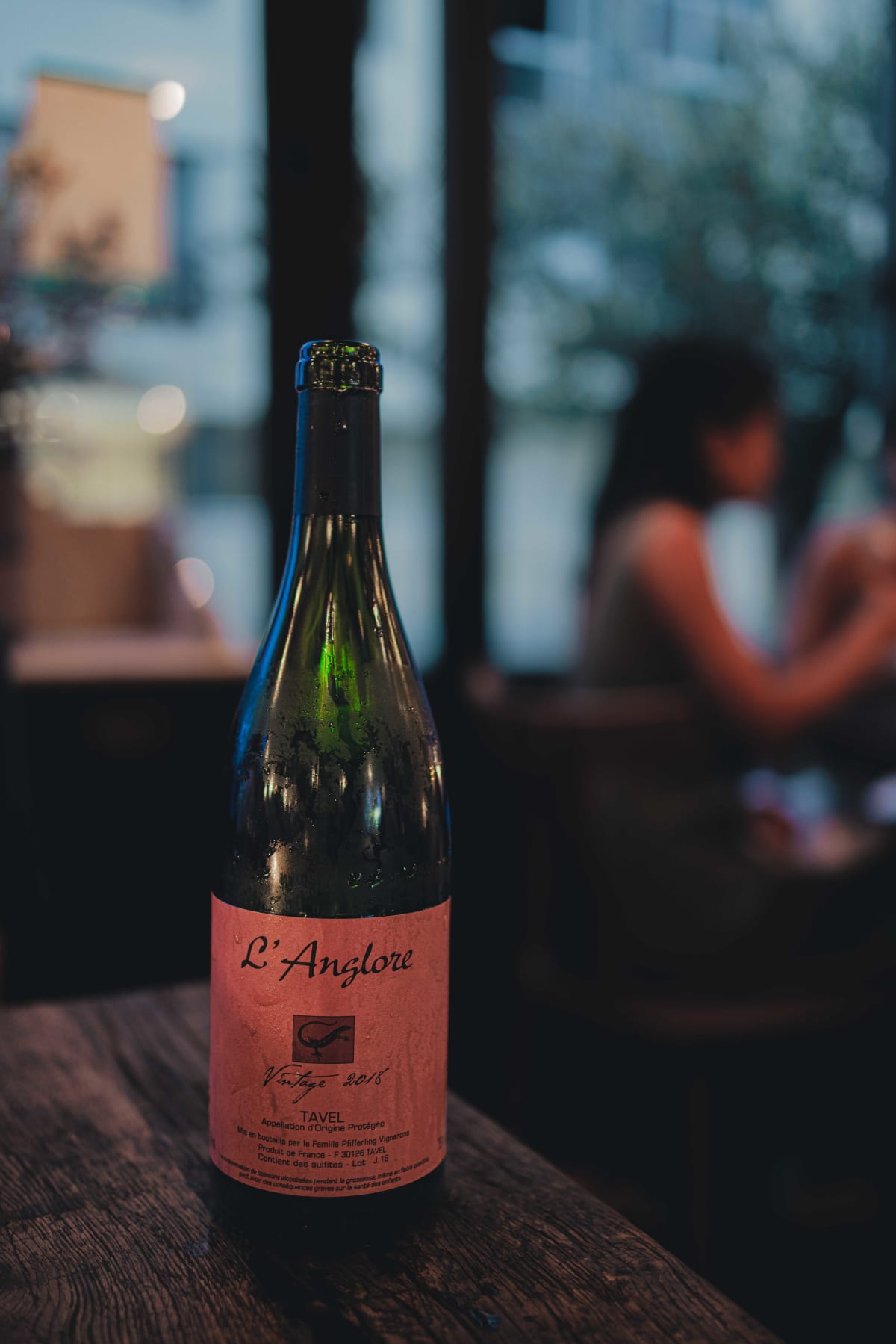
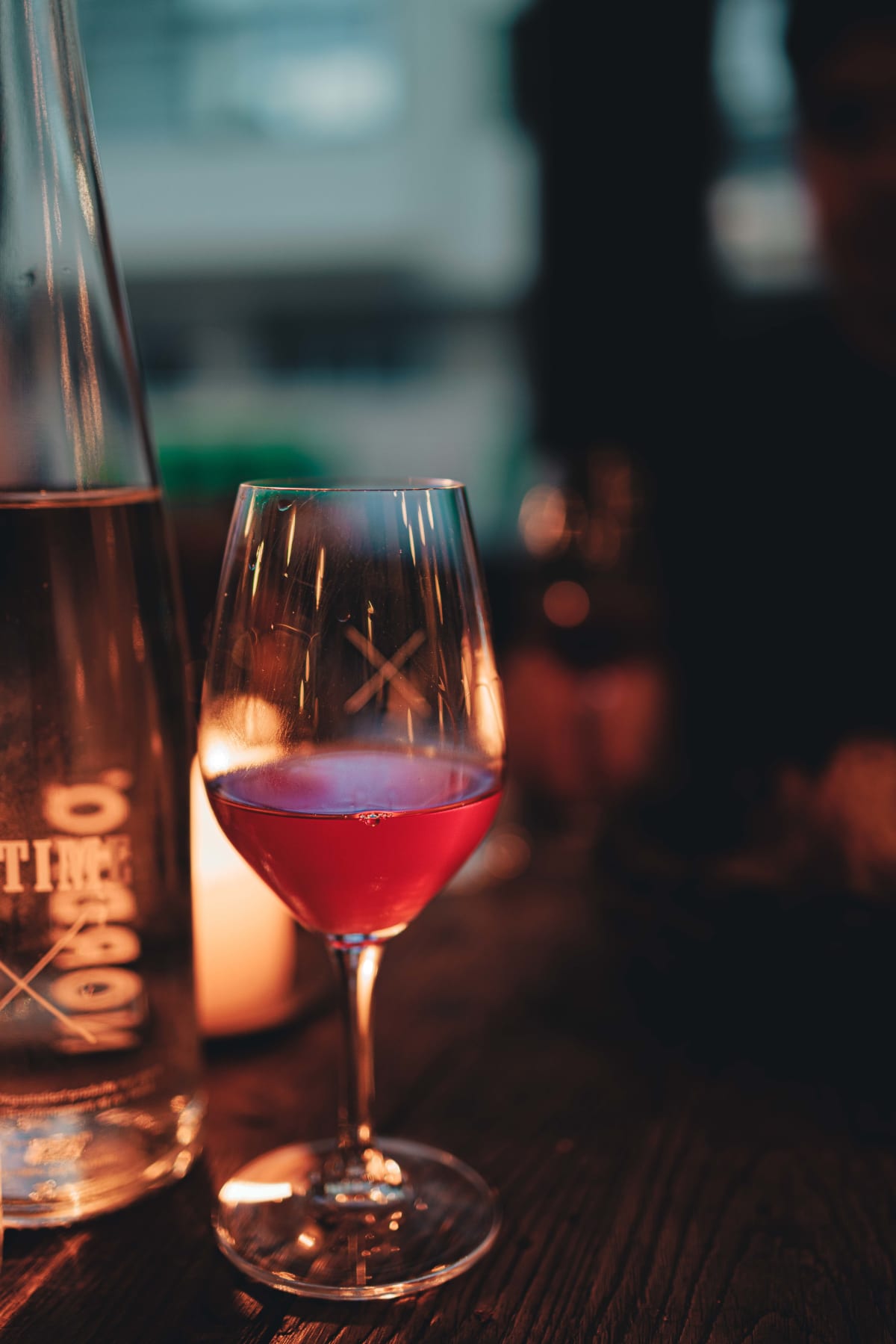
After that a southern Rhône wine came as the pairing: a name like a shrine of the naturalist camp, Domaine de l'Anglore's Tavel Vintage 2018. It is a domaine that the former beekeeper Eric Pfifferling started in Tavel in the early 1990s, a cult wine with extremely limited allocation. Tavel is a storied AOC originally famous for its full-bodied rosé, and the Vintage cuvée is its peak: built on Grenache from vines over sixty years old on sand and limestone, aged the old way for around two years, giving a depth closer to a light red than to a rosé. The rose, red fruit, and spice, with a subtle minerality and acidity, were good.
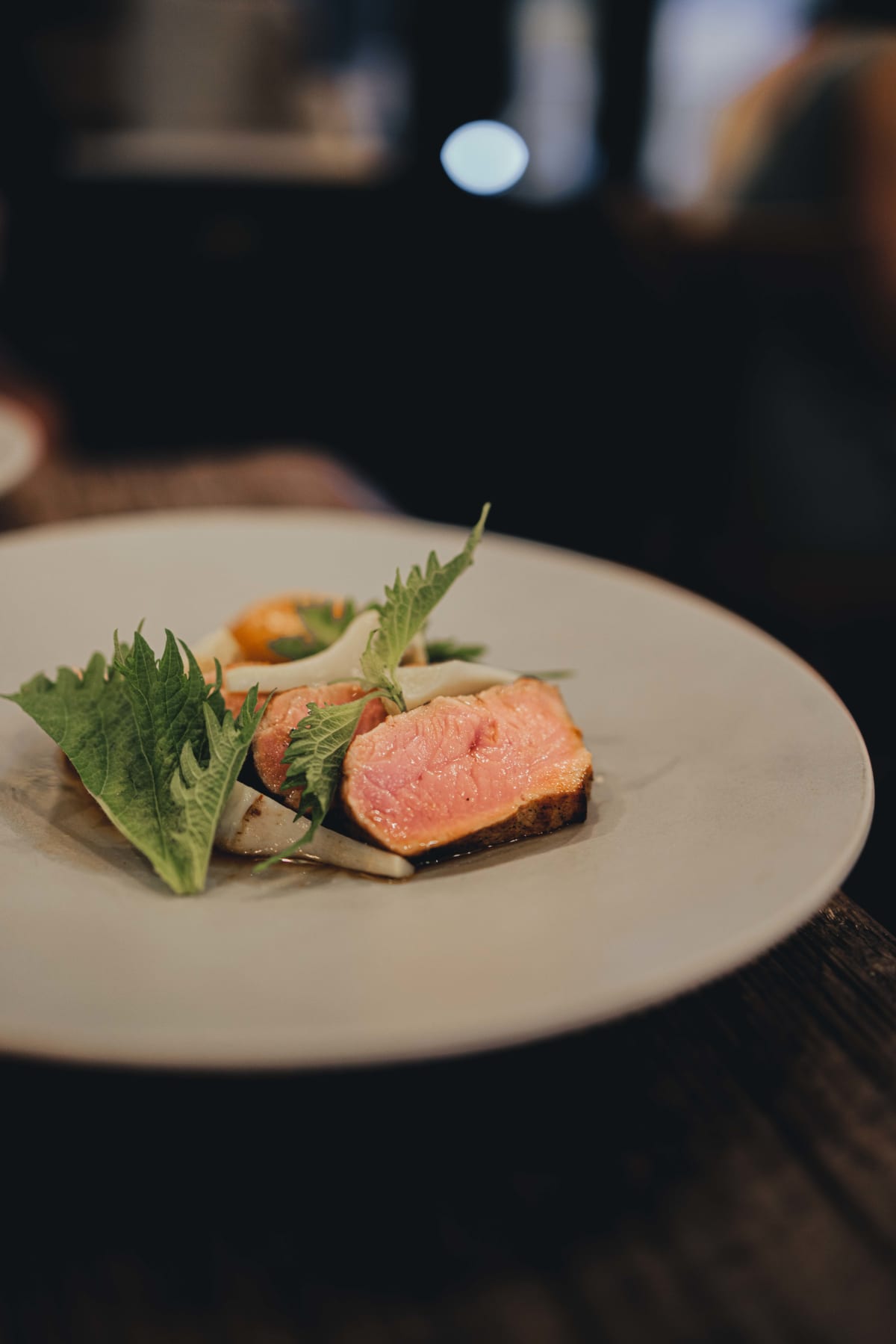
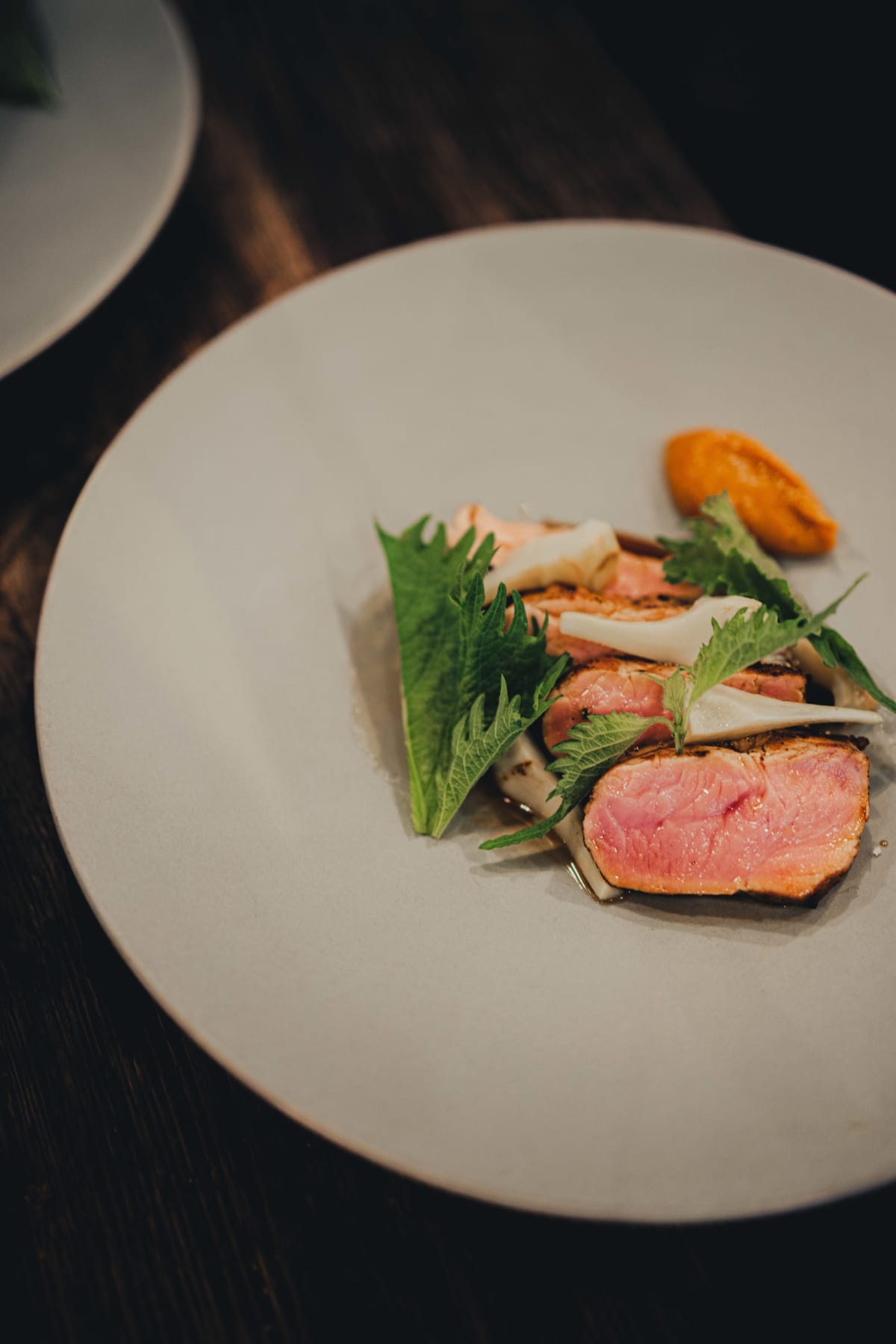
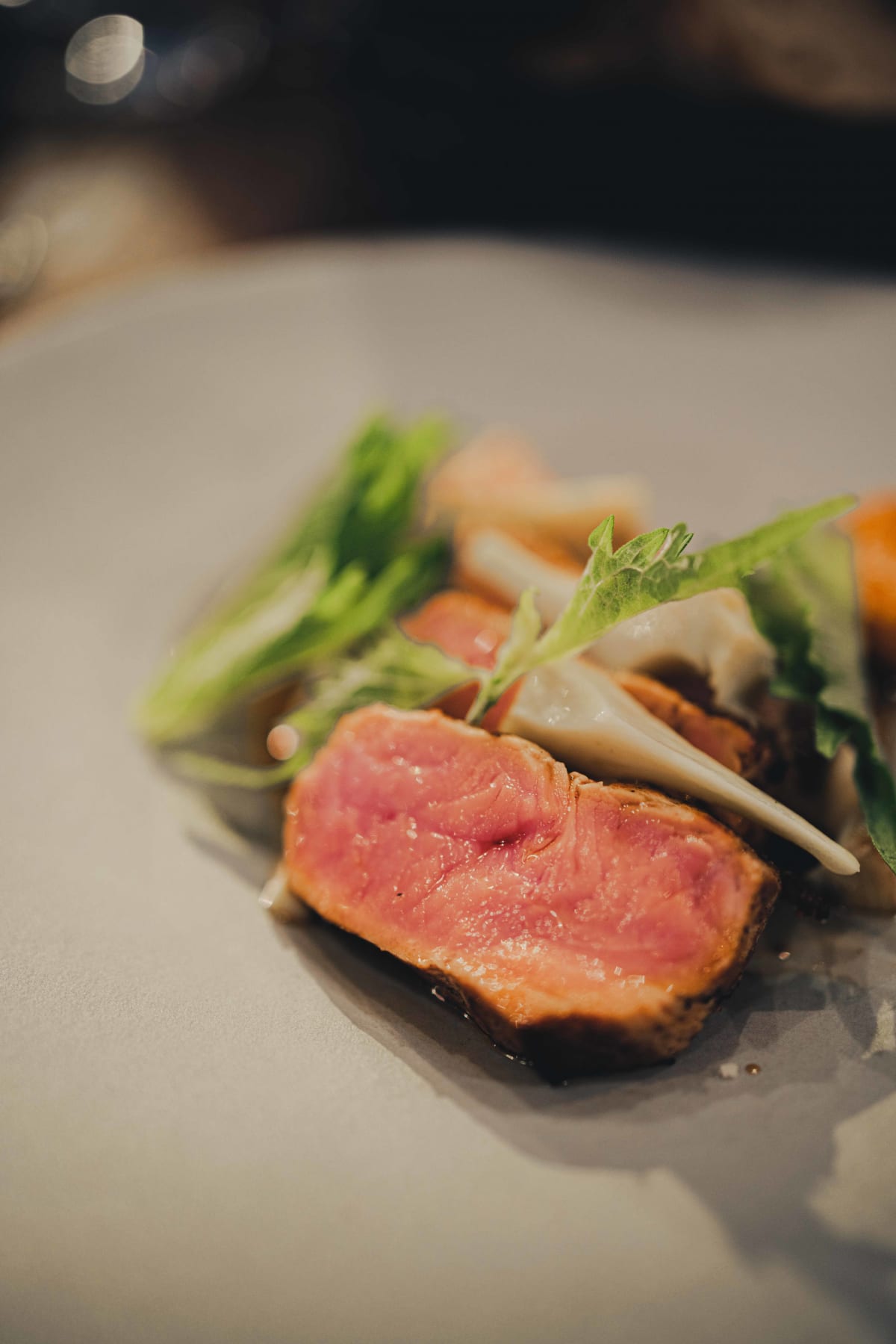
The final main was a cow steak. Pink-cooked beef with shiso leaf, thinly sliced white vegetables, and an orange purée. My companion, even after the explanation, did not know what the ingredient was, and when I asked again in English the answer was "cow." As it turns out, French subdivides cattle: a cow is vache, a bull taureau, edible cattle or beef in general bœuf, and a young female that has not calved génisse. One more thing learned.
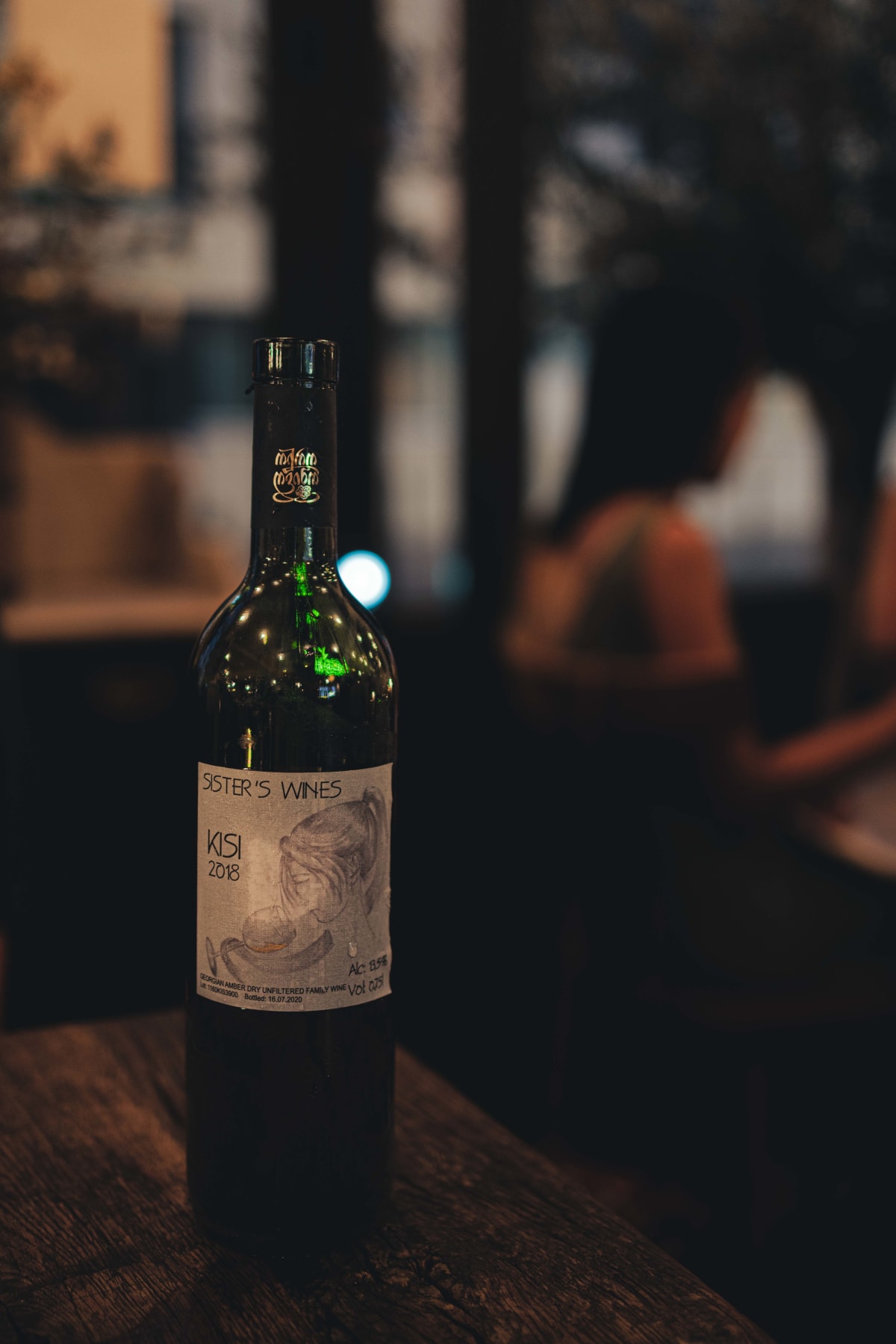
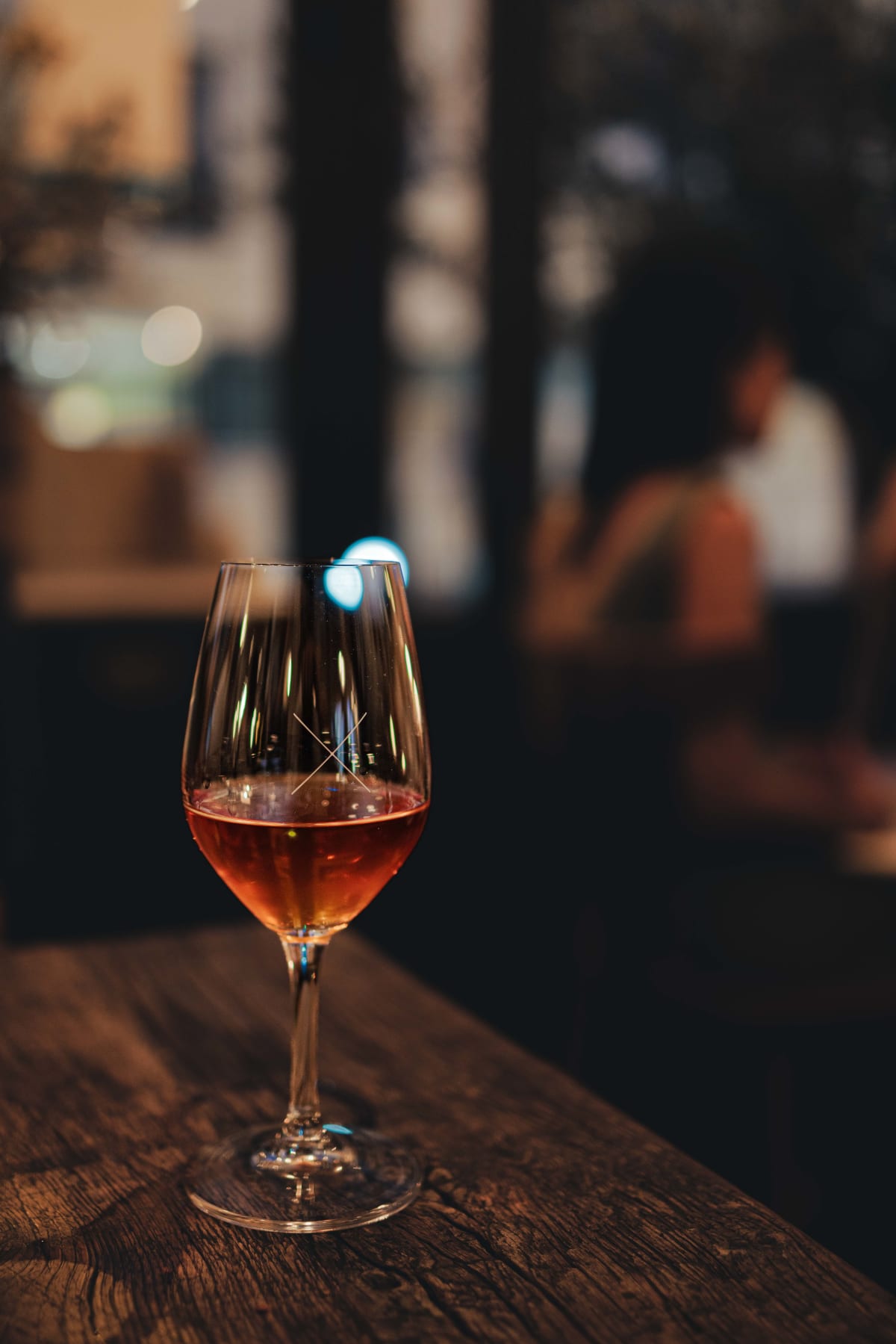
Next was a Georgian wine, and to my palate it was a little off. An amber (orange) wine made from the native white grape Kisi of Kakheti, long-macerated with the skins in a qvevri (the egg-shaped clay vessel buried in the ground); the style is normally marked by floral notes, dried apricot, black tea, and a chewy tannin. This glass, however, kept giving off the musty, off aroma and taste of a natural wine in poor condition. And to me, without much dining experience at the time, the pairing of the main cow dish with this wine did not feel like a good match.
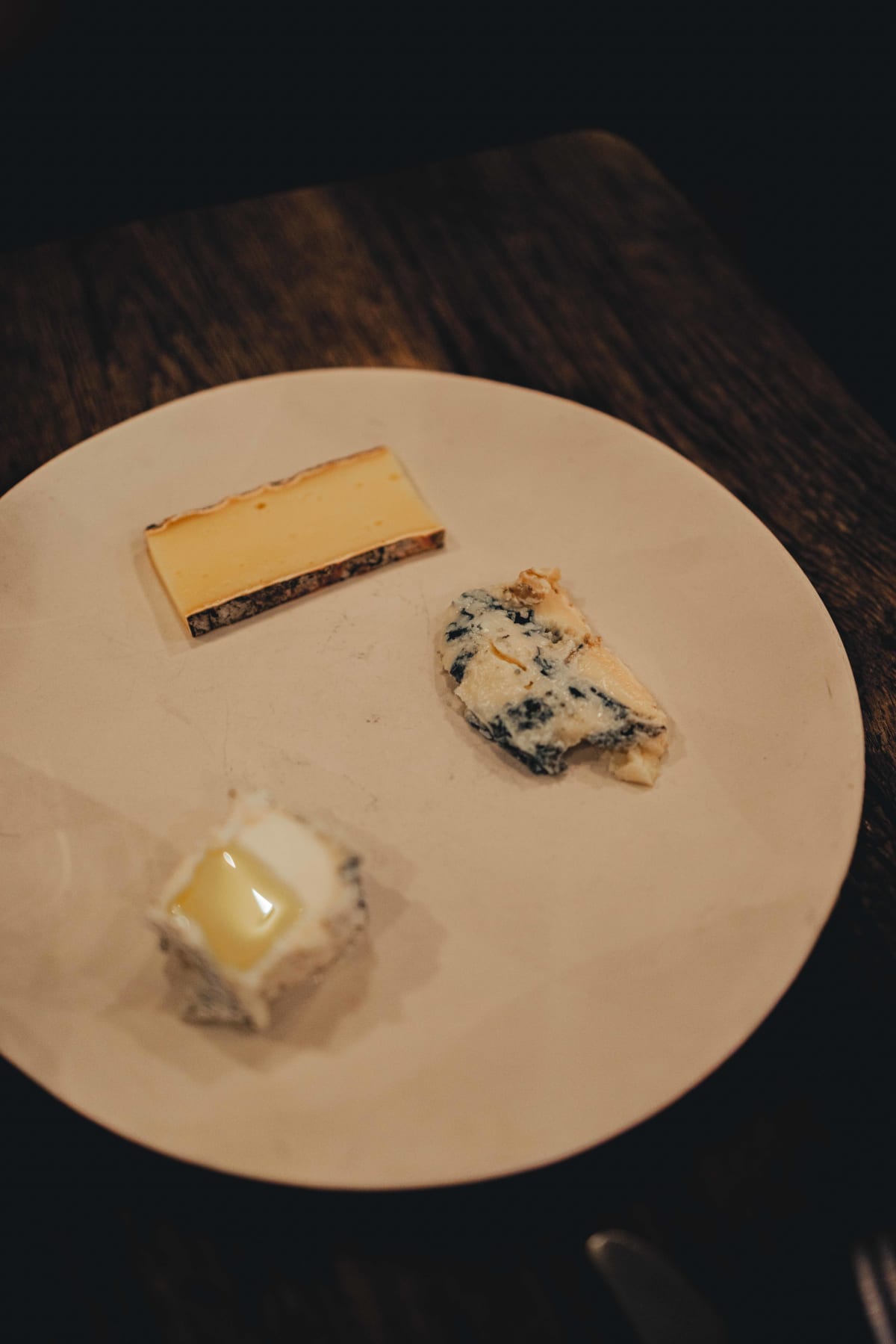
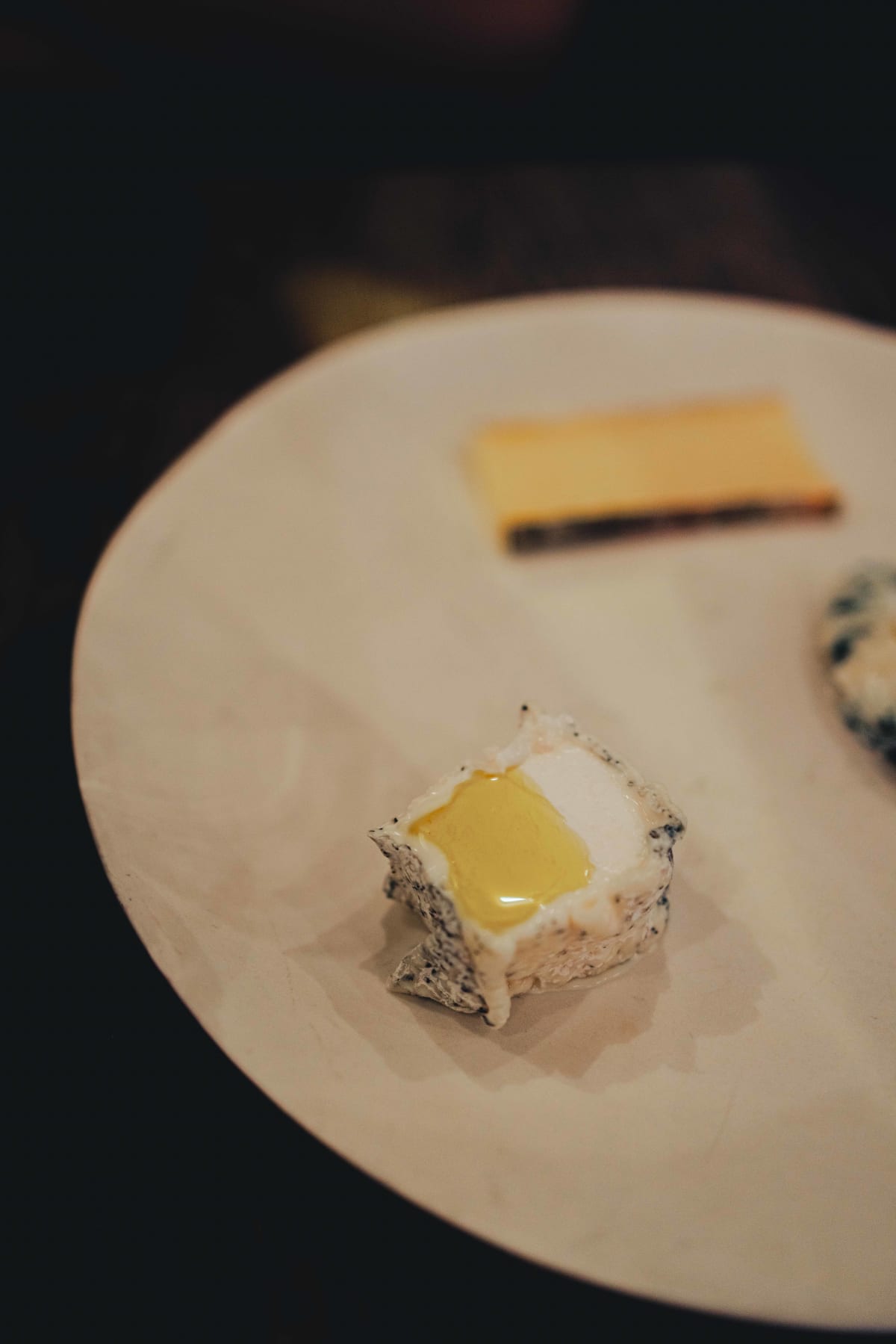
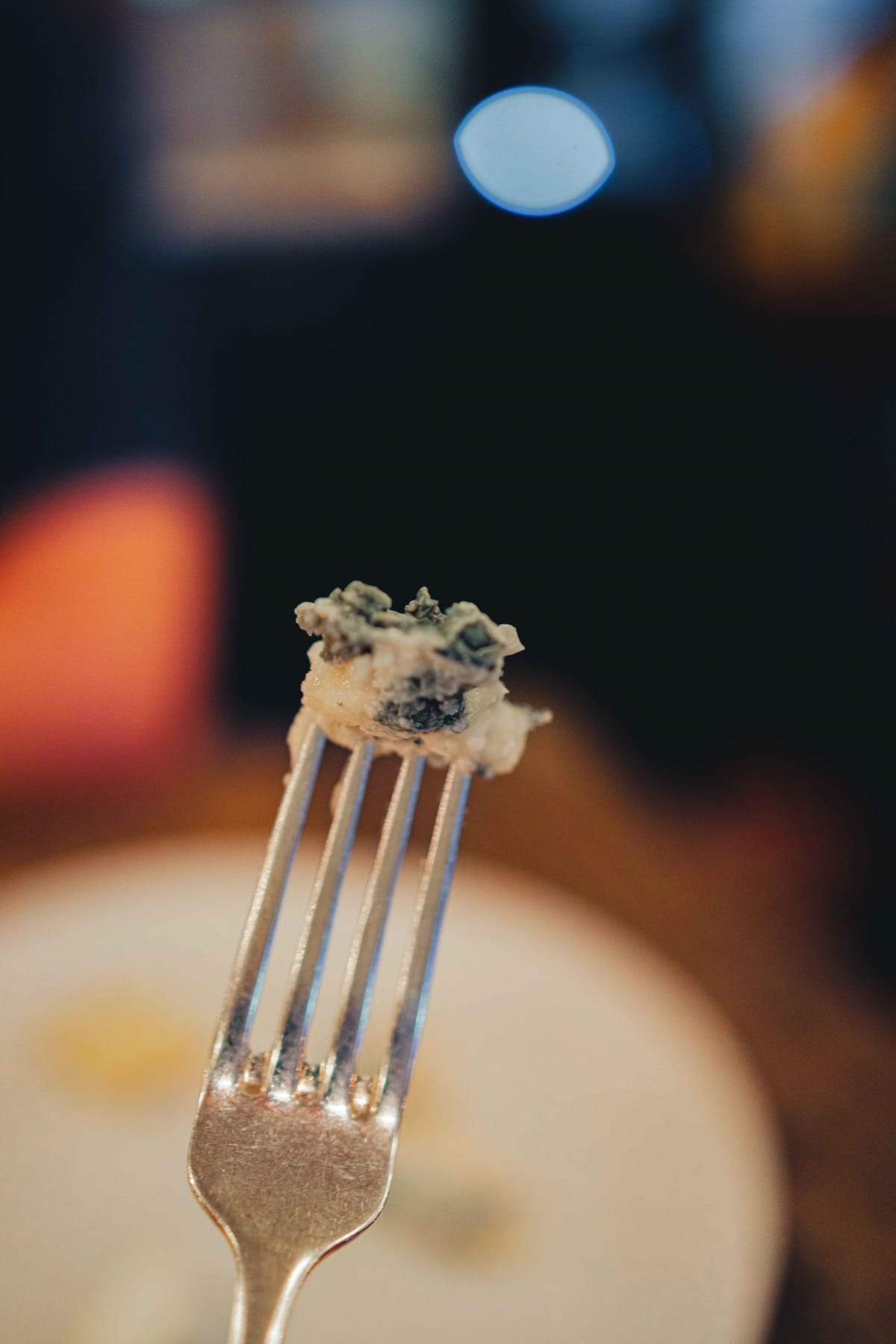
After finishing the main, when they asked whether I would have cheese before dessert, I ordered cheese as an addition. A hard Alpine-style cheese, a blue, and an ash-coated soft goat cheese topped with honey arrived. I like blue cheeses of the Gorgonzola sort, so this blue was especially good, so much so that at the other Michelin restaurants I visited later on this trip I kept seeking out this blue-cheese style to order.
Section 10·The Close
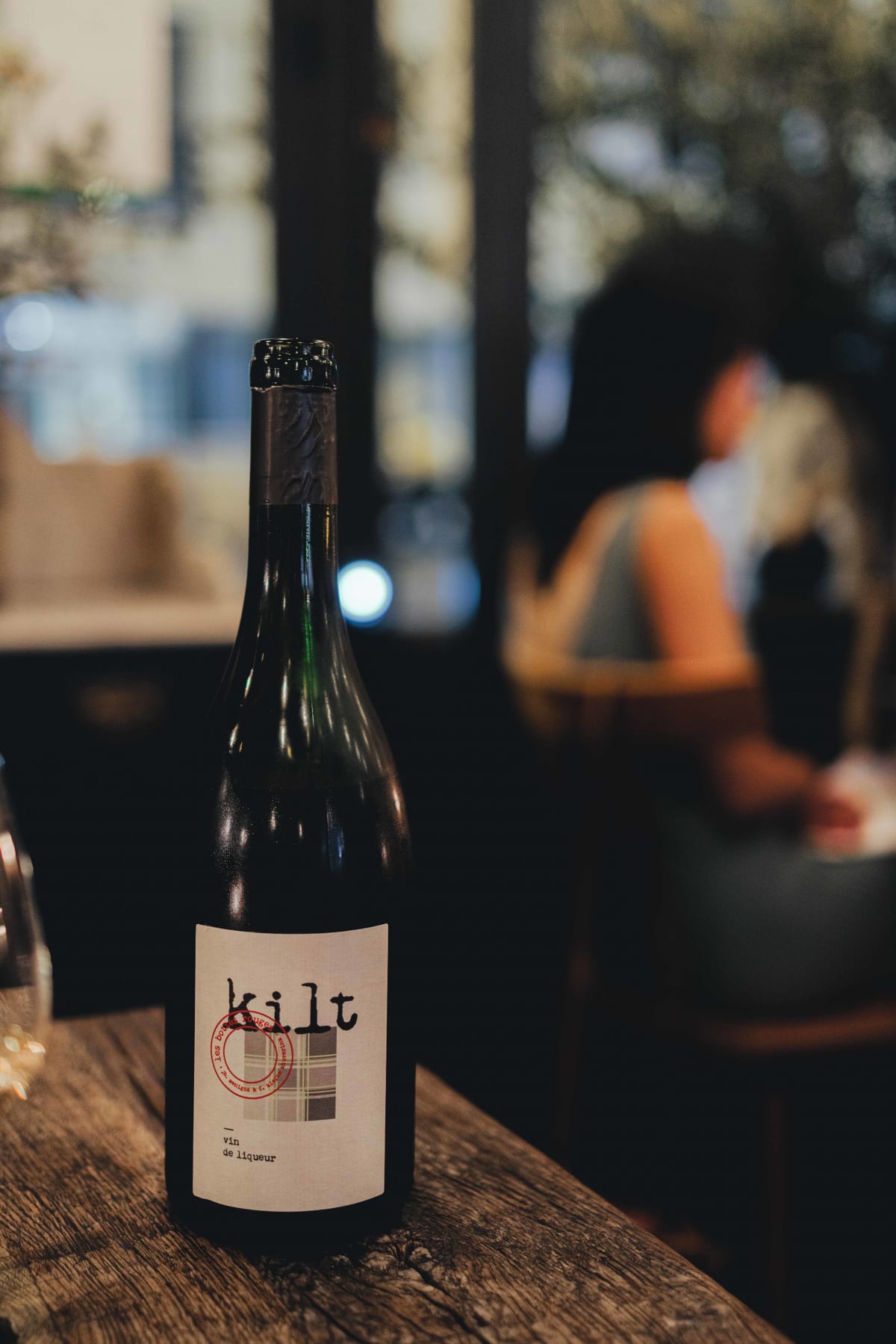
Finally a Jura wine came, one to drink with the cheese. It was Les Bottes Rouges' Kilt, a vin de liqueur made by Jean-Baptiste Menigoz in Arbois in the Jura. Like macvin, it is made by adding marc (a spirit distilled from grape pomace) to unfermented grape juice, a sweet, spirited traditional Jura style, here aging old-vine Chardonnay juice blended with marc brandy. With a creamy character of apricot, plum, and jujube, it pairs by the book with aged Comté or blue cheese.
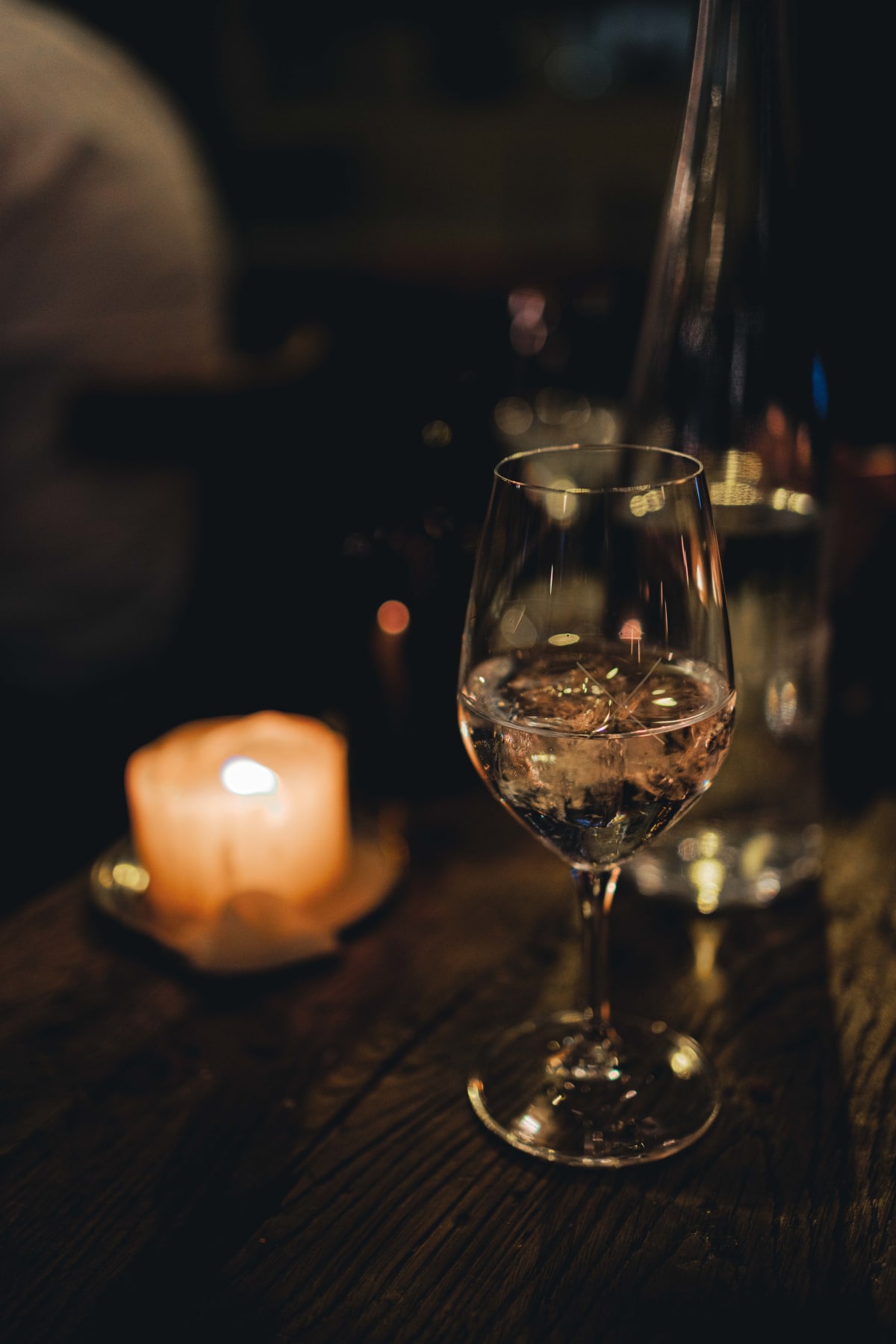
Before dessert, two digestifs were served with two desserts as the final pairing. One was a spirit called Ayuuk from Copenhagen's Empirical, the flavor company founded by Lars Williams, former head of Noma R&D, which uses as its sole botanical the rare chile Pasilla Mixe, smoke-dried by the Mixe people of Oaxaca in Mexico, vacuum-distilled at low temperature and aged in sherry casks, a smoky spirit at around 43 percent.
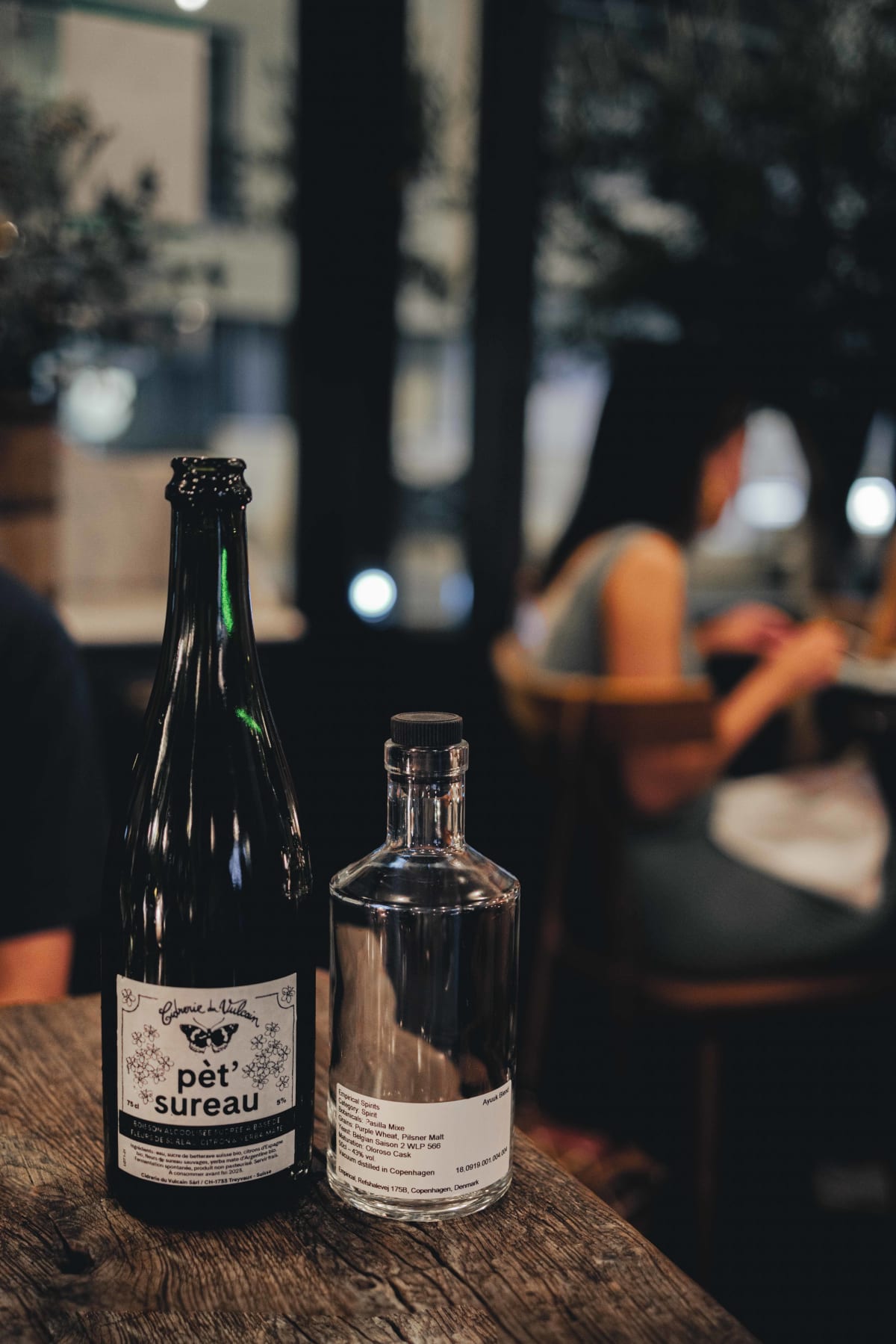
The other was Pèt' Sureau from Cidrerie du Vulcain in Fribourg, Switzerland, closer to an unpasteurized sparkling of around 5 percent made by naturally fermenting elderflower, lemon, and yerba mate than to a spirit.
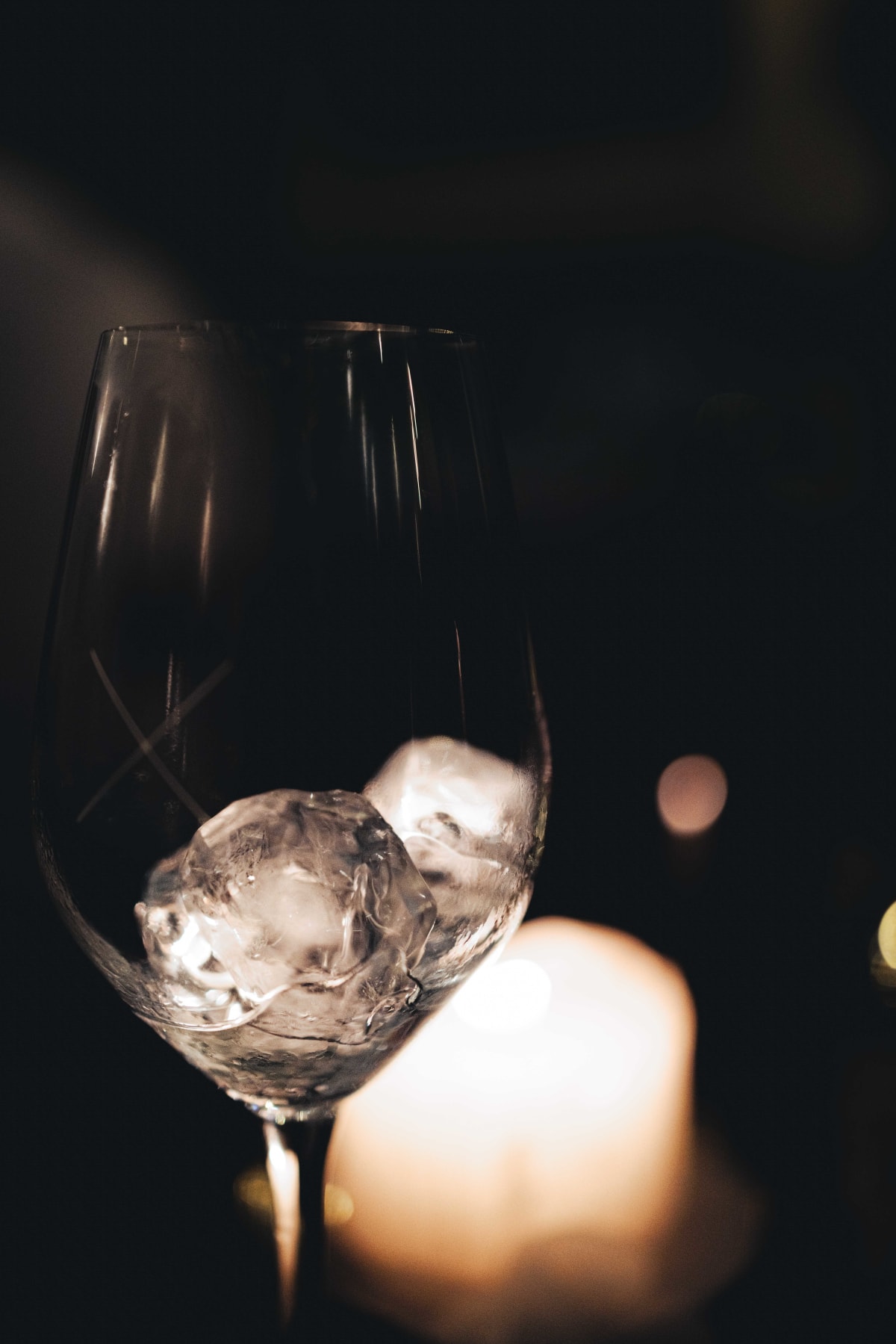
The first dessert was a green-grape sorbet, the better of the two: a sweet, cool sorbet.
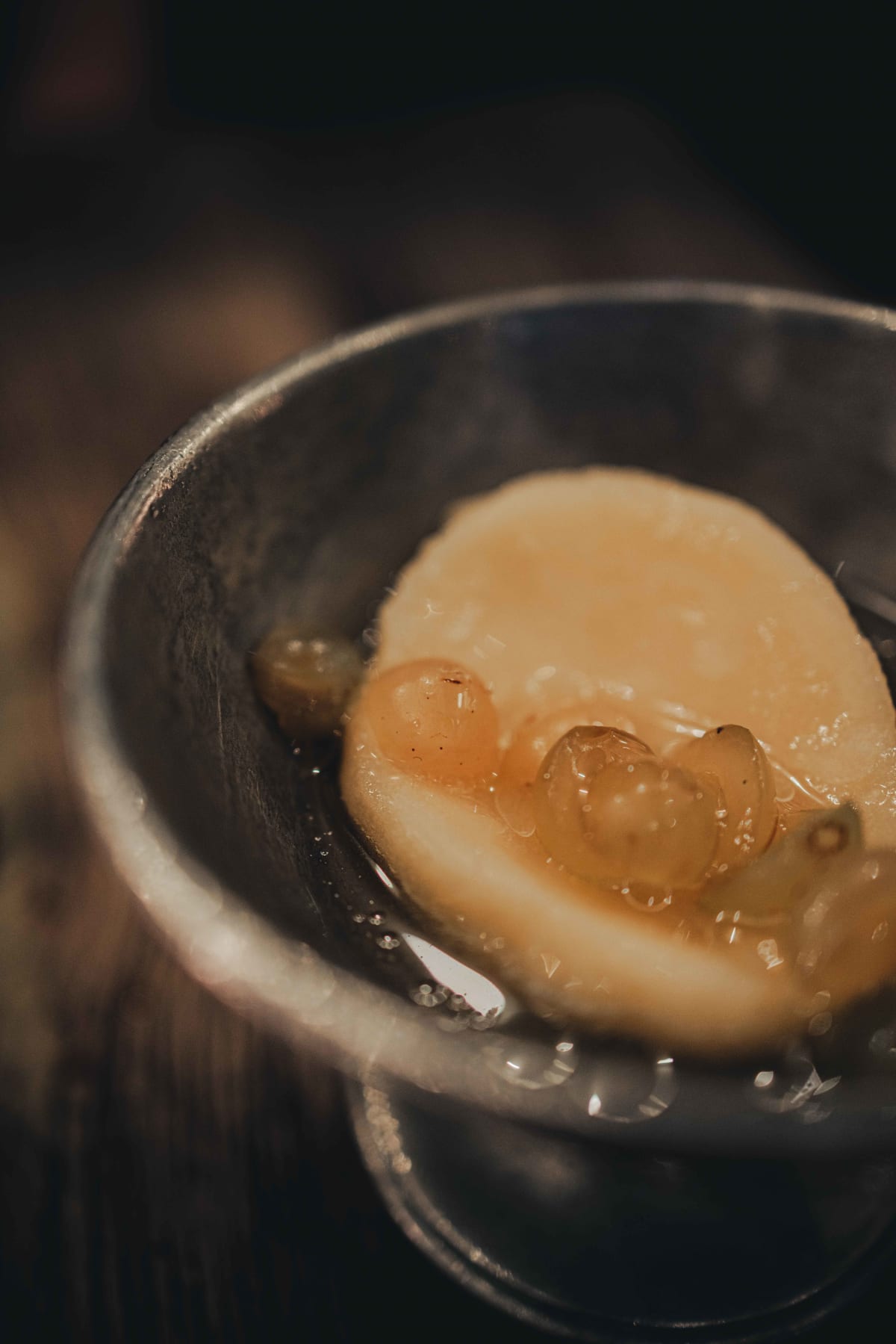
The second dessert was a white cream with something like a thin, fruit-flavored jam inside.
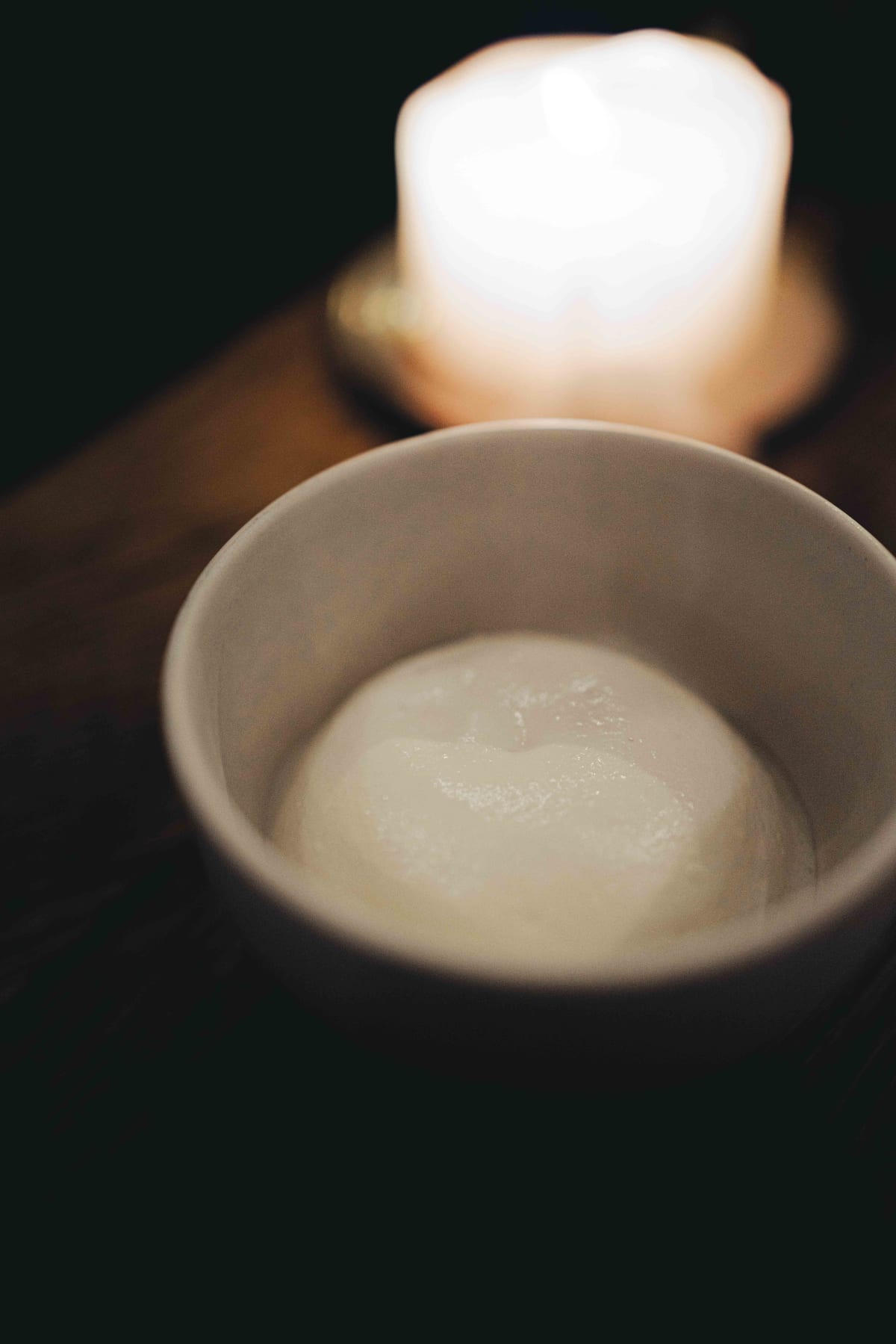
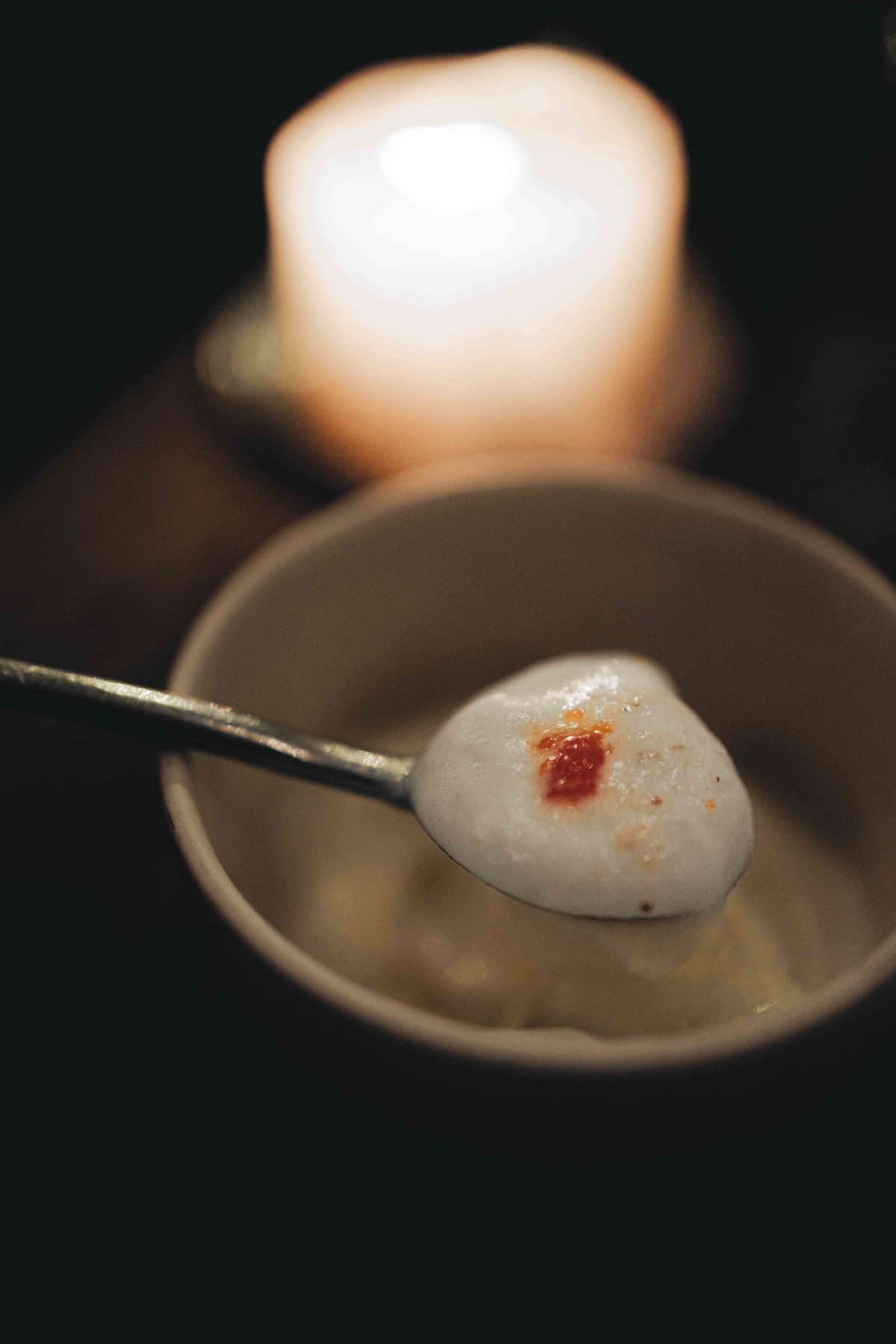
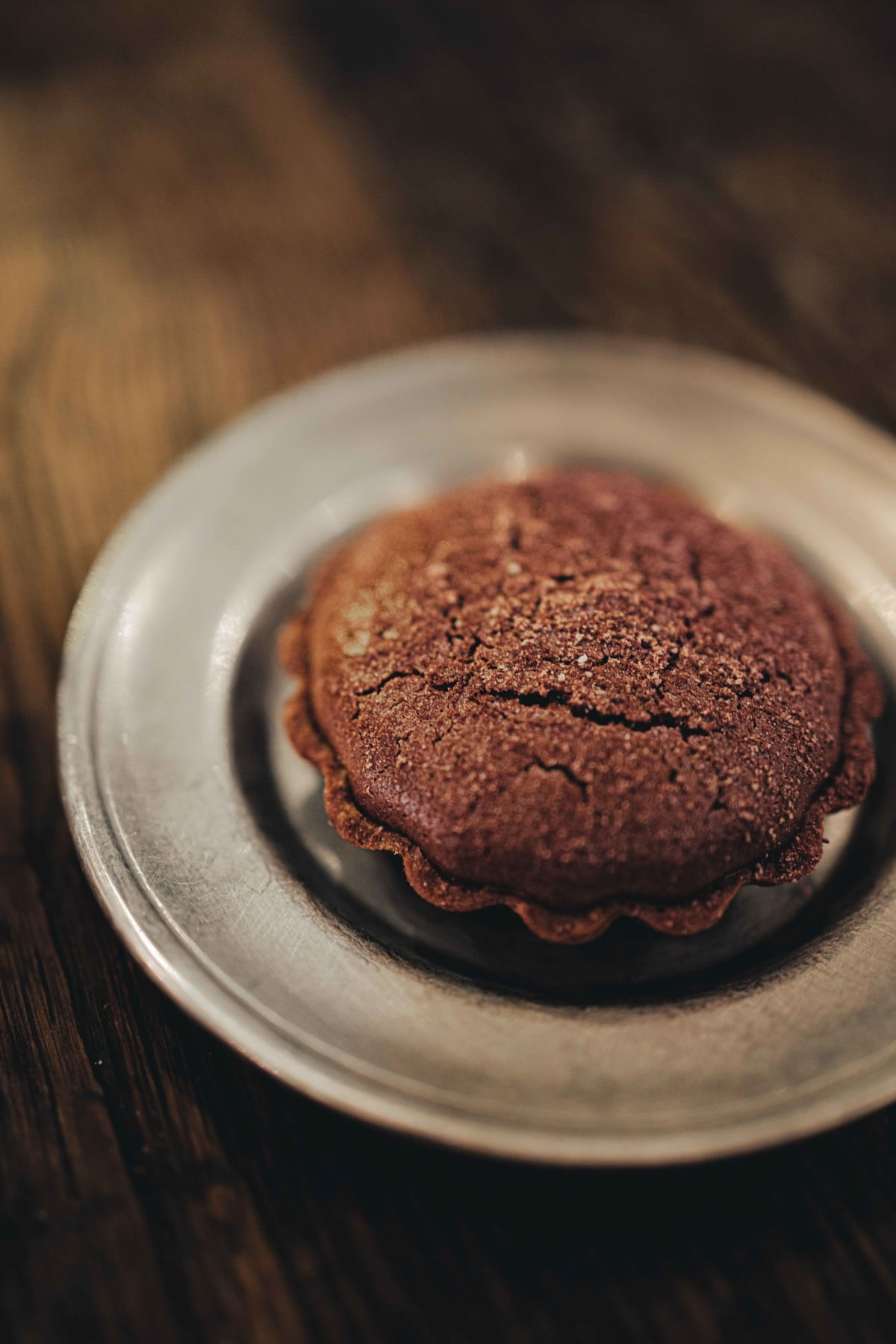
Finally a Choco Pie came out, ending a long course of about three hours.
Europe was a first for me, and so was a French, or European, restaurant. Because it is a restaurant built around experimental, inventive dishes, it was less a place of immediate deliciousness than one that keeps you thinking as you eat throughout. A few of the ingredient combinations were truly startling and unlike anything I had seen. On top of that the price was 110 euros, which for me made it a very satisfying meal. The atmosphere and the servers were all hip and stylish, so there was even the pleasure of watching. That said, if what you want is to taste rare ingredients like truffle or caviar, this is not the place I would recommend.
Section 11·In Memory
The words the industry left when he died summarize, better than anything, who he was. Michelin remembered him as a chef who left a mark on his era, and Septime as a place where rigor and sincerity rhymed side by side, and said he had led the way on the traceability of product, on better working conditions, and above all on the cohesion of his team. Grieving the death of Bertrand Grébaut, and then sinking into deep memory, I found myself back in the Paris of August 30, 2022, and Septime. The next time I visit Paris, I would like to try for a reservation and hold my own quiet memorial.
Rest in Peace
Septime's importance is not in luxury ingredients or plating, and anyone arriving for truffle or caviar will leave puzzled. What it offers is a worldview: a set course of restrained, product-driven cooking, kept unfussy and accessible. It reads less as a one-star restaurant than as a sustained argument for a way of cooking, and much of why a generation of Paris dining shifted east. The almost entirely natural wine list is a real strength, substantial and wide-ranging. Practically, the reservation is among the hardest in Paris and gone within seconds, so plan around it, and come for the ideas rather than the ingredients. Even after Bertrand Grébaut's death in 2026, its place in modern French cooking is settled.
Have a question about this restaurant, or want to share your own experience?
Send a message