Local & Essential · Seoul · Korea / August 2026
Bistronomy Notre
"The first restaurant of his own, where the mains carry the room"
Section 1·Two Years On
Six months have passed since Culinary Class Wars season two ended, and the fever from season one has not cooled. The season one cast are still in the spotlight two years after their season closed, and now they are opening places of their own. I went to one of them, Notre in Apgujeong Rodeo. A friend with a connection to chef Yoon Nam-no had booked all nine counter seats for the evening, and we drank by the bottle rather than taking a pairing. It is an à la carte house, but there were enough of us that we ordered close to everything on the menu.
Section 2·The Verdict Up Front
The overall verdict first. I was satisfied on the whole, and the wine service and the three meat mains were excellent. The starters, the bavarois aside, were heavy for me, and eaten back to back, they piled up so much weight that it became hard going. It would be unreasonable to expect the finished structure of a tasting course from an à la carte bistro, or to complain about the weight that builds up when you eat almost the entire menu, as I did. Even so, one or two lighter seafood plates among the starters would have helped. All the more so for a place working in a Japanese-French idiom.
In a similar vein, unlike deepin in Sindang-dong I did not run into much that was new or inventive in combination or in flavour. Now that his fame is at a celebrity level, he may be under pressure to satisfy not only an audience of enthusiasts but a very large general public, and the direct, heavy character of the dishes may be a reflection of that.
It would be unreasonable to expect the finished structure of a tasting course from an à la carte bistro, or to complain about the weight that builds up when you eat almost the entire menu, as I did.
There was talk at the table that since the broadcast, guests with every kind of palate have been coming in to judge him, and that the burden of cooking to everyone's needs is heavy. But as the chicken and the lamb showed, he is a skilled chef who has already proved himself in several places, and if he refines the execution and shows a deeper character of his own, this would become an even better restaurant.
Section 3·Bistronomy, Not Bistro
Notre is the first restaurant of his own, opened in Apgujeong Rodeo in the spring of 2026 by Yoon Nam-no, known to viewers of Netflix's Culinary Class Wars as Cooking Maniac. Notre is French for "our", and the name is presented as meaning a space made together by the chef, the staff, the guests and the food, rather than one that puts the chef's own name or philosophy out front.
The concept the restaurant puts forward is bistronomy, a compound of bistro and gastronomy, meaning a place where a chef trained in fine dining uses precise technique and good produce while easing the constraints of formality and the set course. Yves Camdeborde and La Régalade in 1990s Paris are cited as the founding model, and the term itself is said to have taken hold after the food critic Sébastien Demorand used it around 2004.
Notre follows that tradition in its à la carte ordering, its wine-led operation and its forceful French sauces. But between the mandatory amuse-bouche, the expensive tableware brands, the investment in the room and the high spend per head, it reads better as a neo-bistro serving fine dining technique in à la carte form than as a traditional working-class bistro.
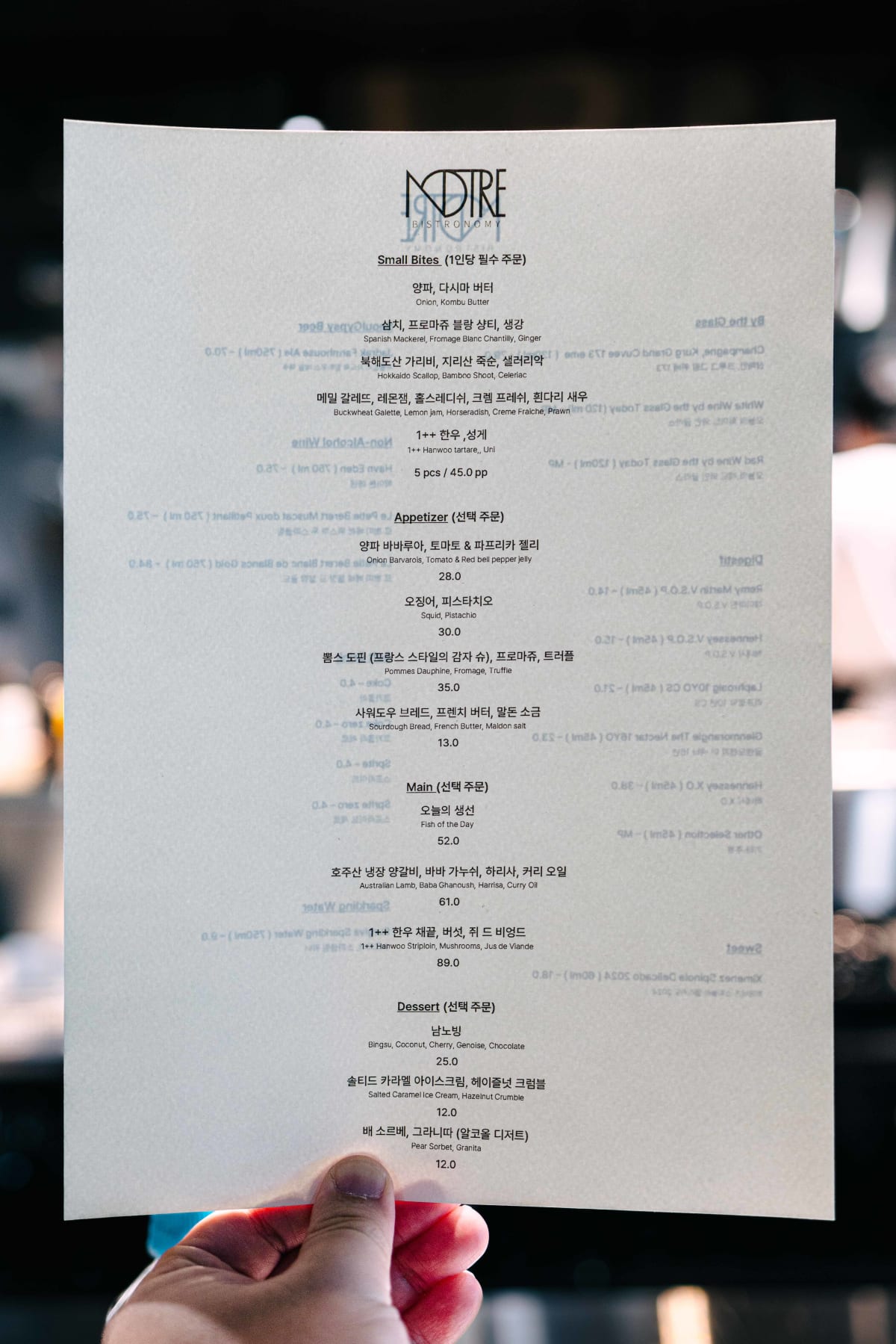
The system is that every guest must order one set of the five small bites, then chooses freely from starters, mains and desserts.
Section 4·Nine Seats Facing In
A quick sketch of Yoon Nam-no's background. He went through the hotel cookery course at Busan Information Tourism High School and Kukje Culinary School, joined the food service division of the Shilla Hotel, and in 2015, on a working holiday in Australia, worked at Bennelong in the Sydney Opera House. From June 2021 to December 2025 he worked at deepin as head chef, and in 2024 he finished fourth on Culinary Class Wars. For what it is worth, deepin also took a La Liste 2025 Korea Rising Star Restaurant Award.
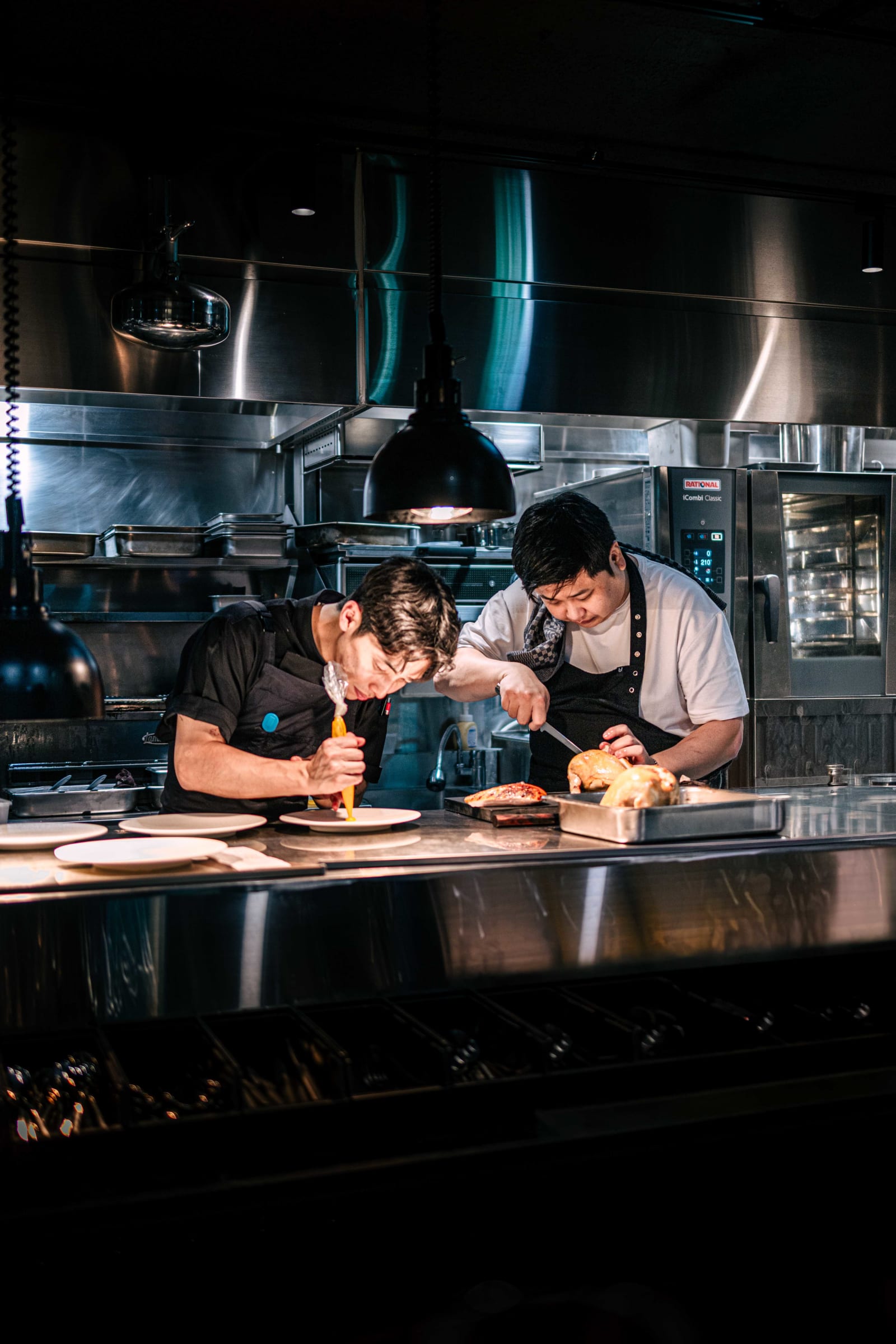
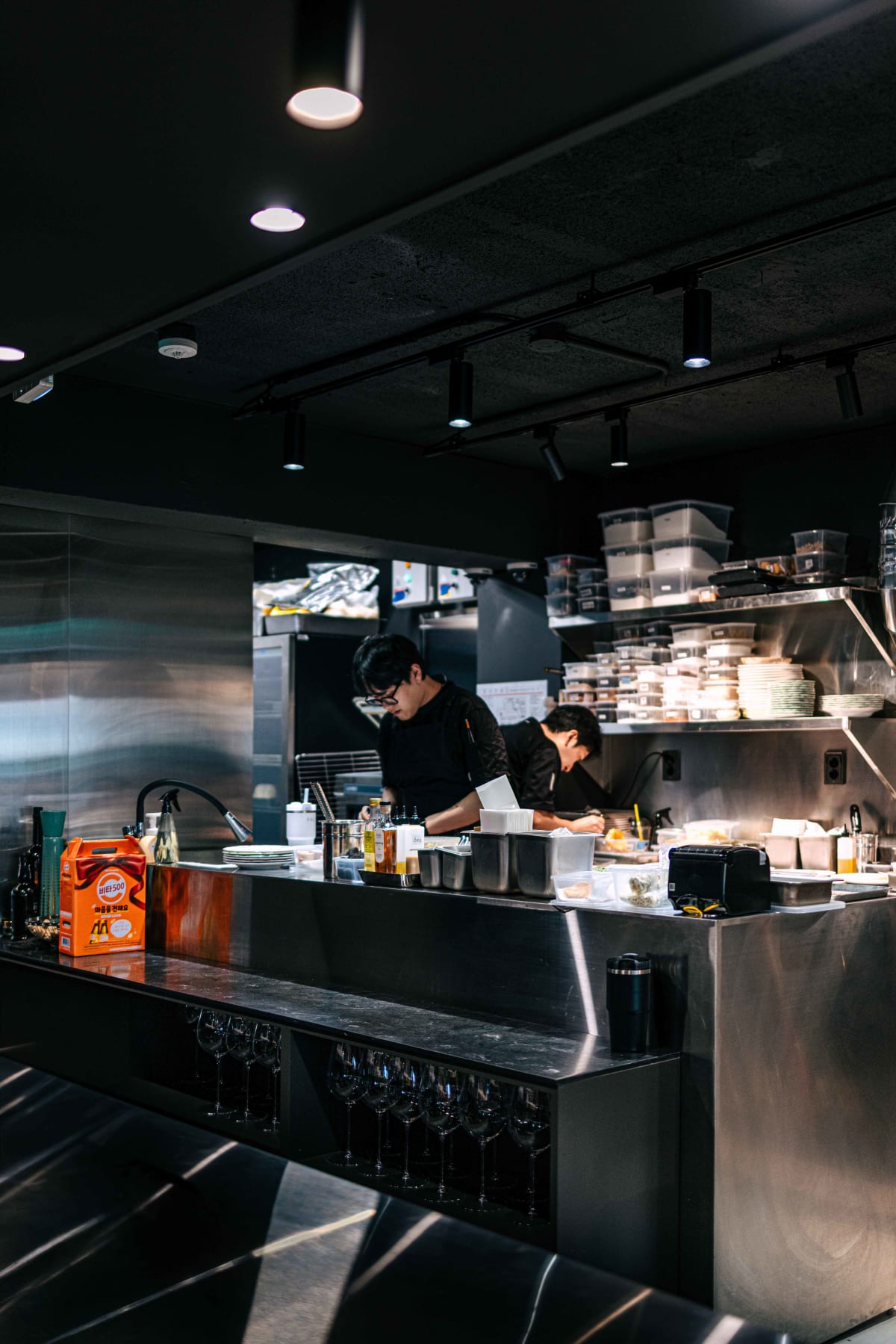
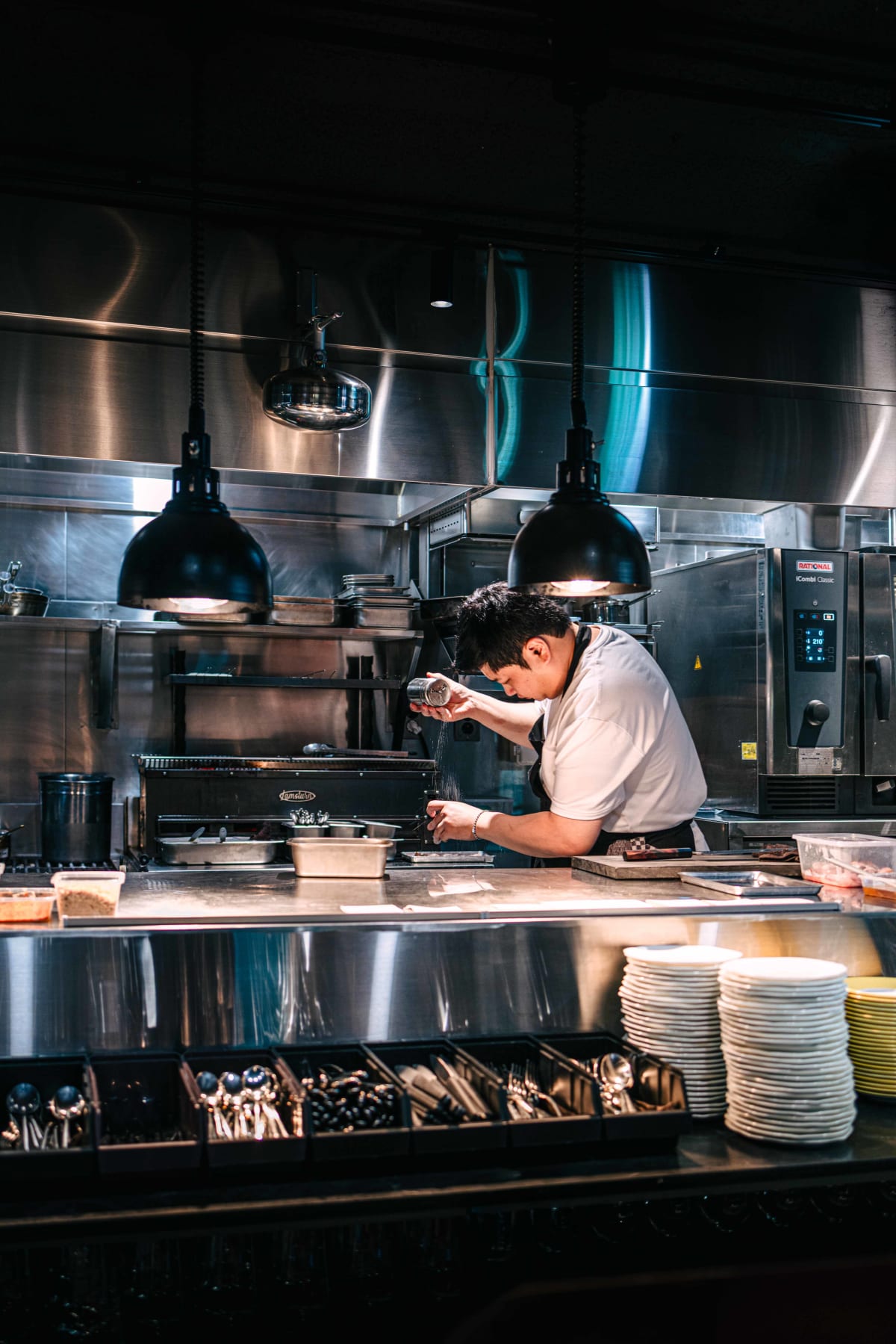
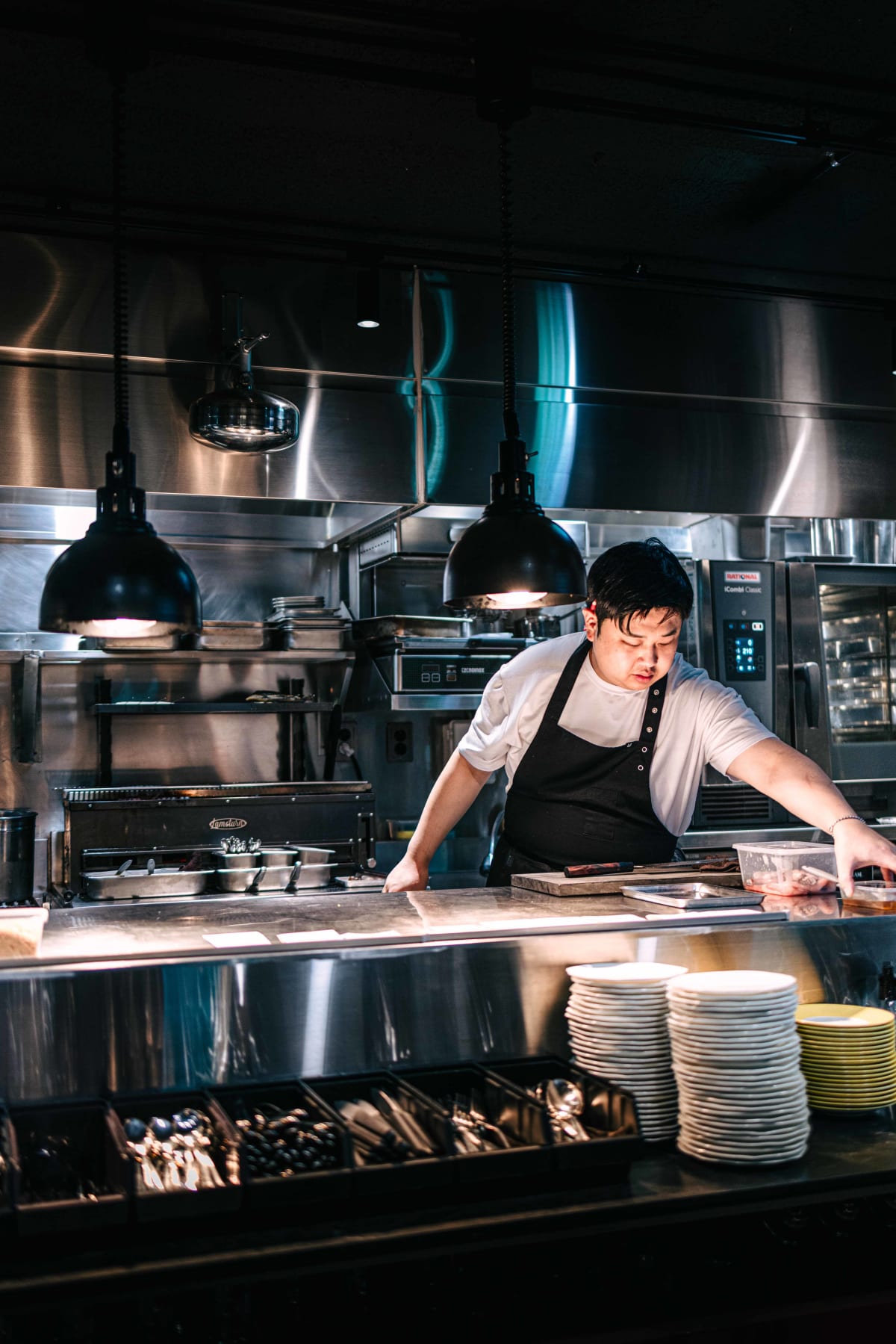
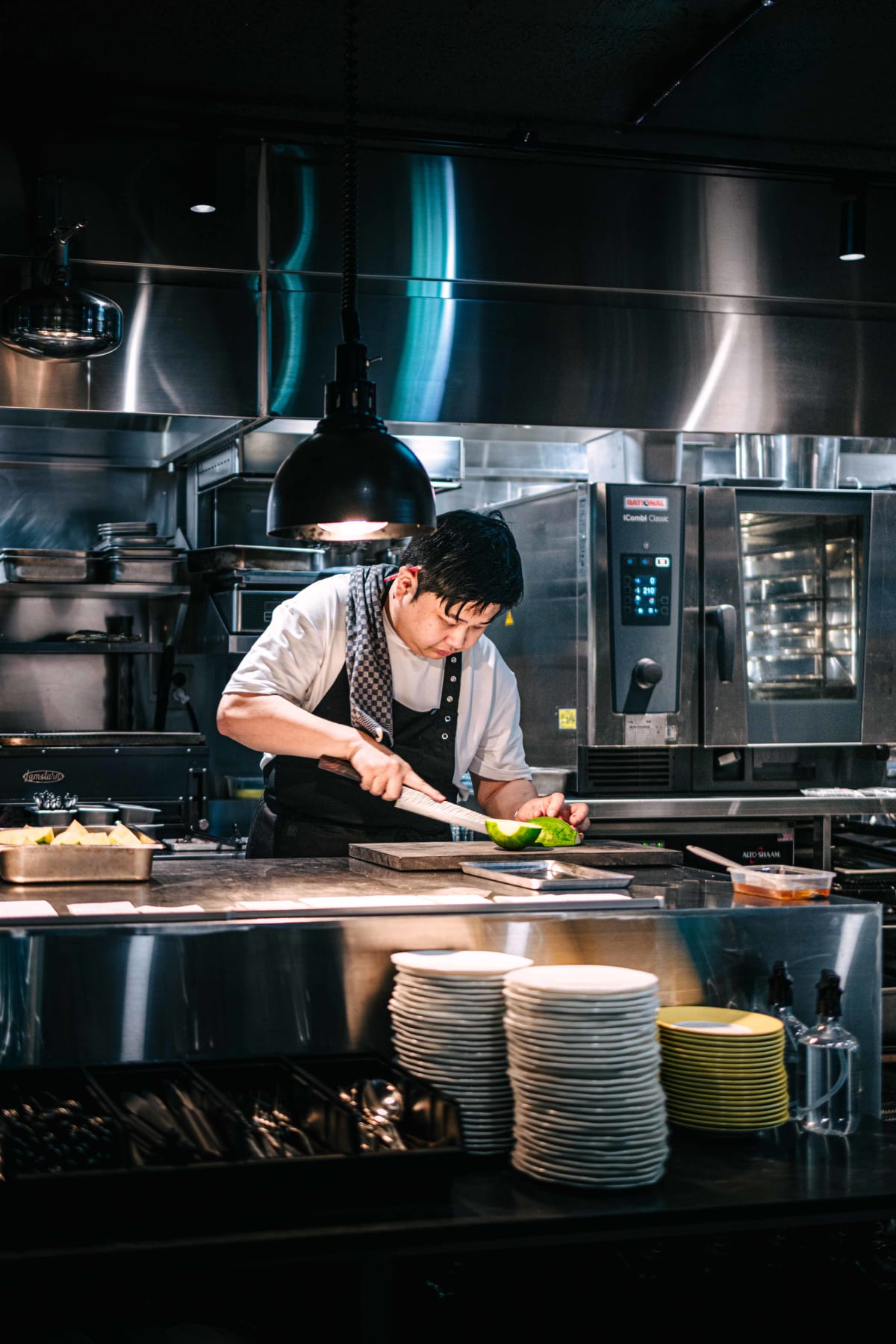
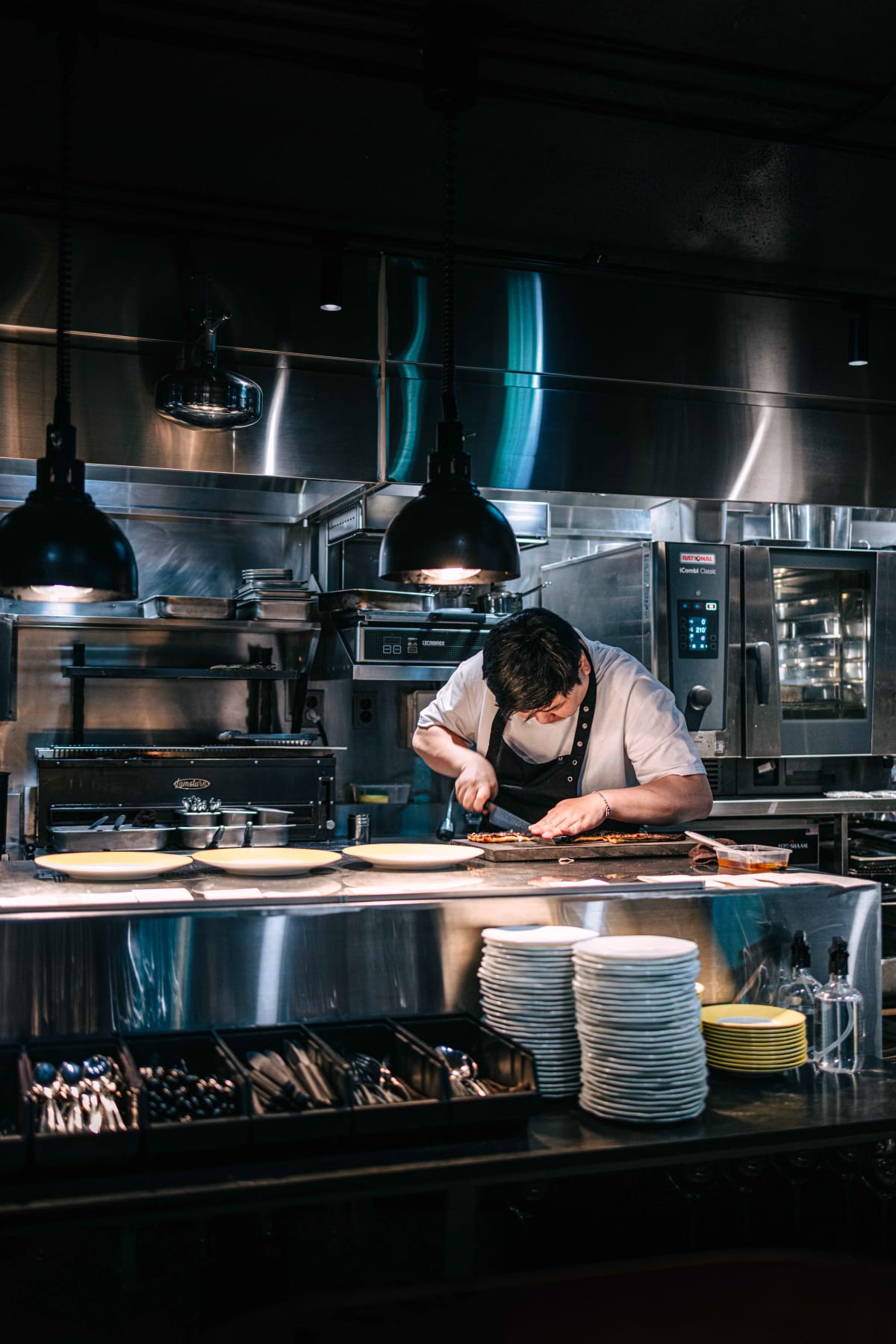
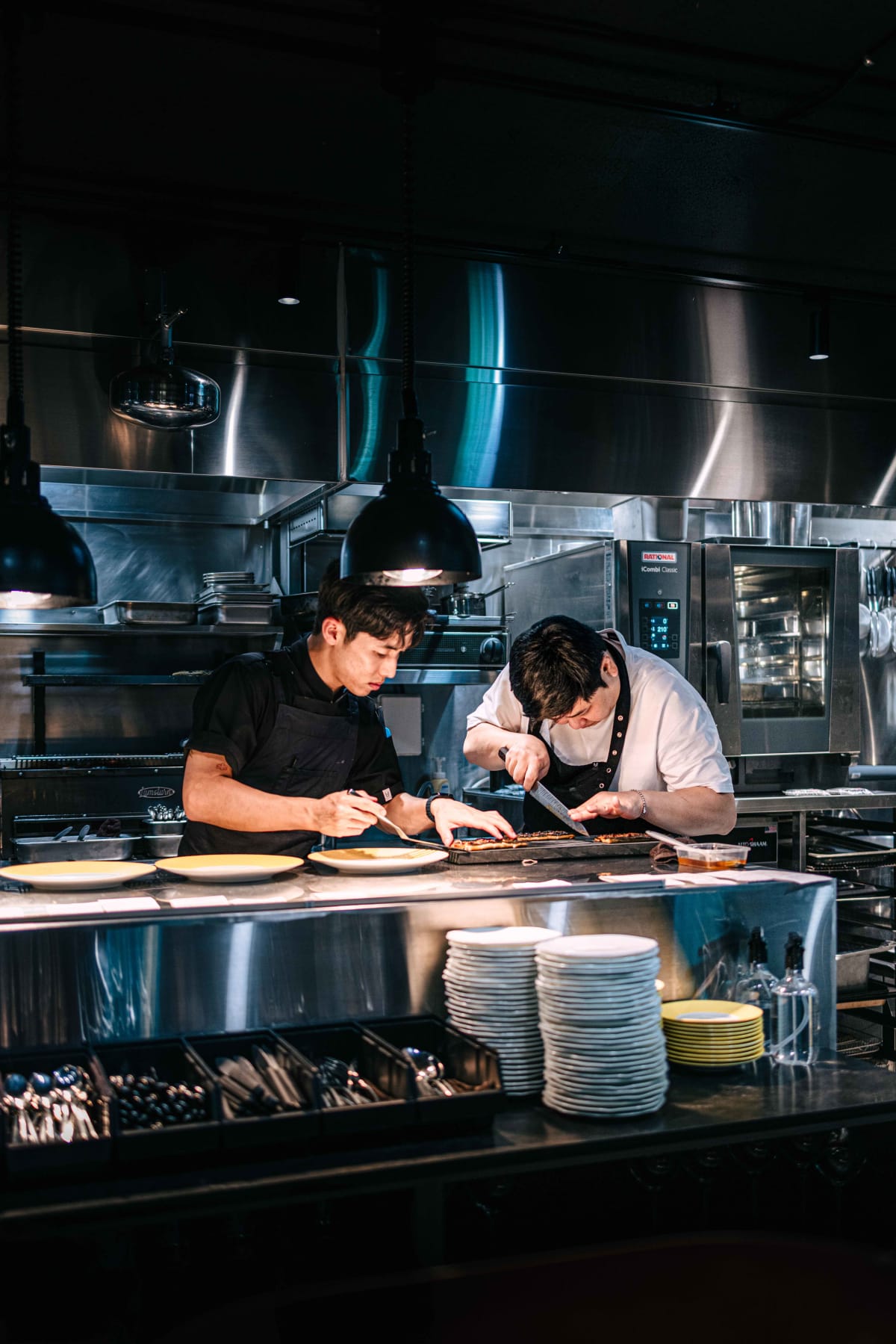
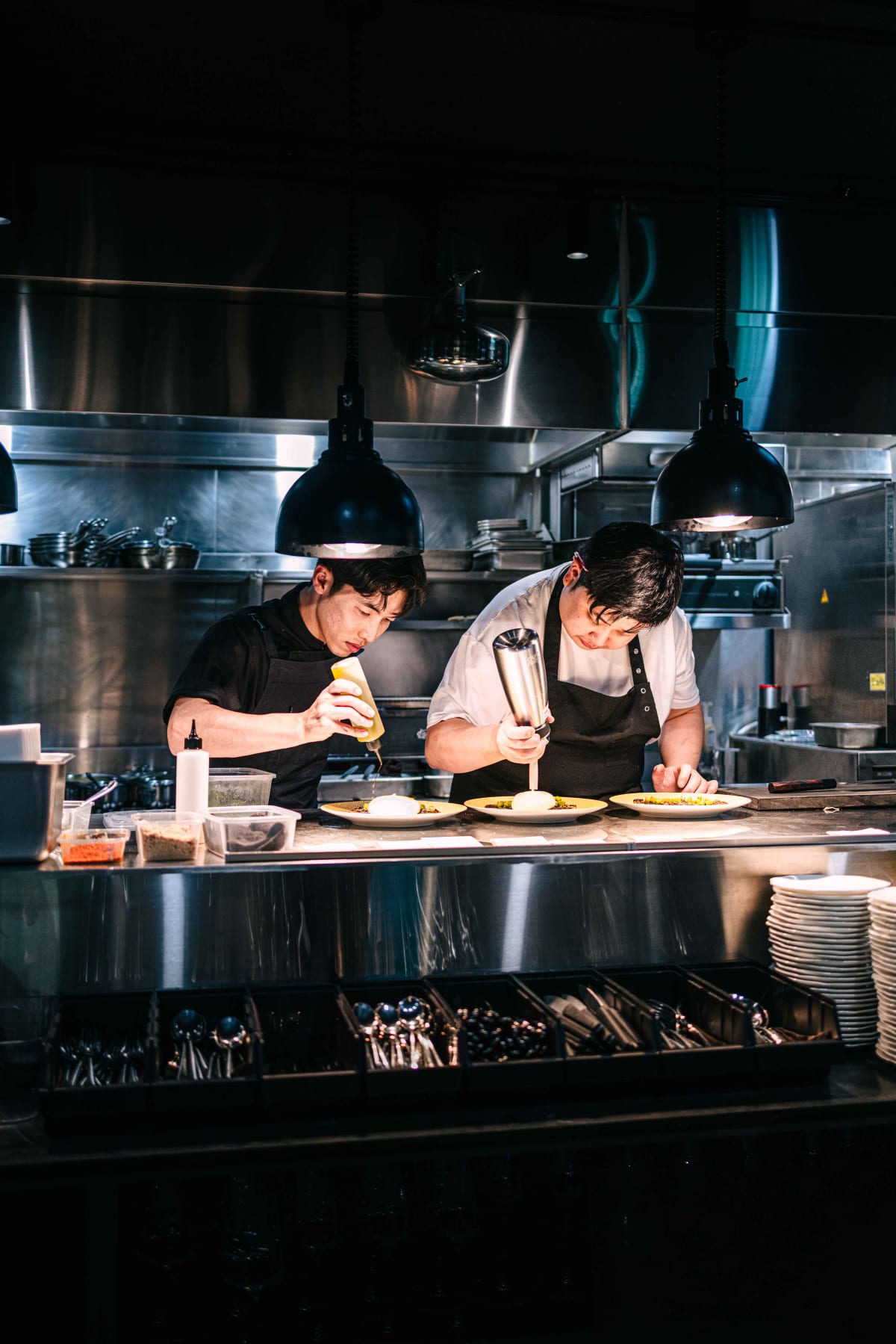
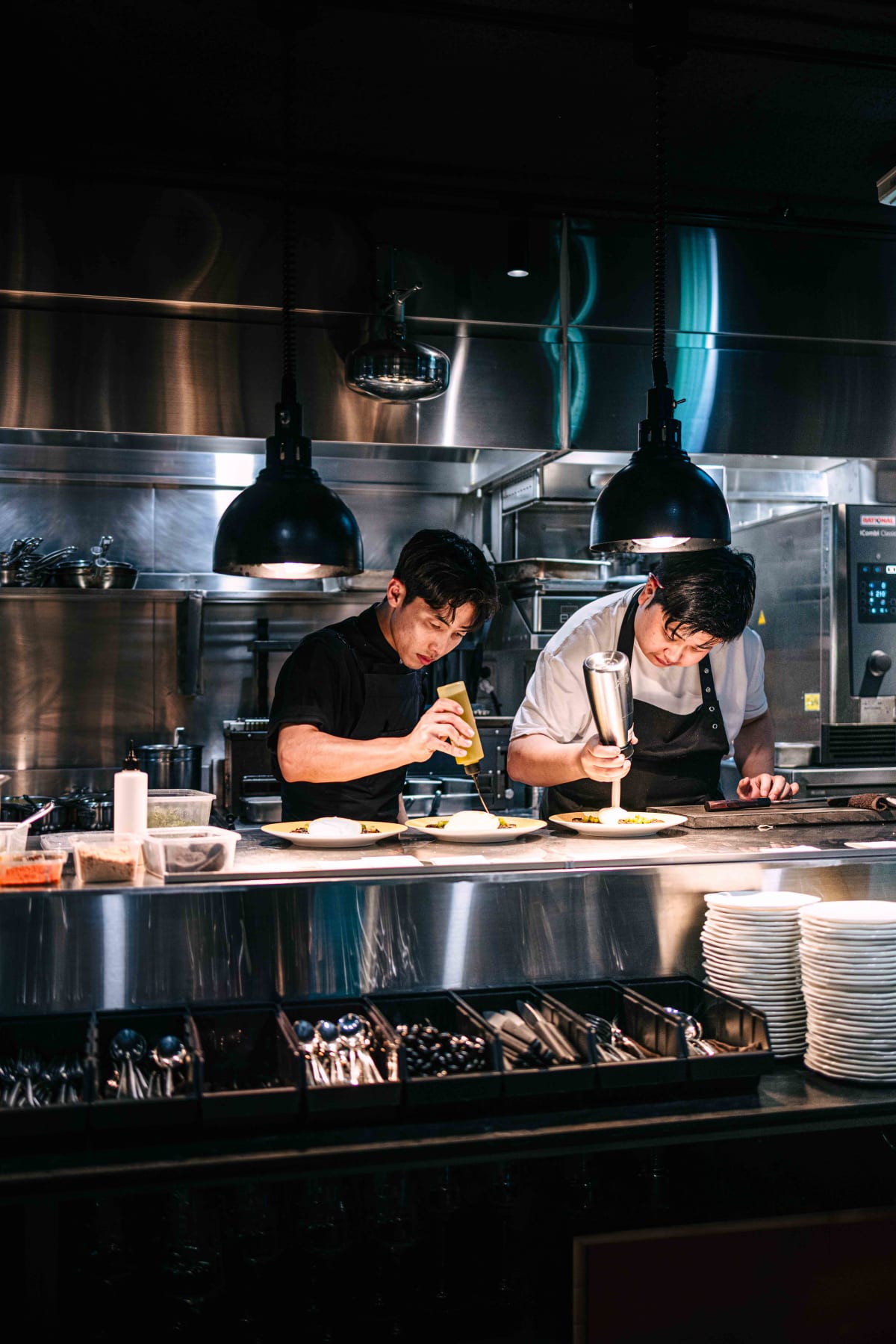
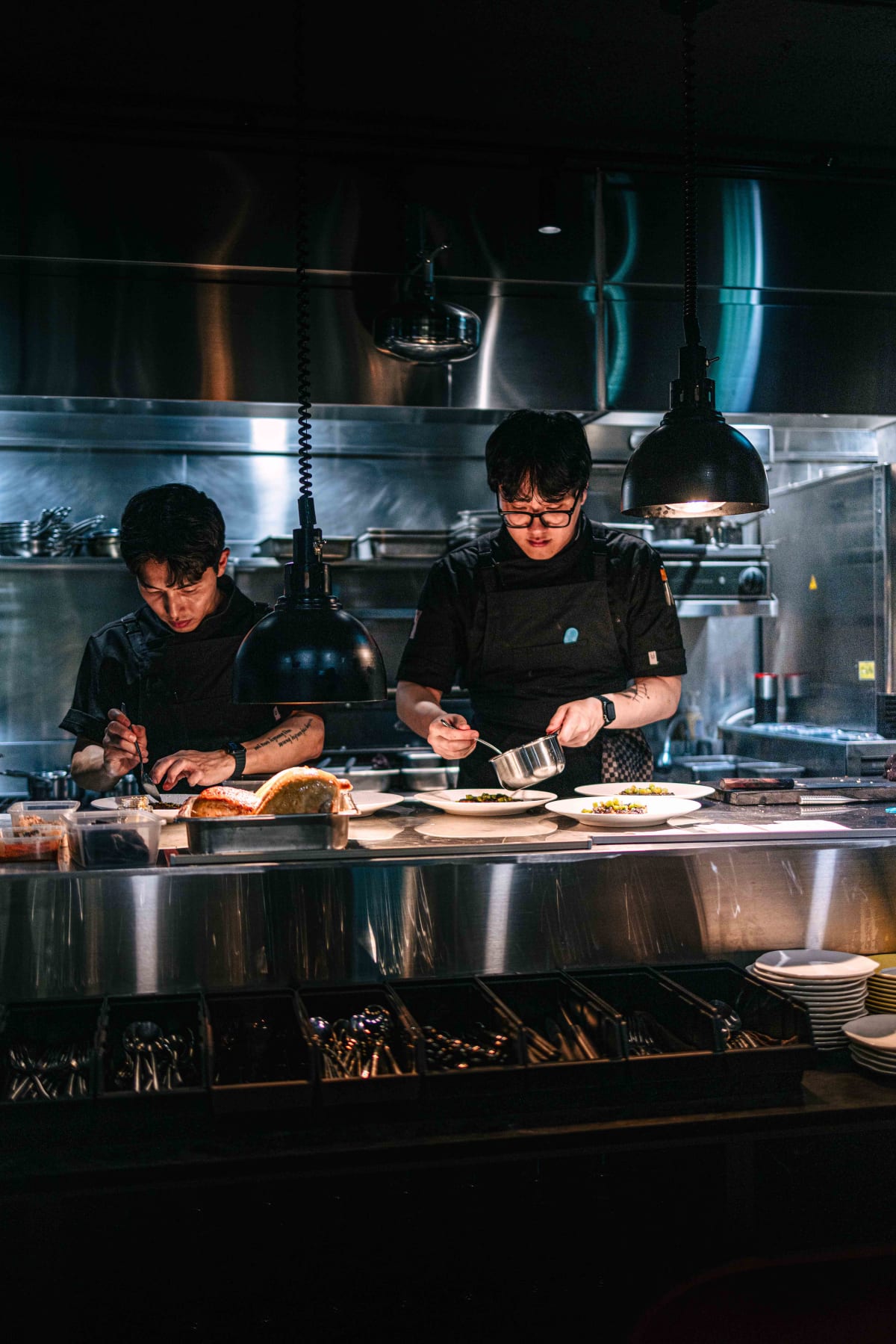
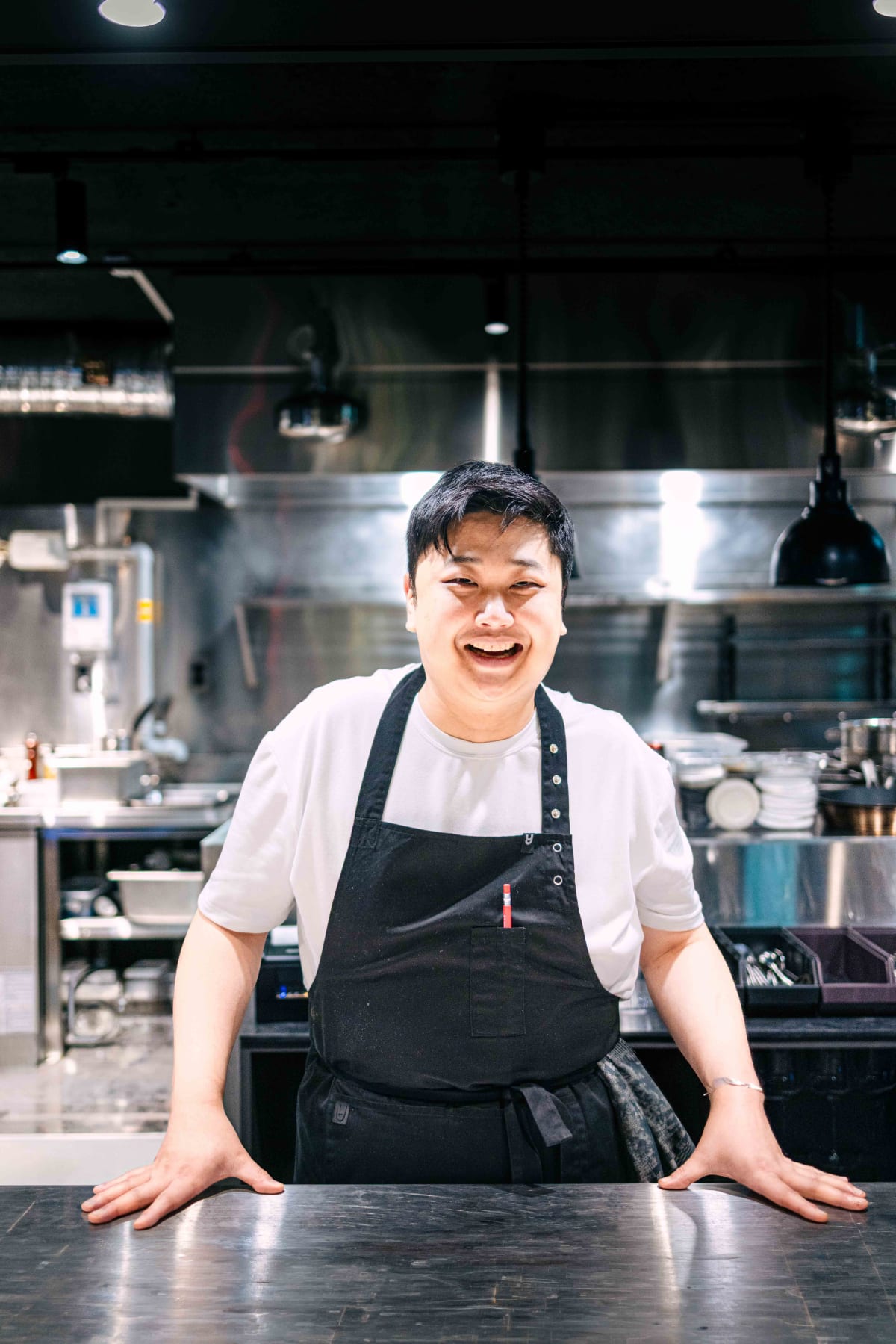
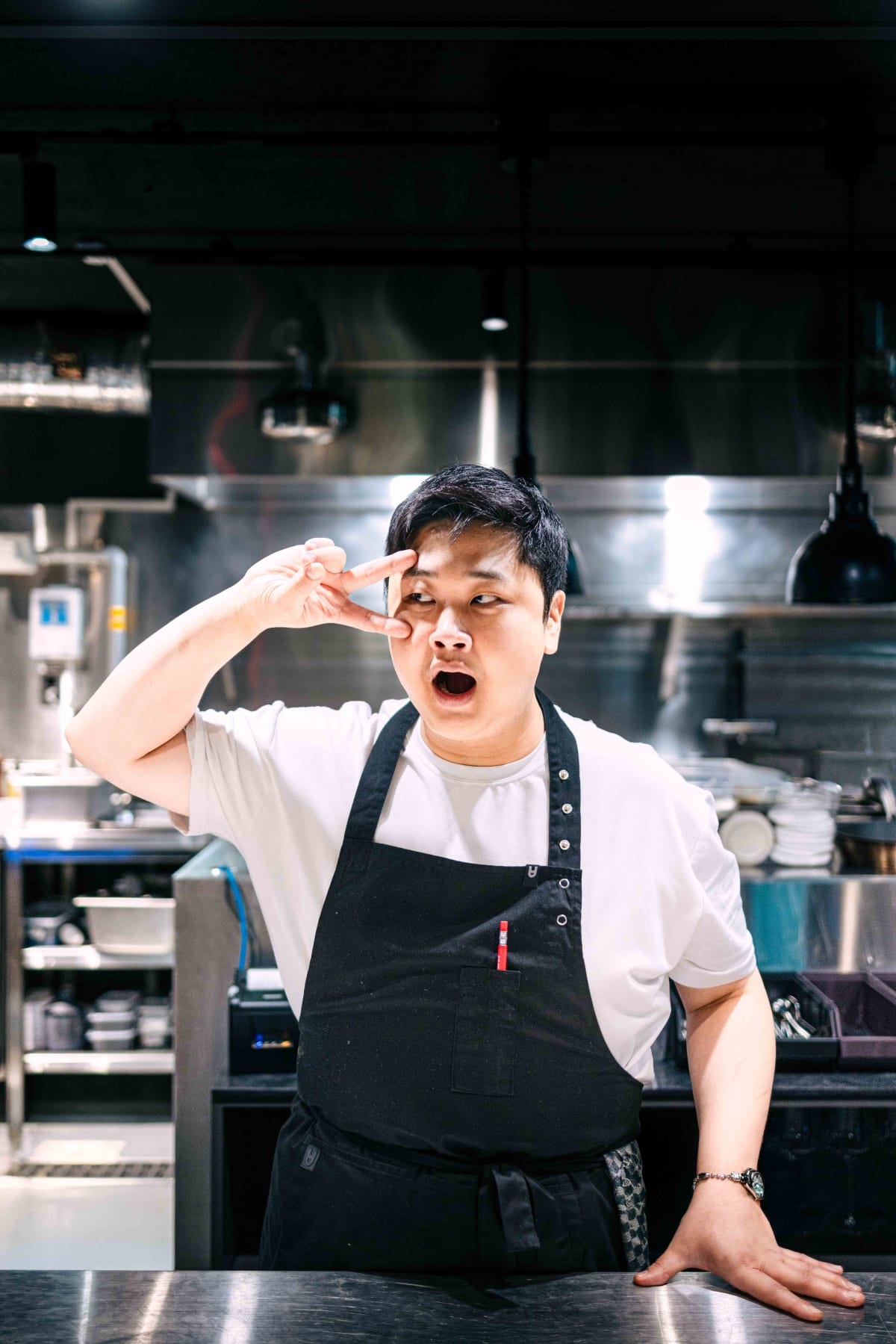
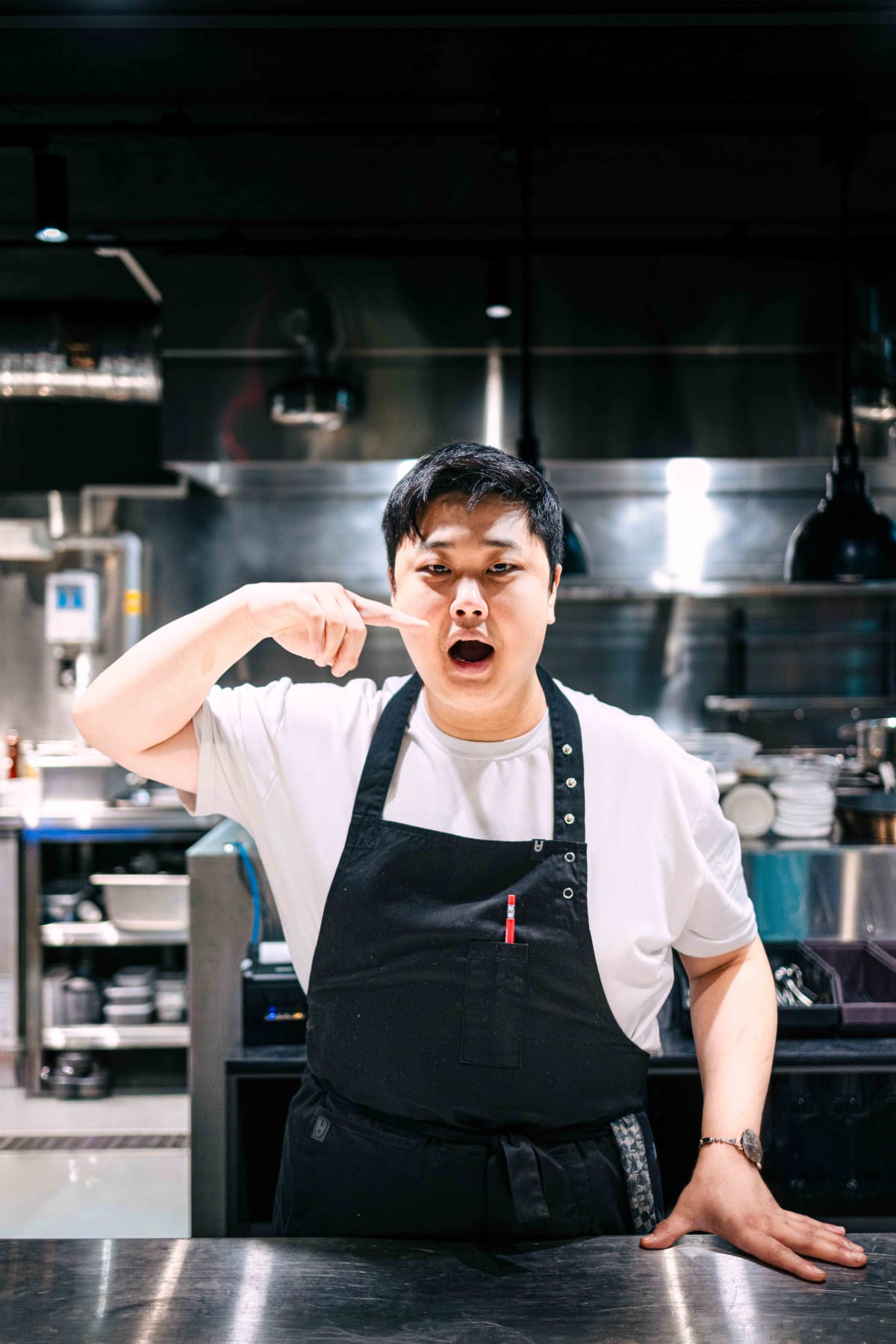
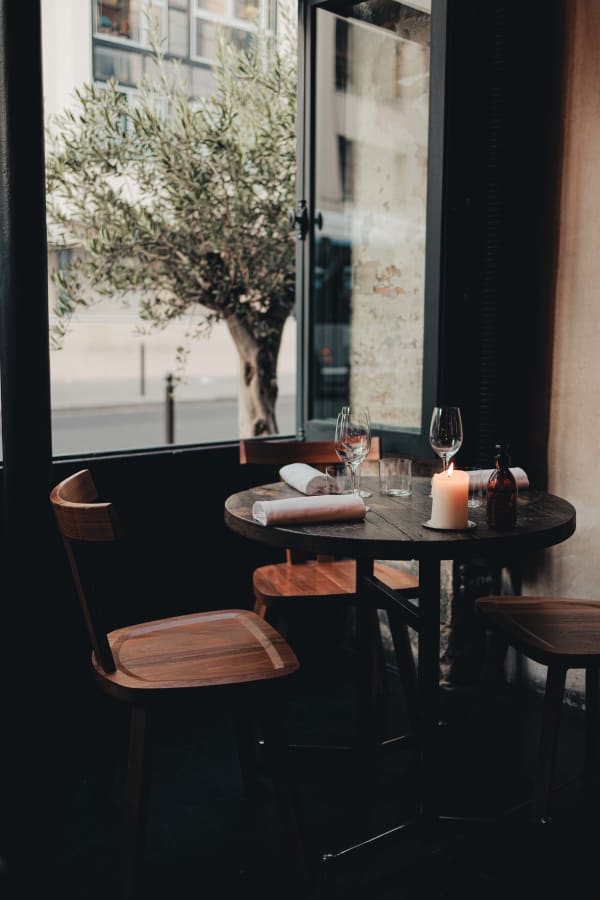
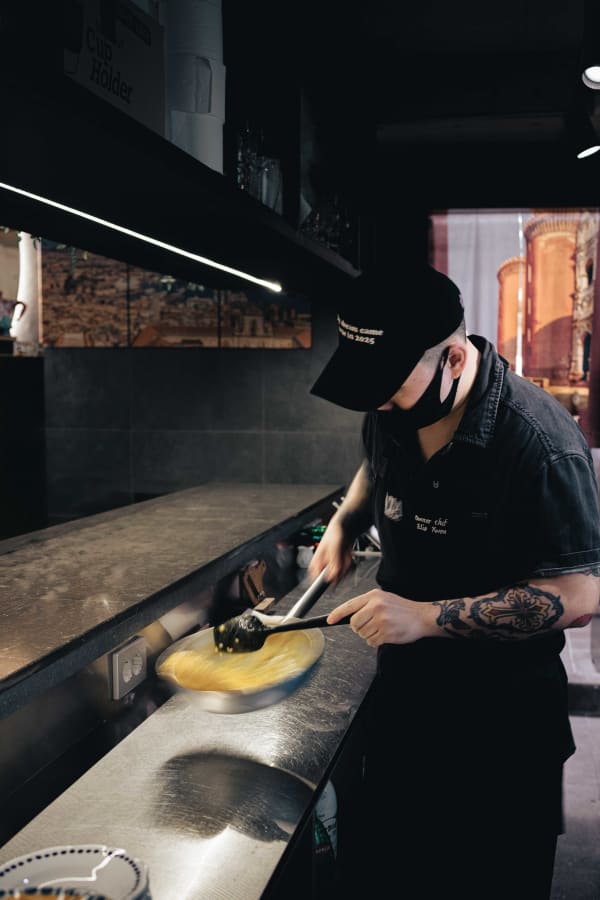
The restaurant is in Apgujeong Rodeo, on the second floor of the building. The room is restrained, built around black tones and modern accent lighting. Apart from the dining hall there is a counter, and from the counter the kitchen is in full view. You can watch Yoon Nam-no cook directly, which felt like watching a celebrity, and he worked with enormous energy.
Section 5·Champagne And Aligoté
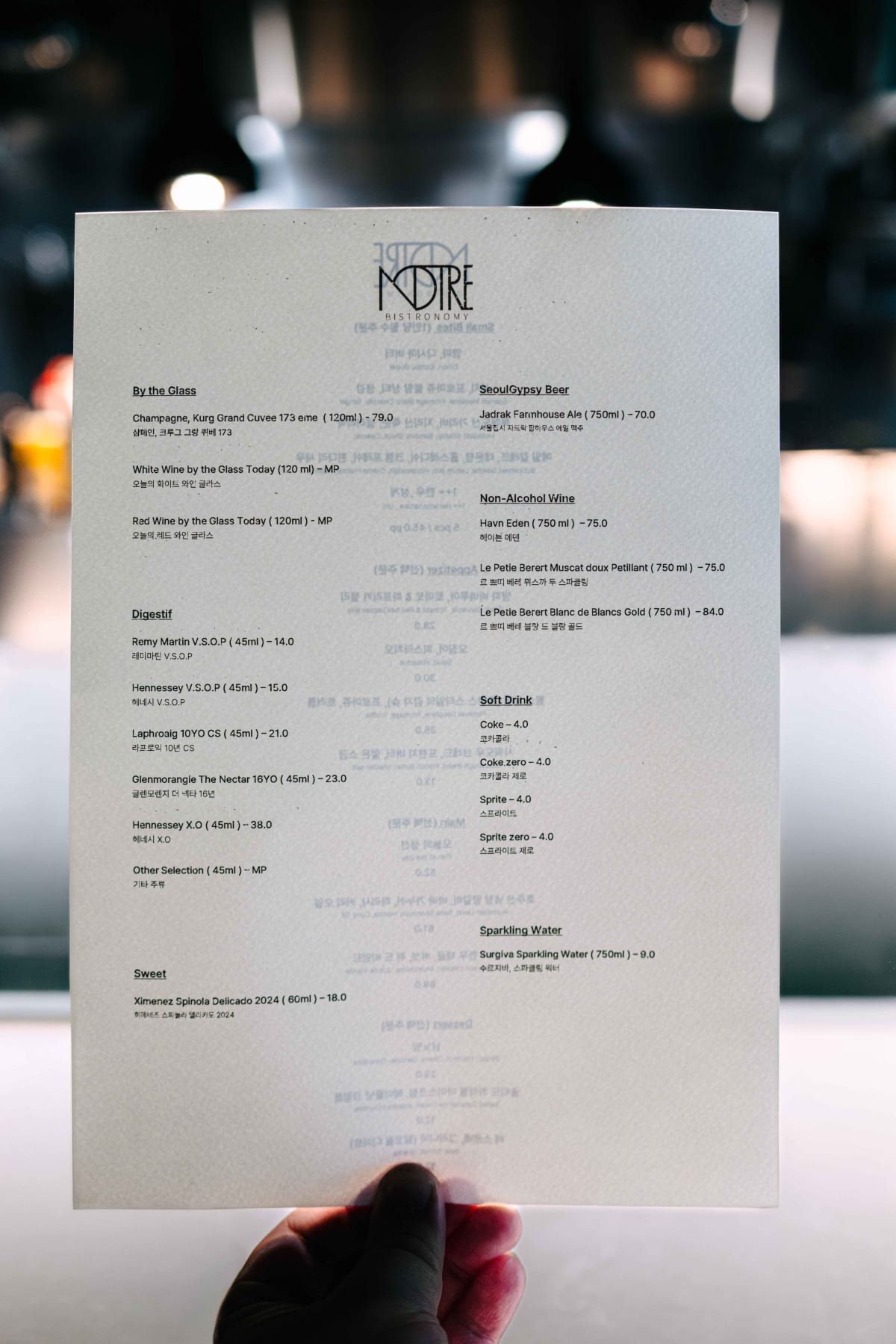
The first drink was Ruinart Blanc de Blancs. To put it plainly, Ruinart Blanc de Blancs is the champagne I find most disappointing for the money, and this evening I went in hoping to be proved wrong and was disappointed again.
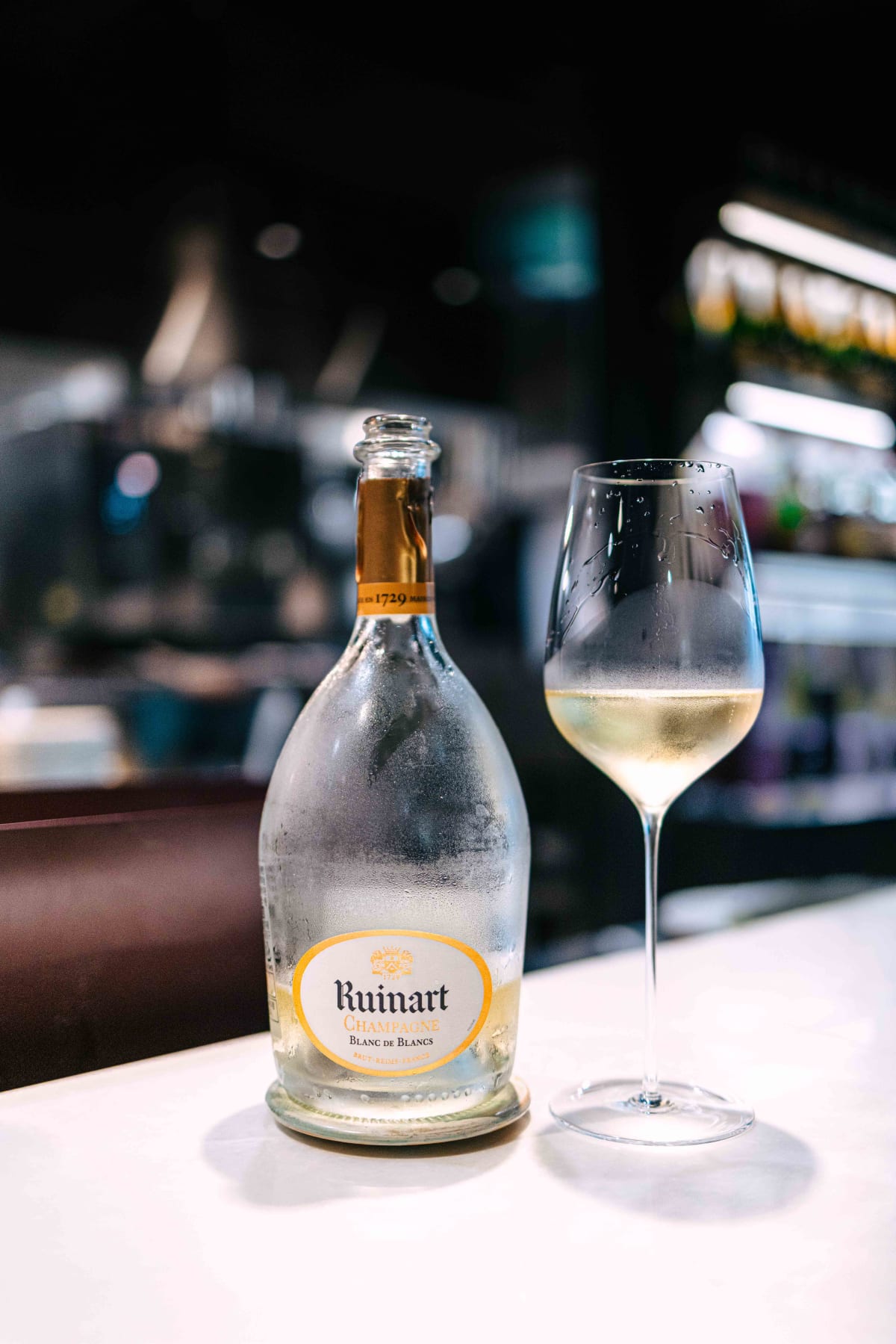
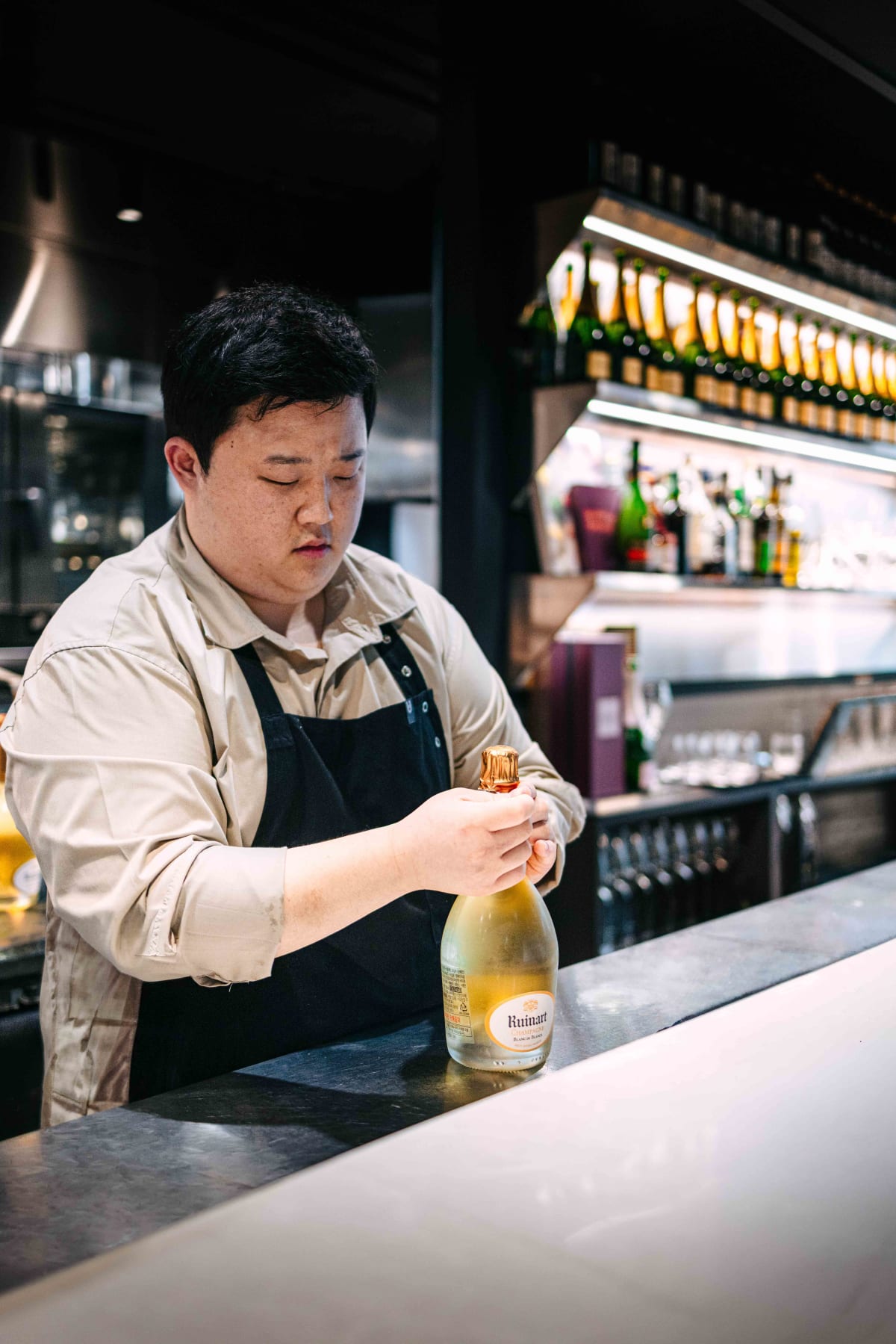
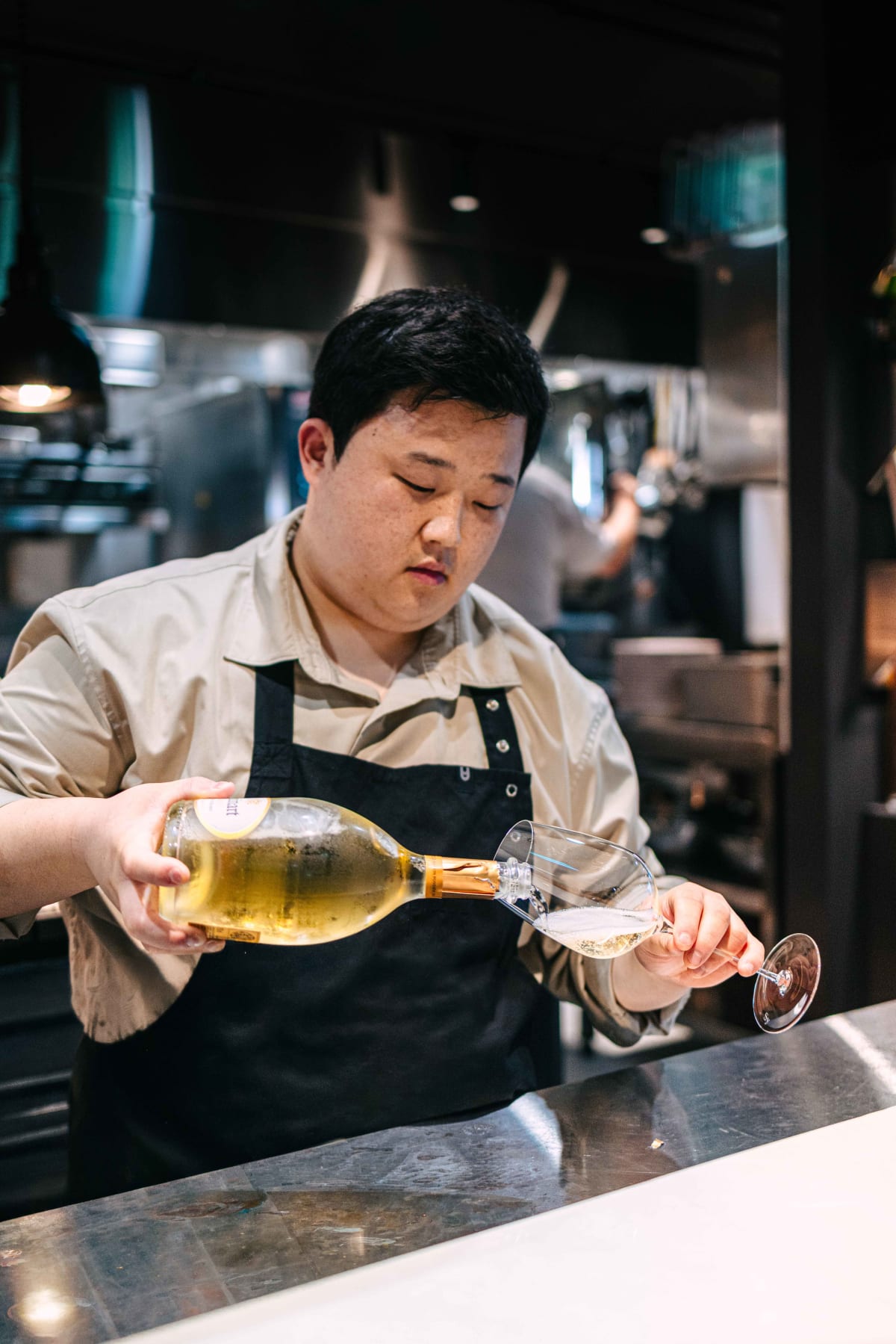
The odd part is that among rosé champagnes my favourite is the Ruinart rosé. This Blanc de Blancs is a little short on acidity, and something about it brings up the grapey note typical of less refined sparkling wines.
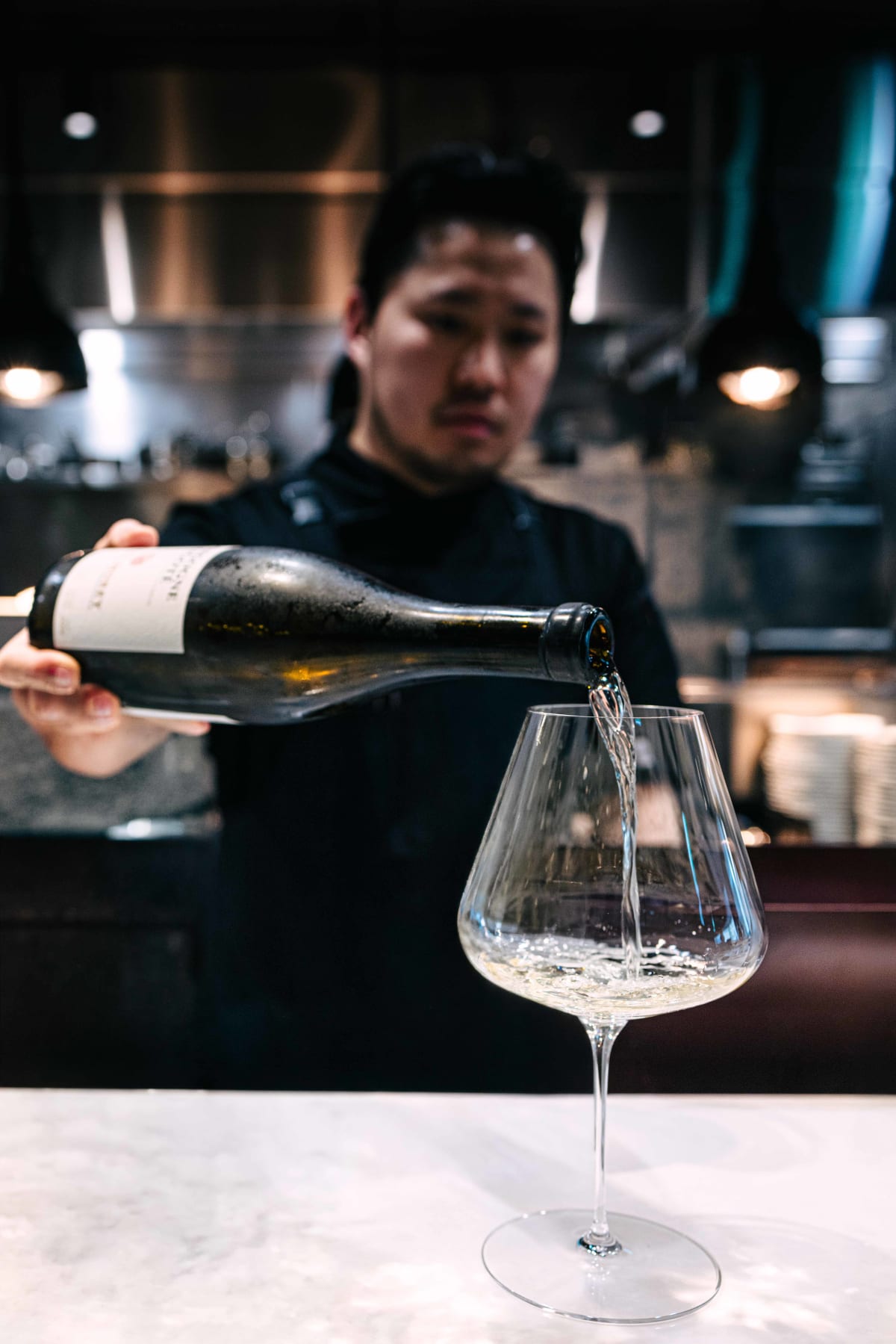
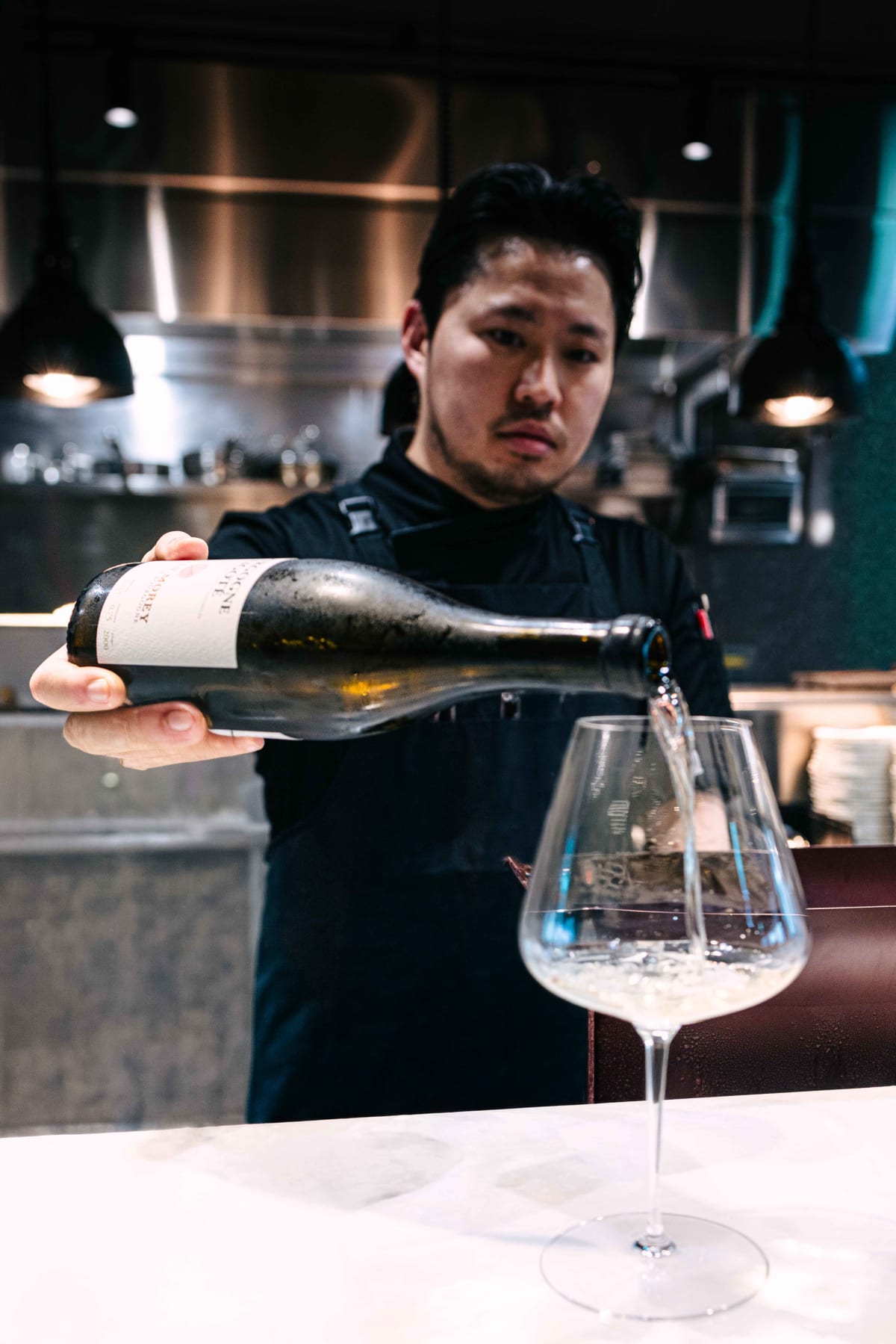
Straight after the champagne we ordered a white, Sylvain Morey's Bourgogne Aligoté 2023. The reductive edge, the nutty aroma and the oak touch were all good, and for an Aligoté it read like a well-made Burgundy Chardonnay. The sommelier sitting beside me talked us through the wine and the grape. Aligoté used to be widely planted in Burgundy but lost ground to Chardonnay as the region commercialized, and because it is light in body and lean with high acidity it went a long stretch without being made seriously.
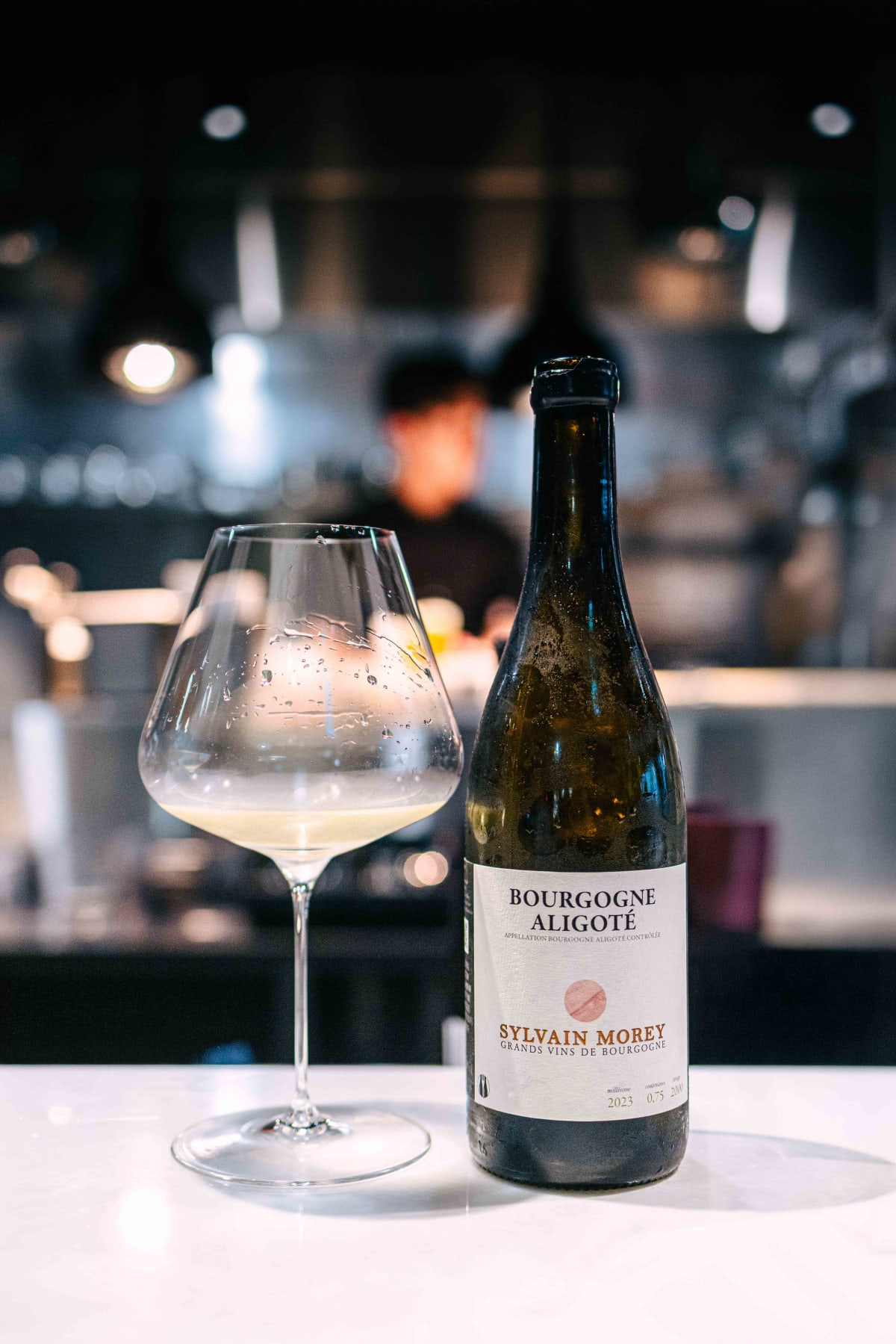
Then as the climate warmed and winemaking improved, plenty of good Aligoté started coming through. This producer is a domaine based in Chassagne-Montrachet, and the Aligoté comes from a tiny quantity of fruit planted in 1997 in a plot called Les Pierres that straddles the village boundary of Chassagne-Montrachet, aged on the lees in 350-litre barrels with no new oak. Set against the food that came out that evening, the wines whose acidity hit hard were the ones that fitted best.
Section 6·Five Small Bites
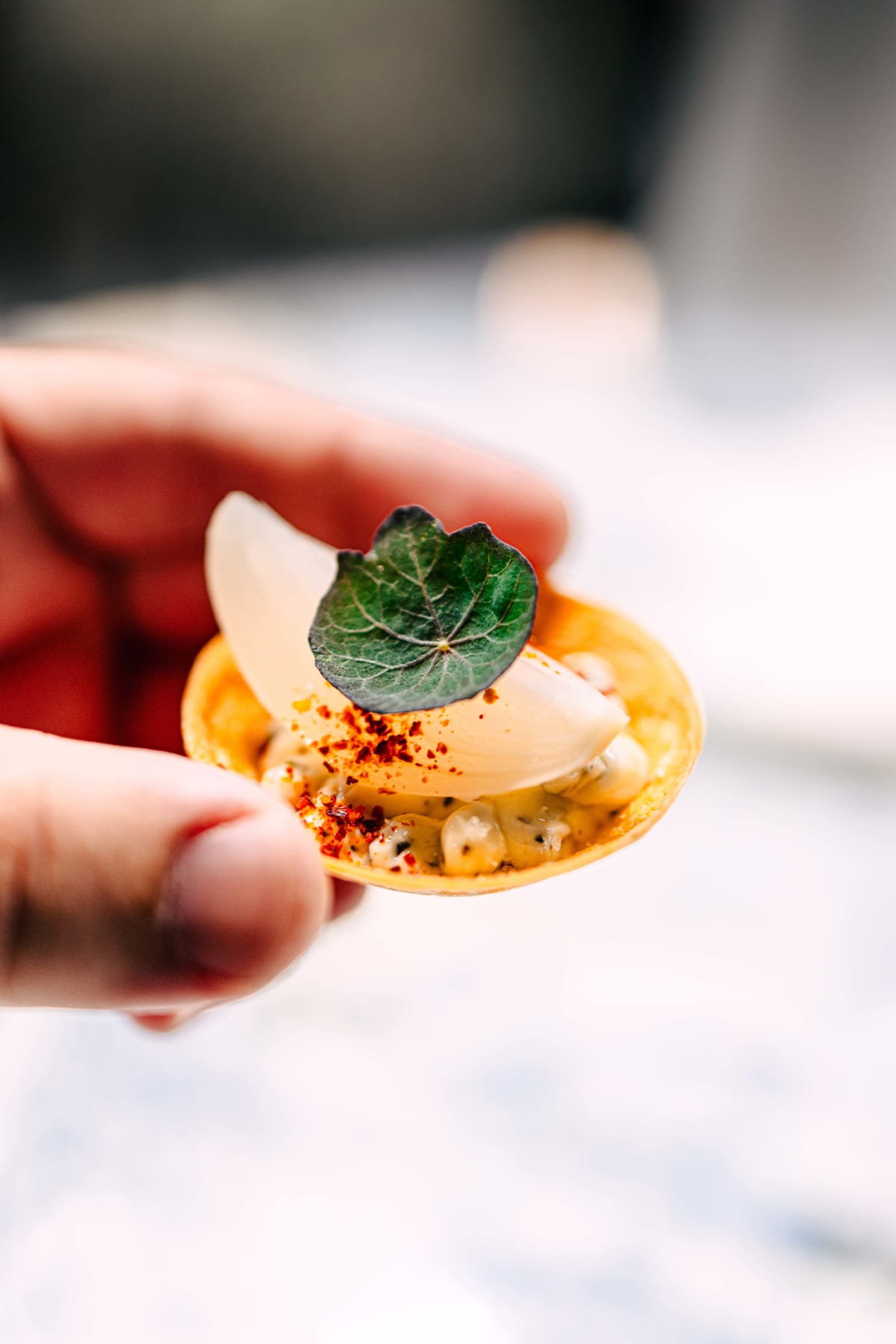
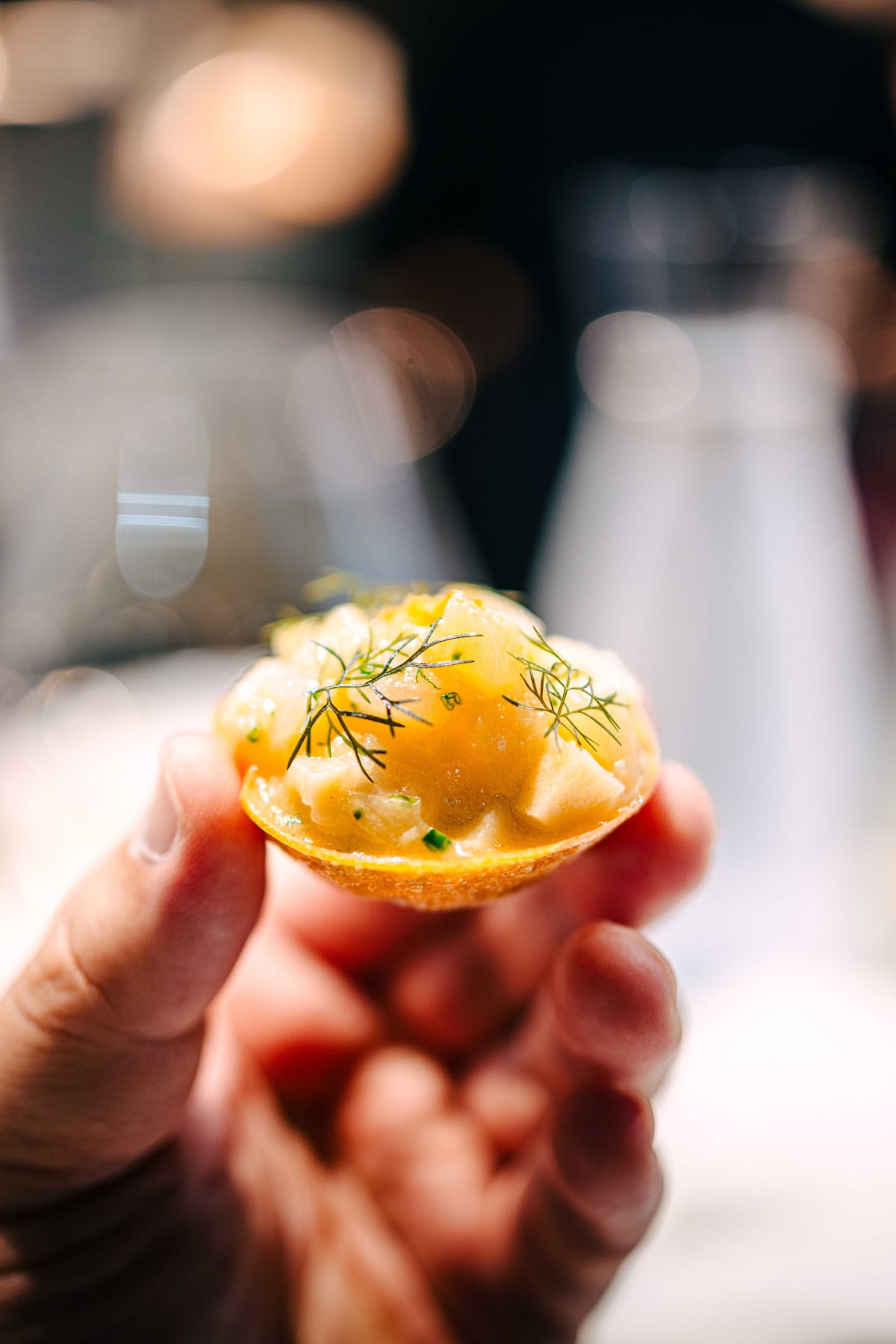
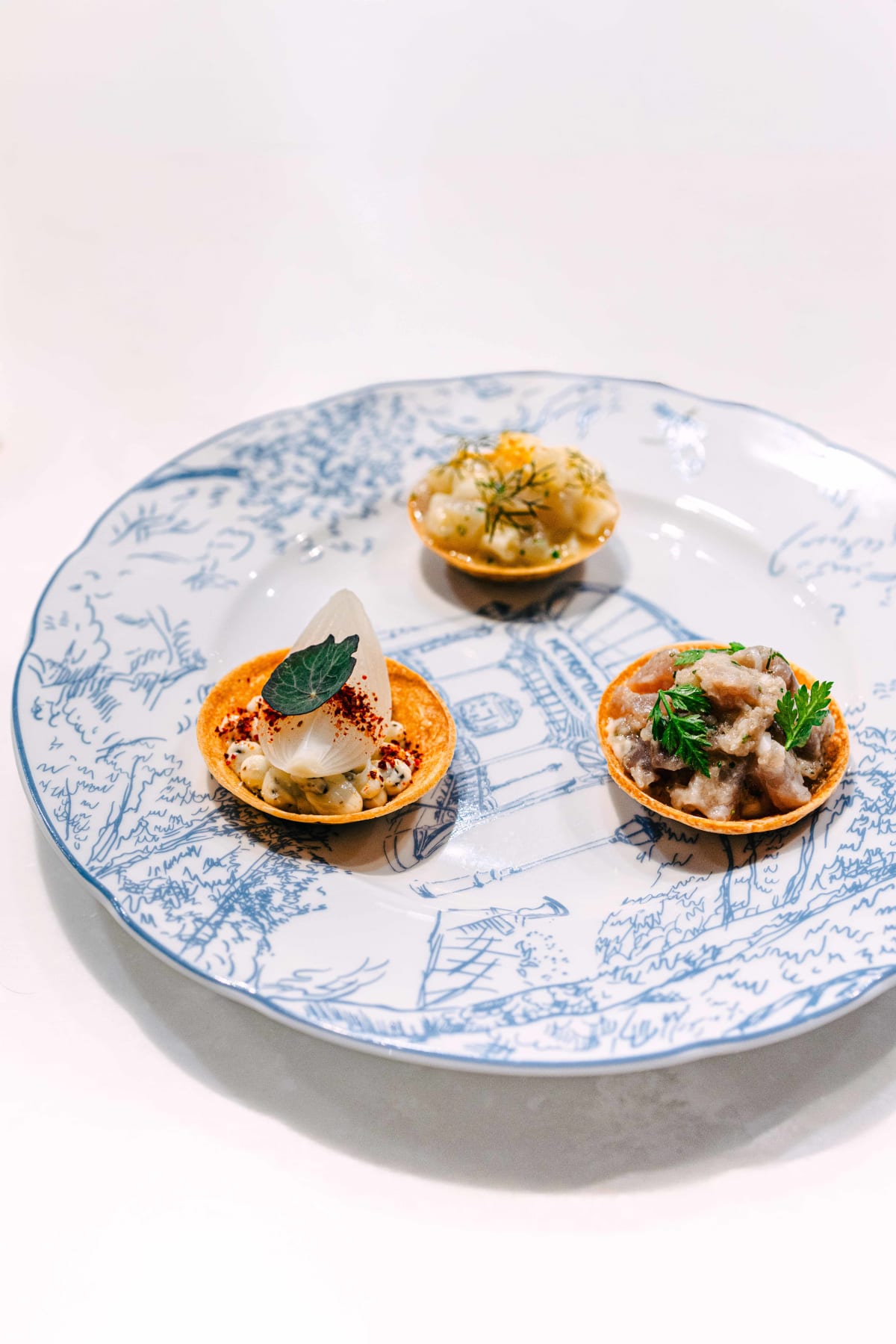
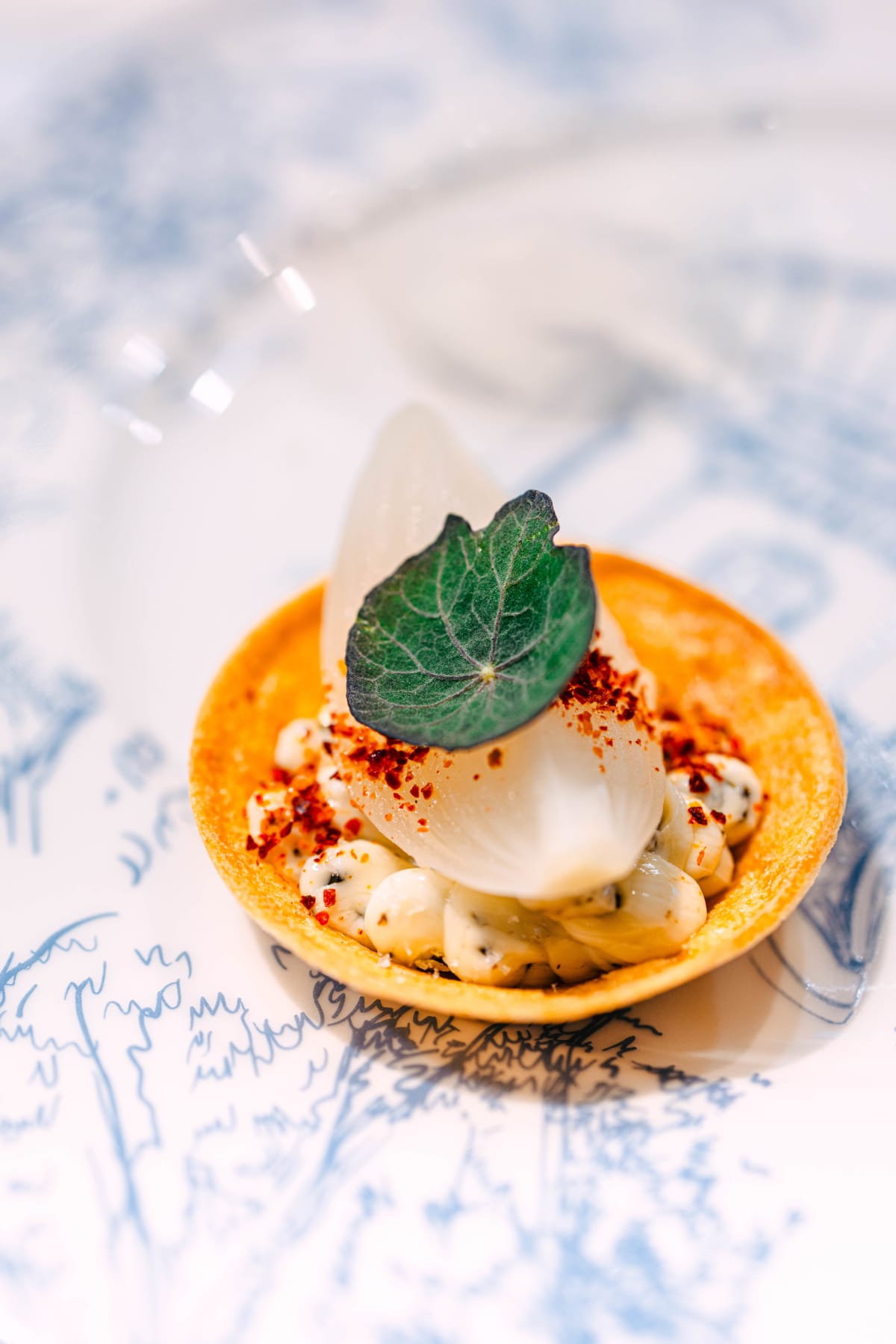
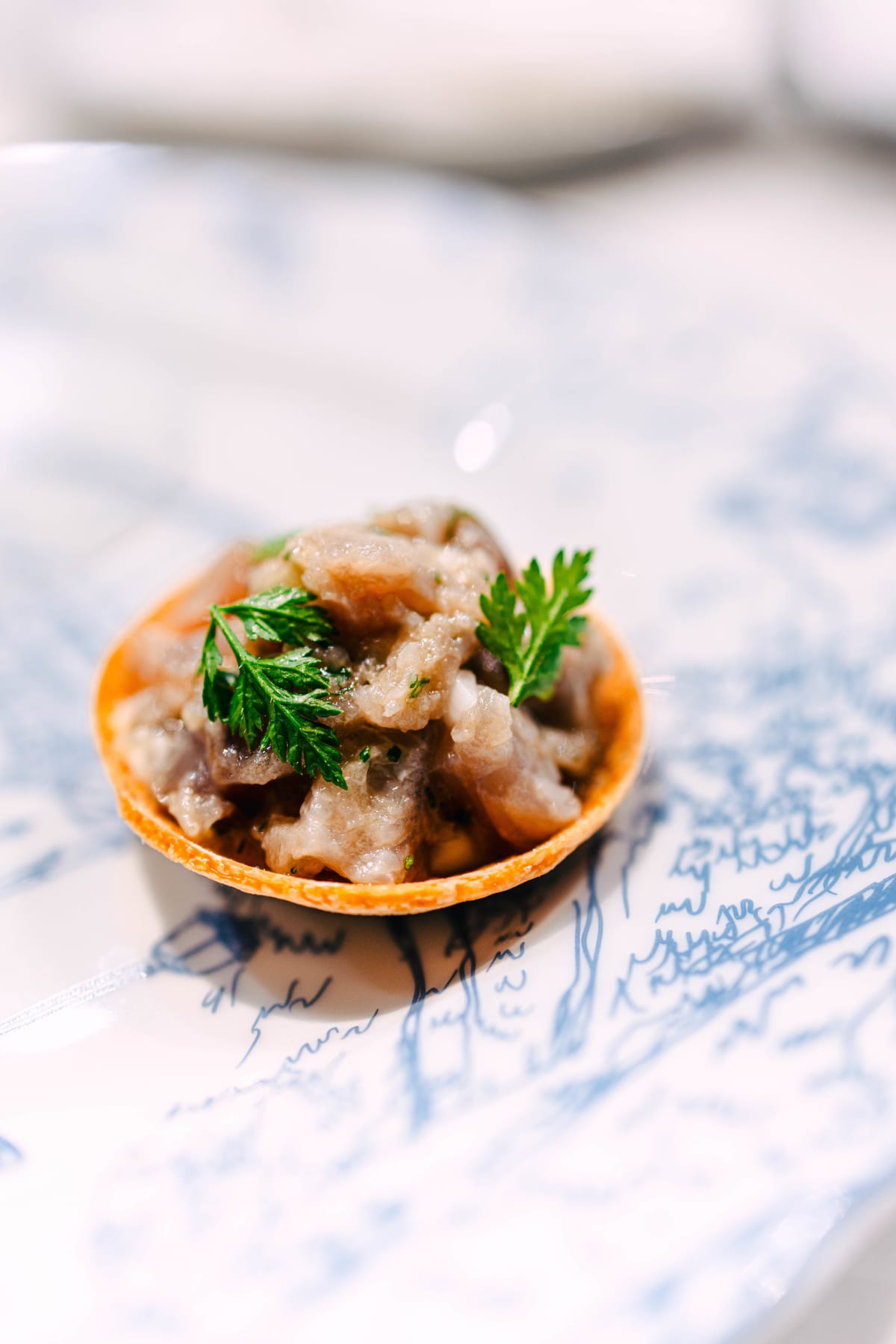
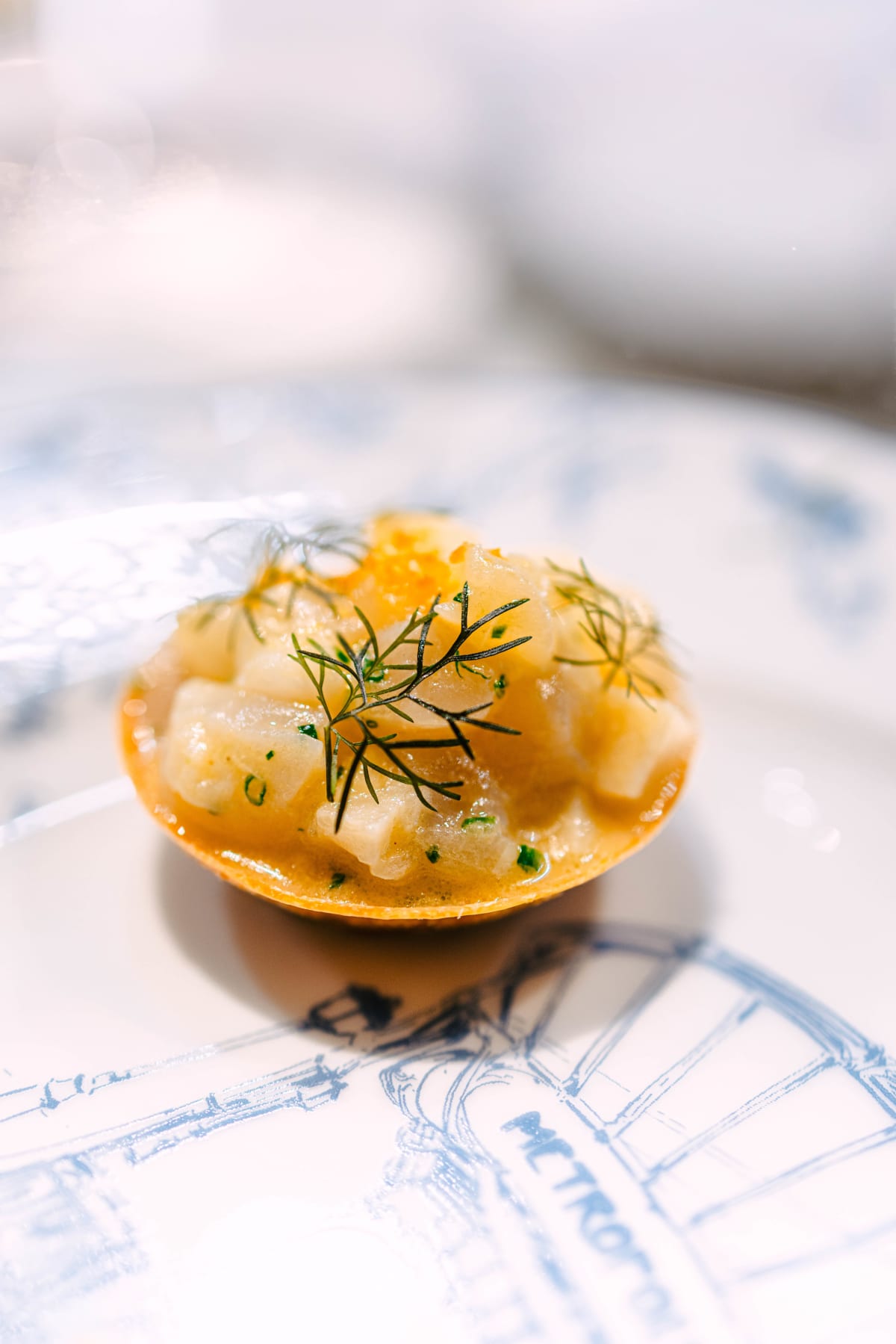
Three of the five small bites arrived together on one plate. At six o'clock, onion with kelp butter and Espelette pepper on top. At eleven, scallop and bamboo shoot with the inside filled with celeriac. At one, smoked cream with Spanish mackerel over it. We were told to eat them in the order six, eleven, one.
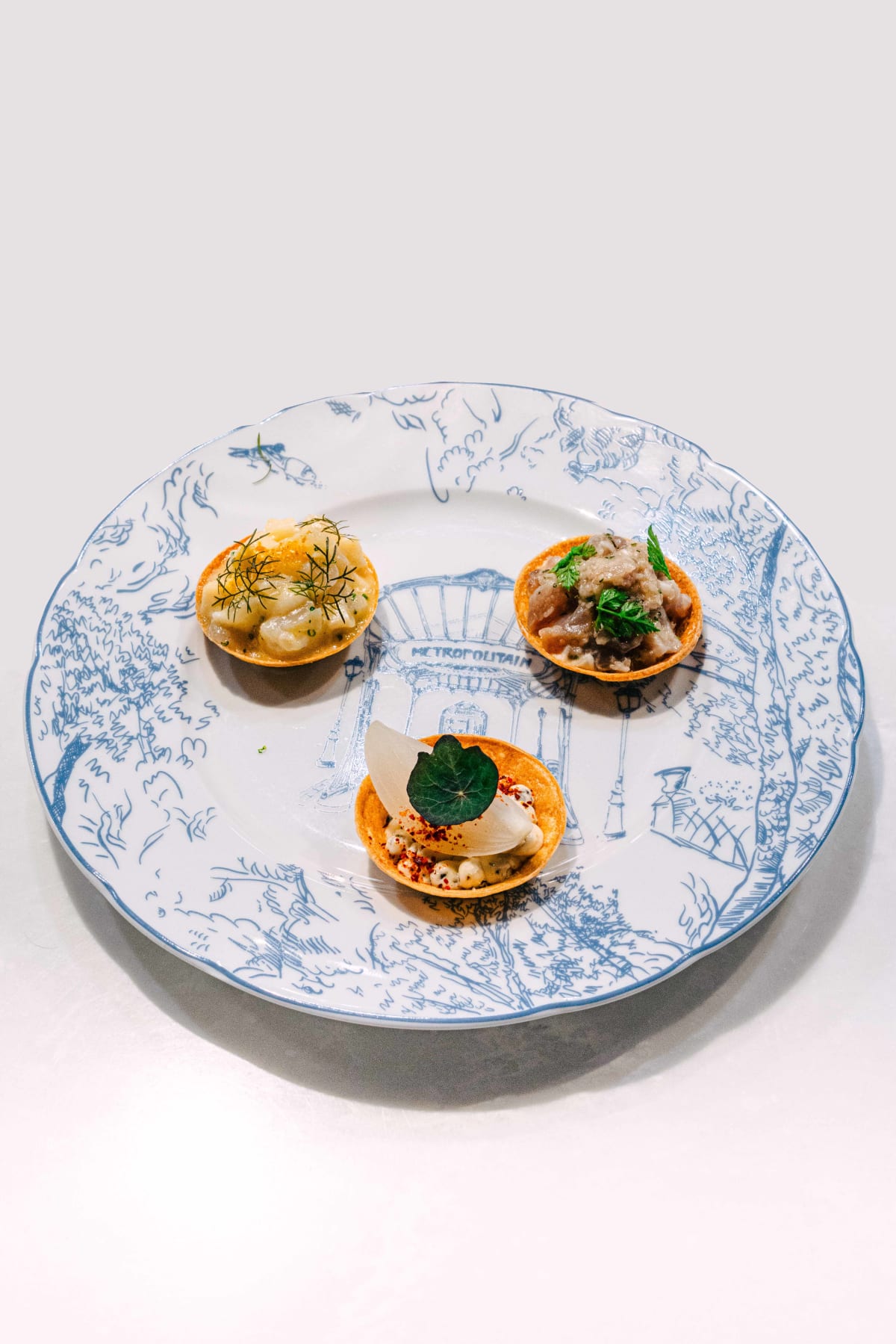
The onion I ate first was off balance. The baked, roasted note of the base clashed with the allium and sat apart from it.
The scallop was fine. The texture was good, and of the three it had the most delicacy. It went well with the champagne too.
The Spanish mackerel at the end had taken on smoke beautifully, with texture and complexity and good balance, and I enjoyed it. It had the most impact of the three.
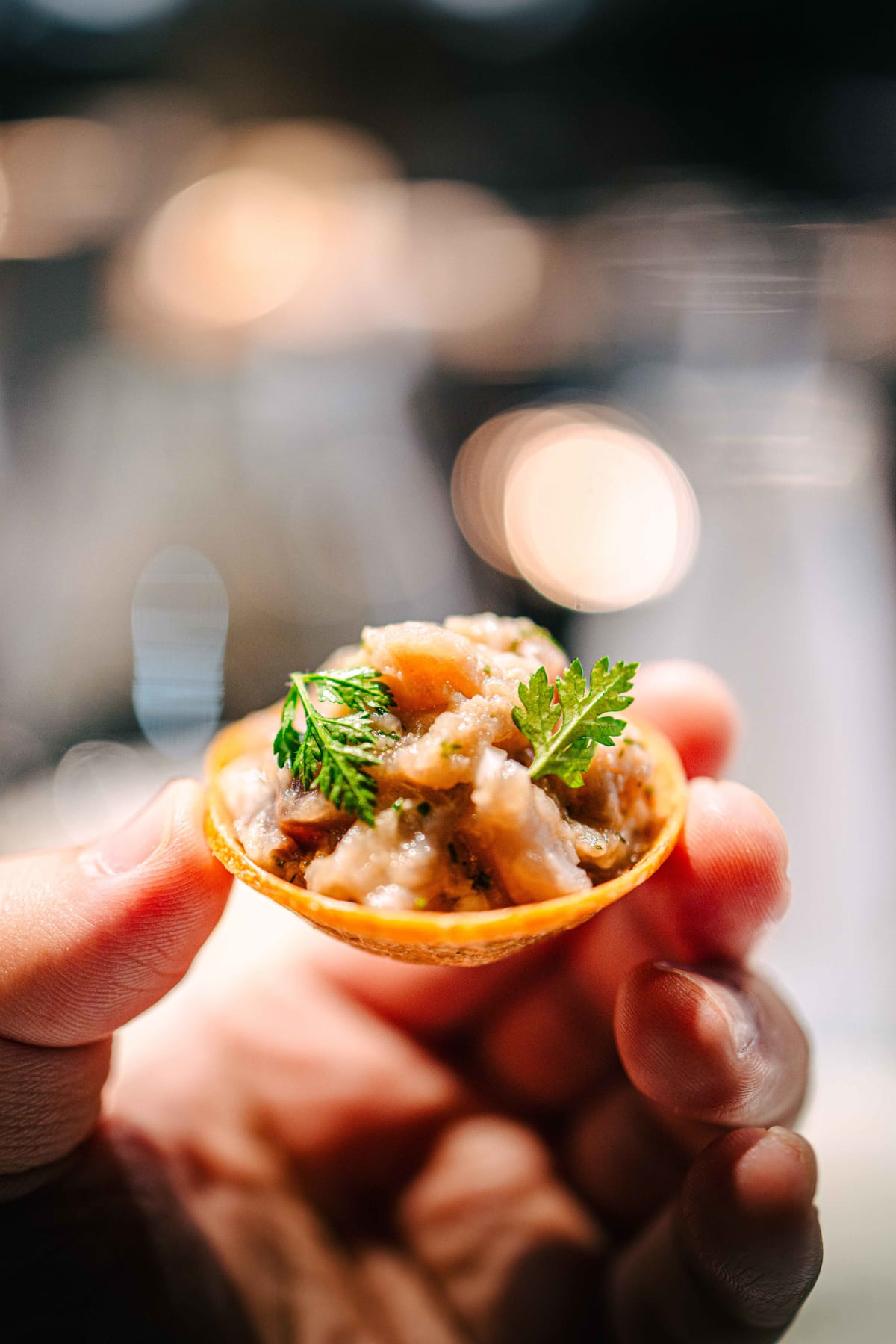
That said, the base under all three was a little disappointing. It had some thickness to it and did not feel refined. A thinner base, a thin sheet shattering as you bite, would have been better.
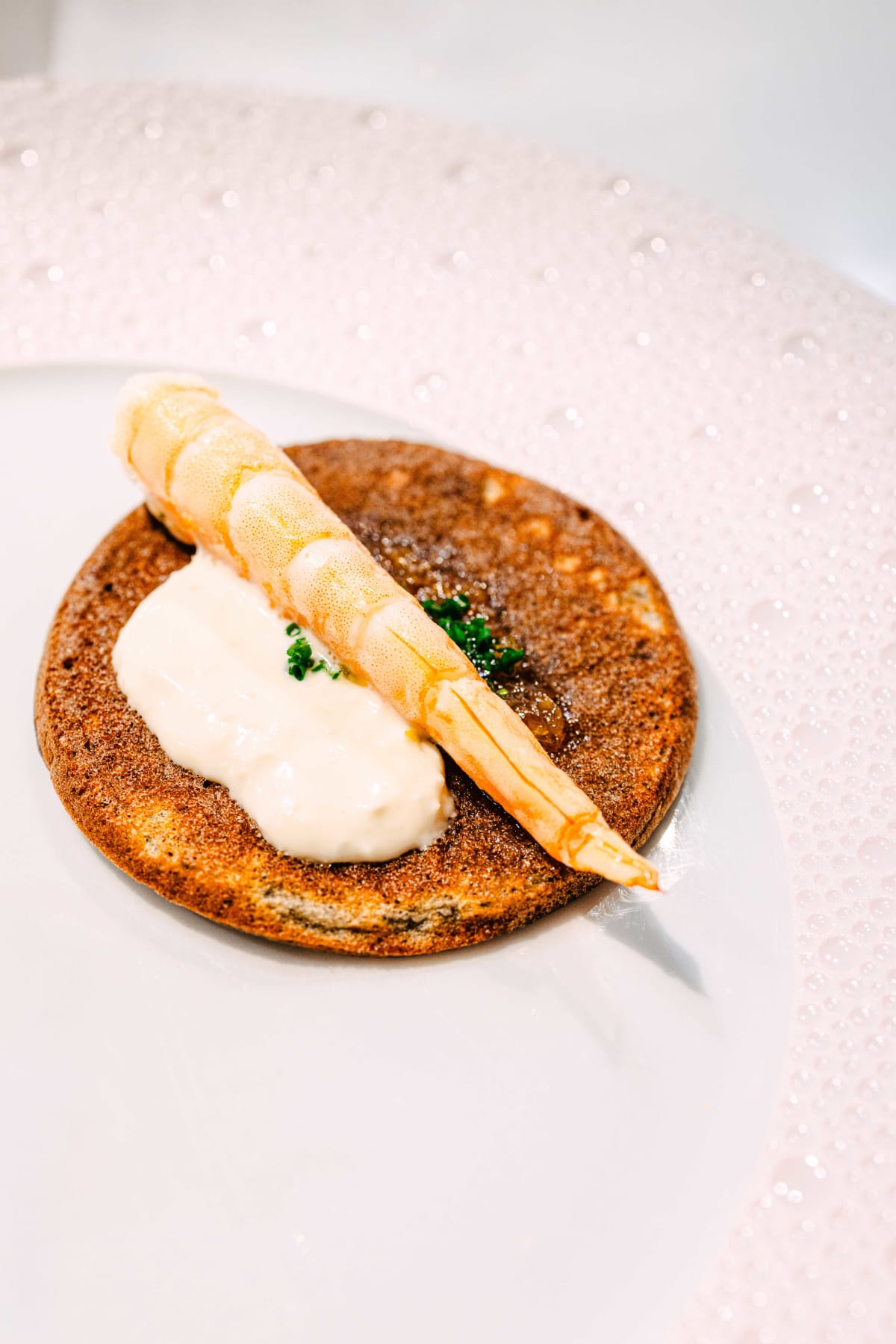
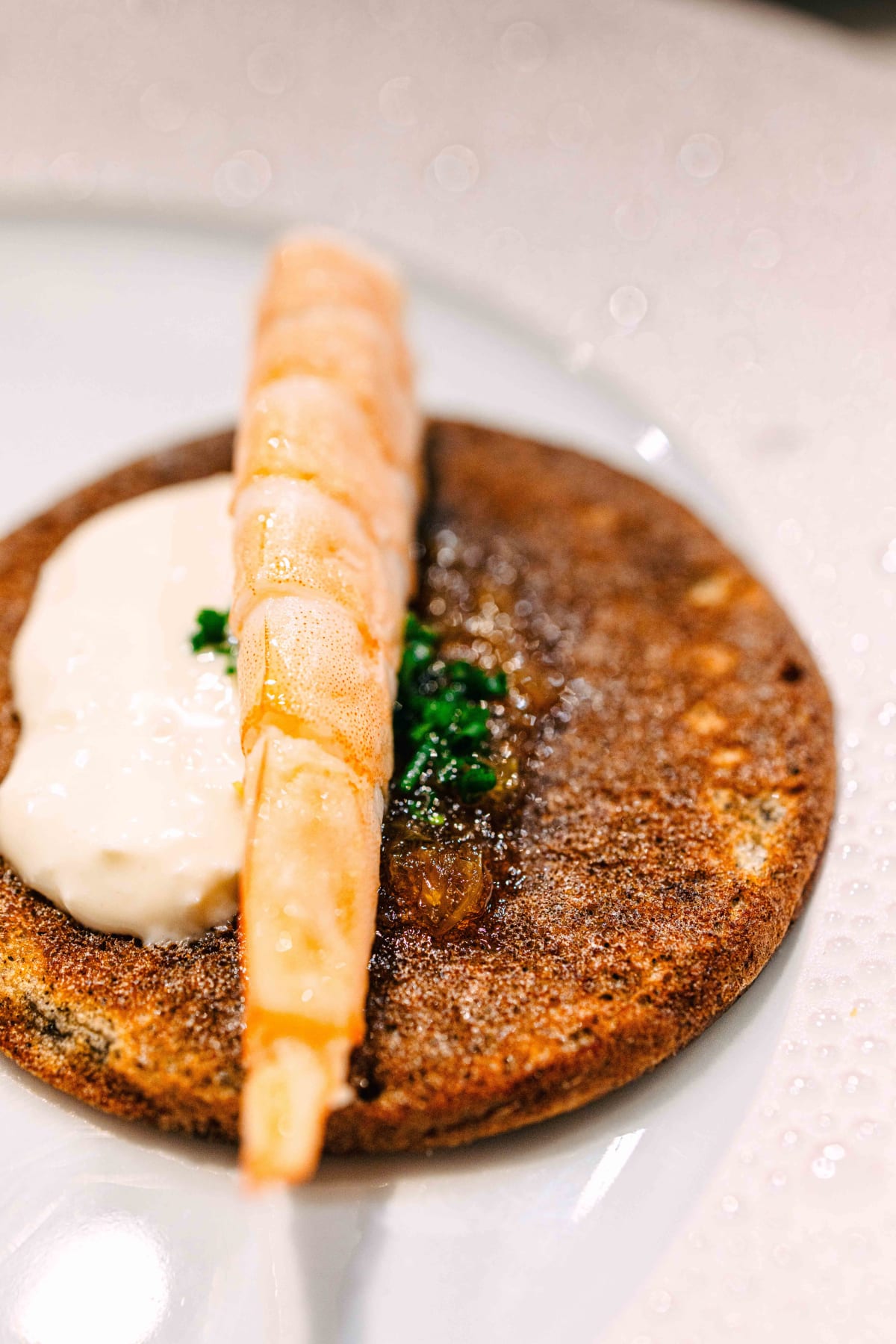
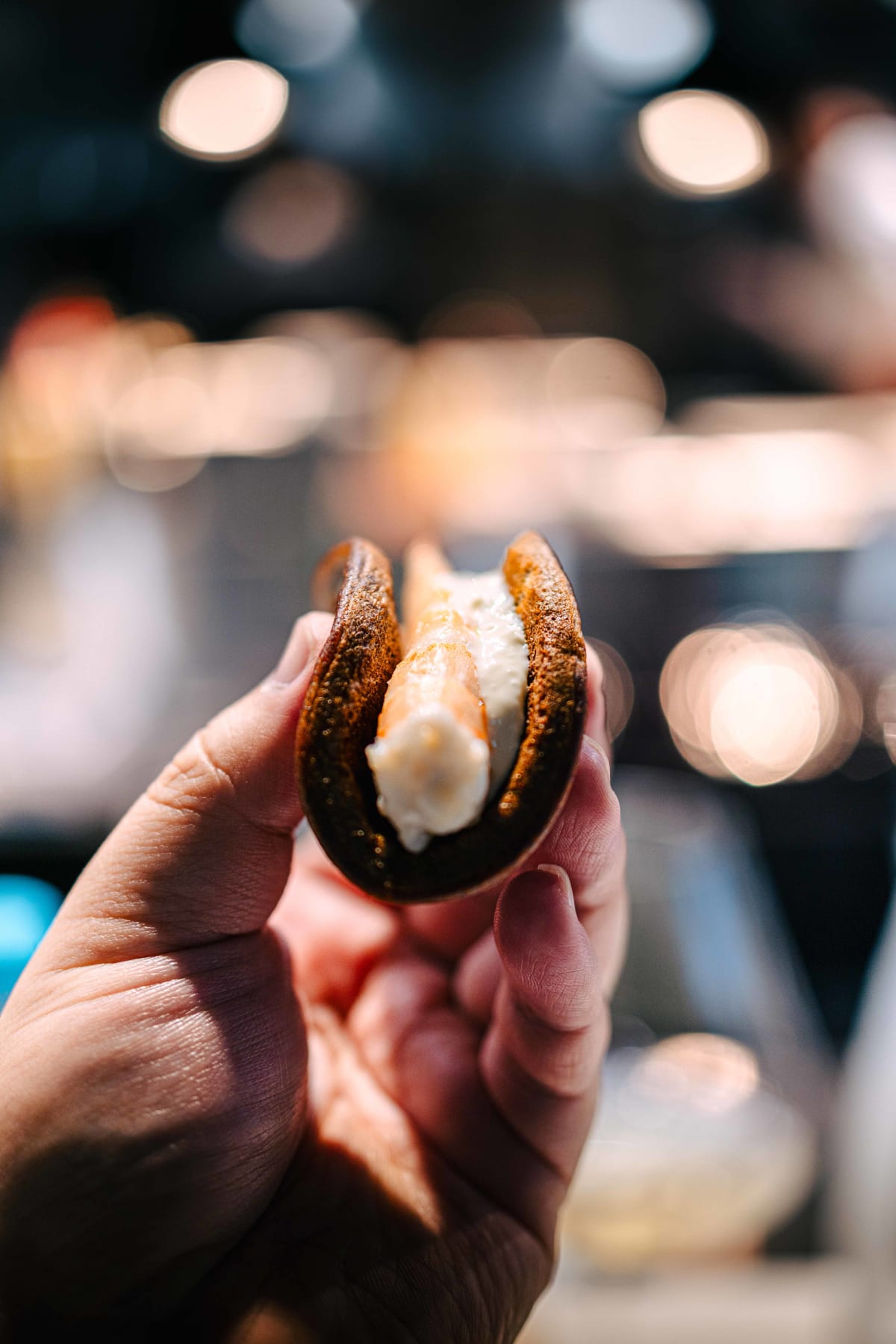
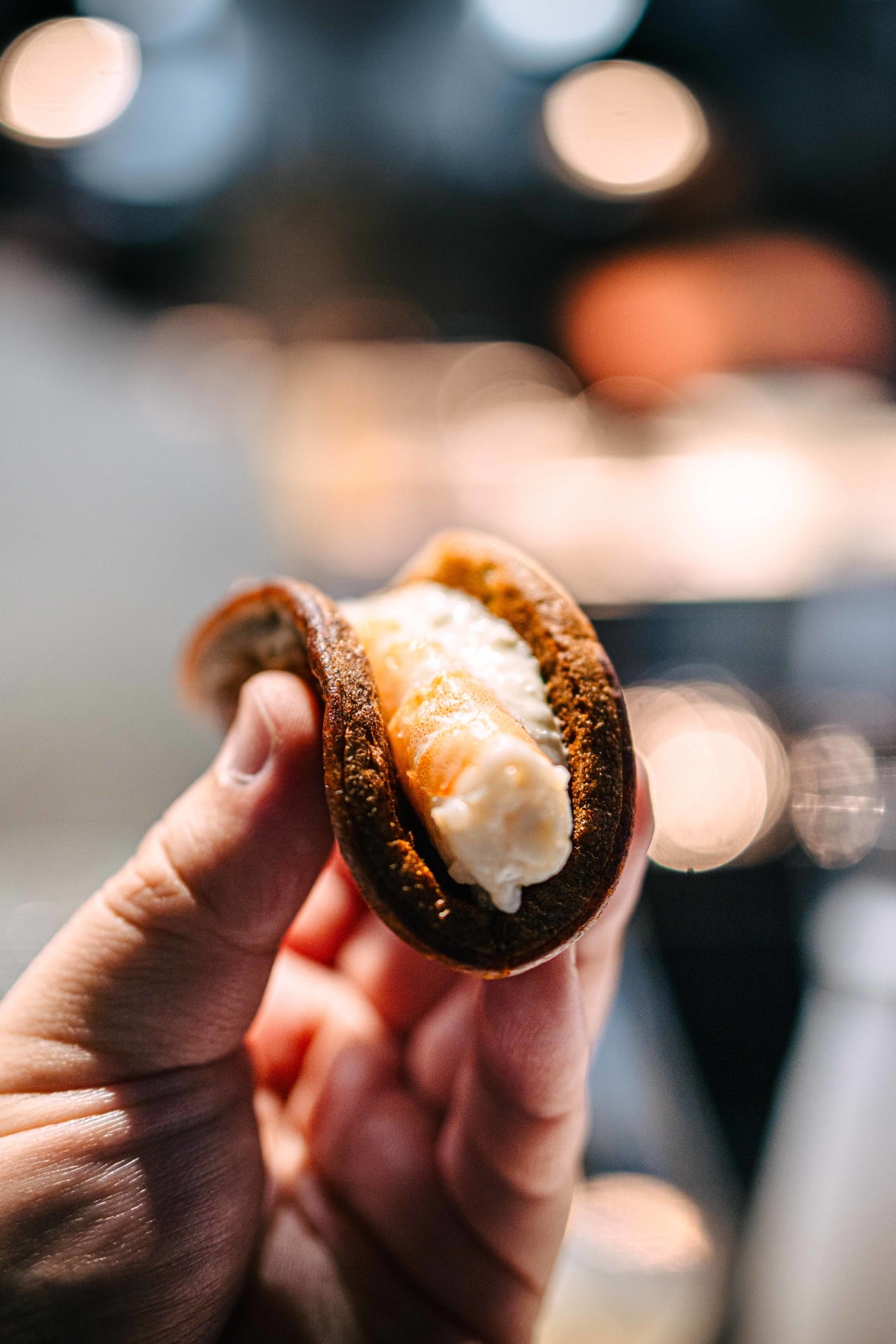
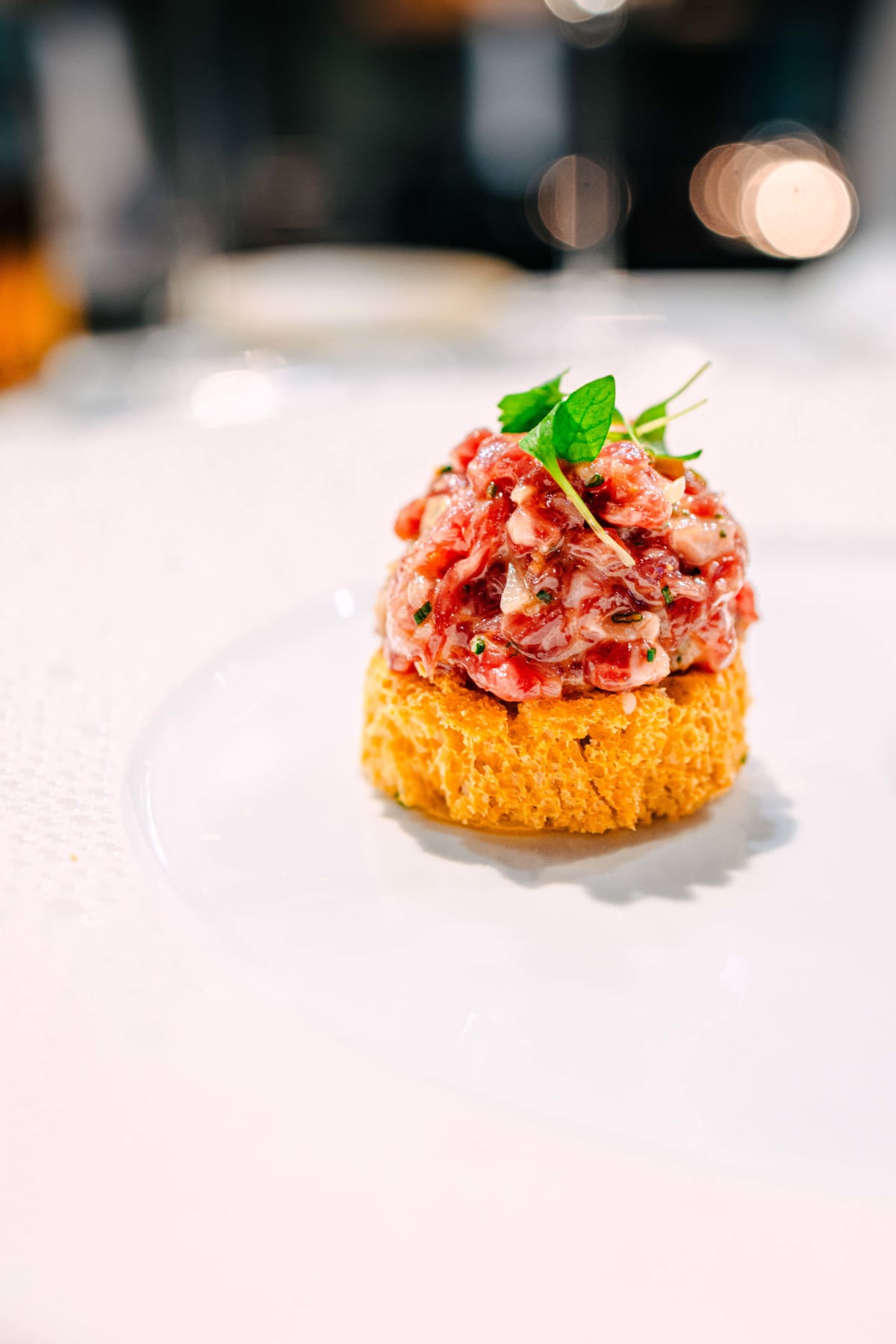
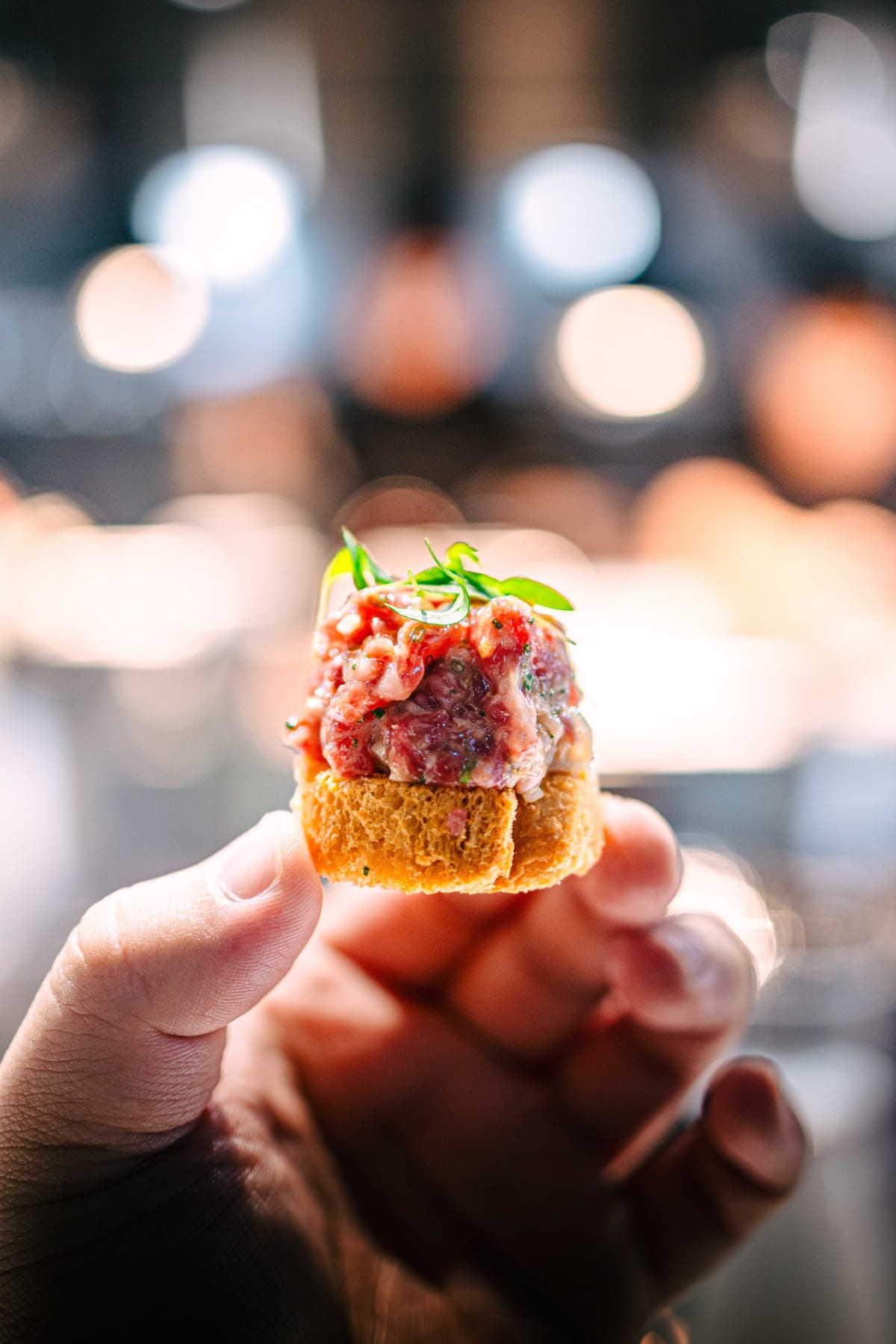
The remaining two followed. A buckwheat galette with crème fraîche, lemon jam and prawn, and a 1++ Hanwoo tartare with a sea urchin sauce. The galette had been steamed to keep it soft, the crème fraîche on the left was a fermented cream and the lemon jam on the right, and we were told we could fold it like a taco.
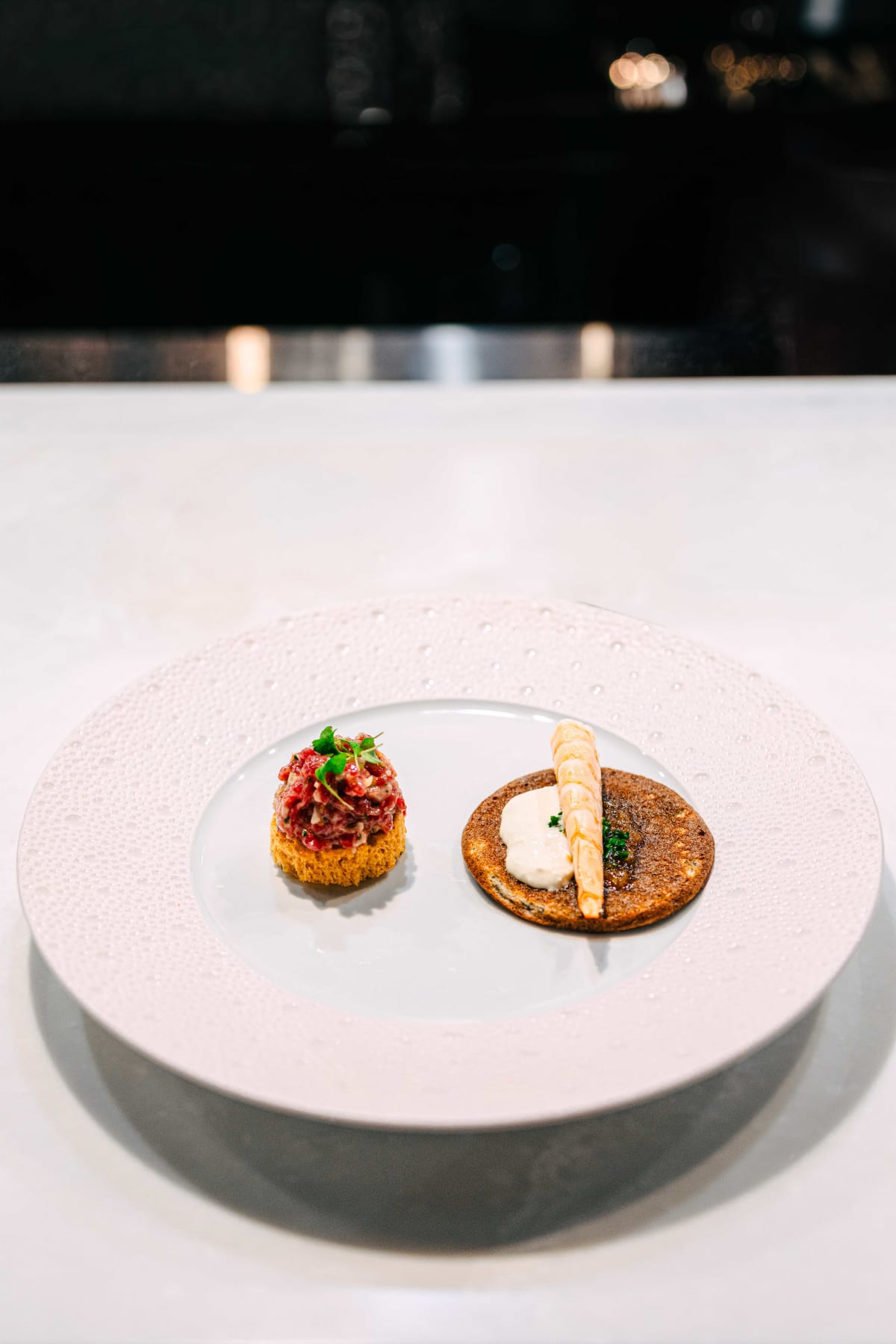
The buttery quality and the depth of the buckwheat galette went unexpectedly well with the prawn. The prawn was not buried, so it was a single bite that rewarded fairly close attention. It was a touch short on acidity though. Even with the lemon jam in there.
The beef tartare was straightforwardly delicious. Good weight, good balance, and a yolk-like richness coming through nicely on the finish.
Section 7·The Onion Bavarois
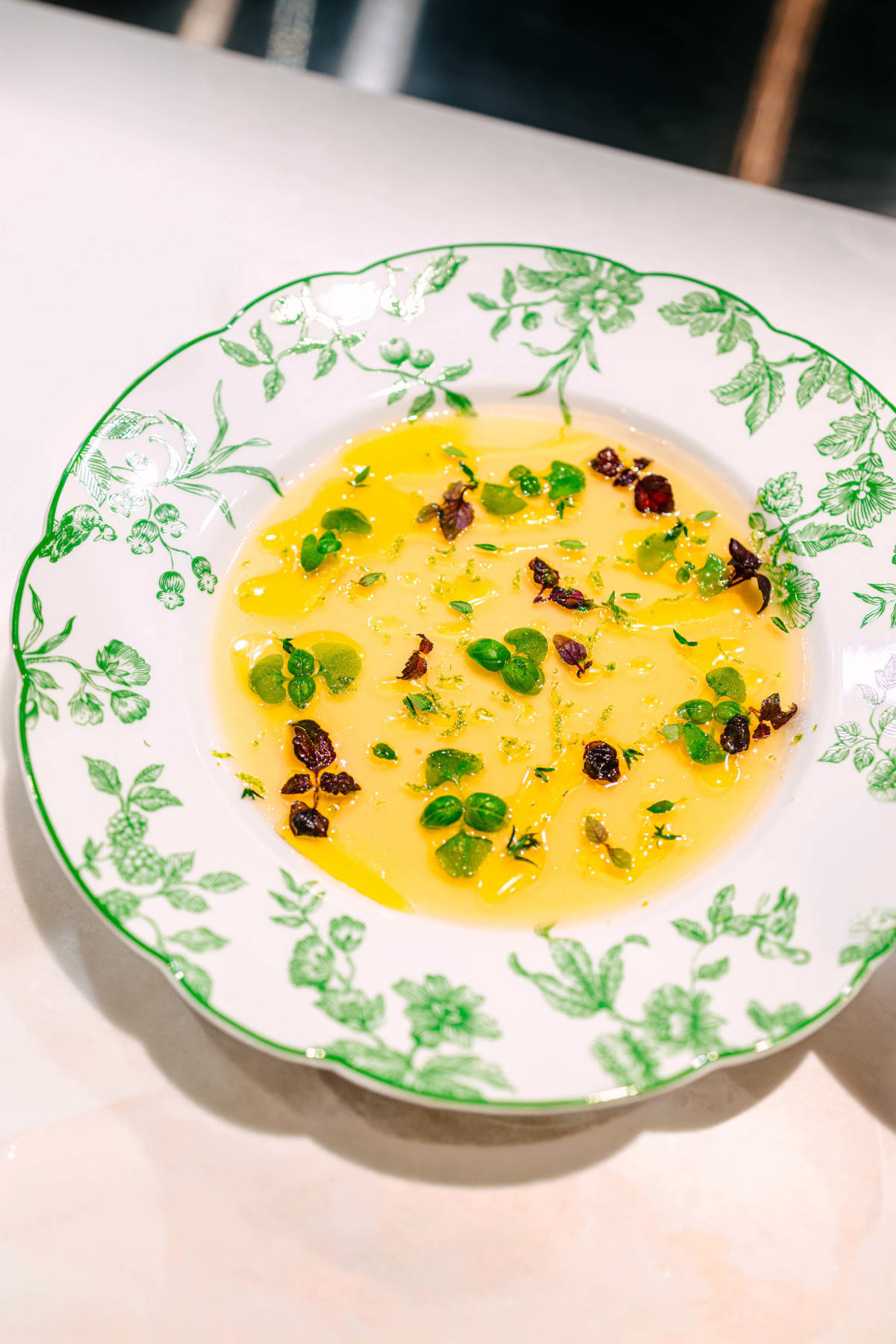
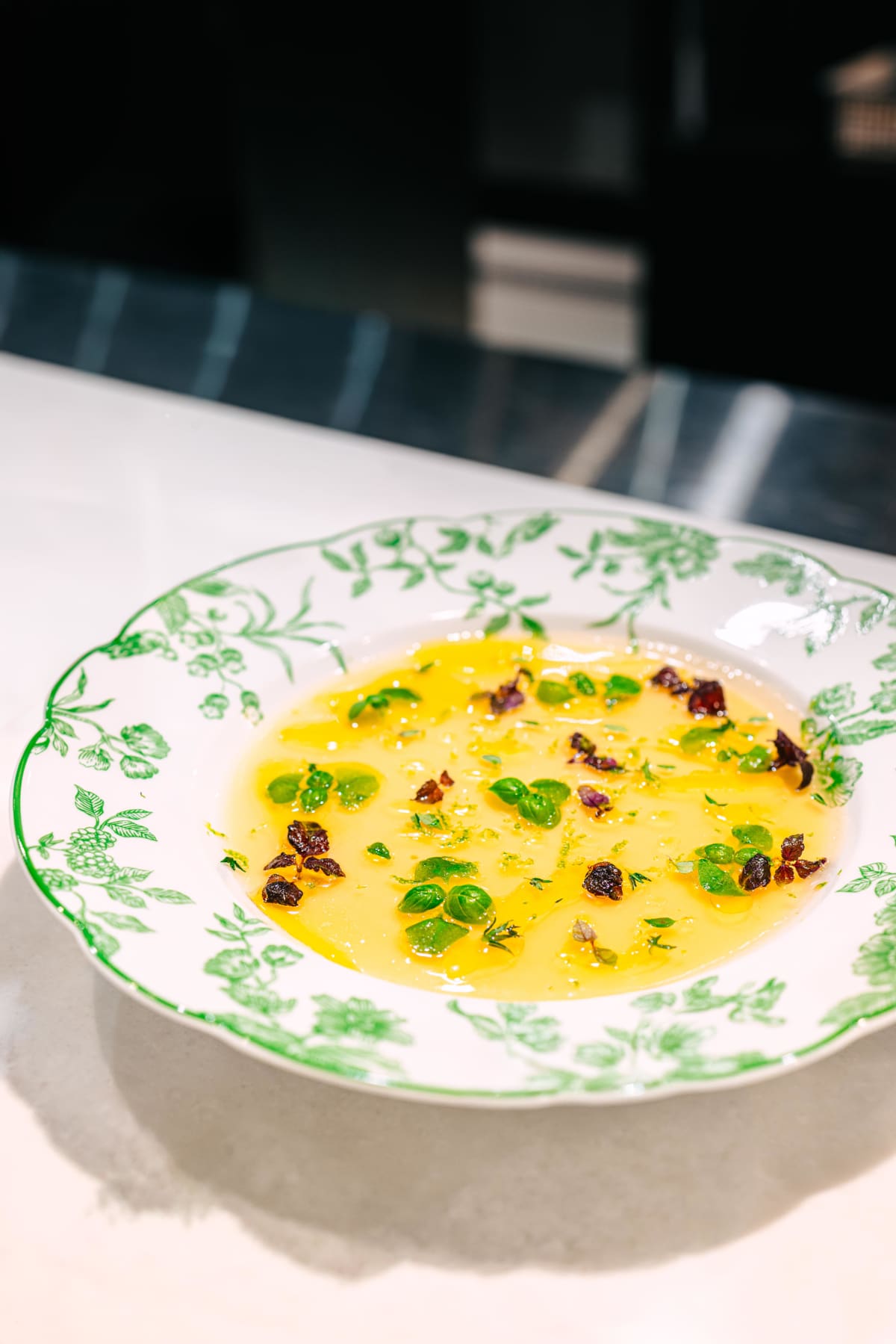
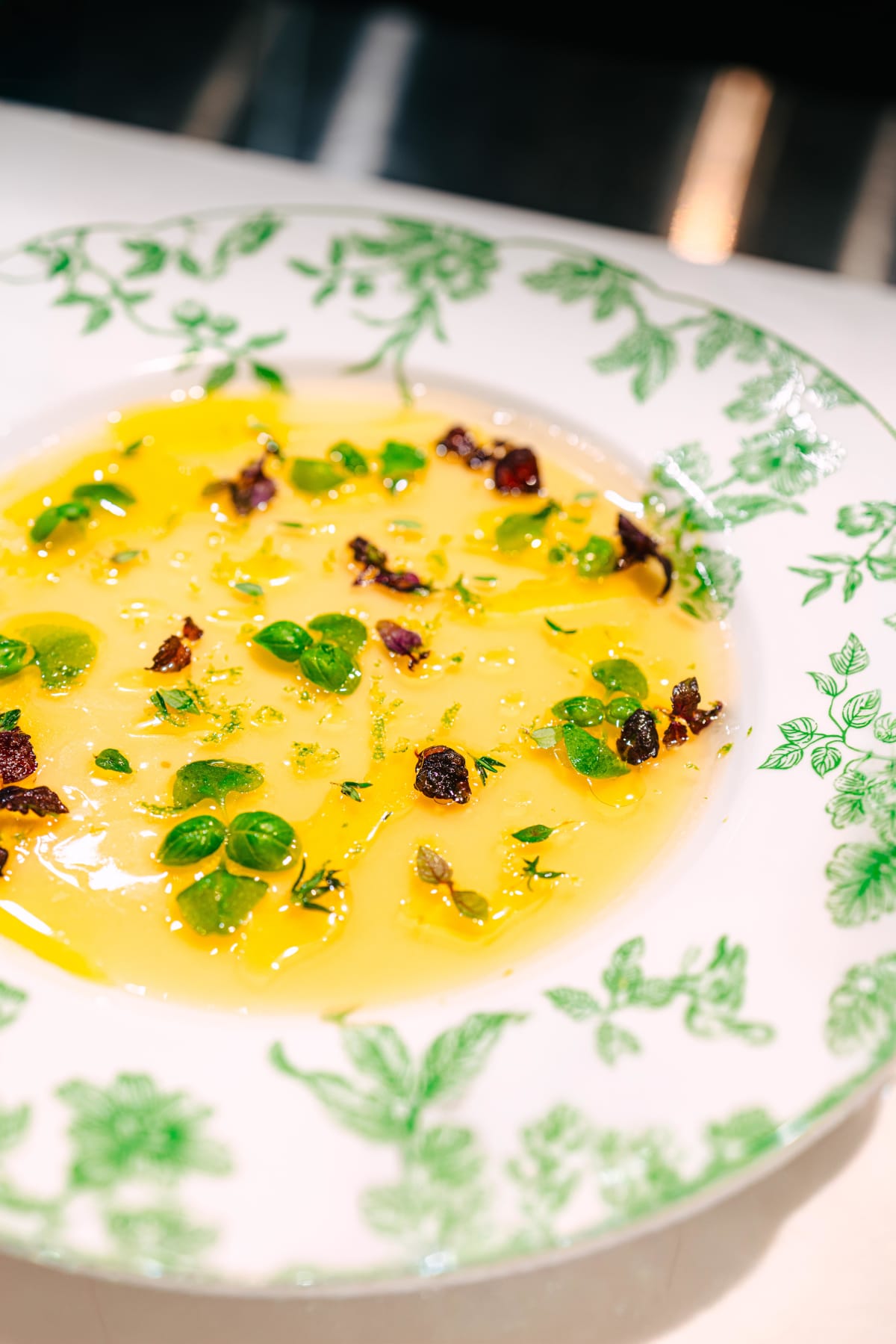
Moving to the starters, the onion bavarois arrived. A bavarois is a French pudding set softly with cream and gelatine. On top were a jelly of tomato and paprika, then lime zest, thyme, basil and shiso, and we were told to take every layer in one spoonful. We also heard that it draws on the ankake of Japanese cooking, that gelatine was used, and that the original and best version has caviar over the top.
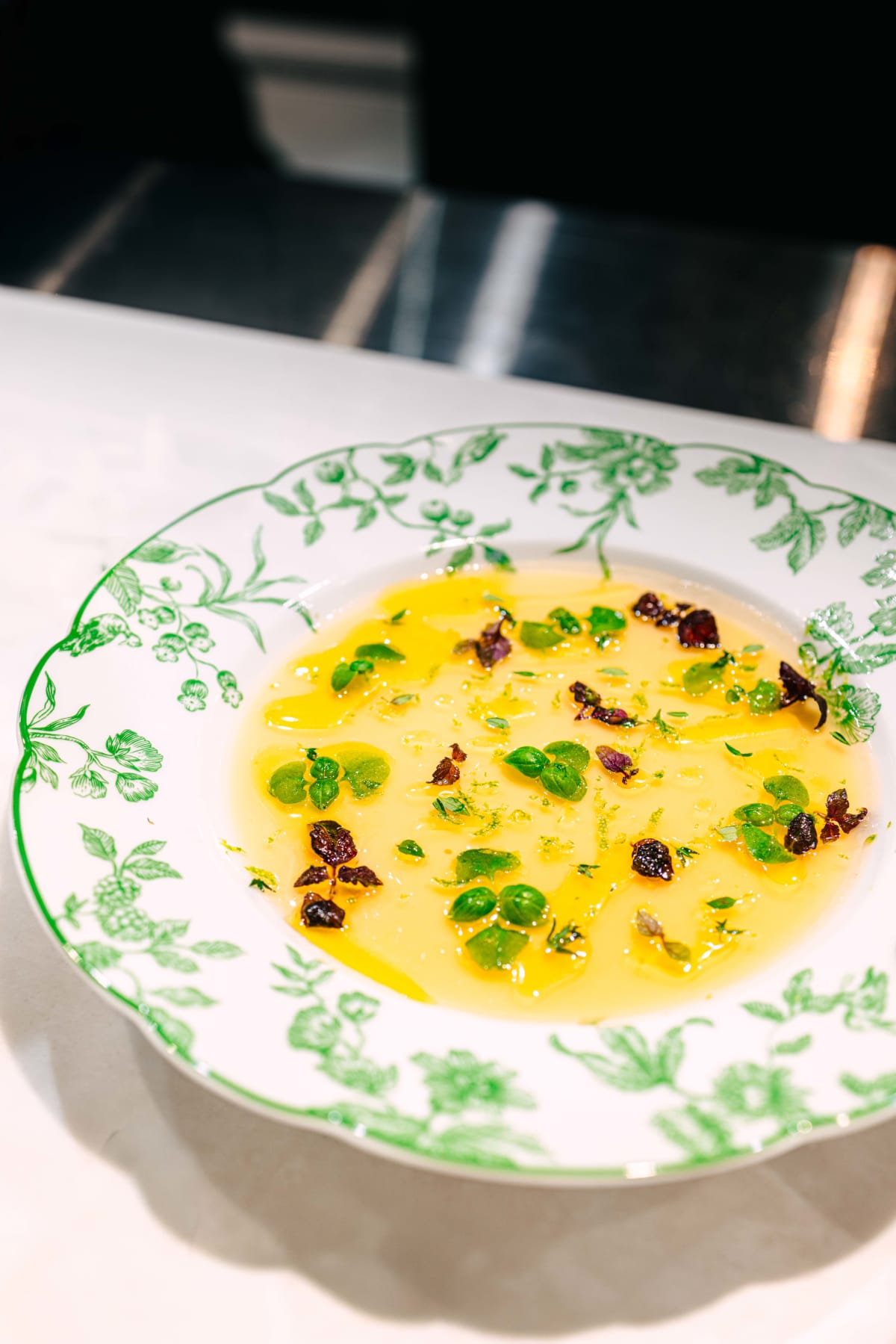
This bavarois was something else. It was delicious. It was the starter I had the least expectation of and the best one I ate. The onion flavour was deep, and the sauce on top, described as a reworking of the Japanese an sauce, had enough acidity and savour to hold the balance. The bright acidity from the tomato jelly, the onion spreading through the mouth without overreaching, and the aroma from leaves like the shiso made this a very good and memorable opening.
The sourdough that came with it, with French butter and Maldon salt, was a good combination.
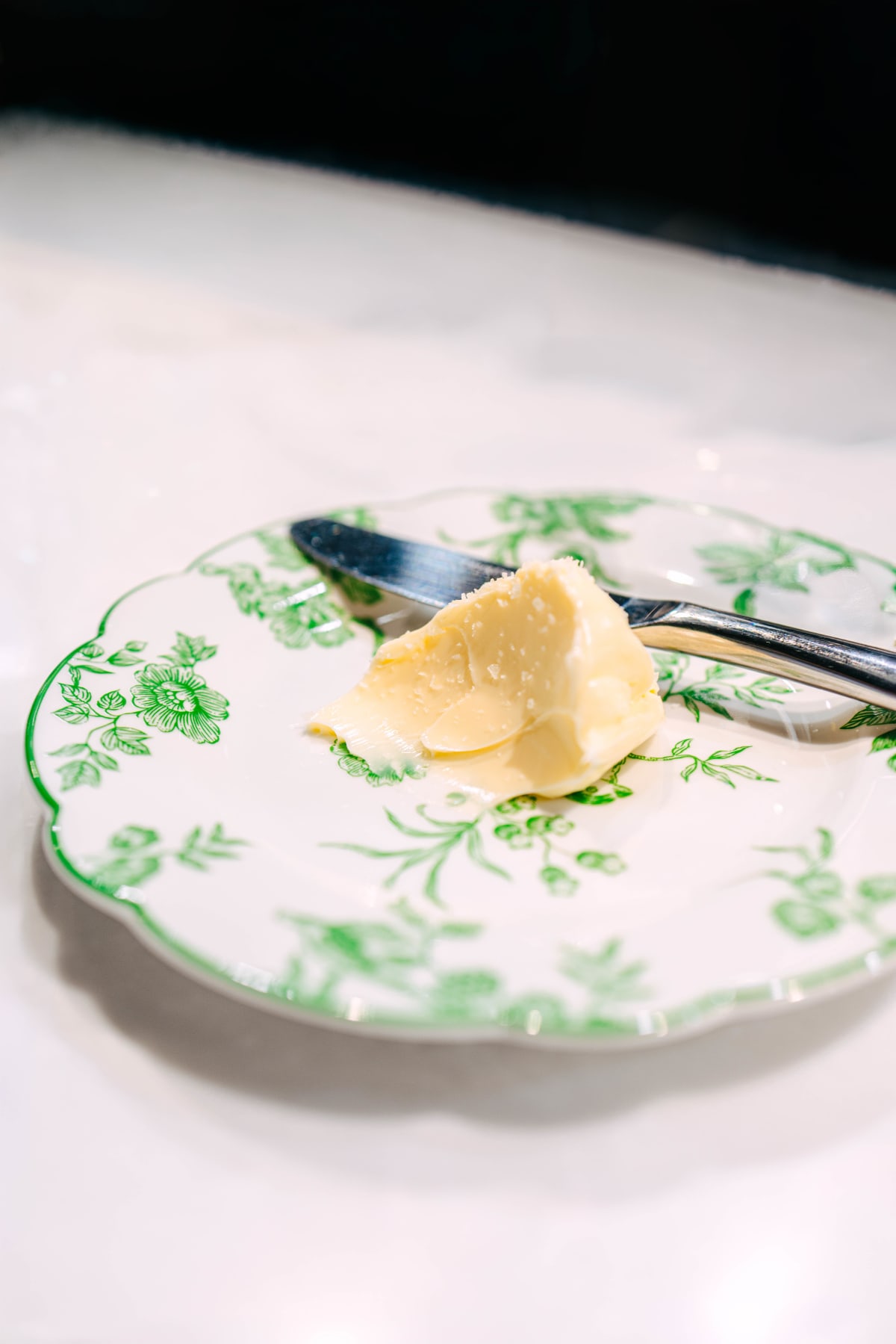
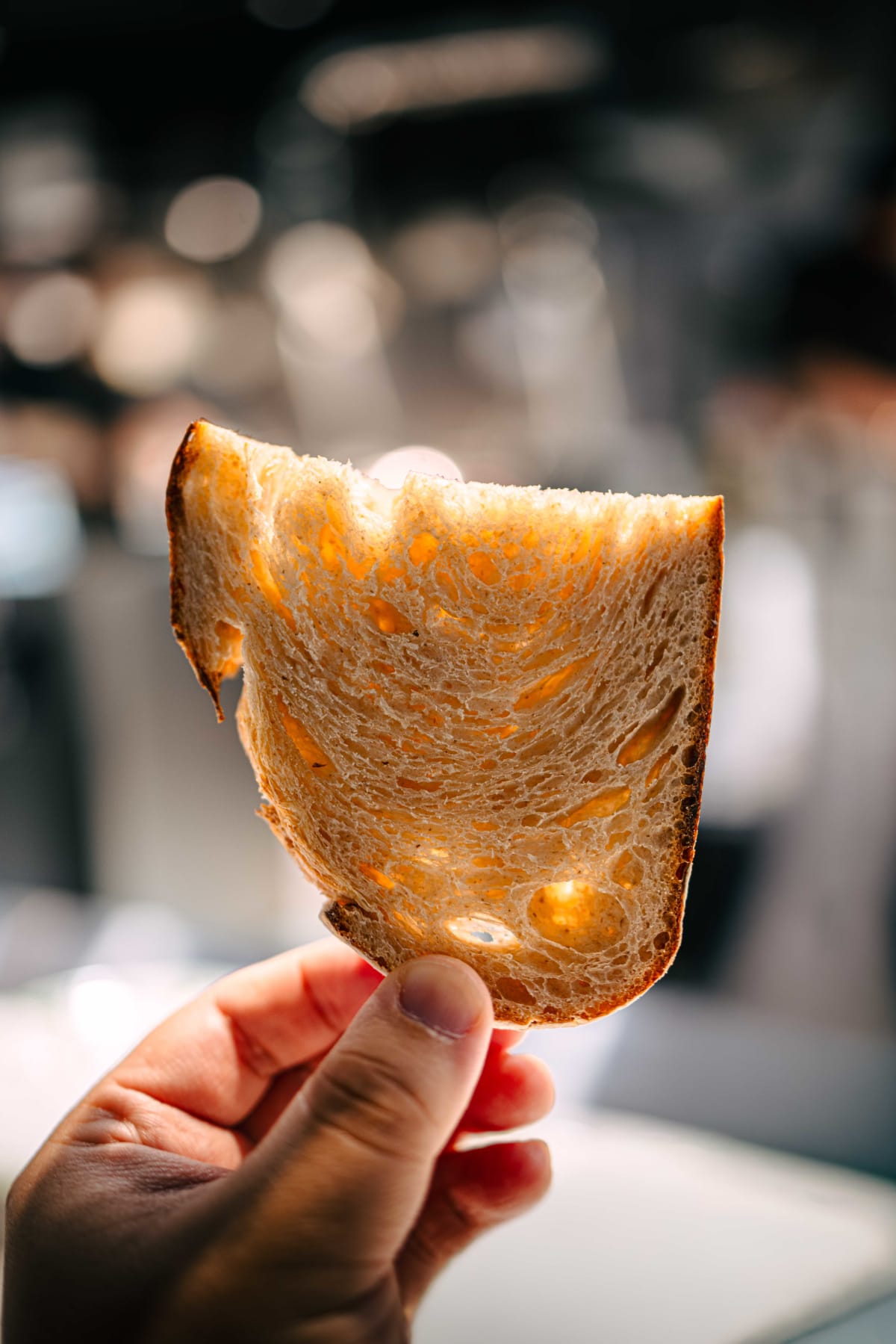
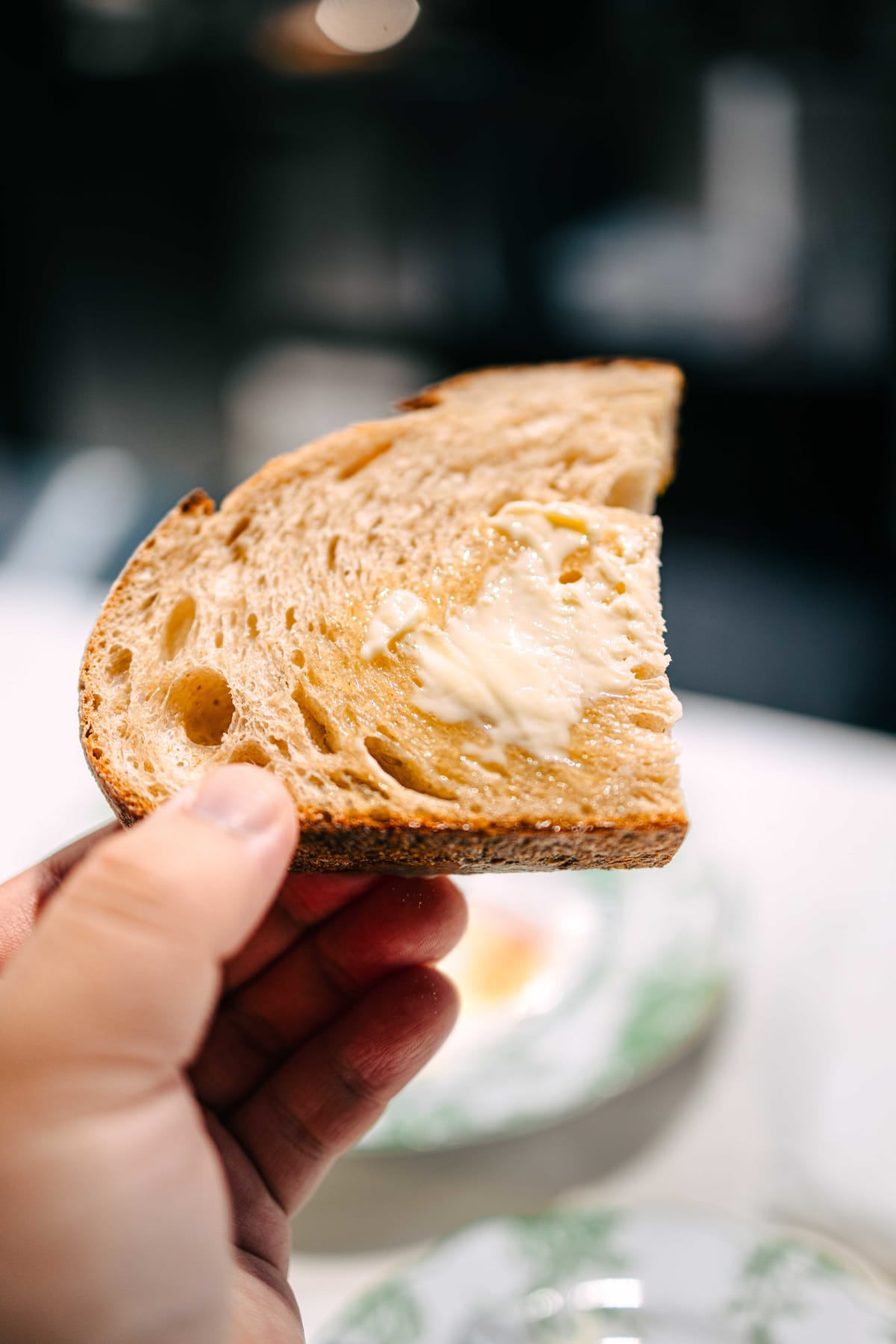
Spread on the bread, the toasty aroma and the deep onion flavour worked together well, and adding butter on top gave it more weight.
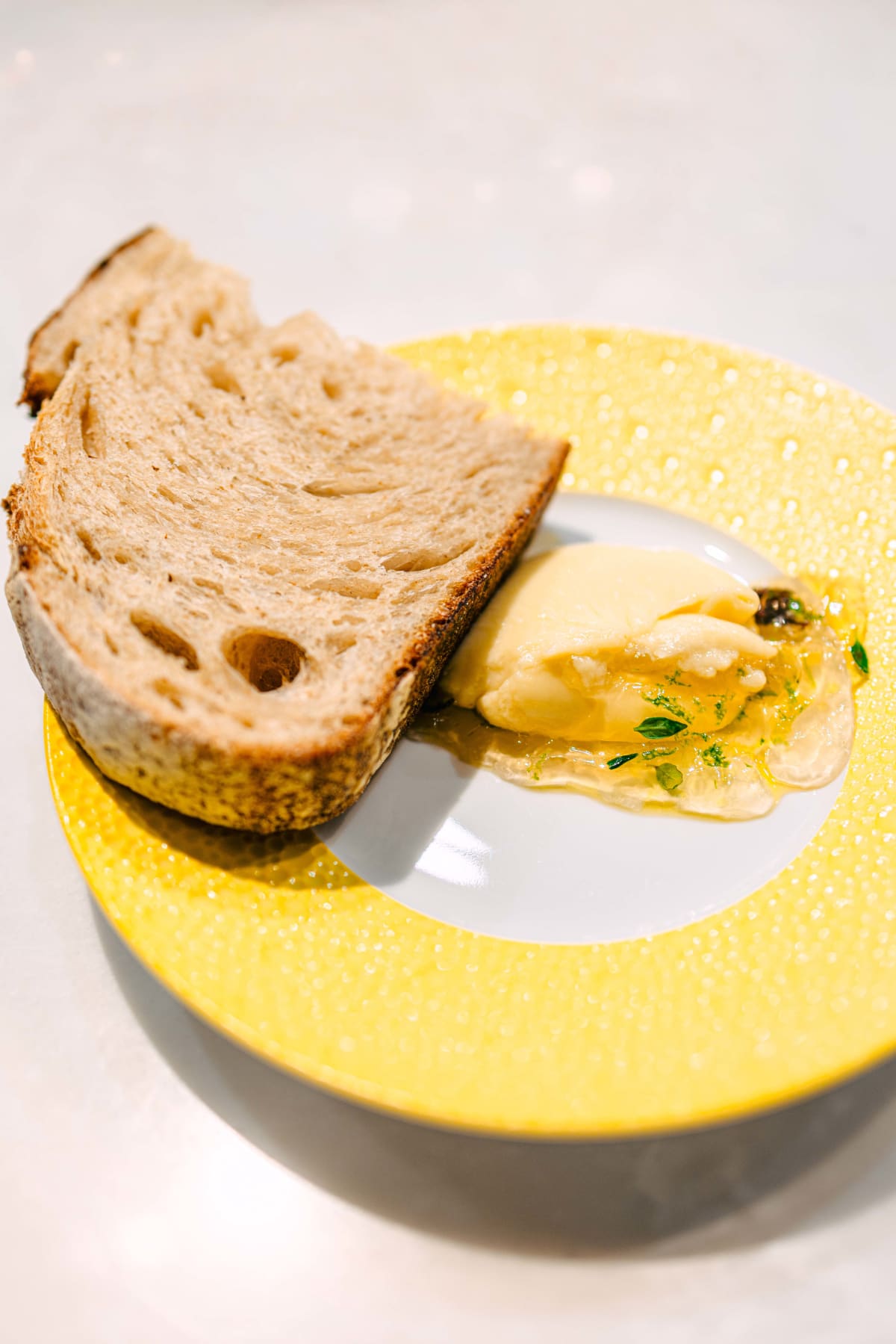
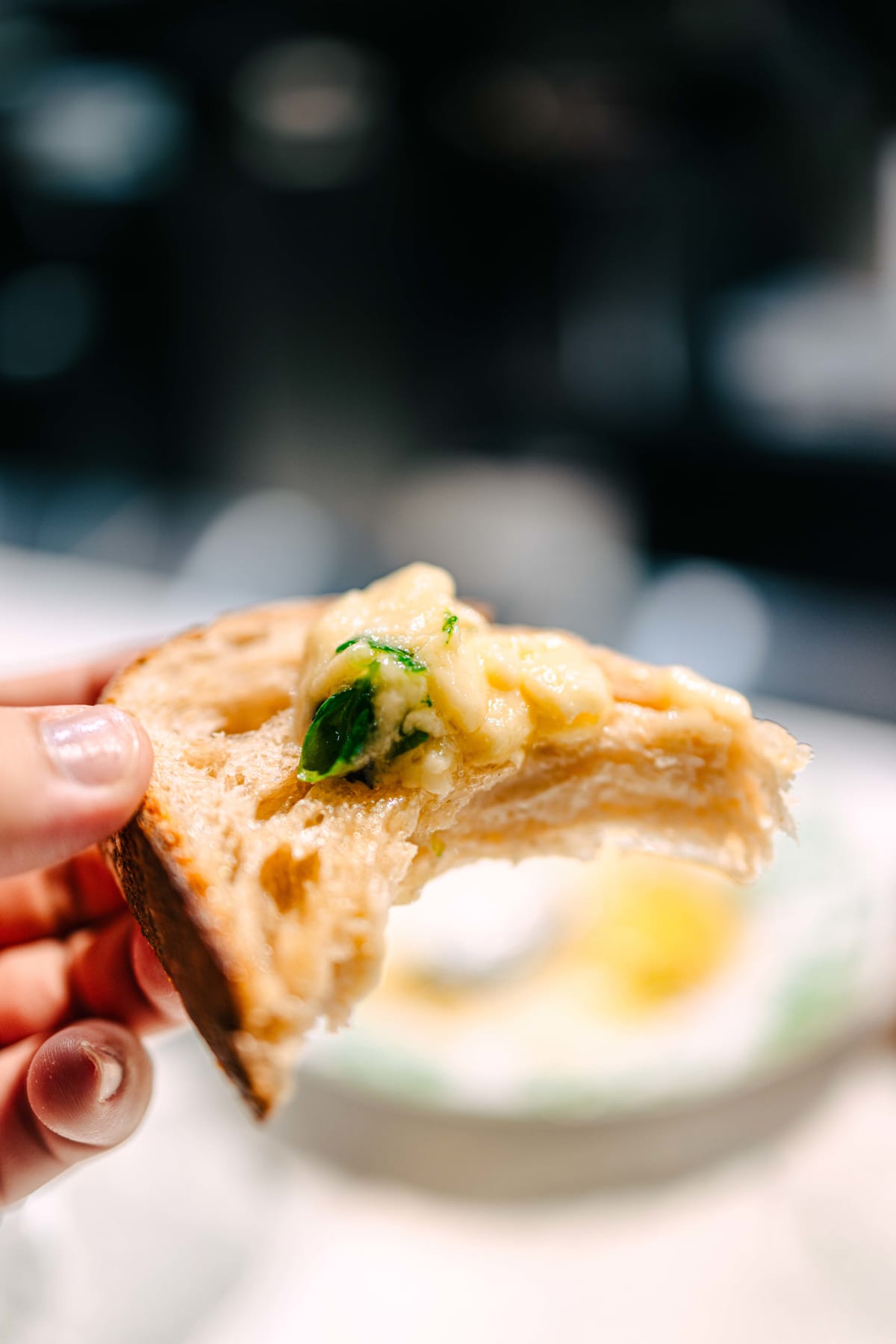
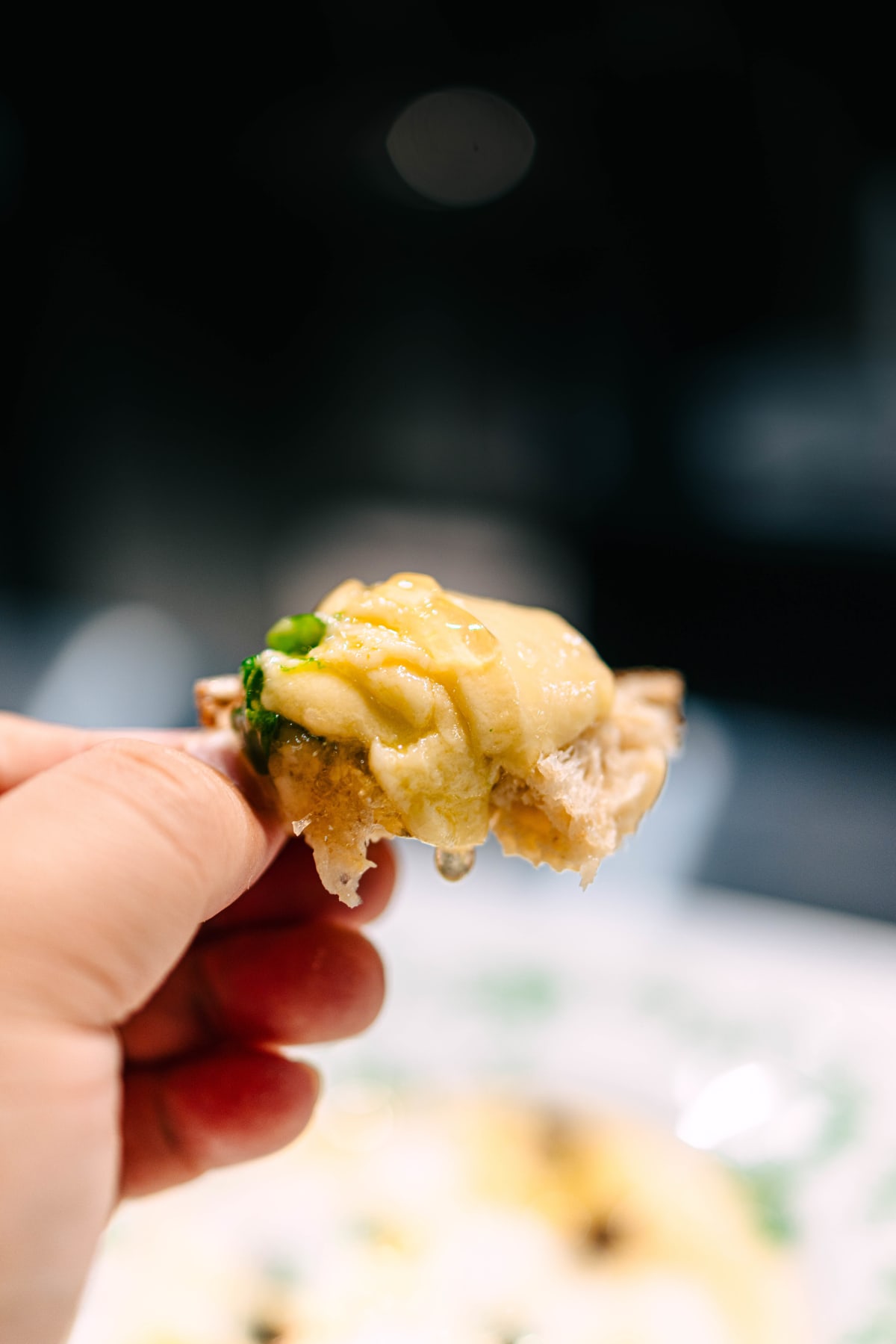
Even then the onion did not get buried. The bread itself was soft and good.
Section 8·A Demoted Meursault
The second white was Raymond Dupont-Fahn's Bourgogne Chaumes des Perrières 2024. This wine was good that evening, and the AOC story attached to it is entertaining. In 1975 Raymond's grandfather Jean bought this plot, which straddles Les Perrières and Sous le Dos d'Âne in Meursault, and judging the soil too shallow and too stony he obtained INAO approval to add twenty centimetres of topsoil.
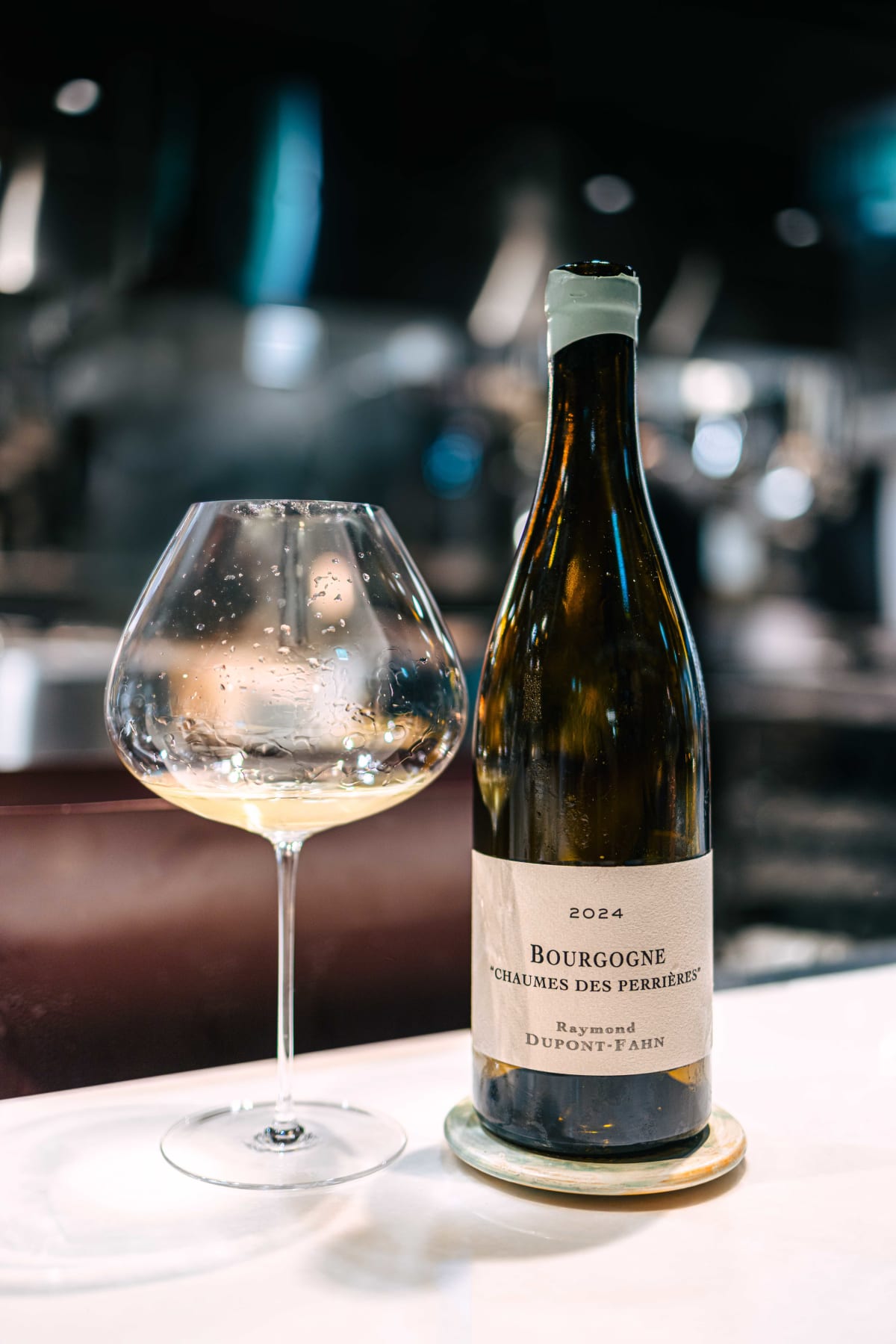
A few years later, after complaints from neighbouring growers, the plot was demoted to Bourgogne level. Nearly fifty years on the classification has not been restored, but the roots have driven down to the original bedrock and it makes a wine worthy of the Meursault name. The site sits directly above Coche-Dury's plot. We were also told that evening that this parcel is closer to Meursault village level than to regional level.
It tastes sweeter, brighter and cooler on the nose than the first white, with an oak touch and a smoky note coming up behind so that it shifts as you go. Of the three whites that evening this was the best.
Section 9·Where The Weight Begins
Next was a potato dish, pommes dauphine. Mashed potato mixed into choux paste, rolled into balls and deep fried, a classic French potato preparation. It often gets introduced as potato gnocchi, but rather than gnocchi cooked in water it is closer to a fried potato choux.
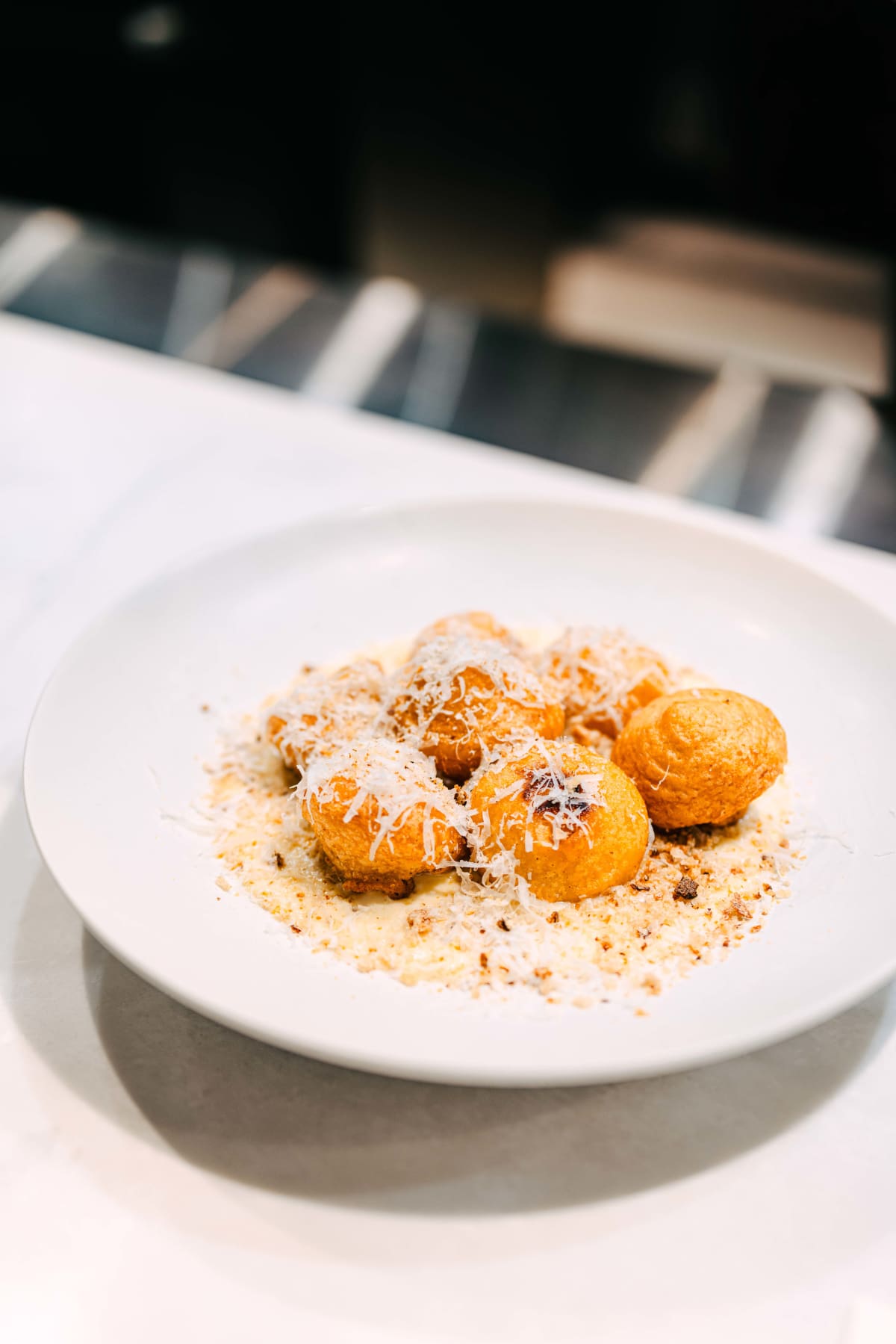
When I asked chef Yoon Nam-no what was inside, the answer that came back was emptiness, and the whole counter laughed. In fact the potato is worked into the choux paste and fried with it, so the structure is hollow.
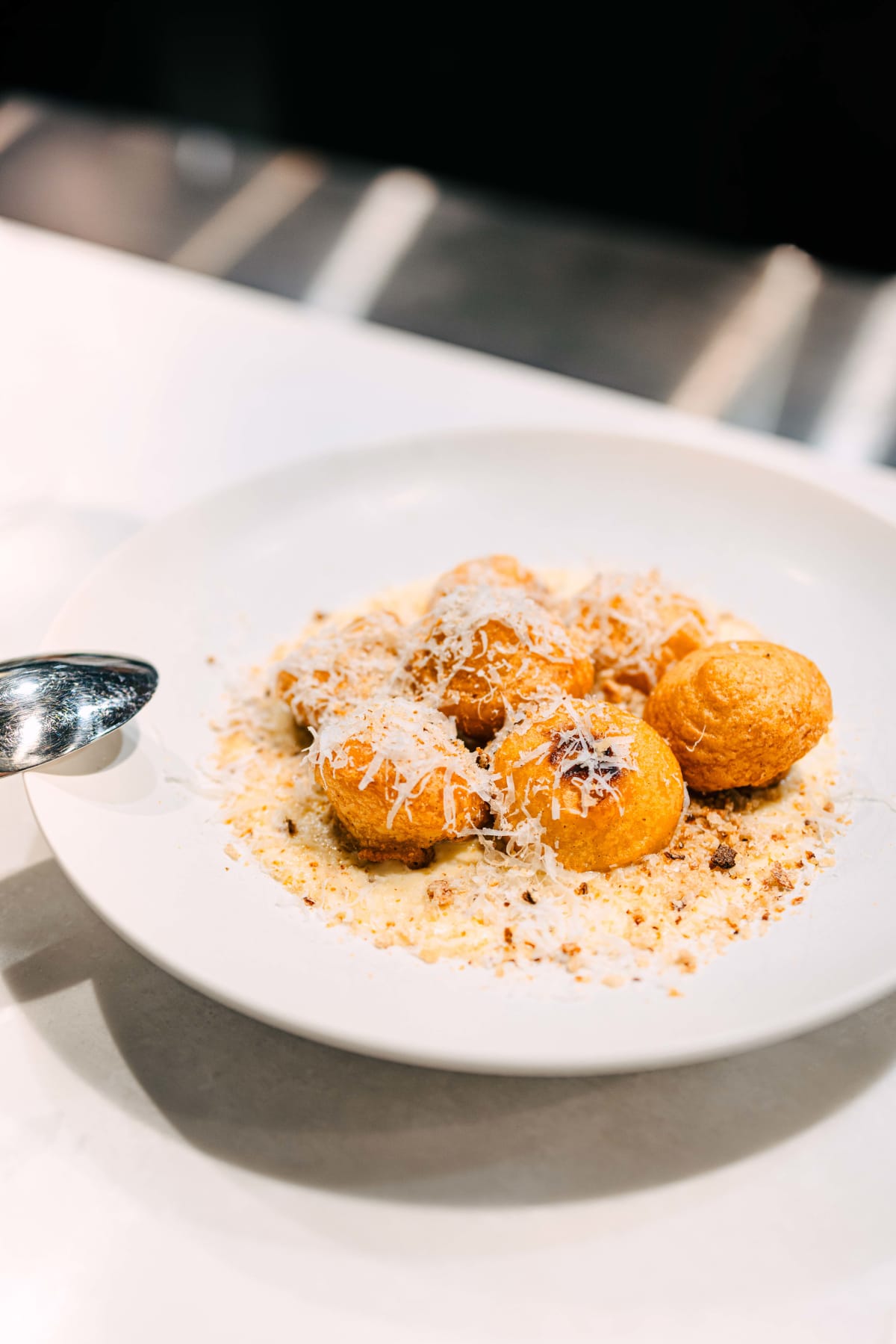
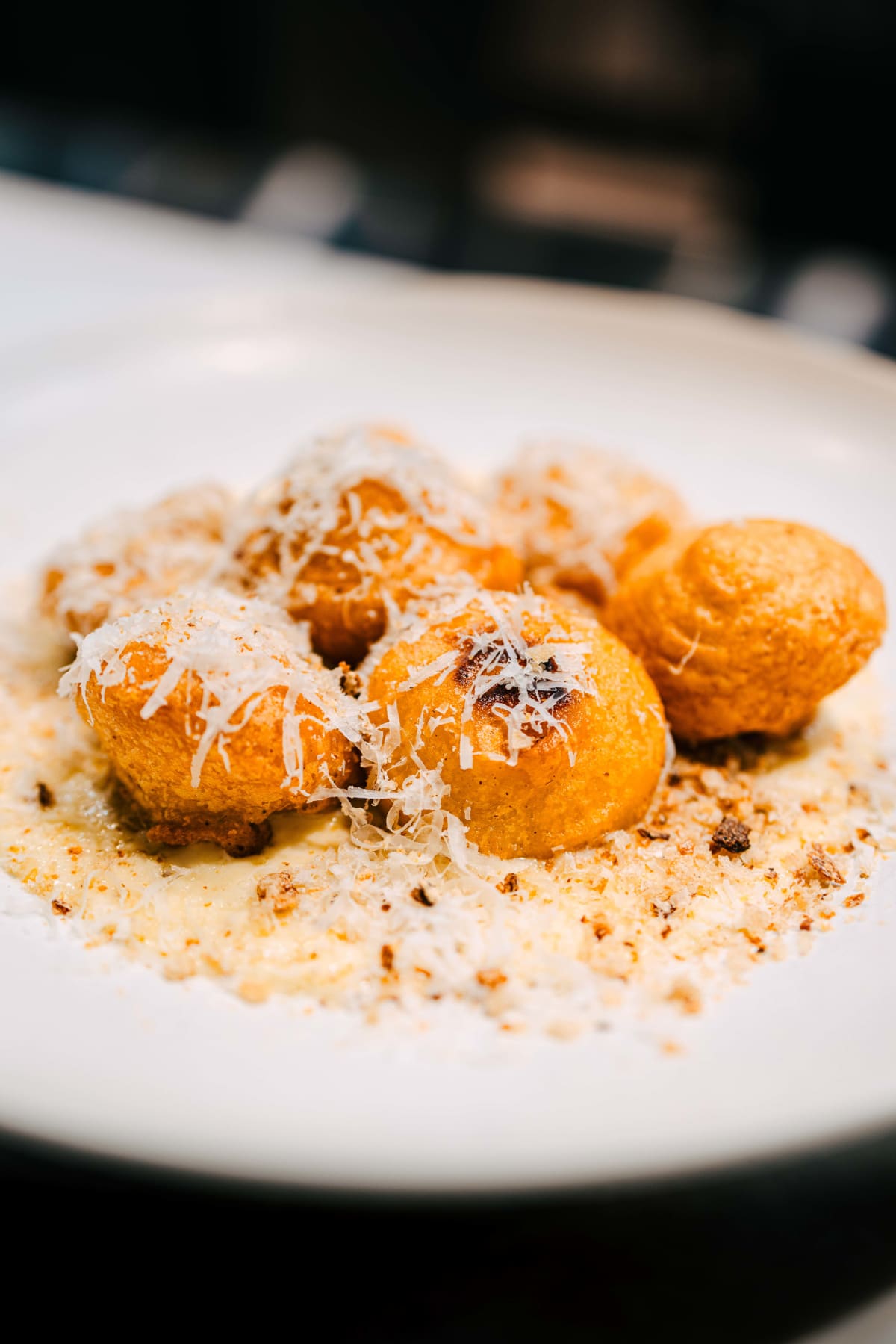
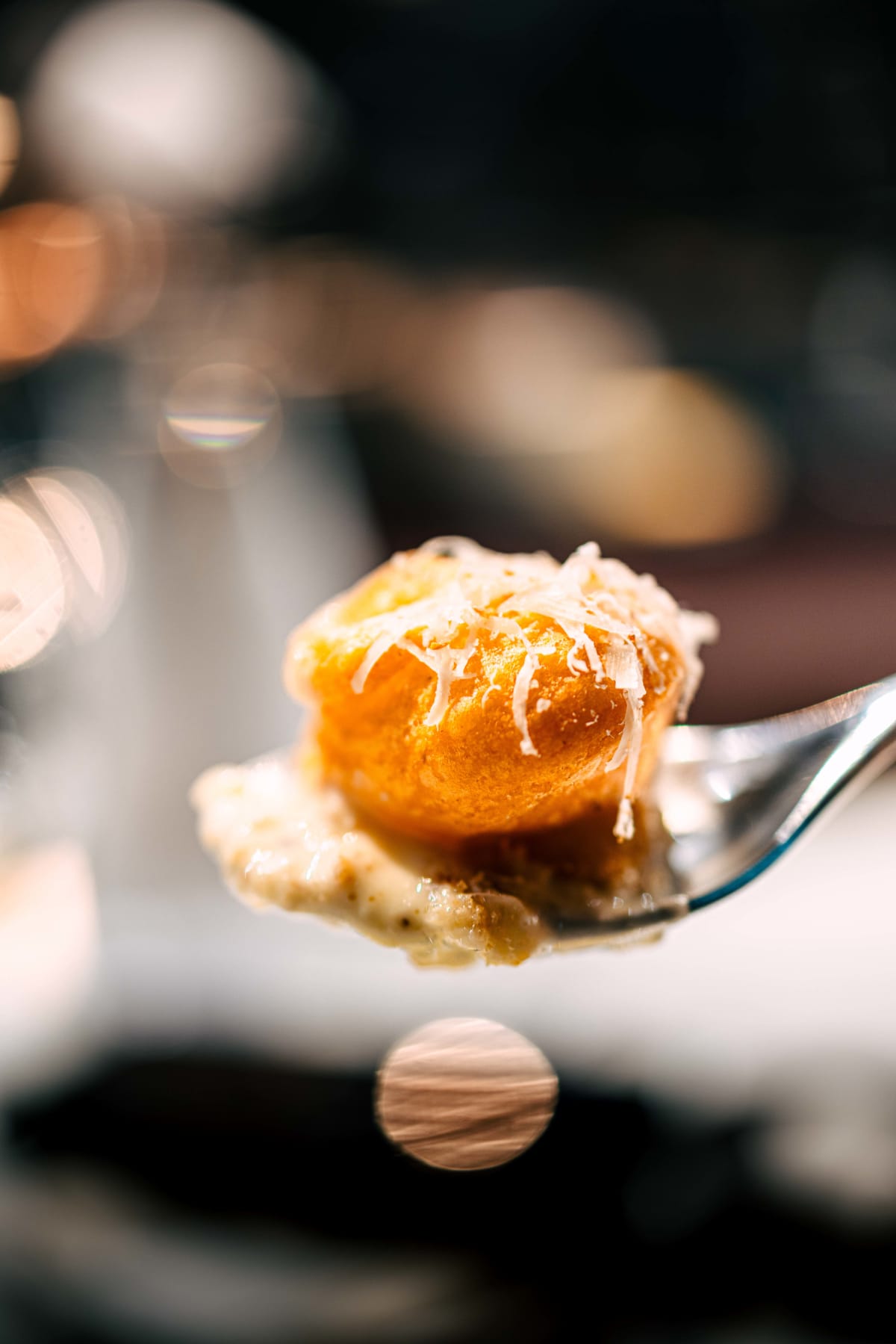
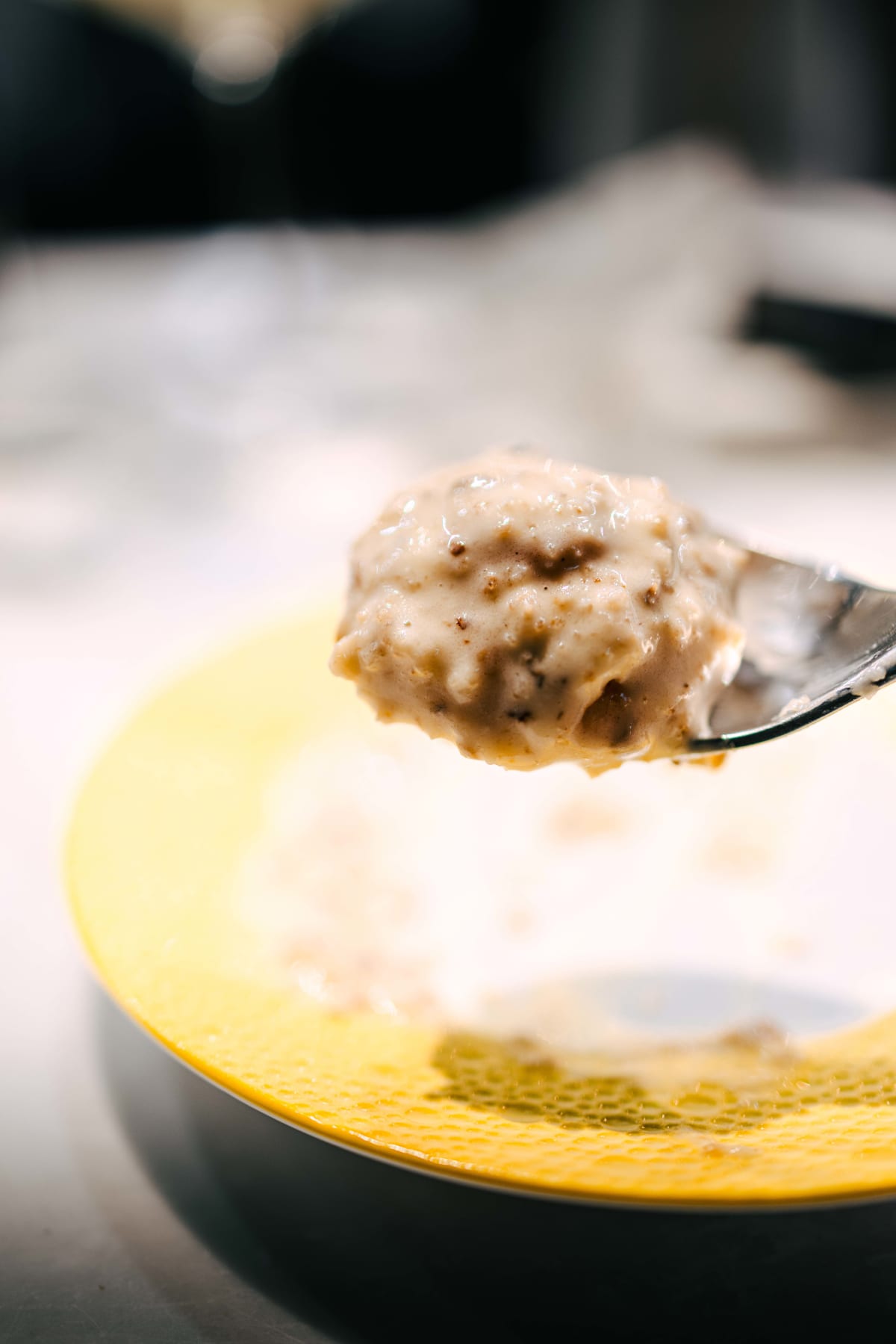
From here the dishes start getting heavy. There was something about it that felt like a dish developed so that anyone with little dining experience could take one bite and call it delicious, rather than something built out of depth and serious gastronomic thought. The air inside the potato choux is good and a very direct cheese flavour comes through. Straightforwardly delicious, but hard to keep eating for long. The powdered elements giving a crumbling texture were used well too.
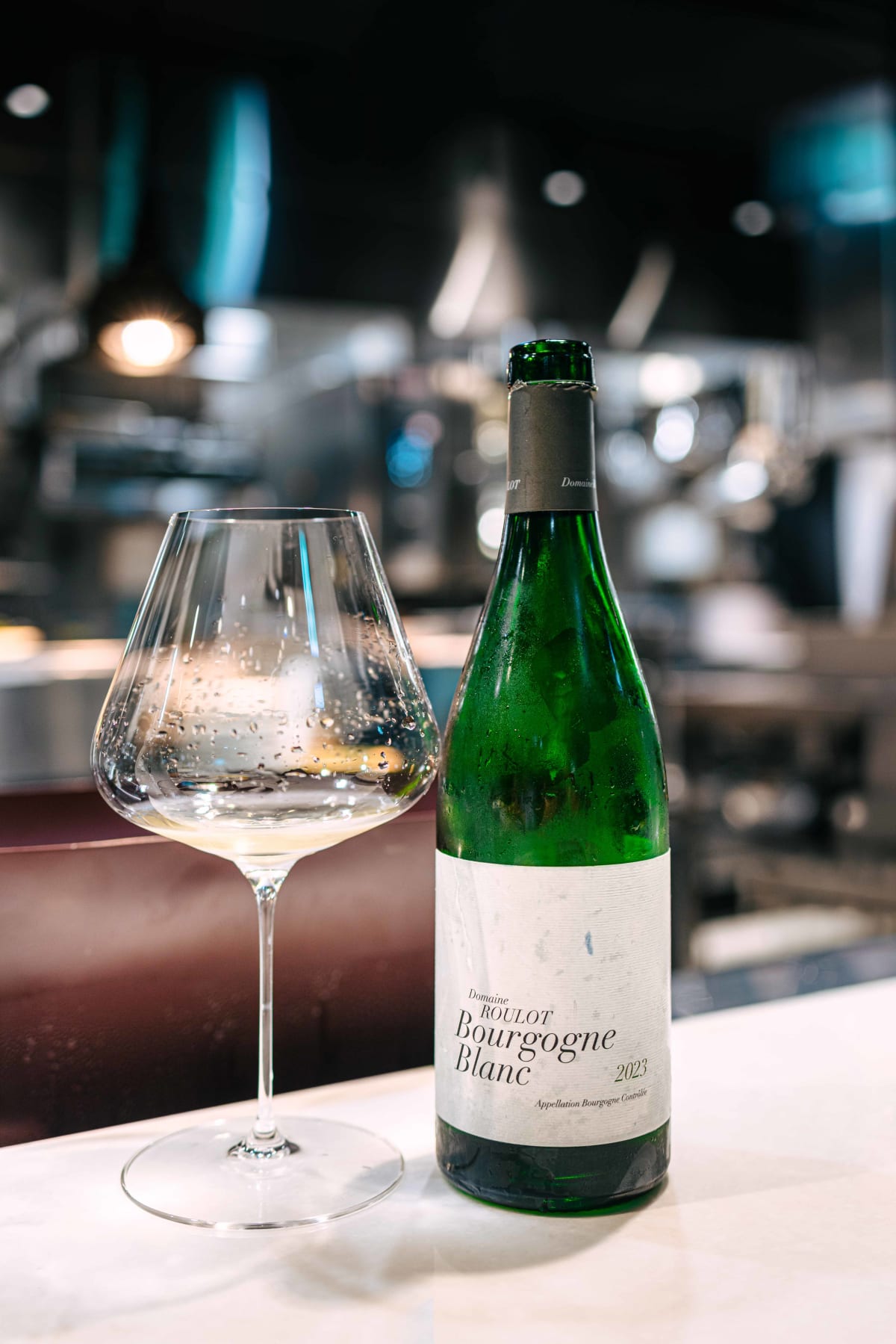
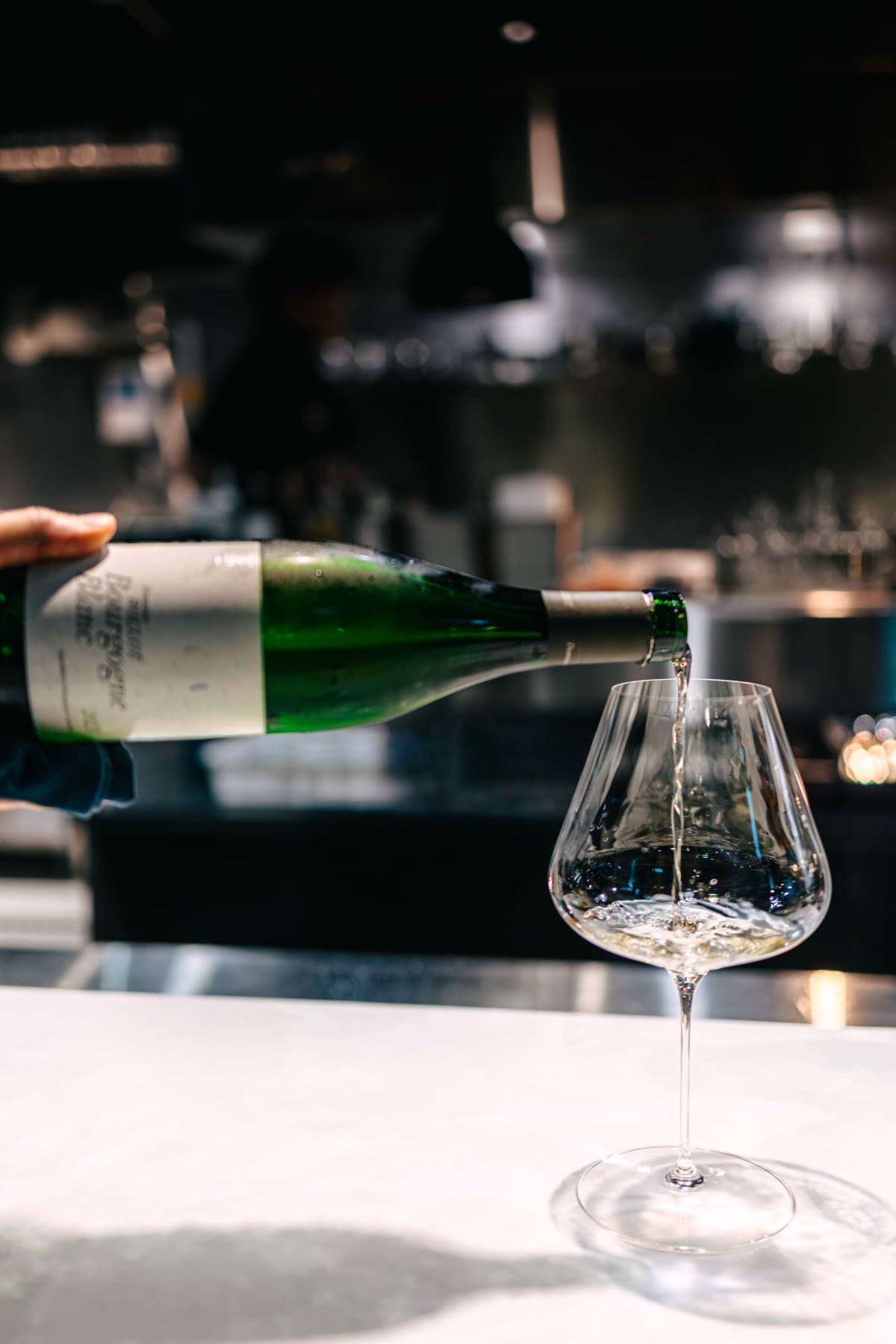
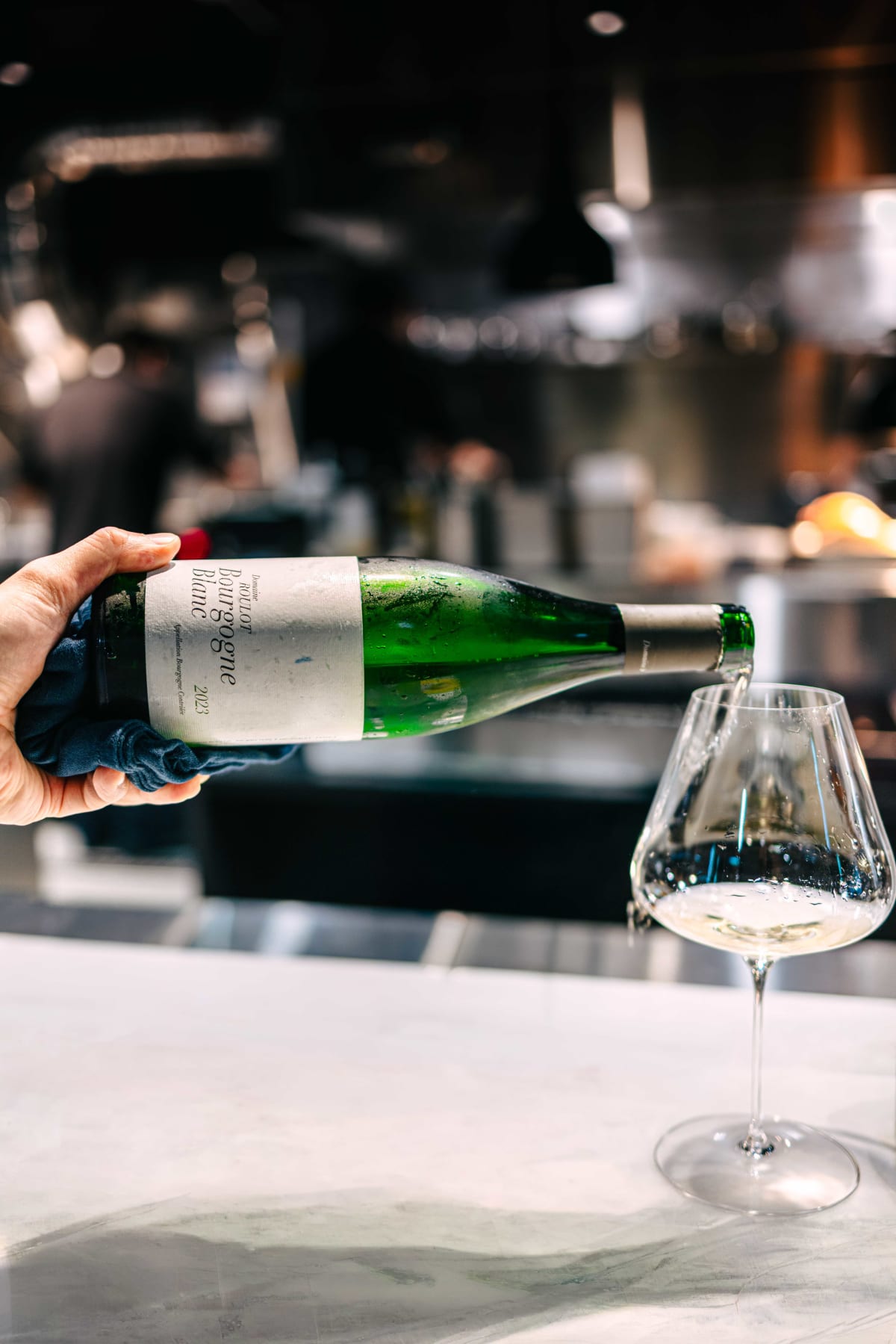
Partway through, a sommelier friend sitting beside me kindly passed over a glass of Domaine Roulot's Bourgogne Blanc 2023. It is very well known and I drank a lot of it on a trip to Europe last year, so it brought that trip back. But perhaps because the second white had been so good, very little about it came through right away, whether you call it intensity of aroma or something else. I found it very finely drawn, and thought it was a wine that needed more time.
There was something about it that felt like a dish developed so that anyone with little dining experience could take one bite and call it delicious, rather than something built out of depth and serious gastronomic thought.
Section 10·Squid And Pistachio
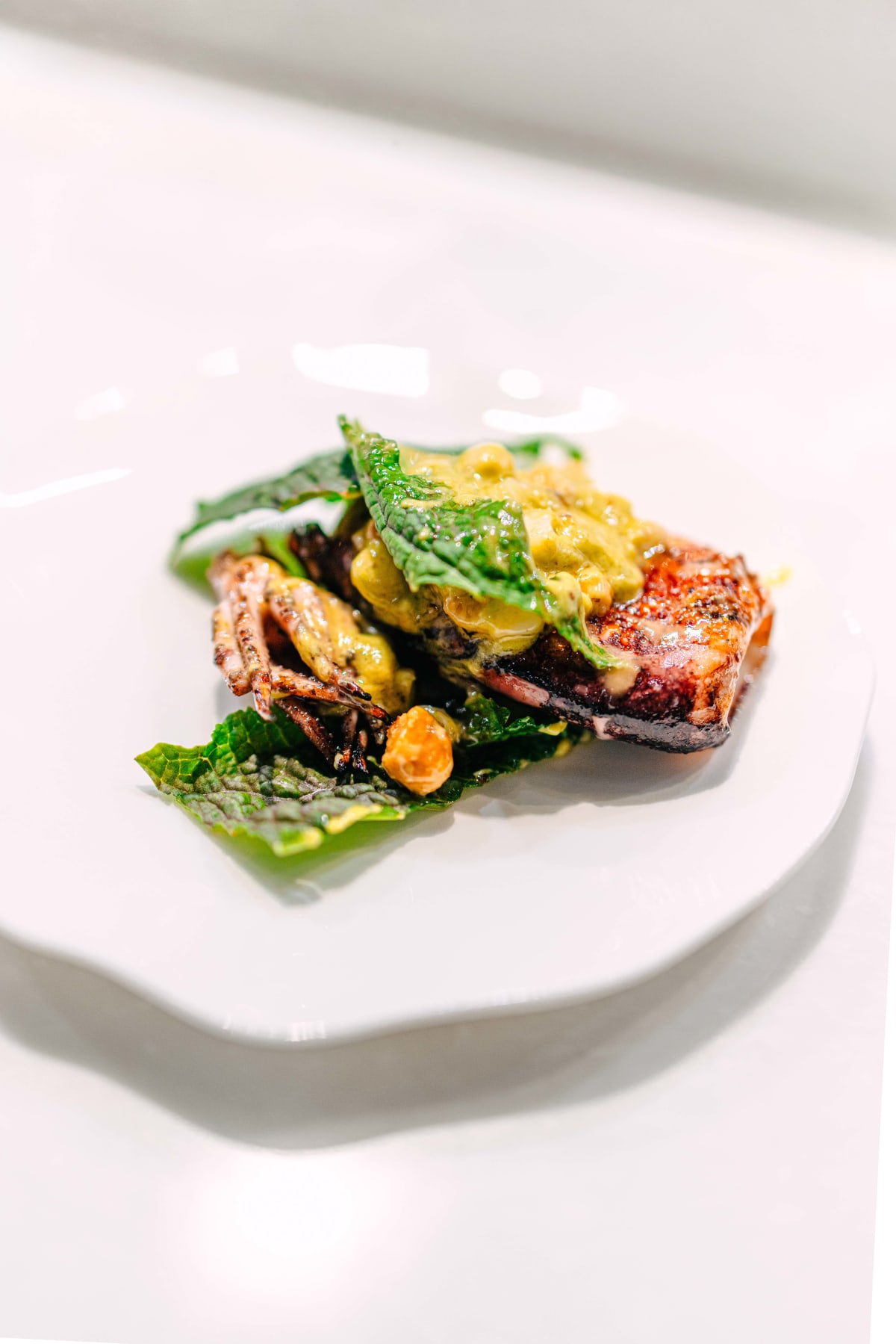
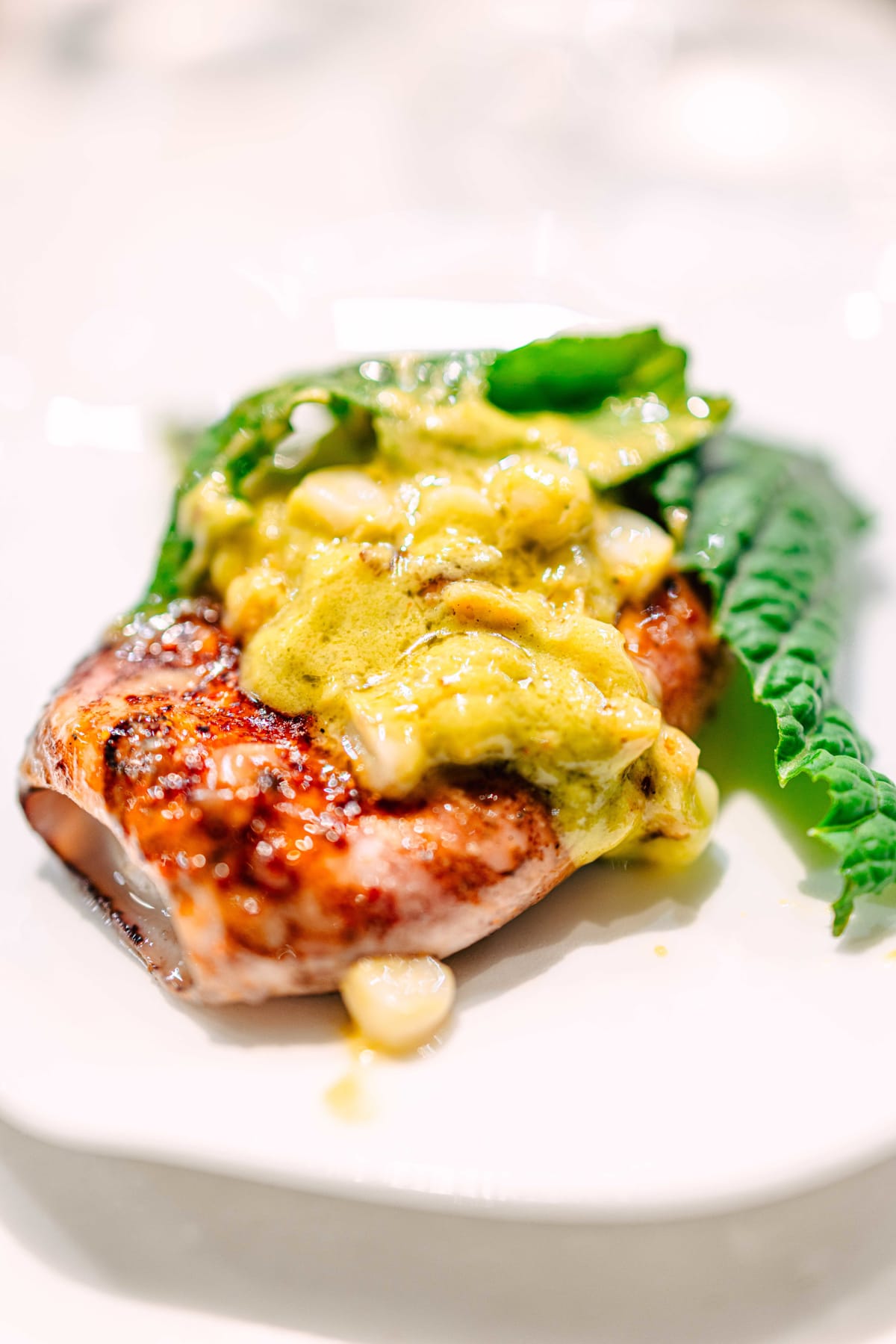
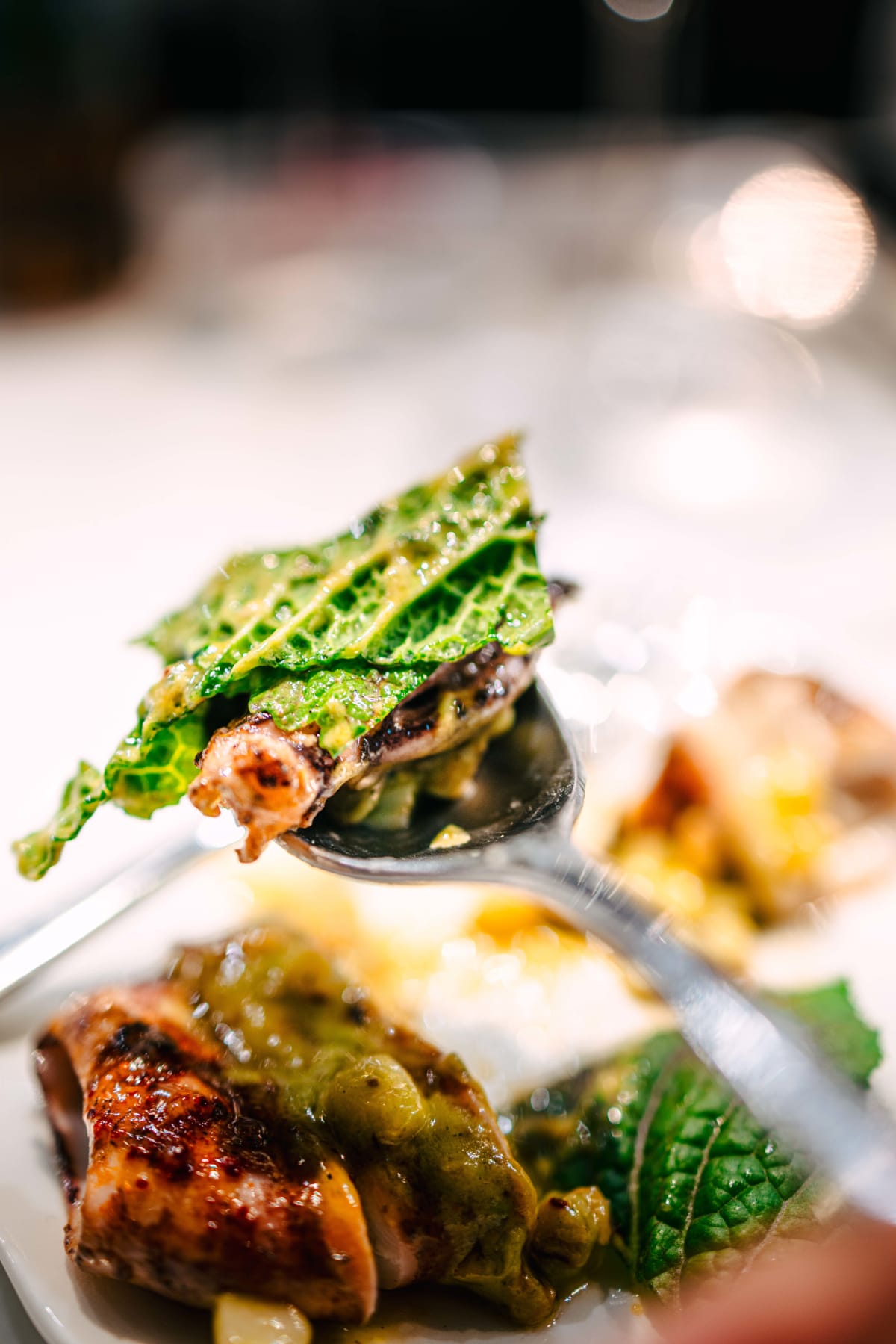
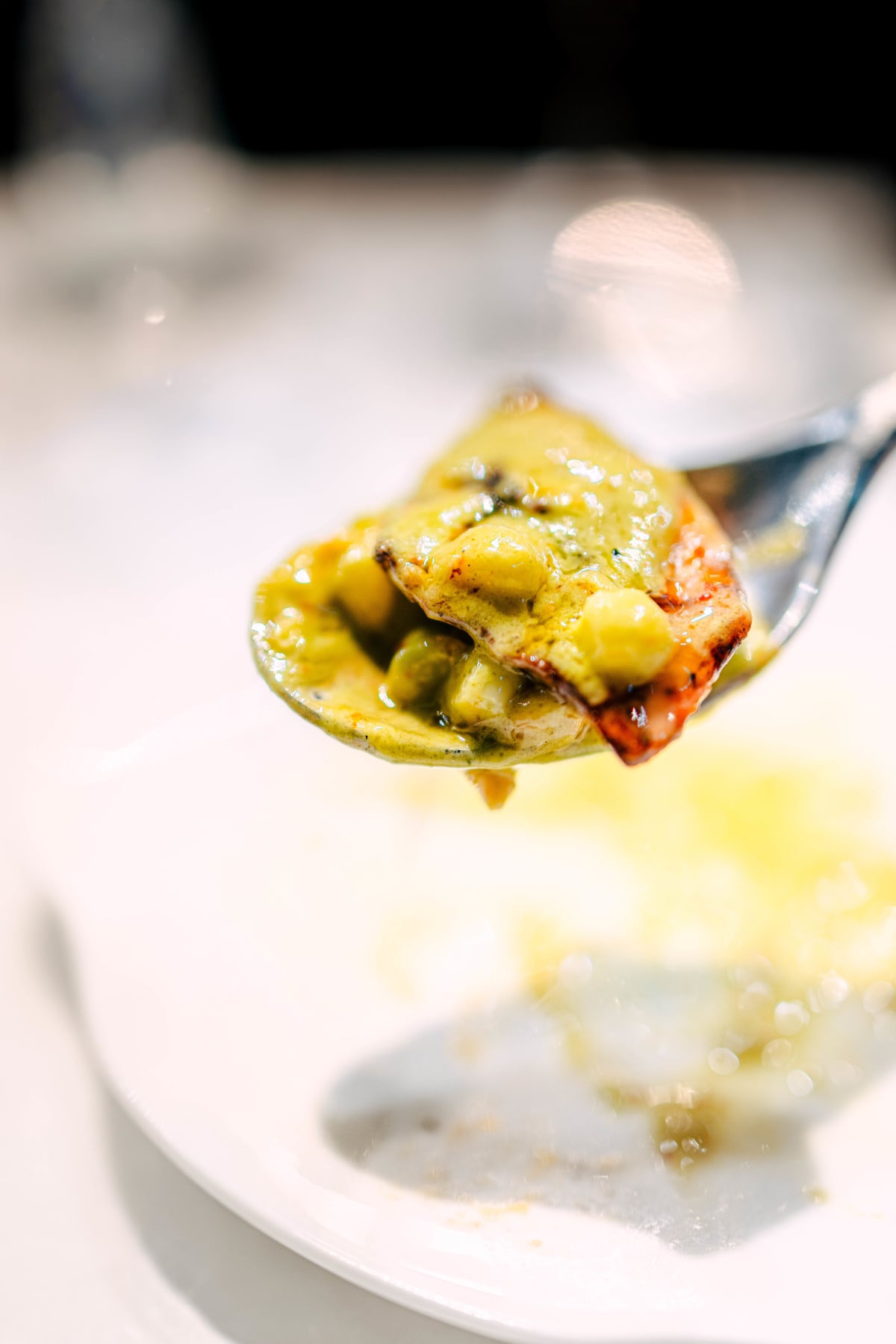
Squid and pistachio followed. The server explained that the dish took its cue from a snack called ojingeo ttangkong, squid and peanuts. Cleaned squid with a purée of broccoli, pistachio and cardamom, a risotto made from corn, roasted hazelnuts, Espelette from the French Basque country scattered over the top and mustard leaf to finish. Pistachio was used instead of peanut because peanut is a common allergen. We were told to make generous use of the purée underneath.
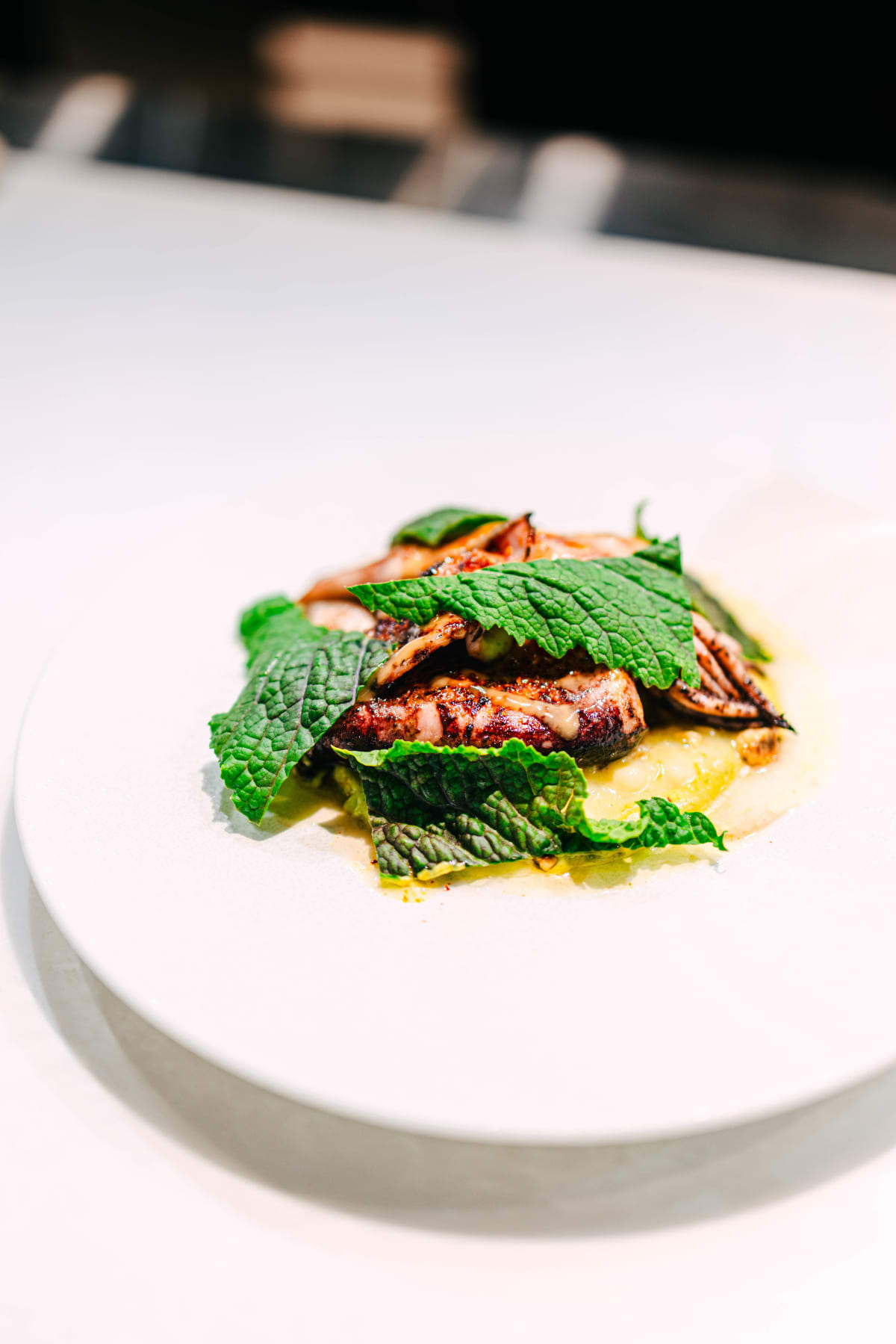
This one was heavy for me too, to be blunt about it. What impressed me most was the cooking of the squid, which had been handled to an extraordinary softness. The pistachio underneath is nutty and the balance between the soft texture of the squid and that nuttiness was good, but the dish was quite salty. The other thing that struck me was the leaf on top, which must have been lightly smoked or charred, because it gave off smoke. That gave the dish a smoky note that added some complexity. But the elements on top that gave it bite, which I took to be the corn and the hazelnut, did not sit well together. It is a dish whose merits appear when you look at them close up and disappear when you step back and take in the whole.
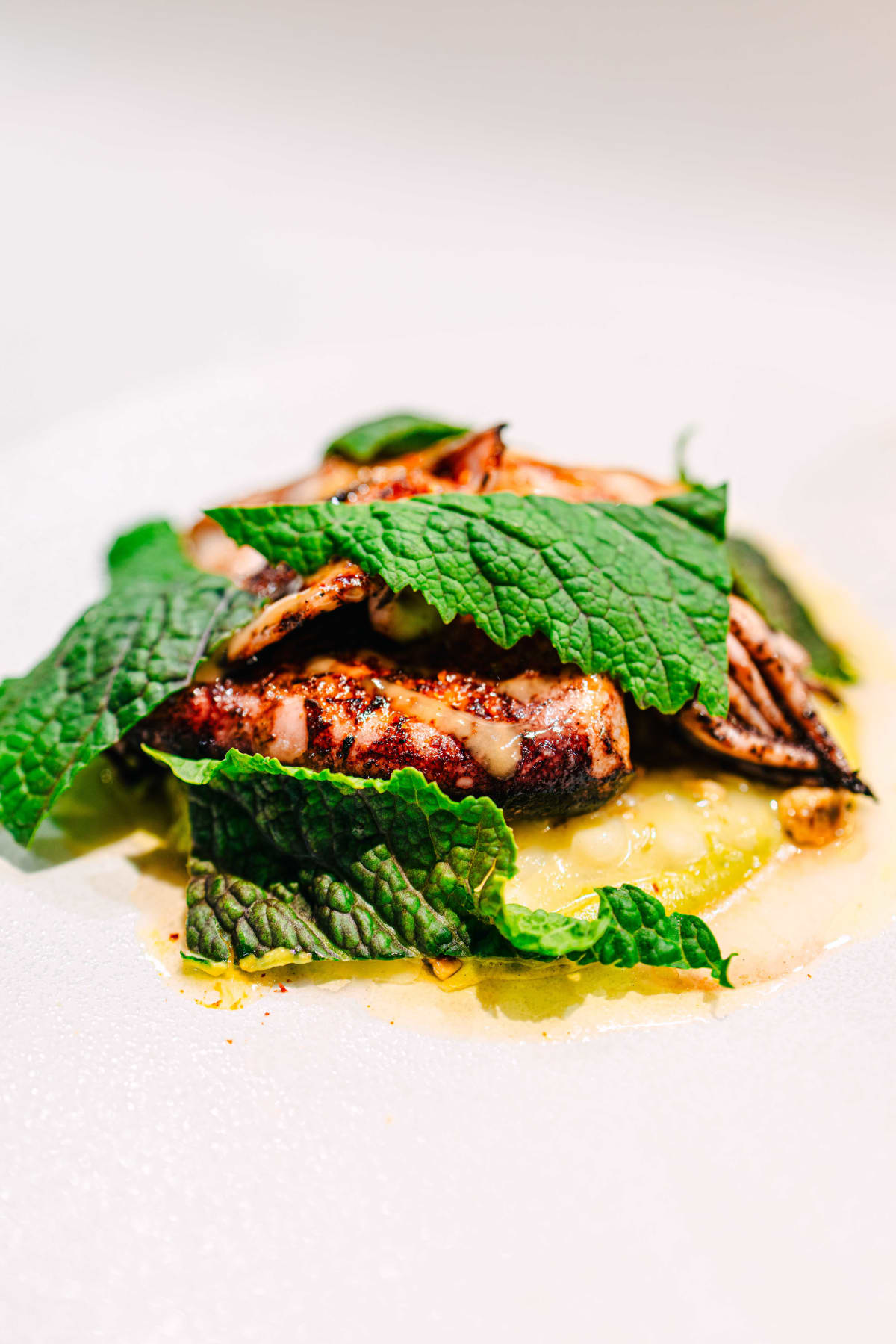
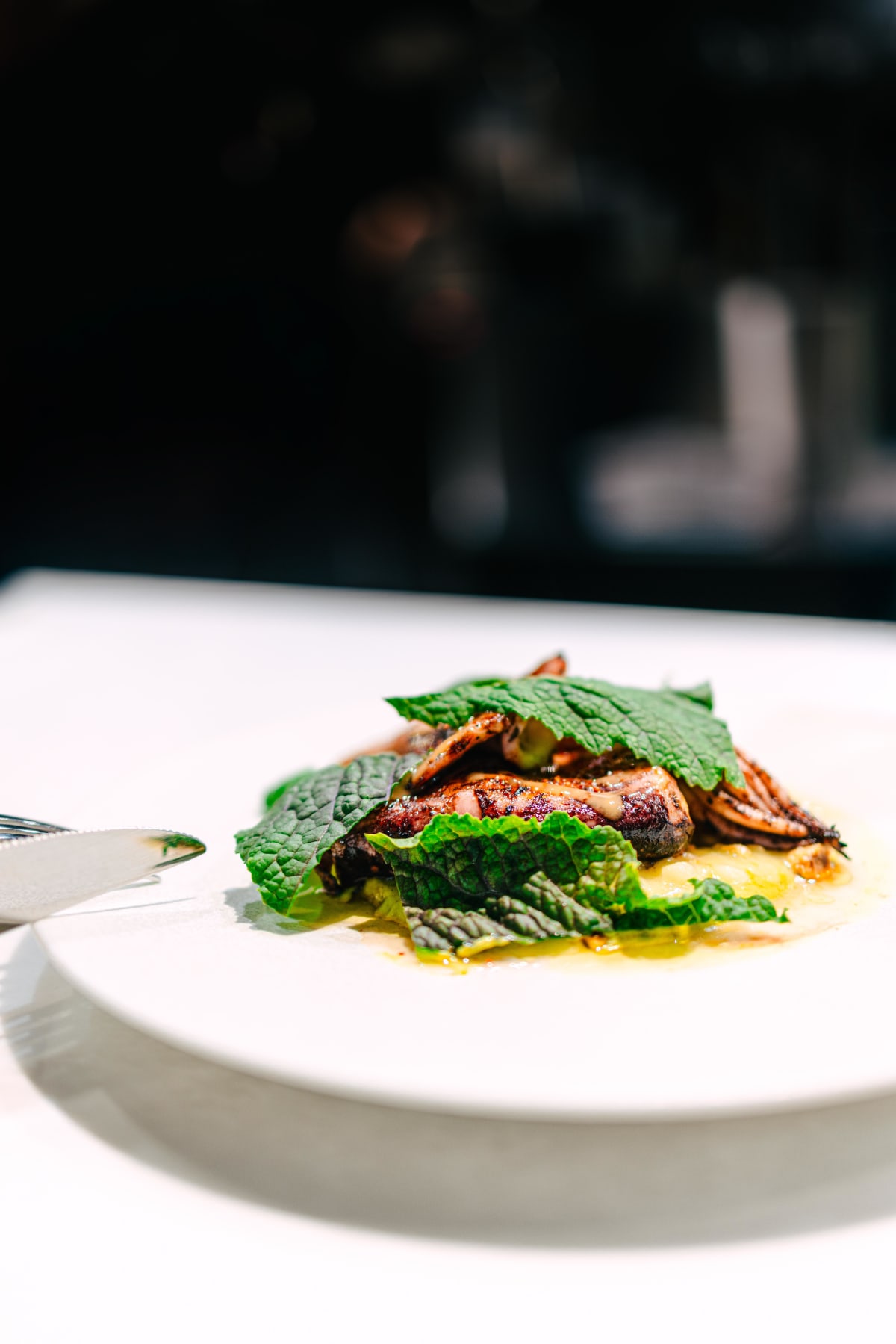
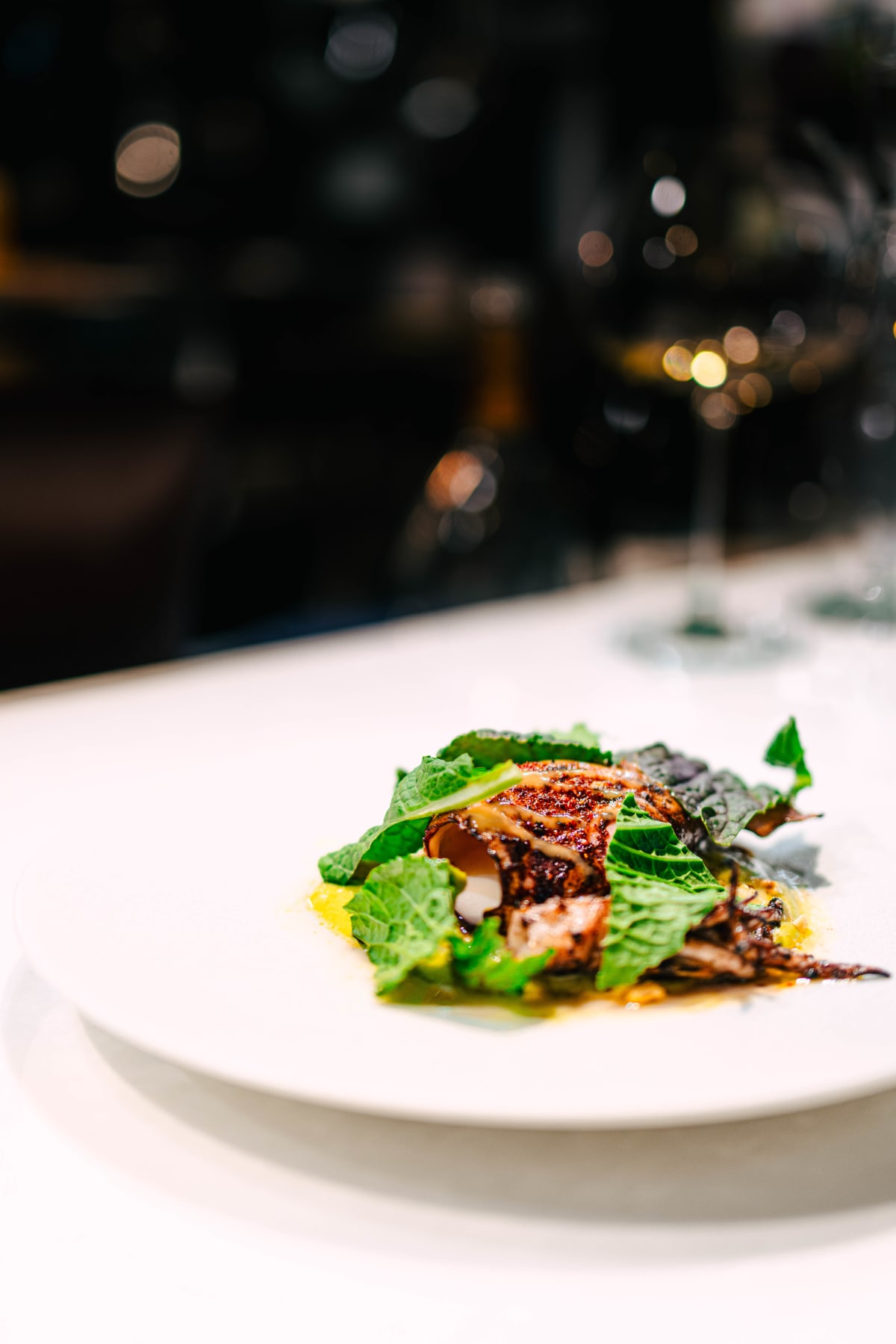
Having eaten this far through the starters, it was clear the chef had aimed this time at broad, direct impact. The meeting of Japanese and French, and the texture work, left an impression.
Section 11·Rully, Then Eel
For the first red we opened Domaine Dureuil-Janthial's Rully Maizières 2023. Vincent Dureuil and his wife Céline took over the family domaine in 1994 and run it, and it is the reference producer of the Côte Chalonnaise and of Rully in particular. There was talk at the counter that this is the most famous and most sought-after grower in the village, that the whites especially are worth seeking out, and that the quality-to-price ratio is outstanding while the volumes are small. What we drank was the red from the same village and the same vineyard. Maizières is a relatively large lieu-dit on the east side of Rully, east-facing and rated one of the most mineral sites in the village, and the Pinot Noir here was planted in 1997 and 2001.
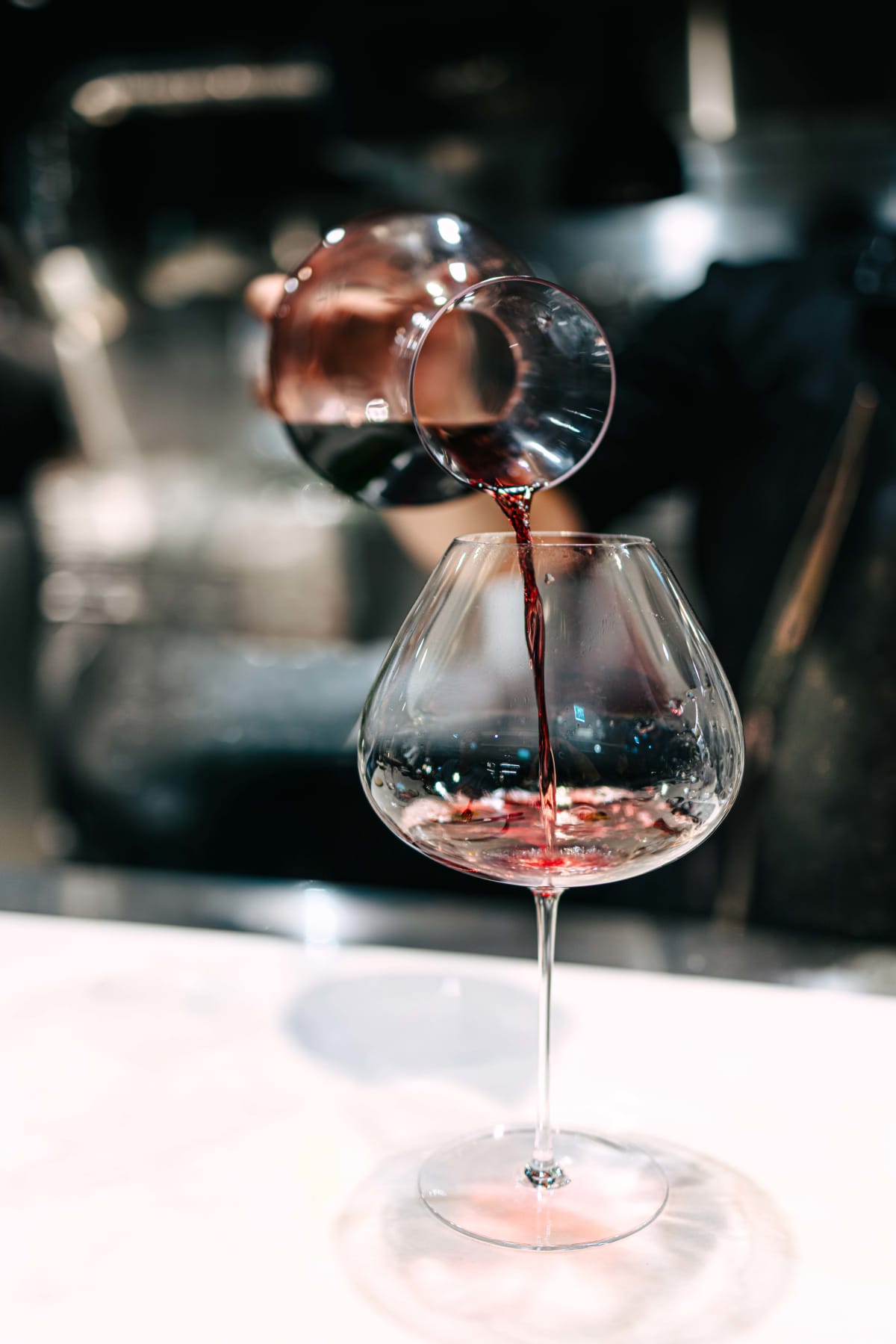
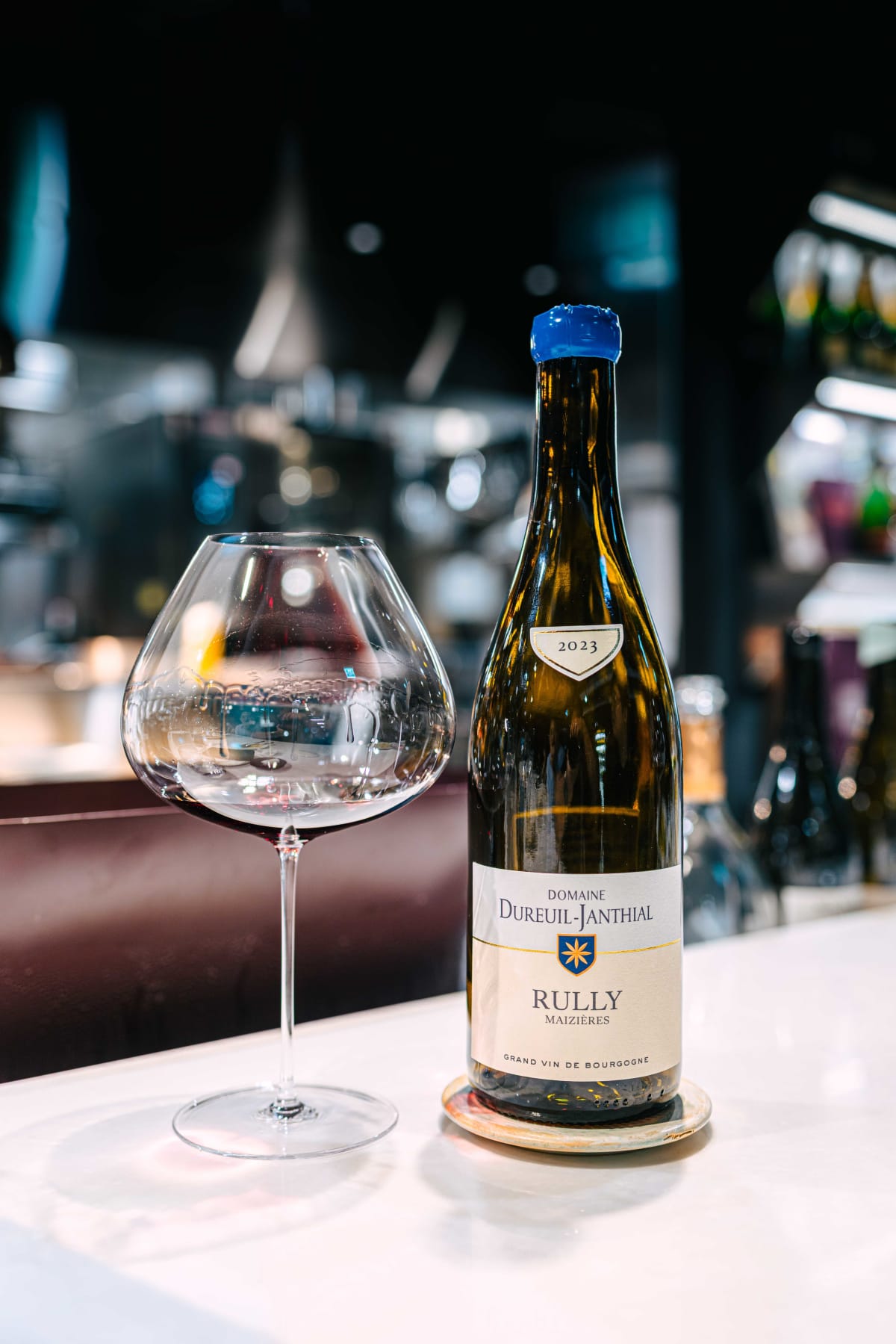
The opening impact was excellent. Berry aroma first, then a smoky, charred note coming up. On the palate the acidity was slightly lacking, but it was a serious and delicious wine.
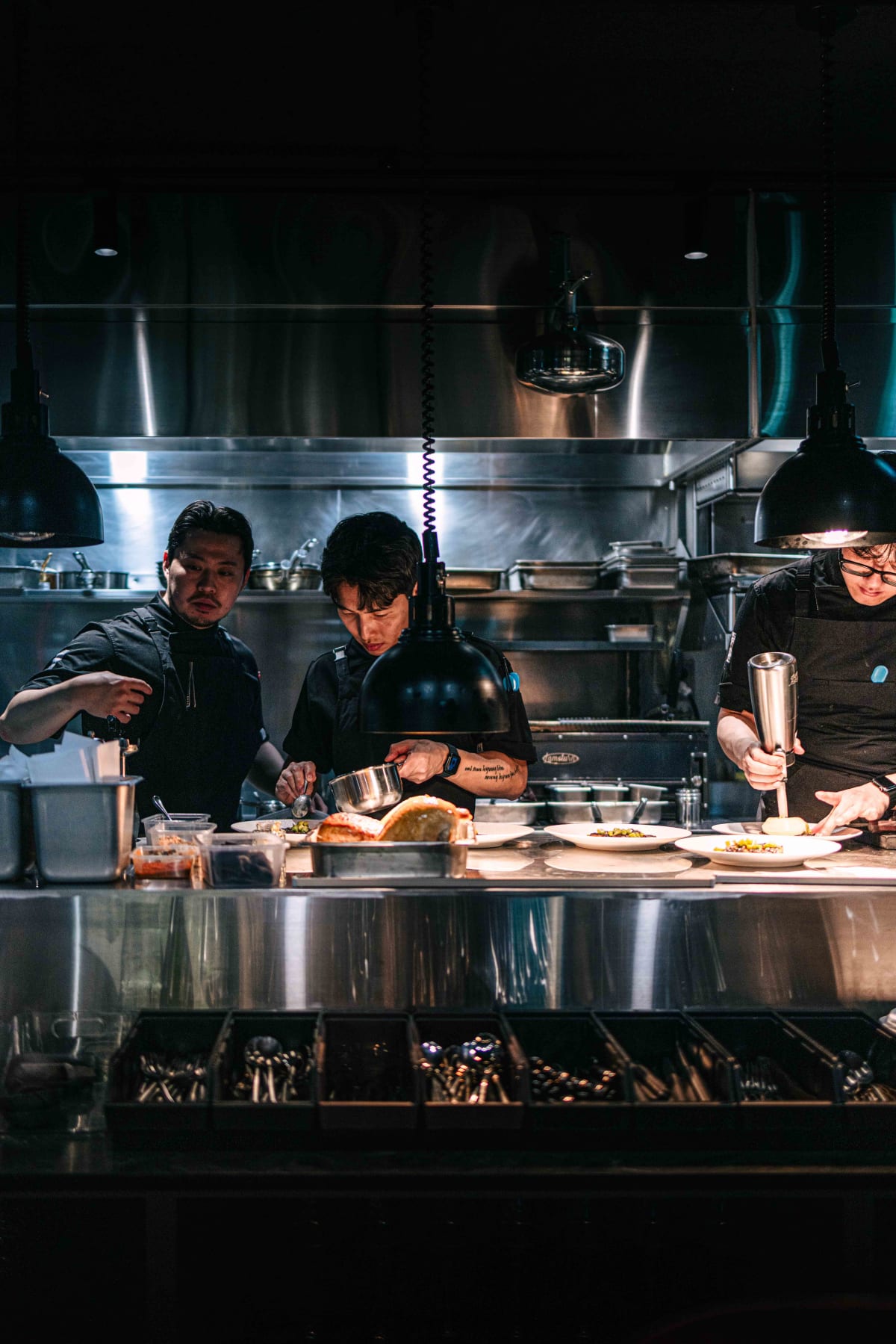
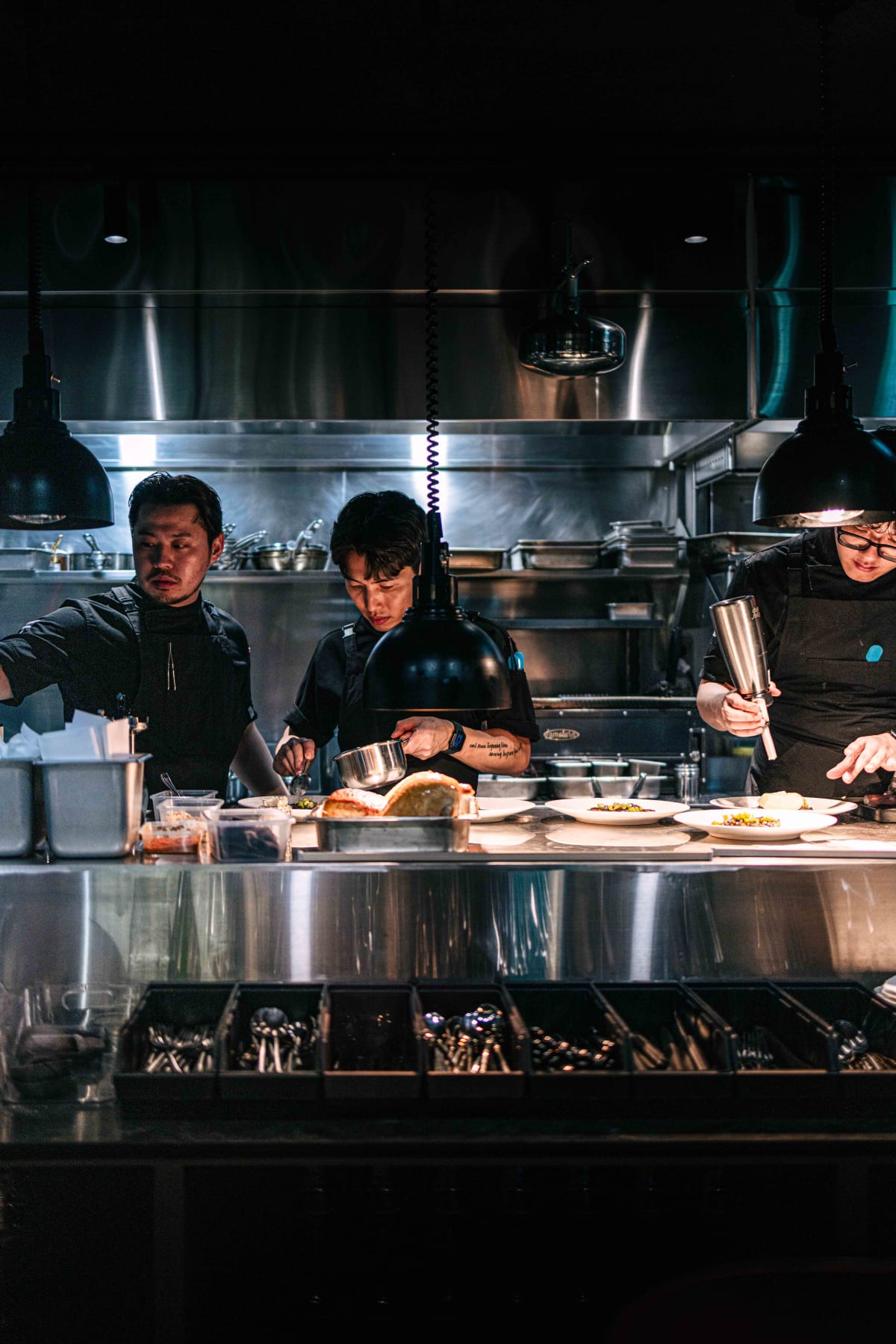
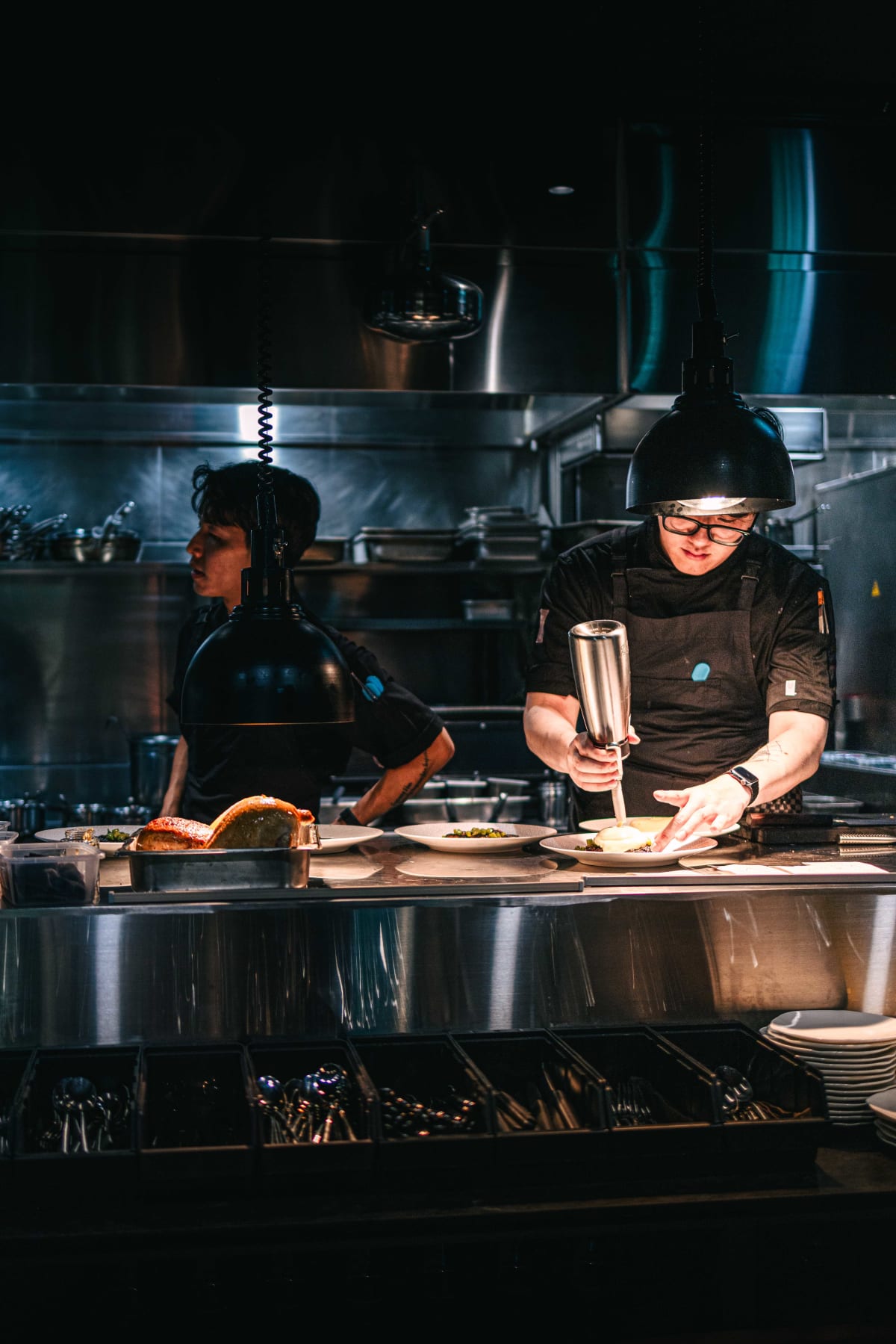
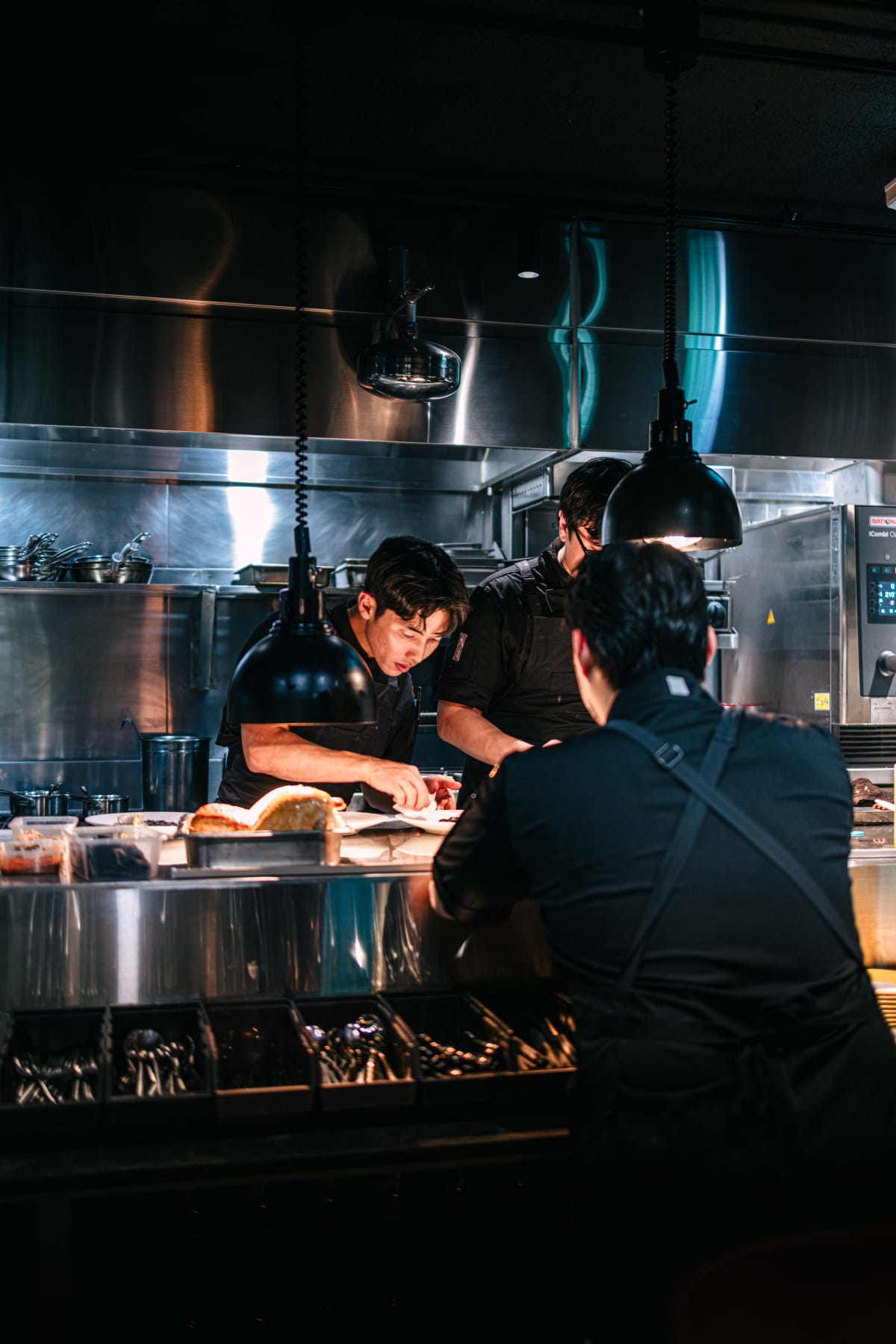
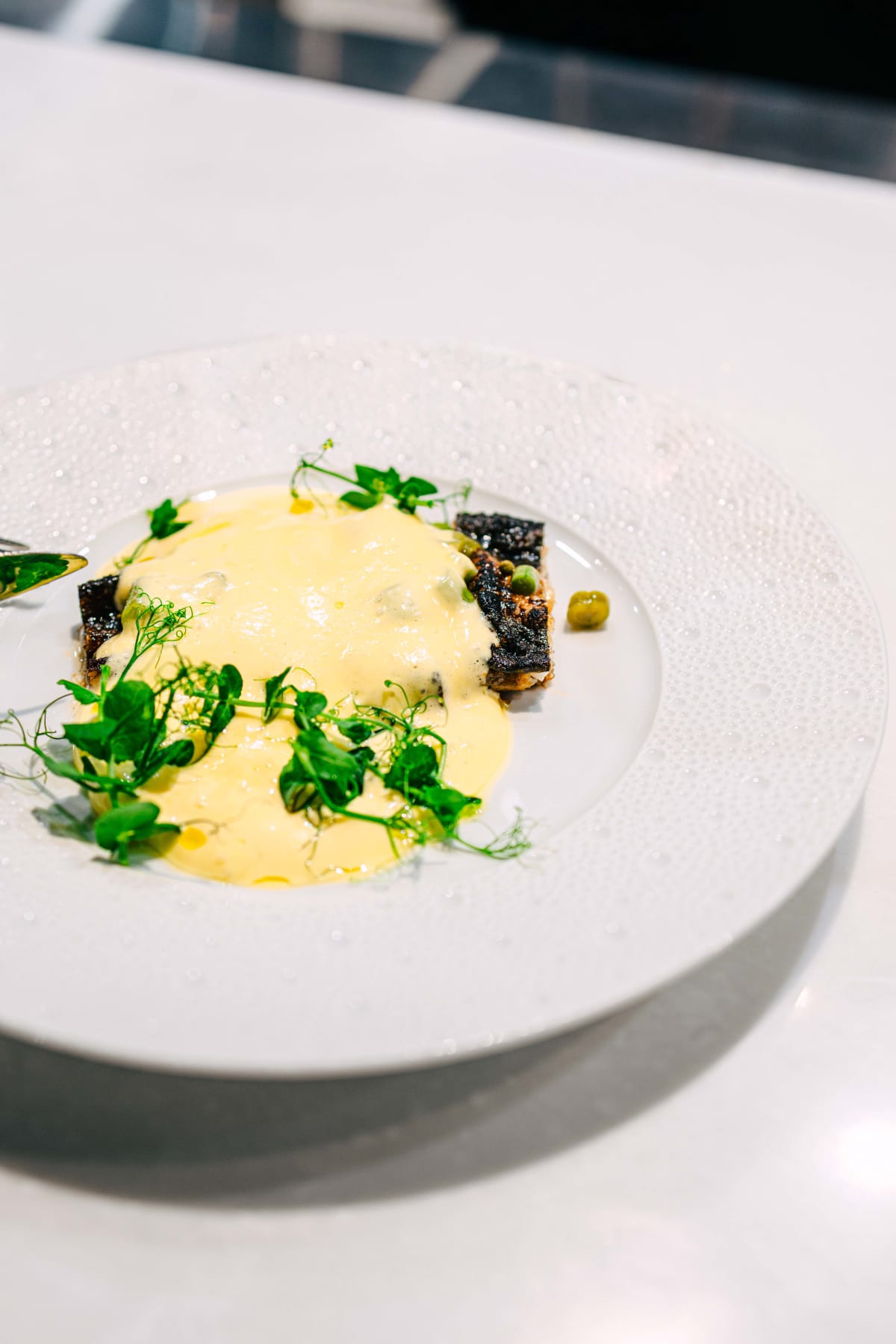
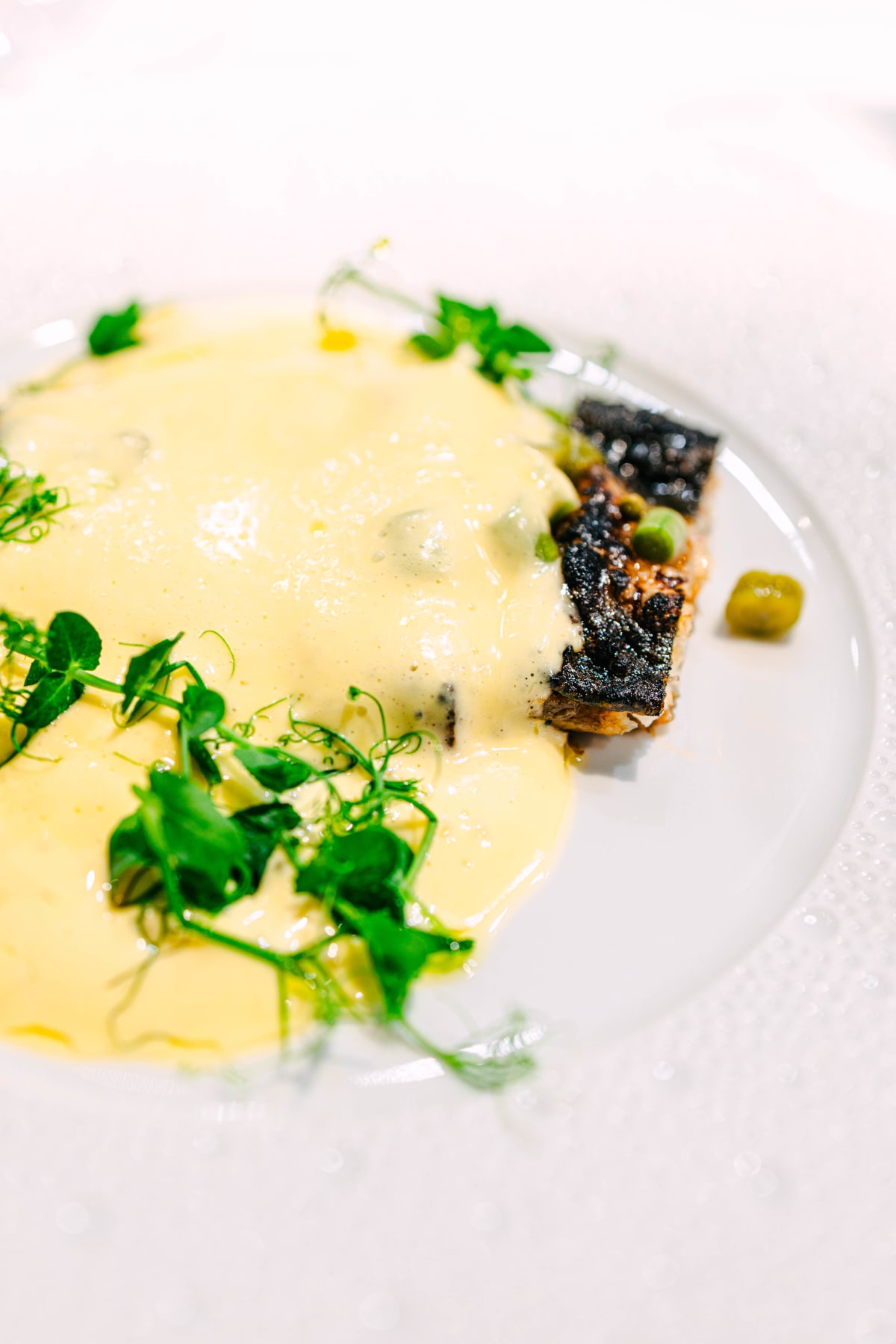
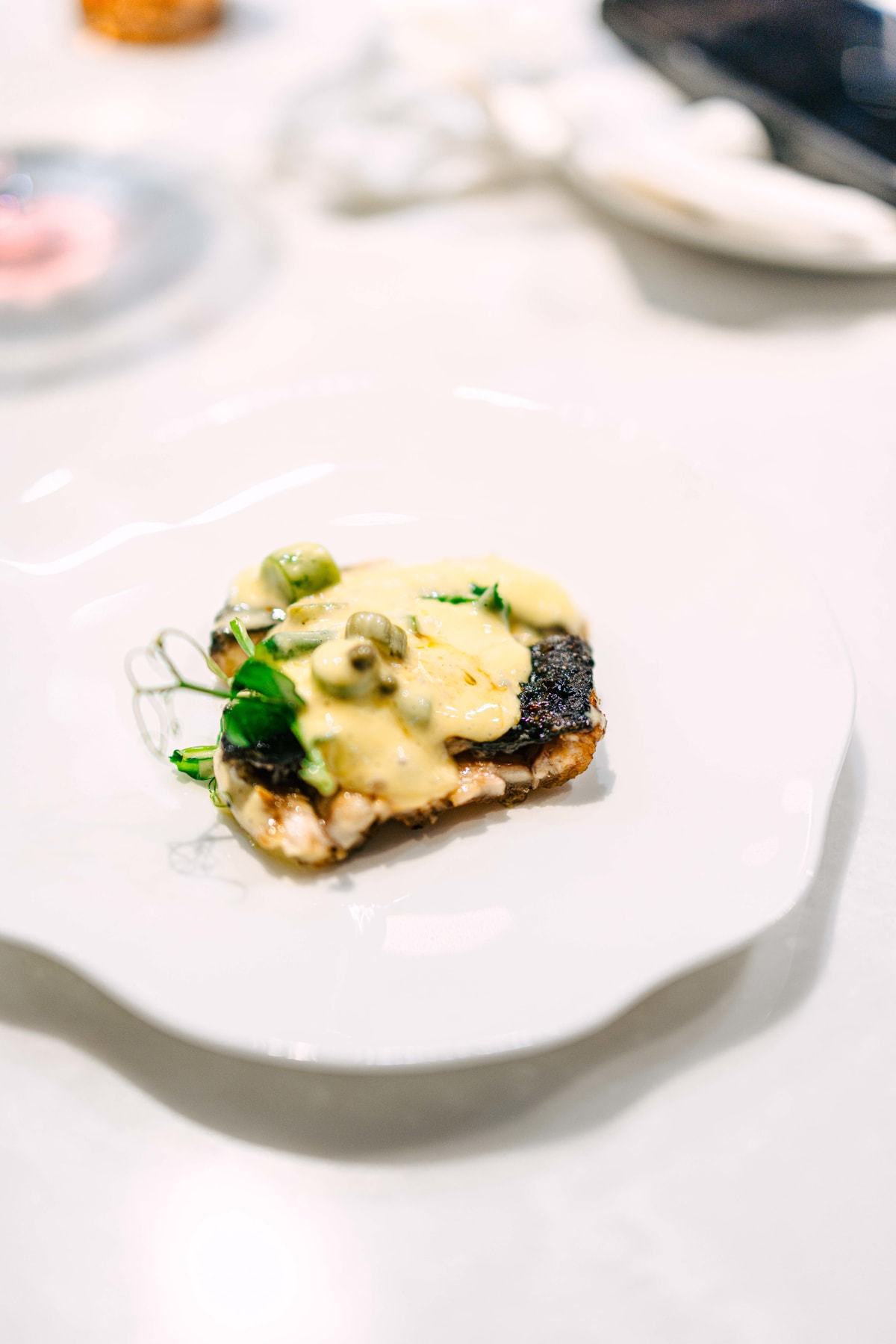
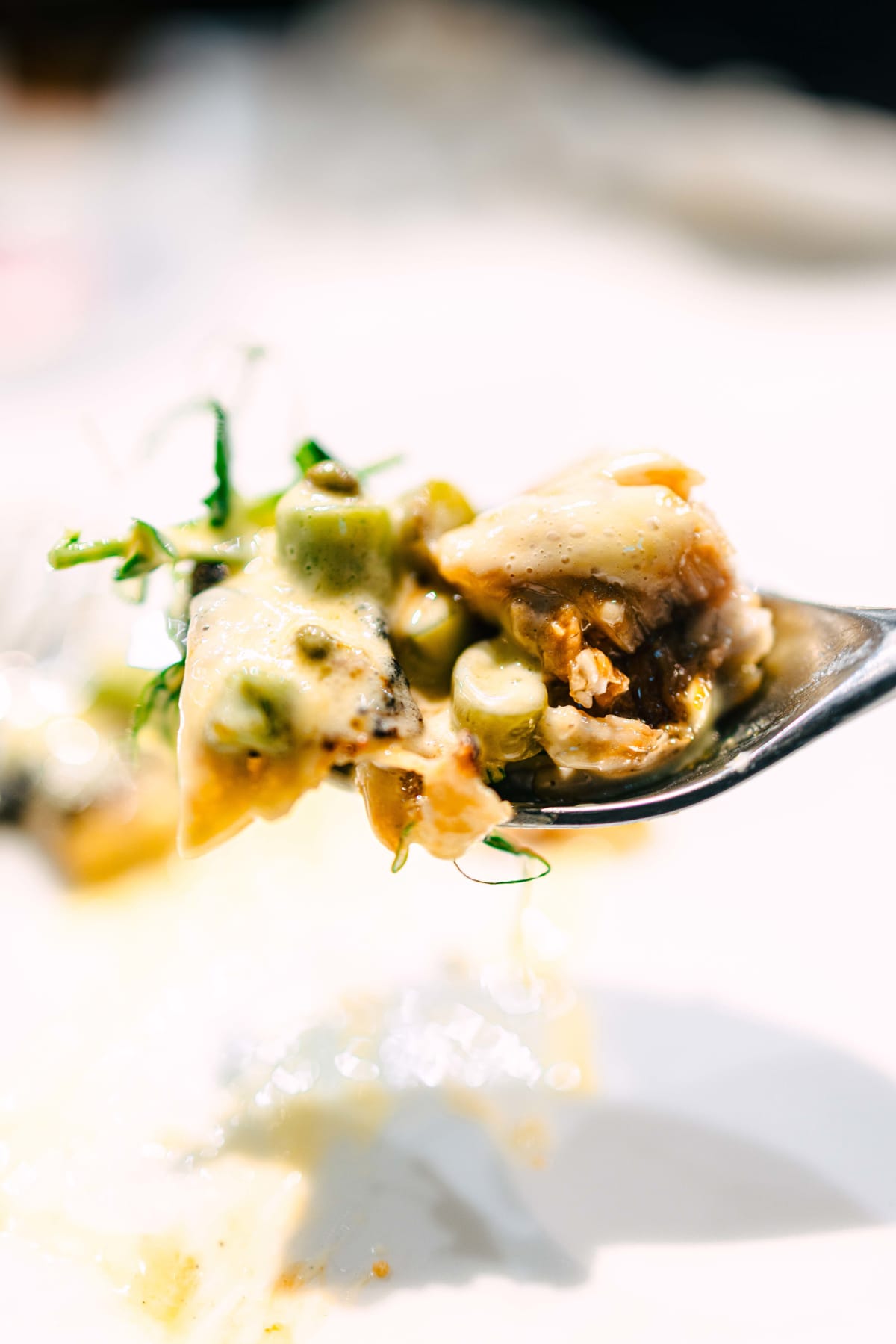
Moving to the mains, an eel sabayon arrived. Eel is a fish, so it was not clear whether this was the fish course of the day or something they sent out. The construction is close to eel chawanmushi, topped with hazelnut, yolk salt and a sabayon made from egg yolk, with house-pickled sansho inside. For the base seasoning the usual way is to make an eel teriyaki with sugar, mirin and koikuchi soy, but here they had tried Madeira in place of the mirin. Freshwater eel was used rather than anago.
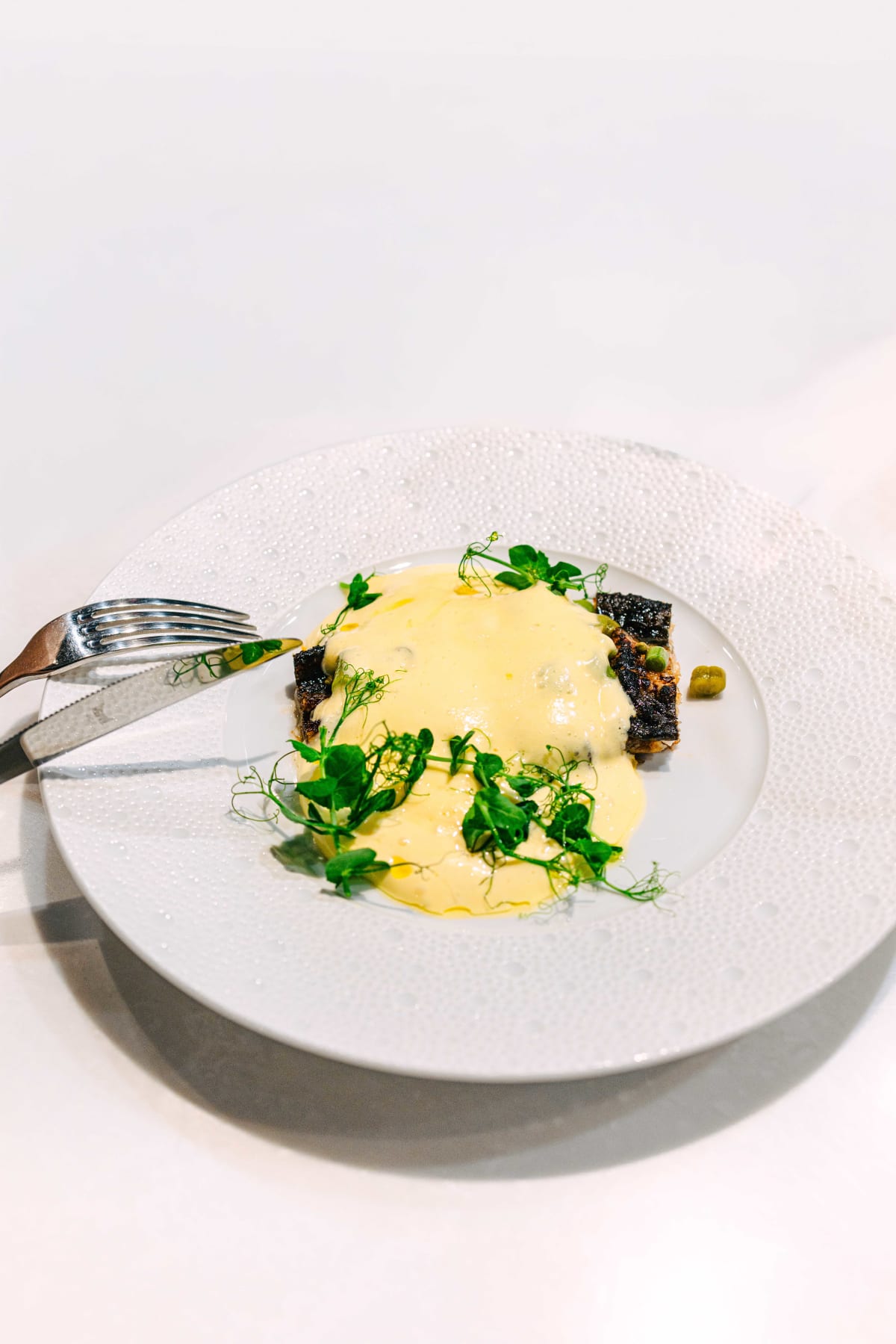
This was the dish that disappointed me most. Whether because I had eaten three heavy starters in a row, this came at me heavily too. It was described as a reading of Japanese chawanmushi, but the balance of steamed egg and eel never appeared between the sabayon and the eel. And the eel itself was ordinary, nothing that stood out.
Section 12·The Chicken
Three meat mains then came out in a row, and all three were excellent. This is where chef Yoon Nam-no's ability came through properly. The chicken was easily the best of the three.
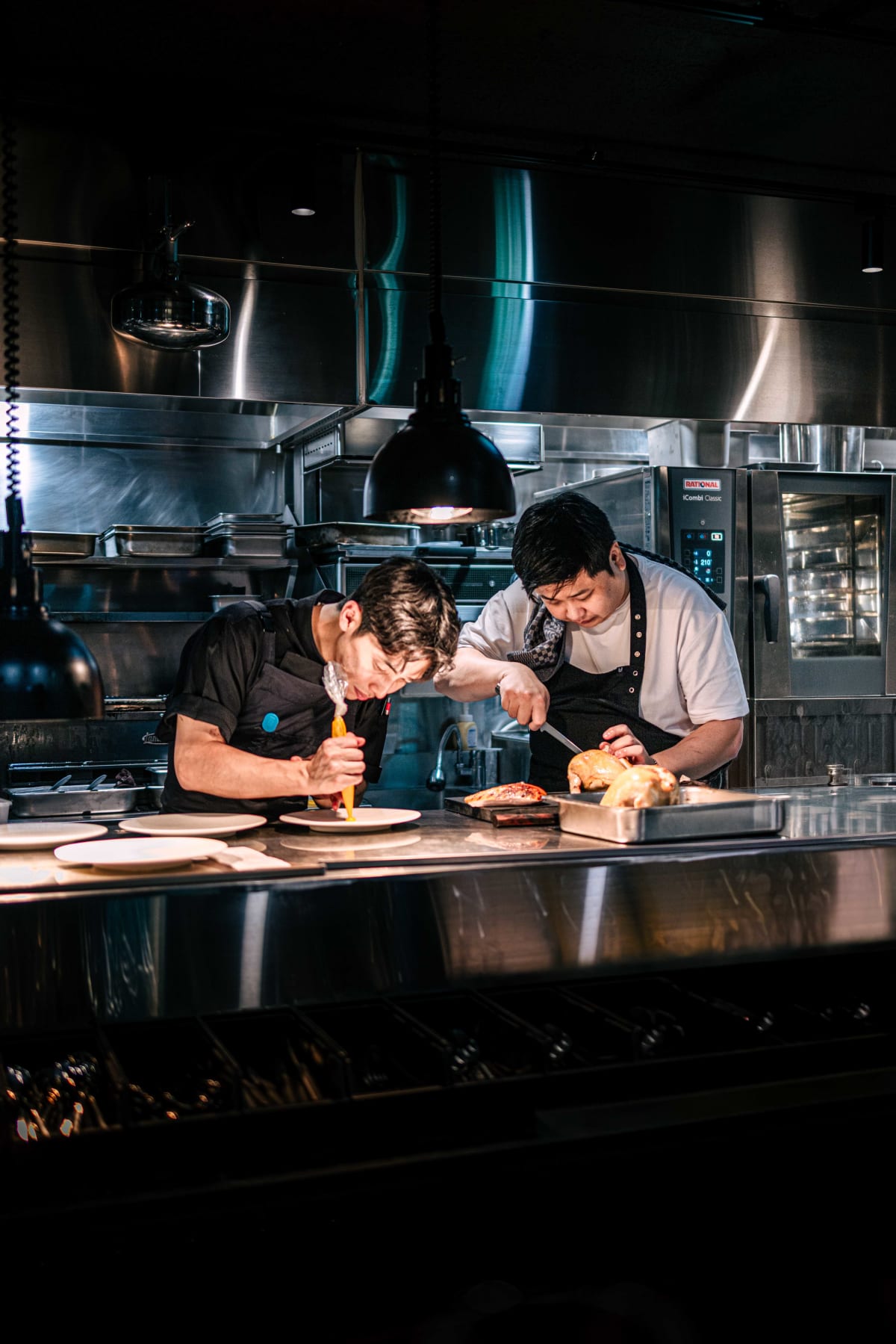
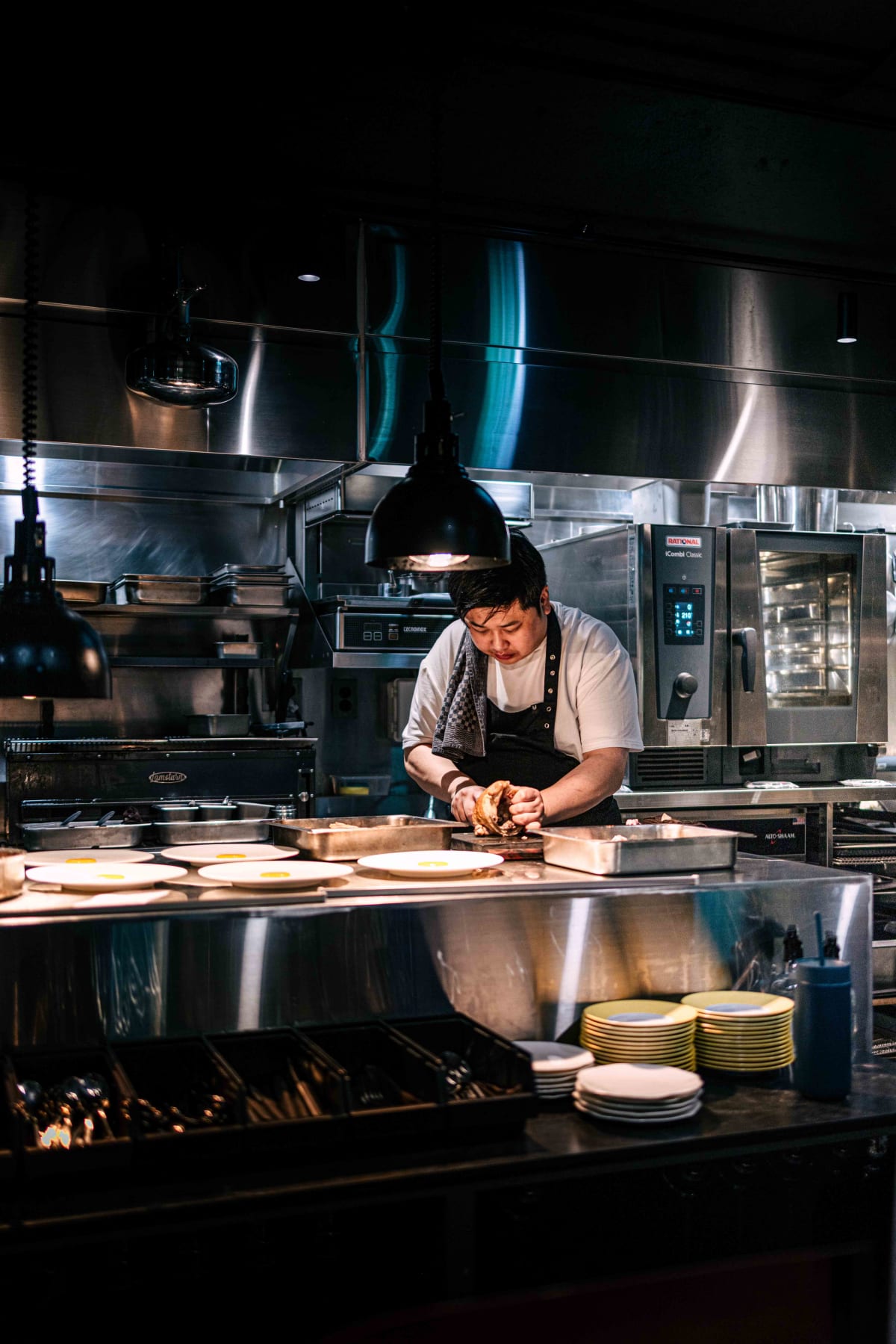
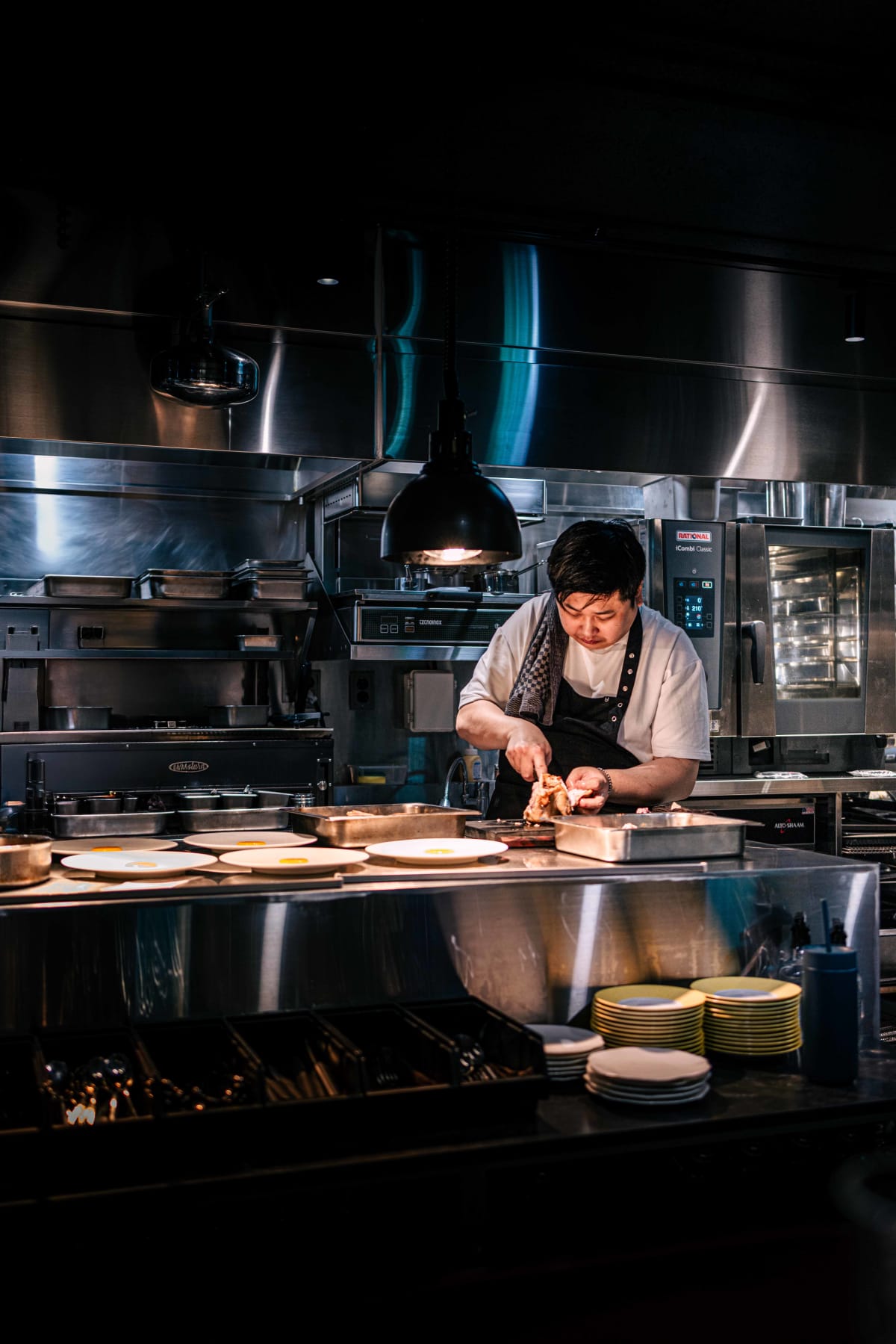
The chicken was a dish not on the menu. It combines oyakodon and tsukune and turns them French, with the tsukune packed inside a morel, and scallop, chicken leg and prawn used in it. The tenderloin was cooked close to raw, we were told, for the pleasure of the way it tears along the grain, and the sauce was a Périgueux. The white foam around the yolk stands for the egg white, a vin jaune sauce turned into a foam.
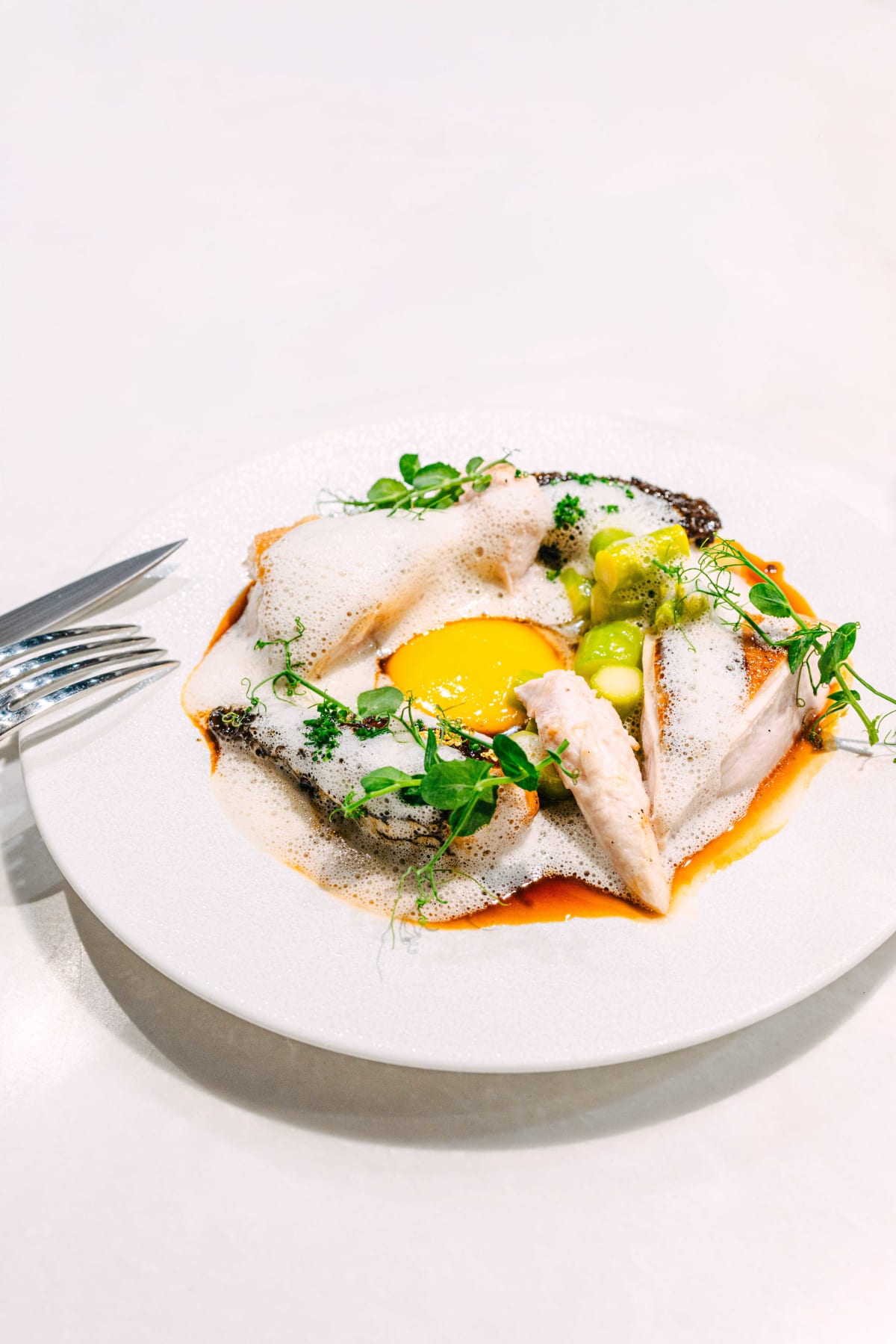
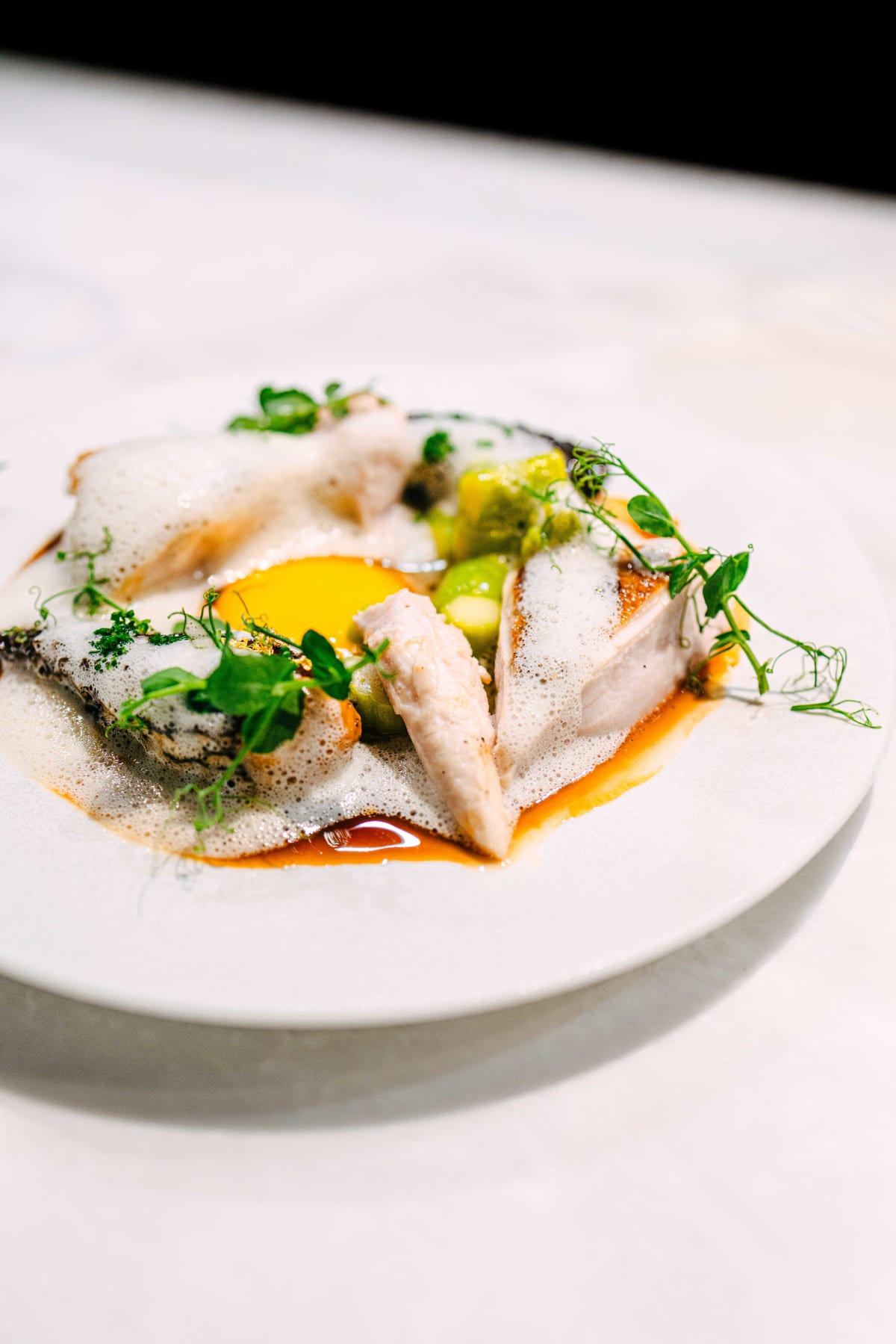
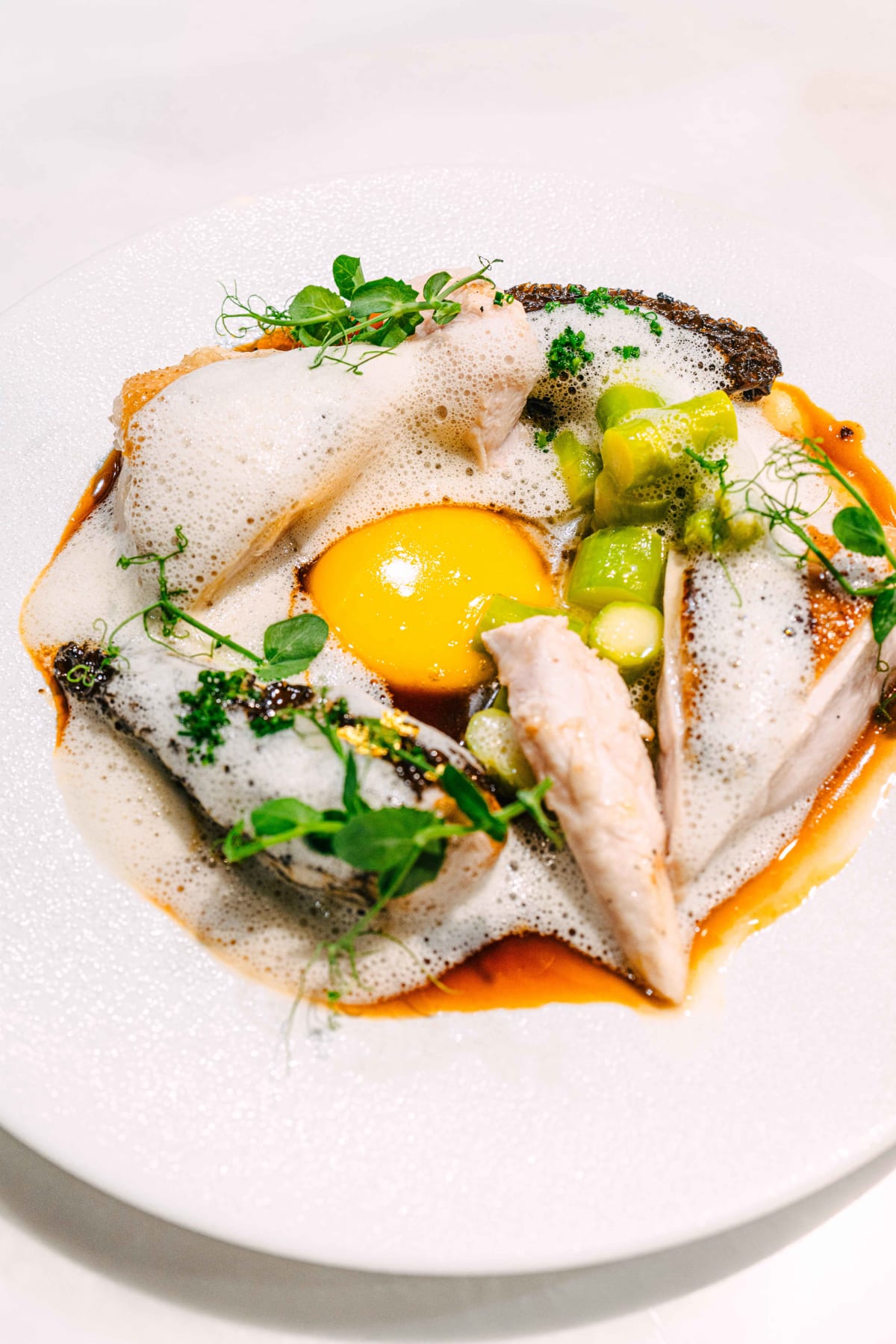
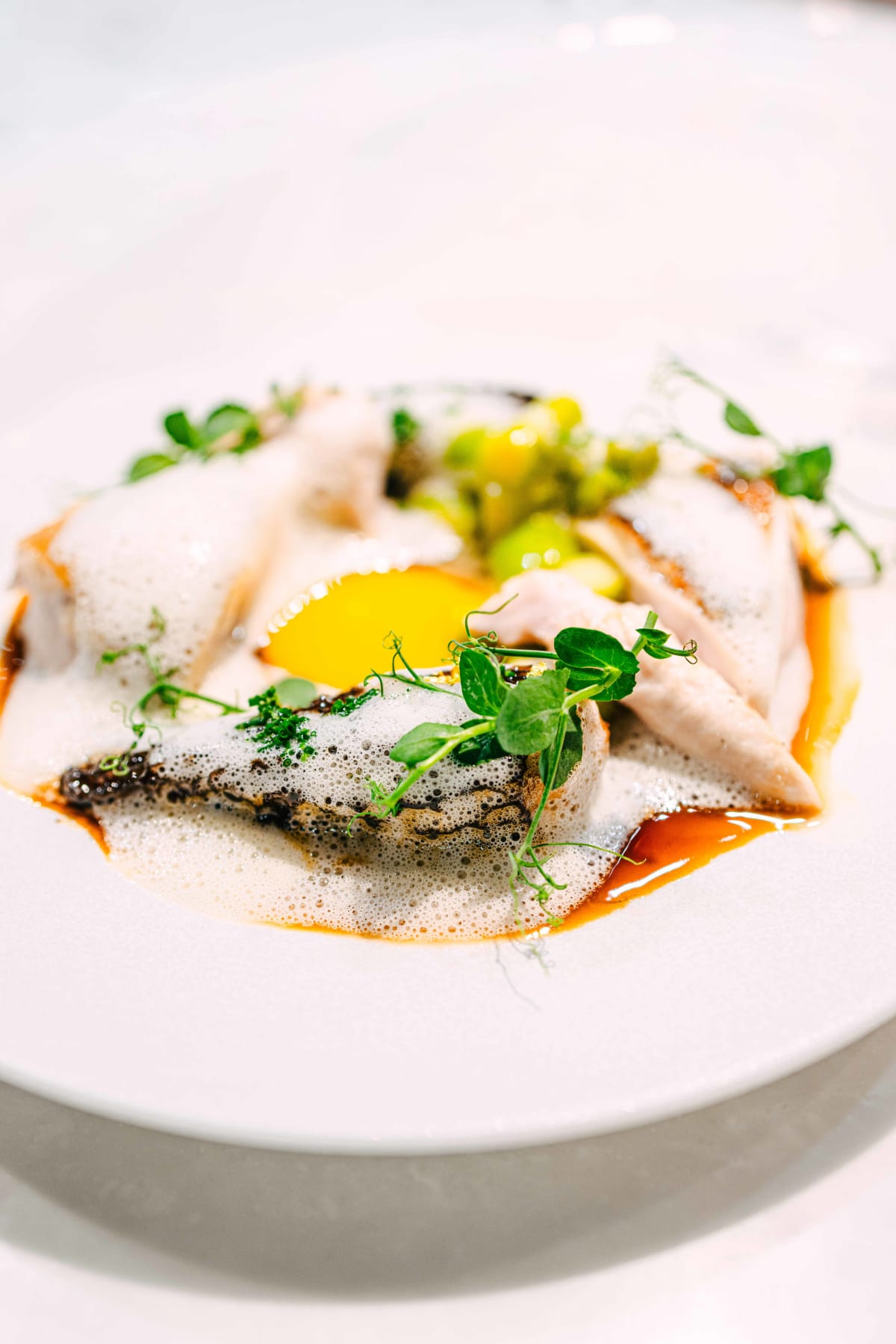
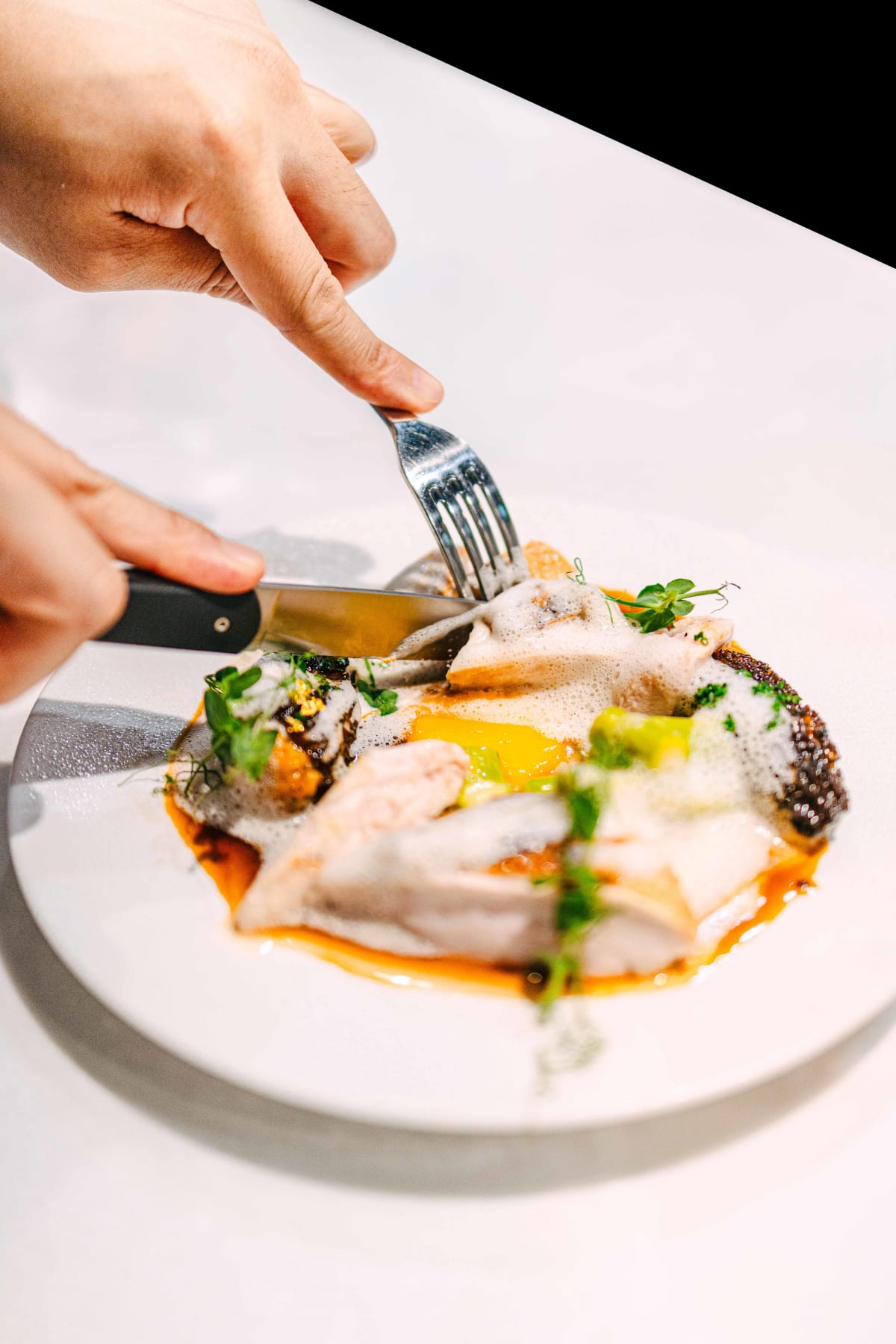
The best dish of the evening, for me, is this chicken main. It takes oyakodon, an everyday Japanese dish, and reinterprets it as a fine French plate. The cooking on all three meat mains was to my taste, and of the three the one where that cooking mattered most to my enjoyment was the chicken.
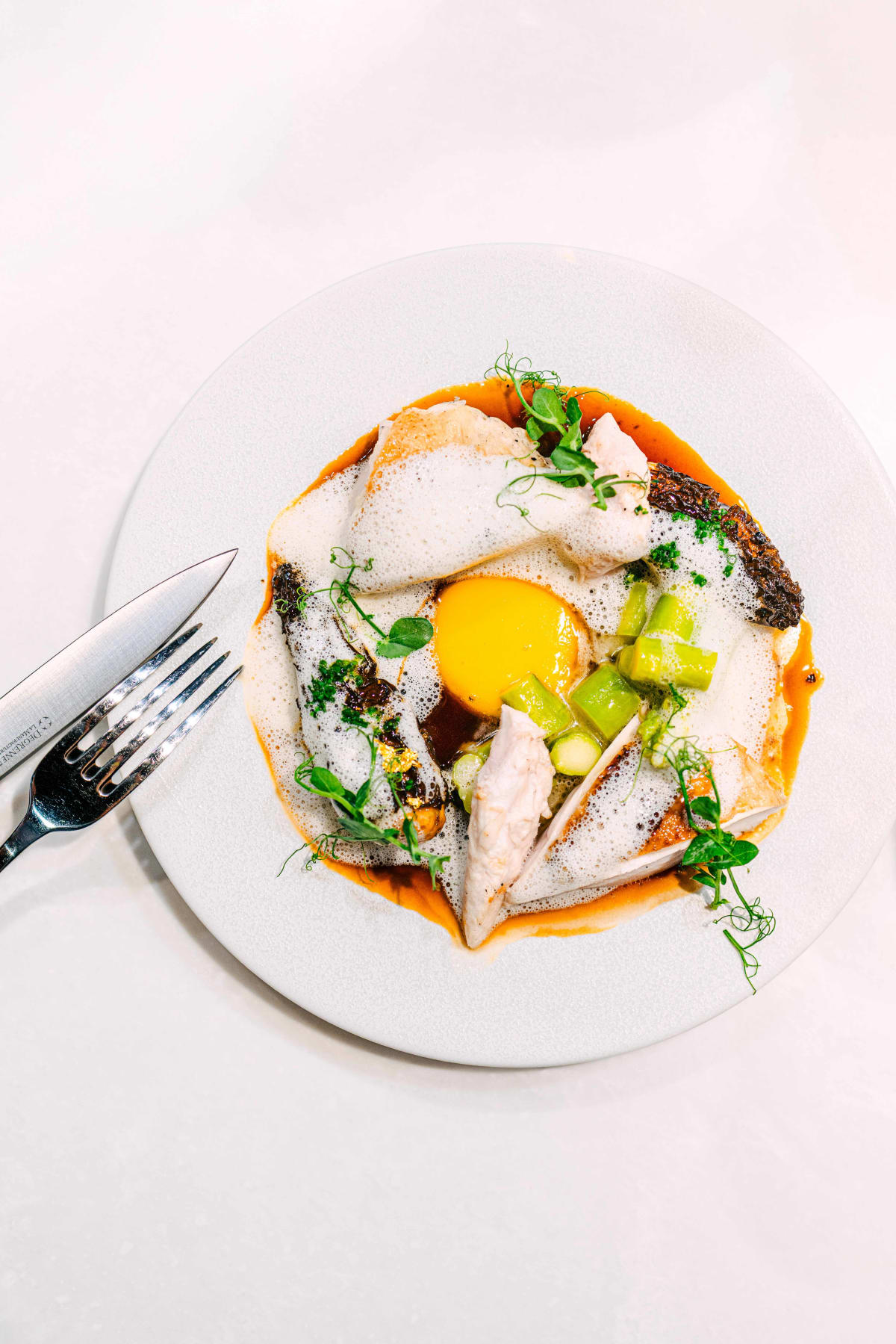
The best part was the tenderloin, soft and without a trace of dryness. The use of asparagus and the sauce were properly balanced, the yolk was rich and tasted very good, and the absurdly large morel with the tsukune packed inside stayed with me.
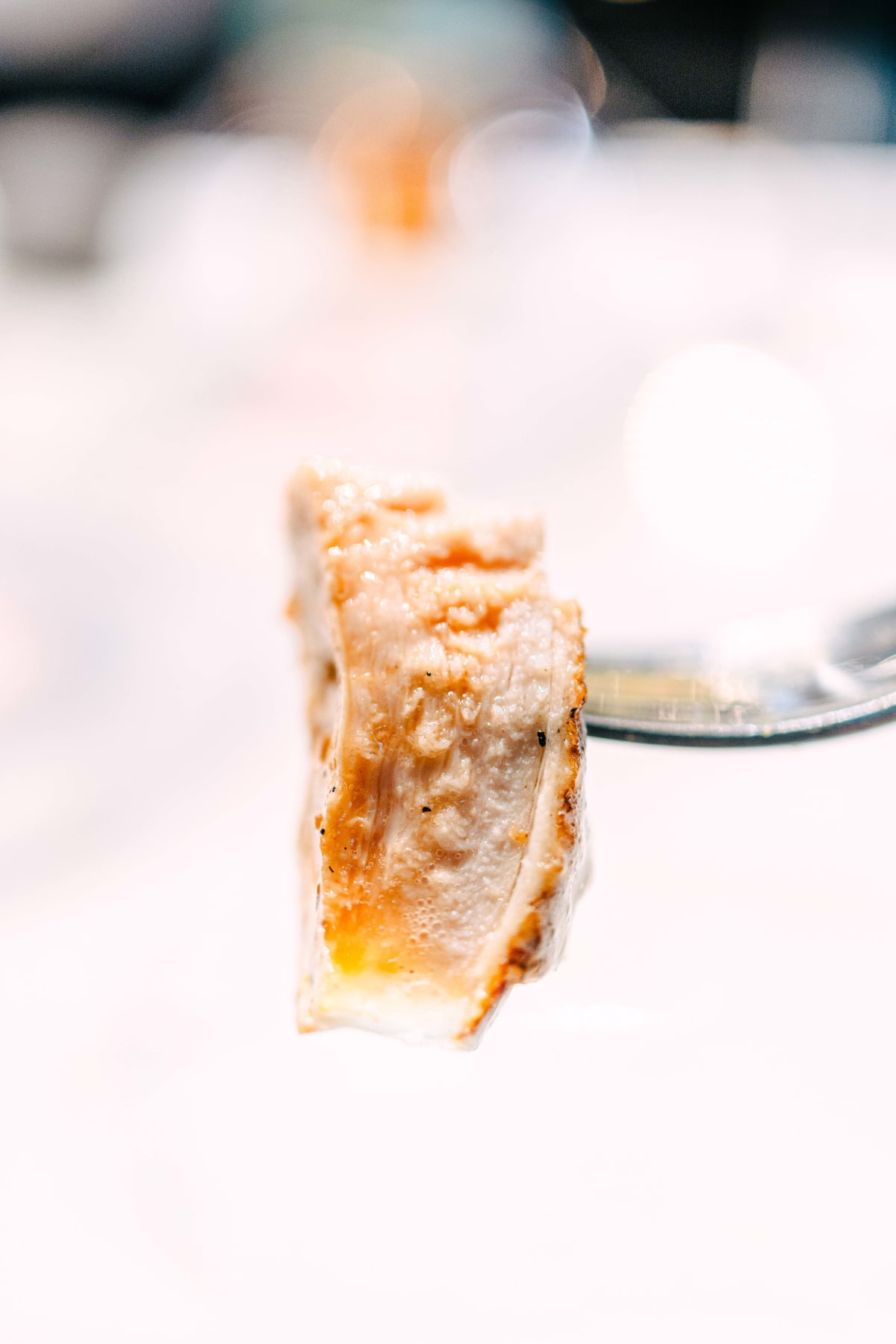
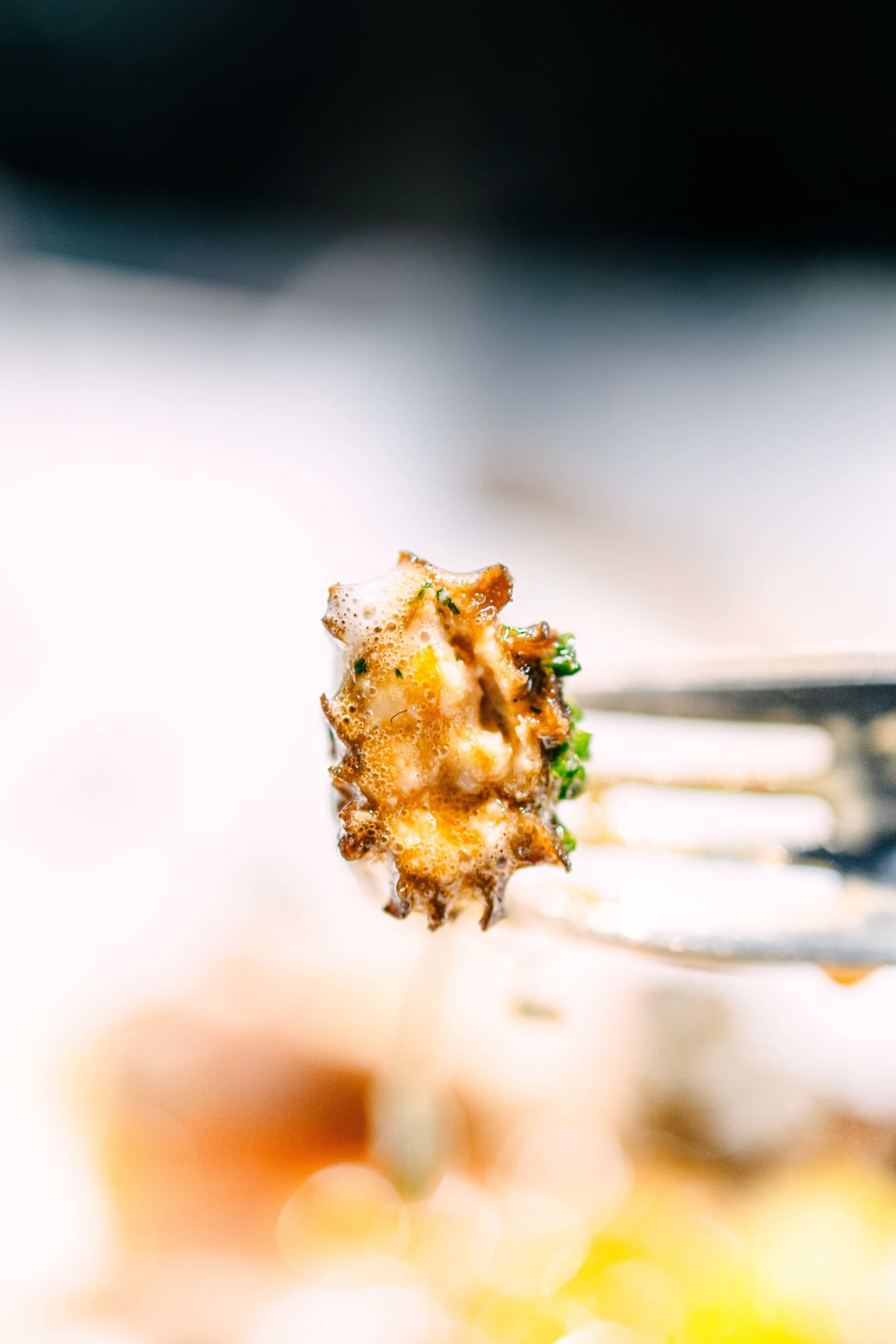
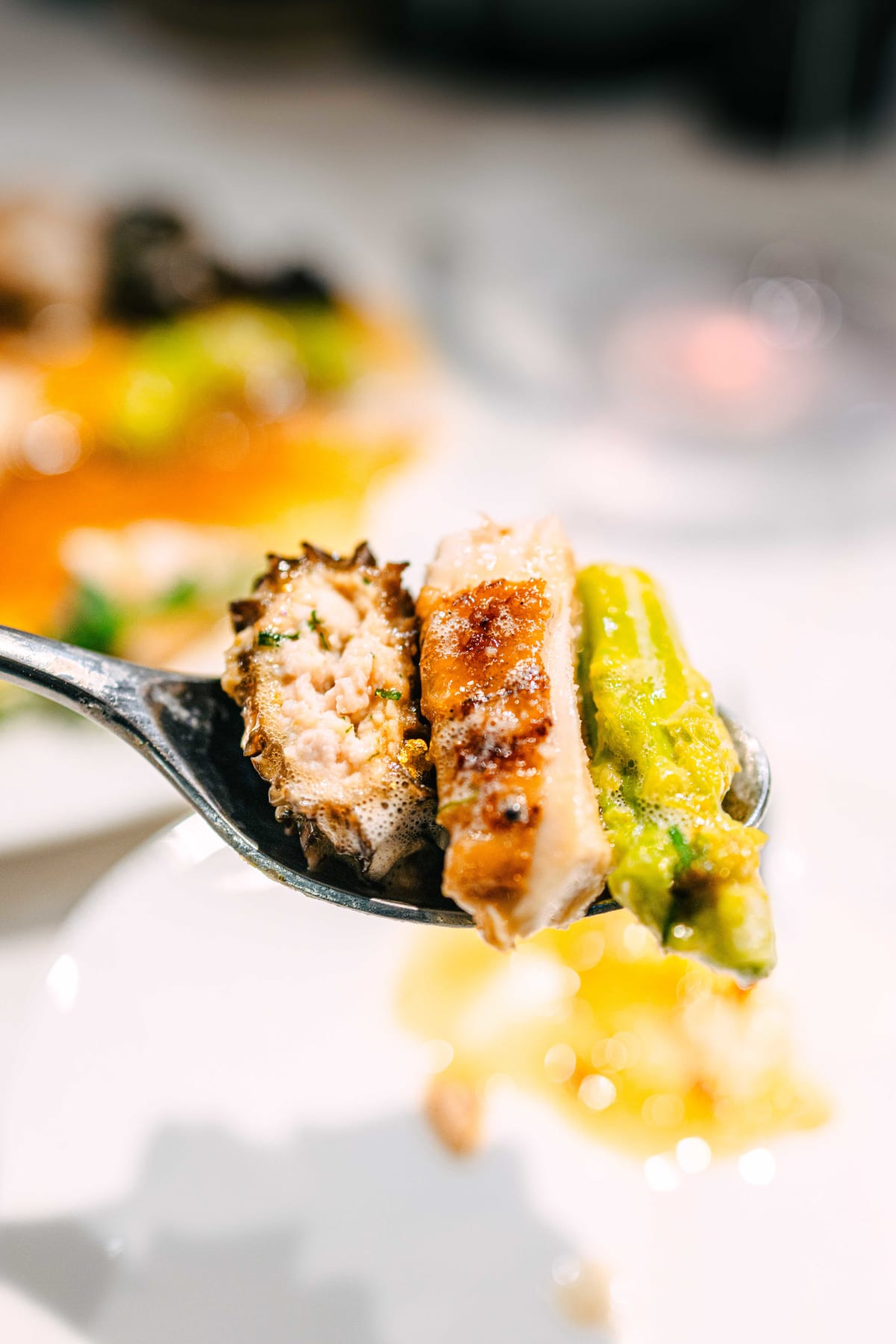
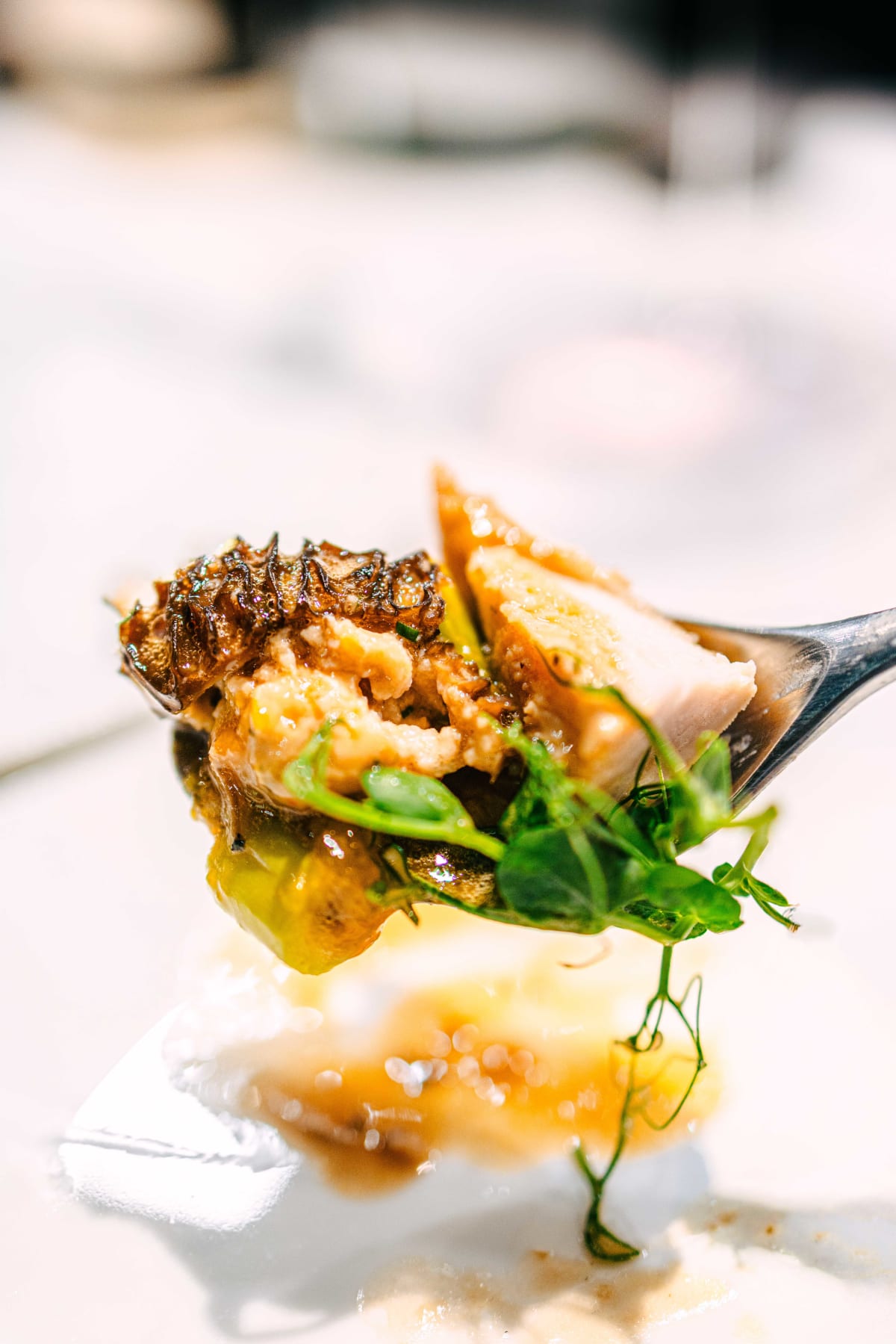
Beyond the idea, the balance of the garnishes and the sauces, the texture of that enormous morel and the soft cooking of the chicken made it close to a hundred-point dish.
Section 13·Beef And Lamb
The second red was Domaine Joliet's Fixin 1er Cru Clos de la Perrière Monopole. Clos de la Perrière is a real clos, walled by Cistercian monks nine hundred years ago, and a monopole held by the Joliet family for six generations. Bénigne Joliet treats this single plot of a little over five hectares as four different terroirs, vinifying and ageing each separately and blending only just before bottling. The character splits into stony limestone, clay, a mix of clay and limestone, and the cooler upper section near the woods.
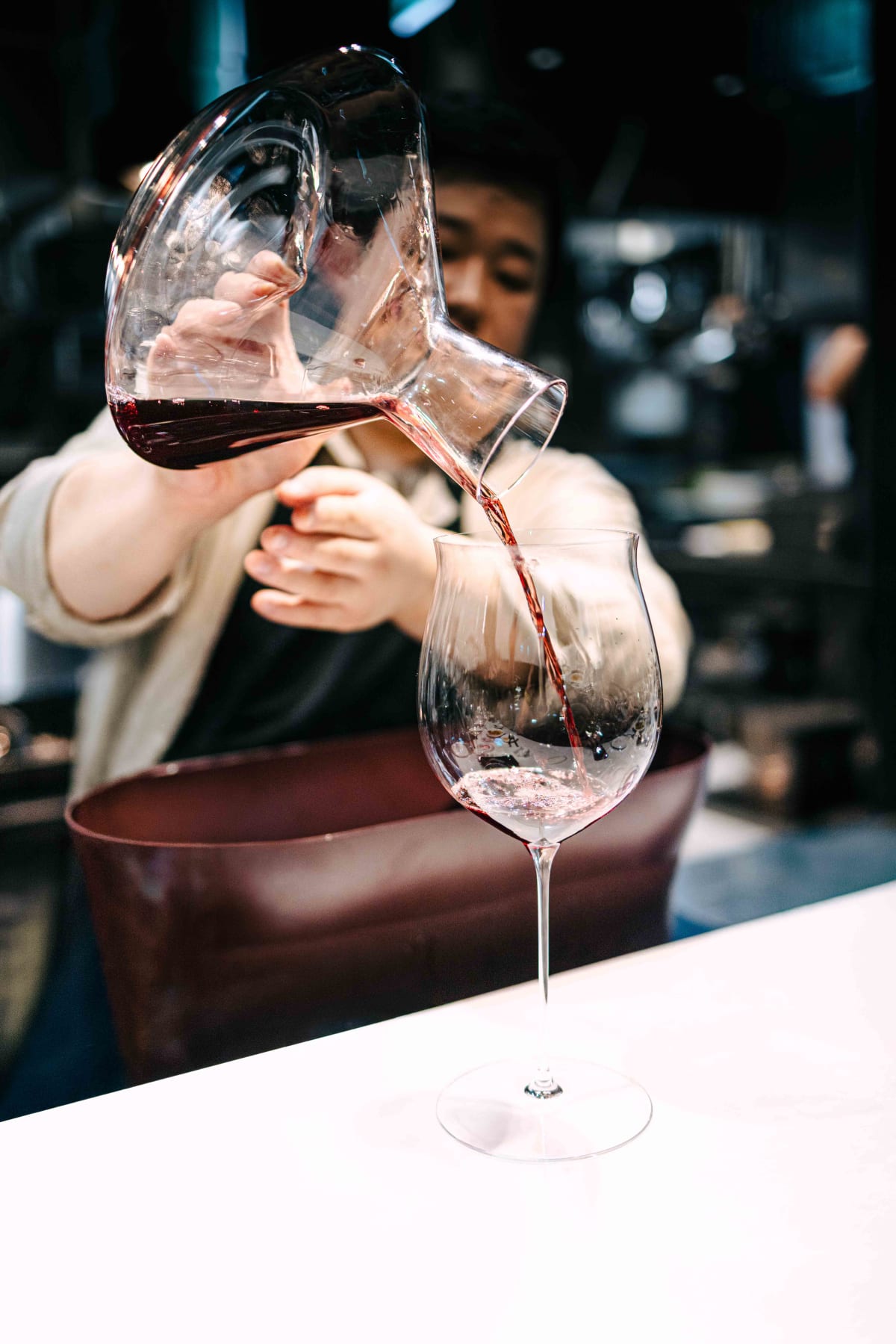
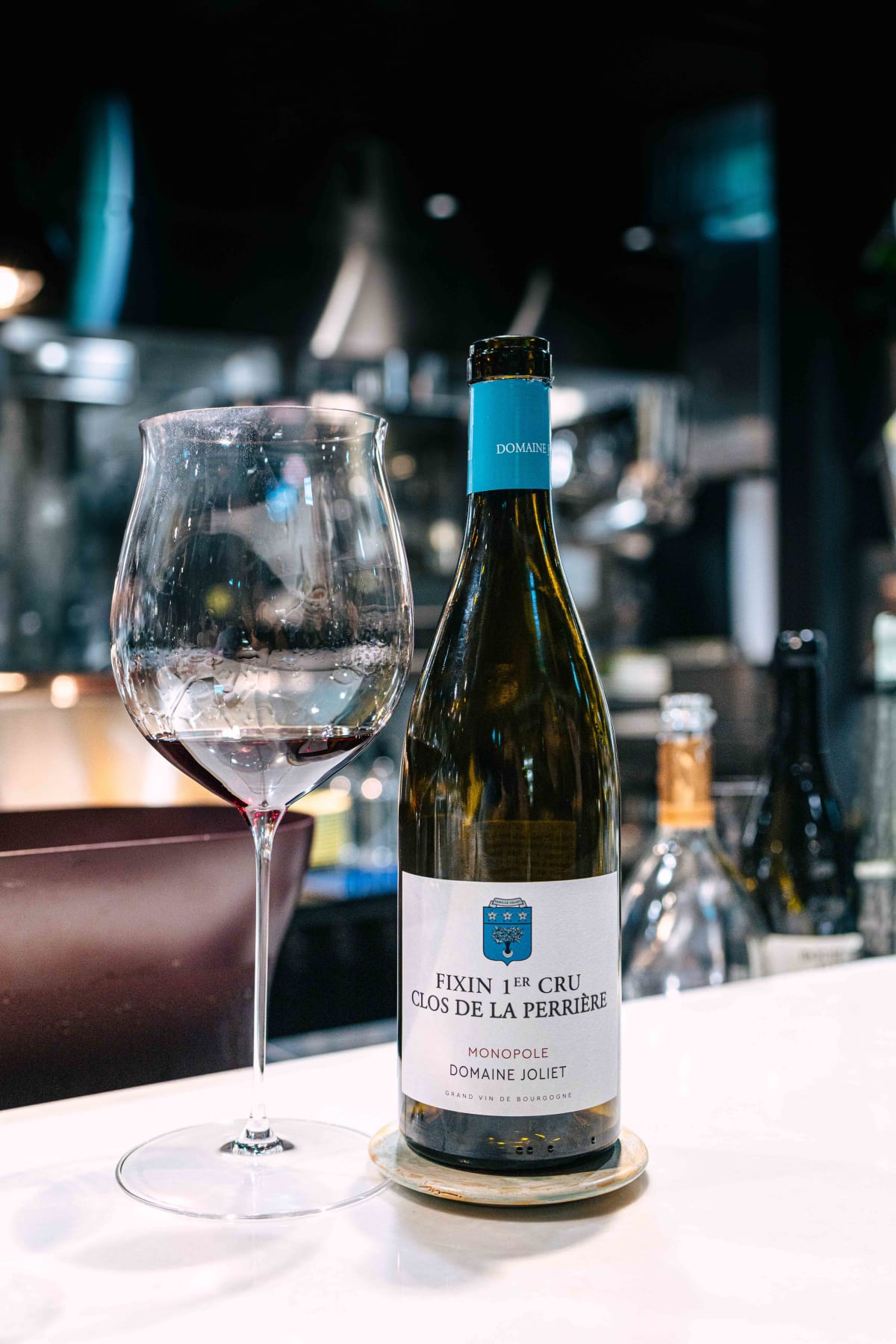
This red went down very well too. The manager's handling of the wines struck me as impressive. A spicy, Asian ginseng note stood out, with a gripping minerality and good acidity.
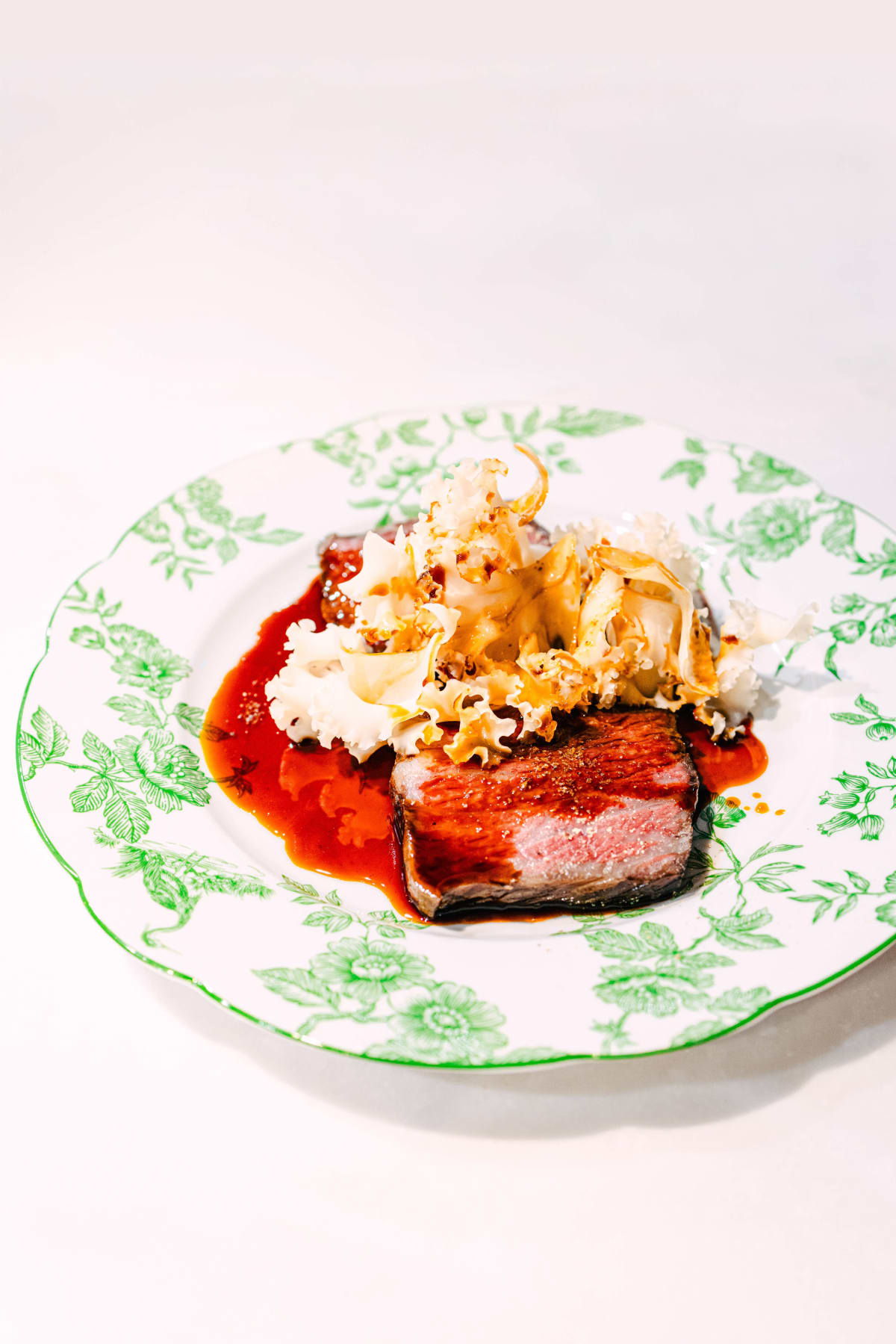
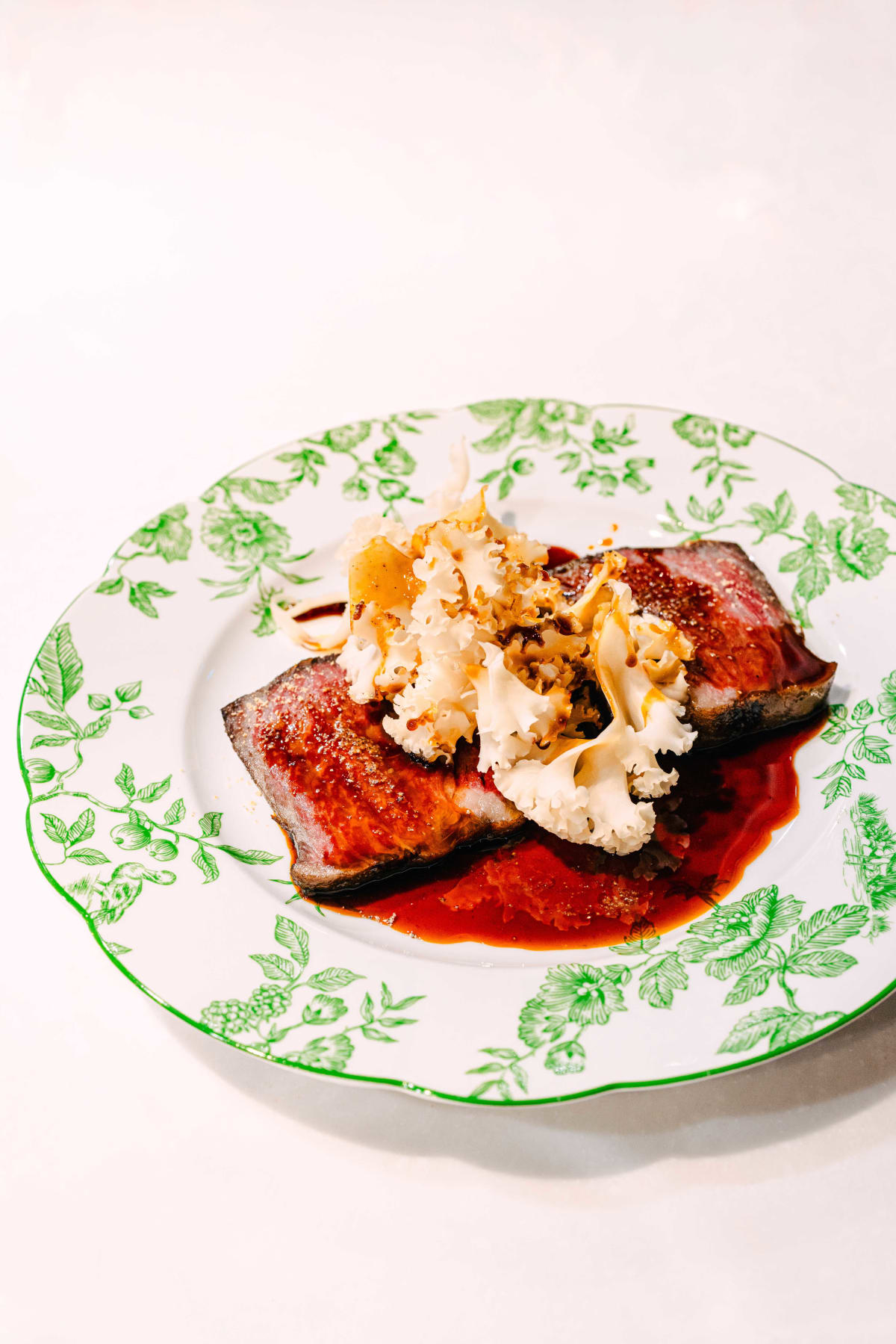
The beef main was 1++ Hanwoo sirloin with mushrooms and jus de viande. Jus de viande is a French sauce built on reduced meat juices from meat, bones and vegetables, and this plate directly shows the chef's view that beef needs a sauce drawn from beef bones for the meat's own flavour to come through clearly.
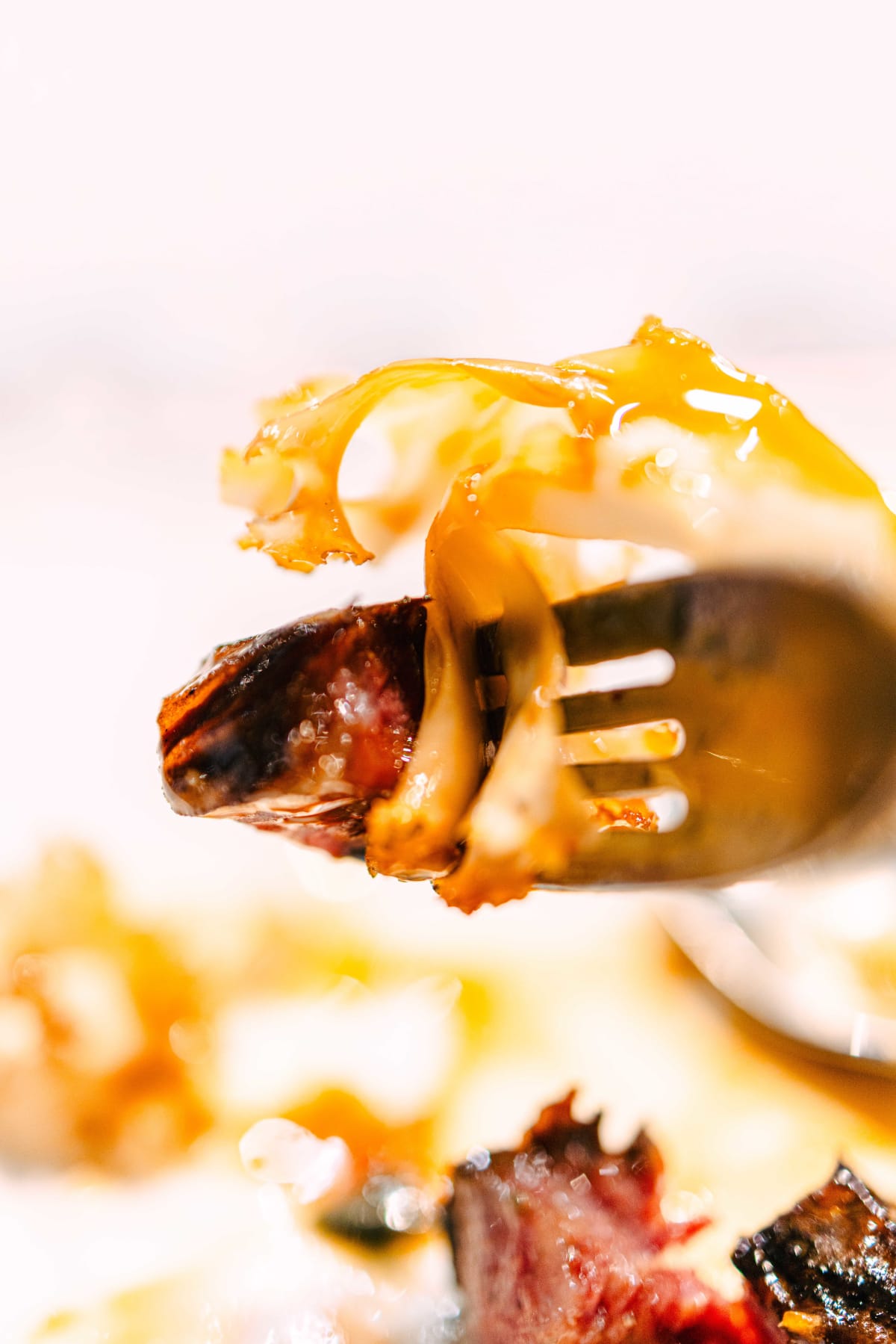
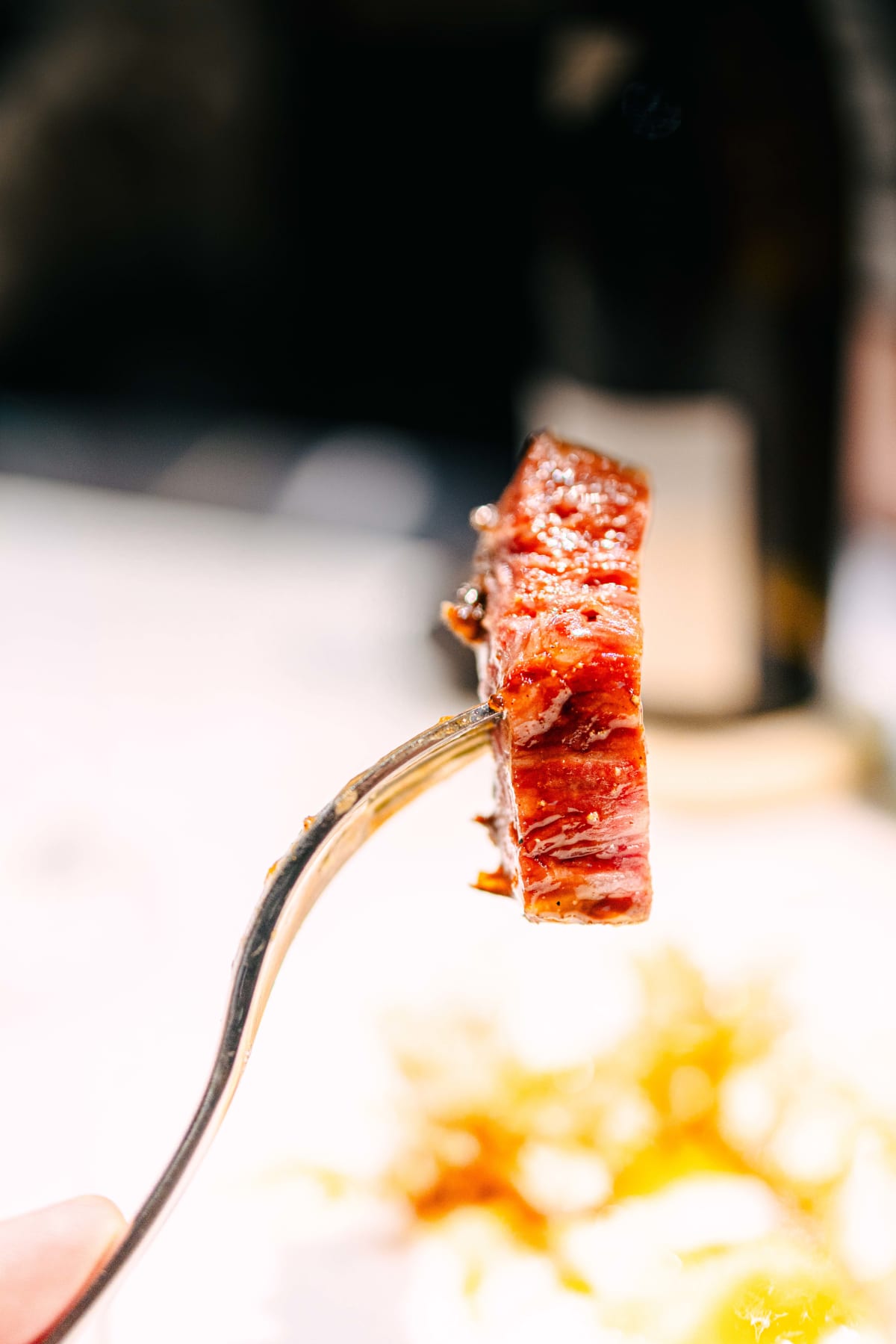
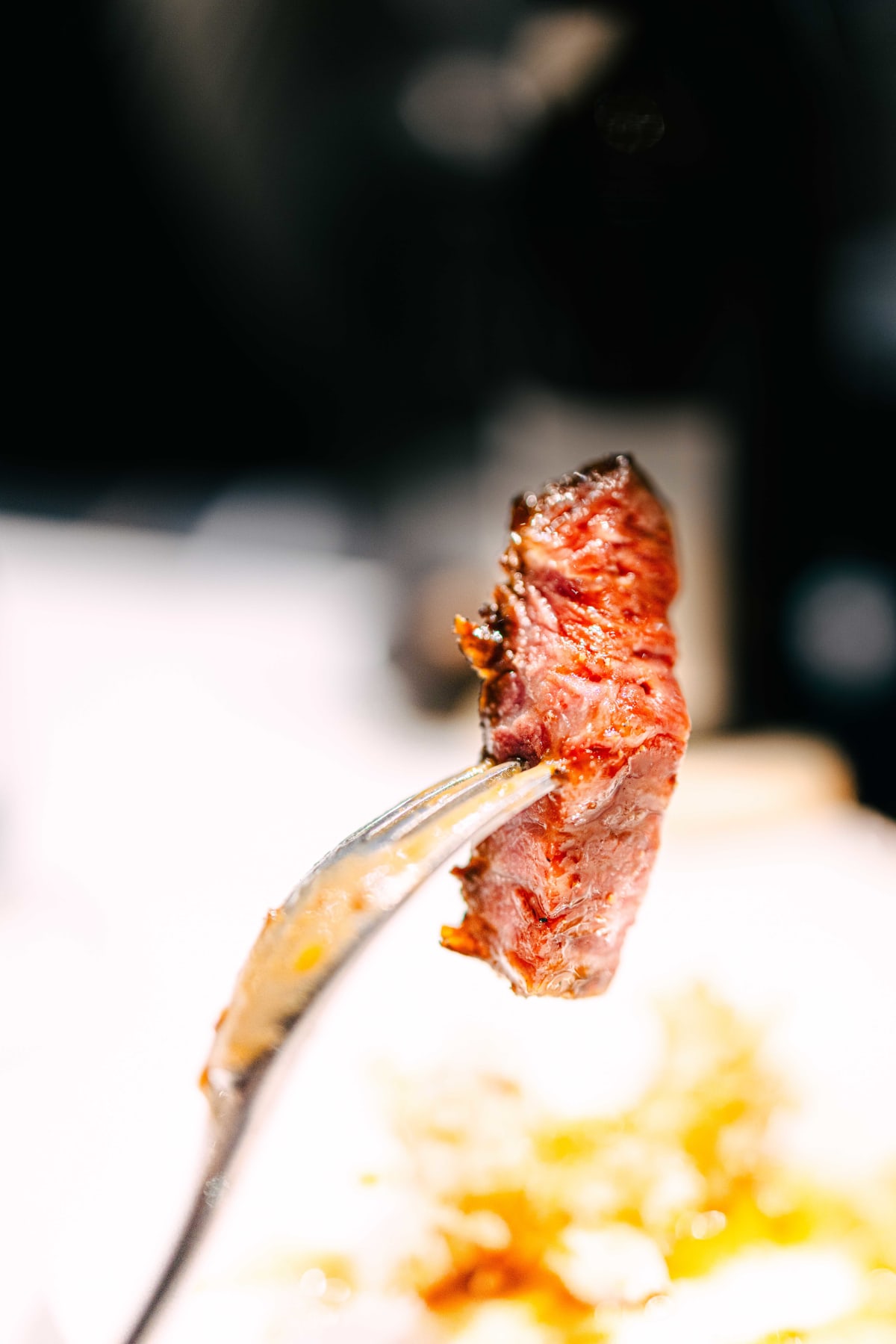
With the lamb and with the beef the cooking was between medium rare and rare, and I love the springy quality that comes from cooking at that level. Perhaps because the five of us shared these two mains, the beef came across less fatty than I expected. Cooked over charcoal, it also carried a faint smoky, ham-like aroma that I liked, and the sauce was orthodox but not overdone. The crisp texture of the mushrooms was good too.
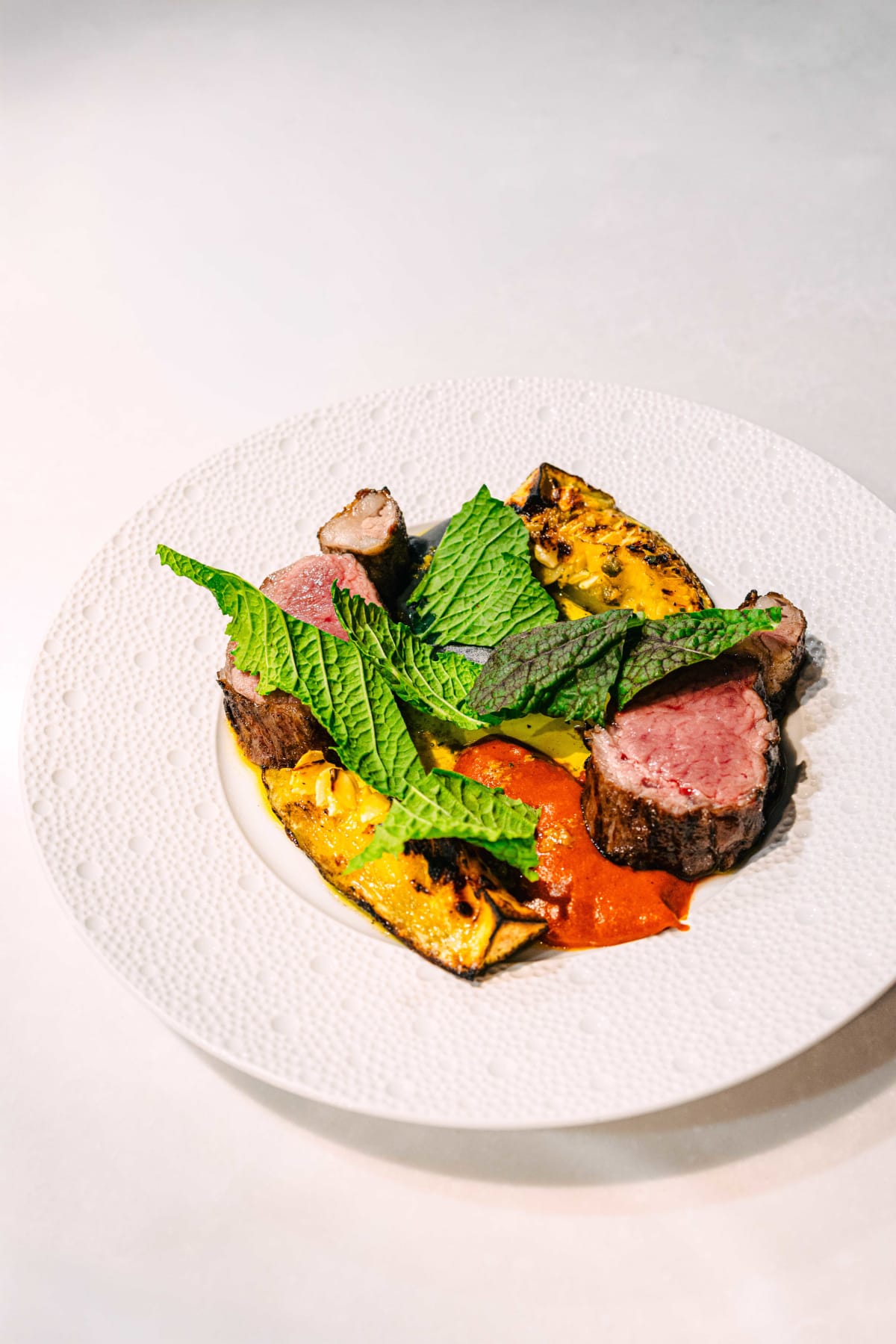
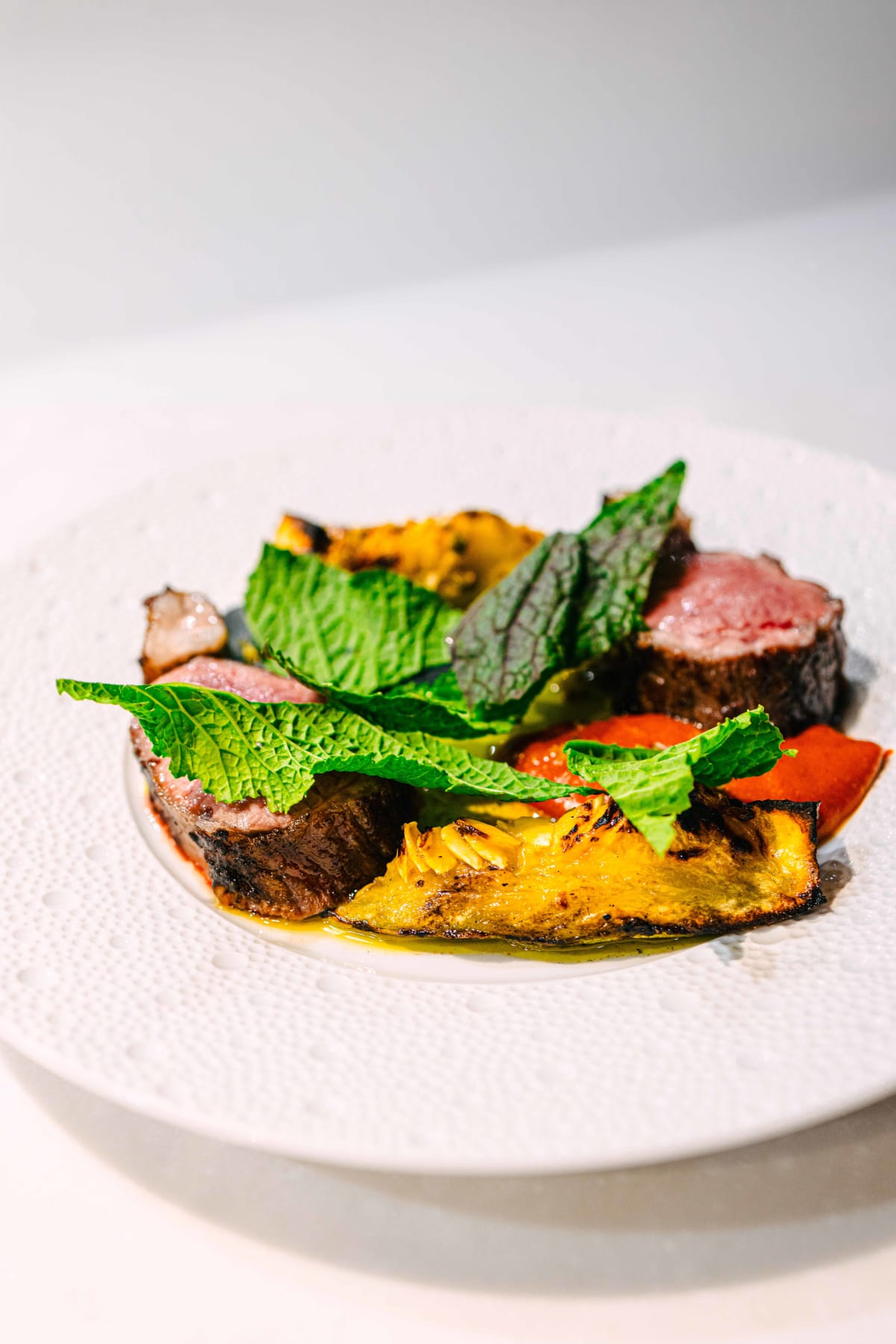
The last main, the Australian chilled lamb rack, was excellent as well. It was the best after the chicken. Baba ghanoush is a Middle Eastern purée of roasted aubergine, harissa a North African paste of ground chilli, garlic and spice, and with the curry oil on top the composition sits closer to the Mediterranean and North African blend common in contemporary European bistros than to French classicism. As with the squid, a leaf giving off smoke went over the top.
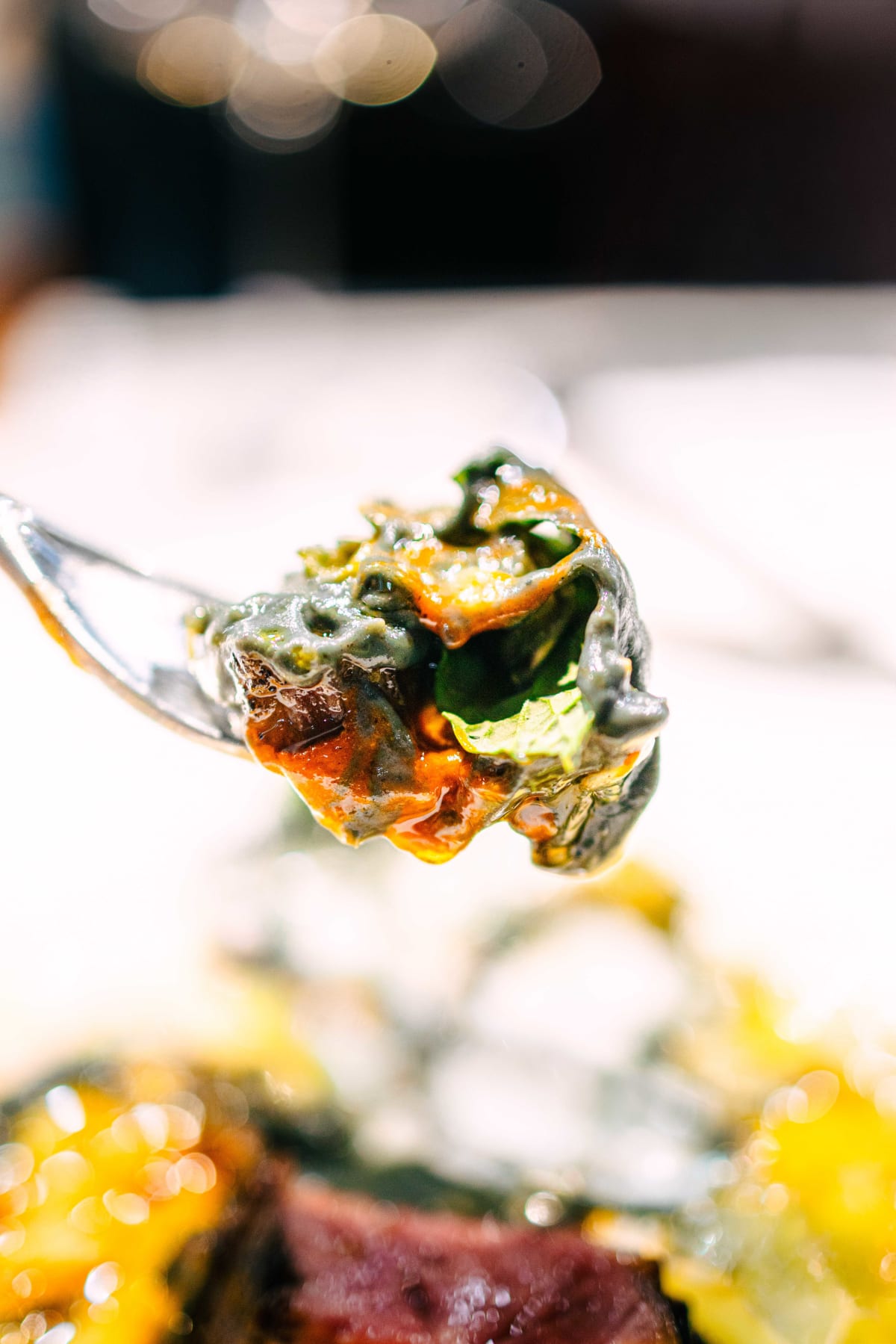
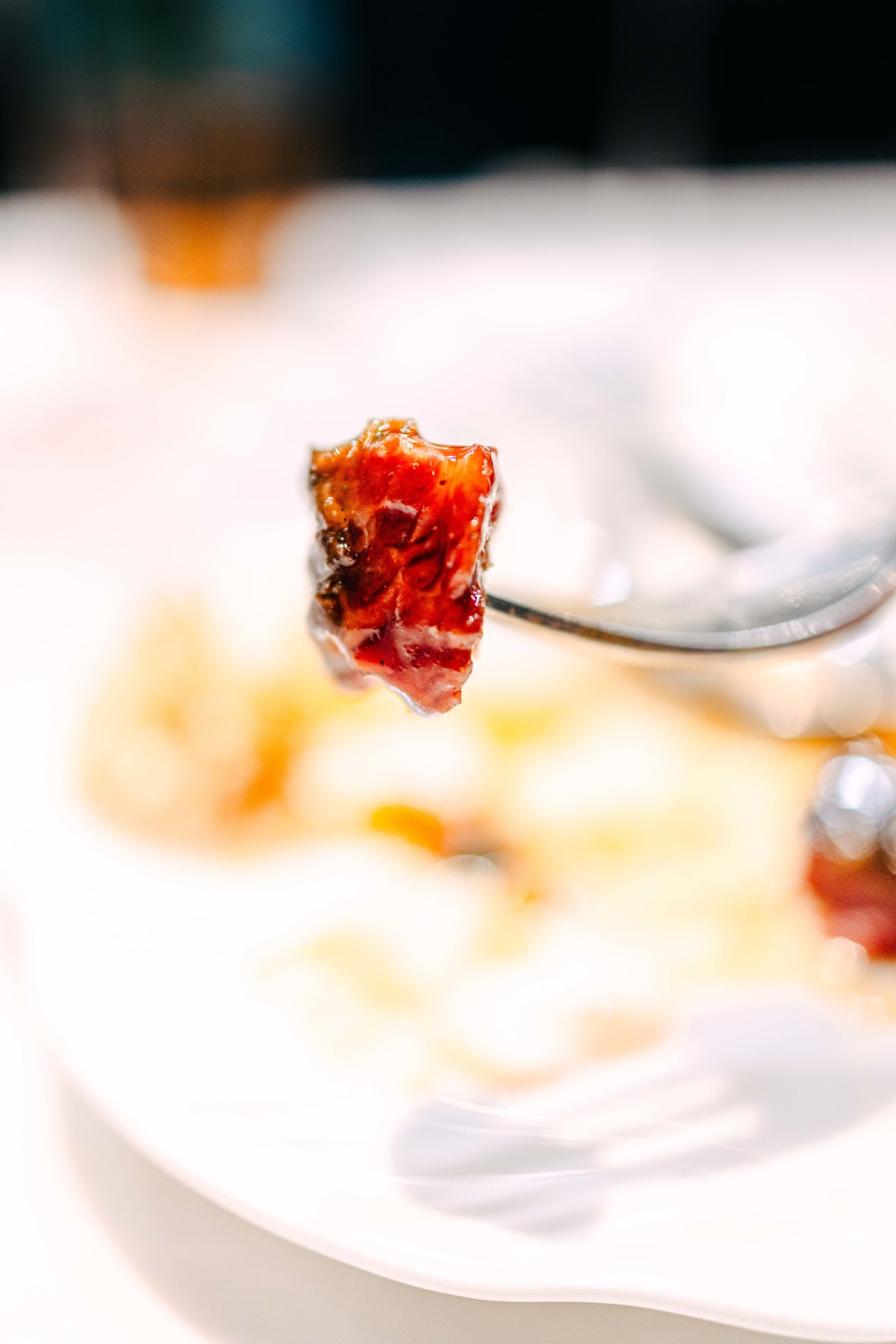
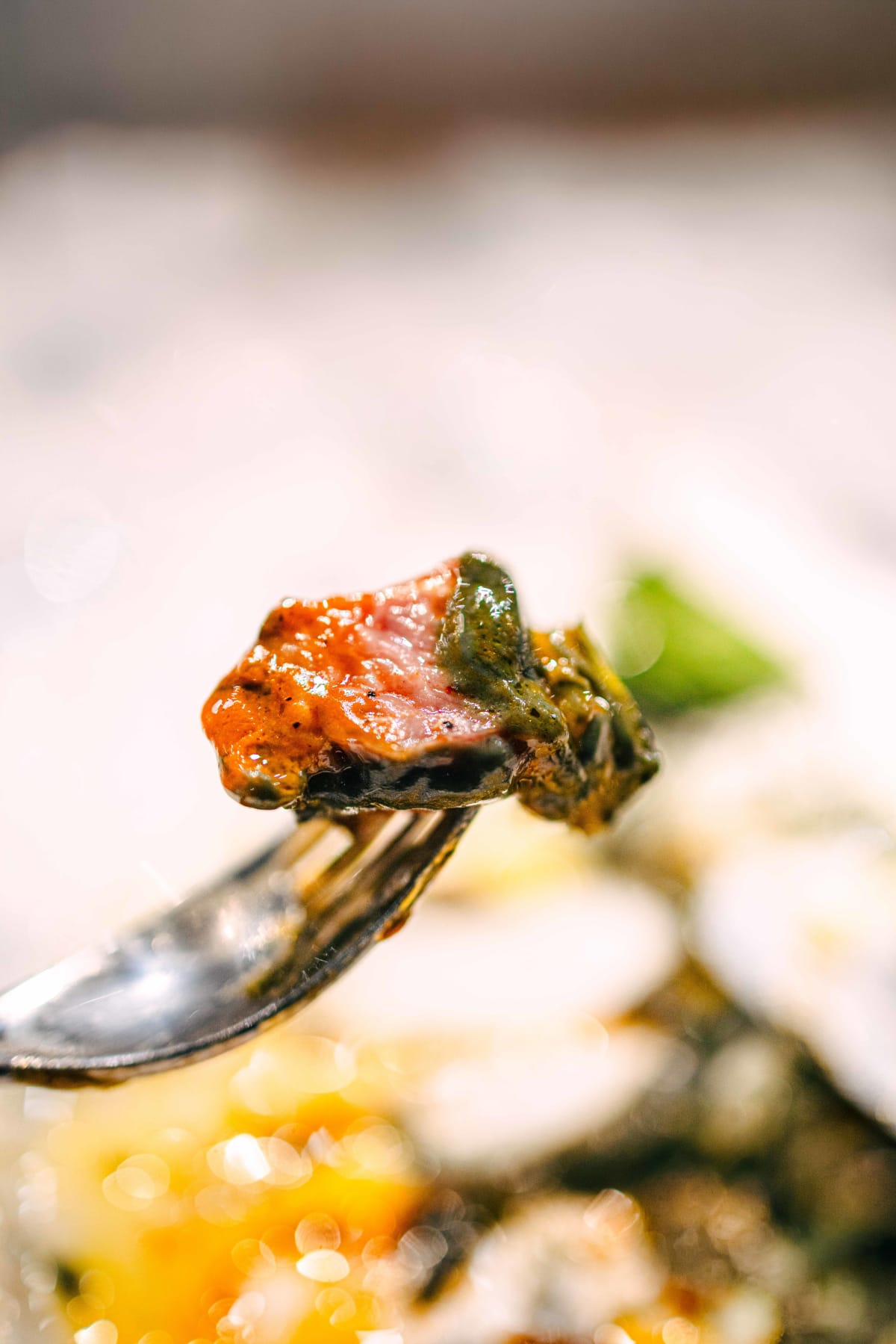
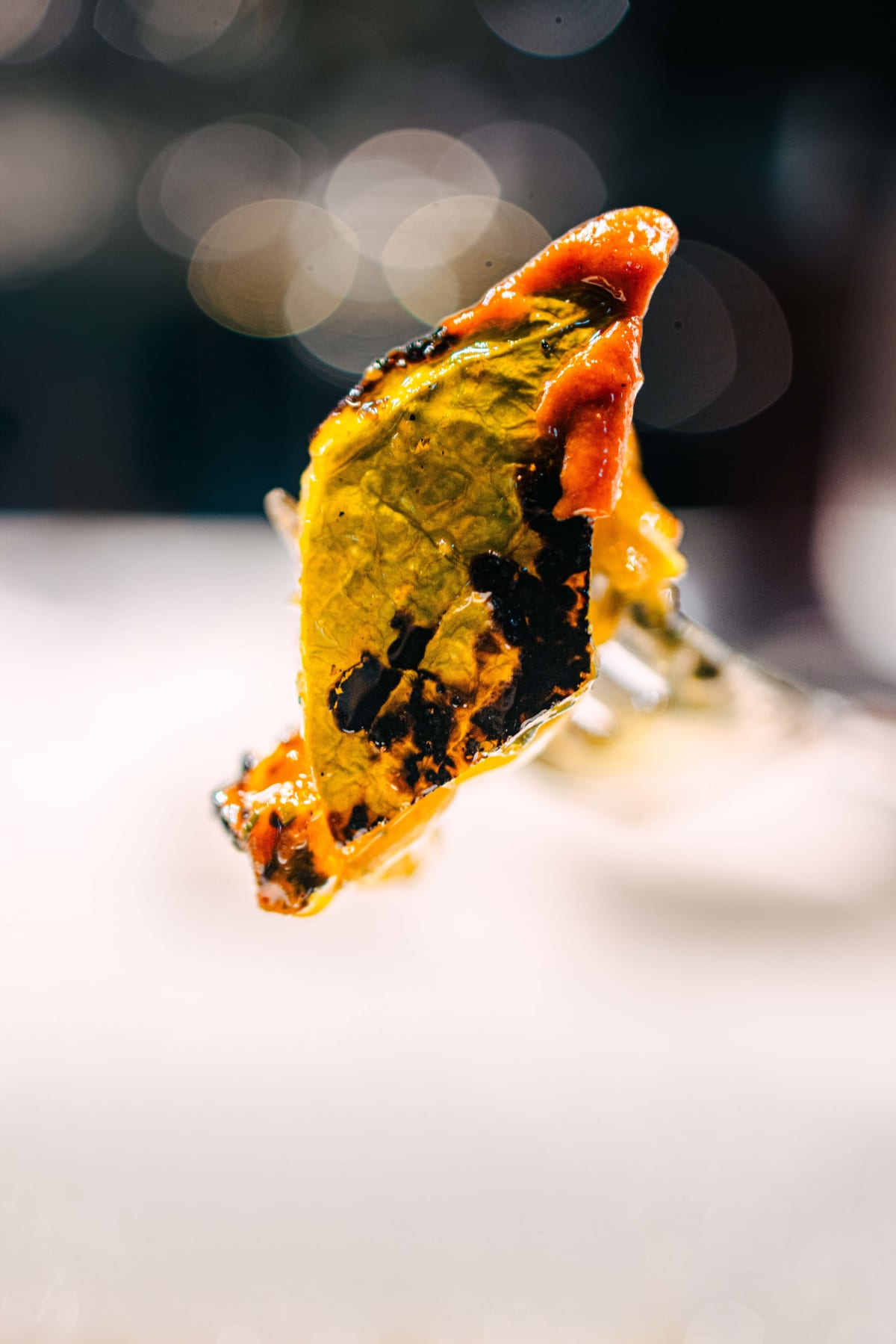
As lamb goes it was not overly heavy, and above all the sauces that came with it, the harissa among them, held down the fattiness well and lifted the flavour. The olive oil added more body to the flavour than I expected and gave off a lovely aroma, and with the roasted aubergine and the rest the balance between the elements was as good as it gets. Of all the dishes that evening this had the best balance. The springy texture of the lamb was very good too. The person next to me could not eat much and passed me the rest, so I got through nearly two servings and thought I would burst.
Section 14·Four Cold Desserts
On to dessert. One thing I like about Notre is that every dessert, four frozen ones in all, does a very good job of wiping away the heaviness.
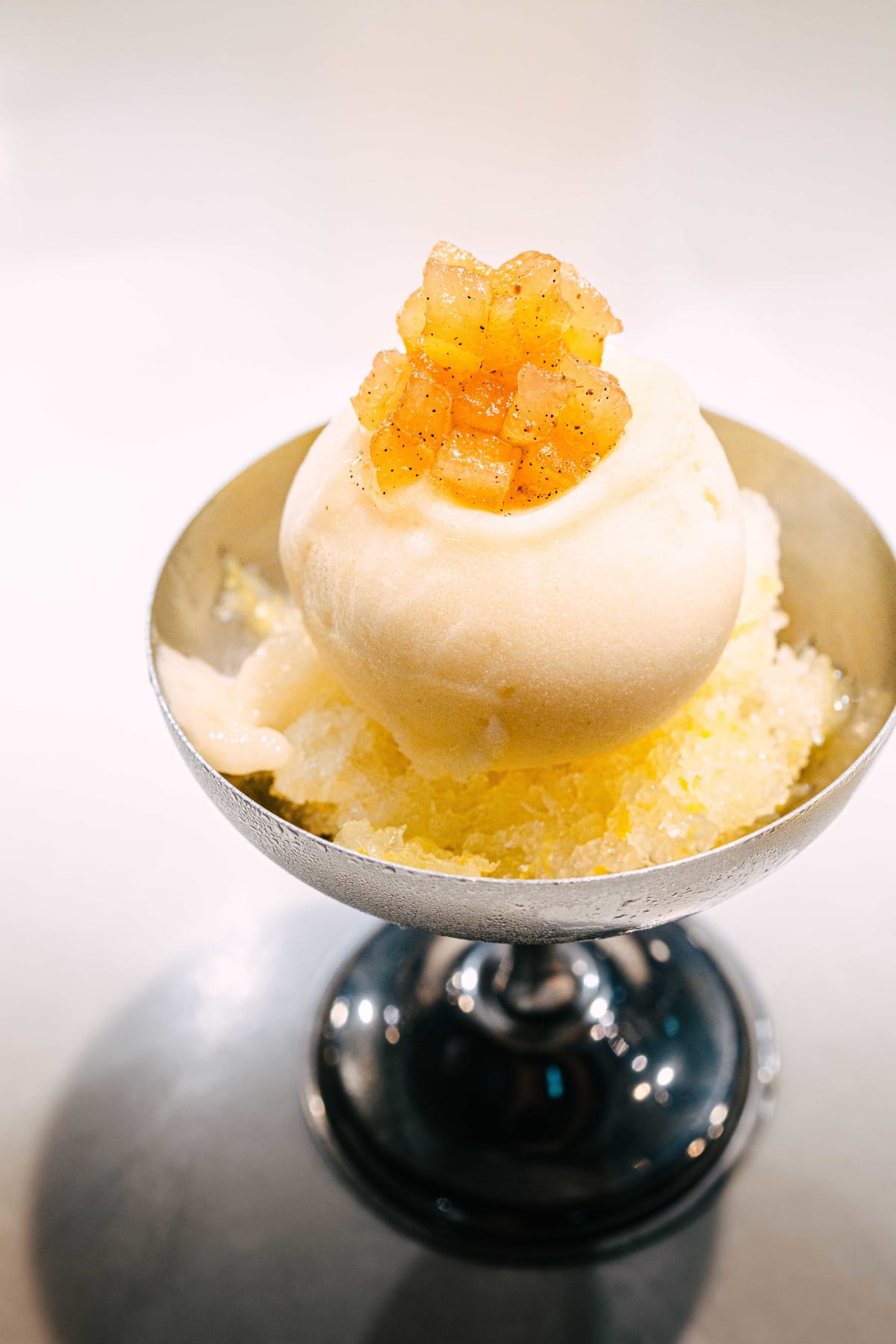
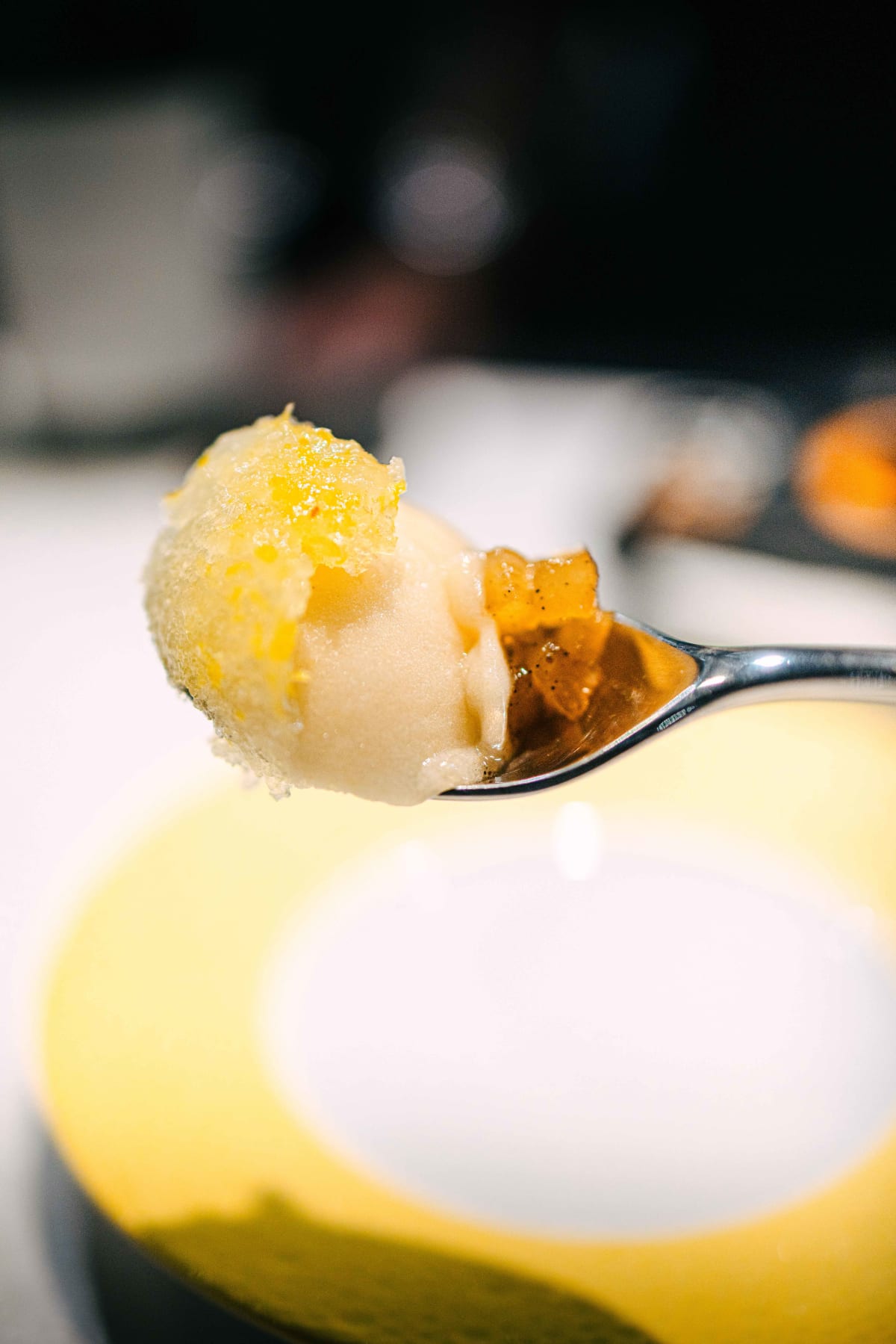
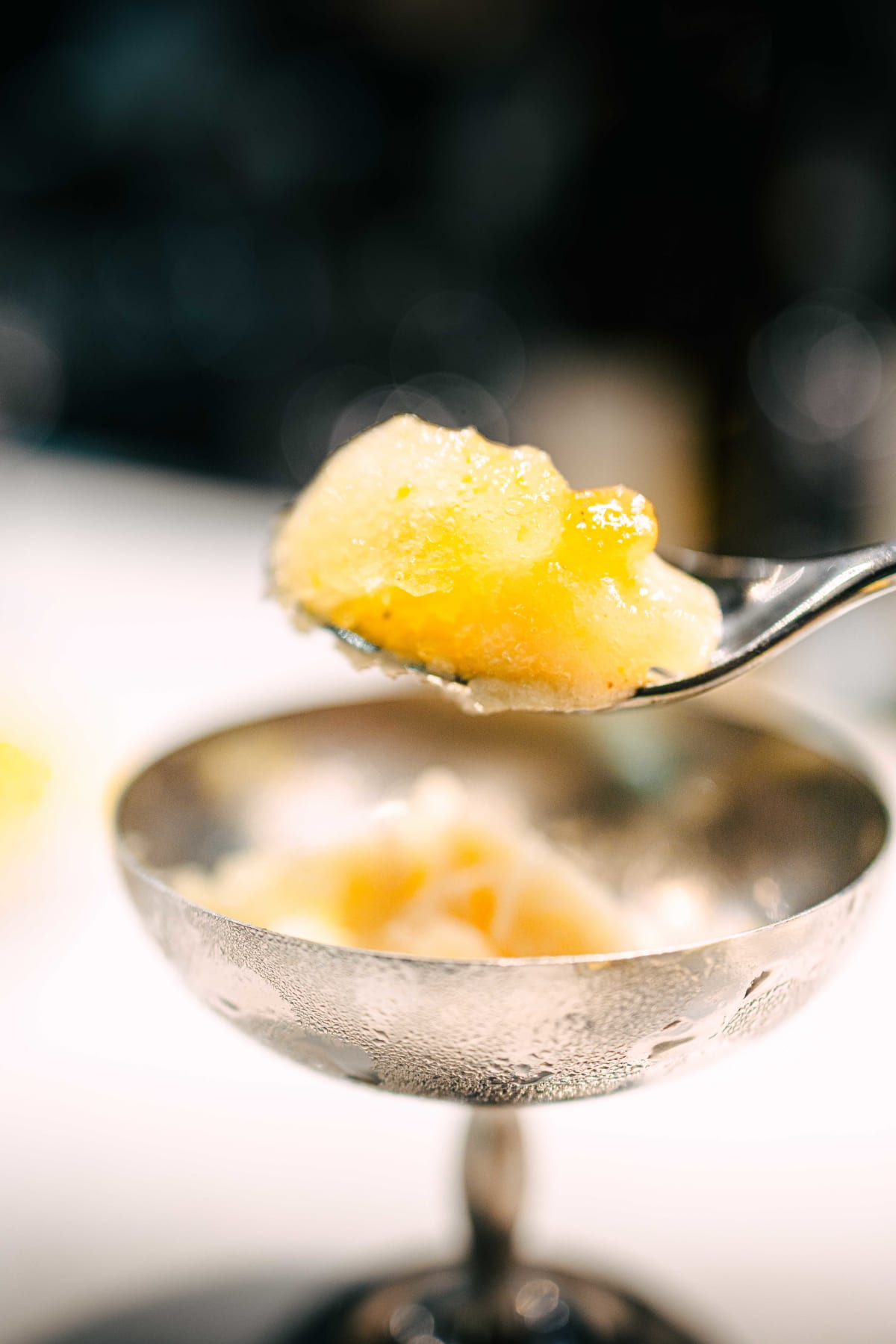
First was a pear sorbet. The server explained it was set up as a cleanser, a sorbet made from pear with elderflower in it, a lemon granita underneath and pear compote on top, the compote also carrying elderflower. The elderflower went in as a liqueur rather than as the flower itself.
The pear sorbet was fine. There is not much pear flavour, but the elderflower nuance was good. And the lemon acidity underneath tasted good and cleaned the palate.
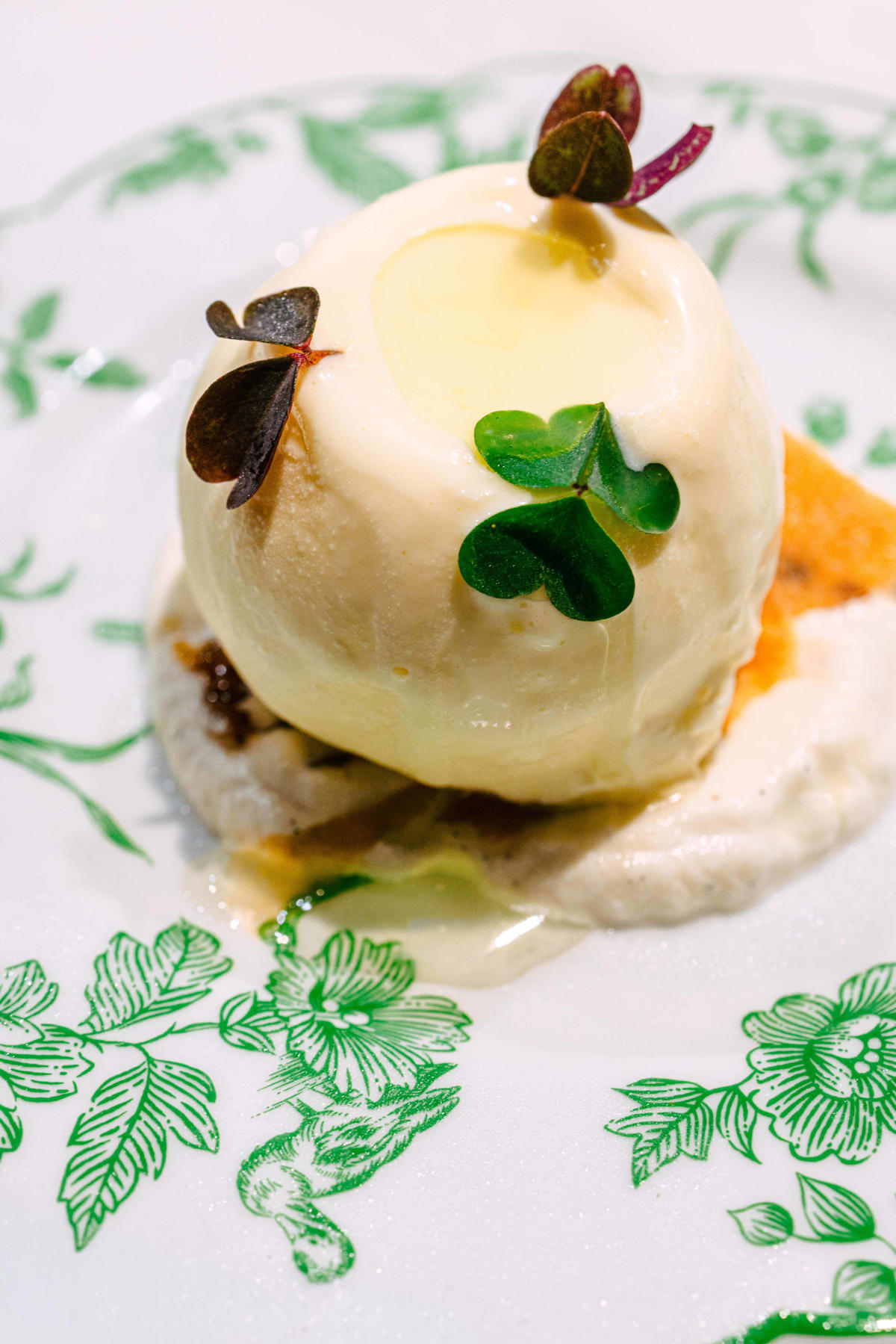
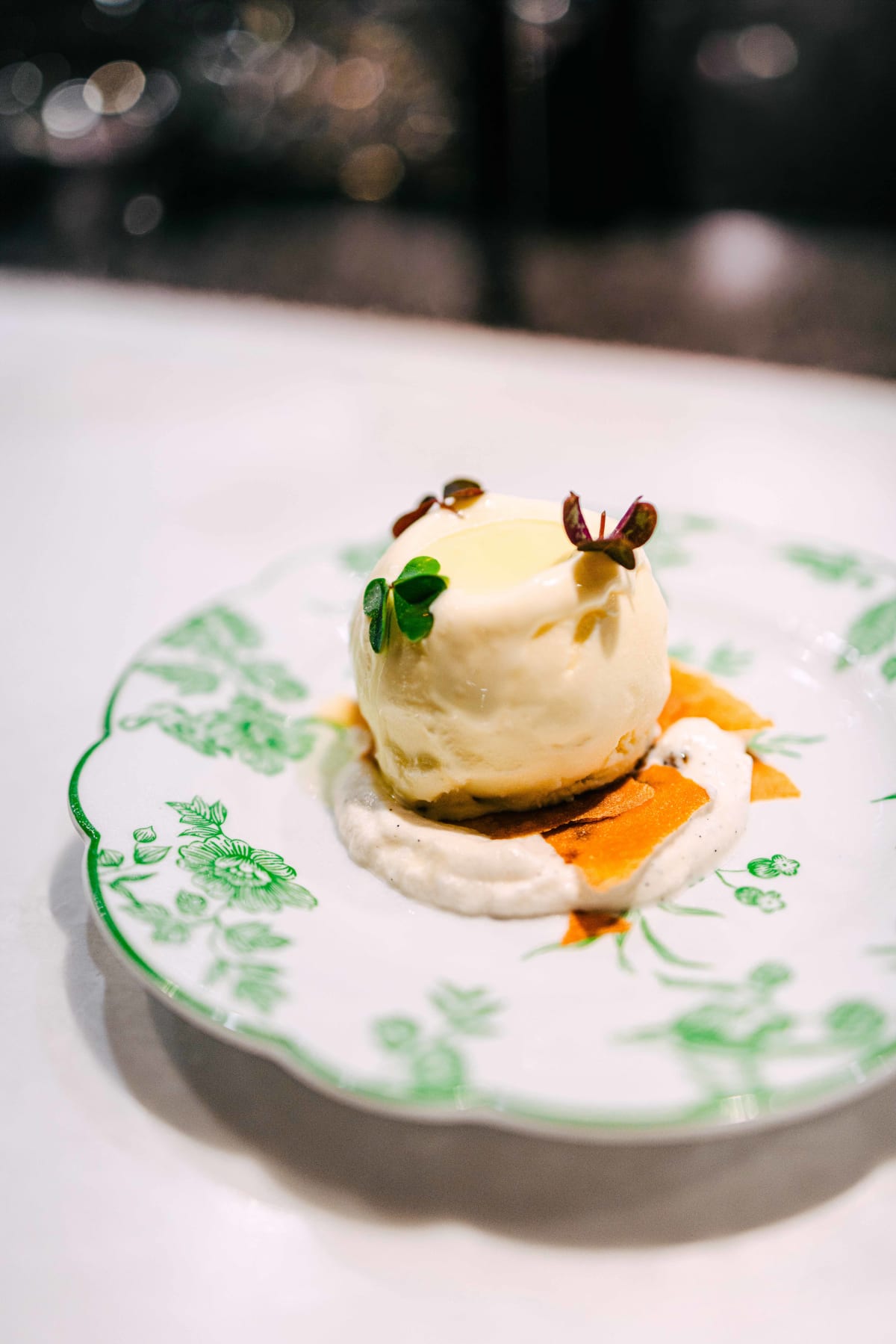
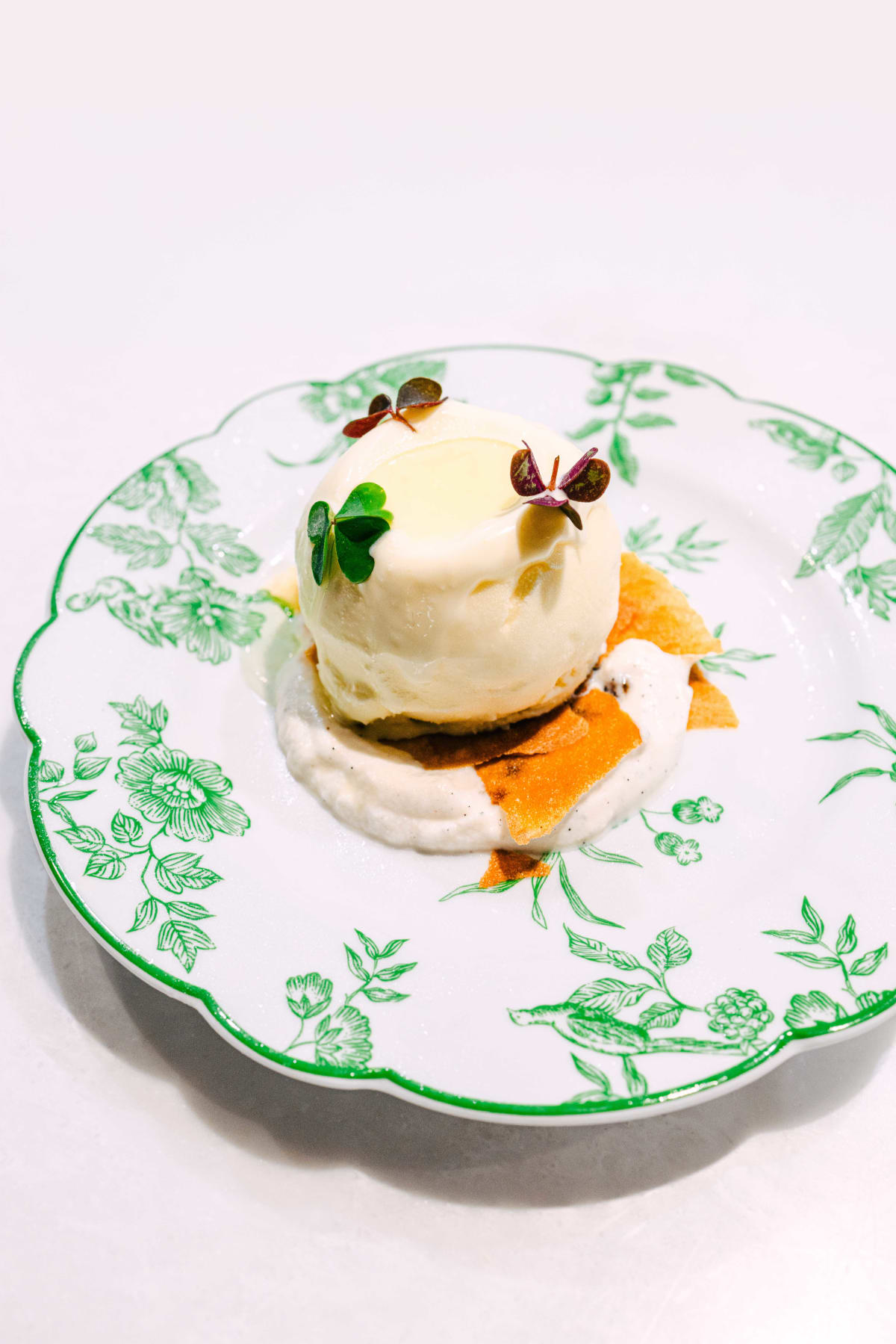
A fig dessert followed. Chantilly cream underneath with fig compote inside it, wrapped in pailleté feuilletine. On top of the fig ice cream were fig oil and oxalis, and we were told to eat them together since they carry the acidity.
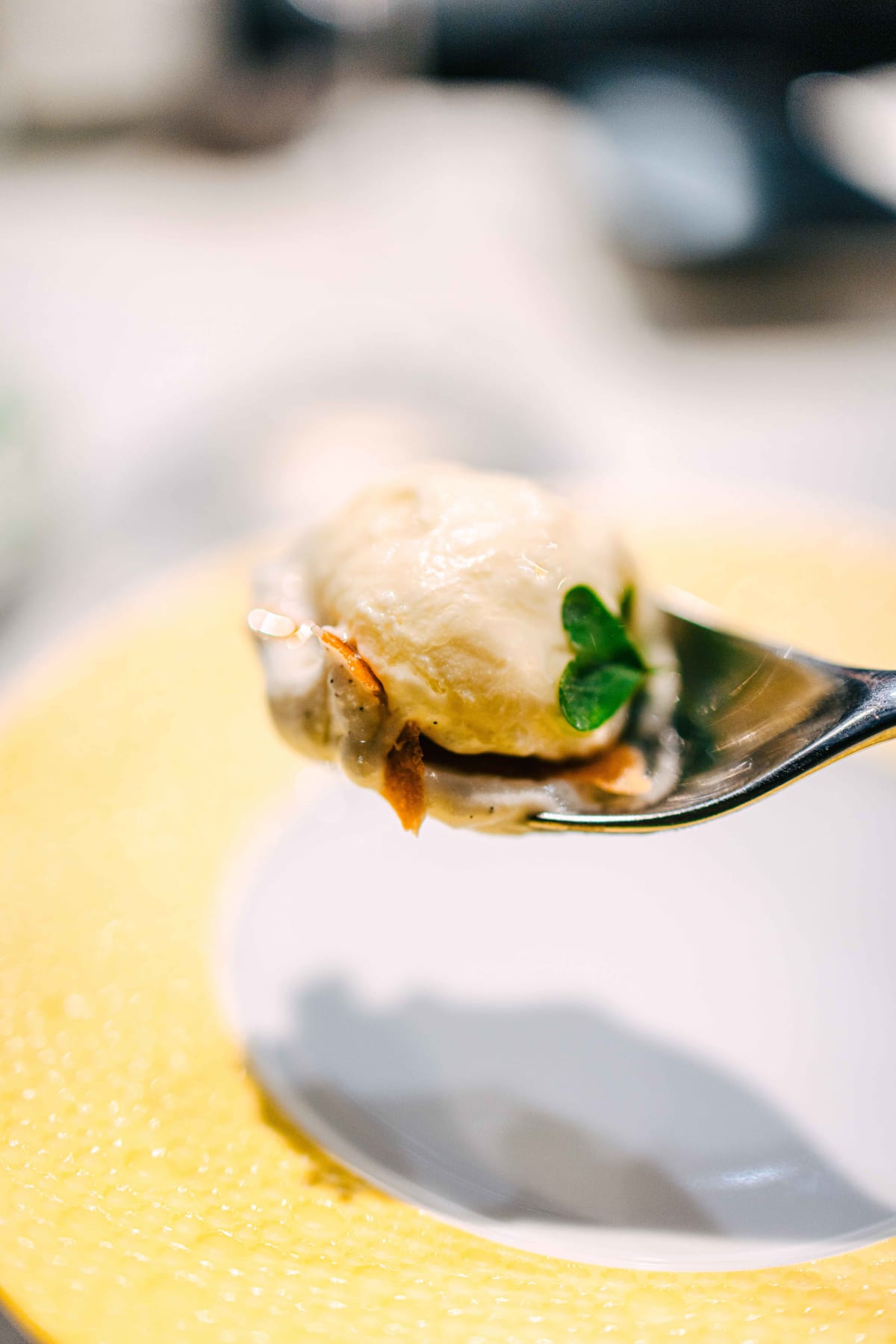
This dessert was good. The fig flavour came through more strongly than I expected, and the compote layer underneath kept the dessert from going flat. The acidity was good and it was refreshing.
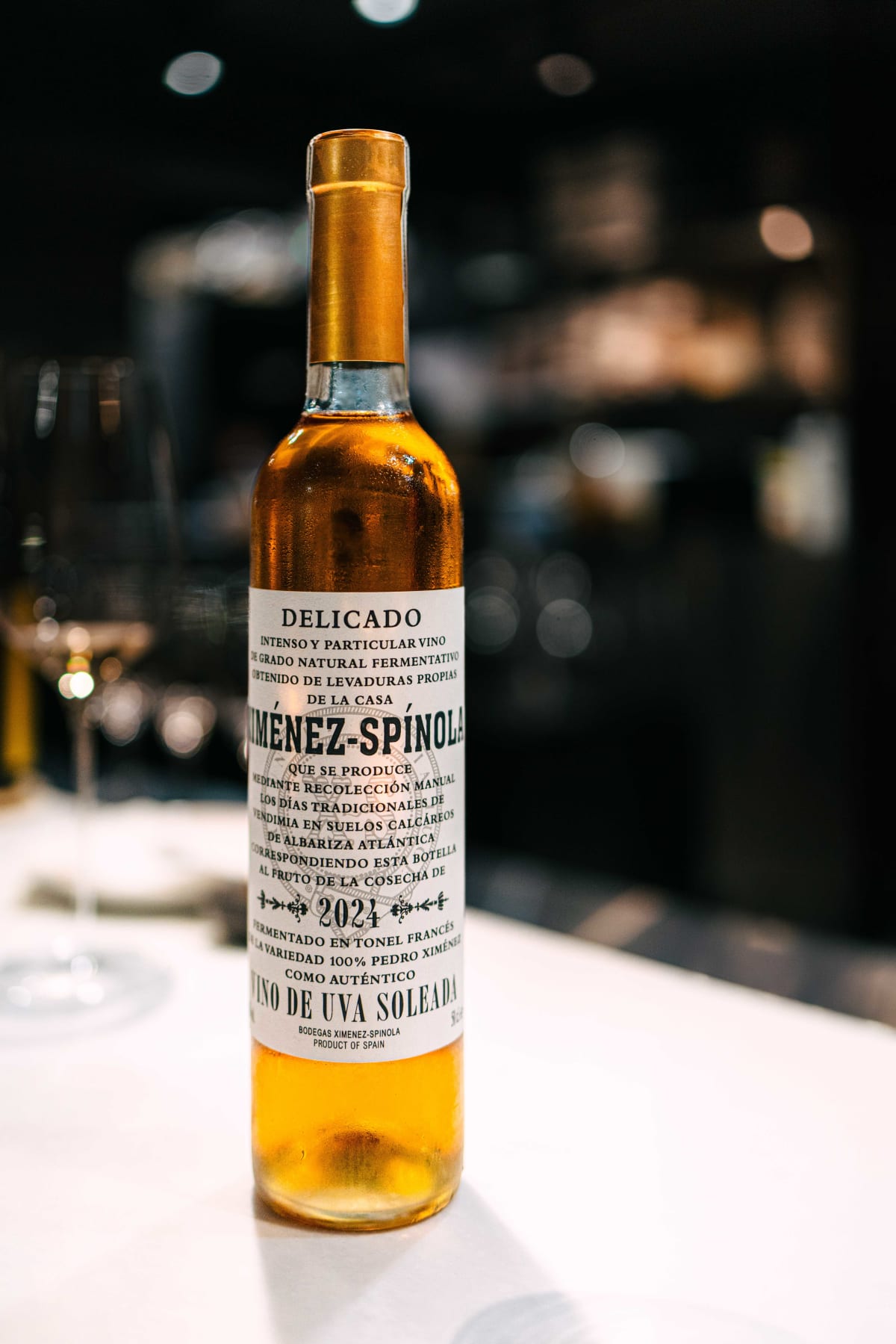
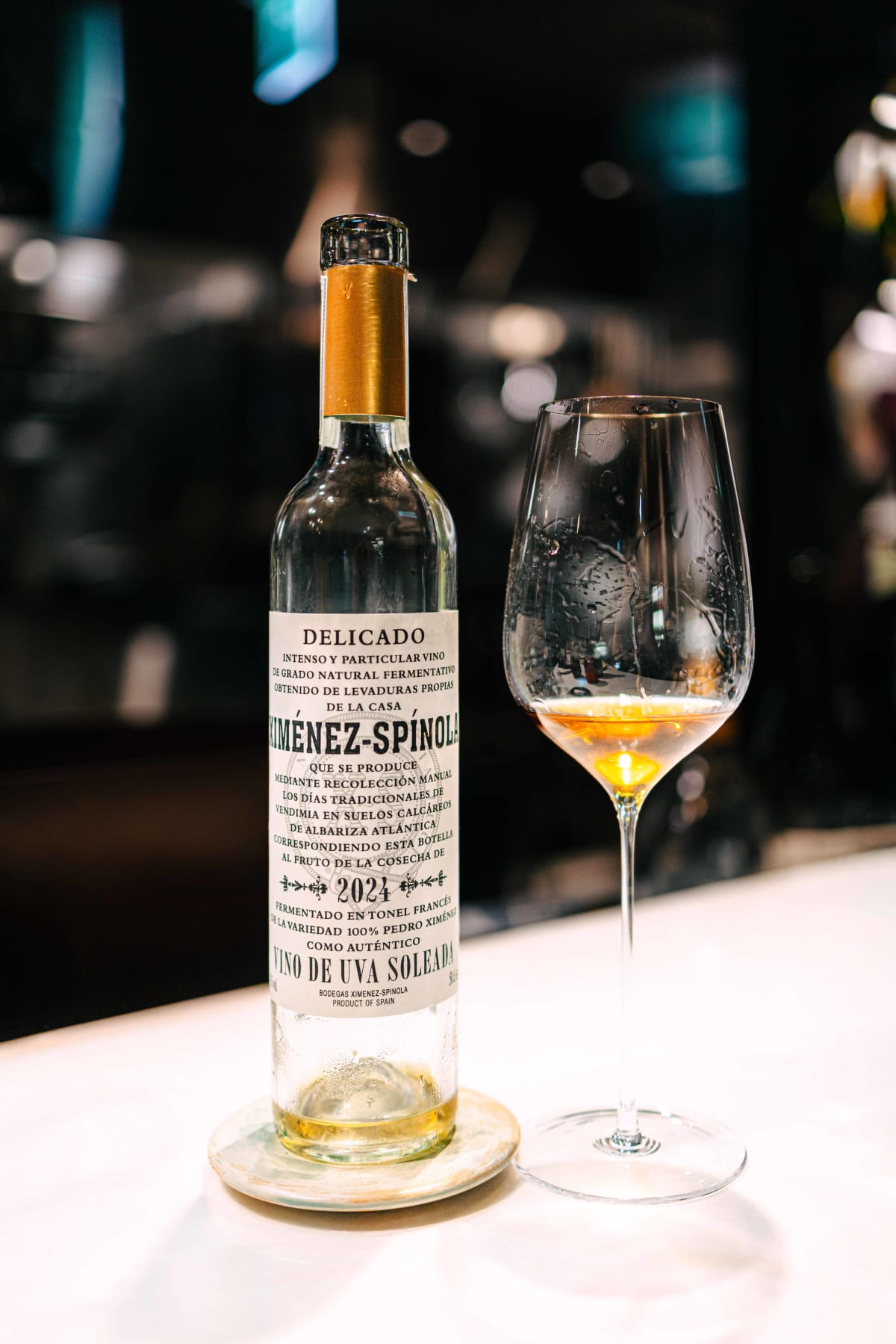
Around this point the dessert wine the manager had been making a fuss about since before service arrived. Ximénez-Spínola's Delicado 2024. A family bodega in Jerez de la Frontera going back to 1729 that makes wine only from Pedro Ximénez. Hand-harvested grapes are laid between the vineyard rows to dry in the sun, not fully exposed but given hours of shade so that the skins accumulate tartaric acid, and the manager explained they dry for about twenty days. It takes its alcohol from natural fermentation rather than fortification, at thirteen percent, and a tonne of fresh grapes yields barely two hundred litres of must.
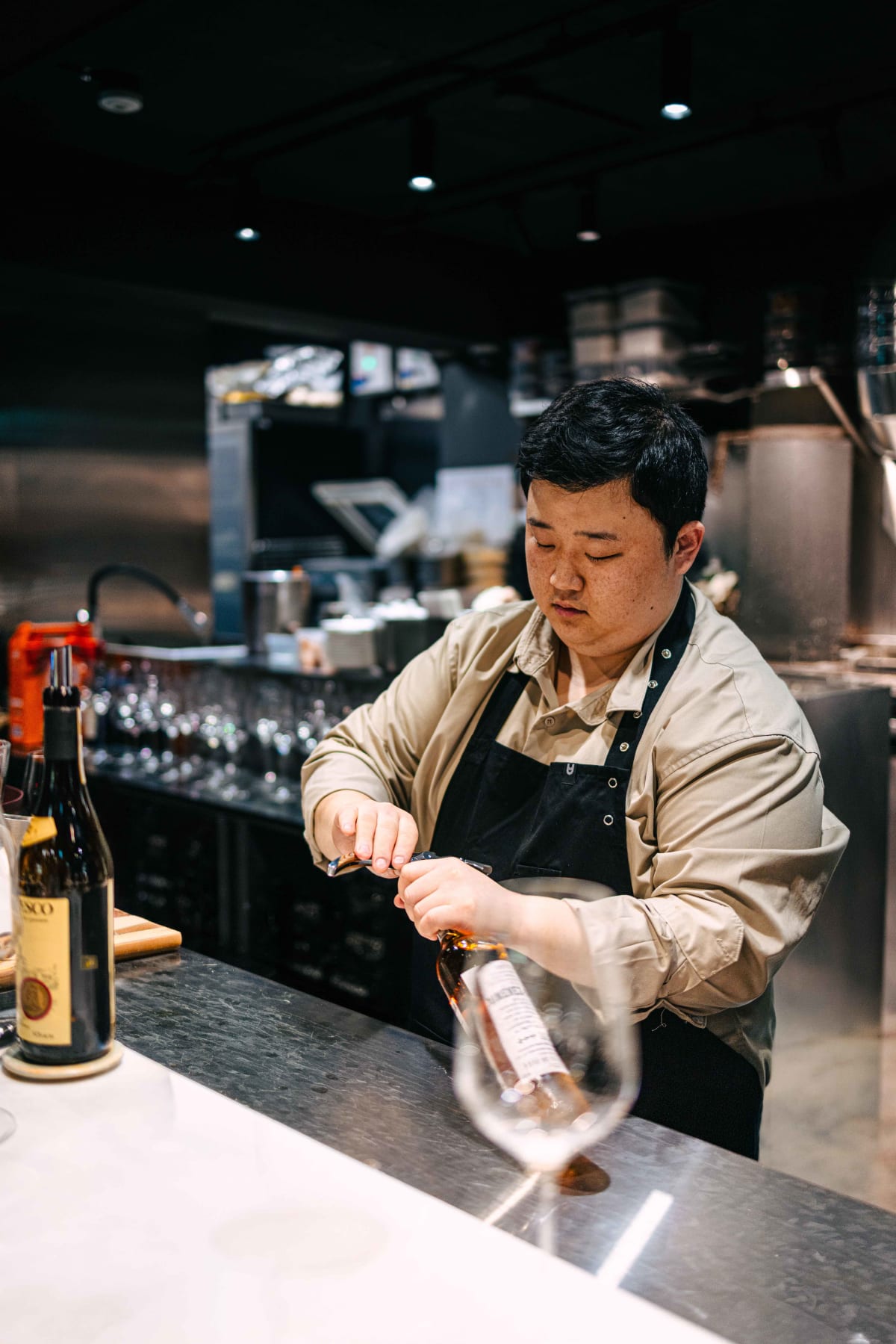
Drinking it, the impact was something else. A dessert wine that tastes this distinctive is rare. Plum and strawberry, a slightly candied note, honey, with real concentration of sweetness, good body and density. Enormously dense sweetness with enough acidity to keep it from cloying. Like drinking fruit cordial, a wine of extraordinary concentration.
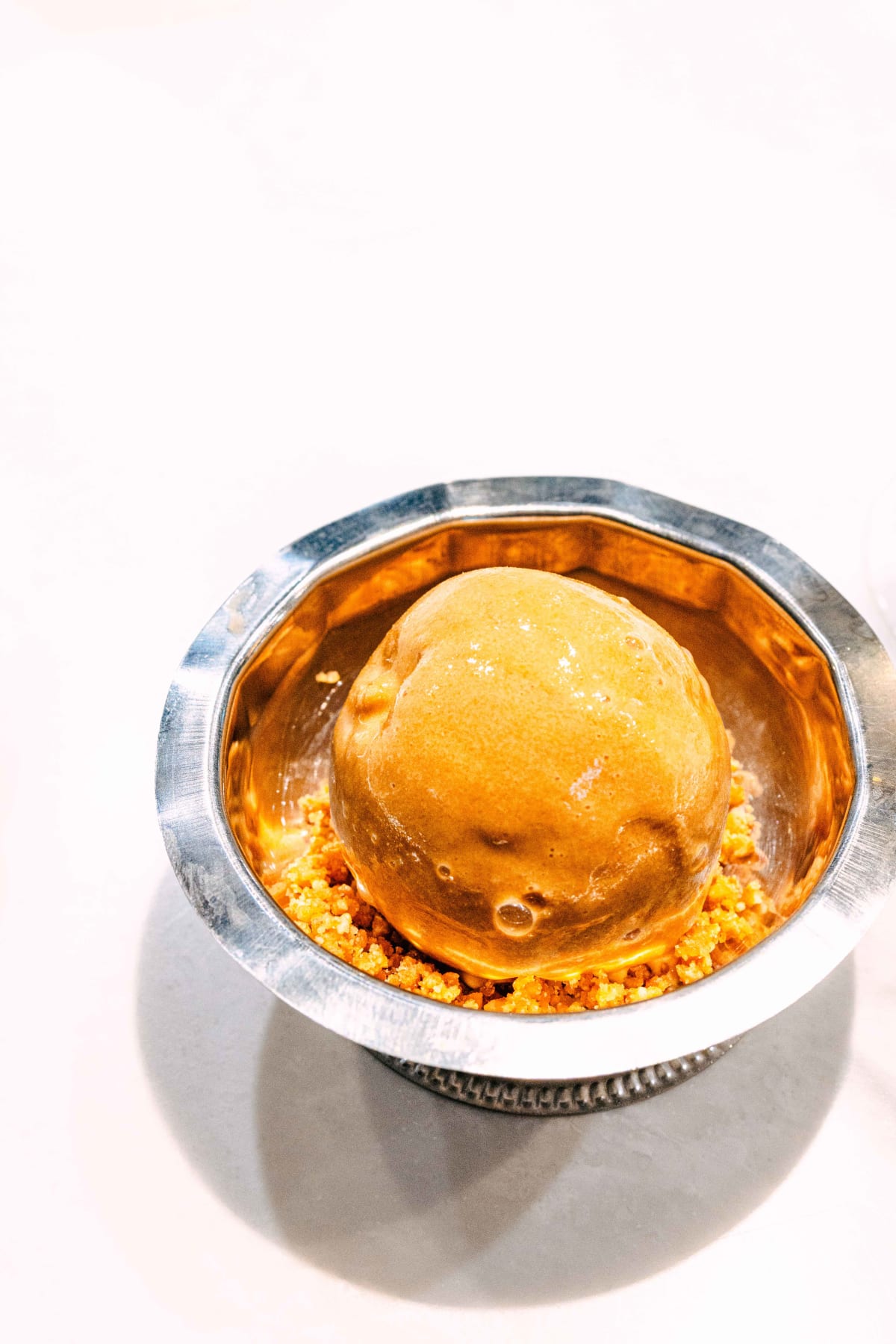
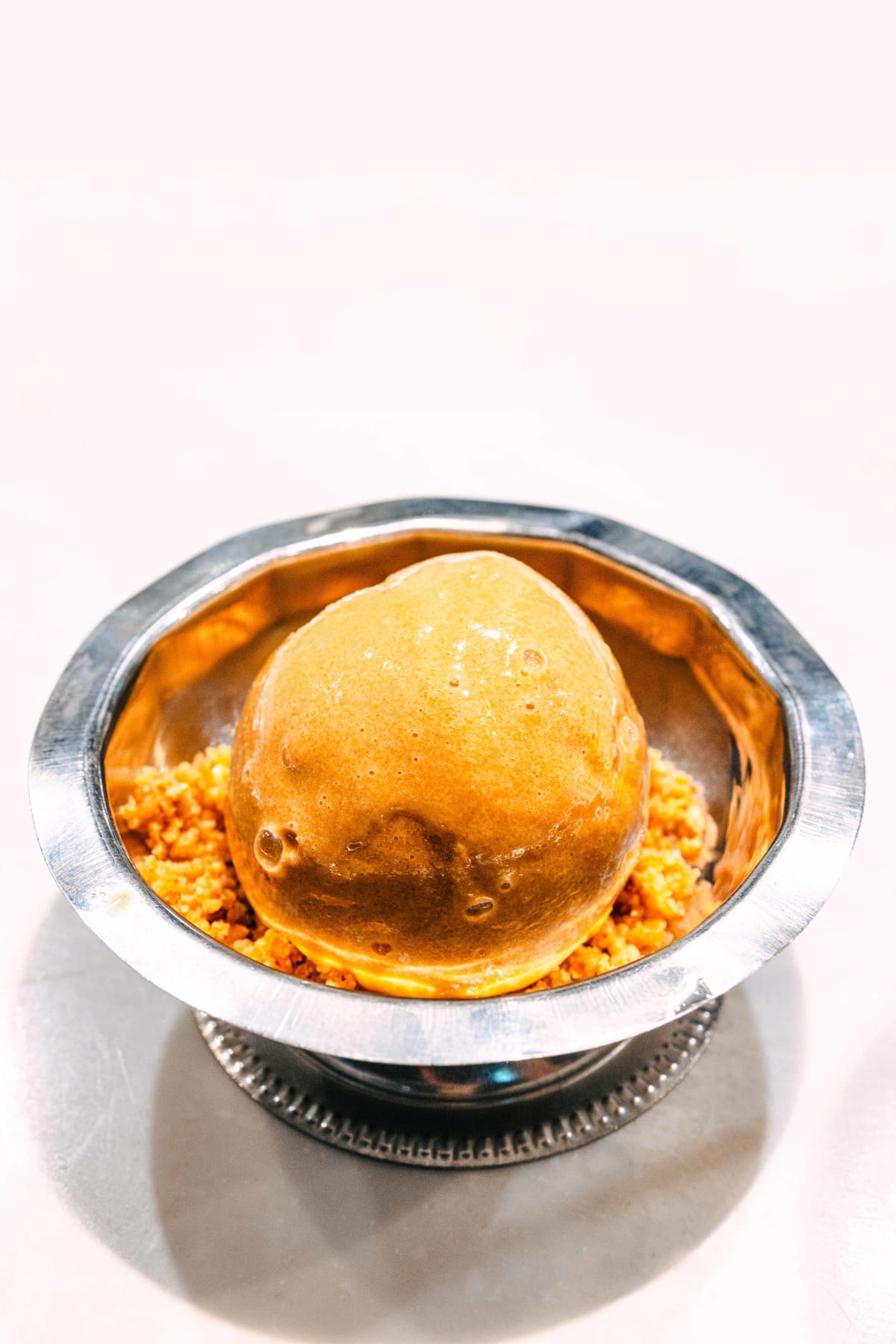
The third dessert was a salted caramel ice cream. Hazelnut crumble underneath and Maldon salt in the salted caramel, by the explanation. It was a very well-balanced caramel ice cream. The sweetness and saltiness were evenly matched, with neither standing out, and the baked aroma of the cookie underneath came through pleasantly.
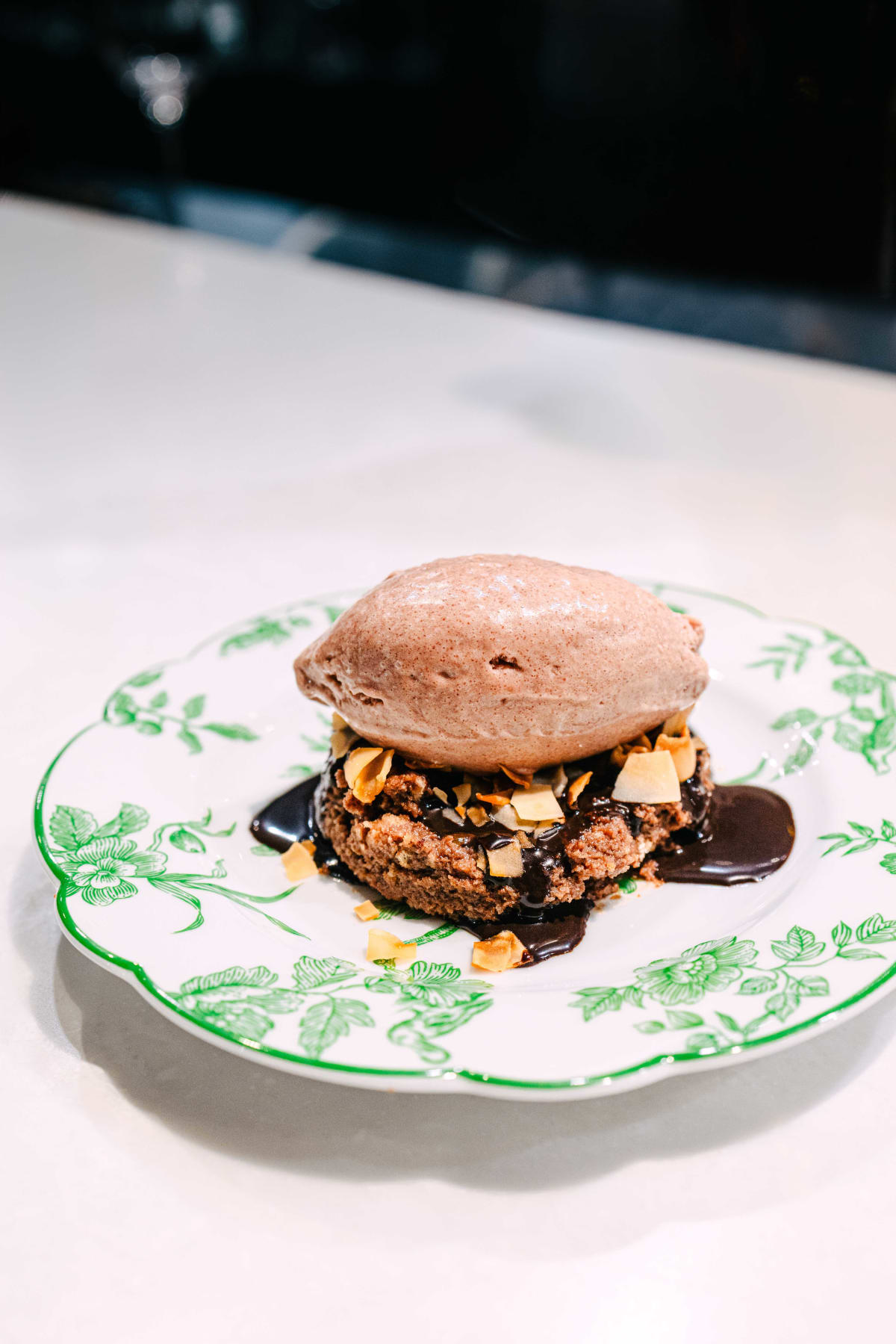
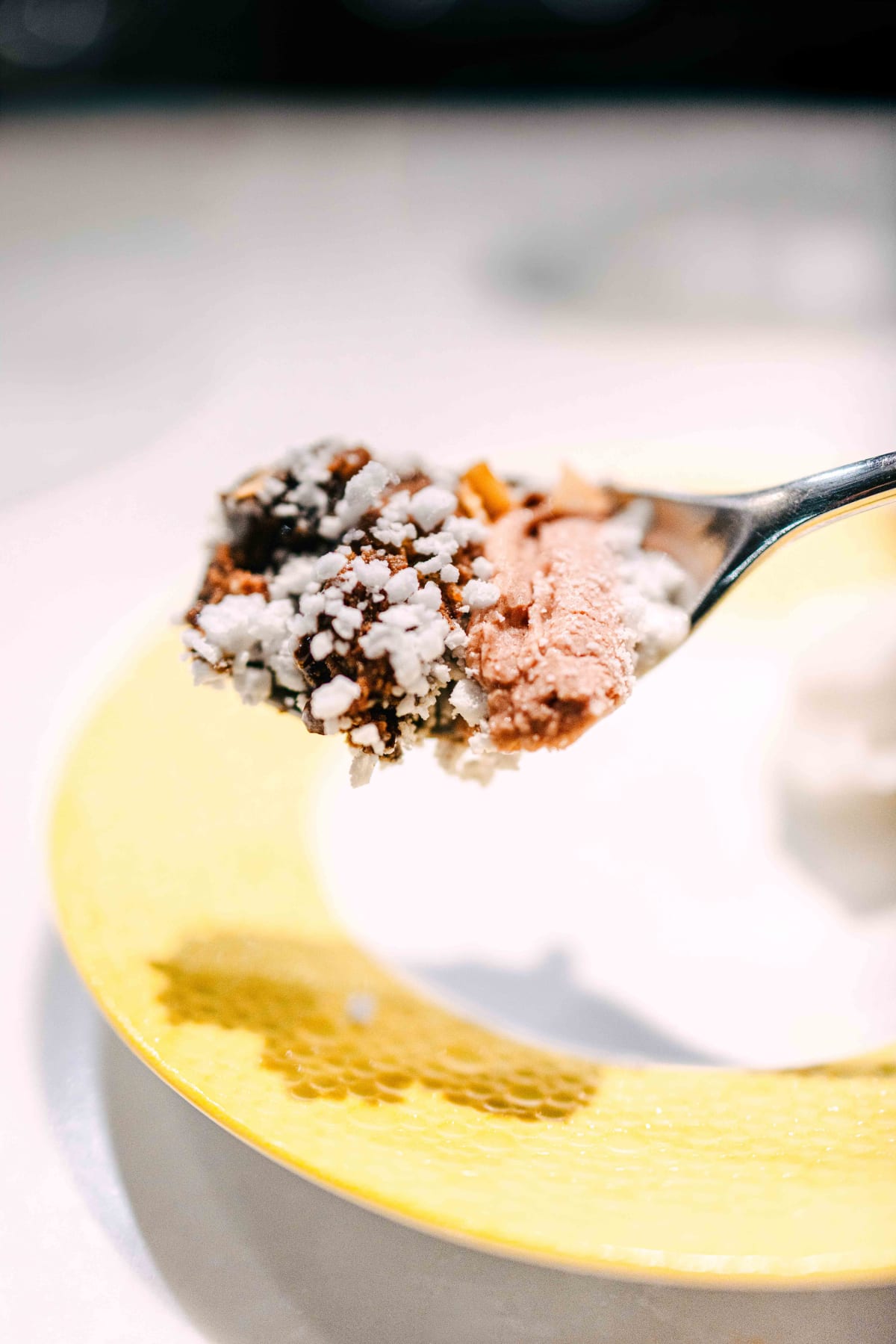
Last is the signature, Namnobing. Coconut sorbet given its texture by rapid freezing with liquid nitrogen, with genoise sponge, roasted coconut chips and cherry ice cream underneath. They put on a performance of scattering the flash-frozen mixture like snow, and rosewater goes in so it smells of roses. That part was good.
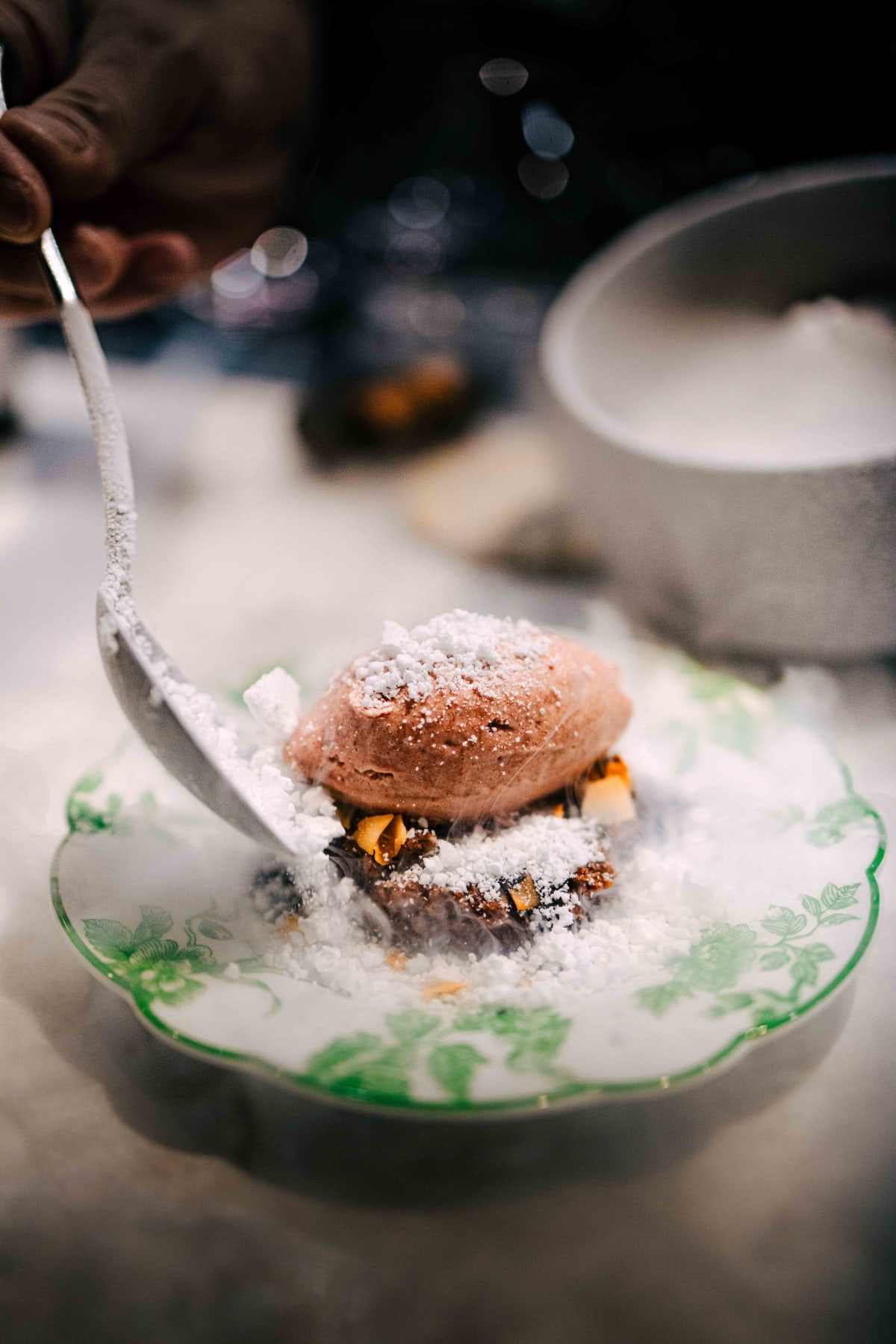
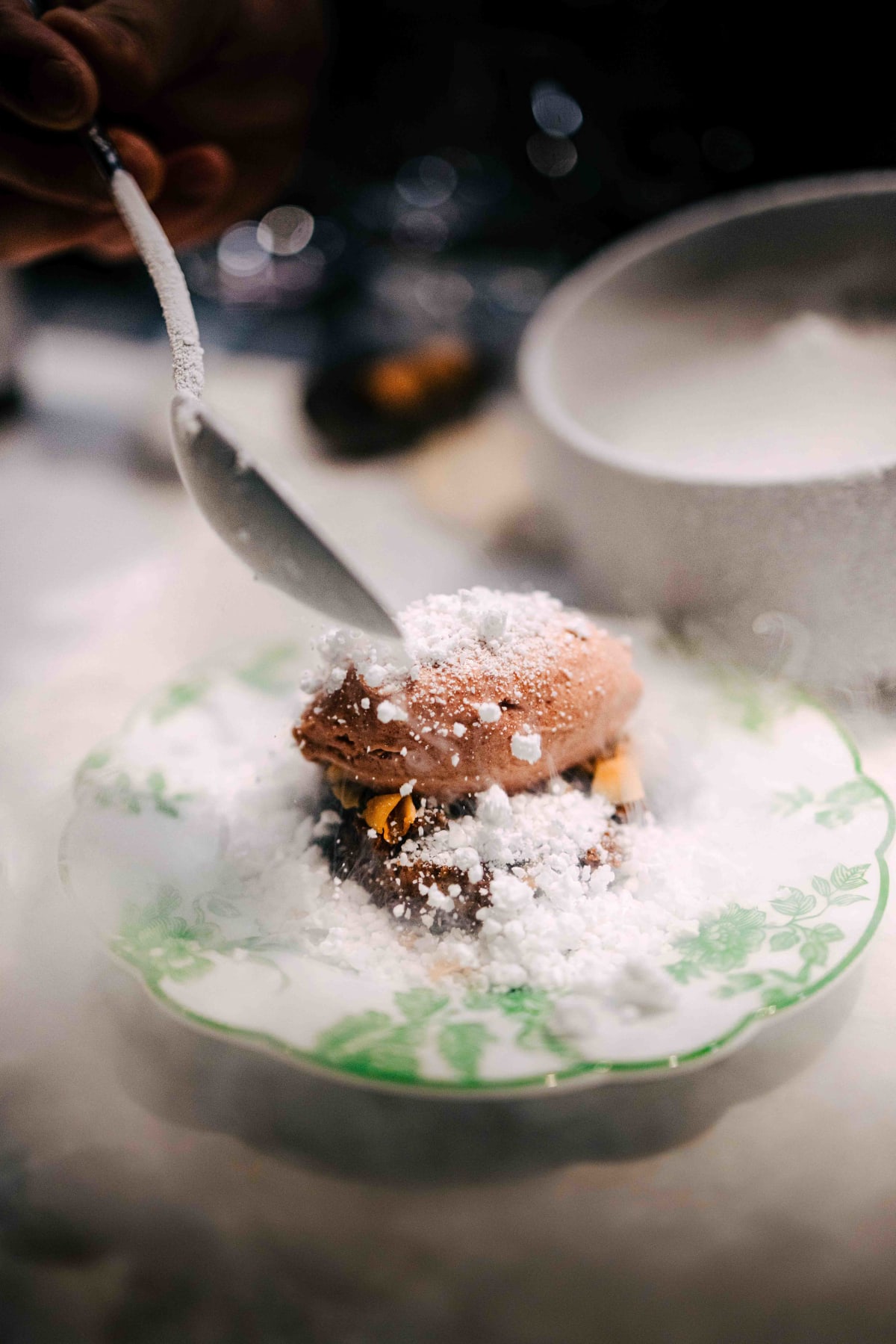
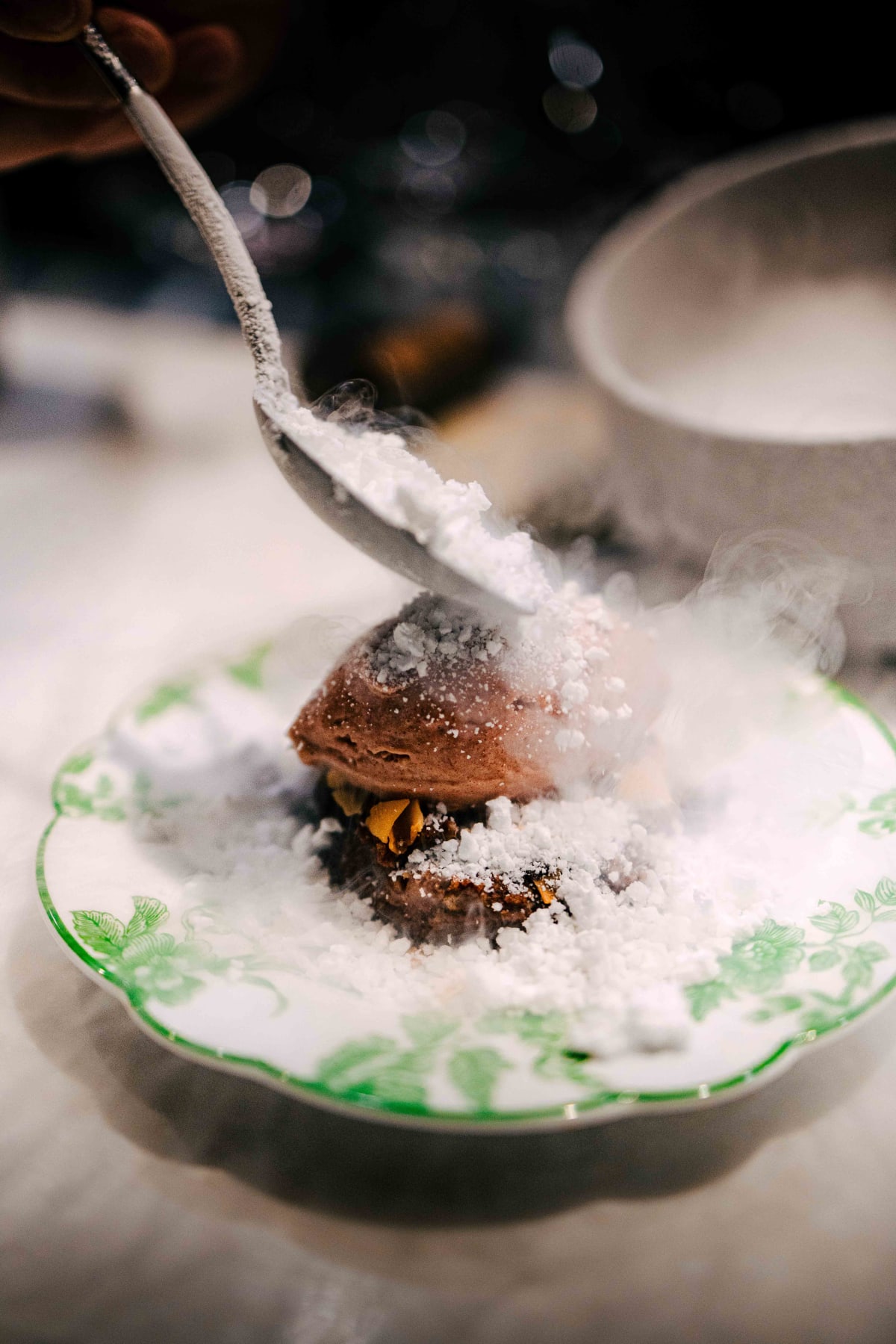
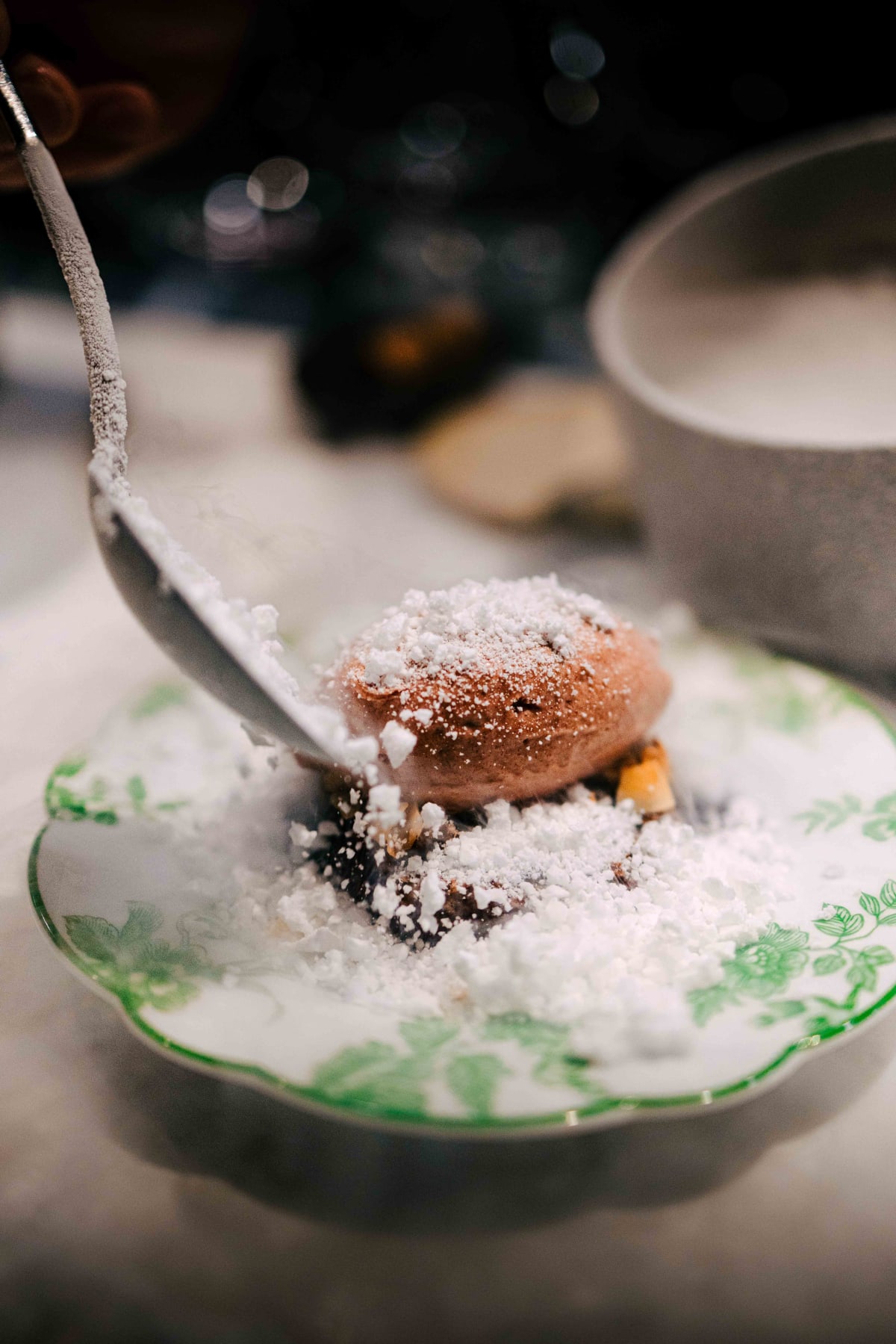
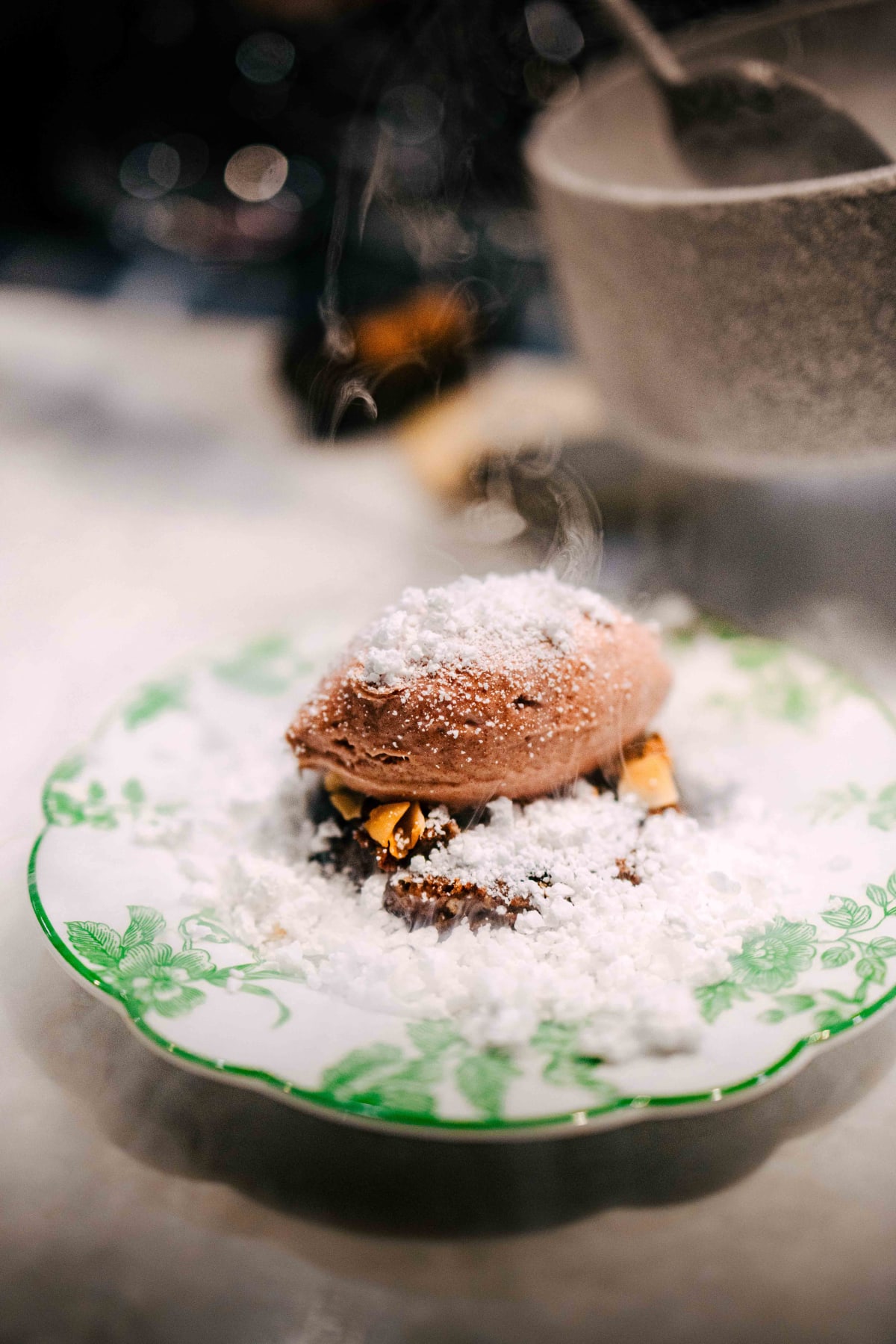
The flavour though is the typical combination of tart berry fruit and chocolate. What was good is that the components do not run separately and come together as a single flavour in the mouth. That single flavour did not strike me as anything remarkable. It is personal taste too, since I find fruit and chocolate dessert combinations unbalanced and do not much like them. Just a combination of chocolate flavours. For a lighter feel, milk chocolate, or better still an Earl Grey or matcha ice cream, might have worked.
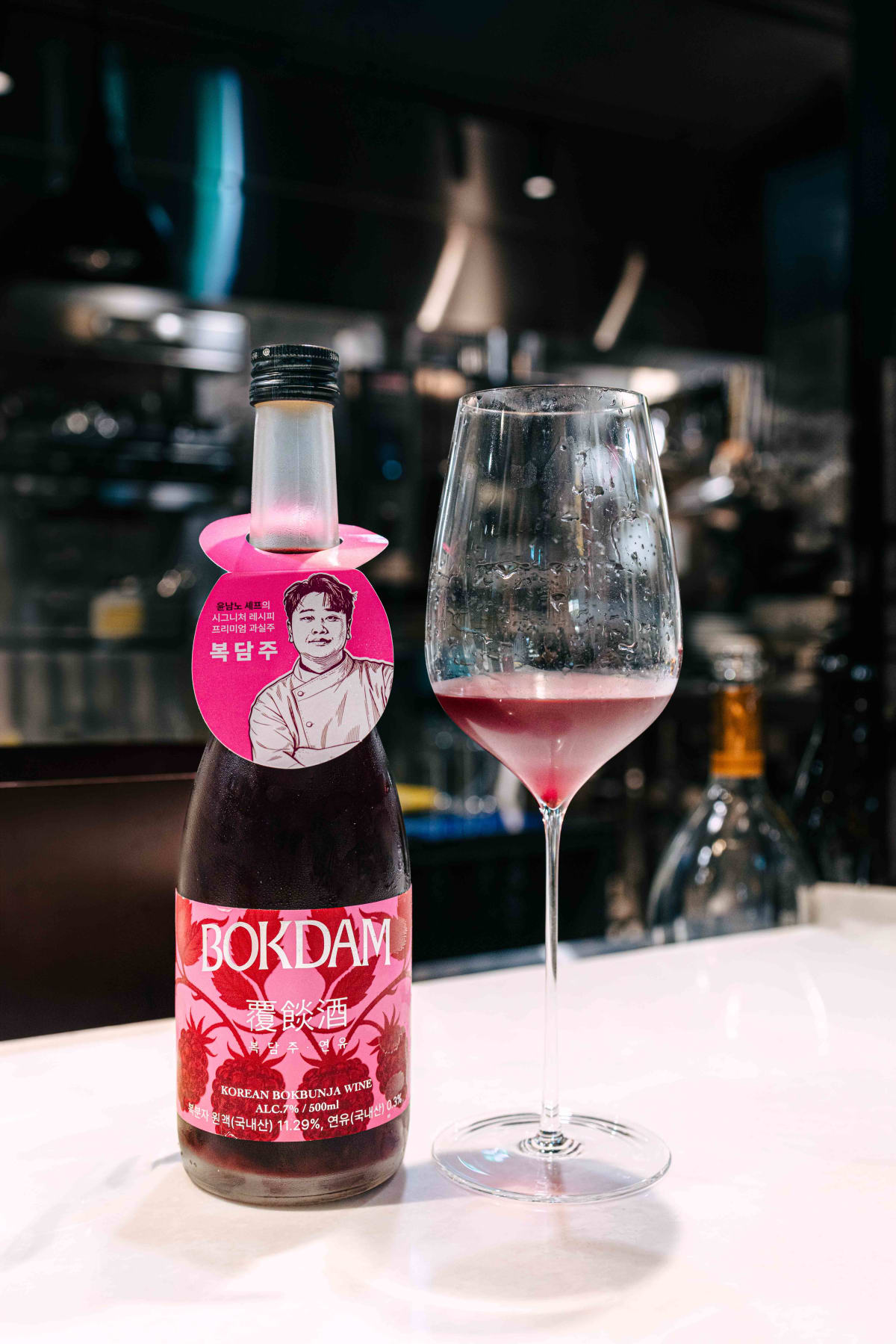
Last came Bokdamju, a bokbunja fruit liquor released as chef Yoon Nam-no's signature recipe, with condensed milk in it, at seven percent. Drinking it, it was like grape juice, and perhaps because of the condensed milk it had a thickness and weight like a traditional takju.
Section 15·Watching The Next One
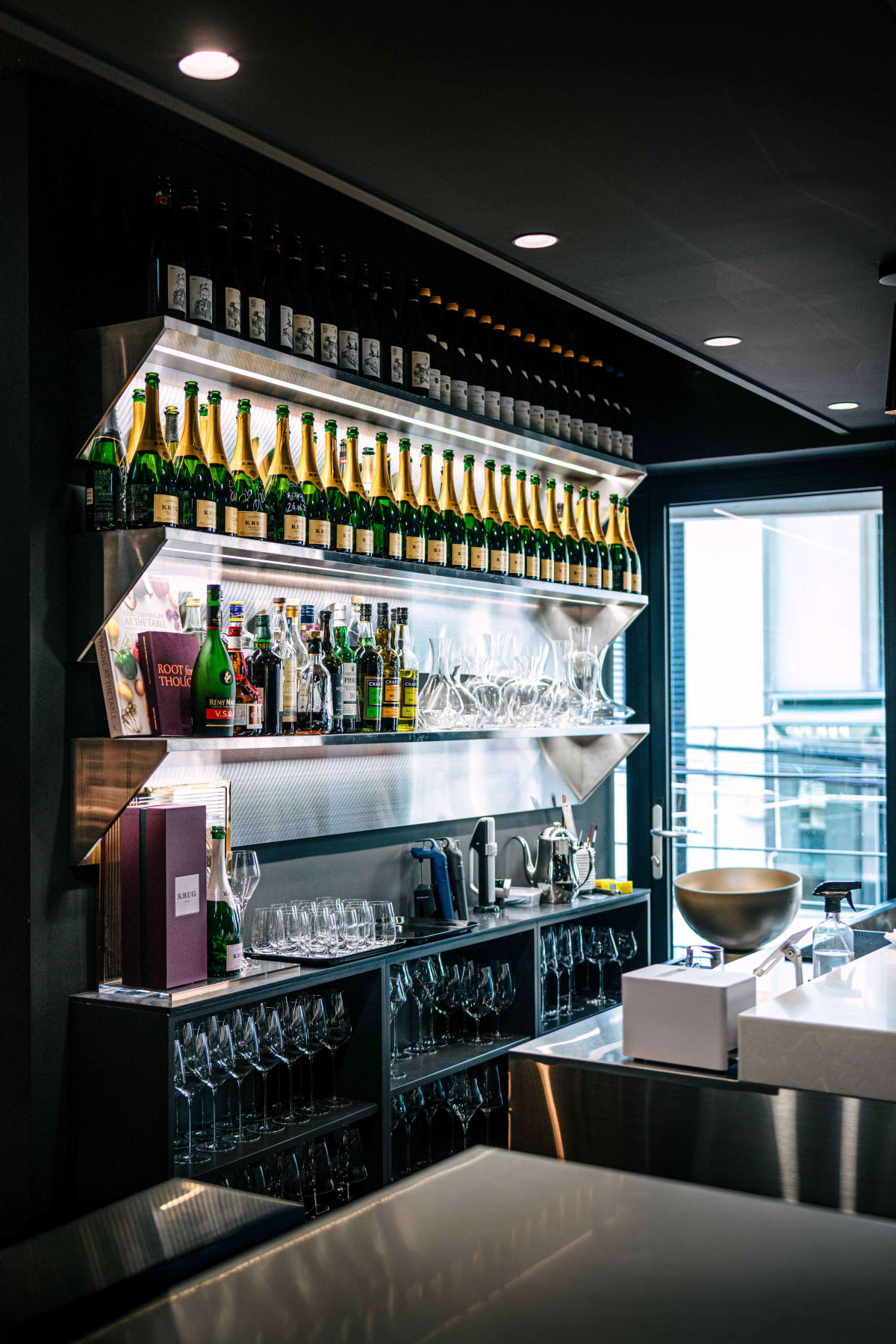
I photographed the counter as the meal wound down. Krug lined up along the back bar, and the Krug revenue here must be extraordinary.
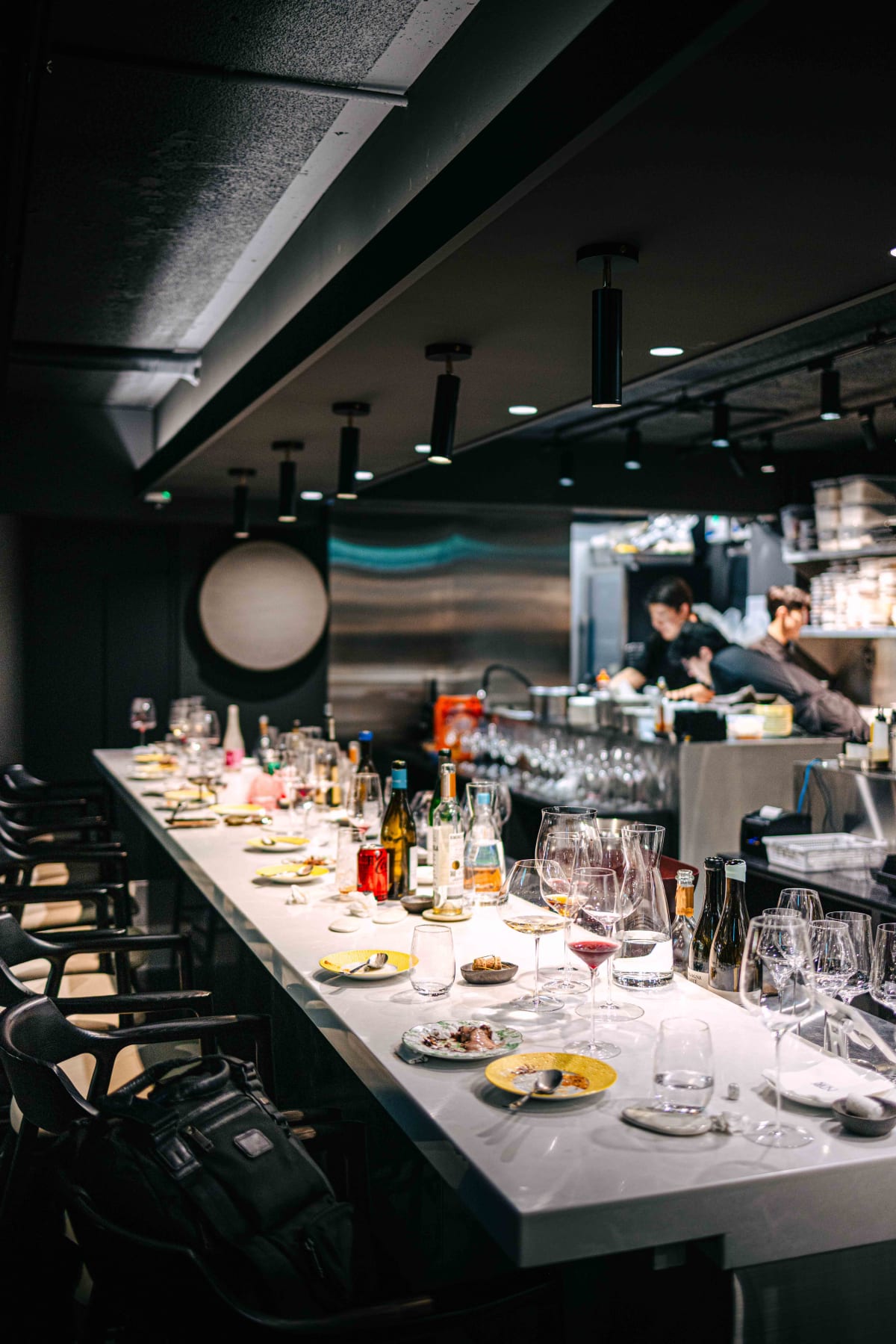
So ended a long evening in which five of us worked through nearly the whole menu and were sent extra dishes on top.
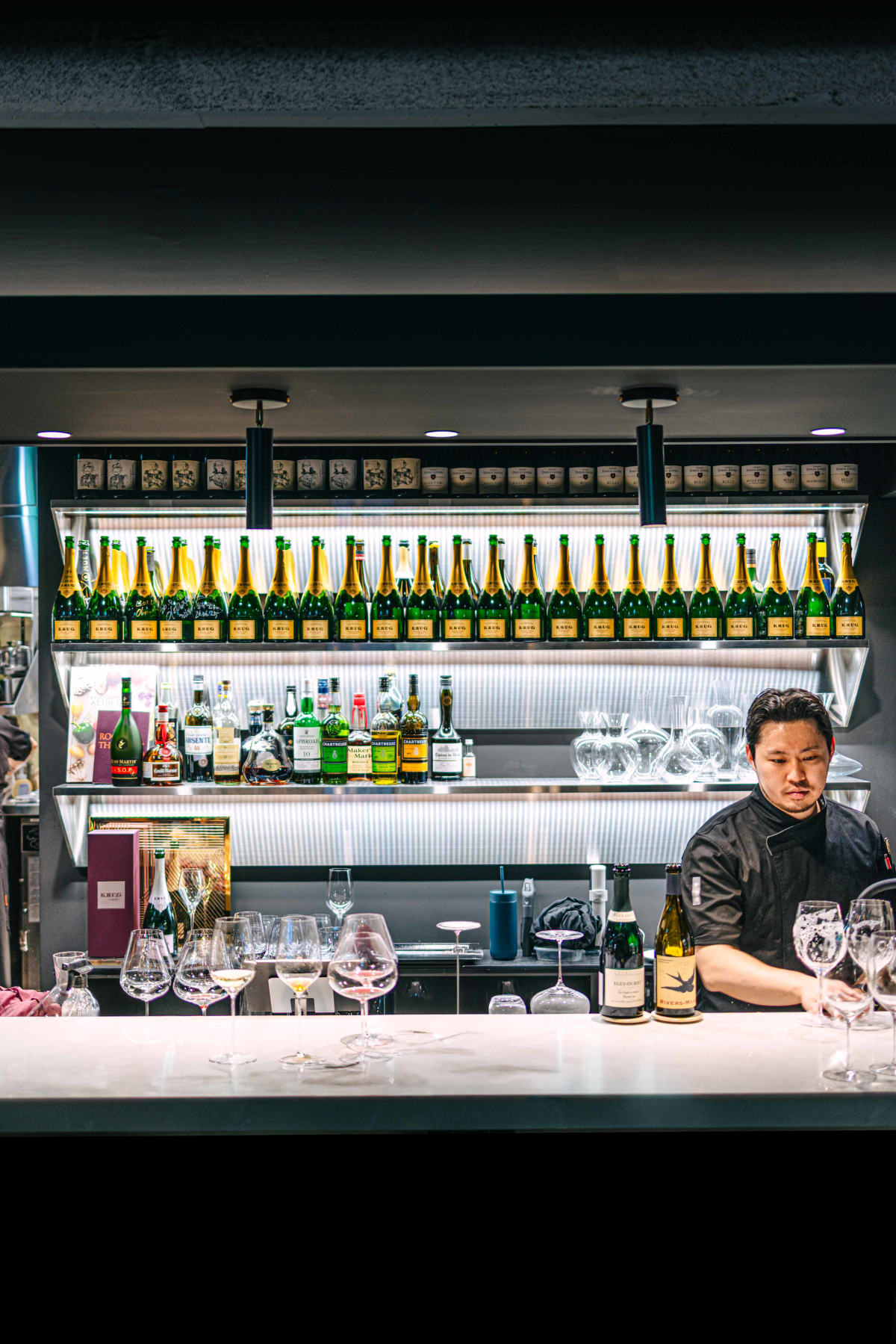
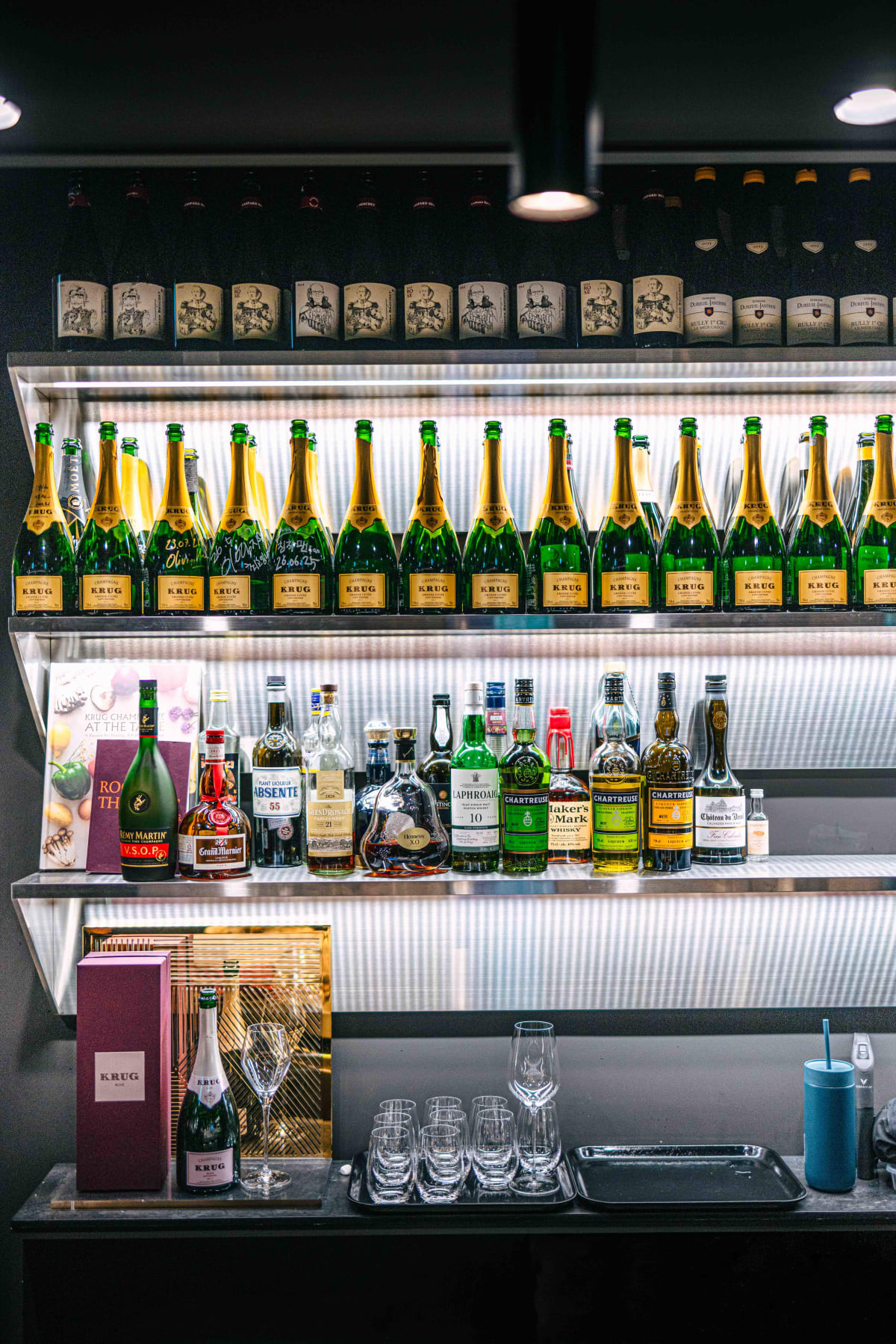
As I said in the verdict at the top, the skill shown in the mains was clear.
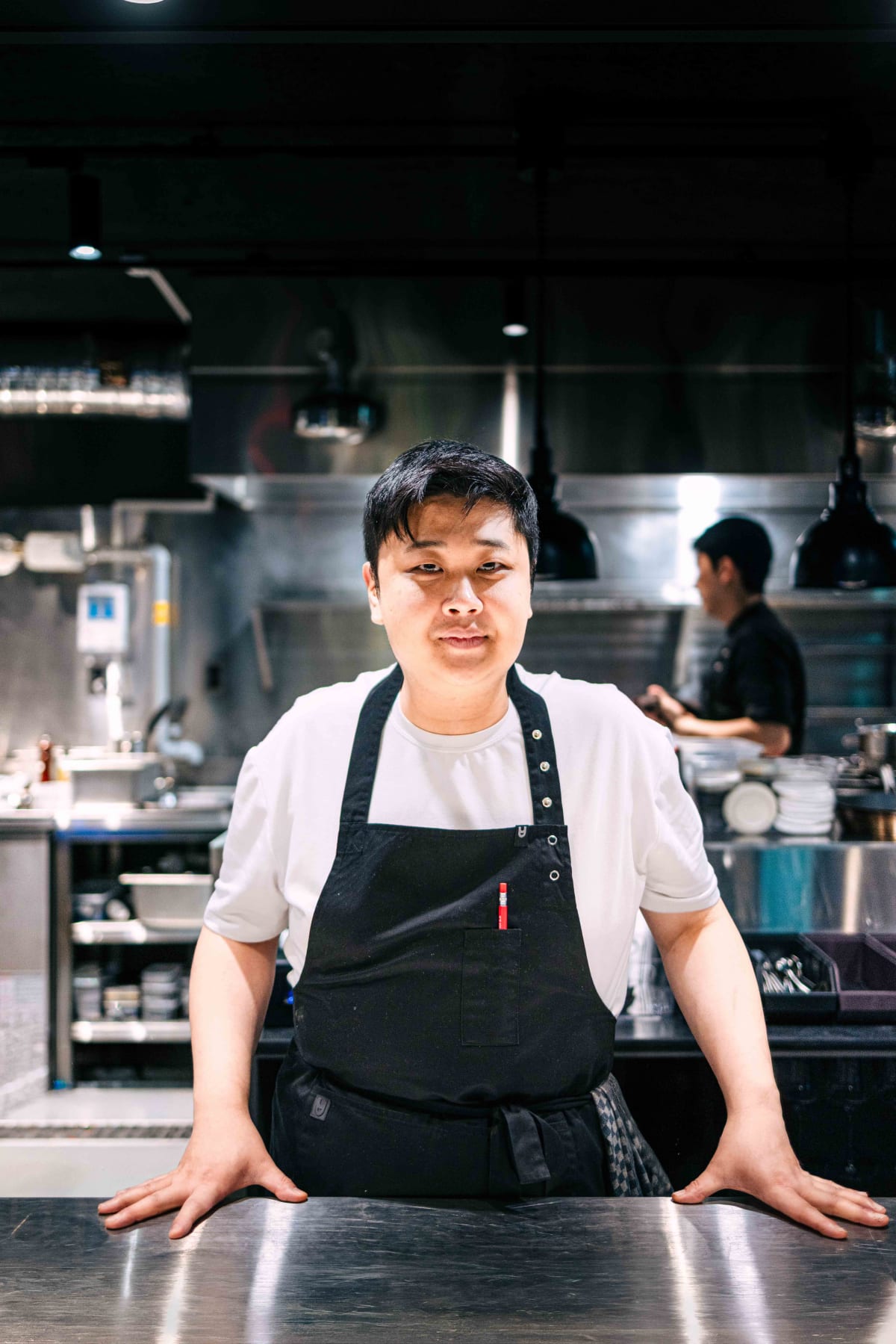
What I want to see on the next visit, separate from the constraints of an à la carte format, is how the distribution of weight across the starters has changed, and how much more of his own character comes through.
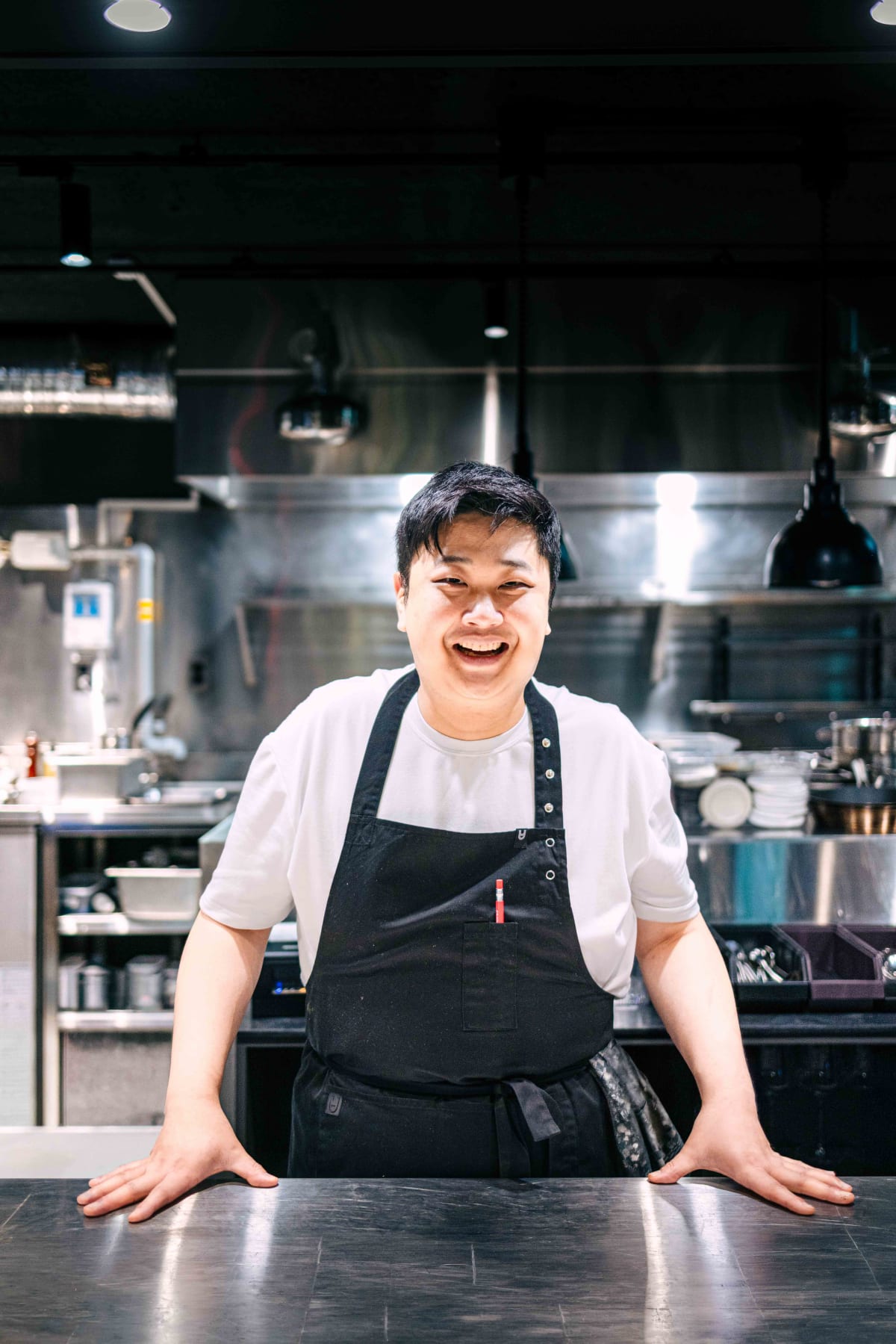
The mandatory five bites give the game away. This is a kitchen that wants to control how the meal opens and then hands the rest of the sequence to the table. In a tasting menu the weight curve is the chef's problem. Here it becomes the guest's, and order broadly enough and you will build a load nobody designed. That is not a fault in the cooking, it is what the format costs, and it is worth knowing before you sit down. Two starters at most, then put the money into the meat. Worth noting too that the best plate of the night was not on the printed menu at all, which is where his own hand is easiest to find.
Have a question about this restaurant, or want to share your own experience?
Send a message