Fine Dining · Tokyo · Japan / December 2023 / Tabelog Sushi Hyakumeiten (2022)
Sushi Akira
"The Hiroo counter that opens its nigiri with tuna and gives superb produce only the lightest touch"
Section 1·The Last Dinner Before Oshogatsu
In China and Korea, the traditional New Year holiday falls not on the solar new year but on the lunar one, the first day of the first lunar month. Japan, however, is the only country in East Asia that, on adopting the solar calendar in 1873 in the Meiji era, moved its traditional New Year customs themselves to 1 January.
Oshogatsu (お正月) is one of Japan's biggest traditional holidays, centred on 1 January. Only 1 January is a public holiday, yet once Christmas is over, many companies, shops and restaurants across the country close from the end of December until 3 January. During this time people go home to spend time with family, eat osechi and make hatsumode (初詣), the year's first visit to a shrine or temple, so anyone travelling in Japan over the New Year has to plan around long closures at well-known restaurants.
Japan has changed a good deal lately, though, and more and more places now stay open on the days either side, closing only on 1 January. That is how I was able to end my late-2023 Tokyo trip with a final dinner at Sushi Akira in Hiroo. It was 30 December, so the seat I caught was one freed up by a cancellation just before the New Year holiday.
When I saved it on Google Maps, its Tabelog score was 4.06; three months later, in March 2024, it had climbed to 4.27. Its reputation was growing by the day, and I suspected it might soon become hard to get into, so making the effort to go at the end of the year was the right call. On top of that, I made a good new friend that day and ate very well.
Even at the time of my visit, it had been named to the Tabelog Sushi Tokyo 100 (Hyakumeiten) two years running, in 2021 and 2022. Three weeks after my visit, at The Tabelog Award 2024, it received both a Silver and the Best New Entry award, and it has held Silver every year through 2026. As of October 2026 its score stands at 4.50, which within the Silver tier puts it practically on the doorstep of Gold, so my hunch back then was not wrong.
Section 2·Akira, From A Grandfather's Name
It is in Hiroo, and unlike the usual sushiya tucked down a side street, it sits on the ground floor of a building on a main road, so it is not hard to find if you follow Google Maps. Inside is an L-shaped counter of eight seats.
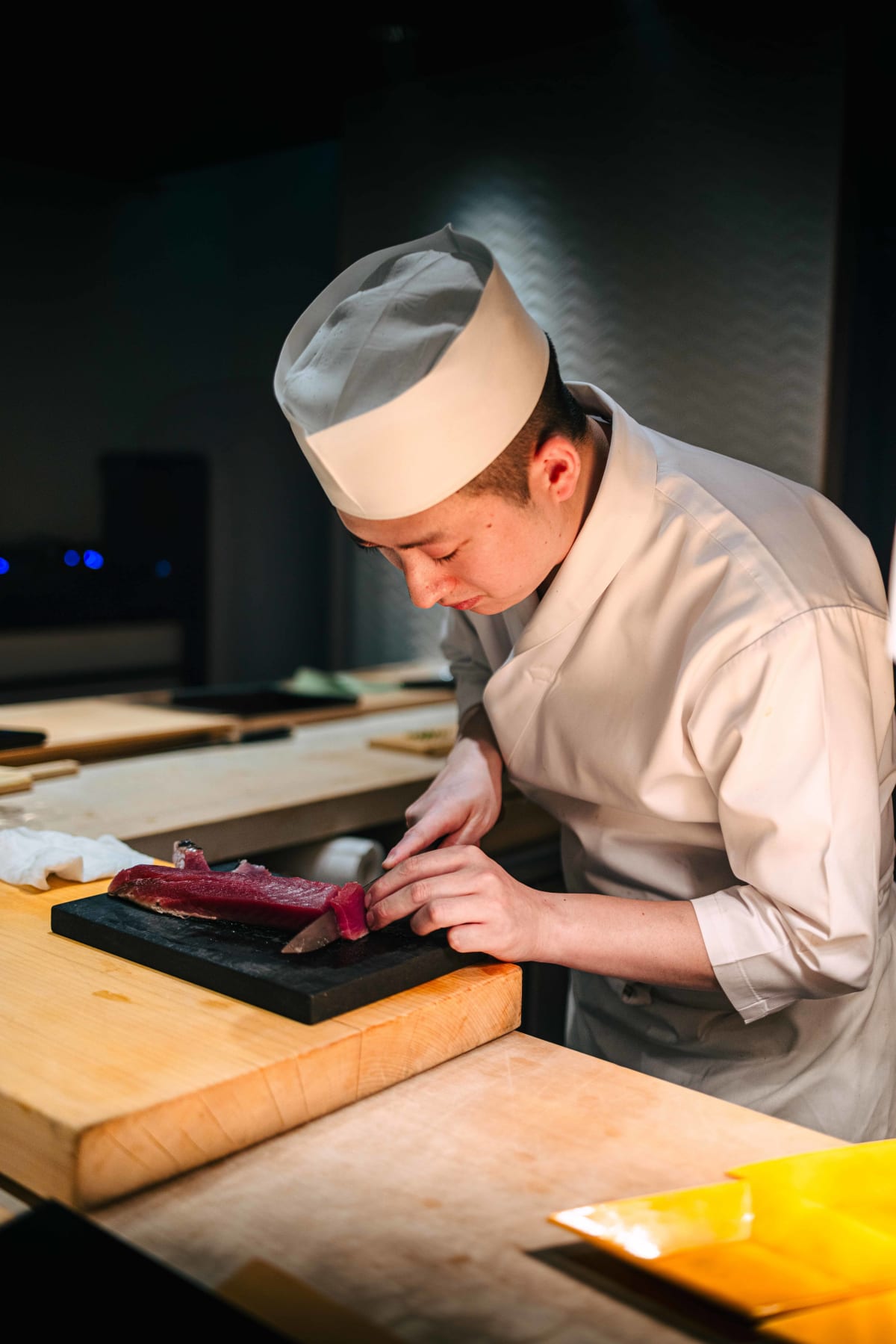
Akira's chef, Kazunori Maeiwa (前岩和則), was born in 1991, which makes him quite young, and perhaps for that reason he speaks fairly good English. People say the Japanese do not speak English, but most of the young chefs opening new places these days speak at least some, and it makes me think Japan will gradually become more welcoming to foreign visitors.
Born in Wakayama, he graduated from the Tsuji Culinary Institute, learned under Keiji Nakazawa of Sushi Sho (すし匠) and joined the group's restaurants, and after close to seven years of training rose to nibante, second in command, at Sushi Sho Masa (すし匠まさ) in Nishiazabu. What is interesting is the unusual turn that followed: he spent a full year working at the Chinese restaurant Sazenka (茶禅華), then opened this place in November 2019, at the age of twenty-eight.
The name 良月 is read not Ryogetsu but Akira, and it comes from the name of the chef's grandfather. His grandfather's name was 朗 (Akira), and split into its left and right halves, the character becomes 良 and 月, I am told.
Section 3·Two Kinds Of Tsumami
At Akira, a run of tsumami comes before the nigiri and a few more appear between the nigiri, and I enjoyed the tsumami a great deal. On this trip to Japan, the tsumami at Ryujiro and at Akira stood out, yet I think the two head in quite different directions.
If Ryujiro builds and amplifies the flavour of its ingredients through technique and a large team in the back kitchen, so that you taste something complex, Akira gives superb produce only the minimal touch it needs, so that the ingredient comes through clear and sharp. Put photos of the two side by side and you can see the difference in complexity in the visuals alone.
Akira gives superb produce only the minimal touch it needs, so that the ingredient comes through clear and sharp.
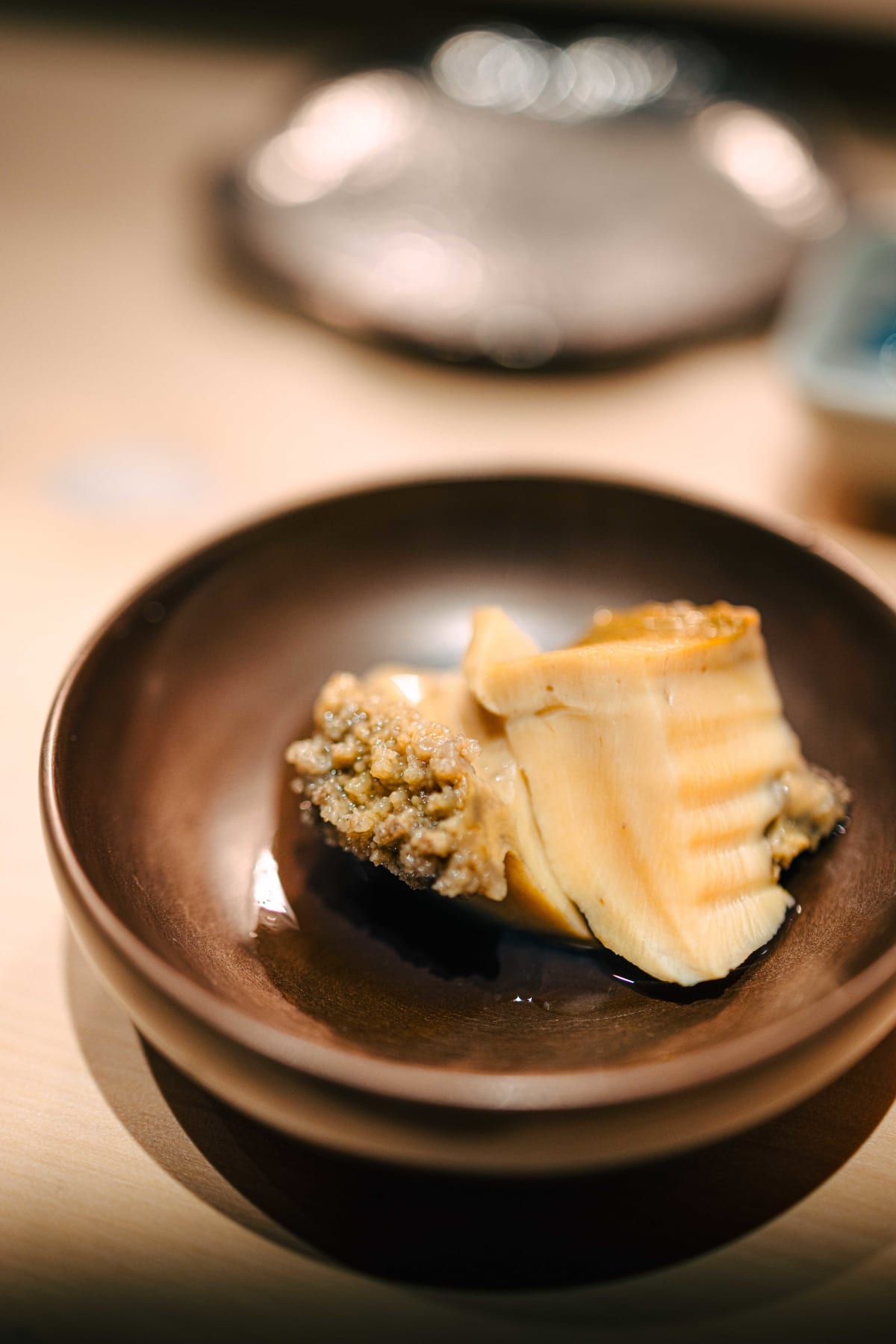
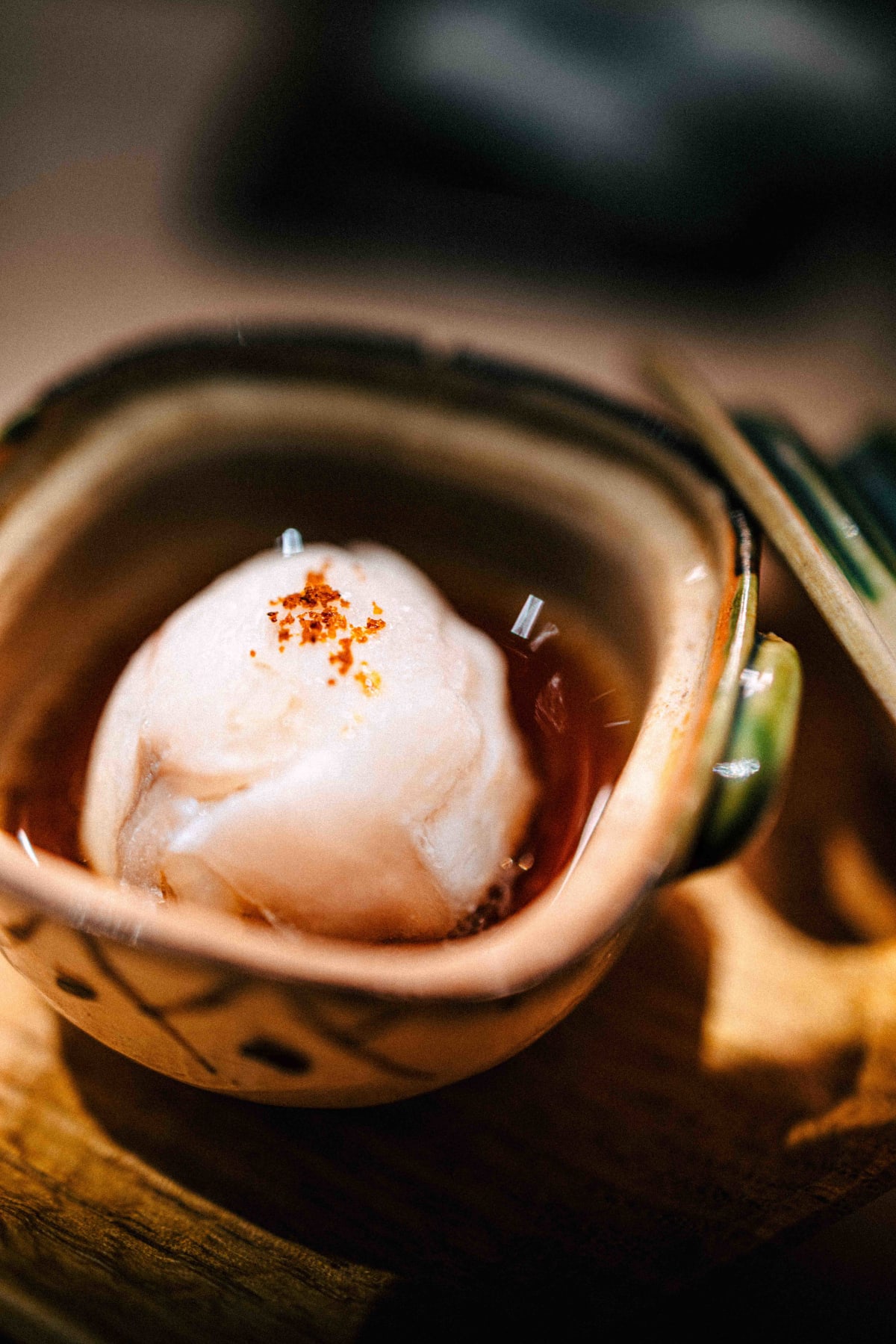
The first tsumami was steamed abalone. The chef brought the whole steamed abalone over on a footed ceramic dish, sliced it, divided it among small bowls and spooned its broth over each.
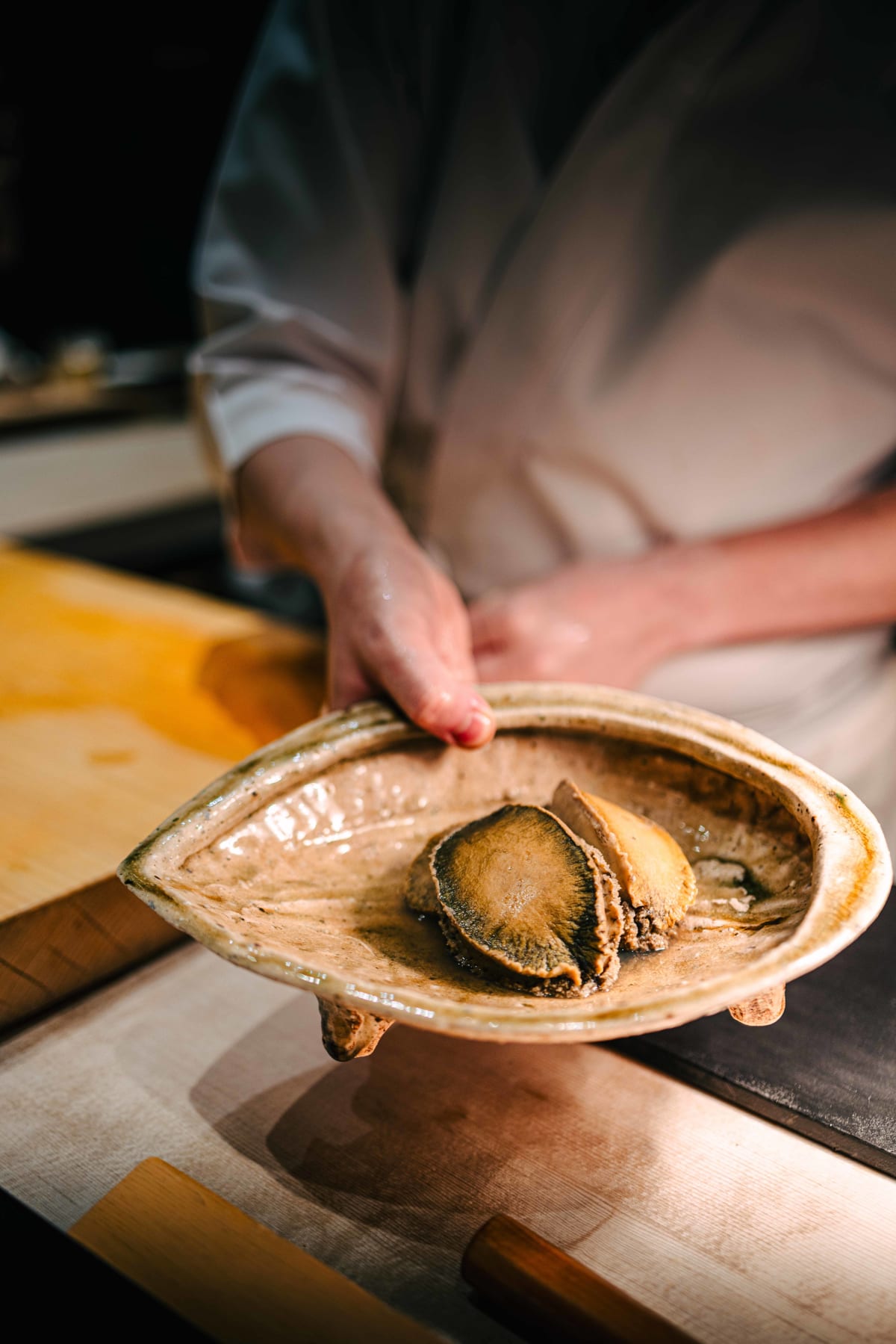
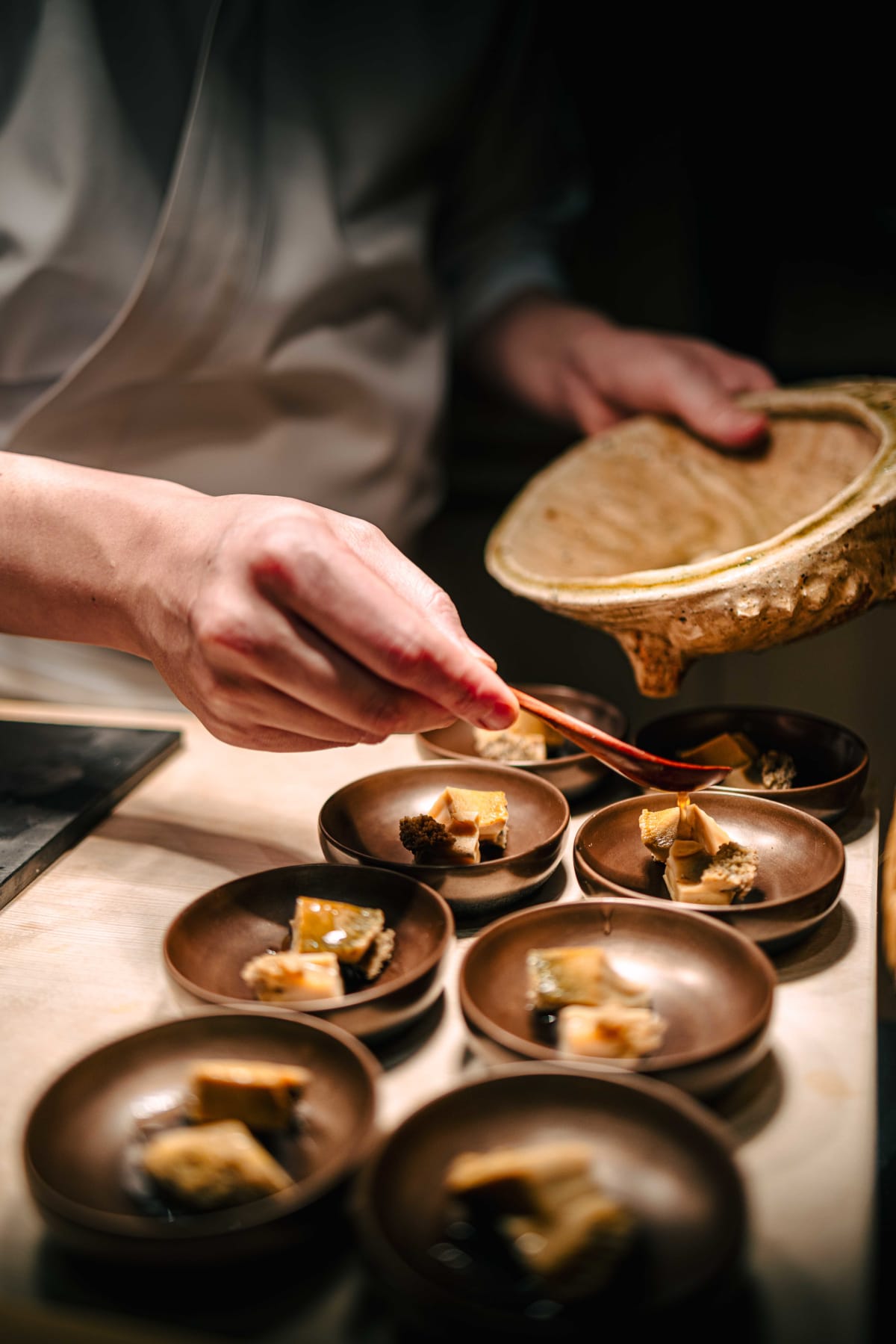
The broth had a gentle savouriness, and the texture was good too.
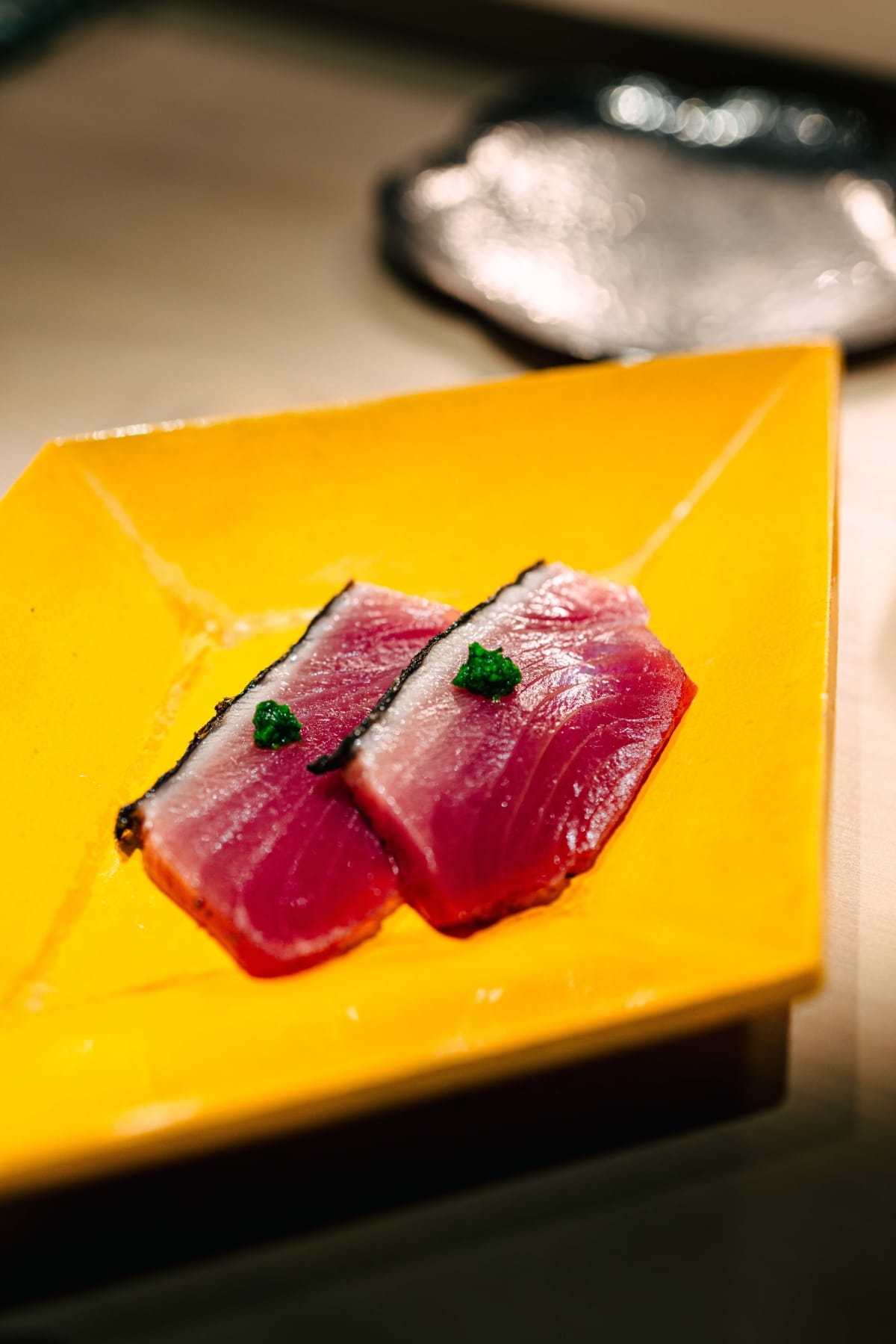
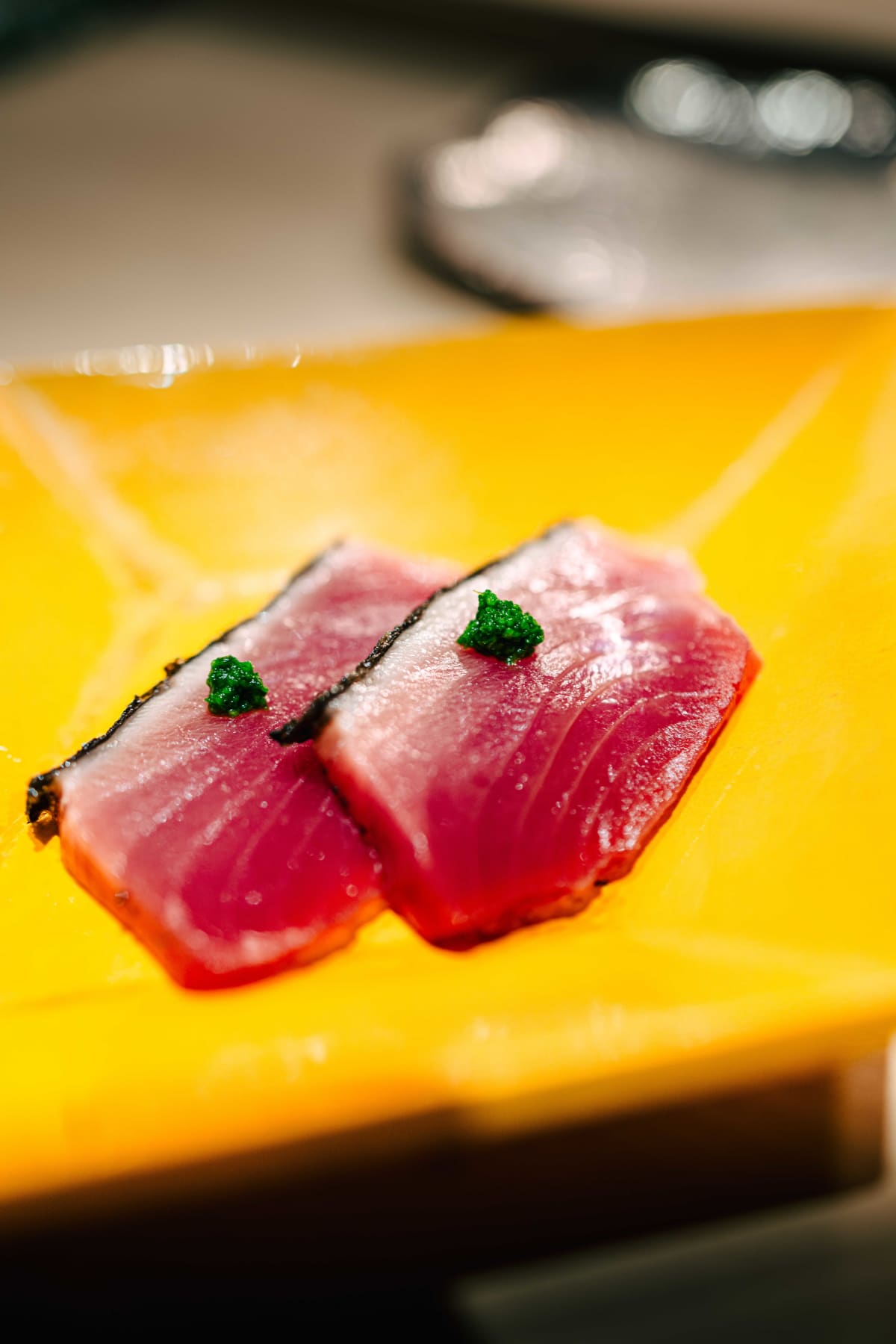
Two pieces of katsuo tataki followed, the skin side seared black, each topped with a green garnish, on a yellow plate.
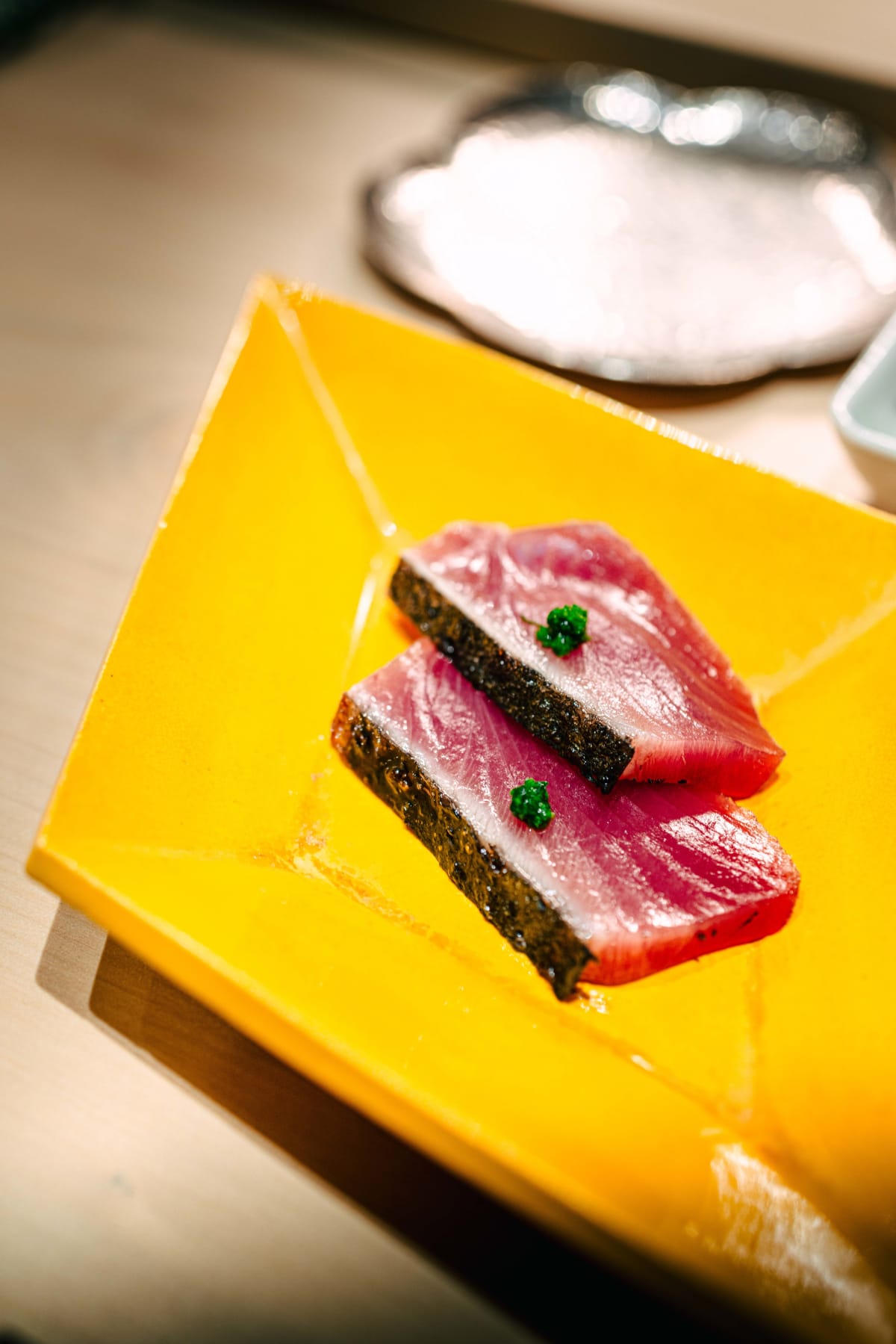
Katsuo is, perhaps surprisingly, the ingredient that shows the biggest gap in quality between Korea and Japan.
It is a fish that impresses more with clean acidity than with fat, and here at Akira the outside had been seared crisp, which made it even better.
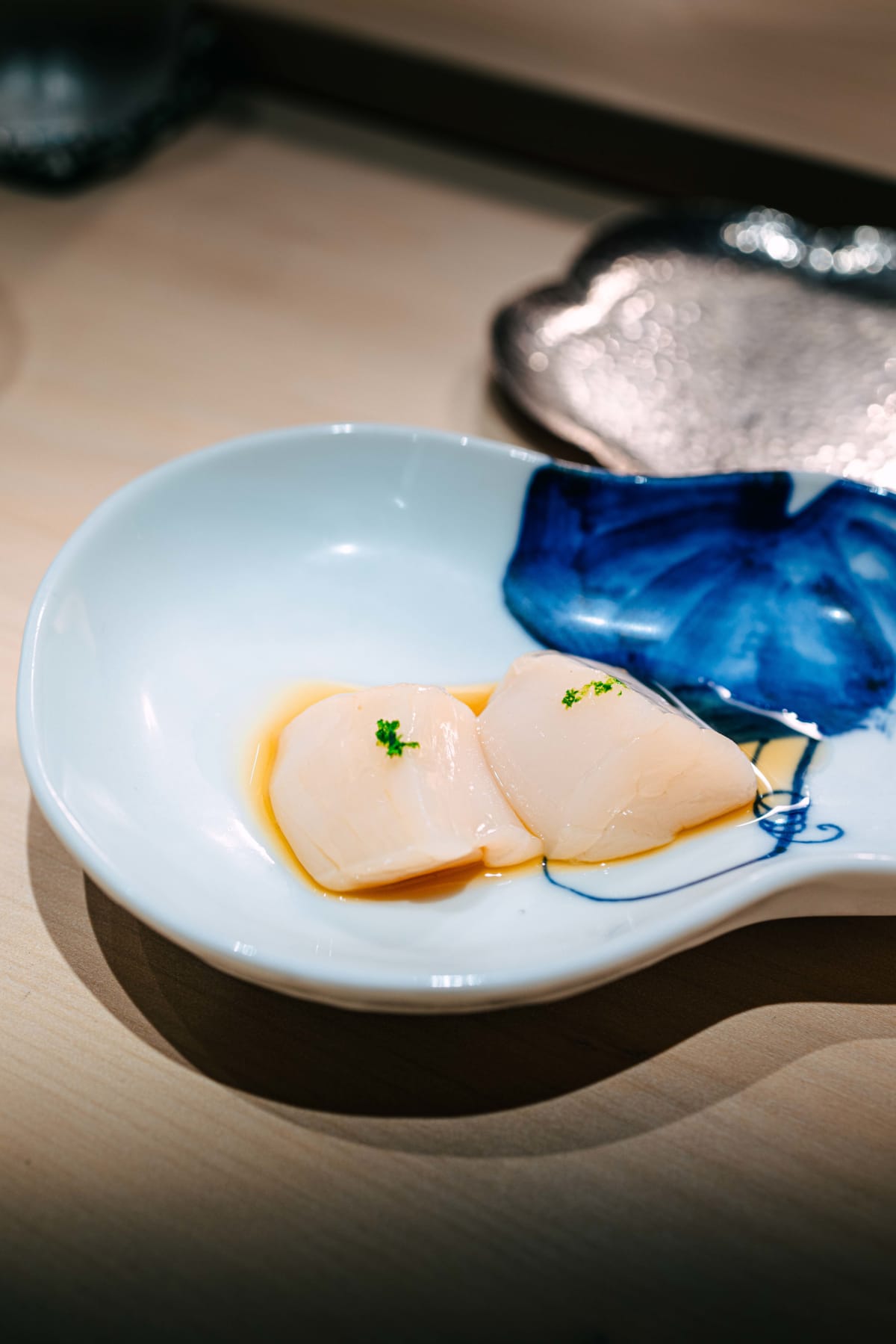
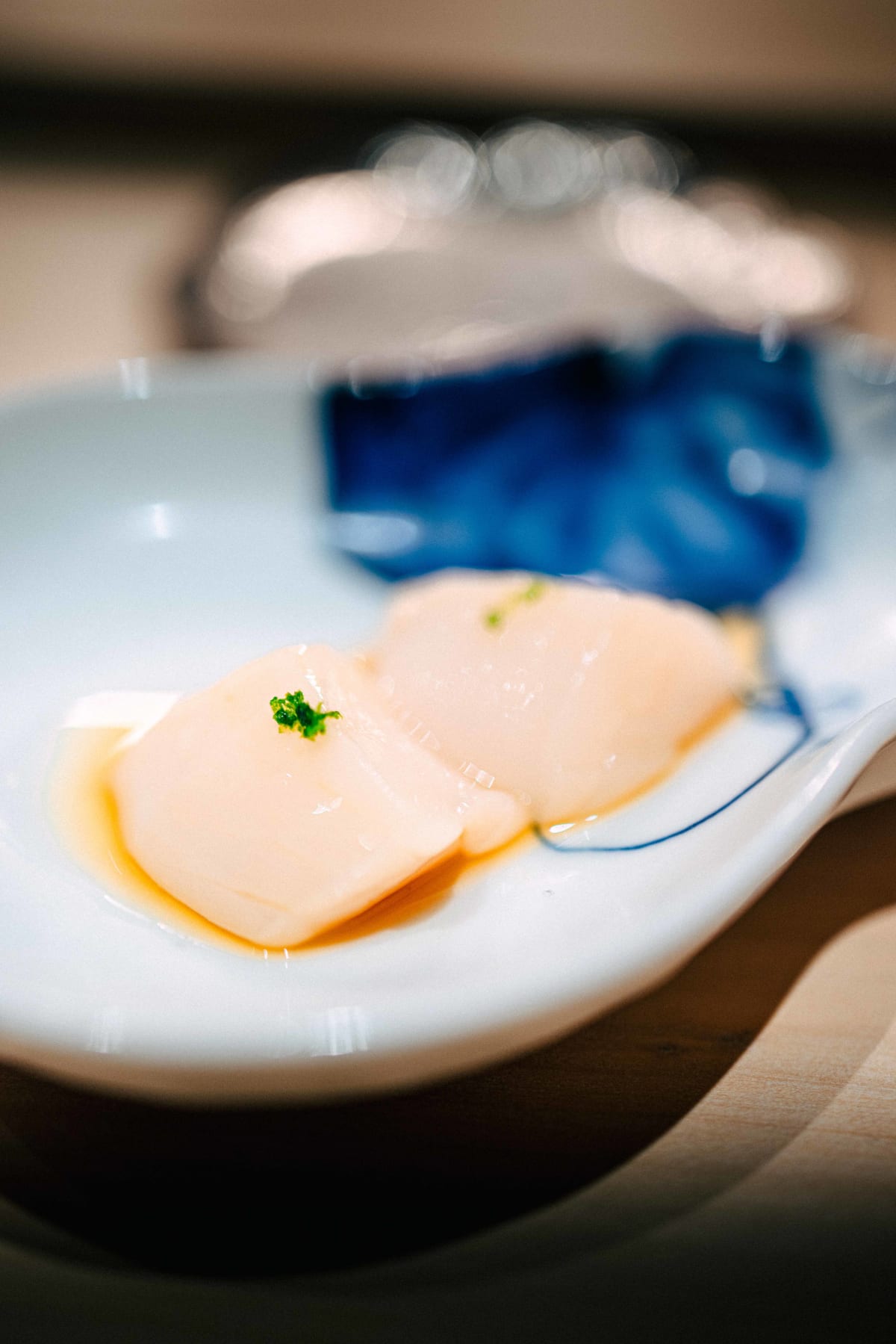
The scallop that came next was barely touched by heat, just dressed with a little soy, and since back then I had hardly ever eaten scallop raw like this, it left a strong impression. The springiness and sweetness of a good scallop on its own are always a pleasure.
The chef then laid saba-zushi on a sheet of nori, brushed it with soy and handed it over.
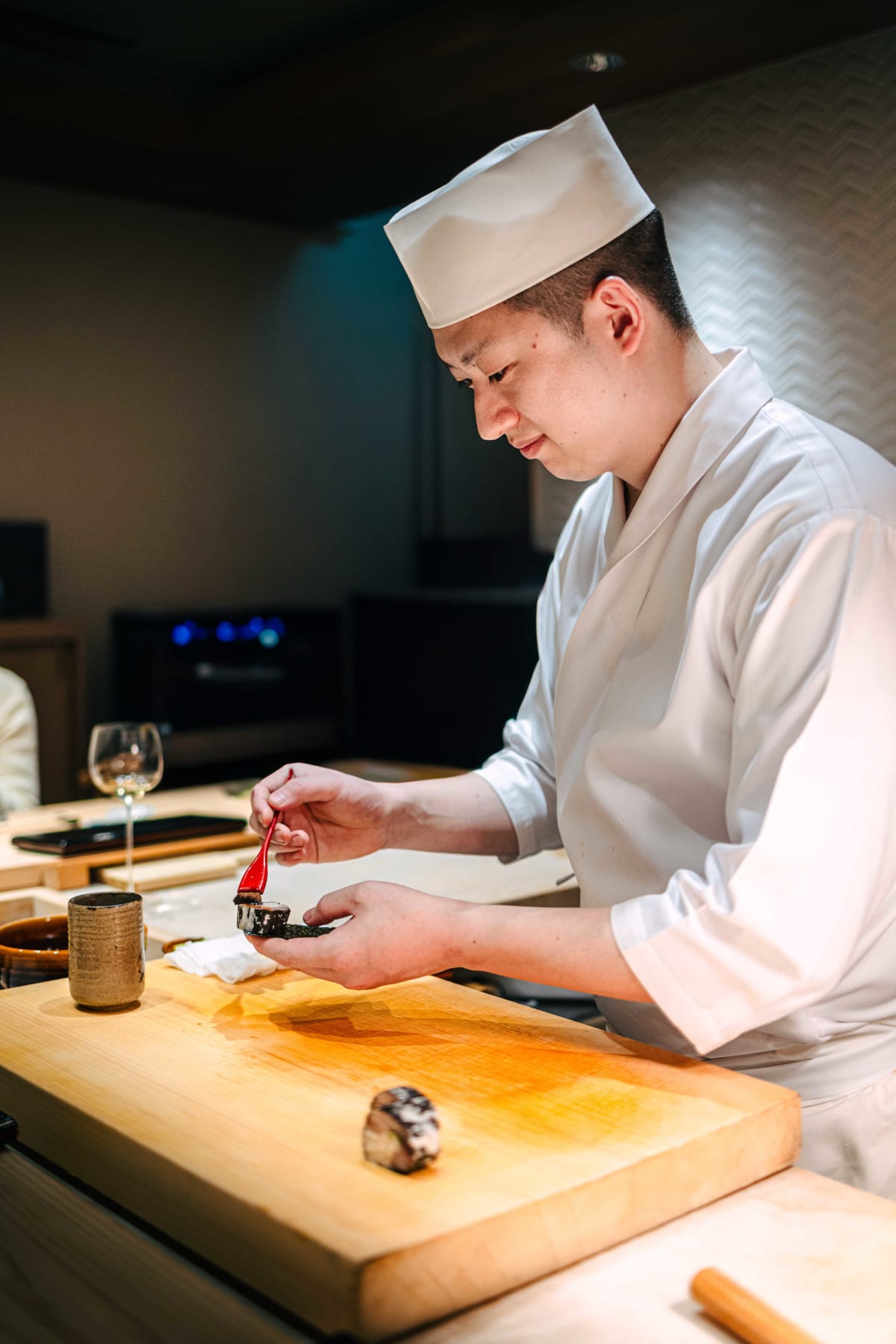
What struck me was the topping he added, which had a firm, slightly chewy bite.
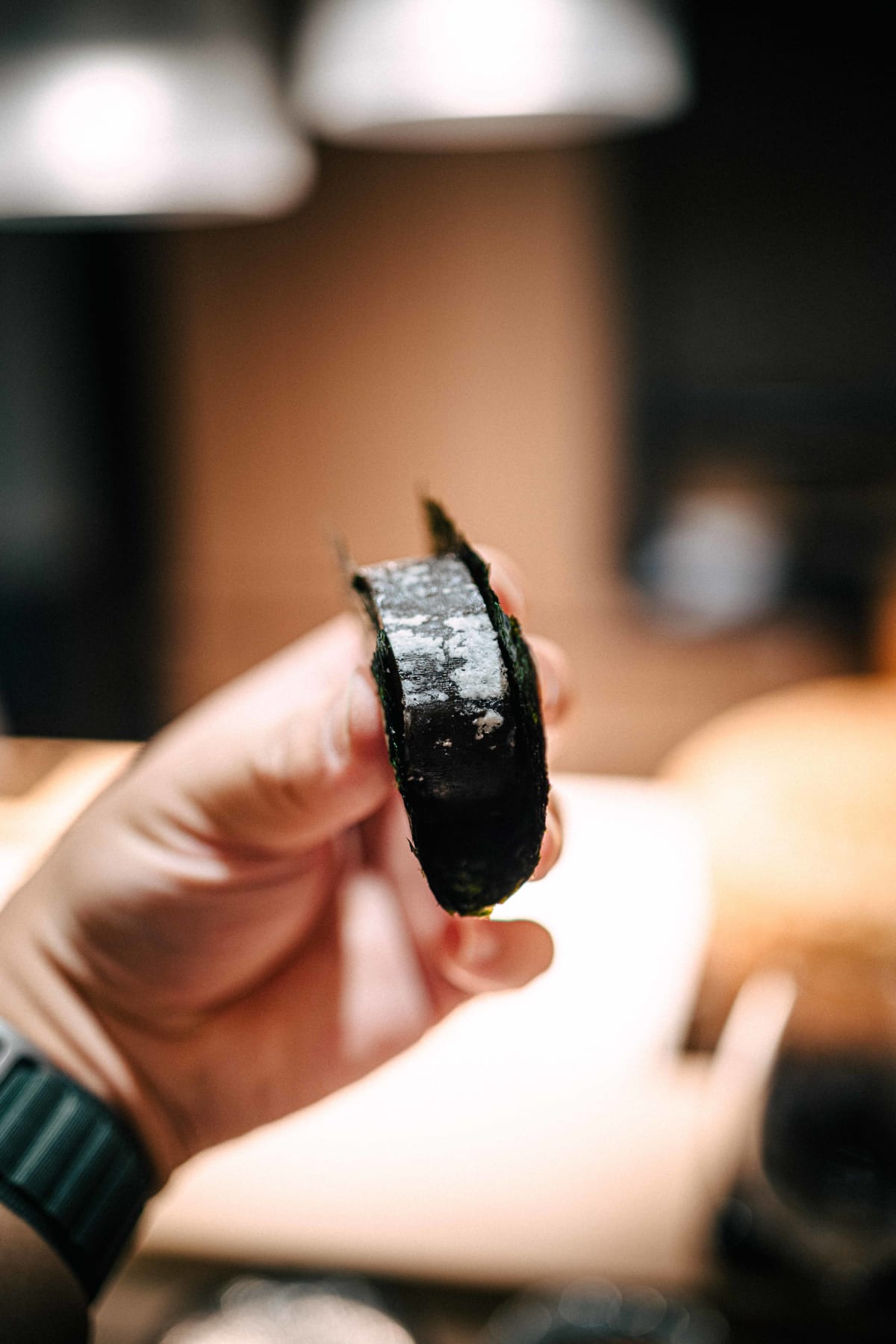
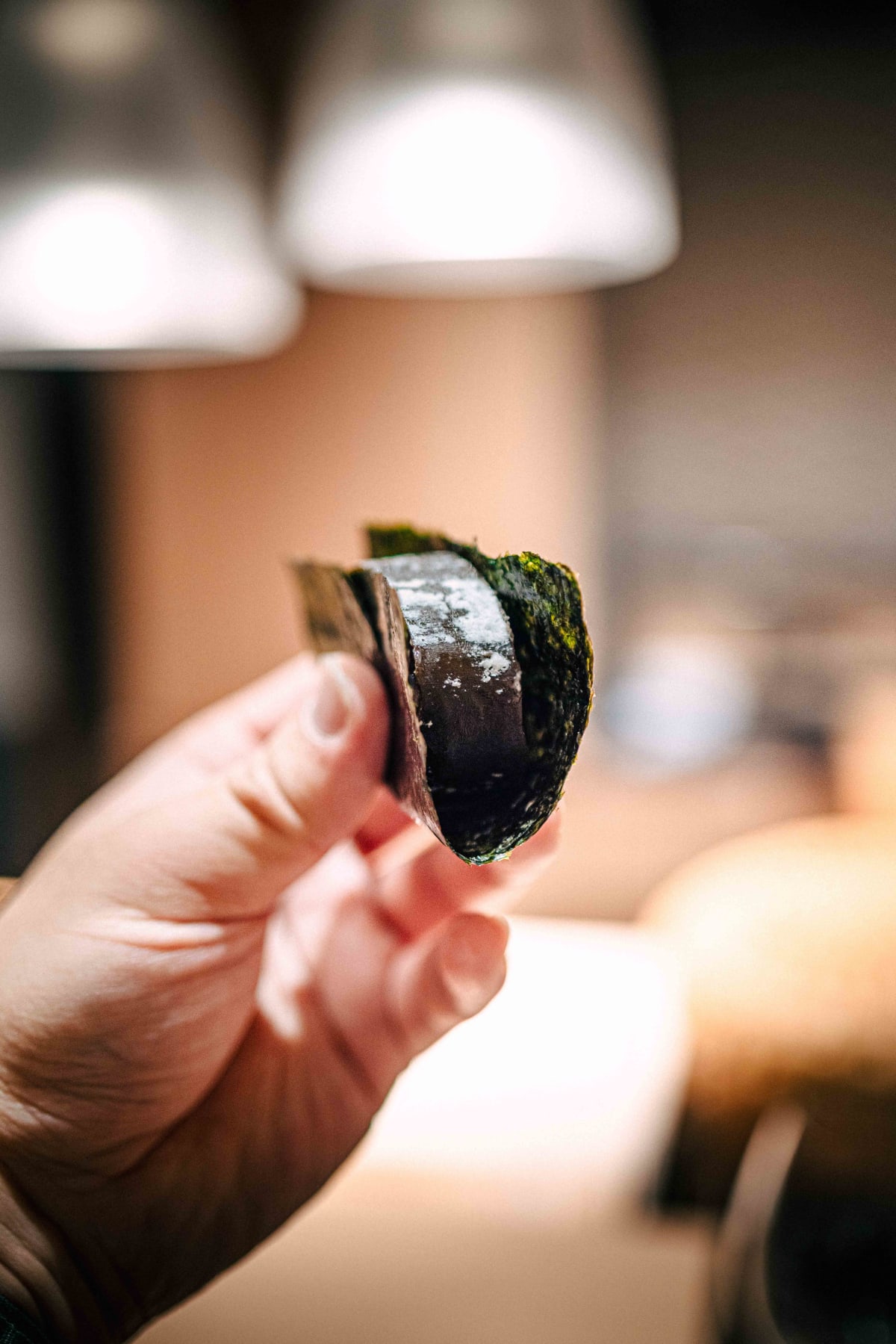
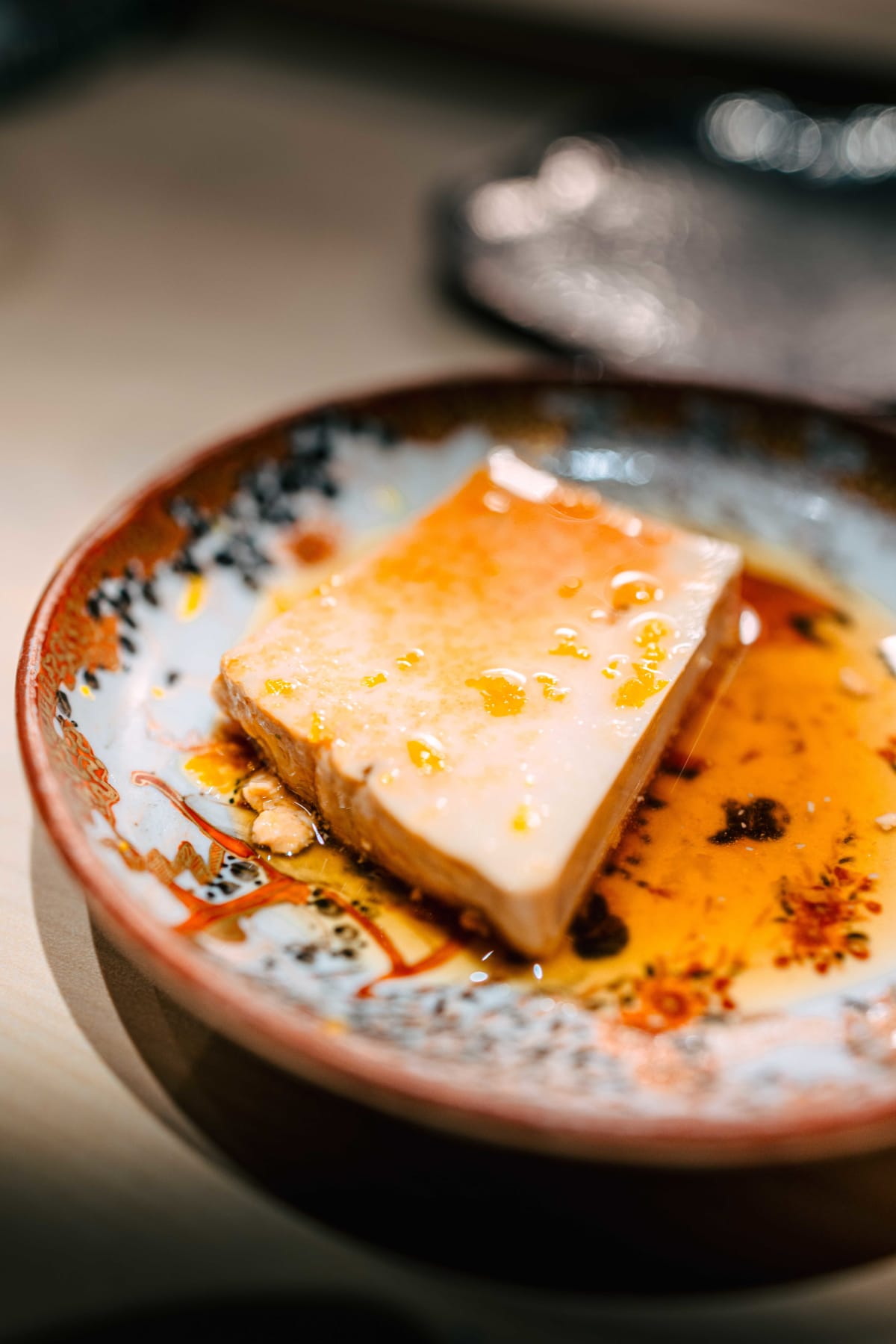
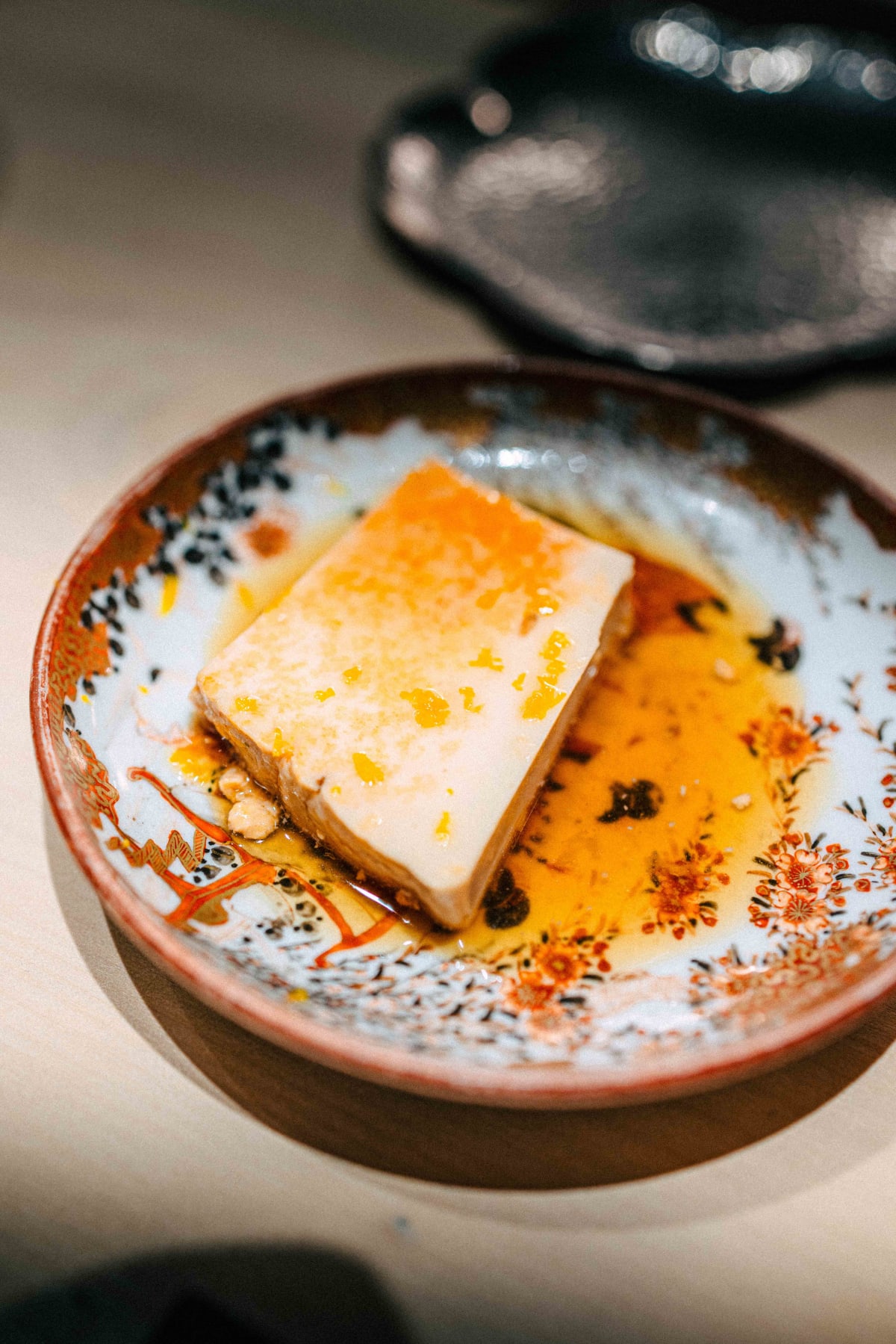
After that came ankimo on a colourfully painted plate, and rather than the heavy, intensely sweet kind, it was a lighter style with a citrus touch.
The prawn was botan ebi, grilled with Mitsuboshi soy sauce from Wakayama.
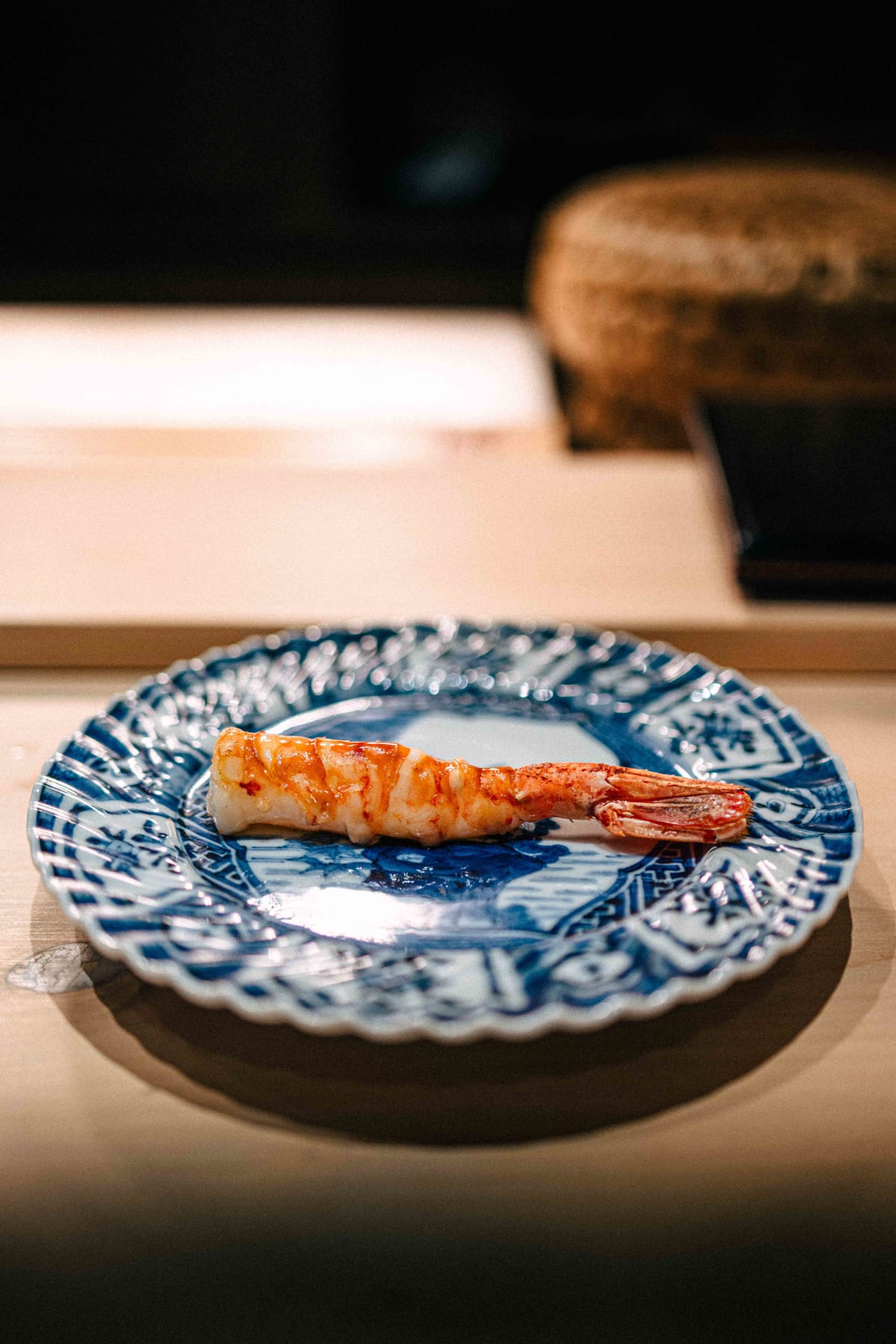
The quality of the prawn itself was outstanding: it was large, with a wonderfully firm, springy texture, and the soy gave it a complexity beyond the prawn's own sweetness.
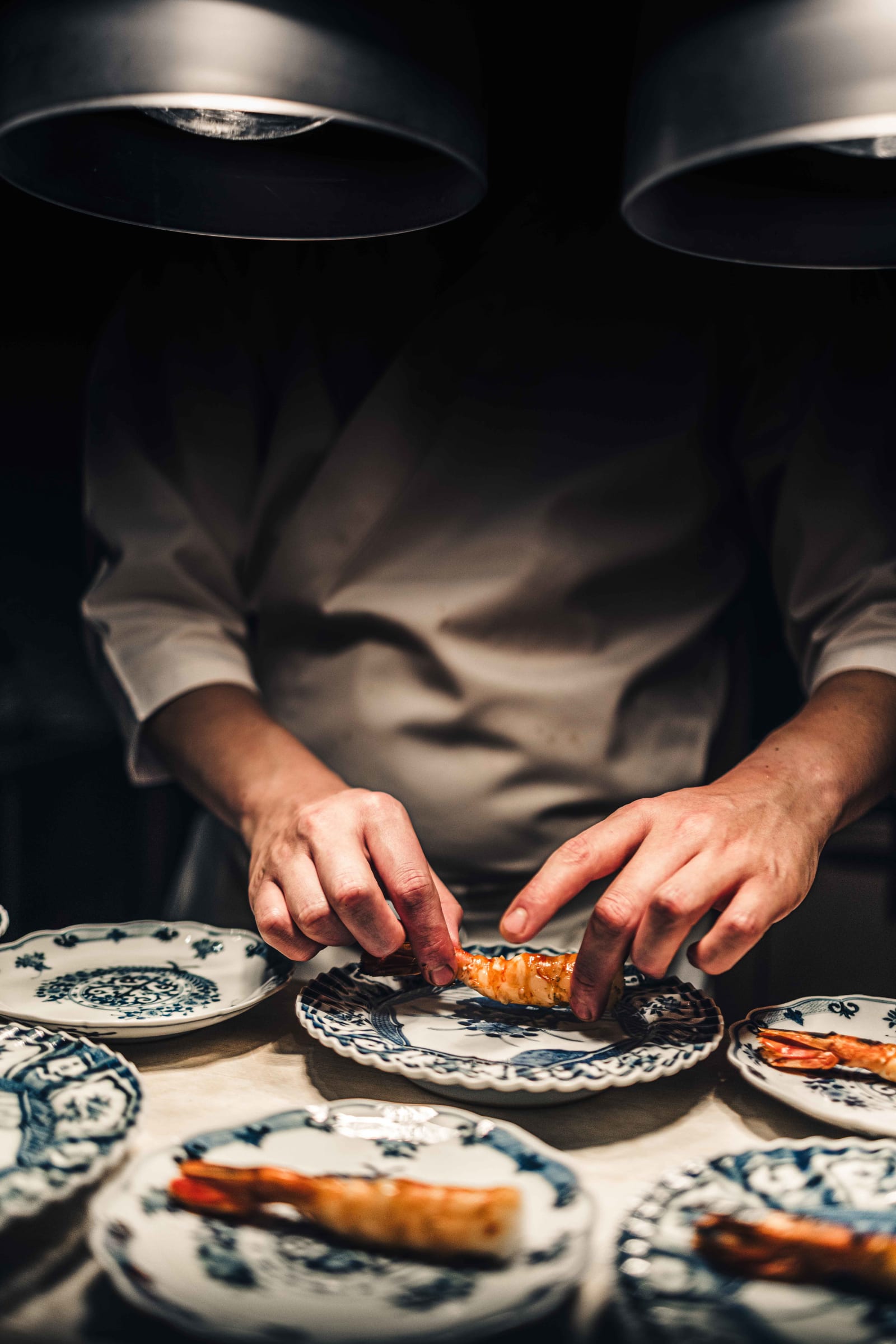
Above all, my seat was perfectly placed for photographing the prawns being grilled and set out, so I took a great many pictures.
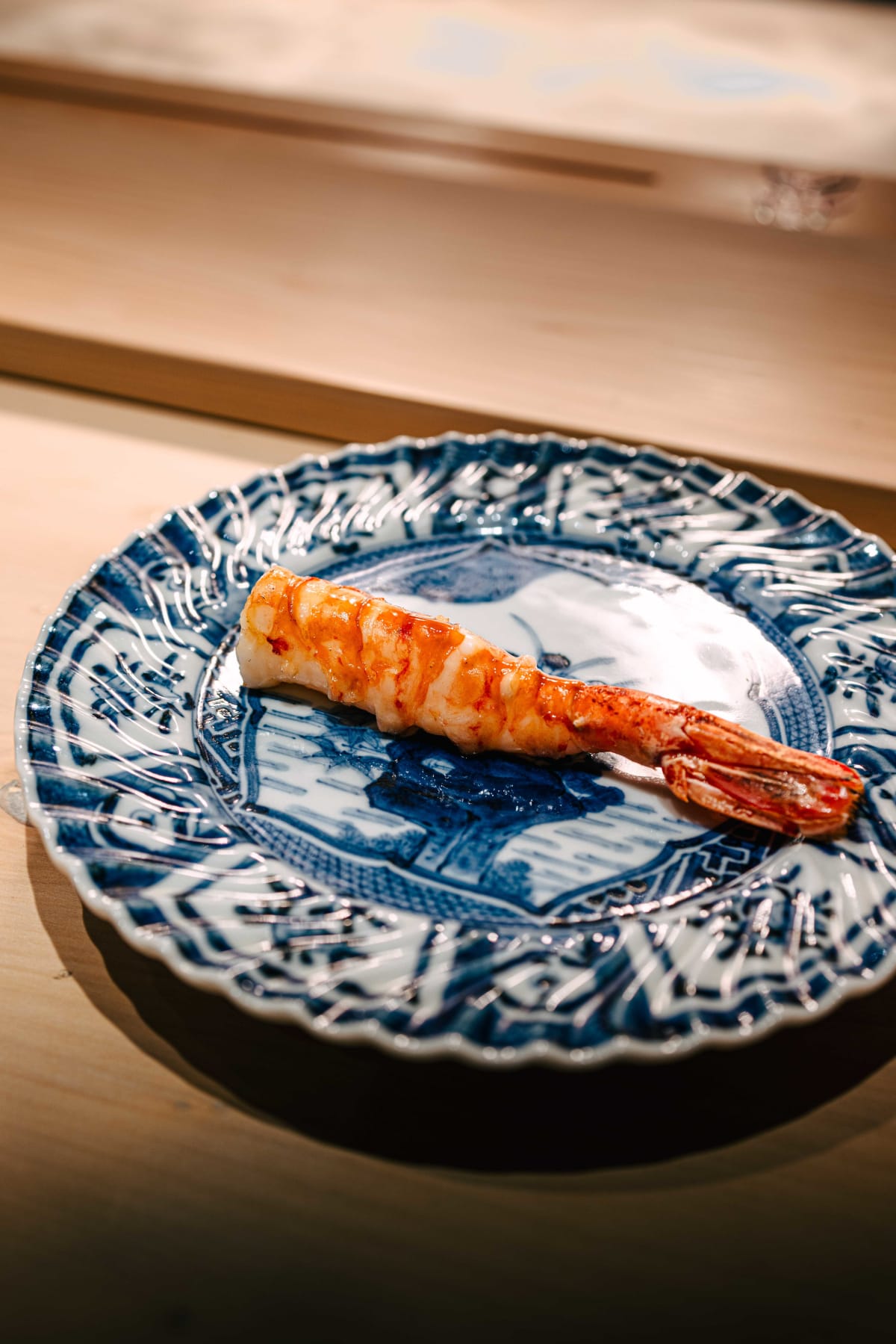
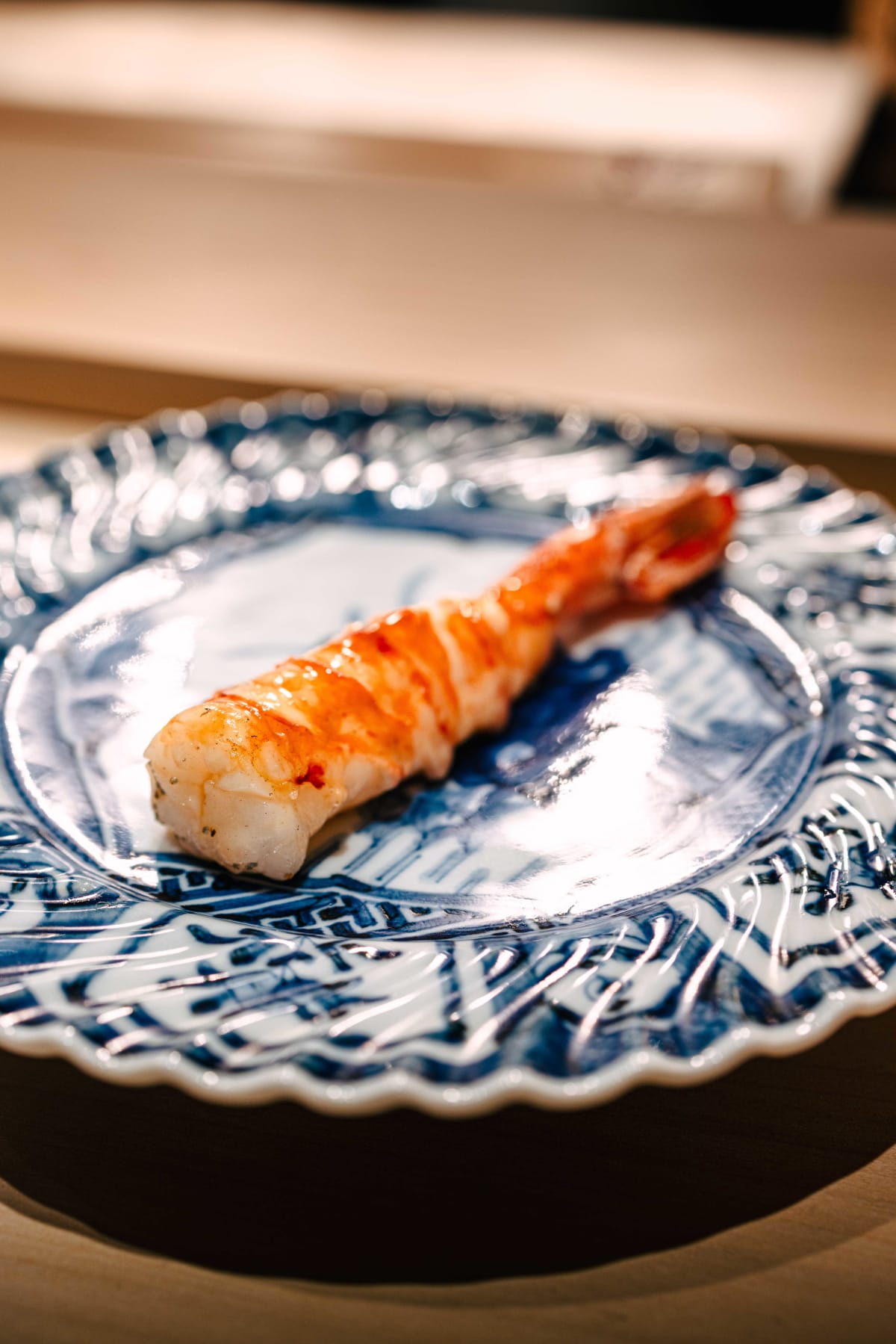
From the abalone through to the prawn, the tsumami lacked nothing and were excellent across the board. As someone who was once firmly in the tsumami camp, I enjoyed this stretch enormously.
Section 4·Under The Lamps
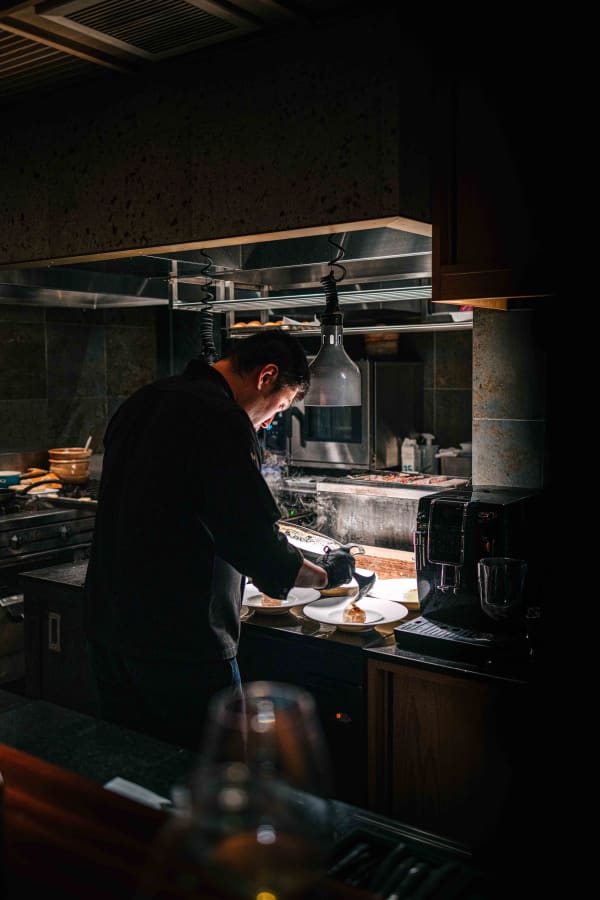
There is one thing I always want to say about Akira: it is a restaurant worth going to for the lighting alone. I do not know whether the chef designed and decorated the space himself, but whoever did clearly has a fine aesthetic sense and a good grasp of photography, and kept the camera in mind. The tsumami are prepared and plated beneath the main lights, and the lighting was striking enough to make me feel I had walked into a fine-dining restaurant.
I learned later that Akira has a heat lamp, a rare thing at a sushiya. The place where the chef trained in Tokyo had a rule that warm dishes could only be plated under a heat lamp, and he installed one in his own restaurant so as never to forget where he started, I am told. He uses it not only to plate warm dishes but also to bring neta such as toro and kinmedai up to around body temperature. Perhaps the scene of botan ebi being set on plate after plate under that light had more to do with temperature than with photographs.
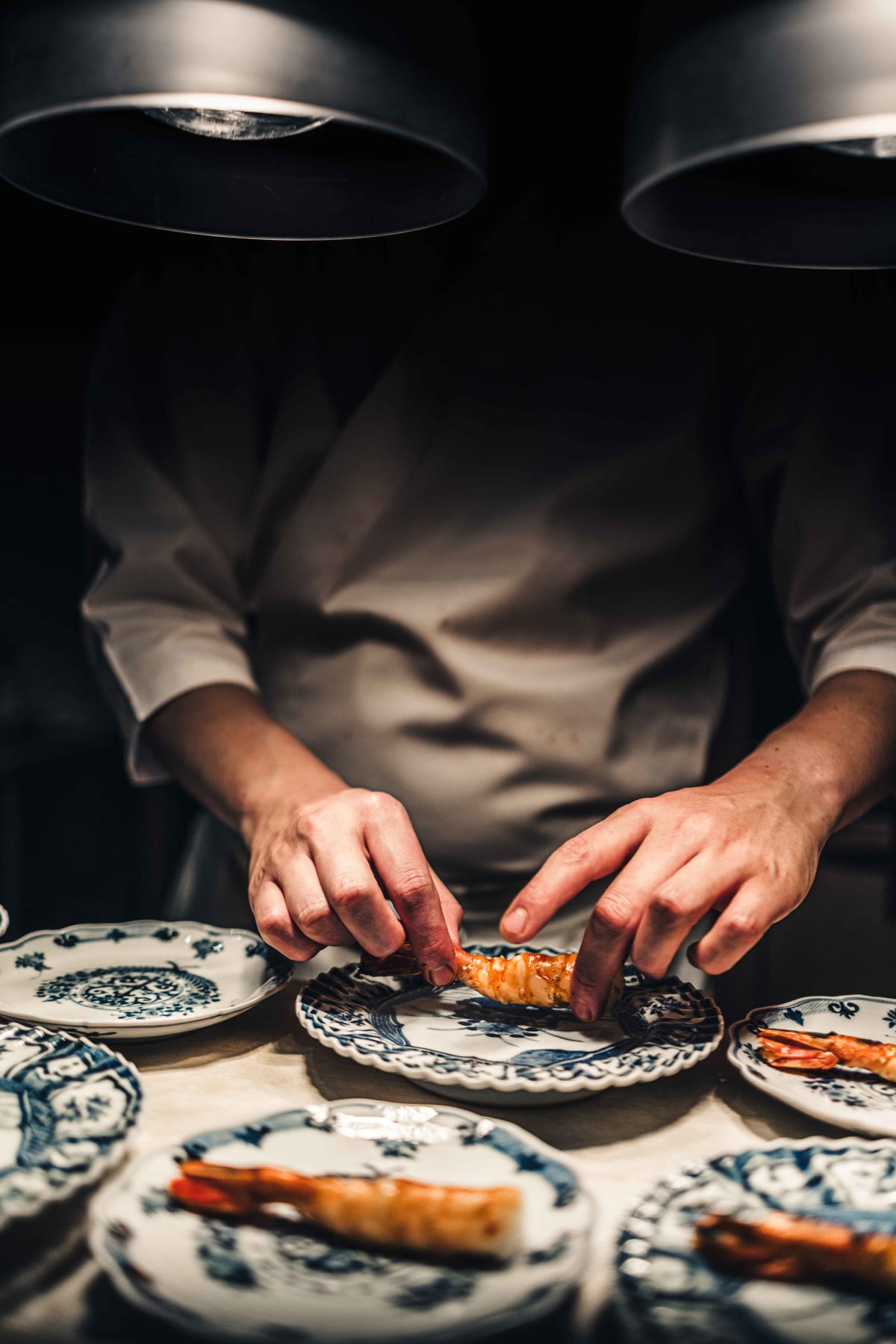
When I first came in and was wondering where to sit, a handsome member of staff showed me to the seat in front of the lights, perhaps because he had noticed my camera, which was a nice touch. Thanks to him, I came away with a great many good photographs that evening.
Section 5·Aramasa, Then Uni On Its Own
With tsumami this good, I could not not order a drink. As if they know that fine snacks deserve drinks to match, the sake and wine lists here were very good. The wine was mostly by the bottle, but sake was available by the glass, and Aramasa was on the list, so I ordered it straight away.
It was Aramasa No.6 S-type, and even I, knowing little about sake at the time, could tell at once that it was an expensive bottle; it was that smooth and delicious. On top of that, it can be ordered by the glass, and a glass is not too expensive, so whenever I see it in Japan, I make a point of ordering it. That night, too, I enjoyed it thoroughly.
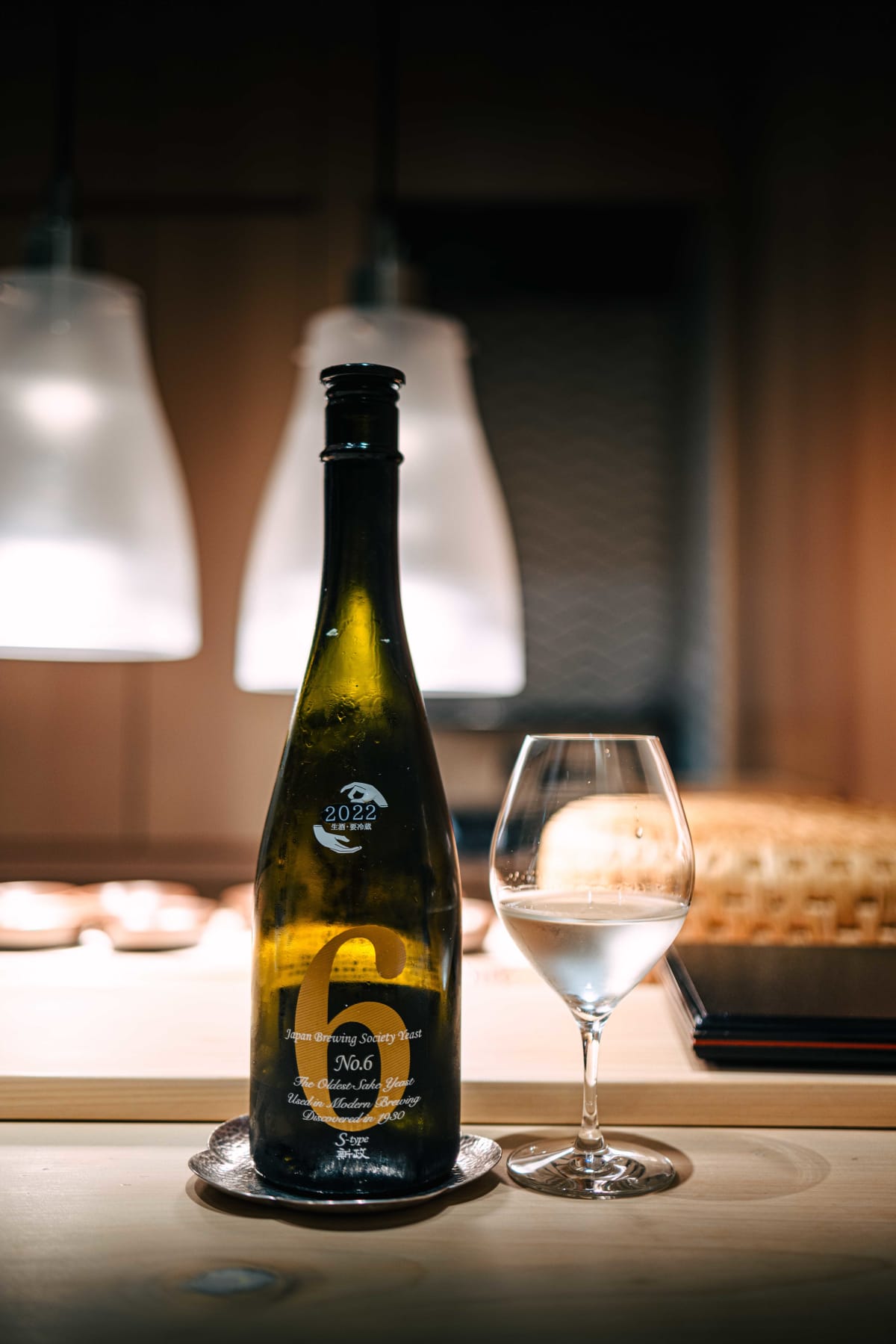
Aramasa is made by Aramasa Shuzo (新政酒造) in Akita. The large 6 on the label refers to the No. 6 yeast discovered at this brewery in 1930, the oldest of the Brewing Society of Japan's yeasts still in use. Within the No.6 series, S-type is the Superior grade, between Regular (R) and Excellent (X), and sits in the junmai ginjo class. It is brewed by the kimoto method from Akita sake rice polished to 55% and released as namazake, without hiire, the heat treatment most sake goes through.
At the studio, I mean Sushi Akira, the last tsumami before the nigiri was uni.
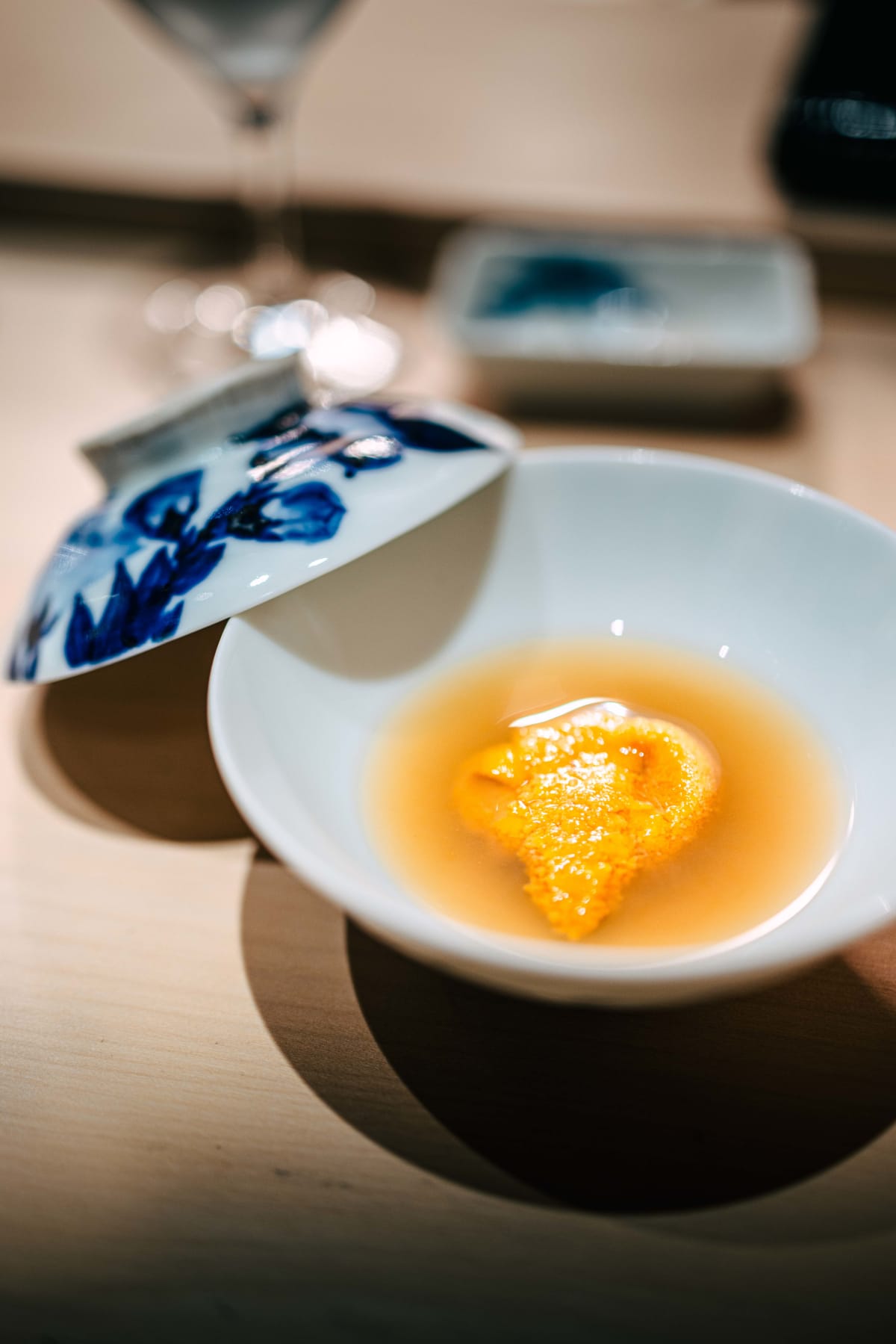
Uni is a truly everyday ingredient that turns up at almost every entry-level sushiya in Korea, even those costing under about USD 75 (100,000 won), yet I have hardly ever seen it served as a tsumami like this, alone in a bowl. Lift the lid and there is a single mound of murasaki uni in snow crab dashi and nothing else.
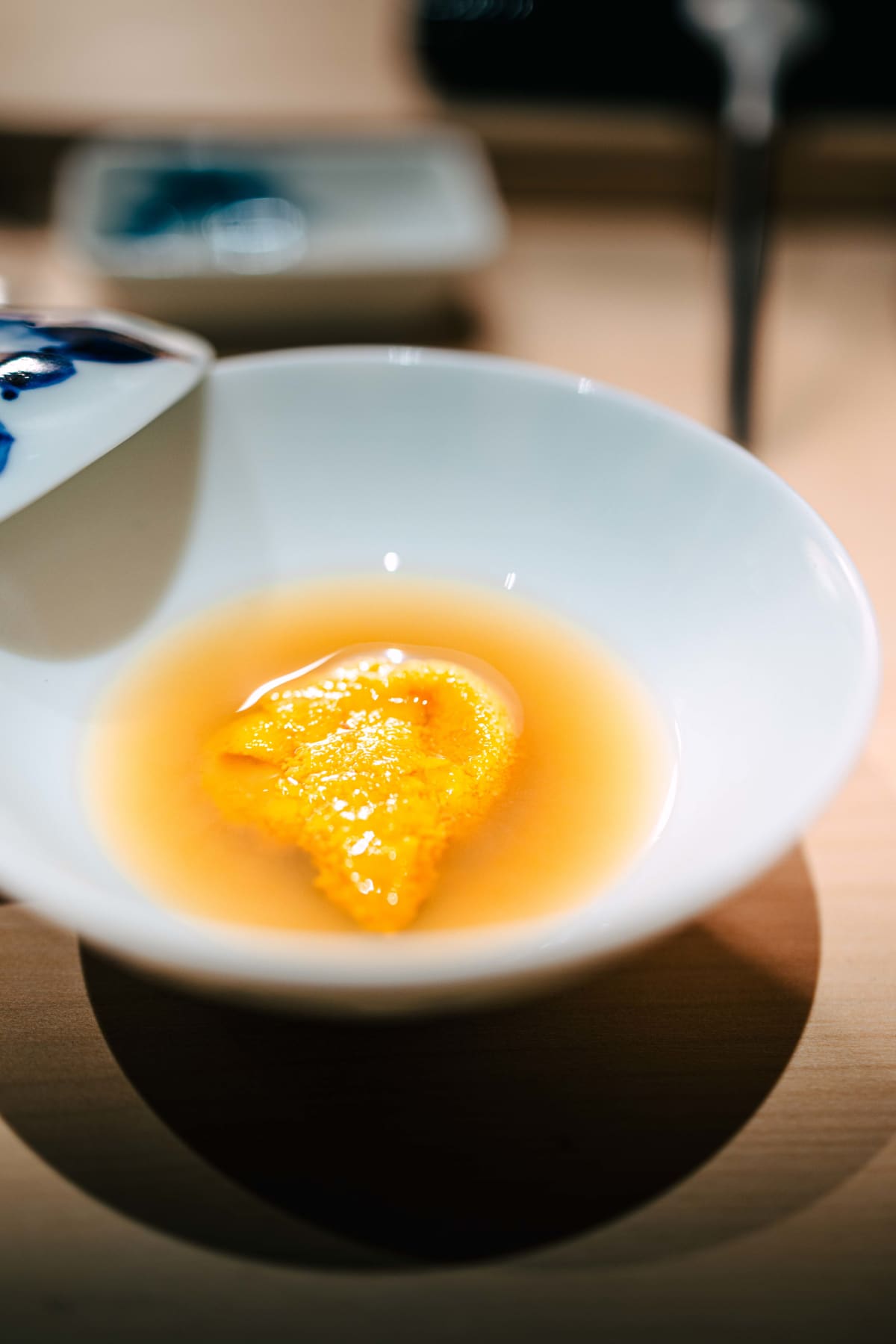
I take it as a sign of how confident they are in the quality of their uni. And when I tasted it, it was uni in its purest form, sweet and delicious in a way that is hard to come by in Korea.
My second sake was Hakurakusei Tokubetsu Junmai Yamada Nishiki. It was delicious too, but personally I preferred the Aramasa, which was a little smoother.
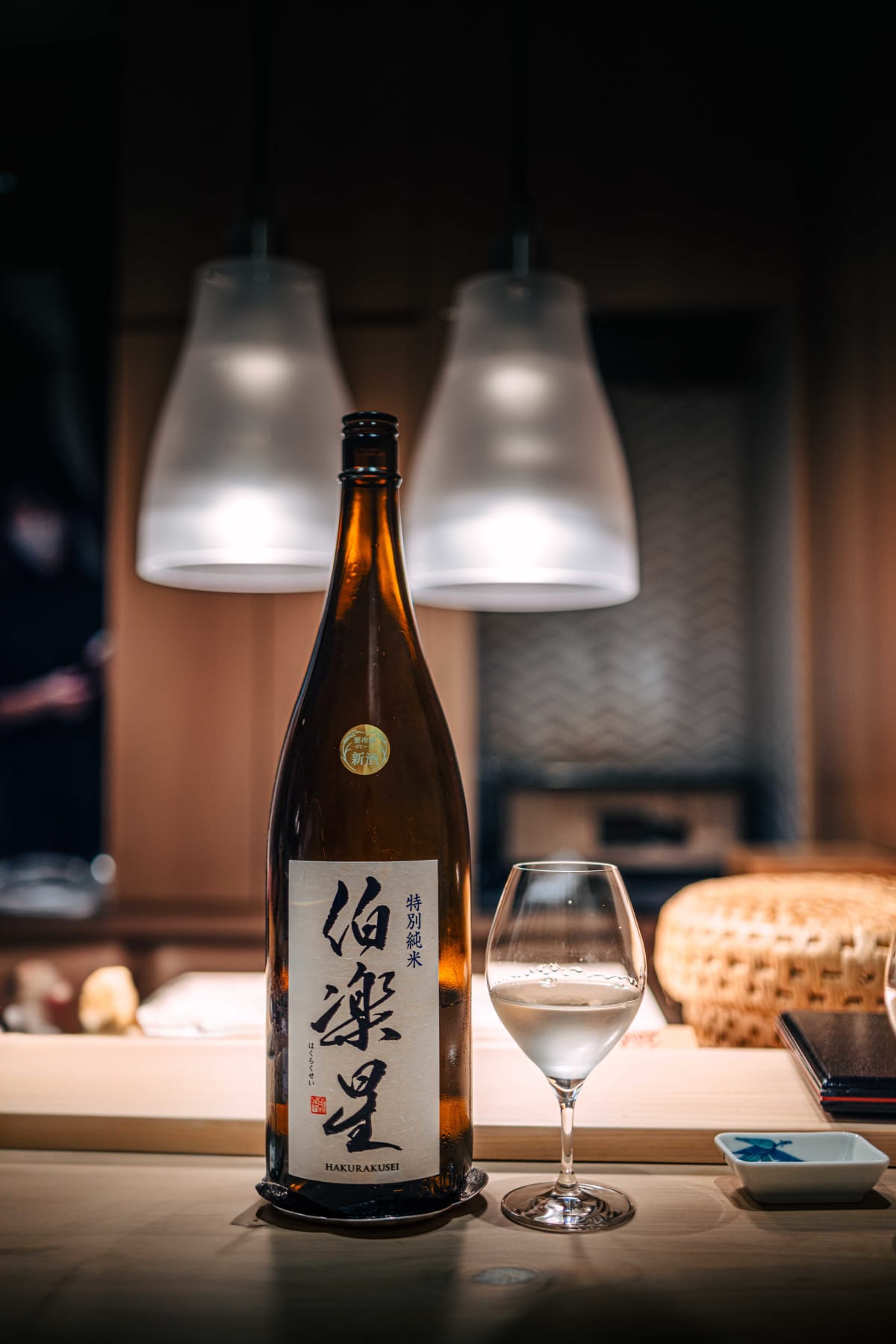
Hakurakusei is brewed by Niizawa Brewery (新澤醸造店) in Miyagi under the banner of the ultimate sake to drink with food. The brewery keeps the sweetness restrained so that the sake carries through a whole meal, and its tokubetsu junmai is made from Yamada Nishiki polished to 60%. The bottle that night carried a sticker announcing it as shinshu, the first sake of the new season.
Section 6·Tuna First
Before the nigiri, sliced tuna from akami to otoro was set out on a black tray under a spotlight, and then we went straight into the nigiri. Starting not with white fish or hikarimono but with tuna is one of Akira's signatures.
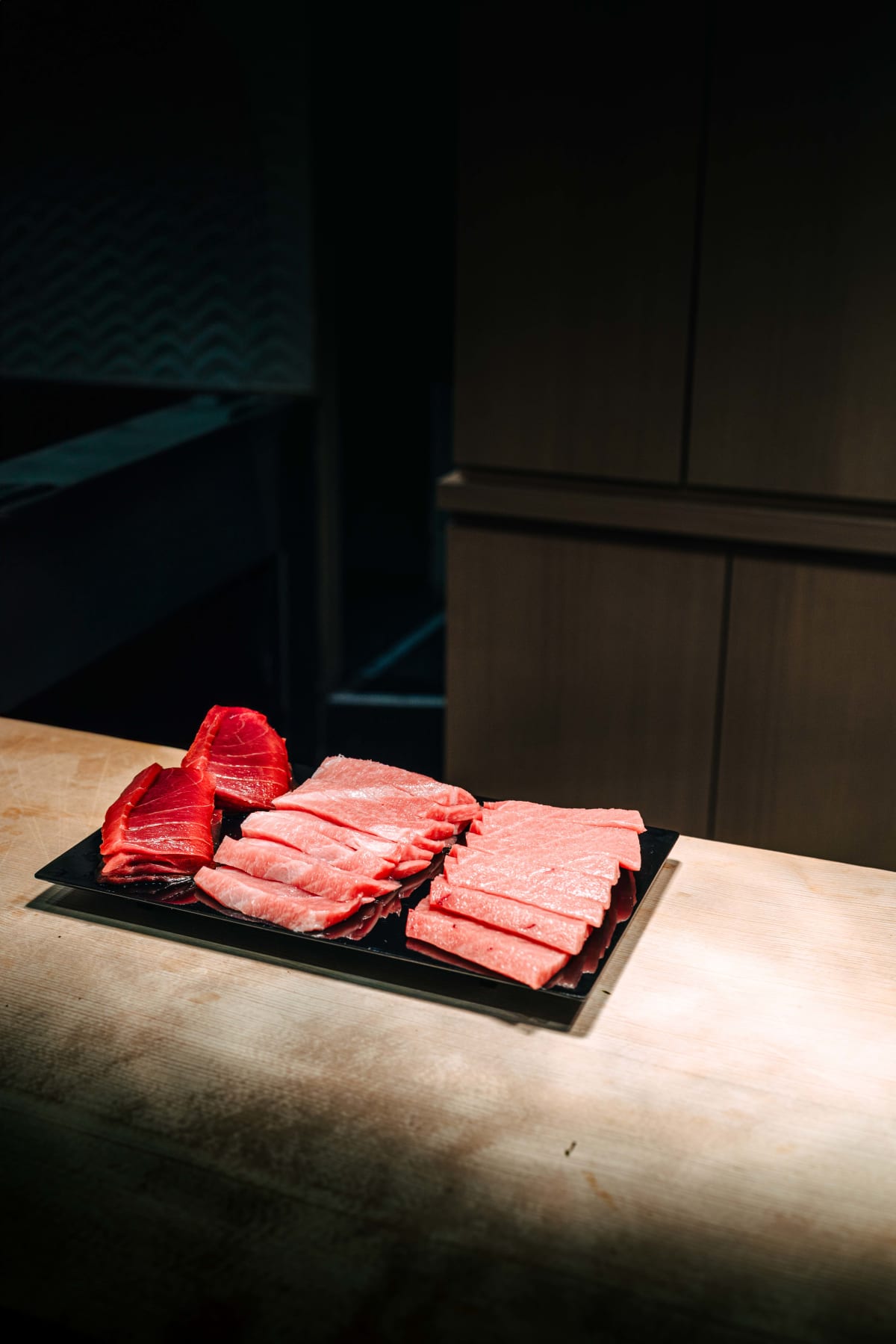
Chutoro, otoro and akami zuke came in turn, and one more piece, otoro aburi, arrived later in the course, making four pieces of tuna in all, every one of them excellent.
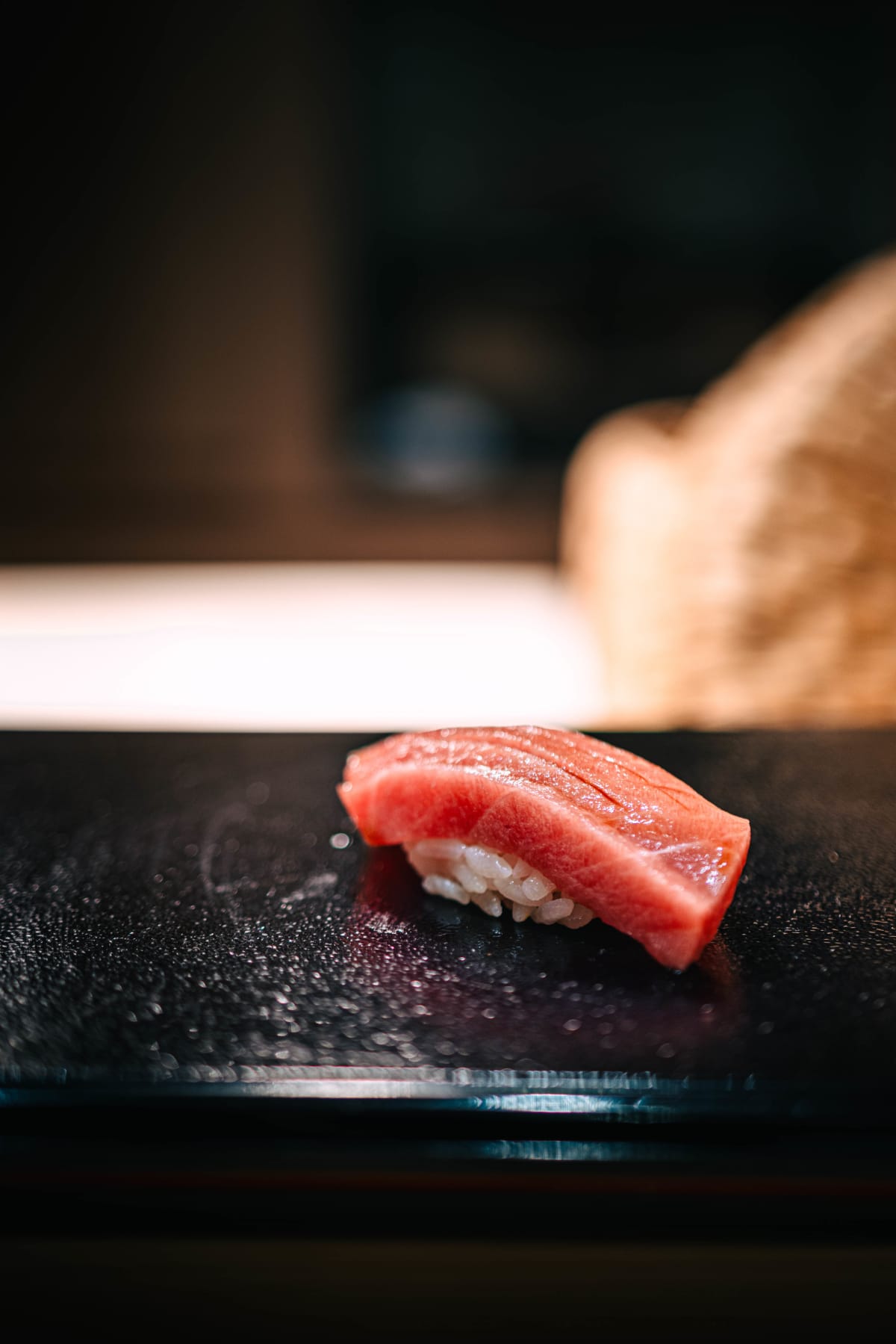
The neta are cut quite thick.
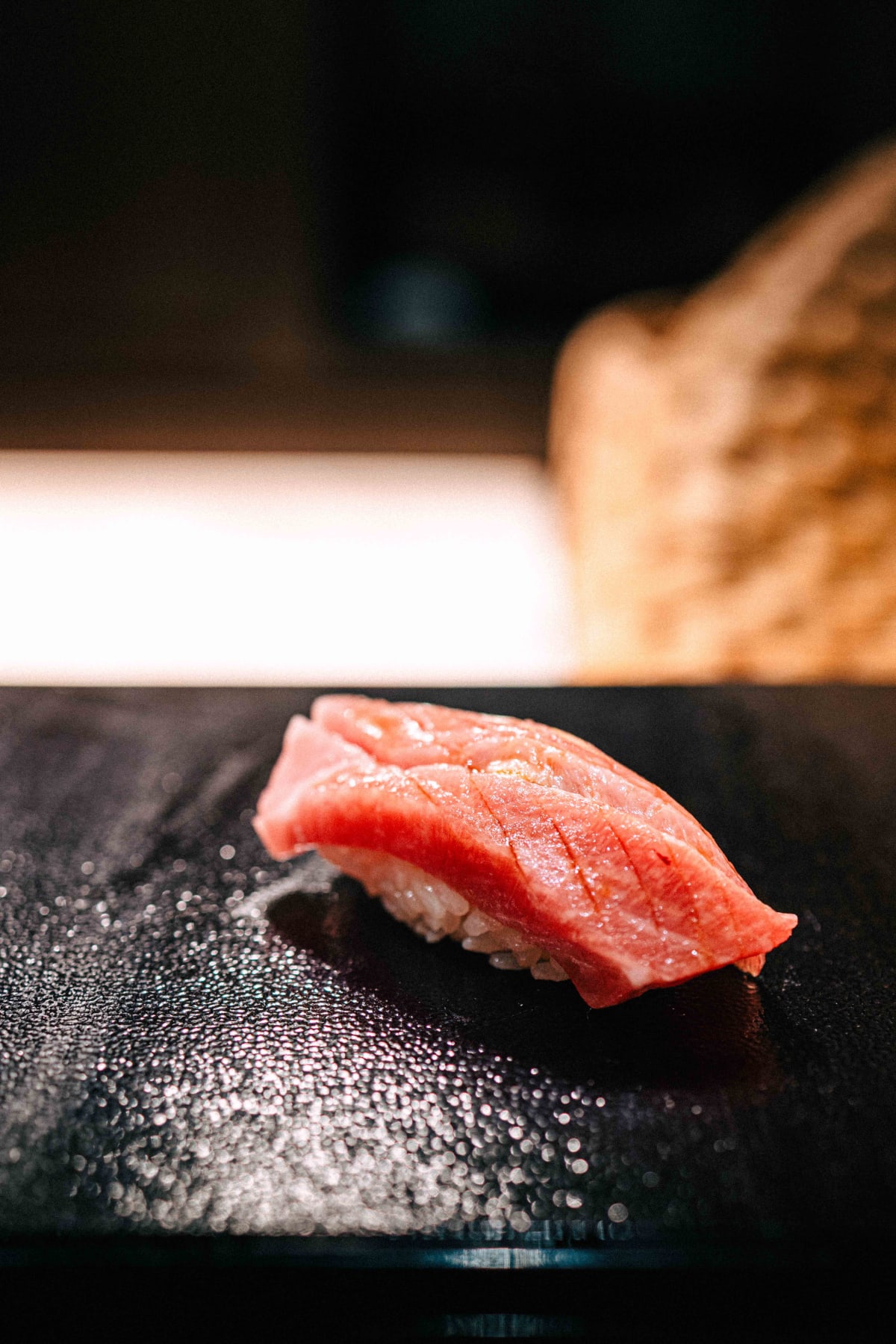
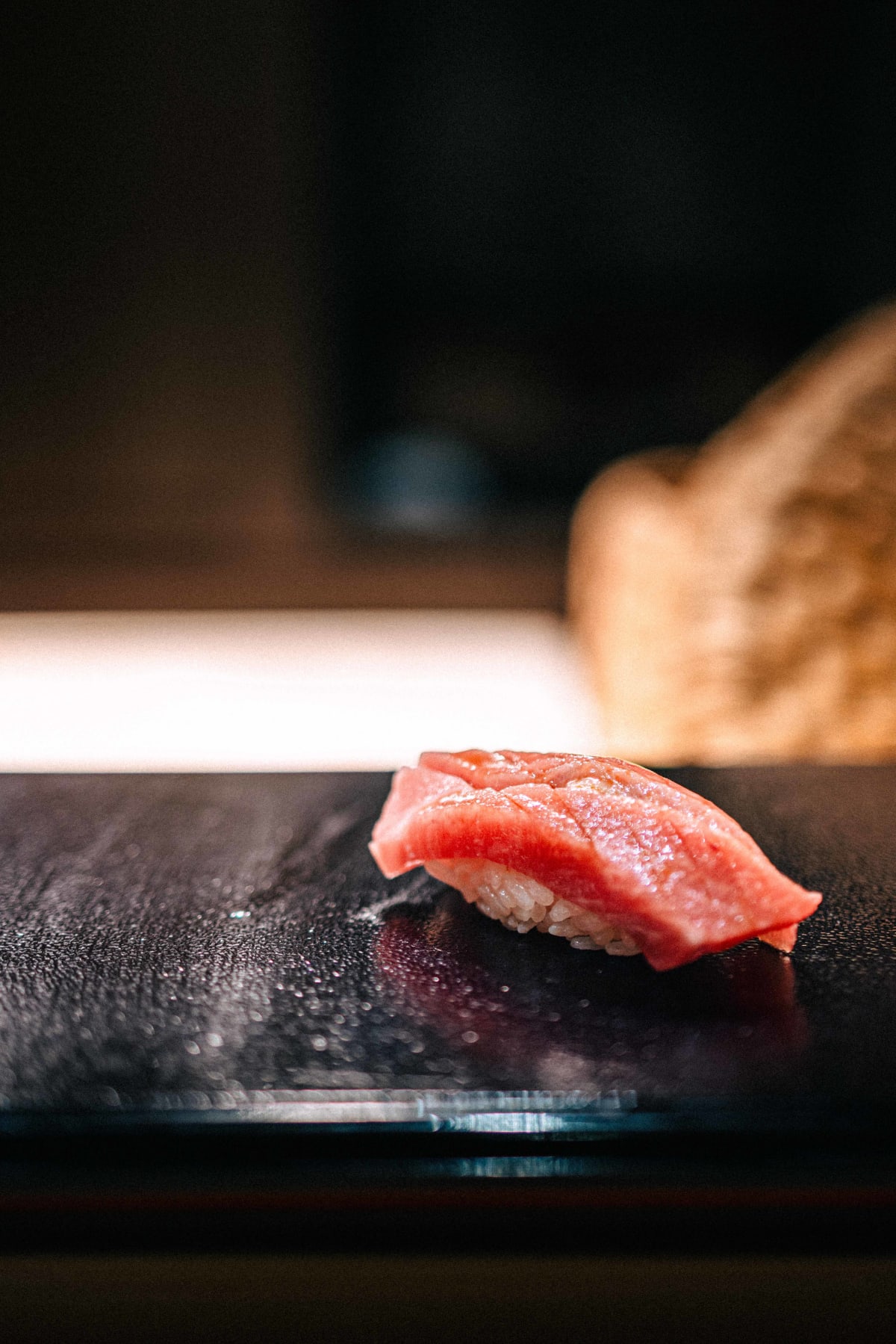
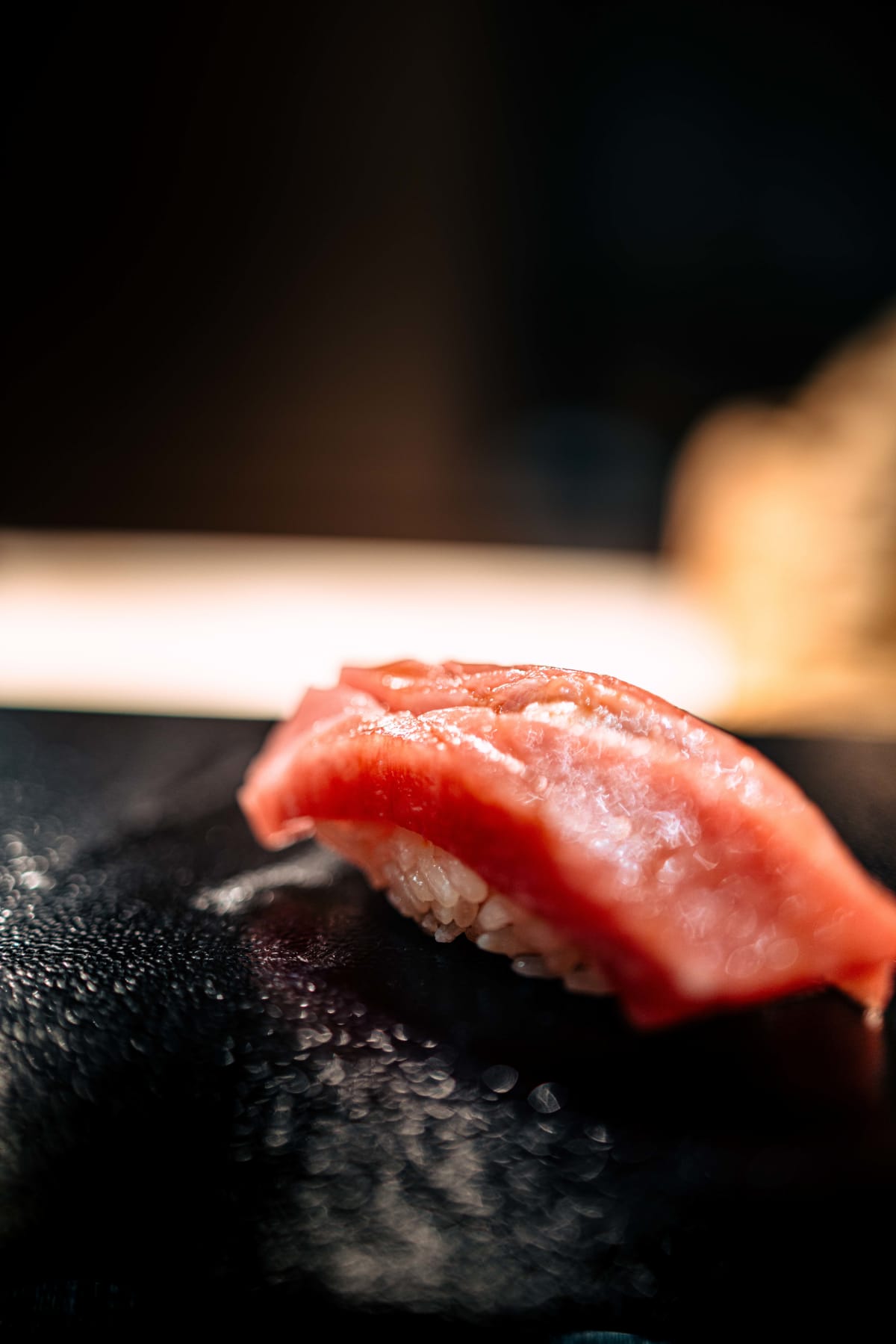
And the shari matters here: compared with other sushiya in Japan, it is seasoned quite lightly.
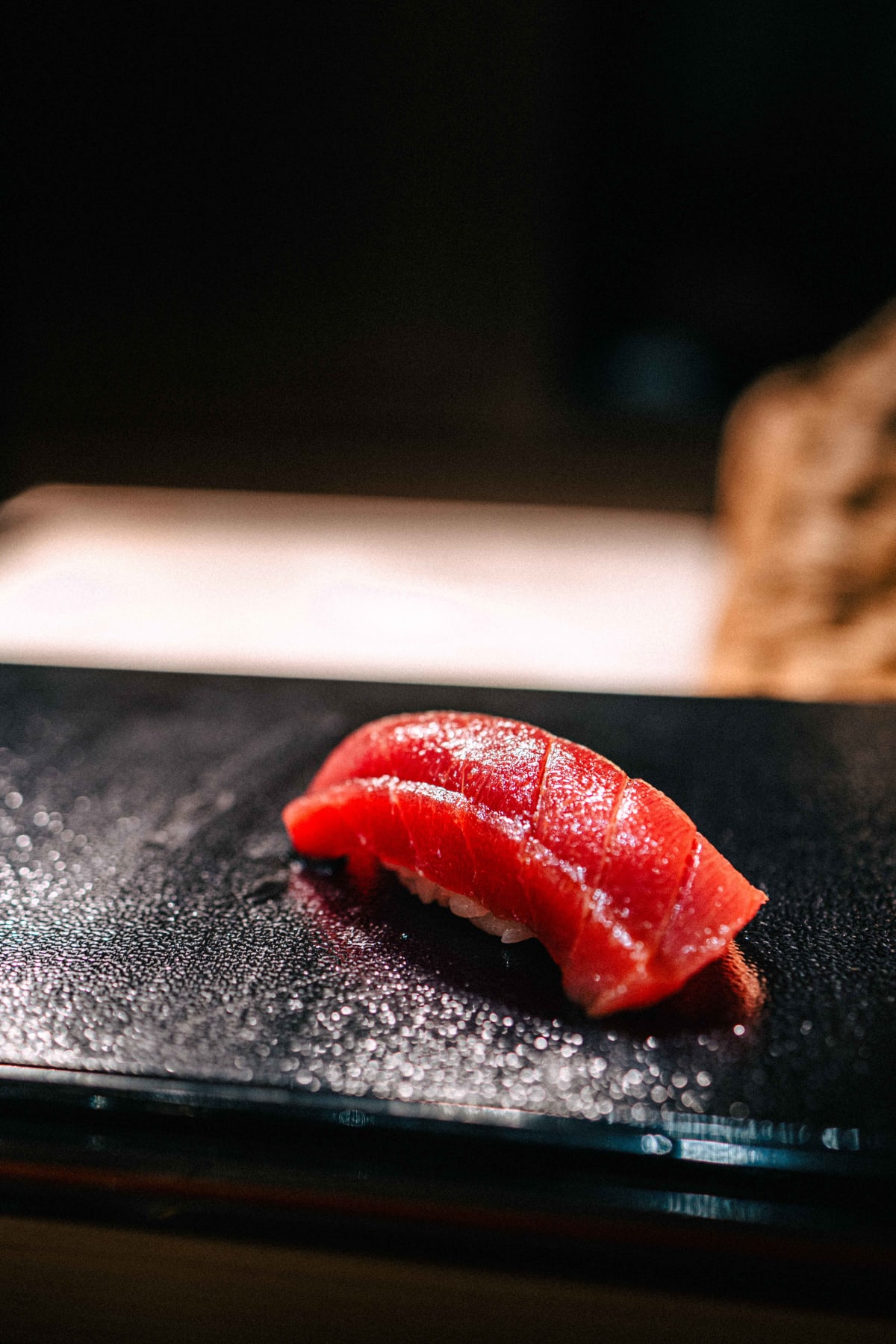
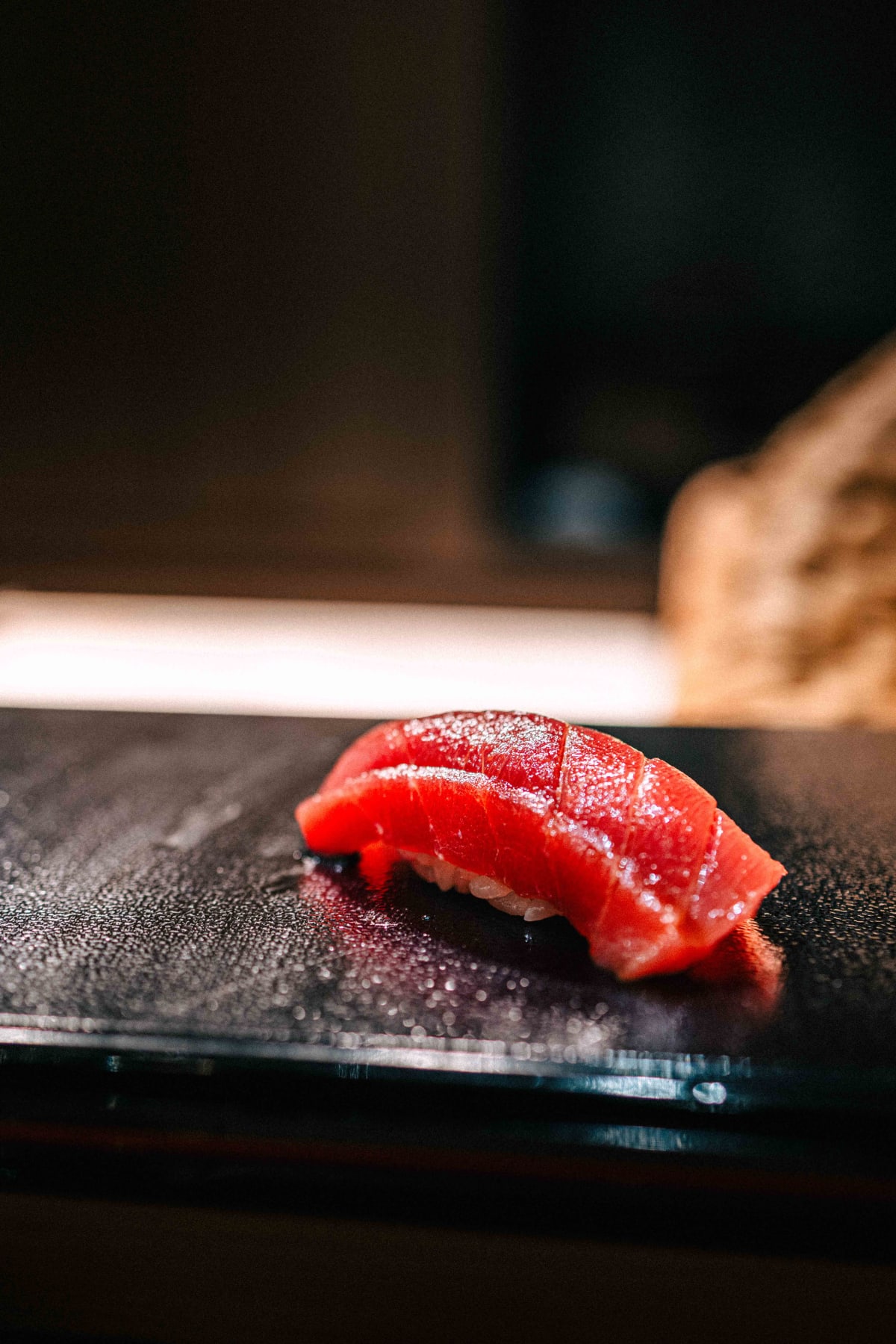
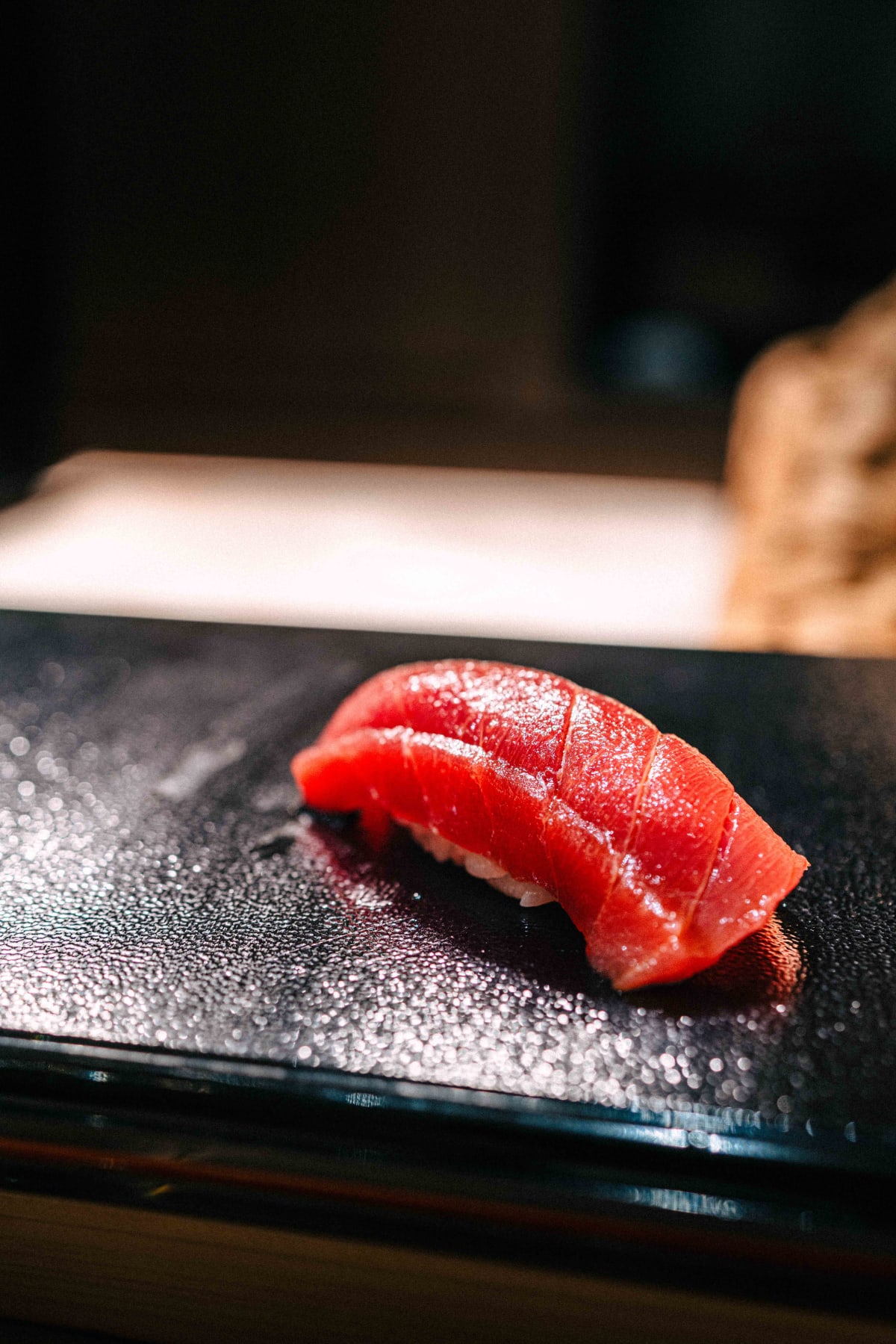
Among Koreans who have eaten a lot of sushi in Japan, many find the shari there so strongly seasoned that it wears them out, and they go back to Korean sushi, but Akira was not like that. If anything, after eating nothing but sharp shari in Japan, this lightly seasoned shari felt almost too bland at first.
If anything, after eating nothing but sharp shari in Japan, this lightly seasoned shari felt almost too bland at first.
If you are tired of the strongly seasoned shari in Japan, I recommend giving Akira a try. Of course, preferences for salt and acidity vary a great deal from palate to palate, so it is best to try it yourself and choose by your own taste.
Section 7·A Glass Of Puligny
Next to me sat an Australian guest who, like me, had come alone, and from about this point we started talking and had a great time. He was a serious foodie who comes to Japan often, and he kindly poured me a glass of the white Burgundy he was drinking.
It was Xavier Monnot's Puligny-Montrachet Premier Cru Les Folatières 2018. After drinking nothing but sake at sushiya, a well-made white Burgundy, its buttery aroma never turning heavy, smelled wonderful. It also happened to arrive just as I was eating tuna, and the two went well together. We had only just met, and I was truly grateful to him for sharing such a good experience.
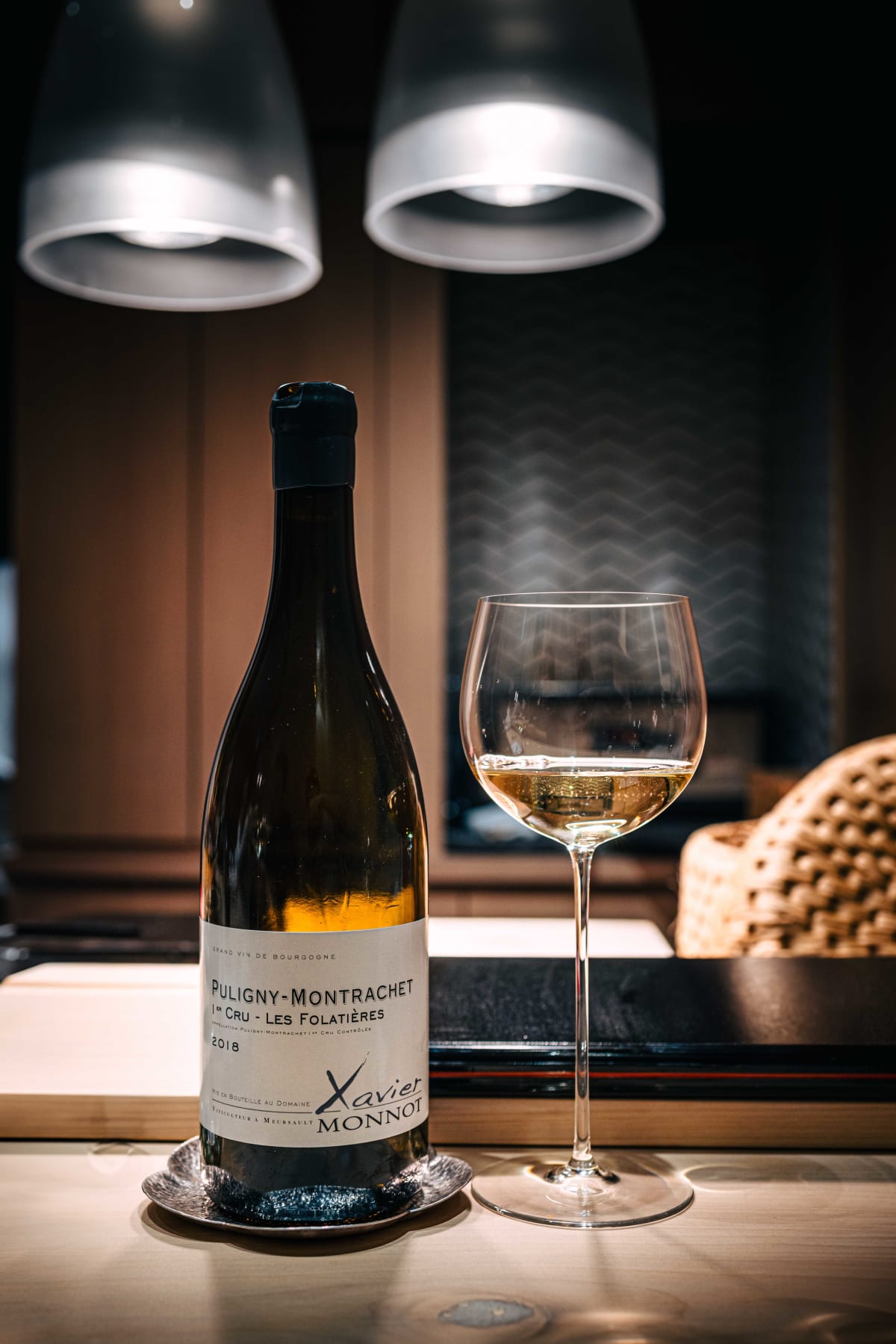
Xavier Monnot is a grower in Meursault: he took over the domaine run under the name of his grandfather, René Monnier, and began bottling under his own name in 2005. Les Folatières is the largest Premier Cru in Puligny-Montrachet, sitting high on the slope above Clavoillon, and its name comes from the soil here, which erodes and washes downhill. Monnot's parcel is land his grandmother bought, planted between 1959 and 1973, and the wine is aged for 12 to 14 months in oak.
Section 8·The Shari Turns Red
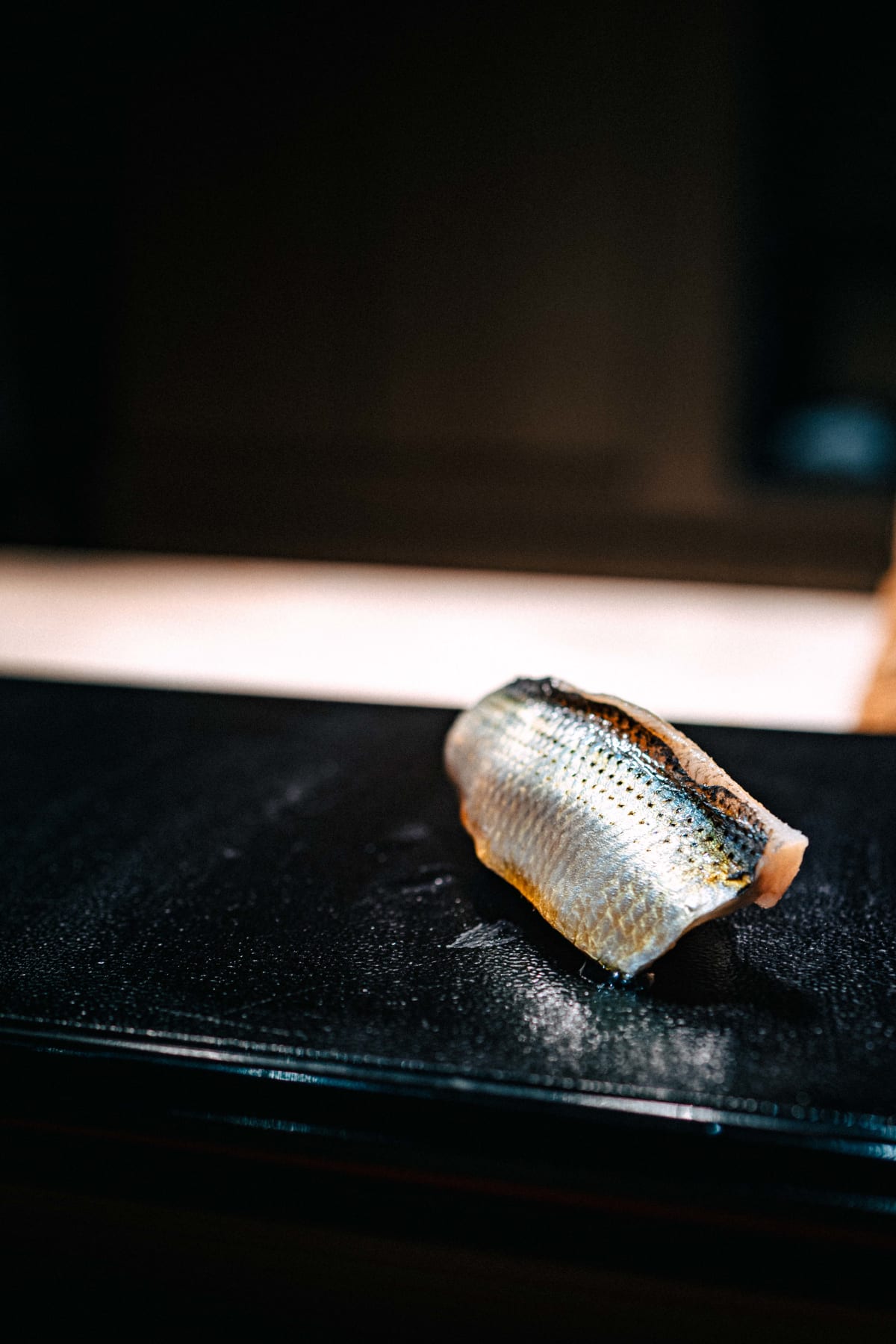
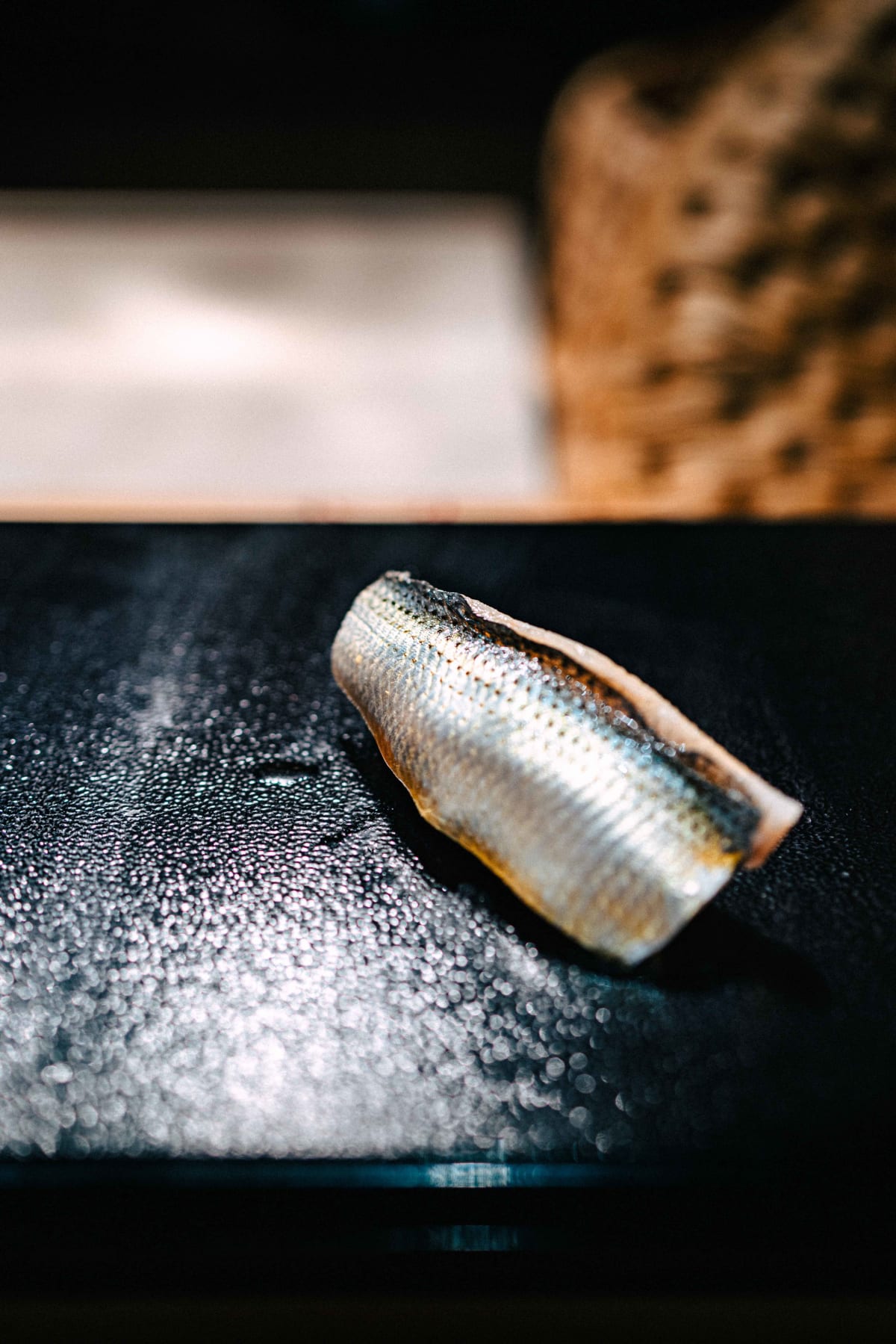
After the tuna came one tsumami and more nigiri, and while at the time I was too busy drinking and talking to notice, looking at the photos now, the shari is different. During the tuna it was white, but afterwards it has a slight reddish tint, as if made with red vinegar.
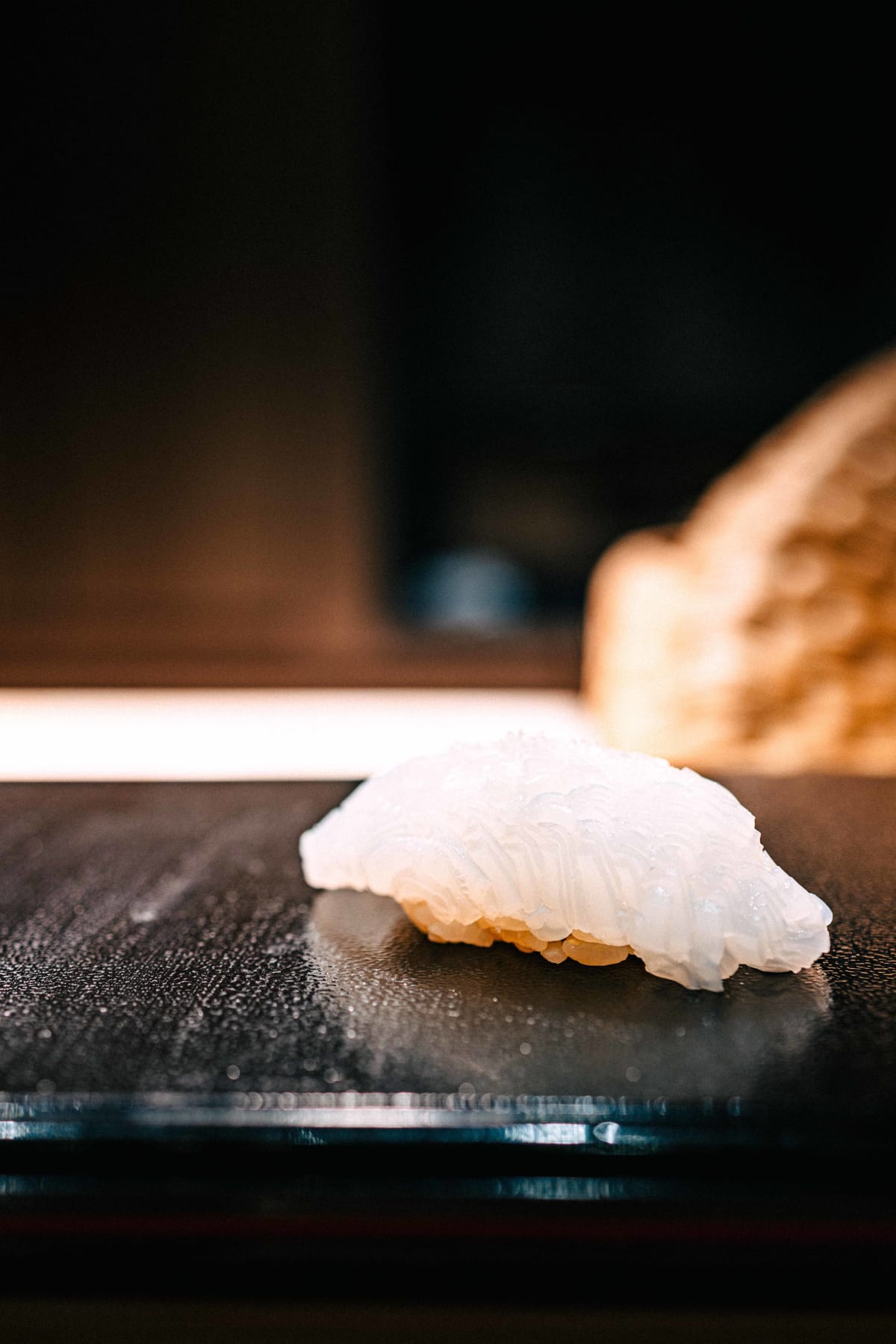
Somehow I had sensed that after the first tuna the shari had turned a little stickier, and the new texture was closer to my taste. All the neta were excellent, but the feel of the finely scored aori-ika as it went into my mouth stayed with me in particular.
The red vinegar here is a ginjo akazu, brewed in wooden vats by Kokonoe Saika (九重雑賀), a brewery in the chef's home prefecture of Wakayama. It is known for deep savouriness and gentle acidity, and the sushi vinegar is lifted further with traditionally made dark soy sauce and sea salt from Tosa as hidden seasonings.
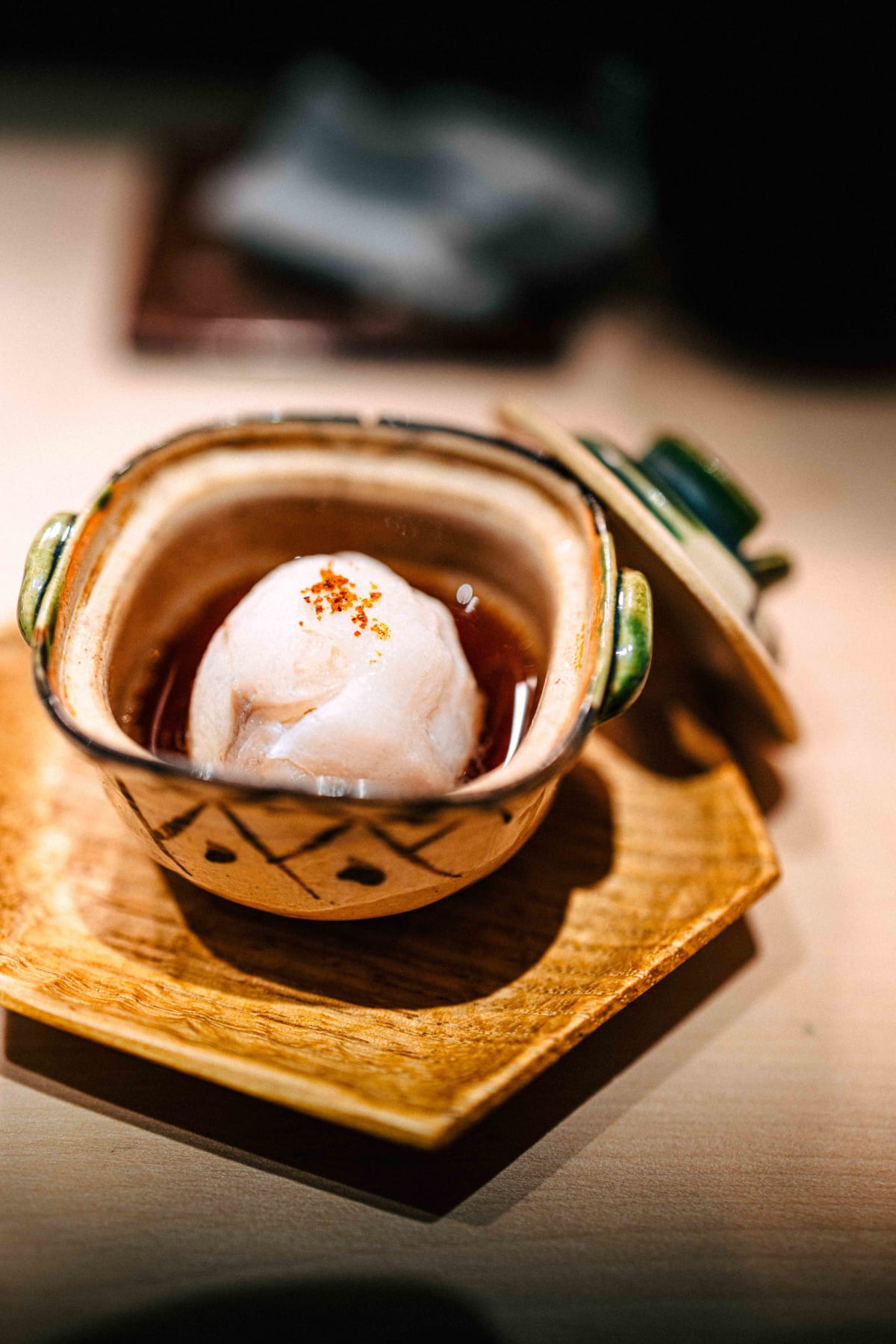
The one tsumami that came at this point was nodoguro mushi-zushi.
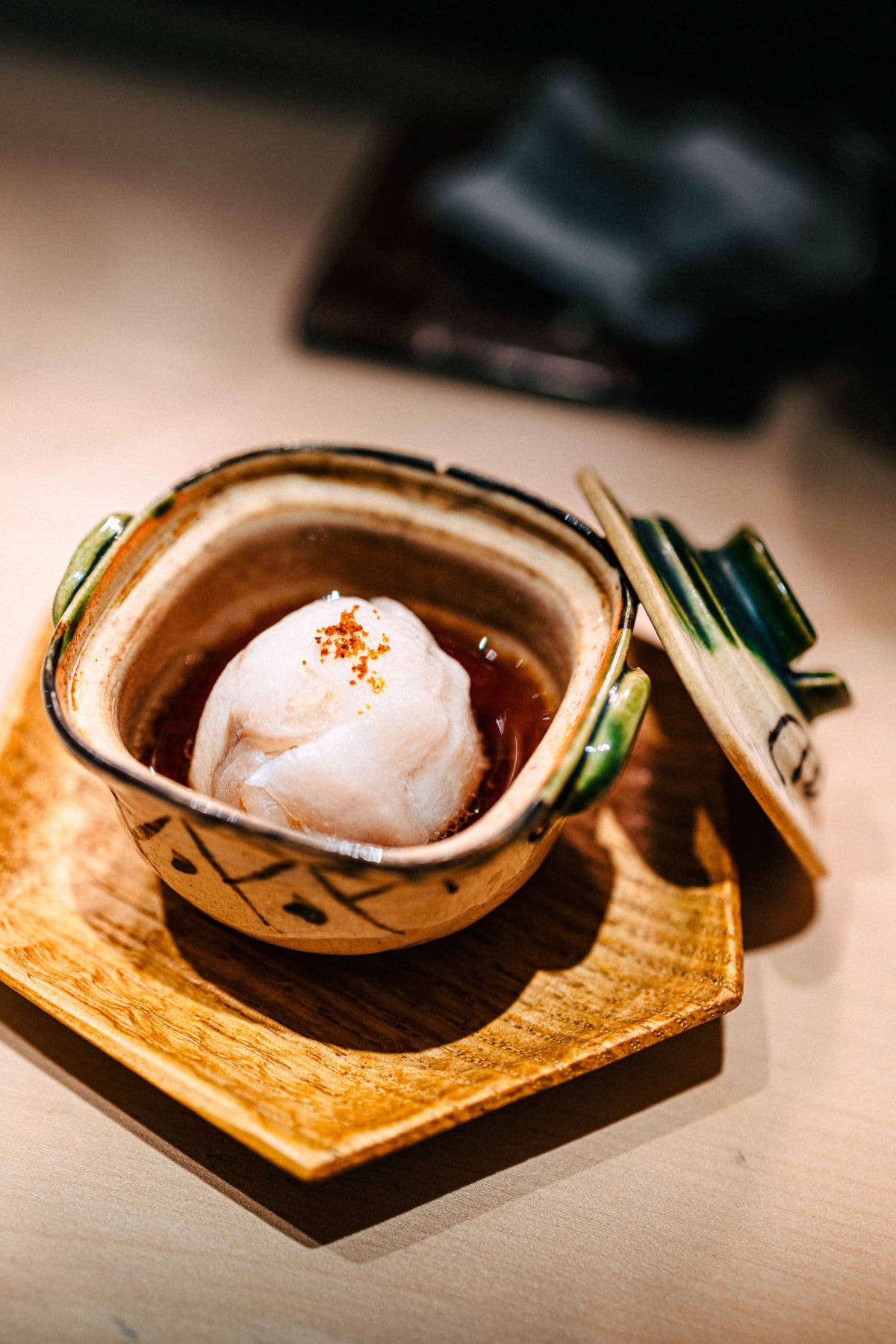
It is shari wrapped in nodoguro and steamed piping hot in a seiro, a dish the chef devised so that warm sushi would give light and shade to a run of cold neta.
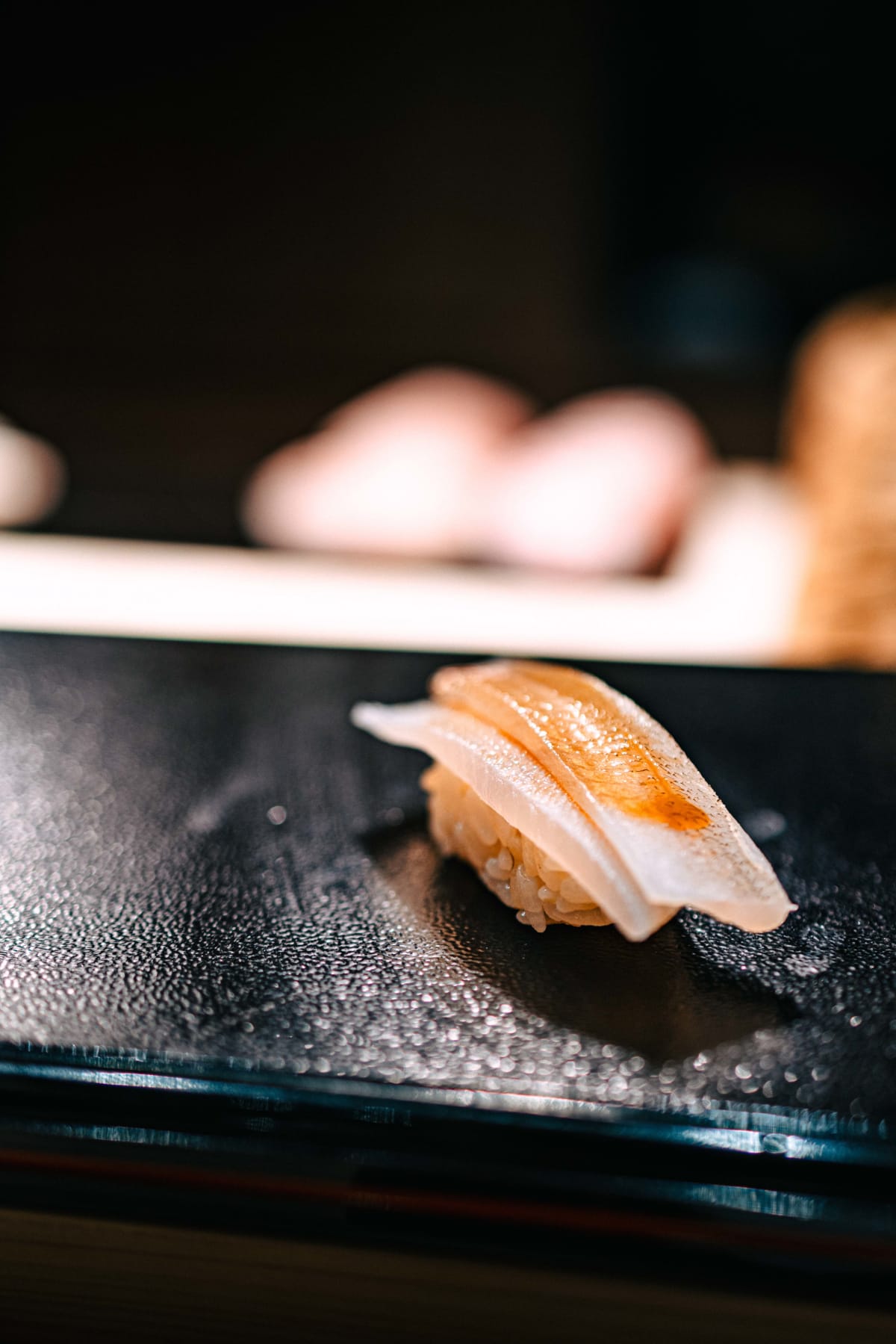
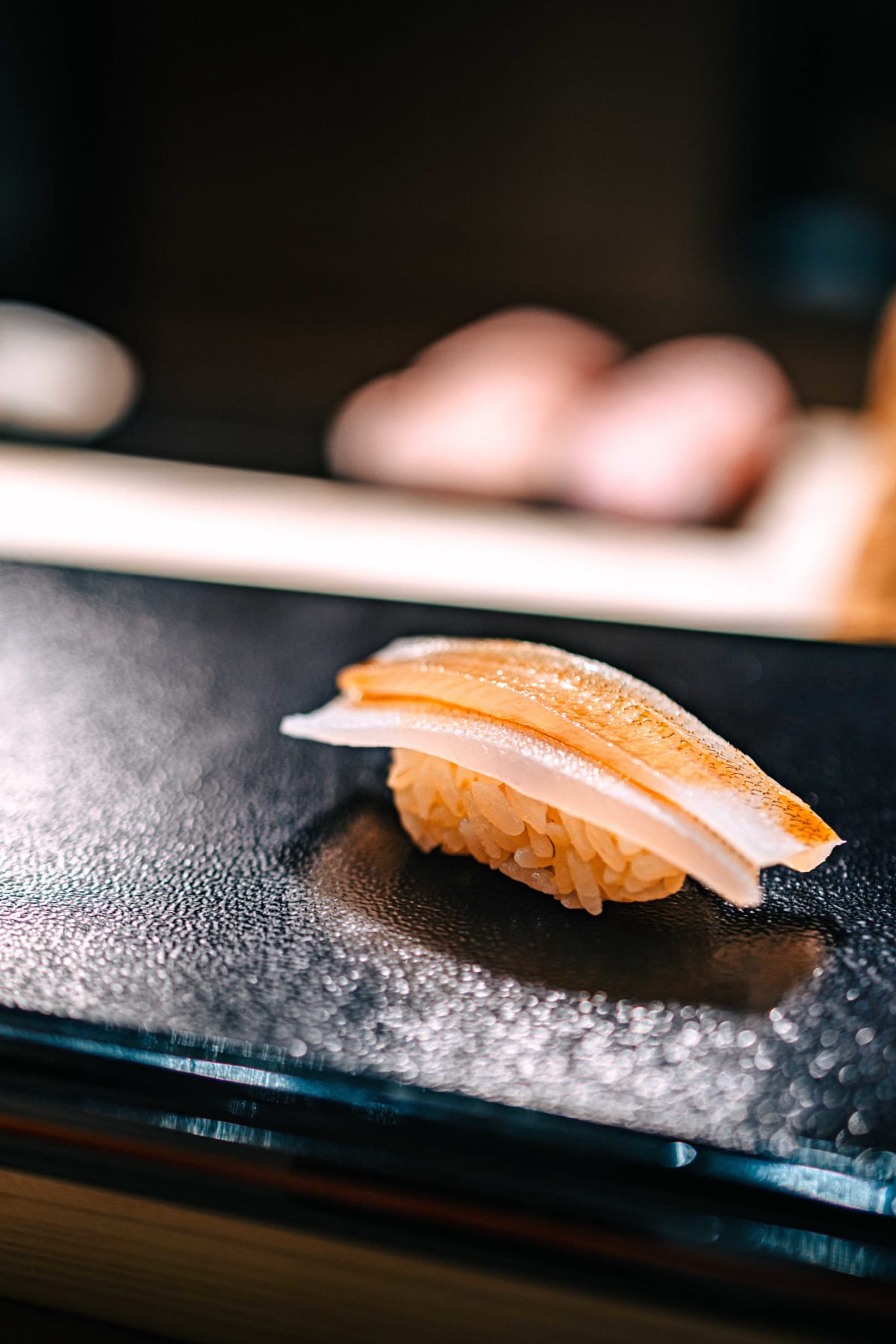
The nigiri resumed with kisu, two thin fillets laid one over the other.
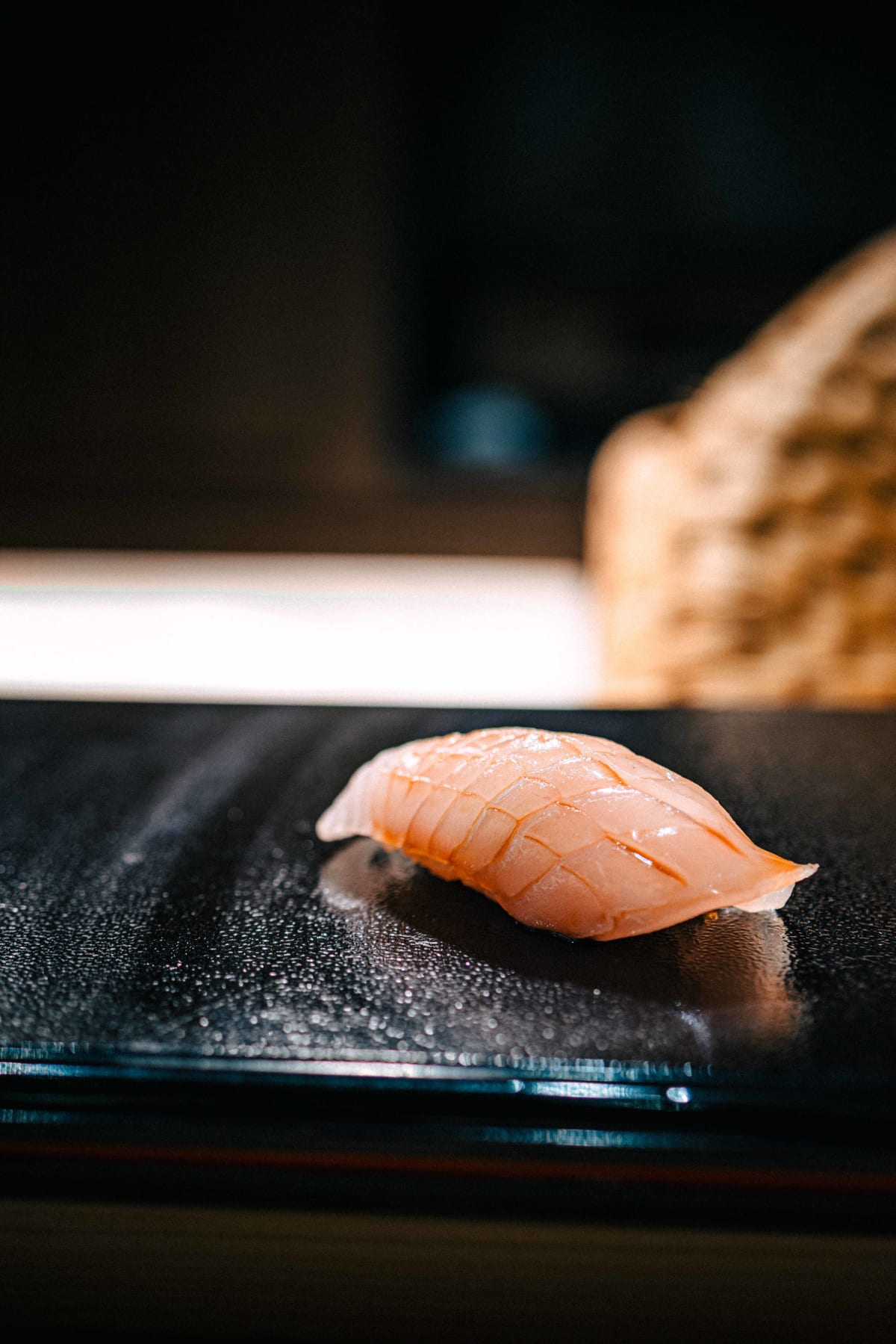
Hirenaga kanpachi arrived scored in a fine lattice.
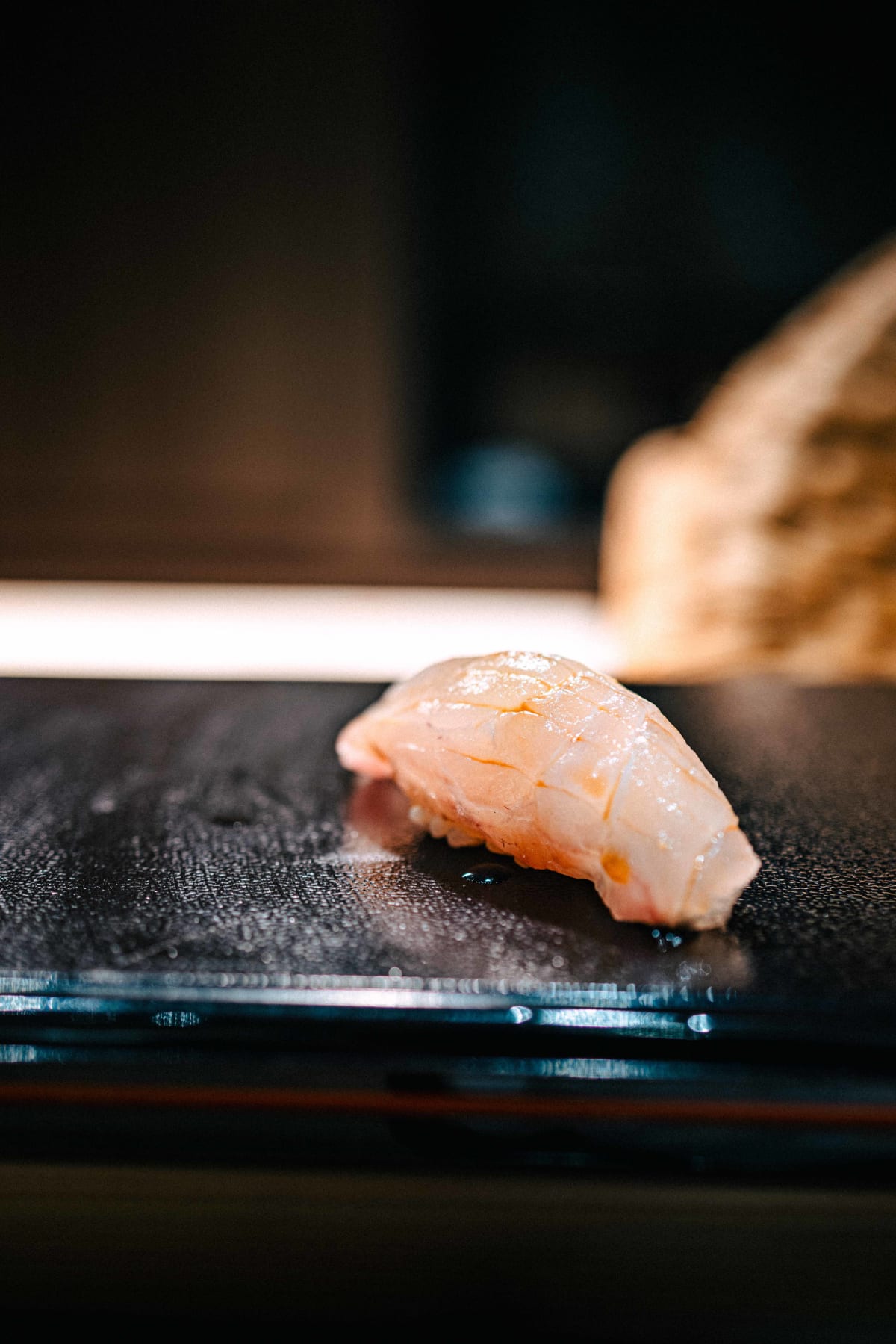
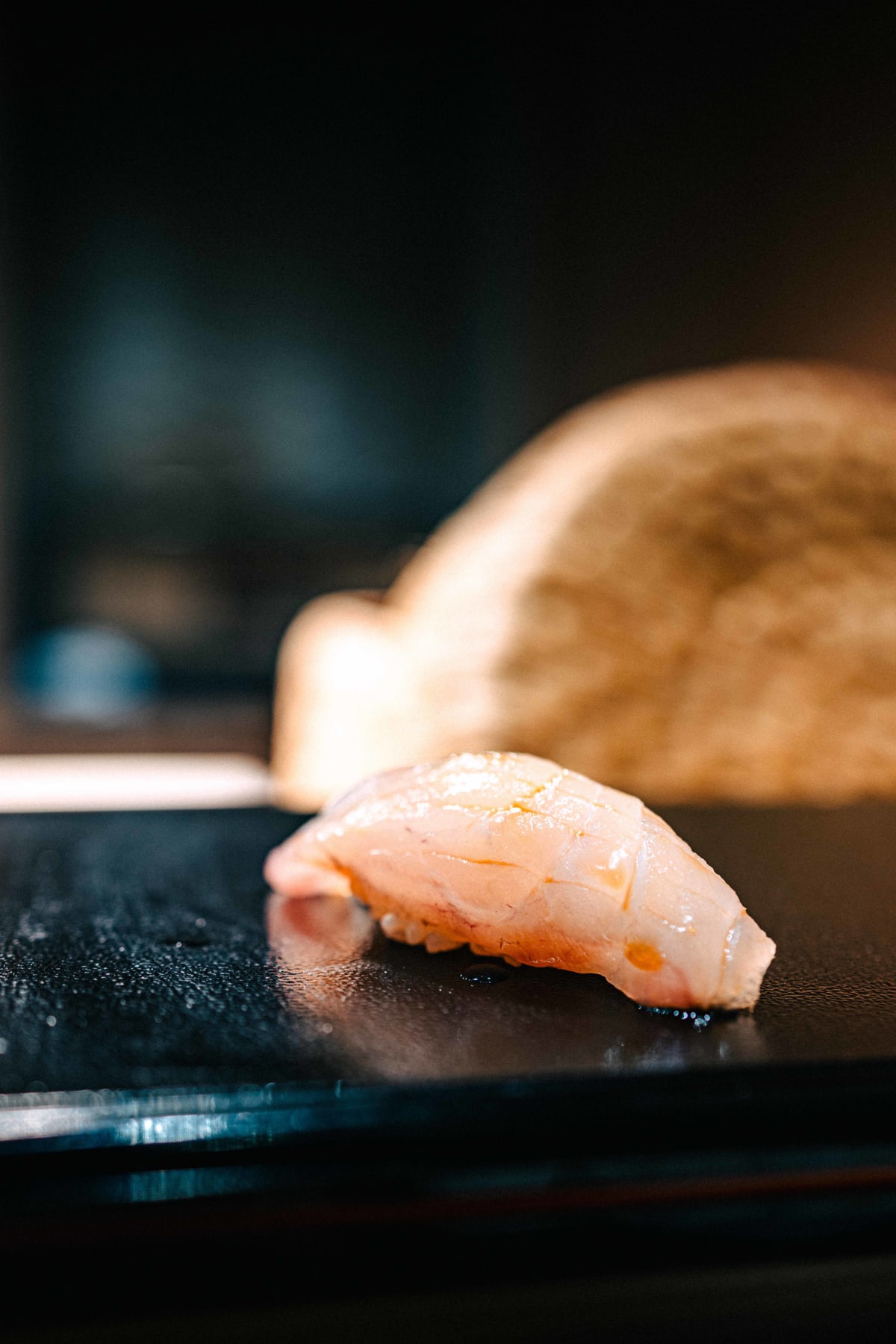
Buri came after it, cut the same way. All three left an impression with their clean flavour and a texture that felt just as clean.
Section 9·Seiko-Gani And Charcoal
It was winter, so female snow crab appeared in the middle of the nigiri. It seems to turn up often, winter being its season, but in Korea catching female snow crab is banned, so it is a hard ingredient to come by. I savoured it slowly, trying hard to remember every detail of its taste.
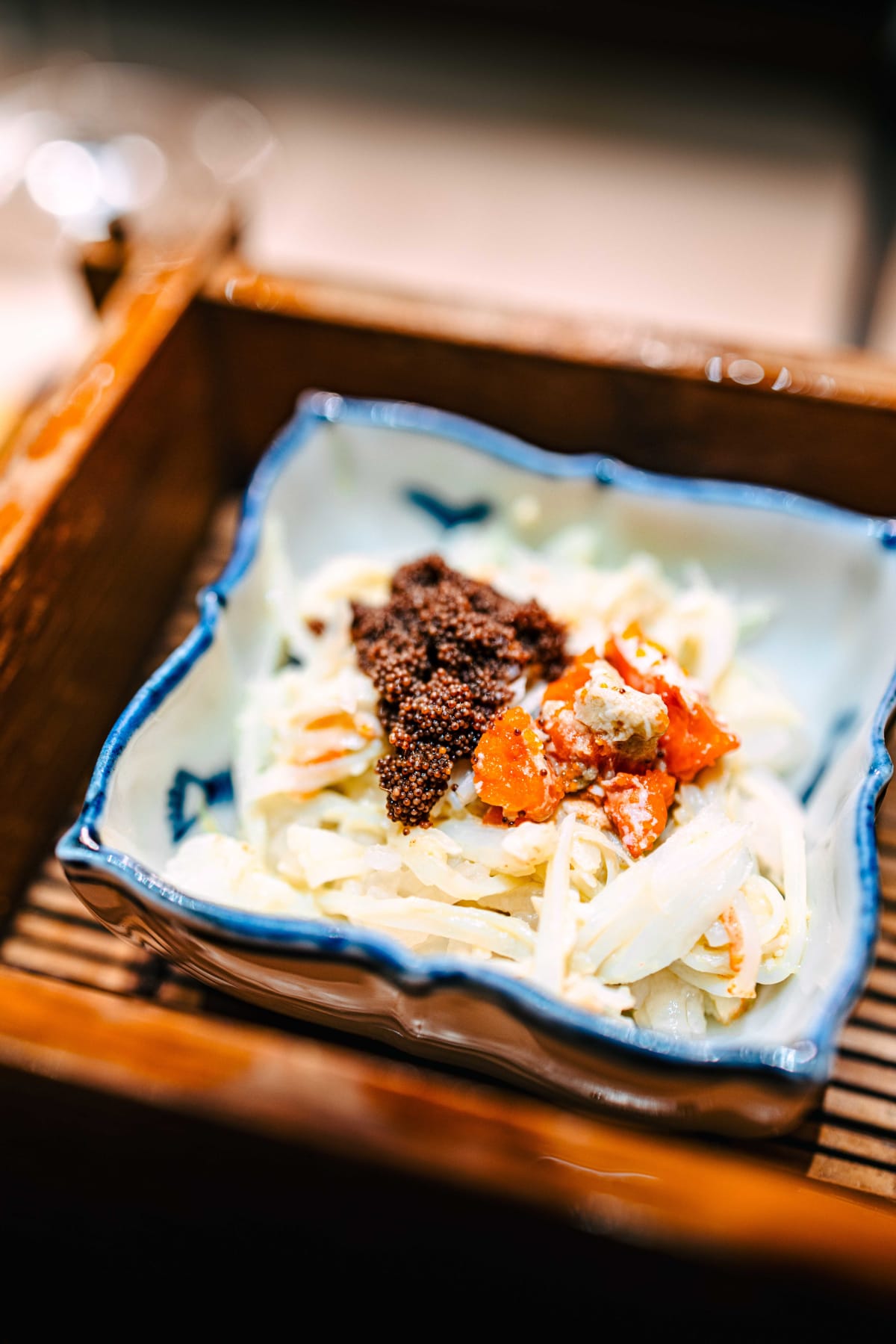
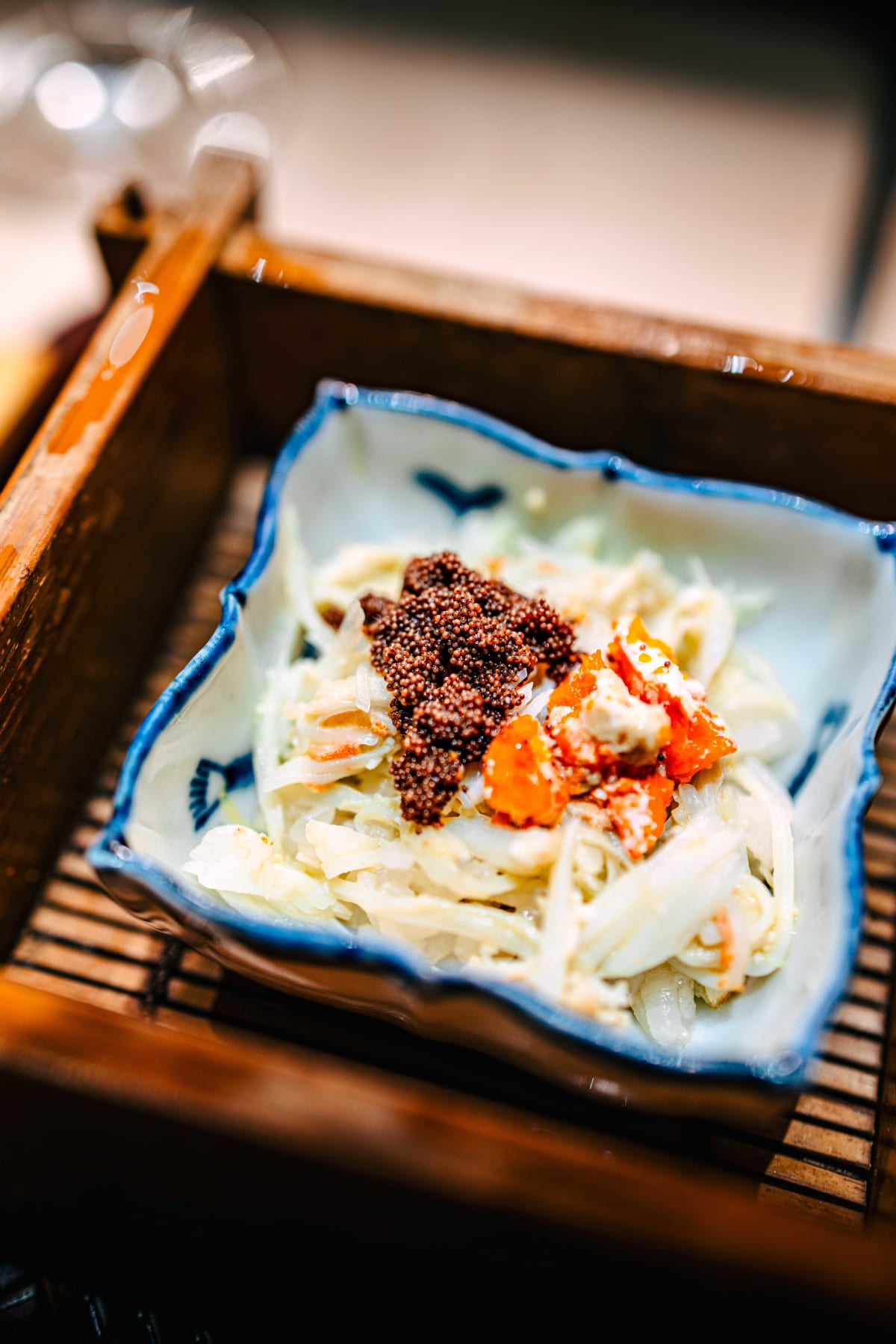
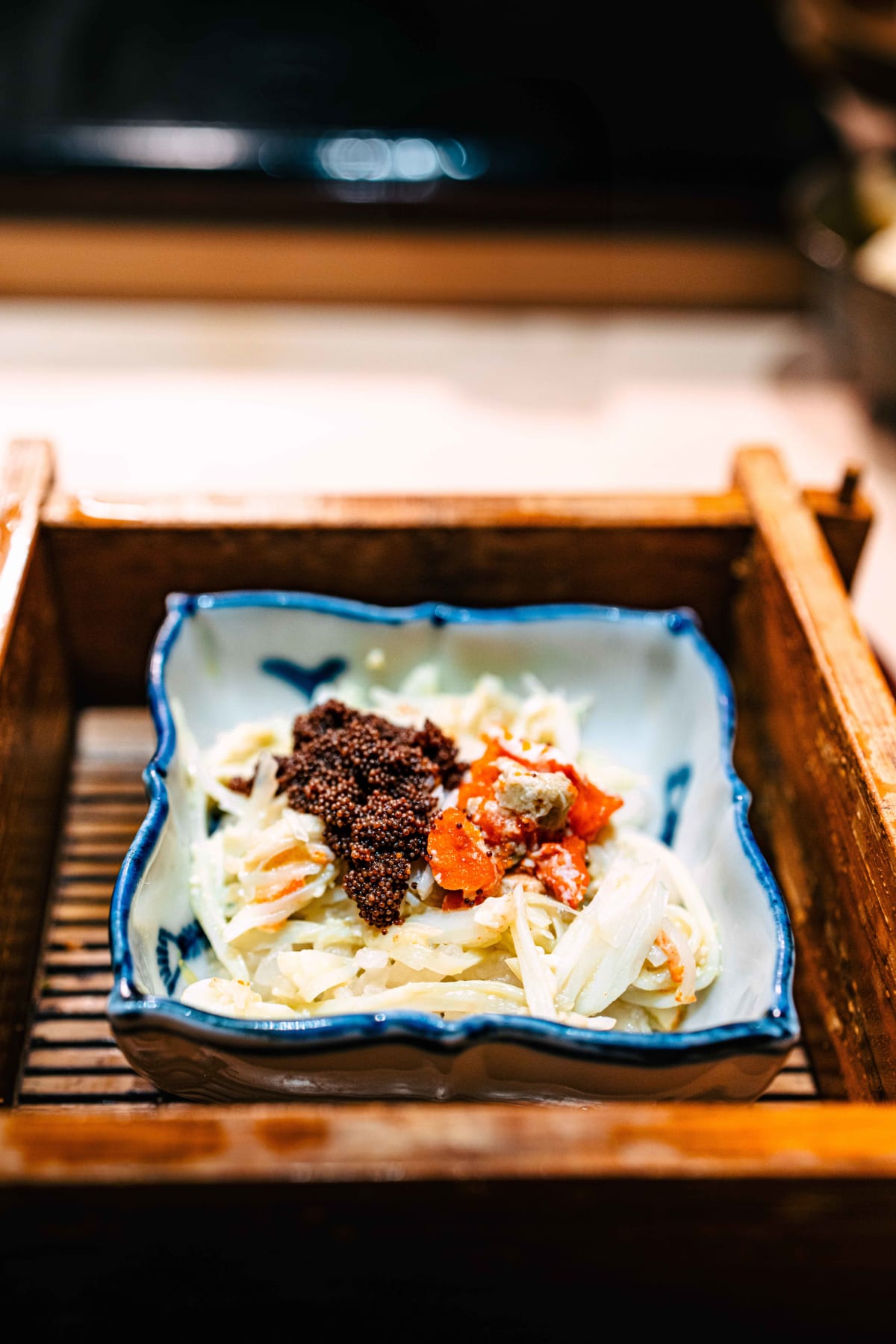
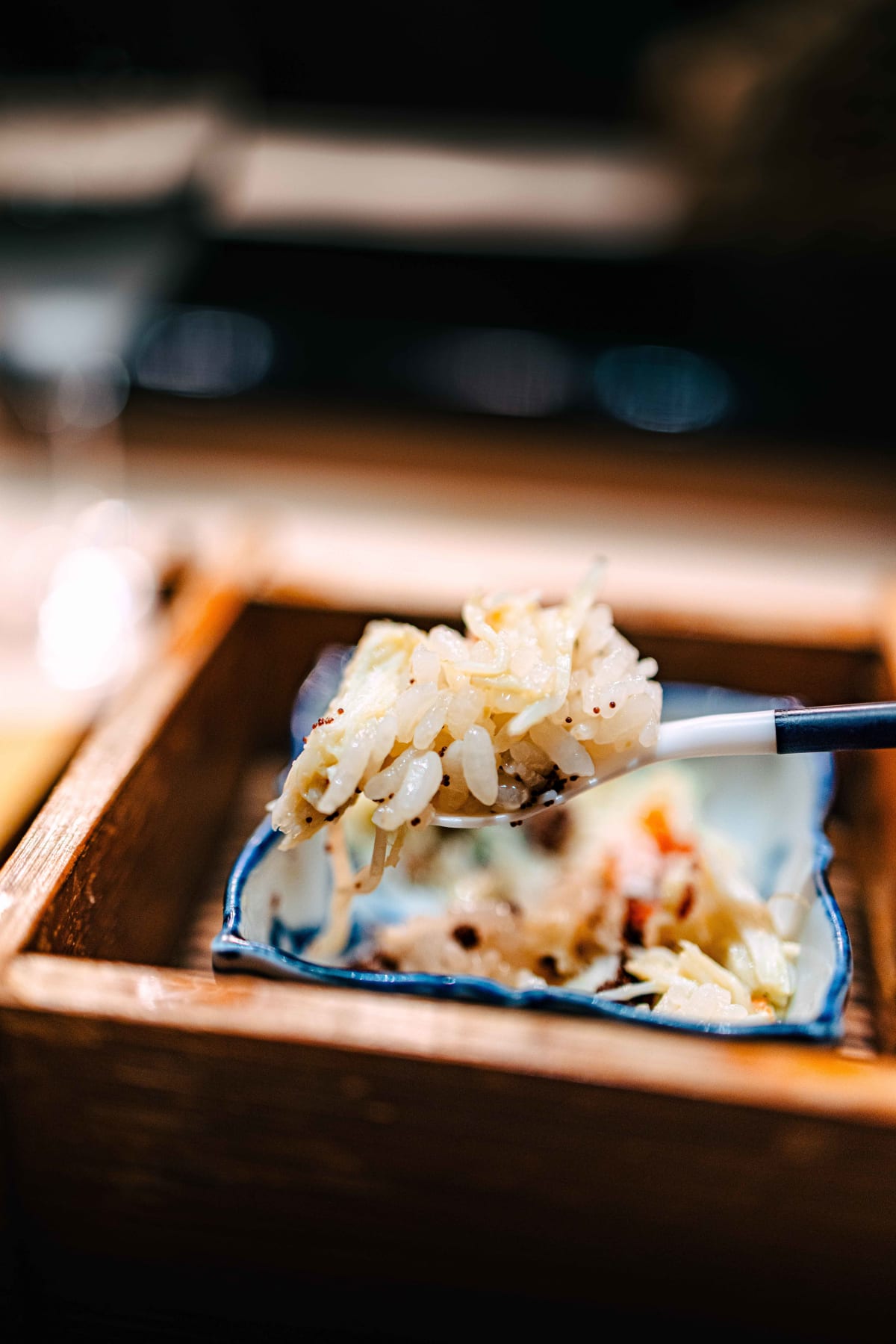
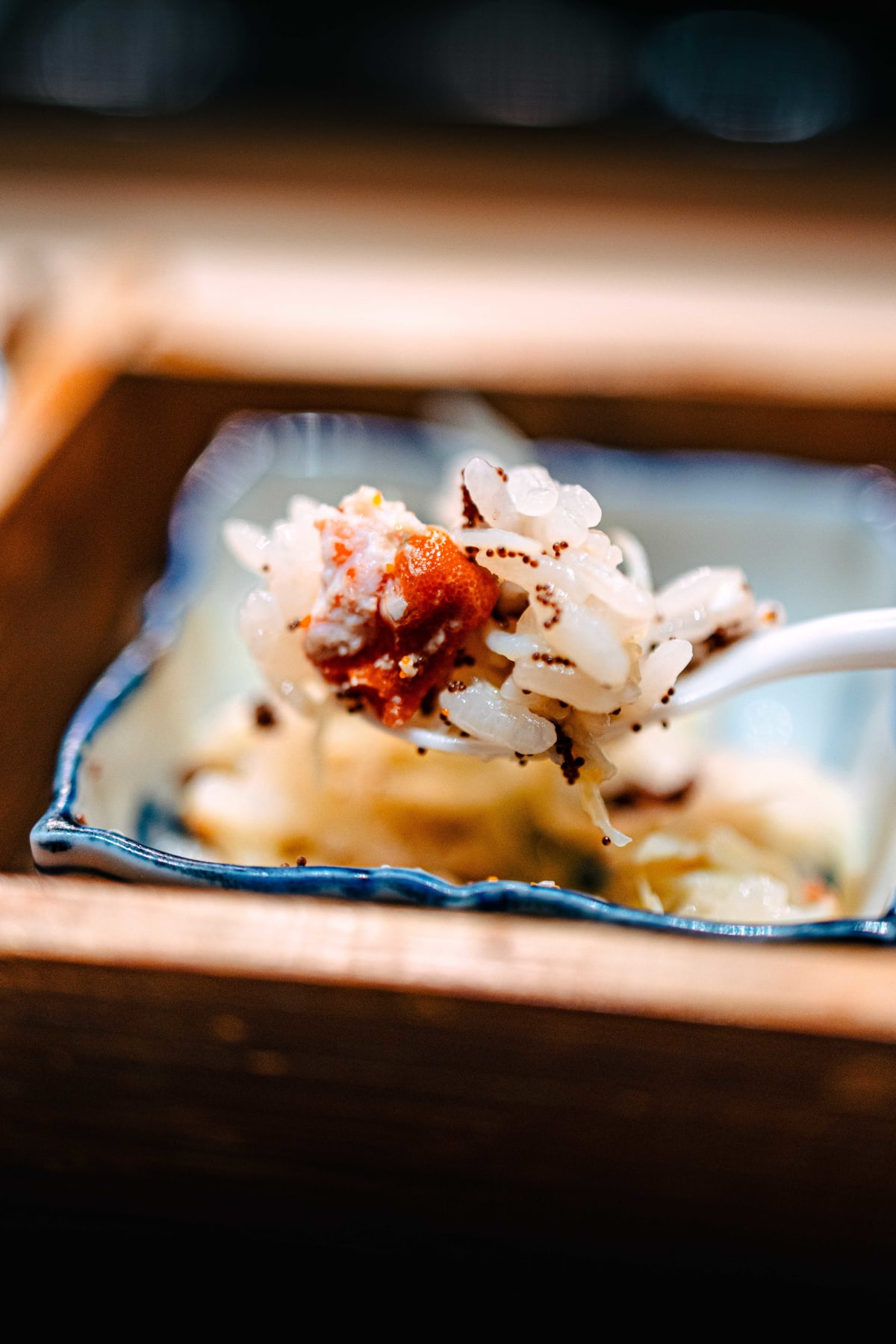
It was the female of the Echizen crab, known in Fukui as seiko-gani, its meat, inner roe, outer eggs and crab miso set over shari and steamed in a seiro as mushi-zushi, with shiso leaves laid at the bottom of the dish for their fragrance.
Kohada came after the crab, and then the fourth piece of tuna.
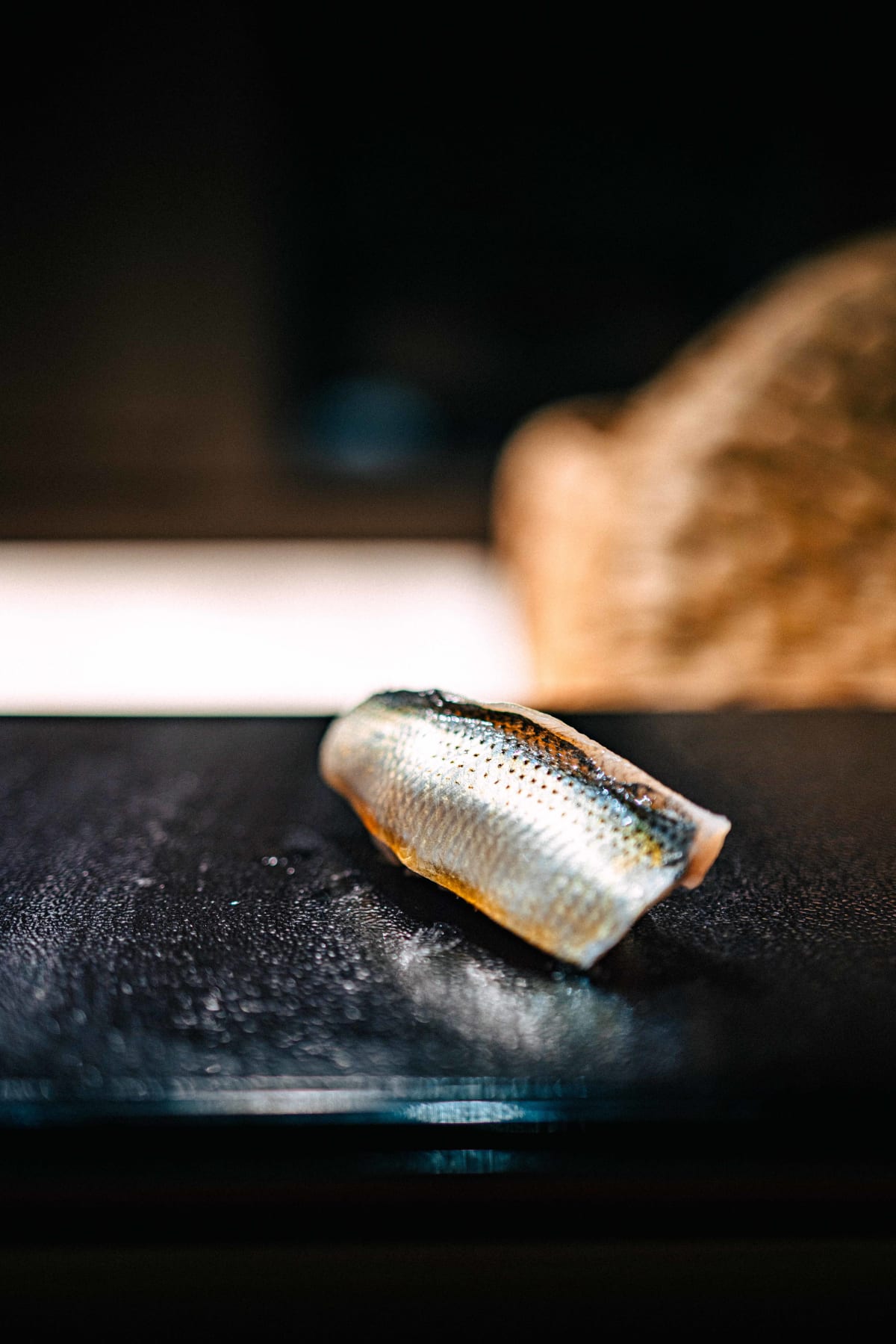
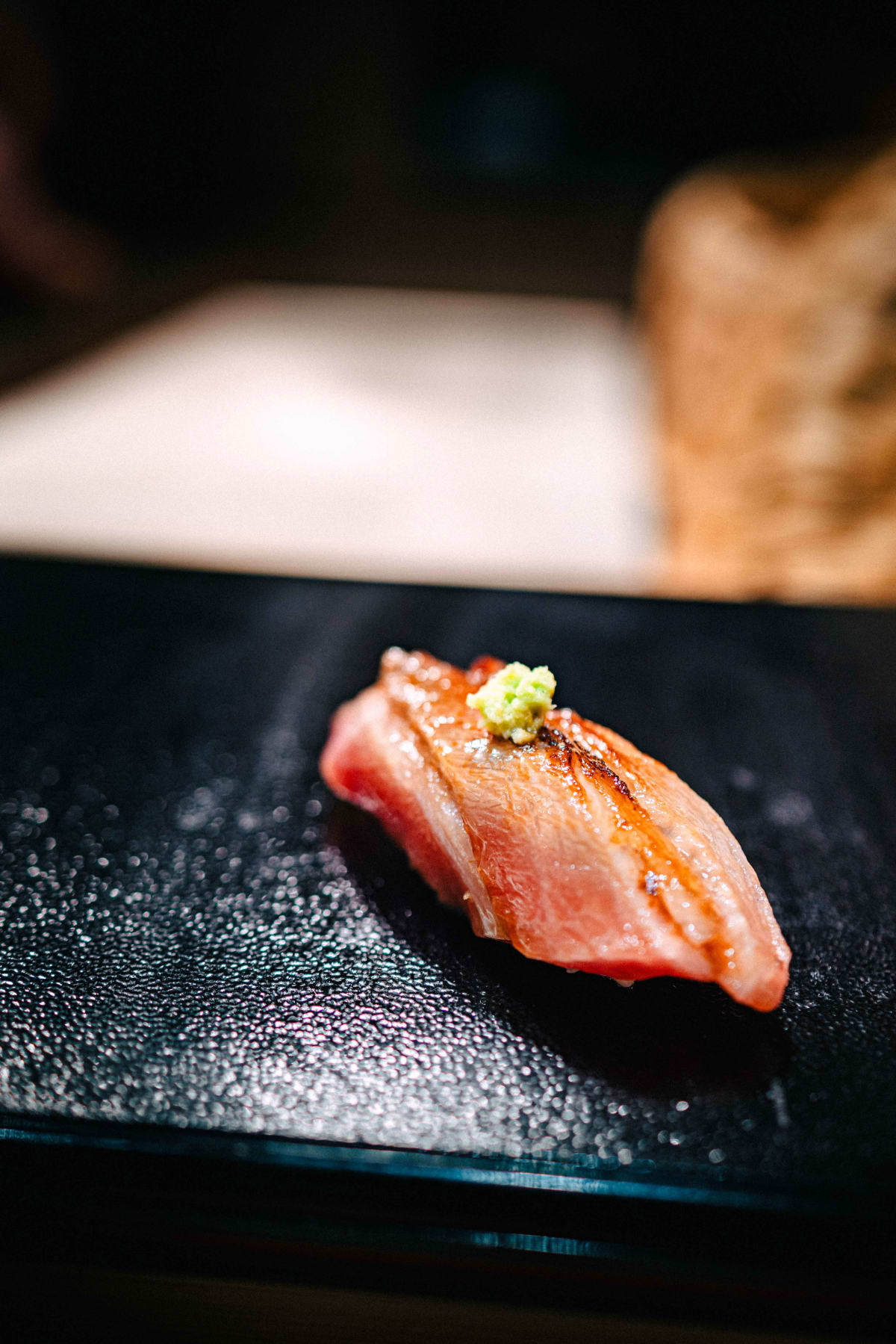
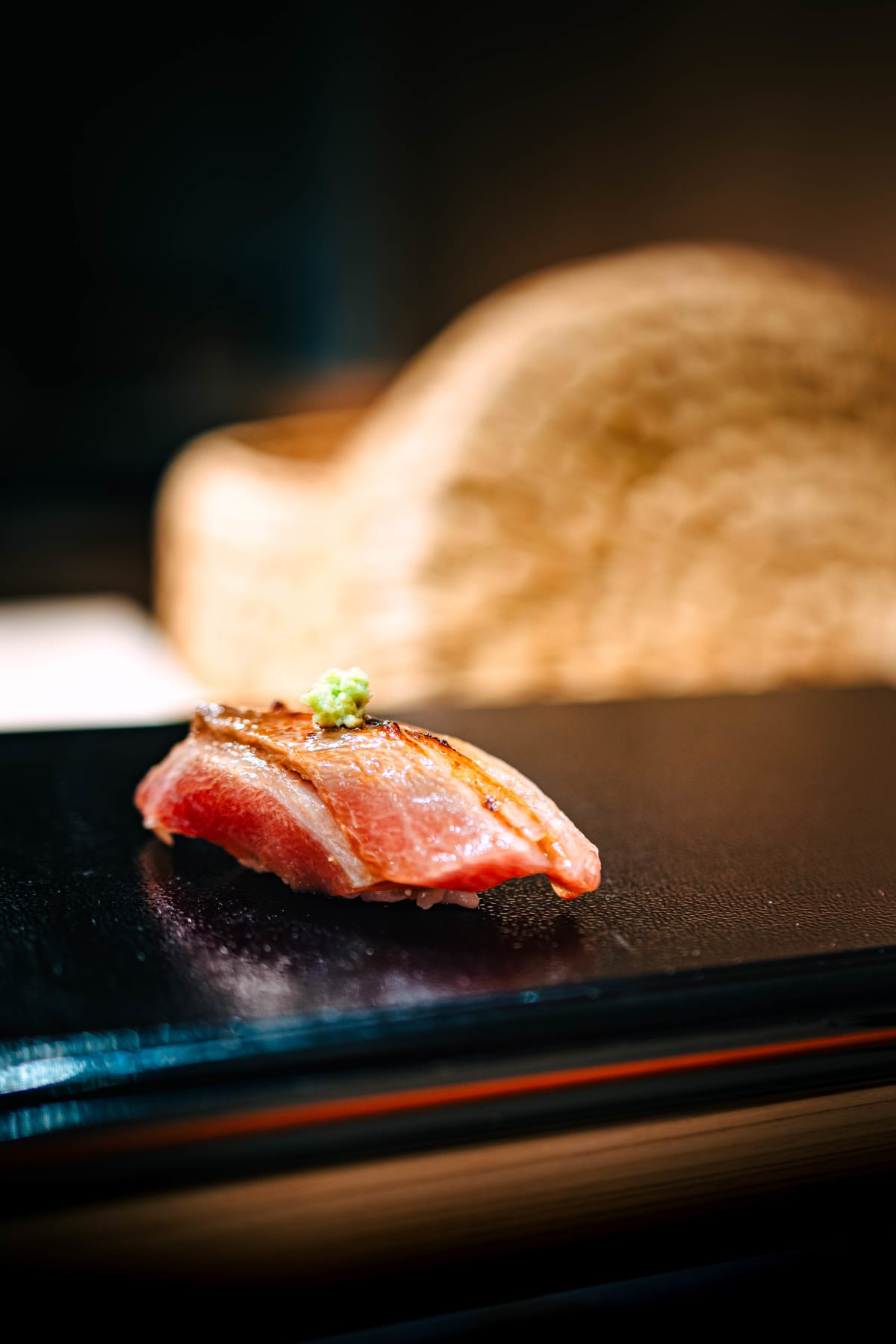
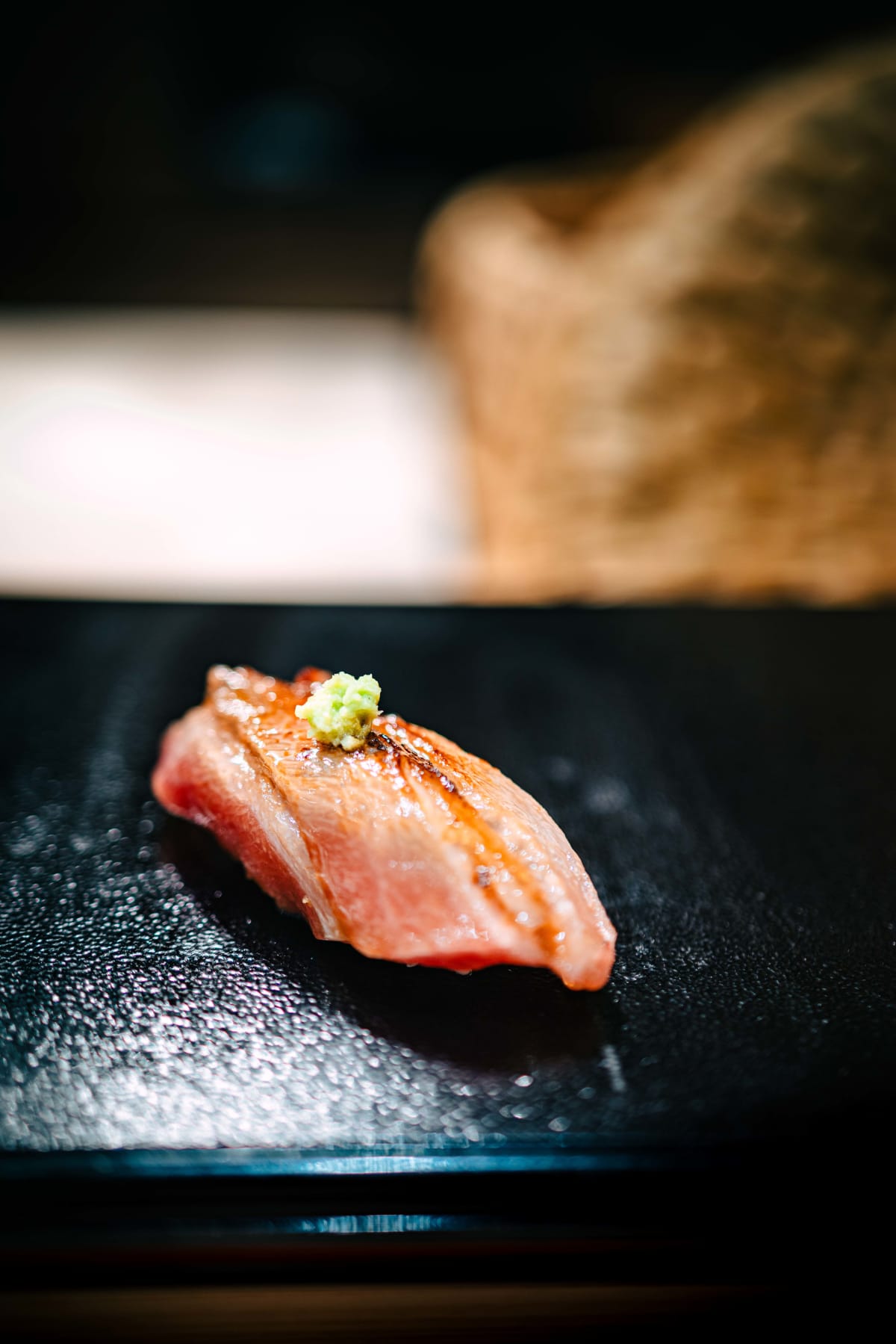
The chef held a wire rack heaped with charcoal just above the otoro and seared the fat from above, and the otoro aburi came topped with fresh wasabi.
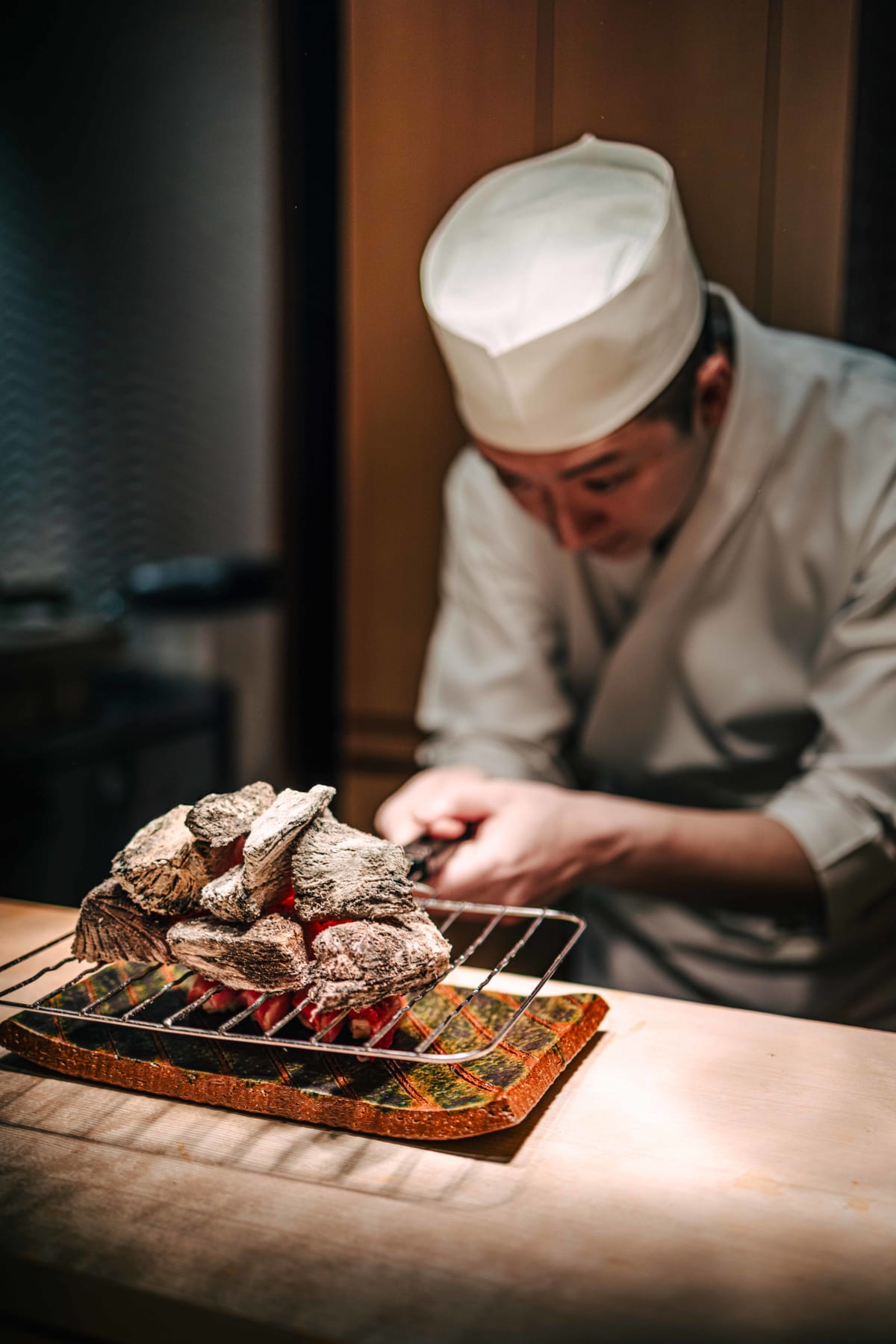
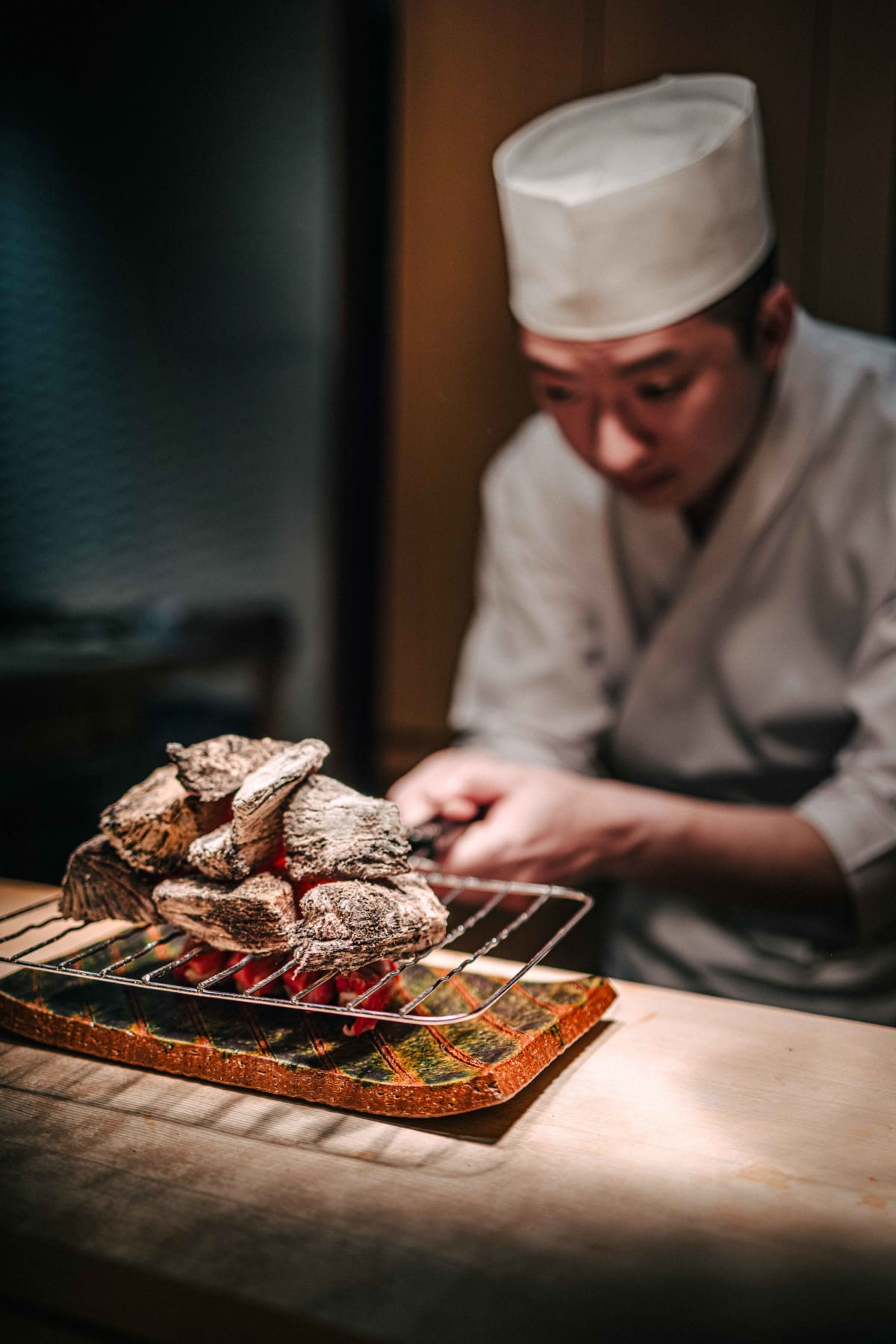
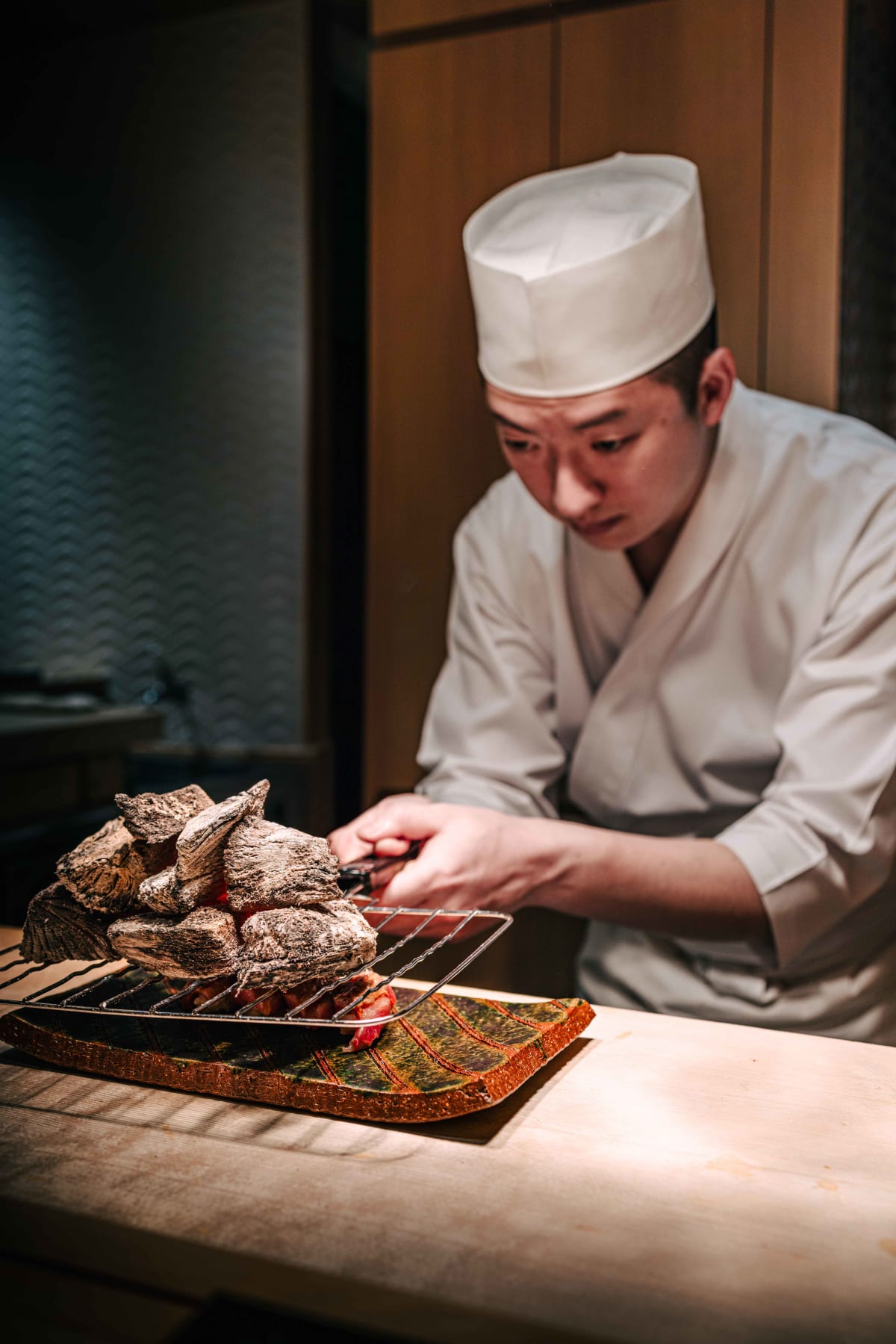
Wasabi is cool and hot at once, yet the curious thing is that when it meets fat, the heat vanishes from the mouth like magic. Here too, the wasabi kept the seared toro fat from feeling heavy, and the wasabi in turn did not taste hot.
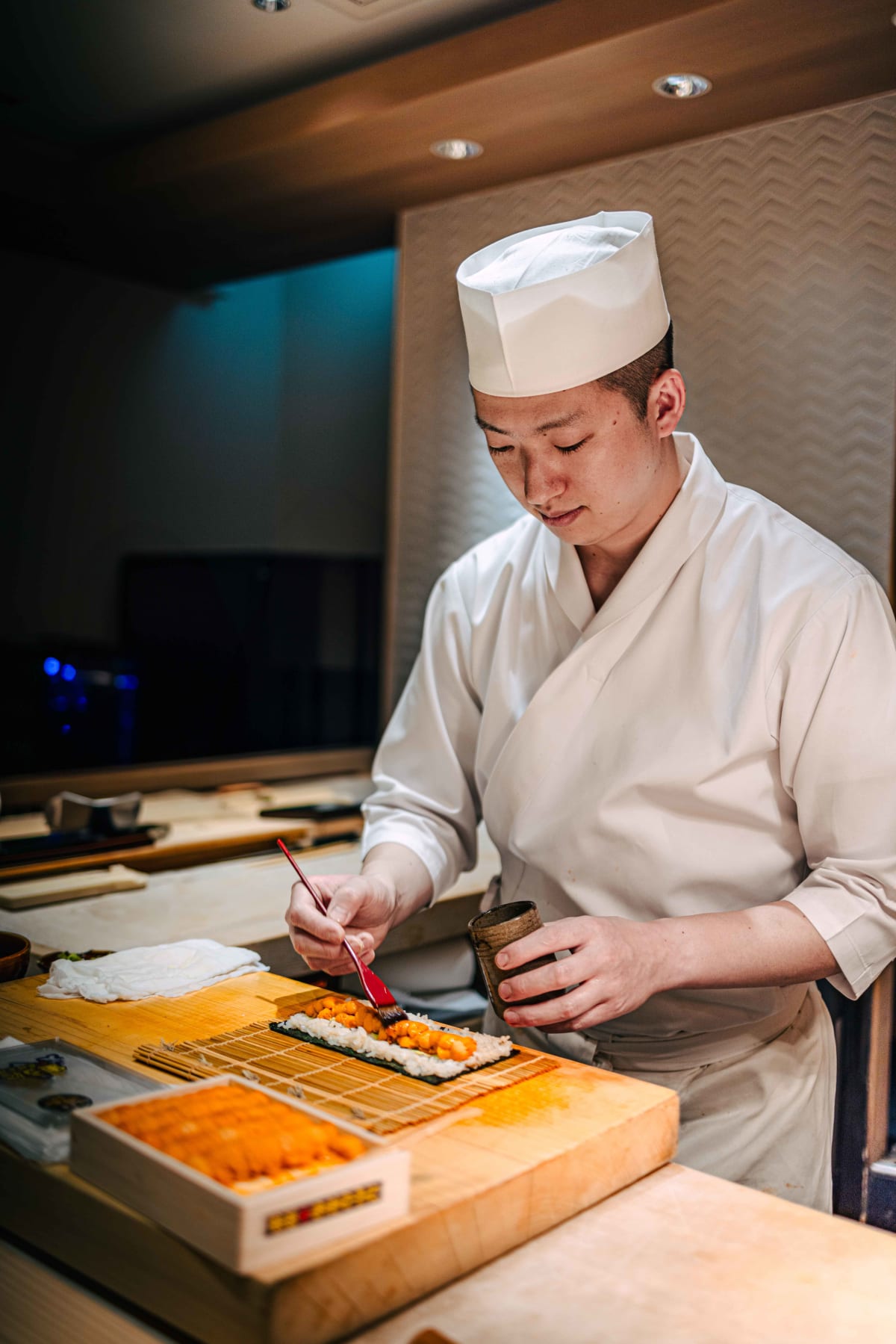
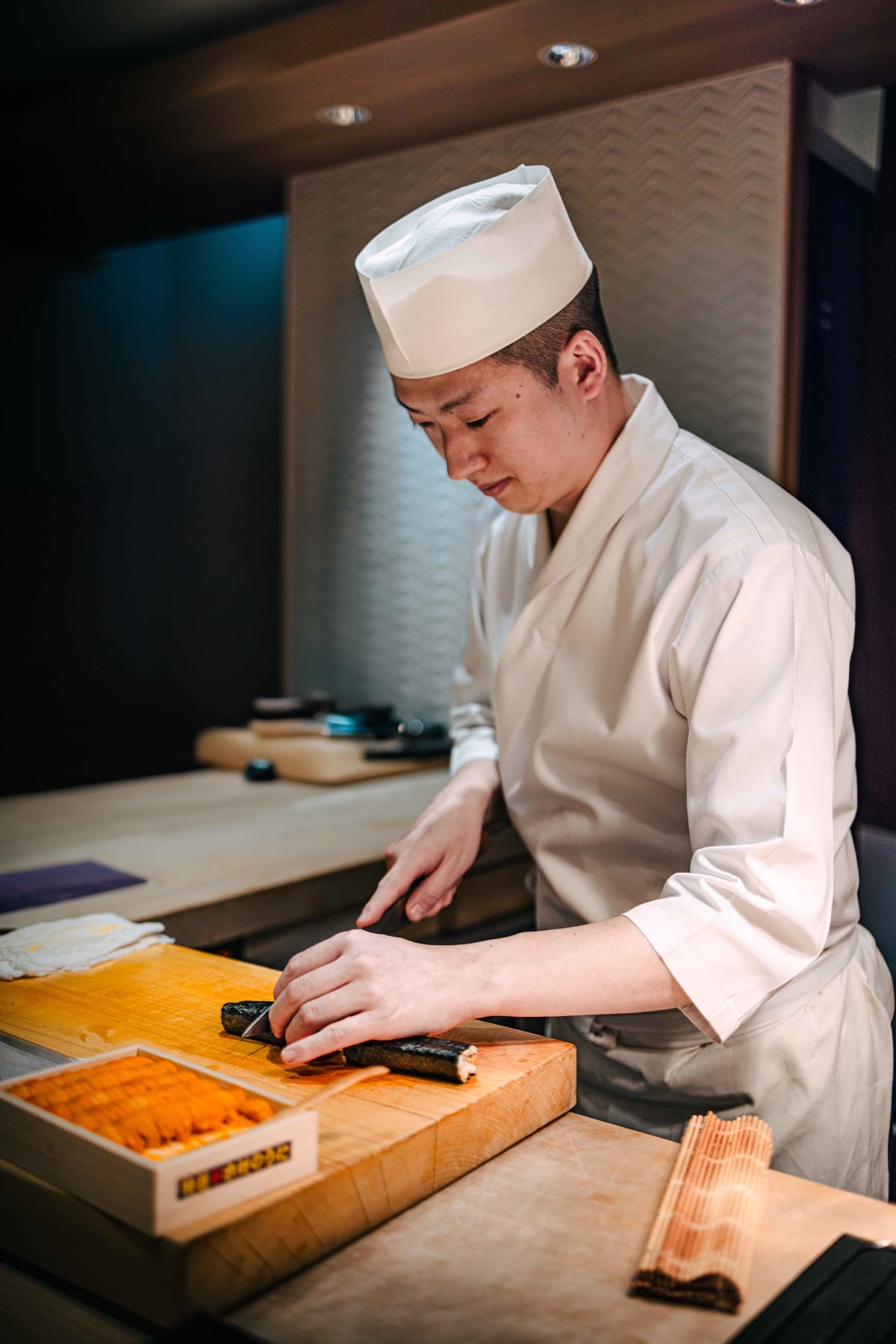
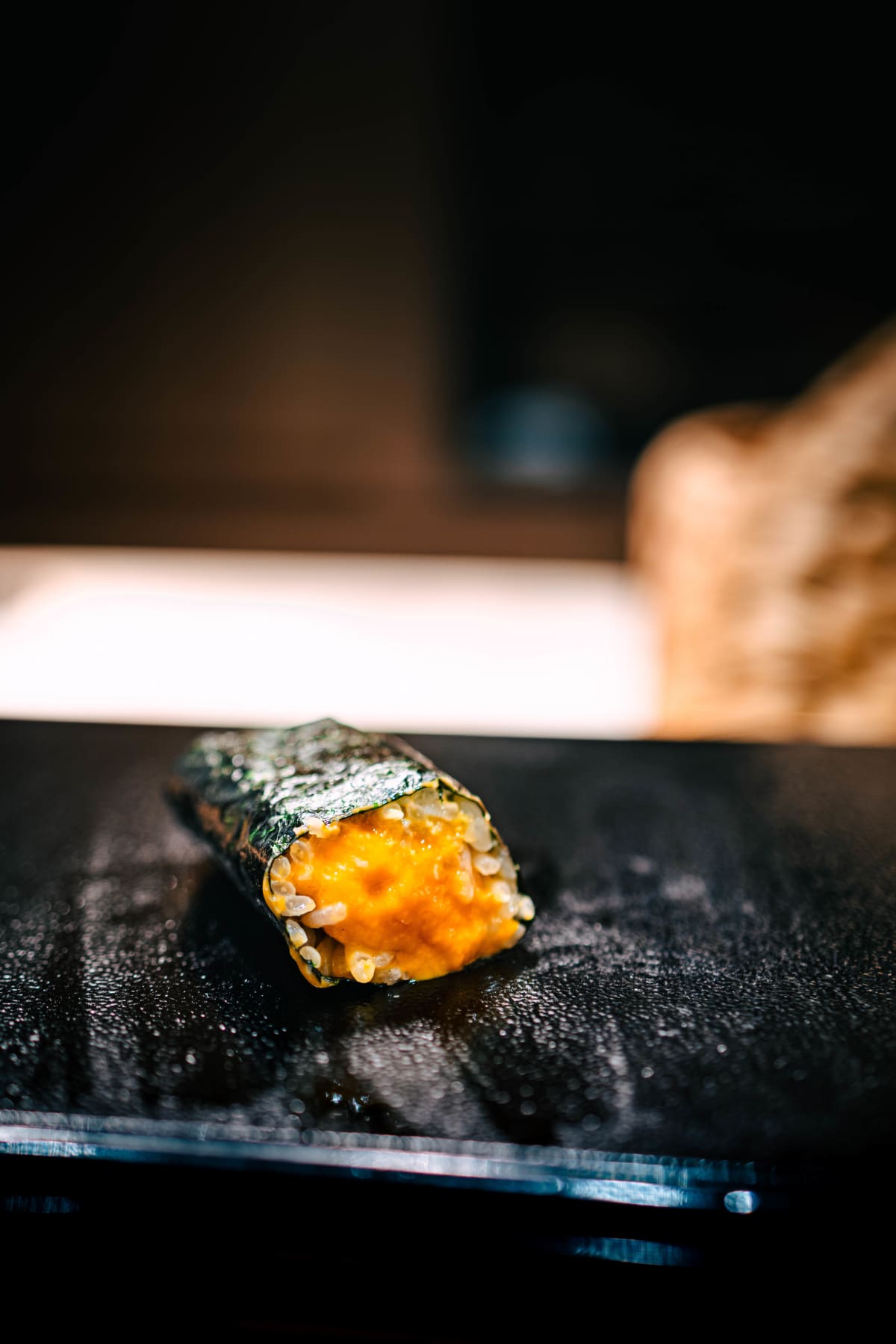
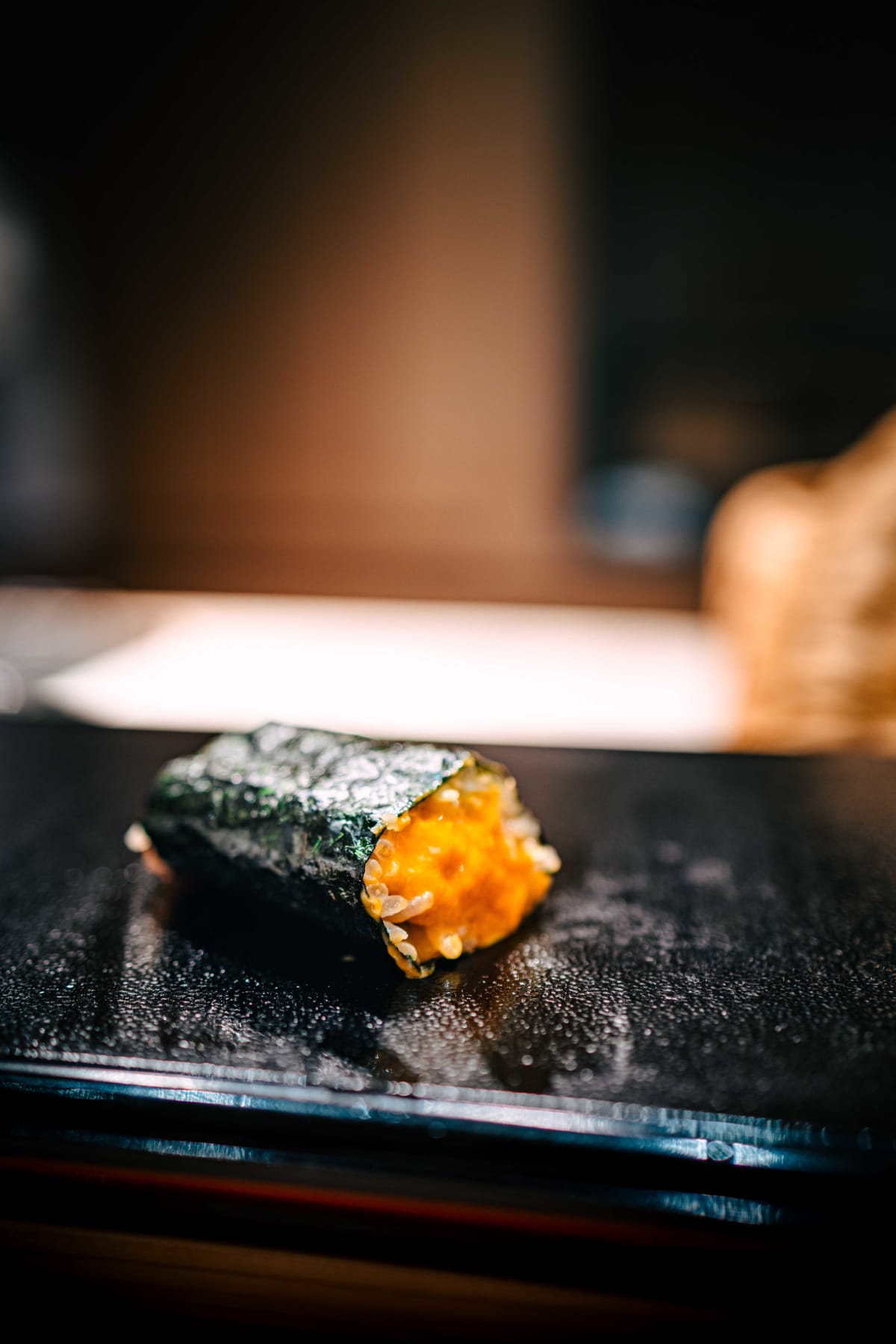
After that, the chef spread shari on a bamboo mat, heaped bafun uni on top, brushed it with soy, then rolled and sliced it into uni maki.
The set course ended with anago brushed with tsume.
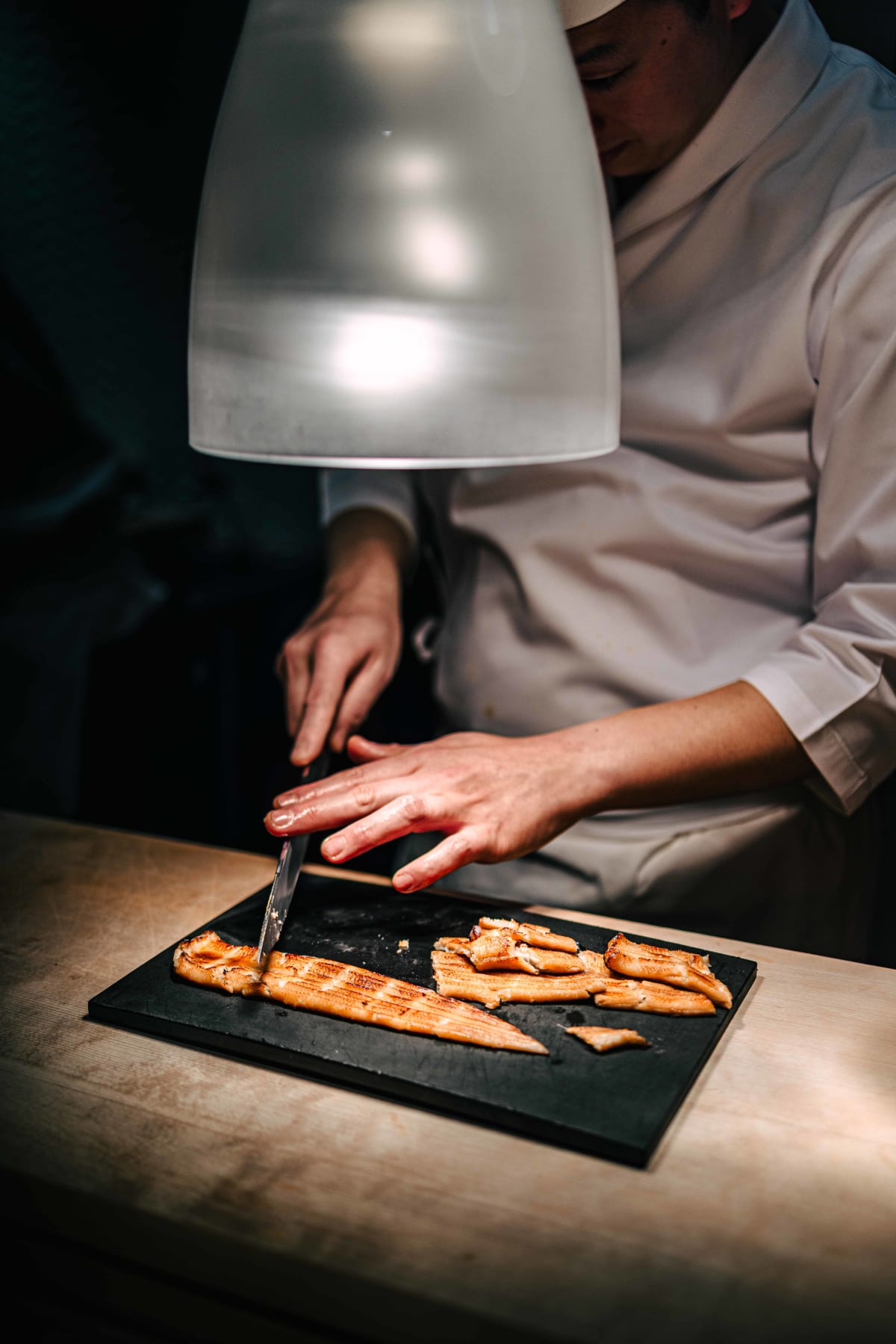
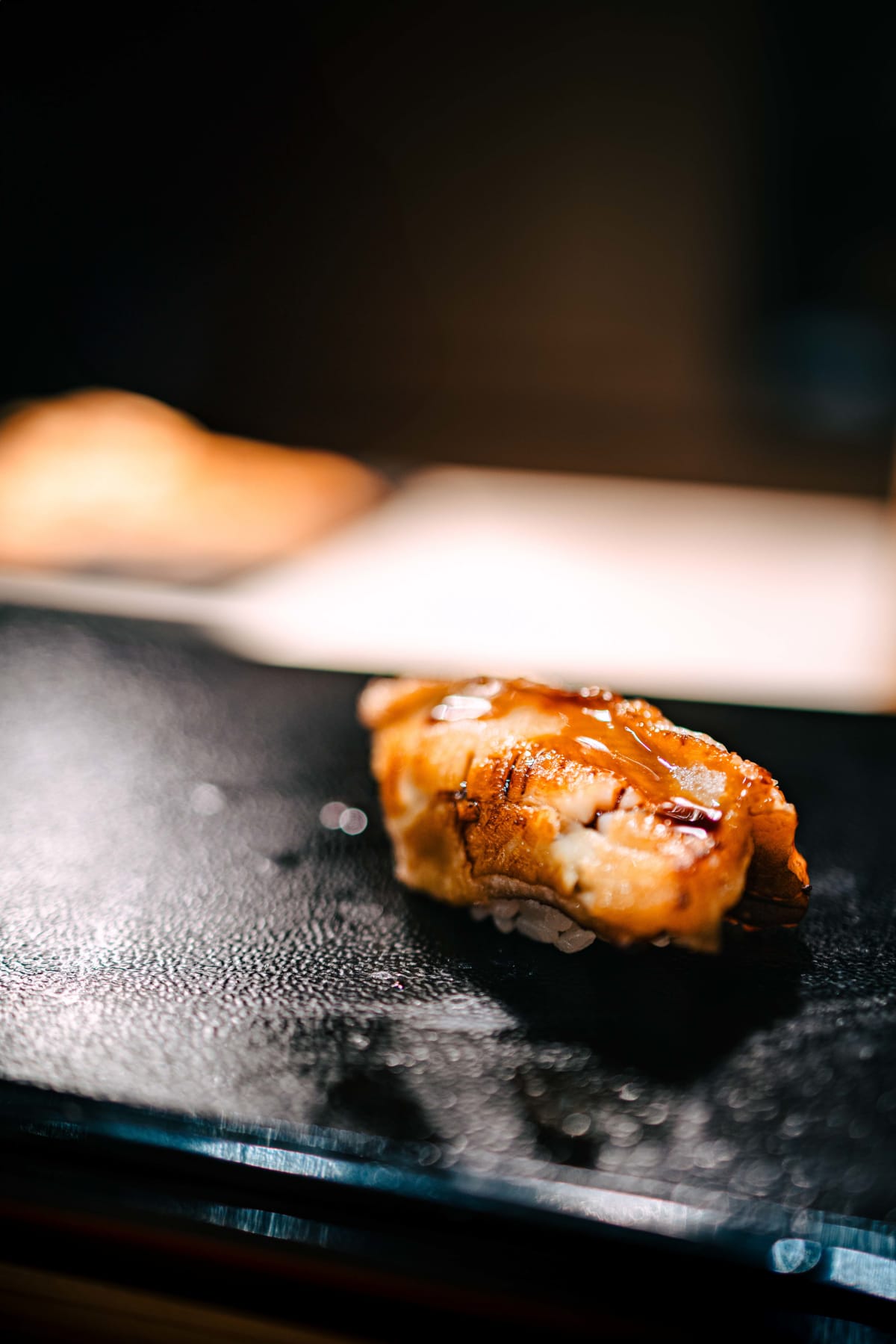
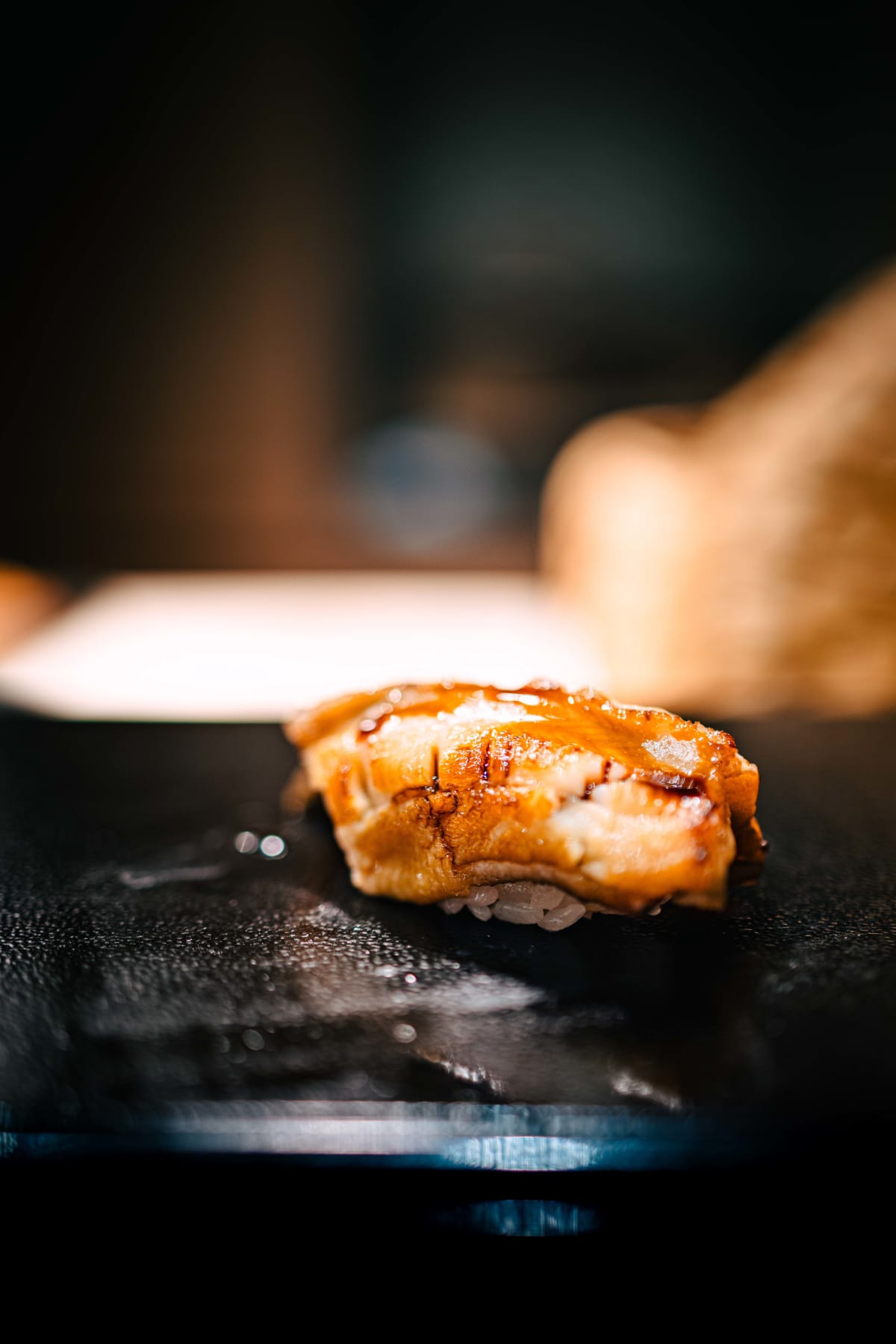
I still had some drink left and wanted to keep the good time going, so I asked whether there was anything more I could order. The chef said shellfish was possible, so I ordered some along with squid; at sushiya in Japan, it seems fairly common for shellfish not to appear in the set nigiri and to be available only as extras. That is most likely because shellfish divides opinion so sharply.
Section 10·Shellfish On Request
What I received as extras that night were sumi-ika finished with salt, akagai, and hamaguri brushed with tsume. Sumi-ika has a firmer texture than aori-ika, with a pleasing crunch on the first bite.
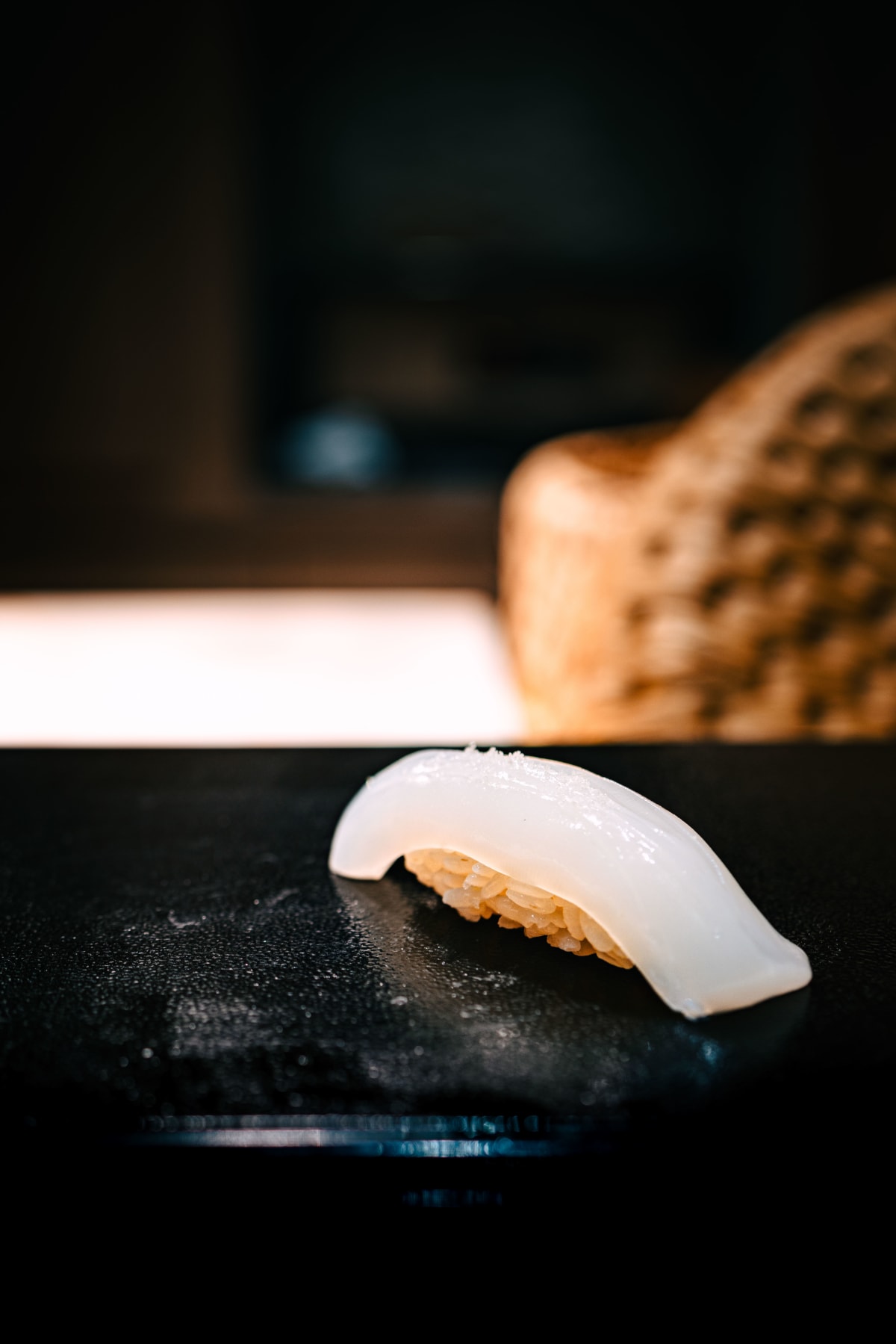
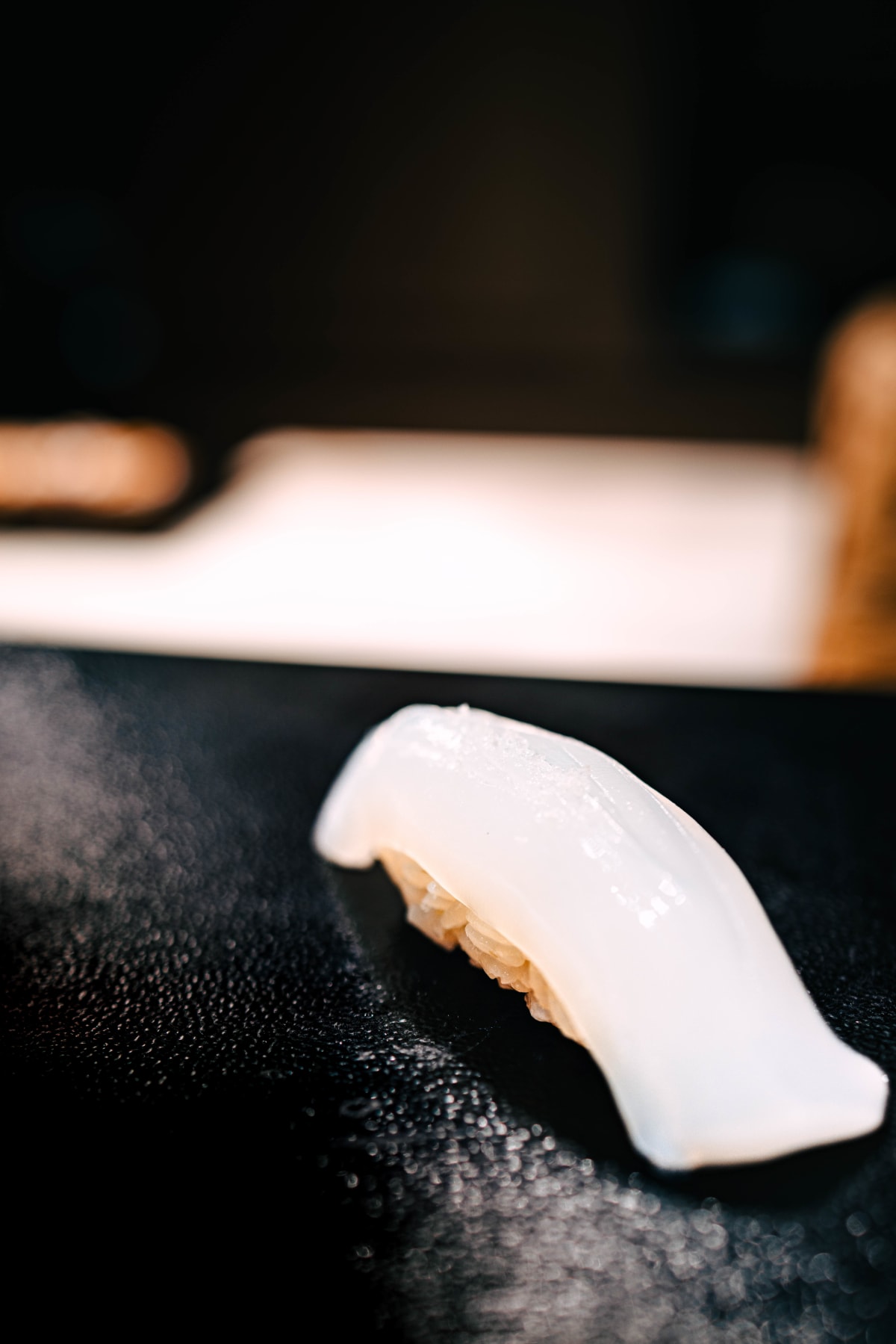
Akagai is known for its cool flavour, like cucumber or watermelon, and its crisp texture, and it is my favourite shellfish neta.
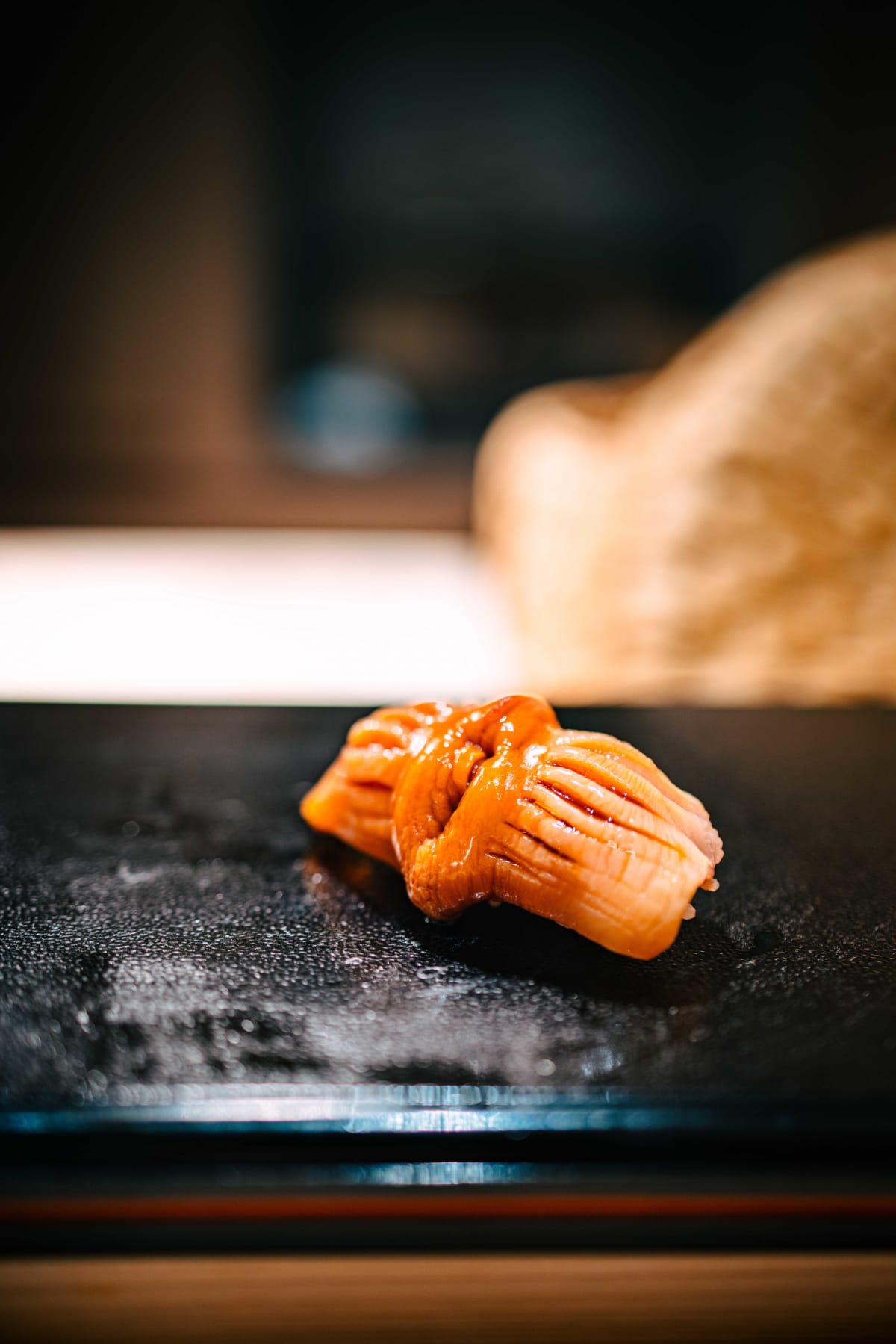
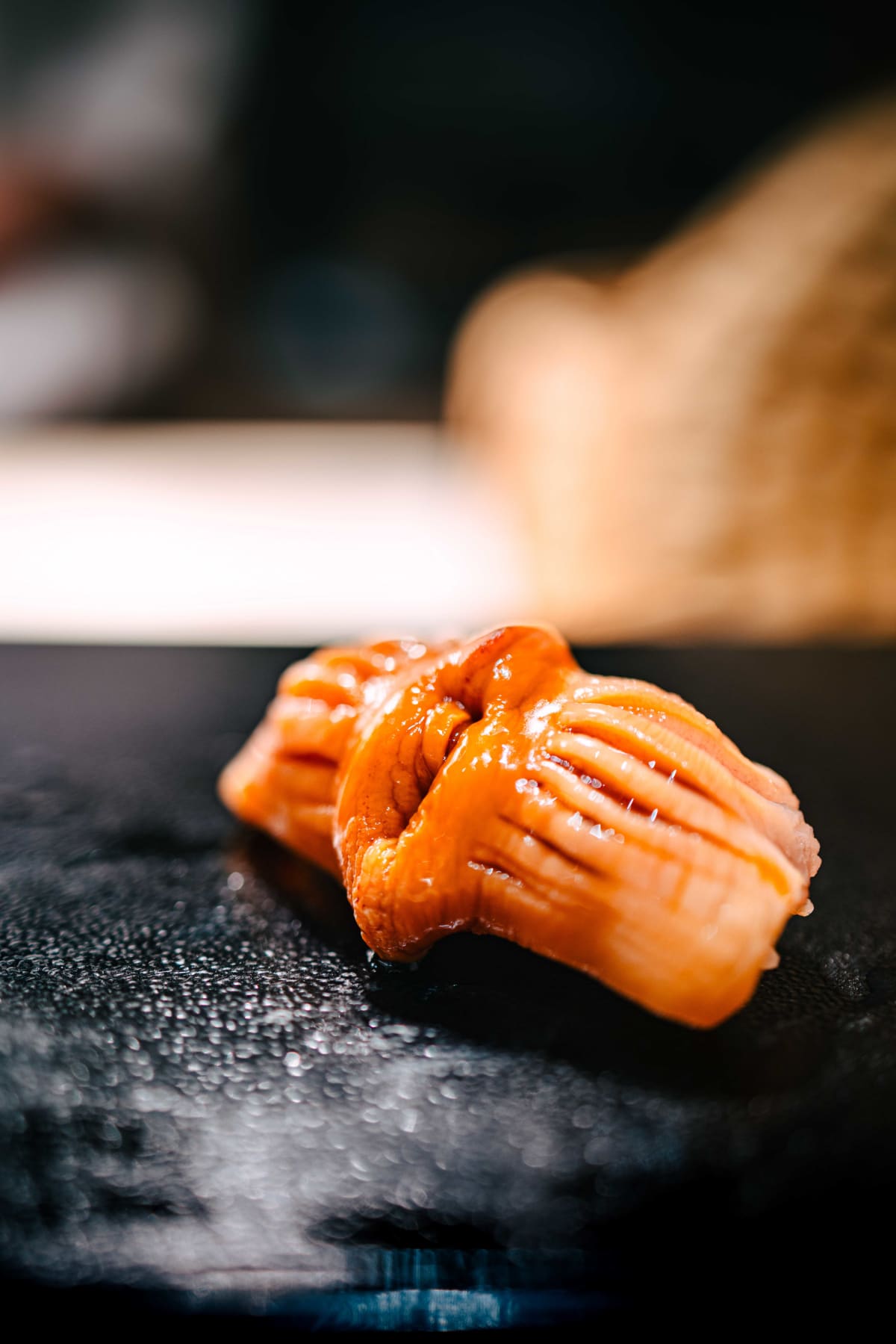
With hamaguri, the key is the sweetness of the tare and its chewiness.
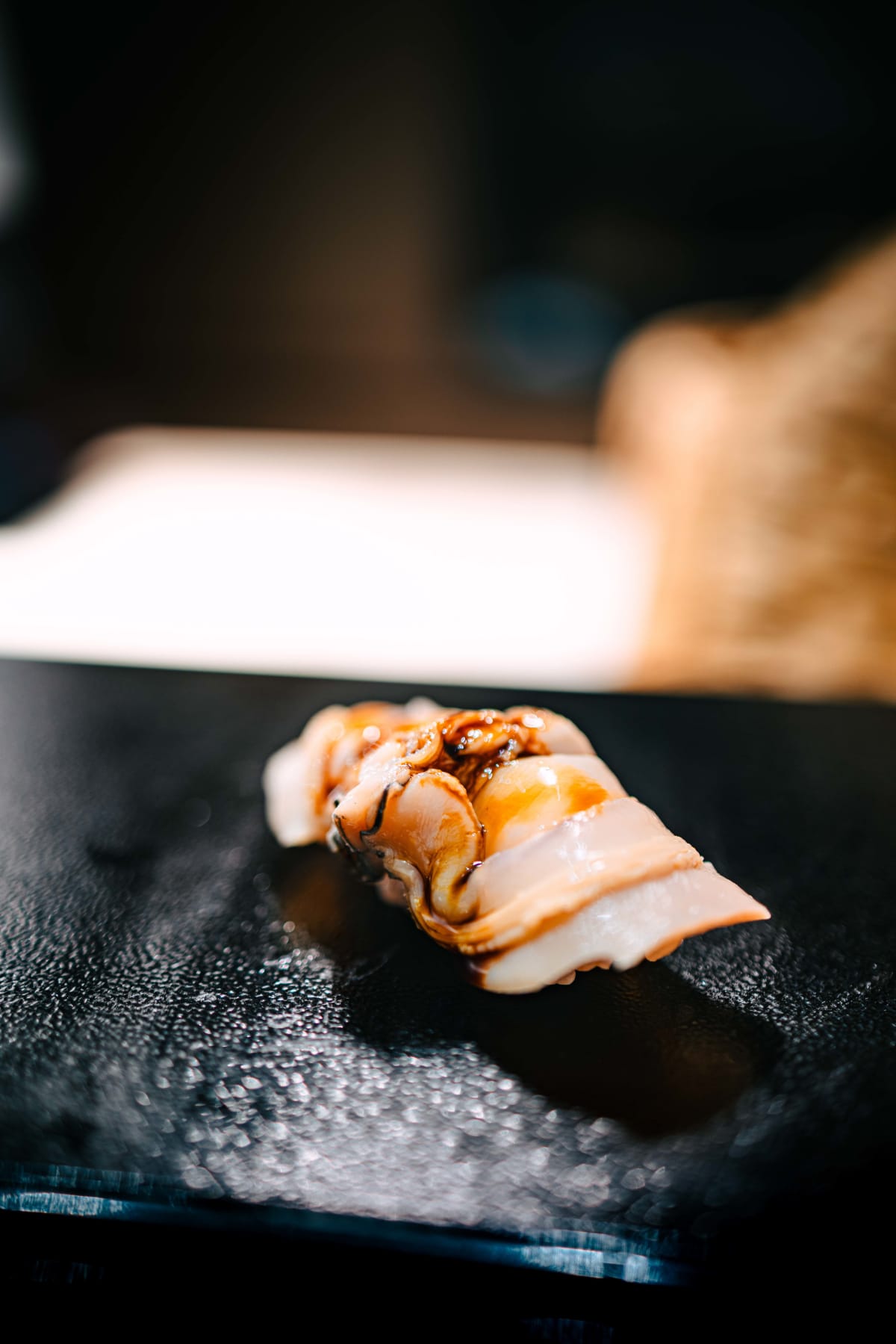
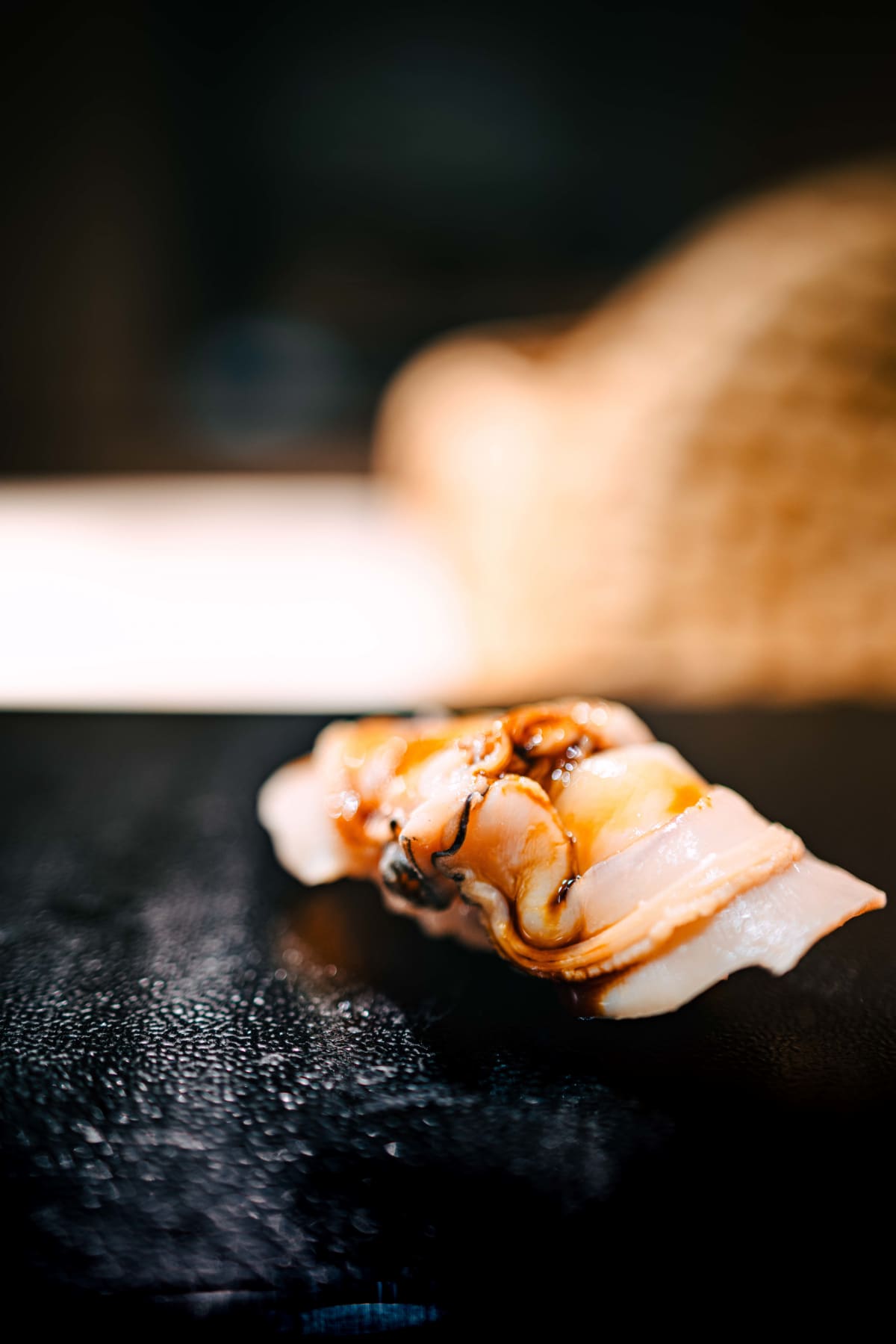
I love sushiya, but I think the fresh, lively feel of the seafood I have loved since childhood comes across better, if anything, at the raw fish restaurants on the Korean coast that keep their fish alive until it is ordered. That is why I used to prefer tsumami by far.
With shellfish nigiri, though, unlike other neta, I can feel that freshness, as if I were at the seaside I love, so I always add them when I can. Is it because they are unpopular with other people, or because they are hard to keep and have to cost more? In a typical course, shellfish seem to have only a small share.
Section 11·Toro Maki, Ice Cream And A Last Glass
Around then, Jerry, my new foodie friend in the next seat, ordered me another glass of Aramasa, and since I could not keep accepting drinks, I wondered what I could do for him in return. Then I remembered the toro maki that the guest beside me had ordered when I went to Ryujiro. I asked the chef, late as it was, and he happily made it. Looking at the photos, I am very glad I asked.
The chef divided it between two plates and brushed it with soy.
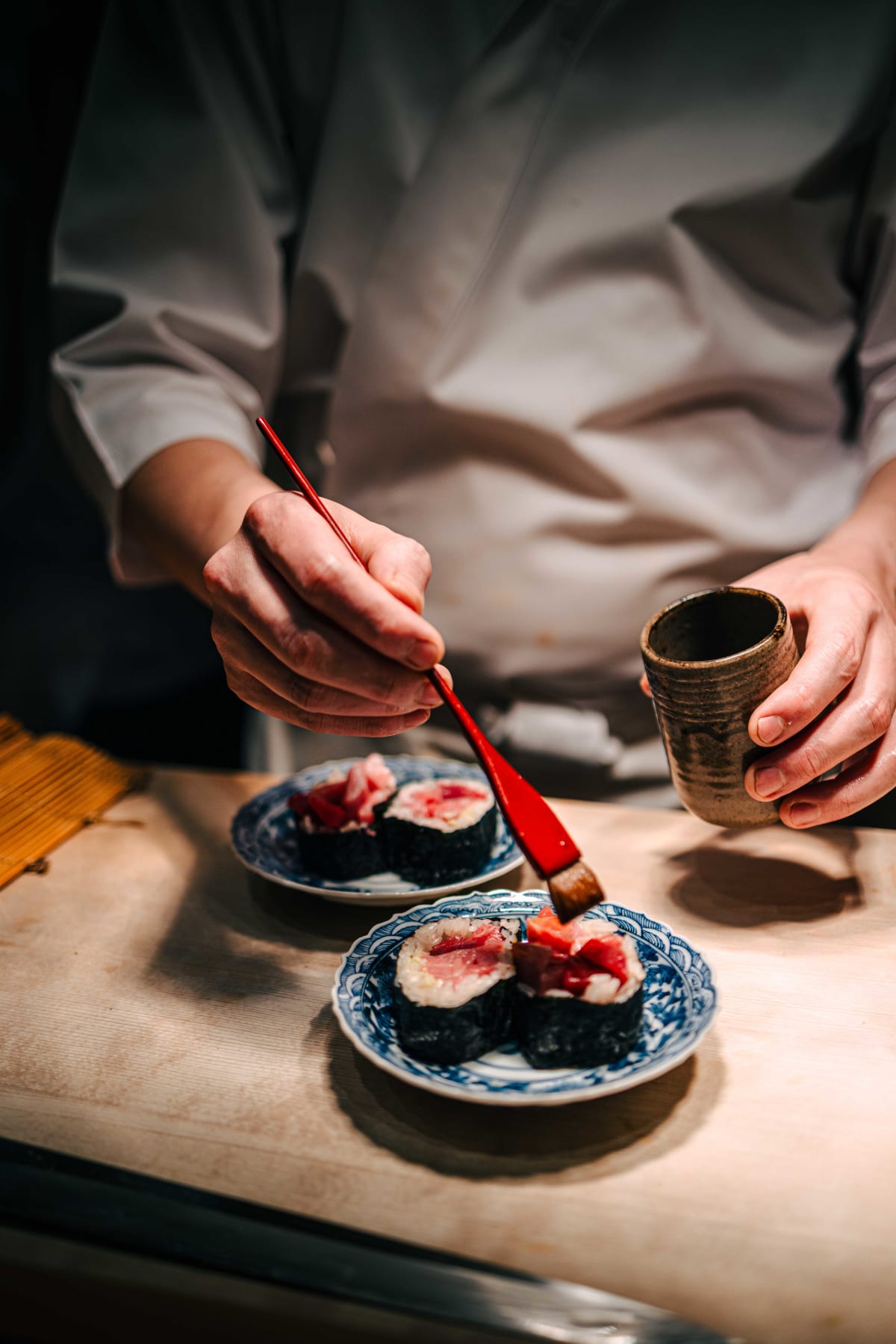
From the cut faces of the thick roll, chunks of akami, chutoro and otoro rise up, with soy-touched wasabi tucked in between. The toro maki looks so good, the tuna's acidity and richness surging in like a storm, that even editing the photos left me painfully hungry.
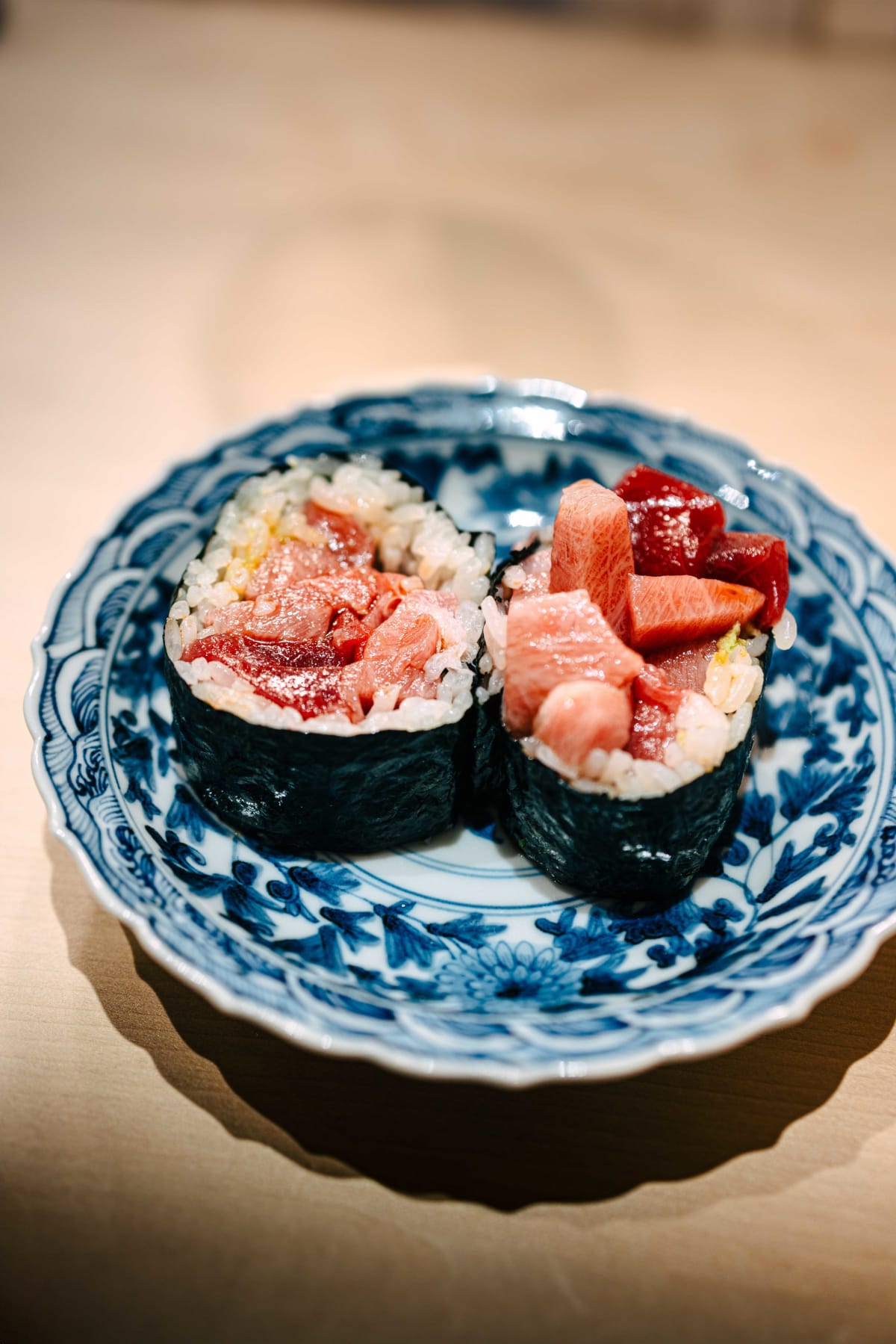
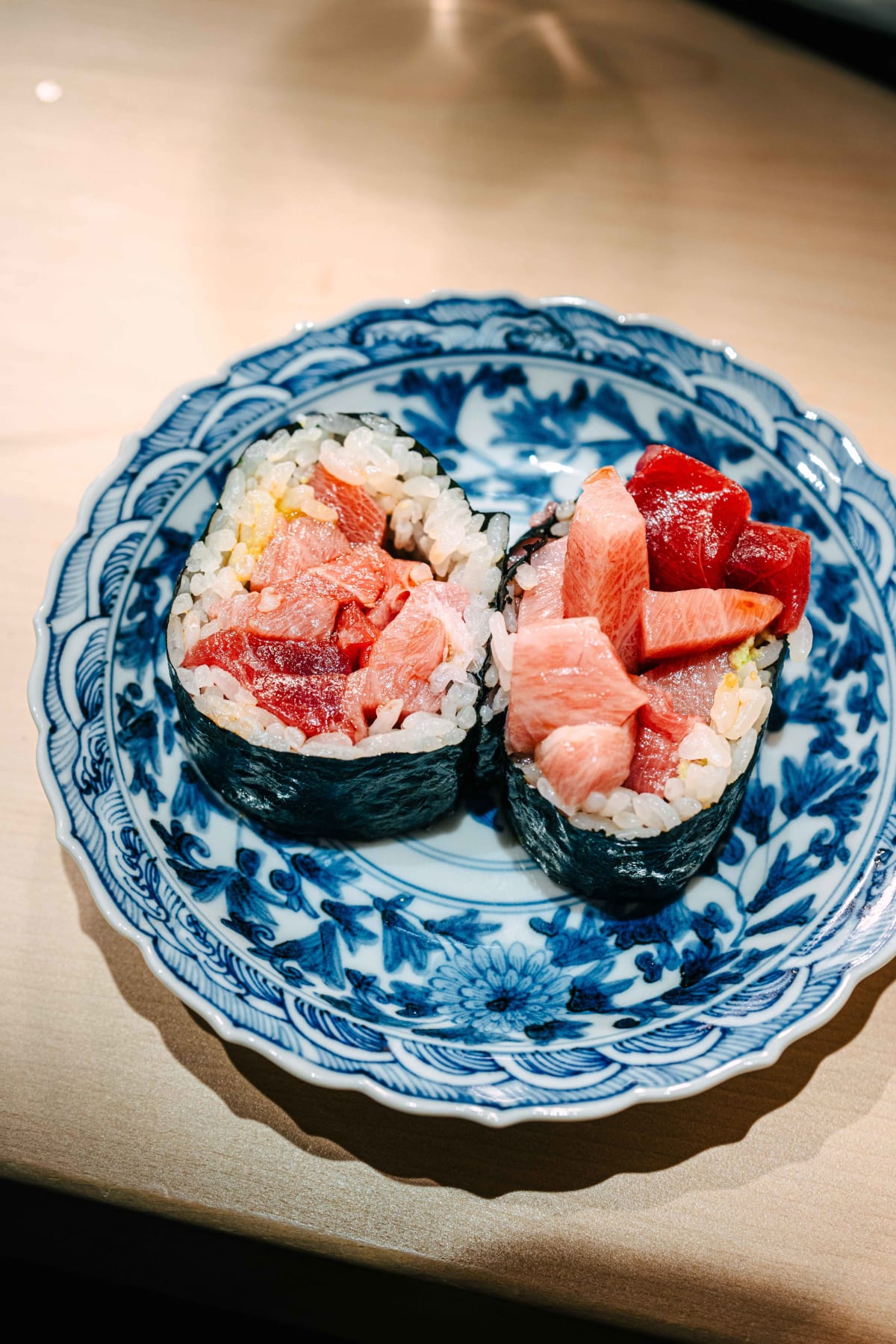
In truth, from a gastronomic point of view it is not an especially great dish in terms of taste, but for the visuals alone, should you not have something this wild at least once? I was very full afterwards.
Come to think of it, most sushiya in Japan serve no dessert, but that night Akira brought out ice cream. It was rice ice cream set on a slice of tamago made with scallop surimi and baked like castella.
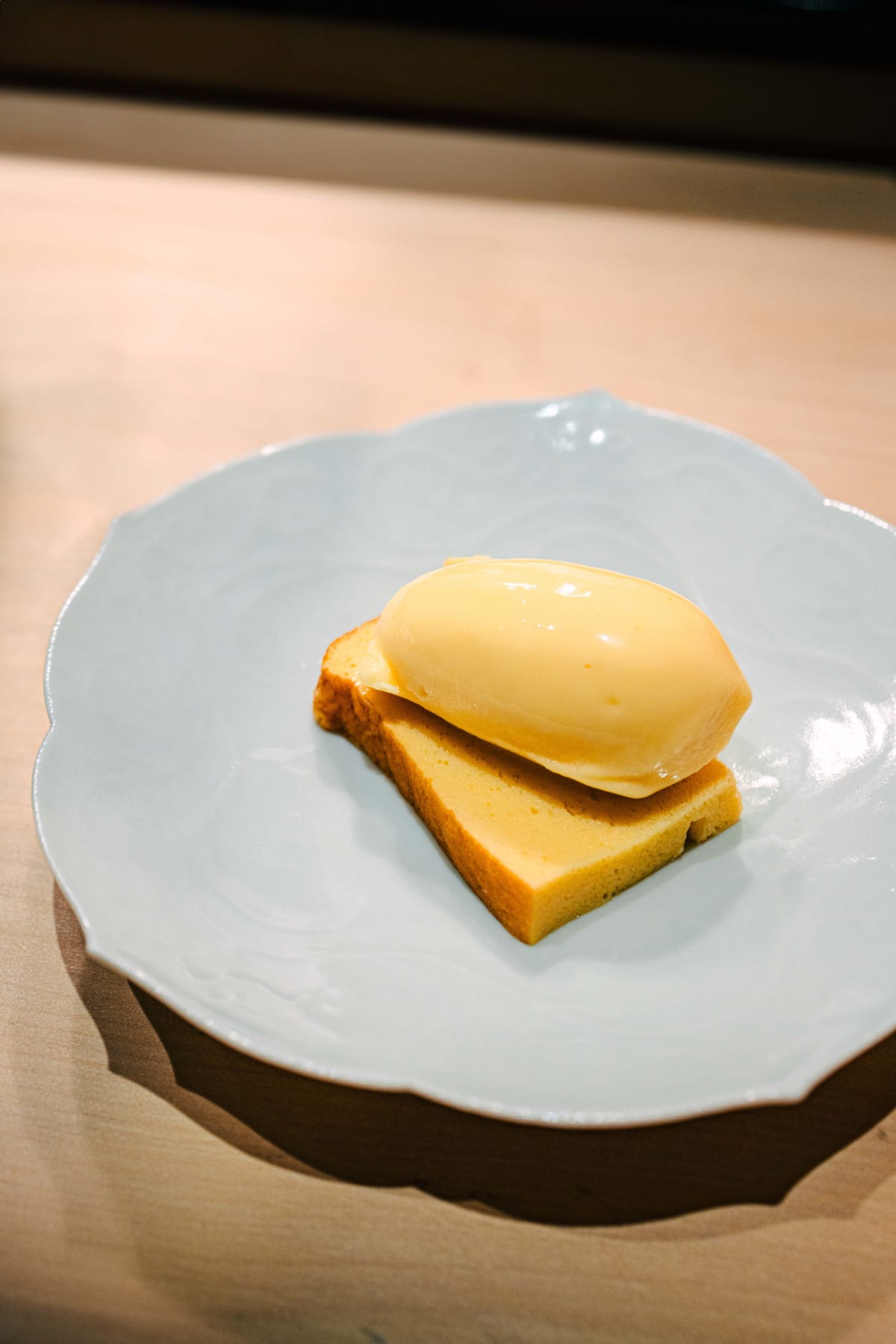
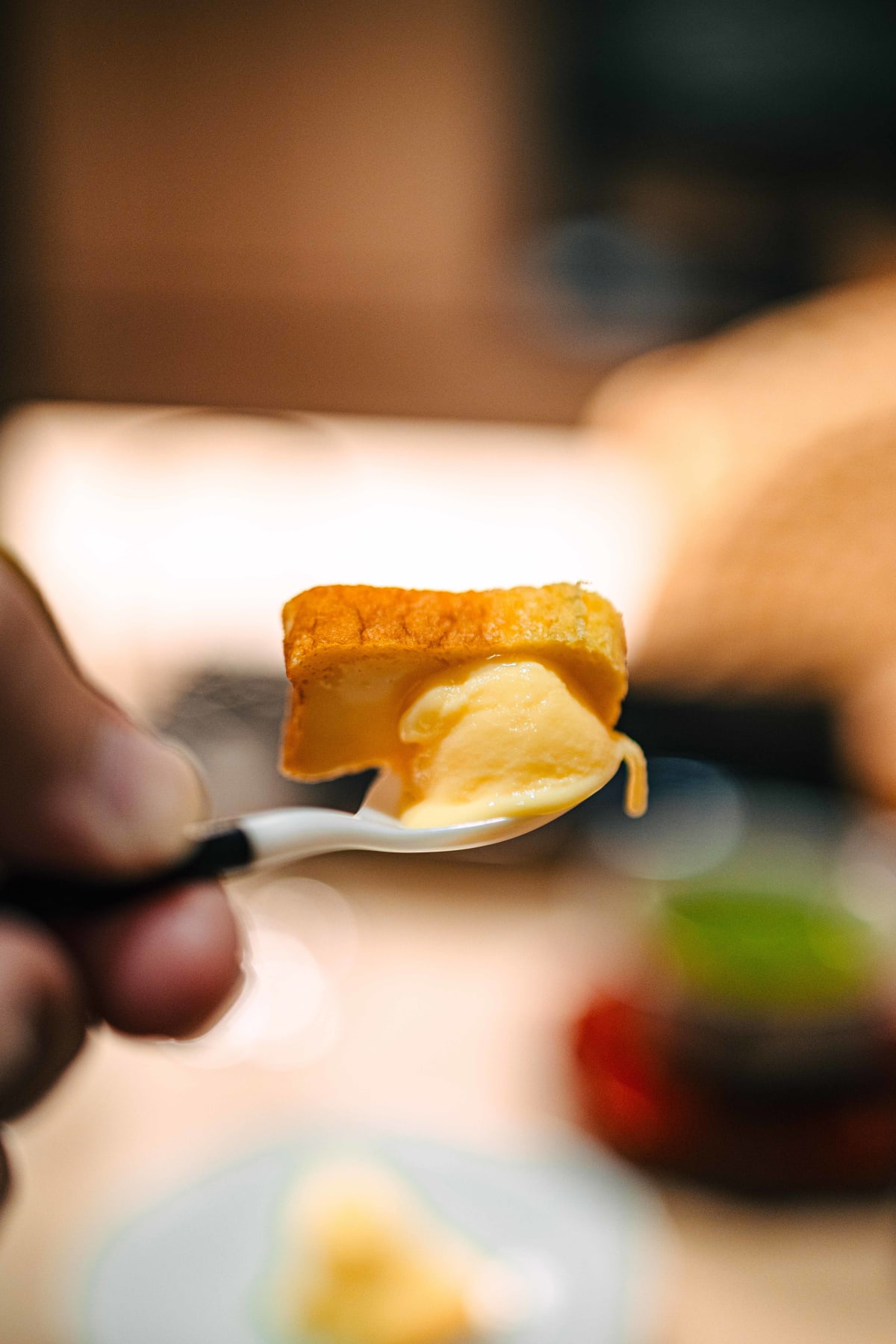
Dessert is always welcome, so I enjoyed it, and then the chef said that, to finish, he would pour each of us a glass of sake from his own bottle.
That sake was Kid (紀土) Muryozan Junmai Ginjo. It is brewed by Heiwa Shuzo in Wakayama, the chef's home prefecture, from special A-grade Yamada Nishiki polished to 50%, and it was named Champion Sake at IWC 2020, out of 1,401 entries.
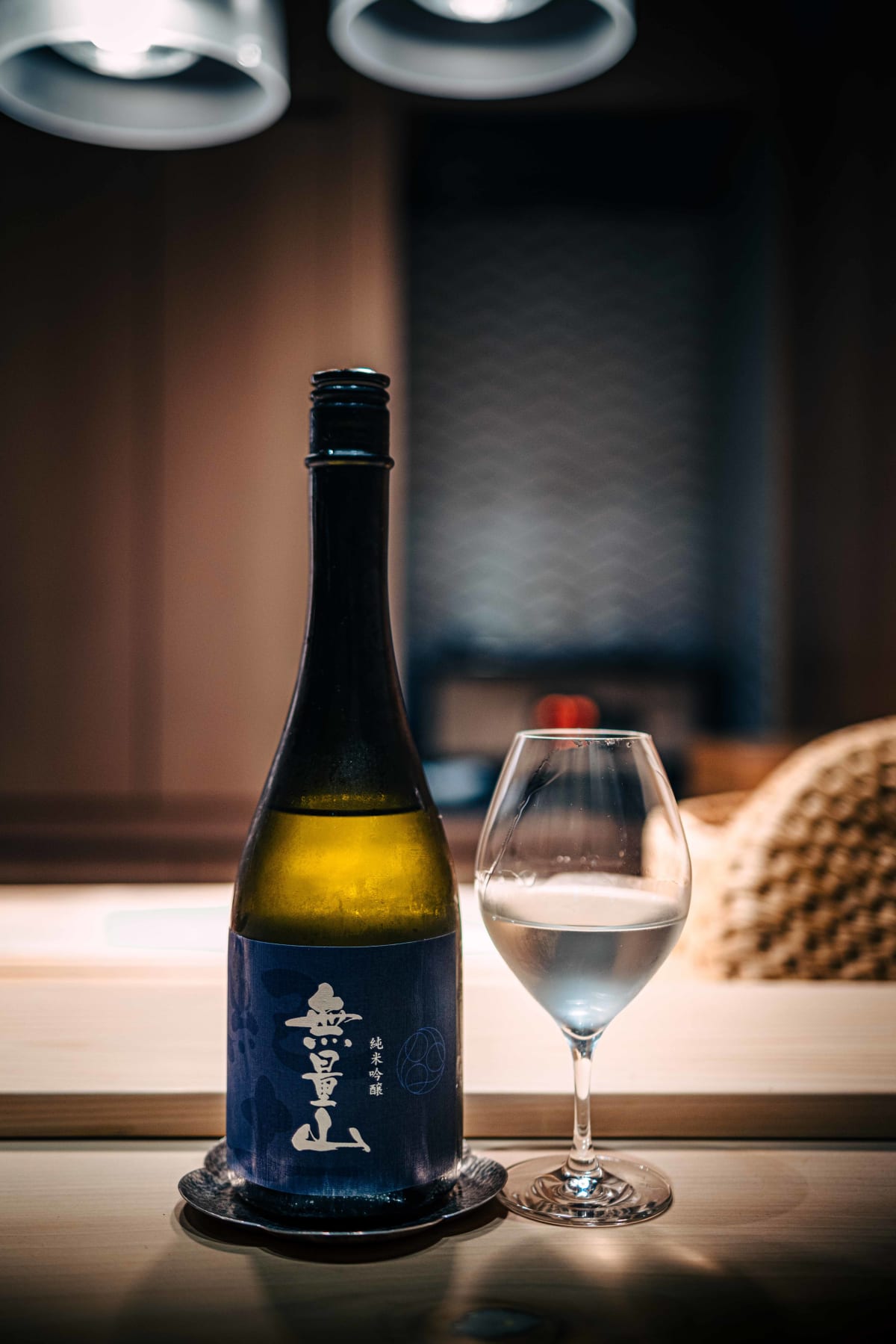
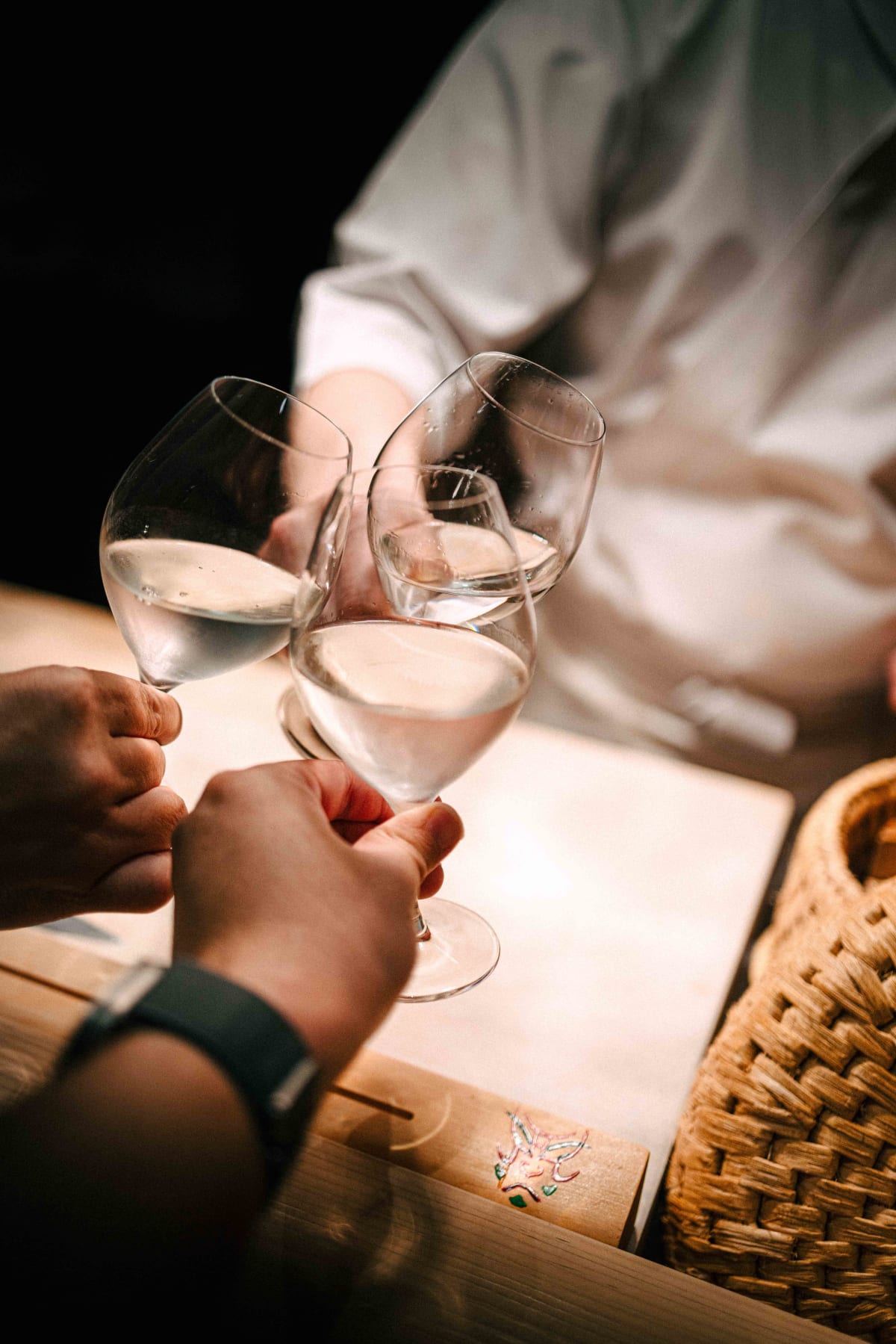
So, over dessert and for a short while after, we all clinked glasses and enjoyed one more round of sake.
Akira was already getting harder to book back then, and now it is very hard indeed. I have been to many sushiya in Japan since, but Akira's superb produce is something I keep thinking about.
Akira's shari has kept moving since this dinner. In February 2025, Maeiwa cooked the sushi lunch at a seafood event in Shirahama, in his home prefecture of Wakayama, conceived by Koji Minemura of Ao in Nishiazabu, with the Ehime fisherman Fujimoto preparing the catch. Later that year he was serving two shari, red vinegar for tuna and kohada and a Wakayama rice vinegar for white fish, so the light rice I struggled with may read differently now. The two counters share their key suppliers, Fujimoto and Hasegawa in Nagai, and where Ao builds sauces around their fish, Akira lays it straight onto rice. The tsumami and nigiri omakase now starts at ¥47,300 all in, and corkage is ¥5,500 a bottle.
Have a question about this restaurant, or want to share your own experience?
Send a message