Fine Dining · Tokyo · Japan / December 2024 / Tabelog Gold (2024)
Ao Nishiazabu
"The number-one Japanese-French in Tokyo, where Japan's finest produce is the whole argument"
Section 1·A Tabelog Gold
AO
In 2023, when I had only just begun travelling through Japan for food, I came to Tokyo for the cherry blossoms. Back then even a Tabelog Silver had me thinking, "Ah, I have come somewhere good," while Gold was beyond my dreams; then, by a stroke of luck, I caught a cancellation and visited my first Tabelog Gold restaurant. That was Ao, the current number one in Japanese-French, a Tabelog Gold in Nishiazabu. Twenty months passed between my first visit in April 2023 and my return in December 2024. The food had already been very good the first time, though a few things fell short. This time, though, it struck me as a near-complete restaurant, one that had overcome even those few shortcomings.
Section 2·The Ingredients
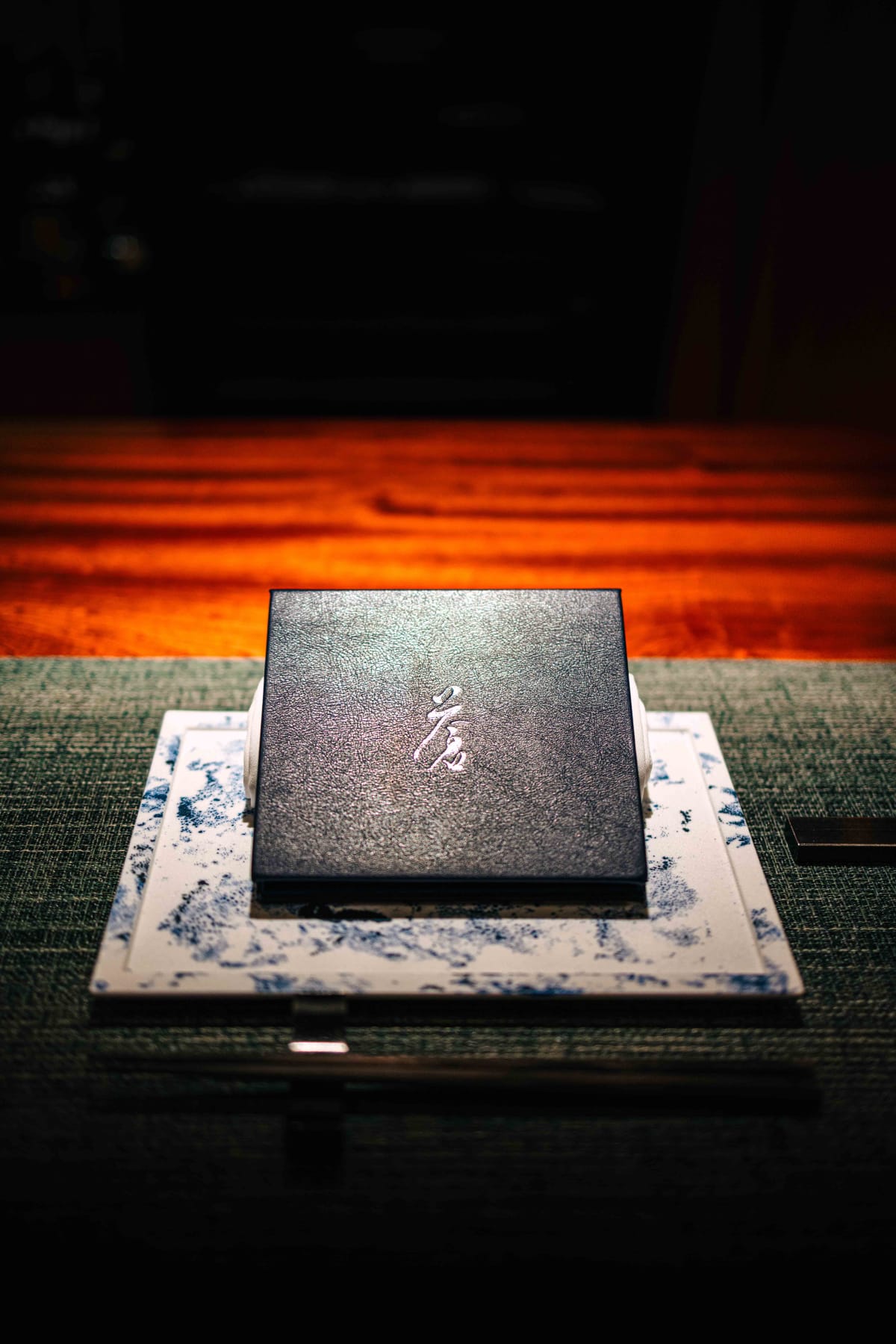
Tabelog classifies Ao as French, but to me, and seemingly to many others, its cooking is too innovative and too distinctly Japanese to fit neatly within that label. Rather than the layered complexity of French cooking, it leaves a spare impression, something you might call a Japanese sense of taste, 味. So how does it reach number one in Japan, a country said to be as devoted to French cuisine as France itself? The answer, I would say, lies in the ingredients.
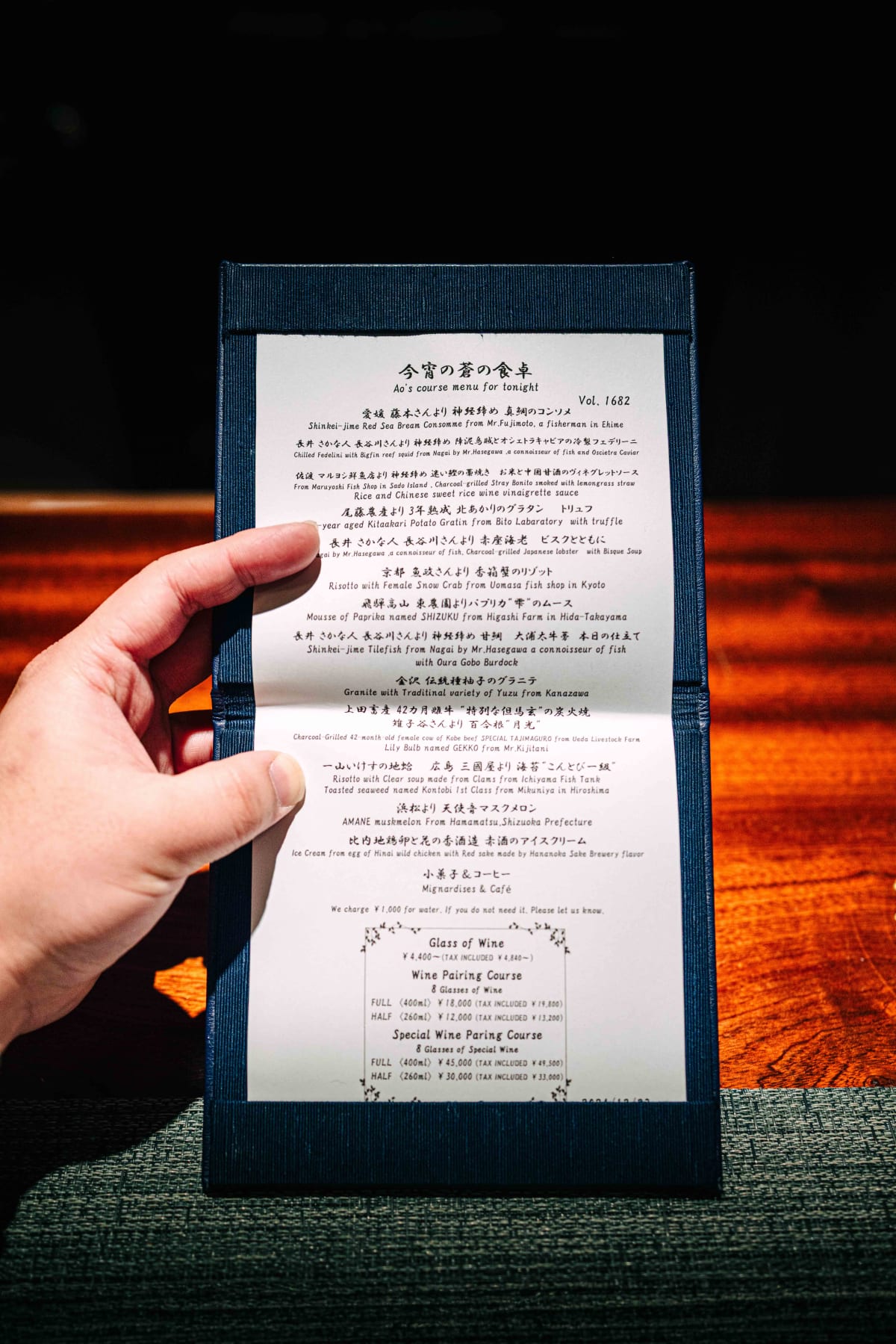
Ao is supplied with the finest fish and seafood by Japan's finest fishermen, and you can read that pride right off the menu, which sets down the names of the people who supplied each dish as it introduces them. Speaking cautiously, I have yet to encounter fish and seafood of that quality, or that impact, at any restaurant in France. The closest rival, to my mind, is Table by Bruno Verjus in Paris, which I visited after this meal. That is how clearly Ao shows you just how much ingredient quality shapes a dish.
That is how clearly Ao shows you just how much ingredient quality shapes a dish
Section 3·Fully Matured
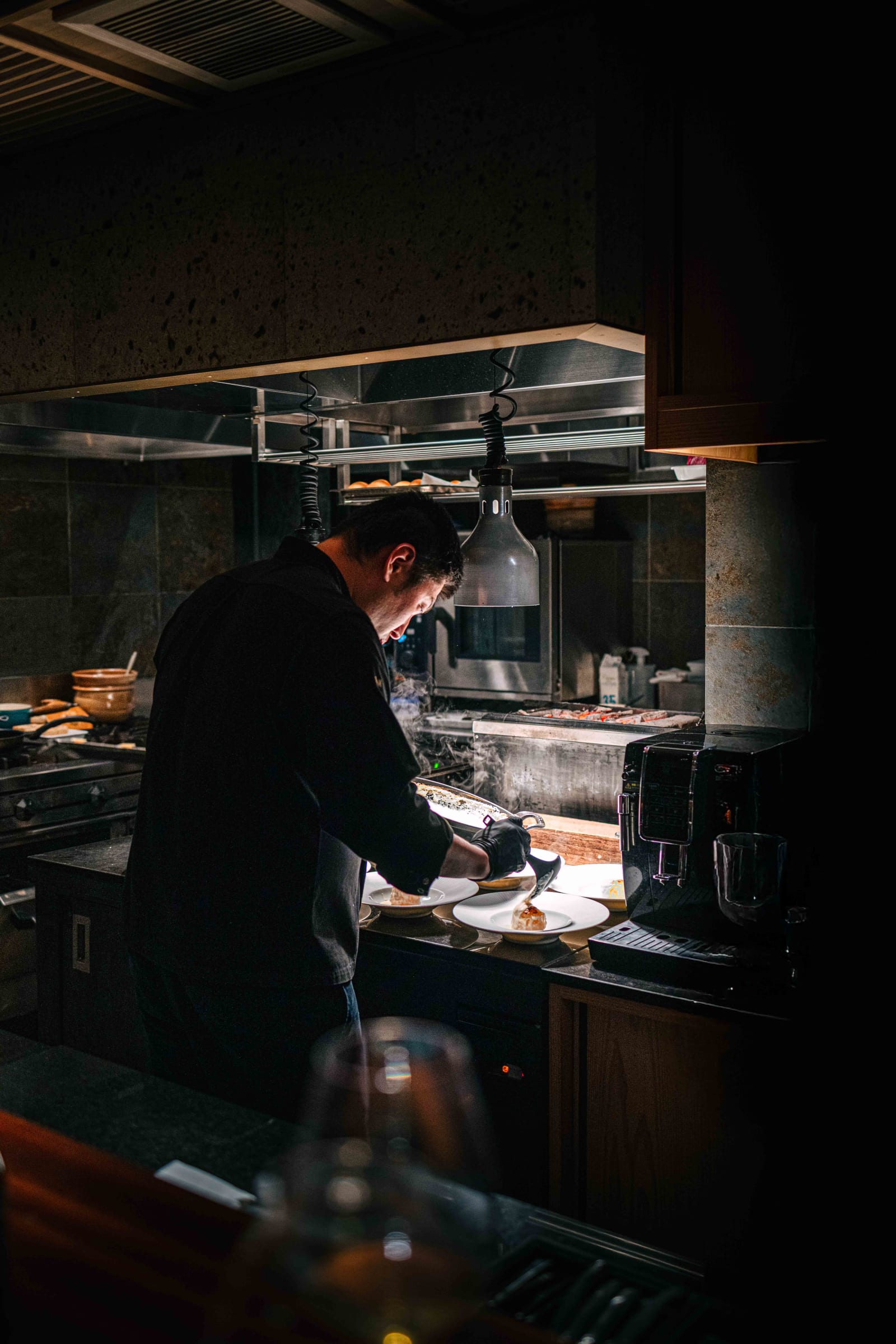
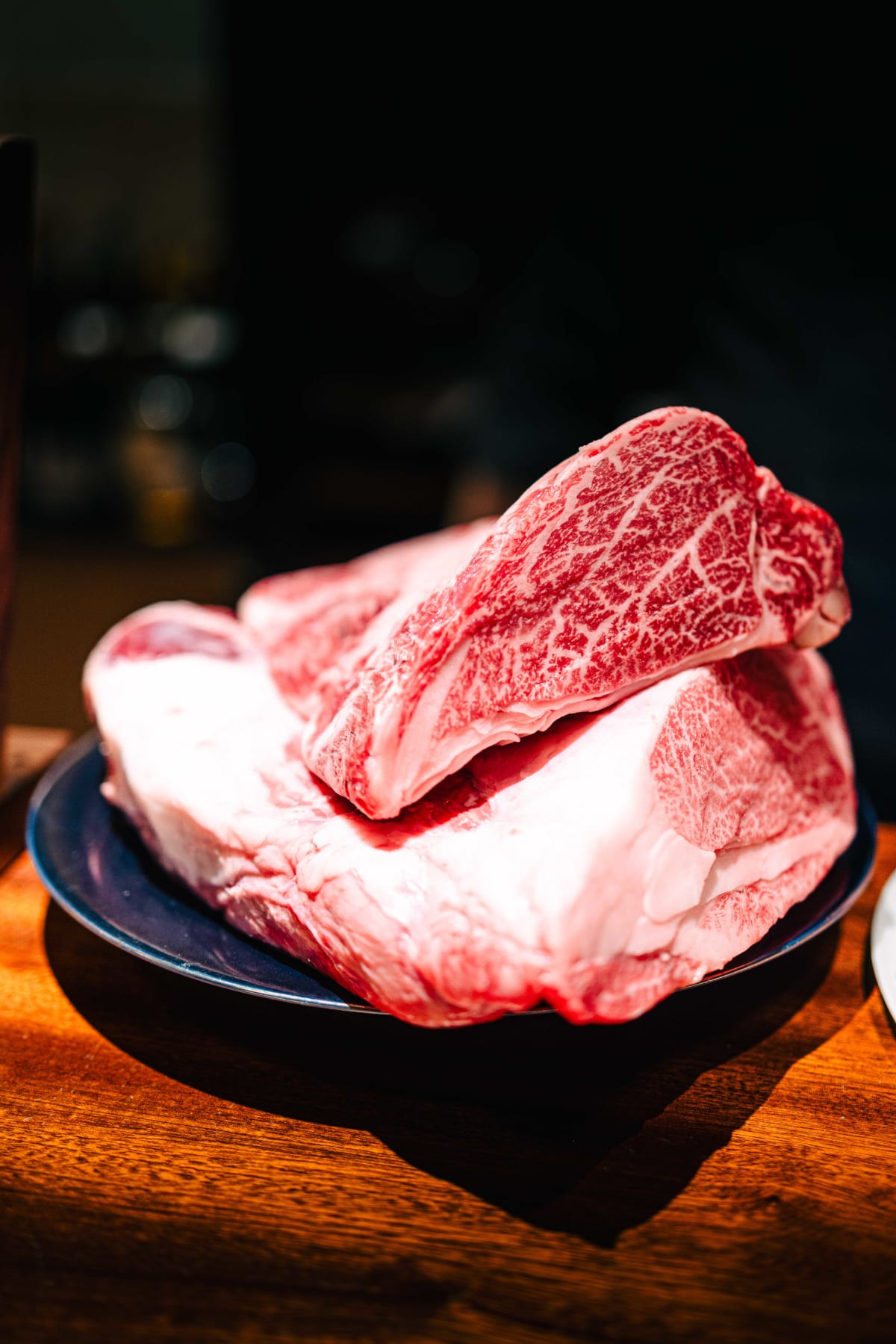
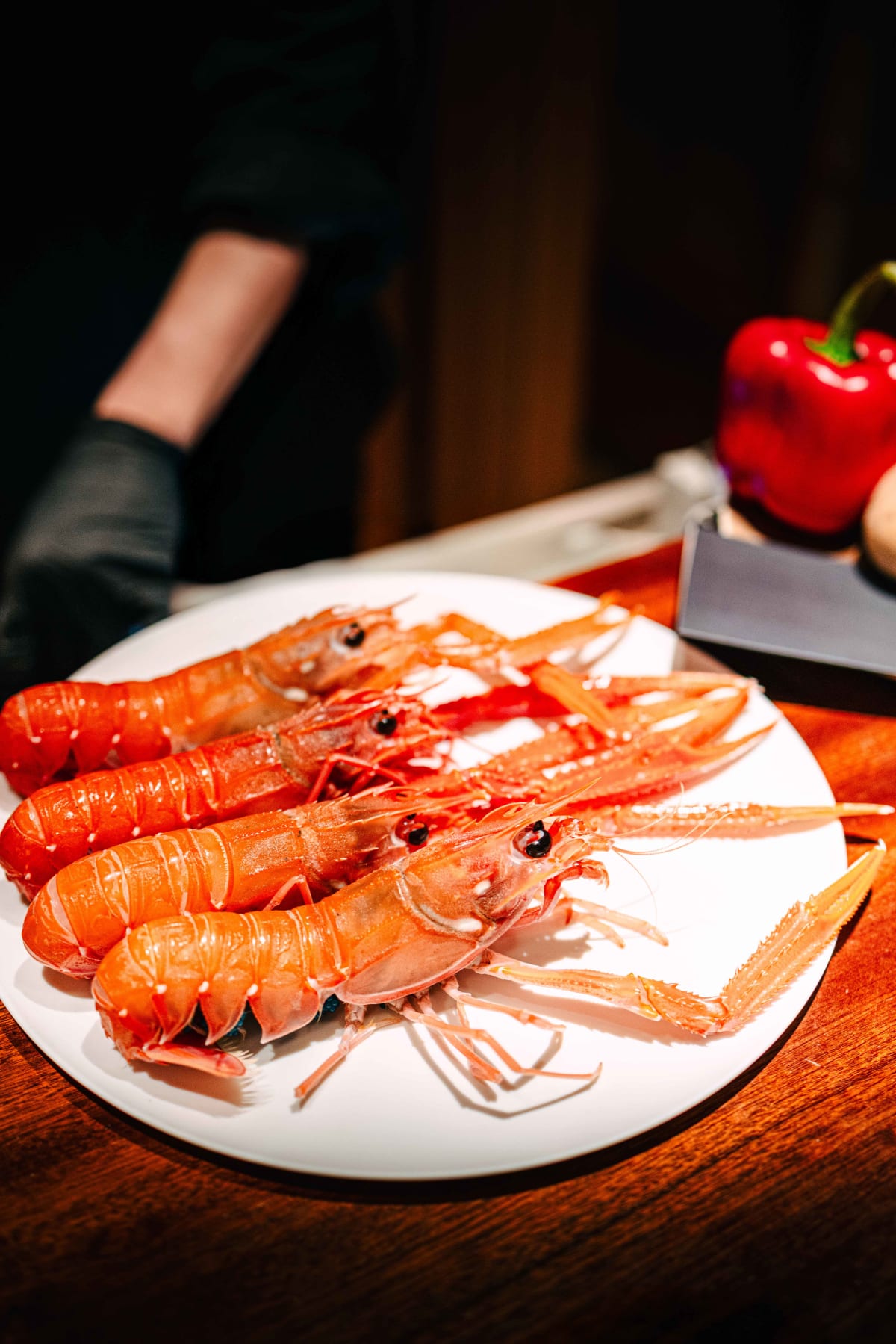
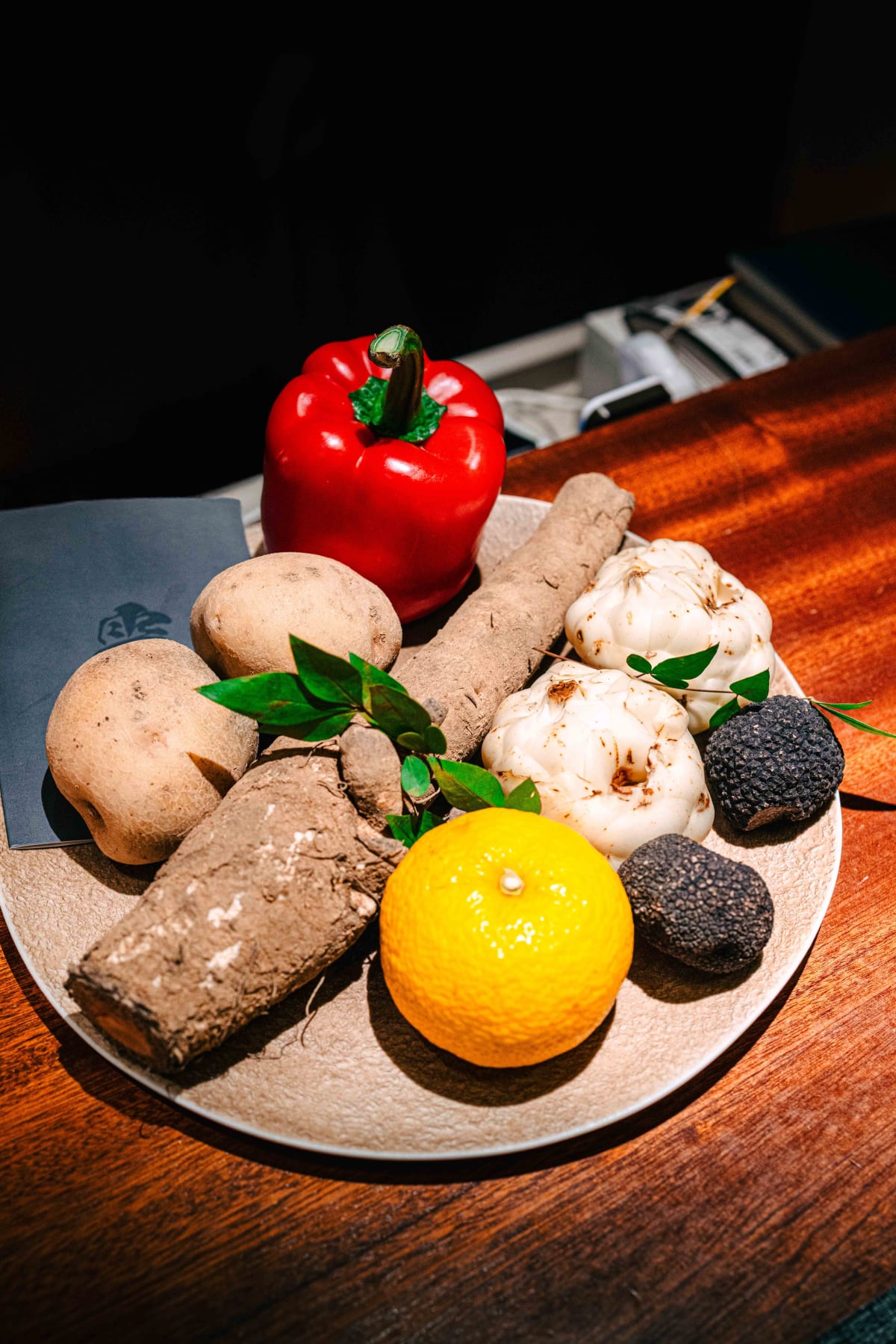
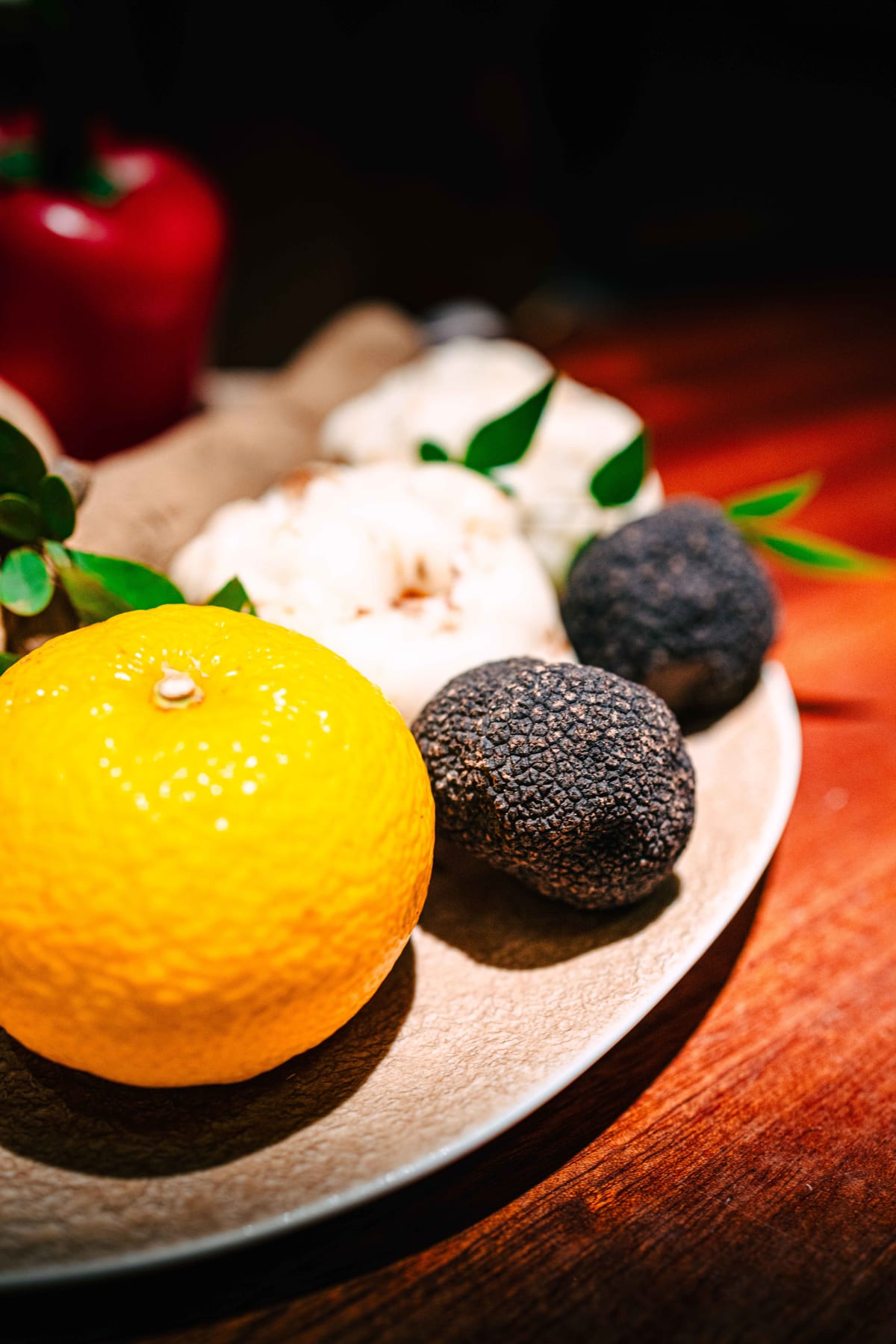
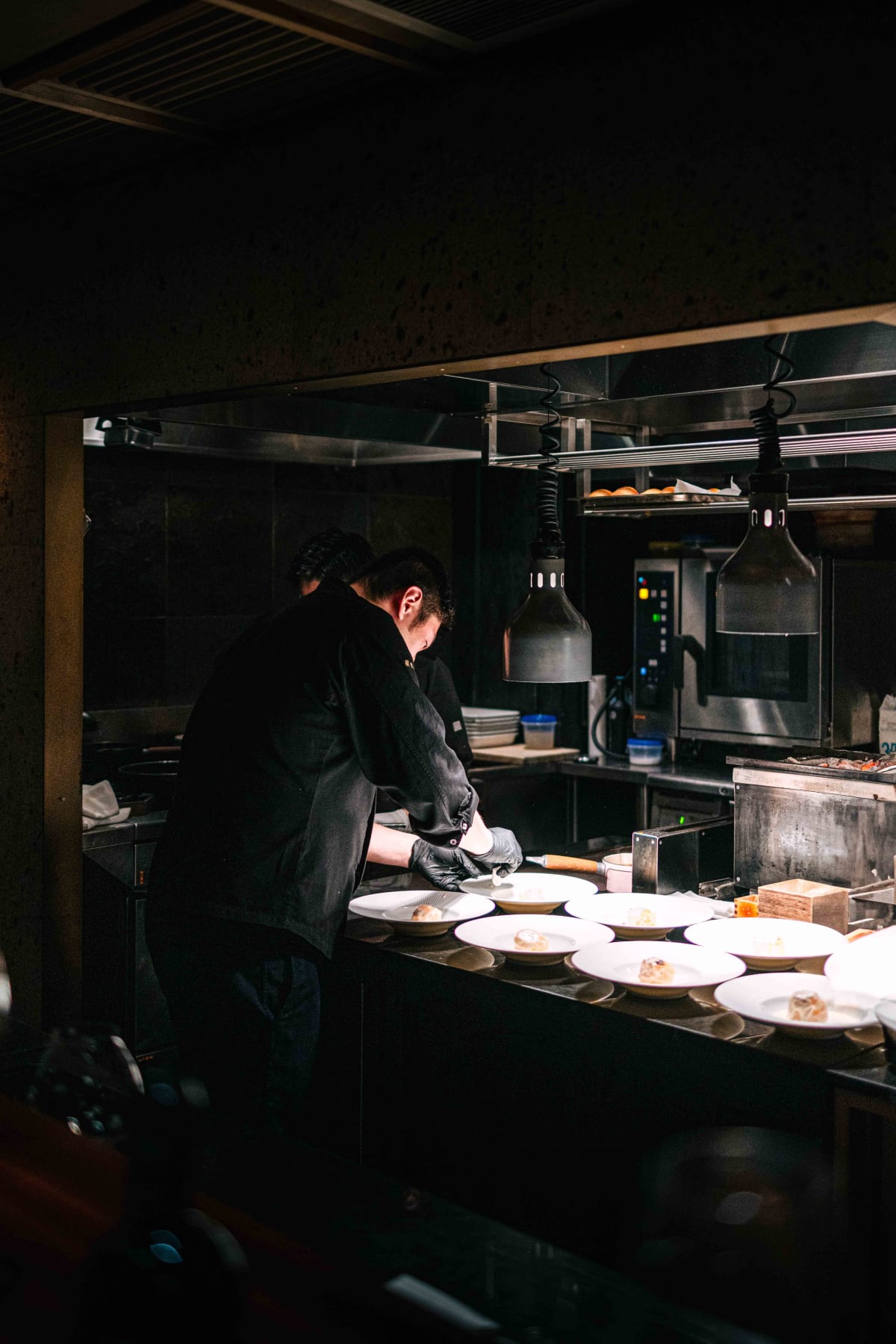
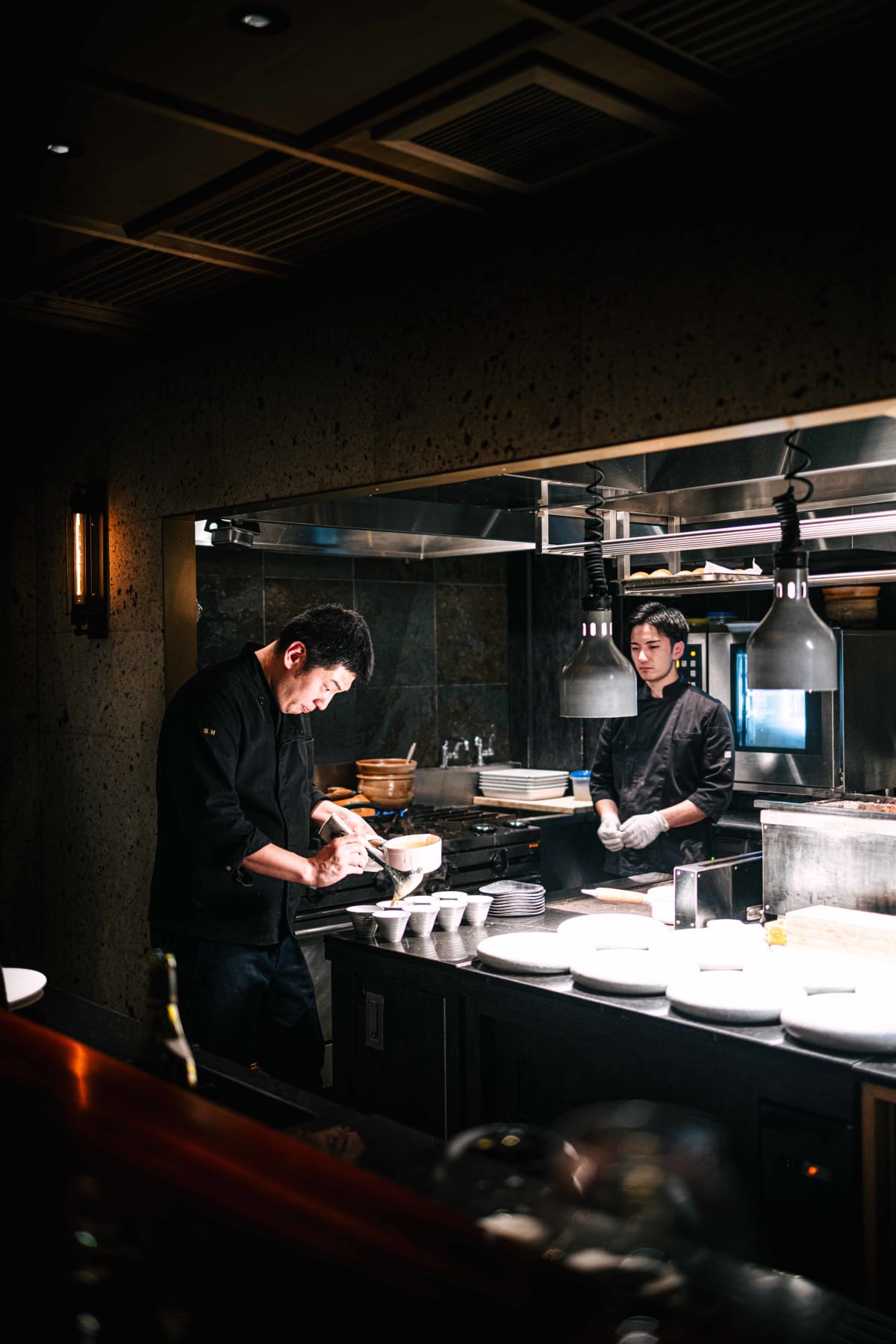
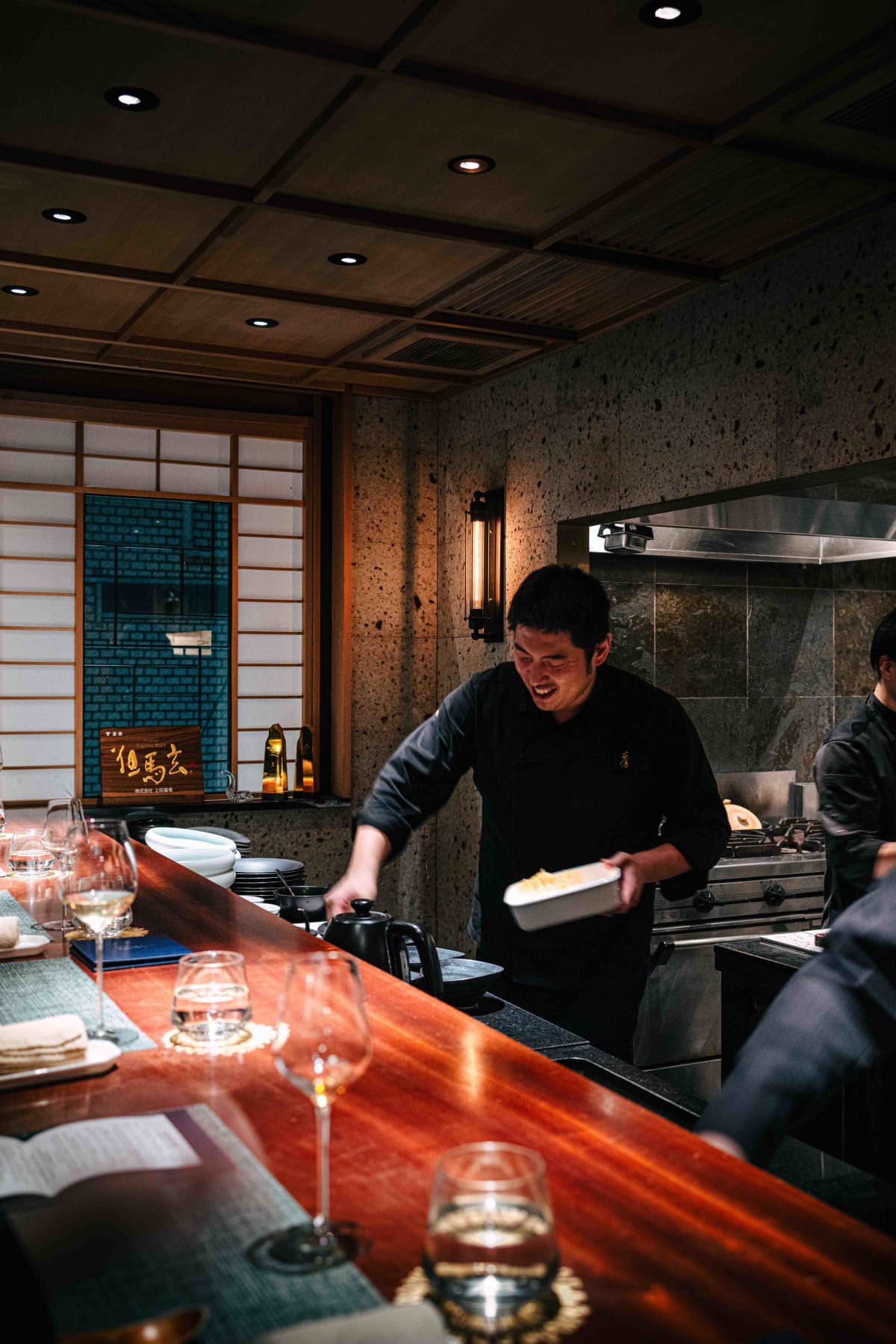
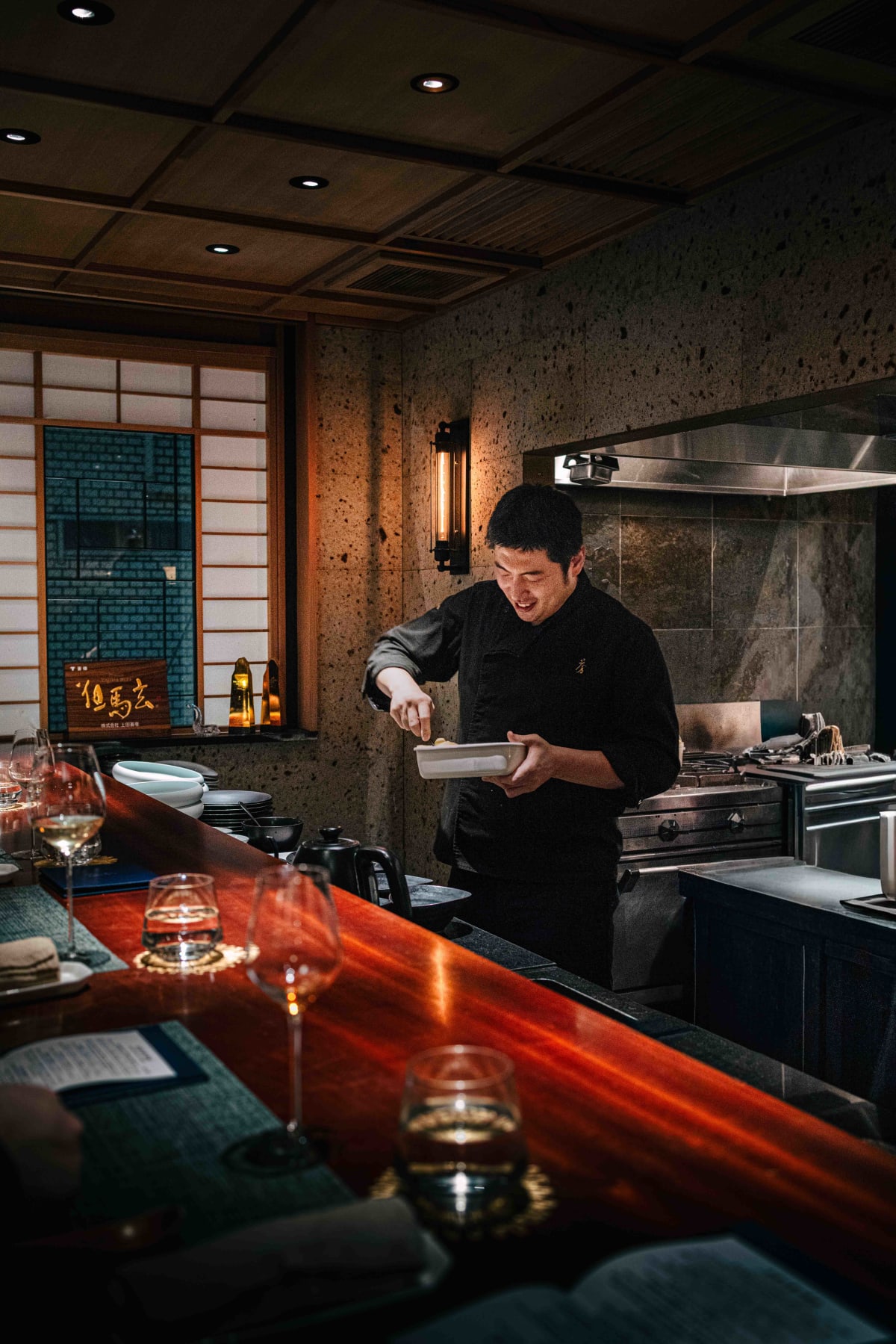
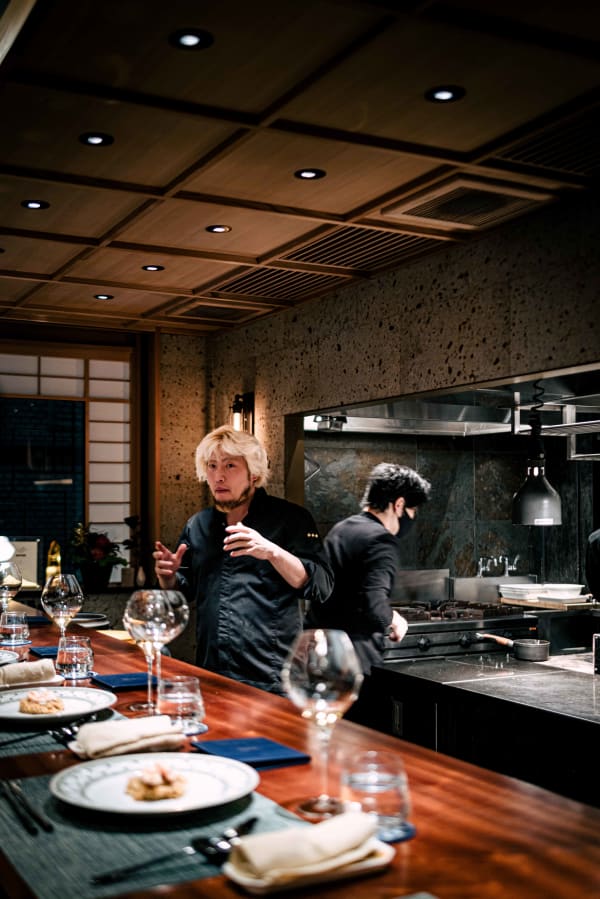
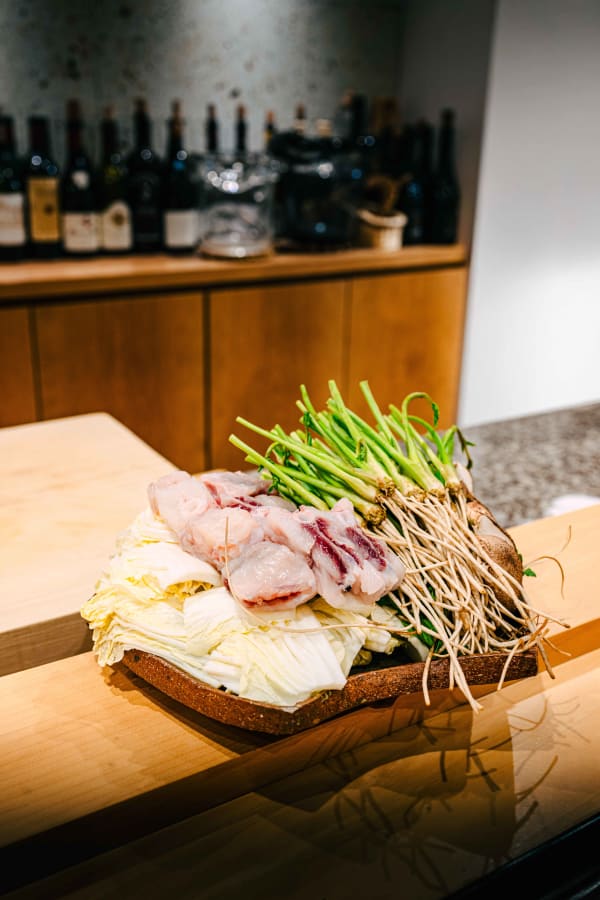
When I visited in 2023, the chef's hair was blond. This time it was black, and he seemed altogether calmer. The operation felt more mature as well. The pacing felt a touch quick, but everything flowed, and I ate well from start to finish. On my previous visit, the dishes simply arrived one after another; this time, the chef first showed us the ingredients that would appear throughout the course. Not only the seafood but the wagyu looked good, and above all there was a sense of greater care given to the vegetables.
Section 4·The First Courses
The night's wines by the glass opened with a Champagne, Bruno Paillard's 2013 Blanc de Blancs. Founded in 1981, the house is reckoned the youngest prestige maison created since the Second World War. Made entirely from Chardonnay of two Grands Crus of the Côte des Blancs, Oger and Le Mesnil-sur-Oger, and aged seven years on the lees, it is an Extra Brut with a dosage of 4.5 g/L. Its lemon, minerality, and faint salinity gave the wine a taut profile, making it an excellent way to wake the palate before the first consommé.
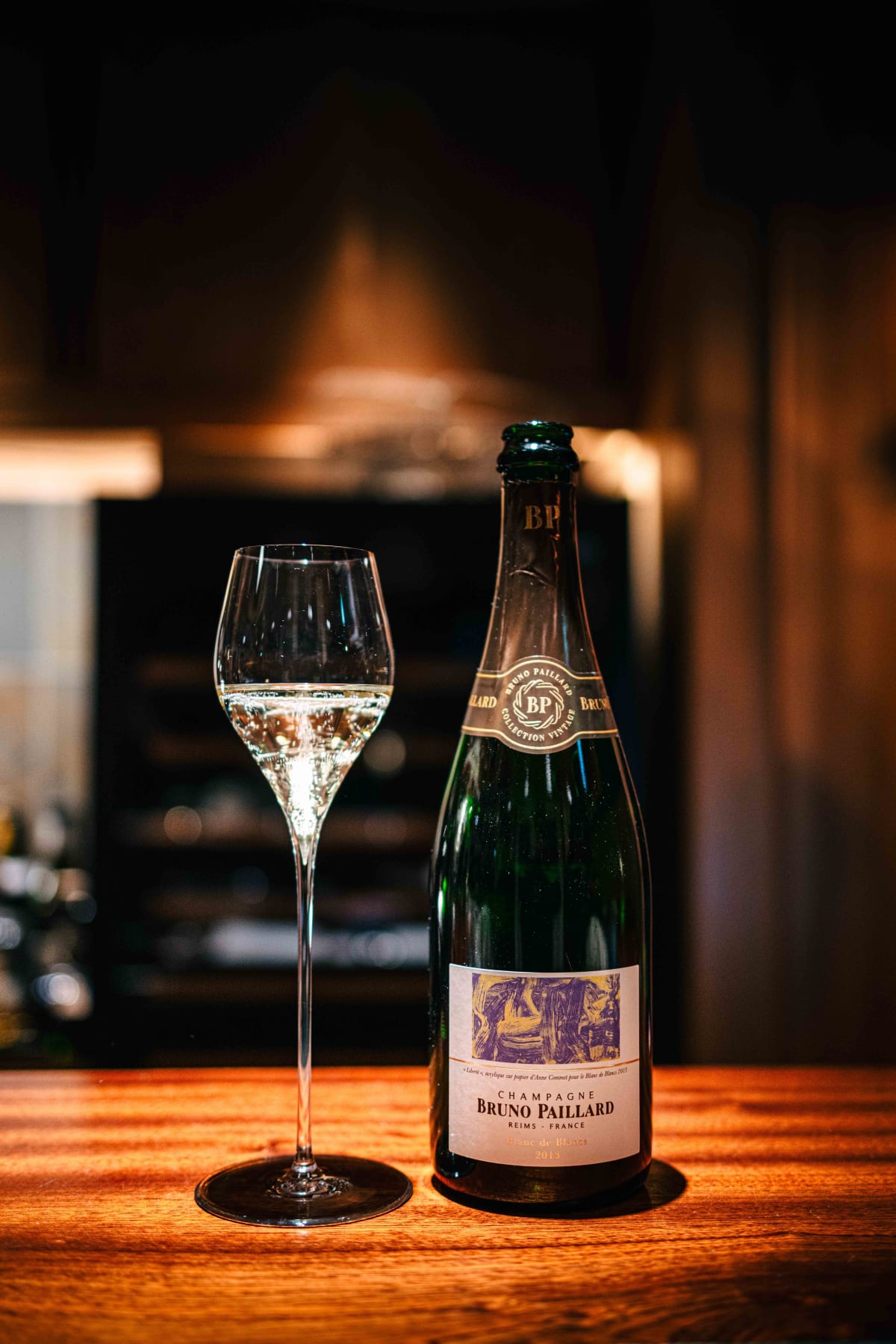
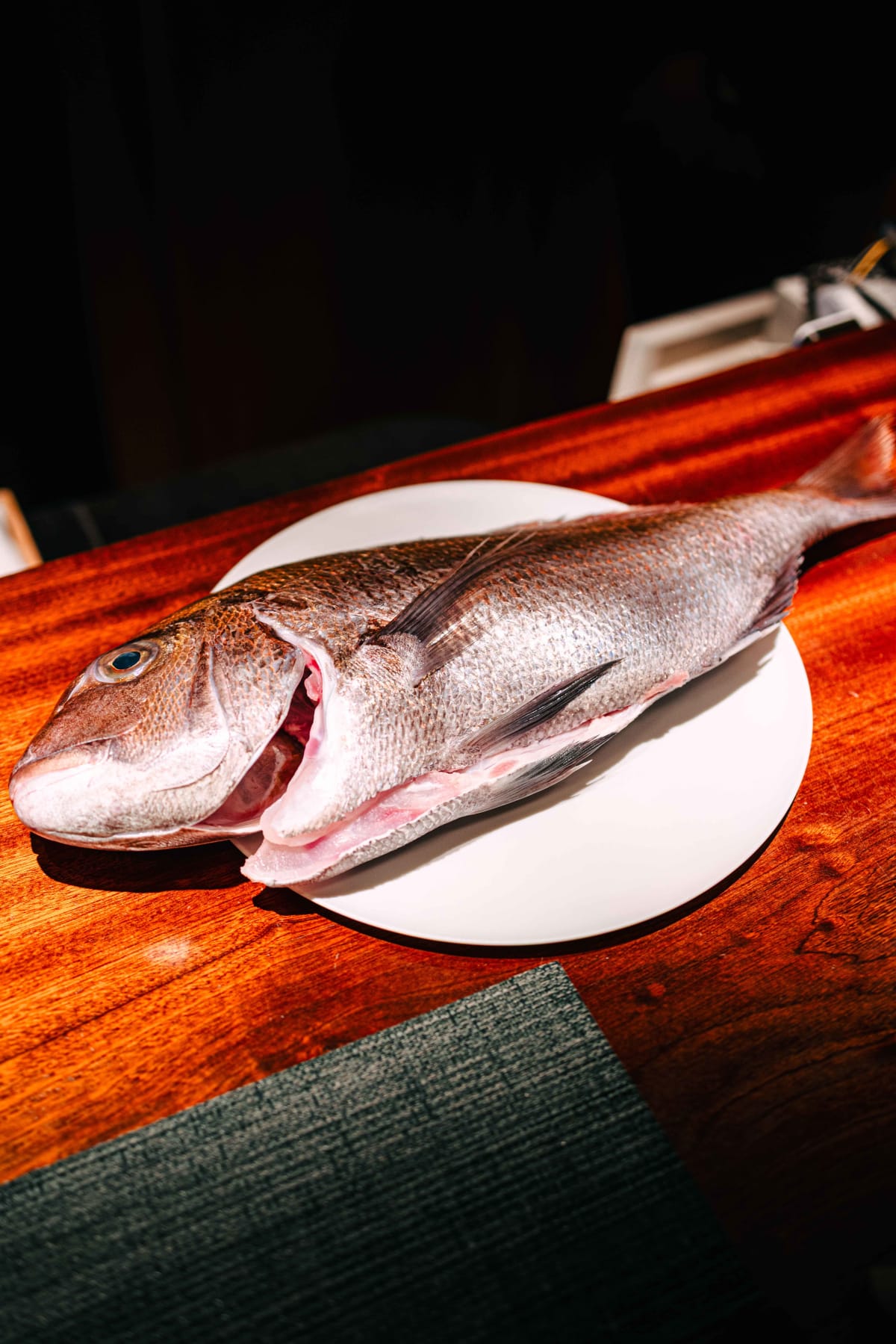
Shinkei-jime Red Sea Bream Consommé from Mr. Fujimoto, a fisherman in Ehime
The course began with a red sea bream consommé, and the madai that went into it was shown to us as well. I once described this consommé as being like a clear, spicy fish-stew broth, but this time the taste was richer still. And in the December cold it had the added effect of warming the body, which may be why it felt all the better.
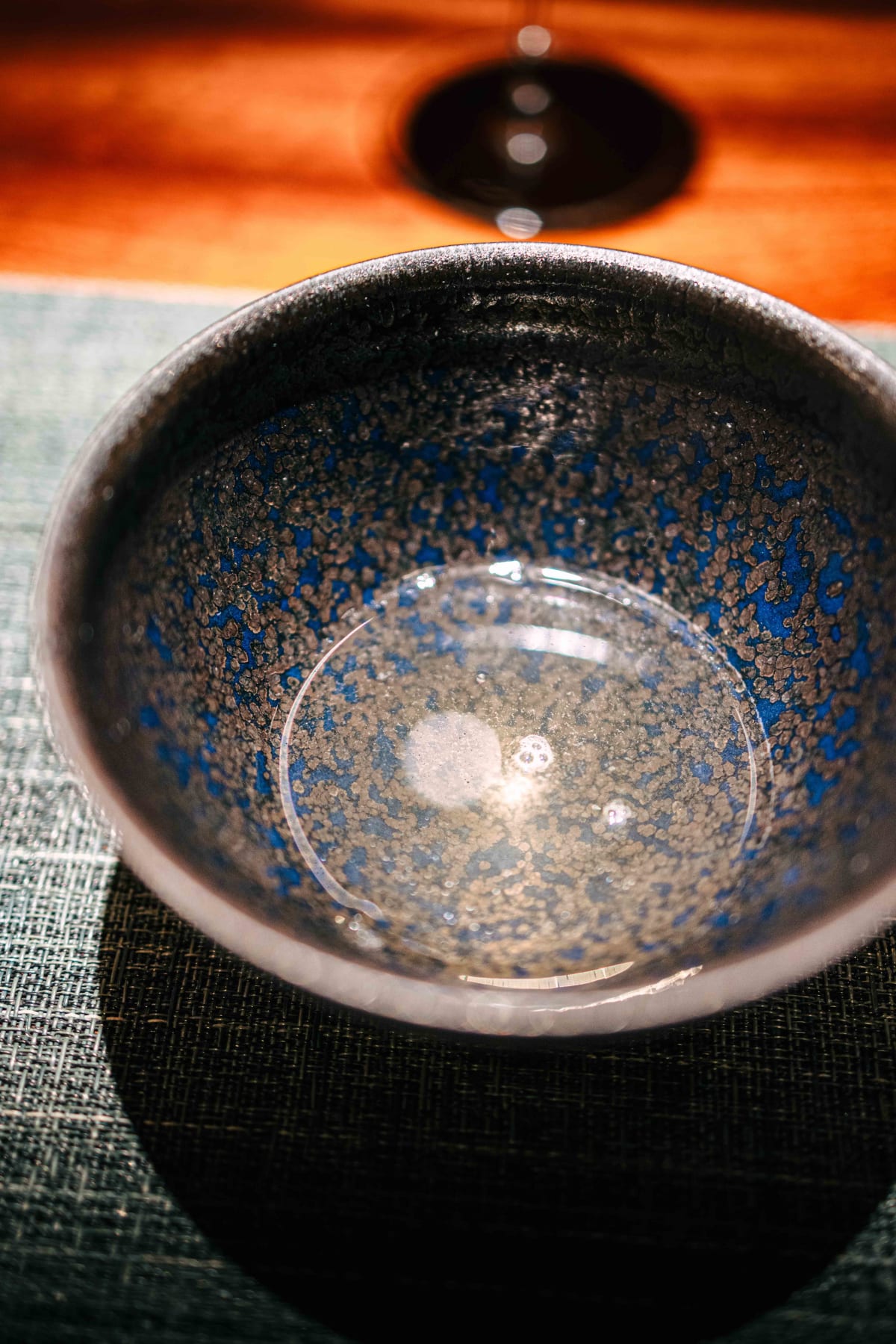
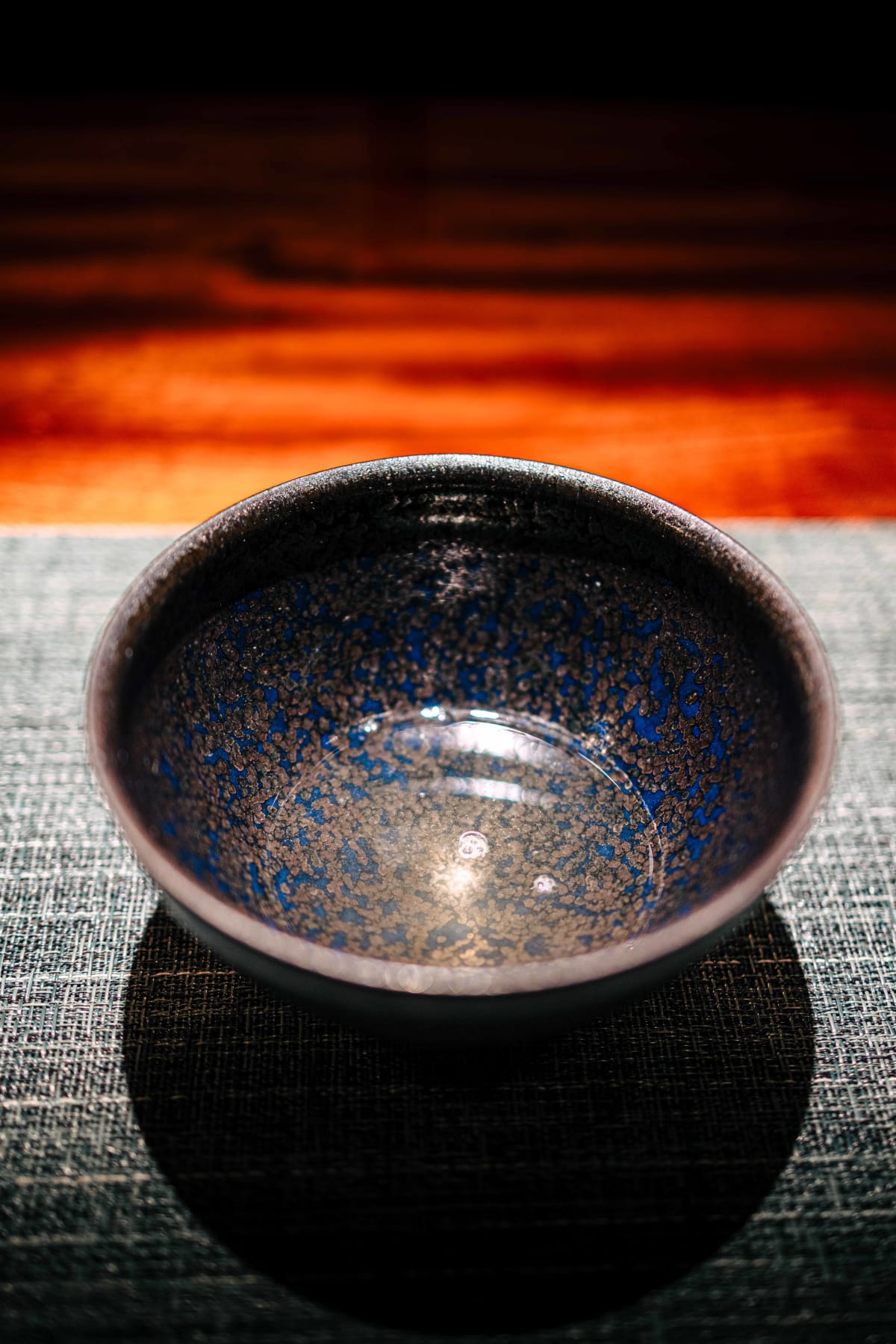
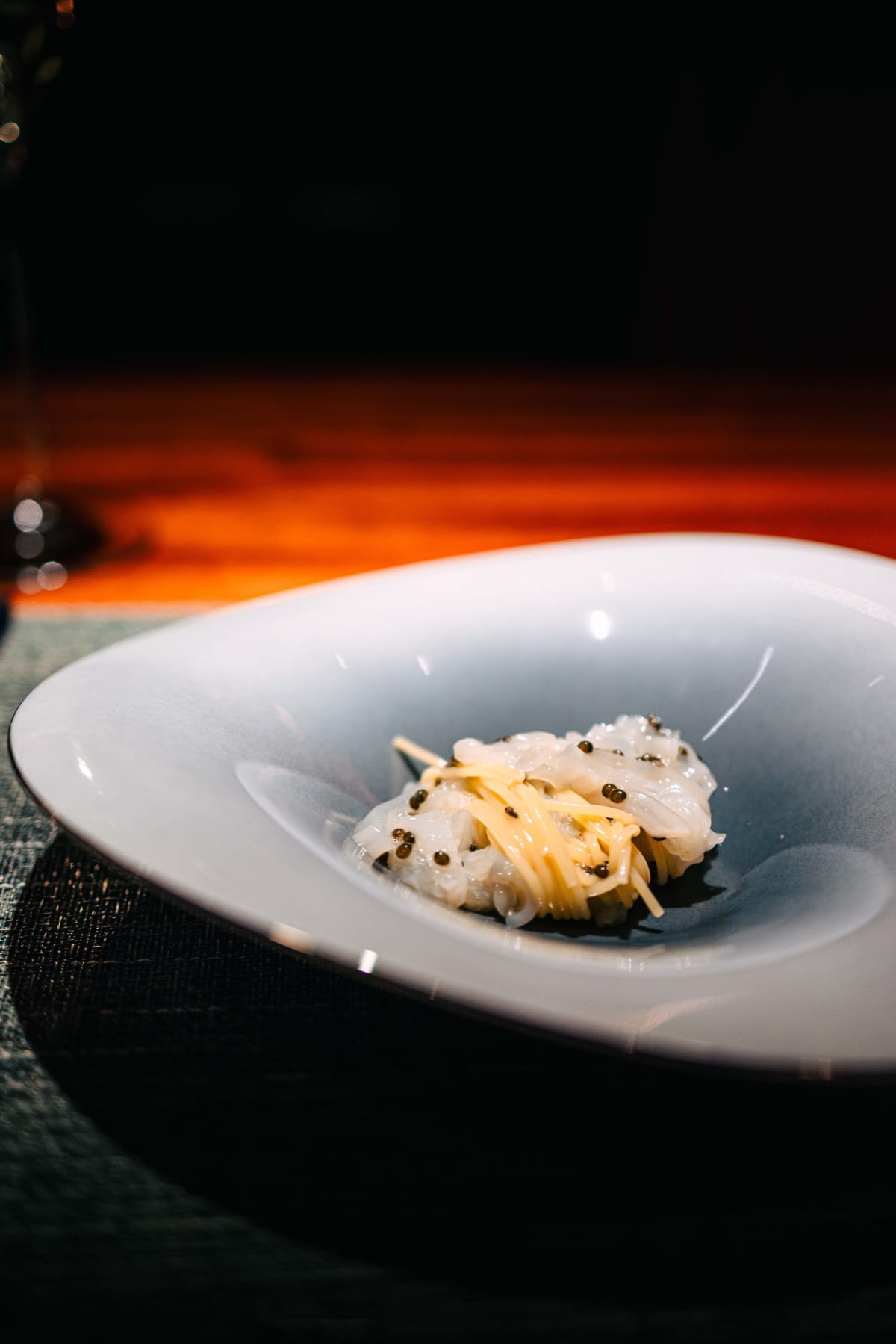
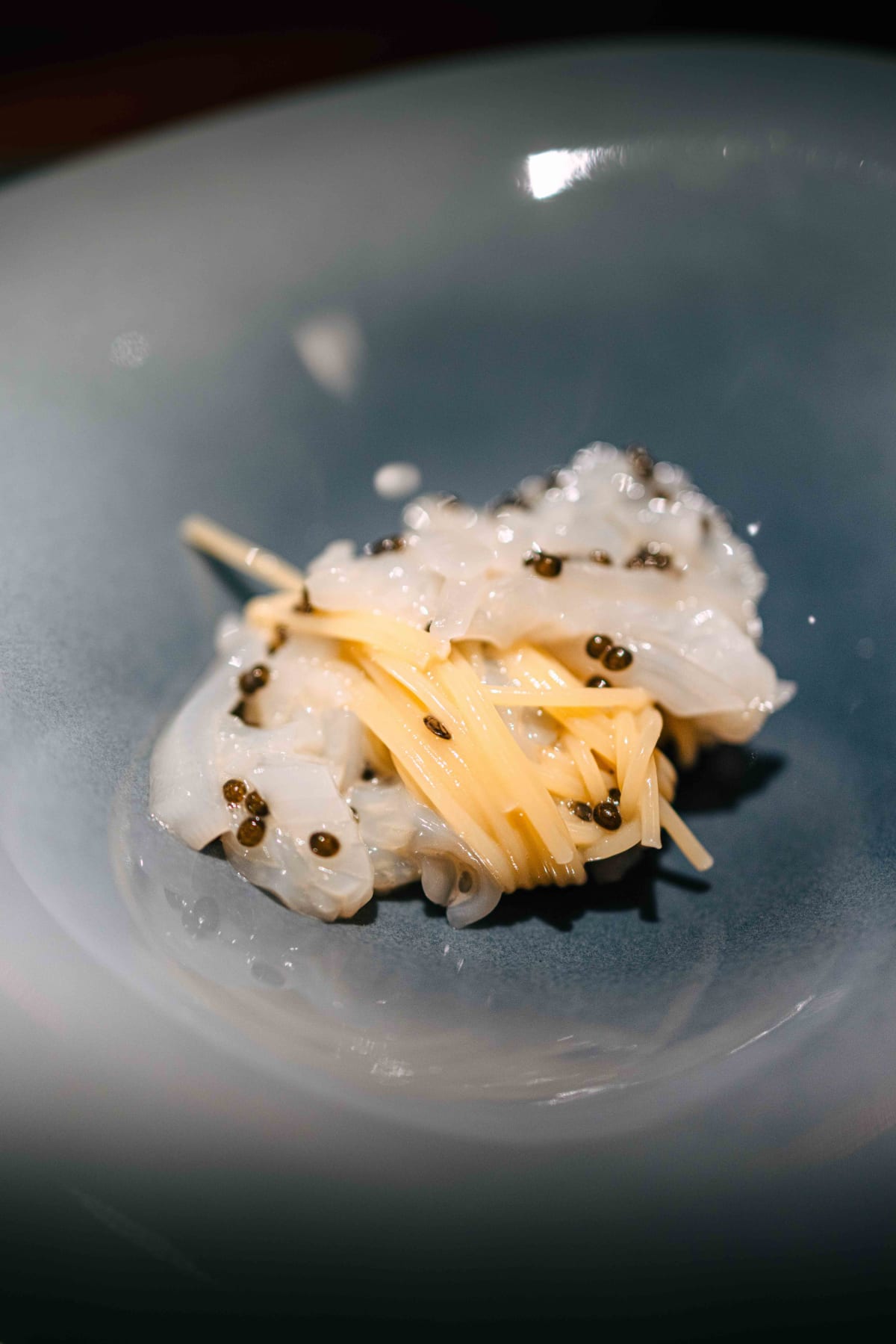
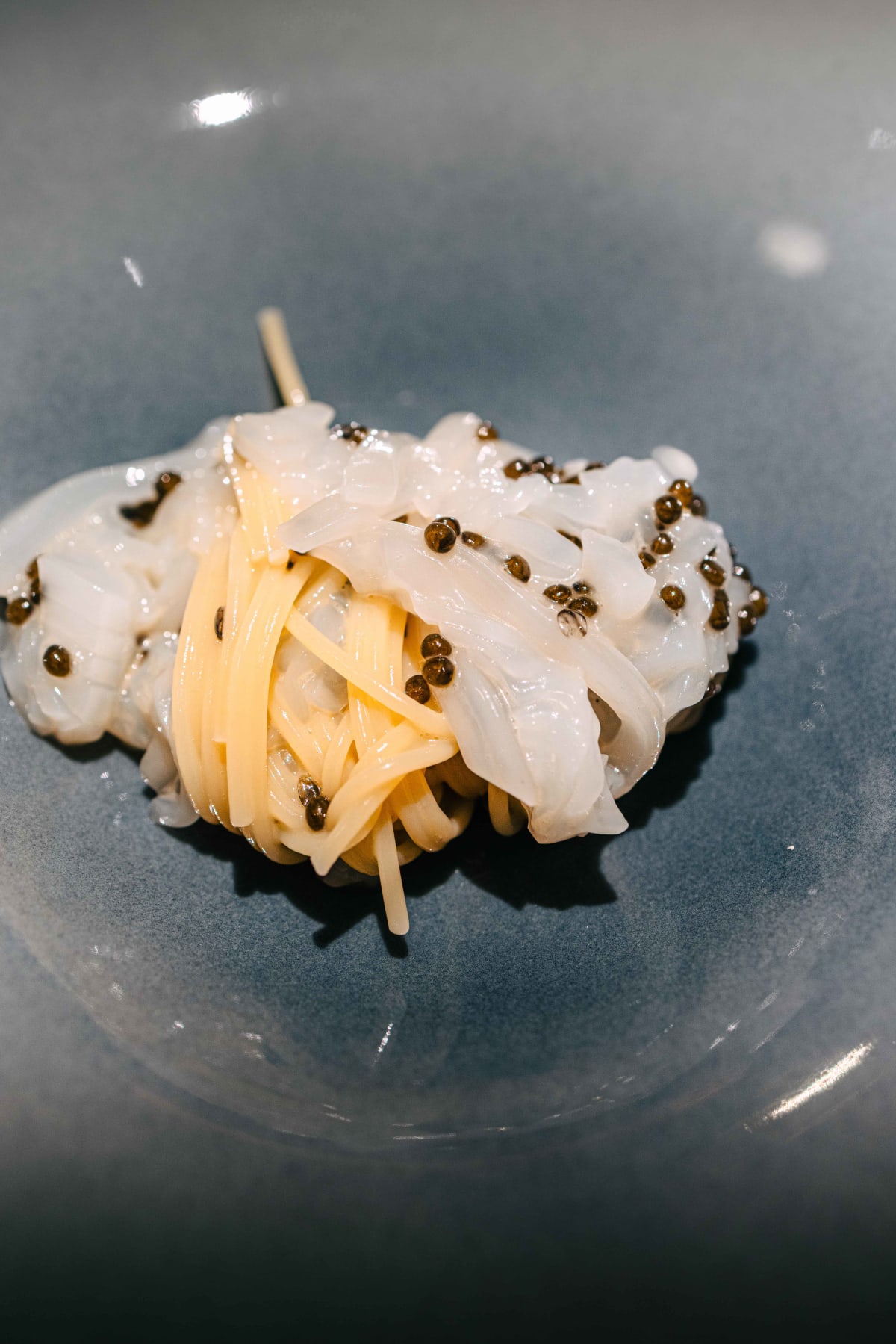
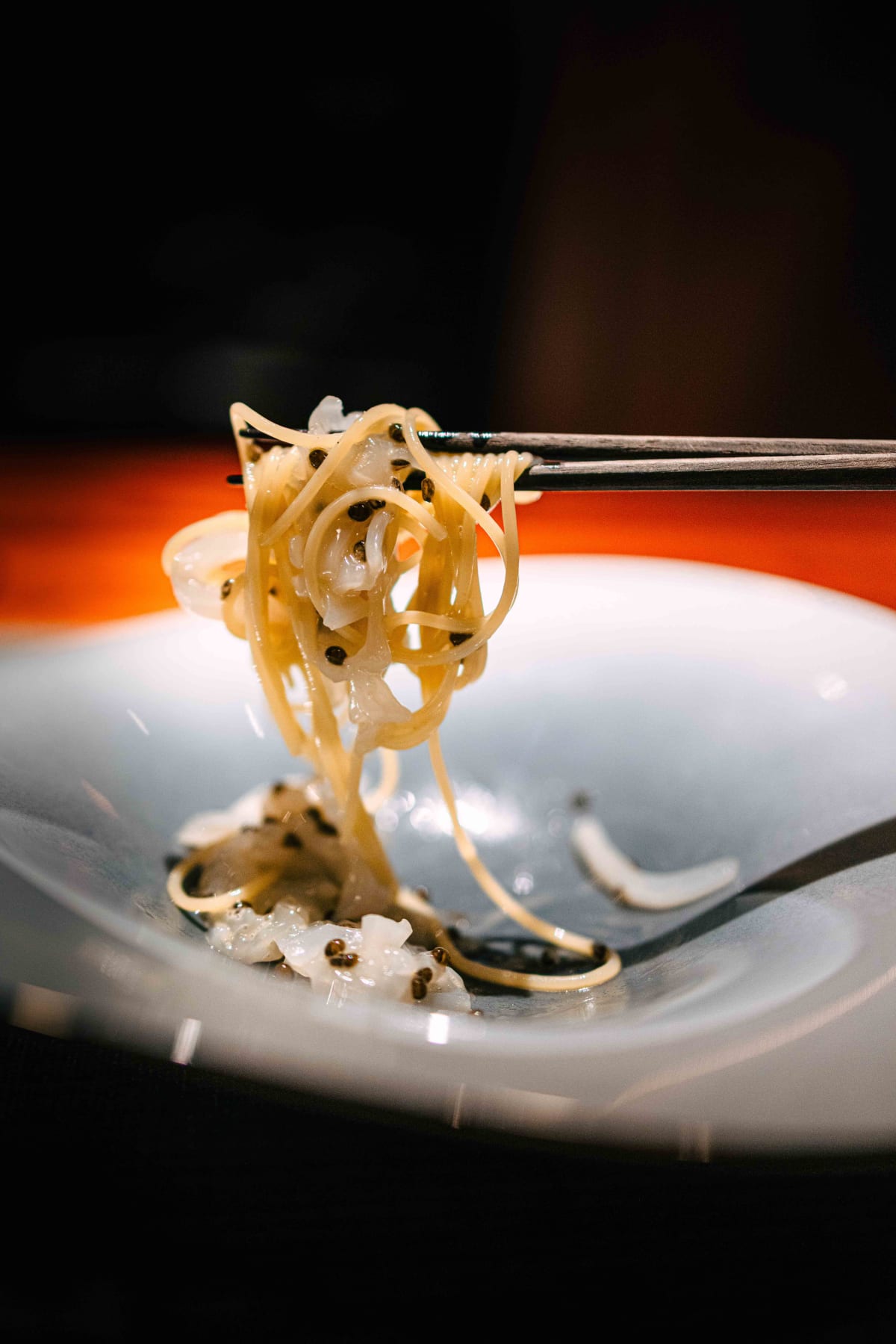
Chilled Fedelini with Bigfin Reef Squid from Nagai by Mr. Hasegawa, a connoisseur of fish, and Oscietra Caviar
The pasta was a strand called fedelini. From this second dish on, it took off. This pasta, in fact, had been one of the dishes that fell short on my first visit, since back then the texture of the noodles was not the best and there was a hollow in the flavour, as though something small was missing. This time, though, the texture of the squid joined with perfectly cooked noodles to make it truly excellent. The caviar did not just supply the salinity the dish needed; the pairing itself was good.
Charcoal-grilled Stray Bonito smoked with lemongrass straw from Maruyoshi Fish Shop in Sado Island, with Rice and Chinese sweet rice wine vinaigrette
On my first visit there was a dish I found among the most memorable at Ao, the mejimaguro, the young bluefin. This time a charcoal-seared bonito came out, and the grilling seemed truly perfect.
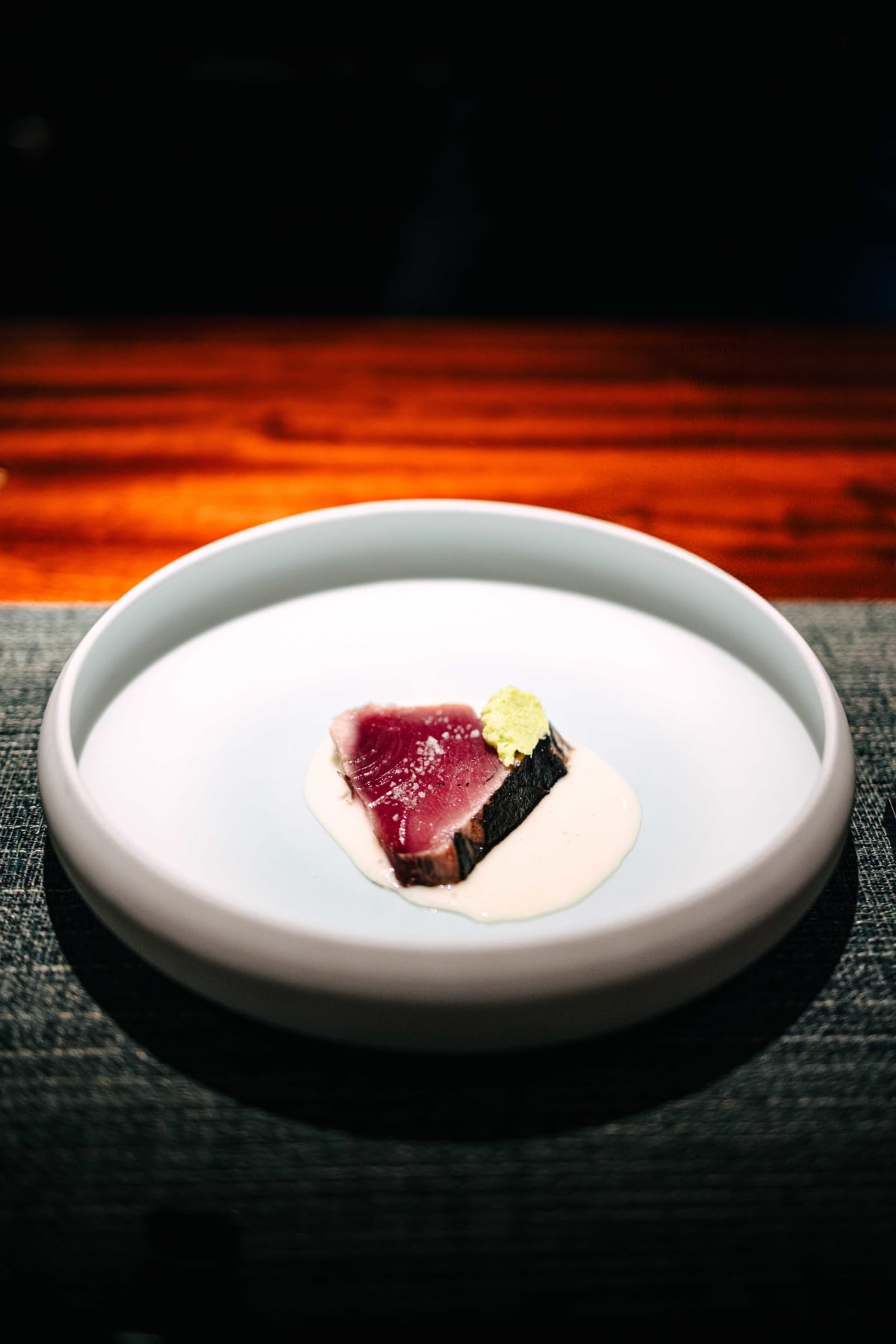
I think I preferred the mejimaguro from my first visit, but this time a generous mound of wasabi may well have been what completed the dish. On a French dish that could easily have been heavy, he put something unmistakably Japanese: wasabi. Even the harmony its heat brought was good, so it was excellent.
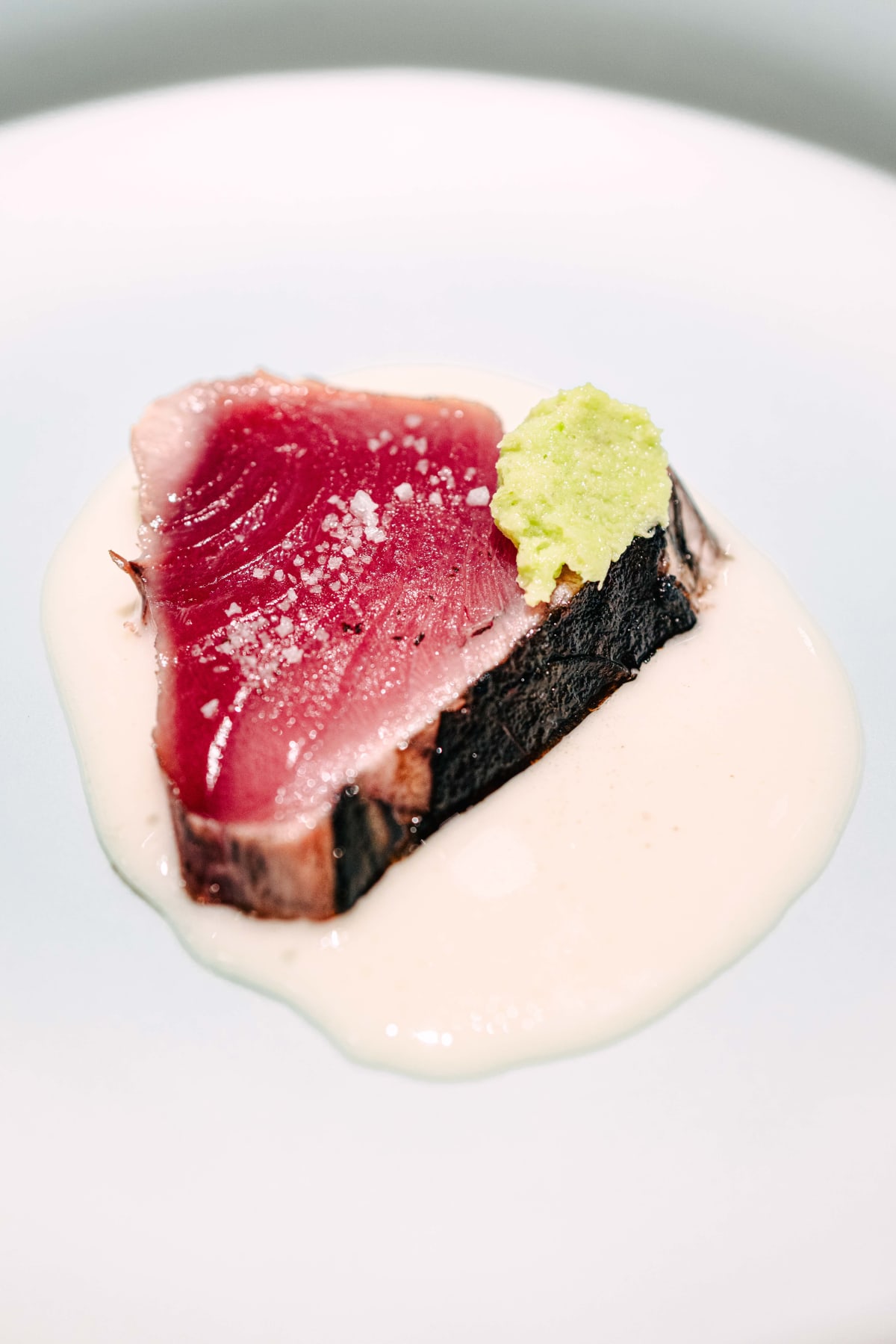
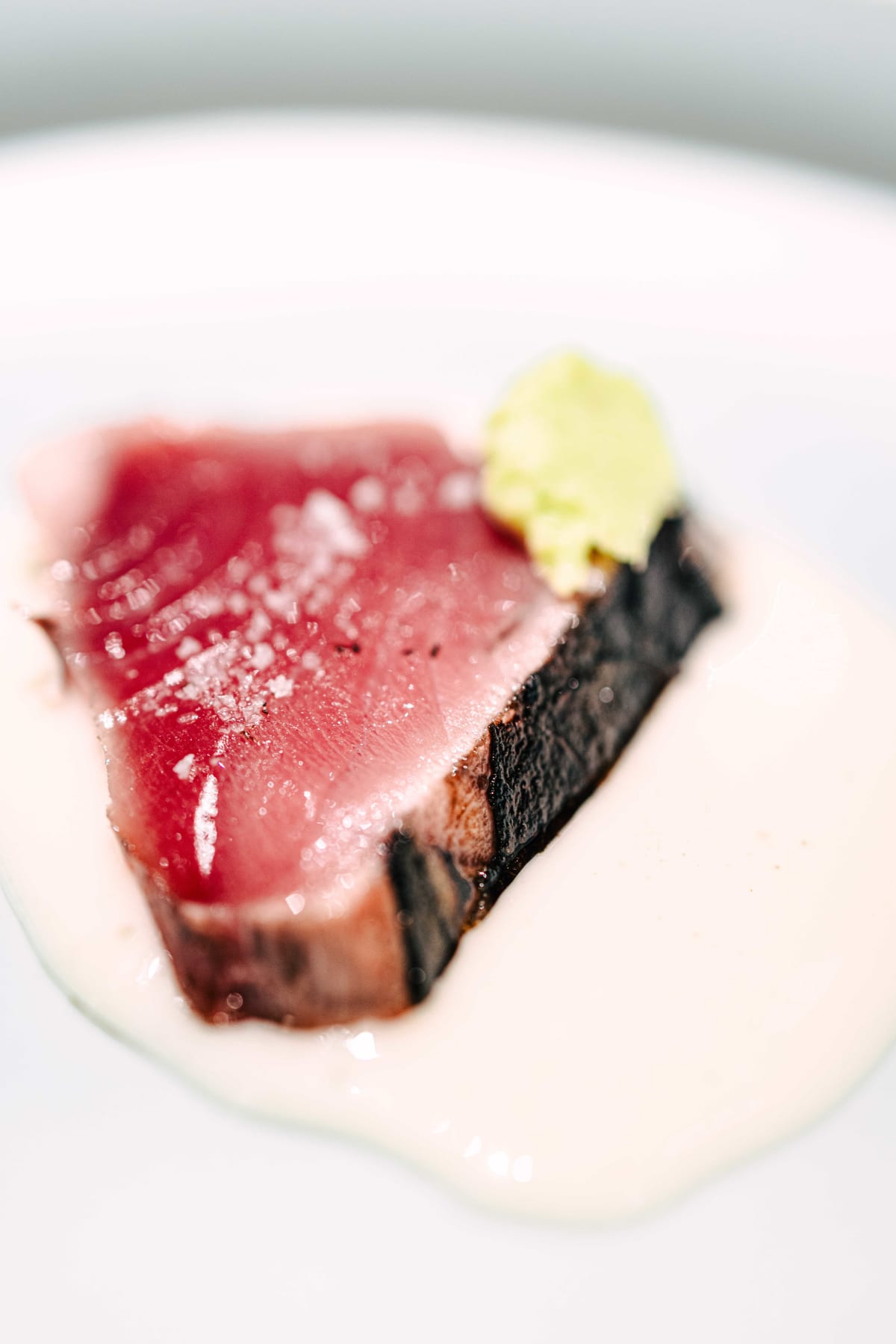
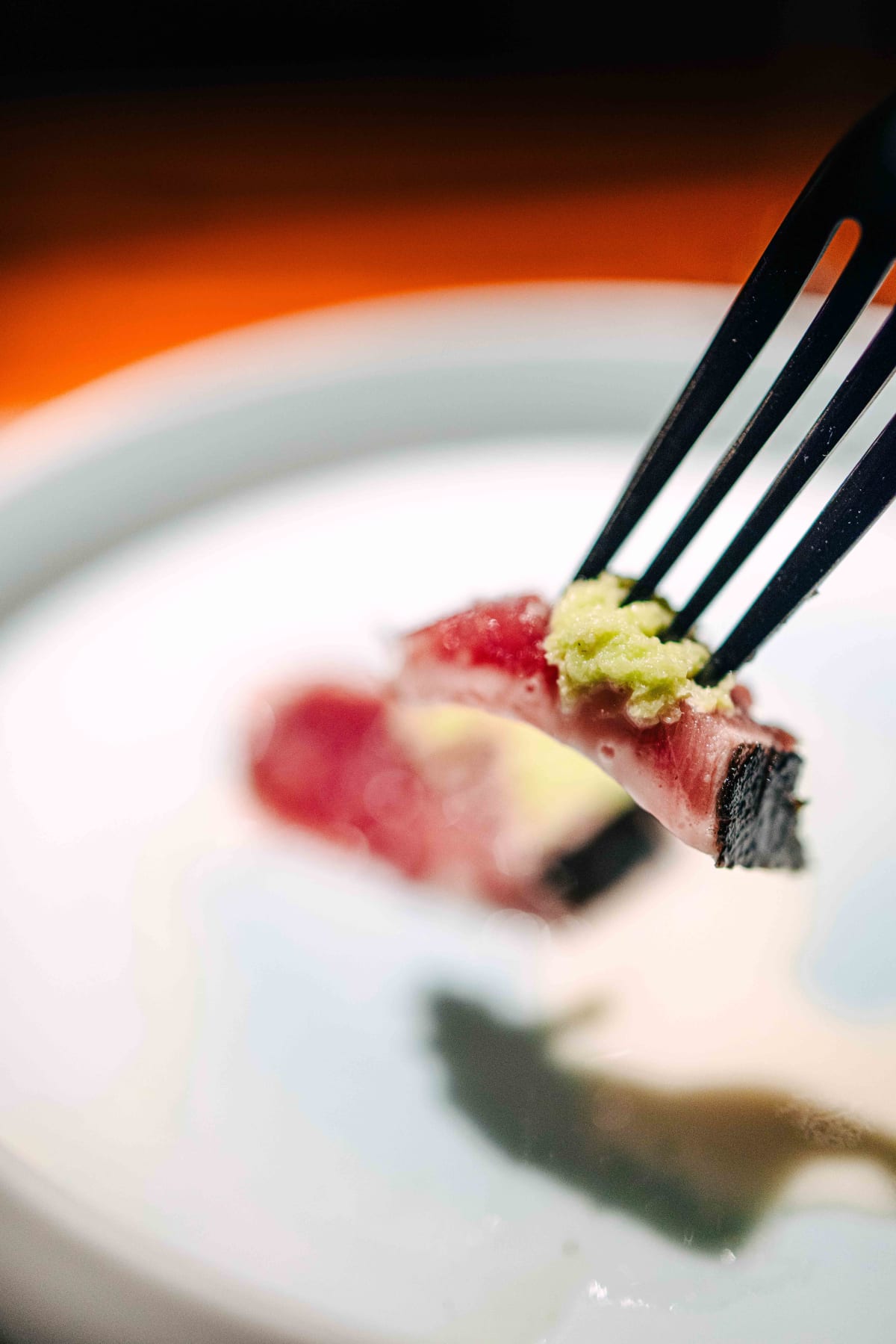
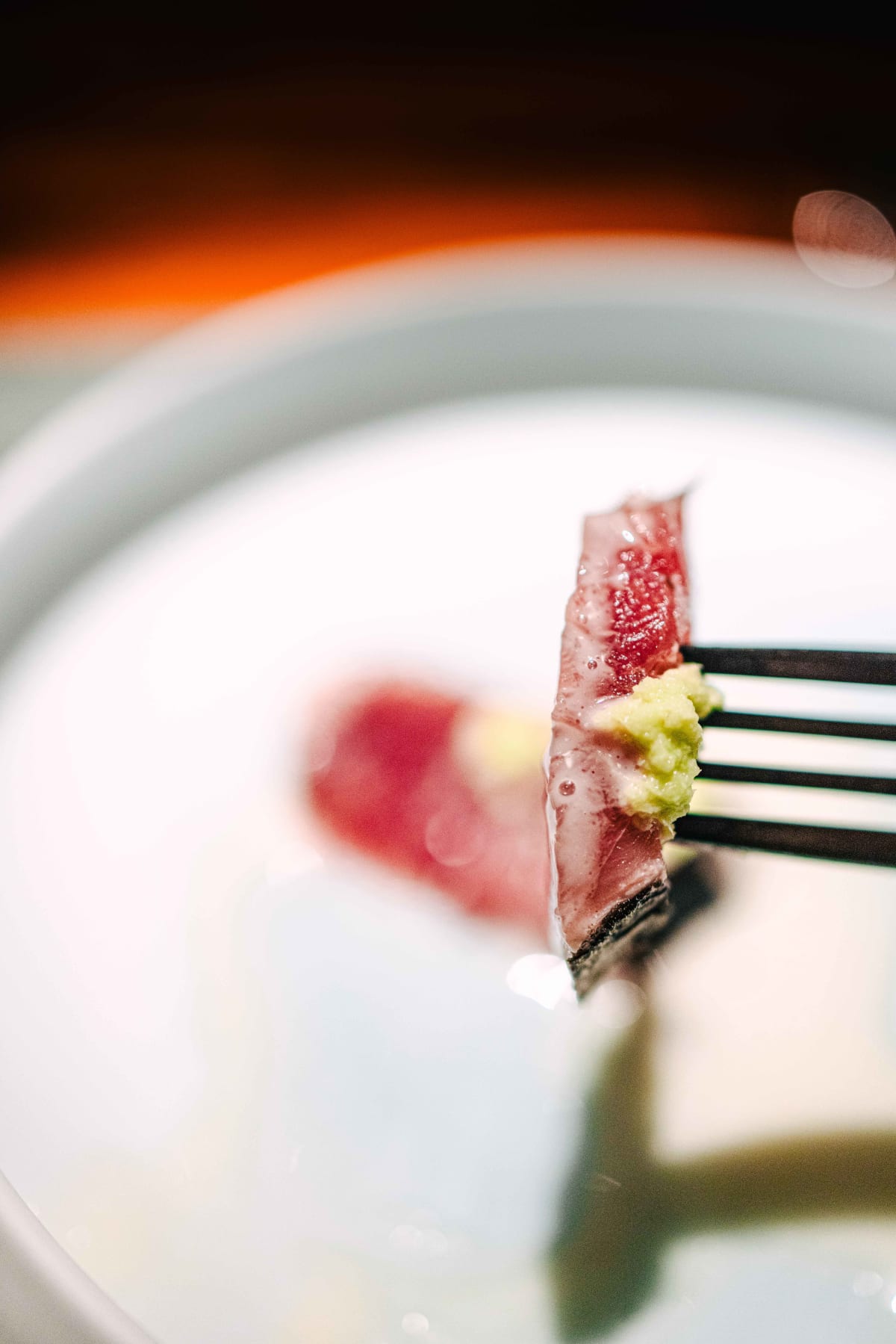
On a French dish that could easily have been heavy, he put something unmistakably Japanese: wasabi
Section 5·The Gratin
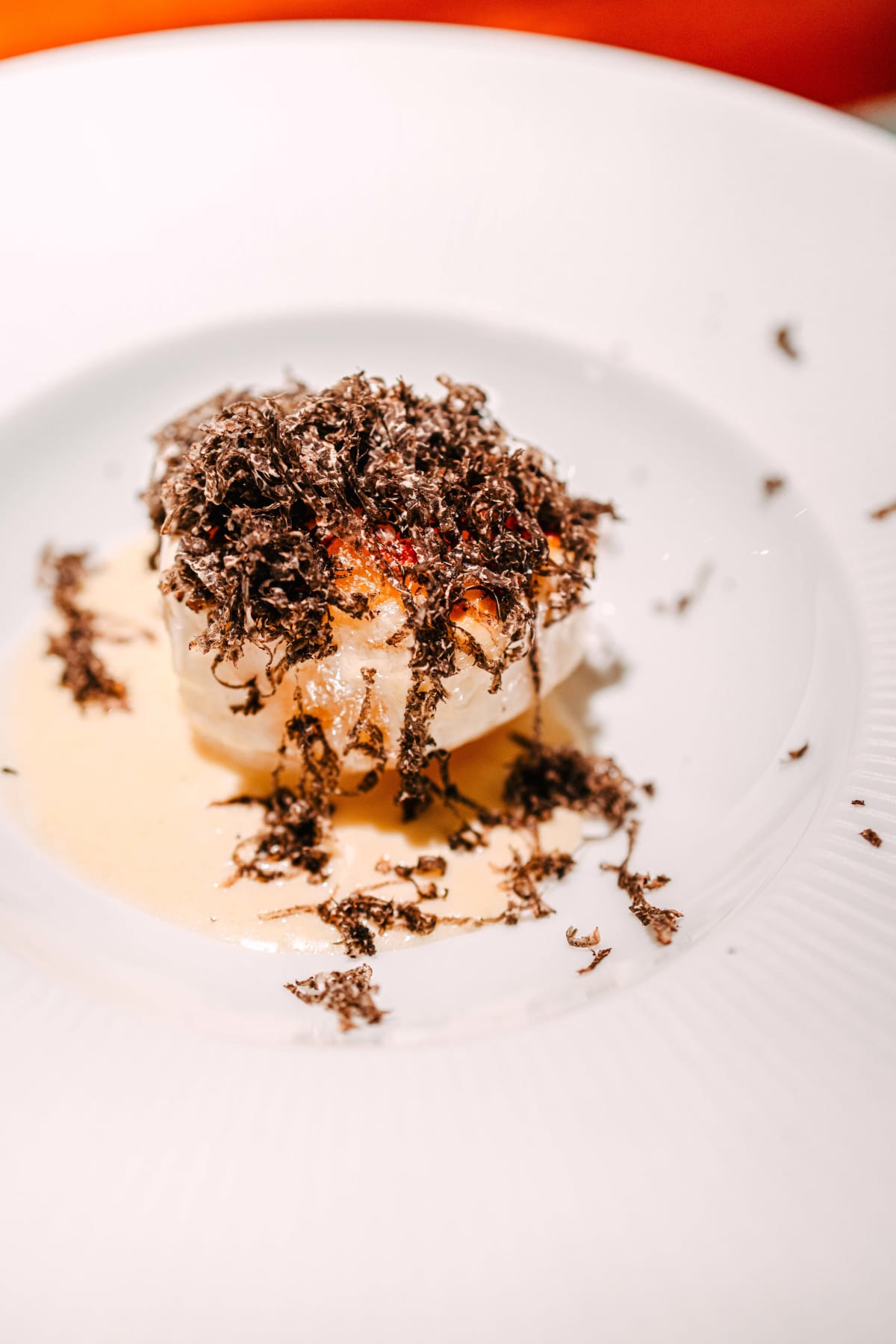
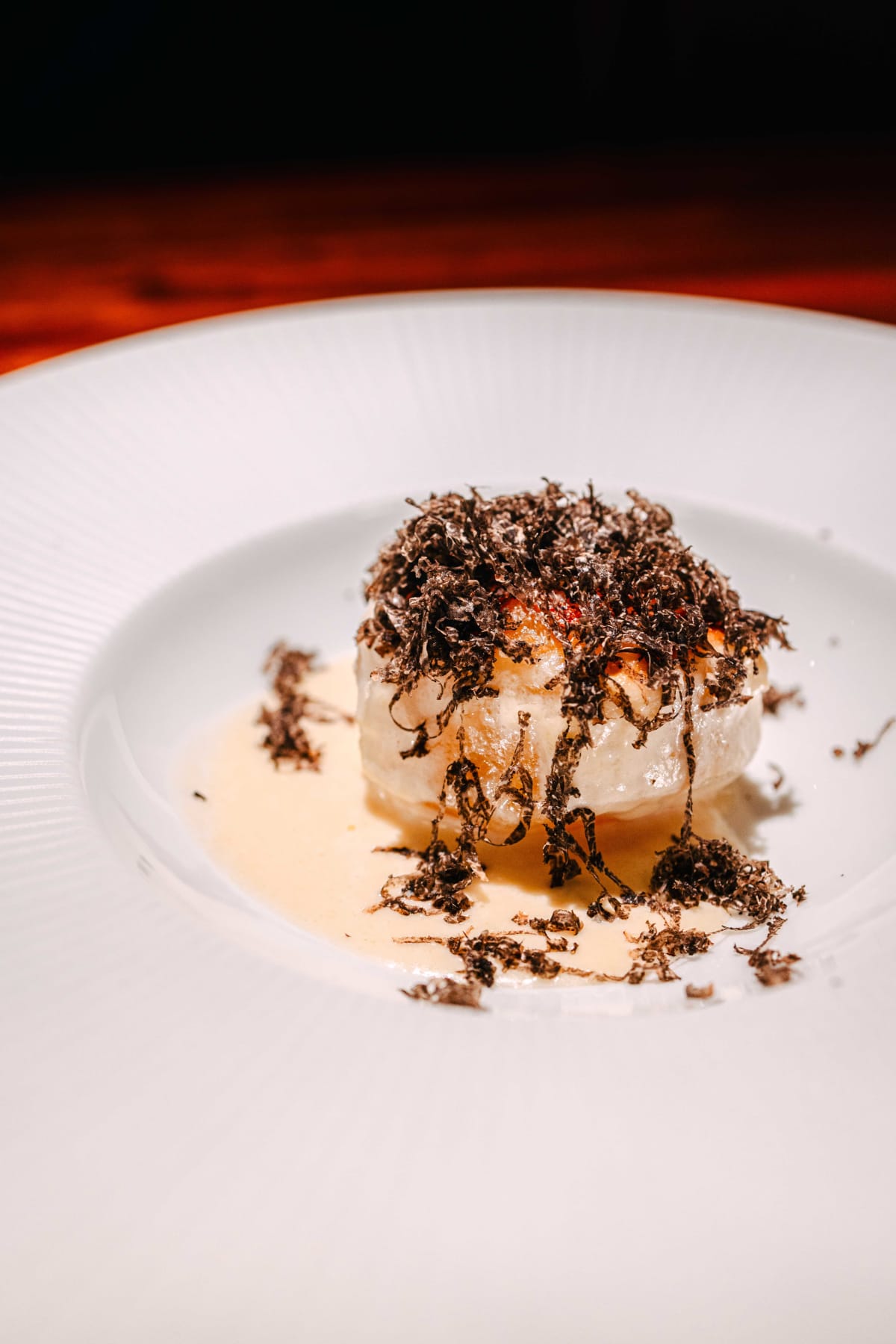
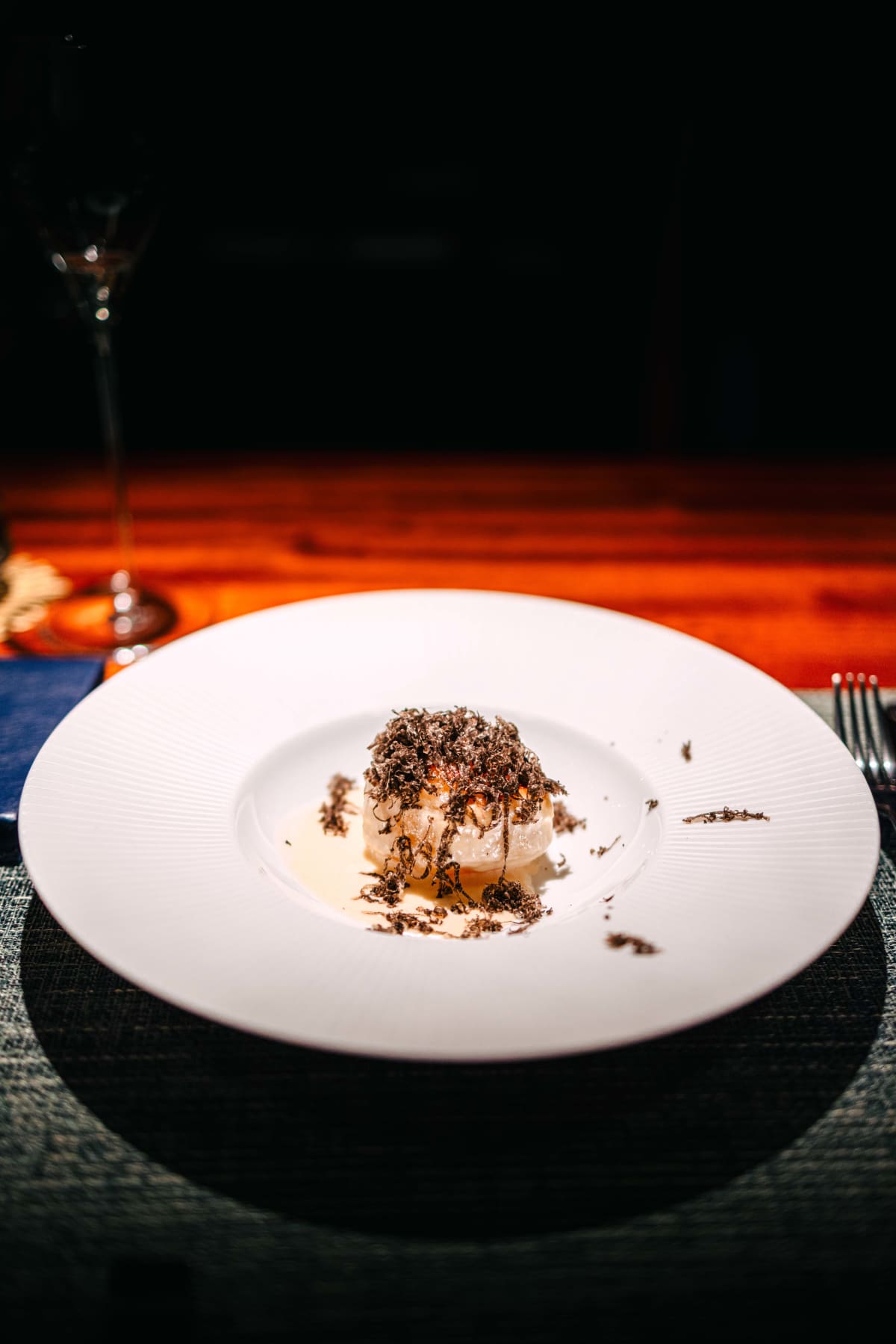
3-year aged Kitaakari Potato Gratin from Bito Farm, with truffle
This was the vegetable course. First the gratin was shown to us whole, and I wondered what it could be; it clearly looked to be of a different register from the seafood that had come before.
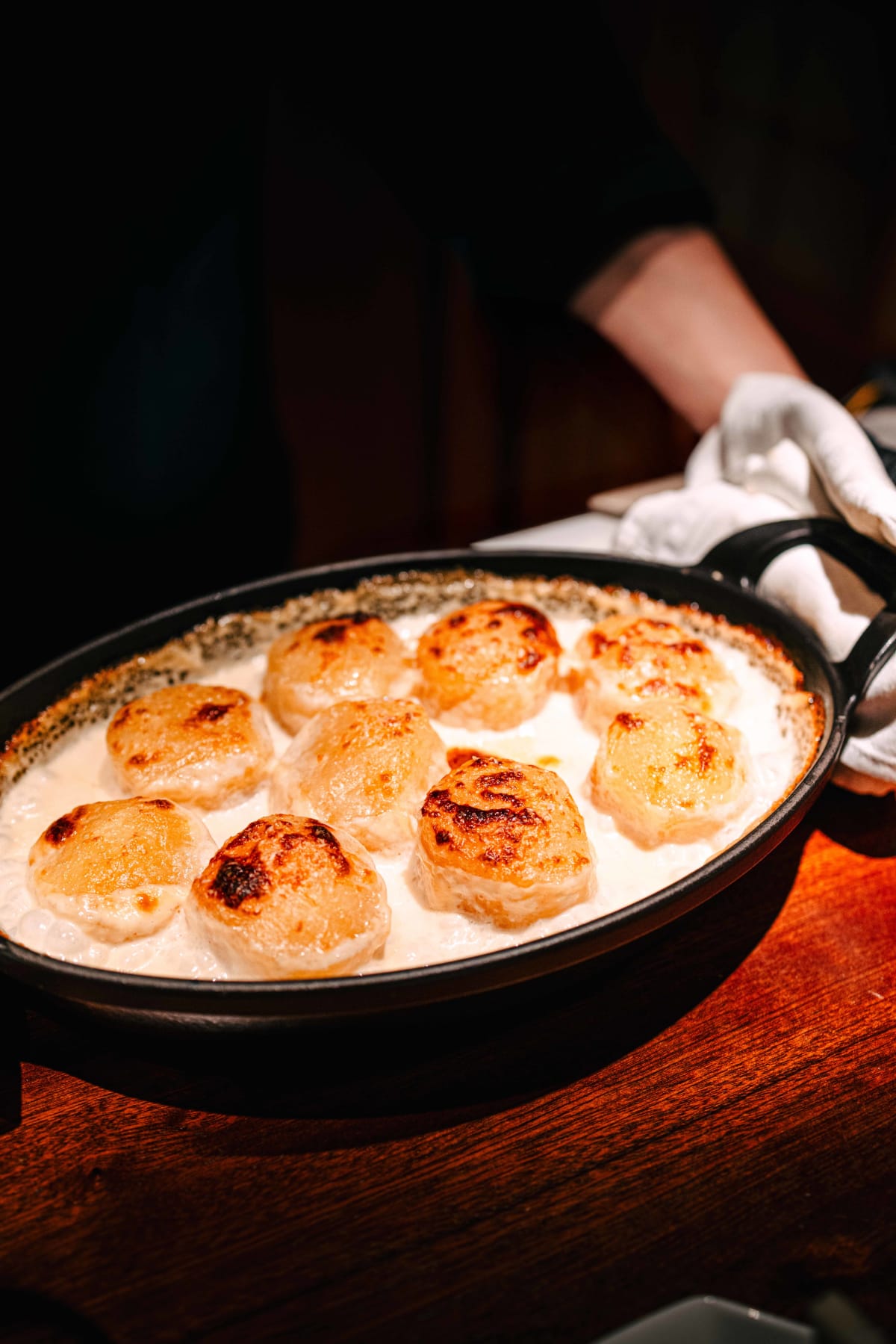
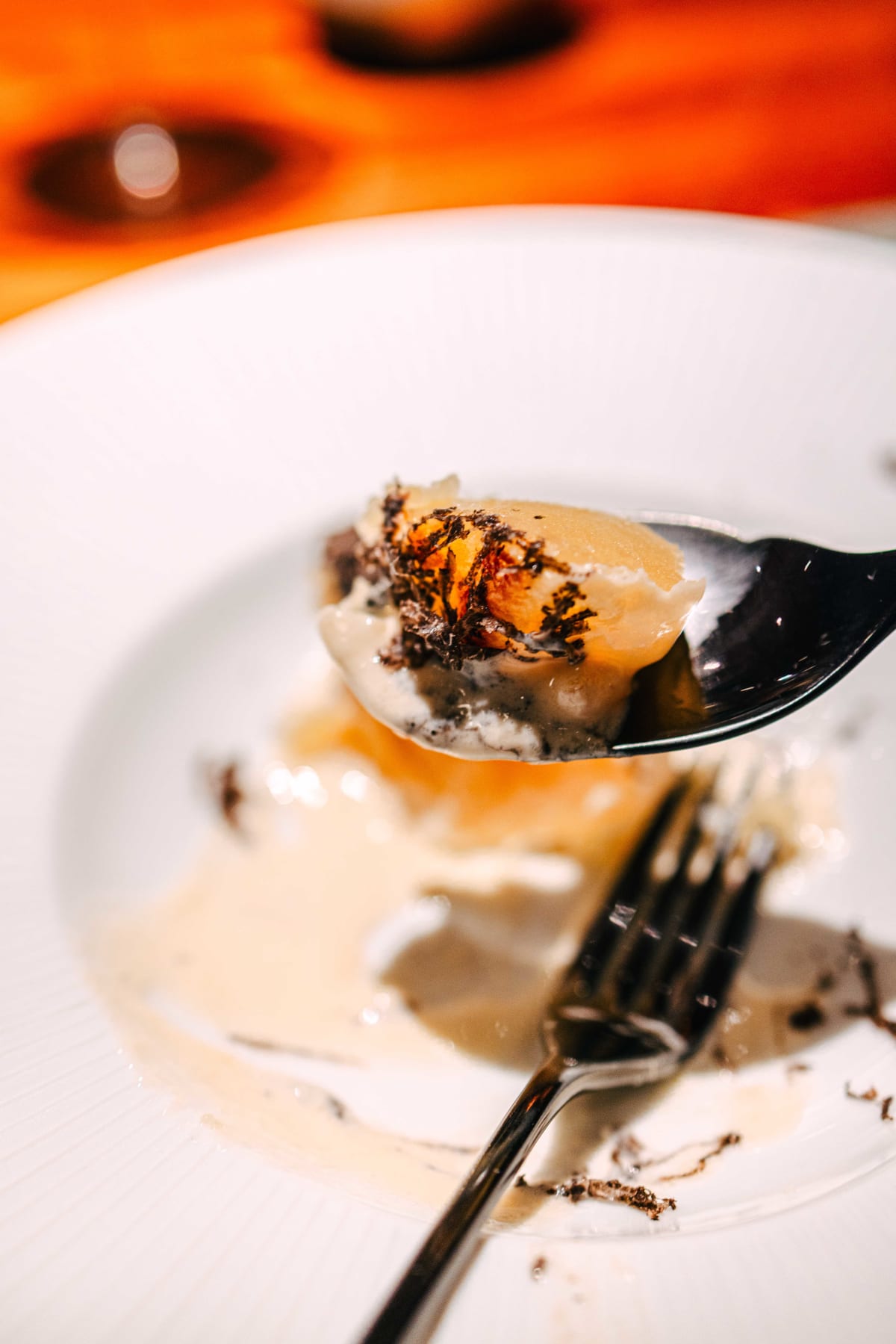
It was a gratin made from three-year-aged potatoes, with truffle grated generously over the top, and the truffle aroma was very good while the gratin itself was impressive, with good flavour of its own.
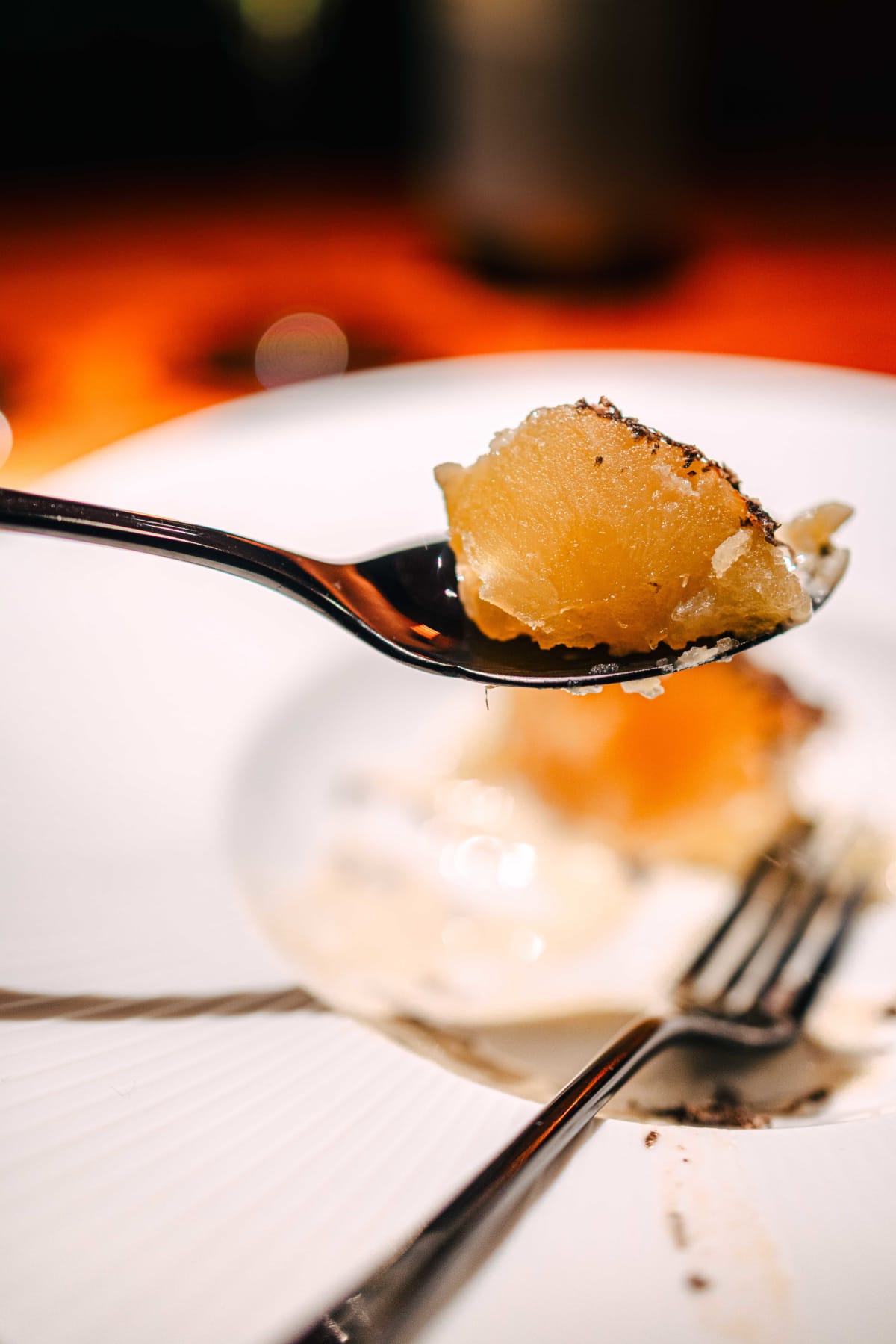
The potatoes had been aged three years; I learned only then that even root vegetables are aged. Perhaps because of that aging, the potato itself was remarkably sweet, which left a strong impression.
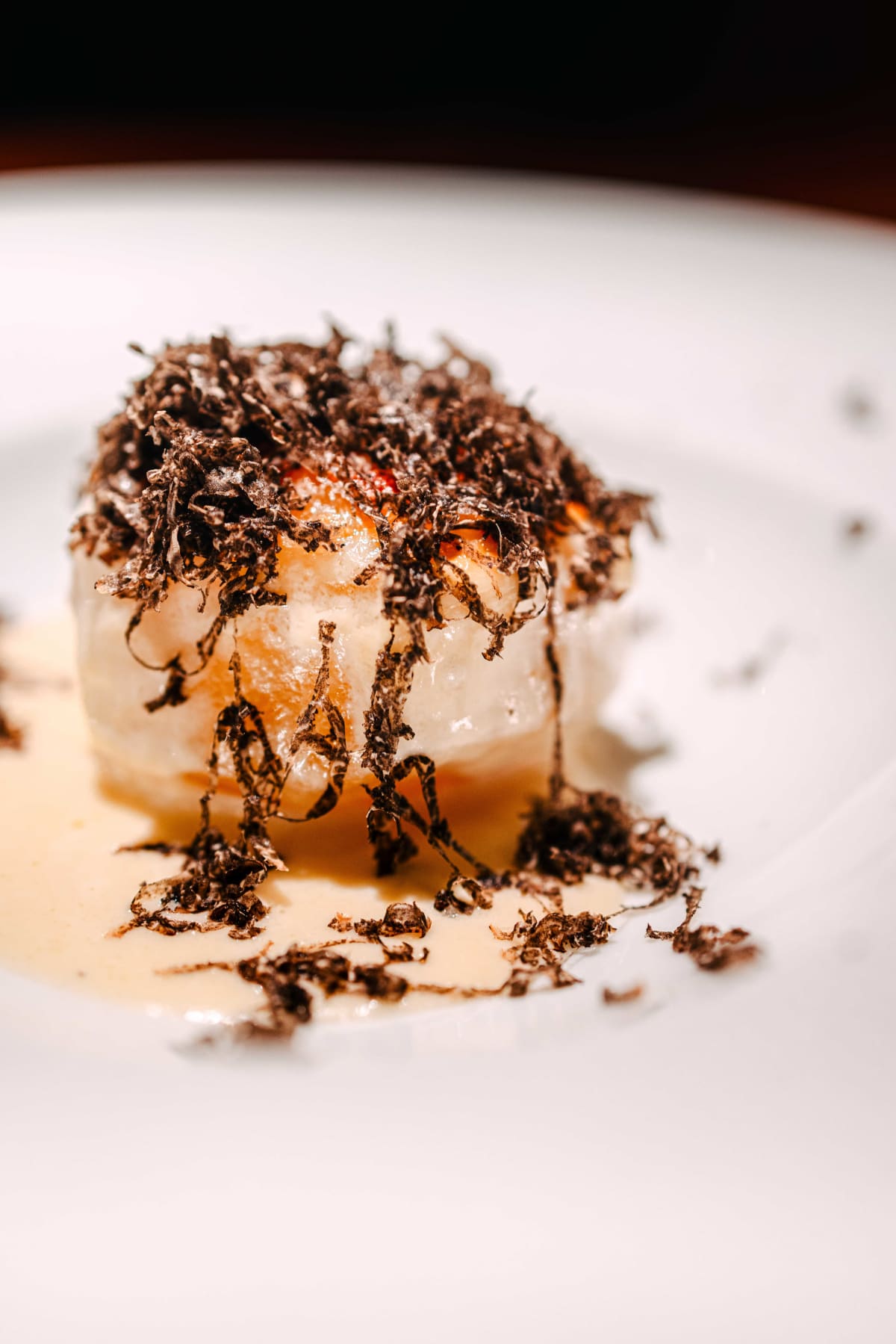
That said, if I may add my own taste, I felt the sweetness might have been dialed back a little for the sake of balance with the sauce.
Section 6·The Prawn
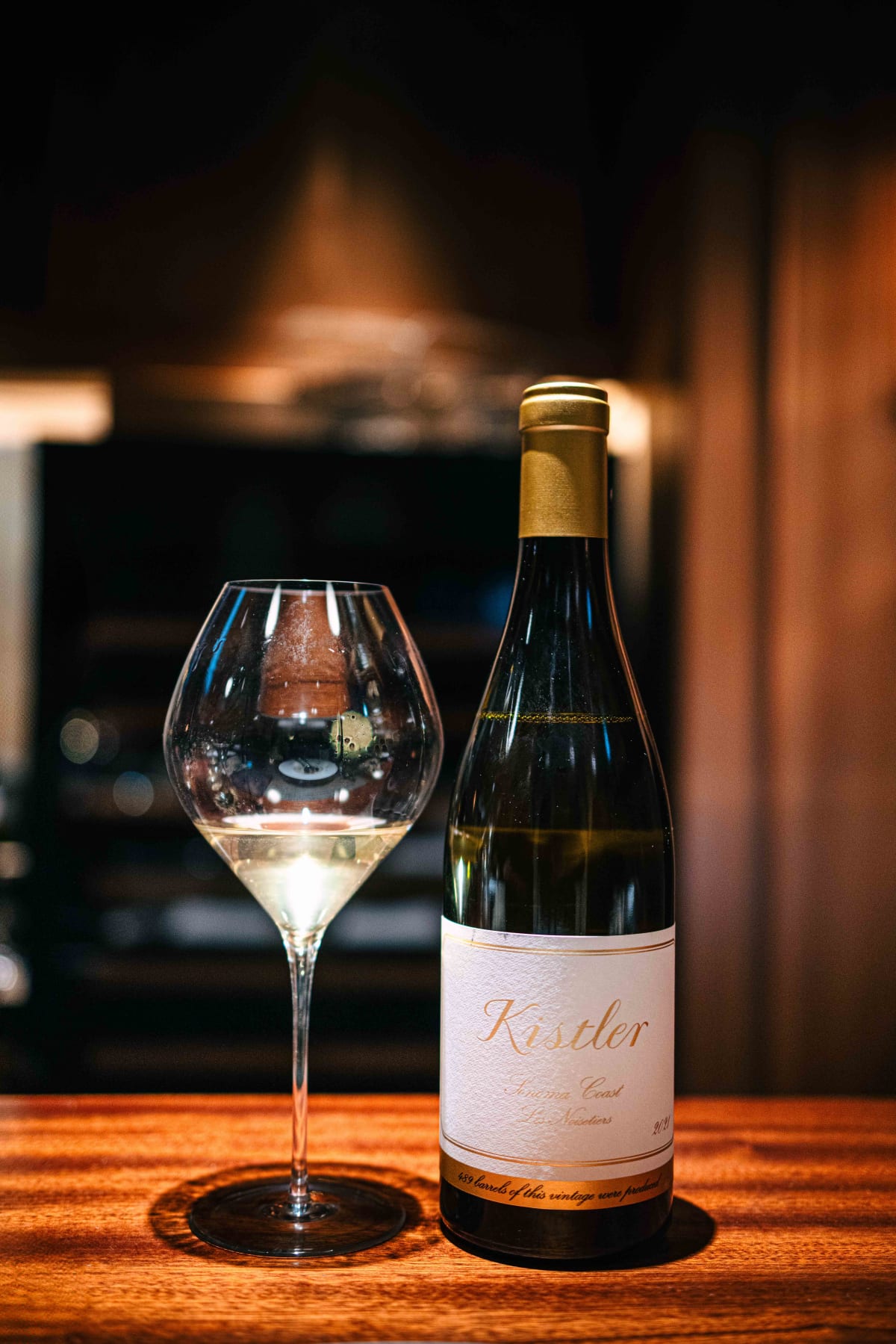
Before the prawn I moved on to a white, Kistler's 2021 Les Noisetiers, a Chardonnay emblematic of the Sonoma Coast. Kistler is a sort of benchmark producer of California Chardonnay, and in recent years it has added a mineral tension to its characteristic fullness. Les Noisetiers, true to its name, is a glass in which the toasty nuance of hazelnut drifts alongside lemon, calling Meursault to mind. Toasty oak and firm acidity held it up, so it was not overpowered even by the rich flavour of the bisque to come.
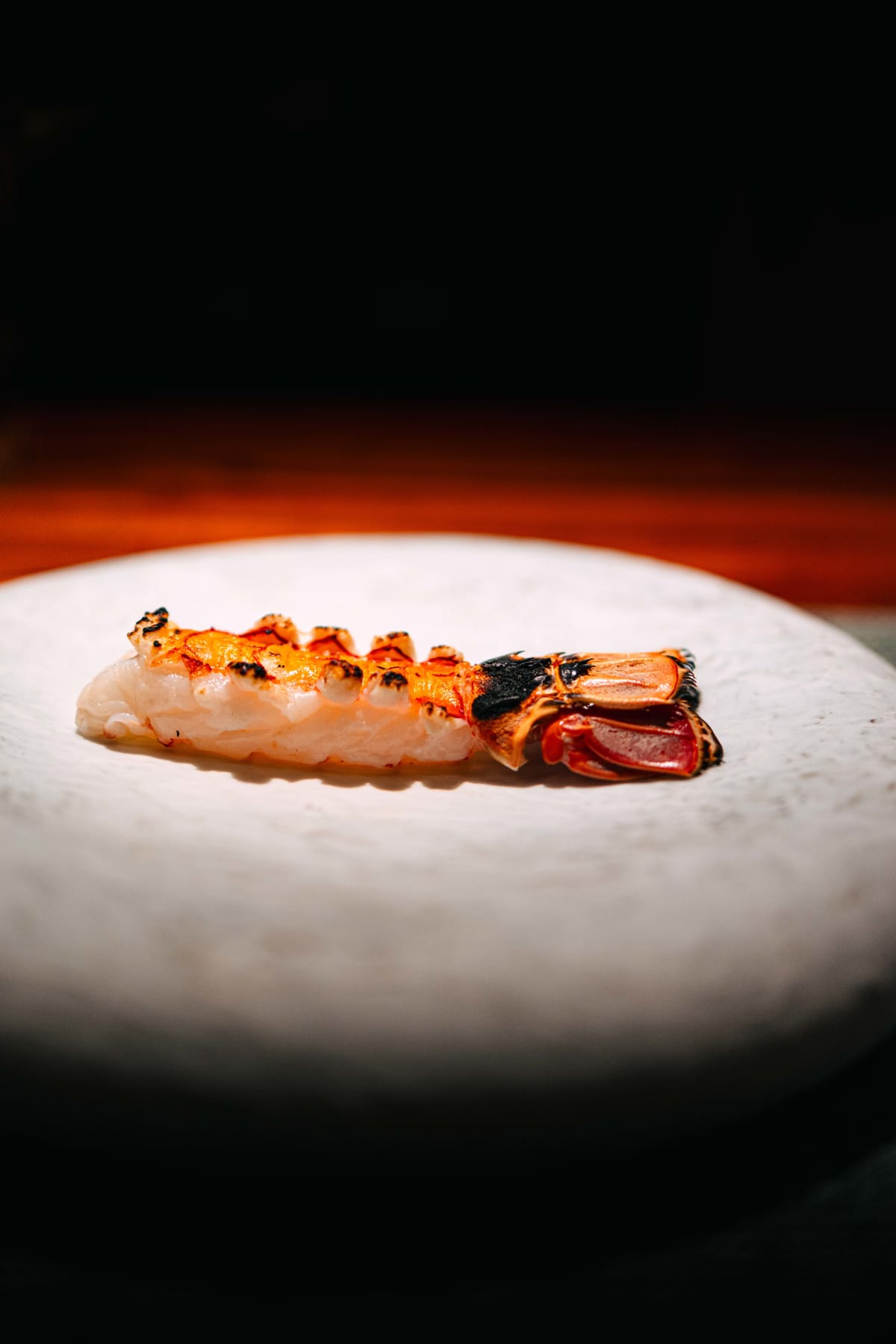
Charcoal-grilled Japanese Lobster from Nagai by Mr. Hasegawa, a connoisseur of fish, with Bisque Soup
When I first visited Ao and read other people's reviews, Ao's signature seemed to be, above all else, the grilled prawn. Looking into what it was, it turned out to be akaza-ebi, a dish anyone who has been to Ao will surely have had, and perhaps because it was winter it tasted even better.
I liked the dense, sticky texture of this prawn.

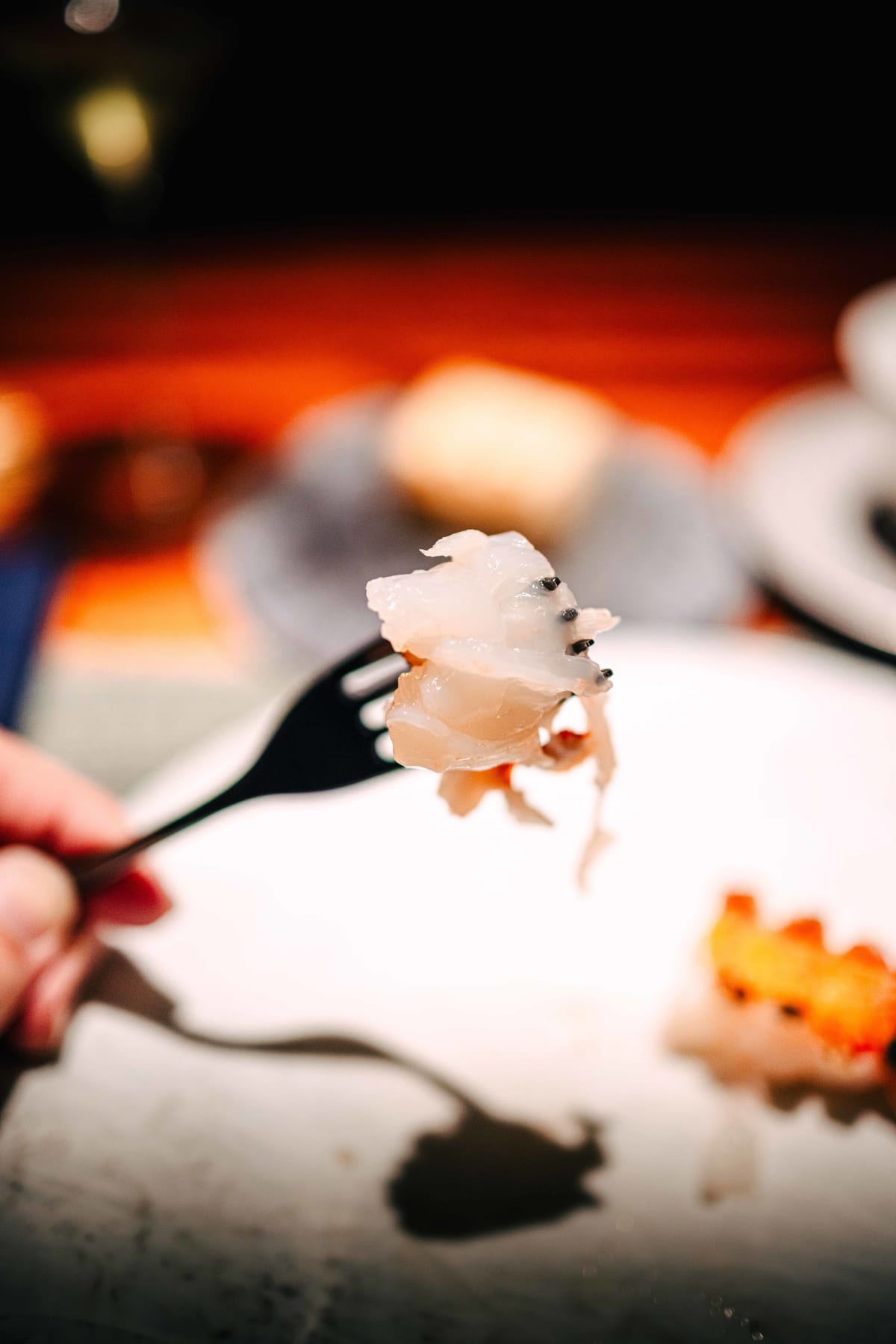
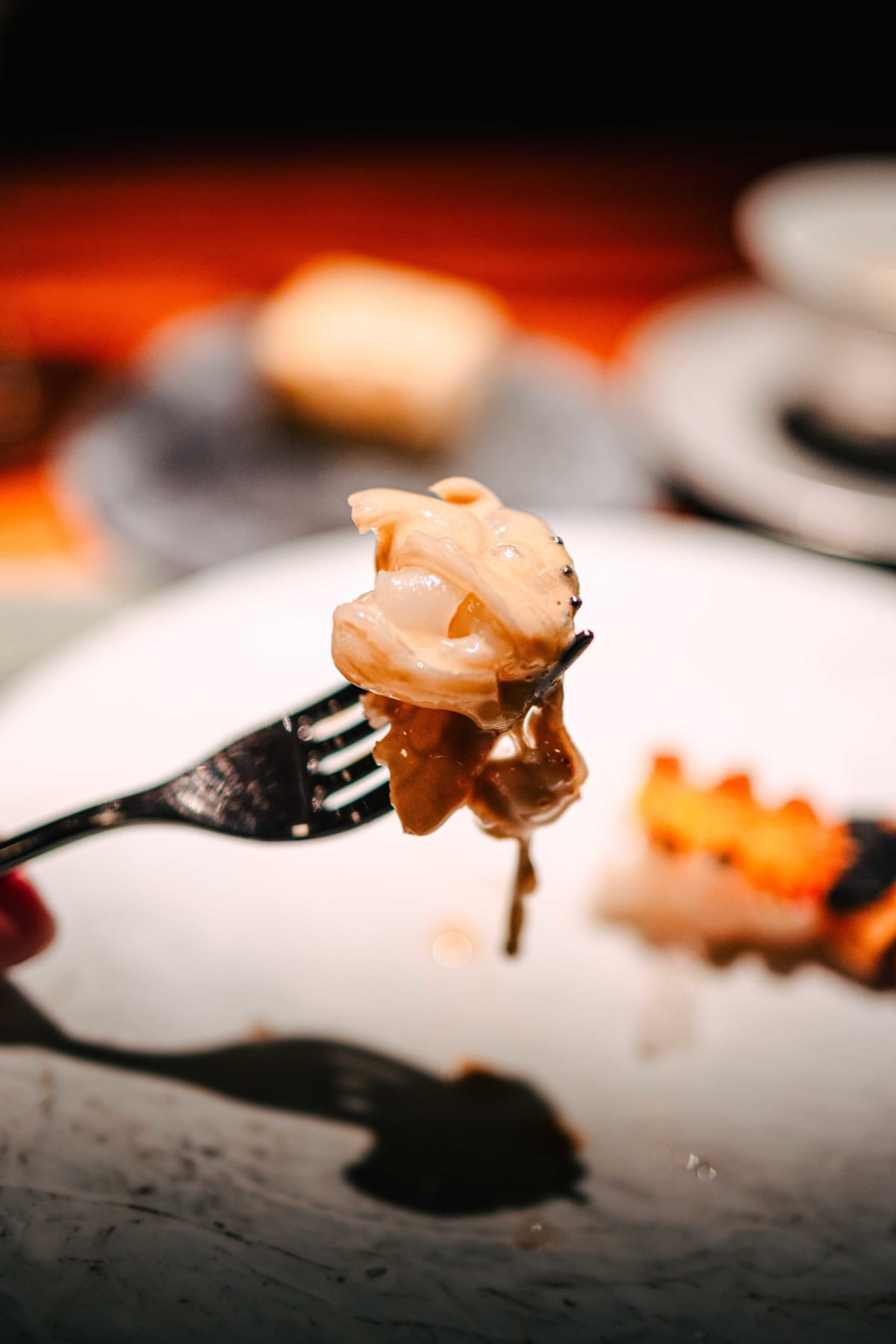
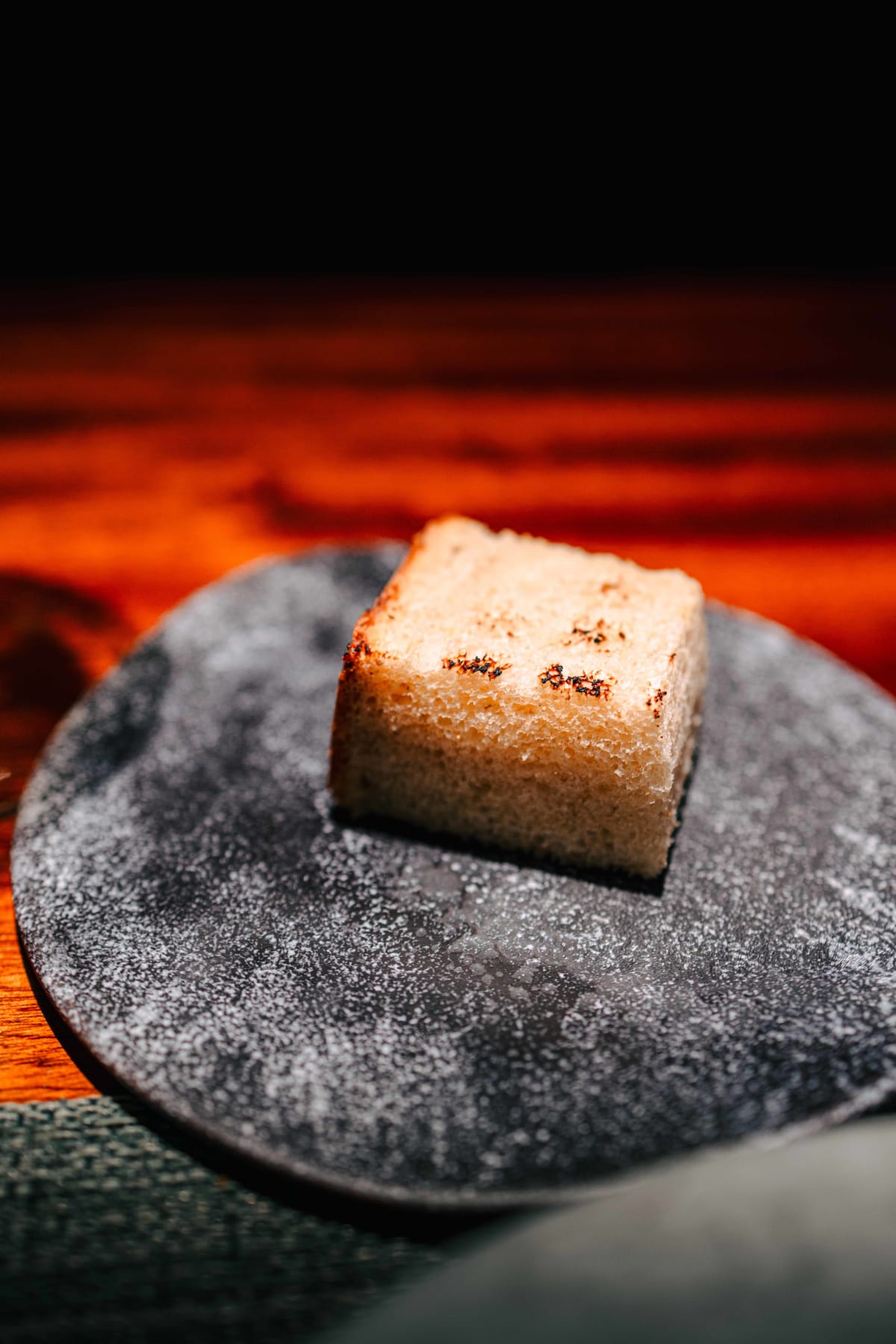
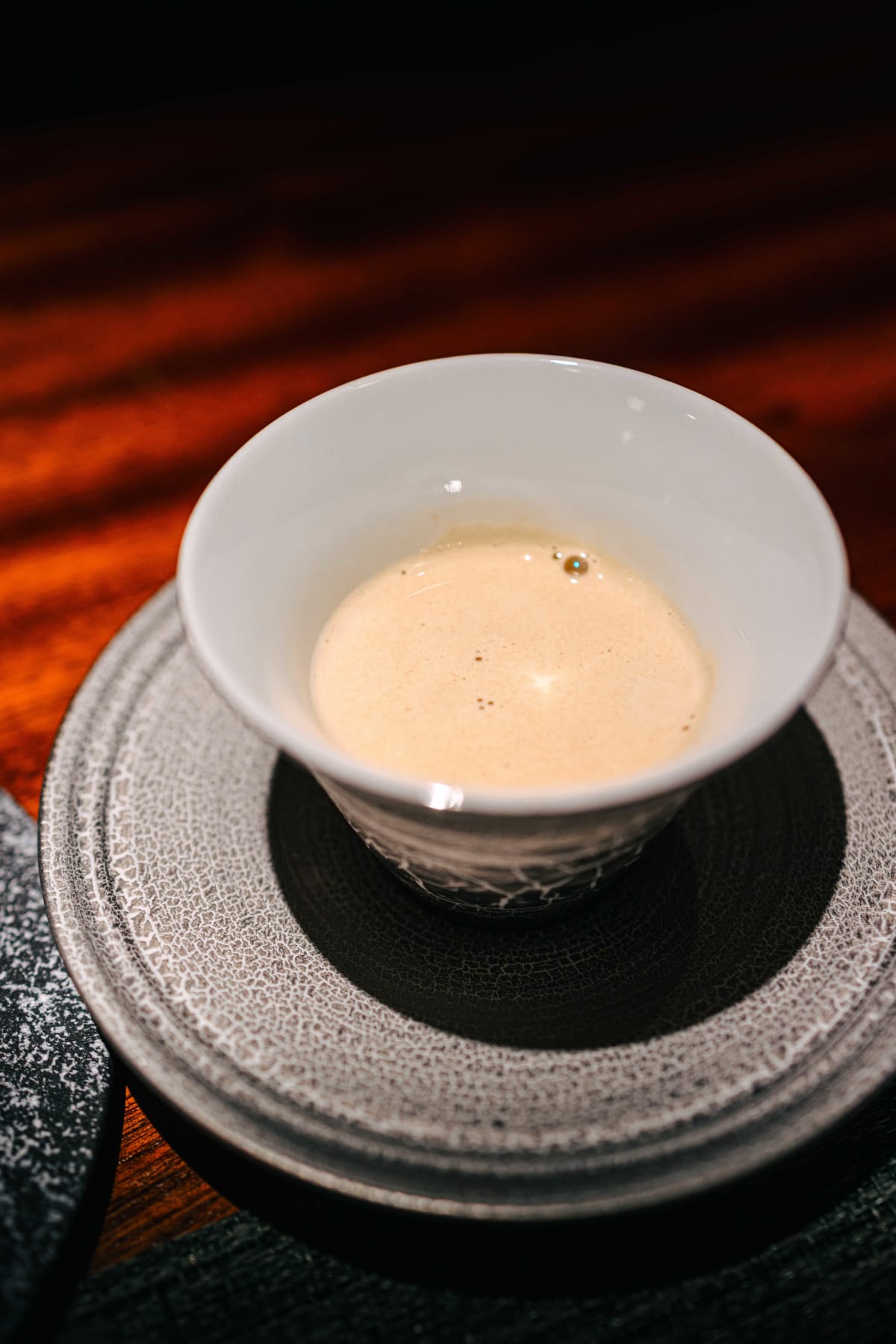
Above all, you have to drink the bisque straight at least once. They suggest you dip the prawn in it, dip the bread in it, but you should drink it down like a half shot. Only then does the flavour come over you like a wave, and only then do you understand what it is worth.
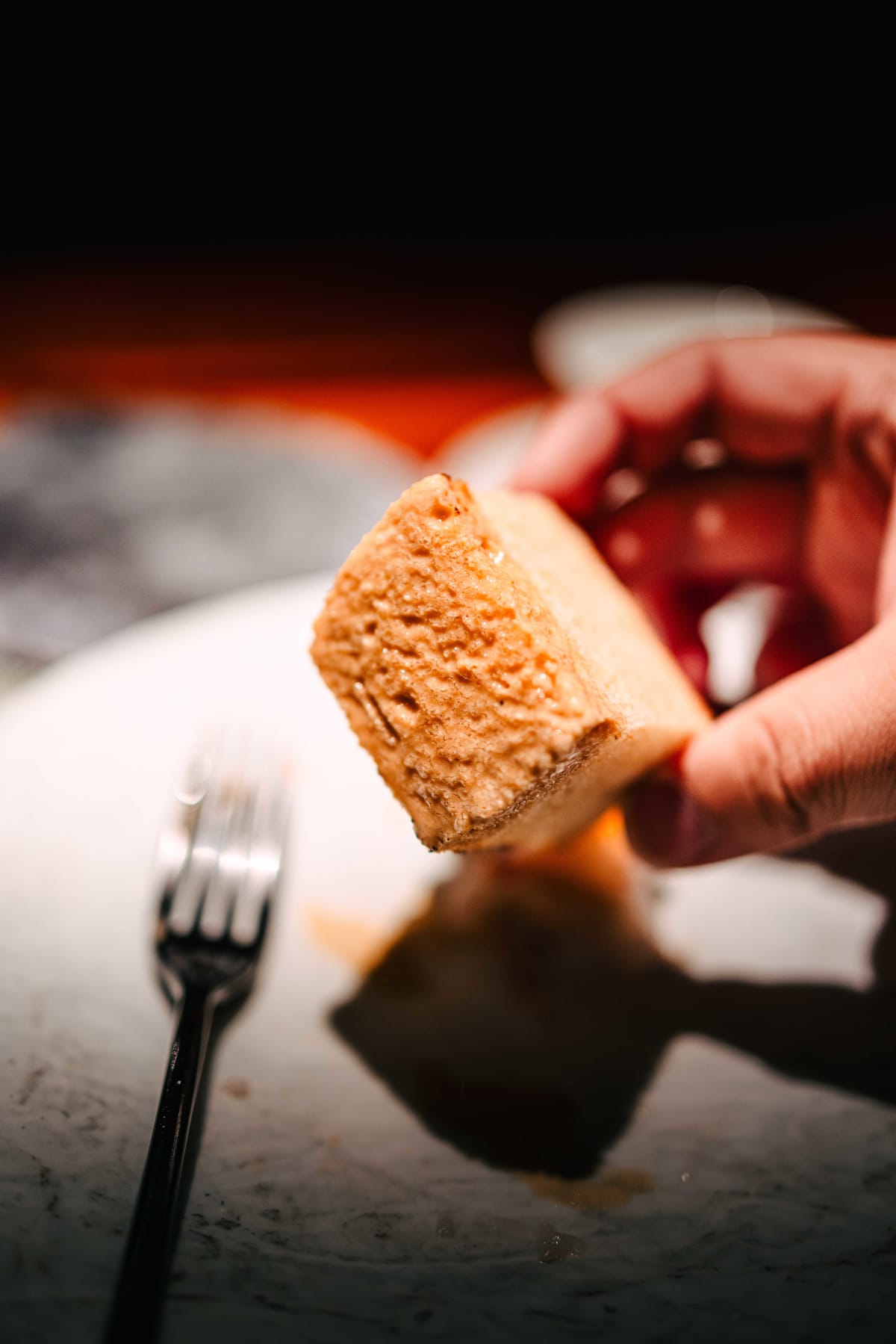
Section 7·Best of the Day
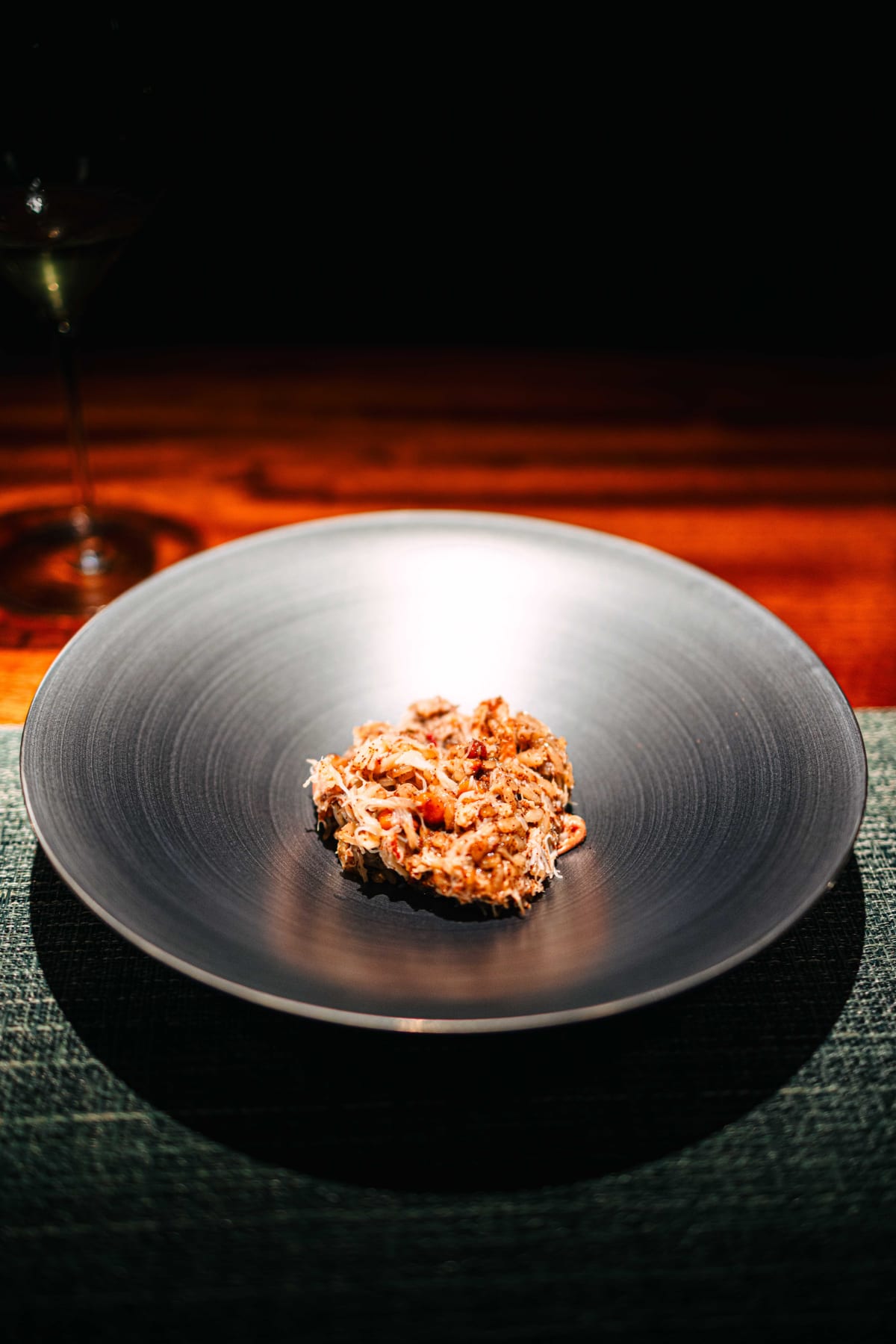
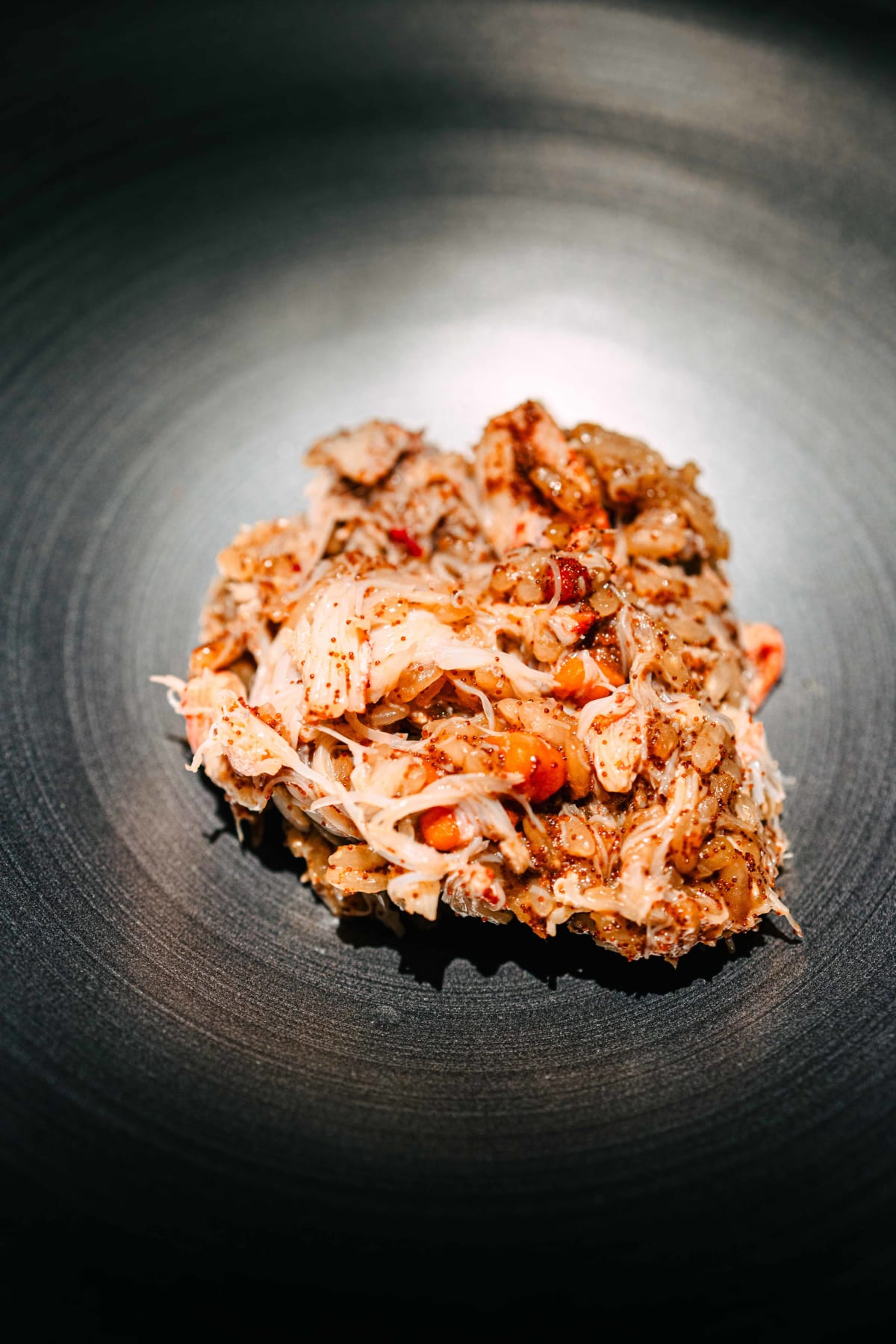
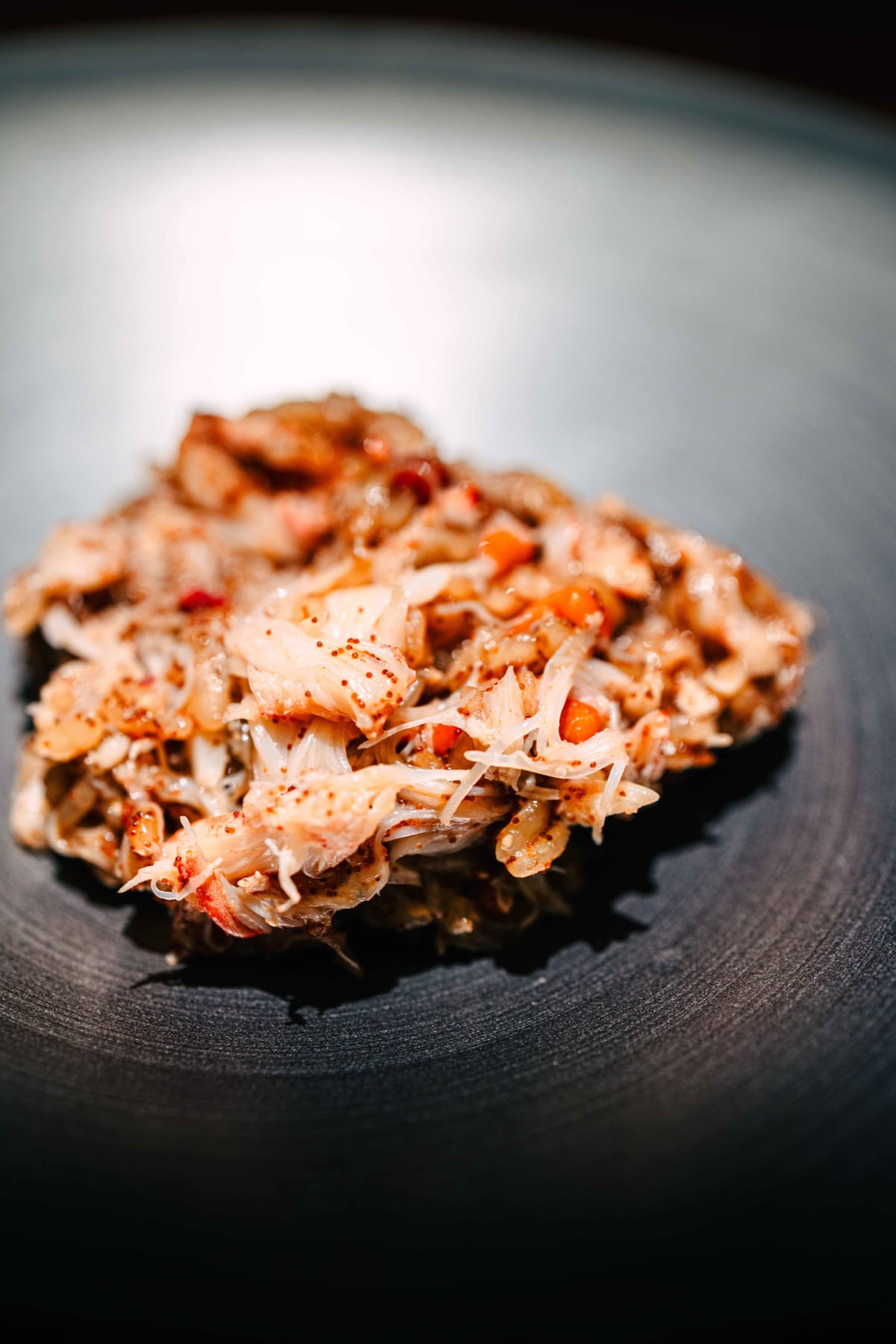
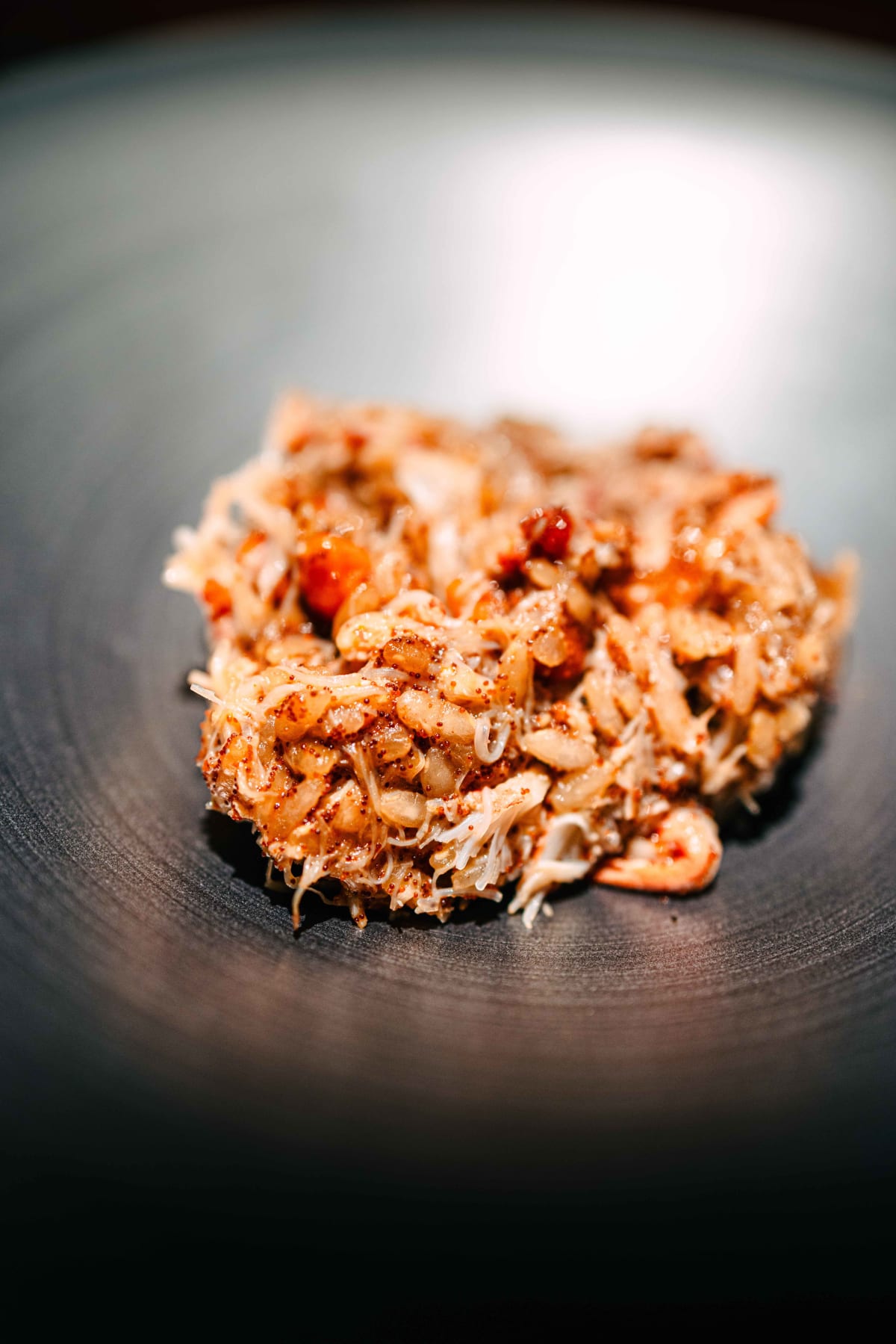
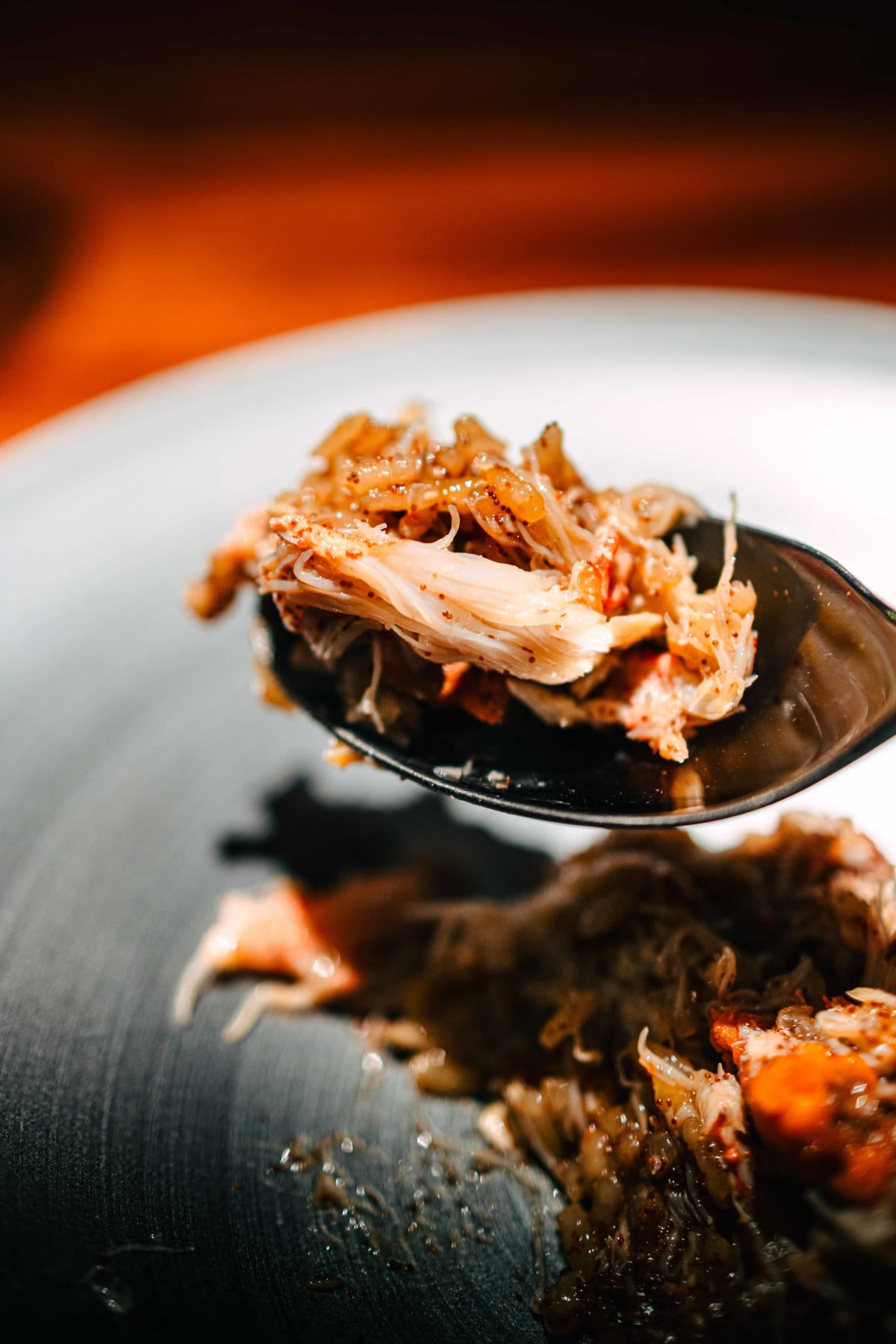
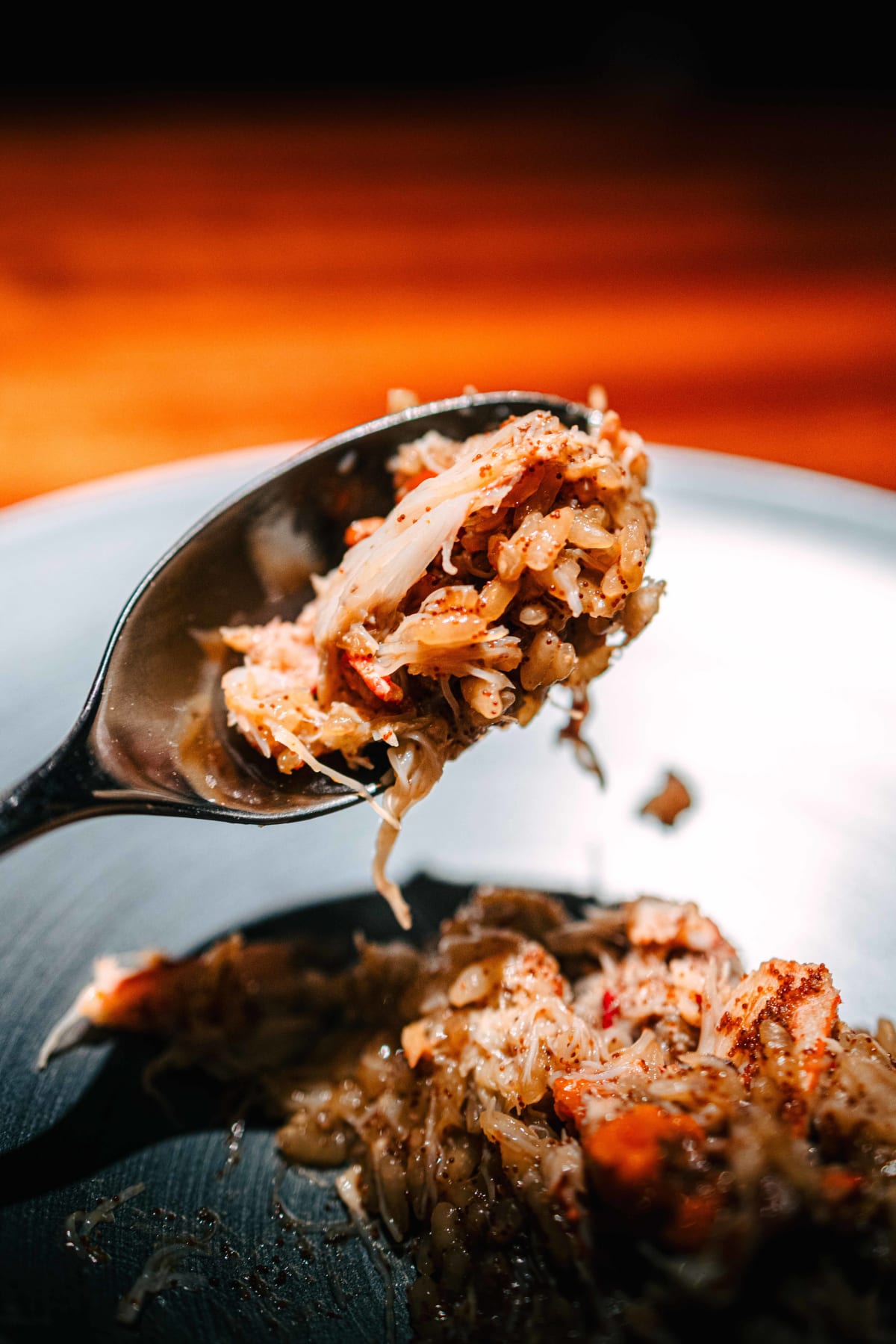
Risotto with Female Snow Crab from Uomasa fish shop in Kyoto
This was a dish I was trying for the first time at Ao, a snow crab risotto. They were not large snow crabs, it seems; he said he had put in eight or nine small ones whole.
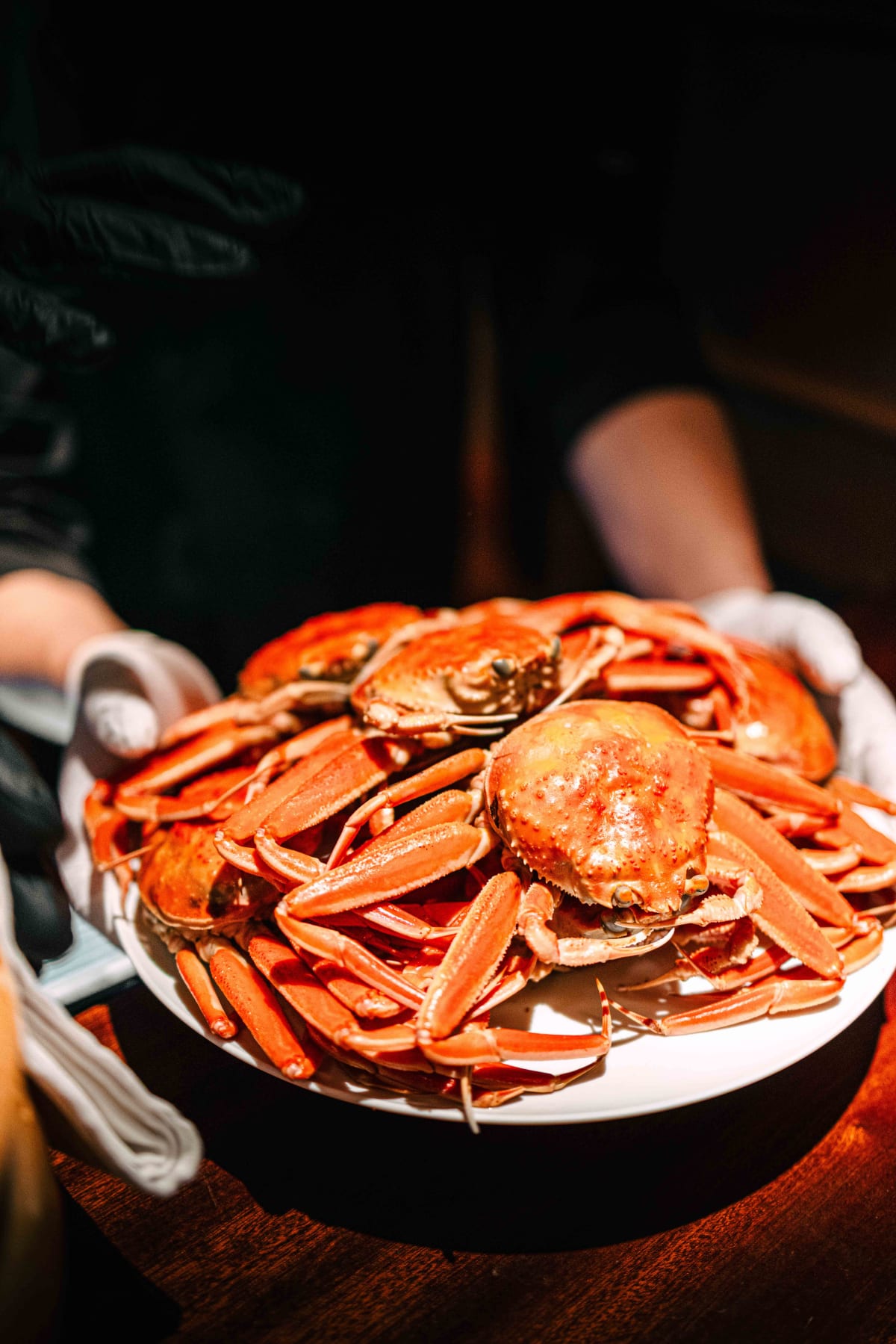
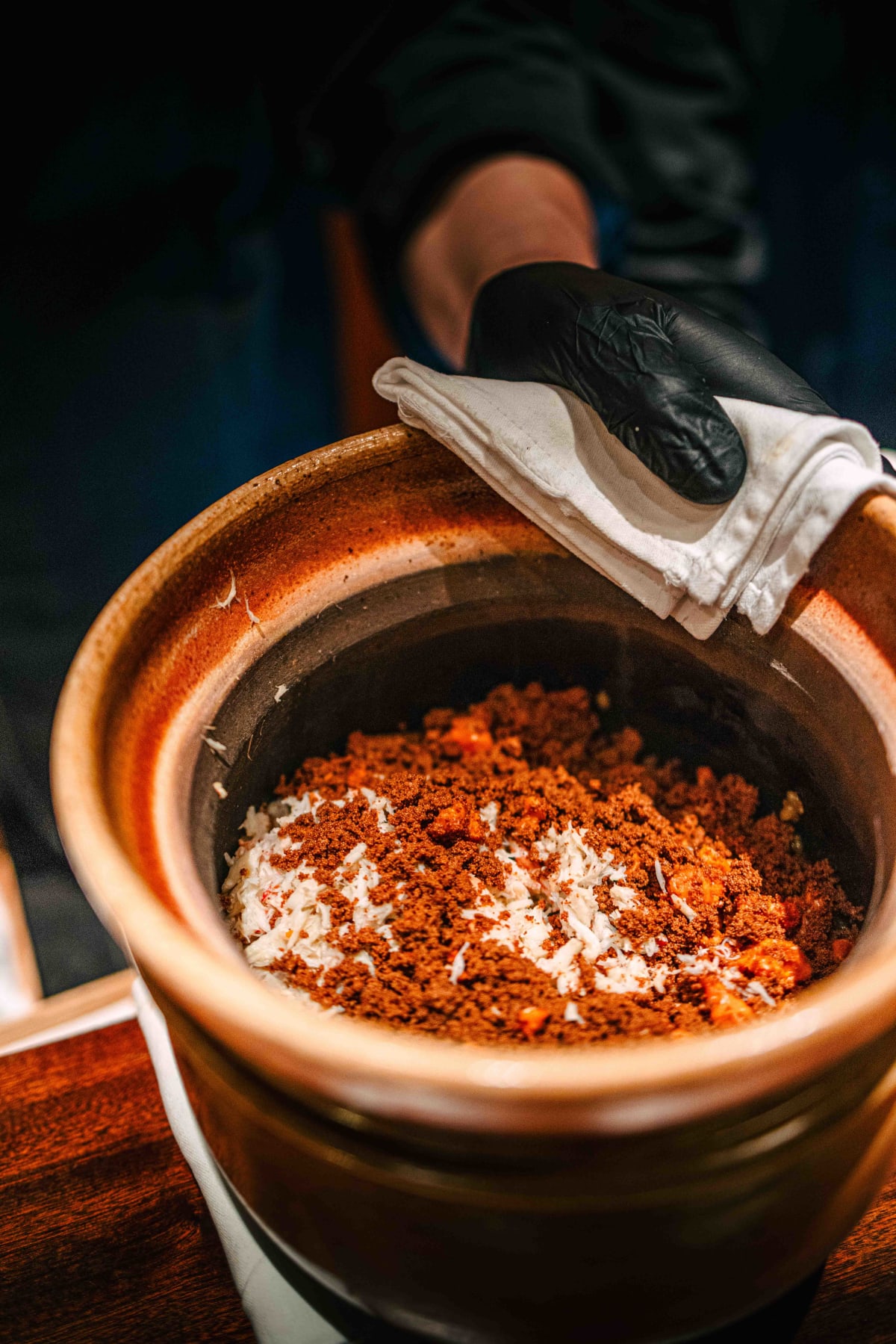
It was the dish I would pick as the best of the day. I have not eaten a huge amount of risotto, but I cannot remember having one I enjoyed more than this.
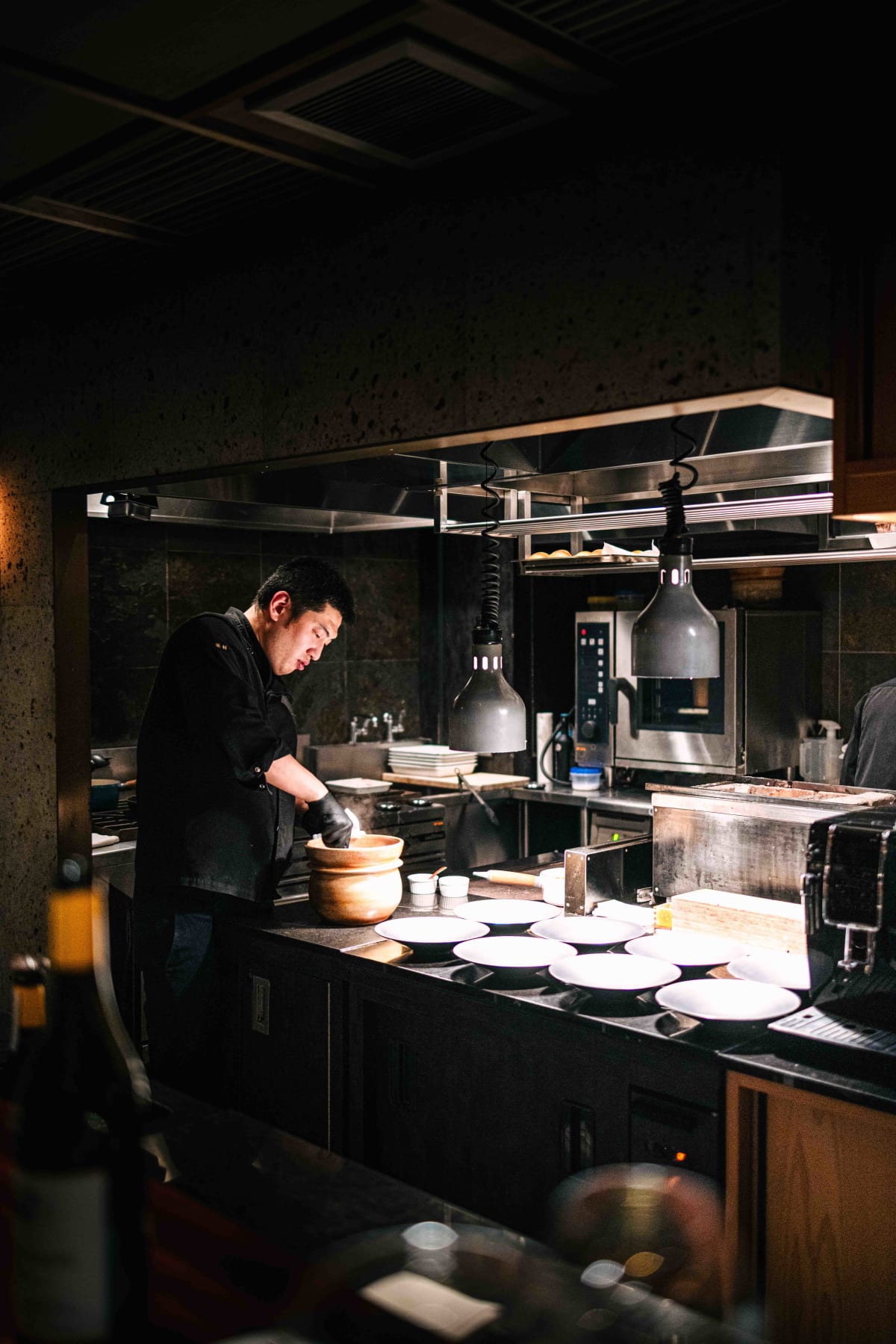
The texture of the rice was good, and it was loaded with crab meat, roe, and innards, so the crab flavour ran deep and rich through it. It was the kind of dish that keeps announcing itself: ah, I am eating crab right now. That said, the seasoning may come across as a touch strong.
Section 8·Before the Main
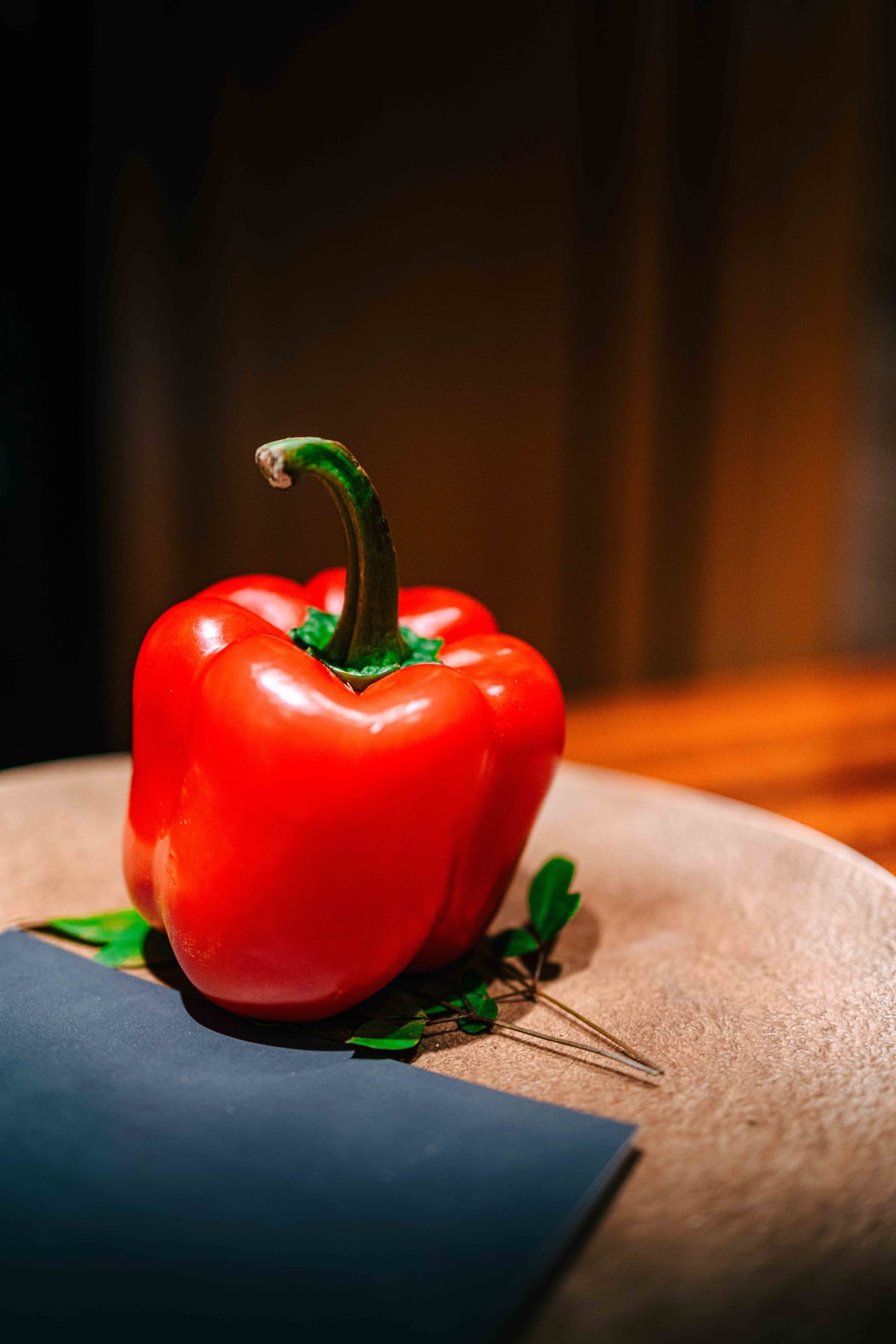
Mousse of Paprika named SHIZUKU from Higashi Farm in Hida-Takayama
The mousse was made from a paprika called Shizuku. I did not quite catch whether there was tomato inside or whether it simply tasted of tomato, but it was a dish in which the aroma and flavour of paprika stayed faint while the tomato flavour and sweetness came forward.
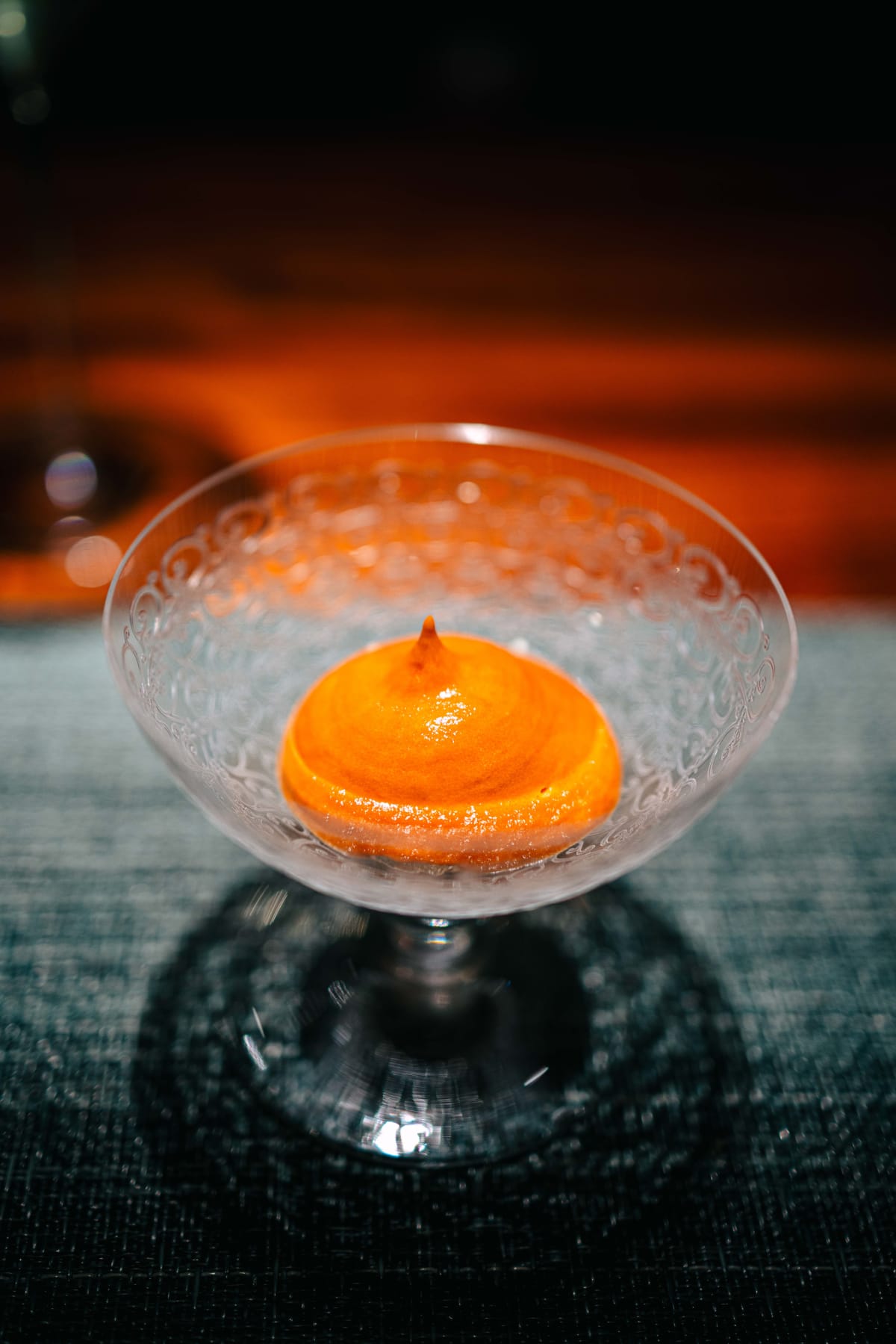
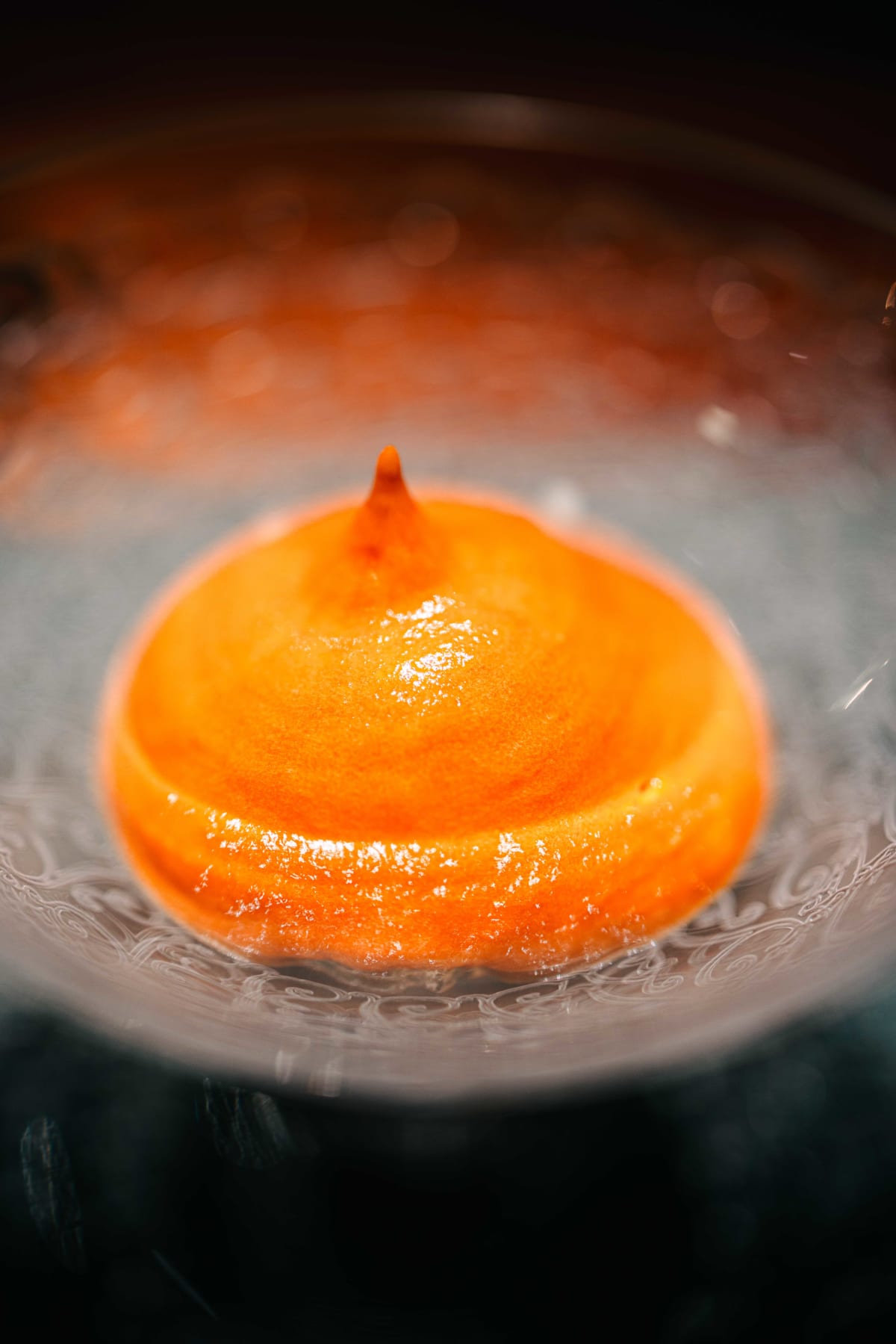
I found it remarkable that paprika could taste like this, and it was a good experience.
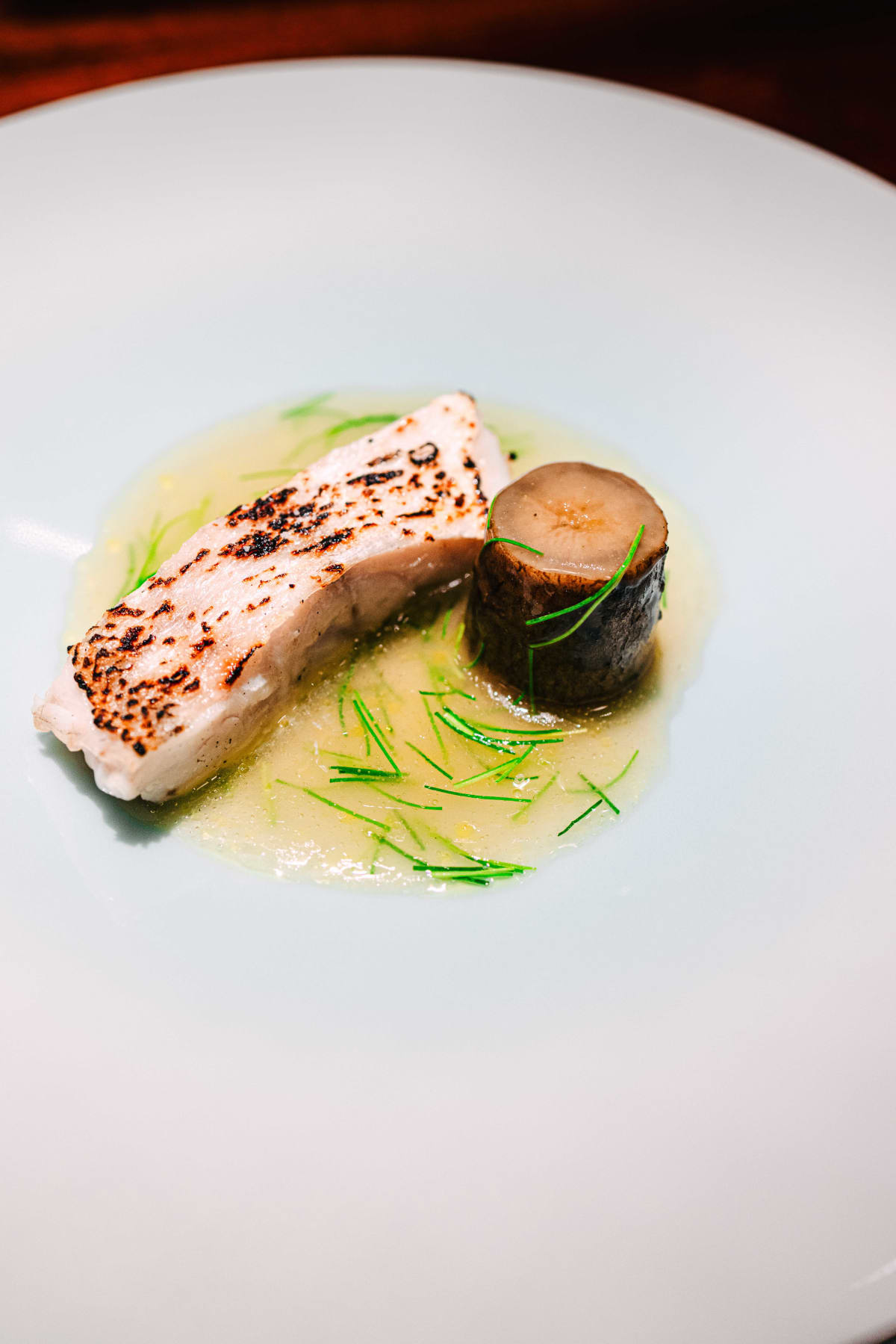
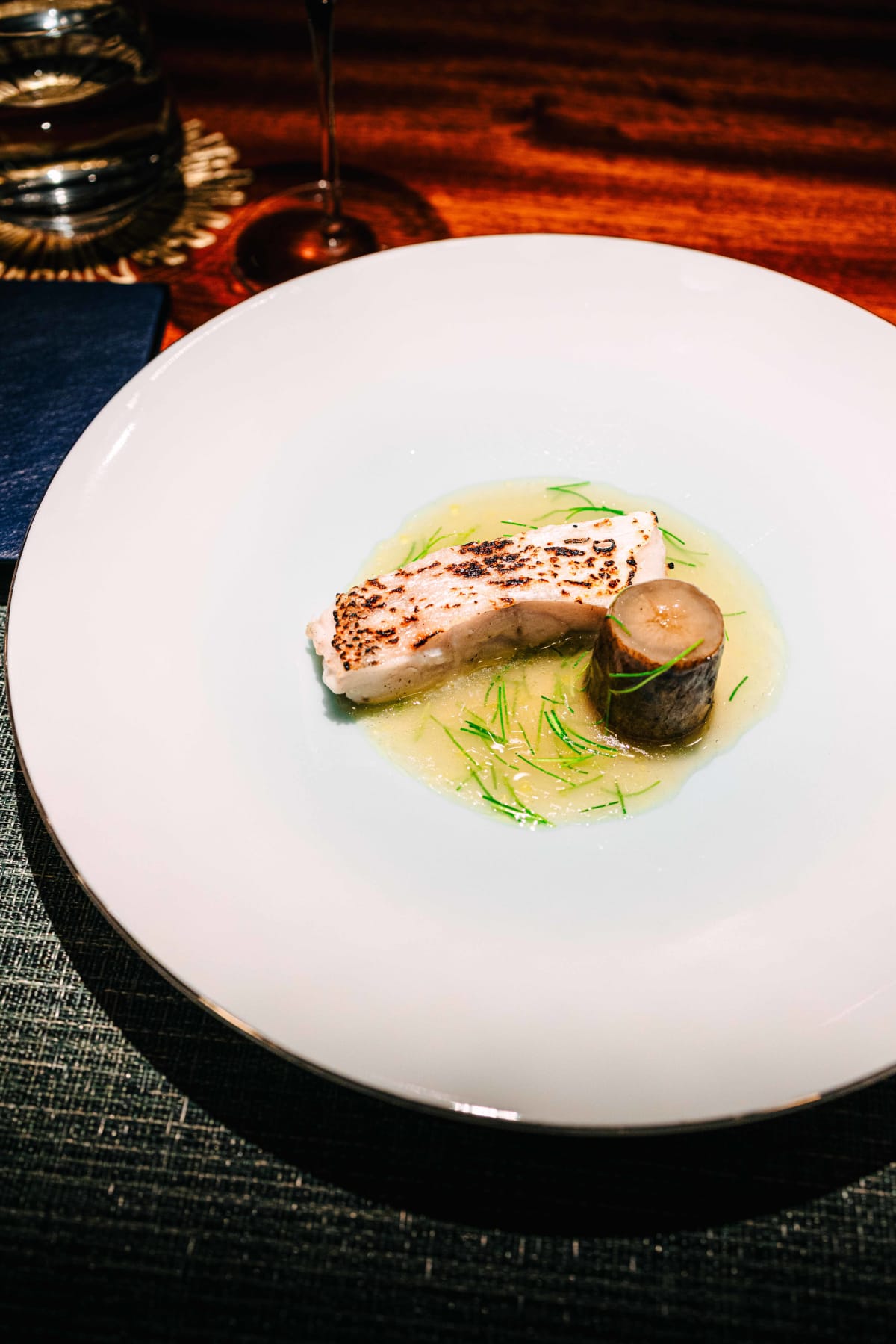
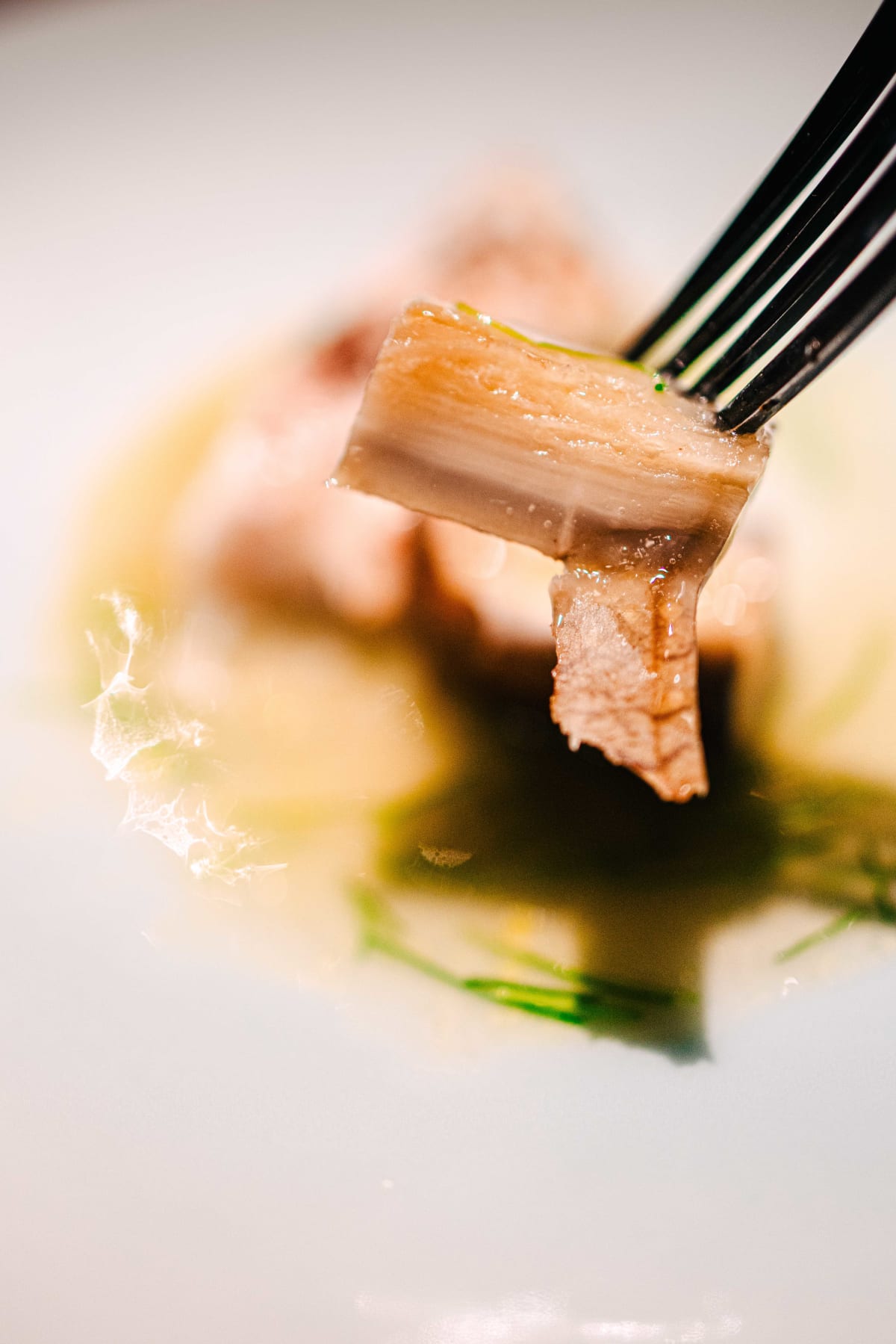
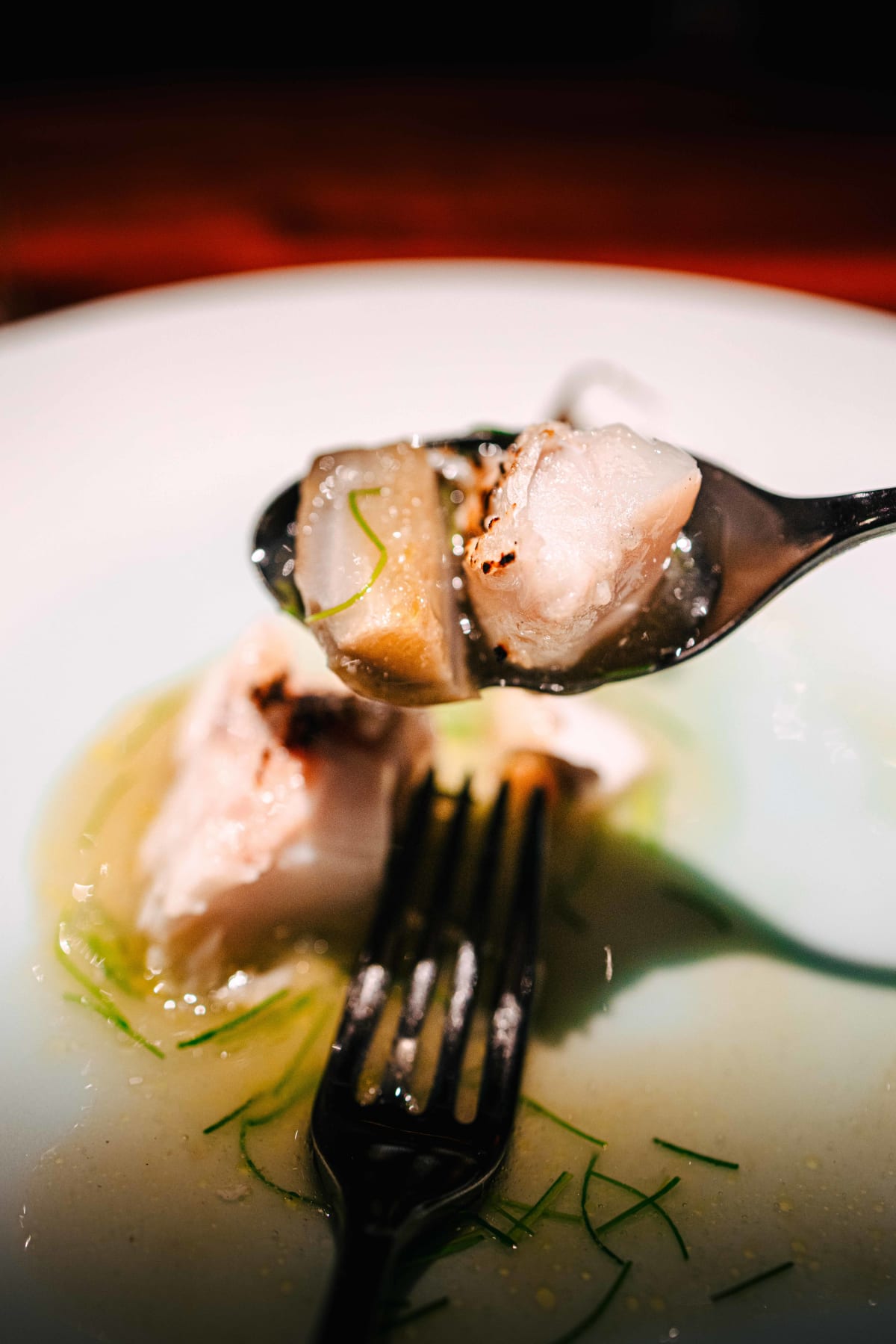
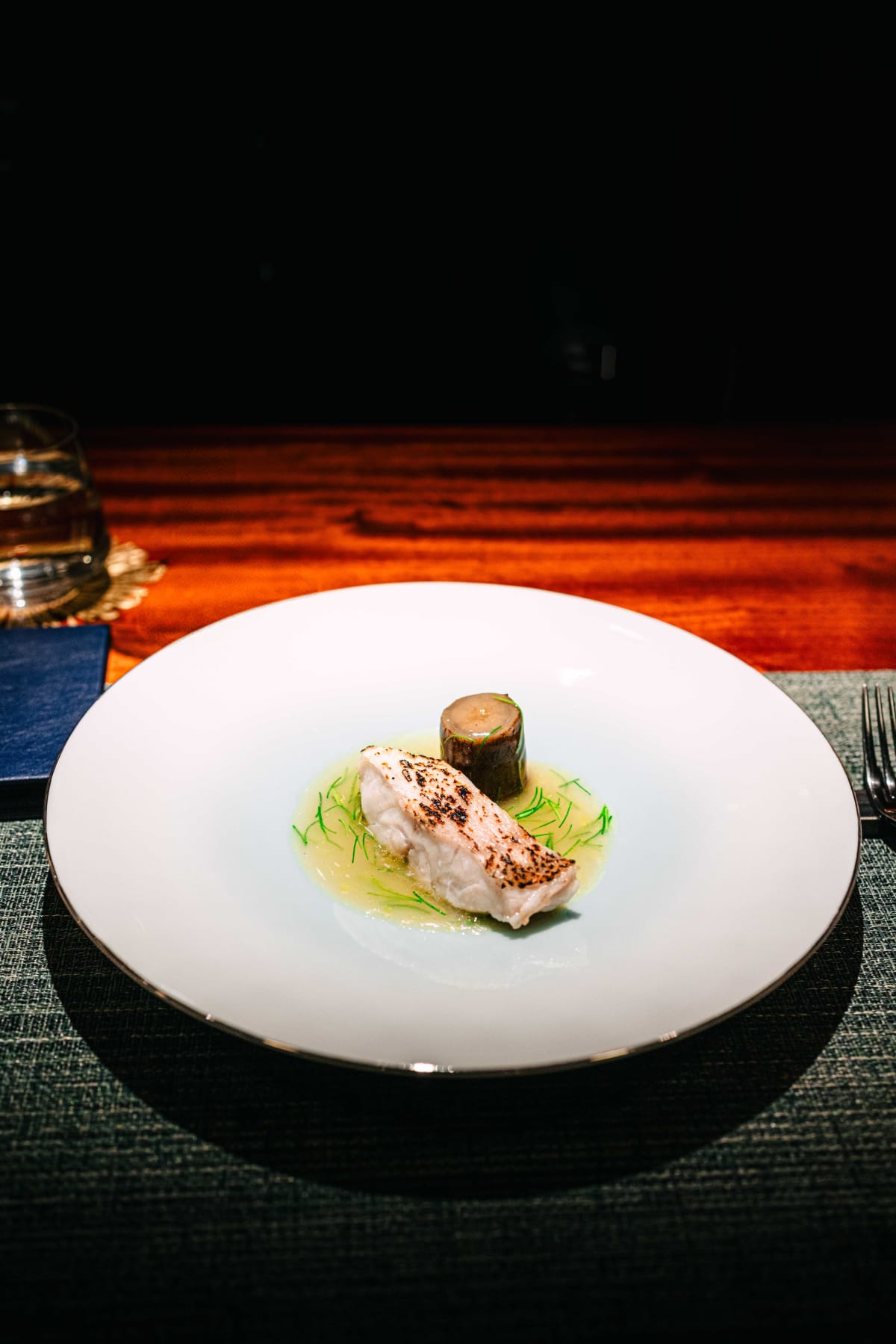
Shinkei-jime Tilefish from Nagai by Mr. Hasegawa, a connoisseur of fish, with Oura Gobo Burdock
The grilled fish was shiro-amadai, tilefish. Burdock came alongside it, and although I am not particularly fond of burdock, this one was prepared so well you could hardly tell it was burdock. The fish, too, was very well grilled, but the burdock was so impressive that the fish itself faded in my memory. The sauce had something of a Chinese ankake about it, and unlike the other dishes, its appeal was more enigmatic than immediately delicious.
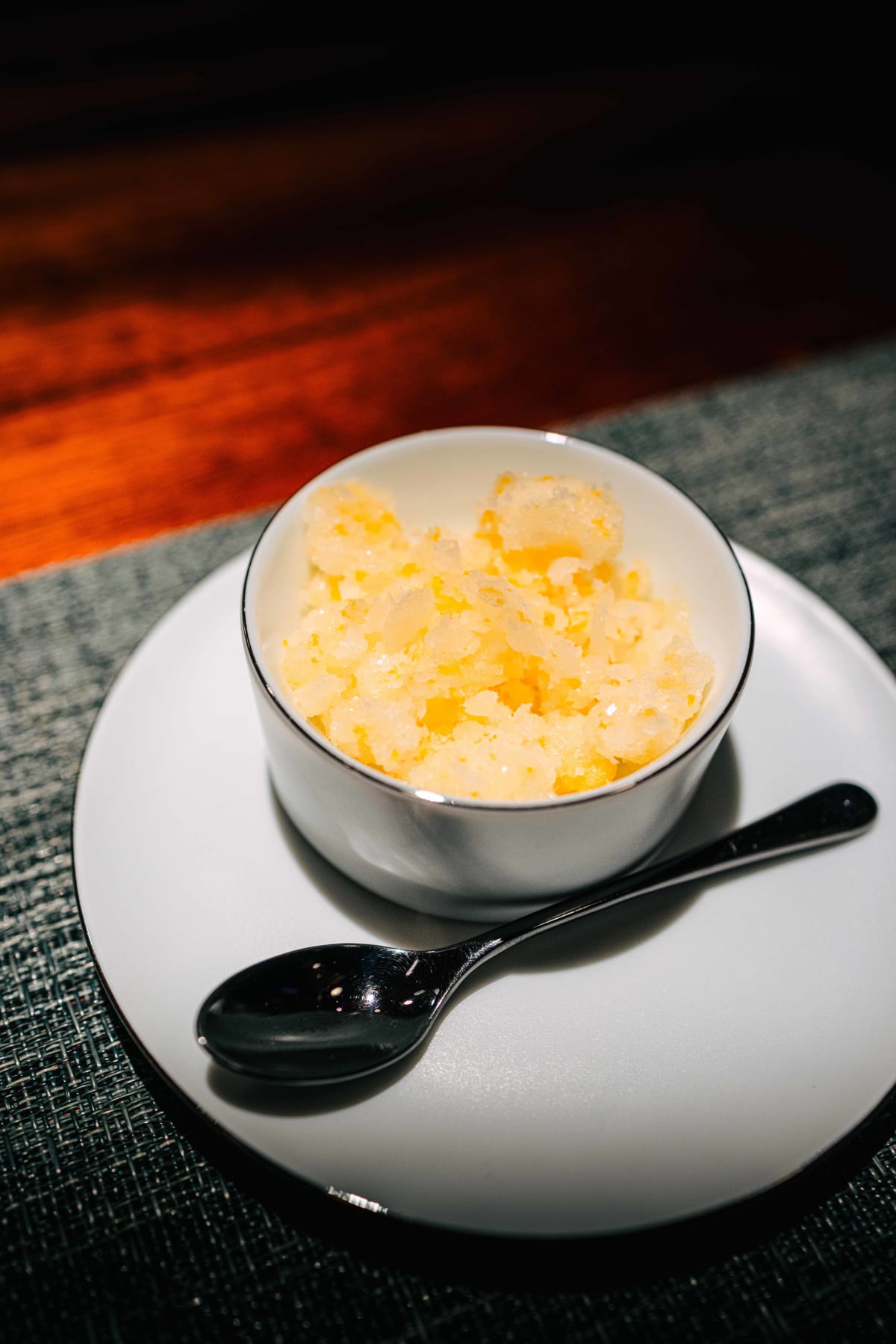
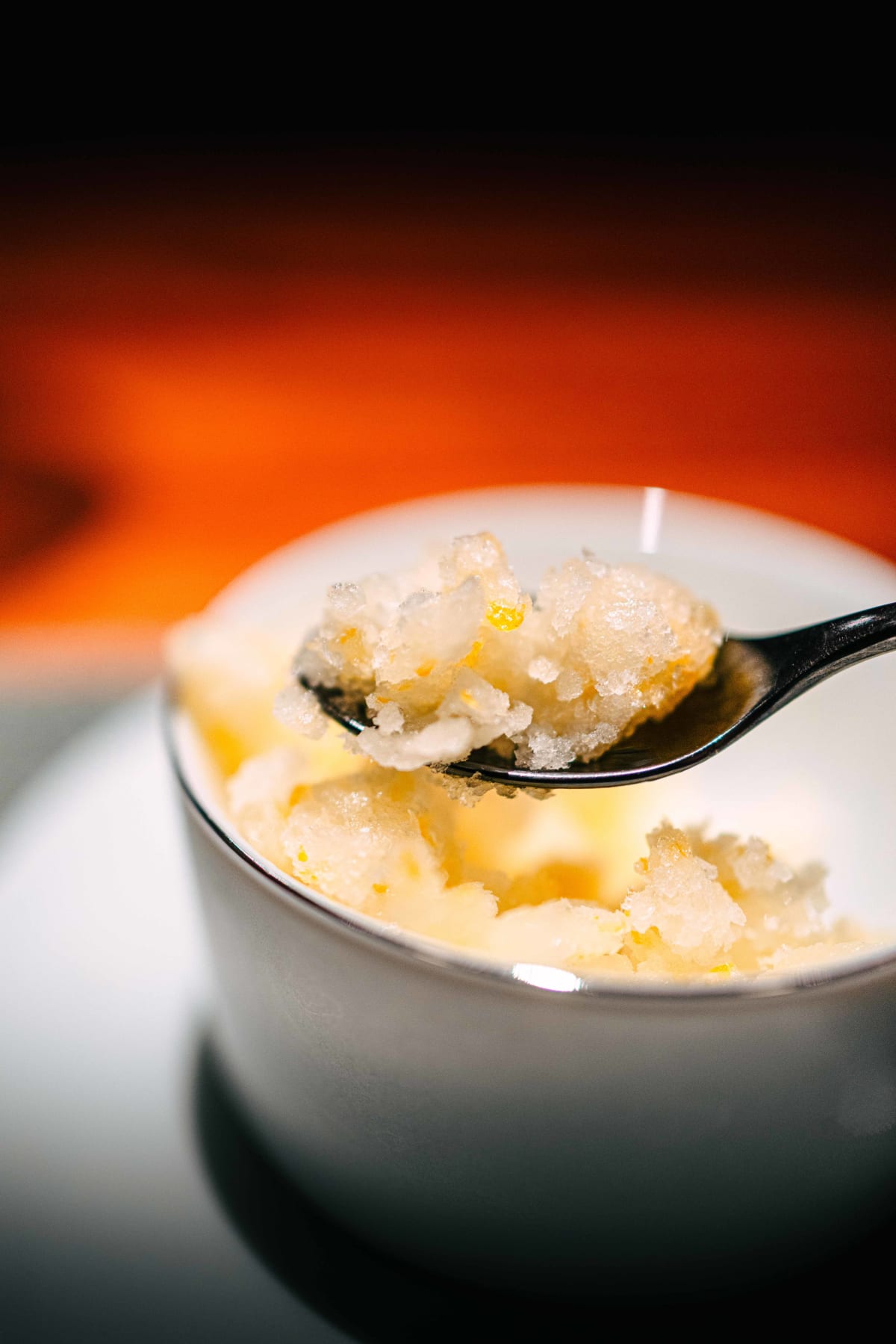
Granité with a Traditional Variety of Yuzu from Kanazawa
Midway through, a granité made from a traditional variety of yuzu from Kanazawa came as a palate cleanser.
Section 9·The Main
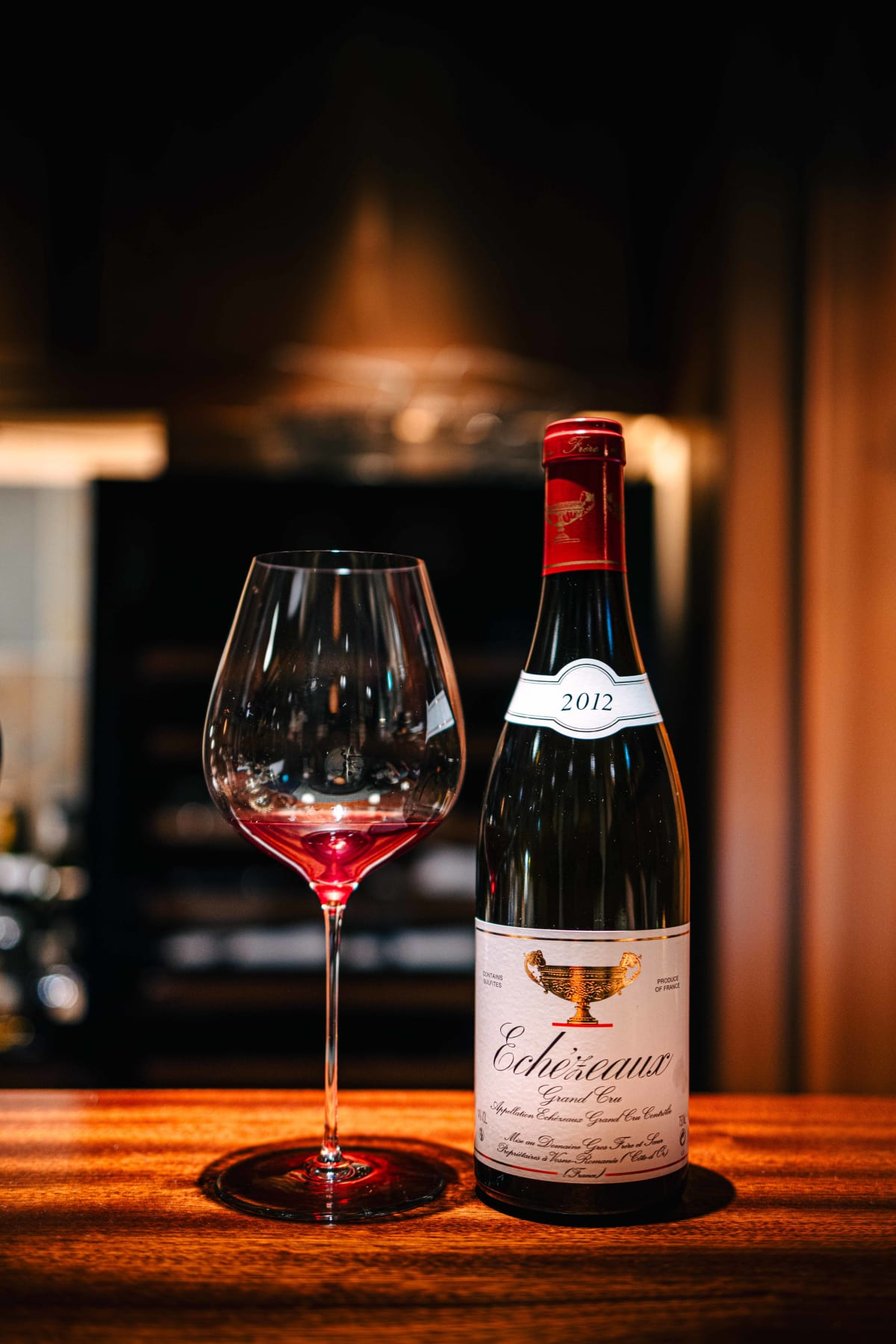
Before the main wagyu I moved on to red, to Burgundy: the 2012 Echézeaux Grand Cru from Domaine Gros Frère et Sœur. Rooted in Vosne-Romanée, this domaine is known for a ripe, full, somewhat modern style. 2012 was a small but concentrated vintage, and in the glass red berries, dried flowers, rose petals, and licorice mingled, with silky tannins carrying long. It had brightness enough to stand up to the meaty, charcoal-grilled aroma of the wagyu.
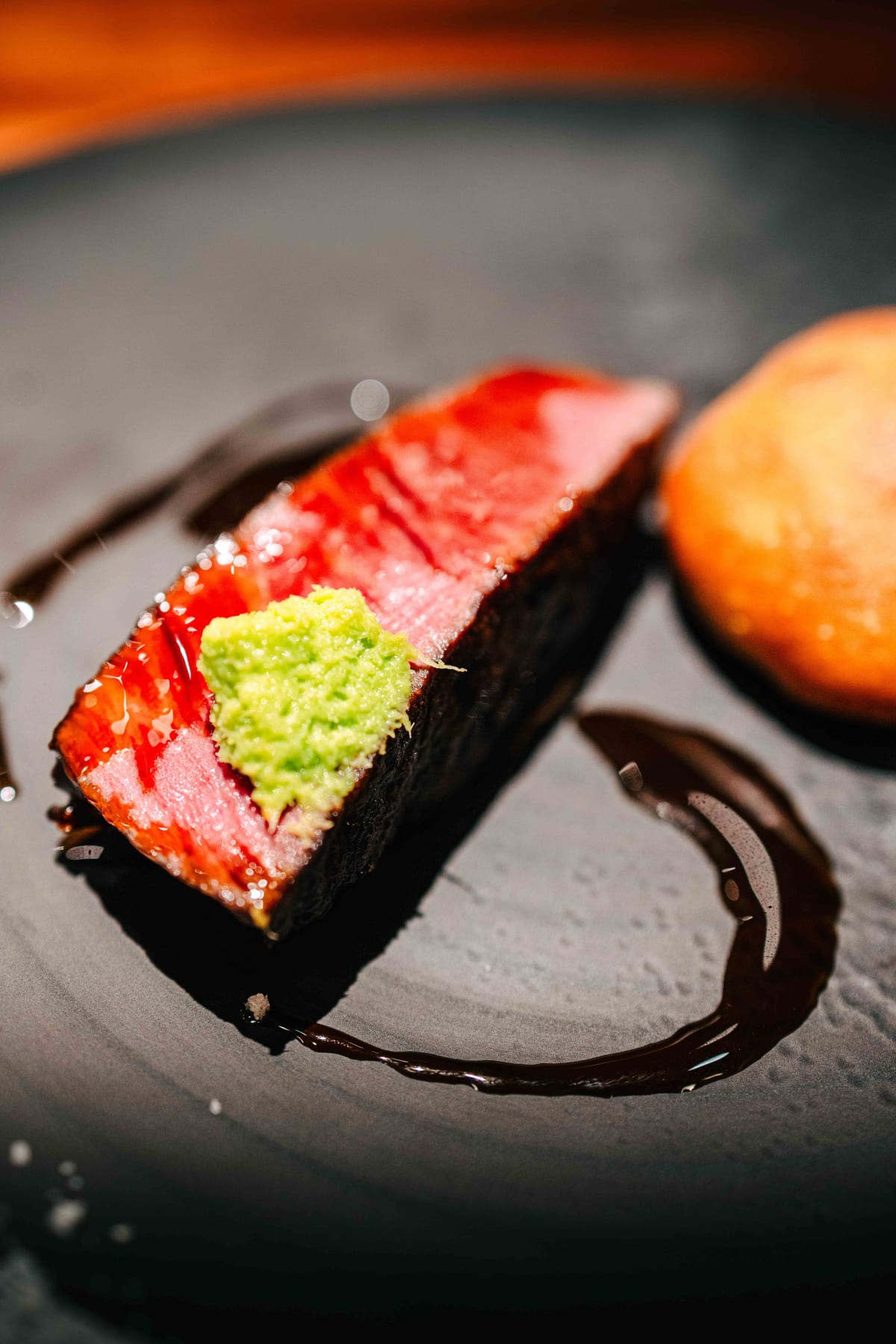
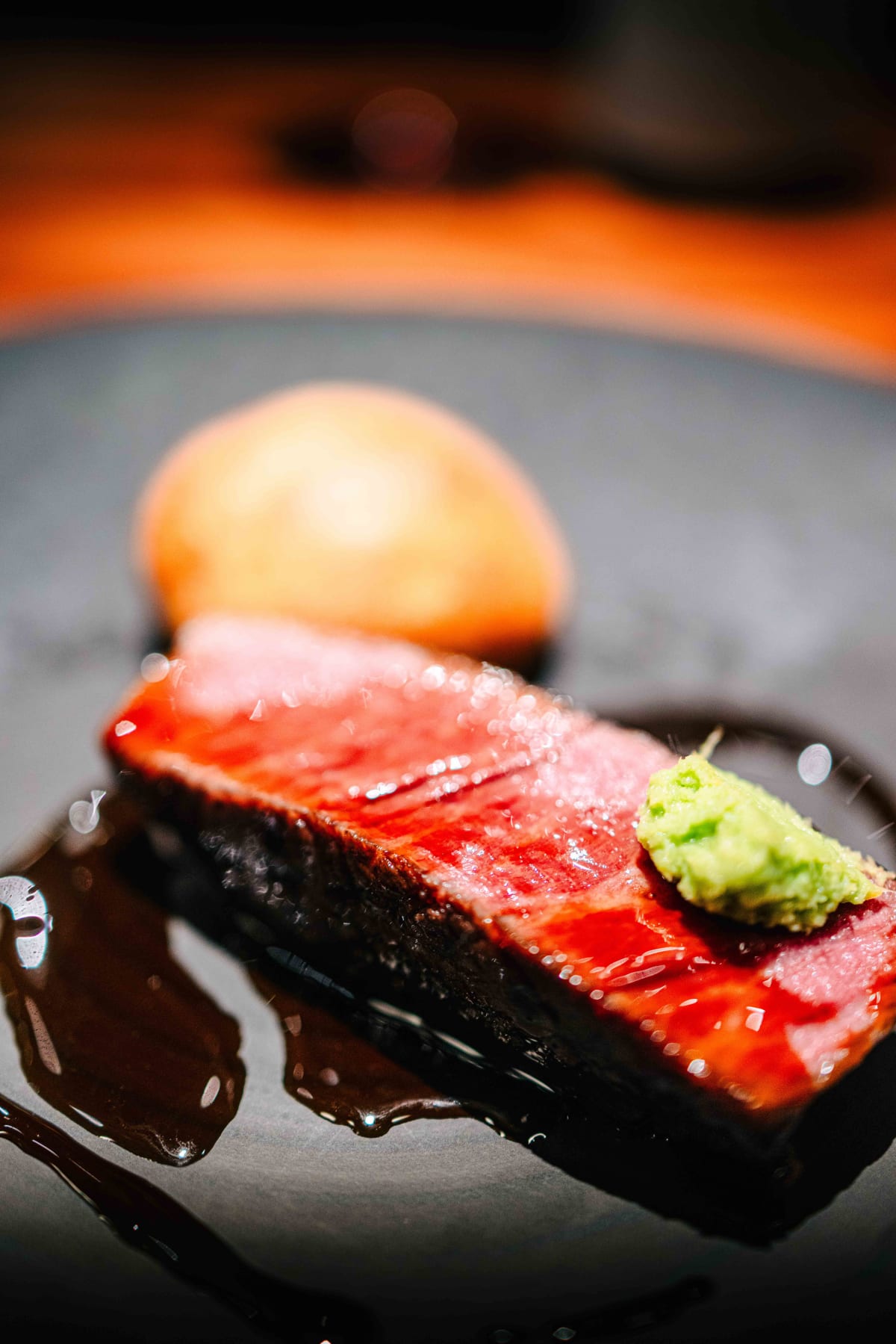
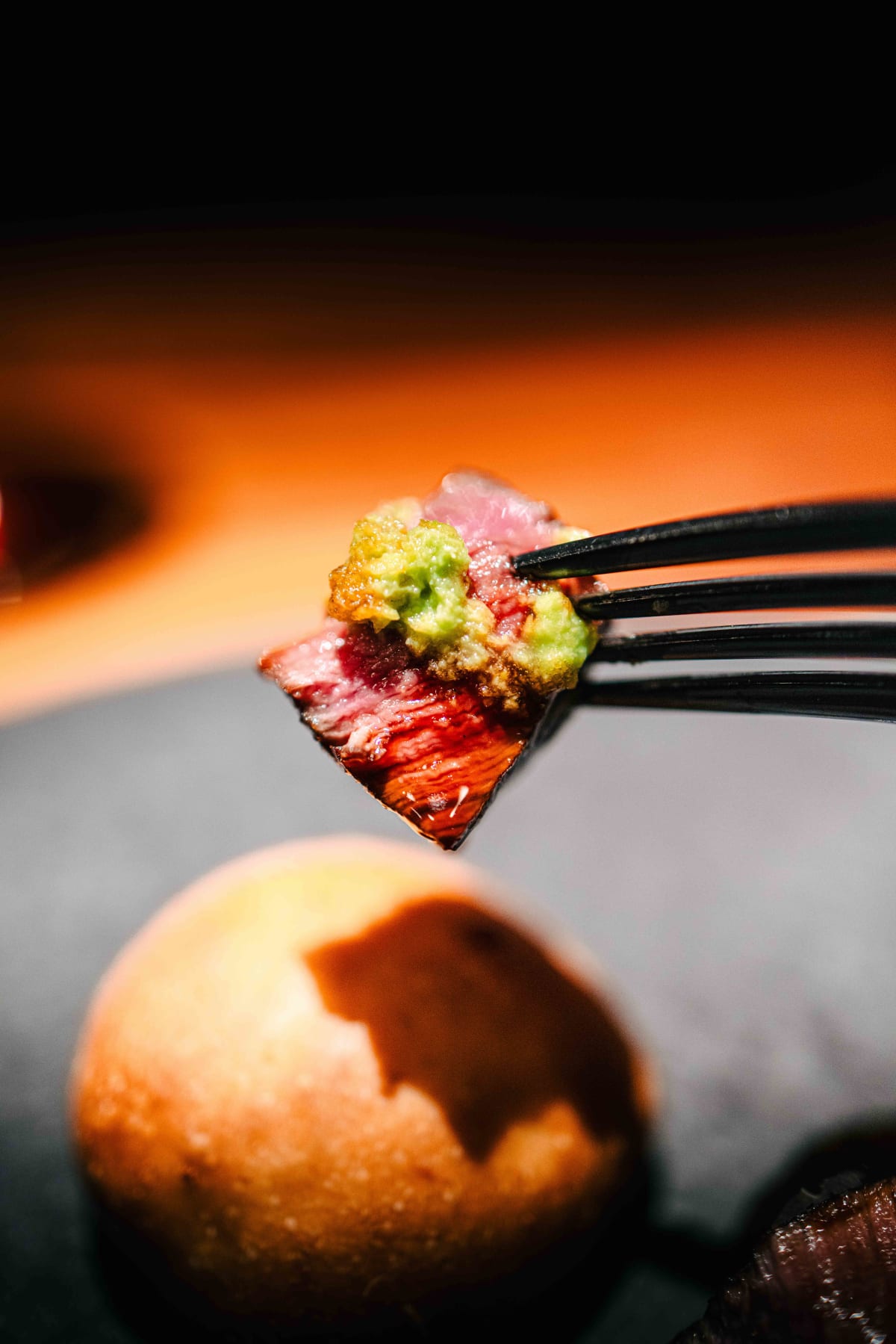
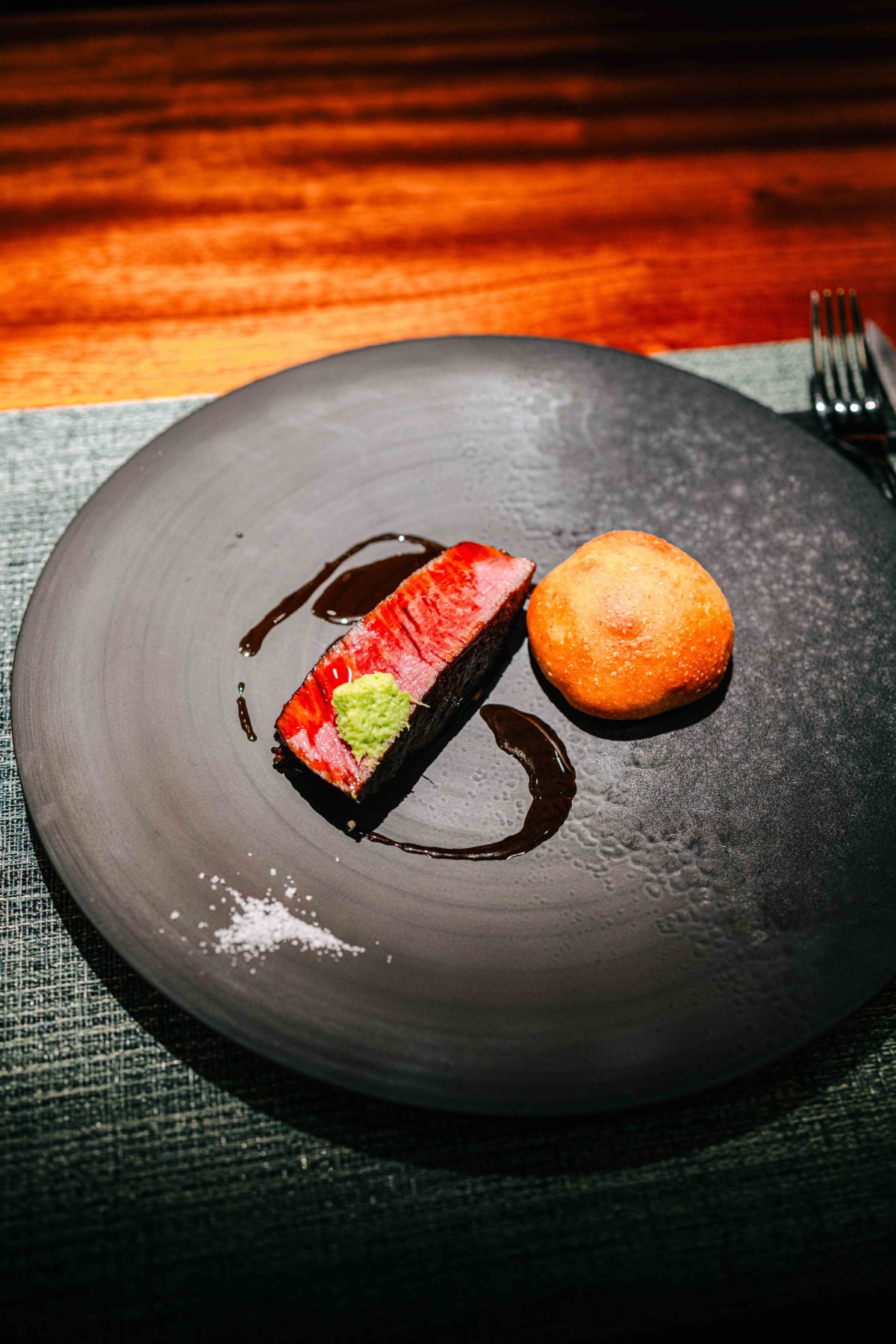
Charcoal-grilled 42-month-old Female Cow of Kobe Beef, Special Tajima-Gen, from Ueda Livestock Farm, with Lily Bulb named GEKKO from Mr. Kijitani
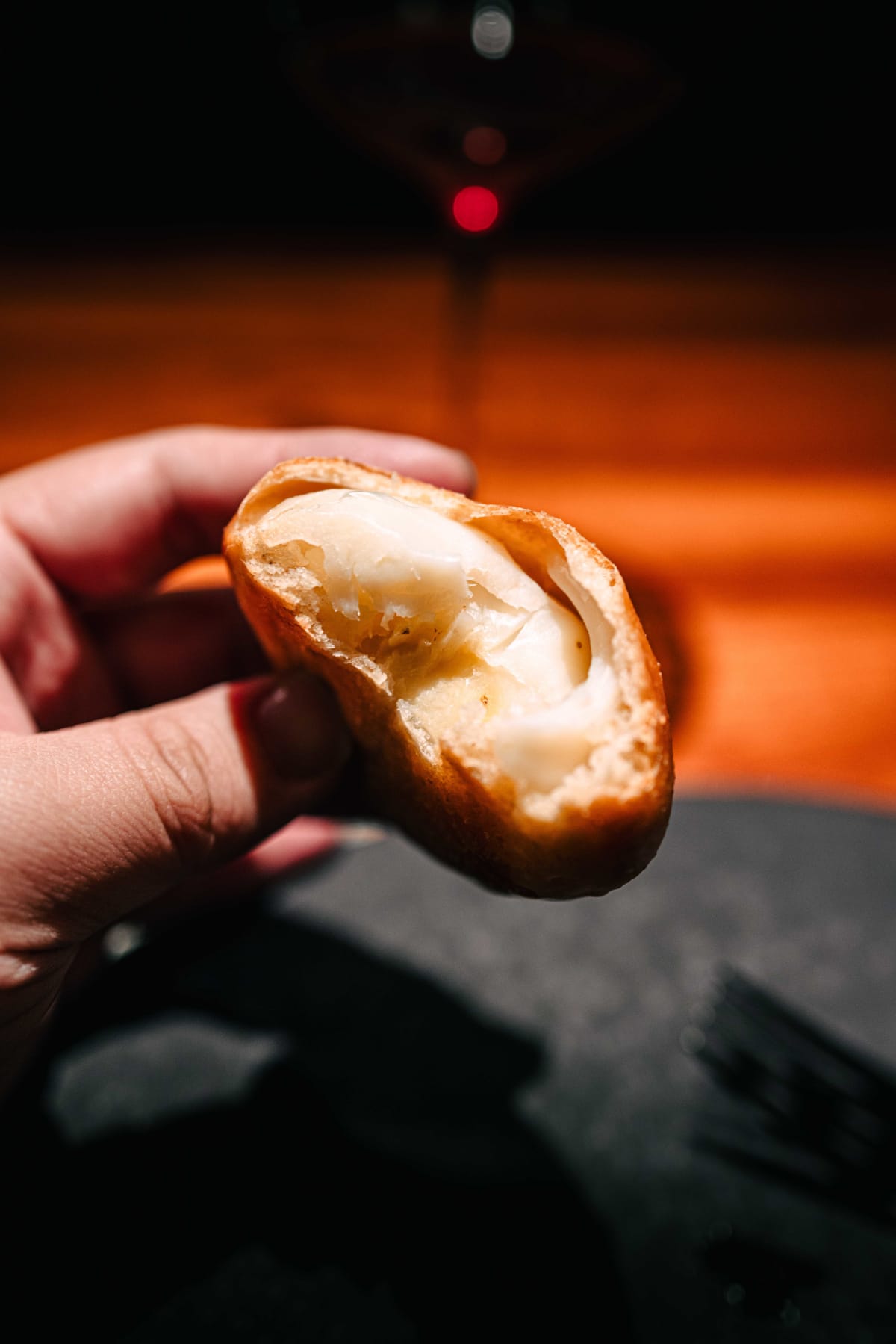
The last of the savoury courses was wagyu. I had picked this wagyu as one of the most disappointing dishes on my first visit, when it struck me as merely greasy, with nothing in the flavour that stood out. But on this December 2024 visit I ate this wagyu main with real pleasure. It is a female cow, they said, and perhaps for that reason the meat had a fine aroma, and the subtle charcoal smoke running through it was superb. The meat, too, was very tender. As with the bonito, wasabi was served on top, and eaten together its cooling freshness kept the beef from growing heavy right to the end. I like seafood best, and among meats I favour poultry, so I had rarely been moved by a hanwoo or wagyu main before, but at Ao this time I was. That said, the sauce was not yet as impressive as the wagyu itself, and a bread containing lily bulb came with it, which I thought was bread we could have done without.
Section 10·The Close
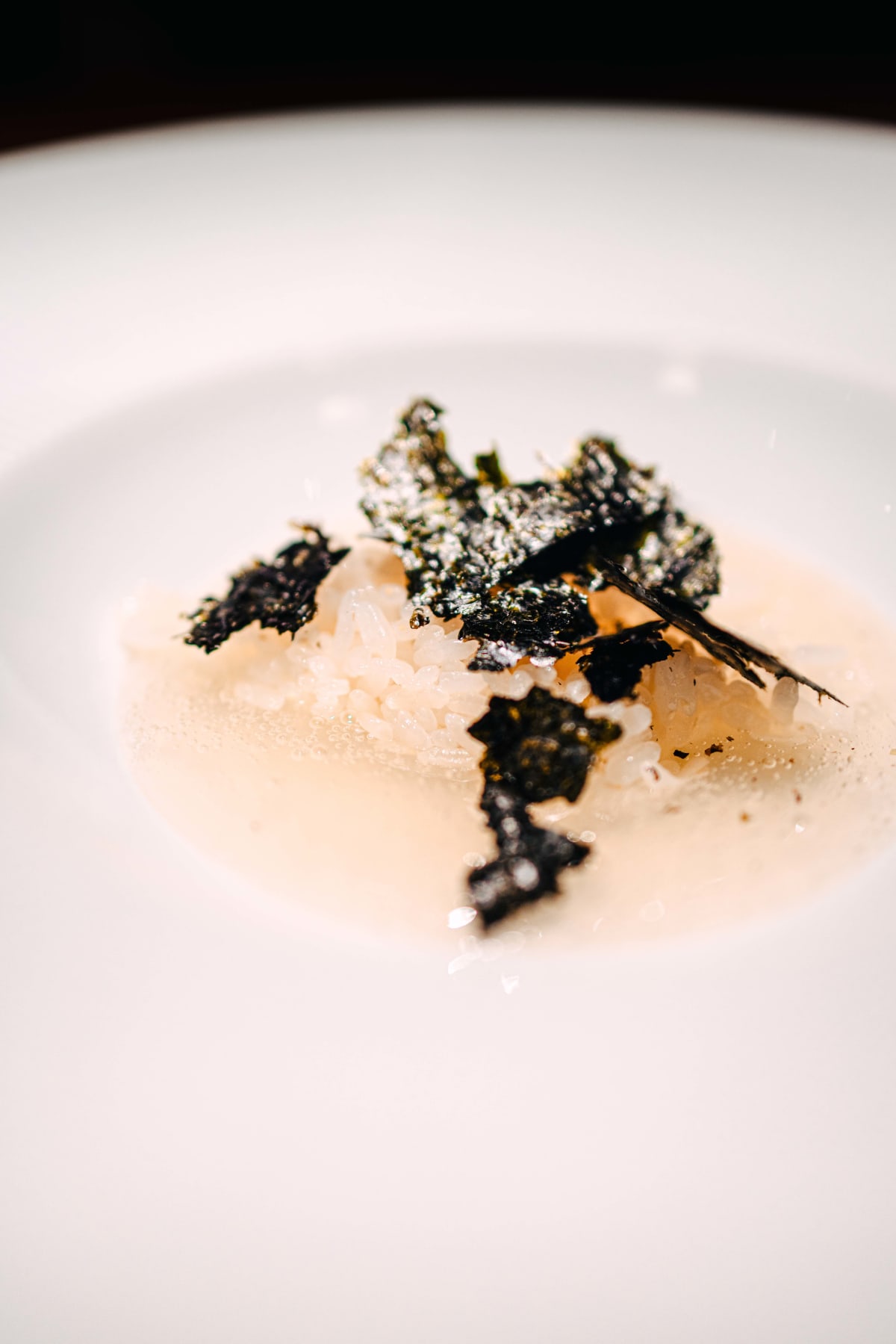
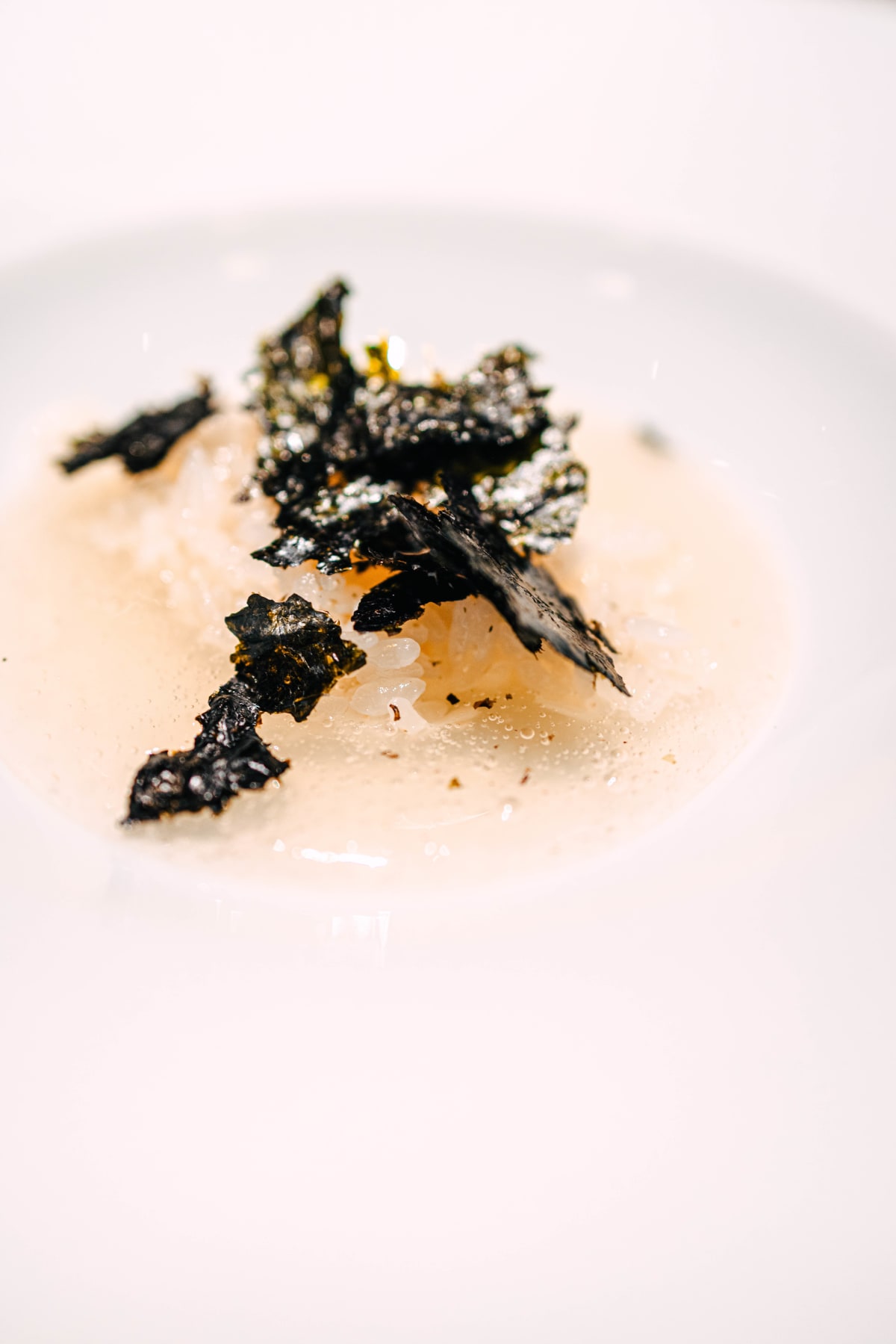
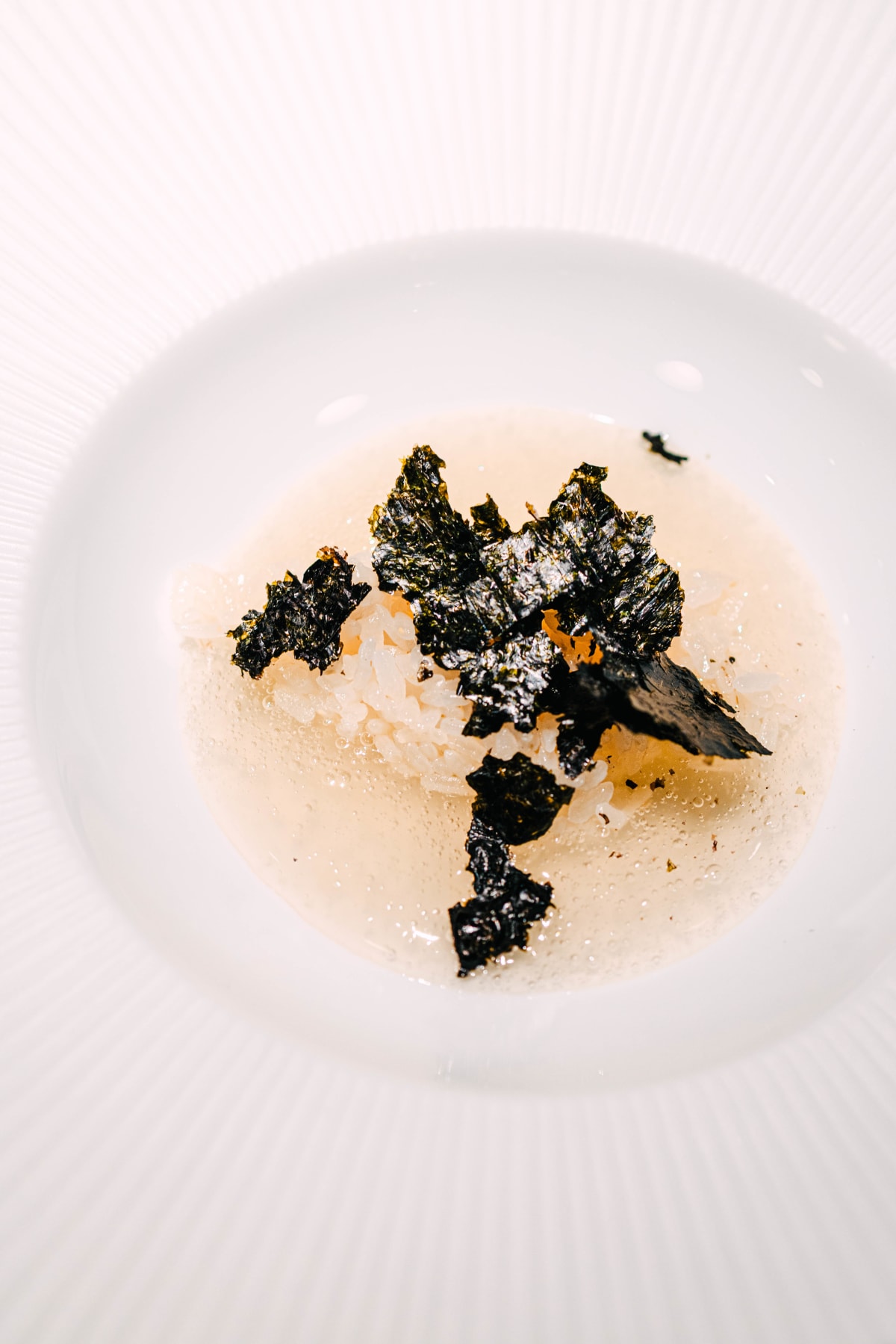
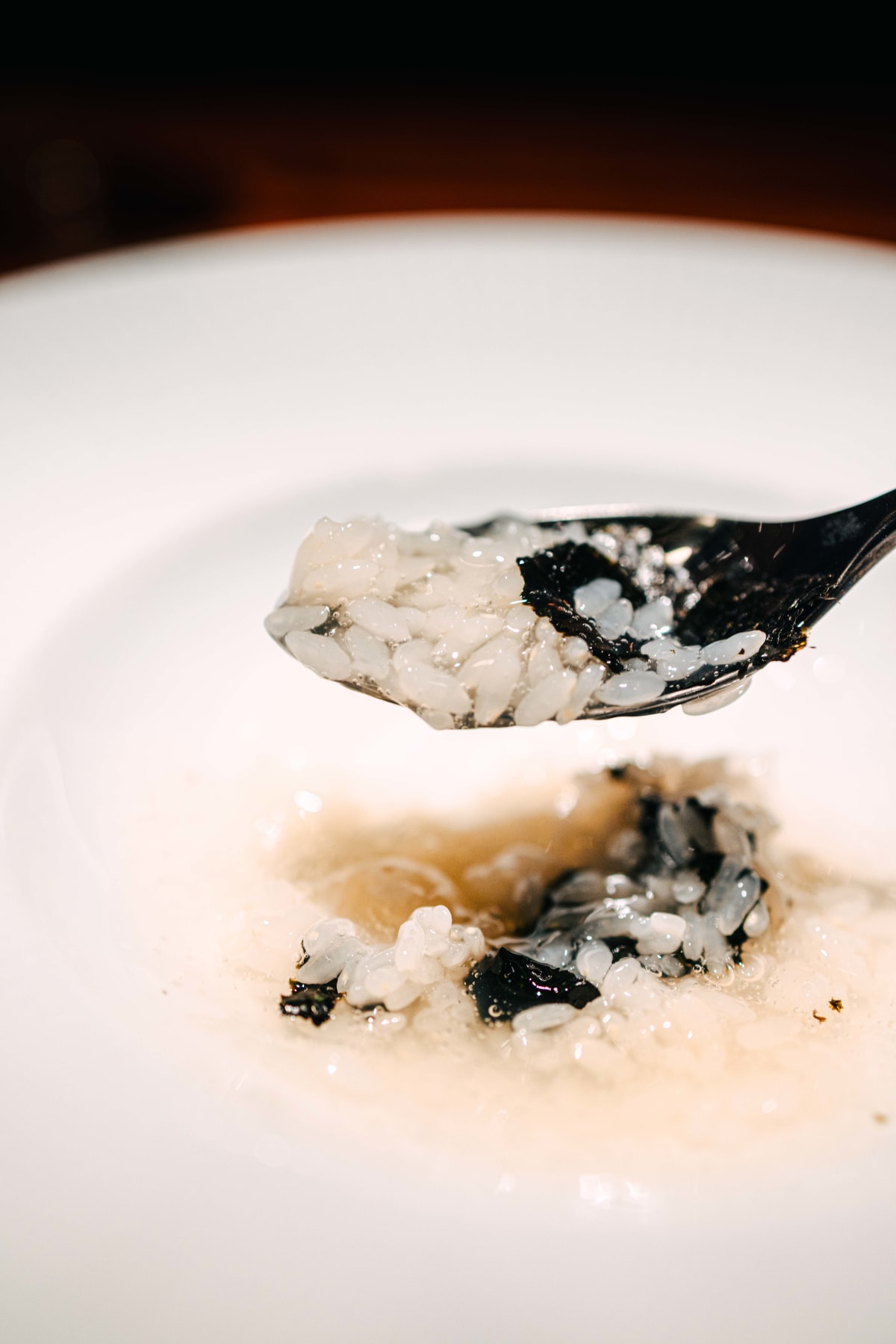
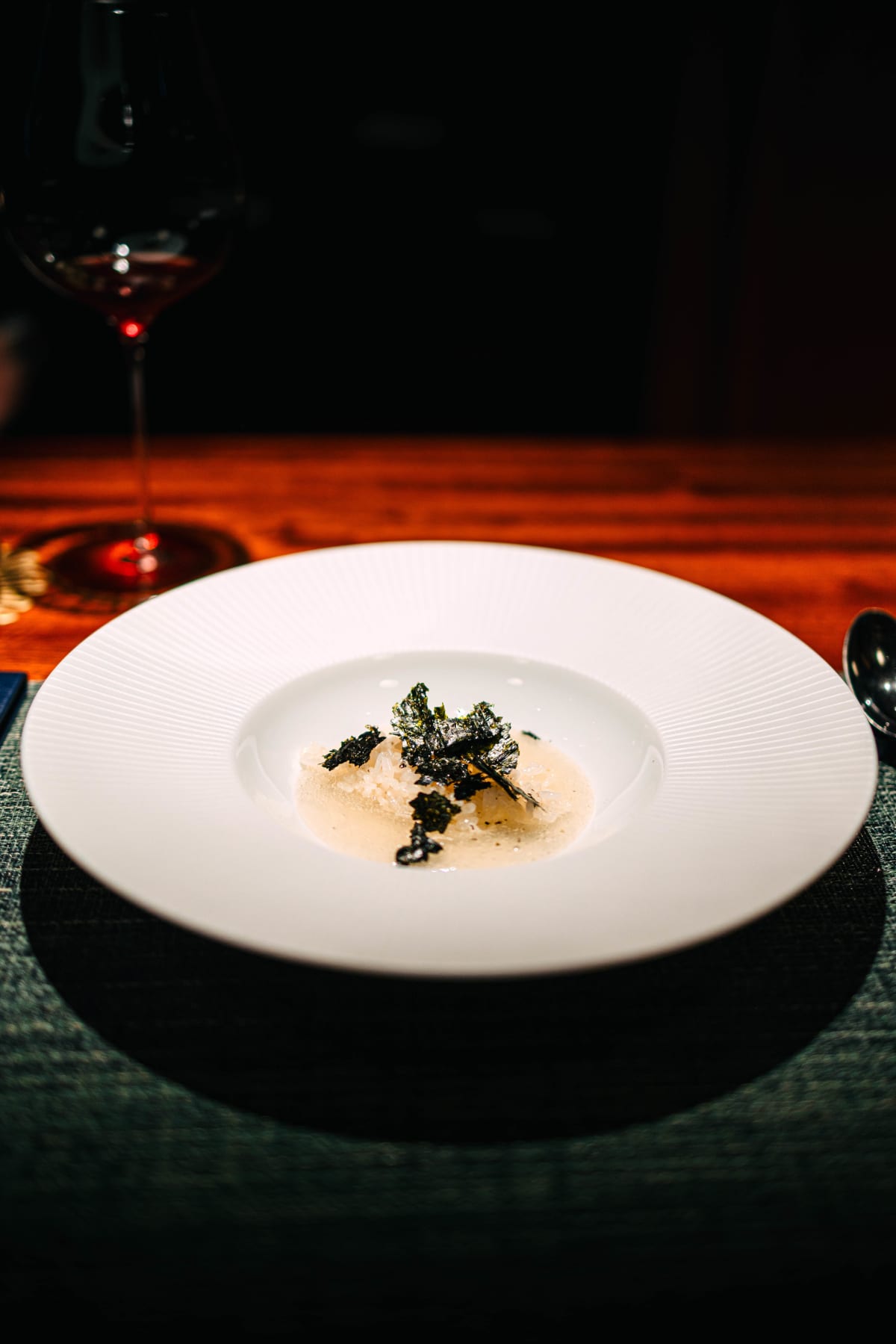
Risotto with Clear Soup made from Clams from Ichiyama Fish Tank, with Toasted Seaweed named Kontobi 1st Class from Mikuniya in Hiroshima
A risotto made with clams followed the main, and this was the only dish that day that made me stop and think, "Huh?" Apart from the texture of the risotto, I could not tell what was good about it at all. The flavours felt unfocused, and the somewhat gummy texture of the risotto might, I thought, come across as a turn-off for many people.
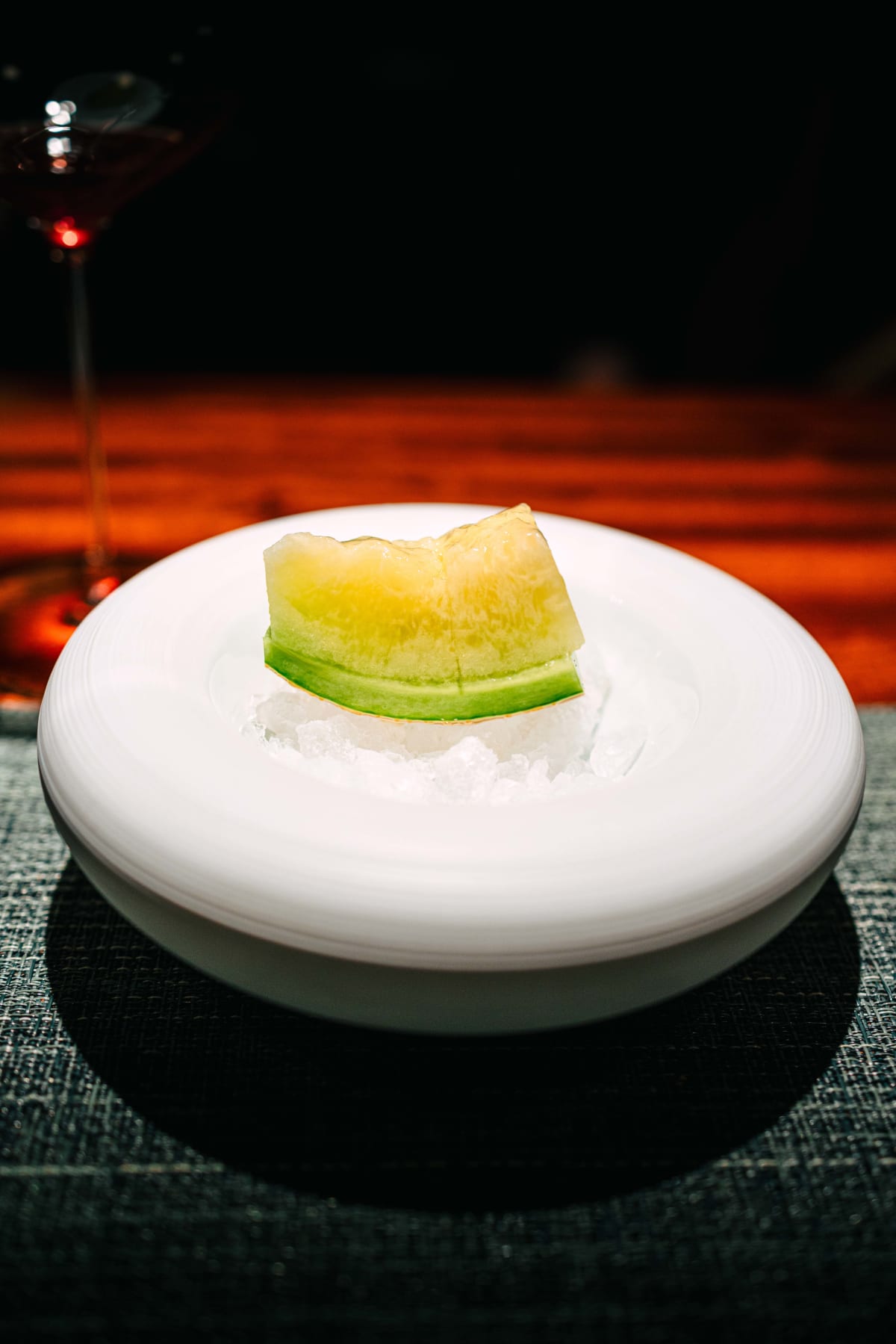
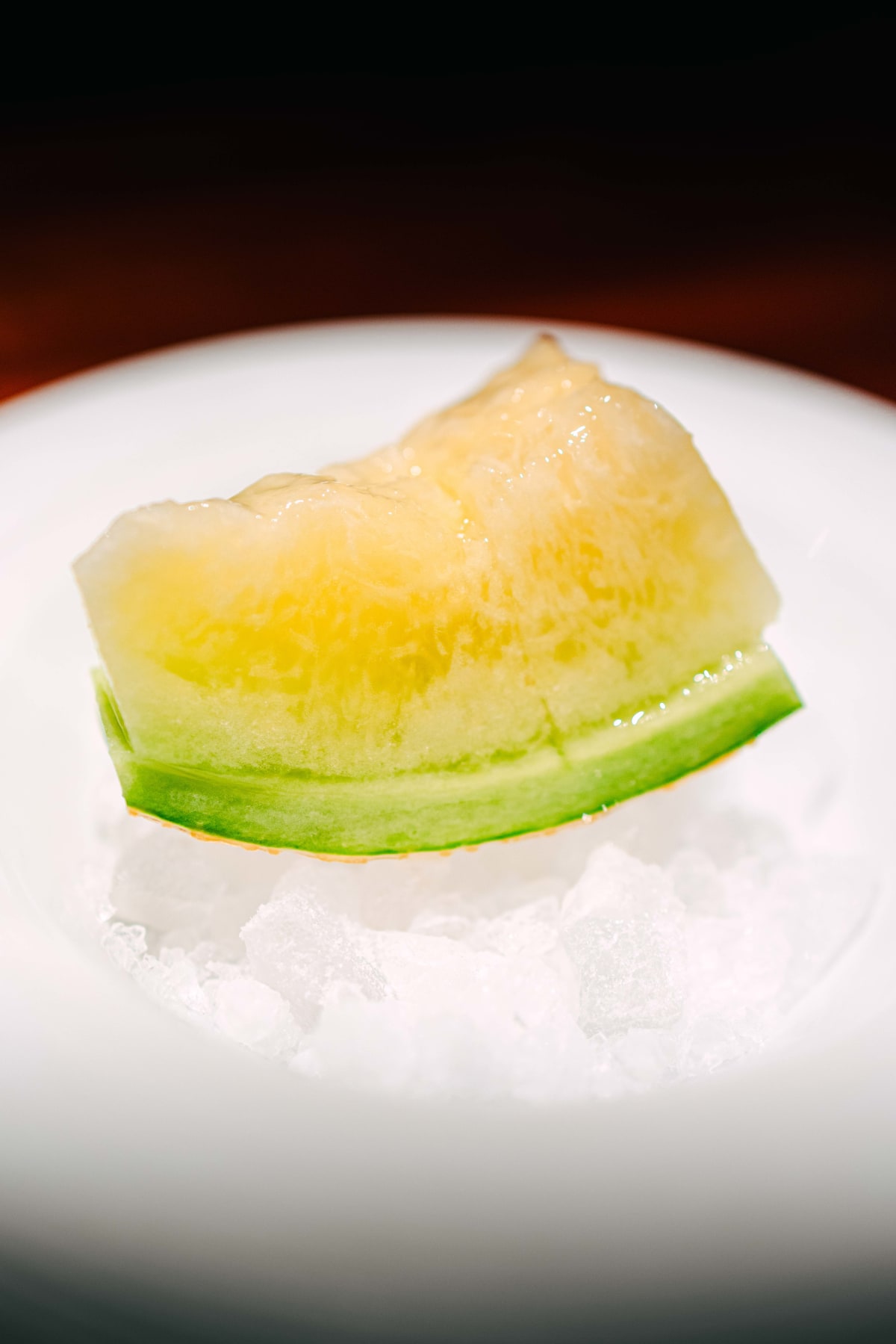
AMANE Muskmelon from Hamamatsu, Shizuoka Prefecture
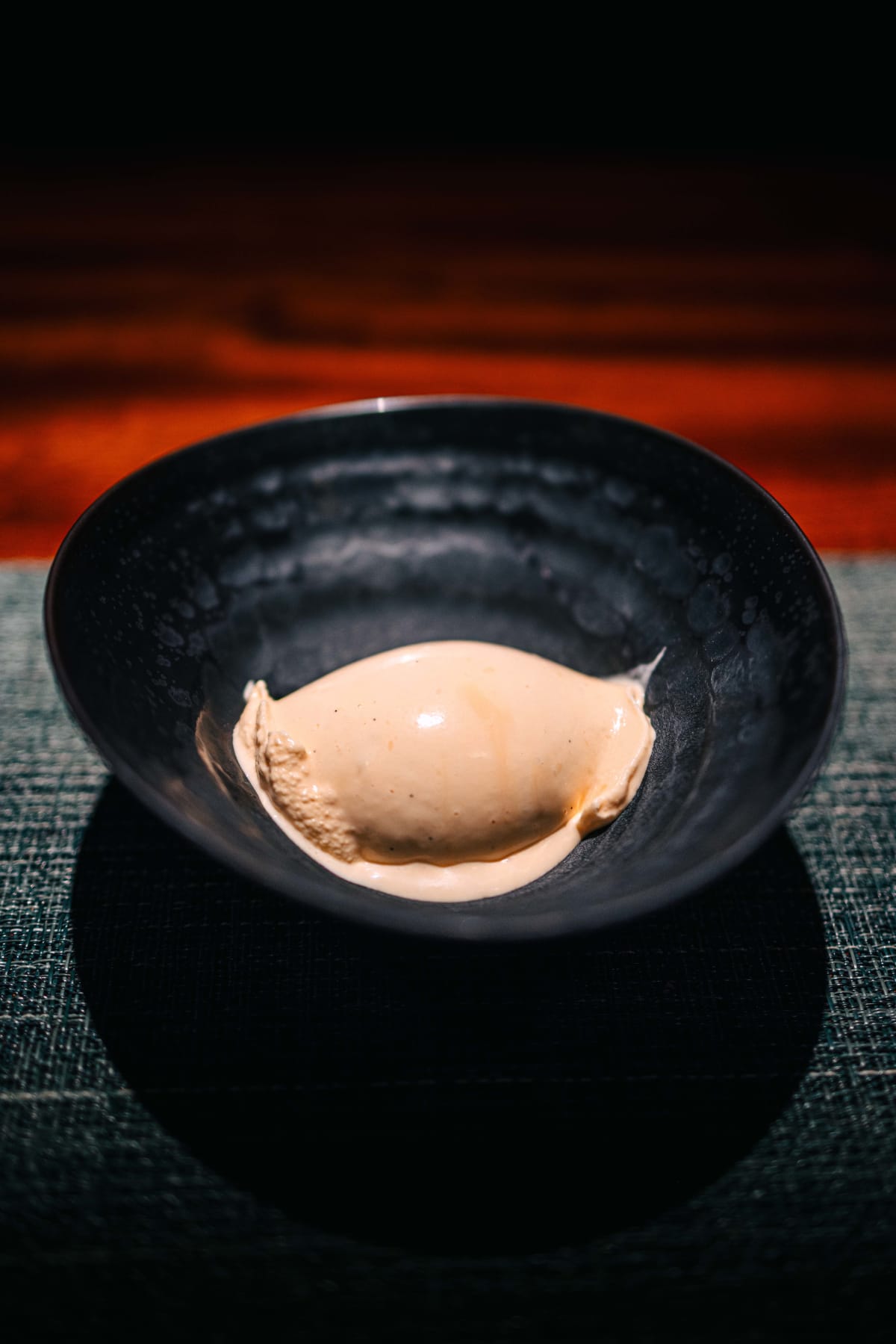
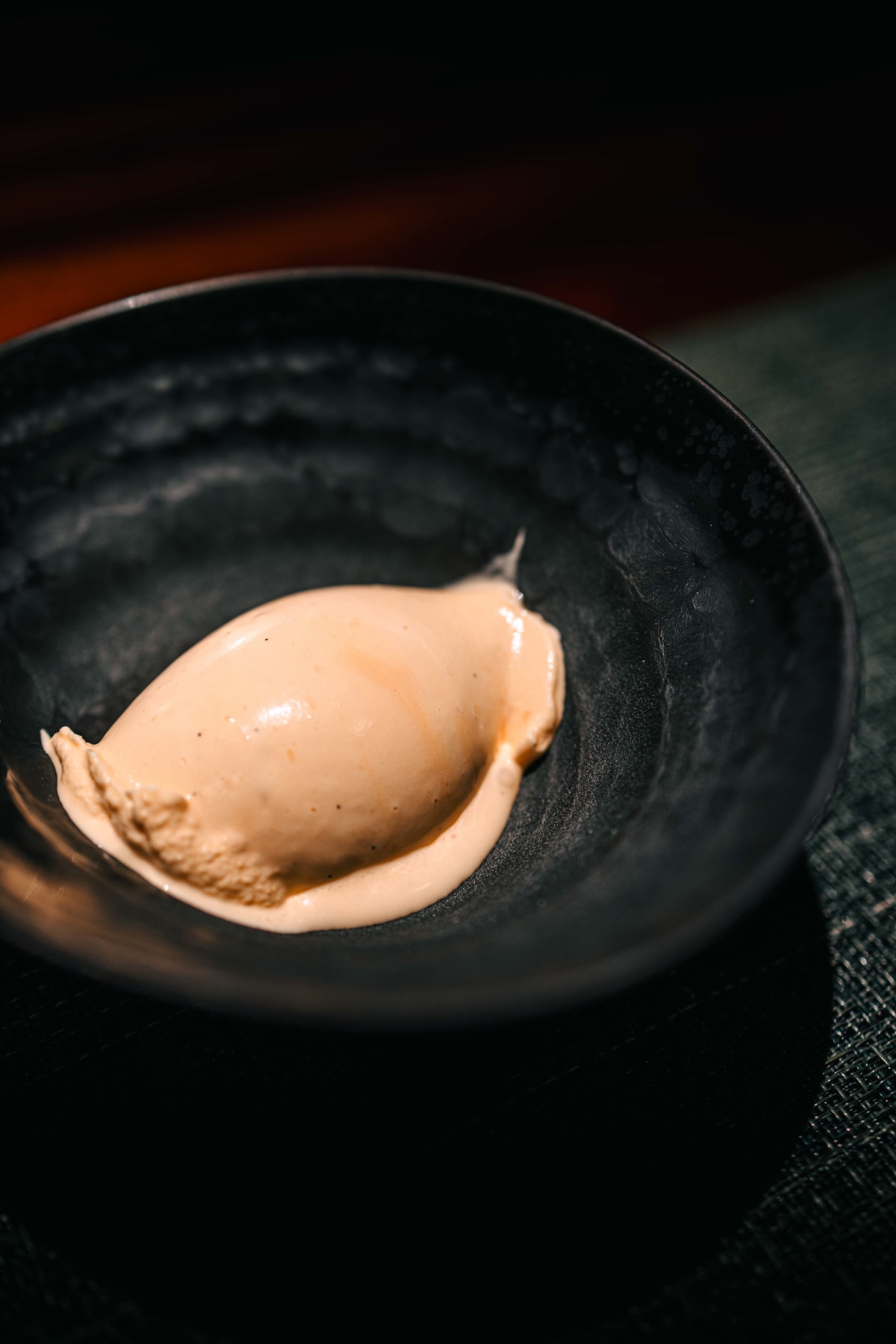
Ice Cream from Egg of Hinai Wild Chicken with Red Sake by Hananoka Sake Brewery
For dessert came a melon from Hamamatsu and an ice cream made with red sake, akazake, from Hananoka Sake Brewery.
The ice cream was delicious. Its sweetness was not simple but complex, with real depth to it.
The melon itself was excellent produce, so naturally it was sweet and delicious. Before this meal I had mentioned going to Hamamatsu and visiting Seirin, and I remember the chef calling Seirin's chef his brother.
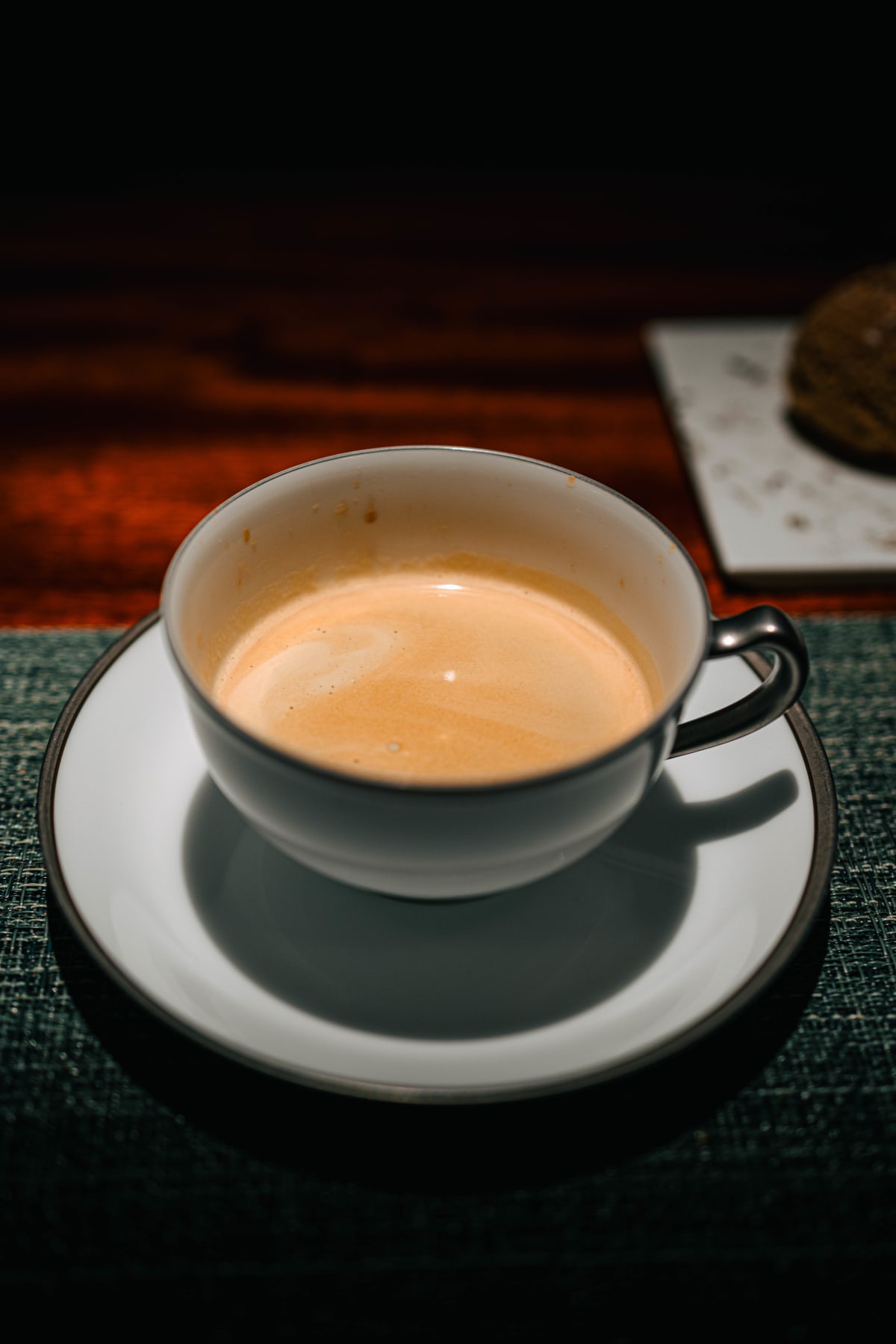
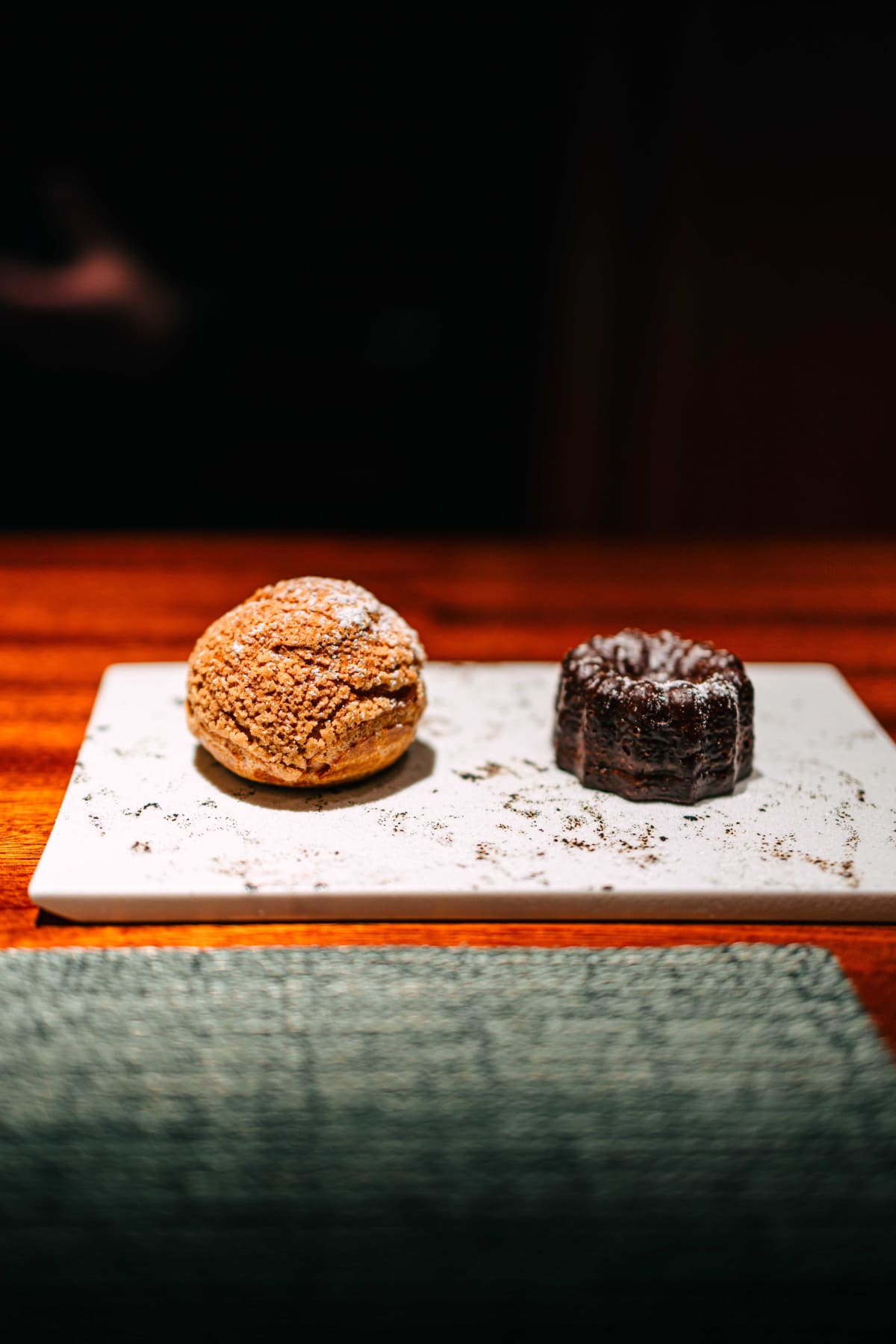
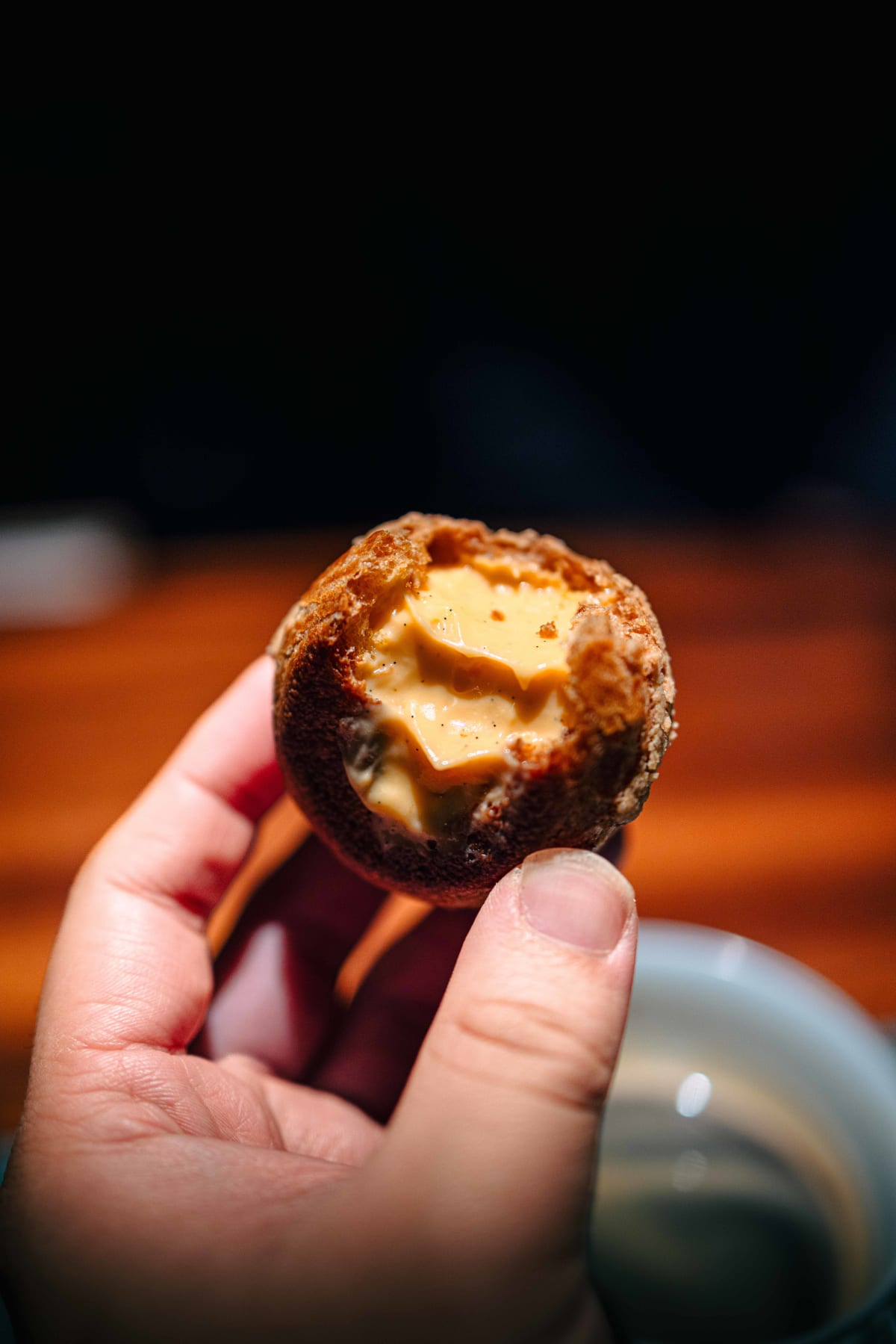
And so I finished my meal at Ao. If there was one thing that fell short at the end, it was the somewhat opaque billing. This is not uncommon at Japanese restaurants, and I will not go into detail here, but it is worth knowing going in that with tax and a service charge added on, it comes to rather more than you might expect.
Section 11·The Essence
For me, Ao may be the very essence of Japanese-French. I believe Japan's greatest strength is its outstanding produce, and Ao puts that strength to excellent use. Ao is not interested in the shallow kind of fusion that merely borrows the visual codes of French and Japanese cuisine. Its cooking operates at a much higher level, grounded in real thought and insight.
Perhaps that is why a reservation at Ao does not seem so hard to come by these days. I suspect it is because, with a cooking style that does not change often, local Japanese foodies do not visit so frequently; but I see this not as a flaw so much as, for foreign travellers like us, a strength. It lets us have exactly the high-level meal we boarded a plane and came all this way hoping to taste.
Ao's argument is procurement rather than technique, which puts it closer to a top sushiya than to any French kitchen: the skill is in sourcing and restraint rather than construction. Most of what Tokyo calls Japanese-French is French method applied to Japanese produce. Ao runs the other way, taking a Japanese sourcing logic and borrowing only the plating vocabulary. That model carries a cost. When a produce-led dish misses there is no architecture underneath to catch it, so the gap between the best and weakest plates runs wider than at a kitchen built on method. Season matters for the same reason: go in the cold months, when the consommé and the charcoal-grilled akaza-ebi are at their most persuasive. Eight seats at a single counter, everyone starting together.
Have a question about this restaurant, or want to share your own experience?
Send a message