Local & Essential · Barcelona · Spain / September 2023
Ultramarinos Marín
"The Barcelona bar that keeps its technique off the menu"
Section 1·The First Meal
Before leaving on a food trip to Spain, I remember happily doing a great deal of research, asking myself what I would have to eat to be able to call it a delicious trip. Wherever I go I prefer seafood to meat, and within Spain's tapas culture it was the seafood tapas that caught my eye.
For fine dining there is a powerful guide in Michelin, but for local places such as tapas bars I did not know which information to trust. On that trip to Spain, though, there was one source that I relied on heavily to find places to eat and came to trust: OAD Guides.
Seventeenth in the guide's European Casual list and first in Barcelona: that was this place, Ultramarinos Marín, the first restaurant I visited on my first gastronomic trip to Spain. It is a casual restaurant built around seafood, close to the Gràcia district of Barcelona.
Section 2·Bar And Asador
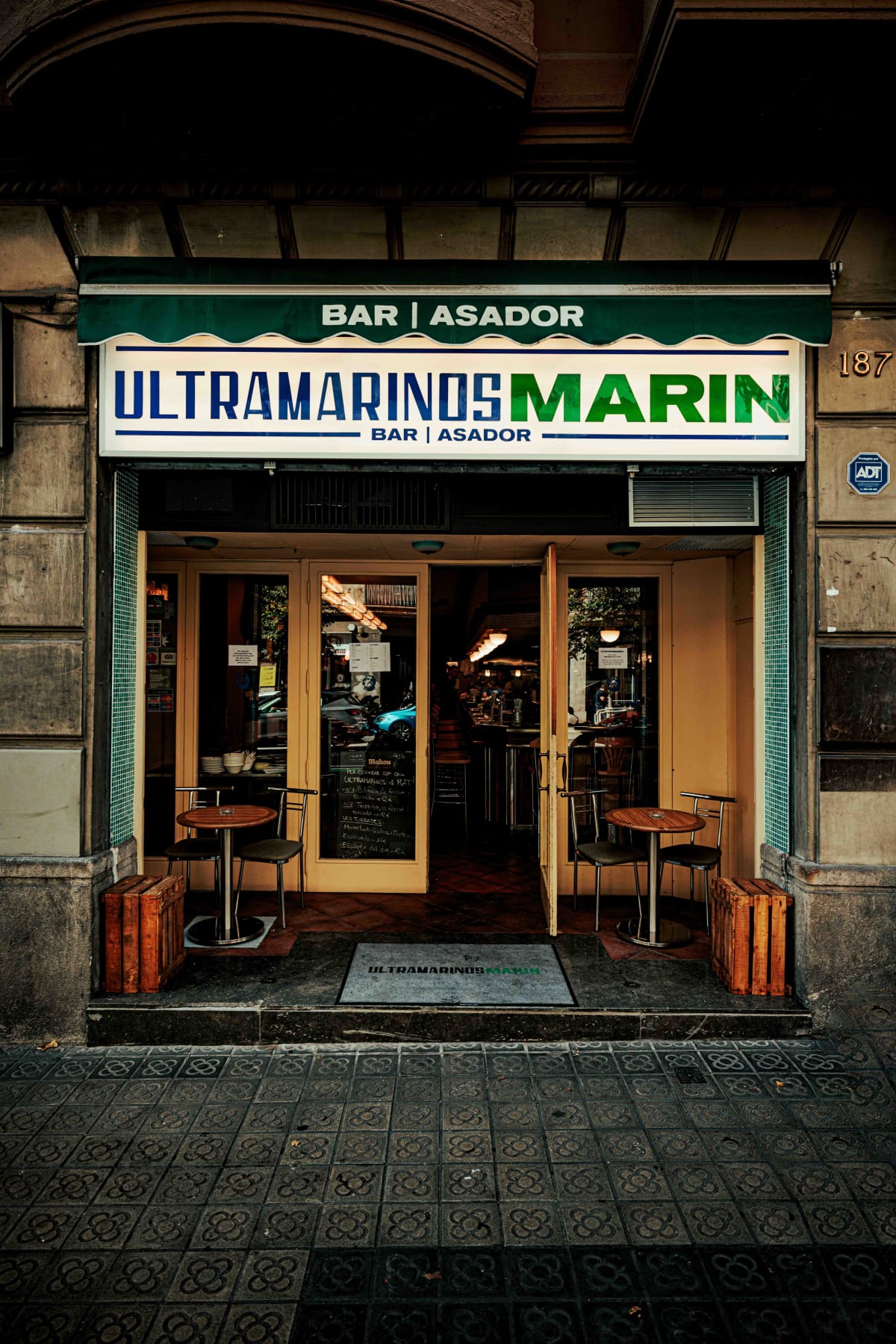
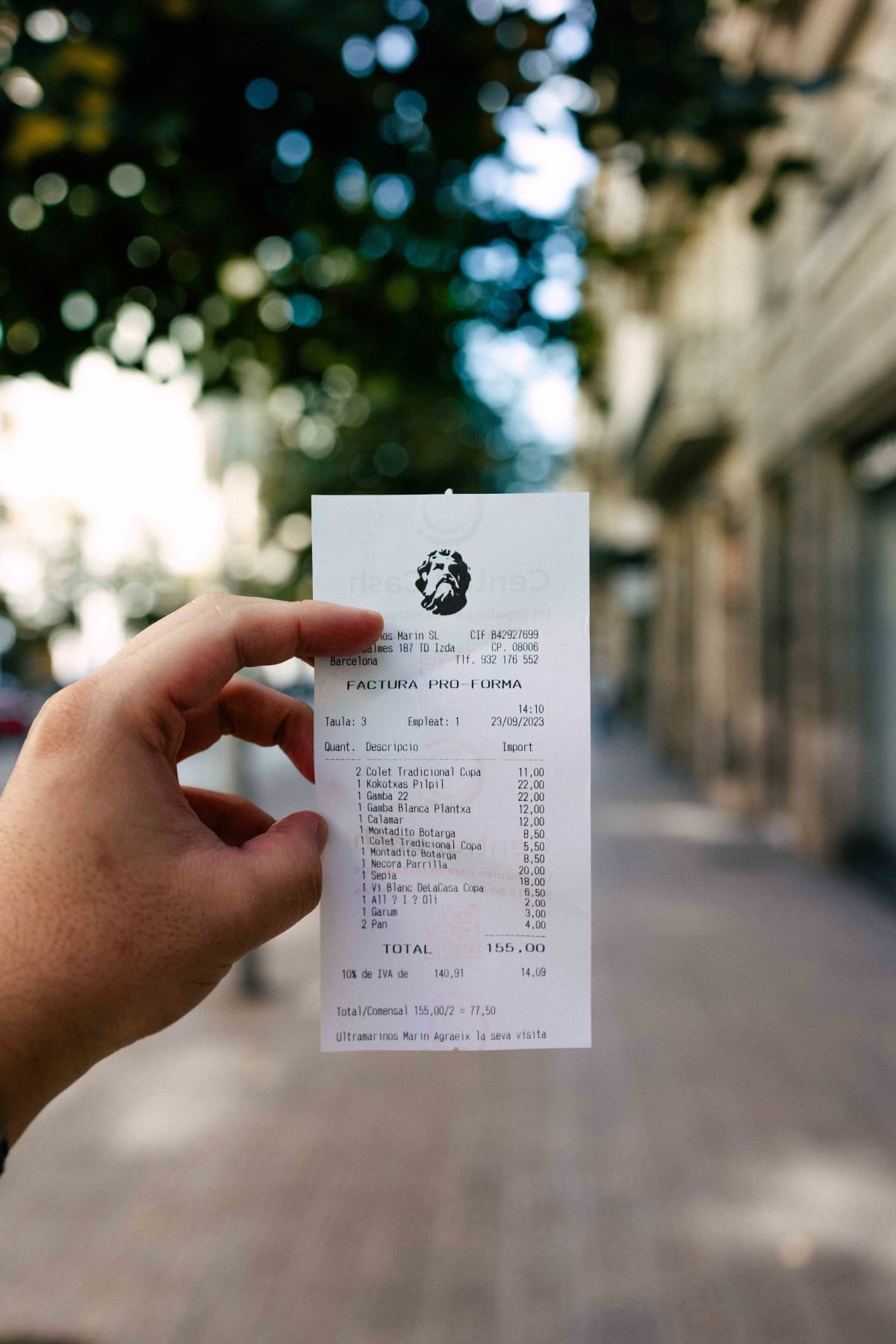
The exact address is 187 Carrer de Balmes, in Sant Gervasi. It opened in September 2021, so when I came on 23 September 2023 it was in its second year. As the Michelin Guide describes it, this is an old neighbourhood bar taken over and brought back as a simple asador, and the sign under the green awning says the same: BAR | ASADOR. The bearded face printed on the sign, the plates and the receipt is Poseidon, god of the sea.
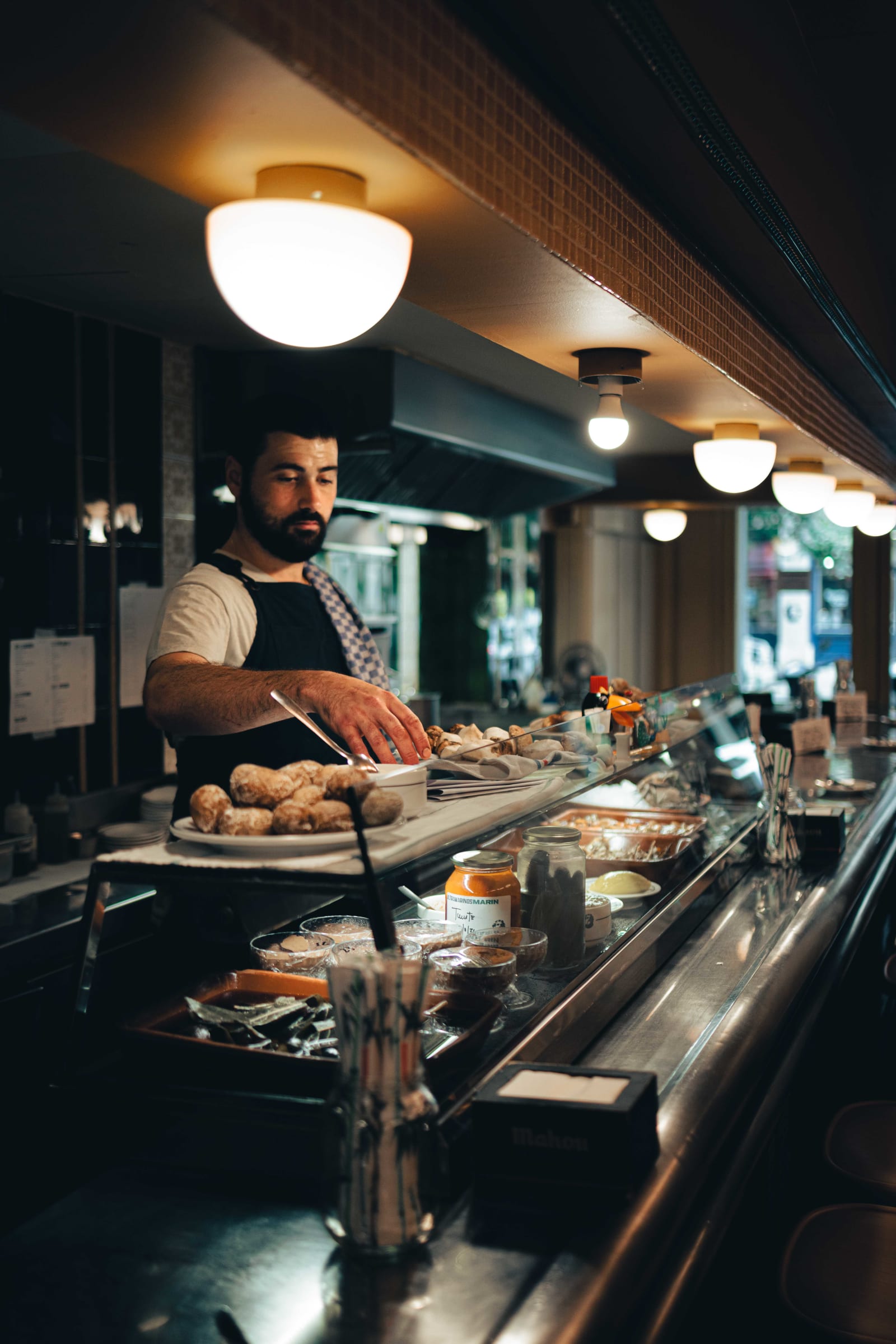
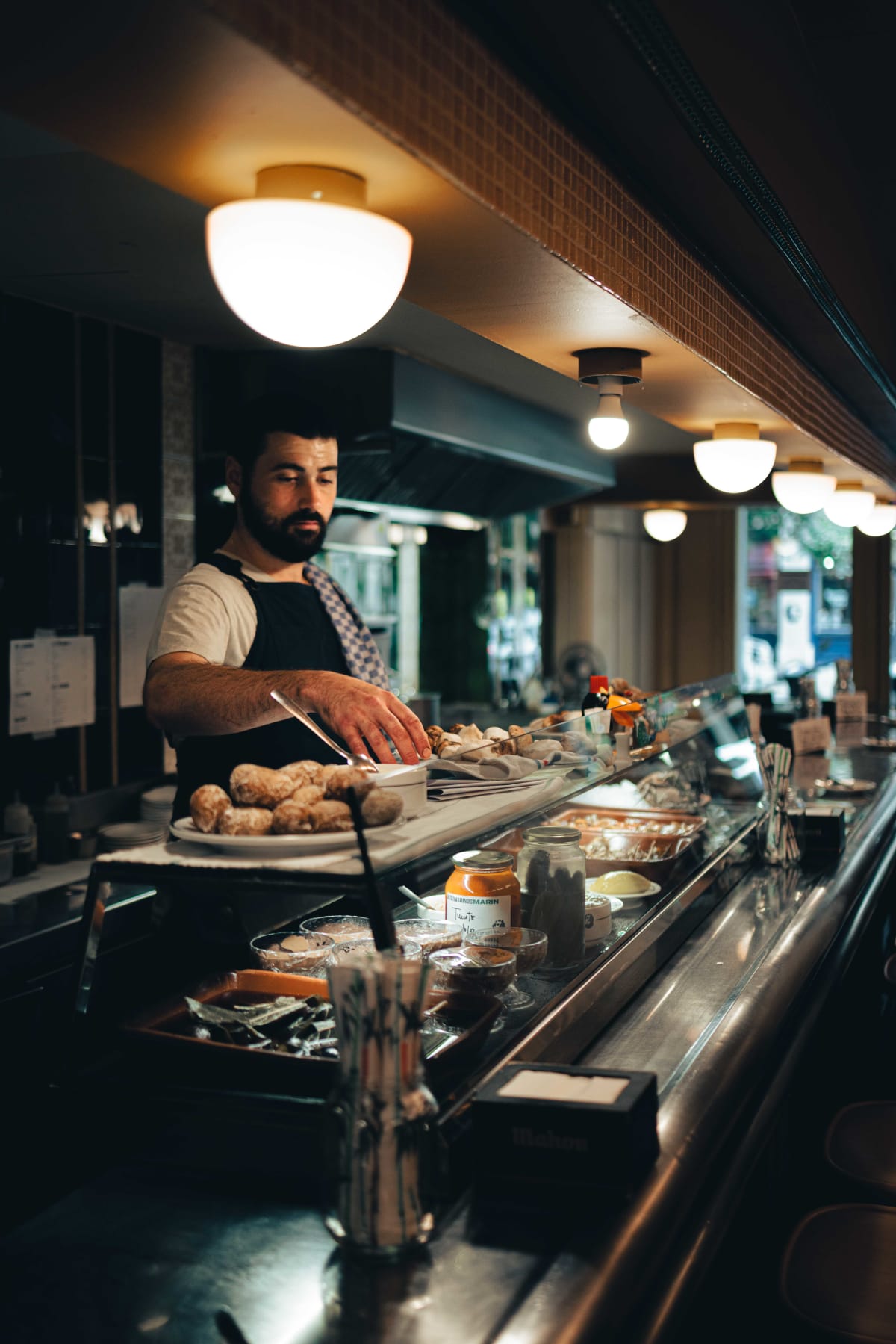
The name Ultramarinos carries on the same idea. In Spanish, ultramarinos originally meant provisions brought in from overseas and the shops that sold them, and over time it became the word for the neighbourhood grocer with hams, tins, cheeses and spices on display. And this place does not only sell cooked food. Sausages, salted fish, anchovies, pickles and sauces are all made on the premises.
Section 3·Booking For Two
If I had to pick one thing I did right here and one thing I did wrong, what I did right was booking ahead and coming even if it meant finding a companion, and what I did wrong was making it the first stop of the trip.
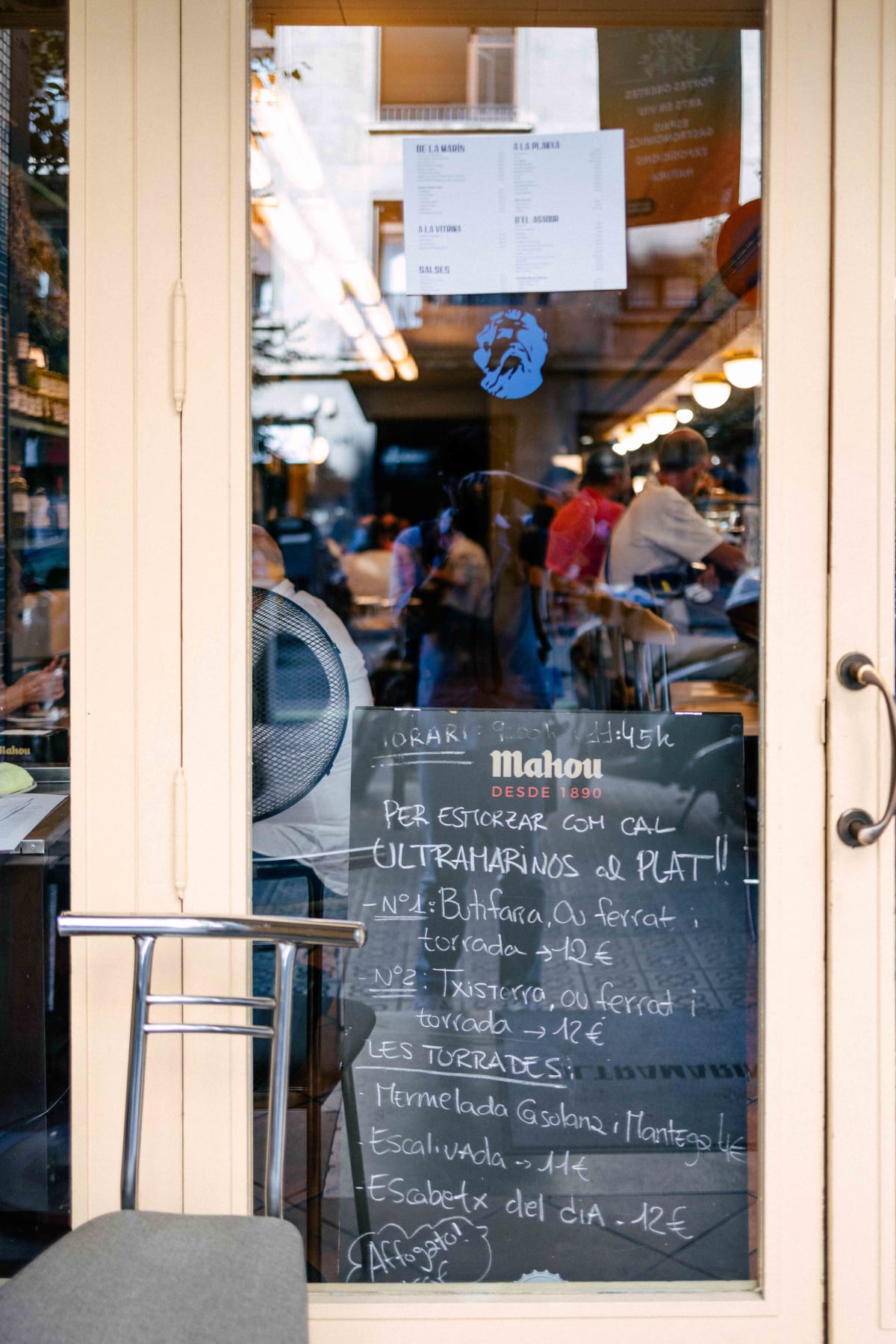
Supplied with fresh seafood every day and serving tapas of high quality, it kept unusual hours. At the time it opened only from nine to a quarter to twelve in the morning and from one to half past three in the afternoon, with no service in the evening.
The morning hours are for the Catalan esmorzar de forquilla, literally a breakfast eaten with a fork. It was a second breakfast taken mid-morning by farmers and labourers who had been at work since dawn and needed to last until lunch, and it is said to have taken hold around the middle of the eighteenth century. On the blackboard by the door, under the words Per esmorzar com cal, a proper breakfast, dishes of butifarra sausage or txistorra with a fried egg and toast were written up as well.
Online, bookings are taken only for two people or more. I was curious enough to book a table for two about three weeks ahead, but finding someone to go with at midday, just after arriving in Barcelona with a mountain of things to see, was no small burden. I thought about cancelling before the trip, and then at the last minute managed to find a dining companion through a call for travel partners, and made it.
Section 4·Hard To Follow
What I did wrong was making this the first restaurant of my time in Spain. The freshness of the seafood, and cooking that was simple and yet deep in flavour, were of a higher quality than I had expected, and the tapas bars I went to afterwards could not move me as much.
It was as if a Spaniard came to Korea, wondered what Korean beef was like, and went first to the best hanwoo restaurant in the country. Could I put it that way?
It was as if a Spaniard came to Korea, wondered what Korean beef was like, and went first to the best hanwoo restaurant in the country.
Section 5·A Catalan Menu
I arrived for the afternoon opening at one o'clock, and it seems they will take even a single walk-in if a seat is free. Before going I had studied photos of dishes that looked good in Google Maps reviews, but the menu changes every day with what comes in, and almost none of the dishes I had memorized were available. So I had to order from the menu, and there was no English menu, only one in the local language.
I say the local language rather than Spanish because Google Translate could not handle it properly. Today I know that the Basque Country has Basque and Catalonia has Catalan, and a fair amount about the languages of each region, but at the time I knew none of it. I opened Google Translate assuming the menu was in Spanish and was thrown by how badly the translation came out. It turned out to be a menu in Catalan, which did not come through well into English, and I struggled a lot to work out what was on it.
If you plan to visit, learn the Catalan names of the ingredients before you go, or failing that the Spanish ones.
The menu stuck to the window is divided into five parts: DE LA MARÍN for the things made in house, A LA VITRINA for the pickles and cold dishes in the display case, A LA PLANXA for the griddle, D'EL ASADOR for the wood fire, and SALSES for the sauces. This is also why learning only the Spanish names falls short. The red prawn is written not as the Spanish gamba roja but as GAMBA VERMELLA, the fish of the day not as pescado del día but as PEIX DEL DIA, and the crab as NÈCORA.
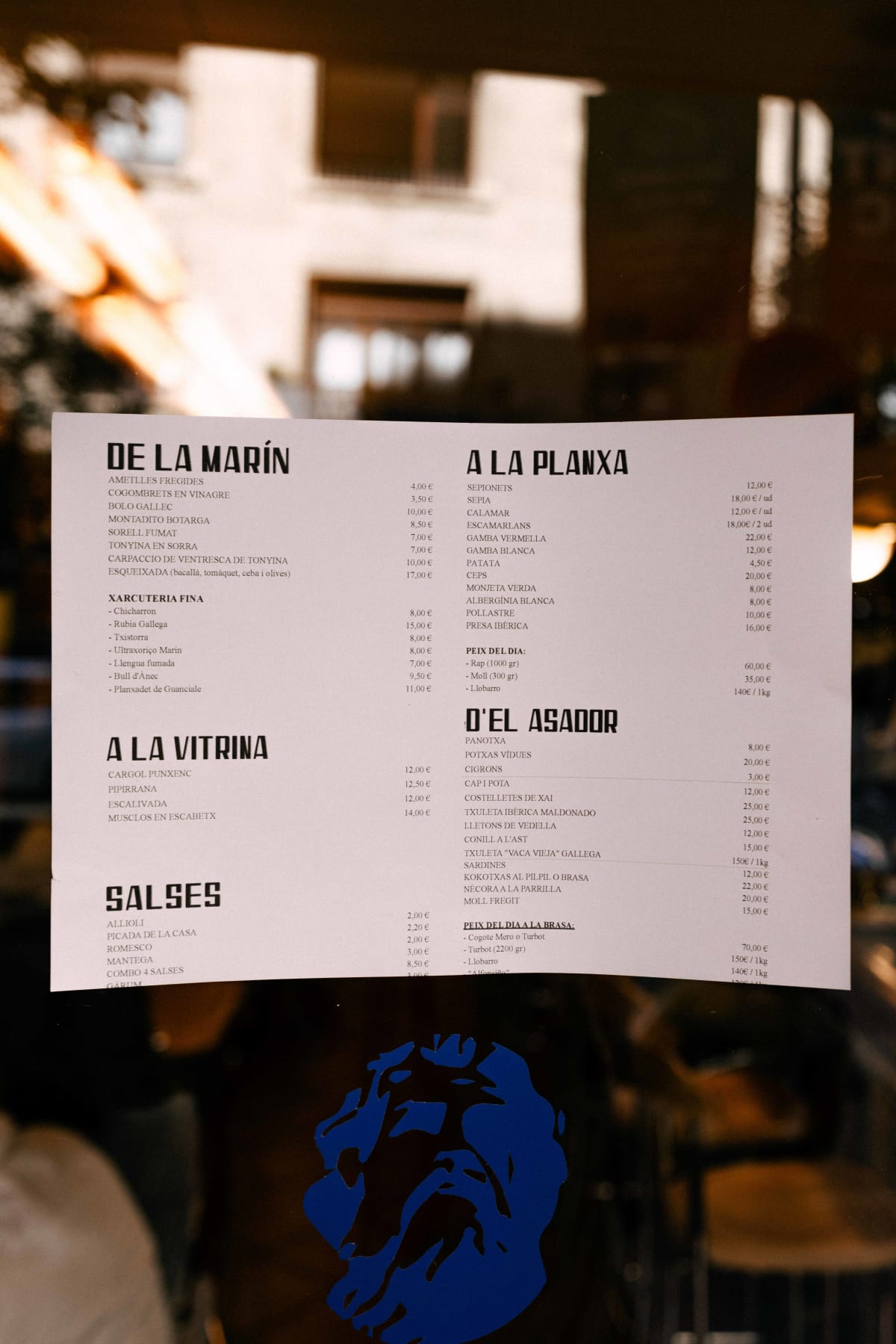
The language of the menu is pared right down, too. In the A LA PLANXA list, directly under GAMBA VERMELLA and GAMBA BLANCA, sits PATATA, potato, at four euros fifty. Putting an expensive prawn and an ordinary potato in the same category, and writing only the names of the ingredients with no description of the dish, is itself the style of the house.
Section 6·Sauces And Garum
There is a reason a Basque chef writes his menu in Catalan. Borja, the chef, says he has fallen for Catalan cooking and calls it the finest cooking on the Iberian Peninsula. So even the basic Catalan sauces, allioli and romesco among them, are made on the premises.
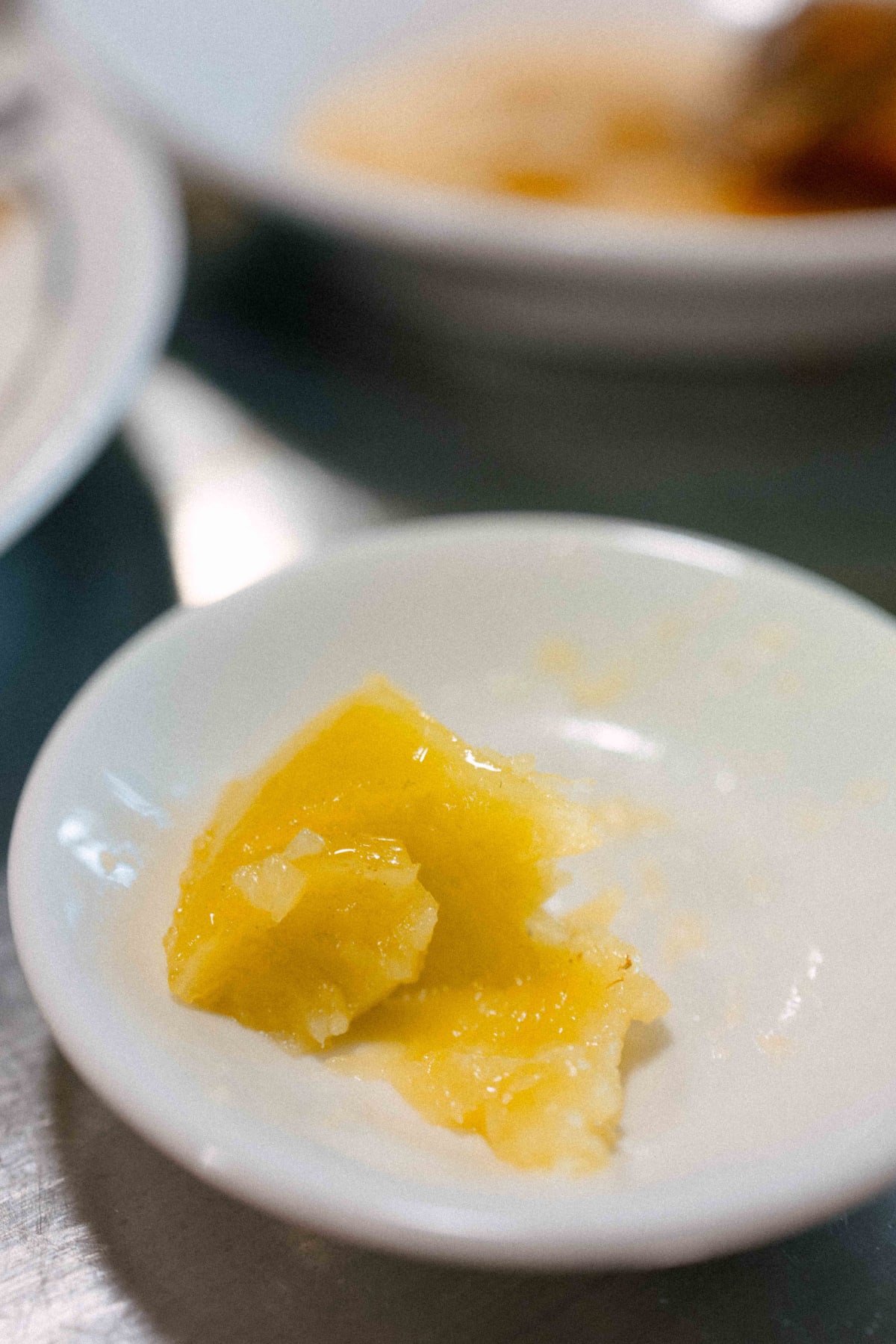
Those sauces are priced separately in the SALSES list: ALLIOLI, PICADA DE LA CASA (pounded from nuts and garlic), ROMESCO, and GÀRUM. Garum, a seasoning made by fermenting fish with salt as it was made in Roman times, is something he has worked with since his years at Dos Pebrots.
Rather than covering the food in sauce, the idea is that you choose what to add yourself, and that day we ordered one All i Oli and one Garum as well.
Section 7·The Planxa
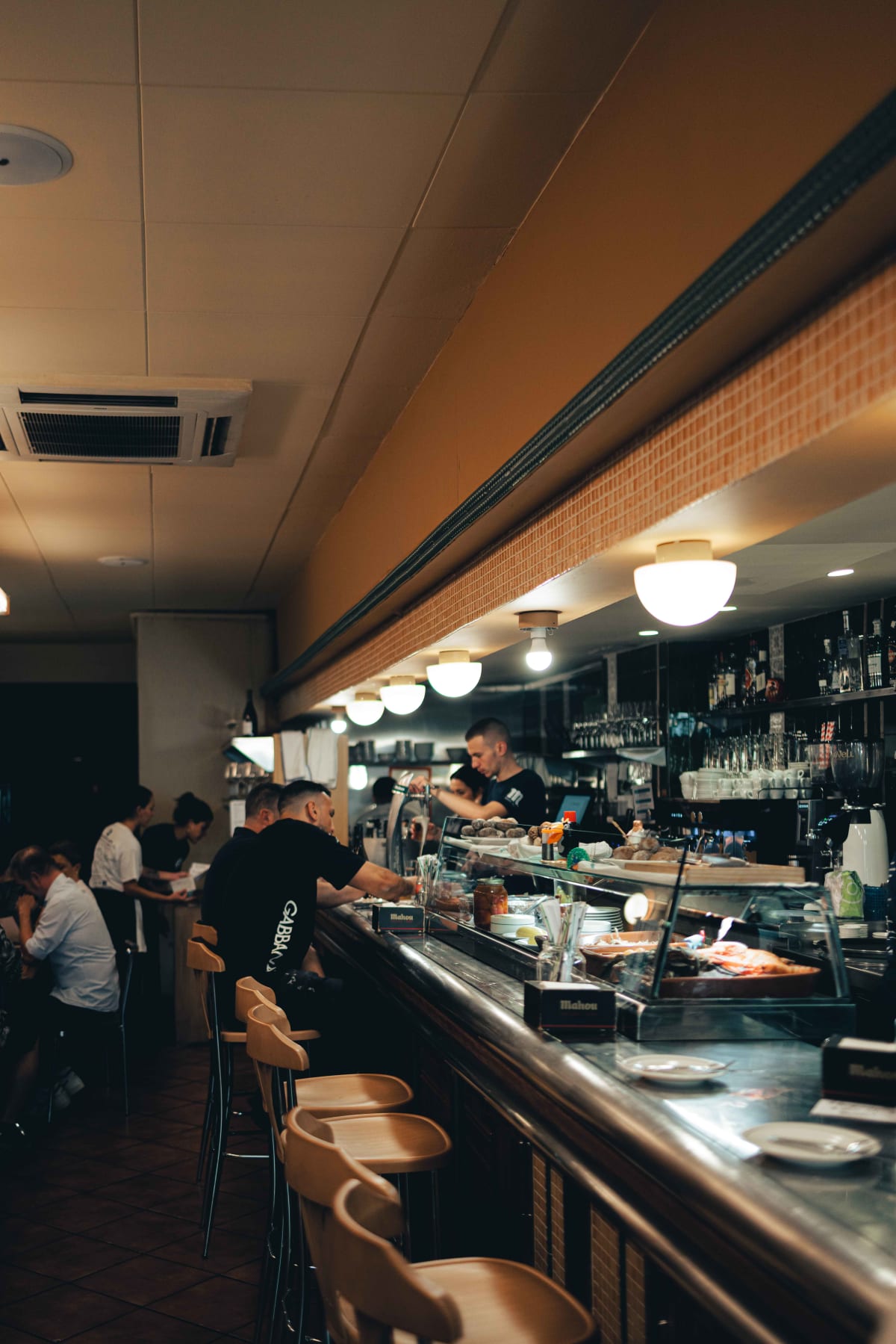
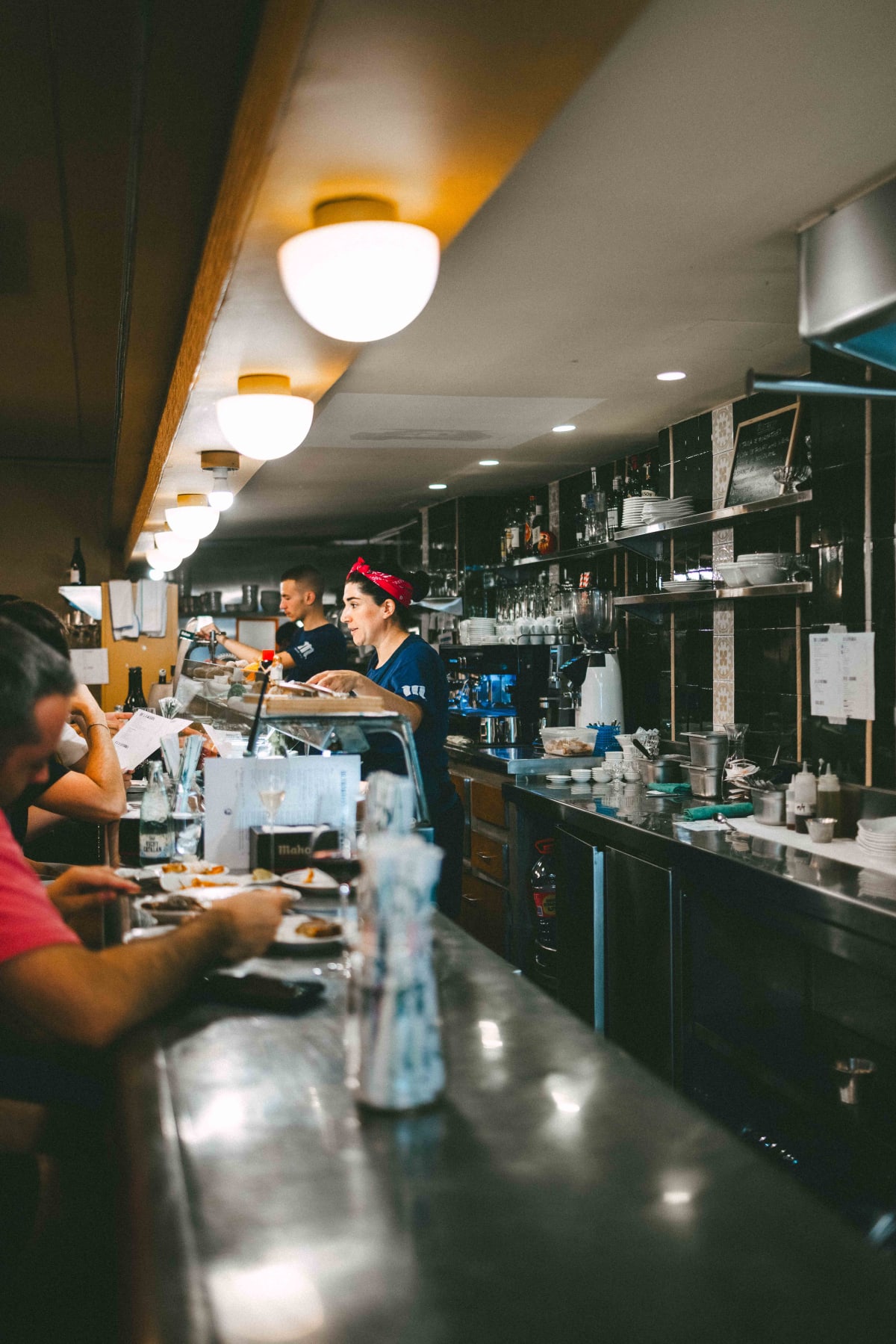
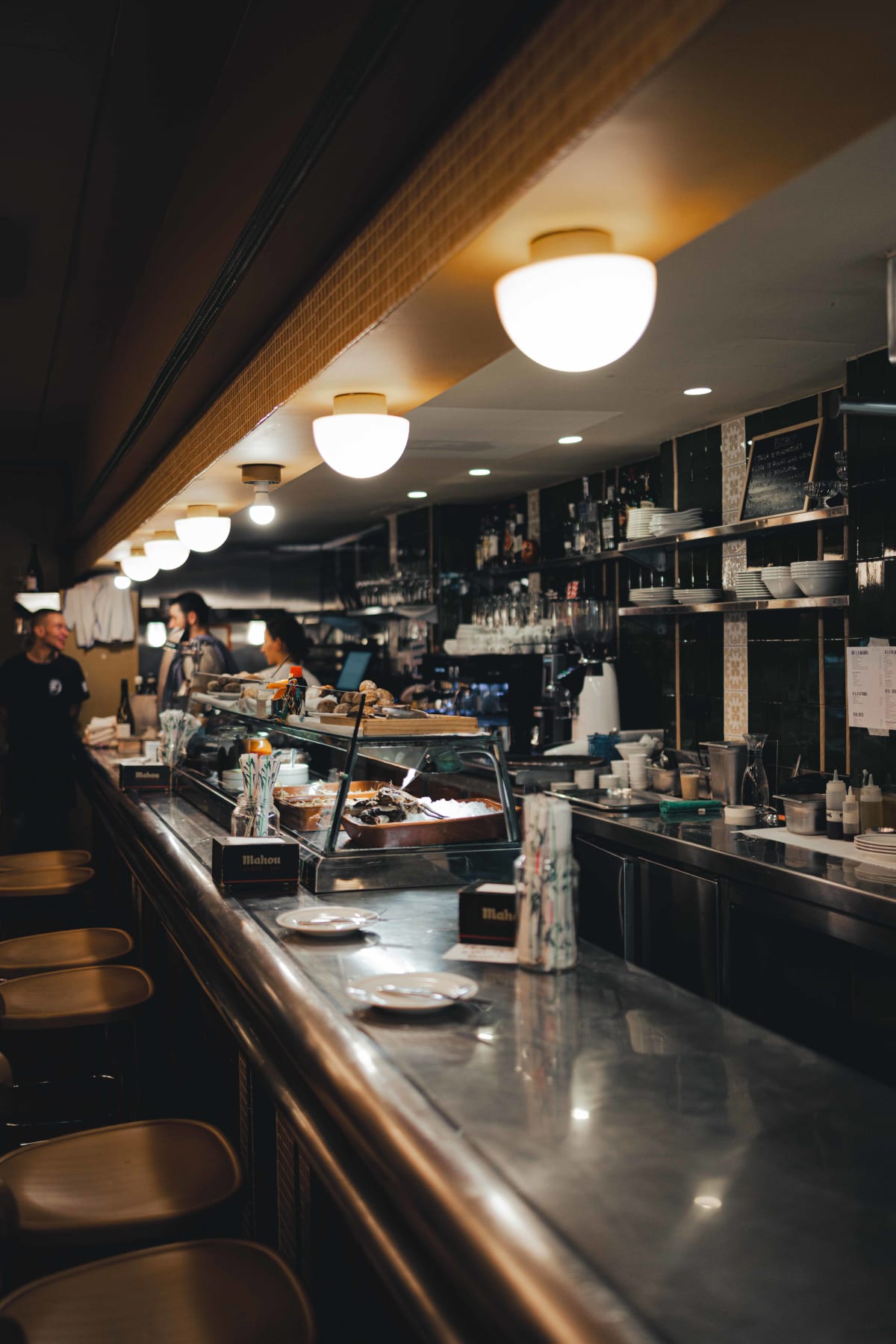
Inside, the place is divided into a space right by the entrance built around seafood tapas and a space further back given over to the asador. I have been here twice, and on this first visit I ate in the front.
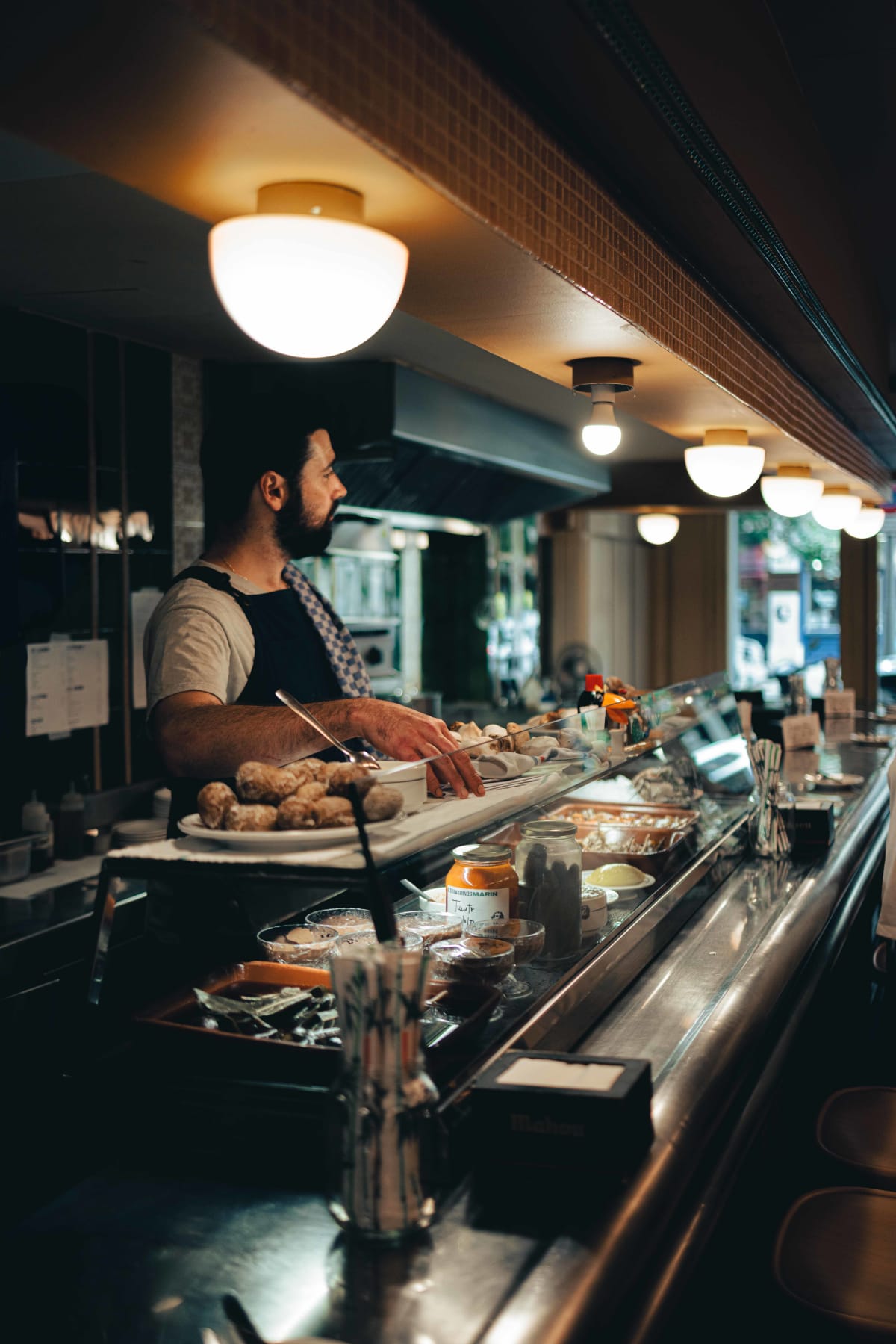
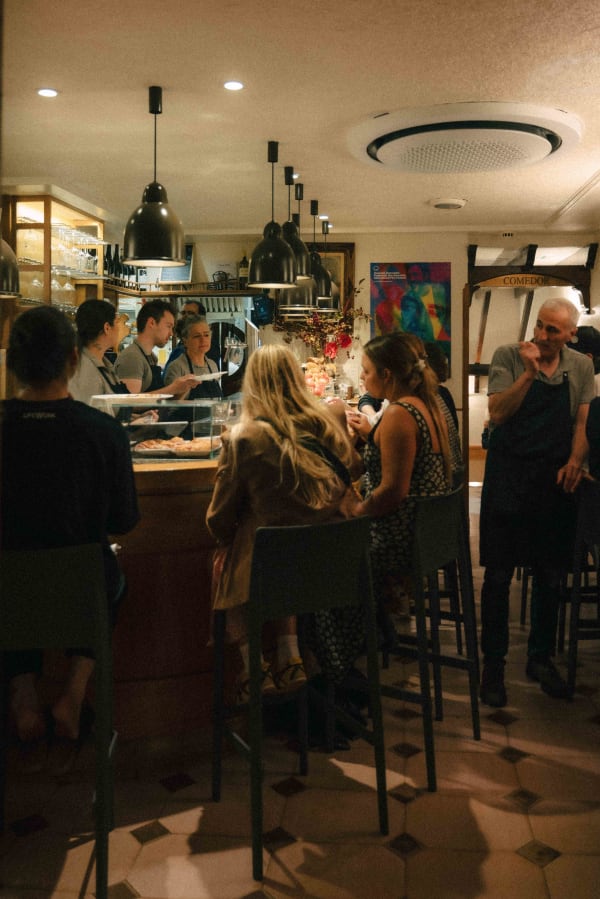
The front is split again into counter and tables, and when you order, the ingredients go straight onto the griddle and come out as planxa dishes. If the front keeps the metal counter and the feel of the old bar it took over, the back is a serious grill kitchen with a wood oven and grills.
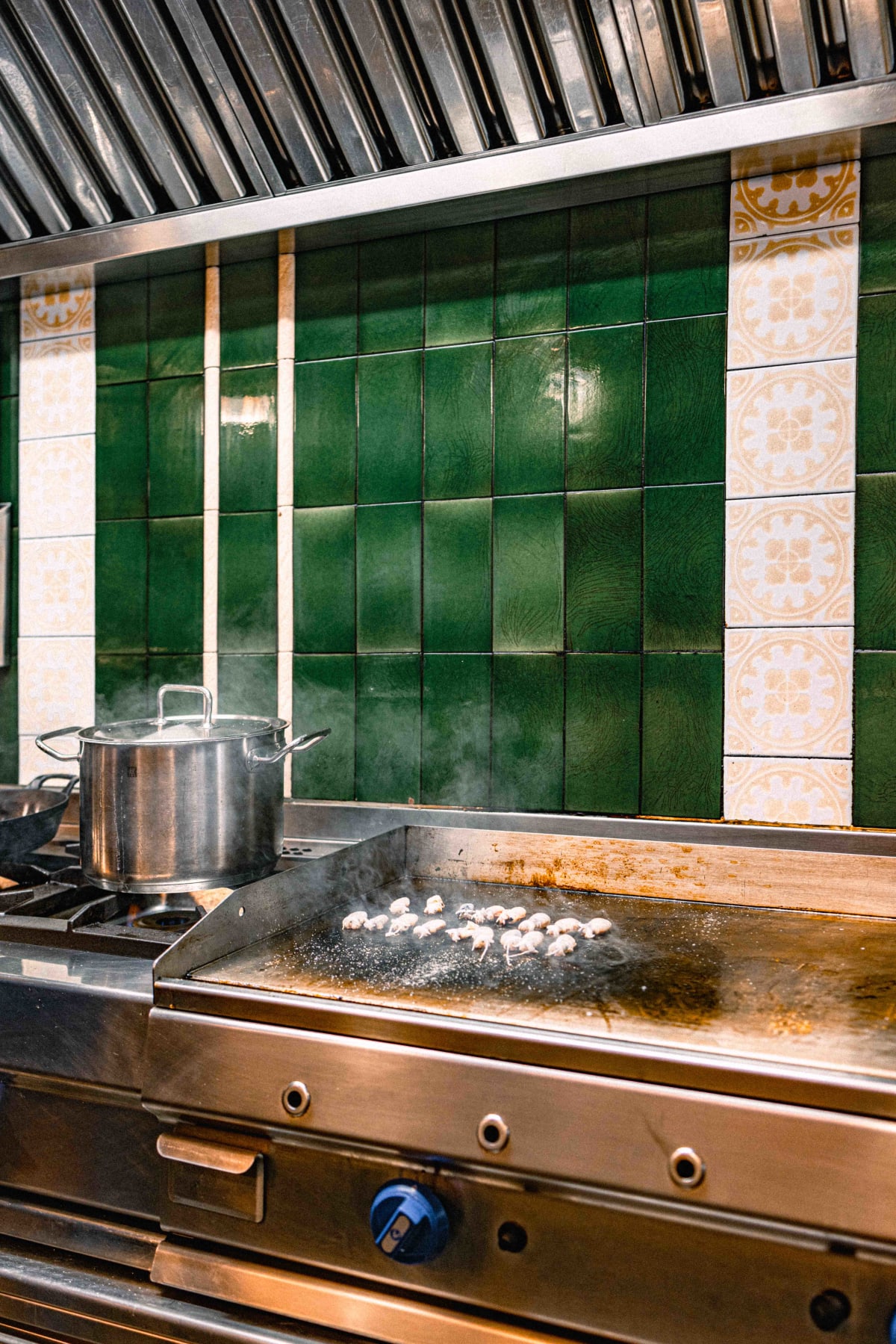
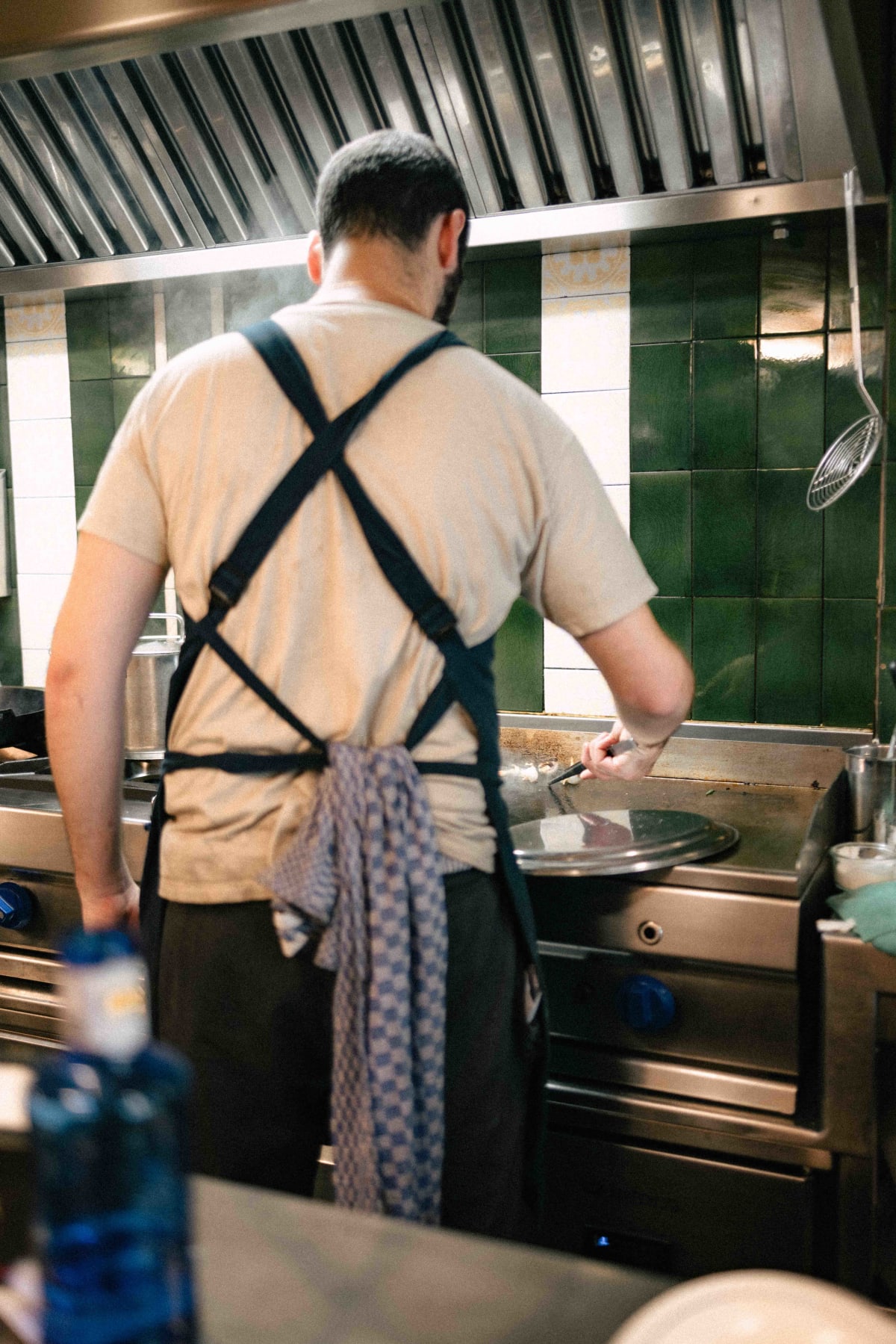
Even without knowing the names of the ingredients, I had come to Spain meaning to eat a lot of prawns, so I ordered a number of dishes with prawns leading the way.
Section 8·Not Quite Cava
When I sat down I ordered a glass of cava, and compared with the cava I ordered at the restaurants after this one, it seems to have been good.
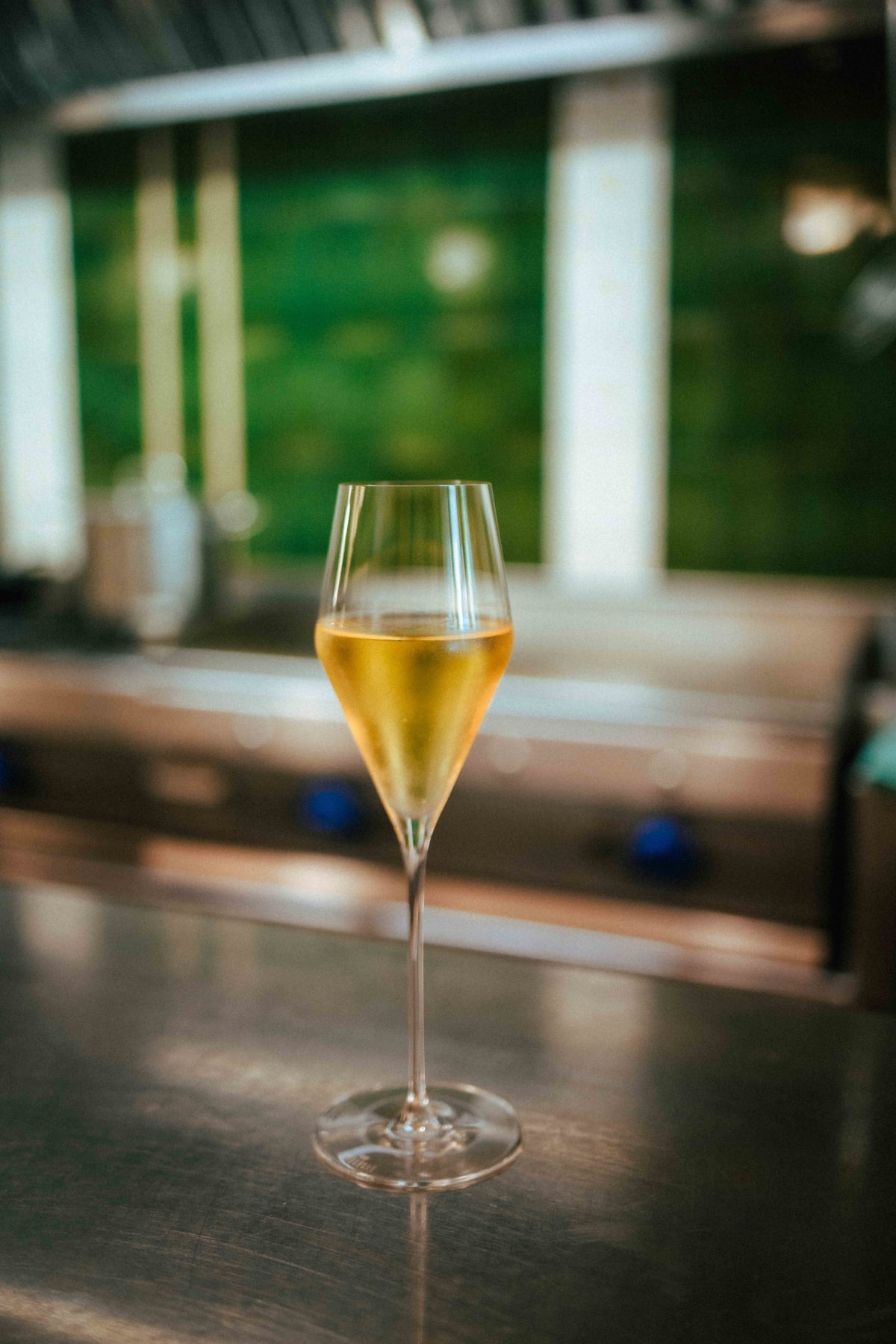
Spaniards drink a lot of wine, but that does not seem to mean that ordinary restaurants serve wine of a particularly high standard, or understand it especially well.
This sparkling wine was Colet Tradicional. Colet, in the Penedès, makes it as an Extra Brut from organically grown Xarel·lo, Macabeu and Parellada, with a second fermentation in bottle.
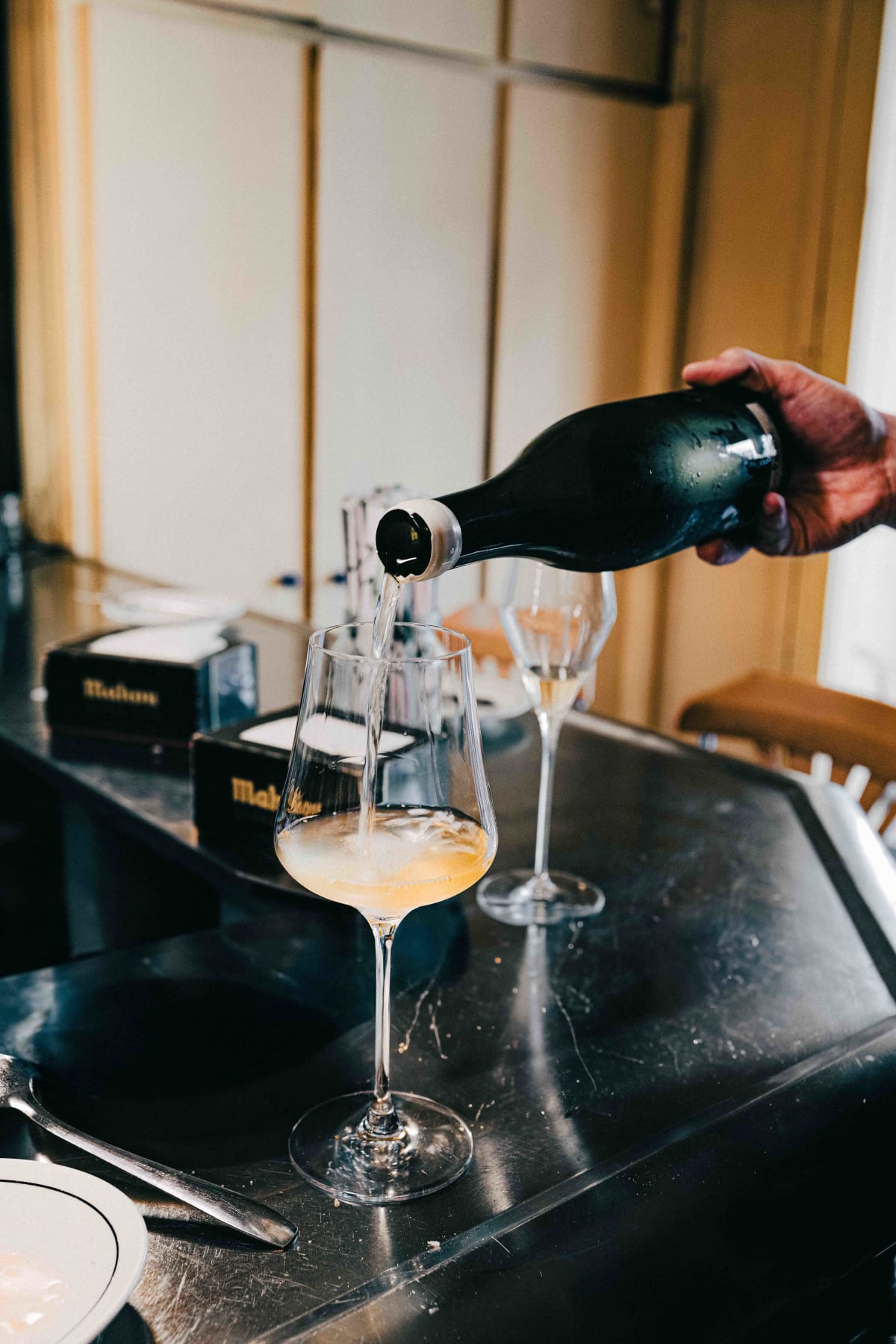
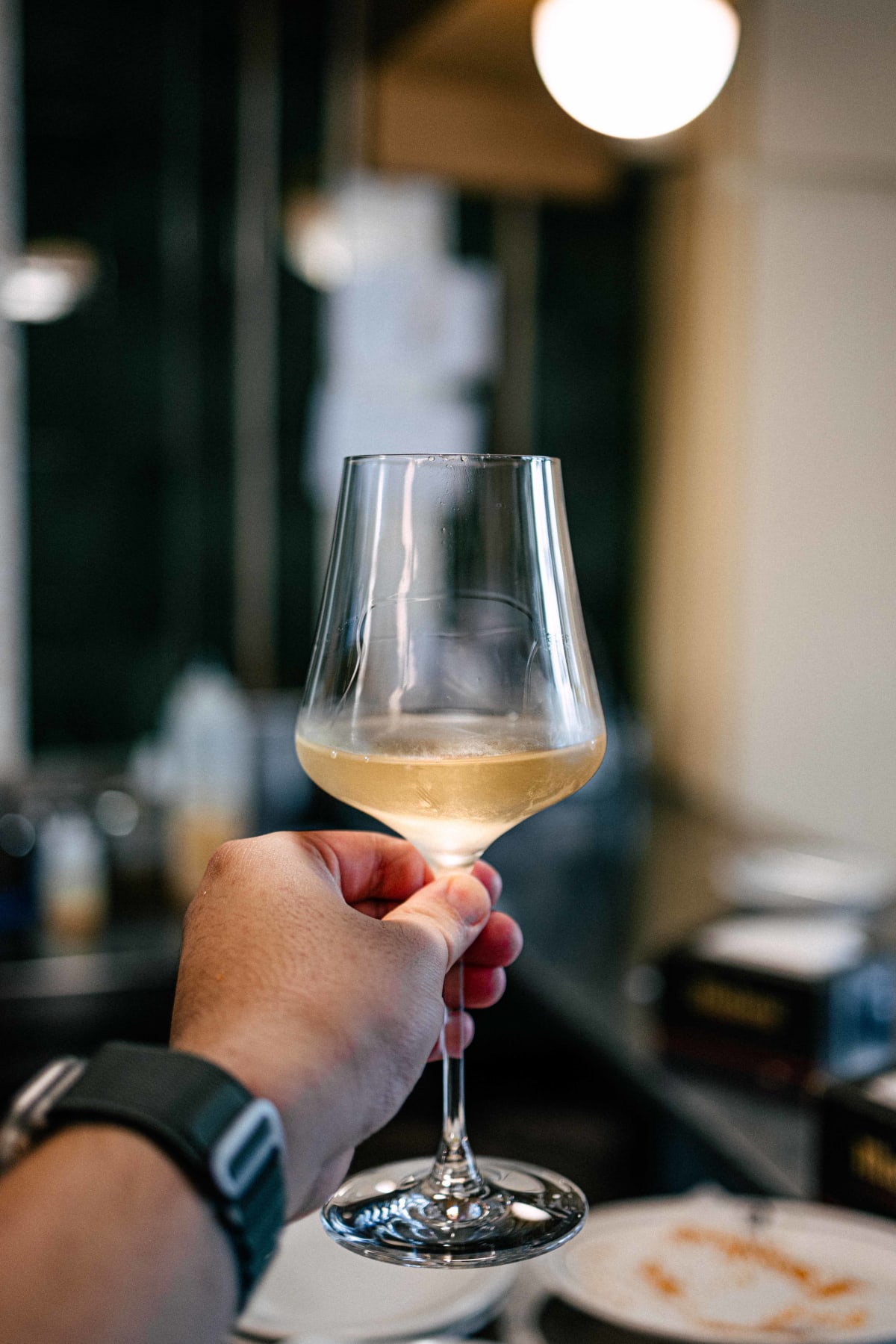
Strictly speaking, the label does not say cava but Clàssic Penedès, a category stricter than cava that requires organic certification and at least fifteen months of ageing in bottle. That is why the glass I took for cava was good.
Section 9·Gamba Vermella
The first dishes I ordered were Gamba Vermella and Gamba Blanca. Gamba vermella means red prawn. The moment it arrived, the body, shining a lovely red, looked delicious, and although it looked grilled, the body had been cooked only lightly and was nearly raw.
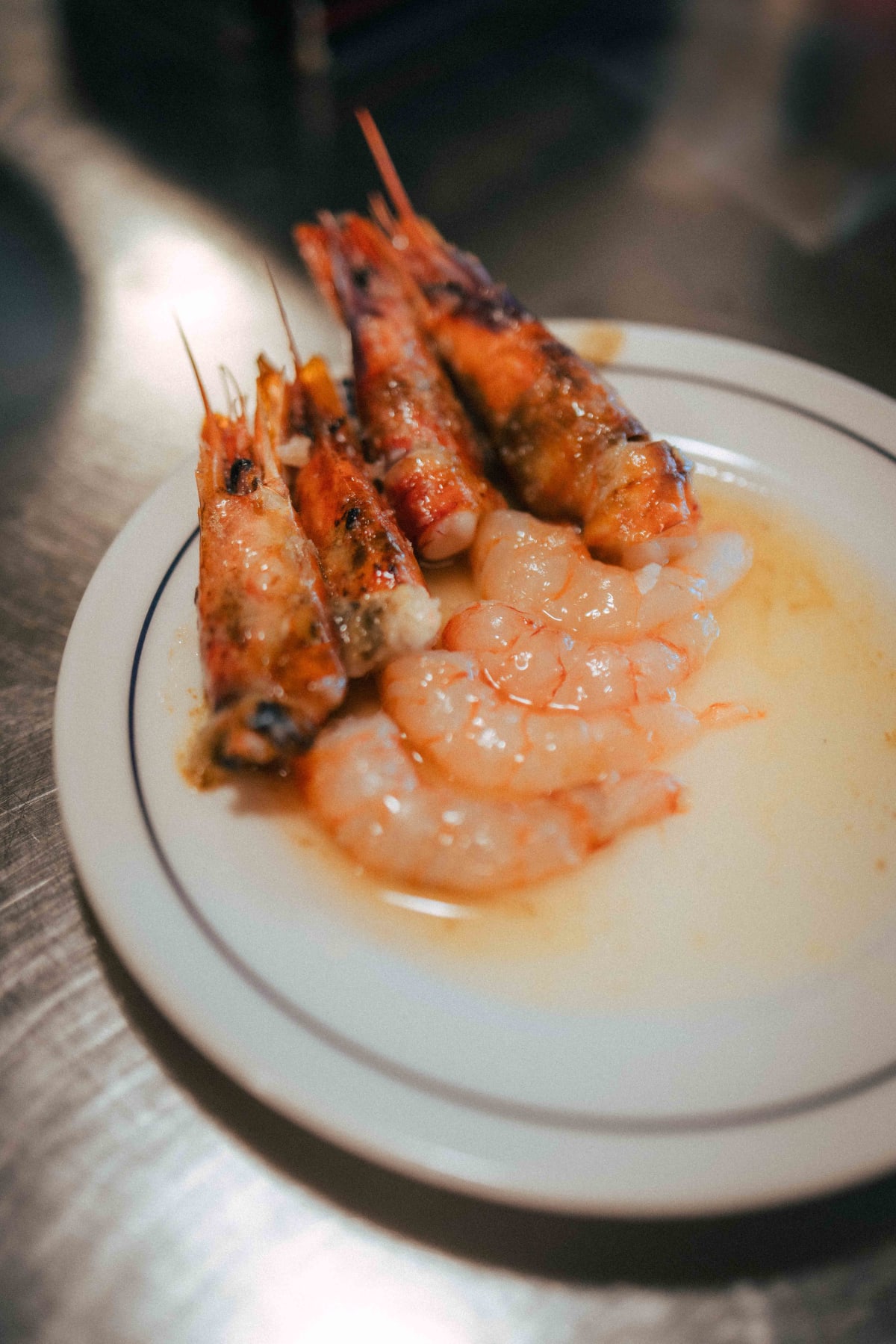
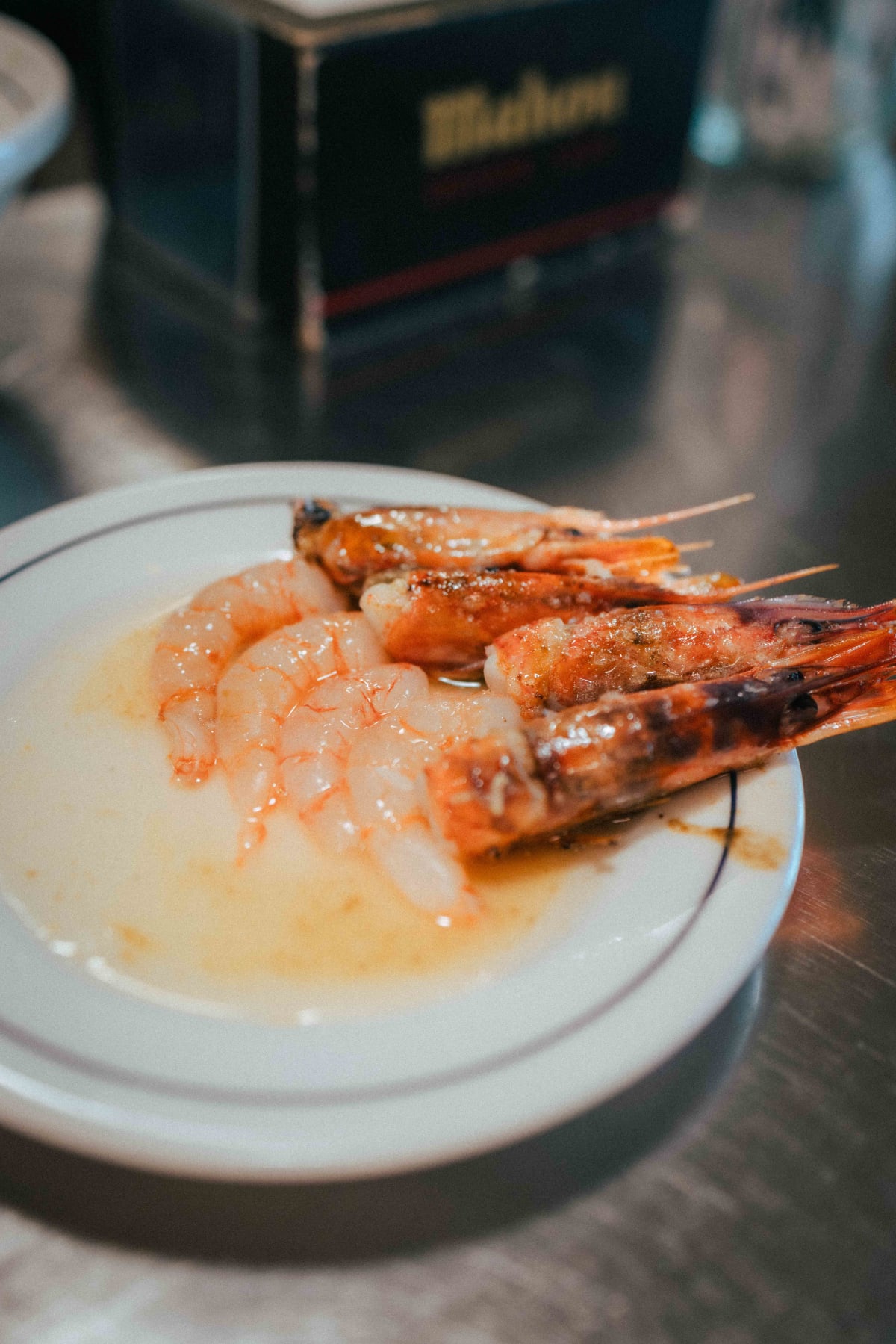
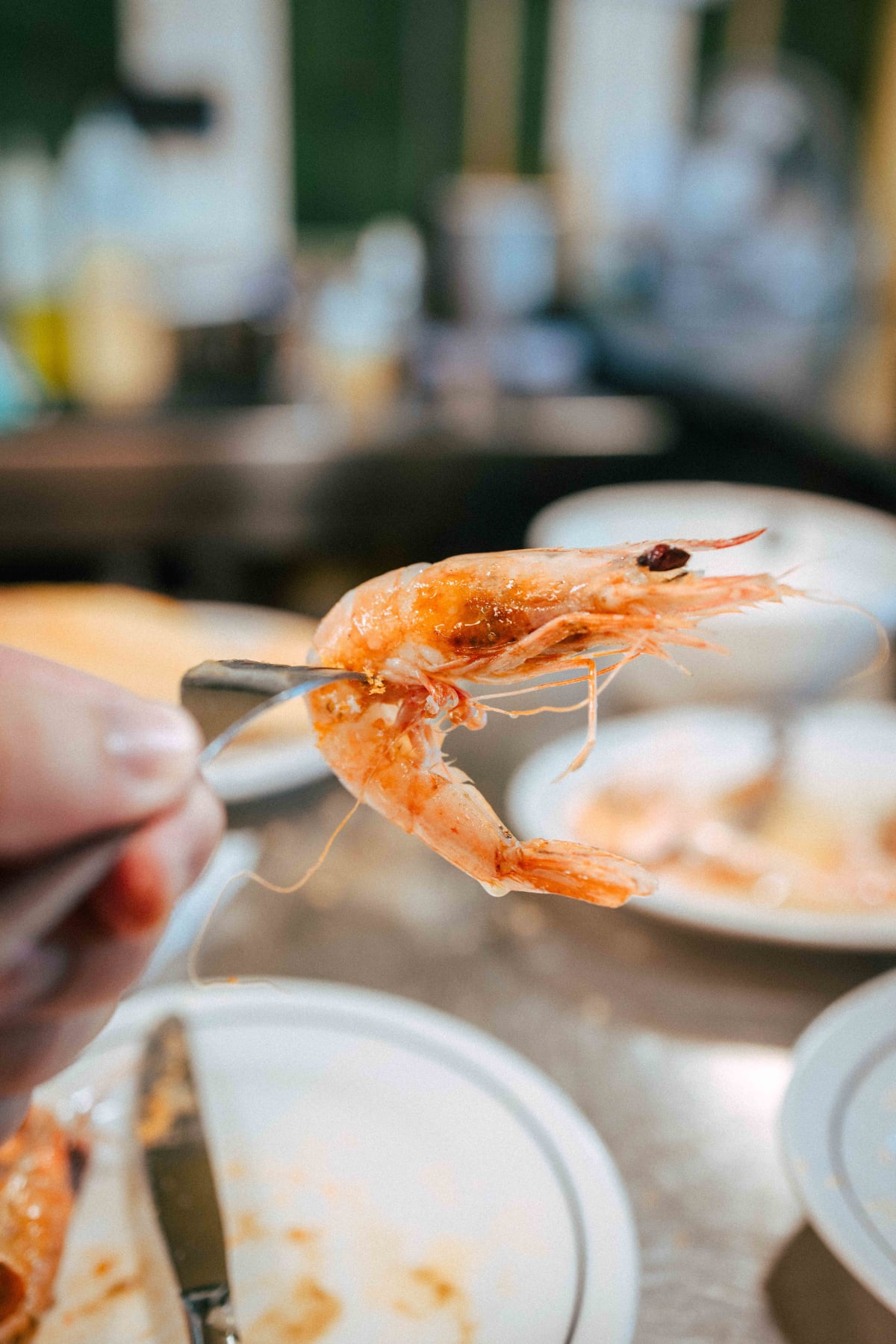
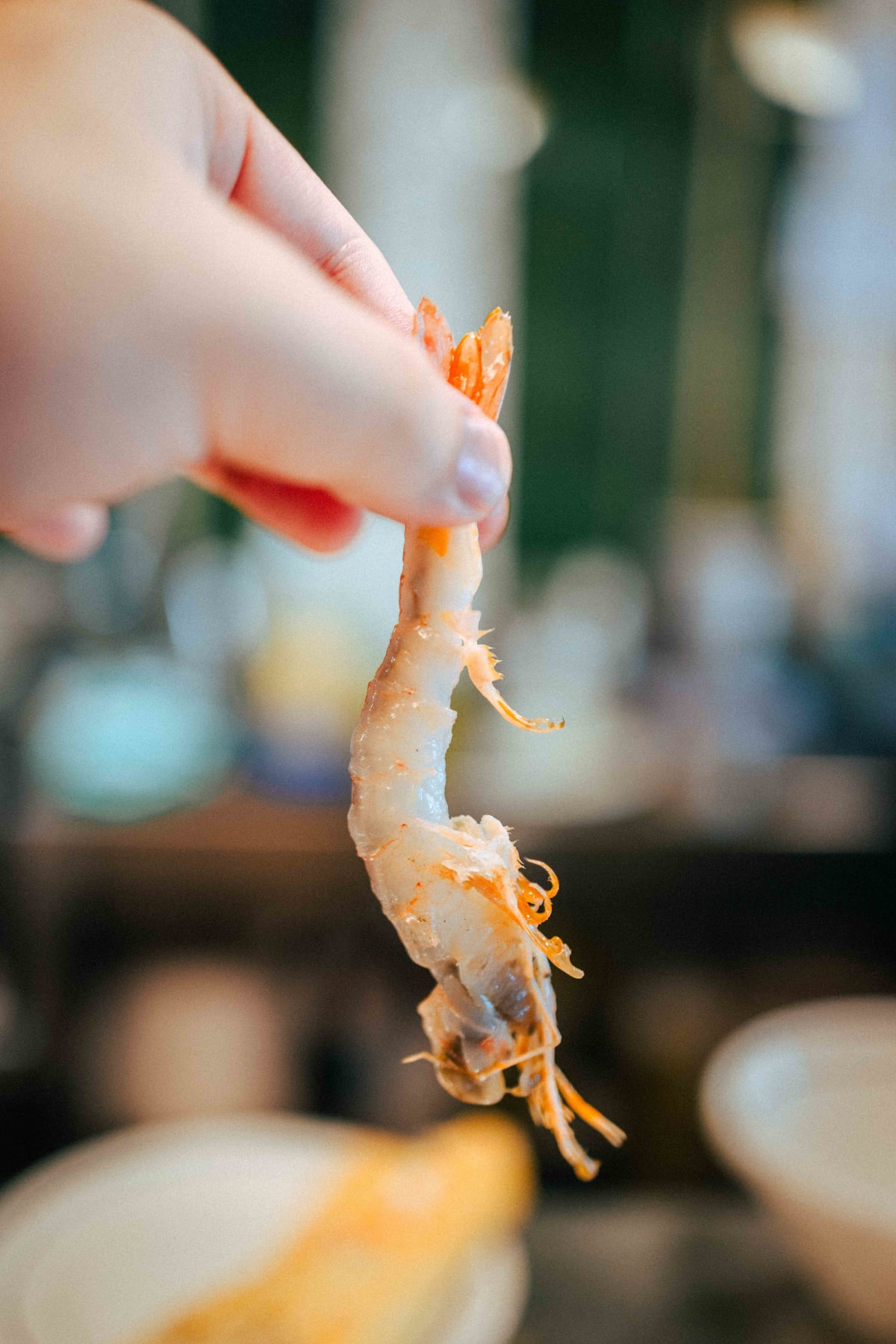
The heads, by contrast, were cooked to a deep golden brown, and from the very first dish I thought, this place is no joke. The sweetness came on strong, with olive oil alongside, and it was delicious, but above all the heads were something else.
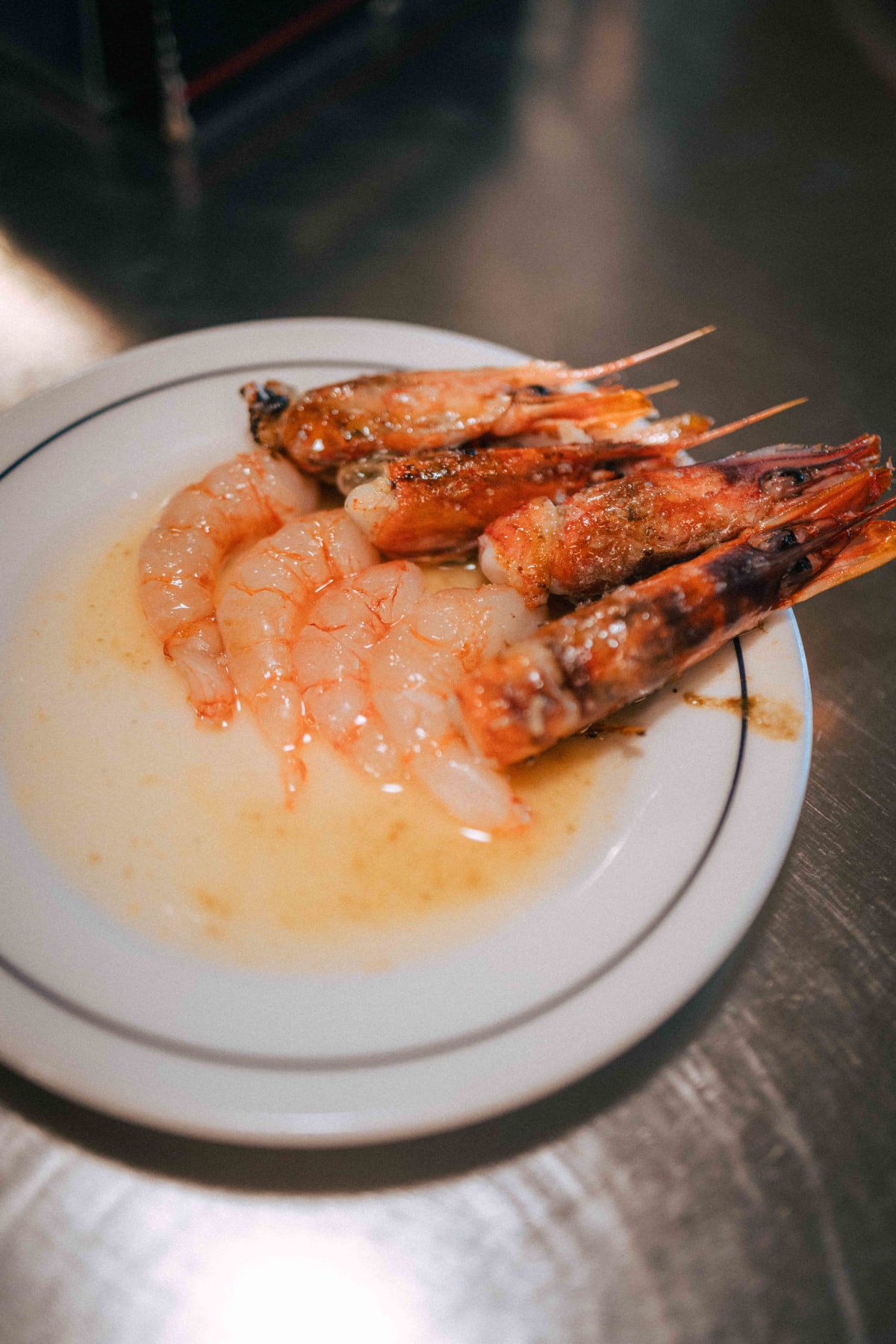
They were grilled crisp, and the innards and meat inside were wonderful. My companion announced that prawn heads were a no, and I had to work hard to keep a straight face as the corners of my mouth tried to reach my ears.
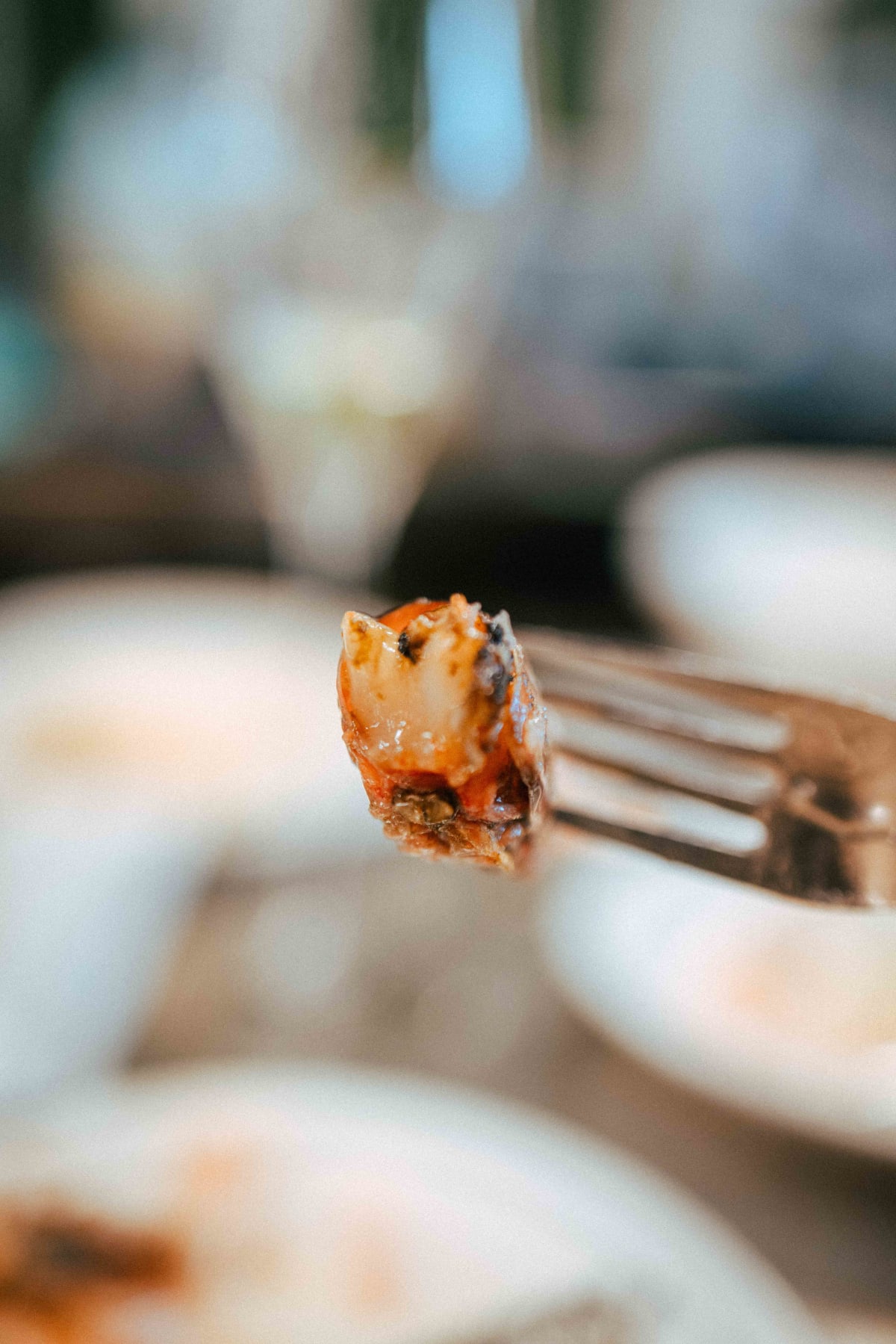
Gamba vermella is gamba roja in Spanish. It is the very prawn I described in the Ganbara review as a different species from the carabinero, and in Catalonia it is better known as the Palamós prawn, after the port on the Costa Brava. The name matches Italy's famous gambero rosso, but what Italians call gambero rosso is a close relative, and this species they call gambero viola.
Section 10·Gamba Blanca
Right after came the Gamba Blanca, the white prawn, and true to its name its flesh was paler. I am not sure whether it lives in Korean waters, but in English it is called the deep-water rose shrimp. It was not quite at the level of the first prawn, but it too had been cooked only lightly, and the taste of the prawn came through well.
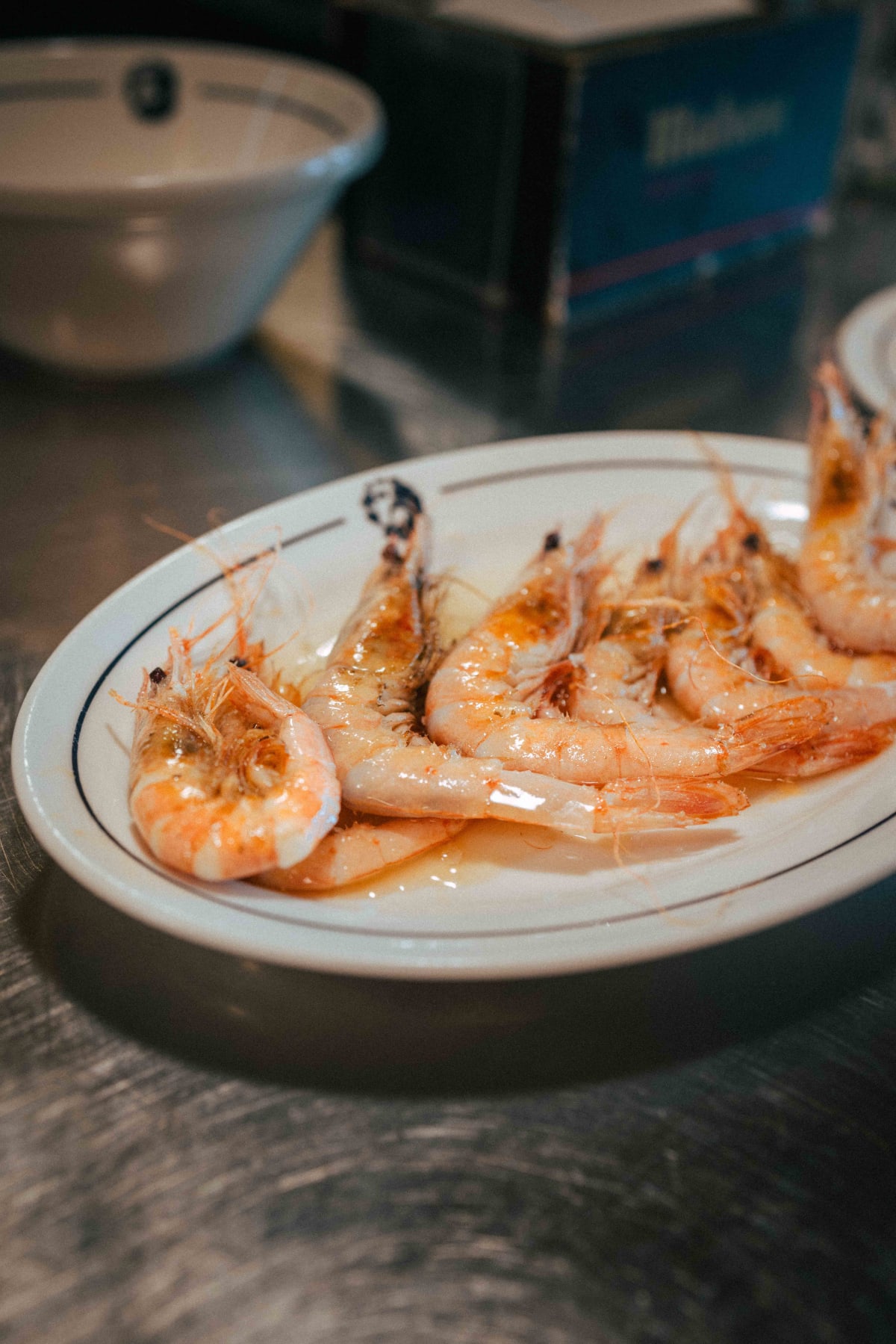
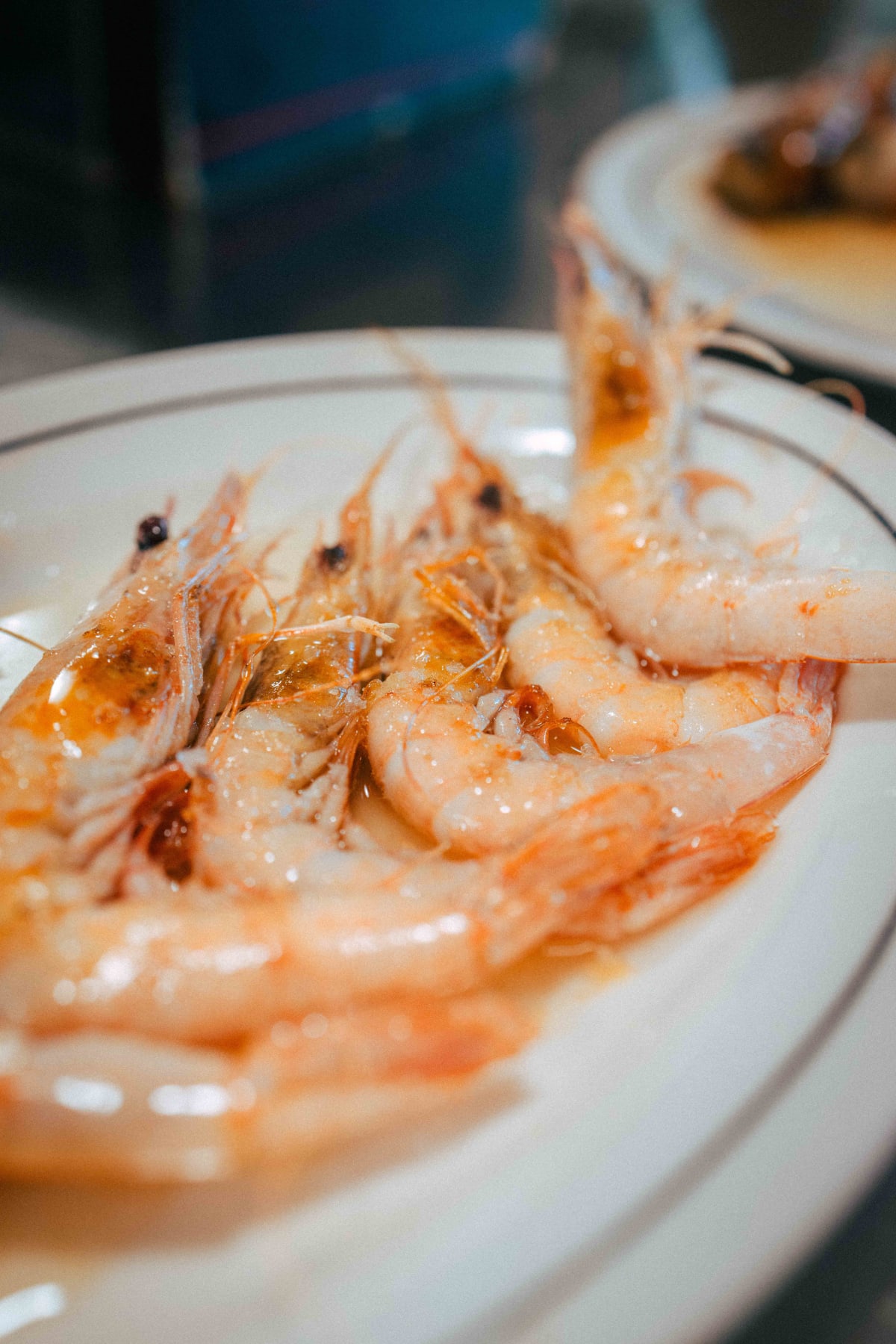
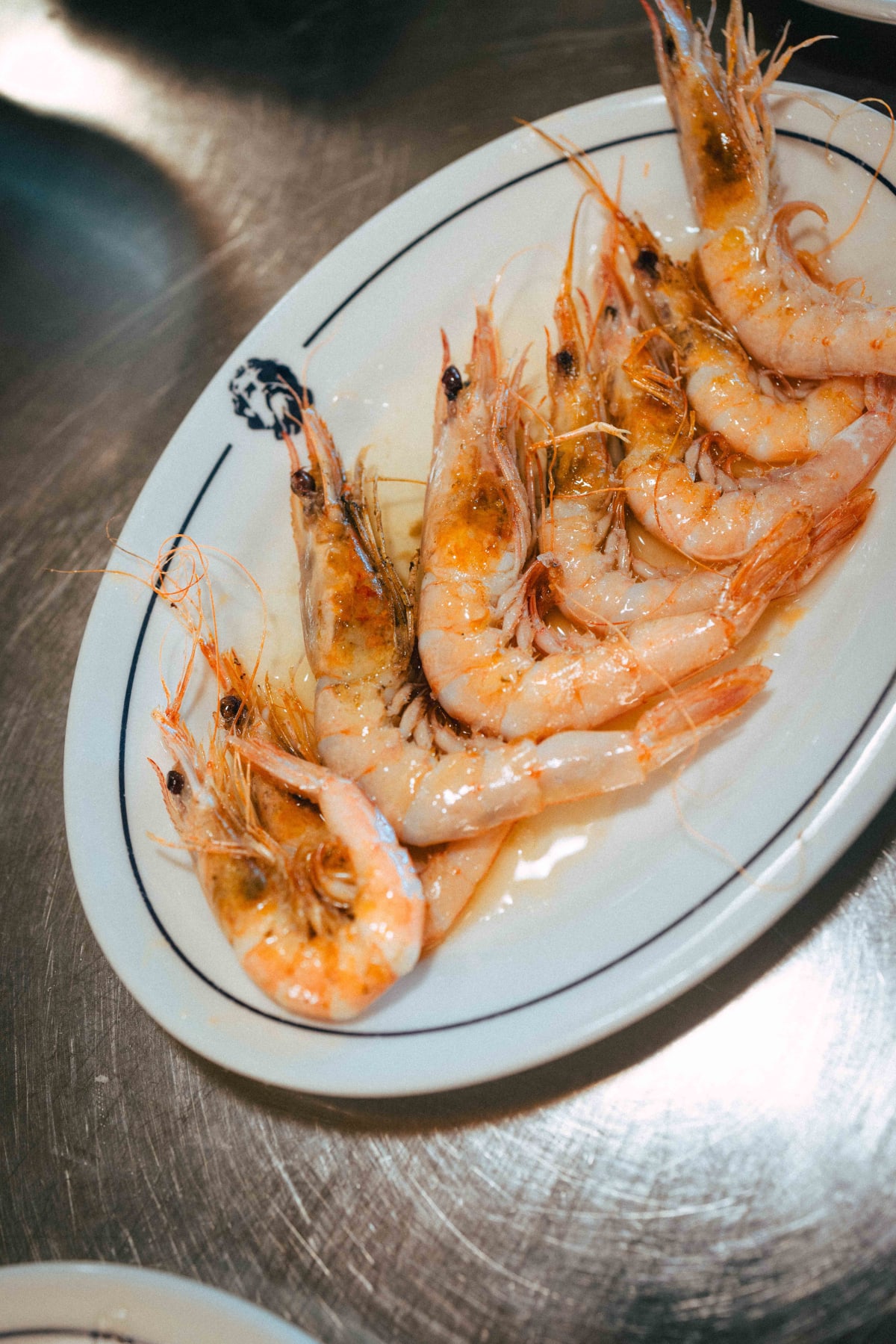
It is a medium-sized prawn caught in the deep waters of the Mediterranean and the eastern Atlantic, and in Spain the gamba blanca of Huelva in Andalusia is the famous one. Mine was Gamba Blanca Plantxa, gamba blanca cooked on the griddle, at twelve euros.
Section 11·Montadito Botarga
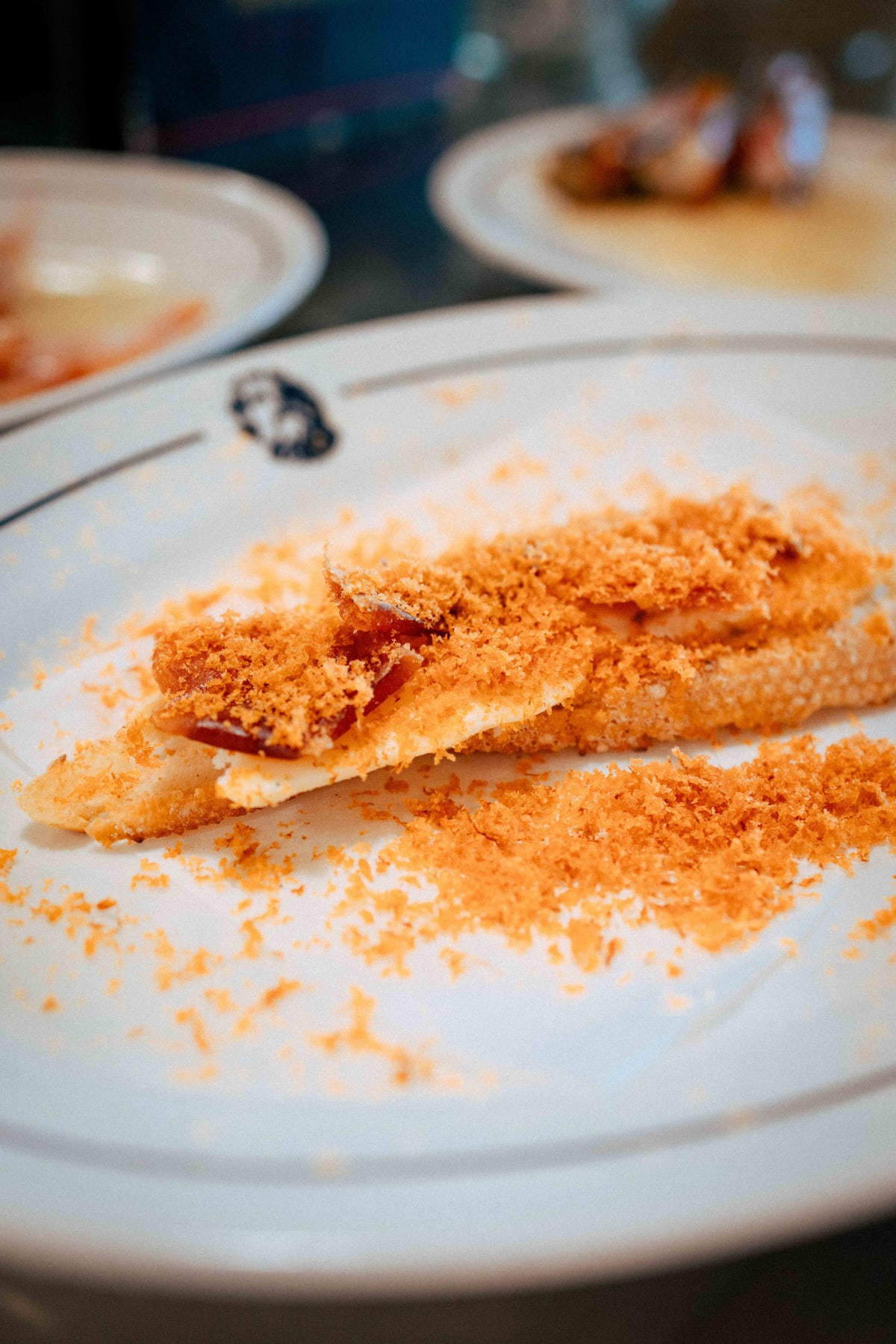
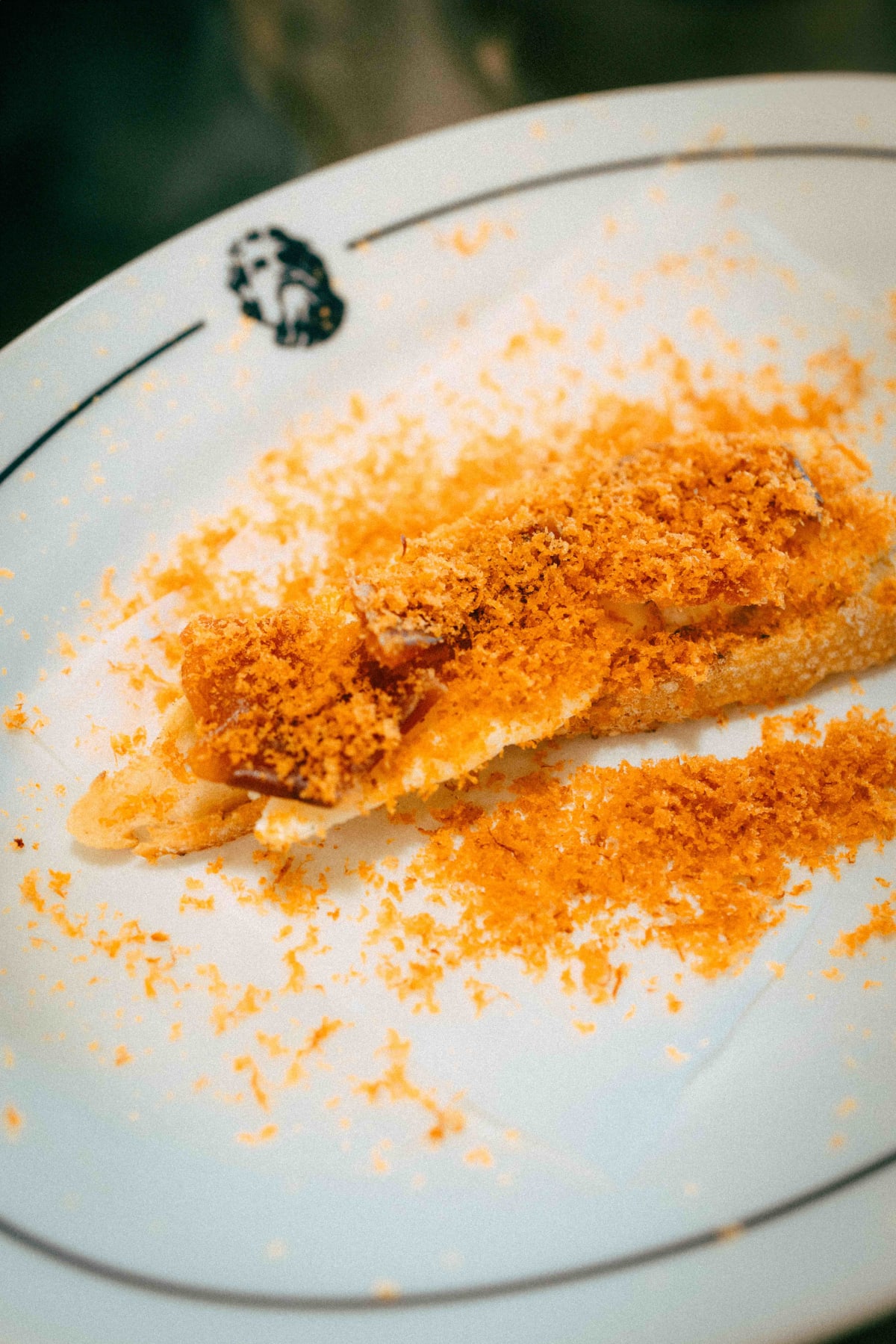
In between I also ordered one inexpensive dish, the Montadito Botarga, simply because Botarga was a word I knew. I wondered what it would be, and it turned out to be baguette topped with butter and a heap of cured roe, botarga. The baguette was first class, and the savour of the roe and its particular chewiness went together beautifully. I loved it, and my companion enjoyed it so much that we ordered a second one later.
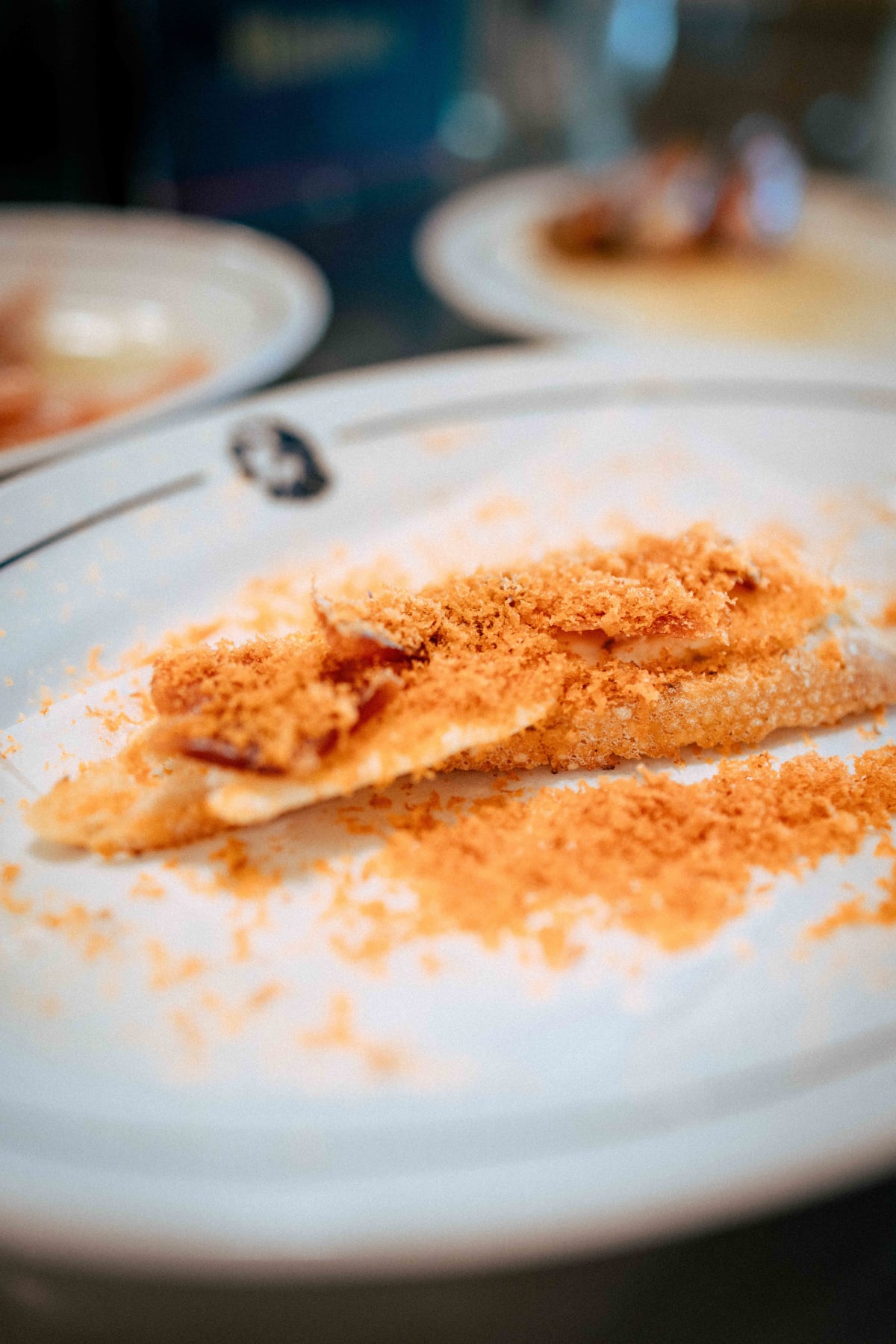
A montadito is a bite-sized tapa, something laid on a small piece of bread. Botarga is a fish roe sac that has been salted, pressed and dried, the same family as Korean eoran, and on Spain's Mediterranean coast it is made from the roe of grey mullet or tuna. This montadito sat in the DE LA MARÍN list, among the things made in house.
Section 12·Calamar And Sepia
Before setting off for Spain I had been told to eat plenty of prawns, carabinero among them, so I ordered two prawn dishes, but having come all this way, I felt it would be a waste to order only those, and ordered plenty of other things too.
The chef recommended a few dishes, starting with two kinds of squid, Calamar and Sepia. Calamar is the European squid of the Loliginidae family. Among the squid in the seas of Korea, where I live, it is a closer relative of hanchi, the swordtip squid, than of the flying squid Koreans eat most often. That flying squid family is sold in Spain under a different name, pota, and for less.
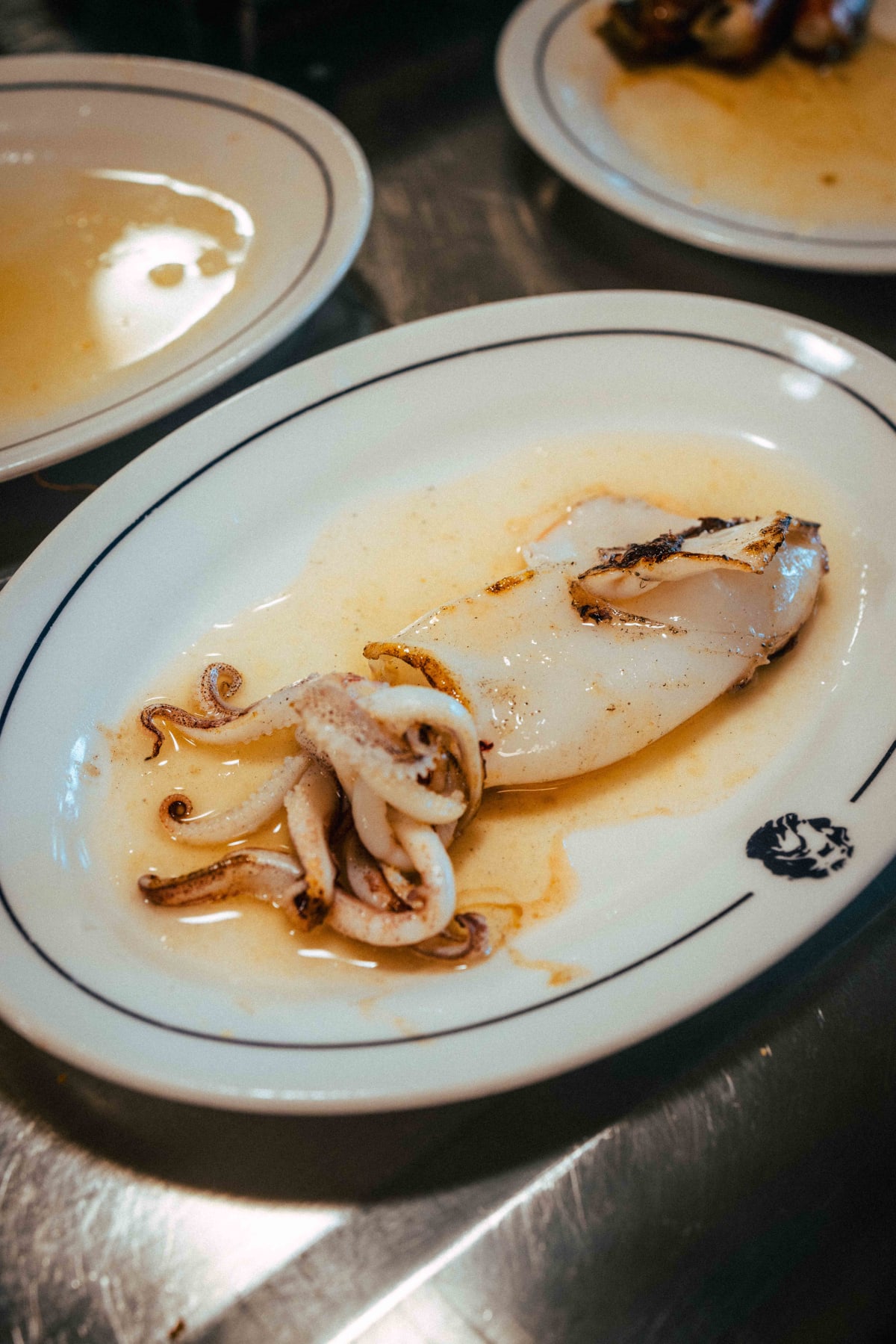
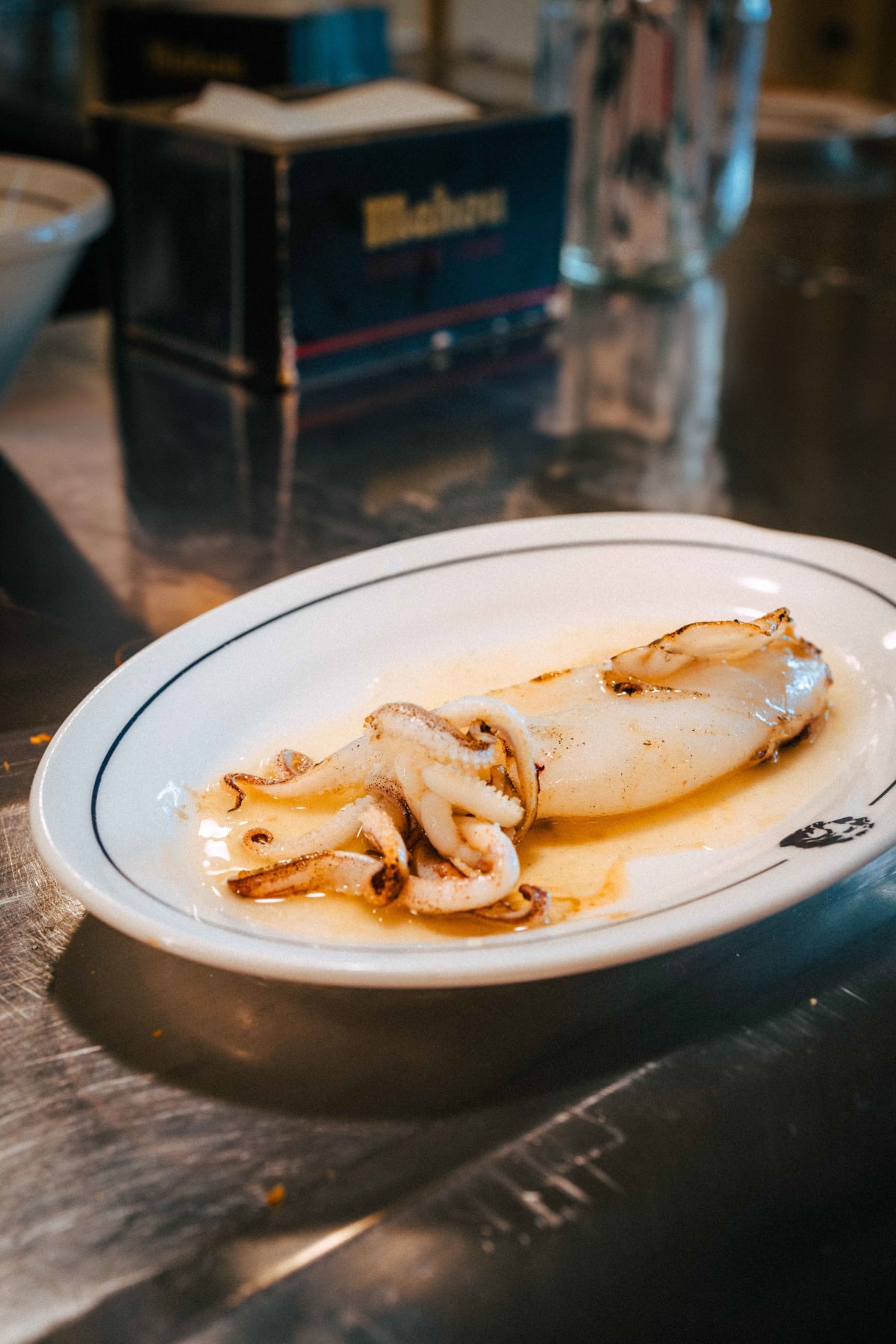
Sepia is cuttlefish, the kind you see a lot these days at Korean fish markets and casual seafood pubs, and with the calamar at twelve euros a piece and the sepia at eighteen, you can think of the sepia as the more premium of the two.
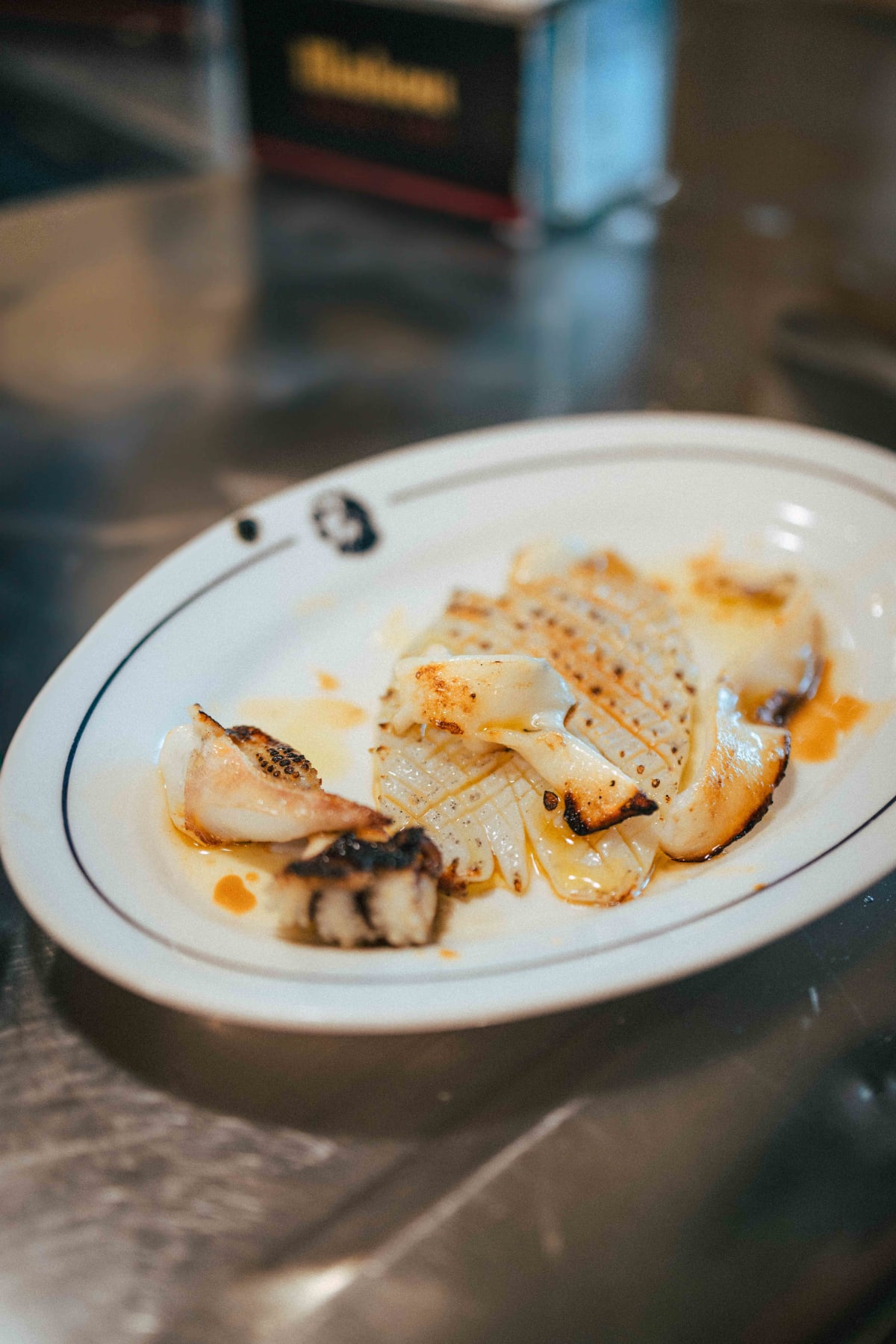
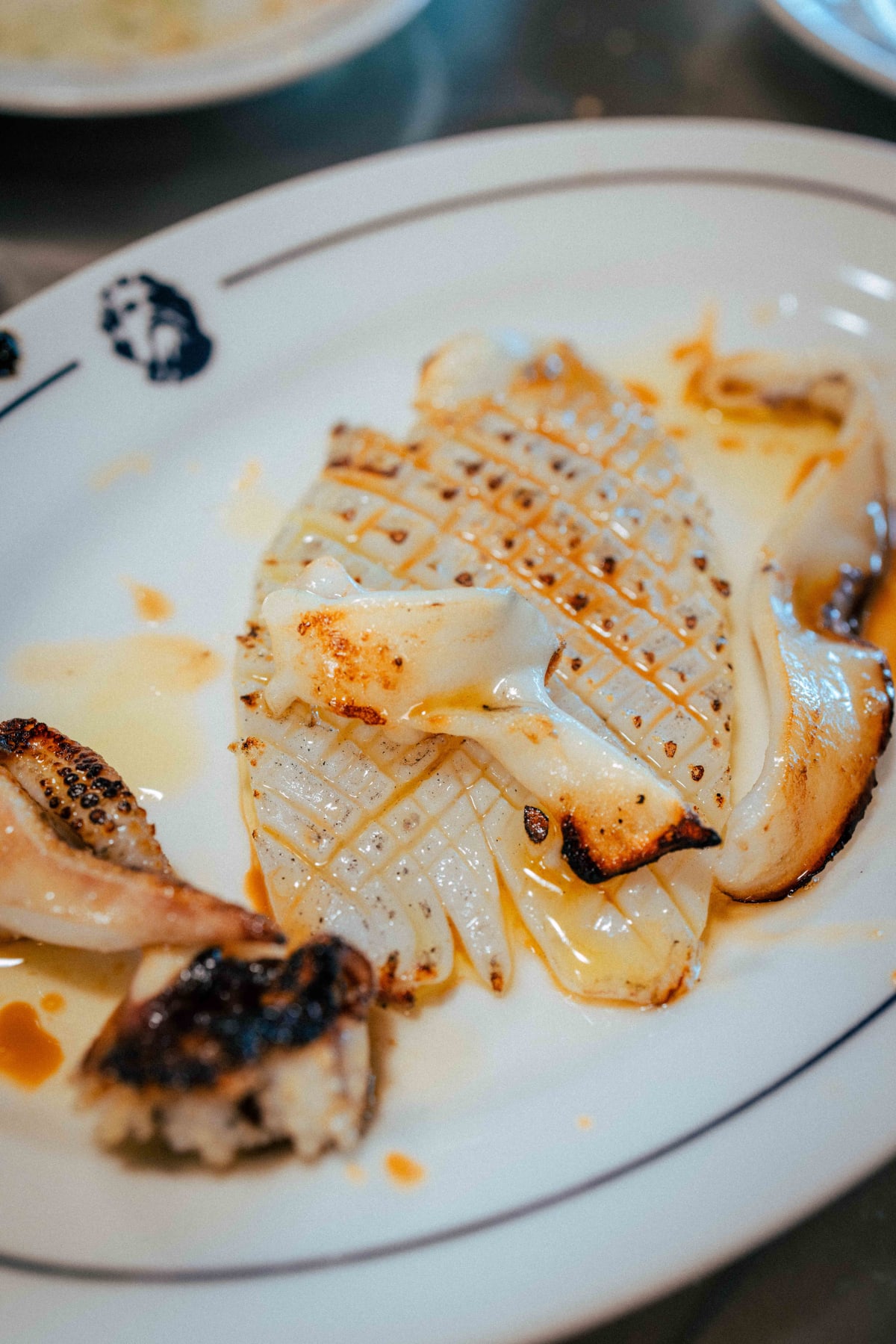
What I personally took away from that trip through Spain and Portugal was that prawns, not only carabinero and gamba roja but other kinds as well, tasted different from the prawns I had eaten in Korea, with a stronger savour. I enjoyed them thoroughly and came away satisfied.
Ordinary squid and cuttlefish, though, whether at Michelin restaurants or at casual places like this one, never moved me much. I cannot say they tasted very different from the squid I have eaten in Korea or Japan, and I caught myself thinking that blanched well, picked up in a big piece and dunked in chogochujang, the vinegared chilli sauce, or in soy sauce, they would be even better.
That is not to say they were bad, only that they moved me less than I expected, so for Japanese, Korean and other East Asian diners who would rather order conservatively than take risks, these two are still worth recommending. That judgement hardened further three days later, when I ate the local squid called txipis at Ganbara in San Sebastián.
Section 13·A Basque In Barcelona
I have already written up a good many of these meals, but the first stop on this trip was Barcelona, and the city I went on to purely to eat was San Sebastián in the Basque Country.
One of the ingredients best known in San Sebastián and across the Basque Country is KOKOTXAS, the flesh from under a fish's lower jaw. Kokotxas are on the menu at every Basque restaurant, and I had been determined to try them once I got to San Sebastián, so when I saw them here at Ultramarinos Marín I ordered them.
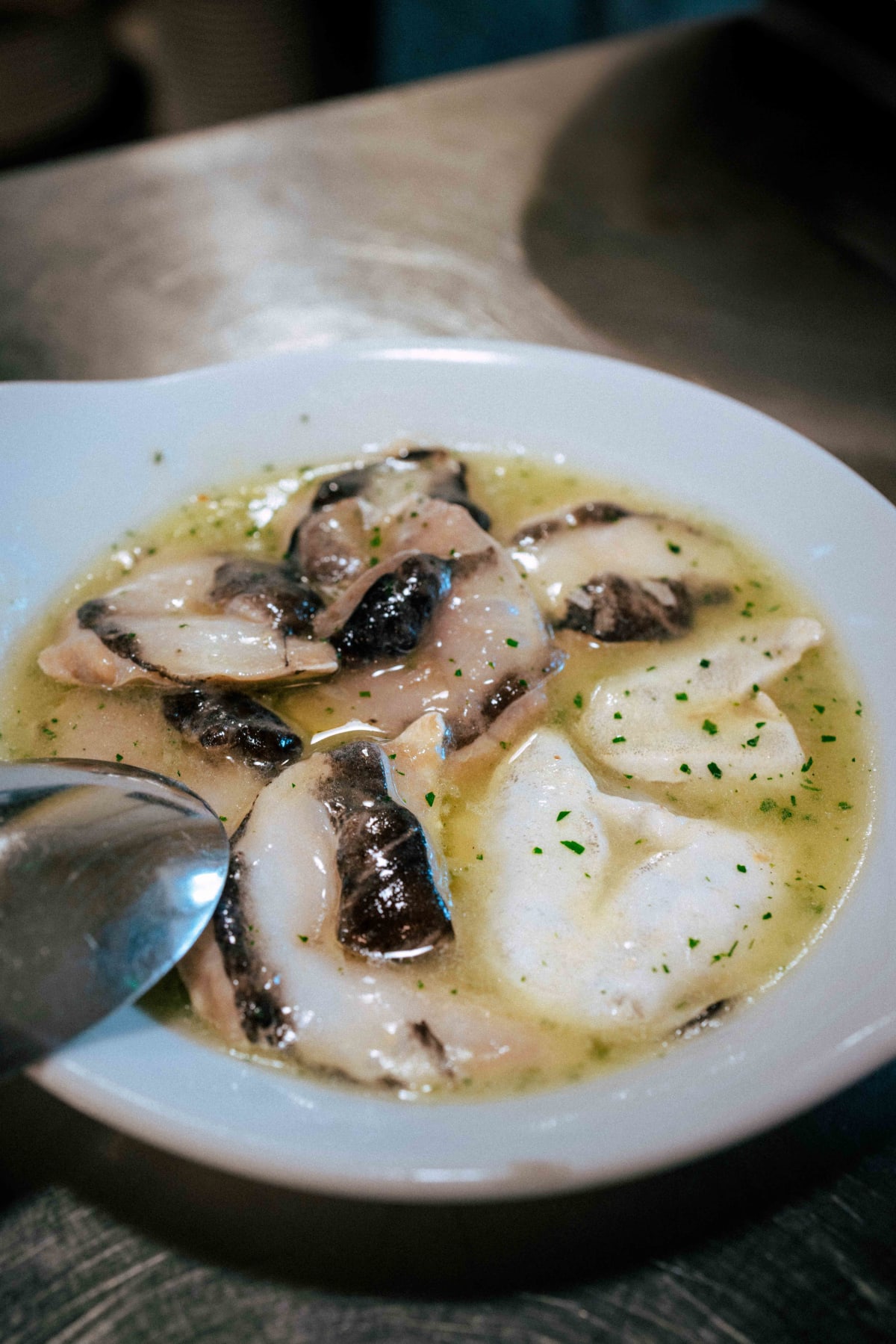
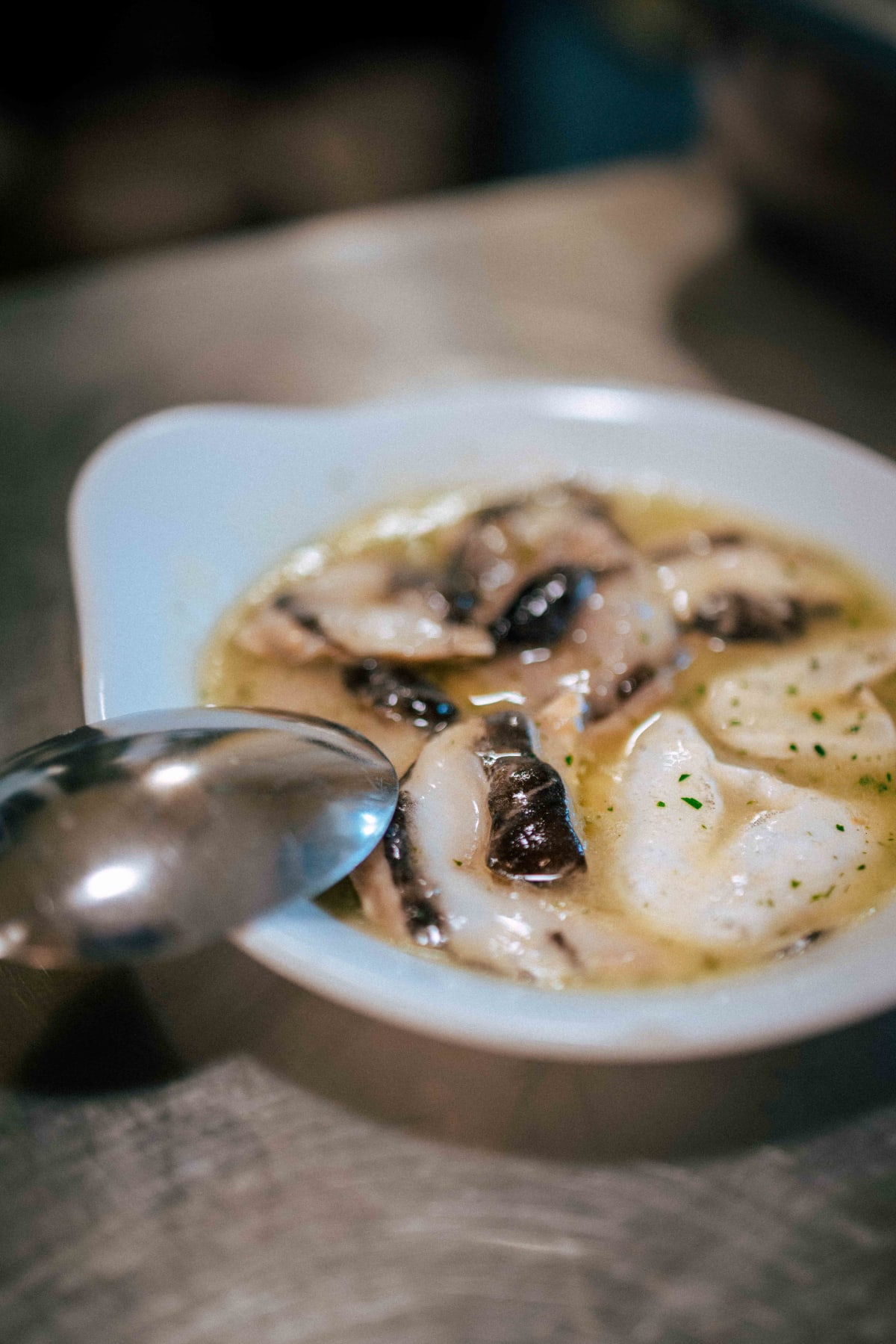
The name on the menu was KOKOTXAS AL PILPIL O BRASA. It comes almost like a stew, the kokotxas served with the skin still on, in a liquid that was oily and quite thick. With the skin on, it has a soft, wobbly texture, and my companion... decided to pass, so I gratefully ate the lot. The flesh was on the tender side and the liquid was good enough that I wiped the dish clean.
It was no coincidence that a Basque dish was on a menu in the middle of Barcelona, because Borja, the chef who runs the place, is from Vitoria in the Basque Country. Born there in 1986, Borja García Ordoño started cooking at Karlos Arguiñano's cookery school in Zarautz, and afterwards, rather than staying long in any one place, moved between kitchens in several countries for more than ten years. He passed through Martín Berasategui, Asador Etxebarri, Noma, Seiji Yamamoto's Ryugin and Quique Dacosta, and in 2016 he became head chef of Dos Pebrots, which Albert Raurich, formerly of elBulli, opened in Barcelona's Raval. It was a kitchen that dug into recipes from the ancient Roman cookbook De re coquinaria, into garum, the fermented fish sauce, and into fire.
That a chef with this record opened a neighbourhood bar rather than a tasting menu is the key to understanding the place. Set up with Enric Rebordosa of Grup Confiteria among others, it describes itself as a place that plays with the ambiguity between the old and the new, the shabby and the not shabby. The menu gives only the names of the ingredients, and the technique built up in fine dining is hidden inside the dish.
The menu gives only the names of the ingredients, and the technique built up in fine dining is hidden inside the dish.
Kokotxas are the Y-shaped pieces from under the lower jaw of cod or hake, rich in collagen, which turns to gelatin as they cook. Pil-pil is a Basque emulsion made by swirling that gelatin together with olive oil in the earthenware dish, and the name imitates the sound of it bubbling in the oil. The skin is left on to draw out that gelatin, so the oily, thick liquid was the pil-pil itself. The O BRASA in the name means they can also be grilled over coals instead.
Section 14·The Velvet Crab
Tapas portions are not large, and having ordered mostly seafood we were not yet full. On a first day with so many places to go, moving on to a second spot felt like too much, so we decided to order one more dish: Nécora Parrilla.
Nécora is the velvet crab, and since it does not seem to be caught in Korea, it has no real Korean name. Parrilla means grill, so what we had ordered was, in effect, grilled crab.
It is called the velvet crab because the short, fine hairs covering its shell look like velvet, and it is known for its red eyes and its last pair of legs, flattened like paddles for swimming. It is a small crab, a little over eight centimetres long, especially prized in Spain along the coasts of Galicia and Cantabria, and usually boiled or cooked on the griddle. On the menu it appeared as NÈCORA A LA PARRILLA.
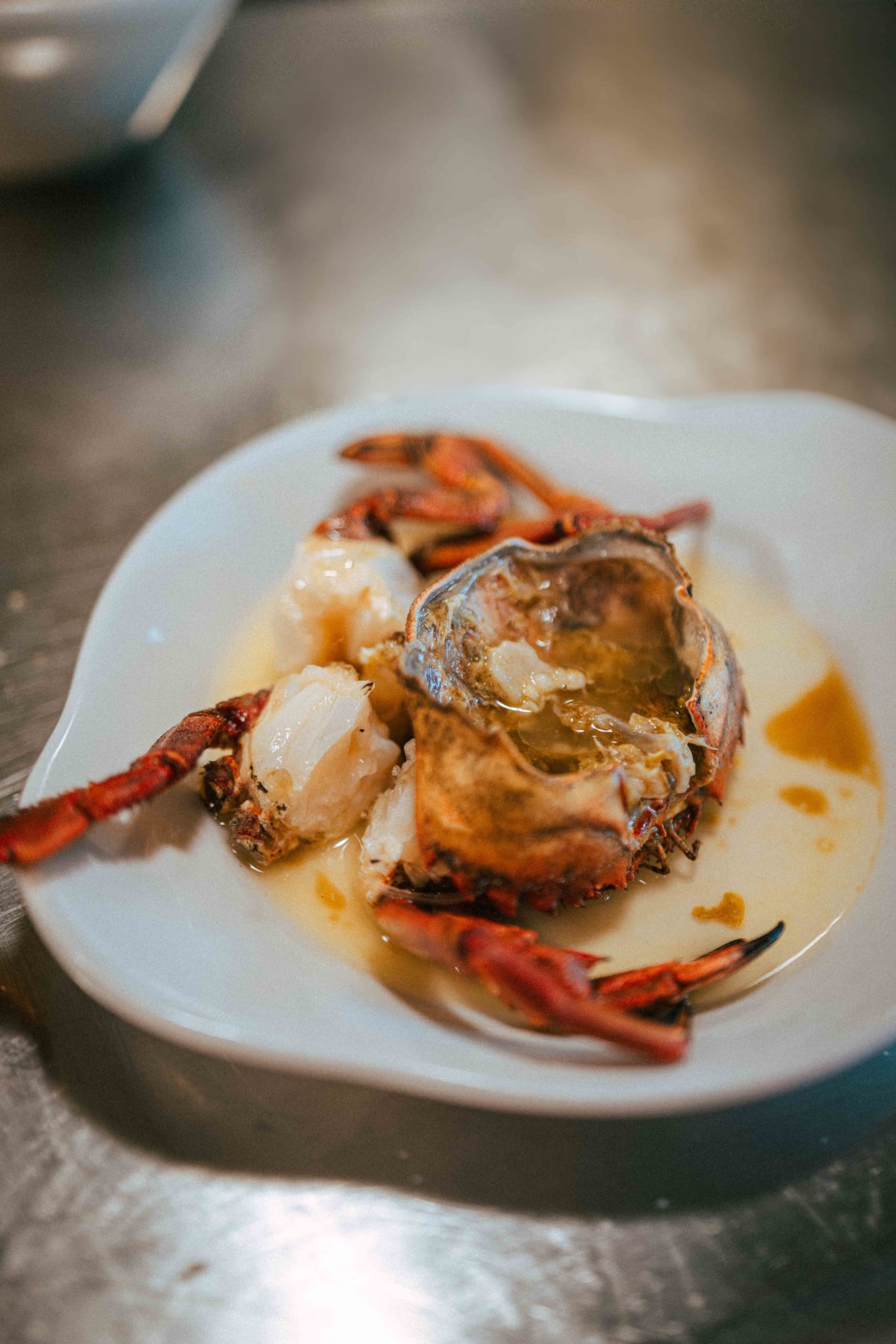
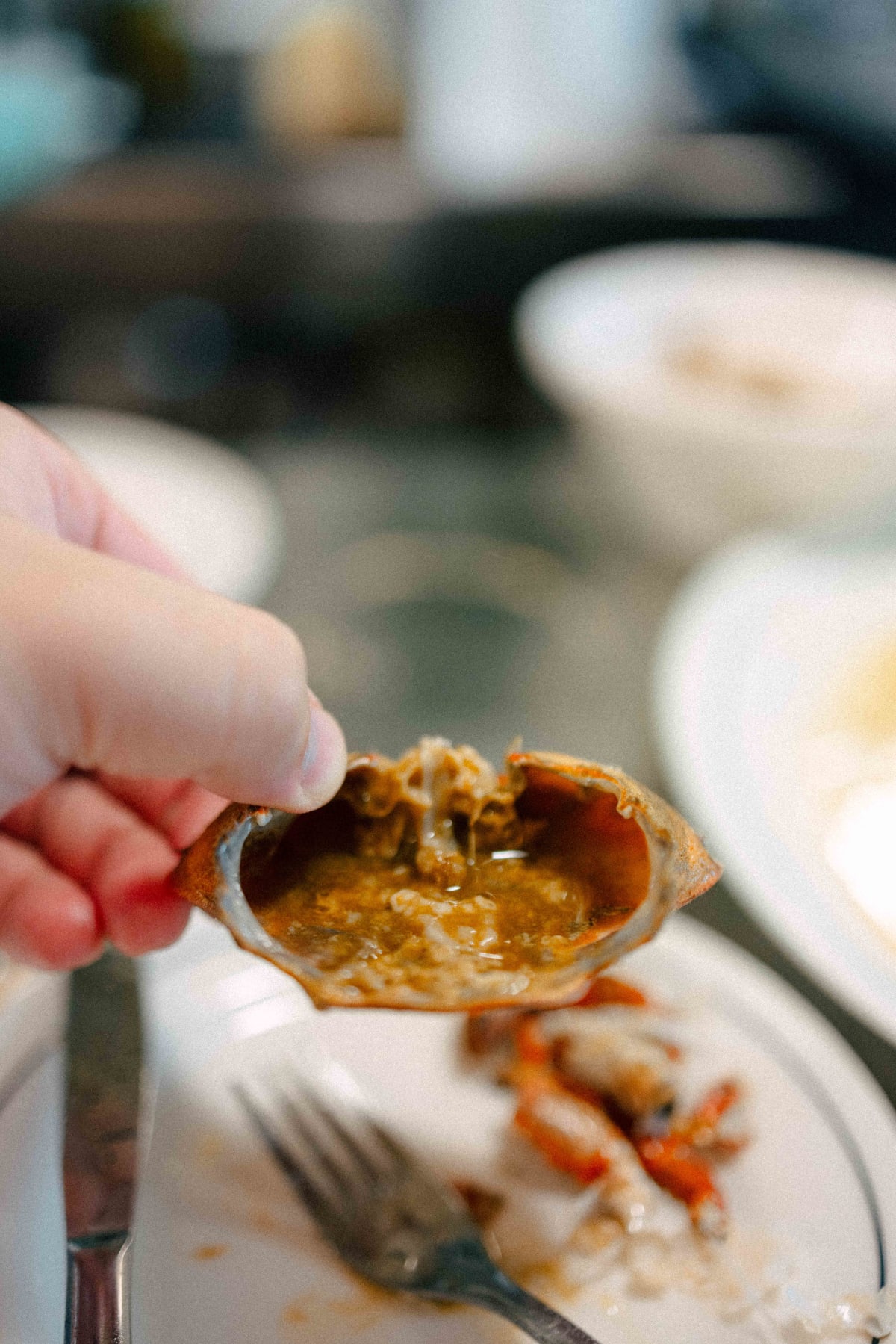
The crab arrived already taken apart, with the legs, body and shell separated, the way a crab is broken down for you at a Korean soy-marinated crab restaurant, and like the prawns it had been cooked as little as possible, leaving the inside very close to raw.
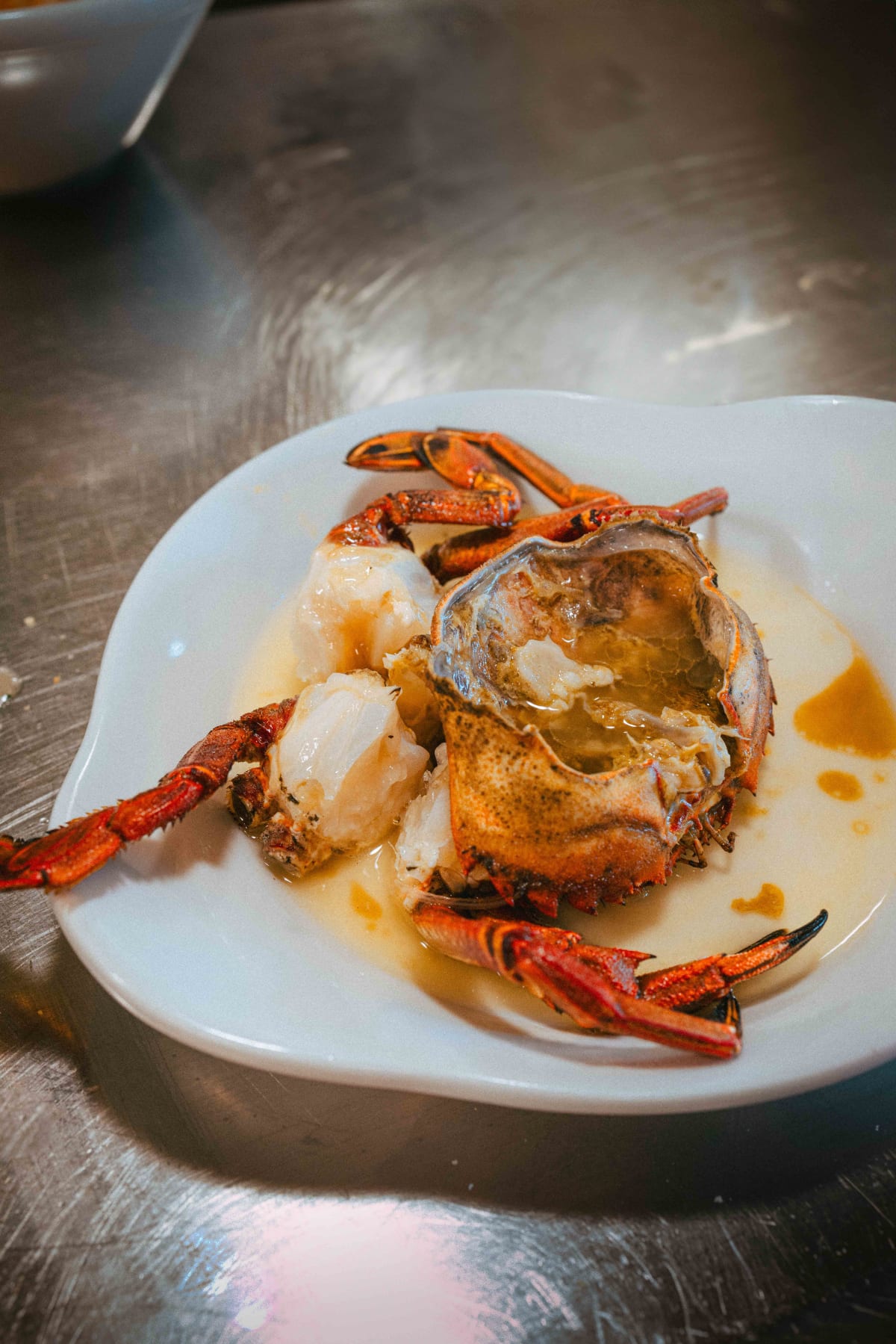
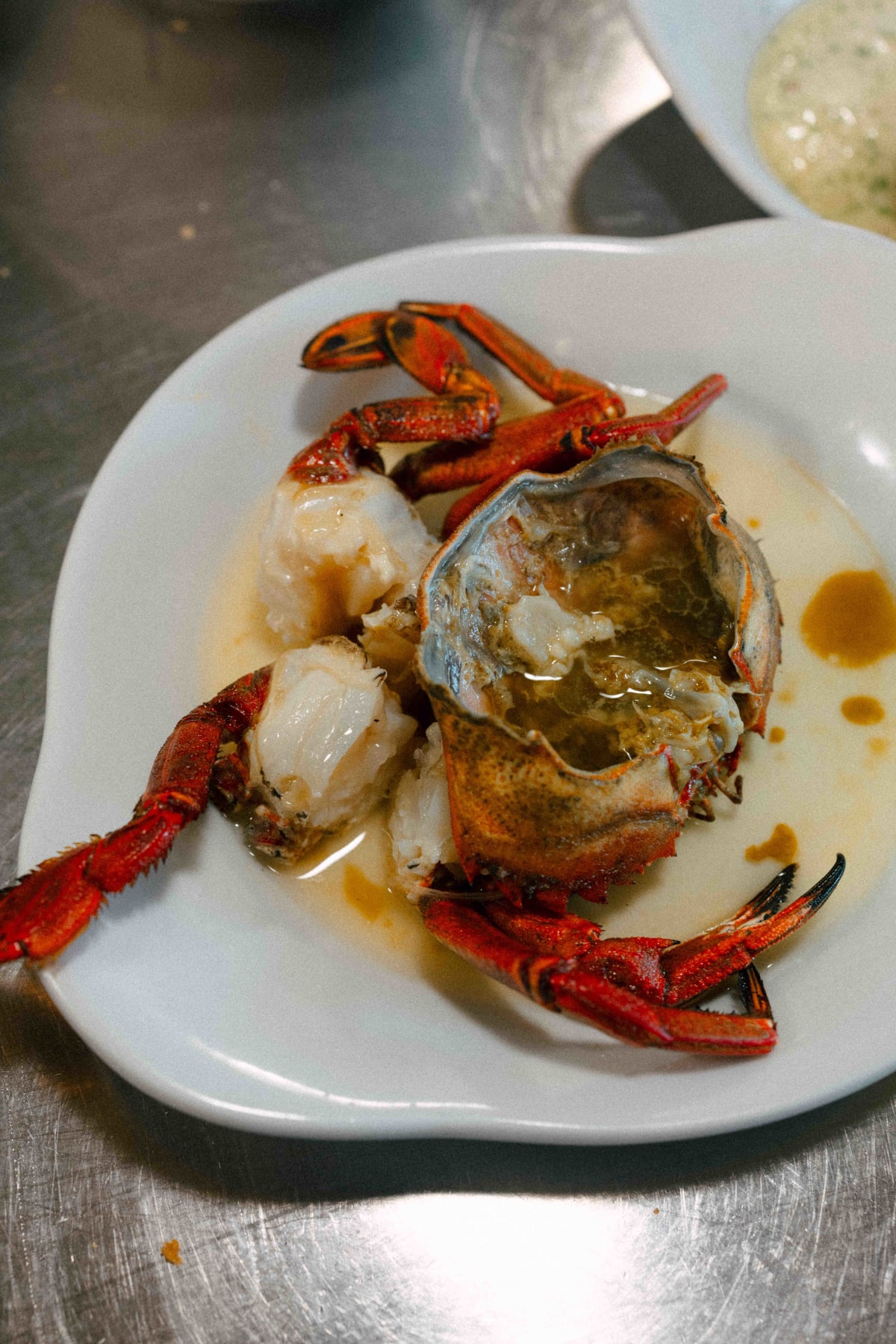
The meat was white and, as I remember, quite sweet, and the innards tasted different from those of the crabs I know. Adding it to the order was a very good decision.
Section 15·The Fish I Missed
For two people this was already a lot of food, but what I regret now is not ordering a whole fish. My companion was not a food lover, and the prices by the kilo looked daunting, so I could not bring myself to suggest it.
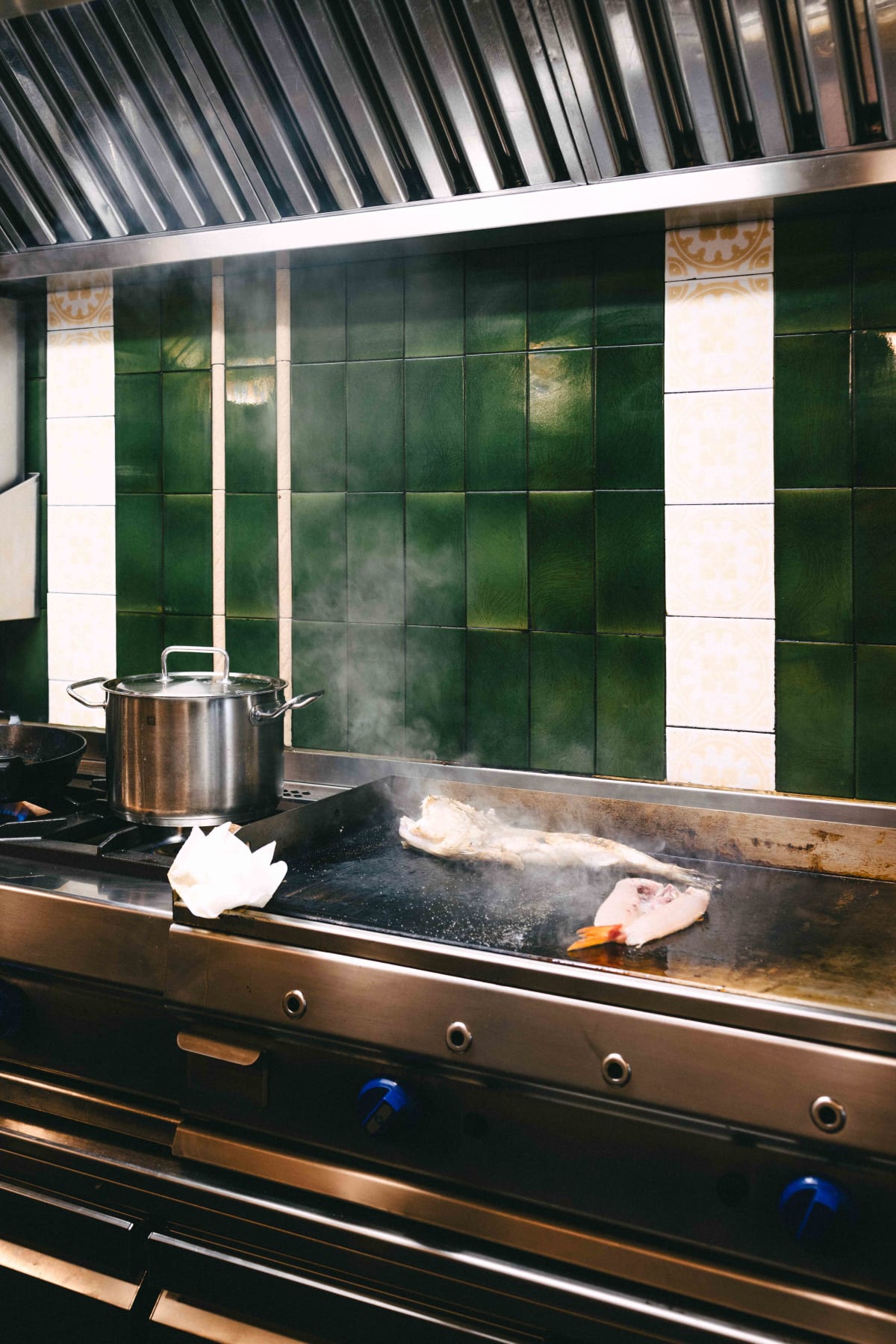
Under PEIX DEL DIA A LA BRASA, the fish of the day cooked over the wood fire, turbot and llobarro, sea bass, were listed at well over a hundred euros a kilo. With the meal already at seventy-seven euros a head, it was not easy to suggest adding a whole fish. This is why a food trip is best made with other people who travel to eat, wherever possible.
Judging by what the kitchen can do, it would surely cook fish very well too, and having later eaten the best fish of my life at Casa Urola in San Sebastián, I am all the more curious about the fish here. If anyone visits this place in Barcelona, order the PEIX DEL DIA A LA BRASA, the grilled fish of the day, and tell me how it was.
Section 16·Since Then
I went back once more in 2025, and in the meantime the place had grown. In 2025 it opened Ultrapaninos Marín ten metres along at 189 Carrer de Balmes, a space opened because the workshop had become too small, where they make their own bread, charcuterie and pickles and sell sandwiches. And on 1 October 2026 a second Ultramarinos Marín opens in Malasaña, Madrid.
The wood fire at the back of Ultramarinos Marín shares a lineage with Etxebarri, where the chef once cooked, but at Ultramarinos it is only one tool among the planxa, the vitrina and the curing, in what reads as a Catalan bar cooked with a Basque hand. That shapes how to order. Many plates can be asked for as a half, a third or even a quarter, which lets a table of two go wide across the planxa and still leave space for the grill. The fish of the day is sold by weight and some are listed whole, so ask what the piece will cost before it goes on the fire. A counter lunch at the front suits a first visit, and the asador at the back is the reason to return.
Have a question about this restaurant, or want to share your own experience?
Send a message