Local & Essential · Kyoto · Japan / December 2024
Uzuraya
"Yakitori off the skewer, Aramasa by the glass"
Section 1·A Second Stop In Gion
When I travel, I love a fine meal booked weeks ahead, but I am just as fond of the unplanned version: finding a good place on the spot and having a drink over some good things to eat.
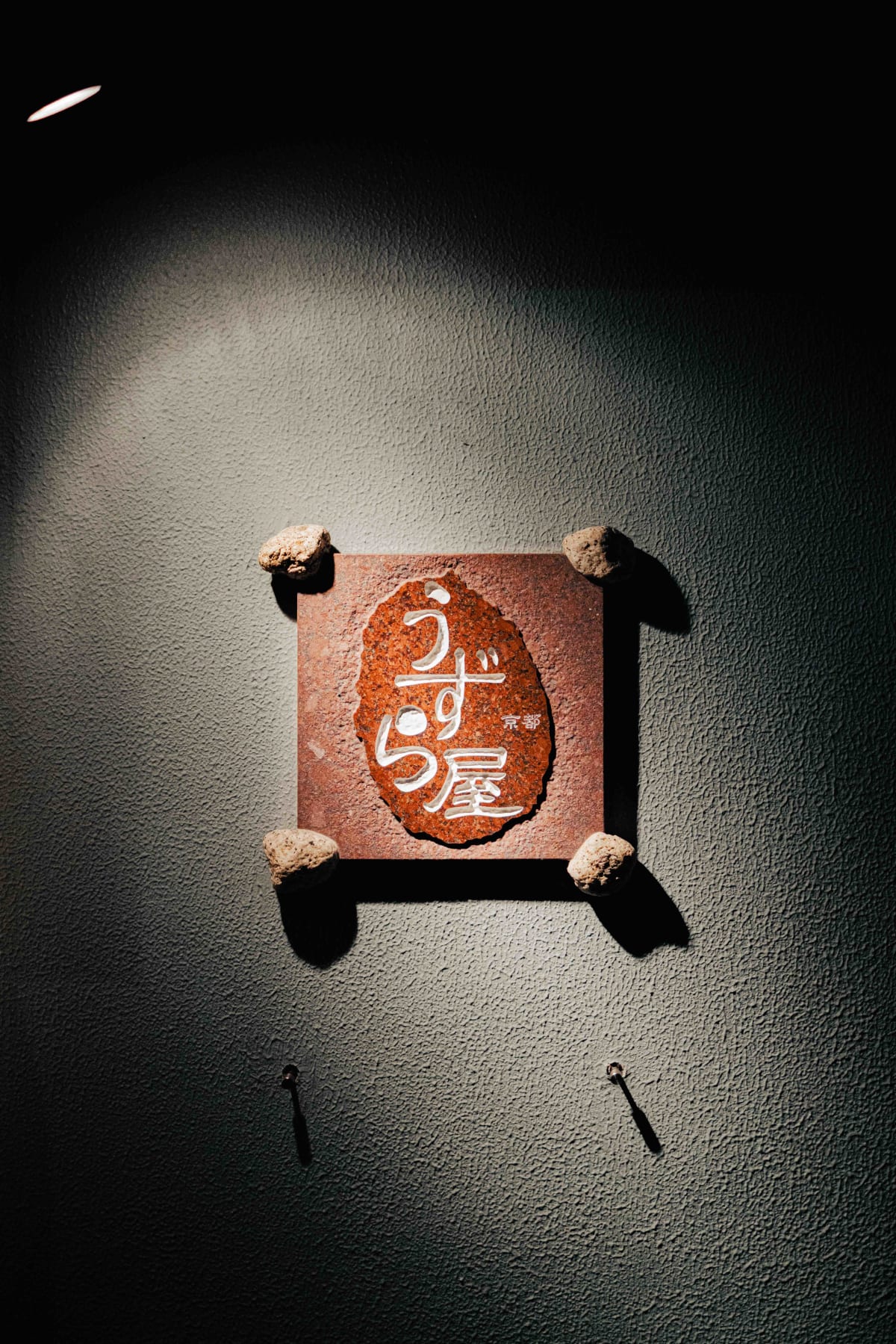
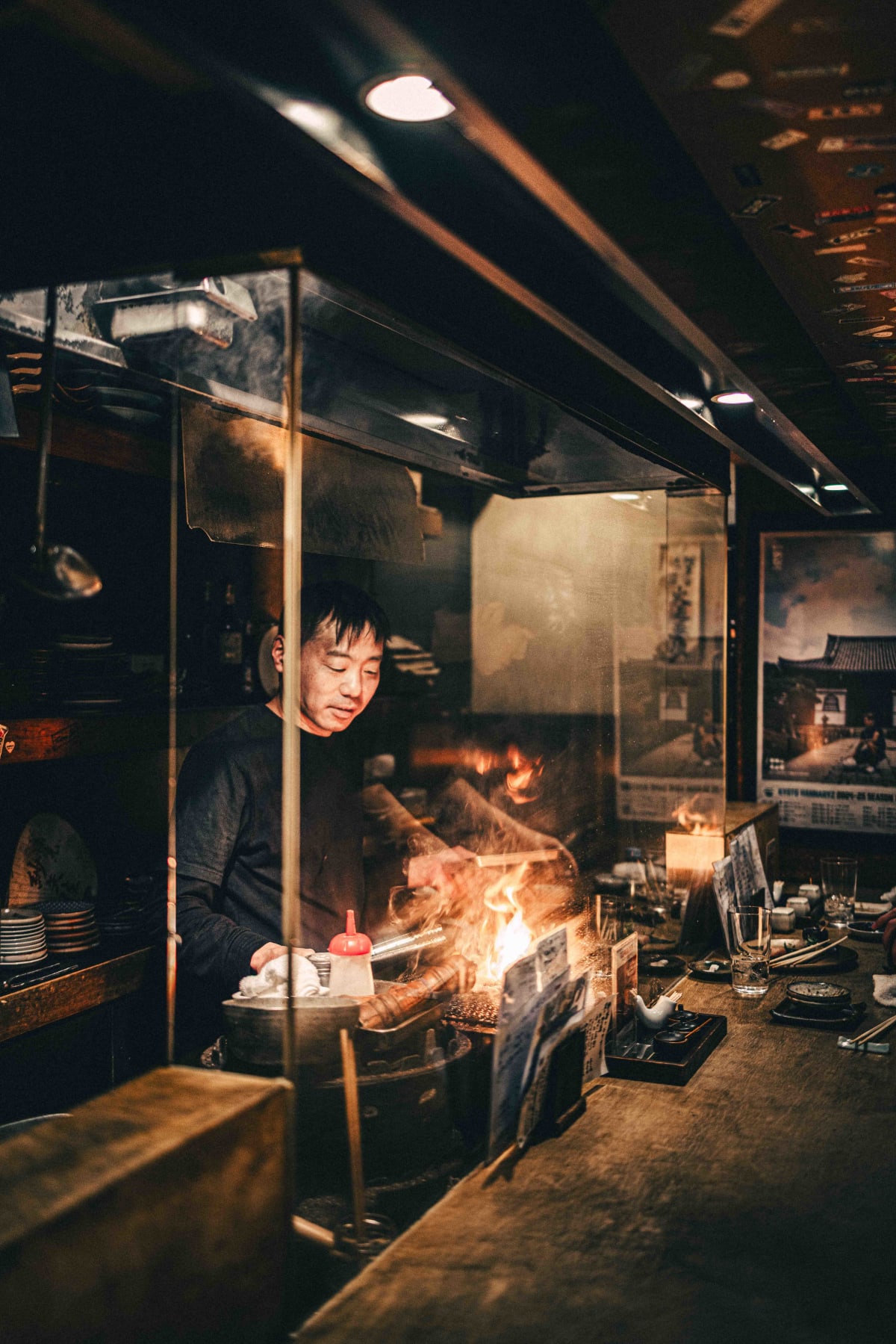
Uzuraya (うずら屋) is a local yakitori shop I walked into as a second stop after dinner in Kyoto. It had been recommended to me as a yakitori place worth knowing and was sitting in my saved list, and I went in while hunting around for somewhere to go next. It is less an upmarket izakaya than an izakaya-style yakitori shop where you order inexpensive dishes one at a time. And yet it left me more satisfied than most upmarket izakaya that charge around 10,000 yen and are easy enough to book.
The shop was opened by its owner, Shogo Oshima (大島将吾). According to a November 2025 article in Amakara Techo (あまから手帖), the Kansai food magazine, he trained for years in Kyoto's Japanese restaurants and izakaya before discovering what yakitori could be at Uzuraya, a celebrated yakitori shop in Osaka, and in 2006 he went independent in Kyoto through noren-wake (暖簾分け). Noren-wake is the custom in Japanese restaurants by which someone who has worked at a house for many years carries its name and its methods out into a shop of their own.
So the name Uzuraya, "the quail house", is also a name handed down from his teacher's shop, even if there really is half a quail on the menu. The Osaka Uzuraya that first hung the name has since closed, which makes Kyoto, in effect, the main house now.
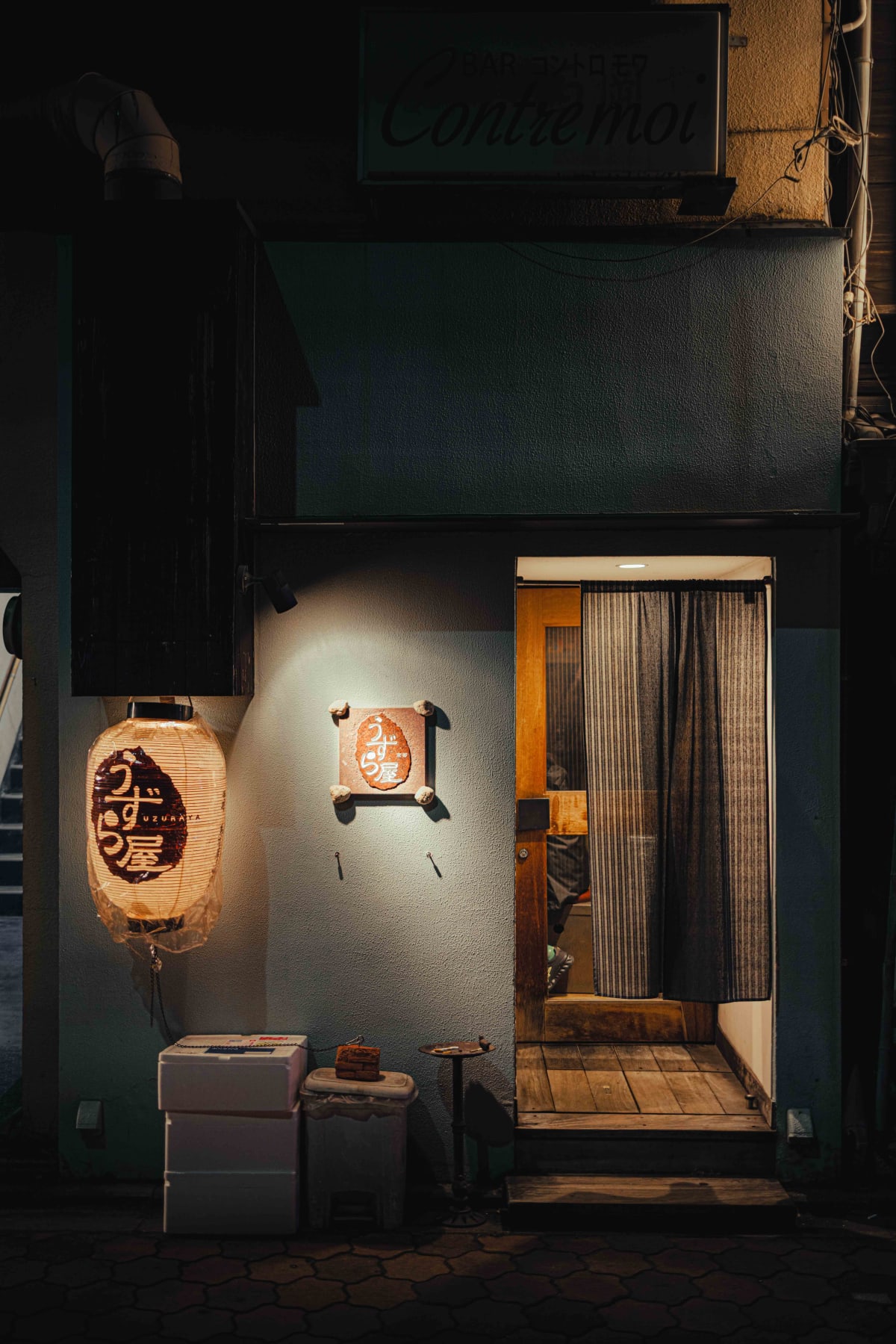
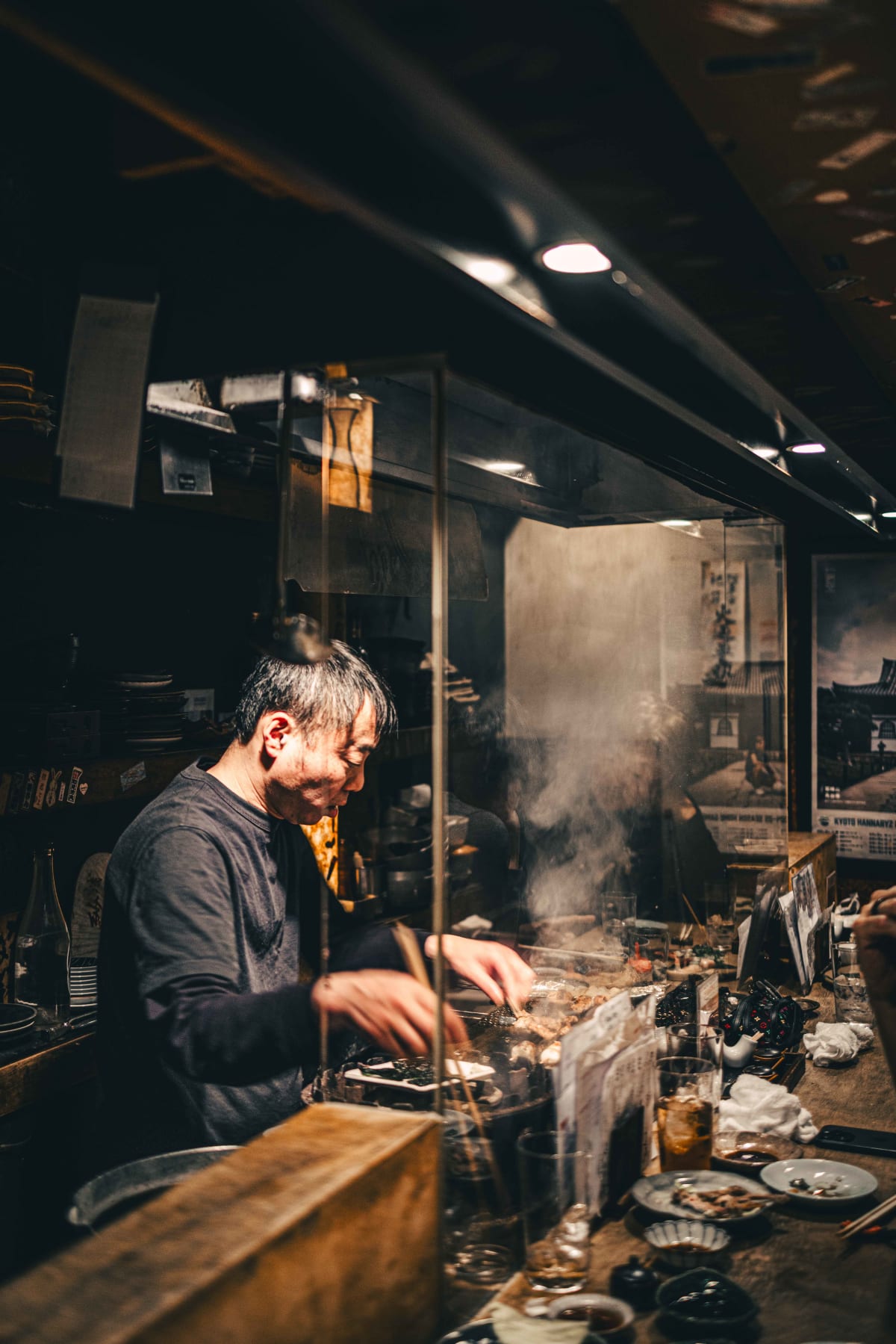
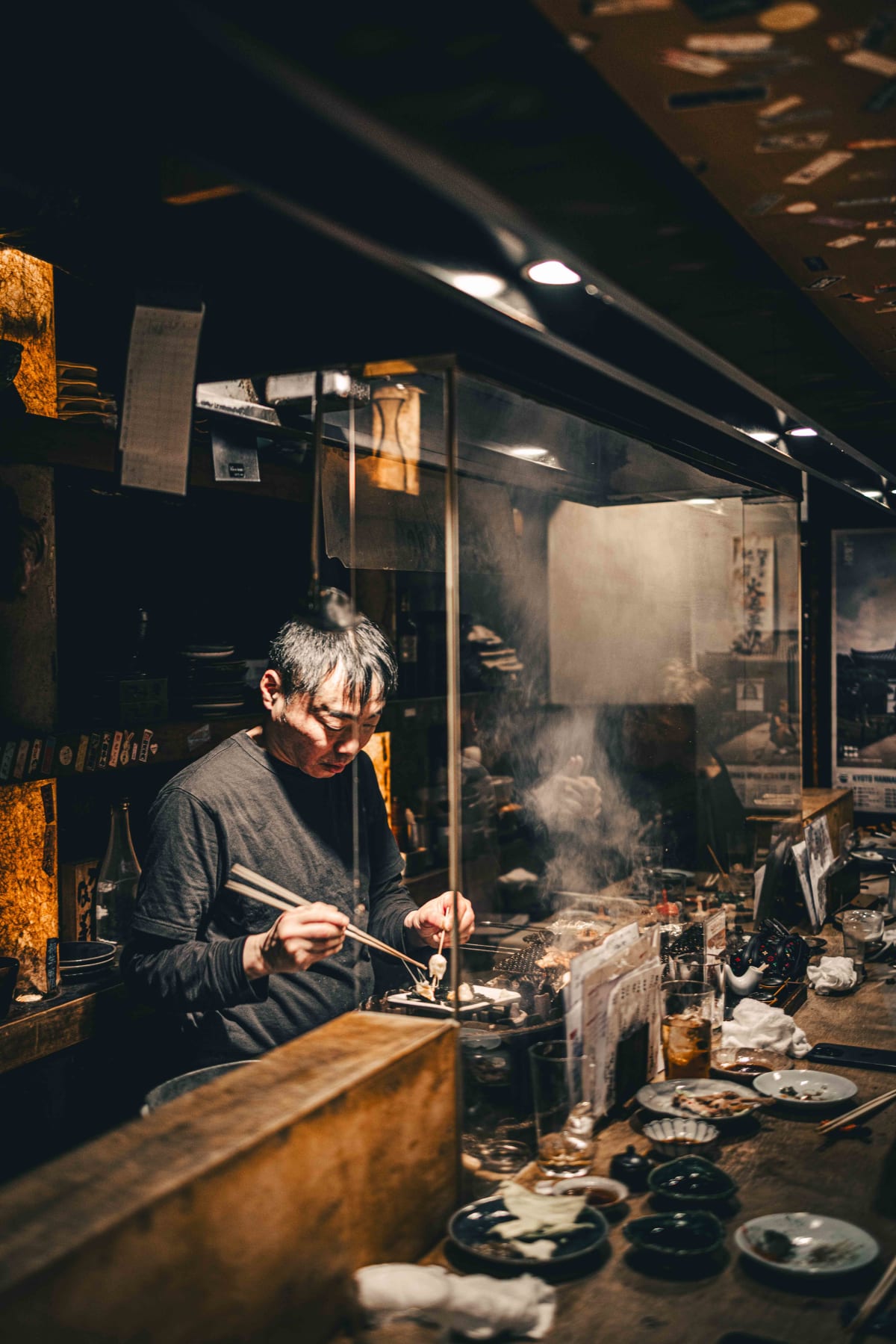
It sits right by Gion-Shijo Station, a minute or two on foot from the Minamiza kabuki theatre, so it is easy to find. Inside is a single counter that seats roughly eight to ten.
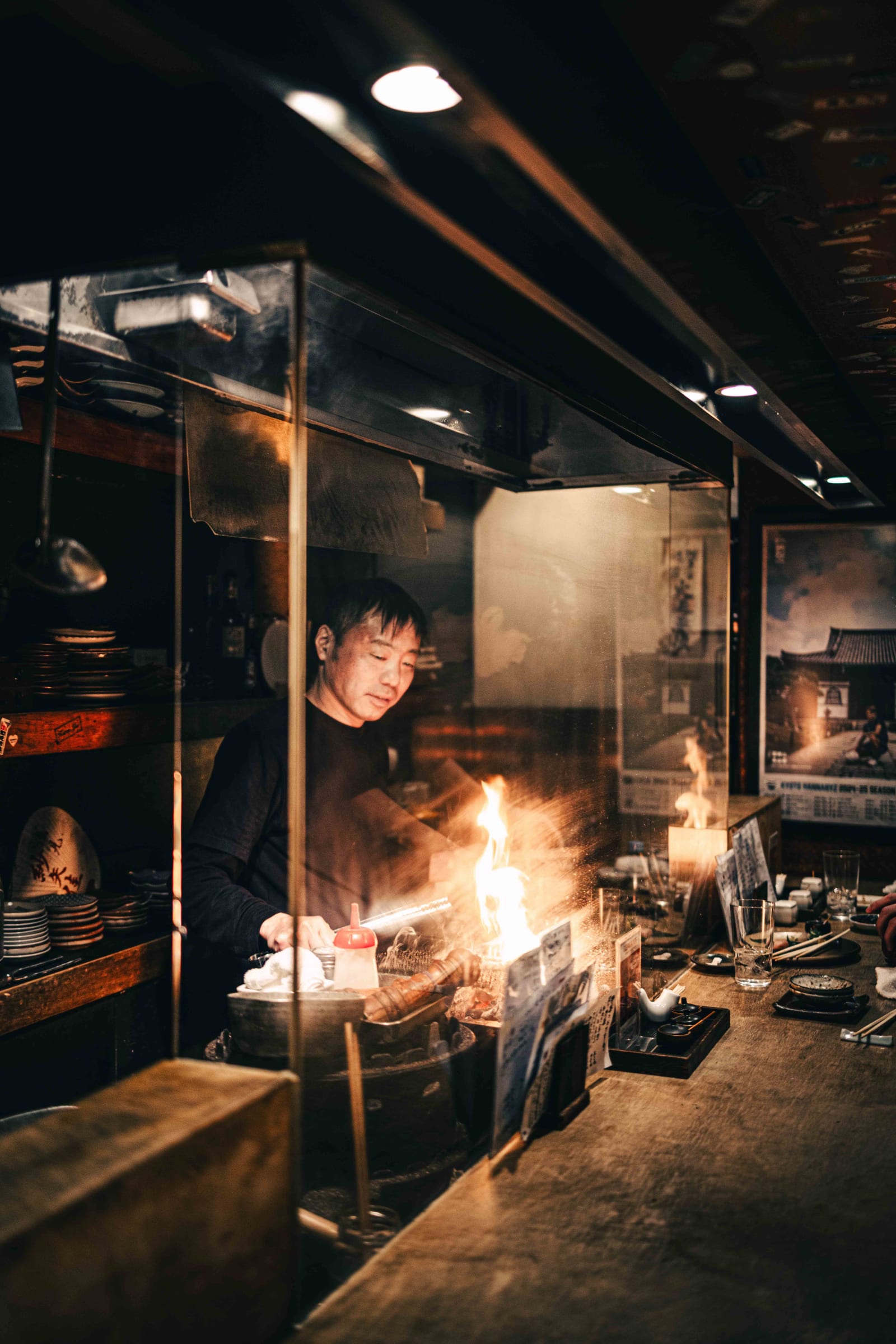
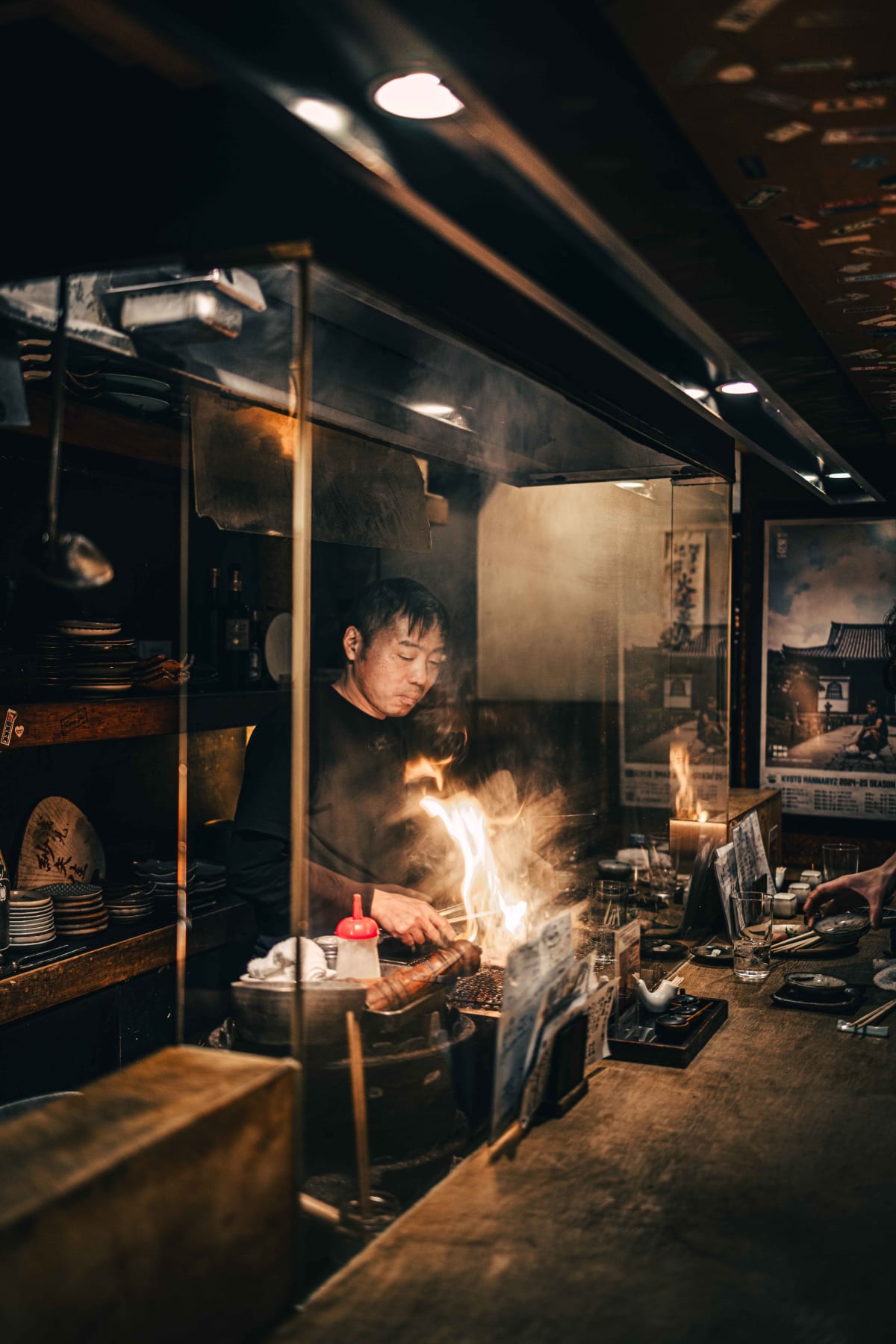
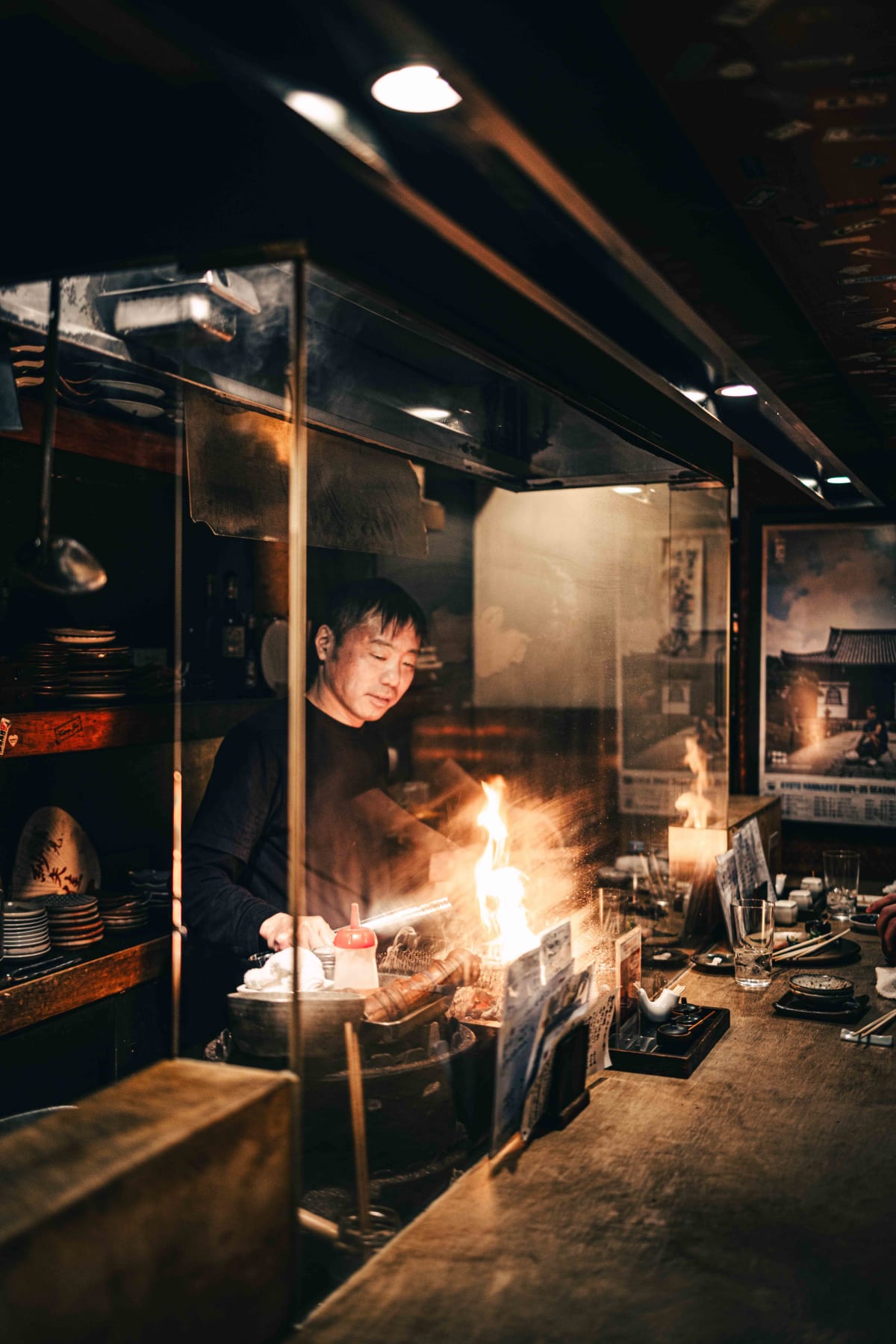
There is one thing worth knowing before you go. The spot where the taisho grills is closed off behind glass, which helps, but the smoke still does not clear well, so you have to accept that the smell will cling to you. That is why I recommend it as a second stop, the kind after which you head straight back to the hotel. The charcoal burning behind that glass is Hyuga binchotan from Miyazaki Prefecture.
Section 2·Momo Tataki
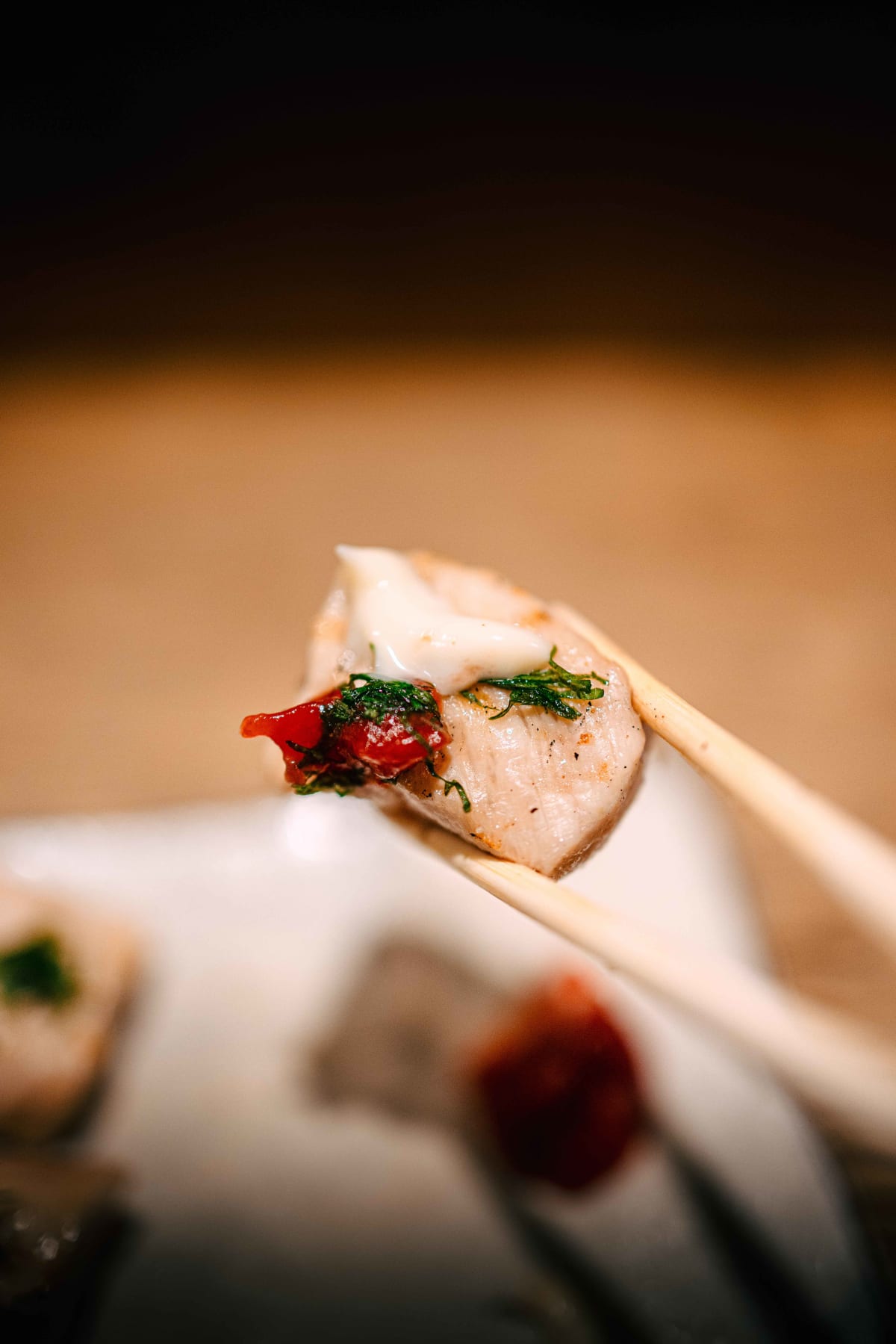
I meant to order mainly yakitori, but a dish on the menu called momo tataki (モモタタキ) caught my eye. Momo, as far as I knew, is thigh meat. Thigh, as tataki? I had almost never eaten chicken sashimi or tataki in Korea, so curiosity made me order it first. I also ordered sasami, the tender fillet that sits on the inside of the breast.
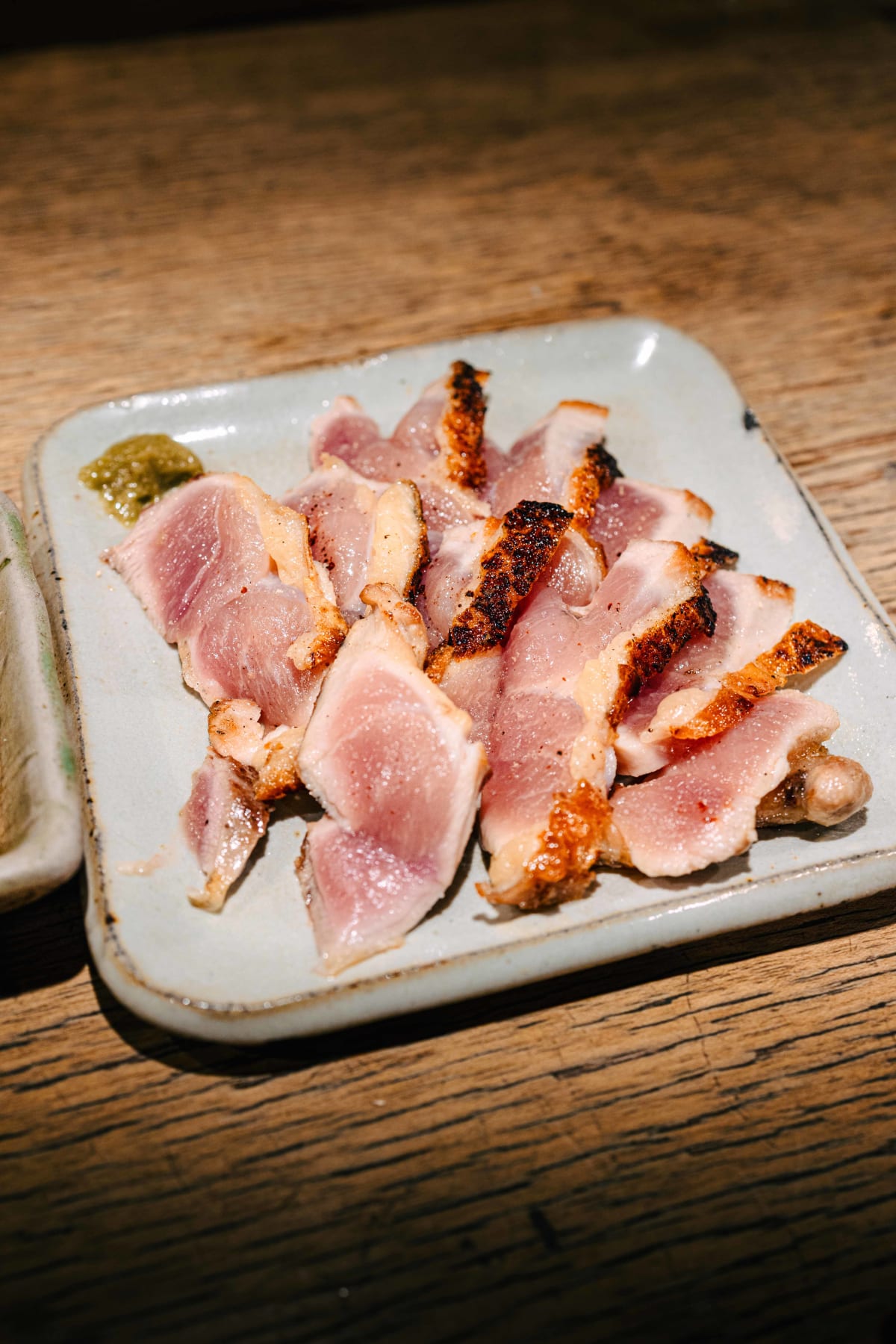
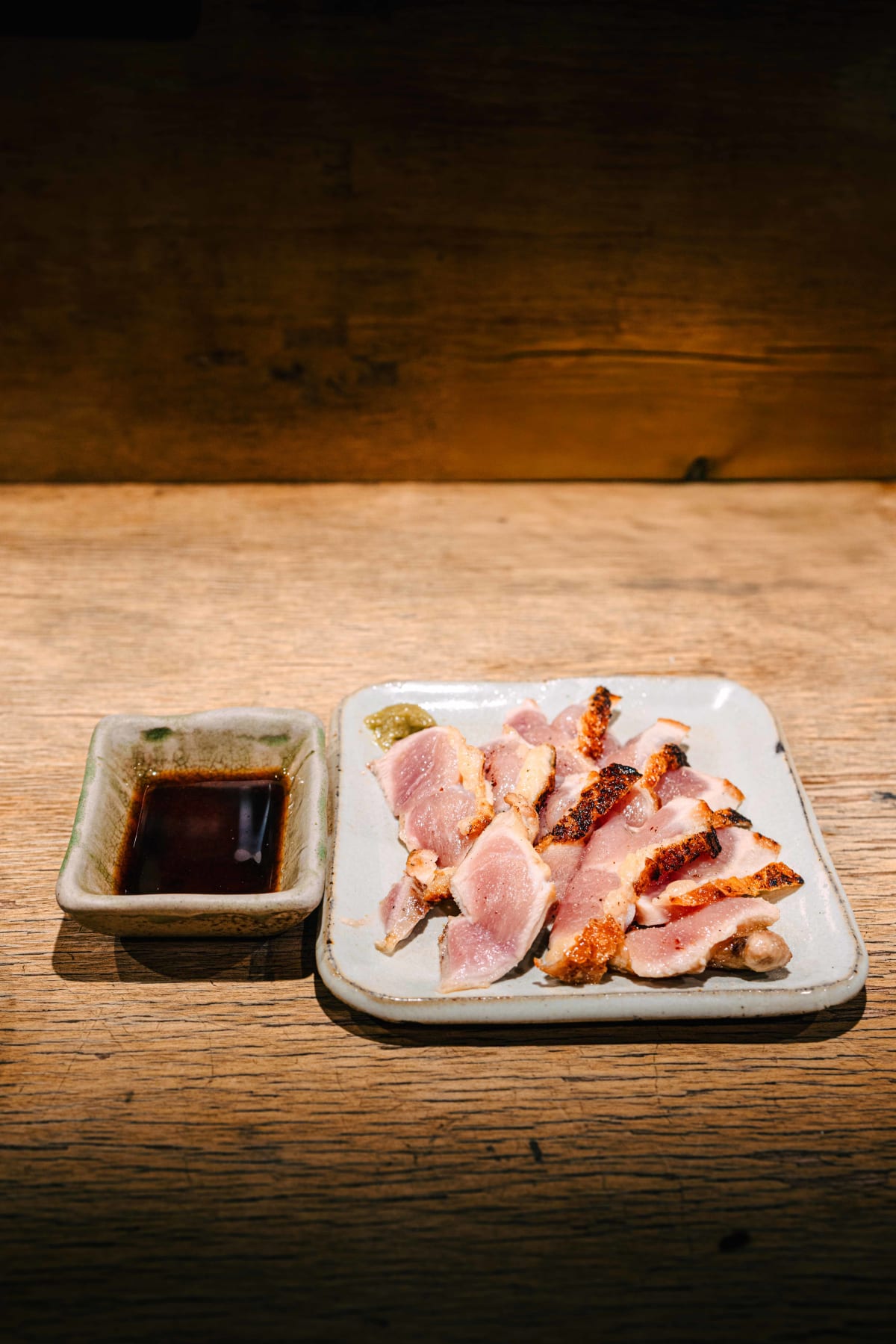
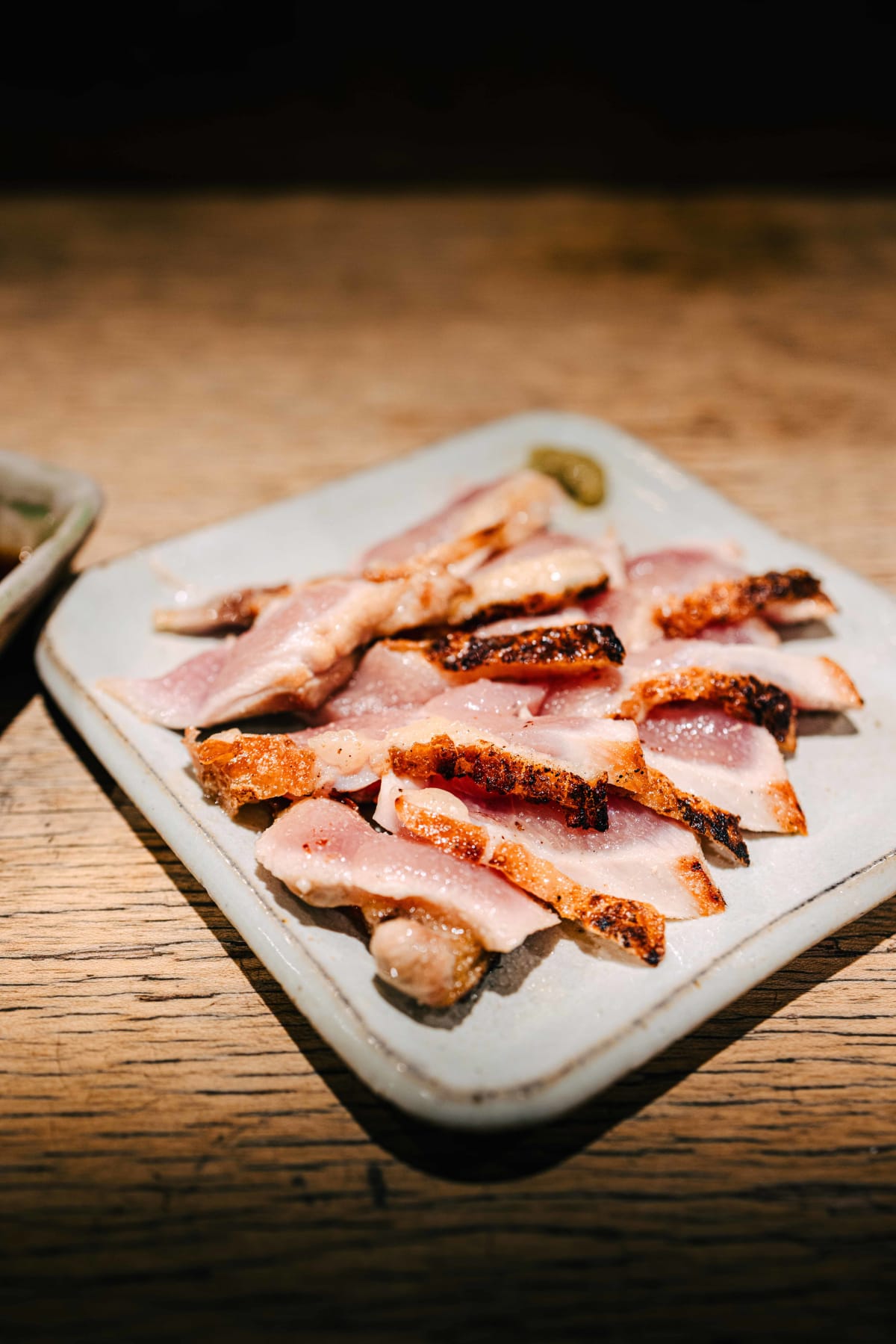
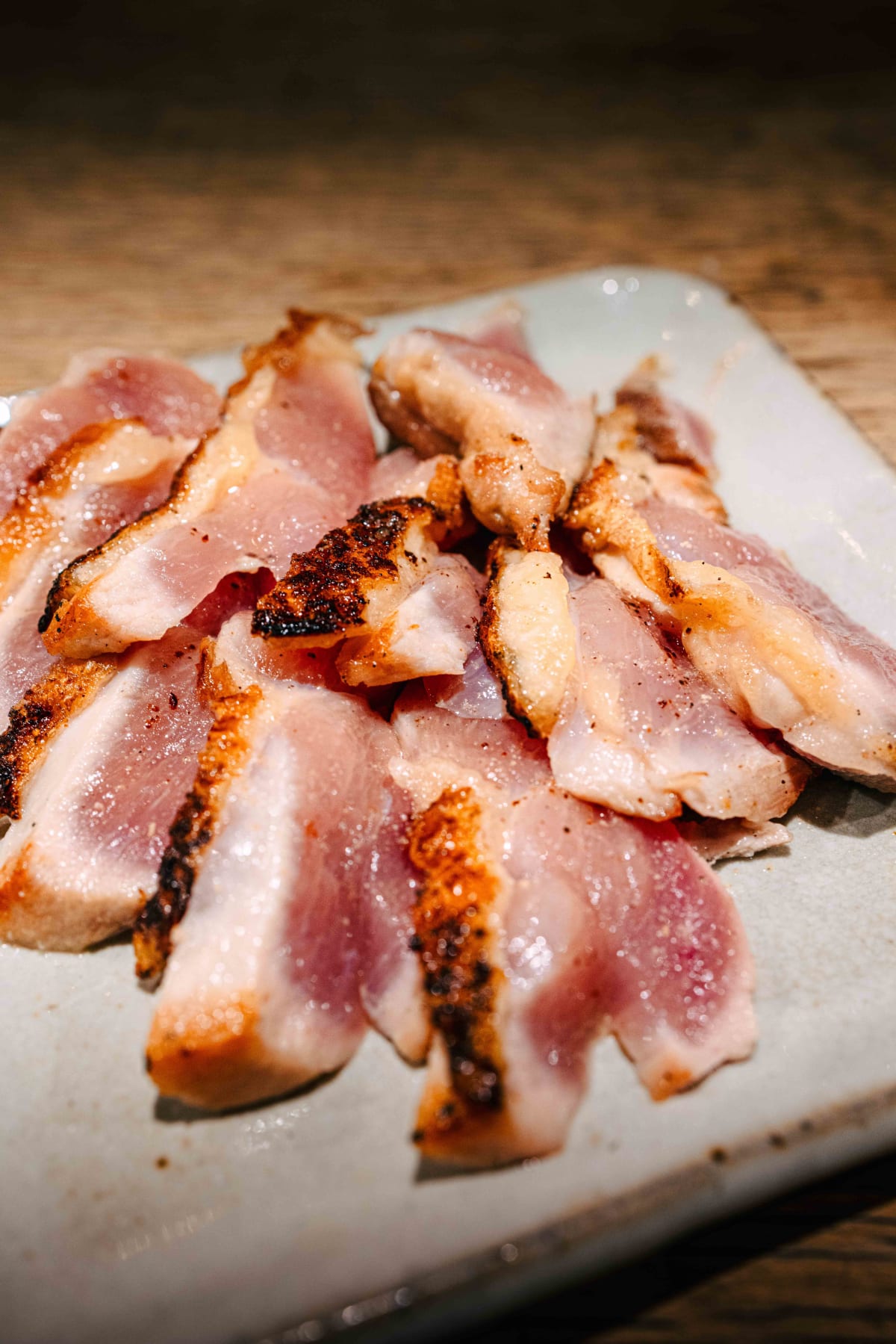
The tataki arrived first. The outside was seared hard and the inside barely cooked, and the first piece was so, so good. The scorched flavour and crunch of the grilled skin, the taste of the barely cooked chicken sashimi within, and above all the way those two textures played against each other were wonderful. Why do we not eat something this good in Korea? It was the first thing I ordered, and it was the best thing of the night.
It was the first thing I ordered, and it was the best thing of the night.
Eating chicken raw, or seared only on the outside, runs especially deep in southern Kyushu, in places like Kagoshima and Miyazaki. Japan's Ministry of Health, Labour and Welfare and local authorities nonetheless advise against eating raw or undercooked chicken because of the risk of Campylobacter food poisoning, and in summer, cases of food poisoning traced to chicken are reported in large numbers. Fresh does not mean safe. That is probably one reason this flavour never found a place on the Korean table.
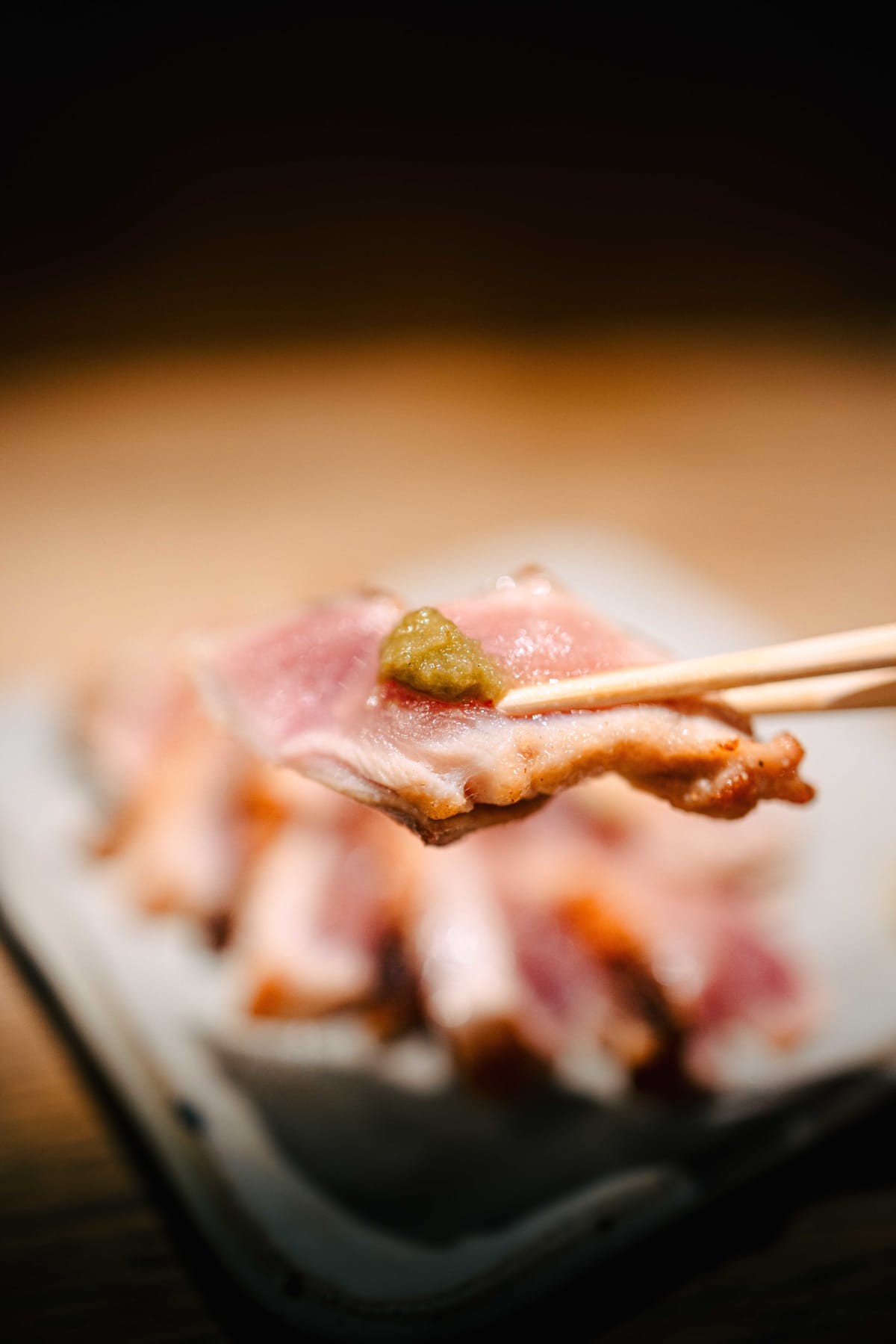
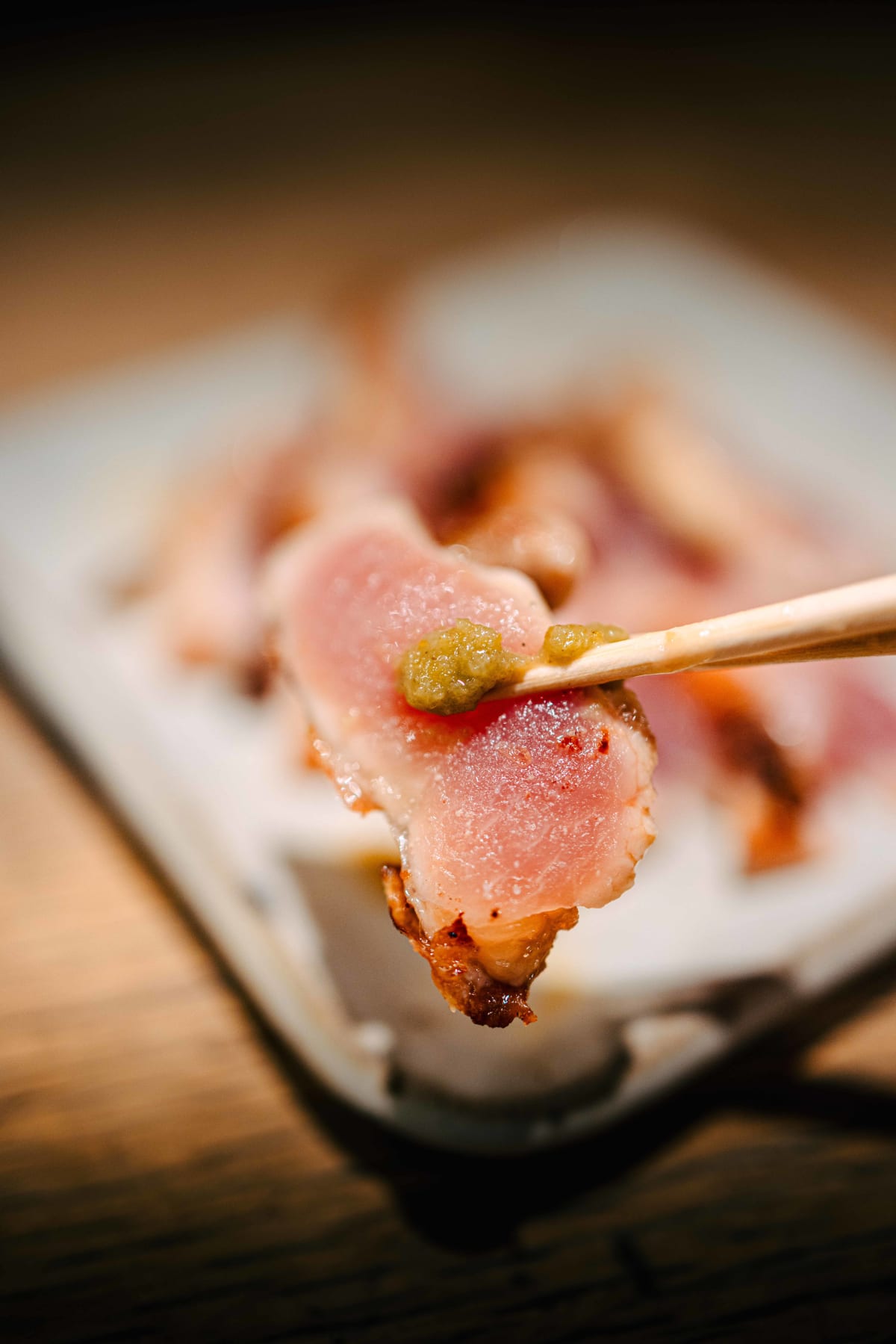
The sasami I ordered with the tataki came with ketchup and mayonnaise. Next to a tataki that dominant, it struck me as fairly ordinary, and what makes that interesting is that sasami is the very cut the owner puts forward with the most confidence.
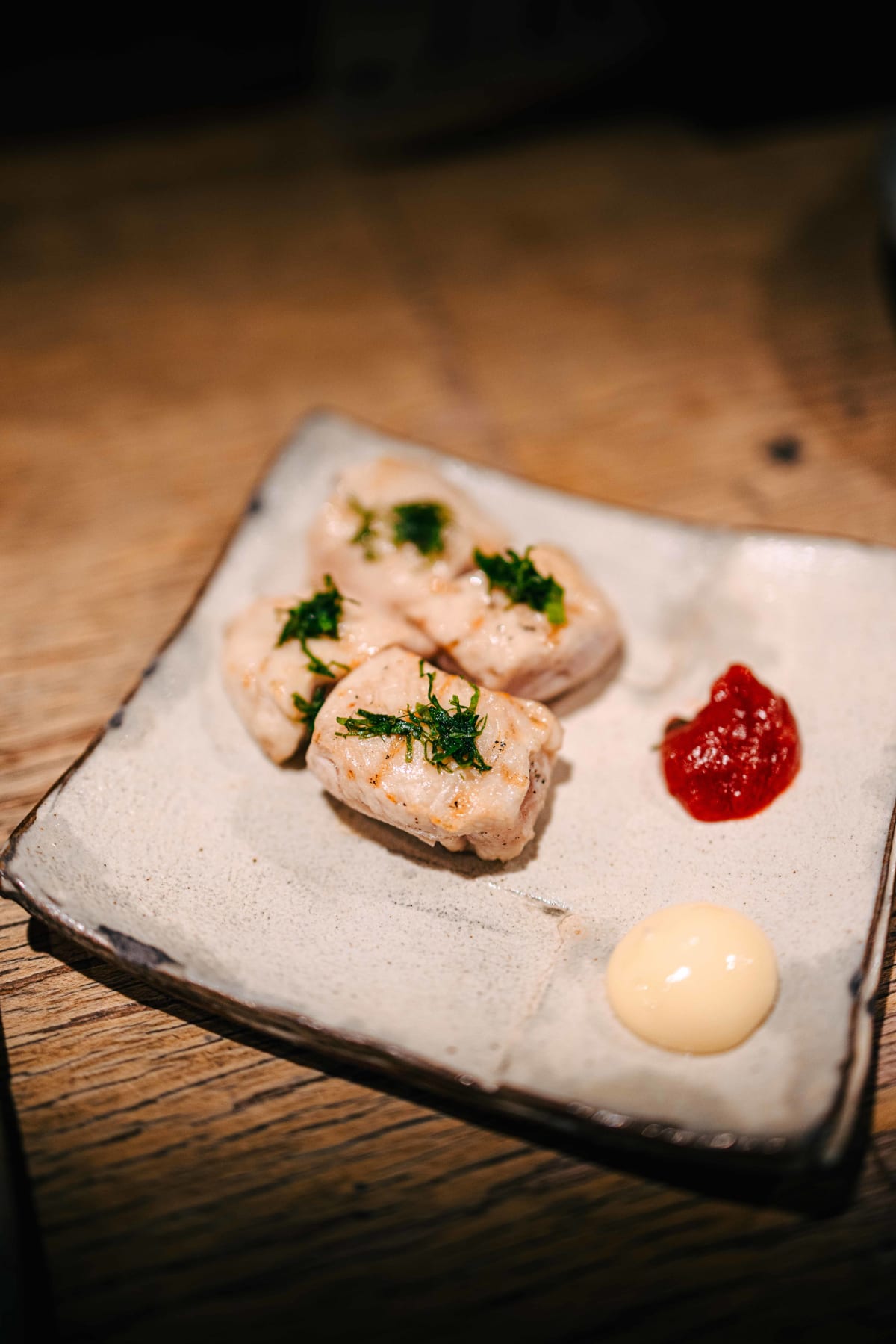
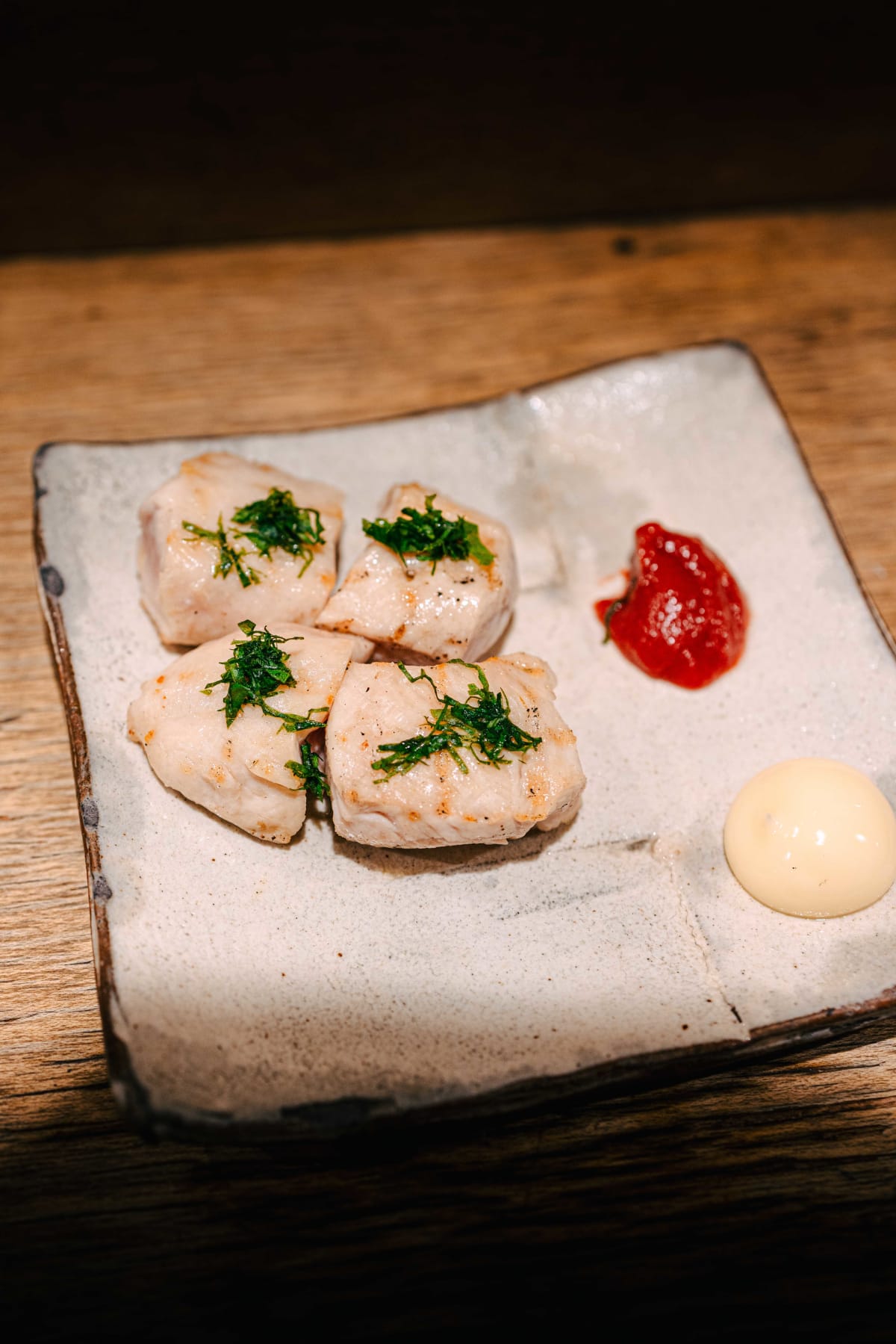
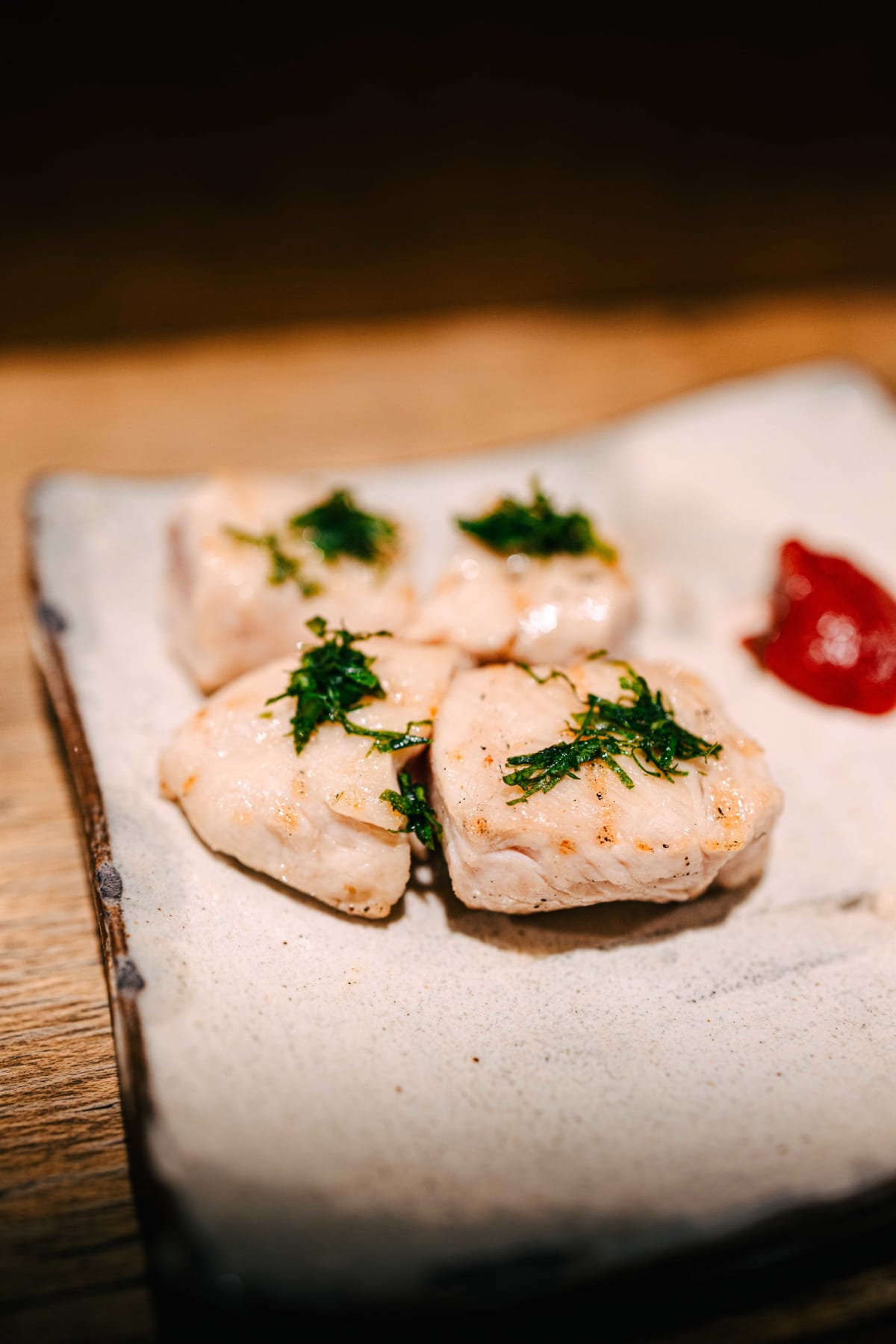
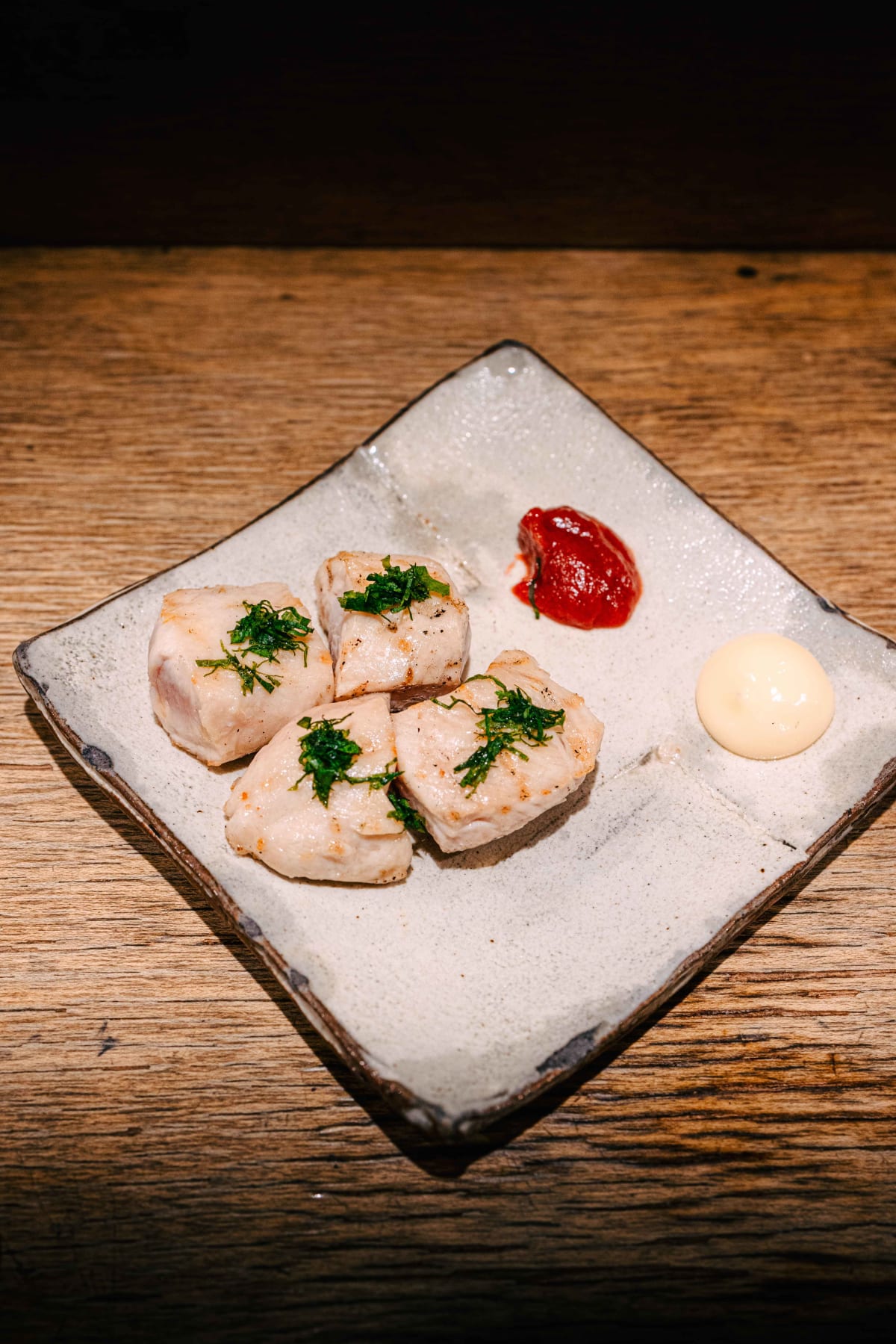
Oshima told Amakara Techo that sasami is the cut that shows differences in the meat most clearly. I take that to mean that, with no fat on it, the flavour of the bird itself has nowhere to hide. To me that cut was ordinary, and it was the tataki, the thigh of the same bird seared only on the outside, that was in another league.
Section 3·Off The Skewer
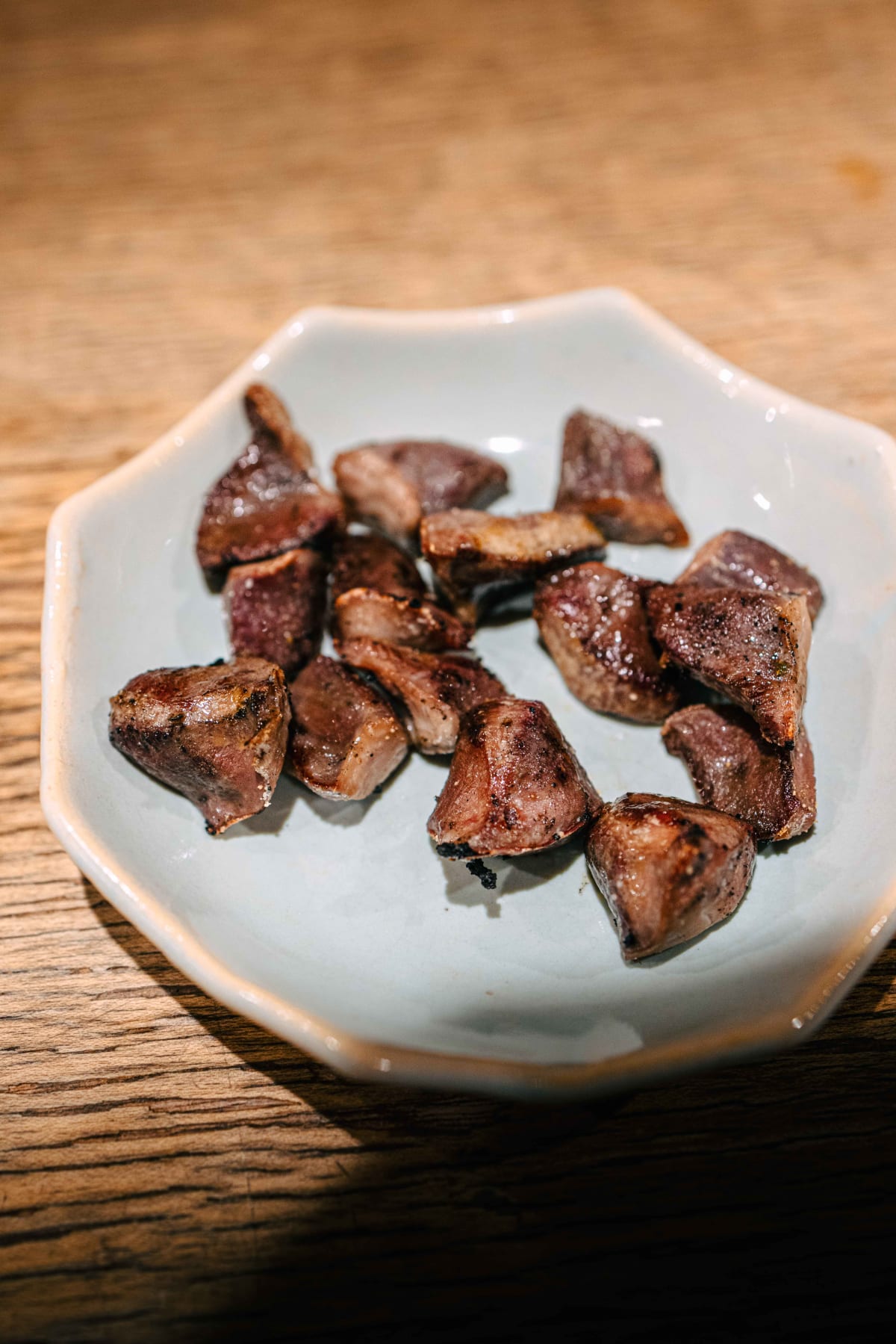
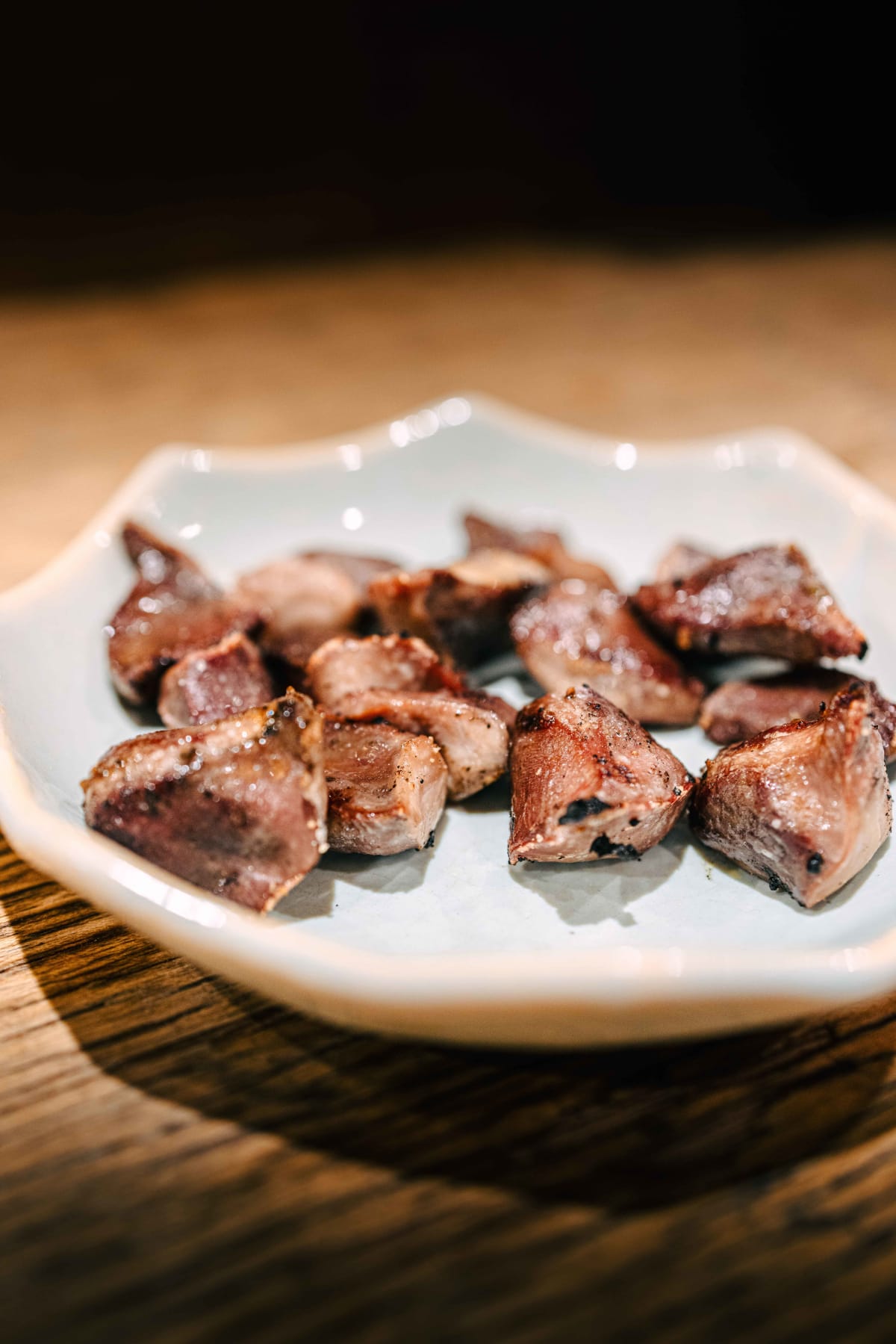
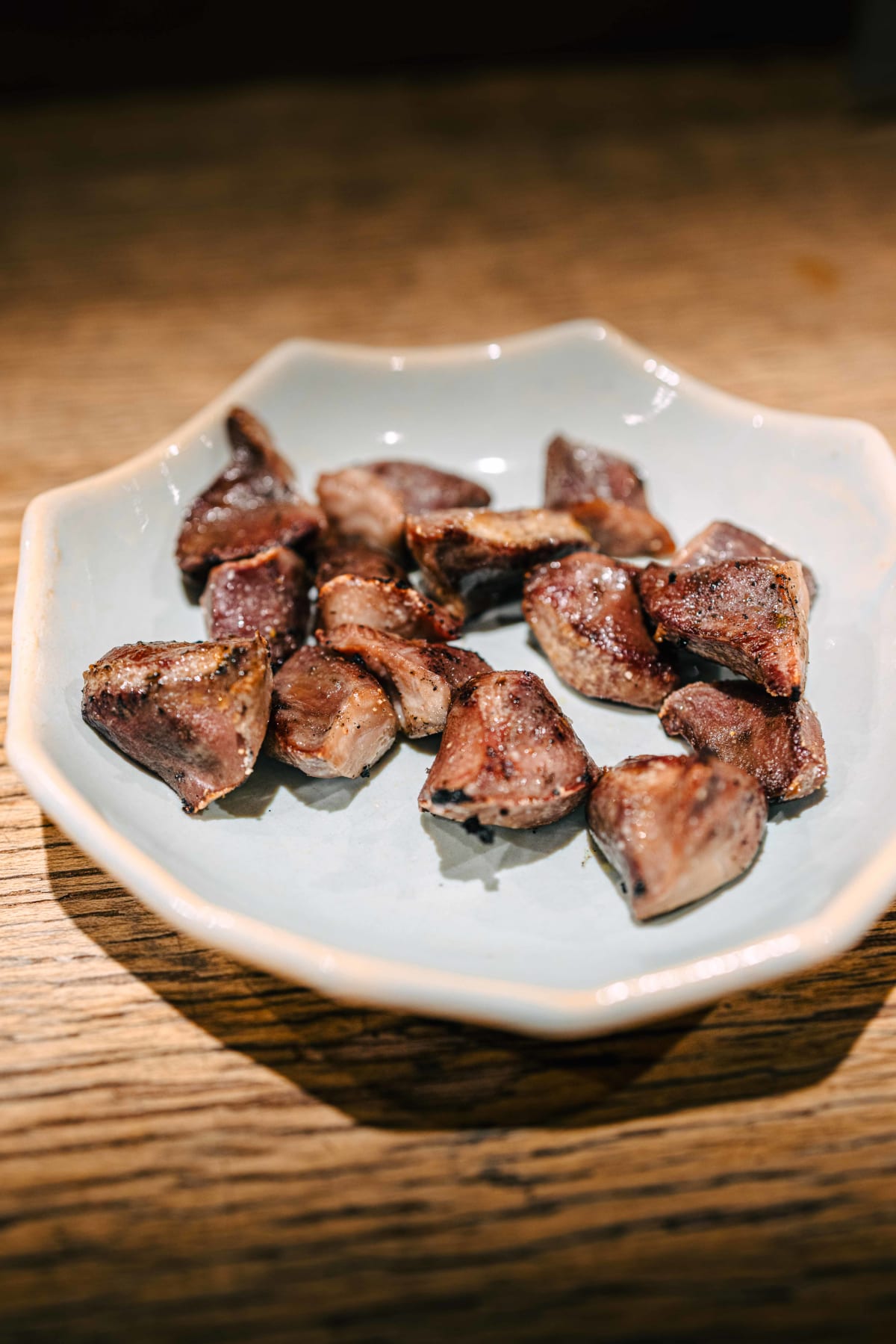
When I moved on to regular yakitori, nothing came on a skewer: everything is served on a plate. There is a reason for the missing skewers. In the same interview, Oshima explained that a skewer means you end up grilling only two faces, front and back, while grilling without one gives you more surfaces and lets you apply the heat more delicately.
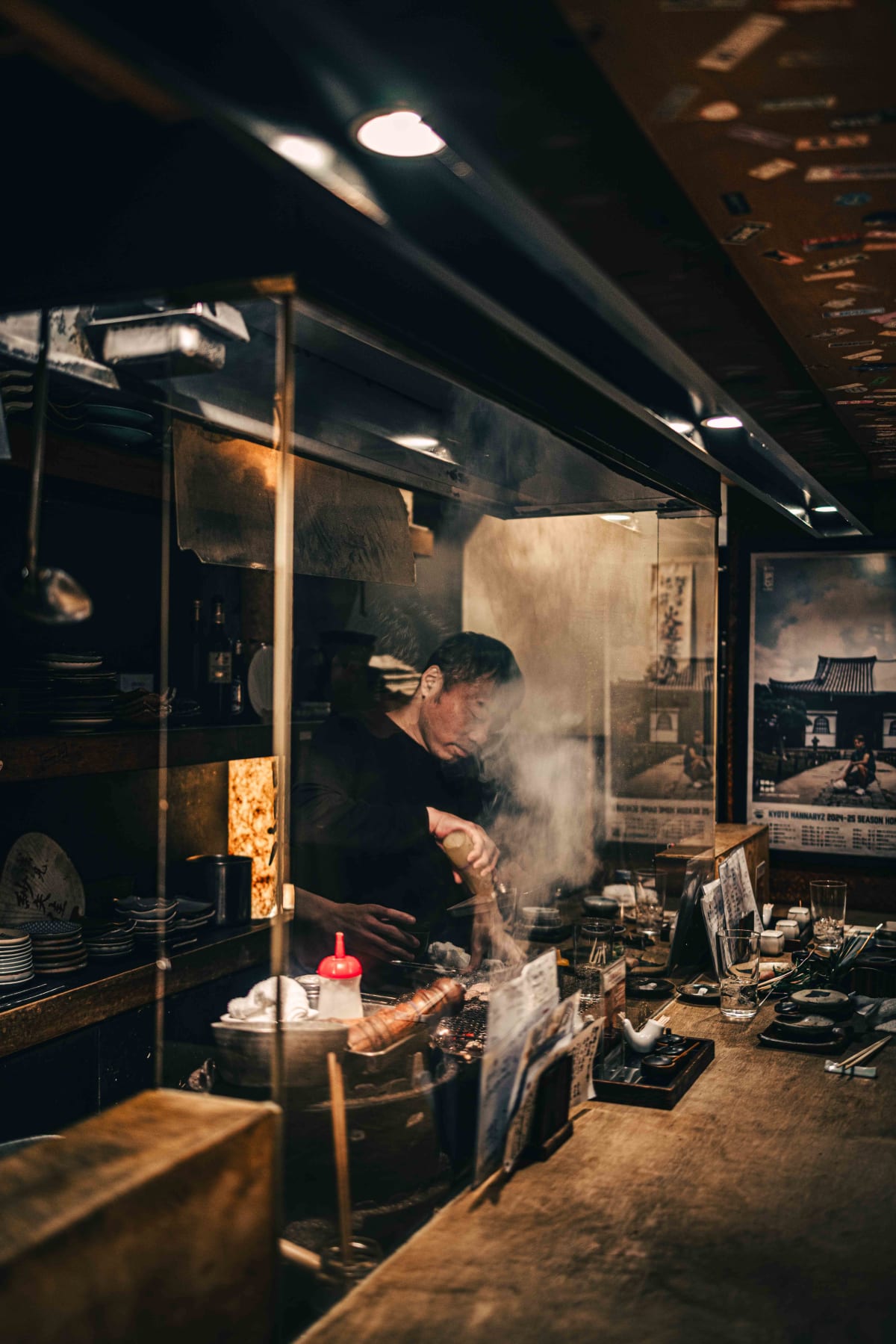
It is the method he learned at the Osaka Uzuraya. Apart from the tsukune, every cut goes onto a grill over the charcoal without a skewer and is plated once it is done. The seasoning, by default, is salt alone.
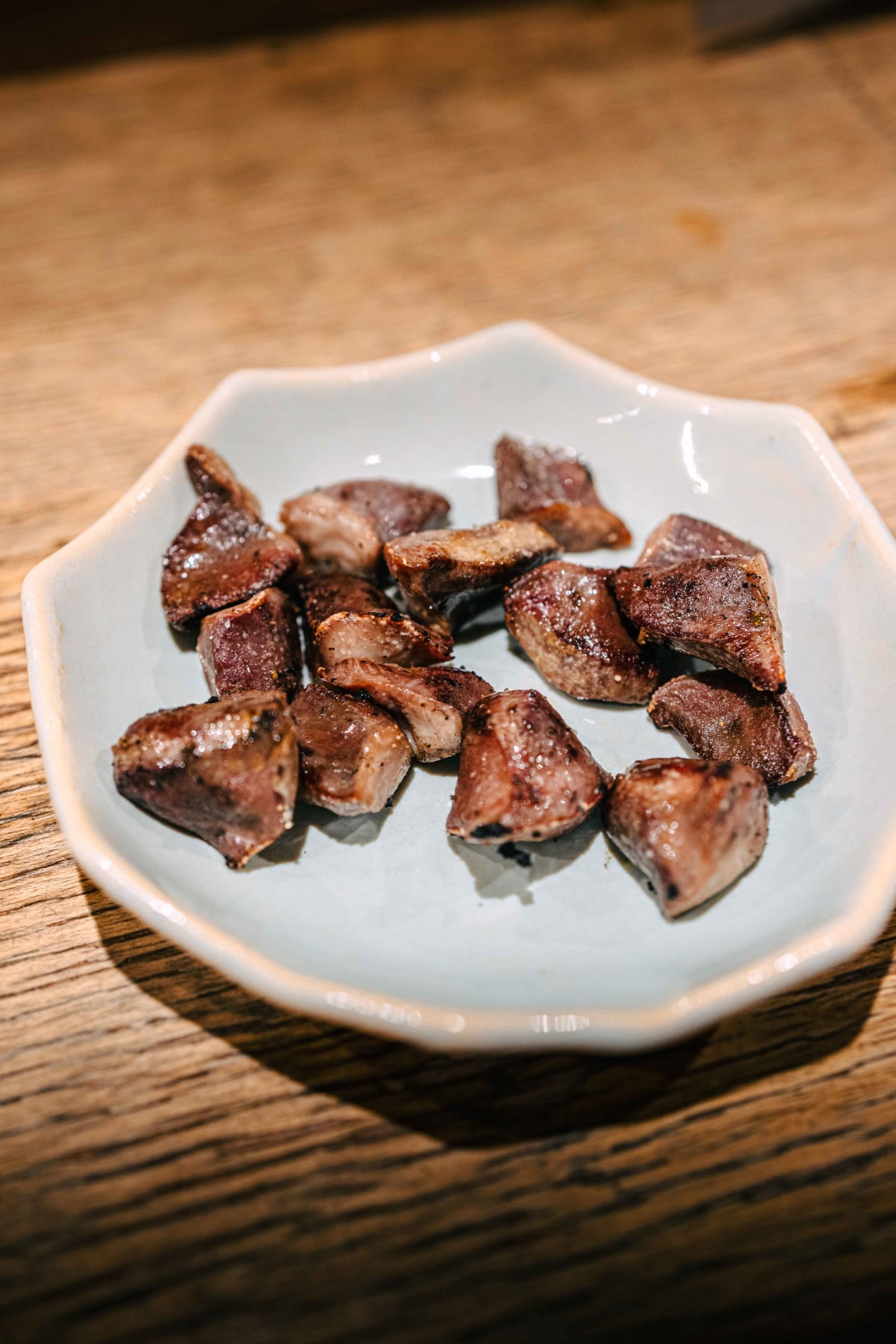
I usually slide the meat off the skewer before eating anyway, so I did not mind. I started with seseri (neck) and sunagimo (gizzard), and enjoyed both.
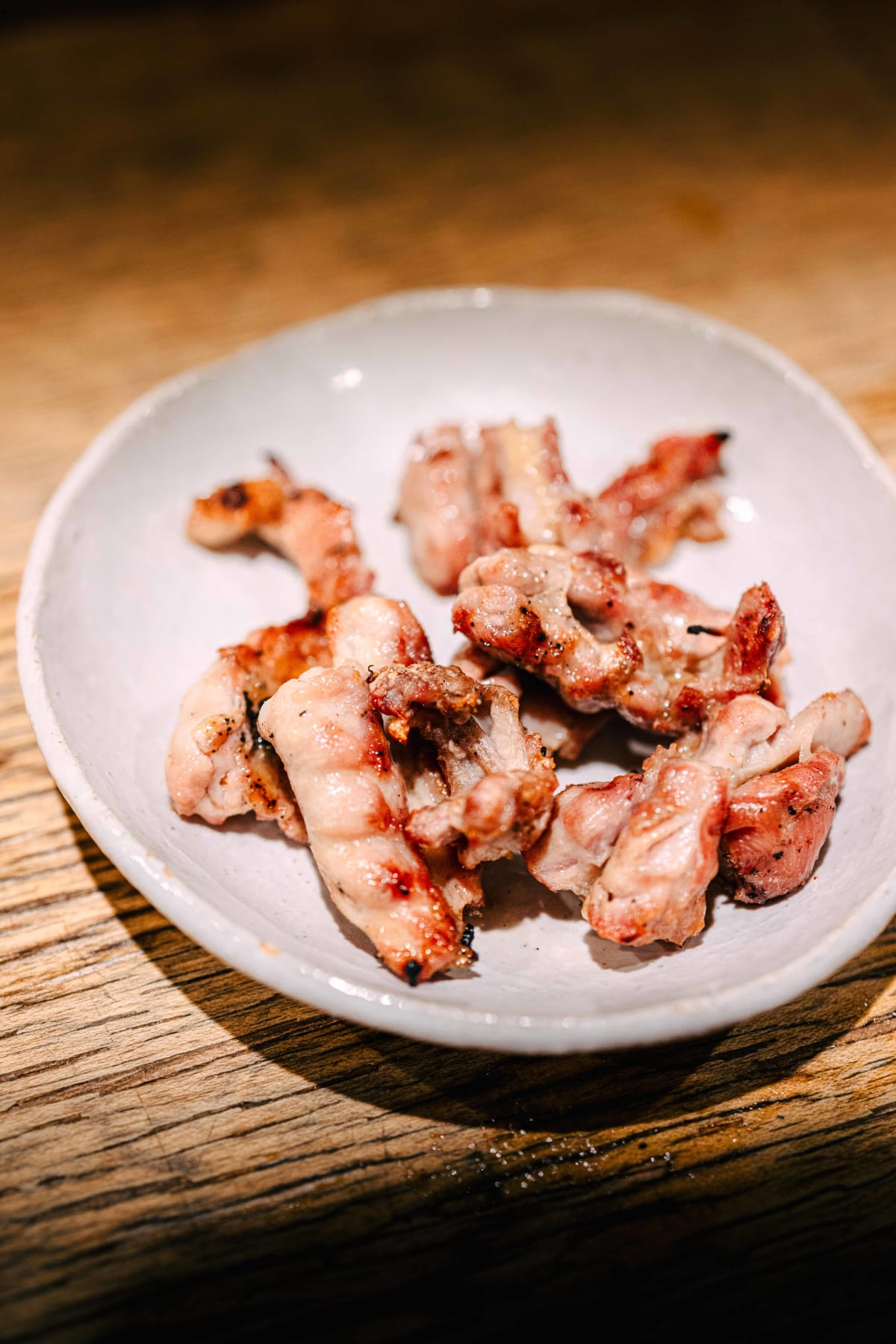
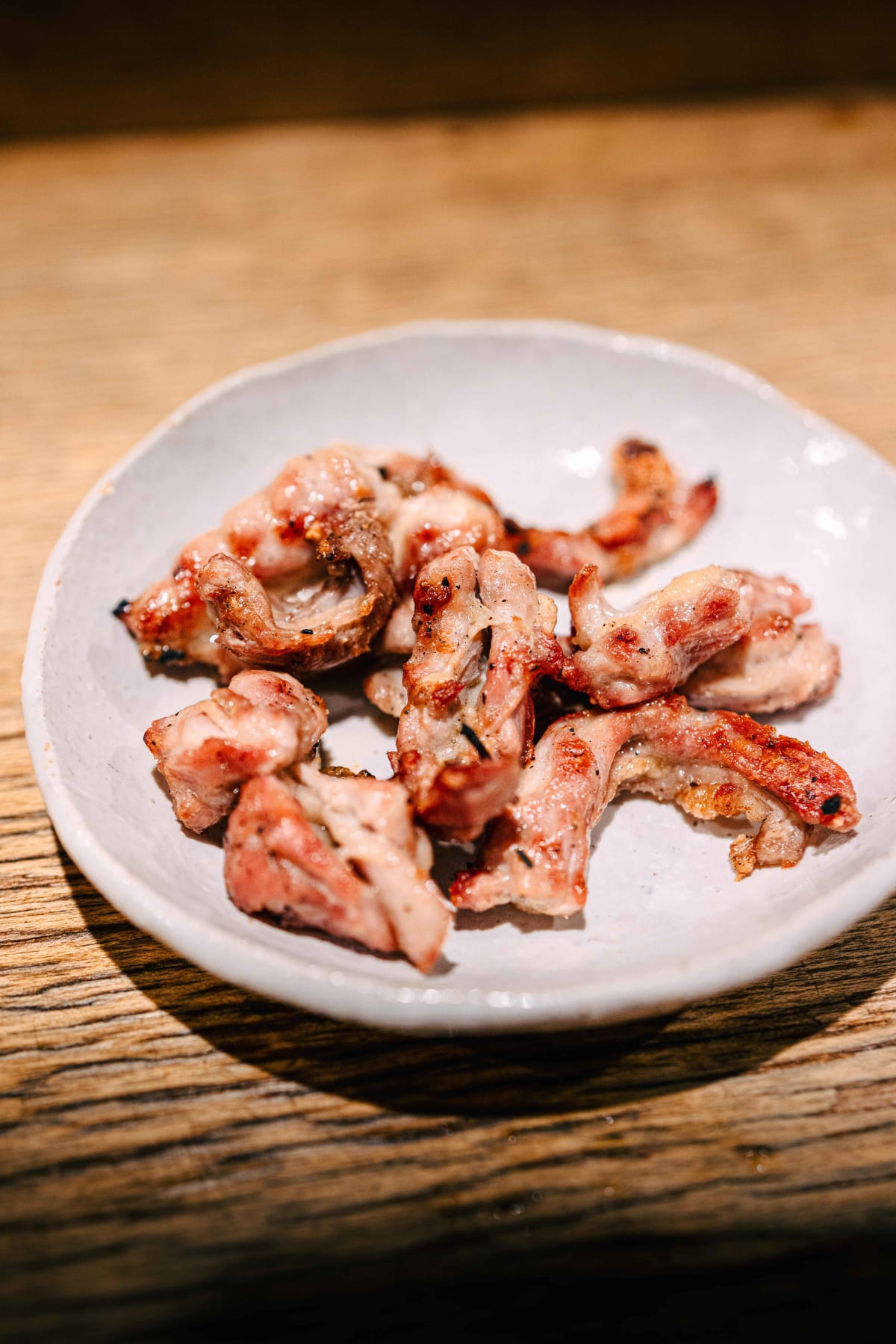
The chicken seems to be of real quality, and it is grilled well, so the texture is good, but above all a plate costs about 500 yen, which is a terrific price. As I will come to, the sake list here is good too, which makes it an easy place to eat over a drink as a second stop.
Section 4·The Bird
The chicken Uzuraya uses is Tankai jidori (淡海地鶏), raised by Kashiwa no Kawanaka (かしわの川中), a jidori specialist in Otsu, Shiga Prefecture. According to Amakara Techo, the shop went through several birds before narrowing down to this single breed. As the producer describes it, the line was originally developed in France: a naked-neck bird with no feathers on its neck, plumage close to black all over and lead-grey legs.
The birds are raised for an average of 120 days before going to market, more than twice the roughly 50 days of a typical broiler. The feed is mainly maize with shrimp meal added, and the goal is "fat you could eat every day without tiring of it, and just the right bite."
The males, the producer says, carry less fat and more spring, while the hens put good yellow fat on the thigh and have fine-grained, moist breast meat. The characters 淡海 were also an old name for Lake Biwa, but the producer says the name was borrowed from Shiganoya Tankai (志賀廼家淡海), a comic actor from Katata in Otsu.
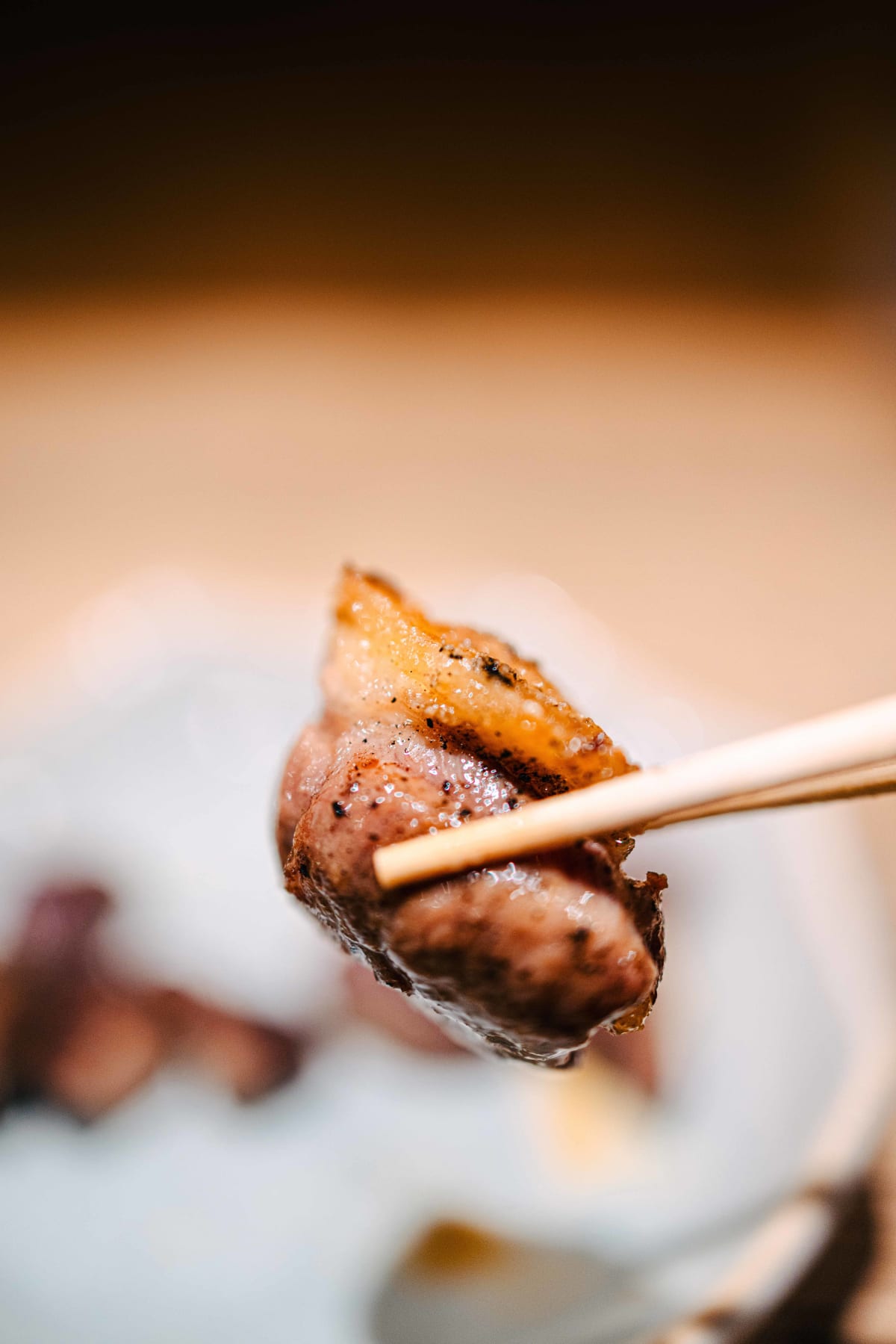
My second order of yakitori was the soriresu I had been curious about. It is said to be meat from the inner thigh, and two large pieces arrived. The thickness of the fat made an impression, and it tasted good as well; of all the yakitori, I think it was the best.
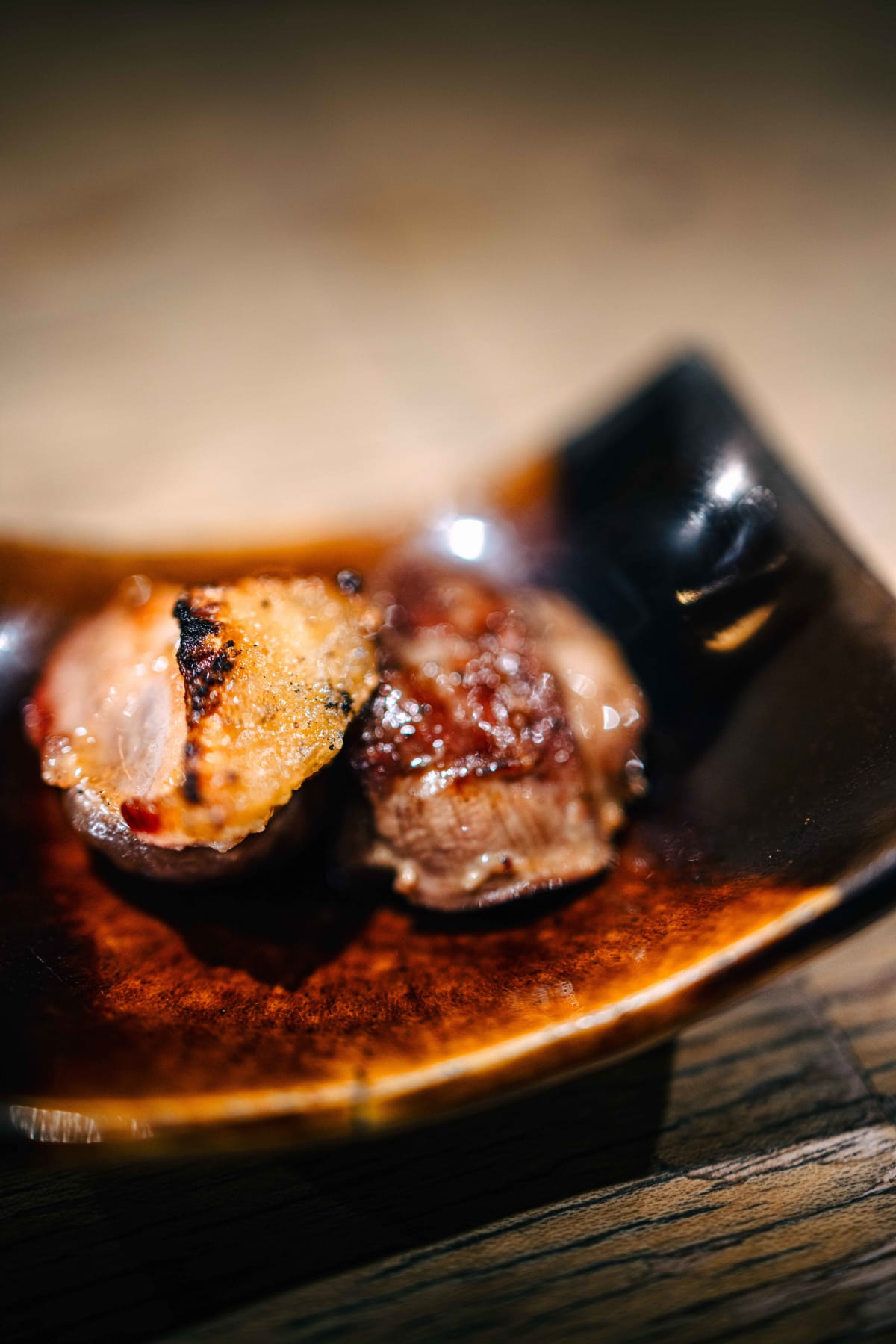
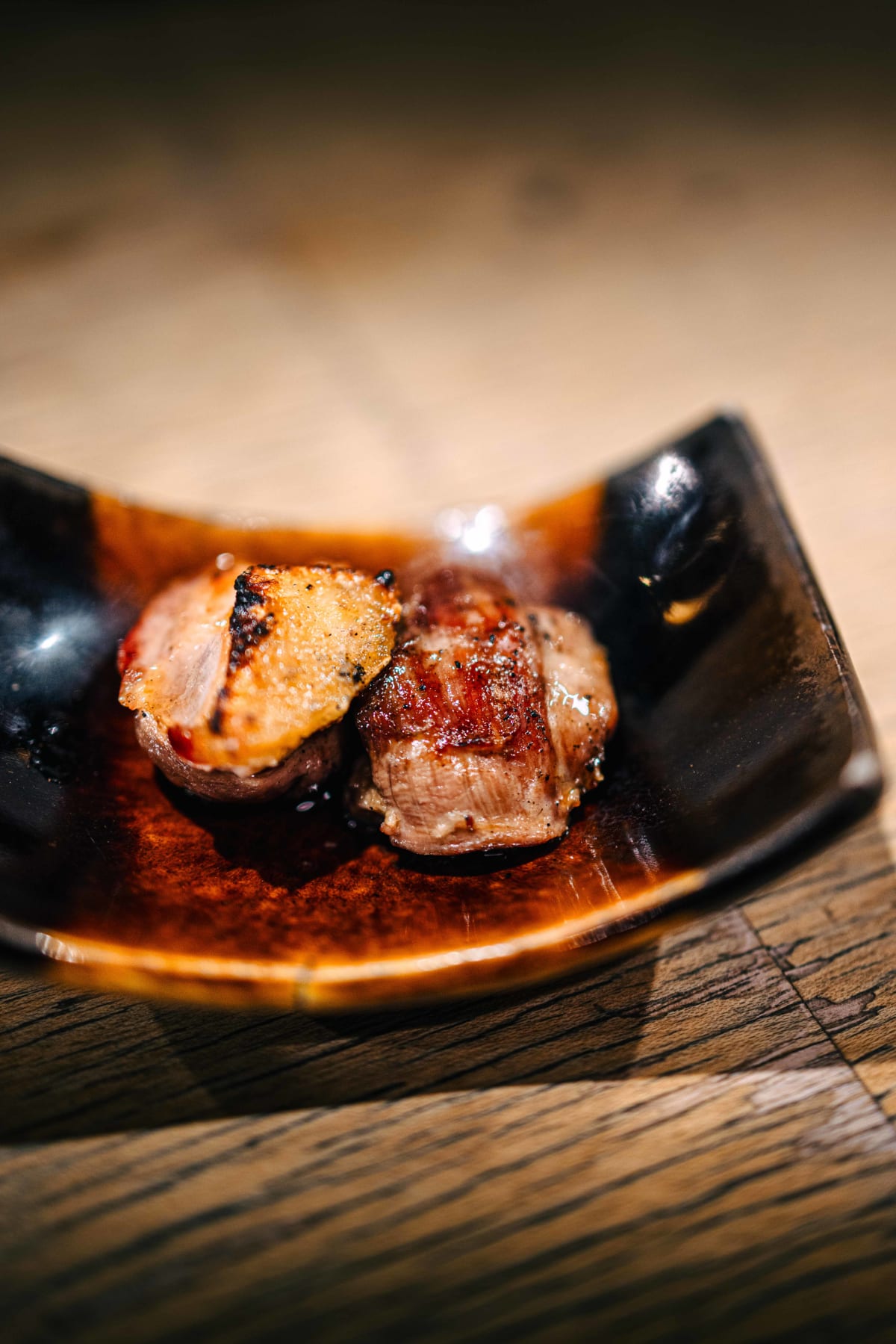
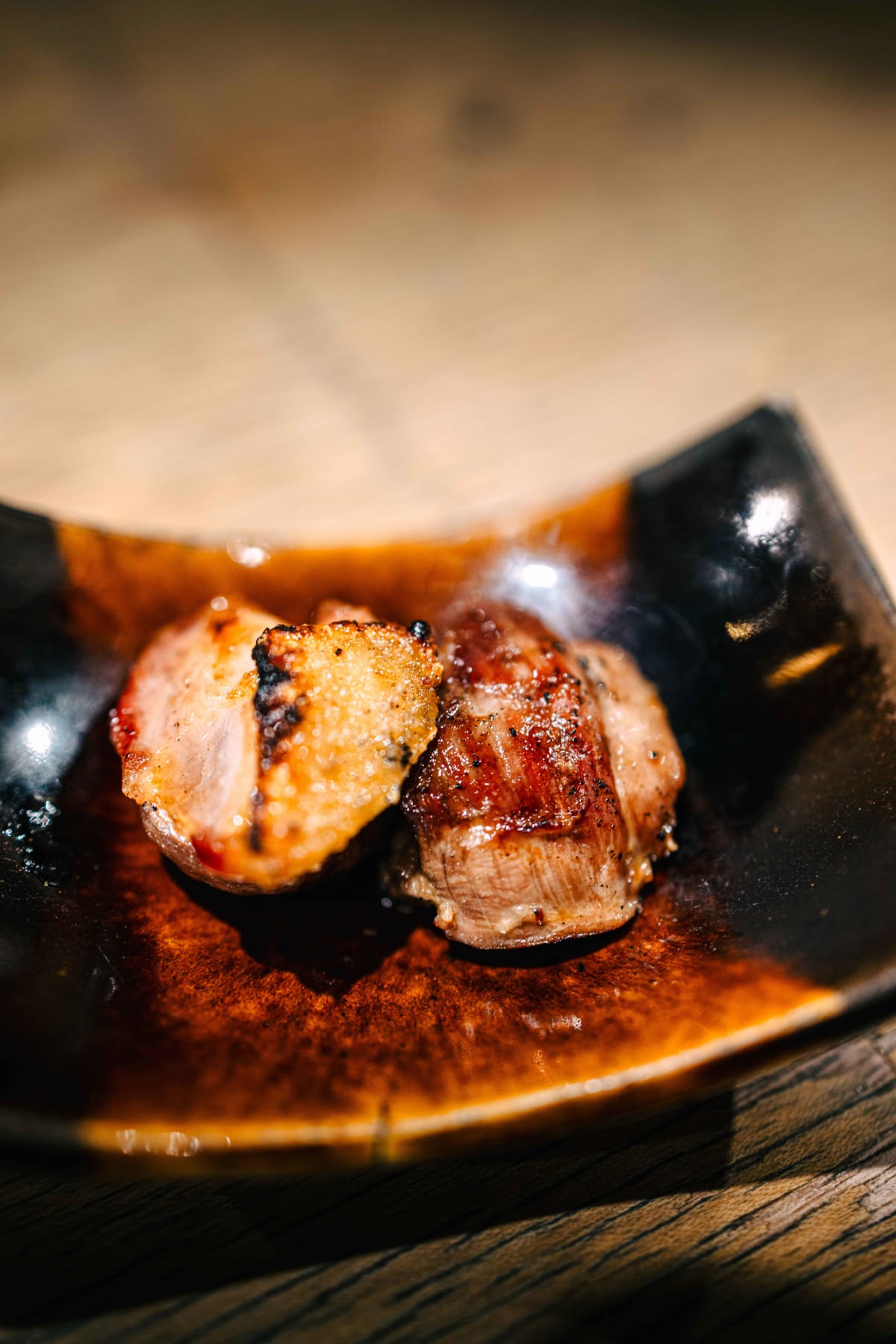
Soriresu is not a Japanese word. It comes from the French sot-l'y-laisse, "the fool leaves it there". It is a small morsel tucked into the hollow beside the backbone, on the inside of where the thigh meets the pelvis, so it is easy to miss if you do not know it is there.
There are only two per bird, one on each side, so two pieces on the plate meant I had been given a whole chicken's worth.
Section 5·Aramasa By The Glass
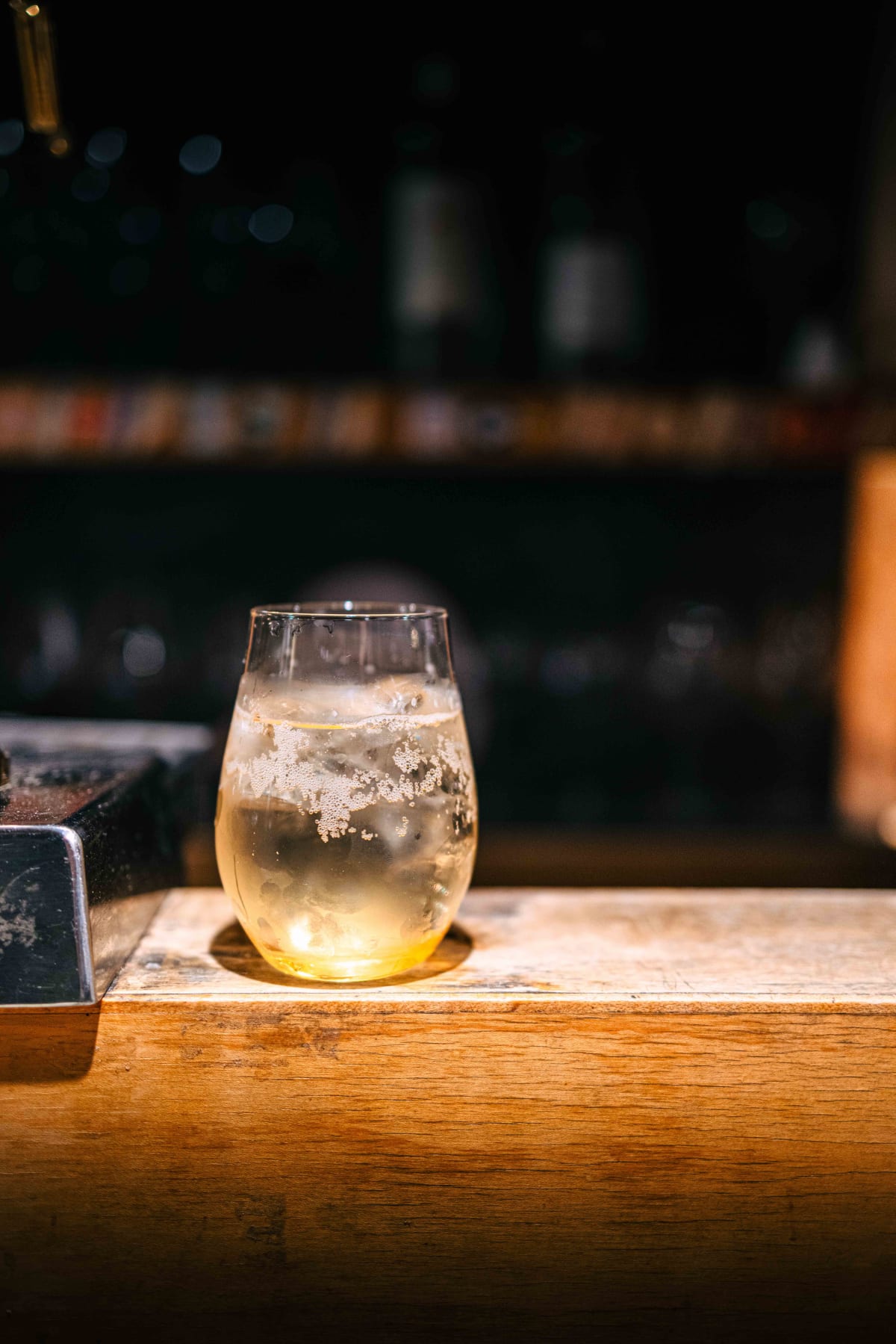
Uzuraya is a second stop where you can enjoy good yakitori over a good drink. There is wine, beer, whisky and sake, among others. Personally I do not think wine suits yakitori very well, and here in particular the smoke does not clear, so for all the claims made by the many fine wines lined up in the display case, I do not think it is a good match.
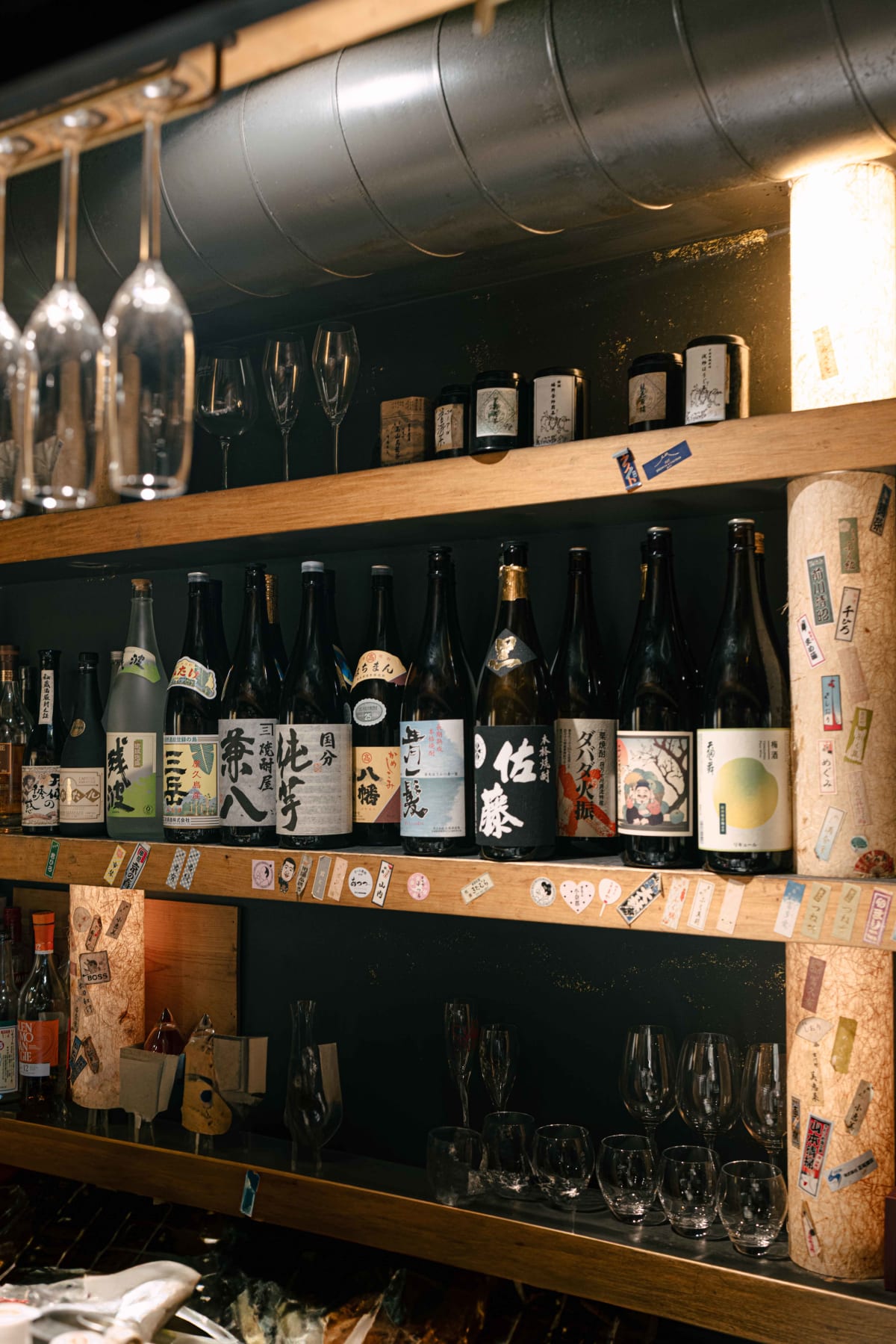
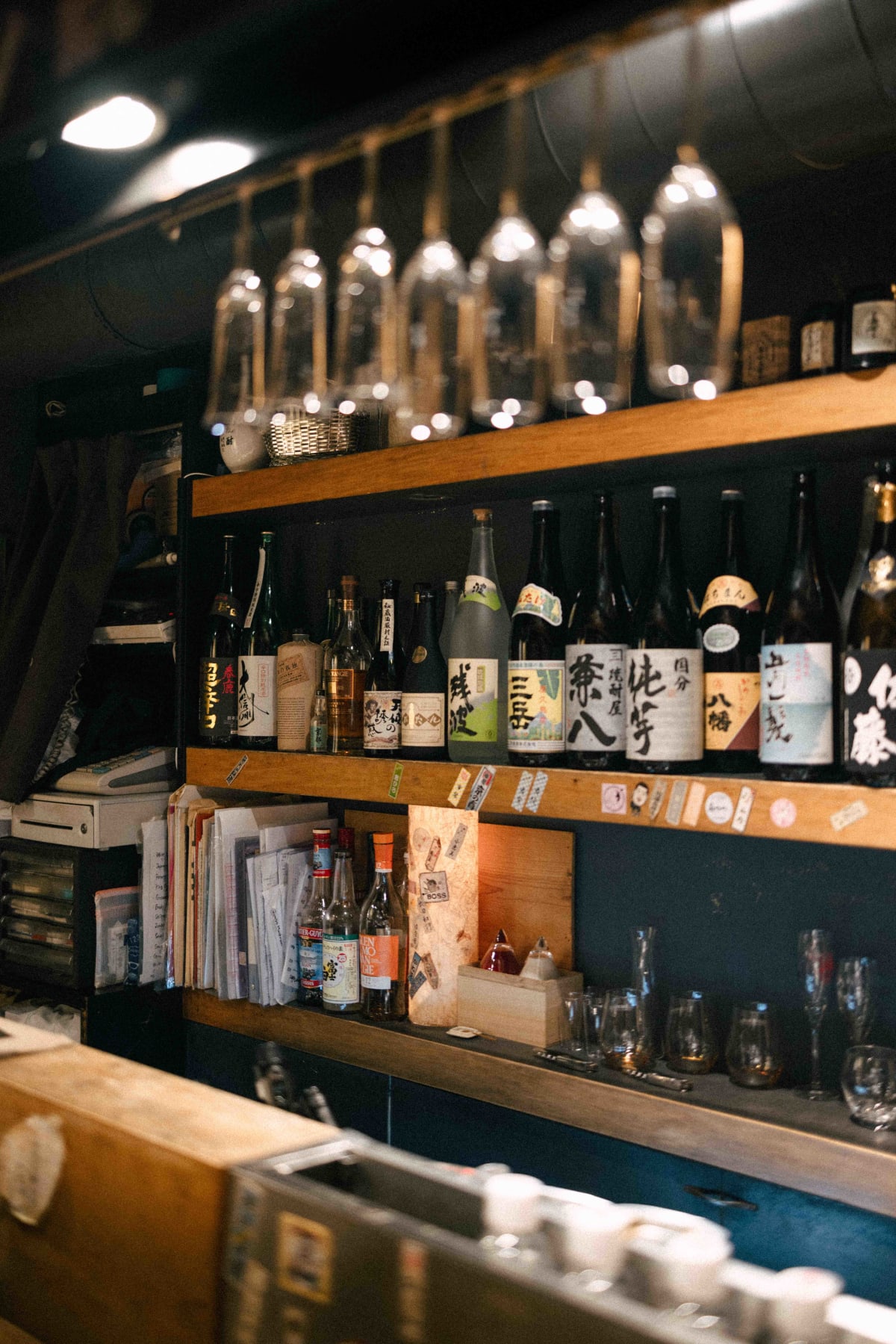
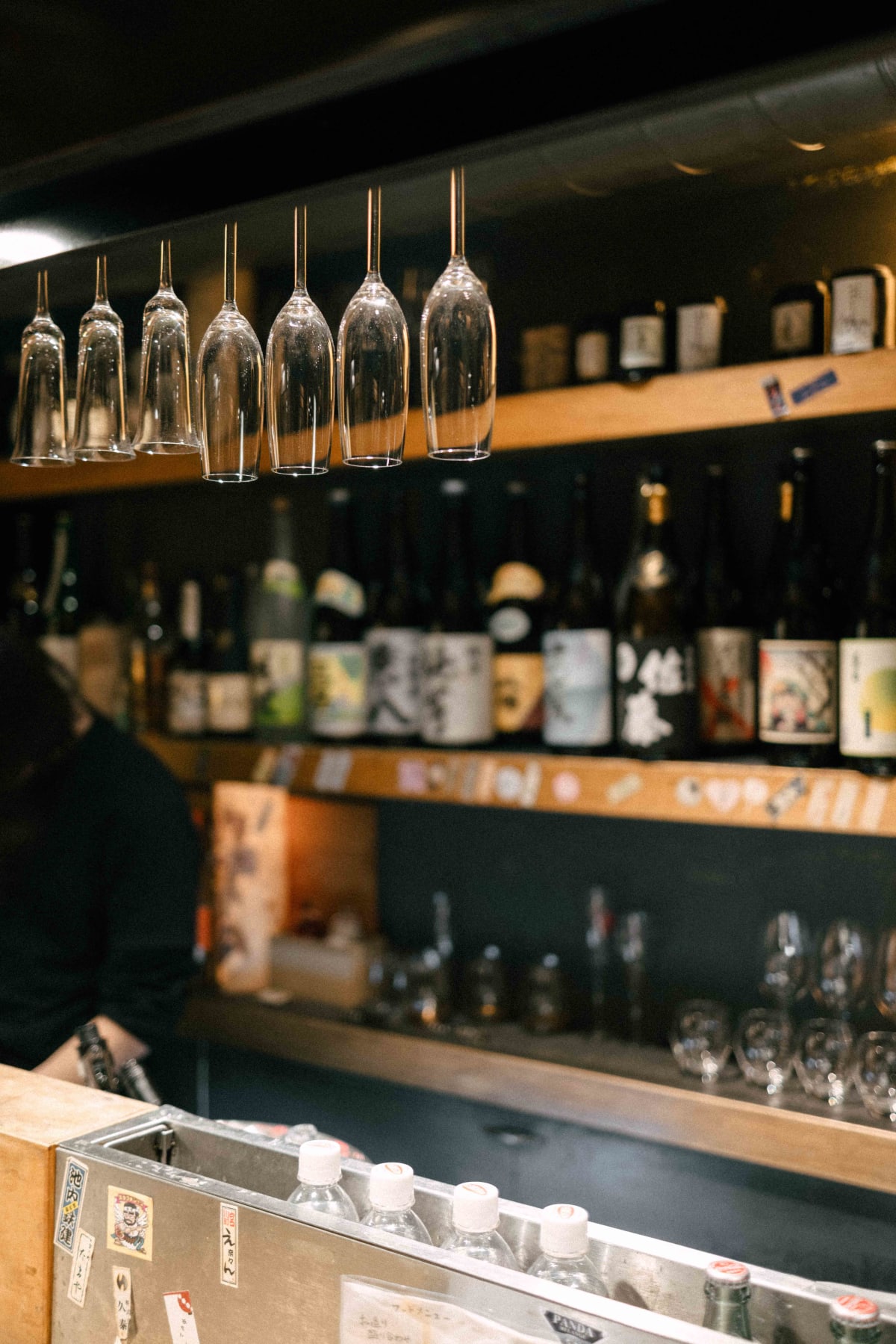
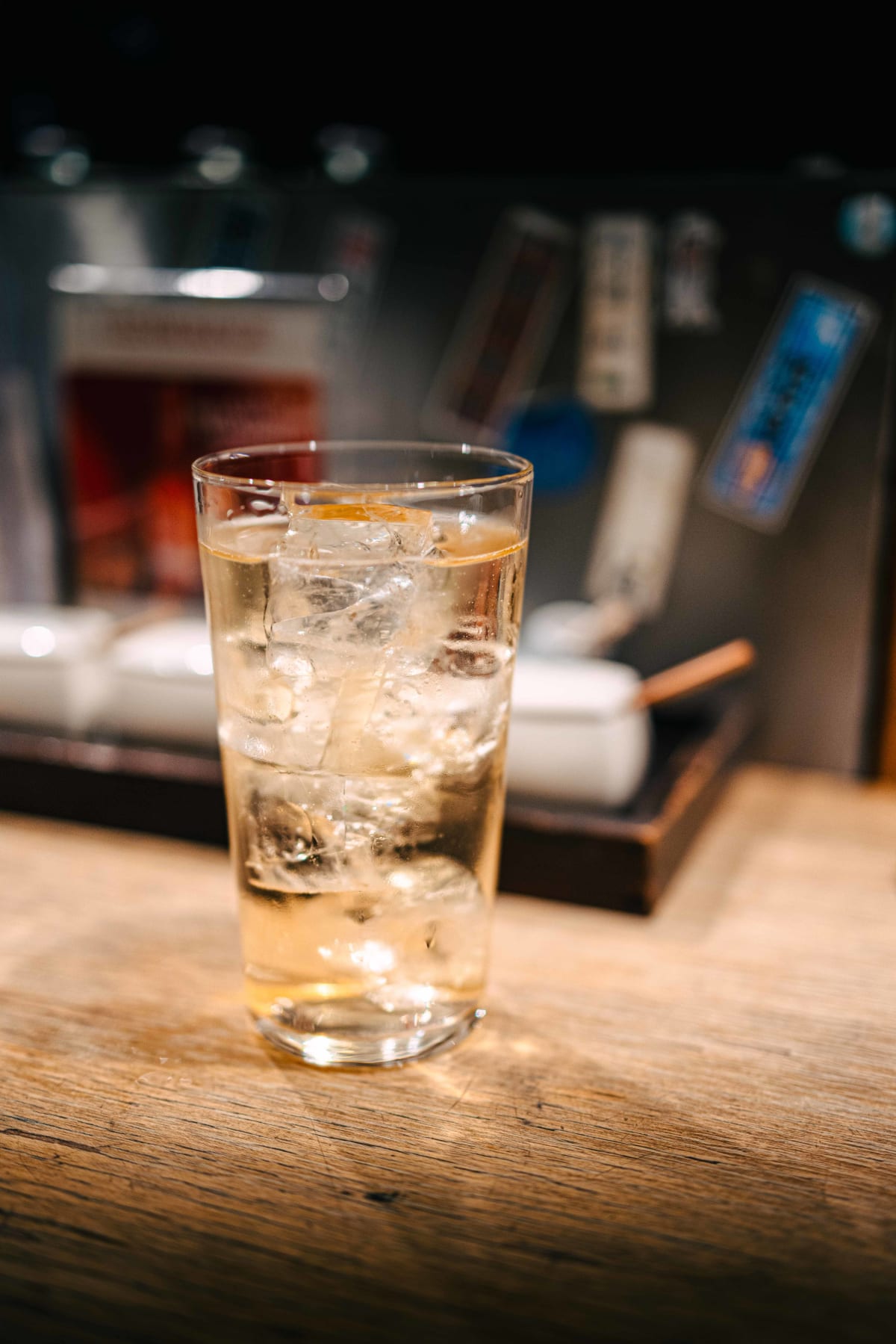
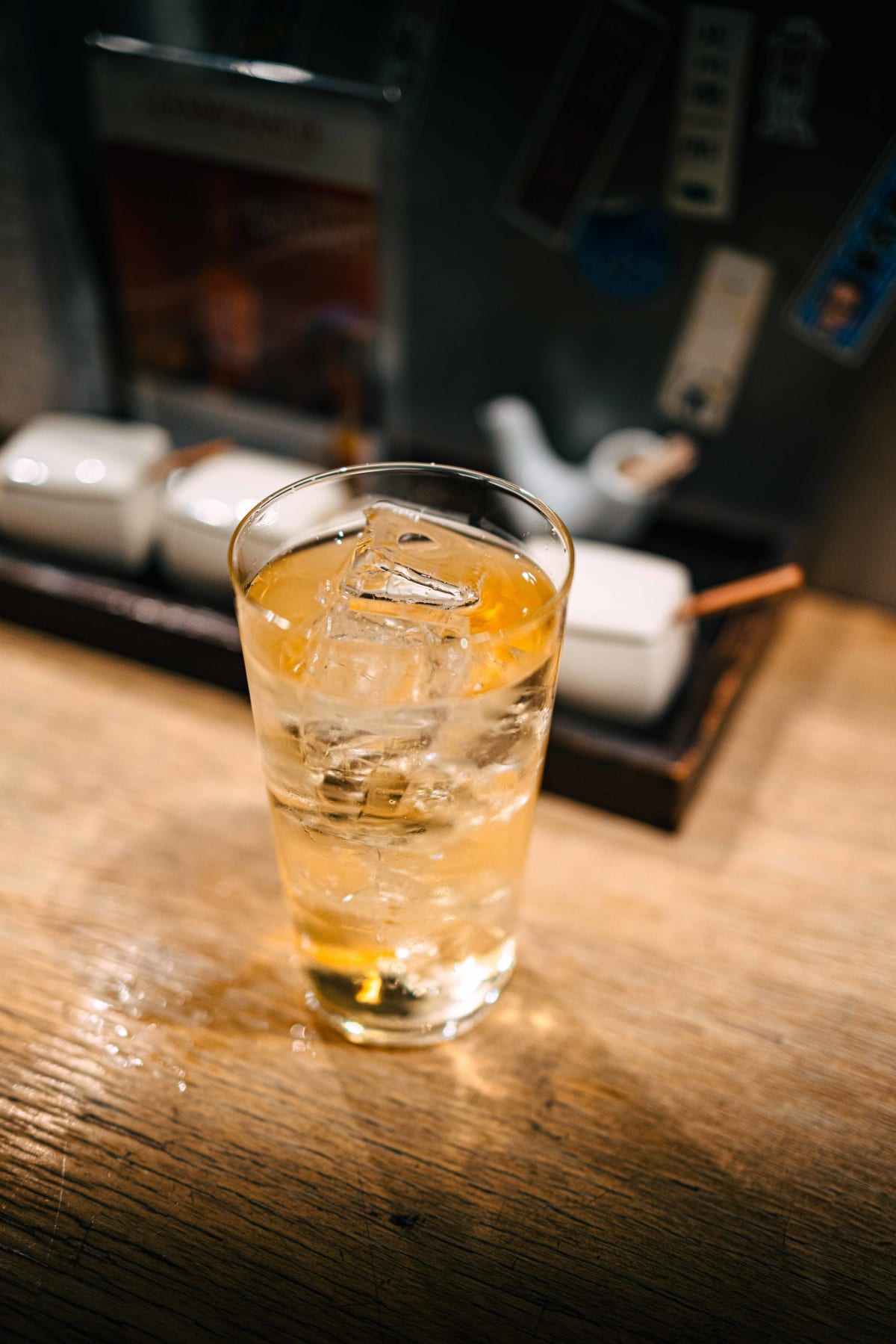
Cold beer, a highball, a sour or sake goes better, I think. That night I started with two highballs myself. And remarkably, for the price of the food, the place is known for its drinks.
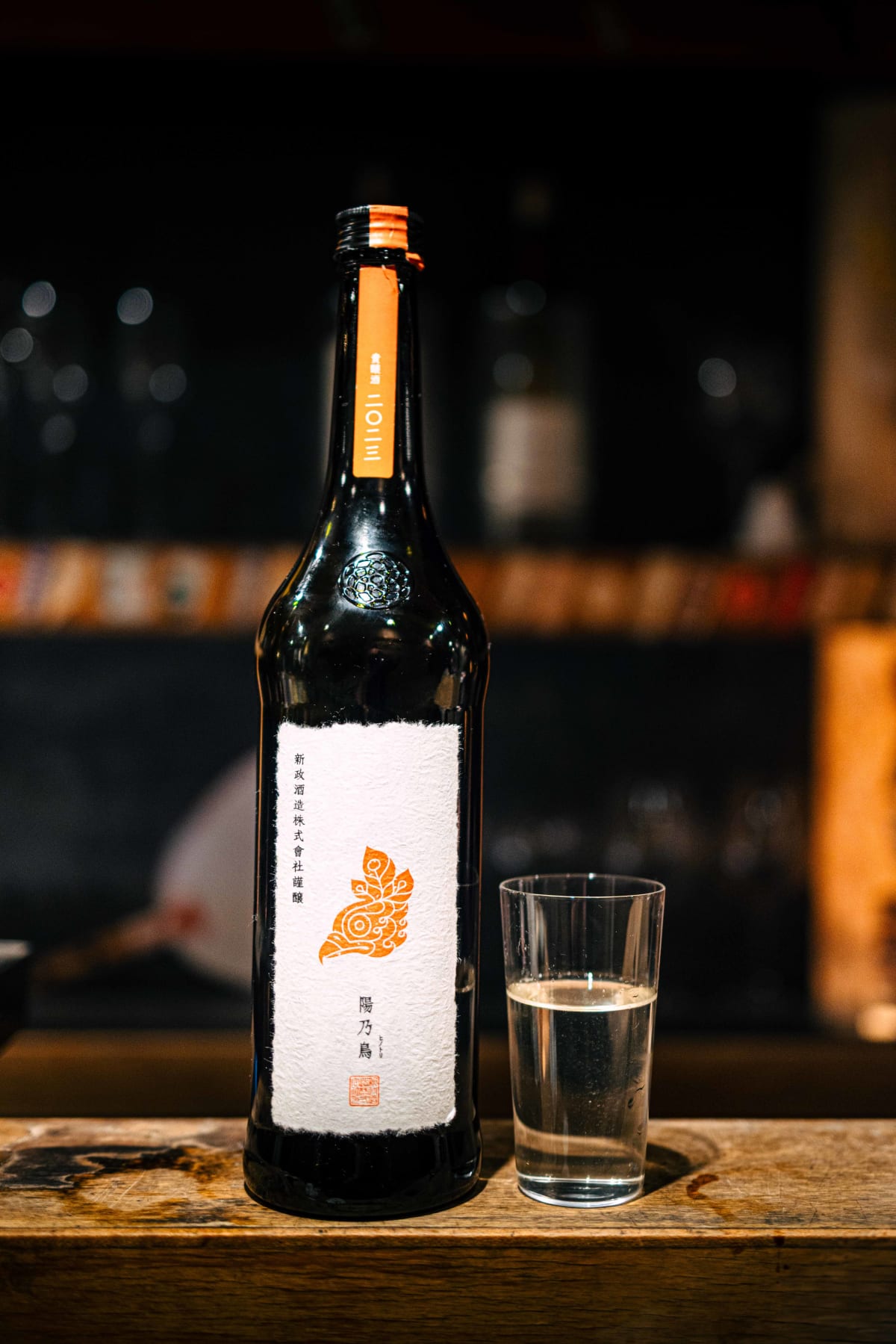
On the sake list there is ordinary sake on one side and, on the other, a full line-up of Aramasa. Nirugame was 850 yen for a 90 ml half-go and 1,500 yen for a full go of 180 ml, and Hinotori 1,200 and 2,300 yen. When I asked an acquaintance, I was told the prices are a little high by Japanese standards, but cheap and expensive depend on everyone's own circumstances, so I leave that judgement to you.
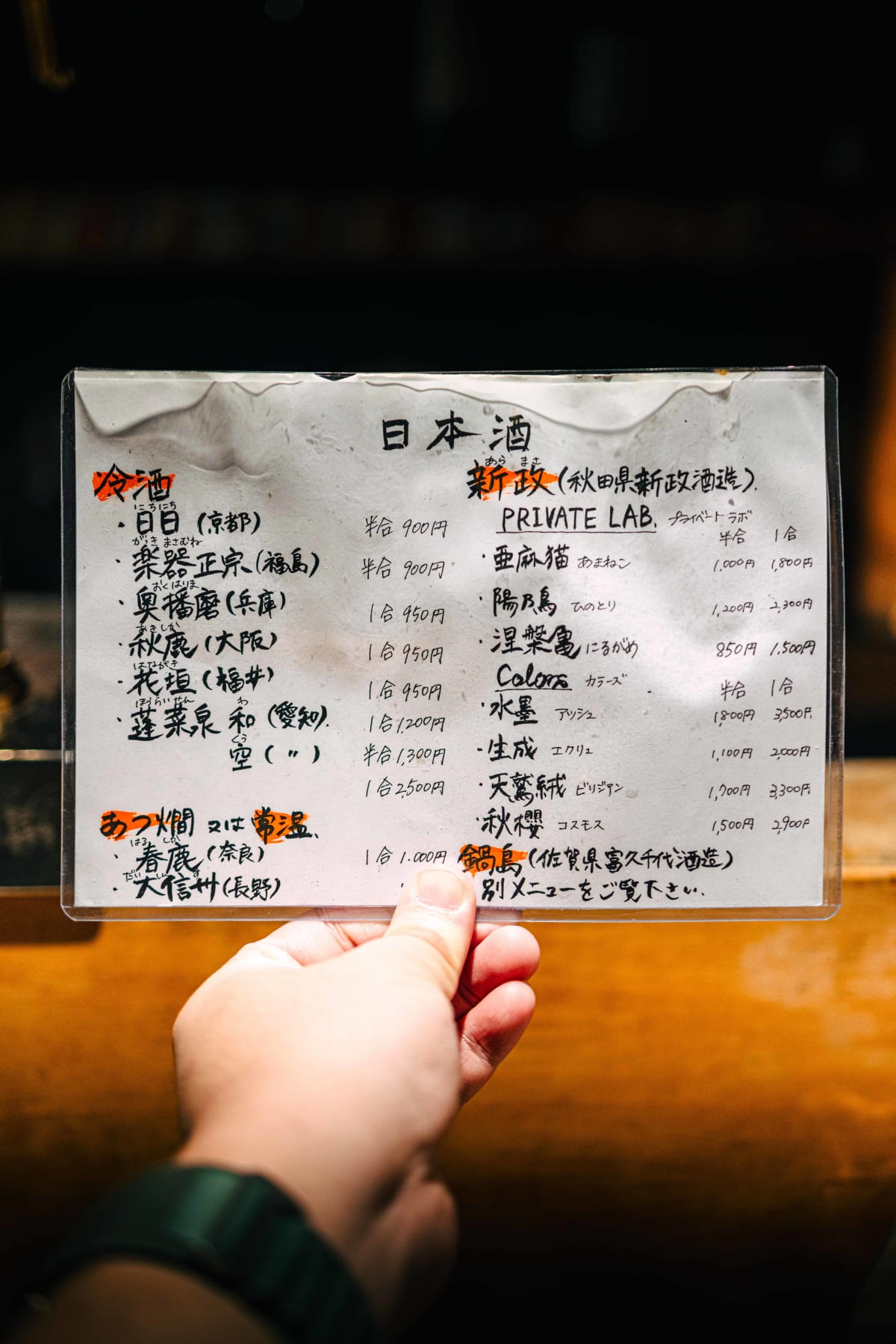
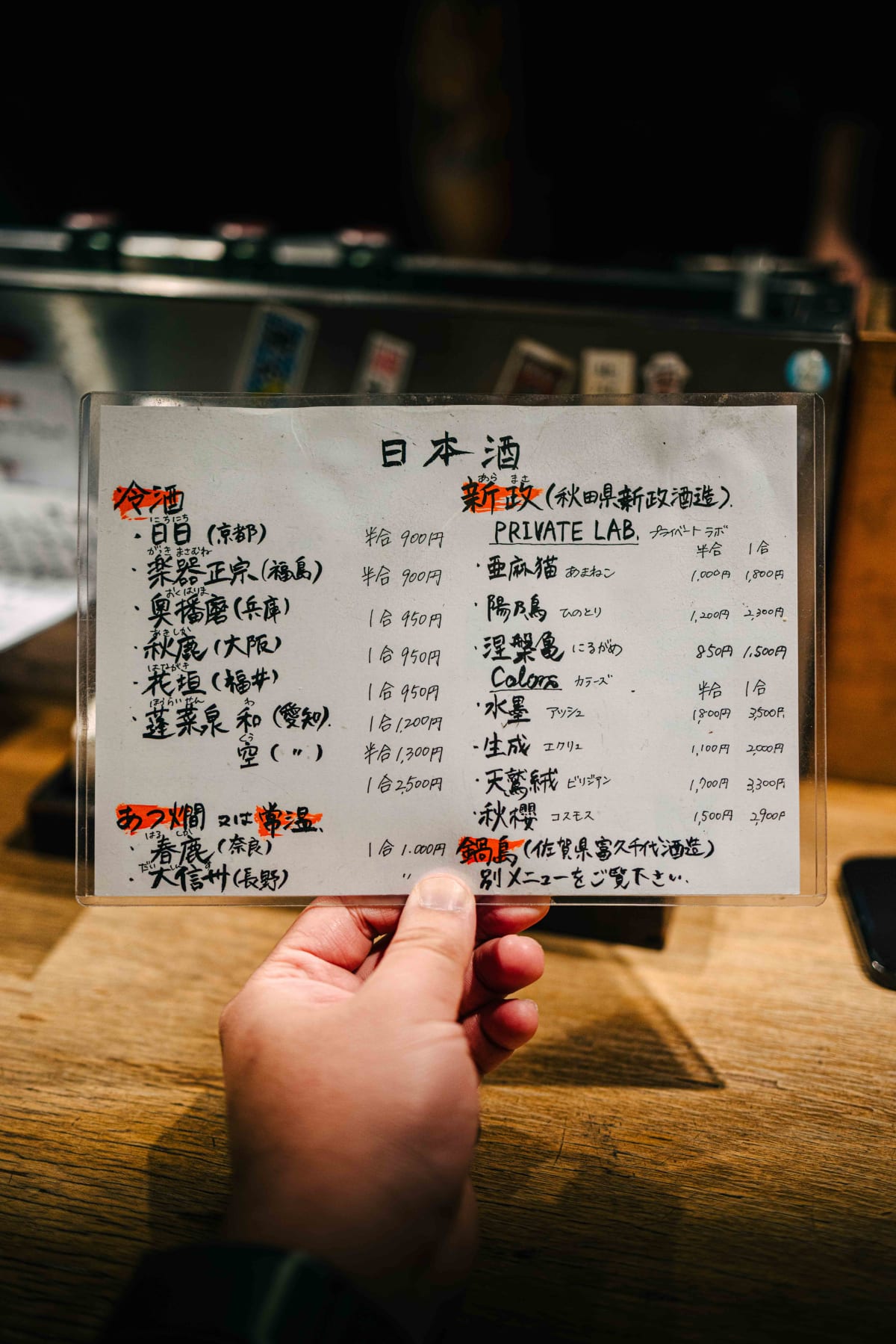
Aramasa (新政) is a brewery founded in Akita in 1852. Kyokai No. 6, the oldest sake yeast still in circulation, was isolated from this brewery's mash, and today it uses only Akita-grown rice and brews every sake as junmai on a kimoto (生酛) starter.
Within that range, Private Lab is the line that gathers experiments outside conventional brewing, and its labels take the Four Symbols (四神) of feng shui as their motif.
I had a glass each of Aramasa Nirugame and Hinotori. Eating good 500-yen yakitori like this on a trip, with a glass of the Aramasa I love, made me very happy. I was travelling Kyoto alone and had begun to feel slightly bored, but that moment was pure fun.
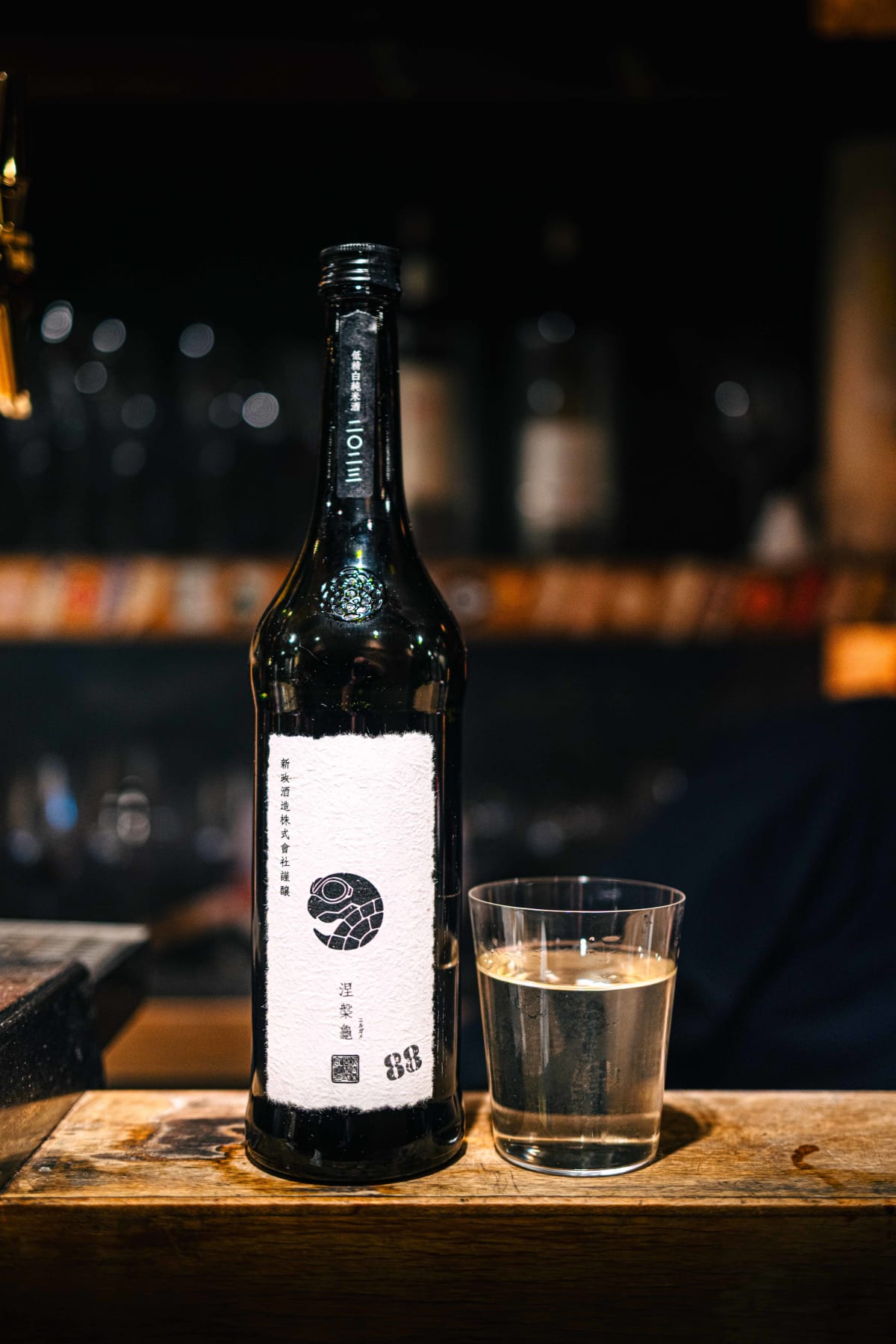
The first glass was Nirugame (涅槃龜) 2023. The 88 on the label means 88% of each grain remains after polishing, and since table rice sits at around 90%, this is a junmai made from rice that has barely been polished at all. The brewery presents it as a sake that seeks to revive the essence of Edo-period sake for today.
Barely polished rice tends to throw off-flavours and is difficult to handle, but Aramasa pours its ginjo technique into it in pursuit of modern ginjo elegance as well. It is brewed from Akita Sake Komachi on a kimoto starter, and since the 2019 harvest it has been fermented in wooden vats. Among the Four Symbols, it holds the place of the Black Tortoise, Genbu.
The second glass was Hinotori (陽乃鳥) 2023, a kijoshu (貴醸酒). In kijoshu, part of the water added during brewing is replaced with sake. The method is based on a recipe recorded in the Engishiki (延喜式), a Heian-period text, and was revived in 1973 by engineers at Japan's National Tax Agency. Because the sake goes through fermentation once more inside the mash, the result is richer and sweeter.
It was born in 2008 as Aramasa's first experimental sake, and its name comes from the image of sake being reborn: in Japanese, hinotori sounds the same as 火の鳥, the phoenix. The brewery has said that the sake it adds is first aged for a year in mizunara oak barrels, which lends a vanilla note. The red bird on the label is the Vermilion Bird, Suzaku.
Section 6·Thymus And Liver
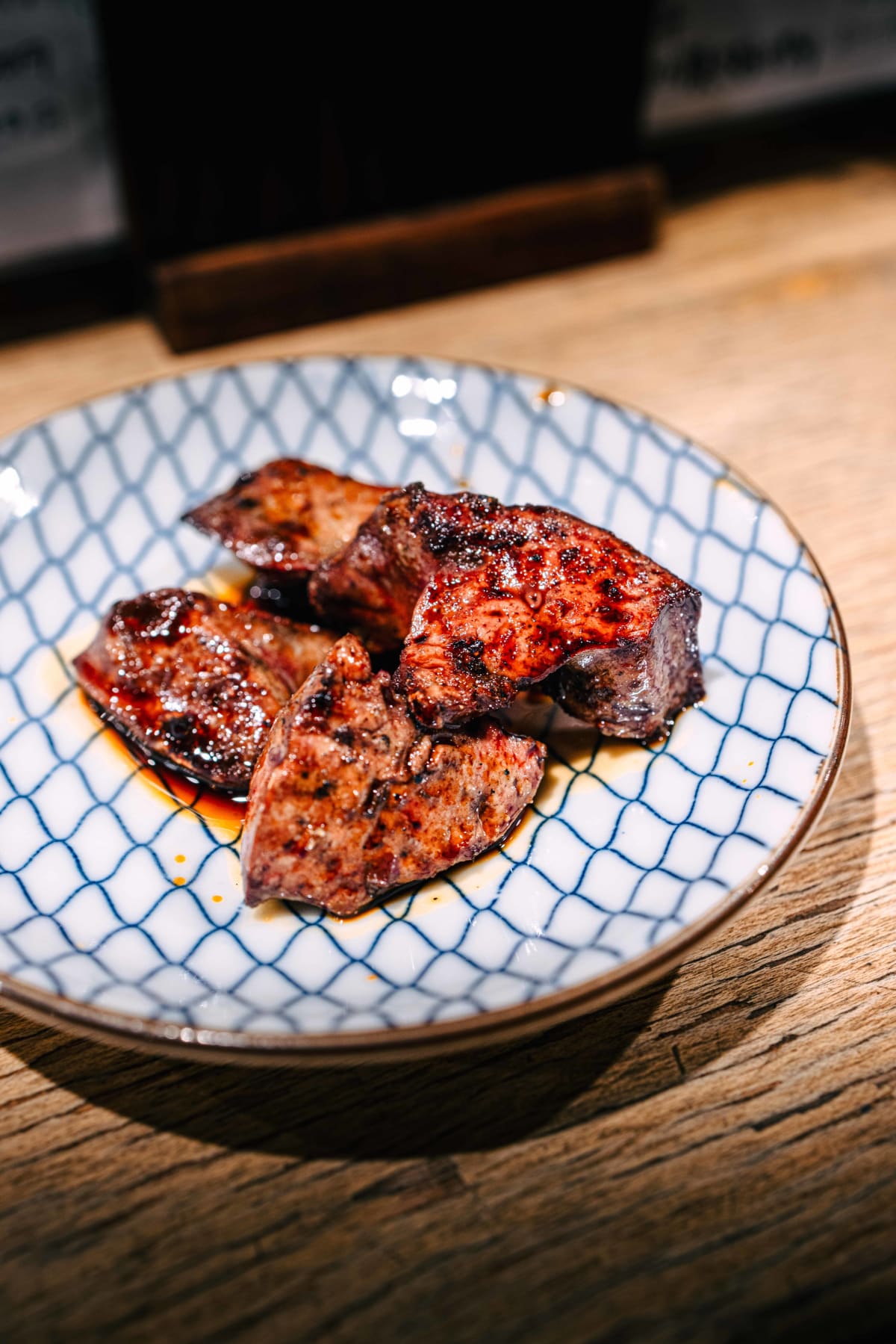
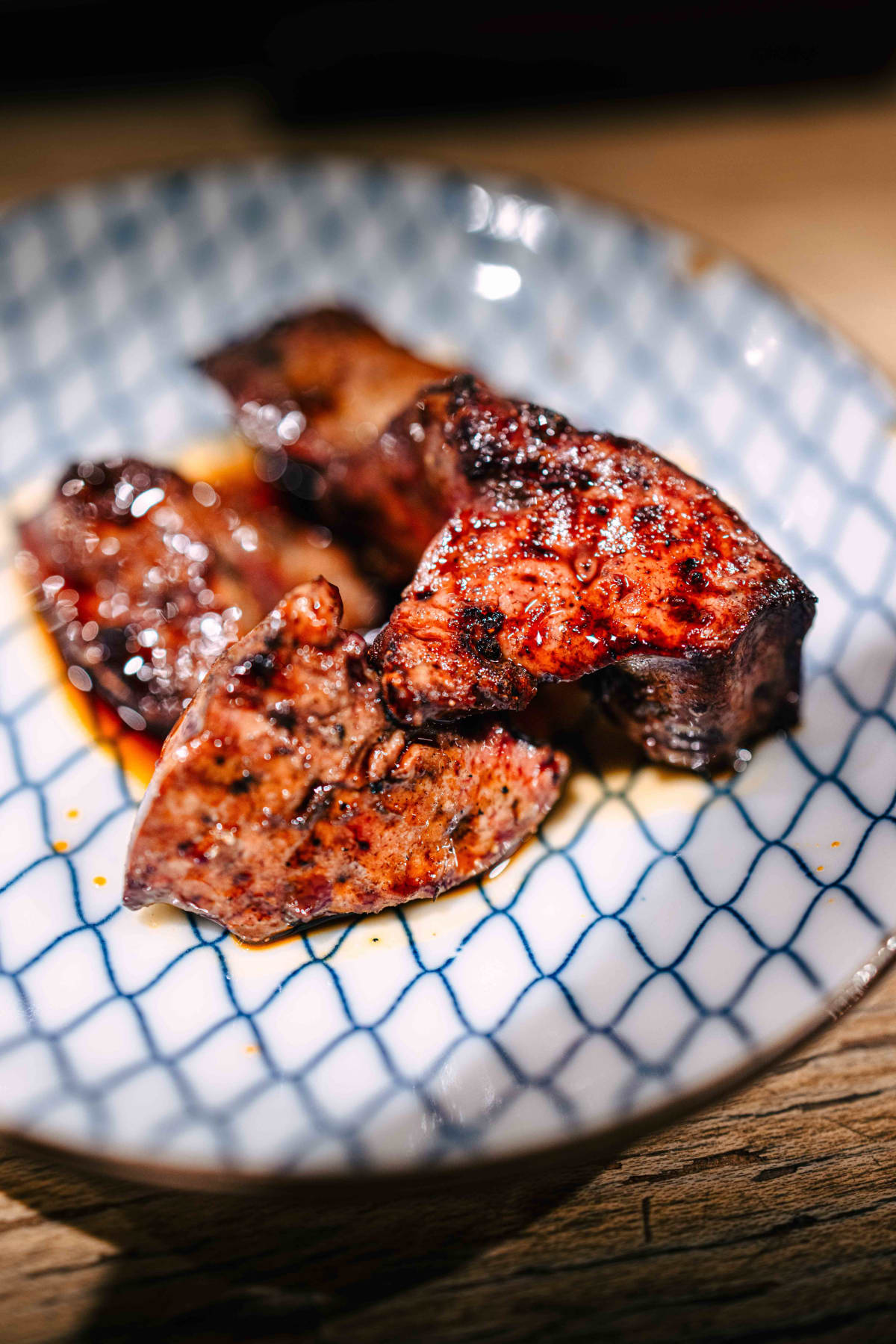
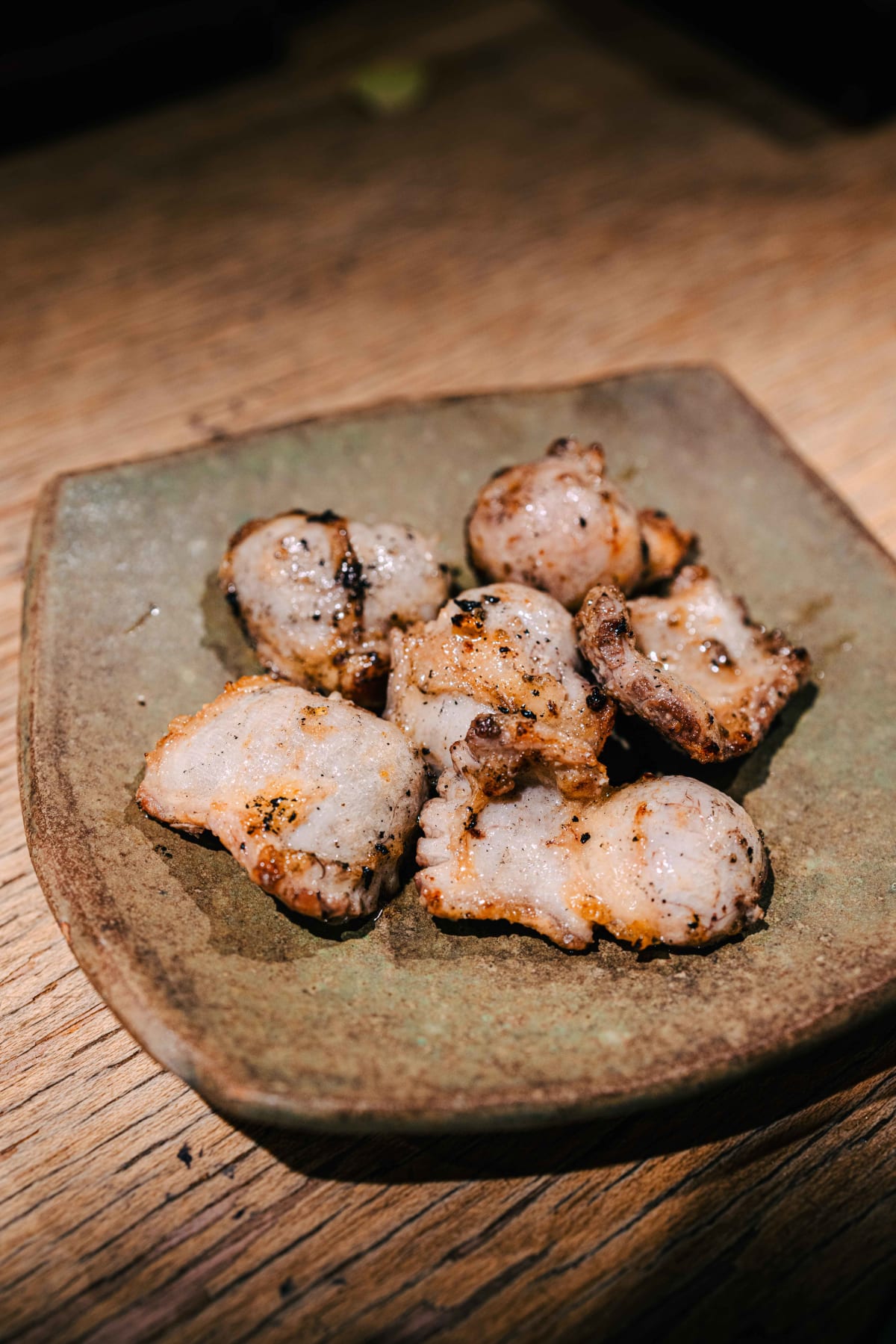
To finish the yakitori, I ordered senkotsu (腺骨), a sweetbread-like cut said to be the chicken's thymus, and reba (liver). I think it was in the liver that the gap with high-end yakitori showed.
At a really good high-end yakitori shop the liver is soft, but this one had some of the dryness, and the coarse, unrefined grain, of the liver that comes on the side when you order sundae, Korean blood sausage, at a bunsik snack shop. Differences between breeds of chicken stand out even more in the liver.
The thymus was a curiosity. Its distinctive aroma was quite close to beef thymus, or sweetbread. The sweetbread that French cooking calls ris de veau is precisely the thymus of a calf. It amused me that even between cattle and chicken, the same part tastes much the same.
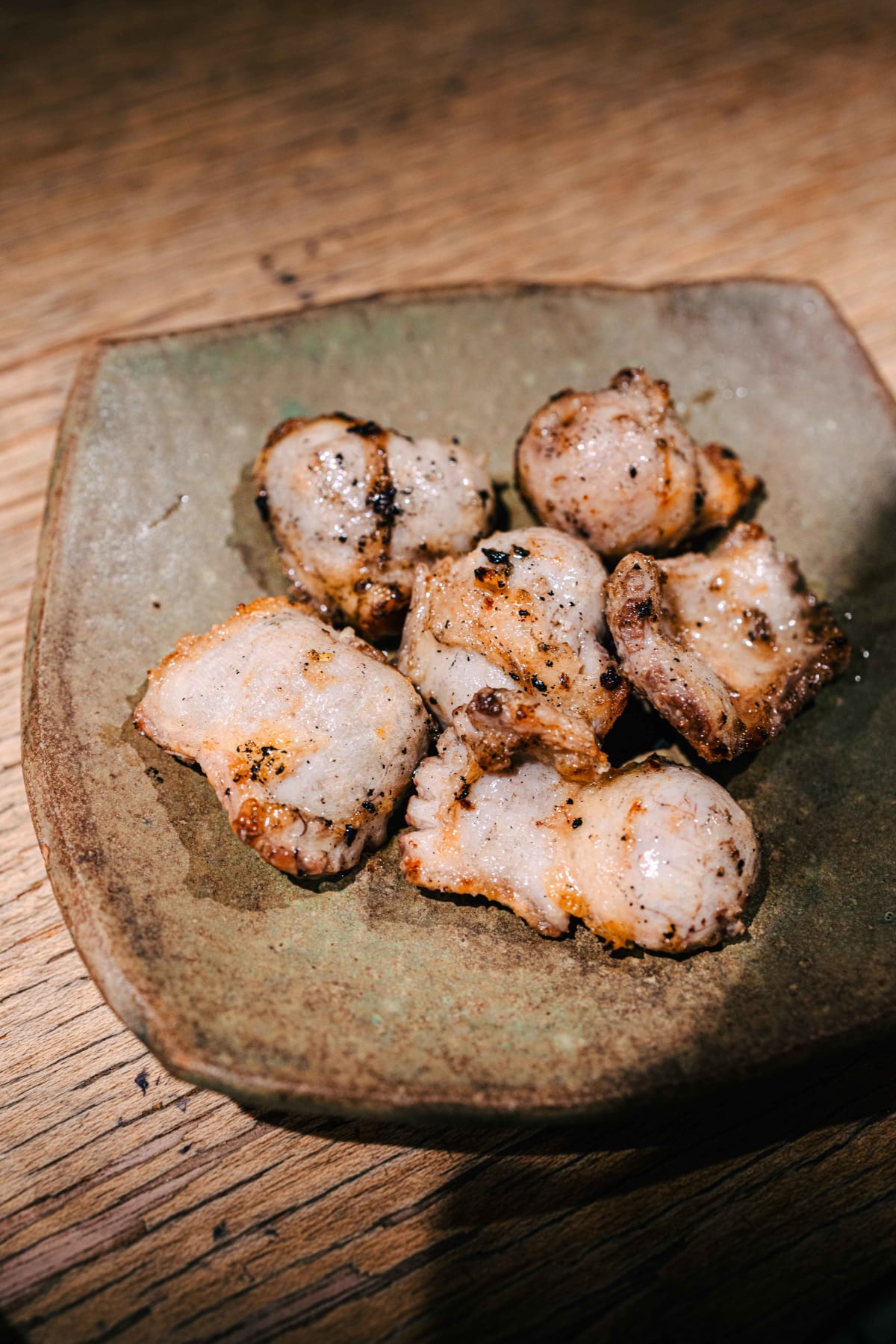
Besides ordinary red liver, the shop sometimes gets in shiro reba (白肝), white liver, paler because it has laid down fat. According to Amakara Techo, it is a prized cut, so only on the days it comes in is it cooked slowly at 65°C and made into a pâté with nothing added but onions sautéed in butter, and Oshima recommends a full-bodied Bordeaux alongside it. What I ate was ordinary reba. If you happen to visit on a day with shiro reba, I recommend treating yourself to a glass of Bordeaux with it.
Section 7·Onigiri And A Shelf Of DRC
Finally I ordered the onigiri that every customer around me seemed to order at least once.
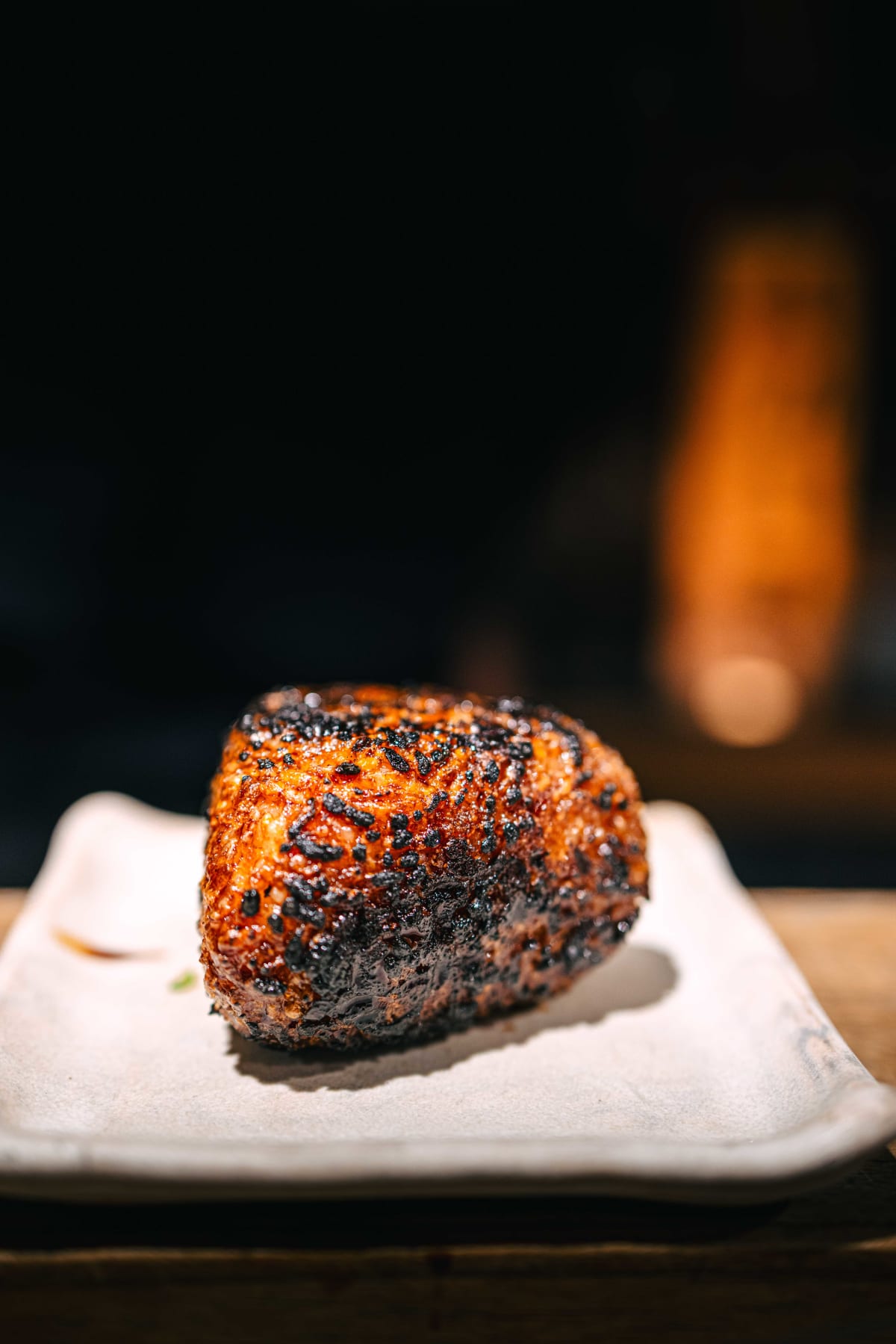
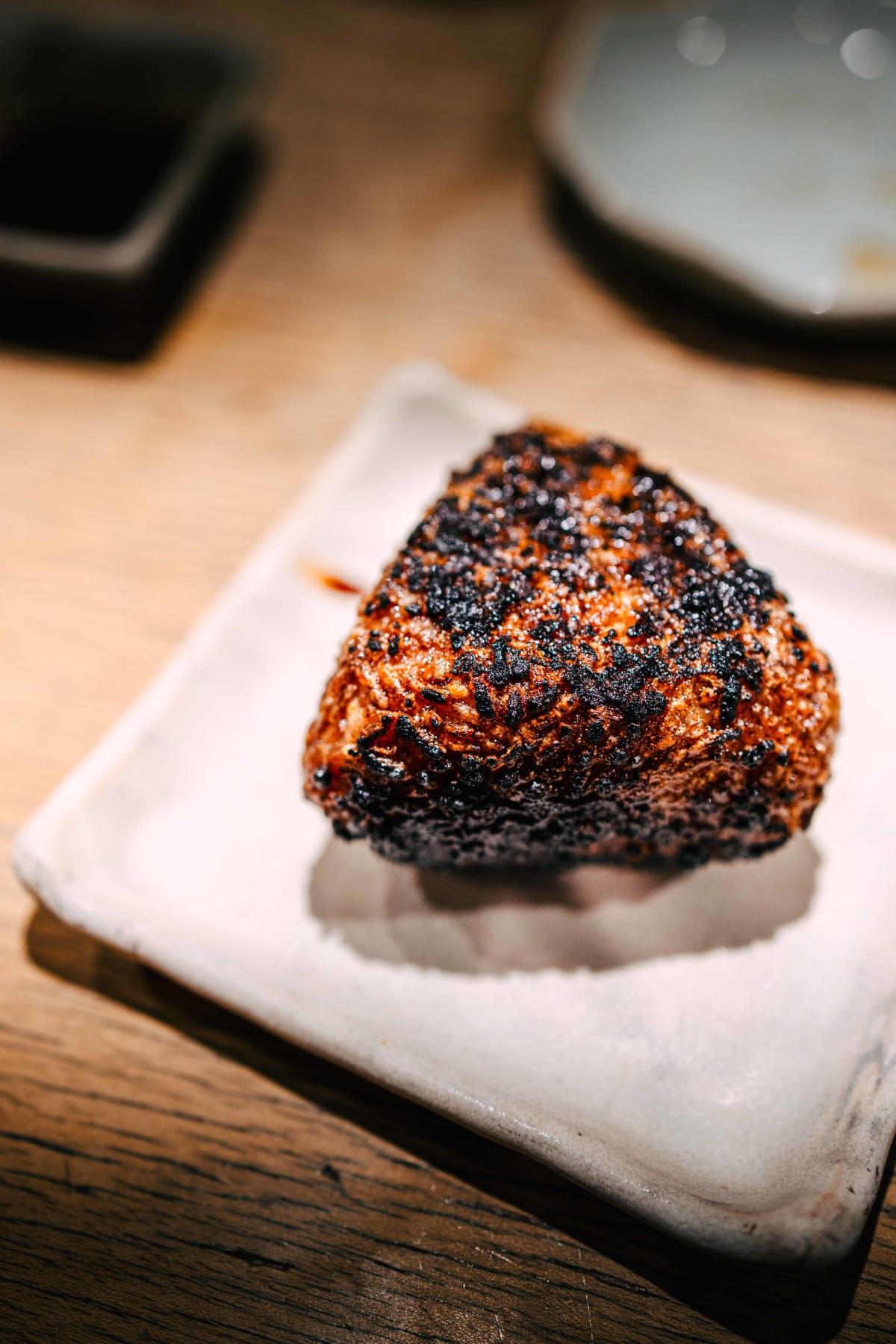
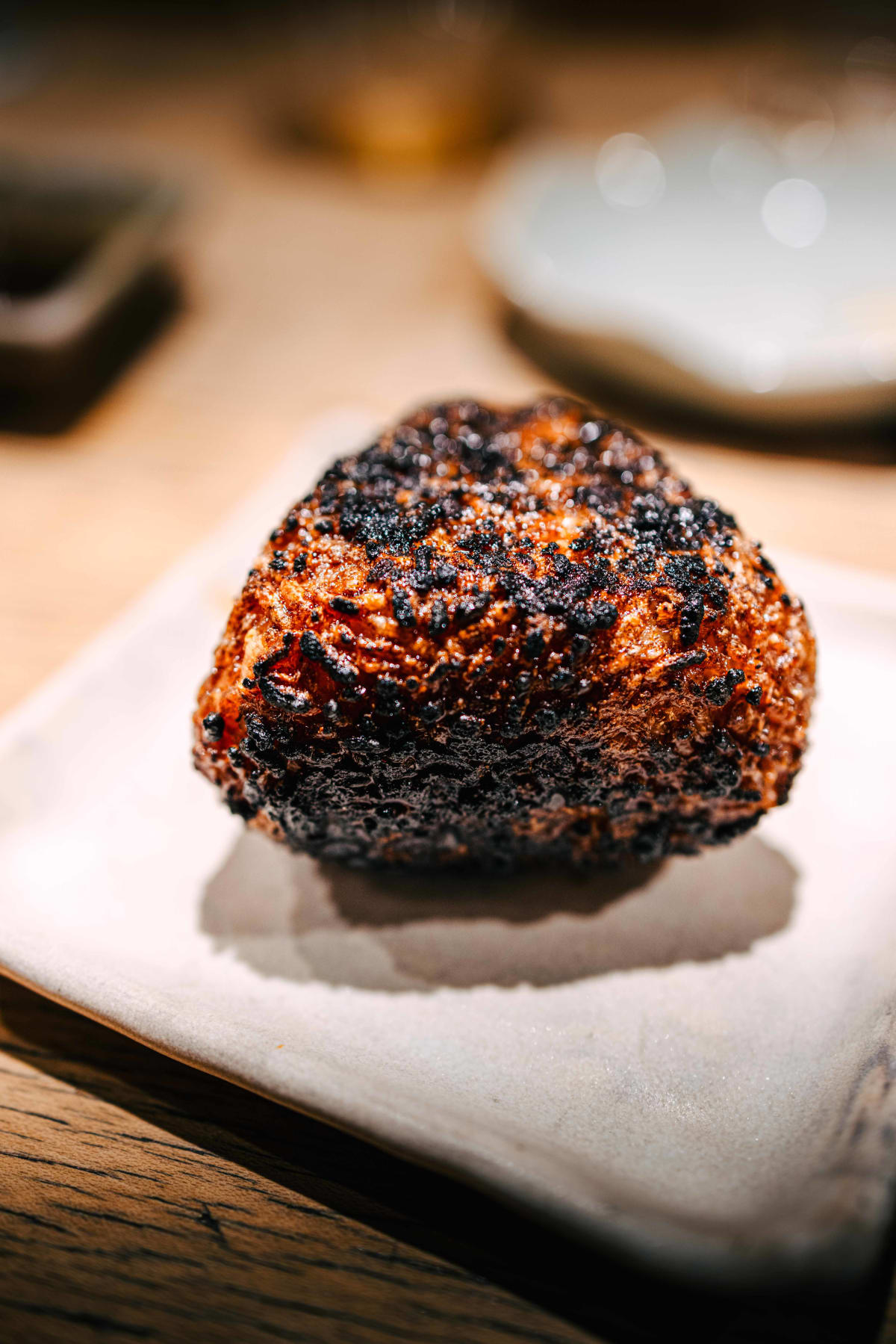
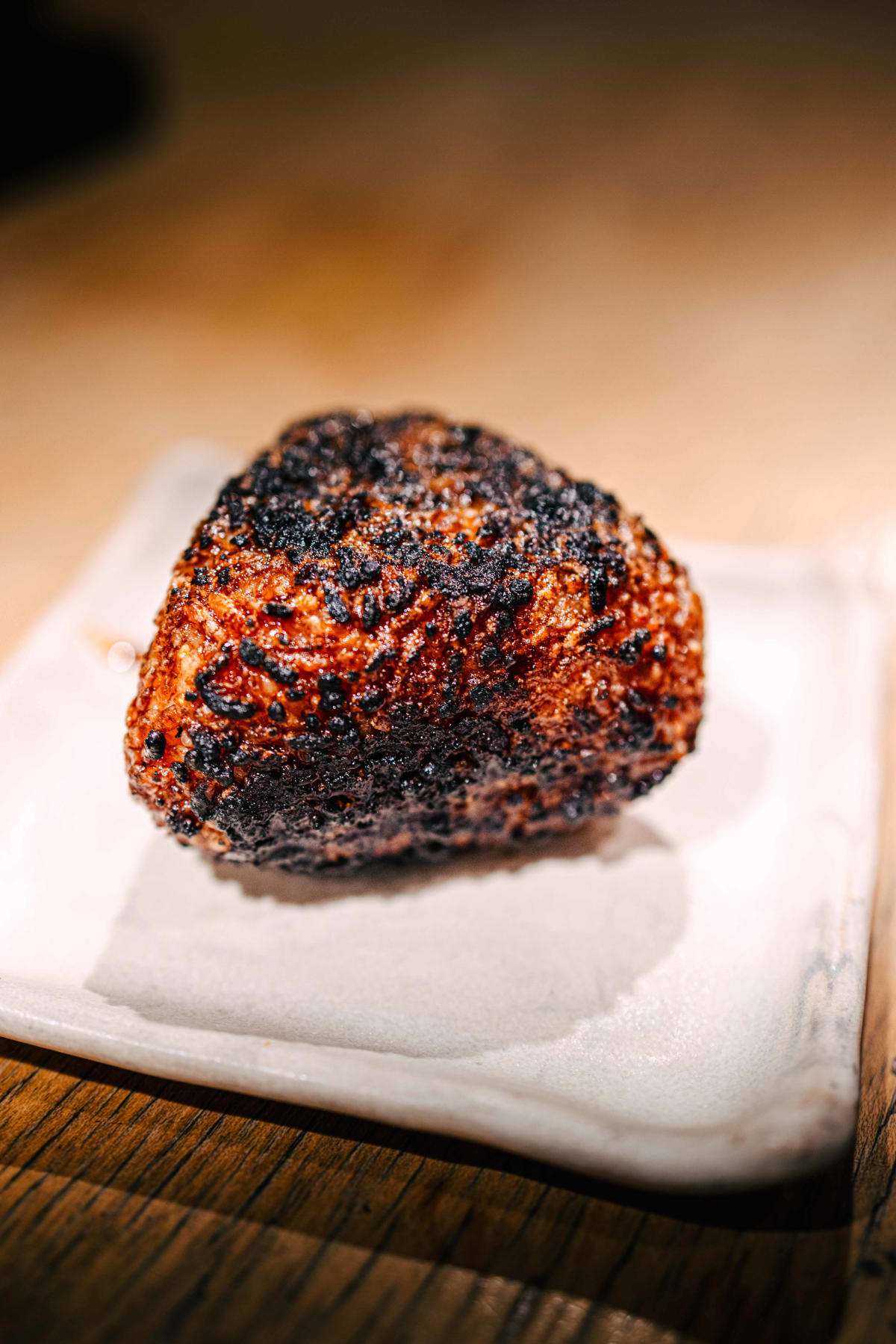
Perhaps because it is brushed with a sweetish tare and grilled, the sauce had soaked a fair way into the centre. It tasted partly like rice with soy sauce and partly like nurungji, the scorched rice crust from the bottom of a Korean pot, which made for a fun flavour.
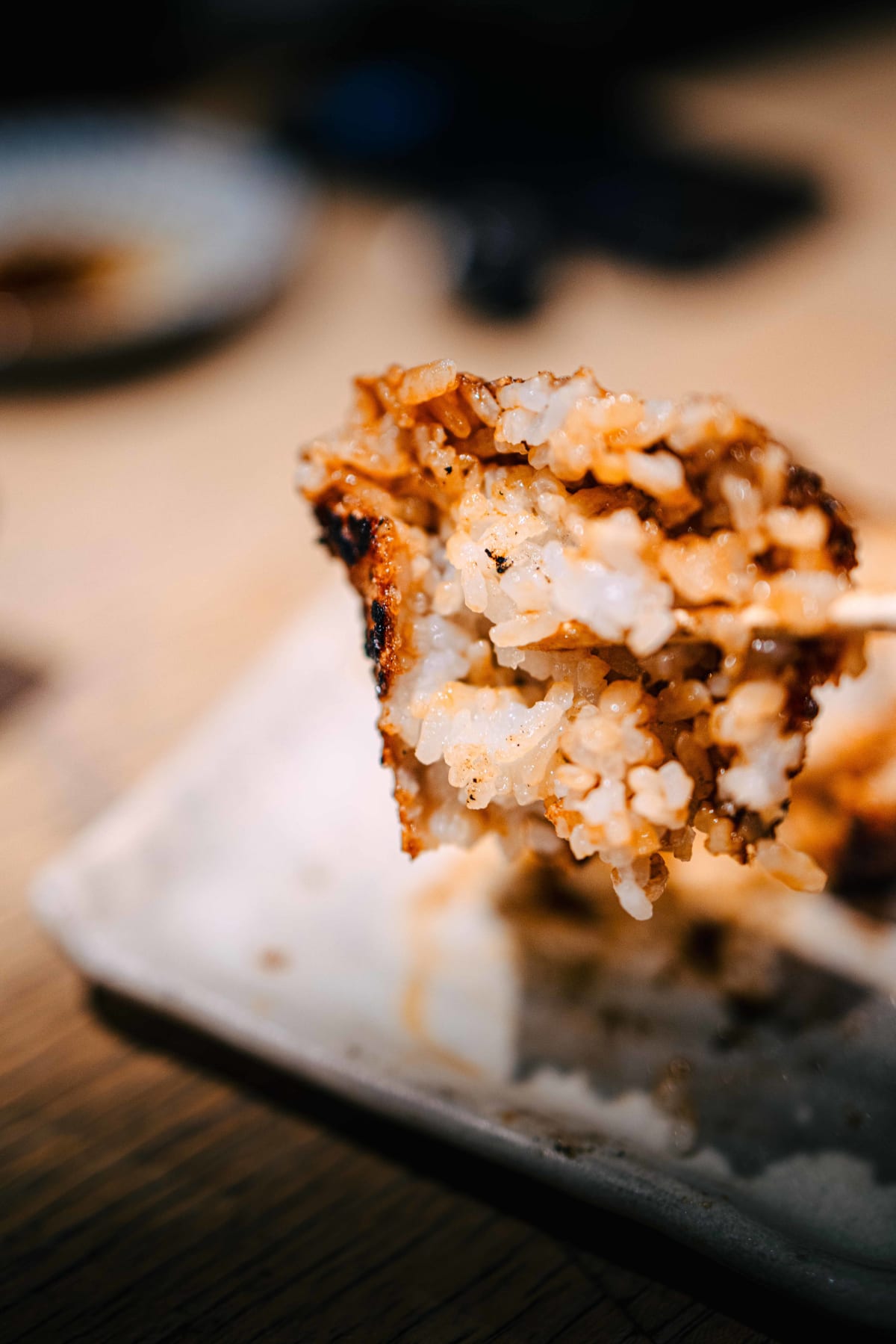
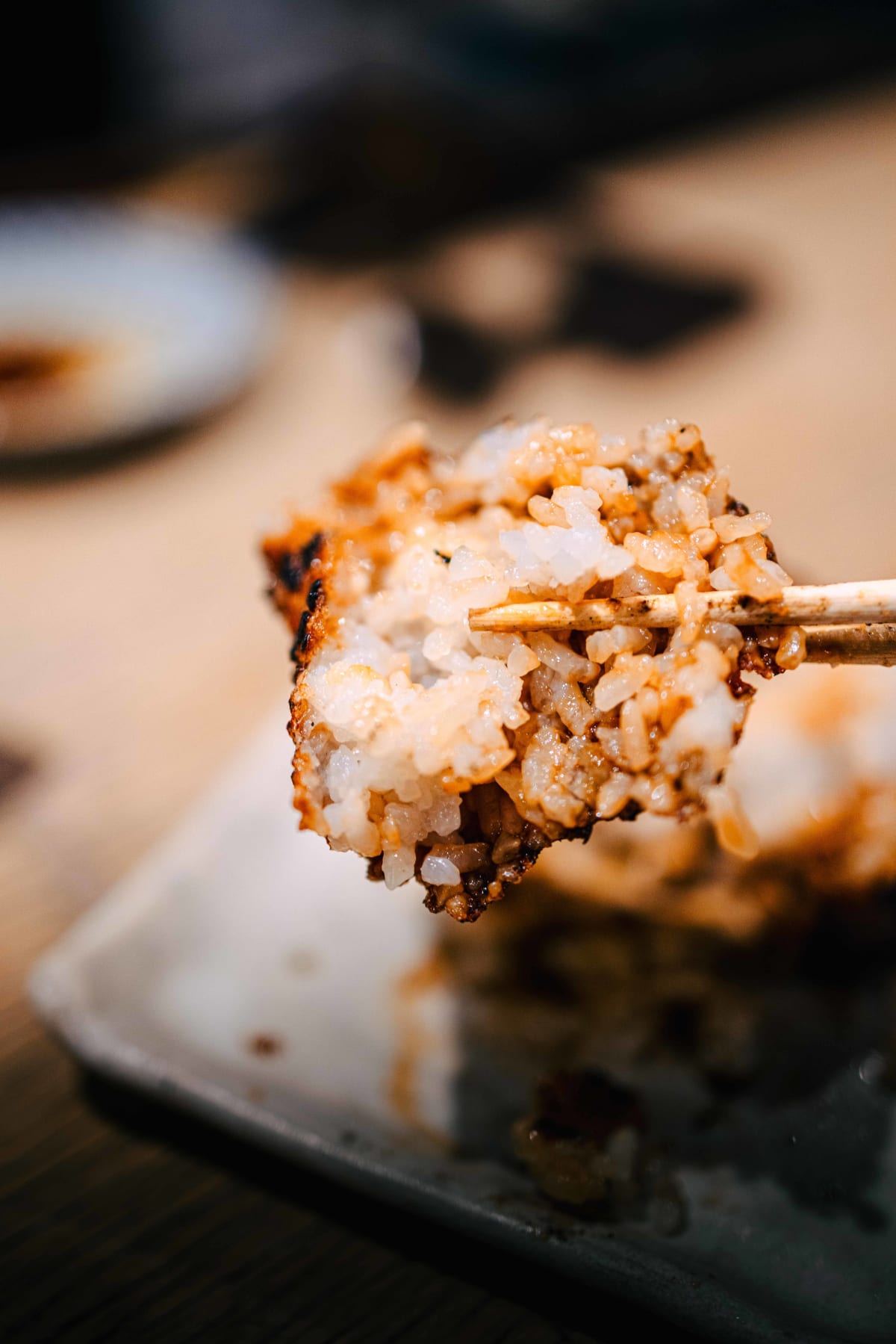
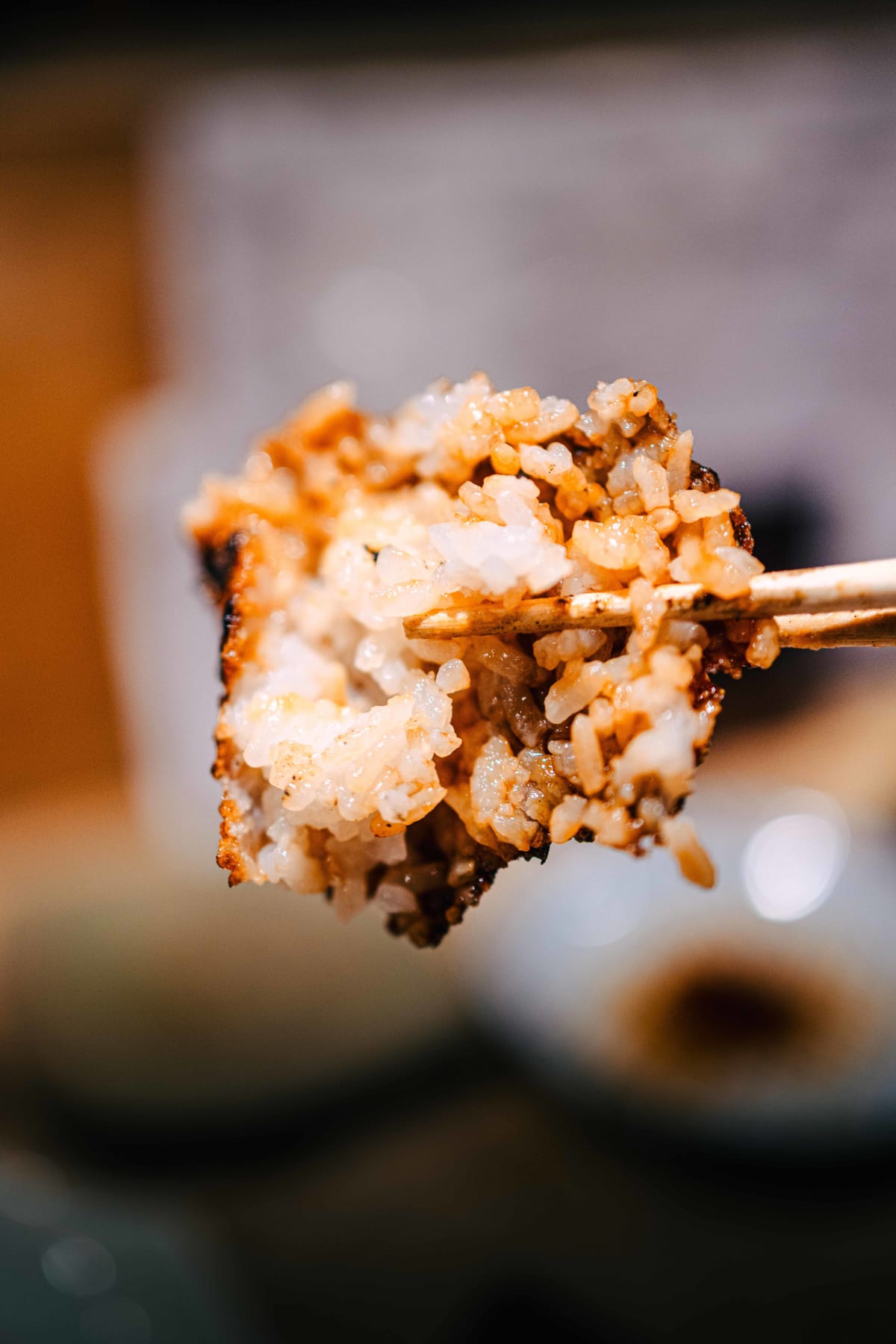
Personally, though, I think a Korean kimchi jumeokbap rice ball is better. One visitor's account says the tare here contains dried shrimp, but that is not a confirmed recipe.
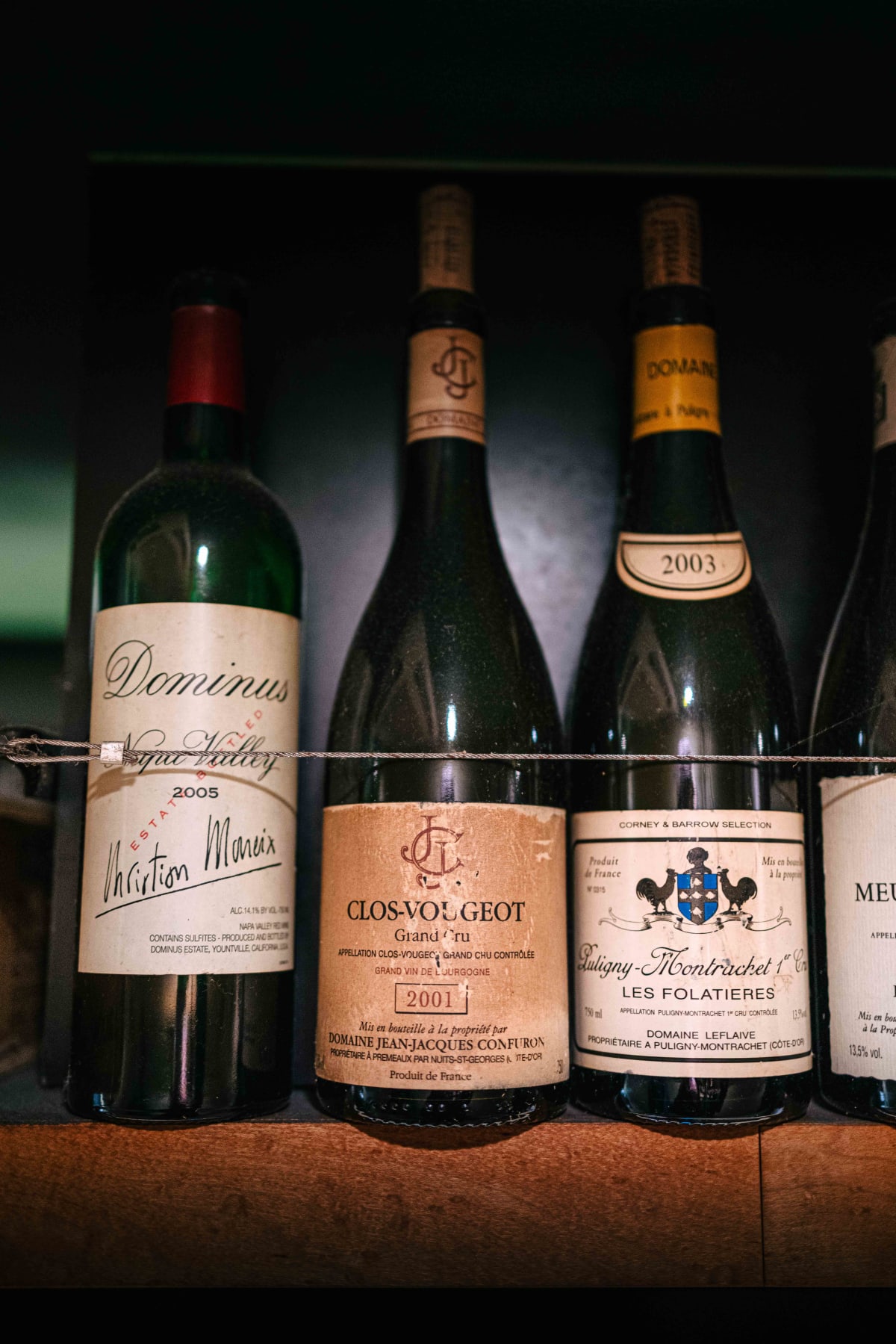
As I paid and turned to leave, I looked up at the shelf above and was startled by a row of extraordinary wines, DRC among them. There was a 1989 Romanée-Saint-Vivant from Domaine de la Romanée-Conti, Dominus 2005, Jean-Jacques Confuron's Clos-Vougeot Grand Cru 2001 and Leflaive's Puligny-Montrachet Les Folatières 2003. I do not know whether they sell them or whether someone brought them in to drink, but there it was: DRC, in a place where a single dish costs 500 or 1,000 yen. It was a drinks line-up that could hold its own against any of Kyoto's grandest Japanese restaurants.
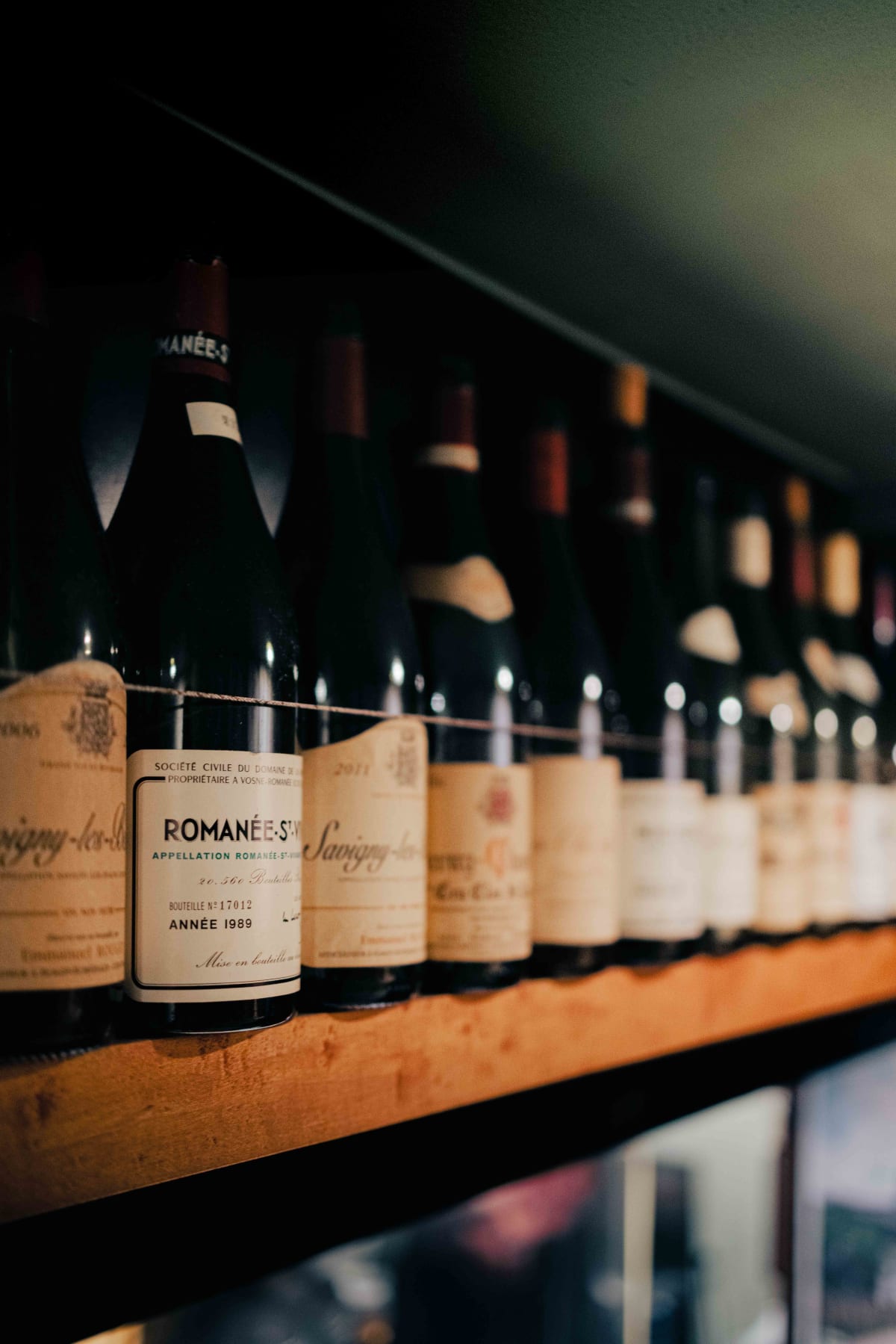
I could not confirm whether those bottles are on the list, but wine here is clearly no accident. Wine Grocery, a Kyoto wine shop, names Uzuraya among the restaurants that pour its wines and says it offers several by the glass. Amakara Techo also covered it as a hidden Gion address for yakitori with French wine, but as I said earlier, given the ventilation, I am sceptical that this is a good place to enjoy delicate fine wines.
The signature dish since opening is the foie gras tsukune, made from French foie gras alone and coated in breadcrumbs. There is also a ham of Tankai jidori breast smoked over apple wood chips, which Amakara Techo matched with Champagne or a white.
It was a drinks line-up that could hold its own against any of Kyoto's grandest Japanese restaurants.
In autumn 2025, the year after my visit, Uzuraya was named to Tabelog's 鳥料理 百名店 2025, the top 100 for chicken cuisine. What surprised me is that it was the chicken cuisine category, not yakitori. With skewerless grilling, sashimi and tataki, quail, pâté and ham, the range here does not fit inside skewered grilling alone.
Uzuraya is known as a place where you can drink good sake and good wine alike. Next time I would like to work my way through more of the Aramasa range. The prices are reasonable and the food is very good, so if you have had dinner in Kyoto and still feel hungry, as if it was not quite enough, head for Gion-Shijo Station.
The skewerless method pays off most on large, irregular cuts. The momo tataki and the two pieces of soriresu, exactly those two, were the best of the night. The liver, on the other hand, where breed and handling count for more than the fire, is where the gap with high-end yakitori counters showed. Build the order around the big cuts, and around cuts where fat and lean meat come together. On a second stop, three plates at about 500 yen and a half-go of Nirugame might seem to come to under 2,500 yen, but holding yourself to a half-go is very hard. Tabelog's reviewers put dinner here at 8,000 to 10,000 yen. I walked in just before nine on a Saturday, though with ten seats a phone call ahead is safer. Last orders are around 10 pm, and it closes on Wednesdays.
Have a question about this restaurant, or want to share your own experience?
Send a message