Fine Dining · Kyoto · Japan / December 2024 / Michelin ★
Mashiro
"Two men, one long counter and a 1990 Margaux poured by the glass"
Section 1·A Sunday Near Rokkakudo
However passionate and knowledgeable you are about food, it is hard to know every good restaurant, and just as hard to fill every slot of a trip with the very best. So when a trip is suddenly upon you, you hurry to look up restaurants and book them, and sometimes you find a treasure and sometimes you miss.
To me, that is the fun of travelling for food.
My year-end trip to Kyoto in 2024 was just like that. In Kyoto I knew only a handful of Japanese restaurants and high-end Chinese restaurants, and not much in any other genre. I had worked hard to fill the Kyoto days, but there was one day with nothing booked right up until I left: Sunday 29 December. It was a Sunday, and it was also the Japanese year-end, so a great many restaurants were not even open, let alone taking bookings.
Still, it seemed a shame to do nothing, so I opened the Michelin Guide app. I searched Kyoto and picked out the places open on Sunday with decent Tabelog scores, and Mashiro looked good in terms of genre and had a seat available, so I decided to go. The fact that its Google rating stood at 5.0 at the time played a small part too.
Mashiro is on the second floor of a building near Karasuma Oike Station, in a neighbourhood full of well-known restaurants, the same area as Hirosawa (廣澤), the Chinese restaurant I had been to the day before.
Its address is in Donomae-cho (堂之前町), the same district as Rokkakudo (六角堂), four minutes' walk from Karasuma Oike Station. Rokkakudo is a temple whose formal name is Shiunzan Chohoji (紫雲山 頂法寺). It is said to have been founded by Prince Shotoku in 587, and it is called Rokkakudo, the hexagonal hall, because its main hall has six sides. It is where the Ikenobo (池坊) school of flower arrangement began, so it is also counted as the birthplace of ikebana.
The restaurant's name is tied to Rokkakudo as well. The chef's previous restaurant in Gion was called Roiro (呂色), a word for the jet black of lacquer. Starting afresh in Karasuma after Ashiya and Gion, he changed the name to Mashiro (真白), pure white, as a sign that he was taking on the challenge with a fresh heart.
As the chef explains it, Rokkakudo, which is hexagonal when seen from above, stands for the desires that arise from six senses: the five human senses plus consciousness. From the temple's teaching that we should cast off those six corners and make our hearts round, he took the idea of "making the heart round and pure white", and he also put into the name his wish that guests go home feeling pure white after enjoying the meal.
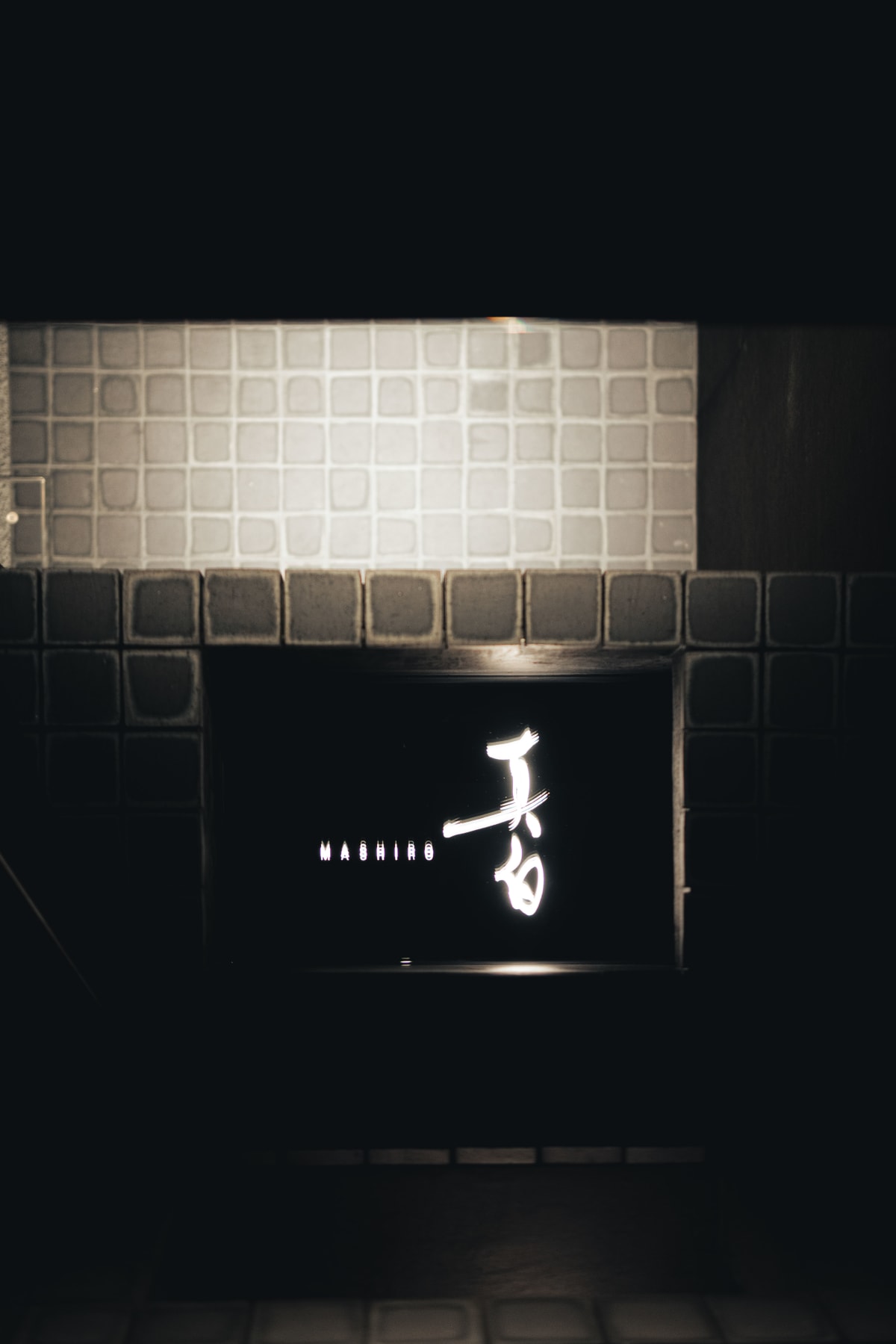
When I arrived at around 6 pm, the brushstroke sign reading MASHIRO 真白 was lit on a black panel set into a white tiled wall.
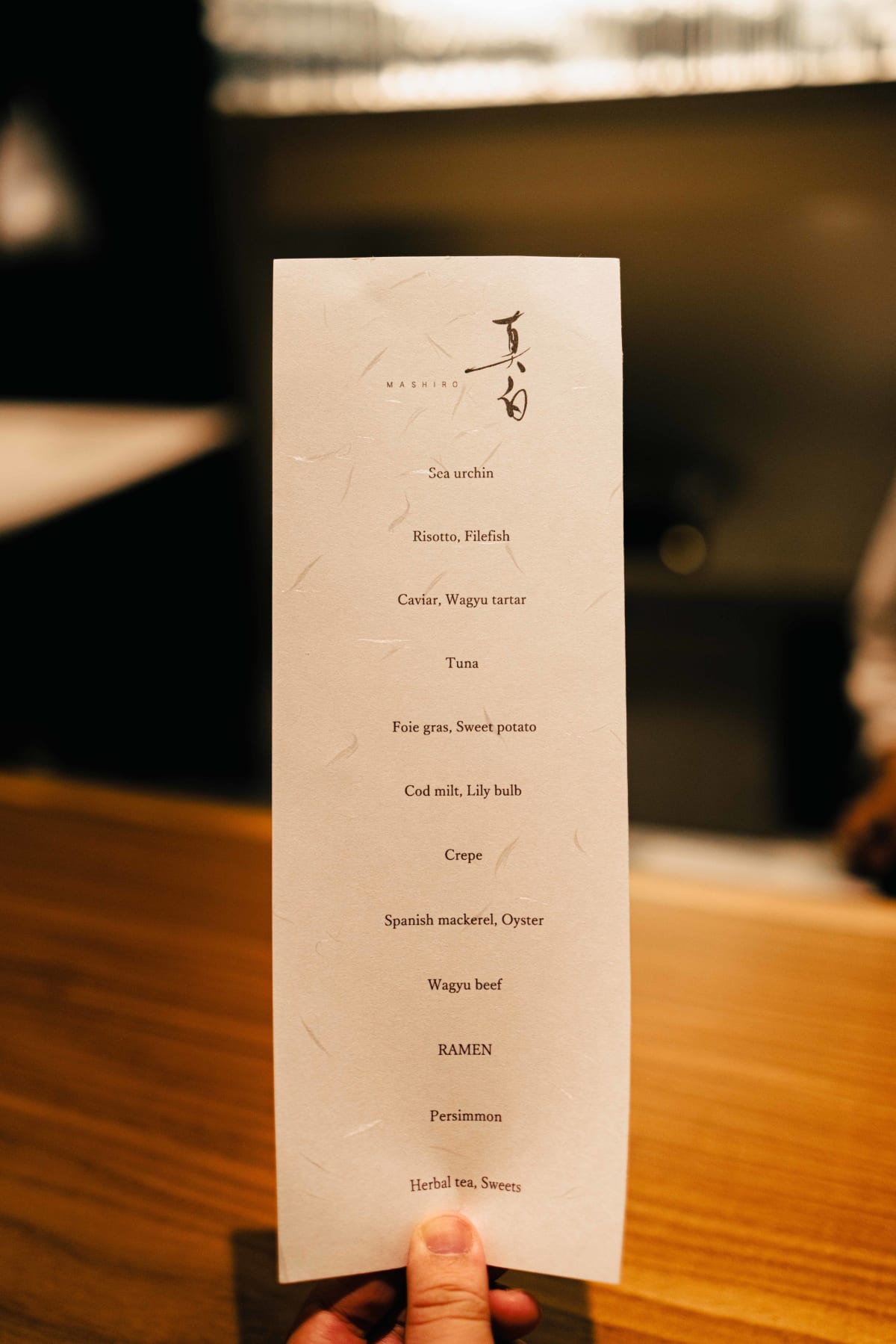
Step out of the lift and a wine cellar comes into view along a gentle slope, and you go in through large tin doors. Dinner at Mashiro starts at 6 pm for the whole counter at once. The menu card I was handed at my seat listed the night's twelve courses briefly, by their ingredients alone.
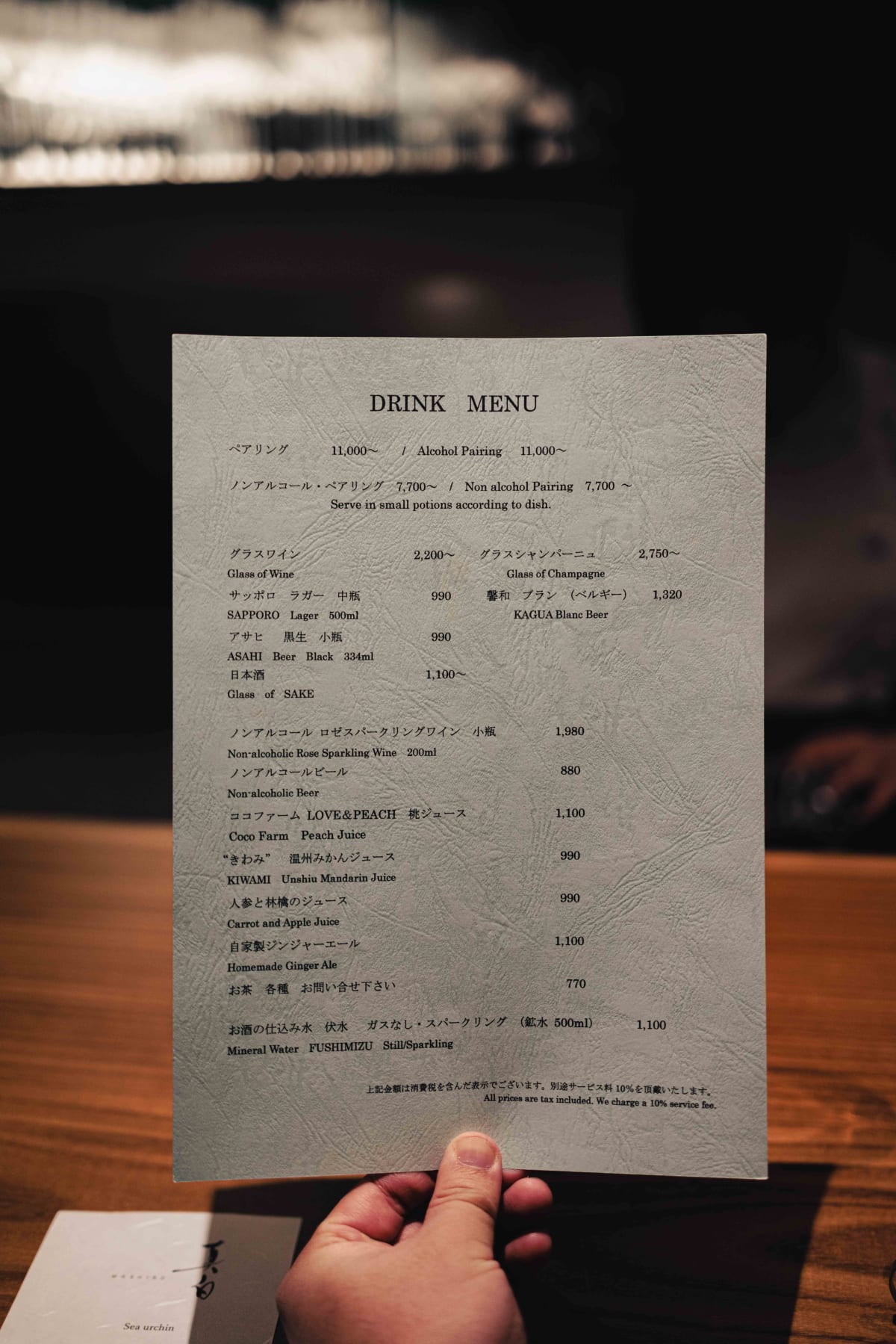
That night I ordered my drinks by the glass.
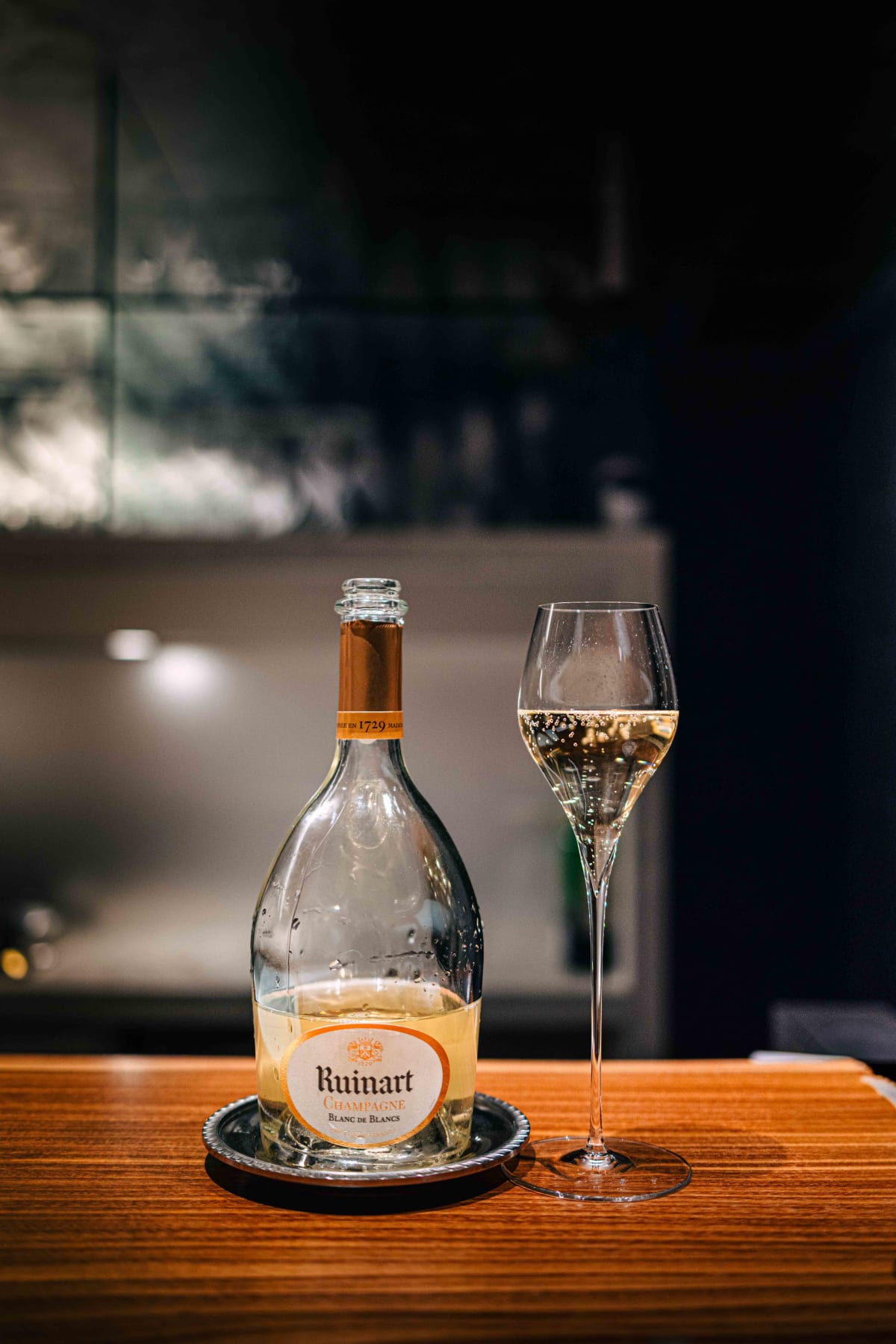
The first was Ruinart Blanc de Blancs. The importer must have been scattering Ruinart all over Kyoto around then, because it turned up at restaurant after restaurant.
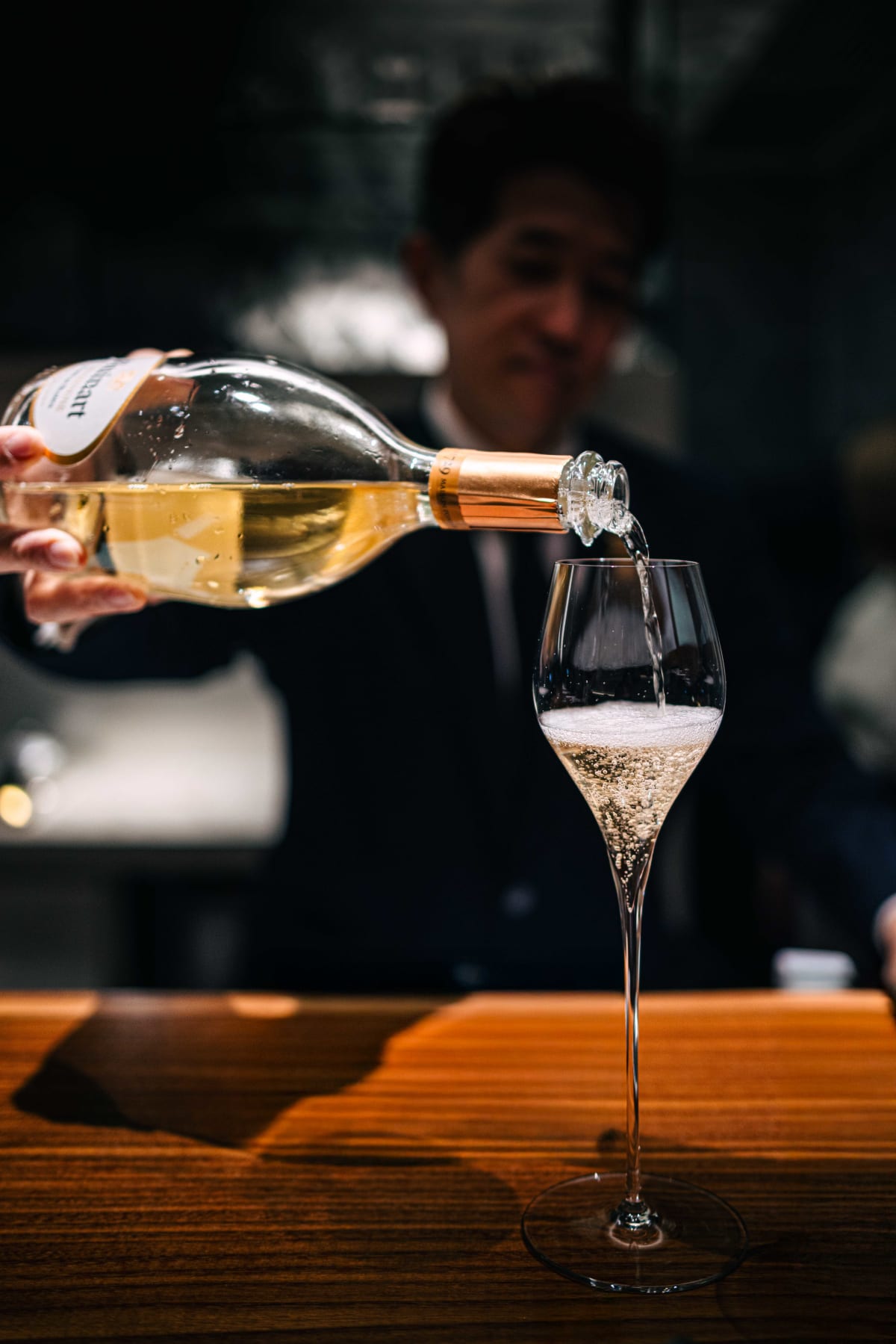
Founded in Reims in 1729, Ruinart is the oldest Champagne house still in existence. Its Blanc de Blancs, made from Chardonnay alone, is the house's signature, and the shape of the bottle is taken from the earliest Champagne bottles of the 18th century.
Section 2·The Chef And The Manager
The chef is Hiroyuki Koshimo (小霜浩之), who, I was told, had worked at a restaurant in the Rihga Royal Hotel in Osaka. Wanting a restaurant of his own, he left together with Masahiro Kobayashi (小林正裕), a sommelier he had worked with, and the two started a restaurant. The Rihga Royal seems to be a well-known name in Kansai, and the chef too seemed to be someone of some renown in the region.
Born in Osaka in 1971, Chef Koshimo never meant to become a cook. Leaving high school, he simply wanted to work in a service job and joined a hotel, where he agonized for a long time between becoming a cook and becoming a bartender before choosing the kitchen. In the years when the TV show Iron Chef (料理の鉄人) was all the rage, he looked up to Hiroyuki Sakai, its Iron Chef French.
In nineteen years at the Rihga Royal from 1989, he worked in several of its restaurants, including teppanyaki and the coffee house, and around his tenth year the hotel decided to choose its head chef by contest. He had no experience of French cooking but entered anyway, and came second. The chef who won and became head chef, though, asked him to come and work under him, and a year and a half after being posted to the French restaurant, he was made its head chef. In 2004, at 33, he became the youngest chef in the hotel's history when he took charge of Restaurant Chambord, a grand maison in Kokura.
At its peak, though, he had as many as forty staff under him and was swamped by paperwork such as staff evaluations, until he was barely cooking his own dishes at all. He realized it and had begun to think about moving on, and that, the story goes, was when Kobayashi held out a hand.
Kobayashi, then the manager of a restaurant, invited the chef to join him, and the chef left the hotel to work there. You could say that the independent path the two set out on continues to this day at Mashiro. In one interview the chef laughed that he has been with Kobayashi for so long that he seems to spend more time with him than with his own wife and children.
You could say that the independent path the two set out on continues to this day at Mashiro.
Section 3·Written Uni, Read Umi
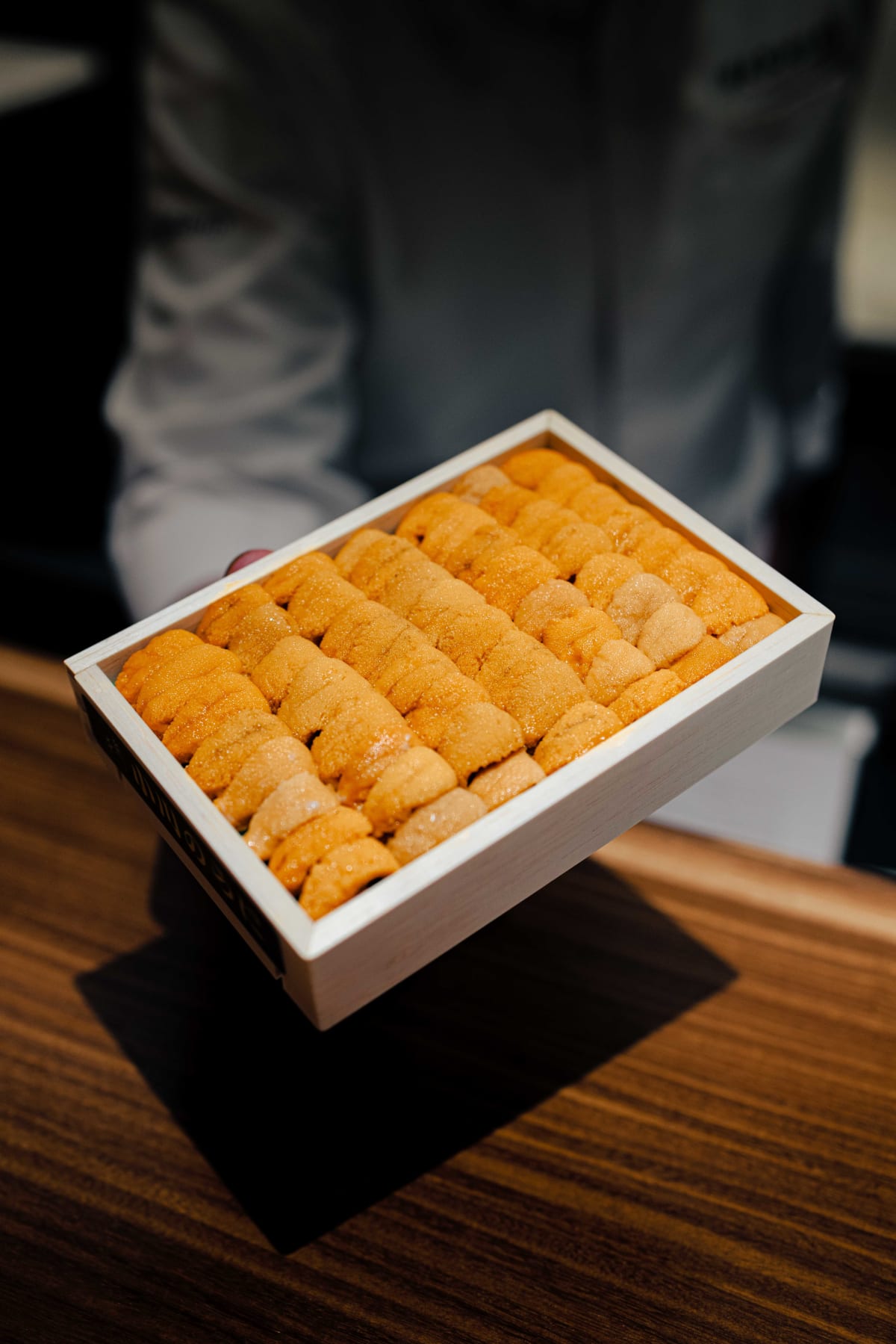
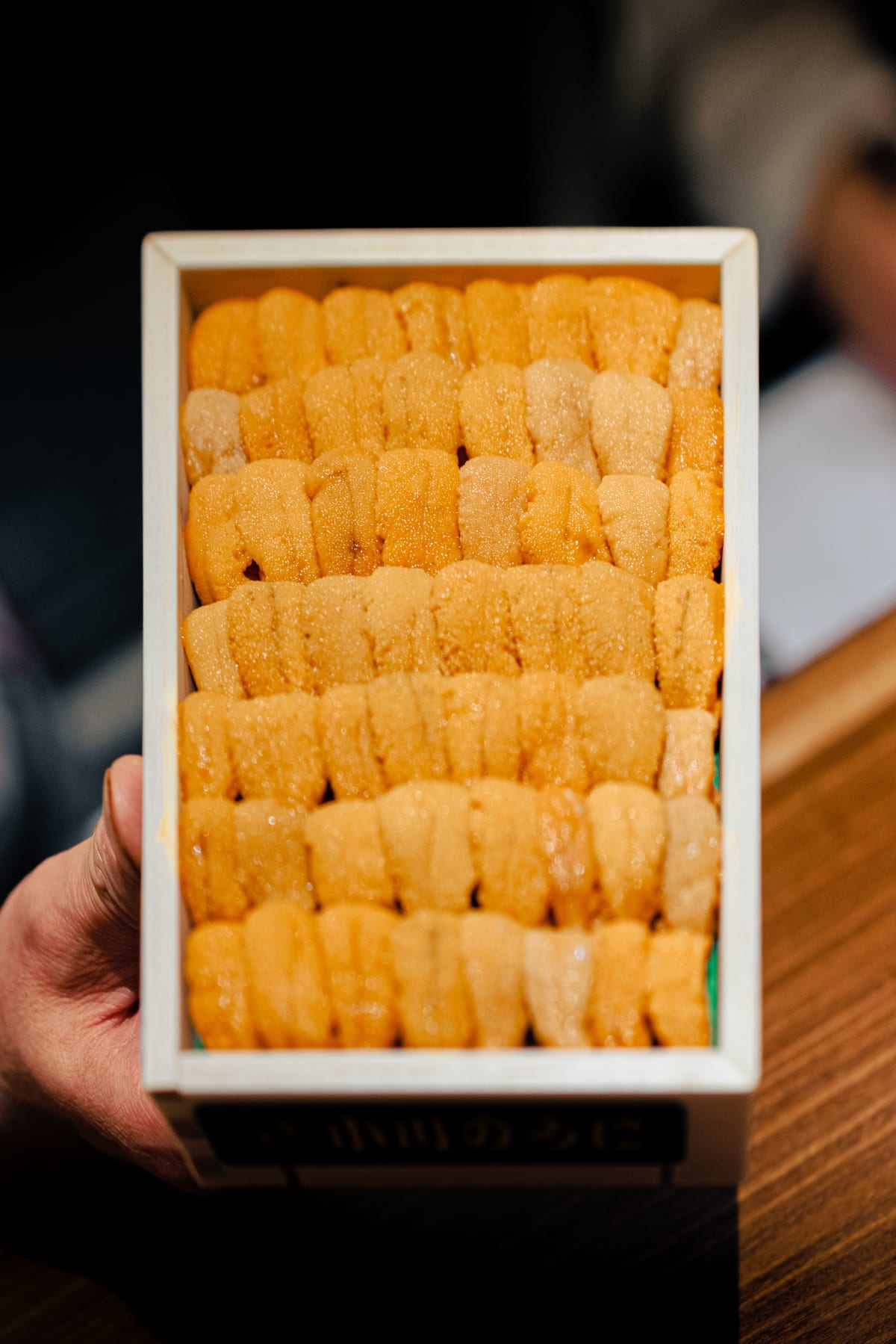
Several dishes left an impression, and the first was the uni that opened the meal. Before the dish arrived, a wooden box of uni was brought over to show us.
A sea urchin shell sat in a bowl lined with white pebbles, and on it, a cracker a little like Korean ppeongtwigi, puffed rice cake, was shaped into a cup to hold the uni. Inside was a salty liquid, like seawater, that burst in the mouth with a pop. As it burst, it came together with the uni, and the flavour was good.
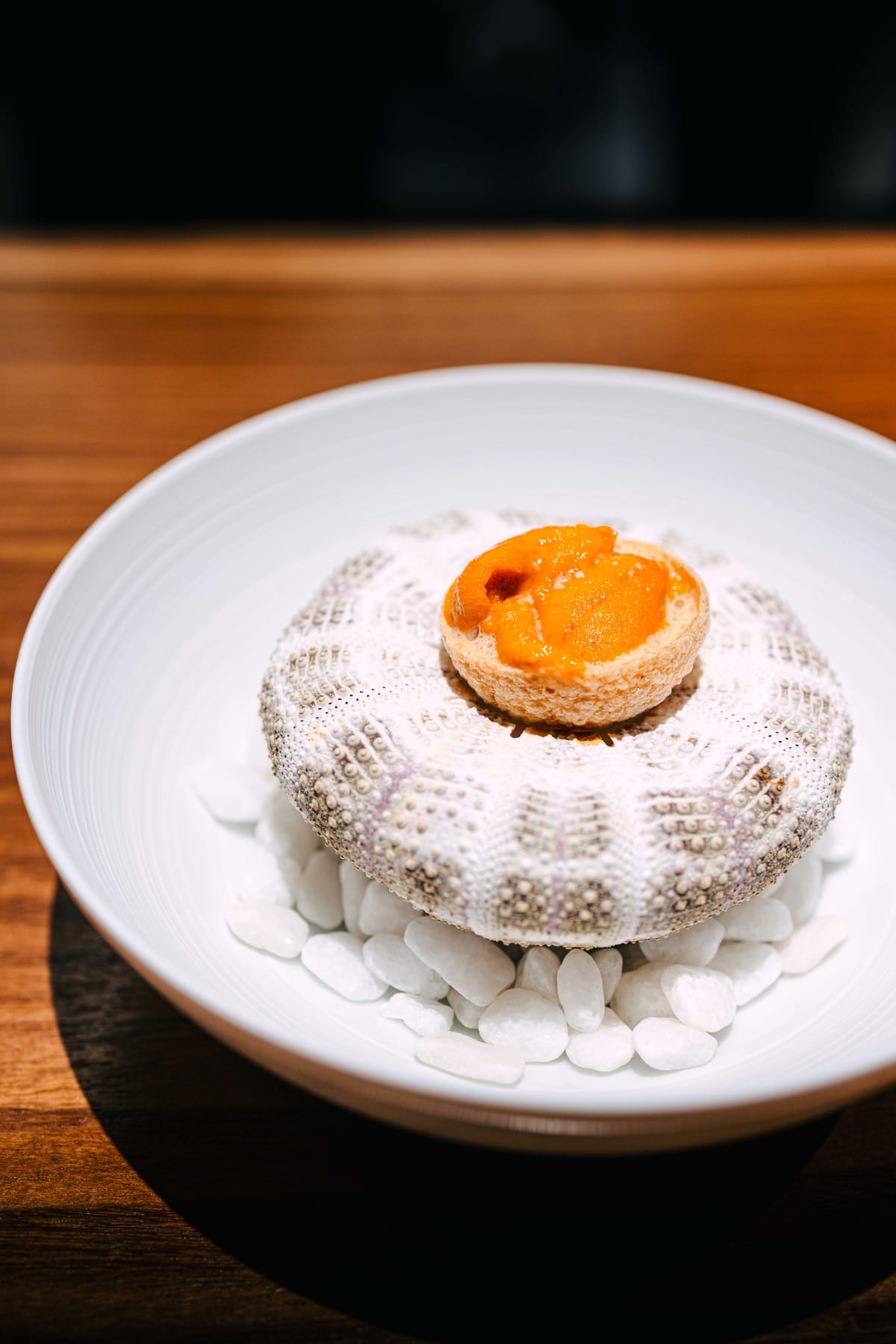
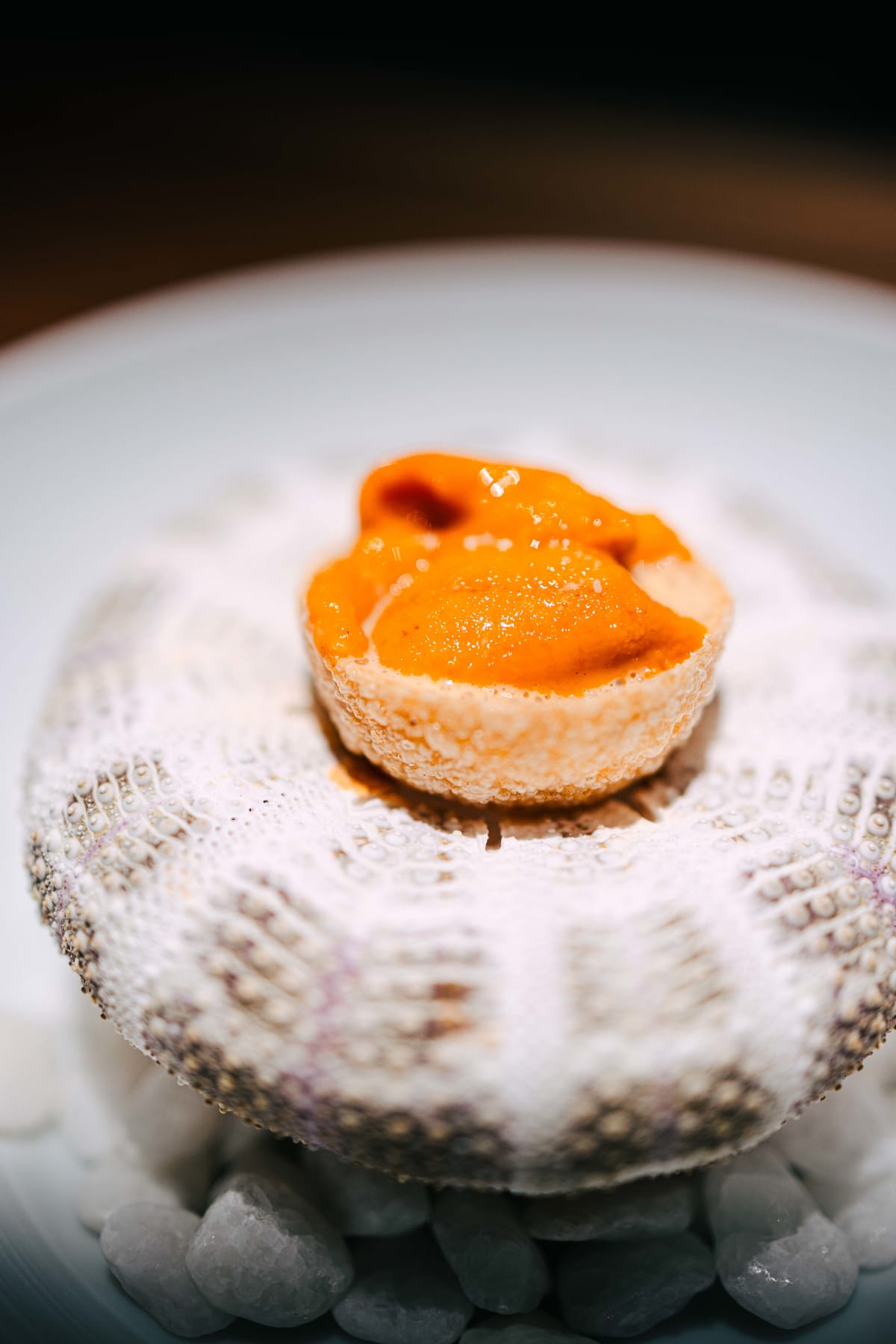
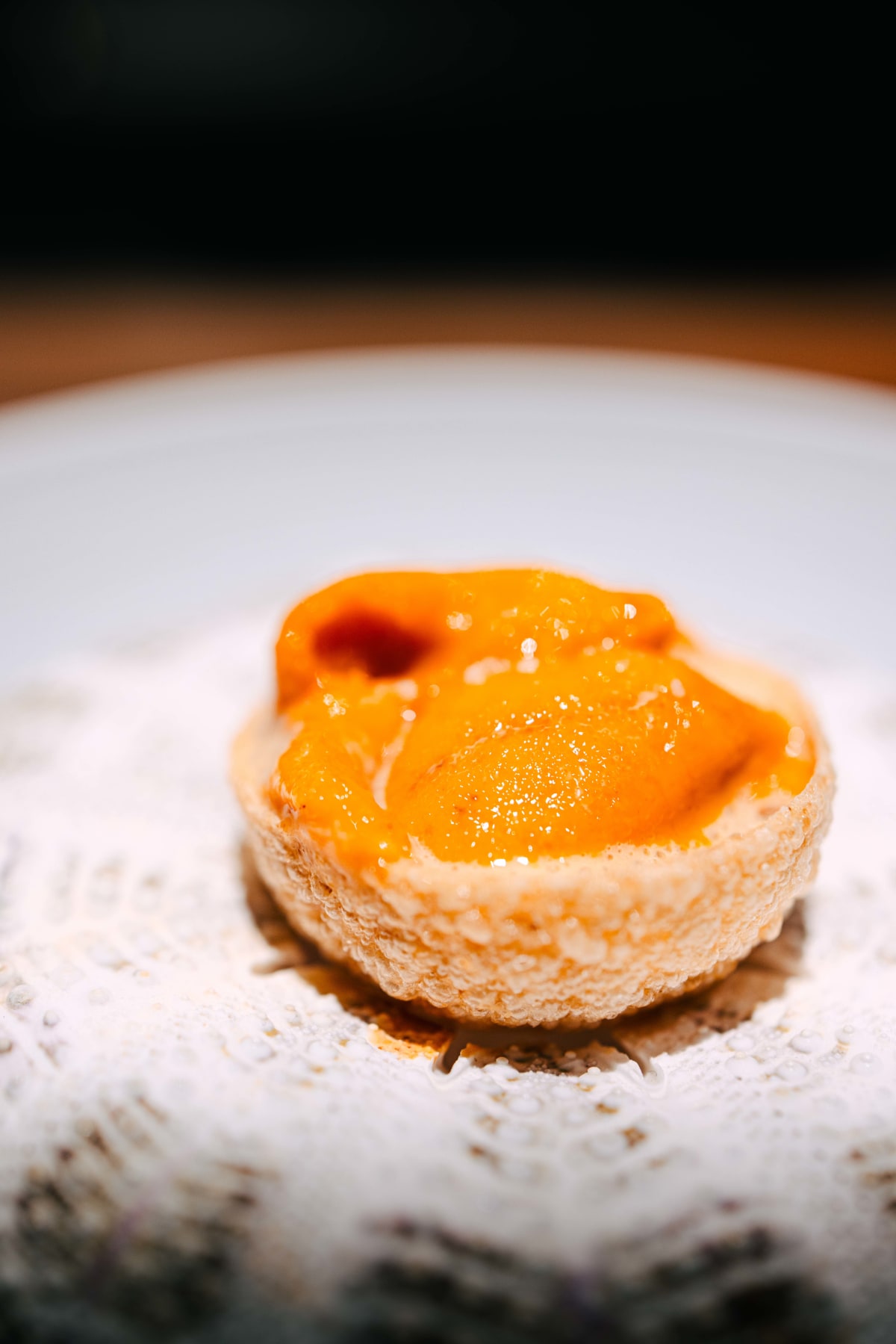
The name of this bite is written 雲丹, the characters for uni, sea urchin, but read as umi (うみ), the sea. Inside a vessel made of rice cracker, sea urchin cream and seawater sealed in jelly lie hidden, so that when you eat it in one bite, the sea opens up in your mouth.
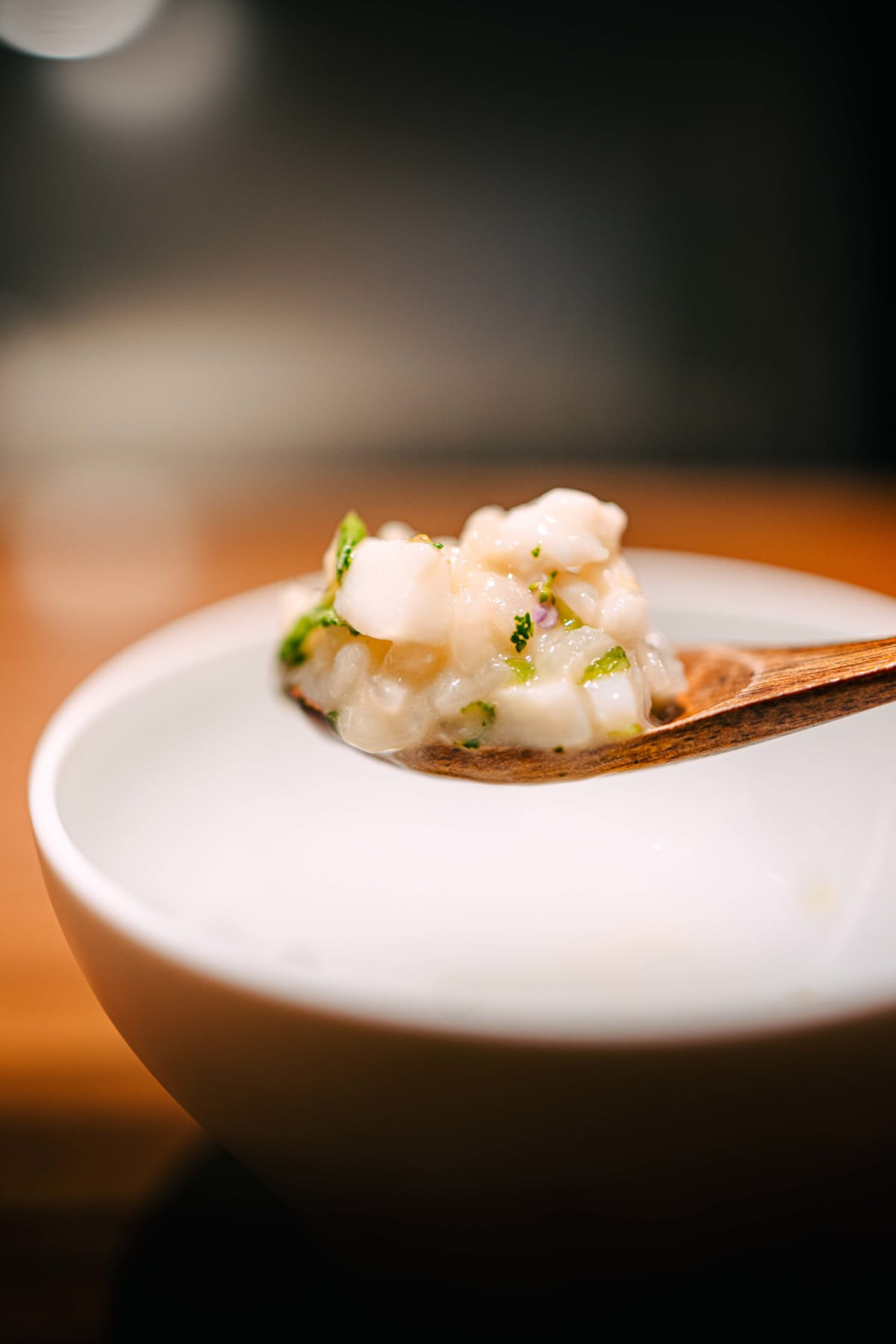
The second dish, after the uni, was risotto with filefish. It came under a white porcelain lid pierced with holes.
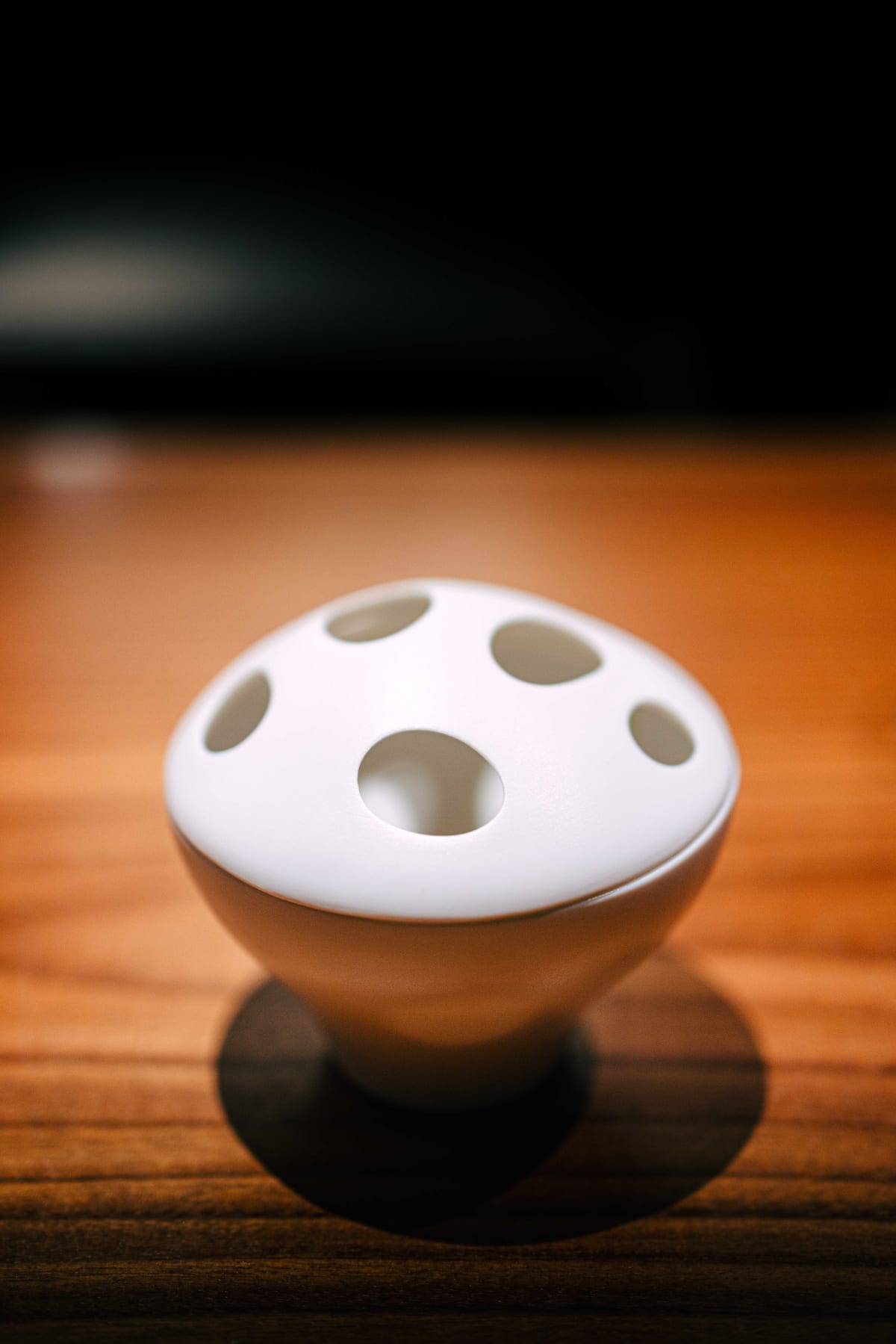
When the lid came off, there was the risotto, topped with cubes of filefish, small leaves, white and purple flowers and a ring of green oil.
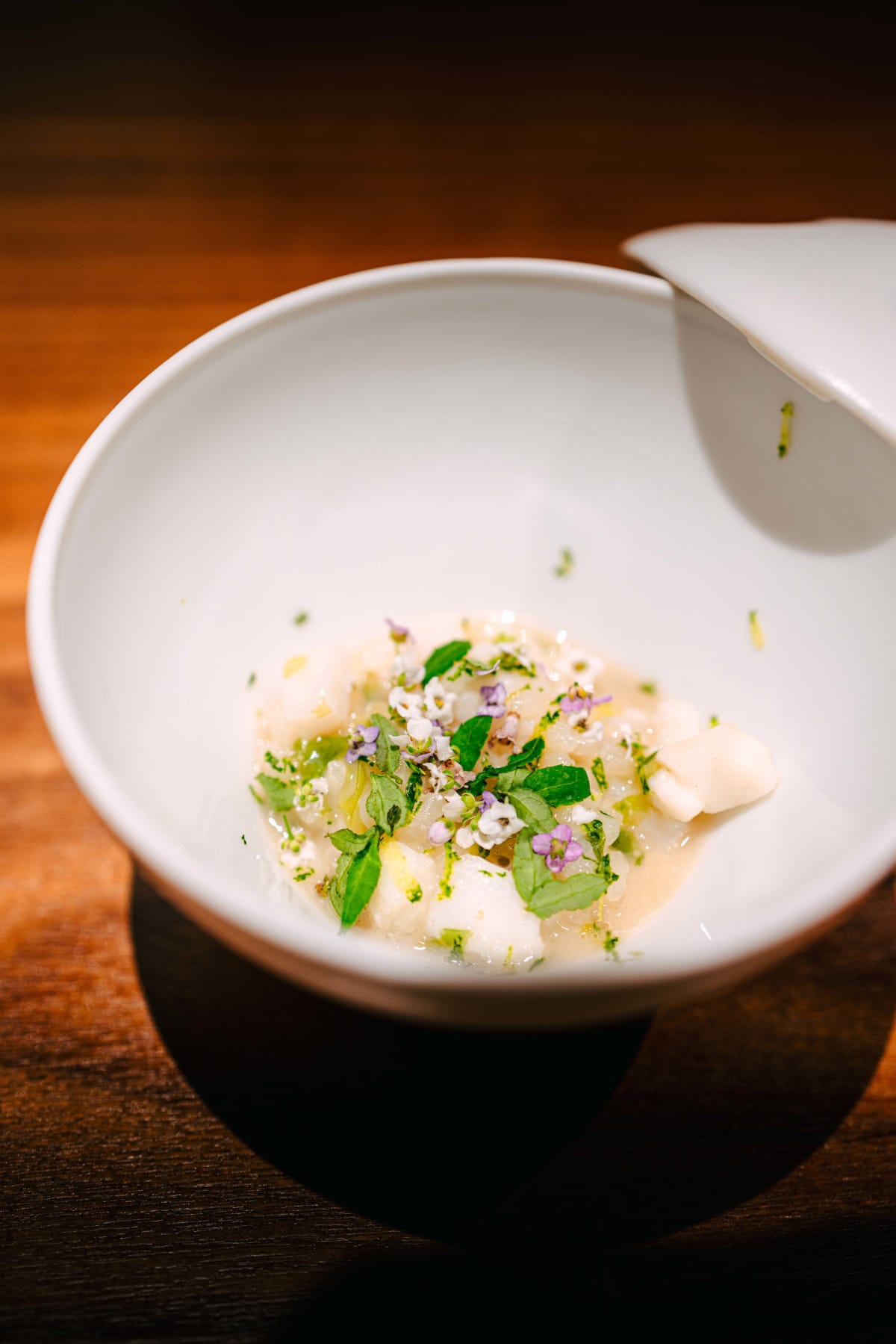
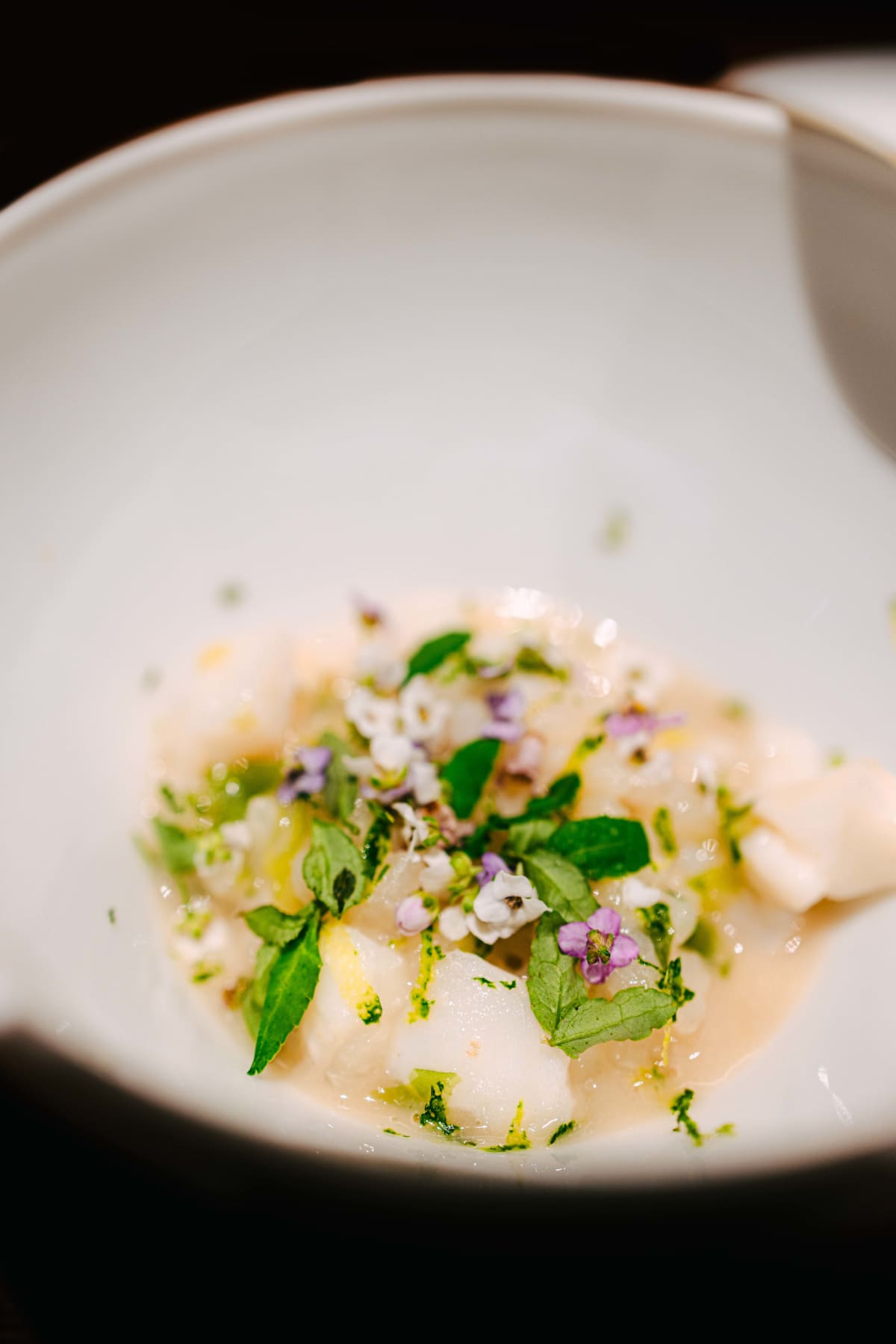
Seasonal risotto made with rice from Yosano (与謝野) in northern Kyoto Prefecture is a perennial favourite here.
Section 4·Theatre At The Counter
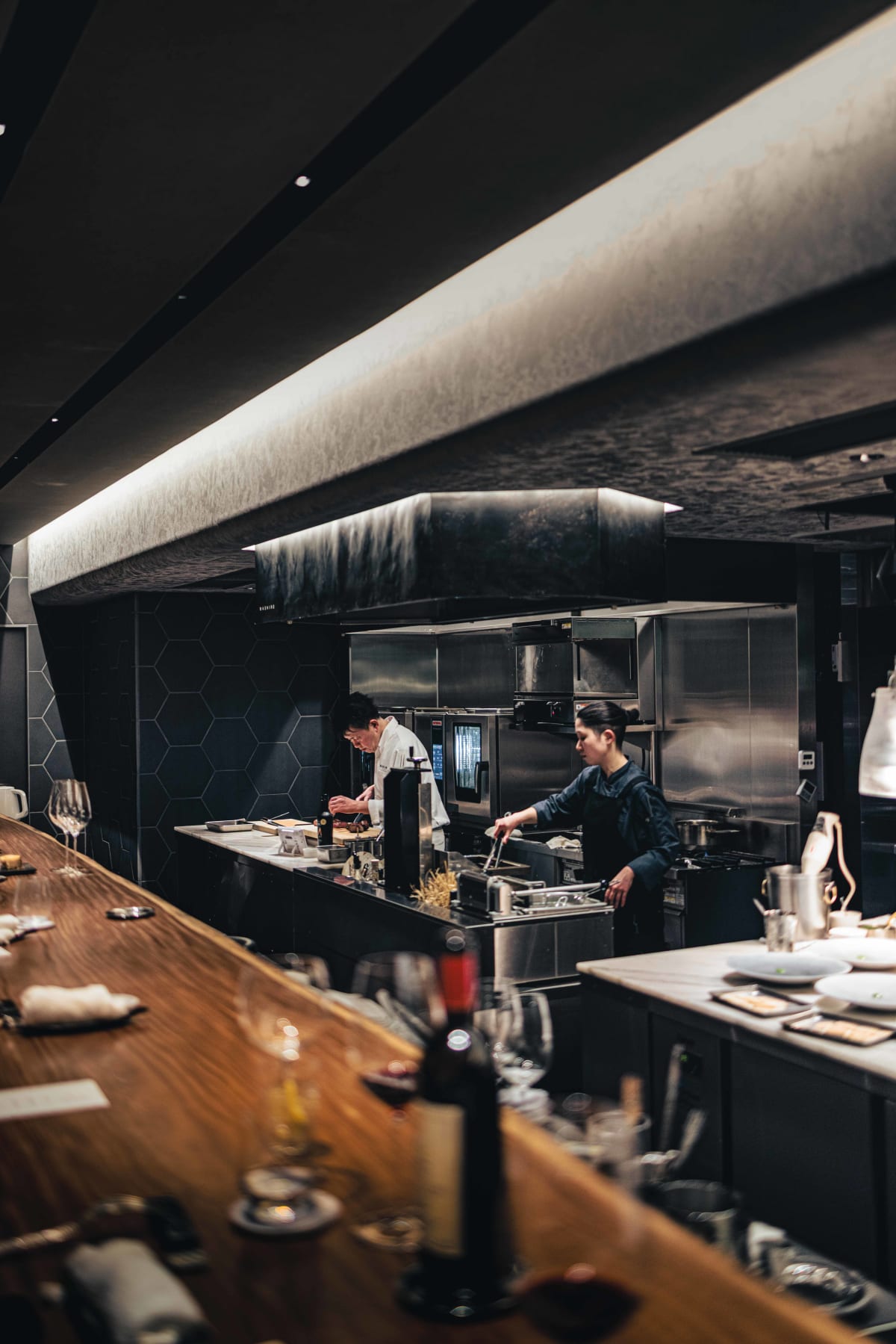
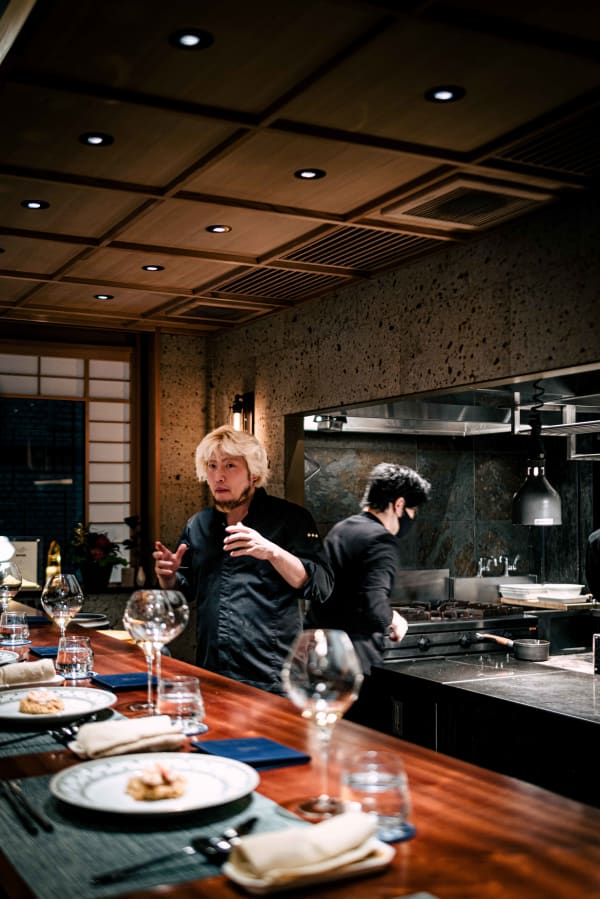
What impressed me about dining at Mashiro, beyond the food, was how well it uses the counter, that most Japanese of dining spaces. I loved the way the room stretches out long and open, and I liked how, as if I were watching a performance in a theatre, the space where the chef presents the cooking and the space where the ingredients are shown to the guests were each brought sharply into focus.
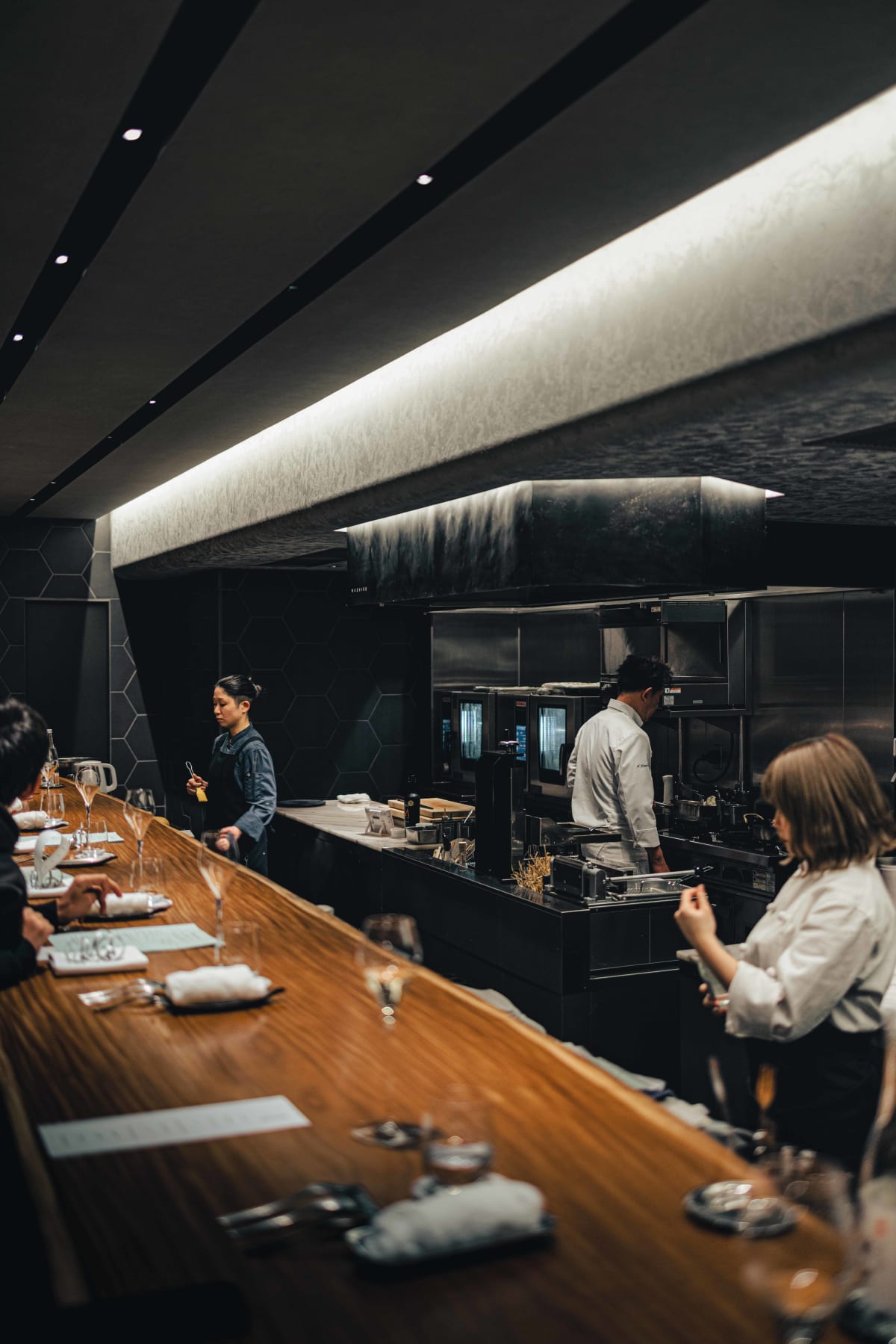
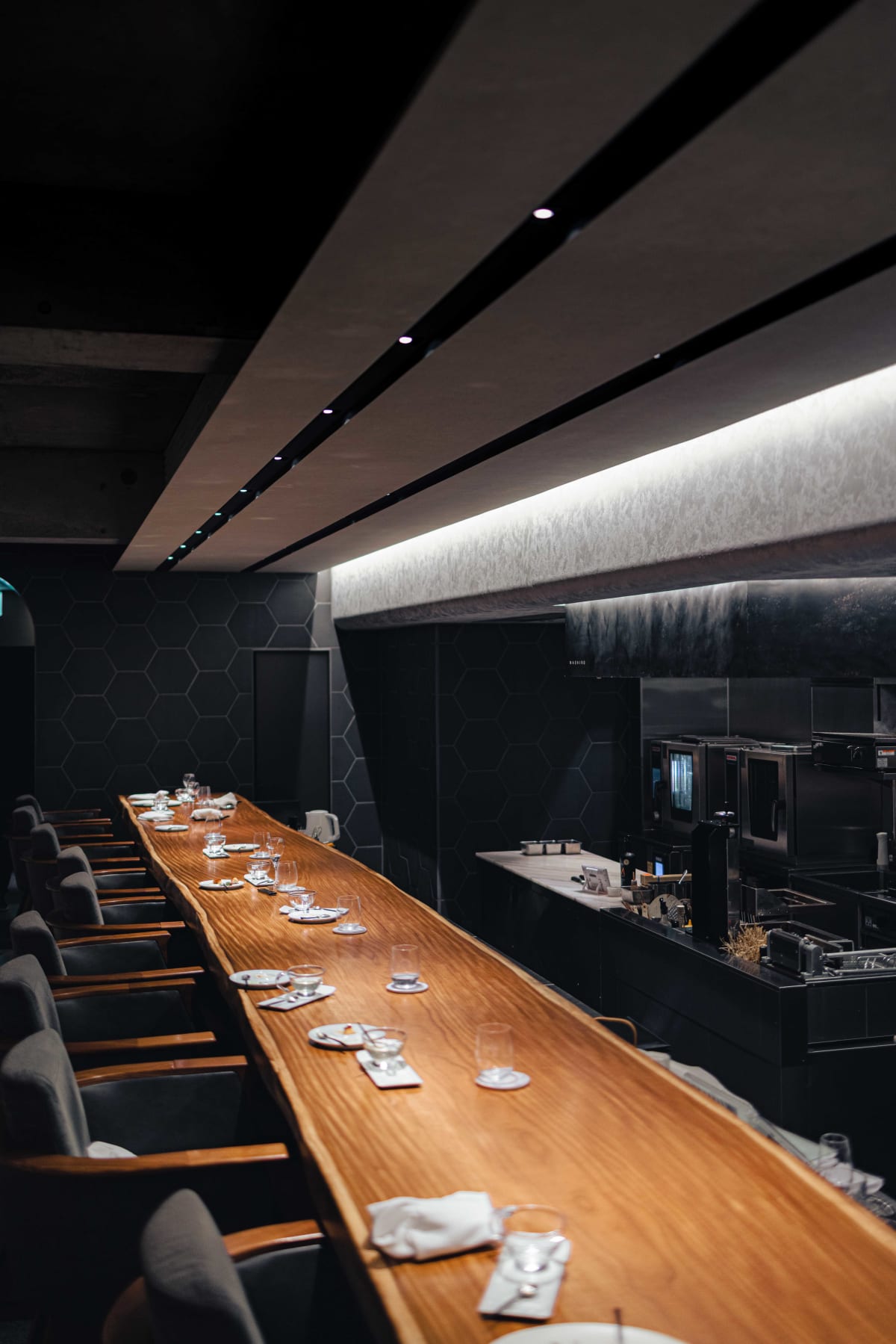
The eleven-seat counter is a single slab of wood more than ten metres long, and the walls are said to be lined with 800 hexagonal Kyoto roof tiles, kyogawara (京瓦), modelled on Rokkakudo. According to the chef, only one craftsman in all of Japan can fire these tiles, and each one takes two days in the kiln.
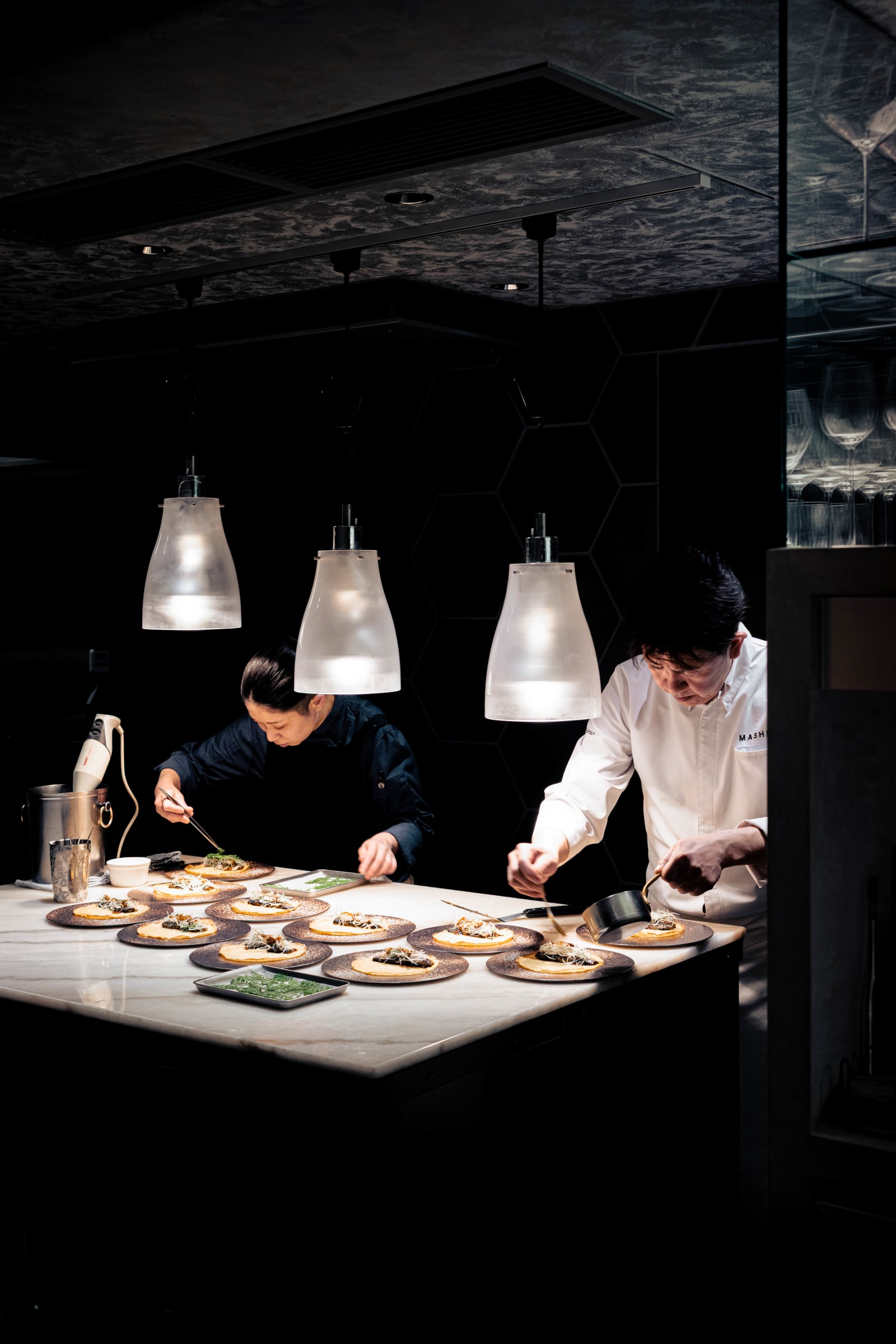
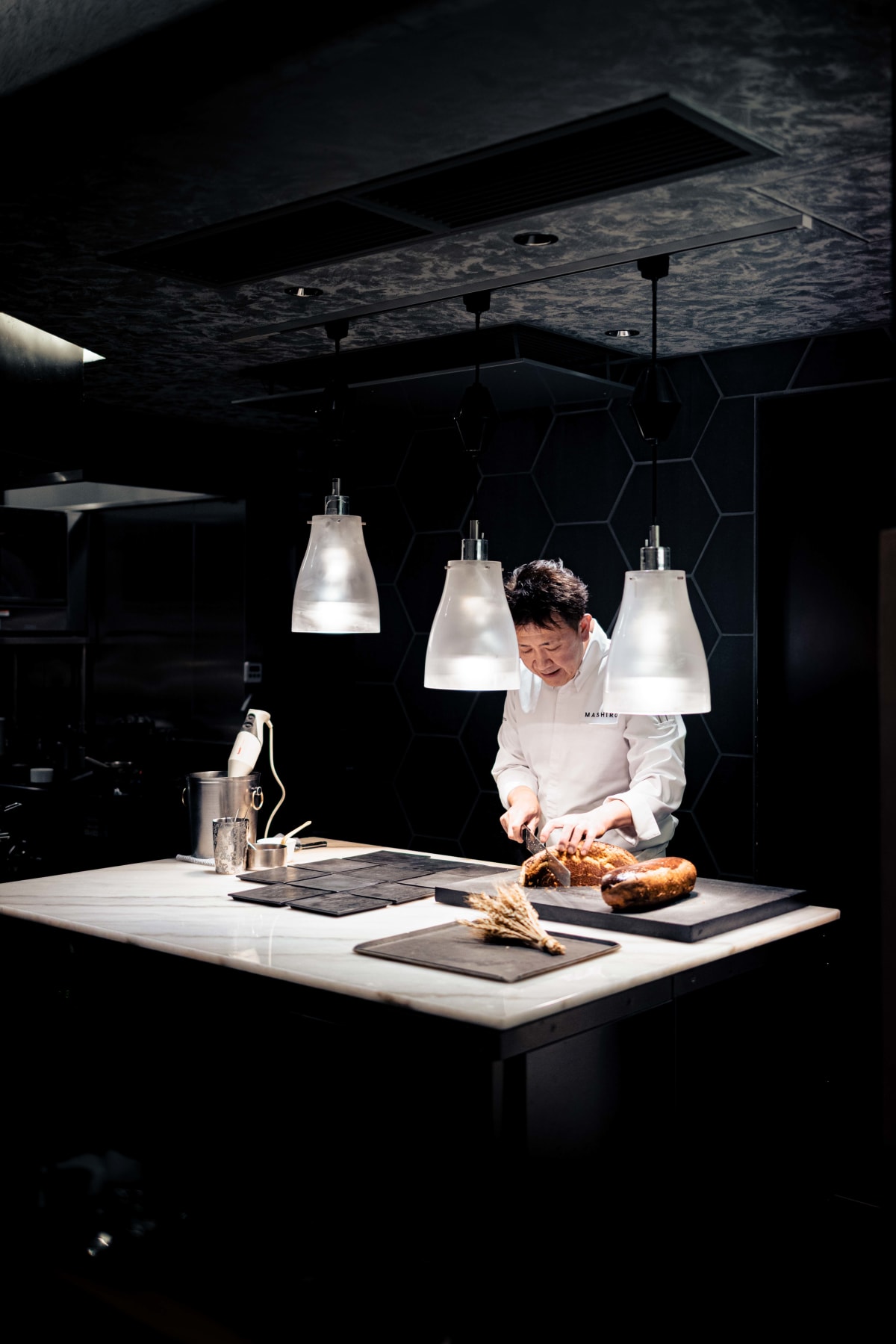
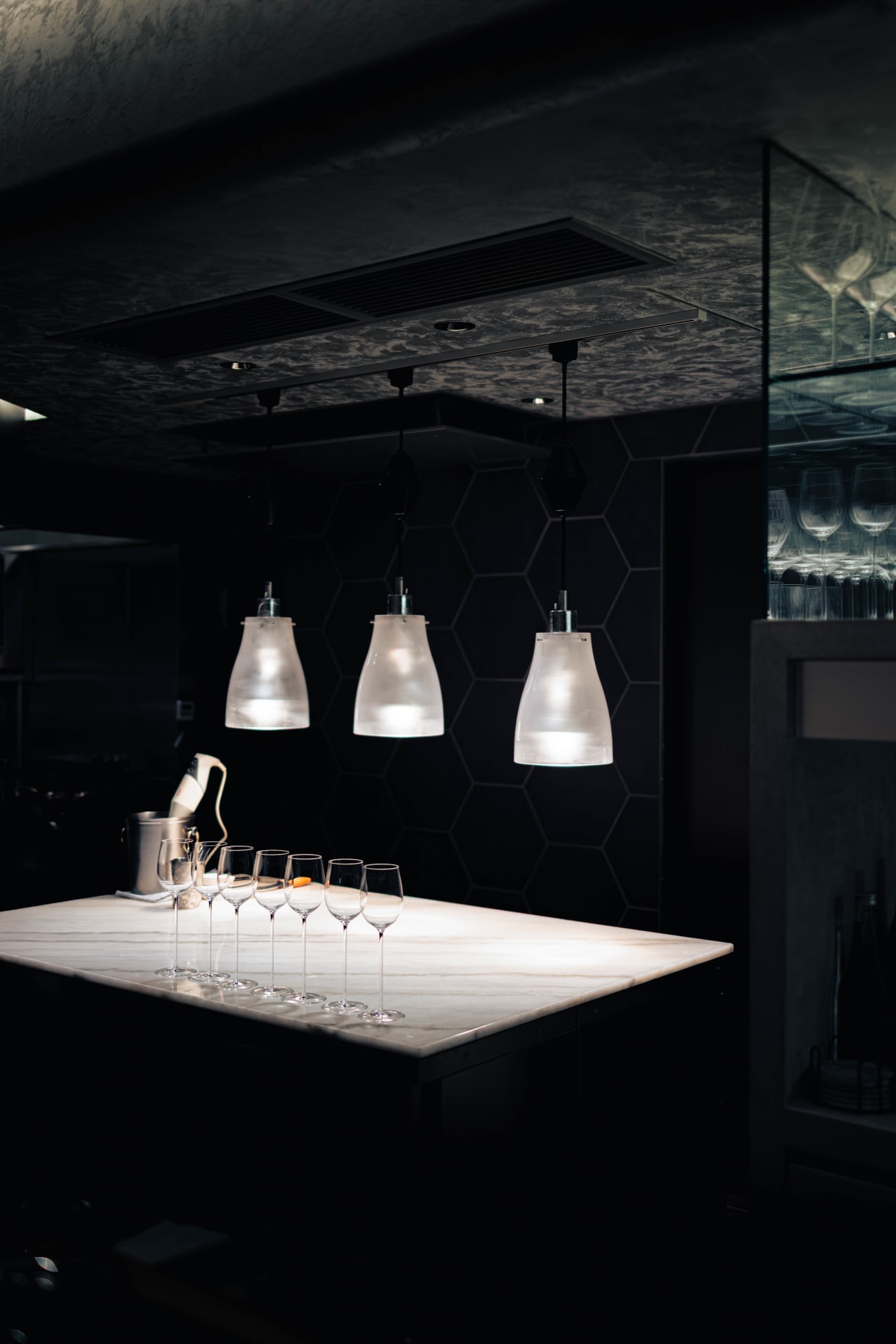
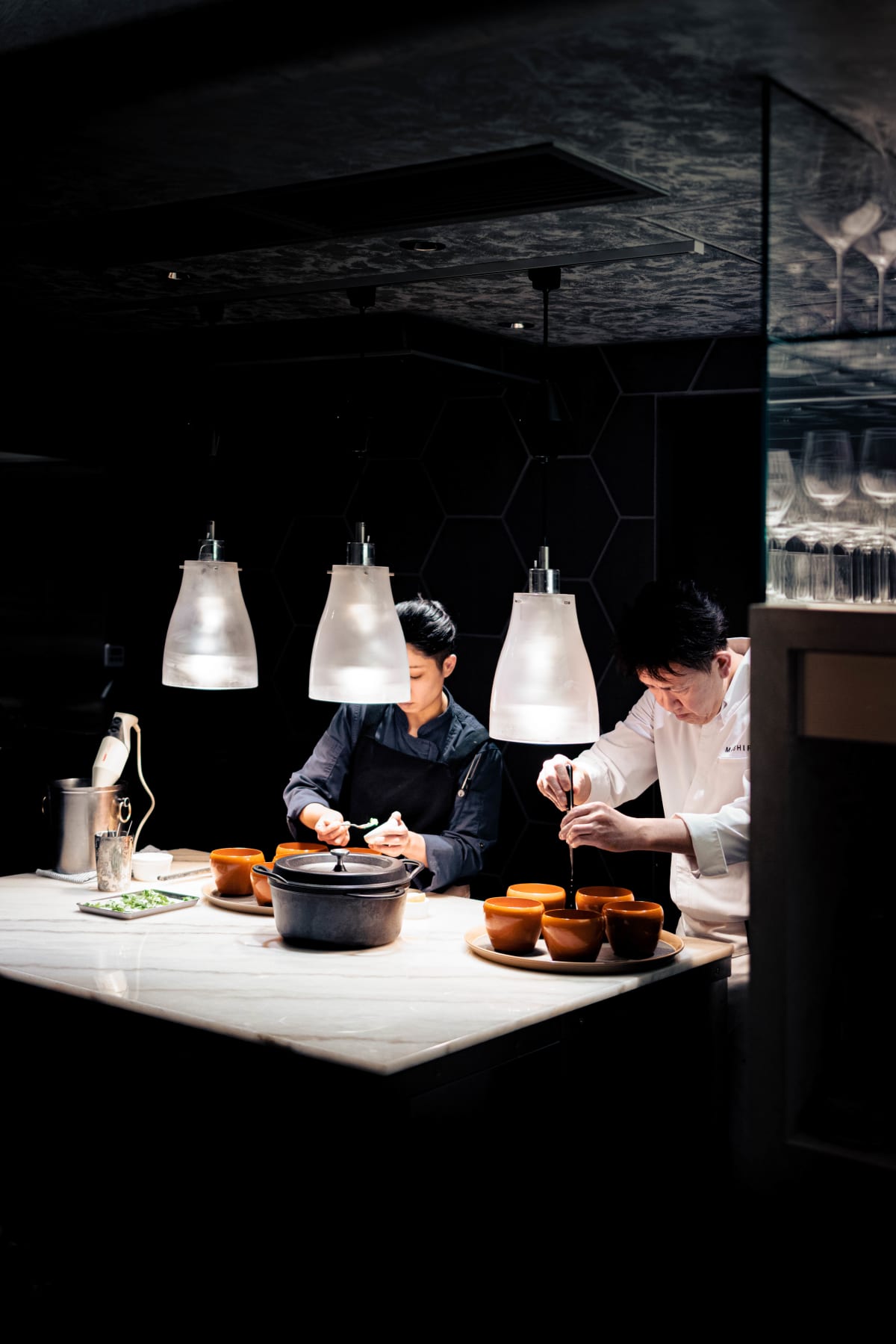
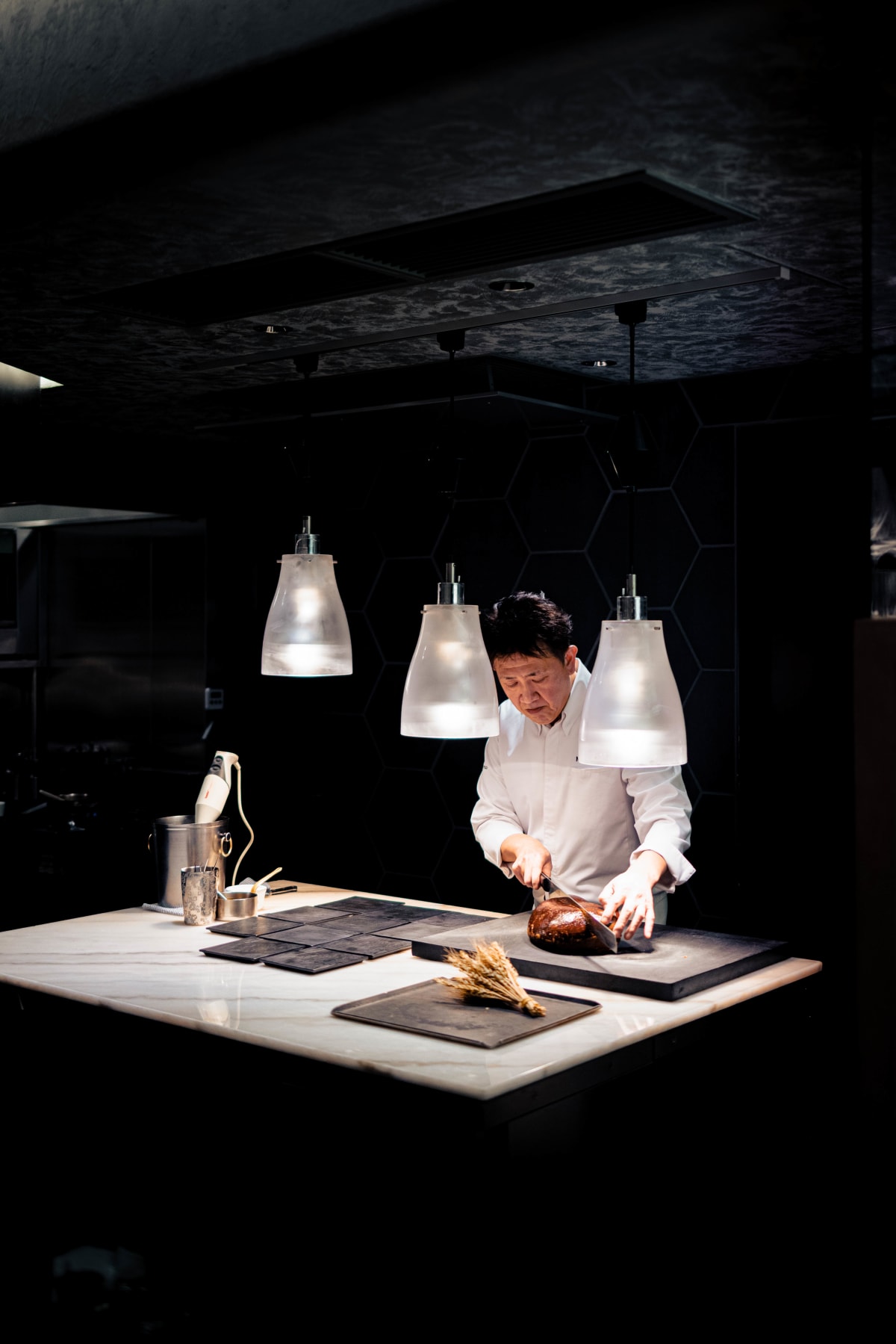
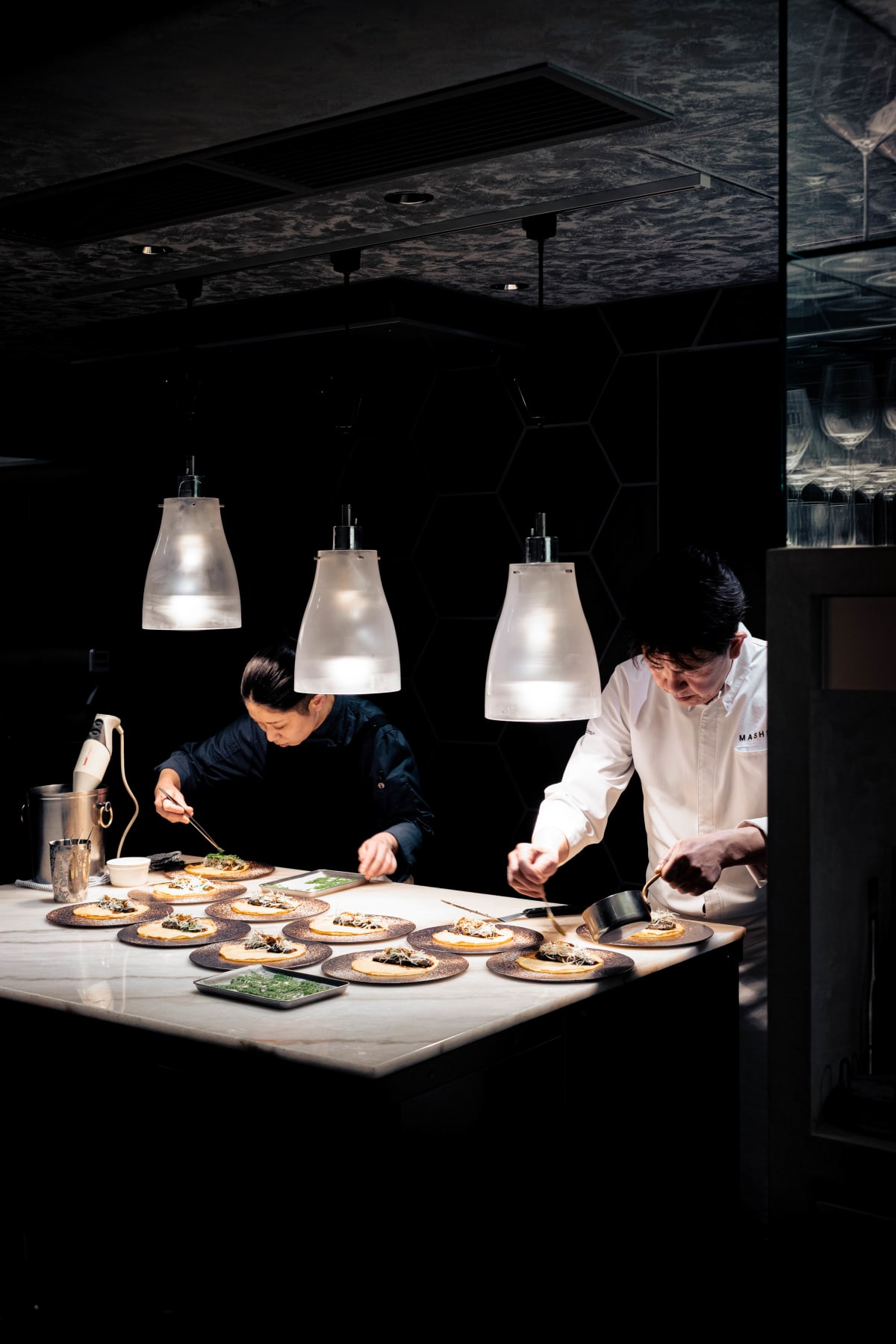
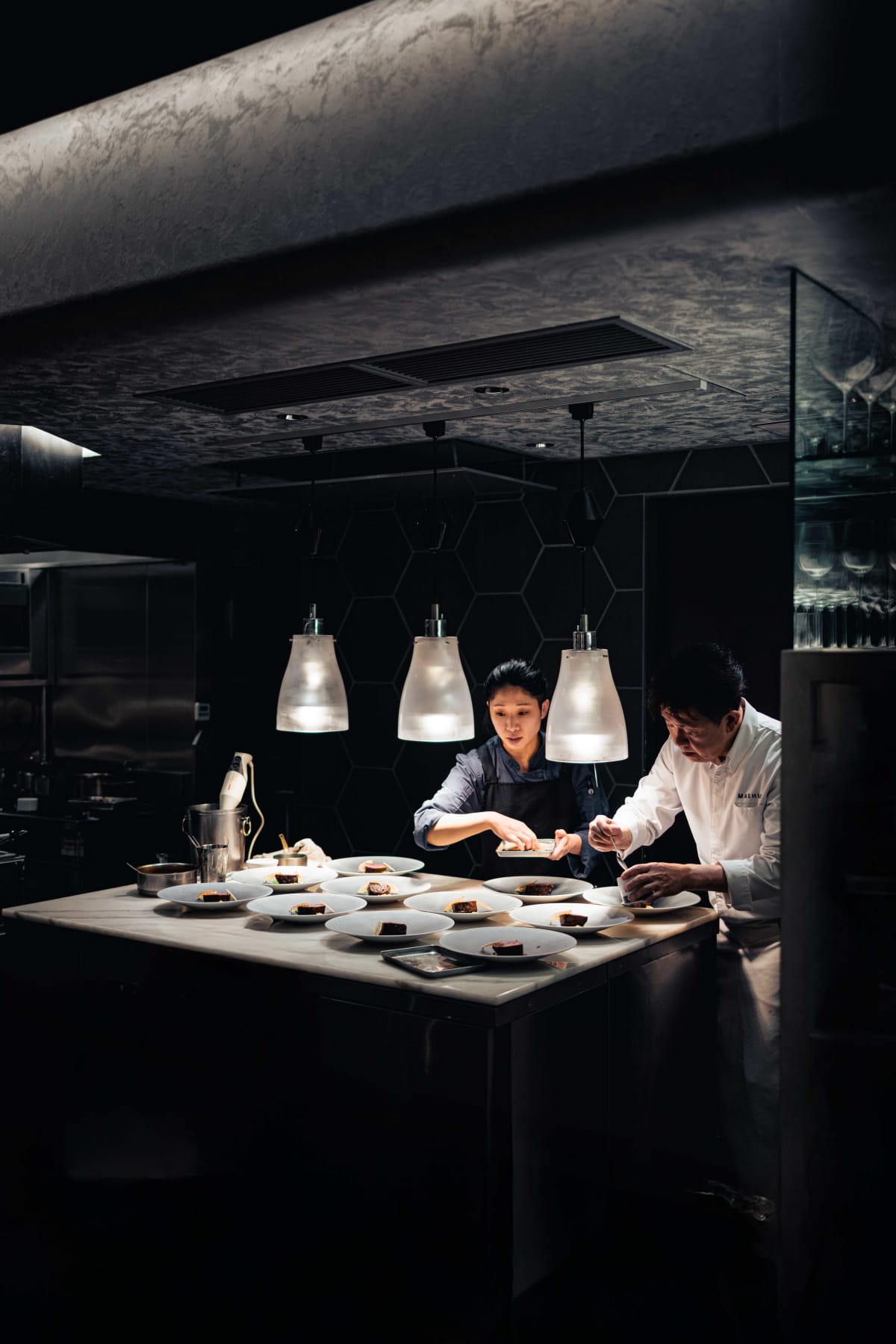
Behind the counter stands a separate marble station hung with three pendant lamps, and under those lamps, right in front of the guests, the soup was ladled, the bread sliced, and the crêpes and the main course plated. The press release for the opening, too, described the house style as the chef facing each guest across the counter and serving the food live.
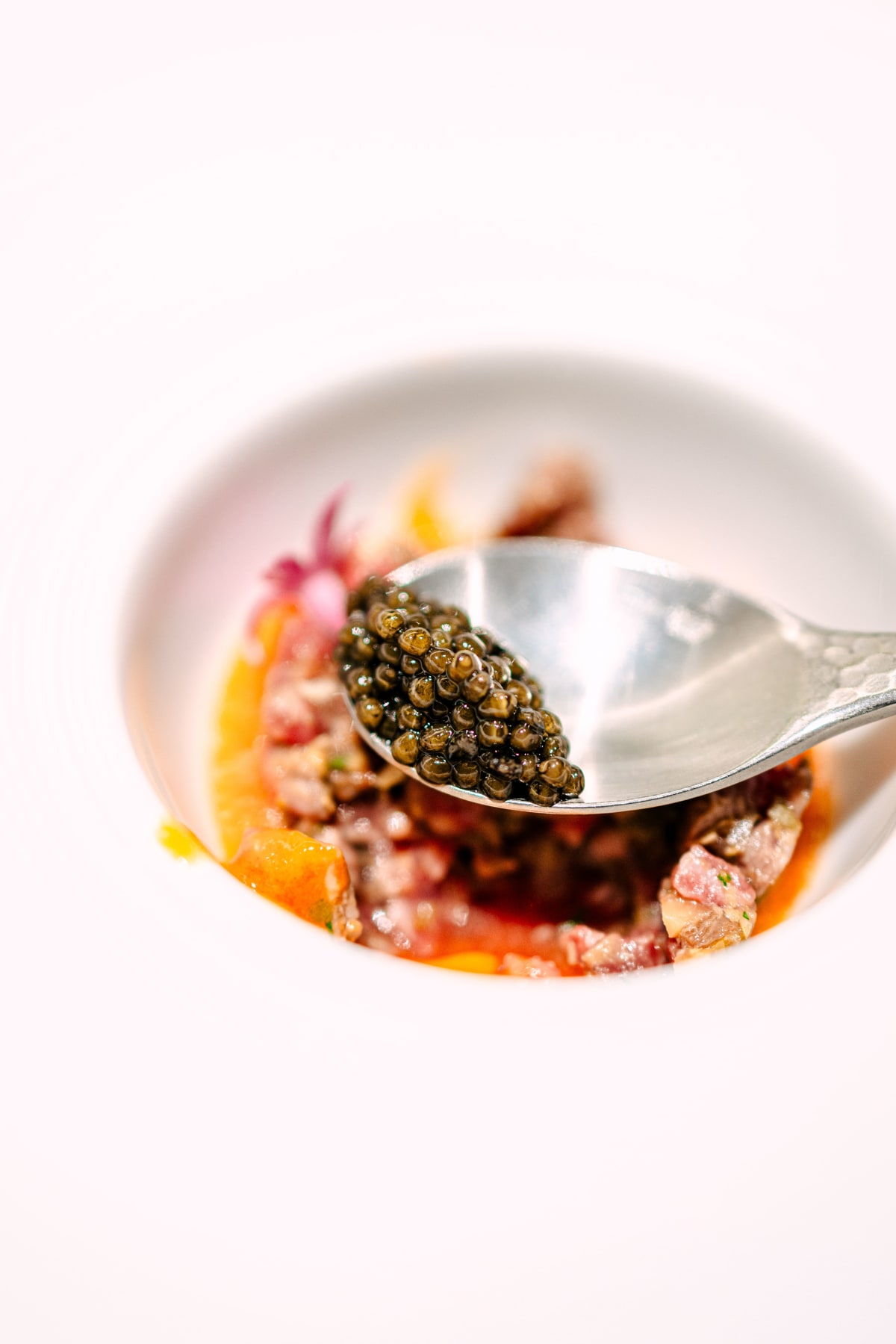
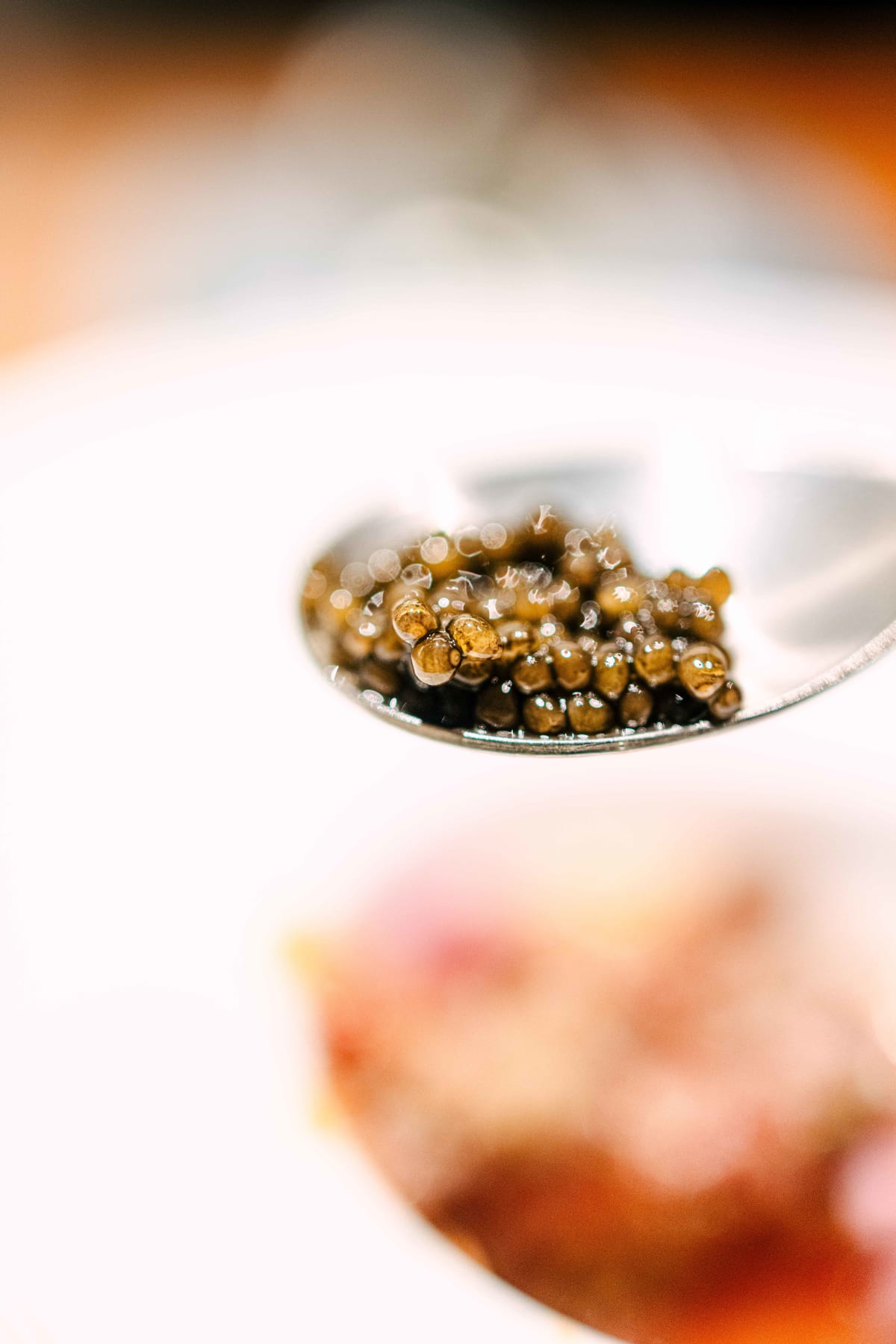
This counter stage shone brightest when they showed us the caviar that comes with the Wagyu beef tartare. First, a big tin of caviar, heaped high above its rim, was carried out and shown to us.
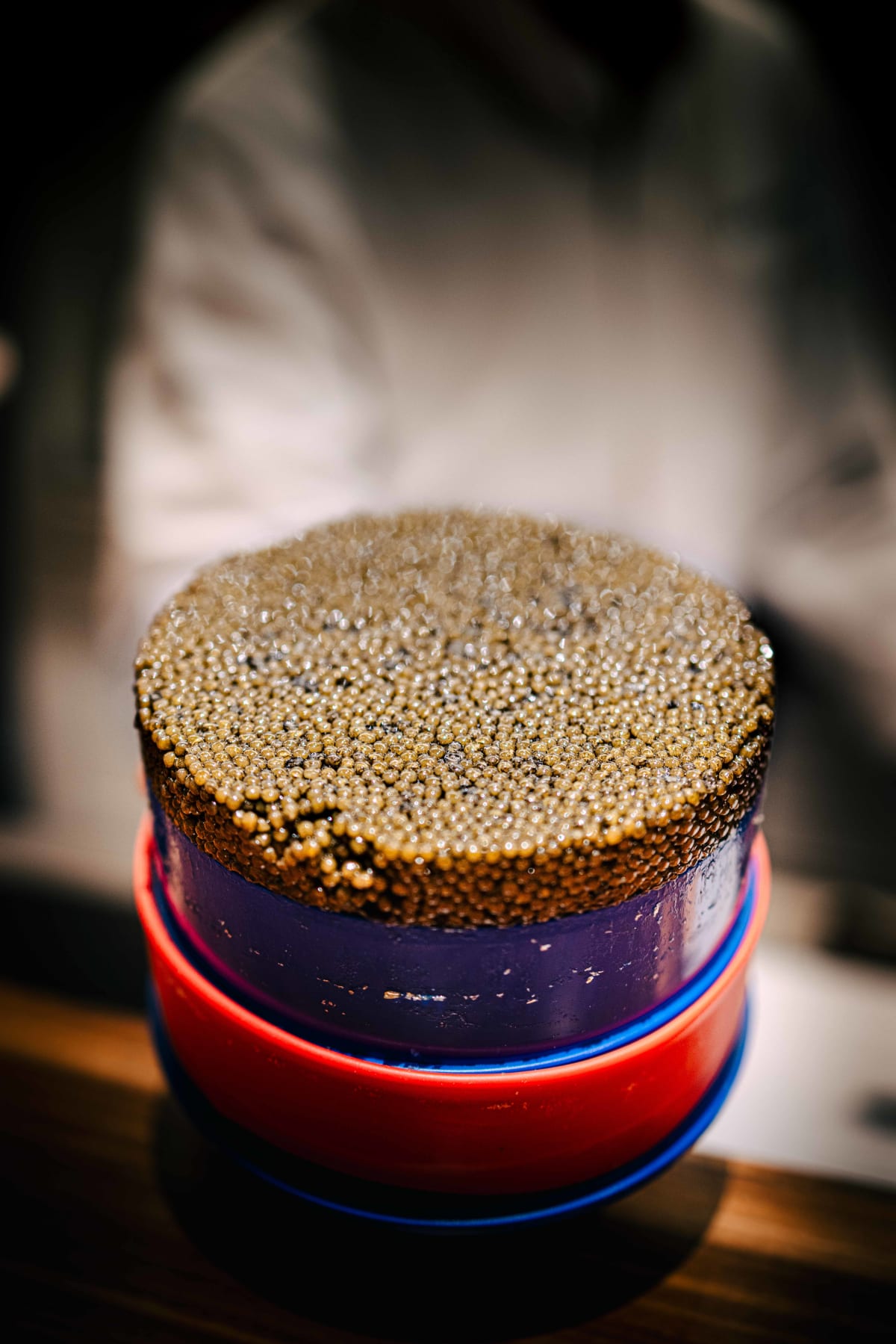
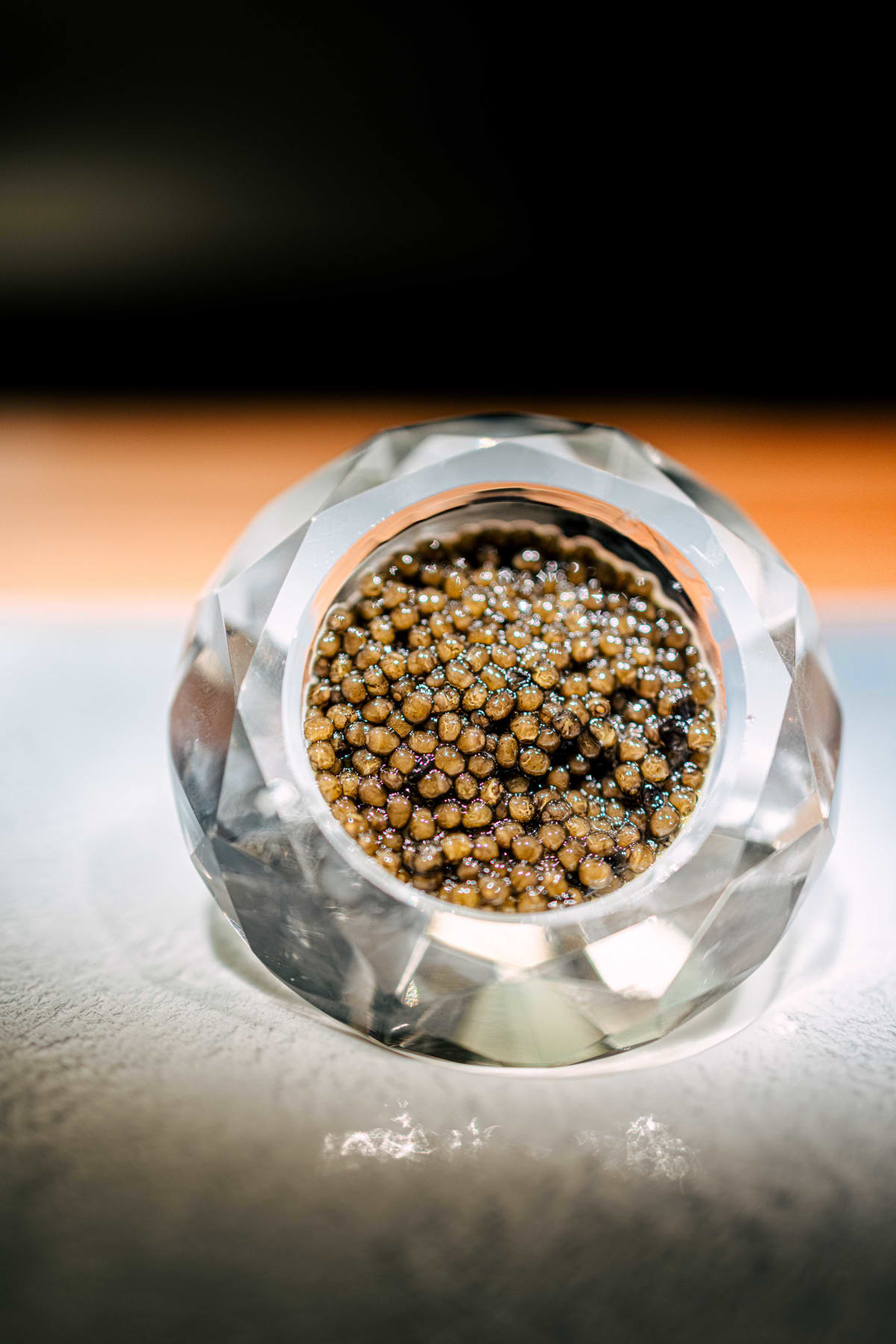
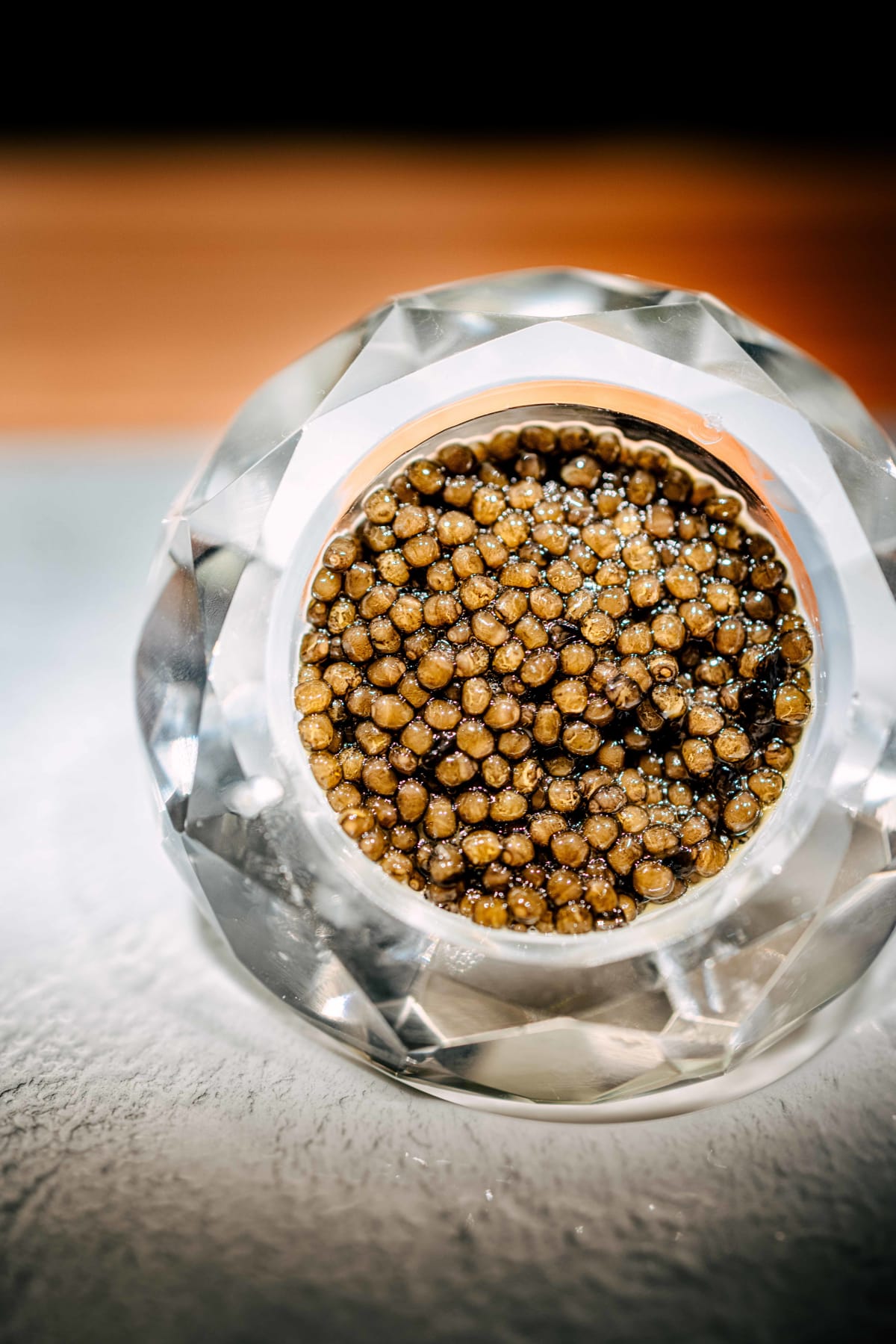
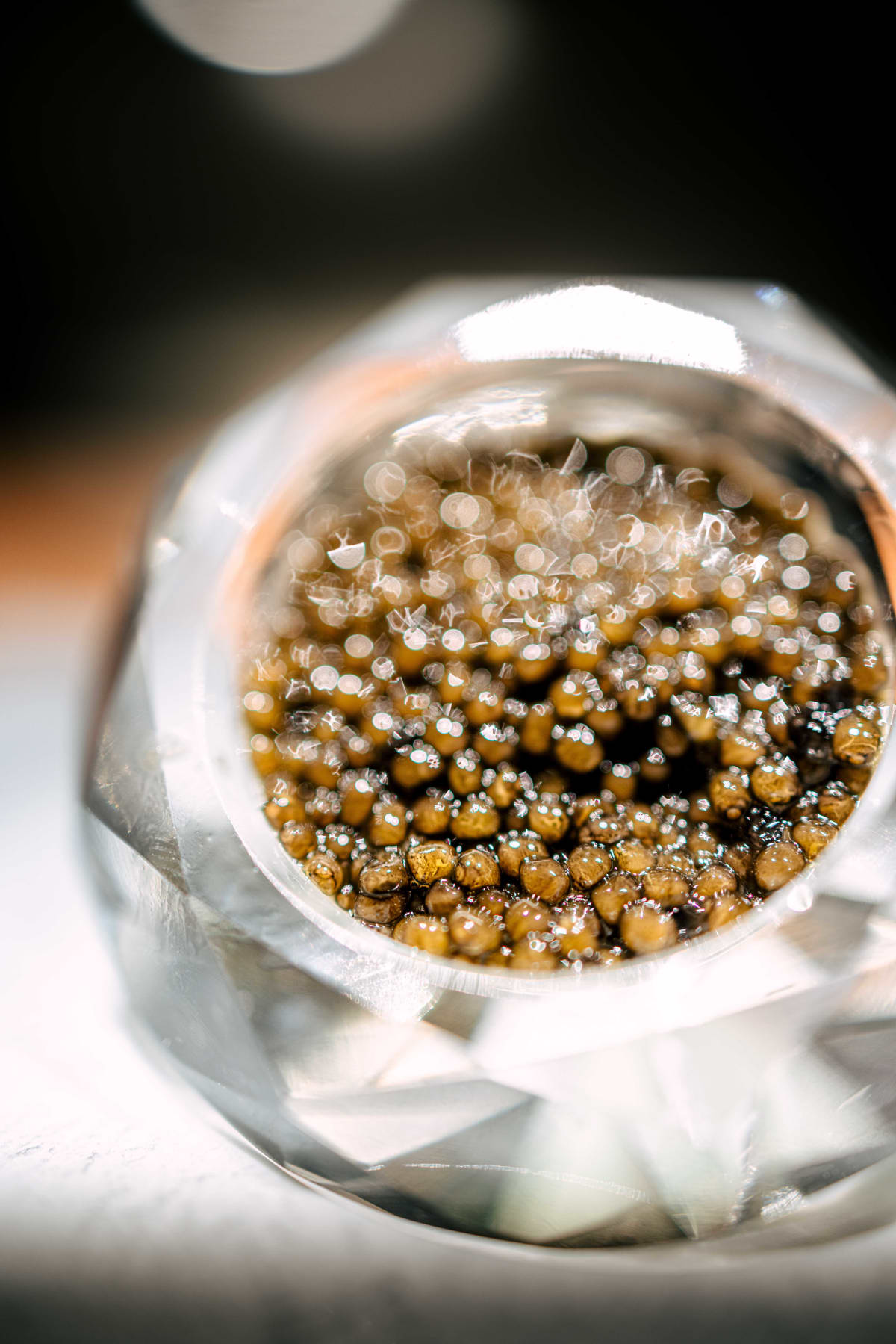
A little later the caviar came round again, divided among several faceted crystal vessels on a crystal platter.
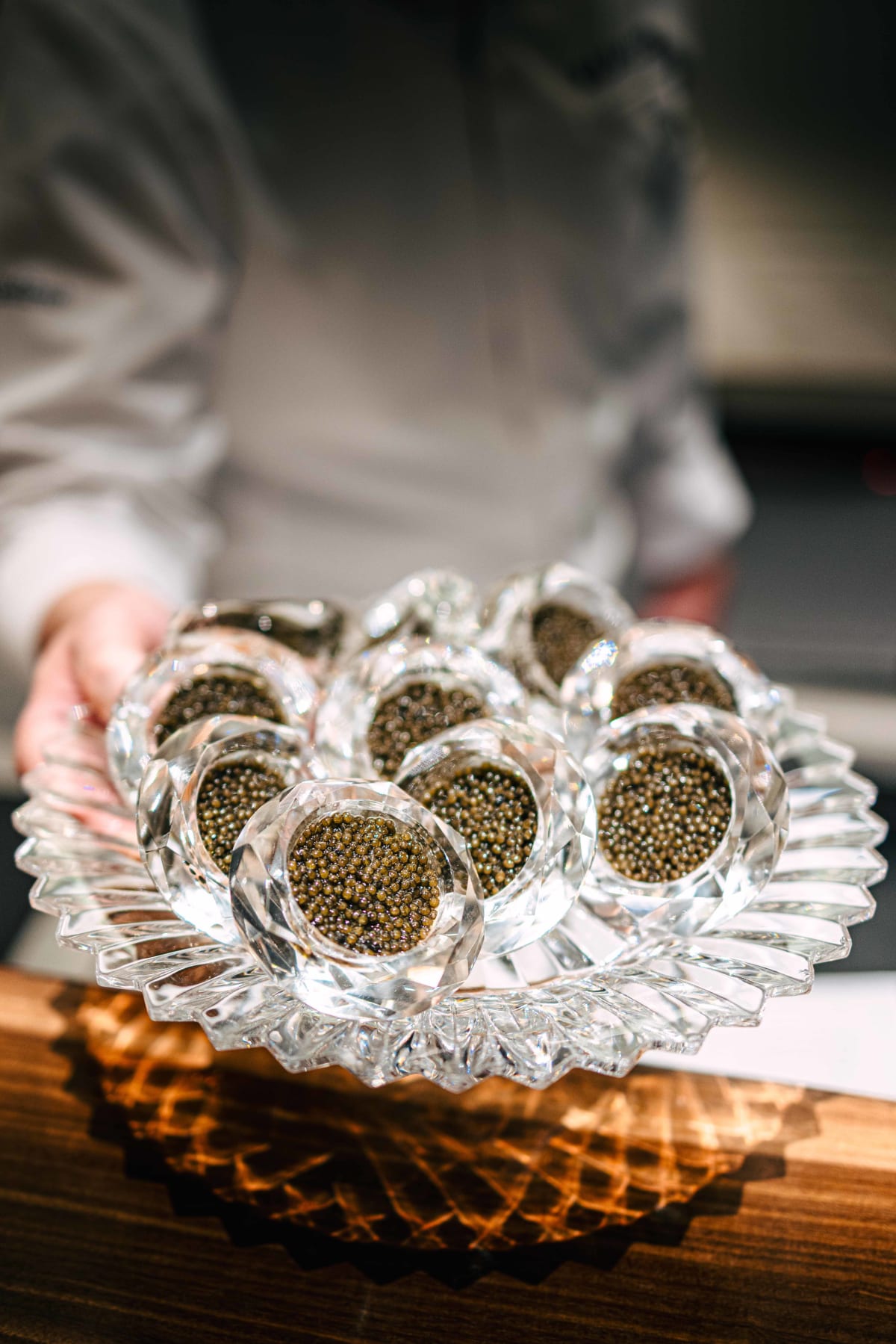
The caviar itself tasted much as it does at other high-end restaurants, but what made it memorable was the sight of it, beautiful and overwhelming both times it was shown.
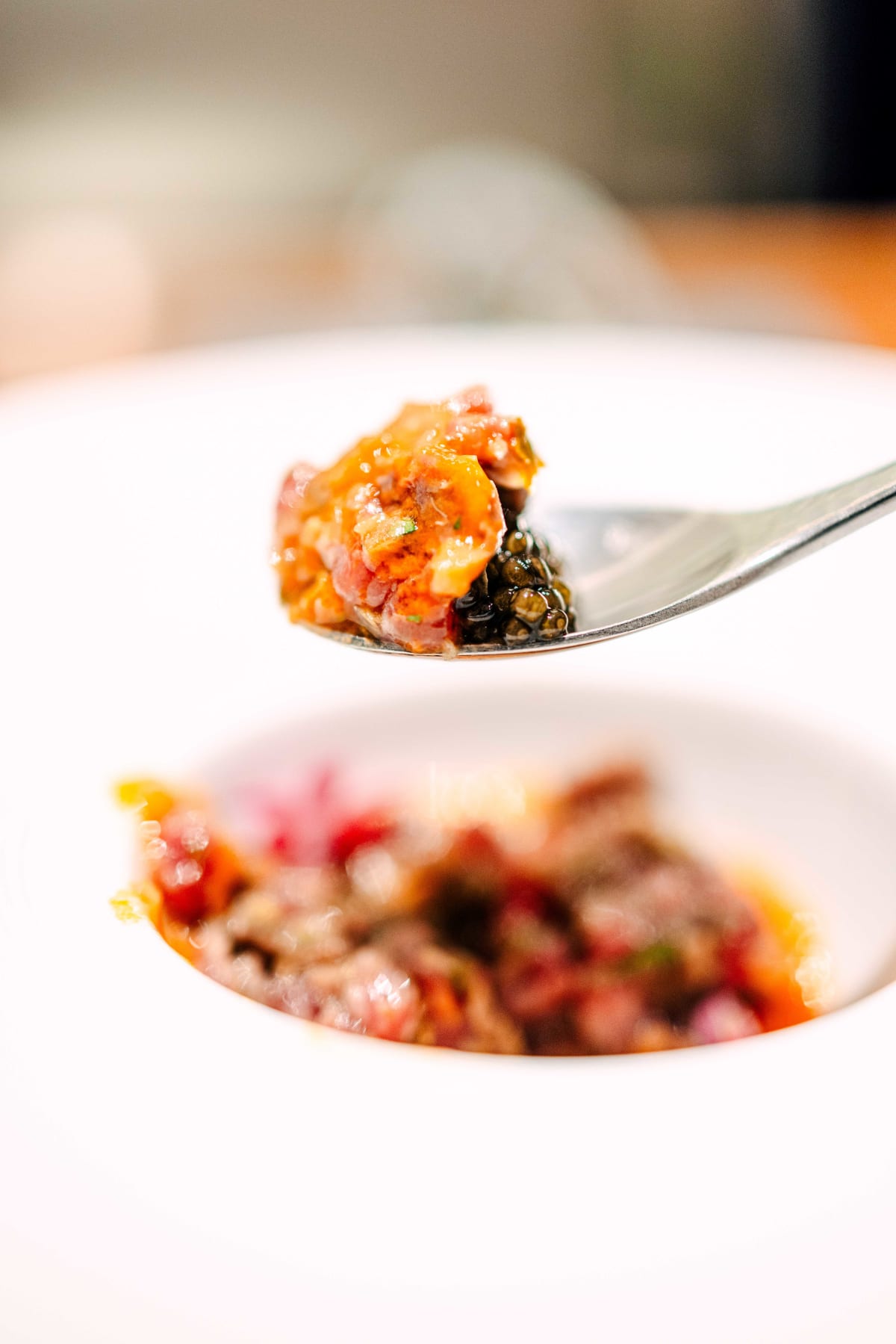
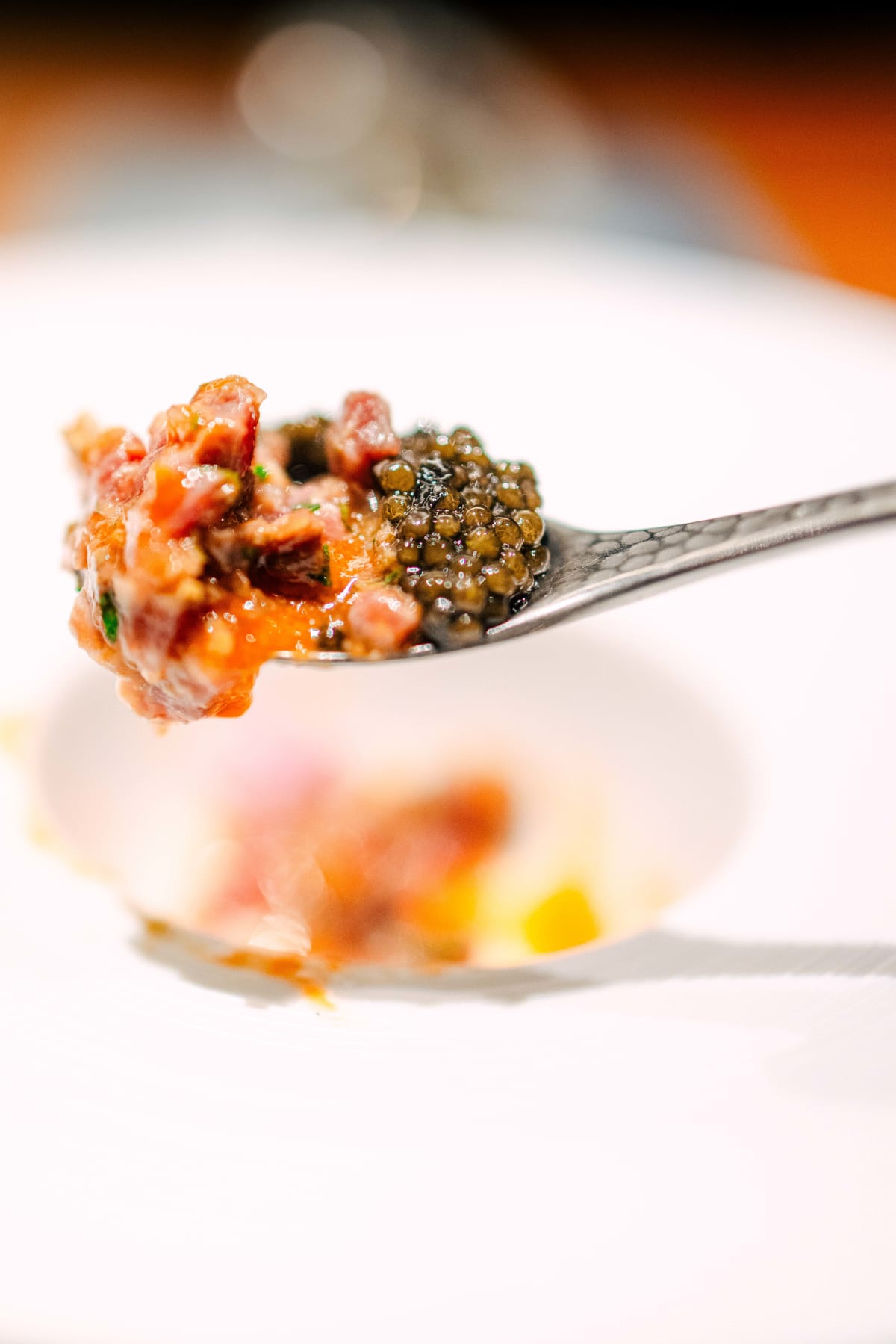
The Wagyu tartare was set in a round in the well of a wide-rimmed white plate, ringed with an orange sauce and topped with two pink star-shaped flowers.
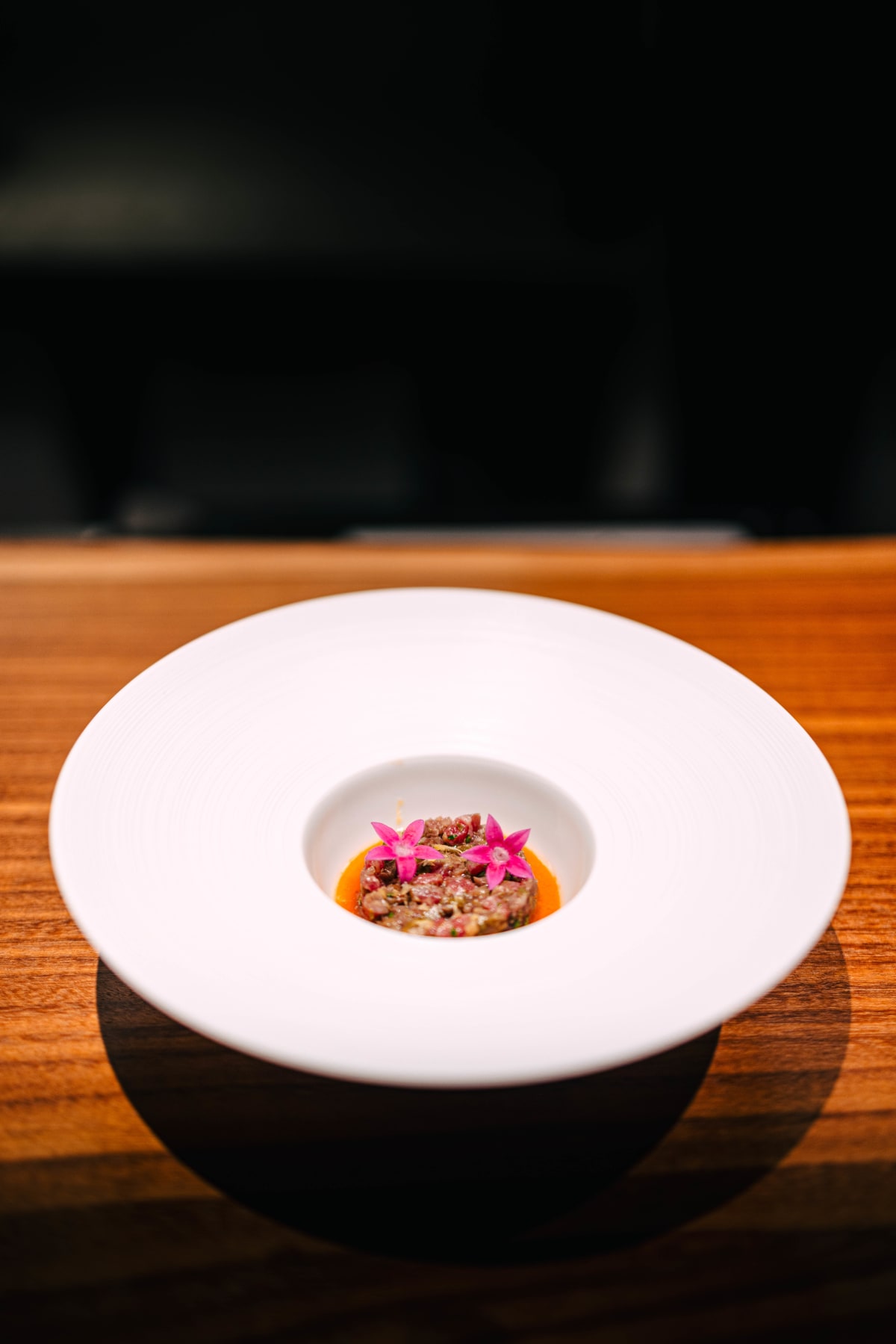
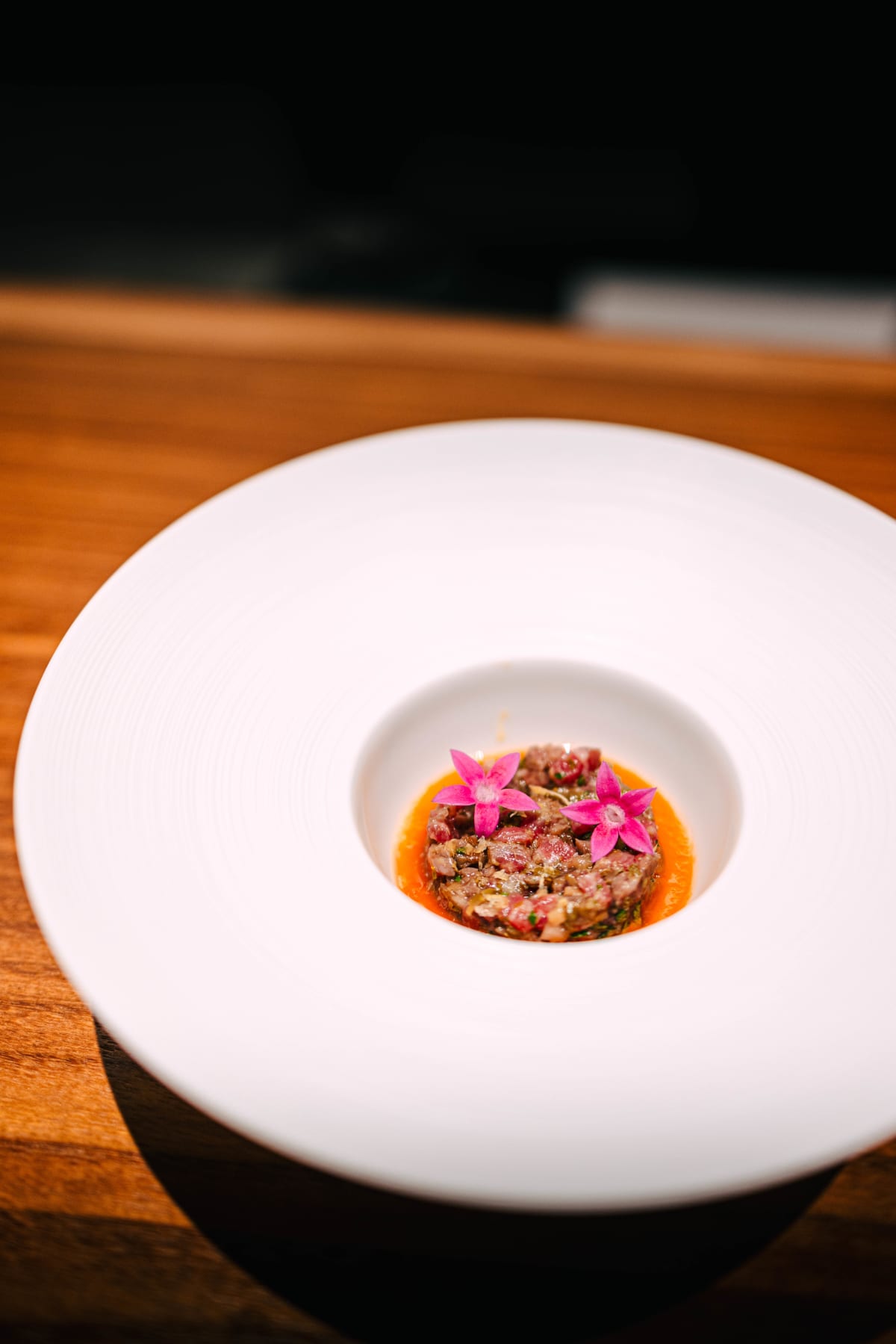
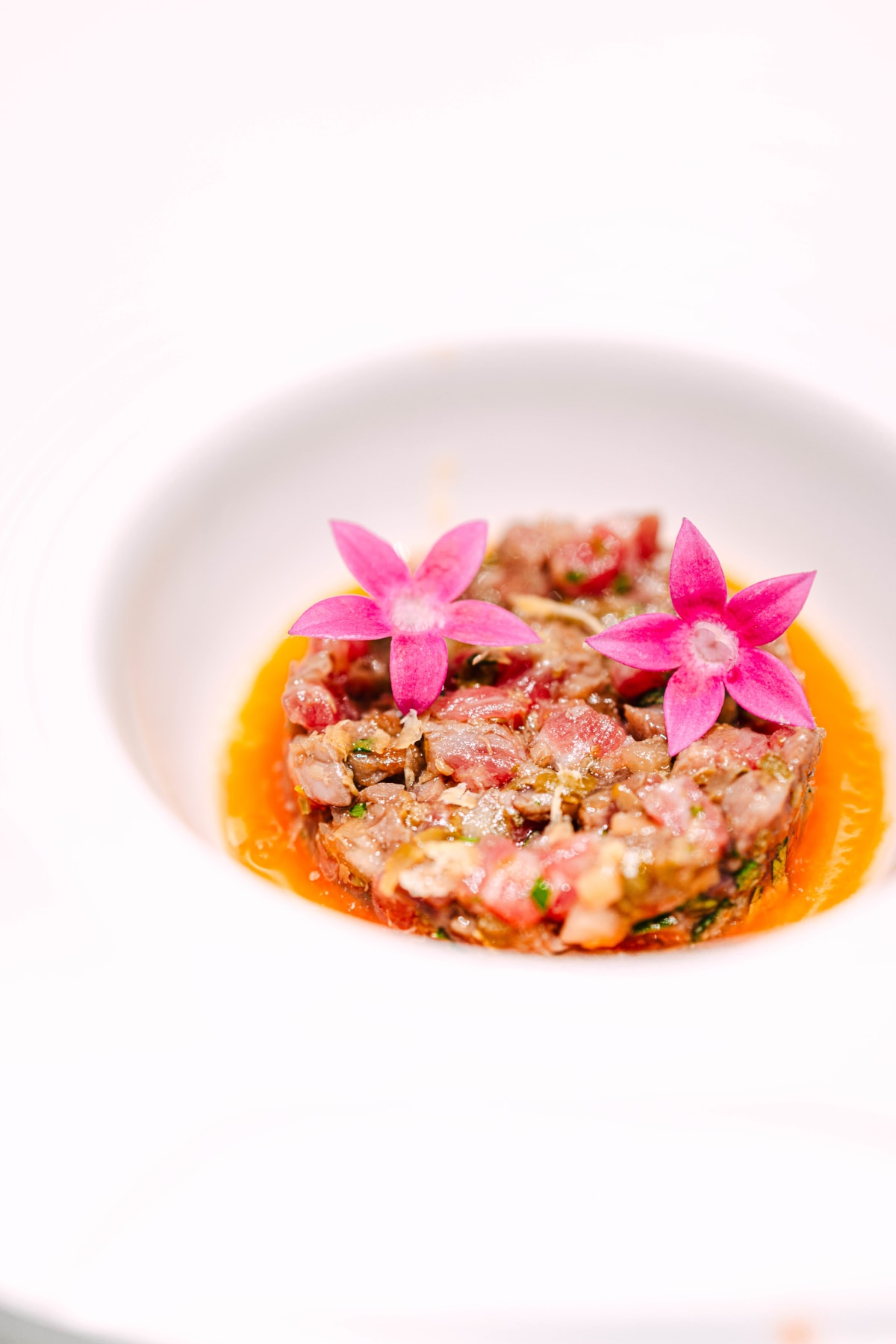
I ate it from a spoon together with the caviar. The nutty richness of the yolk, the fatty texture of the Wagyu and the salinity of the caviar were all in balance, and it tasted good.
Section 5·A Sake In A Wine Bottle
While I was wondering whether my next drink should be a white wine or a sake, Kobayashi said there was an interesting sake he would like to recommend, so I asked for it. It was a sake, but for a start, the bottle looked like a wine bottle, and it was poured into a Burgundy glass.
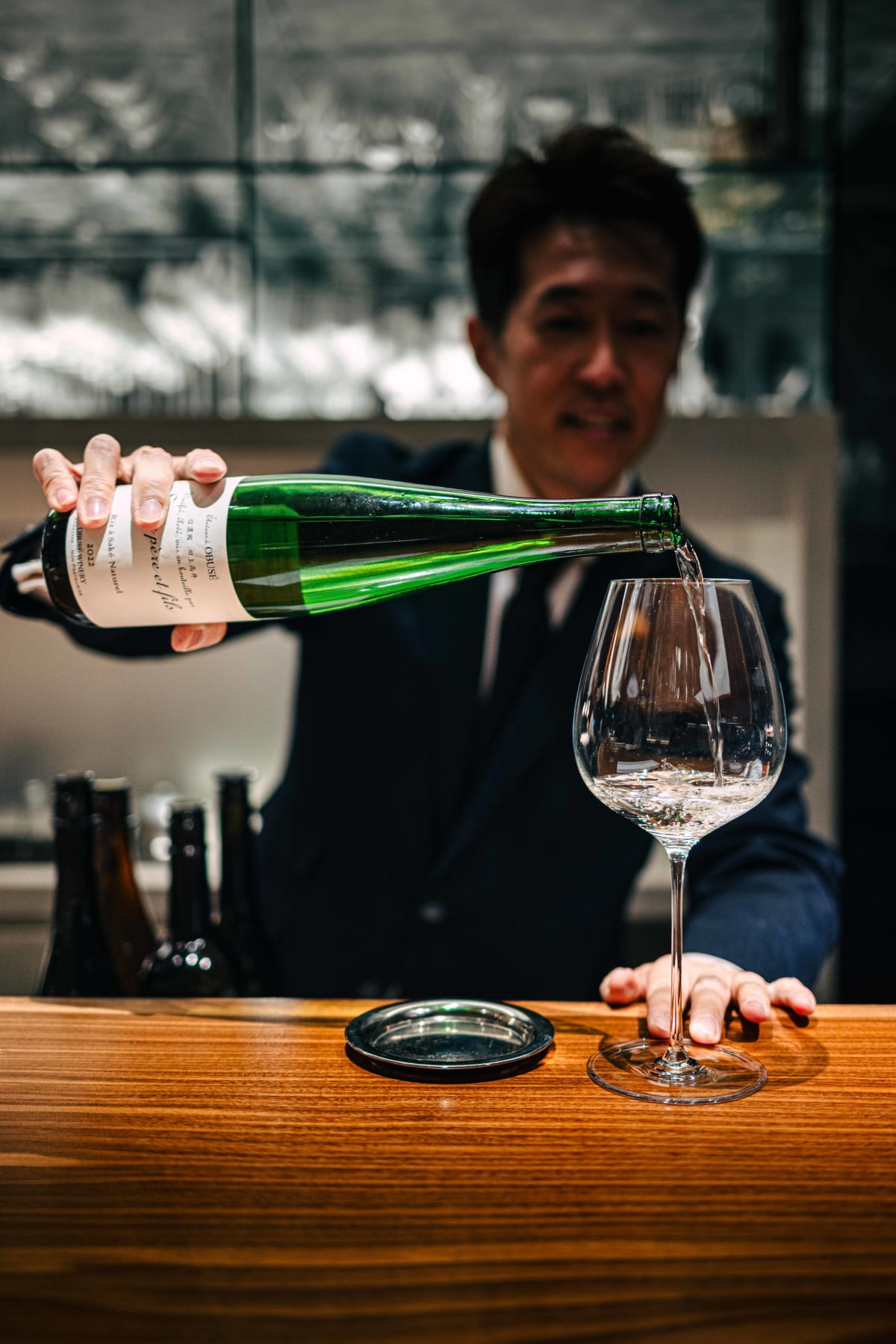
Then he came over to explain it, and rather than telling me himself, he brought a tablet. It turned out he was using DeepL, the neural machine translation service so well known these days, to let me read a translation of the description. In Japan, at fine-dining restaurants and ordinary local places alike, things tend to be slow and conservative on the technical side (technology, I mean, not cooking technique), so "cutting-edge" service like this was a rare experience there. At the side of the screen, several DeepL tabs sat open in a tab group labelled ペアリング (pairing), so it seemed the descriptions of the pairing drinks were translated in advance and kept ready.
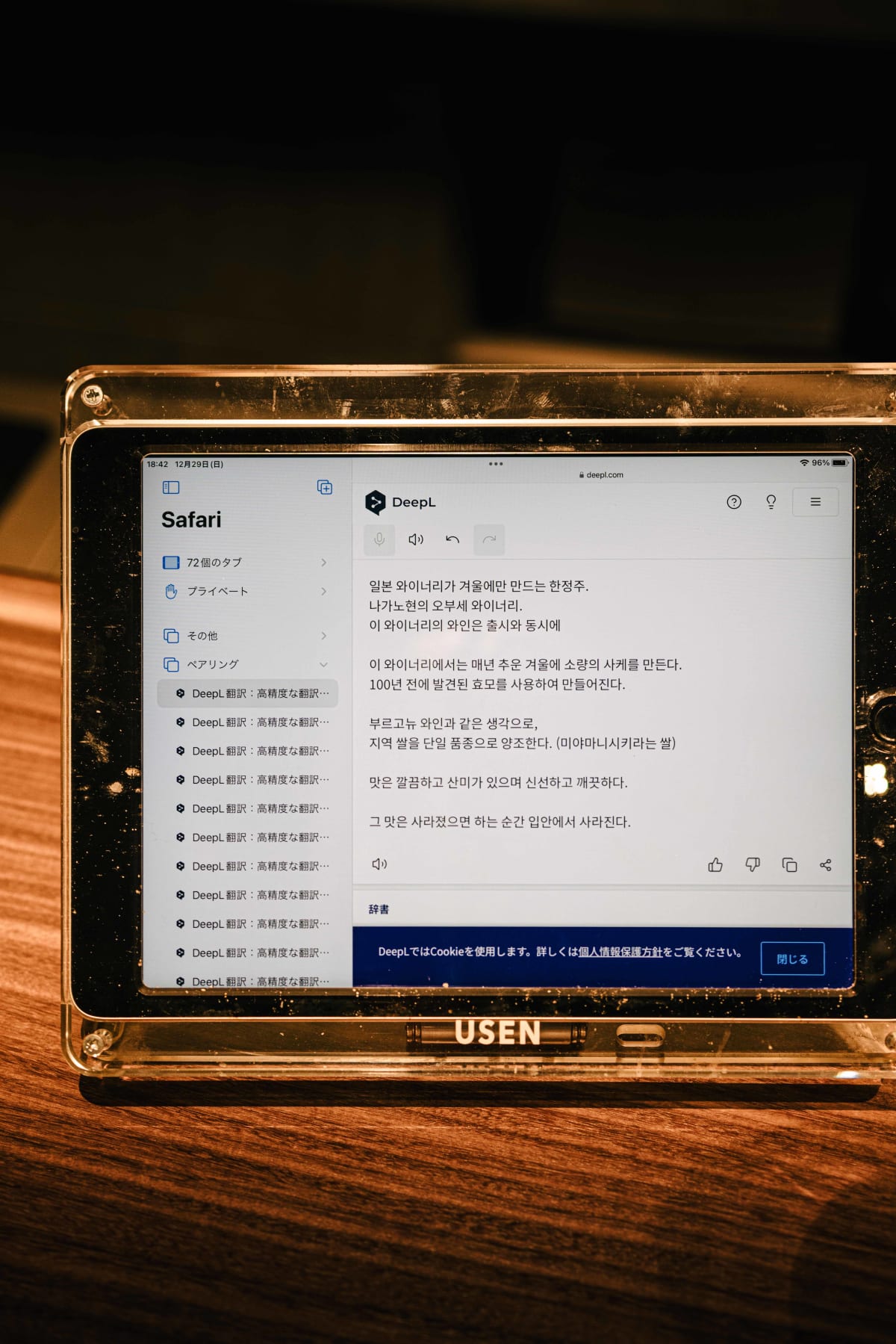
According to the description, it was a sake made in limited quantities by a Japanese winery, only in winter, and brewed from a single variety of local rice, Miyamanishiki, in the same spirit in which Burgundy wine is made. I smelled it first, and, no joke, there was a nutty, savoury aroma along with a scent like wine. The taste was rather distinctive too, and for me it was one of the most memorable sakes I had tasted in recent times.
The sake was Sogga père et fils, from Obuse Winery in Nagano Prefecture. The name means Soga father and son, and it is brewed only in winter, once the winemaking is over, by Akihiko Soga (曽我彰彦), the fourth generation of the family, who learned winemaking in France, Burgundy among other places. All of it is junmai, and only about 7,000 litres are made a year.
Riz à Saké Naturel is the line brewed by the kimoto (生酛) method from Miyamanishiki grown without pesticides, and the "yeast discovered 100 years ago" on the tablet appears to refer to the Brewing Society of Japan's pre-war yeasts, Nos. 1 to 6, used here. The label gave the year 2022 and described it as namazake, non pasteurisé.
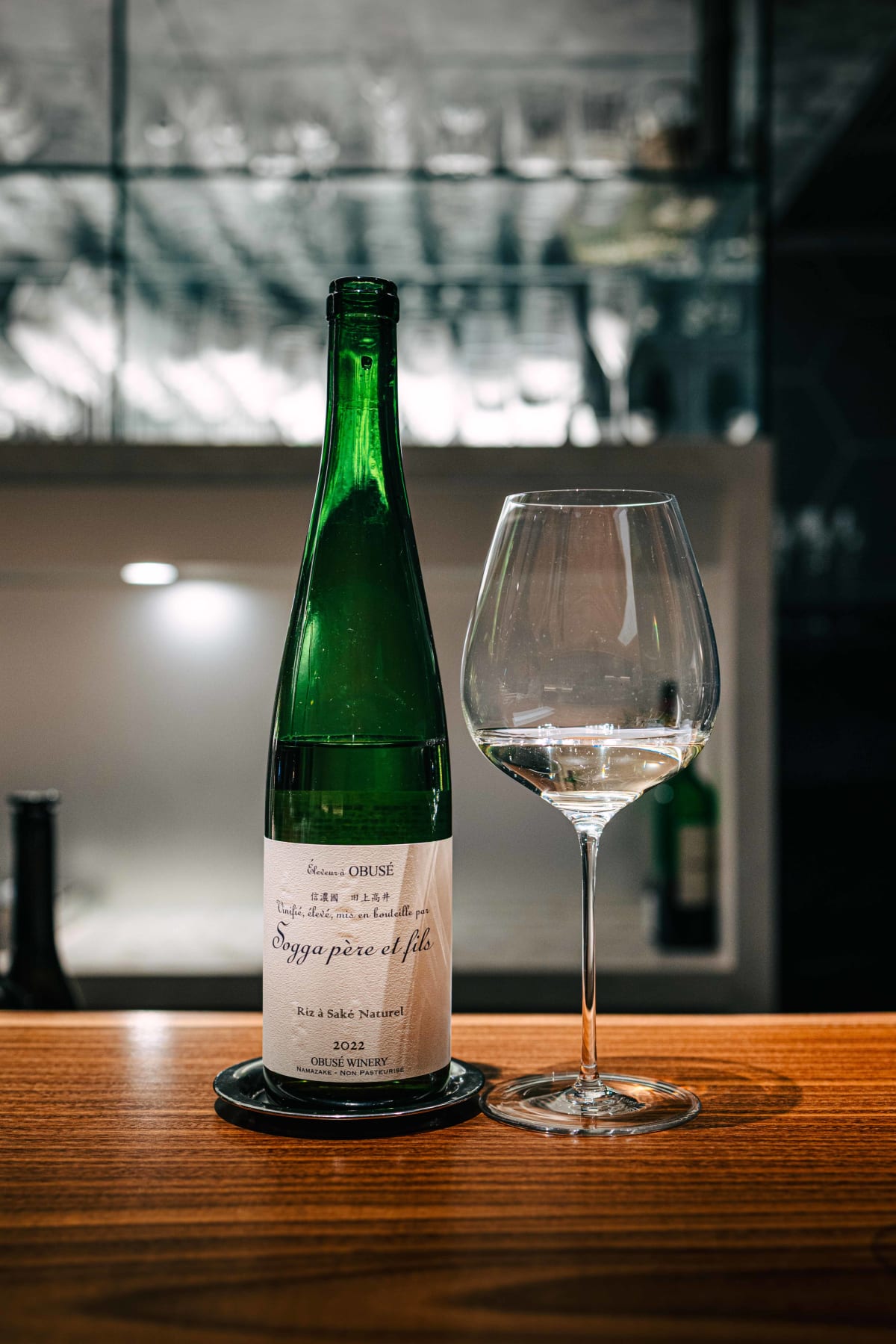
The nutty aroma came from its being namazake that had never been through hiire, the heat treatment most sake receives.
Section 6·The Quietest Plate, Then The Best
The fourth plate was tuna. On a white plate curved like a wave lay two rolls of tuna and a single scored piece of kohada, gizzard shad.
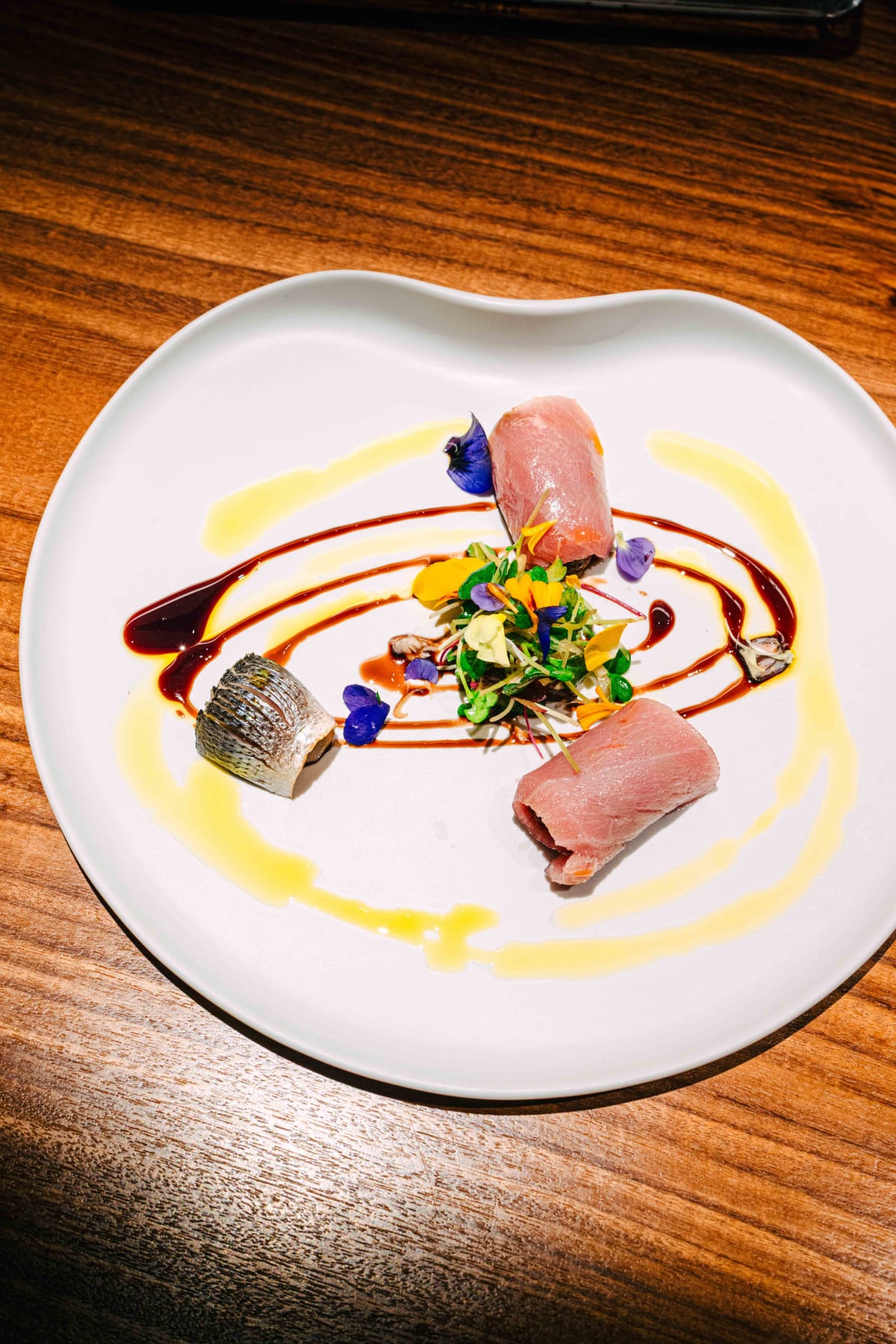
In the middle was a salad of sprouts, violas and yellow petals, with sauce and olive oil swirling around it. Along the kohada's silver skin ran a line of tiny black dots.
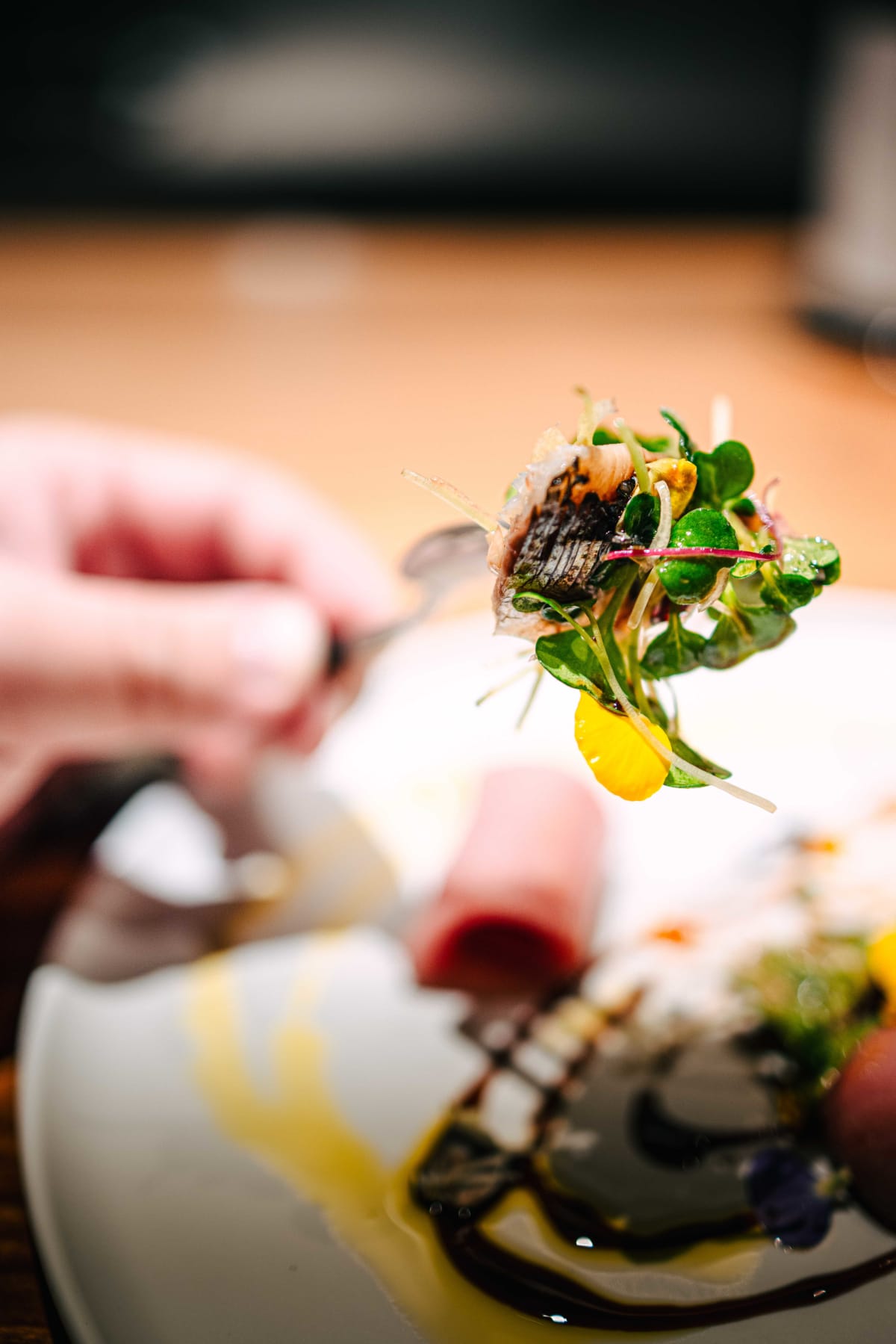
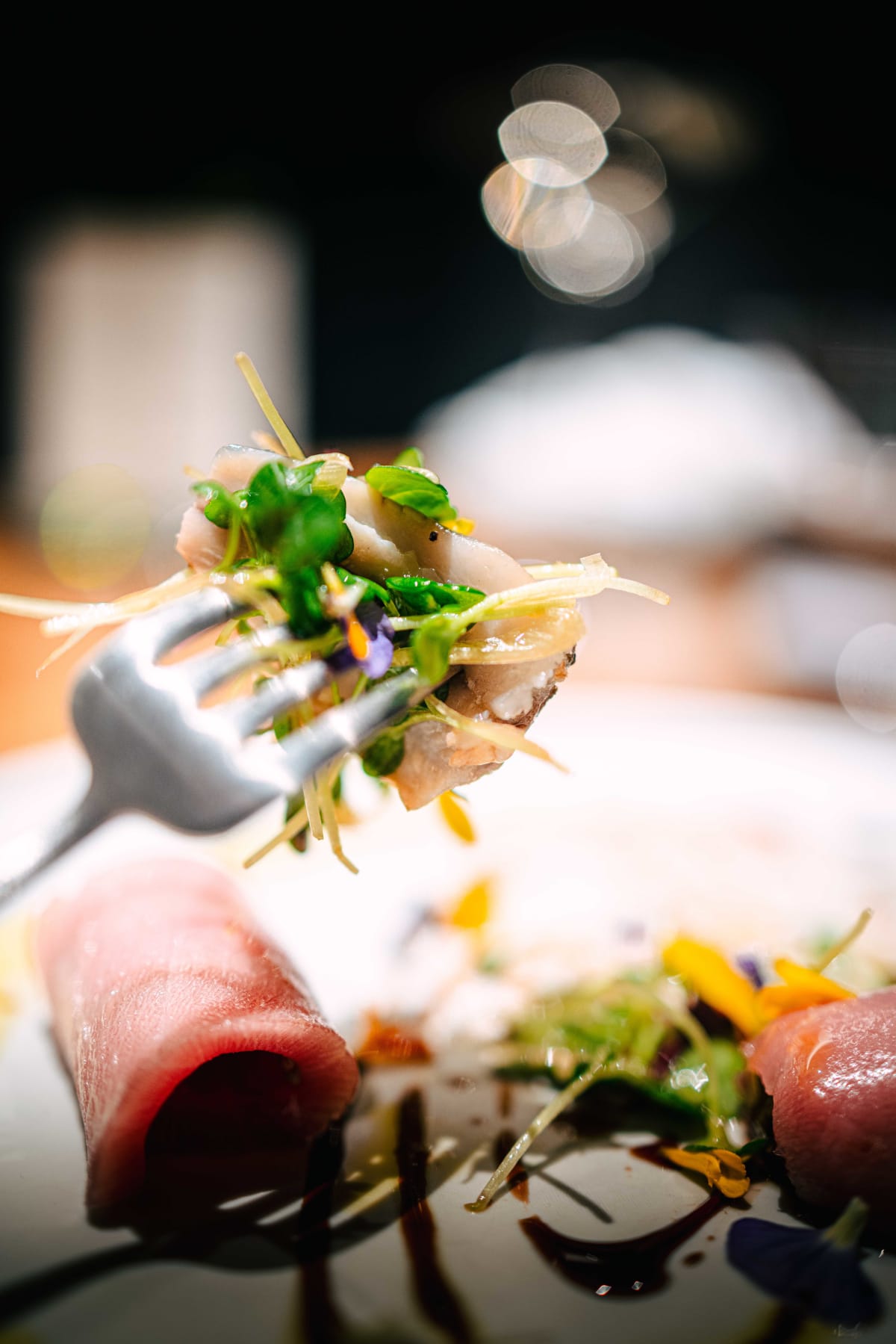
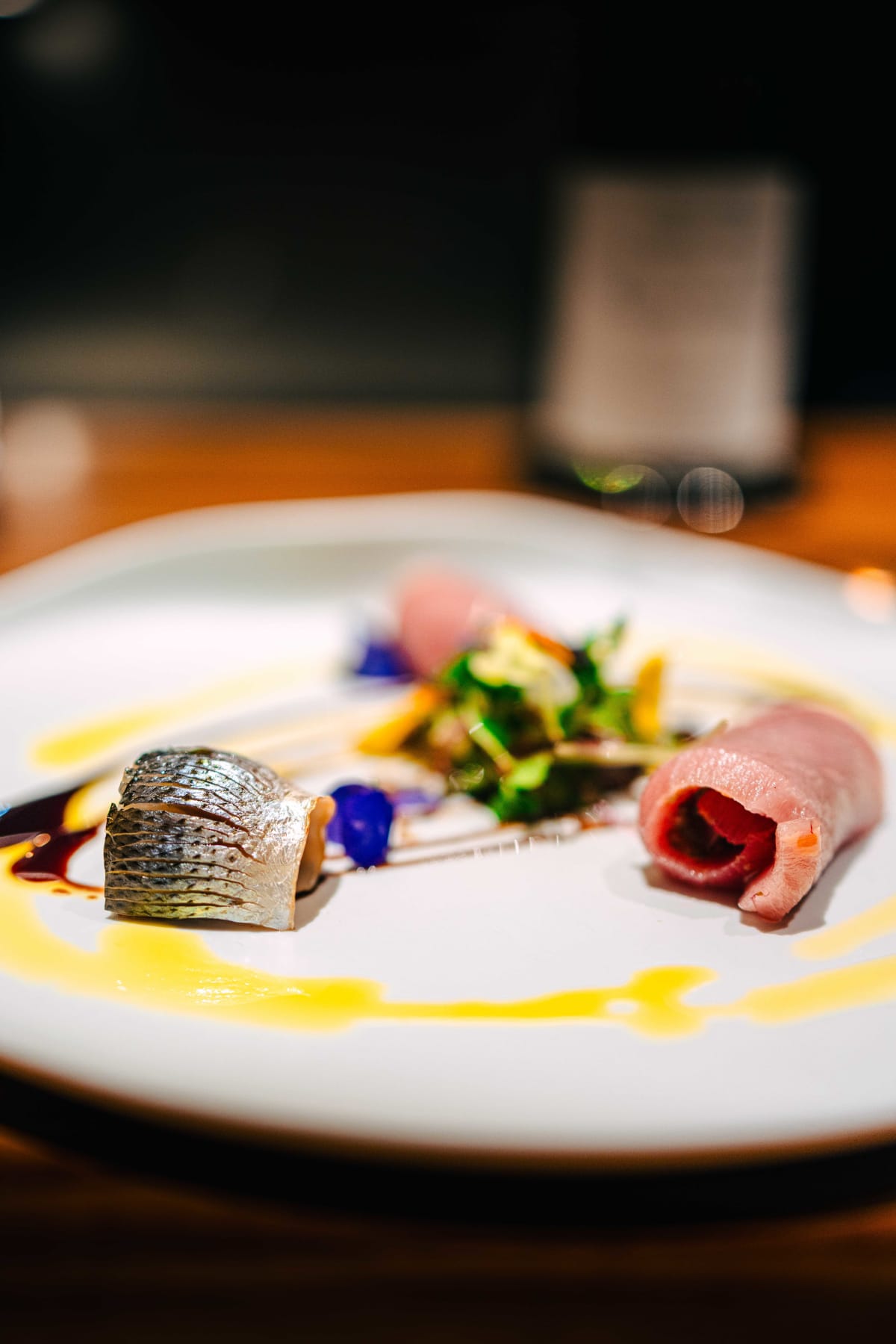
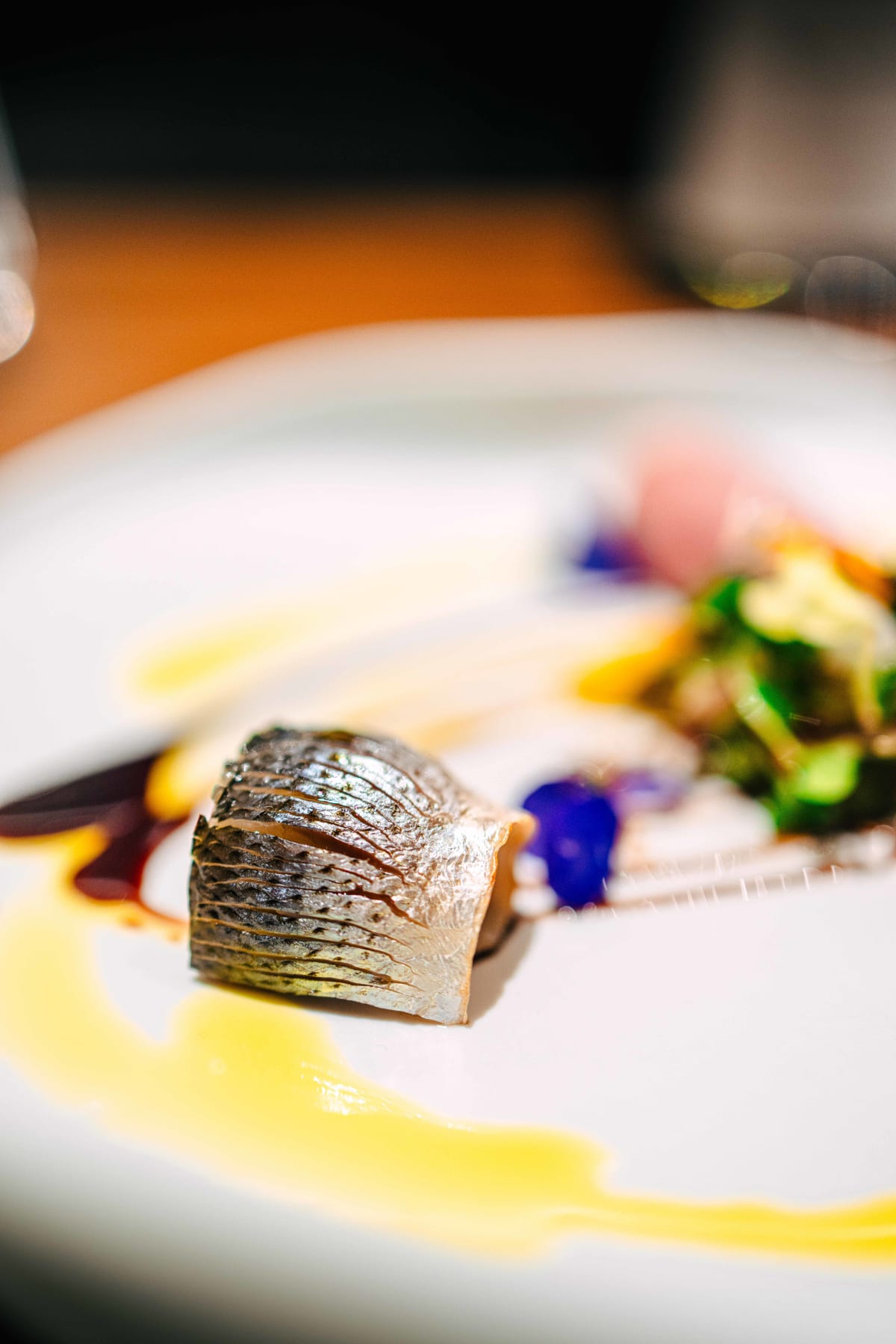
For me, this was the dish that left the least impression compared with the others. Just as we look at a face and roughly guess where a person is from, these two ingredients, kohada and chutoro, the medium-fatty cut of tuna, belong for me to Japan, naturally: they are ingredients of Japanese cooking.
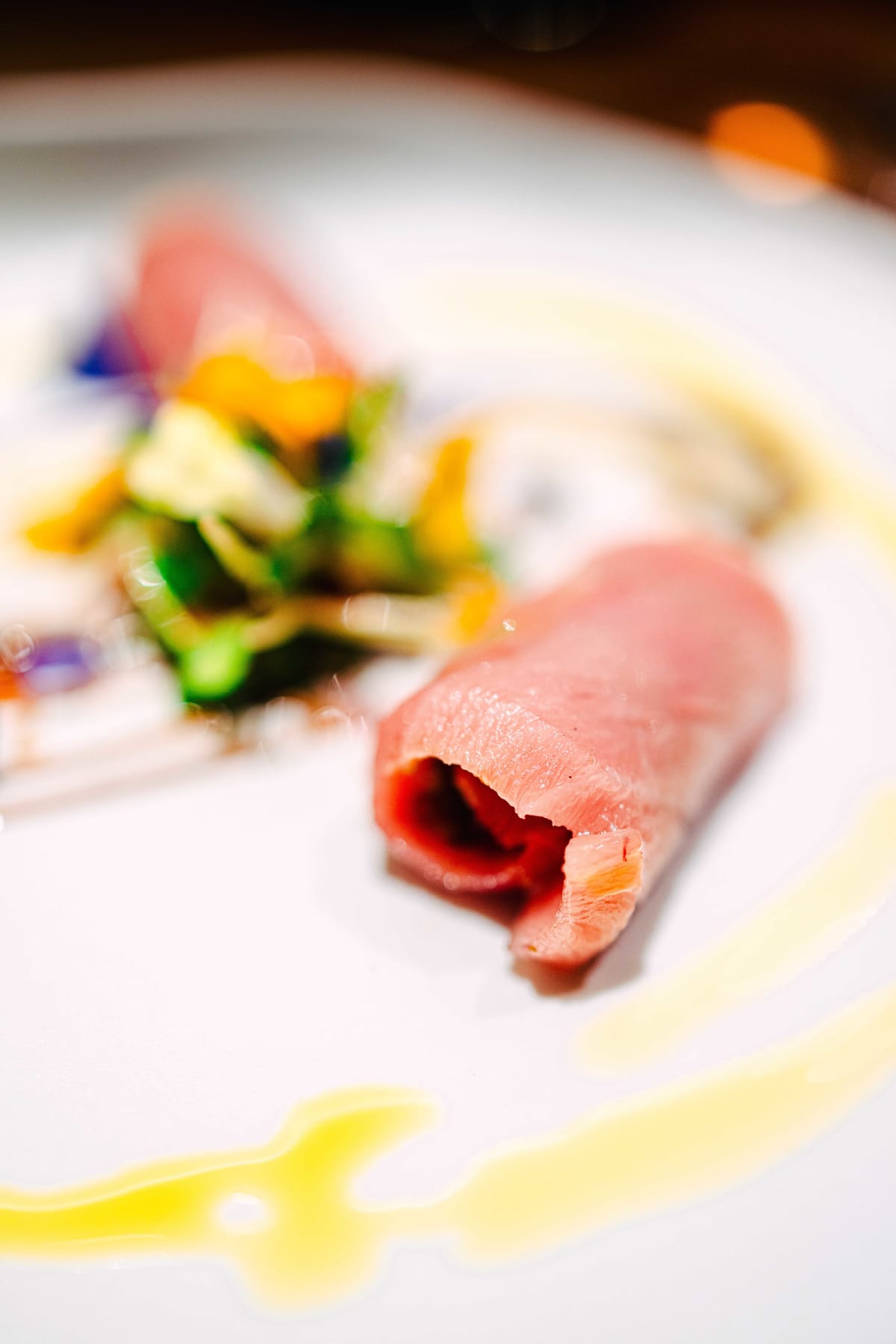
But the sauce and the various supporting ingredients did not show a match strong enough to overcome that impression. The chutoro was already fairly rich, and with oil brushed on as well, it felt too heavy.
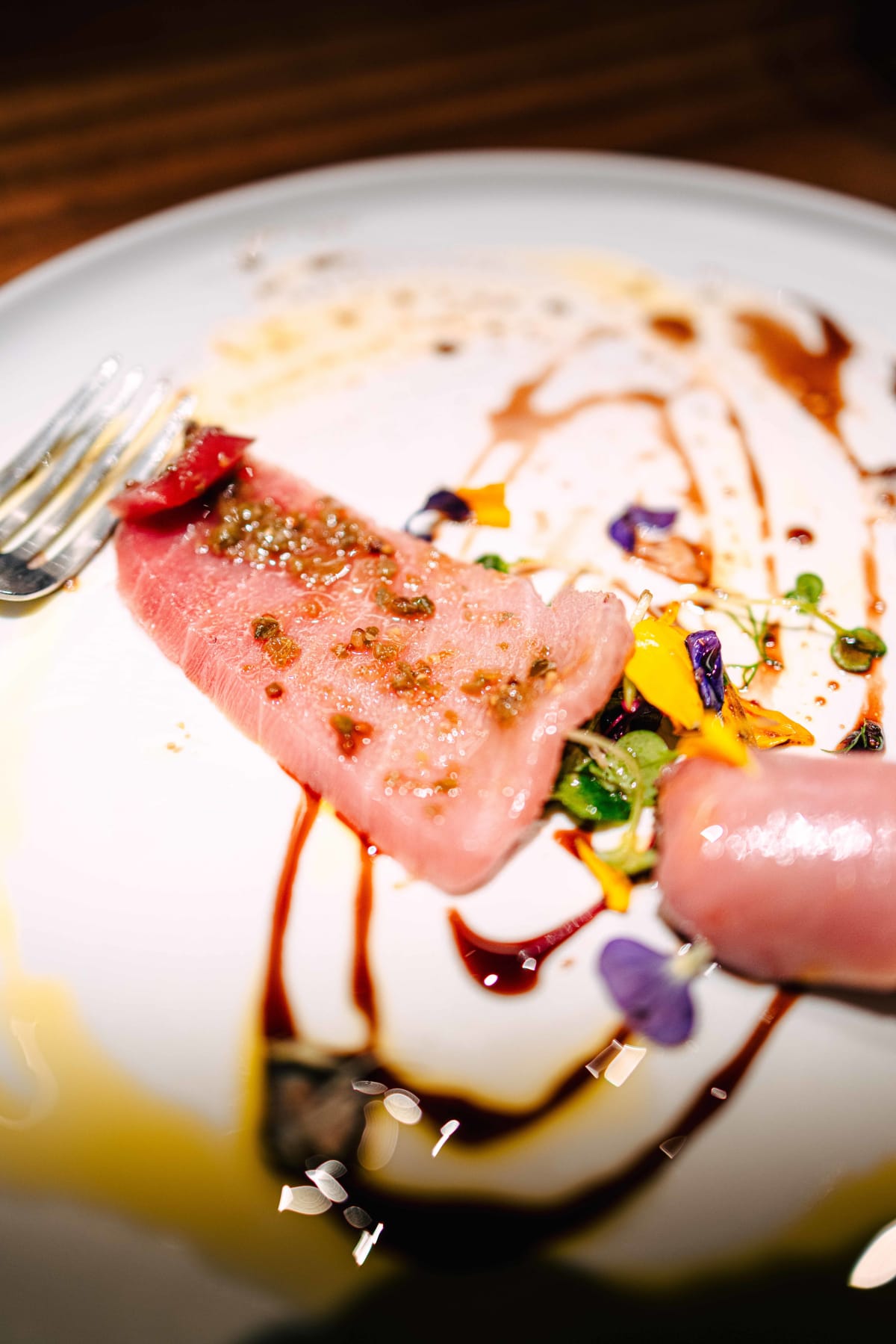
Rather than spearing more sprouts with my fork and swiping them through more oil, I found myself wanting to order some shari, sushi rice, from somewhere and put the tuna on top.
French cooking that felt Japanese and Japanese cooking that felt French came in turns, the visual touches were good, and quite a few dishes left an impression.
The one I would pick as the best of the night was the fifth course, the foie gras. In Korea, importing foie gras is currently very difficult and complicated because of avian influenza, so I envy Japan, where a whole slab of foie gras like this comes to the table. A thick slice of foie gras lay in the centre of a wide blue-grey rimmed plate.
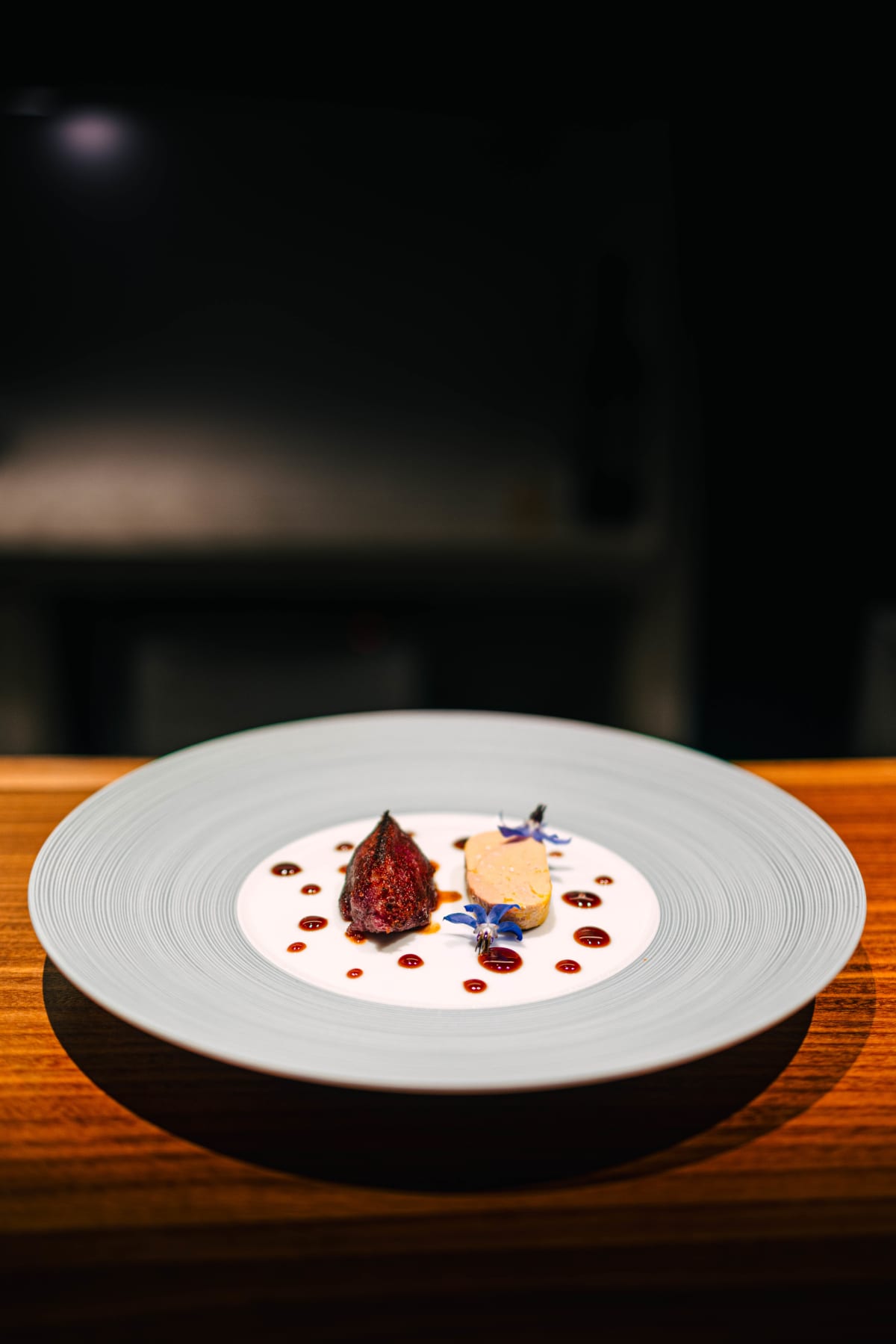
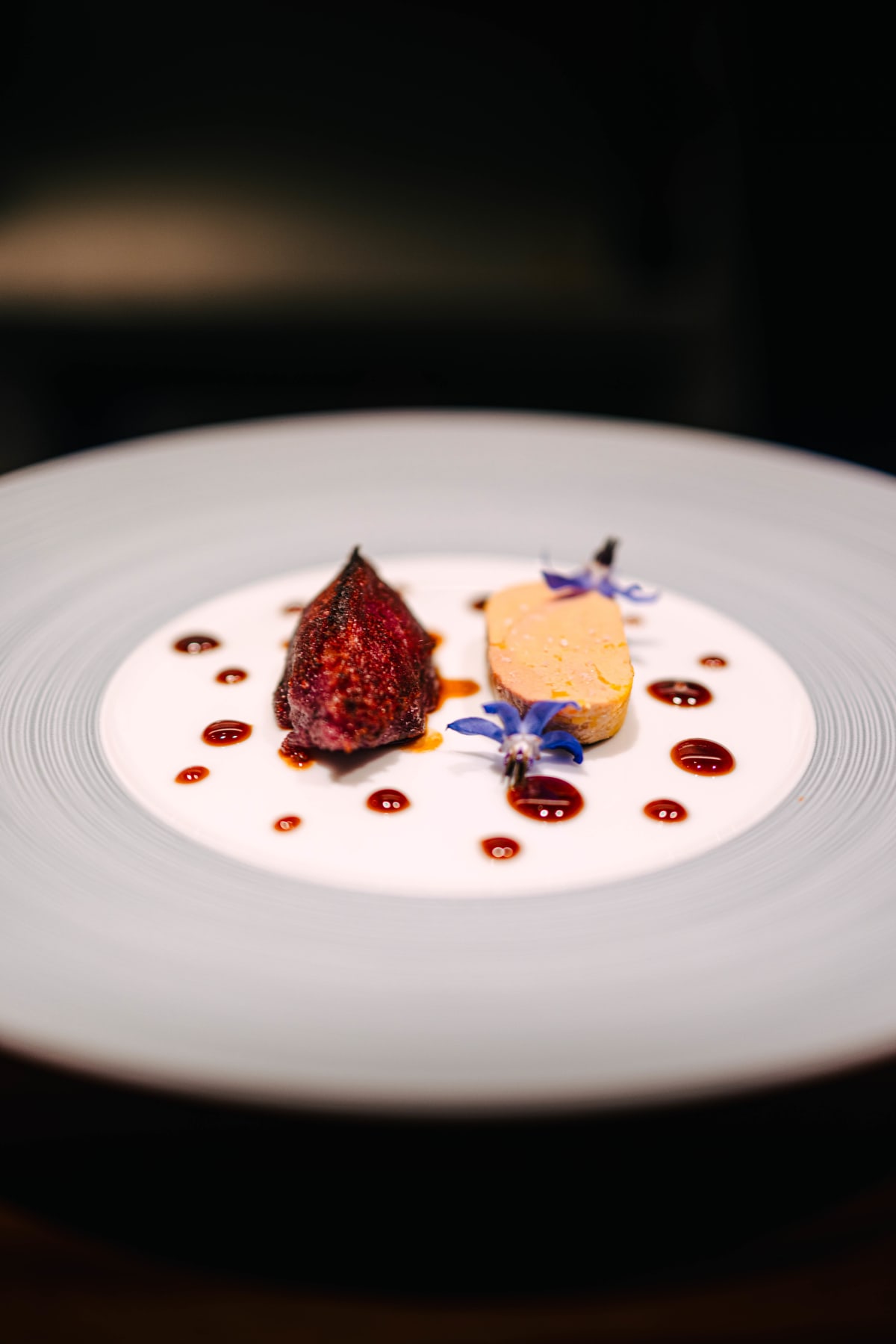
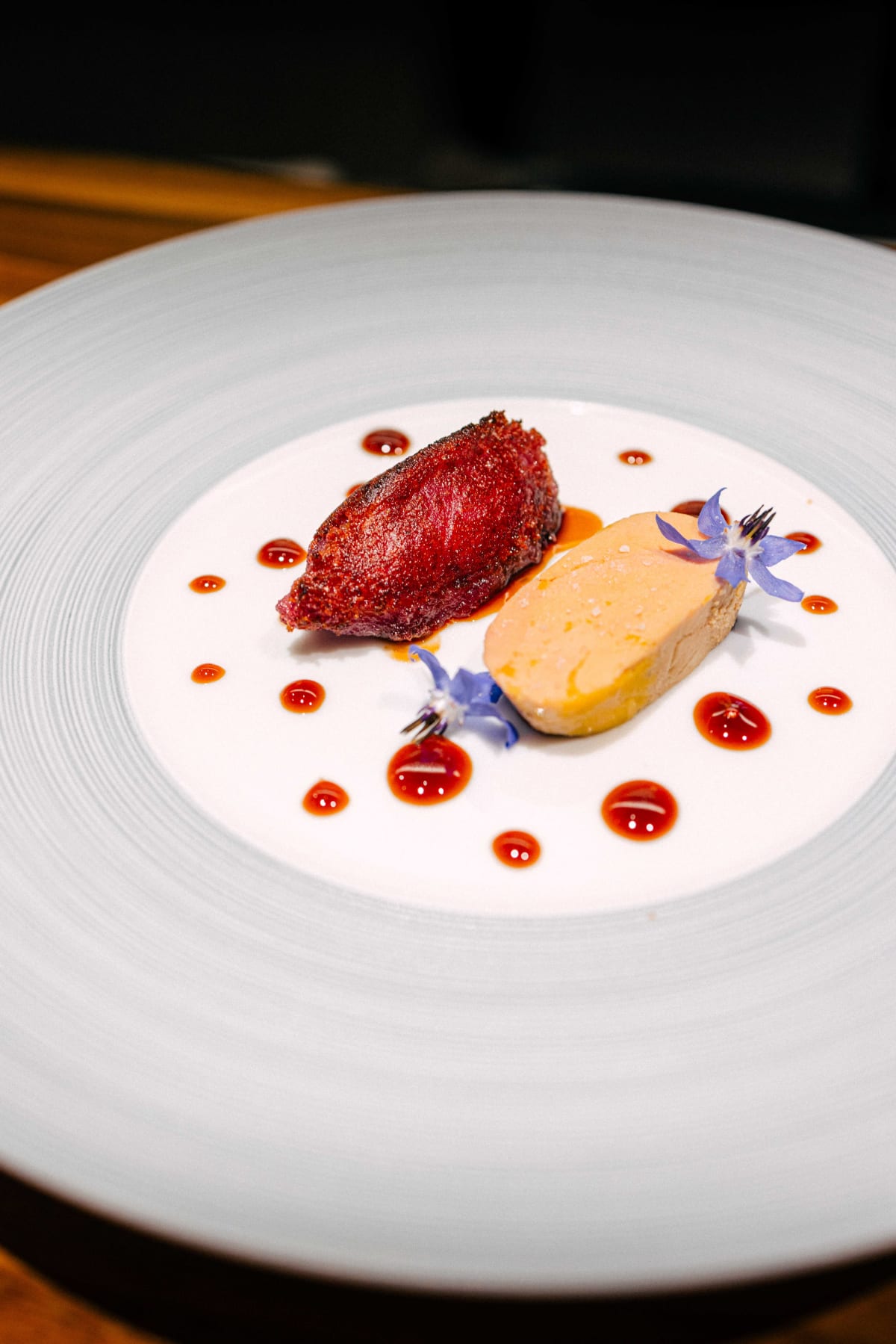
It came at room temperature, neither hot nor cold, with a few grains of coarse salt on its smooth cut face. Borage flowers and dots of reddish-brown sauce were scattered around it.
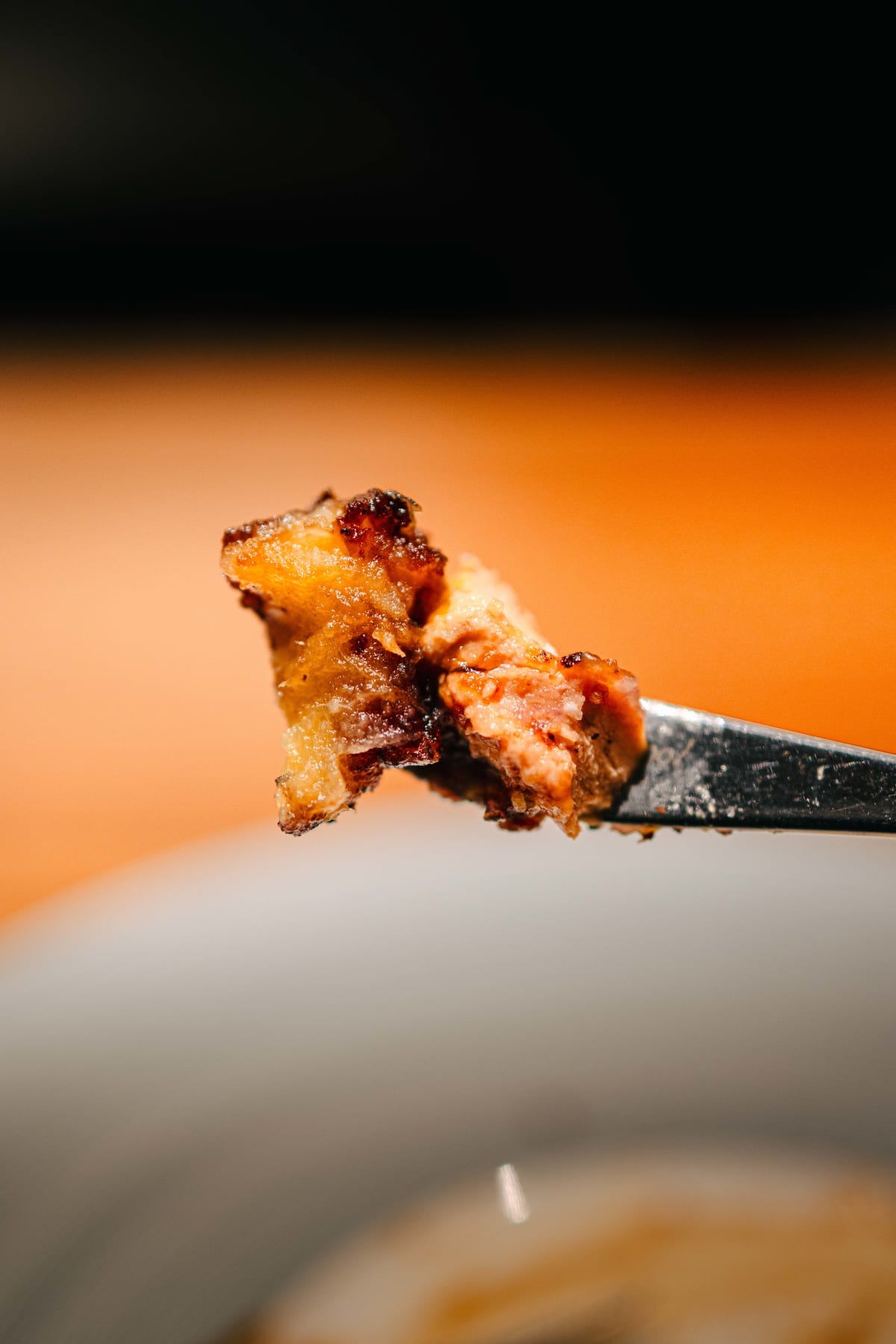
Next to the foie gras was something fried, and at first I wondered whether it was meat. Its purple skin was charred so dark a red that it looked for all the world like grilled meat.
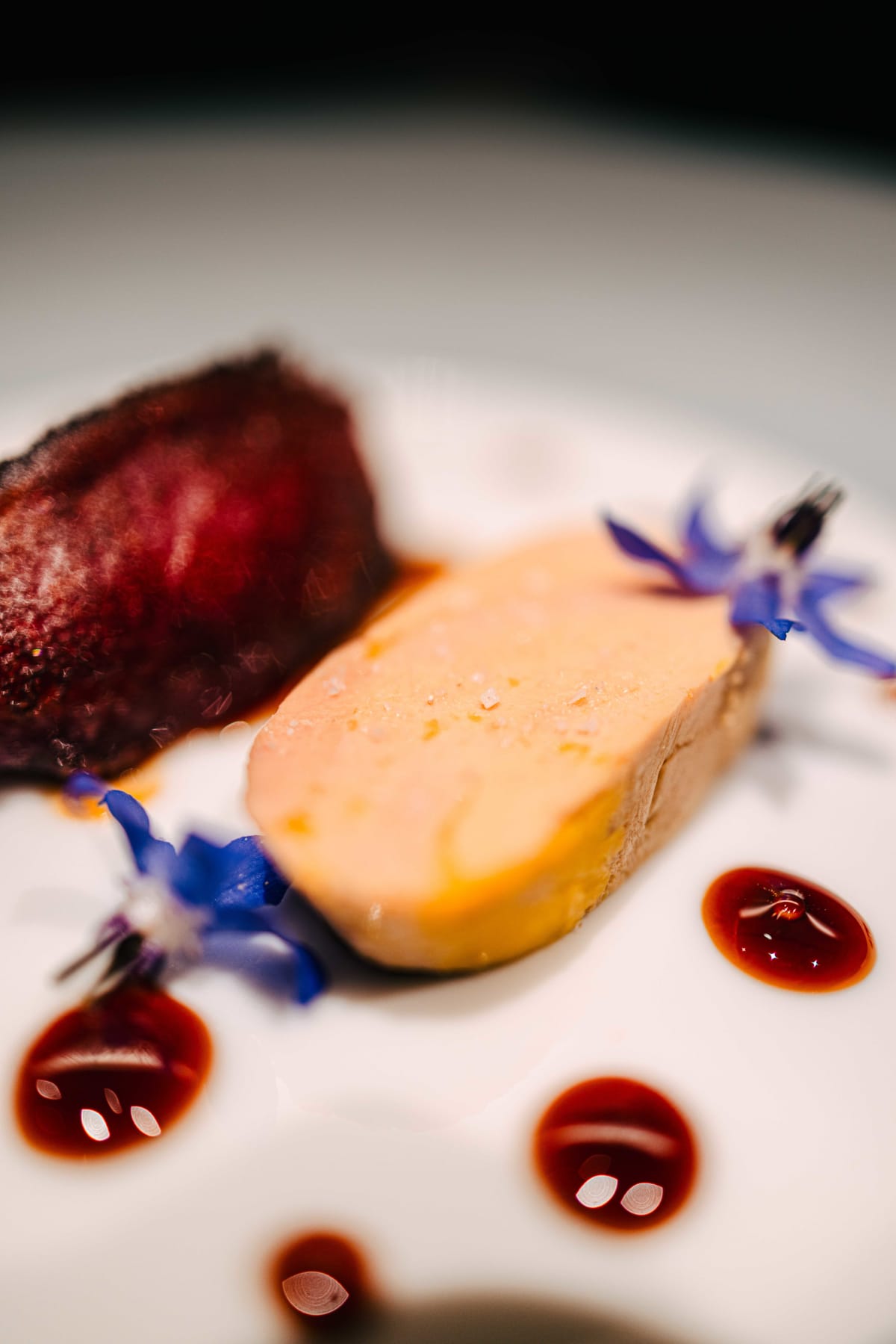
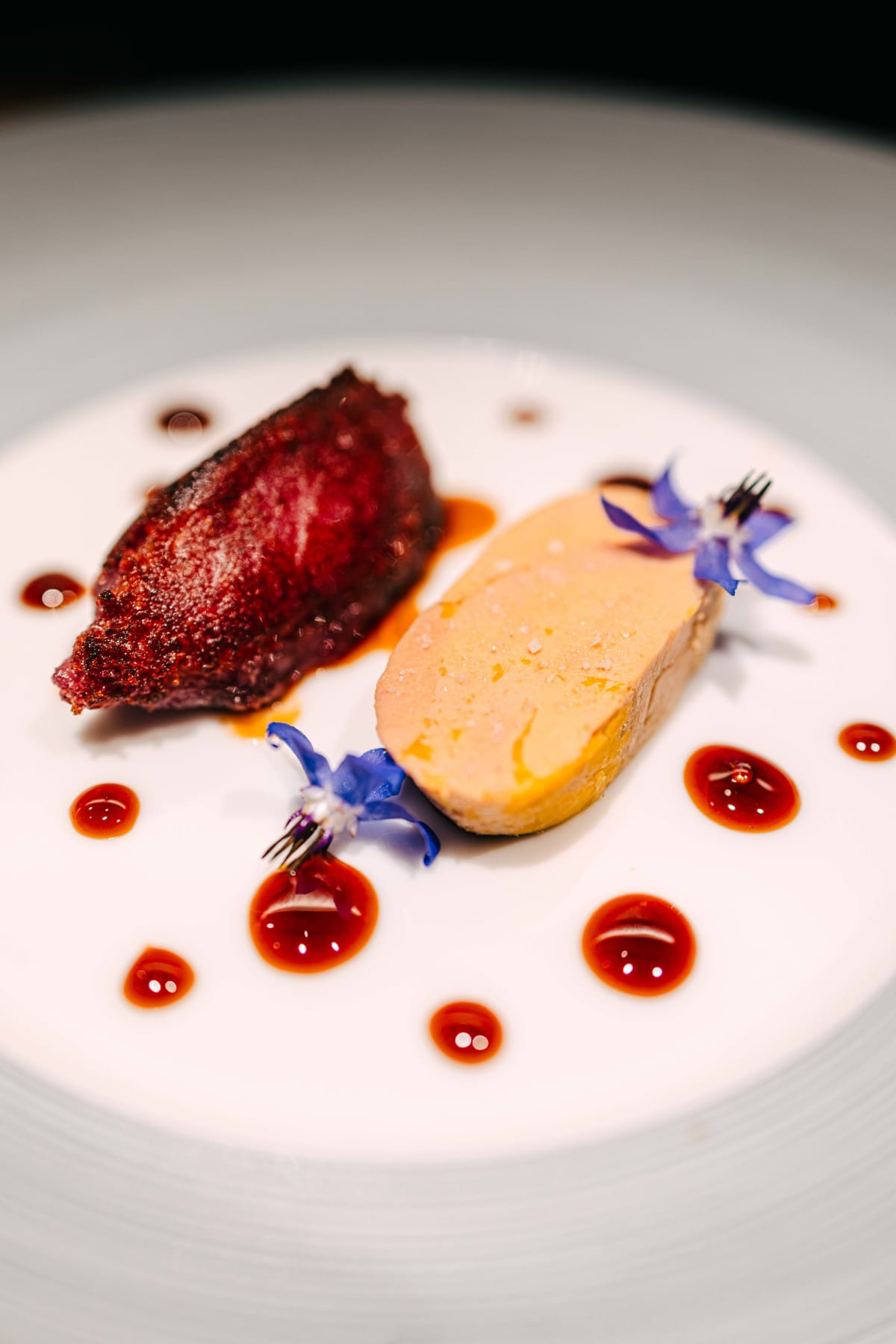
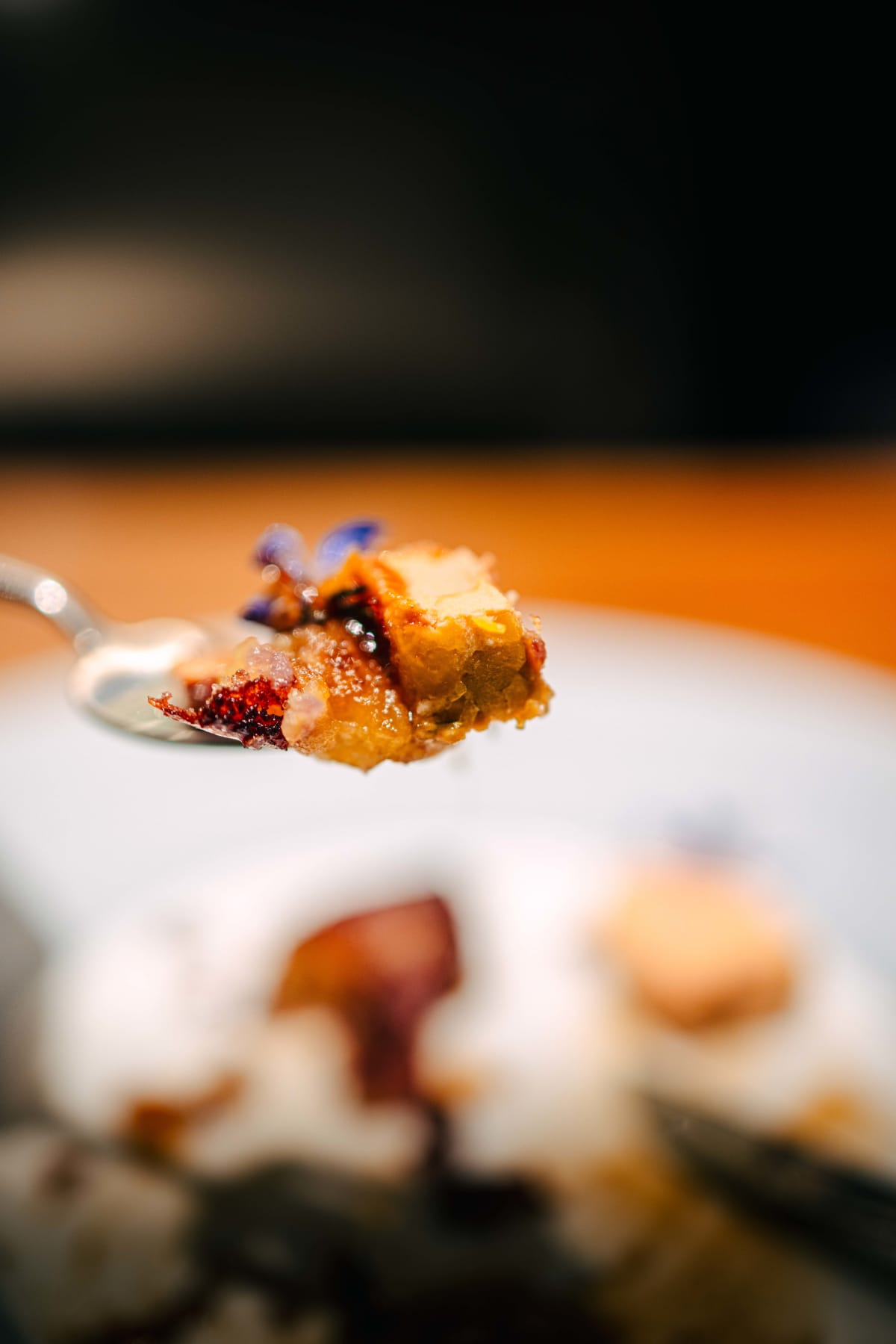
It turned out to be sweet potato, and the combination was superb. The natural, restrained sweetness of the sweet potato went beautifully with the dense richness of the foie gras.
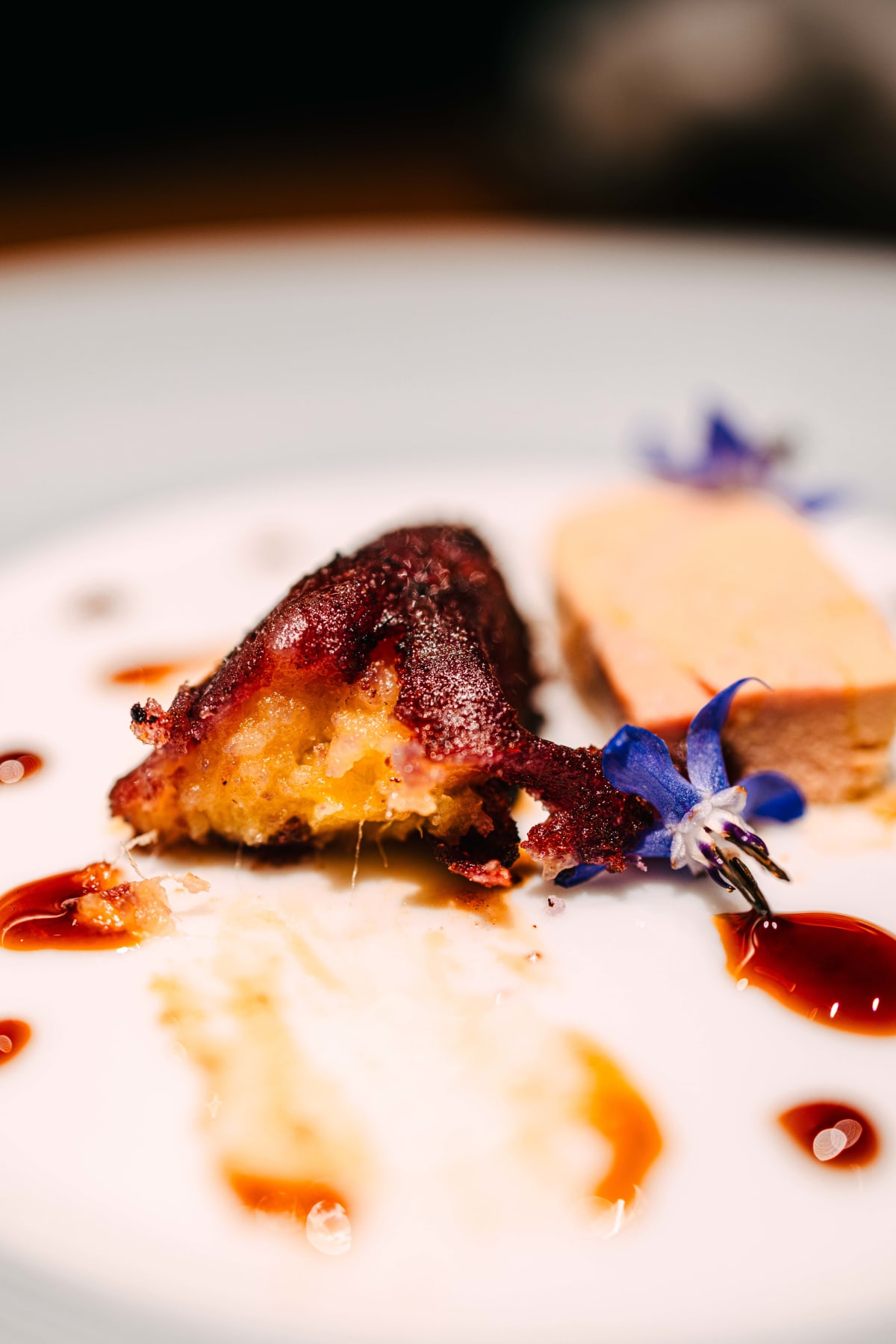
Of the courses that night, I think only two drew the reaction that comes when something is truly delicious, laughter and applause: this plate and the Spanish mackerel that came later. It was as if the sweet potato had been paired with the foie gras the way sherry so often is, and I had not expected it to work so well.
Section 7·Shirako, Bread And A Crêpe
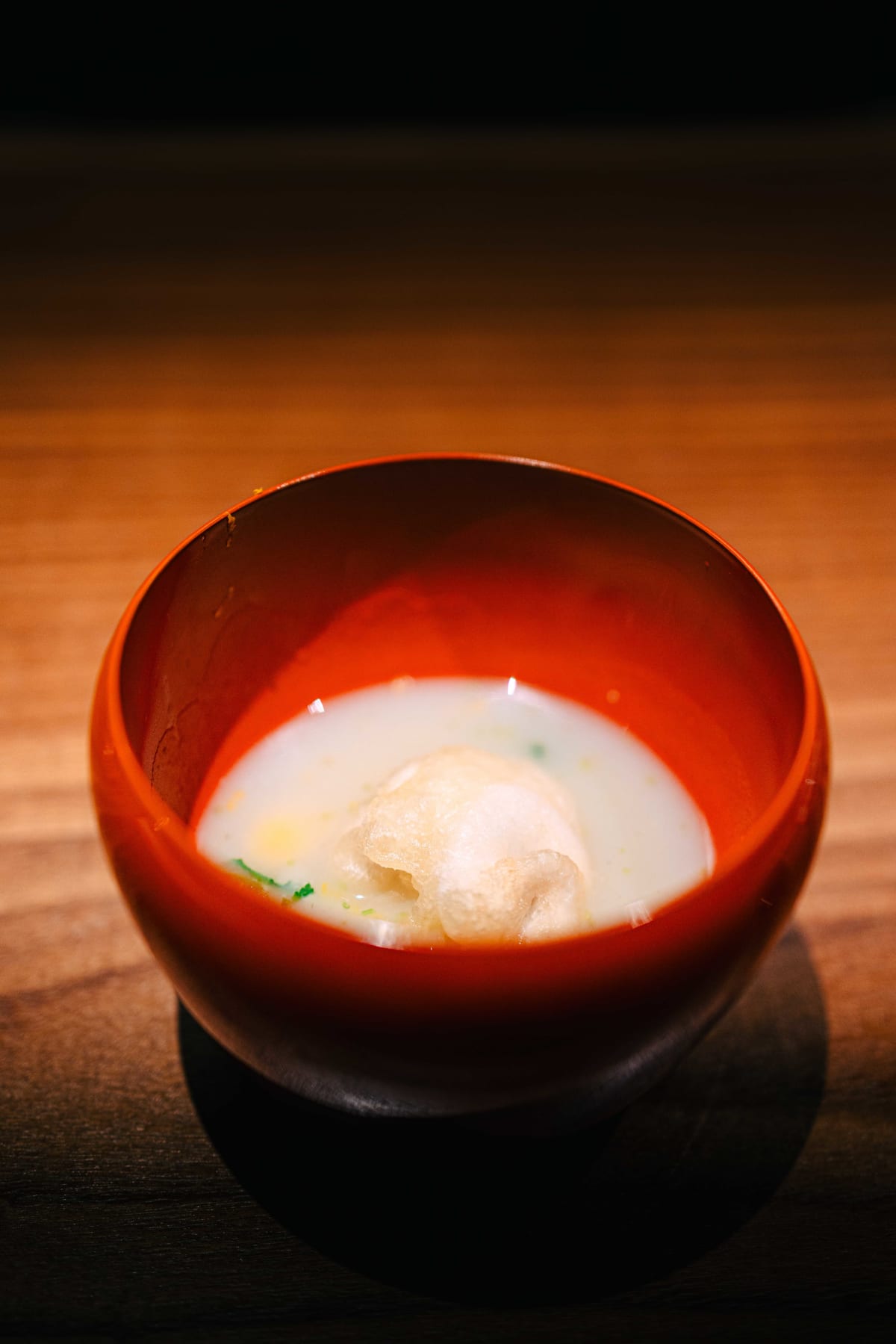
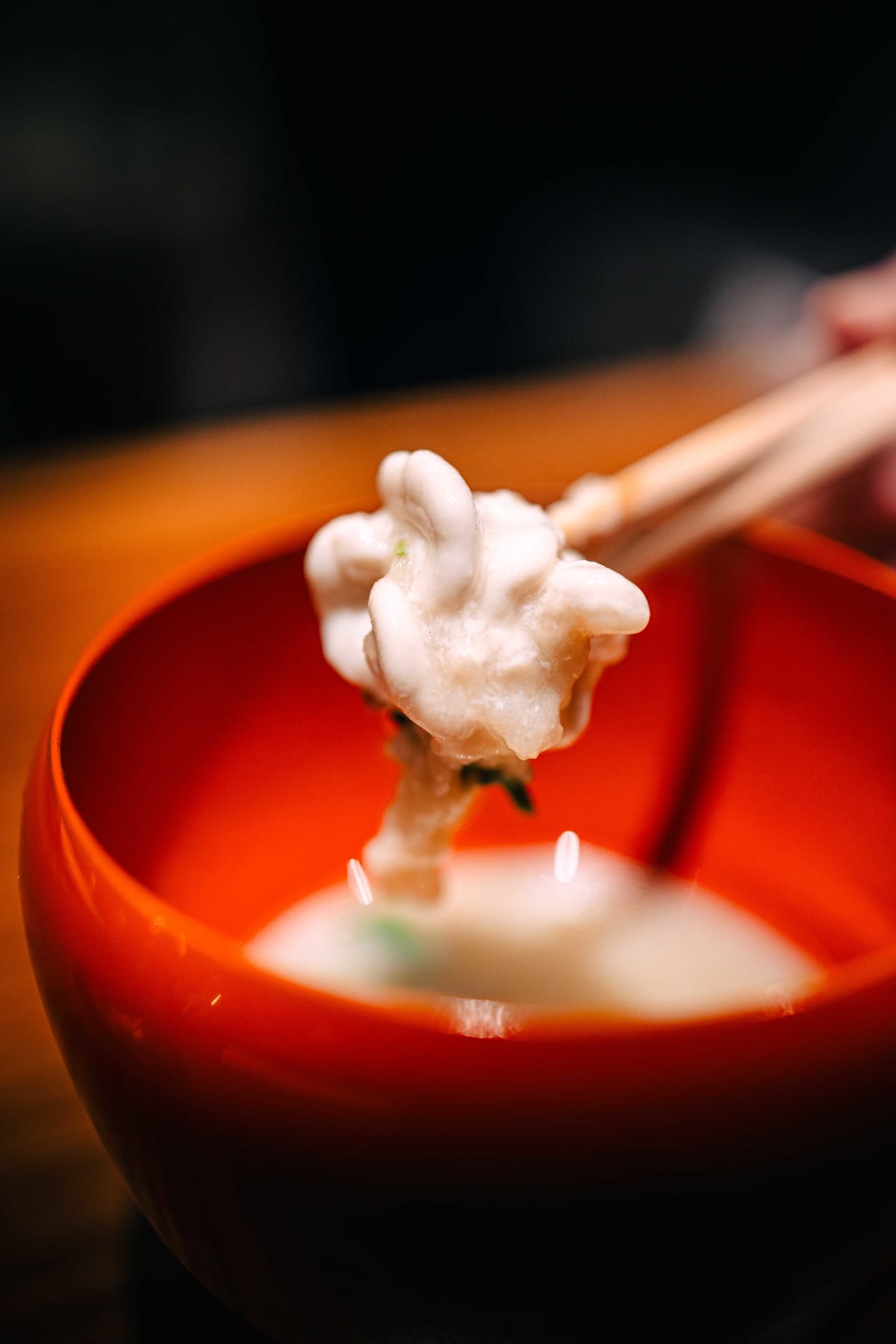
Beyond that, the soup said to be made with shirako, cod milt, and yurine, lily bulb, made a deep impact.
At the marble station by the counter, the chef ladled the broth from a cast-iron pot into vermilion lacquer bowls one by one.
In the middle of the milky broth sat shirako, fried until it had puffed up white and turned golden at the edges.
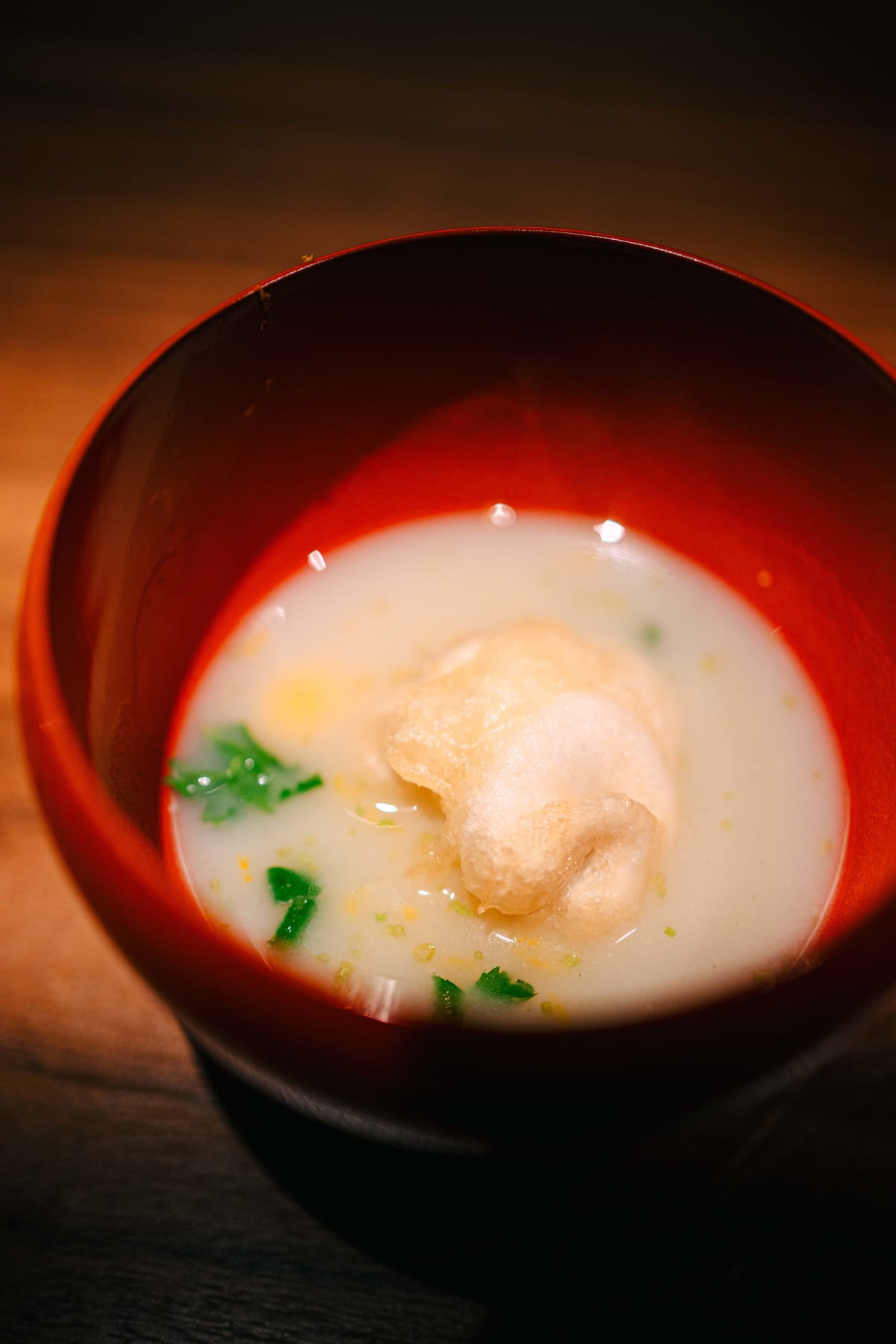
A single glossy ginkgo nut on wooden picks came alongside.
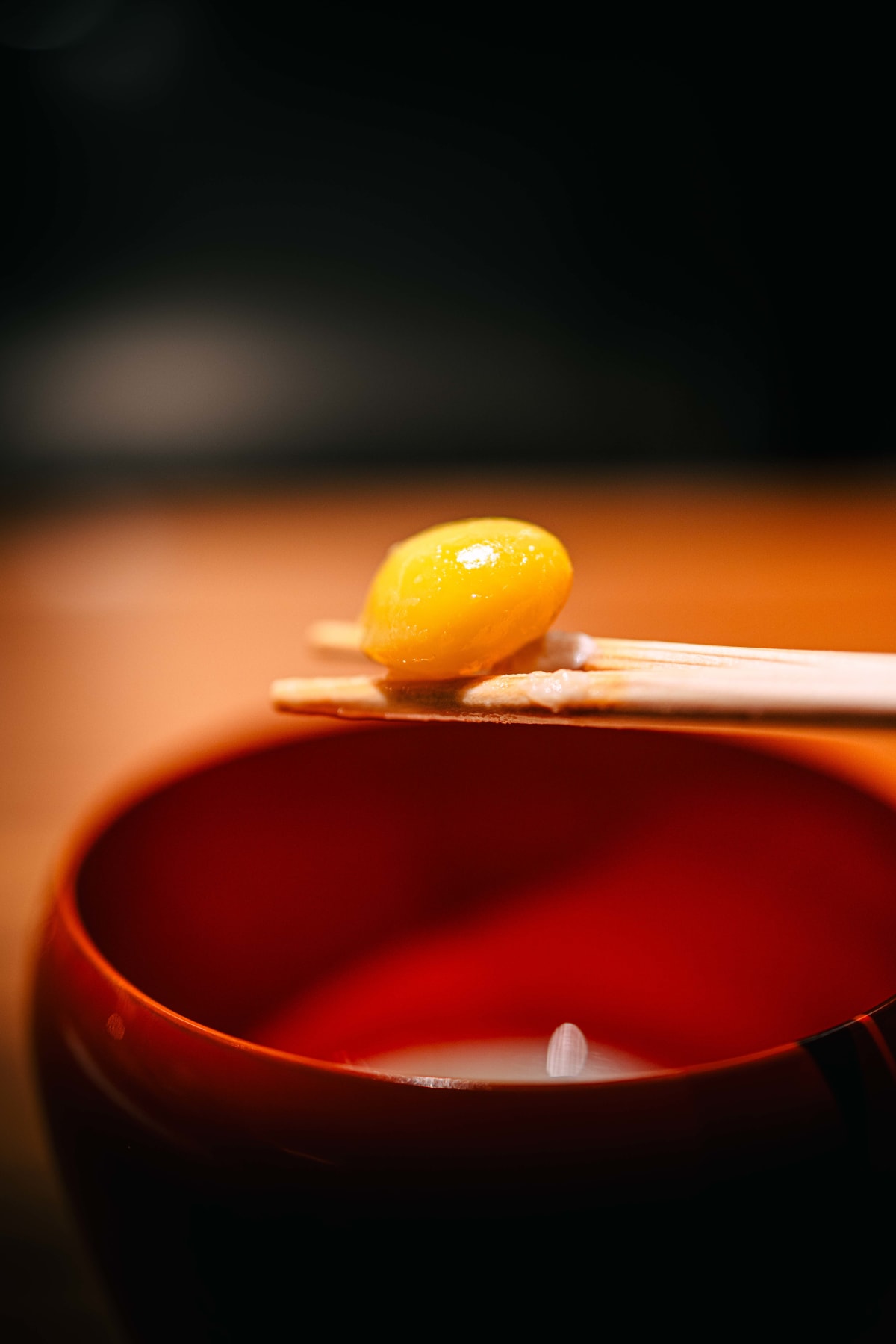
It all tasted good, and the weight of the broth and the creamy texture of the shirako were well balanced.
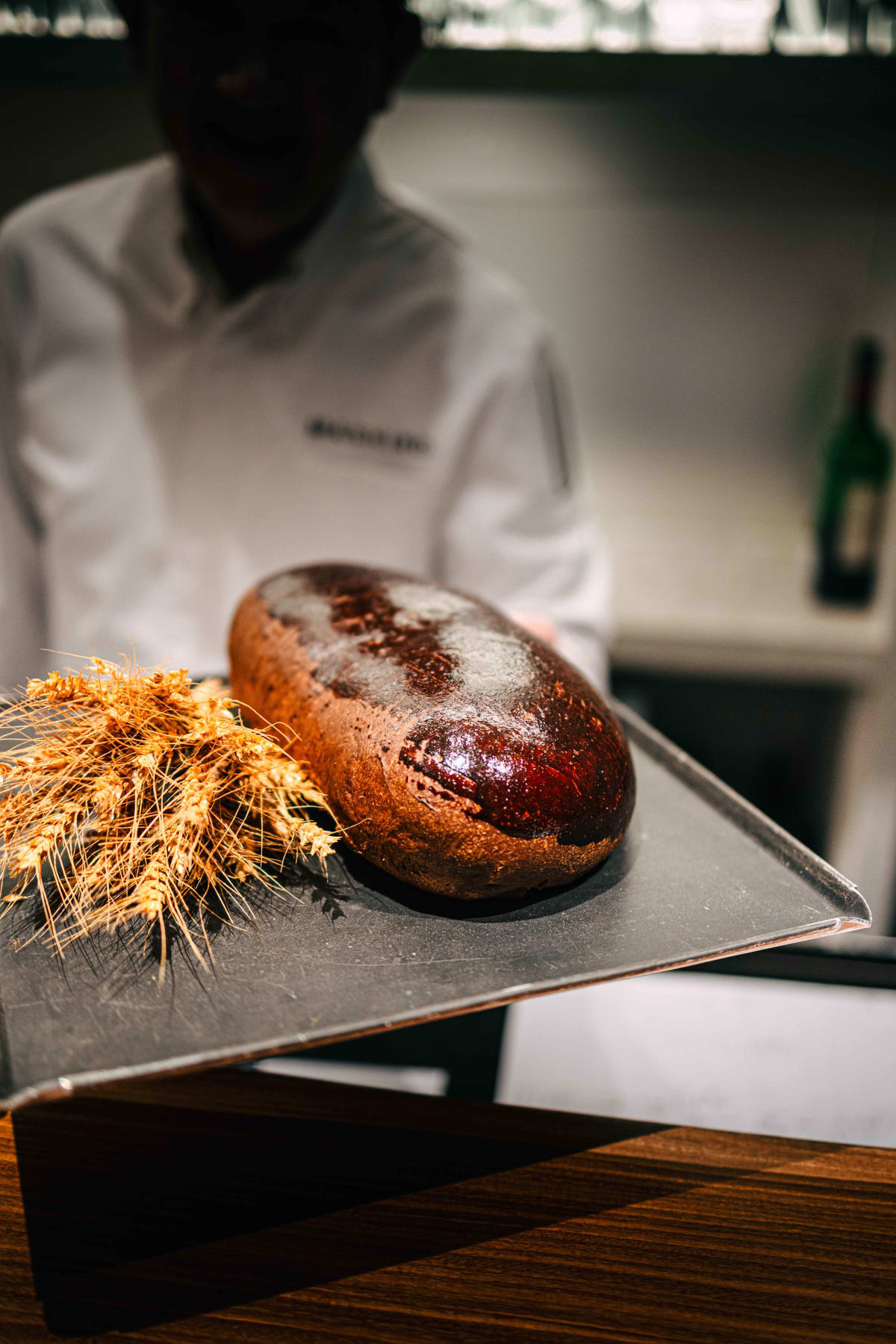
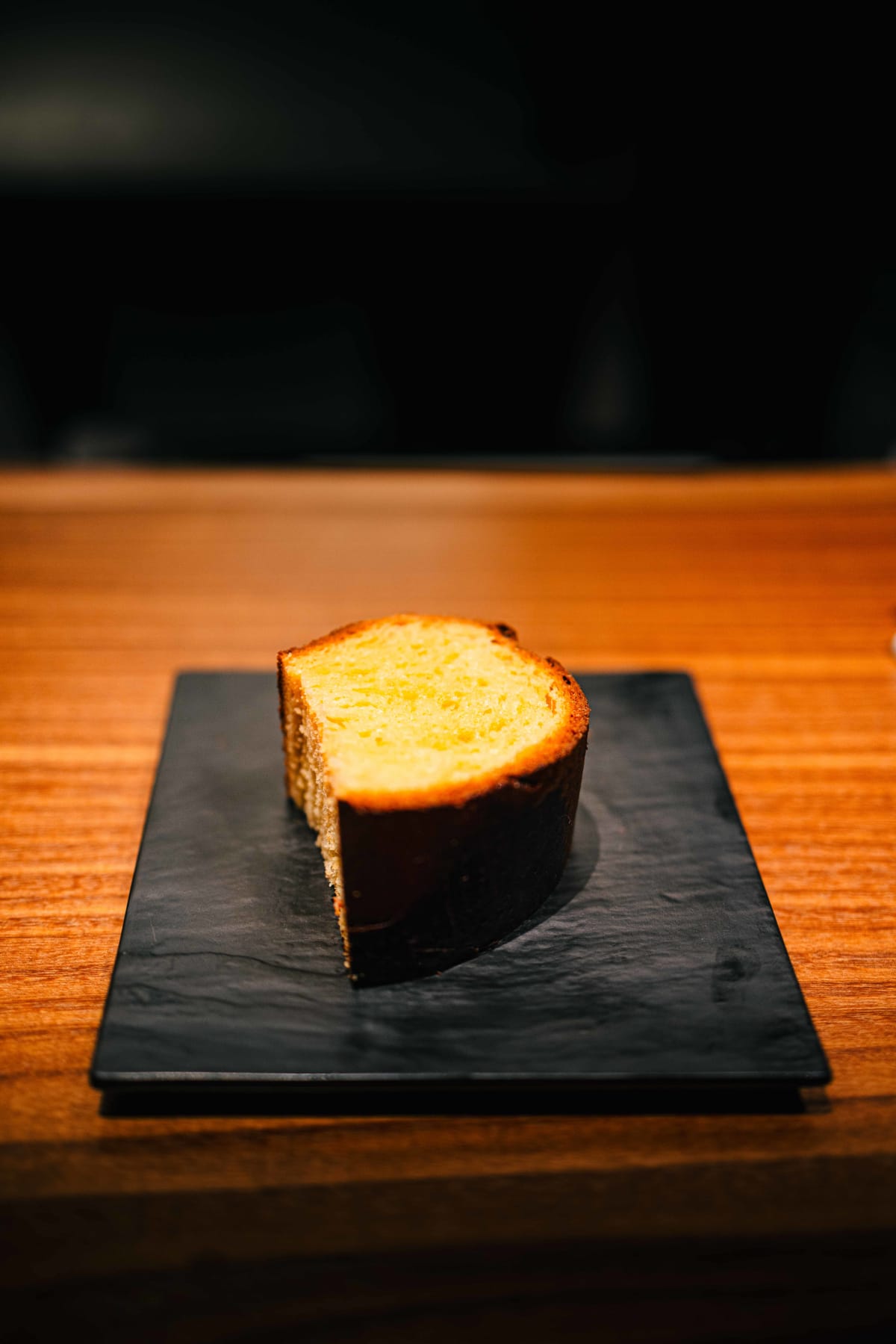
The performance of a big loaf being shown at the counter and then sliced by the chef himself also stays with me. A large loaf, glossy and dark brown, was shown to us on a steel tray with ears of wheat.
Then the chef sliced it himself under the pendant lamps of the marble station.
The slice that came to me on black slate had a yellow crumb inside a crust that was almost black.
The chef and a cook plated several crêpes at once at the station.
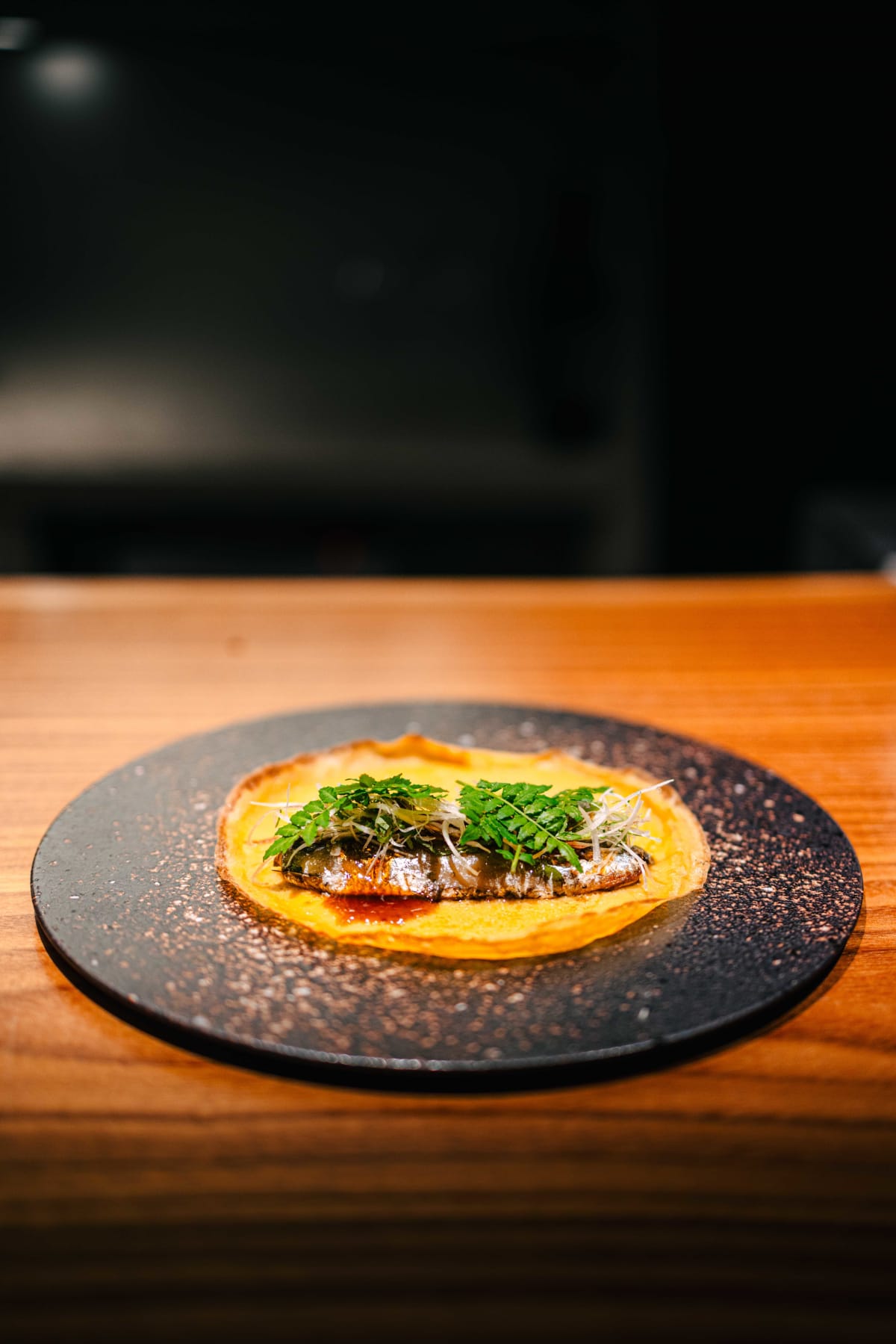
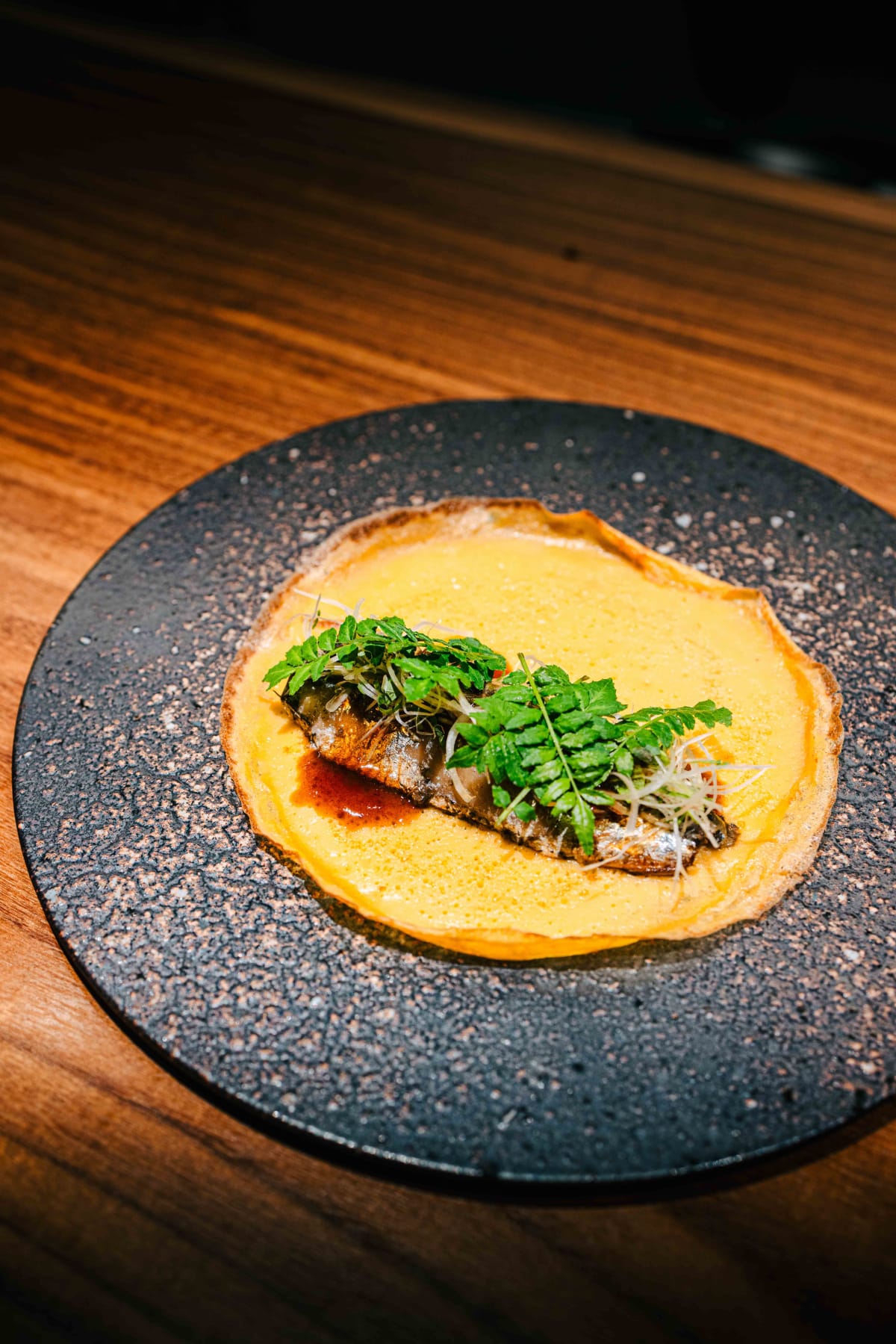
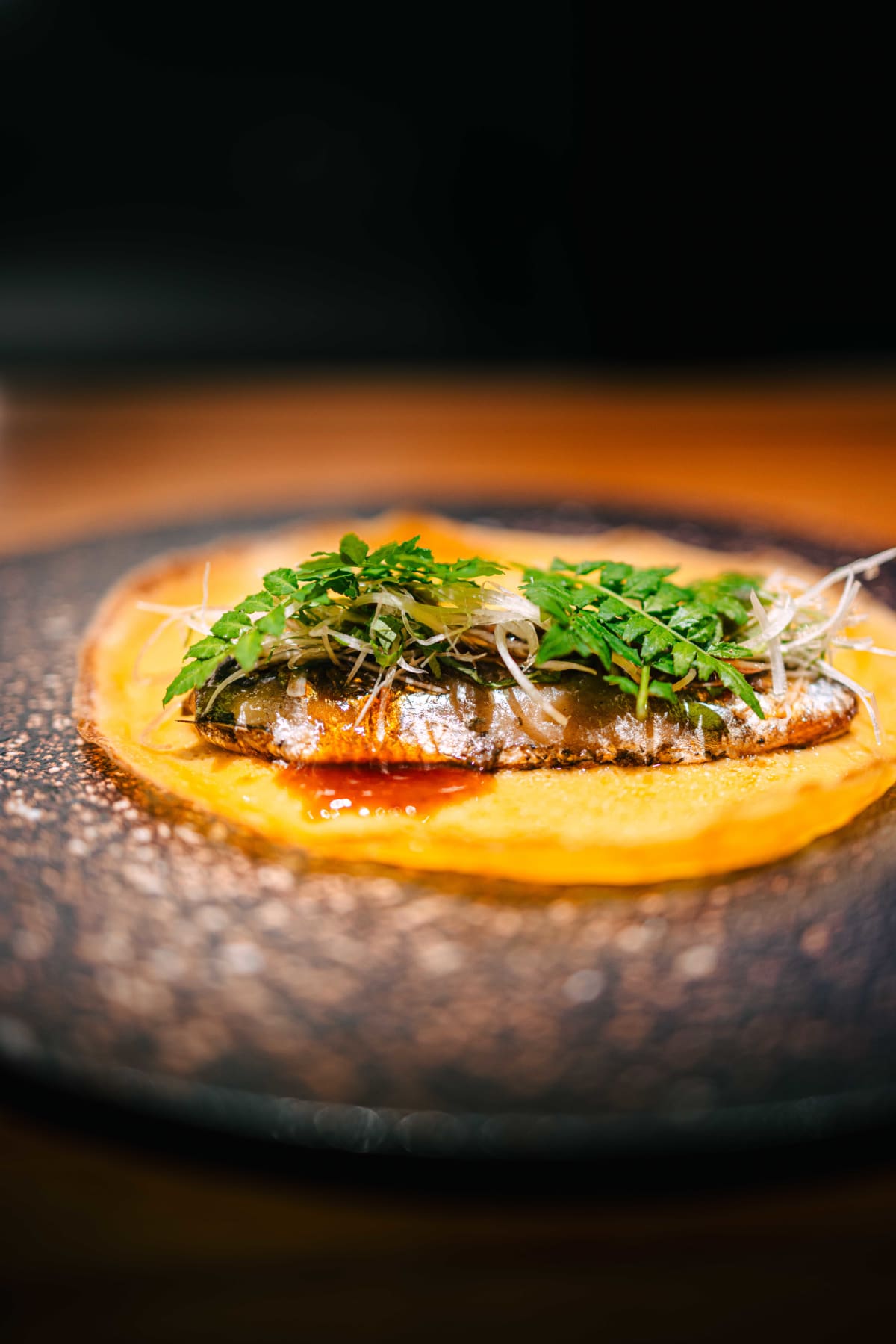
A thin golden crêpe was laid on a round plate speckled with black, then topped with a grilled fillet of iwashi, sardine, with kinome, the young sansho leaves known in Korea as chopi, and finely shredded white leek.
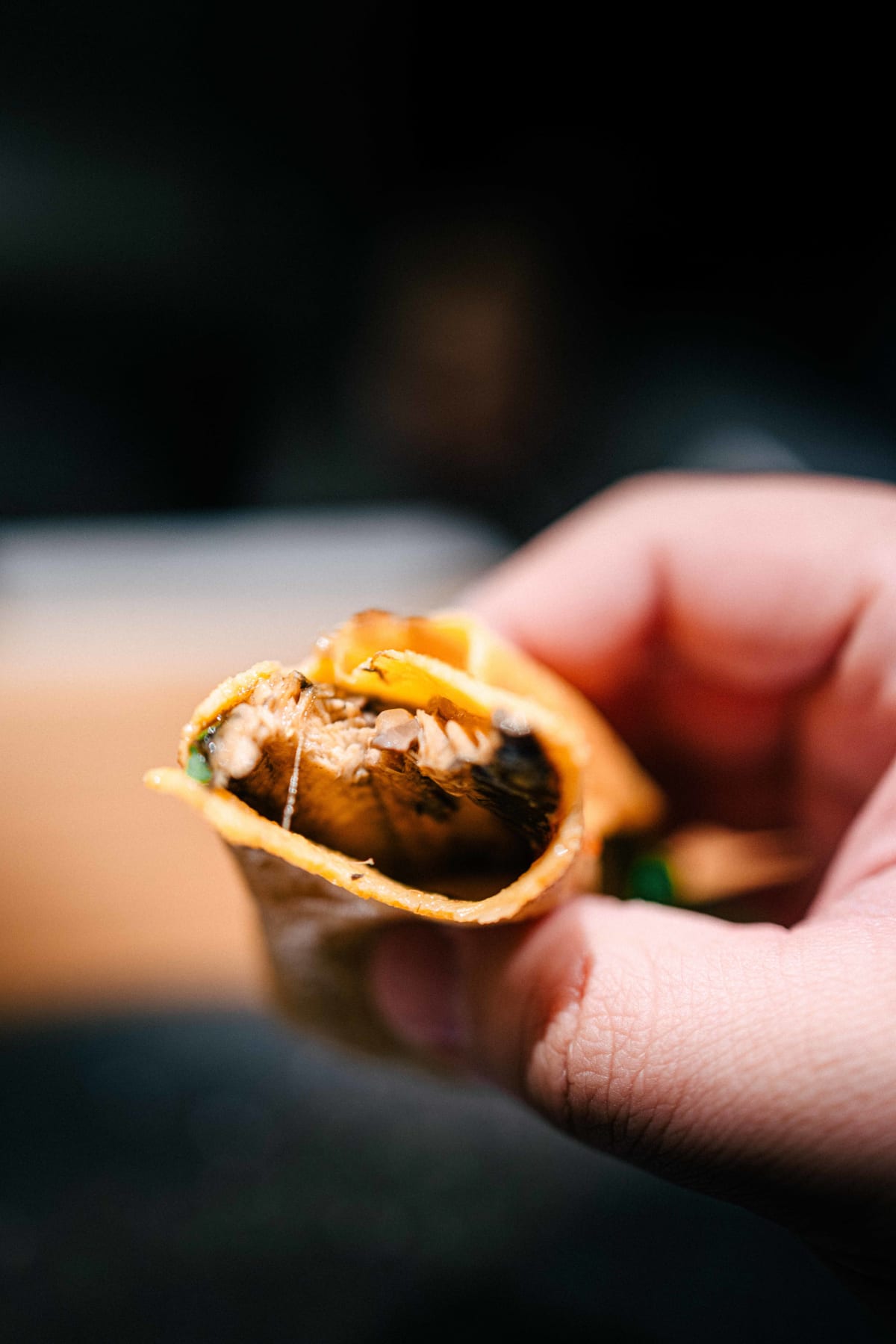
You roll it up and eat it, and it was a fun flavour.
In a way, with only crêpe and iwashi, the balance could have tipped towards the iwashi, but the kinome seemed to hold it steady. The combination stood out, and it tasted good as well.
Section 8·A 1990 Margaux By The Glass
For diners who seek out only Michelin two- and three-star restaurants or Tabelog Gold-level places, the cooking here may not hold much interest. Still, if I had to name a reason to recommend it, it would be the wine from Masahiro Kobayashi, which I thought was very good. Kobayashi is the sommelier and manager here, and he is said to build the pairing course around the chef's cooking, whose recipes change almost daily with the best ingredients found at the market that day.
The guests next to me were having the pairing, and from what I could see out of the corner of my eye, the line-up was very good, and the wine service included inventive touches such as pouring beer into a sherry. It left me wishing I had simply gone for the pairing too.
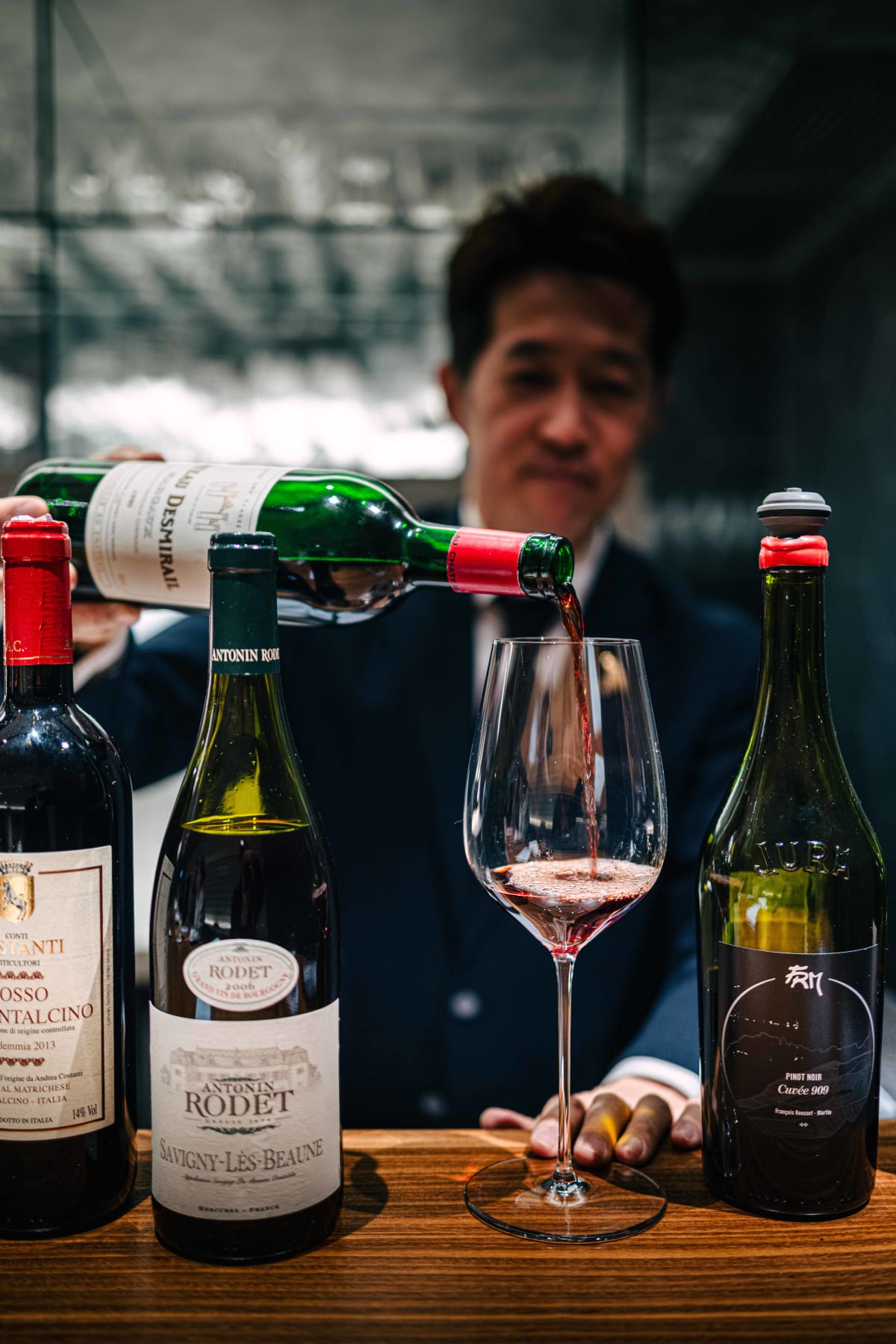
For my last drink I wanted a red, so I asked for a recommendation by the glass. Every red available by the glass that night was brought out to show me, with options ranging from France to Italy and Australia. Several caught my eye, but the one that stood out was a Bordeaux, and its vintage was 1990.
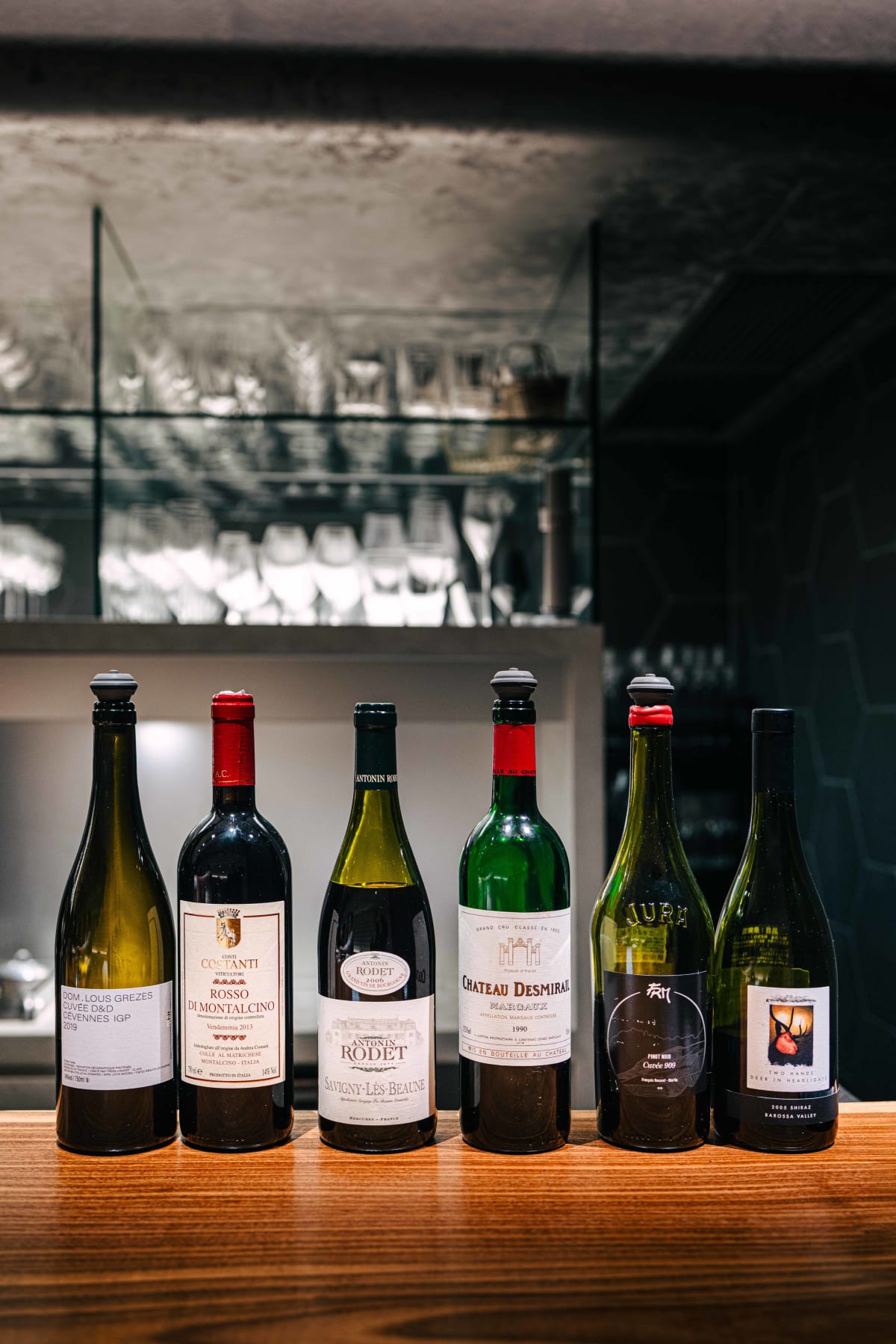
It is not an expensive estate, but I was surprised that an old-vintage Bordeaux like a 1990 was simply being poured by the glass. From what I heard, perhaps because Kobayashi has worked in wine for a long time, he seemed to have plenty of wine he had been holding on to for years.
So for my red I had the 1990 Château Desmirail, and it was probably the most delicious and satisfying wine I have ever ordered by the glass.
The wine was more than thirty years old, yet the aroma particular to old Bordeaux was more alive than I had expected.
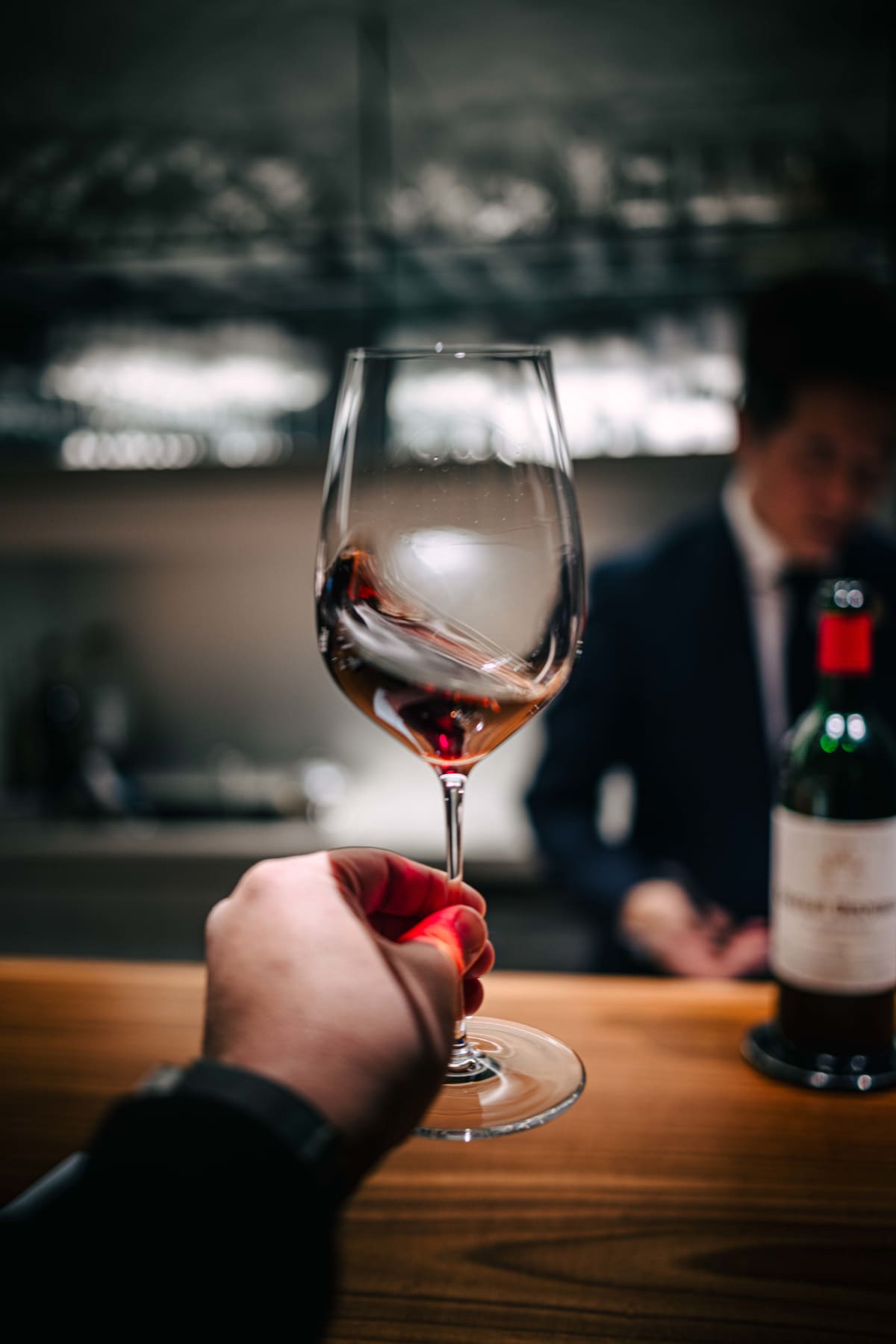
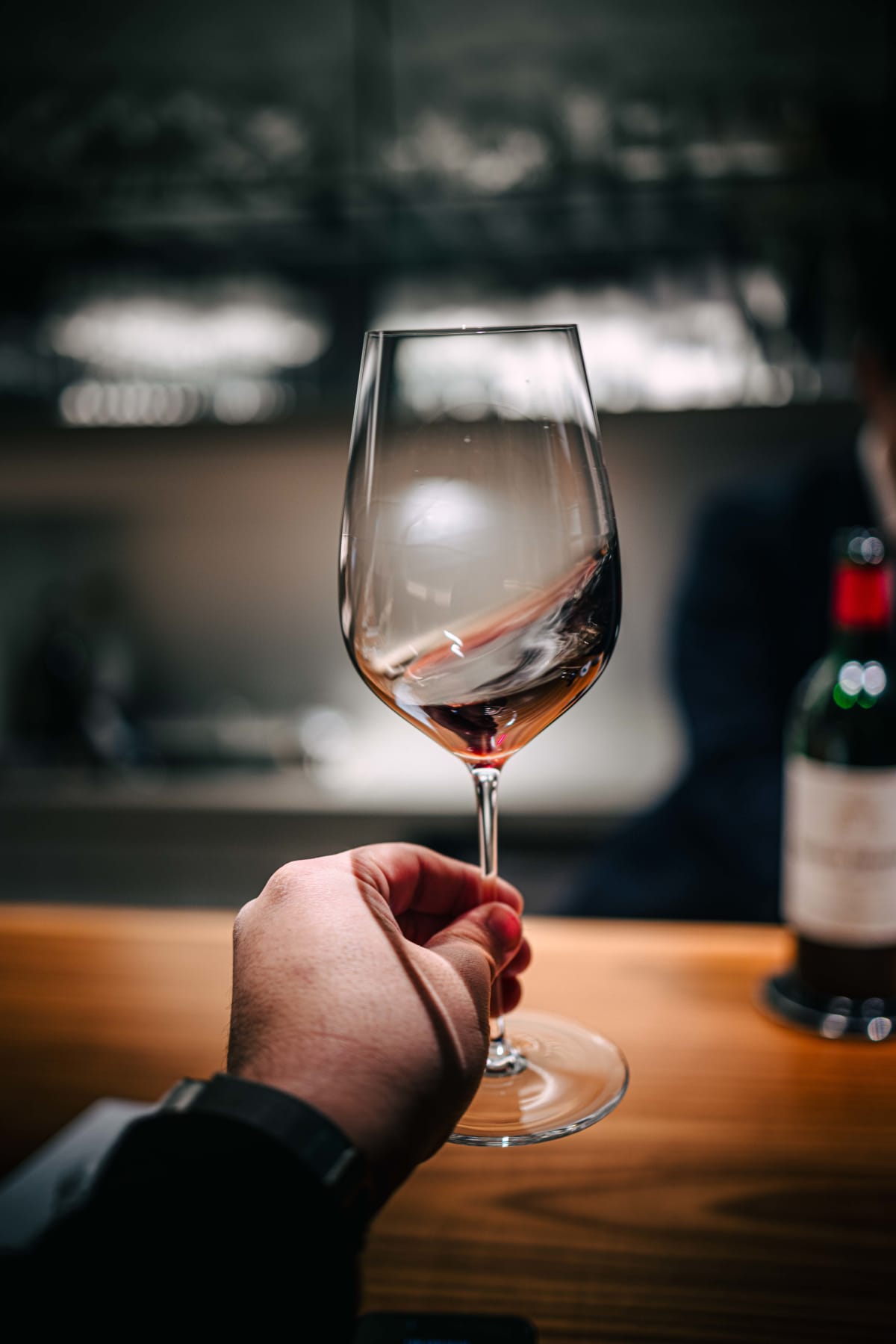
I do not think I had yet seen an option like this, an old vintage for 2,200 yen, even at French restaurants or wine bars. Do the maths: at today's rate, 2,200 yen is around 13 euros. At a Michelin one-star restaurant in France, that money would not let you so much as dream of an old Bordeaux.
At a Michelin one-star restaurant in France, that money would not let you so much as dream of an old Bordeaux.
Château Desmirail is a third growth in the 1855 Classification, in the village of Cantenac in Margaux. It began in 1741, when Jean-Baptiste Desmirail, a lawyer at the Bordeaux parliament, gave his own name to the land he had received as his wife's dowry. Its ownership changed several times in the 20th century, and it was in the hands of the Château Palmer side before passing to Lucien Lurton in 1980.
The words L. LURTON PROPRIÉTAIRE on the label mark a bottling from those years.
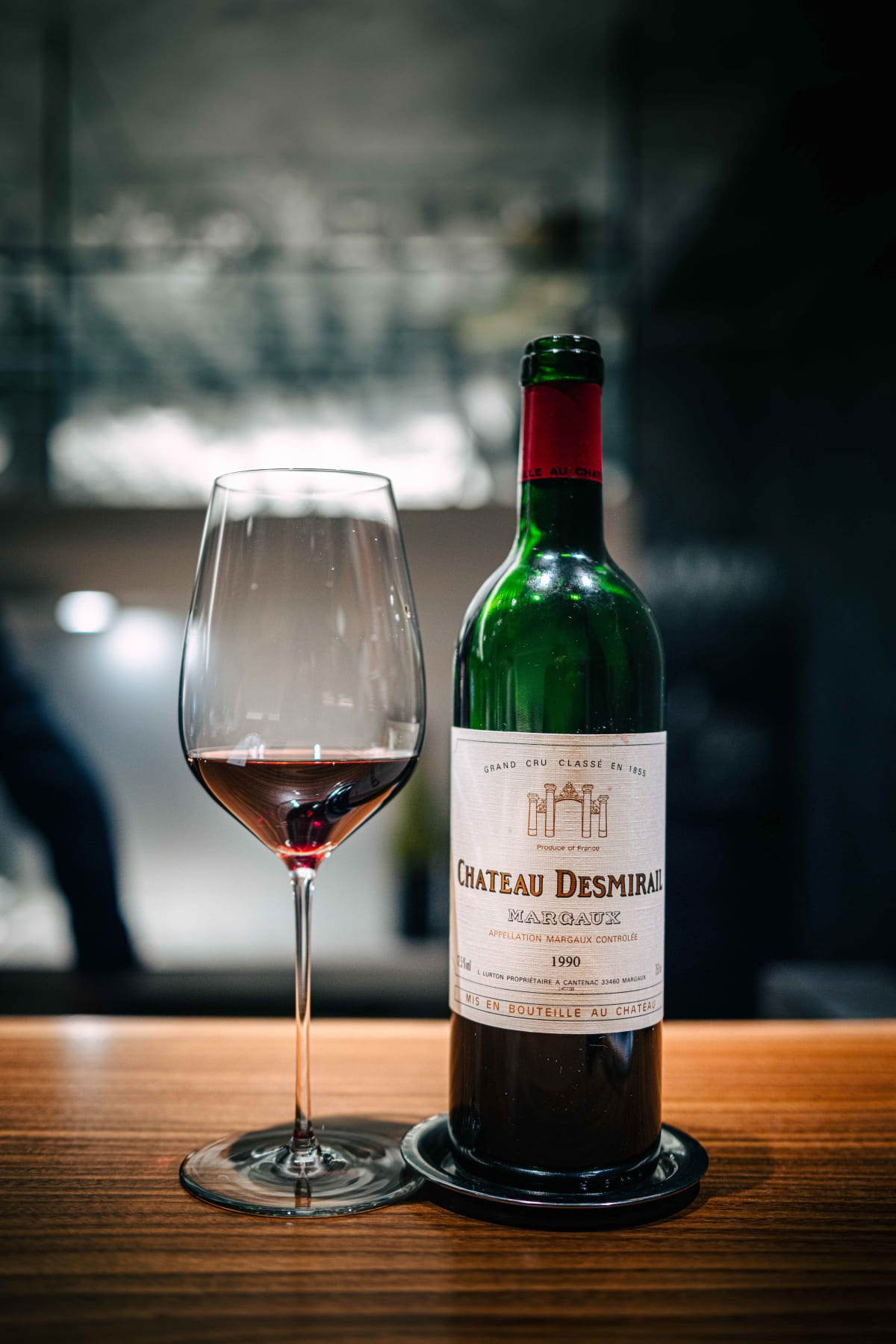
The year 1990 was the second hottest of the 20th century, with the driest summer since 1961, and it is counted among the finest Bordeaux vintages of the century.
I had come knowing little about the restaurant in the first place, and nothing at all about its wine, so this glass of old Bordeaux, arriving out of the blue, made a deep impression on me.
Section 9·What One Star Changed
When I talk with friends about eating in Japan, one subject that always comes up is Michelin and Tabelog. As it happened, a member of staff here spoke good Korean, so we chatted for a while, and I was told that the guests had once been almost all Japanese. After it received a Michelin star, though, foreign guests began to pour in, and now they make up anywhere from half to as much as 70 per cent of the guests.
Mashiro won its first star in the Michelin Guide Kyoto Osaka 2024, announced in April 2024. It had opened in August 2023, so that came less than eight months later, in the spring of the very year I visited. It kept the star in the 2025 edition and holds it still. It struck me afresh then how great the power and the publicity of the Michelin Guide are in the dining world.
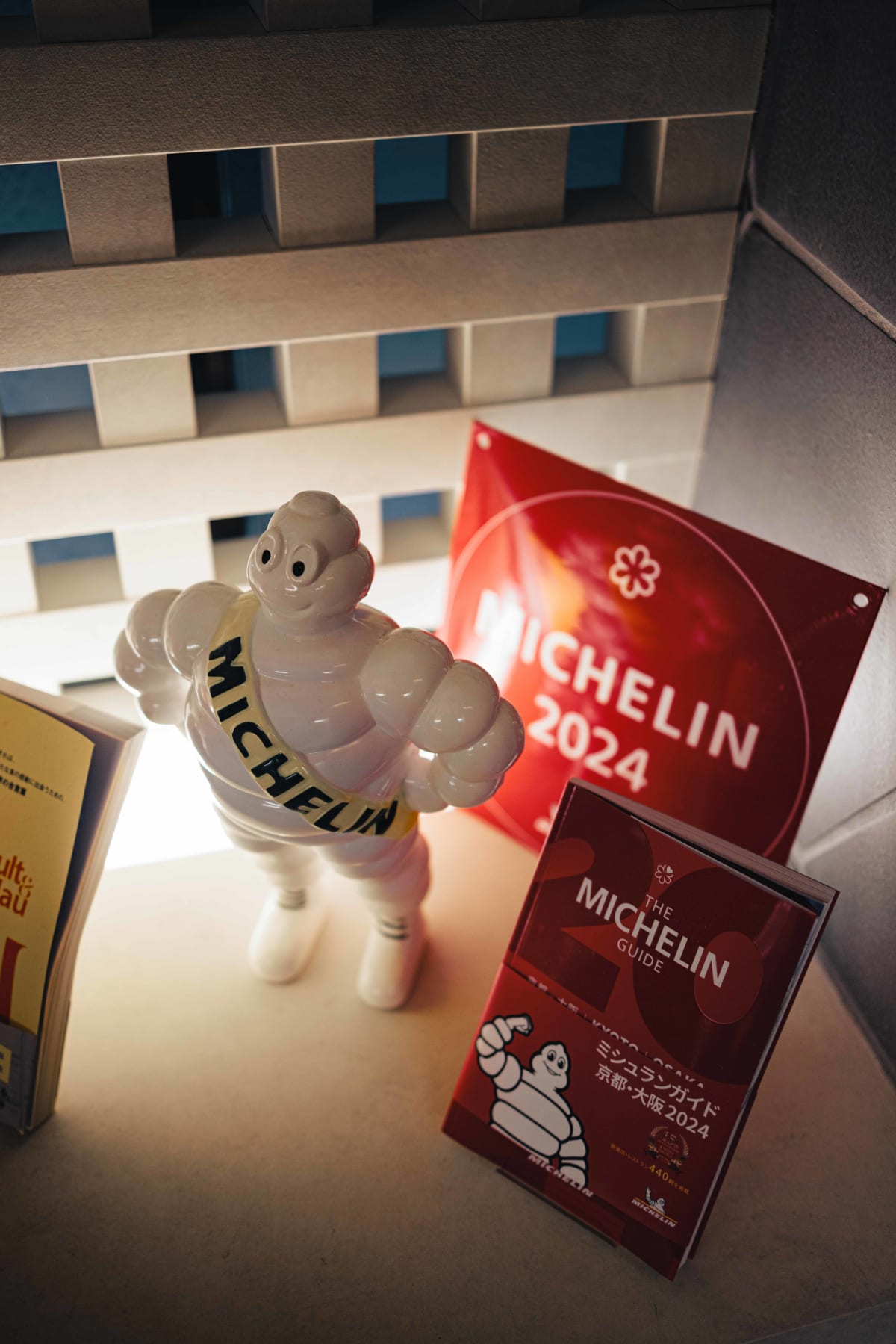
Recognition from Tabelog came after my visit. In 2025 it was named to the Tabelog Creative Cuisine and Innovative 100 (Hyakumeiten), and it won Bronze at The Tabelog Award 2026.
Section 10·From Mackerel To Herbal Tea
The best of the whole course was the foie gras with sweet potato, but there was one more plate in the second half that I enjoyed a great deal. It was the Spanish mackerel and oyster that came after the crêpe.
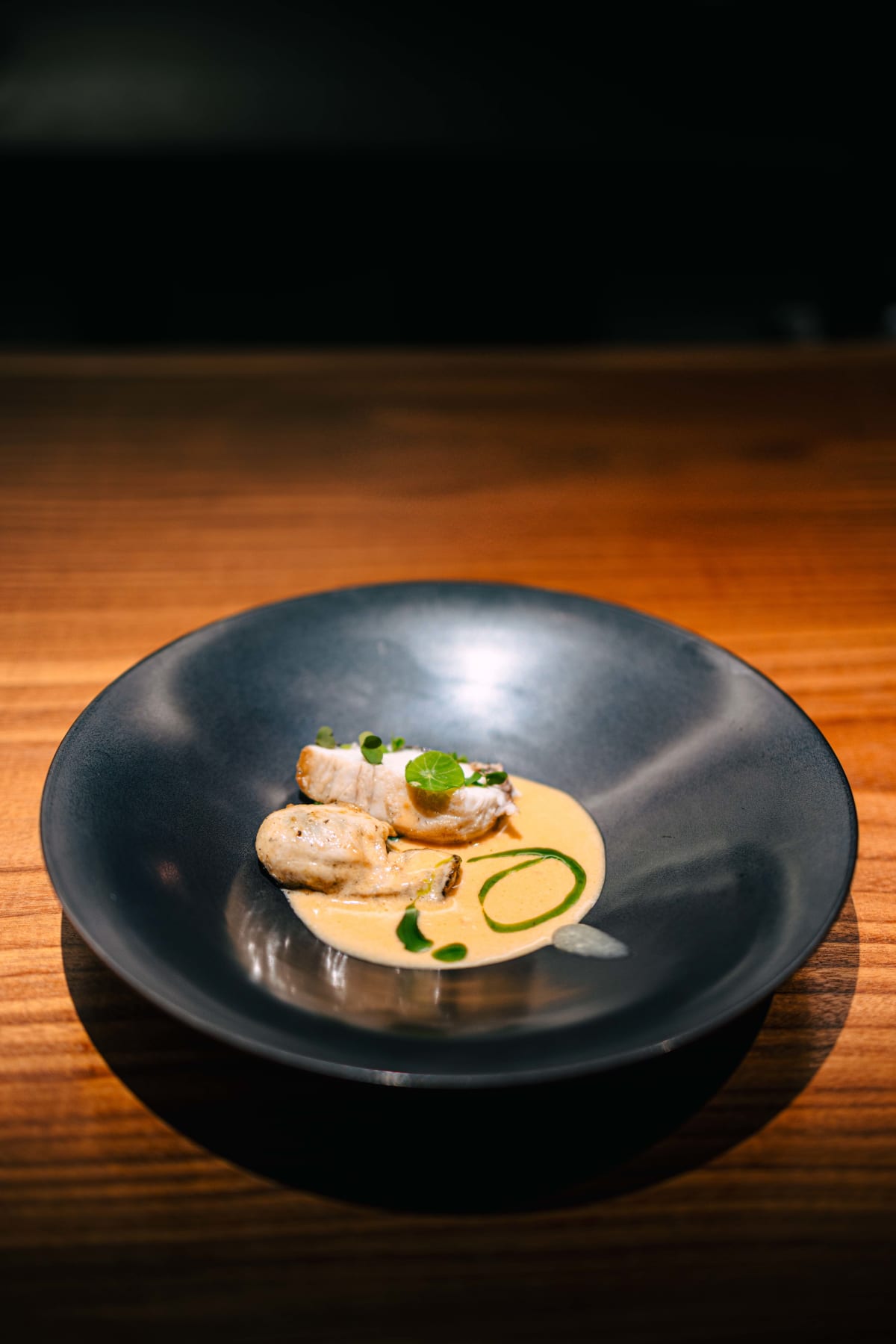
A piece of Spanish mackerel and a single oyster sat in a dark bowl, with green oil swirled over a yellowish white wine sauce and nasturtium leaves and sprouts on top.
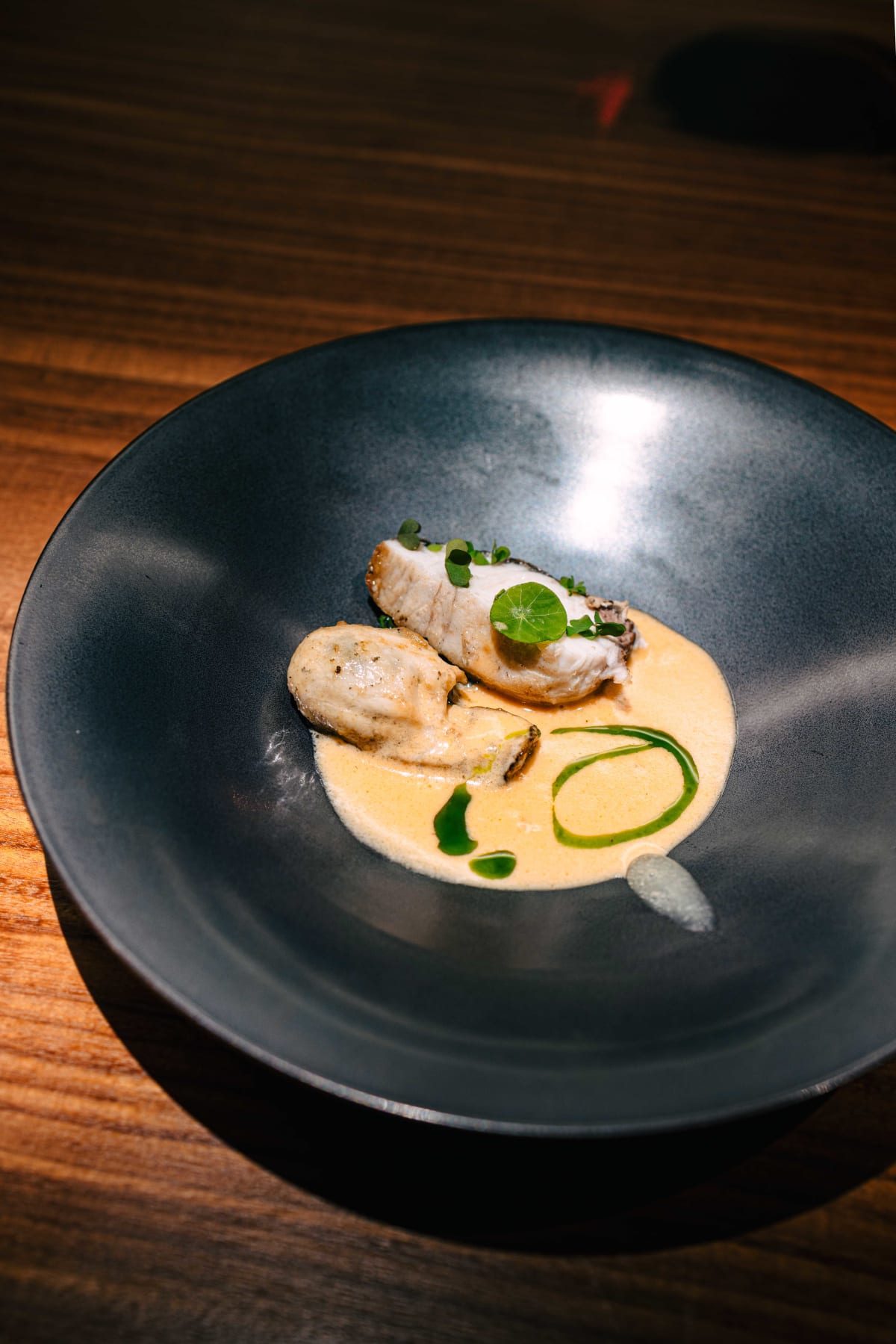
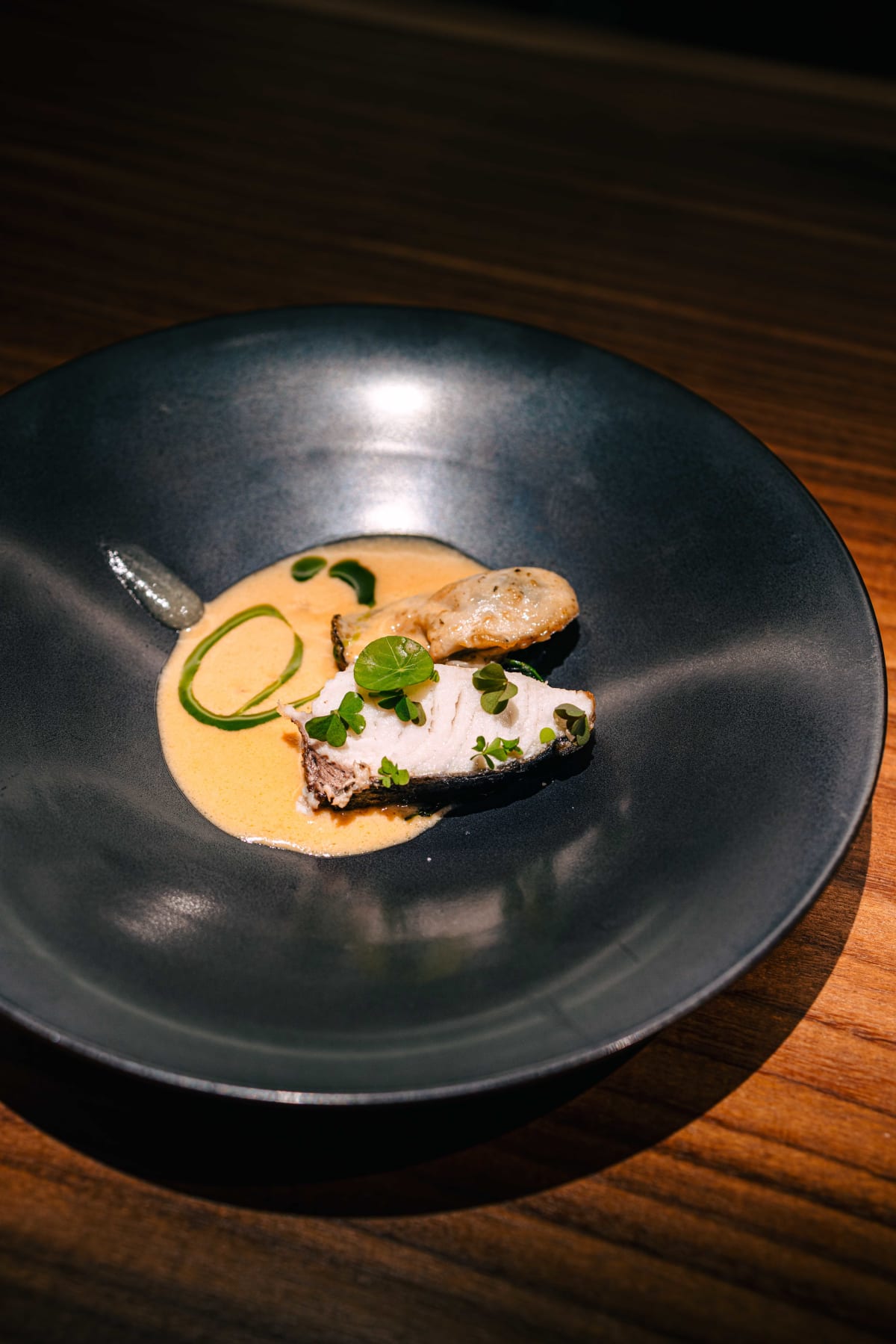
Here, more than the cooking of the ingredients or their quality, it was the sauce that was delicious.
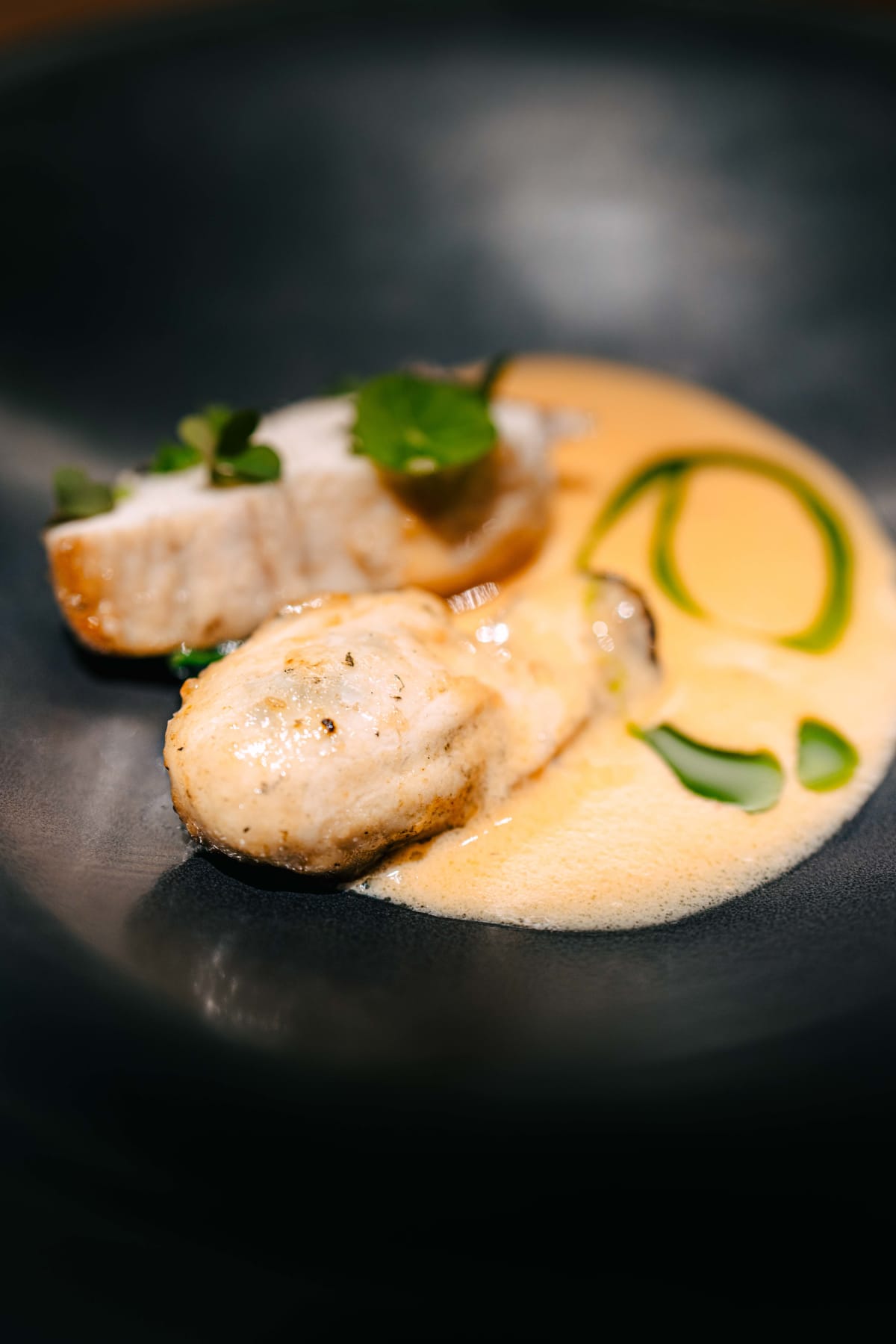
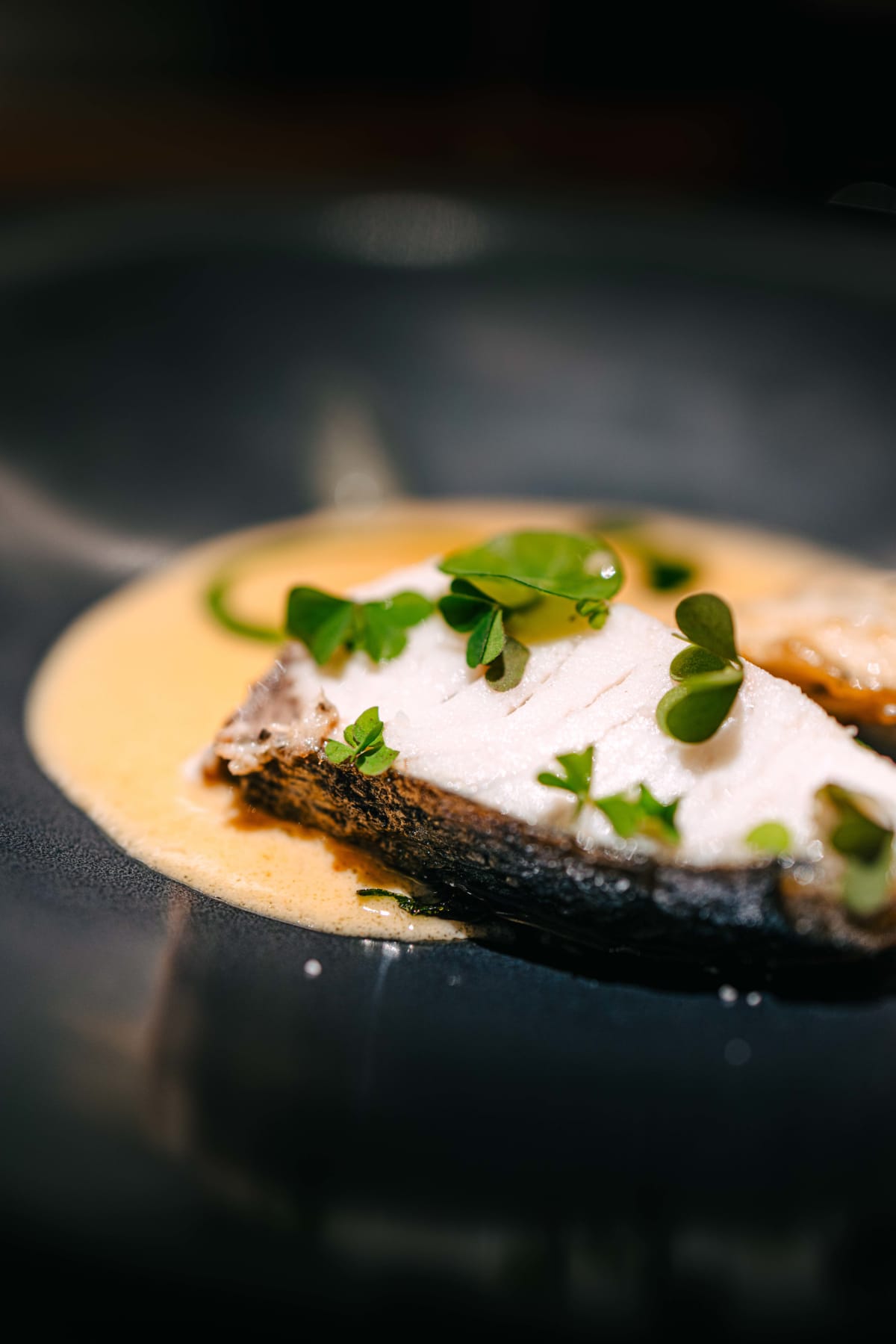
It seemed to bring the rather clean flavour of the mackerel into harmony with the richness of the oyster, and the rich sauce had a good balance of acidity and gave the dish a direct, satisfying weight.
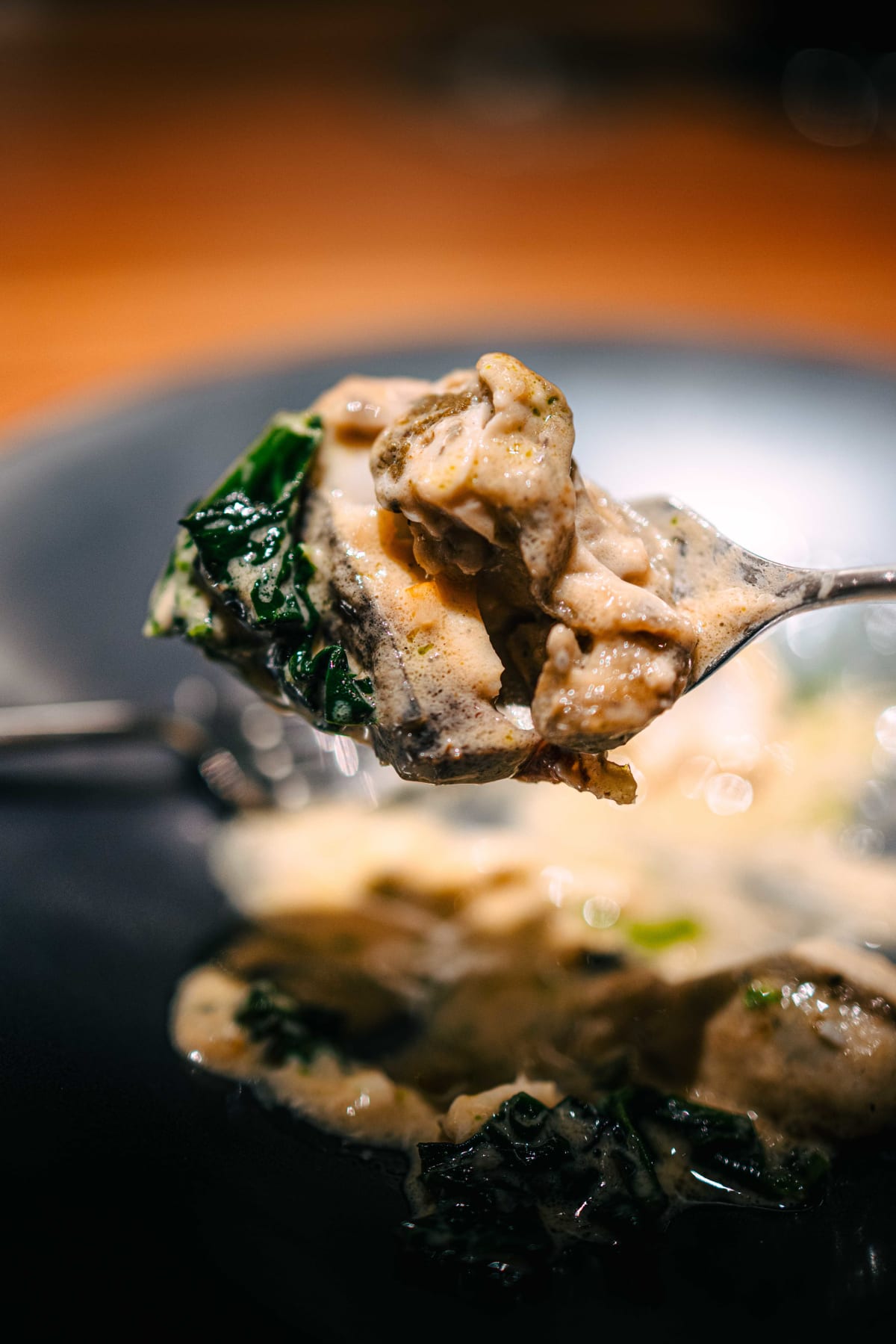
This too was a dish closer to French cooking, in which the match between Japanese and French ingredients stood out. As with the foie gras, it was so good that a little laugh escaped me.
Then, as the final main, came a Wagyu dish. The chef and a cook plated it at the marble station.
A piece of Wagyu cooked rare sat on a textured blue-grey plate with two leaf-veined tuiles laid over it, and a yellow garnish, a brown sauce and a green purée alongside.
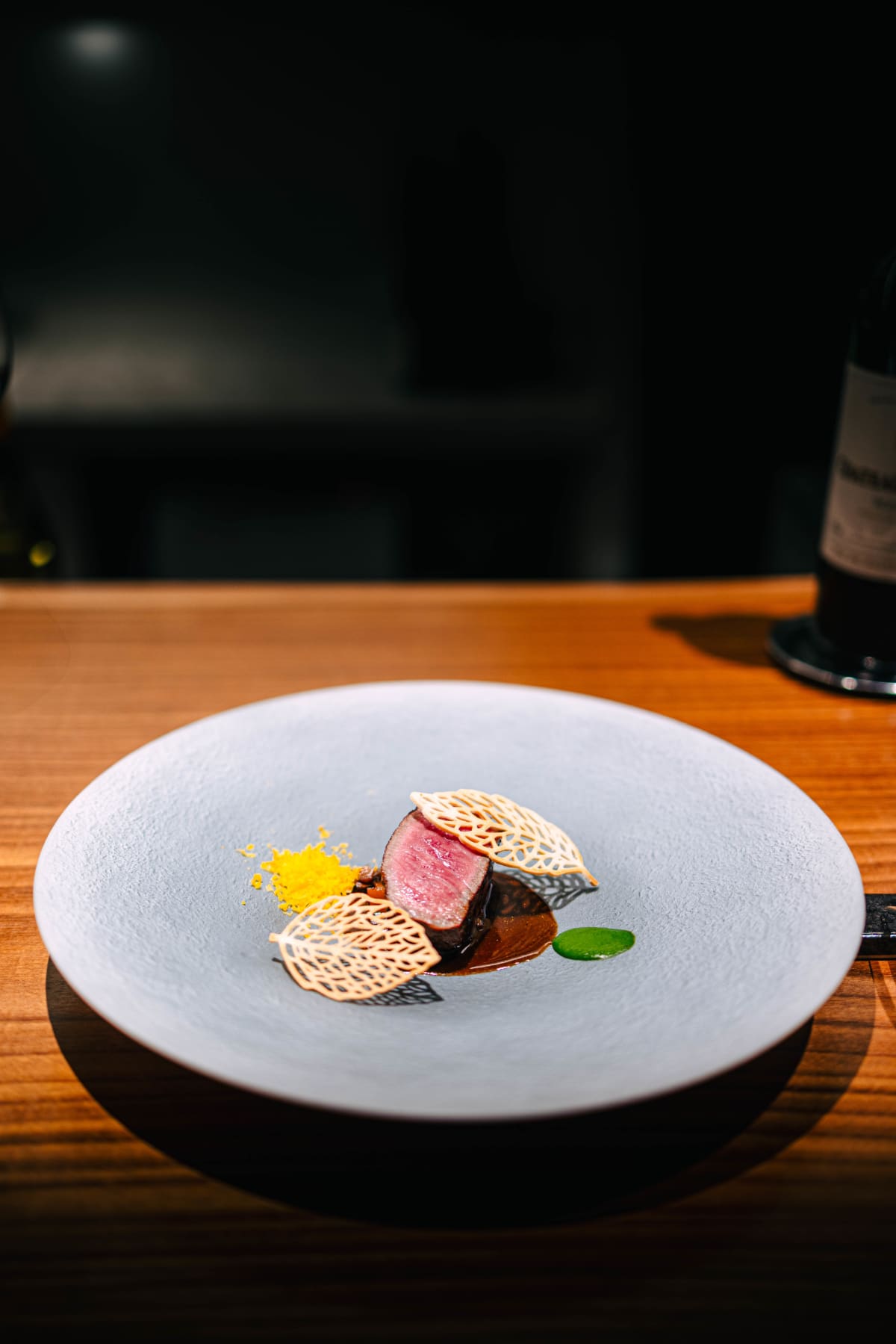
I am not especially fond of beef as the main course at fine-dining restaurants, but among the Wagyu mains I have had in Japan so far, this was one of the more delicious. The cut was rump, and perhaps because it is a lean cut, it came almost red inside, close to rare, and it was not chewy, so the texture was good.
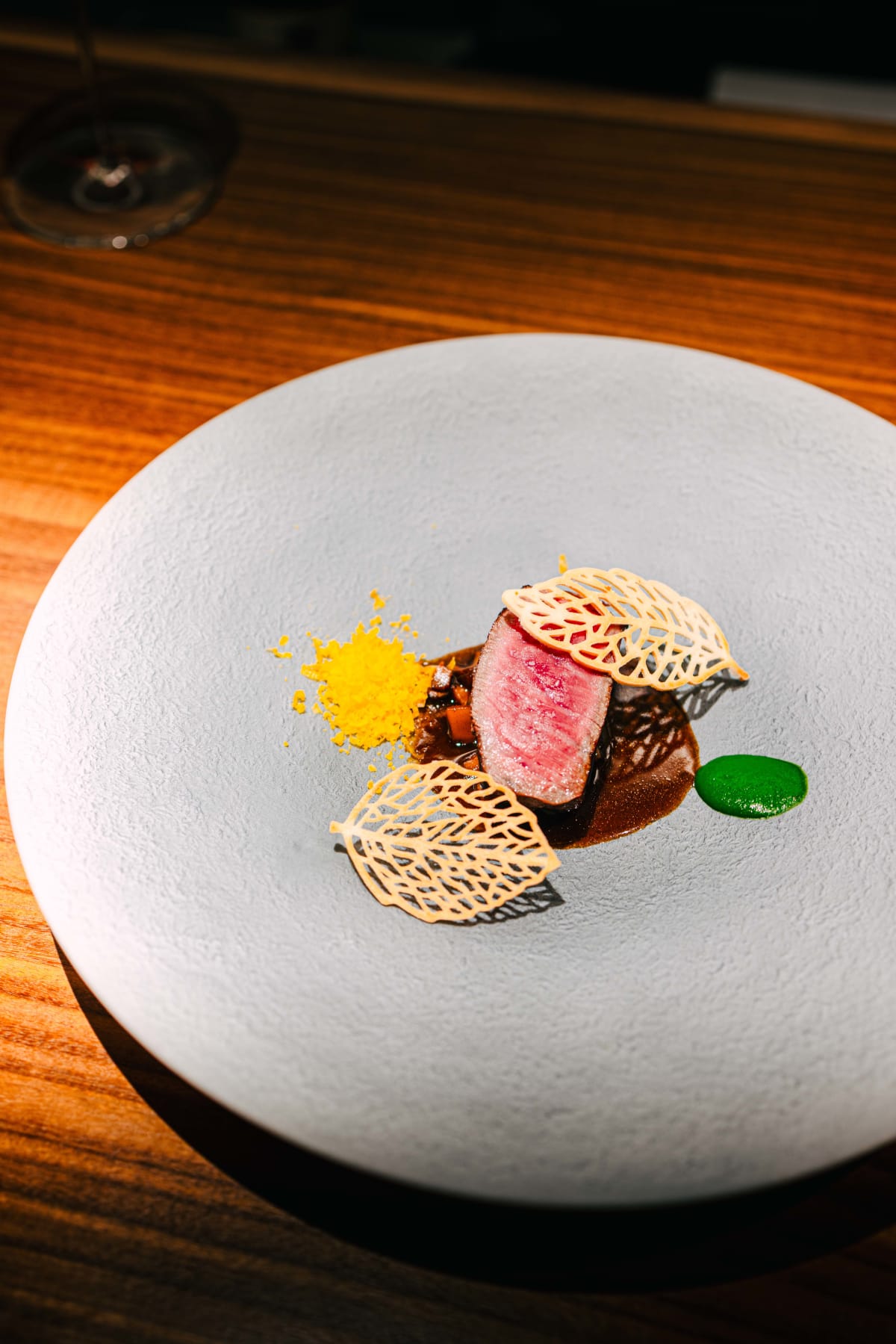
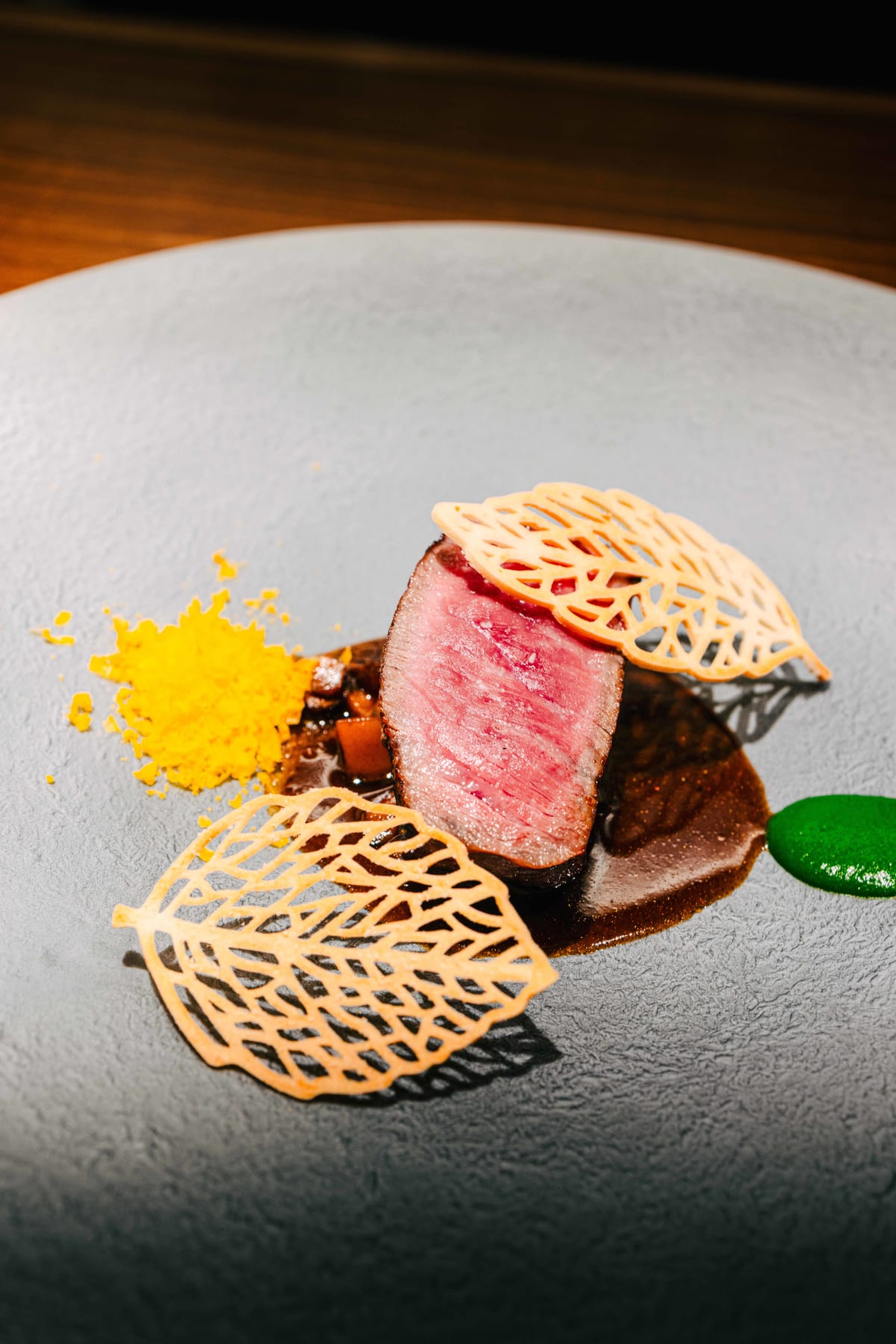
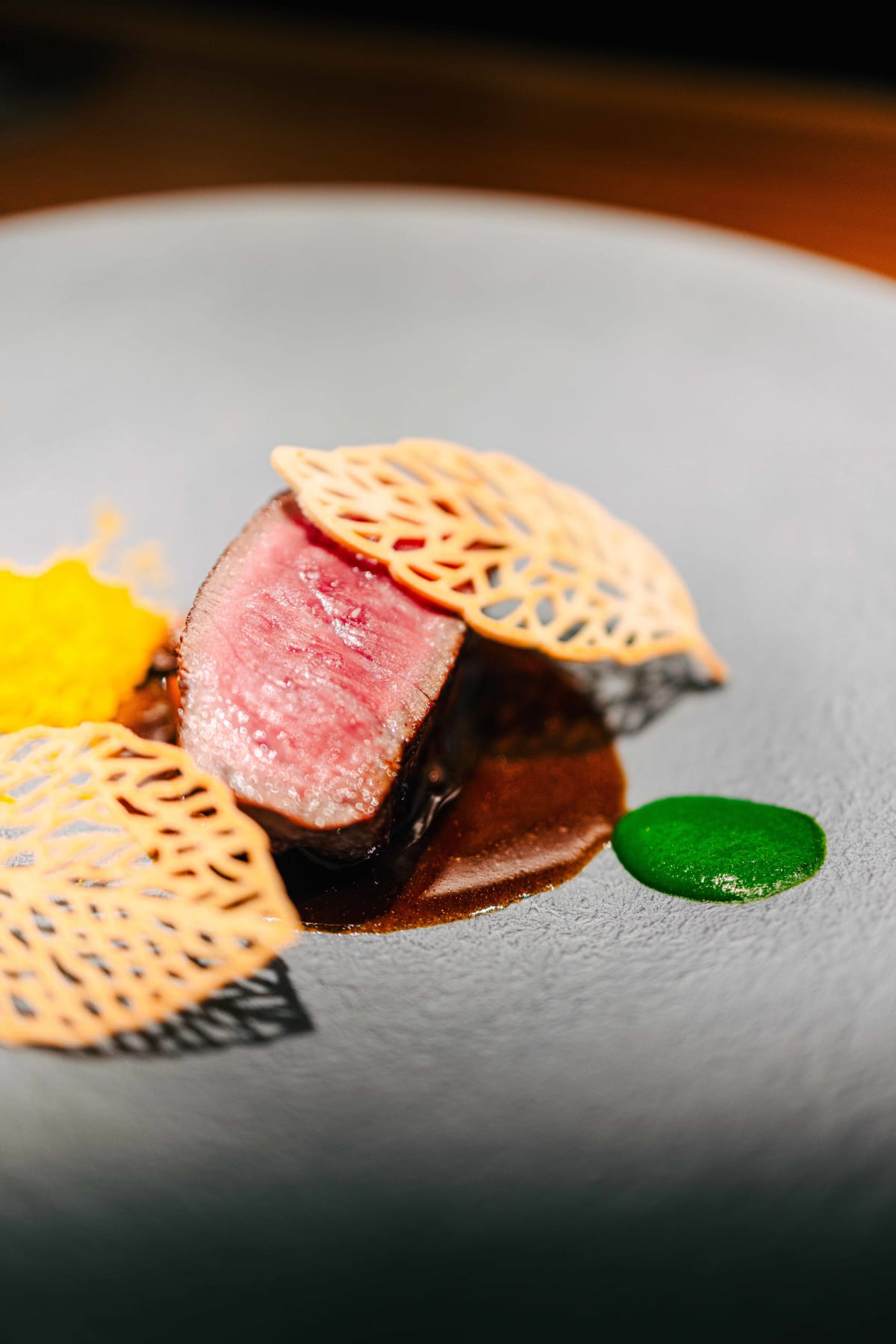
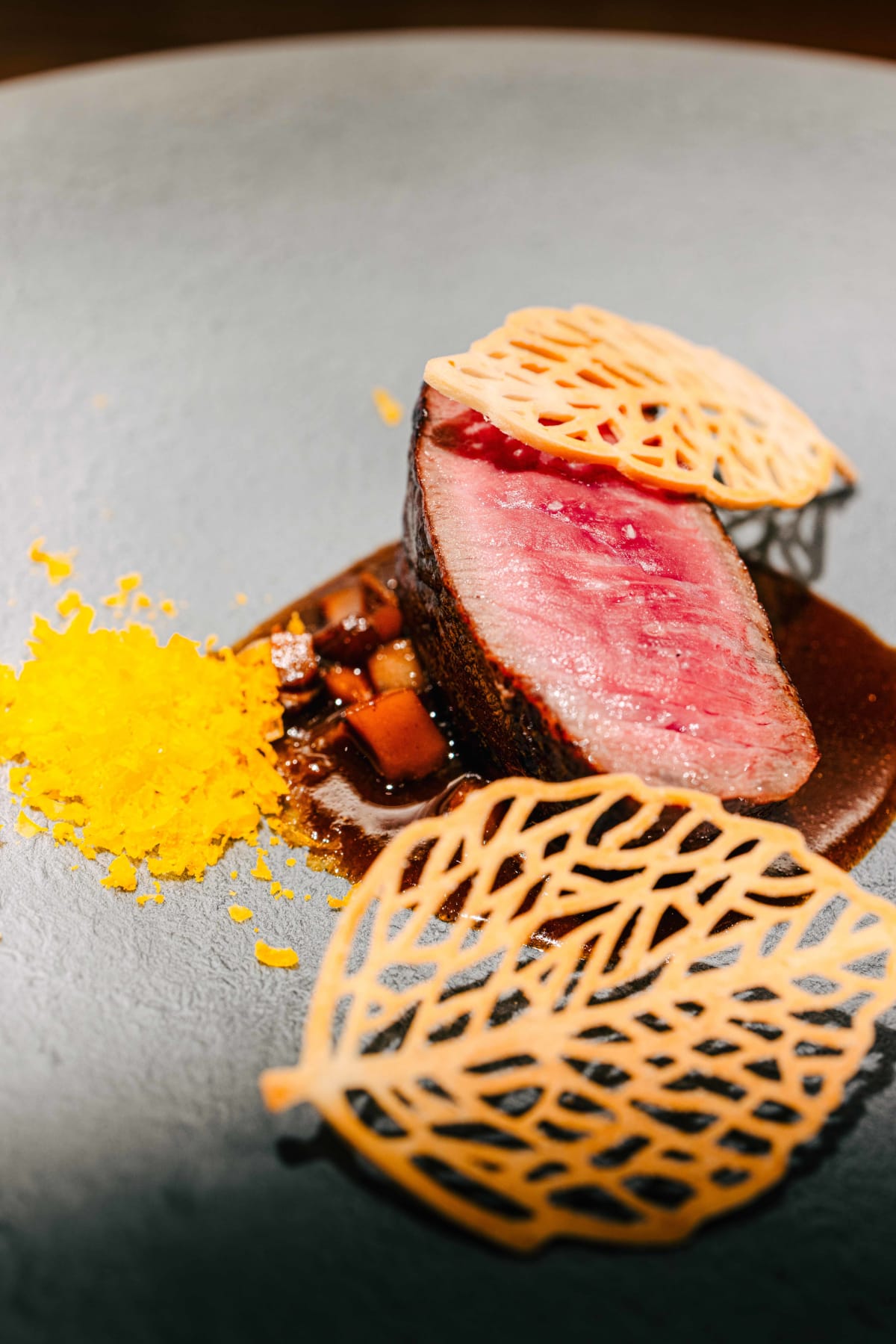
The Wagyu had a good meaty aroma too, and it rounded off the meal deliciously, which left me all the more satisfied.
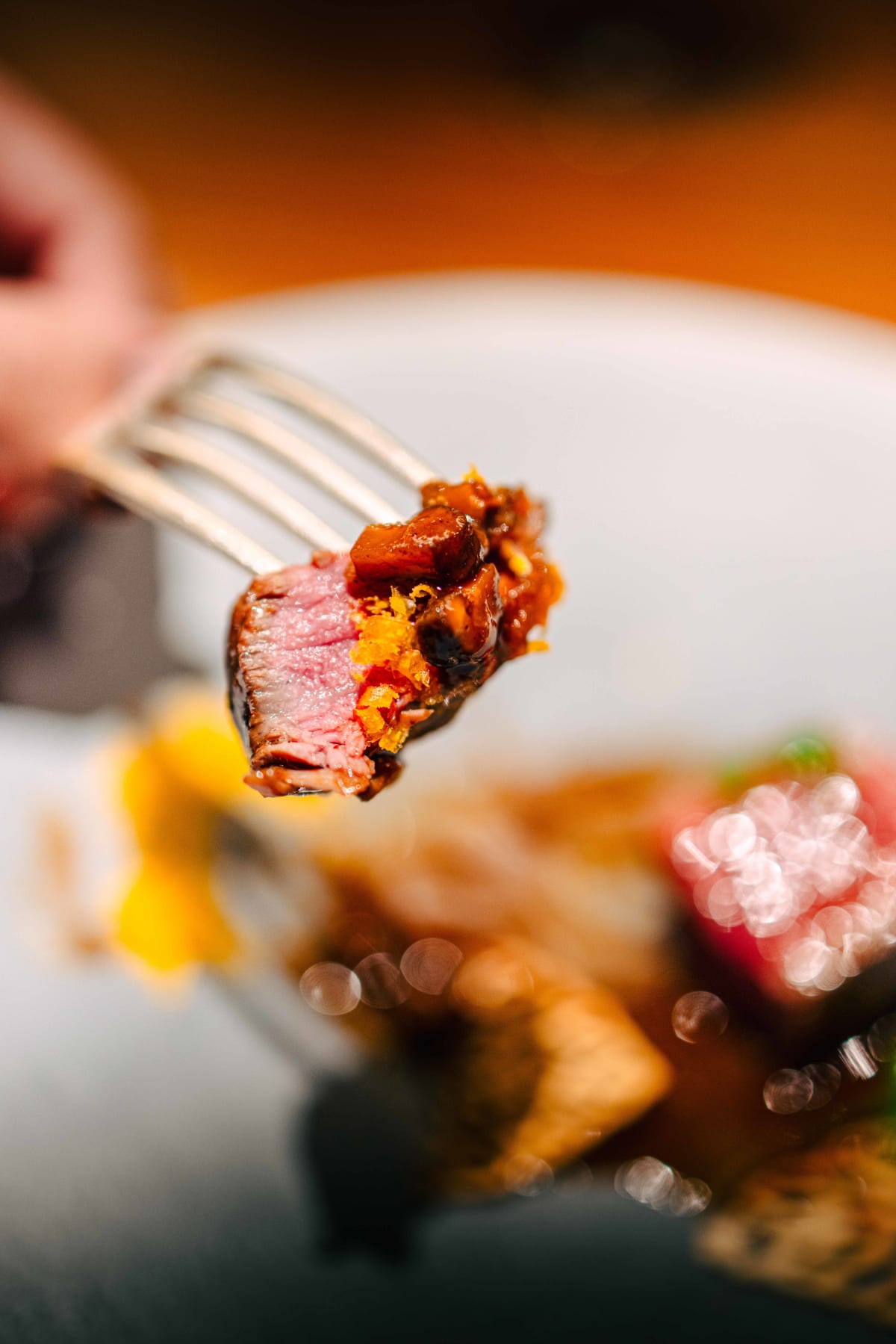
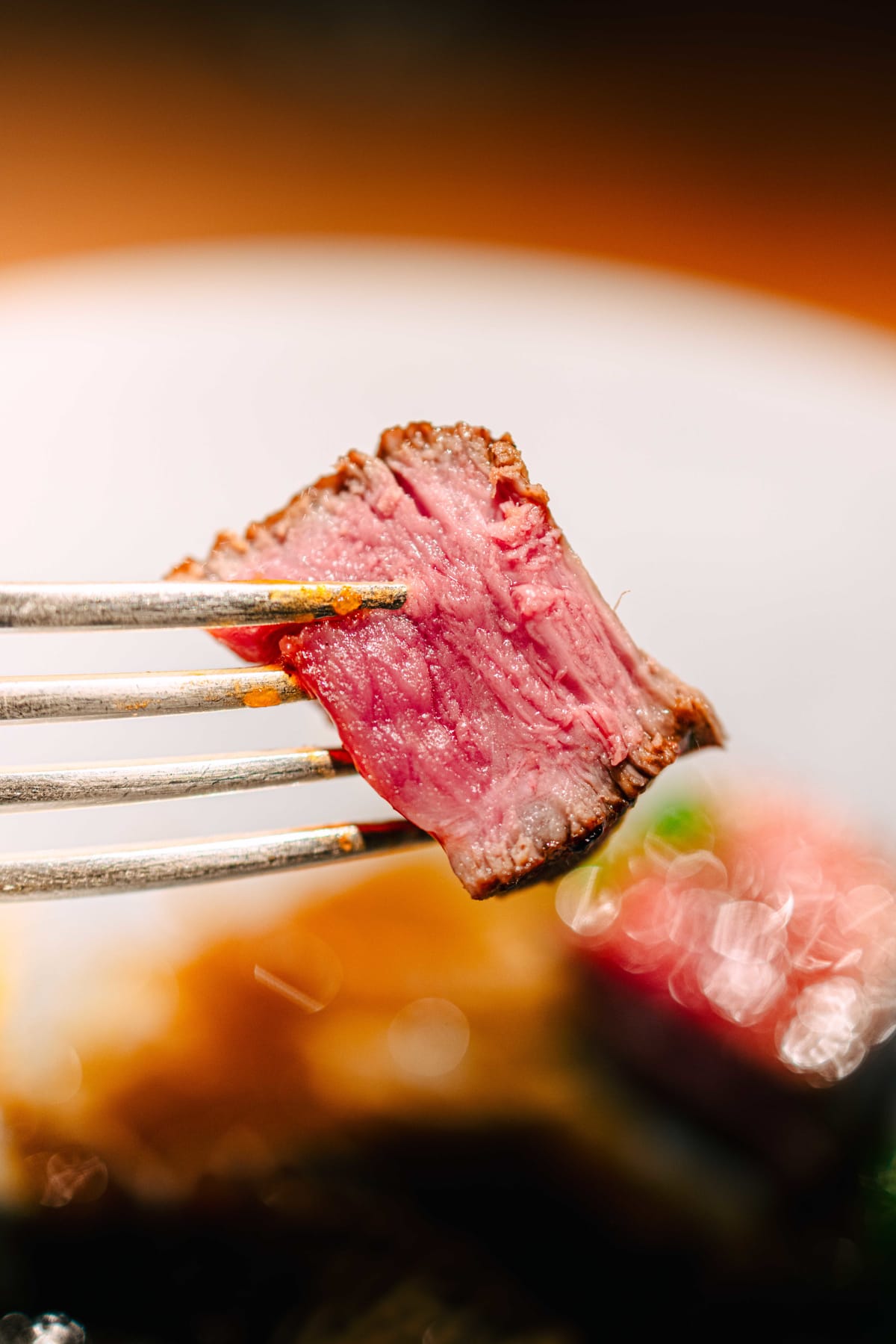
With heavily marbled cuts such as sirloin, short rib or chuck flap, I think it is best to eat just a few pieces with full concentration at a yakiniku restaurant or a Korean hanwoo barbecue house. In fine dining I like poultry best, but when beef is served, I think a cut like rump, or tenderloin, or outside skirt, which is not often seen, works best.
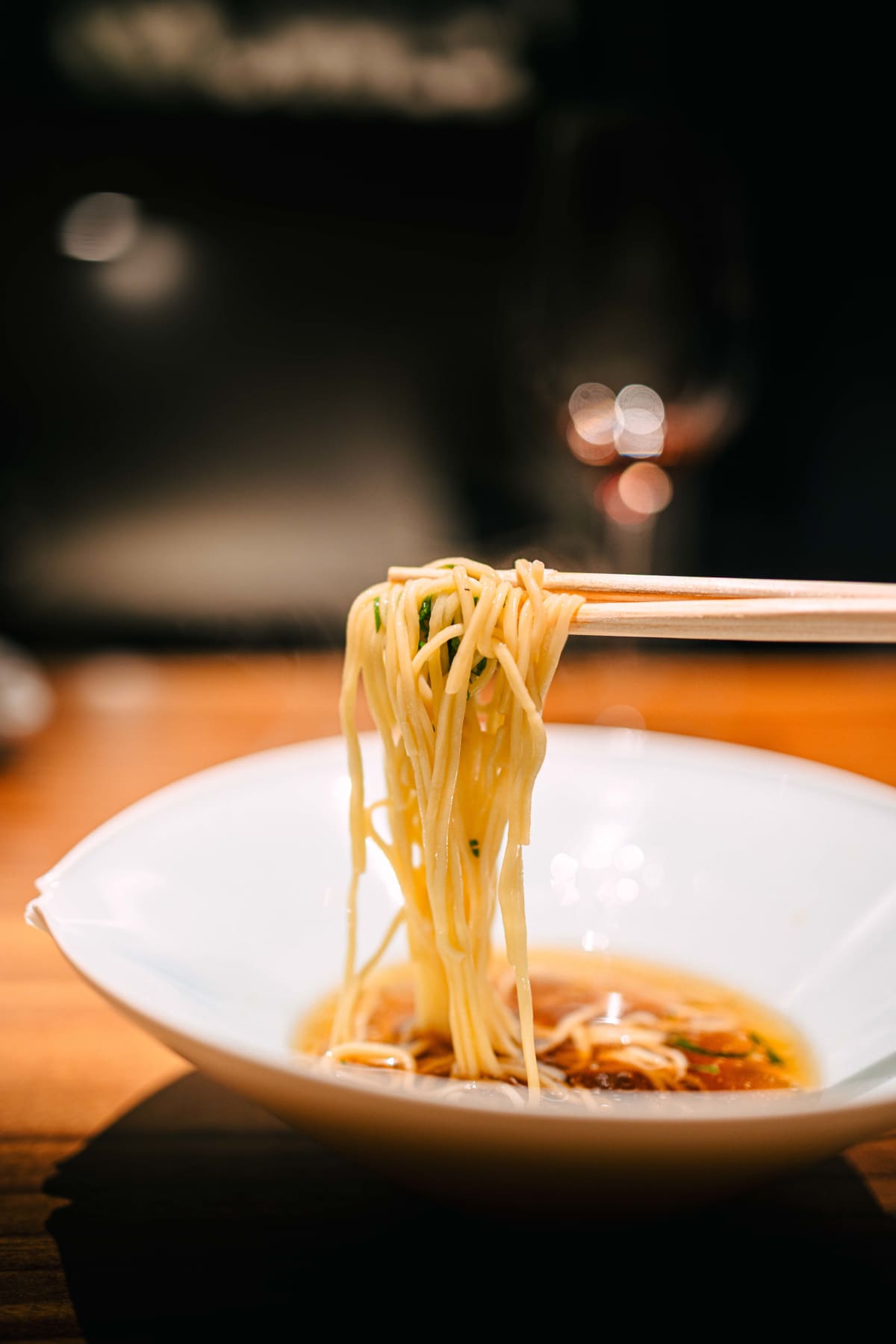
After the meat main came not dessert but a noodle course: ramen said to be made with duck stock.
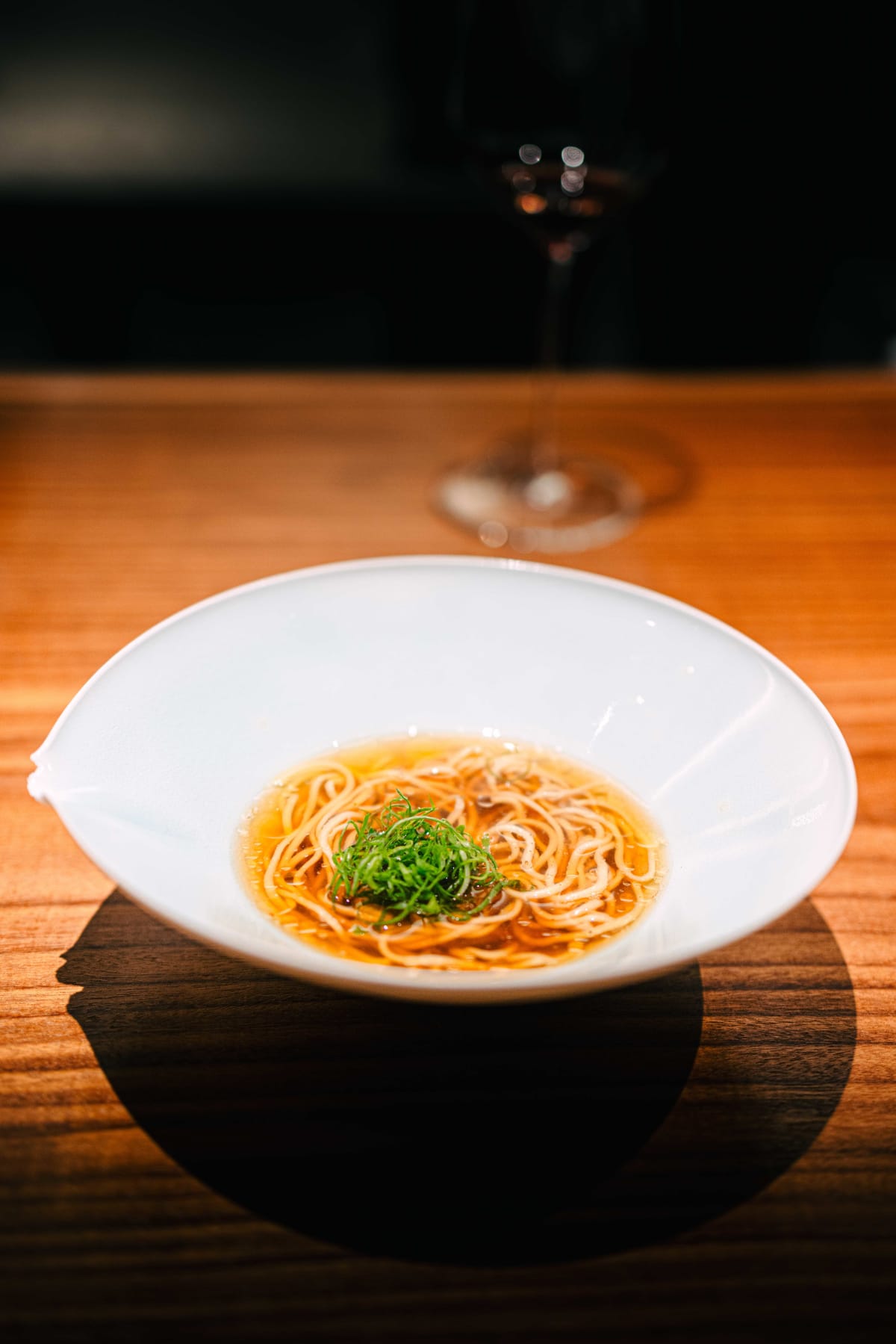
Clear amber broth was poured into a white bowl with a pointed rim, and the thin noodles were heaped with shredded green onion.
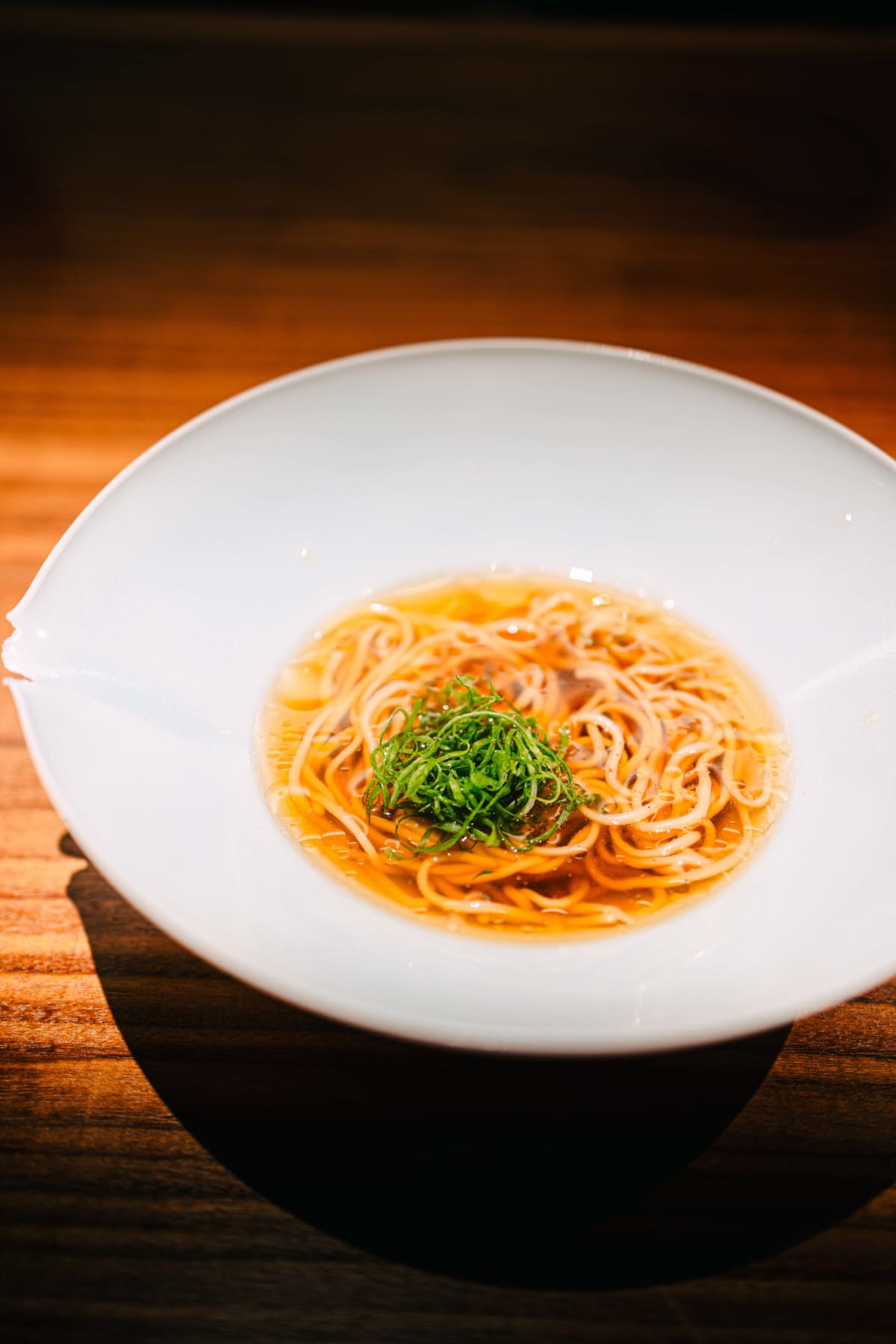
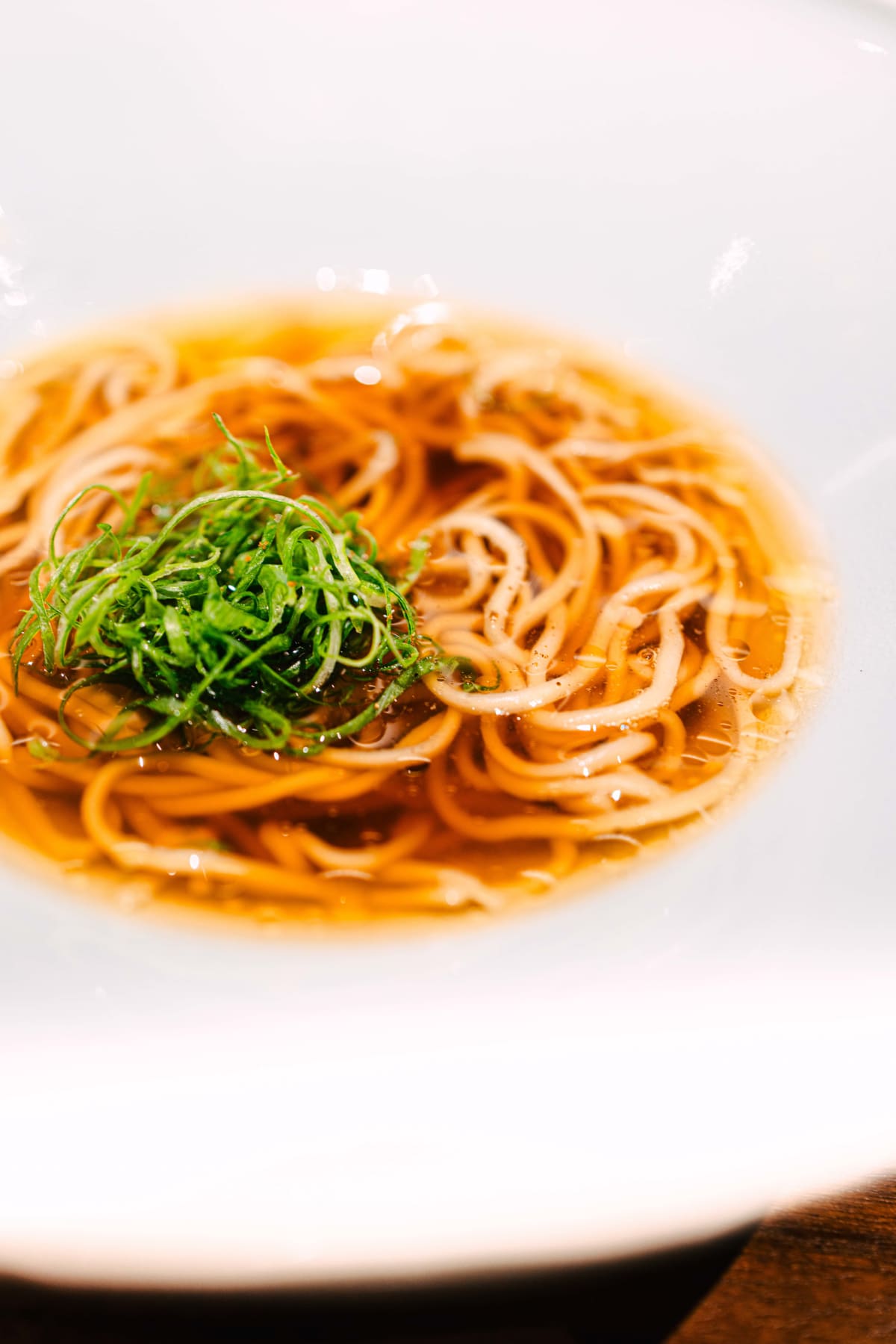
The broth was very good. Having just eaten Wagyu, I wondered whether ramen in a stock made from meat straight afterwards would feel heavy, but it did not.
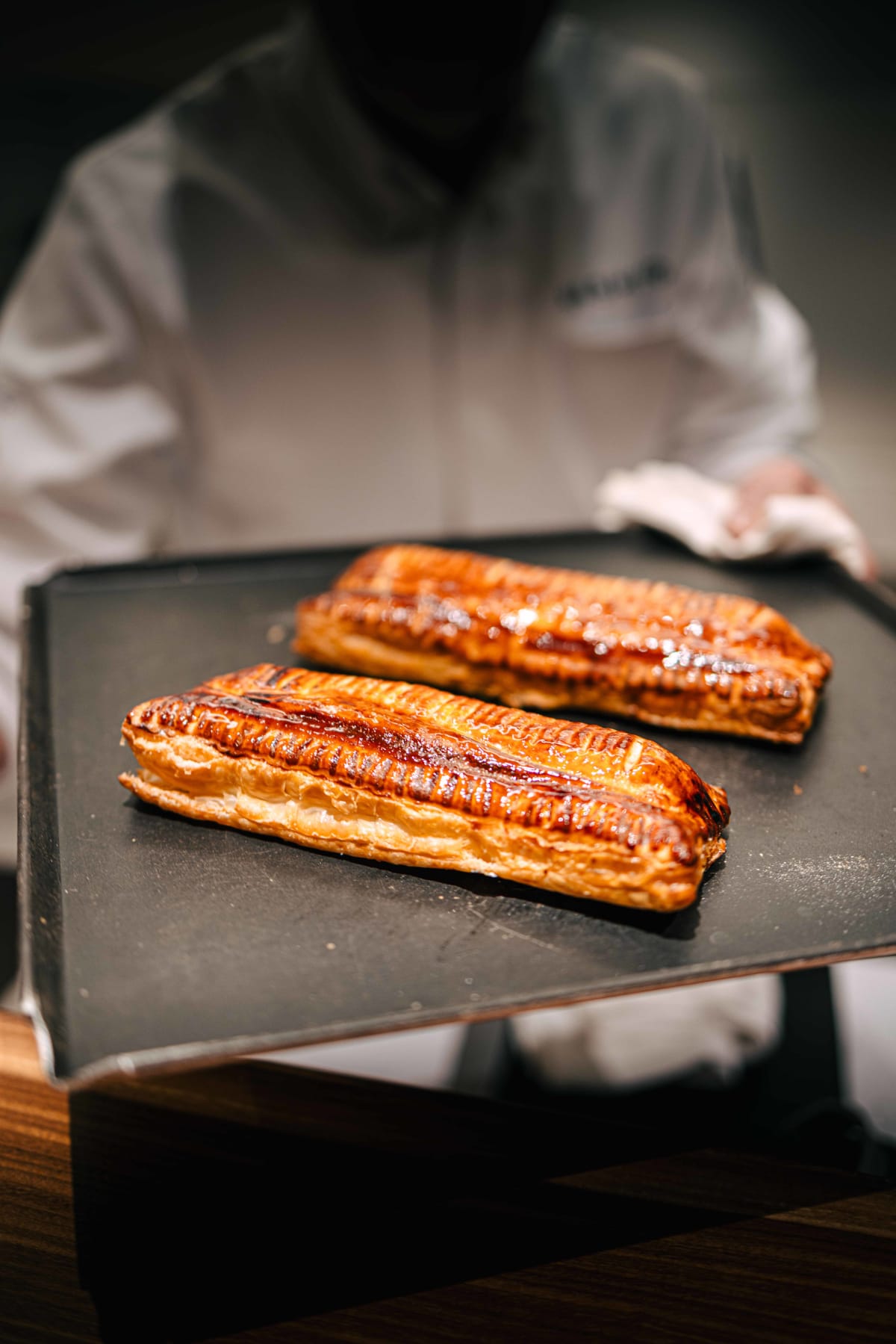
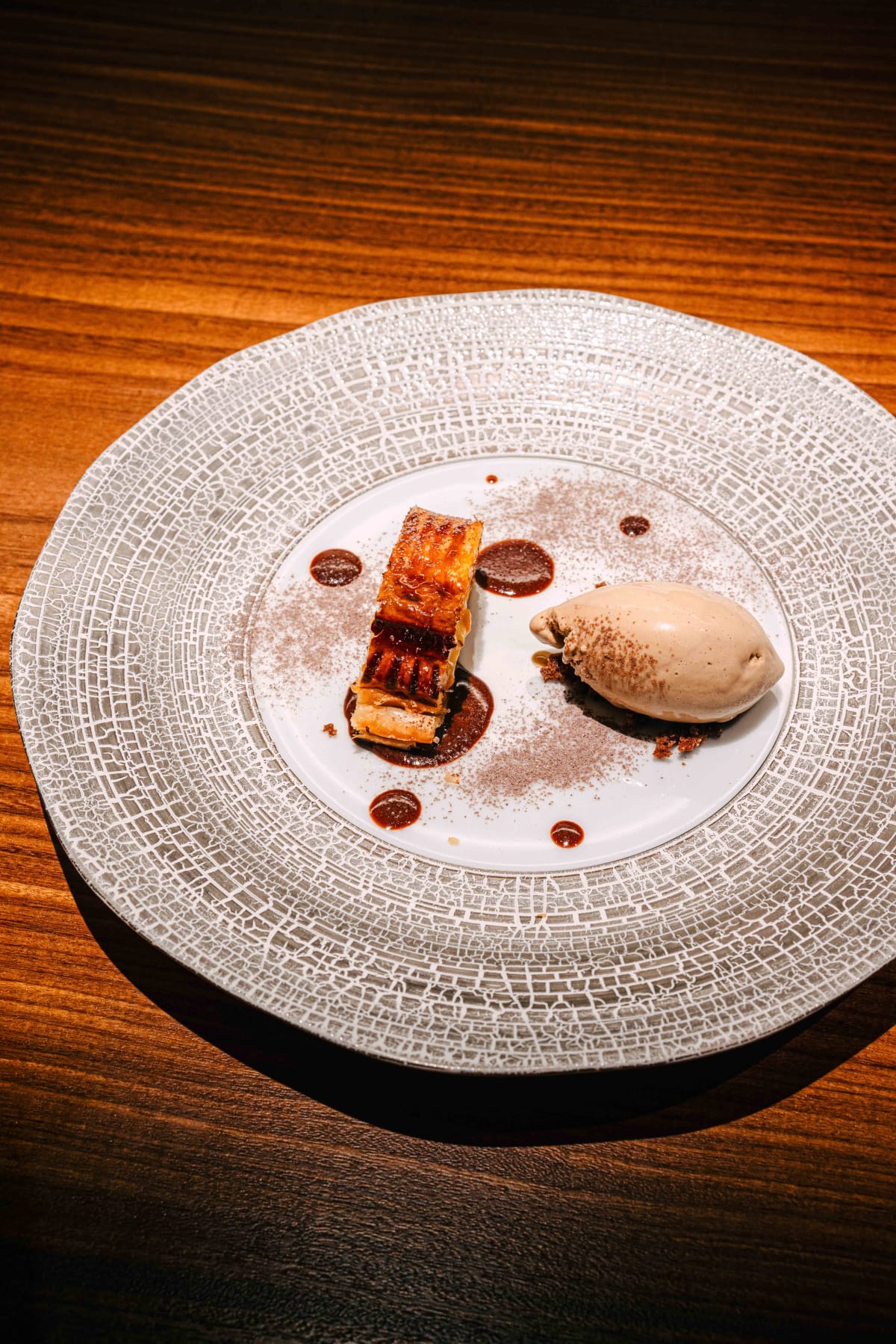
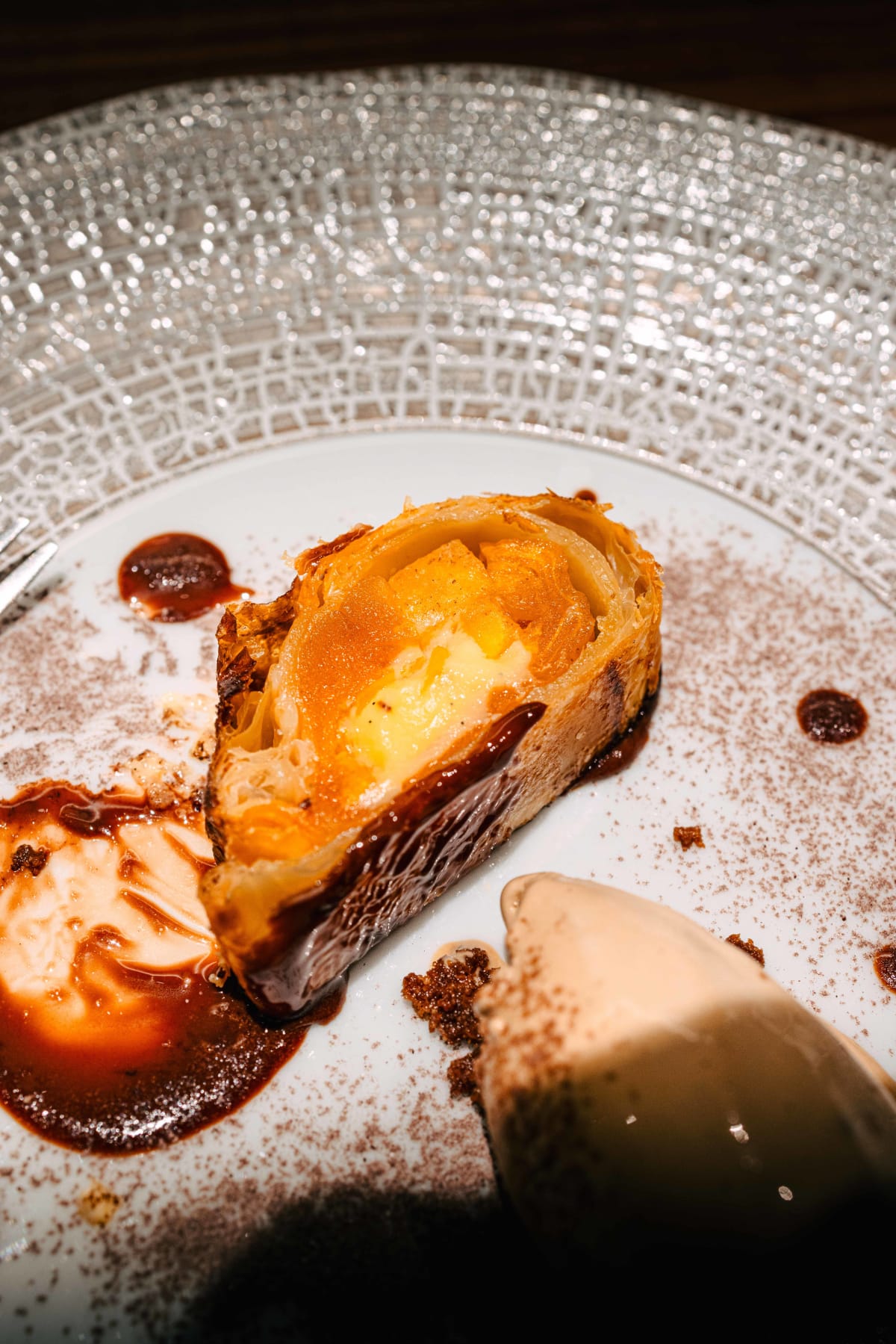
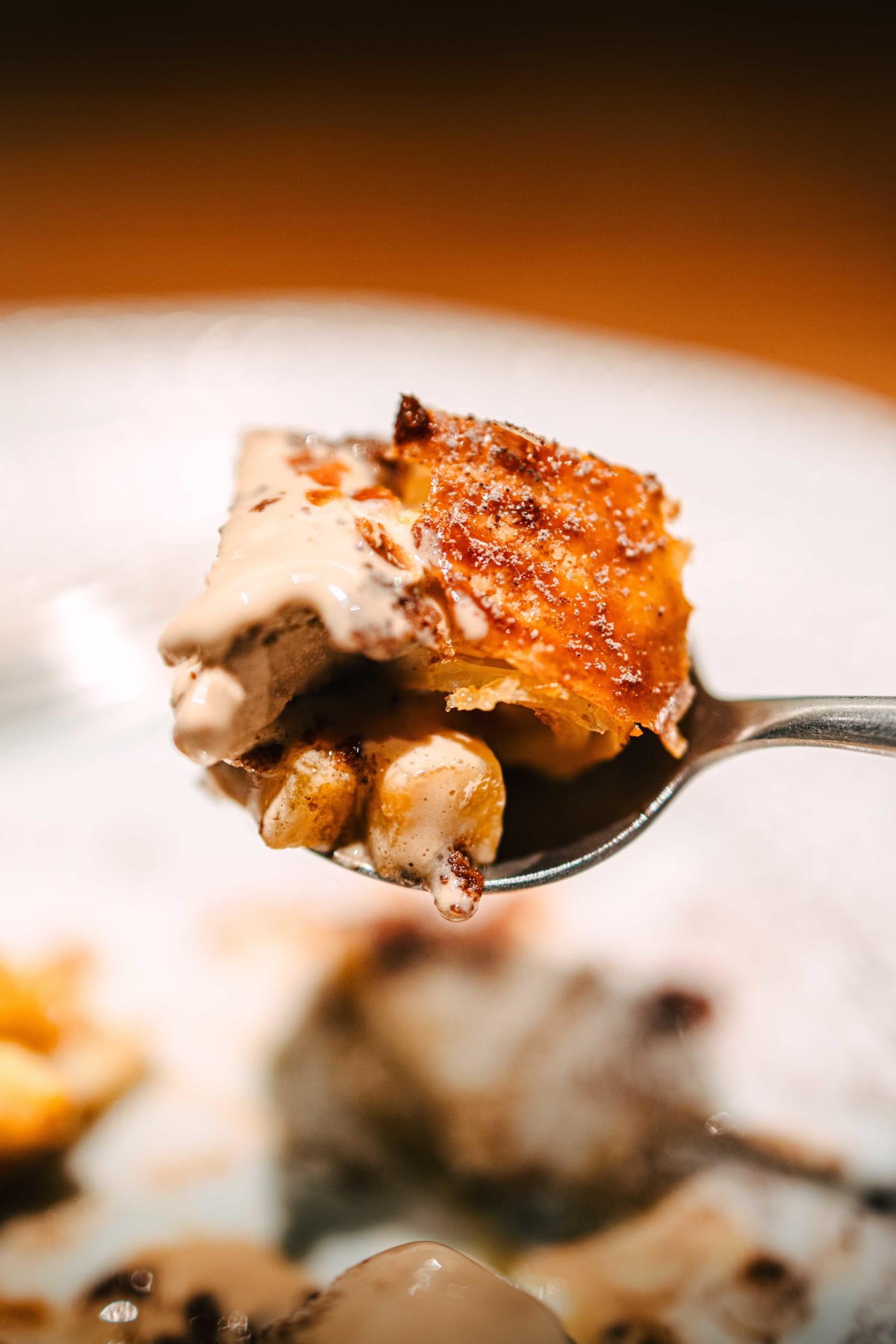
Dessert was Earl Grey ice cream and a pie made with persimmon. Two long pies were first brought out whole on a tray to show us.
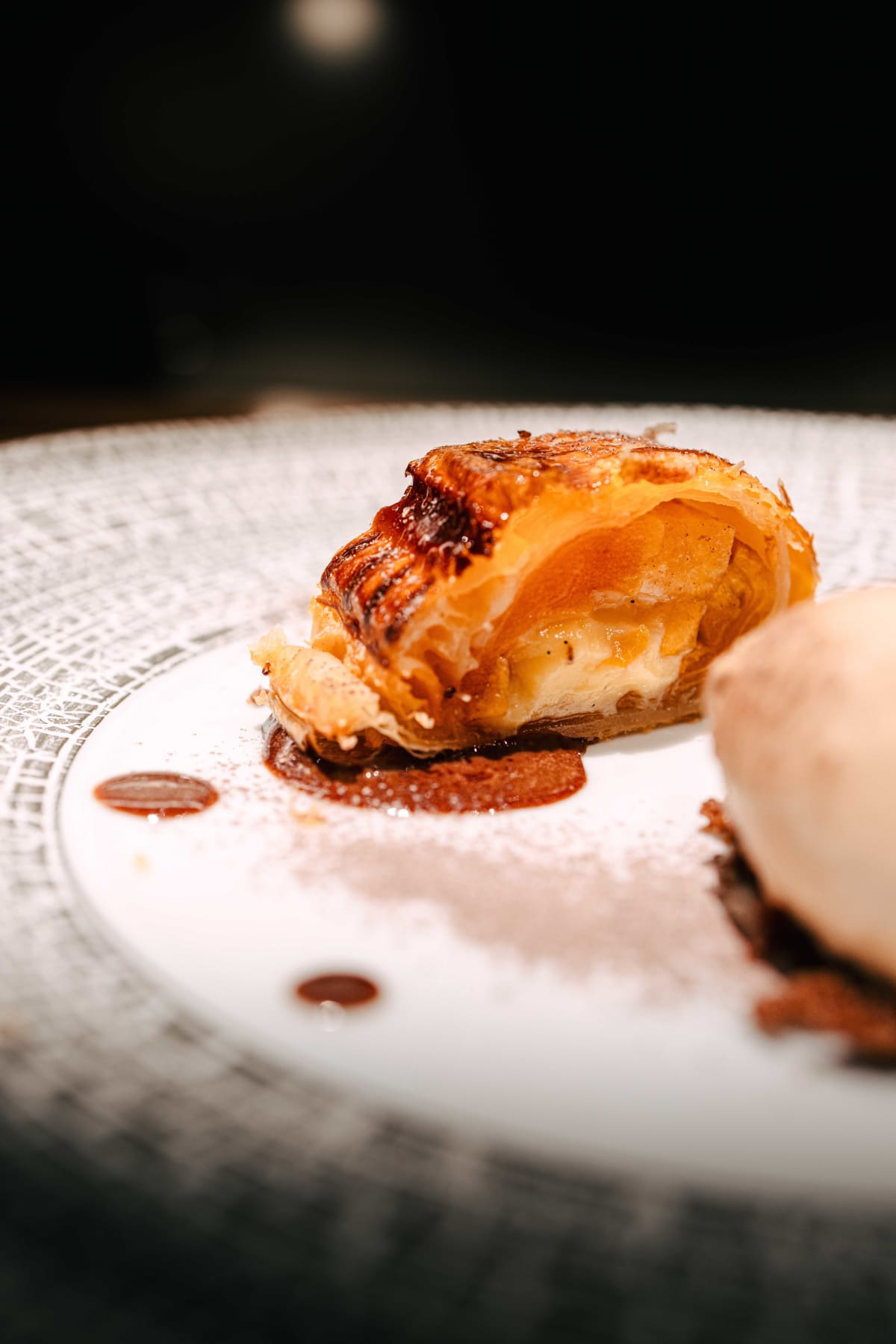
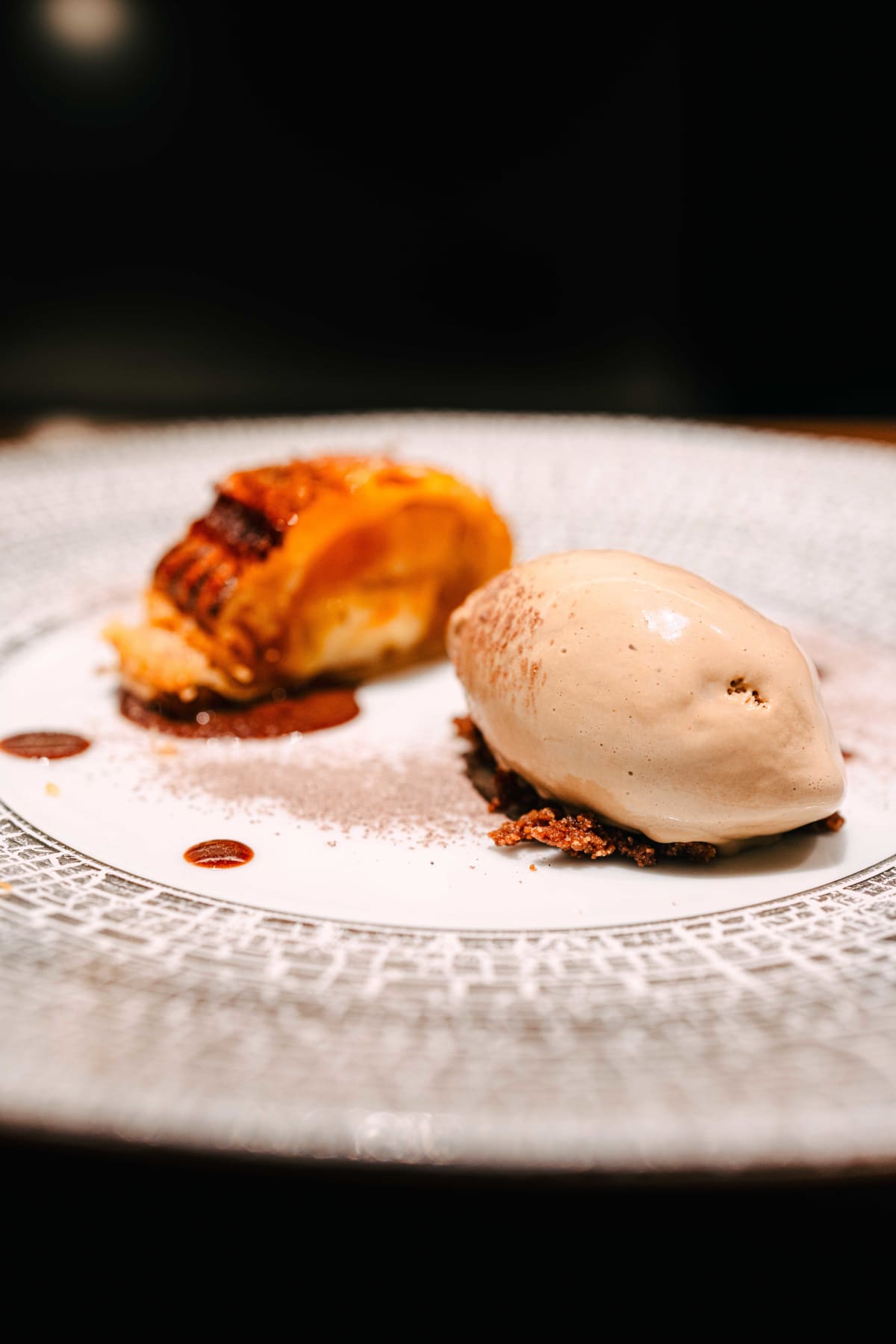
Each slice was served on a glass plate with a crackle pattern around the rim, together with the Earl Grey ice cream.
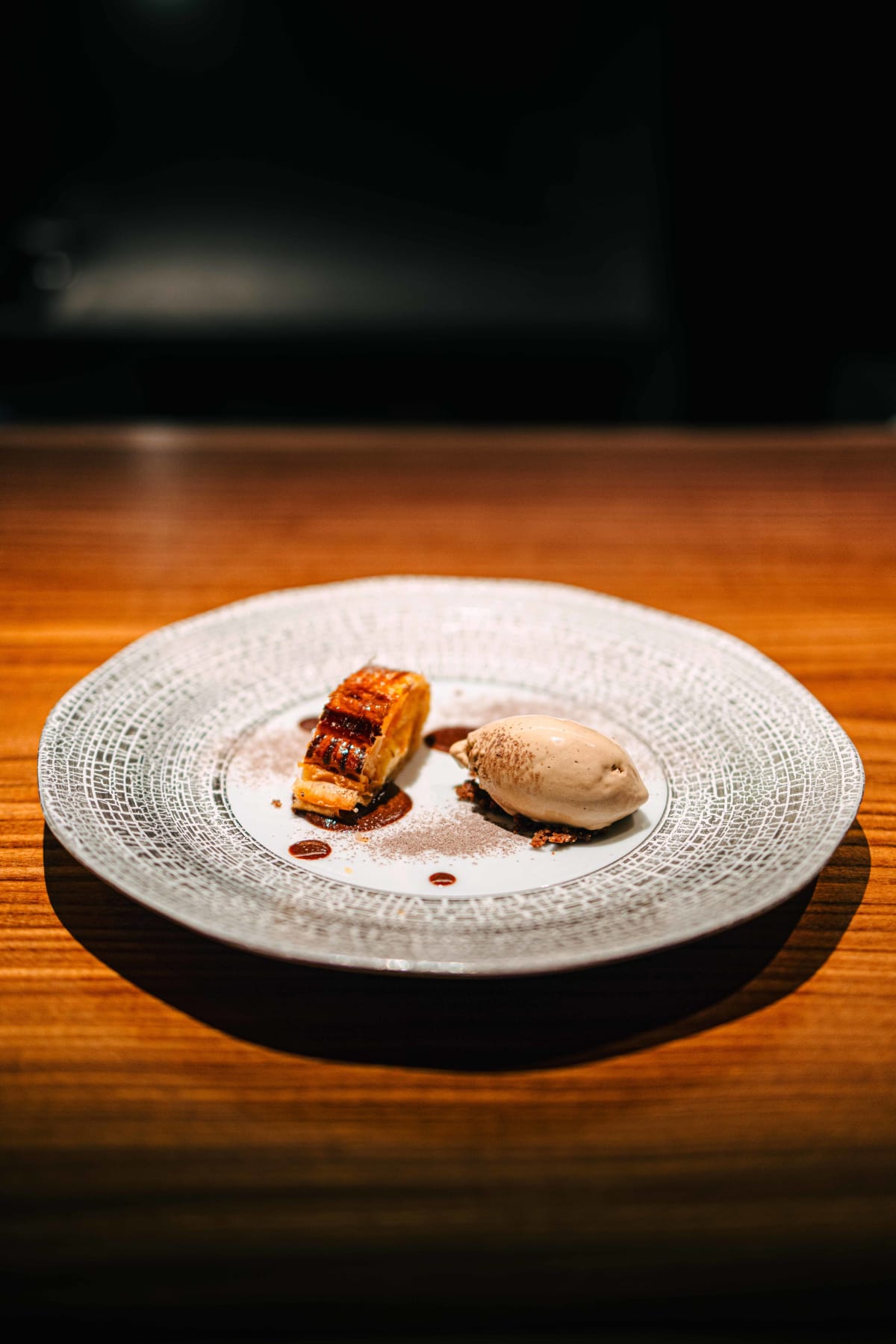
For dessert I like ice cream, sherbet or sorbet. A meal usually ends on meat, so I like a cool taste that washes away the rich residue left in the mouth. This Earl Grey ice cream did that job even better, with the flavour and gentle bitterness of good tea, and I enjoyed it very much.
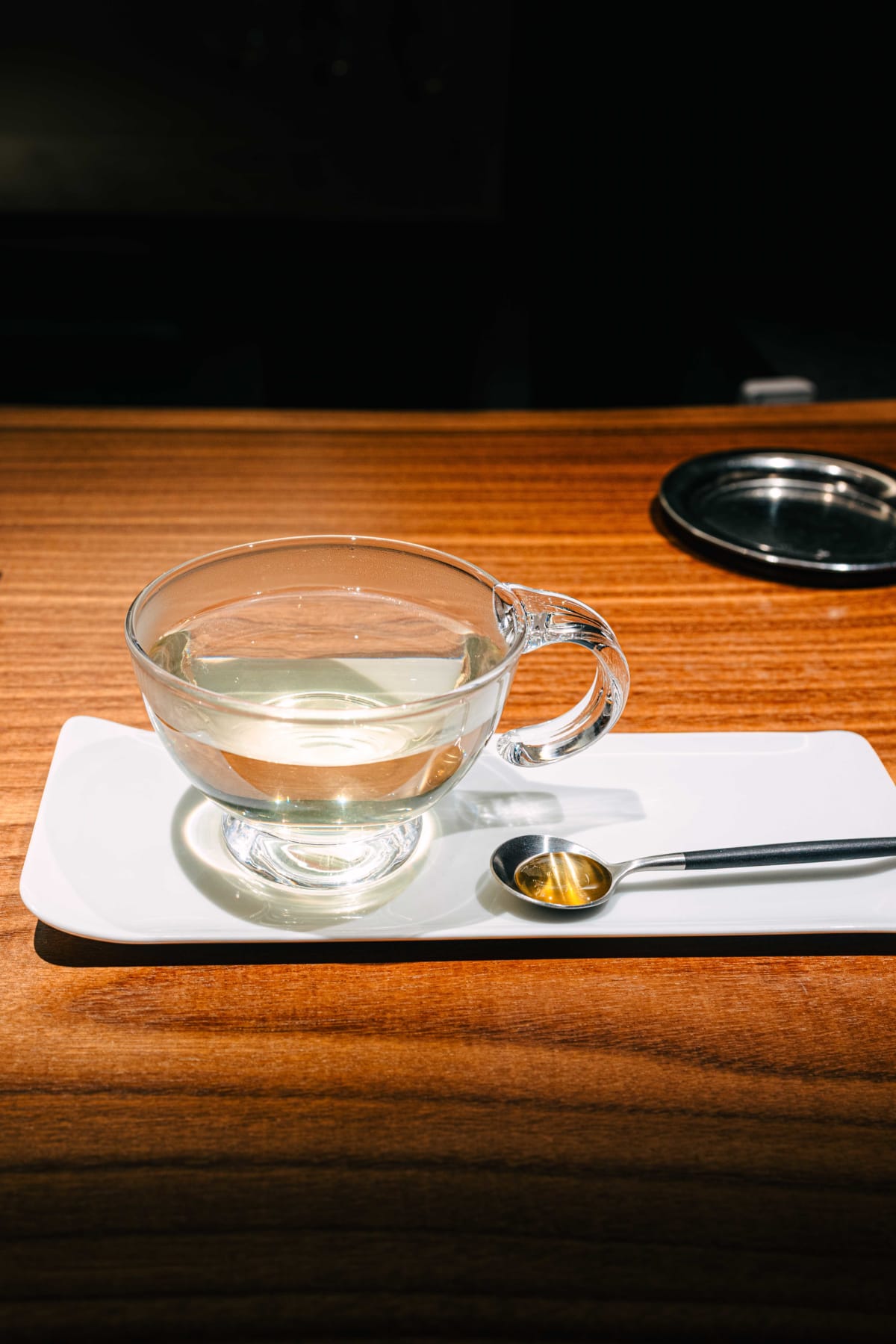
The last course was herbal tea and sweets.
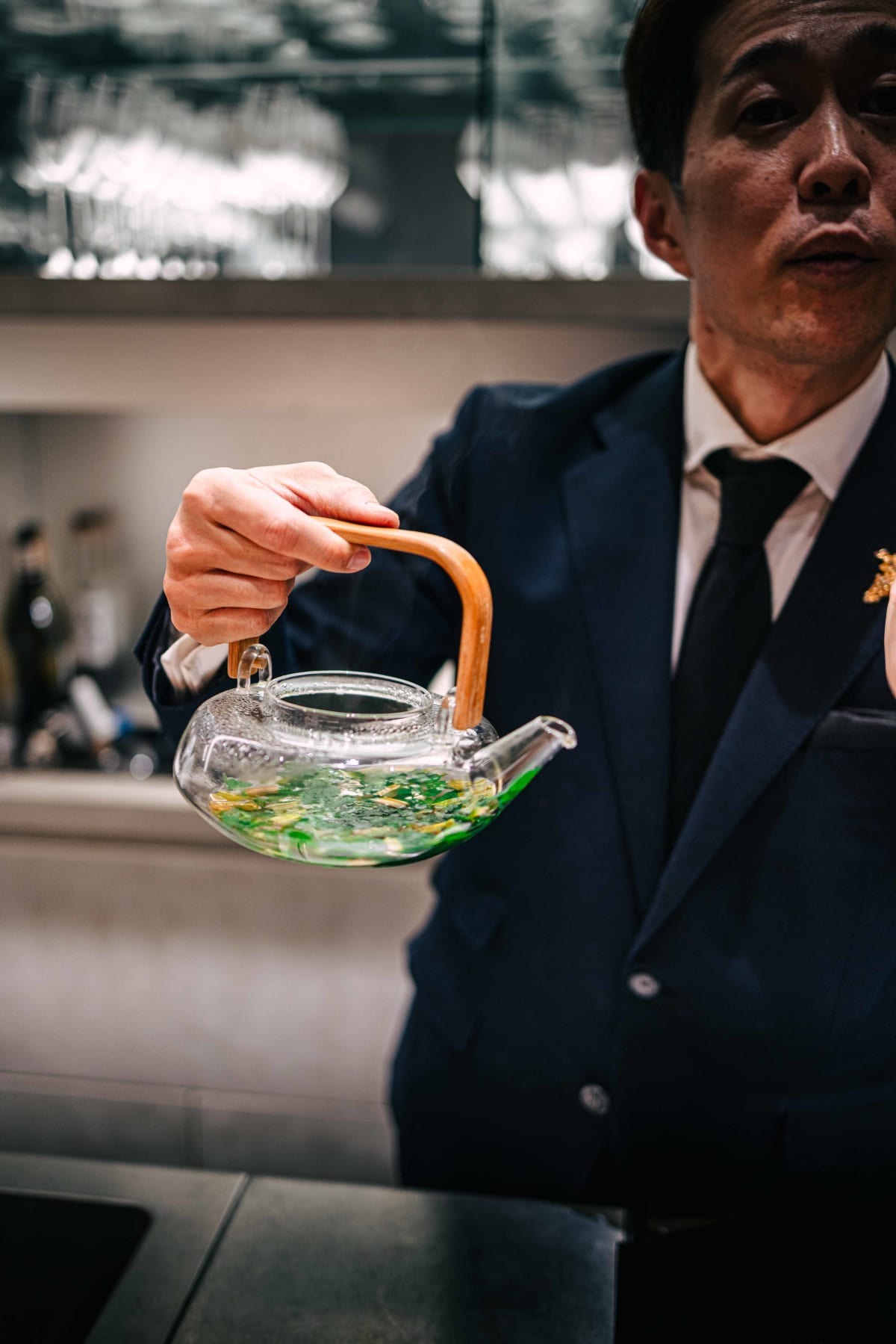
The sommelier brought over a glass teapot of fresh herbs and made the tea, with a spoonful of honey on the side.
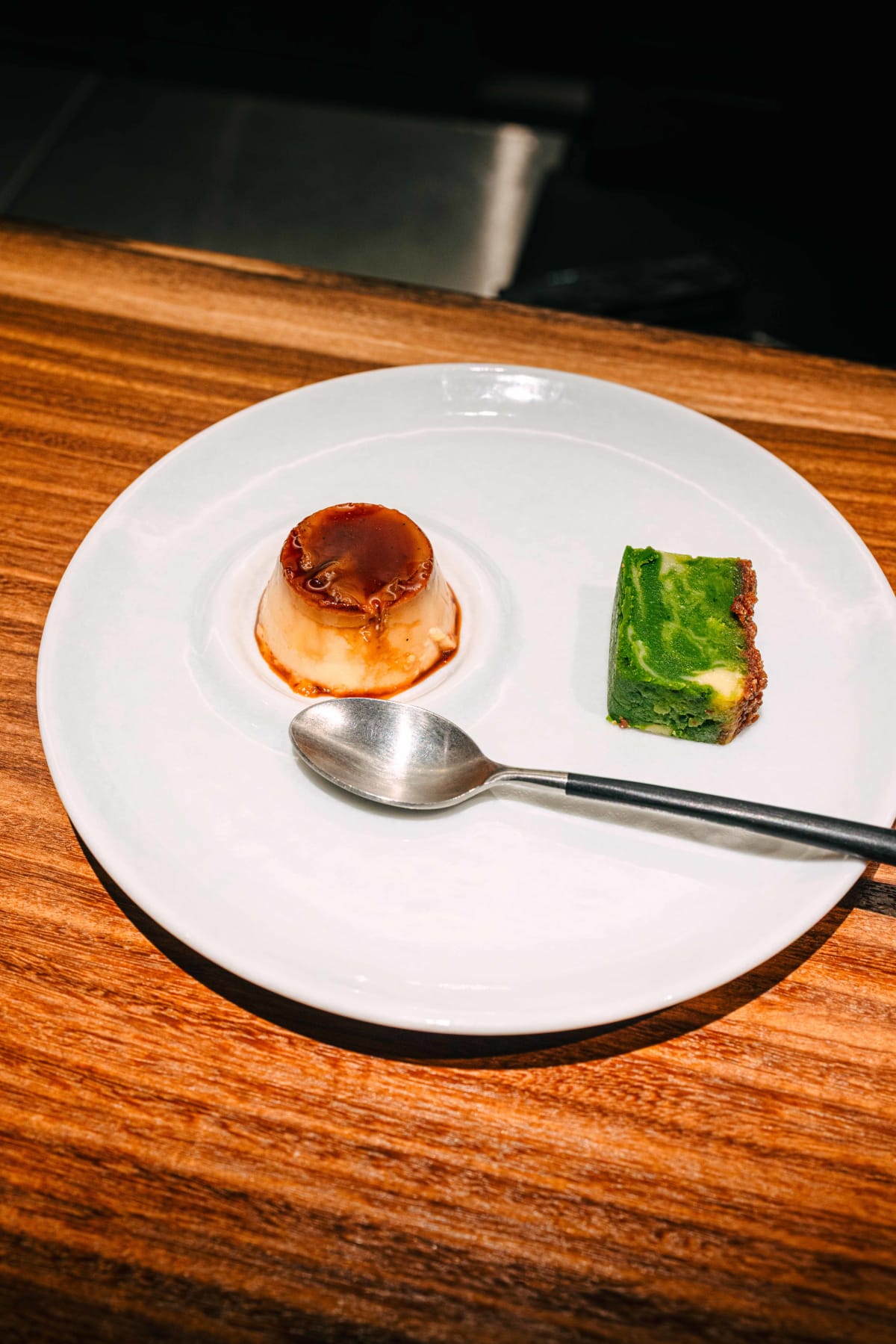
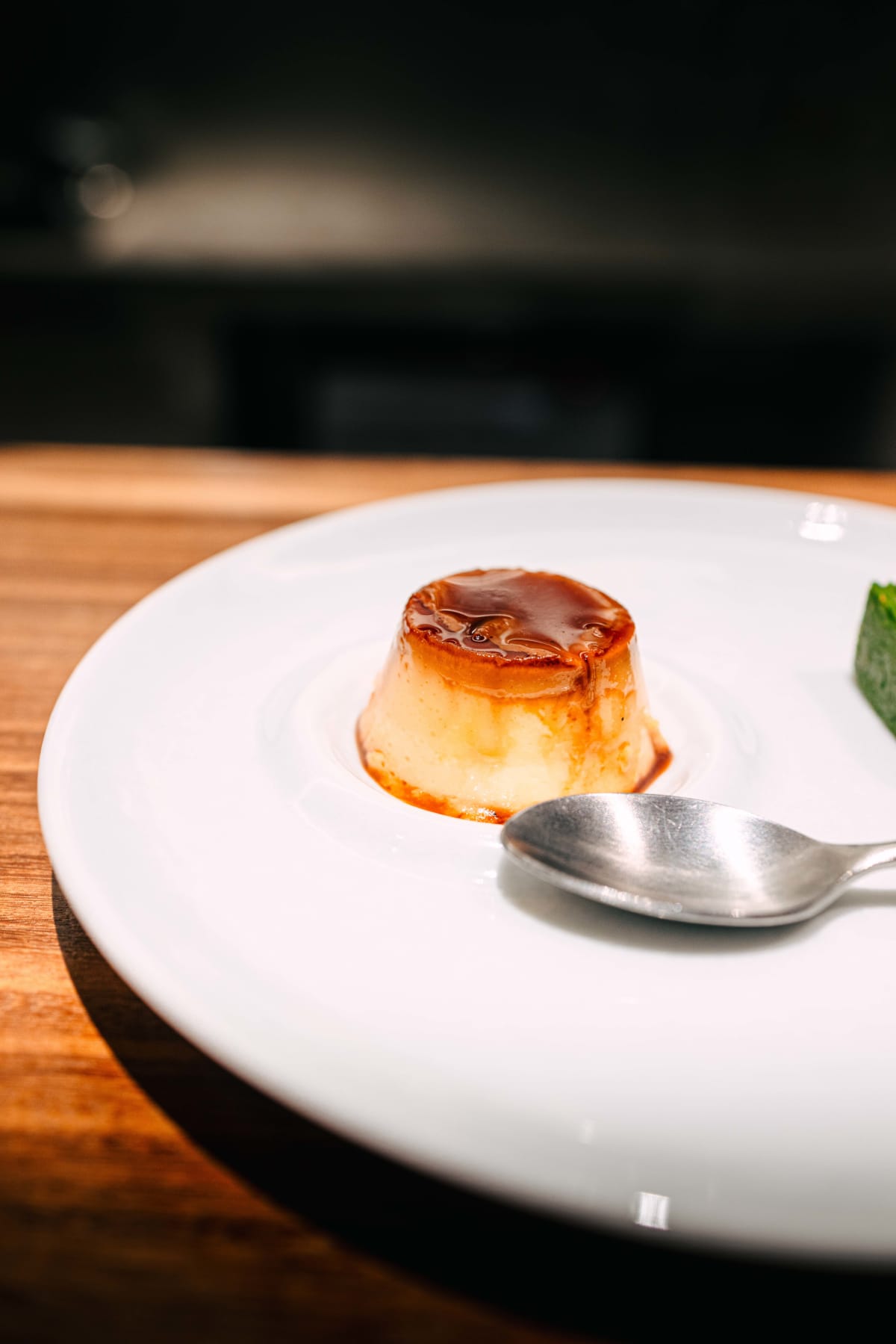
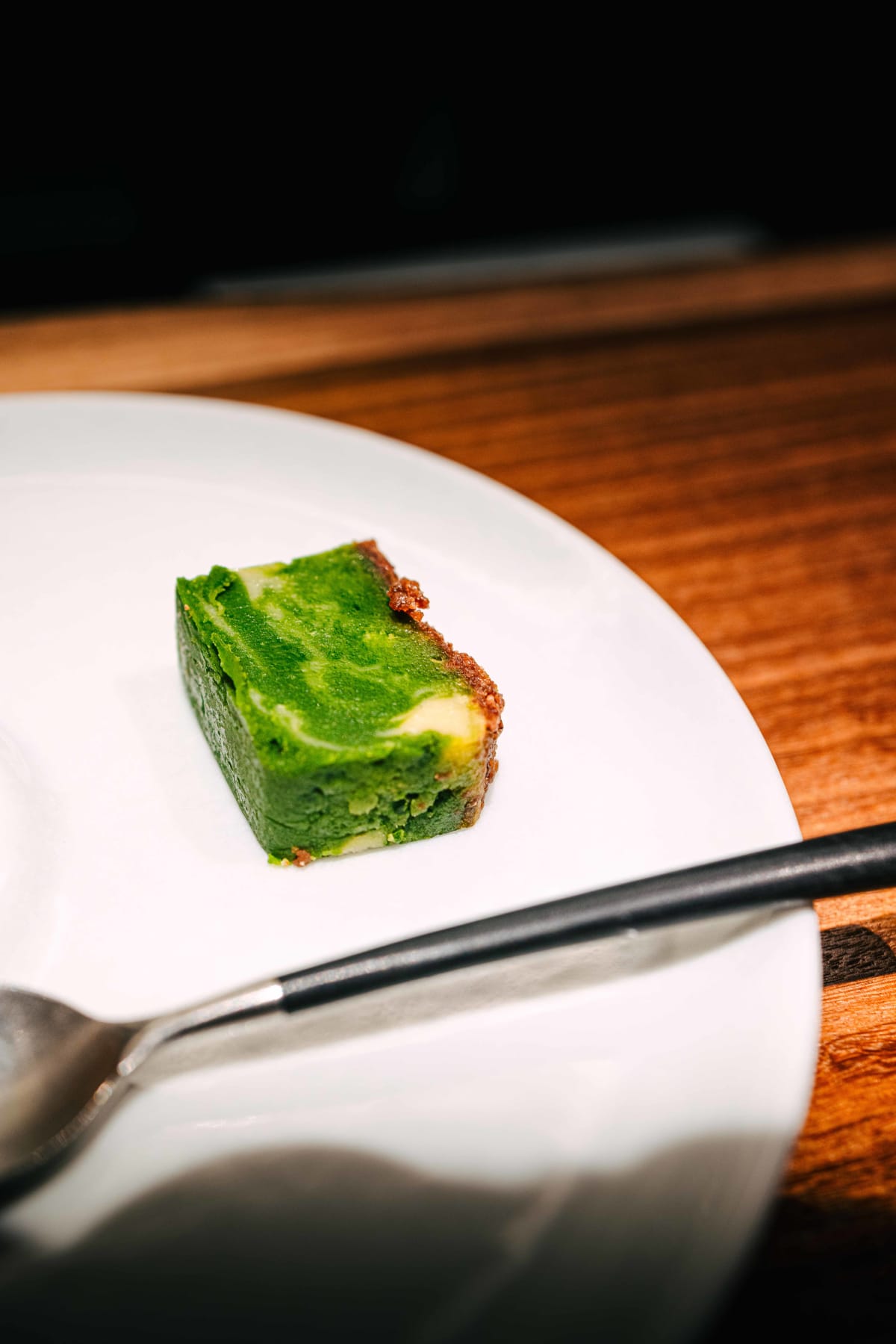
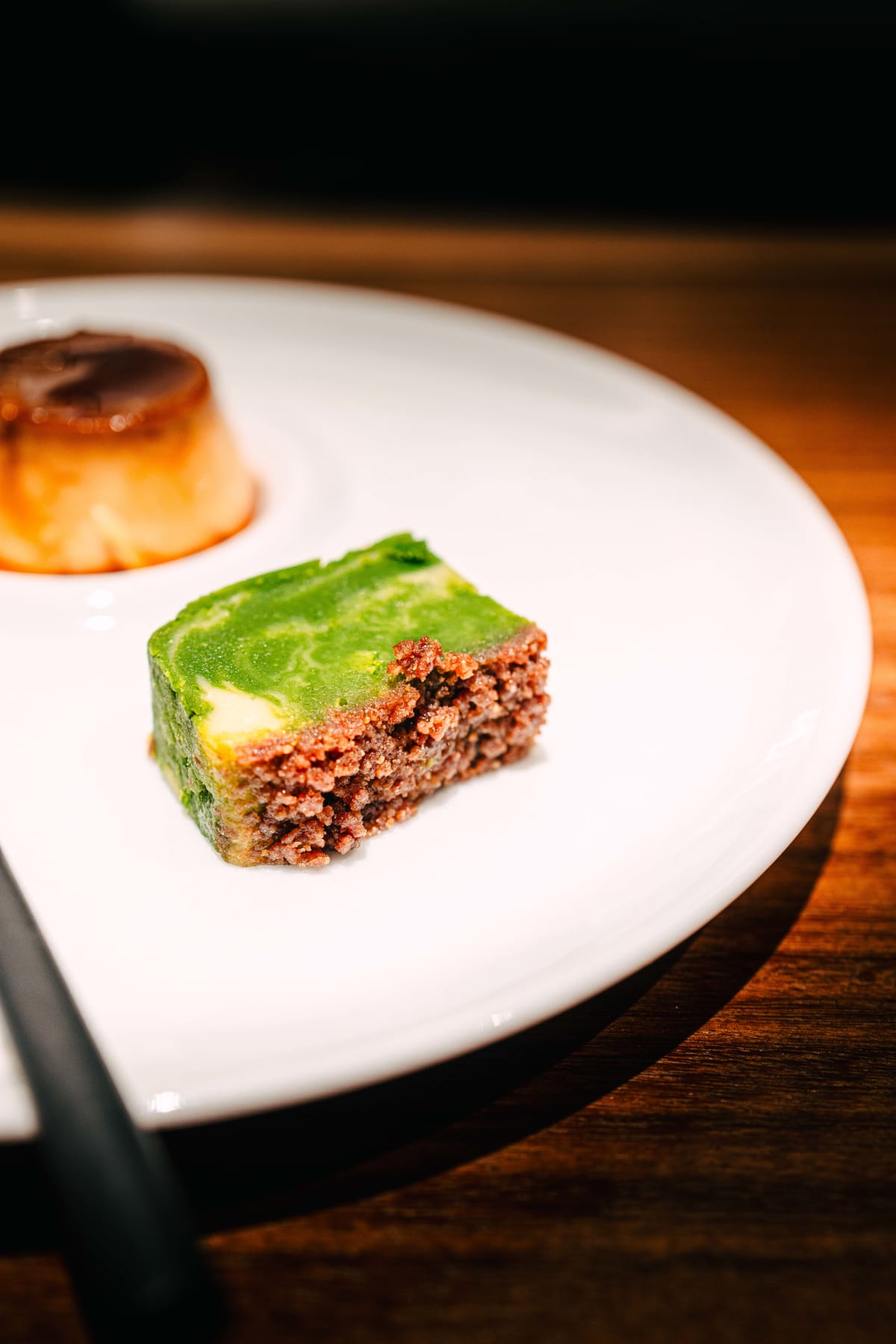
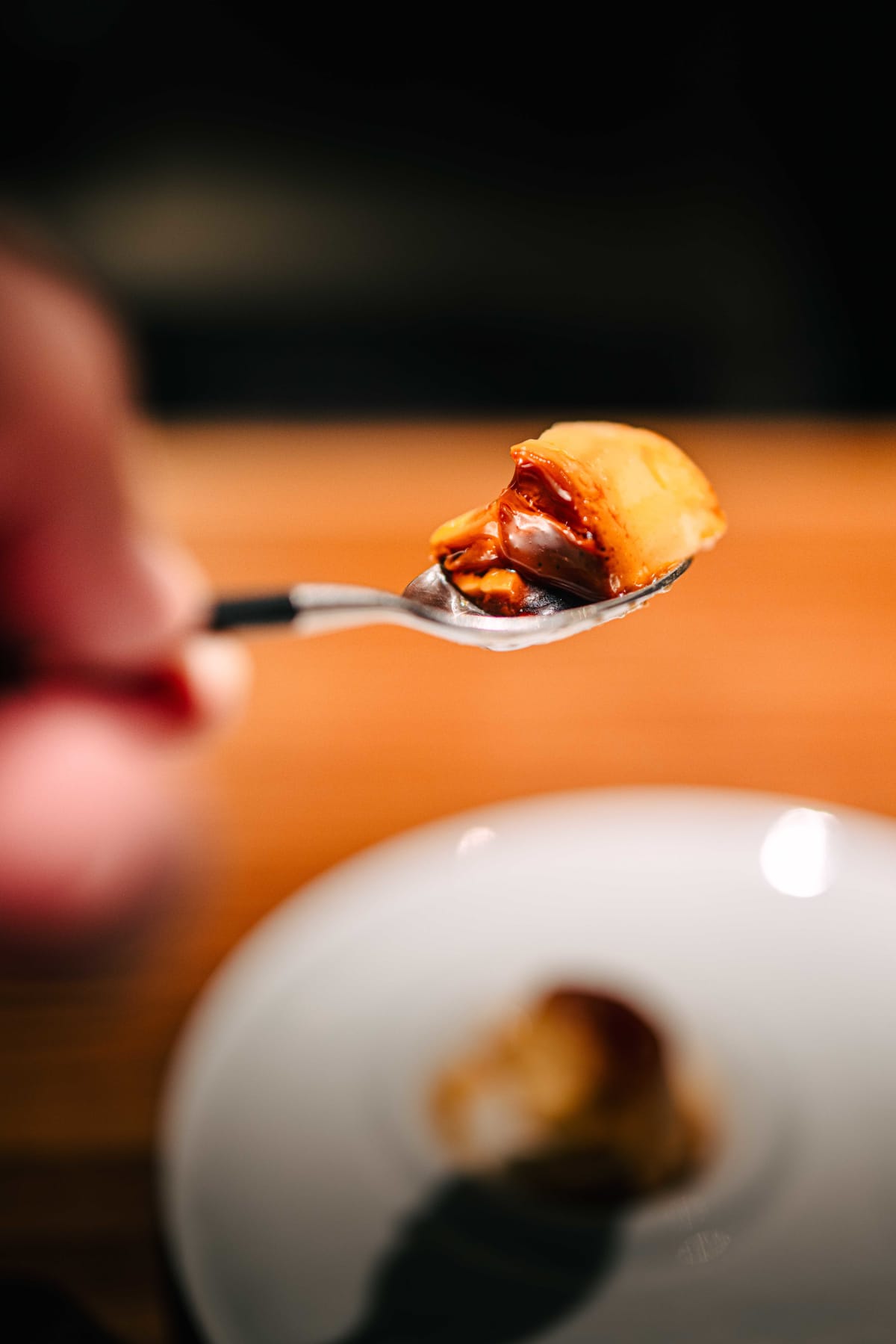
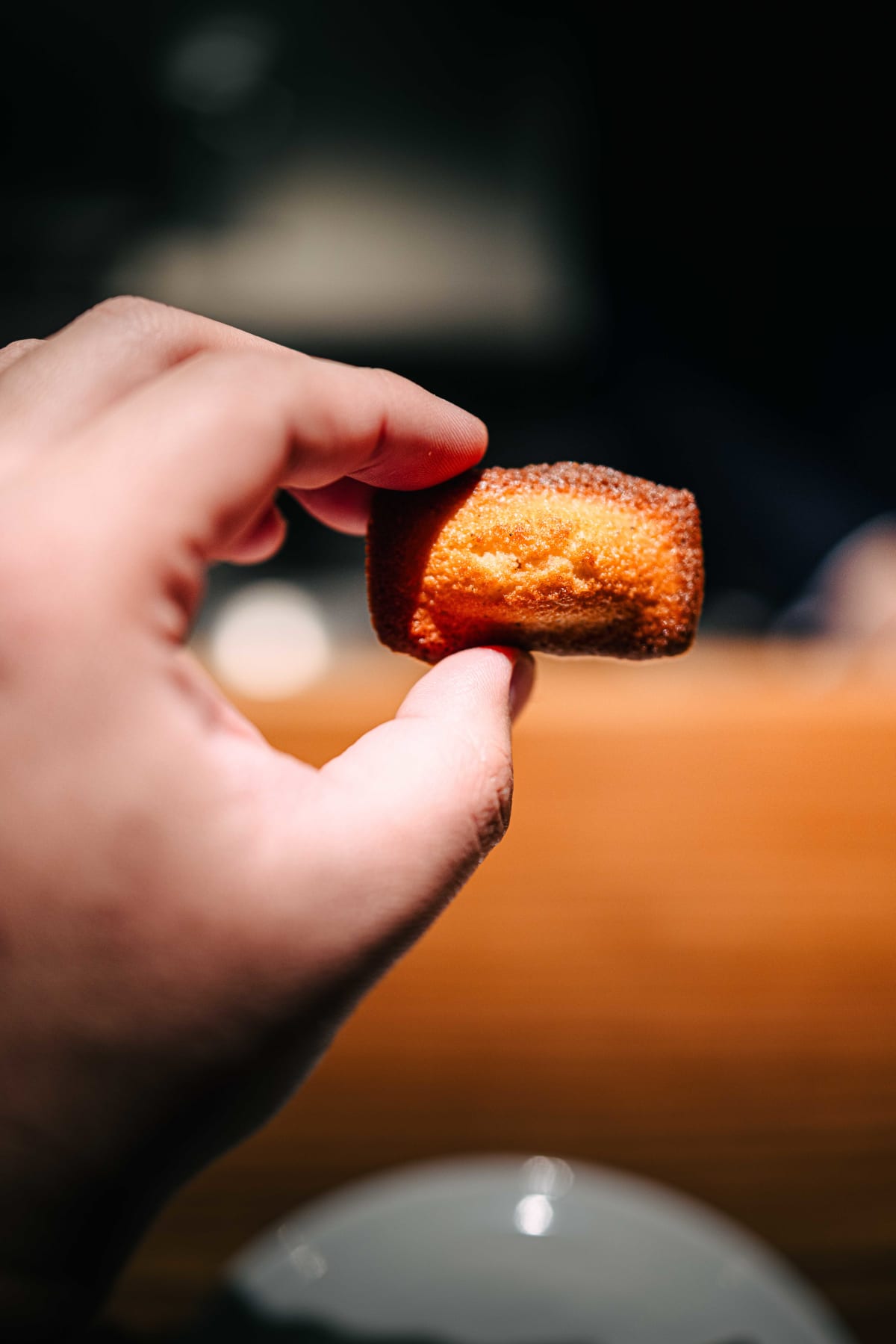
The sweets were a crème caramel, a matcha bar and a financier.
Section 11·Two Men, Still Going
Earlier in this review I wrote about how the chef left the hotel and struck out on his own with Kobayashi, who was then managing a restaurant. Mashiro is not the first thing that independence produced.
In 2012 he opened his first restaurant of his own, Koshimo Plus, in Ashiya, Hyogo Prefecture, and it received a star in the Michelin Guide Kyoto Osaka 2014. Gion Roiro, a French restaurant in the Japanese kappo counter style that he opened in Gion, Kyoto, in 2017, also earned a star, in the 2018 edition. In 2015, I am told, he was also a finalist in the Japanese selection for the Bocuse d'Or.
Both restaurants have since closed.
The cooking here is billed as creative cuisine, but I think you can see it as Japanese French. Rather than a style sitting at some point where French and Japanese meet, though, it hops back and forth, with some plates closer to French and others closer to Japanese. The price was a little over 30,000 yen, and for what was served, I thought it was fair.
The chef himself calls Mashiro a genreless restaurant. When he was in his twenties, there was a fixed idea that using ponzu meant it was not French cooking, but rather than working within such a frame, he thinks freely about how to make an ingredient taste its best. So he borrows seasonings, spices, techniques and cooking tools from many genres.
He sometimes breaks flavour down into the five tastes of sweet, salty, sour, bitter and umami, so that when he wants acidity, he might try orange or umeboshi, pickled plum, instead of vinegar. He wants at least two plates in a course, if not every one, to carry a surprise found only at Mashiro.
It is not a restaurant worth travelling all the way to Kyoto for, but the cooking is of good quality, you can watch it being cooked from a counter seat, and the wine service is good. For anyone who drops in on short notice as I did, I believe the story of these two men, and the chemistry between them, will not disappoint.
Kyoto's famous counters are mostly Japanese or Chinese; Mashiro puts a French-trained chef behind the same front-row format, a welcome change of key on a trip built around kappo and sushi. Its closing day is Wednesday, so it can fill a Sunday when many kitchens in the city rest. Tabelog Bronze has joined its Michelin star since my visit, so book earlier than I did. Dinner is a single course at ¥29,040, lunch ¥15,730. By the glass, ask which reds are open that night; some reach back decades.
Have a question about this restaurant, or want to share your own experience?
Send a message