Fine Dining · Central · Hong Kong / September 2024 / Michelin ★ · Asia's 50 Best #12 (2020)
VEA
"Vicky Cheng's first restaurant, thirty floors above Wellington Street, where Chinese ingredients are put through French technique"
Section 1·The Wellington
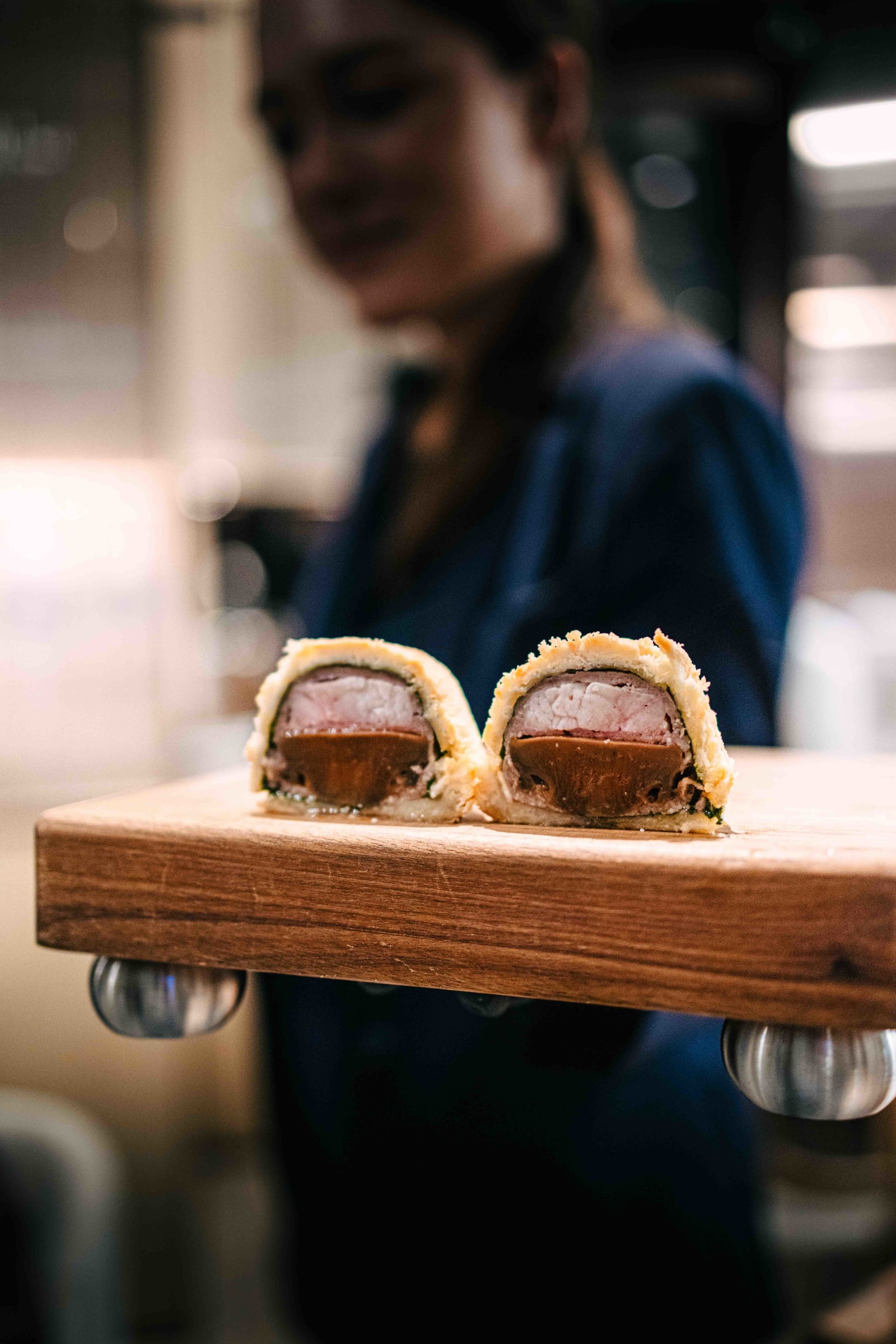
VEA is the Chinese French restaurant that chef Vicky Cheng, also known for WING, opened in 2015 as the first restaurant of his career. It is in the same building as WING, with WING on the 29th floor and VEA on the 30th. WING still has no Michelin star while VEA, which opened first, holds one, and that is worth noting in itself.
The building is The Wellington at 198 Wellington Street in Central. VEA opened in 2015, took one Michelin star the following year in 2016, and has held it since, and its best showing on Asia's 50 Best was twelfth place in 2020. In 2021 it also took the Art of Hospitality award at Asia's 50 Best. WING, one floor below, opened in April 2021, and in place of a star it stood at fifth on Asia's 50 Best in 2024, the year I visited, and entered the World's 50 Best at twentieth with the Highest New Entry award. The stars and the rankings are attached to the two of them in reverse.
The stars and the rankings are attached to the two of them in reverse.
Section 2·Vicky Cheng
Chef Vicky Cheng was born in Hong Kong but moved to Canada at the age of nine and grew up there. He passed through Auberge du Pommier and Canoe in Toronto, and in New York he worked under Daniel Boulud at the two Michelin star restaurant Daniel. So his starting point was French from beginning to end, and when he returned to Hong Kong in 2011 the thing he in fact lacked, he has recalled, was the wok. VEA is the first restaurant of his own that he opened in that state.
Section 3·Chinese x French
The atmosphere differs as much as the style of the food. If WING has the air of a modern contemporary Chinese restaurant, this place has the air of a French restaurant, contemporary and ornate, with a few touches that feel like a bit much. If you are coming with a date in mind as well as the food, the counter at the ornate VEA might be the better call over WING.
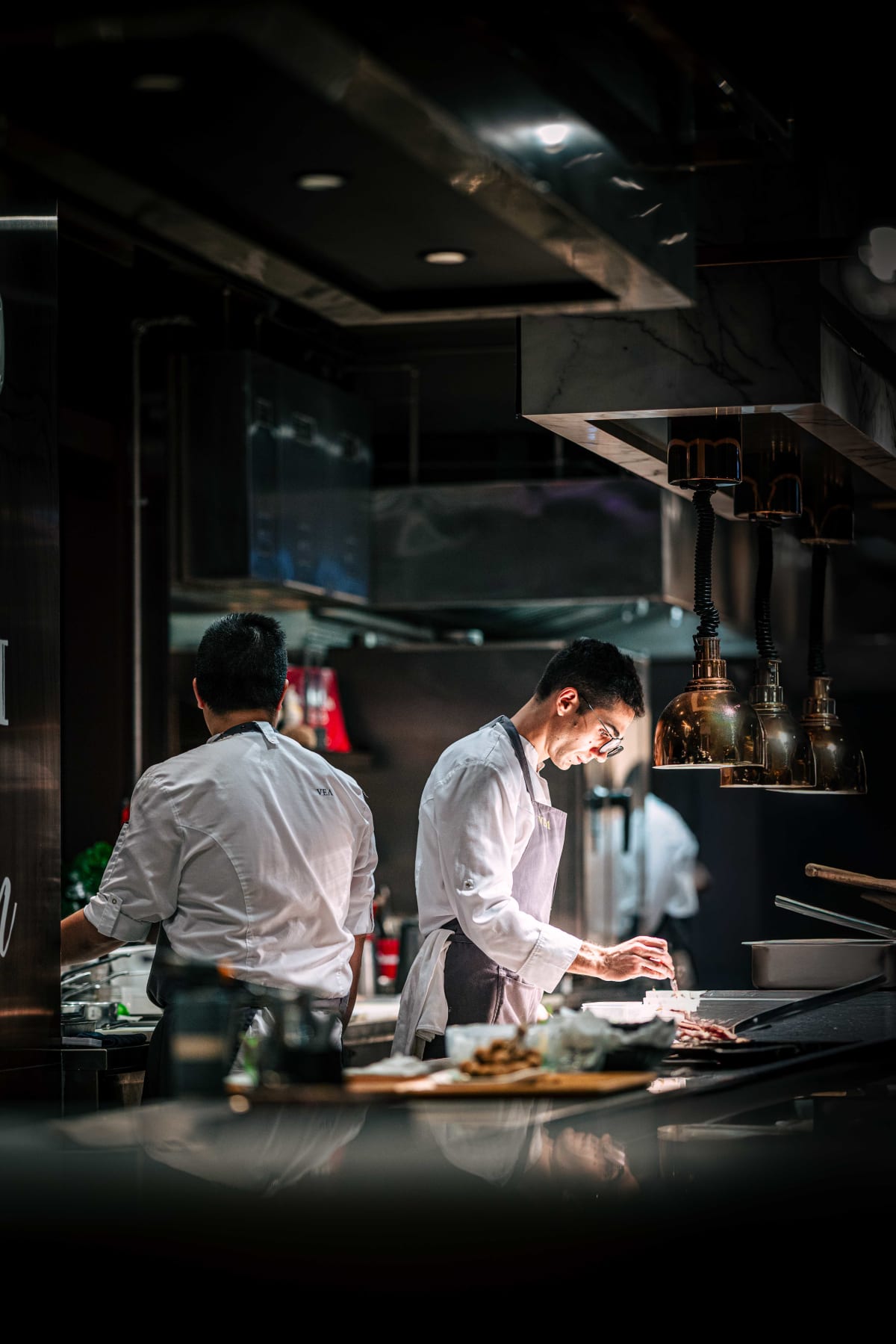
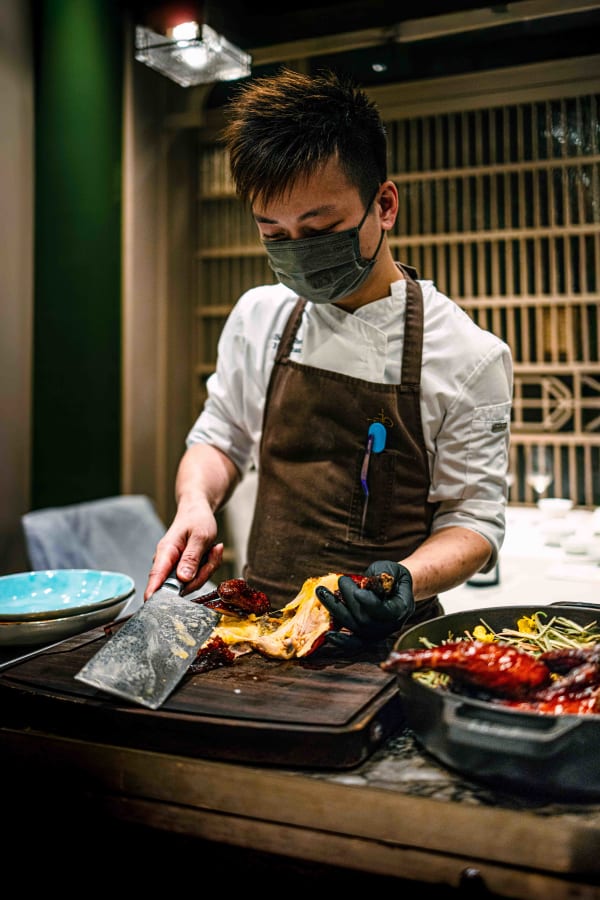
The kitchen and the service staff alike make up a multinational team with a fair number of Westerners, and the seating is mostly counter seats at an open kitchen where you can watch the pass, with what looked like two or three tables. For the record, the lighting is better at the counter, so if you want good photographs I would recommend the counter. I came here on the September 2024 Hong Kong trip on which I also went to WING.
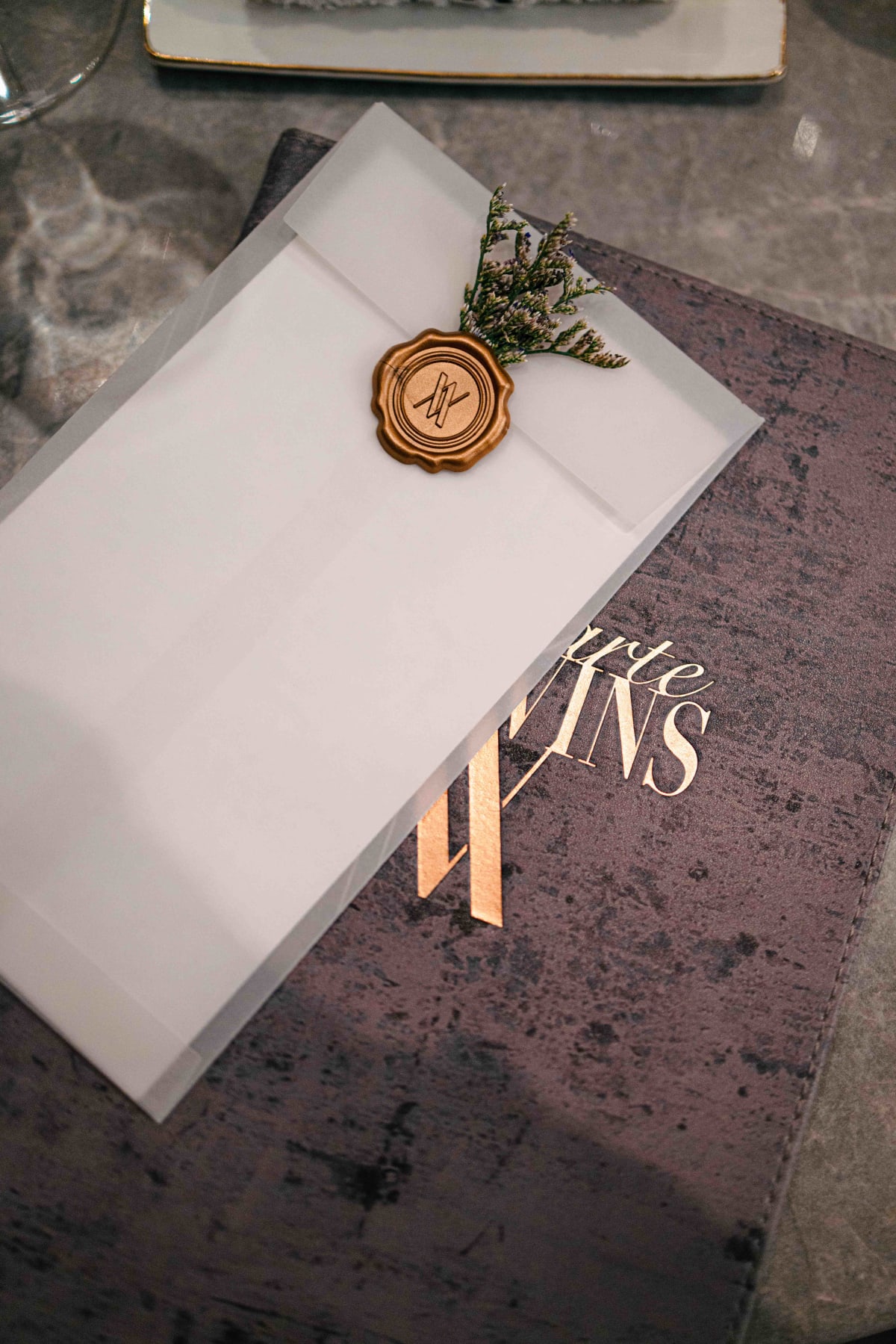
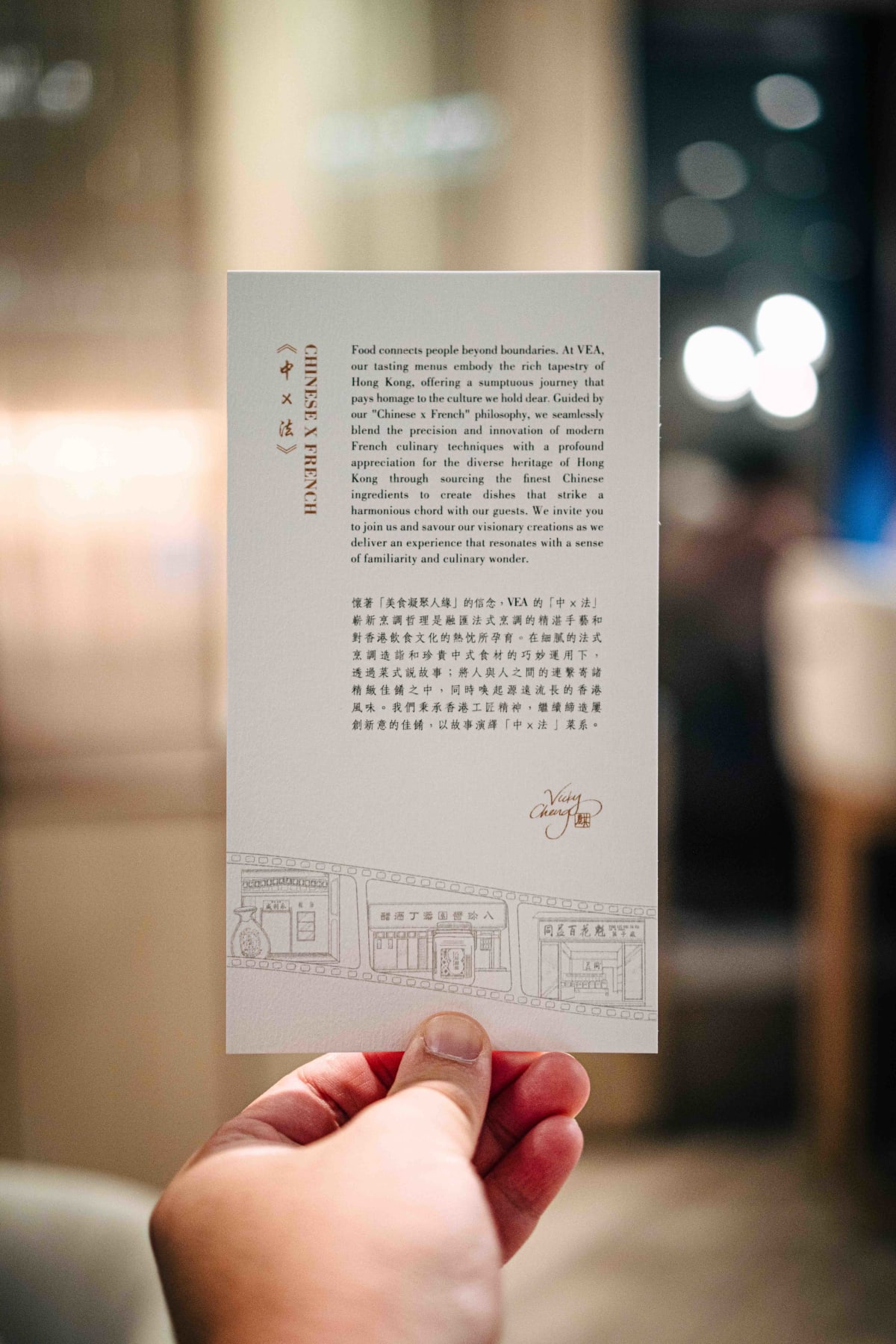
The front of the menu card carried the philosophy of the house under the name 「中 x 法」, that is, Chinese x French. It opens with a line about food connecting people beyond boundaries, and explains that VEA's tasting menus hold the texture of the city of Hong Kong and pay homage to the culture they hold dear.
The gist is that they combine the precision and innovation of modern French cooking with a deep appreciation of Hong Kong's varied heritage by sourcing the finest Chinese ingredients, and Vicky Cheng's signature sits below it. At the very bottom of the card runs a line drawing of old Hong Kong shopfronts strung together like a film strip, the signboards of shops that sold wine and vinegar and of dried seafood dealers. The dried seafood used in his cooking does in fact come from the family run dried seafood shops around this stretch of Wellington Street.
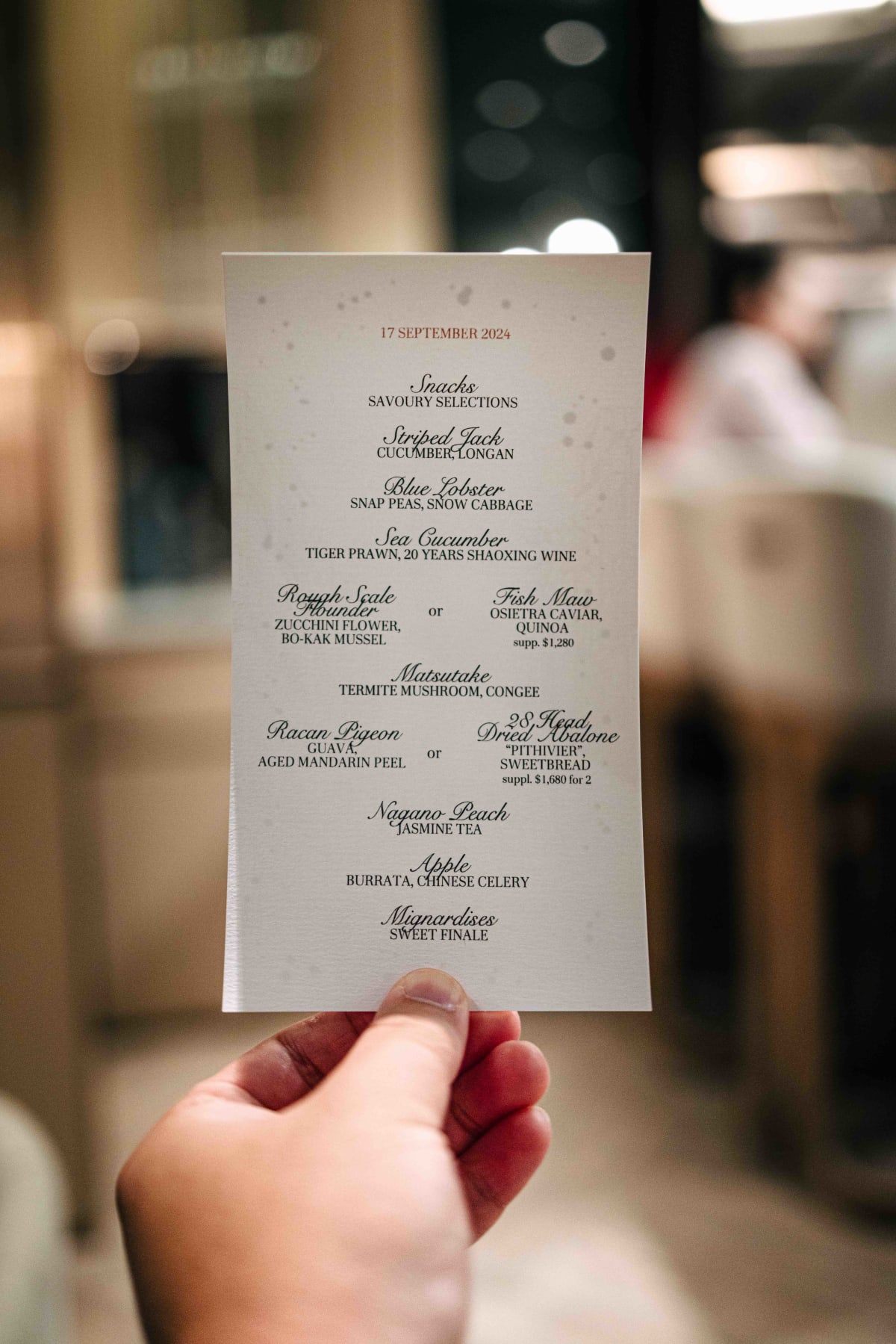
The dinner menu is nine courses, seven savoury plus two desserts. Two of the savoury courses offer a choice of two dishes, and I paid to switch only the second of them, the meat course. With the supplements included the price feels a touch cheaper than WING.
The ingredients are Chinese while the sauces and the cooking methods are French in style, and I thought the level was considerably high. Most of it was delicious, and personally I think one star undersells it. The price is on the high side, so fine ingredients back it up, and with the chef's skill behind that, the quality was good.
Section 4·The Champagne
Choosing wine, though, was quite difficult. There was a lot of overlap with WING's list, and finding something good value was hard enough that at WING as at here I had a glass of champagne and then drank by the glass. For the champagne bottle I looked hard and found one, ANDRÉ CLOUET Un Jour de 1911.
It was a decidedly dry champagne, and when the server brought it over after I ordered he said something: this is the last bottle. It felt a little like the line wine enthusiasts hear when they order something good at a restaurant, and although it was nothing really, it was satisfying.
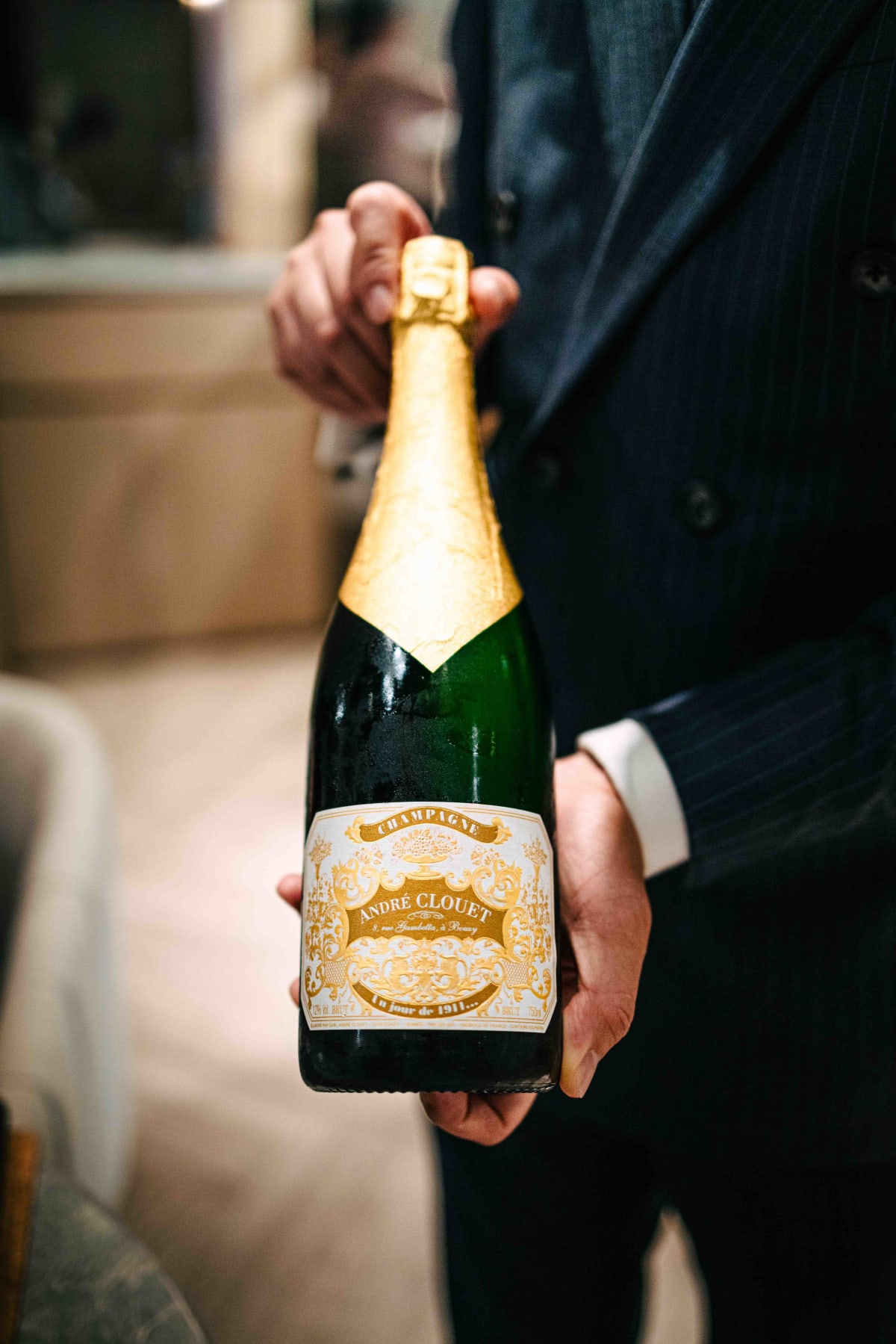
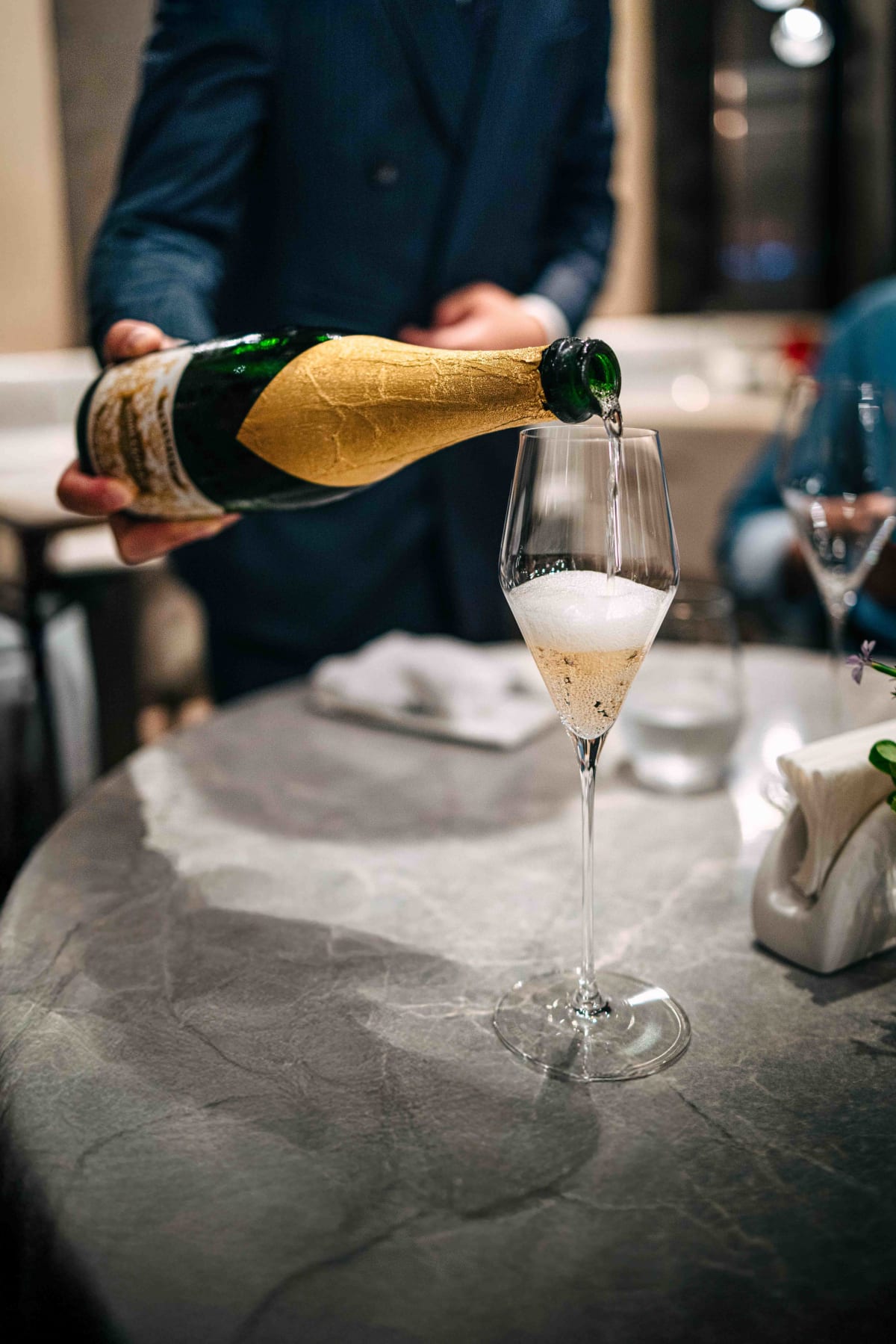
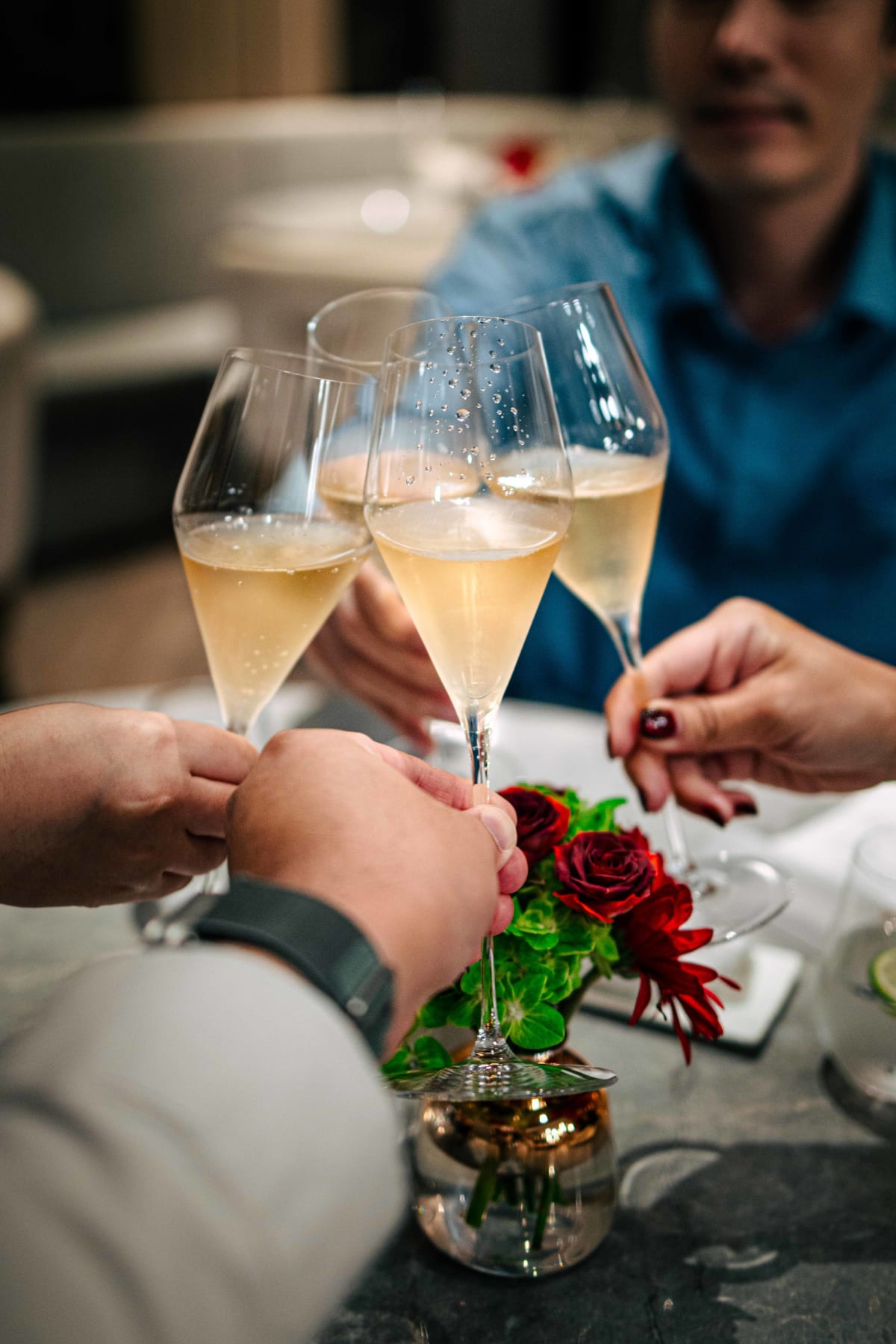
That line about the last bottle suits this cuvée rather well. André Clouet is a house in Bouzy, a grand cru village of the Montagne de Reims, where the Clouet family has grown grapes since 1751 and bottled and sold under its own name since 1900. Jean-François Clouet leads it now. Un Jour de 1911 is the top cuvée of the house and a blanc de noirs of one hundred percent Pinot Noir, using only fruit from the best lieux-dits in Bouzy, blending wines from several years and resting a very long time on the lees.
Part of it is raised in barrels that once held Sauternes and the dosage is kept under five grams per litre, which is why I found it dry. And the 1911 in the name comes from the revolt the growers of this region raised that year to defend the origin of the name Champagne, and the cuvée is in fact made at only 1,911 bottles per disgorgement. It is a scarcity in which the last bottle is bound to come around quickly.
Section 5·The Snacks
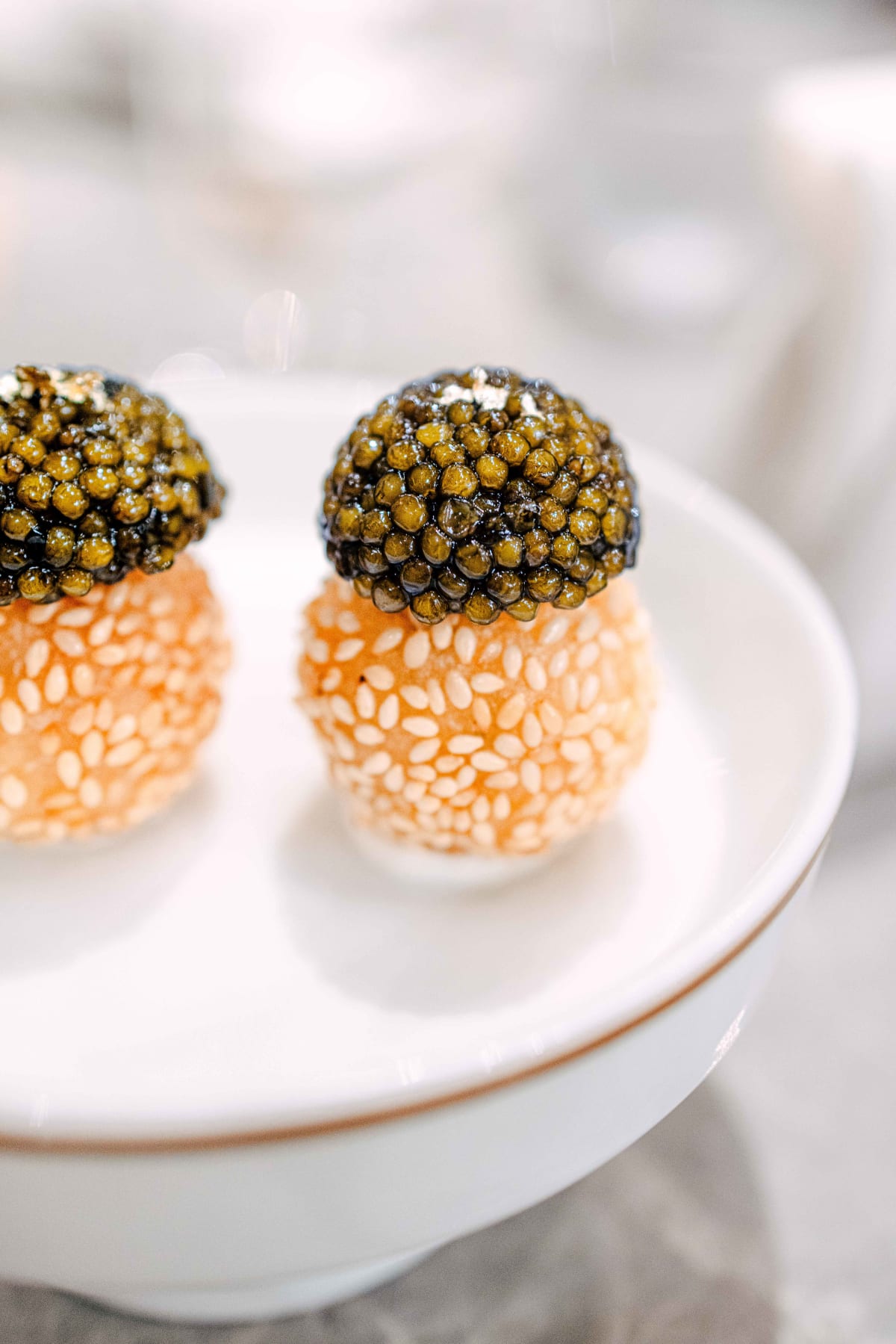
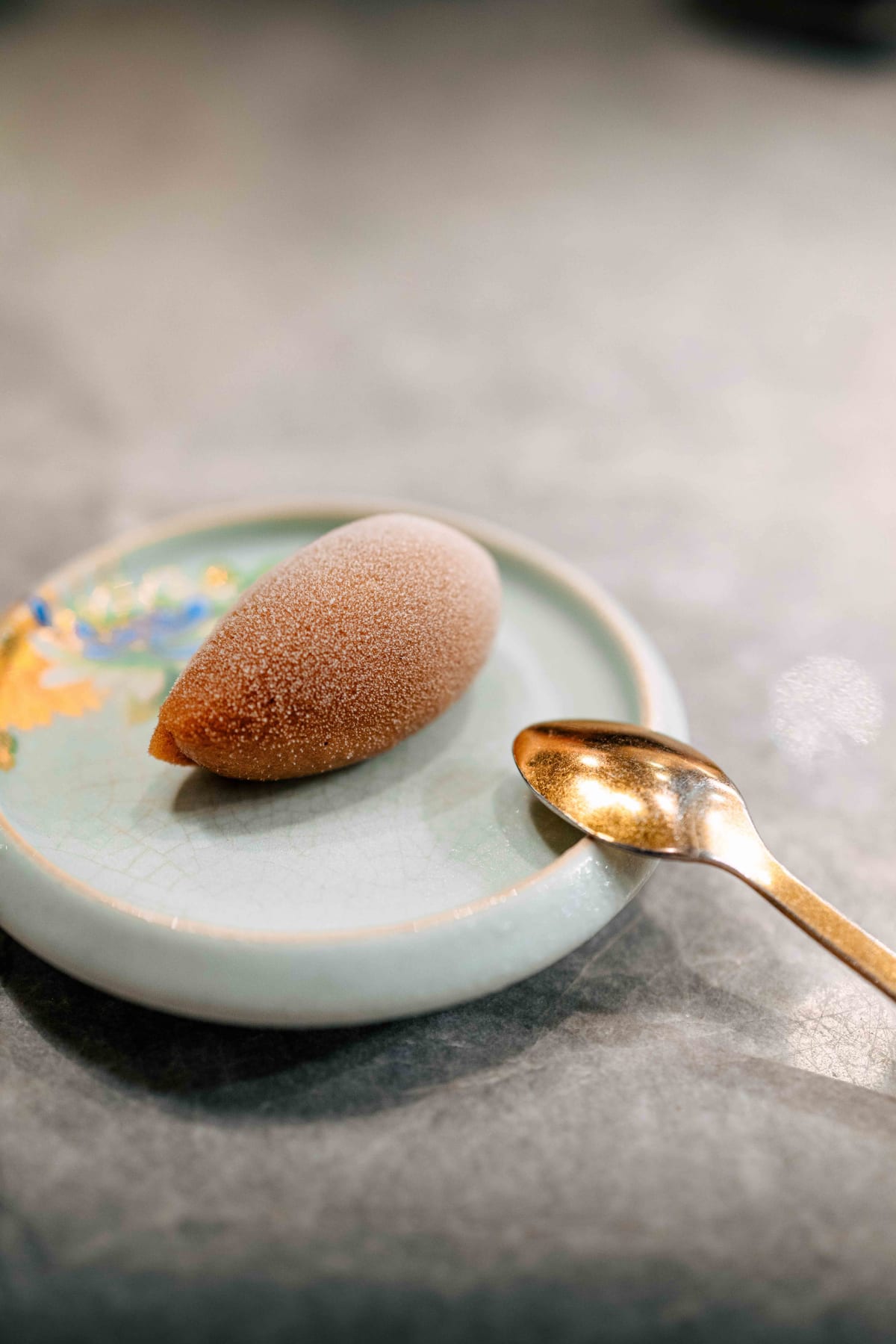
The amuse bouche were good from the very start. The pretty egg shaped one was delicious.
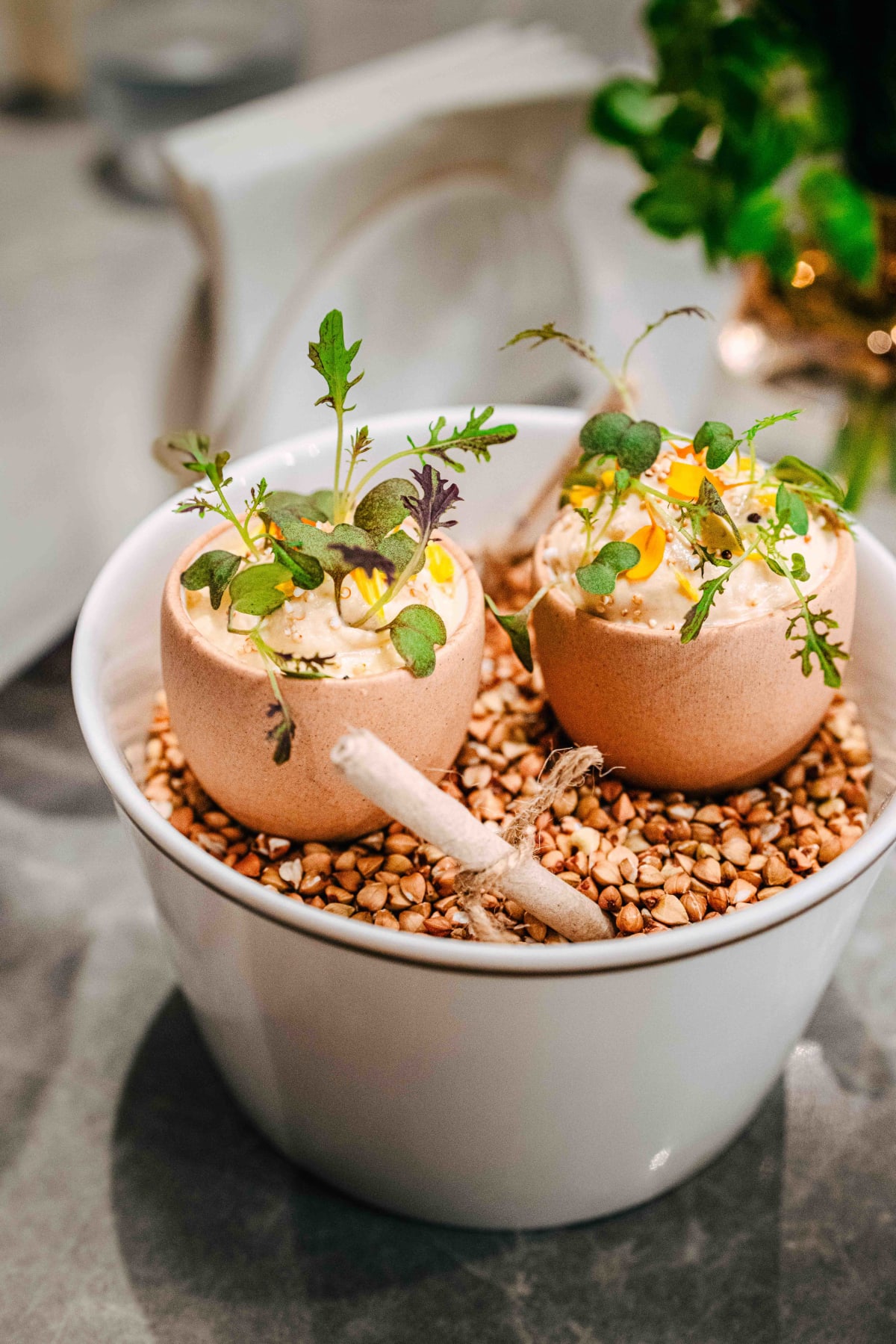
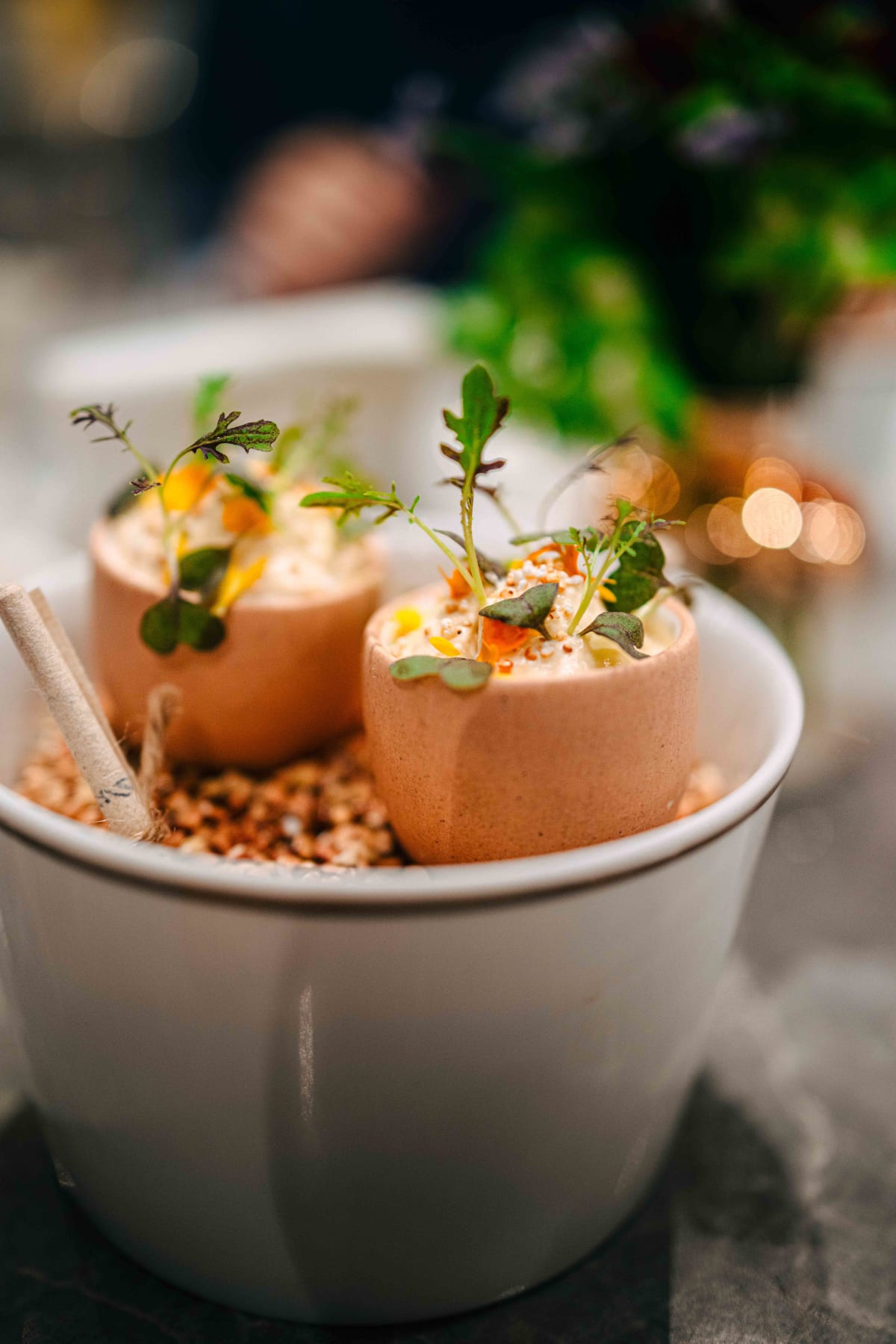
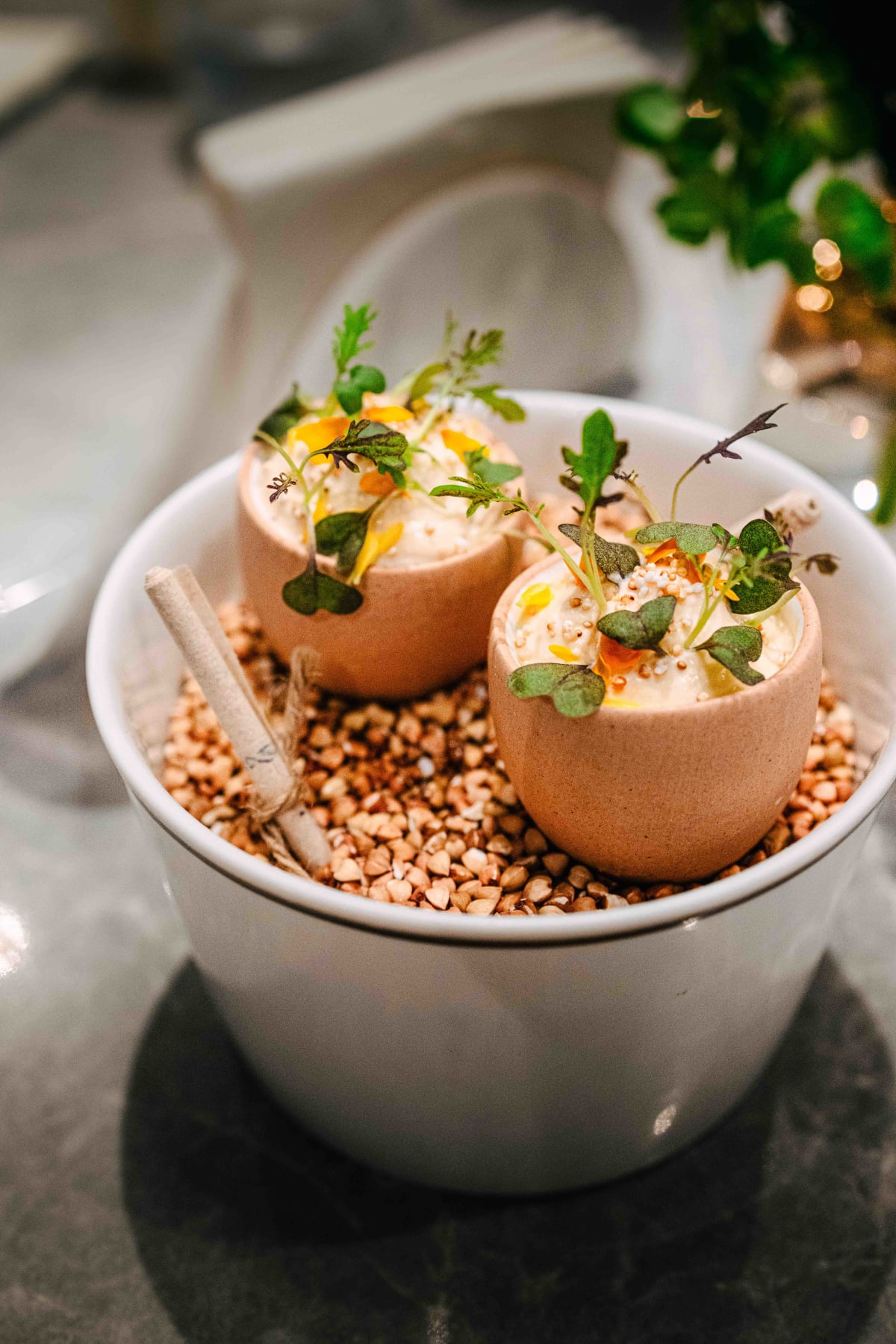
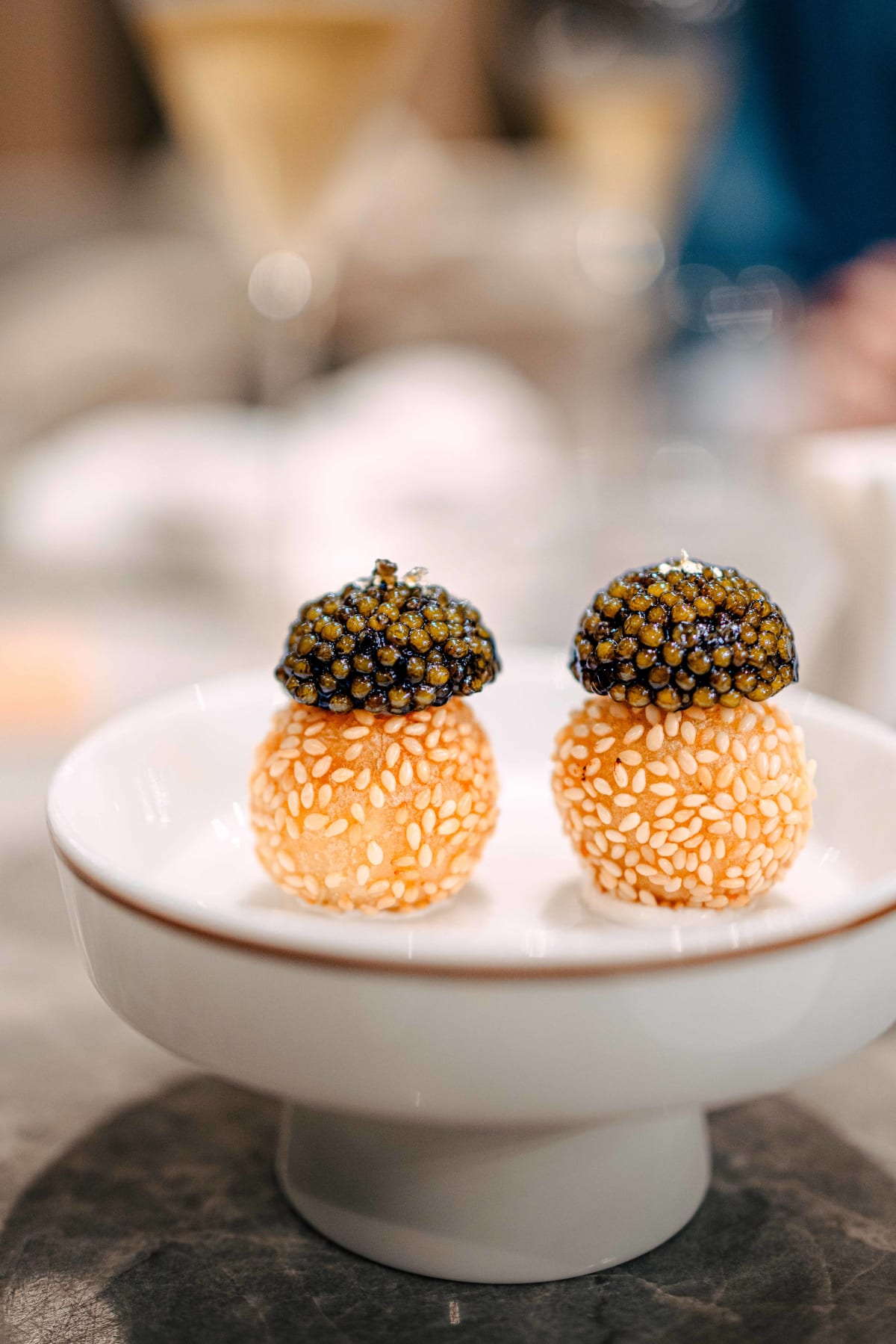
But what was really delicious were the Chinese cracker with a generous spoonful of caviar on top and the shrimp made into the shape of a pizza slice.
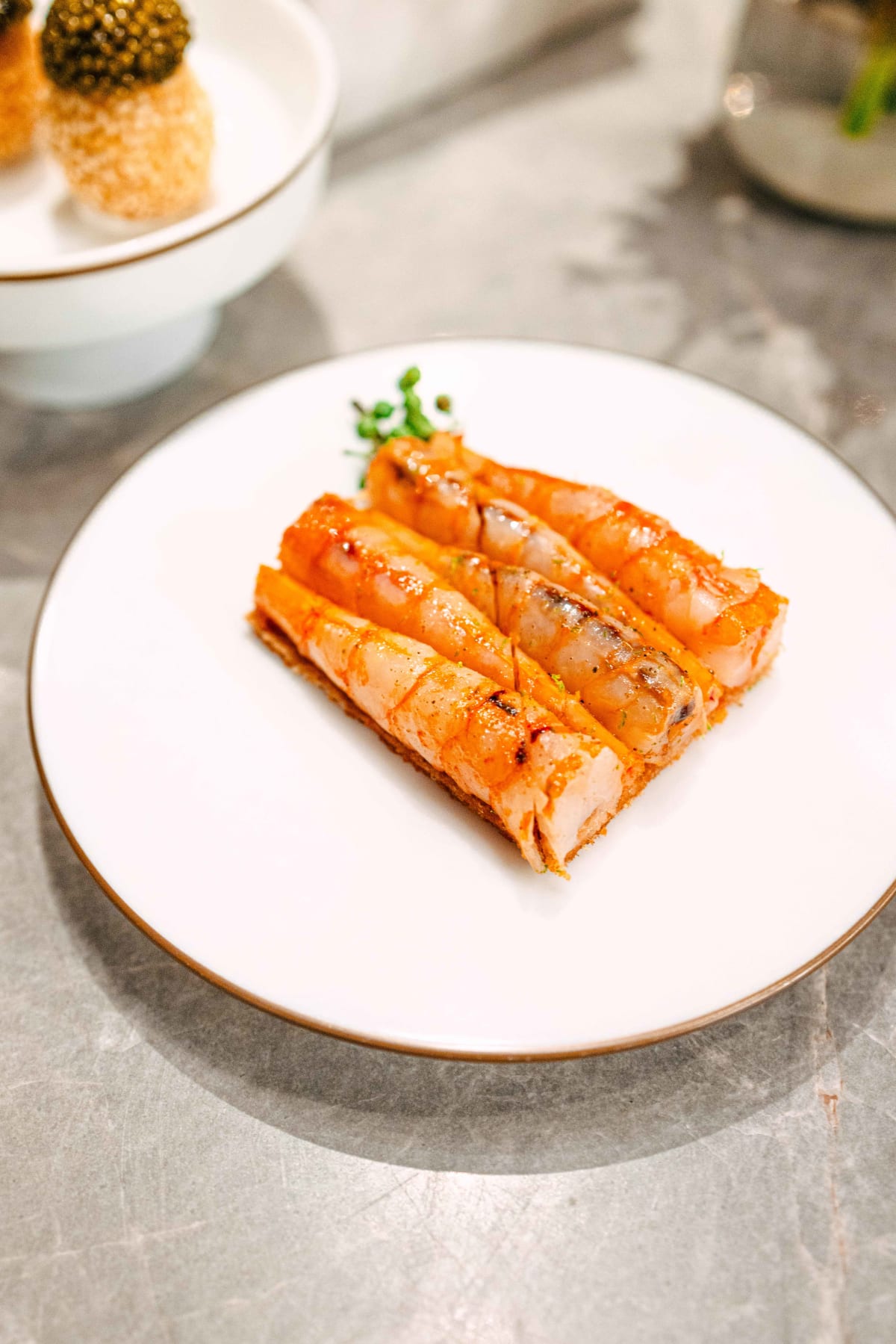
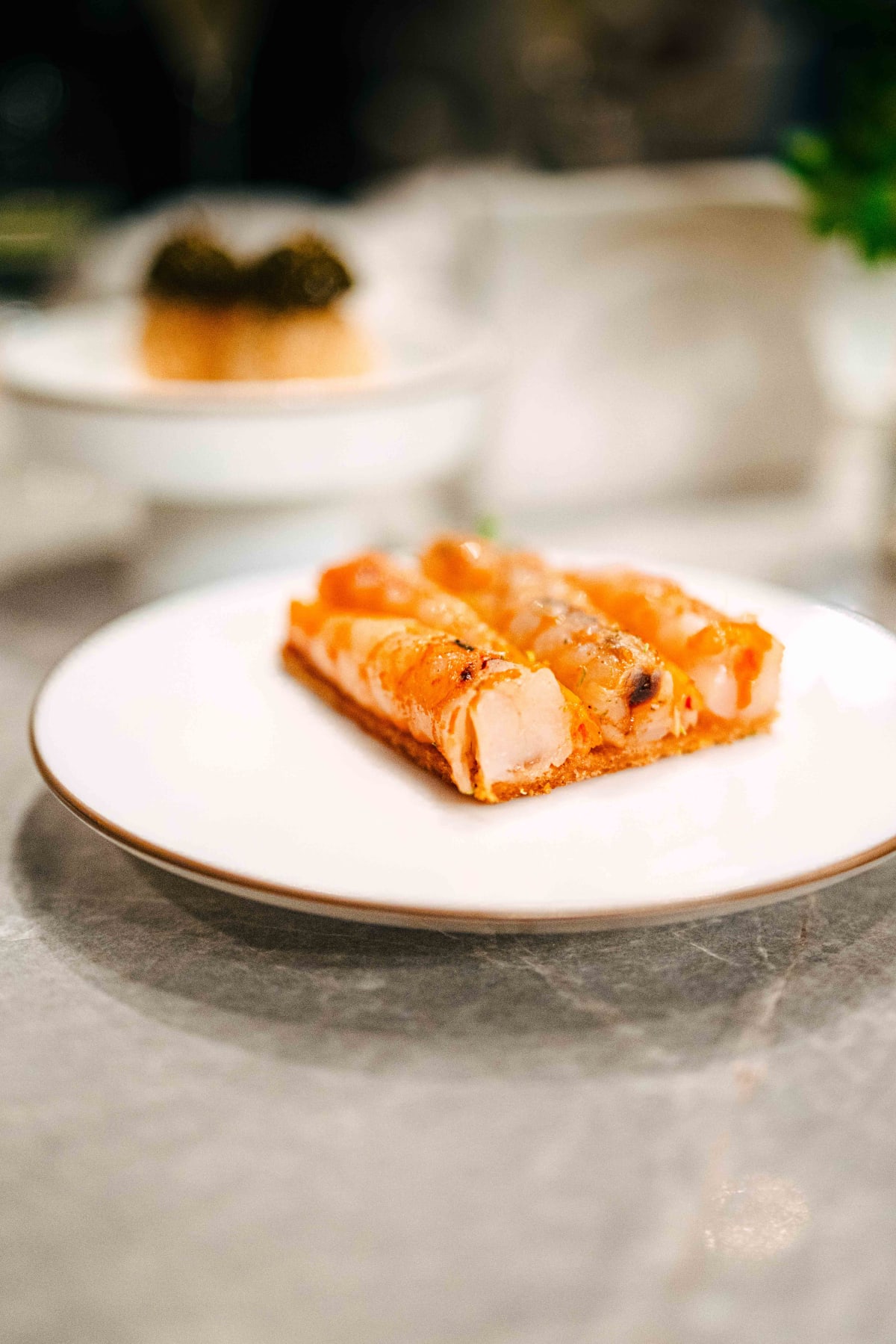
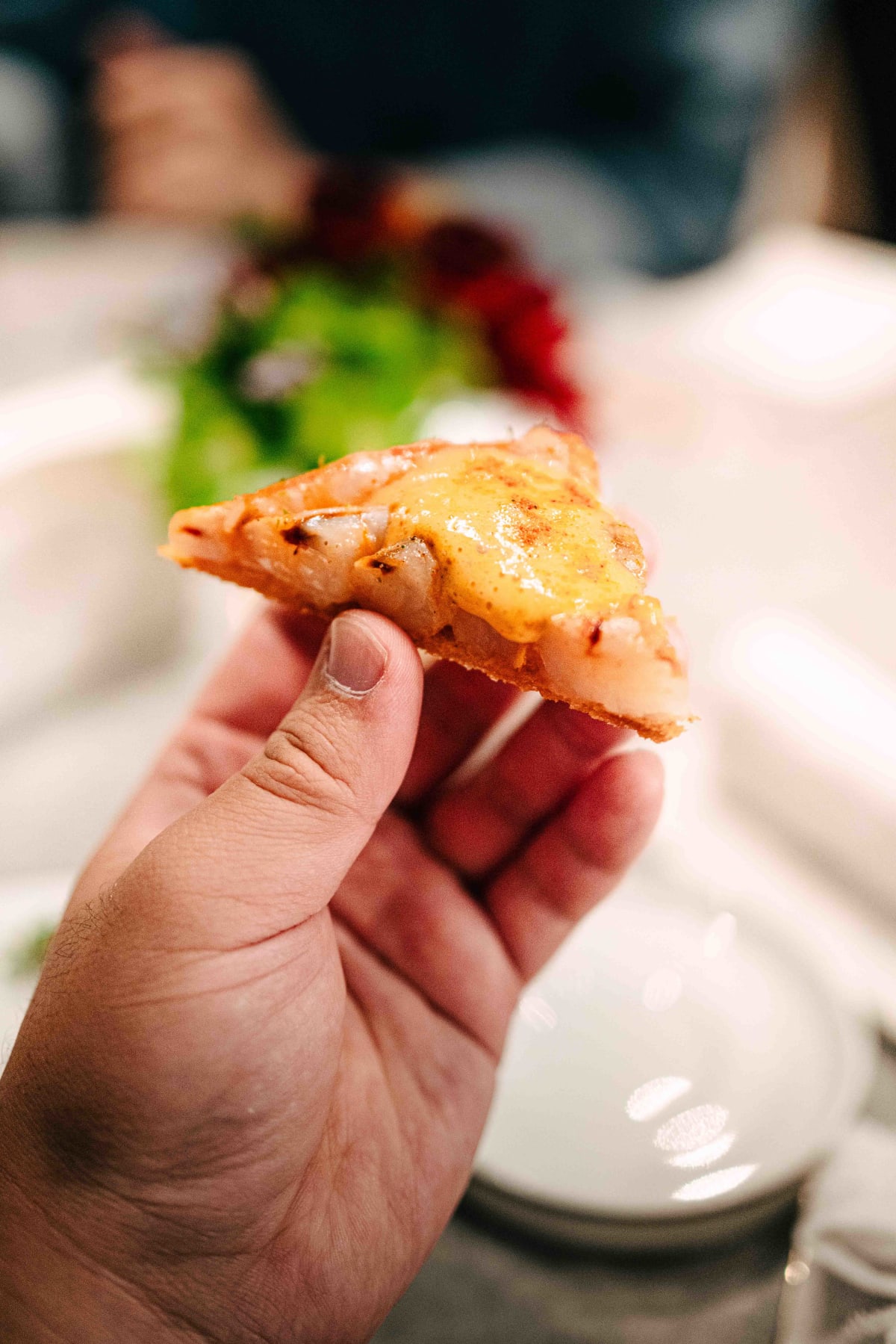
Putting the sauce that came with it onto the shrimp made it seriously good, like eating a very expensive seafood pizza.
Section 6·A Song on Paper
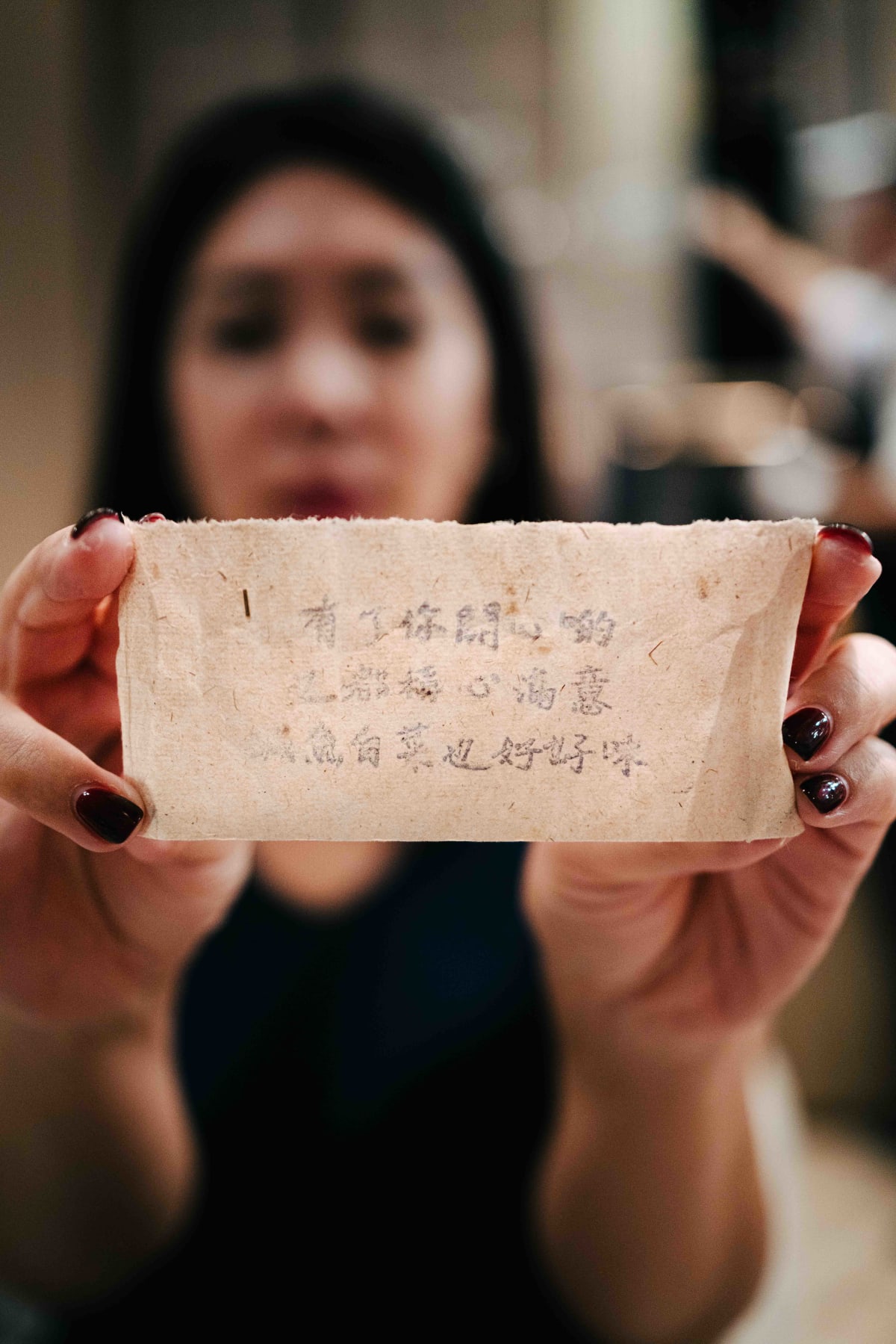
Beside the first dish, Snacks, Savoury Selections, there was a rolled up piece of paper with a literary sentence written on it in Chinese, and reading it, it was a warm line about someone's care and devotion. As a foreigner it was a device I could not fully take in, but it still seemed interesting and good.
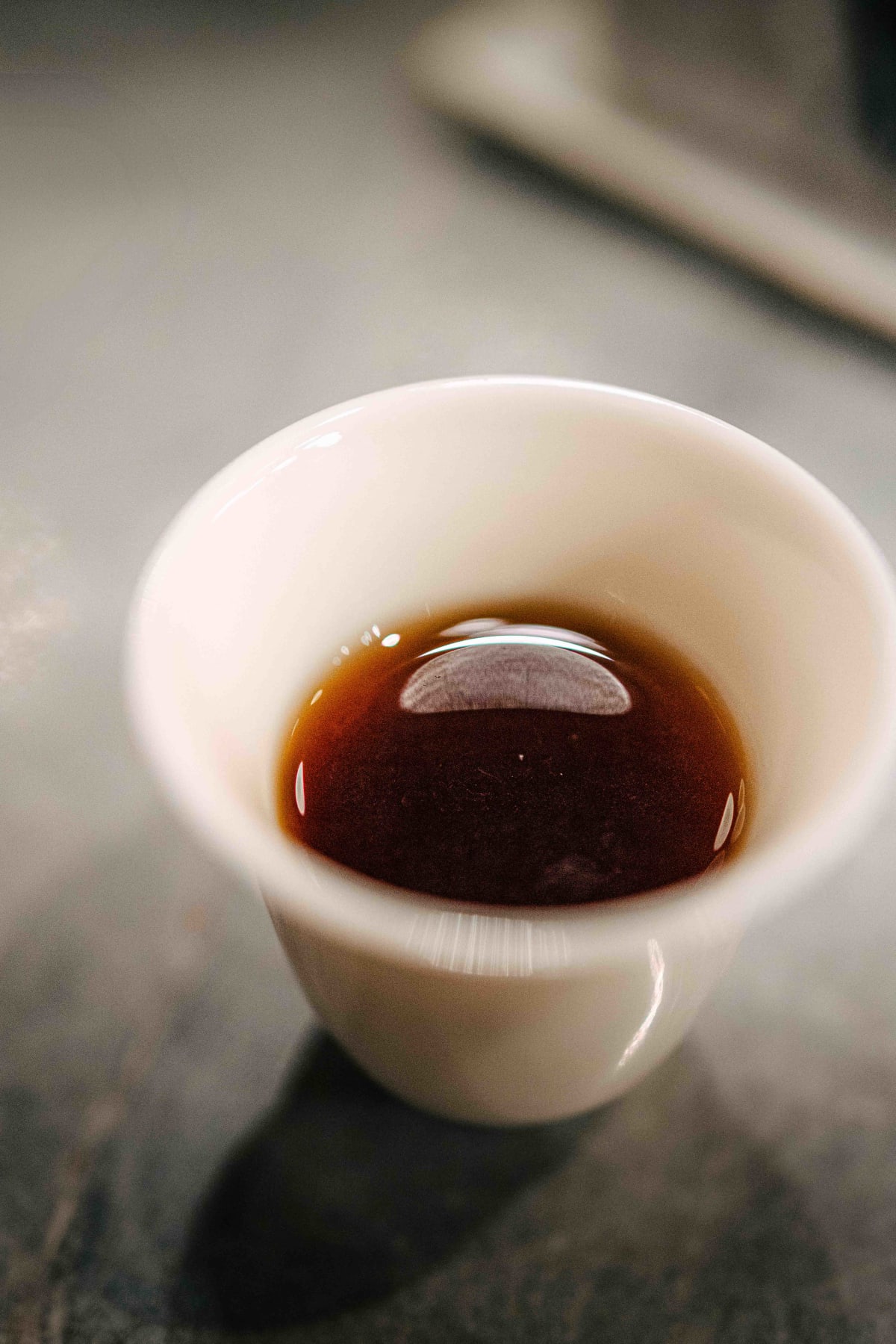
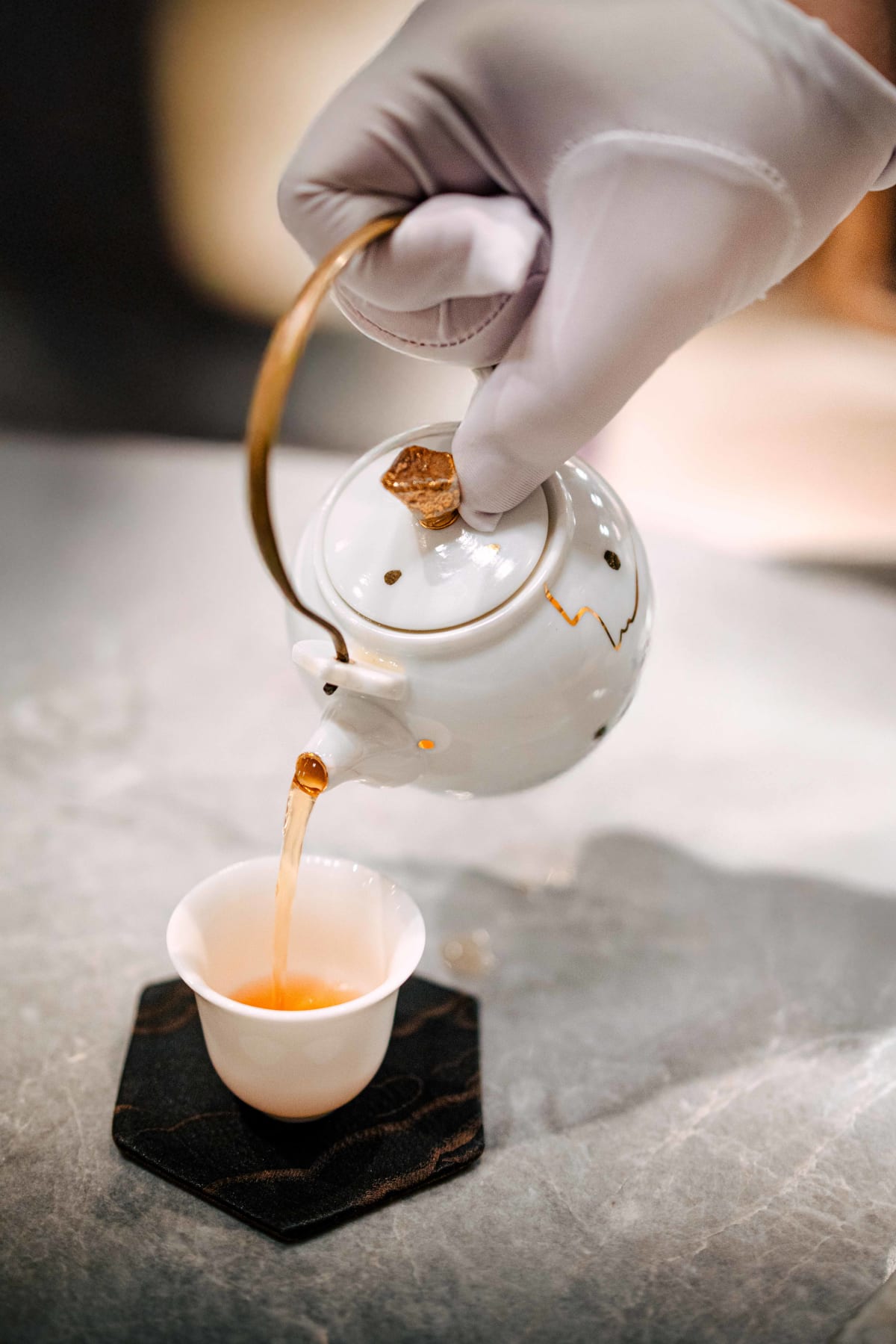
A cup of tea came alongside it.
Looking it up later, it was not a work of literature but a song. It is a passage from the chorus of 〈分分鐘需要你〉, a Cantonese song by Lam Tsz-cheung (林子祥) released in 1980, with music by Lam and words by Cheng Kwok-kong (鄭國江). They say most people from Hong Kong know it from the first line alone.
It sings the feeling that as long as the person is beside you, even the plainest table is enough, and the image chosen for that plainness happens to be salted fish and cabbage, which is to say the most frugal meal in Cantonese home cooking. Putting that sentence on the first plate of a course filled with the finest ingredients seems to me a statement of position in itself. And it seems natural enough that I could not read it fully as a foreigner.
Putting that sentence on the first plate of a course filled with the finest ingredients seems to me a statement of position in itself.
Section 7·Striped Jack and Lobster
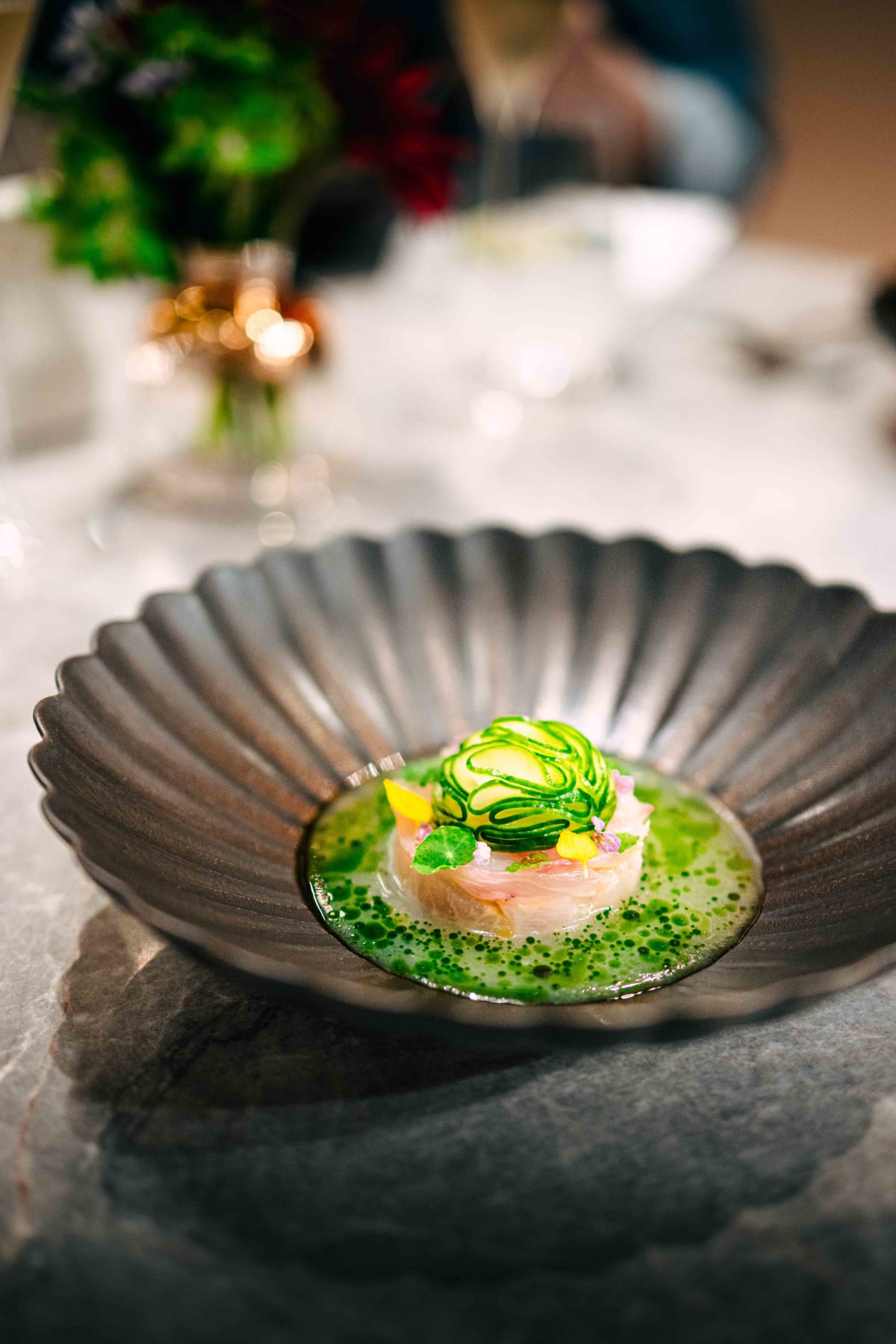
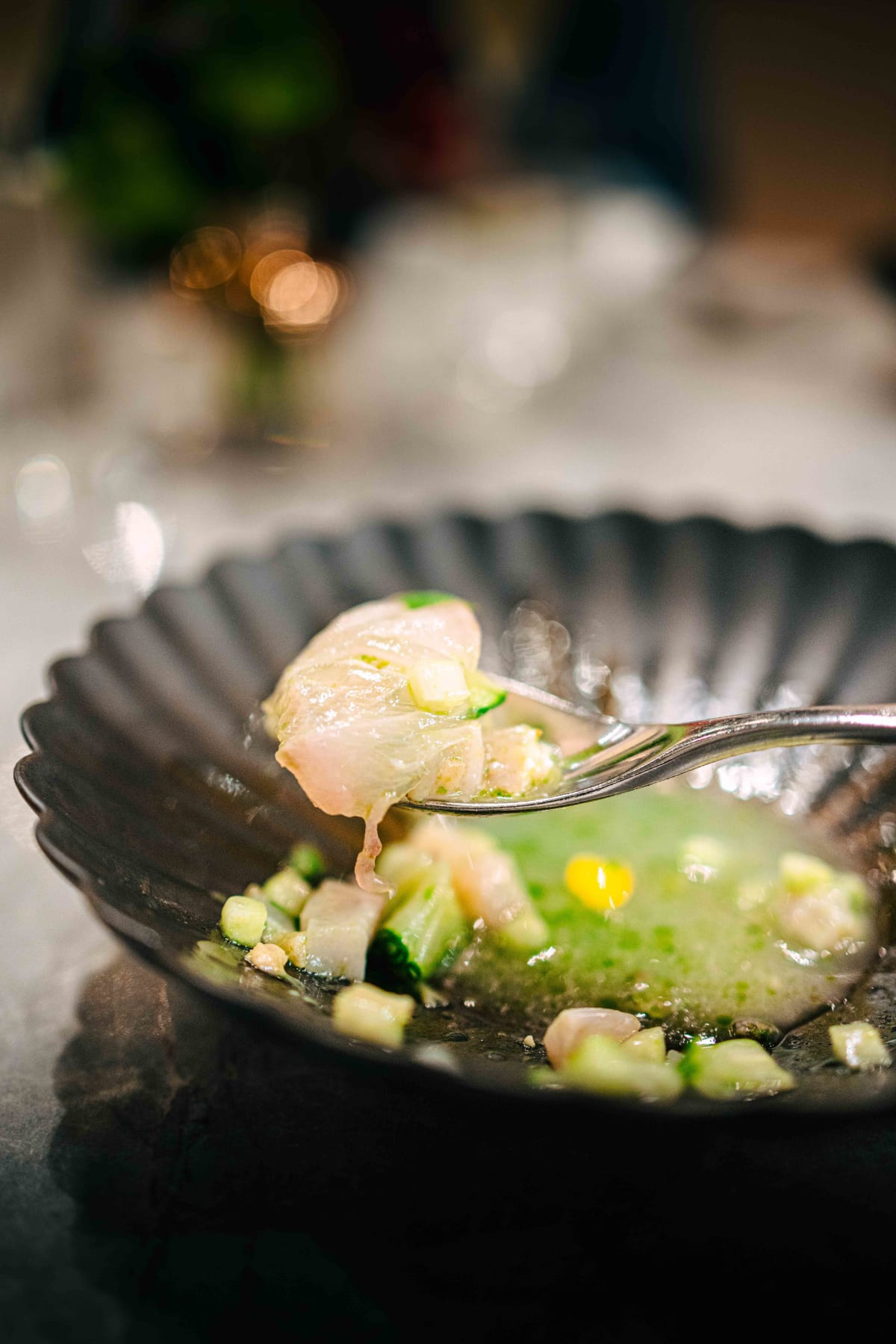
Next came Striped Jack, with Cucumber and Longan listed under it, the striped jack served raw carpaccio style with a cucumber sauce and longan, a tropical fruit. The striped jack was not bad, it was fine.
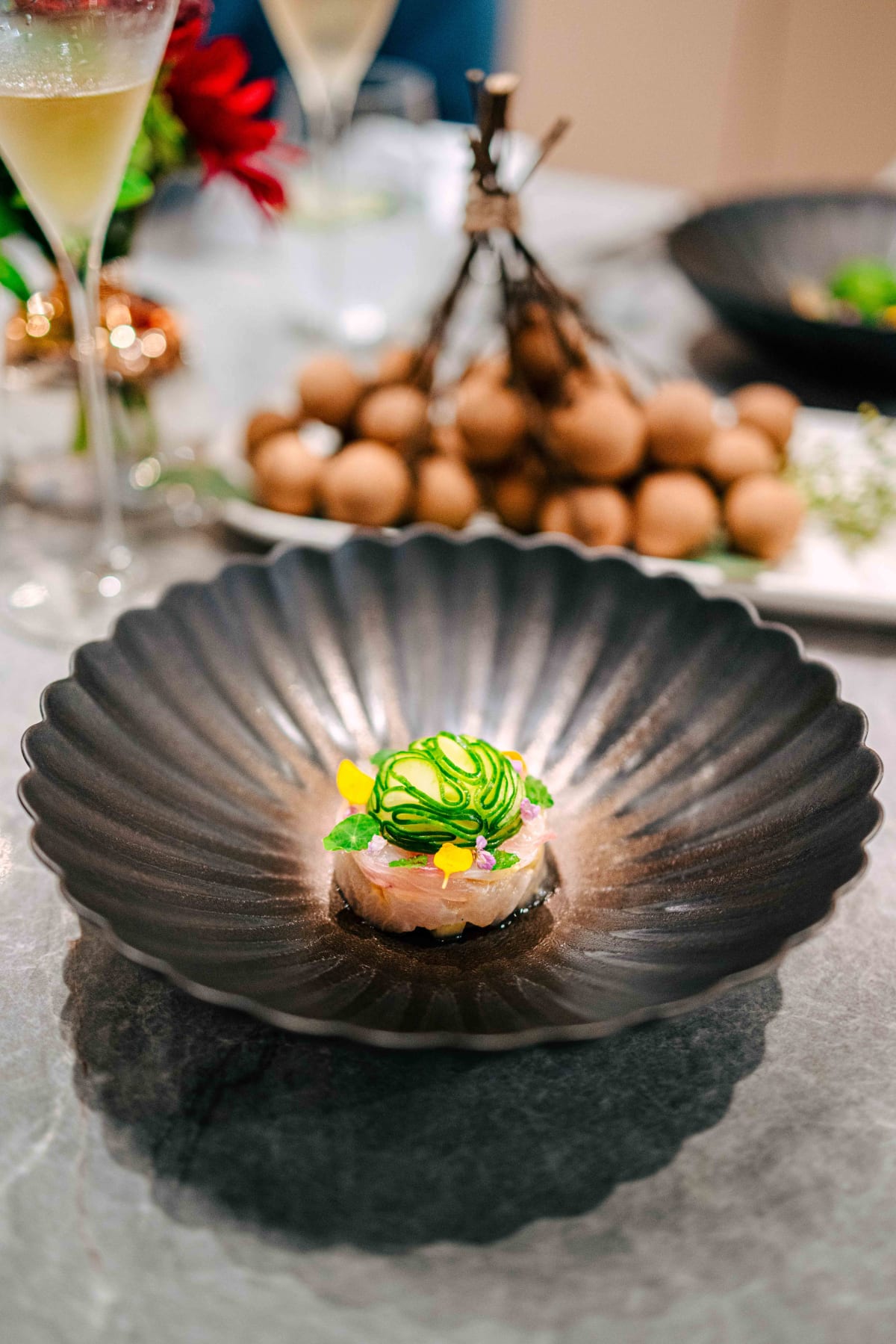
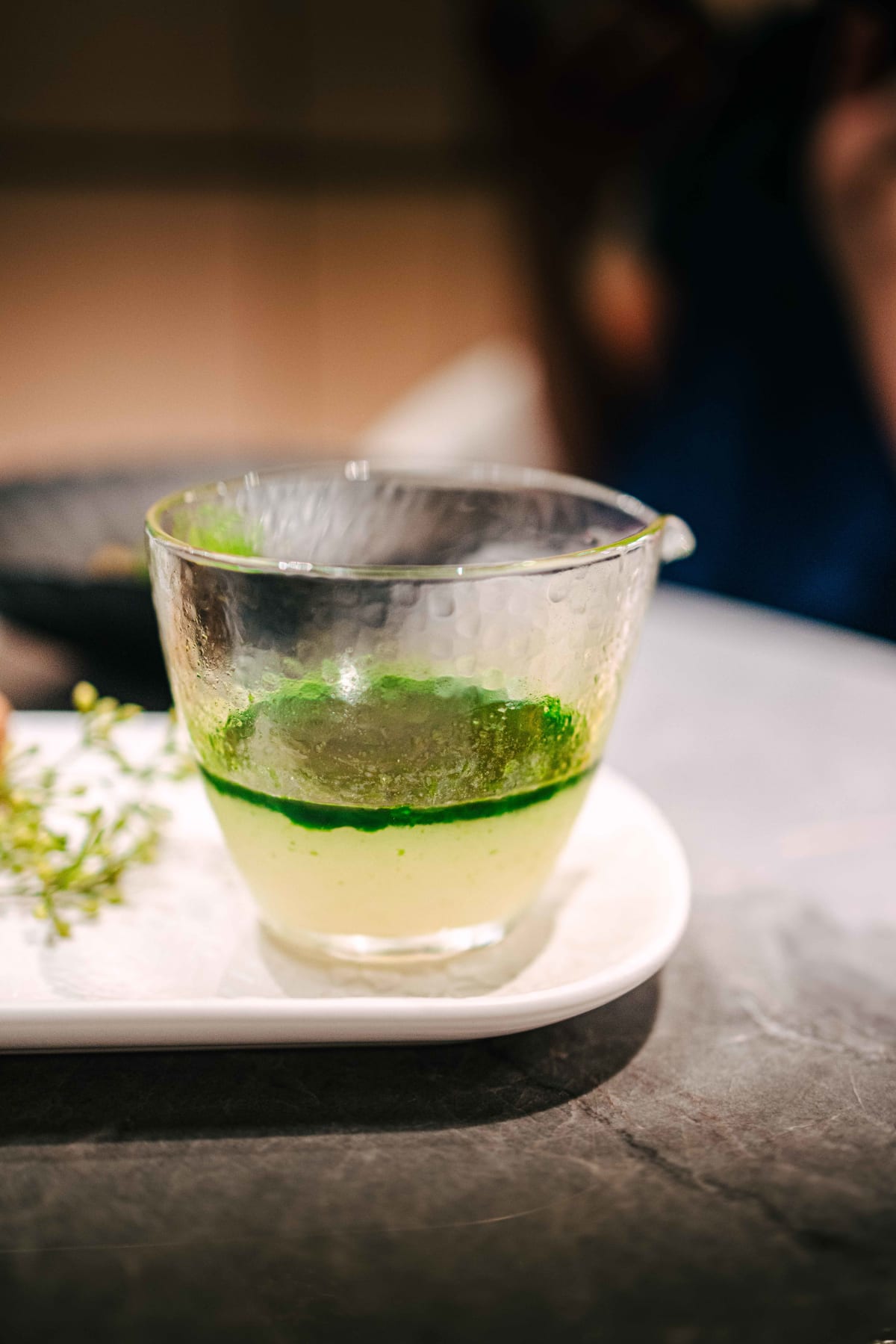
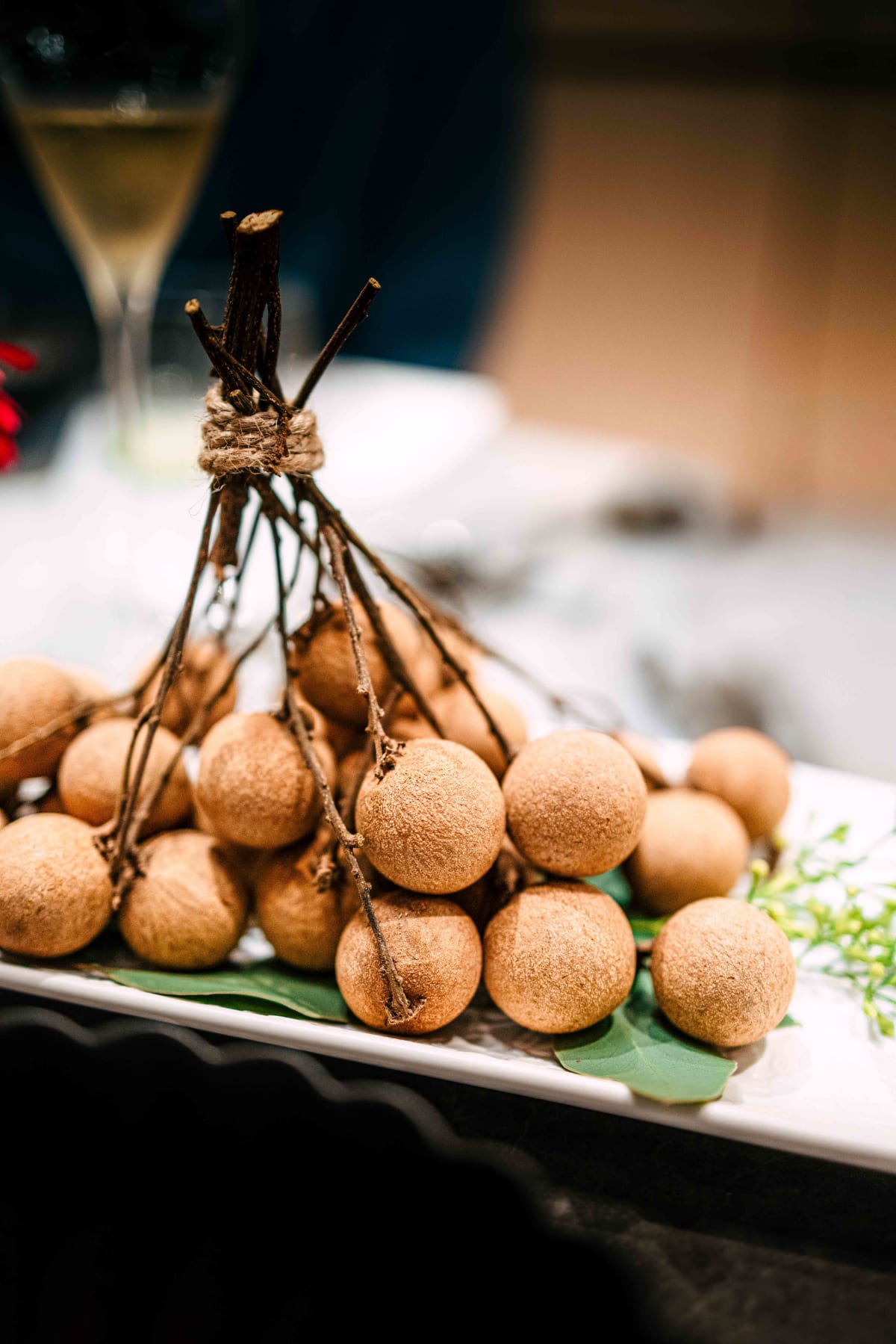
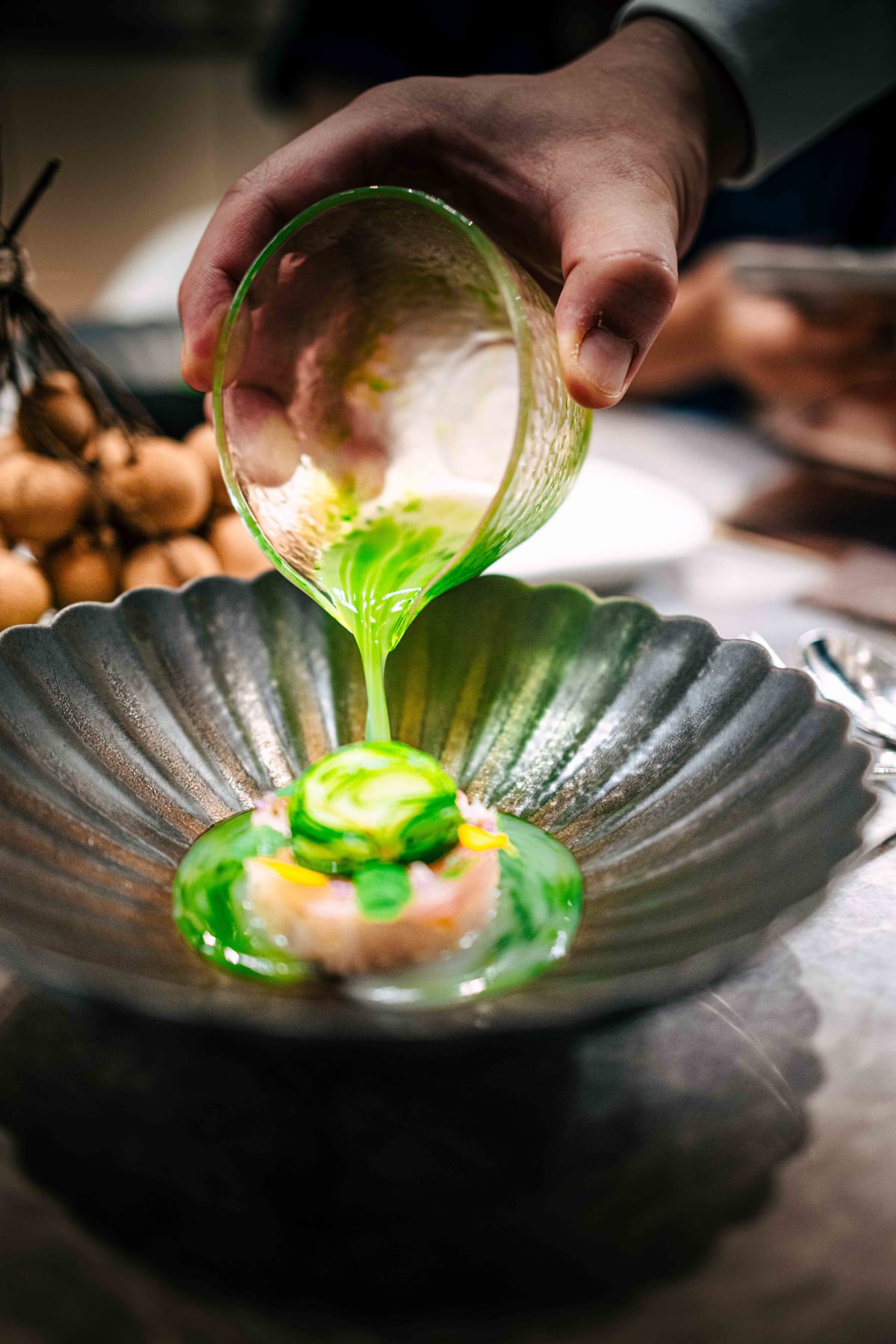
I had wondered whether raw fish would taste right given how warm the sea is around Hong Kong, but it was better than I expected. Still, the cucumber sauce itself and its combination with the striped jack were rather ordinary to my palate, a cold dish that never came through intuitively.
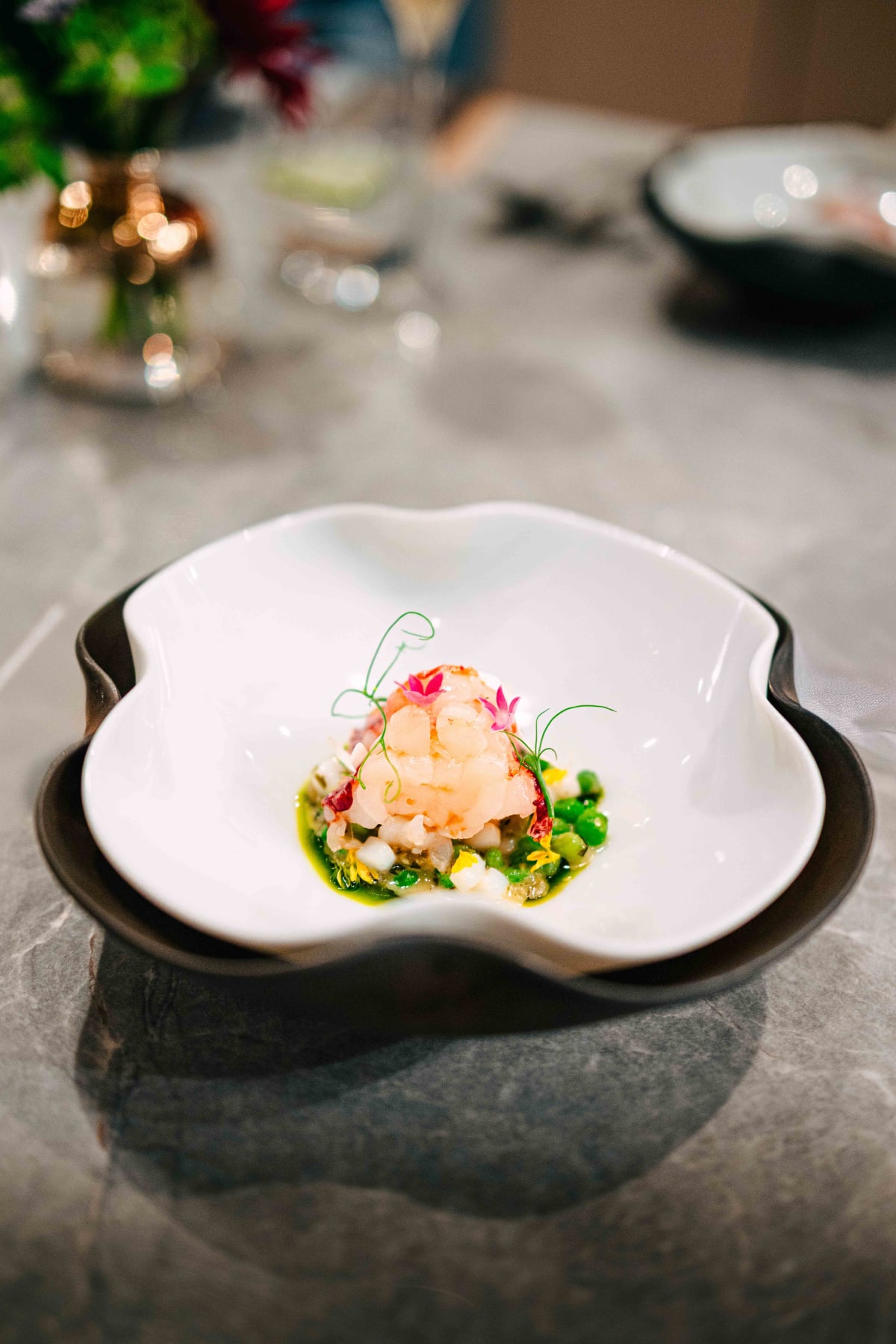
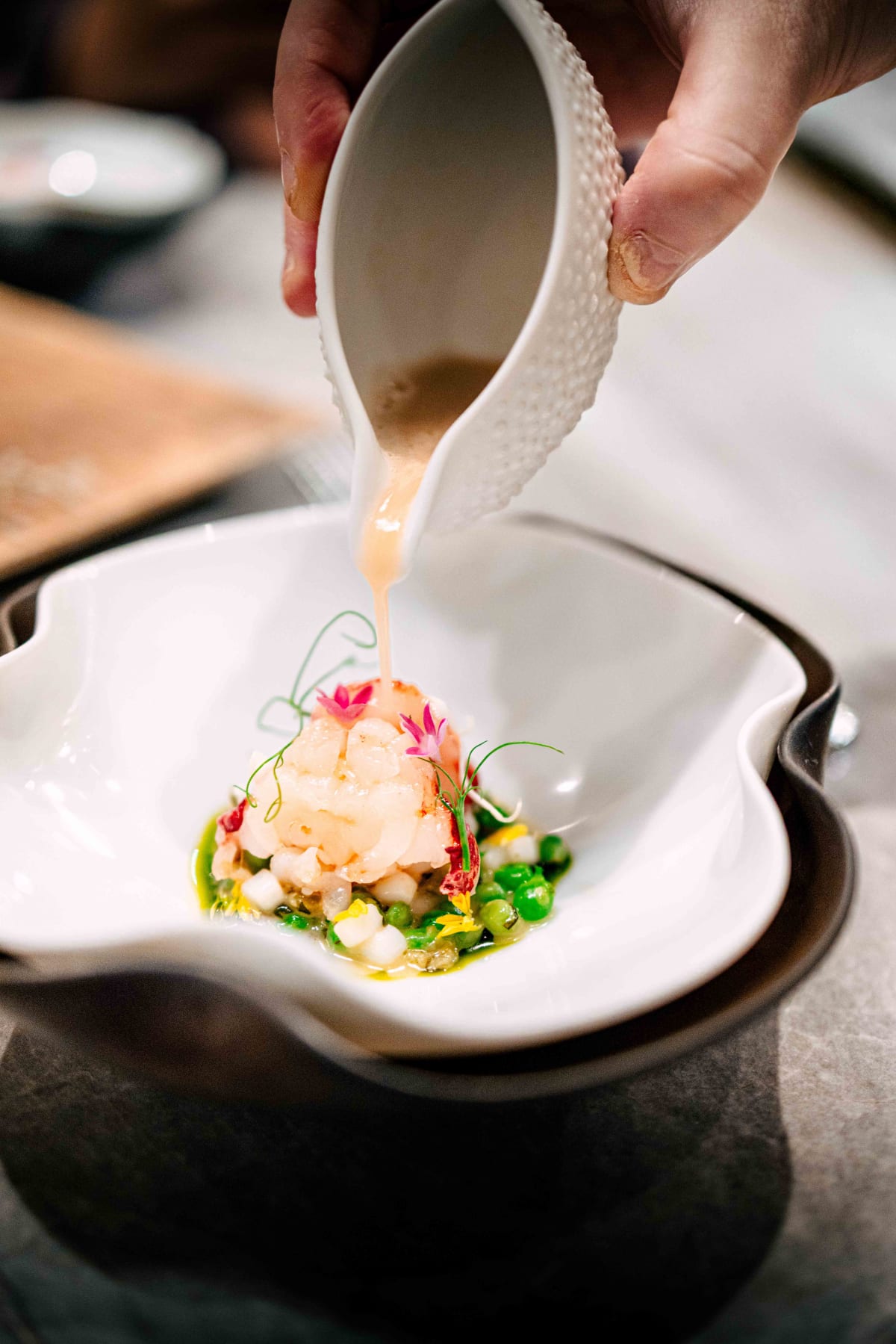
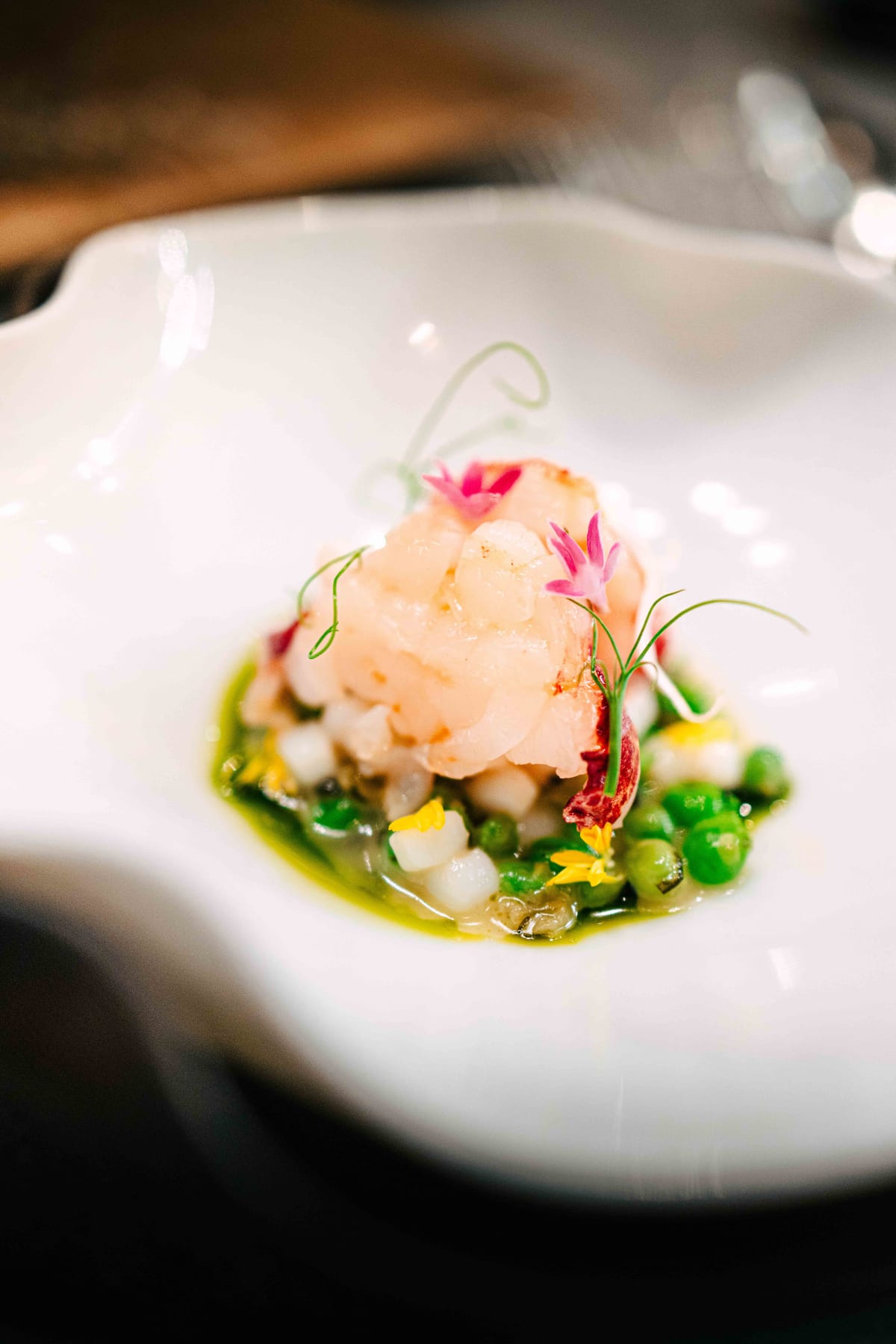
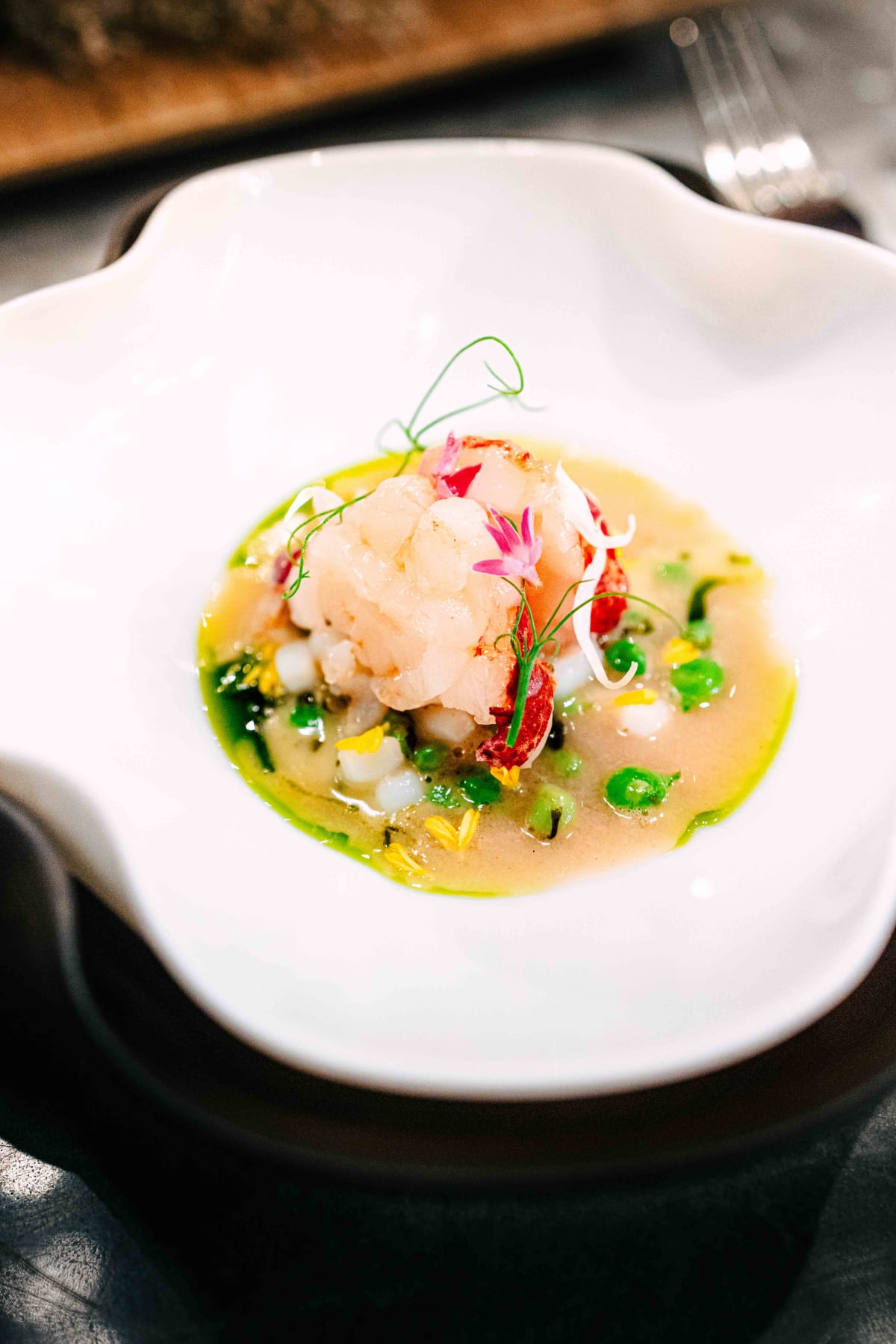
After that somewhat flat dish of striped jack and cucumber sauce came the blue lobster, and this one was delicious. The texture of the lobster itself was good, and the textural match with the small peas that looked like garden peas was excellent, and the sauce was good too.
The staff brought the ingredients out and explained them in front of us.
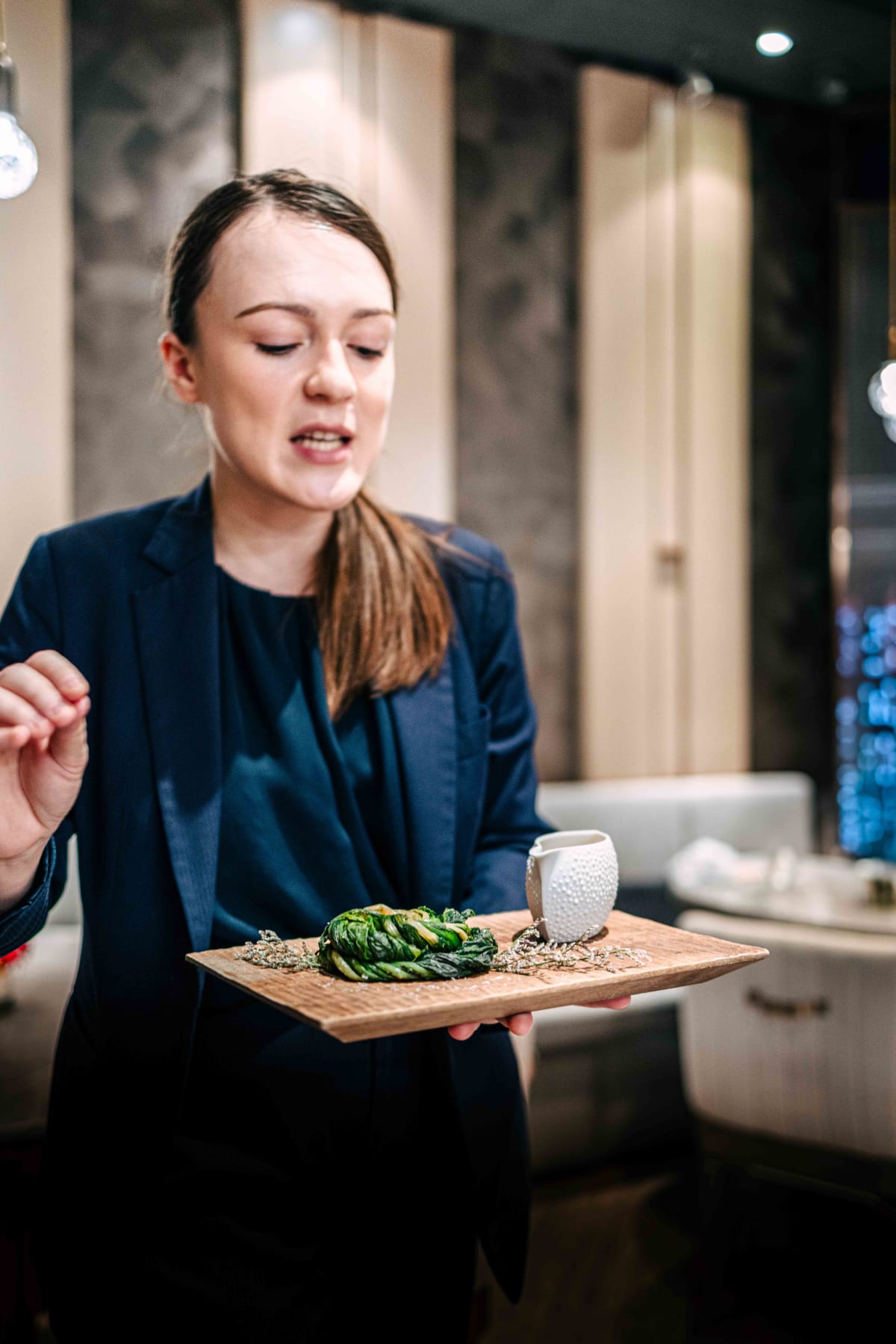
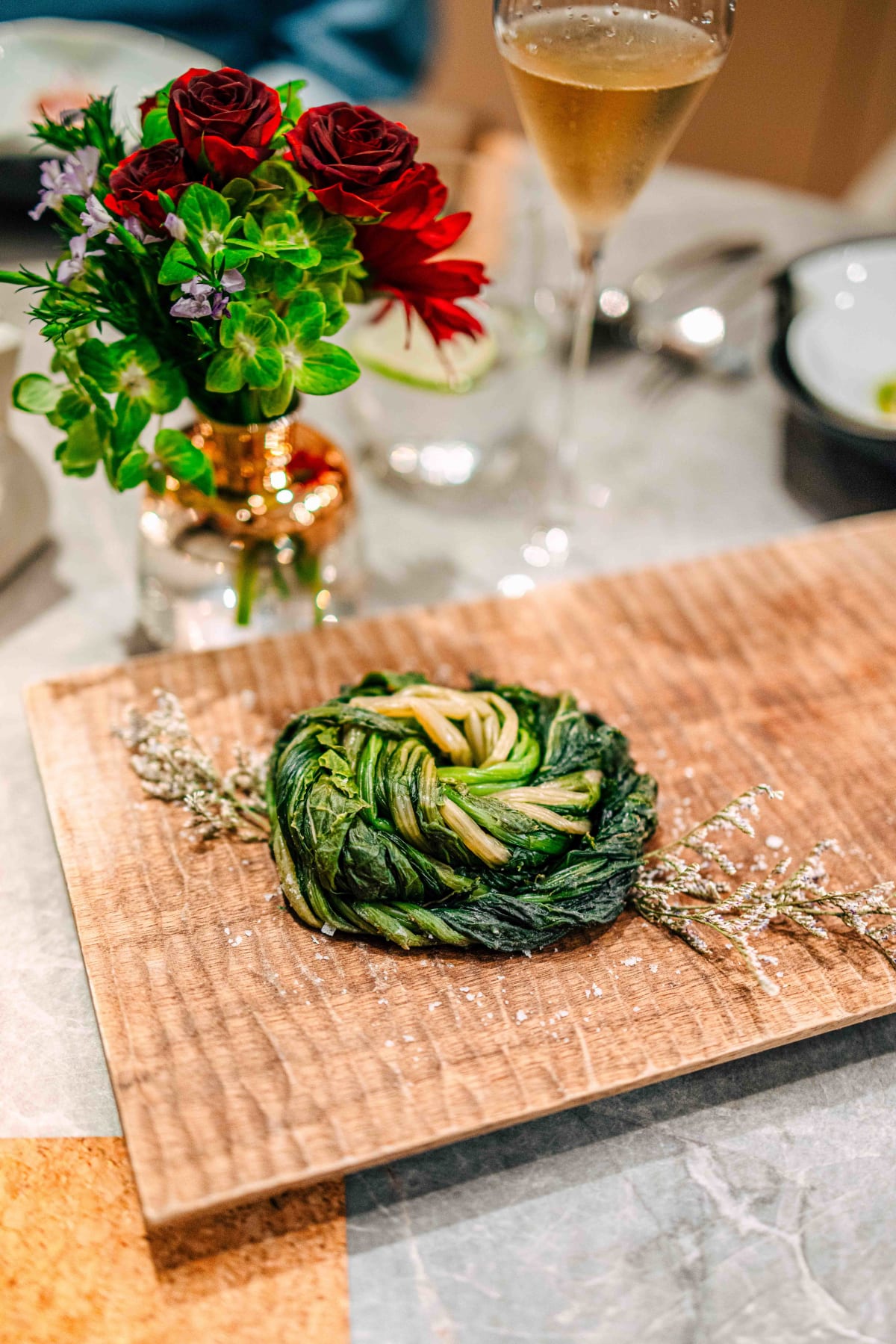
This dish was Blue Lobster, with Snap Peas and Snow Cabbage as its supporting ingredients. What I had taken for garden peas were the snap peas.
Section 8·The Sea Cucumber
Then came Sea Cucumber, with Tiger Prawn and 20 Years Shaoxing Wine underneath it, dried sea cucumber with a large prawn beneath it, and this was my best of the day.
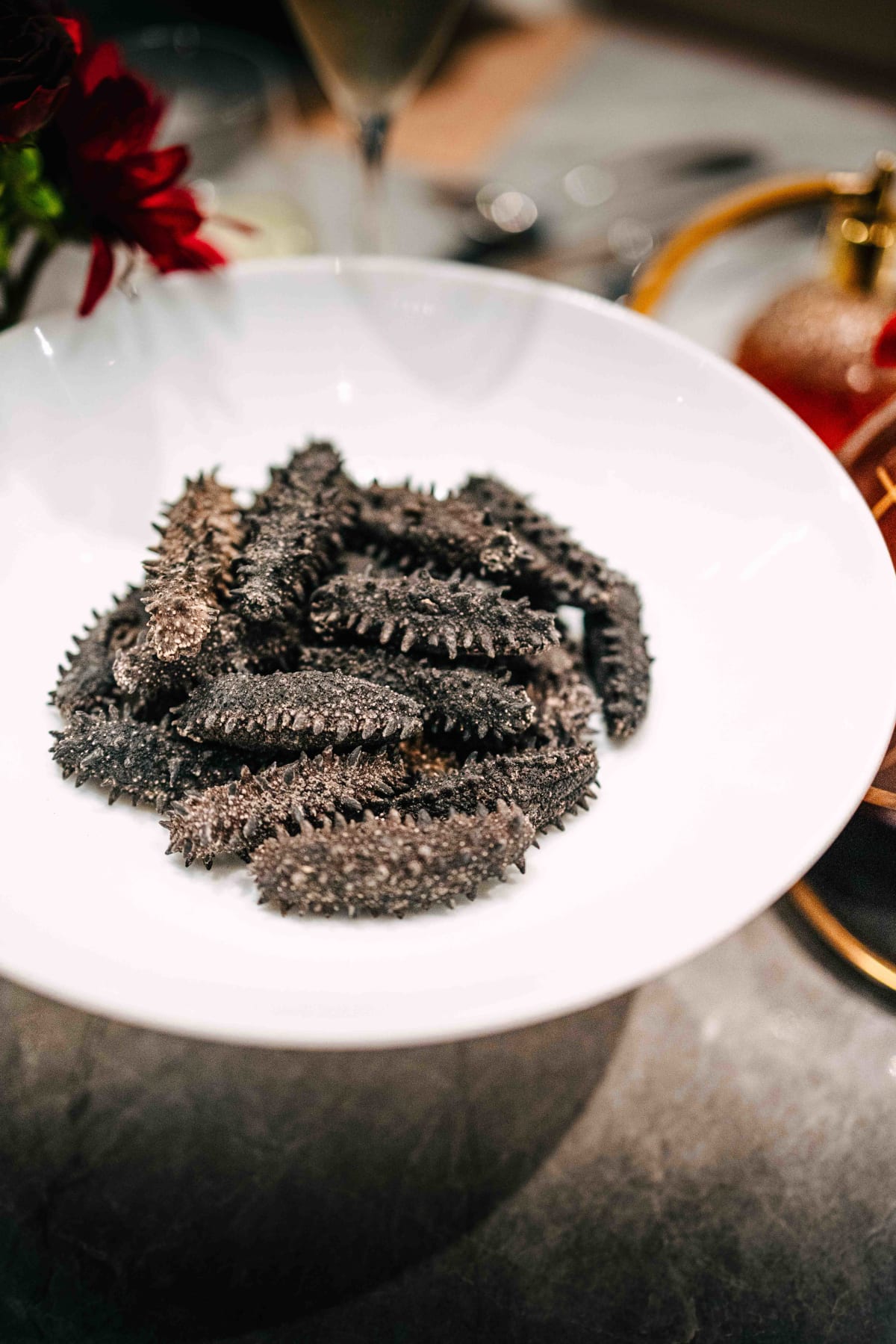
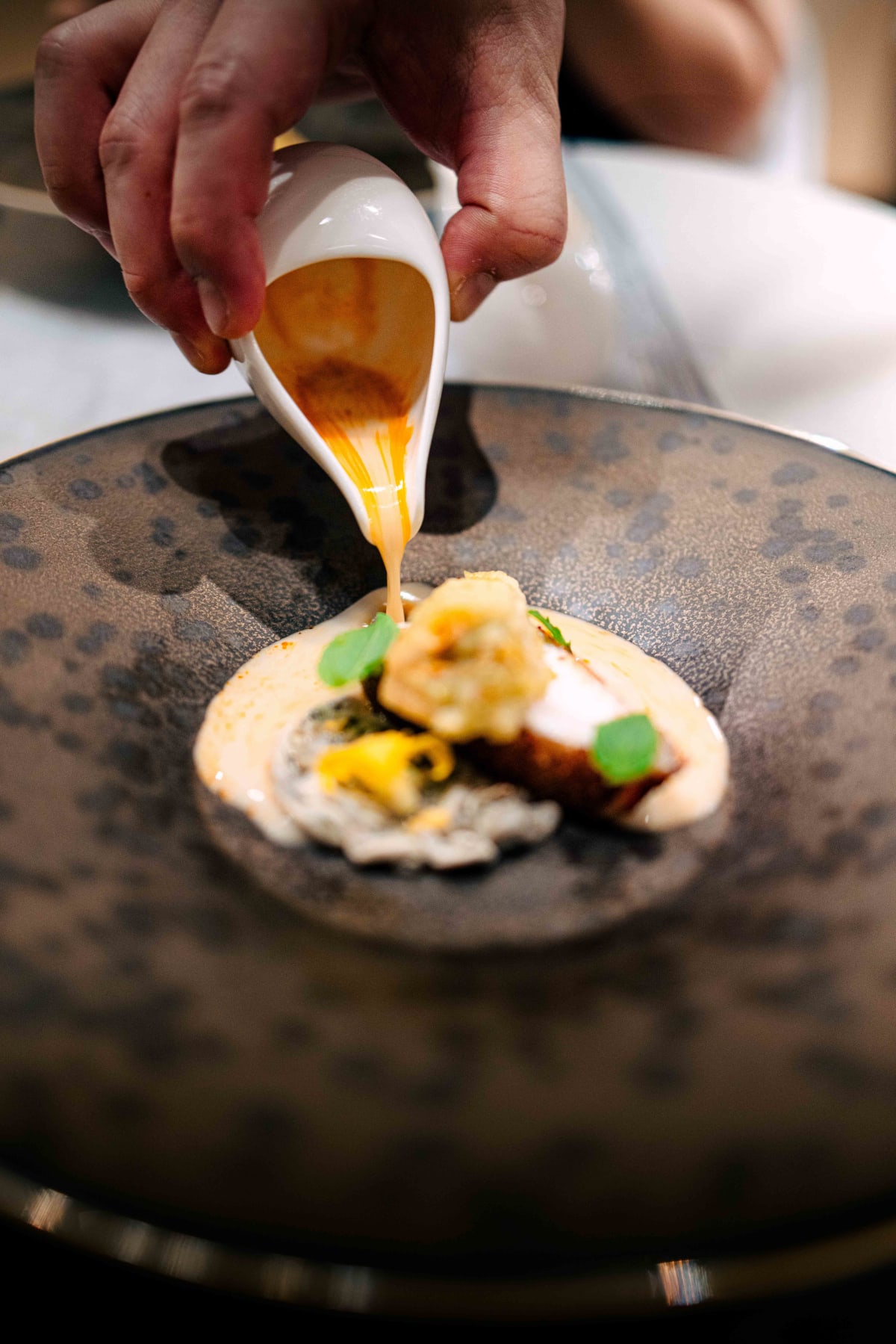
The outside of the sea cucumber seemed to have been grilled slightly crisp, and the prawn under it had excellent texture, and the thick bisque style sauce was very good. My sense that this was the signature was exactly right, since Cheng himself names this crispy sea cucumber as VEA's first signature and the dish that best represents the Chinese x French philosophy.
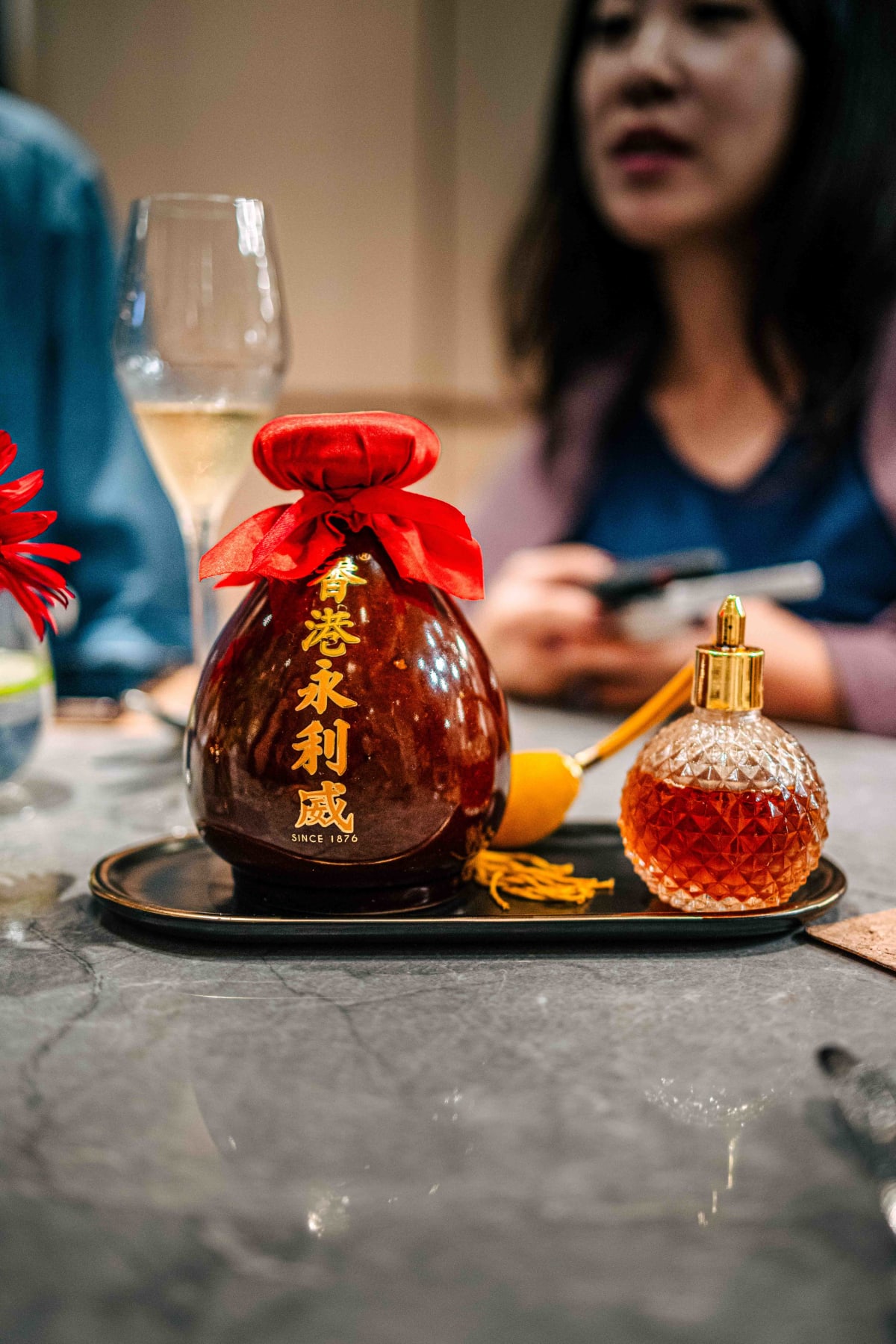
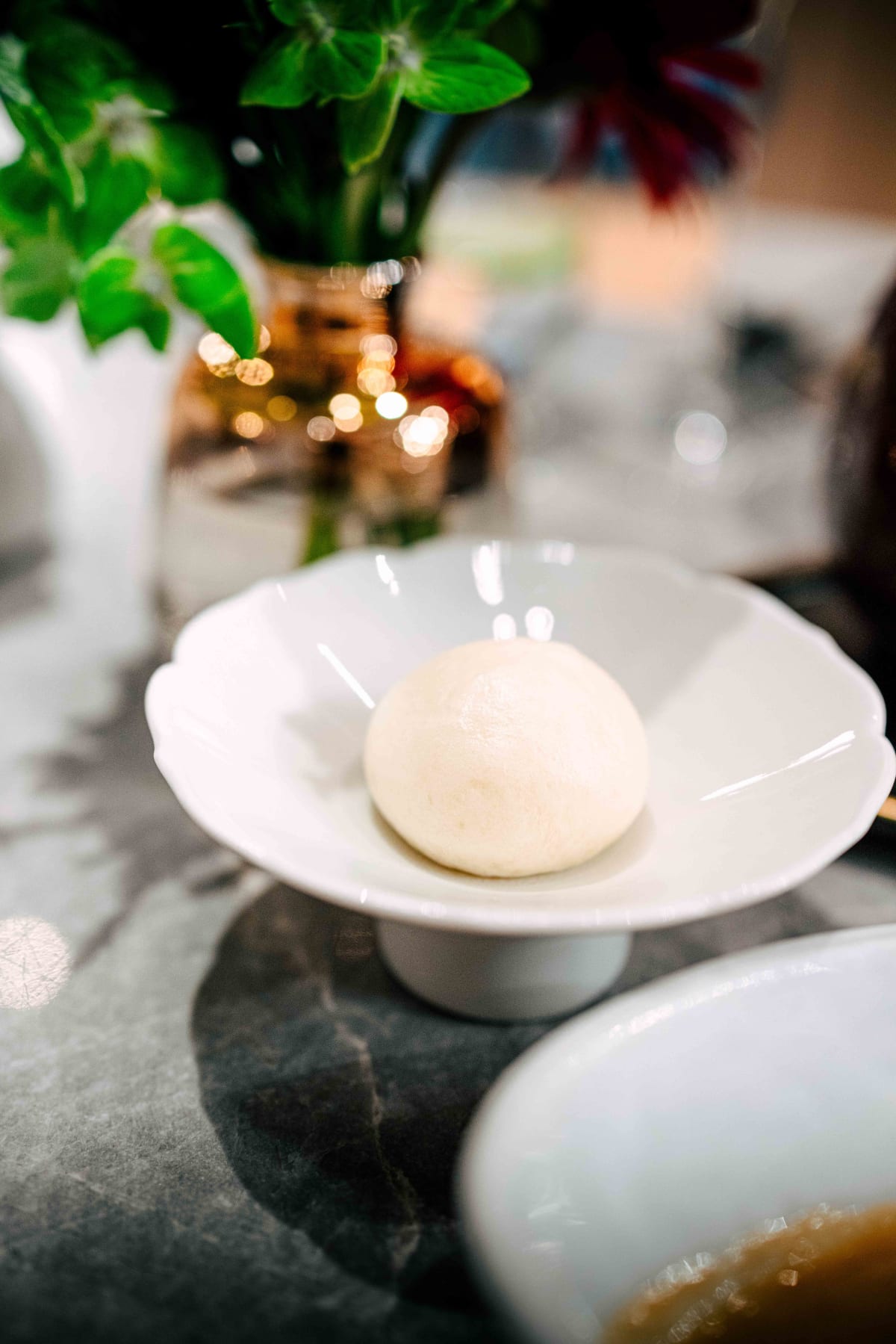
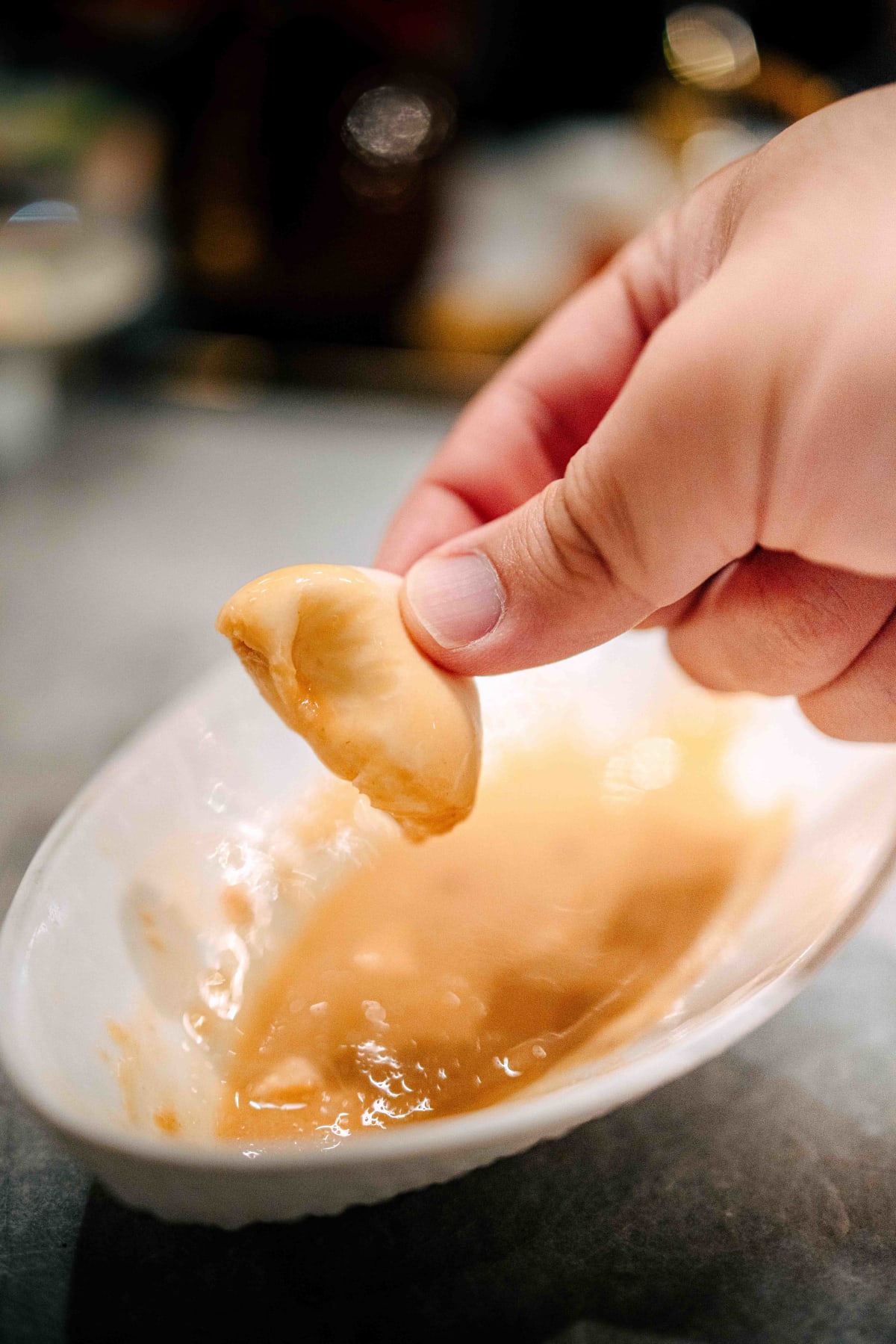
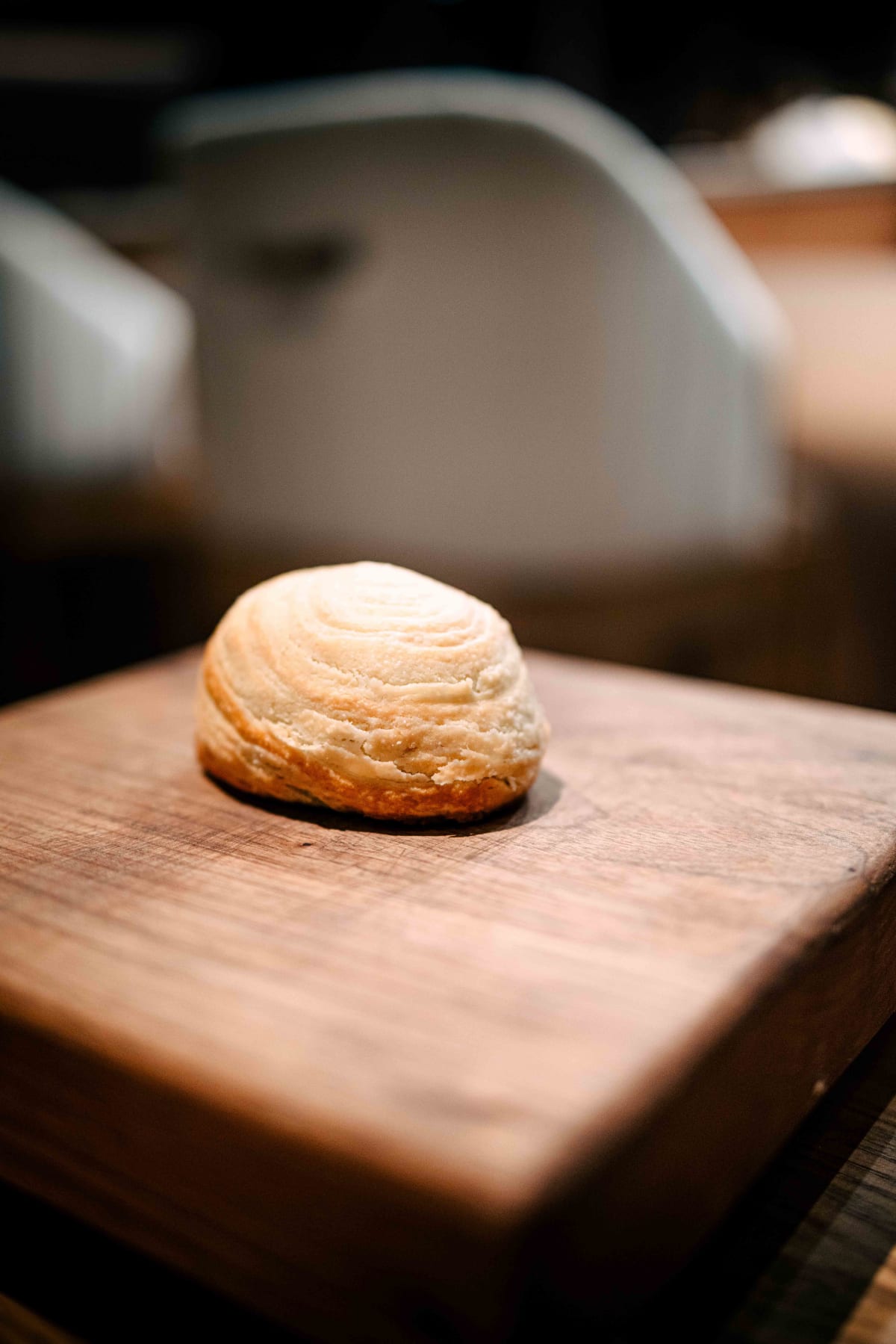
The sauce is said to be made with Shaoxing wine, and I thought it drew out the flavour of Chinese cooking wonderfully. They give you one round Chinese bun at this point, and I wiped up the sauce with it to the last.
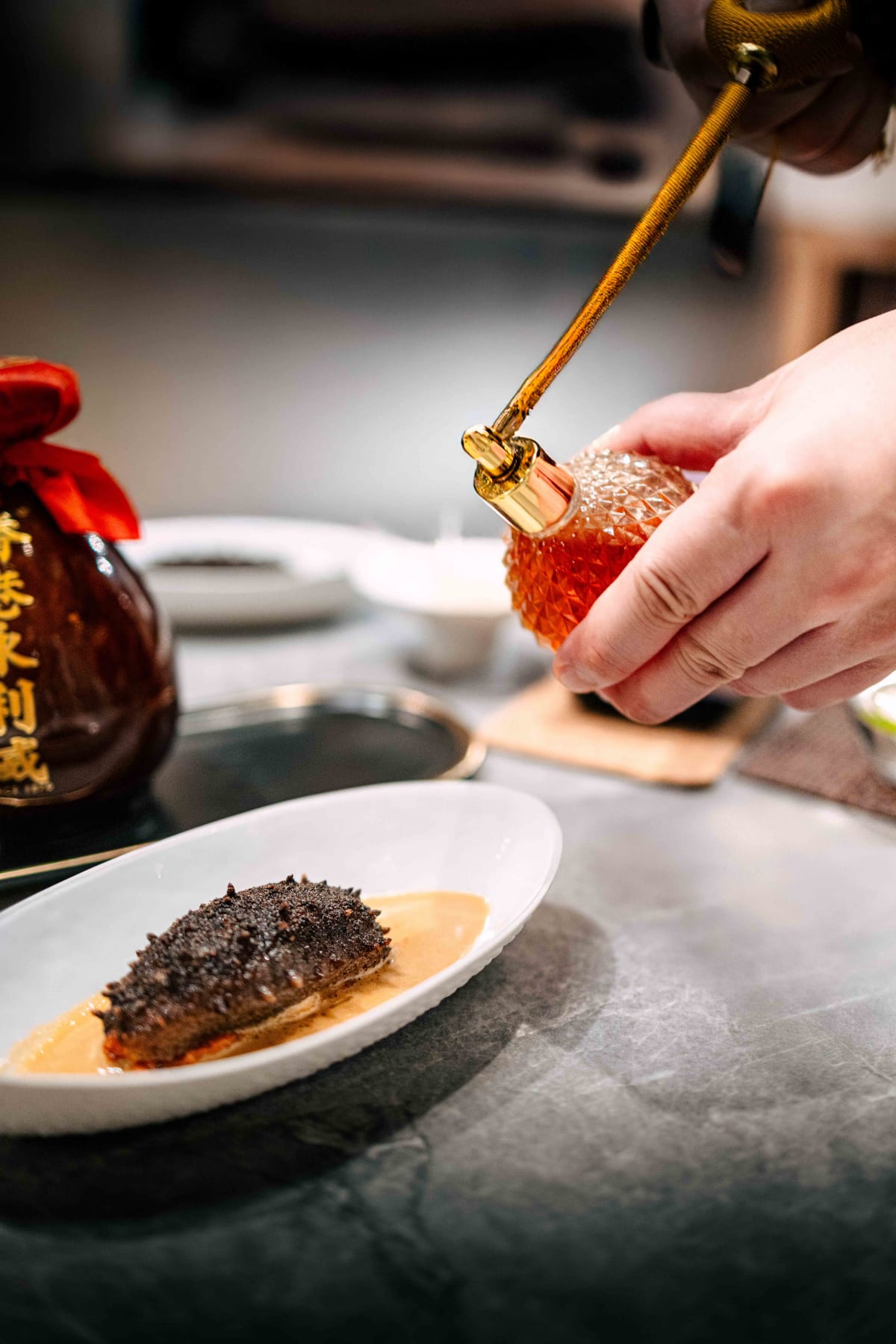
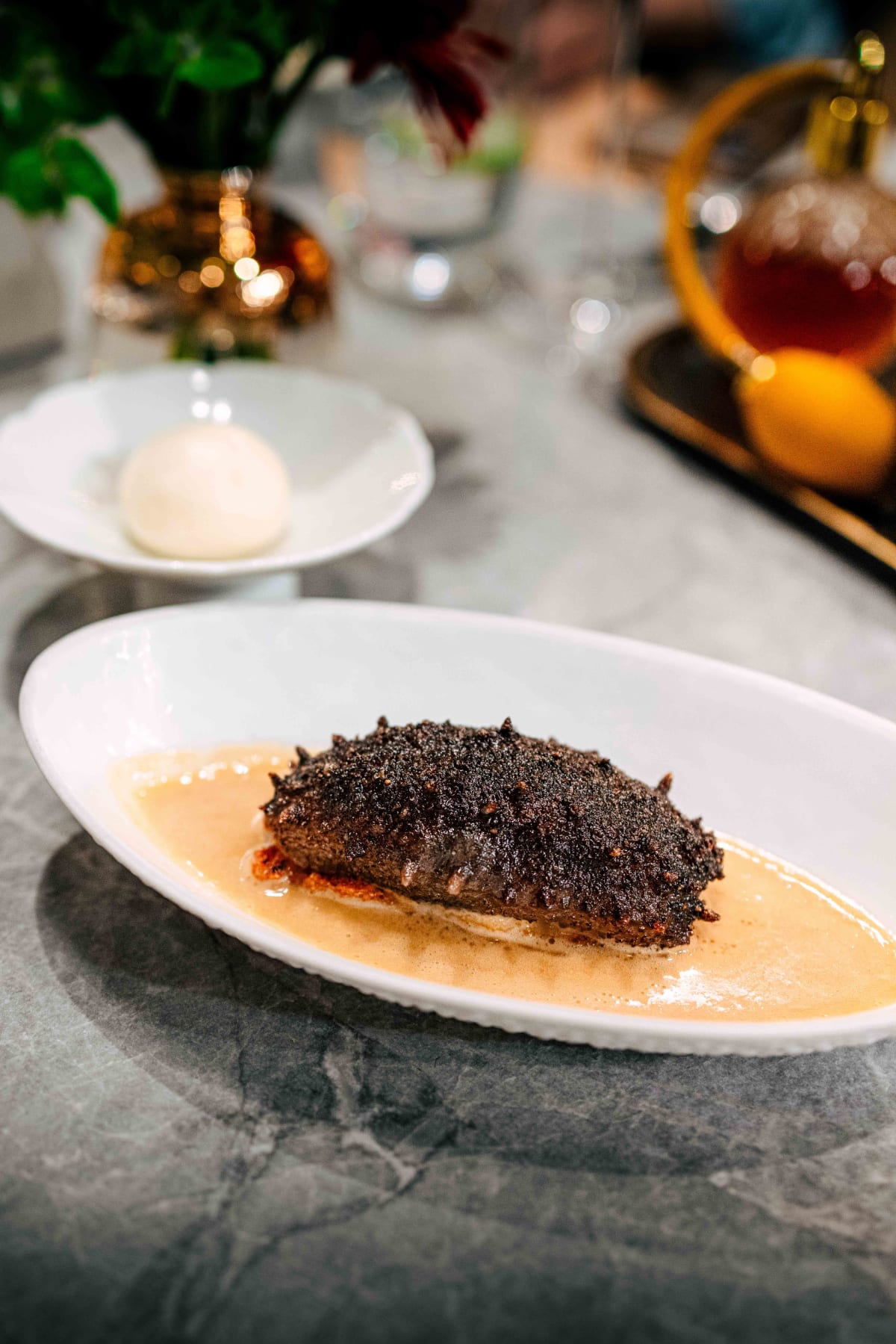
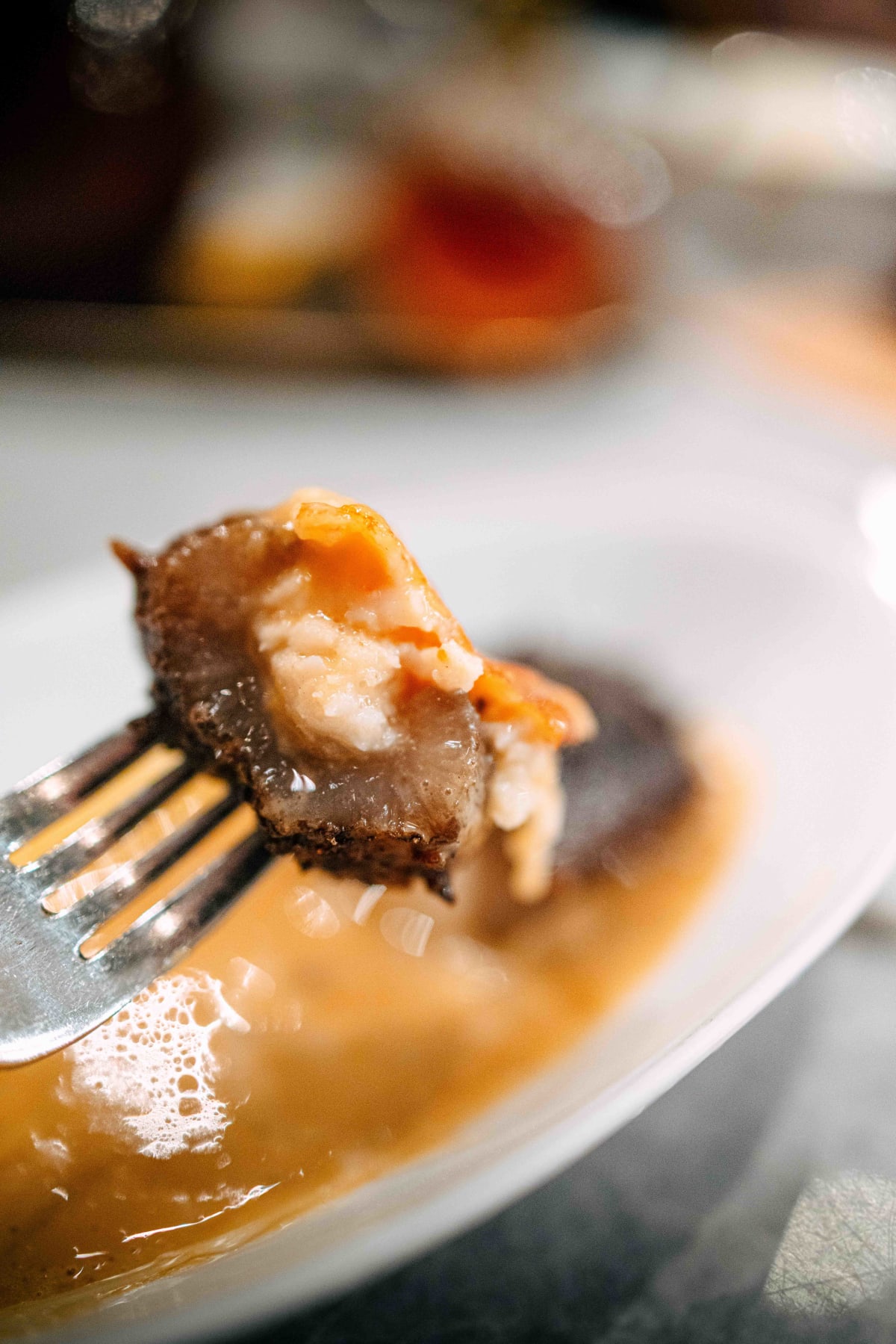
This dish felt like the signature of the restaurant and felt worthy of being one, and they bring out a traditional vinegar and spray it over the plate, which is not brilliant but does put on a bit of a show.
Section 9·Flounder and Fish Maw
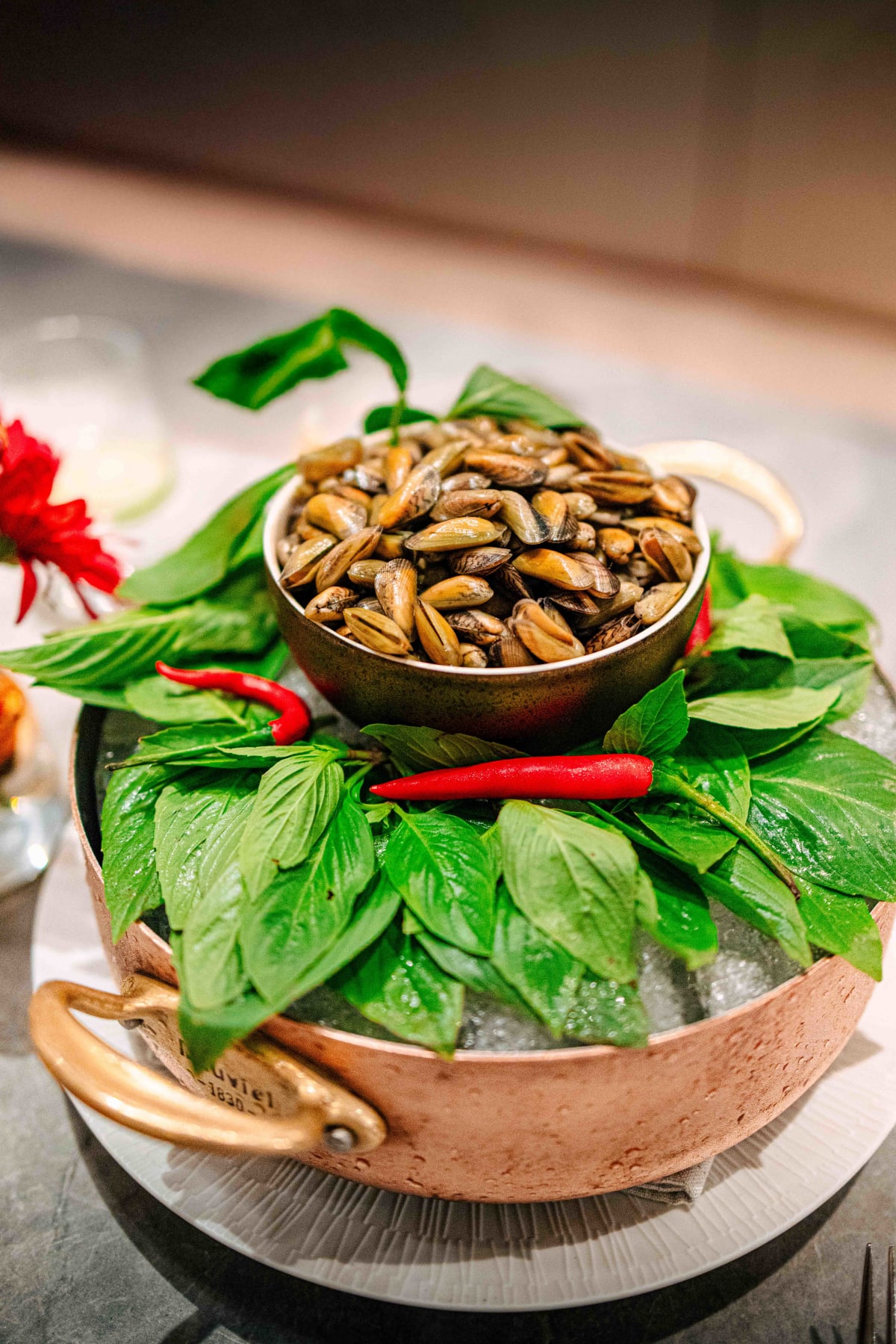
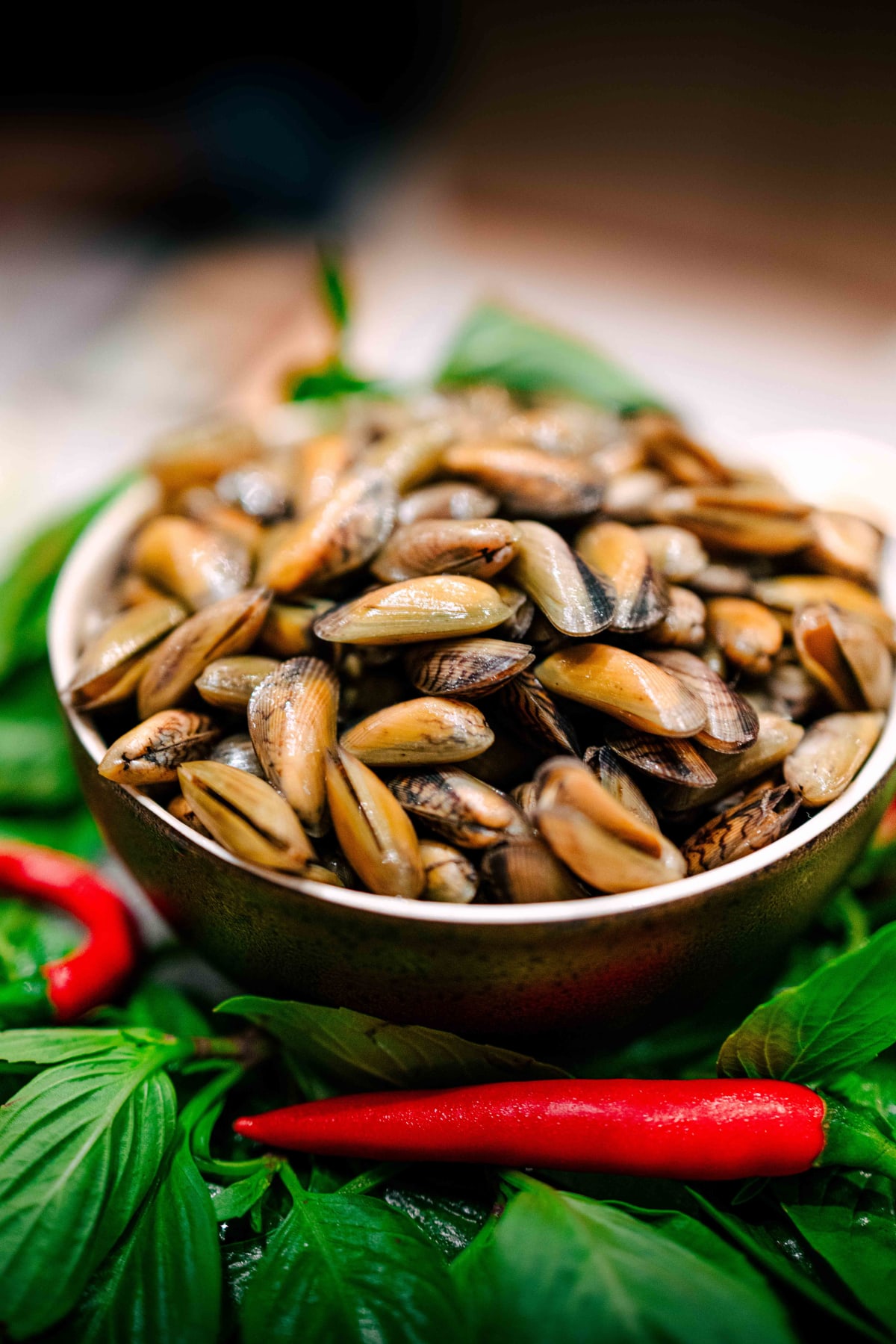
Next came the fish dish, described on the menu as Rough Scale Flounder, Zucchini Flower, Bo-Kak Mussel. Rough scale flounder is a fish of the flatfish family, and unusually they showed us the Bo-Kak Mussel. It was a small shellfish rather like our jecheop clam, and they served it together with the fish and fried zucchini flower.
The texture and taste of the fish were very good.
In the French manner the ingredients worked well together.
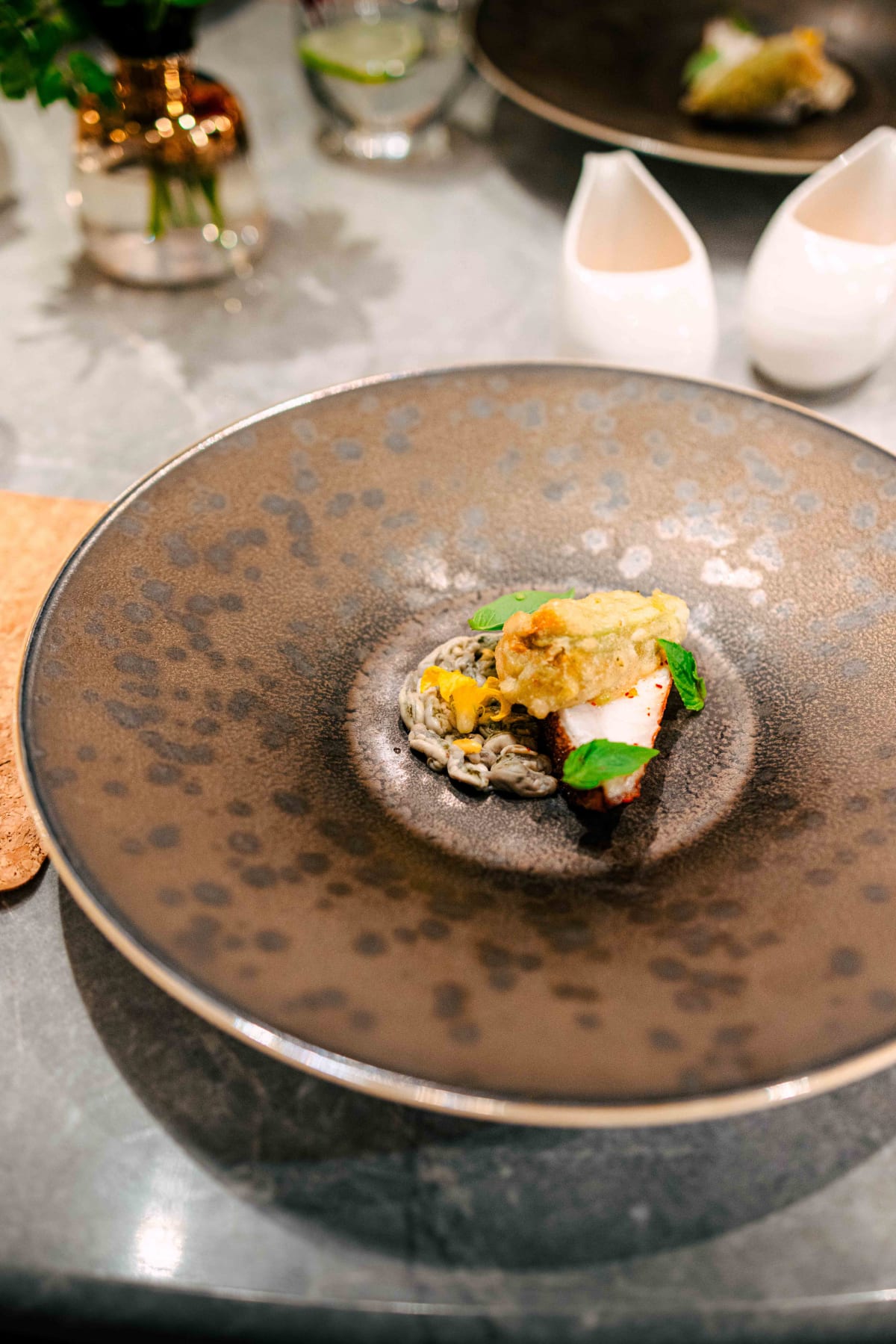
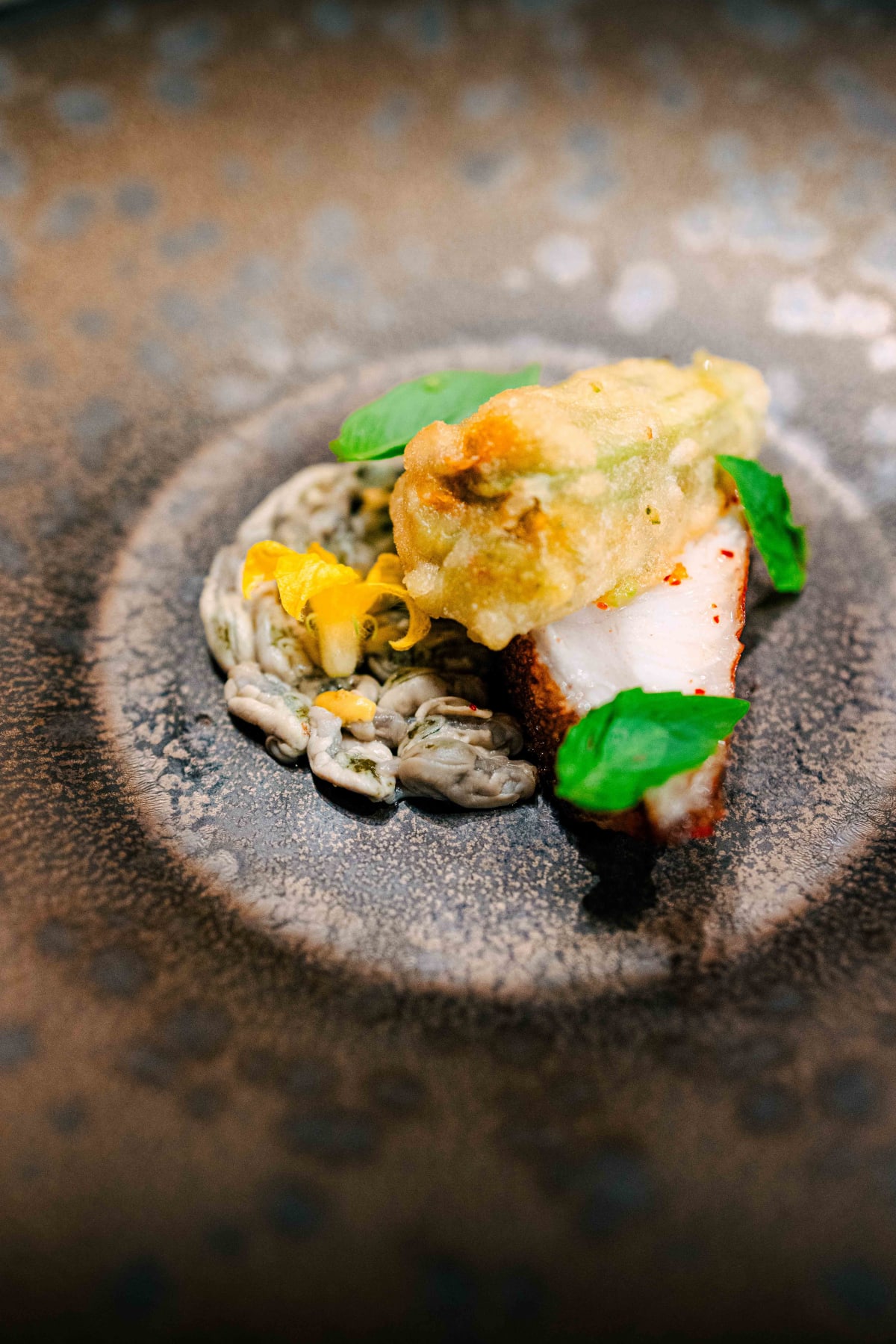
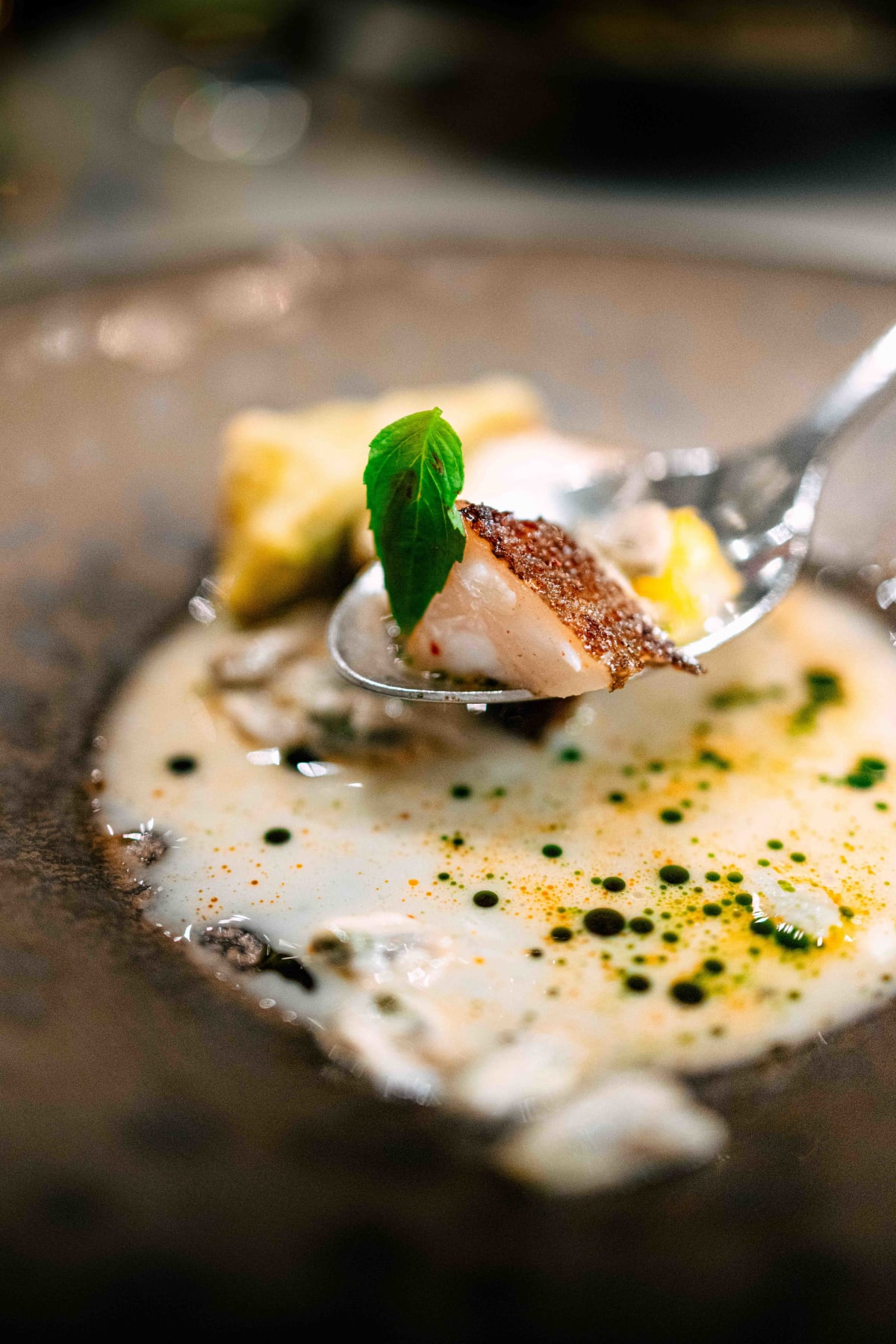
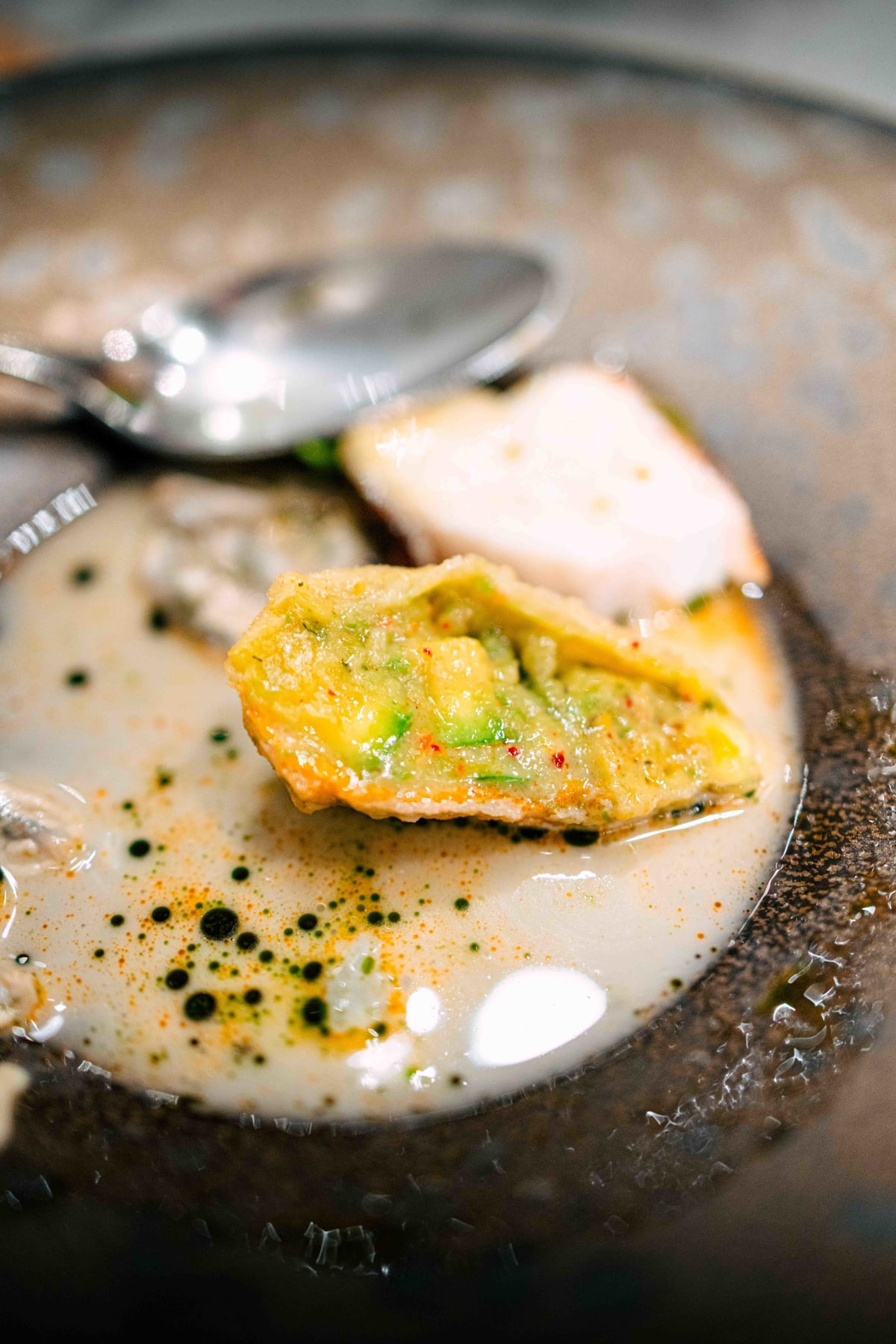
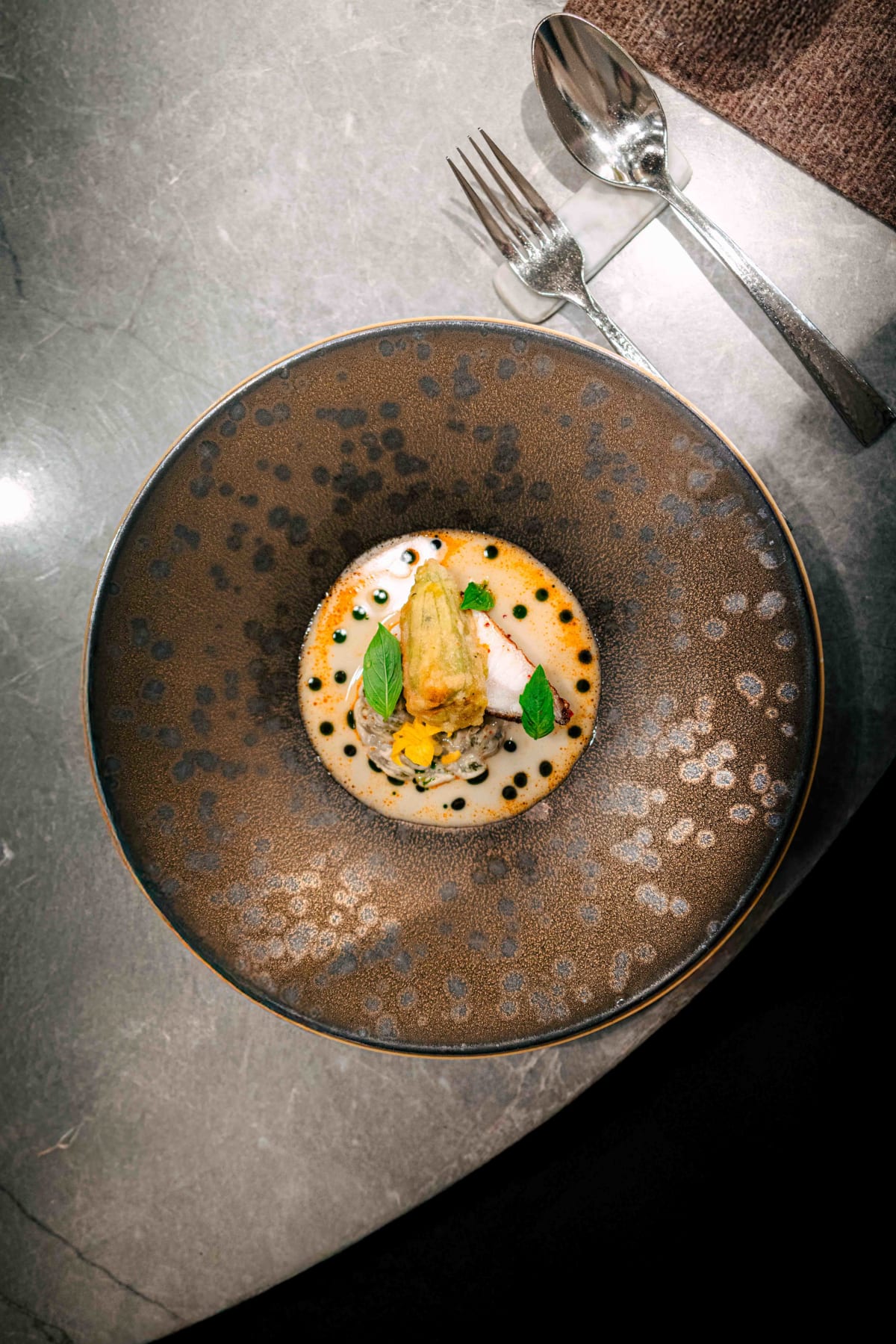
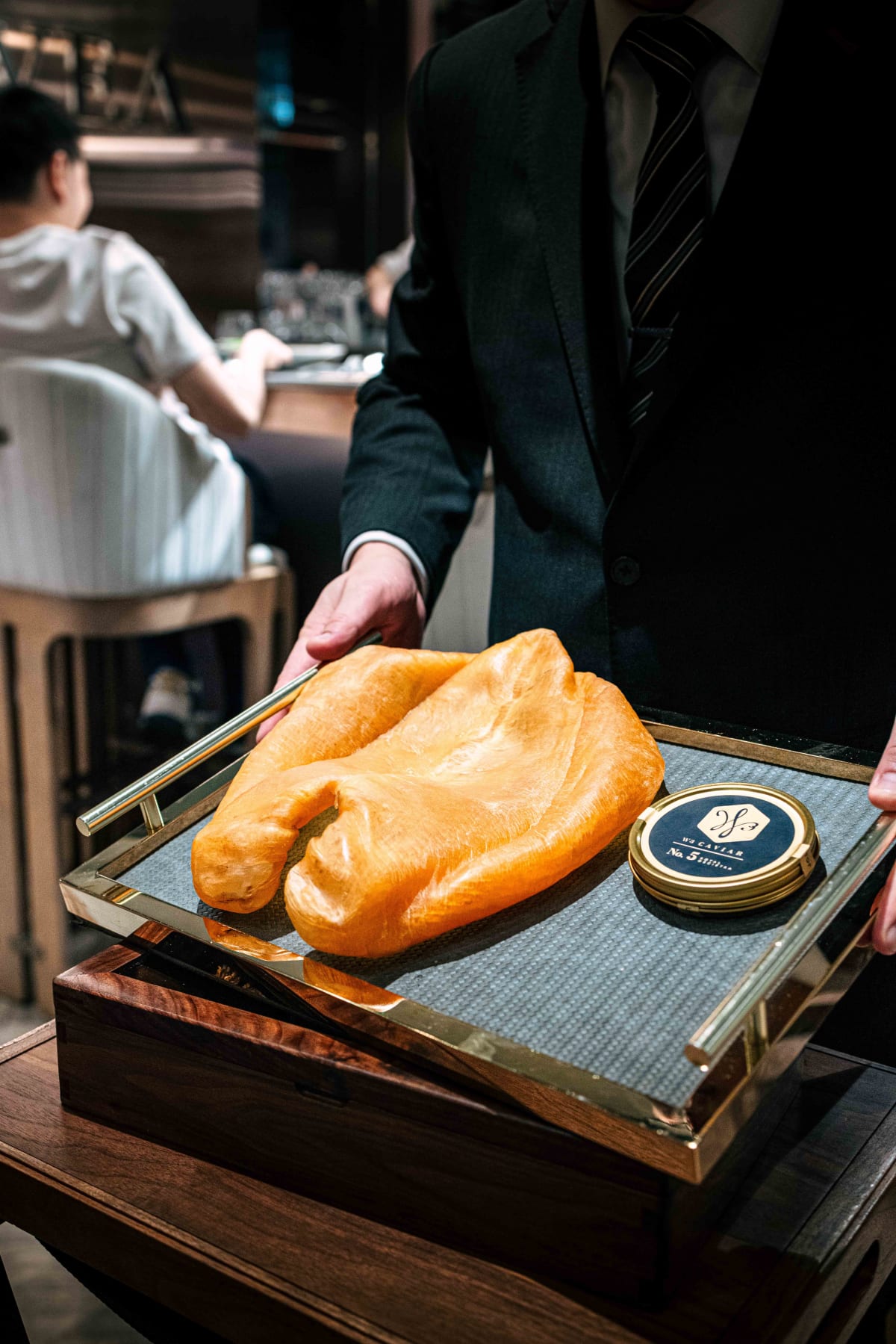
This was the first fork in the course. The other option was Fish Maw at a supplement of HKD 1,280, a fish maw dish served with Osietra caviar and quinoa. Fish maw is the ingredient Vicky Cheng dug into first at the dried seafood shops of Wellington Street, and it is one of his signatures.
Section 10·The Preserved Apricot
After this a sorbet came briefly like a small dessert, and a prune flavoured jelly, the sort they say is eaten almost as medicine in China, came as a palate cleanser, and this too seemed like nothing much but was delicious.
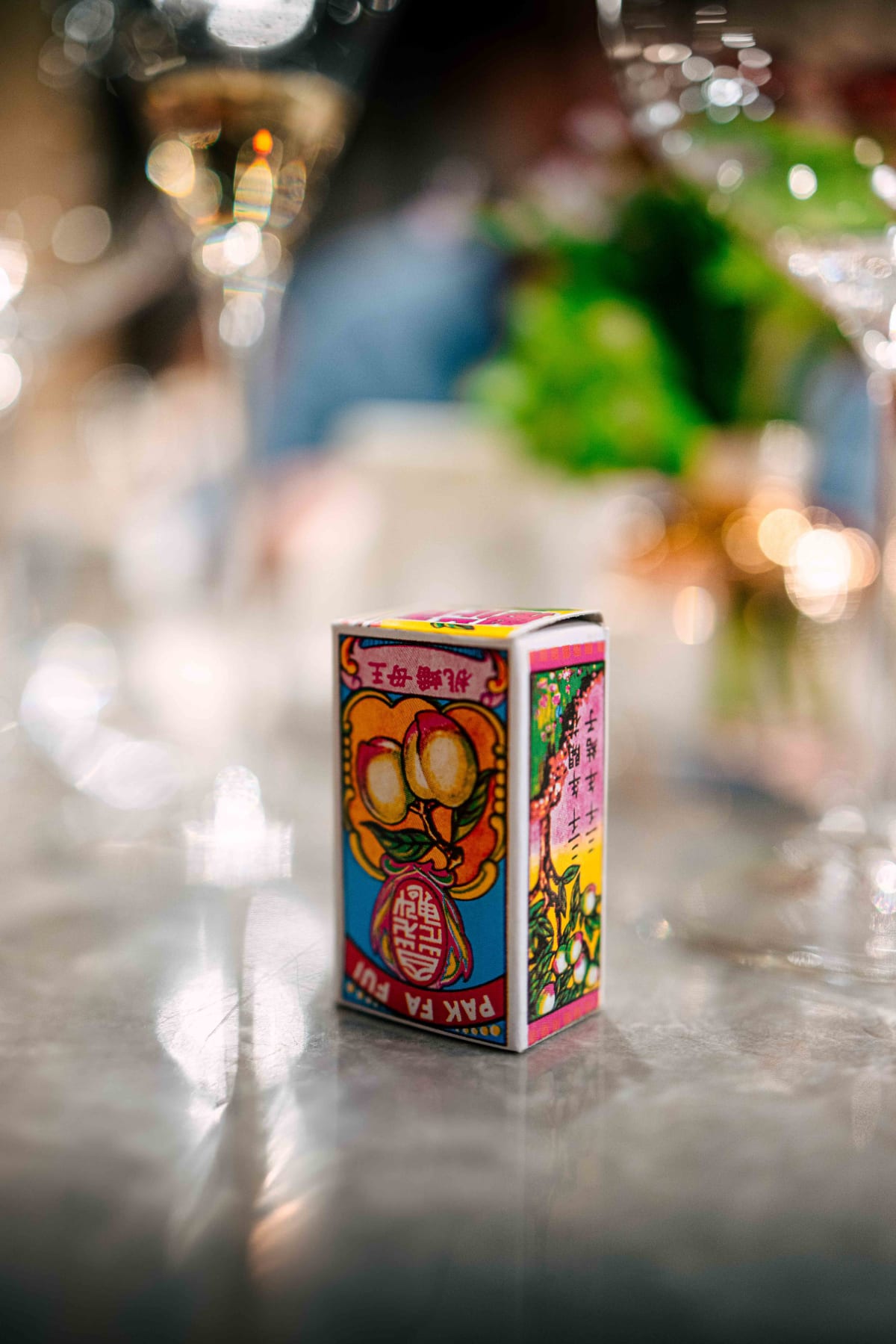
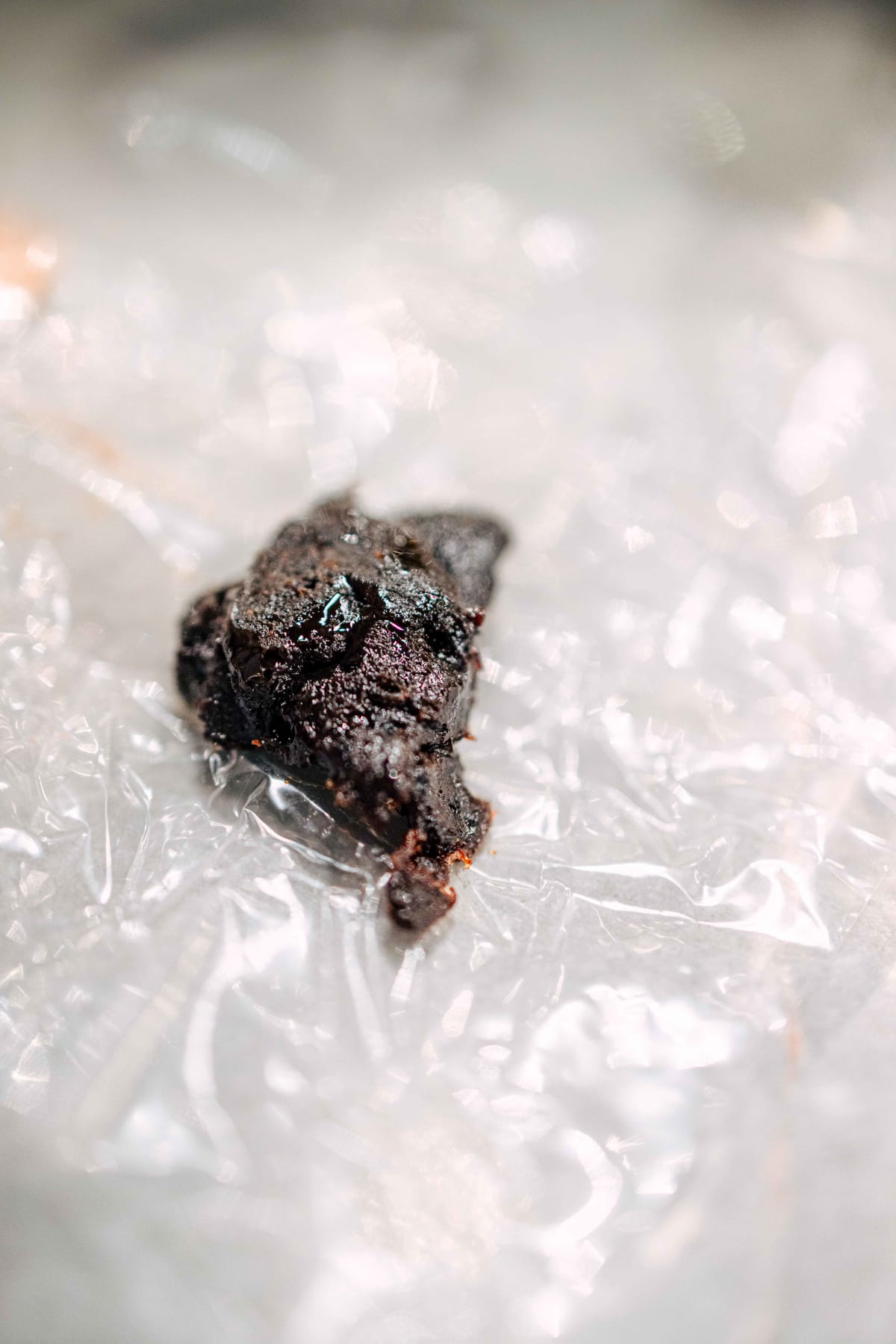
Looking again later at that little matchbox sized package, it was not prune but apricot. It is the Wong Mo Pun To fruit (王母蟠桃果) made by Pak Fa Fui (百花魁), a century old Macau brand, and it is said to be a kind of leung guo (涼果), the Cantonese and Macanese preserved confection made by curing fruits like plum, apricot and Chinese olive with salt, licorice and dried mandarin peel and drying them.
So the line about eating it as medicine was not entirely without basis, since licorice and dried mandarin peel do go into it. The Wong Mo Pun To of the name refers to the peach of the Queen Mother of the West, the immortals' fruit said to bear once every three thousand years, and the phrase appears on the side of the box, which the Hong Kong gourmand Chua Lam (蔡瀾) is known to have named as one of the things to eat before you die. Above all it was very interesting that they put it on the table in its own colourful box rather than transferring it to a plate.
Section 11·Matsutake Congee
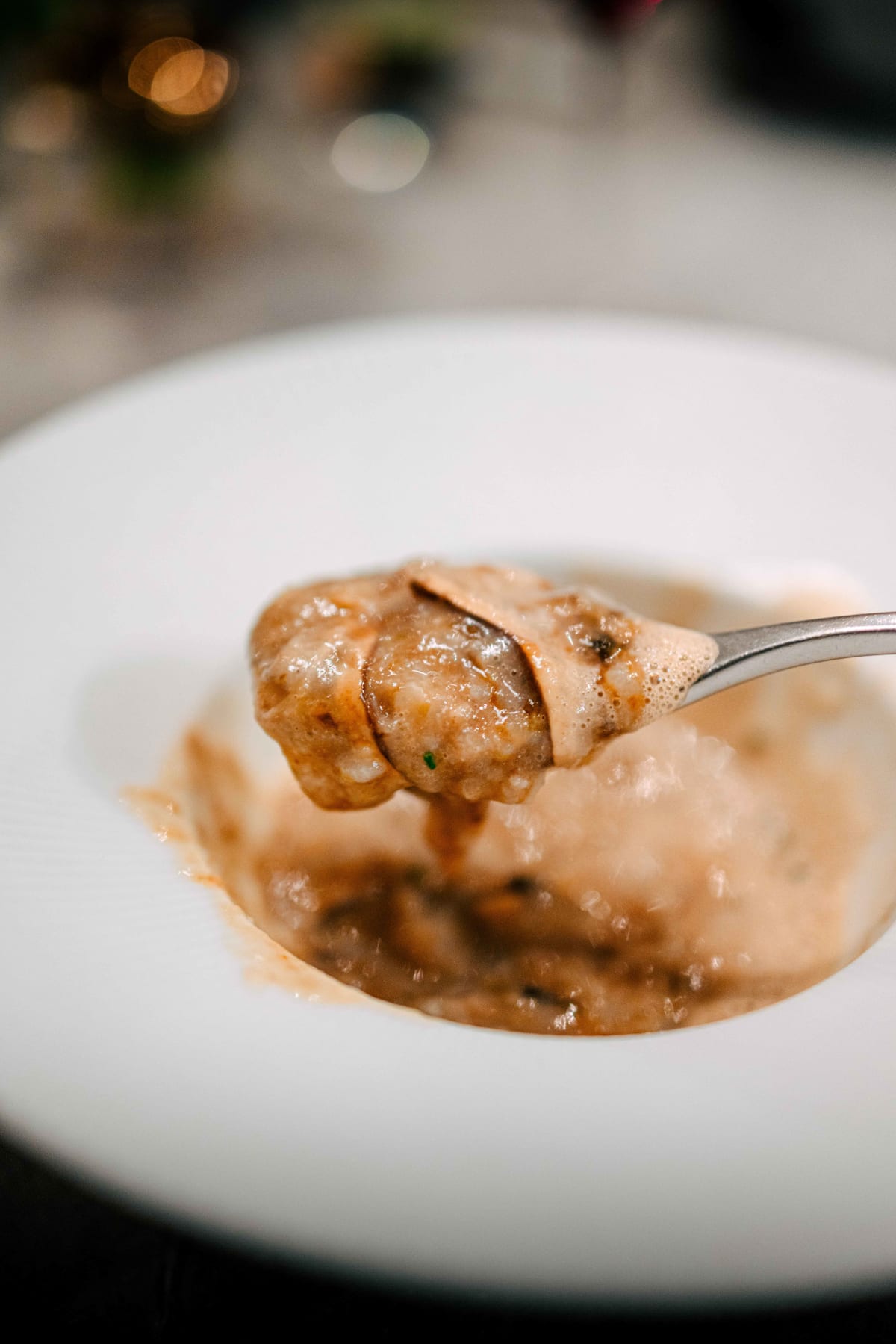
With the main still ahead of us at VEA, one soup came before it, listed as Matsutake with Termite Mushroom and Congee underneath. It was a soup expressing congee, the representative local food of Hong Kong, using matsutake and termite mushroom. I had thought it was just a soup, but this was seriously delicious.
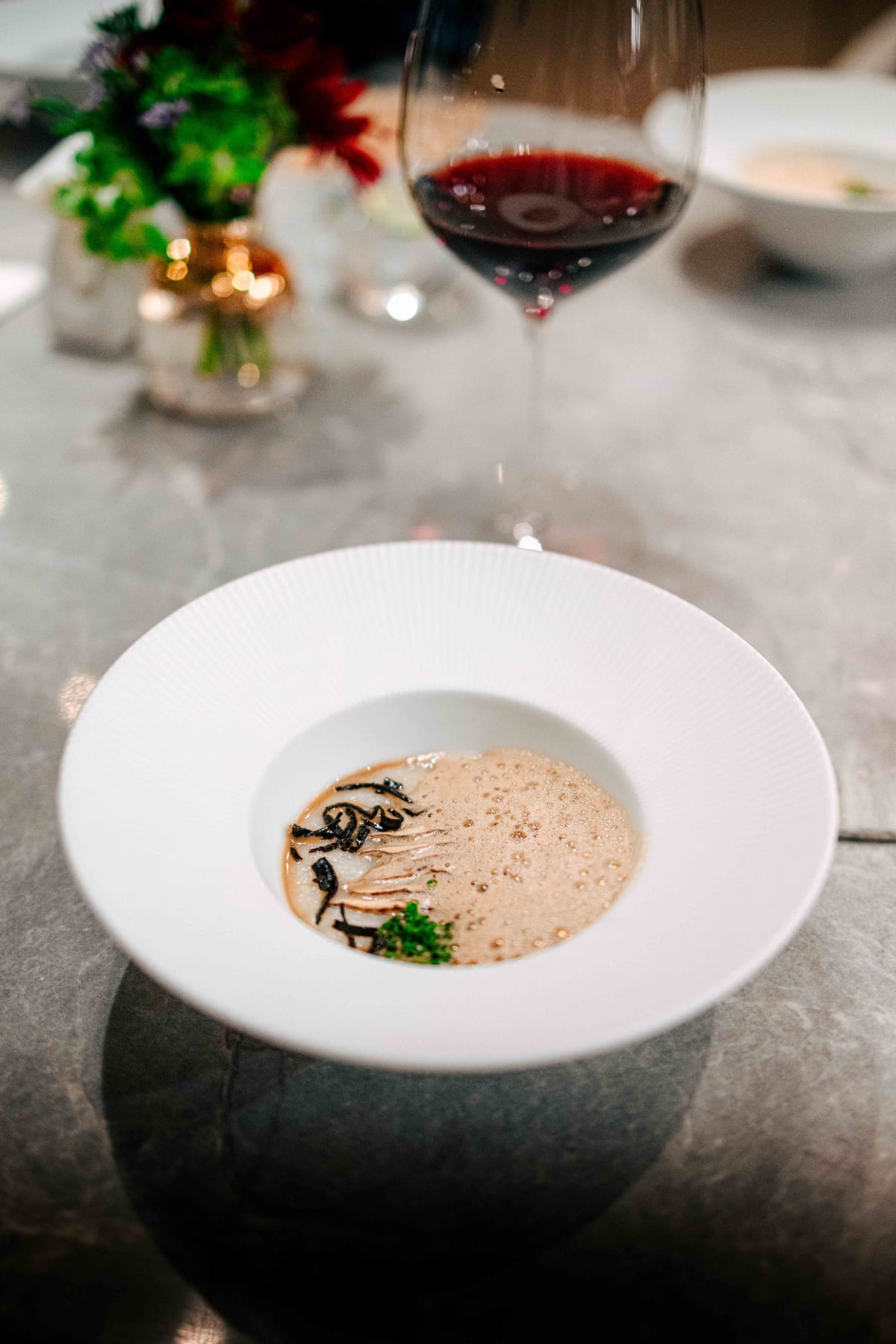
Not only the texture of the mushrooms but their aroma hits the mouth and the nose hard enough that I found myself wanting it every morning. Vicky Cheng's ideas about fusing different genres look good, but I felt his skill at drawing out an intuitive flavour is excellent too.
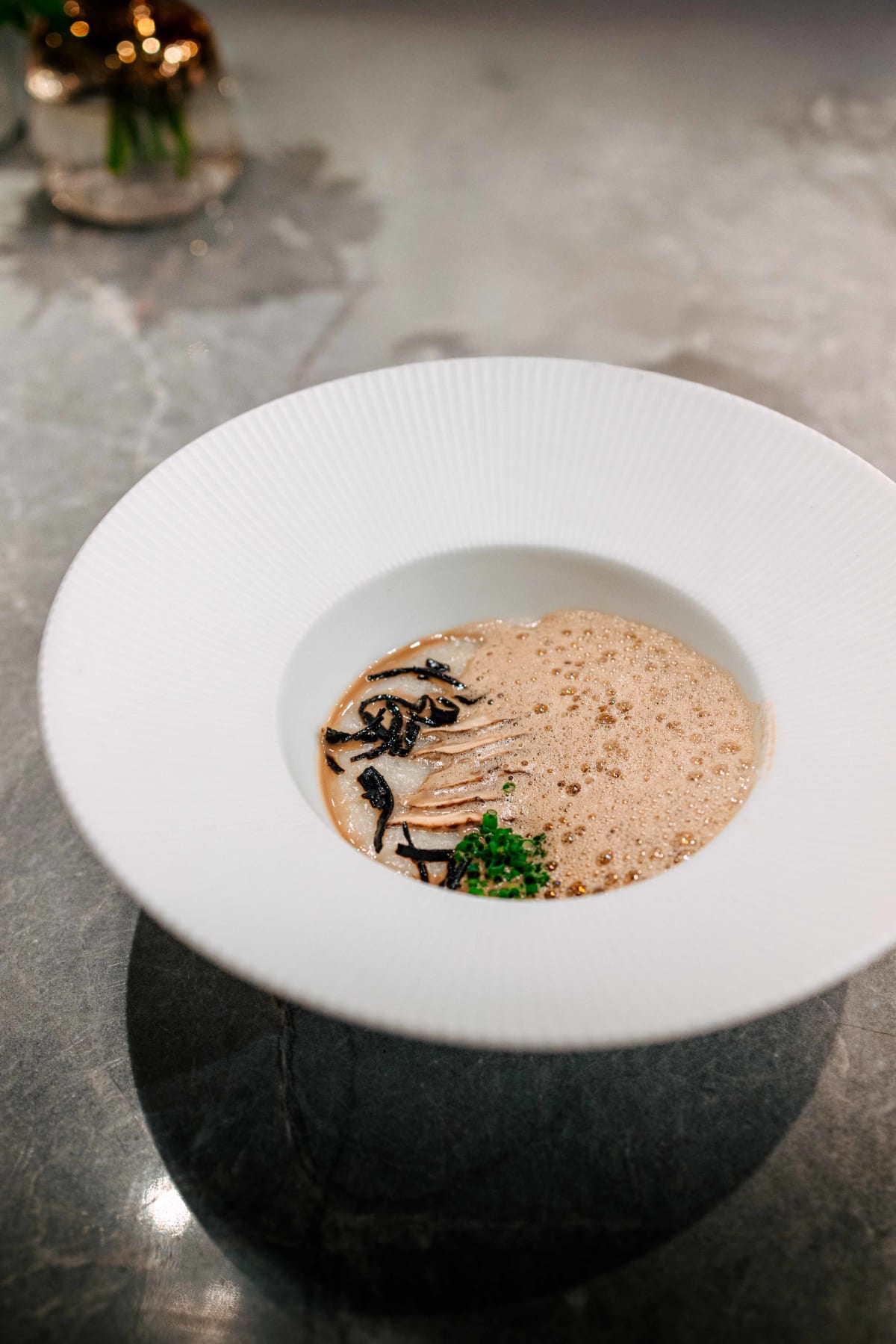
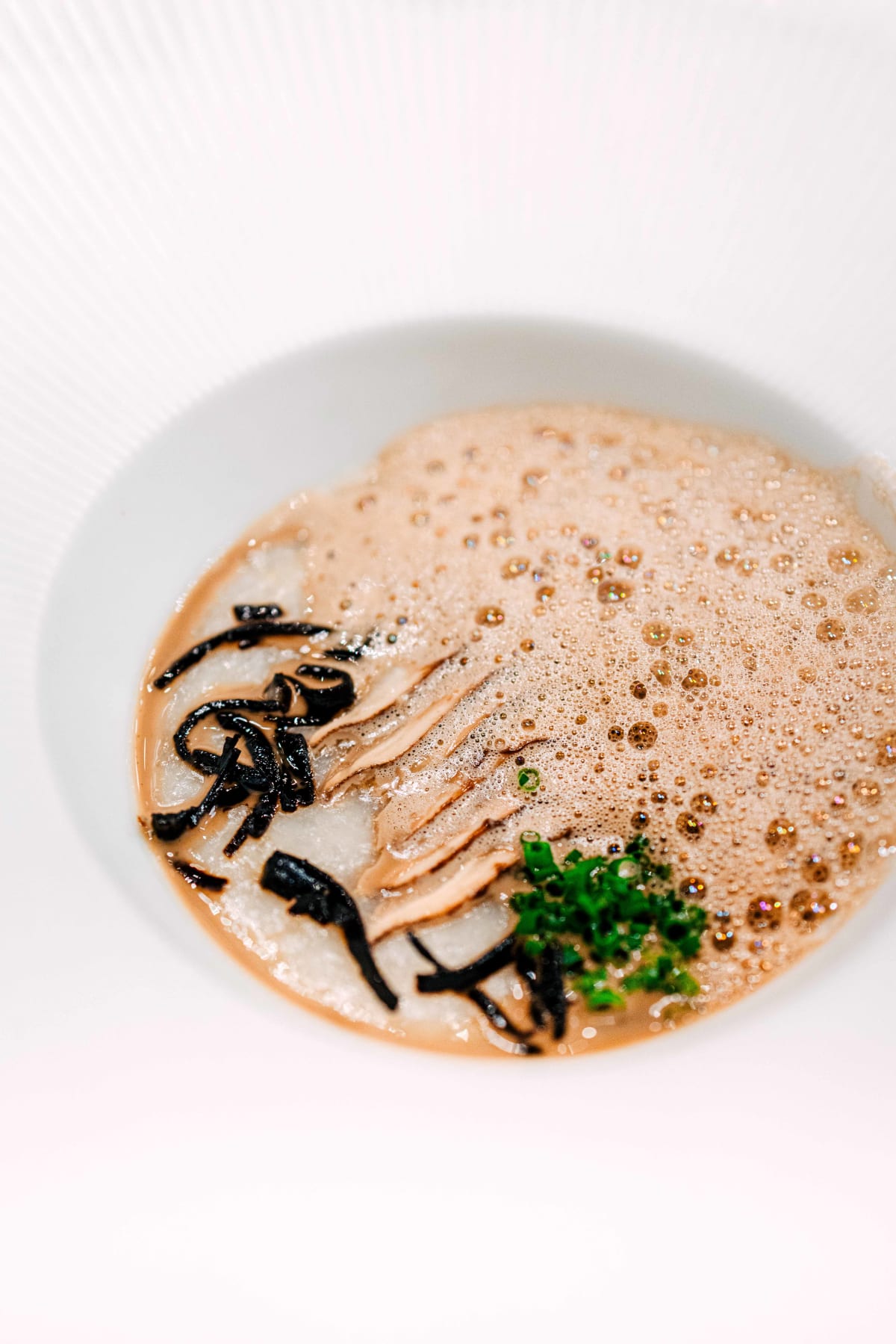
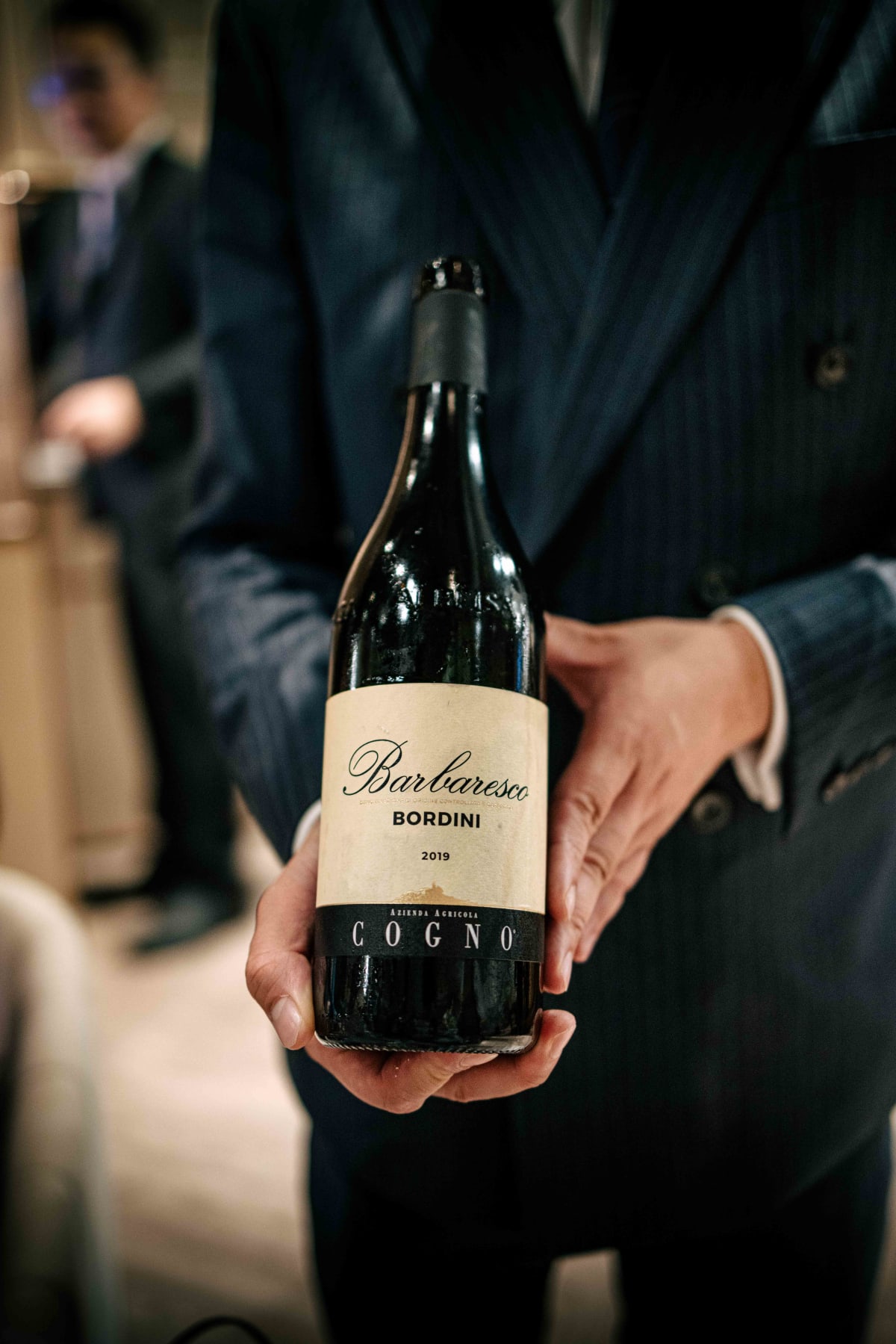
Facing this congee I ordered a glass of red wine, the Barbaresco Bordini 2019 from Elvio Cogno. Cogno is originally a Barolo producer. Elvio Cogno wound up a long partnership in 1990 and bought his own land on the Ravera hill in Novello, and his daughter Nadia Cogno and her husband Valter Fissore lead the estate now. The one Barbaresco that such a Barolo house makes is this Bordini, one hundred percent Nebbiolo from a single vineyard of about two hectares in the village of Neive, raised in large Slavonian oak. Barbaresco from Neive tends to be described as broader in frame than in perfume, and in front of this plate, with its strong aroma of matsutake and termite mushroom, that character sat well enough.
They kept topping up the tea throughout.
Section 12·The Pithivier
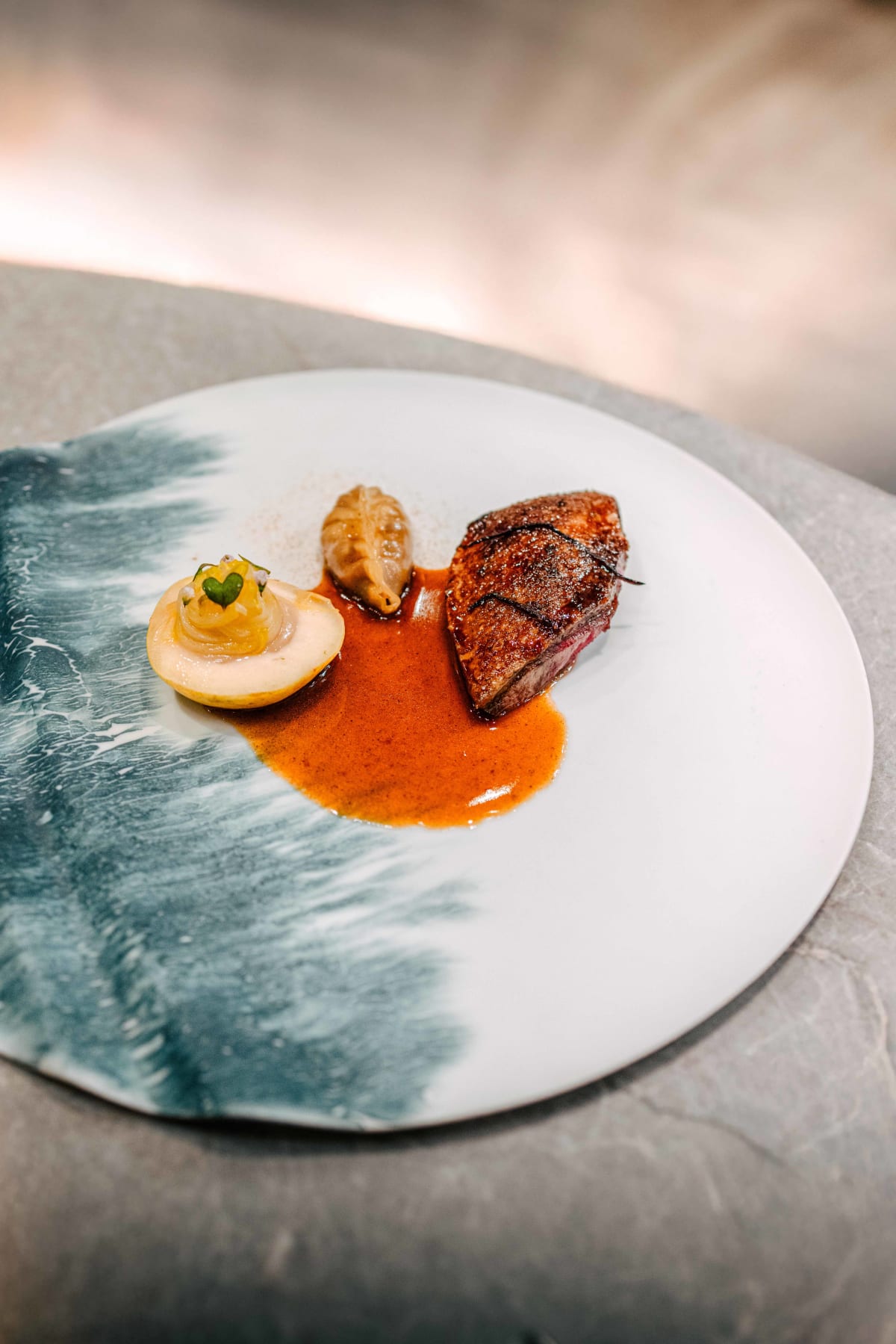
WING is delicious, but just as I was thinking VEA is every bit as fine a place, the main that arrived was a little disappointing that day.
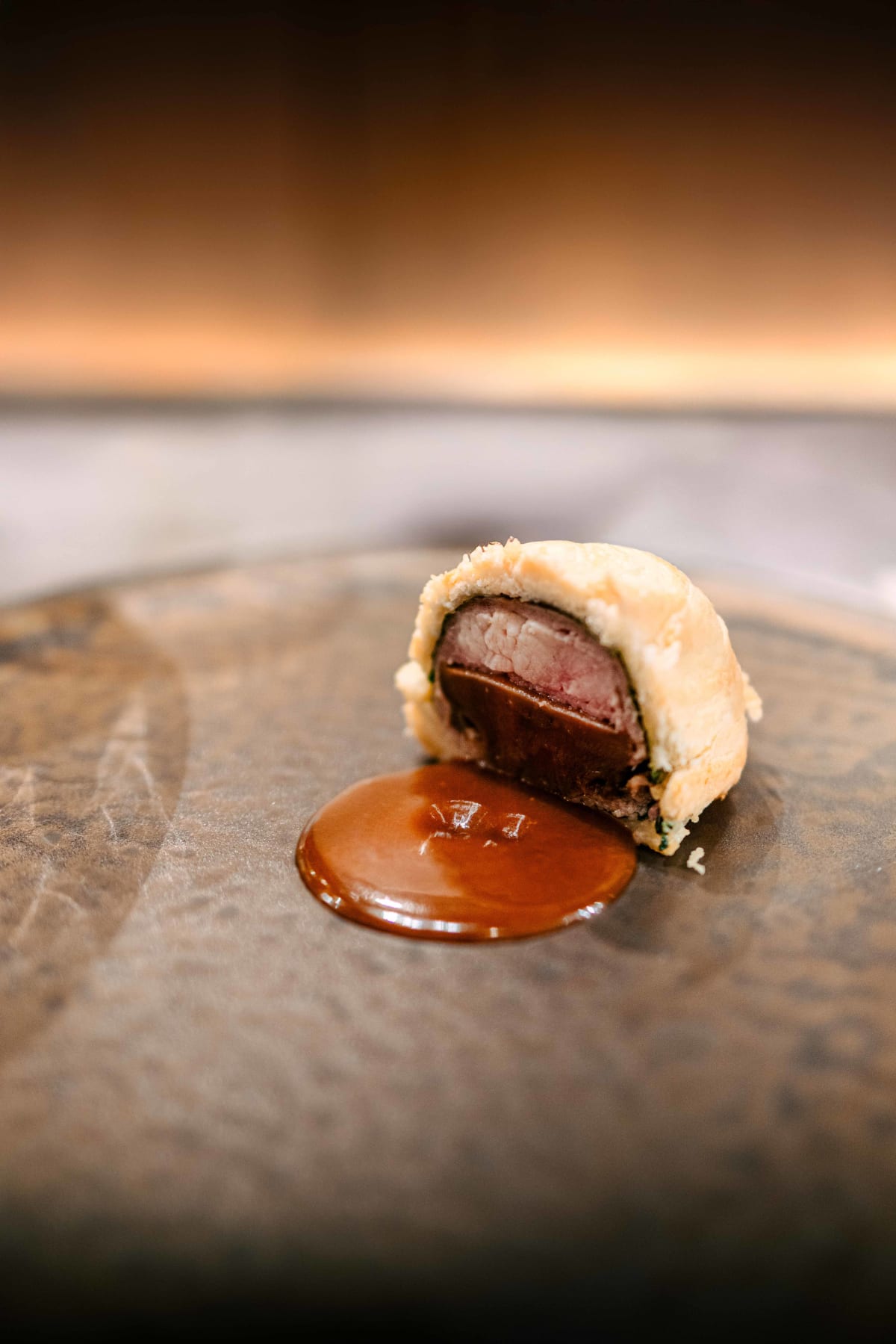
At this point two of us ordered the pigeon and the other two paid a supplement of more than USD 75 per person for the dried abalone and sweetbread, and whether it was that it did not suit my palate, the taste struck me as rather difficult.
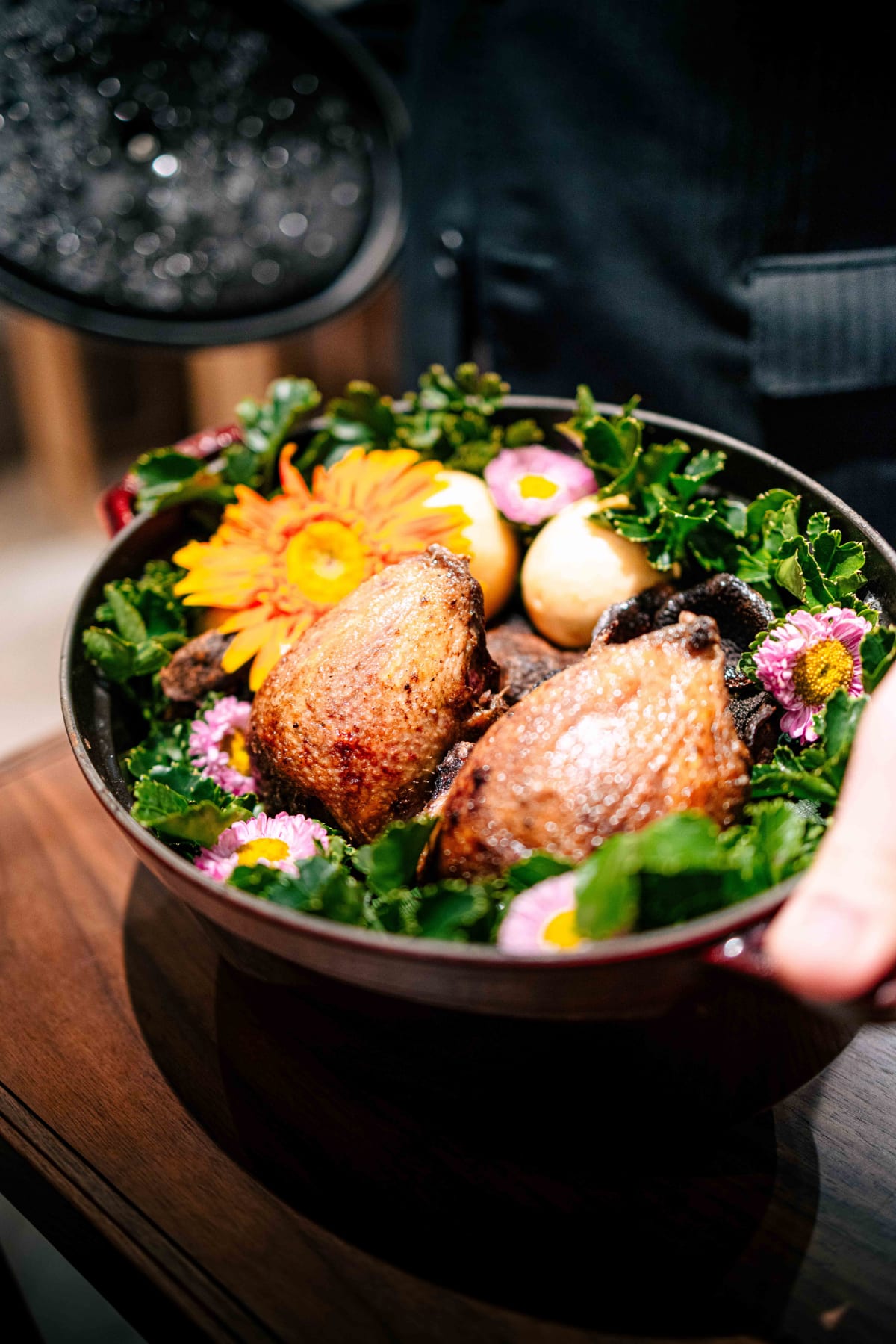
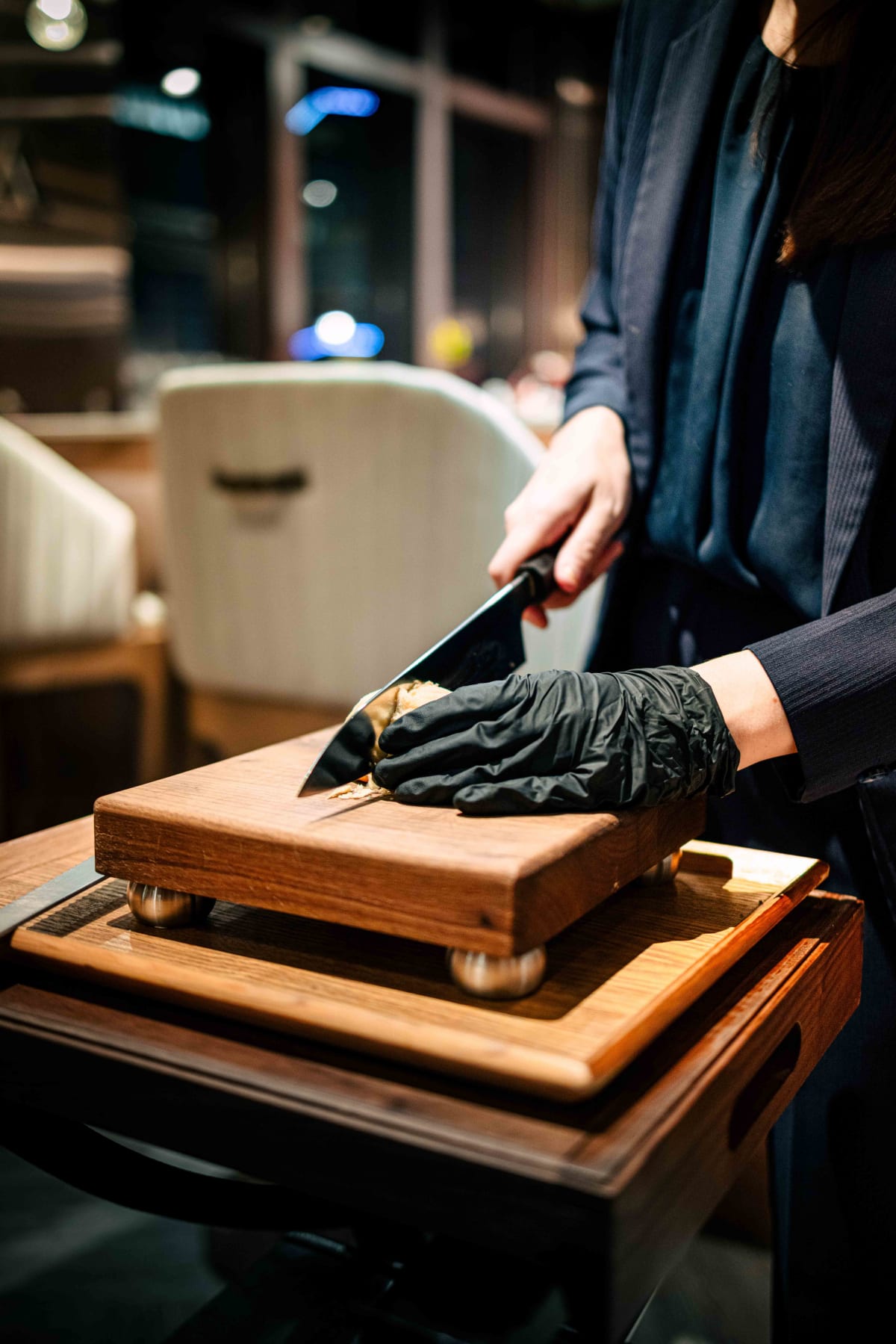
The pigeon dish was Racan Pigeon with Guava and Aged Mandarin Peel, and the dried abalone and sweetbread was 28 Head Dried Abalone "Pithivier" (Sweetbread). The supplement attached to the dried abalone and sweetbread was HKD 1,680 for two. The 28 Head in front of the name is a size grade for dried abalone, meaning twenty-eight pieces to a catty. The smaller the number, the larger the individual abalone and the higher the price.
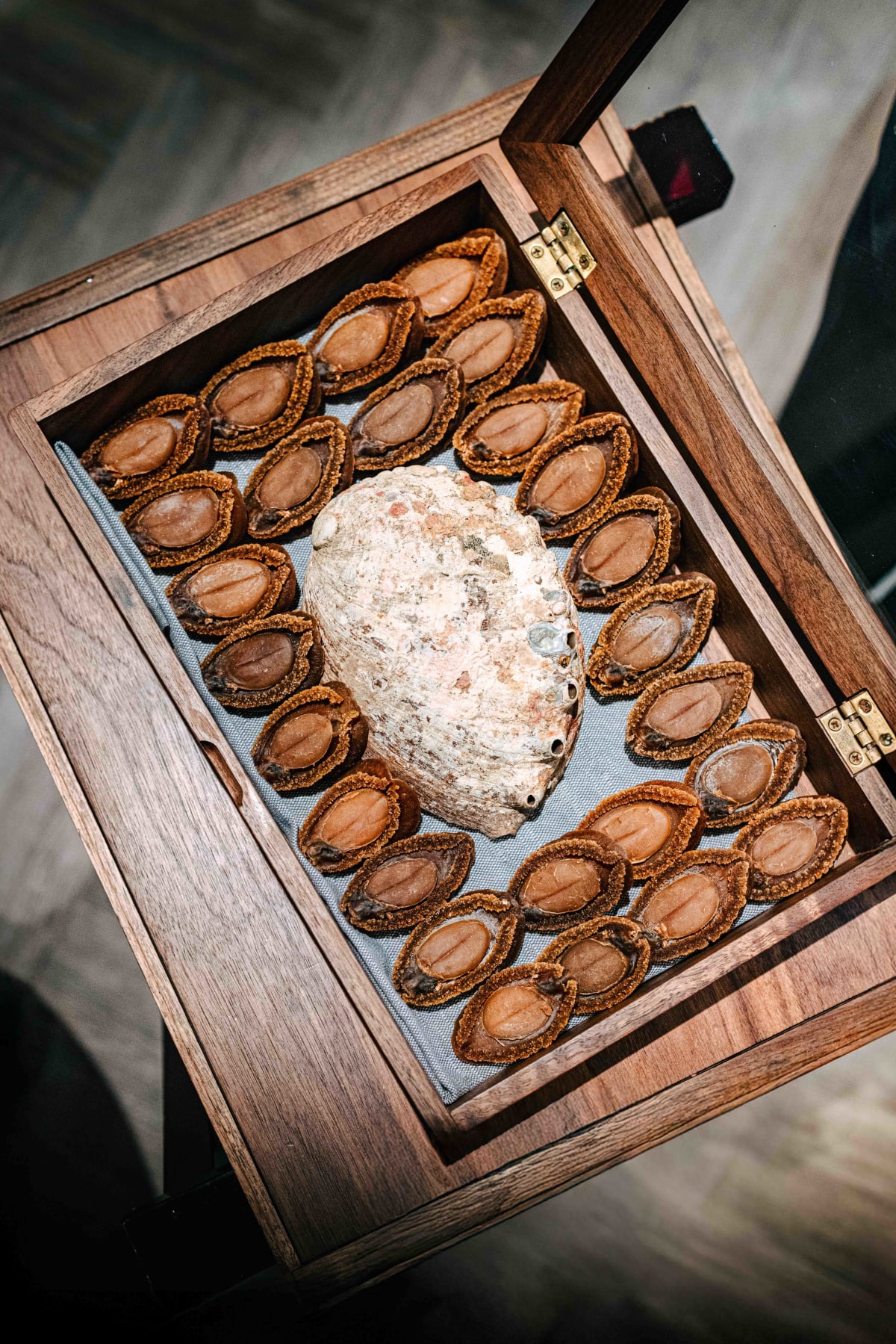
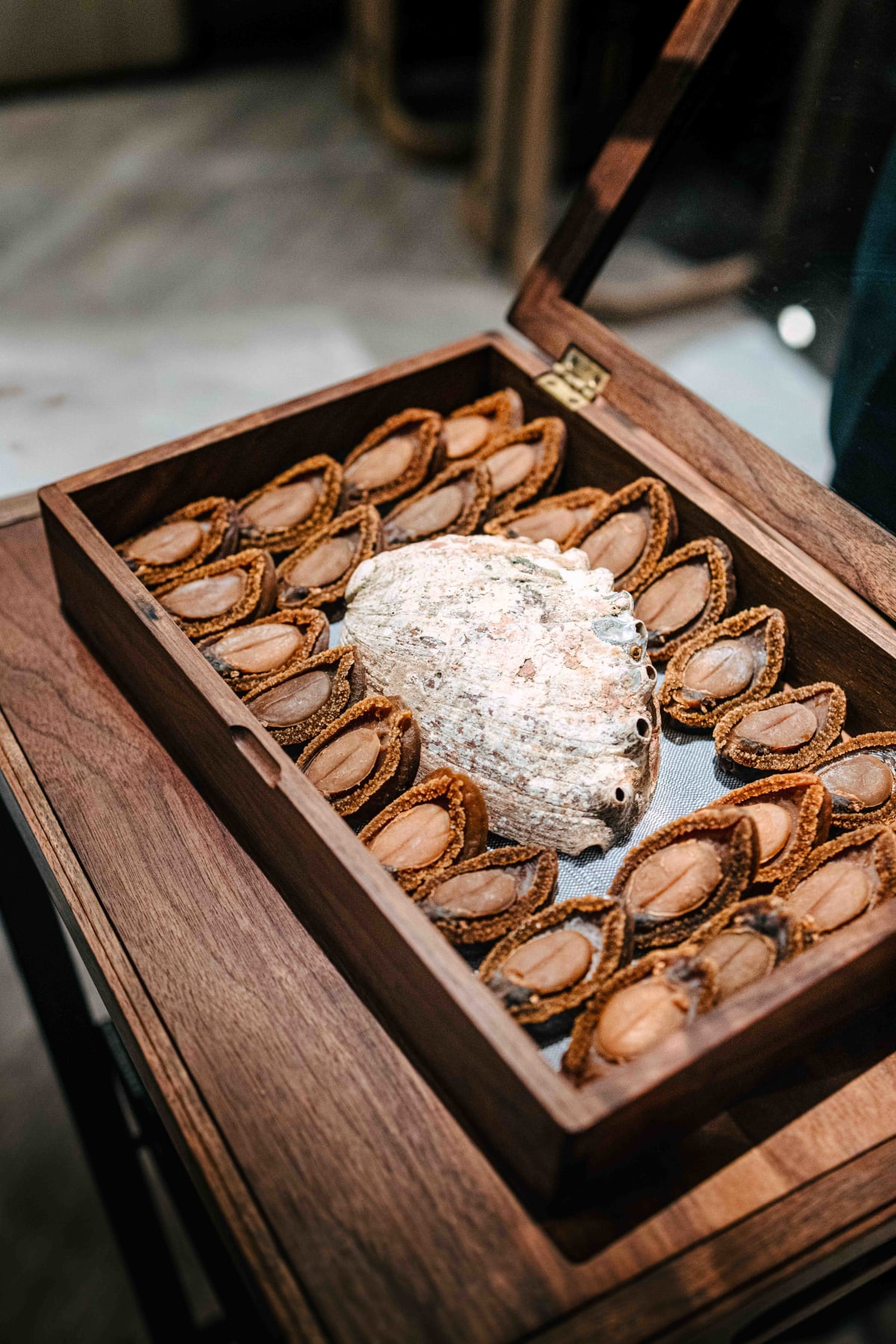
The dish came in the form of a pithivier wrapped in buttery pastry with dried abalone and sweetbread inside, and the sauce and the flavour of the dried abalone were both in a rich style.
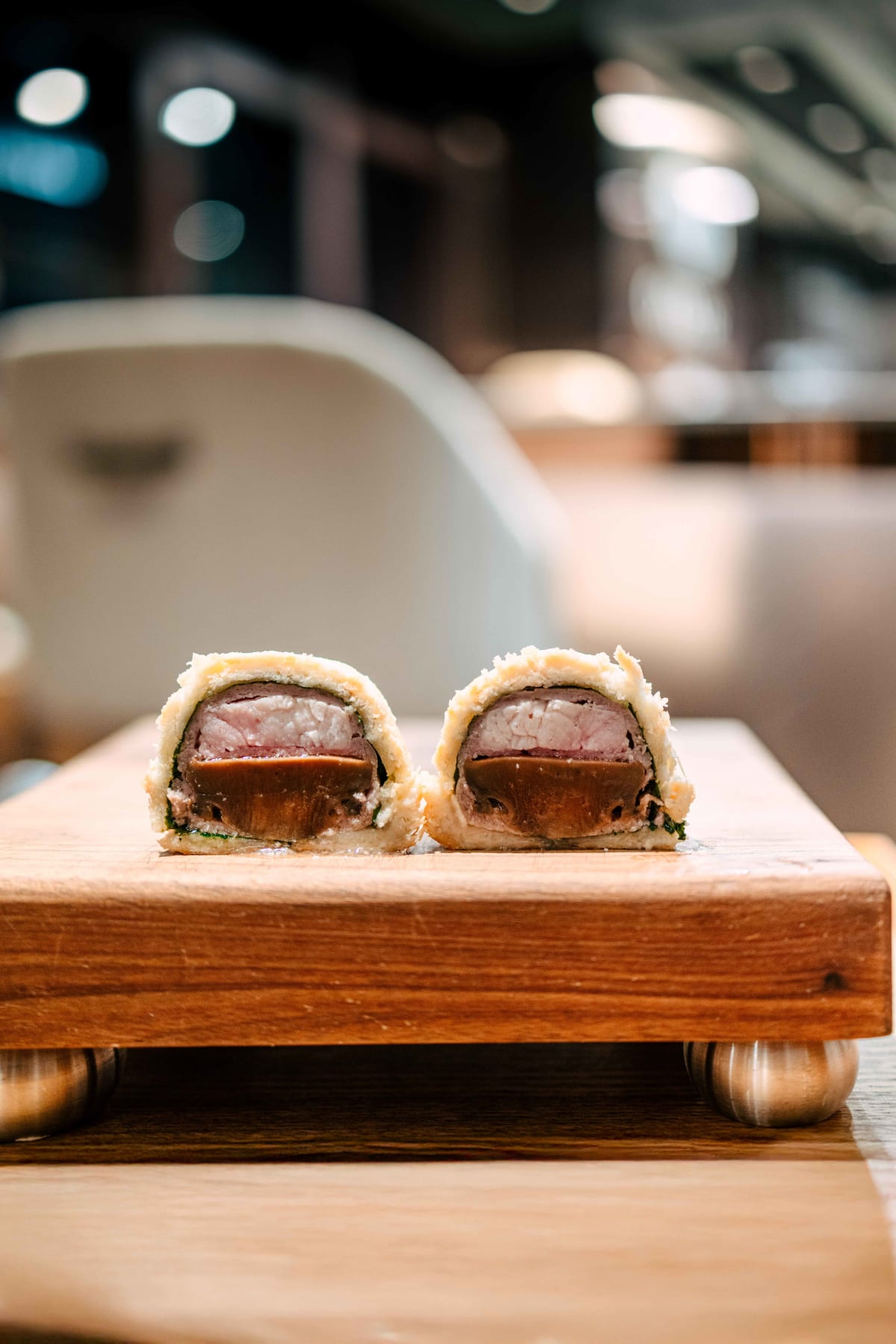
The problem is that the taste and aroma of the sweetbread were buried by that, so that without the explanation you might not know there was sweetbread inside.
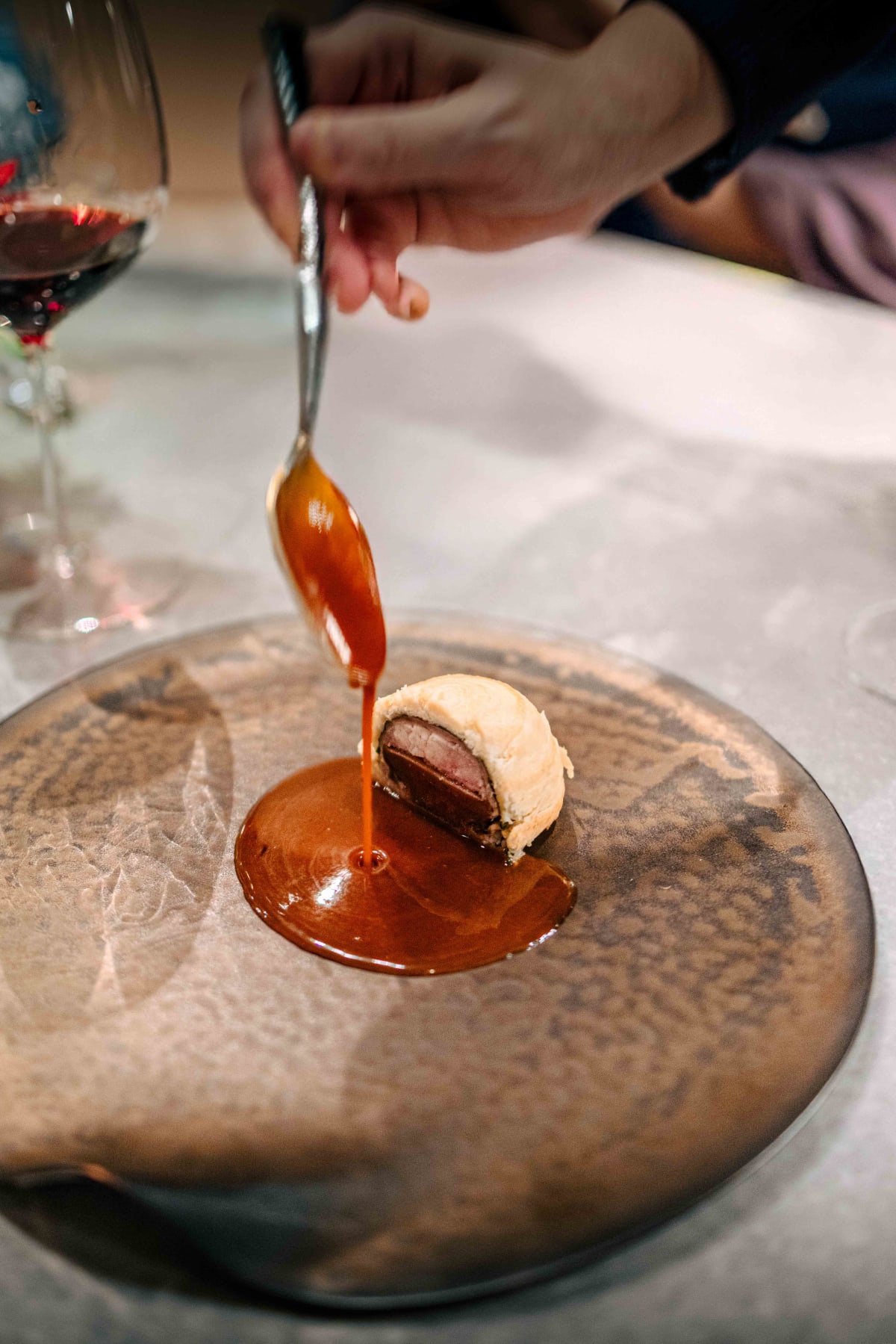
Sweetbread is a really delicious ingredient with character of its own, and I felt this did not bring out that character, and the dried abalone did not sit particularly well with the sauce or the pithivier pastry either. It felt as though they were each going their own way.
I am the sort who tells the manager the food is good when asked, but on this one dish I told him straight.
Section 13·The Desserts
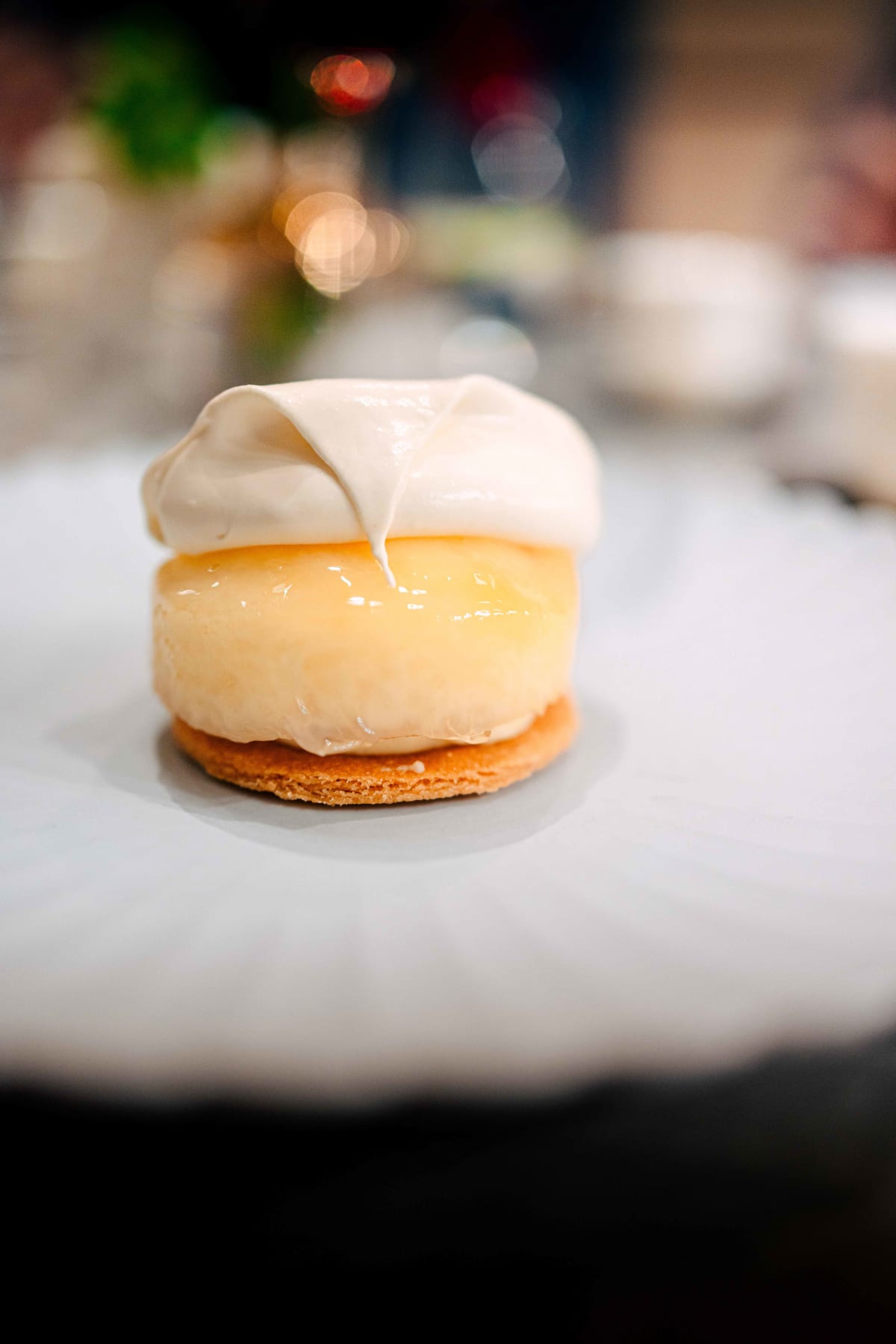
Then came dessert, and thankfully the desserts, in the manner of a French restaurant, were very good. Frankly they were better than the fruit desserts I have eaten at most of the three Michelin star restaurants I have been to in France. The first was Nagano Peach with Jasmine Tea, a dessert of jasmine tea cream over a Japanese Nagano peach.
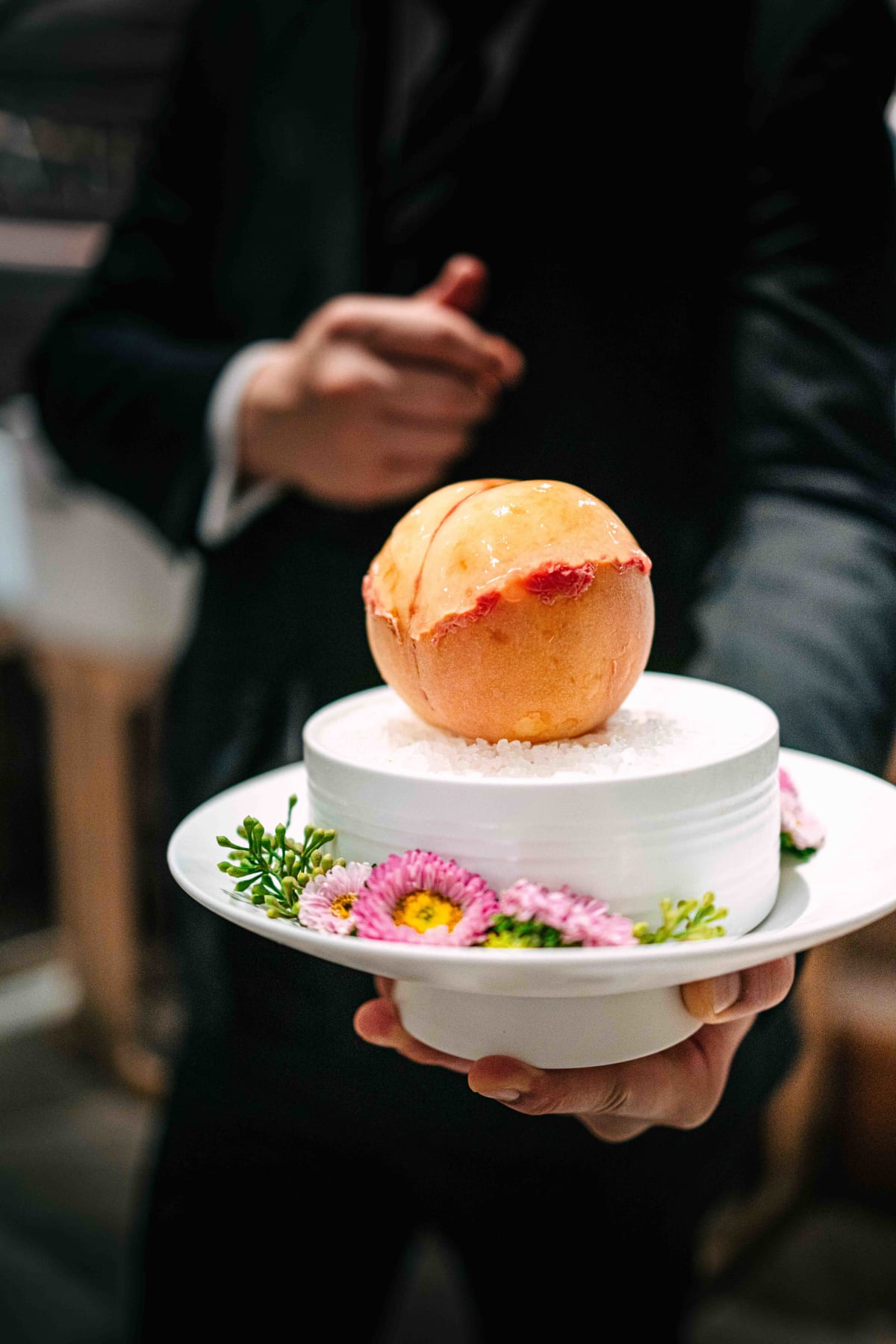
Its match with the cream was excellent, and the sweetness was insane. It was a dessert that overwhelms you with the ingredient itself.
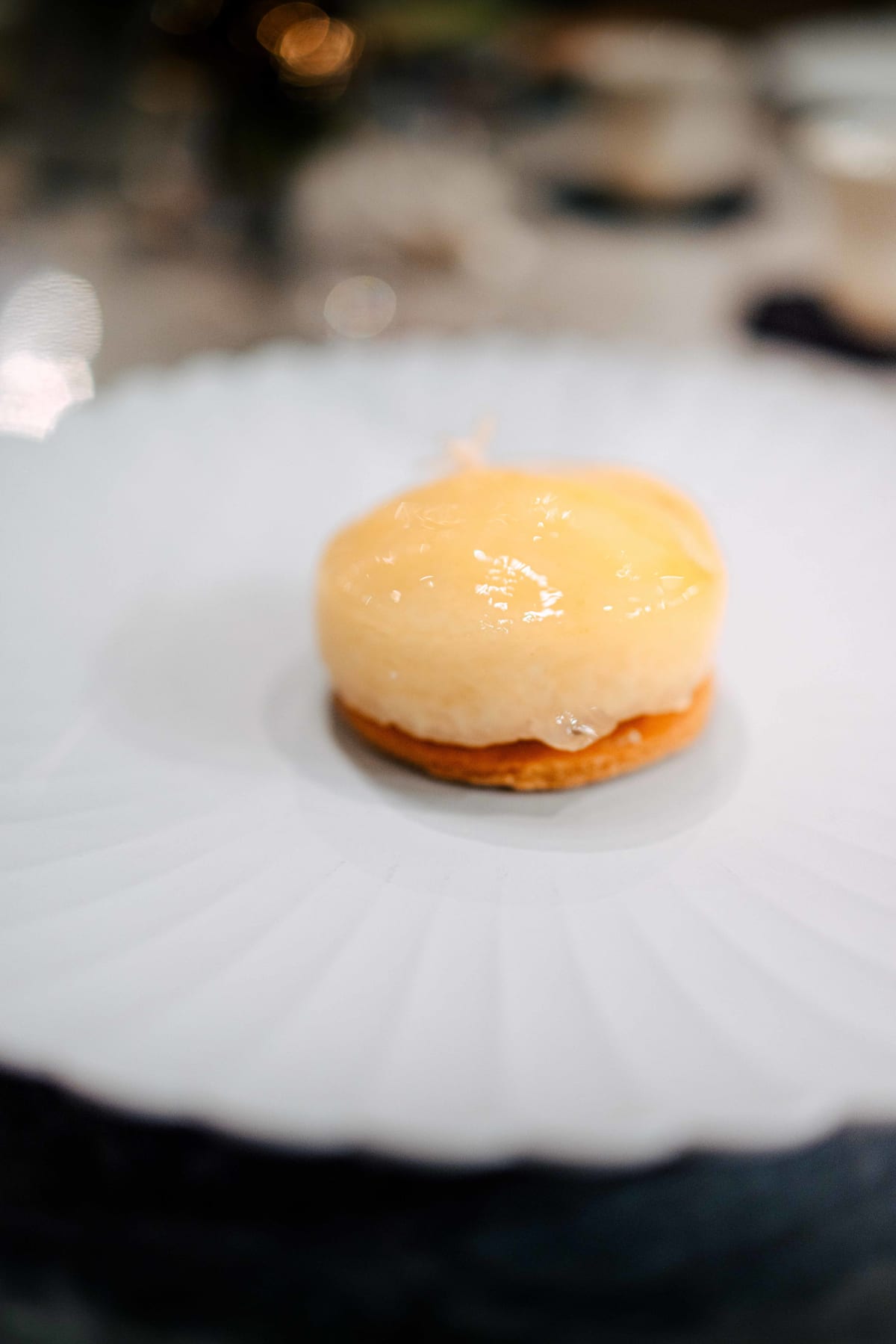
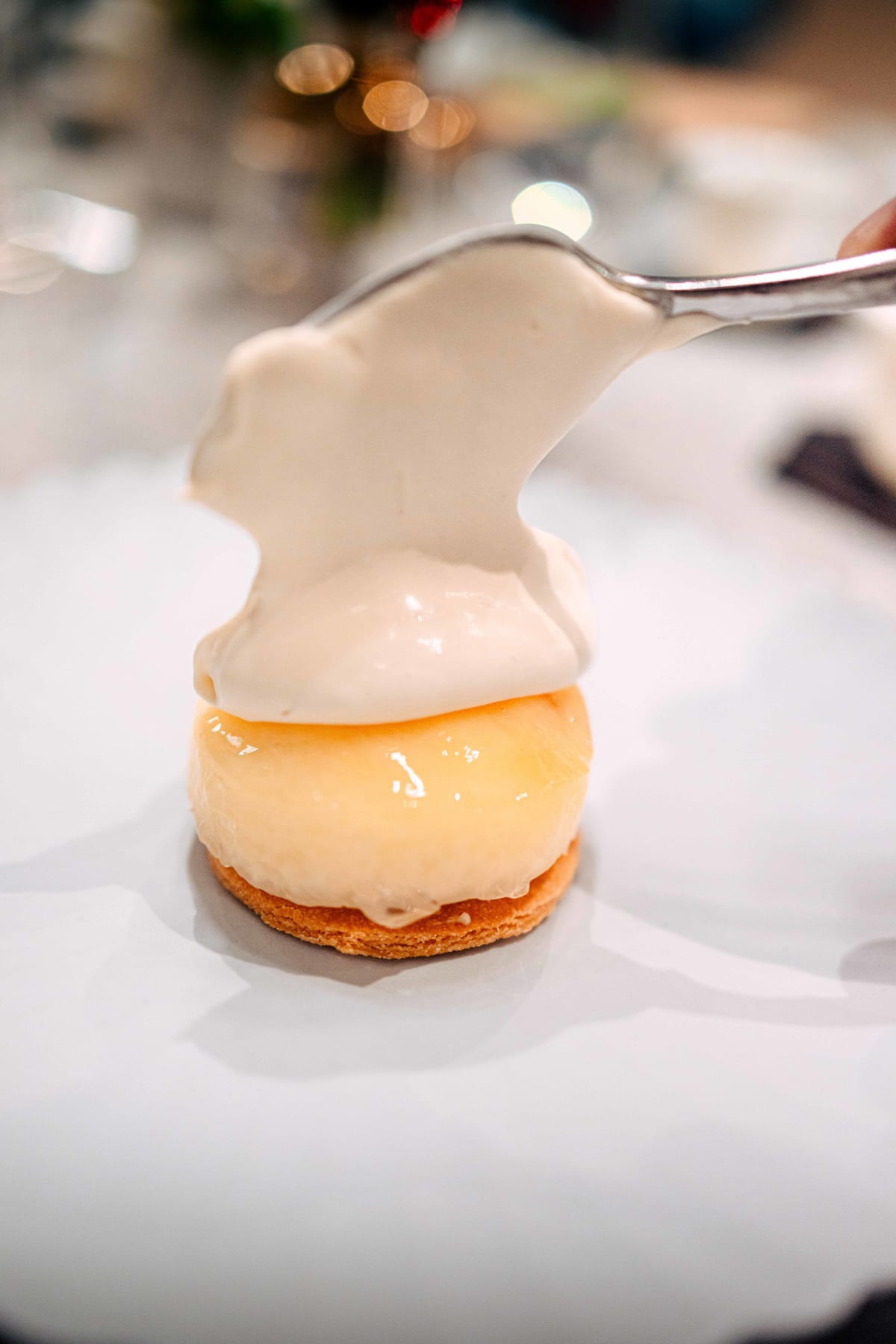
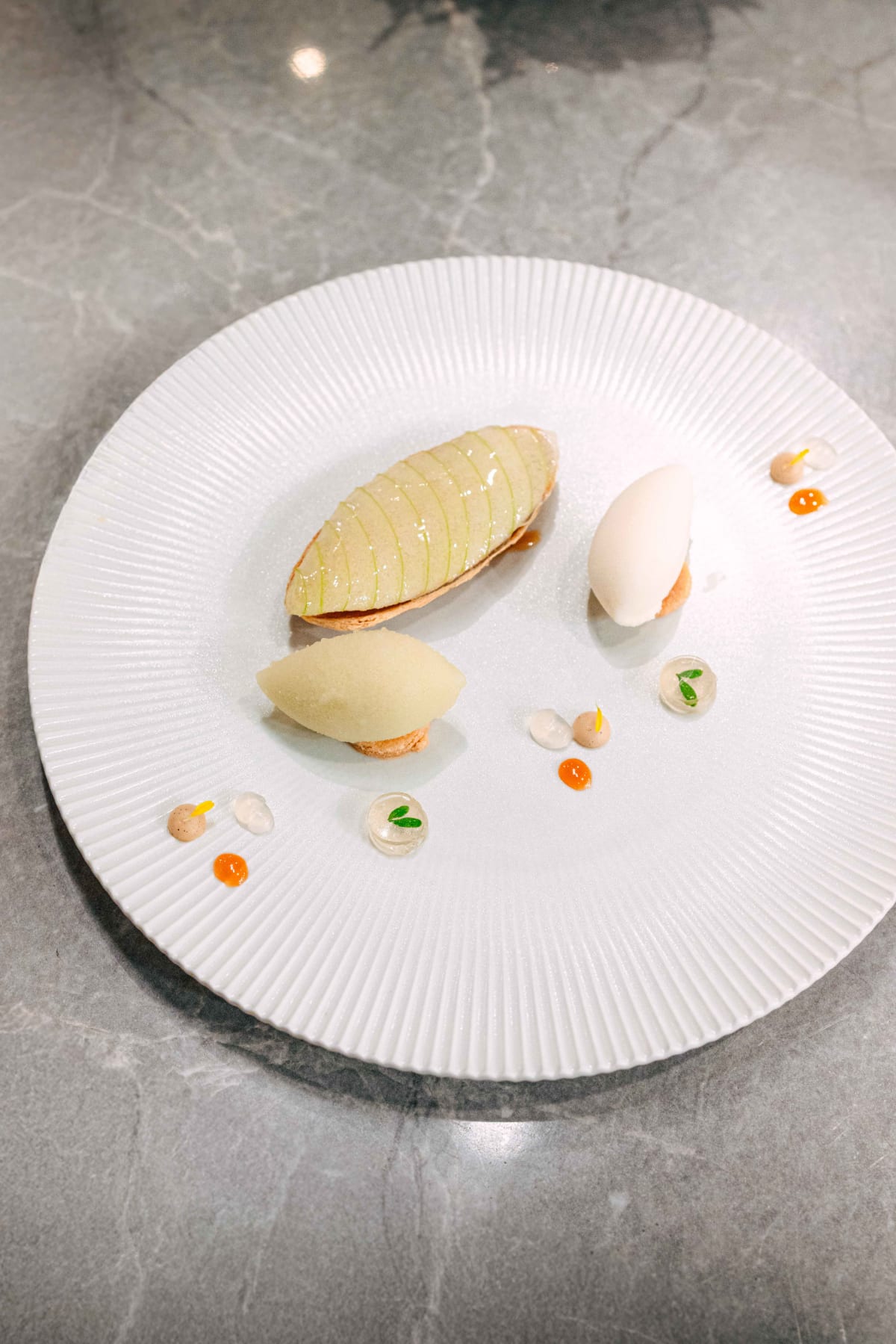
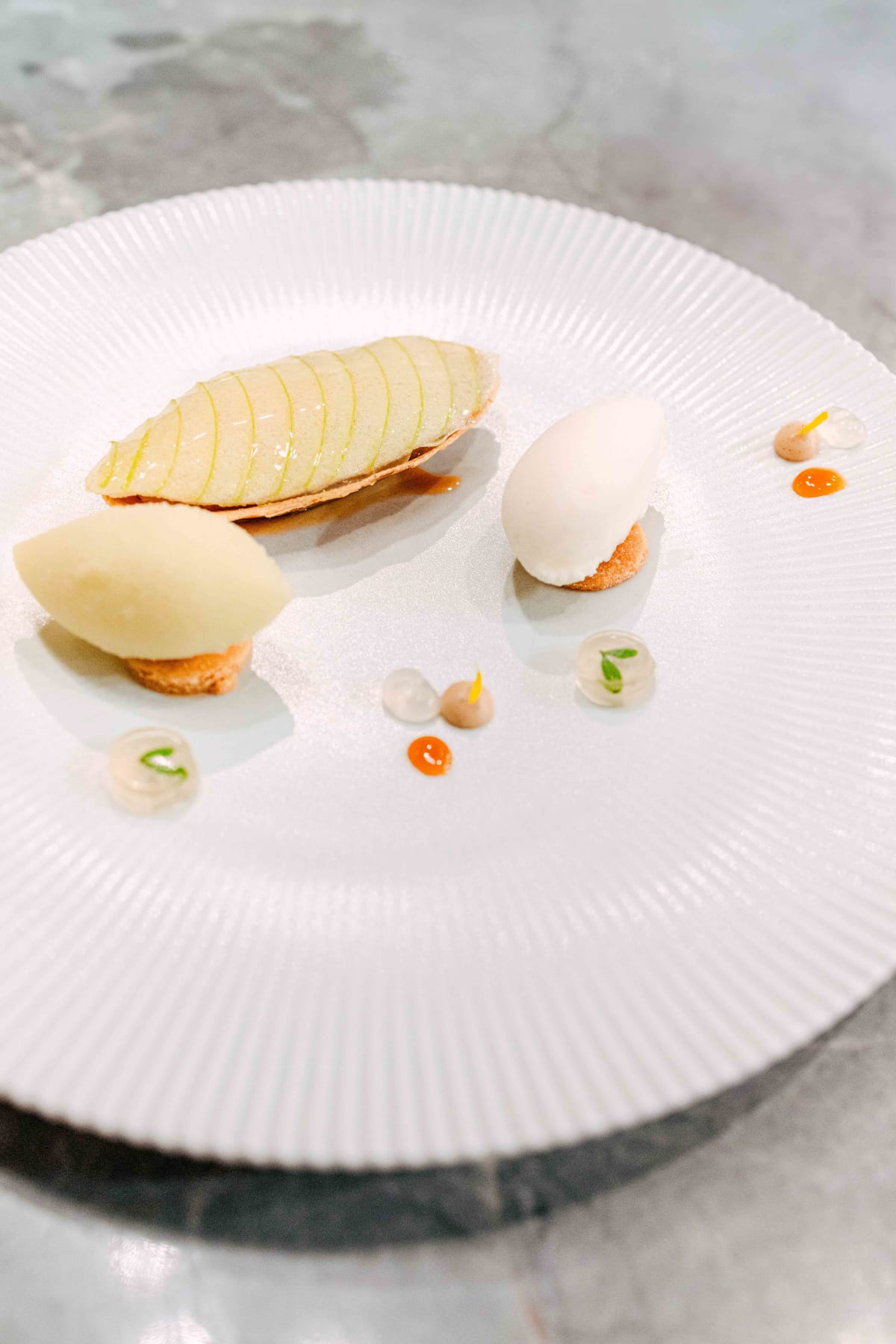
The second was Apple, with Burrata and Chinese Celery listed under it, a composition that puts burrata and Chinese celery into a dessert.
The dessert of apple pie served with sorbet was excellent in combination when eaten all together, and I enjoyed it. The desserts really were at a level you could call three star.
Here at VEA as at the other restaurants I have been going to, I found myself thinking that dining in Hong Kong does not seem to fuss over using Hong Kong and Chinese ingredients. Abalone especially: if the Japanese one is better they use plenty of it and do not hide the fact, and I hear many of the ingredients used in French cooking are flown in from France. Since Hong Kong can be seen as something like a city state, part of the reason is probably that importing ingredients is not difficult.
Section 14·The Sweet Finale
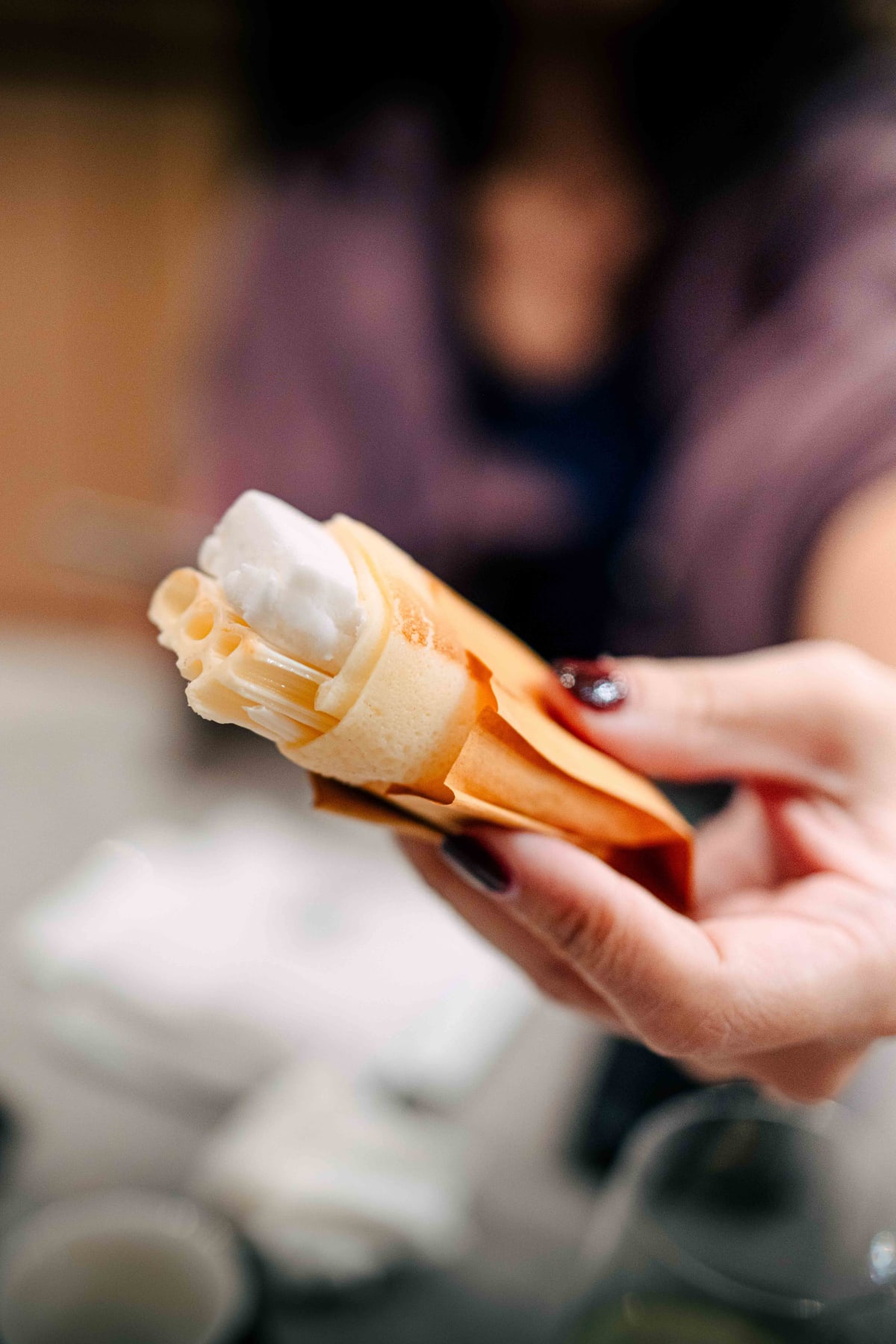
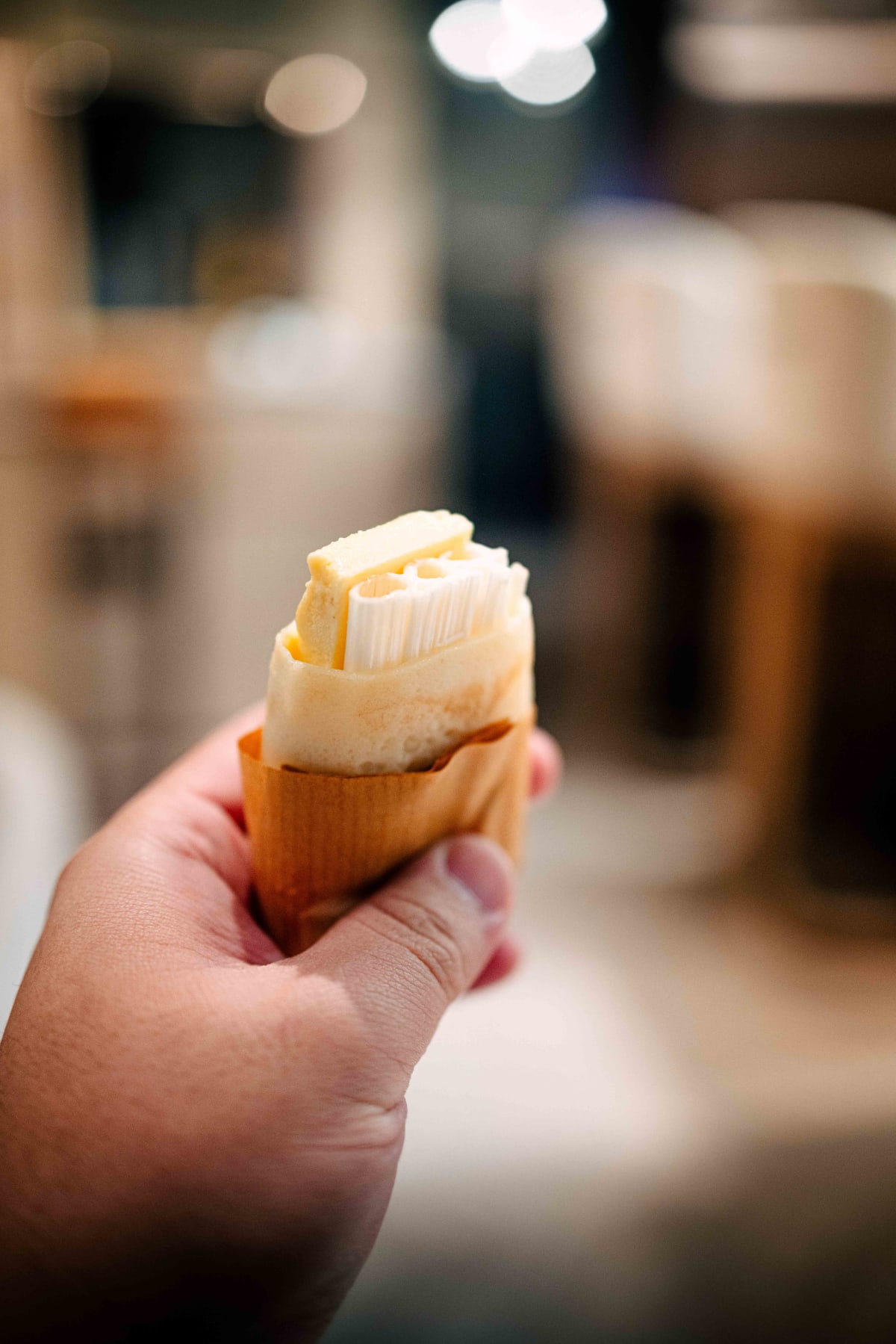
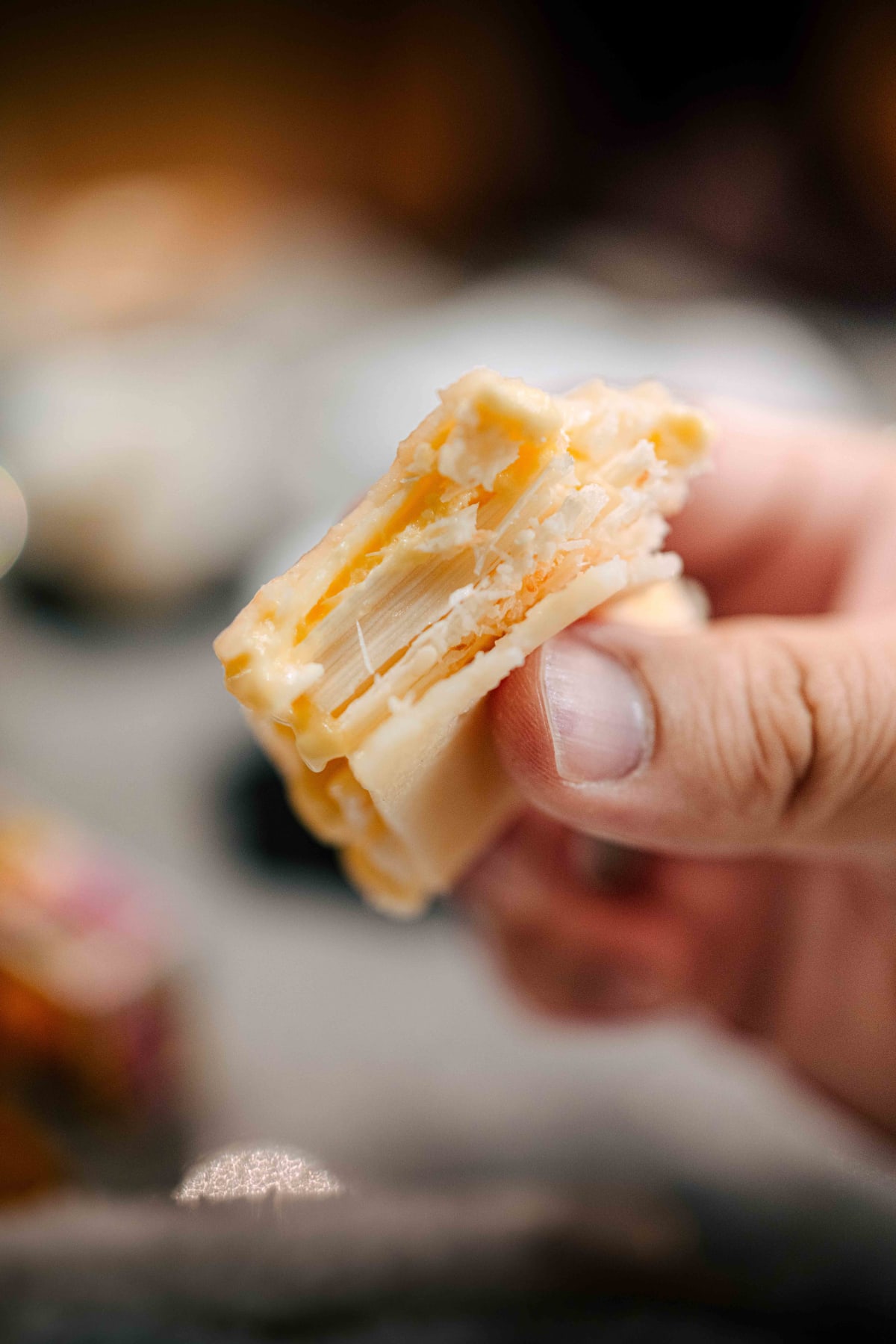
The desserts did not end at two, and they bring mignardises. The Chinese sticky rice cake given inside a biscuit was good, but what left the strongest impression was the Chinese candy dessert.
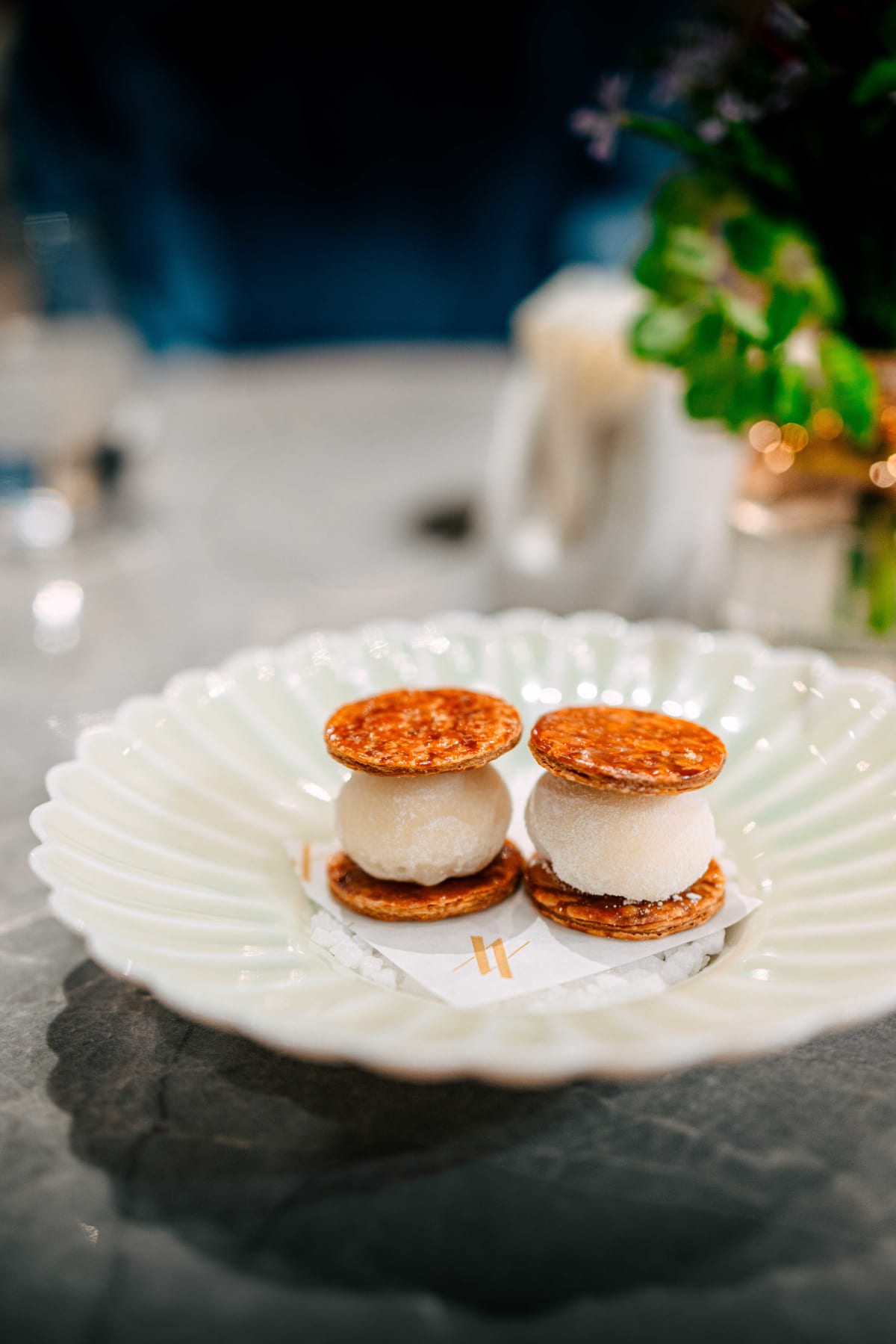
You choose two flavours, and I picked durian, which I was tasting for the first time. Taking in the durian aroma, it was not as severe as I had expected, and they tuck the candy into something like a thin pancake batter, which was fun. Between a fruit I was tasting for the first time and a style of dessert I had never seen, it left an impression.
Unlike WING, VEA is on the easier side to book. Personally I was slightly more satisfied by WING and its completely new flavours, but one of my party said VEA, in the familiar form of French dining, was the better one. The price is not on the cheap side, but if you want to taste chef Vicky Cheng's skill, or you want to taste the fusion of Chinese and French cooking, I would recommend it.
One floor separates two answers to the same question. Here Cheng put Chinese ingredients inside French technique; at WING he removed the technique and kept only what it had taught him. So this is the room where the idea was worked out rather than where it resolved, which is odd to say of the one holding the star. Booking is far easier here than one floor down, and the counter is the seat to ask for, since the light and the kitchen both sit there. It is the two supplements, not the menu price, that decide what the evening costs.
Have a question about this restaurant, or want to share your own experience?
Send a message